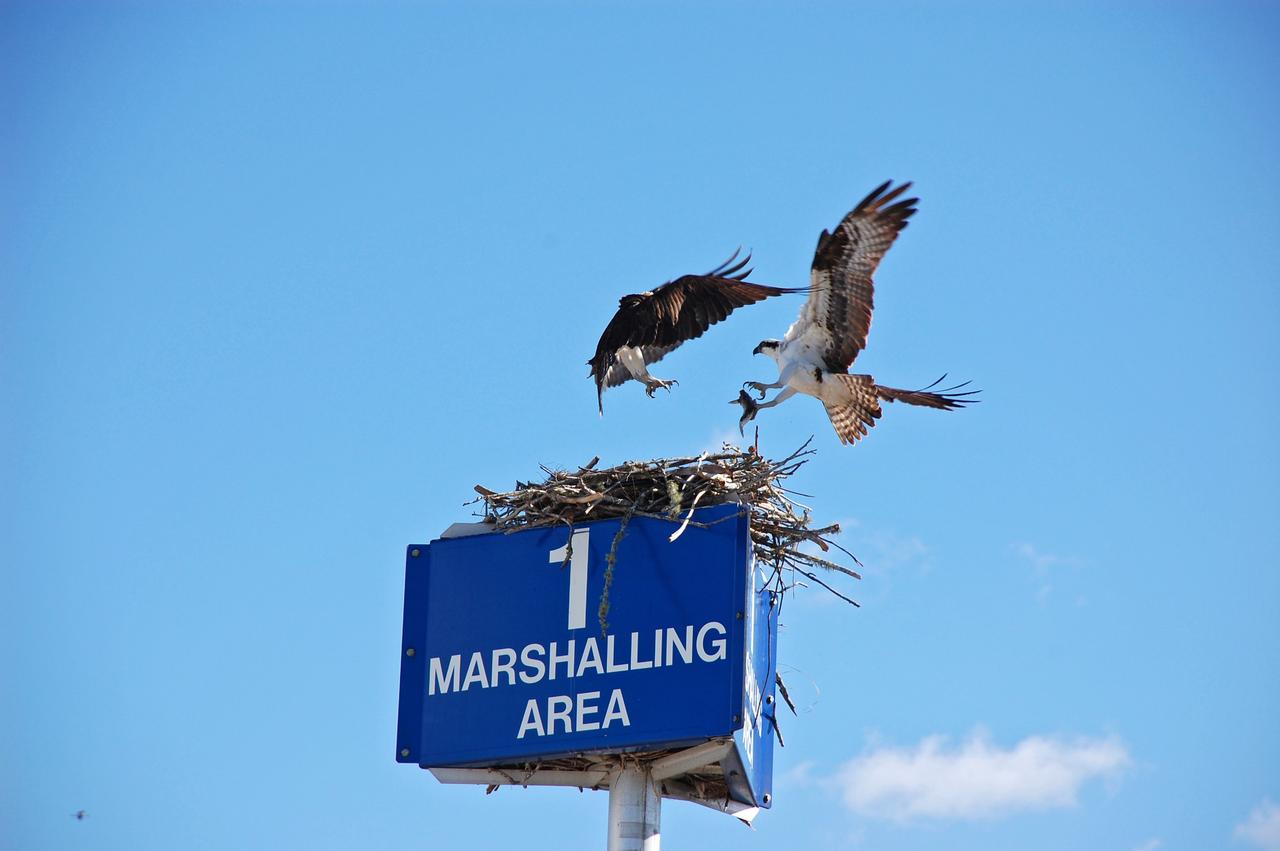
CAPE CANAVERAL, Fla. – A pair of ospreys perform an aerial dance around their nest near the NASA News Center at NASA's Kennedy Space Center in Florida. The bird at right is carrying a fish in its talons, the sole source of its diet. The osprey, also called fish hawk, is well adapted for capturing fish, which make up its entire diet. The soles of the birds' feet are equipped with sharp, spiny projections that give the bird a firm grip on its slippery prey. Nests of ospreys are bulky masses of sticks and debris placed in a tree, on rocks, flat ground or telephone poles. Many nests exist around the Launch Complex 39 Area at the center. The bird is one of more than 500 species of birds that co-exist at the center and the surrounding Merritt Island National Wildlife Refuge. Photo credit: NASA/Ben Smelgelsky
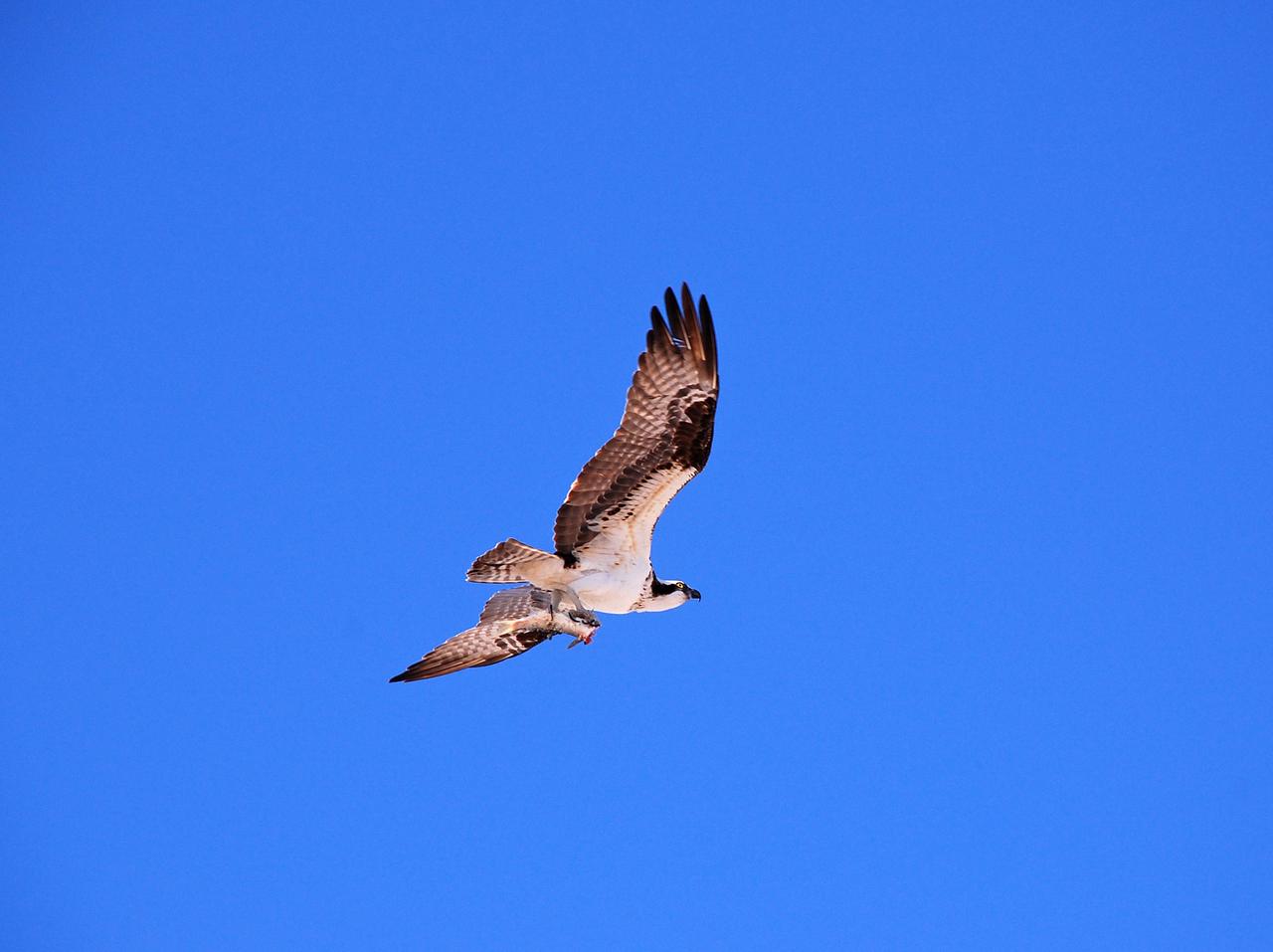
CAPE CANAVERAL, Fla. – An osprey carries its food in its talons as it flies to its nest near the NASA News Center at NASA's Kennedy Space Center in Florida. The osprey, also called fish hawk, is well adapted for capturing fish, which make up its entire diet. The soles of the birds' feet are equipped with sharp, spiny projections that give the bird a firm grip on its slippery prey. Nests of ospreys are bulky masses of sticks and debris placed in a tree, on rocks, flat ground or telephone poles. Many nests exist around the Launch Complex 39 Area at the center. The bird is one of more than 500 species of birds that co-exist at the center and the surrounding Merritt Island National Wildlife Refuge. Photo credit: NASA/Ben Smelgelsky
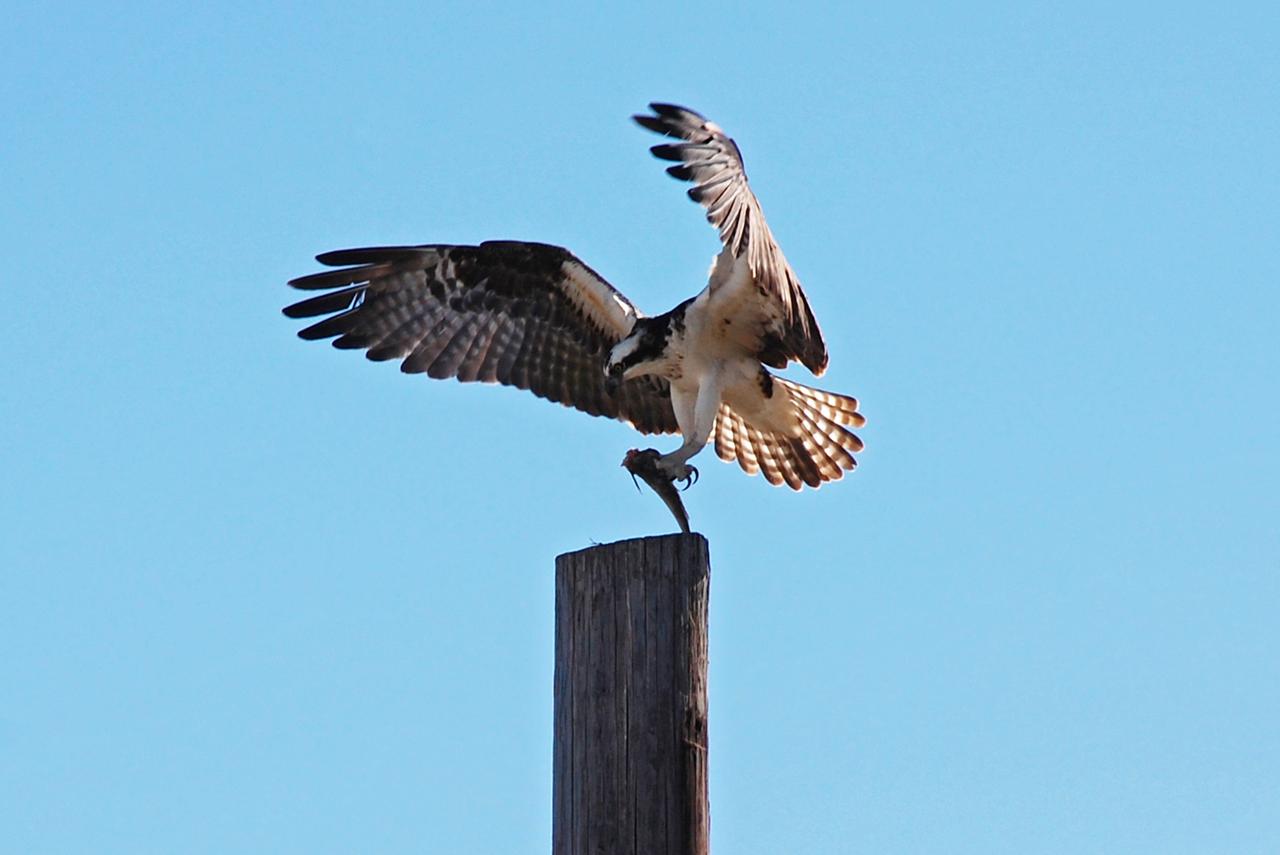
CAPE CANAVERAL, Fla. – Near the NASA News Center at NASA's Kennedy Space Center in Florida, the osprey prepares to land on a pole with its meal in its talons. The osprey, also called fish hawk, is well adapted for capturing fish, which make up its entire diet. The soles of the birds' feet are equipped with sharp, spiny projections that give the bird a firm grip on its slippery prey. Nests of ospreys are bulky masses of sticks and debris placed in a tree, on rocks, flat ground or telephone poles. Many nests exist around the Launch Complex 39 Area at the center. The bird is one of more than 500 species of birds that co-exist at the center and the surrounding Merritt Island National Wildlife Refuge. Photo credit: NASA/Ben Smelgelsky
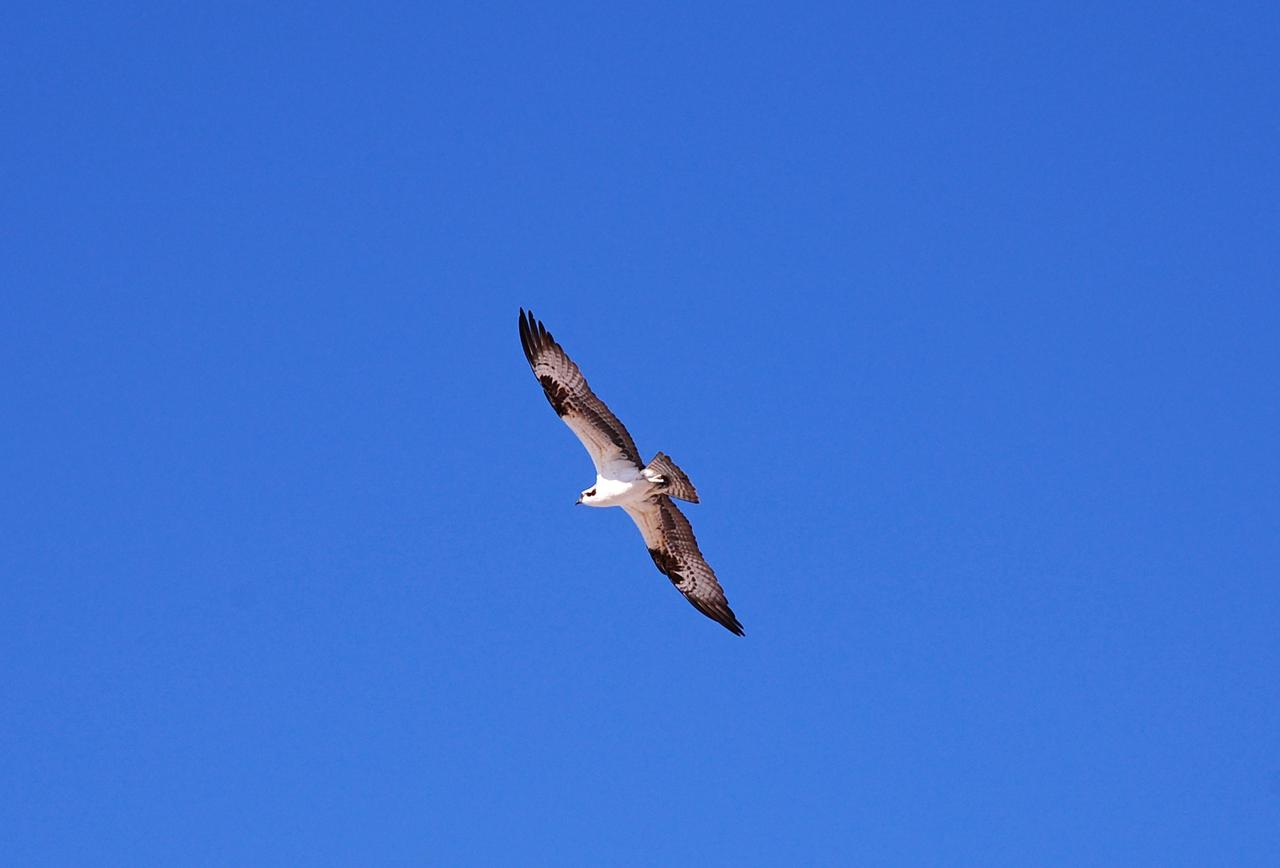
CAPE CANAVERAL, Fla. – An osprey flies high near the NASA News Center at NASA's Kennedy Space Center in Florida returning to its nest nearby. The osprey, also called fish hawk, is well adapted for capturing fish, which make up its entire diet. The soles of the birds' feet are equipped with sharp, spiny projections that give the bird a firm grip on its slippery prey. Nests of ospreys are bulky masses of sticks and debris placed in a tree, on rocks, flat ground or telephone poles. Many nests exist around the Launch Complex 39 Area at the center. The bird is one of more than 500 species of birds that co-exist at the center and the surrounding Merritt Island National Wildlife Refuge. Photo credit: NASA/Ben Smelgelsky
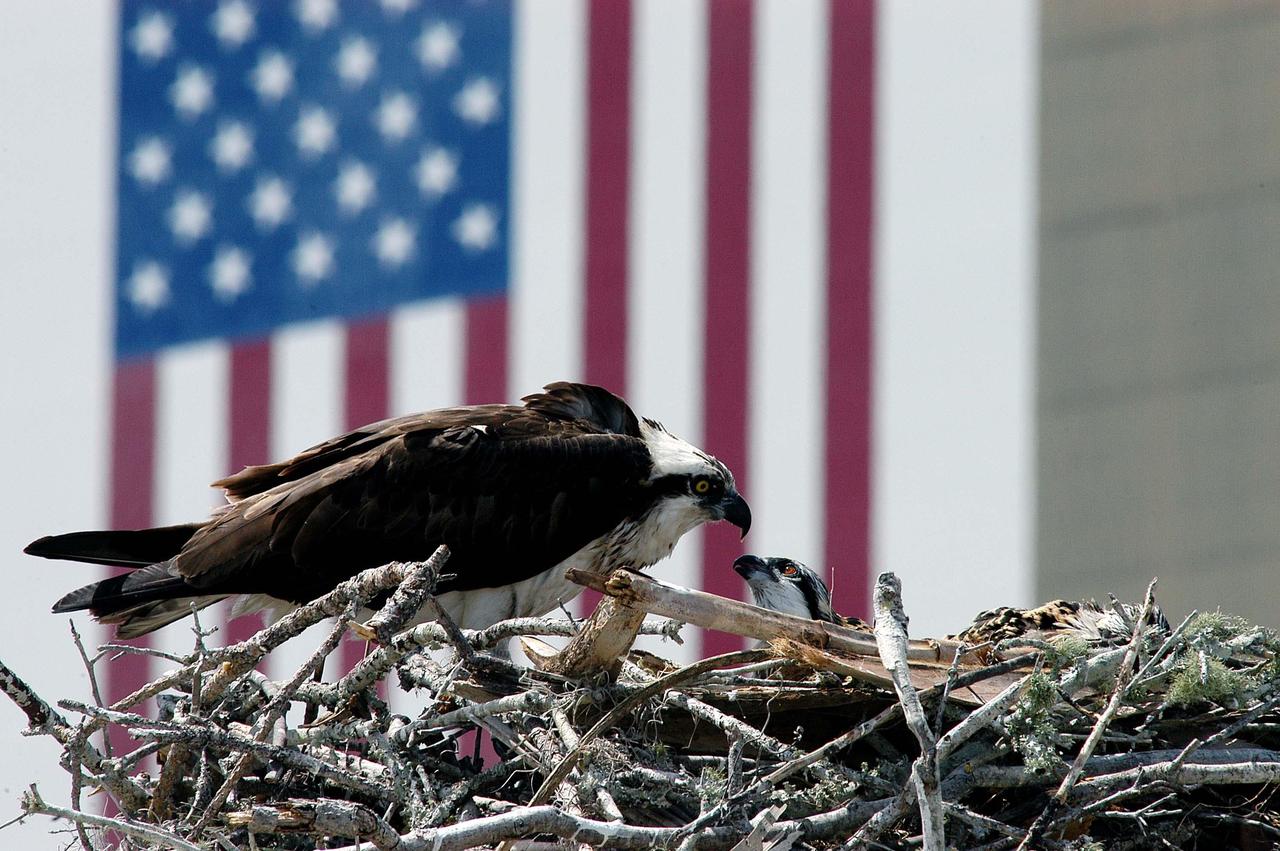
KENNEDY SPACE CENTER, FLA. - Against the backdrop of the American flag, painted on the side of the Vehicle Assembly Building, an osprey checks its fledglings in the nest. The young bird seen is one of three hatched this season. The osprey nest sits atop a speaker in the parking lot of the NASA KSC News Center. Known as a fish hawk, ospreys select sites of opportunity, from trees and telephone poles to rocks or even flat ground. In the United States they are found from Alaska to Florida and the Gulf Coast. Osprey nests are found throughout the Kennedy Space Center and nearby Merritt Island National Wildlife Refuge.