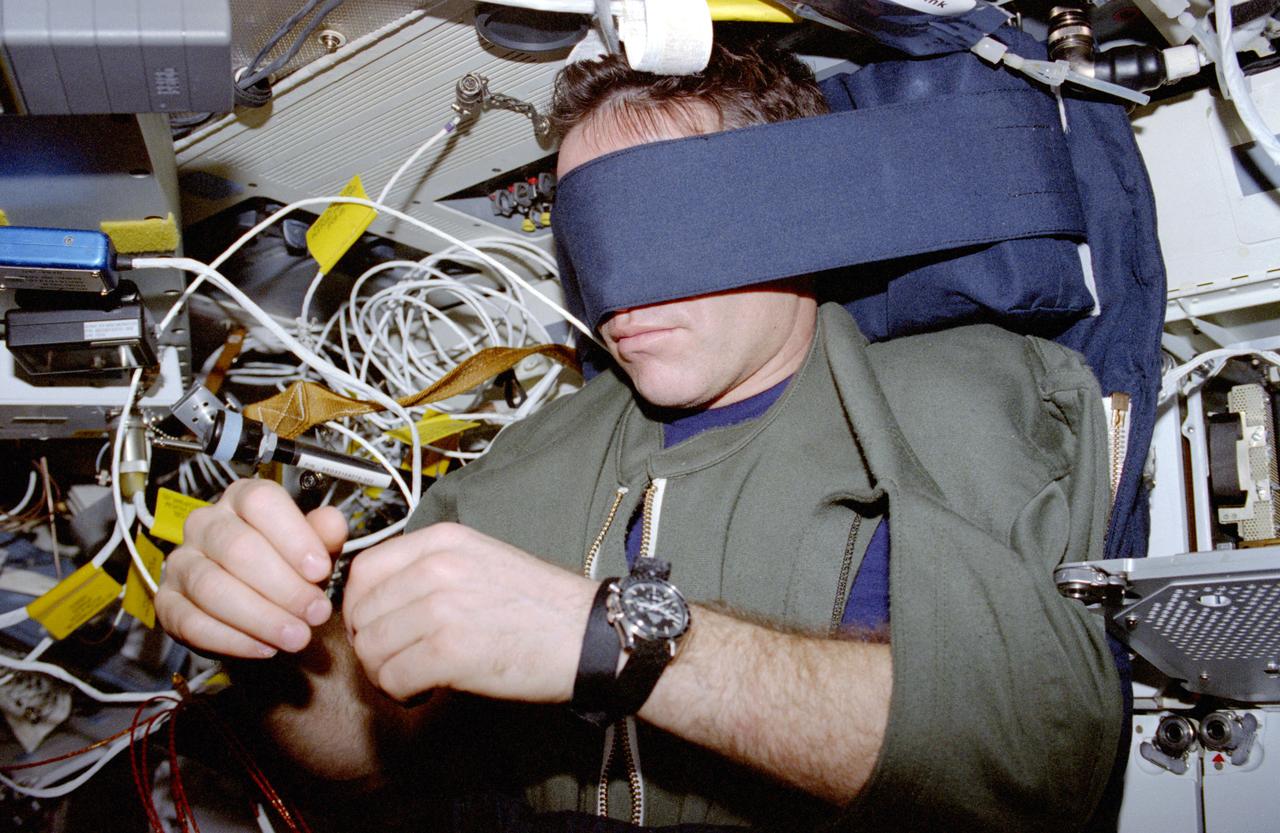
STS087-323-030 (19 November – 5 December 1997) --- Ukrainian payload specialist Leonid K. Kadenyuk blocks out the world and much more as he sleeps on the mid-deck of the Earth-orbiting Space Shuttle Columbia. Kadenyuk joined five NASA astronauts for 16 days aboard Columbia in support of the United States Microgravity Payload (USMP) mission.
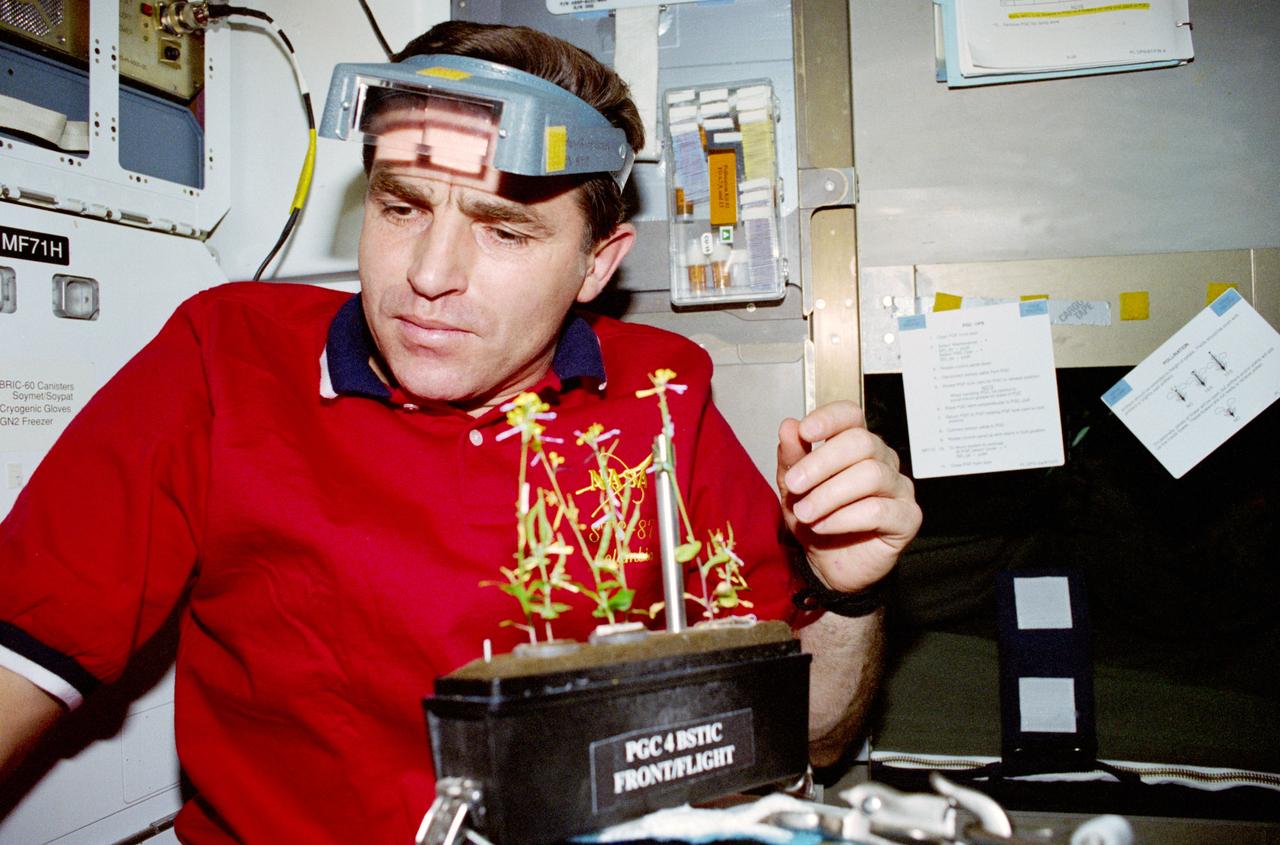
STS087-332-034 (19 November – 5 December 1997) --- On the Space Shuttle Columbia's middeck, Leonid Kadenyuk, Ukrainian payload specialist, works with the Brassica Rapa plants being grown for the Collaborative Ukrainian Experiment (CUE). Leonid Kadenyuk joined five astronauts for 16-days in Earth-orbit in support of the United States Microgravity Payload 4 (USMP-4) mission.
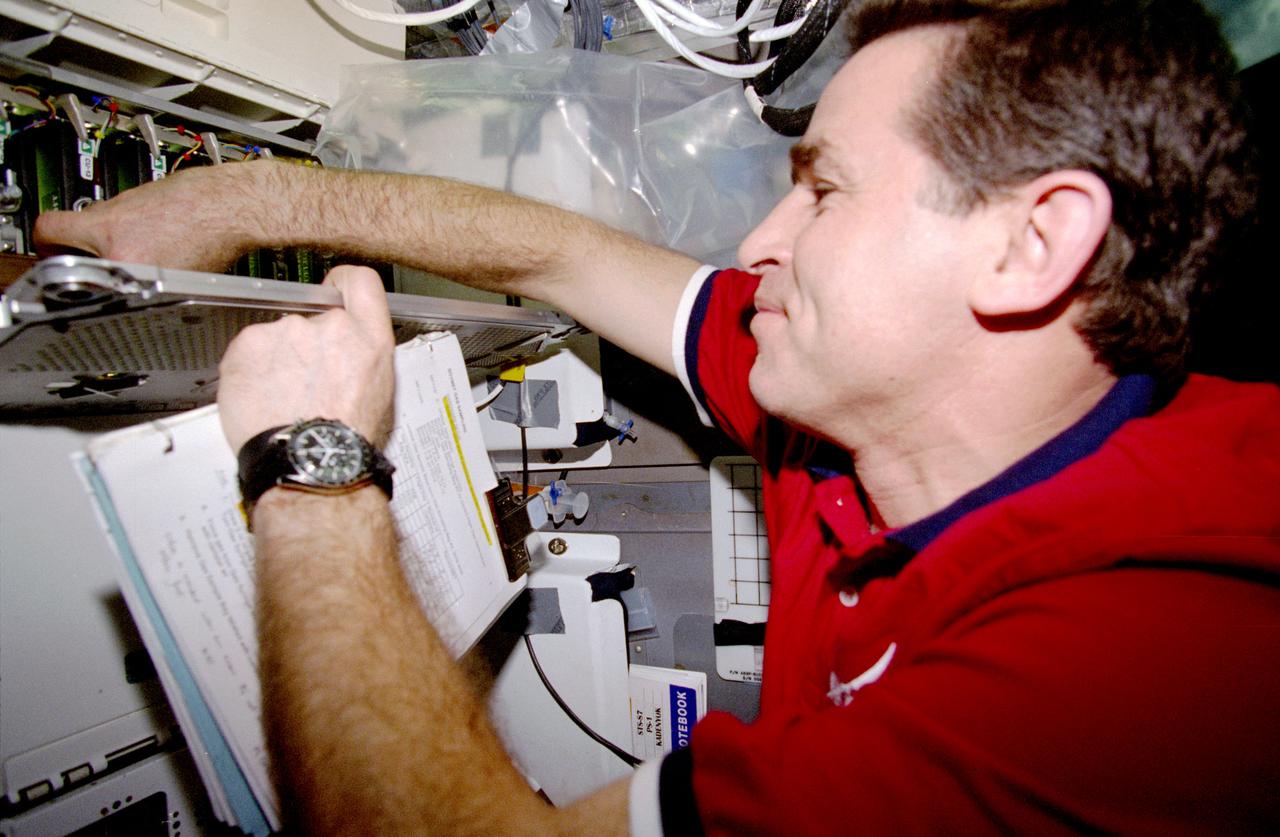
STS087-385-005 (19 November - 5 December 1997) --- Leonid Kadenyuk, Ukrainian payload specialist, retrieves a plant specimen from the plant growth facility on the mid-deck of the Earth-orbiting Space Shuttle Columbia. Kadenyuk and five United States astronauts went on to spend 16-days in Earth-orbit in support of the United States Microgravity Payload (USMP-4) mission.
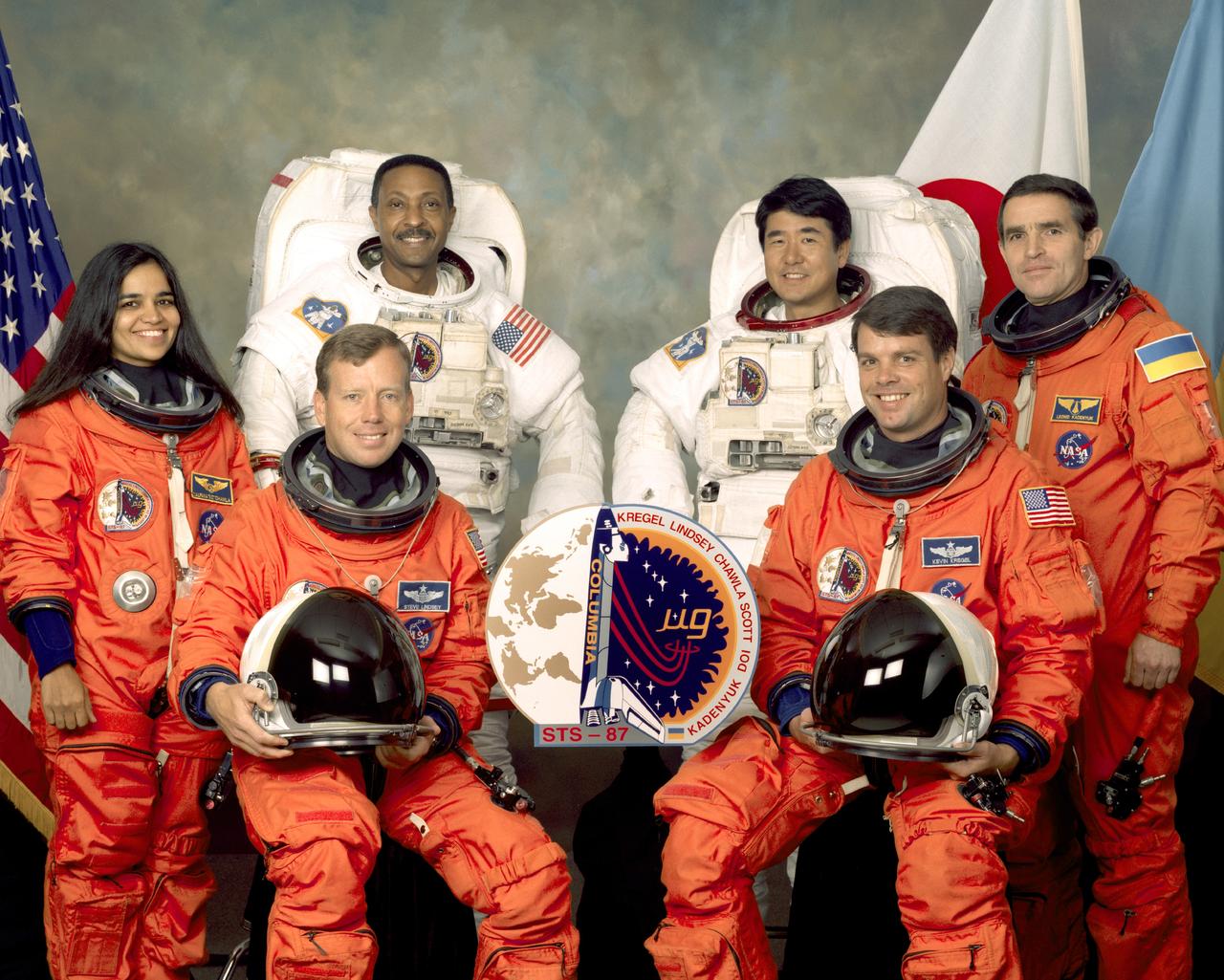
Five astronauts and a payload specialist take a break from training at the Johnson Space Center (JSC) to pose for the STS-87 crew portrait. Wearing the orange partial pressure launch and entry suits, from the left, are Kalpana Chawla, mission specialist; Steven W. Lindsey, pilot; Kevin R. Kregel, mission commander; and Leonid K. Kadenyuk, Ukrainian payload specialist. Wearing the white Extravehicular Mobility Unit (EMU) space suits are mission specialists Winston E. Scott (left) and Takao Doi (right). Doi represents Japan’s National Space Development Agency (NASDA). The STS-87 mission launched aboard the Space Shuttle Columbia on November 19, 1997. The primary payload for the mission was the U.S. Microgravity Payload-4 (USMP-4).
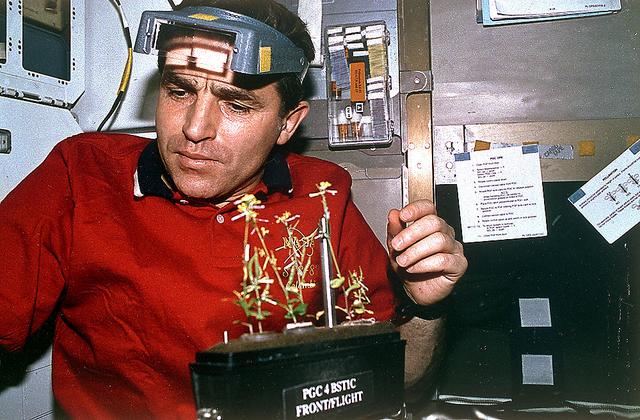
Onboard Space Shuttle Columbia (STS-87) mid-deck, Leonid Kadenyuk, Ukrainian payload specialist, works with the Brassica rapa plants being grown for the Collaborative Ukrainian Experiment (CUE). Kadenyuk joined five astronauts for 16-days in Earth-orbit in support of the United States Microgravity Payload 4 (USMP-4) mission.
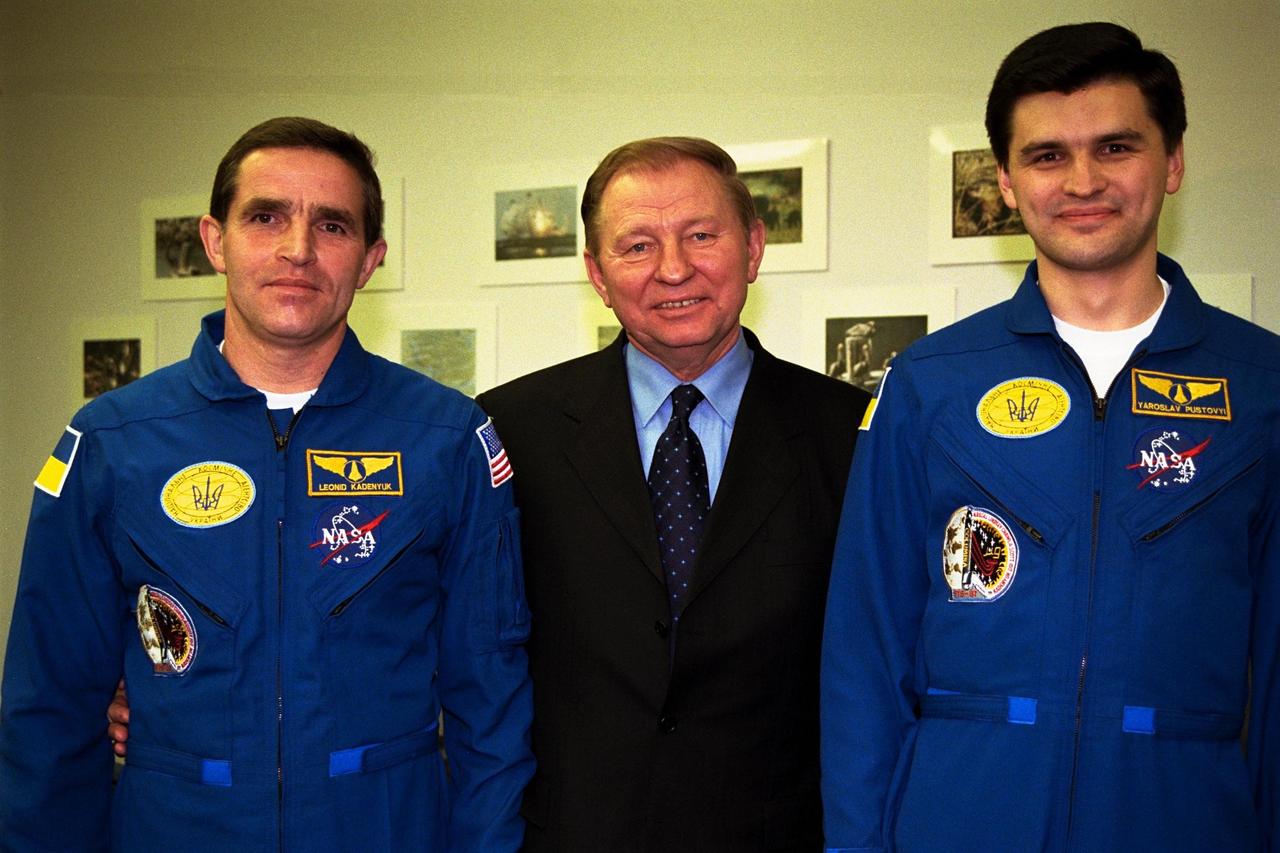
The president of the Ukraine, Leonid Kuchma, is flanked by Payload Specialist Leonid Kadenyuk, at left, and backup Payload Specialist Yaroslav Pustovyi, at right, both of the National Space Agency of Ukraine, during prelaunch activities leading up to the scheduled Nov. 19 launch of STS-87. STS-87 will be the fourth flight of the United States Microgravity Payload and the Spartan-201 deployable satellite. During the mission, Kadenyuk will pollinate Brassica rapa plants as part of the Collaborative Ukrainian Experiment, or CUE, aboard Columbia during its 16-day mission. The CUE experiment is a collection of 10 plant space biology experiments that will fly in Columbia's middeck and will feature an educational component that involves evaluating the effects of microgravity on Brassica rapa seedlings. Students in Ukrainian and American schools will participate in the same experiment with Kadenyuk in space. Kadenyuk will be flying his first Shuttle mission on STS-87
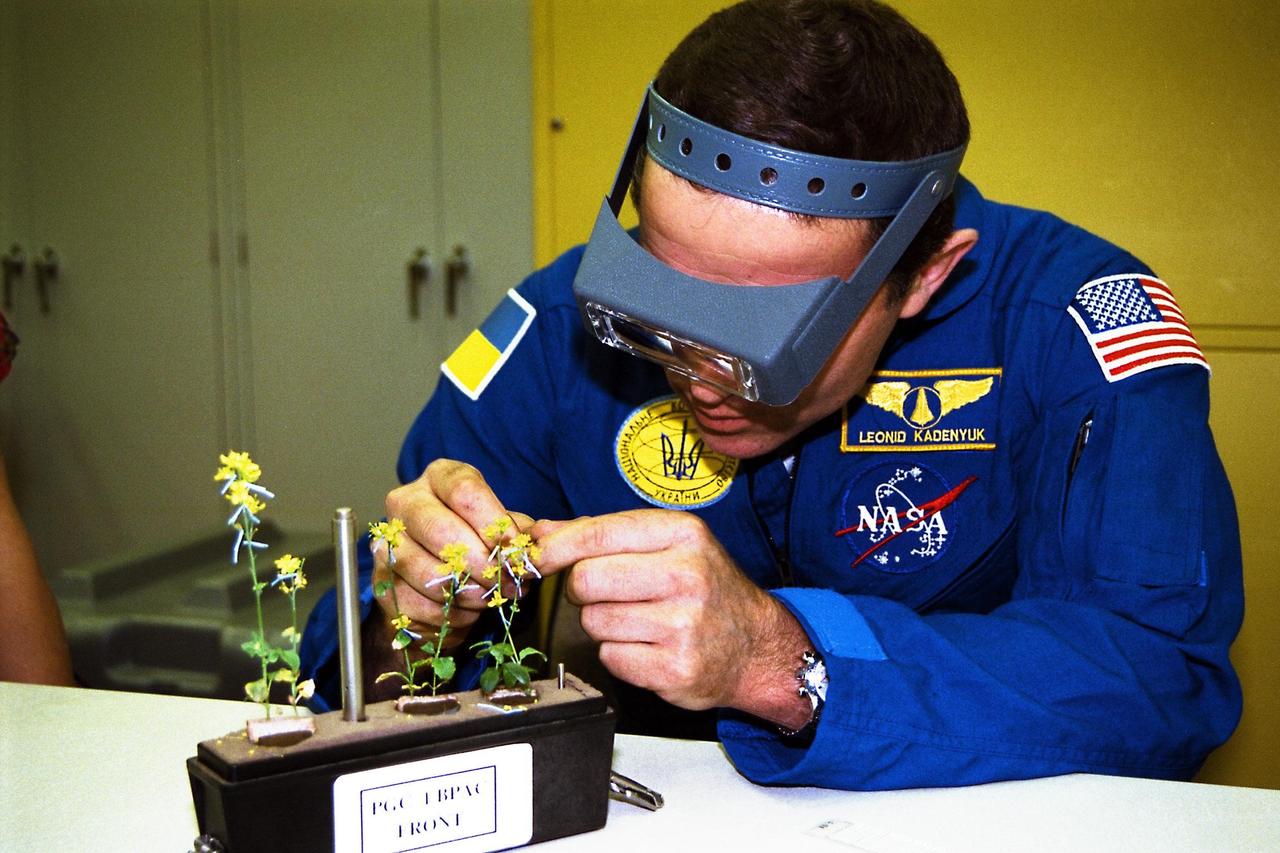
Participating in the Crew Equipment Integration Test (CEIT) at Kennedy Space Center is STS-87 Payload Specialist Leonid Kadenyuk of the National Space Agency of Ukraine (NSAU). Here, Cosmonaut Kadenyuk is inspecting flowers for pollination and fertilization, which will occur as part of the Collaborative Ukrainian Experiment, or CUE, aboard Columbia during its 16-day mission, scheduled to take off from KSC’s Launch Pad 39-B on Nov. 19. The CUE experiment is a collection of 10 plant space biology experiments that will fly in Columbia’s middeck and feature an educational component that involves evaluating the effects of microgravity on the pollinating Brassica rapa seedlings. Students in Ukrainian and American schools will participate in the same experiment on the ground and have several live opportunities to discuss the experiment with Kadenyuk in Space. Kadenyuk of the Ukraine will be flying his first Shuttle mission on STS-87
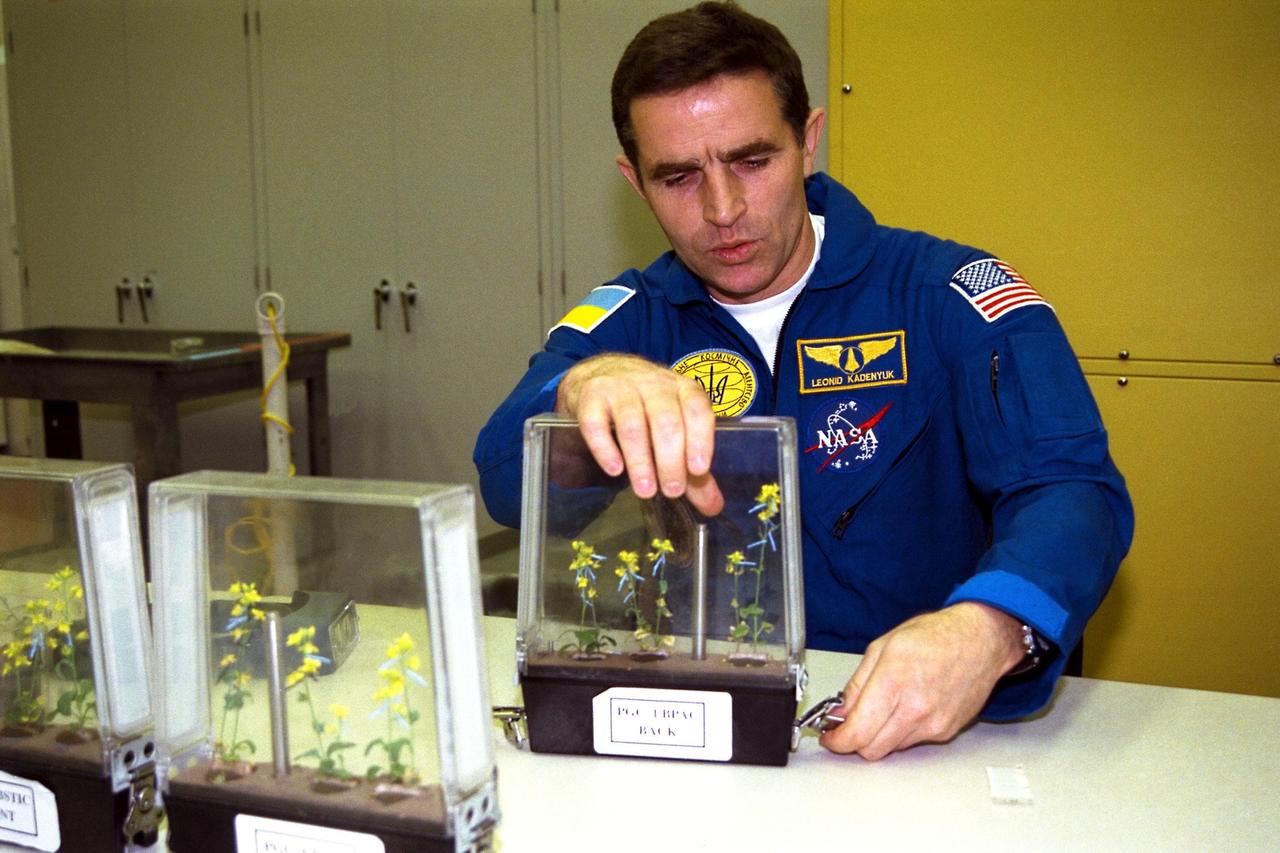
Participating in the Crew Equipment Integration Test (CEIT) at Kennedy Space Center is STS-87 Payload Specialist Leonid Kadenyuk of the National Space Agency of Ukraine (NSAU). Here, Cosmonaut Kadenyuk is inspecting flowers for pollination and fertilization, which will occur as part of the Collaborative Ukrainian Experiment, or CUE, aboard Columbia during its 16-day mission, scheduled to take off from KSC’s Launch Pad 39-B on Nov. 19. The CUE experiment is a collection of 10 plant space biology experiments that will fly in Columbia’s middeck and feature an educational component that involves evaluating the effects of microgravity on the pollinating Brassica rapa seedlings. Students in Ukrainian and American schools will participate in the same experiment on the ground and have several live opportunities to discuss the experiment with Kadenyuk in Space. Kadenyuk of the Ukraine will be flying his first Shuttle mission on STS-87
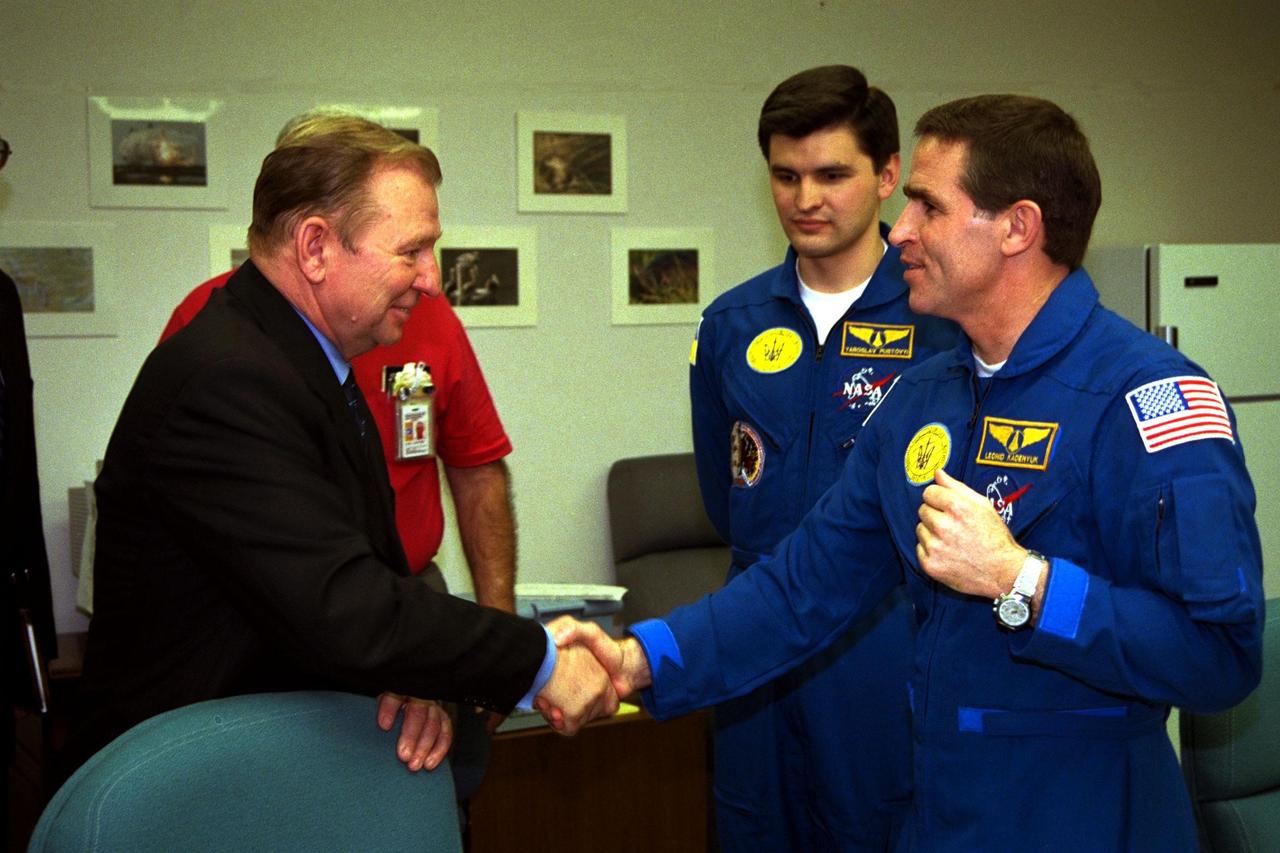
The president of the Ukraine, Leonid Kuchma, shakes hands with Payload Specialist Leonid Kadenyuk, at right, as backup Payload Specialist Yaroslav Pustovyi, both of the National Space Agency of Ukraine, looks on during prelaunch activities leading up to the scheduled Nov. 19 launch of STS-87. STS-87 will be the fourth flight of the United States Microgravity Payload and the Spartan-201 deployable satellite. During the mission, Kadenyuk will pollinate Brassica rapa plants as part of the Collaborative Ukrainian Experiment, or CUE, aboard Columbia during its 16-day mission. The CUE experiment is a collection of 10 plant space biology experiments that will fly in Columbia's middeck and will feature an educational component that involves evaluating the effects of microgravity on Brassica rapa seedlings. Students in Ukrainian and American schools will participate in the same experiment with Kadenyuk in space. Kadenyuk will be flying his first Shuttle mission on STS-87
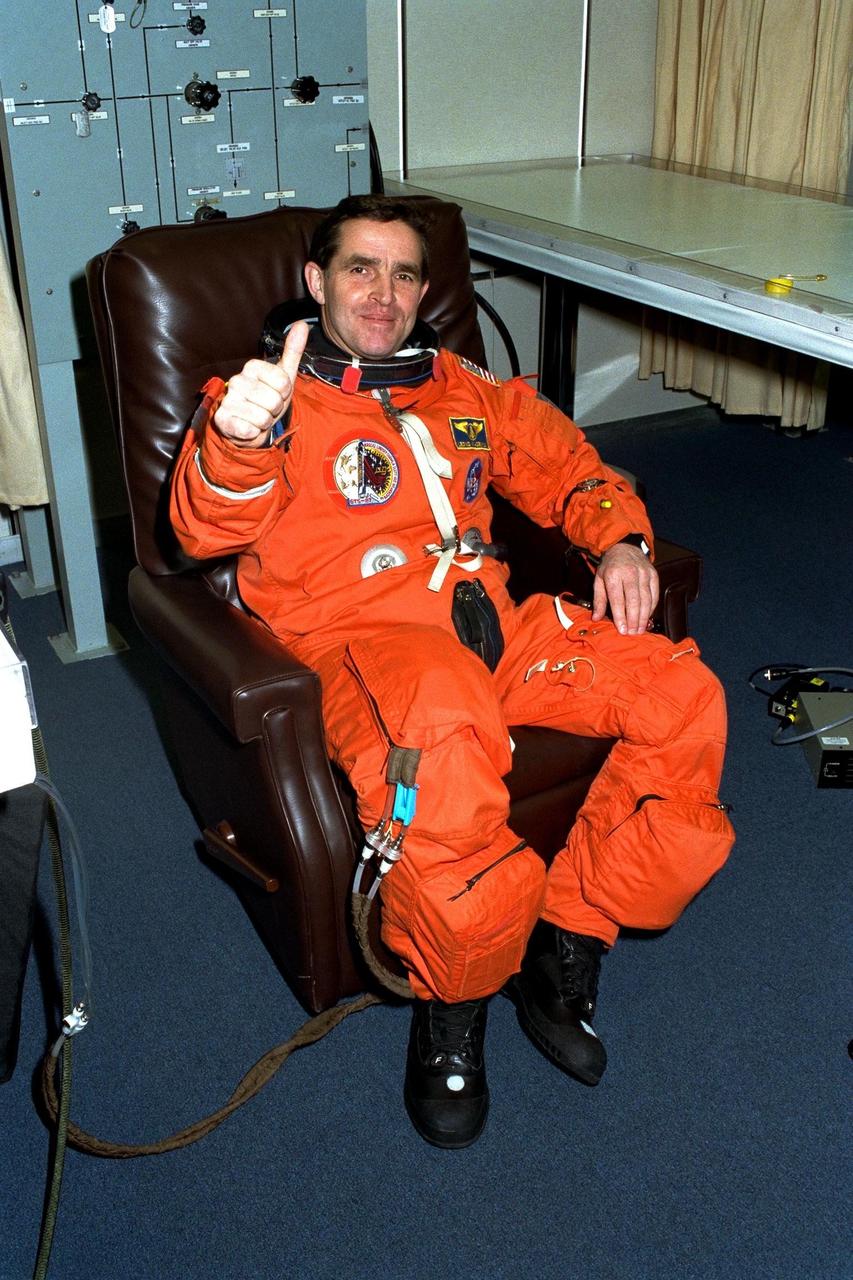
STS-87 Payload Specialist Leonid Kadenyuk of the National Space Agency of Ukraine gives a ‘thumbs up’ in his launch and entry suit in the Operations and Checkout Building. He and the five other crew members of STS-87 will depart shortly for Launch Pad 39B, where the Space Shuttle Columbia awaits liftoff on a 16-day mission to perform microgravity and solar research. Kadenyuk will be flying his first mission on STS-87. During the mission, Kadenyuk will pollinate Brassica rapa plants as part of the Collaborative Ukrainian Experiment, or CUE, aboard Columbia. The CUE experiment is a collection of 10 plant space biology experiments that will fly in Columbia’s middeck and features an educational component that involves evaluating the effects of microgravity on Brassica rapa seedlings
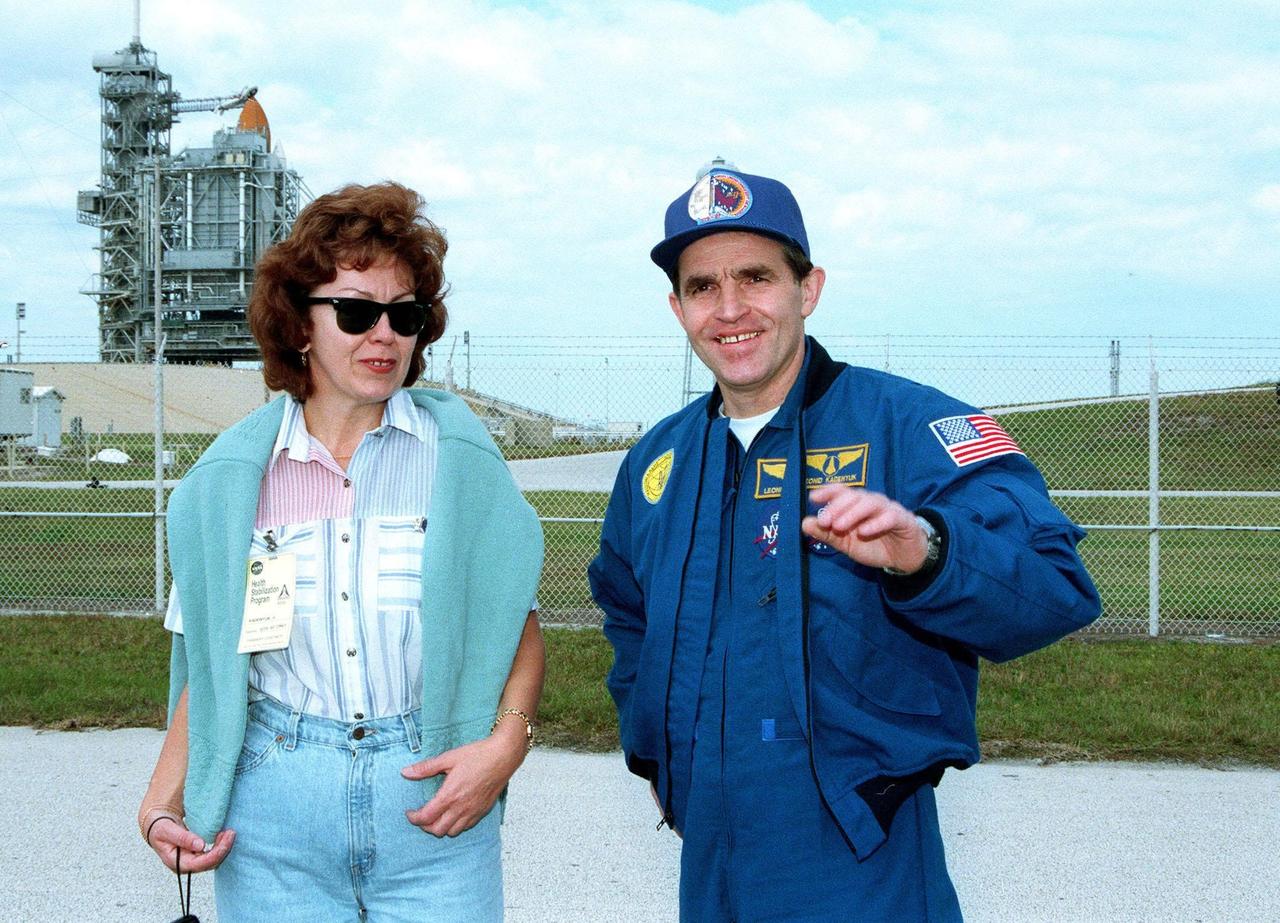
STS-87 Payload Specialist Leonid Kadenyuk of the National Space Agency of Ukraine poses with his wife, Vera Kadenyuk, in front of Kennedy Space Center's Launch Pad 39B during final prelaunch activities leading up to the scheduled Nov. 19 liftoff. The other STS-87 crew members are Commander Kevin Kregel; Pilot Steven Lindsey; and Mission Specialists Kalpana Chawla, Ph.D.; Winston Scott; and Takao Doi, Ph.D., National Space Development Agency of Japan. STS-87 will be the fourth flight of the United States Microgravity Payload and the Spartan-201 deployable satellite
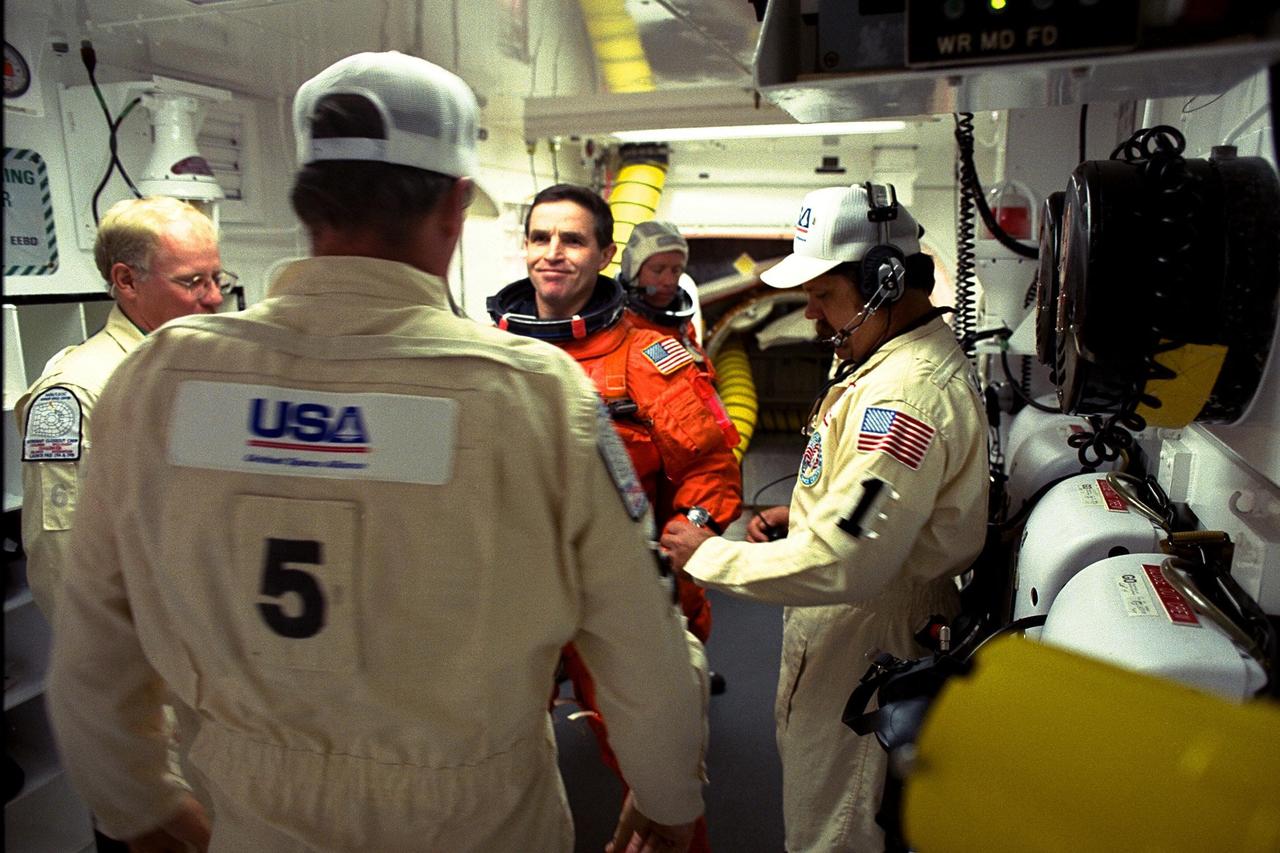
STS-87 Payload Specialist Leonid Kadenyuk of the National Space Agency of Ukraine is assisted with final preparations before launch in the white room at Launch Pad 39B by Danny Wyatt, NASA quality assurance specialist, at left; George Schram, USA mechanical technician, facing Kadenyuk; and Travis Thompson, USA orbiter vehicle closeout chief, at right. STS-87 is the fourth flight of the United States Microgravity Payload and Spartan-201. The 16-day mission will include the Collaborative Ukrainian Experiment (CUE), a collection of 10 plant space biology experiments that will fly in Columbia’s middeck and will feature an educational component that involves evaluating the effects of microgravity on Brassica rapa seedlings
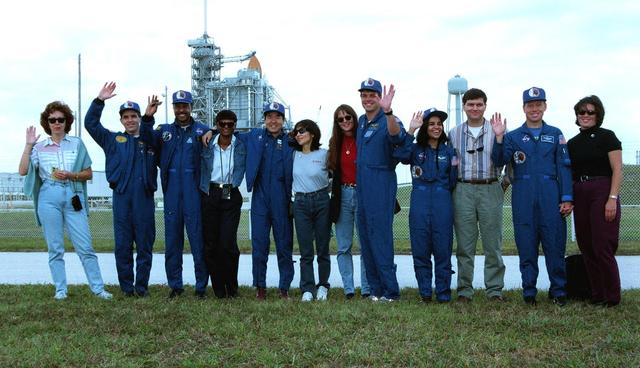
The crew of STS-87 pose with their spouses in front of Kennedy Space Center’s Launch Pad 39B during final prelaunch activities leading up to the scheduled Nov. 19 liftoff. From left to right are: Vera Kadenyuk, wife of Payload Specialist Leonid Kadenyuk of the National Space Agency of Ukraine who is next to Vera; Mission Specialist Winston Scott and his wife, Marilyn; Mission Specialist Takao Doi, Ph.D., of the National Space Development Agency of Japan, and his wife, Hitomi; Jeannie Kregel, who is married to Commander Kevin Kregel standing next to her; Mission Specialist Kalpana Chawla, Ph.D., and her husband, Jean-Pierre Harrison; and Pilot Steven Lindsey and his wife Diane. STS-87 will be the fourth flight of the United States Microgravity Payload and the Spartan-201 deployable satellite
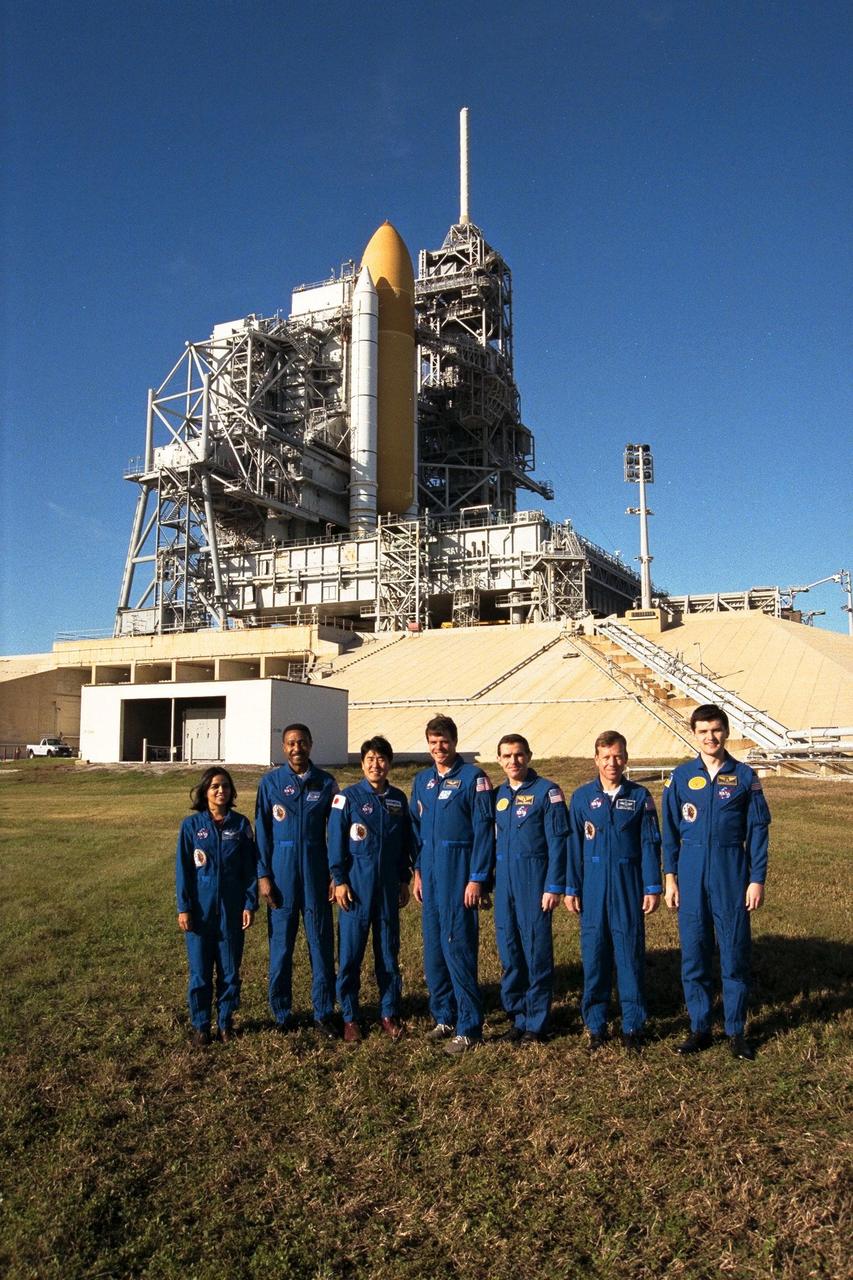
The crew of the STS-87 mission, scheduled for launch Nov. 19 aboard the Space Shuttle Columbia from Pad 39B at Kennedy Space Center (KSC), participate in the Terminal Countdown Demonstration Test (TCDT) at KSC. Posing for a group shot by Pad 39B are, from left to right, Mission Specialist Kalpana Chawla, Ph.D.; Mission Specialist Winston Scott; Mission Specialist Takao Doi, Ph.D., of the National Space Development Agency of Japan; Commander Kevin Kregel; Payload Specialist Leonid Kadenyuk of the National Space Agency of Ukraine (NSAU); Pilot Steven Lindsey; and Kadenyuk’s back-up, Yaroslav Pustovyi, Ph.D., also of NSAU. The TCDT is held at KSC prior to each Space Shuttle flight, providing the crew of each mission opportunities to participate in simulated countdown activities. The crew also spends time undergoing emergency egress training exercises at the pad and has an opportunity to view and inspect the payloads in the orbiter's payload bay
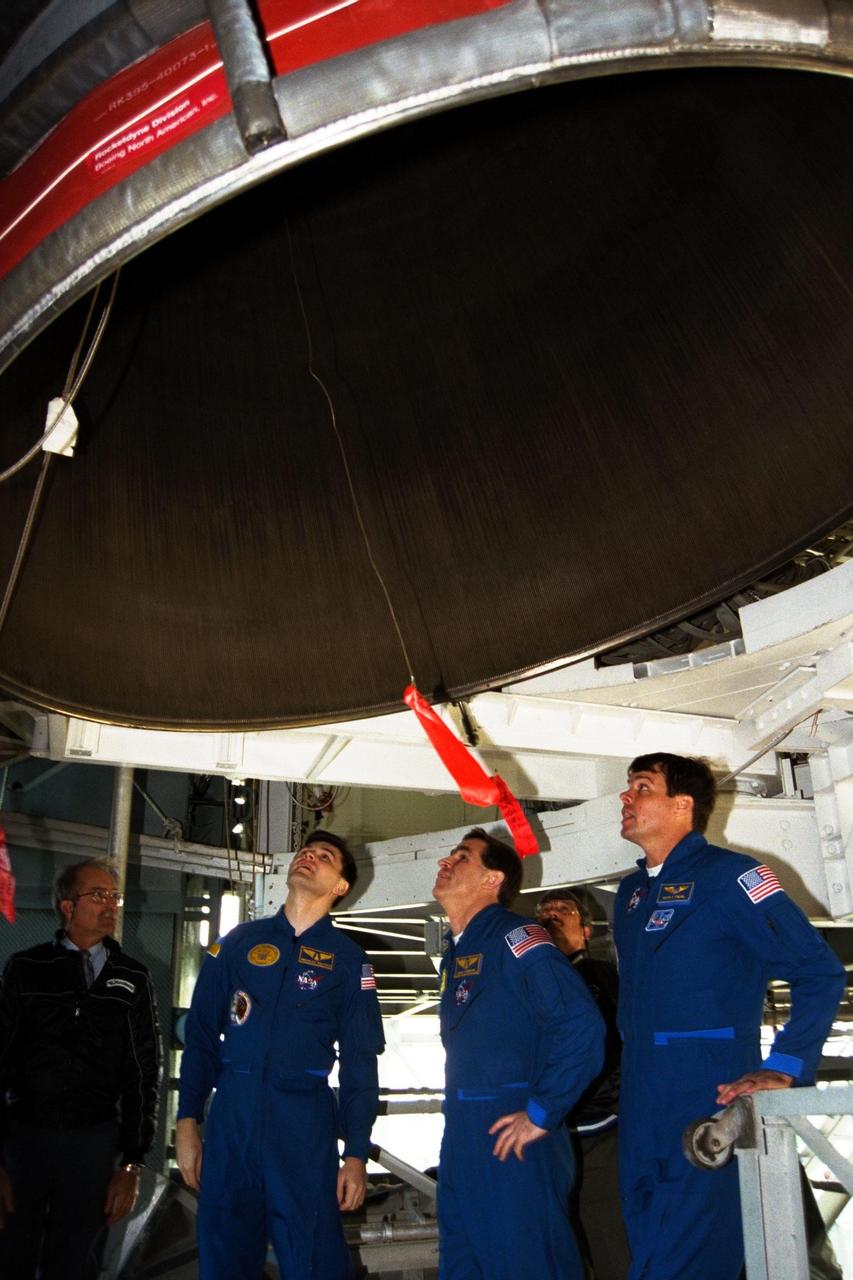
The crew of the STS-87 mission, scheduled for launch Nov. 19 aboard the Space Shuttle Columbia from Pad 39B at Kennedy Space Center (KSC), participates in the Terminal Countdown Demonstration Test (TCDT) at KSC. Getting a close look at one of the Space Shuttle’s main engines are, from right, Commander Kevin Kregel, Payload Specialist Leonid Kadenyuk of the National Space Agency of Ukraine (NSAU), and Kadenyuk’s back-up, Yaroslav Pustovyi, Ph.D., also of NSAU. The TCDT is held at KSC prior to each Space Shuttle flight, providing the crew of each mission opportunities to participate in simulated countdown activities. The TCDT ends with a mock launch countdown culminating in a simulated main engine cut-off. The crew also spends time undergoing emergency egress training exercises at the pad and has an opportunity to view and inspect the payloads in the orbiter's payload bay

STS087-307-002 (19 November - 5 December 1997) --- On the Space Shuttle Columbia's middeck, the crewmembers for the mission pose for the traditional in-flight portrait. In front, left to right, are astronauts Steven W. Lindsey, pilot; Takao Doi, mission specialist representing Japan's National Space Development Agency (NASDA); and Winston E. Scott, mission specialist. In back are, from the left, astronauts Kevin R. Kregel, commander; and Kalpana Chawla, mission specialist; along with payload specialist Leonid Kadenyuk.
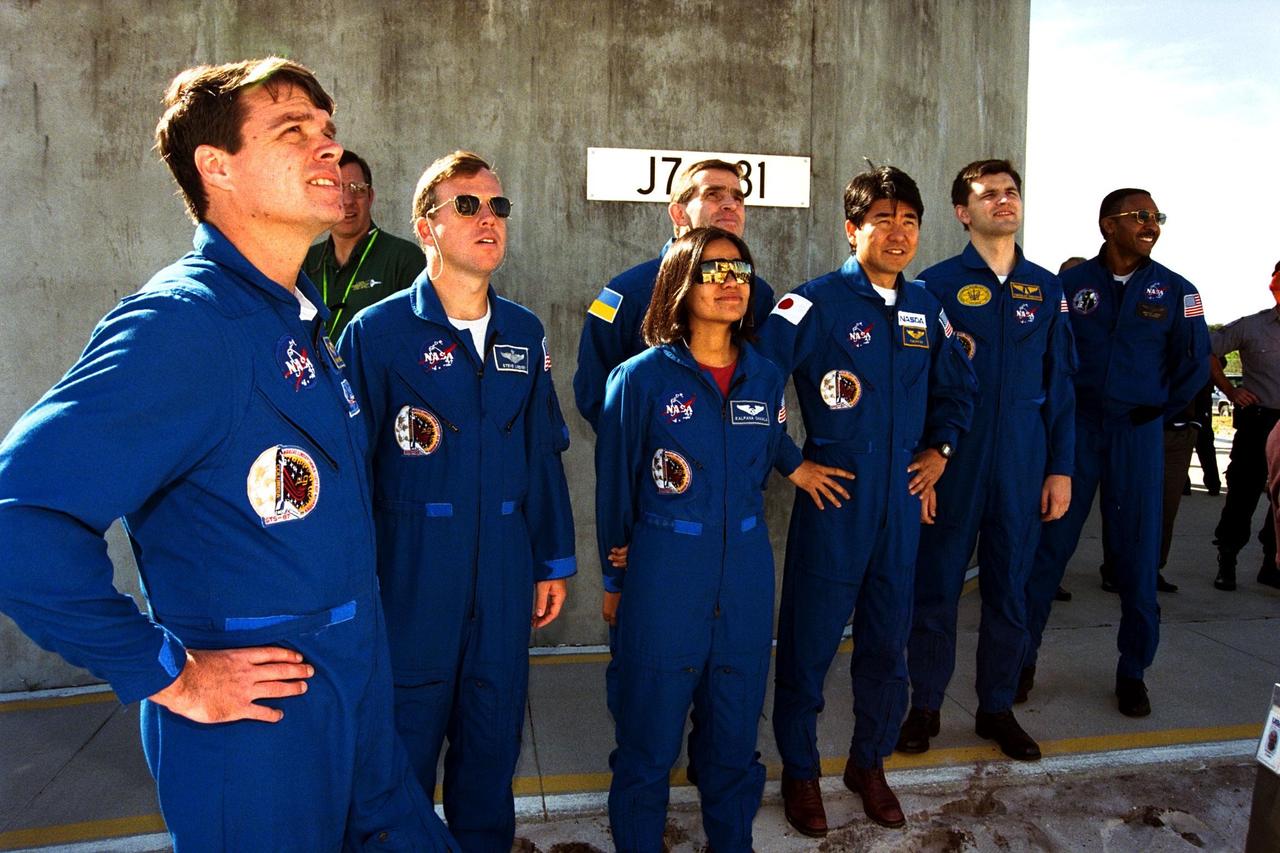
The crew of the STS-87 mission, scheduled for launch Nov. 19 aboard the Space Shuttle Columbia from Pad 39B at Kennedy Space Center (KSC), participates in the Terminal Countdown Demonstration Test (TCDT) at KSC. Getting a look at the Space Shuttle Columbia are, from left, Commander Kevin Kregel; Pilot Steven Lindsey; Mission Specialist Kalpana Chawla, Ph.D.; Payload Specialist Leonid Kadenyuk of the National Space Agency of Ukraine (NSAU); Mission Specialist Takao Doi, Ph.D., of the National Space Development Agency of Japan; Kadenyuk’s back-up, Yaroslav Pustovyi, Ph.D., also of NSAU; and Mission Specialist Winston Scott. The TCDT is held at KSC prior to each Space Shuttle flight providing the crew of each mission opportunities to participate in simulated countdown activities. The TCDT ends with a mock launch countdown culminating in a simulated main engine cut-off. The crew also spends time undergoing emergency egress training exercises at the pad and has an opportunity to view and inspect the payloads in the orbiter's payload bay
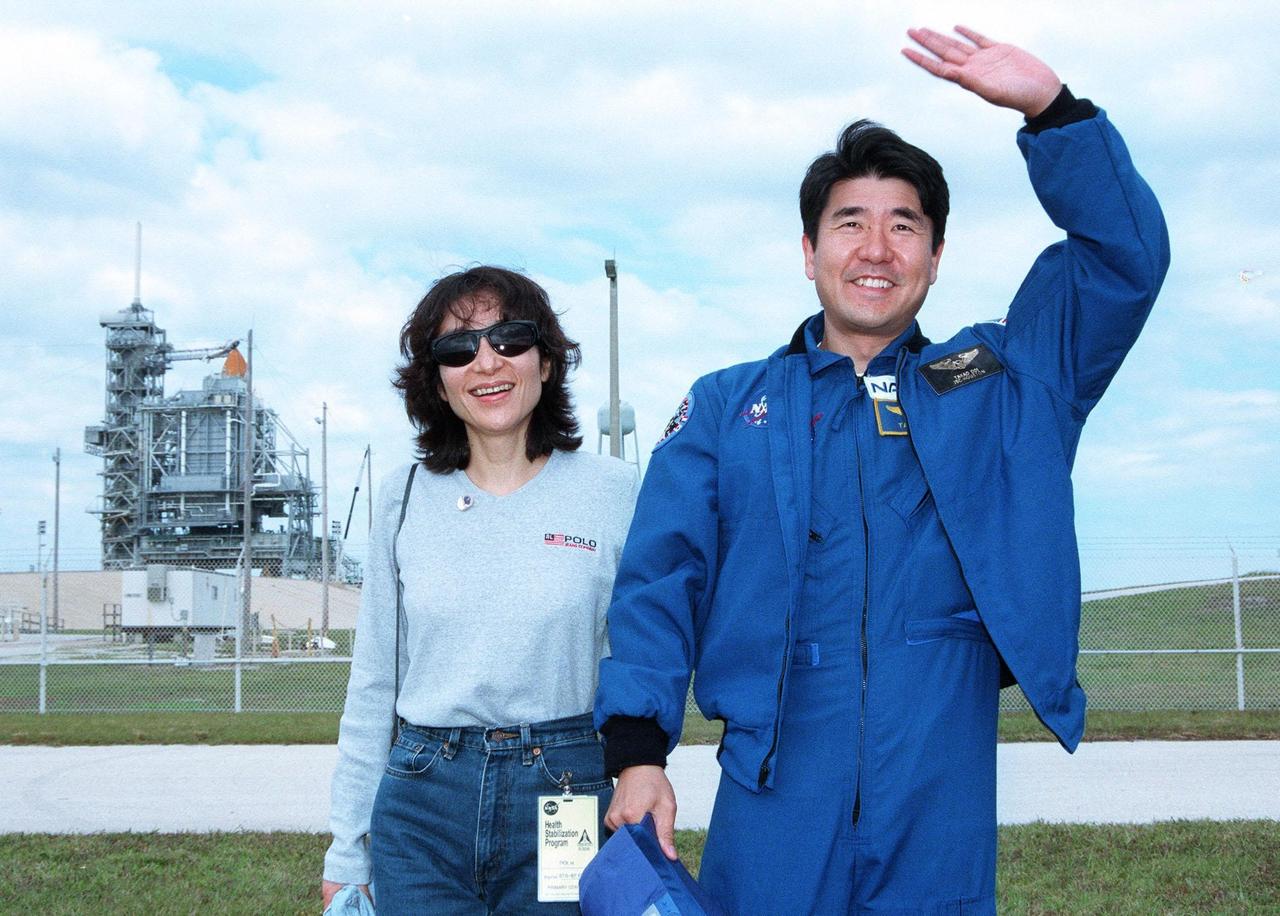
STS-87 Mission Specialist Takao Doi, Ph.D., of the National Space Development Agency of Japan poses with his wife, Hitomi Doi, in front of Kennedy Space Center's Launch Pad 39B during final prelaunch activities leading up to the scheduled Nov. 19 liftoff. The other STS-87 crew members are Commander Kevin Kregel; Pilot Steven Lindsey; Mission Specialists Kalpana Chawla, Ph.D., and Winston Scott; and Payload Specialist Leonid Kadenyuk of the National Space Agency of Ukraine. STS-87 will be the fourth flight of the United States Microgravity Payload and the Spartan-201 deployable satellite
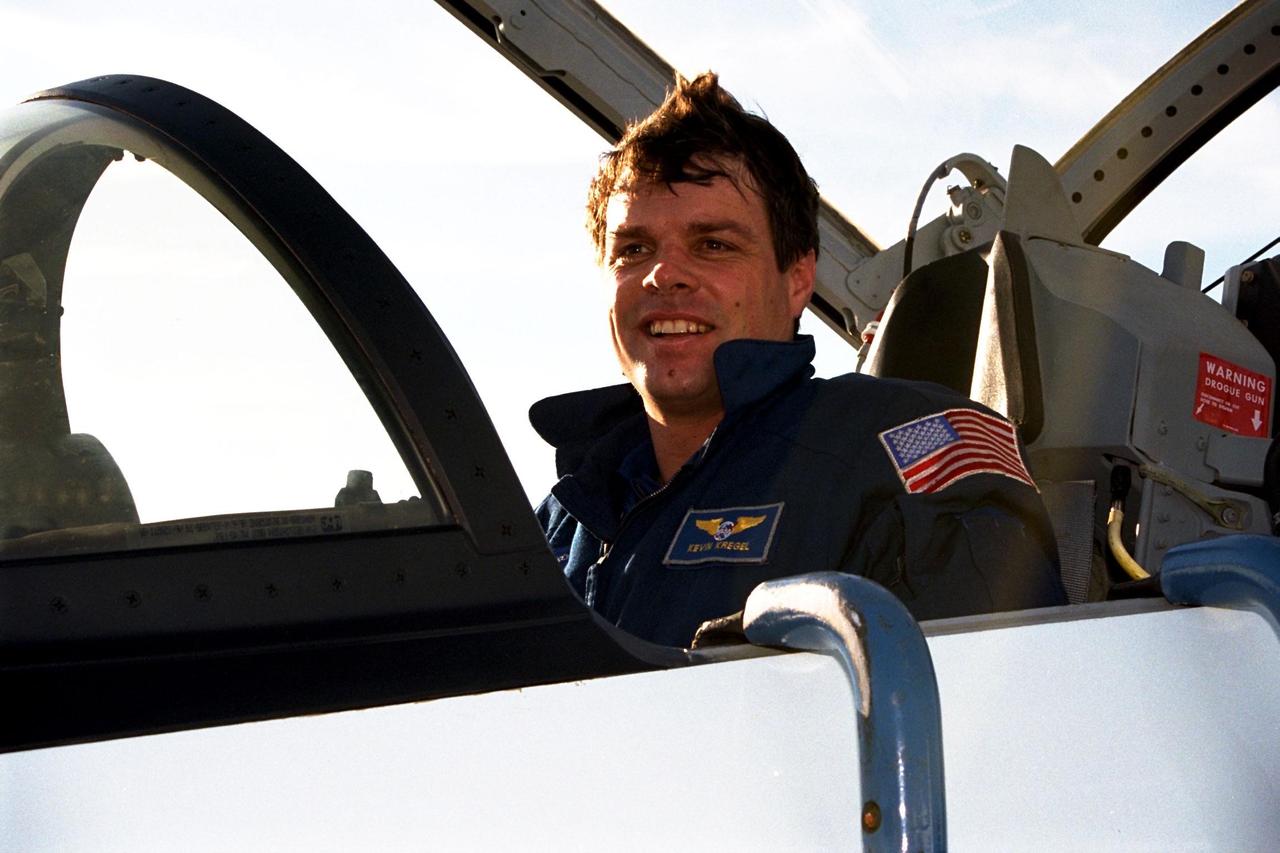
STS-87 Commander Kevin Kregel arrives at Kennedy Space Center's Shuttle Landing Facility aboard a T-38 jet for the final prelaunch activities leading up to the scheduled Nov. 19 liftoff. The other STS-87 crew members are Pilot Steven Lindsey; Mission Specialists Kalpana Chawla, Ph.D.; Takao Doi, Ph.D., of the National Space Development Agency of Japan; and Winston Scott; and Payload Specialist Leonid Kadenyuk of the National Space Agency of Ukraine. STS-87 will be the fourth flight of the United States Microgravity Payload and the Spartan-201 deployable satellite
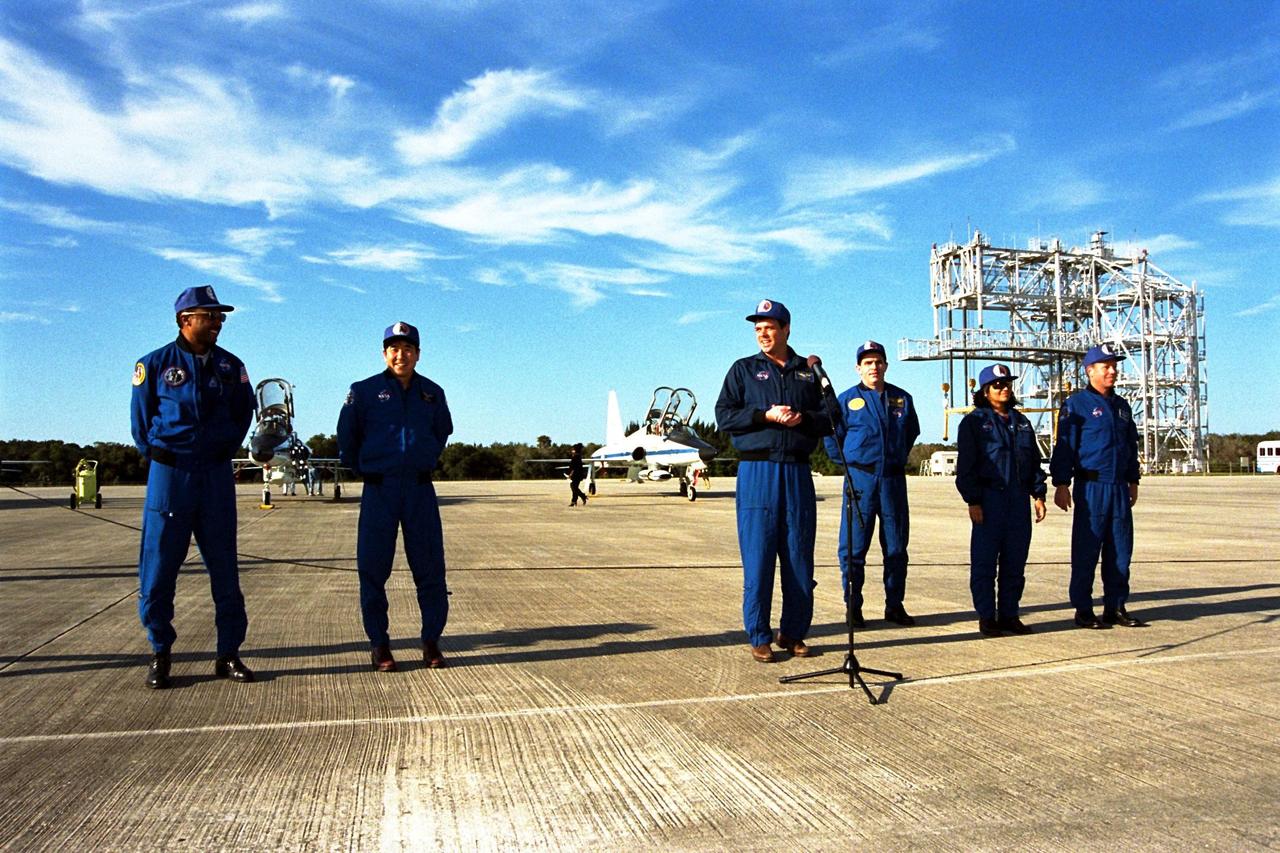
STS-87 Commander Kevin Kregel addresses members of the press and media at Kennedy Space Center's Shuttle Landing Facility after arriving for the final prelaunch activities leading up to the scheduled Nov. 19 liftoff. The STS-87 crew members are, from left to right, Mission Specialists Winston Scott and Takao Doi, Ph.D., of the National Space Development Agency of Japan; Commander Kevin Kregel; Payload Specialist Leonid Kadenyuk of the National Space Agency of Ukraine; Mission Specialist Kalpana Chawla, Ph.D.; and Pilot Steven Lindsey. STS-87 will be the fourth flight of the United States Microgravity Payload and the Spartan-201 deployable satellite
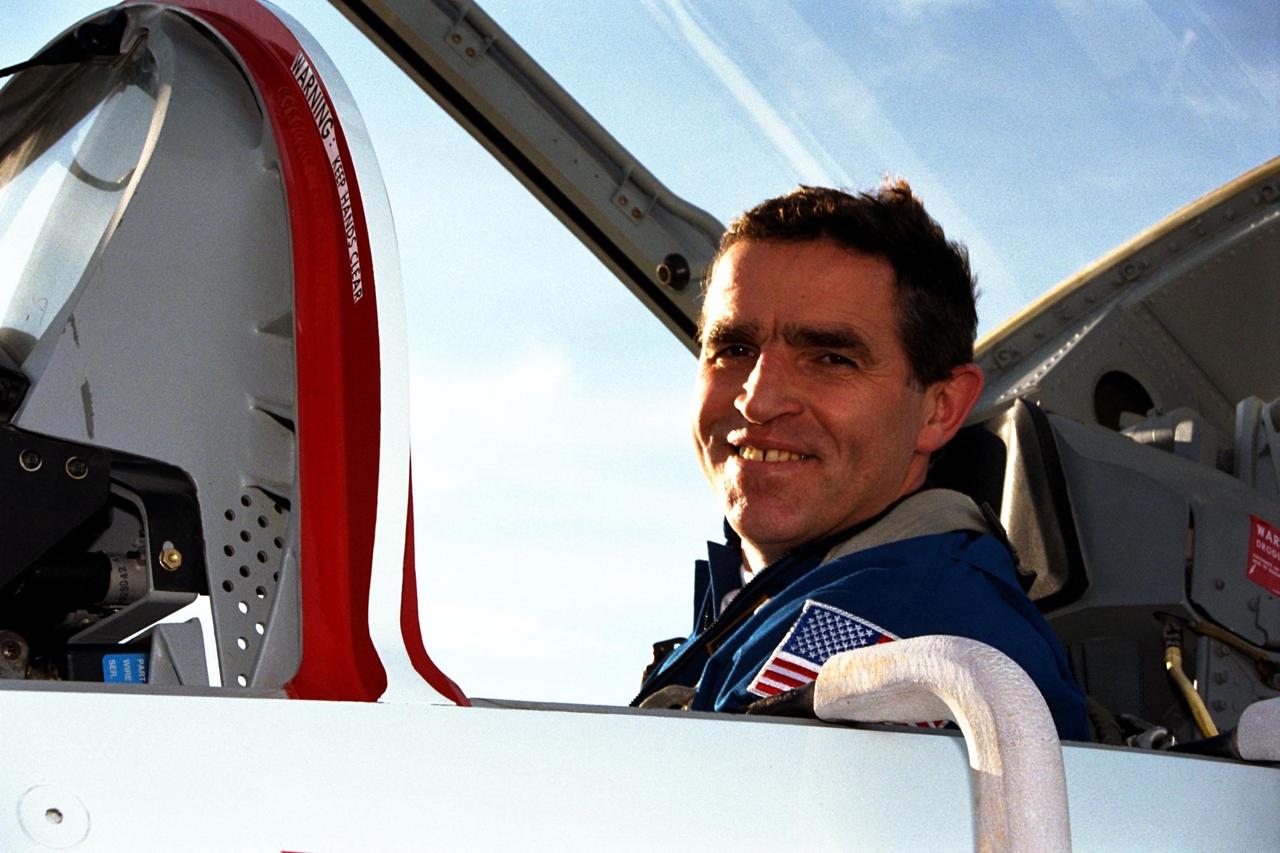
STS-87 Payload Specialist Leonid Kadenyuk of the National Space Agency of Ukraine arrives at Kennedy Space Center's Shuttle Landing Facility aboard a T-38 jet for the final prelaunch activities leading up to the scheduled Nov. 19 liftoff. The other STS-87 crew members are Commander Kevin Kregel; Pilot Steven Lindsey; and Mission Specialists Kalpana Chawla, Ph.D.; Takao Doi, Ph.D., of the National Space Development Agency of Japan; and Winston Scott. STS-87 will be the fourth flight of the United States Microgravity Payload and the Spartan-201 deployable satellite
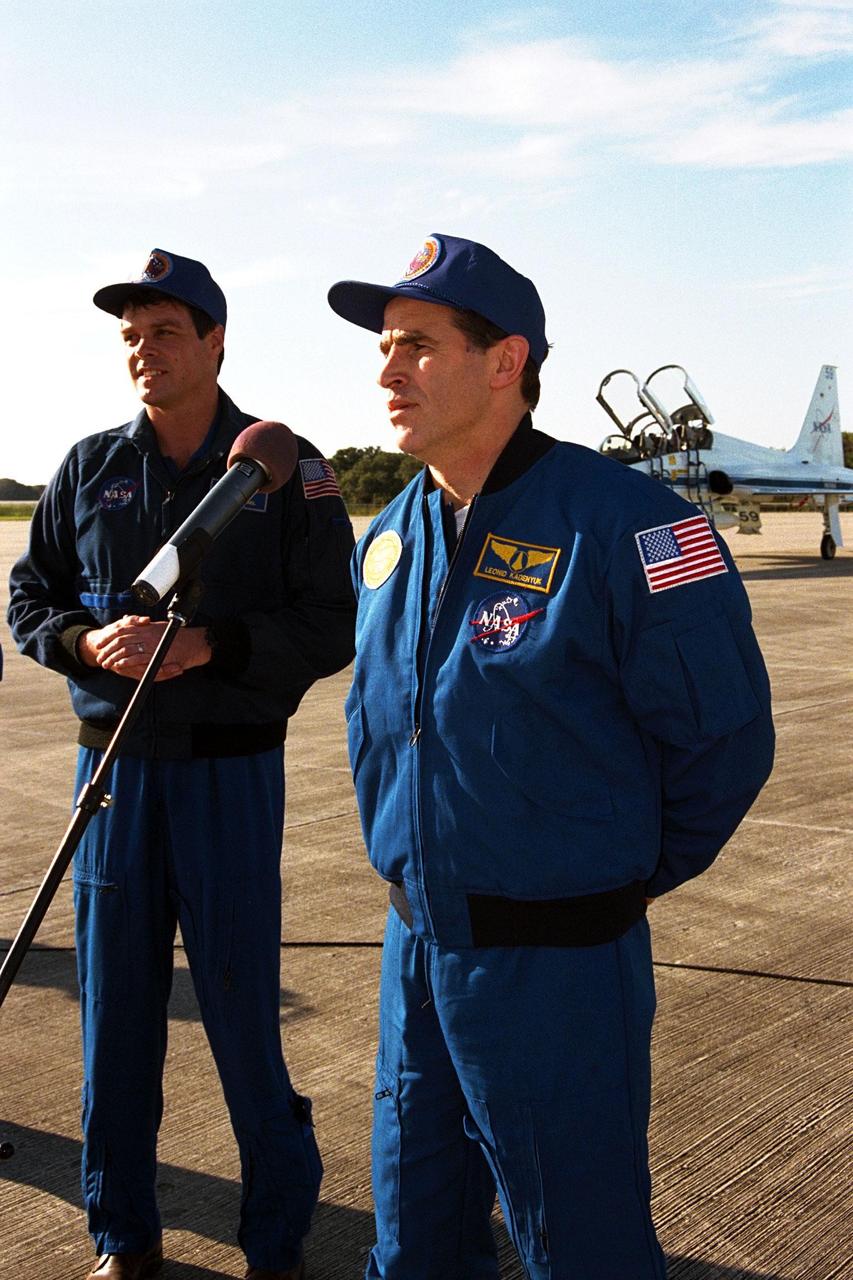
As STS-87 Commander Kevin Kregel looks on, Payload Specialist Leonid Kadenyuk of the National Space Agency of Ukraine addresses members of the press and media at Kennedy Space Center's Shuttle Landing Facility after arriving for the final prelaunch activities leading up to the scheduled Nov. 19 liftoff. Other STS-87 crew members not pictured are Pilot Steven Lindsey; and Mission Specialists Kalpana Chawla, Ph.D.; Takao Doi, Ph.D., of the National Space Development Agency of Japan; and Winston Scott. STS-87 will be the fourth flight of the United States Microgravity Payload and the Spartan-201 deployable satellite
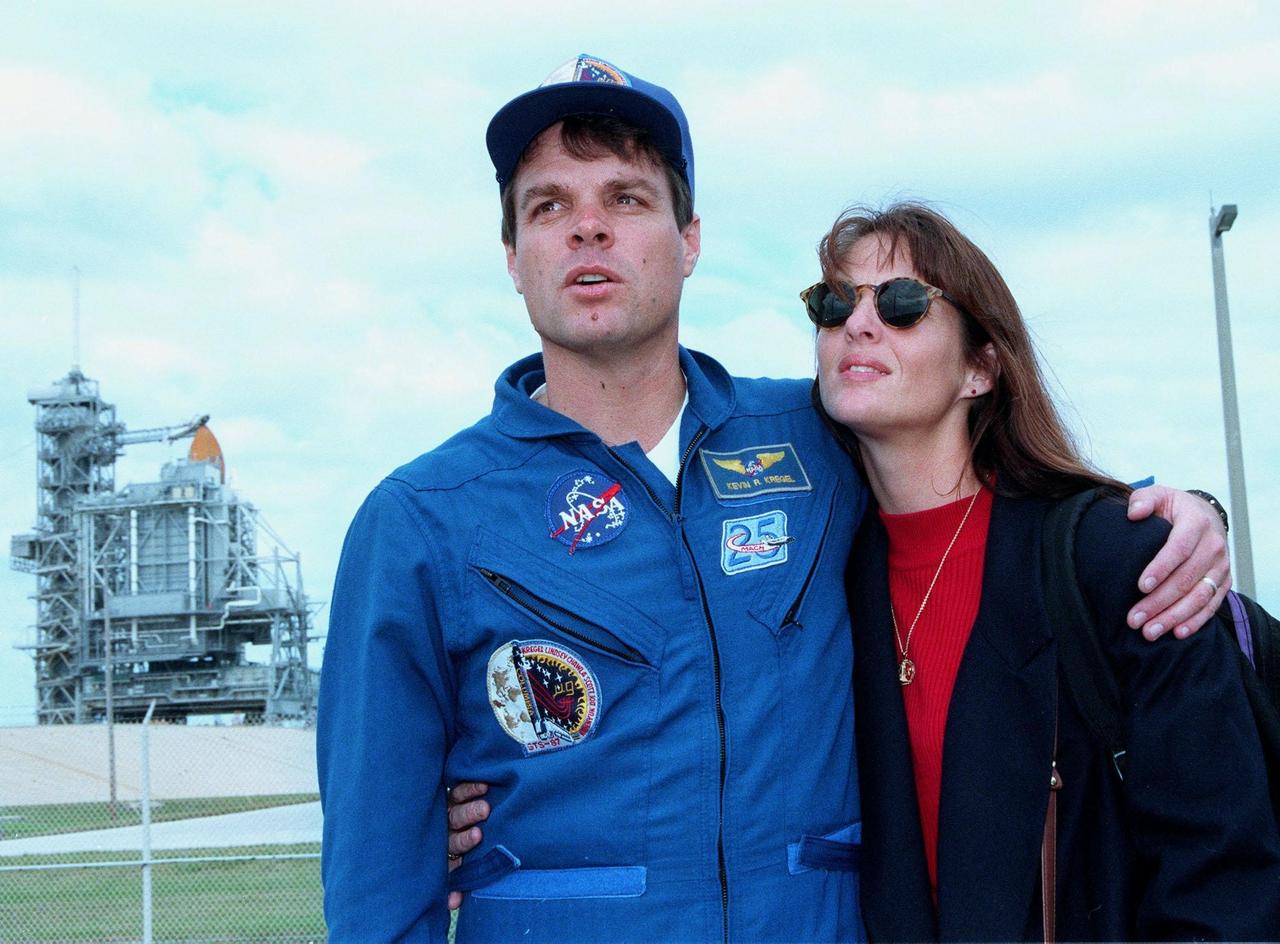
STS-87 Commander Kevin Kregel poses with his wife, Jeannie Kregel, in front of Kennedy Space Center's Launch Pad 39B during final prelaunch activities leading up to the scheduled Nov. 19 liftoff. The other STS-87 crew members are Pilot Steven Lindsey; Mission Specialists Kalpana Chawla, Ph.D., Winston Scott, and Takao Doi, Ph.D., of the National Space Development Agency of Japan; and Payload Specialist Leonid Kadenyuk of the National Space Agency of Ukraine. STS-87 will be the fourth flight of the United States Microgravity Payload and the Spartan-201 deployable satellite
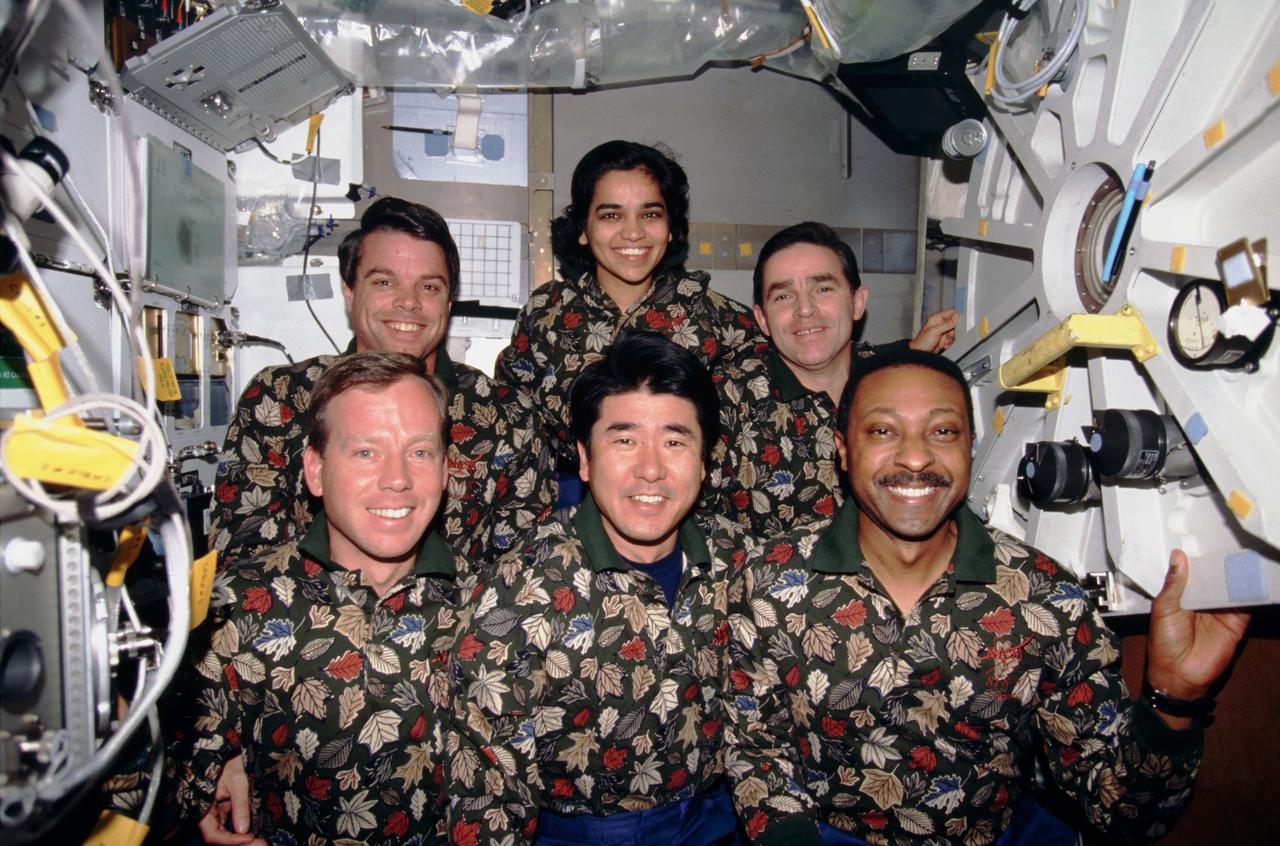
STS087-307-006 (19 November – 5 December 1997) --- One of the crew members' traditional in-flight crew portraits has them posed in other-than traditional attire on the Space Shuttle Columbia's mid-deck. On the front row, from the left, are astronauts Steven W. Lindsey, pilot; Takao Doi, an international mission specialist representing Japan's National Space Development Agency (NASDA); and Winston E. Scott, mission specialist. In the back are astronauts Kevin R. Kregel, mission commander; and Kalpana Chawla, mission specialist, along with Ukrainian payload specialist Leonid K. Kadenyuk.
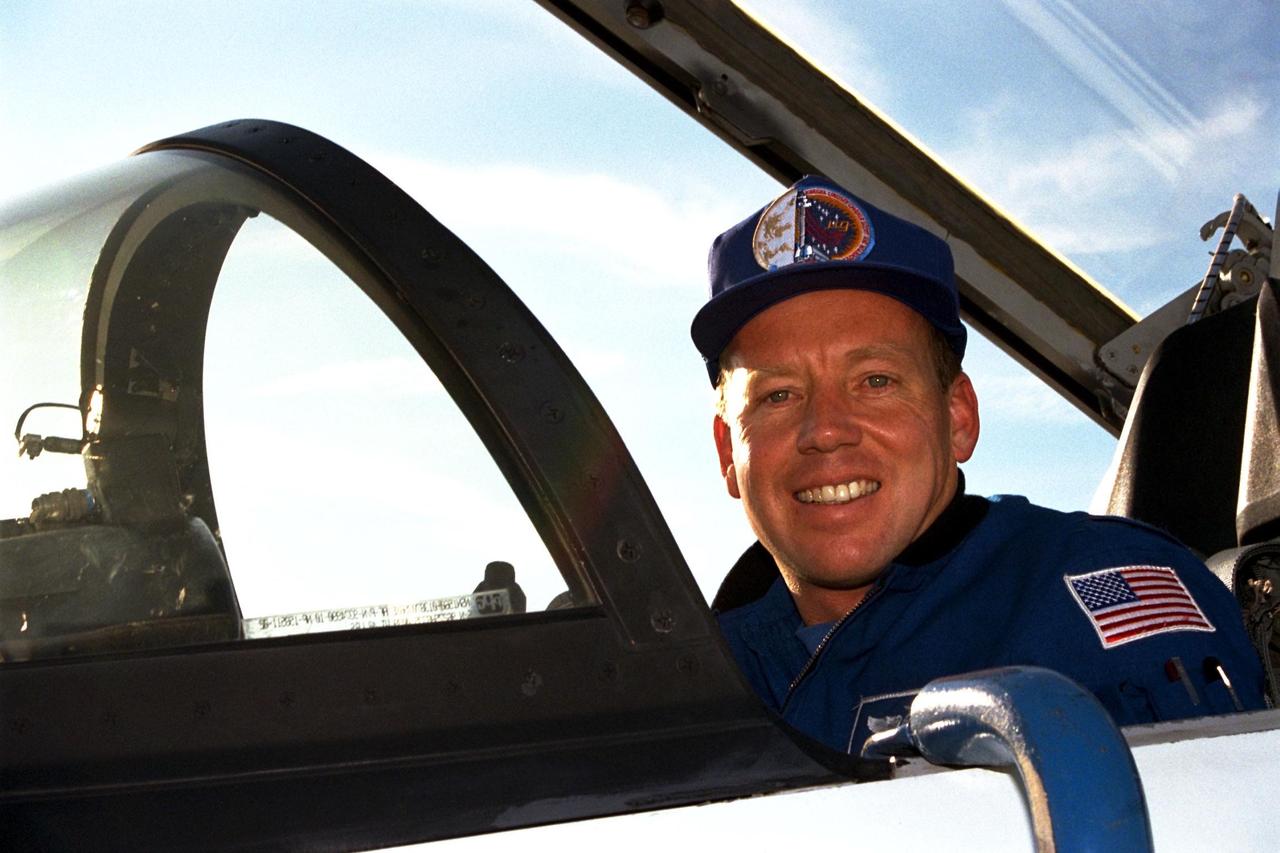
STS-87 Pilot Steven Lindsey arrives at Kennedy Space Center's Shuttle Landing Facility aboard a T-38 jet for the final prelaunch activities leading up to the scheduled Nov. 19 liftoff. The other STS-87 crew members are Commander Kevin Kregel; Mission Specialists Kalpana Chawla, Ph.D.; Takao Doi, Ph.D., of the National Space Development Agency of Japan; and Winston Scott; and Payload Specialist Leonid Kadenyuk of the National Space Agency of Ukraine. STS-87 will be the fourth flight of the United States Microgravity Payload and the Spartan-201 deployable satellite
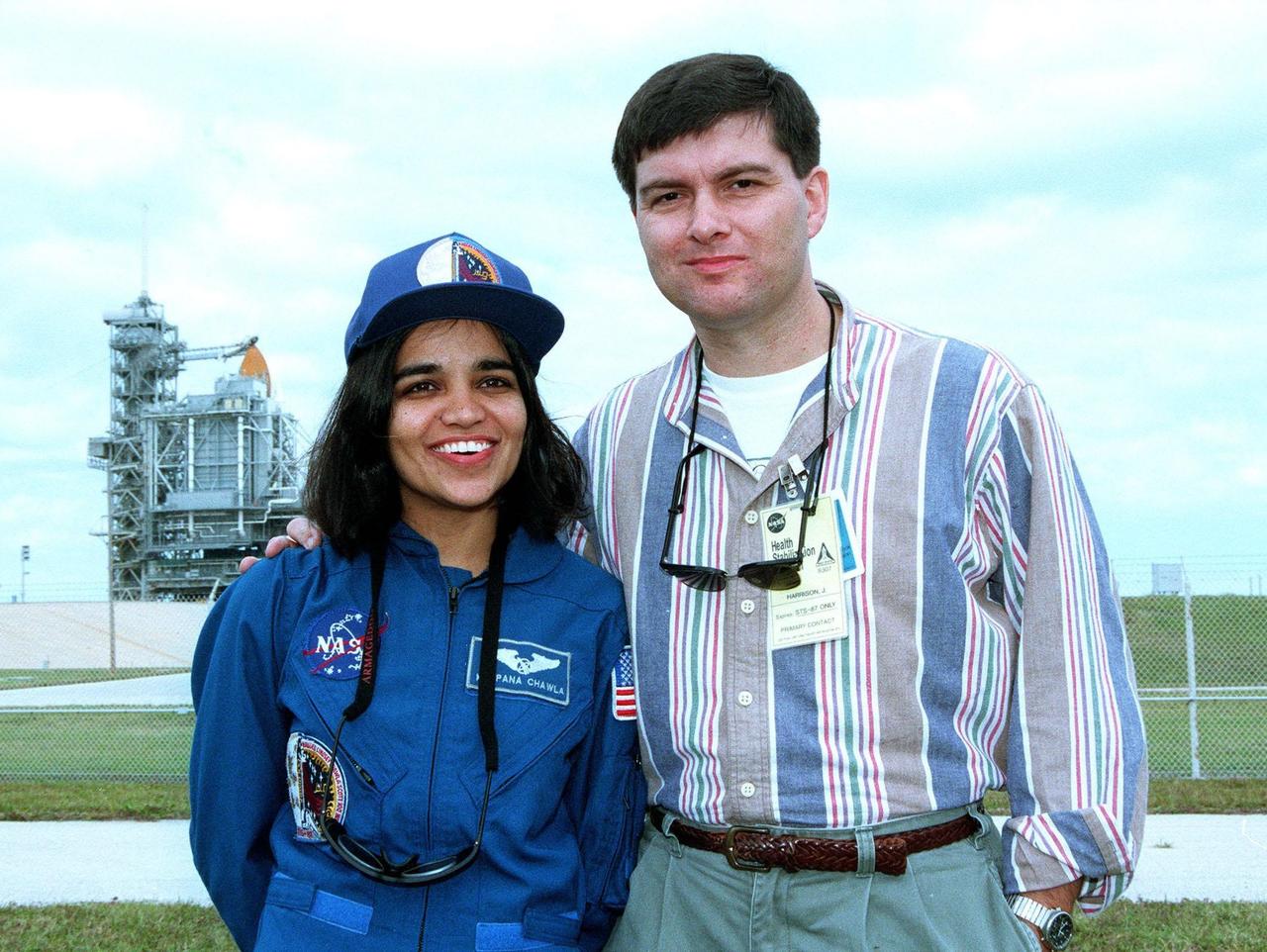
STS-87 Mission Specialist Kalpana Chawla, Ph.D., poses with her husband, Jean-Pierre Harrison, in front of Kennedy Space Center's Launch Pad 39B during final prelaunch activities leading up to the scheduled Nov. 19 liftoff. The other STS-87 crew members are Commander Kevin Kregel; Pilot Steven Lindsey; Mission Specialists Winston Scott and Takao Doi, Ph.D., of the National Space Development Agency of Japan; and Payload Specialist Leonid Kadenyuk of the National Space Agency of Ukraine. STS-87 will be the fourth flight of the United States Microgravity Payload and the Spartan-201 deployable satellite
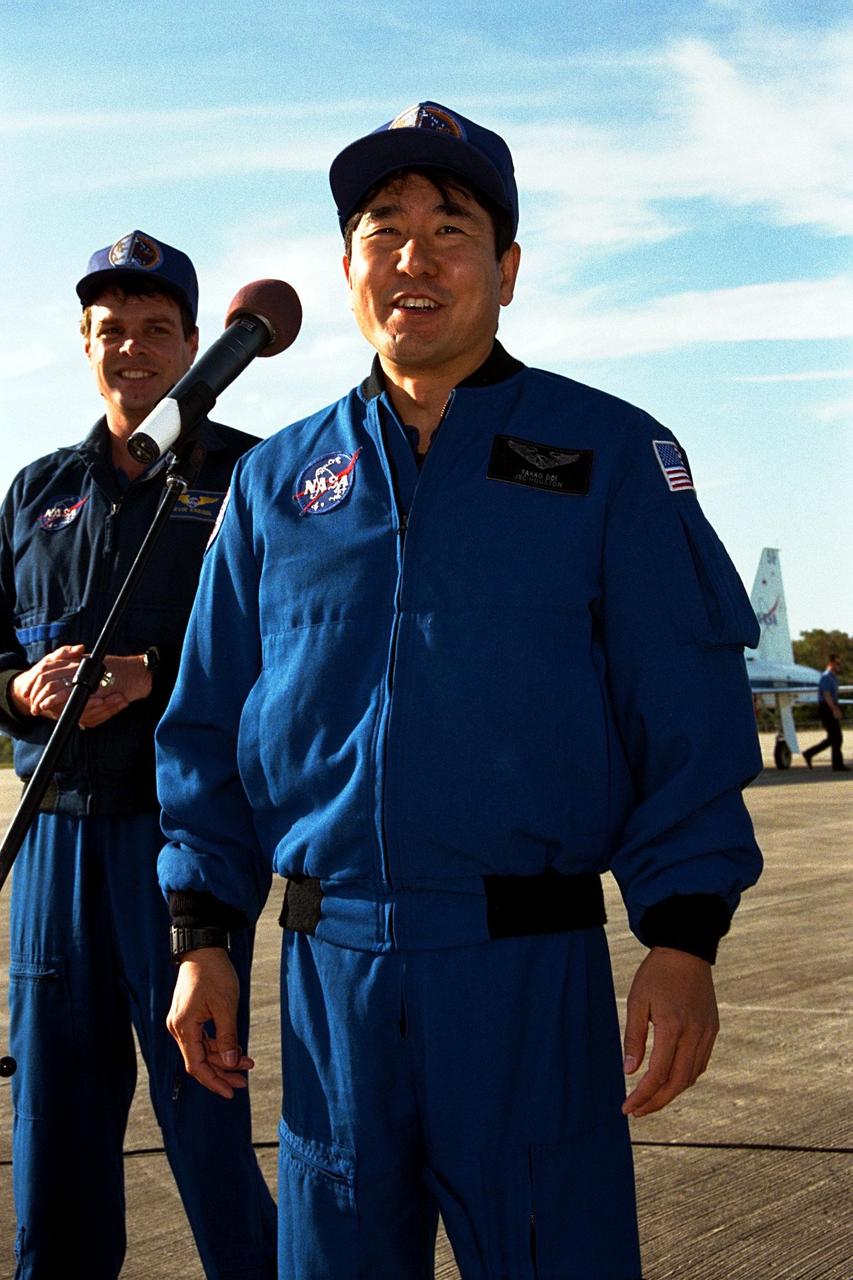
As STS-87 Commander Kevin Kregel looks on, Mission Specialist Takao Doi, Ph.D., of the National Space Development Agency of Japan addresses members of the press and media at Kennedy Space Center's Shuttle Landing Facility after arriving for the final prelaunch activities leading up to the scheduled Nov. 19 liftoff. Other STS-87 crew members not pictured are Pilot Steven Lindsey; Mission Specialists Kalpana Chawla, Ph.D., and Winston Scott; and Payload Specialist Leonid Kadenyuk of the National Space Agency of Ukraine. STS-87 will be the fourth flight of the United States Microgravity Payload and the Spartan-201 deployable satellite
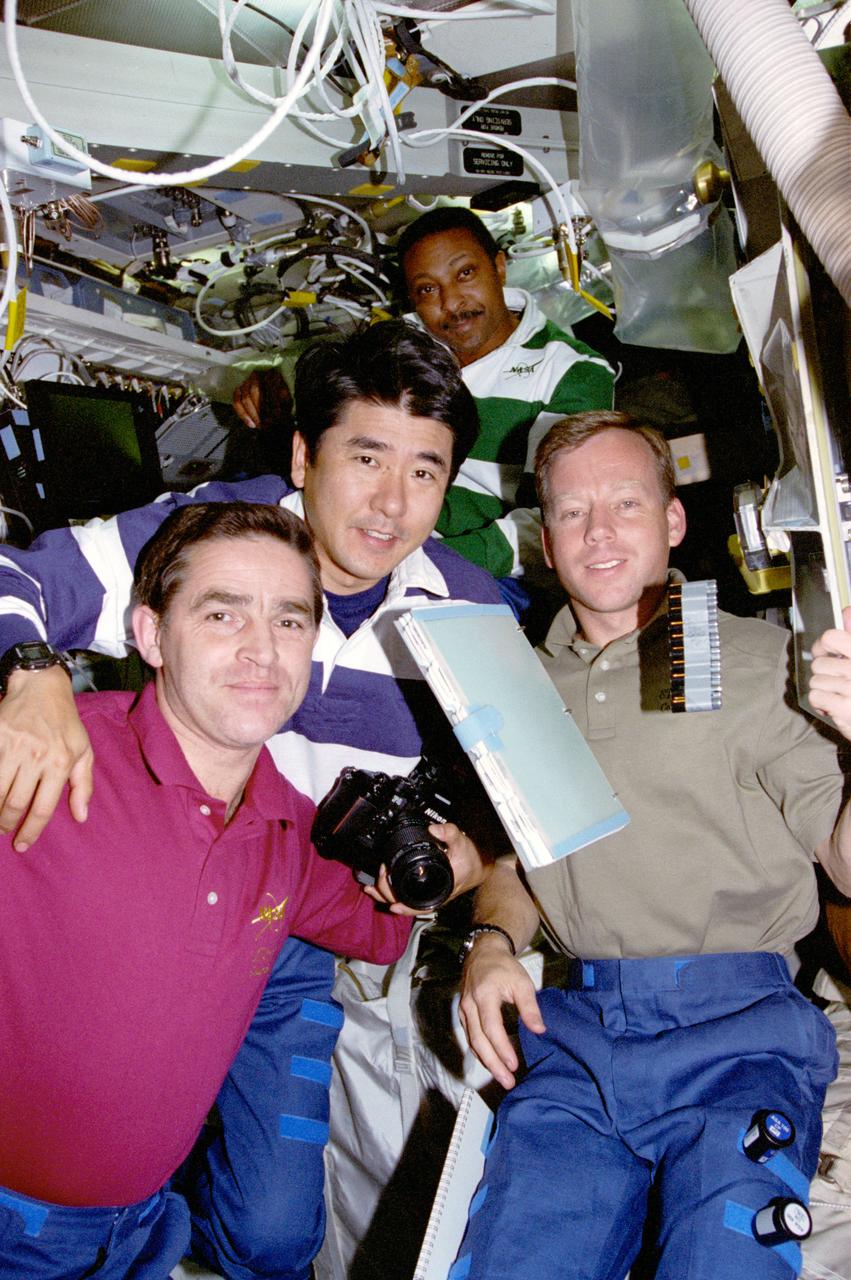
STS087-353-034 (19 November - 5 December 1997) --- Two-thirds of the crew members are pictured on the mid-deck of the Earth-orbiting Space Shuttle Columbia. From the left are Leonid Kadenyuk, payload specialist of the Ukraine; Takao Doi, international mission specialist representing Japan's National Space Development Agency (NASDA); Winston E. Scott, mission specialist; and Steven W. Lindsey, pilot. Doi was joined on two Extravehicular Activities (EVA) during the 16-day United States Microgravity Payload (USMP-4) mission by Scott.
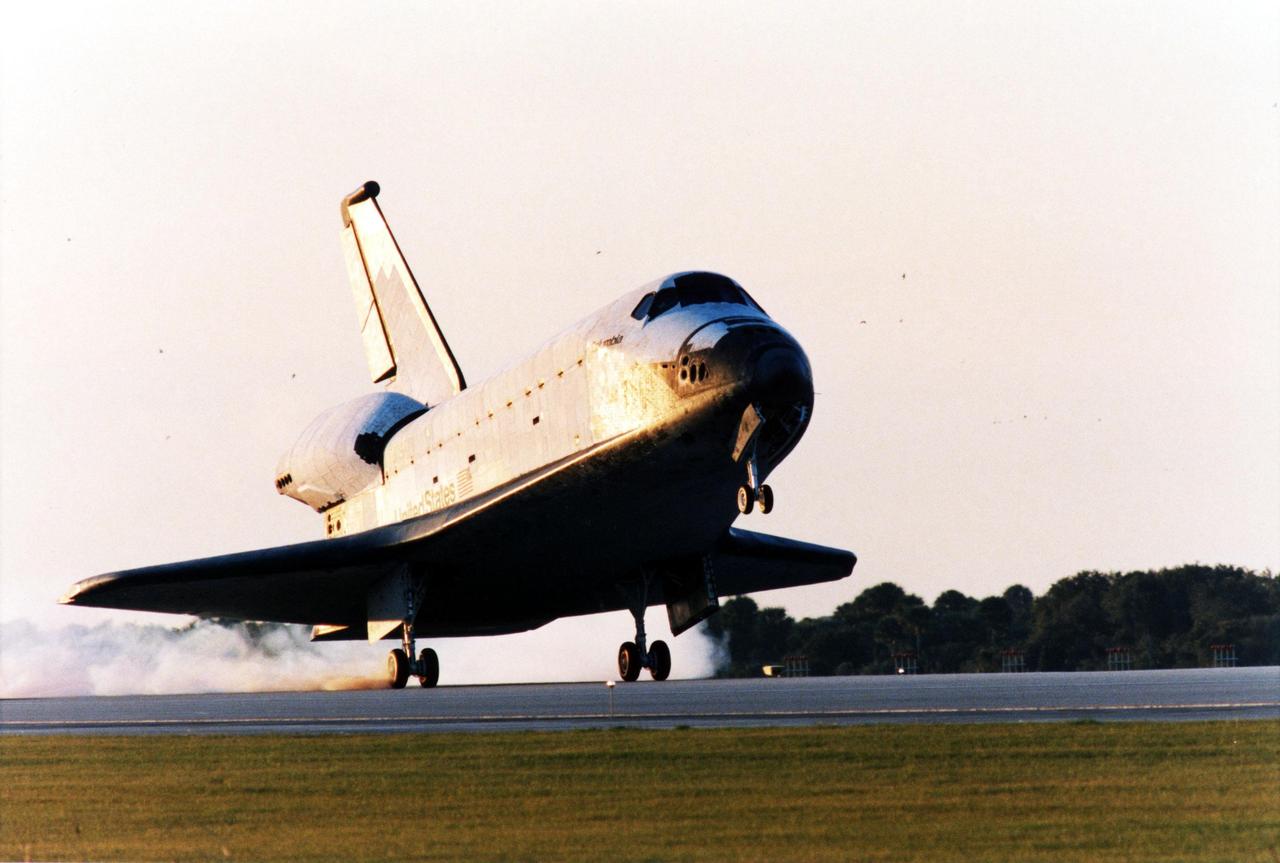
With Commander Kevin Kregel and Pilot Steven Lindsey at the controls, the orbiter Columbia touches its main gear down on Runway 33 at KSC’s Shuttle Landing Facility at 7:20:04 a.m. EST Dec. 5 to complete the 15-day, 16-hour and 34-minute-long STS-87 mission of 6.5 million miles. Also onboard the orbiter are Mission Specialists Winston Scott; Kalpana Chawla, Ph.D.; and Takao Doi, Ph.D., of the National Space Development Agency of Japan; along with Payload Specialist Leonid Kadenyuk of the National Space Agency of Ukraine. During the 88th Space Shuttle mission, the crew performed experiments on the United States Microgravity Payload-4 and pollinated plants as part of the Collaborative Ukrainian Experiment. This was the 12th landing for Columbia at KSC and the 41st KSC landing in the history of the Space Shuttle program
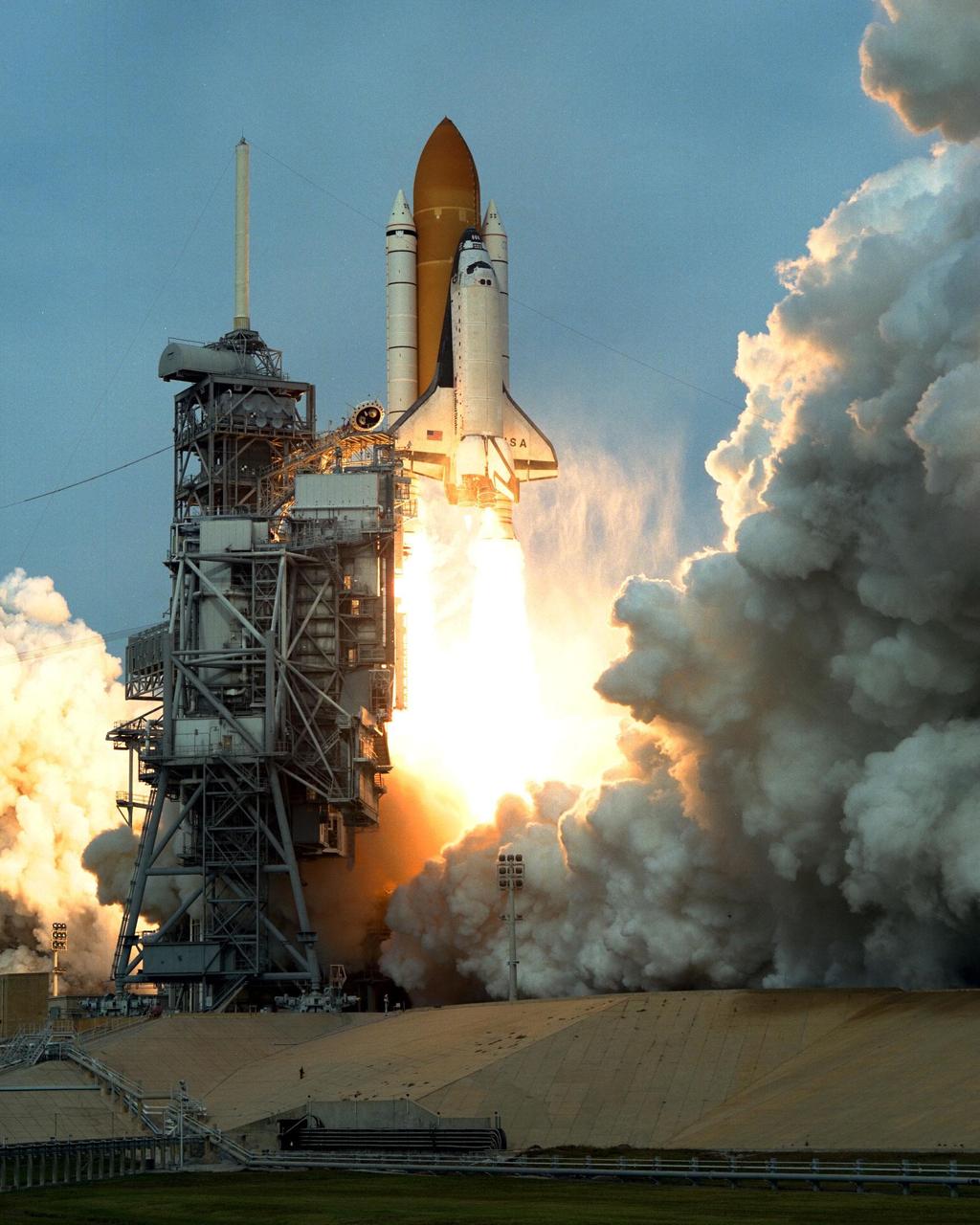
Like a rising sun lighting up the afternoon sky, the Space Shuttle Columbia soars from Launch Pad 39B at 2:46:00 p.m. EST, November 19, on the fourth flight of the United States Microgravity Payload and Spartan-201 satellite. The crew members include Mission Commander Kevin Kregel.; Pilot Steven Lindsey; Mission Specialists Kalpana Chawla, Ph.D., Winston Scott, and Takao Doi, Ph.D., of the National Space Development Agency of Japan; and Payload Specialist Leonid Kadenyuk of the National Space Agency of Ukraine. During the 16-day STS-87 mission, the crew will oversee experiments in microgravity; deploy and retrieve a solar satellite; and test a new experimental camera, the AERCam Sprint. Dr. Doi and Scott also will perform a spacewalk to practice International Space Station maneuvers
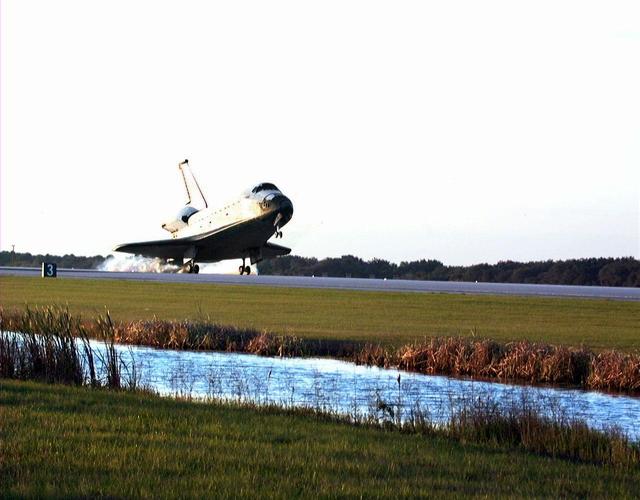
With Commander Kevin Kregel and Pilot Steven Lindsey at the controls, the orbiter Columbia touches its main gear down on Runway 33 at KSC’s Shuttle Landing Facility at 7:20:04 a.m. EST Dec. 5 to complete the 15-day, 16-hour and 34-minute-long STS-87 mission of 6.5 million miles. Also onboard the orbiter are Mission Specialists Winston Scott; Kalpana Chawla, Ph.D.; and Takao Doi, Ph.D., of the National Space Development Agency of Japan; along with Payload Specialist Leonid Kadenyuk of the National Space Agency of Ukraine. During the 88th Space Shuttle mission, the crew performed experiments on the United States Microgravity Payload-4 and pollinated plants as part of the Collaborative Ukrainian Experiment. This was the 12th landing for Columbia at KSC and the 41st KSC landing in the history of the Space Shuttle program
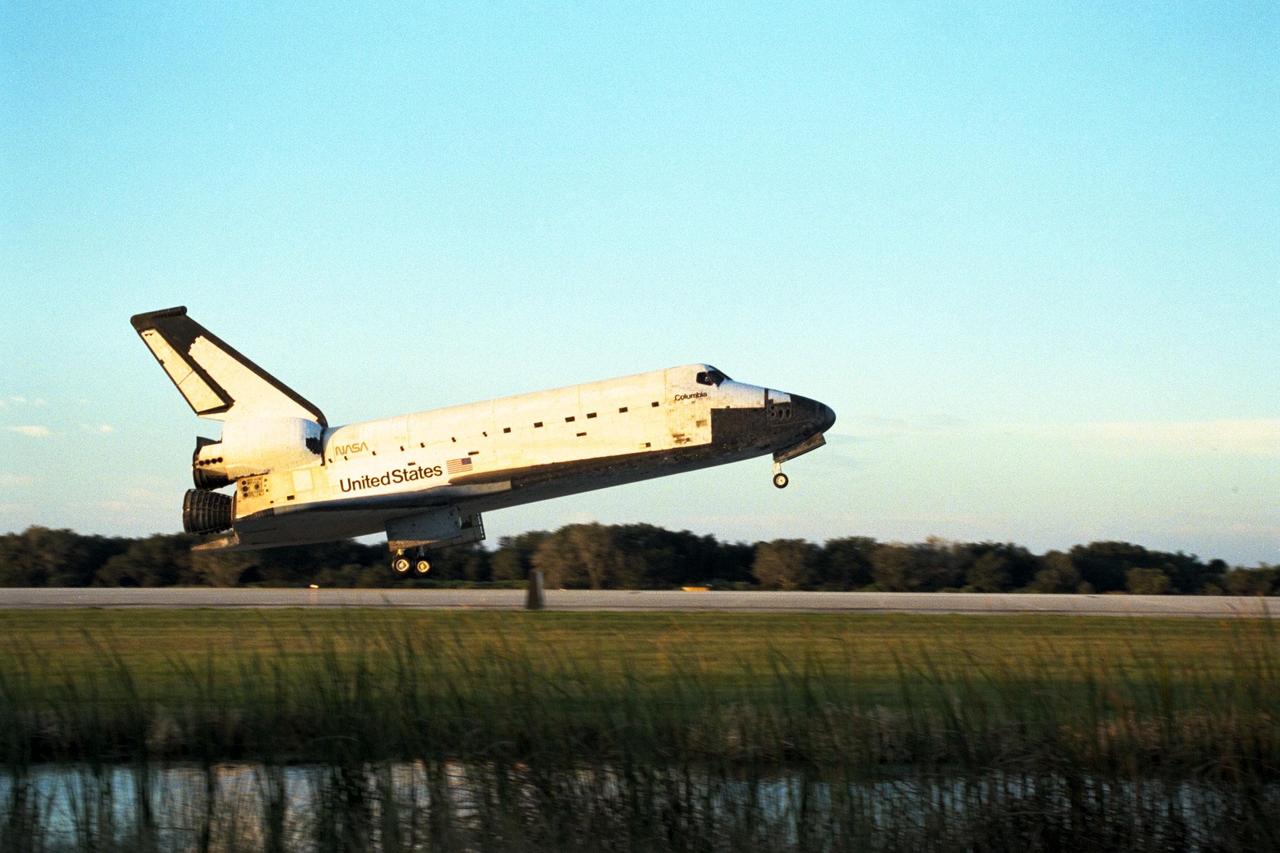
With Commander Kevin Kregel and Pilot Steven Lindsey at the controls, the orbiter Columbia makes a smooth touchdown on Runway 33 at KSC’s Shuttle Landing Facility at 7:20:04 a.m. EST Dec. 5, completing the 15-day, 16-hour and 34-minute-long STS-87 mission of 6.5 million miles. Also onboard the orbiter are Mission Specialists Winston Scott; Kalpana Chawla, Ph.D.; and Takao Doi, Ph.D., of the National Space Development Agency of Japan; along with Payload Specialist Leonid Kadenyuk of the National Space Agency of Ukraine. During the 88th Space Shuttle mission, the crew performed experiments on the United States Microgravity Payload-4 and pollinated plants as part of the Collaborative Ukrainian Experiment. This was the 12th landing for Columbia at KSC and the 41st KSC landing in the history of the Space Shuttle program
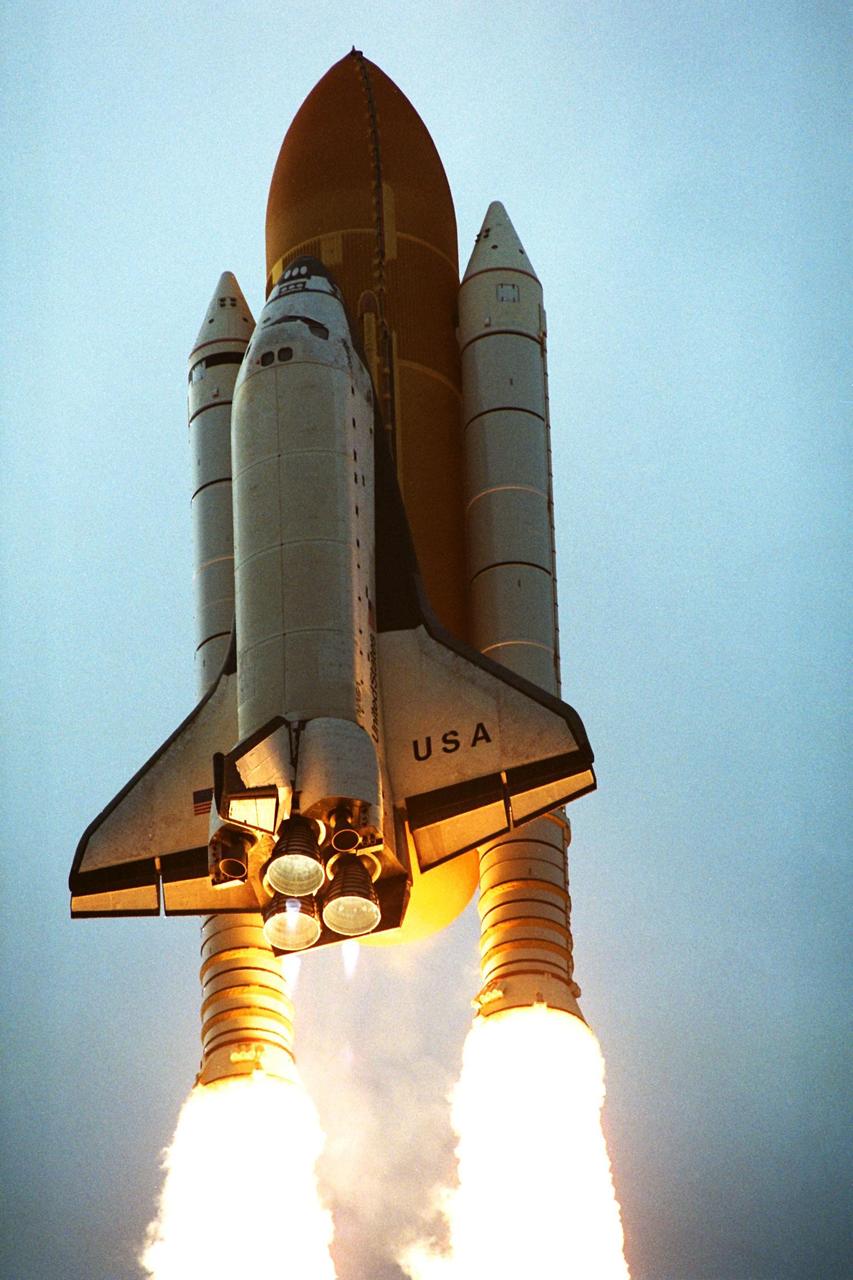
Like a rising sun lighting up the afternoon sky, the Space Shuttle Columbia soars from Launch Pad 39B at 2:46:00 p.m. EST, November 19, on the fourth flight of the United States Microgravity Payload and Spartan-201 satellite. The crew members include Mission Commander Kevin Kregel.; Pilot Steven Lindsey; Mission Specialists Kalpana Chawla, Ph.D., Winston Scott, and Takao Doi, Ph.D., of the National Space Development Agency of Japan; and Payload Specialist Leonid Kadenyuk of the National Space Agency of Ukraine. During the 16-day STS-87 mission, the crew will oversee experiments in microgravity; deploy and retrieve a solar satellite; and test a new experimental camera, the AERCam Sprint. Dr. Doi and Scott also will perform a spacewalk to practice International Space Station maneuvers
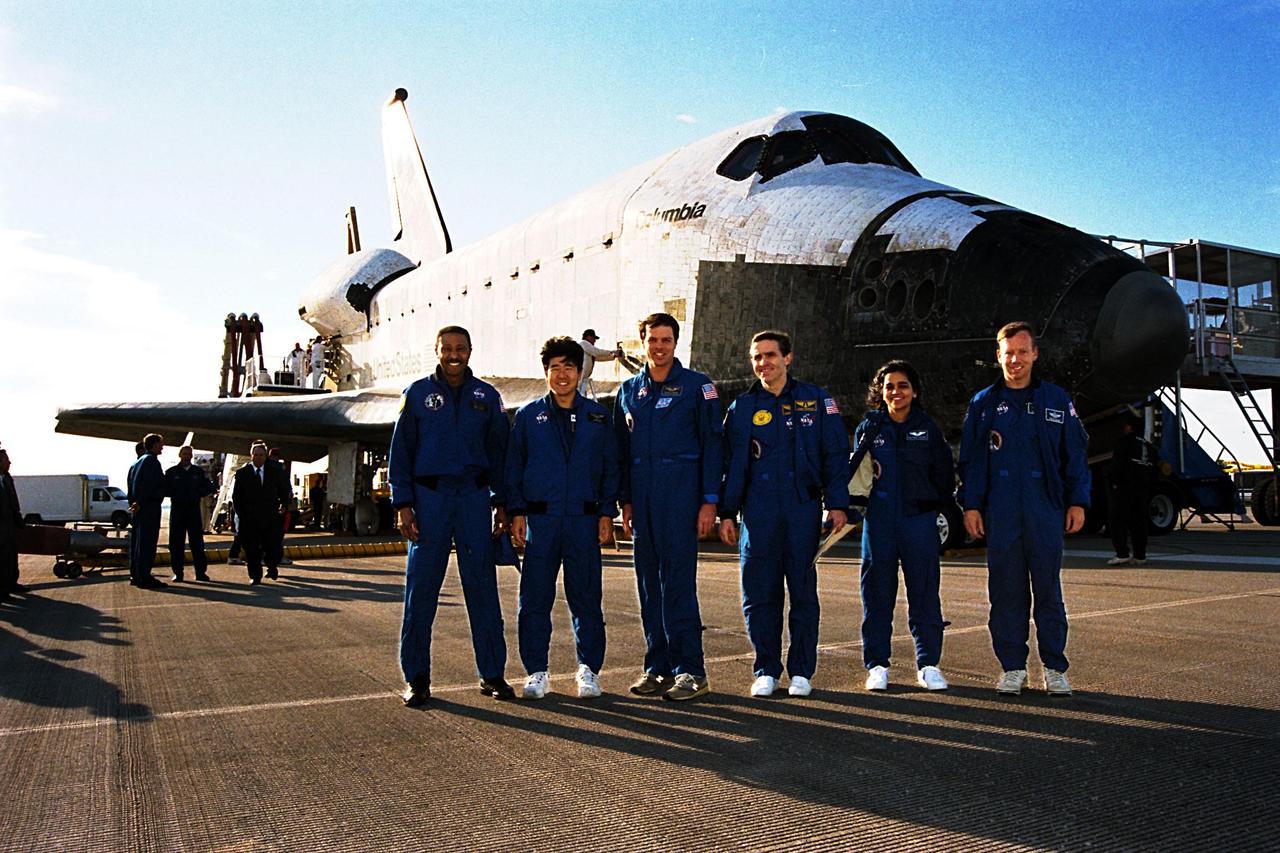
The STS-87 crew pose in front of the orbiter Columbia shortly after landing on Runway 33 at KSC's Shuttle Landing Facility. STS-87 concluded its mission with a main gear touchdown at 7:20:04 a.m. EST Dec. 5, drawing the 15-day, 16-hour and 34-minute-long mission of 6.5 million miles to a close. From left to right are Mission Specialists Winston Scott and Takao Doi, Ph.D., of the National Space Development Agency of Japan; Commander Kevin Kregel; Payload Specialist Leonid Kadenyuk of the National Space Agency of Ukraine; Mission Specialist Kalpana Chawla, Ph.D.; and Pilot Steven Lindsey. During the 88th Space Shuttle mission, the crew performed experiments on the United States Microgravity Payload-4 and pollinated plants as part of the Collaborative Ukrainian Experiment. This was the 12th landing for Columbia at KSC and the 41st KSC landing in the history of the Space Shuttle program
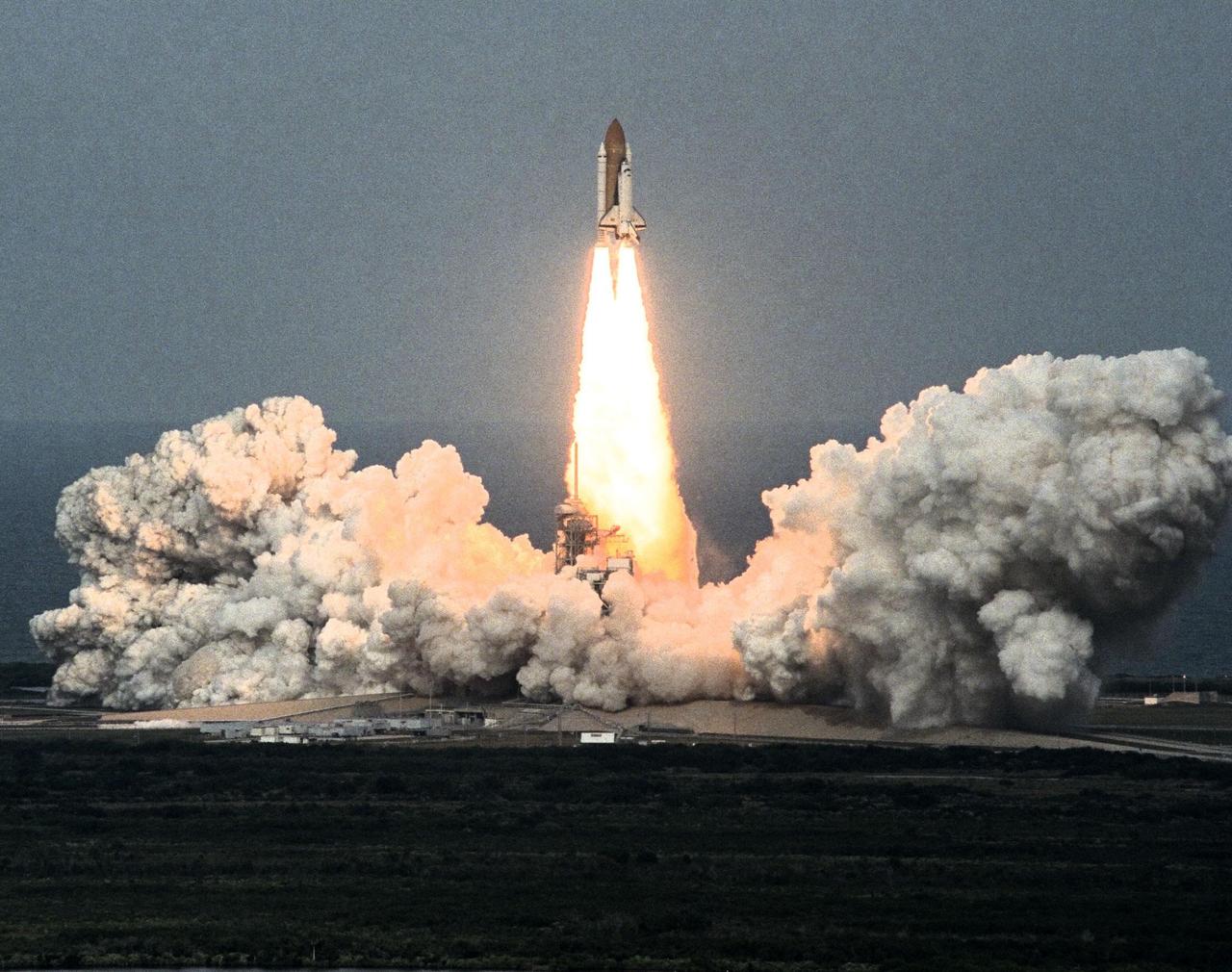
Like a rising sun lighting up the afternoon sky, the Space Shuttle Columbia soars from Launch Pad 39B at 2:46:00 p.m. EST, November 19, on the fourth flight of the United States Microgravity Payload and Spartan-201 satellite. The crew members include Mission Commander Kevin Kregel.; Pilot Steven Lindsey; Mission Specialists Kalpana Chawla, Ph.D., Winston Scott, and Takao Doi, Ph.D., of the National Space Development Agency of Japan; and Payload Specialist Leonid Kadenyuk of the National Space Agency of Ukraine. During the 16-day STS-87 mission, the crew will oversee experiments in microgravity; deploy and retrieve a solar satellite; and test a new experimental camera, the AERCam Sprint. Dr. Doi and Scott also will perform a spacewalk to practice International Space Station maneuvers
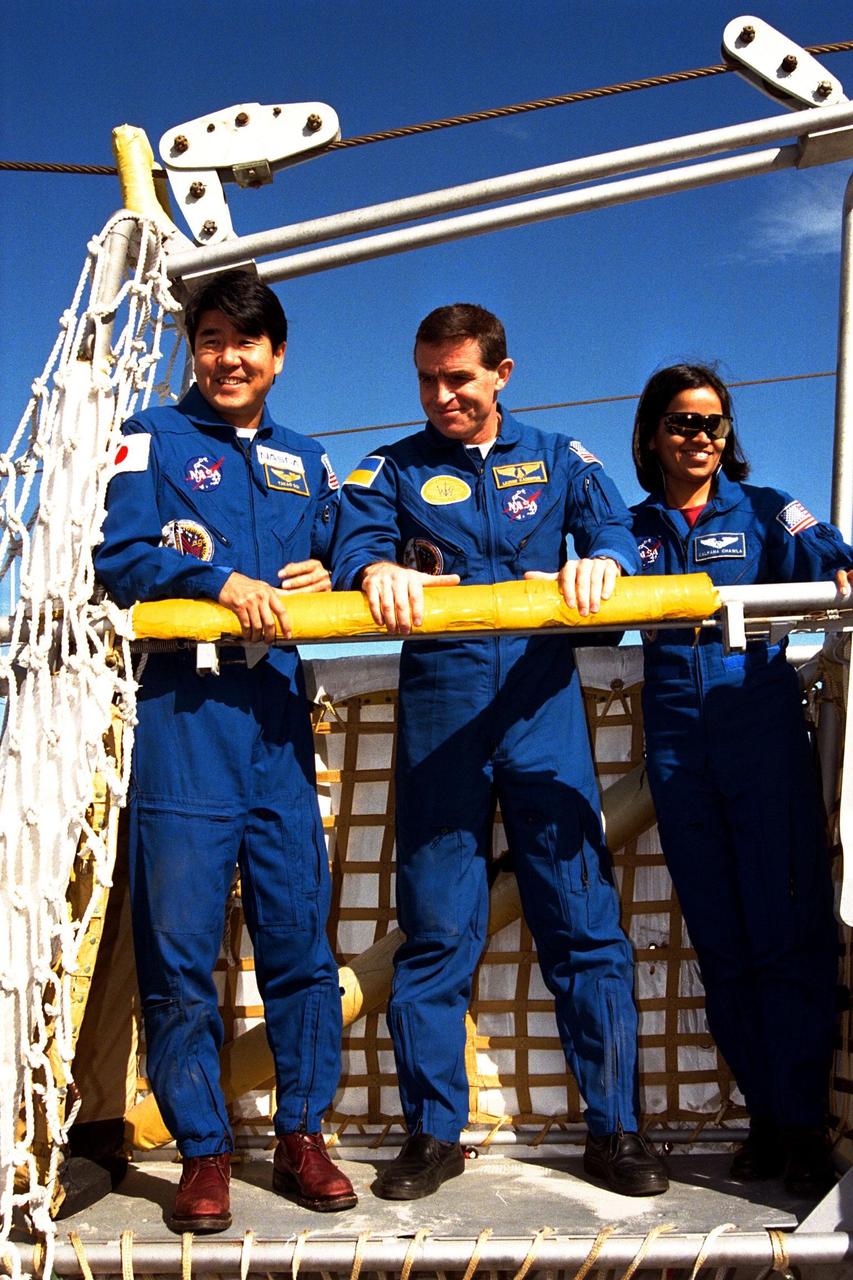
The crew of the STS-87 mission, scheduled for launch Nov. 19 aboard the Space Shuttle Columbia from pad 39B at Kennedy Space Center (KSC), participates in the Terminal Countdown Demonstration Test (TCDT) at KSC. Testing a slidewire basket that is part of the pad’s emergency egress system are, from left, Mission Specialist Takao Doi, Ph.D., of the National Space Development Agency of Japan; Payload Specialist Leonid Kadenyuk of the National Space Agency of Ukraine (NSAU); and Mission Specialist Kalpana Chawla, Ph.D. The TCDT is held at KSC prior to each Space Shuttle flight providing the crew of each mission opportunities to participate in simulated countdown activities. The TCDT ends with a mock launch countdown culminating in a simulated main engine cut-off. The crew also spends time undergoing emergency egress training exercises at the pad and has an opportunity to view and inspect the payloads in the orbiter's payload bay
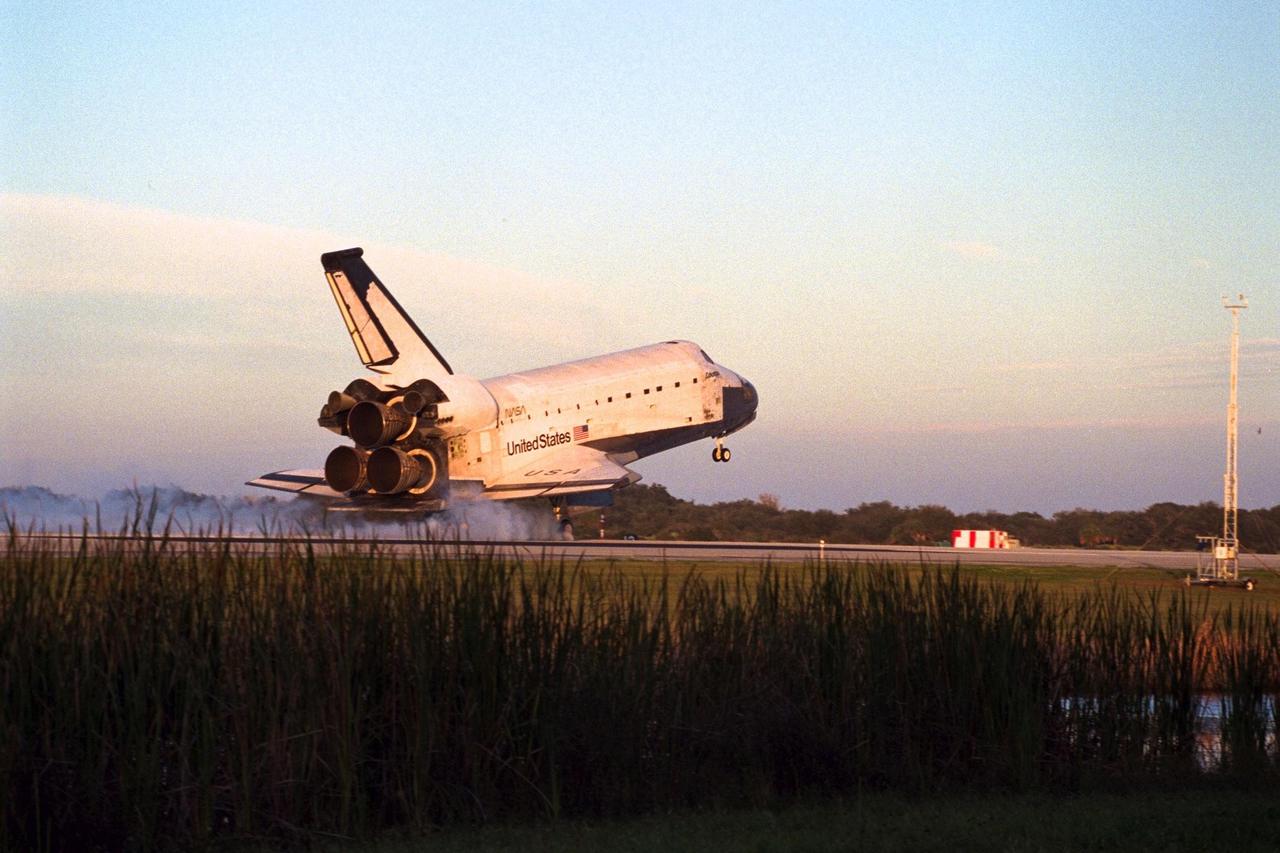
With Commander Kevin Kregel and Pilot Steven Lindsey at the controls, the orbiter Columbia makes a smooth touchdown on Runway 33 at KSC’s Shuttle Landing Facility at 7:20:04 a.m. EST Dec. 5, completing the 15-day, 16-hour and 34-minute-long STS-87 mission of 6.5 million miles. Also onboard the orbiter are Mission Specialists Winston Scott; Kalpana Chawla, Ph.D.; and Takao Doi, Ph.D., of the National Space Development Agency of Japan; along with Payload Specialist Leonid Kadenyuk of the National Space Agency of Ukraine. During the 88th Space Shuttle mission, the crew performed experiments on the United States Microgravity Payload-4 and pollinated plants as part of the Collaborative Ukrainian Experiment. This was the 12th landing for Columbia at KSC and the 41st KSC landing in the history of the Space Shuttle program
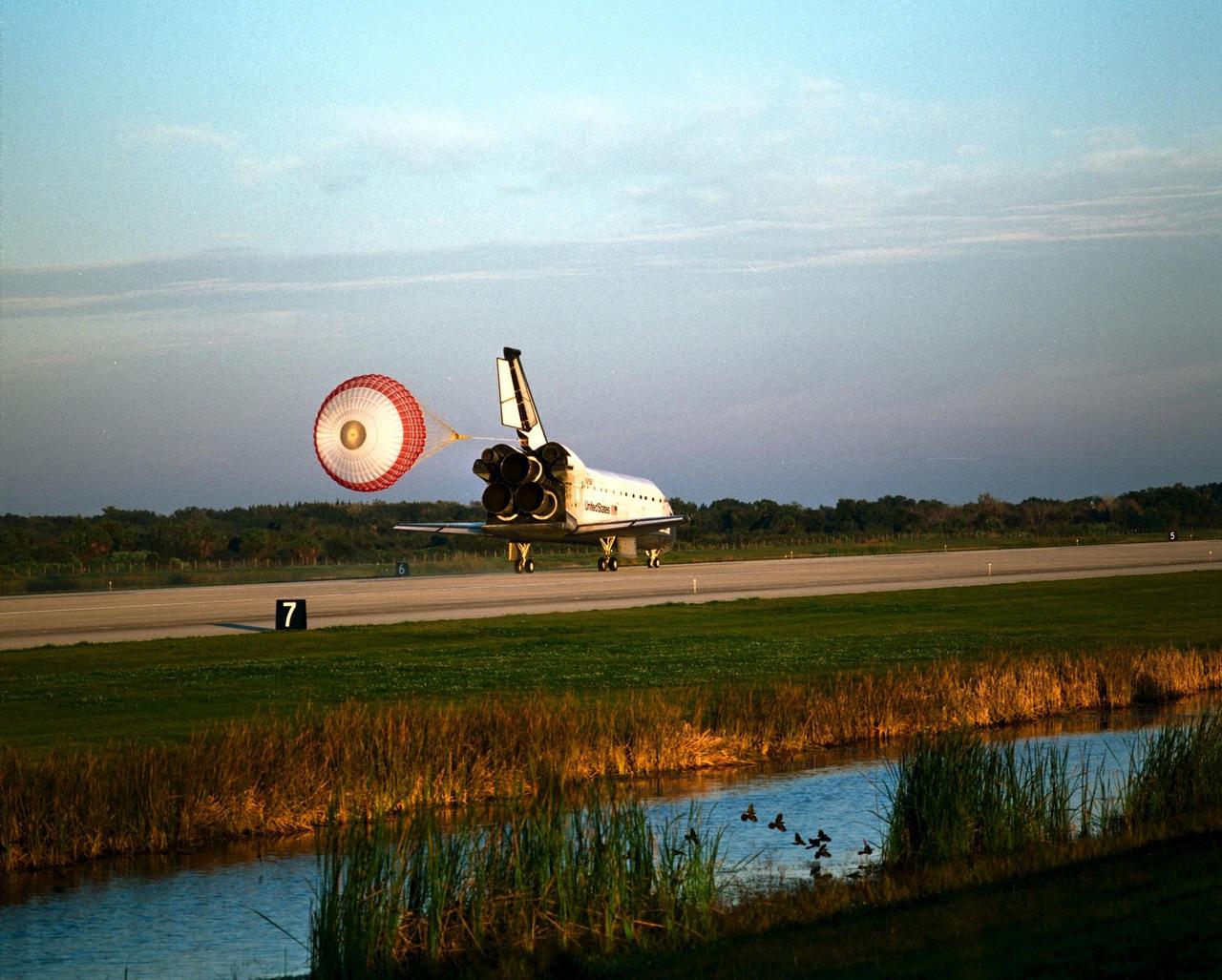
With Commander Kevin Kregel and Pilot Steven Lindsey at the controls, the orbiter Columbia, with its drag chute deployed, touches down on Runway 33 at KSC’s Shuttle Landing Facility at 7:20:04 a.m. EST Dec. 5 to complete the 15-day, 16-hour and 34-minute-long STS-87 mission of 6.5 million miles. Also onboard the orbiter are Mission Specialists Winston Scott; Kalpana Chawla, Ph.D.; and Takao Doi, Ph.D., of the National Space Development Agency of Japan; along with Payload Specialist Leonid Kadenyuk of the National Space Agency of Ukraine. During the 88th Space Shuttle mission, the crew performed experiments on the United States Microgravity Payload-4 and pollinated plants as part of the Collaborative Ukrainian Experiment. This was the 12th landing for Columbia at KSC and the 41st KSC landing in the history of the Space Shuttle program
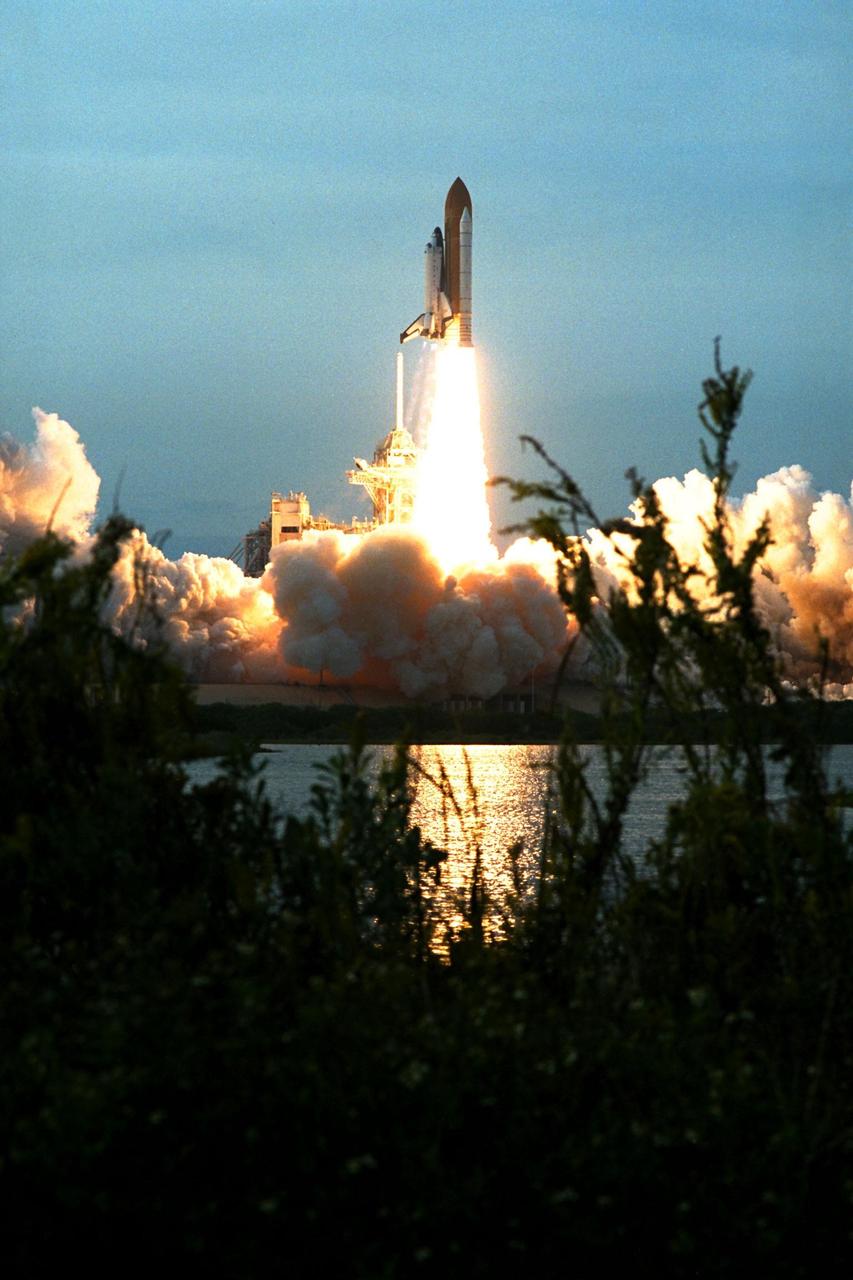
Like a rising sun lighting up the afternoon sky, the Space Shuttle Columbia soars from Launch Pad 39B at 2:46:00 p.m. EST, November 19, on the fourth flight of the United States Microgravity Payload and Spartan-201 satellite. The crew members include Mission Commander Kevin Kregel.; Pilot Steven Lindsey; Mission Specialists Kalpana Chawla, Ph.D., Winston Scott, and Takao Doi, Ph.D., of the National Space Development Agency of Japan; and Payload Specialist Leonid Kadenyuk of the National Space Agency of Ukraine. During the 16-day STS-87 mission, the crew will oversee experiments in microgravity; deploy and retrieve a solar satellite; and test a new experimental camera, the AERCam Sprint. Dr. Doi and Scott also will perform a spacewalk to practice International Space Station maneuvers
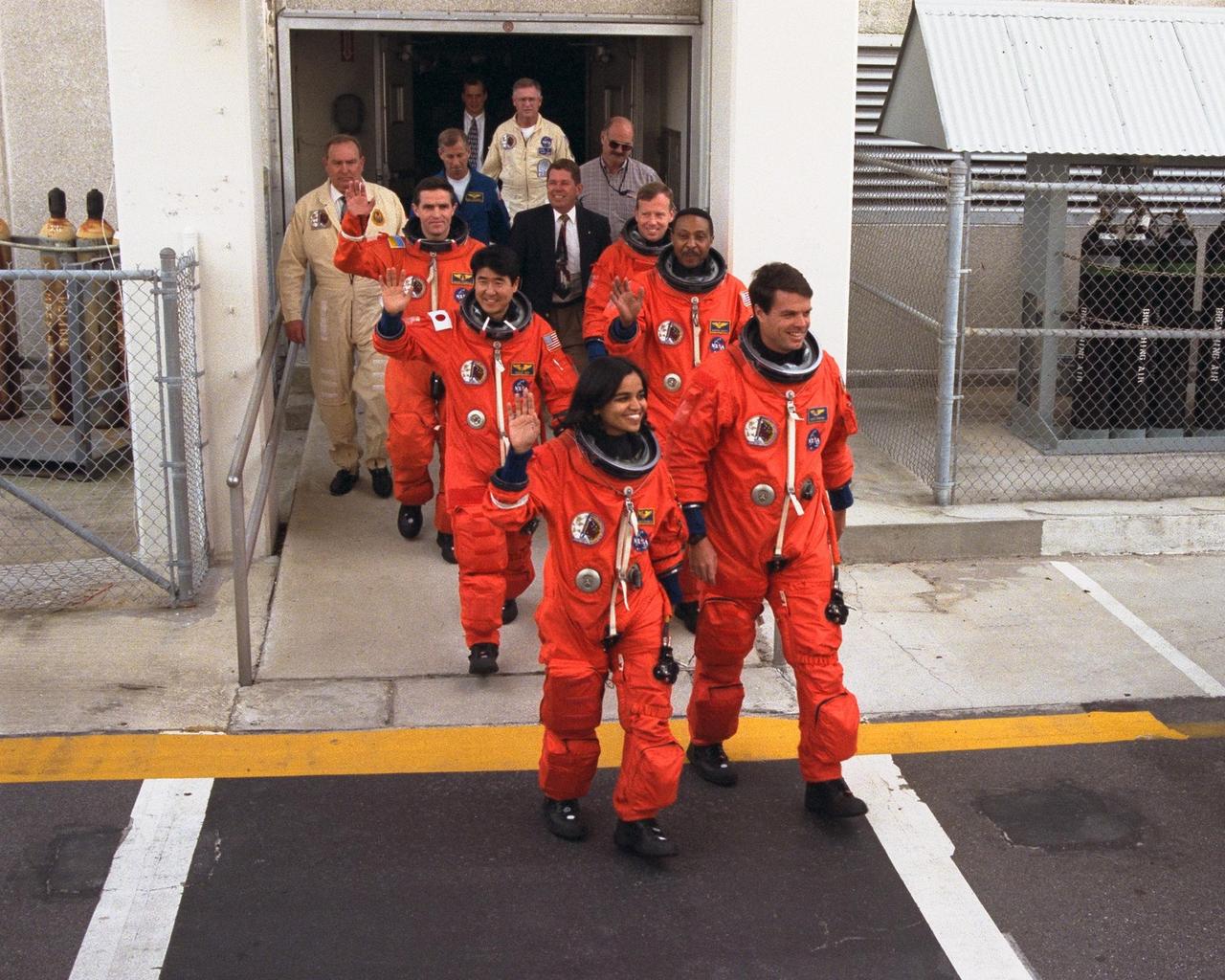
The crew of Mission STS-87 depart from the Operations and Checkout Building en route to Launch Pad 39B, where the Space Shuttle Columbia awaits liftoff on the fourth flight of the United States Microgravity Payload and the Spartan-201 deployable satellite. Leading the way are, from left to right, front to back: Mission Specialist Kalpana Chawla, Ph.D.; Commander Kevin Kregel; Mission Specialist Takao Doi, Ph.D., of the National Space Development Agency of Japan; Mission Specialist Winston Scott; Payload Specialist Leonid Kadenyuk of the National Space Agency of Ukraine; and Pilot Steven Lindsey. The Space Shuttle Columbia and its crew of six members are scheduled to lift off during a two-and-a-half hour launch window, which opens at 2:46 p.m
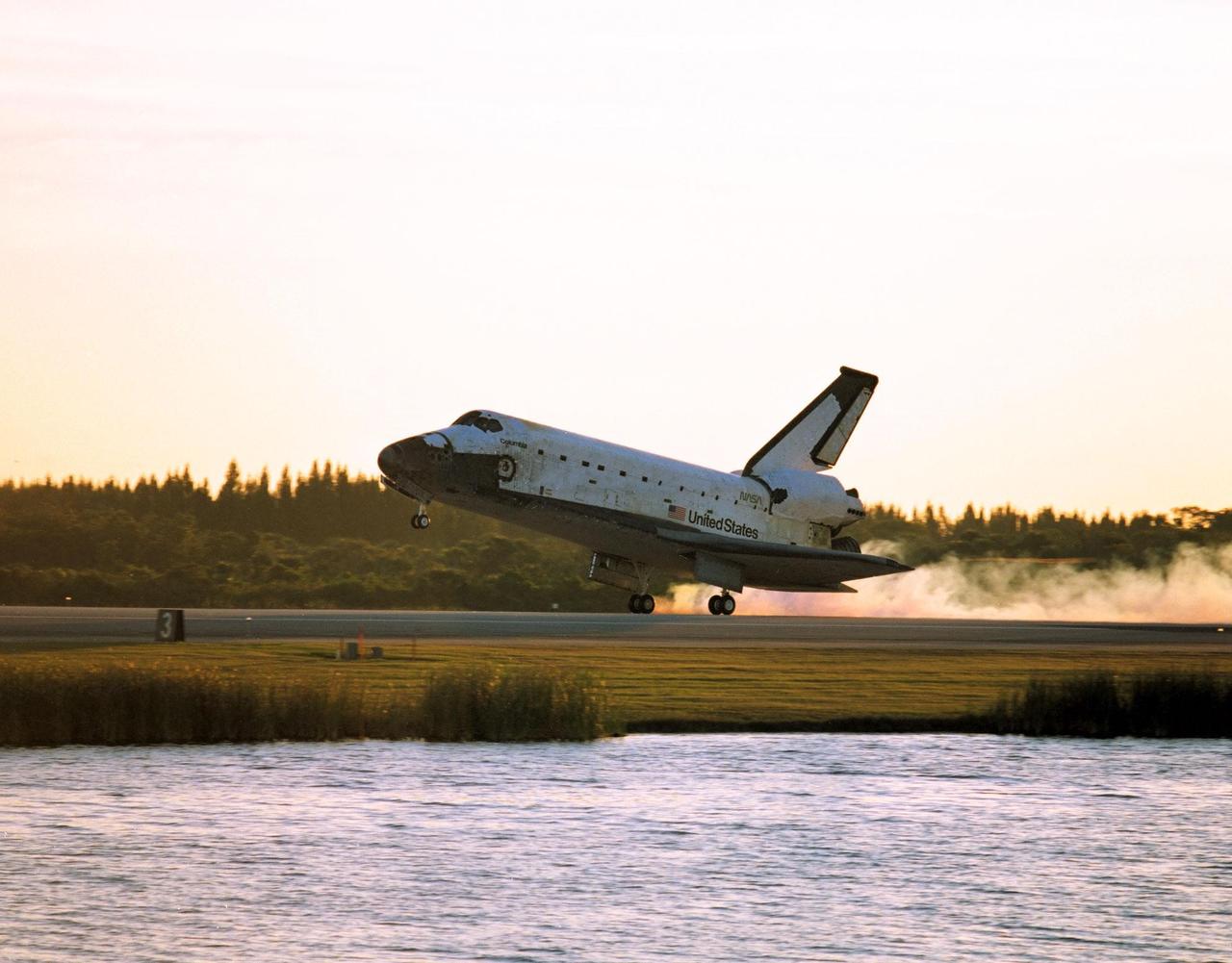
With Commander Kevin Kregel and Pilot Steven Lindsey at the controls, the orbiter Columbia touches its main gear down on Runway 33 at KSC’s Shuttle Landing Facility at 7:20:04 a.m. EST Dec. 5 to complete the 15-day, 16-hour and 34-minute-long STS-87 mission of 6.5 million miles. Also onboard the orbiter are Mission Specialists Winston Scott; Kalpana Chawla, Ph.D.; and Takao Doi, Ph.D., of the National Space Development Agency of Japan; along with Payload Specialist Leonid Kadenyuk of the National Space Agency of Ukraine. During the 88th Space Shuttle mission, the crew performed experiments on the United States Microgravity Payload-4 and pollinated plants as part of the Collaborative Ukrainian Experiment. This was the 12th landing for Columbia at KSC and the 41st KSC landing in the history of the Space Shuttle program
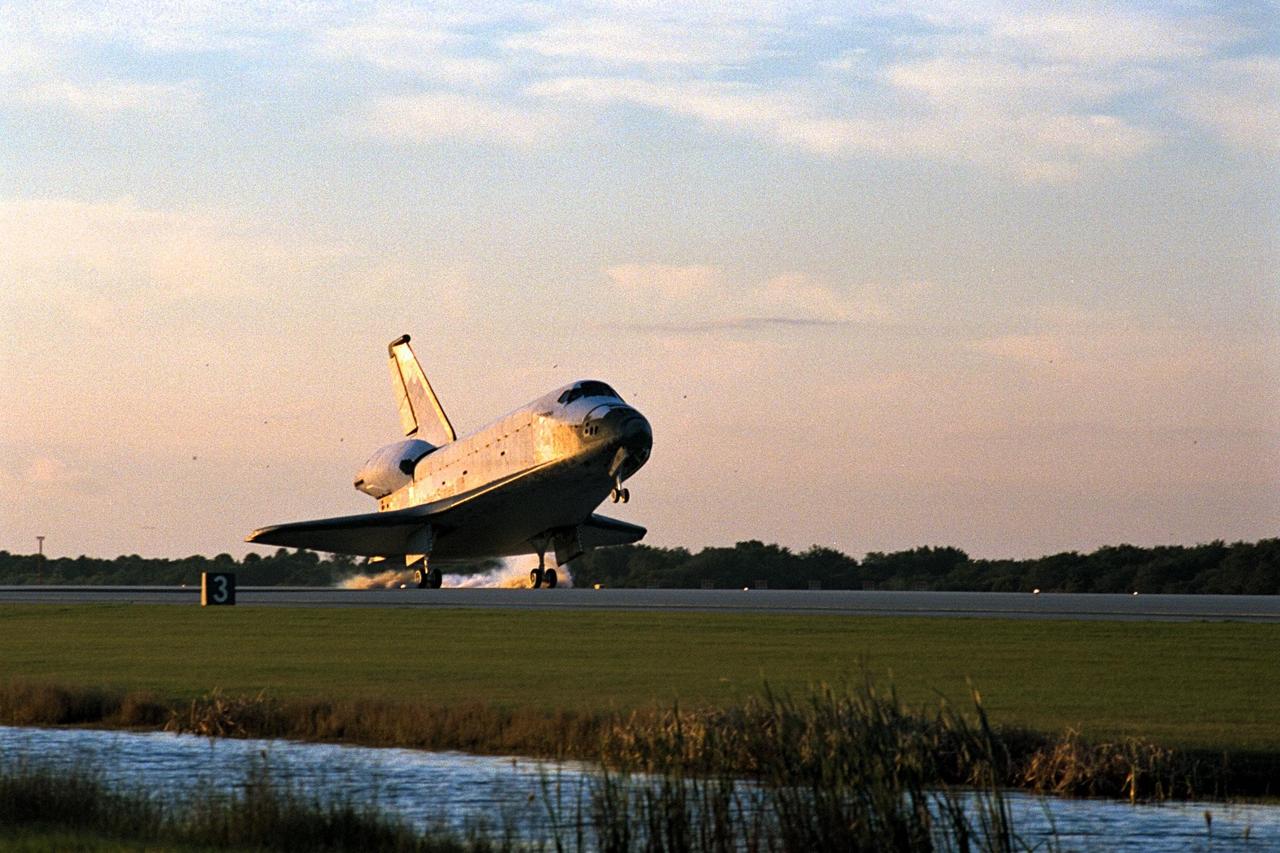
With Commander Kevin Kregel and Pilot Steven Lindsey at the controls, the orbiter Columbia touches its main gear down on Runway 33 at KSC’s Shuttle Landing Facility at 7:20:04 a.m. EST Dec. 5 to complete the 15-day, 16-hour and 34-minute-long STS-87 mission of 6.5 million miles. Also onboard the orbiter are Mission Specialists Winston Scott; Kalpana Chawla, Ph.D.; and Takao Doi, Ph.D., of the National Space Development Agency of Japan; along with Payload Specialist Leonid Kadenyuk of the National Space Agency of Ukraine. During the 88th Space Shuttle mission, the crew performed experiments on the United States Microgravity Payload-4 and pollinated plants as part of the Collaborative Ukrainian Experiment. This was the 12th landing for Columbia at KSC and the 41st KSC landing in the history of the Space Shuttle program
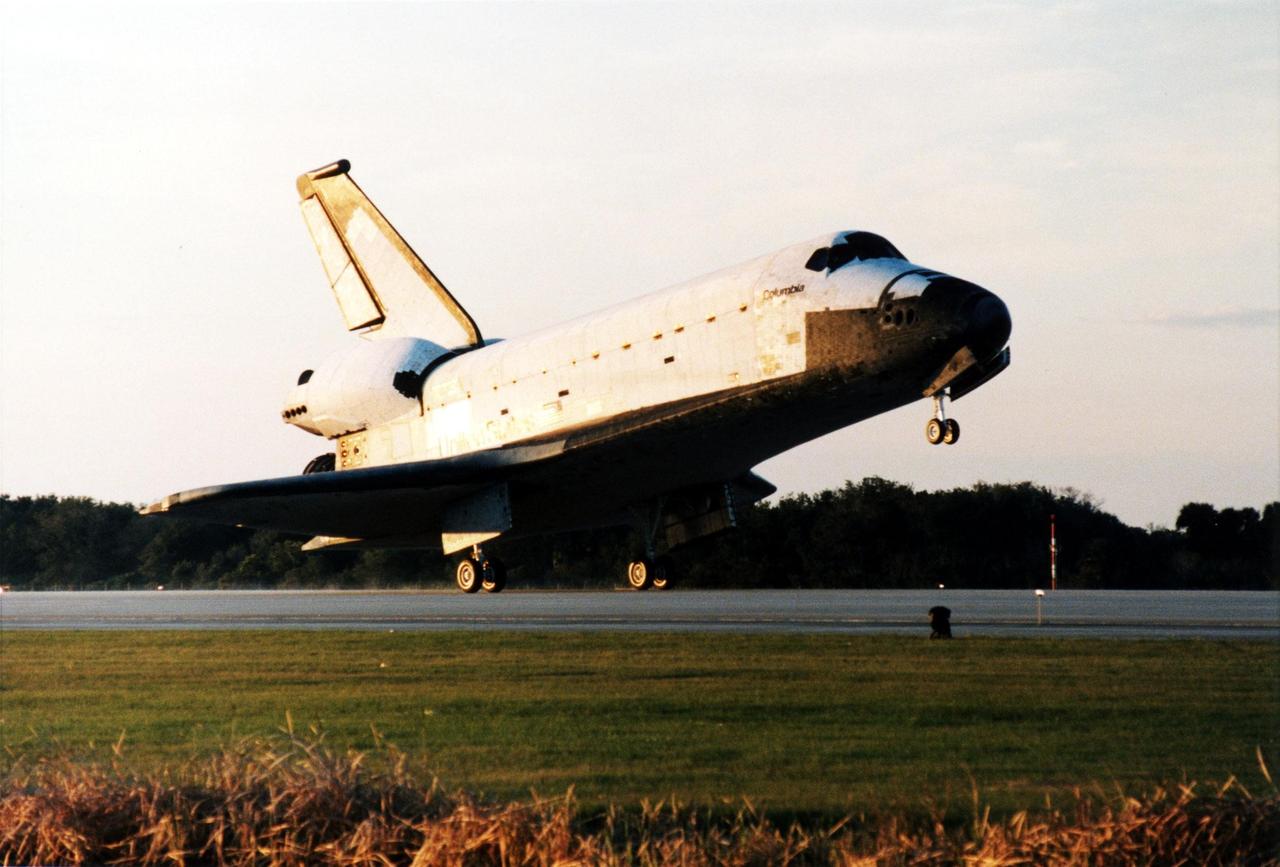
With Commander Kevin Kregel and Pilot Steven Lindsey at the controls, the orbiter Columbia touches its main gear down on Runway 33 at KSC’s Shuttle Landing Facility at 7:20:04 a.m. EST Dec. 5 to complete the 15-day, 16-hour and 34-minute-long STS-87 mission of 6.5 million miles. Also onboard the orbiter are Mission Specialists Winston Scott; Kalpana Chawla, Ph.D.; and Takao Doi, Ph.D., of the National Space Development Agency of Japan; along with Payload Specialist Leonid Kadenyuk of the National Space Agency of Ukraine. During the 88th Space Shuttle mission, the crew performed experiments on the United States Microgravity Payload-4 and pollinated plants as part of the Collaborative Ukrainian Experiment. This was the 12th landing for Columbia at KSC and the 41st KSC landing in the history of the Space Shuttle program
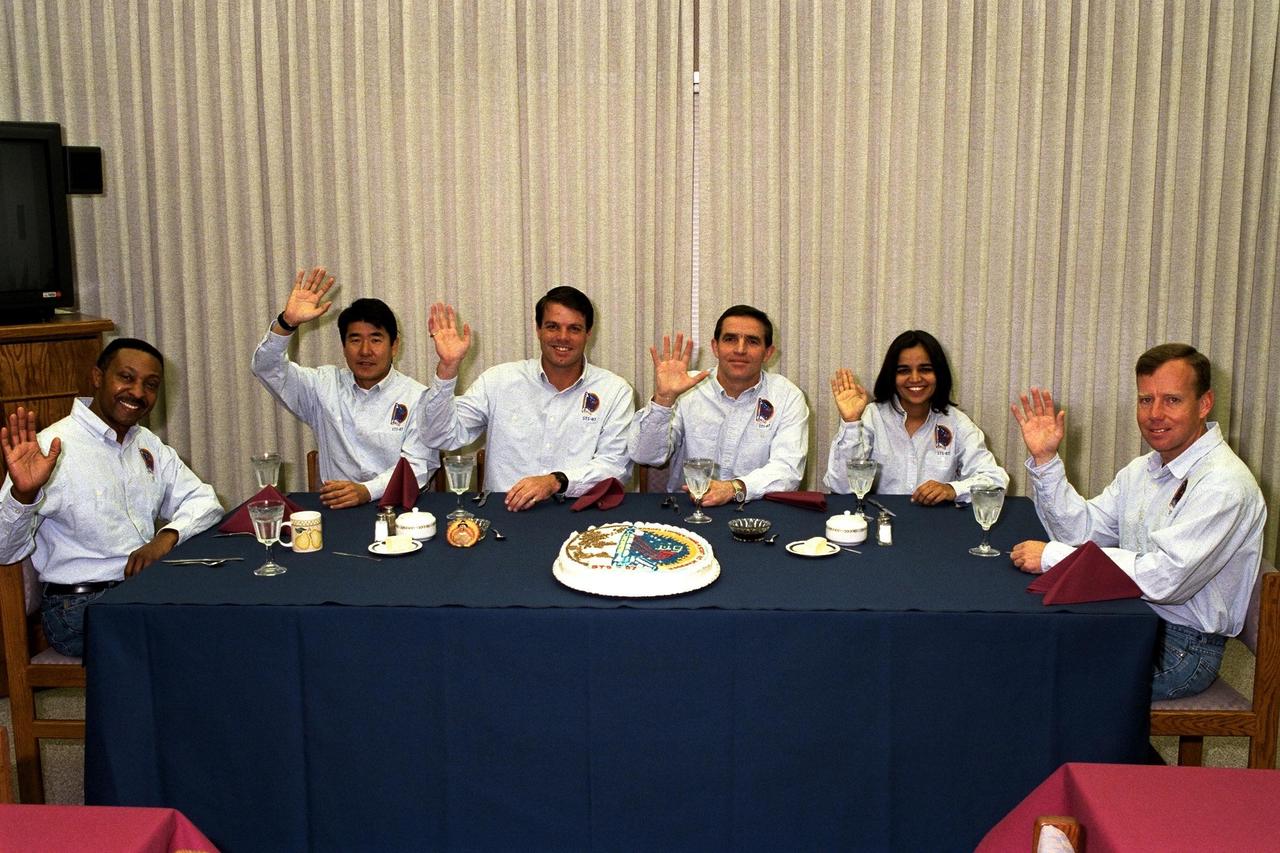
The STS-87 flight crew enjoy the traditional pre-liftoff breakfast in the crew quarters of the Operations and Checkout Building. They are, from left, Mission Specialist Winston Scott; Mission Specialist Takao Doi, Ph.D., of the National Space Development Agency of Japan; Commander Kevin Kregel; Payload Specialist Leonid Kadenyuk of the National Space Agency of Ukraine; Mission Specialist Kalpana Chawla, Ph.D.; and Pilot Steven Lindsey. After a weather briefing, the flight crew will be fitted with their launch and entry suits and depart for Launch Pad 39B. Once there, they will take their positions in the crew cabin of the Space Shuttle Columbia to await liftoff during a two-and-a-half-hour window that will open at 2:46 p.m. EDT, Nov. 19

STS-87 Payload Specialist Leonid Kadenyuk of the National Space Agency of Ukraine (NSAU) is assisted with his orange launch and entry spacesuit by NASA suit technicians at Launch Pad 39B during Terminal Countdown Demonstration Test (TCDT) activities. The crew of the STS-87 mission is scheduled for launch Nov. 19 aboard the Space Shuttle Columbia. The TCDT is held at KSC prior to each Space Shuttle flight providing the crew of each mission opportunities to participate in simulated countdown activities. The TCDT ends with a mock launch countdown culminating in a simulated main engine cut-off. The crew also spends time undergoing emergency egress training exercises at the pad and has an opportunity to view and inspect the payloads in the orbiter's payload bay
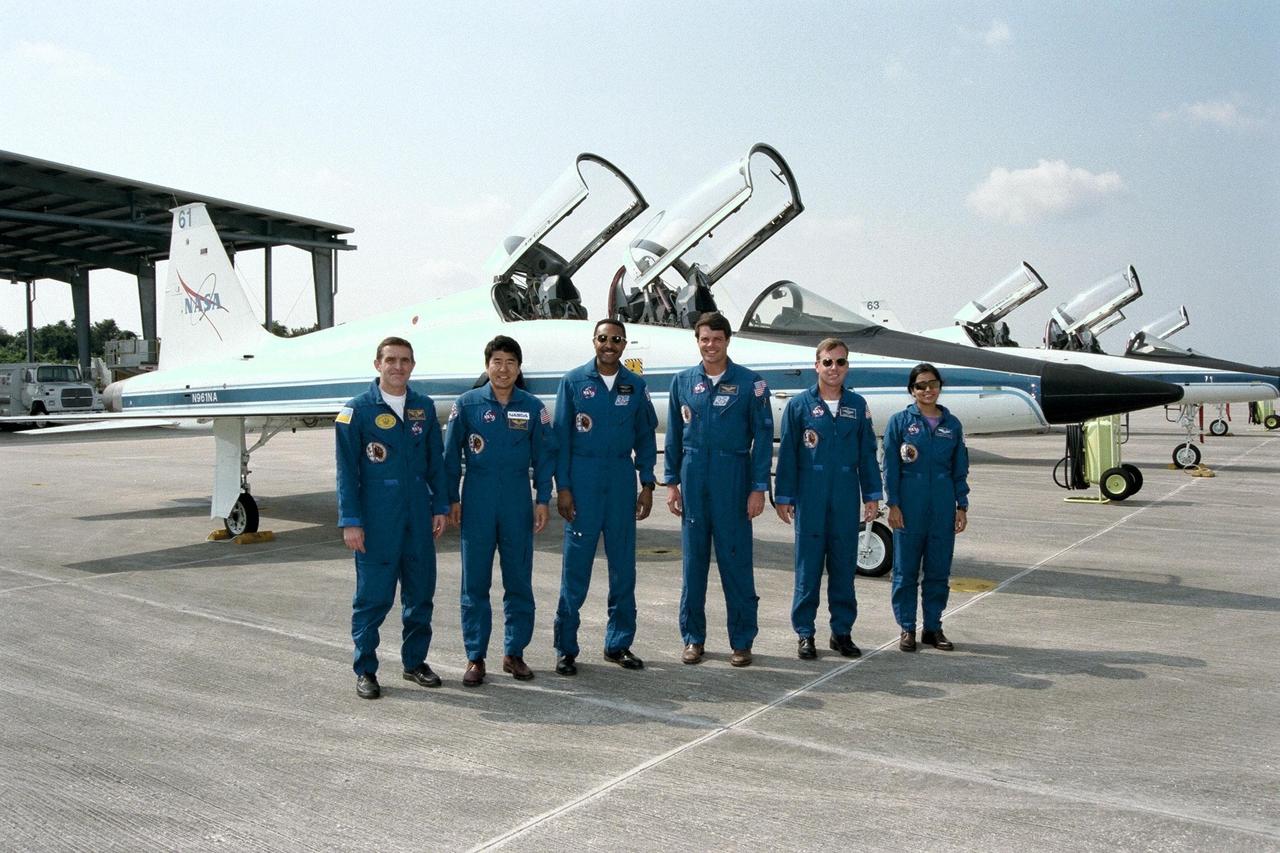
STS-87 astronaut crew members prepare to fly back to Johnson Space Center in Houston after participating in the Crew Equipment Integration Test (CEIT) at Kennedy Space Center (KSC) in early October. From left are Payload Specialist Leonid Kadenyuk of the National Space Agency of Ukraine; Mission Specialist Takao Doi, Ph.D., of the National Space Development Agency of Japan; Mission Specialist Winston Scott; Commander Kevin Kregel; Pilot Steven Lindsey; and Mission Specialist Kalpana Chawla, Ph.D. The CEIT gives astronauts an opportunity to get a hands-on look at the payloads with which they will be working on-orbit. STS-87 will be the fourth United States Microgravity Payload and flight of the Spartan-201 deployable satellite. During the STS-87 mission, scheduled for a Nov. 19 liftoff from KSC, Dr. Doi and Scott will both perform spacewalks
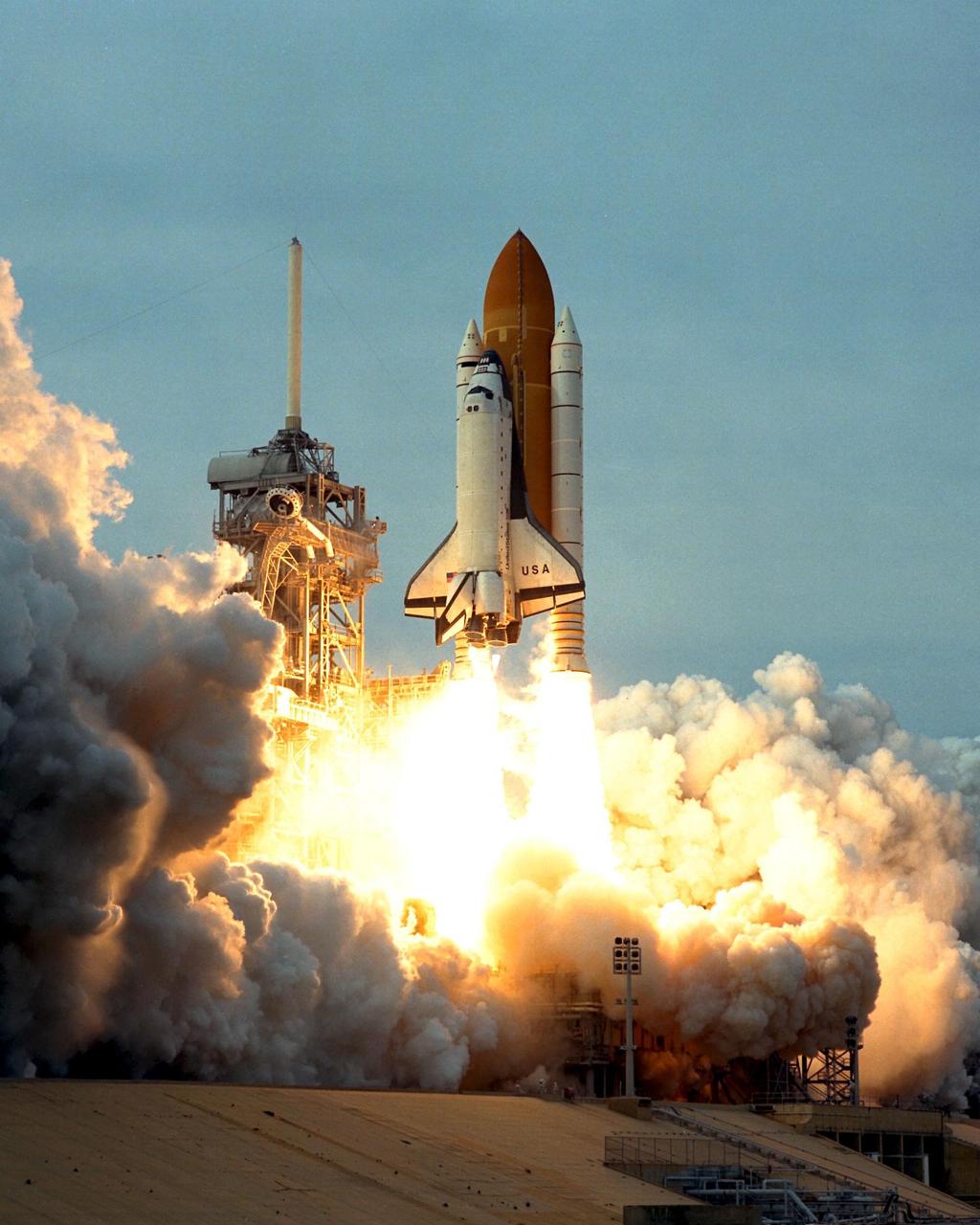
Like a rising sun lighting up the afternoon sky, the Space Shuttle Columbia soars from Launch Pad 39B at 2:46:00 p.m. EST, November 19, on the fourth flight of the United States Microgravity Payload and Spartan-201 satellite. The crew members include Mission Commander Kevin Kregel.; Pilot Steven Lindsey; Mission Specialists Kalpana Chawla, Ph.D., Winston Scott, and Takao Doi, Ph.D., of the National Space Development Agency of Japan; and Payload Specialist Leonid Kadenyuk of the National Space Agency of Ukraine. During the 16-day STS-87 mission, the crew will oversee experiments in microgravity; deploy and retrieve a solar satellite; and test a new experimental camera, the AERCam Sprint. Dr. Doi and Scott also will perform a spacewalk to practice International Space Station maneuvers

Like a rising sun lighting up the afternoon sky, the Space Shuttle Columbia soars from Launch Pad 39B at 2:46:00 p.m. EST, November 19, on the fourth flight of the United States Microgravity Payload and Spartan-201 satellite. The crew members include Mission Commander Kevin Kregel.; Pilot Steven Lindsey; Mission Specialists Kalpana Chawla, Ph.D., Winston Scott, and Takao Doi, Ph.D., of the National Space Development Agency of Japan; and Payload Specialist Leonid Kadenyuk of the National Space Agency of Ukraine. During the 16-day STS-87 mission, the crew will oversee experiments in microgravity; deploy and retrieve a solar satellite; and test a new experimental camera, the AERCam Sprint. Dr. Doi and Scott also will perform a spacewalk to practice International Space Station maneuvers
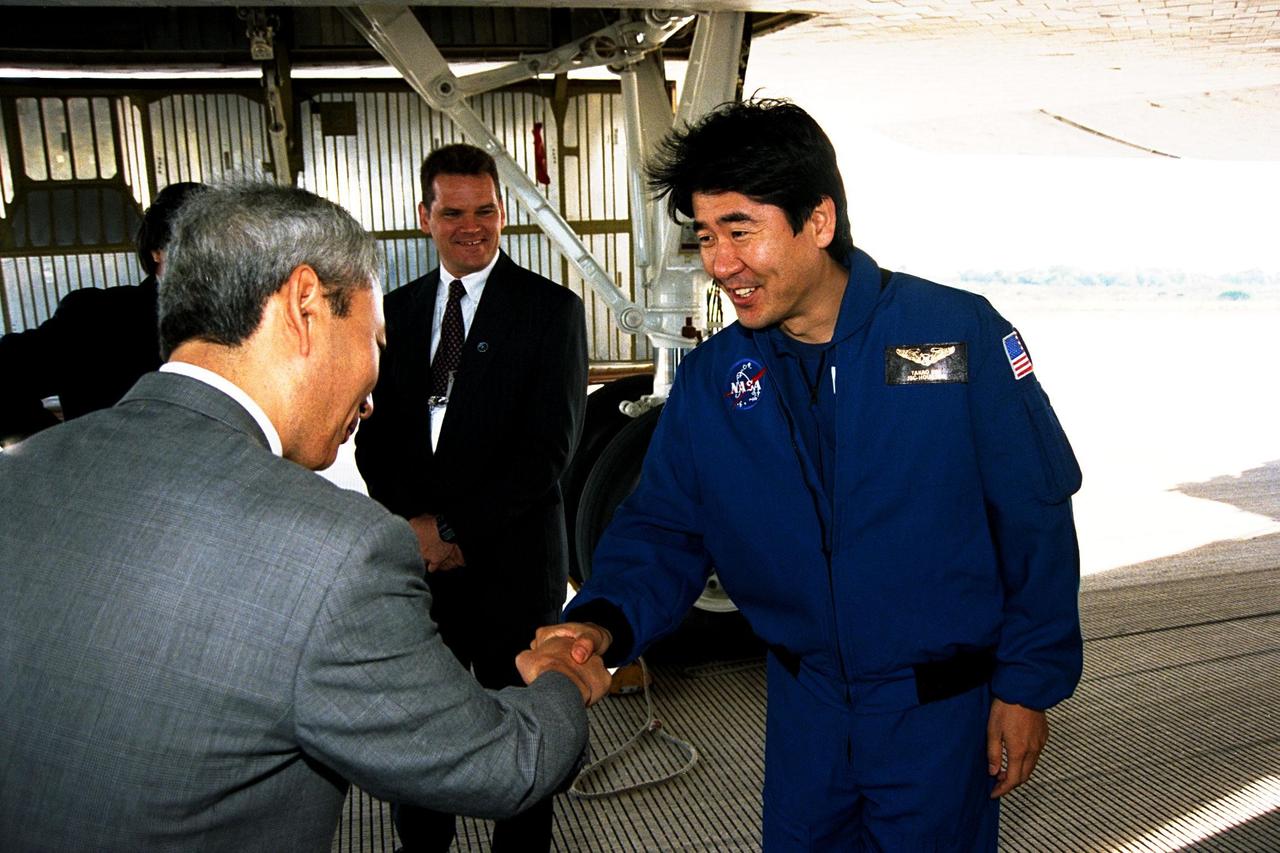
STS-87 Mission Specialist Takao Doi, Ph.D., of the National Space Development Agency (NASDA) of Japan greets a NASDA official shortly after the orbiter Columbia returned to KSC, touching down on Runway 33 at KSC's Shuttle Landing Facility. STS-87 concluded its mission with a main gear touchdown at 7:20:04 a.m. EST Dec. 5, drawing the 15-day, 16-hour and 34-minute-long mission of 6.5 million miles to a close. Also onboard the orbiter were Commander Kevin Kregel; Pilot Steven Lindsey; Mission Specialists Winston Scott and Kalpana Chawla, Ph.D.; and Payload Specialist Leonid Kadenyuk of the National Space Agency of Ukraine. During the 88th Space Shuttle mission, the crew performed experiments on the United States Microgravity Payload-4 and pollinated plants as part of the Collaborative Ukrainian Experiment. This was the 12th landing for Columbia at KSC and the 41st KSC landing in the history of the Space Shuttle program
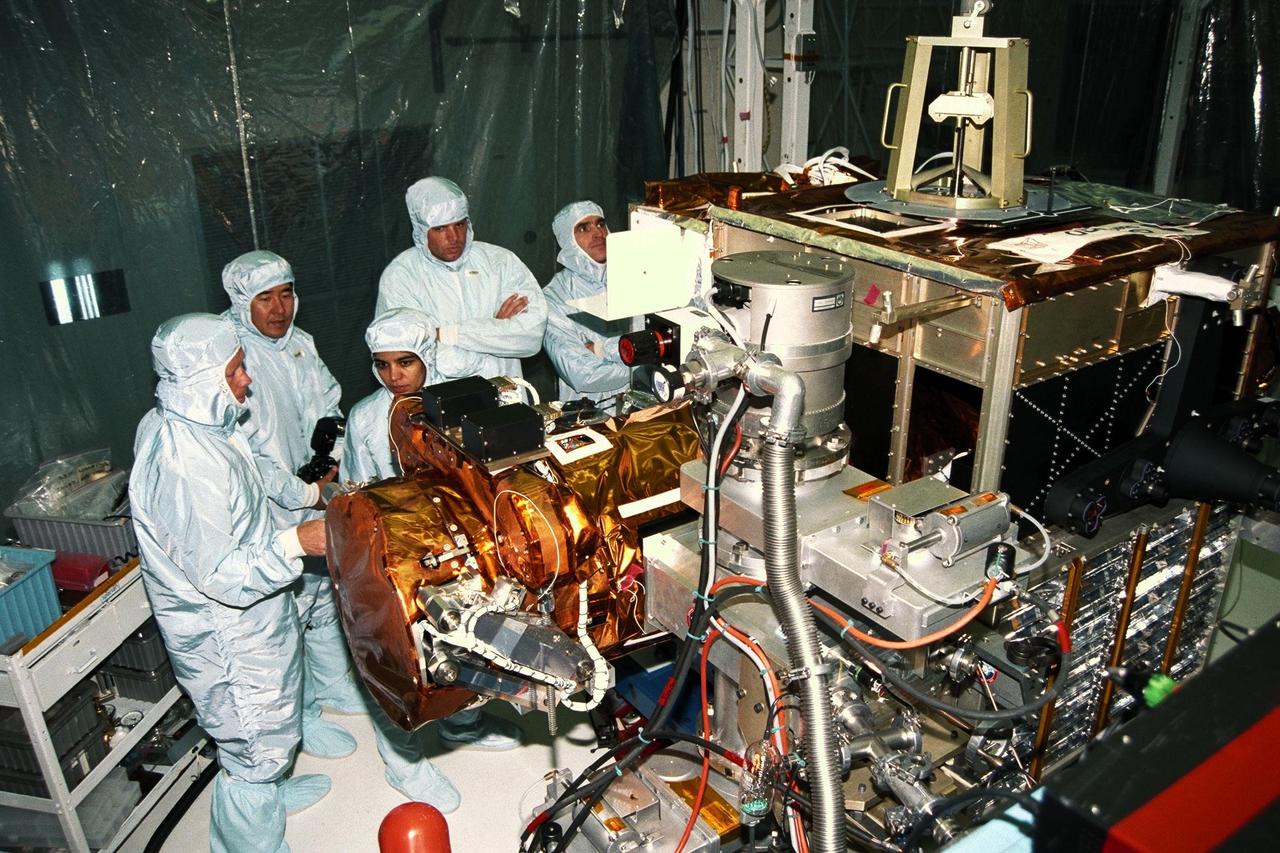
STS-87 astronaut crew members participate in the Crew Equipment Integration Test (CEIT) with the Spartan-201 payload in Kennedy Space Center’s (KSC's) Vertical Processing Facility. From left are Pilot Steven Lindsey; Mission Specialist Takao Doi, Ph.D., of the National Space Development Agency of Japan; Mission Specialist Kalpana Chawla, Ph.D.; Commander Kevin Kregel; and Payload Specialist Leonid Kadenyuk of the National Space Agency of Ukraine. The CEIT gives astronauts an opportunity to get a hands-on look at the payloads with which they will be working on-orbit. STS-87 will be the fourth United States Microgravity Payload and flight of the Spartan-201 deployable satellite. During the mission, Dr. Doi will be the first Japanese astronaut to perform a spacewalk. STS-87 is scheduled for a Nov. 19 liftoff from KSC
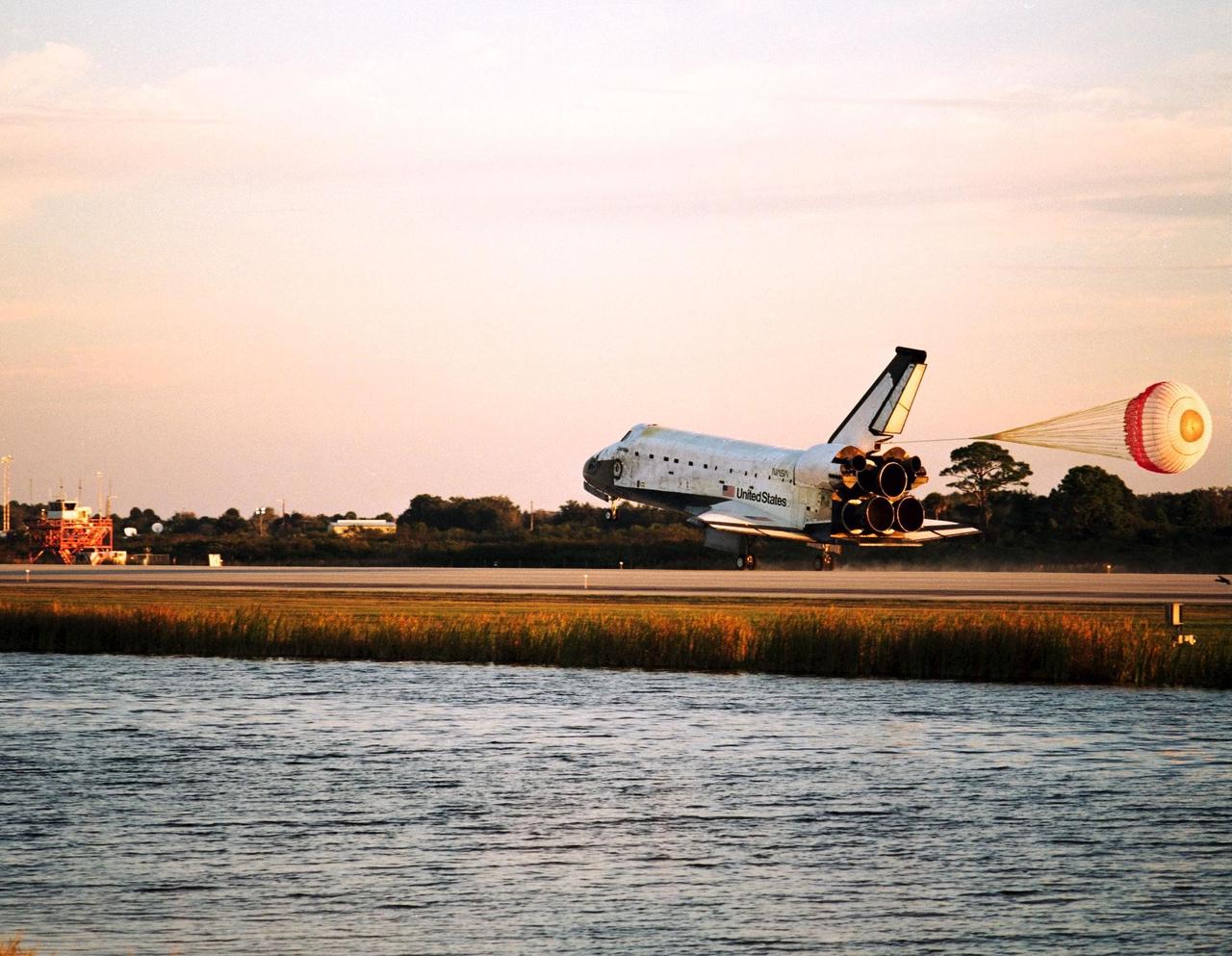
With Commander Kevin Kregel and Pilot Steven Lindsey at the controls, the orbiter Columbia, with its drag chute deployed, touches its main gear down on Runway 33 at KSC’s Shuttle Landing Facility at 7:20:04 a.m. EST Dec. 5 to complete the 15-day, 16-hour and 34-minute-long STS-87 mission of 6.5 million miles. Also onboard the orbiter are Mission Specialists Winston Scott; Kalpana Chawla, Ph.D.; and Takao Doi, Ph.D., of the National Space Development Agency of Japan; along with Payload Specialist Leonid Kadenyuk of the National Space Agency of Ukraine. During the 88th Space Shuttle mission, the crew performed experiments on the United States Microgravity Payload-4 and pollinated plants as part of the Collaborative Ukrainian Experiment. This was the 12th landing for Columbia at KSC and the 41st KSC landing in the history of the Space Shuttle program
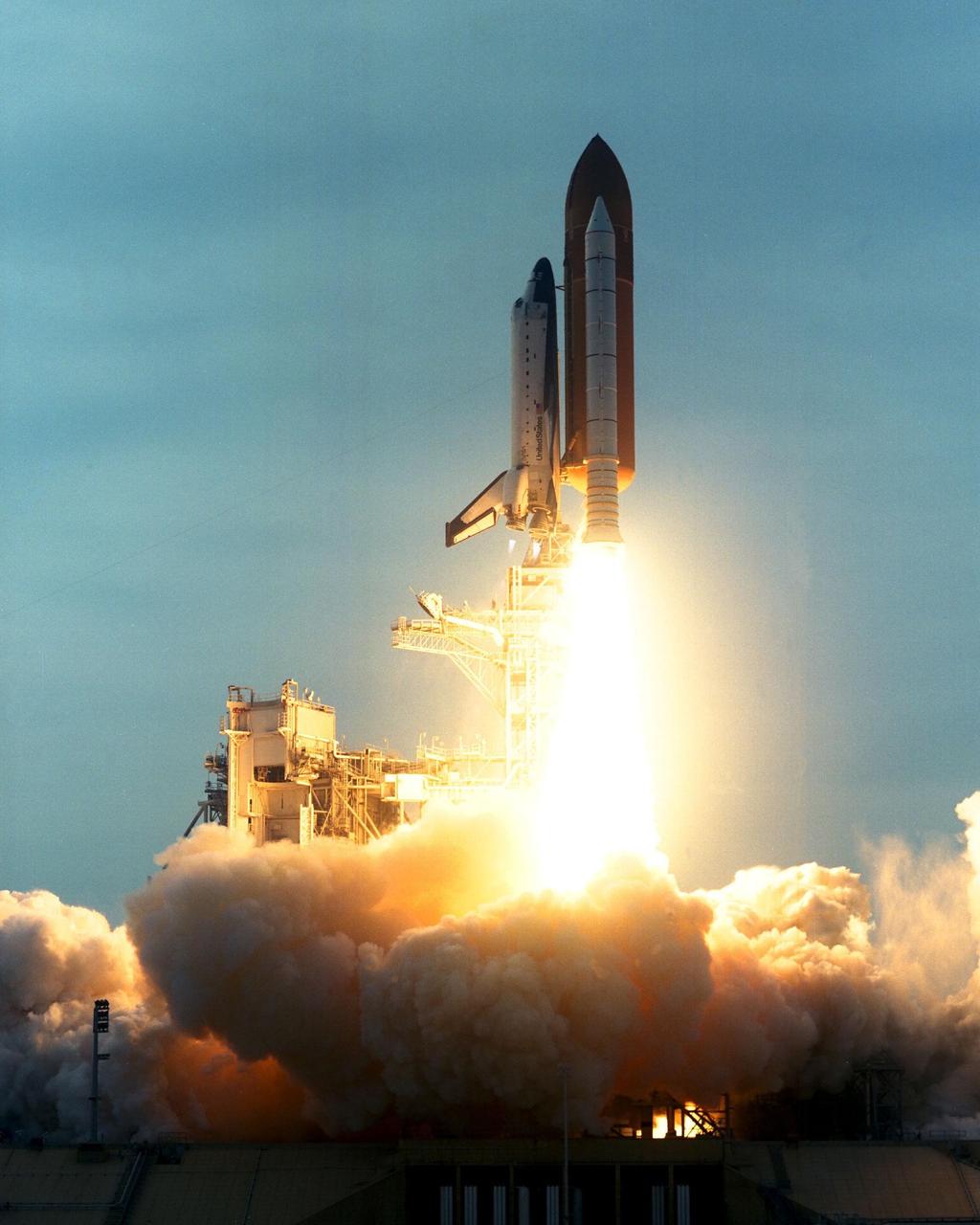
Like a rising sun lighting up the afternoon sky, the Space Shuttle Columbia soars from Launch Pad 39B at 2:46:00 p.m. EST, November 19, on the fourth flight of the United States Microgravity Payload and Spartan-201 satellite. The crew members include Mission Commander Kevin Kregel.; Pilot Steven Lindsey; Mission Specialists Kalpana Chawla, Ph.D., Winston Scott, and Takao Doi, Ph.D., of the National Space Development Agency of Japan; and Payload Specialist Leonid Kadenyuk of the National Space Agency of Ukraine. During the 16-day STS-87 mission, the crew will oversee experiments in microgravity; deploy and retrieve a solar satellite; and test a new experimental camera, the AERCam Sprint. Dr. Doi and Scott also will perform a spacewalk to practice International Space Station maneuvers
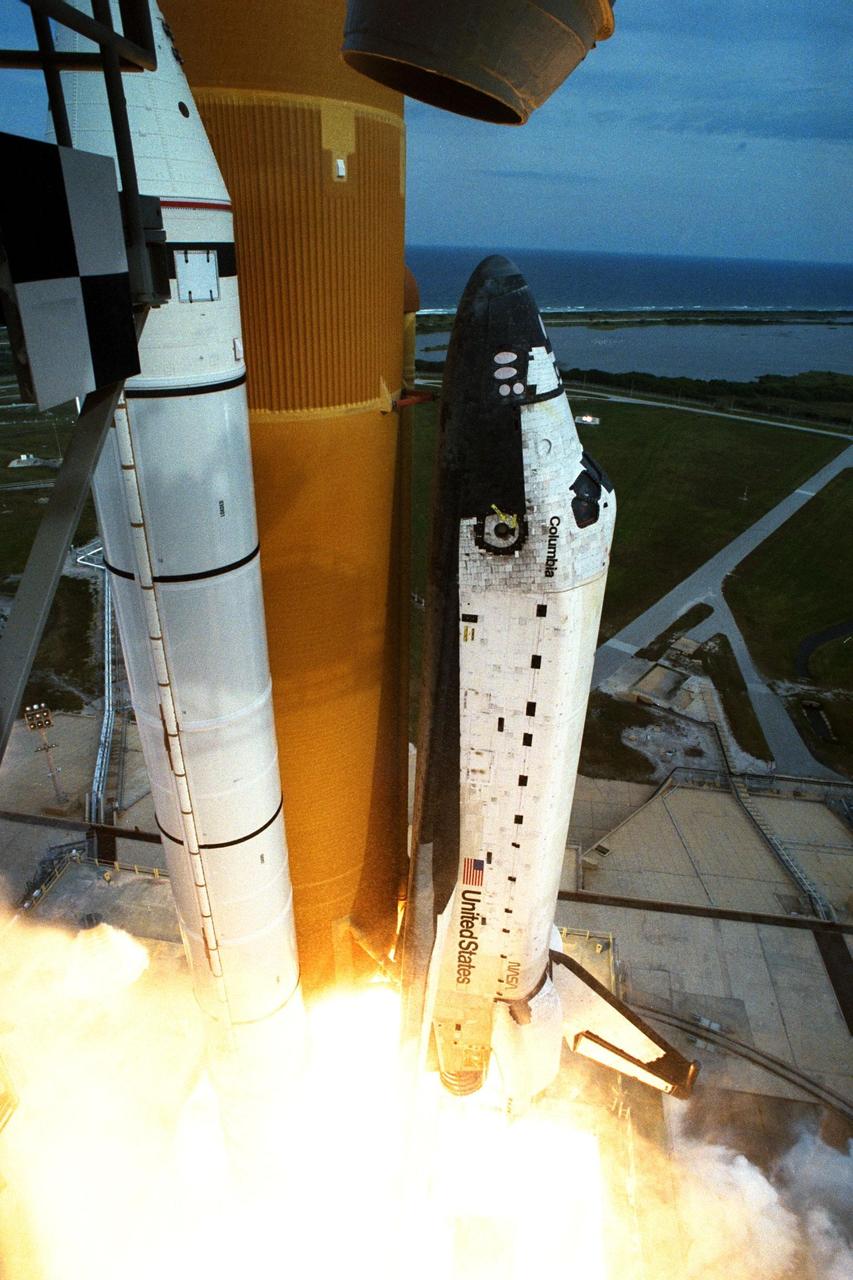
Like a rising sun lighting up the afternoon sky, the Space Shuttle Columbia soars from Launch Pad 39B at 2:46:00 p.m. EST, November 19, on the fourth flight of the United States Microgravity Payload and Spartan-201 satellite. The crew members include Mission Commander Kevin Kregel.; Pilot Steven Lindsey; Mission Specialists Kalpana Chawla, Ph.D., Winston Scott, and Takao Doi, Ph.D., of the National Space Development Agency of Japan; and Payload Specialist Leonid Kadenyuk of the National Space Agency of Ukraine. During the 16-day STS-87 mission, the crew will oversee experiments in microgravity; deploy and retrieve a solar satellite; and test a new experimental camera, the AERCam Sprint. Dr. Doi and Scott also will perform a spacewalk to practice International Space Station maneuvers

Like a rising sun lighting up the afternoon sky, the Space Shuttle Columbia soars from Launch Pad 39B at 2:46:00 p.m. EST, November 19, on the fourth flight of the United States Microgravity Payload and Spartan-201 satellite. The crew members include Mission Commander Kevin Kregel.; Pilot Steven Lindsey; Mission Specialists Kalpana Chawla, Ph.D., Winston Scott, and Takao Doi, Ph.D., of the National Space Development Agency of Japan; and Payload Specialist Leonid Kadenyuk of the National Space Agency of Ukraine. During the 16-day STS-87 mission, the crew will oversee experiments in microgravity; deploy and retrieve a solar satellite; and test a new experimental camera, the AERCam Sprint. Dr. Doi and Scott also will perform a spacewalk to practice International Space Station maneuvers

Like a rising sun lighting up the afternoon sky, the Space Shuttle Columbia soars from Launch Pad 39B at 2:46:00 p.m. EST, November 19, on the fourth flight of the United States Microgravity Payload and Spartan-201 satellite. The crew members include Mission Commander Kevin Kregel.; Pilot Steven Lindsey; Mission Specialists Kalpana Chawla, Ph.D., Winston Scott, and Takao Doi, Ph.D., of the National Space Development Agency of Japan; and Payload Specialist Leonid Kadenyuk of the National Space Agency of Ukraine. During the 16-day STS-87 mission, the crew will oversee experiments in microgravity; deploy and retrieve a solar satellite; and test a new experimental camera, the AERCam Sprint. Dr. Doi and Scott also will perform a spacewalk to practice International Space Station maneuvers
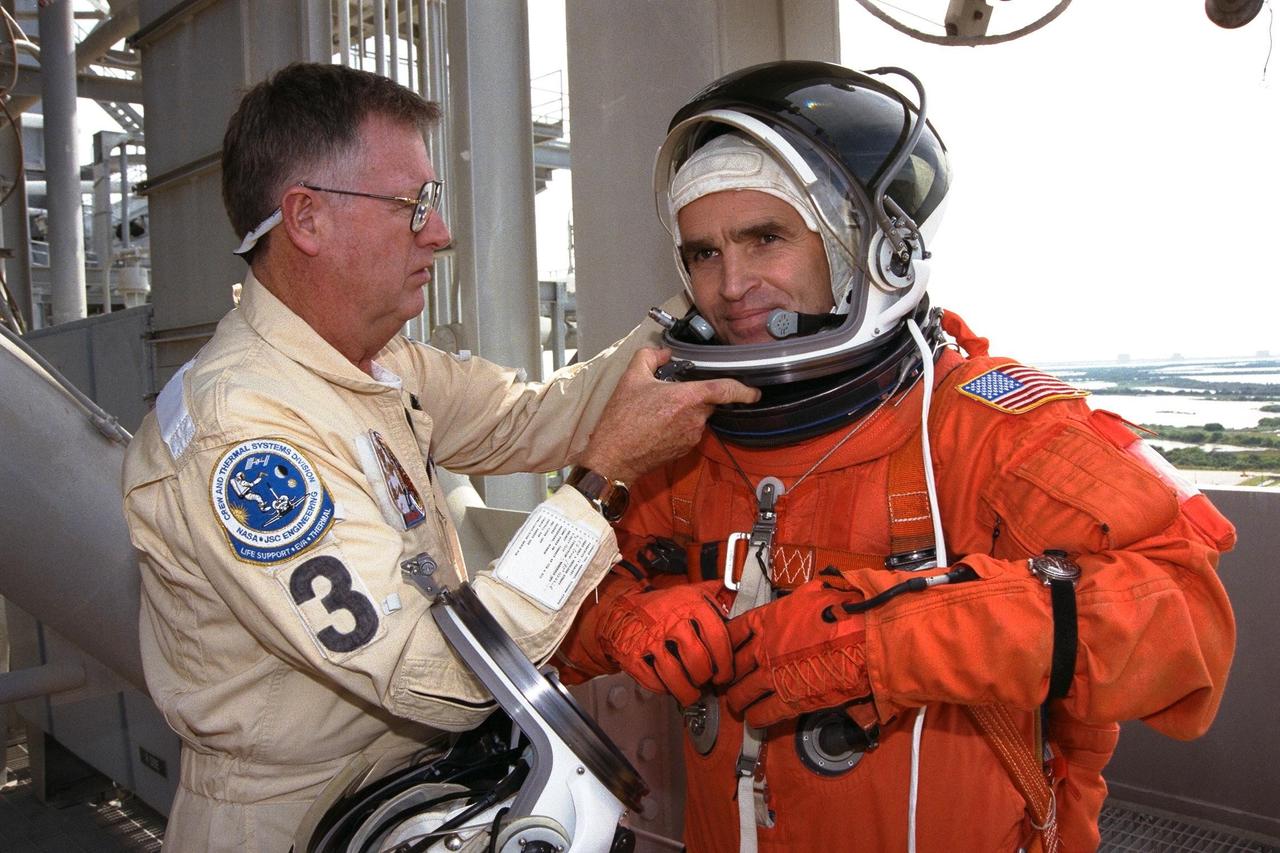
STS-87 Payload Specialist Leonid Kadenyuk, at right, of the National Space Agency of Ukraine (NSAU) is assisted into his orange launch and entry spacesuit ensemble by NASA Suit Technician Al Rochford, at left, before participating in Terminal Countdown Demonstration Test (TCDT) activities. The crew of the STS-87 mission is scheduled for launch Nov. 19 aboard the Space Shuttle Columbia. The TCDT is held at KSC prior to each Space Shuttle flight providing the crew of each mission opportunities to participate in simulated countdown activities. The TCDT ends with a mock launch countdown culminating in a simulated main engine cut-off. The crew also spends time undergoing emergency egress training exercises at the pad and has an opportunity to view and inspect the payloads in the orbiter's payload bay

The crew of Mission STS-87 depart from the Operations and Checkout Building en route to Launch Pad 39B, where the Space Shuttle Columbia awaits liftoff on the fourth flight of the United States Microgravity Payload and the Spartan-201 deployable satellite. They are, from left to right, front to back: Mission Specialist Takao Doi, Ph.D., of the National Space Development Agency of Japan; Mission Specialist Winston Scott (near van); Payload Specialist Leonid Kadenyuk of the National Space Agency of Ukraine; and Pilot Steven Lindsey (near van). Missing from this photo are Commander Kevin Kregel and Mission Specialist Kalpana Chawla, Ph.D. The Space Shuttle Columbia and its crew of six members are scheduled to lift off during a two-and-a-half hour launch window, which opens at 2:46 p.m
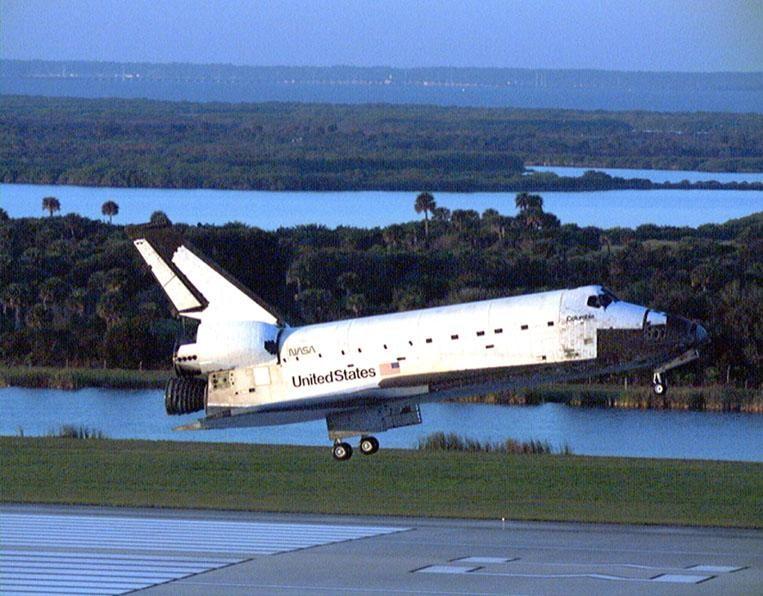
With Commander Kevin Kregel and Pilot Steven Lindsey at the controls, the orbiter Columbia glides to its touchdown on Runway 33, the numbers visible below the orbiter, at KSC’s Shuttle Landing Facility. Main gear touchdown occurred at 7:20:04 a.m. EST on Dec. 5 to complete the 15-day, 16-hour and 34-minutelong STS-87 mission of 6.5 million miles. Also onboard the orbiter are Mission Specialists Winston Scott; Kalpana Chawla, Ph.D.; and Takao Doi, Ph.D., of the National Space Development Agency of Japan; along with Payload Specialist Leonid Kadenyuk of the National Space Agency of Ukraine. During the 88th Space Shuttle mission, the crew performed experiments on the United States Microgravity Payload-4 and pollinated plants as part of the Collaborative Ukrainian Experiment. This was the 12th landing for Columbia at KSC and the 41st KSC landing in the history of the Space Shuttle program
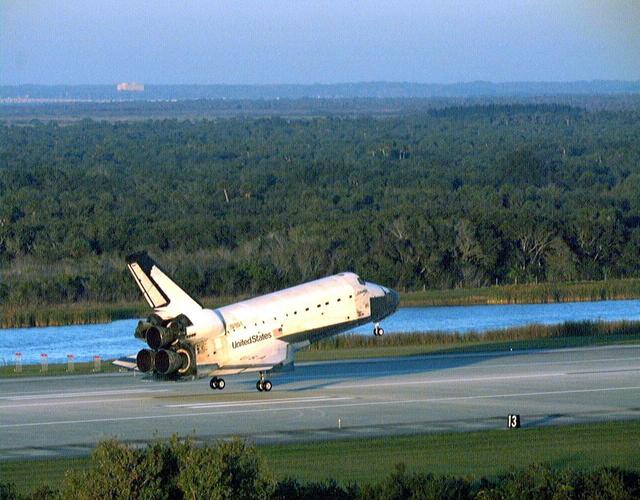
With Commander Kevin Kregel and Pilot Steven Lindsey at the controls, the orbiter Columbia glides moments before its touchdown on Runway 33 at KSC’s Shuttle Landing Facility. Main gear touchdown occurred at 7:20:04 a.m. EST on Dec. 5 to complete the 15-day, 16-hour and 34-minute-long STS-87 mission of 6.5 million miles. Also onboard the orbiter are Mission Specialists Winston Scott; Kalpana Chawla, Ph.D.; and Takao Doi, Ph.D., of the National Space Development Agency of Japan; along with Payload Specialist Leonid Kadenyuk of the National Space Agency of Ukraine. During the 88th Space Shuttle mission, the crew performed experiments on the United States Microgravity Payload-4 and pollinated plants as part of the Collaborative Ukrainian Experiment. This was the 12th landing for Columbia at KSC and the 41st KSC landing in the history of the Space Shuttle program
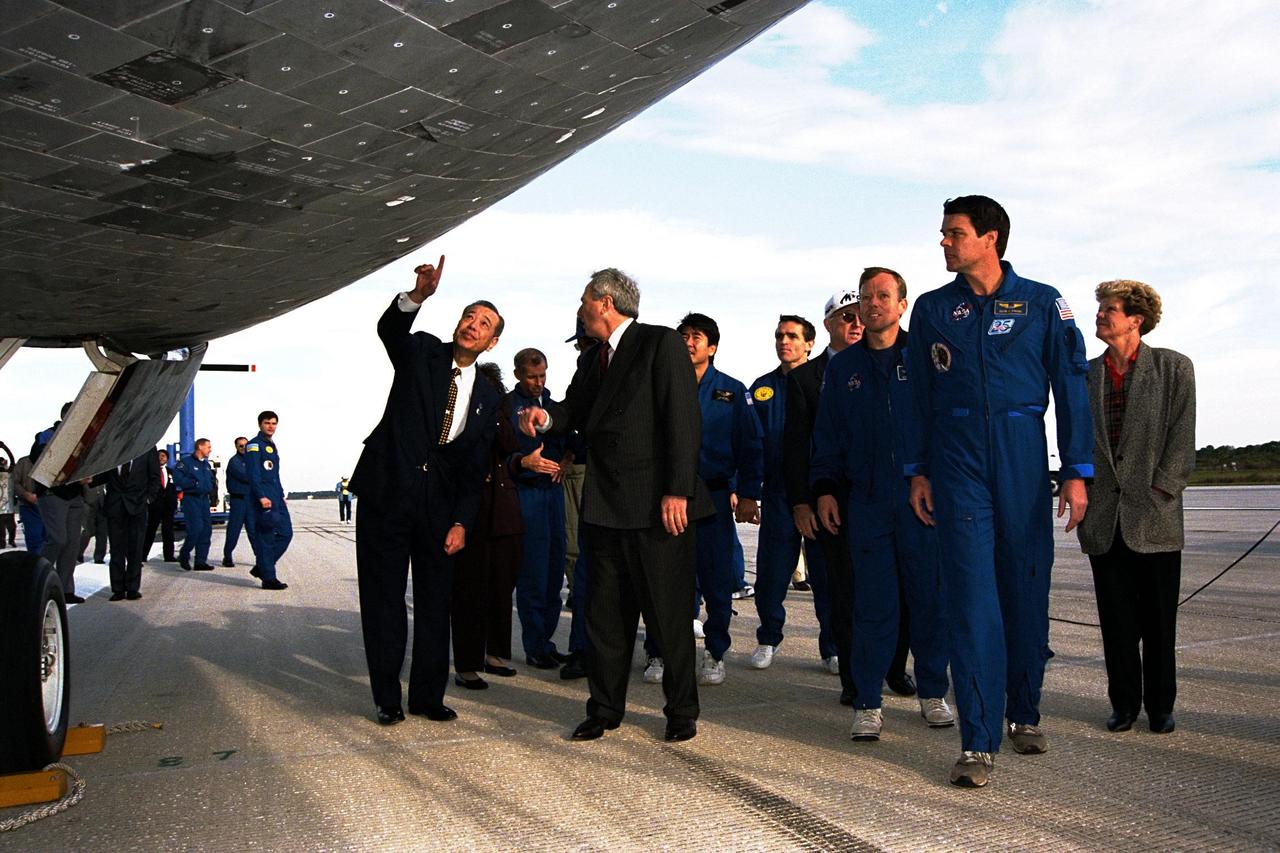
STS-87 crew members regard the tiles underneath the orbiter Columbia shortly after its return to Runway 33 at Kennedy Space Center's Shuttle Landing Facility. Pointing to the tiles is the president of the National Space Development Agency (NASDA) of Japan, Isao Uchida, who is standing next to NASA Administrator Daniel Goldin. STS-87 Commander Kevin Kregel, at right, looks on as Pilot Steve Lindsey follows behind him to continue inspecting the orbiter. STS-87 concluded its mission with a main gear touchdown at 7:20:04 a.m. EST Dec. 5, drawing the 15-day, 16-hour and 34-minute-long mission of 6.5 million miles to a close. Also onboard the orbiter were Mission Specialists Winston Scott; Kalpana Chawla, Ph.D.; and Takao Doi, Ph.D., of NASDA; along with Payload Specialist Leonid Kadenyuk of the National Space Agency of Ukraine. During the 88th Space Shuttle mission, the crew performed experiments on the United States Microgravity Payload-4 and pollinated plants as part of the Collaborative Ukrainian Experiment. This was the 12th landing for Columbia at KSC and the 41st KSC landing in the history of the Space Shuttle program
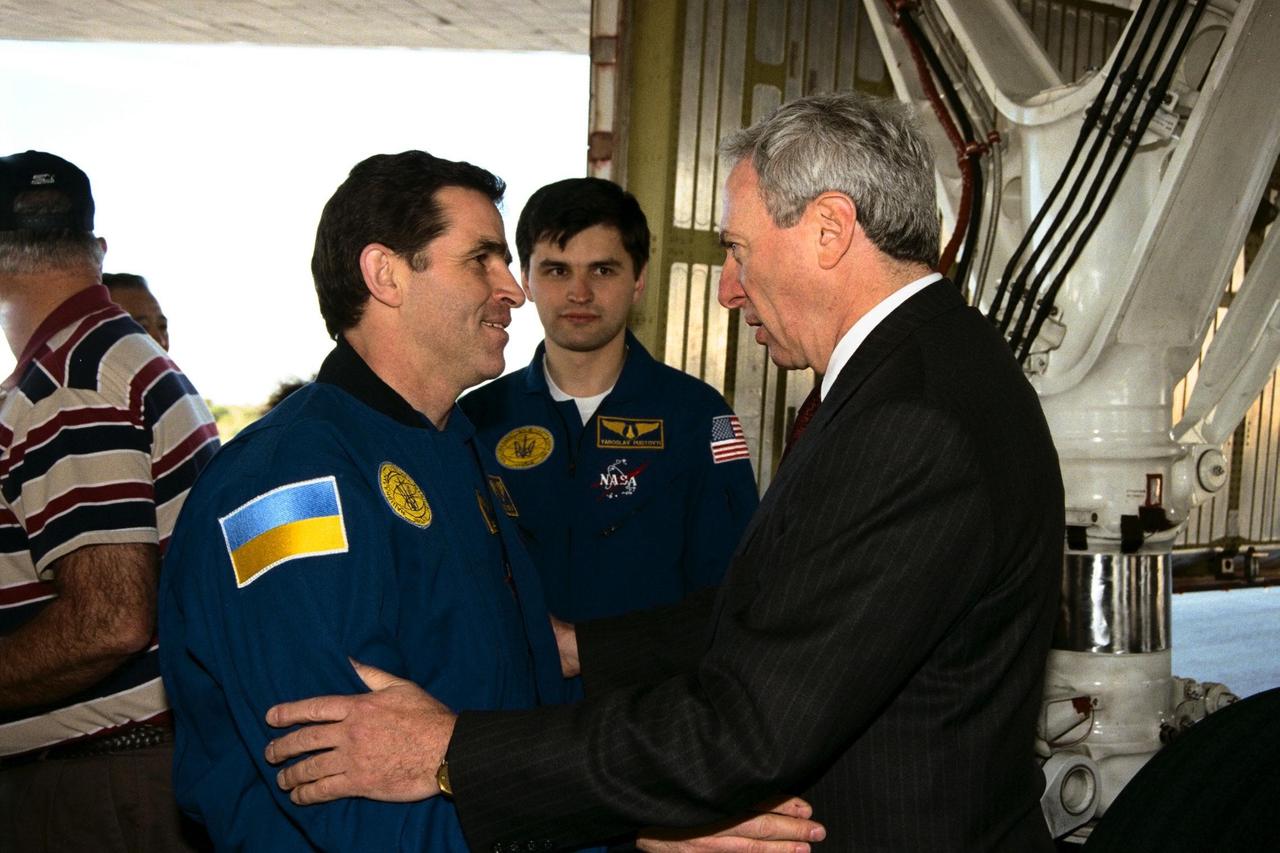
STS-87 Payload Specialist Leonid Kadenyuk of the National Space Agency of Ukraine (NSAU), at left, chats with NASA Administrator Daniel Goldin shortly after the landing of Columbia at Kennedy Space Center. Looking on is back-up Payload Specialist Yaroslav Pustovyi, also of NSAU. STS-87 concluded its mission with a main gear touchdown at 7:20:04 a.m. EST Dec. 5, at KSC's Shuttle Landing Facility Runway 33, drawing the 15-day, 16-hour and 34-minute-long mission of 6.5 million miles to a close. Also onboard the orbiter were Commander Kevin Kregel; Pilot Steven Lindsey; and Mission Specialists Winston Scott, Kalpana Chawla, Ph.D., and Takao Doi, Ph.D., of the National Space Development Agency of Japan. During the 88th Space Shuttle mission, the crew performed experiments on the United States Microgravity Payload-4 and pollinated plants as part of the Collaborative Ukrainian Experiment. This was the 12th landing for Columbia at KSC and the 41st KSC landing in the history of the Space Shuttle program
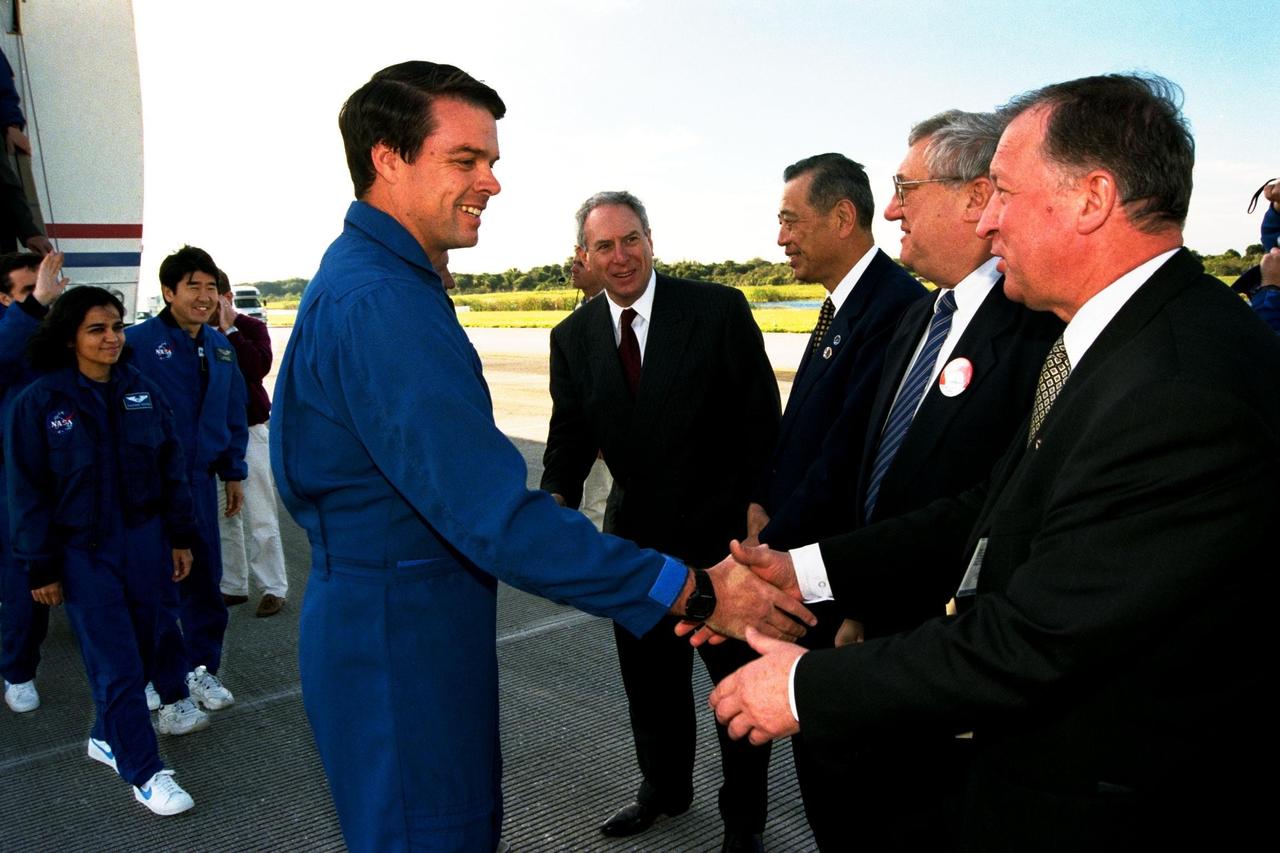
STS-87 Commander Kevin Kregel, center, shakes hands with the deputy director general of the National Space Agency of Ukraine (NSAU), Eduard Kuznetsov, at far right. Next to Kuznetsov is the Honorable Yuri Shcherbak, Ukraine's ambassador to the United States, standing with the president of the National Space Development Agency (NASDA) of Japan, Isao Uchida, and NASA Administrator Daniel Goldin (center). Approaching the VIPs from the left of the photo are Mission Specialists Kalpana Chawla, Ph.D., and Takao Doi, Ph.D., of NASDA. STS-87 concluded its mission with a main gear touchdown at 7:20:04 a.m. EST Dec. 5, at KSC's Shuttle Landing Facility Runway 33, drawing the 15-day, 16-hour and 34-minute-long mission of 6.5 million miles to a close. Also onboard the orbiter were Pilot Steven Lindsey; Mission Specialist Winston Scott; and Payload Specialist Leonid Kadenyuk of NSAU. During the 88th Space Shuttle mission, the crew performed experiments on the United States Microgravity Payload-4 and pollinated plants as part of the Collaborative Ukrainian Experiment. This was the 12th landing for Columbia at KSC and the 41st KSC landing in the history of the Space Shuttle program
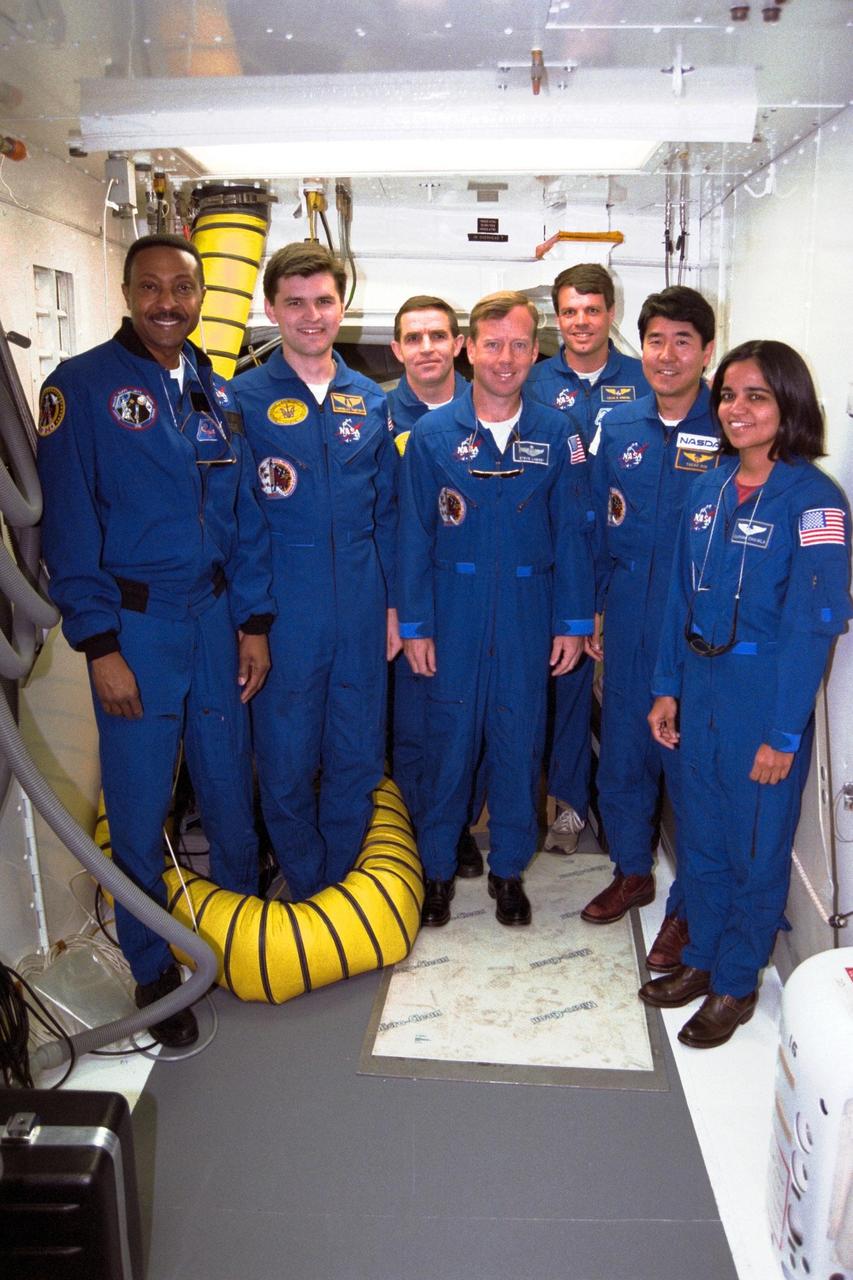
The crew of the STS-87 mission, scheduled for launch Nov. 19 aboard the Space Shuttle Columbia from pad 39B at Kennedy Space Center (KSC), participates in the Terminal Countdown Demonstration Test (TCDT) at KSC. Standing, from left, are Mission Specialist Winston Scott; backup Payload Specialist Yaroslav Pustovyi, Ph.D., of the National Space Agency of Ukraine (NSAU); Payload Specialist Leonid Kadenyuk of NSAU; Pilot Steven Lindsey; Commander Kevin Kregel; Mission Specialist Takao Doi, Ph.D., of the National Space Development Agency of Japan; and Mission Specialist Kalpana Chawla, Ph.D. The TCDT is held at KSC prior to each Space Shuttle flight providing the crew of each mission opportunities to participate in simulated countdown activities. The TCDT ends with a mock launch countdown culminating in a simulated main engine cut-off. The crew also spends time undergoing emergency egress training exercises at the pad and has an opportunity to view and inspect the payloads in the orbiter's payload bay
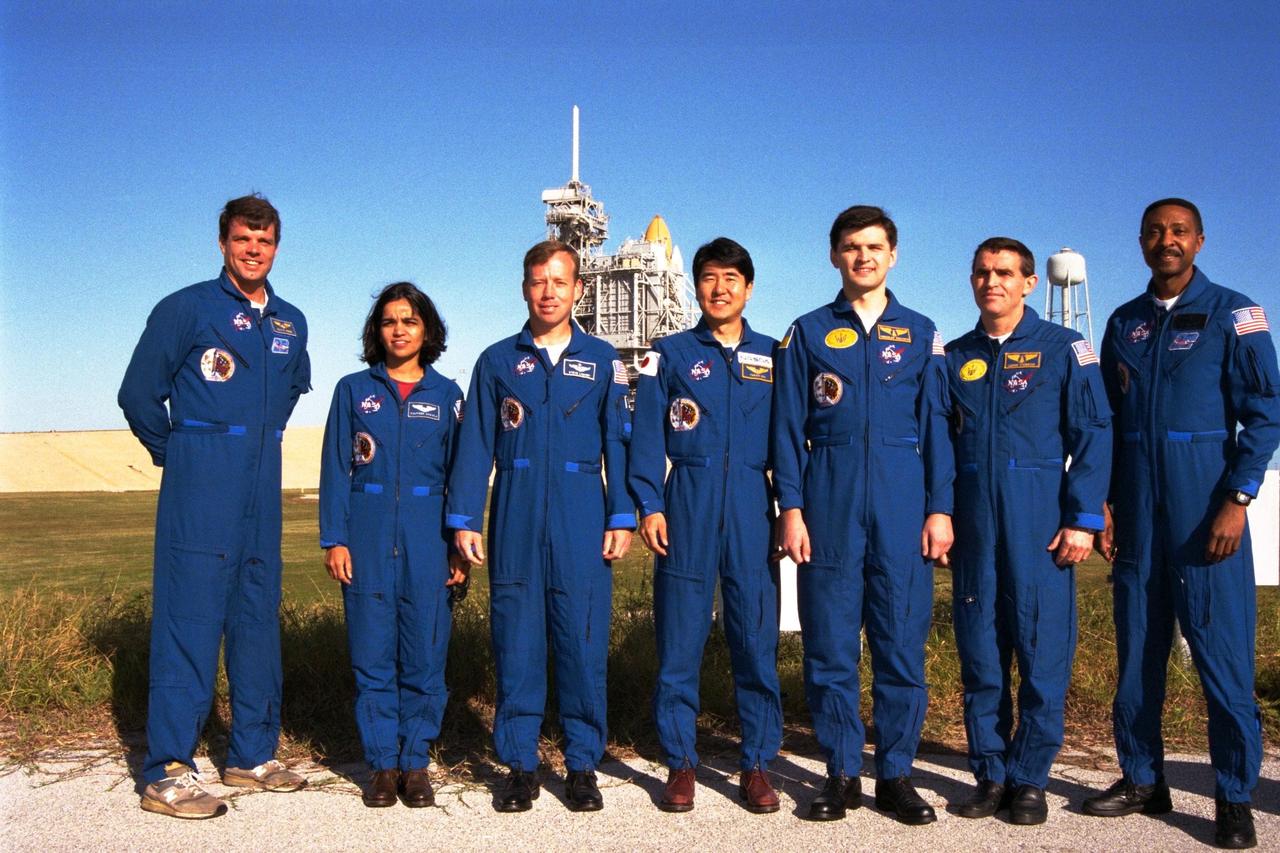
The crew of the STS-87 mission, scheduled for launch Nov. 19 aboard the Space Shuttle Columbia from Pad 39B at Kennedy Space Center (KSC), poses at the pad during a break in the Terminal Countdown Demonstration Test (TCDT) at KSC. Standing in front of the Shuttle Columbia are, from left, Commander Kevin Kregel; Mission Specialist Kalpana Chawla, Ph.D.; Pilot Steven Lindsey; Mission Specialist Takao Doi, Ph.D., of the National Space Development Agency of Japan; backup Payload Specialist Yaroslav Pustovyi, Ph.D., of the National Space Agency of Ukraine (NSAU); Payload Specialist Leonid Kadenyuk of NSAU; and Mission Specialist Winston Scott. The TCDT is held at KSC prior to each Space Shuttle flight providing the crew of each mission opportunities to participate in simulated countdown activities. The TCDT ends with a mock launch countdown culminating in a simulated main engine cutoff. The crew also spends time undergoing emergency egress training exercises at the pad and has an opportunity to view and inspect the payloads in the orbiter's payload bay
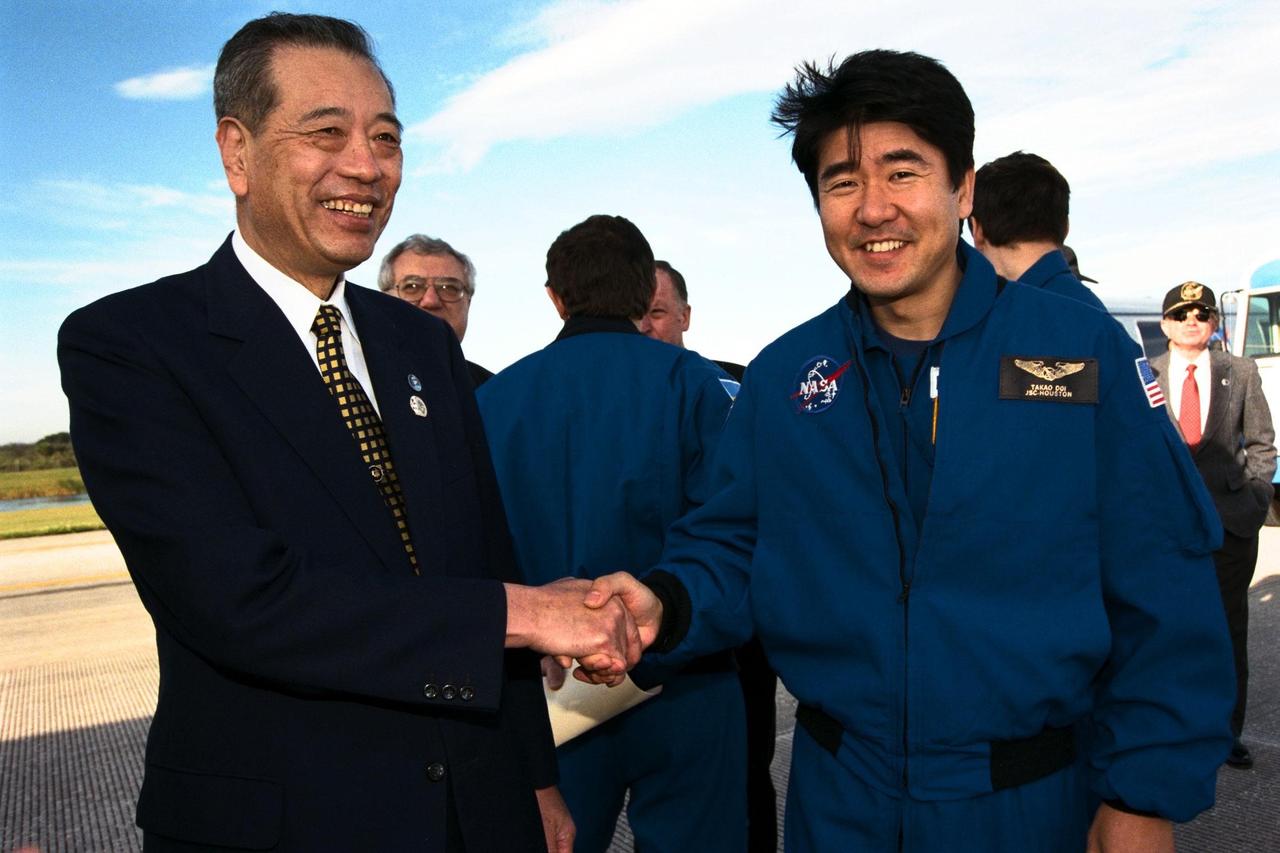
The president of the National Space Development Agency (NASDA) of Japan, Isao Uchida, at left, shakes hands with STS-87 Mission Specialist Takao Doi, Ph.D., of NASDA, shortly after the landing of Columbia at Kennedy Space Center. STS-87 concluded its mission with a main gear touchdown at 7:20:04 a.m. EST Dec. 5, at KSC's Shuttle Landing Facility Runway 33, drawing the 15-day, 16-hour and 34-minute-long mission of 6.5 million miles to a close. Also onboard the orbiter were Commander Kevin Kregel; Pilot Steven Lindsey; Mission Specialists Winston Scott and Kalpana Chawla, Ph.D.; and Payload Specialist Leonid Kadenyuk of the National Space Agency of Ukraine. During the 88th Space Shuttle mission, the crew performed experiments on the United States Microgravity Payload-4 and pollinated plants as part of the Collaborative Ukrainian Experiment. This was the 12th landing for Columbia at KSC and the 41st KSC landing in the history of the Space Shuttle program
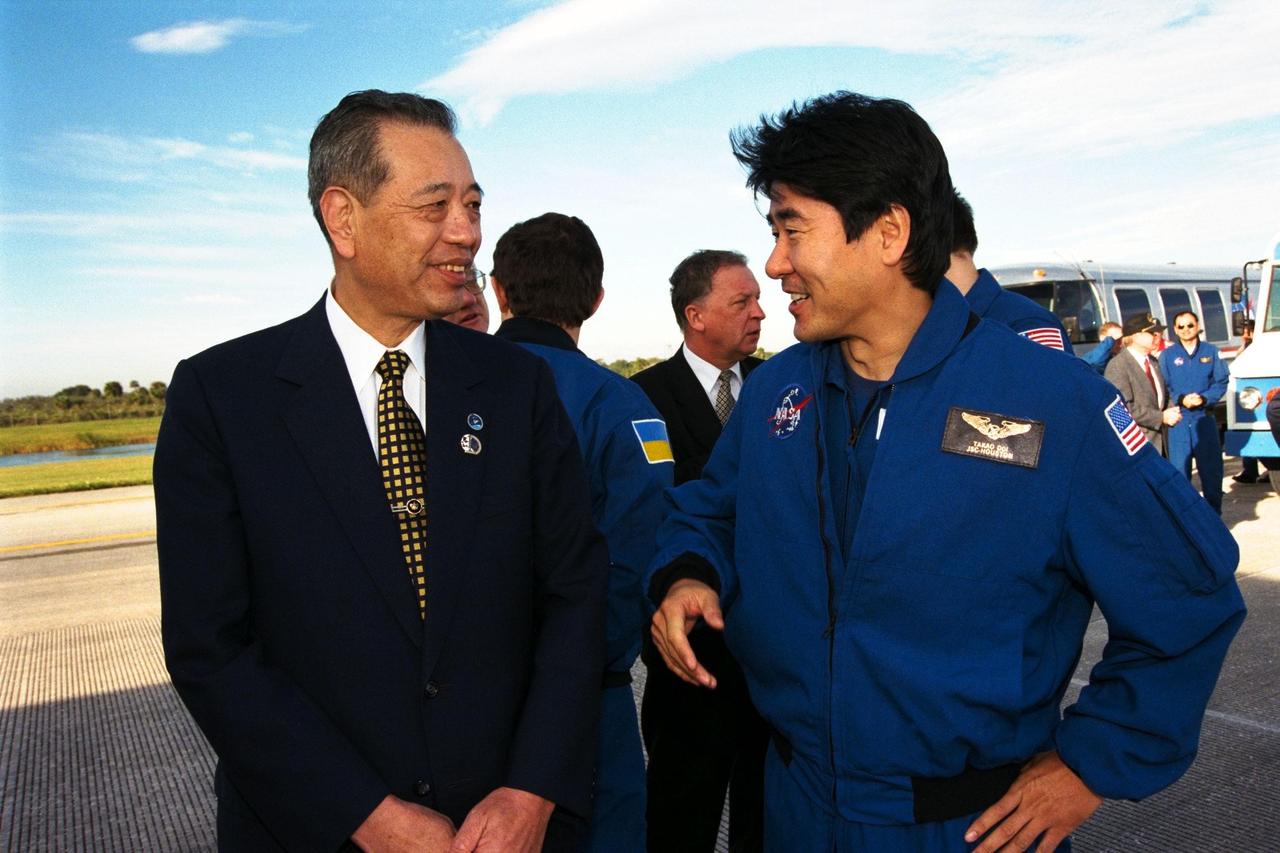
The president of the National Space Development Agency (NASDA) of Japan, Isao Uchida, at left, chats with STS-87 Mission Specialist Takao Doi, Ph.D., of NASDA, shortly after the landing of Columbia at Kennedy Space Center. STS-87 concluded its mission with a main gear touchdown at 7:20:04 a.m. EST Dec. 5, at KSC's Shuttle Landing Facility Runway 33, drawing the 15-day, 16-hour and 34-minute-long mission of 6.5 million miles to a close. Also onboard the orbiter were Commander Kevin Kregel; Pilot Steven Lindsey; Mission Specialists Winston Scott and Kalpana Chawla, Ph.D.; and Payload Specialist Leonid Kadenyuk of the National Space Agency of Ukraine. During the 88th Space Shuttle mission, the crew performed experiments on the United States Microgravity Payload-4 and pollinated plants as part of the Collaborative Ukrainian Experiment. This was the 12th landing for Columbia at KSC and the 41st KSC landing in the history of the Space Shuttle program
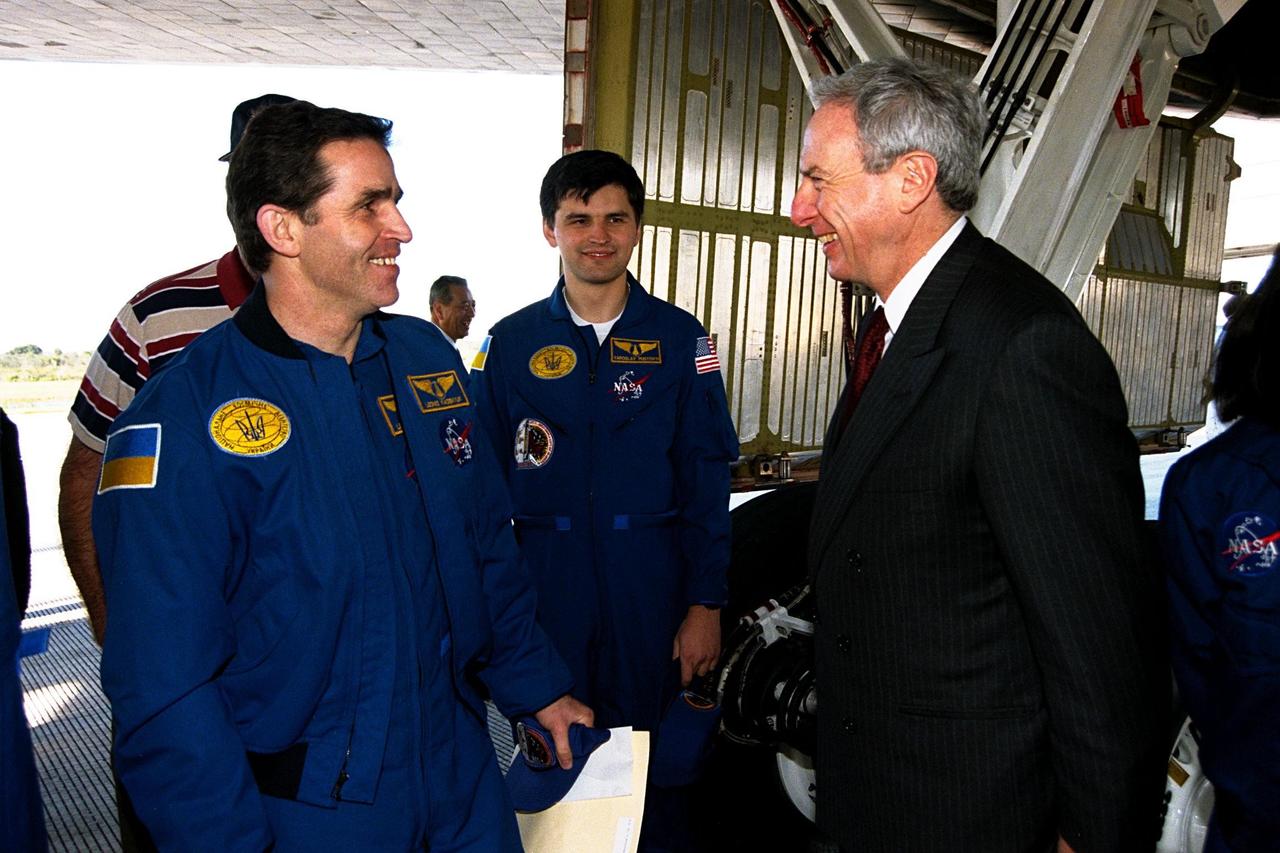
STS-87 Payload Specialist Leonid Kadenyuk of the National Space Agency of Ukraine (NSAU), at left, greets NASA Administrator Daniel Goldin, at right, as back-up Payload Specialist Yaroslav Pustovyi, also of NSAU, looks on. STS-87 concluded its mission with a main gear touchdown at 7:20:04 a.m. EST Dec. 5, at KSC's Shuttle Landing Facility Runway 33, drawing the 15-day, 16-hour and 34-minute-long mission of 6.5 million miles to a close. Also onboard the orbiter were Commander Kevin Kregel; Pilot Steven Lindsey; and Mission Specialists Winston Scott; Kalpana Chawla, Ph.D.; and Takao Doi, Ph.D. of the National Space Development Agency of Japan. During the 88th Space Shuttle mission, the crew performed experiments on the United States Microgravity Payload-4 and pollinated plants as part of the Collaborative Ukrainian Experiment. This was the 12th landing for Columbia at KSC and the 41st KSC landing in the history of the Space Shuttle program