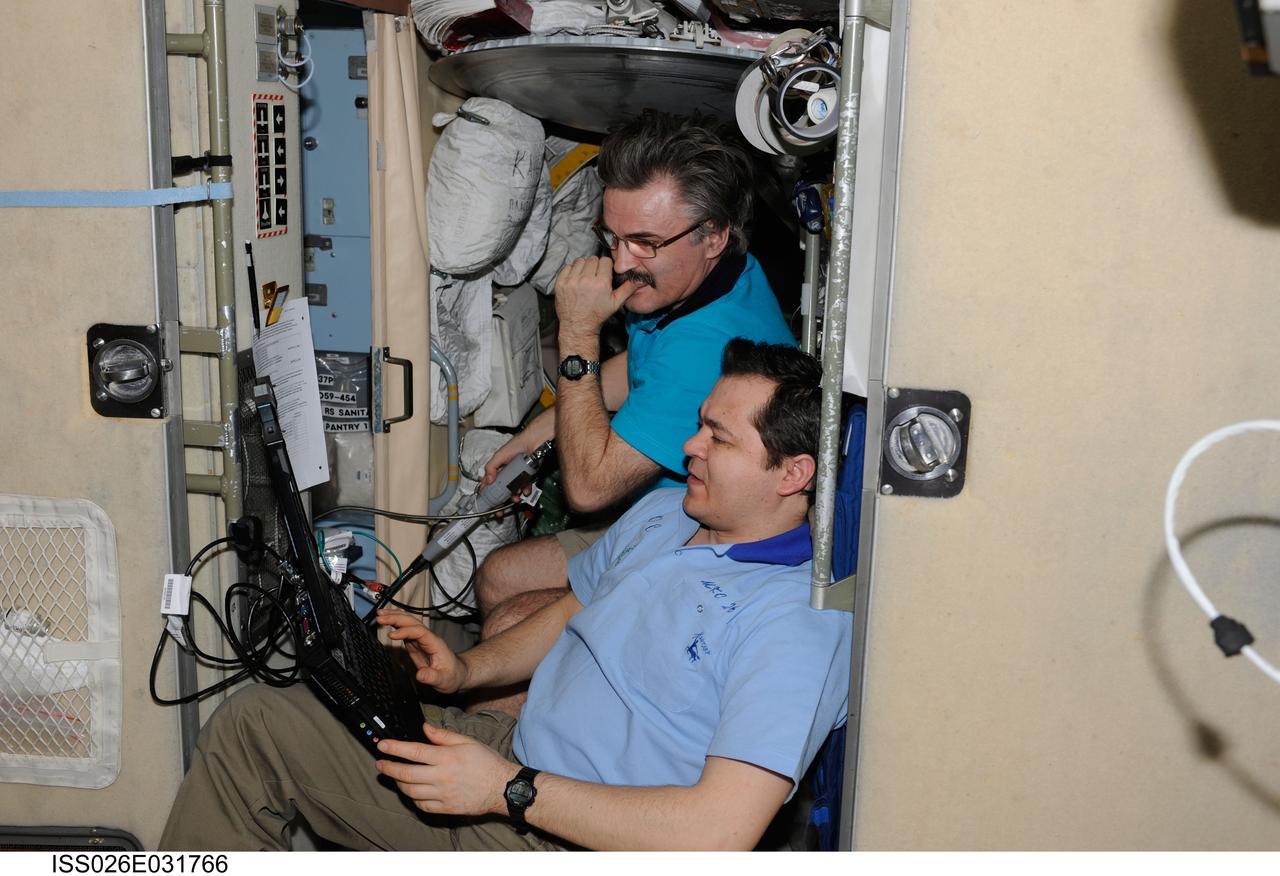
ISS026-E-031766 (4 March 2011) --- Russian cosmonauts Oleg Skripochka (foreground) and Alexander Kaleri, both Expedition 26 flight engineers, watch a computer monitor in the Zvezda Service Module of the International Space Station.
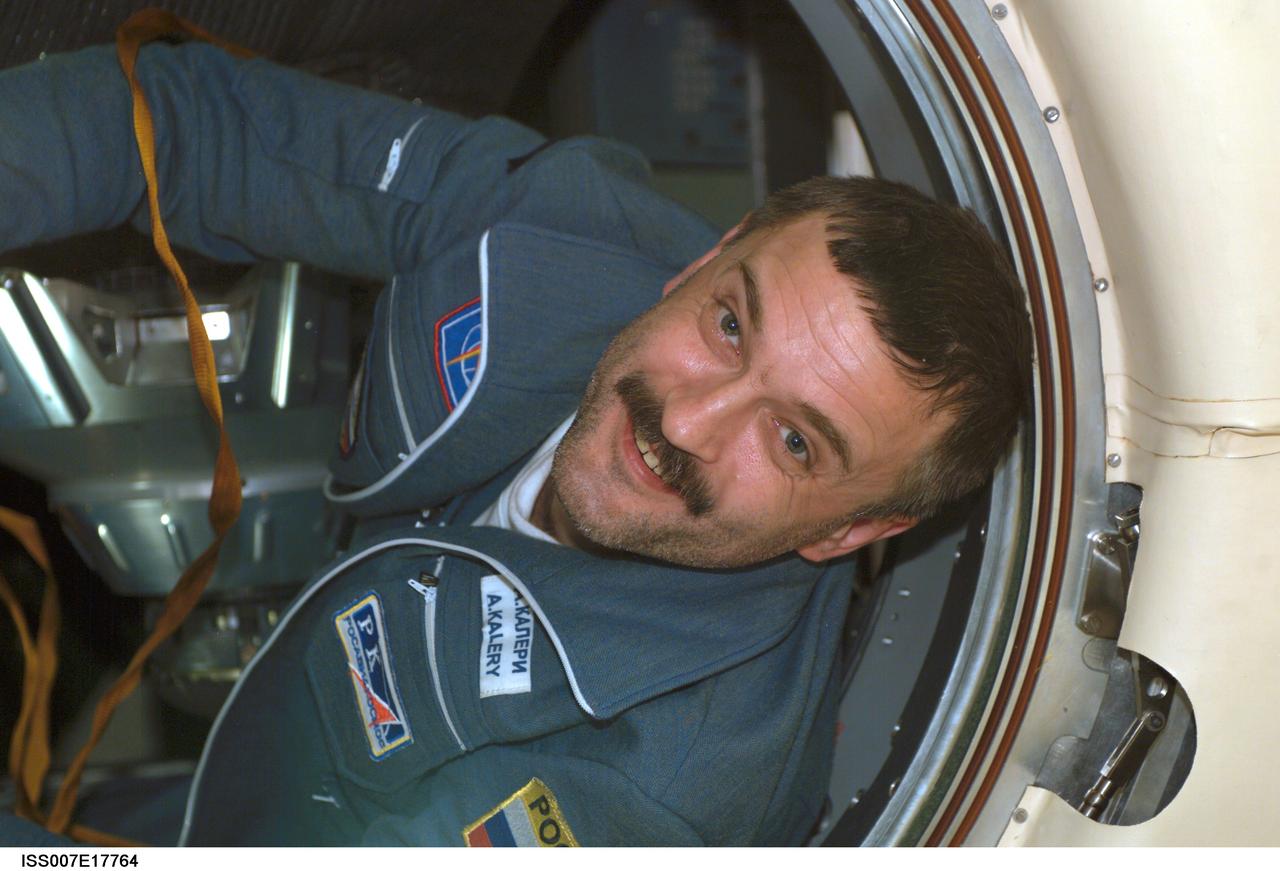
ISS007-E-17764 (20 October 2003) --- Two days after launching from Kazakhstan, Russian cosmonaut Alexander Kaleri, flight engineer and Soyuz commander representing Rosaviakosmos, arrives onboard the International Space Station. Kaleri and astronaut C. Michael Foale, American commander and NASA ISS science officer, proceeded to begin over a week's worth of handover activities with the Expedition 7 crewmembers in order to familiarize themselves with Station systems and procedures.
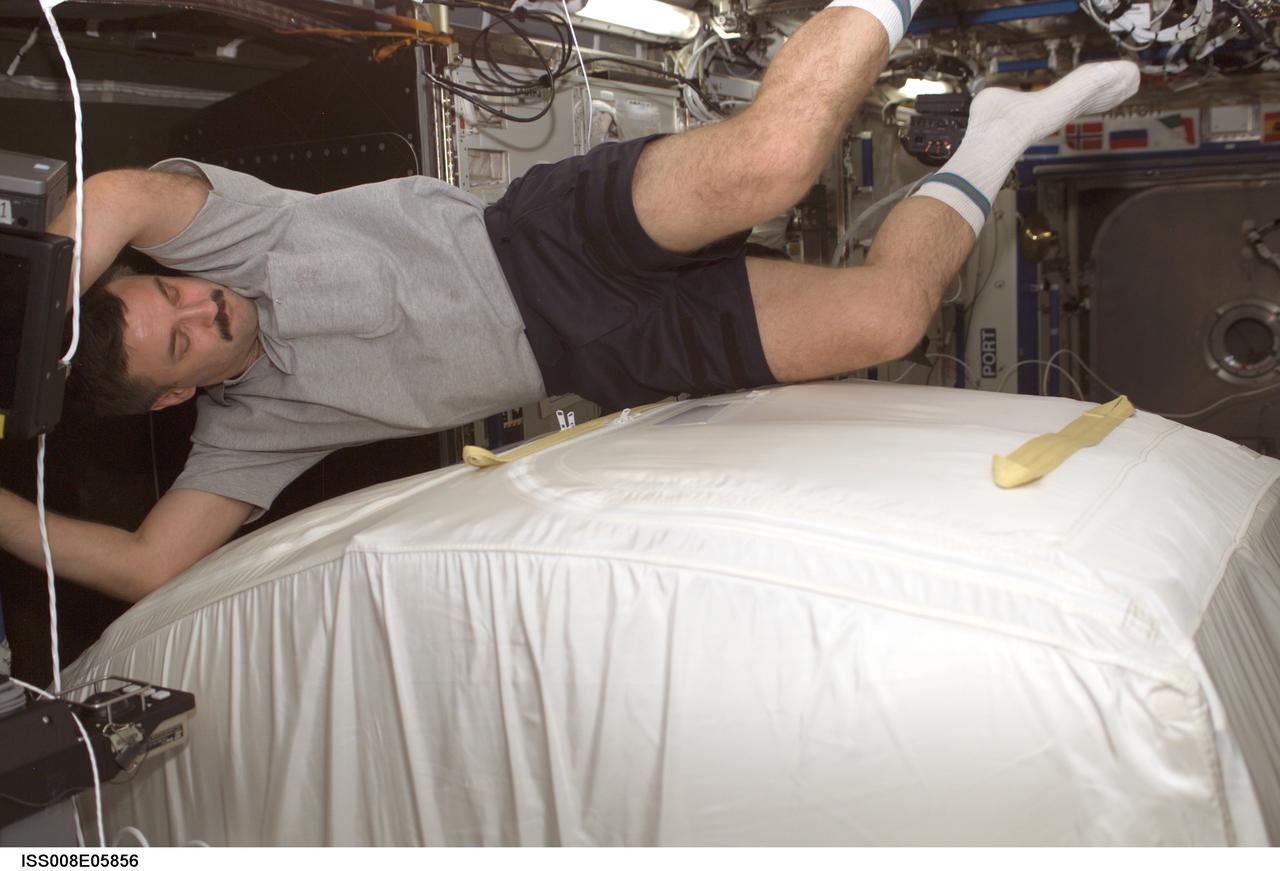
ISS008-E-05856 (12 November 2003) --- Cosmonaut Alexander Y. Kaleri, Expedition 8 flight engineer, moves a Zero-G Storage Rack (ZSR) in the Destiny laboratory on the International Space Station (ISS). Kaleri, who represents Rosaviakosmos, commanded the Soyuz flight that took the crew to the station last month.

ISS007-E-18035 (26 October 2003) --- Cosmonaut Alexander Y. Kaleri (left), Expedition 8 flight engineer, and astronaut Edward T. Lu, Expedition 7 NASA ISS science officer and flight engineer, hold tools in the Unity node on the International Space Station (ISS). Kaleri represents Rosaviakosmos.
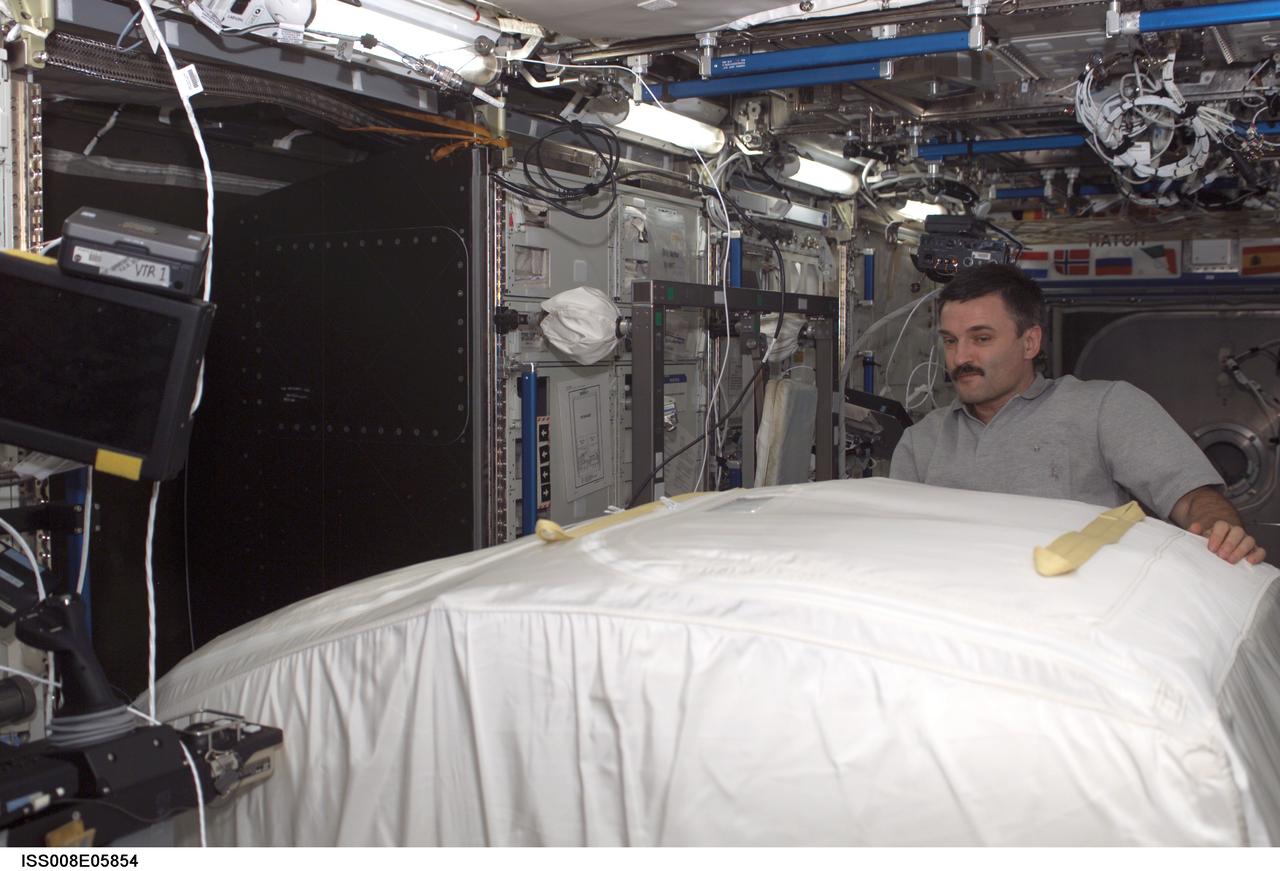
ISS008-E-05854 (12 November 2003) --- Cosmonaut Alexander Y. Kaleri, Expedition 8 flight engineer, moves a Zero-G Storage Rack (ZSR) in the Destiny laboratory on the International Space Station (ISS). Kaleri, who represents Rosaviakosmos, commanded the Soyuz flight that took the crew to the station last month.
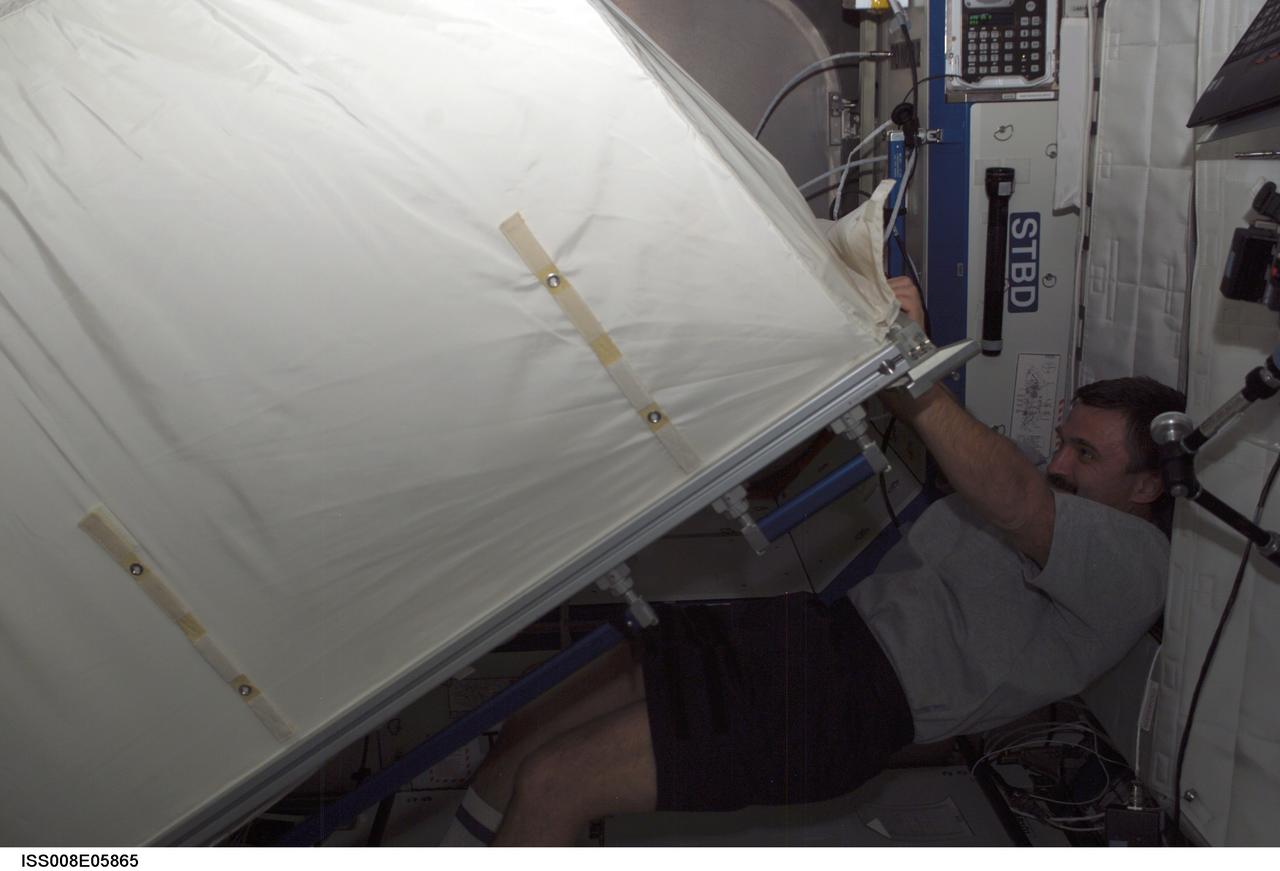
ISS008-E-05865 (12 November 2003) --- Cosmonaut Alexander Y. Kaleri, Expedition 8 flight engineer, moves a Zero-G Storage Rack (ZSR) in the Destiny laboratory on the International Space Station (ISS). Kaleri, who represents Rosaviakosmos, commanded the Soyuz flight that took the crew to the station last month.
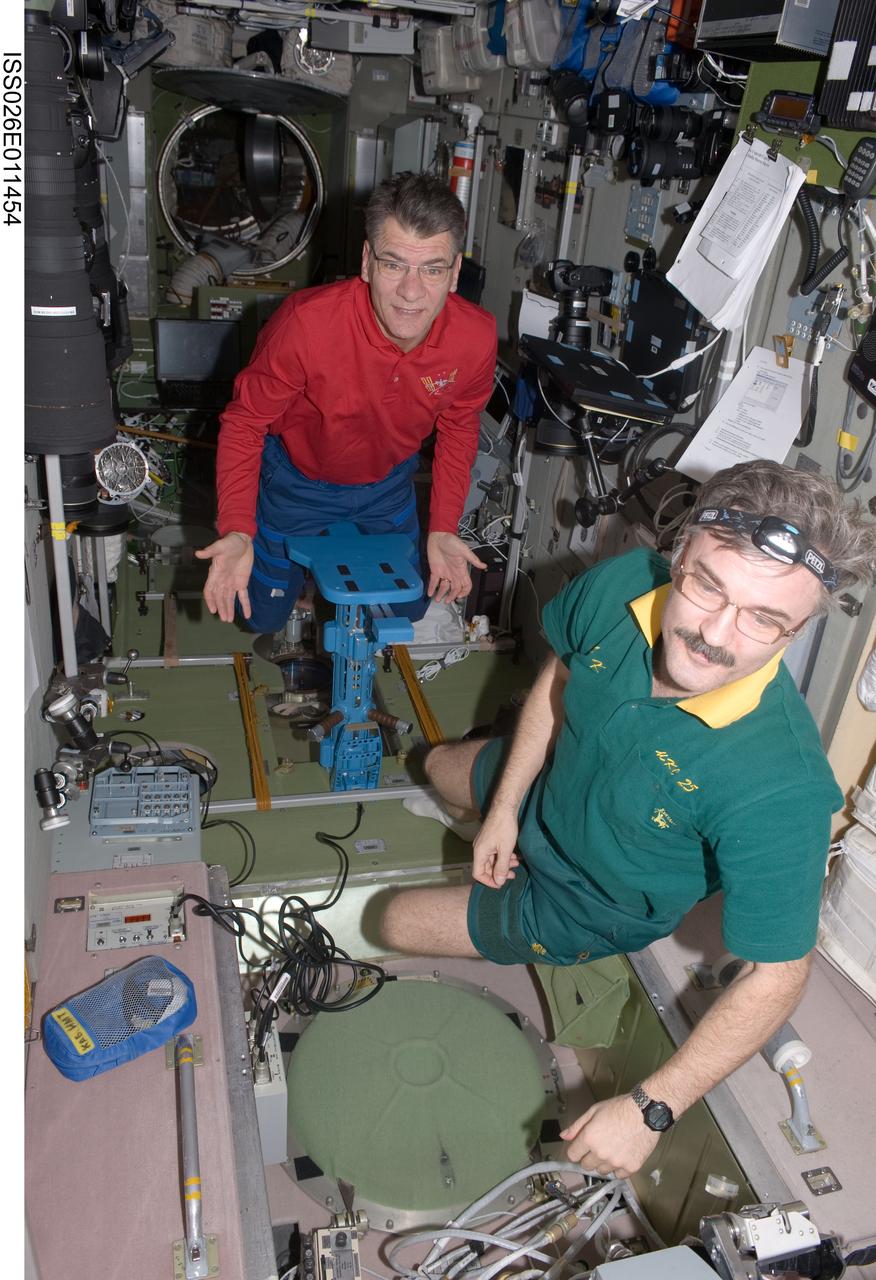
ISS026-E-011454 (22 Dec. 2010) --- European Space Agency astronaut Paolo Nespoli (background) and Russian cosmonaut Alexander Kaleri, both Expedition 26 flight engineers, are pictured in the Zvezda Service Module of the International Space Station.
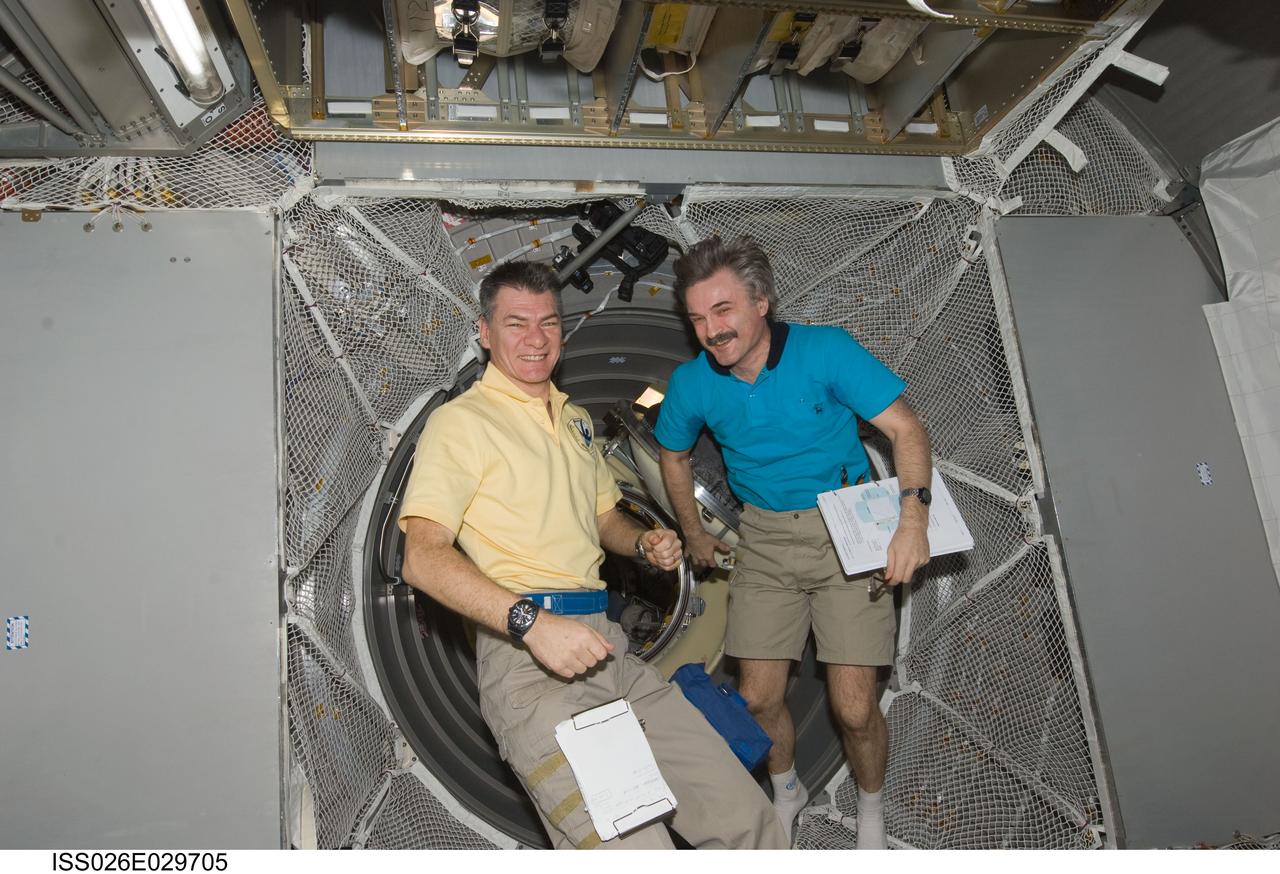
ISS026-E-029705 (25 Feb. 2011) --- European Space Agency astronaut Paolo Nespoli (left) and Russian cosmonaut Alexander Kaleri, both Expedition 26 flight engineers, are pictured in the newly-attached European Space Agency's "Johannes Kepler" Automated Transfer Vehicle-2 (ATV-2) of the International Space Station.
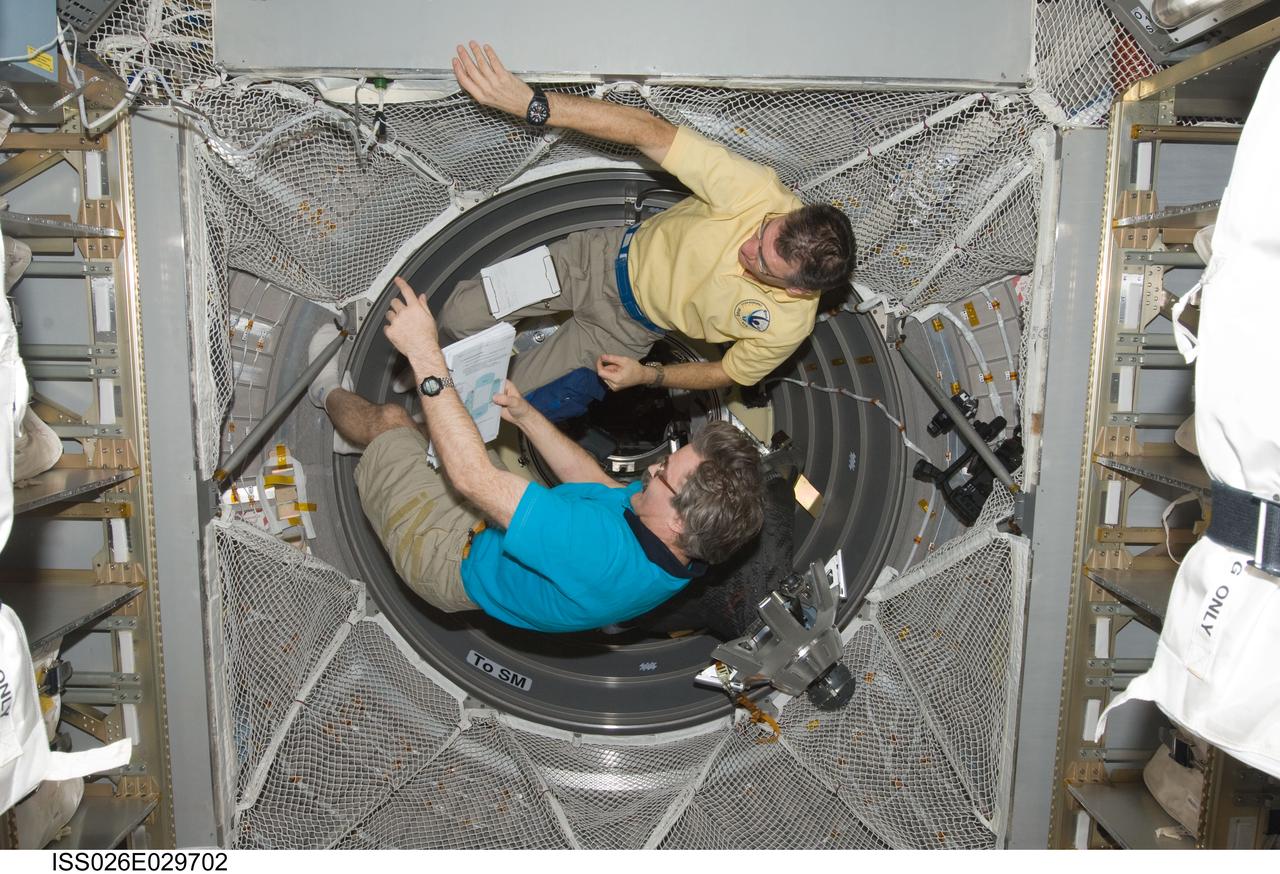
ISS026-E-029702 (25 Feb. 2011) --- European Space Agency astronaut Paolo Nespoli (top) and Russian cosmonaut Alexander Kaleri, both Expedition 26 flight engineers, work in the newly-attached European Space Agency's "Johannes Kepler" Automated Transfer Vehicle-2 (ATV-2) of the International Space Station.
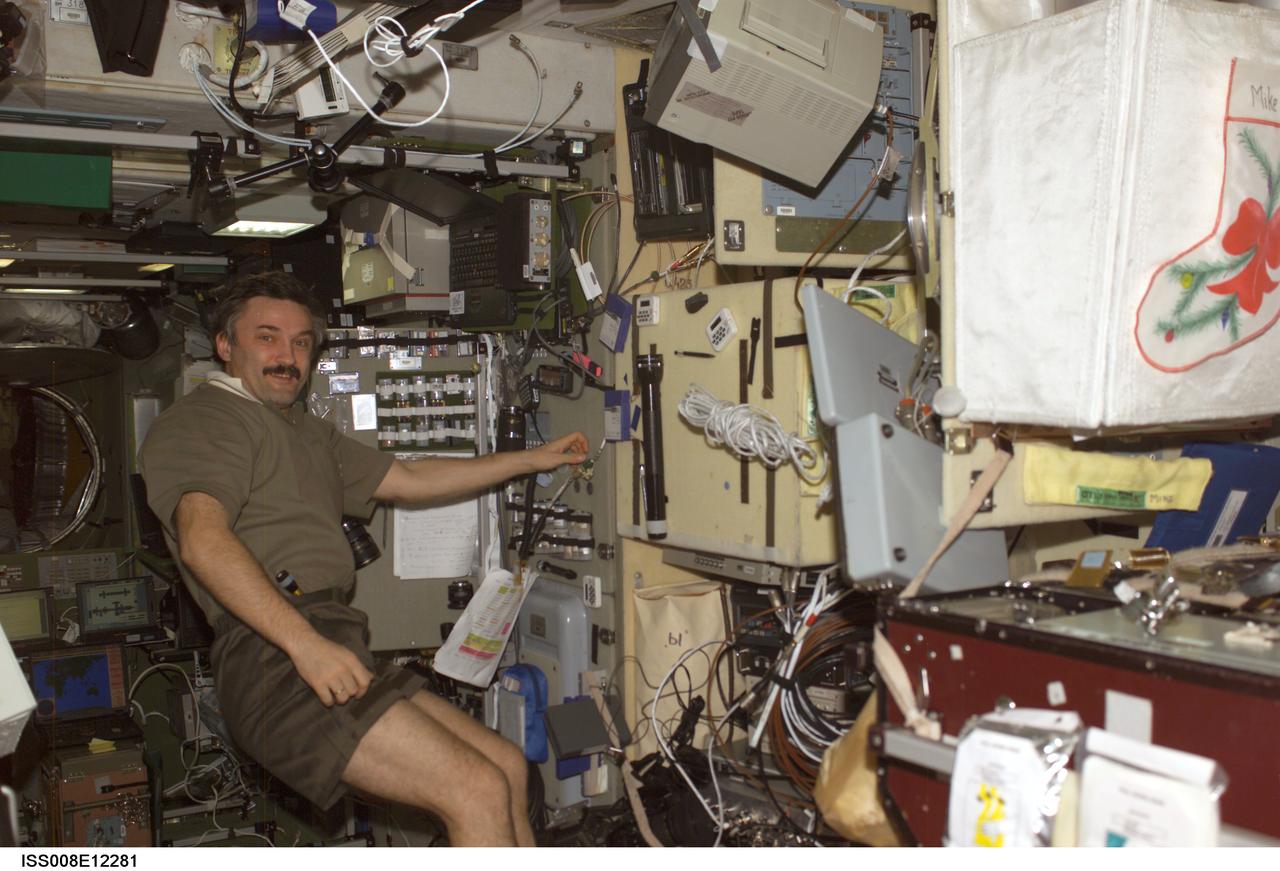
ISS008-E-12281 (9 January 2004) --- Cosmonaut Alexander Y. Kaleri, Expedition 8 flight engineer, works at the Vozdukh CO2 scrubber in the Zvezda Service Module on the International Space Station (ISS). Kaleri represents Rosaviakosmos.
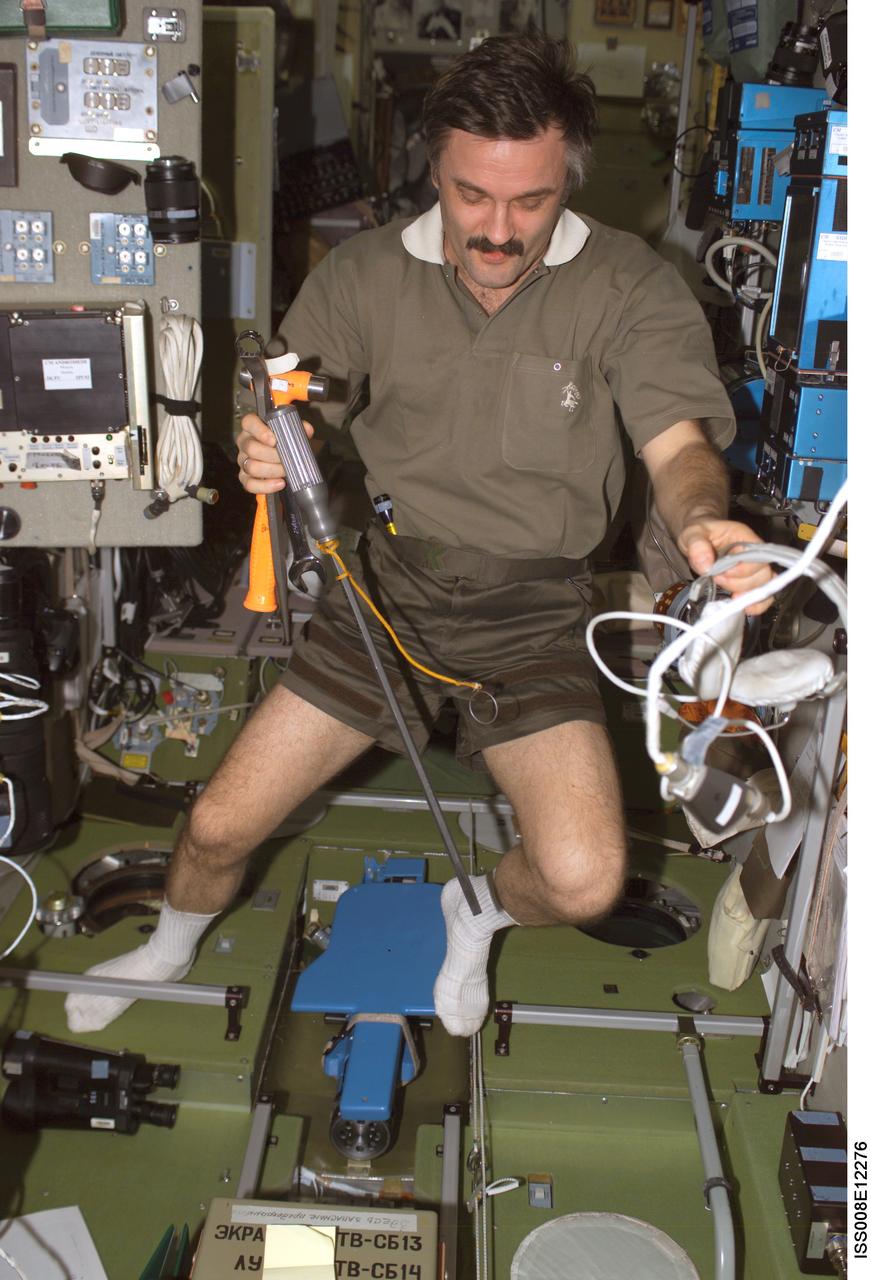
ISS008-E-12276 (9 January 2004) --- Cosmonaut Alexander Y. Kaleri, Expedition 8 flight engineer, is pictured in the Zvezda Service Module on the International Space Station (ISS). Kaleri represents Rosaviakosmos.
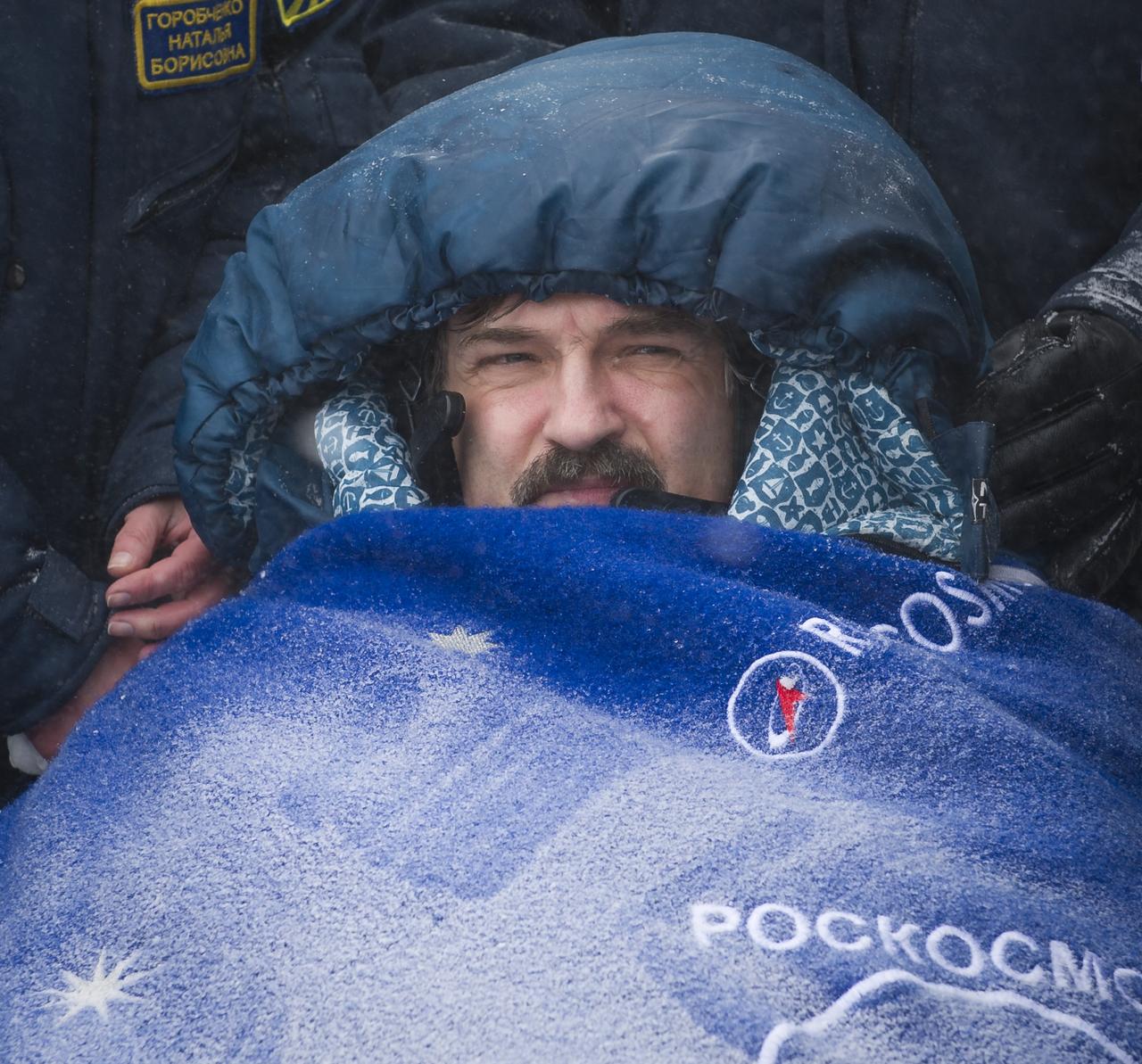
Expedition 26 Flight Engineer Alexander Kaleri rest in a chair shortly after he and fellow crew members Scott Kelly and Oleg Skripochka landed in their Soyuz TMA-01M capsule near the town of Arkalyk, Kazakhstan on Wednesday, March 16, 2011. NASA Astronaut Kelly, Russian Cosmonauts Skripochka and Kaleri are returning from almost six months onboard the International Space Station where they served as members of the Expedition 25 and 26 crews. Photo Credit: (NASA/Bill Ingalls)
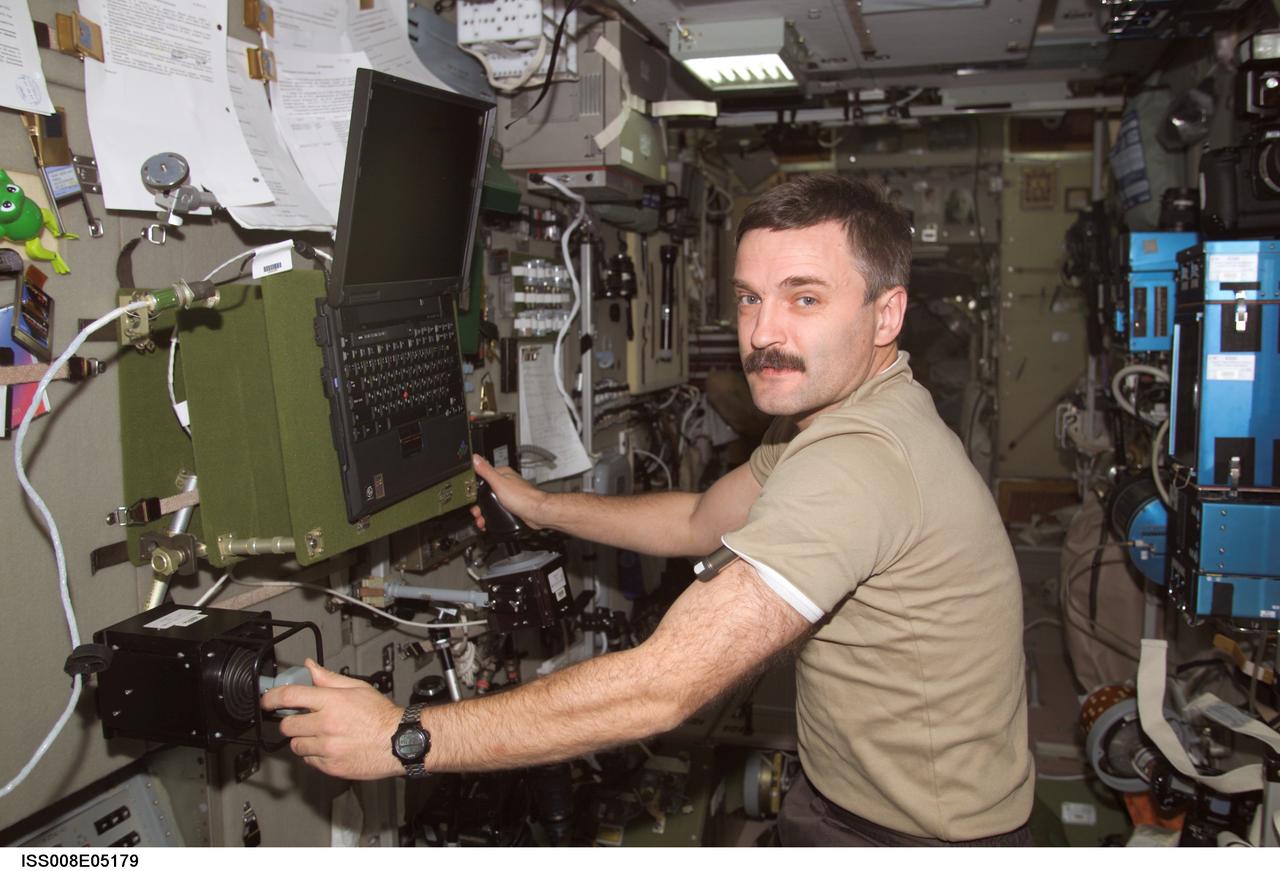
ISS008-E-05179 (31 October 2003) --- Cosmonaut Alexander Y. Kaleri, Expedition 8 flight engineer, works with the Russian biomedical “Pilot” experiment (MBI-15) in the Zvezda Service Module on the International Space Station (ISS). The experiment, which looks at psychological and physiological changes in crew performance during long-duration spaceflight, requires a worktable, ankle restraint system and two control handles for testing piloting skill. Kaleri represents Rosaviakosmos.
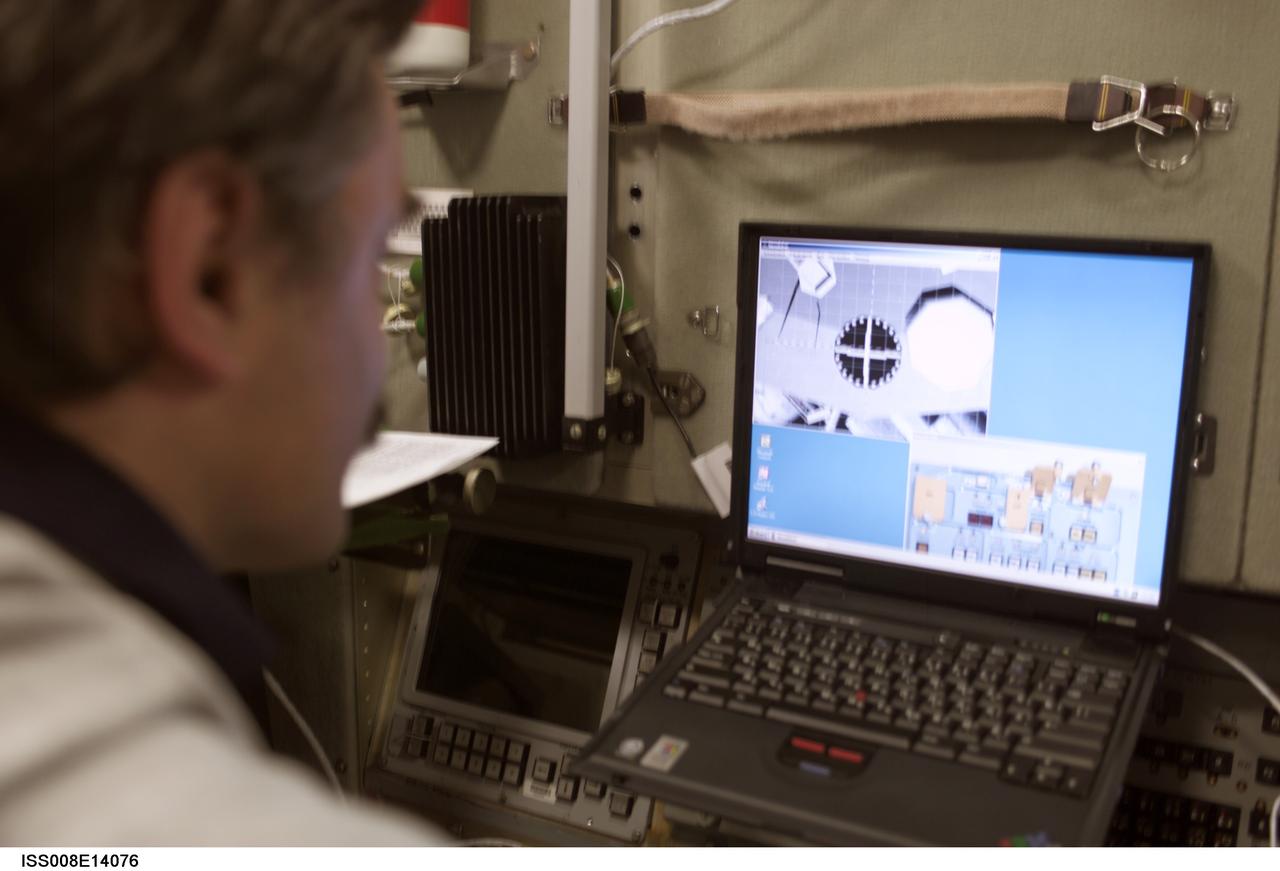
ISS008-E-14076 (30 January 2004) --- Cosmonaut Alexander Y. Kaleri, Expedition 8 flight engineer, practices docking procedures with the manual TORU rendezvous system in the Zvezda Service Module on the International Space Station (ISS) in preparation for the docking of the Progress 13 on January 31. With the manual TORU mode, Kaleri can perform necessary guidance functions from Zvezda via two hand controllers in the event of a failure of the “Kurs” automated rendezvous and docking (AR&D) of the Progress. Kaleri represents Rosaviakosmos.
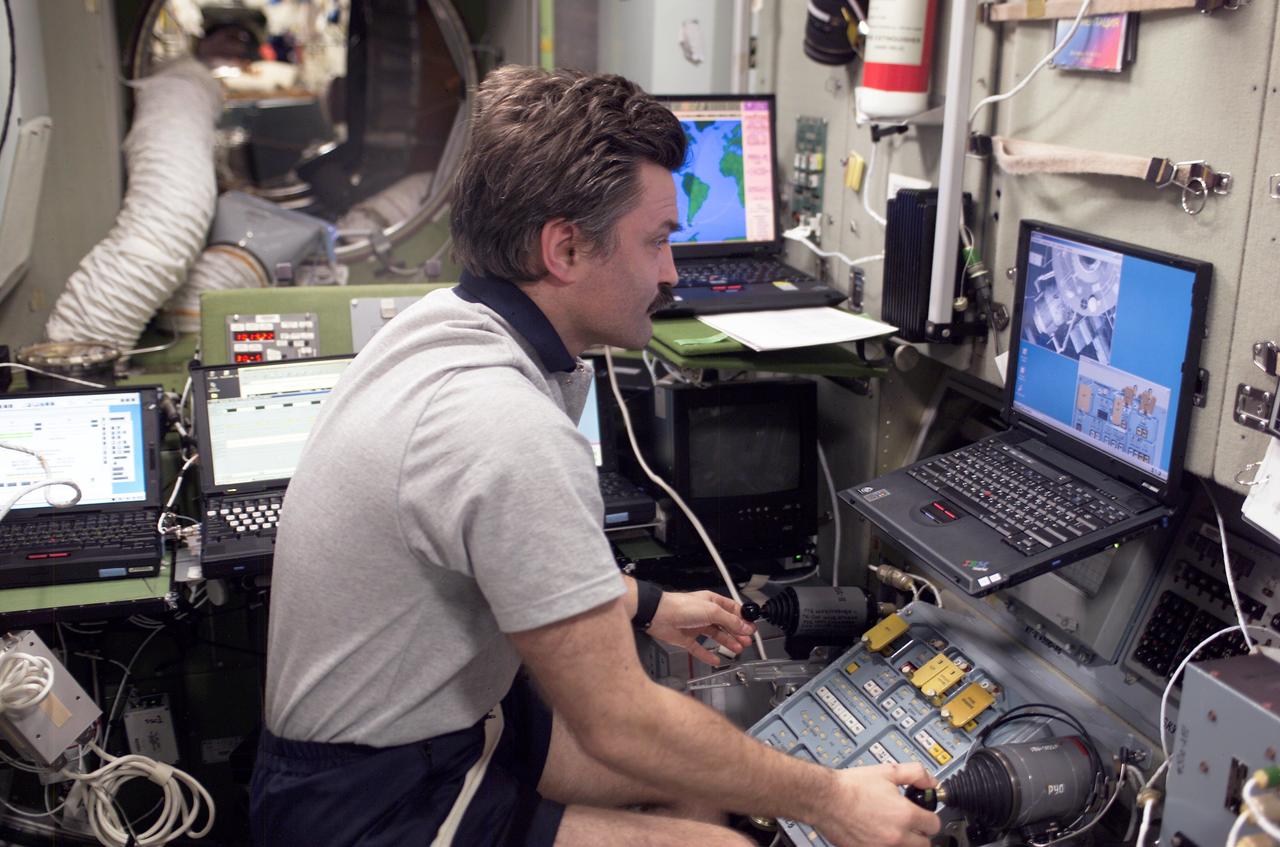
ISS008-E-14073 (30 January 2004) --- Cosmonaut Alexander Y. Kaleri, Expedition 8 flight engineer, practices docking procedures with the manual TORU rendezvous system in the Zvezda Service Module on the International Space Station (ISS) in preparation for the docking of the Progress 13 on January 31. With the manual TORU mode, Kaleri can perform necessary guidance functions from Zvezda via two hand controllers in the event of a failure of the “Kurs” automated rendezvous and docking (AR&D) of the Progress. Kaleri represents Rosaviakosmos.
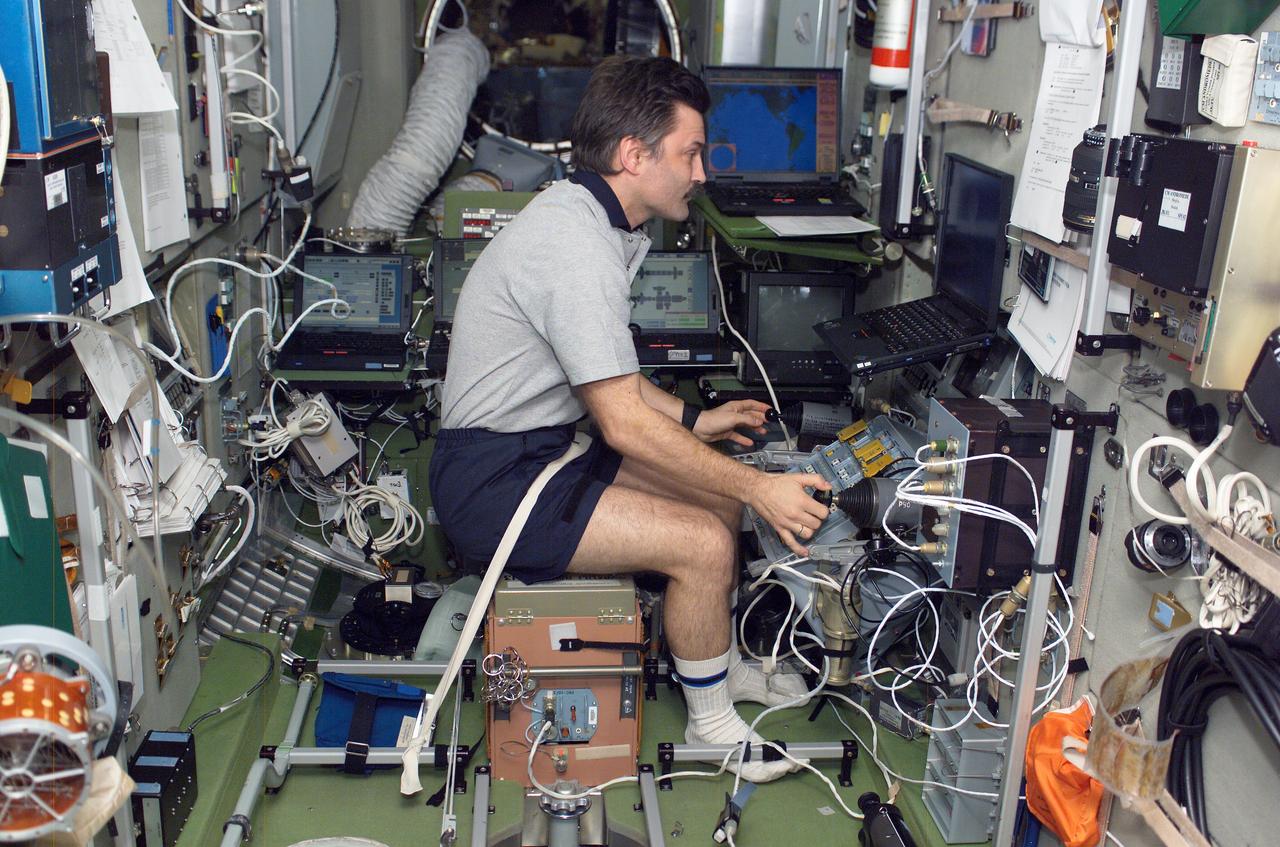
ISS008-E-14067 (30 January 2004) --- Cosmonaut Alexander Y. Kaleri, Expedition 8 flight engineer, practices docking procedures with the manual TORU rendezvous system in the Zvezda Service Module on the International Space Station (ISS) in preparation for the docking of the Progress 13 on January 31. With the manual TORU mode, Kaleri can perform necessary guidance functions from Zvezda via two hand controllers in the event of a failure of the “Kurs” automated rendezvous and docking (AR&D) of the Progress. Kaleri represents Rosaviakosmos.
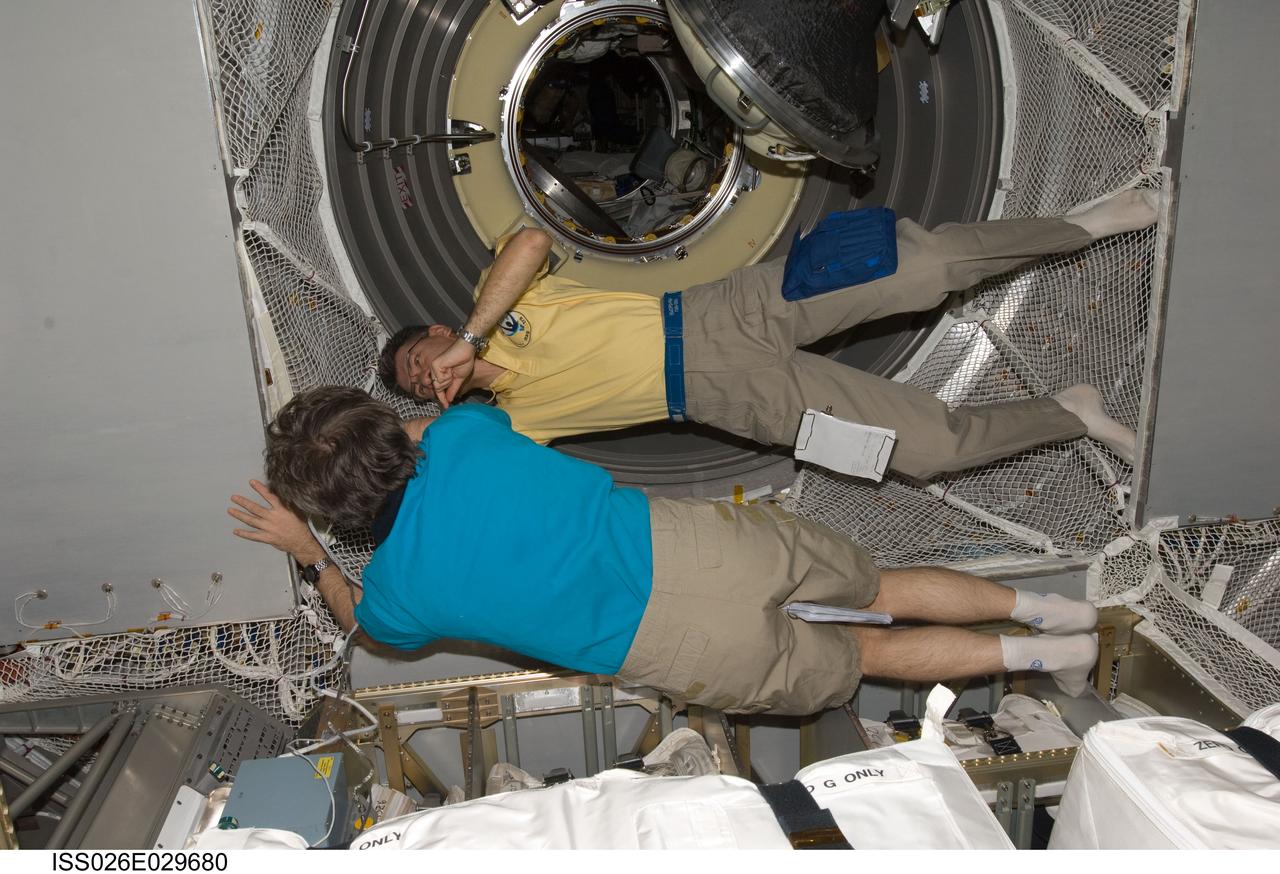
ISS026-E-029680 (25 Feb. 2011) --- European Space Agency astronaut Paolo Nespoli (top) and Russian cosmonaut Alexander Kaleri, both Expedition 26 flight engineers, work in the newly-attached European Space Agency's "Johannes Kepler" Automated Transfer Vehicle-2 (ATV-2) of the International Space Station.
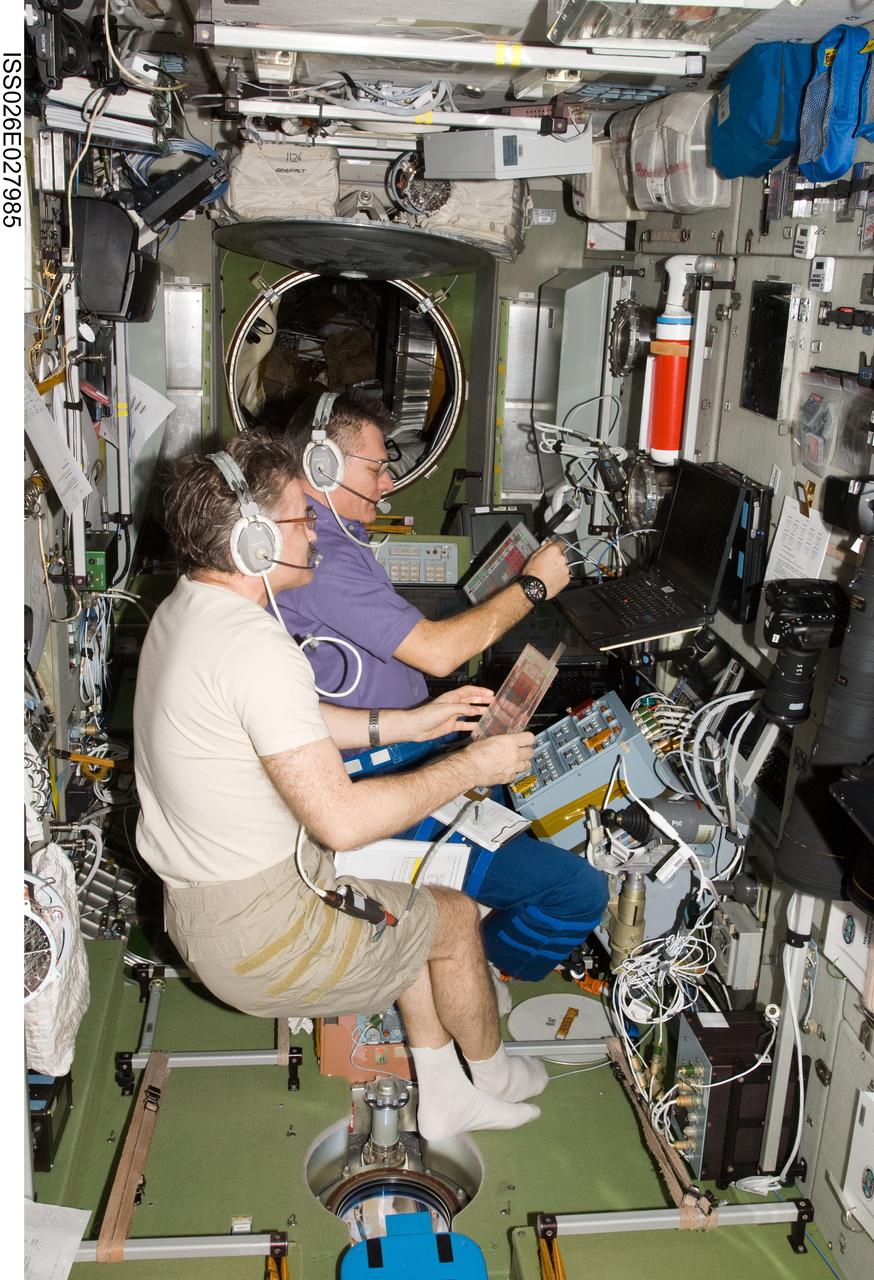
ISS026-E-027985 (21 Feb. 2011) --- Russian cosmonaut Alexander Kaleri (foreground) and European Space Agency astronaut Paolo Nespoli, both Expedition 26 flight engineers, conduct an ATV approach and docking onboard training (OBT) run in the Zvezda Service Module of the International Space Station.
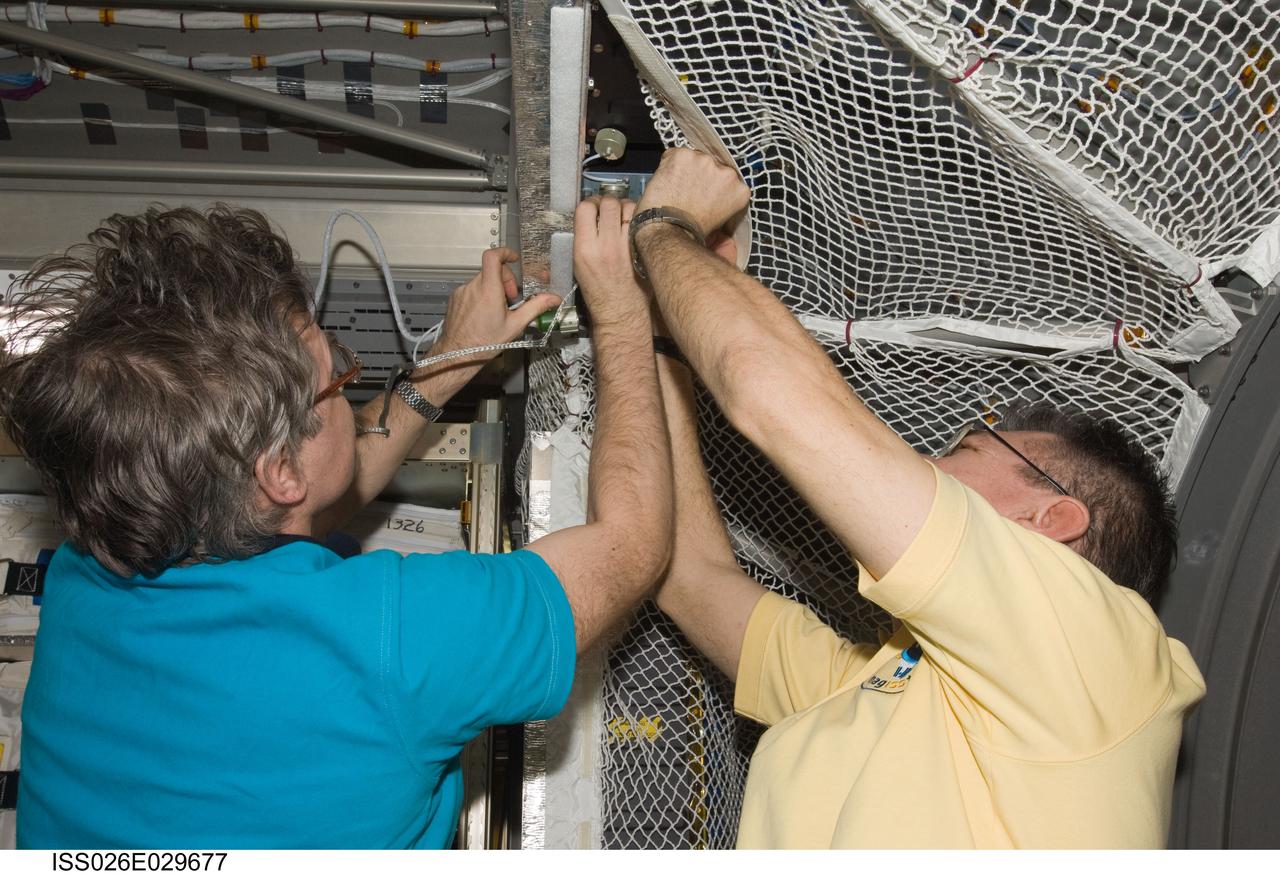
ISS026-E-029677 (25 Feb. 2011) --- European Space Agency astronaut Paolo Nespoli (right) and Russian cosmonaut Alexander Kaleri, both Expedition 26 flight engineers, work in the newly-attached European Space Agency's "Johannes Kepler" Automated Transfer Vehicle-2 (ATV-2) of the International Space Station.
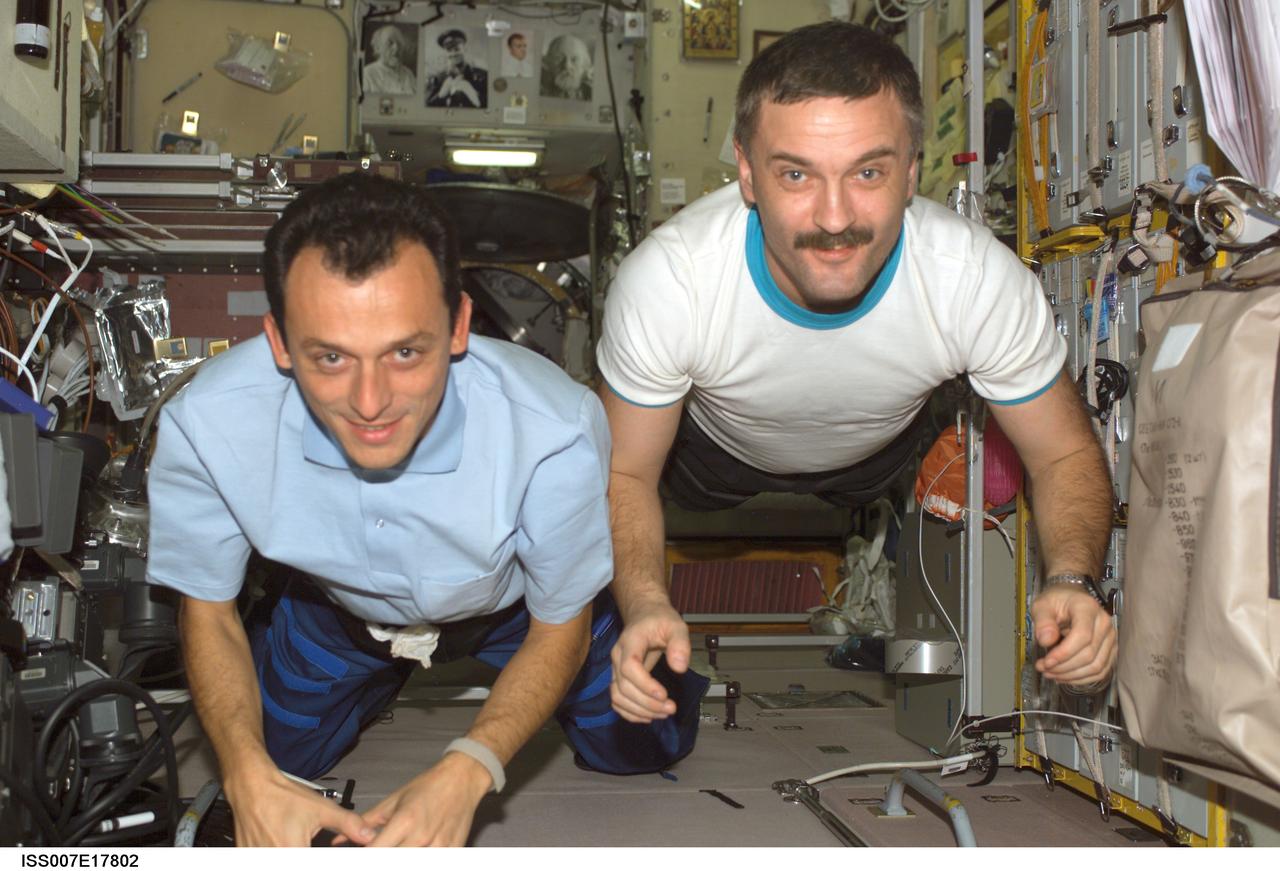
ISS007-E-17802 (22 October 2003) --- European Space Agency (ESA) astronaut Pedro Duque (left) of Spain and cosmonaut Alexander Y. Kaleri, Expedition 8 flight engineer representing Rosaviakosmos, float in the Zvezda Service Module on the International Space Station (ISS).
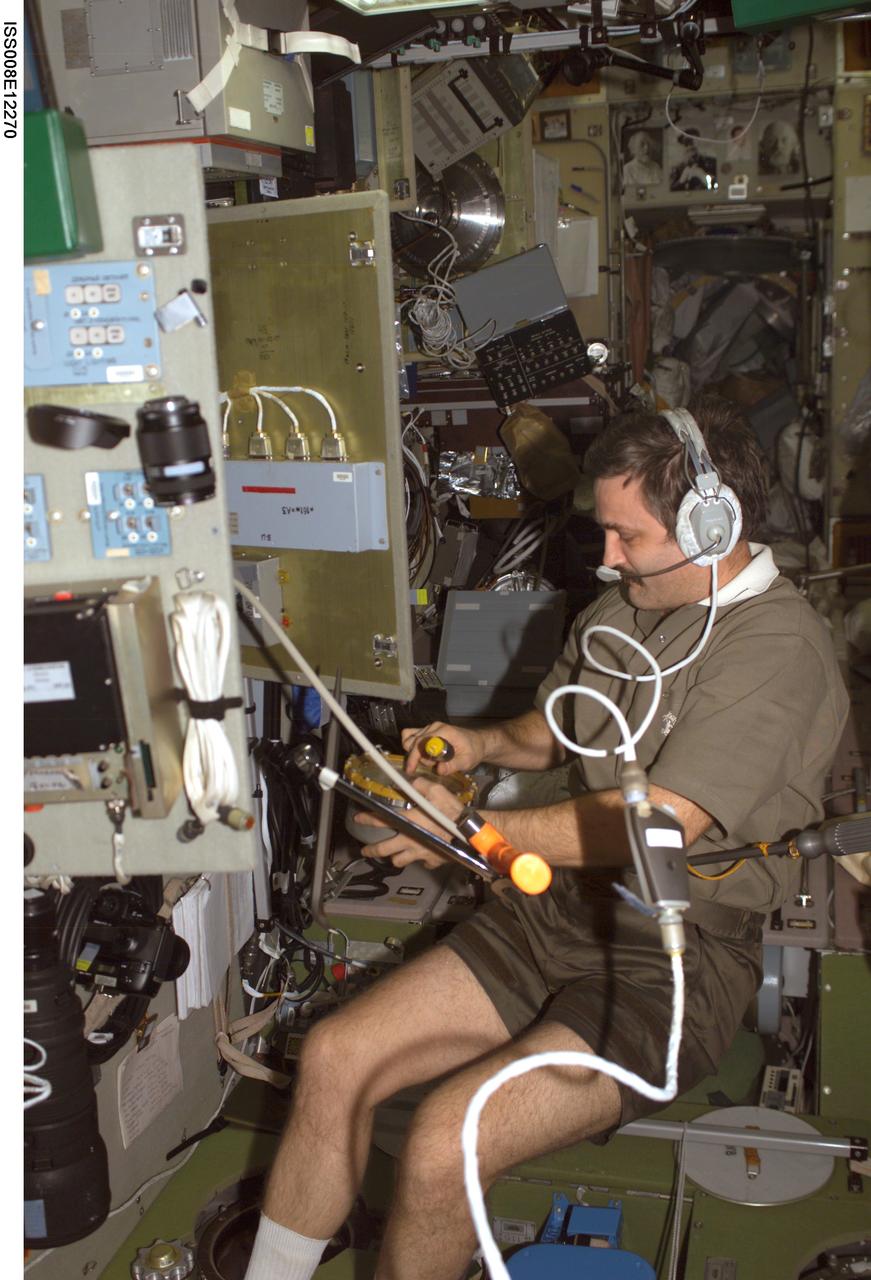
ISS008-E-12270 (9 January 2004) --- Cosmonaut Alexander Y. Kaleri, Expedition 8 flight engineer, uses a communication system as he works in the Zvezda Service Module on the International Space Station (ISS). Kaleri represents Rosaviakosmos.
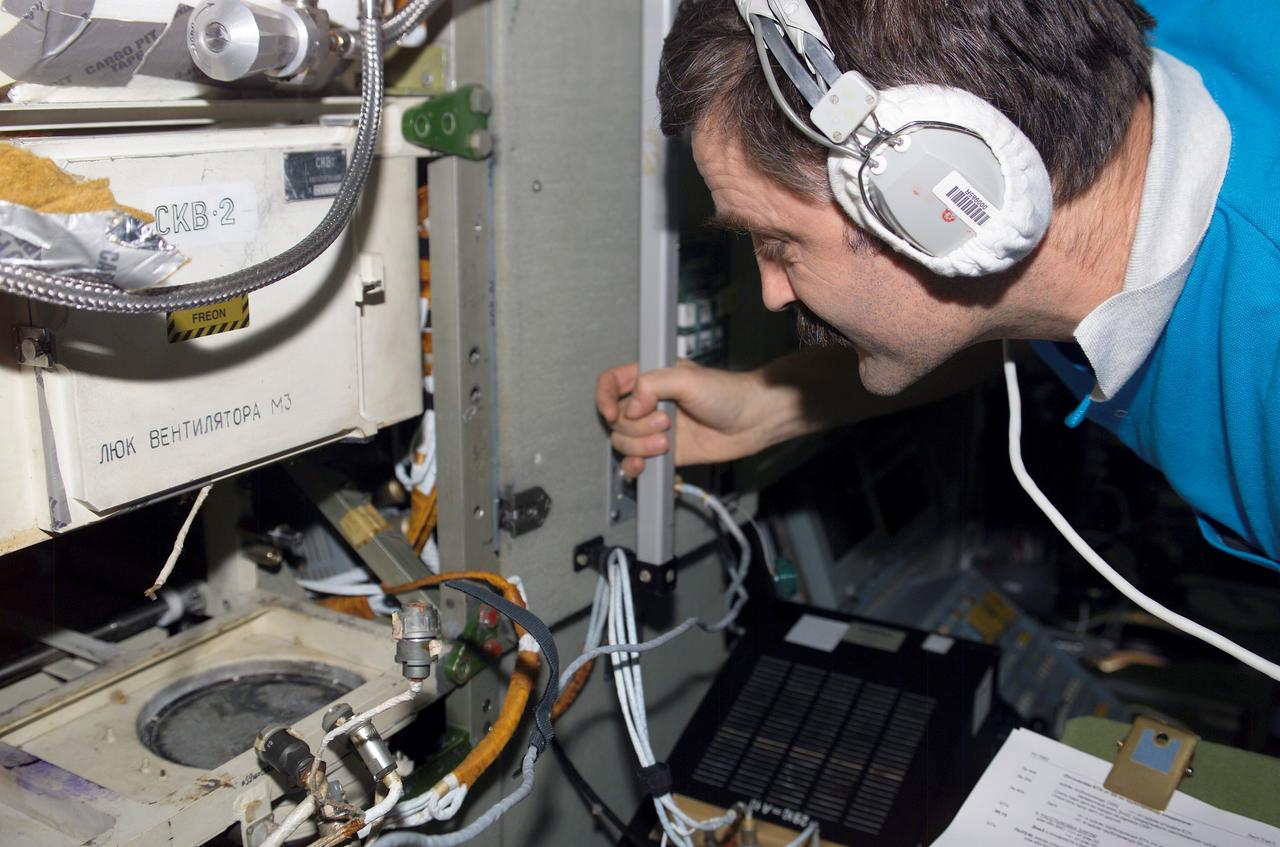
ISS008-E-08615 (16 December 2003) --- Cosmonaut Alexander Y. Kaleri, Expedition 8 flight engineer, works to remove and replace a Heat Exchanger on the SKV-2 Air Conditioner in the Zvezda Service Module on the International Space Station (ISS). Kaleri represents Rosaviakosmos.
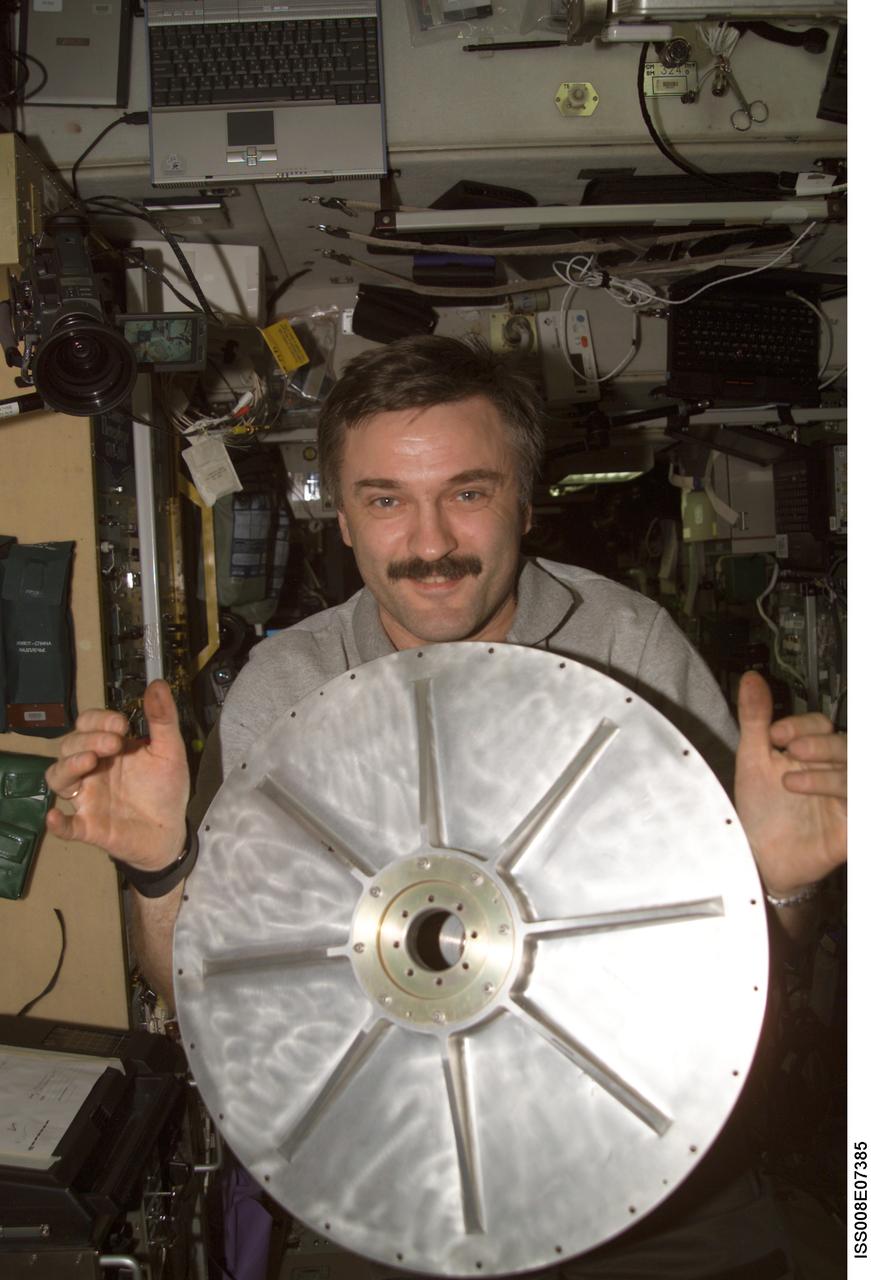
ISS008-E-07385 (9 December 2003) --- Cosmonaut Alexander Y. Kaleri, Expedition 8 flight engineer, holds the top end-cap for the Treadmill Vibration Isolation System (TVIS) gyroscope in the Zvezda Service Module on the International Space Station (ISS). Kaleri represents Rosaviakosmos.
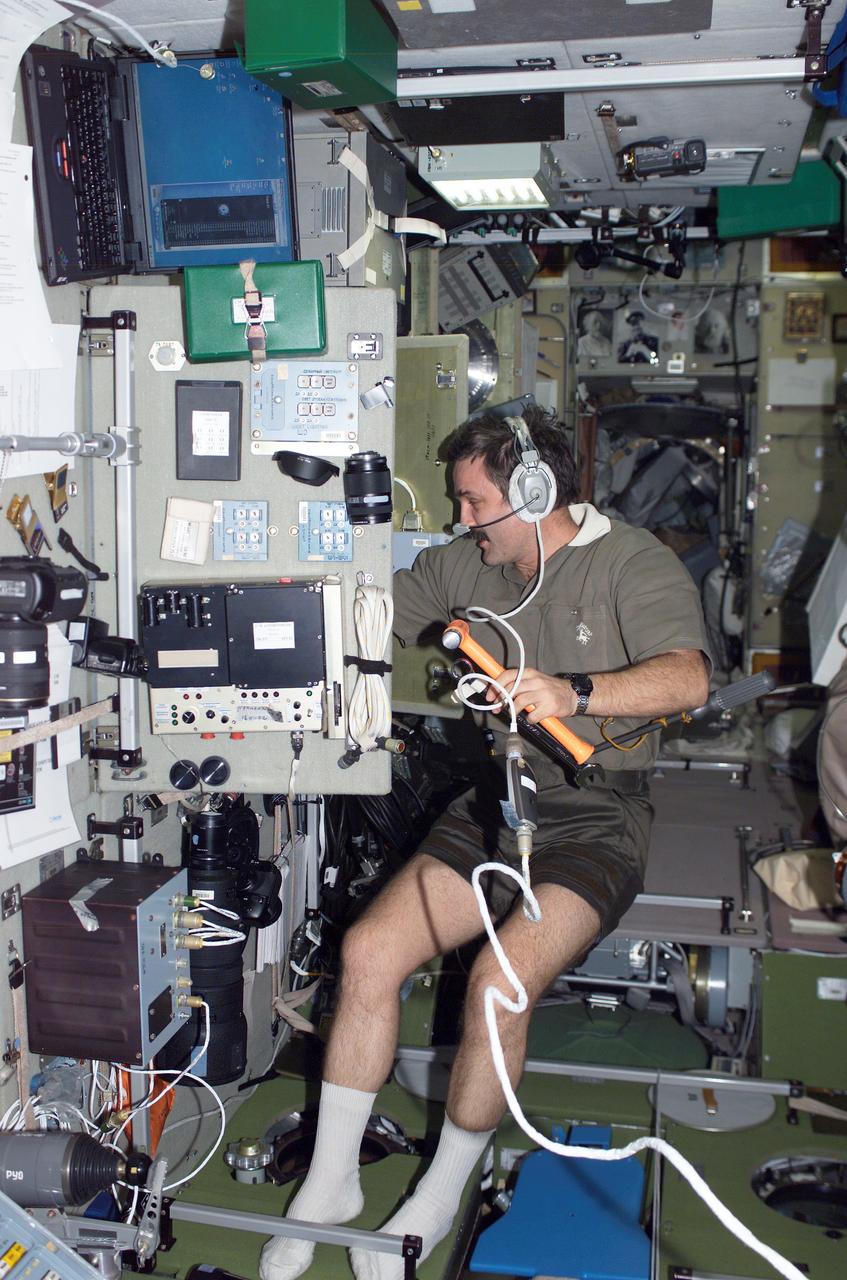
ISS008-E-12269 (9 January 2004) --- Cosmonaut Alexander Y. Kaleri, Expedition 8 flight engineer, uses a communication system as he works in the Zvezda Service Module on the International Space Station (ISS). Kaleri represents Rosaviakosmos.
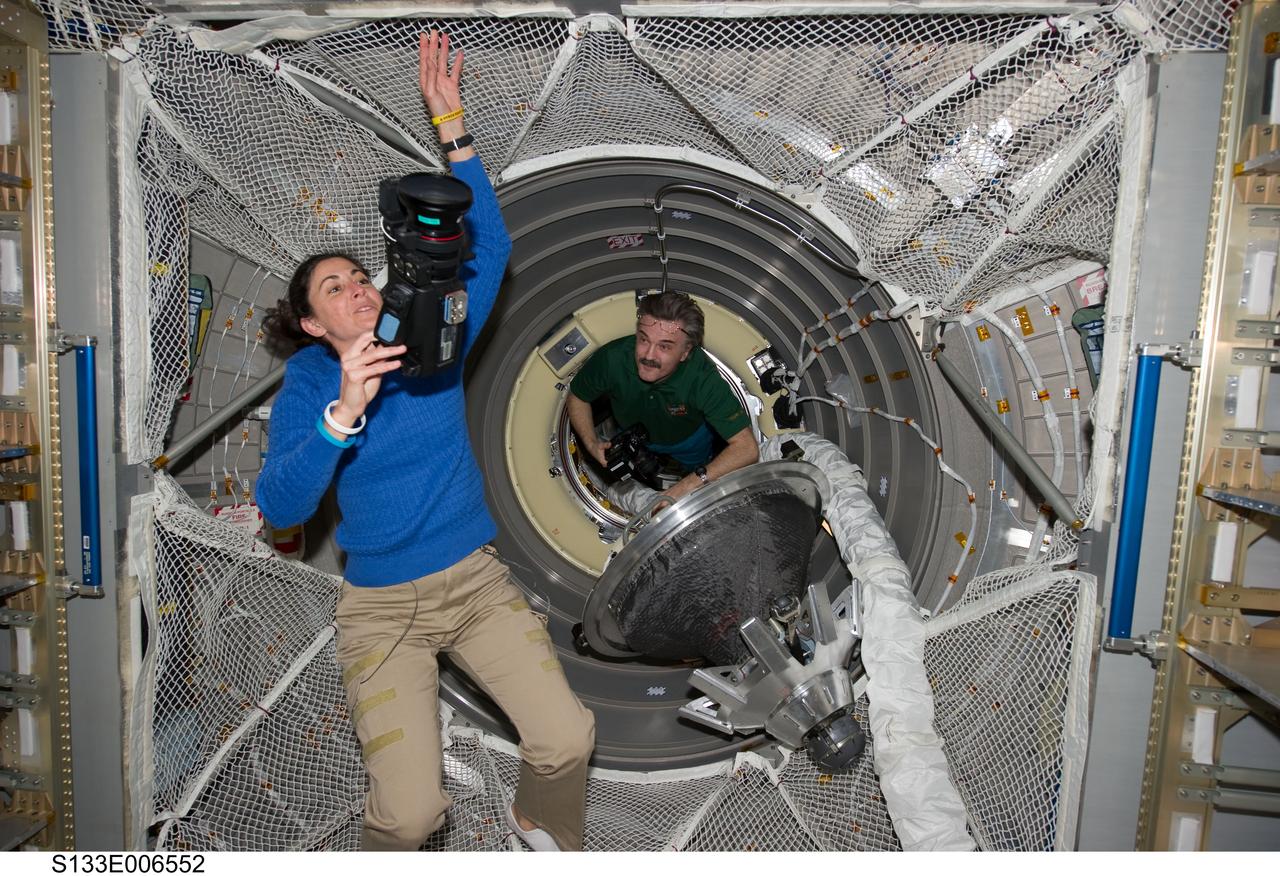
S133-E-006552 (26 Feb. 2011) --- NASA astronaut Nicole Stott, STS-133 mission specialist; and Russian cosmonaut Alexander Kaleri, Expedition 26 flight engineer, are pictured in the European Space Agency's "Johannes Kepler" Automated Transfer Vehicle-2 (ATV-2) currently docked to the International Space Station. Photo credit: NASA or National Aeronautics and Space Administration
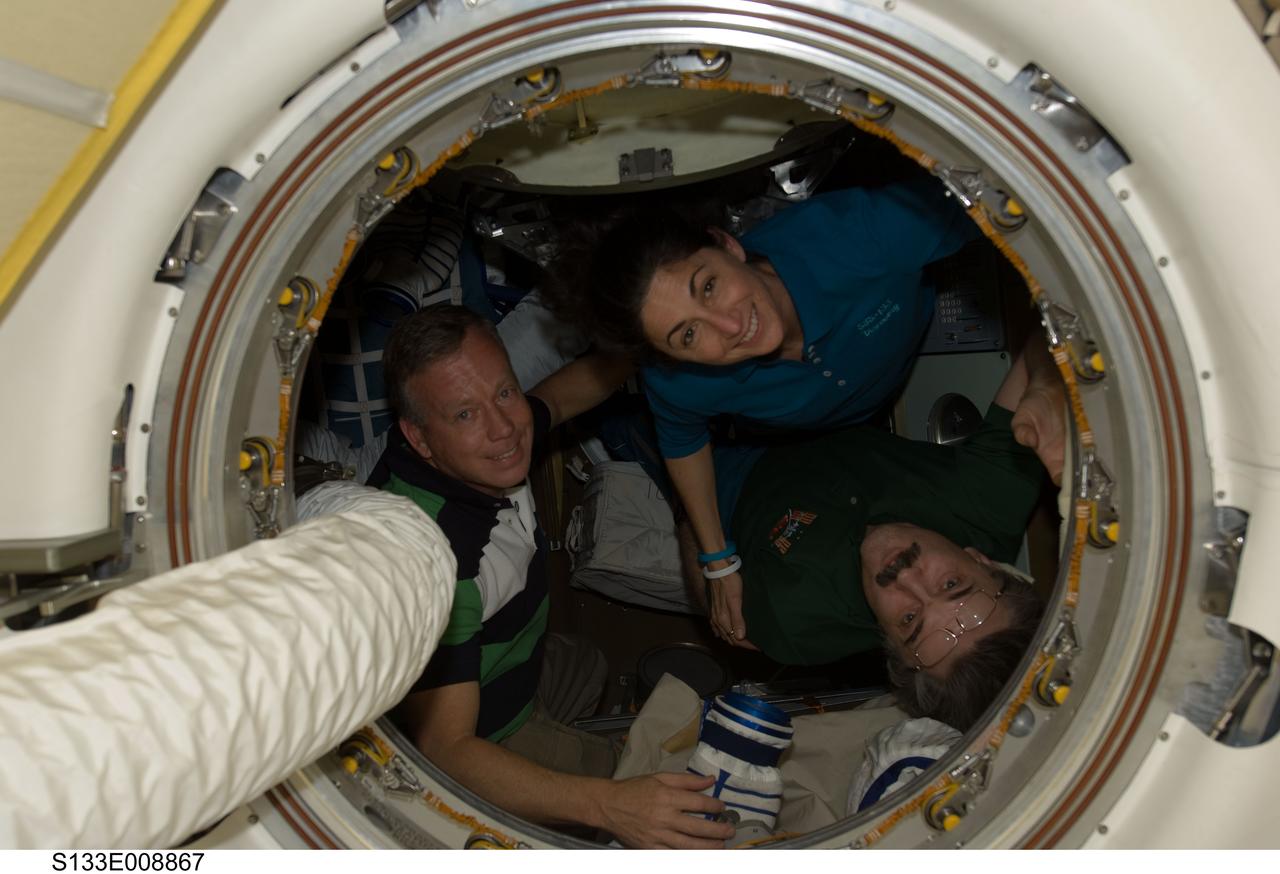
S133-E-008867 (5 March 2011) --- NASA astronauts Steve Lindsey (left), STS-133 commander, and Nicole Stott, mission specialist; along with Russian cosmonaut Alexander Kaleri, Expedition 26 flight engineer, are pictured in a Russian Soyuz spacecraft, docked to the International Space Station, while space shuttle Discovery remains linked with the station. Photo credit: NASA or National Aeronautics and Space Administration
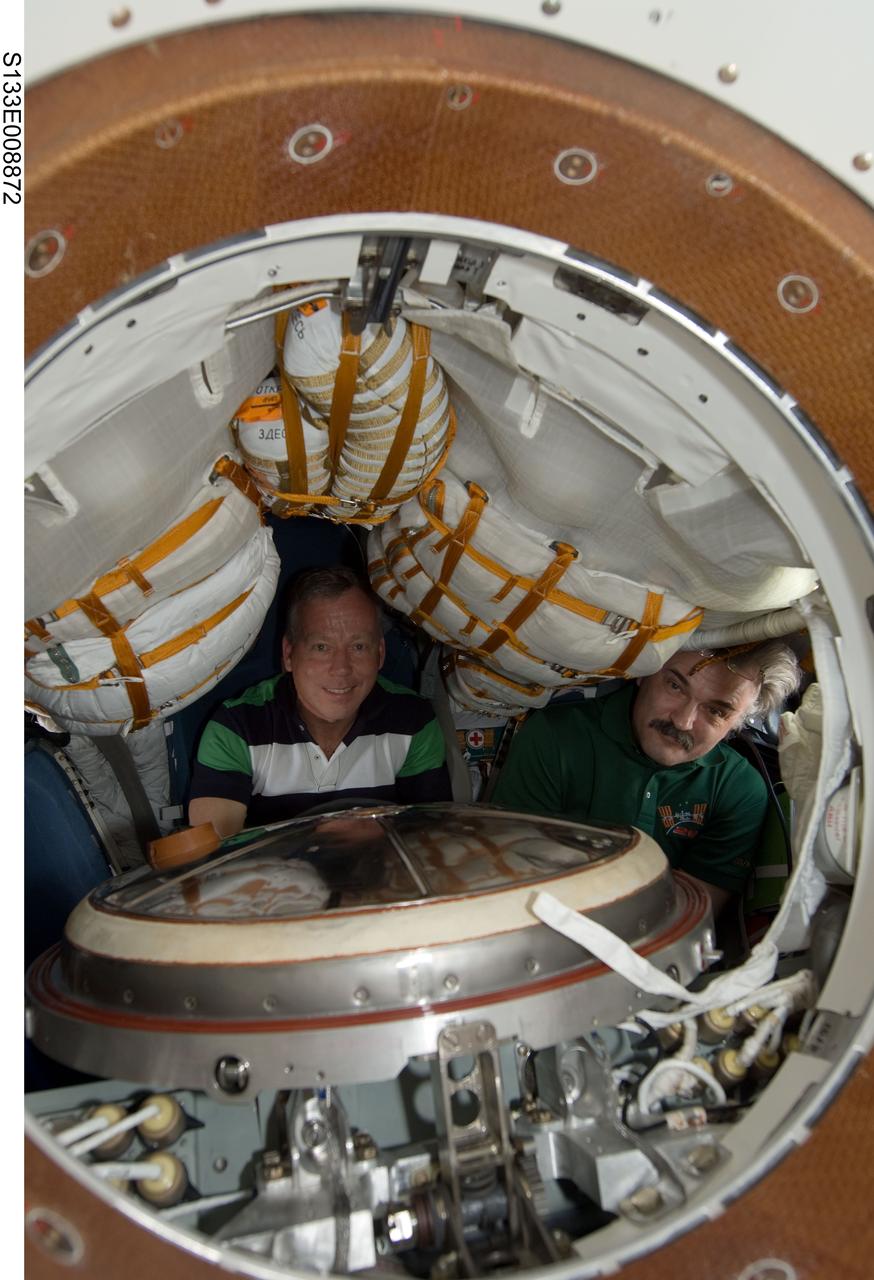
S133-E-008872 (5 March 2011) --- NASA astronaut Steve Lindsey (left), STS-133 commander; and Russian cosmonaut Alexander Kaleri, Expedition 26 flight engineer, are pictured in a Russian Soyuz spacecraft, docked to the International Space Station, while space shuttle Discovery remains linked with the station. Photo credit: NASA or National Aeronautics and Space Administration
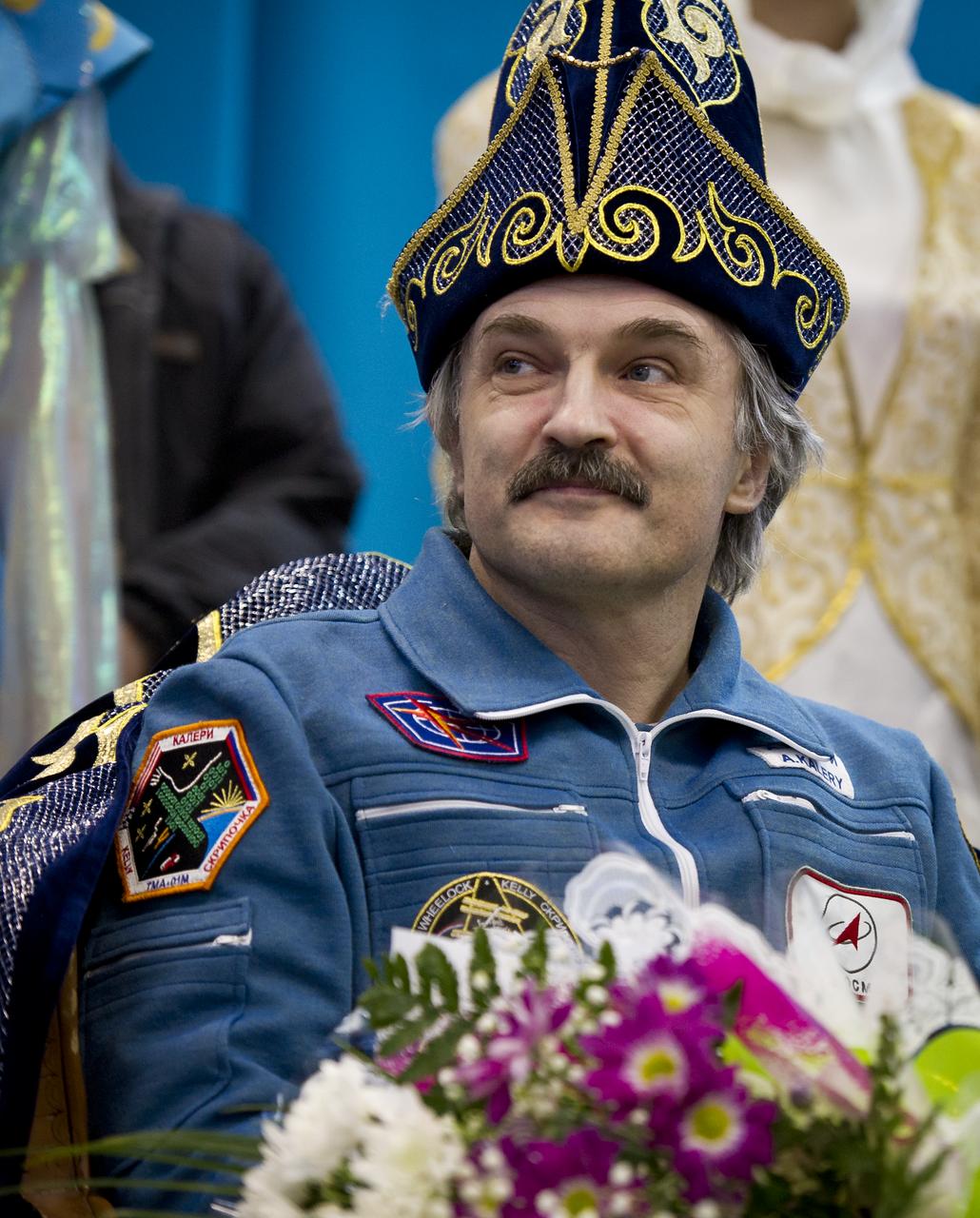
Expedition 26 Flight Engineer Alexander Kaleri listens to reporters questions while wearing a traditional Kazakh hat at the Kustanay, Kazakhstan airport on Wednesday, March 16, 2011 after he and fellow crew members Scott Kelly and Oleg Skripochka landed in their Soyuz TMA-01M capsule near the town of Arkalyk, Kazakhstan. NASA Astronaut Kelly, Russian Cosmonauts Skripochka and Kaleri are returning from almost six months onboard the International Space Station where they served as members of the Expedition 25 and 26 crews. Photo Credit: (NASA/Bill Ingalls)
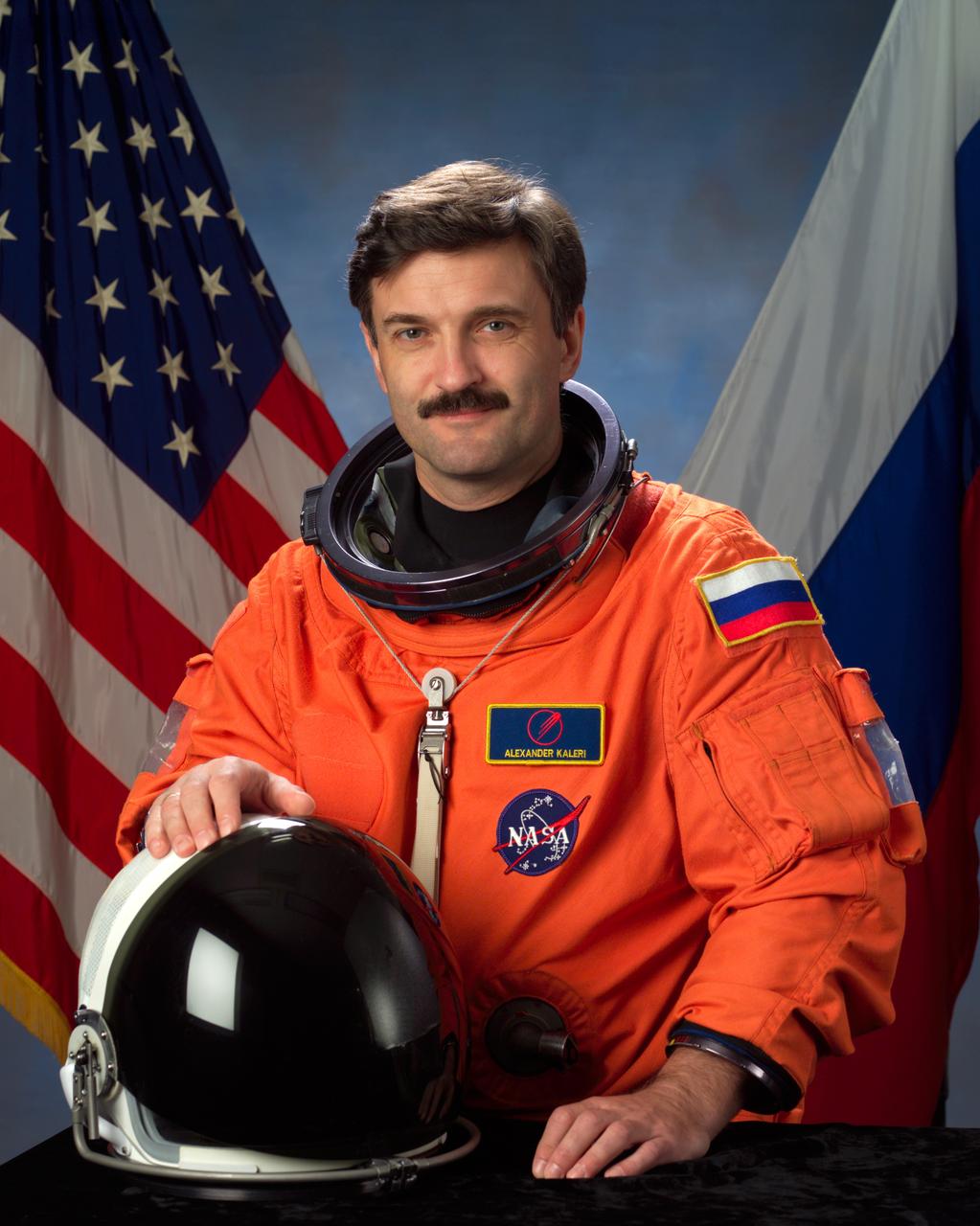
JSC2003-E-52856 (January 2003) --- Cosmonaut Alexander Y. Kaleri, representing Rosaviakosmos on Expedition 8.
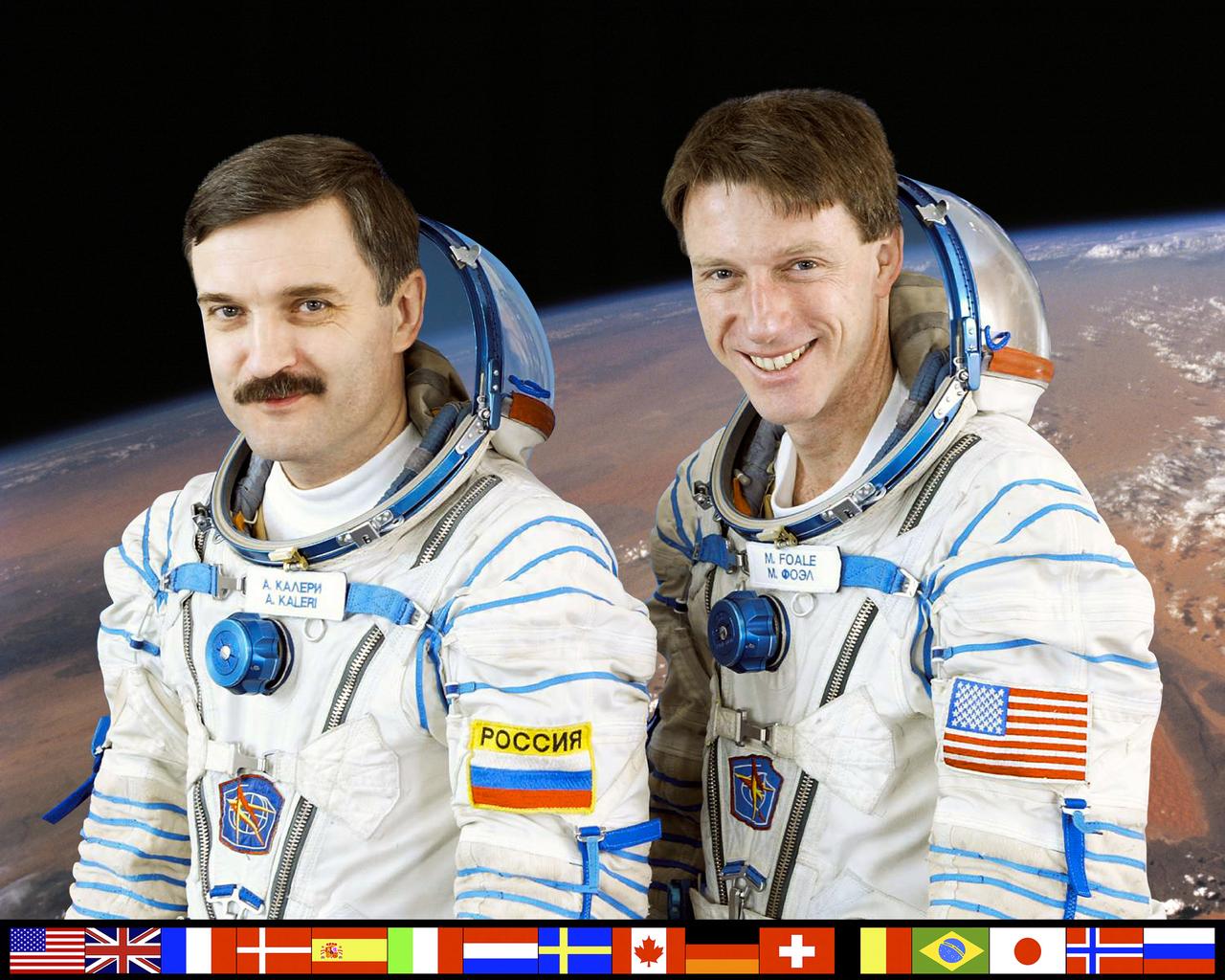
This is a portrait of the Expedition-8 two man crew. Pictured left is Cosmonaut Alexander Y, Kaleri, Soyuz Commander and flight engineer; and Michael C. Foale (right), Expedition-8 Mission Commander and NASA ISS Science Officer. The crew posed for this portrait while training at the Gagarin Cosmonaut Training Center in Star City, Russia. The two were launched for the International Space Station (ISS) aboard a Soyuz TMA-3 spacecraft from the Baikonur Cosmodrome, Kazakhstan, along with European Space Agency (ESA) Astronaut Pedro Duque of Spain, on October 18, 2003.
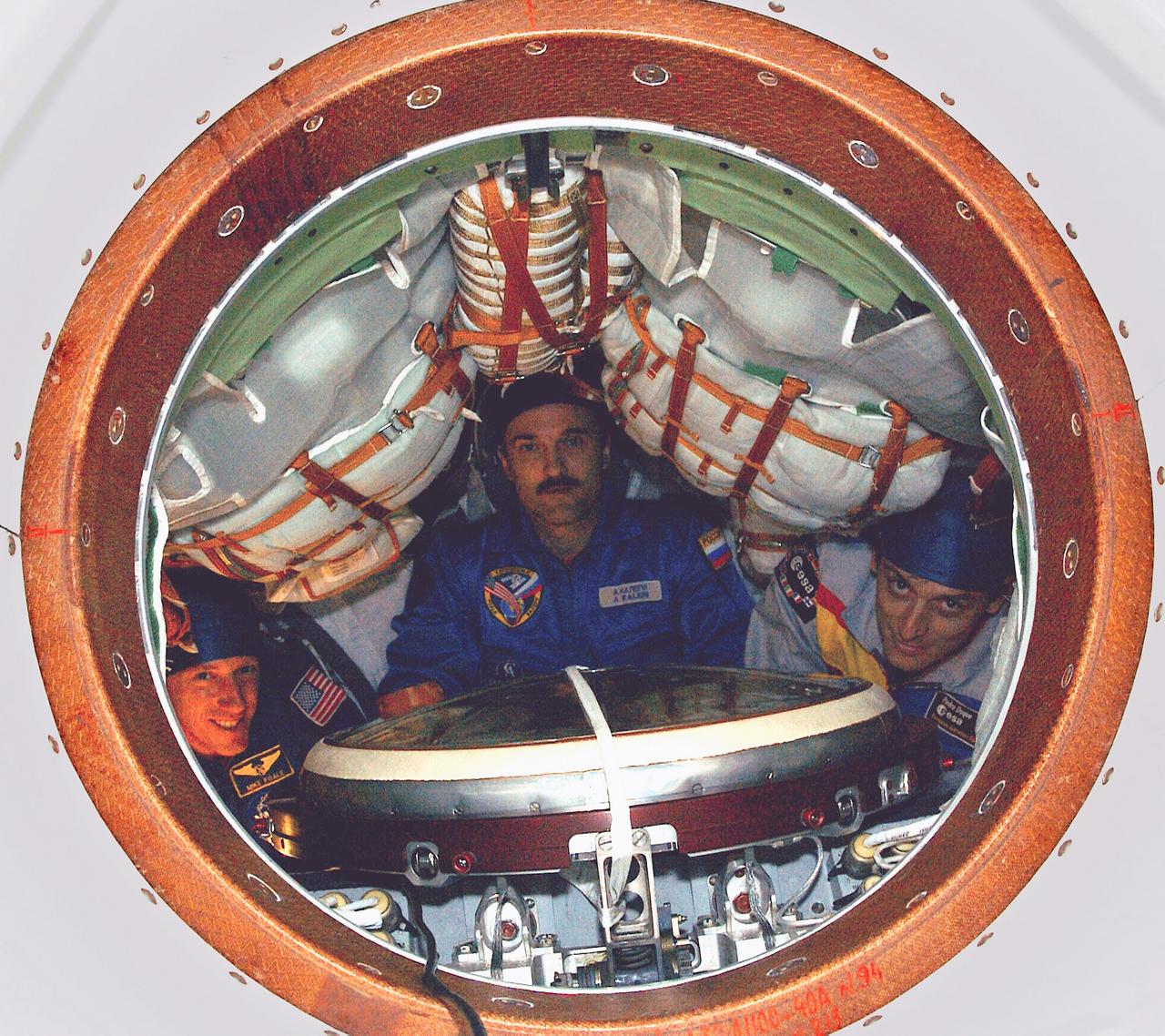
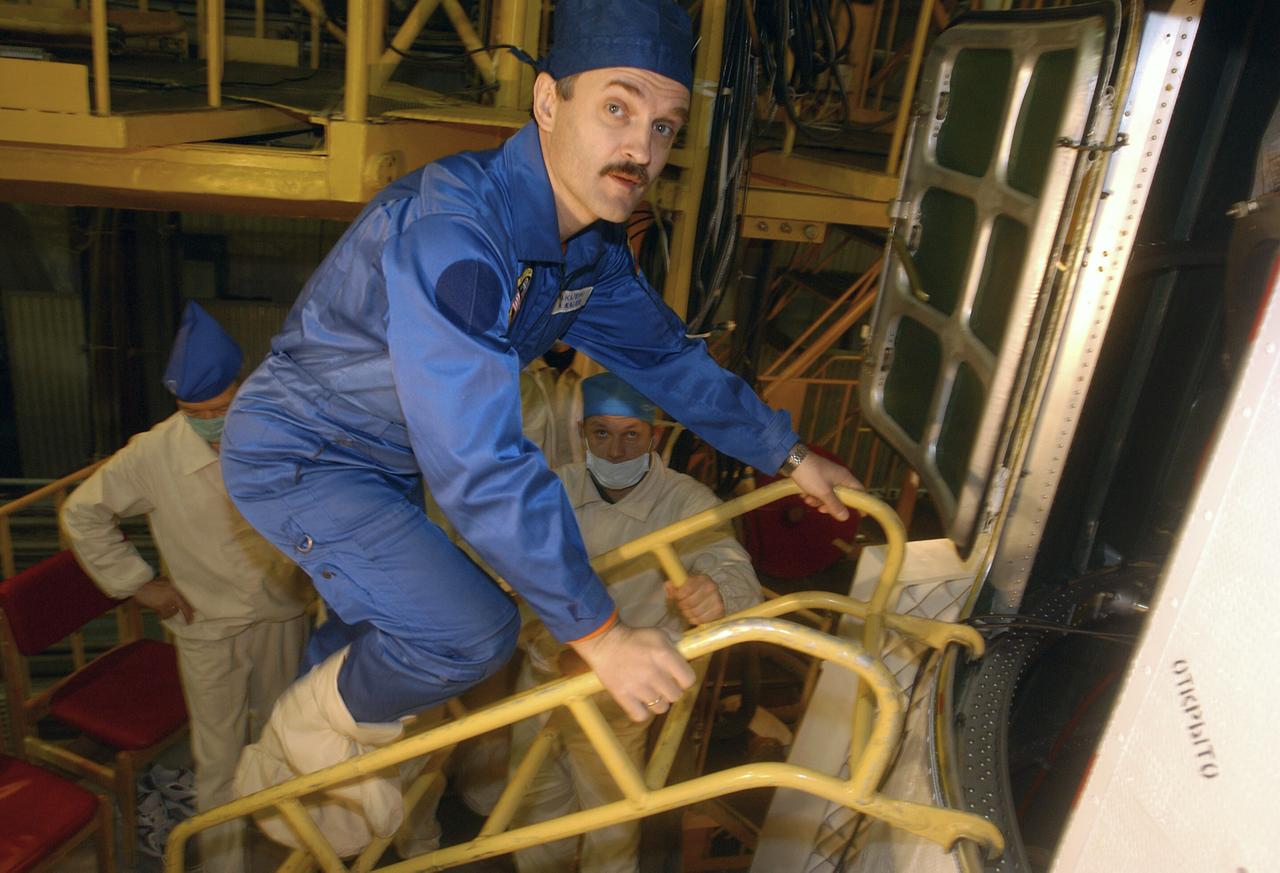
Posed inside the Soyuz TMA-3 Vehicle in a processing facility at the Baikonur Cosmodrome in Kazakhstan during a pre-launch inspection are (left to right): Expedition-8 Crew members, Michael C. Foale, Mission Commander and NASA ISS Science Officer; Cosmonaut Alexander Y. Kaleri, Soyuz Commander and flight engineer; and European Space Agency (ESA) astronaut Pedro Duque of Spain. The three launched from the Cosmodrome on October 18, 2003 onboard a Soyuz rocket destined for the International Space Station (ISS).
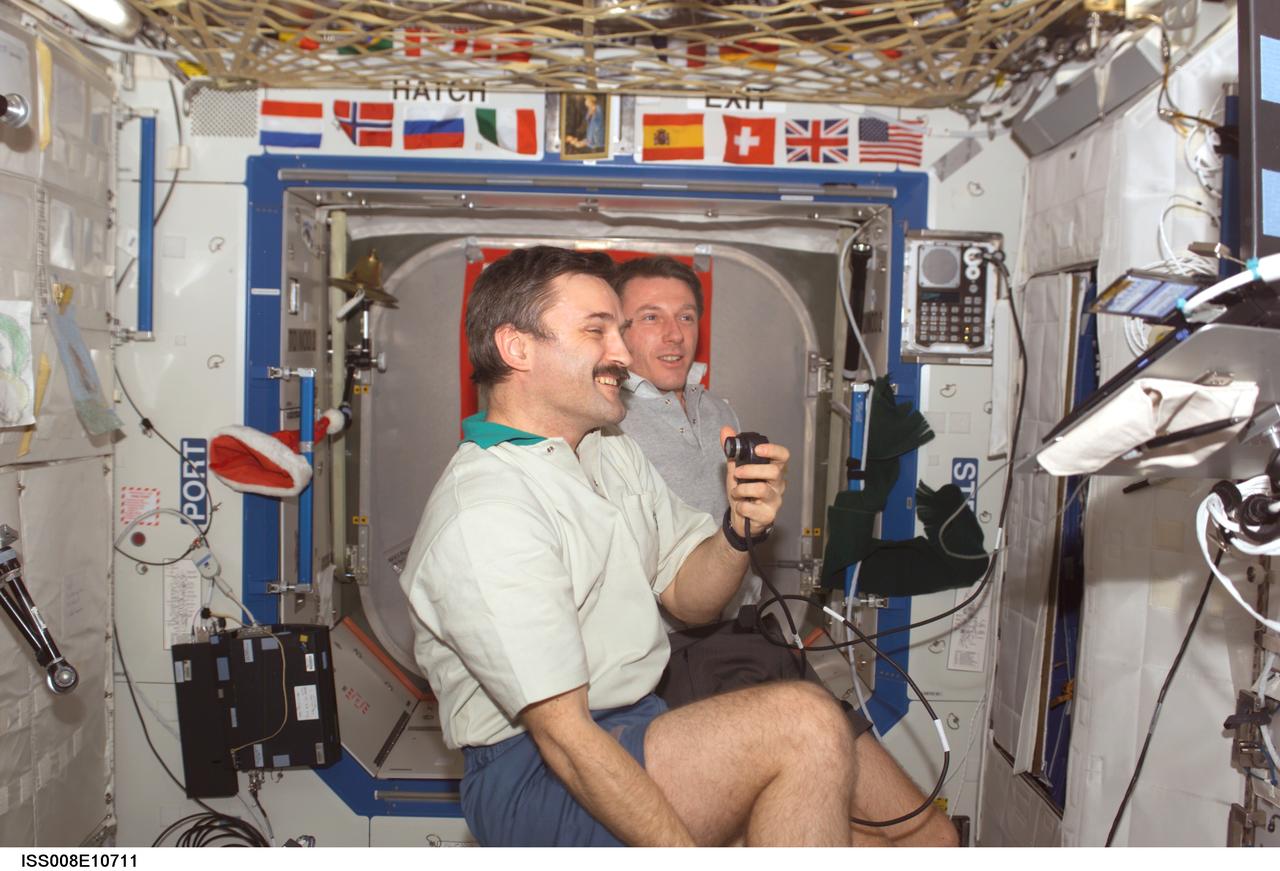
ISS008-E-10711 (28 December 2003) --- Cosmonaut Alexander Y. Kaleri (foreground), Expedition 8 flight engineer, and astronaut C. Michael Foale, mission commander and NASA ISS science officer, conduct a teleconference with the Moscow Support Group for the Russian New Year celebration, via Ku- and S-band, with audio and video relayed to the Mission Control Center (MCC) at Johnson Space Center (JSC). Kaleri represents Rosaviakosmos.
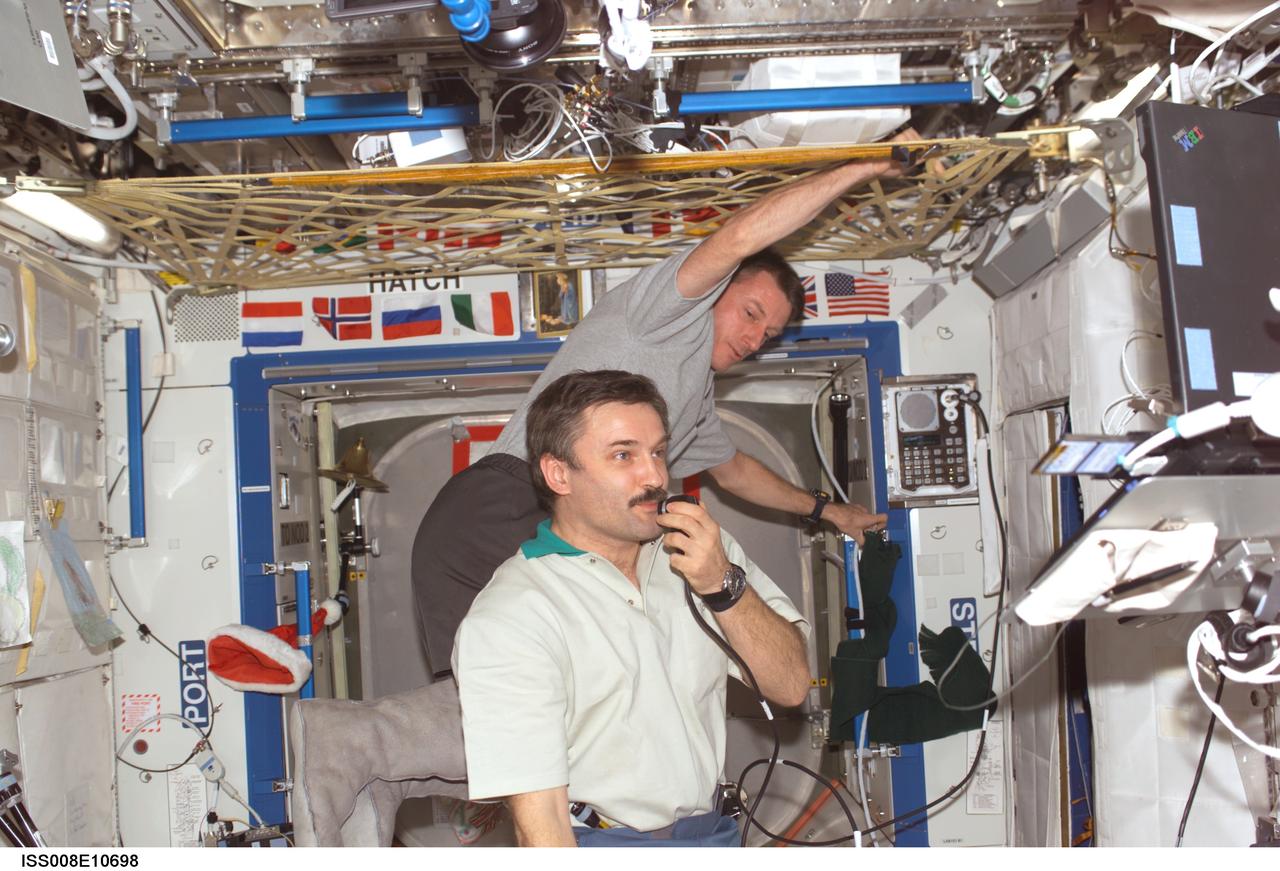
ISS008-E-10698 (28 December 2003) --- Cosmonaut Alexander Y. Kaleri (foreground), Expedition 8 flight engineer, and astronaut C. Michael Foale, mission commander and NASA ISS science officer, conduct a teleconference with the Moscow Support Group for the Russian New Year celebration, via Ku- and S-band, with audio and video relayed to the Mission Control Center (MCC) at Johnson Space Center (JSC). Kaleri represents Rosaviakosmos.
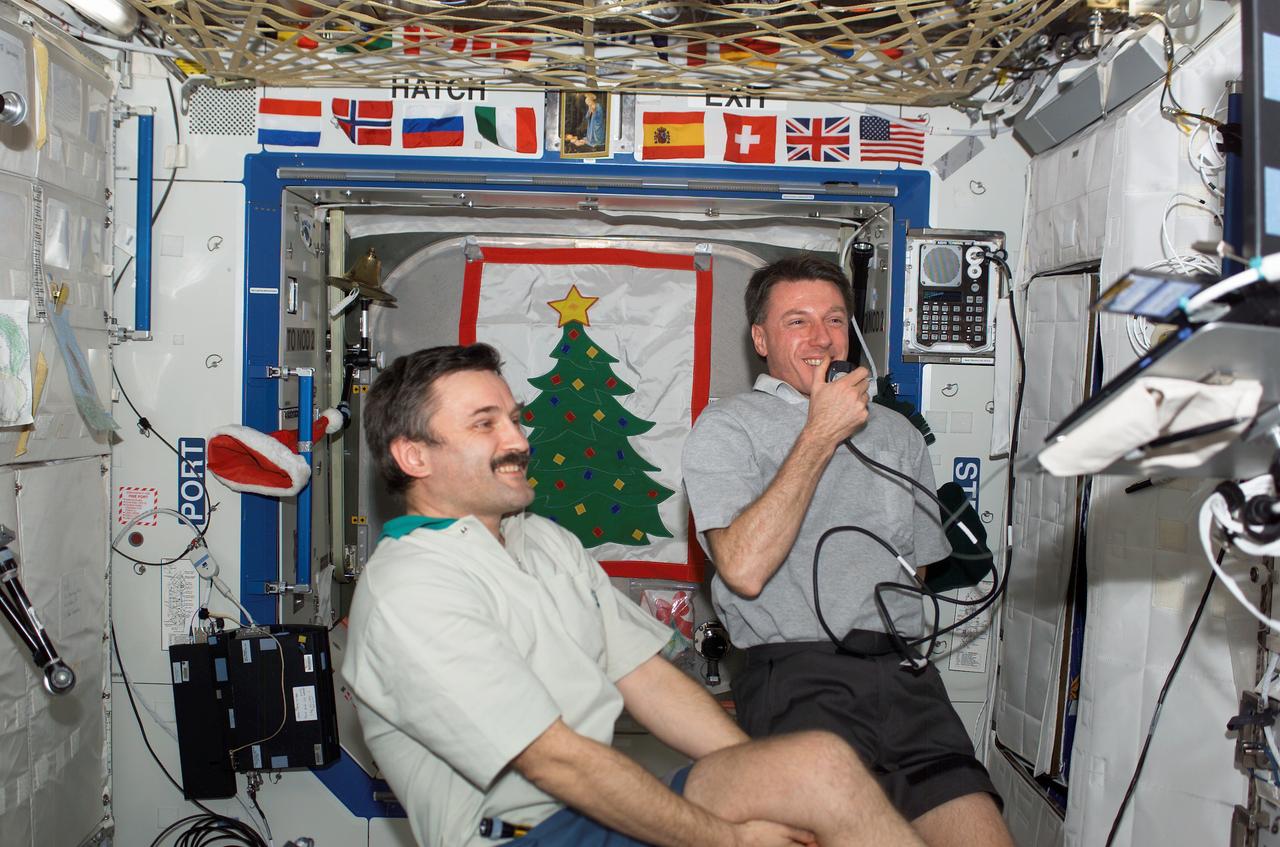
ISS008-E-10737 (28 Dec. 2003) --- Astronaut C. Michael Foale (right), Expedition 8 mission commander and NASA ISS science officer, and cosmonaut Alexander Y. Kaleri, flight engineer, conduct a teleconference with the Moscow Support Group for the Russian New Year celebration, via Ku- and S-band, with audio and video relayed to the Mission Control Center (MCC) at Johnson Space Center (JSC). Kaleri represents Rosaviakosmos.
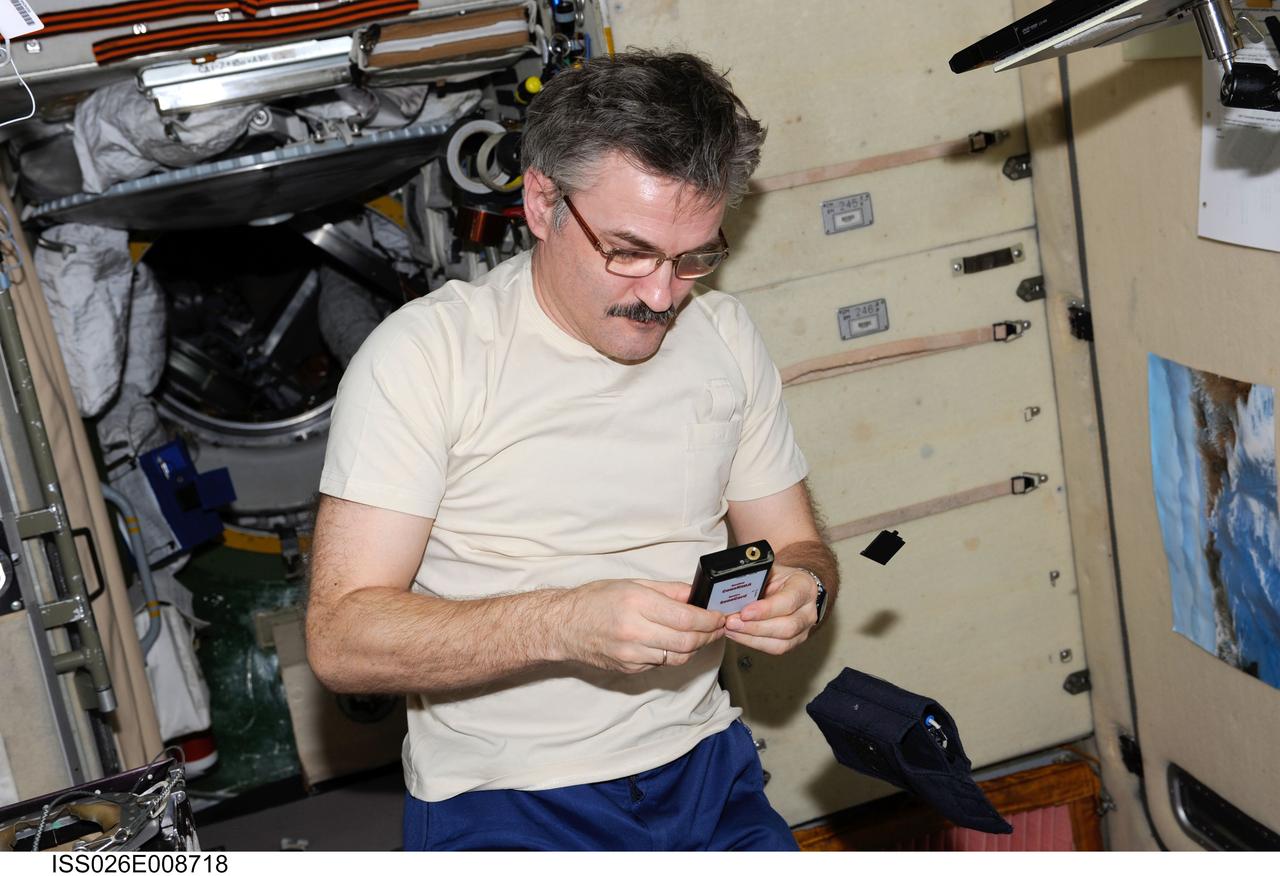
ISS026-E-008718 (8 Dec. 2010) --- Russian cosmonaut Alexander Kaleri, Expedition 26 flight engineer, sets up the Russian MBI-12 payload for a Sonokard experiment session in the Zvezda Service Module of the International Space Station. Kaleri used a sports shirt from the Sonokard kit with a special device in the pocket for testing a new method for acquiring physiological data without using direct contact on the skin. Measurements are recorded on a data card for return to Earth.
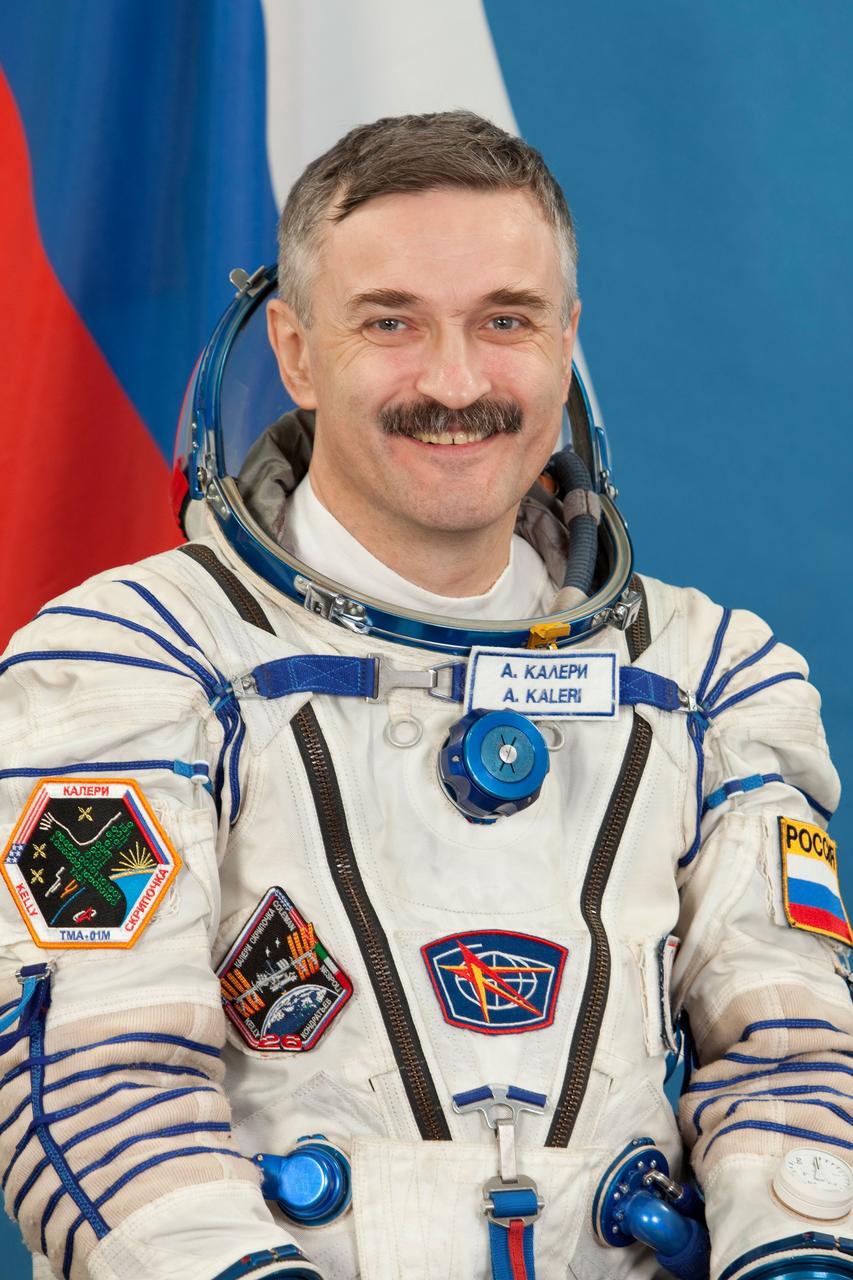
JSC2010-E-124004 (August 2010) --- Russian cosmonaut Alexander Kaleri, Expedition 25/26 flight engineer, attired in a Russian Sokol launch and entry suit, takes a break from training in Star City, Russia to pose for a portrait. Photo credit: Gagarin Cosmonaut Training Center
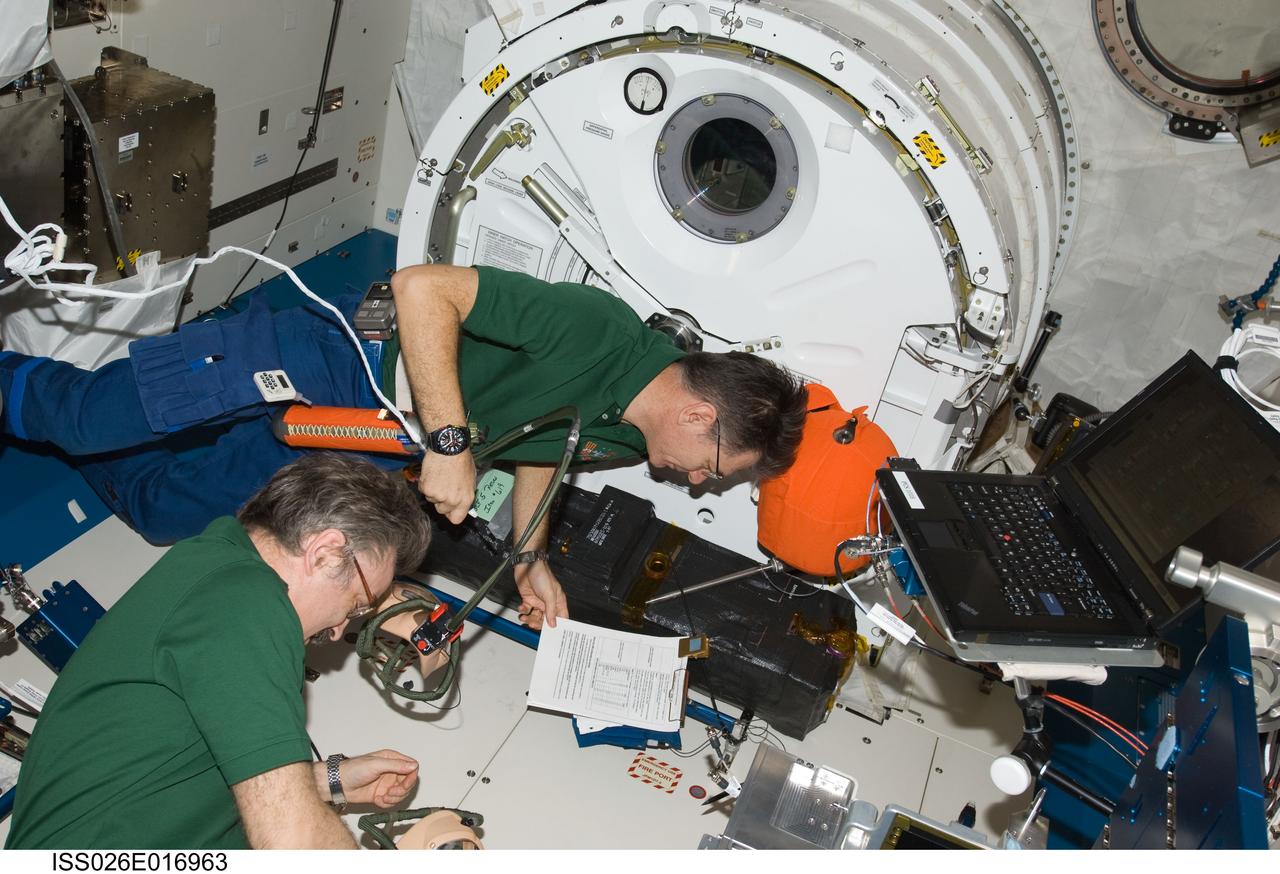
ISS026-E-016963 (11 Jan. 2011) --- Russian cosmonaut Alexander Kaleri (foreground) and European Space Agency astronaut Paolo Nespoli, both Expedition 26 flight engineers, participate in an emergency scenarios drill in the Kibo laboratory of the International Space Station.
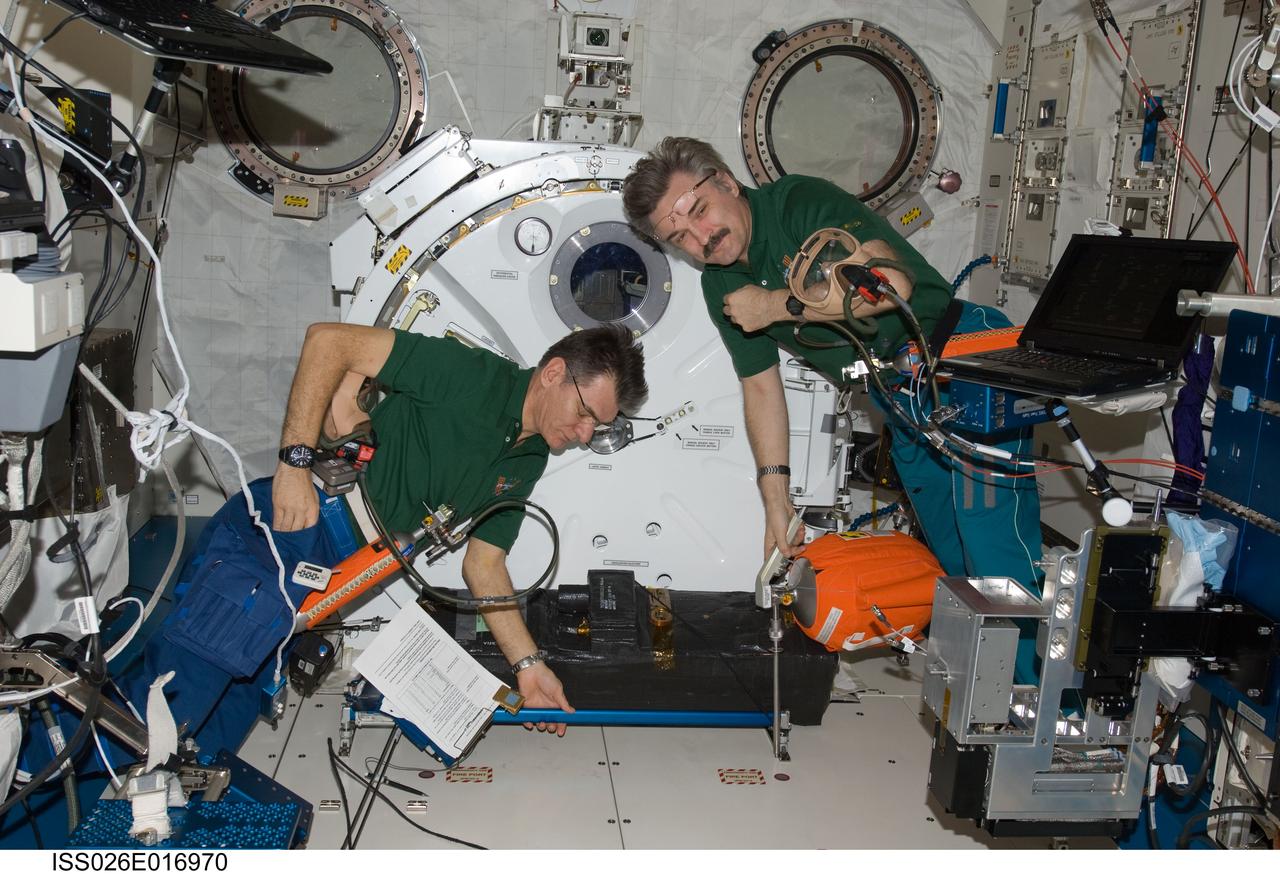
ISS026-E-016970 (11 Jan. 2011) --- Russian cosmonaut Alexander Kaleri (right) and European Space Agency astronaut Paolo Nespoli, both Expedition 26 flight engineers, participate in an emergency scenarios drill in the Kibo laboratory of the International Space Station.
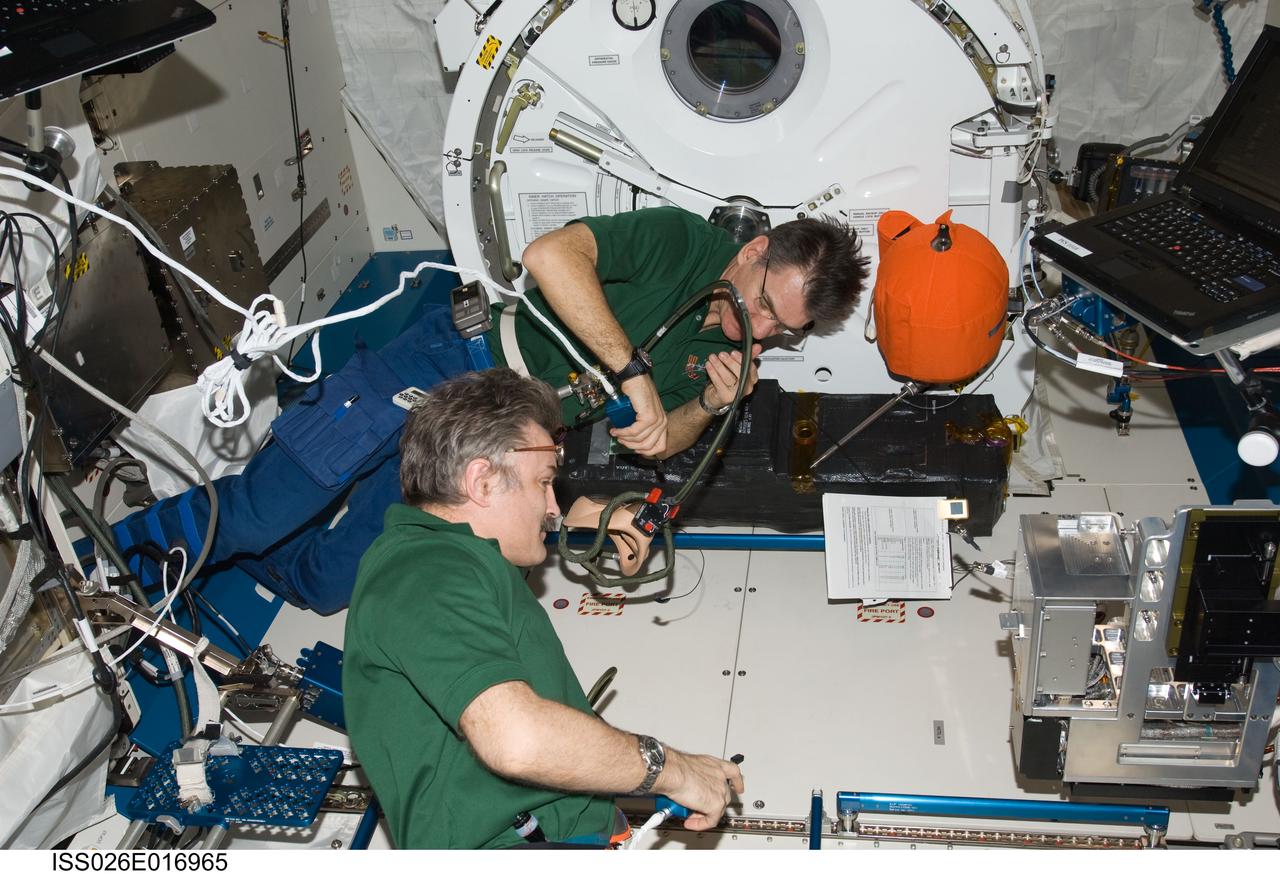
ISS026-E-016965 (11 Jan. 2011) --- Russian cosmonaut Alexander Kaleri (foreground) and European Space Agency astronaut Paolo Nespoli, both Expedition 26 flight engineers, participate in an emergency scenarios drill in the Kibo laboratory of the International Space Station.
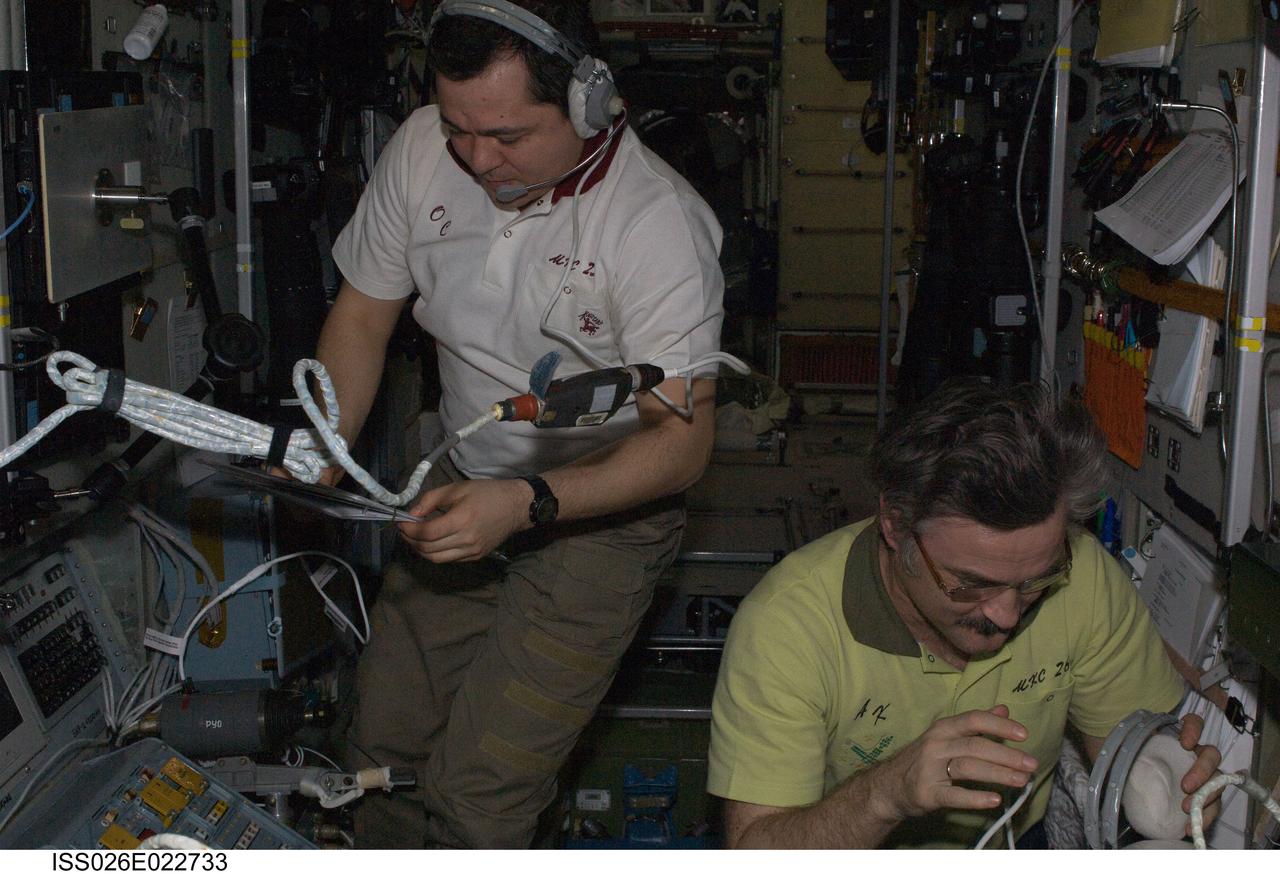
ISS026-E-022733 (29 Jan. 2011) --- Russian cosmonauts Alexander Kaleri (right) and Oleg Skripochka, both Expedition 26 flight engineers, monitor data at the manual TORU docking system controls in the Zvezda Service Module of the International Space Station during the docking operations of the unpiloted ISS Progress 41 resupply vehicle. Progress 41 used the automated Kurs system to dock to the Pirs Docking Compartment at 9:39 p.m. (EST) on Jan. 29, 2011.
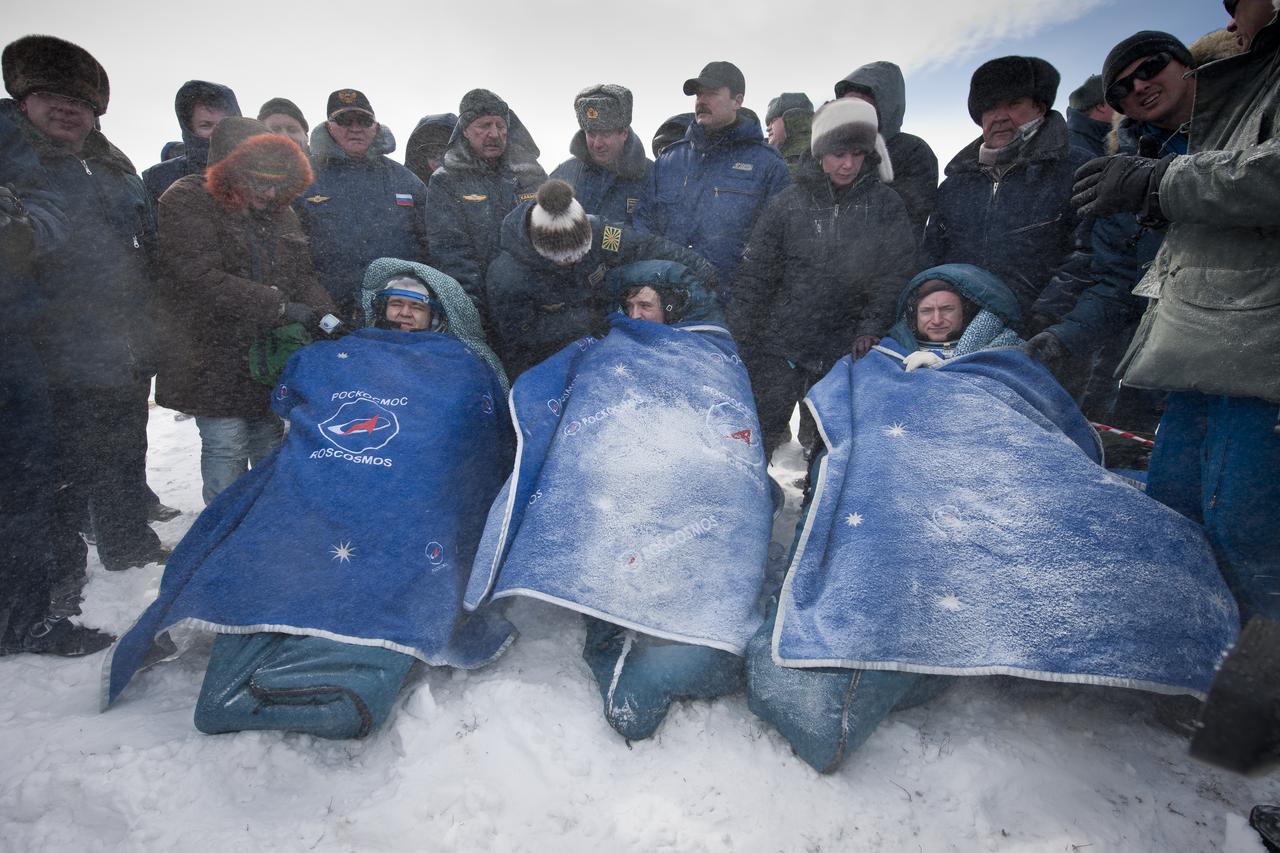
Expedition 26 Flight Engineer Oleg Skripochka, left, Flight Engineer Alexander Kaleri, center, and Commander Scott Kelly, sit in chairs outside the Soyuz Capsule just minutes after they landed near the town of Arkalyk, Kazakhstan on Wednesday, March 16, 2011. NASA Astronaut Kelly, Russian Cosmonauts Skripochka and Kaleri are returning from almost six months onboard the International Space Station where they served as members of the Expedition 25 and 26 crews. Photo Credit: (NASA/Bill Ingalls)
![ISS007-E-17842 (23 October 2003) --- European Space Agency (ESA) astronaut Pedro Duque (left) of Spain and cosmonaut Alexander Y. Kaleri, Expedition 8 flight engineer representing Rosaviakosmos, work with a scientific experiment in the Zvezda Service Module on the International Space Station (ISS). Duque and Kaleri performed the European educational VIDEO-2 (VID-01) experiment, which uses the Russian DSR PD-150P digital video camcorder for recording demos of several basic physical phenomena, viz., Isaac Newton's three motion laws, with narration. [The demo made use of a sealed bag containing coffee and a syringe to fill one of two hollow balls with the brown liquid (to provide "mass", as opposed to the other, "mass-less" ball).]](https://images-assets.nasa.gov/image/iss007e17842/iss007e17842~medium.jpg)
ISS007-E-17842 (23 October 2003) --- European Space Agency (ESA) astronaut Pedro Duque (left) of Spain and cosmonaut Alexander Y. Kaleri, Expedition 8 flight engineer representing Rosaviakosmos, work with a scientific experiment in the Zvezda Service Module on the International Space Station (ISS). Duque and Kaleri performed the European educational VIDEO-2 (VID-01) experiment, which uses the Russian DSR PD-150P digital video camcorder for recording demos of several basic physical phenomena, viz., Isaac Newton's three motion laws, with narration. [The demo made use of a sealed bag containing coffee and a syringe to fill one of two hollow balls with the brown liquid (to provide "mass", as opposed to the other, "mass-less" ball).]
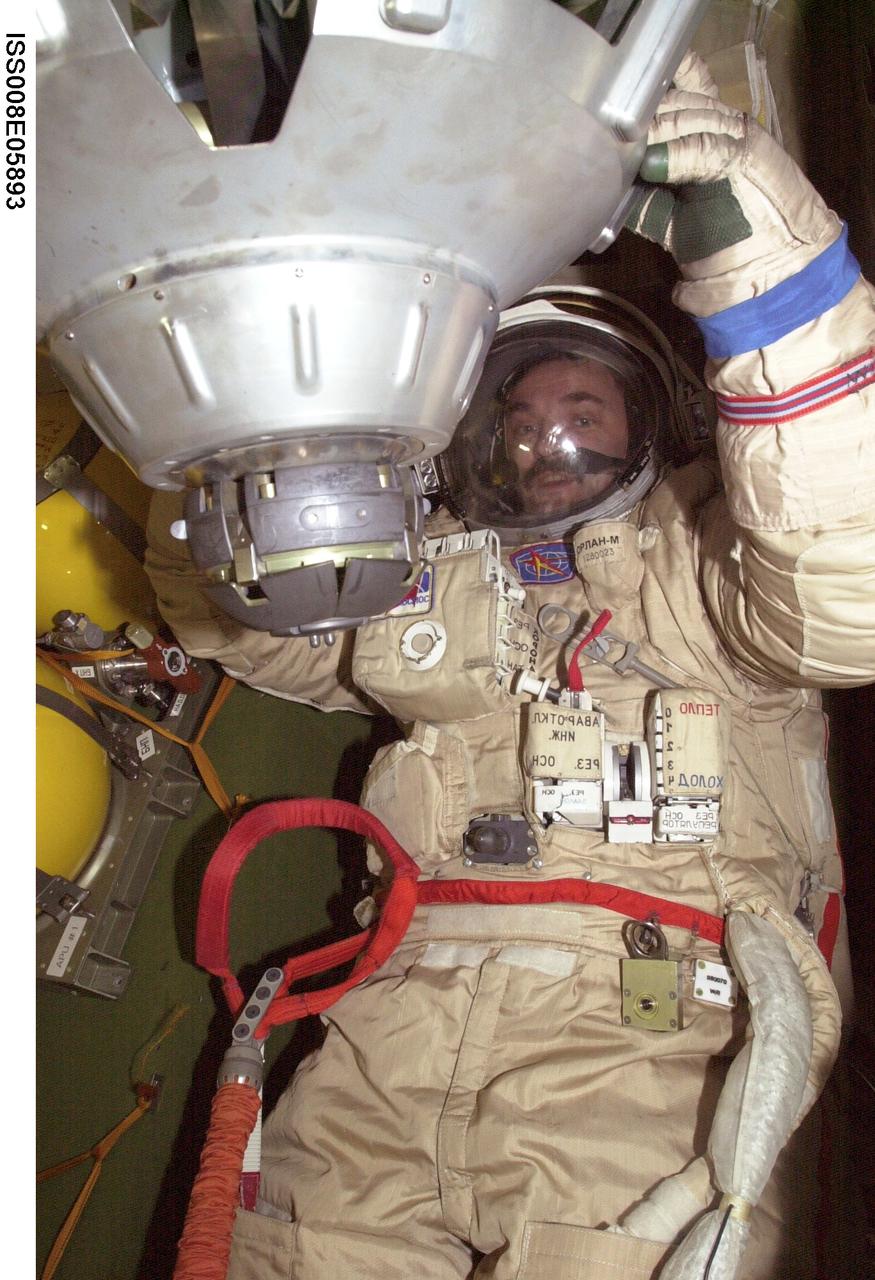
ISS008-E-05893 (November 2003) --- Cosmonaut Alexander Y. Kaleri, Expedition 8 flight engineer, attired in his Russian Orlan spacesuit, is pictured in a Soyuz spacecraft docked to the Pirs Docking Compartment on the International Space Station (ISS). Kaleri represents Rosaviakosmos.
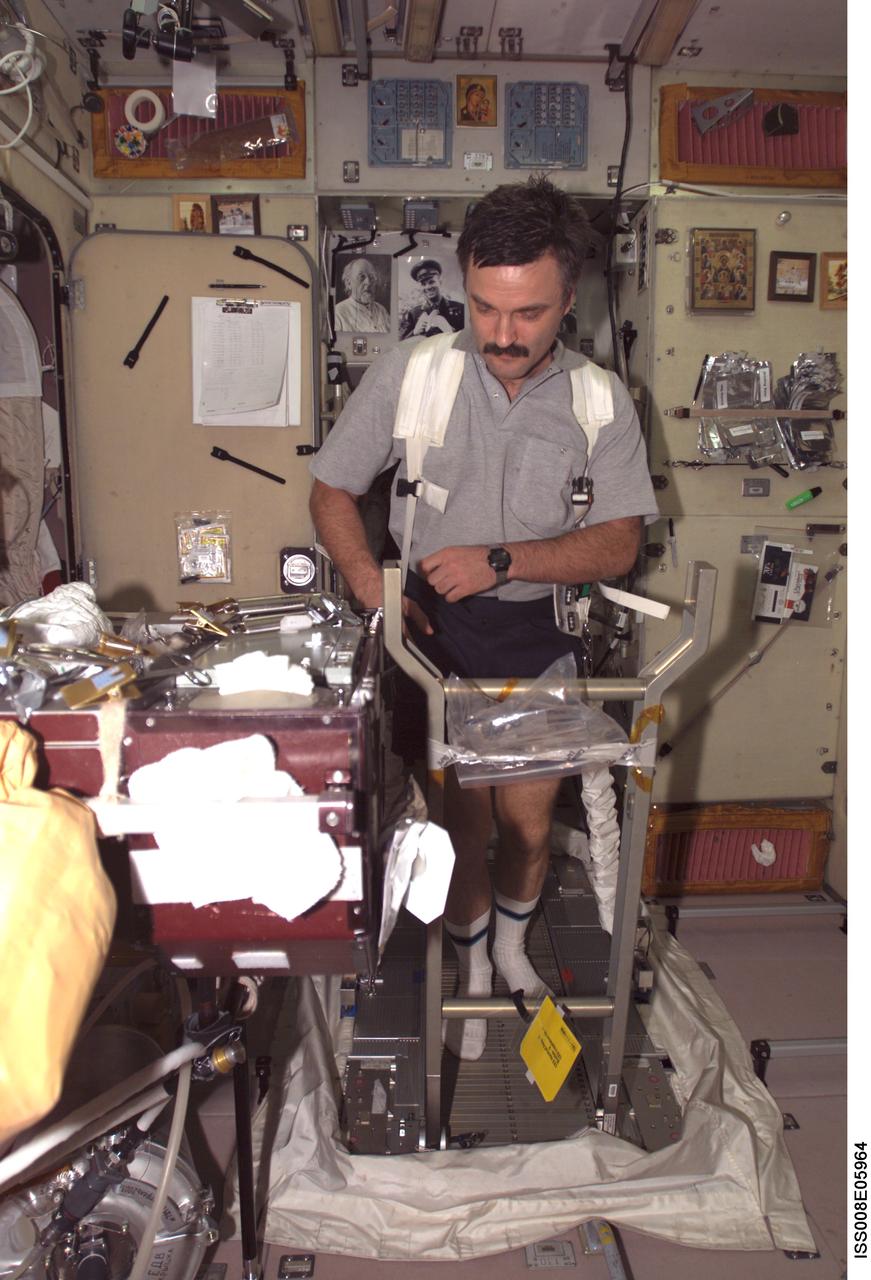
ISS008-E-05964 (23 November 2003) --- Cosmonaut Alexander Y. Kaleri, Expedition 8 flight engineer, performs in-flight maintenance (IFM) on the Treadmill Vibration Isolation System (TVIS) in the Zvezda Service Module on the International Space Station (ISS). Kaleri represents Rosaviakosmos.
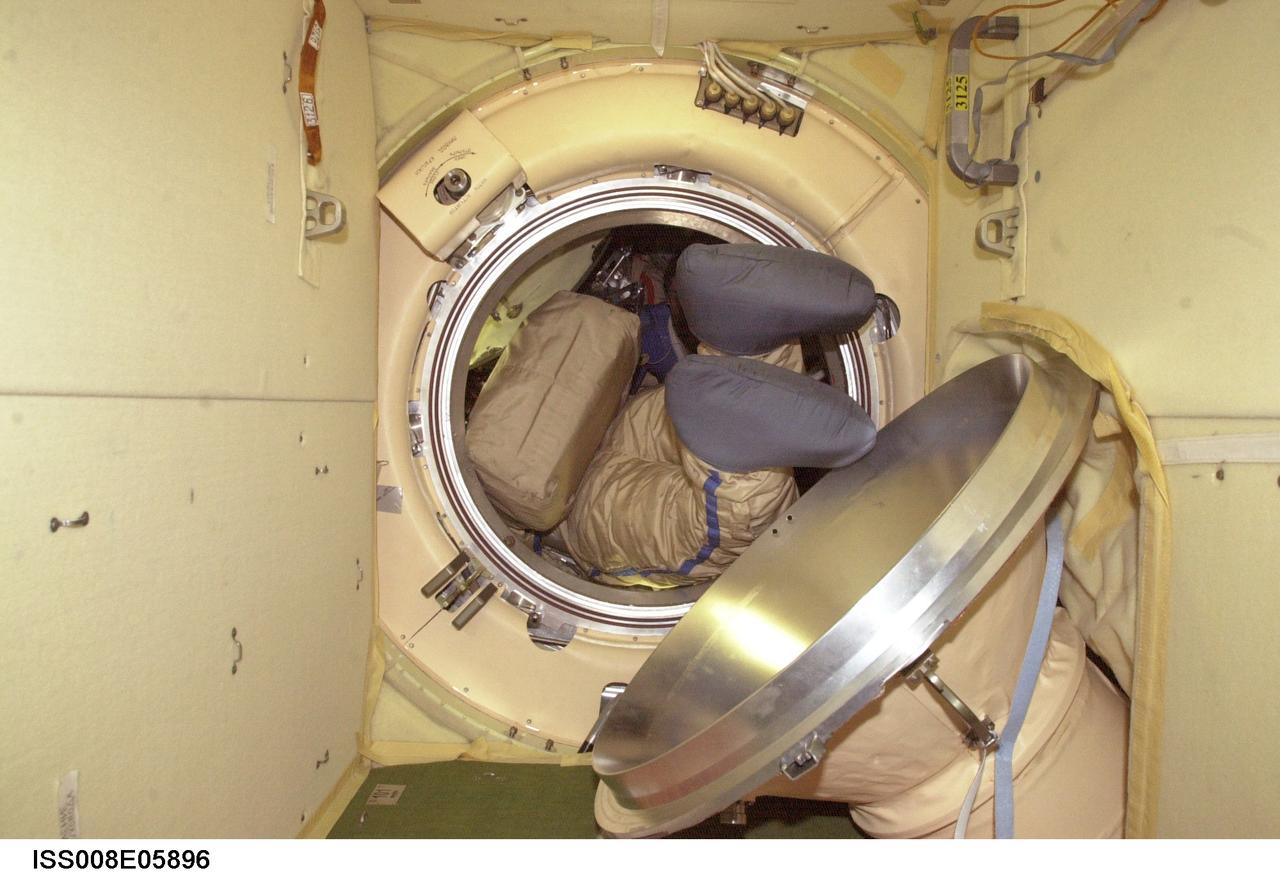
ISS008-E-05896 (November 2003) --- Cosmonaut Alexander Y. Kaleri, Expedition 8 flight engineer, attired in his Russian Orlan spacesuit, enters a Soyuz spacecraft from the Pirs Docking Compartment on the International Space Station (ISS). Kaleri represents Rosaviakosmos.
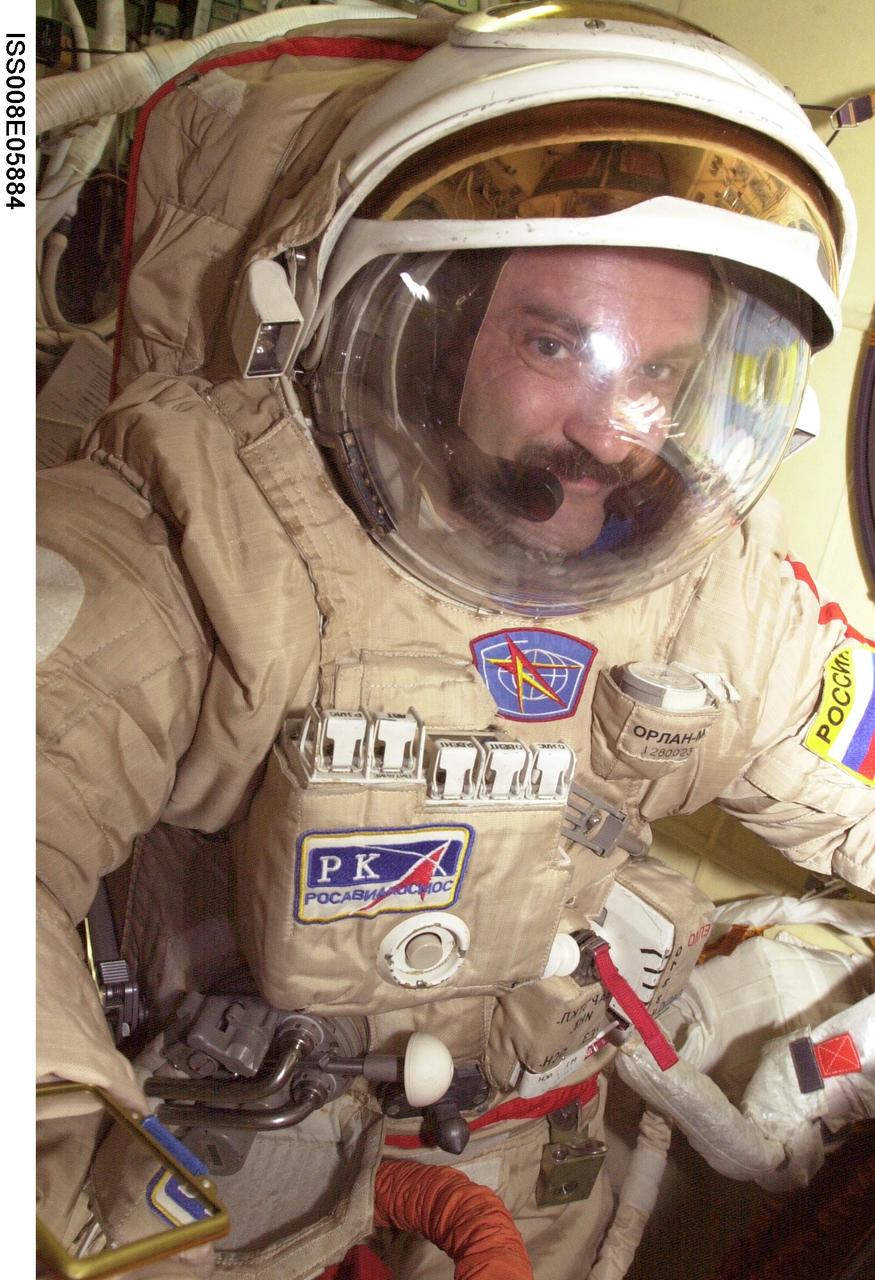
ISS008-E-05884 (November 2003) --- Cosmonaut Alexander Y. Kaleri, Expedition 8 flight engineer, attired in his Russian Orlan spacesuit, is pictured in the Pirs Docking Compartment on the International Space Station (ISS). Kaleri represents Rosaviakosmos.
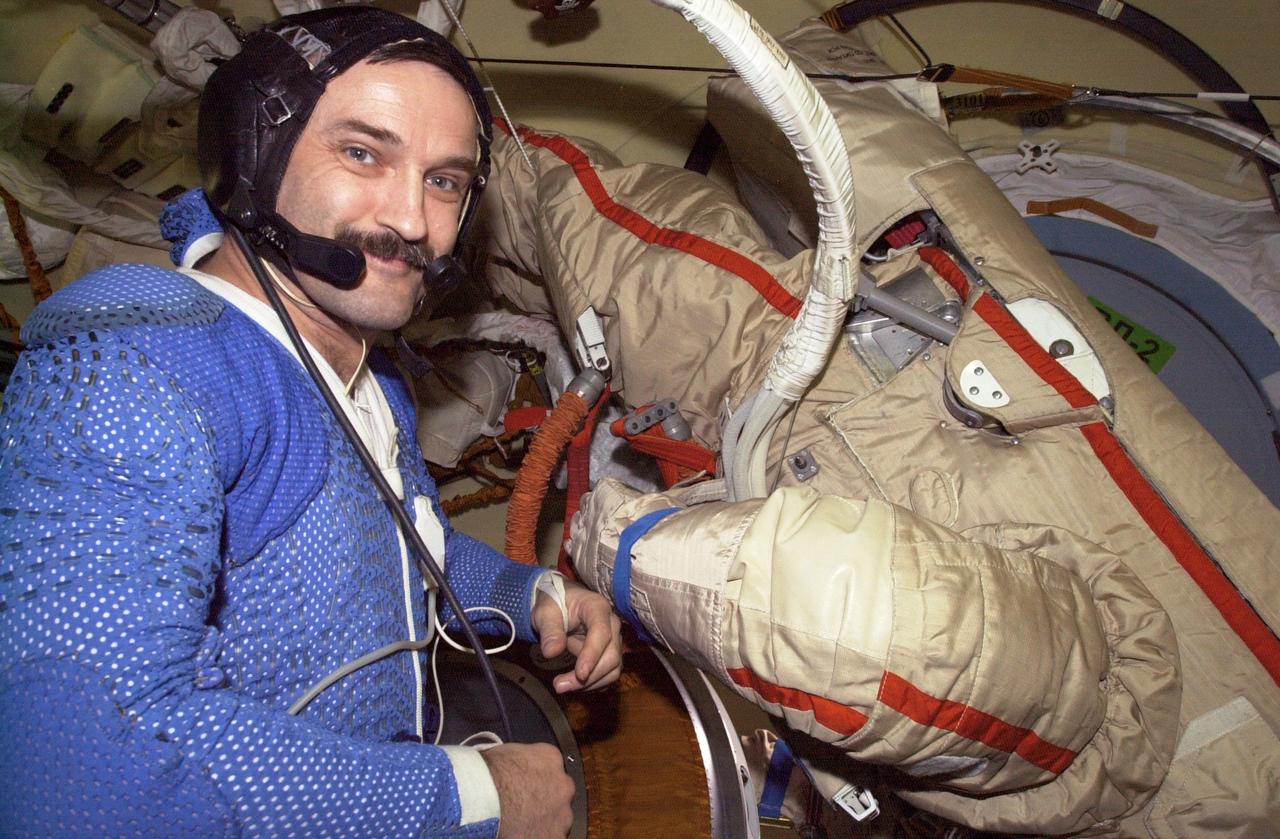
ISS008-E-05880 (November 2003) --- Cosmonaut Alexander Y. Kaleri, Expedition 8 flight engineer, attired in his thermal undergarment prior to donning a Russian Orlan spacesuit (right), is pictured in the Pirs Docking Compartment on the International Space Station (ISS). Kaleri represents Rosaviakosmos.
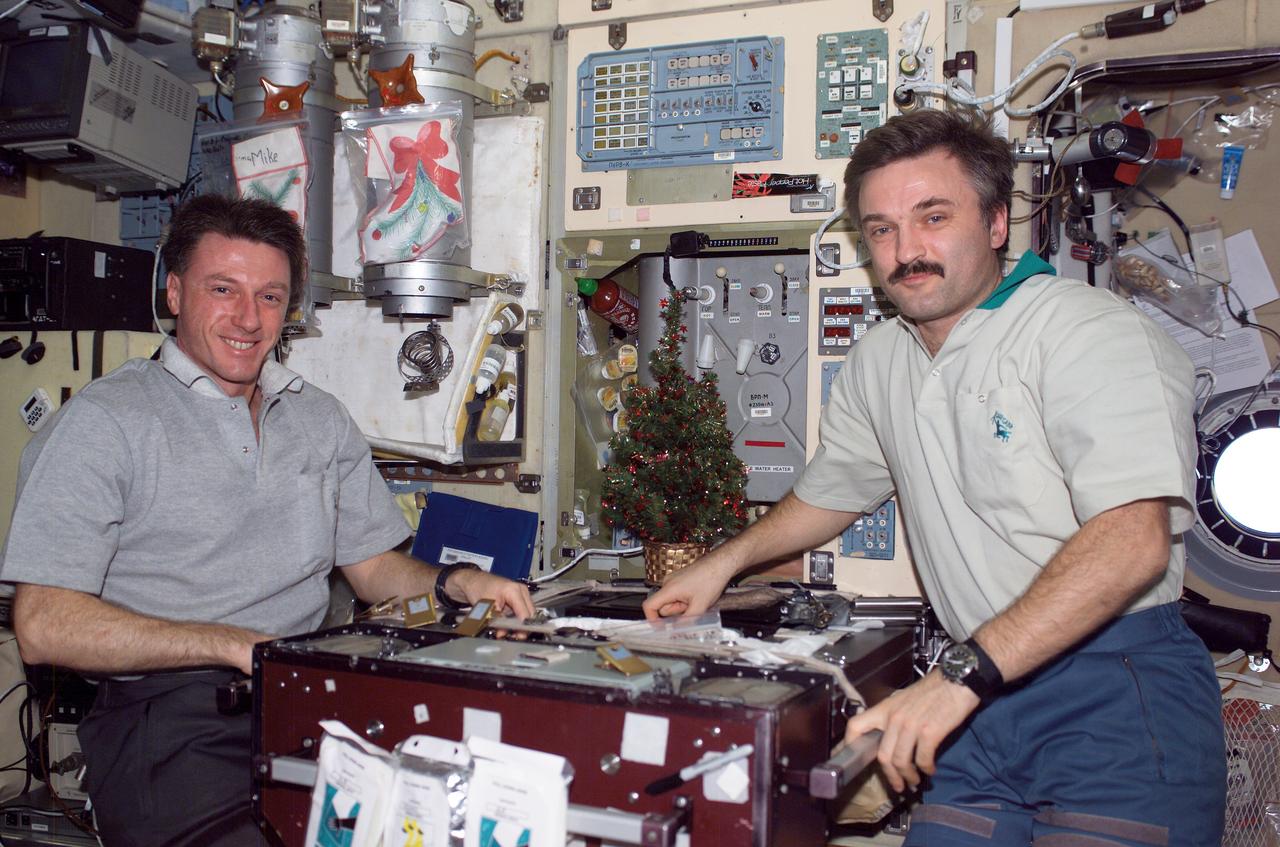
ISS008-E-10768 (28 December 2003) --- Astronaut C. Michael Foale (left), Expedition 8 mission commander and NASA ISS science officer, and cosmonaut Alexander Y. Kaleri, flight engineer, pose with holiday decorations in the Zvezda Service Module on the International Space Station (ISS). Kaleri represents Rosaviakosmos.
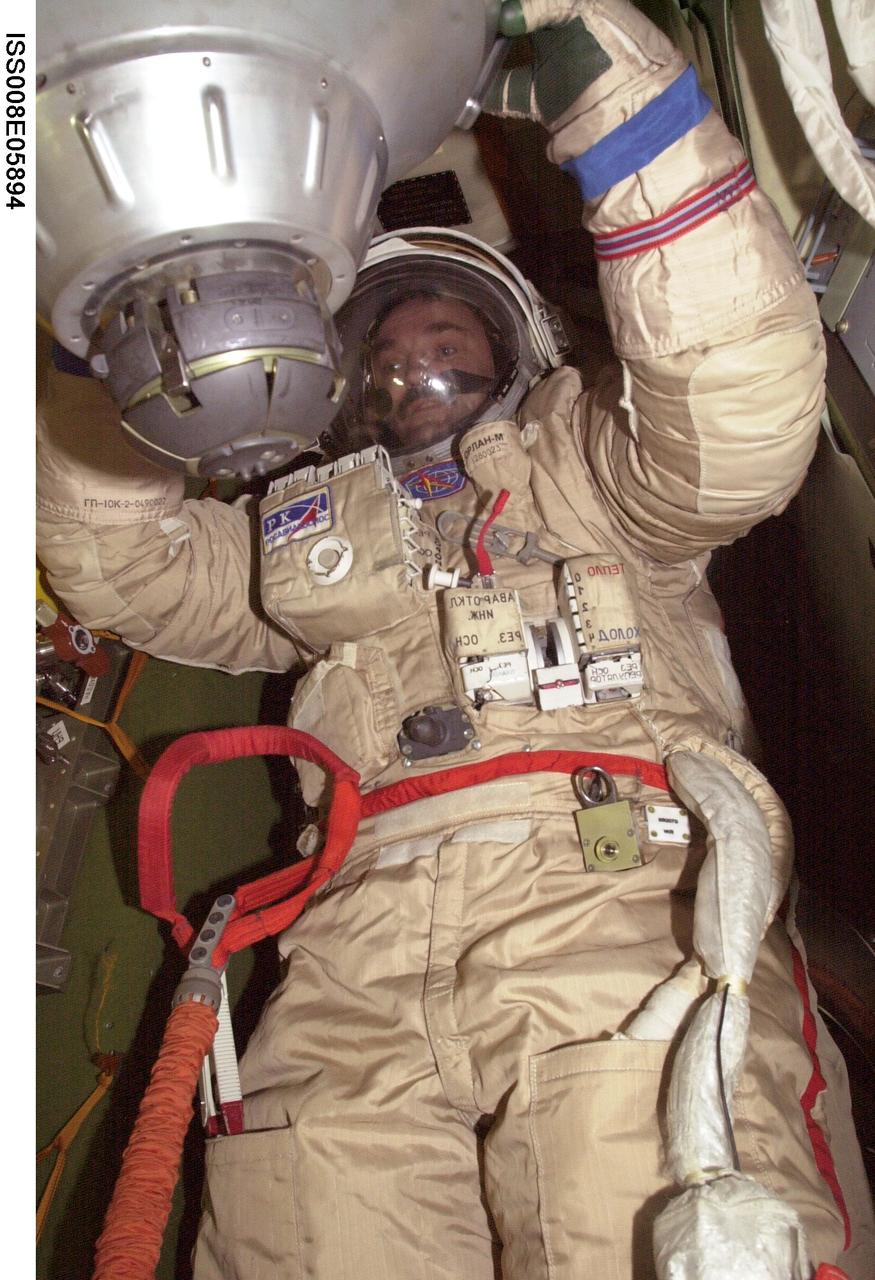
ISS008-E-05894 (November 2003) --- Cosmonaut Alexander Y. Kaleri, Expedition 8 flight engineer, attired in his Russian Orlan spacesuit, is pictured in a Soyuz spacecraft docked to the Pirs Docking Compartment on the International Space Station (ISS). Kaleri represents Rosaviakosmos.
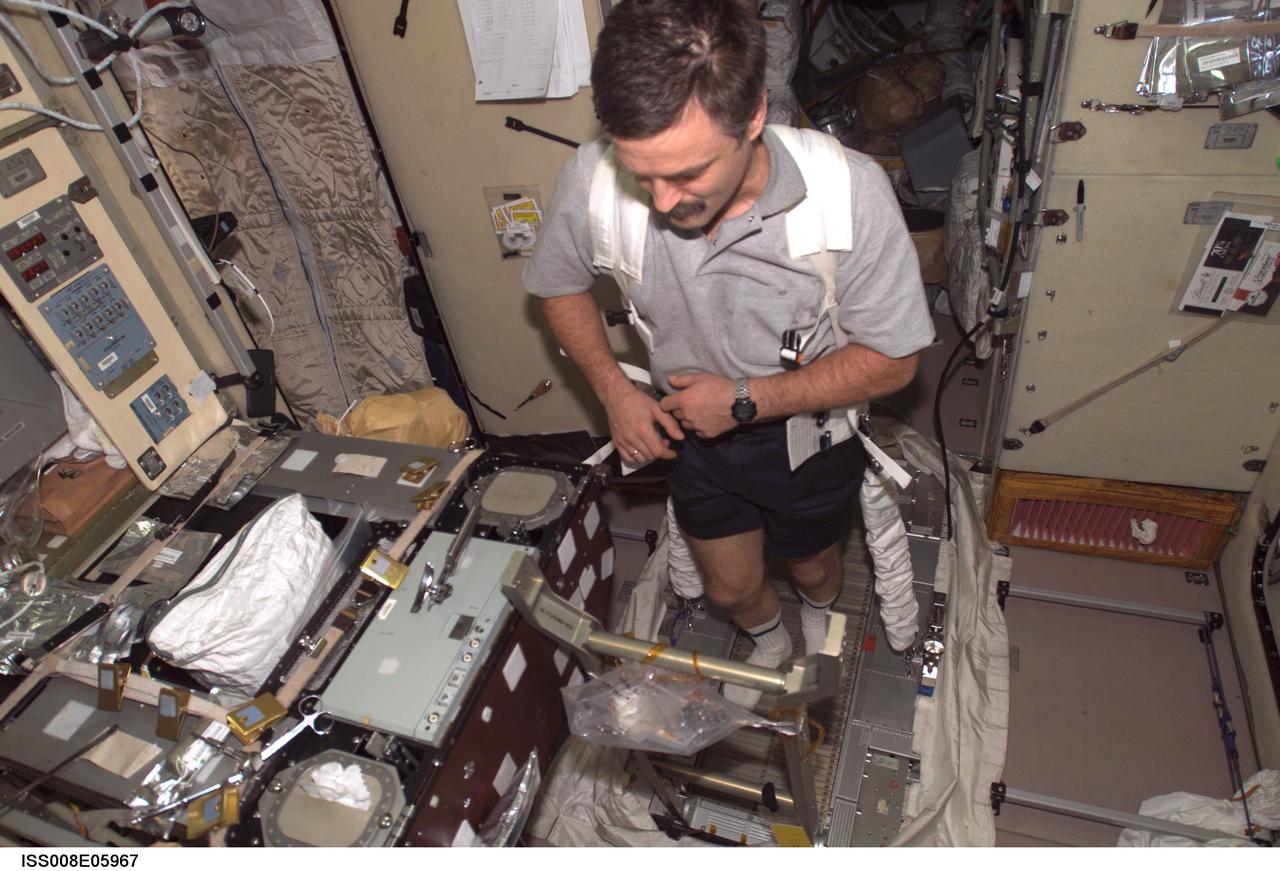
ISS008-E-05967 (23 November 2003) --- Cosmonaut Alexander Y. Kaleri, Expedition 8 flight engineer, performs in-flight maintenance (IFM) on the Treadmill Vibration Isolation System (TVIS) in the Zvezda Service Module on the International Space Station (ISS). Kaleri represents Rosaviakosmos.
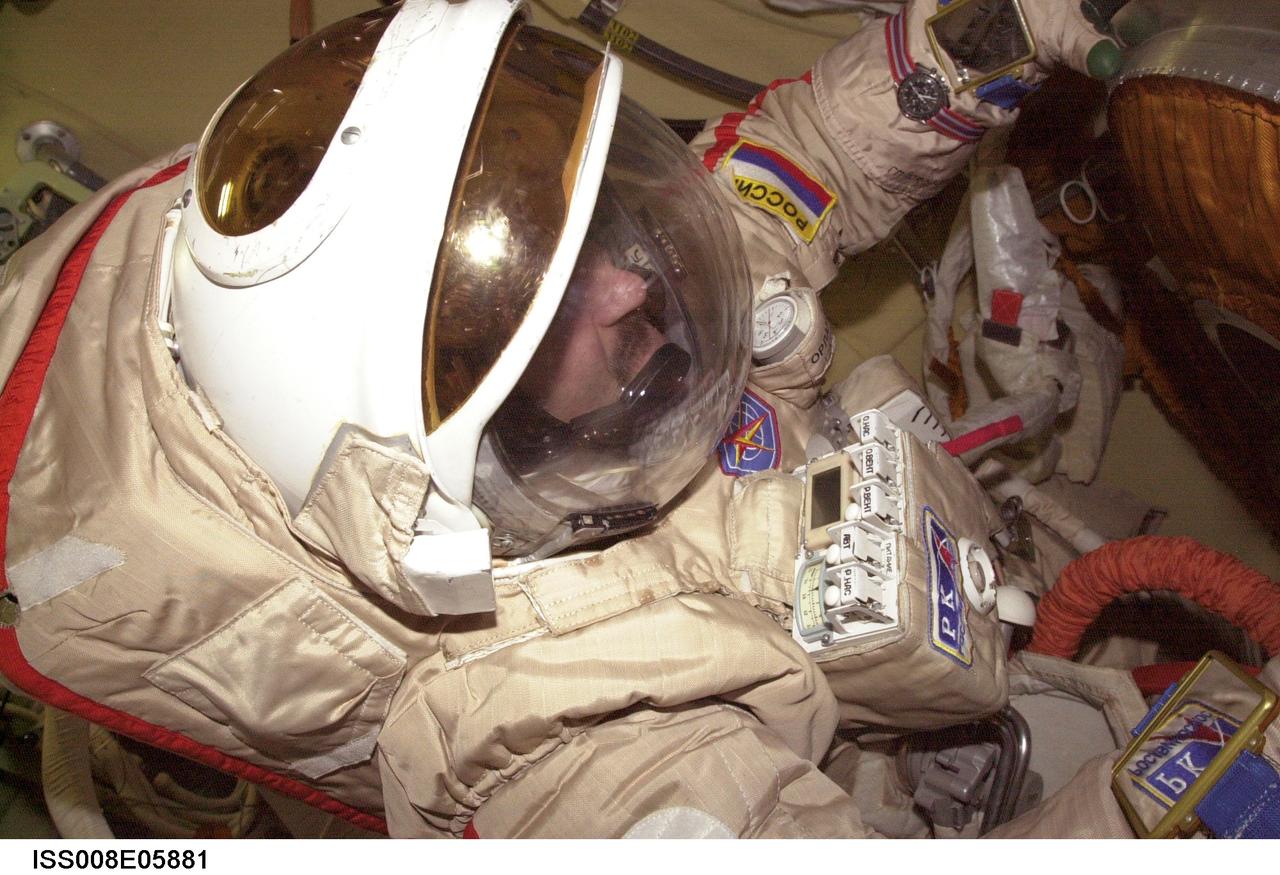
ISS008-E-05881 (November 2003) --- Cosmonaut Alexander Y. Kaleri, Expedition 8 flight engineer, attired in his Russian Orlan spacesuit, is pictured in the Pirs Docking Compartment on the International Space Station (ISS). Kaleri represents Rosaviakosmos.
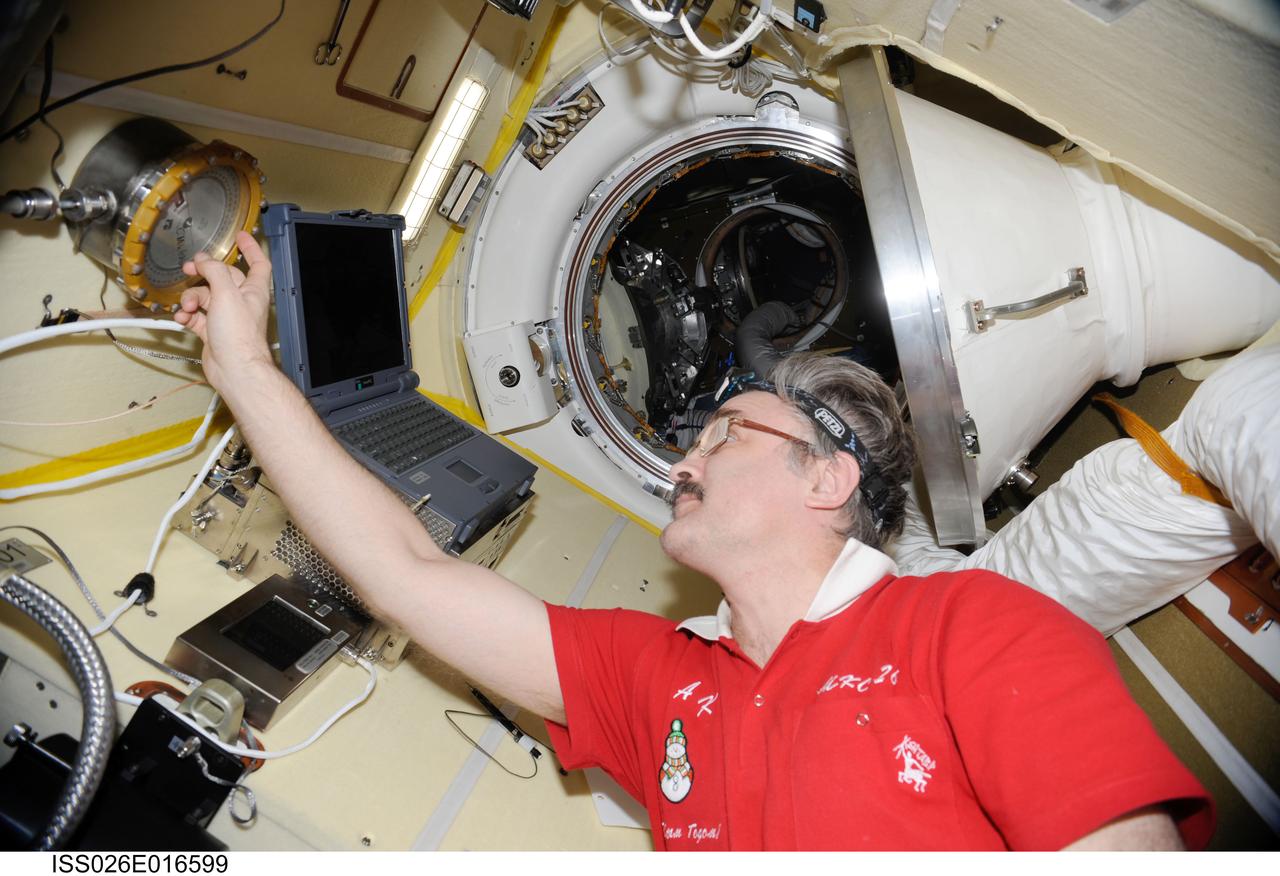
ISS026-E-016599 (10 Jan. 2011) --- Russian cosmonaut Alexander Kaleri, Expedition 26 flight engineer, works in the Poisk Mini-Research Module 2 (MRM2) of the International Space Station.
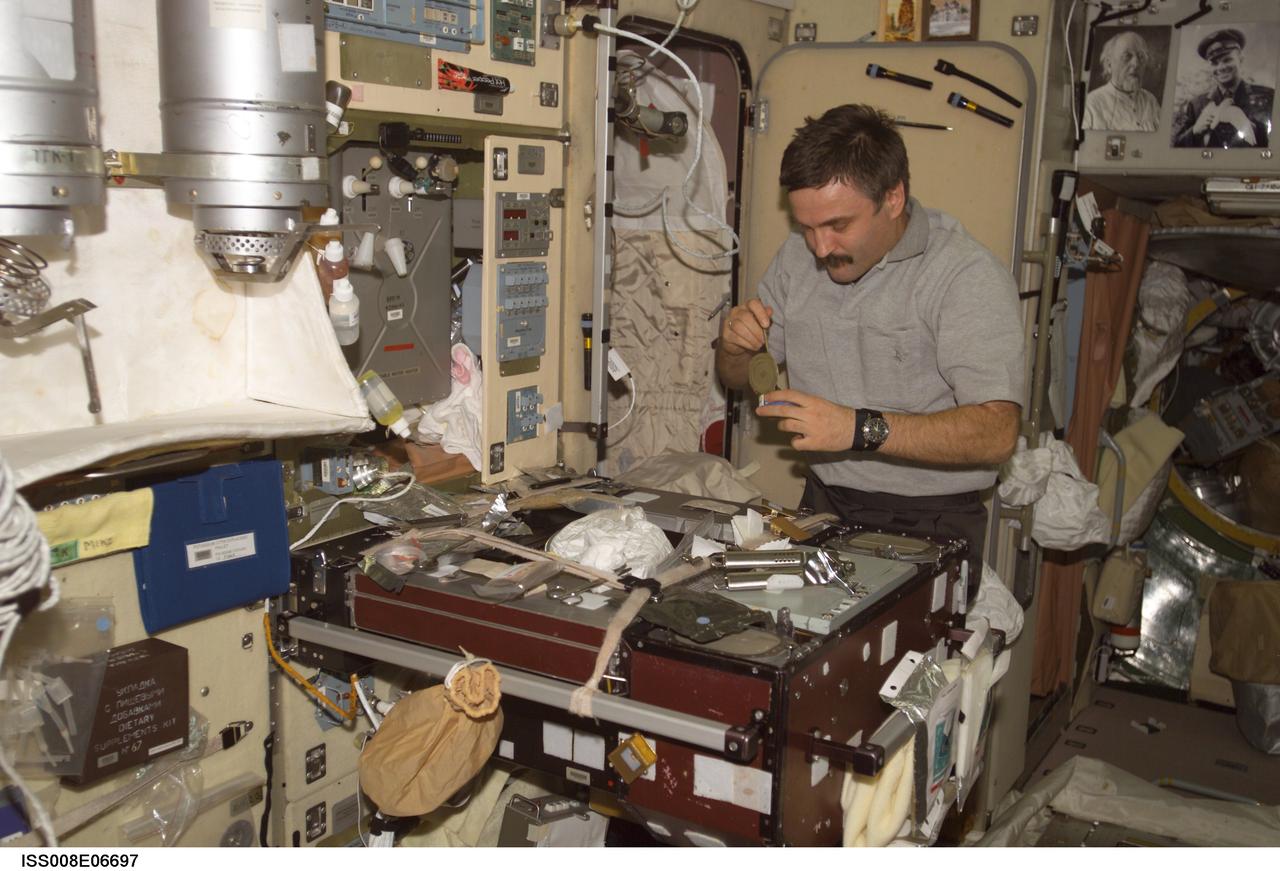
ISS008-E-06697 (1 December 2003) --- Cosmonaut Alexander Y. Kaleri, Expedition 8 flight engineer representing Rosaviakosmos, eats a meal in the Zvezda Service Module on the International Space Station (ISS).
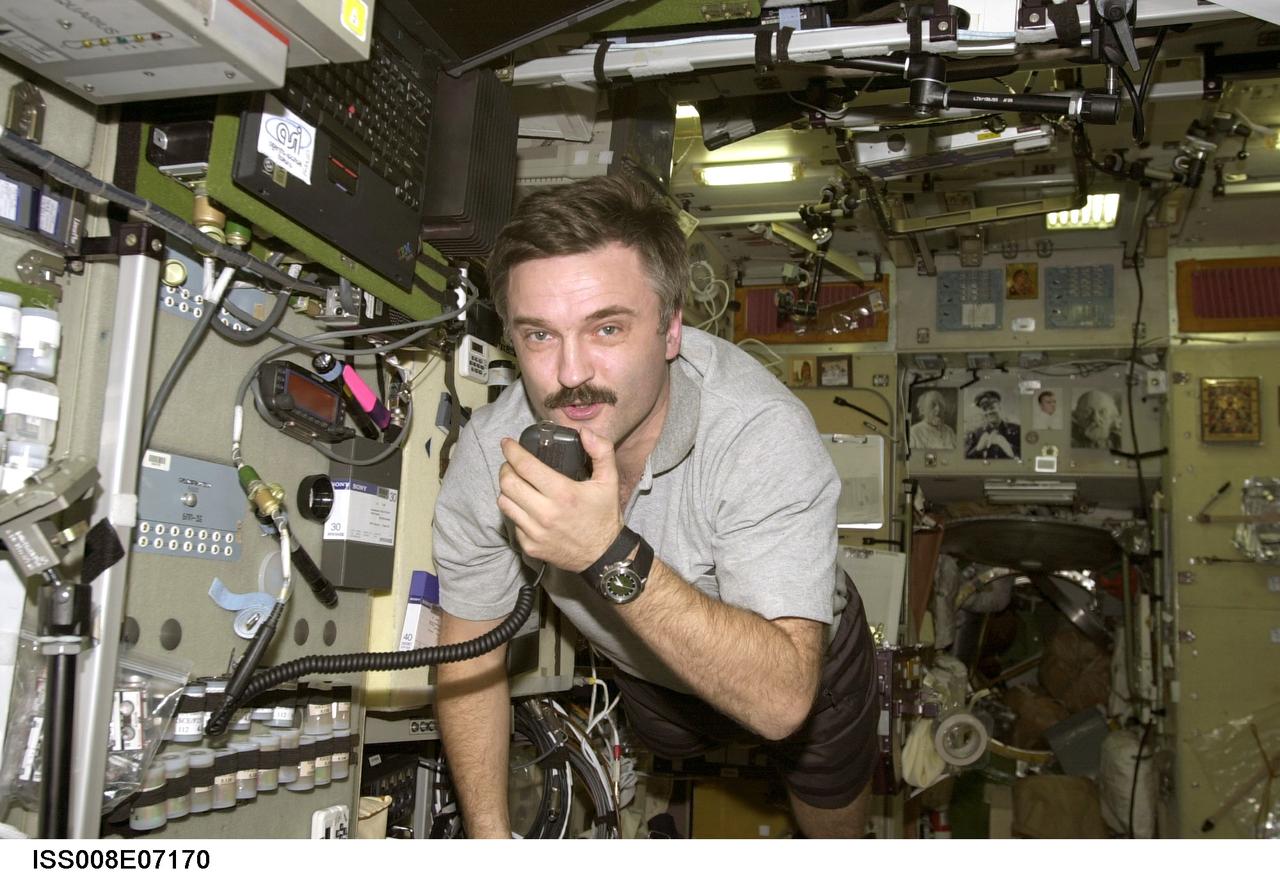
ISS008-E-07170 (December 2003) --- Cosmonaut Alexander Y. Kaleri, Expedition 8 flight engineer representing Rosaviakosmos, uses a communication system in the Zvezda Service Module on the International Space Station (ISS).
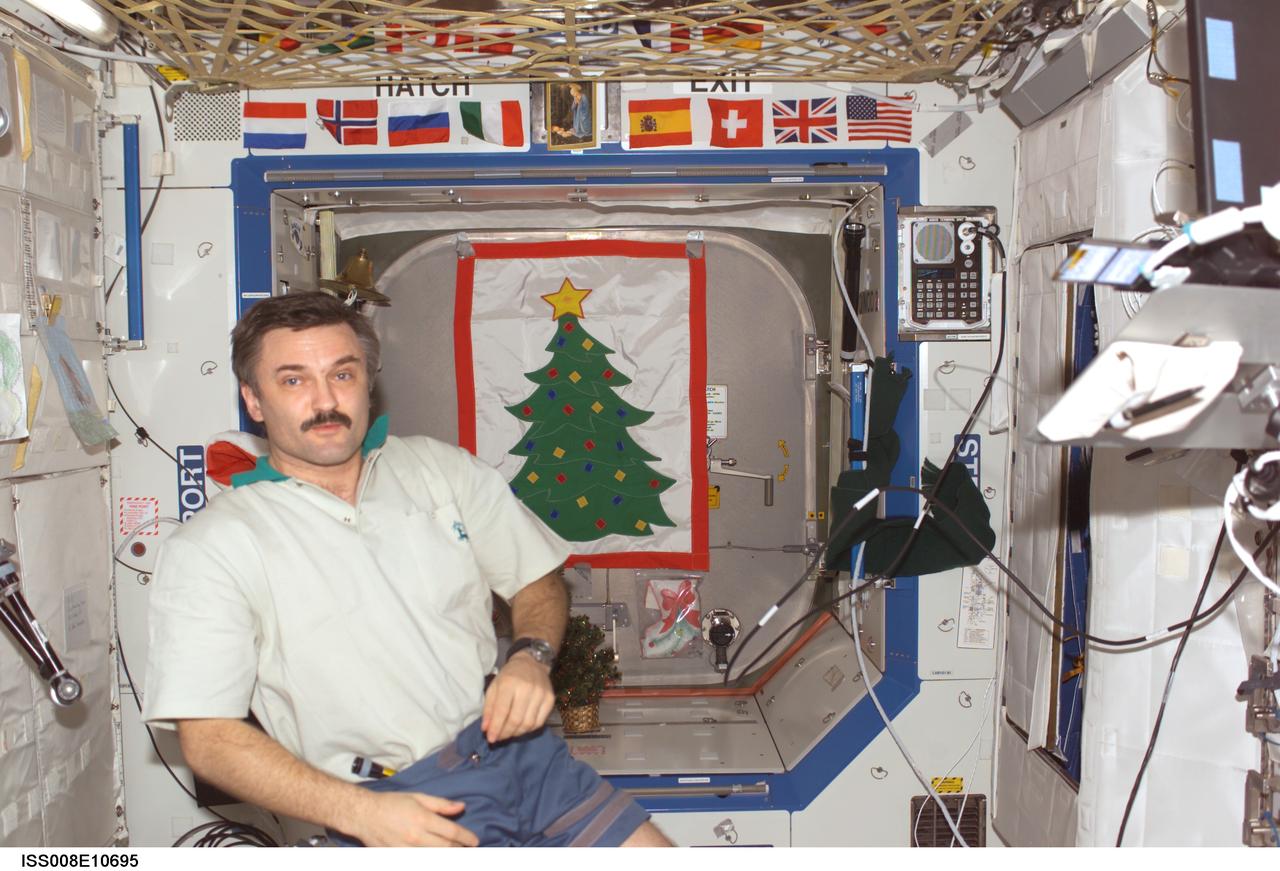
ISS008-E-10695 (28 December 2003) --- Cosmonaut Alexander Y. Kaleri, Expedition 8 flight engineer representing Rosaviakosmos, is pictured in the Destiny laboratory on the International Space Station (ISS). Holiday decorations are visible in the background.
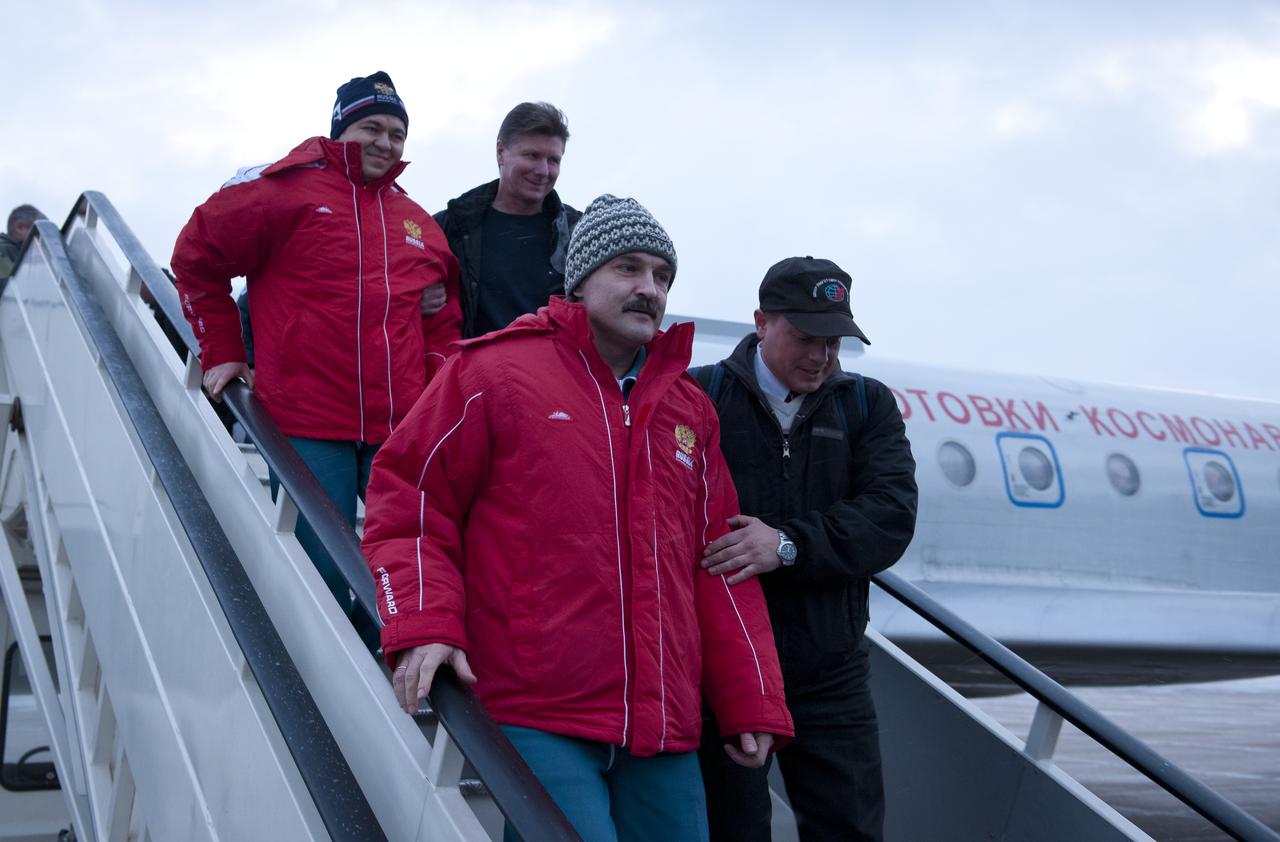
Expedition 26 Flight Engineer Alexander Kaleri, bottom, and Expedition 26 Flight Engineer Oleg Skripochka are seen as they arrive at the Chkalovsky airport outside Star City, Russia several hours after they and Expedition 26 Commander Scott Kelly landed in their Soyuz TMA-01M capsule near the town of Arkalyk, Kazakhstan, Wednesday, March 16, 2011. NASA Astronaut Kelly, Russian Cosmonauts Skripochka and Kaleri are returning from almost six months onboard the International Space Station where they served as members of the Expedition 25 and 26 crews. Photo Credit: (NASA/Bill Ingalls)
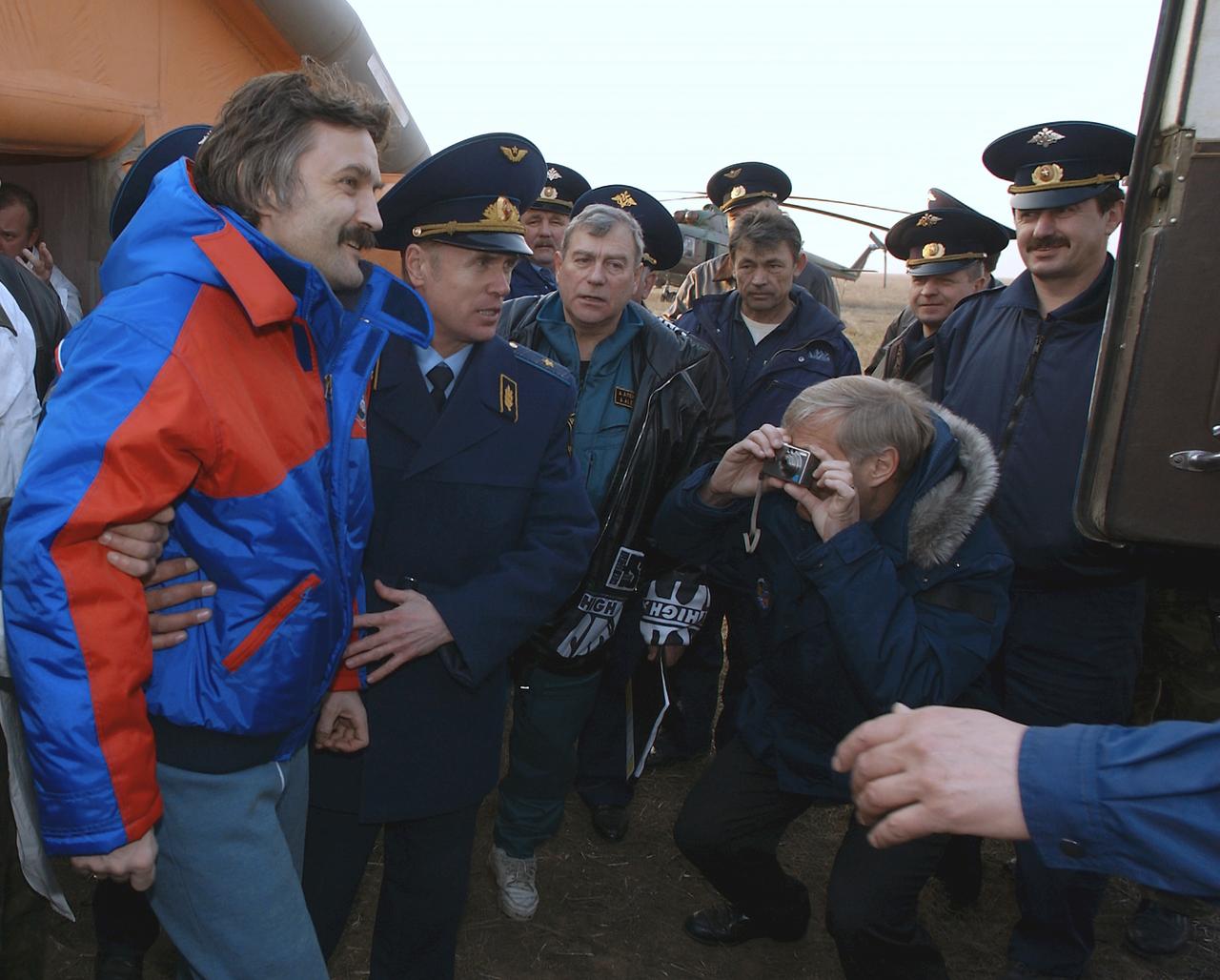
Soyuz Flight Engineer Alexander Kaleri is helped from the medical tent to the all terrain vehicle for transportation to a waiting helicopter for the flight to Kustanai, Kazakhstan, Friday, April 30, 2004, after he, Expedition 8 Commander Michael Foale, and European Space Agency astronaut Andre Kuipers of the Netherlands, landed in north central Kazakhstan in a Soyuz TMA-3 capsule. Foale and Kaleri completed 195 days in space aboard the International Space Station, while Kuipers returned after an 11-day research mission as part of a commercial agreement between ESA and the Russian Federal Space Agency. Photo Credit: (NASA/Bill Ingalls)
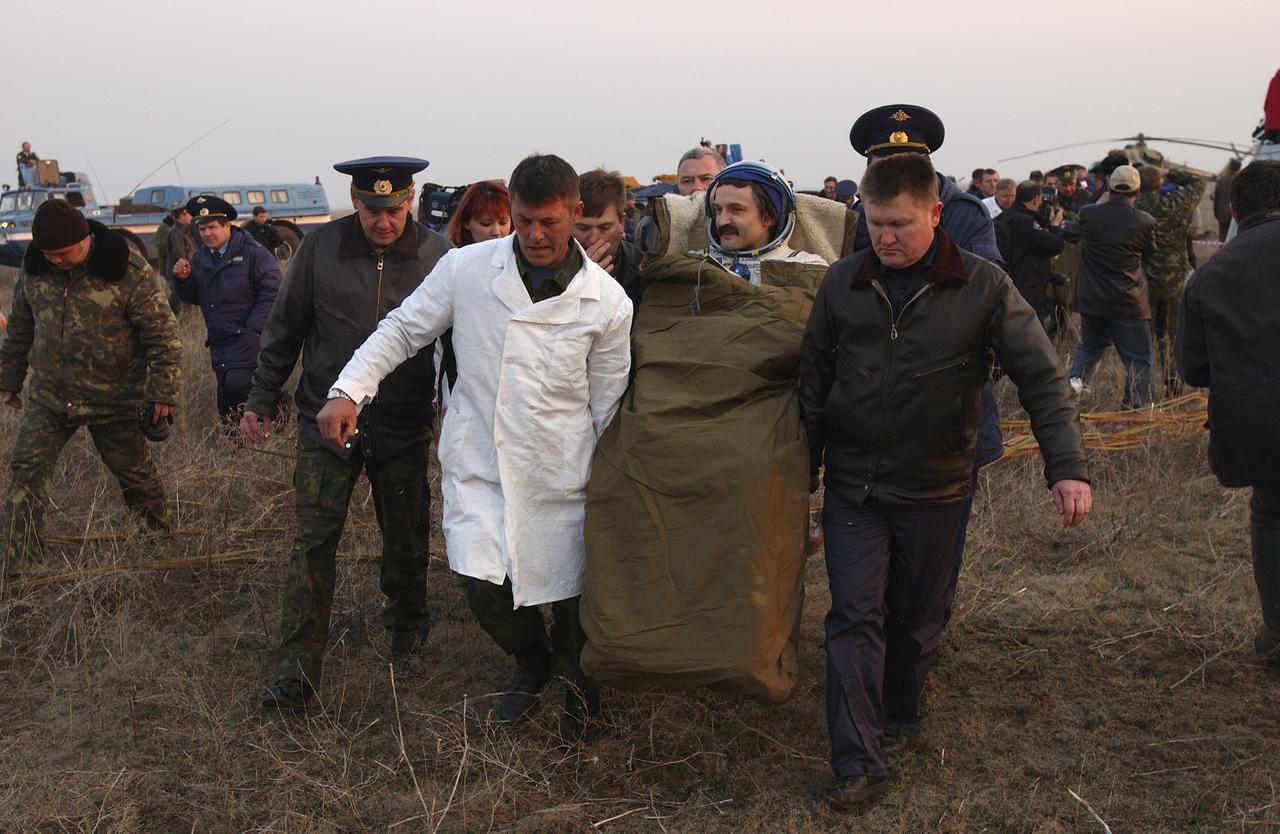
Soyuz Flight Engineer Alexander Kaleri is carried in a chair from the Soyuz landing site to an inflatable medical tent after he and Expedition 8 Commander Mike Foale and European Space Agency astronaut Andre Kuipers, of the Netherlands, landed in north central Kazakhstan, Friday, April 30, 2004, in a Soyuz TMA-3 capsule. Foale and Kaleri completed 195 days in space aboard the International Space Station, while Kuipers returned after an 11-day research mission as part of a commercial agreement between ESA and the Russian Federal Space Agency. Photo Credit: (NASA/Bill Ingalls)
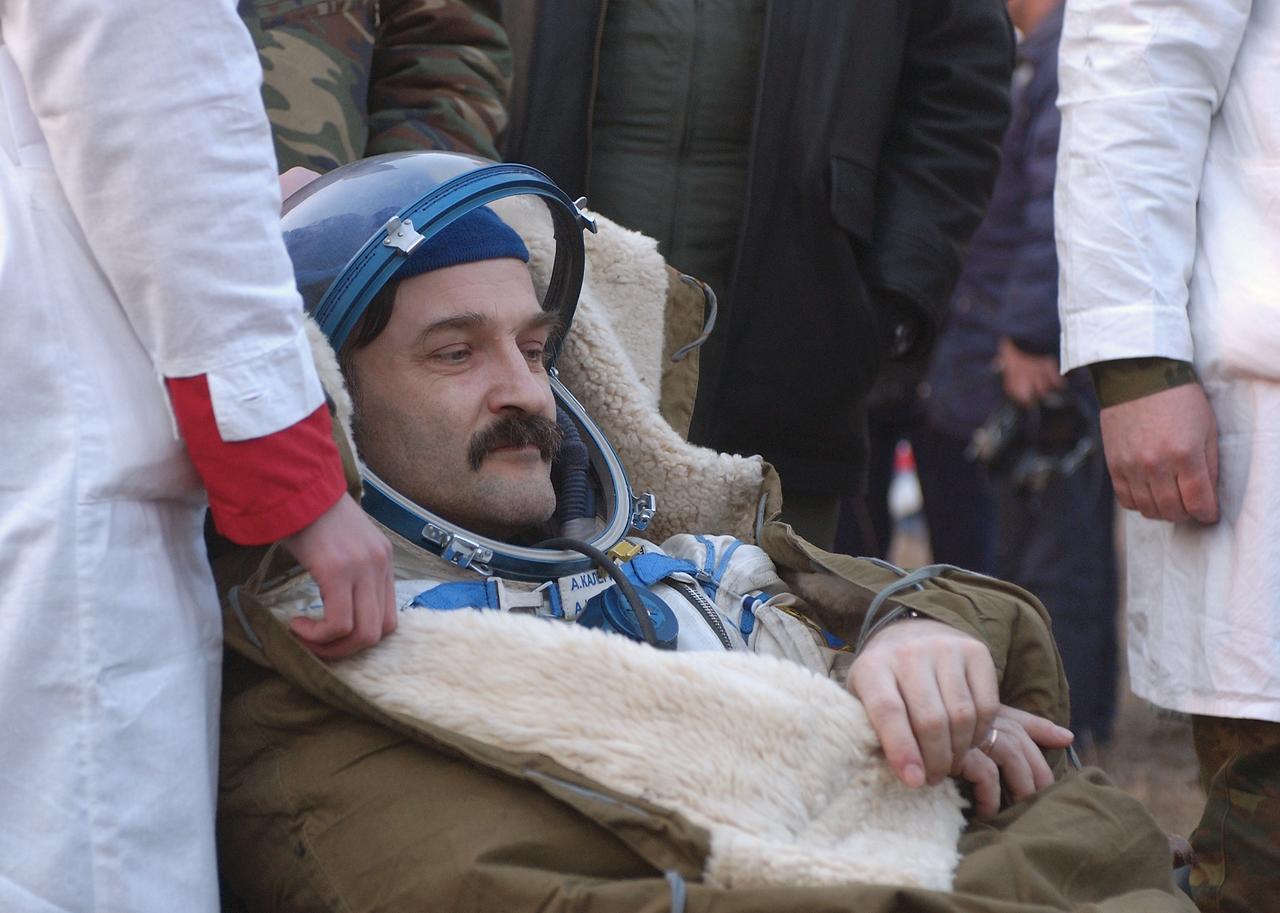
Soyuz Flight Engineer Alexander Kaleri relaxes in a chair after he and Expedition 8 Commander Michael Foale and European Space Agency astronaut Andre Kuipers, of the Netherlands, landed in north central Kazakhstan, Friday, April 30, 2004, in their Soyuz TMA-3 capsule. Foale and Kaleri completed 195 days in space aboard the International Space Station, while Kuipers returned after an 11-day research mission as part of a commercial agreement between ESA and the Russian Federal Space Agency. Photo Credit: (NASA/Bill Ingalls)
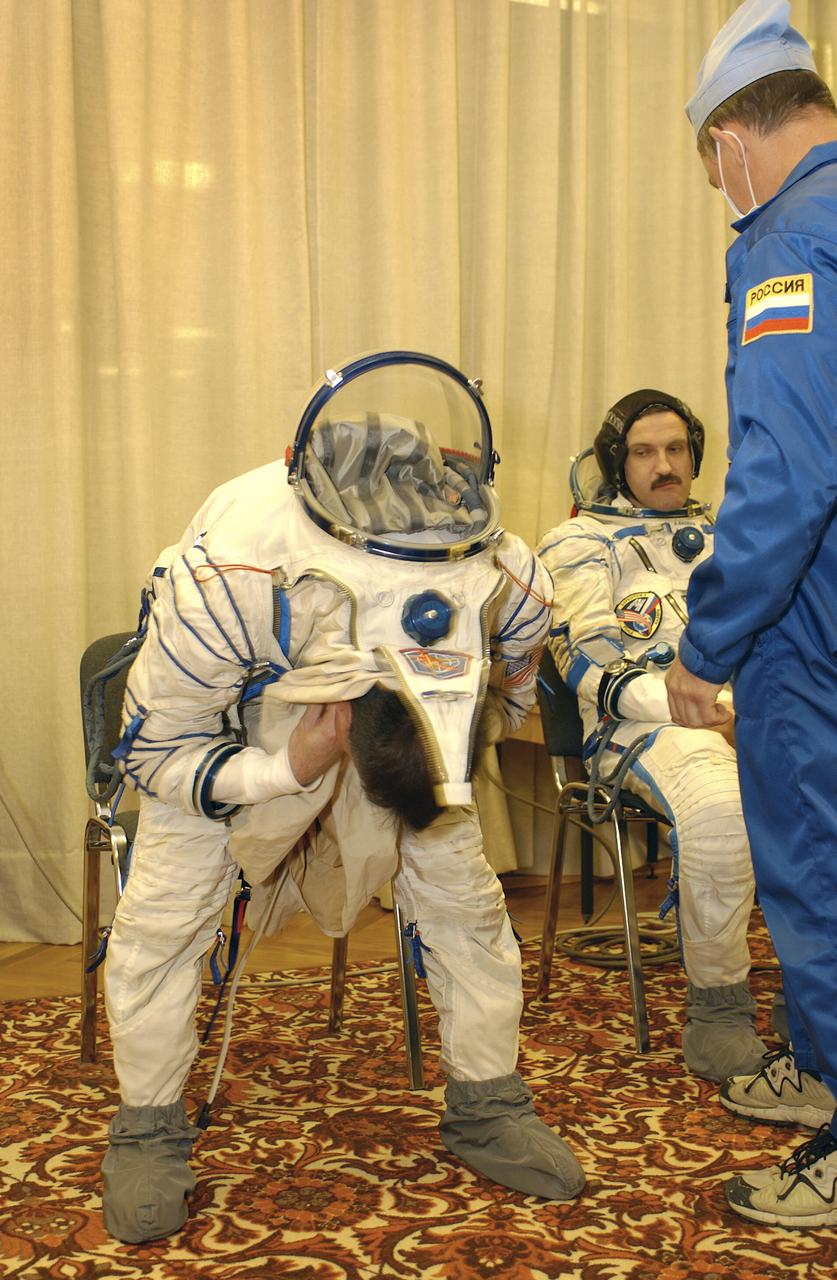
Expedition 8 Commander and NASA Scienhce Officer Michael Foale, left, works to suit up for launch as Expedition 8 Soyuz Commander Alexander Kaleri looks on, Saturday, Oct. 18, 2003, prior to departure for the launch pad at the Baikonur Cosmodrome in Kazakhstan. Foale, Kaleri and European Space Agency astronaut Pedro Duque were launched on a Soyuz TMA-3 vehicle to the International Space Station, arriving on Oct. 20. Photo Credit (NASA/Bill Ingalls)
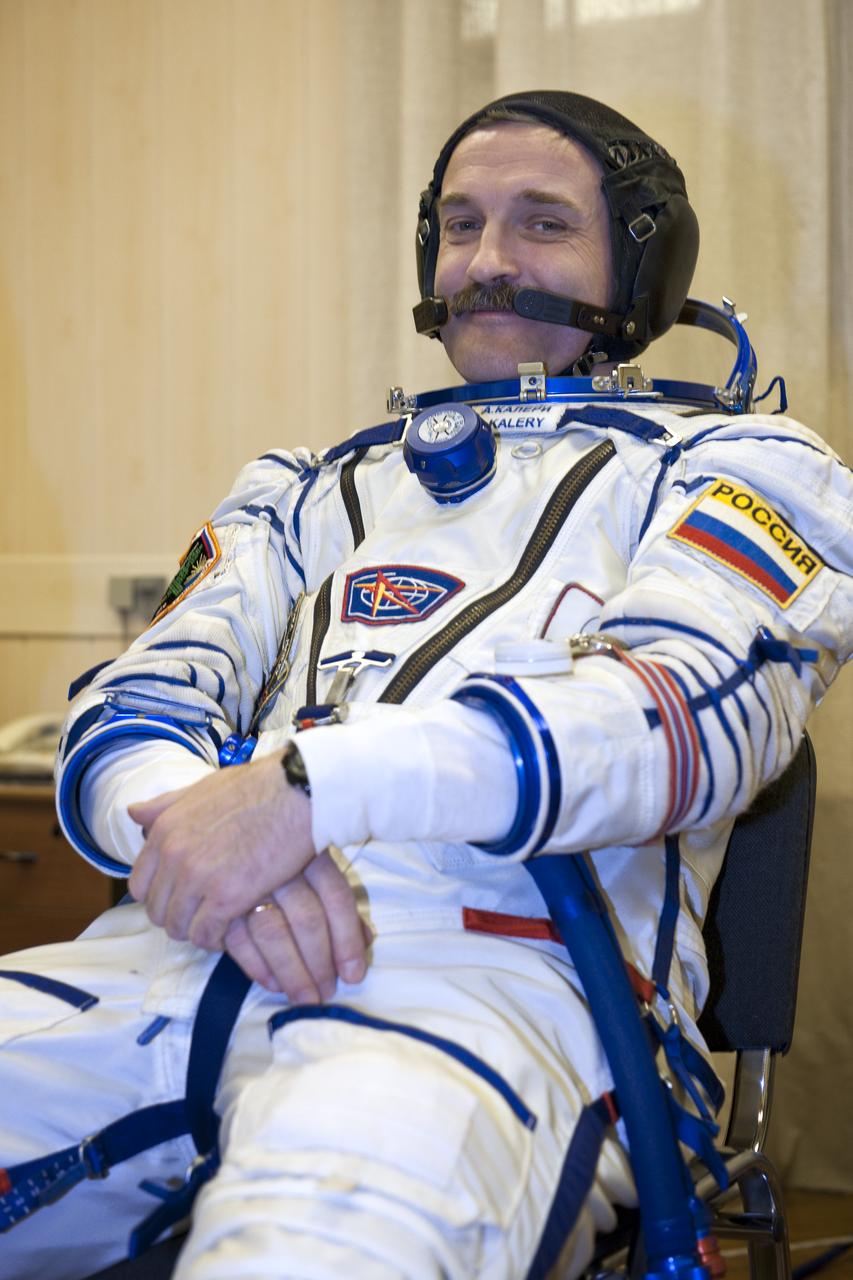
Expedition 25 Soyuz Commander Alexander Kaleri awaits to have his Russian Sokol Suit pressure checked at the Baikonur Cosmodrome on Friday, Oct. 8, 2010 in Kazakhstan. Kaleri and fellow Expedition 25 crew members Flight Engineers Scott Kelly and Oleg Skripochka launched in their Soyuz TMA-01M at 5:10 a.m. Friday morning. (Photo Credit: NASA/Carla Cioffi)
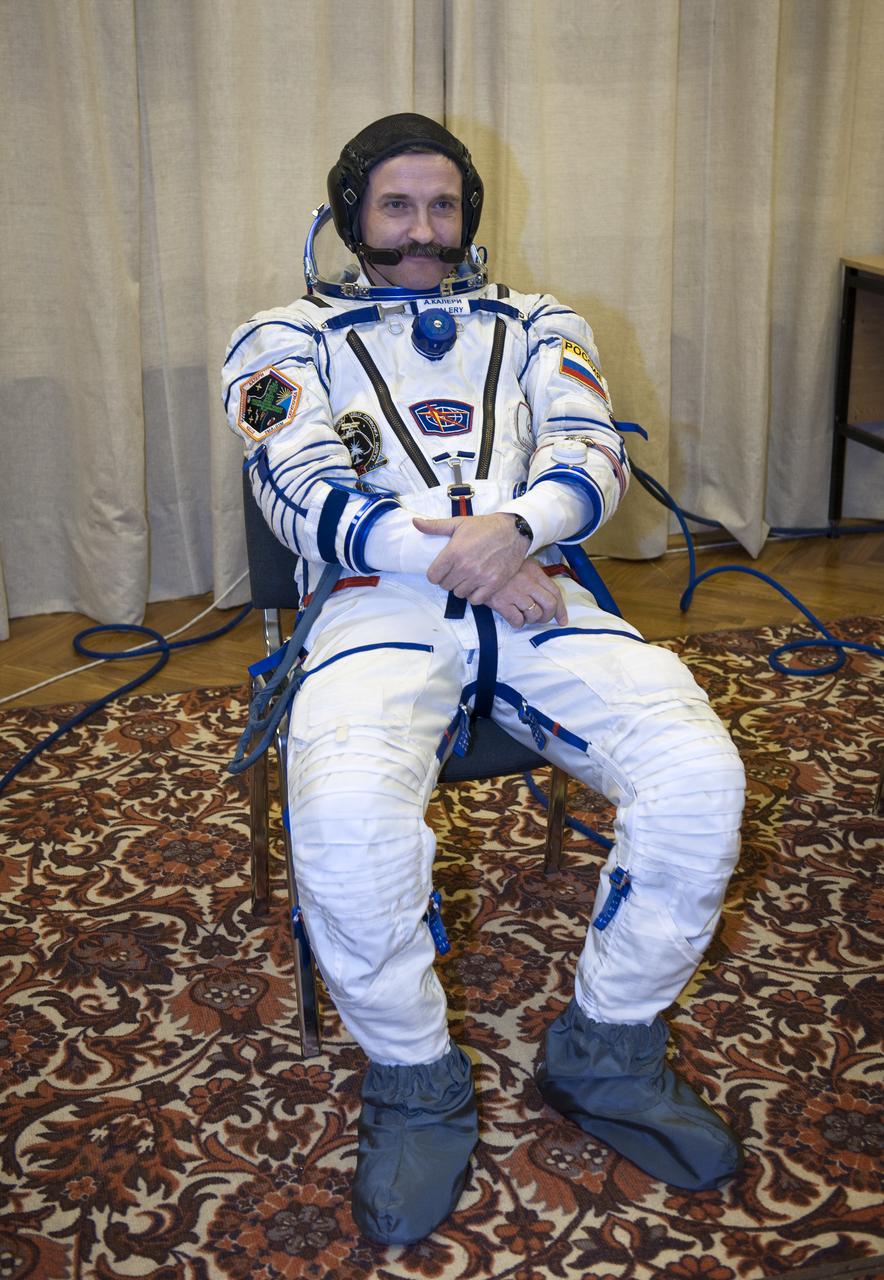
Expedition 25 Soyuz Commander Alexander Kaleri awaits to have his Russian Sokol Suit pressure checked at the Baikonur Cosmodrome on Friday, Oct. 8, 2010 in Baikonur, Kazakhstan. Kaleri and fellow Expedition 25 crew members Flight Engineers Scott Kelly and Oleg Skripochka launched in their Soyuz TMA-01M at 5:10 a.m. Friday morning. (Photo Credit: NASA/Carla Cioffi)
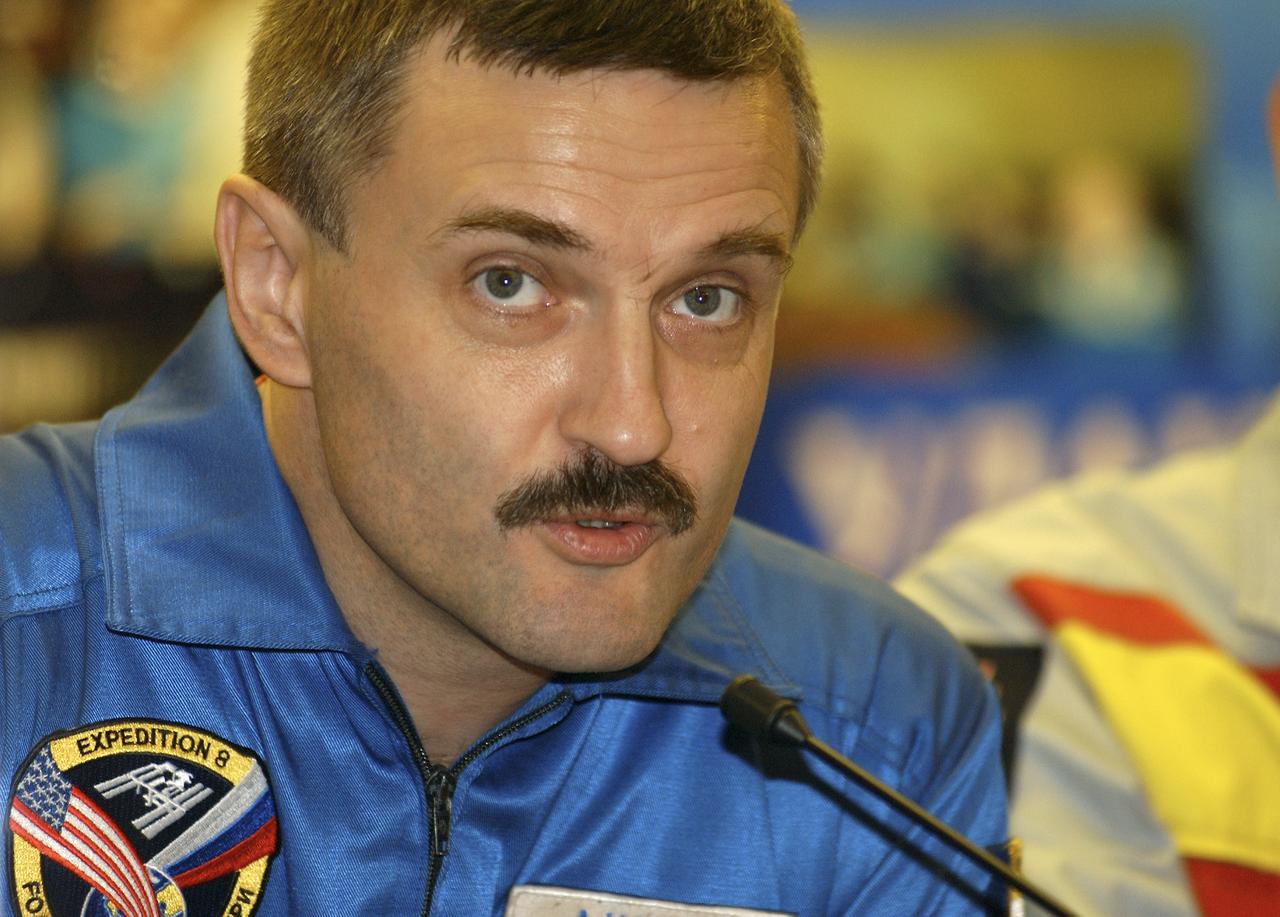
Expedition 8 Soyuz Commander Alexander Kaleri responds to a reporter's question during a prelaunch news conference, Friday, Oct. 17, 2003 in Baikonur, Kazakhstan. Kaleri, Expedition 8 Commander and NASA Science Officer Mike Foale and European Space Agency astronaut Pedro Duque of Spain launched Oct. 18 to the International Space Station. Photo Credit (NASA/Bill Ingalls)
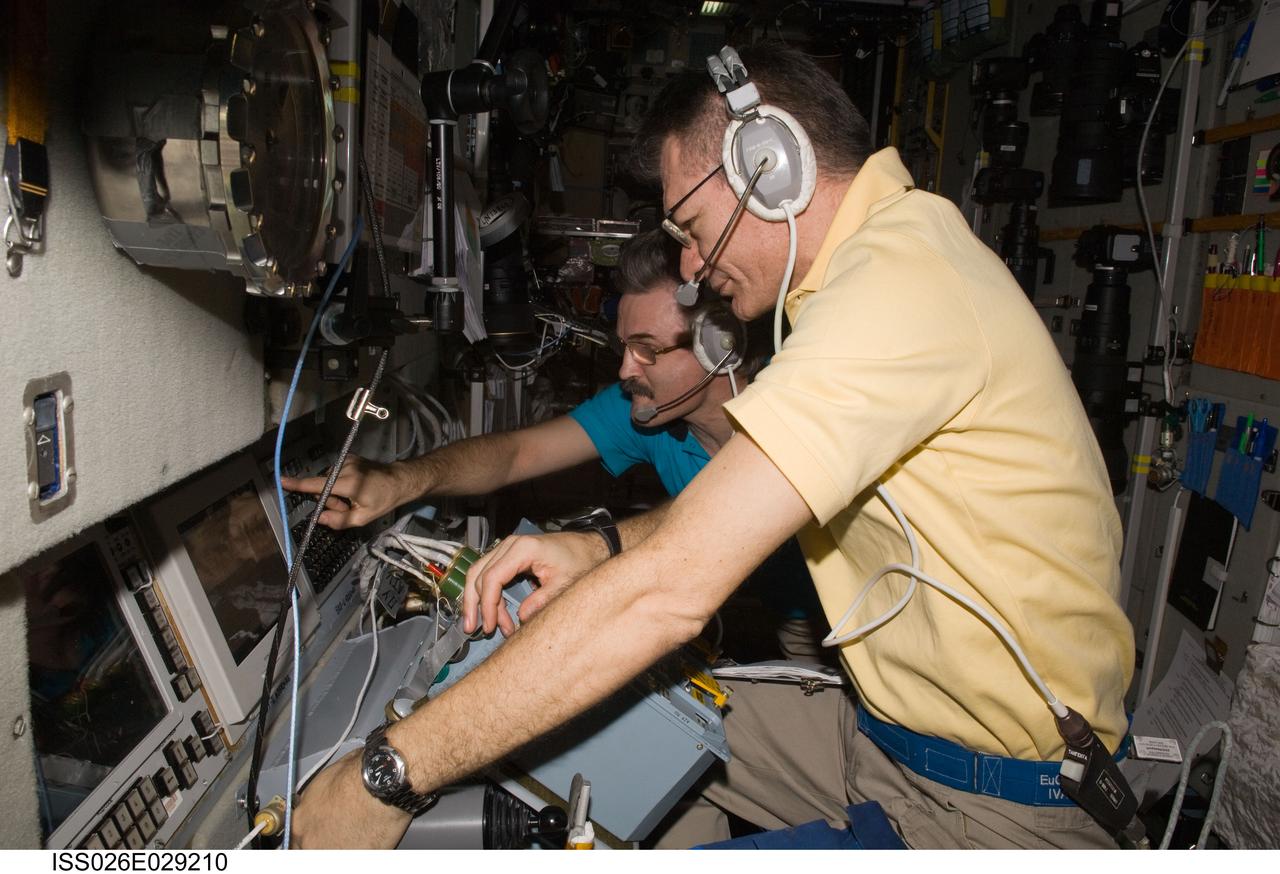
ISS026-E-029210 (24 Feb. 2011) --- European Space Agency astronaut Paolo Nespoli (foreground) and Russian cosmonaut Alexander Kaleri, both Expedition 26 flight engineers, monitor the approach and docking of the European Space Agency's "Johannes Kepler" Automated Transfer Vehicle-2 (ATV-2). The ATV2 automatically docked with the aft end of the International Space Station's Zvezda Service Module at 10:59 a.m. (EST) on Feb. 24, 2011.
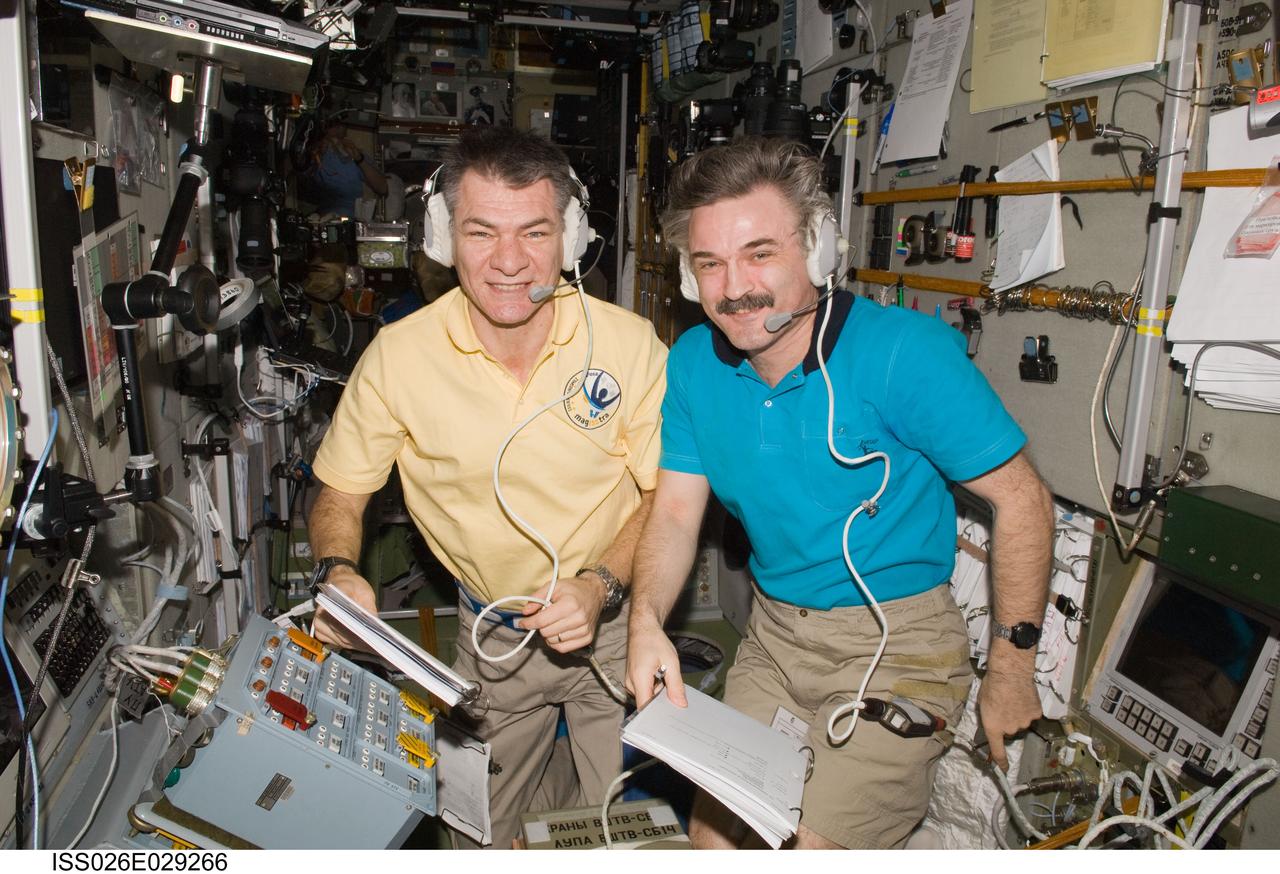
ISS026-E-029266 (24 Feb. 2011) --- European Space Agency astronaut Paolo Nespoli (left) and Russian cosmonaut Alexander Kaleri, both Expedition 26 flight engineers, monitor the approach and docking of the European Space Agency's "Johannes Kepler" Automated Transfer Vehicle-2 (ATV-2). The ATV2 automatically docked with the aft end of the International Space Station's Zvezda Service Module at 10:59 a.m. (EST) on Feb. 24, 2011.
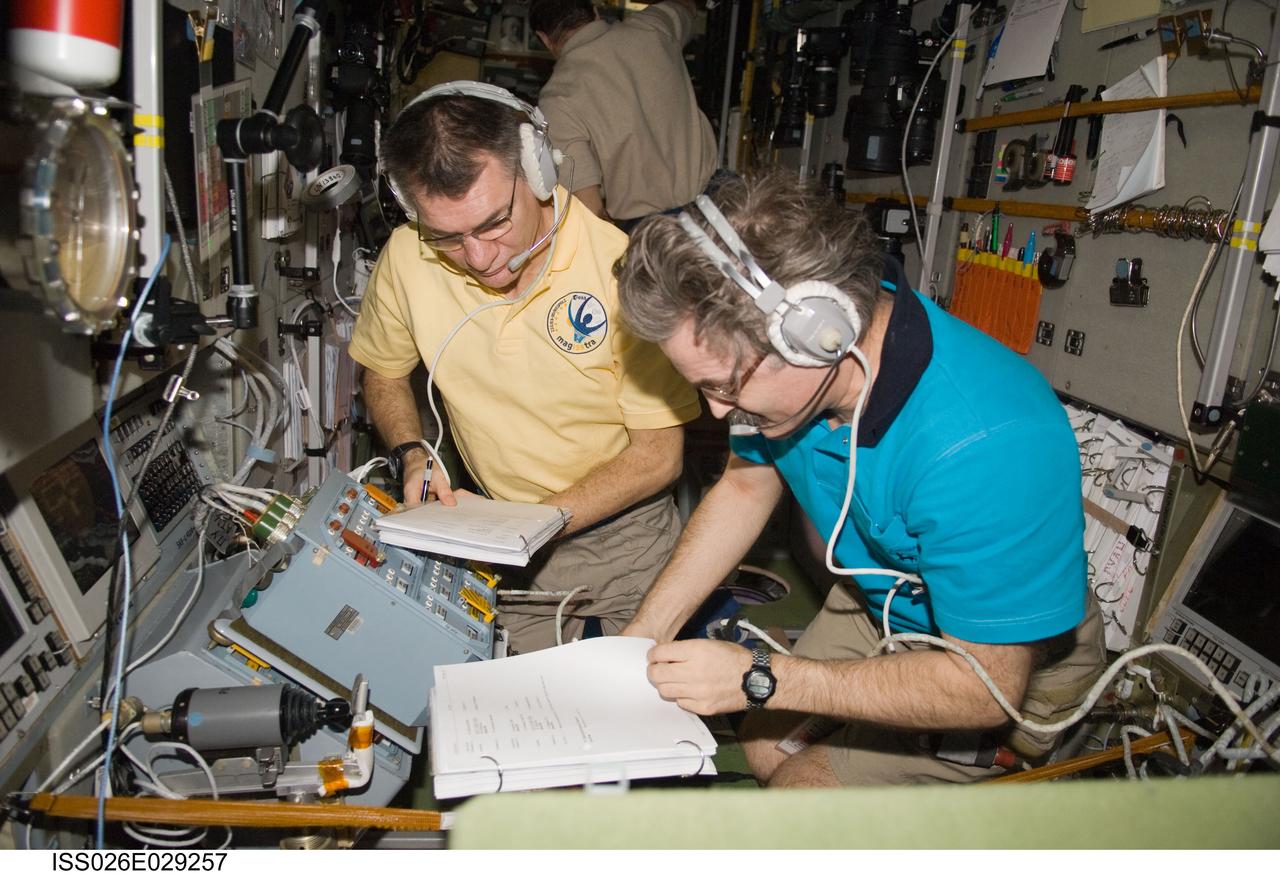
ISS026-E-029257 (24 Feb. 2011) --- European Space Agency astronaut Paolo Nespoli (left) and Russian cosmonaut Alexander Kaleri, both Expedition 26 flight engineers, monitor the approach and docking of the European Space Agency's "Johannes Kepler" Automated Transfer Vehicle-2 (ATV-2). The ATV2 automatically docked with the aft end of the International Space Station's Zvezda Service Module at 10:59 a.m. (EST) on Feb. 24, 2011.
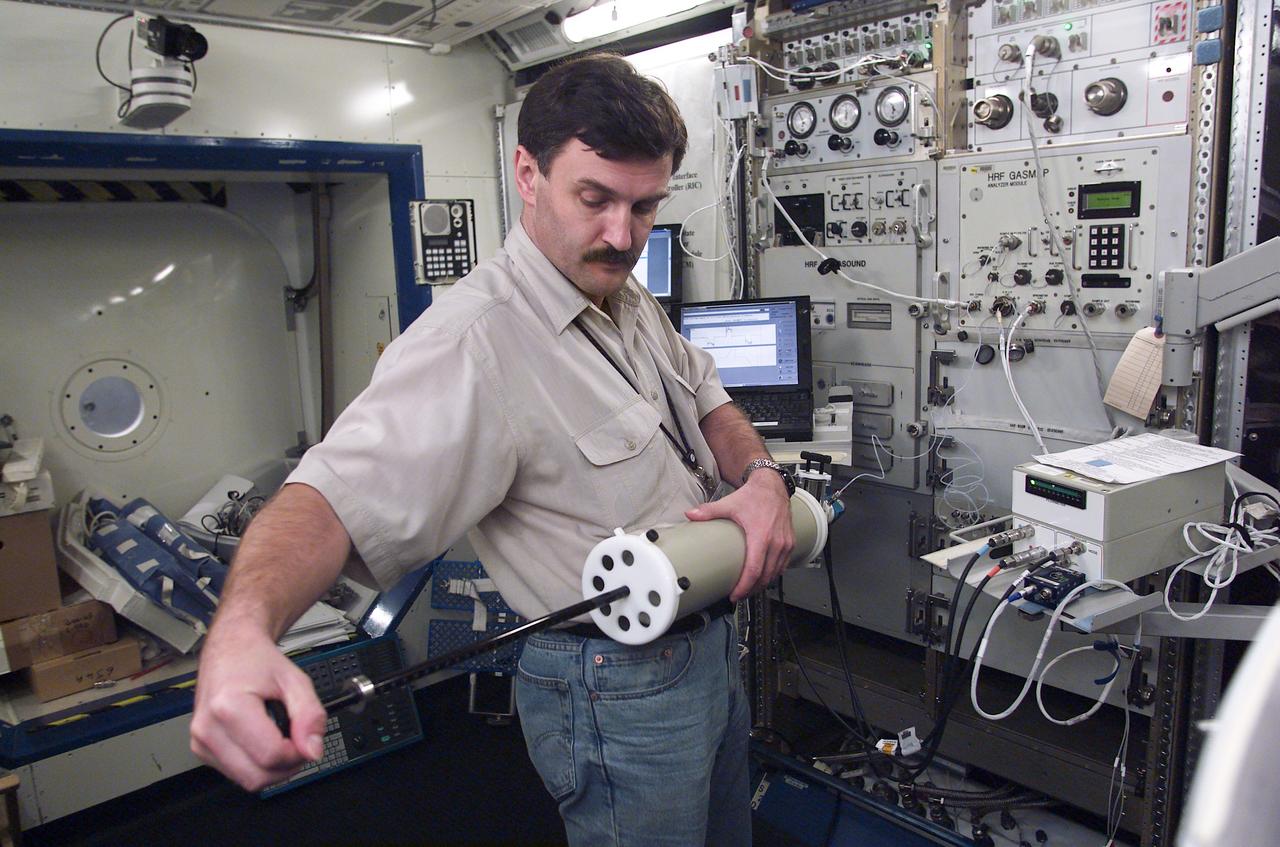
JSC2002-E-04266 (25 January 2002) --- Cosmonaut Alexander Kaleri, Expedition Five back-up crewmember representing Rosaviakosmos, participates in Pulmonary Function in Flight (PuFF) nominal operations training in the International Space Station (ISS) Destiny laboratory mockup/trainer at the Johnson Space Center’s Space Vehicle Mockup Facility.
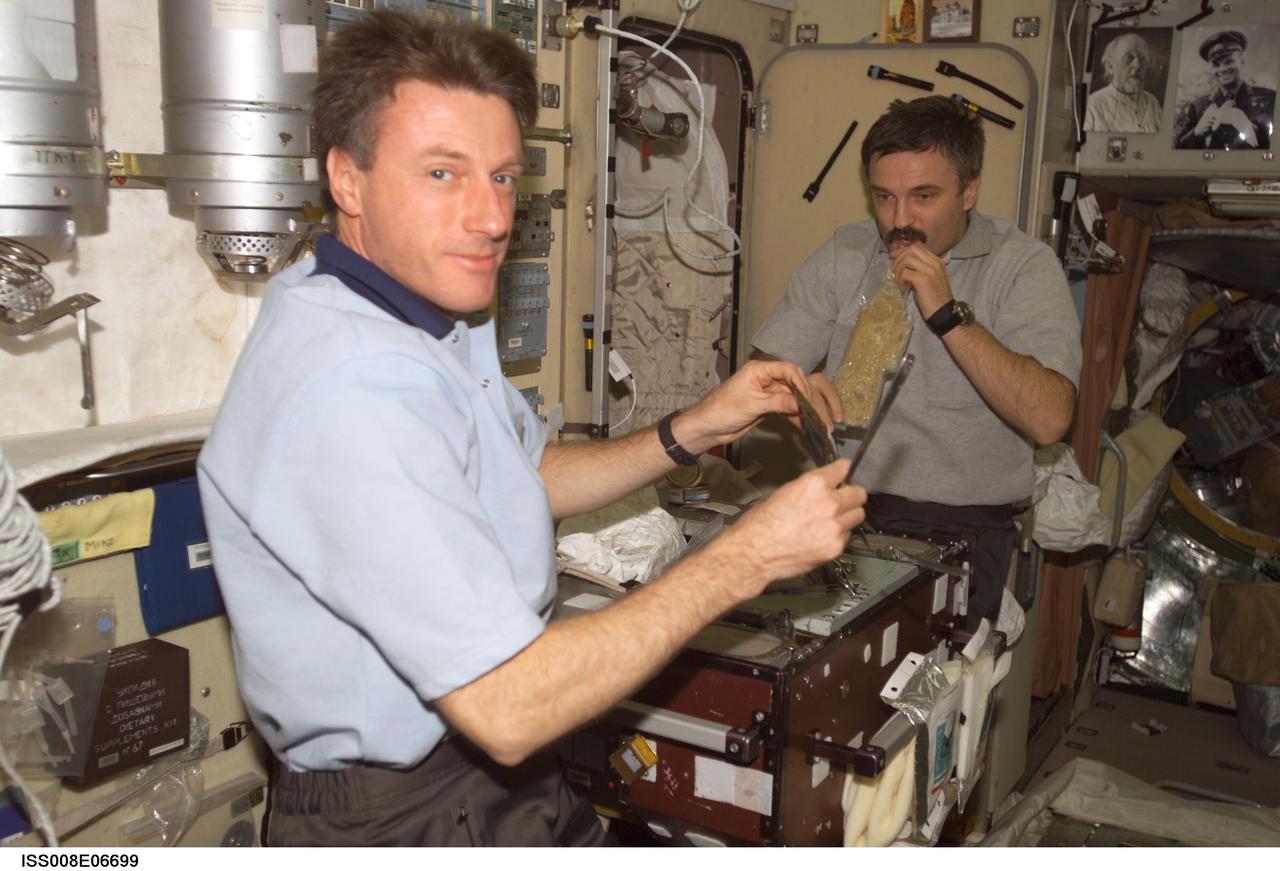
ISS008-E-06699 (1 December 2003) --- Astronaut C. Michael Foale (foreground), Expedition 8 mission commander and NASA ISS science officer, and cosmonaut Alexander Y. Kaleri, flight engineer representing Rosaviakosmos, eat a meal in the Zvezda Service Module on the International Space Station (ISS).
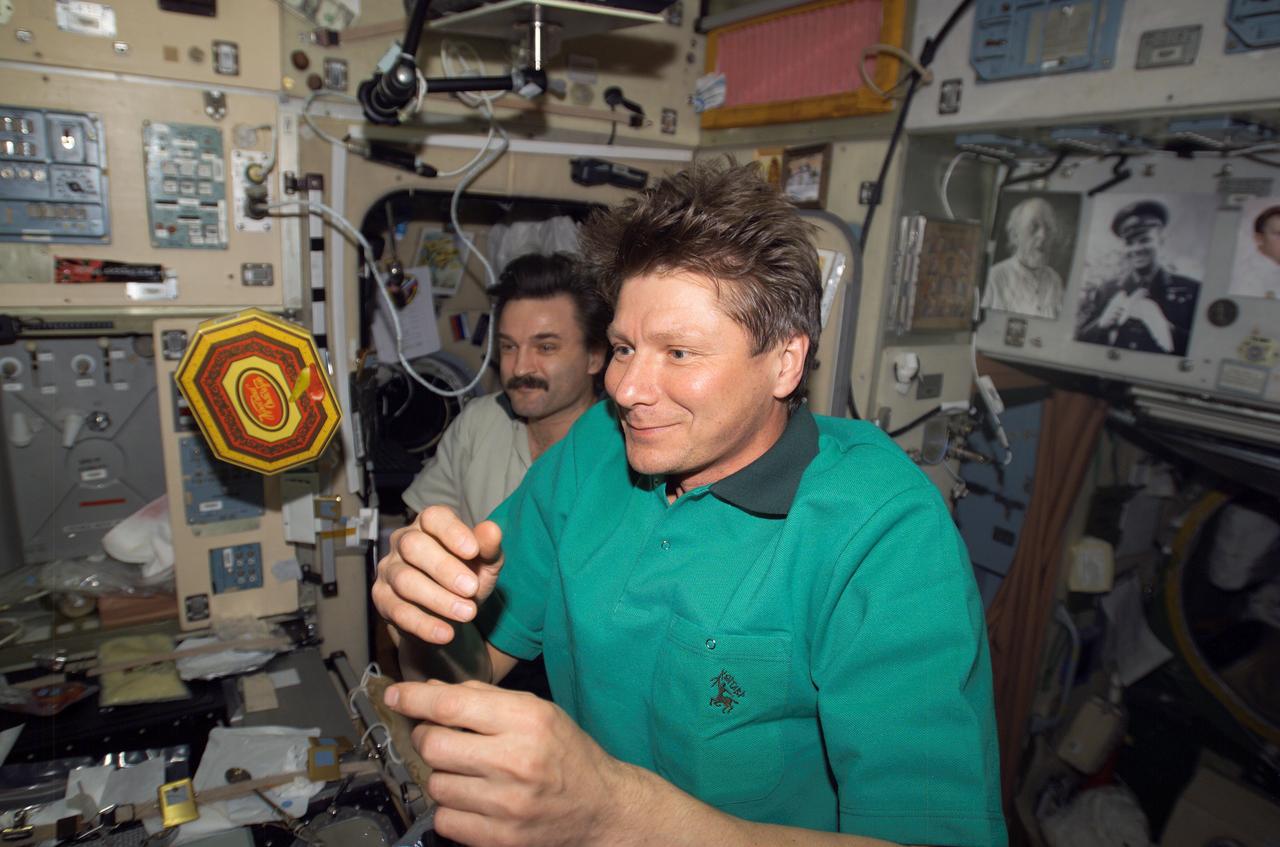
ISS008-E-22002 (22 April 2004) --- Cosmonaut Gennady I. Padalka, Expedition 9 commander, spins a box of chocolates as cosmonaut Alexander Y. Kaleri, Expedition 8 flight engineer, looks on in the Zvezda Service Module on the International Space Station (ISS). Padalka and Kaleri represent Russia’s Federal Space Agency.
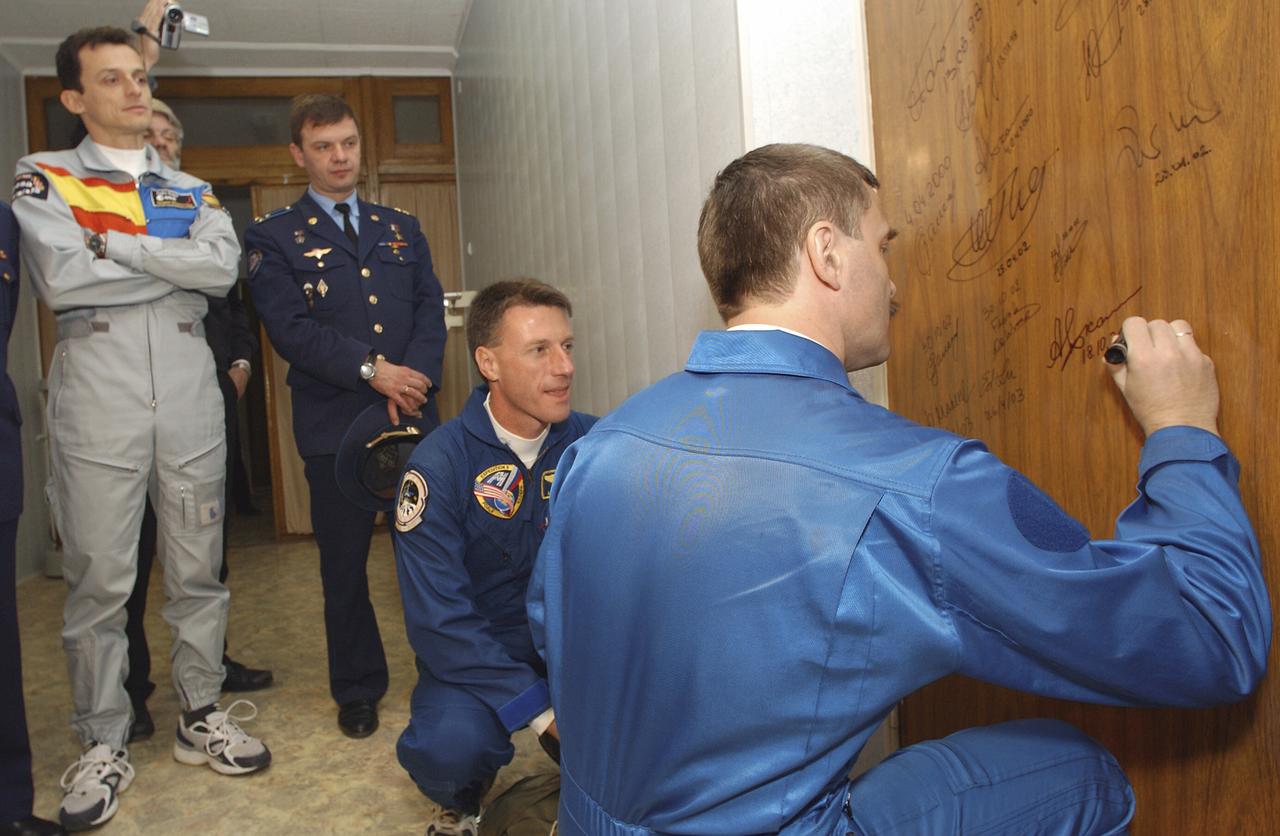
As European Space Agency astronaut Pedro Duque of Spain, left, former International Space Station crewmember Yuri Gidzenko (center) and Expedition 8 Commander and NASA Science Officer Mike Foale look on, Expedition 8 Soyuz Commander and Flight Engineer Alexander Kaleri, rear to camera, signs his name to the door of his room at the Cosmonaut Hotel crew quarters, Saturday, Oct. 18, 2003, in Baikonur, Kazakhstan prior to departing for the launch pad. Foale, Kaleri and Duque were launched on a Soyuz TMA-3 vehicle from Baikonur to the International Space Station, arriving on Oct. 20. Photo Credit (NASA/Bill Ingalls)
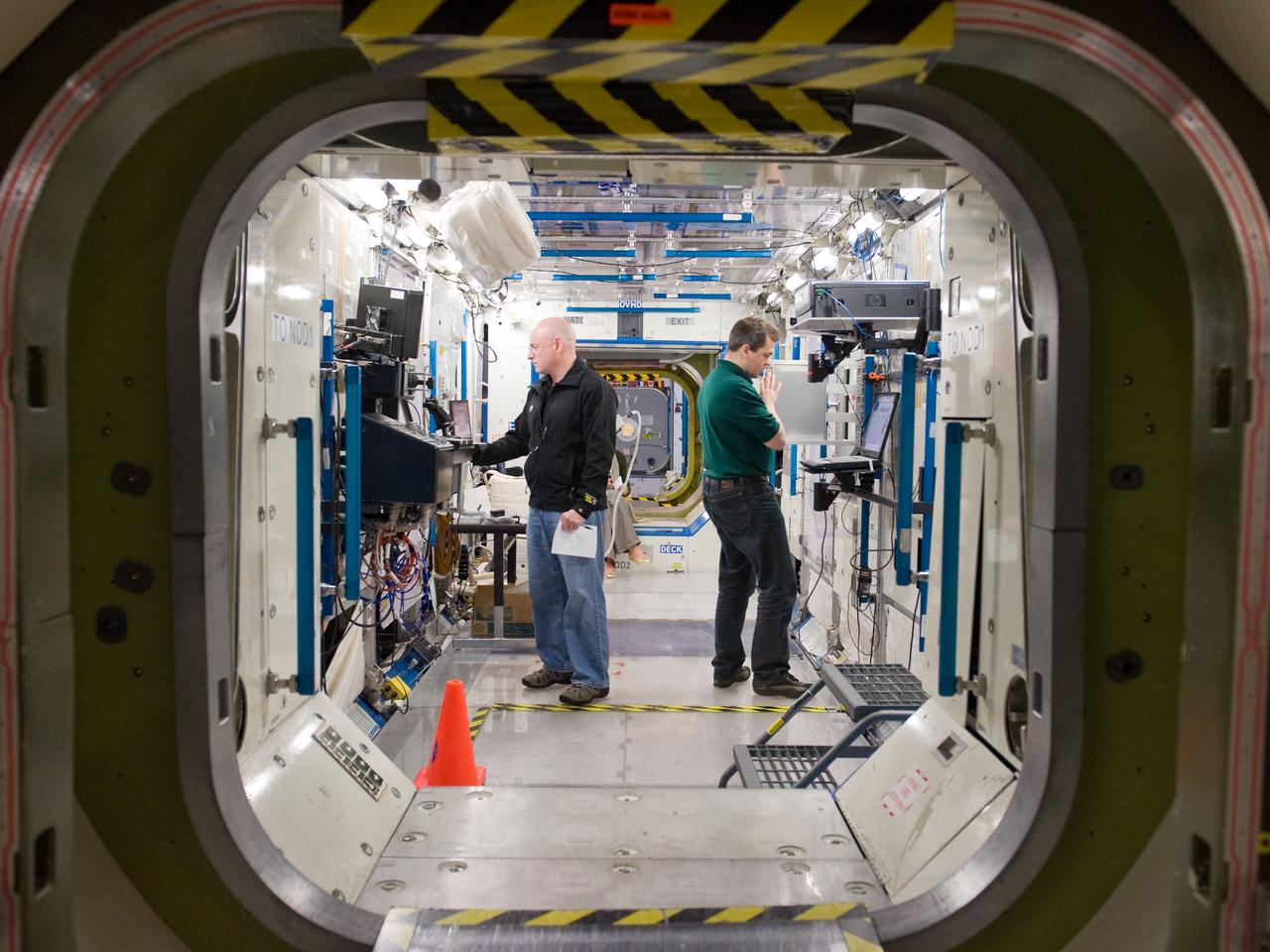
PHOTO DATE: 04-23-10 LOCATION: Bldg 9NW, ISS Mockup SUBJECT: Expedition 25 crew members, Kaleri, Skripochka and S. Kelly during routine ops training. PHOTOGRAPHER: James Blair
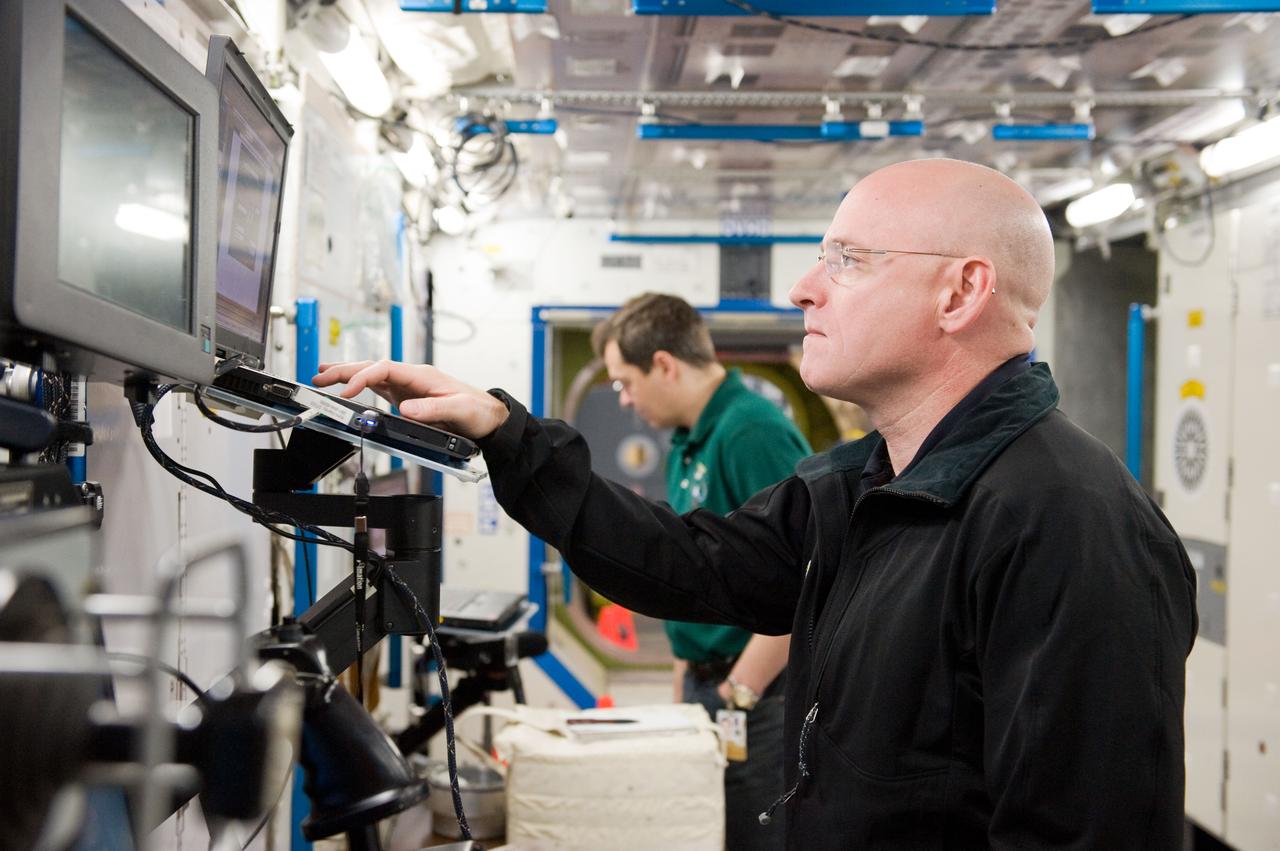
PHOTO DATE: 04-23-10 LOCATION: Bldg 9NW, ISS Mockup SUBJECT: Expedition 25 crew members, Kaleri, Skripochka and S. Kelly during routine ops training. PHOTOGRAPHER: James Blair
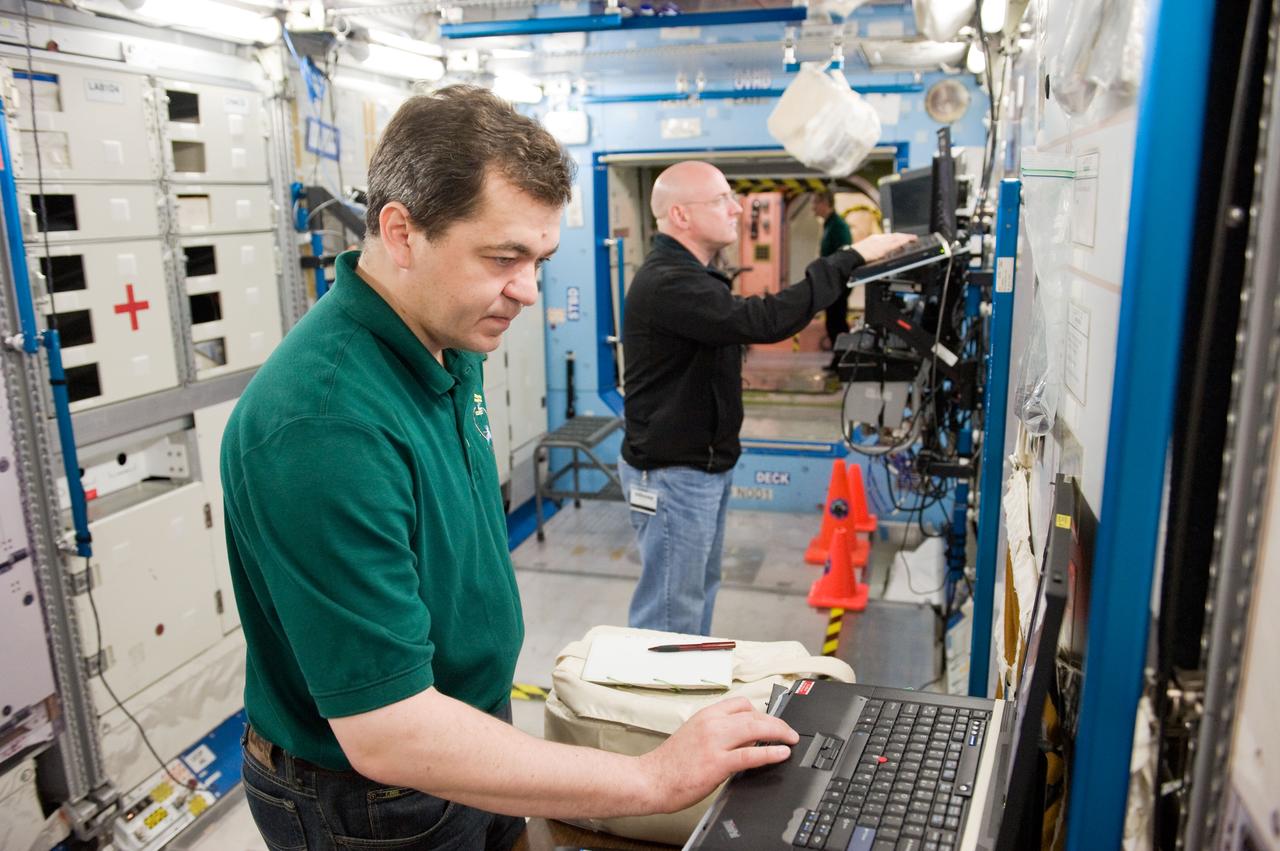
PHOTO DATE: 04-23-10 LOCATION: Bldg 9NW, ISS Mockup SUBJECT: Expedition 25 crew members, Kaleri, Skripochka and S. Kelly during routine ops training. PHOTOGRAPHER: James Blair
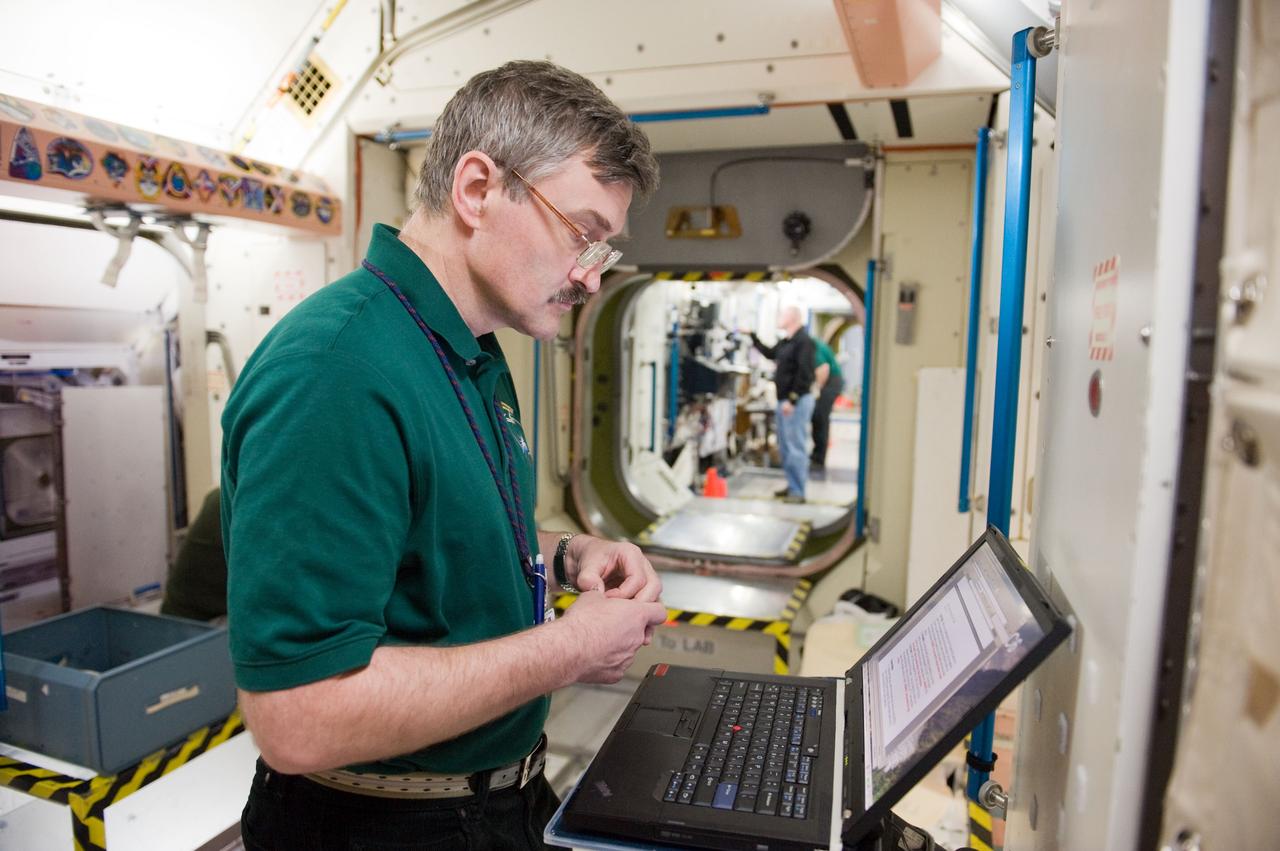
PHOTO DATE: 04-23-10 LOCATION: Bldg 9NW, ISS Mockup SUBJECT: Expedition 25 crew members, Kaleri, Skripochka and S. Kelly during routine ops training. PHOTOGRAPHER: James Blair
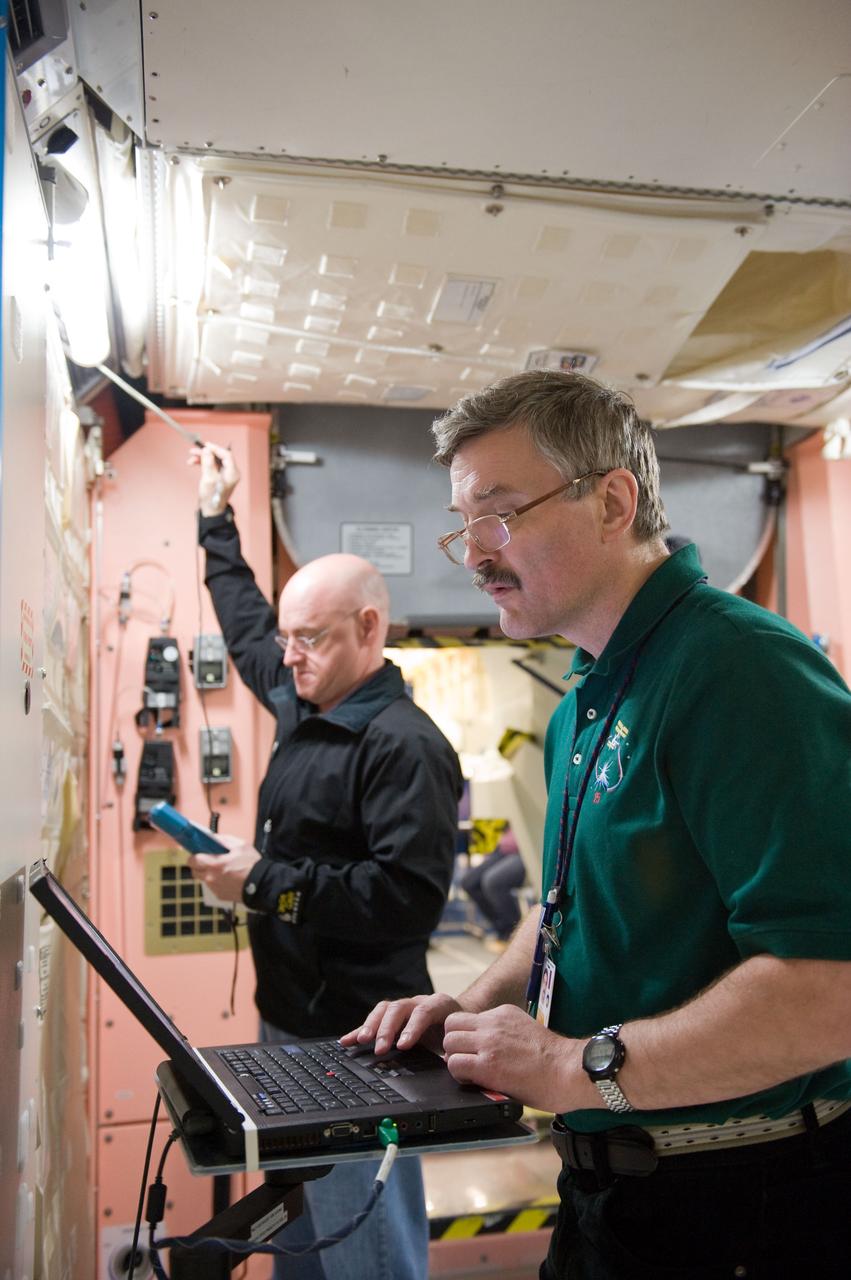
PHOTO DATE: 04-23-10 LOCATION: Bldg 9NW, ISS Mockup SUBJECT: Expedition 25 crew members, Kaleri, Skripochka and S. Kelly during routine ops training. PHOTOGRAPHER: James Blair
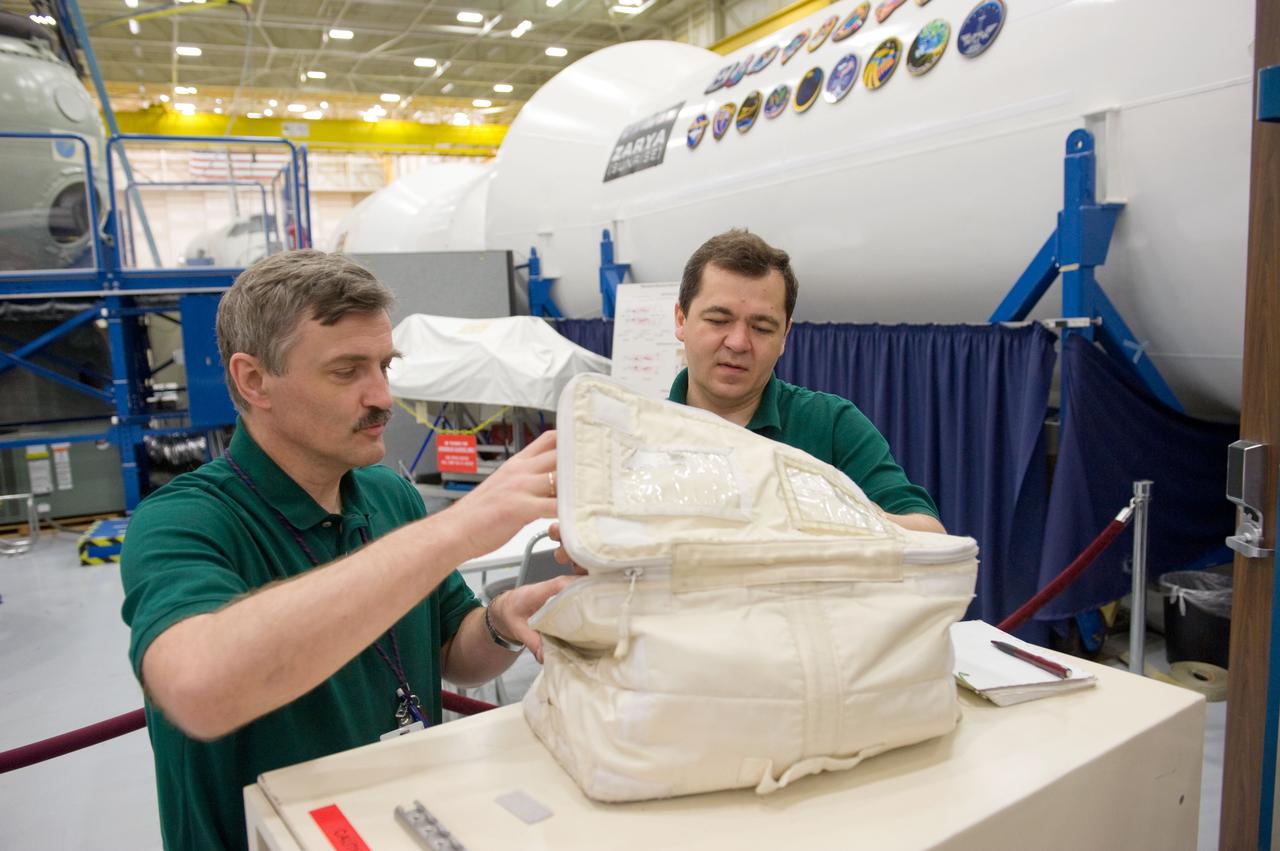
PHOTO DATE: 04-23-10 LOCATION: Bldg 9NW, ISS Mockup SUBJECT: Expedition 25 crew members, Kaleri, Skripochka and S. Kelly during routine ops training. PHOTOGRAPHER: James Blair
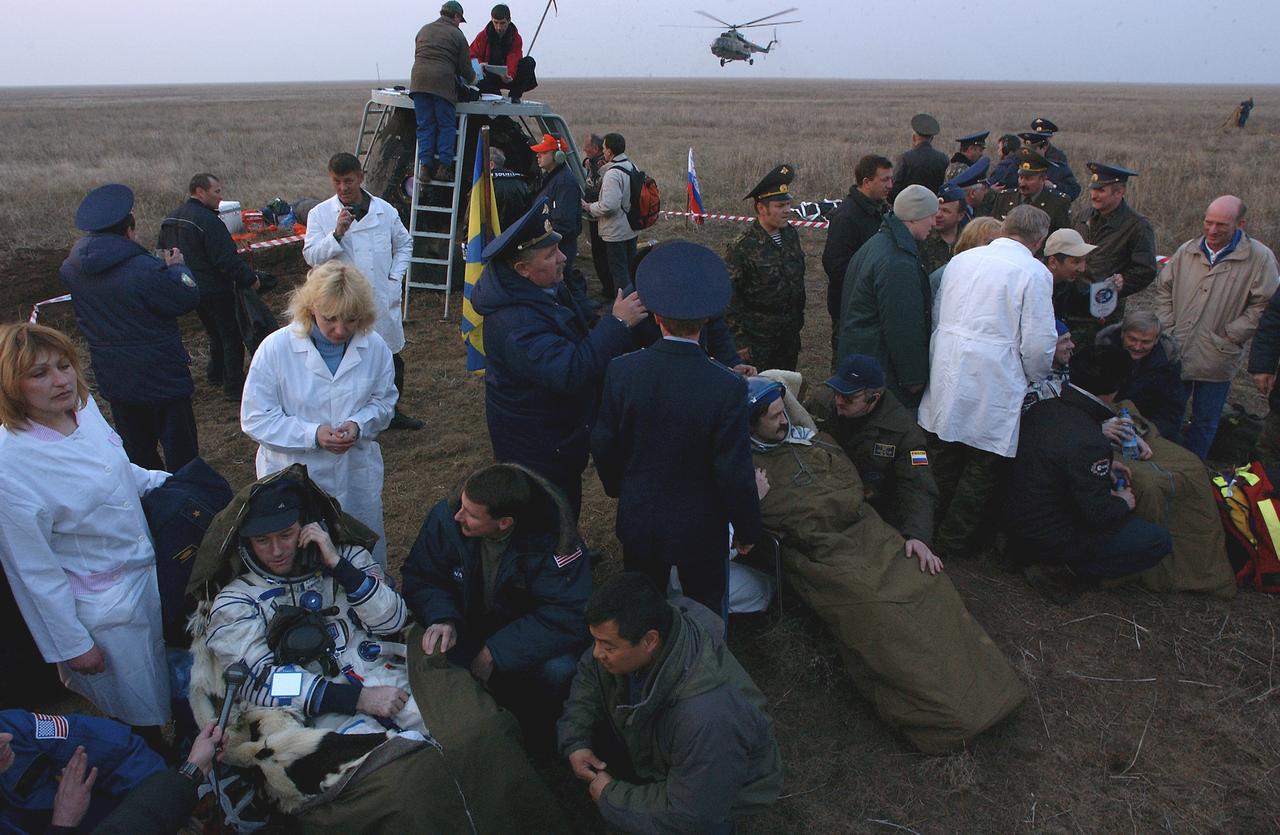
Expedition 8 Commander Mike Foale, lower left, Soyuz Flight Engineer Alexander Kaleri and European Space Agency astronaut Andre Kuipers of the Netherlands, partially hidden, are tended to after touching down in north central Kazakhstan, Friday, April 30, 2004. Foale and Kaleri completed 195 days in space aboard the International Space Station, while Kuipers returned after an 11-day research mission as part of a commercial agreement between ESA and the Russian Federal Space Agency. Photo Credit (NASA/Bill Ingalls)
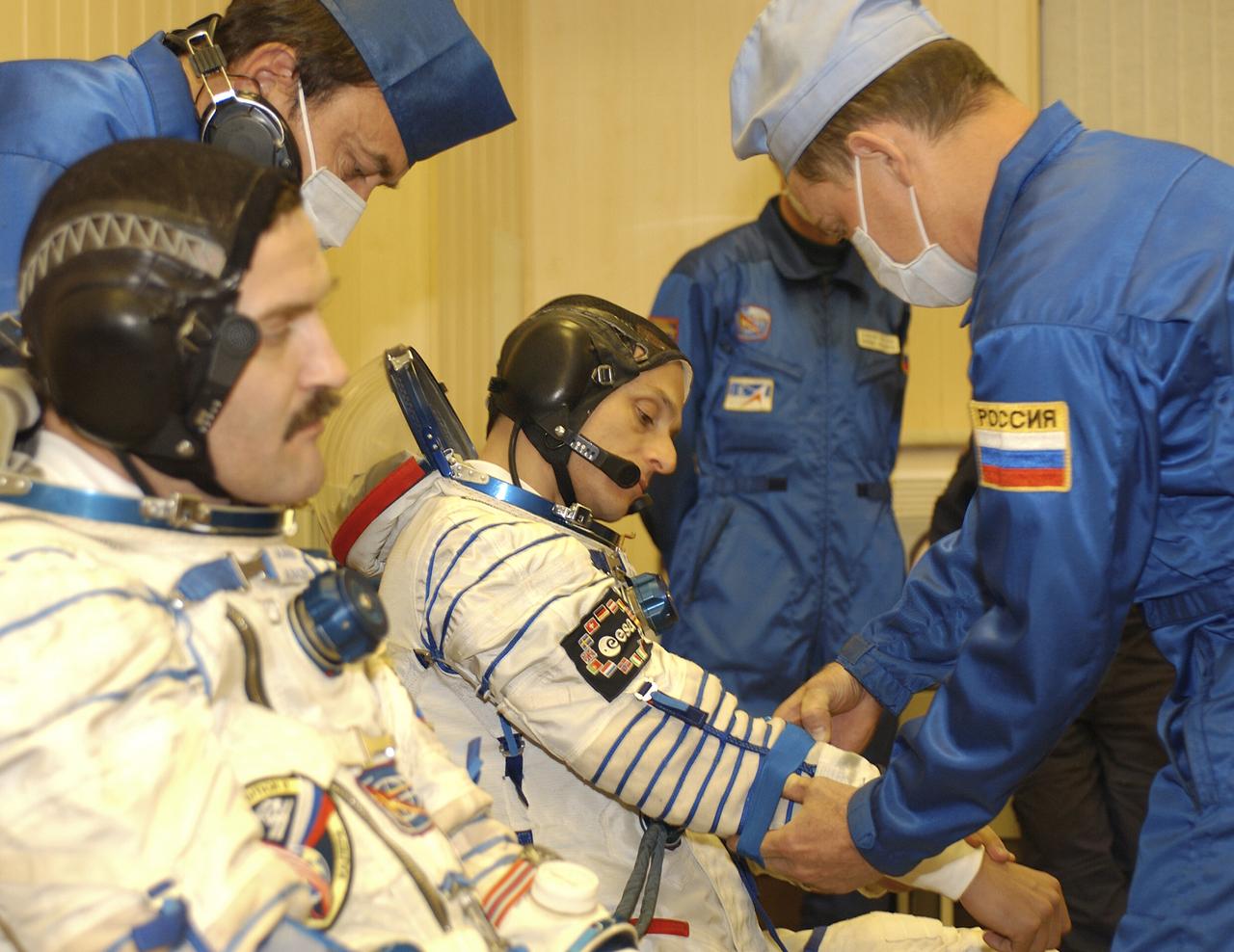
Expedition 8 Soyuz Commander Alexander Kaleri, left and European Space Agency astronaut Pedro Duque of Spain suit up for launch, Saturday, Oct. 18, 2003, prior to departure for the launch pad at the Baikonur Cosmodrome in Kazakhstan. Expedition 8 Commander and NASA Science Officer Mike Foale, Kaleri and Duque. were launched on the Soyuz TMA-3 vehicle to the International Space Station, arriving on Oct. 20. Photo Credit (NASA/Bill Ingalls)
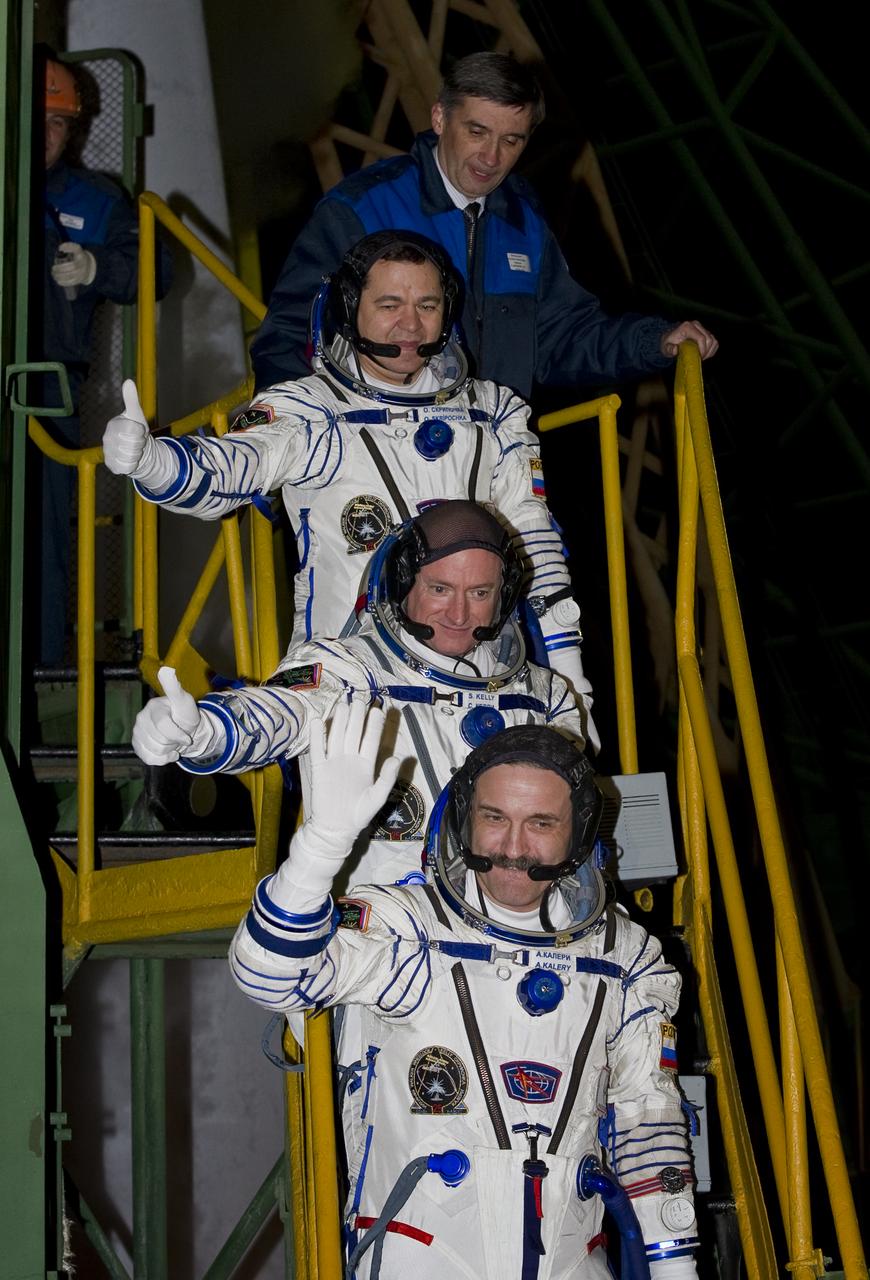
Expedition 25 Soyuz Commander Alexander Kaleri of Russia, bottom, NASA Flight Engineer Scott Kelly of the U.S., center, and Russian Flight Engineer Oleg Skripochka wave farewell from the bottom of the soyuz rocket at the Baikonur Cosmodrome in Baikonur, Kazakhstan, Friday, Oct. 8, 2010. Kaleri, Kelly and Skripochka launched in their Soyuz TMA-01M rocket later that morning at 5:10 a.m. Kazakhstan time. (Photo Credit: NASA/Carla Cioffi)
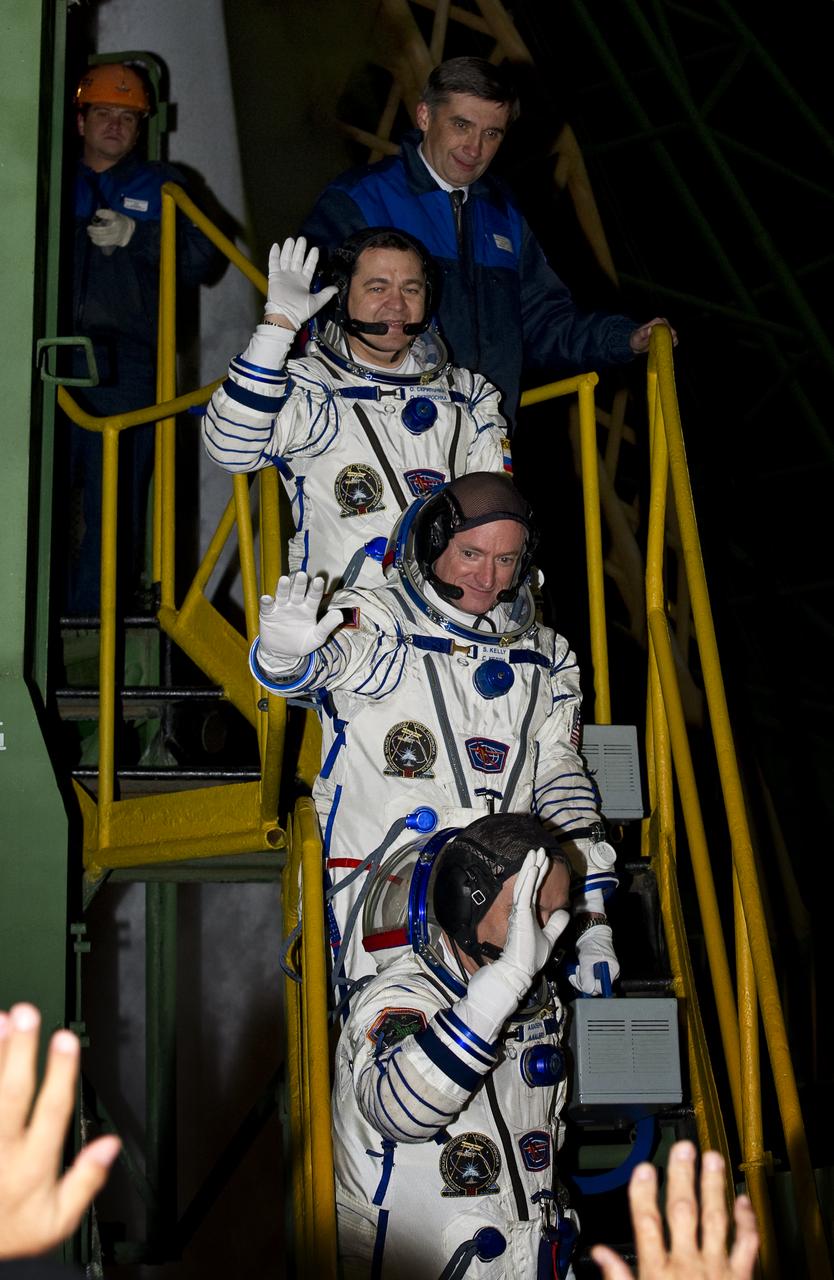
Expedition 25 Soyuz Commander Alexander Kaleri of Russia, bottom, NASA Flight Engineer Scott Kelly of the U.S., center, and Russian Flight Engineer Oleg Skripochka wave farewell from the bottom of the soyuz rocket at the Baikonur Cosmodrome in Baikonur, Kazakhstan, Friday, Oct. 8, 2010. Kaleri, Kelly and Skripochka launched in their Soyuz TMA-01M rocket later that morning at 5:10 a.m. Kazakhstan time. (Photo Credit: NASA/Carla Cioffi)
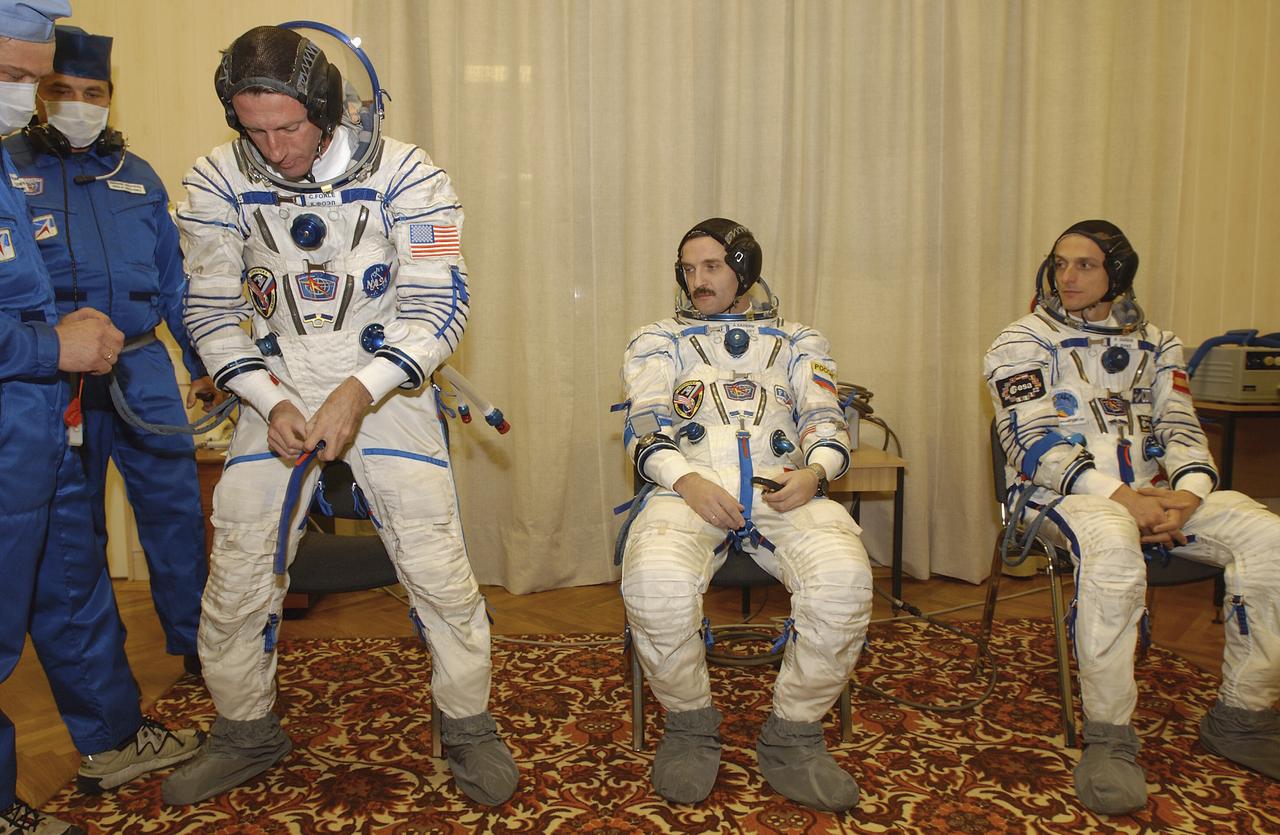
Expedition 8 Commander and NASA Science Officer Michael Foale, left, Expedition 8 Soyuz Commander Alexander Kaleri and European Space Agency astronaut Pedro Duque, right, complete suiting up, Saturday, Oct. 18, 2003, prior to departure for the launch pad at the Baikonur Cosmodrome in Kazakhstan. Foale, Kaleri and Duque were launched on a Soyuz TMA-3 vehicle to the International Space Station, arriving on Oct. 20. Photo Credit (NASA/Bill Ingalls)
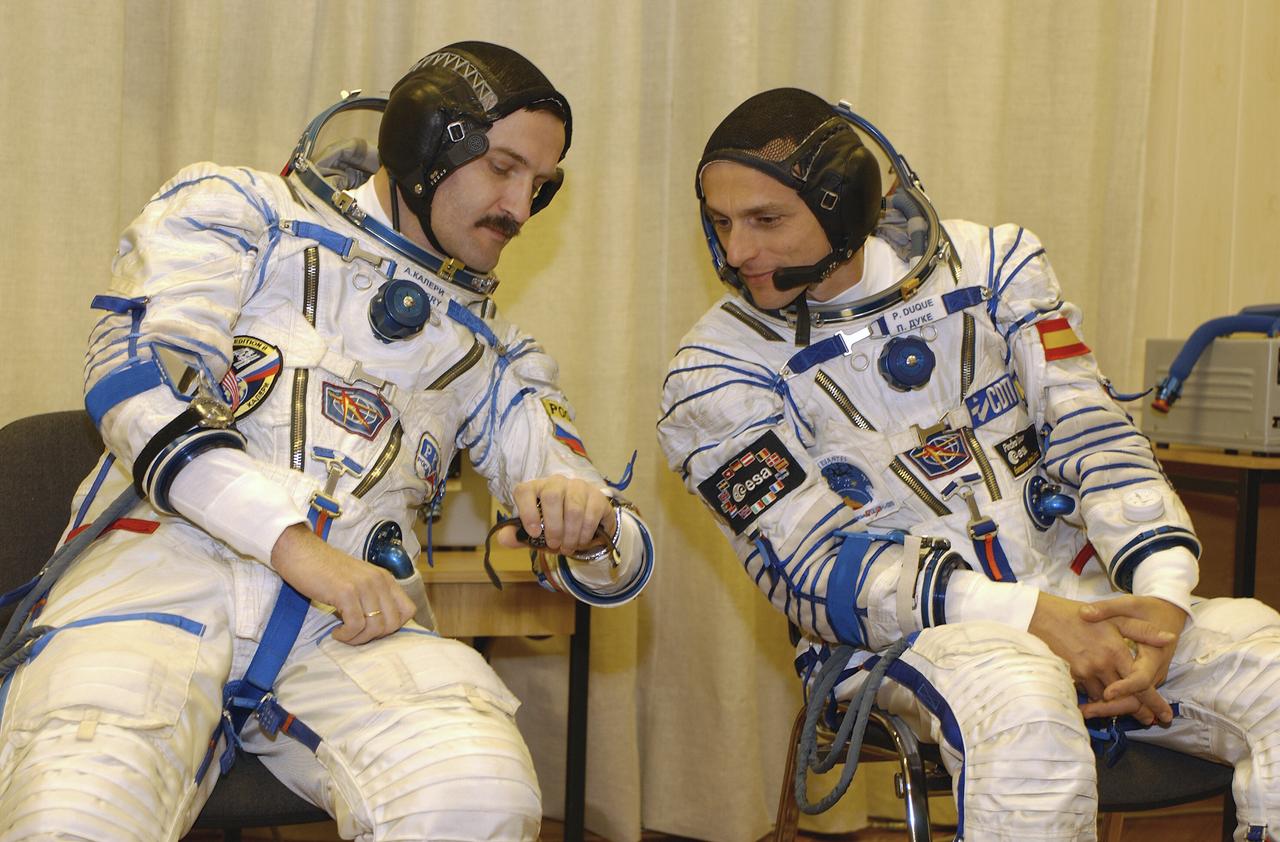
Expedition 8 Soyuz Commander Alexander Kaleri, left and European Space Agency Astronaut Pedro Duque, of Spain, discuss procedures while suiting up, Saturday, Oct. 18, 2003, prior to departure for the launch pad at the Baikonur Cosmodrome in Kazakhstan. Expedition 8 Commander and NASA Science Officer Mike Foale, Kaleri and Duque were launched on a Soyuz TMA-3 vehicle to the International Space Station, arriving on Oct. 20. Photo Credit (NASA/Bill Ingalls)
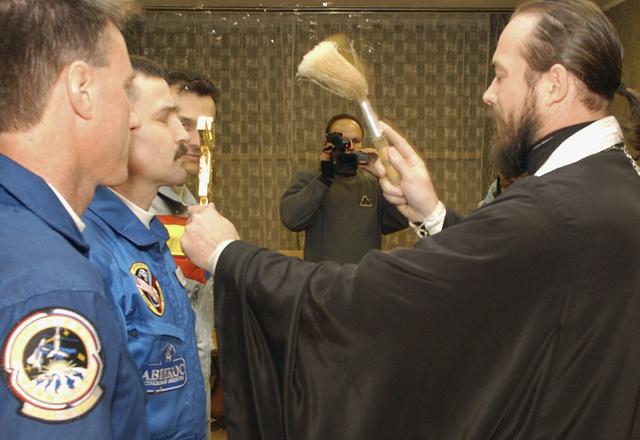
Expedition 8 Commander and NASA Science Officer Mike Foale, left, Expedition 8 Soyuz Commander Alexander Kaleri and European Space Agency astronaut Pedro Duque of Spain, receive a traditional blessing from an unidentified Russian Orthodox priest in their crew quarters at the Cosmonaut Hotel, Saturday, Oct. 18, 2003, in Baikonur, Kazakhstan prior to departing for the launch pad. Foale, Kaleri and Duque were launched on a Soyuz TMA-3 vehicle to the International Space Station, arriving on Oct. 20. Photo Credit (NASA/Bill Ingalls)
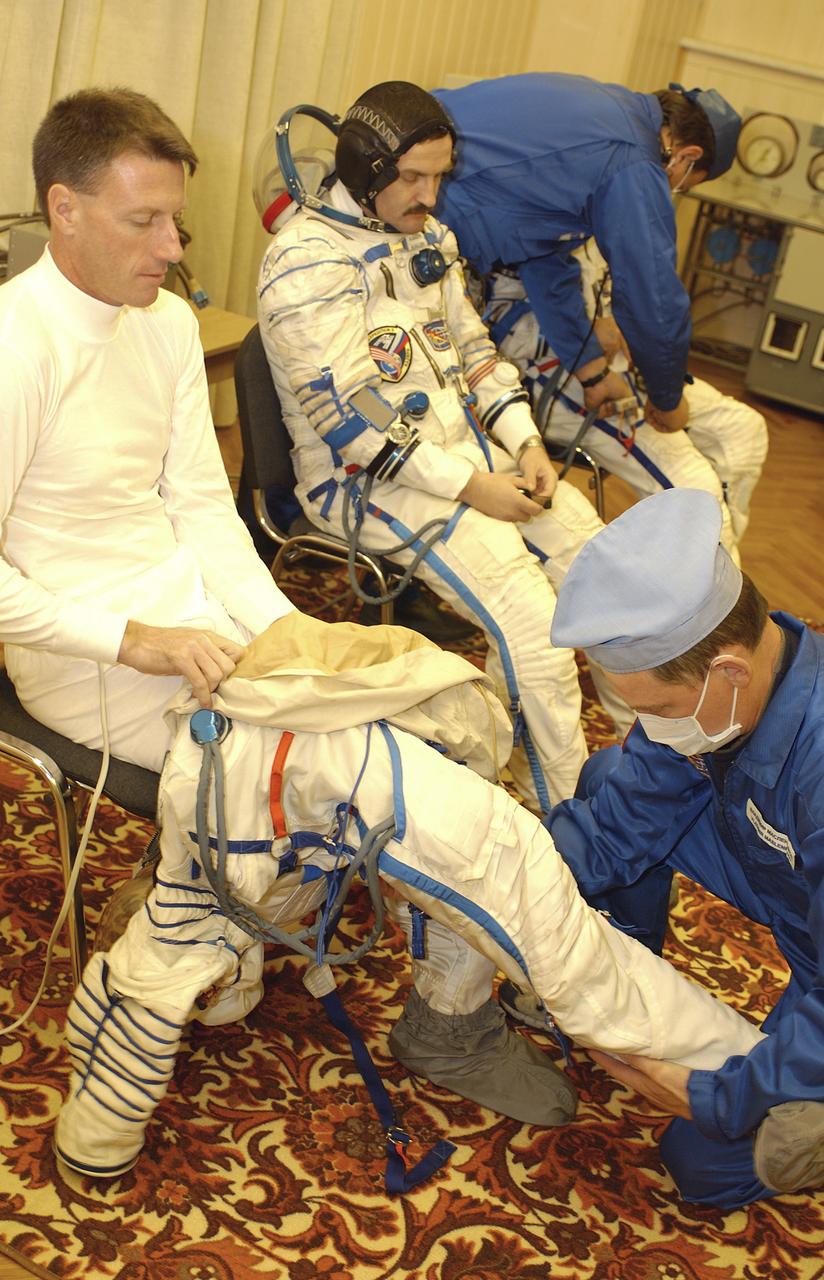
Expedition 8 Commander and NASA Scienhce Officer Michael Foale, left and Expedition 8 Soyuz Commander Alexander Kaleri suit up for launch with the assistance of technicians, Saturday, Oct. 18, 2003, prior to departure for the launch pad at the Baikonur Cosmodrome in Kazakhstan. Foale, Kaleri and European Space Agency astronaut Pedro Duque were launched on a Soyuz TMA-3 vehicle to the International Space Station, arriving on Oct. 20. Photo Credit (NASA/Bill Ingalls)
Expedition 8 Soyuz Commander and Flight Engineer Alexander Kaleri, left, Expedition 8 Commander Michael Foale, European Space Agency Astronaut Pedro Duque of Spain, right, along with Valery Korzun, Chief of Cosmonauts, arrive in Baikonur, Kazakhstan, Sunday, Oct. 12, 2003. Photo Credit (NASA/Bill Ingalls)
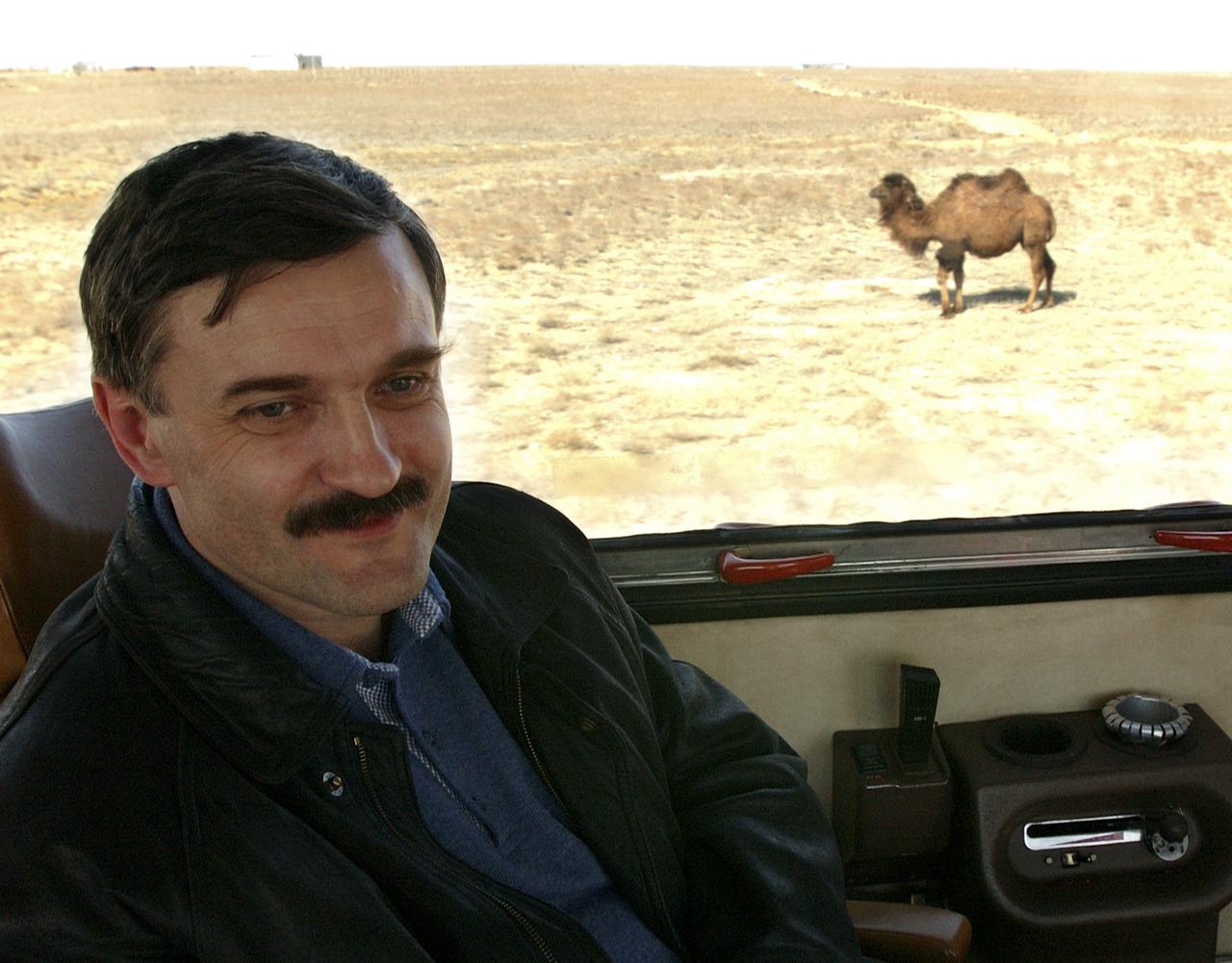
Cosmonaut Alexander Kaleri, backup crew member for Expedition 7, enjoys the bus ride to the Cosmonuat hotel after arriving in Baikonur, Kazakhstan on Wednesday, April 9, 2003. The crews performed fit checks on their Russian Sokol suits and performed a Soyuz inspection at the Baikonur Cosmodrome. Photo Credit: (NASA/Bill Ingalls)
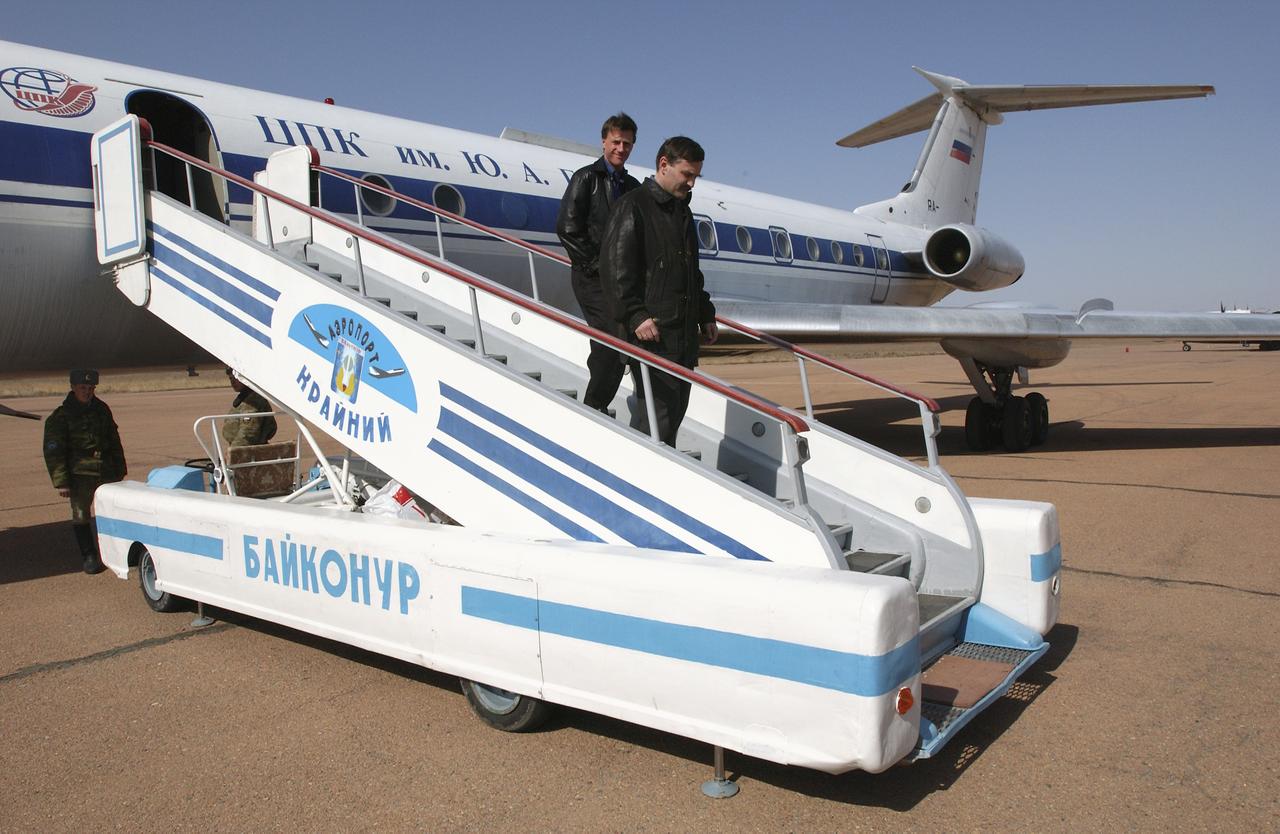
Astronaut Michael Foale, left, and Cosmonaut Alexander Kaleri, backup crew members for Expedition 7, depart the plane after their flight to Baikonur, Kazakhstan on Wednesday, April 9, 2003. The crews performed suit leak checks and Soyuz inspection, seat liner checks at the Baikonur Cosmodrome. Photo Credit: (NASA/Bill Ingalls)
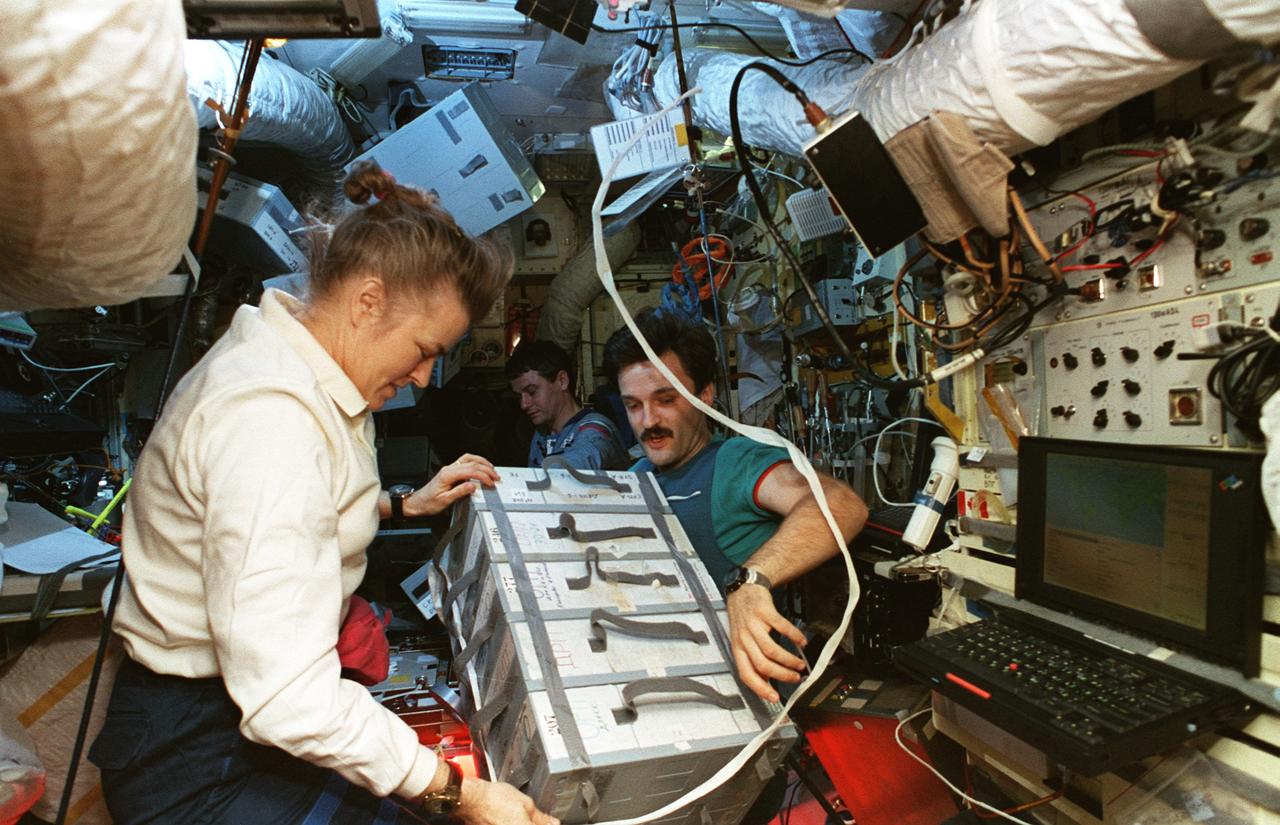
STS079-357-015 (20 Sept. 1996) --- Astronaut Shannon W. Lucid, in one her final opportunities to work with cosmonauts on her record stay in space, joins cosmonaut Aleksandr Kaleri in securing empty food trays to be moved from Russia's Mir Space Station to the Space Shuttle Atlantis. Cosmonaut Valeri Korzun, Mir-22 commander, is busy with other chores in the background.
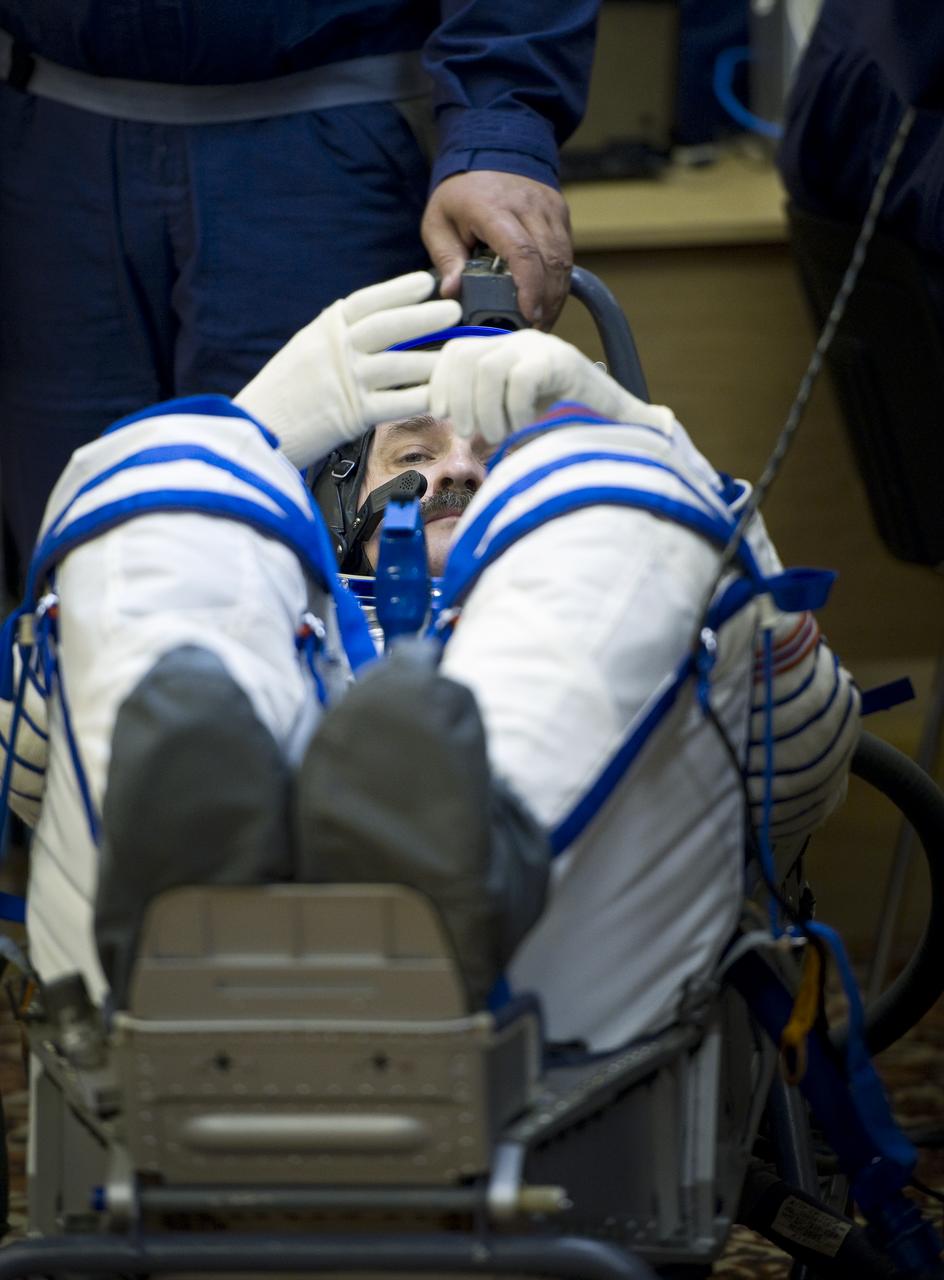
Expedition 25 Soyuz Commander Alexander Kaleri has his Russian Sokol Suit pressure checked at the Baikonur Cosmodrome in Kazakhstan on Friday, Oct. 8, 2010. (Photo Credit: NASA/Carla Cioffi)
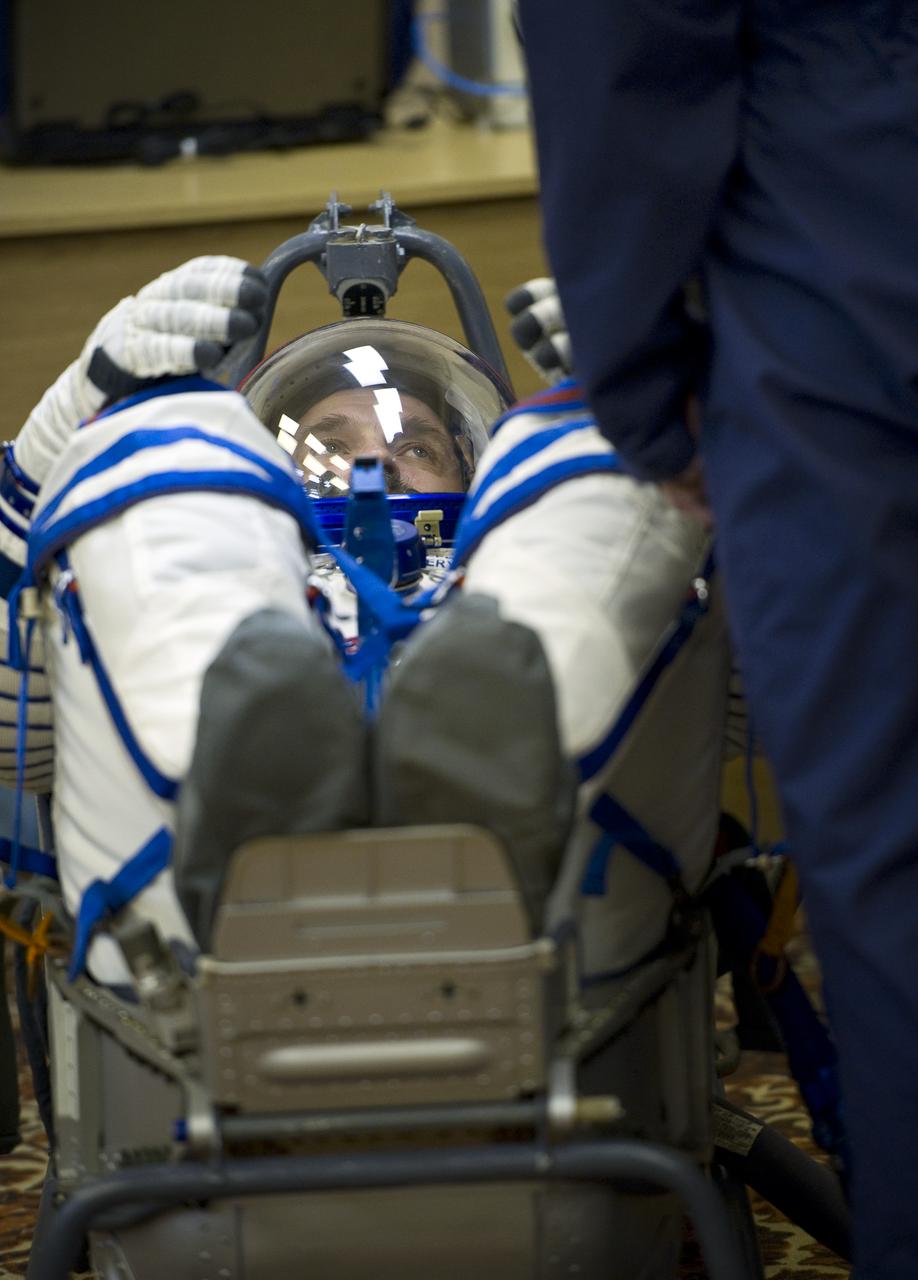
Expedition 25 Soyuz Commander Alexander Kaleri has his Russian Sokol Suit pressure checked at the Baikonur Cosmodrome in Kazakhstan on Friday, Oct. 8, 2010. (Photo Credit: NASA/Carla Cioffi)
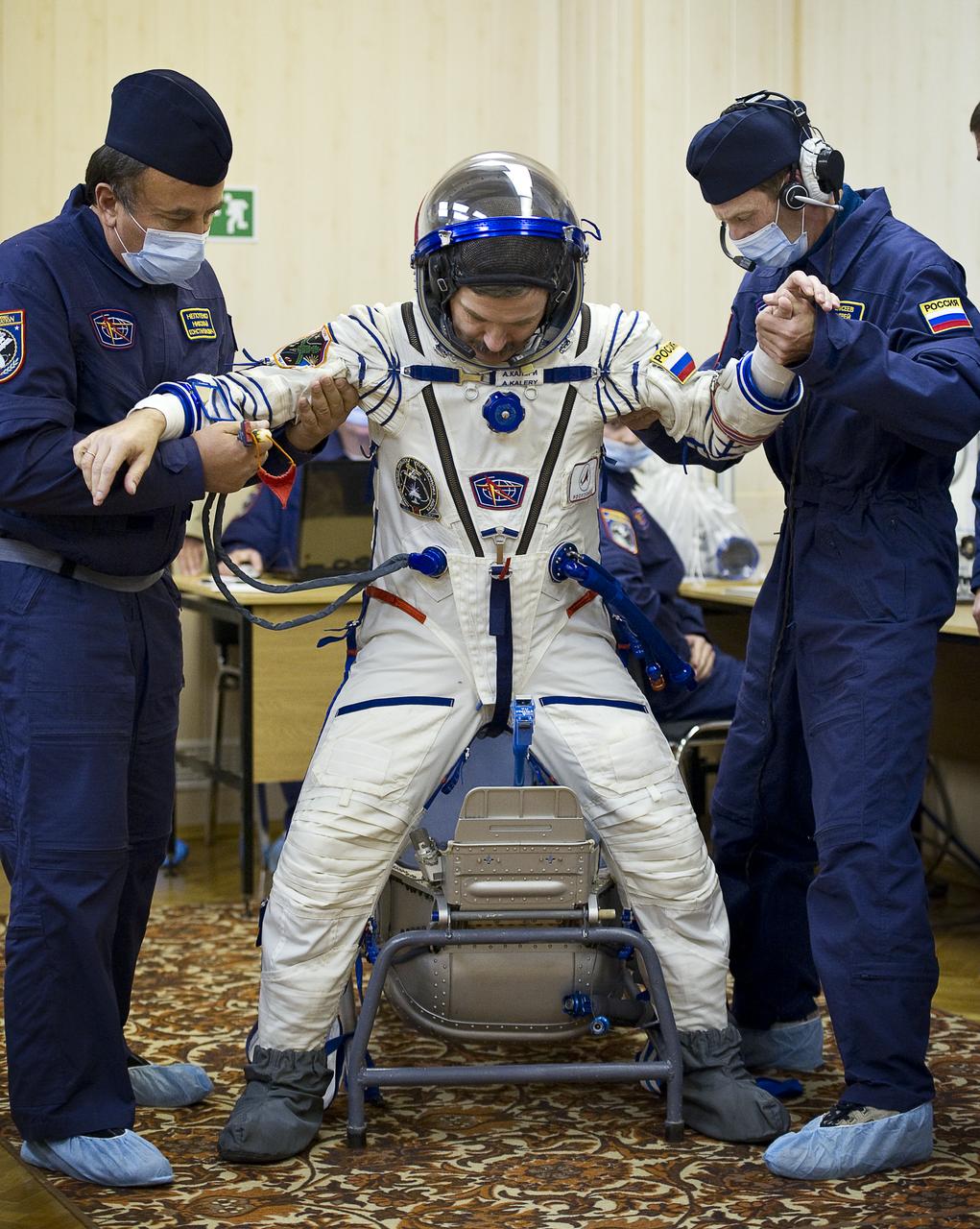
Expedition 25 Soyuz Commander Alexander Kaleri has his Russian Sokol Suit pressure checked at the Baikonur Cosmodrome in Kazakhstan on Friday, Oct. 8, 2010. (Photo Credit: NASA/Carla Cioffi)
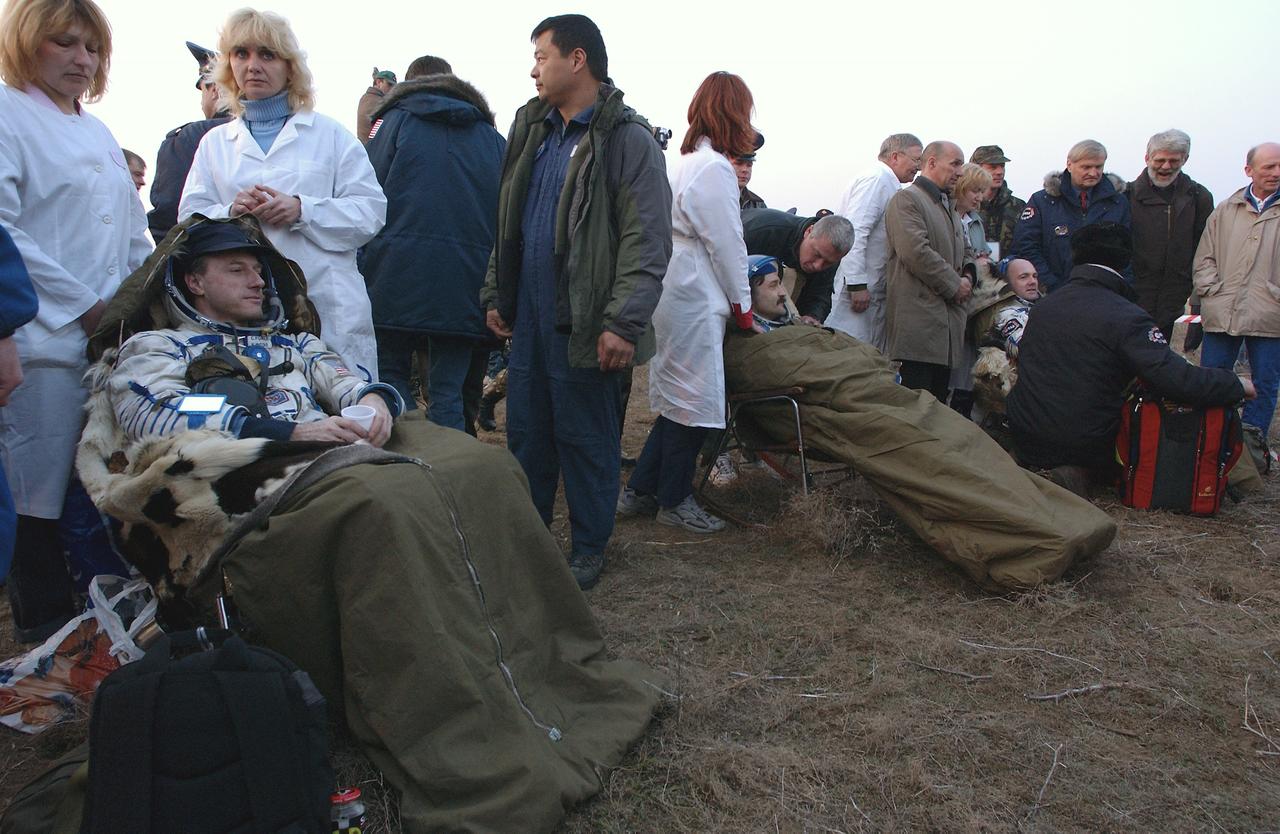
Expedition 8 Commander Michael Foale, left, Soyuz Flight Engineer Alexander Kaleri and European Space Agency astronaut Andre Kuipers, of the Netherlands, right, are seen seated after landing in north central Kazakhstan, Friday, April 30, 2004, in a Soyuz TMA-3 capsule. Foale and Kaleri completed 195 days in space aboard the International Space Station, while Kuipers returned after an 11-day research mission as part of a commercial agreement between ESA and the Russian Federal Space Agency. Photo Credit: (NASA/Bill Ingalls)
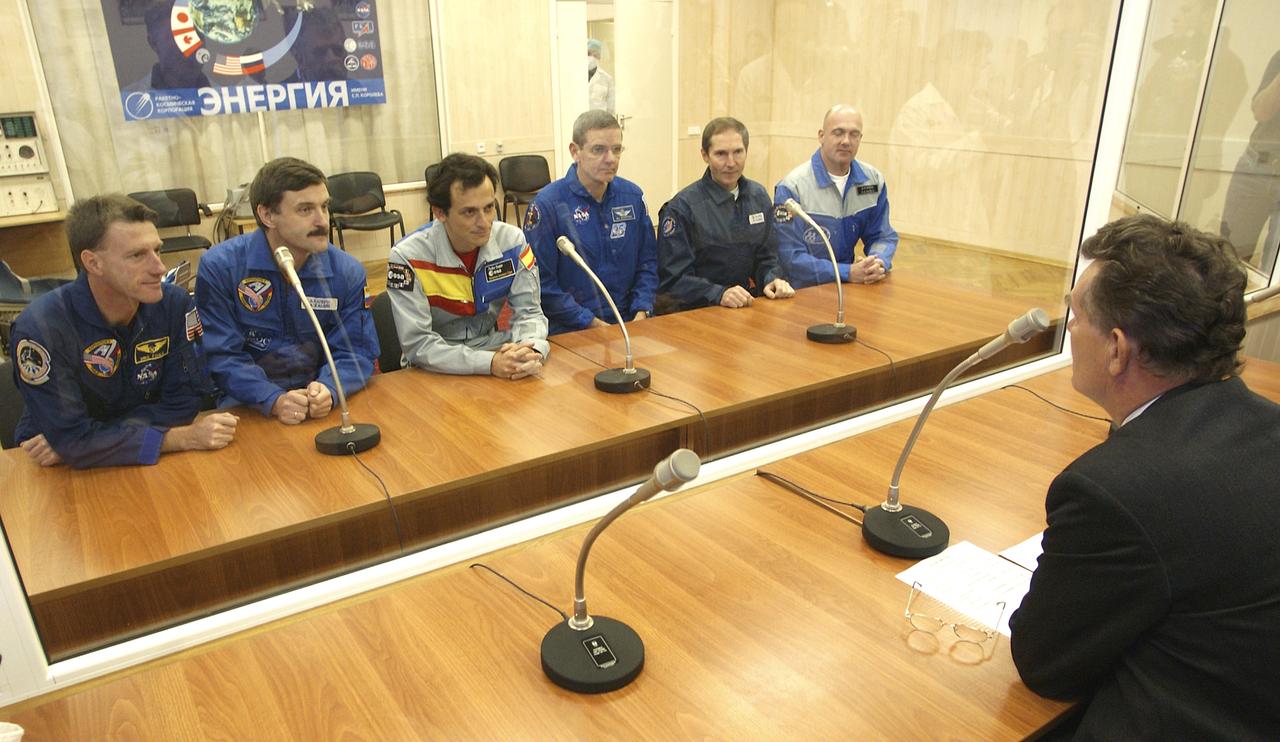
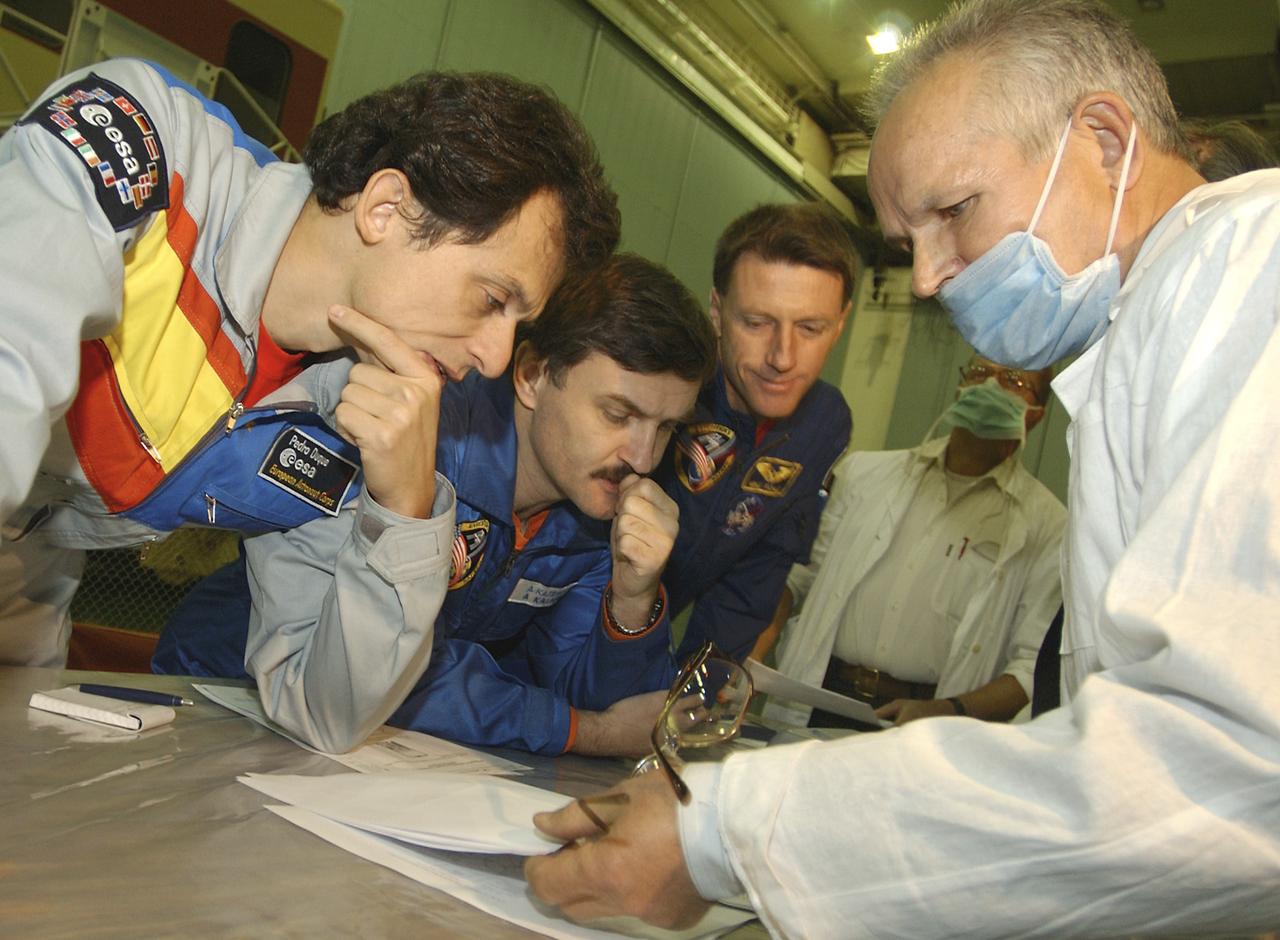
Expedition 8 ISS Commander and NASA Science Officer Michael Foale, far left, Expedition 8 Soyuz Commander and ISS Flight Engineer Alexander Kaleri and European Space Agency astronaut Pedro Duque of Spain, third from left, along with the backup crew (unidentified) are briefed by an official prior to a final inspection of the capsule in the complex' integration facility Monday, Oct. 13, 2003, at the Cosmodrome in Baikonur, Kazakhstan. Foale, Kaleri and Duque launched Oct. 18, 2003 aboard a Soyuz TMA-3 spacecraft enroute to the International Space Station. Photo Credit (NASA/Bill Ingalls)
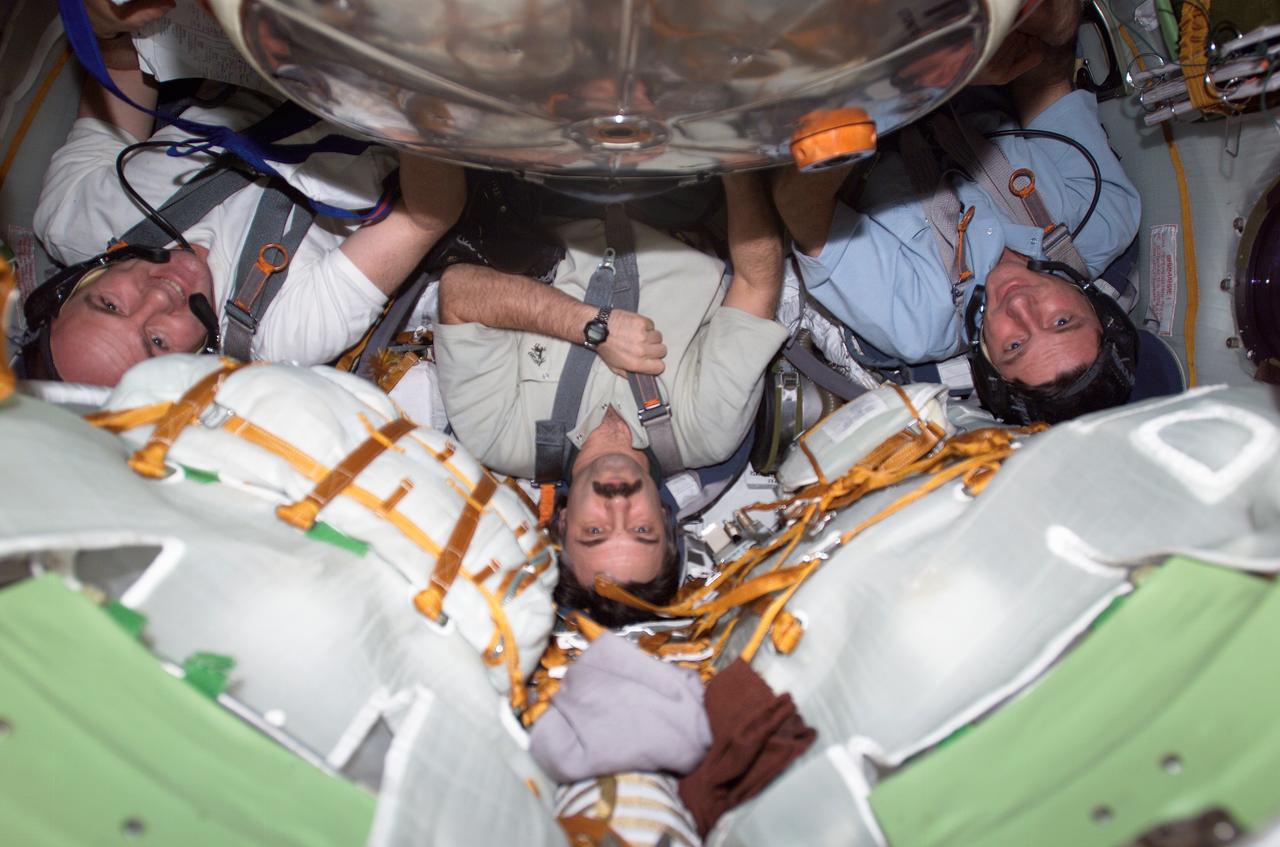
ISS008-E-22361 (27 April 2004) --- Astronaut C. Michael Foale (left), Expedition 8 commander and NASA ISS science officer; cosmonaut Alexander Y. Kaleri, flight engineer (FE) representing Russia’s Federal Space Agency; and European Space Agency (ESA) astronaut Andre Kuipers of the Netherlands participate in the Soyuz descent training exercise, which is standard procedure for each crew returning on a Soyuz. During the descent, Kaleri, as Soyuz commander, will occupy the middle couch, with FE-1 Kuipers in the left seat and FE-2 Foale in the Descent Module’s right “Kazbek” couch. The ISS Soyuz 7 is scheduled to undock from the Station at 3:52 p.m. (CDT) Thursday, April 29.
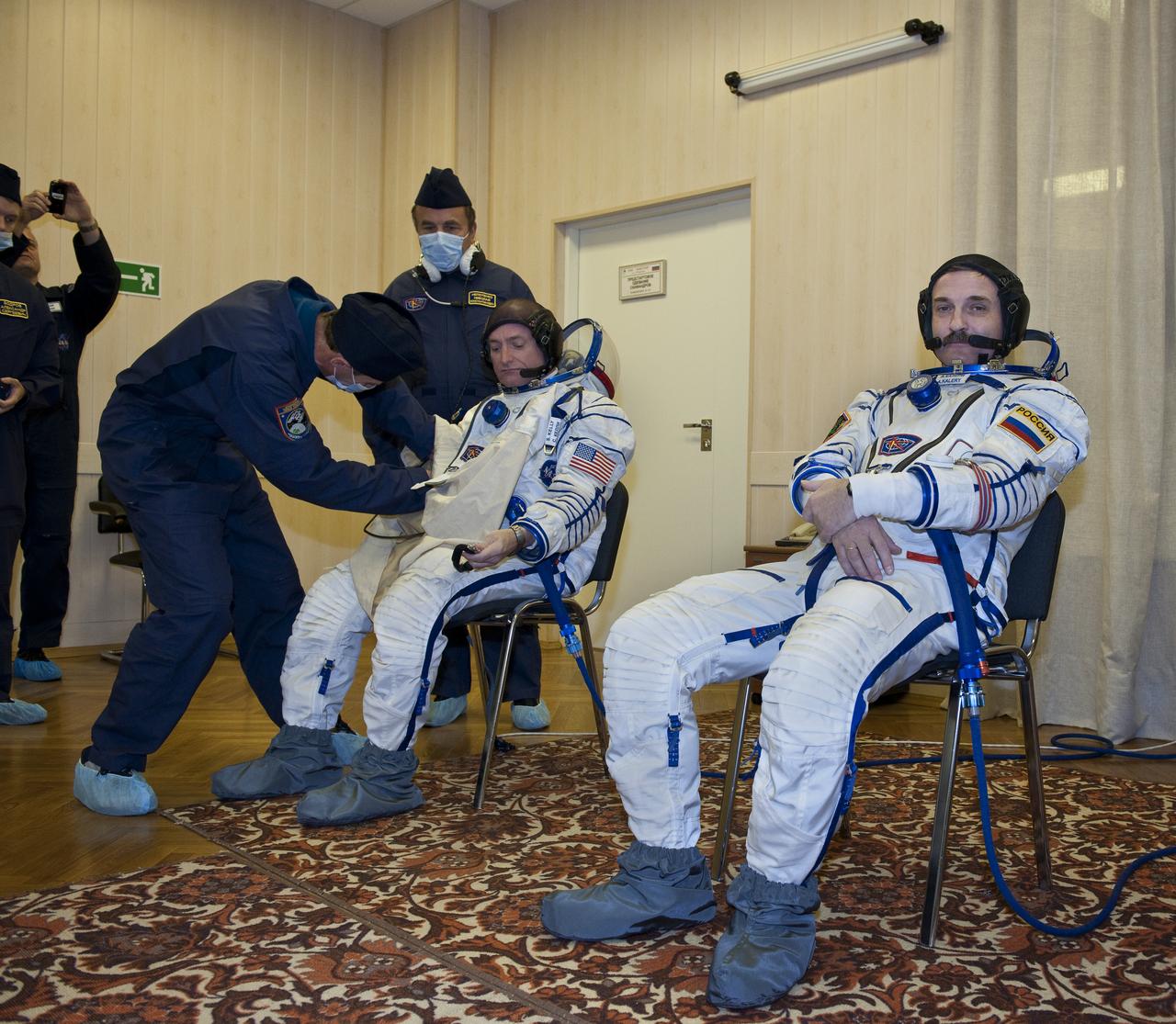
Expedition 25 NASA Flight Engineer Scott Kelly of the U.S., left, and Soyuz Commander Alexander Kaleri have their Russian Sokol suits prepared for launch by technicians at the Baikonur Cosmodrome in Kazakhstan, Friday, Oct. 8, 2010. (Photo Credit: NASA/Carla Cioffi)
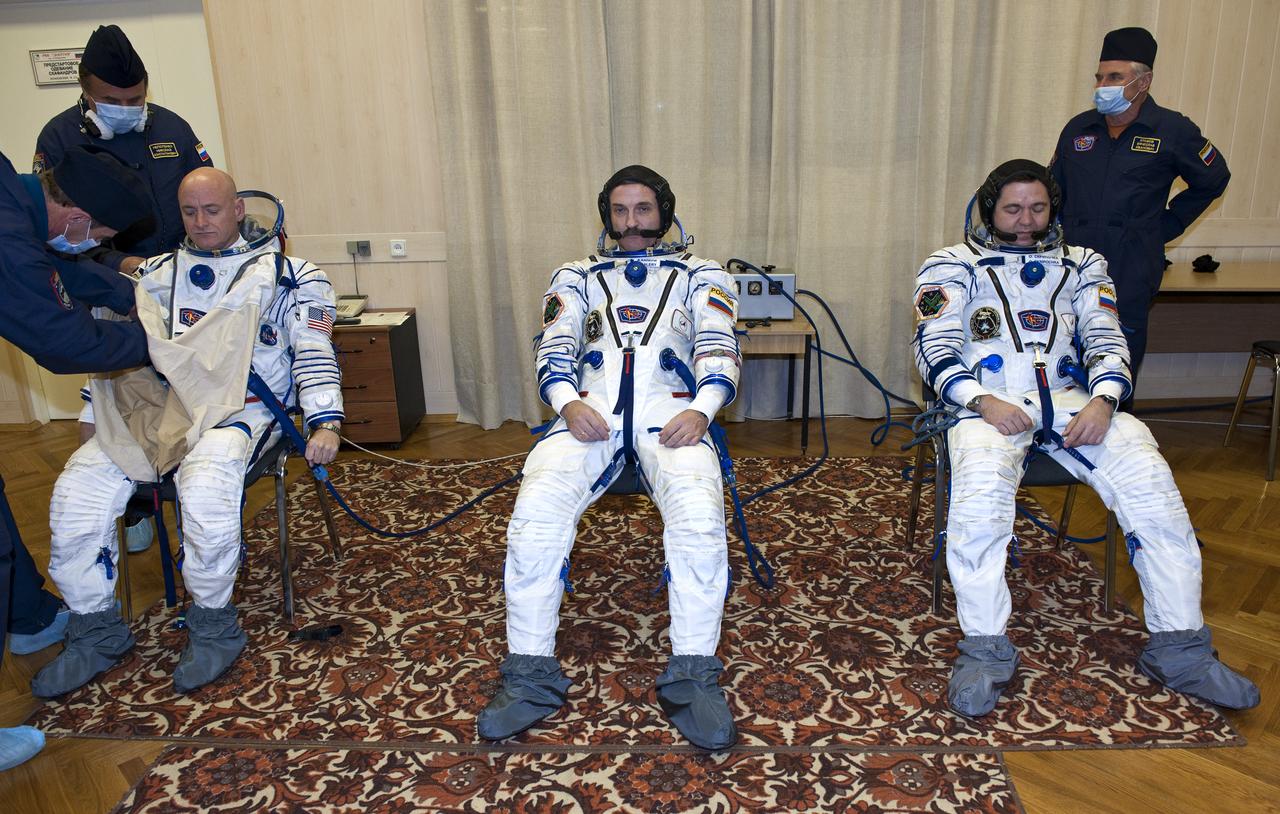
Expedition 25 NASA Flight Engineer Scott Kelly of the U.S., left, Soyuz Commander Alexander Kaleri and Flight Engineer Oleg Skripochka, right, have their Russian Sokol suits prepared for launch by technicians at the Baikonur Cosmodrome in Kazakhstan, Friday, Oct. 8, 2010. (Photo Credit: NASA/Carla Cioffi)
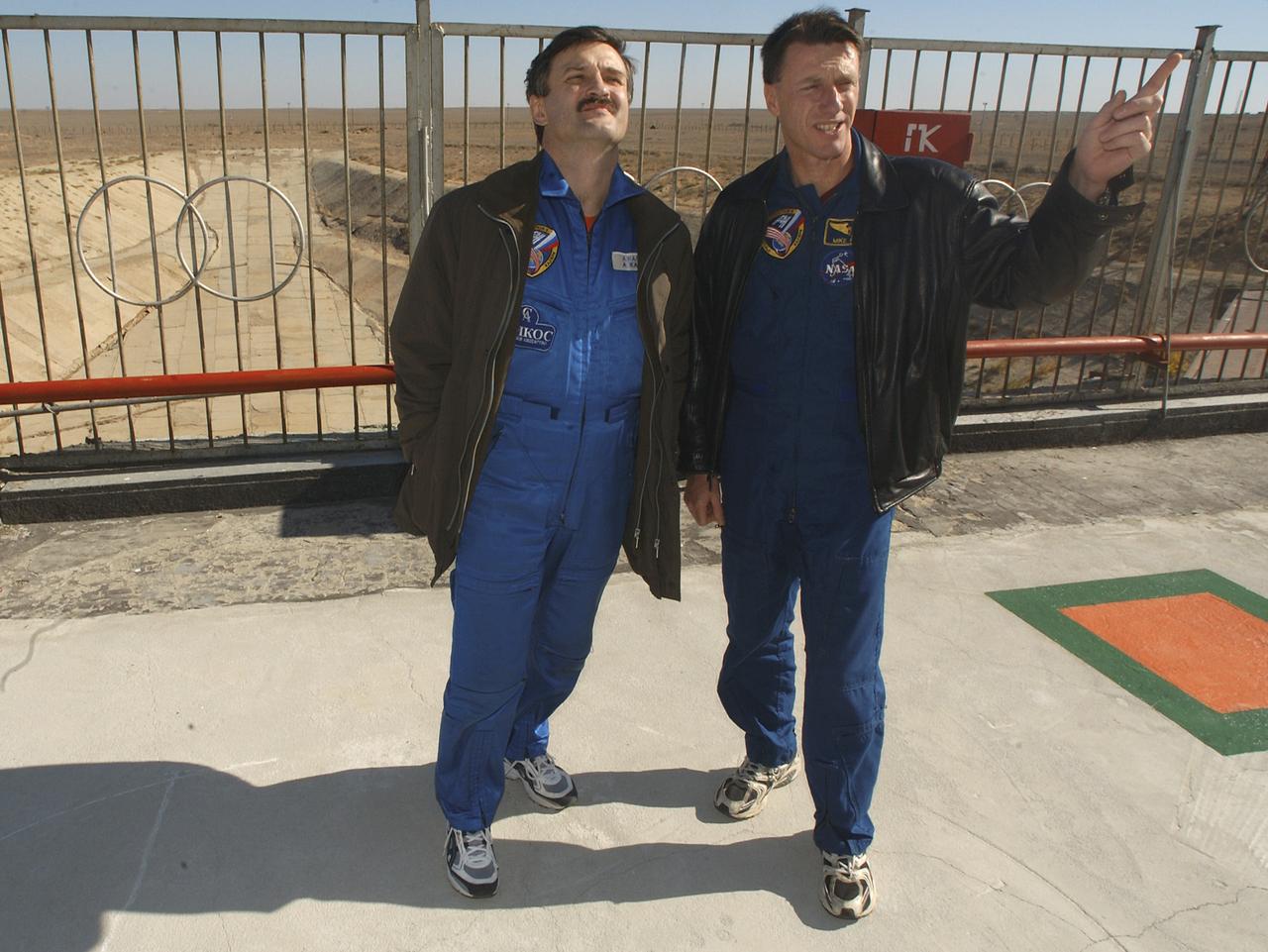
Expedition 8 Soyuz Commander Alexander Kaleri, left, and Expedition 8 Commander and NASA Science Officer Michael Foale visit the launch pad at the Baikonur Cosmodrome in Kazakhstan, Monday, Oct. 13, 2003. Photo Credit (NASA/Bill Ingalls)
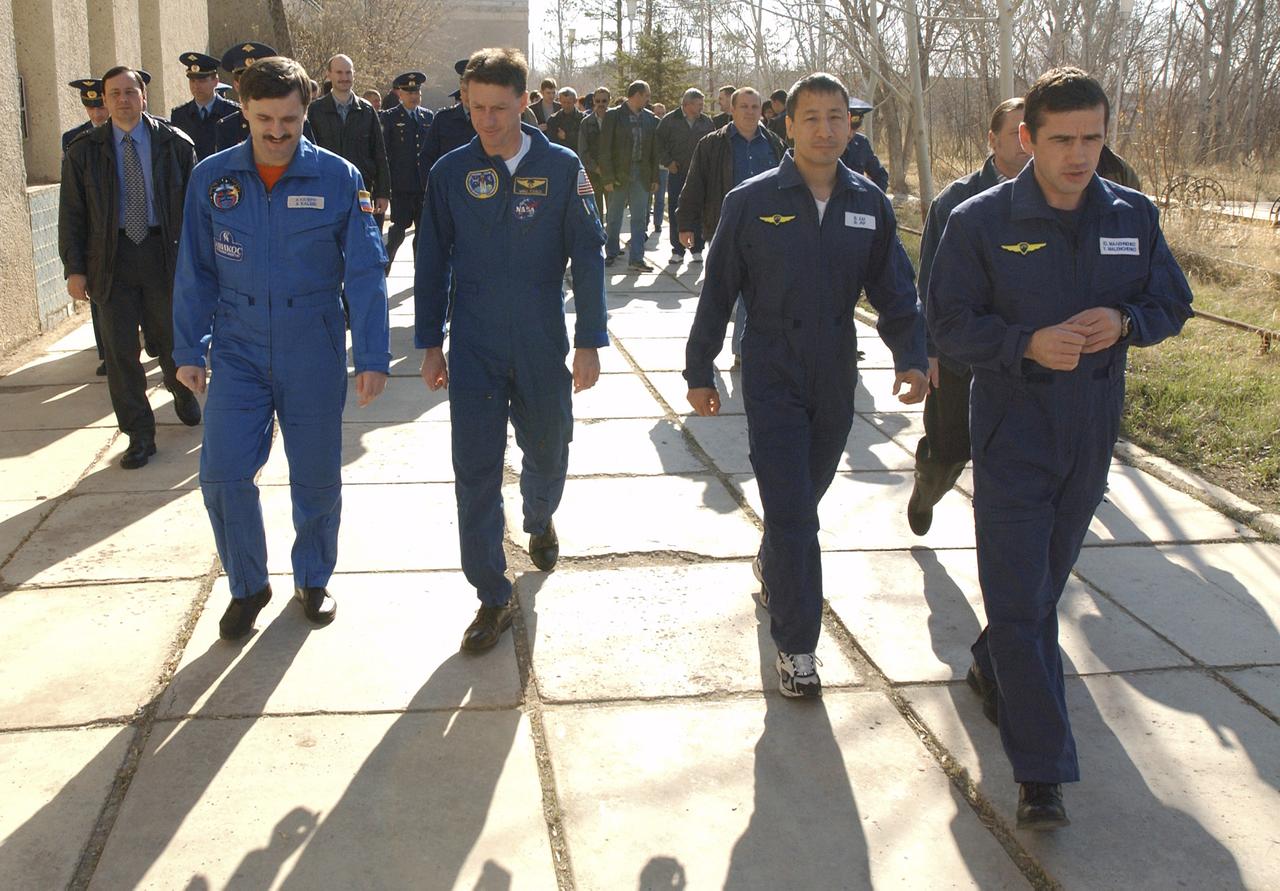
Cosmonaut Alexander Kaleri, left, astronauts Michael Foale, Edward T. Lu, NASA International Space Station Science Officer and Flight Engineer and Expedition 7 Commander Yuri Malenchenko, right, attend the ceremonial flag raising at the Cosmonaut Hotel, Kazakhstan, Monday, April 21, 2003. Photo Credit: (NASA/Bill Ingalls)
Expedition 8 Soyuz Commander and Flight Engineer Alexander Kaleri, center, Expedition 8 Commander Michael Foale, European Space Agency astronaut Pedro Duque of Spain, right, along with Valery Korzun, Chief of Cosmonauts, arrive in Baikonur, Kazakhstan, Sunday, Oct. 12, 2003. Photo Credit (NASA/Bill Ingalls)
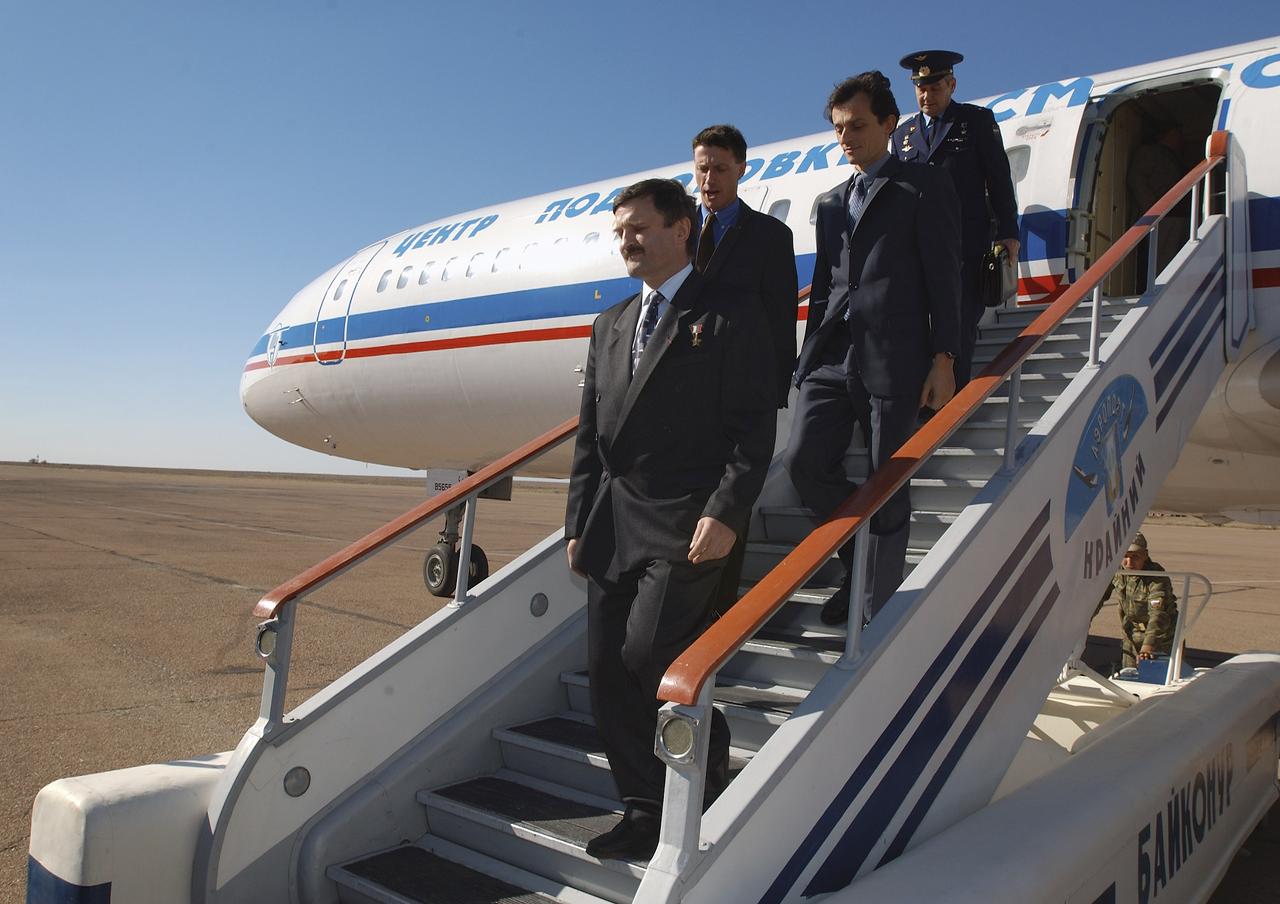
Expedition 8 Soyuz Commander and Flight Engineer Alexander Kaleri, left, Expedition 8 Commander Michael Foale, European Space Agency astronaut Pedro Duque of Spain, right, along with Valery Korzun, Chief of Cosmonauts, rear, arrive in Baikonur, Kazakhstan, Sunday, Oct. 12, 2003. Photo Credit (NASA/Bill Ingalls)