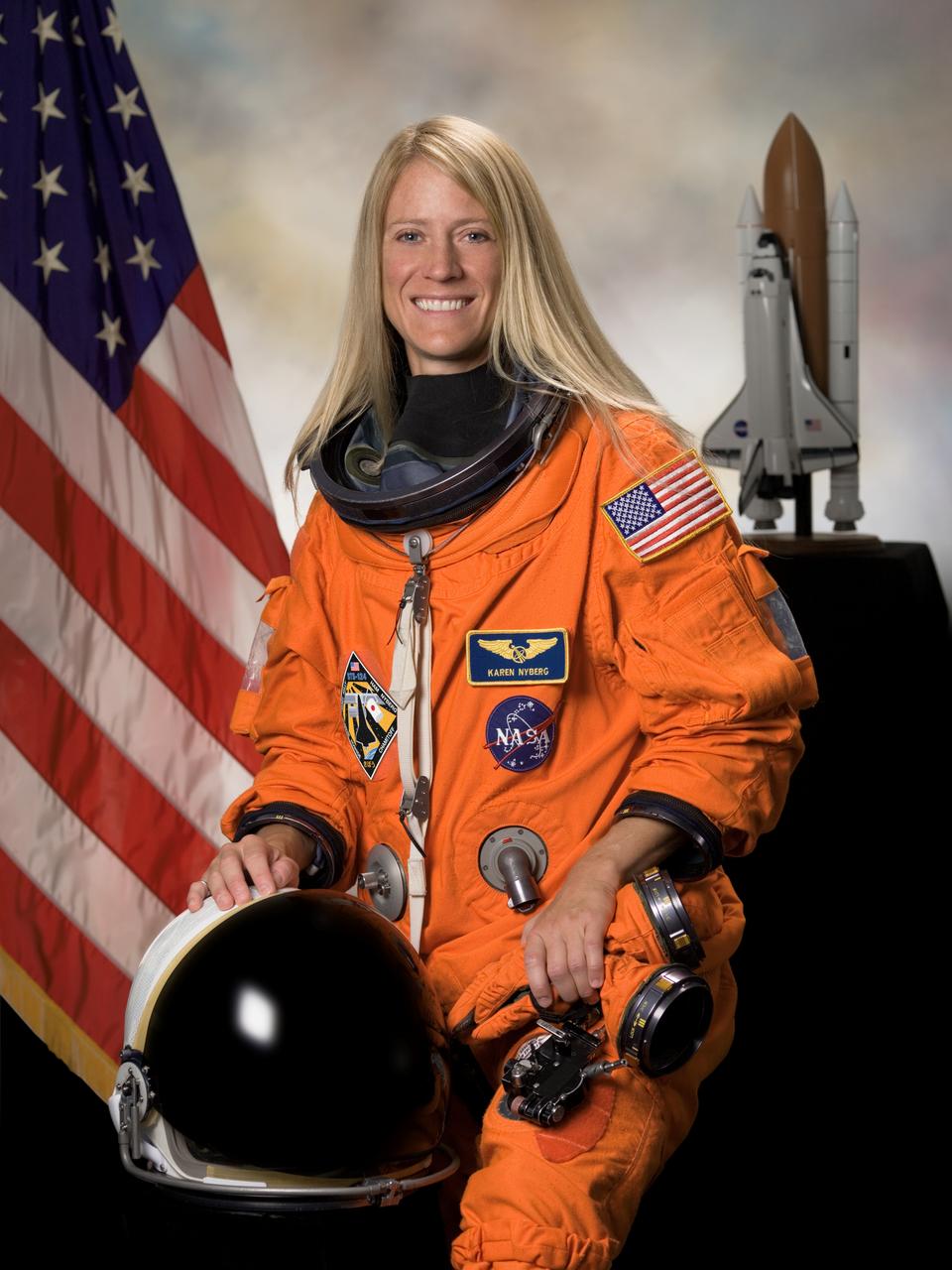
JSC2007-E-097869 (26 Sept. 2007) --- Astronaut Karen L. Nyberg, mission specialist
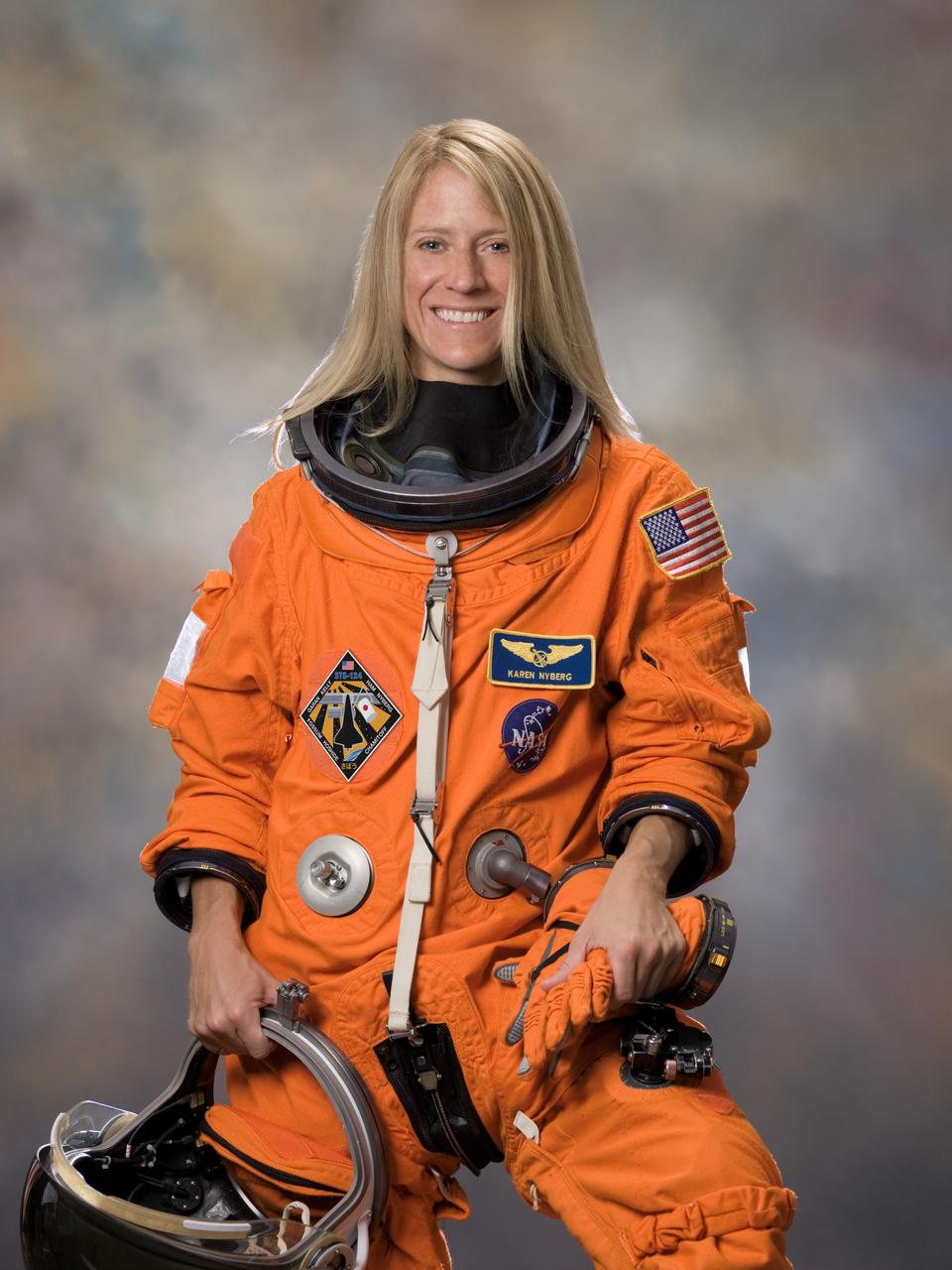
JSC2007-E-097870 (26 Sept. 2007) --- Astronaut Karen L. Nyberg, mission specialist

"NASA astronaut Karen Nyberg,Expedition 36 flight engineer,works with the Combustion Integrated Rack (CIR) Alignment Guide Removal.
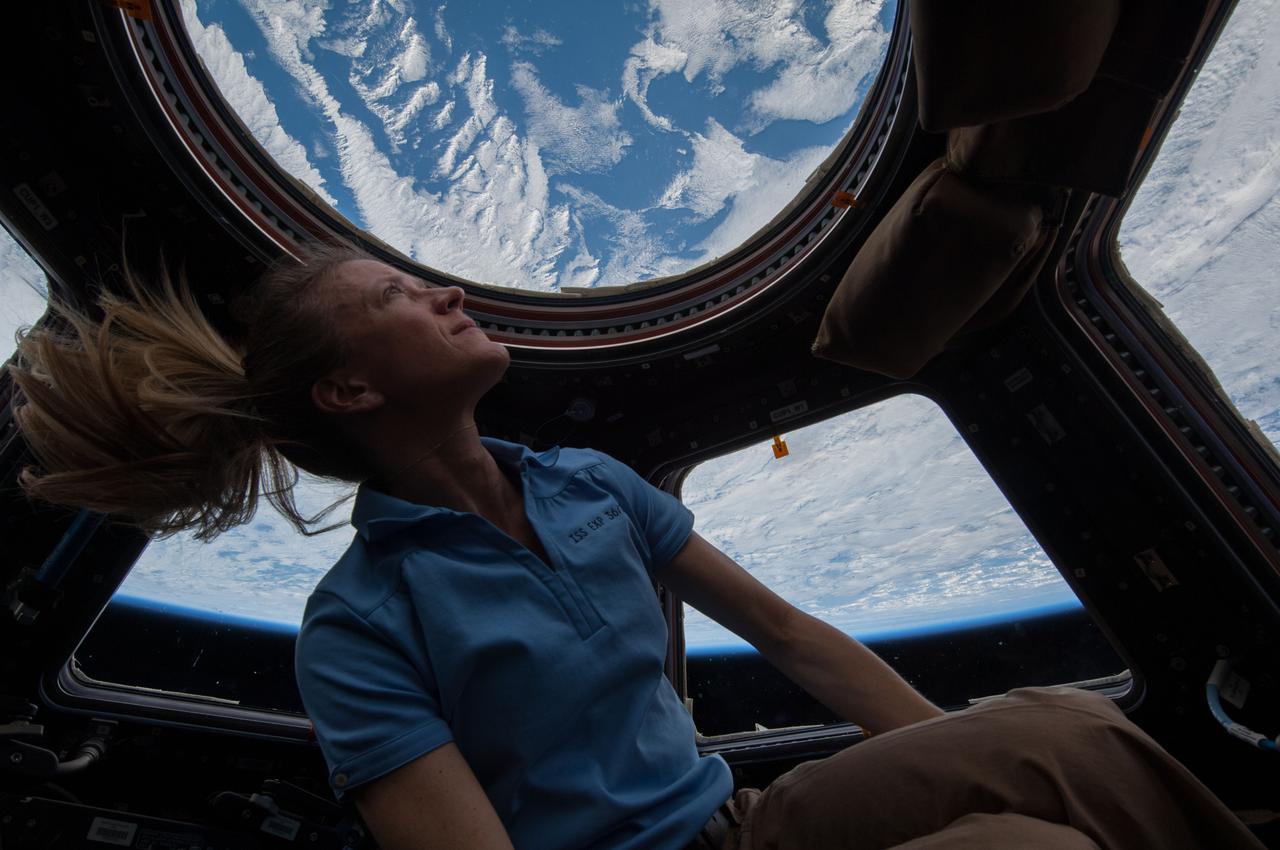
Astronaut Karen Nyberg, Expedition 37 flight engineer, is photographed in front of the windows in the Cupola module .
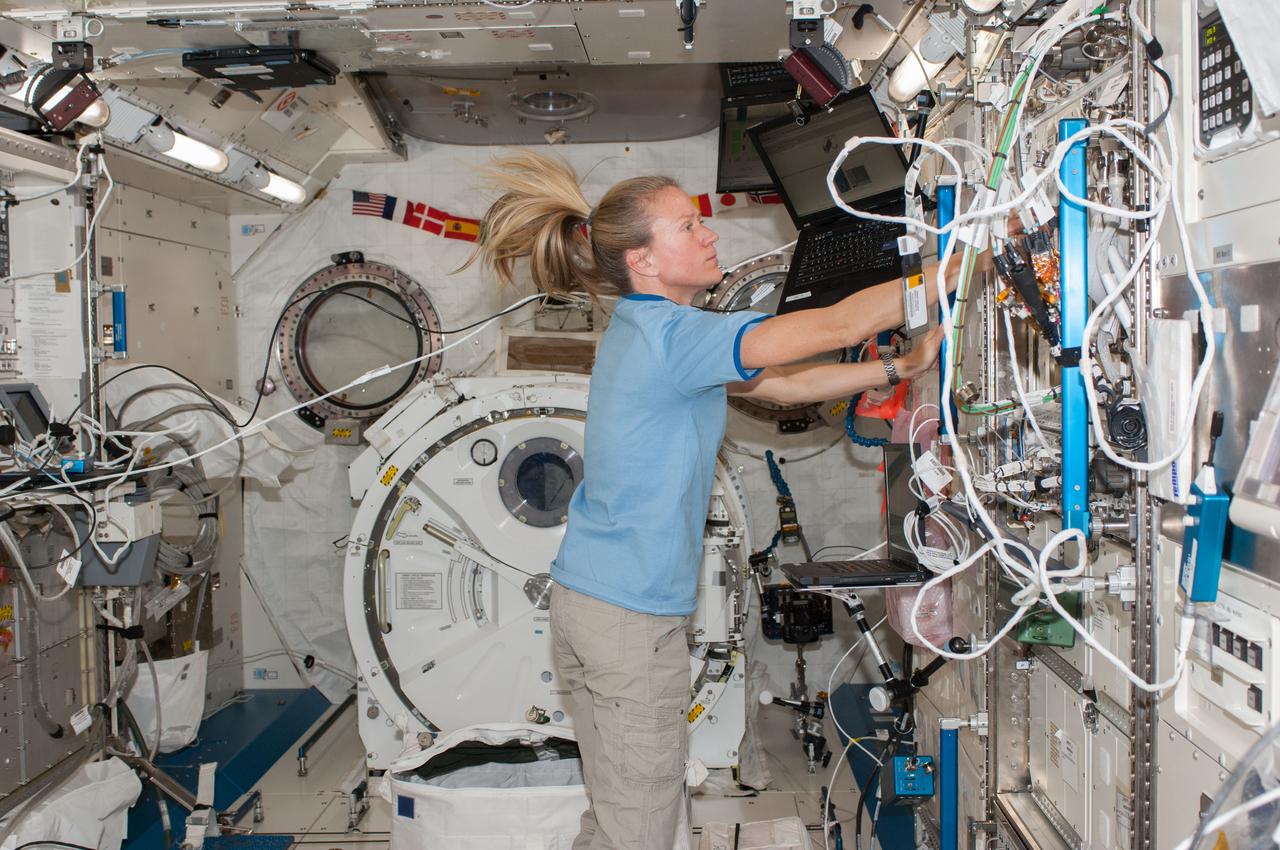
ISS036-E-013794 (1 July 2013) --- NASA astronaut Karen Nyberg, Expedition 36 flight engineer, works in the Kibo laboratory of the International Space Station.
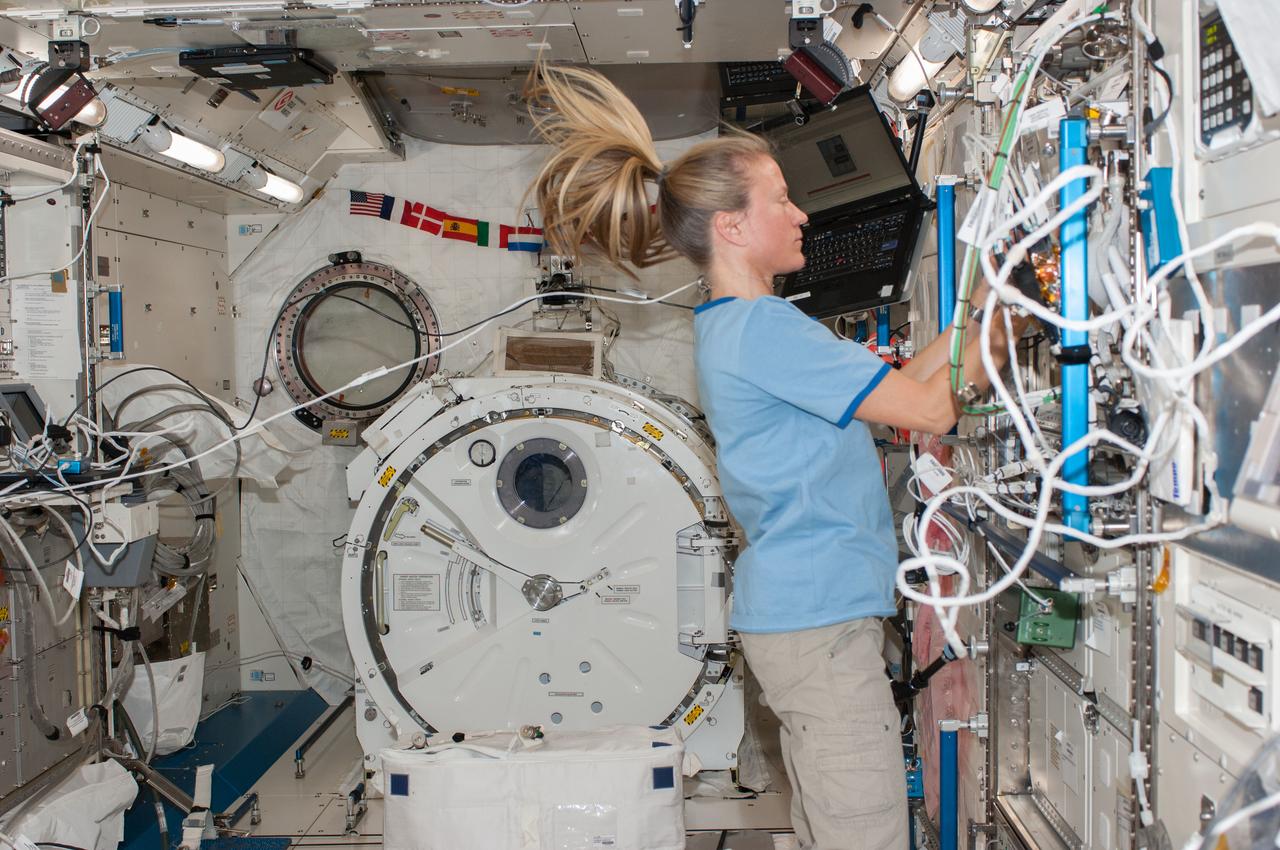
ISS036-E-013810 (1 July 2013) --- NASA astronaut Karen Nyberg, Expedition 36 flight engineer, works in the Kibo laboratory of the International Space Station.
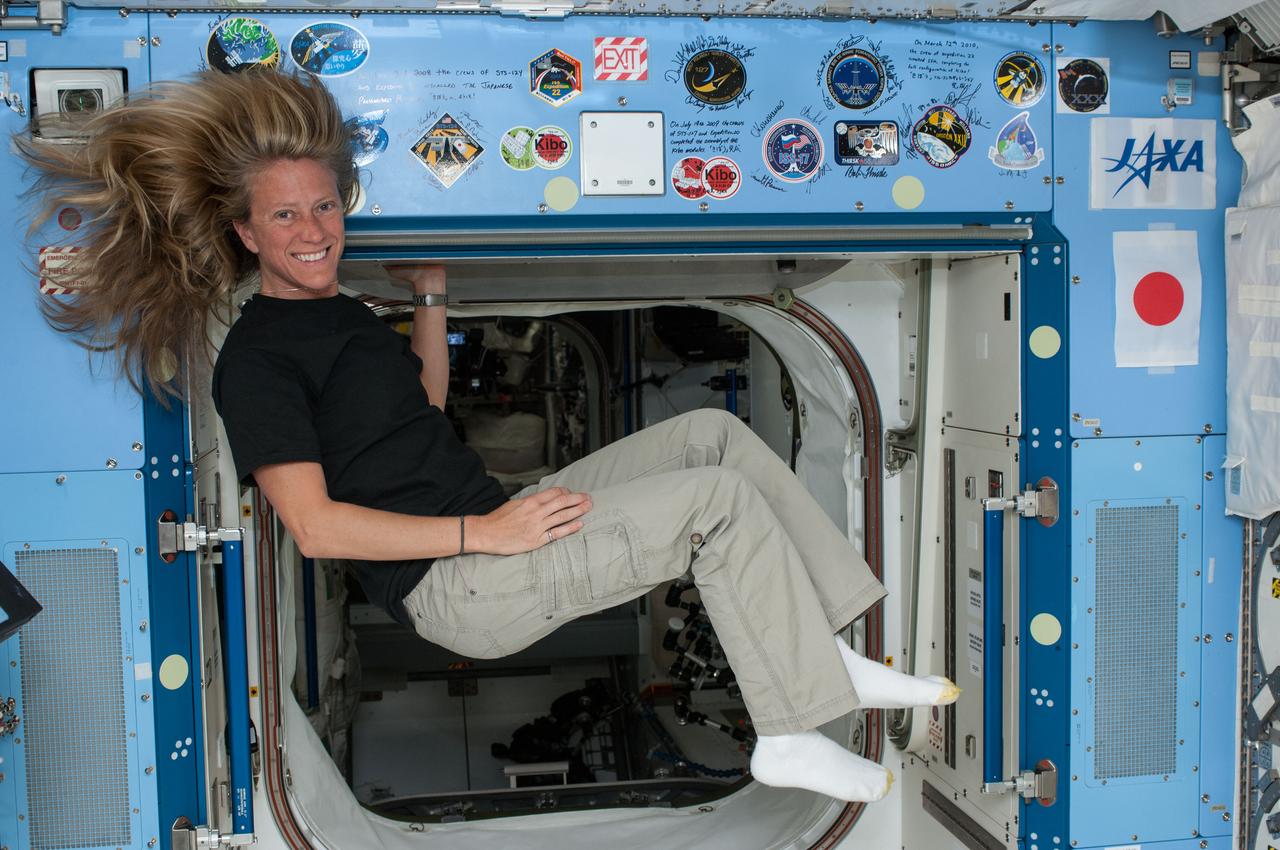
Astronaut Karen Nyberg,Expedition 36 flight engineer,floats in front of the various mission patches located on the Japanese Experiment Module (JEM) Pressurized Module (JPM)
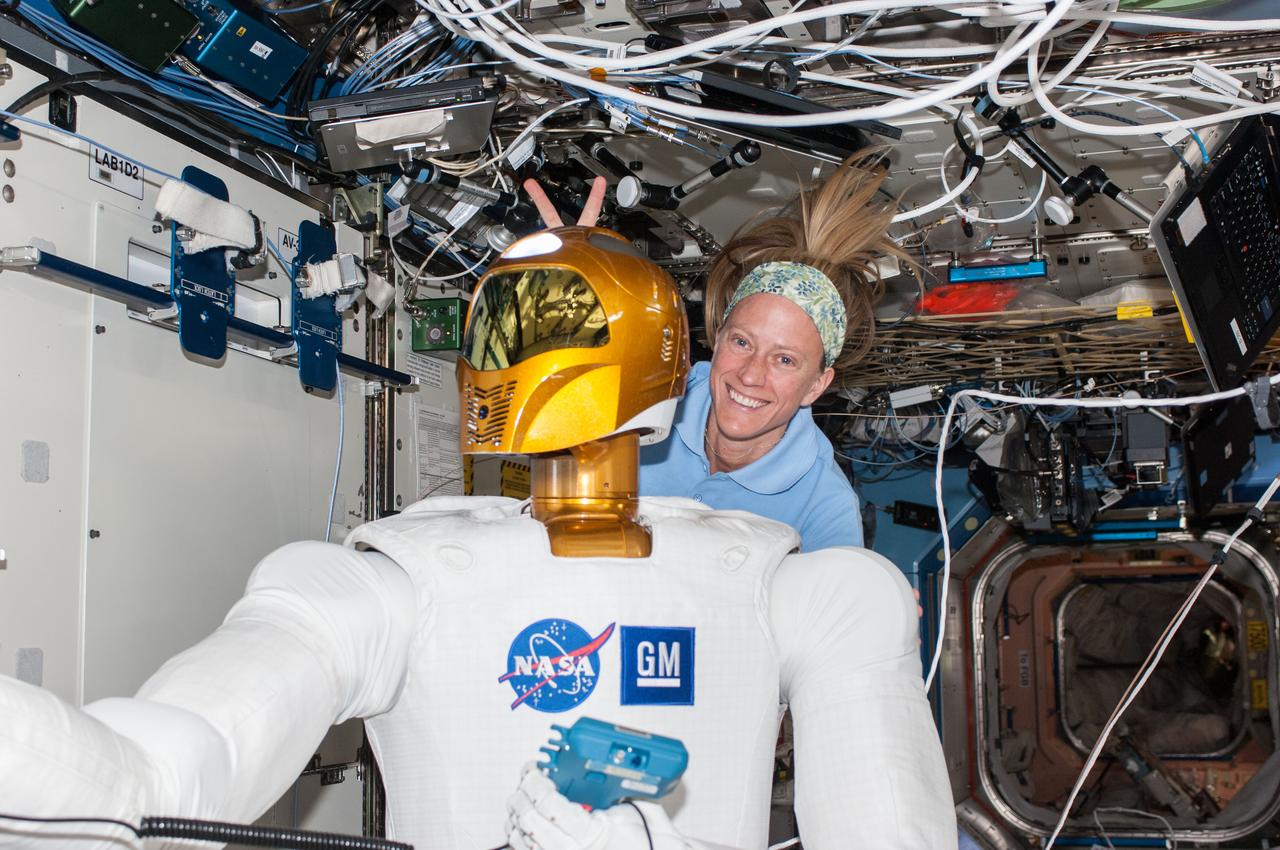
NASA astronaut Karen Nyberg,Expedition 36 flight engineer,is pictured with Robonaut 2,the first humanoid robot in space,in the Destiny laboratory of the International Space Station.
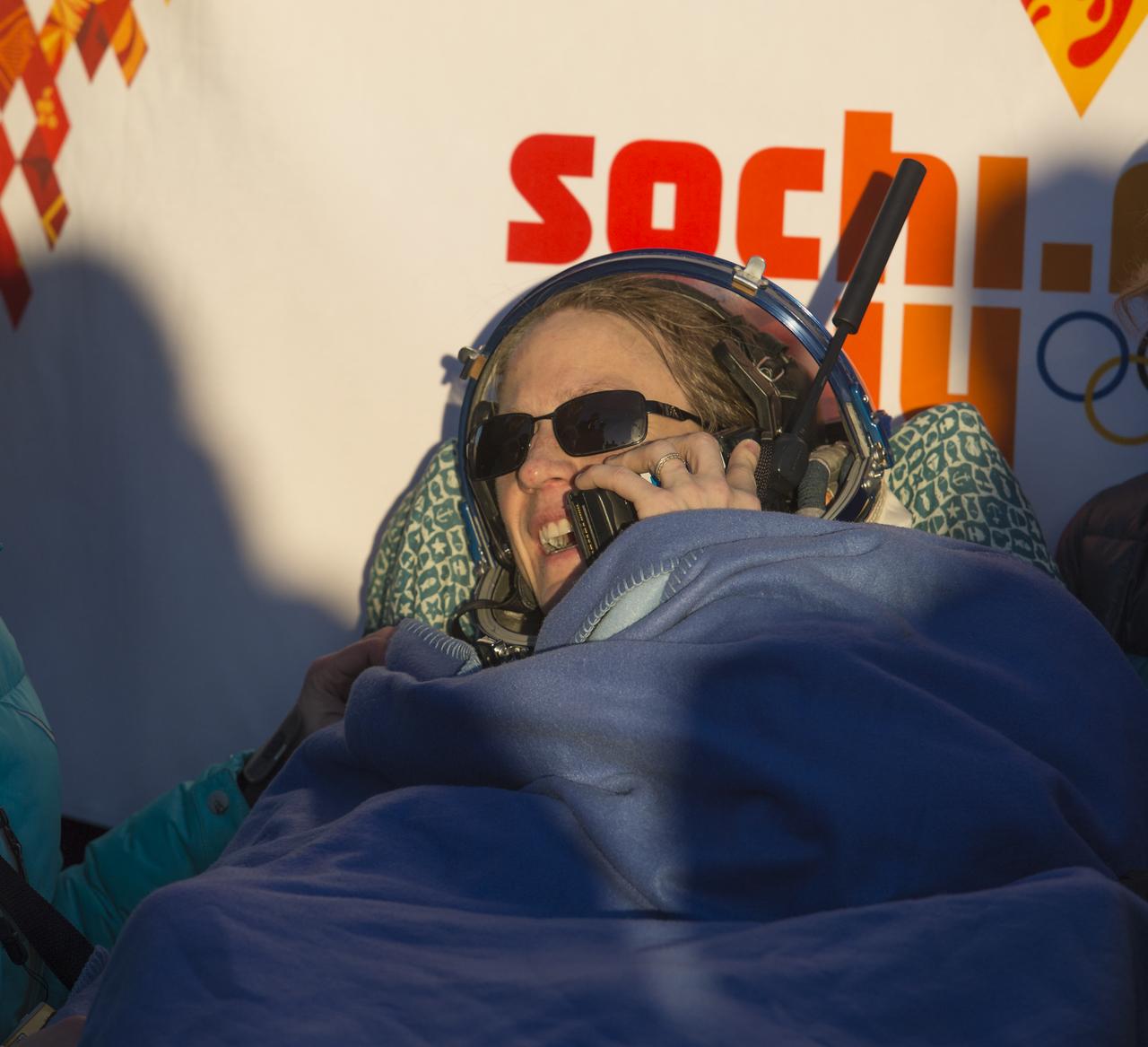
Expedition 37 NASA Flight Engineer Karen Nyberg is seen speaking to her family by satellite phone minutes after her landing in the Soyuz TMA-09M spacecraft in a remote area southeast of the town of Zhezkazgan, Kazakhstan, on Monday, Nov. 11, 2013. Nyberg, Expedition 37 Commander Fyodor Yurchikhin of the Russian Federal Space Agency (Roscosmos) and Italian Flight Engineer Luca Parmitano returned to earth after five and a half months on the International Space Station. Photo Credit: (NASA/Carla Cioffi)
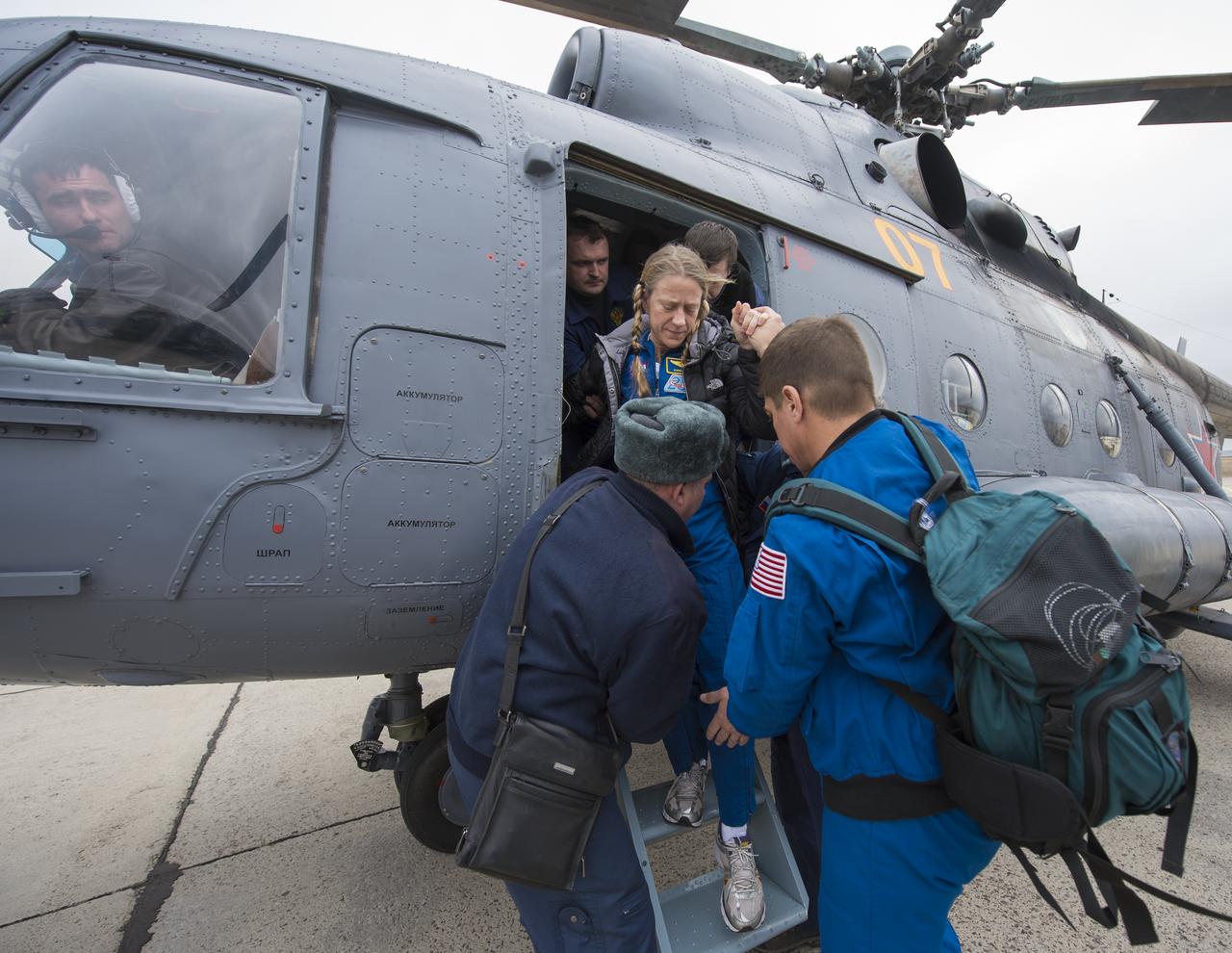
Expedition 37 NASA Flight Engineer Karen Nyberg is helped off the helicopter upon her arrival in Karaganda, Kazakhstan after her landing in the Soyuz TMA-09M spacecraft in a remote area southeast of the town of Zhezkazgan, Monday, Nov. 11, 2013. Nyberg, Expedition 37 Commander Fyodor Yurchikhin of the Russian Federal Space Agency (Roscosmos) and Italian Flight Engineer Luca Parmitano returned to earth after five and a half months on the International Space Station. Photo Credit: (NASA/Carla Cioffi)
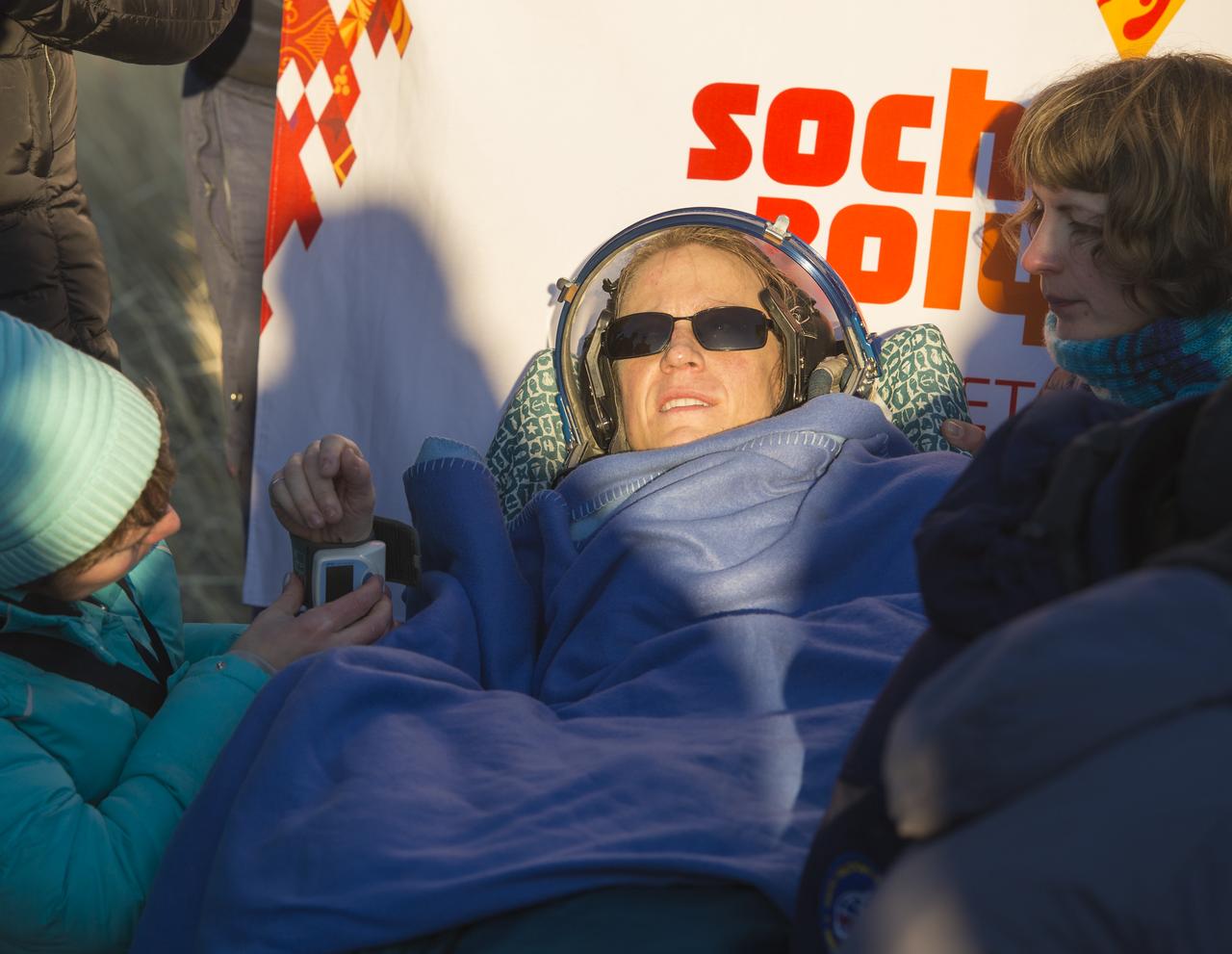
Expedition 37 NASA Flight Engineer Karen Nyberg is seen minutes after her landing in the Soyuz TMA-09M spacecraft in a remote area southeast of the town of Zhezkazgan, Kazakhstan, on Monday, Nov. 11, 2013. Nyberg, Expedition 37 Commander Fyodor Yurchikhin of the Russian Federal Space Agency (Roscosmos) and Italian Flight Engineer Luca Parmitano returned to earth after five and a half months on the International Space Station. Photo Credit: (NASA/Carla Cioffi)
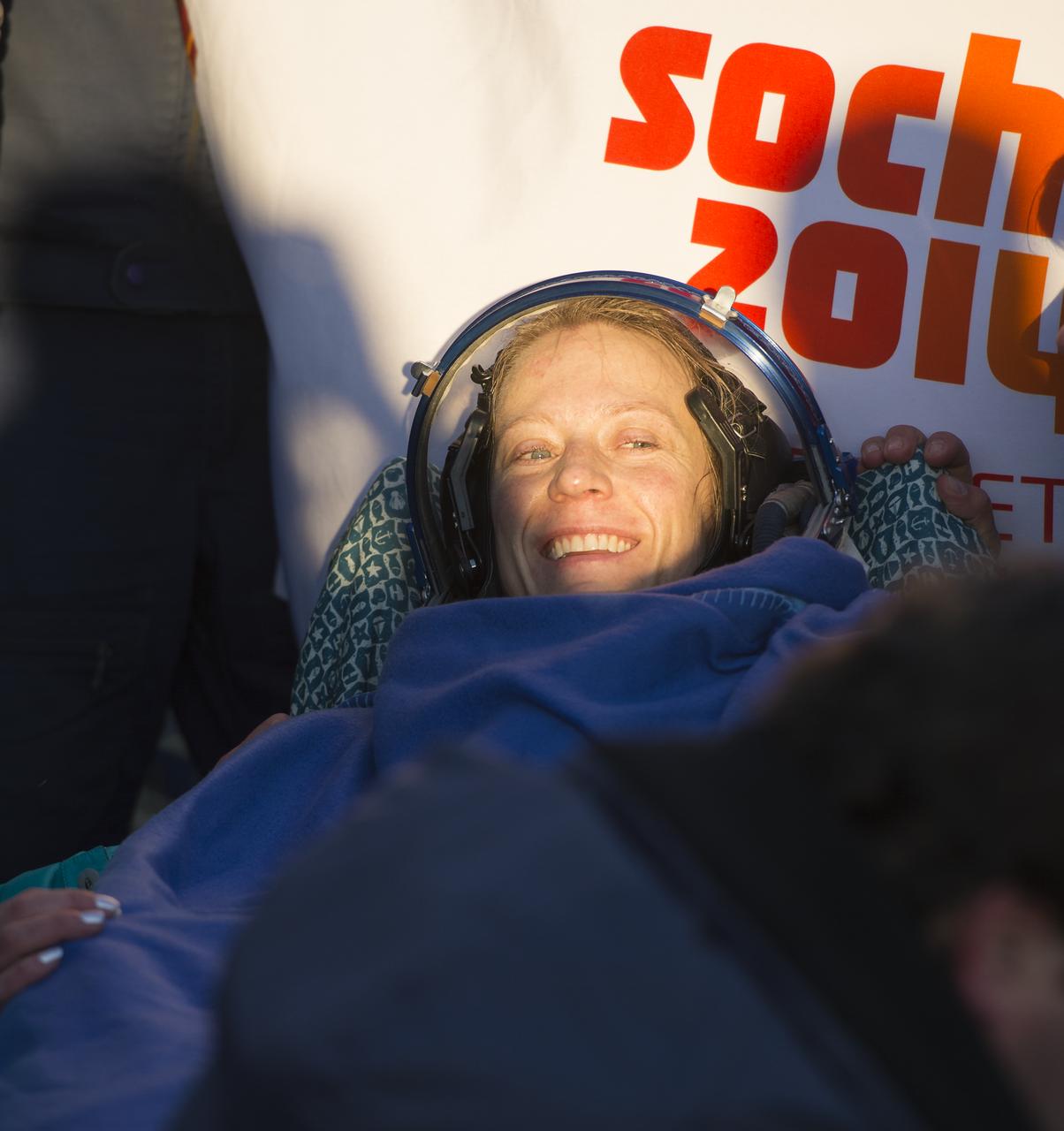
Expedition 37 NASA Flight Engineer Karen Nyberg smiles minutes after her landing in the Soyuz TMA-09M spacecraft in a remote area southeast of the town of Zhezkazgan, Kazakhstan, on Monday, Nov. 11, 2013. Nyberg, Expedition 37 Commander Fyodor Yurchikhin of the Russian Federal Space Agency (Roscosmos) and Italian Flight Engineer Luca Parmitano returned to earth after five and a half months on the International Space Station. Photo Credit: (NASA/Carla Cioffi)
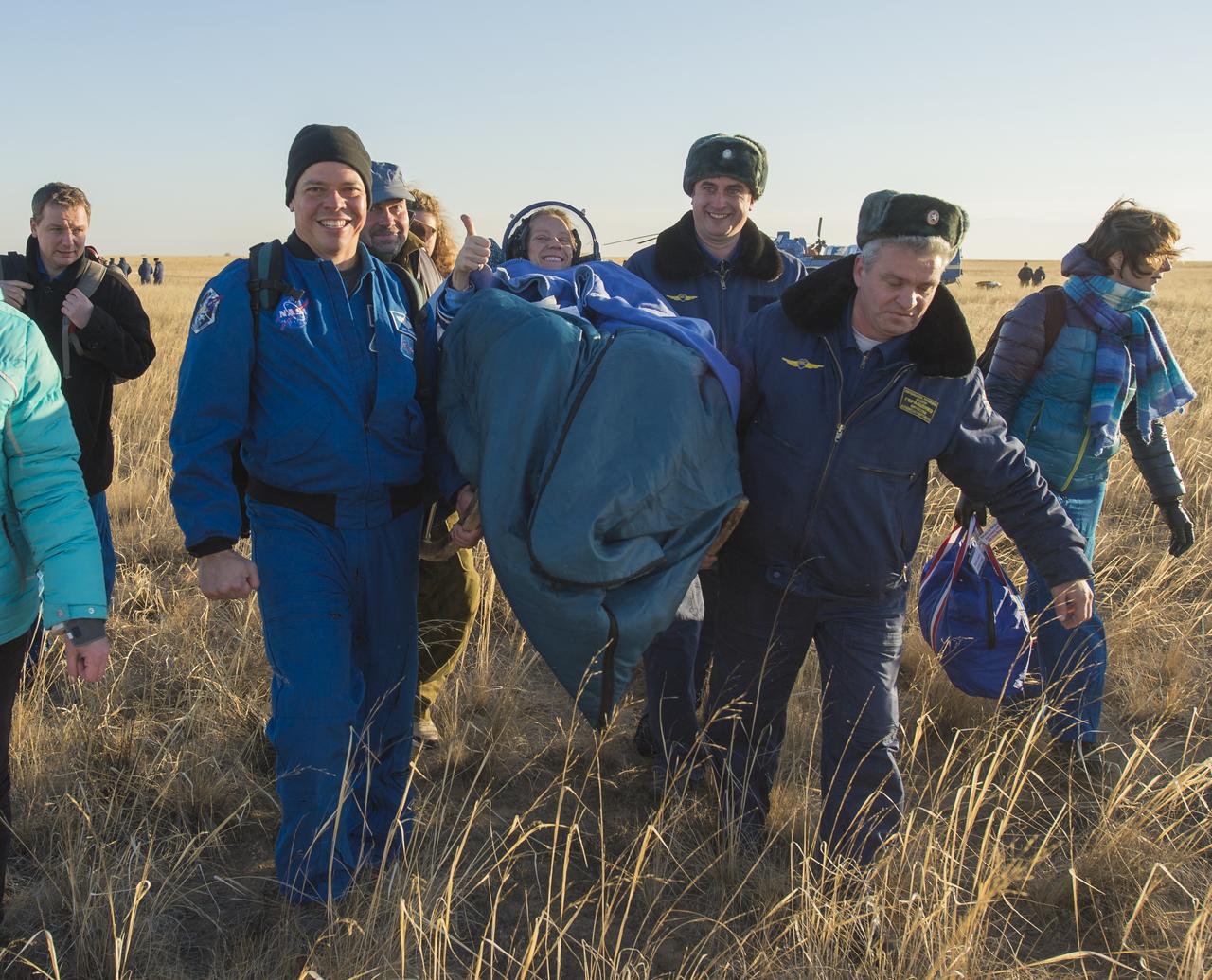
Expedition 37 NASA Flight Engineer Karen Nyberg gives the thumbs up as she is carried to the inflatable medical tent after her landing in the Soyuz TMA-09M spacecraft in a remote area southeast of the town of Zhezkazgan, Kazakhstan, on Monday, Nov. 11, 2013. Nyberg, Expedition 37 Commander Fyodor Yurchikhin of the Russian Federal Space Agency (Roscosmos) and Italian Flight Engineer Luca Parmitano returned to earth after five and a half months on the International Space Station. Photo Credit: (NASA/Carla Cioffi)
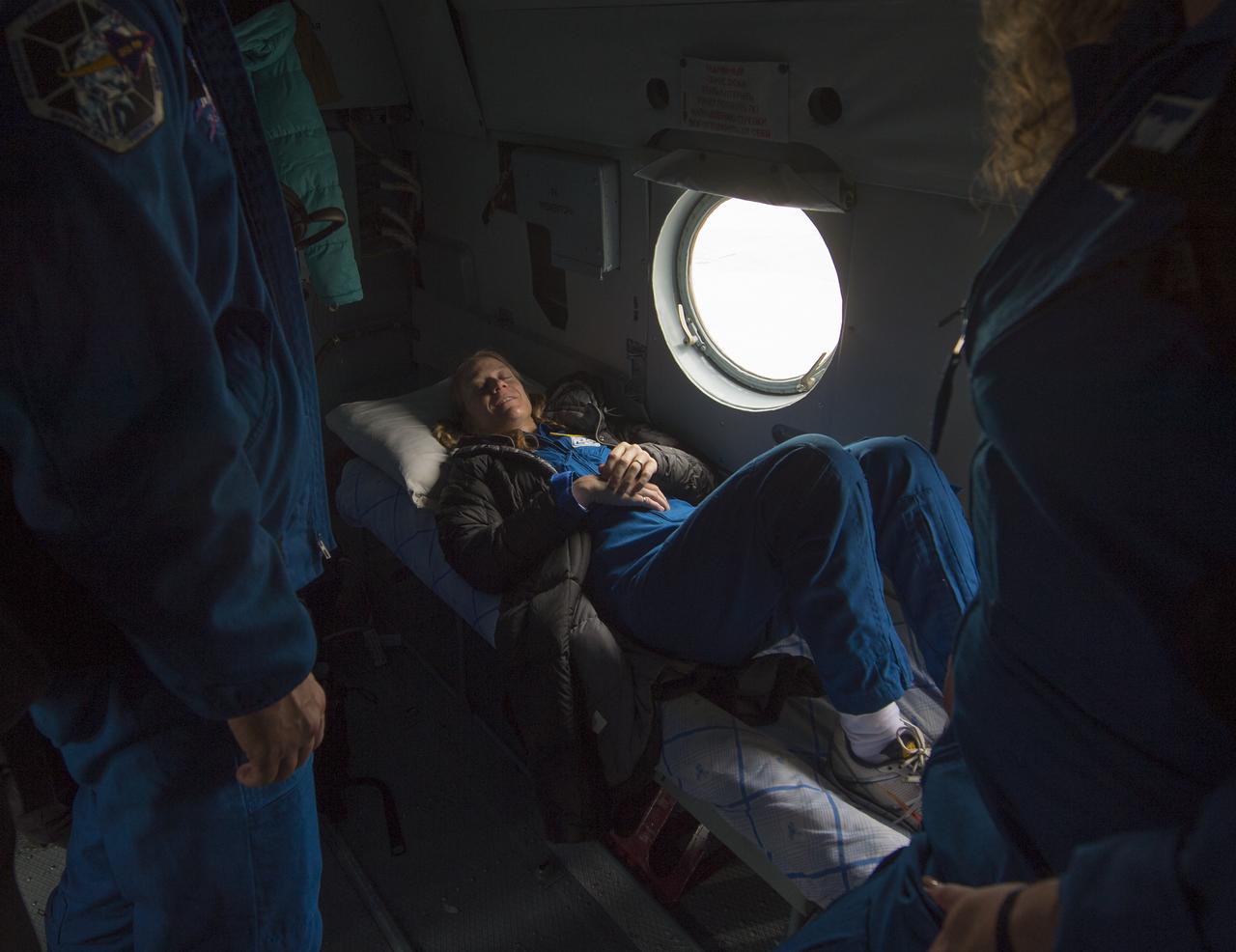
Expedition 37 NASA Flight Engineer Karen Nyberg rests on the helicopter ride to Karaganda, Kazakhstan after her landing in the Soyuz TMA-09M spacecraft in a remote area southeast of the town of Zhezkazgan, Monday, Nov. 11, 2013. Nyberg, Expedition 37 Commander Fyodor Yurchikhin of the Russian Federal Space Agency (Roscosmos) and Italian Flight Engineer Luca Parmitano returned to earth after five and a half months on the International Space Station. Photo Credit: (NASA/Carla Cioffi)
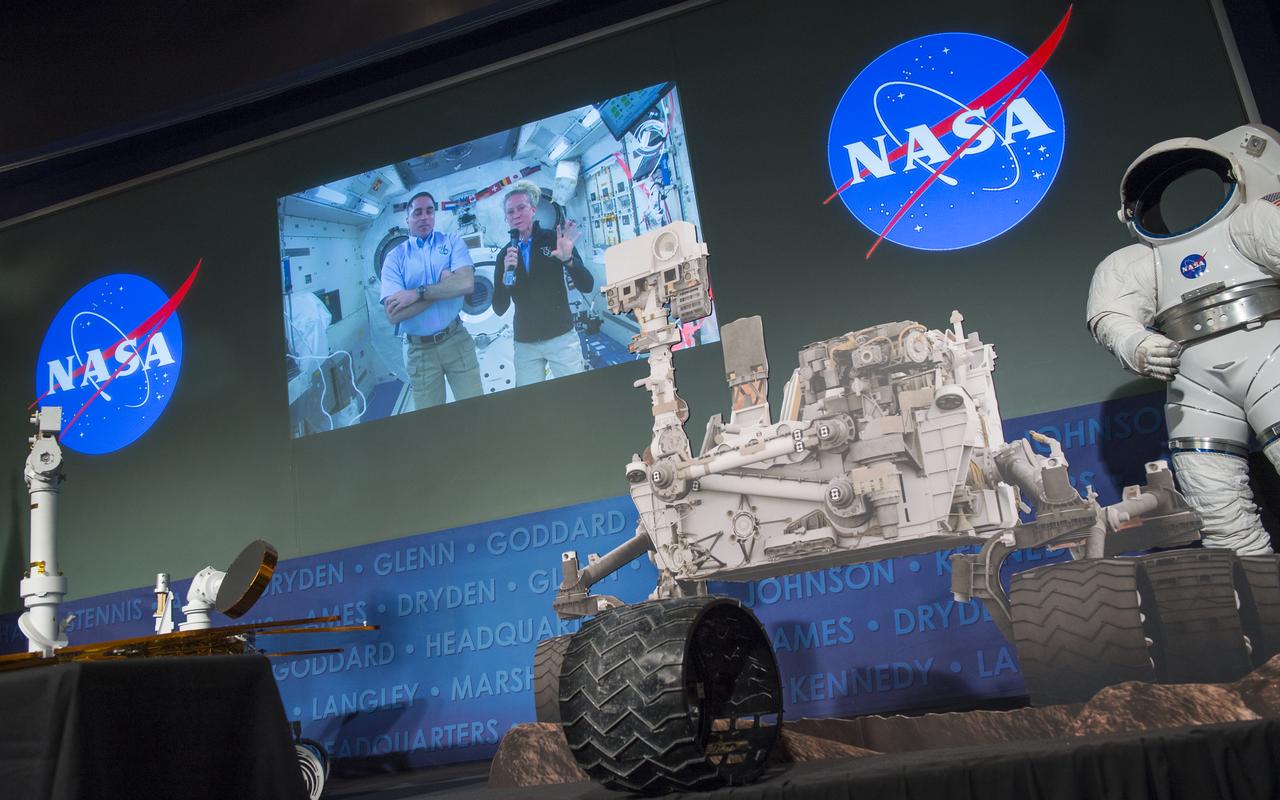
Expedition 35/36 NASA astronaut Karen Nyberg, right on screen, is seen on a live feed from the International Space Station as they participate in a public event at NASA Headquarters observing the first anniversary of the Curiosity rover's landing on Mars, Tuesday, August 6th, 2013 in Washington. Photo Credit: (NASA/Carla Cioffi)
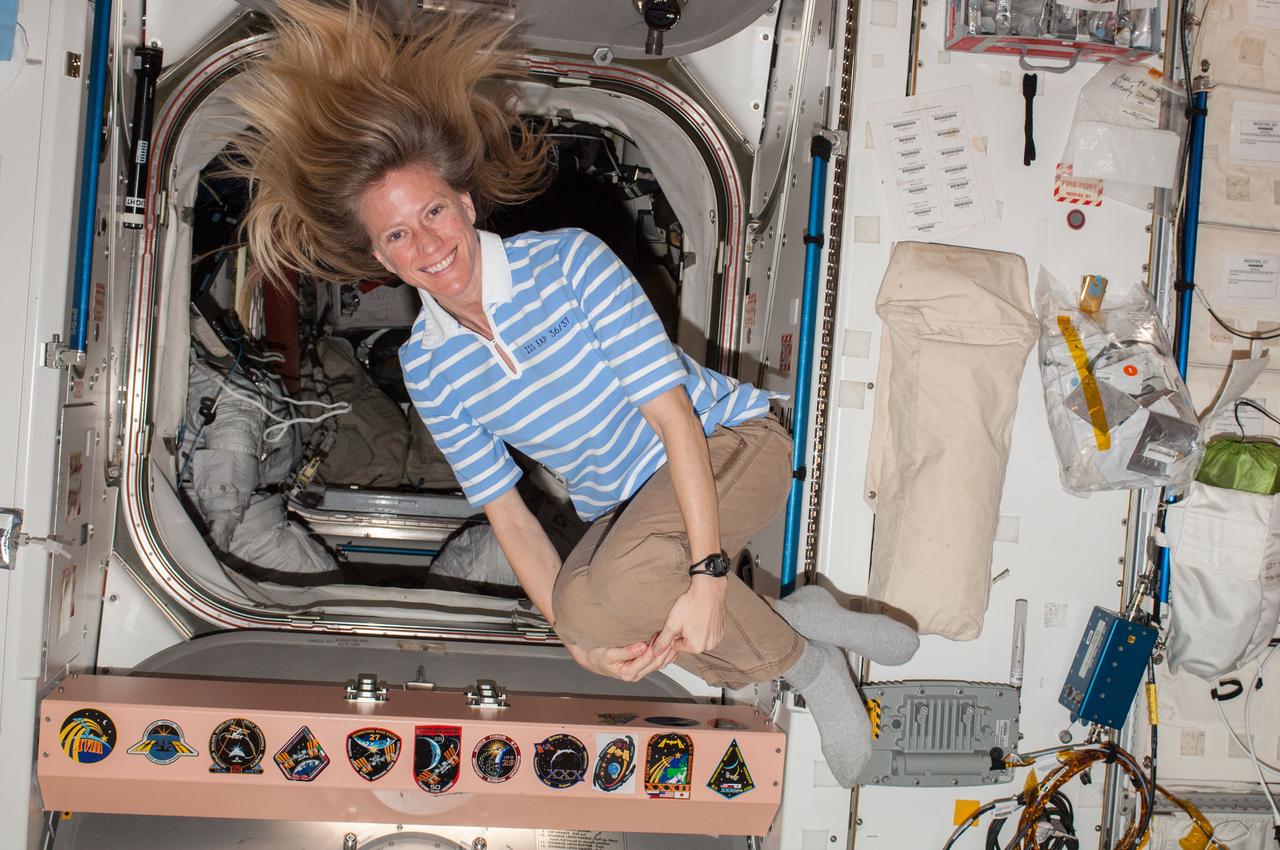
ISS037-E-001092 (16 Sept. 2013) --- NASA astronaut Karen Nyberg, Expedition 37 flight engineer, poses for a photo while floating freely in the Unity node of the International Space Station.
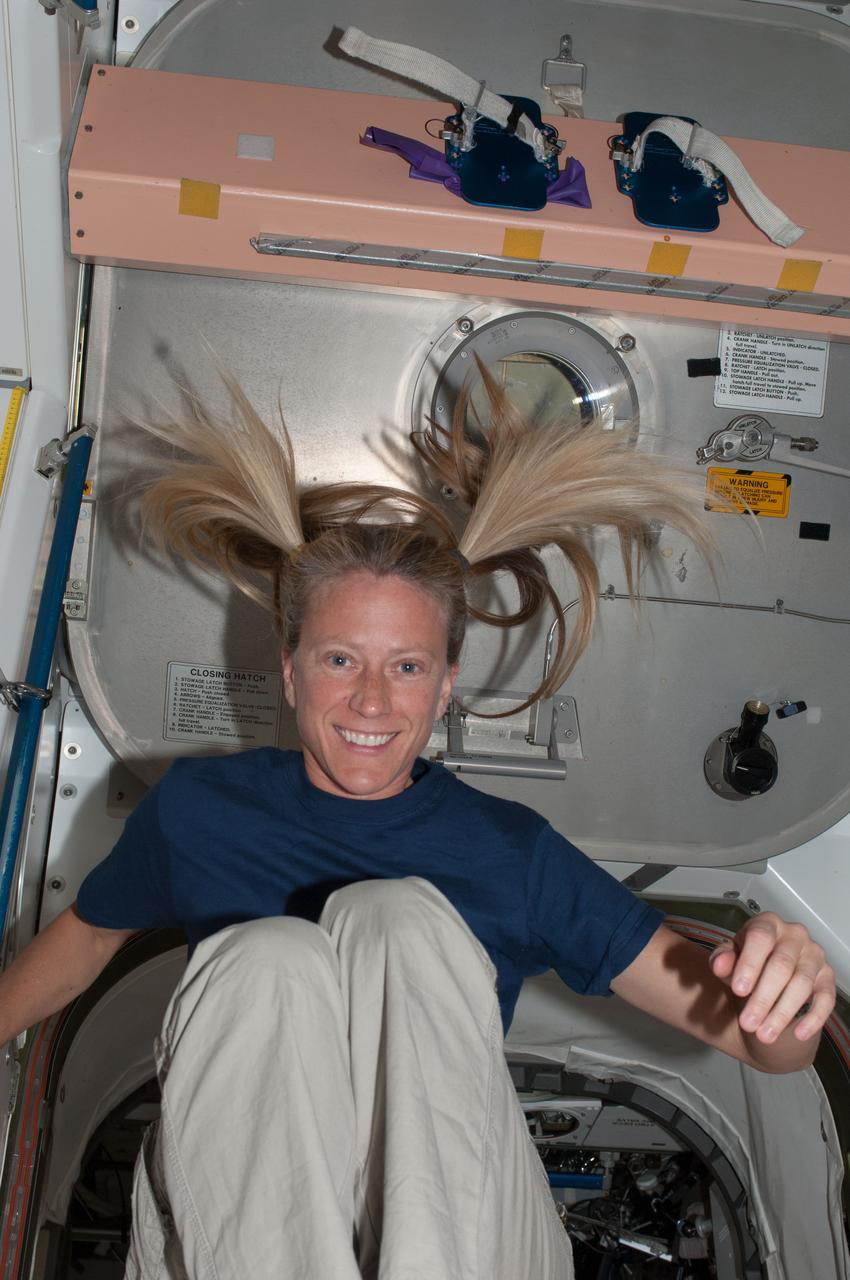
ISS036-E-005892 (3 June 2013) --- It's recess time for a floating astronaut Karen Nyberg, Expedition 36 flight engineer, in the Unity node aboard the International Space Station.
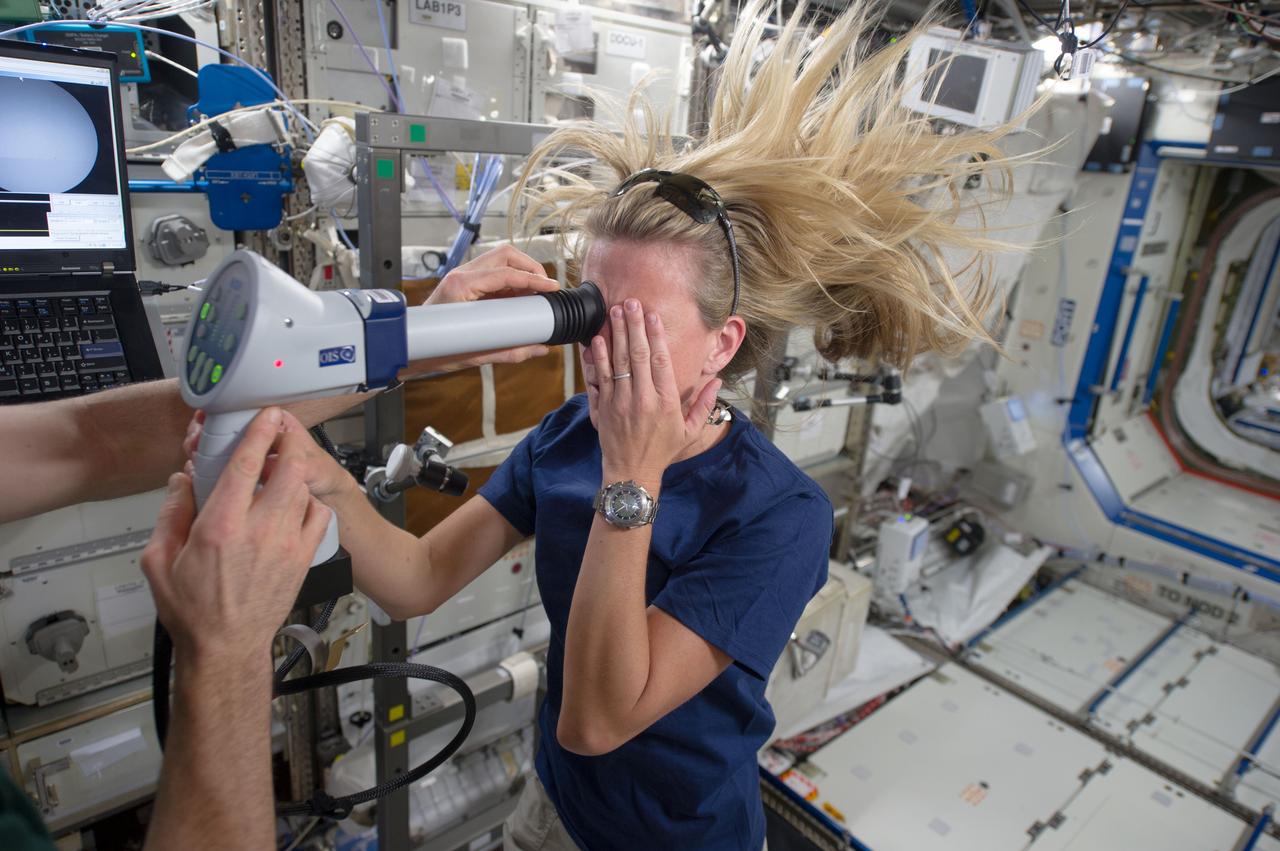
Astronaut Karen Nyberg and Astronaut Chris Cassidy (partially visible), both Expedition 37 flight engineers, perform an Ocular Health (OH) Fundoscope Exam in the Destiny laboratory of the International Space Station
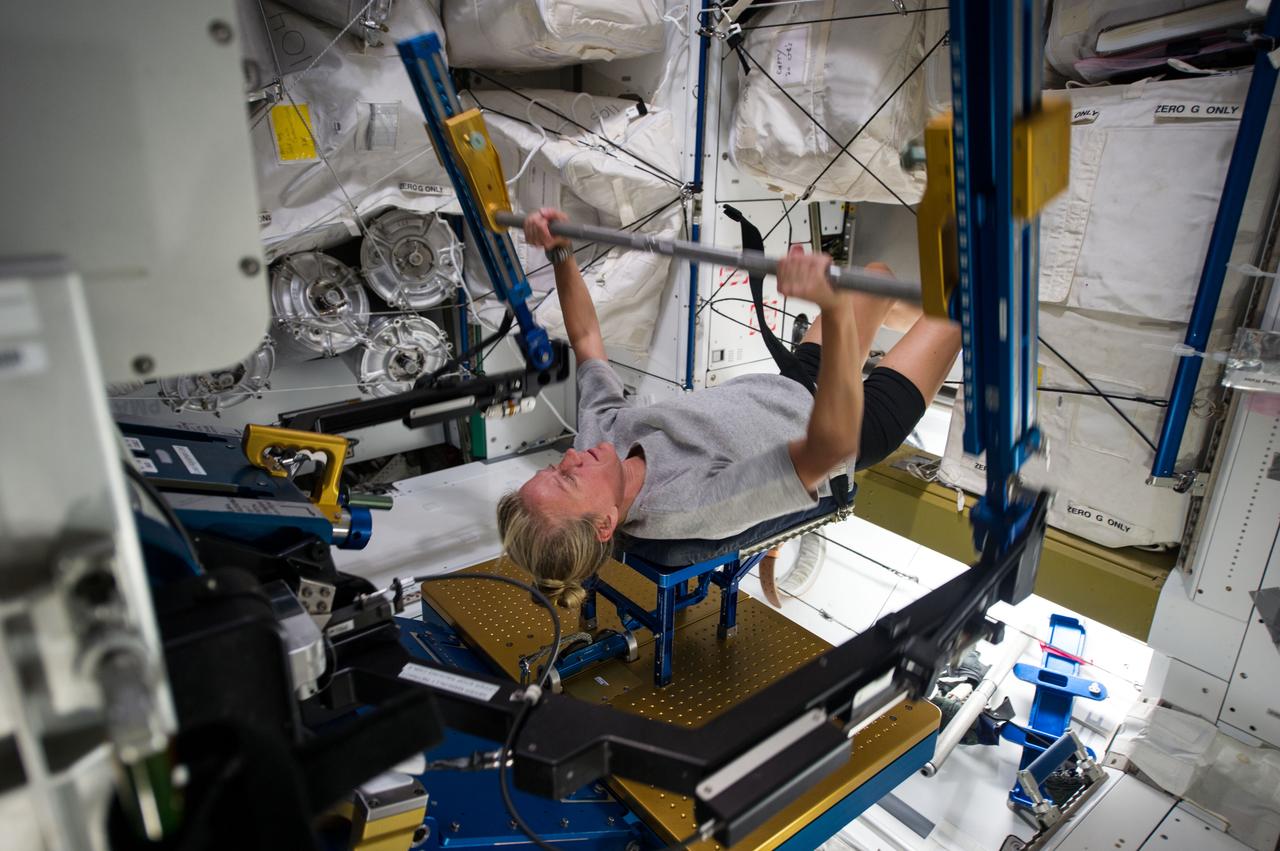
ISS036-E-005939 (3 June 2013) --- NASA astronaut Karen Nyberg, Expedition 36 flight engineer, gets a workout on the Advanced Resistive Exercise Device (ARED) in the Tranquility node of the International Space Station.
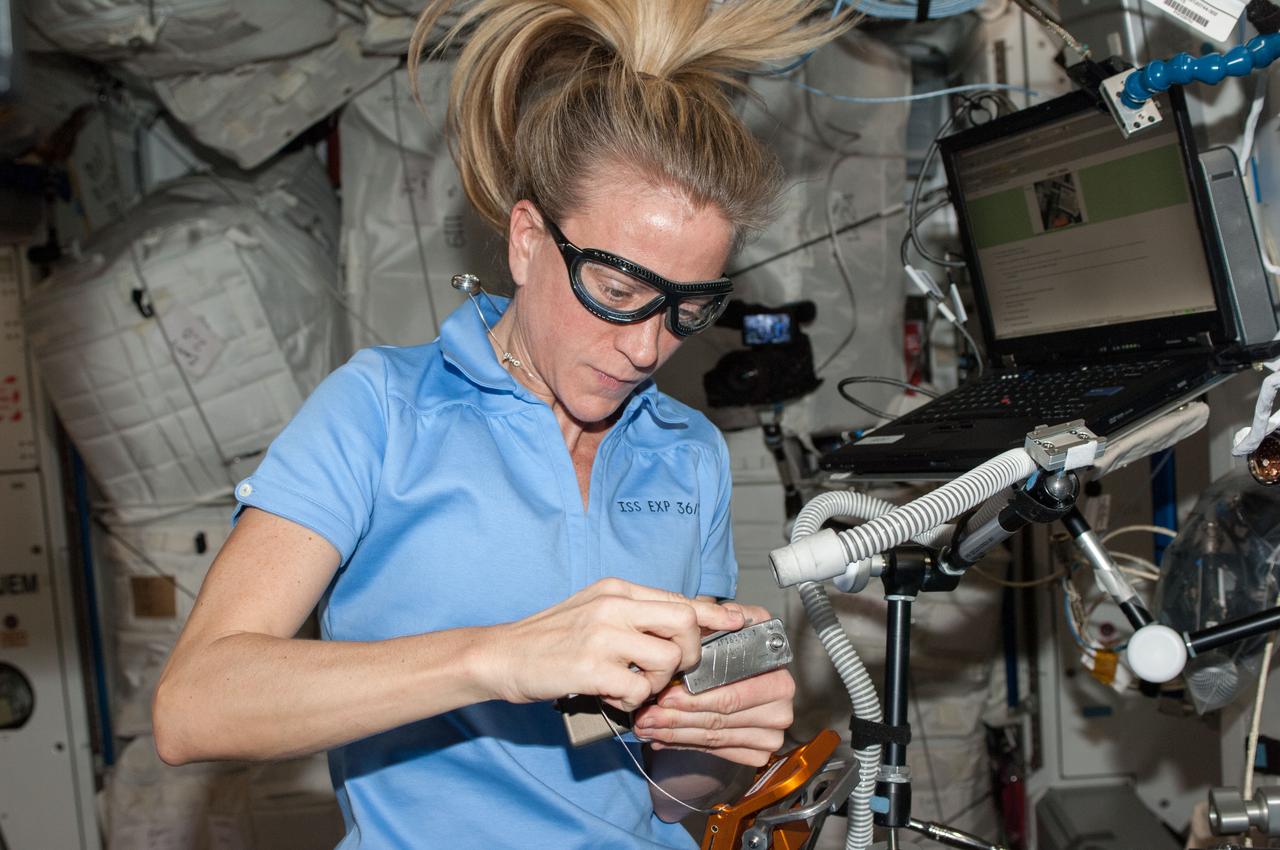
ISS037-E-001905 (18 Sept. 2013) --- NASA astronaut Karen Nyberg, Expedition 37 flight engineer, works with hardware at a workstation in the Harmony node of the International Space Station.
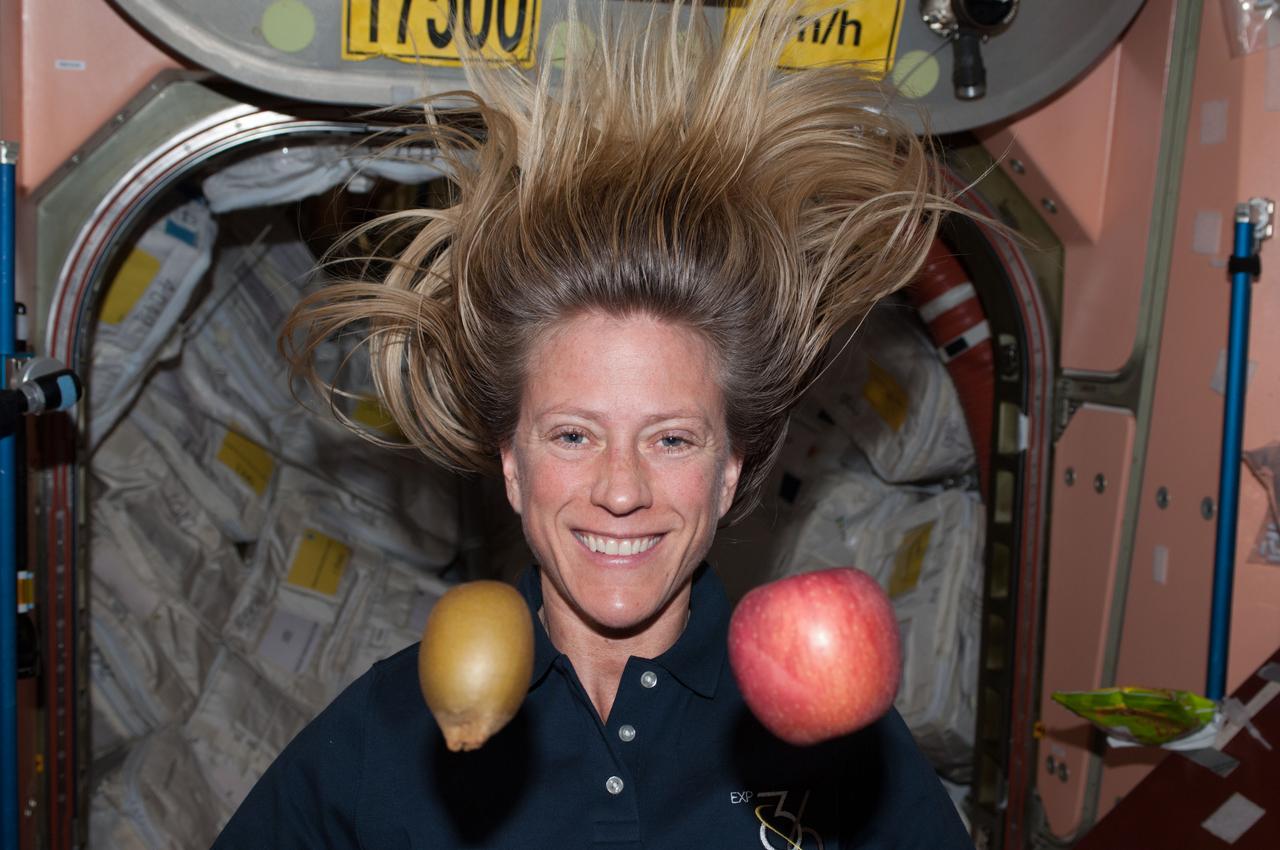
ISS036-E-032518 (13 Aug. 2013) --- NASA astronaut Karen Nyberg, Expedition 36 flight engineer, is pictured near fresh fruit floating freely in the Unity node of the International Space Station.
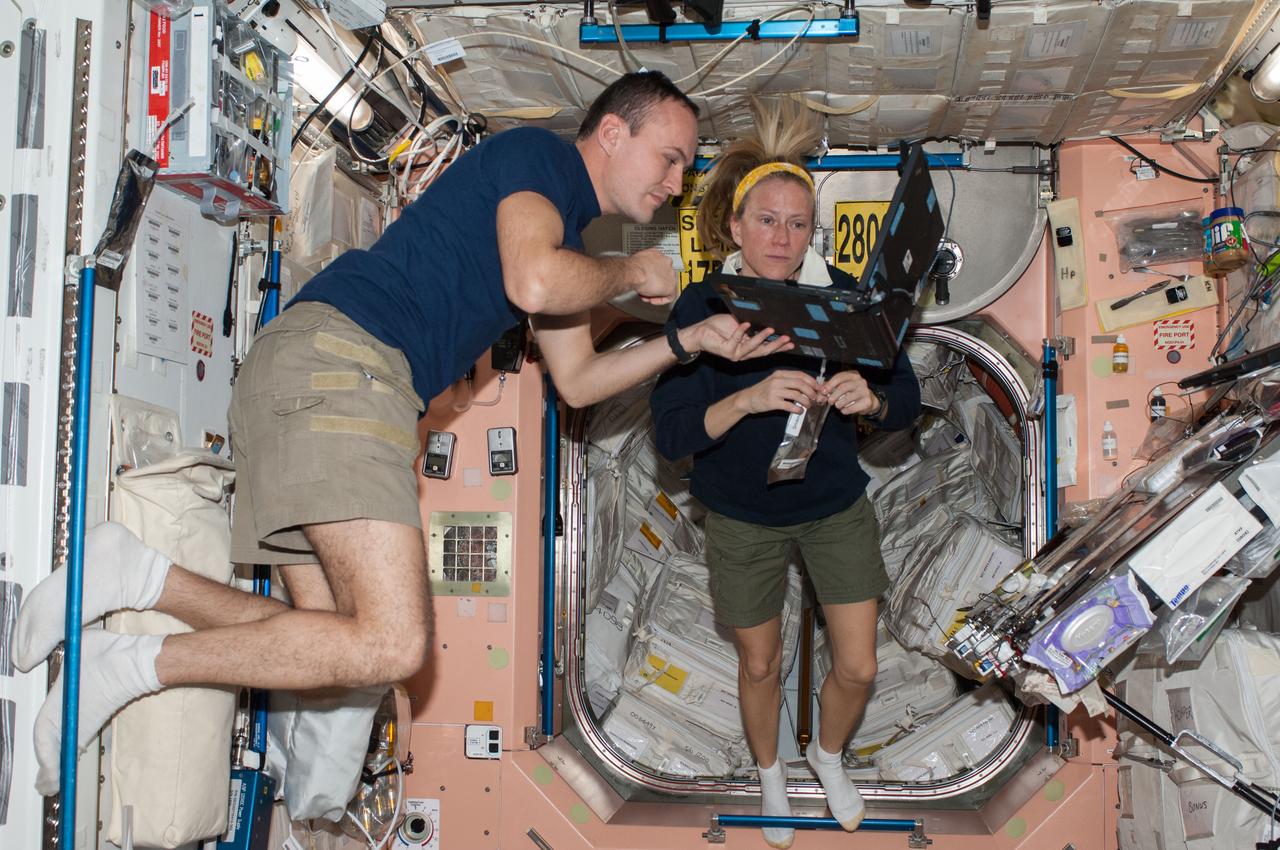
ISS037-E-005750 (2 Oct. 2013) --- NASA astronaut Karen Nyberg and Russian cosmonaut Sergey Ryazanskiy, both Expedition 37 flight engineers, look at a computer monitor in the Unity node of the International Space Station.

ISS037-E-001098 (16 Sept. 2013) --- NASA astronaut Karen Nyberg, Expedition 37 flight engineer, poses for a photo while floating freely in the Unity node of the International Space Station.
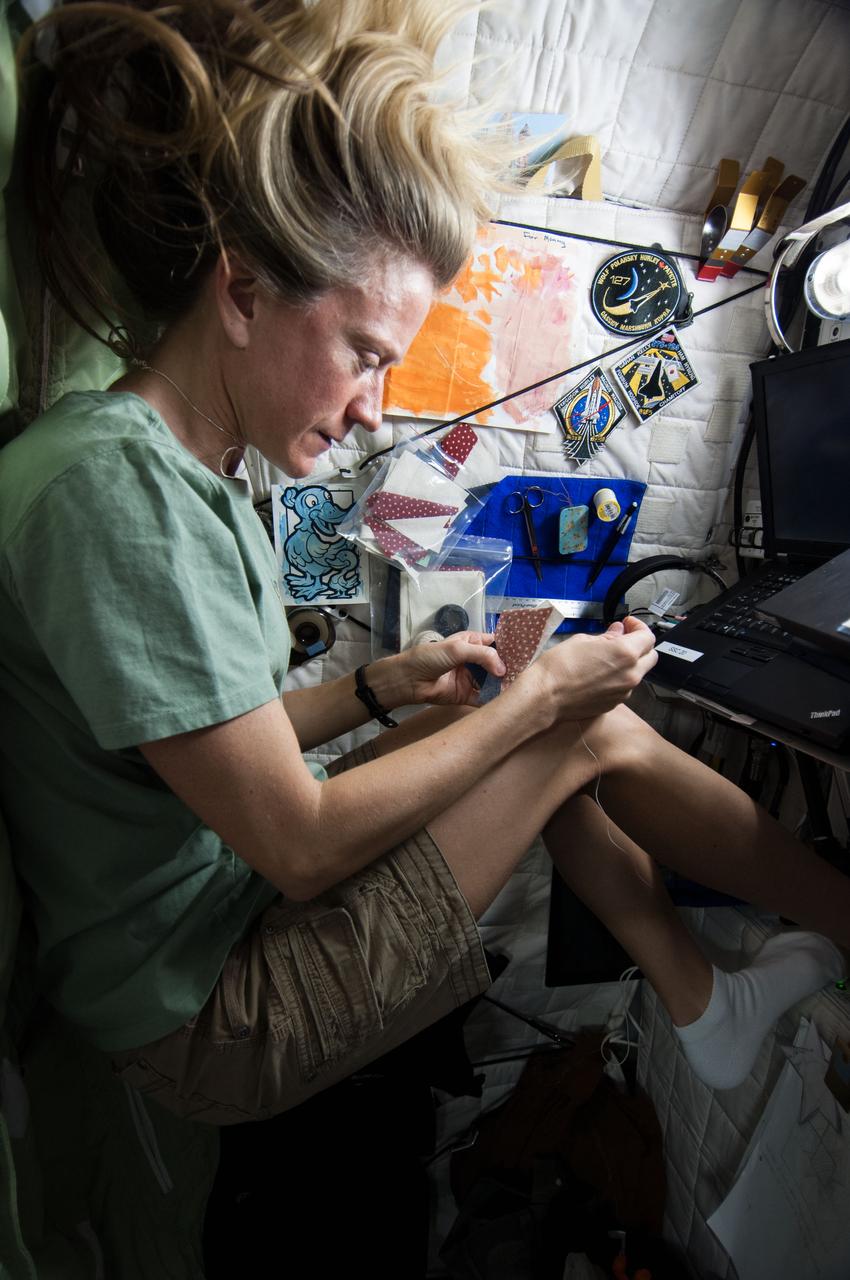
ISS036-E-028784 (3 July 2013) --- Expedition 36 Flight Engineer Karen Nyberg uses some of her off-duty time on the International Space Station for sewing -- one of her many hobbies.
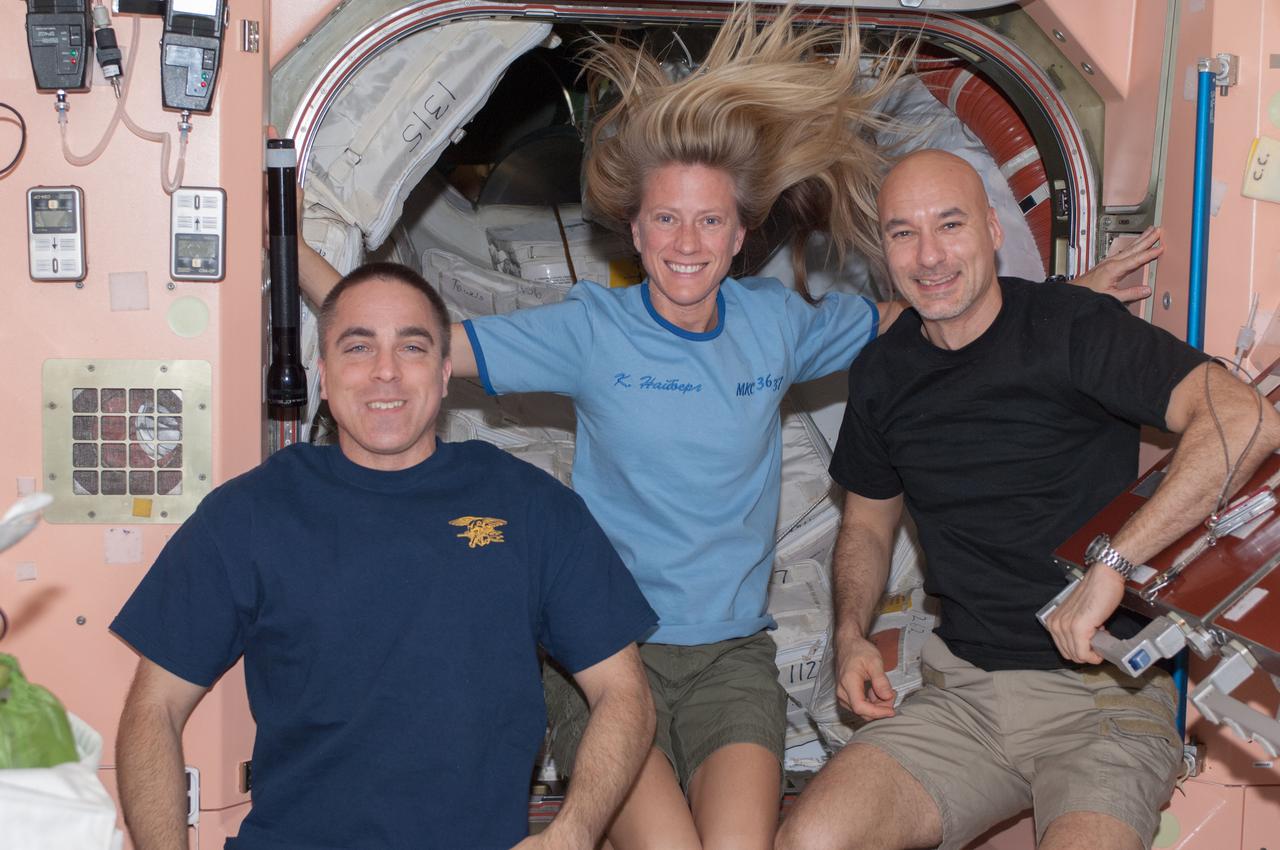
View of Astronauts Chris Cassidy (left),Karen Nyberg (center) and European Space Agency astronaut Luca Parmitano,all Expedition 36 flight engineers,in the Node 1 module.
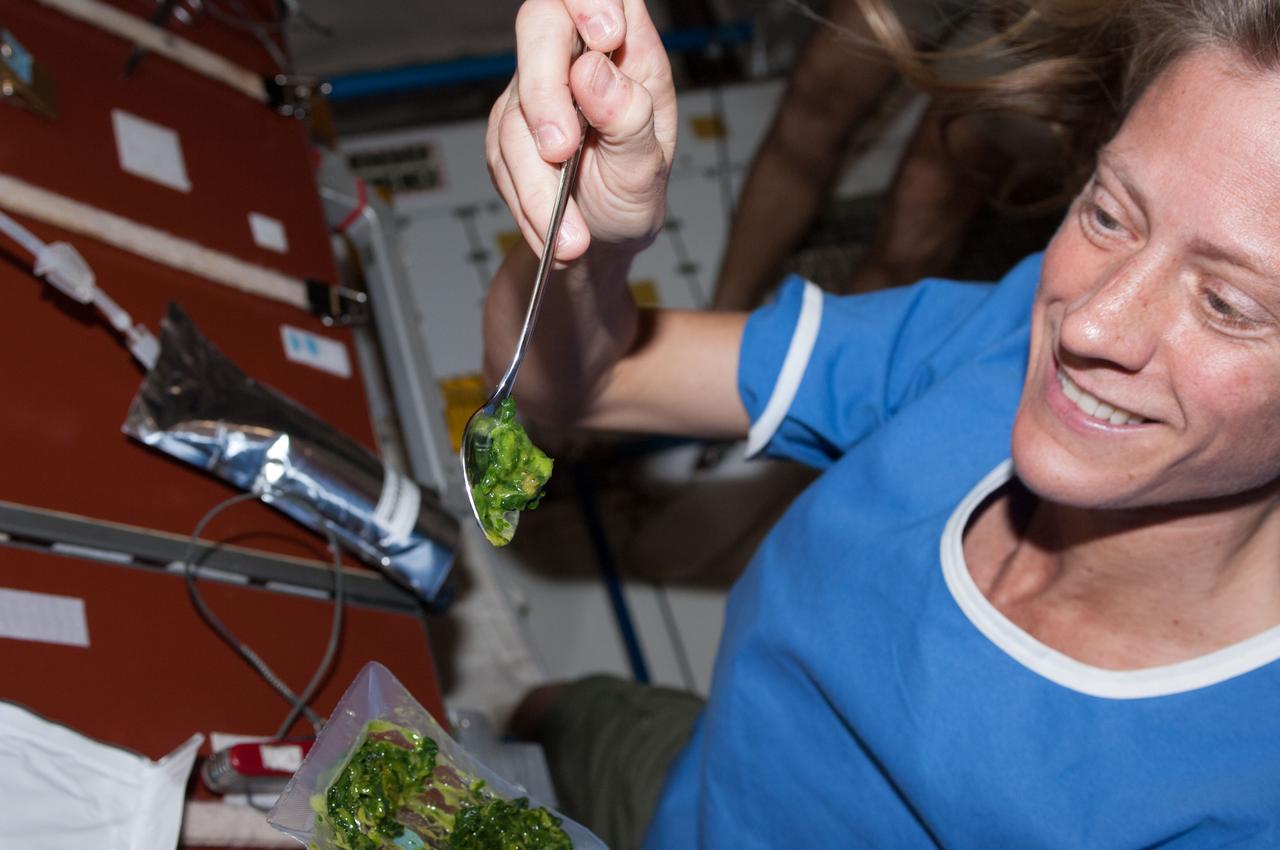
ISS036-E-018120 (13 July 2013) --- NASA astronaut Karen Nyberg, Expedition 36 flight engineer, eats a meal at the galley in the Unity node of the International Space Station.
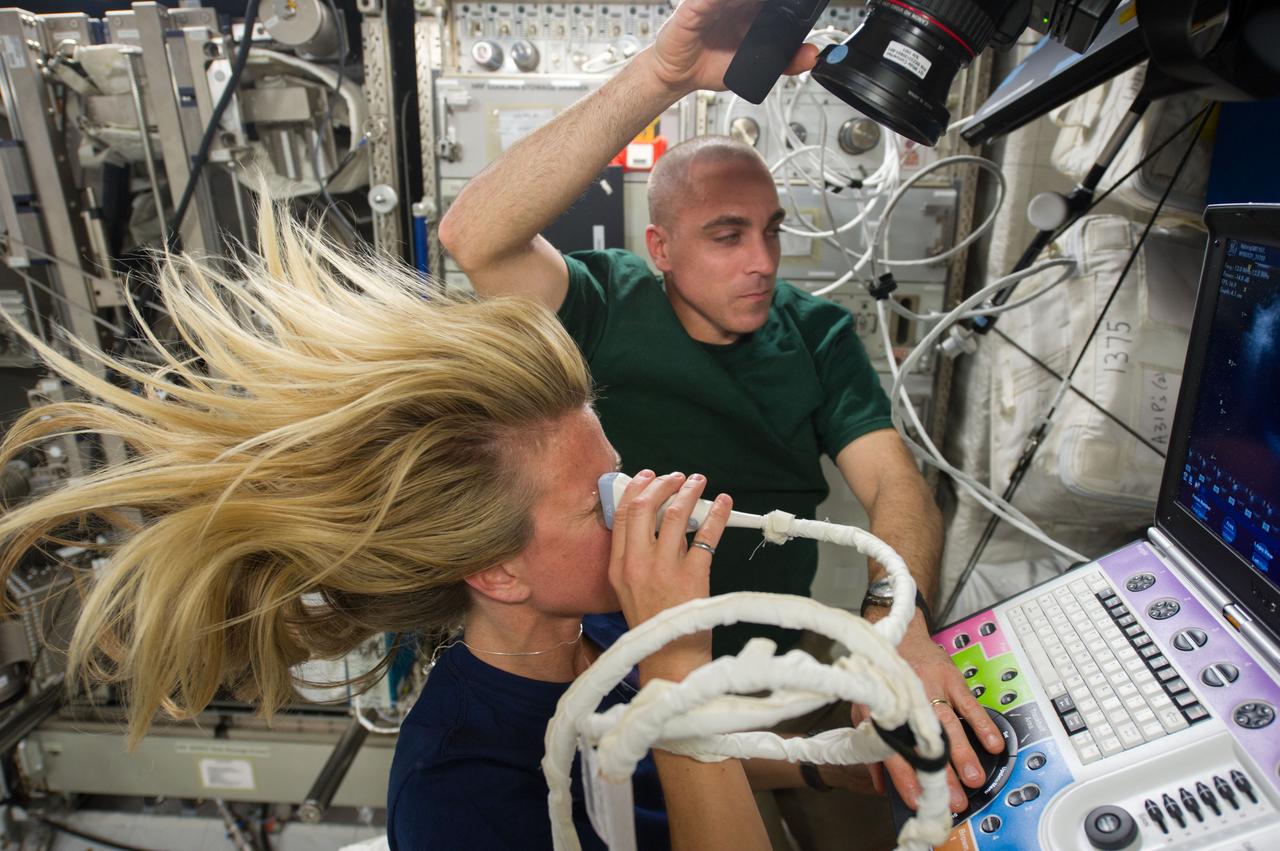
Astronaut Karen Nyberg,Expedition 37 flight engineer, assisted by astronaut Chris Cassidy, performs an Ocular Health (OH) Ultrasound 2 scan in the Destiny laboratory of the International Space Station.
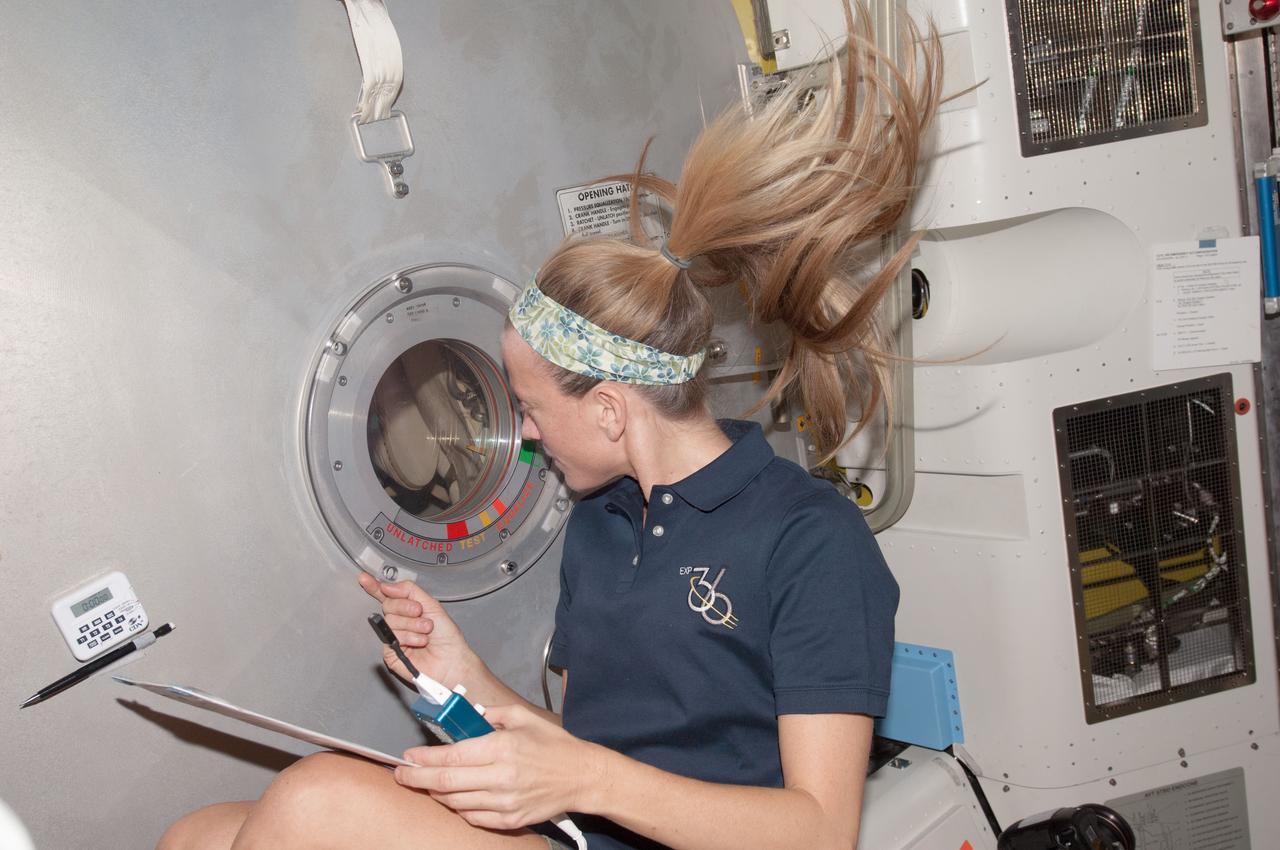
Photographic documentation of Extravehicular Activity (EVA) 23 Prep in the Quest airlock. Astronaut Karen Nyberg, Expedition 36 flight engineer, holds a microphone and a checklist as she sits in front of the Airlock hatch.
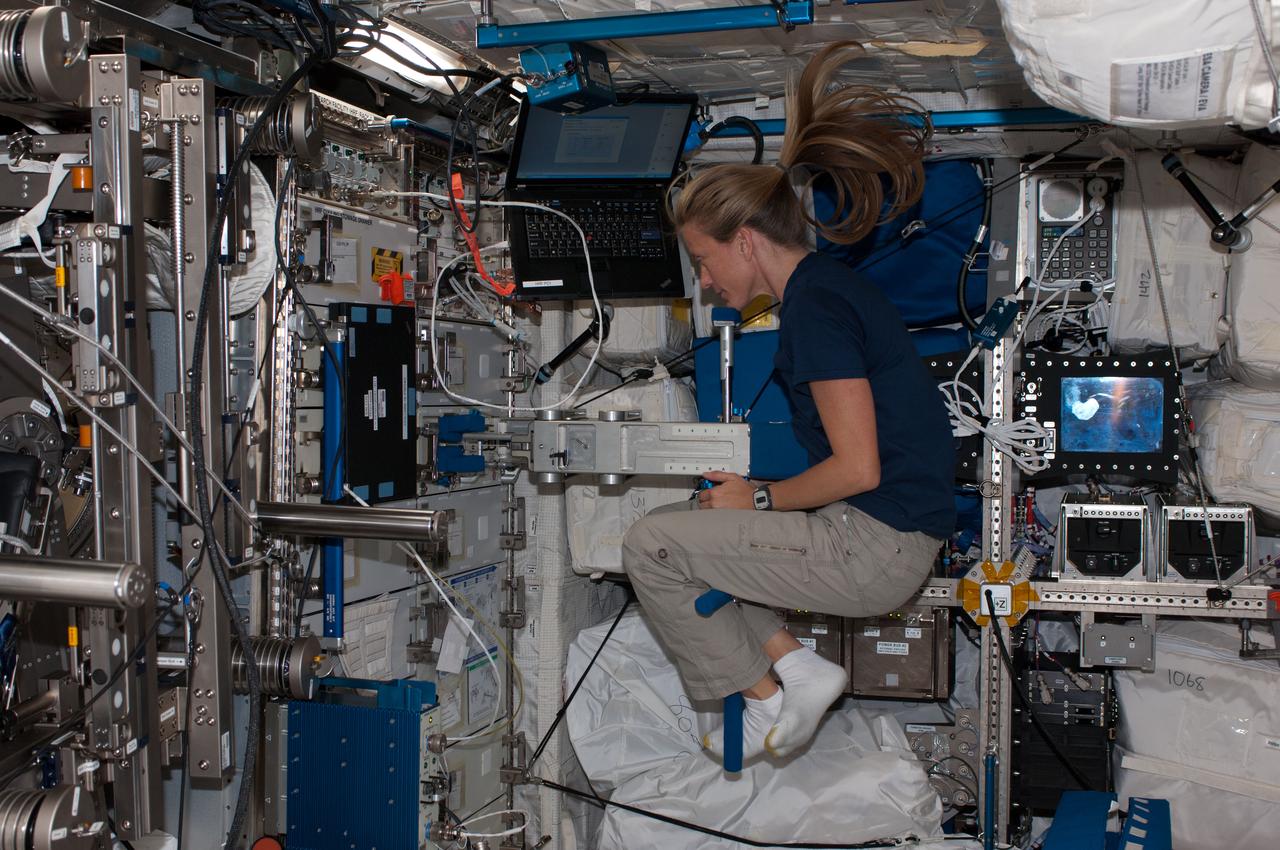
Astronaut Karen Nyberg,Expedition 36 flight engineer,performs a Space Linear Acceleration Mass Measurement Device (SLAMMD) Body Mass Measurement test in the U.S. Laboratory.
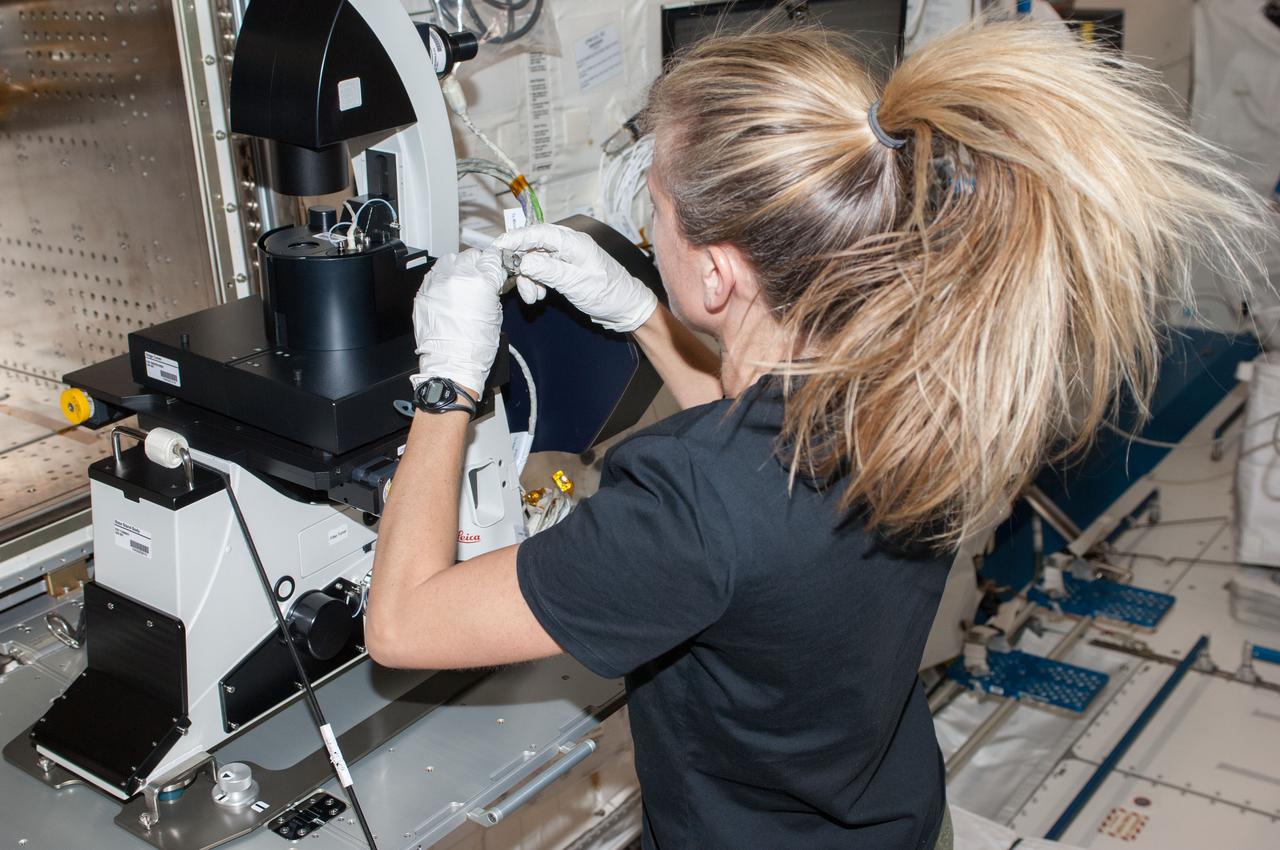
NASA astronaut Karen Nyberg, Expedition 36 flight engineer, works to setup the Multi-Purpose Small Payload Rack (MSPR) fluorescence microscope in the Kibo laboratory of the International Space Station.
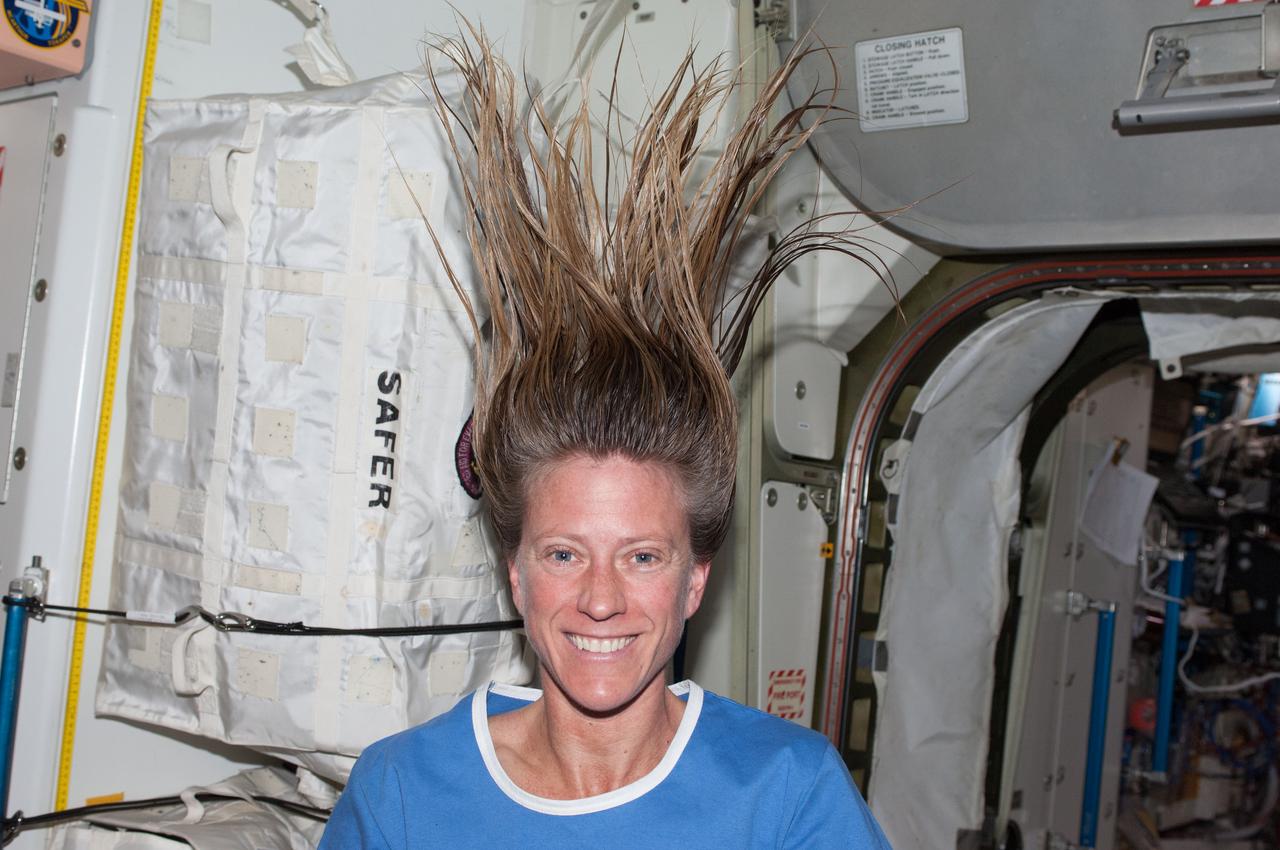
Astronaut Karen Nyberg,Expedition 36 flight engineer,arranges her hair so that it can float straight up from her head. Photo was taken in the Node 1 module. Sent also as Twitter message.
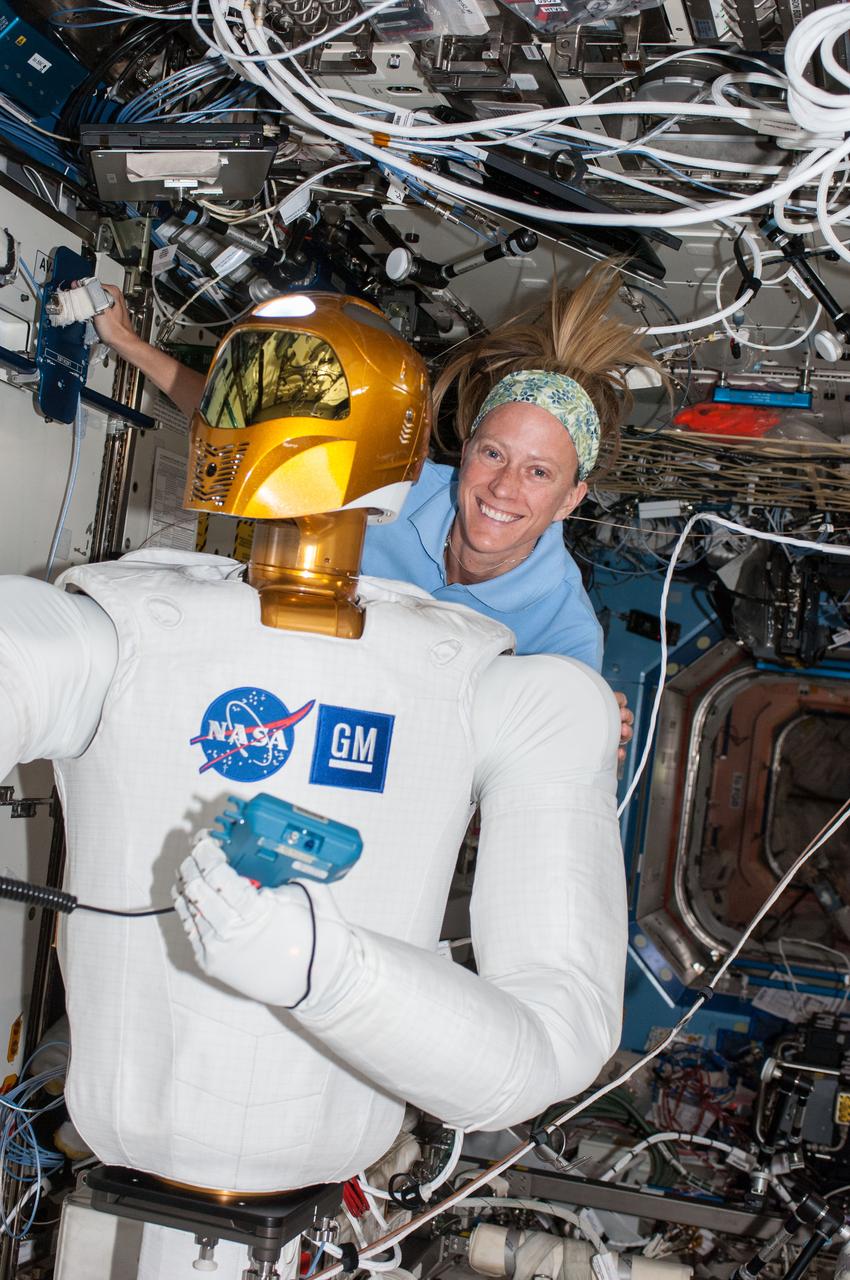
ISS036-E-013175 (28 June 2013) --- NASA astronaut Karen Nyberg, Expedition 36 flight engineer, is pictured with Robonaut 2, the first humanoid robot in space, in the Destiny laboratory of the International Space Station.
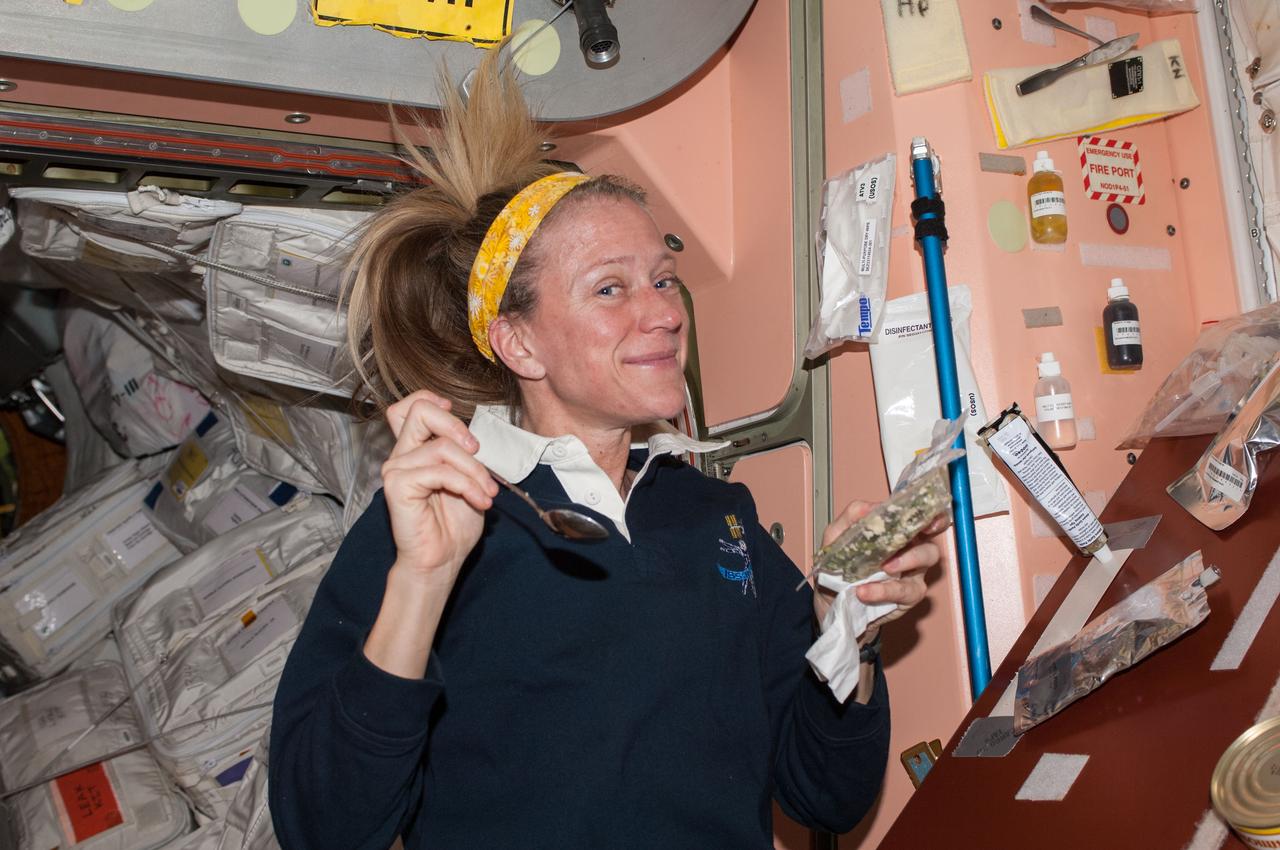
ISS036-E-018125 (13 July 2013) --- NASA astronaut Karen Nyberg, Expedition 36 flight engineer, eats a meal at the galley in the Unity node of the International Space Station.
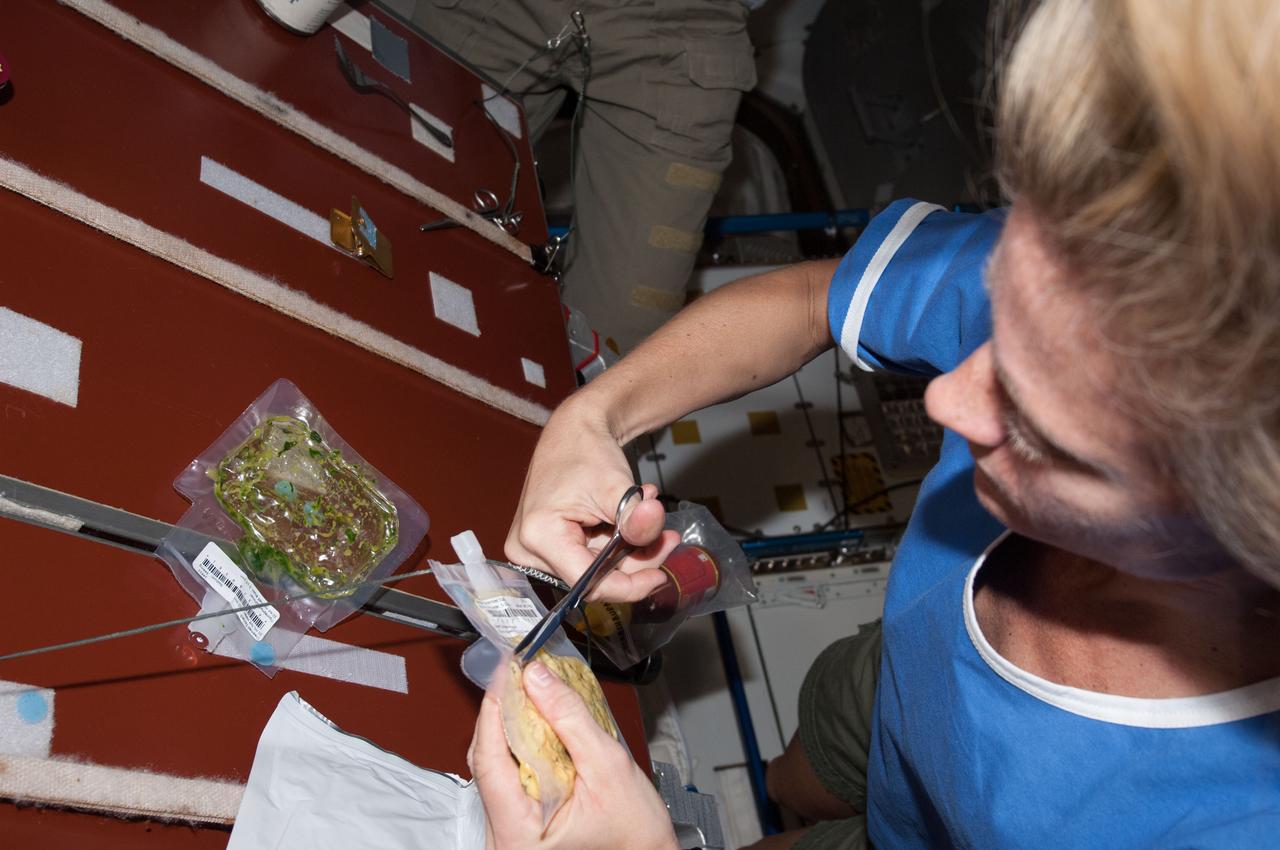
ISS037-E-005745 (2 Oct. 2013) --- NASA astronaut Karen Nyberg, Expedition 37 flight engineer, prepares to eat a snack in the Unity node of the International Space Station.
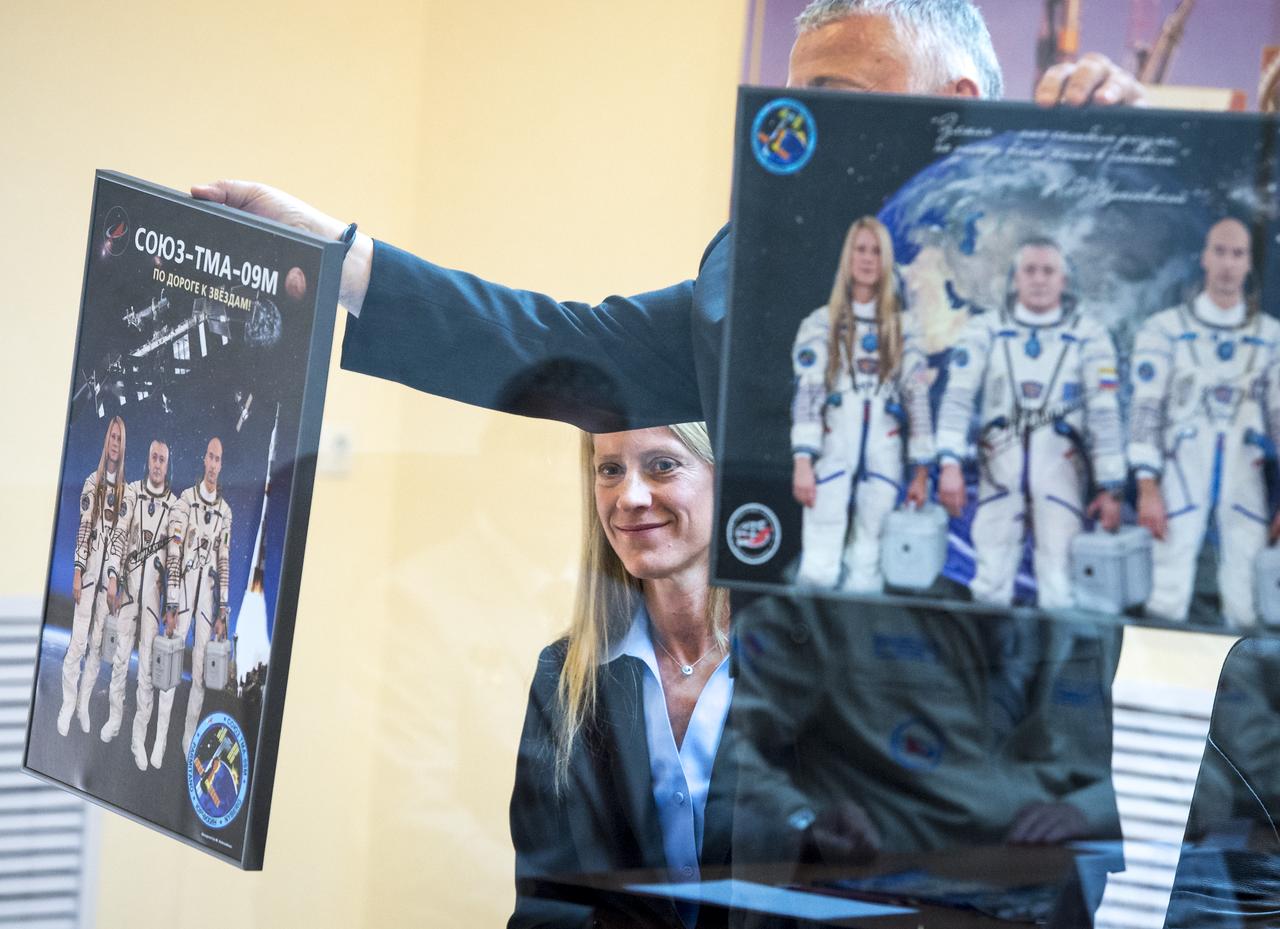
Expedition 36/37 Soyuz Commander Fyodor Yurchikhin of the Russian Federal Space Agency (Roscosmos) holds up posters of his crew during the State Commission meeting at the Cosmonaut Hotel as Expedition 36 Flight Engineer Karen Nyberg of NASA looks on, Monday, May 27, 2013, in Kazakhstan. Yurichikin and his fellow crew members, Flight Engineers; Karen Nyberg of NASA, and Luca Parmitano of the European Space Agency, were in quarantine and kept behind glass during the meeting in preparation for their launch on a Soyuz rocket to the International Space Station (ISS) on Wednesday May 29, Kazakh time. Photo credit: (NASA/Bill Ingalls)
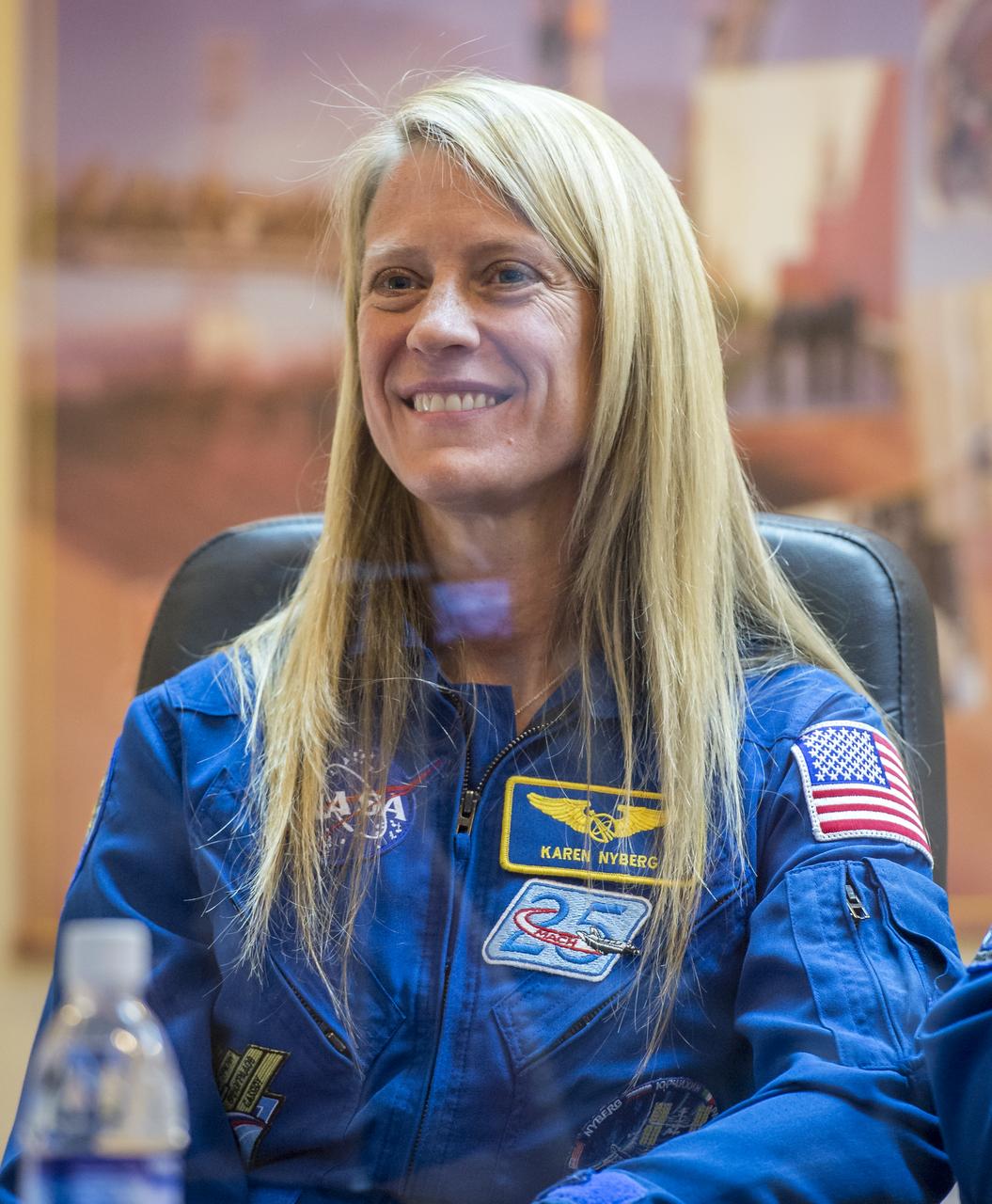
Expedition 36/37 Flight Engineer Karen Nyberg of NASA smiles during the crew press conference at the Cosmonaut Hotel, Monday, May 27, 2013, in Kazakhstan. Nyberg and her fellow crew members, Soyuz Commander Fyodor Yurchikhin of the Russian Federal Space Agency (Roscosmos), and Flight Engineer Luca Parmitano of the European Space Agency, were in quarantine and kept behind glass during the press conference in preparation for their launch on a Soyuz rocket to the International Space Station (ISS) on Wednesday May 29, Kazakh time. Photo credit: (NASA/Bill Ingalls)
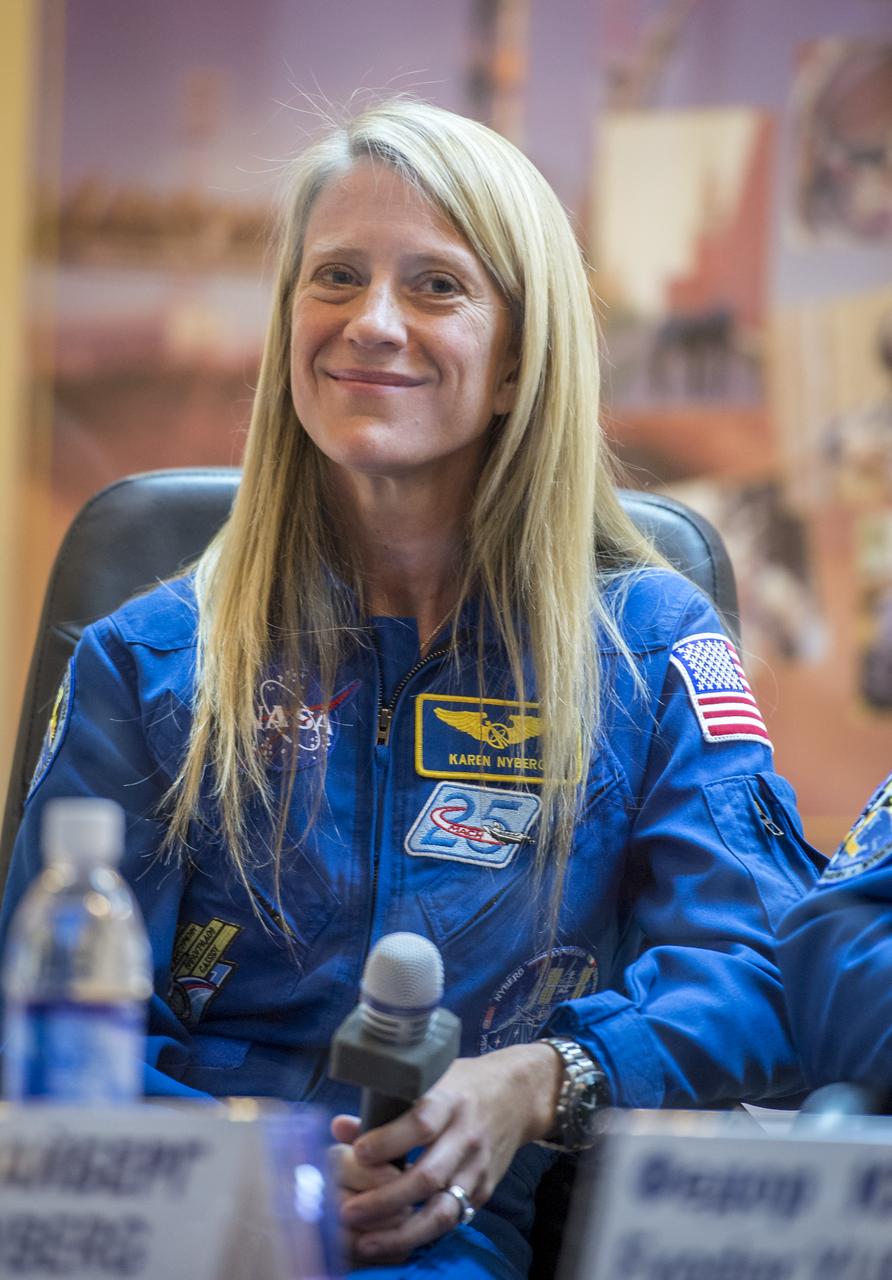
Expedition 36/37 Flight Engineer Karen Nyberg of NASA smiles during the crew press conference at the Cosmonaut Hotel, Monday, May 27, 2013, in Kazakhstan. Nyberg and her fellow crew members, Soyuz Commander Fyodor Yurchikhin of the Russian Federal Space Agency (Roscosmos), and Flight Engineer Luca Parmitano of the European Space Agency, were in quarantine and kept behind glass during the press conference in preparation for their launch on a Soyuz rocket to the International Space Station (ISS) on Wednesday May 29, Kazakh time. Photo credit: (NASA/Bill Ingalls)
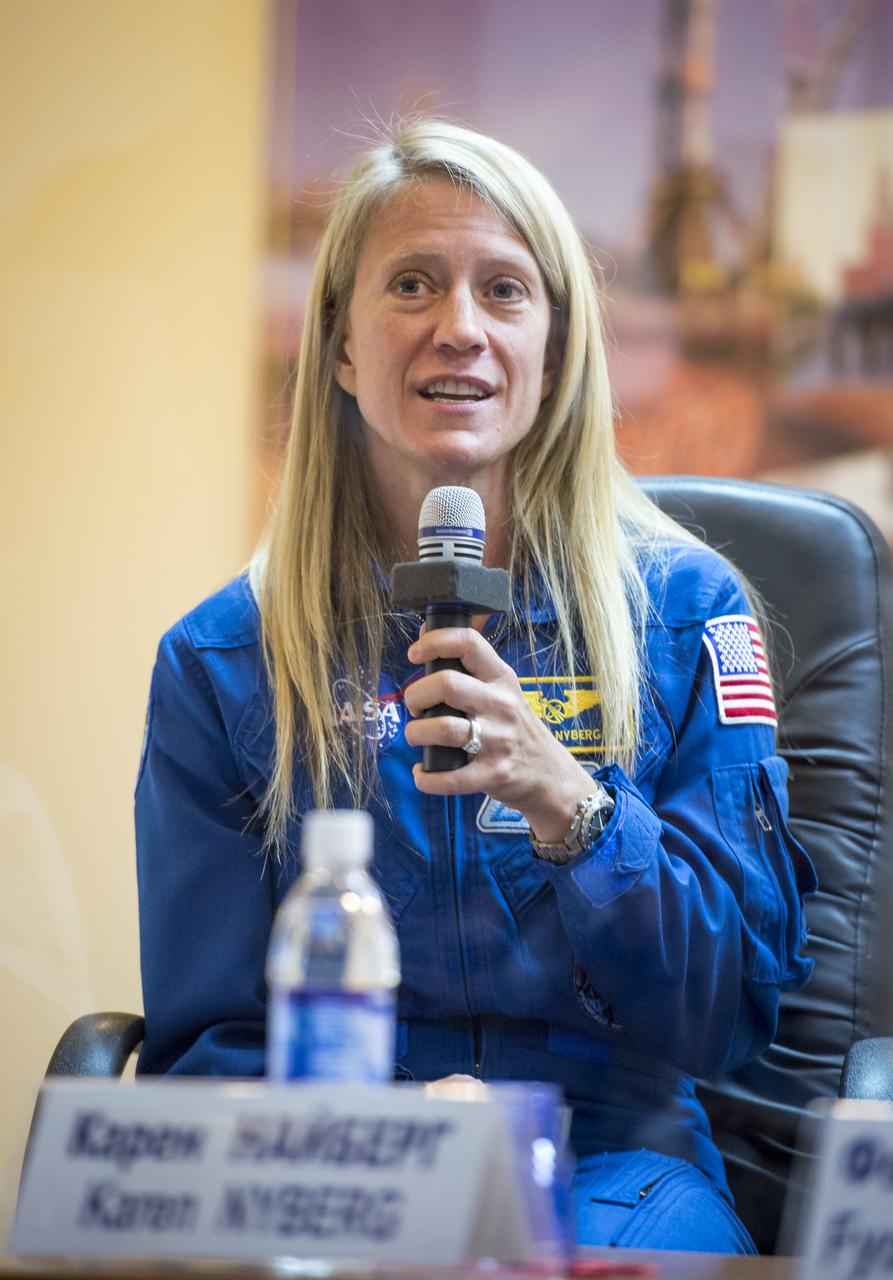
Expedition 36/37 Flight Engineer Karen Nyberg of NASA talks during the crew press conference at the Cosmonaut Hotel, Monday, May 27, 2013, in Kazakhstan. Nyberg and her fellow crew members, Soyuz Commander Fyodor Yurchikhin of the Russian Federal Space Agency (Roscosmos), and Flight Engineer Luca Parmitano of the European Space Agency, were in quarantine and kept behind glass during the press conference in preparation for their launch on a Soyuz rocket to the International Space Station (ISS) on Wednesday May 29, Kazakh time. Photo credit: (NASA/Bill Ingalls)

Expedition 36/37 Flight Engineer Karen Nyberg of NASA signs a hotel room door at the Cosmonaut Hotel, Tuesday, May 28, 2013, in Baikonur, Kazakhstan. Nyberg and her fellow crew members, Soyuz Commander Fyodor Yurchikhin of the Russian Federal Space Agency (Roscosmos), and, Flight Engineer, and Luca Parmitano of the European Space Agency, were departing the hotel in preparation for their launch on a Soyuz rocket to the International Space Station (ISS) on Wednesday May 29, Kazakh time. Photo credit: (NASA/Bill Ingalls)
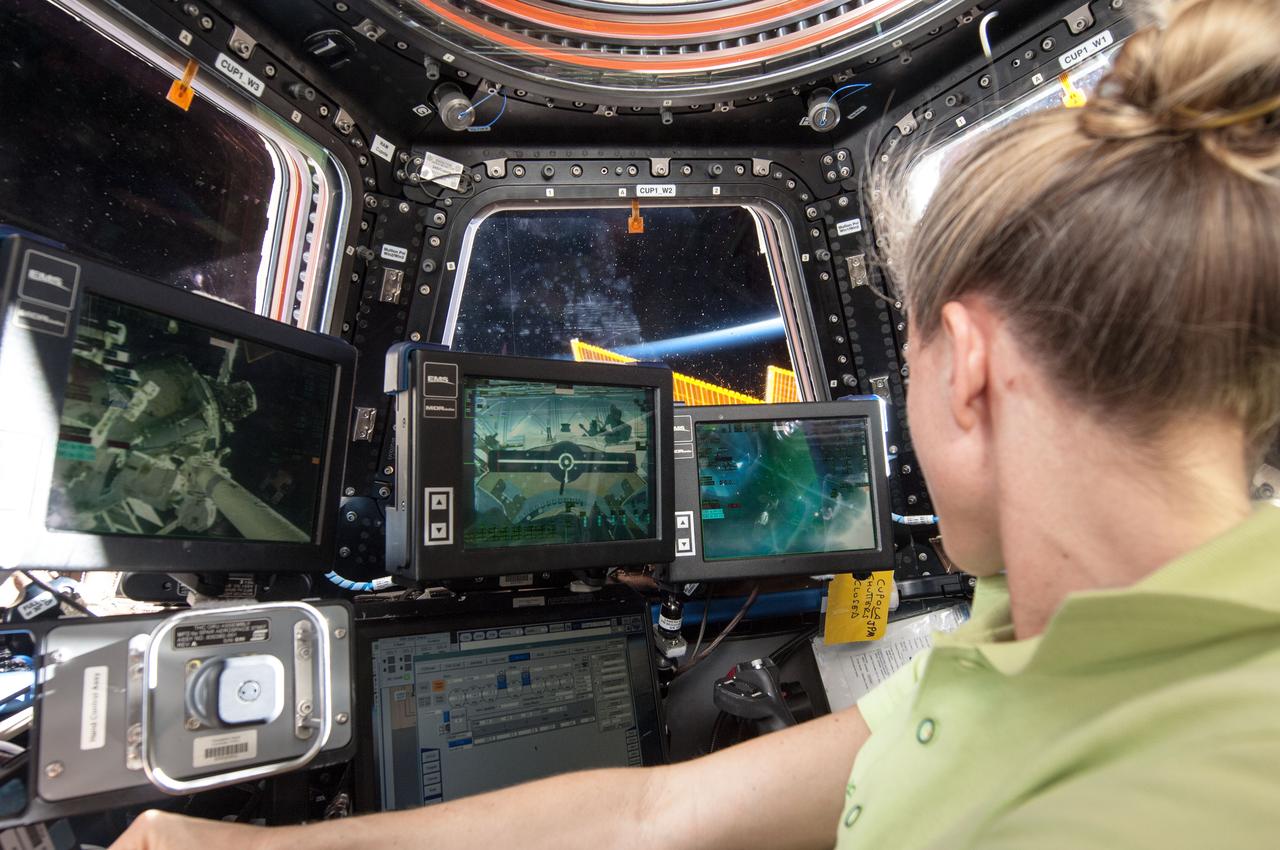
ISS036-E-029229 (5 Aug. 2013) --- At the robotics workstation in the International Space Station?s Cupola, NASA astronaut Karen Nyberg, Expedition 36 flight engineer, participates in onboard training activity in preparation for the grapple and berthing of the Japanese "Kounotori" H2 Transfer Vehicle-4 (HTV-4) set for August 9. Nyberg and NASA astronaut Chris Cassidy will use Canadarm2, the station's Canadian Space Agency-provided robotic arm, to reach out and capture the vehicle for its installation on the Earth-facing port of the Harmony node
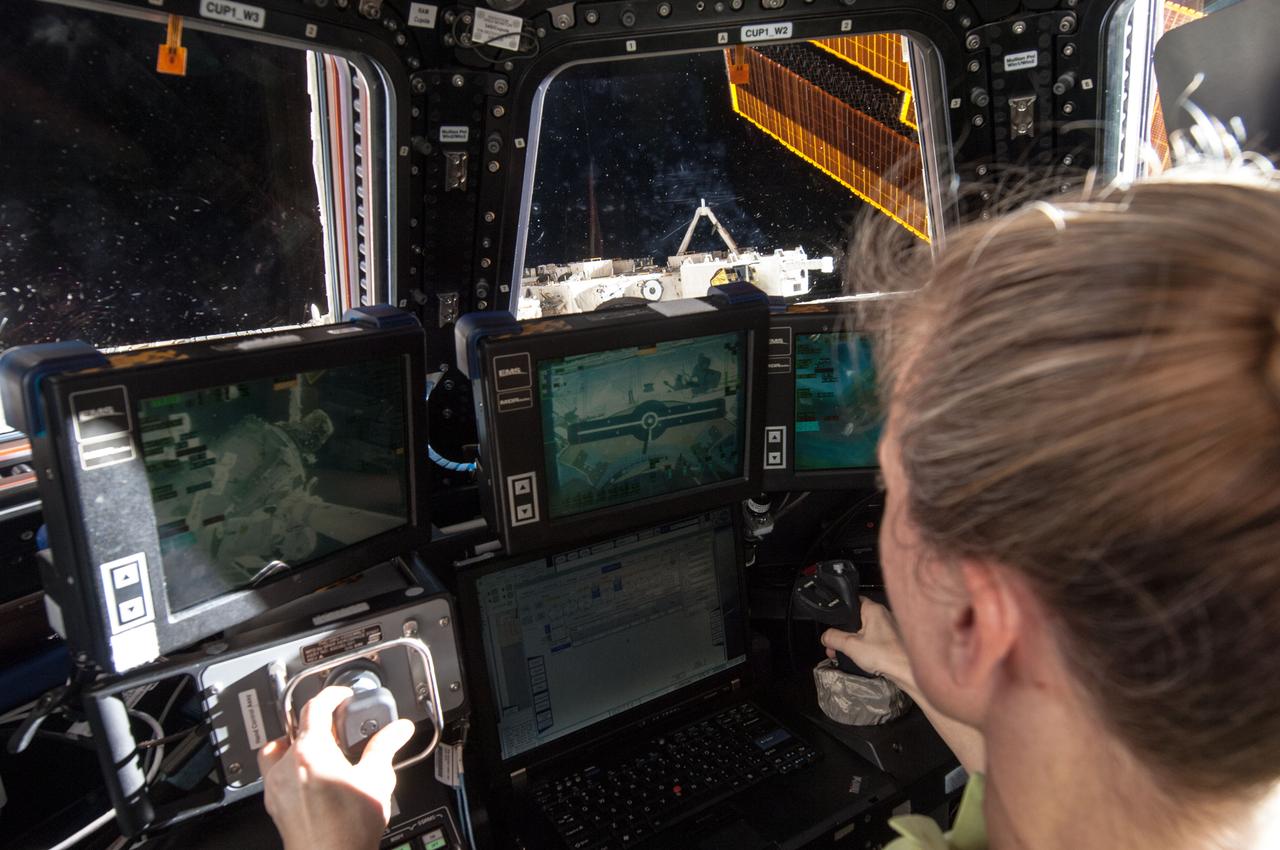
ISS036-E-029227 (5 Aug. 2013) --- At the robotics workstation in the International Space Station?s Cupola, NASA astronaut Karen Nyberg, Expedition 36 flight engineer, participates in onboard training activity in preparation for the grapple and berthing of the Japanese "Kounotori" H2 Transfer Vehicle-4 (HTV-4) set for August 9. Nyberg and NASA astronaut Chris Cassidy will use Canadarm2, the station's Canadian Space Agency-provided robotic arm, to reach out and capture the vehicle for its installation on the Earth-facing port of the Harmony node.
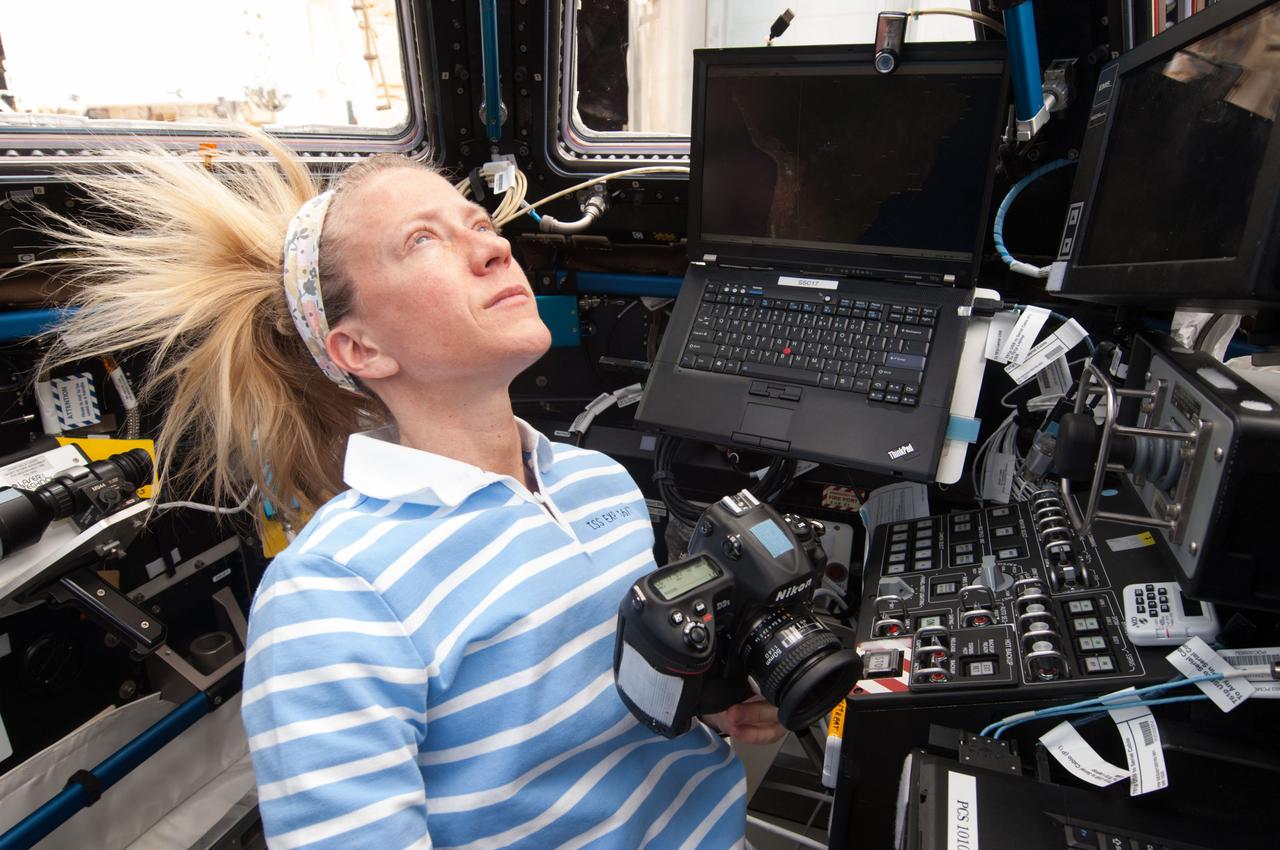
ISS037-E-002792 (23 Sept. 2013) --- Positioned in the Cupola of the International Space Station with a still camera in hand, Expedition 37 Flight Engineer Karen Nyberg eyeballs a potential photo target on Sept. 23, 2013. Nyberg, along with European Space Agency astronaut Luca Parmitano and Russian cosmonaut Fyodor Yurchikhin (both out of frame), will be welcoming three more crewmates in a couple of days following a scheduled Soyuz launch from Kazakhstan on Sept. 26, Kazakh time.
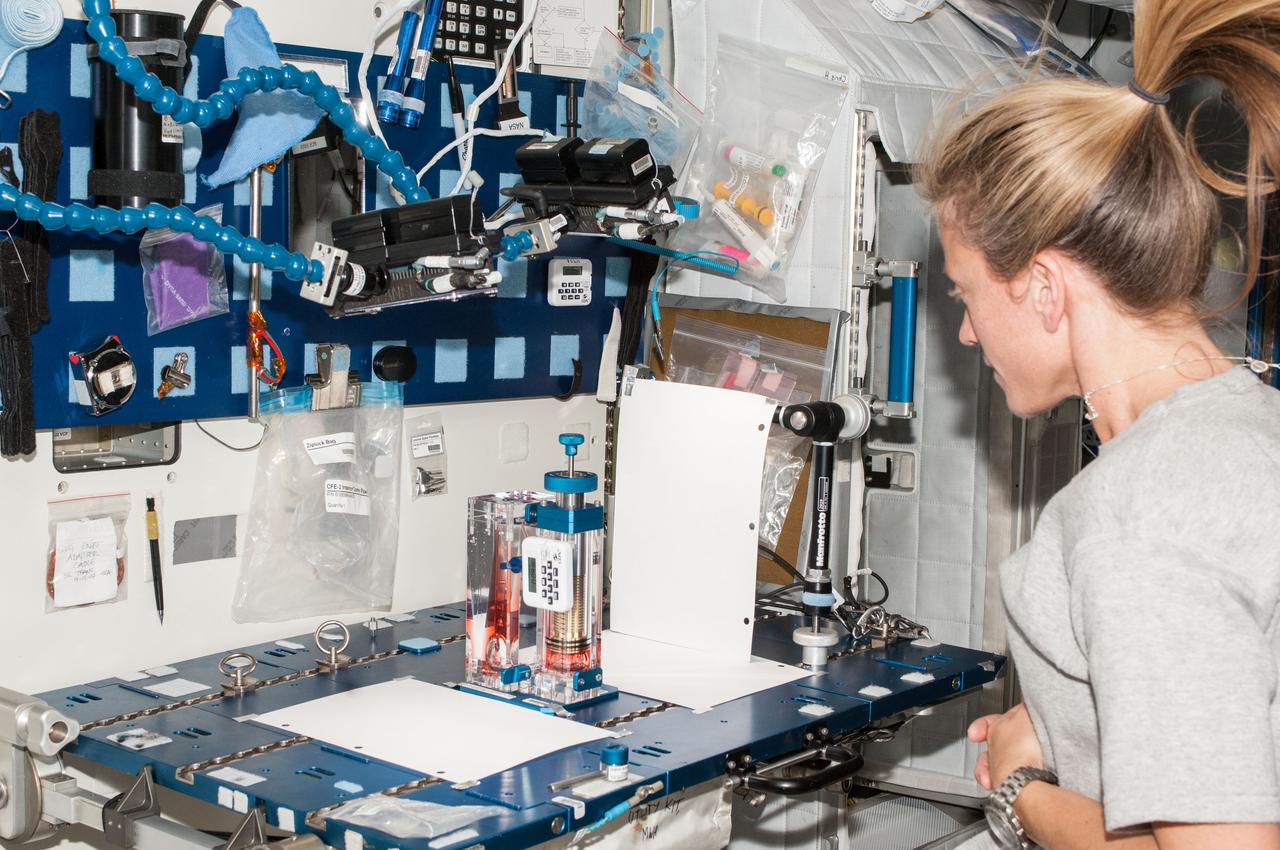
ISS036-E-008191 (15 June 2013) --- NASA astronaut Karen Nyberg, Expedition 36 flight engineer, conducts a session with the Capillary Flow Experiment (CFE) Interior Corner Flow 9 (ICF-9) in the Harmony node of the International Space Station. CFE observes the flow of fluid, in particular capillary phenomena, in microgravity.
ISS036-E-015477 (7 July 2013) --- NASA astronauts Chris Cassidy (left) and Karen Nyberg; along with European Space Agency astronaut Luca Parmitano, all Expedition 36 flight engineers, pose for a photo in the Unity node of the International Space Station.

ISS036-E-008213 (15 June 2013) --- NASA astronaut Karen Nyberg, Expedition 36 flight engineer, conducts a session with the Capillary Flow Experiment (CFE) Interior Corner Flow 9 (ICF-9) in the Harmony node of the International Space Station. CFE observes the flow of fluid, in particular capillary phenomena, in microgravity.
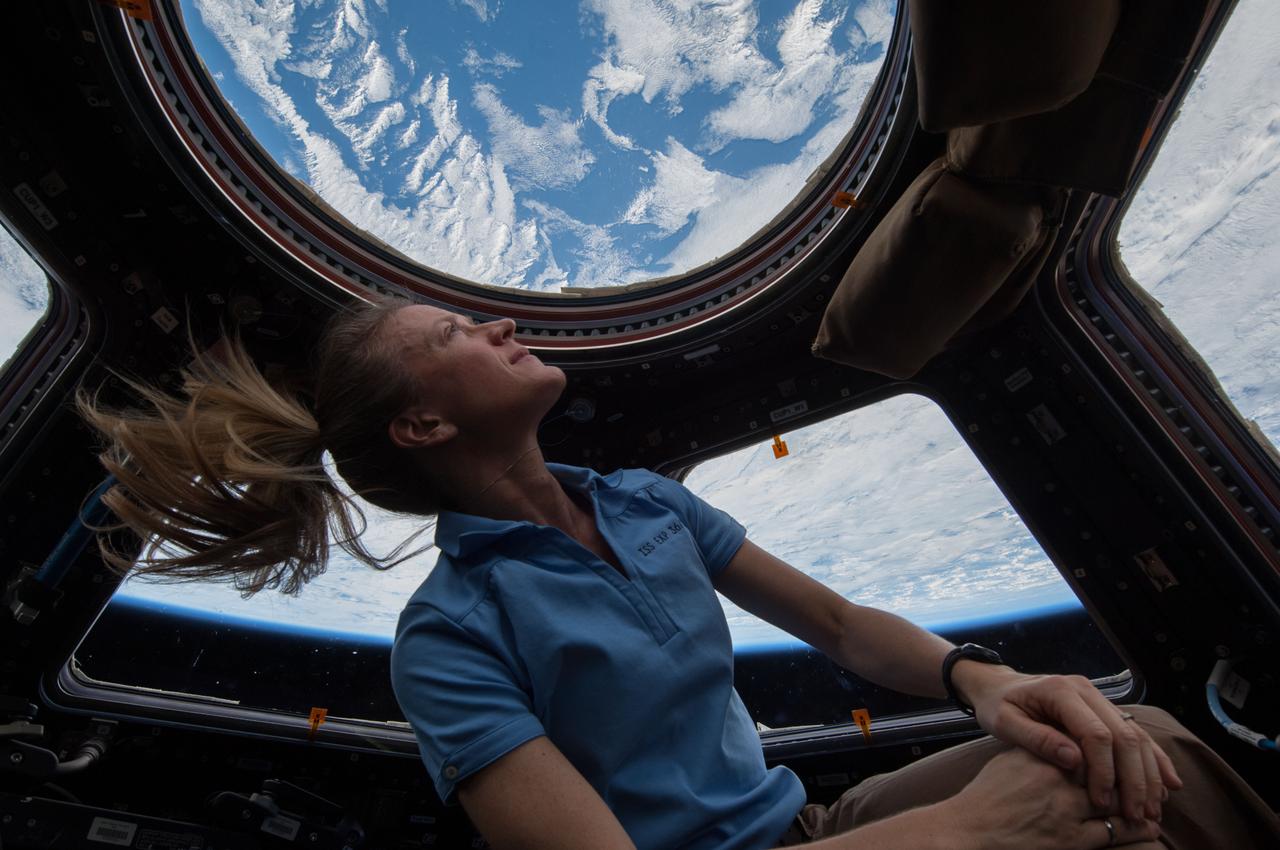
ISS037-E-026913 (4 Nov. 2013) --- NASA astronaut Karen Nyberg, Expedition 37 flight engineer, enjoys the view of Earth from the windows in the Cupola of the International Space Station. A blue and white part of Earth is visible through the windows.
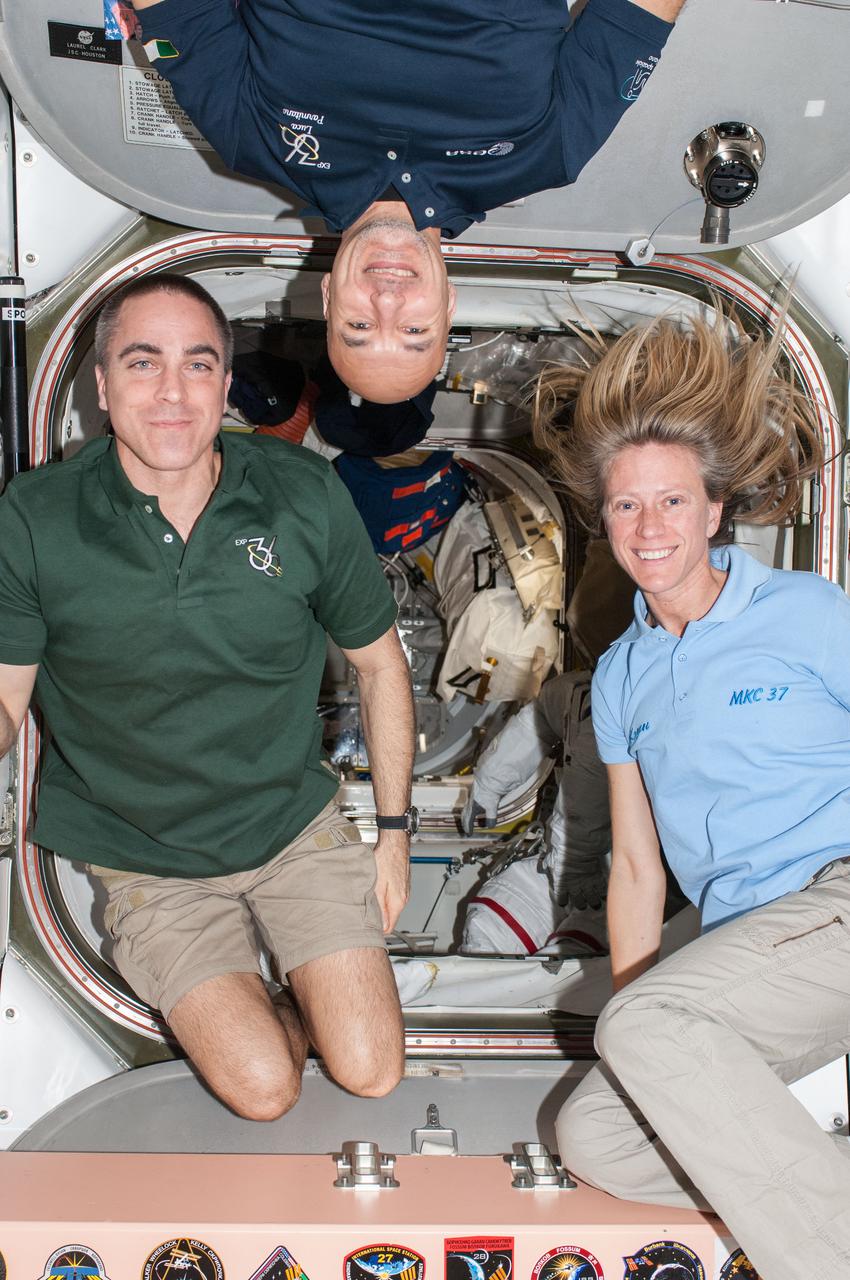
ISS036-E-013240 (29 June 2013) --- NASA astronauts Chris Cassidy (left) and Karen Nyberg; along with European Space Agency astronaut Luca Parmitano, all Expedition 36 flight engineers, pose for a photo at the hatchway between the Quest airlock and the Unity node of the International Space Station.
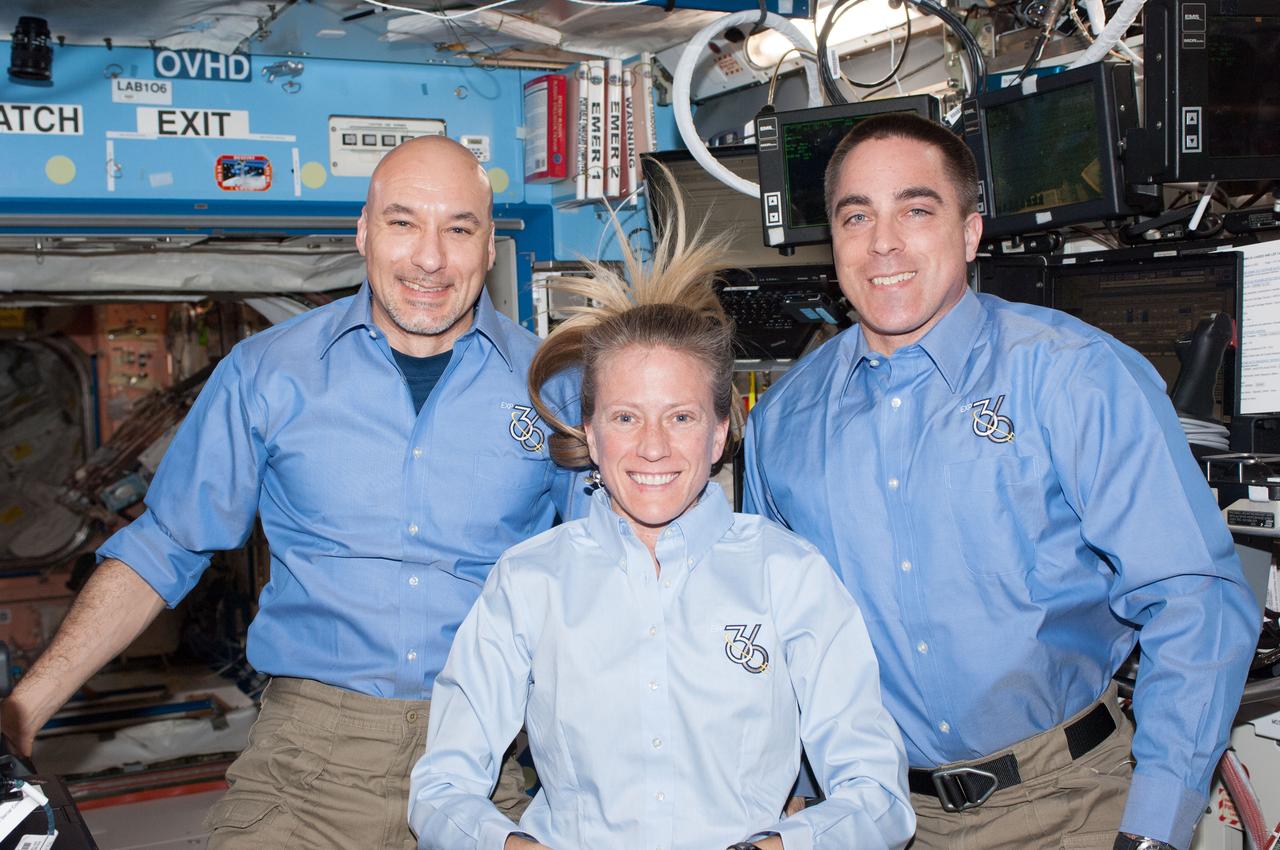
ISS036-E-039435 (3 Sept. 2013) --- NASA astronauts Karen Nyberg and Chris Cassidy (right) along with European Space Agency astronaut Luca Parmitano, all Expedition 36 flight engineers, pose for a photo in the Destiny laboratory of the International Space Station.
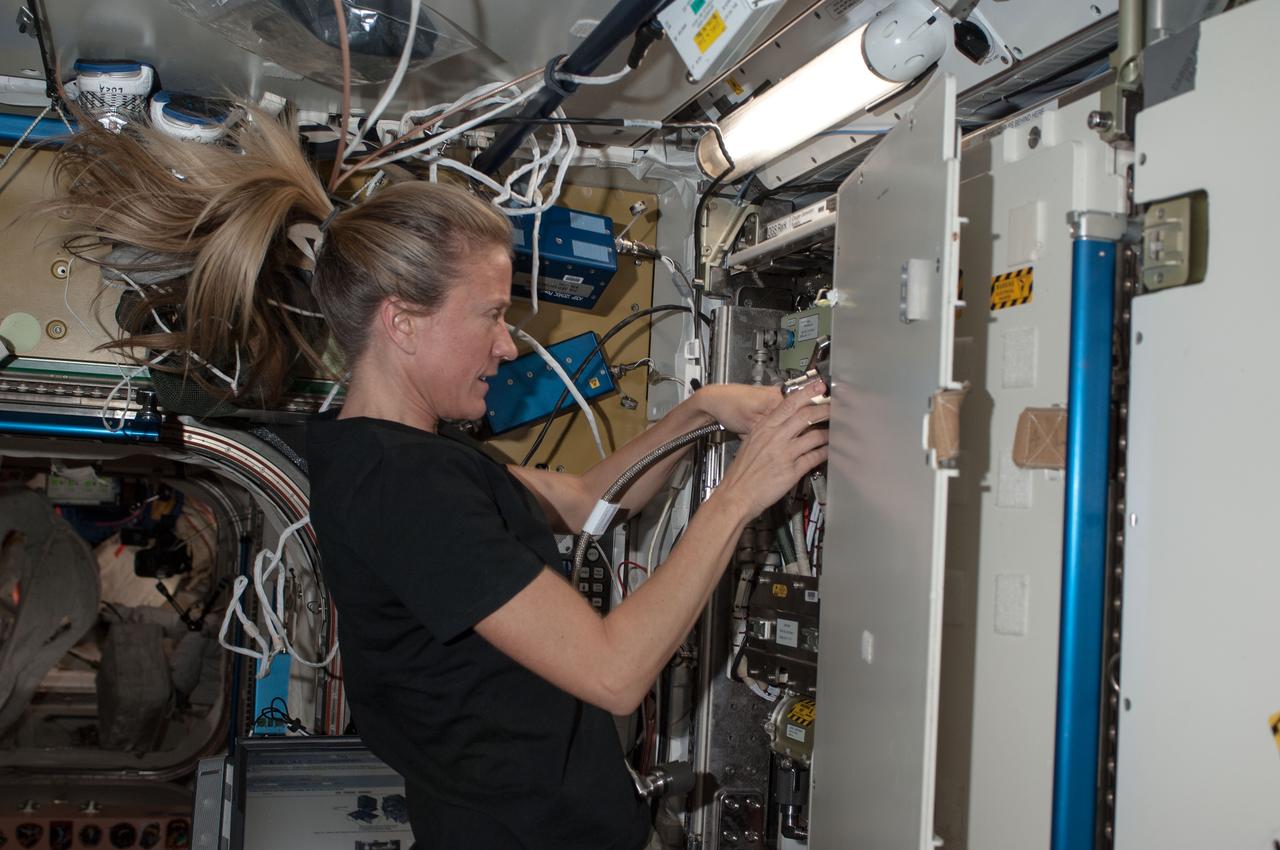
ISS036-E-021797 (18 July 2013) --- NASA astronaut Karen Nyberg, Expedition 36 flight engineer, performs a remove and replace of the Oxygen Generation System (OGS) Hydrogen (H2) Sensor in the Tranquility node of the International Space Station.
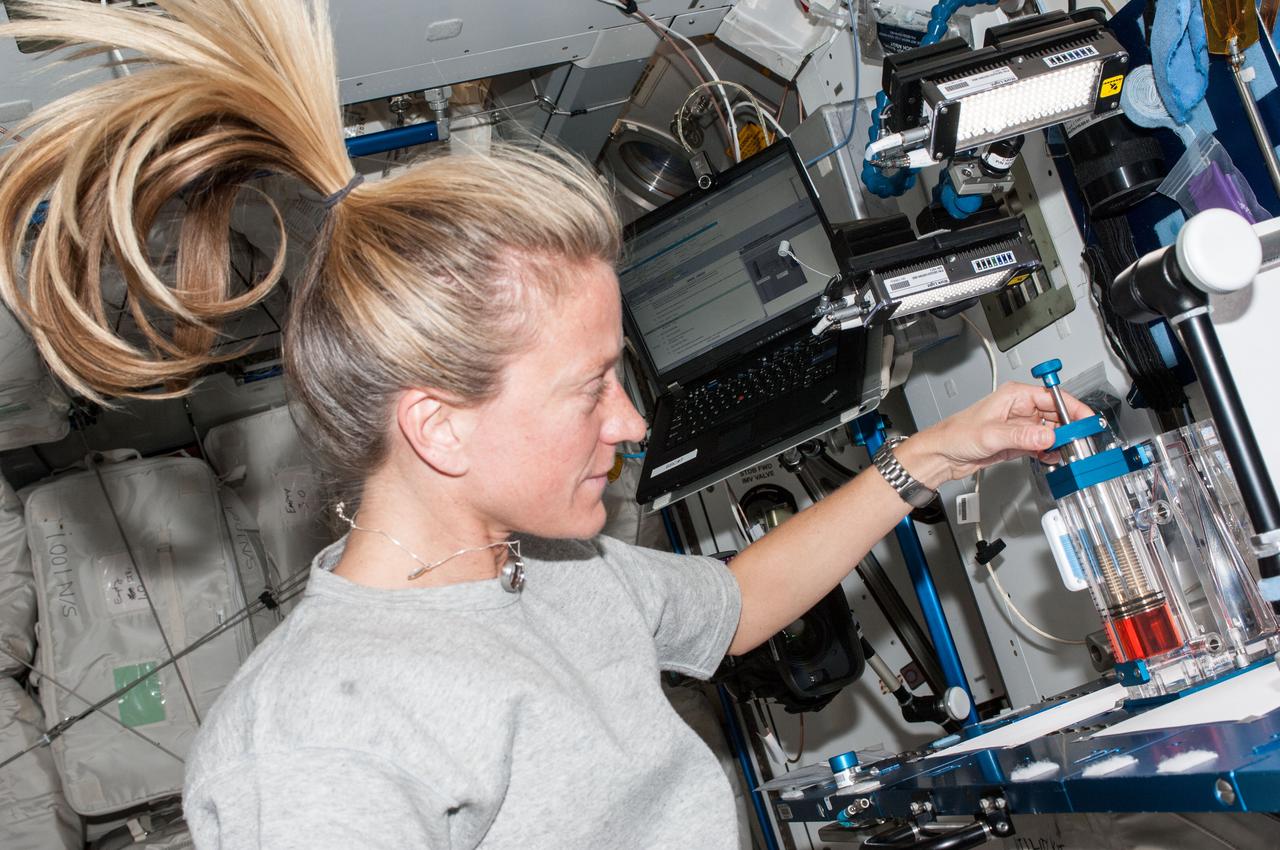
ISS036-E-008215 (15 June 2013) --- NASA astronaut Karen Nyberg, Expedition 36 flight engineer, conducts a session with the Capillary Flow Experiment (CFE) Interior Corner Flow 9 (ICF-9) in the Harmony node of the International Space Station. CFE observes the flow of fluid, in particular capillary phenomena, in microgravity.
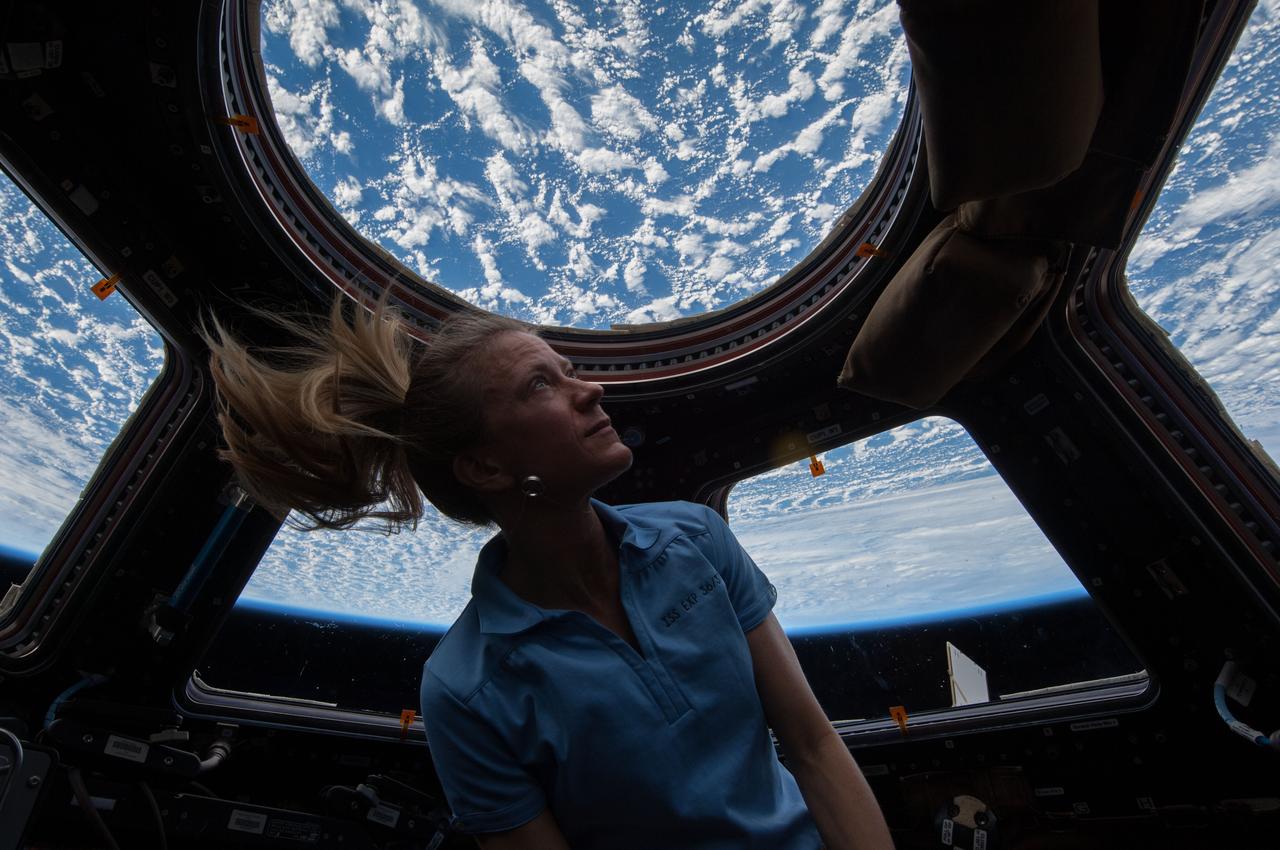
ISS037-E-026900 (4 Nov. 2013) --- NASA astronaut Karen Nyberg, Expedition 37 flight engineer, enjoys the view of Earth from the windows in the Cupola of the International Space Station. A blue and white part of Earth is visible through the windows.
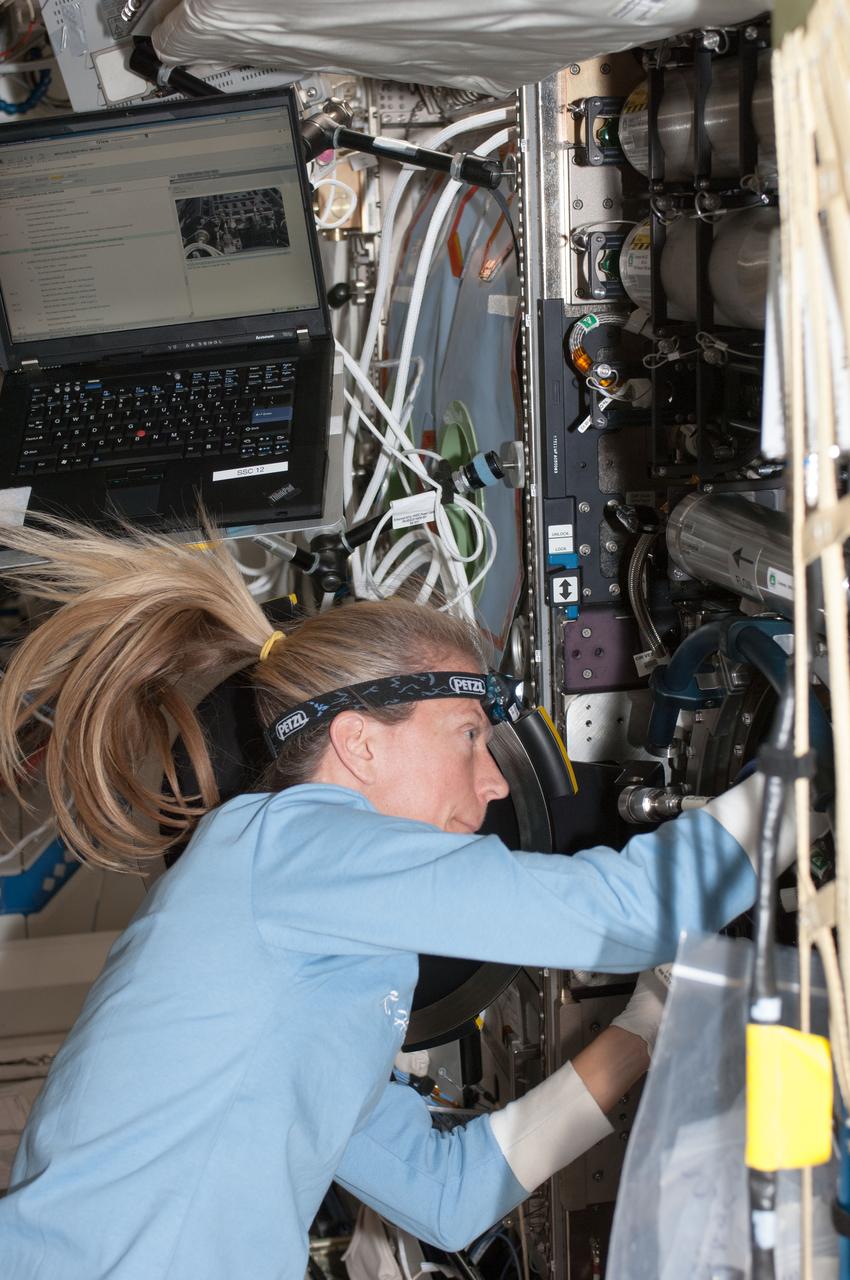
ISS036-E-015521 (5 July 2013) --- NASA astronaut Karen Nyberg, Expedition 36 flight engineer, services the Combustion Integrated Rack (CIR) Multi-user Droplet Combustion Apparatus (MDCA) in the International Space Station's Destiny laboratory.
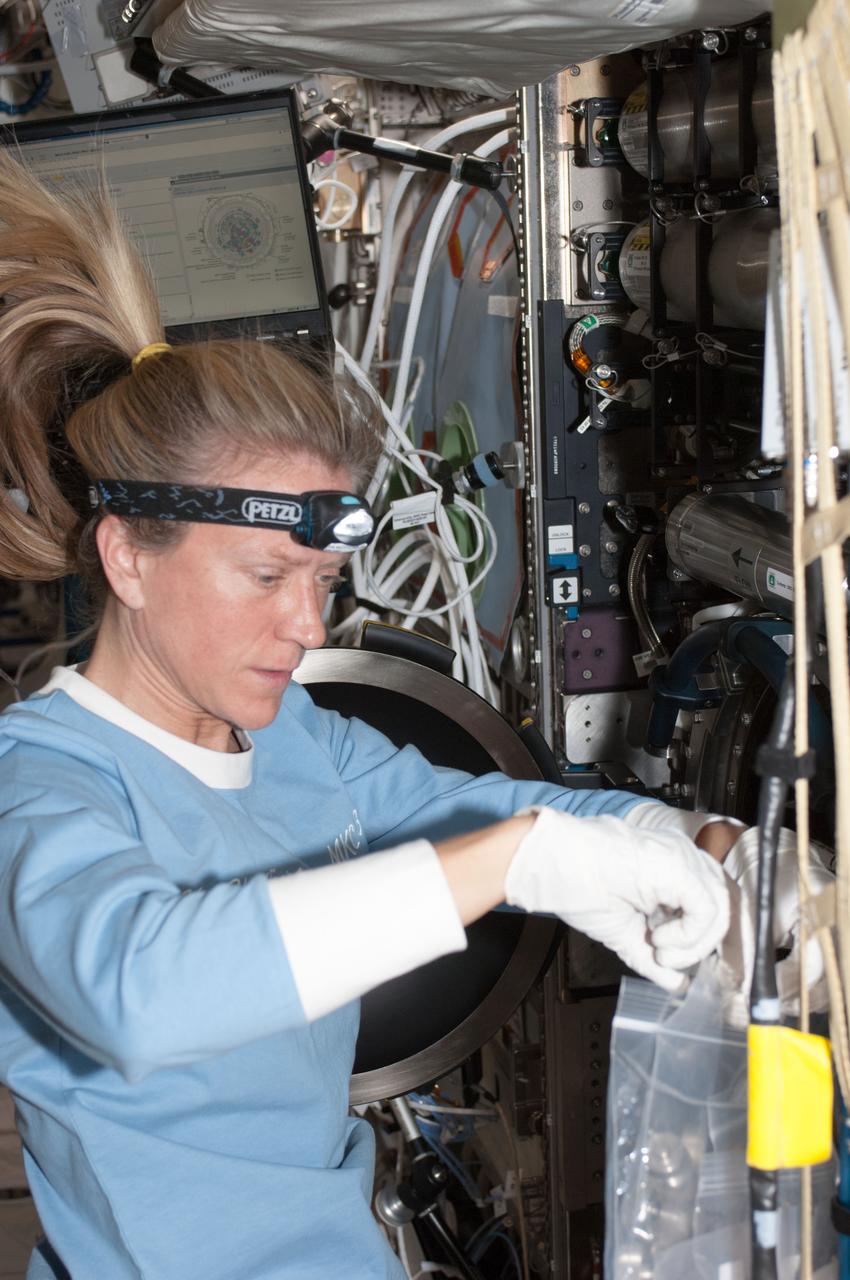
ISS036-E-015530 (5 July 2013) --- NASA astronaut Karen Nyberg, Expedition 36 flight engineer, services the Combustion Integrated Rack (CIR) Multi-user Droplet Combustion Apparatus (MDCA) in the International Space Station's Destiny laboratory.

ISS036-E-023752 (21 July 2013) --- In the International Space Station’s Destiny laboratory, NASA astronaut Karen Nyberg, Expedition 36 flight engineer, wears special gear to telerobotically test Robonaut 2’s (out of frame) maneuvers transmitted from both space and the ground.
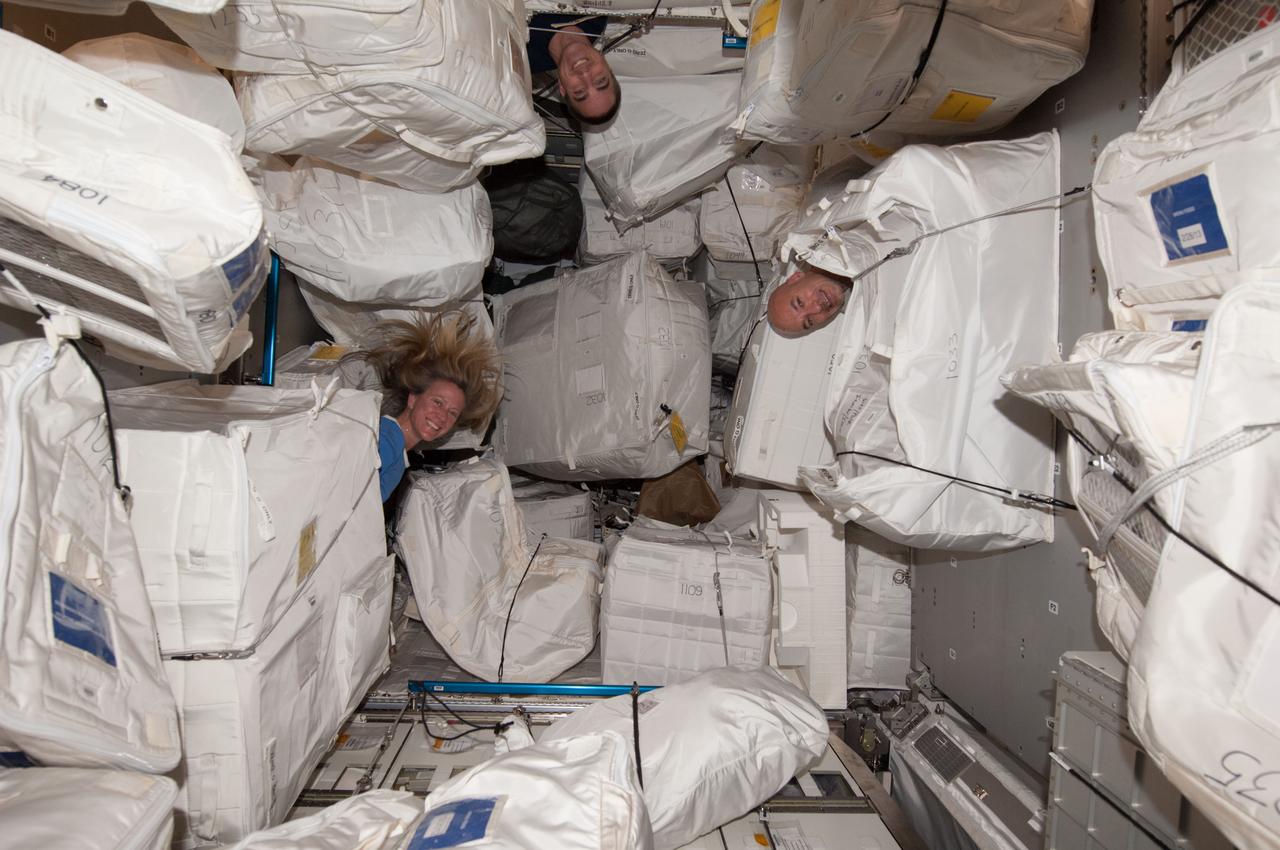
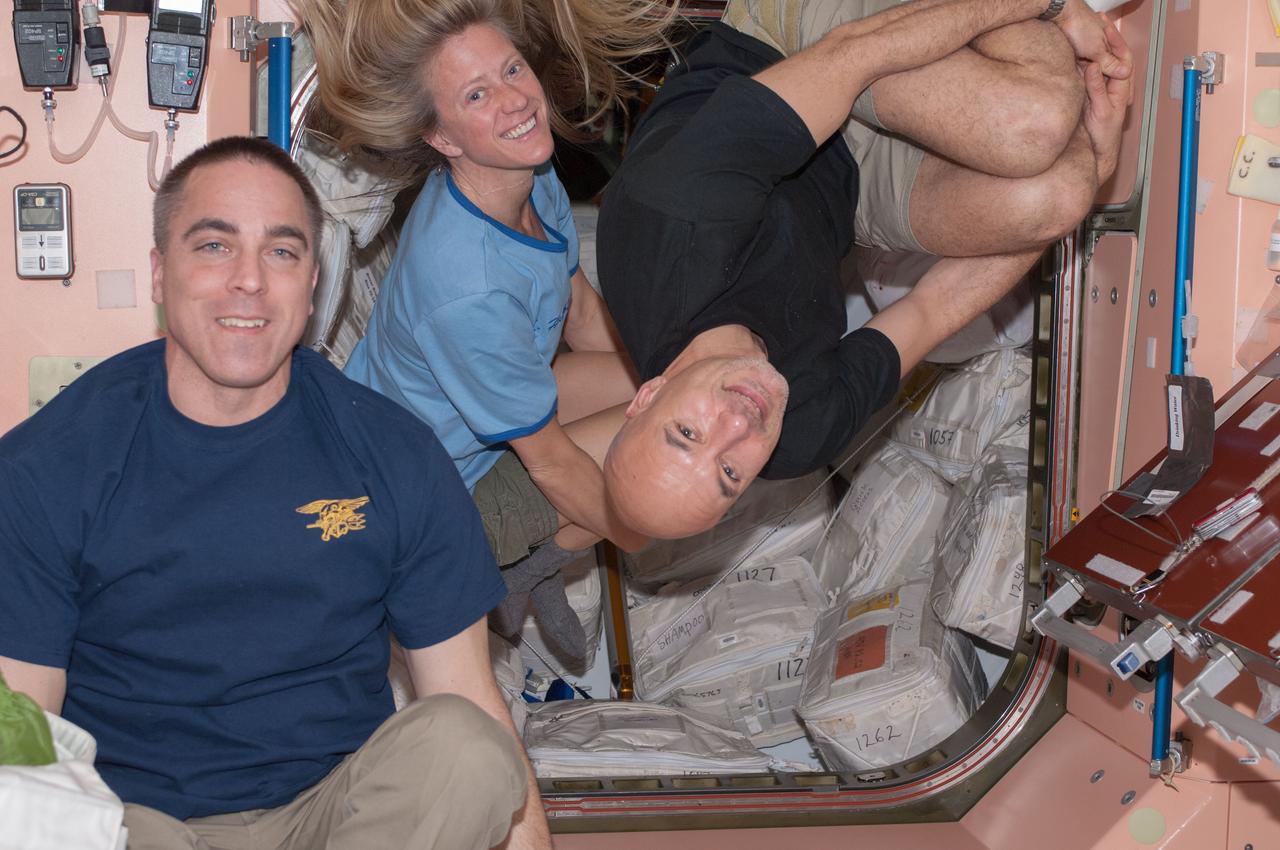
ISS036-E-018184 (14 July 2013) --- NASA astronauts Karen Nyberg and Chris Cassidy (top) along with European Space Agency astronaut Luca Parmitano (right), all Expedition 36 flight engineers, are pictured among stowage containers in the Permanent Multipurpose Module (PMM) of the International Space Station.

ISS036-E-023759 (21 July 2013) --- In the International Space Station’s Destiny laboratory, NASA astronaut Karen Nyberg, Expedition 36 flight engineer, wears special gear to telerobotically test Robonaut 2’s (background) maneuvers transmitted from both space and the ground.
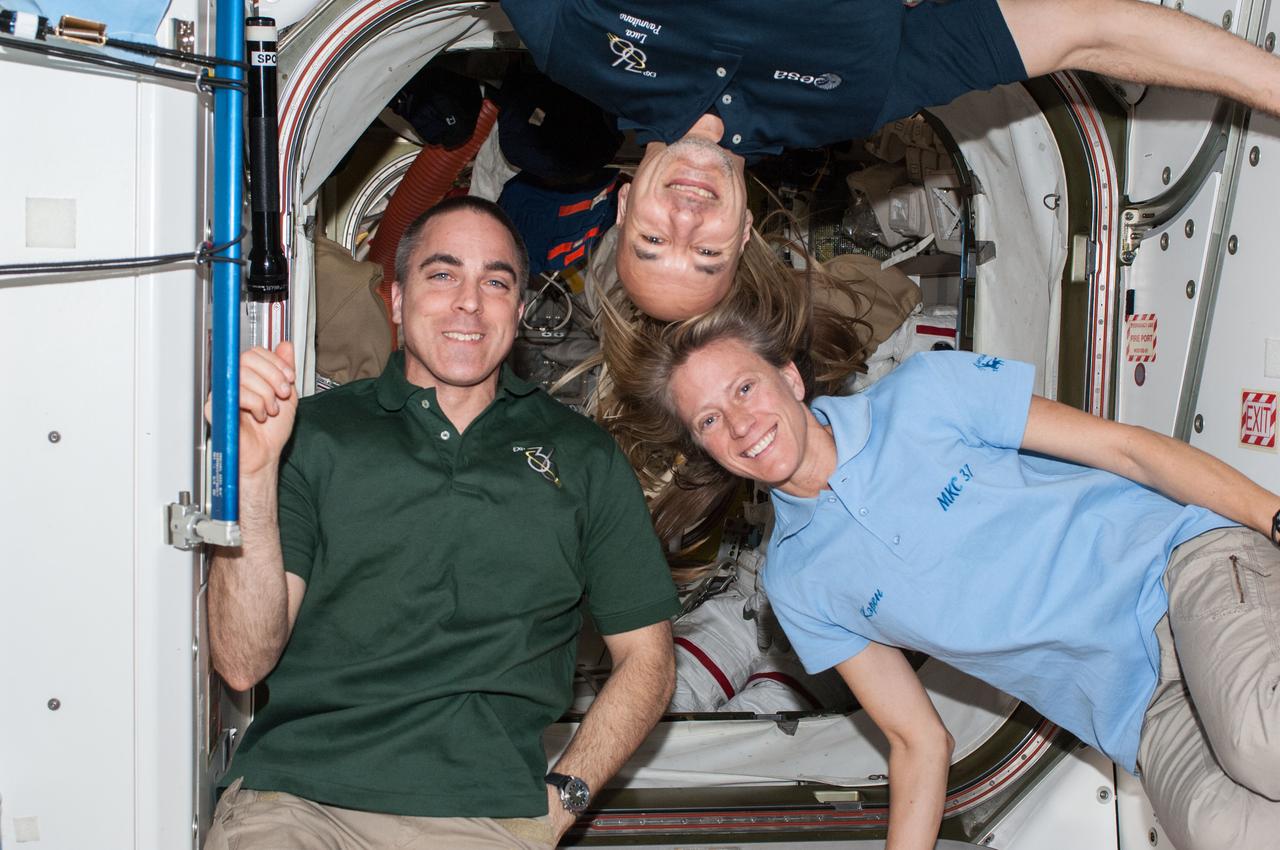
ISS036-E-013216 (29 June 2013) --- NASA astronauts Chris Cassidy (left) and Karen Nyberg; along with European Space Agency astronaut Luca Parmitano, all Expedition 36 flight engineers, pose for a photo at the hatchway between the Quest airlock and the Unity node of the International Space Station.
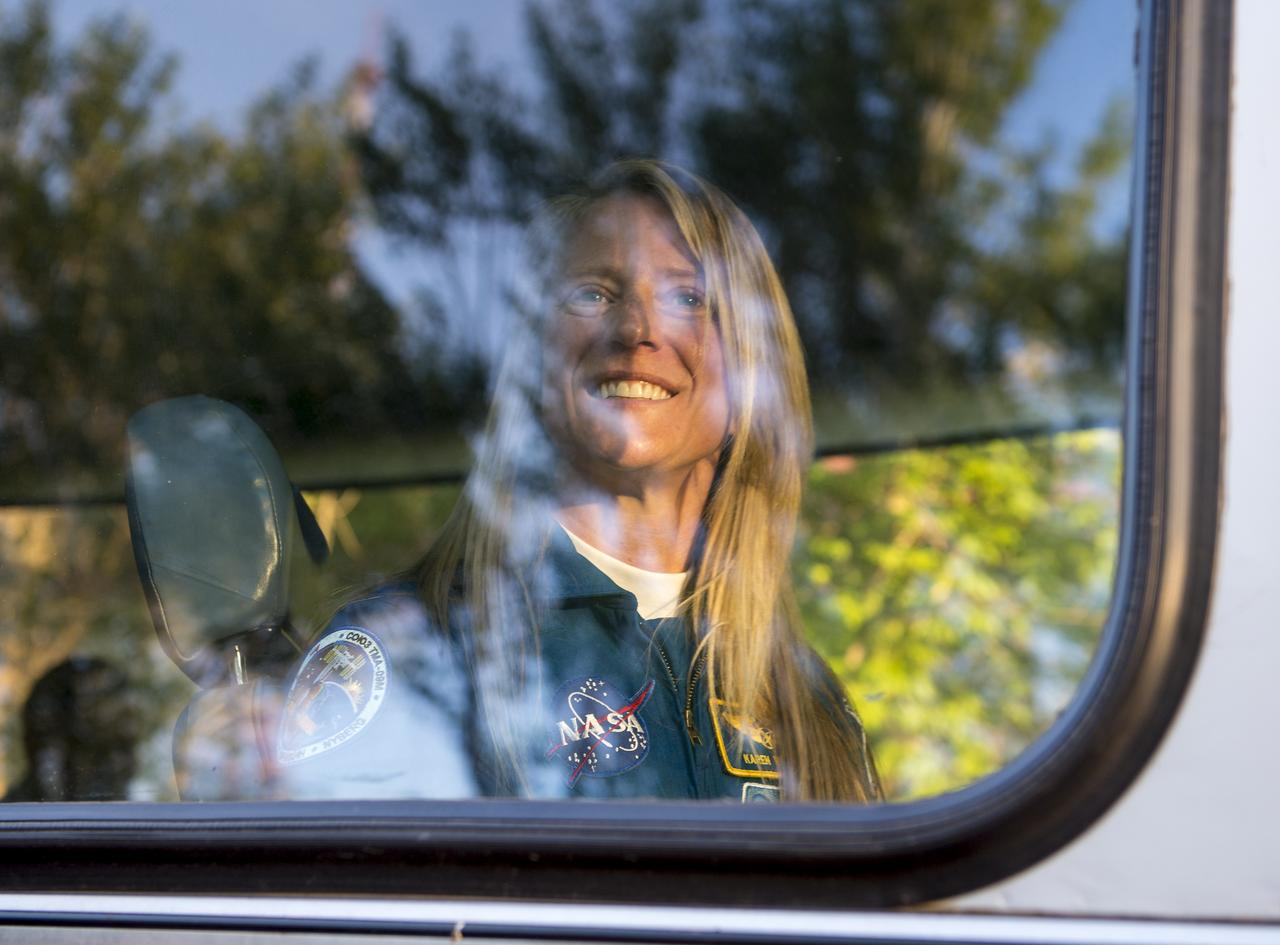
Expedition 36/37 Flight Engineer Karen Nyberg of NASA looks out from the bus that will cary her and fellow crew members; Soyuz Commander Fyodor Yurchikhin of the Russian Federal Space Agency (Roscosmos), and Flight Engineer Luca Parmitano of the European Space Agency from the Cosmonaut Hotel to building 254 where they will don their Sokol suits in preparation for their launch onboard a Soyuz rocket, Tuesday, May 28, 2013, in Baikonur, Kazakhstan. Photo credit: (NASA/Bill Ingalls)
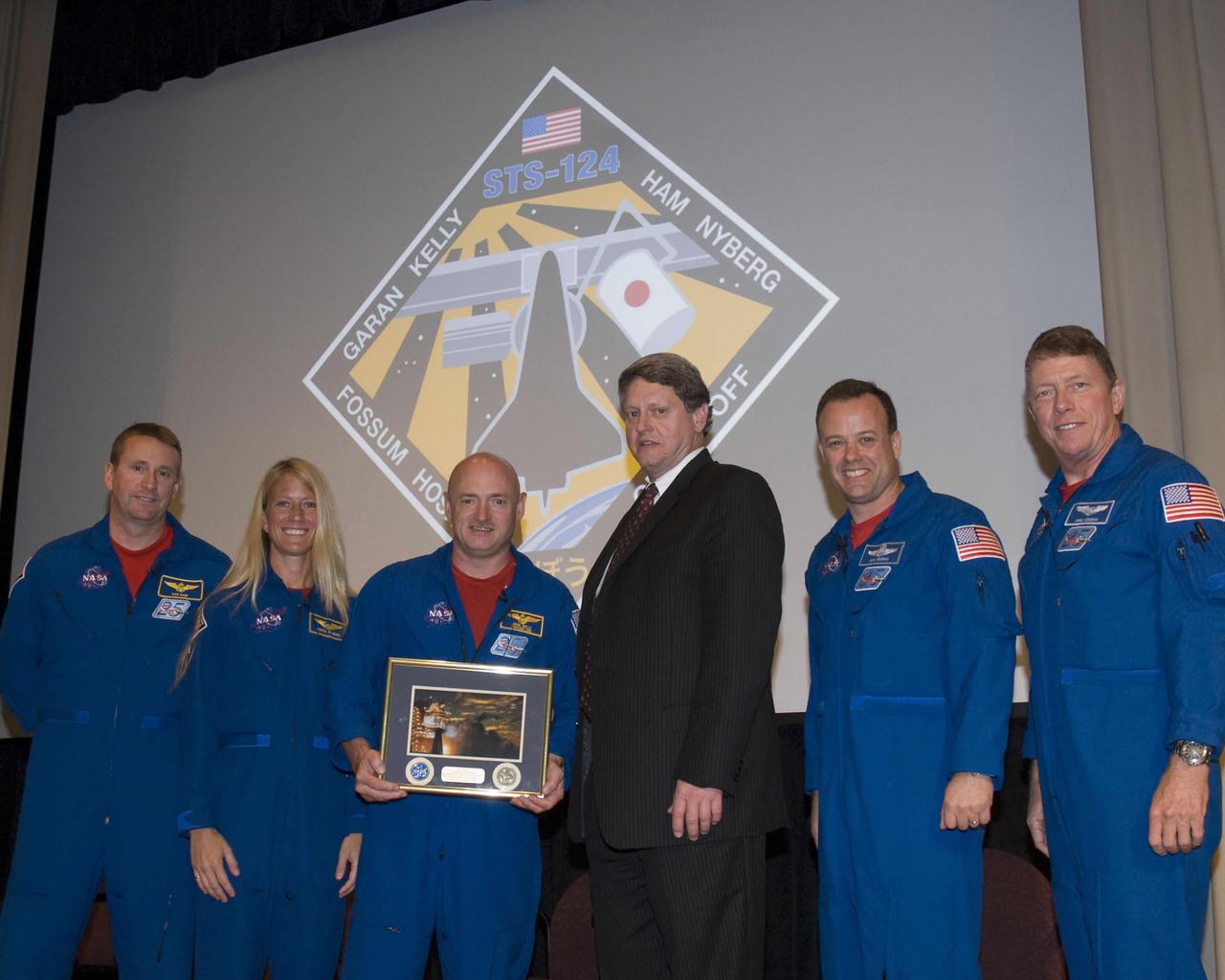
NASA's John C. Stennis Space Center Deputy Director Gene Goldman (center) welcomed members of the STS-124 Discovery space shuttle crew during their July 23 visit to the center. Crew members who visited Stennis were (l to r) Pilot Ken Ham, Mission Specialist Karen Nyberg, Kelly, and Mission Specialists Ron Garan and Mike Fossum.
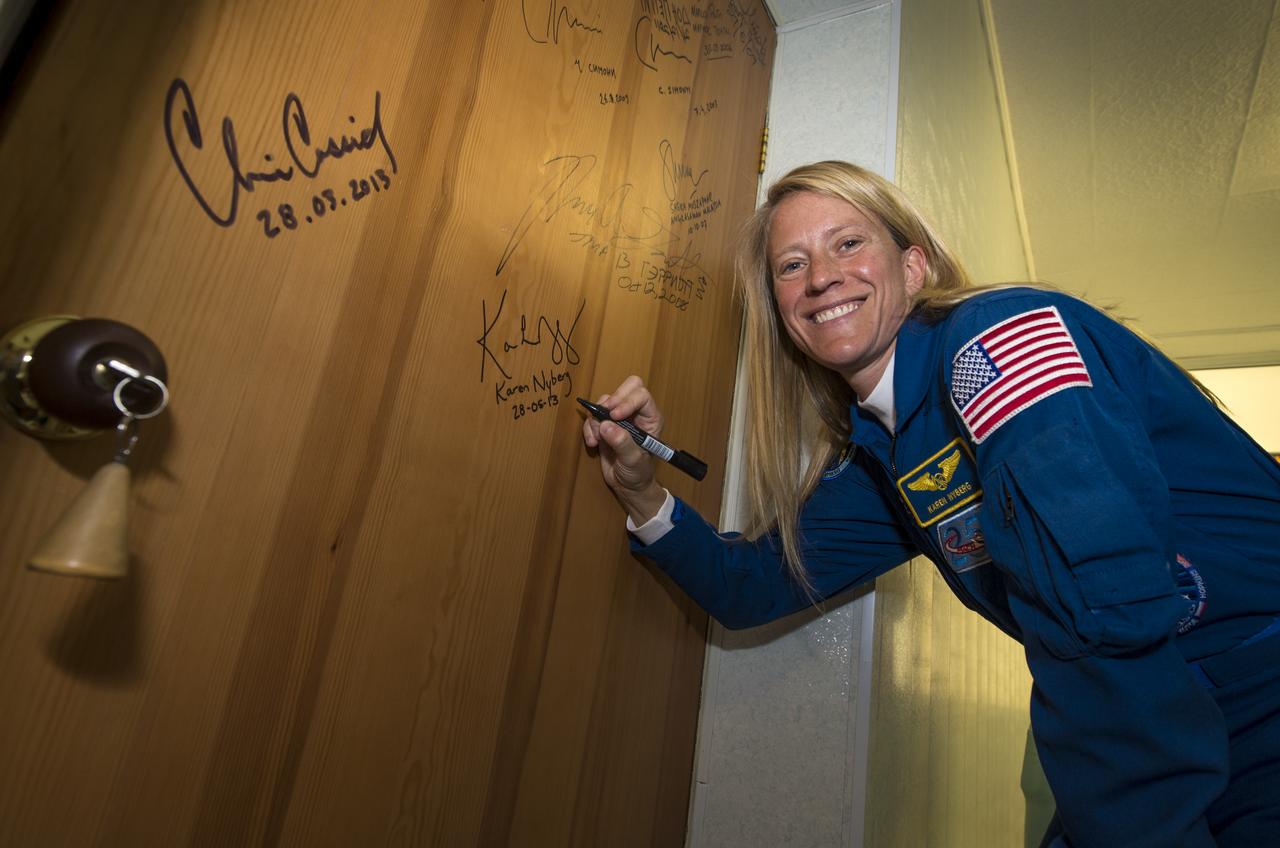
Expedition 36/37 Flight Engineer Karen Nyberg of NASA pauses for a photo while signing a hotel room door at the Cosmonaut Hotel, Tuesday, May 28, 2013, in Baikonur, Kazakhstan. Nyberg and her fellow crew members, Soyuz Commander Fyodor Yurchikhin of the Russian Federal Space Agency (Roscosmos), and, Flight Engineer, and Luca Parmitano of the European Space Agency, were departing the hotel in preparation for their launch on a Soyuz rocket to the International Space Station (ISS) on Wednesday May 29, Kazakh time. Photo credit: (NASA/Bill Ingalls)
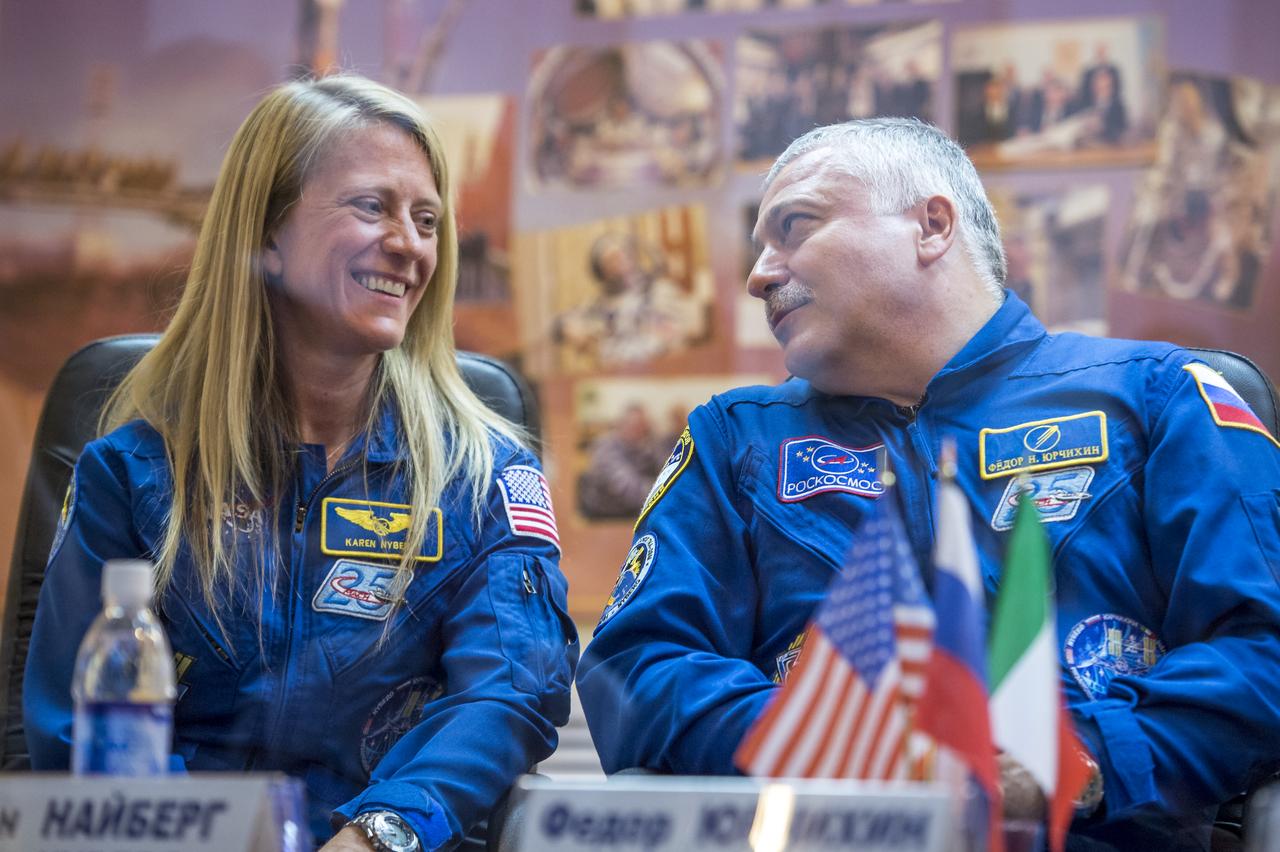
Expedition 36/37 Soyuz Commander Fyodor Yurchikhin of the Russian Federal Space Agency (Roscosmos) and Flight Engineer Karen Nyberg of NASA, are seen during the crew press conference at the Cosmonaut Hotel, Monday, May 27, 2013, in Kazakhstan. Yurchikhin, Nyberg and fellow crew member Luca Parmitano of the European Space Agency, were in quarantine and kept behind glass during the press conference in preparation for their launch on a Soyuz rocket to the International Space Station (ISS) on Wednesday May 29, Kazakh time. Photo credit: (NASA/Bill Ingalls)
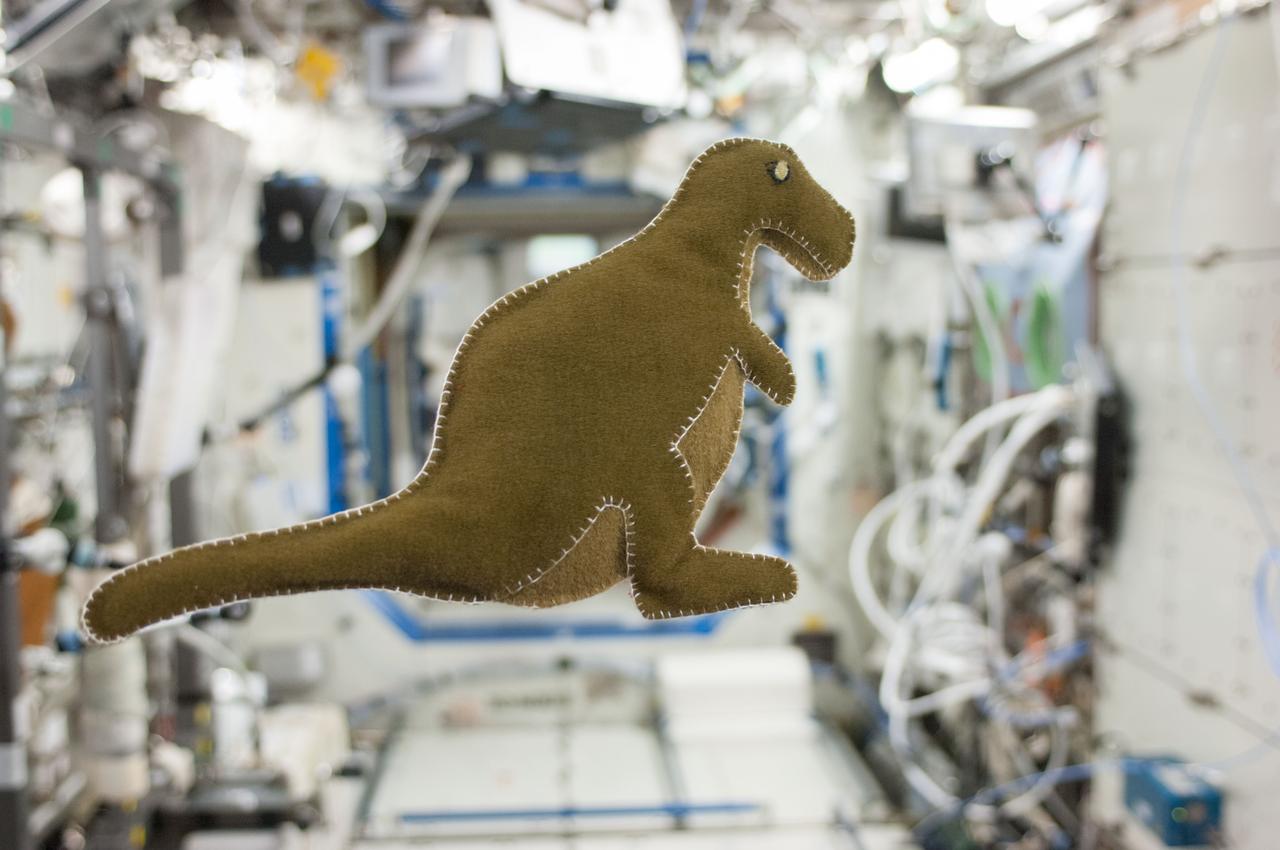
ISS037-E-002783 (22 Sept. 2013) --- NASA astronaut Karen Nyberg, Expedition 37 flight engineer, made this stuffed dinosaur toy aboard the International Space Station, using scraps of food-packaging liners and a T-shirt. She sent images of it to her young son on Sept. 22. Many of the astronaut’s hobbies lean toward artistic pursuits. She has let it be known that she loves to create different things through quilting, sewing and sketching. Nyberg took four “fat quarters” (pieces of fabric that are 18 by 22 inches) with her to the International Space Station along with needles, thread and a sketchbook when she launched to space on May 28.
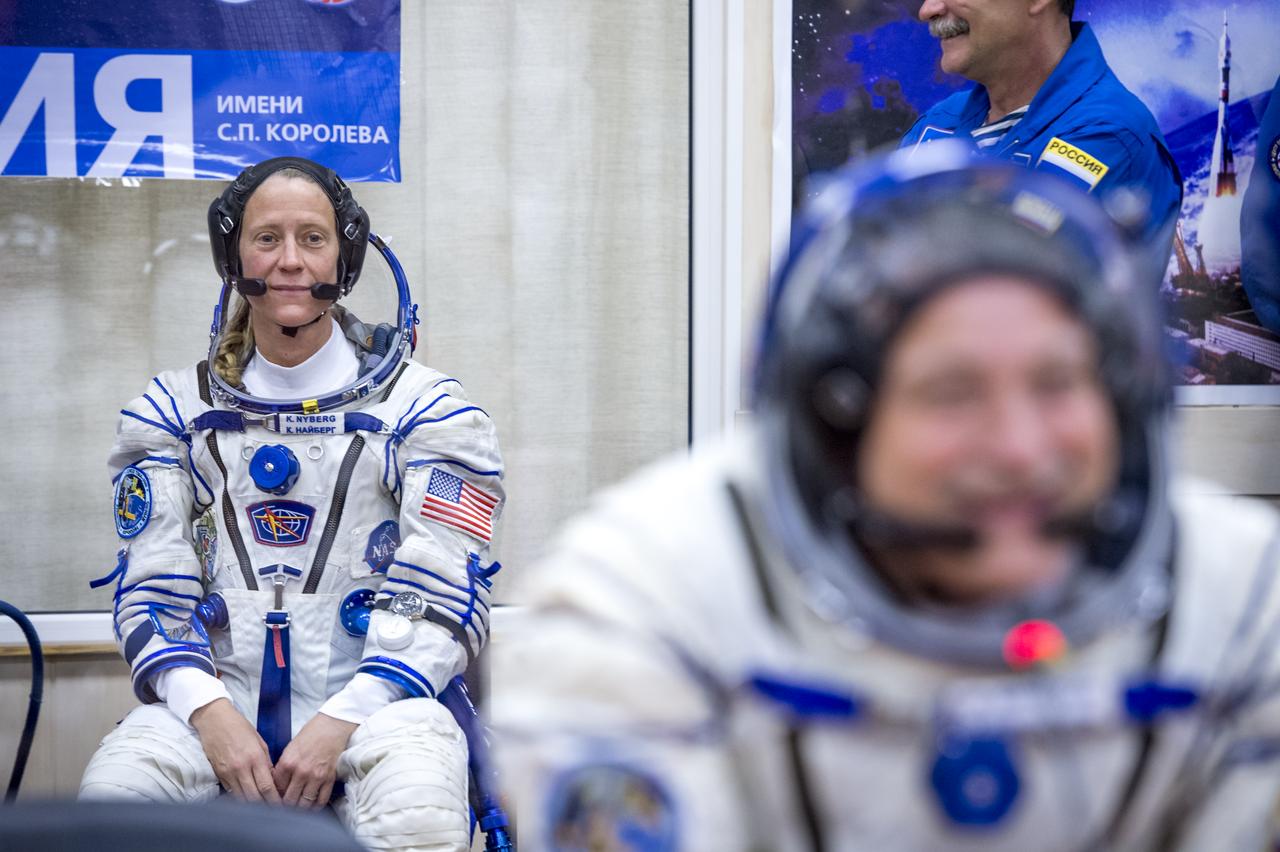
Expedition 36 NASA Flight Engineer Karen Nyberg is seen as she waits to have her Russian Sokol suit pressure checked ahead of her launch onboard a Soyuz TMA-09M spacecraft to the International Space Station, Tuesday, May 28, 2013, at the Baikonur Cosmodrome in Kazakhstan. Launch of the Soyuz rocket will send Nyberg, Soyuz Commander Fyodor Yurchikhin and European Space Agency Flight Engineer Luca Parmitano on a five and a half-month mission aboard the International Space Station. Photo Credit: (NASA/Bill Ingalls)
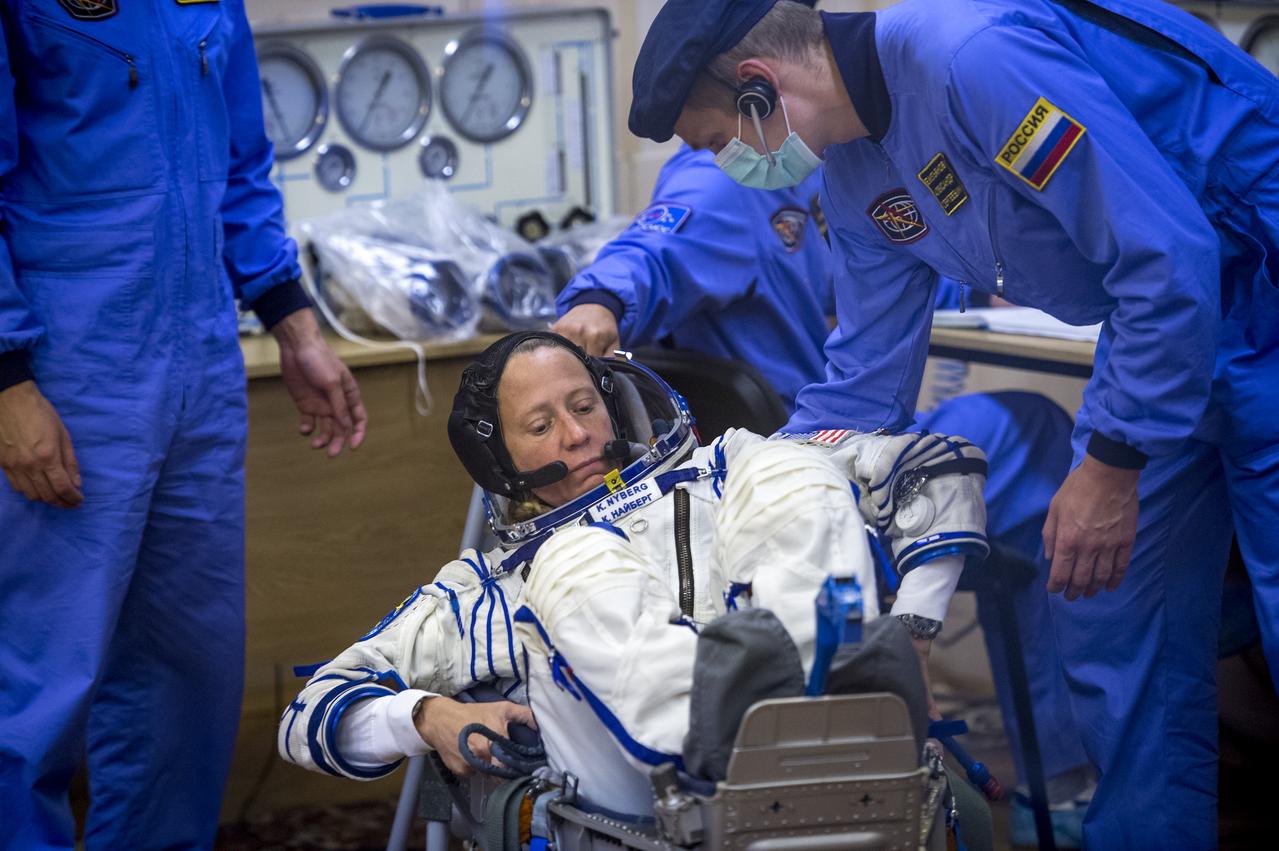
Expedition 36 NASA Flight Engineer Karen Nyberg has her Russian Sokol suit pressure checked ahead of her launch onboard a Soyuz TMA-09M spacecraft to the International Space Station, Tuesday, May 28, 2013, at the Baikonur Cosmodrome in Kazakhstan. Launch of the Soyuz rocket will send Nyberg, Soyuz Commander Fyodor Yurchikhin and European Space Agency Flight Engineer Luca Parmitano on a five and a half-month mission aboard the International Space Station. Photo Credit: (NASA/Bill Ingalls)
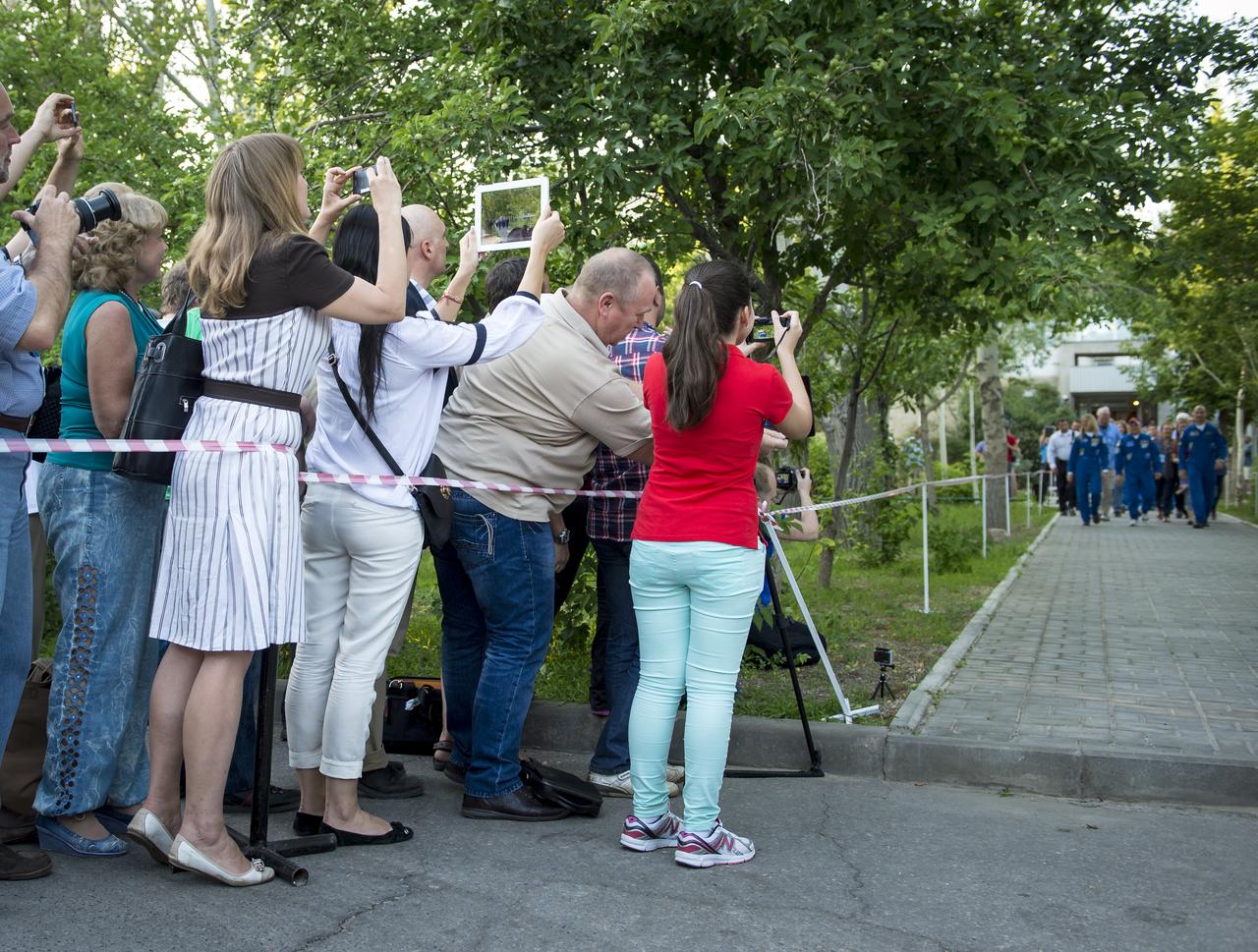
Family, friends and colleagues watch and photograph Expedition 36/37 Soyuz Commander Fyodor Yurchikhin of the Russian Federal Space Agency (Roscosmos), Flight Engineers; Karen Nyberg of NASA, and Luca Parmitano of the European Space Agency as they depart the Cosmonaut Hotel, Tuesday, May 28, 2013, in Baikonur, Kazakhstan. Yurichikin, Nyberg, Parmitano were departing the hotel in preparation for their launch on a Soyuz rocket to the International Space Station (ISS) on Wednesday May 29, Kazakh time. Photo credit: (NASA/Bill Ingalls)
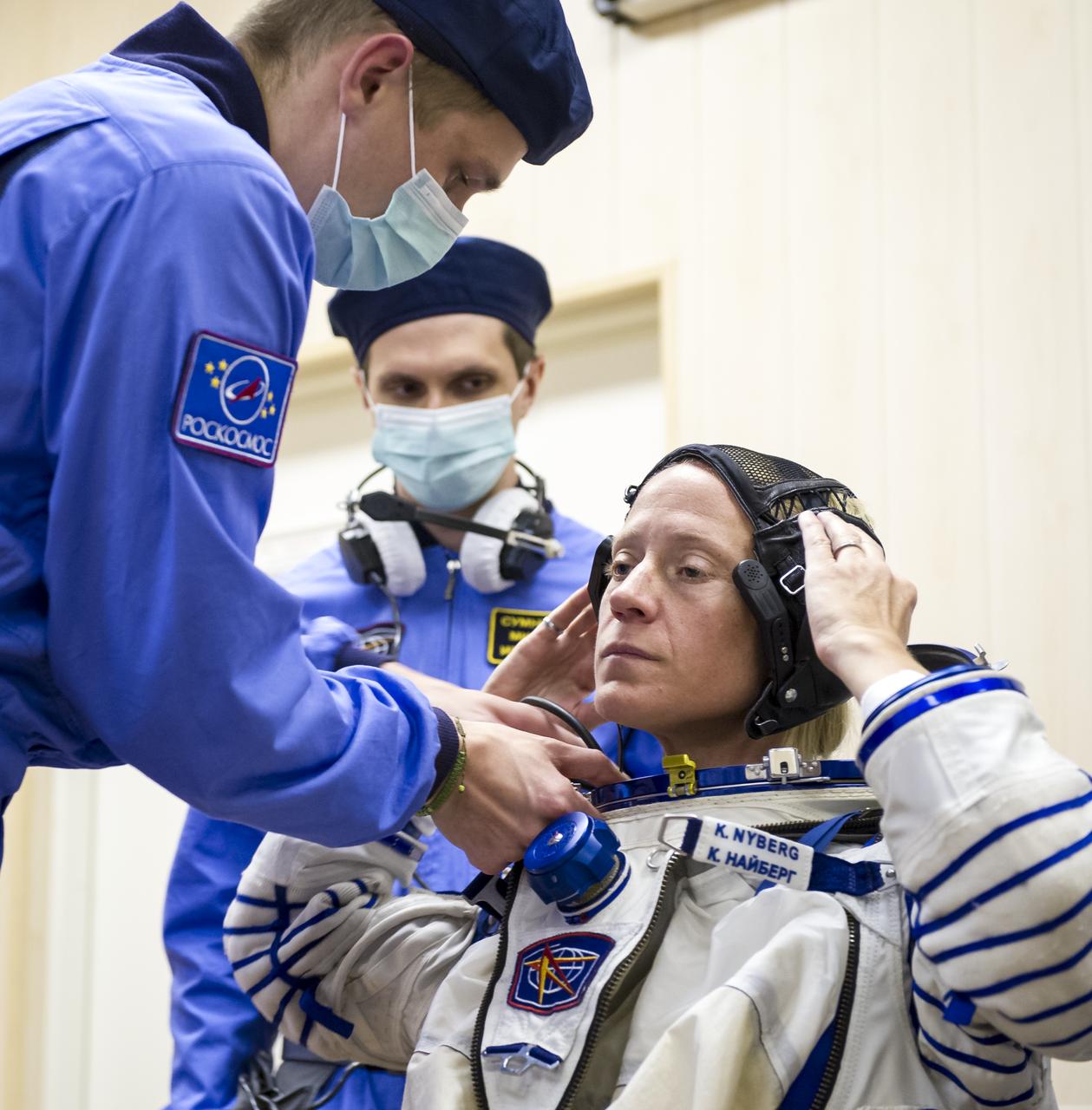
Expedition 36 NASA Flight Engineer Karen Nyberg is helped into her Russian Sokol suit as she and fellow crewmates, Soyuz Commander Fyodor Yurchikhin and European Space Agency Flight Engineer Luca Parmitano prepare for their Soyuz launch to the International Space Station, Tuesday, May 28, 2013, in Baikonur, Kazakhstan. Launch of the Soyuz rocket will send Nyberg, Yurchikhin and Parmitano on a five and a half month mission aboard the International Space Station. Photo Credit: (NASA/GCTC/Andrey Shelepin)
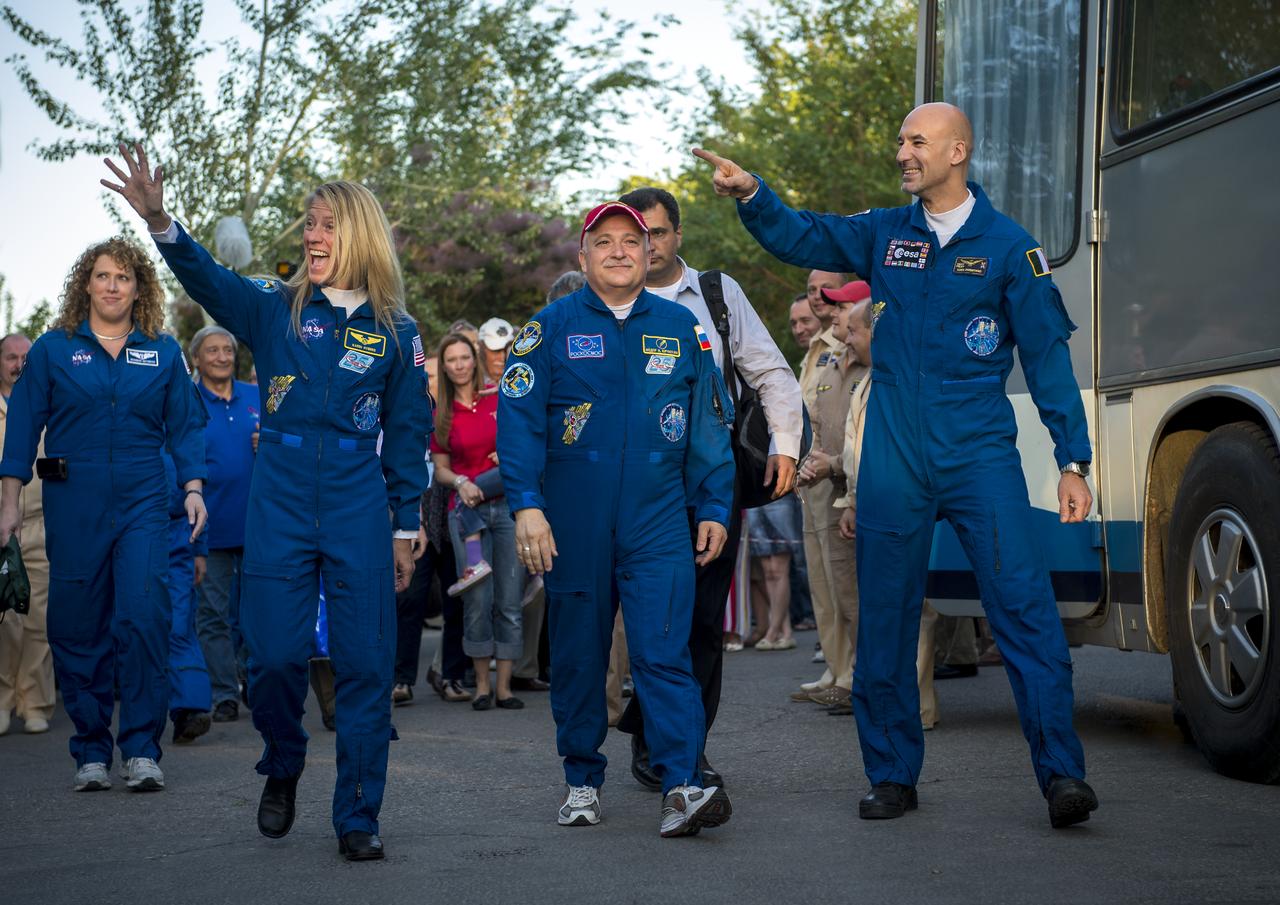
Expedition 36/37 Flight Engineer Karen Nyberg of NASA, left, Soyuz Commander Fyodor Yurchikhin of the Russian Federal Space Agency (Roscosmos), center, and Flight Engineer Luca Parmitano of the European Space Agency depart the Cosmonaut Hotel, Tuesday, May 28, 2013, in Baikonur, Kazakhstan. Nyberg, Yurichikin, and Parmitano departed the hotel in preparation for their launch on a Soyuz rocket to the International Space Station (ISS) on Wednesday May 29, Kazakh time. Photo credit: (NASA/Bill Ingalls)
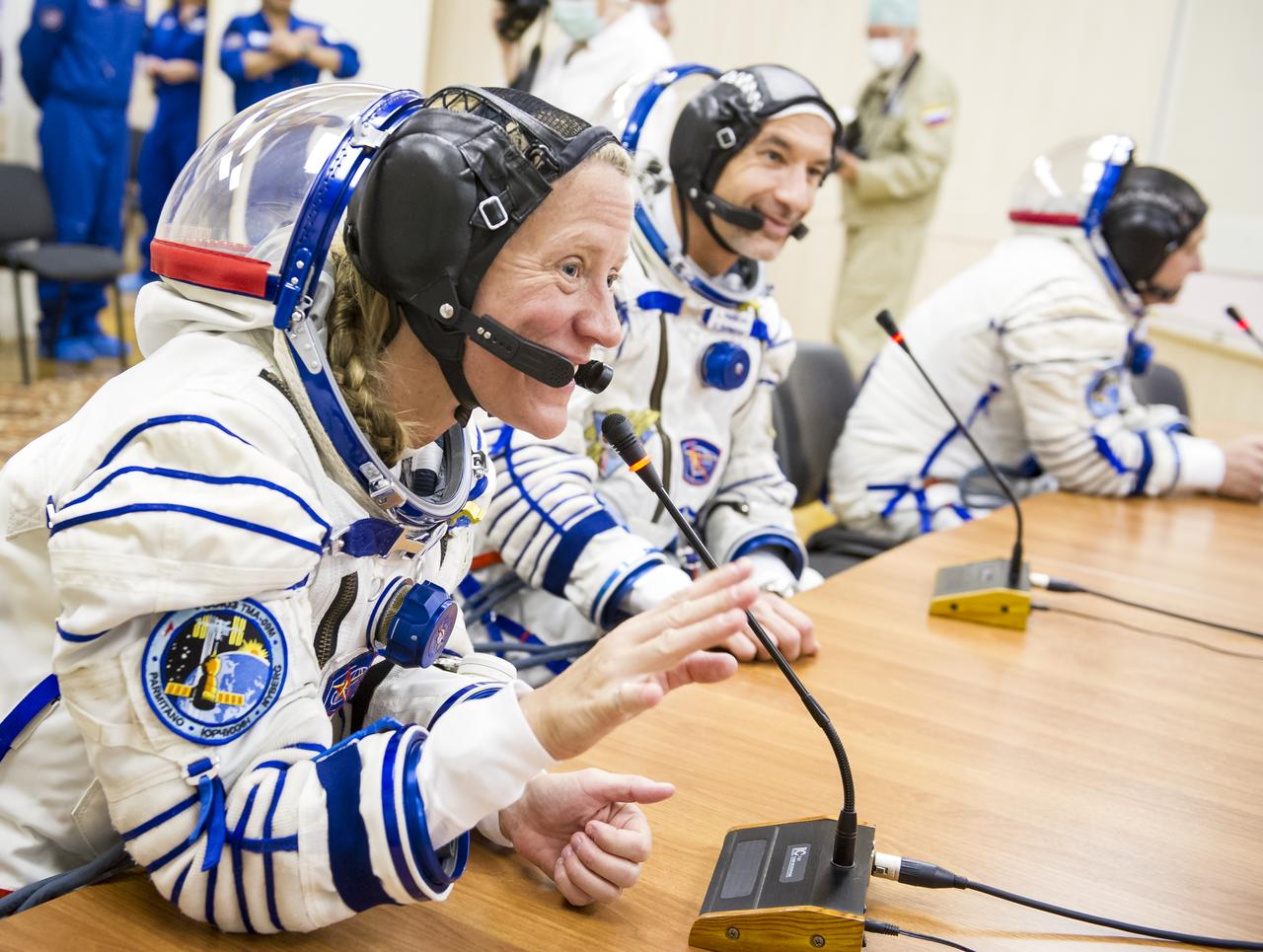
Expedition 36 NASA Flight Engineer Karen Nyberg is seen talking to family members after donning her Russian Sokol suit in preparation for her launch aboard the Soyuz rocket, Tuesday, May 28, 2013, at the Baikonur Cosmodrome in Kazakhstan. Launch of the Soyuz rocket will send Nyberg, Soyuz Commander Fyodor Yurchikhin and European Space Agency Flight Engineer Luca Parmitano on a five and a half-month mission aboard the International Space Station. Photo Credit: (NASA/GCTC/Andrey Shelepin)
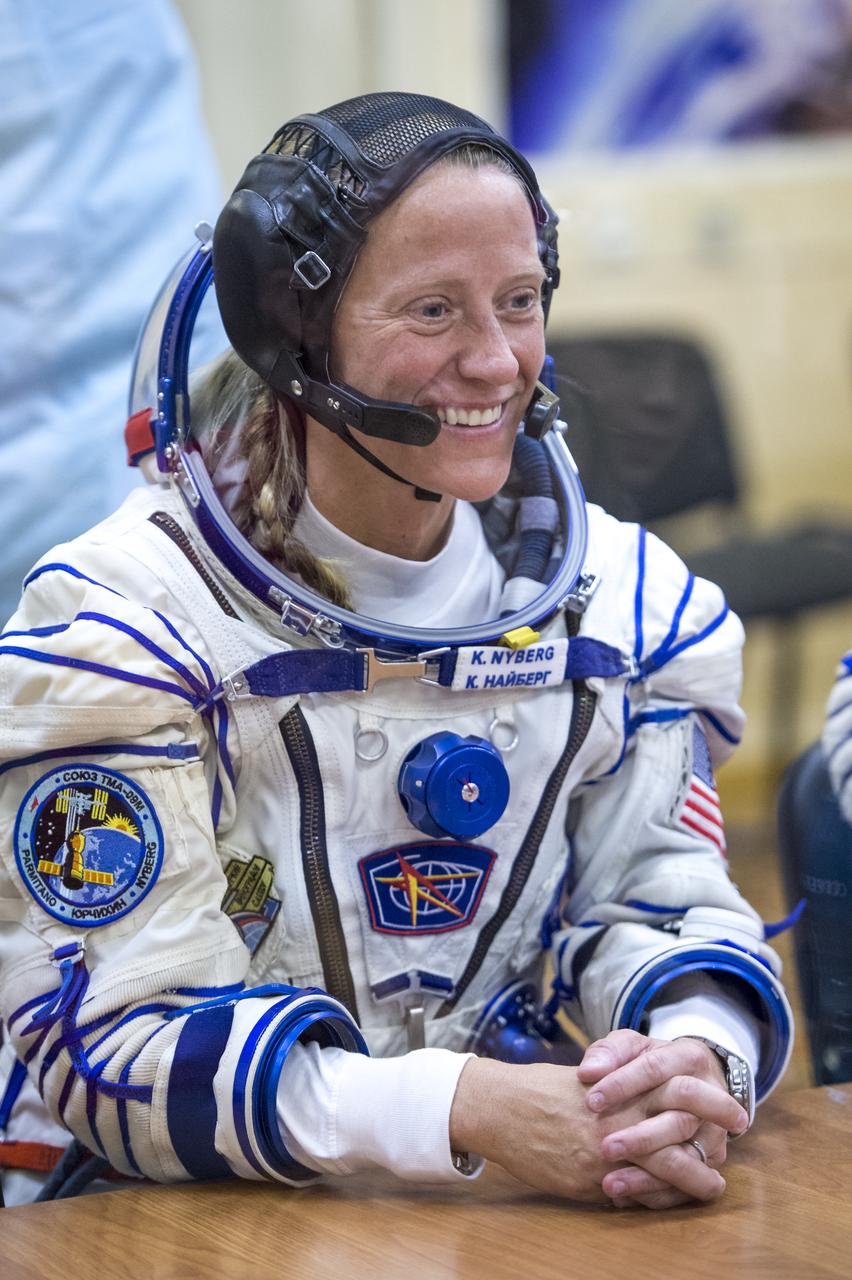
Expedition 36 NASA Flight Engineer Karen Nyberg is seen talking to family members after donning her Russian Sokol suit in preparation for her launch aboard the Soyuz rocket, Tuesday, May 28, 2013, at the Baikonur Cosmodrome in Kazakhstan. Launch of the Soyuz rocket will send Nyberg, Soyuz Commander Fyodor Yurchikhin and European Space Agency Flight Engineer Luca Parmitano on a five and a half-month mission aboard the International Space Station. Photo Credit: (NASA/Bill Ingalls)
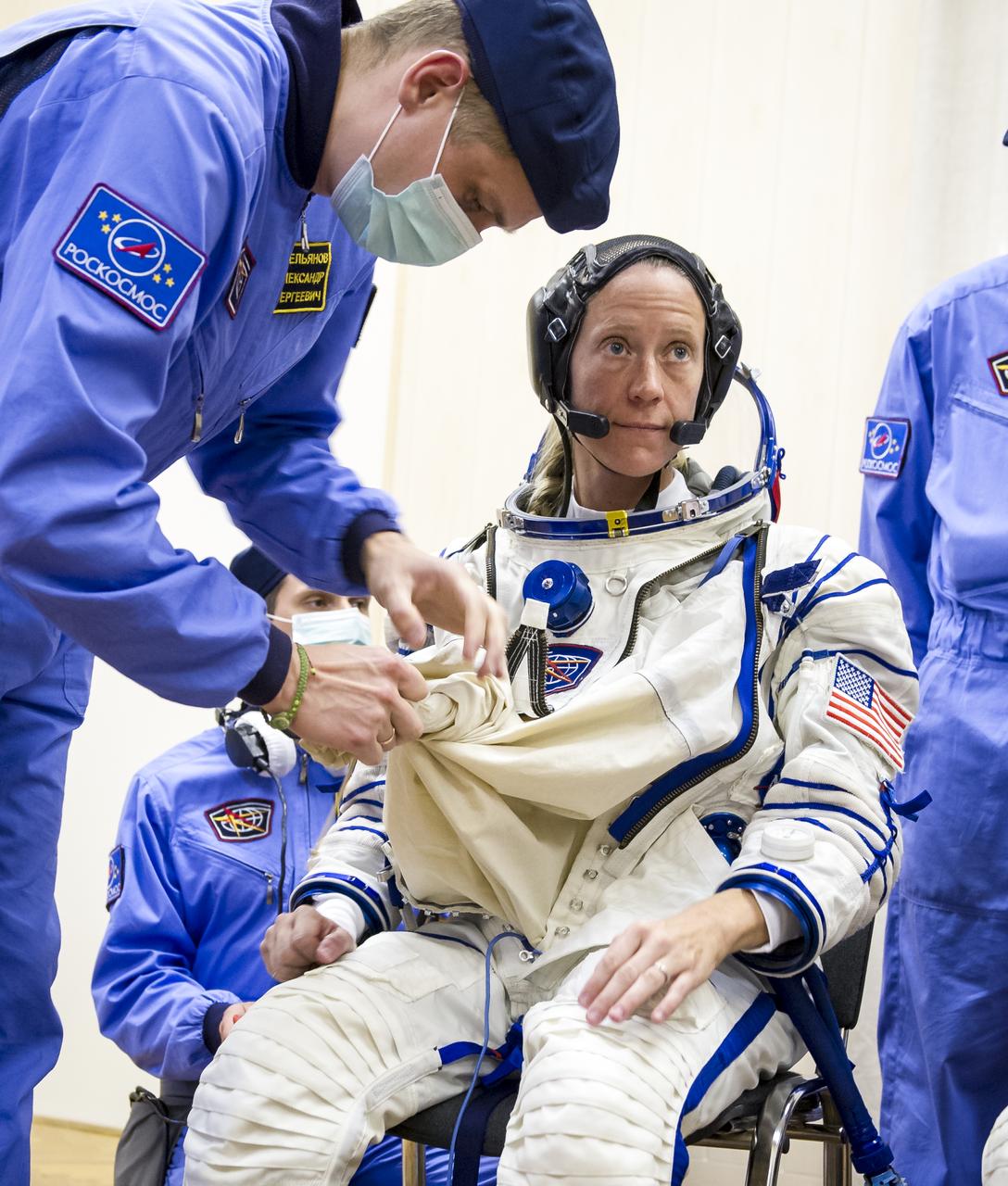
Expedition 36 NASA Flight Engineer Karen Nyberg is helped into her Russian Sokol suit as she and fellow crewmates, Soyuz Commander Fyodor Yurchikhin and European Space Agency Flight Engineer Luca Parmitano prepare for their Soyuz launch to the International Space Station, Tuesday, May 28, 2013, in Baikonur, Kazakhstan. Launch of the Soyuz rocket will send Nyberg, Yurchikhin and Parmitano on a five and a half month mission aboard the International Space Station. Photo Credit: (NASA/GCTC/Andrey Shelepin)
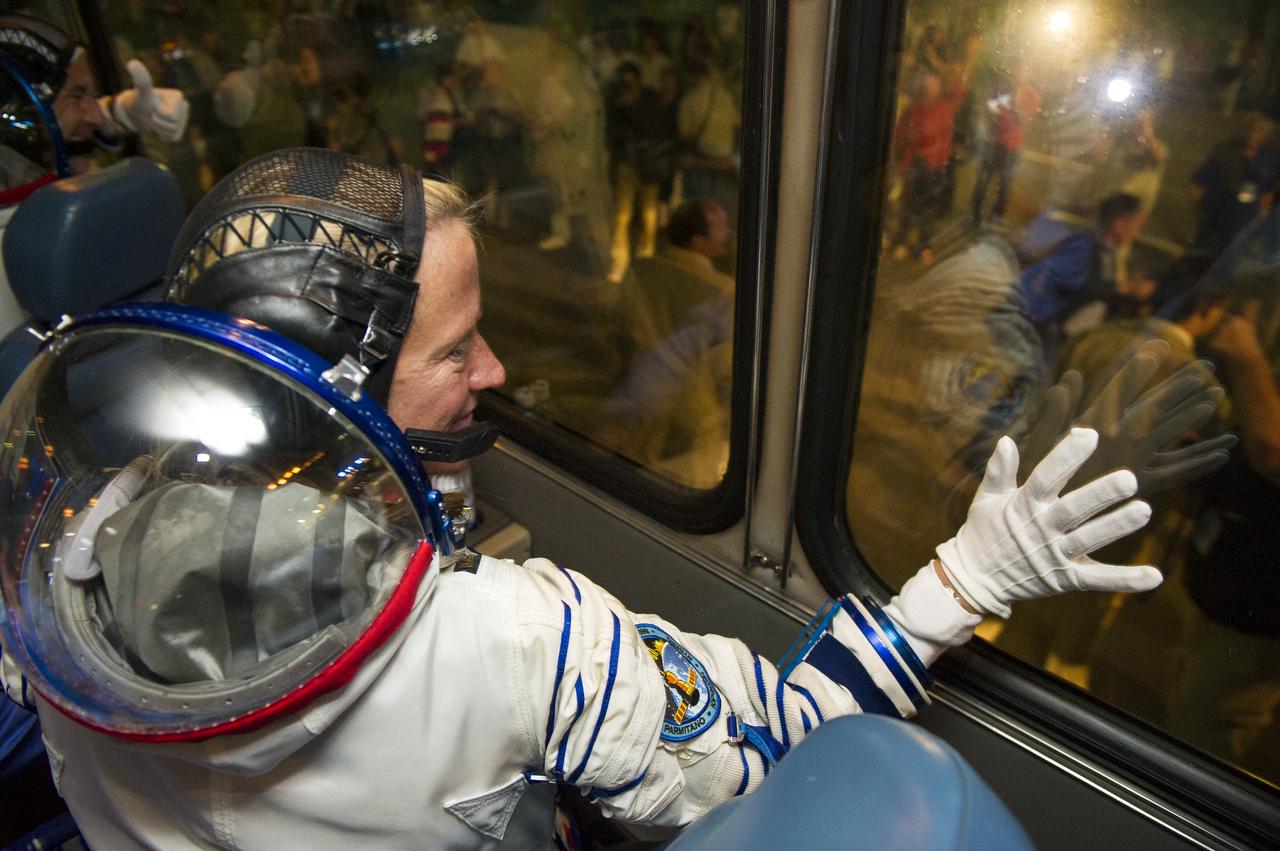
Expedition 36 NASA Flight Engineer Karen Nyberg is seen waving goodbye to friends and family after boarding the bus that will take her to the Soyuz launch pad hours ahead of her launch, Tuesday, May 28, 2013 at the Baikonur Cosmodrome in Kazakhstan. Launch of the Soyuz rocket will send Nyberg, Soyuz Commander Fyodor Yurchikhin and European Space Agency Flight Engineer Luca Parmitano on a five and a half-month mission aboard the International Space Station. Photo Credit: (NASA/GCTC/Andrey Shelepin)
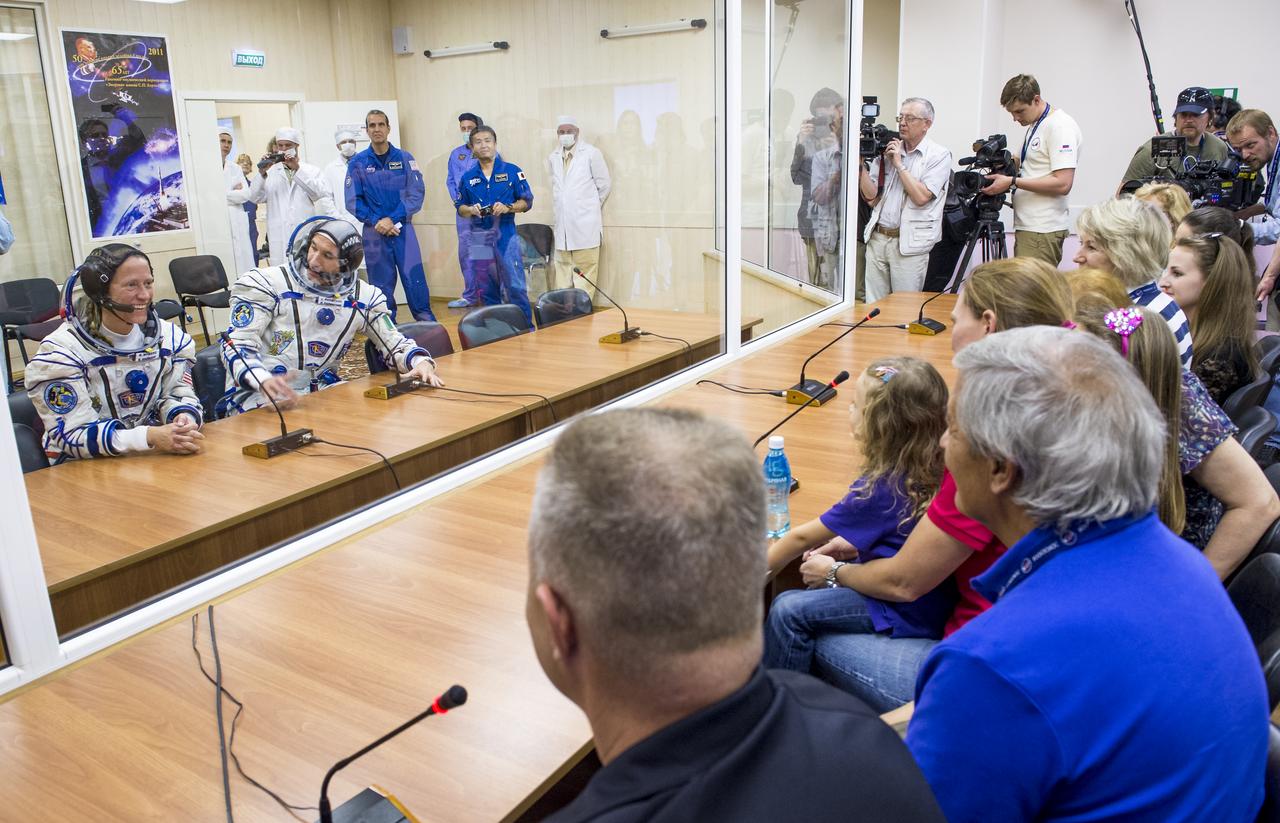
Expedition 36 NASA Flight Engineer Karen Nyberg ,left, and European Space Agency astronaut Luca Parmitano are seen talking to family members after donning their Russian Sokol suits in preparation for their launch aboard the Soyuz rocket, Tuesday, May 28, 2013, at the Baikonur Cosmodrome in Kazakhstan. Launch of the Soyuz rocket will send Nyberg, Parmitano and Soyuz Commander Fyodor Yurchikhin on a five and a half-month mission aboard the International Space Station. Photo Credit: (NASA/Bill Ingalls)
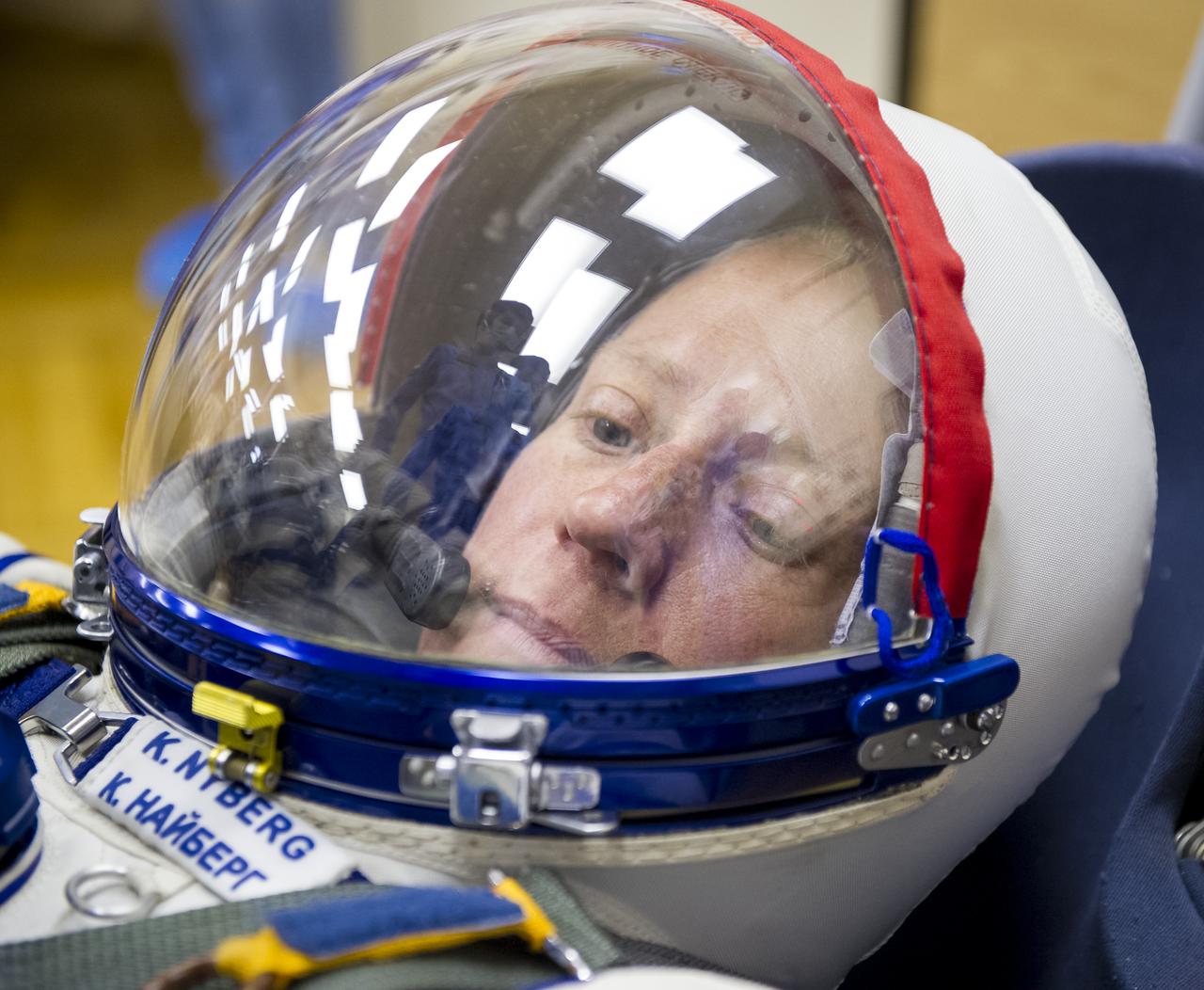
Expedition 36 NASA Flight Engineer Karen Nyberg has her Russian Sokol suit pressure checked ahead of her launch onboard a Soyuz TMA-09M spacecraft to the International Space Station, Tuesday, May 28, 2013, at the Baikonur Cosmodrome in Kazakhstan. Launch of the Soyuz rocket will send Nyberg, Soyuz Commander Fyodor Yurchikhin and European Space Agency Flight Engineer Luca Parmitano on a five and a half-month mission aboard the International Space Station. Photo Credit: (NASA/GCTC/Andrey Shelepin)
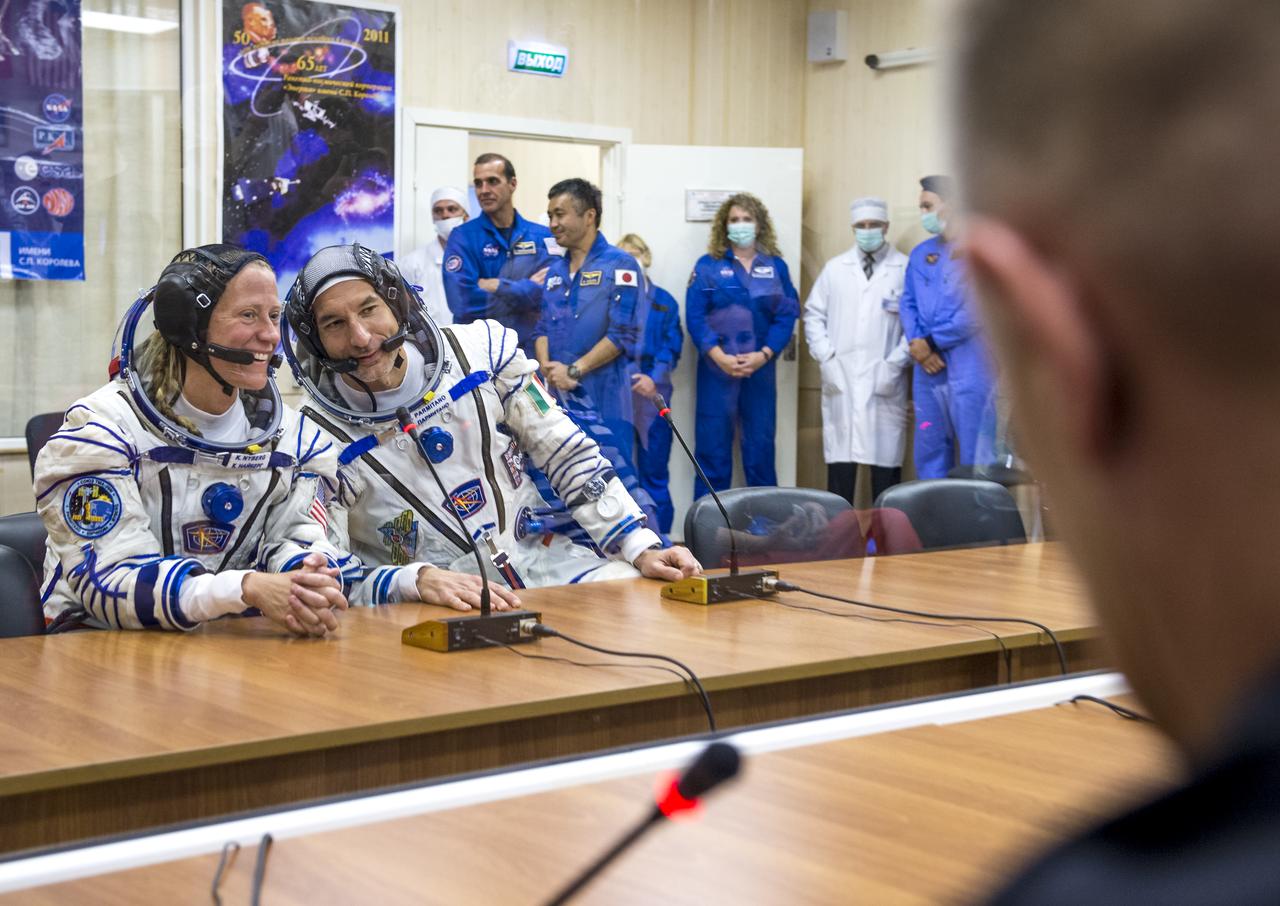
Expedition 36 NASA Flight Engineer Karen Nyberg,left, and European Space Agency astronaut Luca Parmitano are seen talking to family members after donning their Russian Sokol suits in preparation for their launch aboard the Soyuz rocket, Tuesday, May 28, 2013, at the Baikonur Cosmodrome in Kazakhstan. Launch of the Soyuz rocket will send Nyberg, Parmitano and Soyuz Commander Fyodor Yurchikhin on a five and a half-month mission aboard the International Space Station. Photo Credit: (NASA/Bill Ingalls)
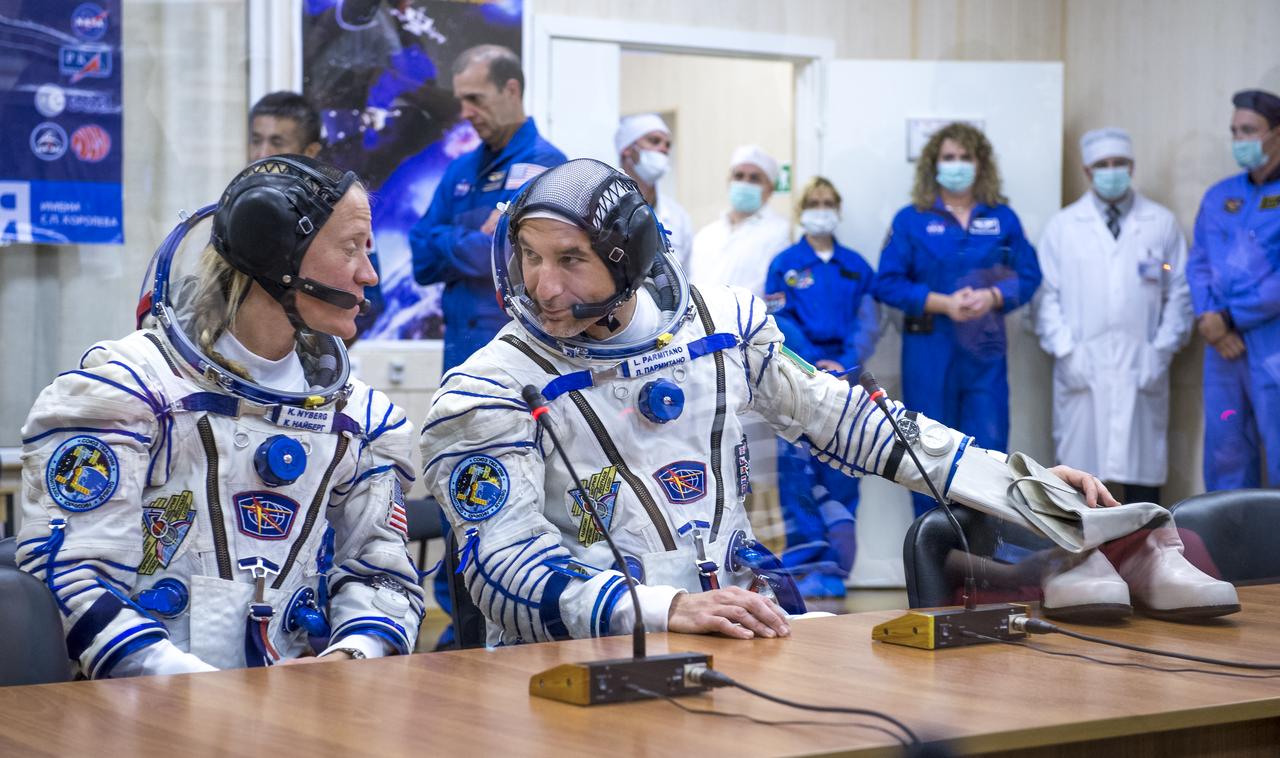
Expedition 36 NASA Flight Engineer Karen Nyberg, left, and European Space Agency astronaut Luca Parmitano share a word after donning their Russian Sokol suits in preparation for their launch aboard the Soyuz rocket, Tuesday, May 28, 2013, at the Baikonur Cosmodrome in Kazakhstan. Launch of the Soyuz rocket will send Nyberg, Parmitano and Soyuz Commander Fyodor Yurchikhin on a five and a half-month mission aboard the International Space Station. Photo Credit: (NASA/Bill Ingalls)
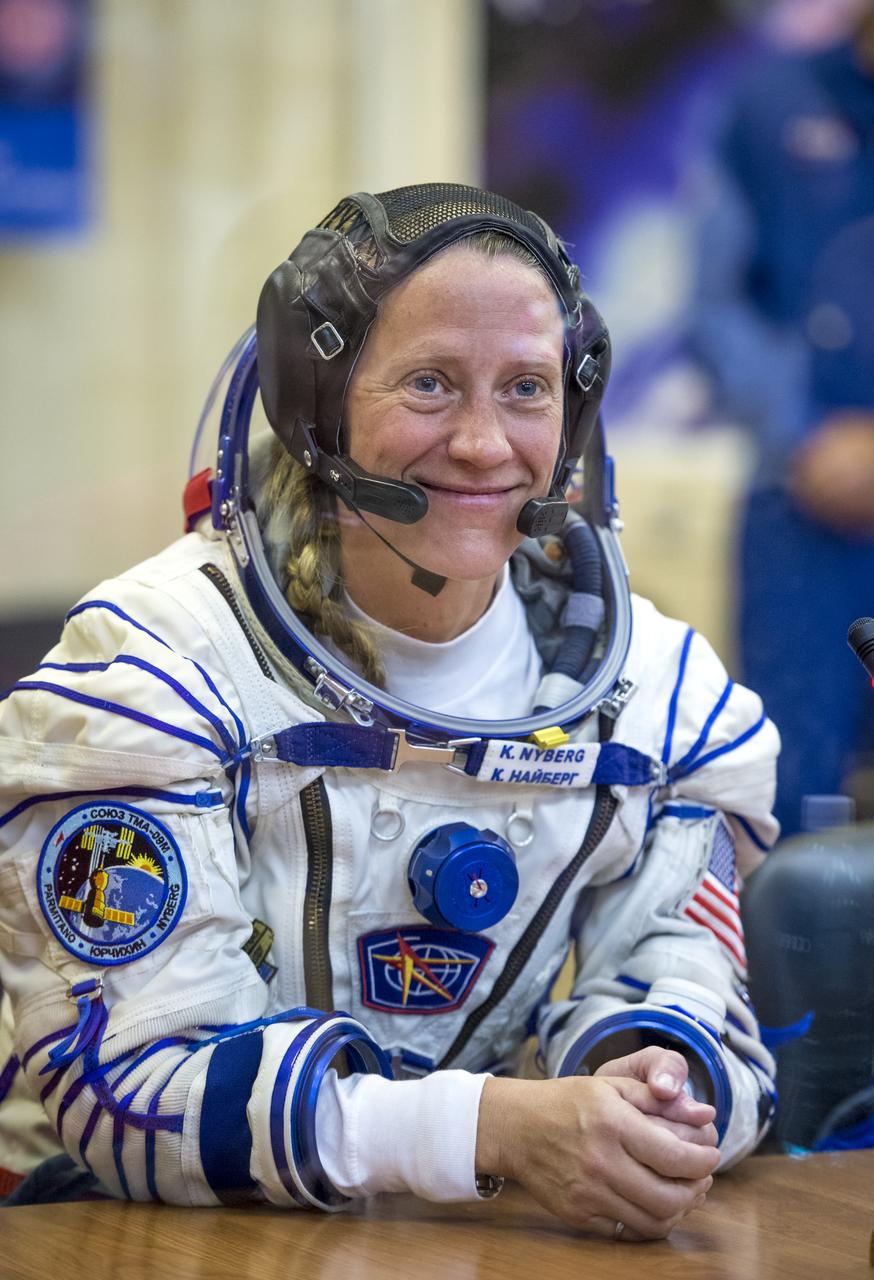
Expedition 36 NASA Flight Engineer Karen Nyberg is seen talking to family members after donning her Russian Sokol suit in preparation for her launch aboard the Soyuz rocket, Tuesday, May 28, 2013, at the Baikonur Cosmodrome in Kazakhstan. Launch of the Soyuz rocket will send Nyberg, Soyuz Commander Fyodor Yurchikhin and European Space Agency Flight Engineer Luca Parmitano on a five and a half-month mission aboard the International Space Station. Photo Credit: (NASA/Bill Ingalls)
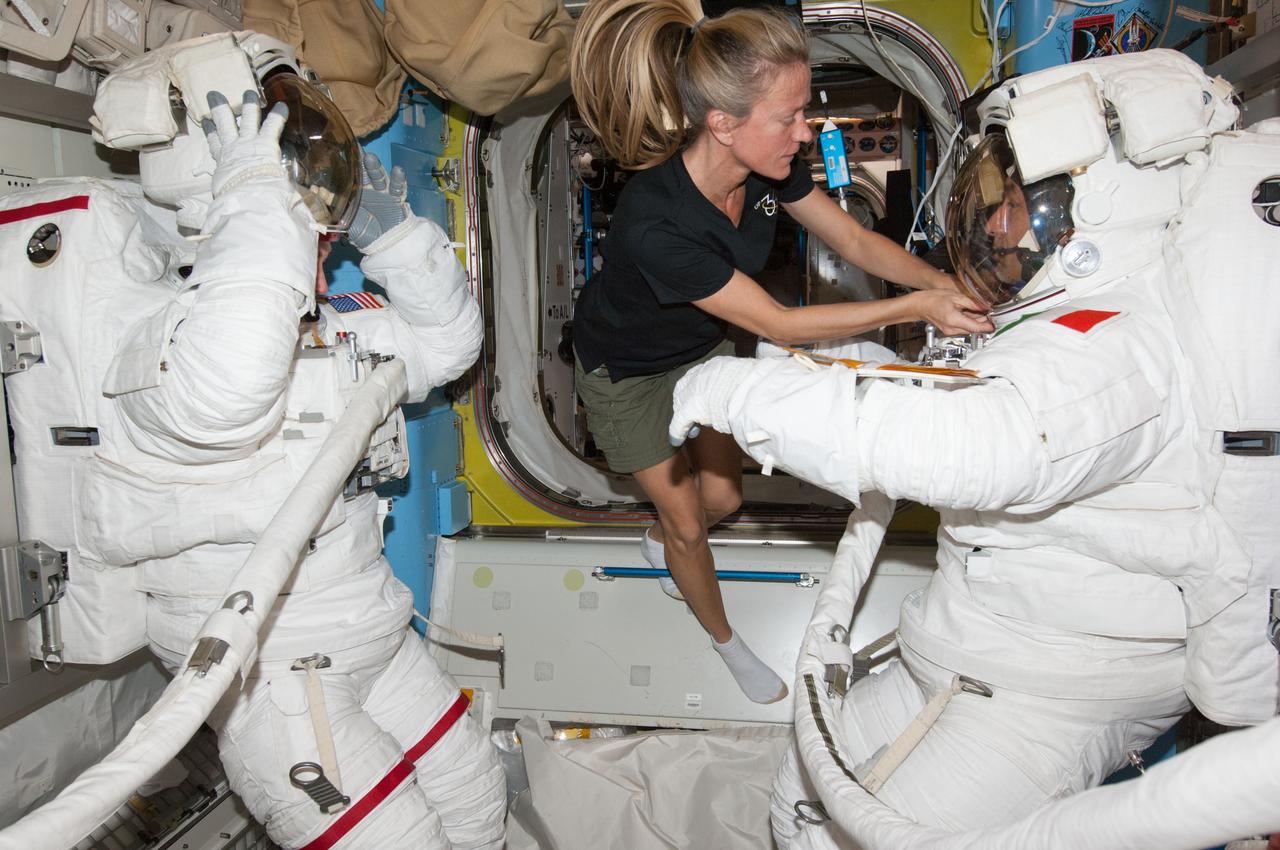
View of NASA astronaut Chris Cassidy (left) and European Space Agency astronaut Luca Parmitano (right), Expedition 36 flight engineers, preparing for a dry run in the International Space Stations Quest airlock in preparation for the first of two sessions of extravehicular (EVA) scheduled for July 9 and July 16. Both have donned their EMUs. Astronaut Karen Nyberg, Expetition 36 flight engineer, is visible in the center.
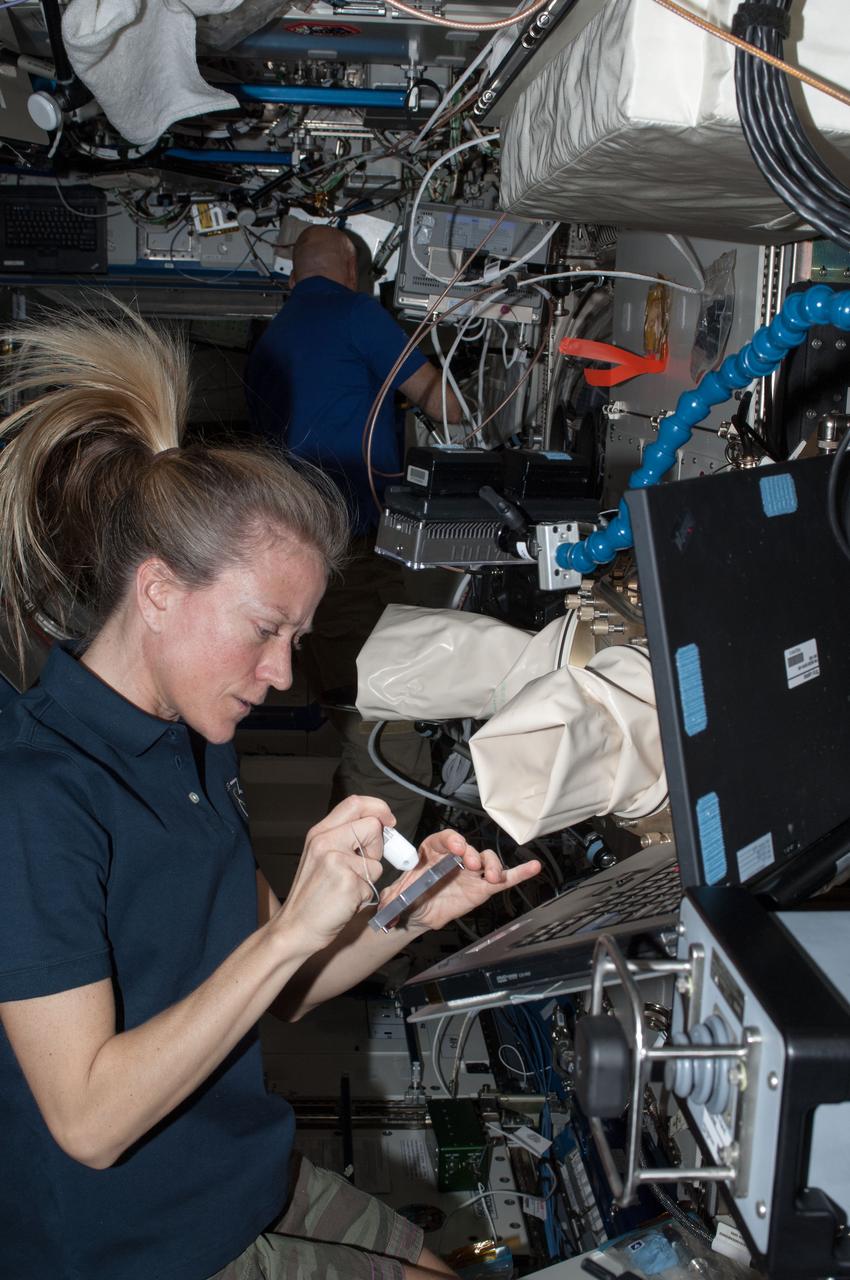
ISS036-E-035770 (18 Aug. 2013) --- NASA astronaut Karen Nyberg, Expedition 36 flight engineer, works with new test samples for the Advanced Colloids Experiment, or ACE, housed in the Light Microscopy Module (LMM) inside the Fluids Integrated Rack of the International Space Station?s Destiny laboratory. Results from ACE will help researchers understand how to optimize stabilizers to extend the shelf life of products like laundry detergent, paint, ketchup and even salad dressing.
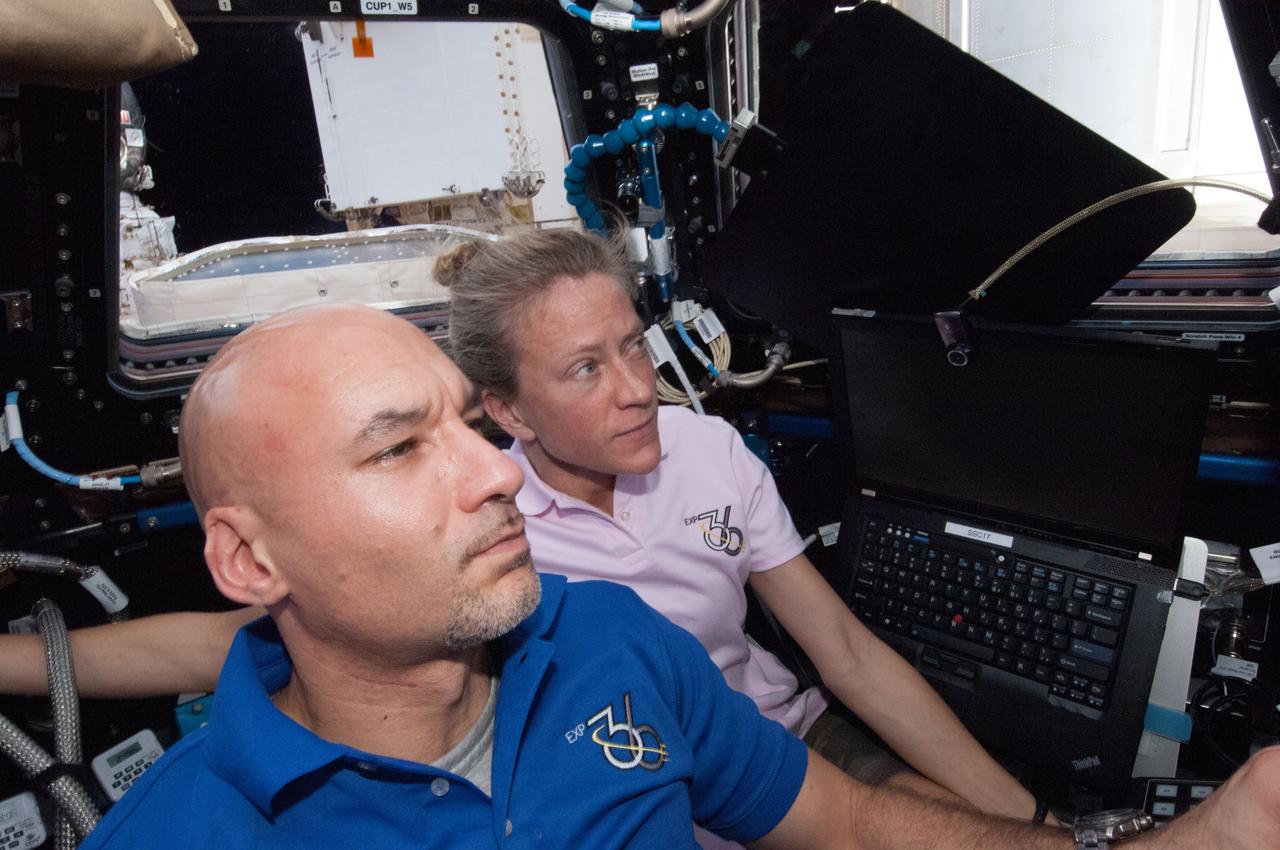
ISS036-E-026332 (29 July 2013) --- In the International Space Station?s Cupola, European Space Agency astronaut Luca Parmitano and NASA astronaut Karen Nyberg, both Expedition 36 flight engineers, participate in an onboard training activity in preparation for the grapple and berthing of the Japanese ?Kounotori? H2 Transfer Vehicle-4 (HTV-4) set for August 9.
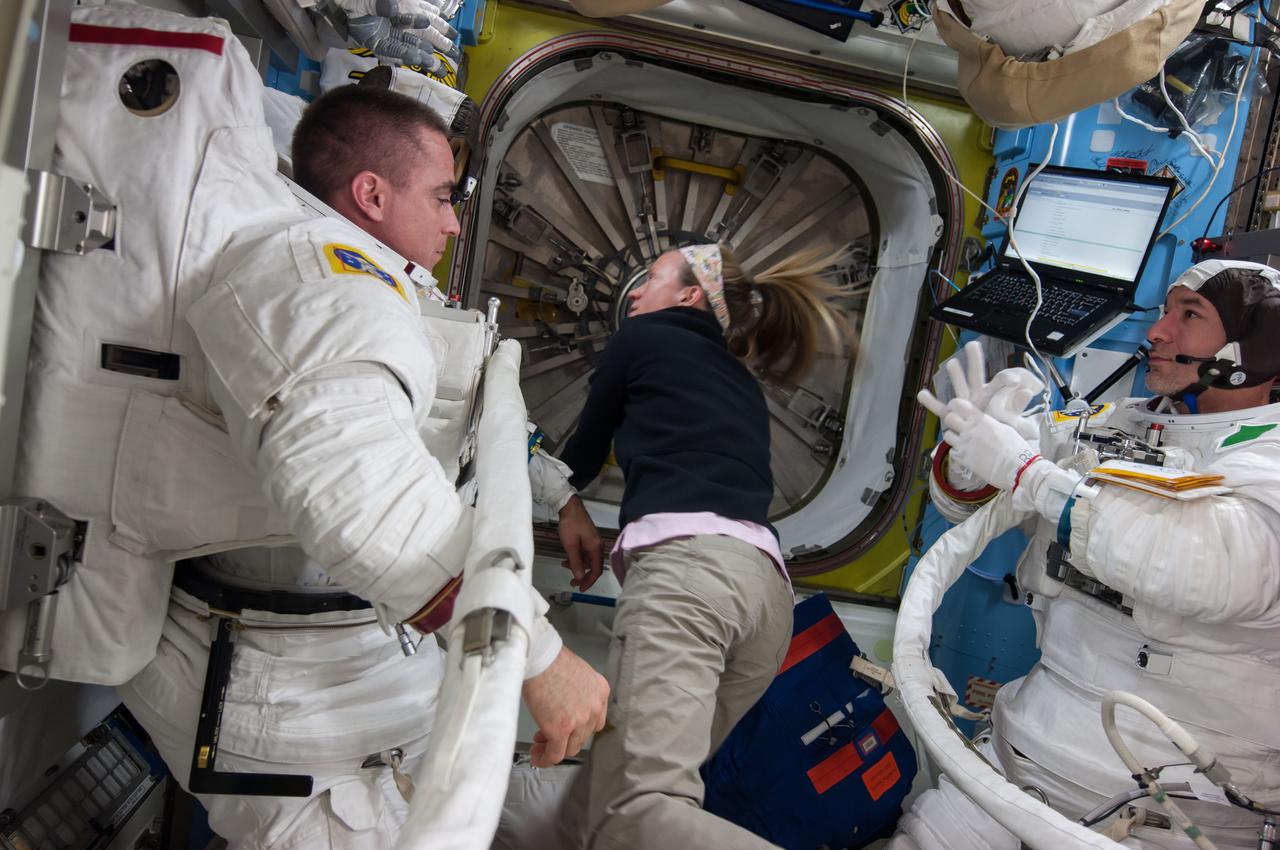
ISS036-E-017389 (8 July 2013) --- NASA astronaut Chris Cassidy (left) and European Space Agency astronaut Luca Parmitano, both Expedition 36 flight engineers, are pictured in the Quest airlock of the International Space Station as they prepare for the start of a session of extravehicular activity (EVA). Cassidy and Parmitano are wearing Extravehicular Mobility Unit (EMU) spacesuits. NASA astronaut Karen Nyberg, flight engineer, assists her crew members.
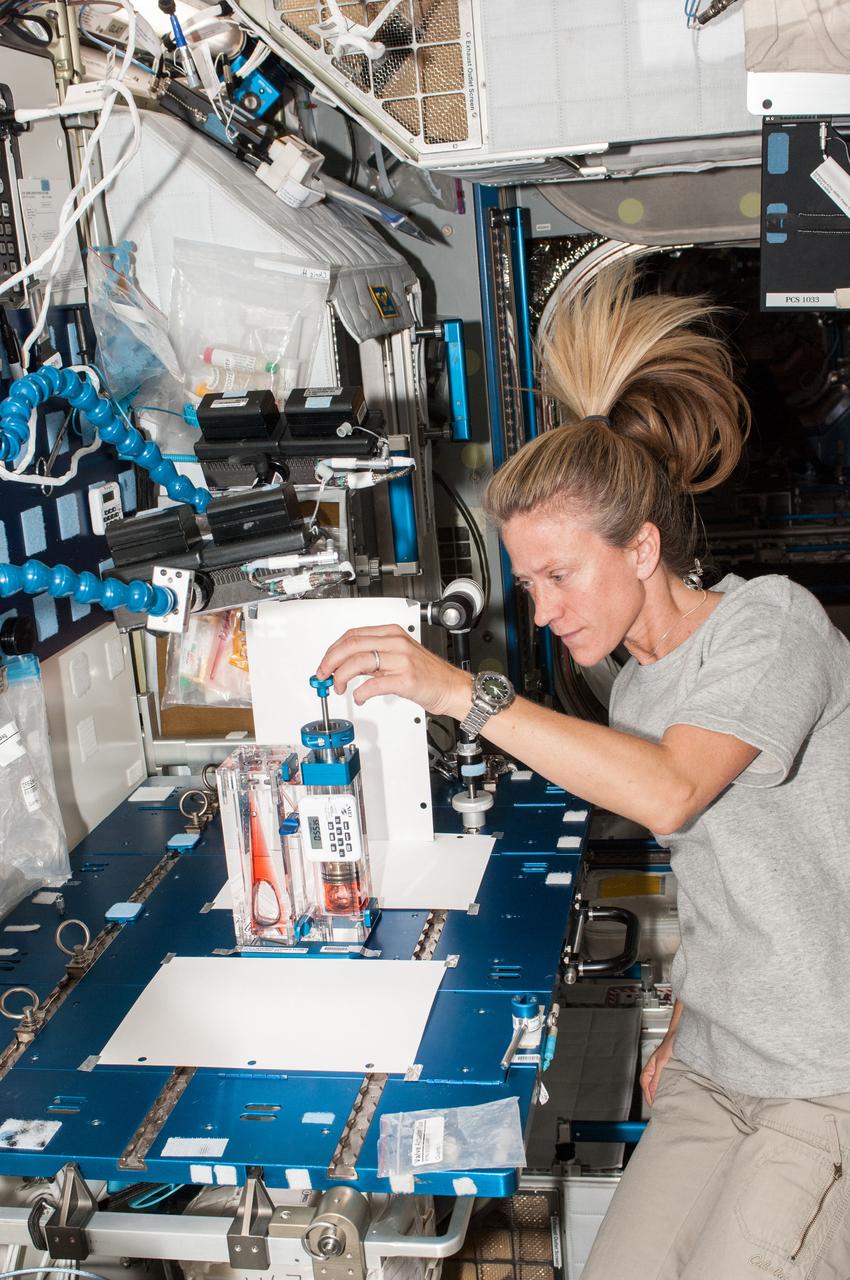
Astronaut Karen Nyberg,Expedition 36 flight engineer,works on the Capillary Flow Experiment (CFE) Vane Gap-1 (VG-1) setup in the Node 2/Harmony. The CFE-2 vessel is used to observe fluid interface and critical wetting behavior in a cylindrical chamber with elliptic cross-section and an adjustable central perforated vane. The primary objective of the Vane Gap experiments is to determine equilibrium interface configurations and critical wetting conditions for interfaces between interior corners separated by a gap.
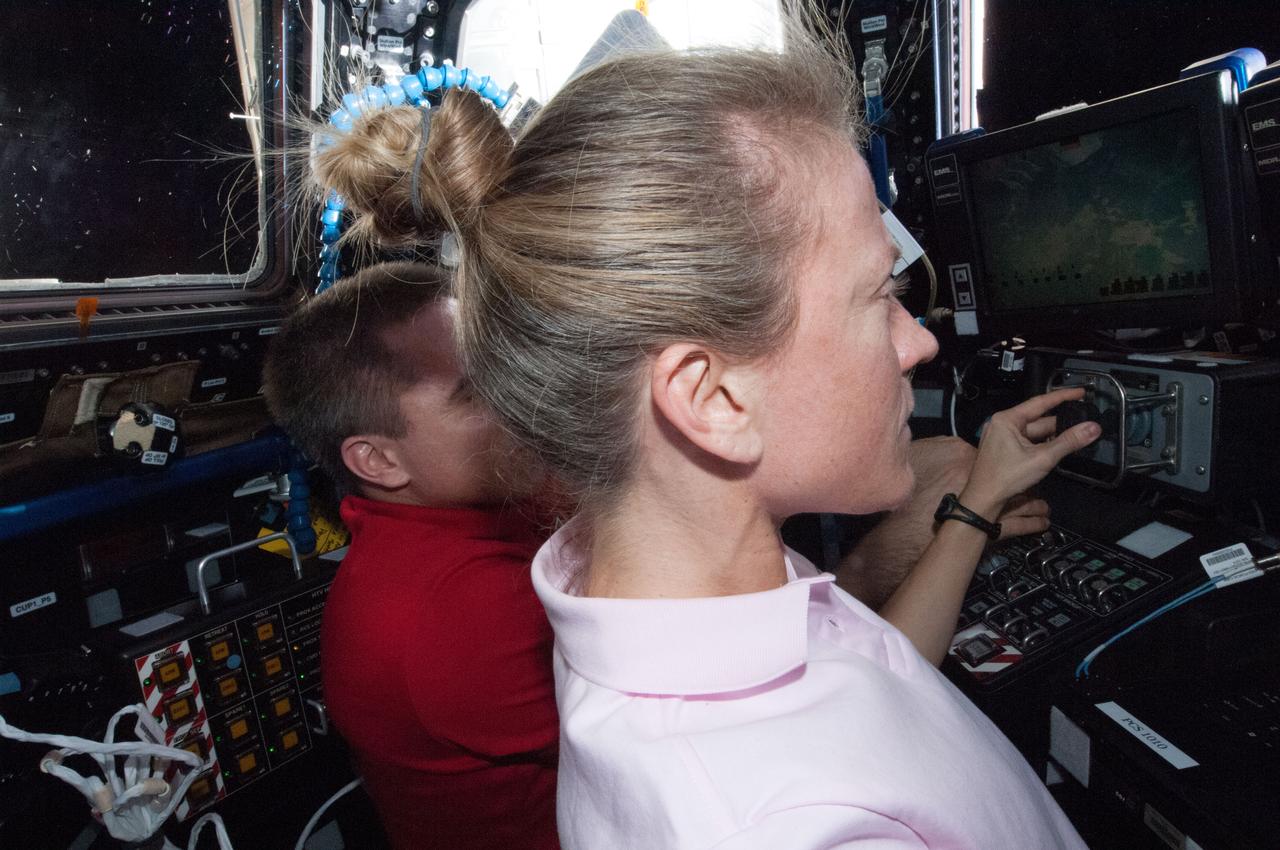
ISS036-E-026306 (29 July 2013) --- In the International Space Station?s Cupola, NASA astronauts Karen Nyberg and Chris Cassidy (partially obscured), both Expedition 36 flight engineers, participate in an onboard training activity in preparation for the grapple and berthing of the Japanese ?Kounotori? H2 Transfer Vehicle-4 (HTV-4) set for August 9.

ISS036-E-028026 (1 Aug. 2013) --- NASA astronaut Karen Nyberg, Expedition 36 flight engineer, works with the InSPACE-3 experiment in the Microgravity Science Glovebox (MSG) in the Destiny laboratory of the International Space Station. InSPACE-3 applies different magnetic fields to vials of colloids, or liquids with microscopic particles, and observes how fluids can behave like a solid. Results may improve the strength and design of materials for stronger buildings and bridges.
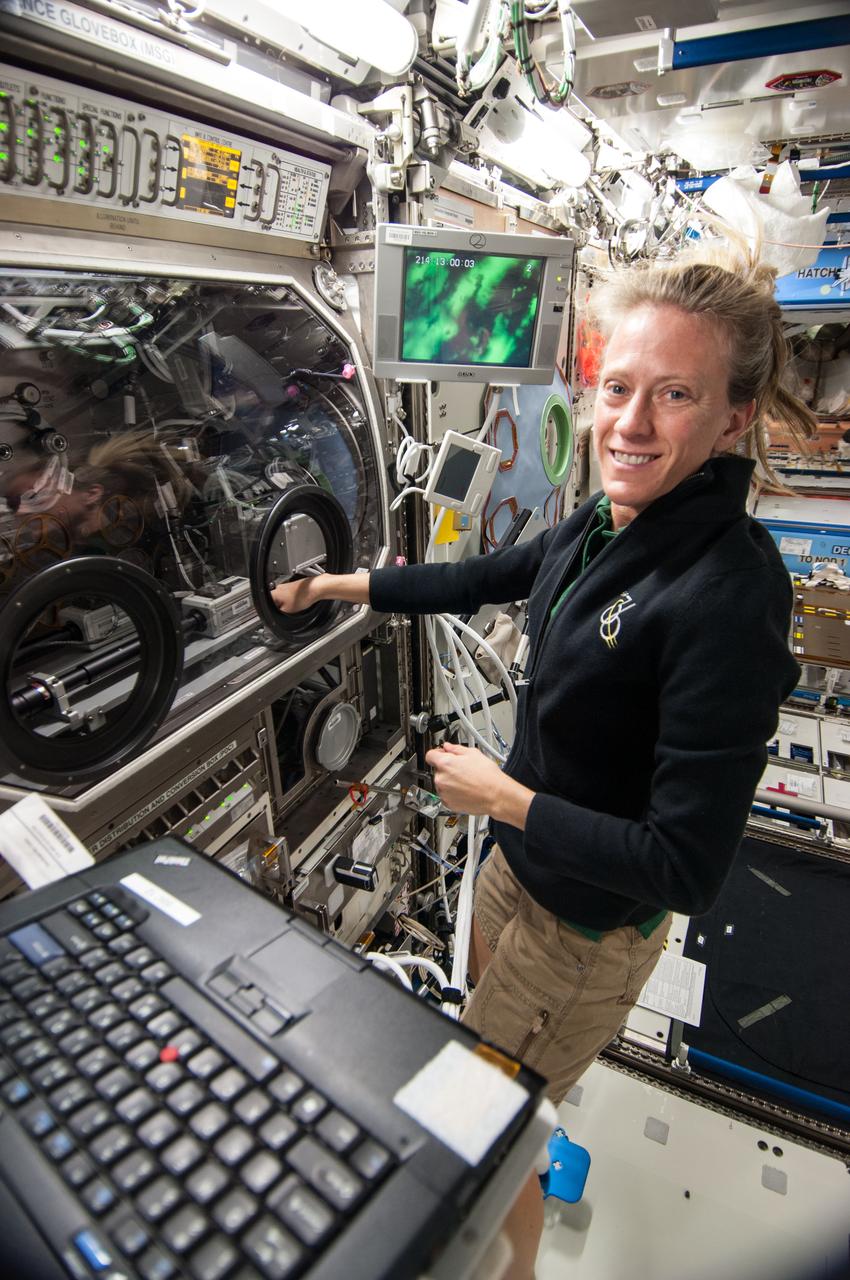
NASA astronaut Karen Nyberg,Expedition 36 flight engineer,works with the InSPACE-3 experiment in the Microgravity Science Glovebox (MSG) in the Destiny laboratory of the International Space Station. InSPACE-3 applies different magnetic fields to vials of colloids,or liquids with microscopic particles,and observes how fluids can behave like a solid. Also sent as Twitter message.
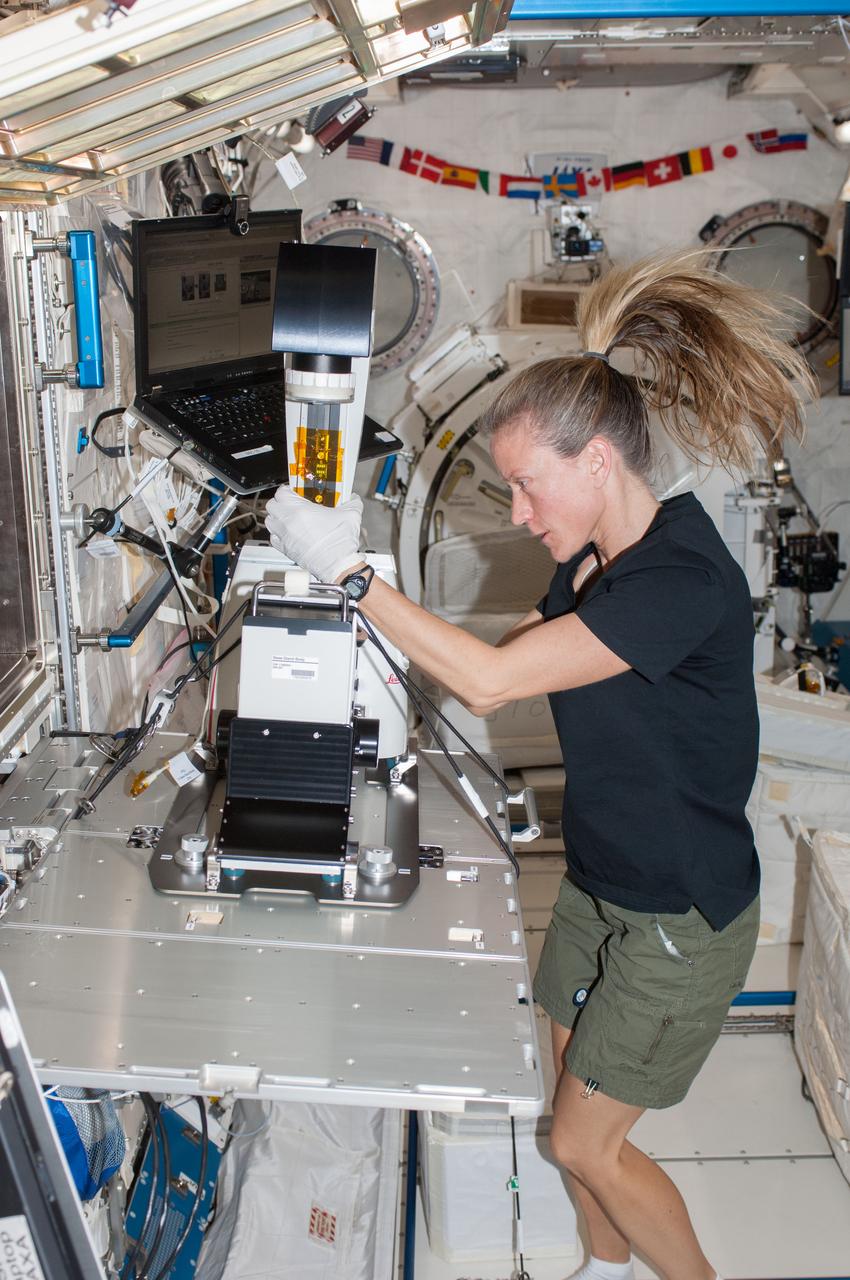
ISS036-E-020938 (17 July 2013) --- NASA astronaut Karen Nyberg, Expedition 36 flight engineer, works to setup the Multi-Purpose Small Payload Rack (MSPR) fluorescence microscope in the Kibo laboratory of the International Space Station. This configuration, along with the leak checks that the crew performed in June, is in preparation for the Aniso Tubule experiment launching on HTV-4 in August. Aniso Tubule will investigate the role of cortical microtubules and microtubule-associated proteins in plant growth while in microgravity.
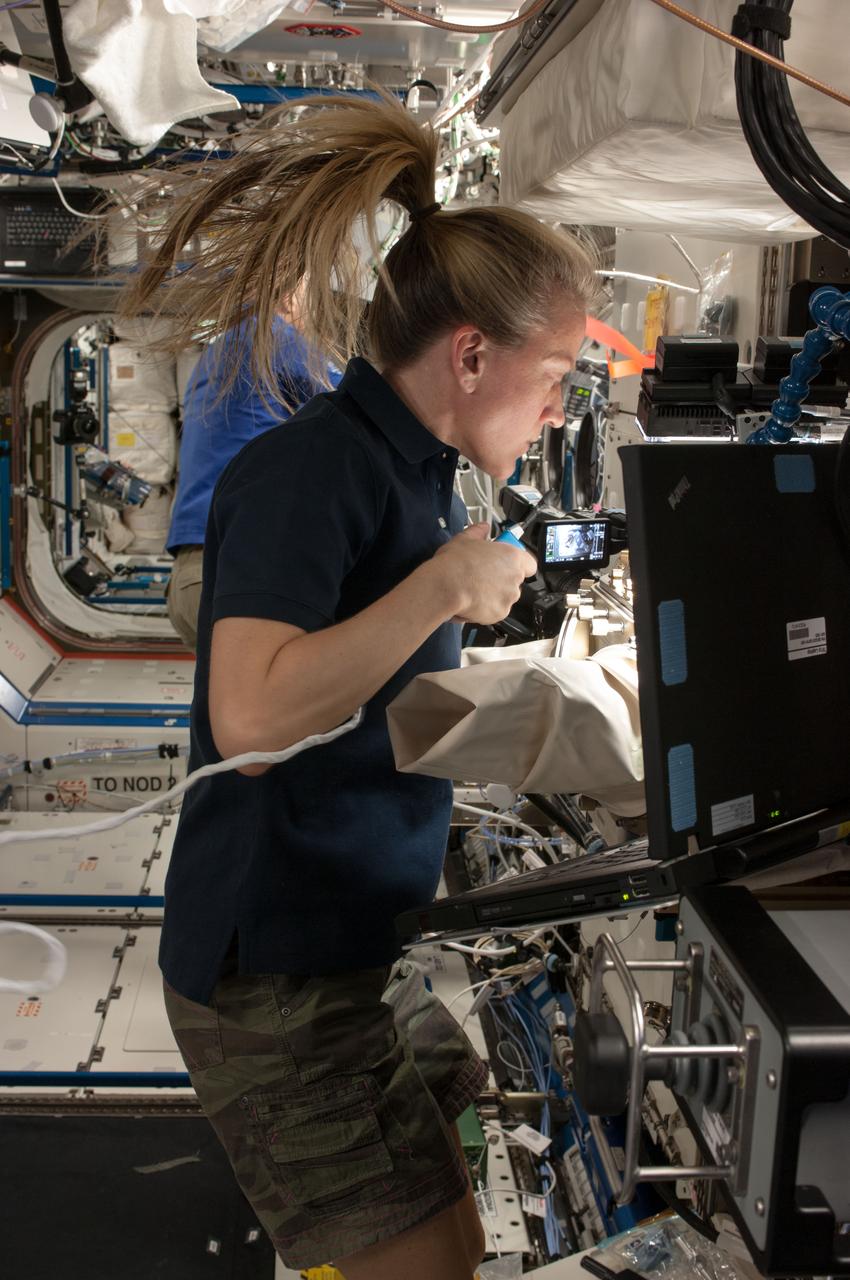
ISS036-E-035780 (18 Aug. 2013) --- NASA astronaut Karen Nyberg, Expedition 36 flight engineer, works with new test samples for the Advanced Colloids Experiment, or ACE, housed in the Light Microscopy Module (LMM) inside the Fluids Integrated Rack of the International Space Station?s Destiny laboratory. Results from ACE will help researchers understand how to optimize stabilizers to extend the shelf life of products like laundry detergent, paint, ketchup and even salad dressing.
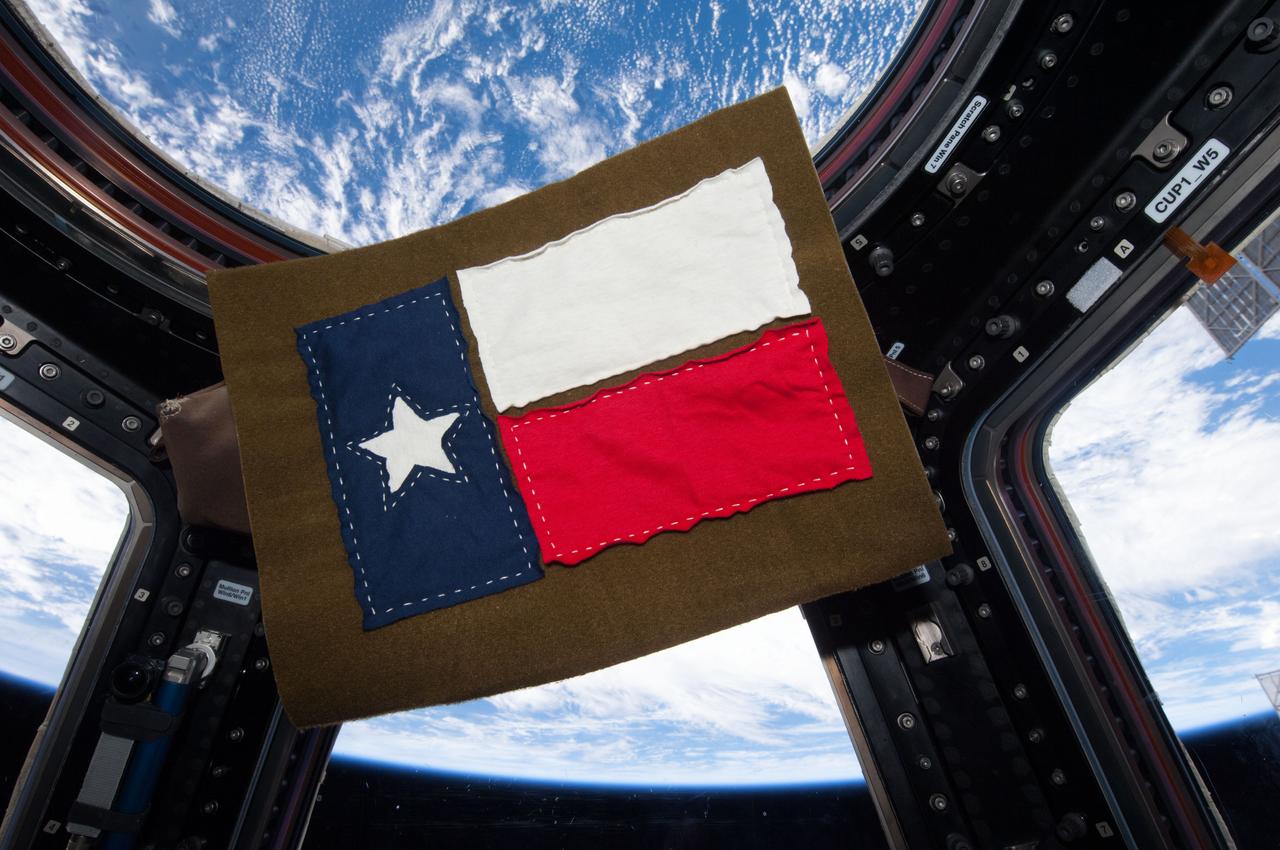
ISS037-E-004972 (27 Sept. 2013) --- Seen floating on the Cupola of the Earth-orbiting International Space Station, this quilt block, paying tribute to the state of Texas or the Lone Star state, was fashioned from T-shirts onboard the orbital outpost by Expedition 37 Flight Engineer Karen Nyberg. The NASA astronaut has spent much of her off-duty time on the station sewing and fashioning various items, using only a handful of tools she took aboard and whatever materials that have been available.
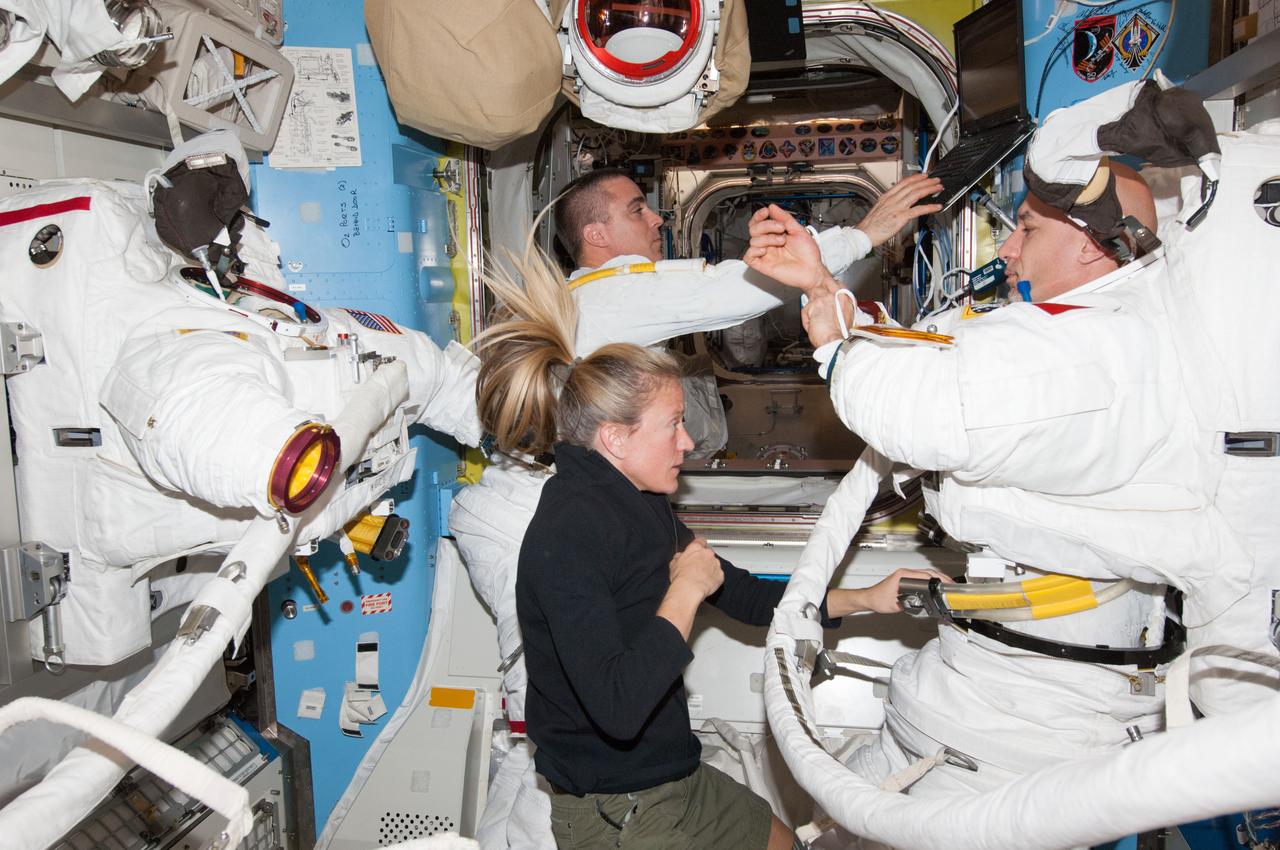
ISS036-E-014714 (3 July 2013) --- NASA astronaut Chris Cassidy (left background) and European Space Agency astronaut Luca Parmitano, both Expedition 36 flight engineers, don their Extravehicular Mobility Unit (EMU) spacesuits for a ?dry run? in the International Space Station?s Quest airlock in preparation for the first of two sessions of extravehicular (EVA) scheduled for July 9 and July 16. NASA astronaut Karen Nyberg, flight engineer, assists Cassidy and Parmitano.
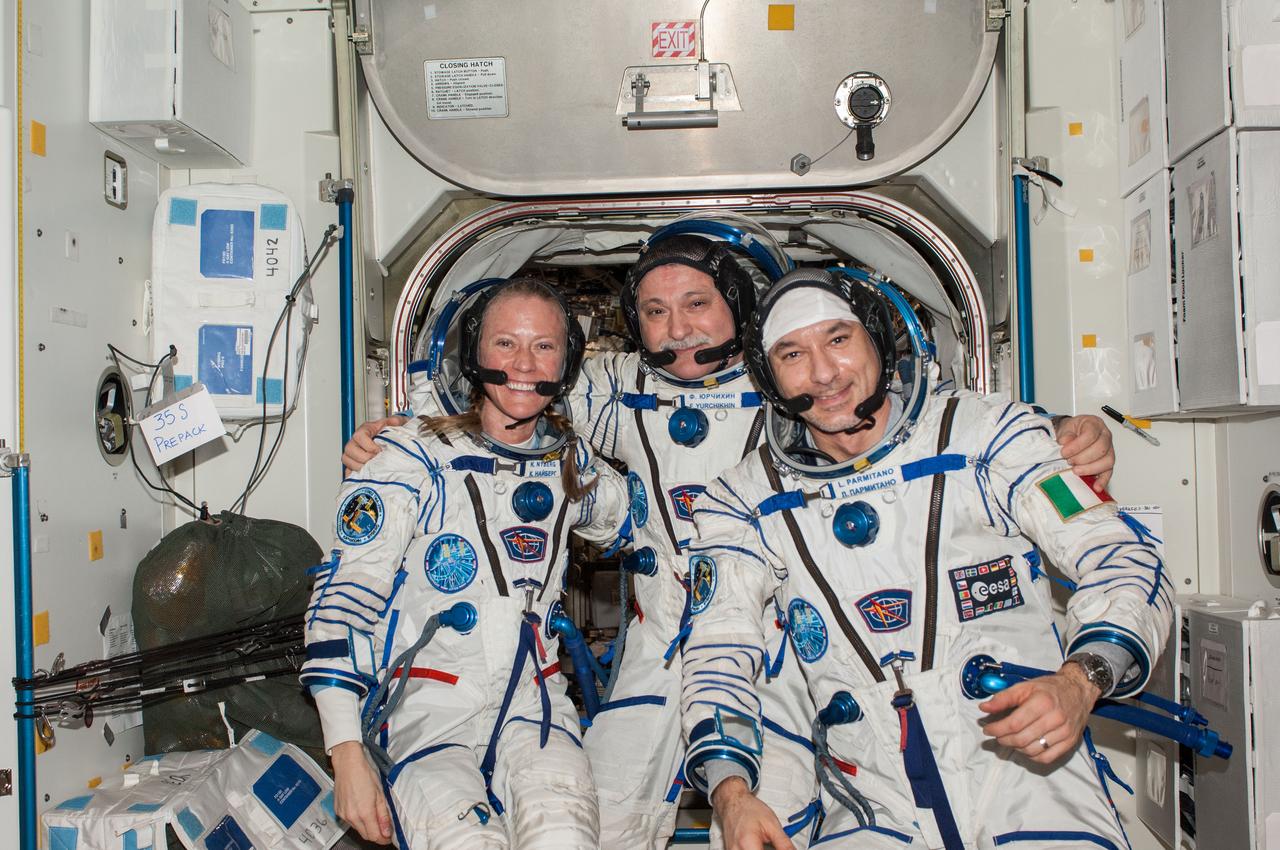
ISS037-E-021357 (27 Oct. 2013) --- Attired in Russian Sokol launch and entry suits, Russian cosmonaut Fyodor Yurchikhin (center), Expedition 37 commander; along with NASA astronaut Karen Nyberg and European Space Agency astronaut Luca Parmitano, both flight engineers, pose for a portrait in the Unity node of the International Space Station.
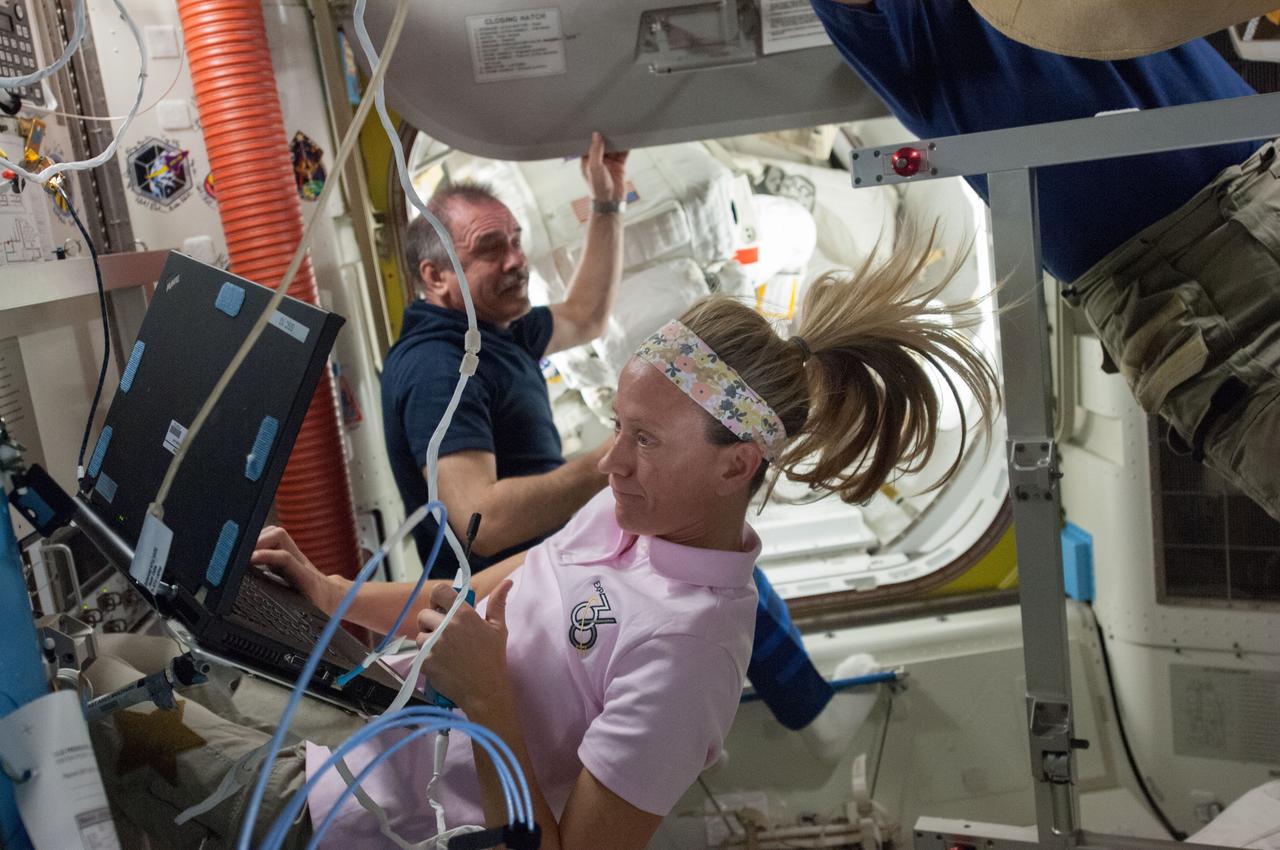
ISS036-E-017441 (8 July 2013) --- NASA astronaut Karen Nyberg, Expedition 36 flight engineer, uses a computer in the International Space Station’s Quest airlock while the crew prepares for a July 9 session of extravehicular activity (EVA) with NASA astronaut Chris Cassidy and European Space Agency astronaut Luca Parmitano, both flight engineers. Russian cosmonaut Pavel Vinogradov, commander, is visible in the background.
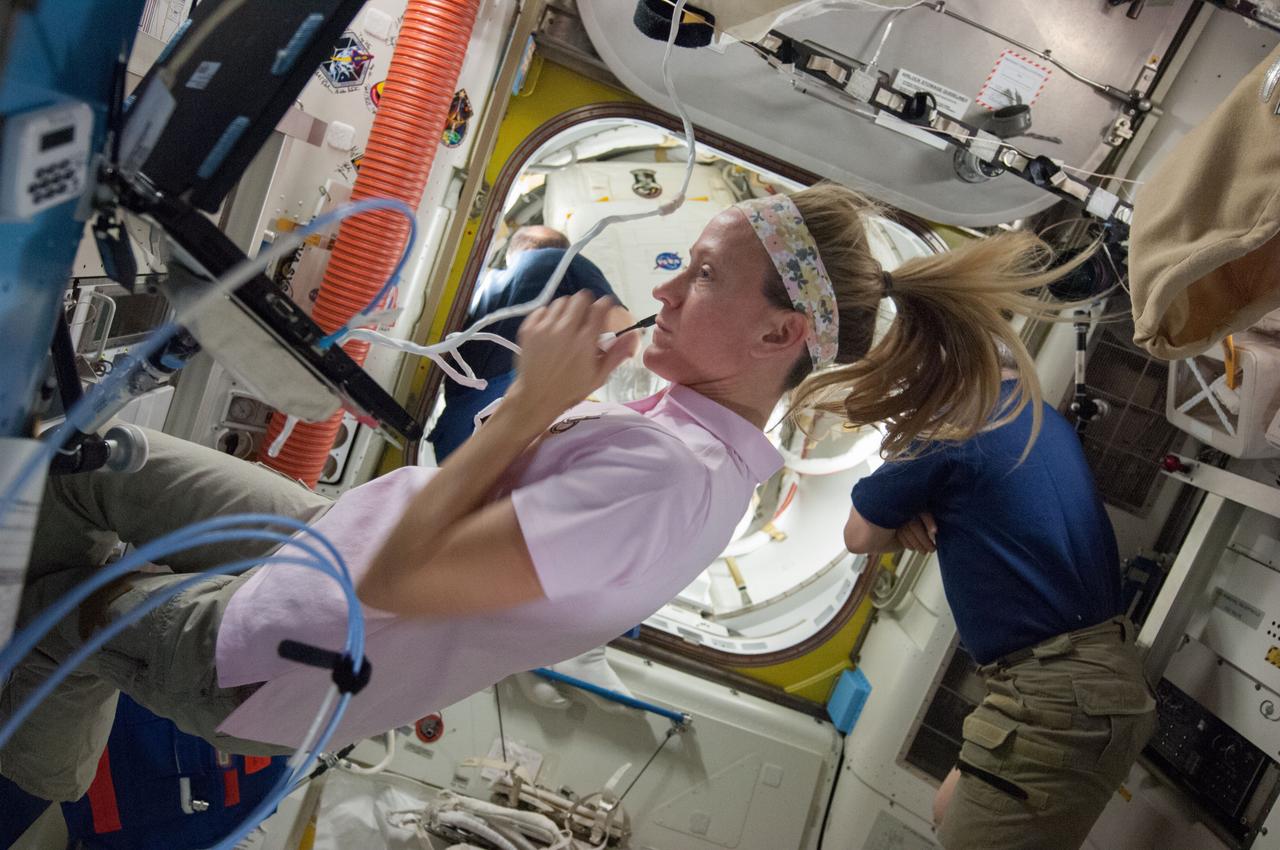
ISS036-E-017438 (8 July 2013) --- NASA astronaut Karen Nyberg, Expedition 36 flight engineer, speaks into a microphone in the International Space Station’s Quest airlock while the crew prepares for a July 9 session of extravehicular activity (EVA) with NASA astronaut Chris Cassidy and European Space Agency astronaut Luca Parmitano, both flight engineers.

ISS036-E-029215 (5 Aug. 2013) --- At the robotics workstation in the International Space Station?s Cupola, NASA astronaut Chris Cassidy, Expedition 36 flight engineer, participates in onboard training activity in preparation for the grapple and berthing of the Japanese "Kounotori" H2 Transfer Vehicle-4 (HTV-4) set for August 9. Cassidy and NASA astronaut Karen Nyberg will use Canadarm2, the station's Canadian Space Agency-provided robotic arm, to reach out and capture the vehicle for its installation on the Earth-facing port of the Harmony node.
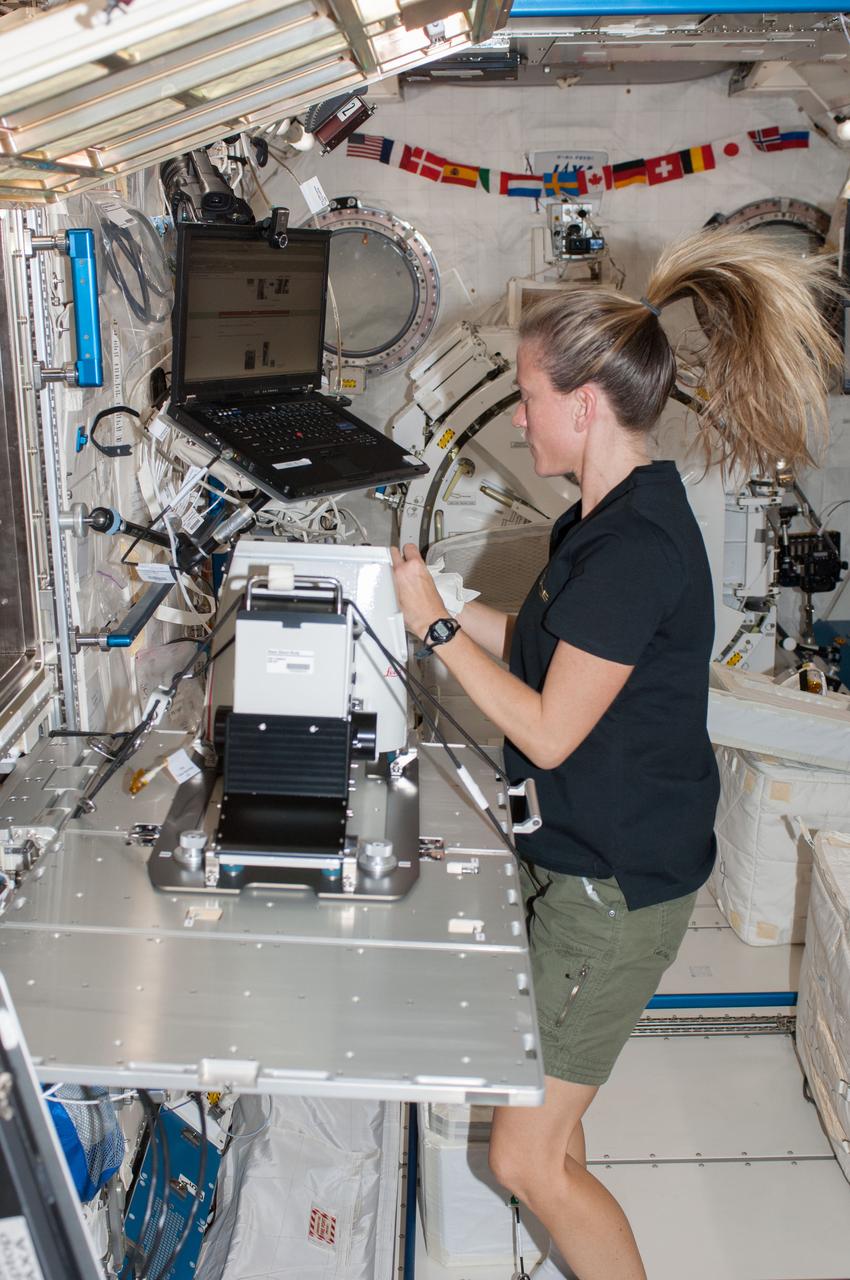
ISS036-E-020935 (17 July 2013) --- NASA astronaut Karen Nyberg, Expedition 36 flight engineer, works to setup the Multi-Purpose Small Payload Rack (MSPR) fluorescence microscope in the Kibo laboratory of the International Space Station. This configuration, along with the leak checks that the crew performed in June, is in preparation for the Aniso Tubule experiment launching on HTV-4 in August. Aniso Tubule will investigate the role of cortical microtubules and microtubule-associated proteins in plant growth while in microgravity.
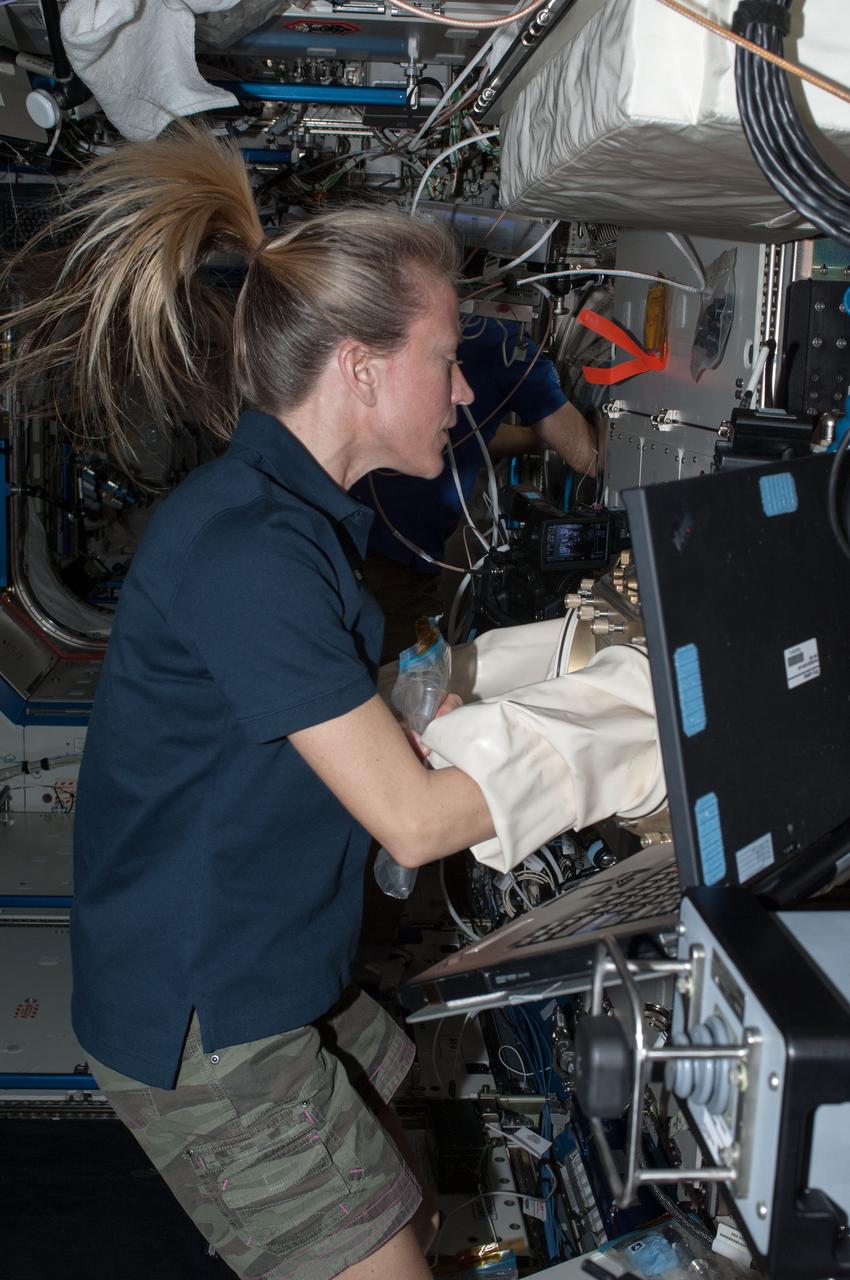
ISS036-E-035767 (18 Aug. 2013) --- NASA astronaut Karen Nyberg, Expedition 36 flight engineer, works with new test samples for the Advanced Colloids Experiment, or ACE, housed in the Light Microscopy Module (LMM) inside the Fluids Integrated Rack of the International Space Station?s Destiny laboratory. Results from ACE will help researchers understand how to optimize stabilizers to extend the shelf life of products like laundry detergent, paint, ketchup and even salad dressing.
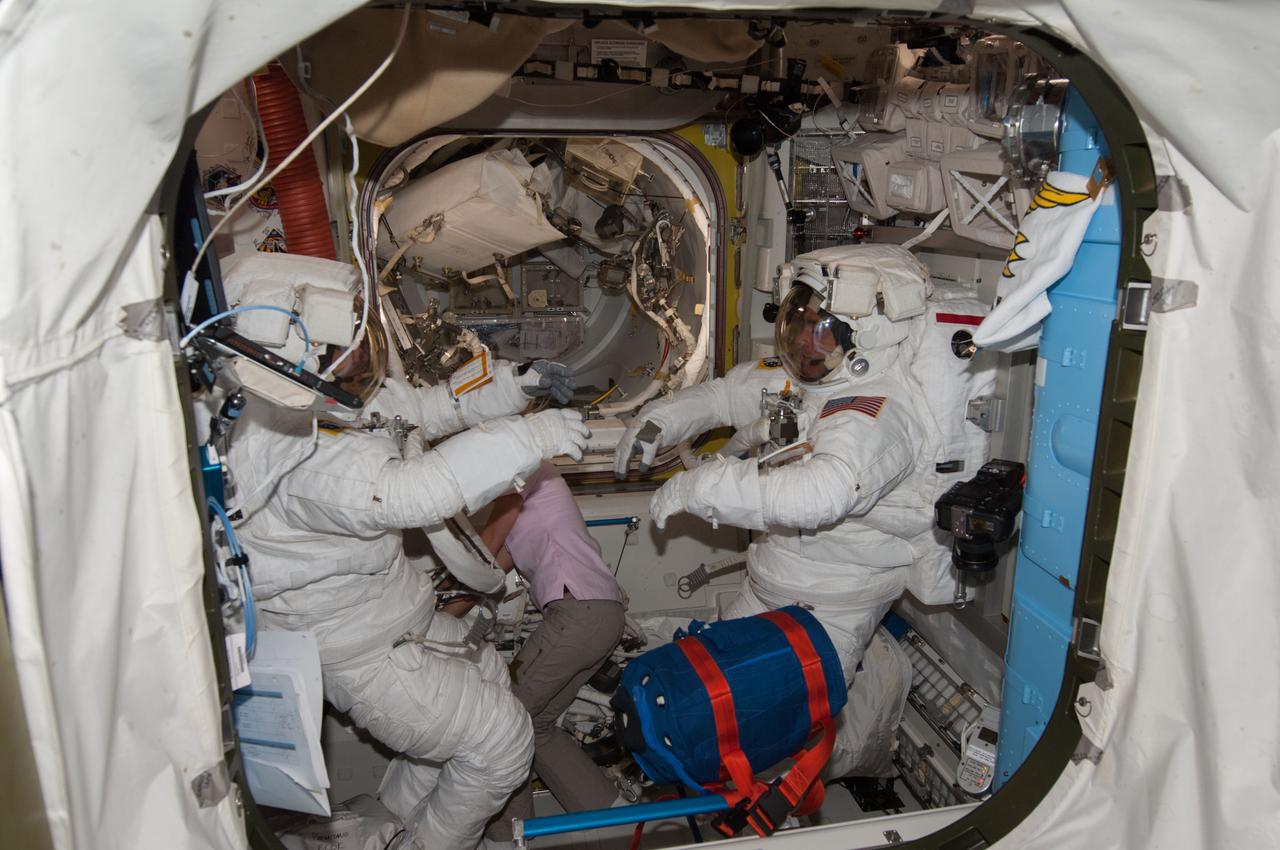
ISS036-E-017423 (8 July 2013) --- NASA astronaut Chris Cassidy (right) and European Space Agency astronaut Luca Parmitano, both Expedition 36 flight engineers, are pictured in the Quest airlock of the International Space Station as they prepare for the start of a session of extravehicular activity (EVA). Cassidy and Parmitano are wearing Extravehicular Mobility Unit (EMU) spacesuits. NASA astronaut Karen Nyberg (partially obscured), flight engineer, assists her crew members.
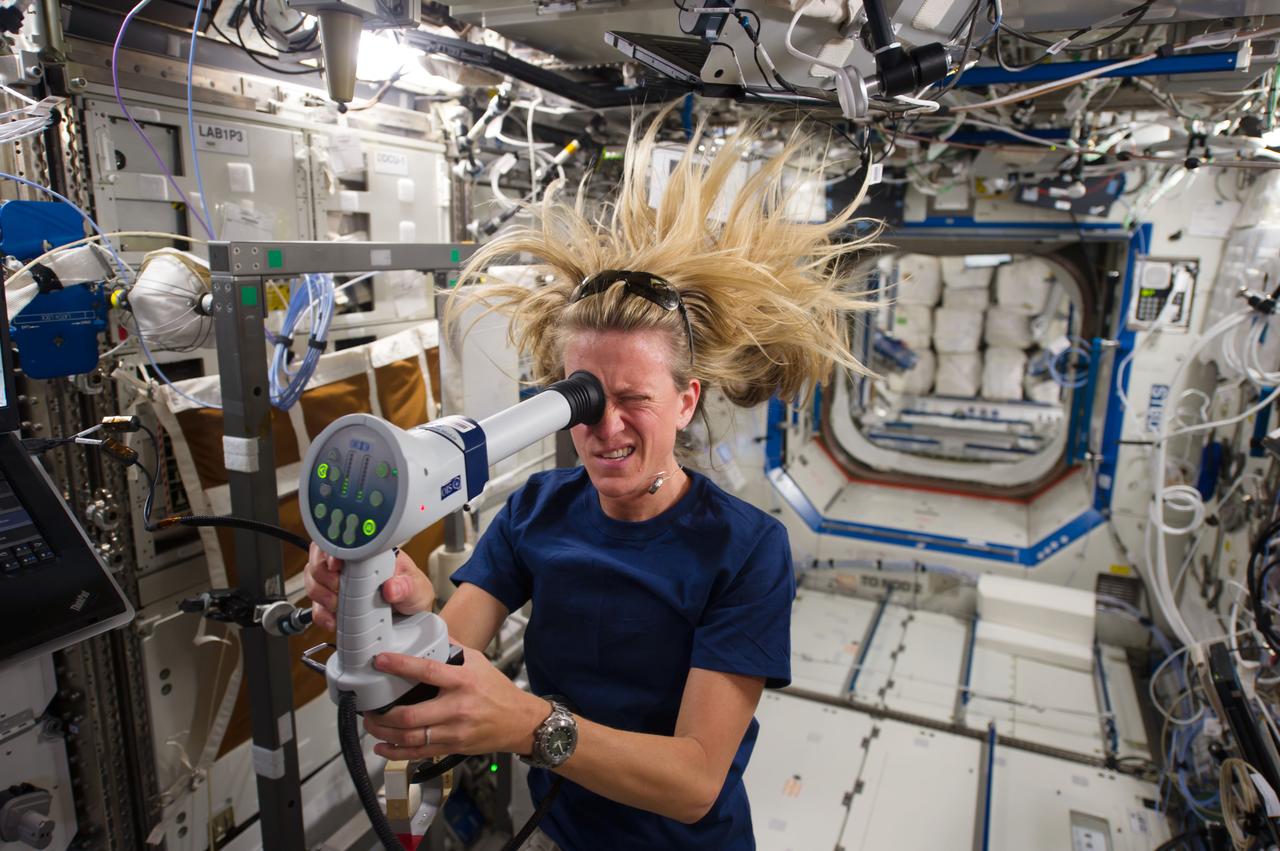
ISS036-E-006520 (5 June 2013) --- NASA astronaut Karen Nyberg, Expedition 36 flight engineer, conducts an ocular health exam on herself in the Destiny laboratory of the Earth-orbiting International Space Station. NASA astronaut Chris Cassidy, flight engineer, nearby but out of frame, assisted in the testing, part of a suite of eye exams carried out over a two-day period on various crew members to gather information on intraocular pressure and eye anatomy.
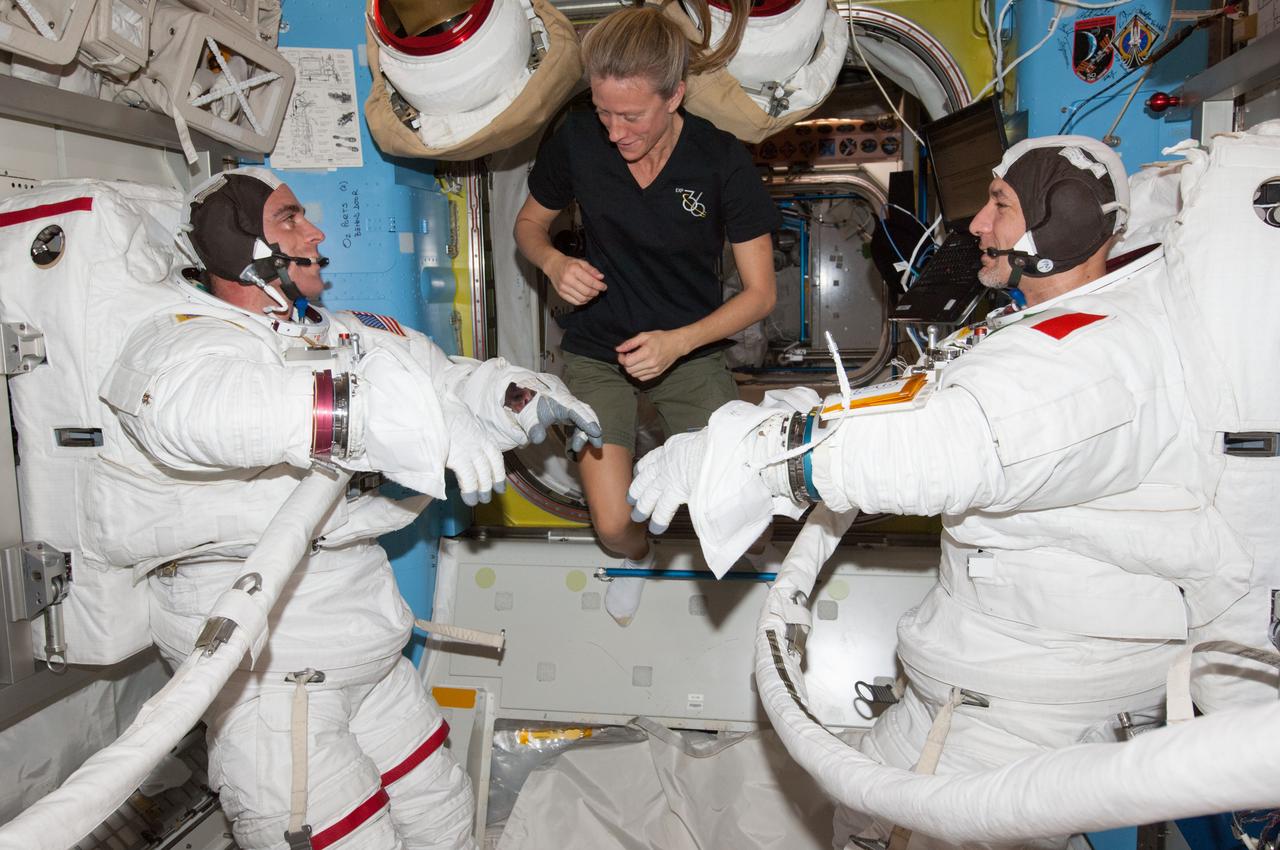
ISS036-E-014724 (3 July 2013) --- NASA astronaut Chris Cassidy (left) and European Space Agency astronaut Luca Parmitano, both Expedition 36 flight engineers, attired in their Extravehicular Mobility Unit (EMU) spacesuits, participate in a ?dry run? in the International Space Station?s Quest airlock in preparation for the first of two sessions of extravehicular (EVA) scheduled for July 9 and July 16. NASA astronaut Karen Nyberg, flight engineer, assists Cassidy and Parmitano.
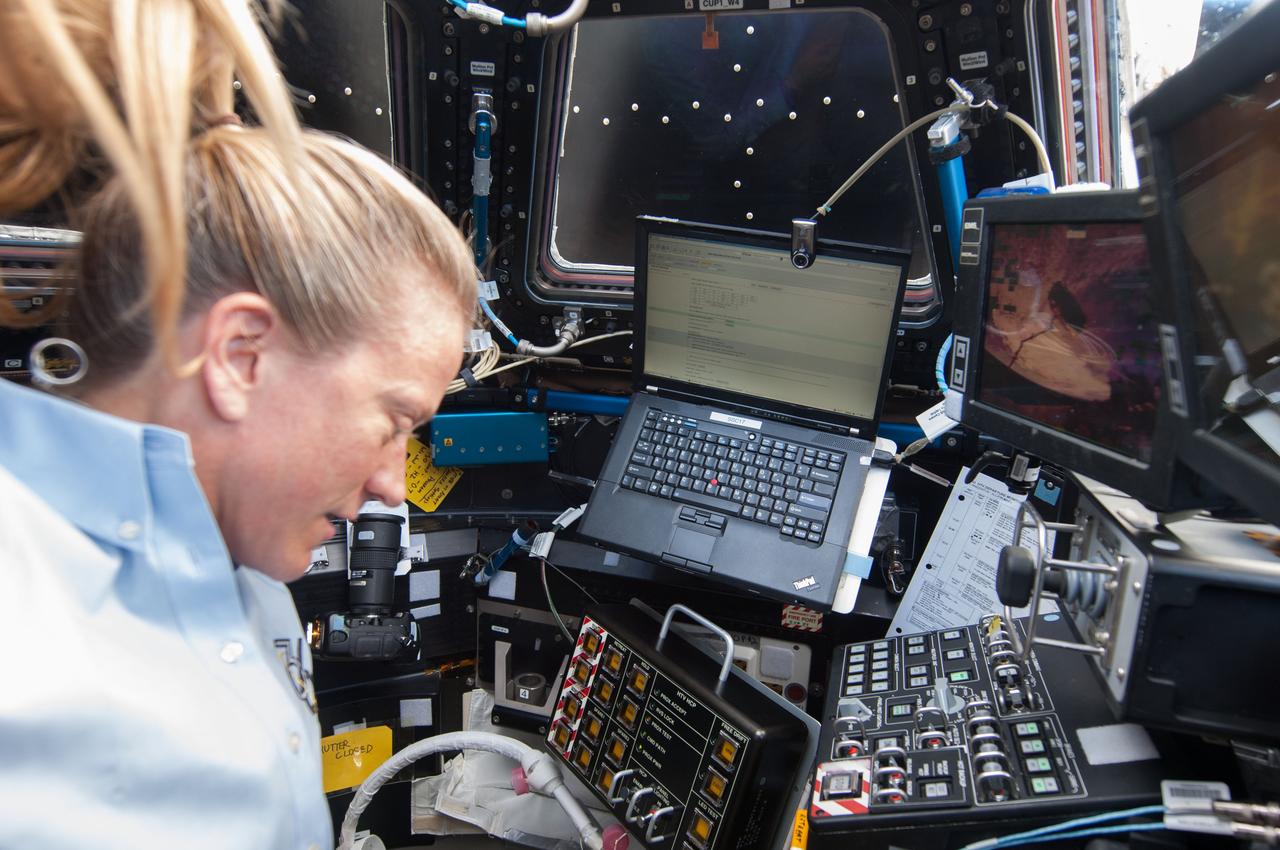
ISS036-E-039458 (3 Sept. 2013) --- NASA astronaut Karen Nyberg, Expedition 36 flight engineer, is pictured in the International Space Station?s Cupola during preparations to release the Japanese "Kounotori" H2 Transfer Vehicle-4 (HTV-4) ending its one-month stay at the space station. The automated resupply craft will be grappled by the Canadarm2, removed from the Harmony node and released for a destructive reentry into Earth?s atmosphere.
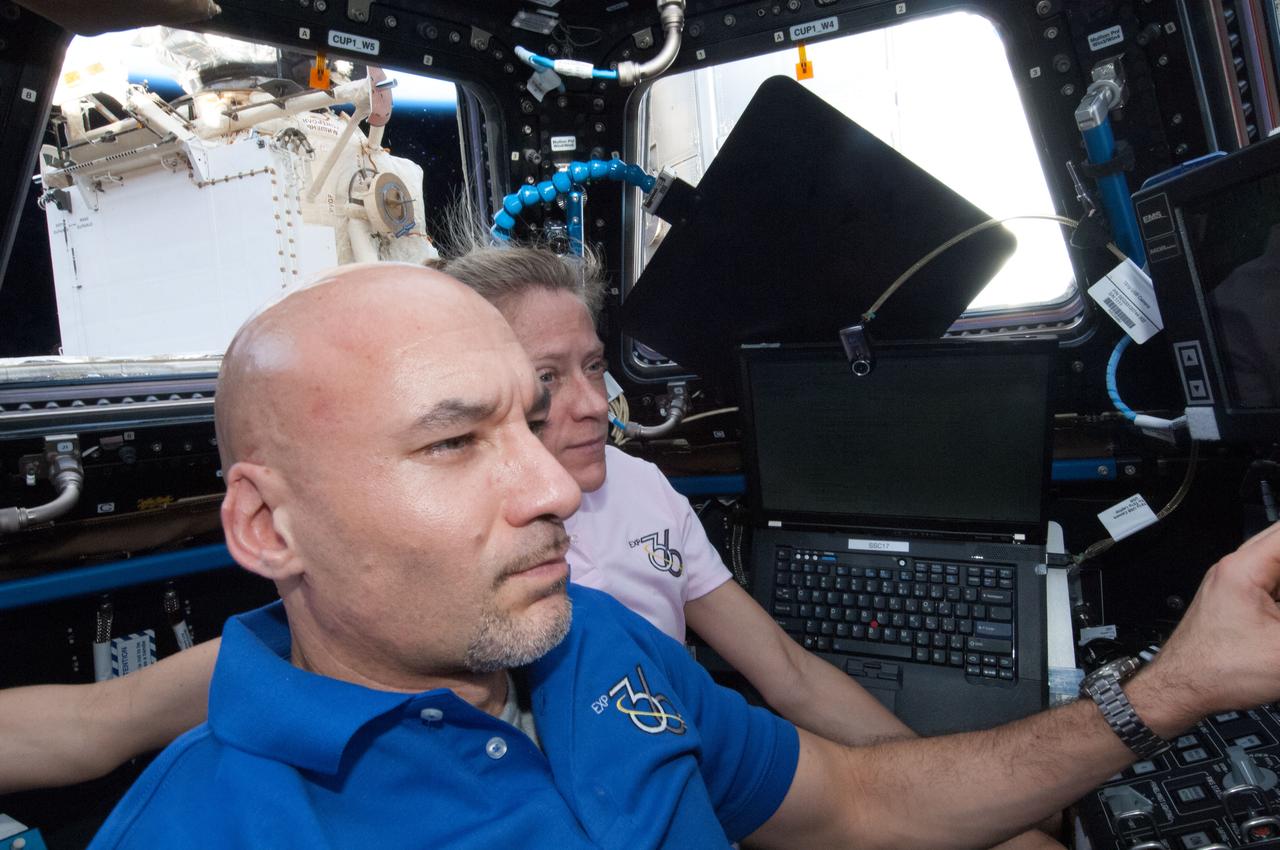
ISS036-E-026331 (29 July 2013) --- In the International Space Station?s Cupola, European Space Agency astronaut Luca Parmitano and NASA astronaut Karen Nyberg, both Expedition 36 flight engineers, participate in an onboard training activity in preparation for the grapple and berthing of the Japanese ?Kounotori? H2 Transfer Vehicle-4 (HTV-4) set for August 9.
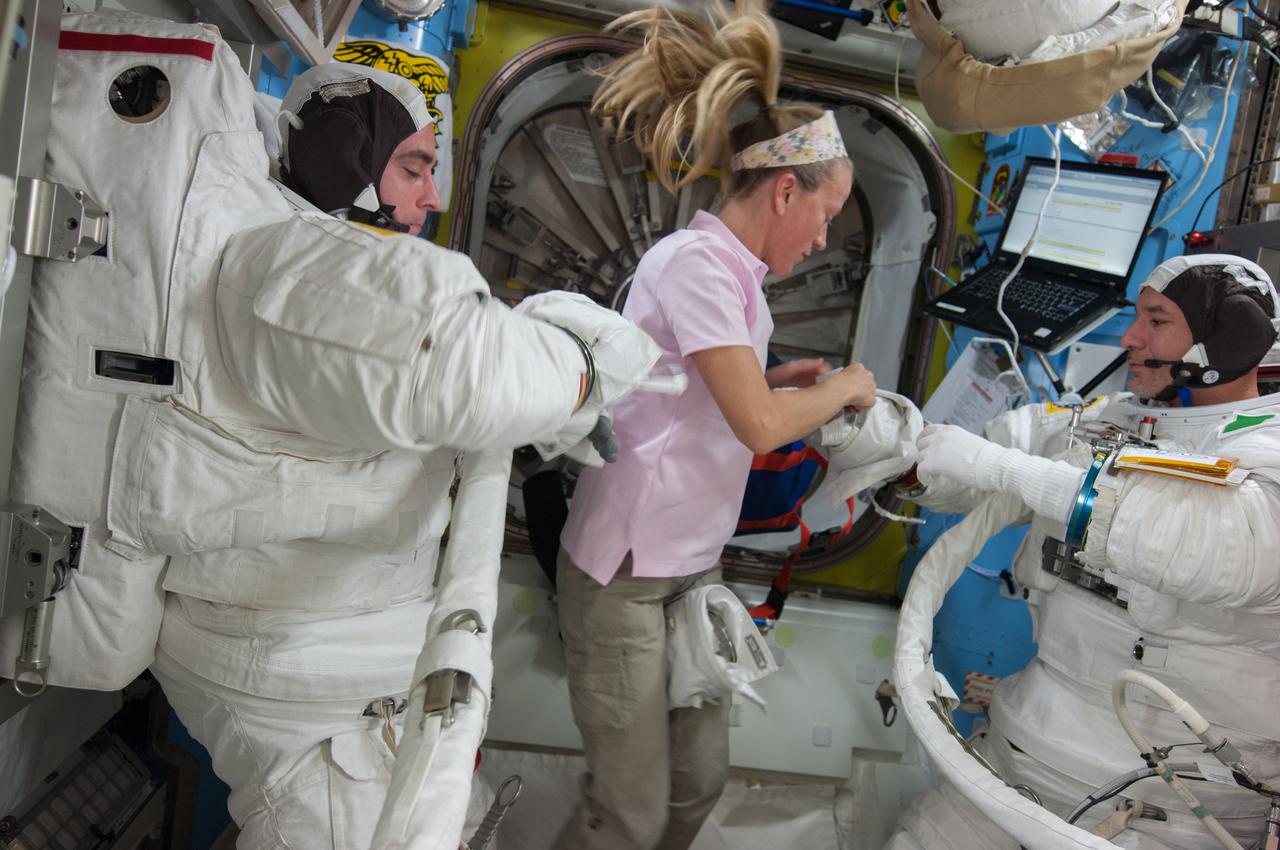
ISS036-E-017393 (8 July 2013) --- NASA astronaut Chris Cassidy (left) and European Space Agency astronaut Luca Parmitano, both Expedition 36 flight engineers, are pictured in the Quest airlock of the International Space Station as they prepare for the start of a session of extravehicular activity (EVA). Cassidy and Parmitano are wearing Extravehicular Mobility Unit (EMU) spacesuits. NASA astronaut Karen Nyberg, flight engineer, assists her crew members.