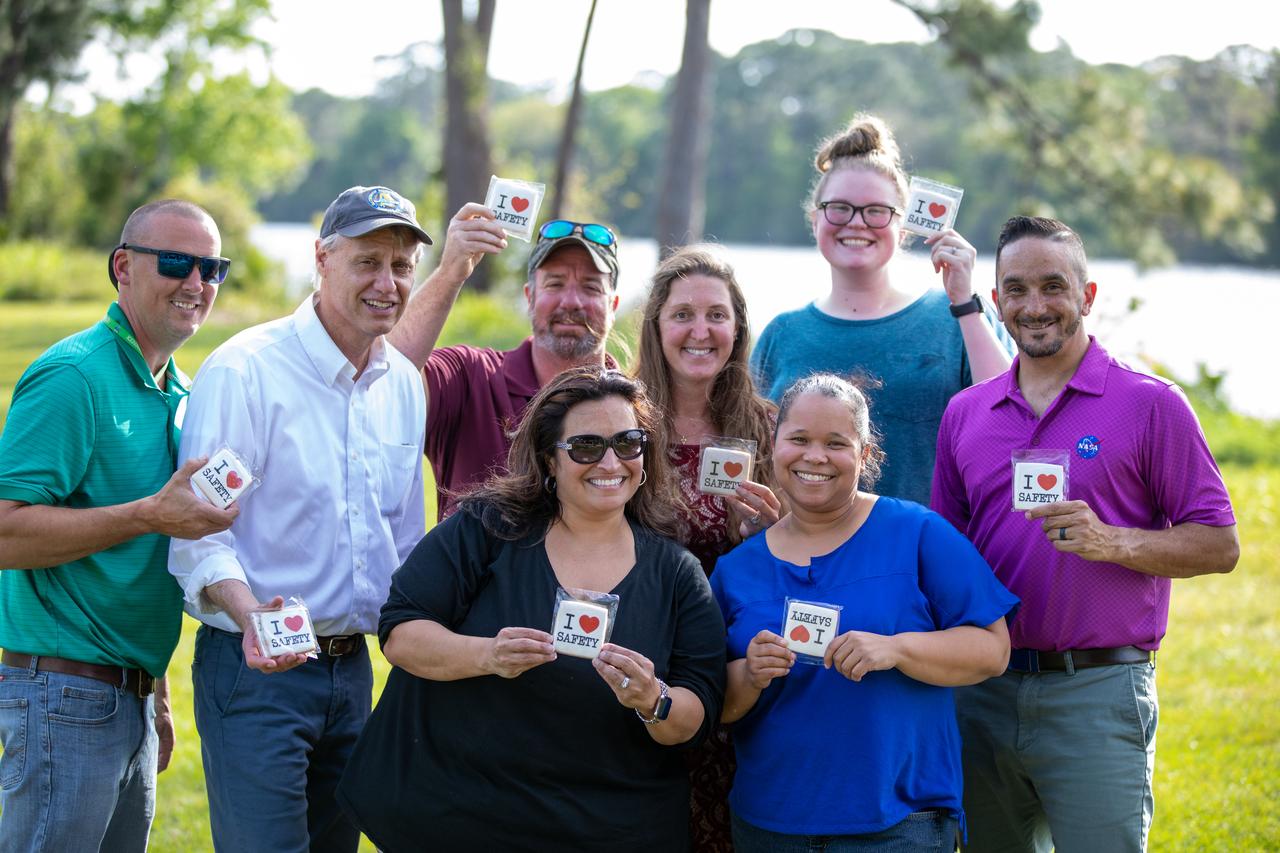
NASA Kennedy Space Center employees are photographed during a Safety and Health Days celebration at the Florida spaceport’s KARS Park II on March 5, 2020. Front row from left are Michele Richtmeyer and Heidi Harden, and back row from left are Phil Falk, Chris Berg, Marcus Chancery, Amber Philman-Blair, Larrin Moody and Dustin Cammack. Taking place March 2 through March 6, Safety and Health Days provides Kennedy employees with a variety of presentations to attend – all of which focus on how to maintain a safe and healthy workforce. The celebration on March 5 took place at the spaceport’s KARS Park II and was open for all employees to attend.
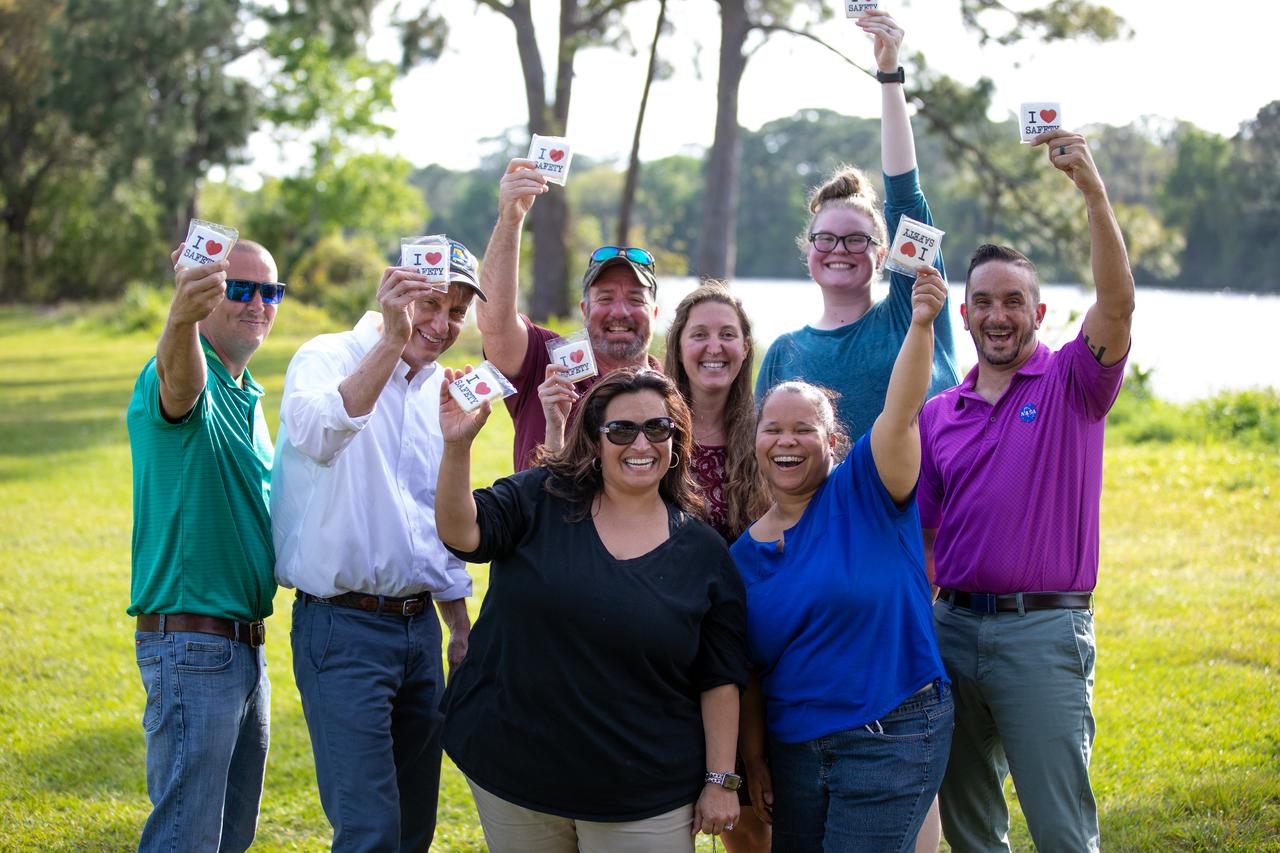
NASA Kennedy Space Center employees are photographed during a Safety and Health Days celebration at the Florida spaceport’s KARS Park II on March 5, 2020. Front row from left are Michele Richtmeyer and Heidi Harden, and back row from left are Phil Falk, Chris Berg, Marcus Chancery, Amber Philman-Blair, Larrin Moody and Dustin Cammack. Taking place March 2 through March 6, Safety and Health Days provides Kennedy employees with a variety of presentations to attend – all of which focus on how to maintain a safe and healthy workforce. The celebration on March 5 took place at the spaceport’s KARS Park II and was open for all employees to attend.
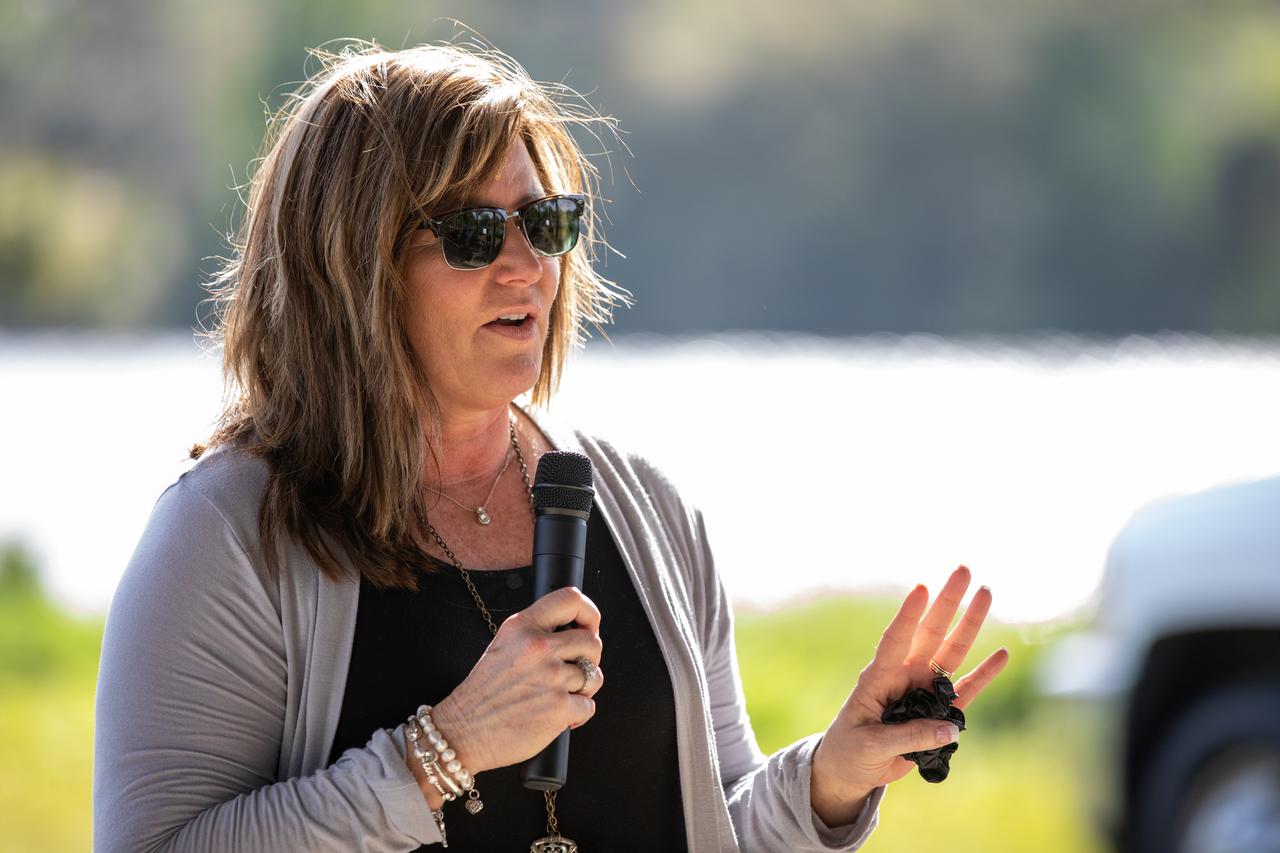
Jennifer Kunz, director of Safety and Mission Assurance at NASA’s Kennedy Space Center in Florida, speaks to Kennedy employees during a Safety and Health Days celebration on March 5, 2020. Taking place March 2 through March 6, Safety and Health Days provides Kennedy employees with a variety of presentations to attend – all of which focus on how to maintain a safe and healthy workforce. The celebration on March 5 took place at the spaceport’s KARS Park II and was open for all employees to attend.
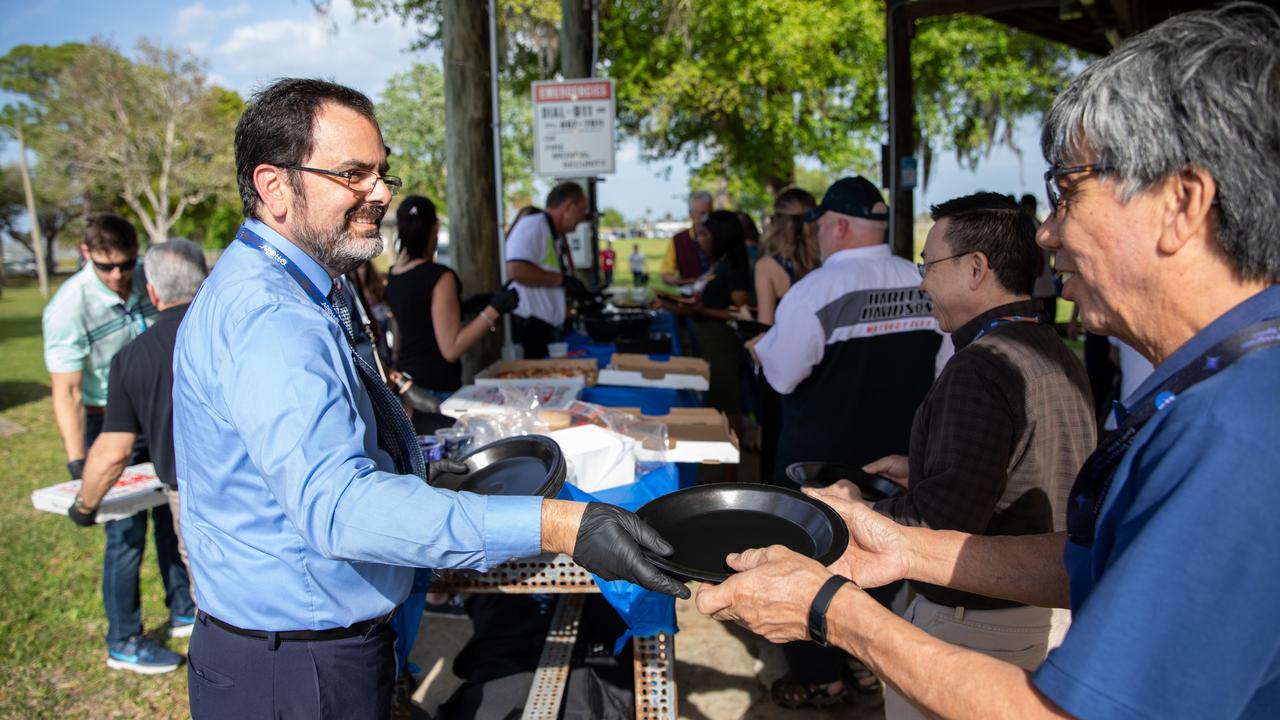
Ronnie Rodriguez, left, deputy director of Safety and Mission Assurance at NASA’s Kennedy Space Center in Florida, serves food to Kennedy employees during a Safety and Health Days celebration on March 5, 2020. Taking place March 2 through March 6, Safety and Health Days provides Kennedy employees with a variety of presentations to attend – all of which focus on how to maintain a safe and healthy workforce. The celebration on March 5 took place at the spaceport’s KARS Park II and was open for all employees to attend.
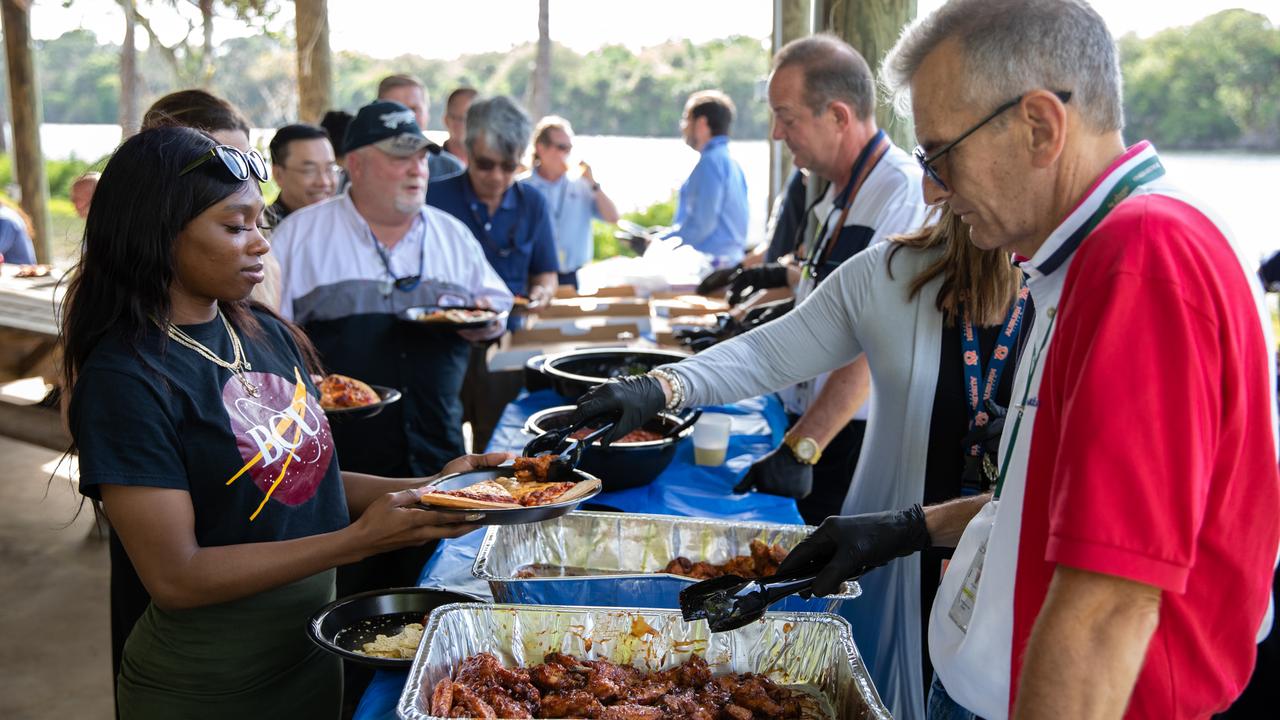
Managers at NASA’s Kennedy Space Center in Florida serve food to Kennedy employees during a Safety and Health Days celebration on March 5, 2020. Taking place March 2 through March 6, Safety and Health Days provides Kennedy employees with a variety of presentations to attend – all of which focus on how to maintain a safe and healthy workforce. The celebration on March 5 took place at the spaceport’s KARS Park II and was open for all employees to attend.
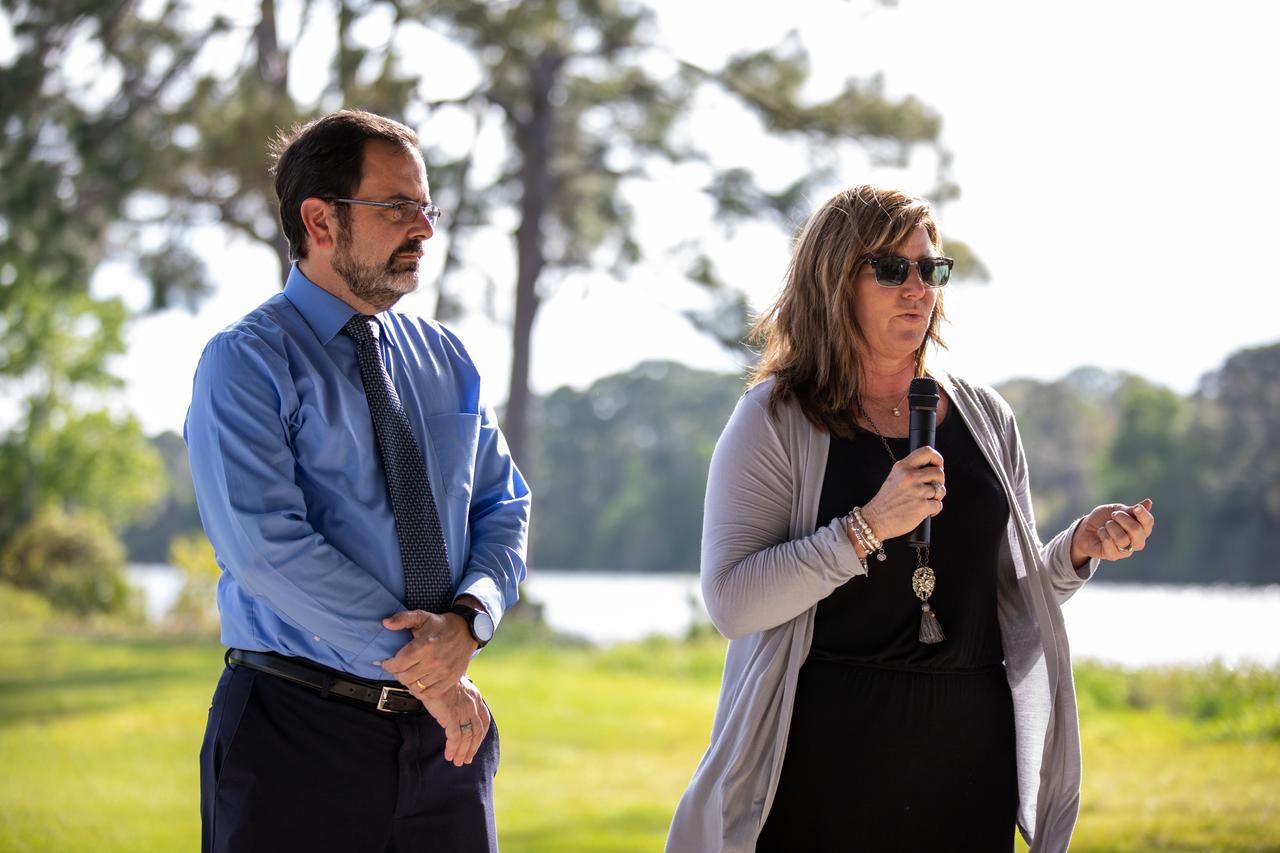
Deputy Director Ronnie Rodriguez, left, and Director Jennifer Kunz of Safety and Mission Assurance at NASA’s Kennedy Space Center in Florida, speak to Kennedy employees during a Safety and Health Days celebration on March 5, 2020. Taking place March 2 through March 6, Safety and Health Days provides Kennedy employees with a variety of presentations to attend – all of which focus on how to maintain a safe and healthy workforce. The celebration on March 5 took place at the spaceport’s KARS Park II and was open for all employees to attend.
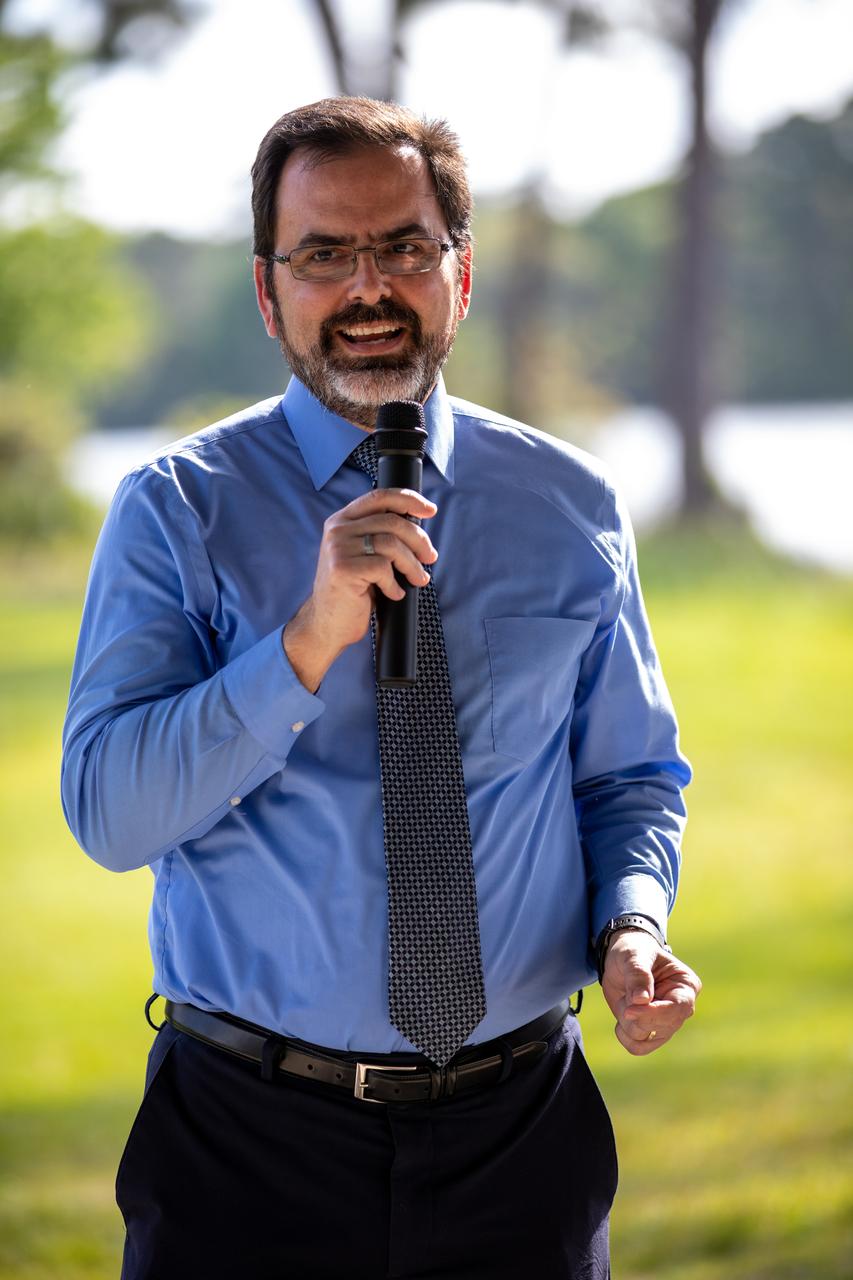
Ronnie Rodriguez, deputy director of Safety and Mission Assurance at NASA’s Kennedy Space Center in Florida, speaks to Kennedy employees during a Safety and Health Days celebration on March 5, 2020. Taking place March 2 through March 6, Safety and Health Days provides Kennedy employees with a variety of presentations to attend – all of which focus on how to maintain a safe and healthy workforce. The celebration on March 5 took place at the spaceport’s KARS Park II and was open for all employees to attend.
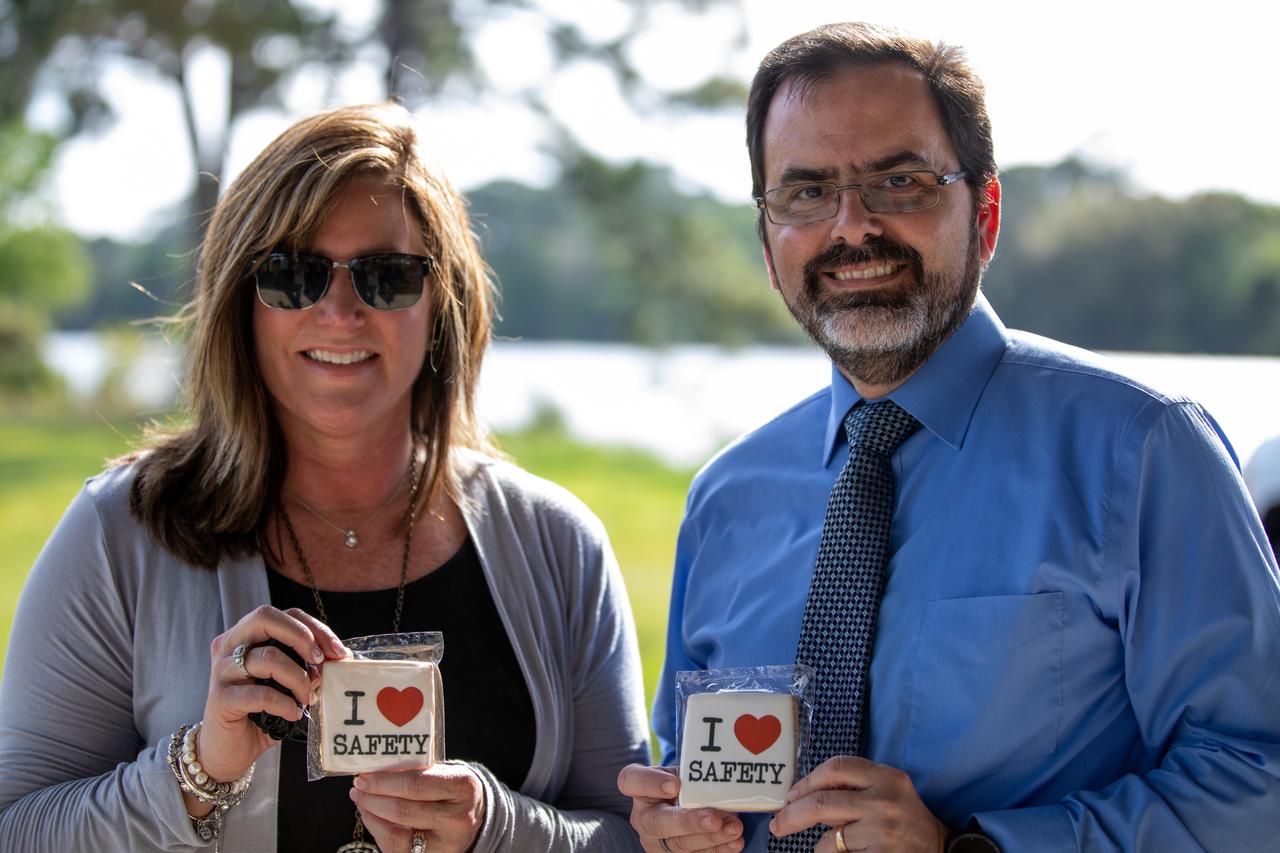
Jennifer Kunz, left, director, and Ronnie Rodriguez, deputy director of Safety and Mission Assurance at NASA’s Kennedy Space Center in Florida, are photographed at a Safety and Health Days celebration on March 5, 2020. Taking place March 2 through March 6, Safety and Health Days provides Kennedy employees with a variety of presentations to attend – all of which focus on how to maintain a safe and healthy workforce. The celebration on March 5 took place at the spaceport’s KARS Park II and was open for all employees to attend.

“I Love Safety” cookies are photographed at a Safety and Health Days celebration at Kennedy Space Center’s KARS Park II on March 5, 2020. Taking place March 2 through March 6, Safety and Health Days provides Kennedy employees with a variety of presentations to attend – all of which focus on how to maintain a safe and healthy workforce. The celebration on March 5 was open for all employees to attend.
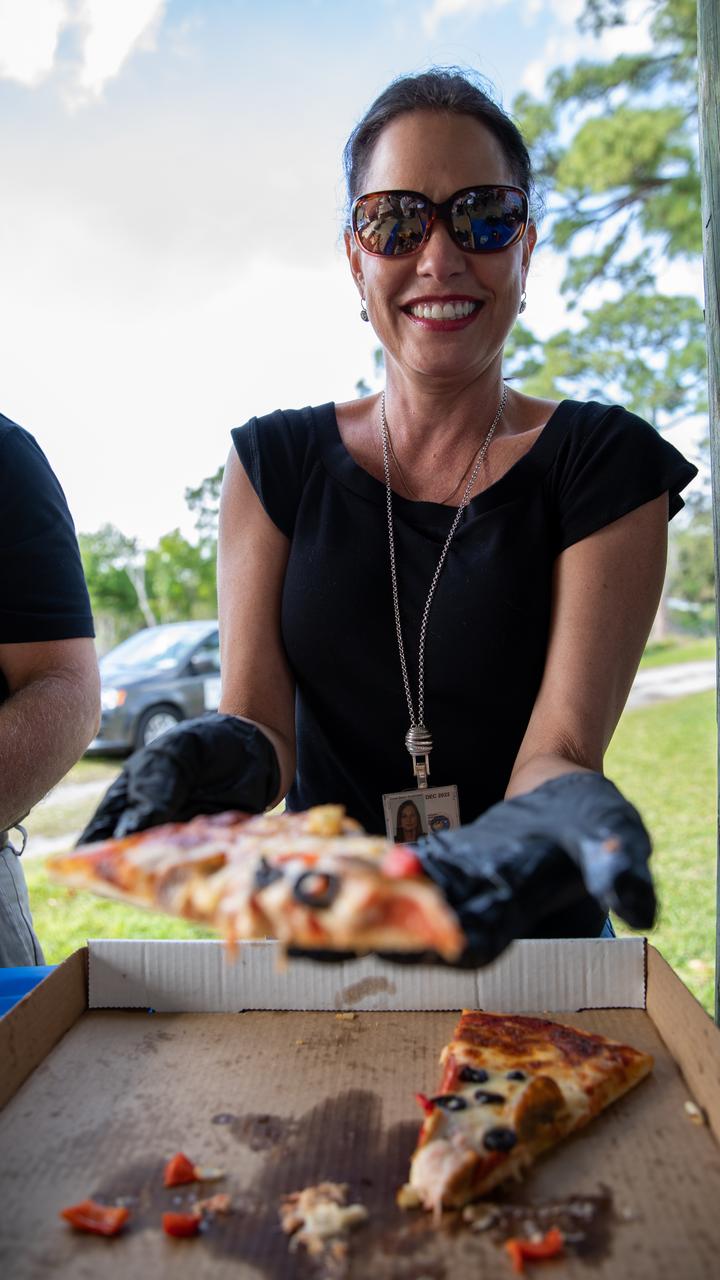
Maria Collura, deputy director of Spaceport Services and Integration at NASA’s Kennedy Space Center in Florida, is photographed serving pizza to Kennedy employees during a Safety and Health Days celebration at the spaceport’s KARS Park II on March 5, 2020. Taking place March 2 through March 6, Safety and Health Days provides Kennedy employees with a variety of presentations to attend – all of which focus on how to maintain a safe and healthy workforce.

Jennifer Kunz, director of Safety and Mission Assurance at NASA’s Kennedy Space Center in Florida, speaks to Kennedy employees during a Safety and Health Days celebration on March 5, 2020. Taking place March 2 through March 6, Safety and Health Days provides Kennedy employees with a variety of presentations to attend – all of which focus on how to maintain a safe and healthy workforce. The celebration on March 5 took place at the spaceport’s KARS Park II and was open for all employees to attend.
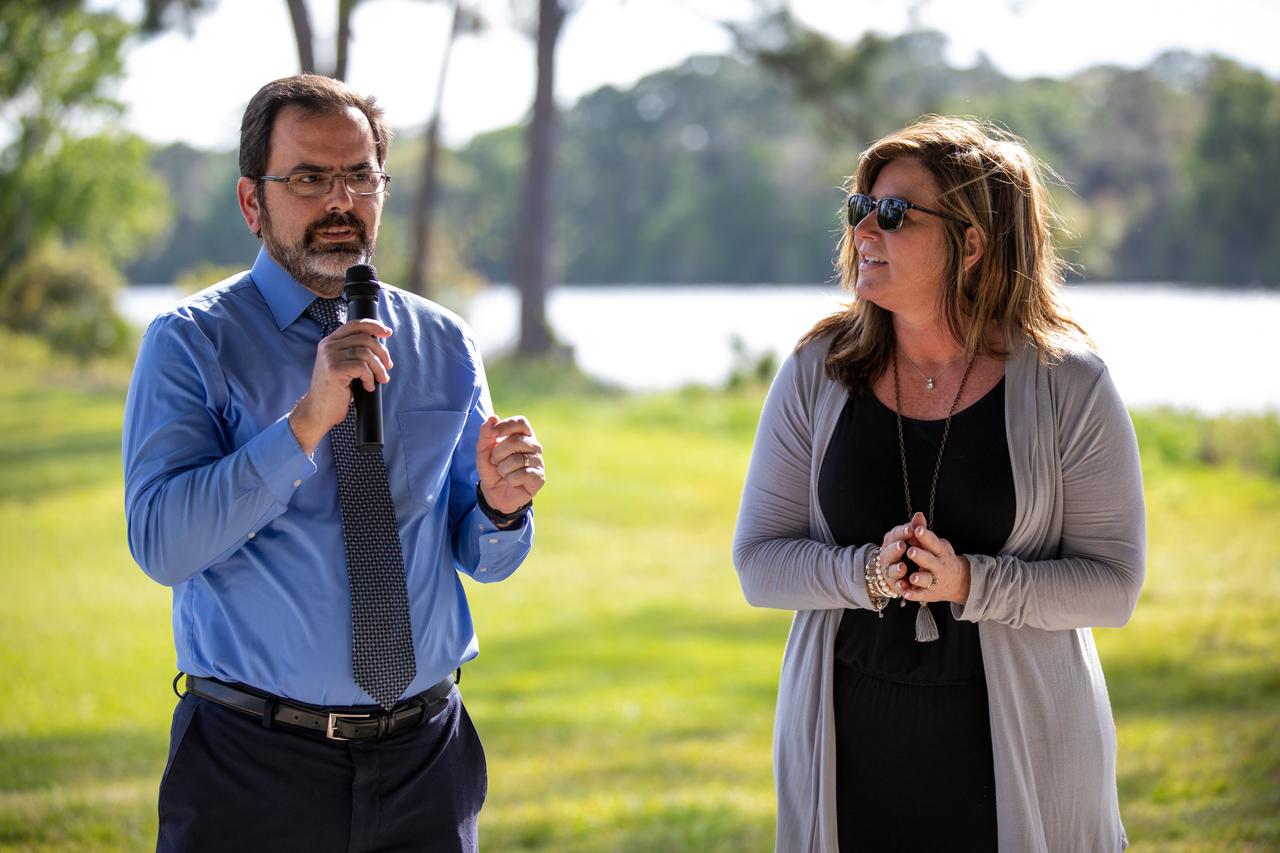
Deputy Director Ronnie Rodriguez, left, and Director Jennifer Kunz of Safety and Mission Assurance at NASA’s Kennedy Space Center in Florida, speak to Kennedy employees during a Safety and Health Days celebration on March 5, 2020. Taking place March 2 through March 6, Safety and Health Days provides Kennedy employees with a variety of presentations to attend – all of which focus on how to maintain a safe and healthy workforce. The celebration on March 5 took place at the spaceport’s KARS Park II and was open for all employees to attend.
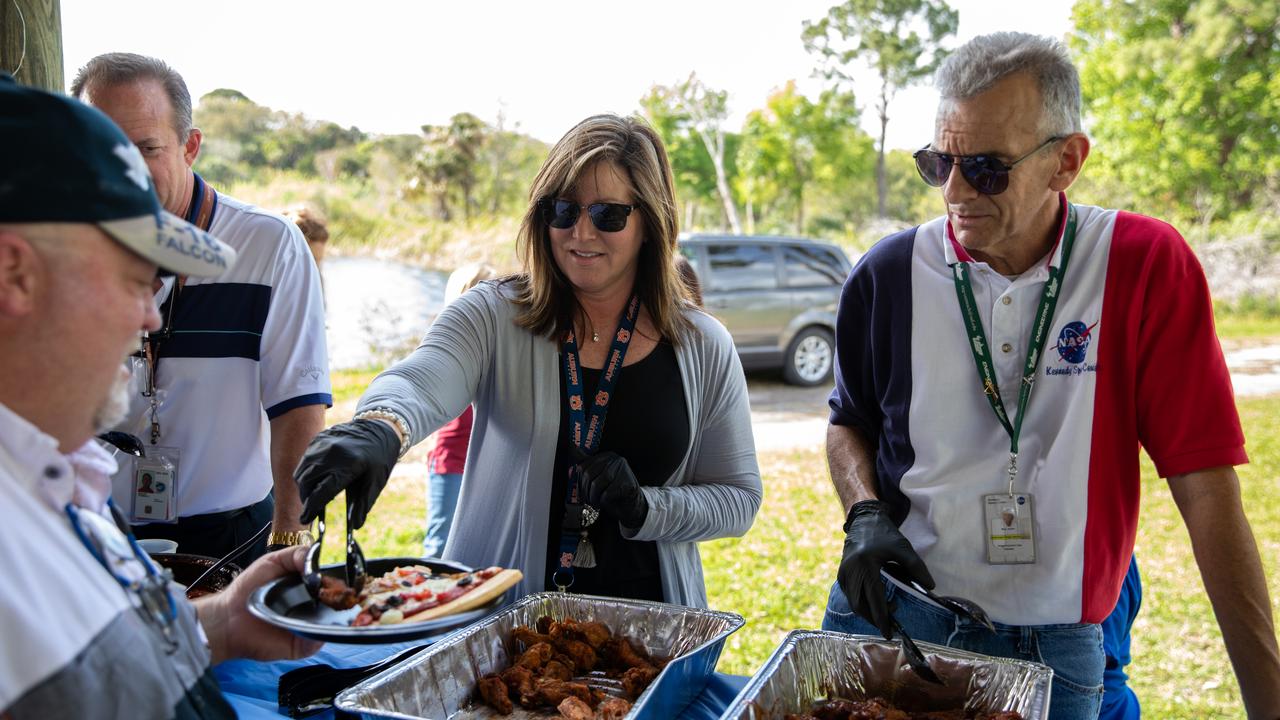
Jennifer Kunz, center, director of Safety and Mission Assurance, and Bob Mott, right, chief of the Commercial Systems Division in the Engineering Directorate at NASA’s Kennedy Space Center in Florida, serve food to Kennedy employees during a Safety and Health Days celebration on March 5, 2020. Taking place March 2 through March 6, Safety and Health Days provides Kennedy employees with a variety of presentations to attend – all of which focus on how to maintain a safe and healthy workforce. The celebration on March 5 took place at the Florida spaceport’s KARS Park II and was open for all employees to attend.
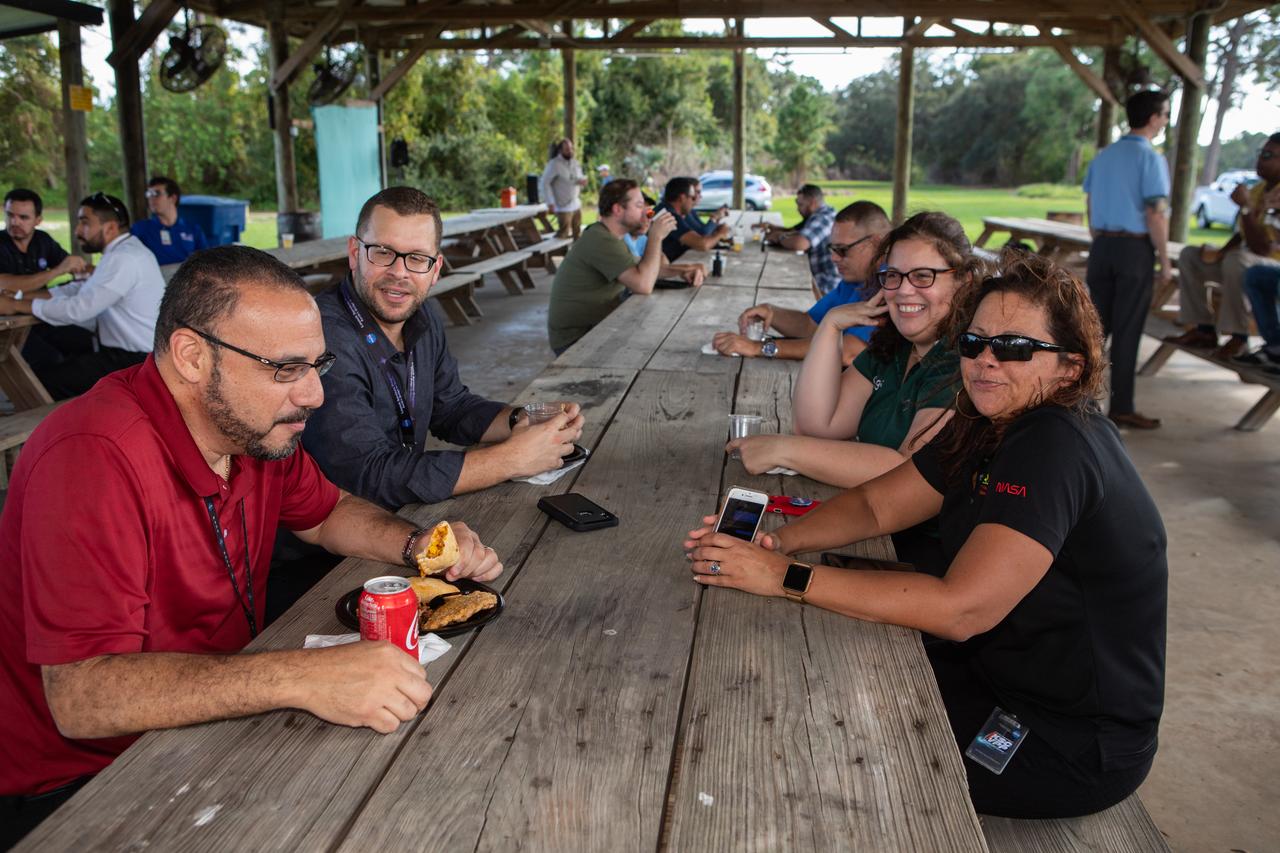
NASA Kennedy Space Center workers gather at KARS Park II to celebrate Hispanic Heritage Month on Oct. 17, 2019. The event was hosted by the center’s Hispanic Outreach and Leadership Alliance (HOLA) employee resource group for Hispanic Heritage Month. This year’s theme is “Hispanic Americans: A History of Serving our Nation.” HOLA’s initiatives include education and recruitment, professional networking and development, and community outreach and media support.

NASA Kennedy Space Center workers enjoy Hispanic food at KARS Park II during an event to celebrate Hispanic Heritage Month on Oct. 17, 2019. The event was hosted by the center’s Hispanic Outreach and Leadership Alliance (HOLA) employee resource group for Hispanic Heritage Month. This year’s theme is “Hispanic Americans: A History of Serving our Nation.” HOLA’s initiatives include education and recruitment, professional networking and development, and community outreach and media support.
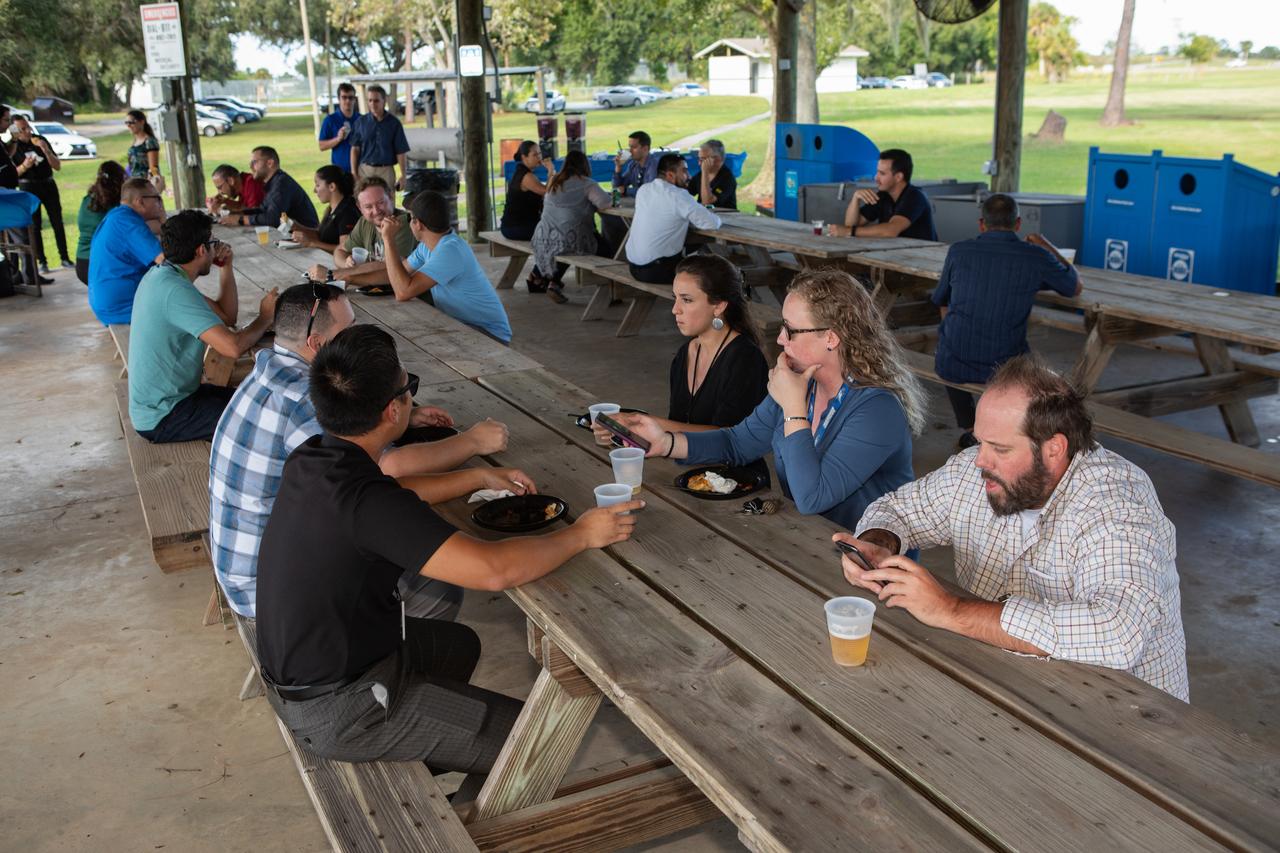
NASA Kennedy Space Center workers gather at KARS Park II to celebrate Hispanic Heritage Month on Oct. 17, 2019. The event was hosted by the center’s Hispanic Outreach and Leadership Alliance (HOLA) employee resource group for Hispanic Heritage Month. This year’s theme is “Hispanic Americans: A History of Serving our Nation.” HOLA’s initiatives include education and recruitment, professional networking and development, and community outreach and media support.
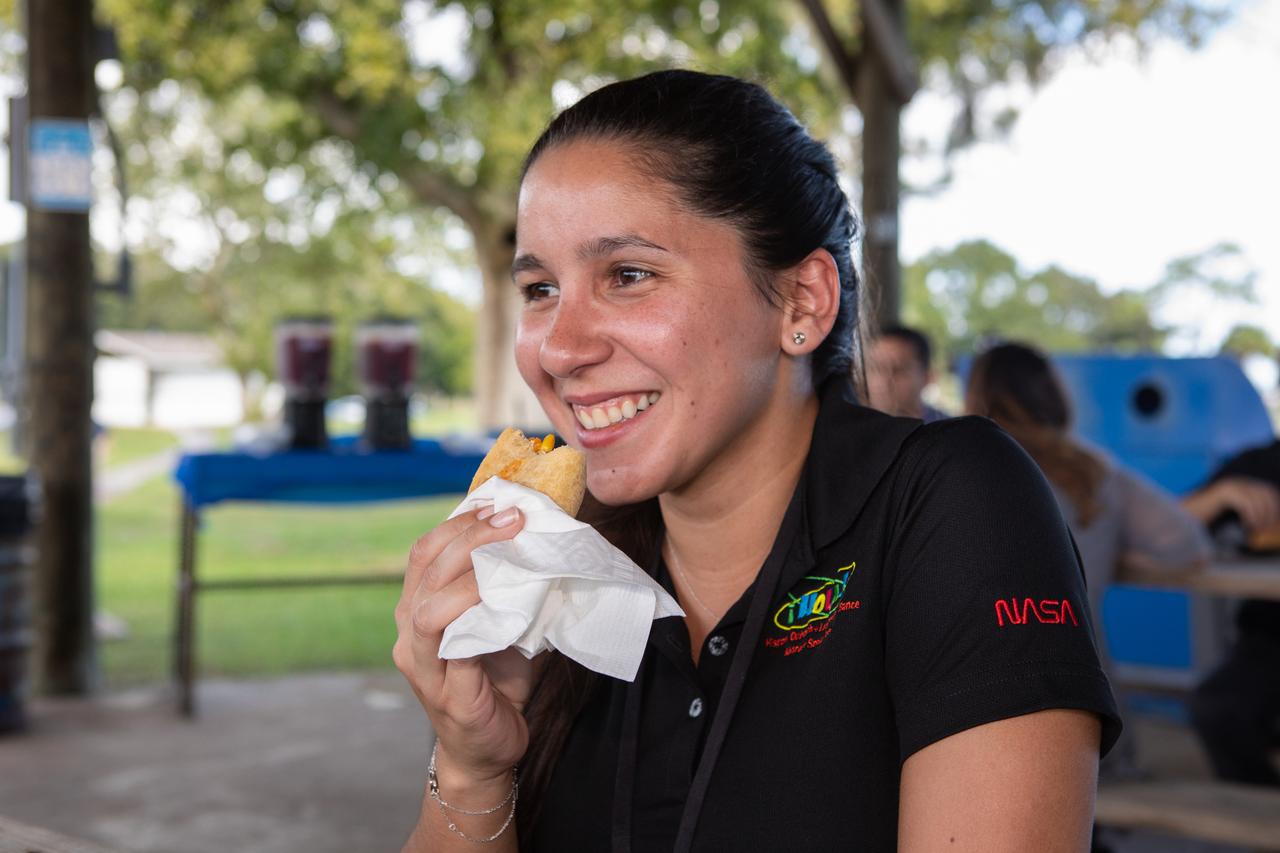
A NASA Kennedy Space Center workers enjoys a treat during a gathering at KARS Park II to celebrate Hispanic Heritage Month on Oct. 17, 2019. The event was hosted by the center’s Hispanic Outreach and Leadership Alliance (HOLA) employee resource group for Hispanic Heritage Month. This year’s theme is “Hispanic Americans: A History of Serving our Nation.” HOLA’s initiatives include education and recruitment, professional networking and development, and community outreach and media support.

NASA Kennedy Space Center workers enjoy Hispanic food at KARS Park II during an event to celebrate Hispanic Heritage Month on Oct. 17, 2019. The event was hosted by the center’s Hispanic Outreach and Leadership Alliance (HOLA) employee resource group for Hispanic Heritage Month. This year’s theme is “Hispanic Americans: A History of Serving our Nation.” HOLA’s initiatives include education and recruitment, professional networking and development, and community outreach and media support.
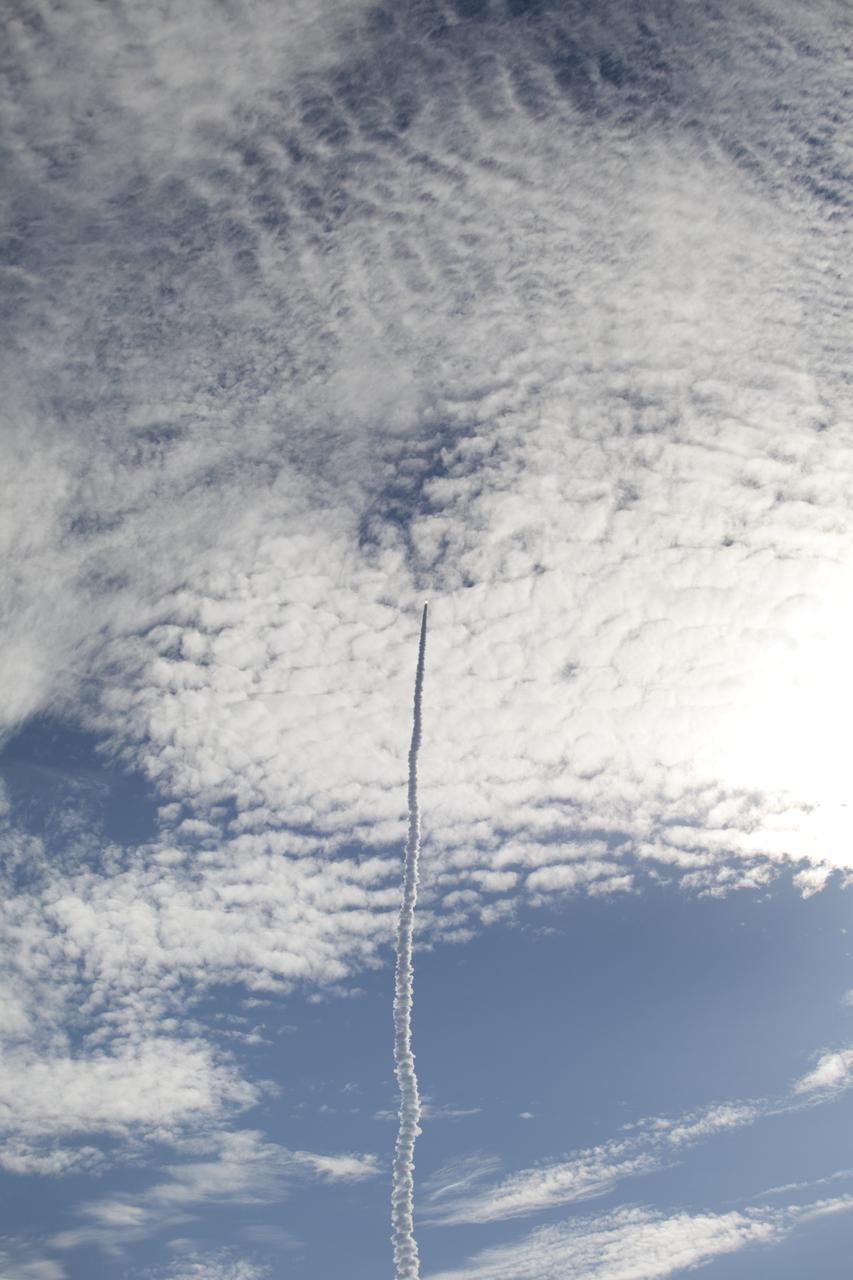
CAPE CANAVERAL, Fla. – Viewed from KARS Park 1 on Merritt Island in Florida, the United Launch Alliance Delta II Heavy rocket soars skyward after lifting off at 9:08 a.m. EDT Sept. 10 from Space Launch Complex 17B at Cape Canaveral Air Force Station. The Delta II is carrying NASA’s Gravity Recovery and Interior Laboratory (GRAIL) mission to the moon. A group of Tweetup participants viewed the launch from the park and will share their experiences with followers through the social networking site Twitter. GRAIL will fly twin spacecraft in tandem around the moon to precisely measure and map variations in the moon's gravitational field. The mission will provide the most accurate global gravity field to date for any planet, including Earth. This detailed information will reveal differences in the density of the moon's crust and mantle and will help answer fundamental questions about the moon's internal structure, thermal evolution, and history of collisions with asteroids. The aim is to map the moon's gravity field so completely that future moon vehicles can safely navigate anywhere on the moon’s surface. For more information, visit http://www.nasa.gov/grail. Photo credit: NASA/Frankie Martin
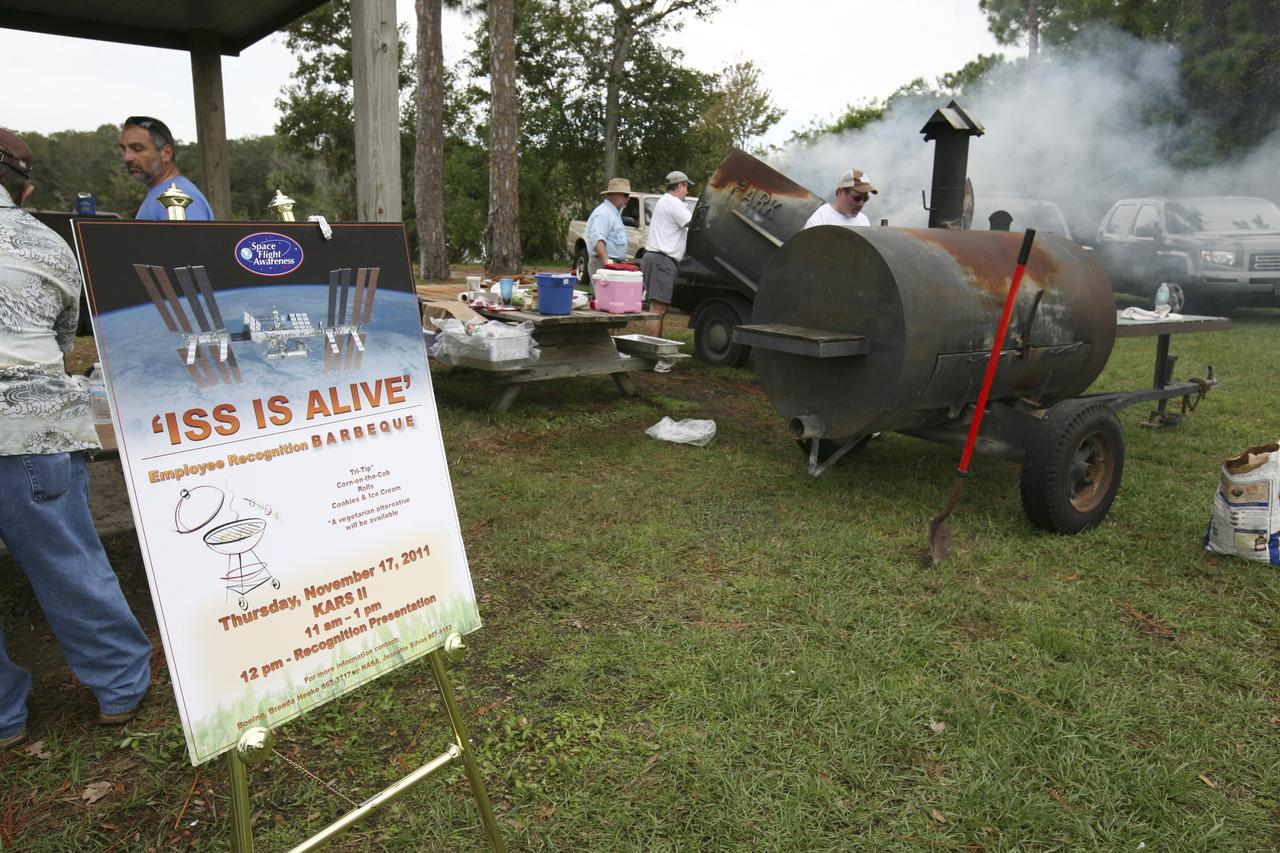
CAPE CANAVERAL, Fla. – International Space Station employees based at NASA's Kennedy Space Center in Florida participate in the "ISS Is Alive" employee recognition barbecue celebration at Kars Park II. NASA and The Boeing Co. hosted the celebration to thank the employees based at the Kennedy Space Center who were involved in building the largest, most complex international scientific project in history and the largest venture in space to date. The station has hosted human life, work and research in space for more than 10 years. Boeing is the prime contractor to NASA for the space station. In addition to designing and building all the major U.S. elements, Boeing also is responsible for ensuring the successful integration of new hardware and software -- including components from international partners -- as well as for providing sustaining engineering work. For more information on the International Space Station, visit http://www.nasa.gov/station. Photo credit: NASA/Amanda Diller
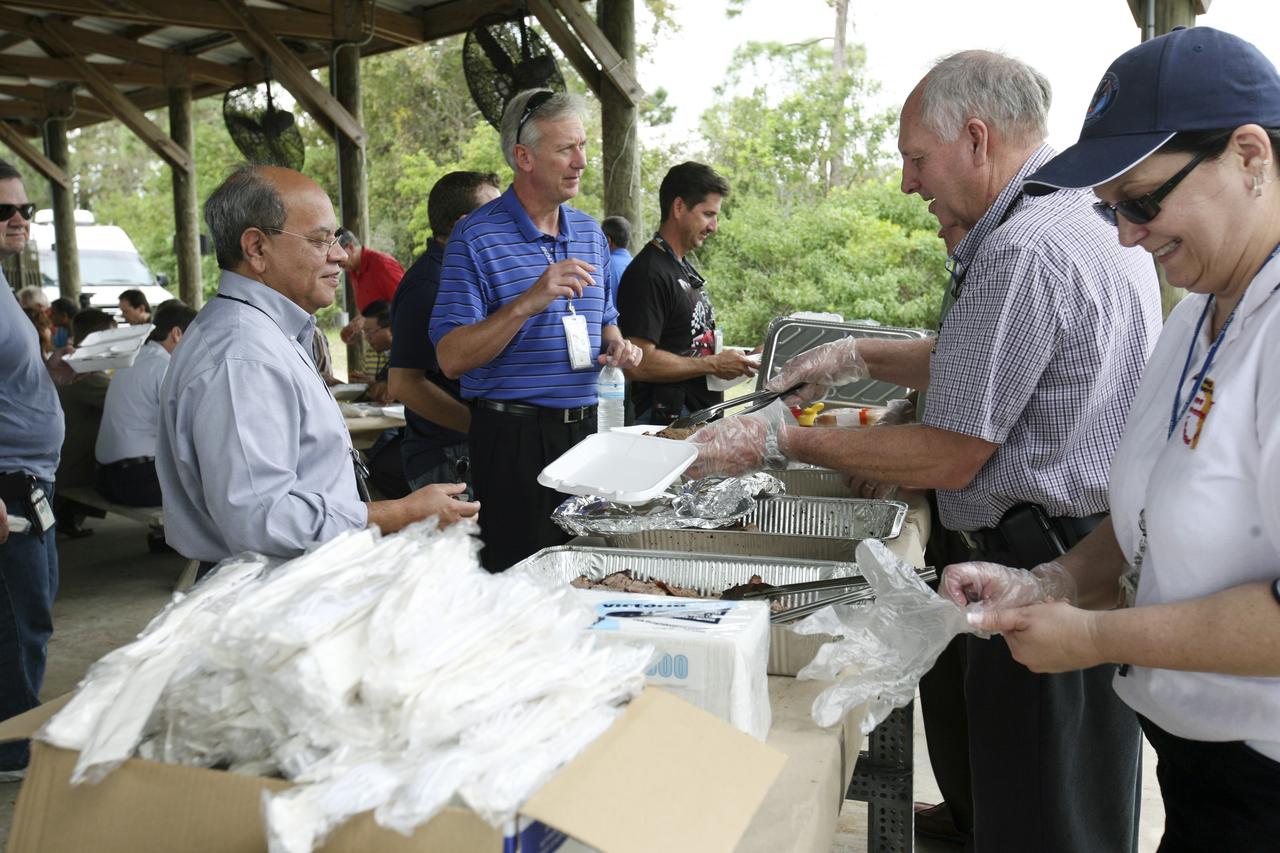
CAPE CANAVERAL, Fla. – International Space Station employees based at NASA's Kennedy Space Center in Florida participate in the "ISS Is Alive" employee recognition barbecue celebration at Kars Park II. The Boeing Co. and NASA hosted the celebration to thank the employees based at the Kennedy Space Center who were involved in building the largest, most complex international scientific project in history and the largest venture in space to date. The station has hosted human life, work and research in space for more than 10 years. Boeing is the prime contractor to NASA for the space station. In addition to designing and building all the major U.S. elements, Boeing also is responsible for ensuring the successful integration of new hardware and software -- including components from international partners -- as well as for providing sustaining engineering work. For more information on the International Space Station, visit http://www.nasa.gov/station. Photo credit: NASA/Amanda Diller
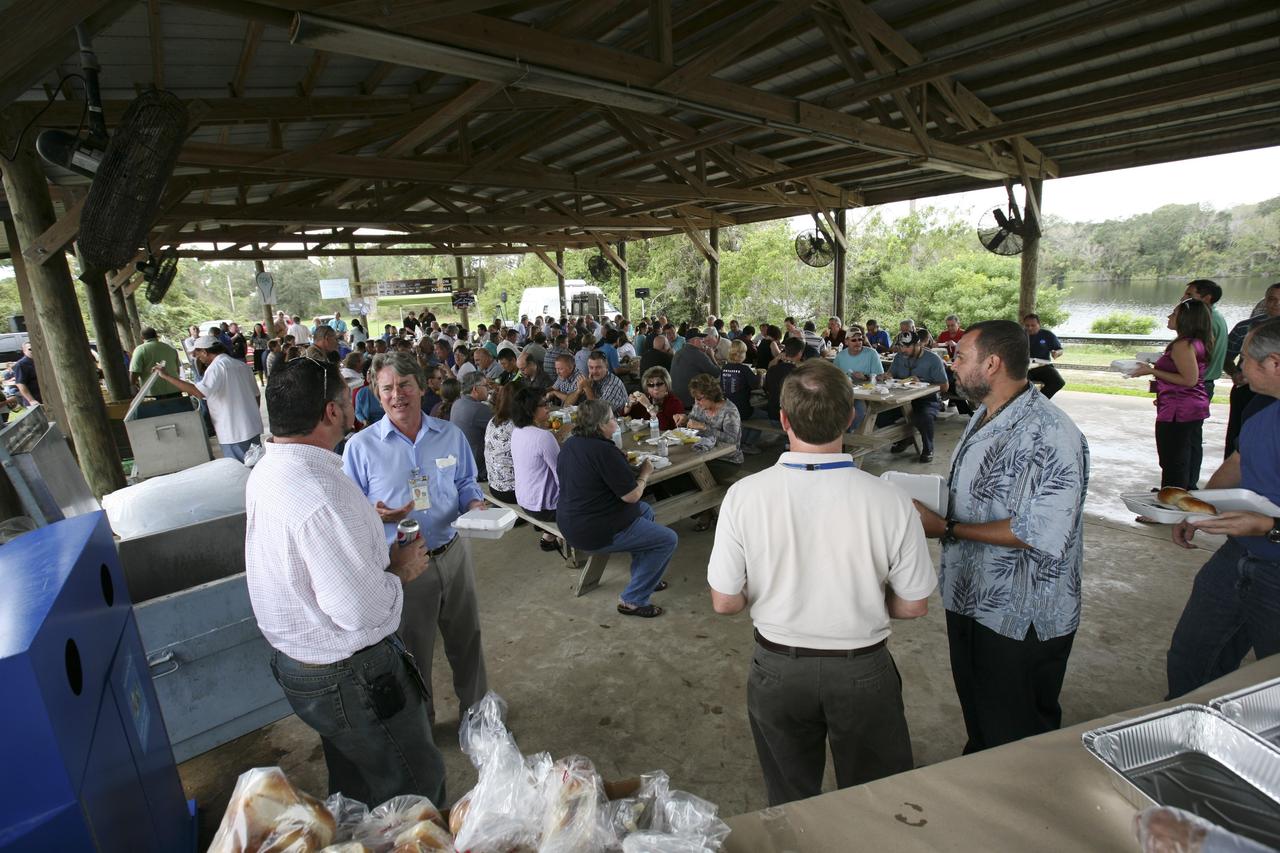
CAPE CANAVERAL, Fla. – International Space Station employees based at NASA's Kennedy Space Center in Florida participate in the "ISS Is Alive" employee recognition barbecue celebration at Kars Park II. The Boeing Co. and NASA hosted the celebration to thank the employees based at the Kennedy Space Center who were involved in building the largest, most complex international scientific project in history and the largest venture in space to date. The station has hosted human life, work and research in space for more than 10 years. Boeing is the prime contractor to NASA for the space station. In addition to designing and building all the major U.S. elements, Boeing also is responsible for ensuring the successful integration of new hardware and software -- including components from international partners -- as well as for providing sustaining engineering work. For more information on the International Space Station, visit http://www.nasa.gov/station. Photo credit: NASA/Amanda Diller
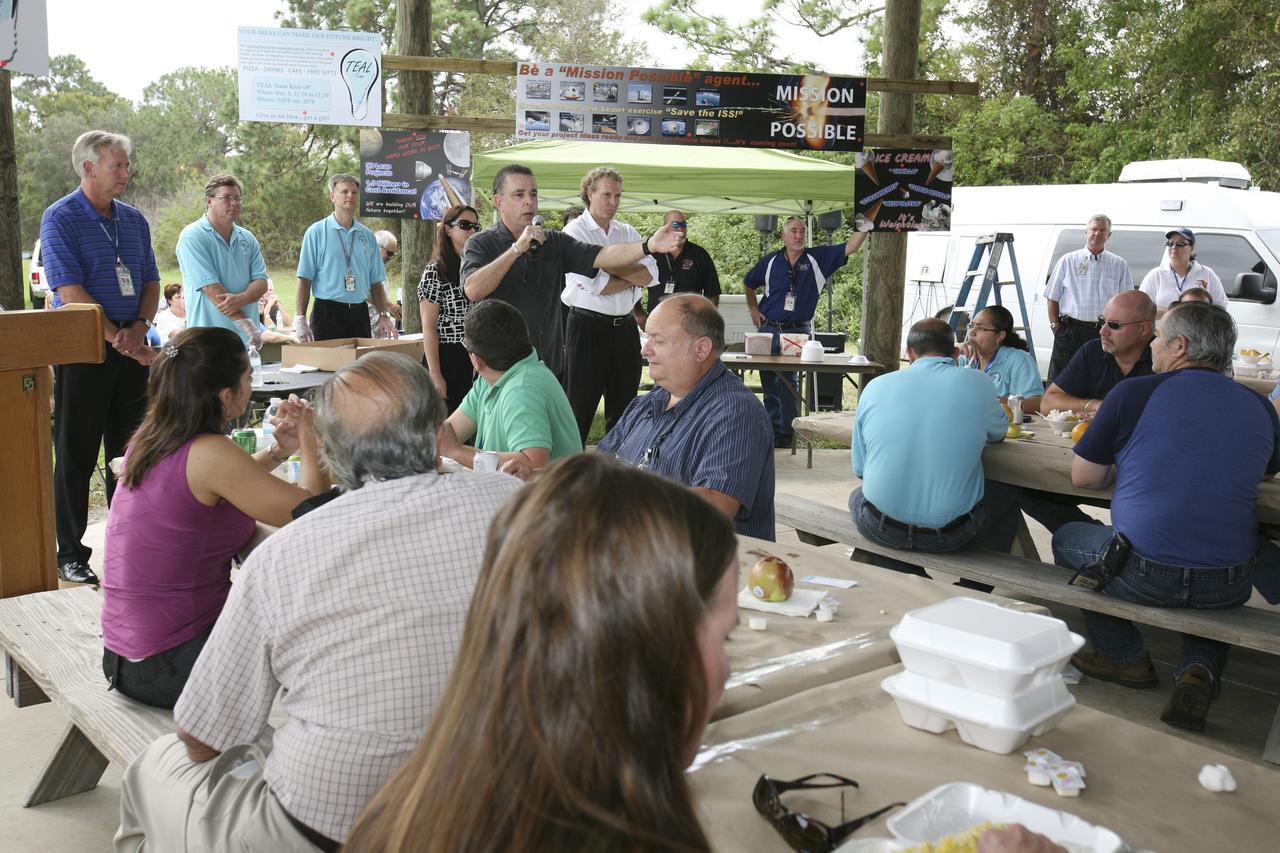
CAPE CANAVERAL, Fla. – Director Bill Dowdell talks to station employees based at NASA's Kennedy Space Center in Florida during the "ISS Is Alive" employee recognition barbecue celebration at Kars Park II. NASA and The Boeing Co. hosted the celebration to thank the employees based at the Kennedy Space Center who were involved in building the largest, most complex international scientific project in history and the largest venture in space to date. The station has hosted human life, work and research in space for more than 10 years. Boeing is the prime contractor to NASA for the space station. In addition to designing and building all the major U.S. elements, Boeing also is responsible for ensuring the successful integration of new hardware and software -- including components from international partners -- as well as for providing sustaining engineering work. For more information on the International Space Station, visit http://www.nasa.gov/station. Photo credit: NASA/Amanda Diller
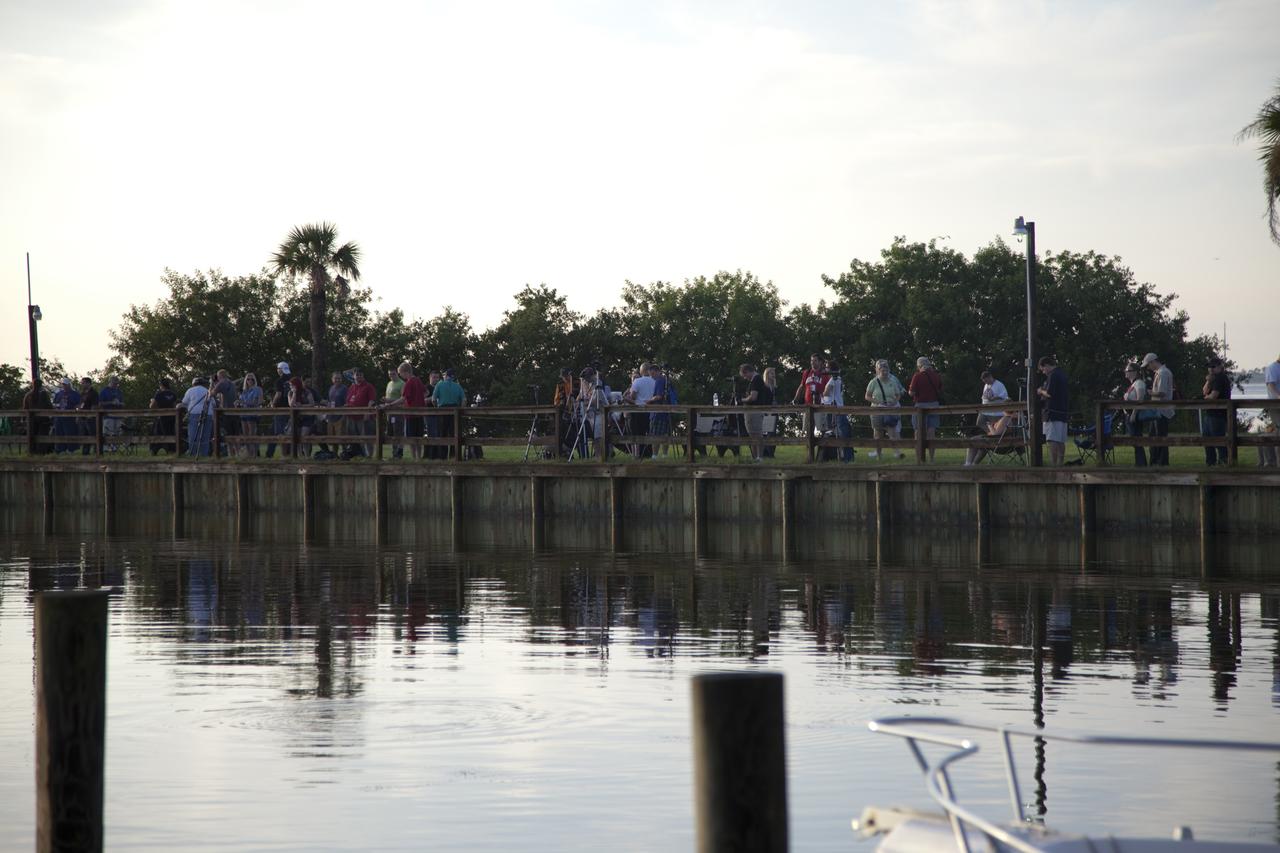
CAPE CANAVERAL, Fla. – At KARS Park 1 on Merritt Island in Florida, a group of Tweetup participants prepare to watch the United Launch Alliance Delta II Heavy rocket launch from Space Launch Complex 17B at Cape Canaveral Air Force Station carrying NASA’s Gravity Recovery and Interior Laboratory (GRAIL) mission to the moon. The tweeters will share their experiences with followers through the social networking site Twitter. GRAIL will fly twin spacecraft in tandem around the moon to precisely measure and map variations in the moon's gravitational field. The mission will provide the most accurate global gravity field to date for any planet, including Earth. This detailed information will reveal differences in the density of the moon's crust and mantle and will help answer fundamental questions about the moon's internal structure, thermal evolution, and history of collisions with asteroids. The aim is to map the moon's gravity field so completely that future moon vehicles can safely navigate anywhere on the moon’s surface. For more information, visit http://www.nasa.gov/grail. Photo credit: NASA/Frankie Martin
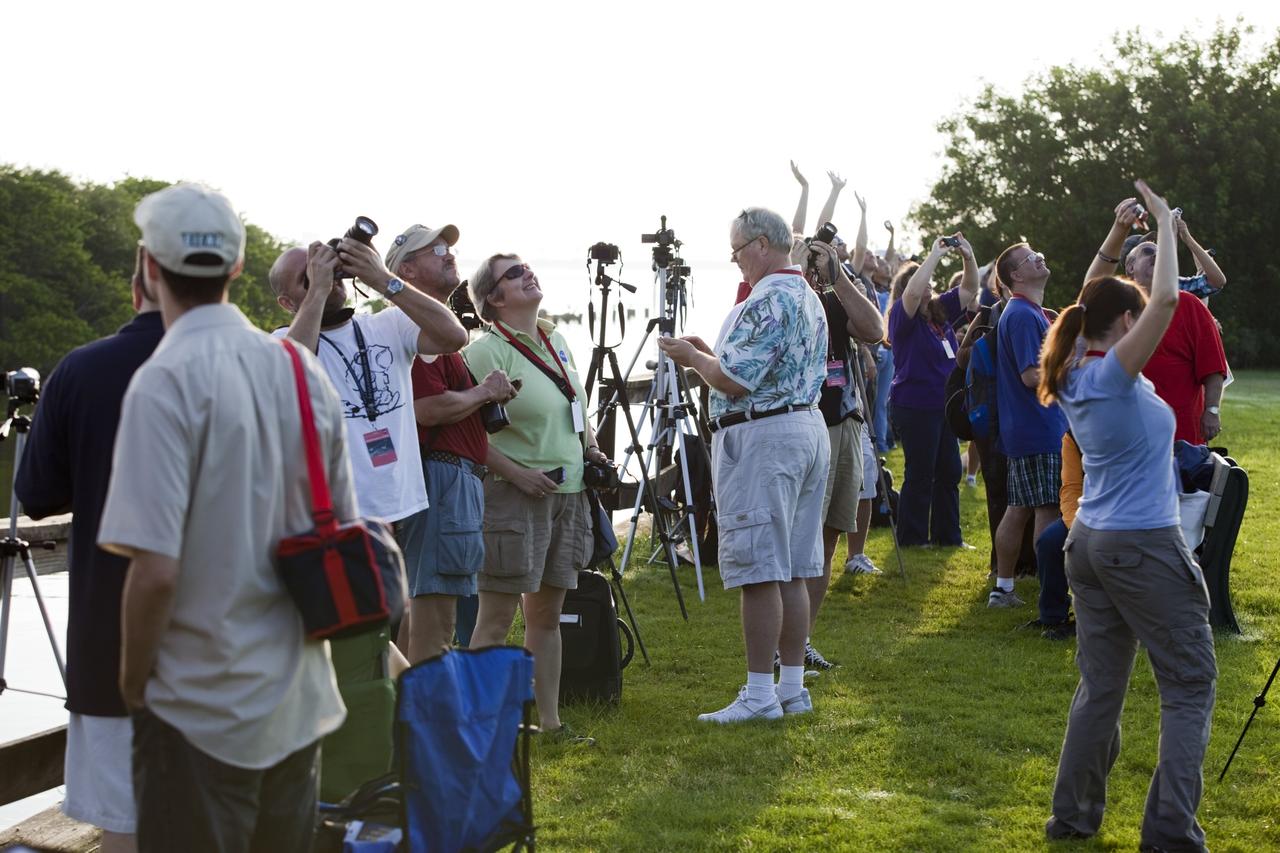
CAPE CANAVERAL, Fla. – At KARS Park 1 on Merritt Island in Florida, a group of Tweetup participants watch as a United Launch Alliance Delta II Heavy rocket lifts off at 9:08 a.m. EDT Sept. 10 from Space Launch Complex 17B at Cape Canaveral Air Force Station carrying NASA’s Gravity Recovery and Interior Laboratory (GRAIL) mission to the moon. The tweeters will share their experiences with followers through the social networking site Twitter. GRAIL will fly twin spacecraft in tandem around the moon to precisely measure and map variations in the moon's gravitational field. The mission will provide the most accurate global gravity field to date for any planet, including Earth. This detailed information will reveal differences in the density of the moon's crust and mantle and will help answer fundamental questions about the moon's internal structure, thermal evolution, and history of collisions with asteroids. The aim is to map the moon's gravity field so completely that future moon vehicles can safely navigate anywhere on the moon’s surface. For more information, visit http://www.nasa.gov/grail. Photo credit: NASA/Frankie Martin
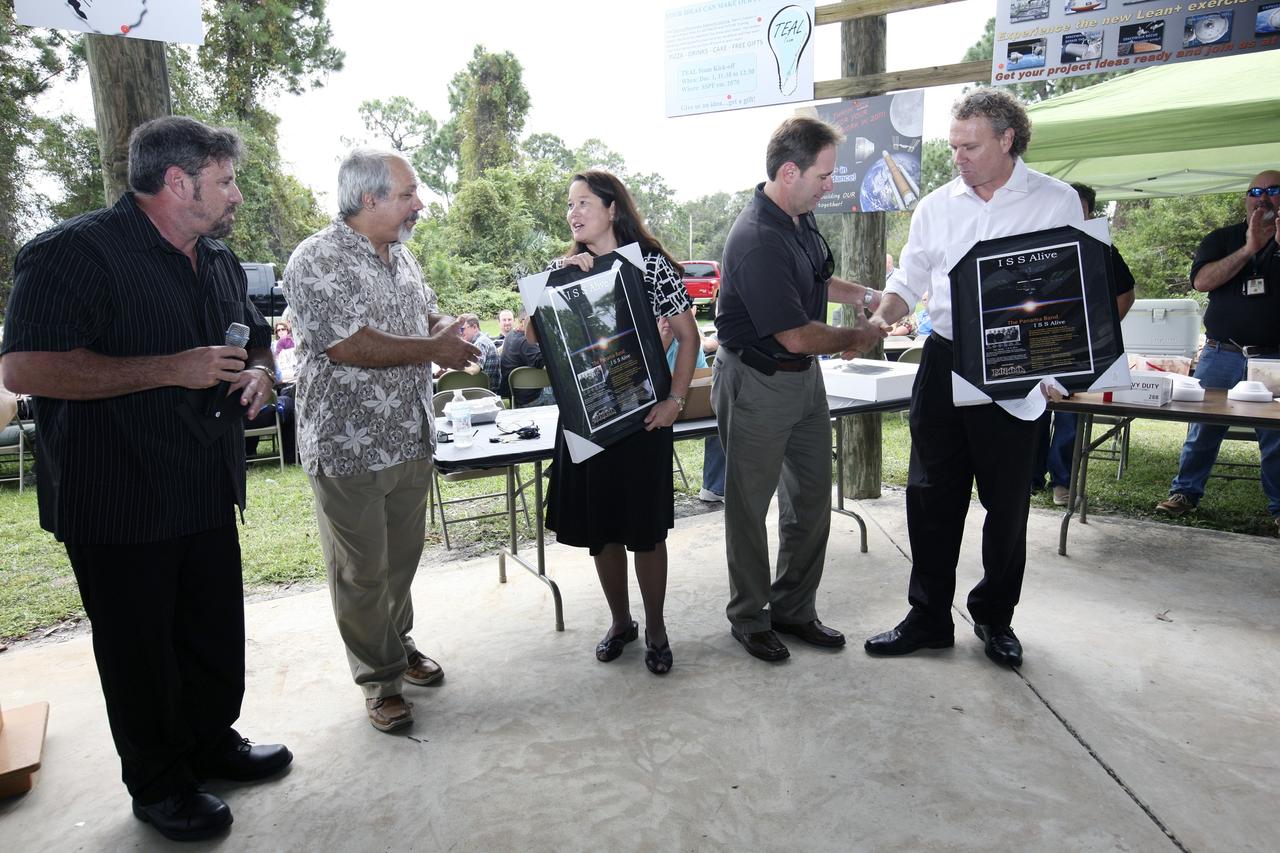
CAPE CANAVERAL, Fla. – International Space Station Ground Processing and Research Project Office Director Josie Burnett, third from left, and Associate Director for Engineering and Technical Operations Russell Romanella, right, are presented plaques and CDs of the song “ISS Alive,” written and recorded by the Panama Band, during the "ISS Is Alive" employee recognition barbecue celebration at Kars Park II at NASA's Kennedy Space Center in Florida. From left are also band members Lew Ingelido, who composed the song, Tom Hadoulias and Norm Tokarz. NASA and The Boeing Co. hosted the celebration to thank the employees based at the Kennedy Space Center who were involved in building the largest, most complex international scientific project in history and the largest venture in space to date. The station has hosted human life, work and research in space for more than 10 years. Boeing is the prime contractor to NASA for the space station. In addition to designing and building all the major U.S. elements, Boeing also is responsible for ensuring the successful integration of new hardware and software -- including components from international partners -- as well as for providing sustaining engineering work. For more information on the International Space Station, visit http://www.nasa.gov/station. Photo credit: NASA/Amanda Diller
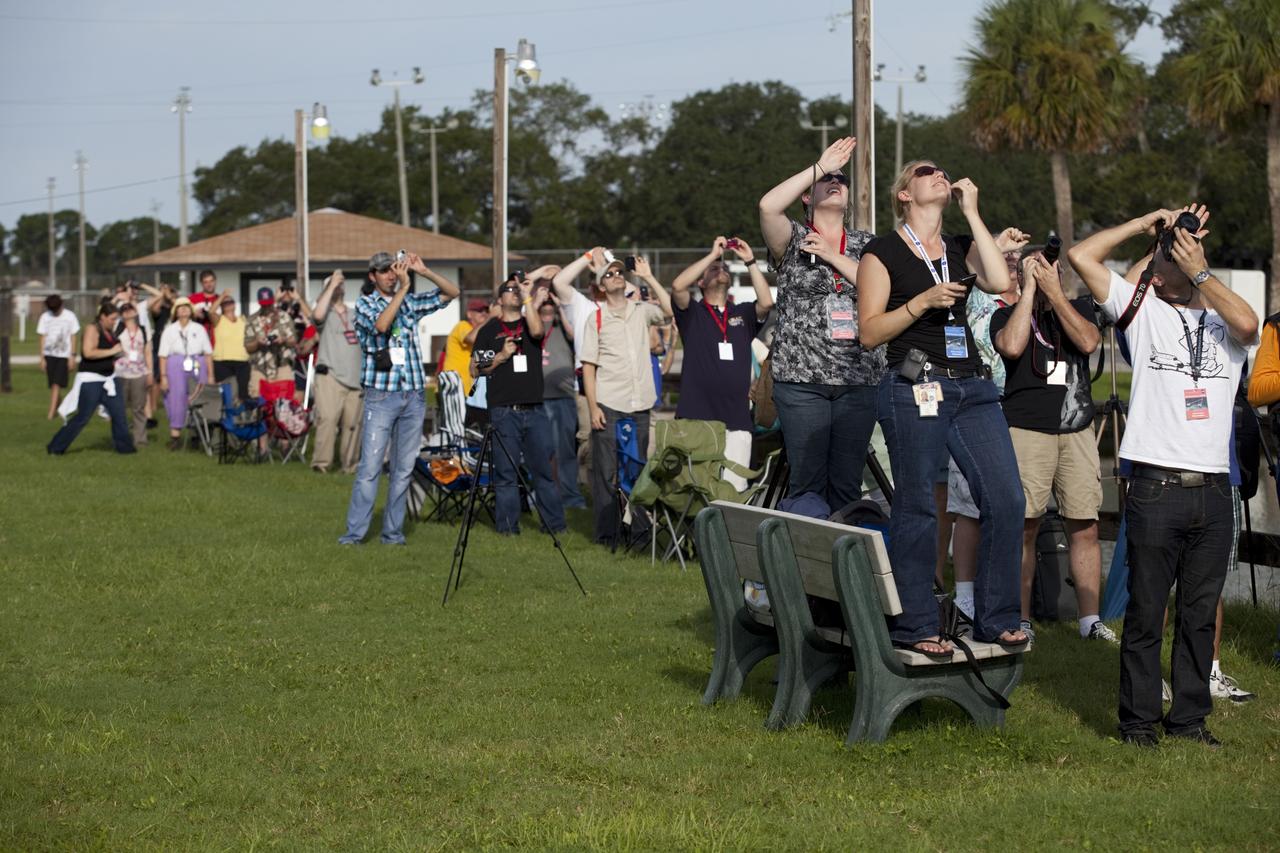
CAPE CANAVERAL, Fla. – At KARS Park 1 on Merritt Island in Florida, a group of Tweetup participants take pictures and watch excitedly as a United Launch Alliance Delta II Heavy rocket lifts off at 9:08 a.m. EDT Sept. 10 from Space Launch Complex 17B at Cape Canaveral Air Force Station carrying NASA’s Gravity Recovery and Interior Laboratory (GRAIL) mission to the moon. The tweeters will share their experiences with followers through the social networking site Twitter. GRAIL will fly twin spacecraft in tandem around the moon to precisely measure and map variations in the moon's gravitational field. The mission will provide the most accurate global gravity field to date for any planet, including Earth. This detailed information will reveal differences in the density of the moon's crust and mantle and will help answer fundamental questions about the moon's internal structure, thermal evolution, and history of collisions with asteroids. The aim is to map the moon's gravity field so completely that future moon vehicles can safely navigate anywhere on the moon’s surface. For more information, visit http://www.nasa.gov/grail. Photo credit: NASA/Frankie Martin
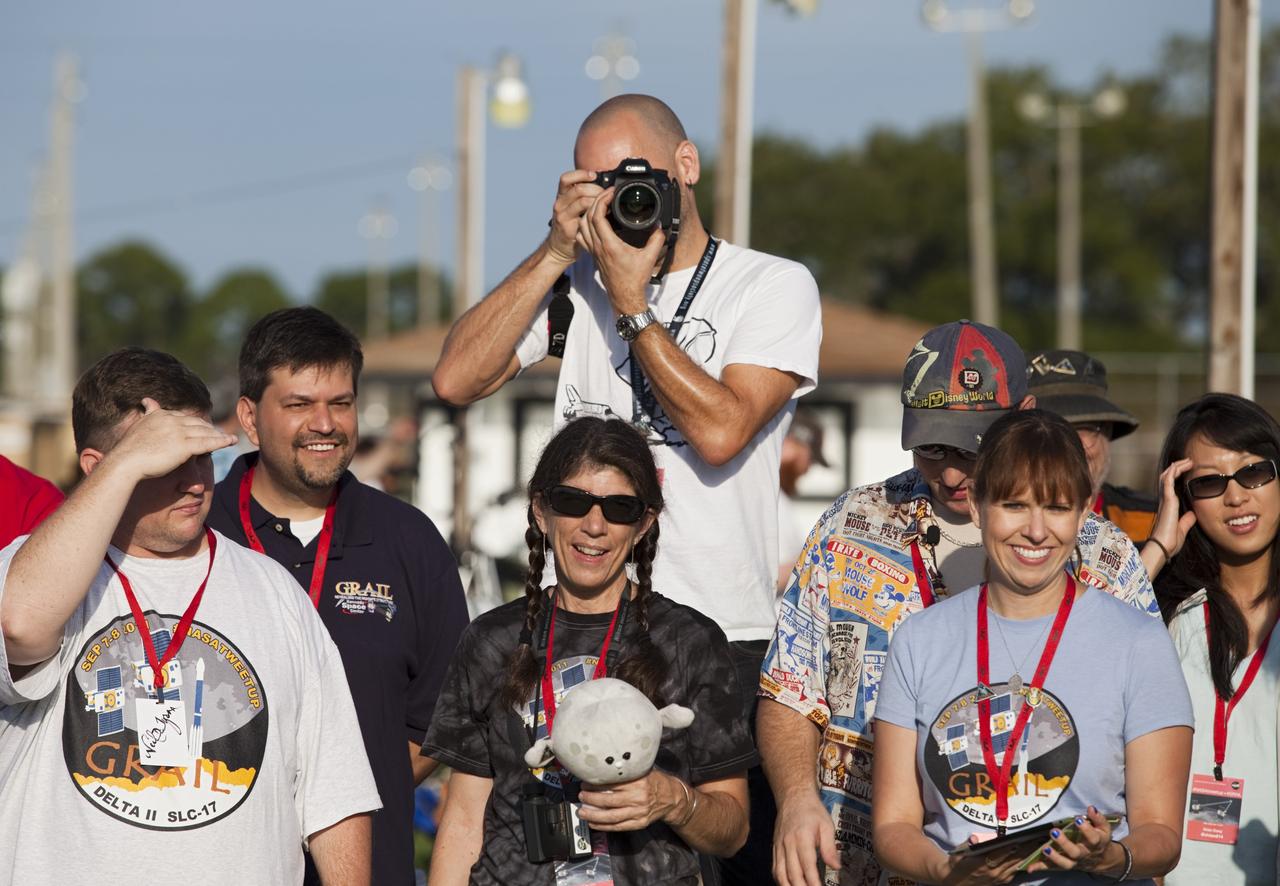
CAPE CANAVERAL, Fla. – At KARS Park 1 on Merritt Island in Florida, a group of Tweetup participants take pictures as watch as a United Launch Alliance Delta II Heavy rocket lifts off at 9:08 a.m. EDT Sept. 10 from Space Launch Complex 17B at Cape Canaveral Air Force Station carrying NASA’s Gravity Recovery and Interior Laboratory (GRAIL) mission to the moon. The tweeters will share their experiences with followers through the social networking site Twitter. GRAIL will fly twin spacecraft in tandem around the moon to precisely measure and map variations in the moon's gravitational field. The mission will provide the most accurate global gravity field to date for any planet, including Earth. This detailed information will reveal differences in the density of the moon's crust and mantle and will help answer fundamental questions about the moon's internal structure, thermal evolution, and history of collisions with asteroids. The aim is to map the moon's gravity field so completely that future moon vehicles can safely navigate anywhere on the moon’s surface. For more information, visit http://www.nasa.gov/grail. Photo credit: NASA/Frankie Martin
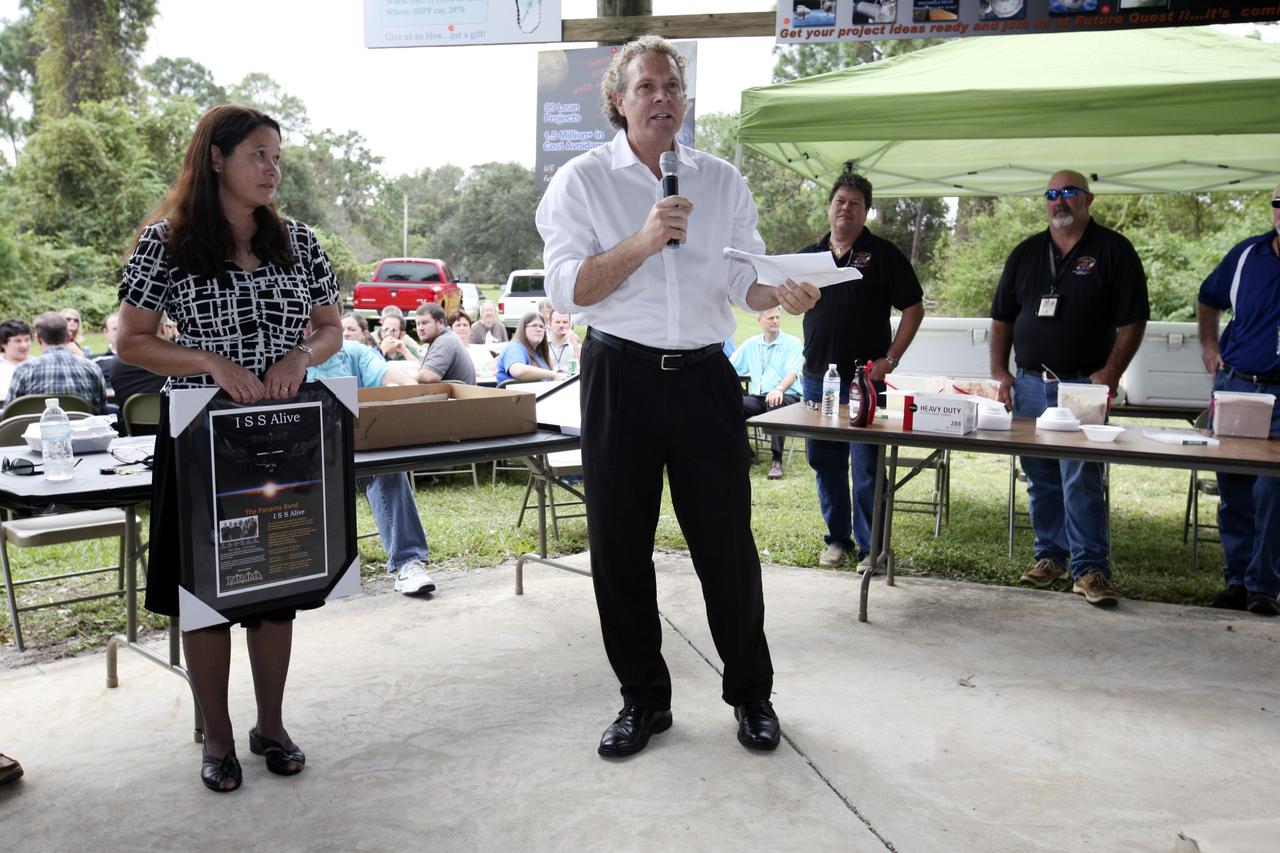
CAPE CANAVERAL, Fla. – Associate Director for Engineering and Technical Operations Russell Romanella talks to International Space Station employees based at NASA's Kennedy Space Center in Florida during the "ISS Is Alive" employee recognition barbecue celebration at Kars Park II while International Space Station Ground Processing and Research Project Office Director Josie Burnett, left, looks on. NASA and The Boeing Co. hosted the celebration to thank the employees based at the Kennedy Space Center who were involved in building the largest, most complex international scientific project in history and the largest venture in space to date. The station has hosted human life, work and research in space for more than 10 years. Boeing is the prime contractor to NASA for the space station. In addition to designing and building all the major U.S. elements, Boeing also is responsible for ensuring the successful integration of new hardware and software -- including components from international partners -- as well as for providing sustaining engineering work. For more information on the International Space Station, visit http://www.nasa.gov/station. Photo credit: NASA/Amanda Diller

CAPE CANAVERAL, Fla. – At KARS Park 1 on Merritt Island in Florida, a group of Tweetup participants take pictures and watch excitedly as a United Launch Alliance Delta II Heavy rocket lifts off at 9:08 a.m. EDT Sept. 10 from Space Launch Complex 17B at Cape Canaveral Air Force Station carrying NASA’s Gravity Recovery and Interior Laboratory (GRAIL) mission to the moon. The tweeters will share their experiences with followers through the social networking site Twitter. GRAIL will fly twin spacecraft in tandem around the moon to precisely measure and map variations in the moon's gravitational field. The mission will provide the most accurate global gravity field to date for any planet, including Earth. This detailed information will reveal differences in the density of the moon's crust and mantle and will help answer fundamental questions about the moon's internal structure, thermal evolution, and history of collisions with asteroids. The aim is to map the moon's gravity field so completely that future moon vehicles can safely navigate anywhere on the moon’s surface. For more information, visit http://www.nasa.gov/grail. Photo credit: NASA/Frankie Martin