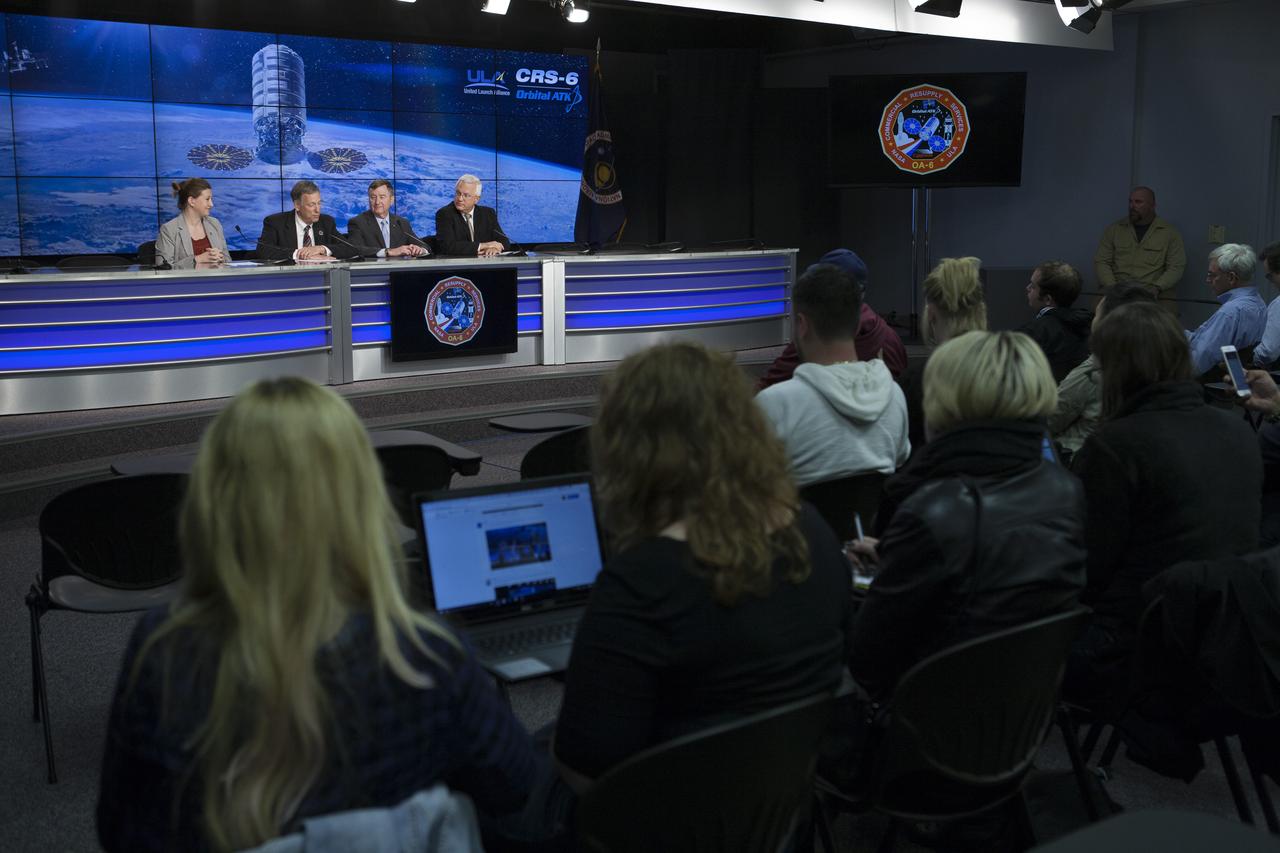
In the Press Site auditorium of NASA's Kennedy Space Center in Florida, NASA and industry leaders speak to members of the news media at a post-launch news conference following the liftoff of Orbital ATK CRS-6, a commercial resupply services mission to the International Space Station, or ISS. From left are: Kathryn Hambleton of NASA Communications; Kenneth Todd, NASA ISS Operations Integration manager; Frank Culbertson, president of Orbital ATK's Space System Group; Vern Thorp, United Space Alliance's program manager for NASA missions. The Cygnus spacecraft lifted off atop an Atlas V rocket from Space Launch Complex 41 at Cape Canaveral Air Force Station at 11:05 p.m. EDT.
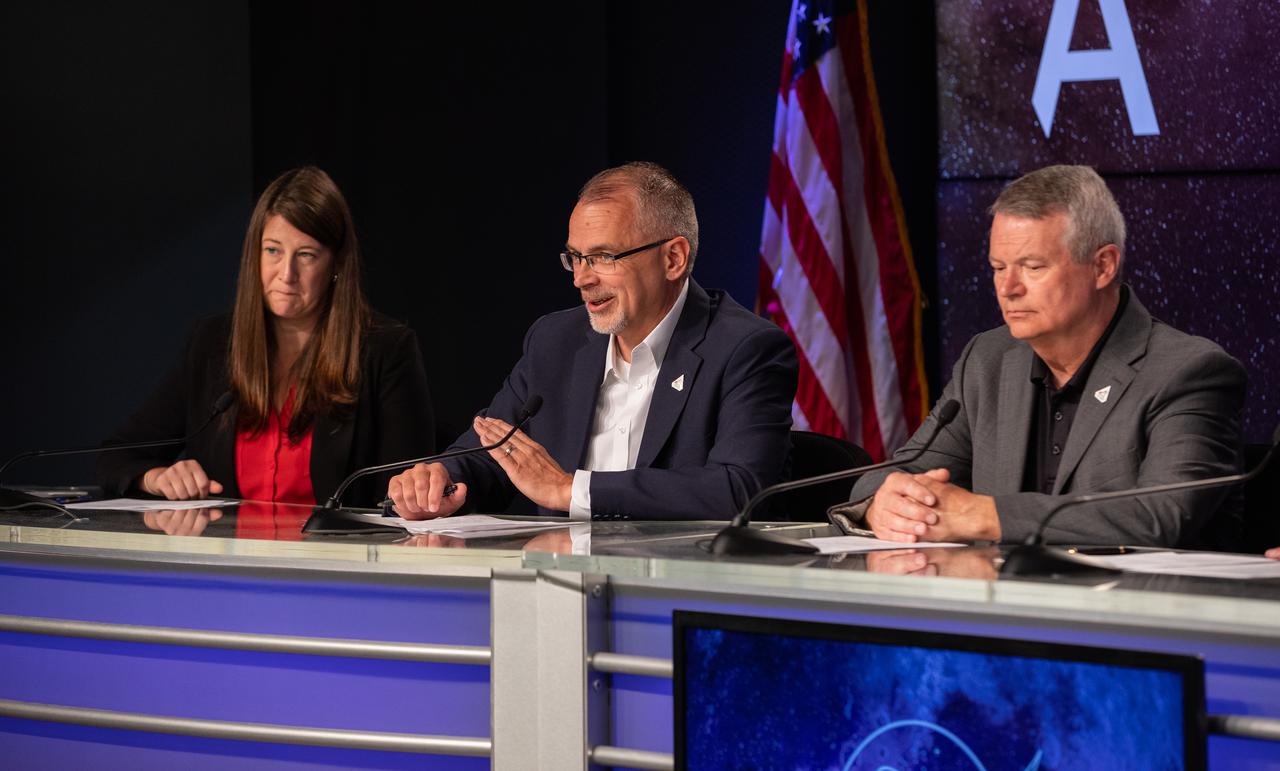
NASA holds a prelaunch media briefing on the role of industry in advancing human exploration on Aug. 26, 2022, at NASA’s Kennedy Space Center in Florida, as the agency prepares for launch of Artemis I scheduled for Aug. 29, at 8:33 a.m. EDT from Kennedy’s Launch Complex 39B. Participants, from left are Kathryn Hambleton, NASA Communications; Jim Free, association administrator, Exploration Systems Development Mission Directorate, NASA Headquarters; and Randy Lycans, vice president/general manager of NASA Enterprise Solutions, Jacobs. The first in a series of increasingly complex missions, Artemis I will provide a foundation for human deep space exploration and demonstrate our commitment and capability to extend human presence to the Moon and beyond. The primary goal of Artemis I is to thoroughly test the integrated systems before crewed missions by operating the spacecraft in a deep space environment, testing Orion’s heat shield, and recovering the crew module after reentry, descent, and splashdown.
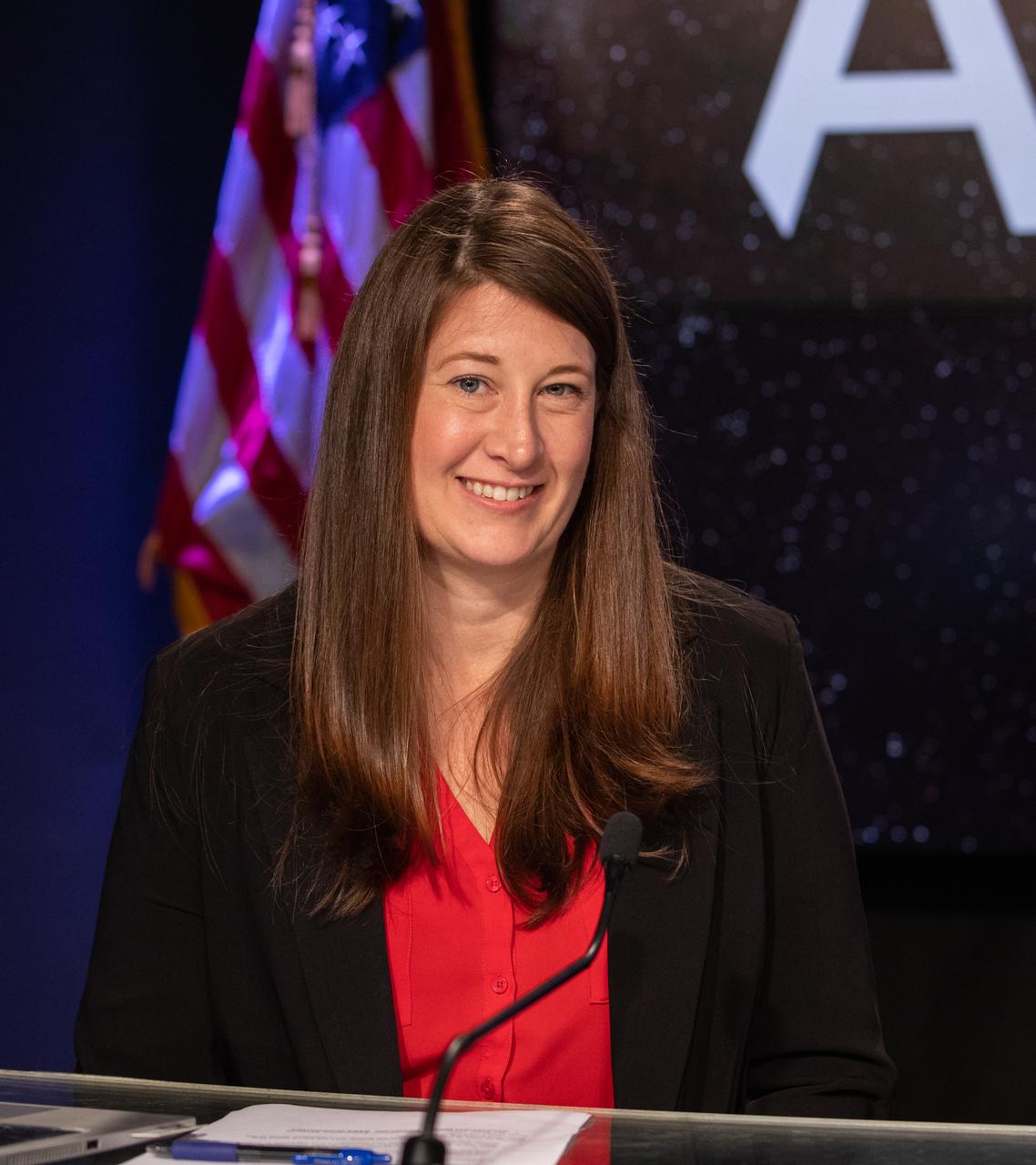
Kathryn Hambleton, NASA Communications, moderates a prelaunch briefing on the role of industry in advancing human exploration on Aug. 26, 2022, at NASA’s Kennedy Space Center in Florida, as the agency prepares for launch of Artemis I scheduled for Aug. 29, at 8:33 a.m. EDT from Kennedy’s Launch Complex 39B. The first in a series of increasingly complex missions, Artemis I will provide a foundation for human deep space exploration and demonstrate our commitment and capability to extend human presence to the Moon and beyond. The primary goal of Artemis I is to thoroughly test the integrated systems before crewed missions by operating the spacecraft in a deep space environment, testing Orion’s heat shield, and recovering the crew module after reentry, descent, and splashdown.

NASA holds a prelaunch media briefing on the role of industry in advancing human exploration on Aug. 26, 2022, at NASA’s Kennedy Space Center in Florida, as the agency prepares for launch of Artemis I scheduled for Aug. 29, at 8:33 a.m. EDT from Kennedy’s Launch Complex 39B. Participants, from left are Kathryn Hambleton, NASA Communications; Jim Free, association administrator, Exploration Systems Development Mission Directorate, NASA Headquarters; Randy Lycans, vice president/general manager of NASA Enterprise Solutions, Jacobs; Jeff Zotti, RS-25 program director, Aerojet Rocketdyne; Jennifer Boland-Masterson, director of operations, Michoud Assembly Facility, Boeing; Doug Hurley, senior director of business development, Northrop Grumman; Kelly DeFazio, director of Orion production, Lockheed Martin; and Ralf Zimmerman, head of Moon programs and Orion European Service Module, Airbus. The first in a series of increasingly complex missions, Artemis I will provide a foundation for human deep space exploration and demonstrate our commitment and capability to extend human presence to the Moon and beyond. The primary goal of Artemis I is to thoroughly test the integrated systems before crewed missions by operating the spacecraft in a deep space environment, testing Orion’s heat shield, and recovering the crew module after reentry, descent, and splashdown.
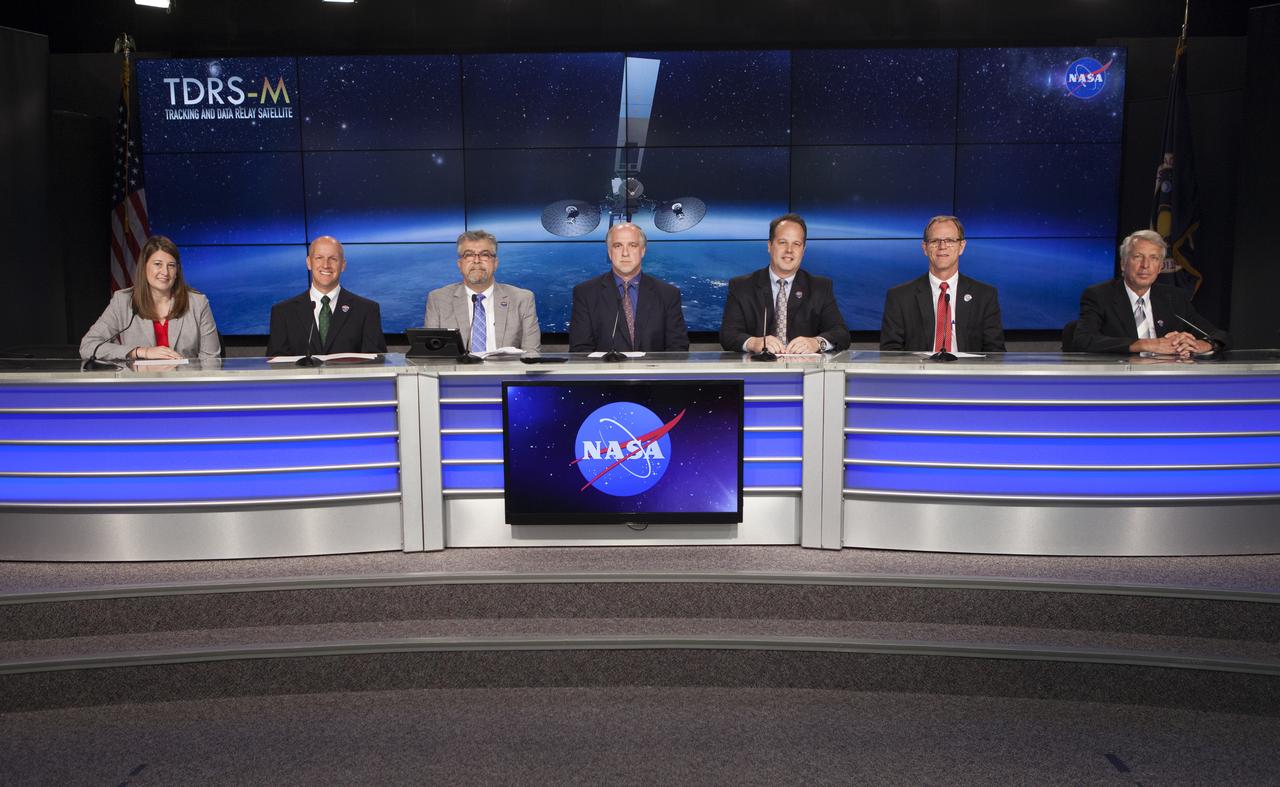
In the Kennedy Space Center's Press Site auditorium, NASA and industry leaders speak to members of the media at a prelaunch news conference for NASA's Tracking and Data Relay Satellite, TDRS-M. Participants from left are: Kathryn Hambleton of NASA Communications, Tim Dunn, launch director at NASA Kennedy, Badri Younes, deputy associate administrator for Space Communications and Navigation at NASA Headquarters in Washington, Dave Littmann, project manager for TDRS-M at NASA’s Goddard Space Flight Center in Greenbelt, Maryland, James Wilson III, Boeing program manager for NASA/Civil Space Programs, Scott Messer, United Launch Alliance program manager for NASA missions, and Clay Flinn, launch weather officer with the 45th Space Wing at Cape Canaveral Air Force Station. TDRS-M is the latest spacecraft destined for the agency's constellation of communications satellites that allows nearly continuous contact with orbiting spacecraft ranging from the International Space Station and Hubble Space Telescope to the array of scientific observatories. Liftoff atop a United Launch Alliance Atlas V rocket is scheduled to take place from Space Launch Complex 41 at Cape Canaveral Air Force Station at 8:03 a.m. EDT Aug. 18.

NASA holds a prelaunch media briefing on the role of industry in advancing human exploration on Aug. 26, 2022, at NASA’s Kennedy Space Center in Florida, as the agency prepares for launch of Artemis I scheduled for Aug. 29, at 8:33 a.m. EDT from Kennedy’s Launch Complex 39B. Participants, from left are Kathryn Hambleton, NASA Communications; Jim Free, association administrator, Exploration Systems Development Mission Directorate, NASA Headquarters; Randy Lycans, vice president/general manager of NASA Enterprise Solutions, Jacobs; Jeff Zotti, RS-25 program director, Aerojet Rocketdyne; Jennifer Boland-Masterson, director of operations, Michoud Assembly Facility, Boeing; Doug Hurley, senior director of business development, Northrop Grumman; Kelly DeFazio, director of Orion production, Lockheed Martin; and Ralf Zimmerman, head of Moon programs and Orion European Service Module, Airbus. The first in a series of increasingly complex missions, Artemis I will provide a foundation for human deep space exploration and demonstrate our commitment and capability to extend human presence to the Moon and beyond. The primary goal of Artemis I is to thoroughly test the integrated systems before crewed missions by operating the spacecraft in a deep space environment, testing Orion’s heat shield, and recovering the crew module after reentry, descent, and splashdown.