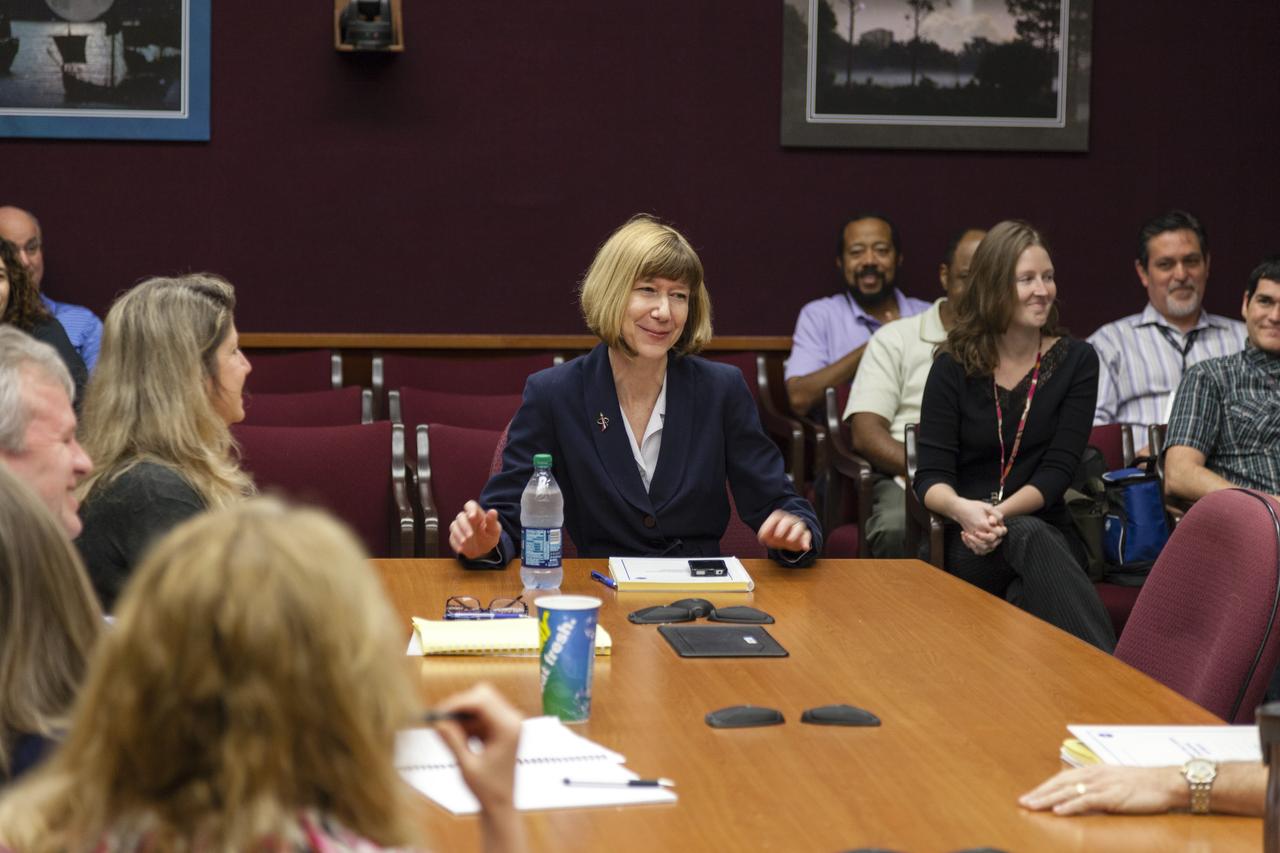
CAPE CANAVERAL, Fla. - Kathy Lueders, manager of NASA's Commercial Crew Program, listens to updates during a meeting with the staff at NASA's Kennedy Space Center in Florida. Photo credit: NASA/Frankie Martin
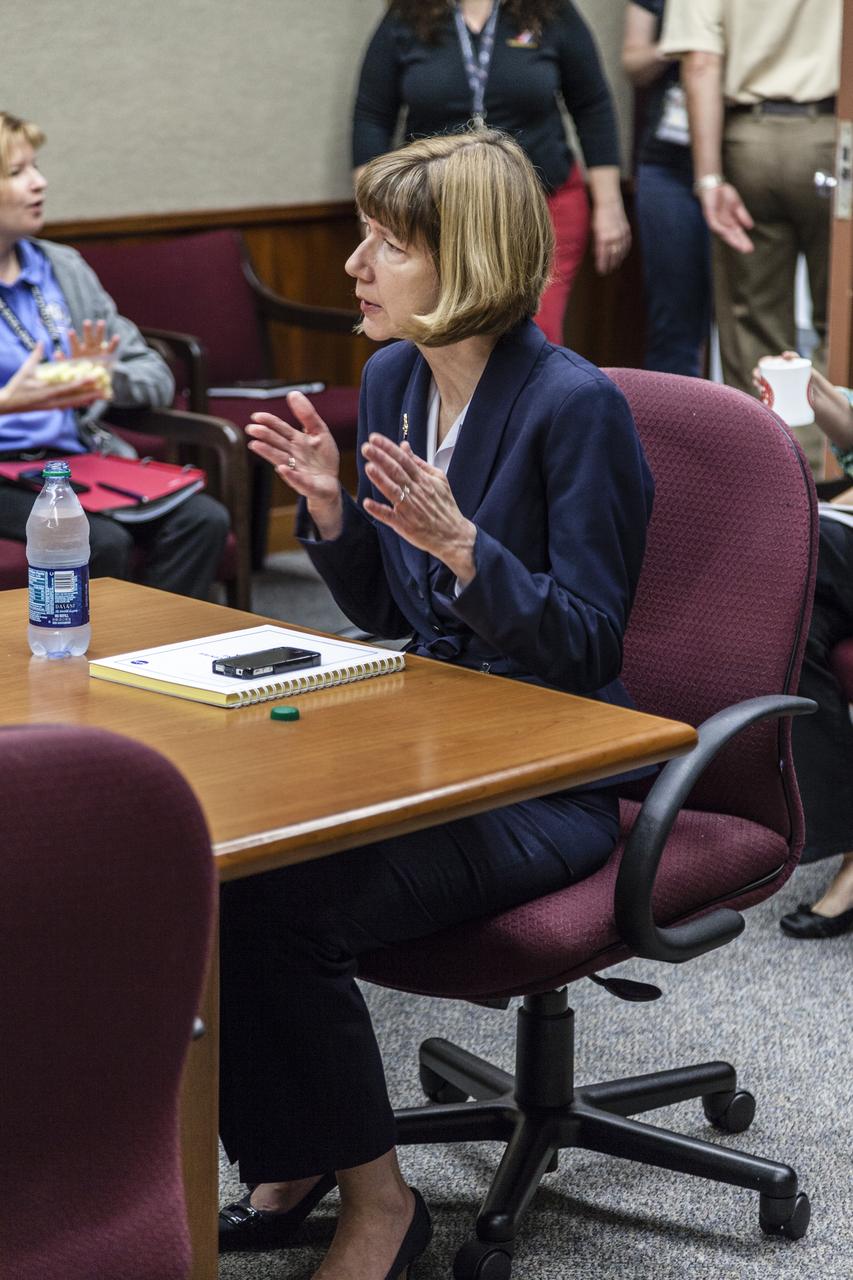
CAPE CANAVERAL, Fla. - Kathy Lueders, manager of NASA's Commercial Crew Program, discusses program progress during a meeting with the staff at NASA's Kennedy Space Center in Florida. Photo credit: NASA/Frankie Martin
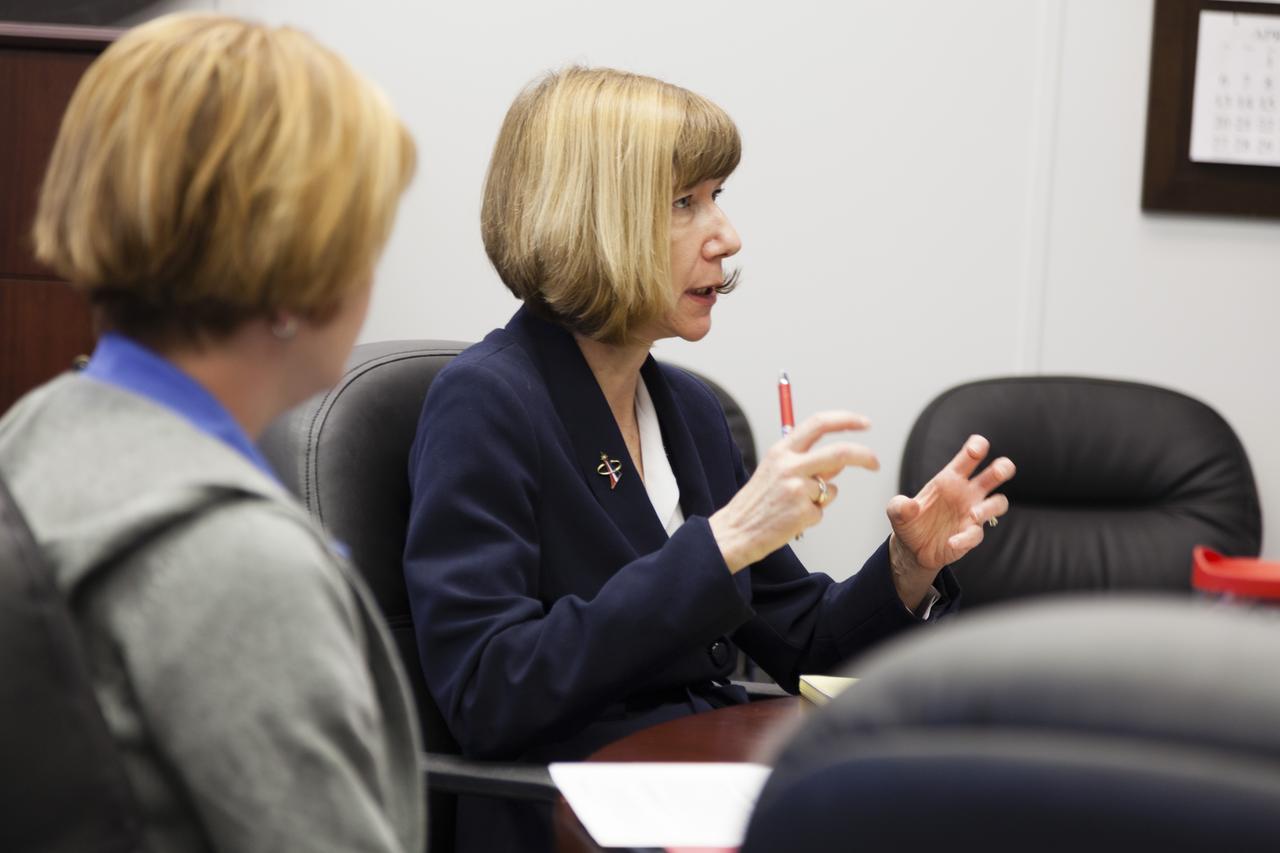
CAPE CANAVERAL, Fla. - Kathy Lueders, manager of NASA's Commercial Crew Program, listens to updates from program engineers at NASA's Kennedy Space Center in Florida. Photo credit: NASA/Frankie Martin
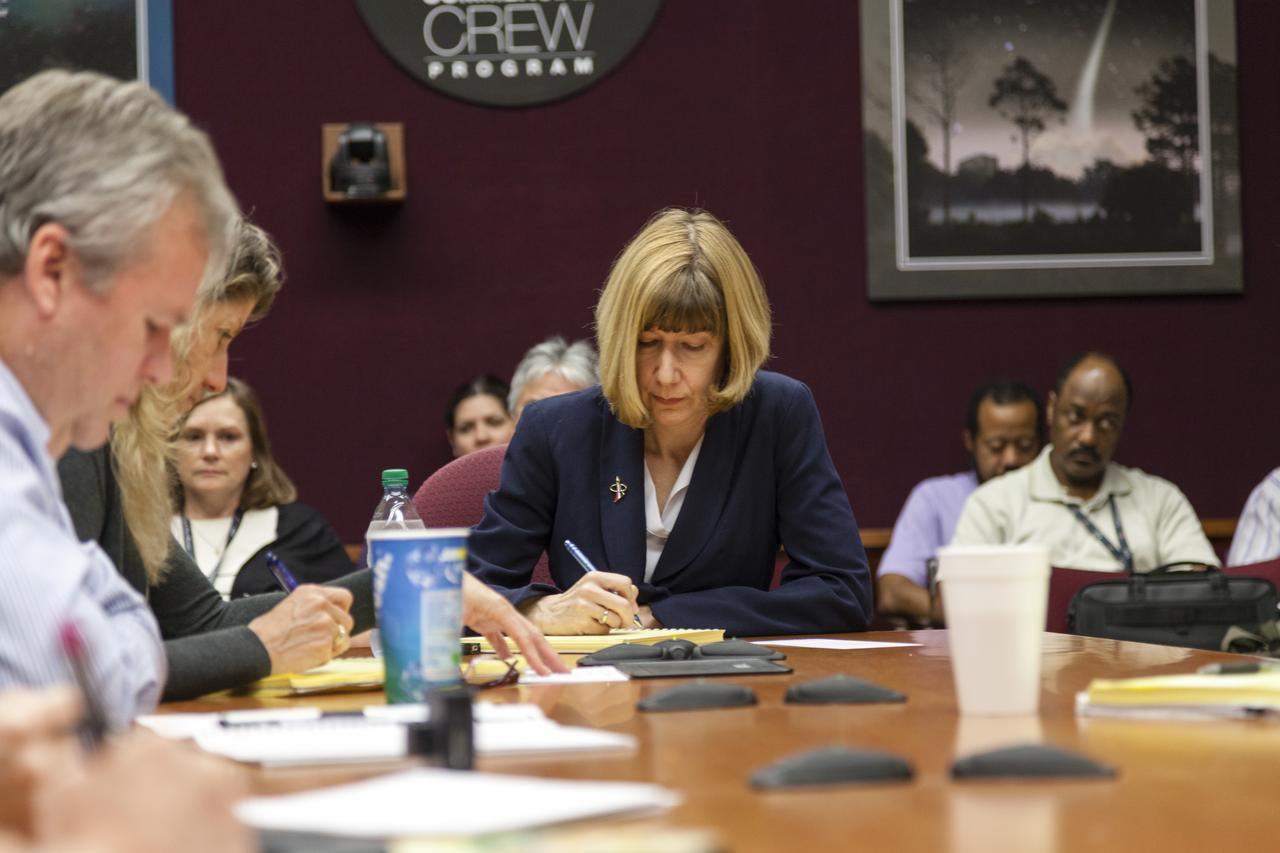
CAPE CANAVERAL, Fla. - Kathy Lueders, manager of NASA's Commercial Crew Program, listens to updates during a meeting with the staff at NASA's Kennedy Space Center in Florida. Photo credit: NASA/Frankie Martin
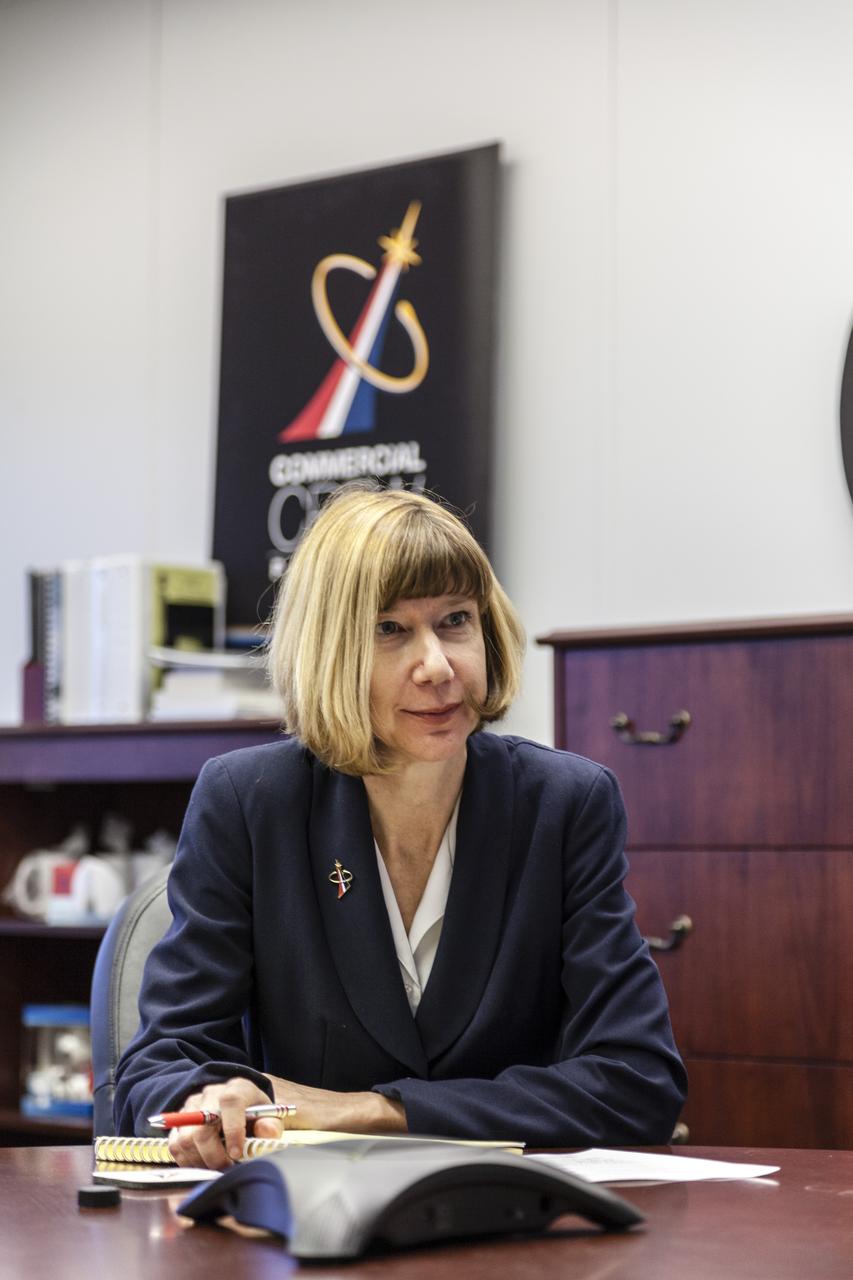
CAPE CANAVERAL, Fla. - Kathy Lueders, manager of NASA's Commercial Crew Program, listens to updates from program engineers at NASA's Kennedy Space Center in Florida. Photo credit: NASA/Frankie Martin
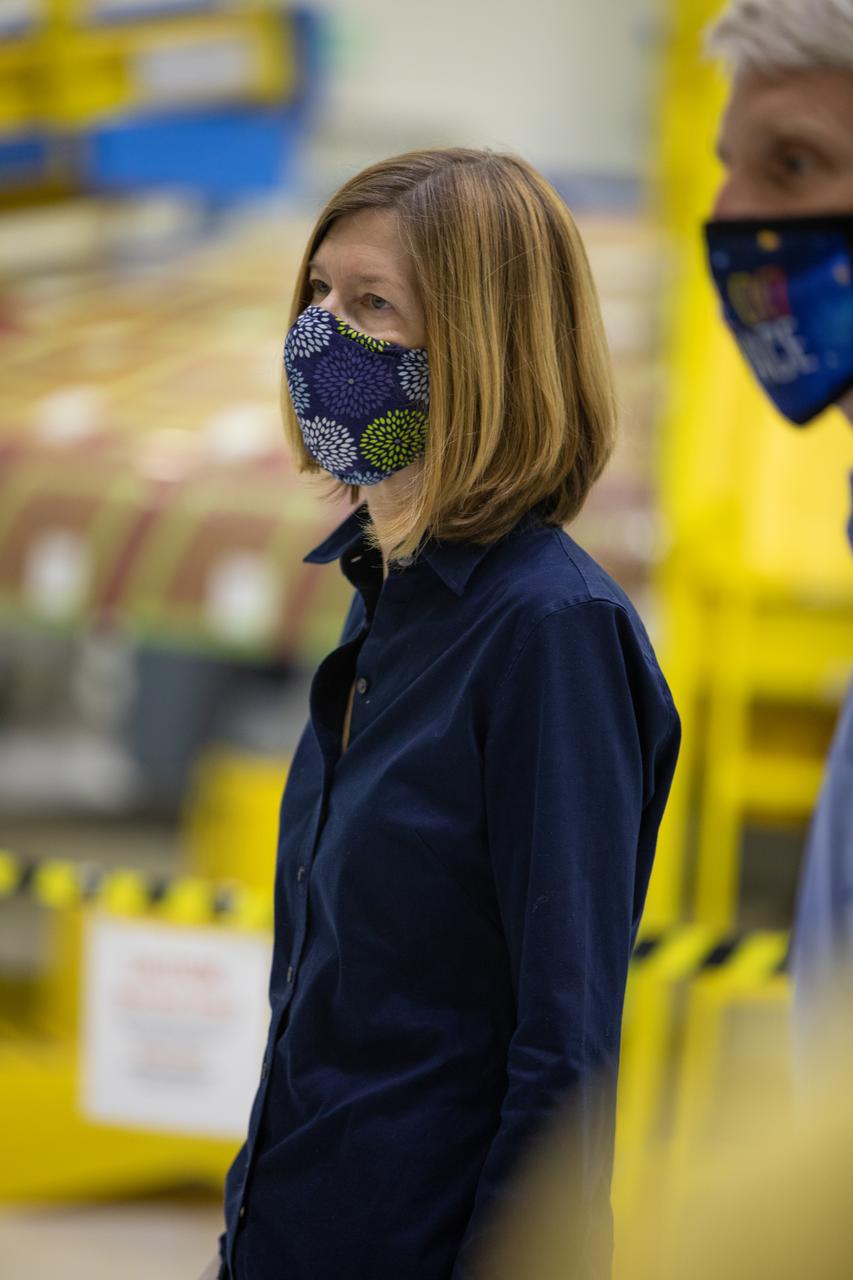
Kathy Lueders, associate administrator of NASA’s Human Exploration and Operations Mission Directorate, visits the Neil Armstrong Operations and Checkout (O&C) Building high bay at the agency’s Kennedy Space Center in Florida on Nov. 5, 2020. While at the O&C, Lueders and senior managers of Orion and Lockheed Martin had the opportunity to view the Artemis I and II spacecraft. In the background is the heat shield for Artemis II. The first in a series of increasingly complex missions, Artemis I will test the Space Launch System rocket and Orion spacecraft as an integrated system prior to crewed flights to the Moon. Under the Artemis program, NASA is planning to land the first woman and the next man on the lunar surface by 2024.
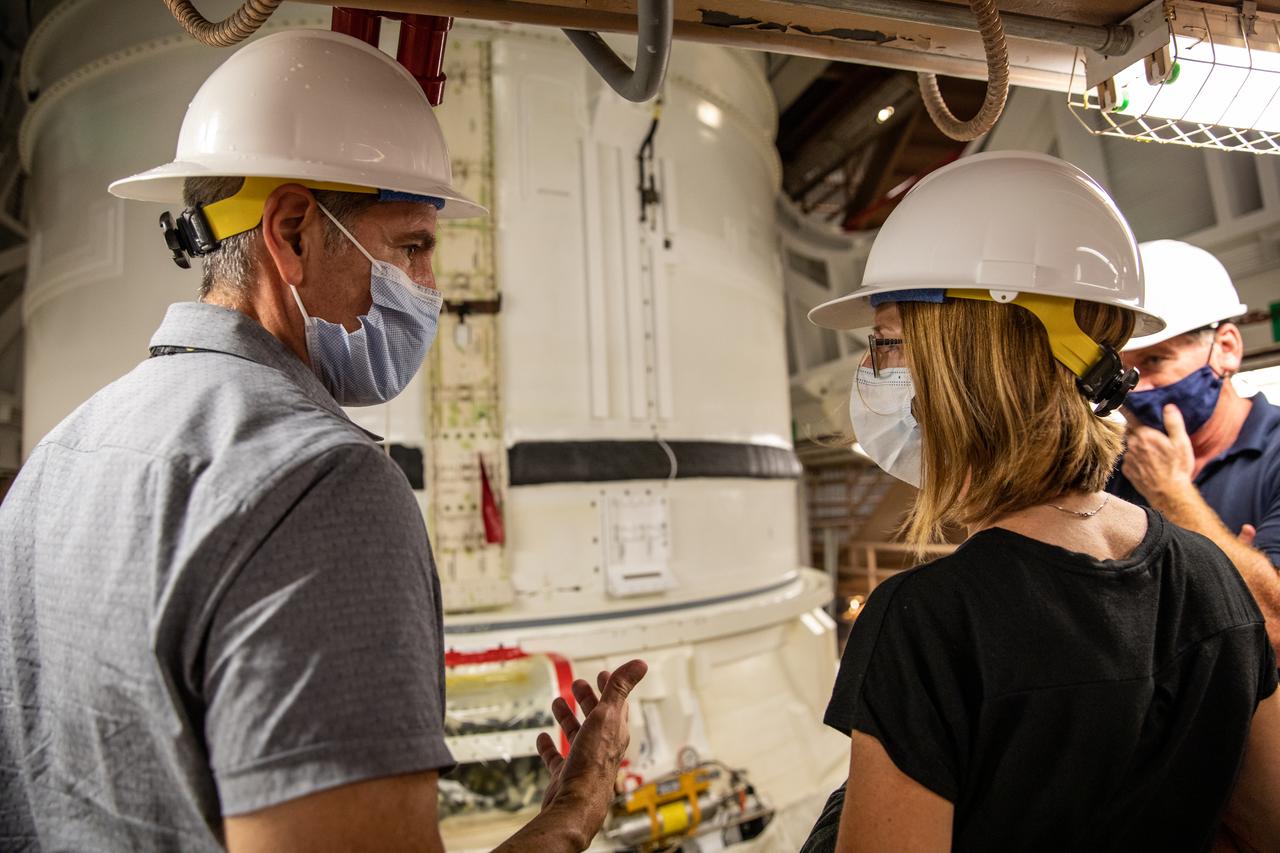
Kathy Lueders, at right, NASA’s associate administrator for Human Exploration and Operations, along with members of the Exploration Ground Systems and Jacobs Technology leadership view Artemis hardware inside the Rotation, Processing and Surge Facility (RPSF) at the agency’s Kennedy Space Center in Florida on June 25, 2020. Manufactured by Northrop Grumman in Utah, the solid rocket booster segments for the Space Launch System rocket are in view. The first in a series of increasingly complex missions, Artemis I will test the Orion spacecraft and SLS as an integrated system ahead of crewed flights to the Moon.
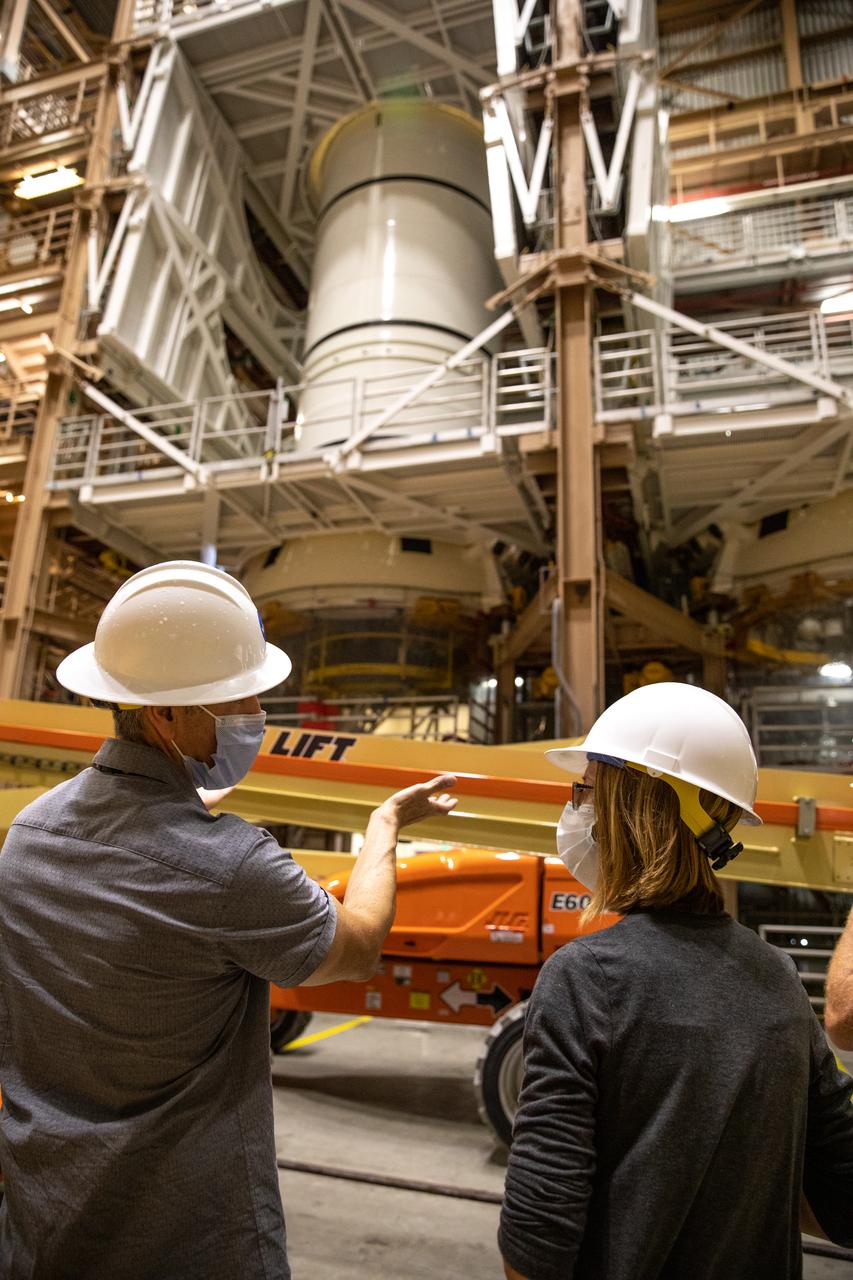
Kathy Lueders, at right, NASA’s associate administrator for Human Exploration and Operations, along with Exploration Ground Systems leadership view Artemis hardware inside the Rotation, Processing and Surge Facility (RPSF) at the agency’s Kennedy Space Center in Florida on June 25, 2020. Manufactured by Northrop Grumman in Utah, the solid rocket booster segments for the Space Launch System rocket are in view. The first in a series of increasingly complex missions, Artemis I will test the Orion spacecraft and SLS as an integrated system ahead of crewed flights to the Moon.
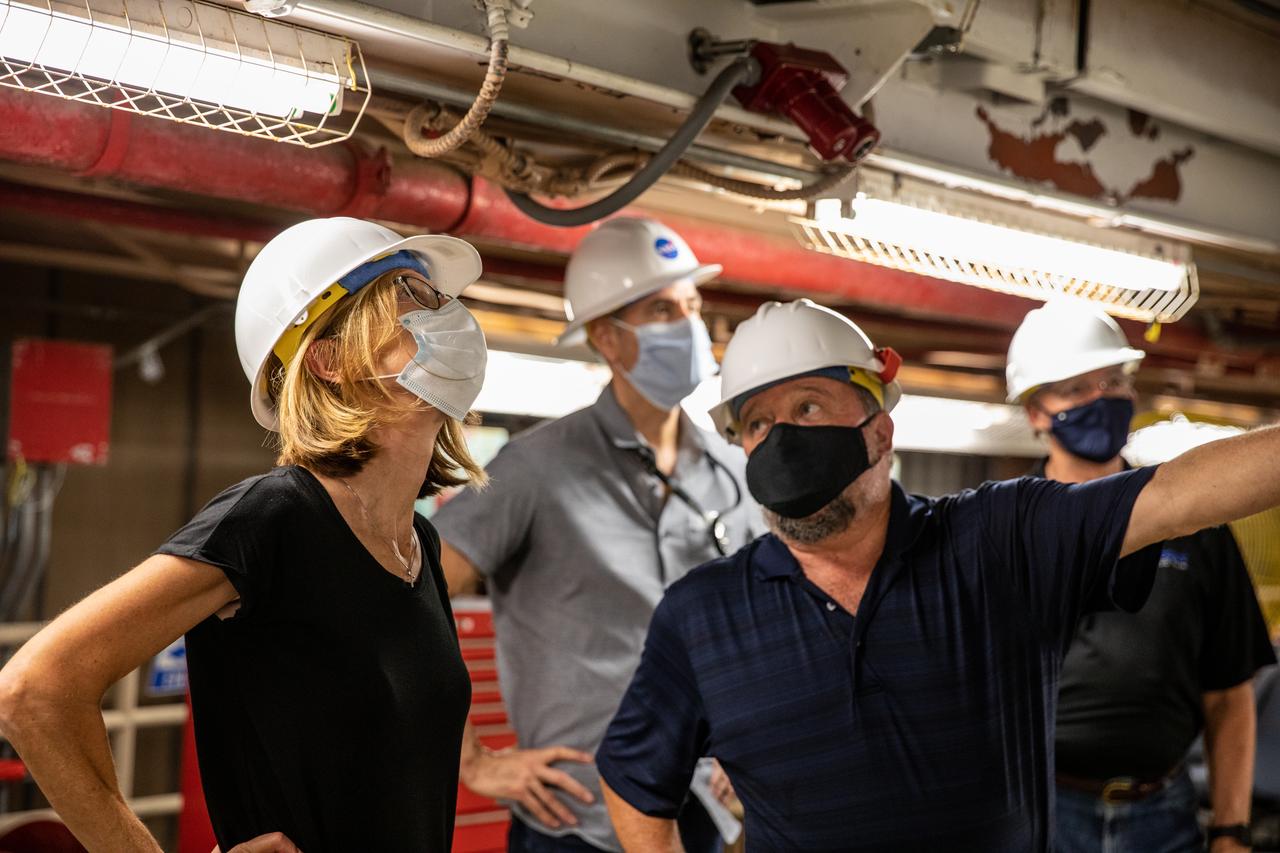
Kathy Lueders, at left, NASA’s associate administrator for Human Exploration and Operations, along with members of the Exploration Ground Systems and Jacobs Technology leadership view Artemis hardware inside the Rotation, Processing and Surge Facility (RPSF) at the agency’s Kennedy Space Center in Florida on June 25, 2020. Manufactured by Northrop Grumman in Utah, the solid rocket booster segments for the Space Launch System rocket are in view. The first in a series of increasingly complex missions, Artemis I will test the Orion spacecraft and SLS as an integrated system ahead of crewed flights to the Moon.
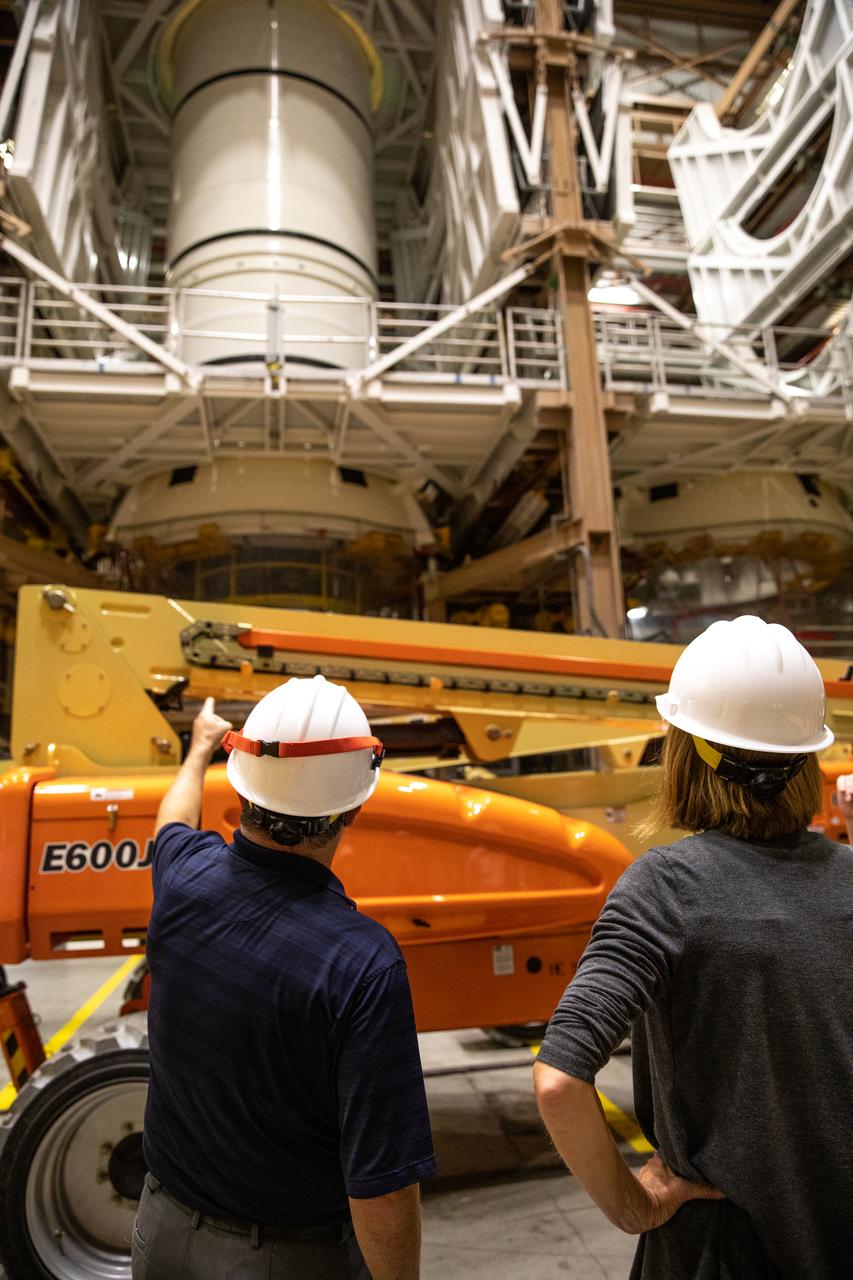
Kathy Lueders, at right, NASA’s associate administrator for Human Exploration and Operations along with members of the Exploration Ground Systems and Jacobs Technology leadership view Artemis hardware inside the Rotation, Processing and Surge Facility (RPSF) at the agency’s Kennedy Space Center in Florida on June 25, 2020. Manufactured by Northrop Grumman in Utah, the solid rocket booster segments for the Space Launch System rocket are in view. The first in a series of increasingly complex missions, Artemis I will test the Orion spacecraft and SLS as an integrated system ahead of crewed flights to the Moon.

Kathy Lueders, NASA’s associate administrator for Human Exploration and Operations, views Artemis hardware inside the Rotation, Processing and Surge Facility (RPSF) at the agency’s Kennedy Space Center in Florida on June 25, 2020. Manufactured by Northrop Grumman in Utah, the solid rocket booster segments for the Space Launch System rocket are in view. The first in a series of increasingly complex missions, Artemis I will test the Orion spacecraft and SLS as an integrated system ahead of crewed flights to the Moon.
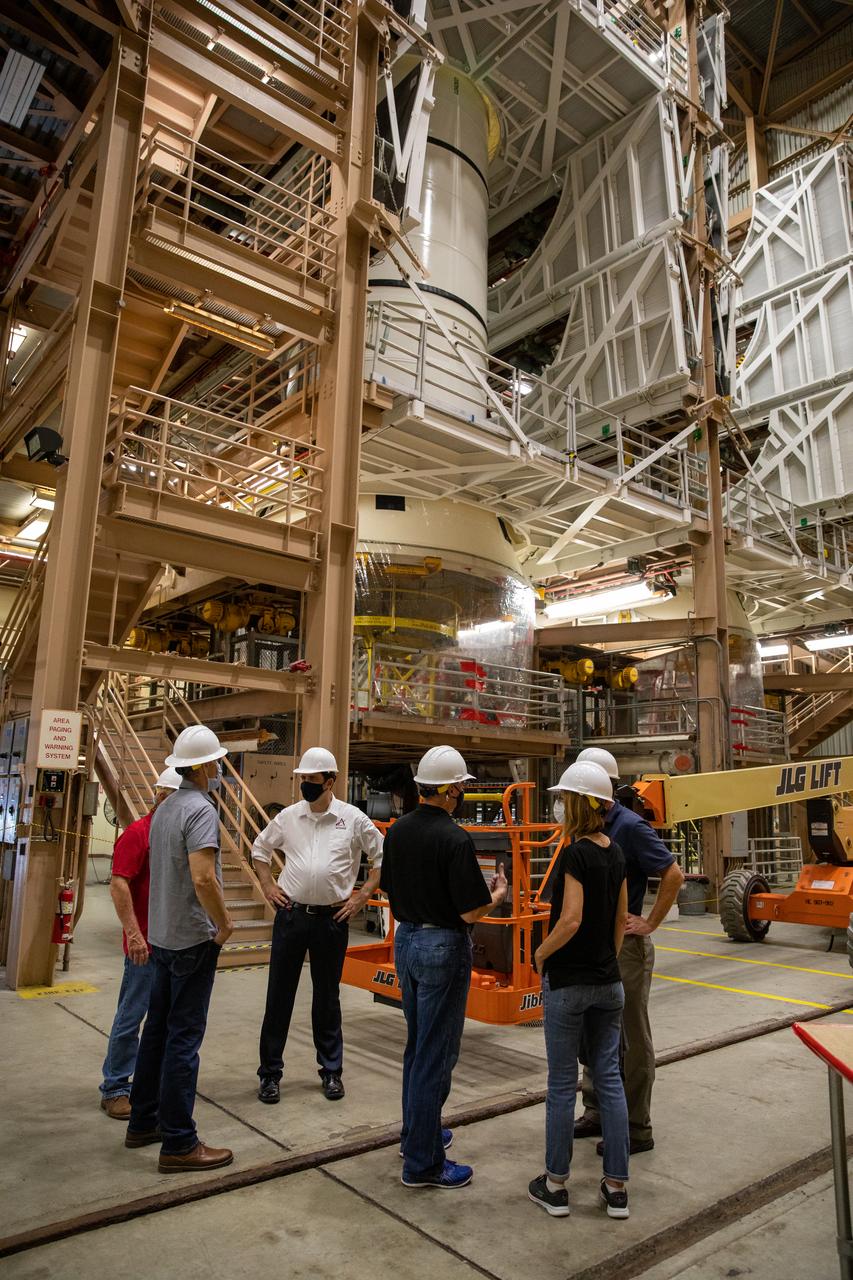
Kathy Lueders, at right, NASA’s associate administrator for Human Exploration and Operations, along with members of the Exploration Ground Systems and Jacobs Technology leadership view Artemis hardware inside the Rotation, Processing and Surge Facility (RPSF) at the agency’s Kennedy Space Center in Florida on June 25, 2020. Manufactured by Northrop Grumman in Utah, the solid rocket booster segments for the Space Launch System rocket are in view. The first in a series of increasingly complex missions, Artemis I will test the Orion spacecraft and SLS as an integrated system ahead of crewed flights to the Moon.
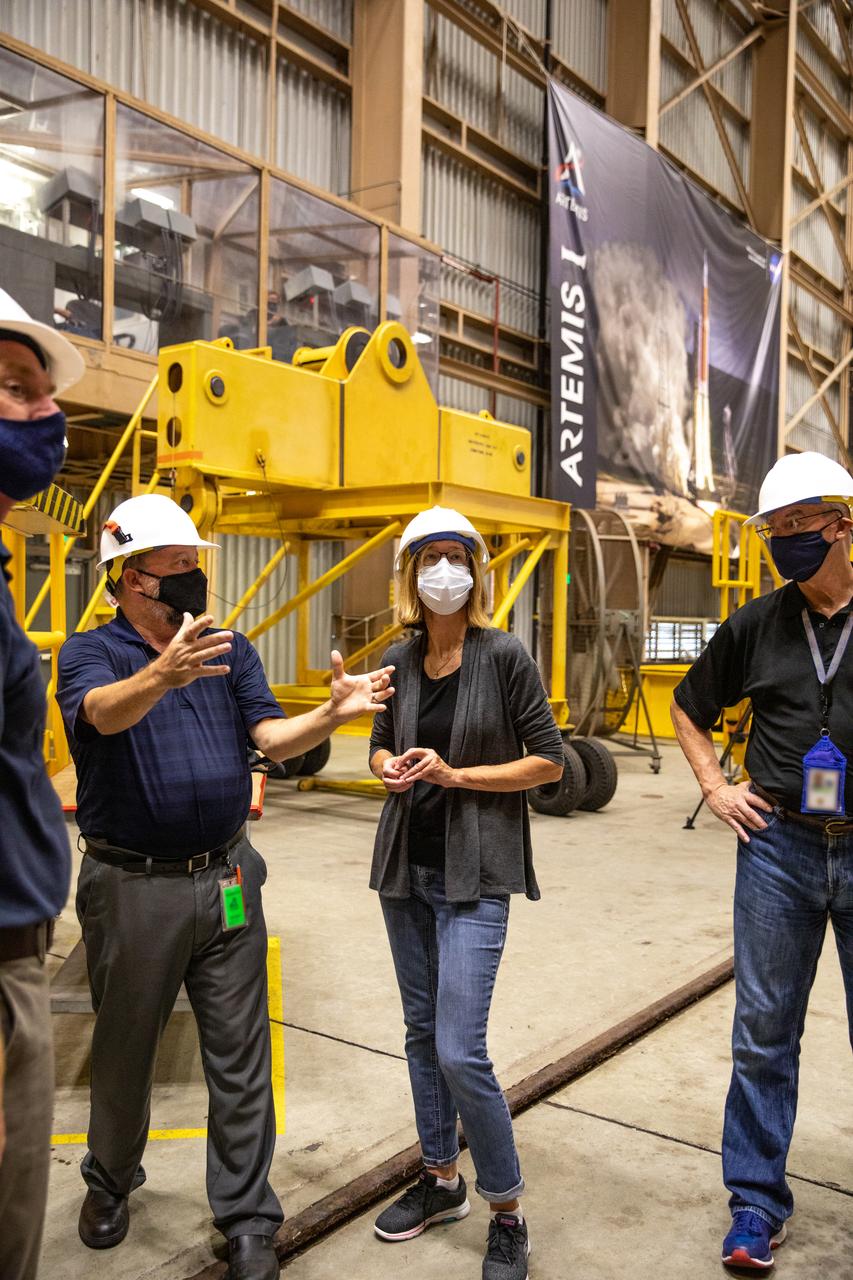
Kathy Lueders, center, NASA’s associate administrator for Human Exploration and Operations, along with members of the Exploration Ground Systems and Jacobs Technology leadership view Artemis hardware inside the Rotation, Processing and Surge Facility (RPSF) at the agency’s Kennedy Space Center in Florida on June 25, 2020. Manufactured by Northrop Grumman in Utah, the solid rocket booster segments for the Space Launch System rocket are in view. The first in a series of increasingly complex missions, Artemis I will test the Orion spacecraft and SLS as an integrated system ahead of crewed flights to the Moon.
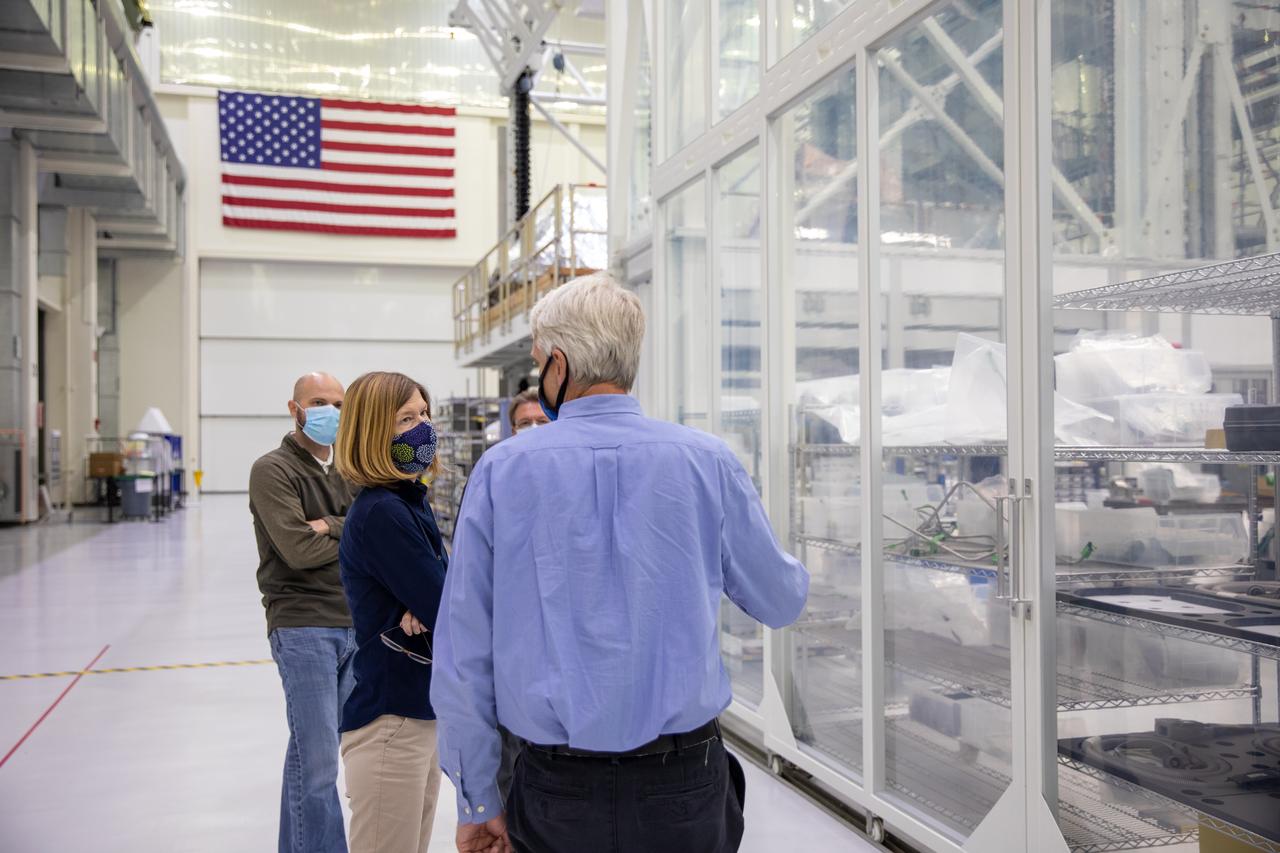
Senior managers from Orion, NASA, and Lockheed Martin view the Artemis II crew module inside a clean room during a visit to the Neil Armstrong Operations and Checkout Building high bay at NASA’s Kennedy Space Center in Florida on Nov. 5, 2020. From left are Jim Skaggs, senior manager of Kennedy Operations for Lockheed Martin; Kathy Lueders, associate administrator of NASA’s Human Exploration and Operations Mission Directorate; and Scott Wilson, manager, Orion Production Office. Artemis II will be the first crewed flight test of the Space Launch System rocket and the Orion spacecraft. Under the Artemis program, NASA is planning to land the first woman and the next man on the lunar surface by 2024.
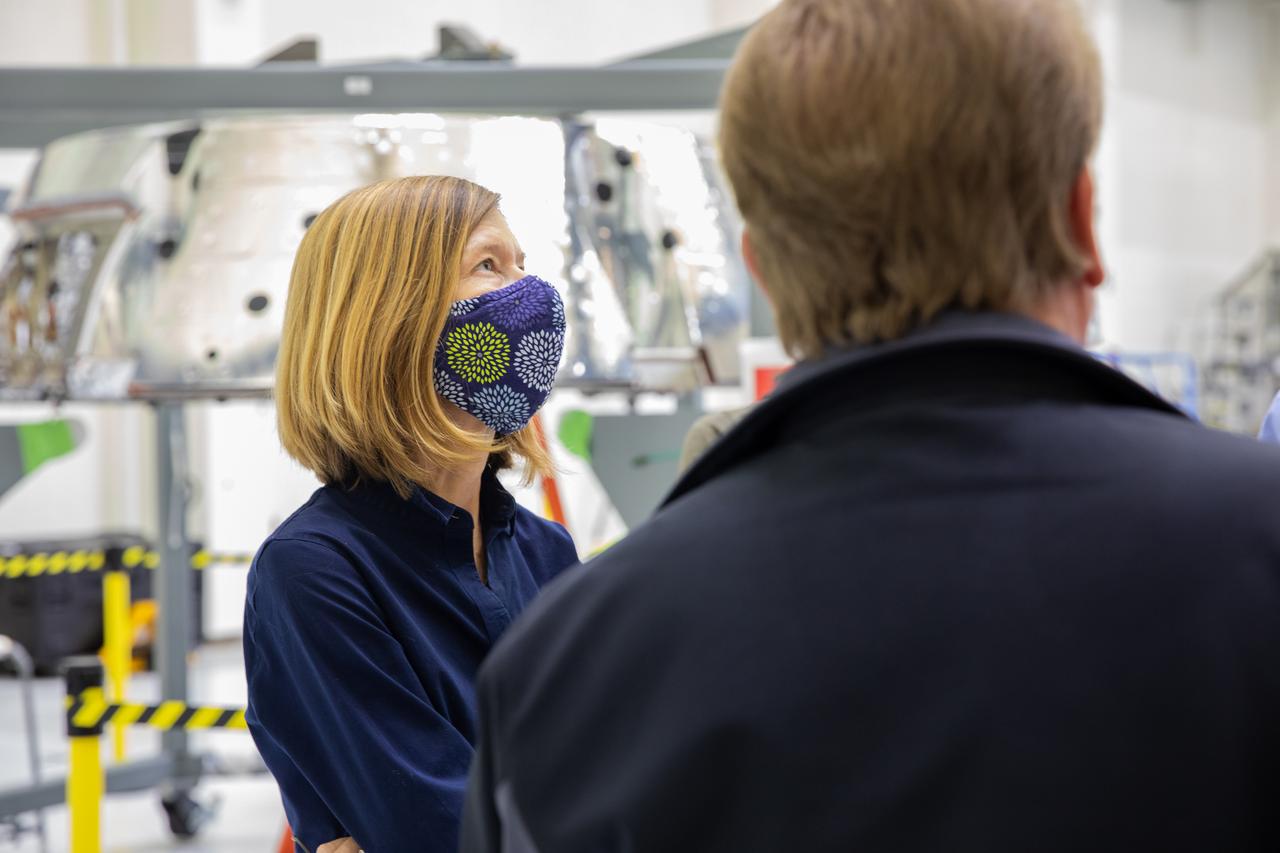
Kathy Lueders, associate administrator of NASA’s Human Exploration and Operations Mission Directorate, visits the Neil Armstrong Operations and Checkout Building high bay at the agency’s Kennedy Space Center in Florida on Nov. 5, 2020. In the background is the Orion spacecraft’s forward bay cover for Artemis I. The first in a series of increasingly complex missions, Artemis I will test the Space Launch System rocket and Orion spacecraft as an integrated system prior to crewed flights to the Moon. Under the Artemis program, NASA is planning to land the first woman and the next man on the lunar surface by 2024.
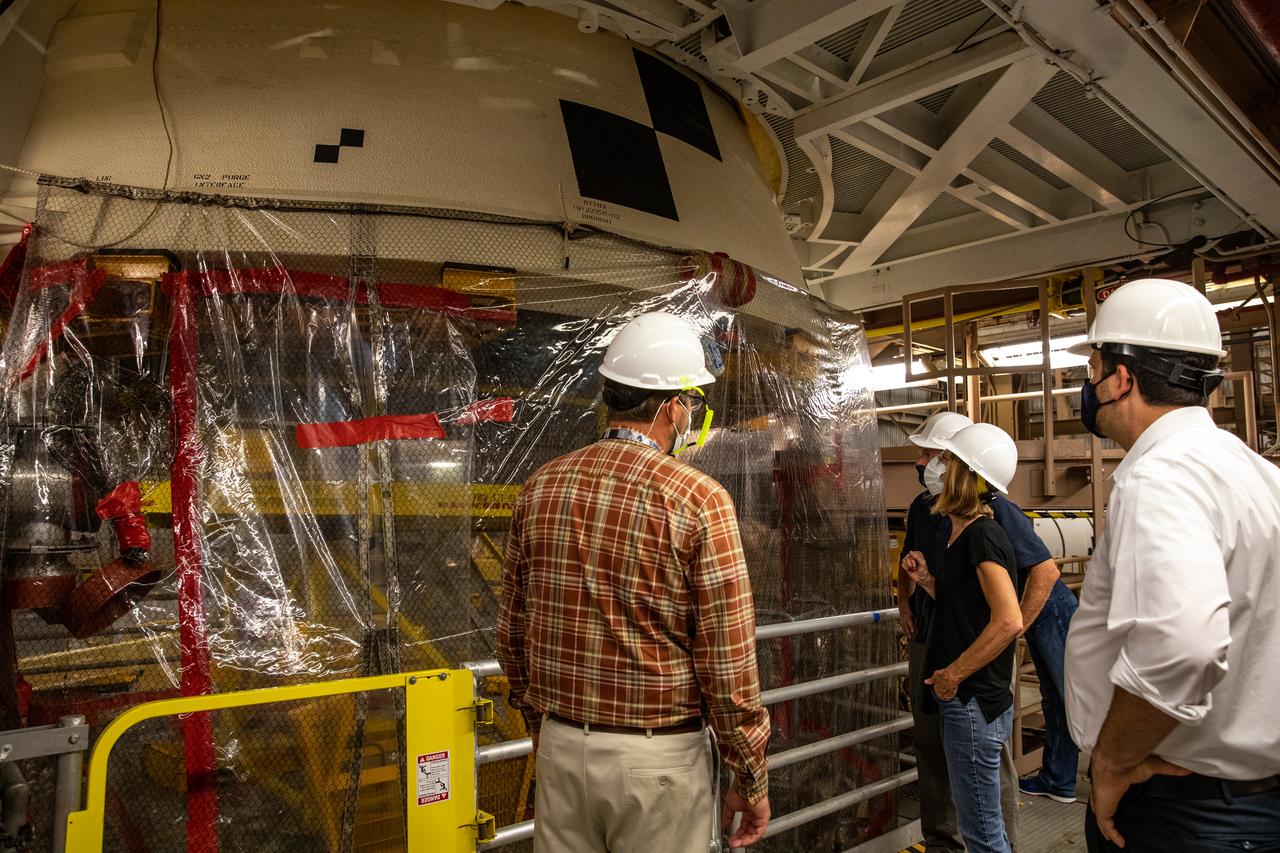
Kathy Lueders, second from right, NASA’s associate administrator for Human Exploration and Operations, along with members of the Exploration Ground Systems and Jacobs Technology leadership view Artemis hardware inside the Rotation, Processing and Surge Facility (RPSF) at the agency’s Kennedy Space Center in Florida on June 25, 2020. Manufactured by Northrop Grumman in Utah, the solid rocket booster segments for the Space Launch System rocket are in view. The first in a series of increasingly complex missions, Artemis I will test the Orion spacecraft and SLS as an integrated system ahead of crewed flights to the Moon.
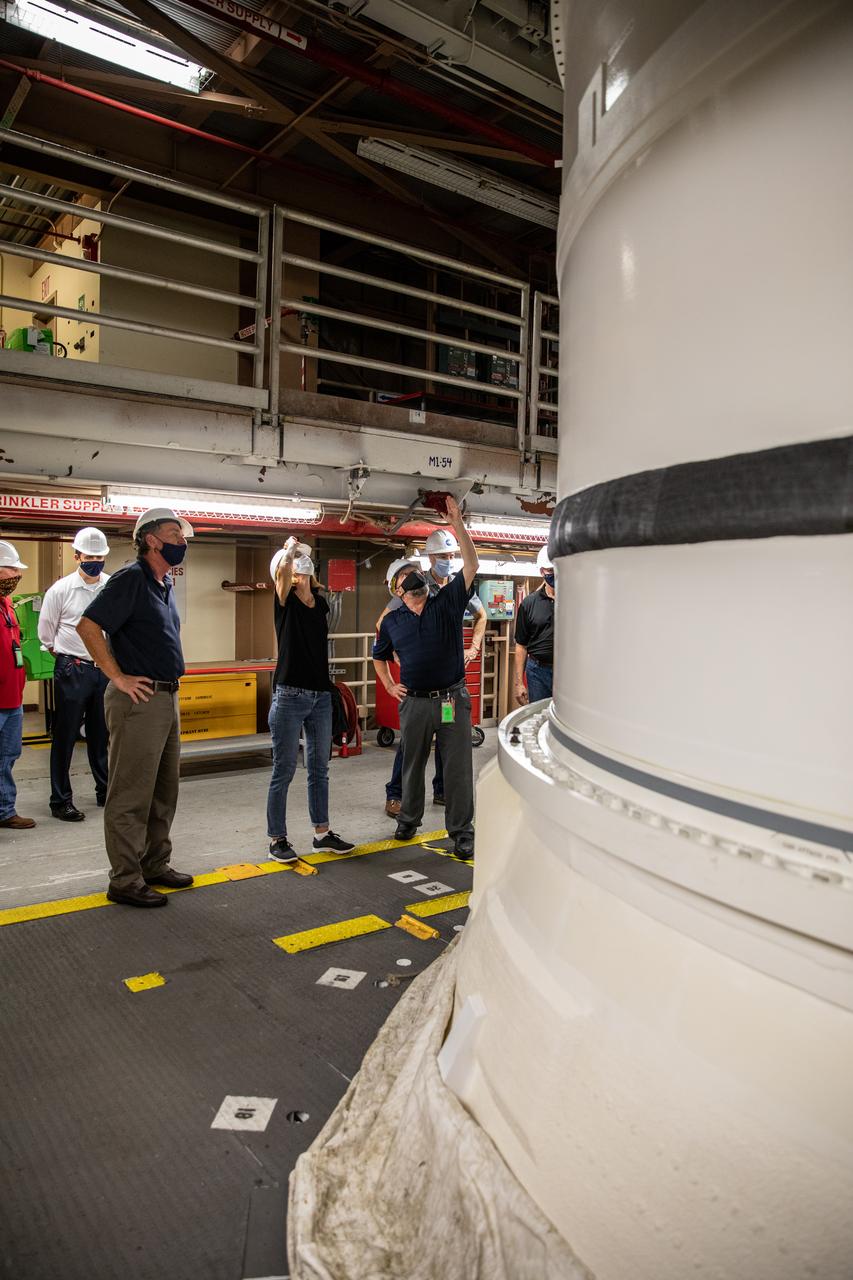
Kathy Lueders, second from right, NASA’s associate administrator for Human Exploration and Operations, along with members of the Exploration Ground Systems and Jacobs Technology leadership view Artemis hardware inside the Rotation, Processing and Surge Facility (RPSF) at the agency’s Kennedy Space Center in Florida on June 25, 2020. Manufactured by Northrop Grumman in Utah, the solid rocket booster segments for the Space Launch System rocket are in view. The first in a series of increasingly complex missions, Artemis I will test the Orion spacecraft and SLS as an integrated system ahead of crewed flights to the Moon.
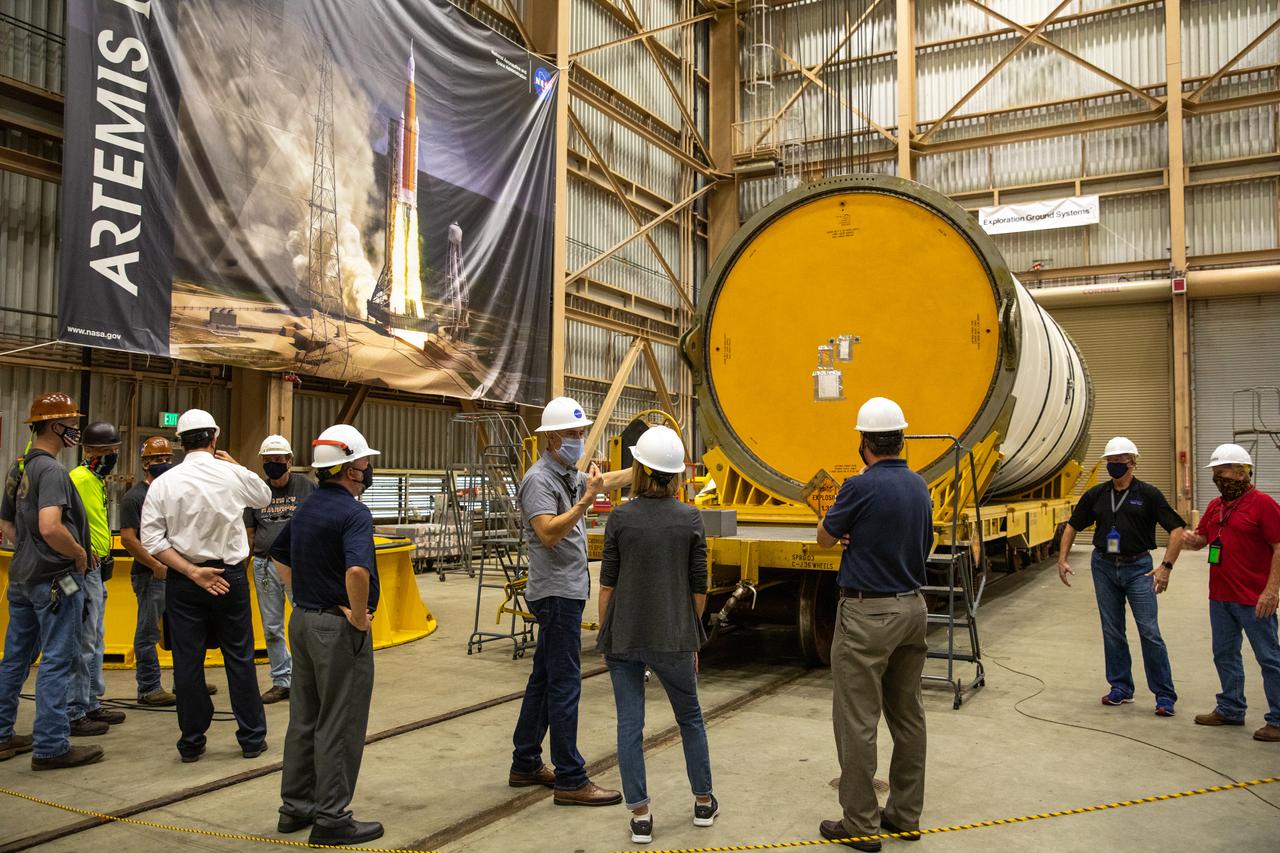
Kathy Lueders, in the center at right, NASA’s associate administrator for Human Exploration and Operations, along with members of the Exploration Ground Systems and Jacobs Technology leadership view Artemis hardware inside the Rotation, Processing and Surge Facility (RPSF) at the agency’s Kennedy Space Center in Florida on June 25, 2020. Manufactured by Northrop Grumman in Utah, the solid rocket booster segments for the Space Launch System rocket are in view. The first in a series of increasingly complex missions, Artemis I will test the Orion spacecraft and SLS as an integrated system ahead of crewed flights to the Moon.
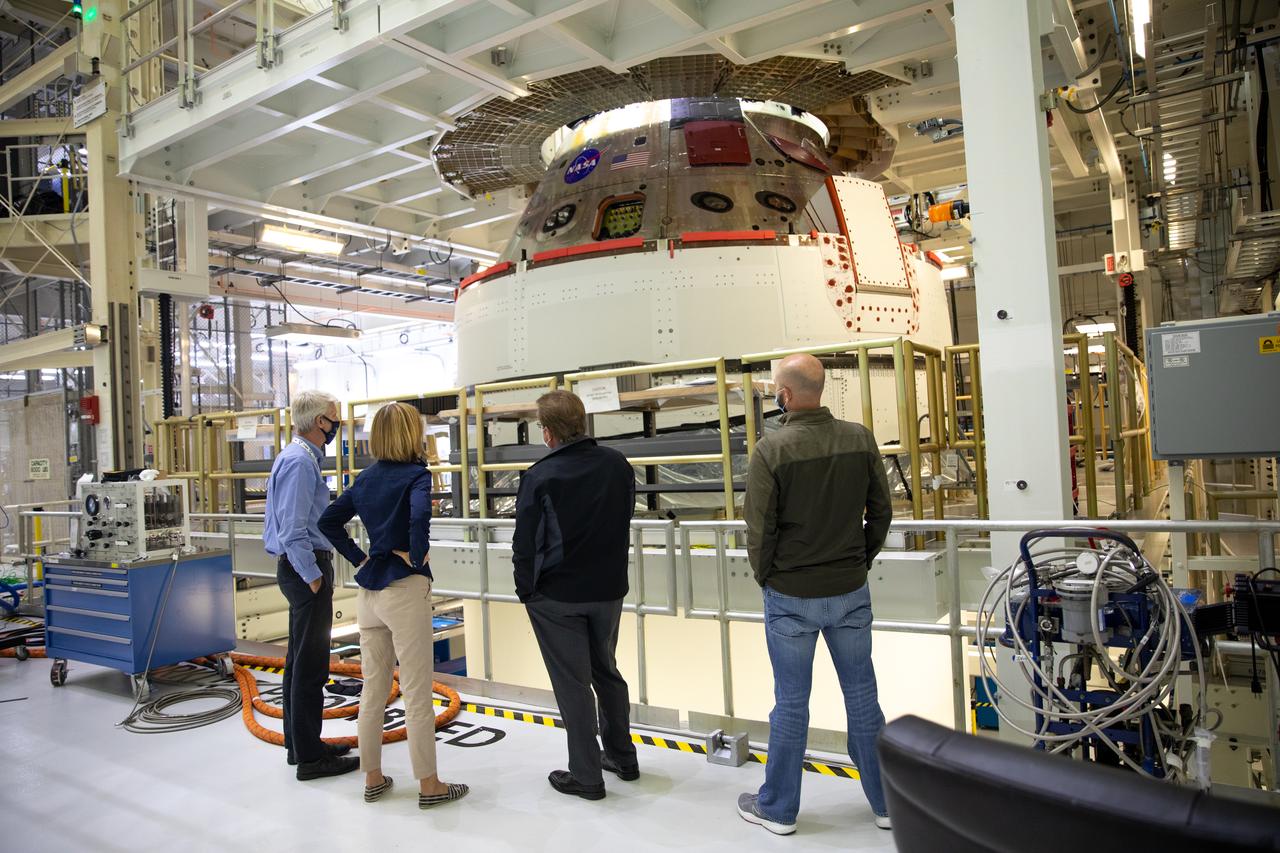
Senior managers from Orion, NASA, and Lockheed Martin view the Artemis I spacecraft during a visit to the Neil Armstrong Operations and Checkout Building high bay at NASA’s Kennedy Space Center in Florida on Nov. 5, 2020. From left are Scott Wilson, manager, Orion Production Office; Kathy Lueders, associate administrator of NASA’s Human Exploration and Operations Mission Directorate; Jules Schneider, director of Assembly, Test, and Launch Operations for Lockheed Martin; and Jim Skaggs, senior manager of Kennedy Operations for Lockheed Martin. The first in a series of increasingly complex missions, Artemis I will test the Space Launch System rocket and Orion spacecraft as an integrated system prior to crewed flights to the Moon. Under the Artemis program, NASA is planning to land the first woman and the next man on the lunar surface by 2024.
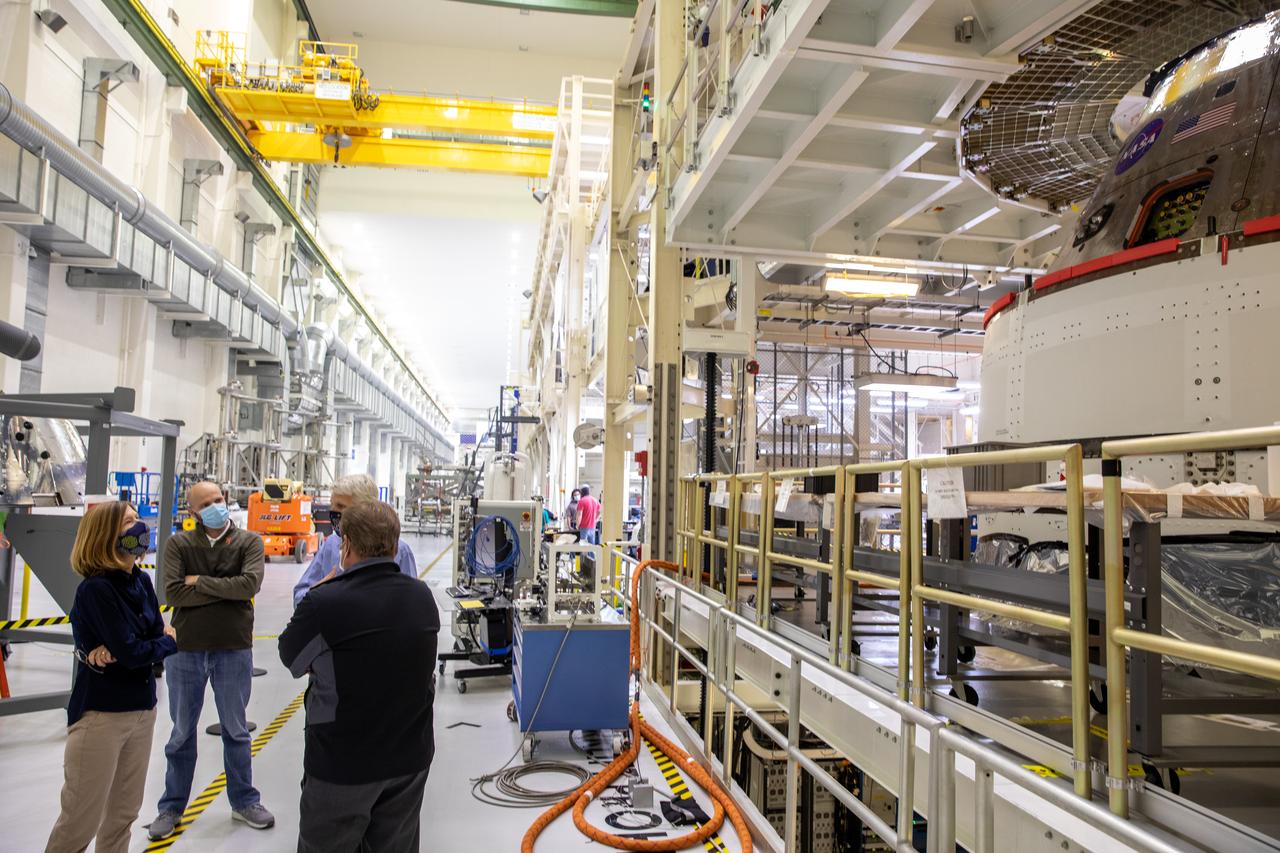
Kathy Lueders, far left, associate administrator of NASA’s Human Exploration and Operations Mission Directorate, views the Artemis I spacecraft during a visit to the Neil Armstrong Operations and Checkout Building high bay at the agency’s Kennedy Space Center in Florida on Nov. 5, 2020. To her right is Jules Schneider, director of Assembly, Test, and Launch Operations for Lockheed Martin; and to her left is Jim Skaggs, senior manager of Kennedy Operations for Lockheed Martin. In between Schneider and Skaggs is Scott Wilson, manager of the Orion Production Office at Kennedy. The first in a series of increasingly complex missions, Artemis I will test the Space Launch System rocket and Orion spacecraft as an integrated system prior to crewed flights to the Moon. Under the Artemis program, NASA is planning to land the first woman and the next man on the lunar surface by 2024.
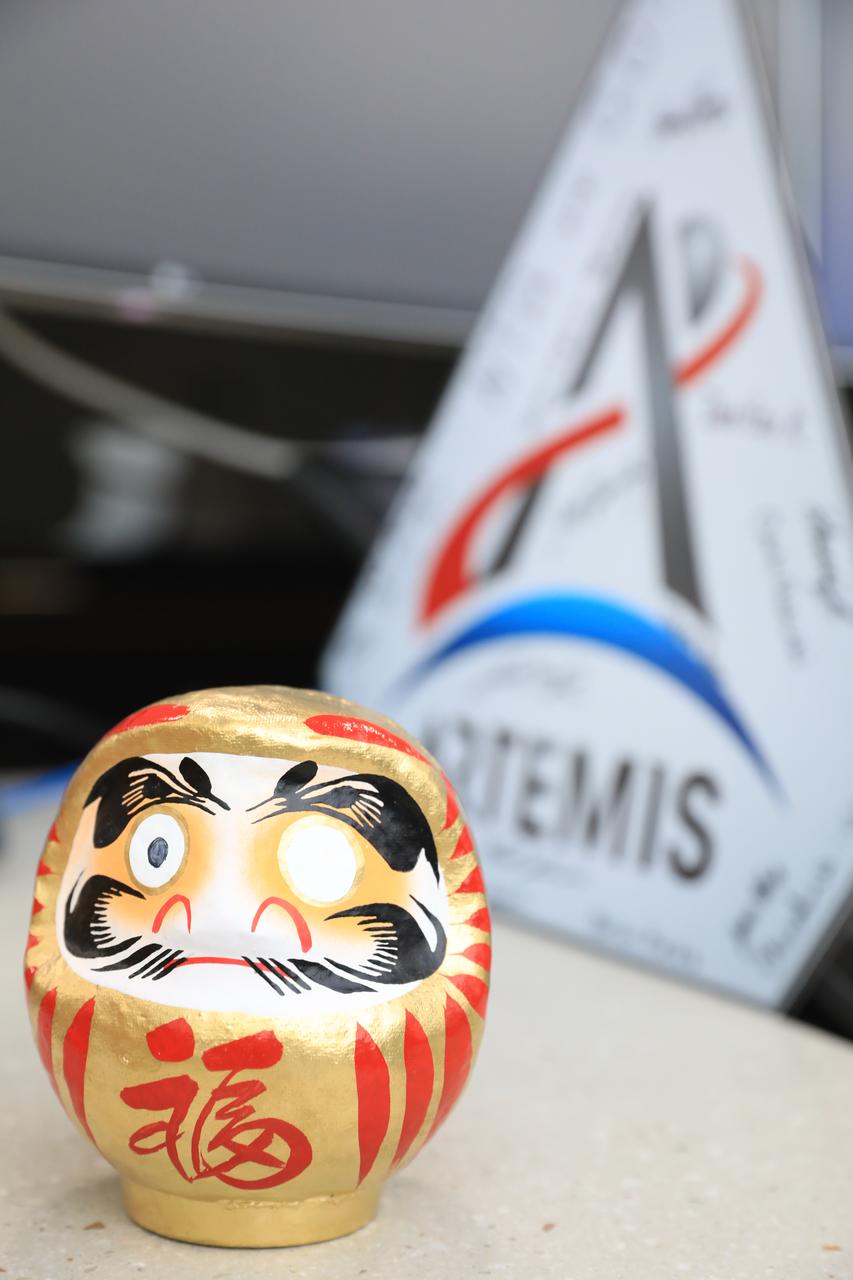
Artemis launch director, Charlie Blackwell-Thompson and associate administrator of NASA’s Space Operations Mission Directorate, Kathryn Lueders finish coloring in the other eye of the Japanese Daruma doll to highlight the successful Artemis I mission on Dec. 20, 2022 in Firing Room 1 of the Rocco A. Petrone Launch Control Center at NASA’s Kennedy Space Center in Florida. The Japan Aerospace Exploration Agency gave a Daruma doll to both Lueders and associate administrator for the Exploration Systems Development Mission Directorate, Jim Free as a token of good luck prior to the Artemis I launch. Free filled in his eye on Dec. 11, 2022, with Artemis I Ascent and Entry Flight Director Judd Frieling in Mission Control Center at NASA’s Johnson Space Center in Houston, Texas.

Artemis launch director, Charlie Blackwell-Thompson and associate administrator of NASA’s Space Operations Mission Directorate, Kathryn Lueders finish coloring in the other eye of the Japanese Daruma doll to highlight the successful Artemis I mission on Dec. 20, 2022 in Firing Room 1 of the Rocco A. Petrone Launch Control Center at NASA’s Kennedy Space Center in Florida. The Japan Aerospace Exploration Agency gave a Daruma doll to both Lueders and associate administrator for the Exploration Systems Development Mission Directorate, Jim Free as a token of good luck prior to the Artemis I launch. Free filled in his eye on Dec. 11, 2022, with Artemis I Ascent and Entry Flight Director Judd Frieling in Mission Control Center at NASA’s Johnson Space Center in Houston, Texas.
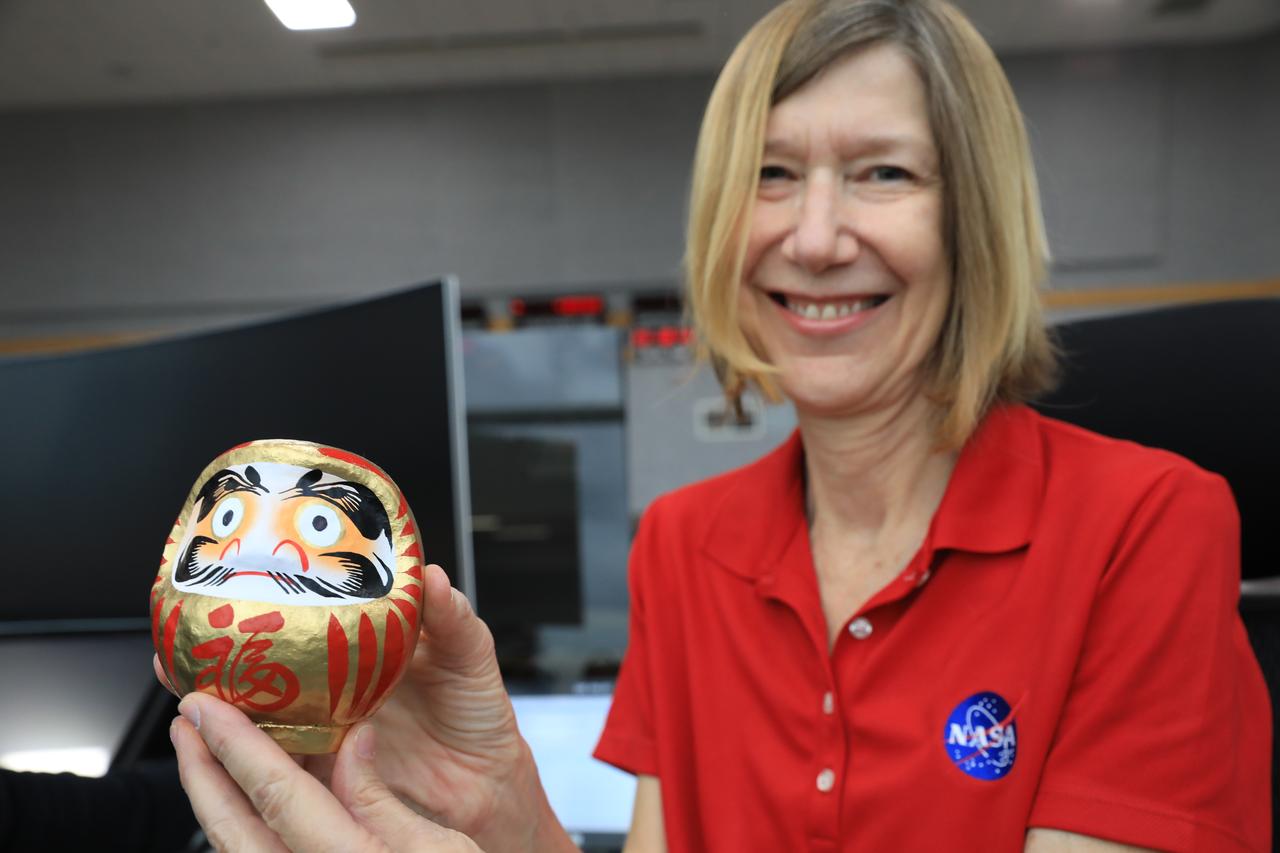
Artemis launch director, Charlie Blackwell-Thompson and associate administrator of NASA’s Space Operations Mission Directorate, Kathryn Lueders finish coloring in the other eye of the Japanese Daruma doll to highlight the successful Artemis I mission on Dec. 20, 2022 in Firing Room 1 of the Rocco A. Petrone Launch Control Center at NASA’s Kennedy Space Center in Florida. The Japan Aerospace Exploration Agency gave a Daruma doll to both Lueders and associate administrator for the Exploration Systems Development Mission Directorate, Jim Free as a token of good luck prior to the Artemis I launch. Free filled in his eye on Dec. 11, 2022, with Artemis I Ascent and Entry Flight Director Judd Frieling in Mission Control Center at NASA’s Johnson Space Center in Houston, Texas.
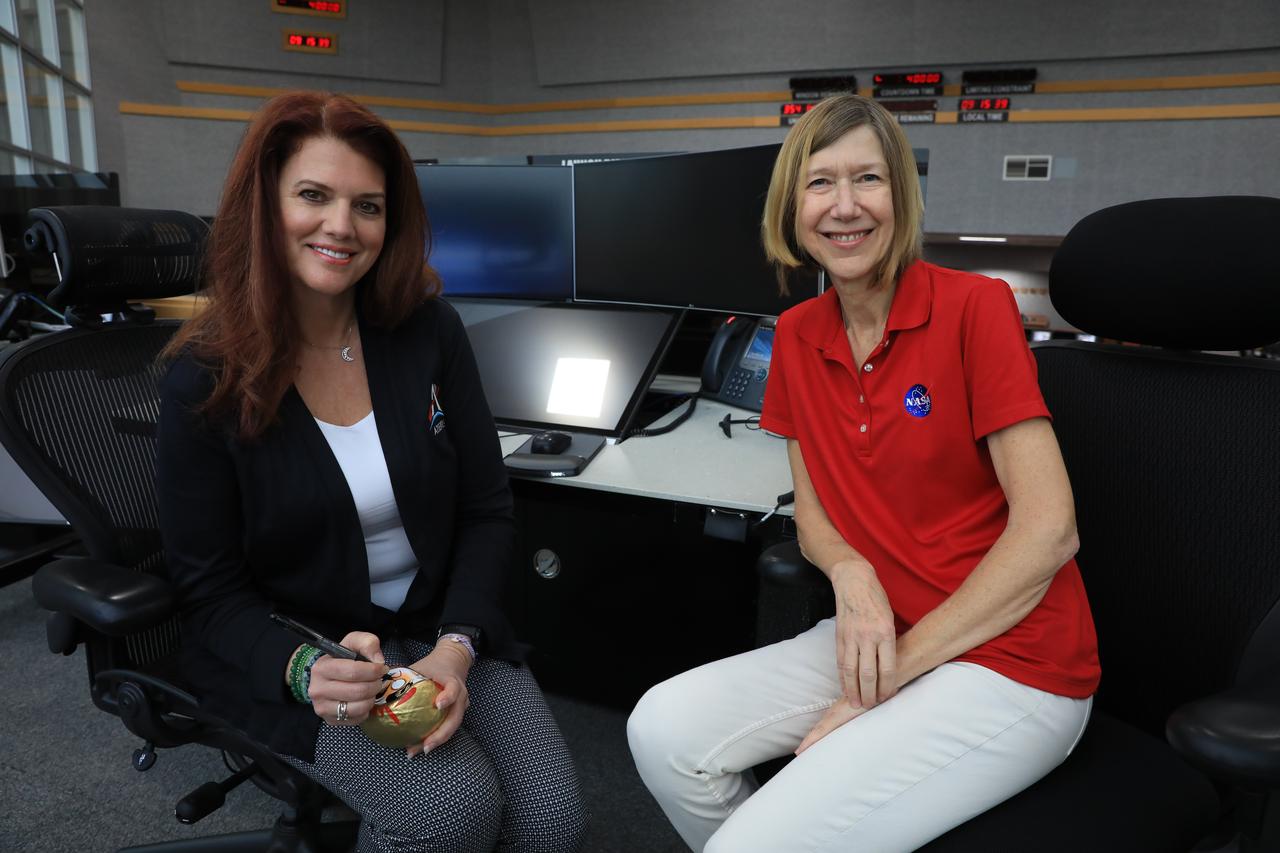
Artemis launch director, Charlie Blackwell-Thompson and associate administrator of NASA’s Space Operations Mission Directorate, Kathryn Lueders finish coloring in the other eye of the Japanese Daruma doll to highlight the successful Artemis I mission on Dec. 20, 2022 in Firing Room 1 of the Rocco A. Petrone Launch Control Center at NASA’s Kennedy Space Center in Florida. The Japan Aerospace Exploration Agency gave a Daruma doll to both Lueders and associate administrator for the Exploration Systems Development Mission Directorate, Jim Free as a token of good luck prior to the Artemis I launch. Free filled in his eye on Dec. 11, 2022, with Artemis I Ascent and Entry Flight Director Judd Frieling in Mission Control Center at NASA’s Johnson Space Center in Houston, Texas.
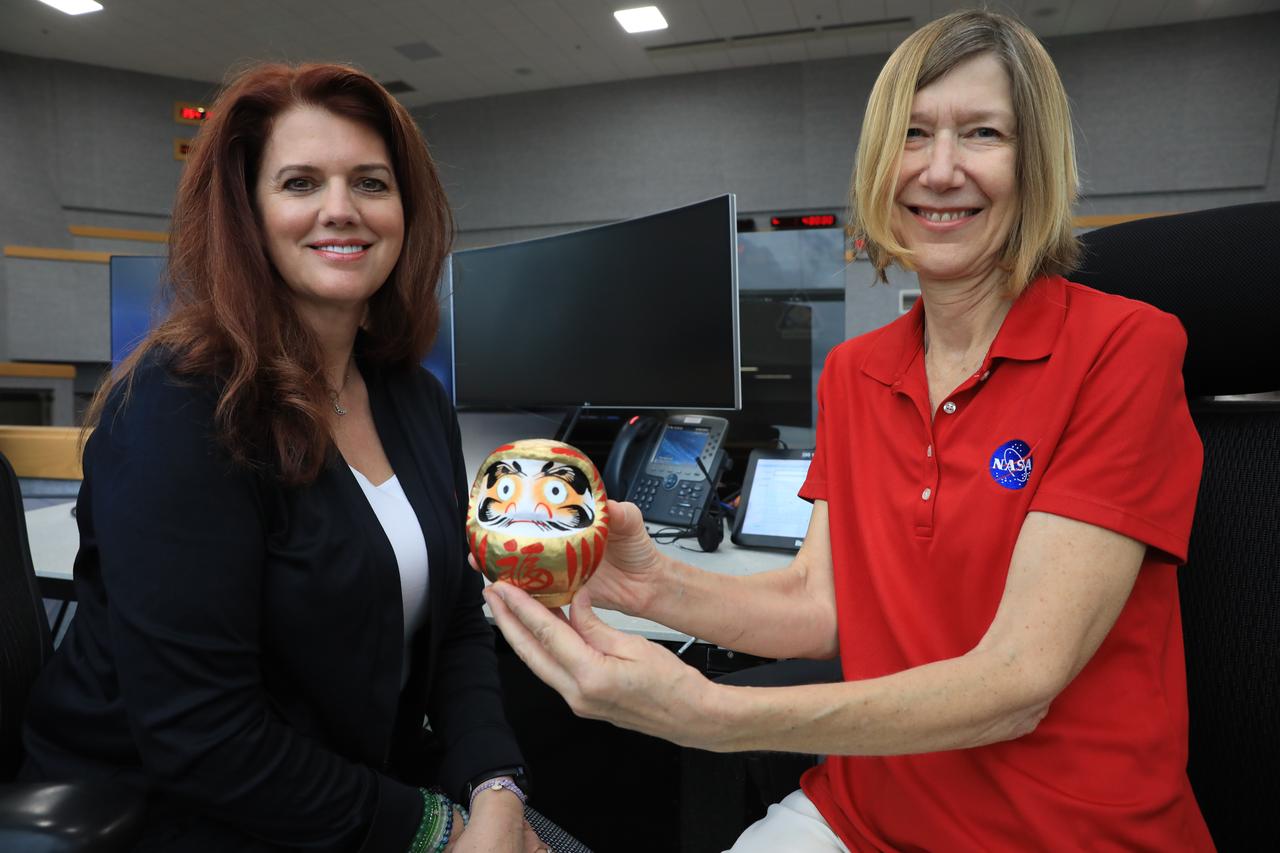
Artemis launch director, Charlie Blackwell-Thompson and associate administrator of NASA’s Space Operations Mission Directorate, Kathryn Lueders finish coloring in the other eye of the Japanese Daruma doll to highlight the successful Artemis I mission on Dec. 20, 2022 in Firing Room 1 of the Rocco A. Petrone Launch Control Center at NASA’s Kennedy Space Center in Florida. The Japan Aerospace Exploration Agency gave a Daruma doll to both Lueders and associate administrator for the Exploration Systems Development Mission Directorate, Jim Free as a token of good luck prior to the Artemis I launch. Free filled in his eye on Dec. 11, 2022, with Artemis I Ascent and Entry Flight Director Judd Frieling in Mission Control Center at NASA’s Johnson Space Center in Houston, Texas.
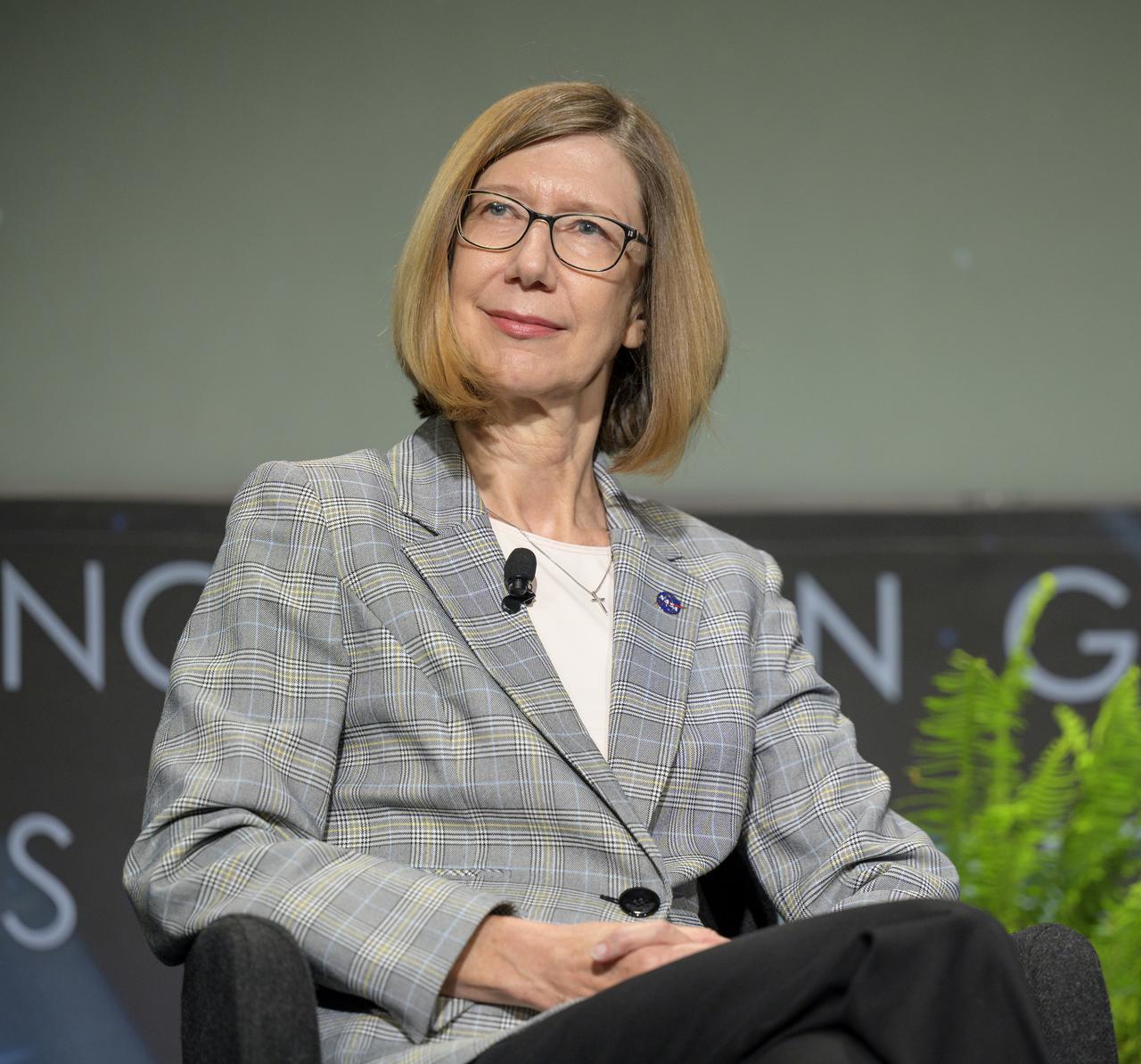
NASA Associate Administrator for Human Exploration and Operations Kathy Lueders listens to a reporter’s question during a media gaggle, Wednesday, June 2, 2021, at NASA Headquarters Mary W. Jackson Building in Washington. Lueders, along with NASA Administrator Bill Nelson and other NASA leadership, answered reporters questions following a State of NASA event where Nelson remarked on his long history with NASA, and among other topics, discussed the agency’s plans for future Earth-focused missions to address climate change and a robotic and human return to the Moon through the Artemis program, as well as announcing two new planetary science missions to Venus – VERITAS and DAVINCI+. Photo Credit: (NASA/Bill Ingalls)

NASA Associate Administrator for Human Exploration and Operations Kathy Lueders answers a reporter’s question during a media gaggle, Wednesday, June 2, 2021, at NASA Headquarters Mary W. Jackson Building in Washington. Lueders, along with NASA Administrator Bill Nelson and other NASA leadership, answered reporters questions following a State of NASA event where Nelson remarked on his long history with NASA, and among other topics, discussed the agency’s plans for future Earth-focused missions to address climate change and a robotic and human return to the Moon through the Artemis program, as well as announcing two new planetary science missions to Venus – VERITAS and DAVINCI+. Photo Credit: (NASA/Bill Ingalls)
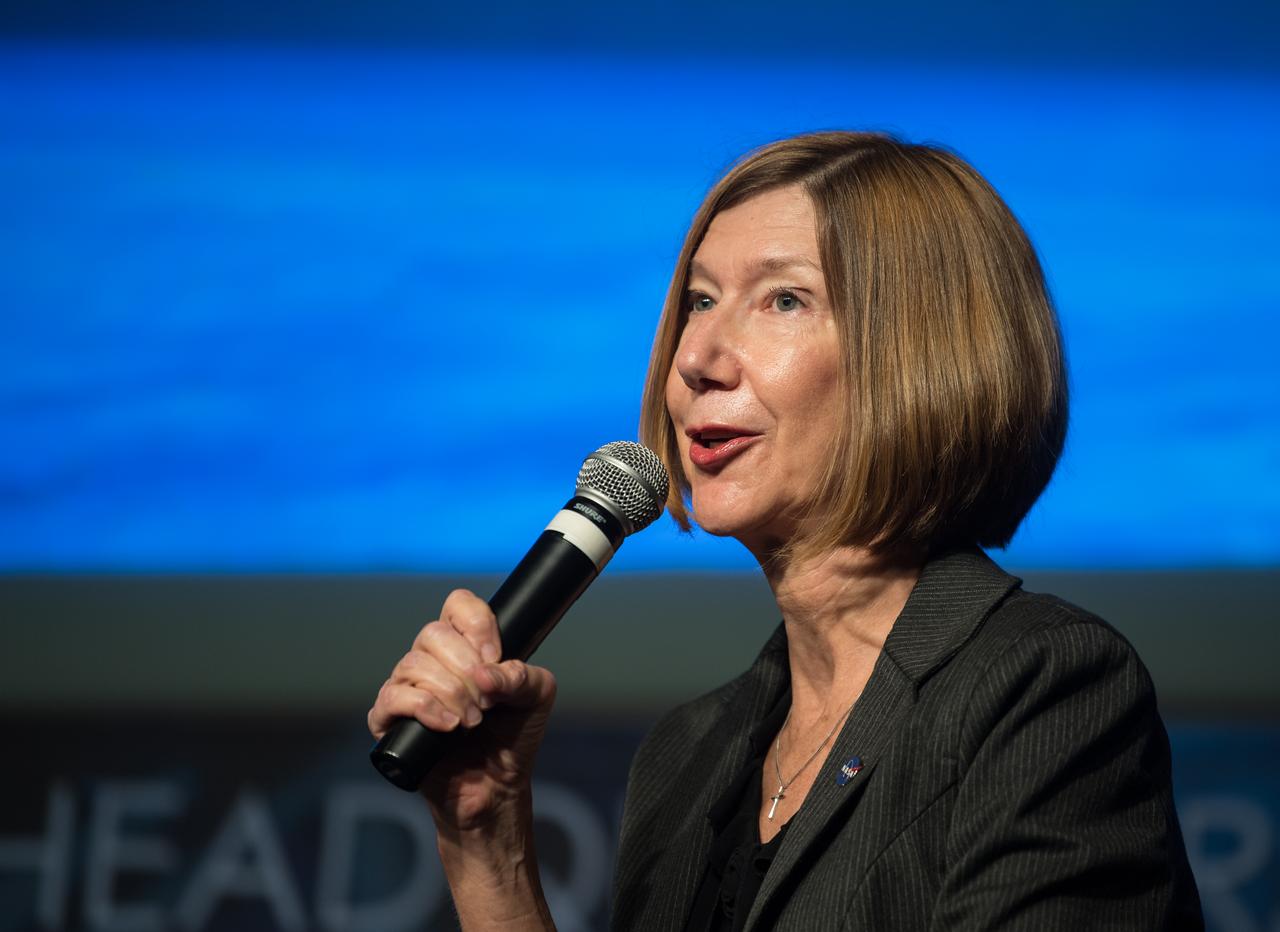
NASA Associate Administrator for the Space Operations Mission Directorate (SpaceOps), Kathy Lueders, speaks during a NASA town hall to discuss the reorganization of the Human Exploration and Operations Mission Directorate into two mission directorates: SpaceOps and the Exploration Systems Development Mission Directorate (ESDMD), Tuesday, Sept. 21, 2021 at the Mary W. Jackson NASA Headquarters building in Washington. As head of SpaceOps, Kathy Lueders will lead launch and space operations including the International Space Station, the commercialization of low-Earth orbit, and eventually operations on and around the Moon. Associate Administrator of ESDMD, Jim Free, will lead efforts to define and manage systems development for programs critical to NASA’s Artemis program and the planning of NASA’s Moon to Mars exploration. Photo Credit: (NASA/Aubrey Gemignani)
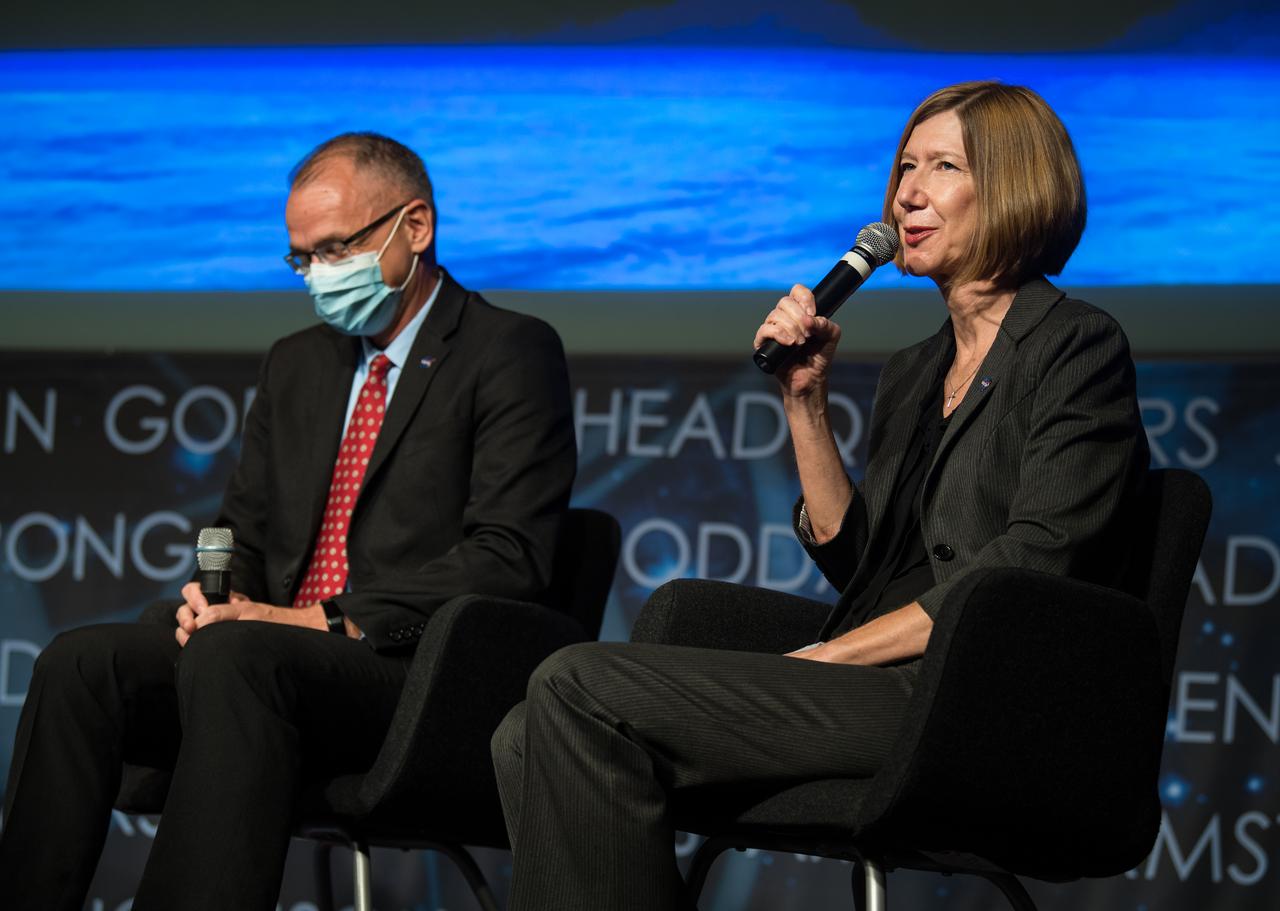
NASA Associate Administrator for the Space Operations Mission Directorate (SpaceOps), Kathy Lueders, right, speaks during a NASA town hall to discuss the reorganization of the Human Exploration and Operations Mission Directorate into two mission directorates: SpaceOps and the Exploration Systems Development Mission Directorate (ESDMD), Tuesday, Sept. 21, 2021 at the Mary W. Jackson NASA Headquarters building in Washington. As head of SpaceOps, Kathy Lueders will lead launch and space operations including the International Space Station, the commercialization of low-Earth orbit, and eventually operations on and around the Moon. Associate Administrator of ESDMD, Jim Free, left, will lead efforts to define and manage systems development for programs critical to NASA’s Artemis program and the planning of NASA’s Moon to Mars exploration. Photo Credit: (NASA/Aubrey Gemignani)
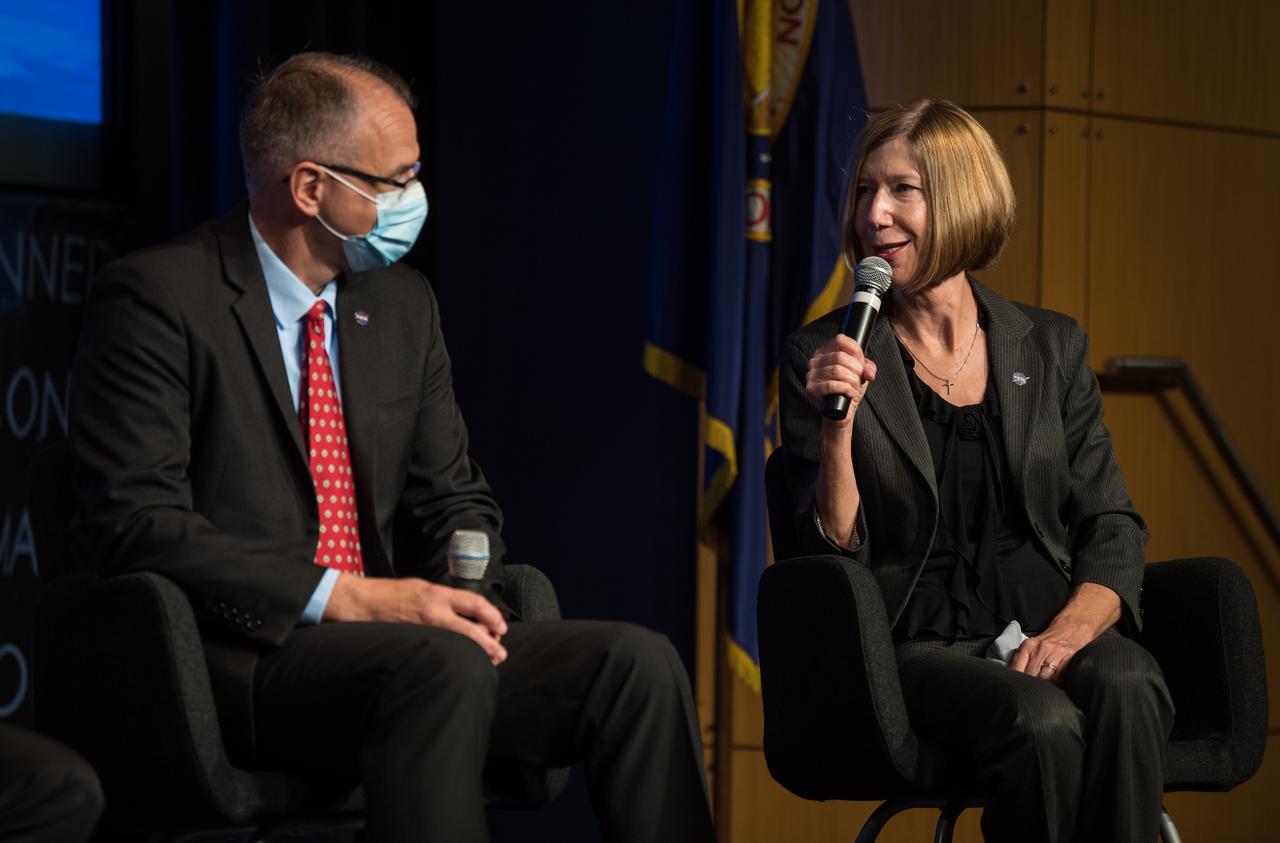
NASA Associate Administrator for the Space Operations Mission Directorate (SpaceOps), Kathy Lueders, right, speaks during a NASA town hall to discuss the reorganization of the Human Exploration and Operations Mission Directorate into two mission directorates: SpaceOps and the Exploration Systems Development Mission Directorate (ESDMD), Tuesday, Sept. 21, 2021 at the Mary W. Jackson NASA Headquarters building in Washington. As head of SpaceOps, Kathy Lueders will lead launch and space operations including the International Space Station, the commercialization of low-Earth orbit, and eventually operations on and around the Moon. Associate Administrator of ESDMD, Jim Free, left, will lead efforts to define and manage systems development for programs critical to NASA’s Artemis program and the planning of NASA’s Moon to Mars exploration. Photo Credit: (NASA/Aubrey Gemignani)
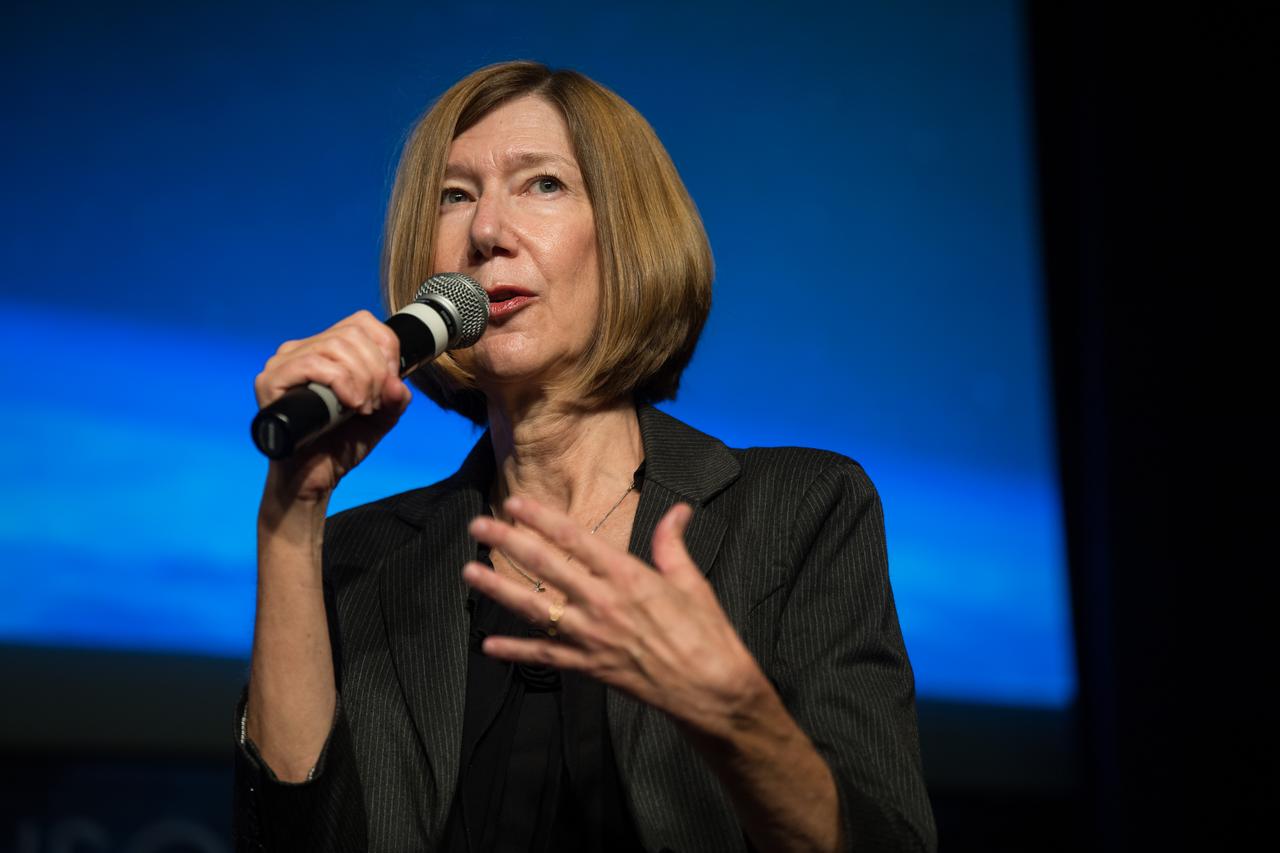
NASA Associate Administrator for the Space Operations Mission Directorate (SpaceOps), Kathy Lueders, speaks during a NASA town hall to discuss the reorganization of the Human Exploration and Operations Mission Directorate into two mission directorates: SpaceOps and the Exploration Systems Development Mission Directorate (ESDMD), Tuesday, Sept. 21, 2021 at the Mary W. Jackson NASA Headquarters building in Washington. As head of SpaceOps, Kathy Lueders will lead launch and space operations including the International Space Station, the commercialization of low-Earth orbit, and eventually operations on and around the Moon. Associate Administrator of ESDMD, Jim Free, will lead efforts to define and manage systems development for programs critical to NASA’s Artemis program and the planning of NASA’s Moon to Mars exploration. Photo Credit: (NASA/Aubrey Gemignani)
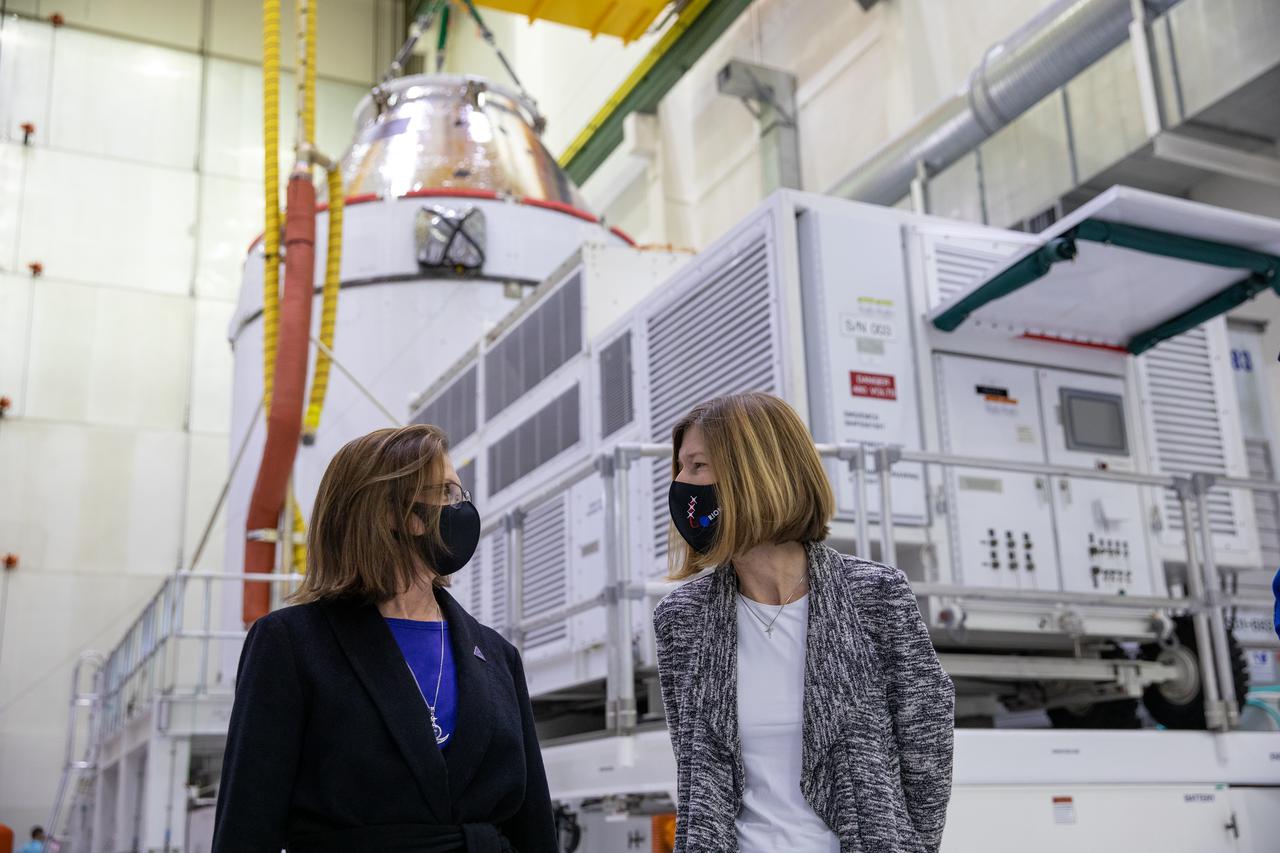
Orion is revealed for one of the final times on Jan. 14, as it is readied atop its transport pallet from the Neil Armstrong Operations and Checkout Building at NASA’s Kennedy Space Center in Florida, along its path to the pad ahead of the Artemis I launch. Viewing Orion in the high bay, from left, are Cathy Koerner, Orion Program Manager, and Kathy Lueders, associated administrator of the Human Exploration and Operations Mission Directorate. Teams across the globe have worked tirelessly to assemble the spacecraft, which will receive a protective covering prior to departing for the Multi-Payload Processing Facility to begin ground processing by the Exploration Ground Systems and Jacobs teams.
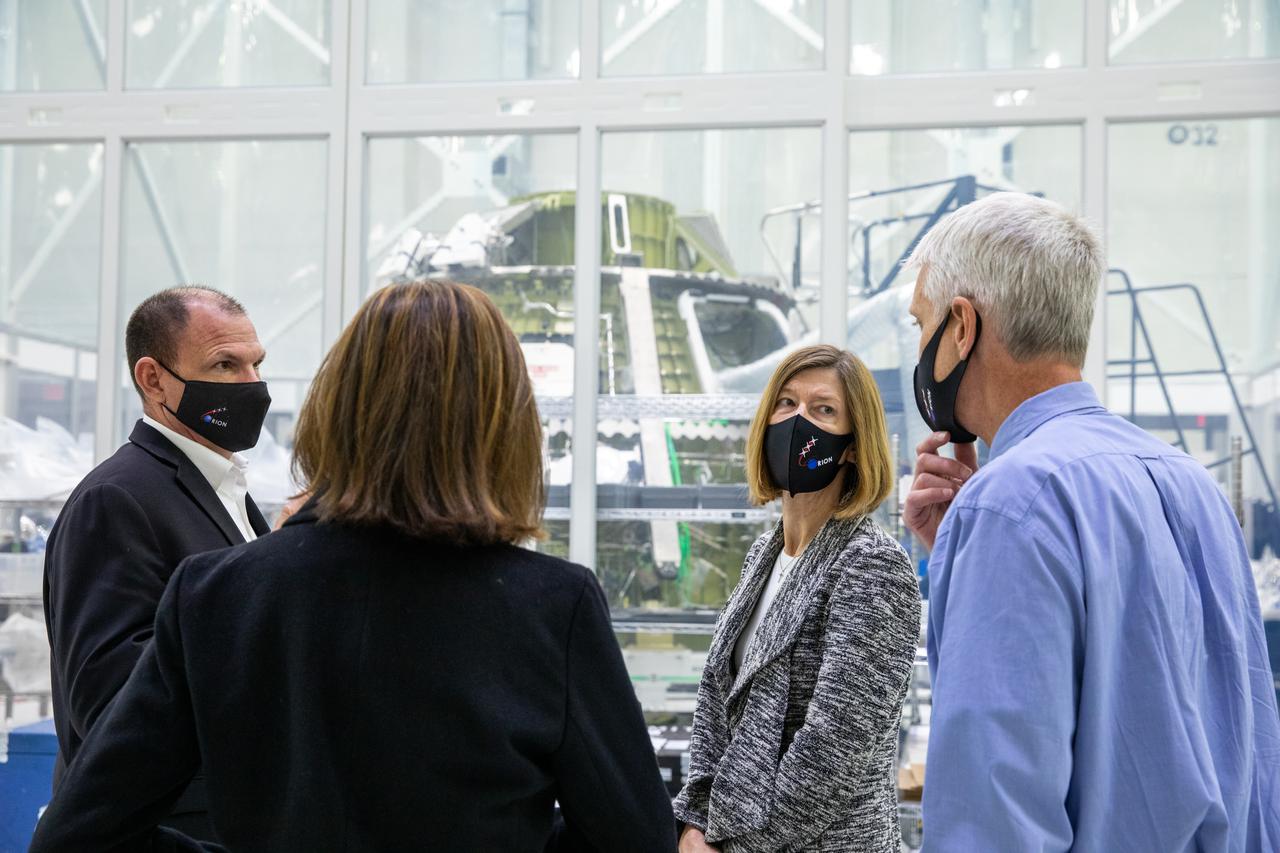
Kathy Lueders, second from right, associate administrator of the Human Exploration and Operations Mission Directorate, tours the Neil Armstrong Operations and Checkout Building high bay at NASA’s Kennedy Space Center in Florida on Jan. 14, 2021. In the background is the Orion crew module for the Artemis II mission. From left are Tony Antonelli, Lockheed Martin Orion Program director and Artemis II Mission director; Cathy Koerner, Orion Program manager; and Scott Wilson, Orion Production Operations manager. The group also viewed the Orion spacecraft for Artemis I as it was lowered onto a transporter for the move to the Multi-Payload Processing Facility to begin ground processing by the Exploration Ground Systems and Jacobs teams.
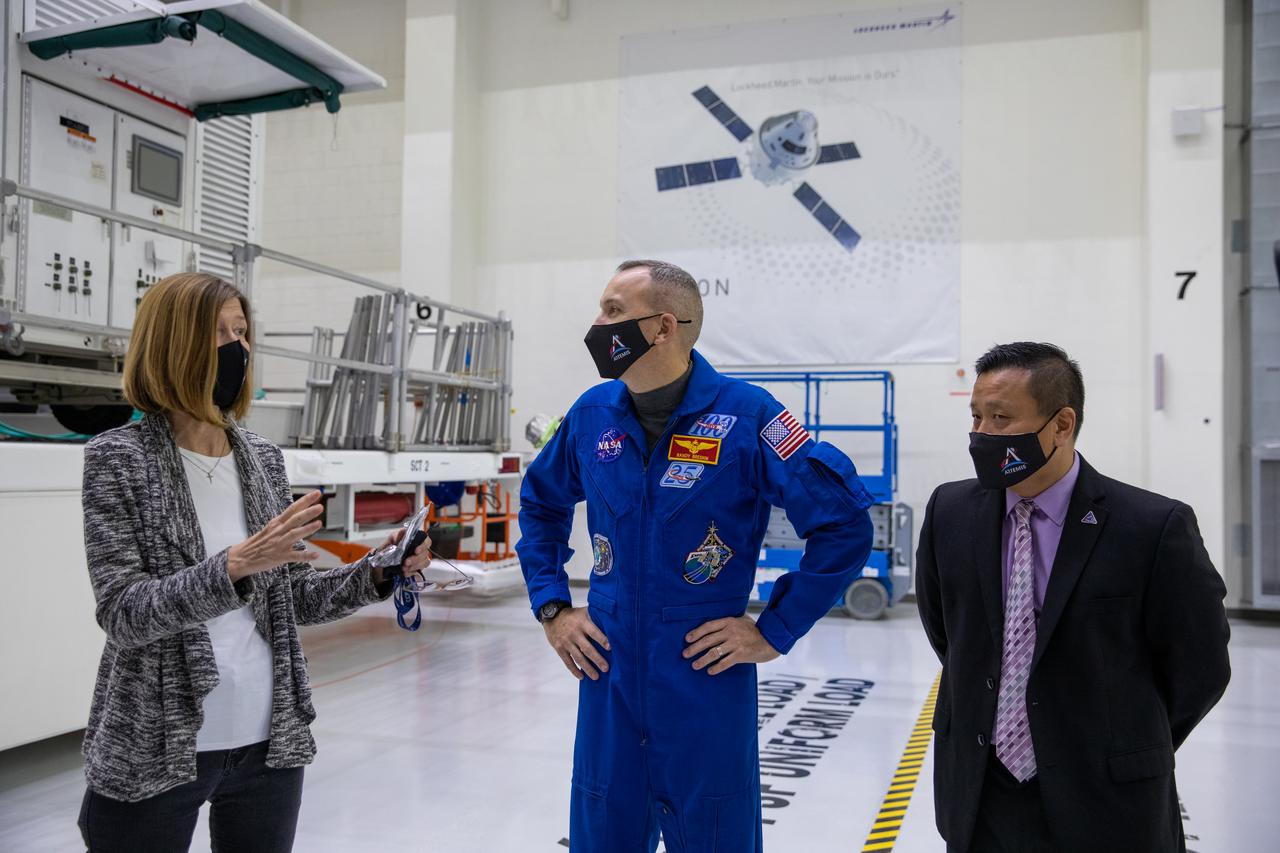
Orion is revealed for one of the final times on Jan. 14, as it is readied atop its transport pallet from the Neil Armstrong Operations and Checkout Building at NASA’s Kennedy Space Center in Florida, along its path to the pad ahead of the Artemis I launch. Touring the high bay, from left, are Kathy Lueders, associate administrator of the Human Exploration and Operations Mission Directorate, NASA astronaut Randy Bresnik, and Howard Hu, Orion Deputy Program manager. Teams across the globe have worked tirelessly to assemble the spacecraft, which will receive a protective covering prior to departing for the Multi-Payload Processing Facility to begin ground processing by the Exploration Ground Systems and Jacobs teams.
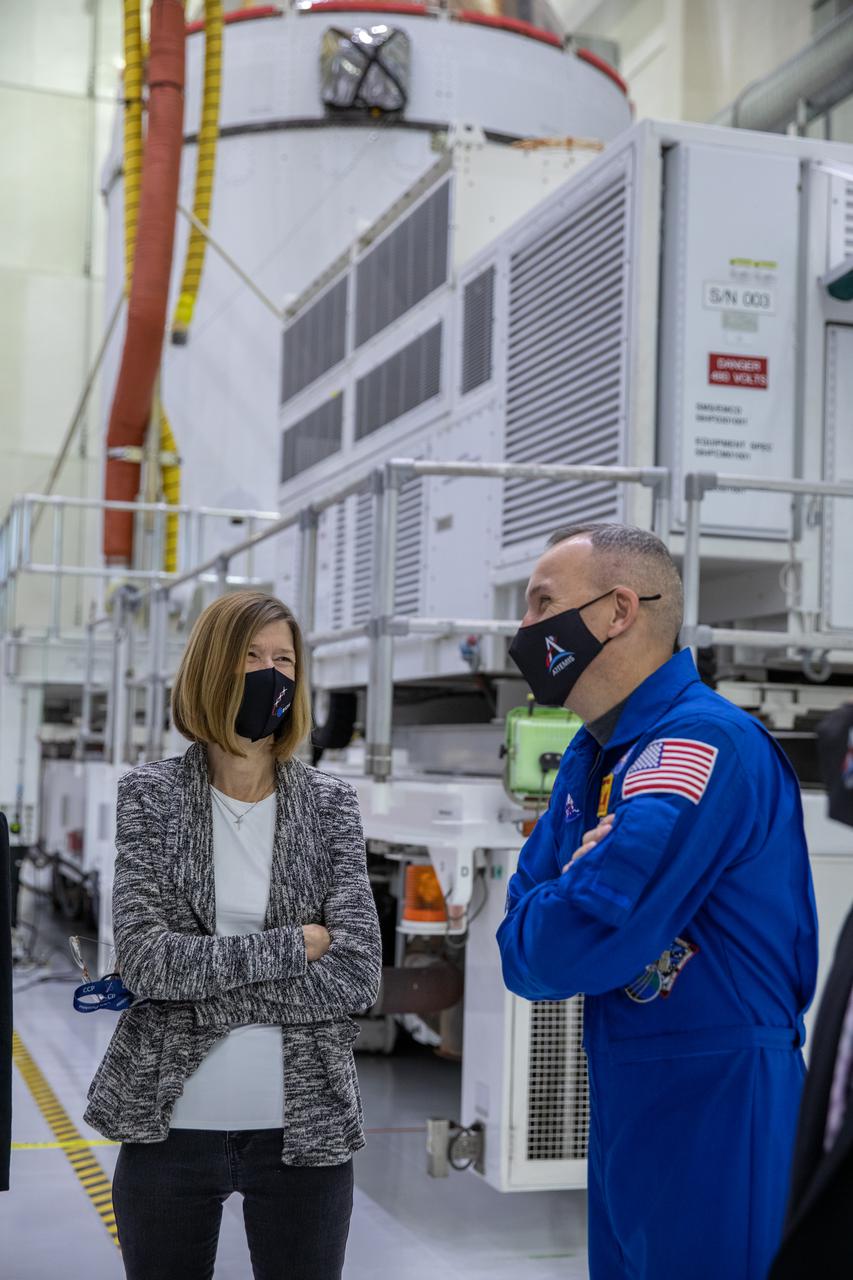
Orion is revealed for one of the final times on Jan. 14, as it is readied atop its transport pallet from the Neil Armstrong Operations and Checkout Building at NASA’s Kennedy Space Center in Florida, along its path to the pad ahead of the Artemis I launch. Touring the high bay, from left, are Kathy Lueders, associate administrator of the Human Exploration and Operations Mission Directorate, and NASA astronaut Randy Bresnik. Teams across the globe have worked tirelessly to assemble the spacecraft, which will receive a protective covering prior to departing for the Multi-Payload Processing Facility to begin ground processing by the Exploration Ground Systems and Jacobs teams.
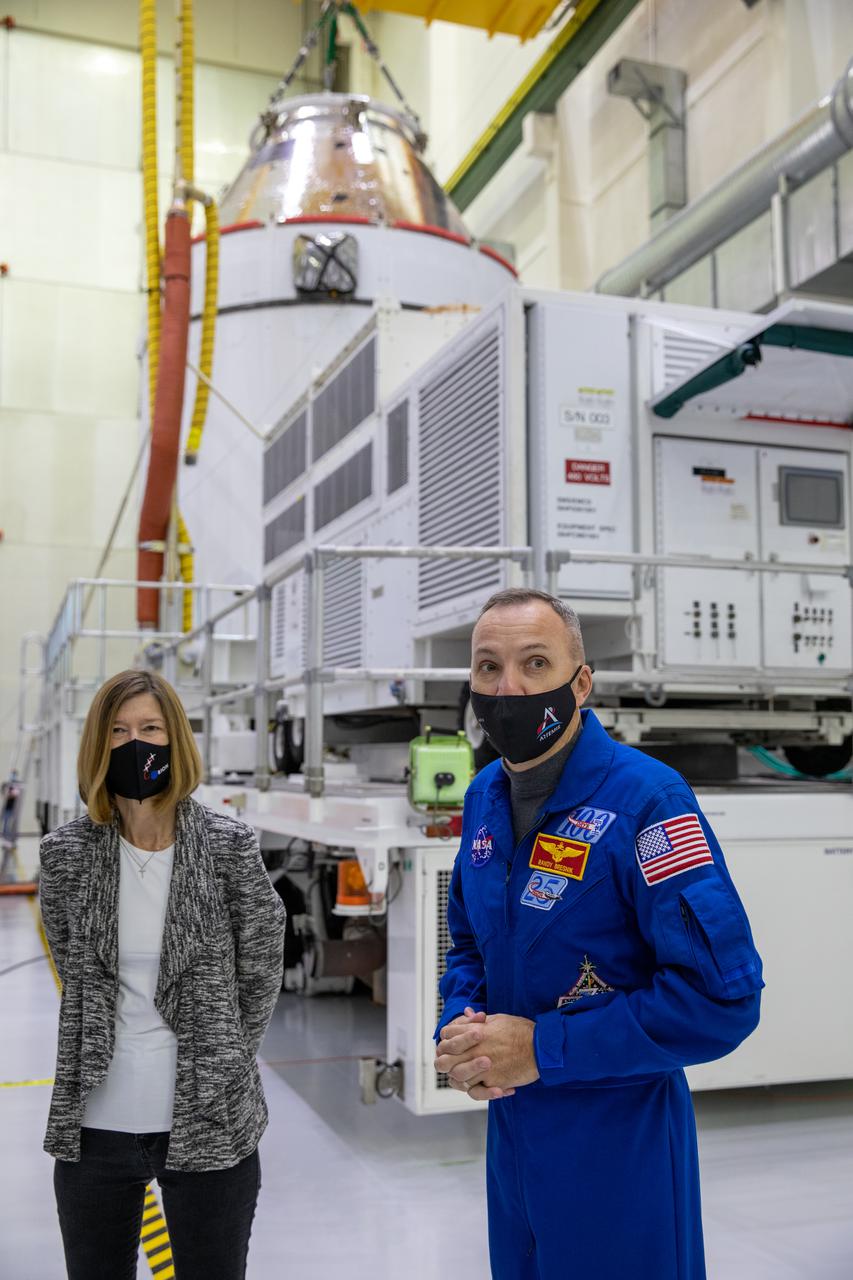
Orion is revealed for one of the final times on Jan. 14, as it is readied atop its transport pallet from the Neil Armstrong Operations and Checkout Building at NASA’s Kennedy Space Center in Florida, along its path to the pad ahead of the Artemis I launch. Viewing Orion in the high bay, from left, are Kathy Lueders, associate administrator of the Human Exploration and Operations Mission Directorate, and NASA astronaut Randy Bresnik. Teams across the globe have worked tirelessly to assemble the spacecraft, which will receive a protective covering prior to departing for the Multi-Payload Processing Facility to begin ground processing by the Exploration Ground Systems and Jacobs teams.
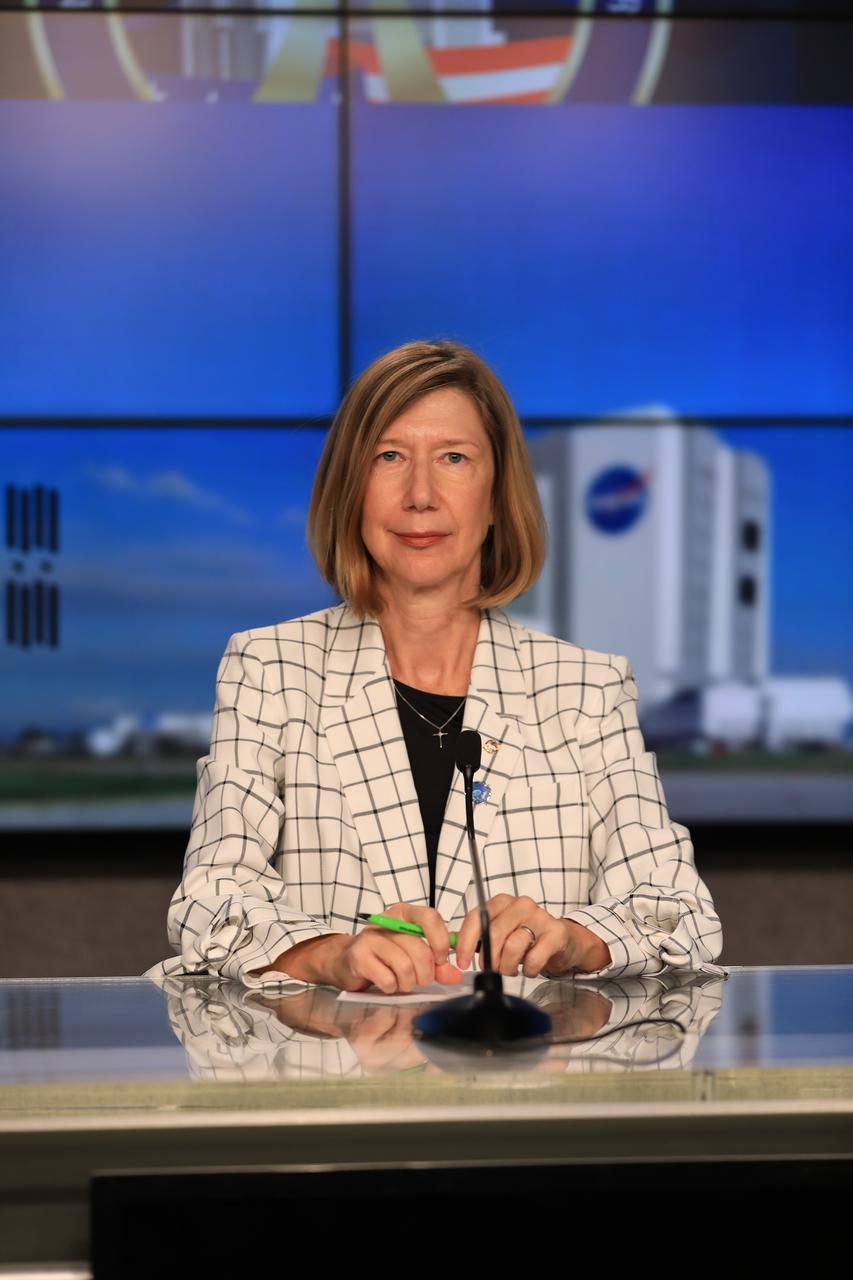
Kathy Lueders, associate administrator, Human Exploration and Operations Mission Directorate, NASA Headquarters, participates in a preflight briefing for NASA’s SpaceX Crew-1 mission on Sept. 29, 2020. NASA’s SpaceX Crew-1 mission is the first crew rotational flight of a U.S. commercial spacecraft with astronauts to the International Space Station. The Crew-1 mission will launch from Launch Complex 39A at Kennedy Space Center in Florida. Crew-1 is part of NASA's Commercial Crew Program, which has returned human spaceflight capabilities to the U.S.
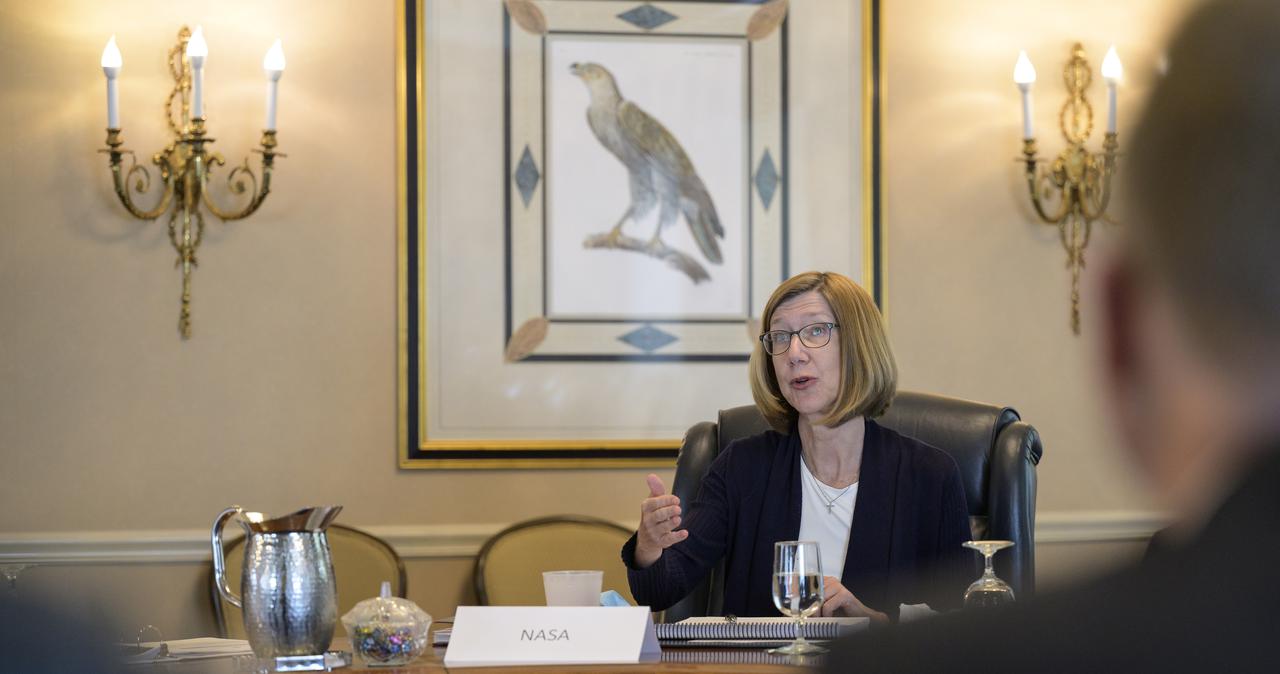
NASA Associate Administrator for Human Exploration and Operations Kathy Lueders meets with Dr. Walther Pelzer, Member of the German Aerospace Center (DLR) Executive Board, Head of the German Space Agency at DLR in a bilateral meeting during the 36th Space Symposium, Monday, Aug. 23, 2021, in Colorado Springs, Colorado. Photo Credit: (NASA/Bill Ingalls)
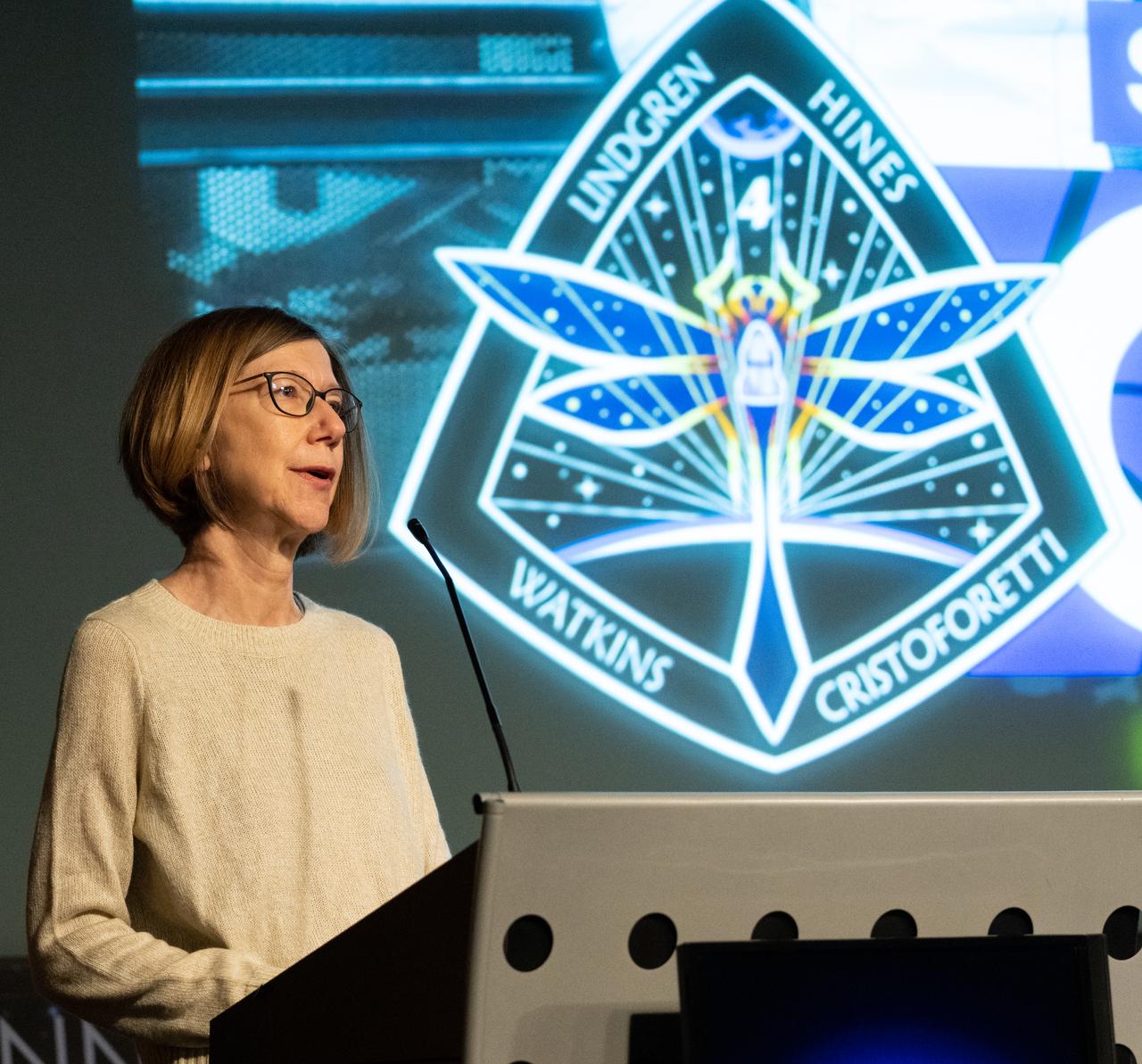
Kathy Lueders, associate administrator for NASA's Space Operations Mission Directorate, speaks at an employee engagement event with NASA’s SpaceX Crew-4 astronauts, Tuesday, March 28, 2023, at the Mary W. Jackson NASA Headquarters building in Washington. NASA astronauts Kjell Lindgren, Robert Hines, and Jessica Watkins spent 170 days in space as part of Expeditions 67 and 68 aboard the International Space Station. Photo Credit: (NASA/Joel Kowsky)
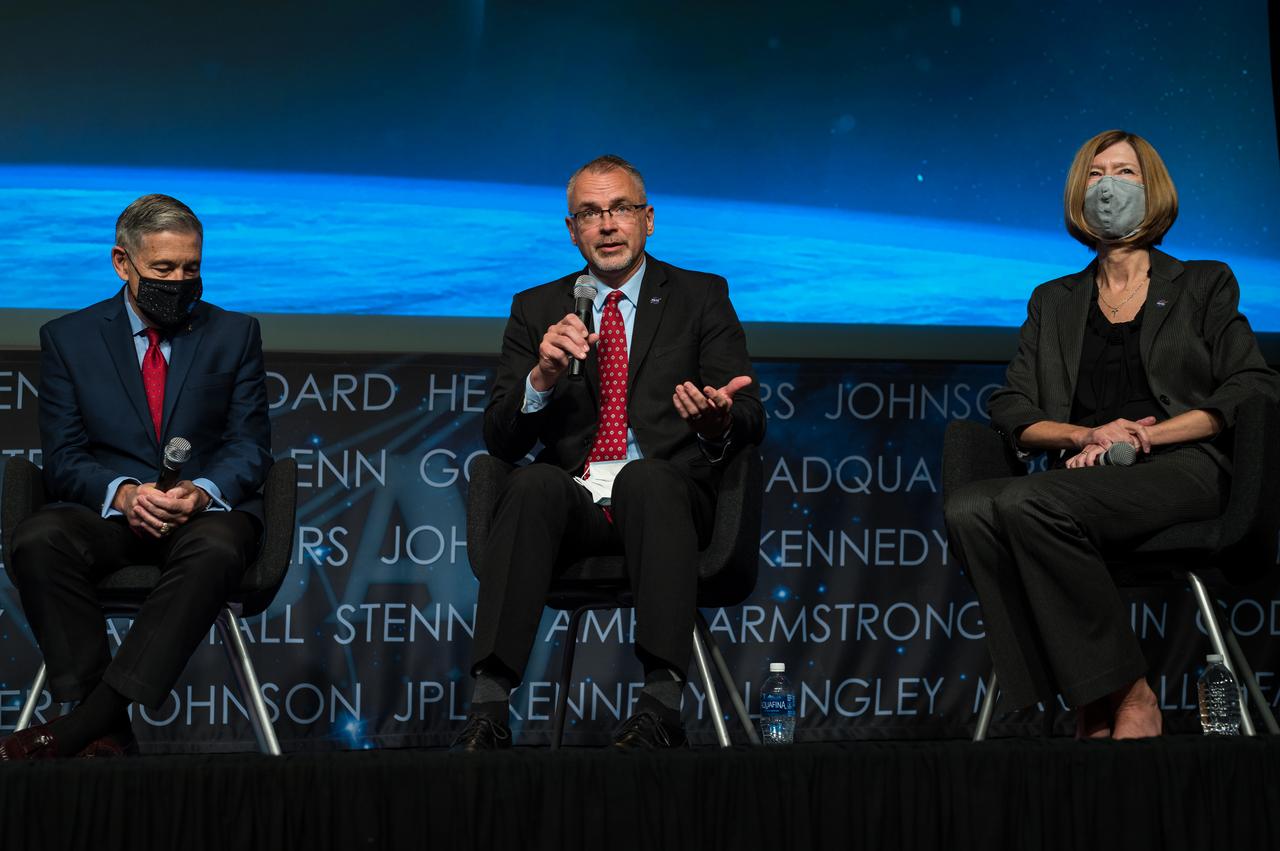
NASA Associate Administrator for the Exploration Systems Development Mission Directorate (ESDMD), Jim Free, speaks alongside NASA Associate Administrator Bob Cabana, left, and NASA Associate Administrator for Space Operations Mission Directorate (SpaceOps), Kathy Lueders, right, during a NASA town hall to discuss the reorganization of the Human Exploration and Operations Mission Directorate into two mission directorates: ESDMD and SpaceOps, Tuesday, Sept. 21, 2021 at the Mary W. Jackson NASA Headquarters building in Washington. Lueders will lead launch and space operations including the International Space Station, the commercialization of low-Earth orbit, and eventually operations on and around the Moon. Free will lead efforts to define and manage systems development for programs critical to NASA’s Artemis program and the planning of NASA’s Moon to Mars exploration. Photo Credit: (NASA/Aubrey Gemignani)
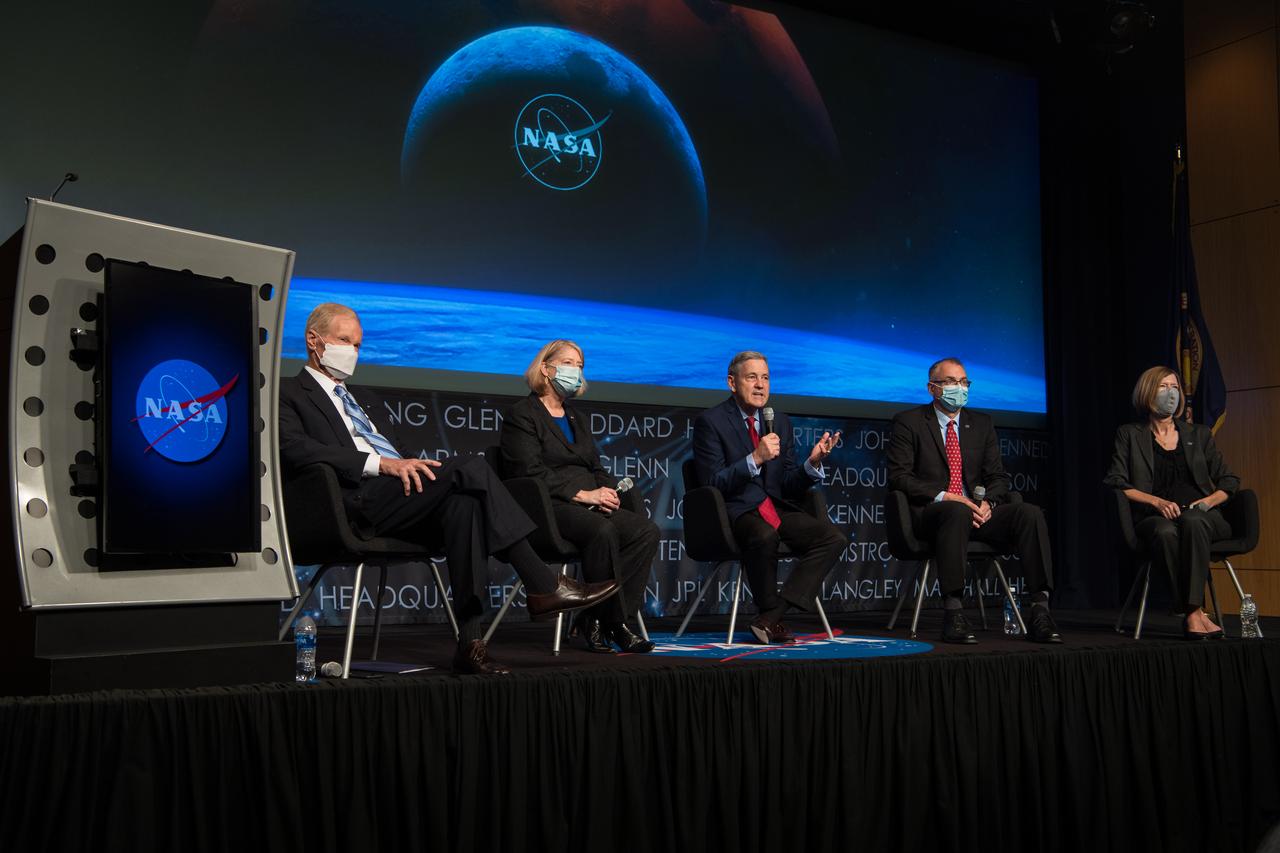
Panelists are seen from left to right, NASA Administrator Bill Nelson; NASA Deputy Administrator Pam Melroy; NASA Associate Administrator Bob Cabana; NASA Associate Administrator for the Exploration Systems Development Mission Directorate (ESDMD), Jim Free; and NASA Associate Administrator for the Space Operations Mission Directorate (SpaceOps), Kathy Lueders, during a NASA town hall to discuss the reorganization of the Human Exploration and Operations Mission Directorate into two mission directorates: ESDMD and SpaceOps, Tuesday, Sept. 21, 2021 at the Mary W. Jackson NASA Headquarters building in Washington. Kathy Lueders will lead SpaceOps in launch and space operations including the International Space Station, the commercialization of low-Earth orbit, and eventually operations on and around the Moon. Jim Free will lead ESDMD to define and manage systems development for programs critical to NASA’s Artemis program and in the planning of NASA’s Moon to Mars exploration. Photo Credit: (NASA/Aubrey Gemignani)
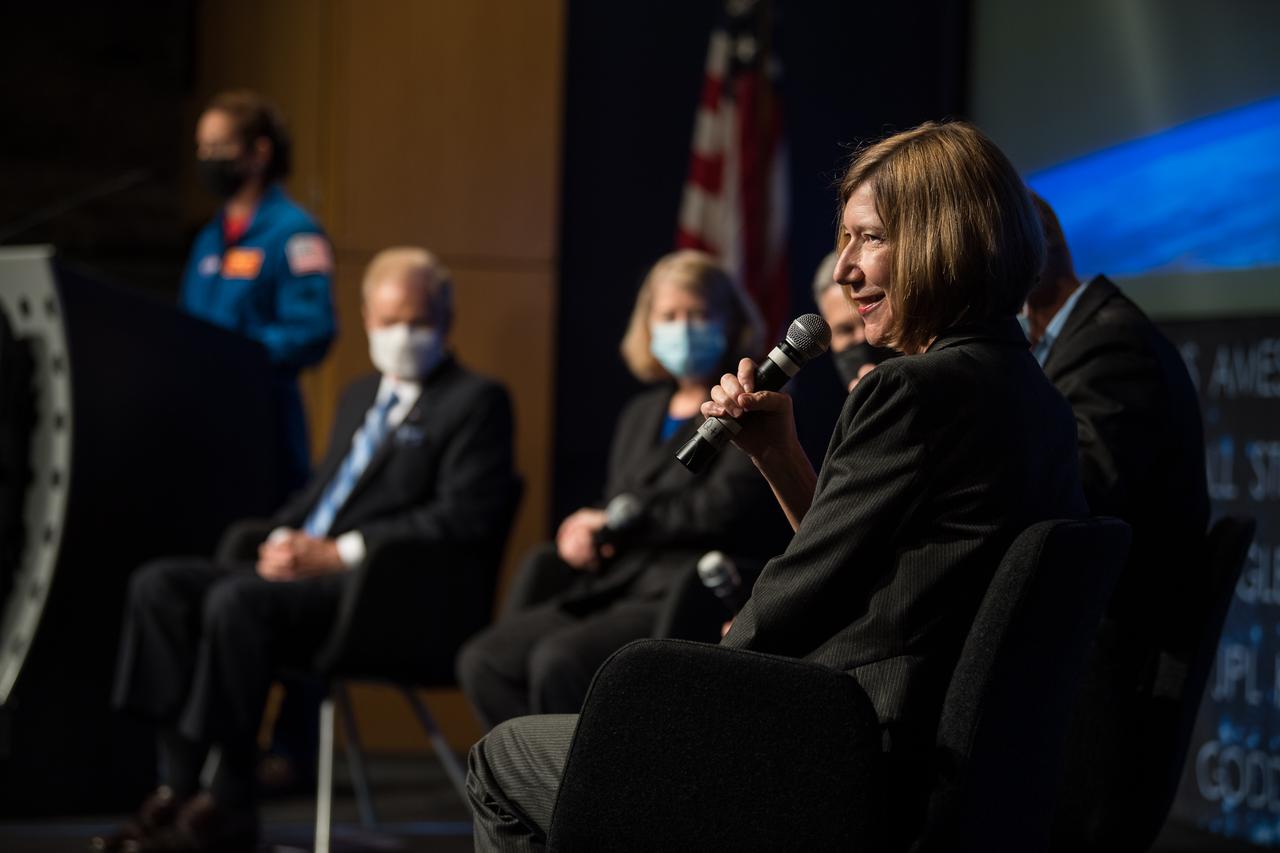
NASA Associate Administrator for the Space Operations Mission Directorate (SpaceOps), Kathy Lueders, speaks during a NASA town hall to discuss the reorganization of the Human Exploration and Operations Mission Directorate into two mission directorates: SpaceOps and the Exploration Systems Development Mission Directorate (ESDMD), Tuesday, Sept. 21, 2021 at the Mary W. Jackson NASA Headquarters building in Washington. As head of SpaceOps, Kathy Lueders will lead launch and space operations including the International Space Station, the commercialization of low-Earth orbit, and eventually operations on and around the Moon. Associate Administrator of ESDMD, Jim Free, will lead efforts to define and manage systems development for programs critical to NASA’s Artemis program and the planning of NASA’s Moon to Mars exploration. Photo Credit: (NASA/Aubrey Gemignani)
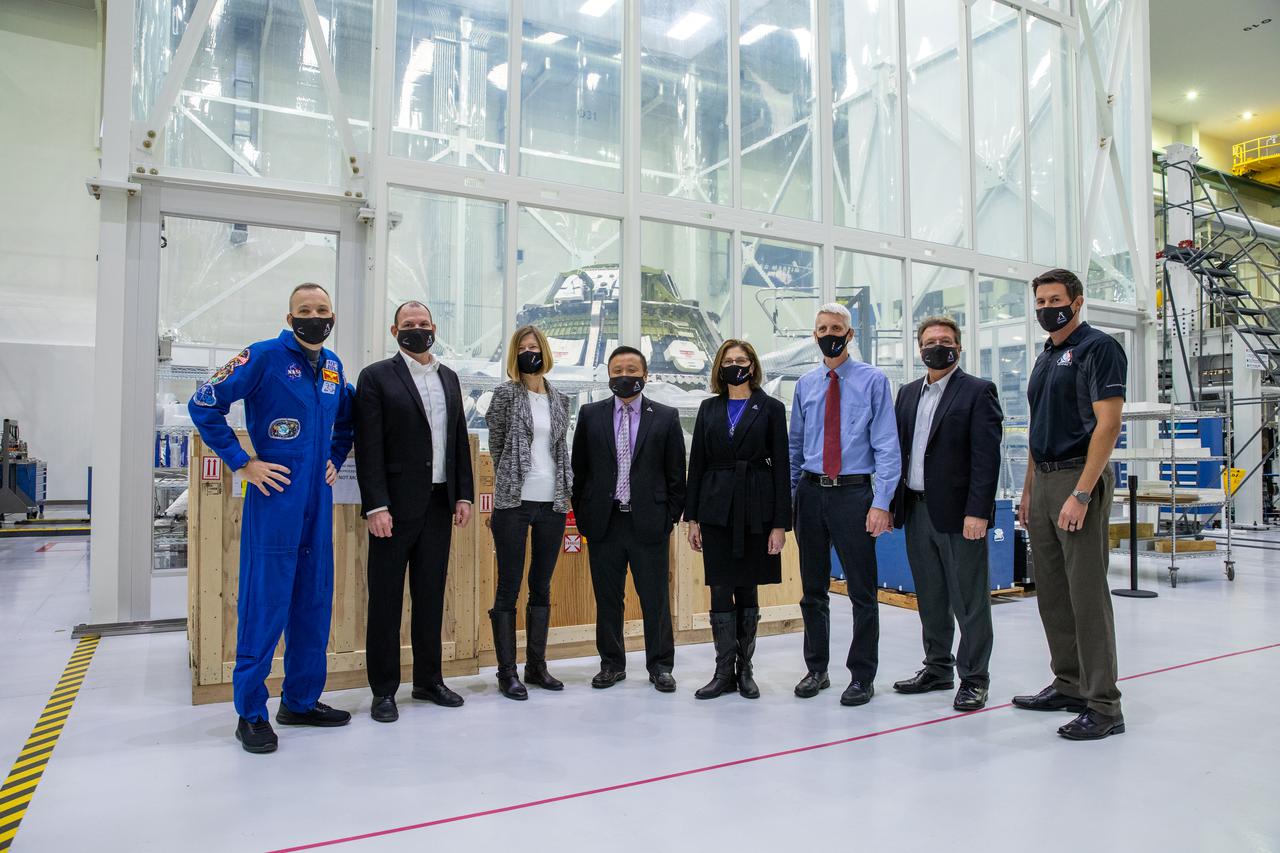
Kathy Lueders, third from left, associate administrator of the Human Exploration and Operations Mission Directorate, tours the Neil Armstrong Operations and Checkout Building high bay at NASA’s Kennedy Space Center in Florida on Jan. 14, 2021. In the background is the Orion crew module for the Artemis II mission. From left are NASA astronaut Randy Bresnik; Tony Antonelli, Lockheed Martin Orion Program director and Artemis II Mission director; Howard Hu, Orion deputy program manager; Cathy Koerner, Orion Program manager; Scott Wilson, Orion Production Operations manager; Jules Schneider, Lockheed Martin director of Orion Assembly, Test and Launch Operations at Kennedy; and Nathan Varn, Lockheed Martin Production Control director. The group also viewed the Orion spacecraft for Artemis I as it was lowered onto a transporter for the move to the Multi-Payload Processing Facility to begin ground processing by the Exploration Ground Systems and Jacobs teams.
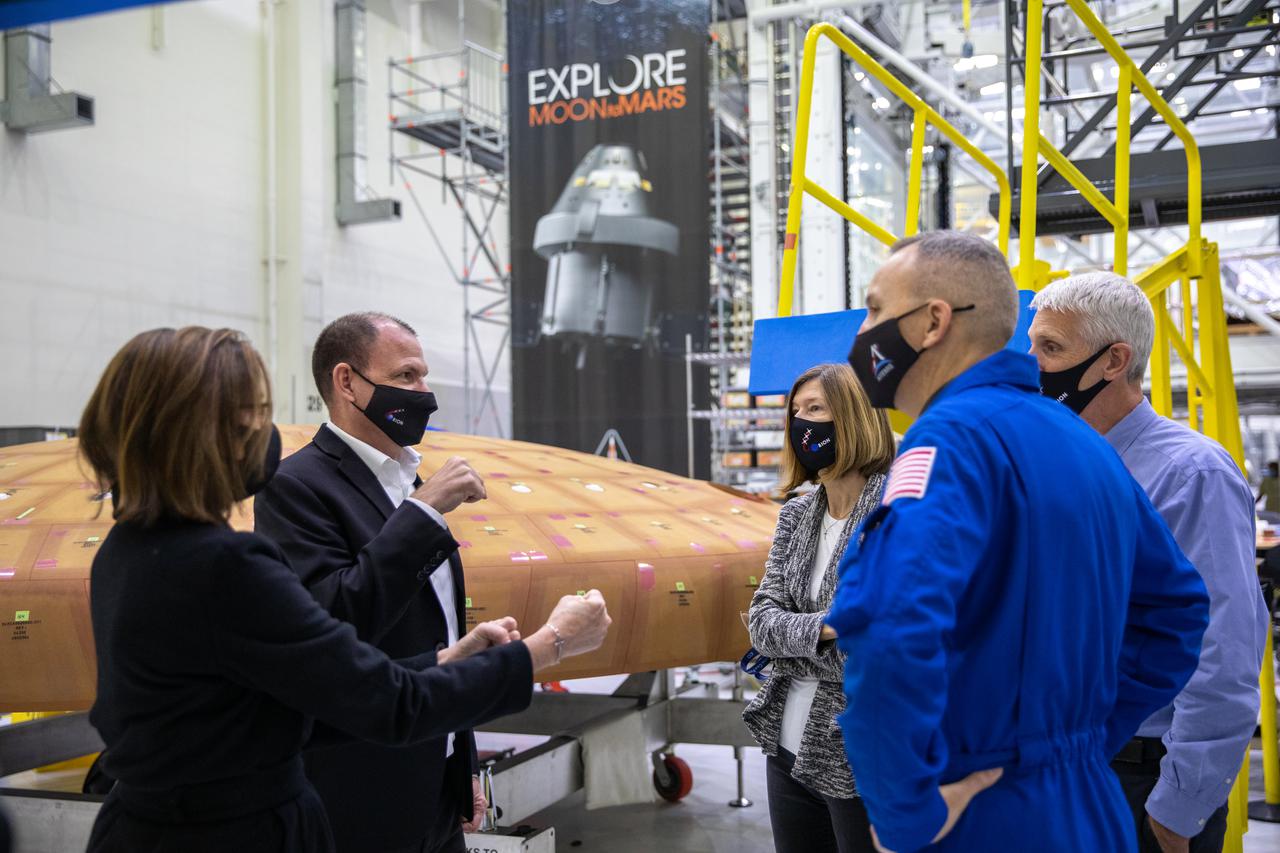
Kathy Lueders, third from right, associate administrator of the Human Exploration and Operations Mission Directorate, tours the Neil Armstrong Operations and Checkout Building high bay at NASA’s Kennedy Space Center in Florida on Jan. 14, 2021. In the background is the heat shield for the Orion crew module for the Artemis II mission. From left are Cathy Koerner, Orion Program manager; Tony Antonelli, Lockheed Martin Orion Program director and Artemis II Mission director; NASA astronaut Randy Bresnik; and Scott Wilson, Orion Production Operations manager. The group also viewed the Orion spacecraft for Artemis I as it was lowered onto a transporter for the move to the Multi-Payload Processing Facility to begin ground processing by the Exploration Ground Systems and Jacobs teams.
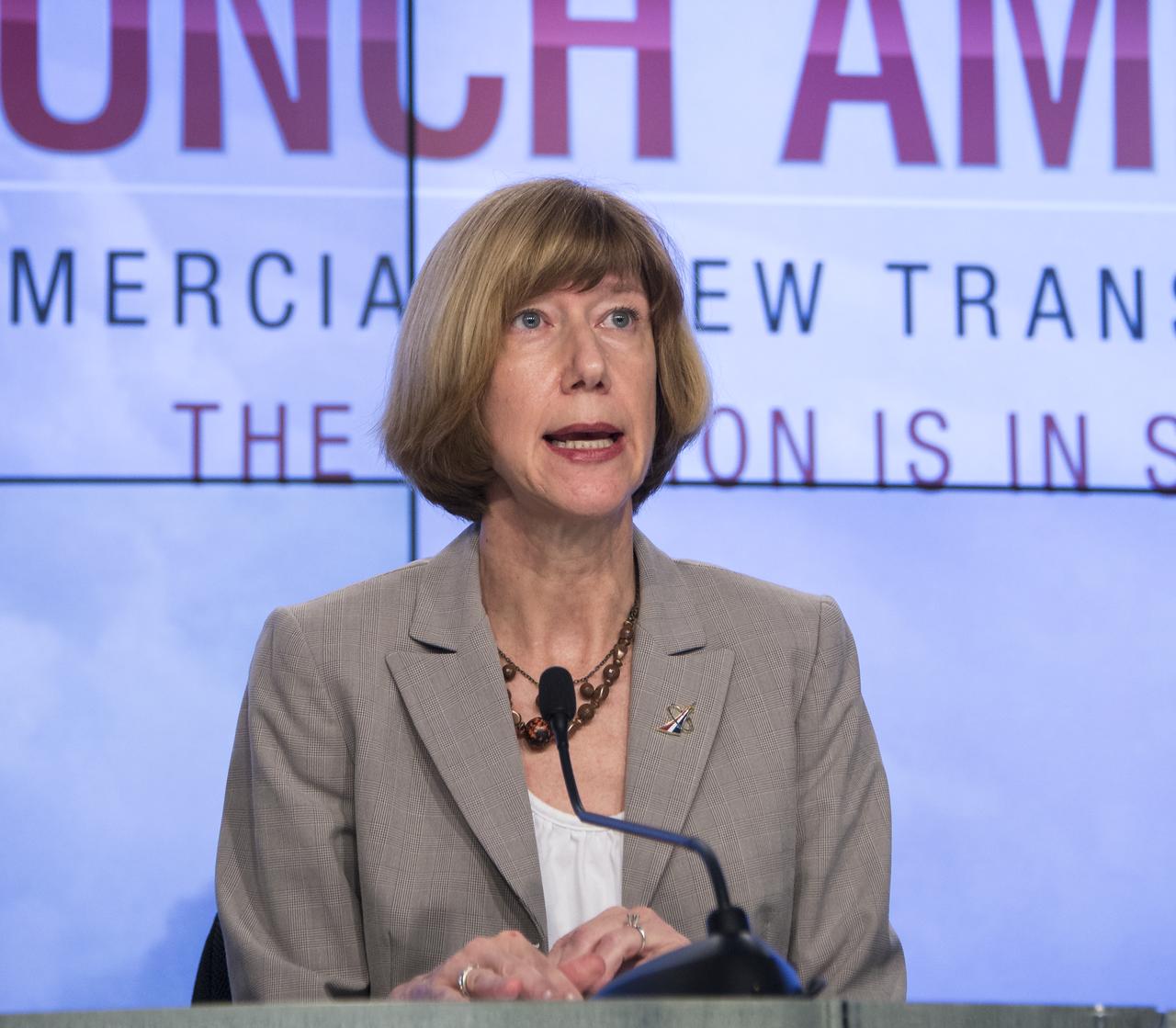
Kathy Lueders, program manager of NASA's Commercial Crew Program, speaks during a news conference where it was announced that Boeing and SpaceX have been selected to transport U.S. crews to and from the International Space Station using the Boeing CST-100 and the SpaceX Crew Dragon spacecraft, at NASA’s Kennedy Space Center in Cape Canaveral, Fla. on Tuesday, Sept. 16, 2014. These Commercial Crew Transportation Capability (CCtCap) contracts are designed to complete the NASA certification for a human space transportation system capable of carrying people into orbit. Once certification is complete, NASA plans to use these systems to transport astronauts to the space station and return them safely to Earth. Photo Credit: (NASA/Bill Ingalls)
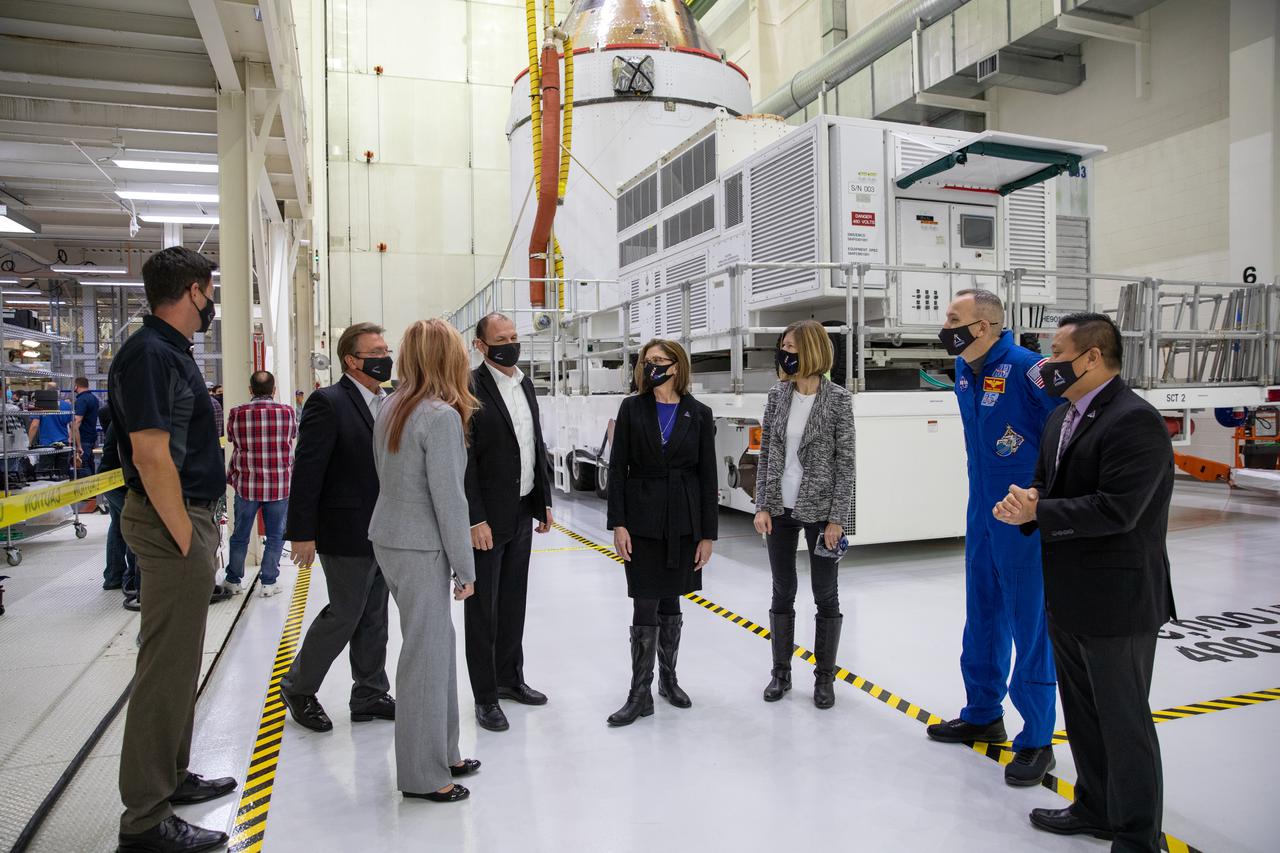
Orion is revealed for one of the final times on Jan. 14, as it is readied atop its transport pallet from the Neil Armstrong Operations and Checkout Building at NASA’s Kennedy Space Center in Florida, along its path to the pad ahead of the Artemis I launch. Inside the high bay, from left, are Nathan Varn, Lockheed Martin Production Control director; Jules Schneider, Lockheed Martin director of Orion Assembly, Test and Launch Operations at Kennedy; Kelly DeFazio, Lockheed Martin Orion Program director for production operations; Tony Antonelli, Lockheed Martin Orion Program director and Artemis II Mission director; Cathy Koerner, Orion Program manager; Kathy Lueders, associate administrator of the Human Exploration and Operations Mission Directorate; astronaut Randy Bresnik; and Howard Hu, Orion deputy program manager. Teams across the globe have worked tirelessly to assemble the spacecraft, which will receive a protective covering prior to departing for the Multi-Payload Processing Facility to begin ground processing by the Exploration Ground Systems and Jacobs teams.
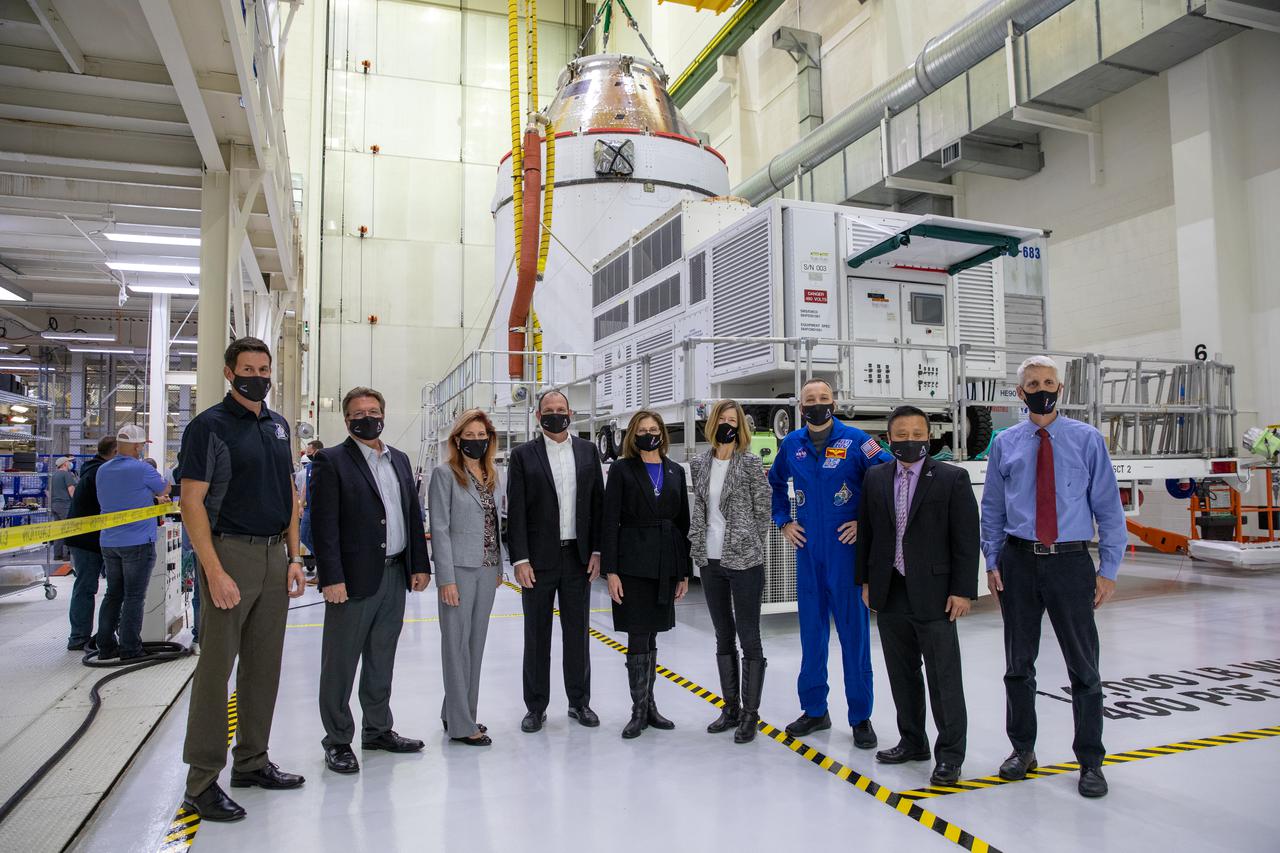
Orion is revealed for one of the final times on Jan. 14, as it is moved by crane to its transport pallet inside the Neil Armstrong Operations and Checkout Building at NASA’s Kennedy Space Center in Florida, along its path to the pad ahead of the Artemis I launch. Standing near Orion, from left, are Nathan Varn, Lockheed Martin Production Control director; Jules Schneider, Lockheed Martin Director of Orion Assembly, Test and Launch at Kennedy; Kelly DeFazio, Lockheed Martin Orion Program director for production operations; Tony Antonelli, Lockheed Martin Orion Program director and Artemis II mission director; Cathy Koerner, Orion Program manager; Kathy Lueders, associate administrator of the Human Exploration and Operations Mission Directorate; NASA astronaut Randy Bresnik; Howard Hu Orion Program deputy manager; and Scott Wilson, Orion Production Office manager. Teams across the globe have worked tirelessly to assemble the spacecraft, which will receive a protective covering prior to departing for the Multi-Payload Processing Facility to begin ground processing by the Exploration Ground Systems and Jacobs teams.
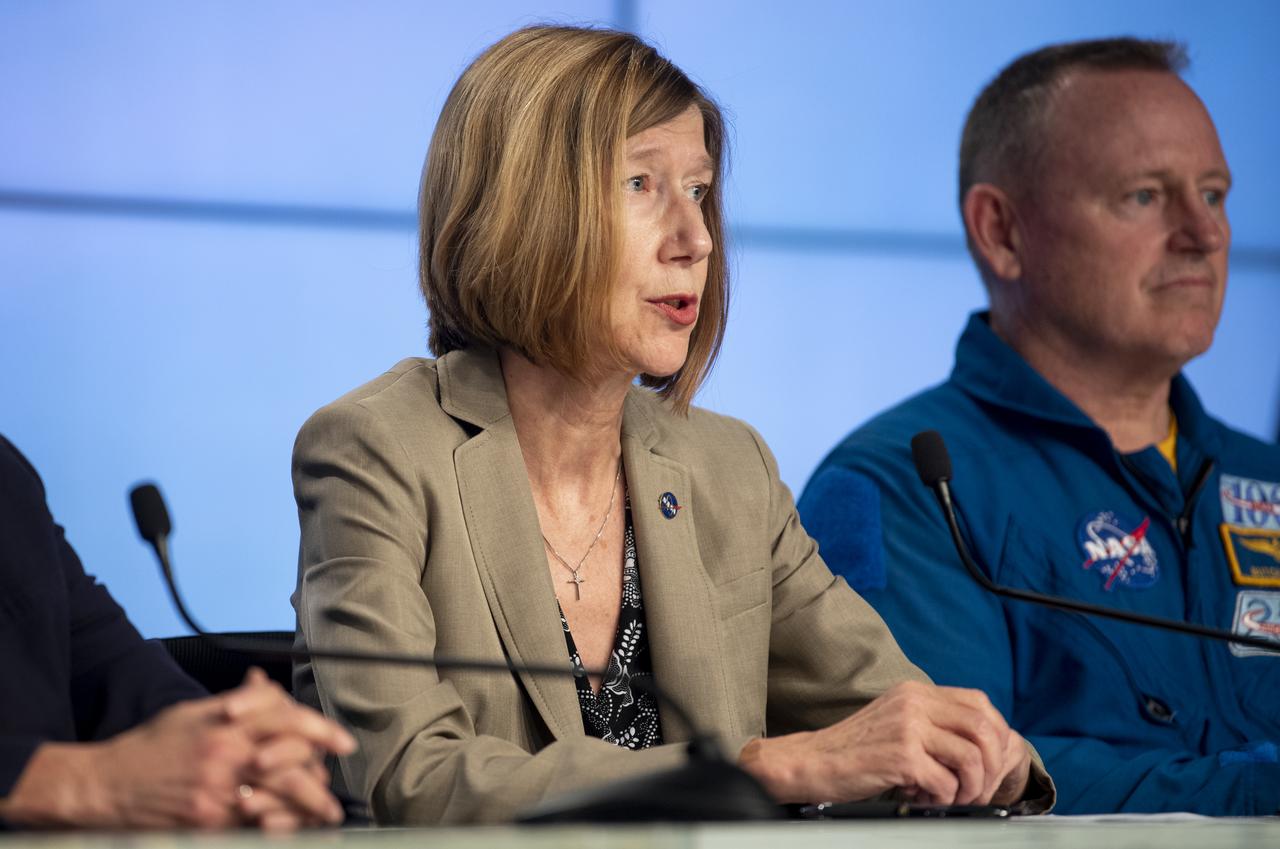
Kathy Lueders, associate administrator for NASA's Space Operations Mission Directorate, deliver remarks during a press conference ahead of the launch of Boeing’s Starliner spacecraft aboard a United Launch Alliance Atlas V rocket, Wednesday, May 18, 2022, at NASA’s Kennedy Space Center in Florida. Boeing’s Orbital Flight Test-2 will be Starliner’s second uncrewed flight test and will dock to the International Space Station as part of NASA's Commercial Crew Program. The mission, currently targeted for launch on 6:54 p.m. ET on May 19, will serve as an end-to-end test of the system's capabilities. Photo Credit: (NASA/Joel Kowsky)
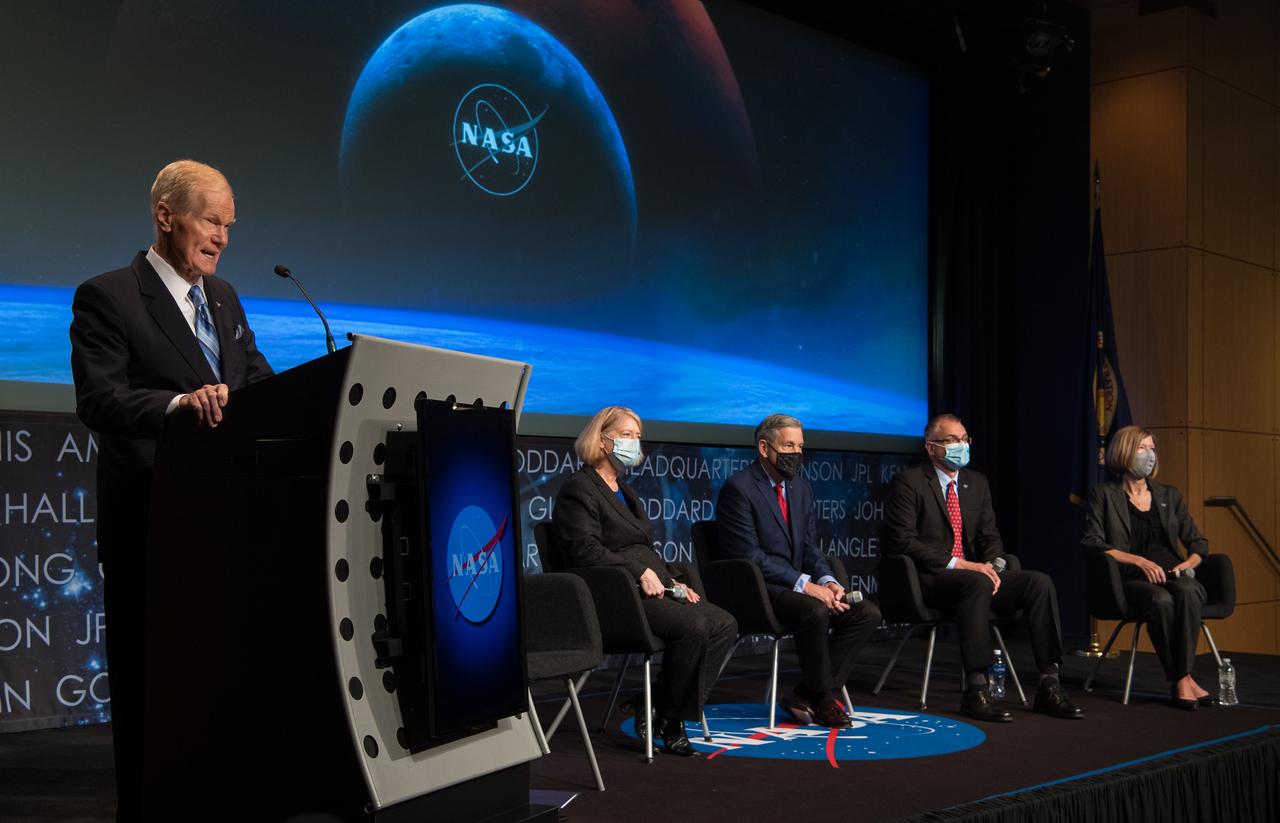
NASA Administrator Bill Nelson speaks during a NASA town hall to discuss the reorganization of the Human Exploration and Operations Mission Directorate into two mission directorates: Exploration Systems Development Mission Directorate (ESDMD) and Space Operations Mission Directorate (SpaceOps), Tuesday, Sept. 21, 2021 at the Mary W. Jackson NASA Headquarters building in Washington. Panelists were from left to right, NASA Deputy Administrator Pam Melroy; NASA Associate Administrator Bob Cabana; NASA Associate Administrator for the Exploration Systems Development Mission Directorate (ESDMD), Jim Free; and NASA Associate Administrator for the Space Operations Mission Directorate (SpaceOps), Kathy Lueders. Photo Credit: (NASA/Aubrey Gemignani)
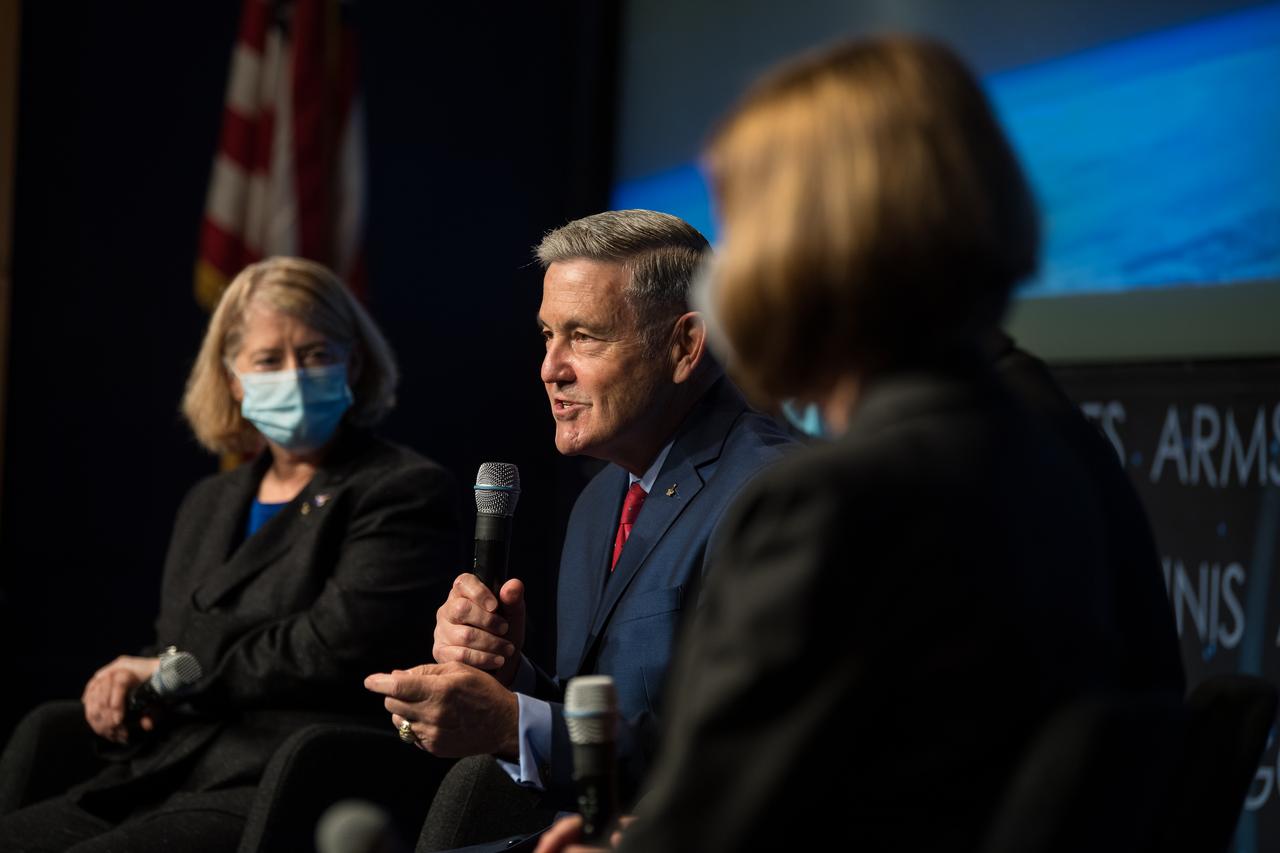
NASA Associate Administrator Bob Cabana speaks during a NASA town hall to discuss the reorganization of the Human Exploration and Operations Mission Directorate into two mission directorates: Exploration Systems Development Mission Directorate (ESDMD) and Space Operations Mission Directorate (SpaceOps), Tuesday, Sept. 21, 2021 at the Mary W. Jackson NASA Headquarters building in Washington. NASA Associate Administrator for SpaceOps, Kathy Lueders, will lead launch and space operations including the International Space Station, the commercialization of low-Earth orbit, and eventually operations on and around the Moon. NASA Associate Administrator for the ESDMD, Jim Free, will lead efforts to define and manage systems development for programs critical to NASA’s Artemis program and the planning of NASA’s Moon to Mars exploration. Photo Credit: (NASA/Aubrey Gemignani)
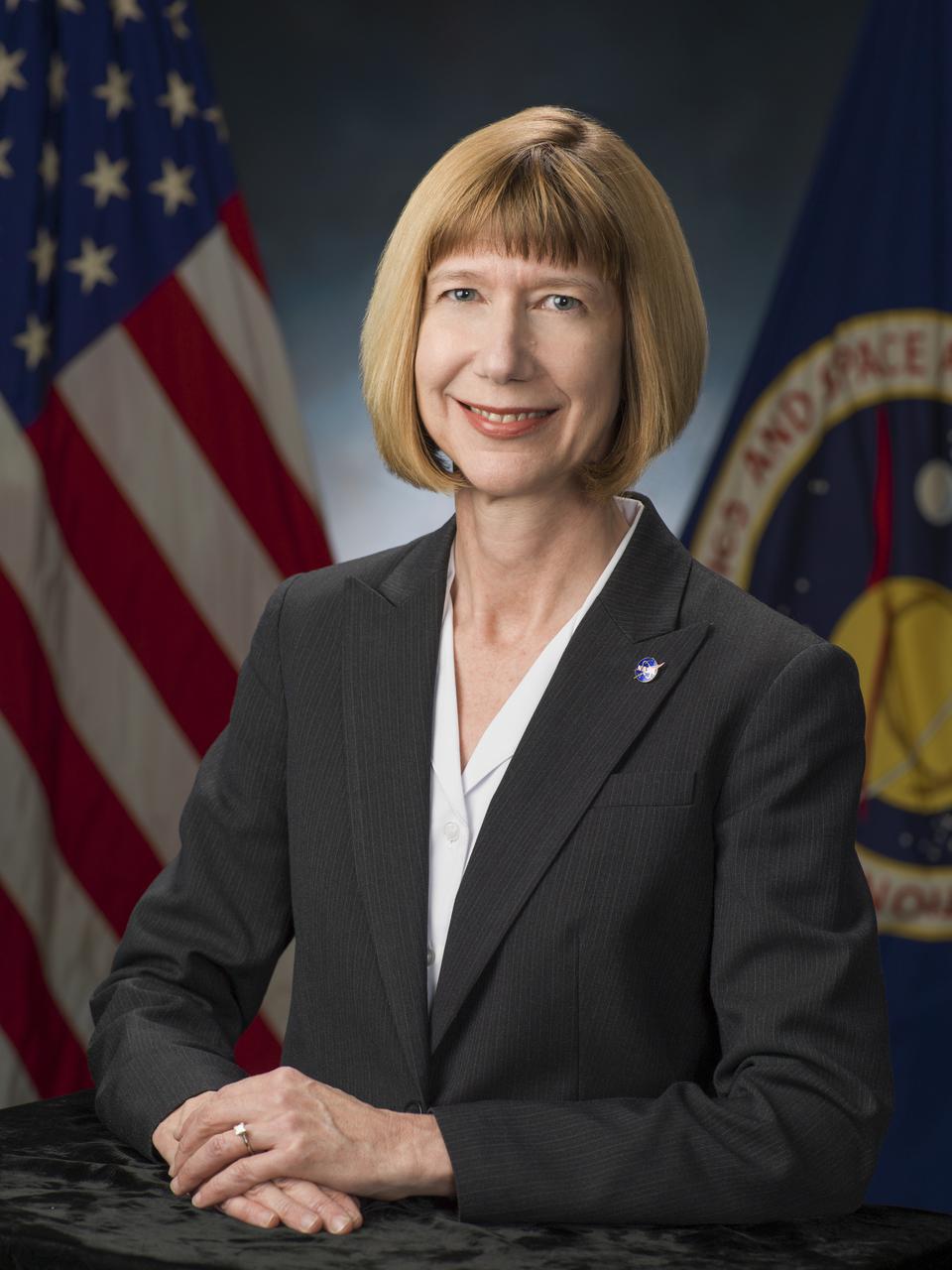
JOHNSON SPACE CENTER, Houston, Texas -- JSC2013-E-013609 -- Official portrait of Kathy Lueders, deputy manager of NASA's Commercial Crew Program at the agency's Johnson Space Center in Houston. To learn more about Lueders, go to http:__go.nasa.gov_107SaBn. Photo credit: NASA
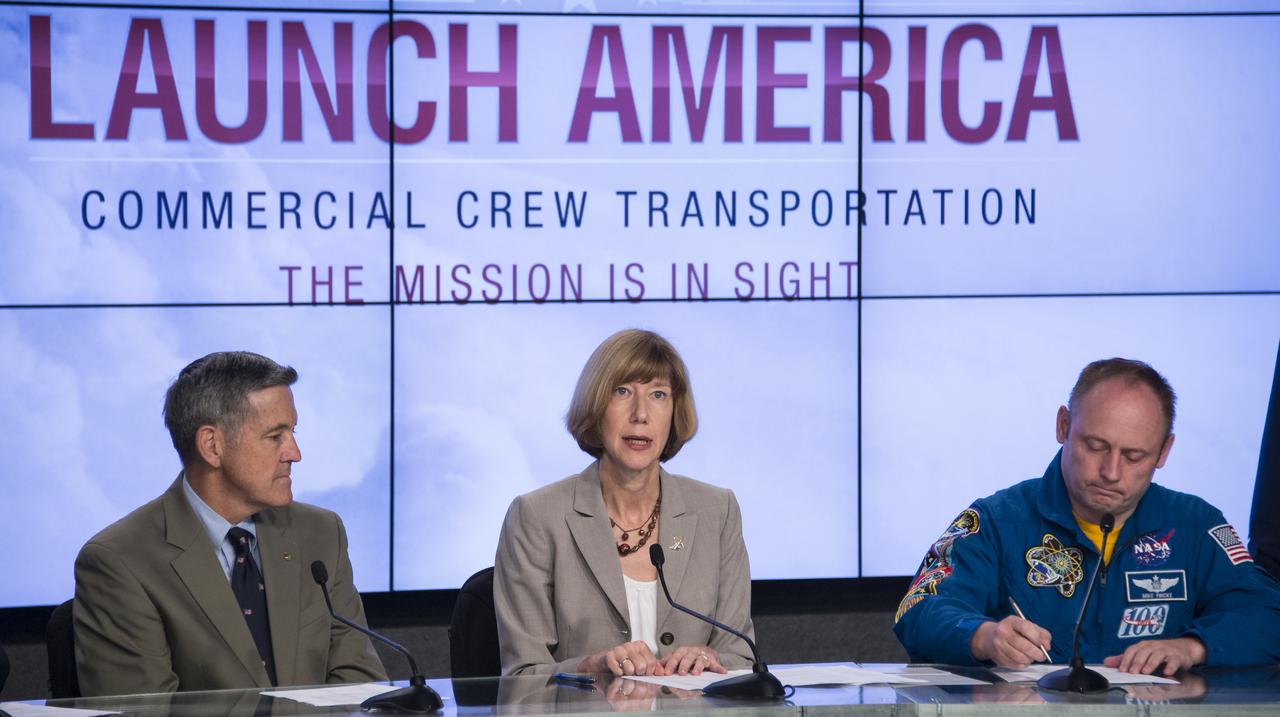
Kathy Lueders, program manager of NASA's Commercial Crew Program, speaks, as Former astronaut Bob Cabana, director of NASA's Kennedy Space Center in Florida, left, and Astronaut Mike Fincke, a former commander of the International Space Station look on during a news conference where it was announced that Boeing and SpaceX have been selected to transport U.S. crews to and from the International Space Station using the Boeing CST-100 and the SpaceX Crew Dragon spacecraft, at NASA’s Kennedy Space Center in Cape Canaveral, Fla. on Tuesday, Sept. 16, 2014. These Commercial Crew Transportation Capability (CCtCap) contracts are designed to complete the NASA certification for a human space transportation system capable of carrying people into orbit. Once certification is complete, NASA plans to use these systems to transport astronauts to the space station and return them safely to Earth. Photo Credit: (NASA/Bill Ingalls)
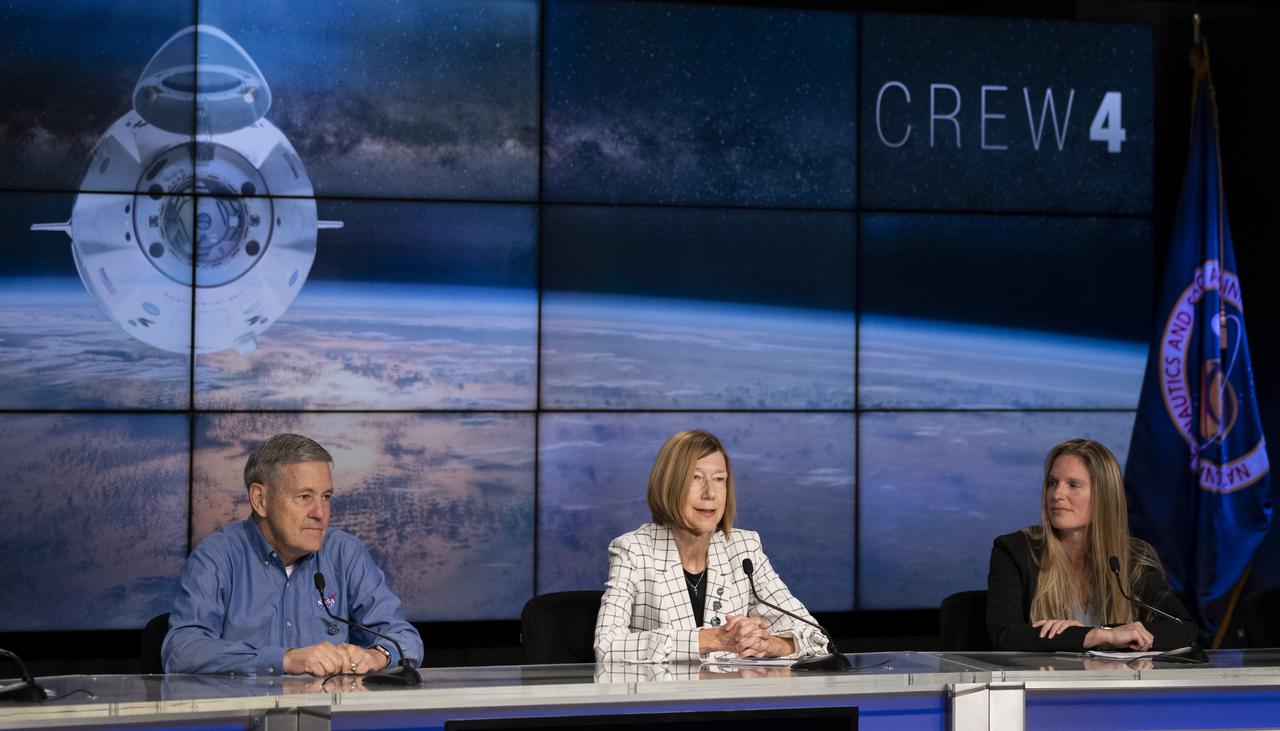
Kathy Lueders, associate administrator for NASA's Space Operations Mission Directorate, center, speaks to members of the media along with Bob Cabana, NASA associate administrator, left, and Heidi Parris, associate program scientist for the International Space Station Program at NASA’s Johnson Space Center, right, during a press conference ahead of the Crew-4 launch, Tuesday, April 26, 2022, at NASA’s Kennedy Space Center in Florida. NASA’s SpaceX Crew-4 mission is the fourth crew rotation mission of the SpaceX Crew Dragon spacecraft and Falcon 9 rocket to the International Space Station as part of the agency’s Commercial Crew Program. NASA astronauts Kjell Lindgren, Robert Hines, Jessica Watkins, and ESA (European Space Agency) astronaut Samantha Cristoforetti are scheduled to launch at 3:52 a.m. ET on April 27 from Launch Complex 39A at the Kennedy Space Center. Photo Credit: (NASA/Joel Kowsky)
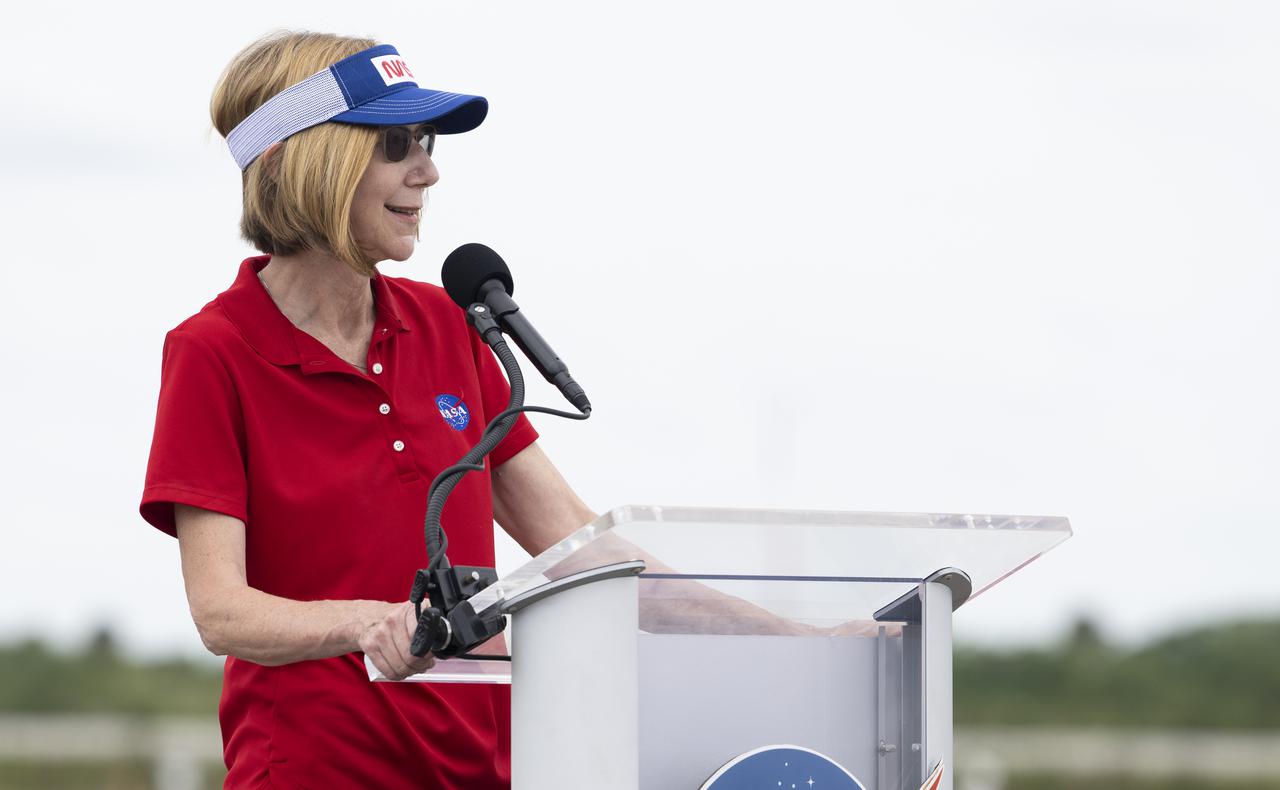
Kathy Lueders, associate administrator for NASA's Space Operations Mission Directorate, speaks to members of the media after the arrival of NASA astronauts Kjell Lindgren, Robert Hines, Jessica Watkins, and ESA (European Space Agency) astronaut Samantha Cristoforetti at the Launch and Landing Facility at NASA’s Kennedy Space Center ahead of SpaceX’s Crew-4 mission, Monday, April 18, 2022, in Florida. NASA’s SpaceX Crew-4 mission is the fourth crew rotation mission of the SpaceX Crew Dragon spacecraft and Falcon 9 rocket to the International Space Station as part of the agency’s Commercial Crew Program. Lindgren, Hines, Watkins, and Cristoforetti are scheduled to launch at April 23 at 5:26 a.m. EDT, from Launch Complex 39A at the Kennedy Space Center. Photo Credit: (NASA/Joel Kowsky)
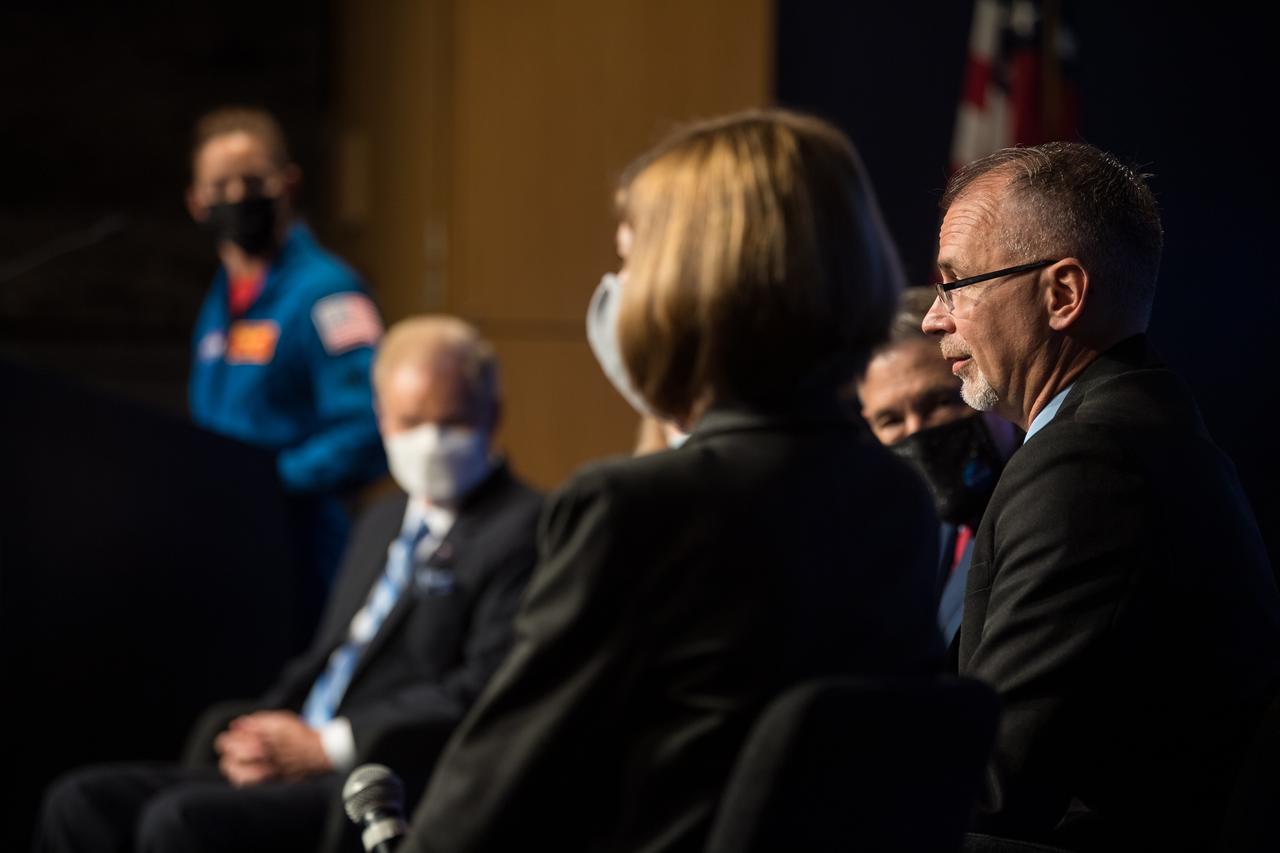
NASA Associate Administrator for the Exploration Systems Development Mission Directorate (ESDMD), Jim Free, speaks during a NASA town hall to discuss the reorganization of the Human Exploration and Operations Mission Directorate into two mission directorates: ESDMD and Space Operations Mission Directorate (SpaceOps), Tuesday, Sept. 21, 2021 at the Mary W. Jackson NASA Headquarters building in Washington. NASA Associate Administrator for SpaceOps, Kathy Lueders, will lead launch and space operations including the International Space Station, the commercialization of low-Earth orbit, and eventually operations on and around the Moon. Head of ESDMD, Jim Free, will lead efforts to define and manage systems development for programs critical to NASA’s Artemis program and the planning of NASA’s Moon to Mars exploration. Photo Credit: (NASA/Aubrey Gemignani)
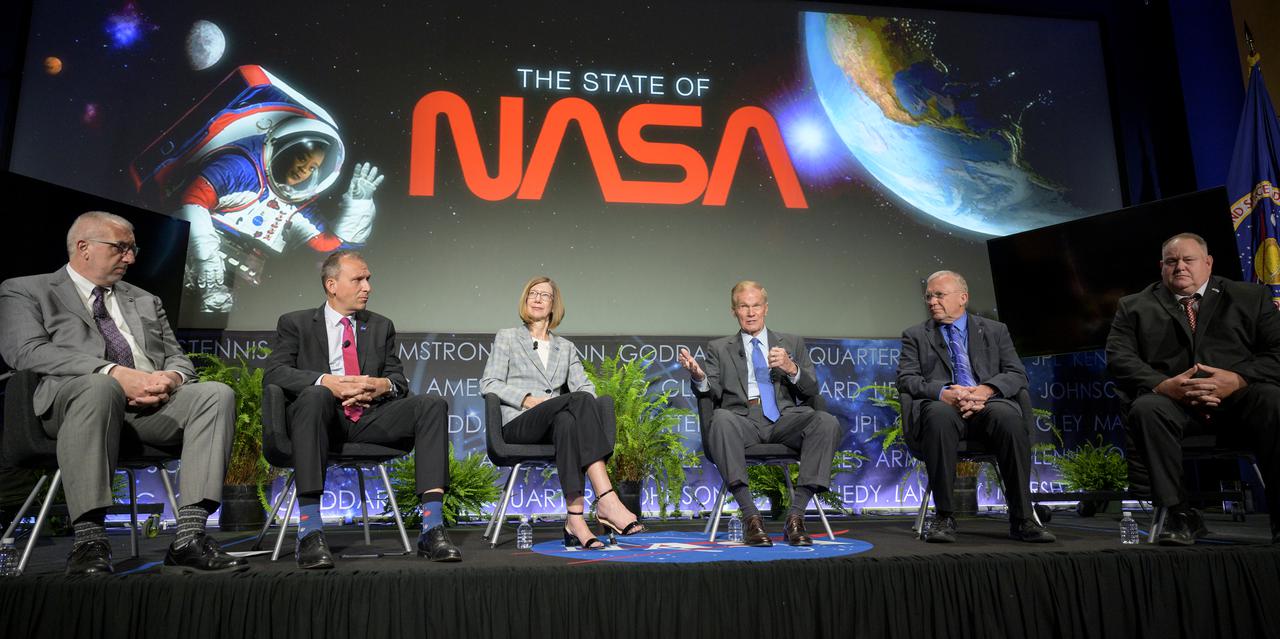
NASA Associate Administrator for Aeronautics Research Mission Directorate Bob Pearce, left, NASA Associate Administrator for Science Thomas Zurbuchen, NASA Associate Administrator for Human Exploration and Operations Kathy Lueders, NASA Administrator Bill Nelson, NASA Associate Administrator for the Space Technology Mission Directorate Jim Reuter, and NASA Associate Administrator for the Mission Support Directorate Bob Gibbs, right, participate in a media gaggle, Wednesday, June 2, 2021, at NASA Headquarters Mary W. Jackson Building in Washington. Nelson, and other NASA leadership, answered reporters questions following a State of NASA event where Nelson remarked on his long history with NASA, and among other topics, discussed the agency’s plans for future Earth-focused missions to address climate change and a robotic and human return to the Moon through the Artemis program, as well as announcing two new planetary science missions to Venus – VERITAS and DAVINCI+. Photo Credit: (NASA/Bill Ingalls)
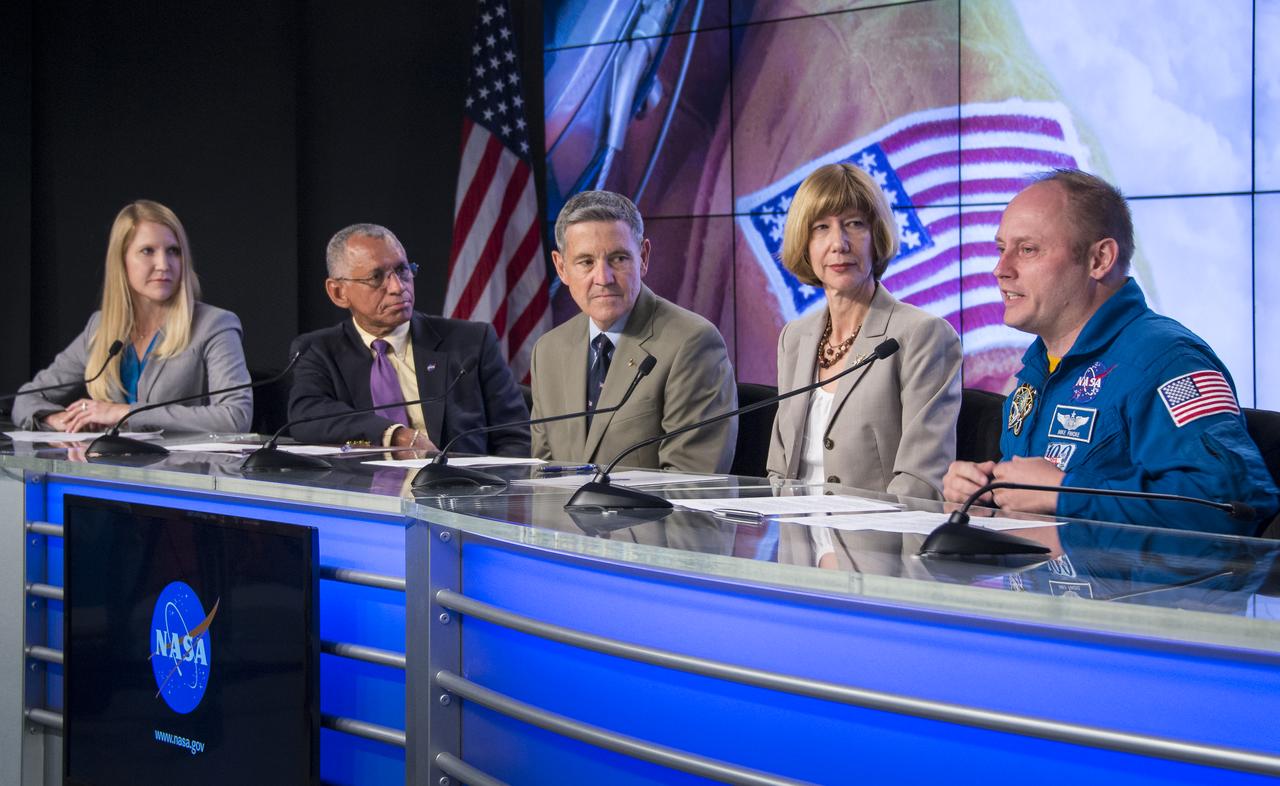
From left, NASA Public Affairs Officer Stephanie Schierholz, NASA Administrator Charles Bolden, Former astronaut Bob Cabana, director of NASA's Kennedy Space Center in Florida, Kathy Lueders, program manager of NASA's Commercial Crew Program, and Astronaut Mike Fincke, a former commander of the International Space Station, are seen during a news conference where it was announced that Boeing and SpaceX have been selected to transport U.S. crews to and from the International Space Station using the Boeing CST-100 and the SpaceX Crew Dragon spacecraft, at NASA’s Kennedy Space Center in Cape Canaveral, Fla. on Tuesday, Sept. 16, 2014. These Commercial Crew Transportation Capability (CCtCap) contracts are designed to complete the NASA certification for a human space transportation system capable of carrying people into orbit. Once certification is complete, NASA plans to use these systems to transport astronauts to the space station and return them safely to Earth. Photo Credit: (NASA/Bill Ingalls)
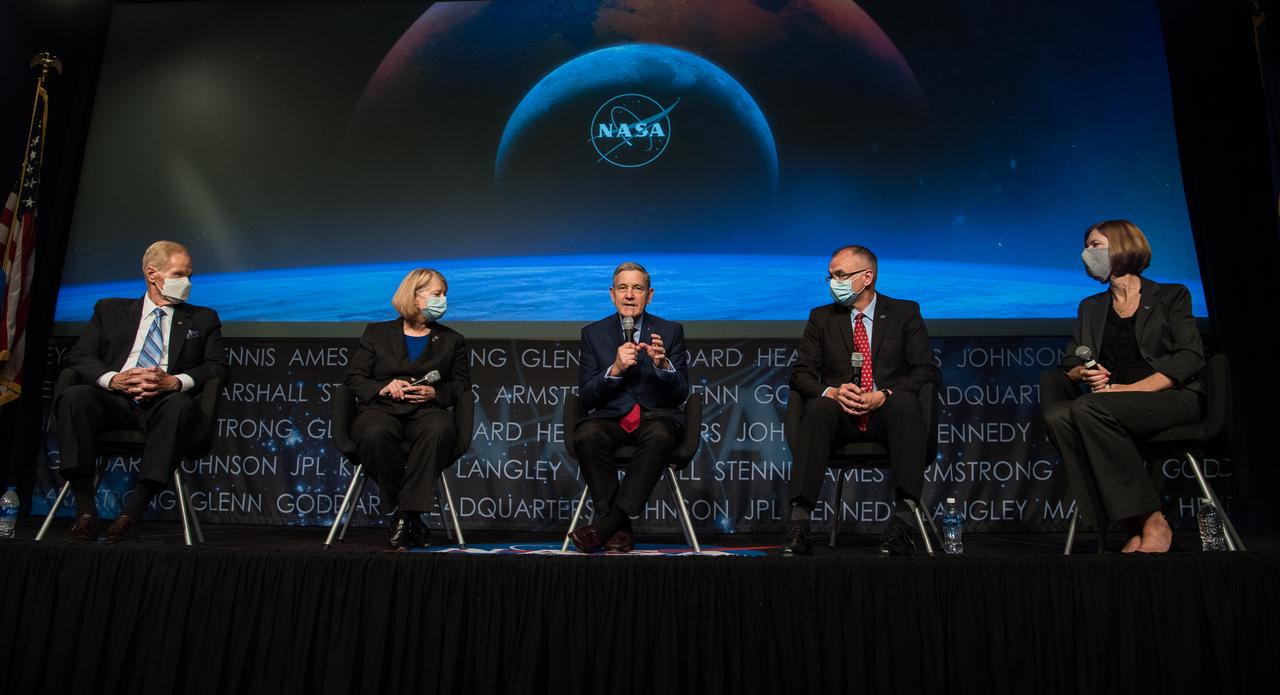
NASA Associate Administrator Bob Cabana speaks on a panel during a NASA town hall to discuss the reorganization of the Human Exploration and Operations Mission Directorate into two mission directorates: Exploration Systems Development Mission Directorate (ESDMD) and Space Operations Mission Directorate (SpaceOps), Tuesday, Sept. 21, 2021 at the Mary W. Jackson NASA Headquarters building in Washington. Panelists were, from left to right, NASA Administrator Bill Nelson; NASA Deputy Administrator Pam Melroy; Cabana; NASA Associate Administrator for the Exploration Systems Development Mission Directorate (ESDMD), Jim Free; and NASA Associate Administrator for the Space Operations Mission Directorate (SpaceOps), Kathy Lueders. Photo Credit: (NASA/Aubrey Gemignani)
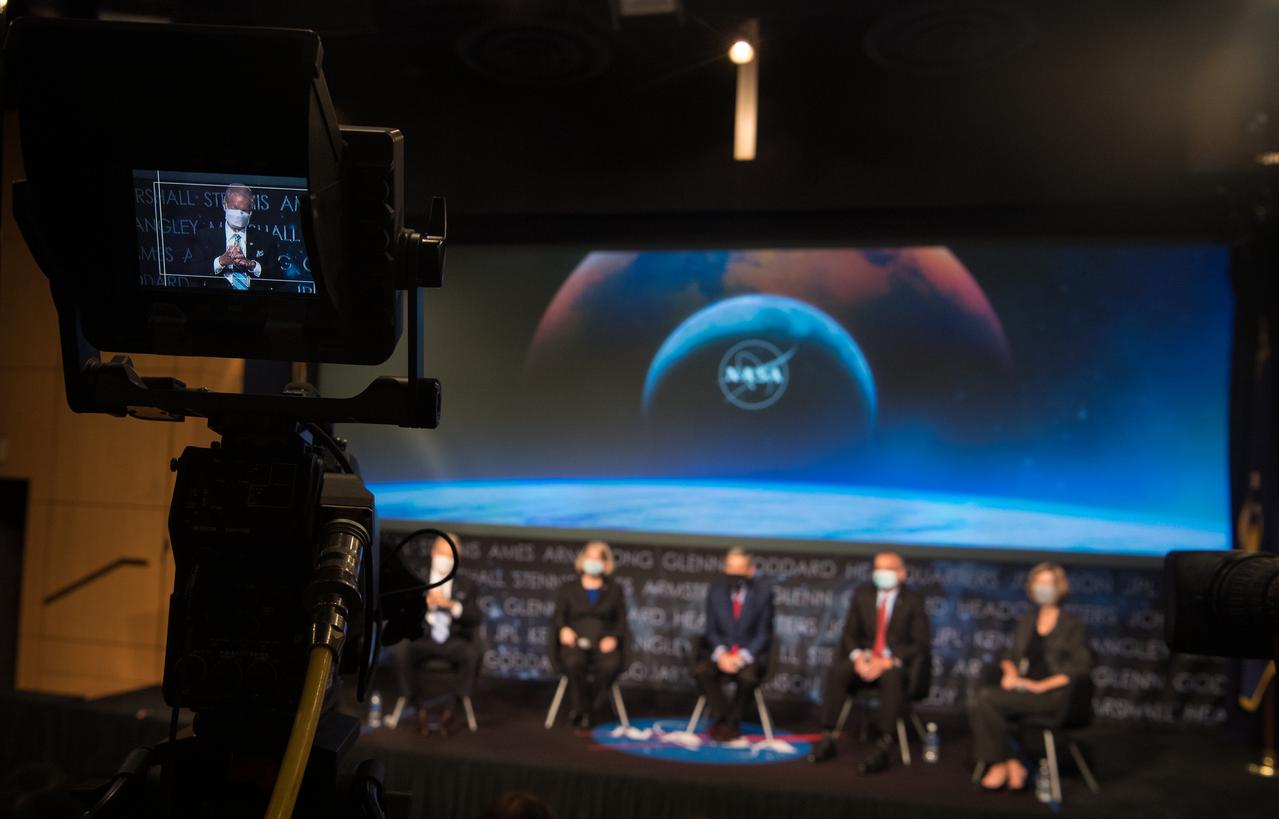
NASA Administrator Bill Nelson is seen through a video camera before a NASA town hall to discuss the reorganization of the Human Exploration and Operations Mission Directorate into two mission directorates: Exploration Systems Development Mission Directorate (ESDMD) and Space Operations Mission Directorate (SpaceOps), Tuesday, Sept. 21, 2021 at the Mary W. Jackson NASA Headquarters building in Washington. NASA Associate Administrator for SpaceOps, Kathy Lueders, will lead launch and space operations including the International Space Station, the commercialization of low-Earth orbit, and eventually operations on and around the Moon. NASA Associate Administrator for the ESDMD, Jim Free, will lead efforts to define and manage systems development for programs critical to NASA’s Artemis program and the planning of NASA’s Moon to Mars exploration. Photo Credit: (NASA/Aubrey Gemignani)

NASA Associate Administrator for Human Exploration and Operations Kathy Lueders is seen during a bilateral meeting with Canadian Space Agency (CSA) representatives, during the 36th 36th Space Symposium, Monday, Aug. 23, 2021, in Colorado Springs, Colorado. Photo Credit: (NASA/Bill Ingalls)
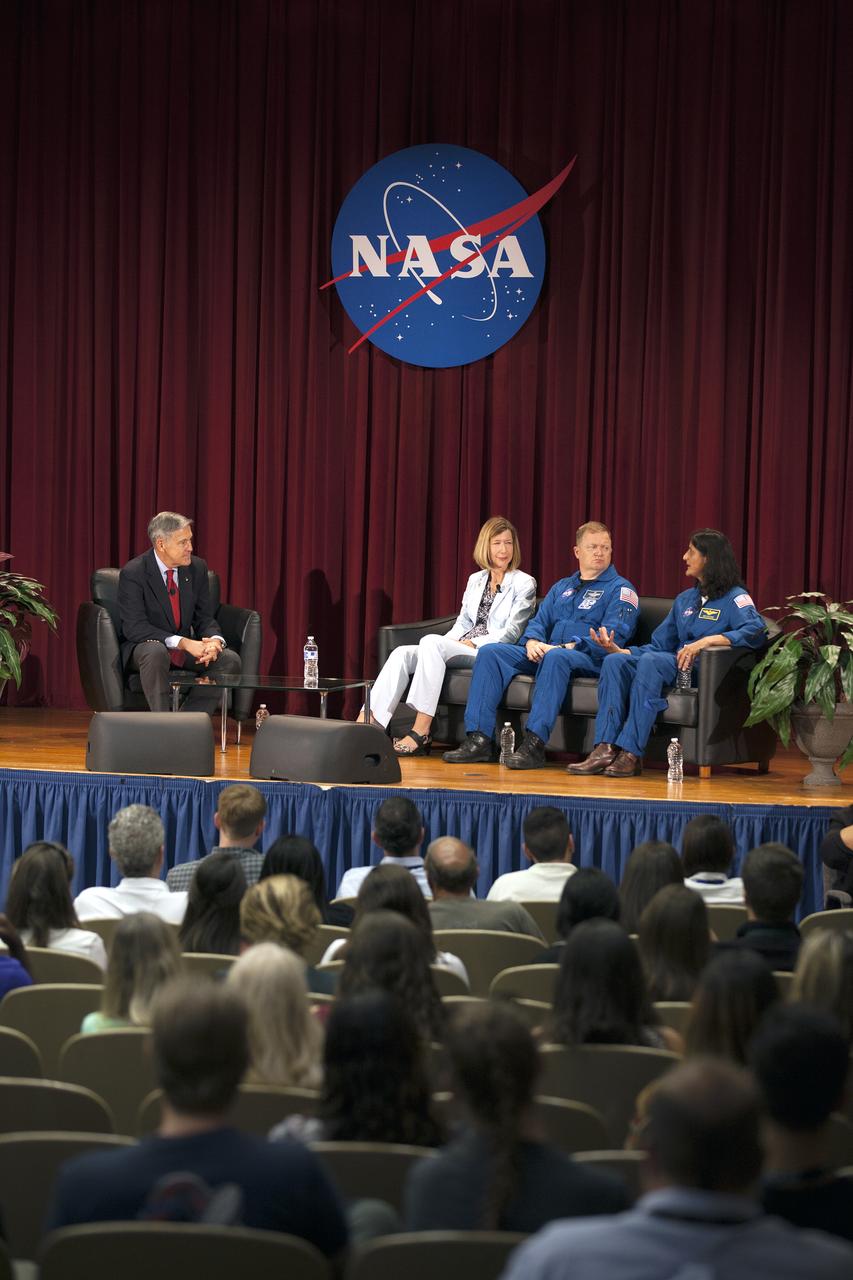
Astronauts selected to train for the flight tests of NASA’s Commercial Crew Program participated in a panel discussion with employees at NASA’s Kennedy Space Center in Florida. From left, are Kennedy Center Director Bob Cabana, Commercial Crew Program Manager Kathy Lueders, and astronauts Eric Boe and Suni Williams.
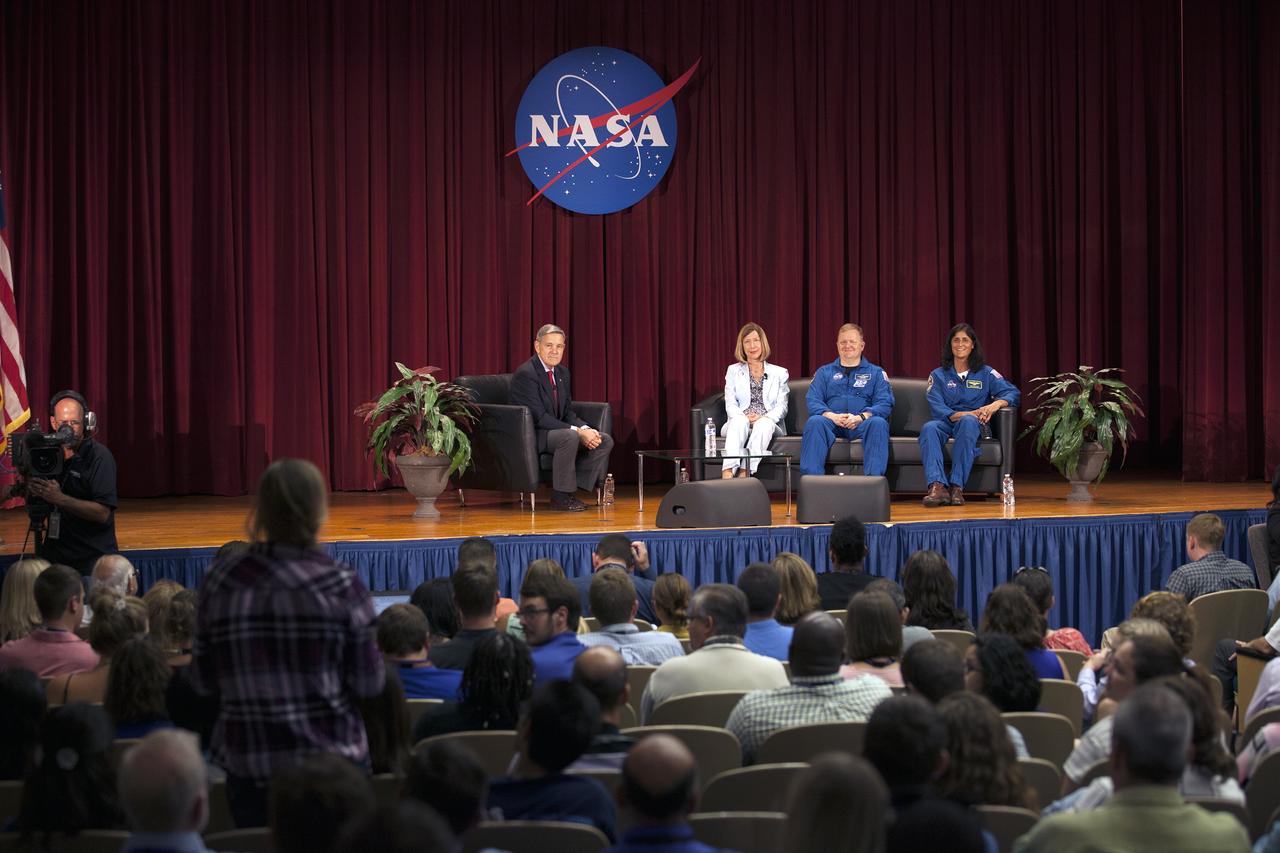
Astronauts selected to train for the flight tests of NASA’s Commercial Crew Program participated in a panel discussion with employees at NASA’s Kennedy Space Center in Florida. From left, are Kennedy Center Director Bob Cabana, Commercial Crew Program Manager Kathy Lueders, and astronauts Eric Boe and Suni Williams.
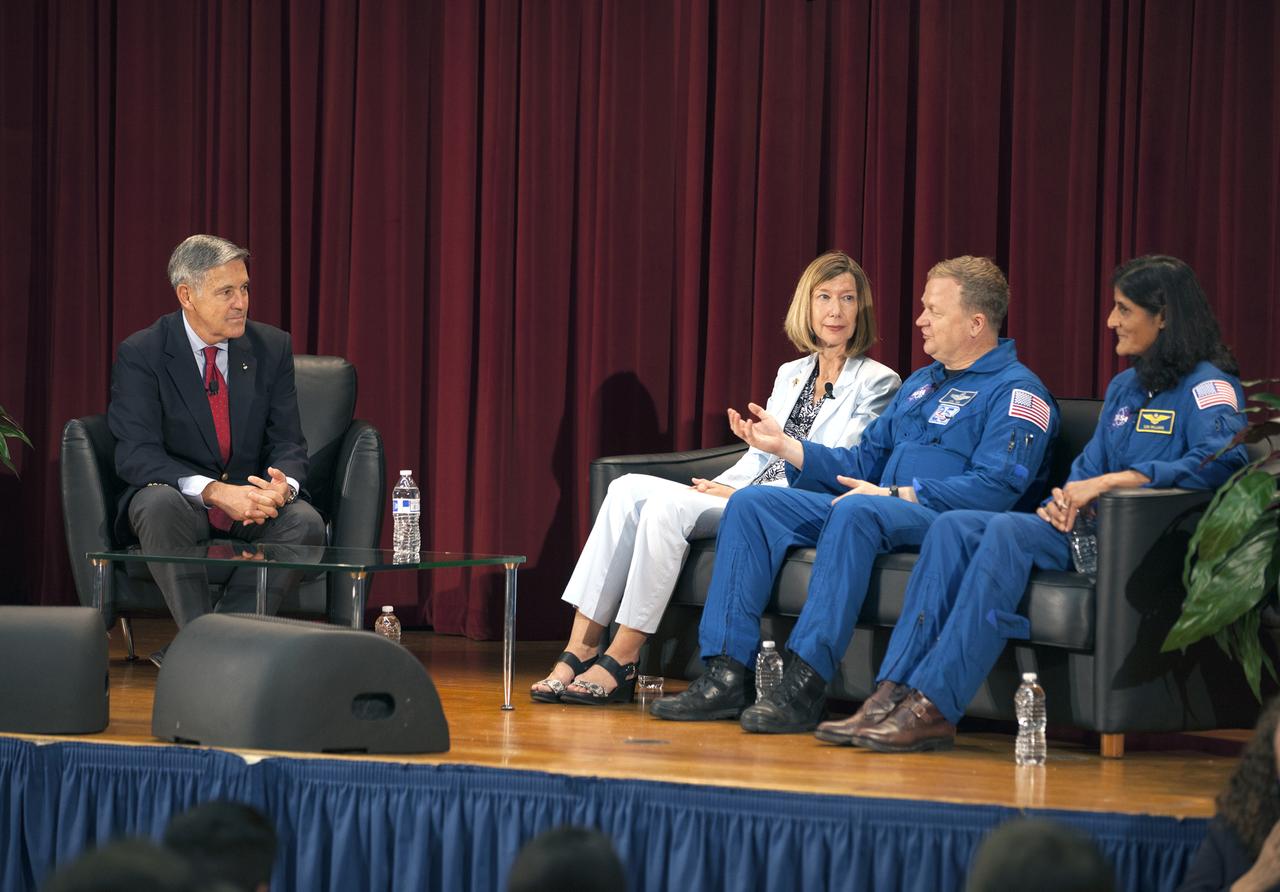
Astronauts selected to train for the flight tests of NASA’s Commercial Crew Program participated in a panel discussion with employees at NASA’s Kennedy Space Center in Florida. From left, are Kennedy Center Director Bob Cabana, Commercial Crew Program Manager Kathy Lueders, and astronauts Eric Boe and Suni Williams.
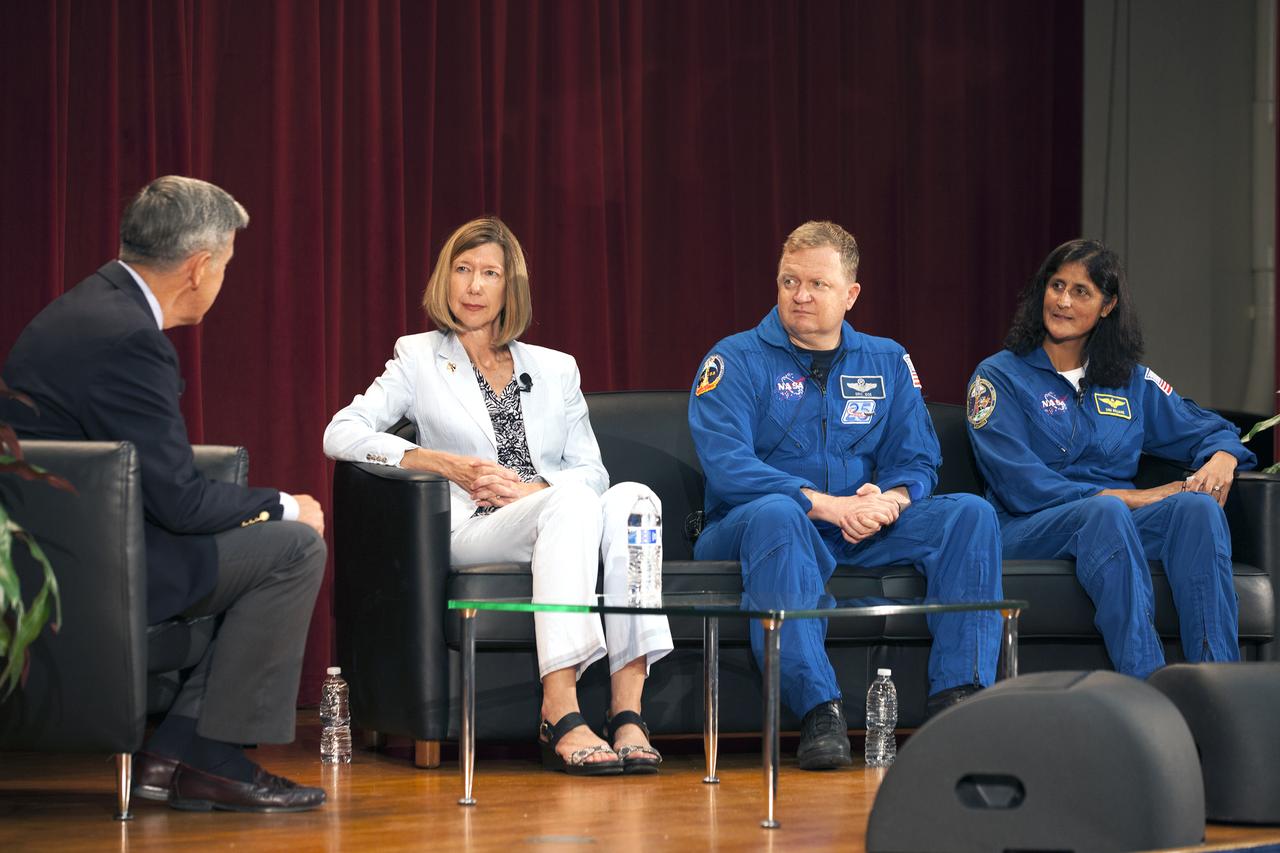
Astronauts selected to train for the flight tests of NASA’s Commercial Crew Program participated in a panel discussion with employees at NASA’s Kennedy Space Center in Florida. From left, are Kennedy Center Director Bob Cabana, Commercial Crew Program Manager Kathy Lueders, and astronauts Eric Boe and Suni Williams.
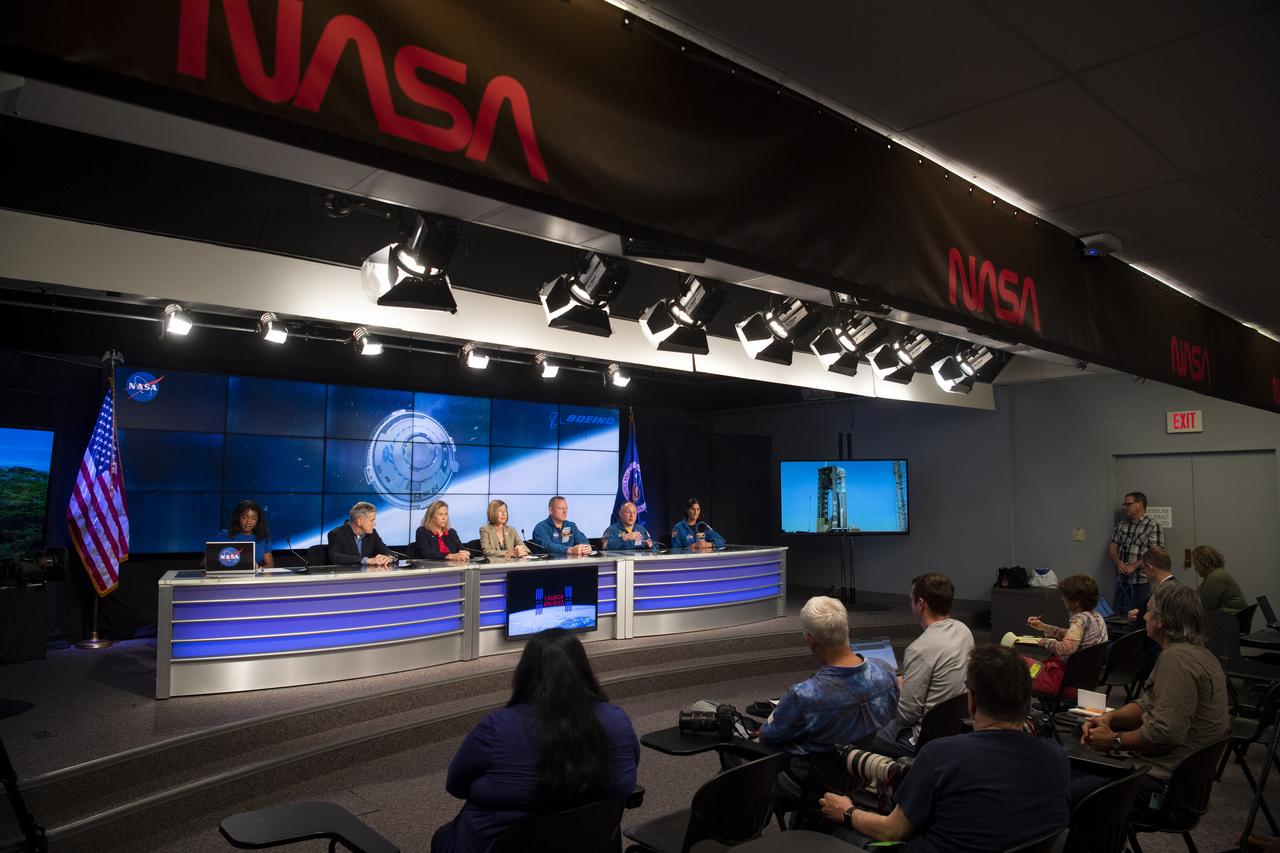
Jasmine Hopkins, NASA Communications, left, Bob Cabana, NASA associate administrator, second from left, Kennedy Space Center director Janet Petro, third from left, Kathy Lueders, associate administrator for NASA's Space Operations Mission Directorate, center, and NASA astronauts Barry "Butch" Wilmore, third from right, Mike Fincke, second from right, and Suni Williams, right, are seen during a press conference ahead of the launch of Boeing’s Starliner spacecraft aboard a United Launch Alliance Atlas V rocket, Wednesday, May 18, 2022, at NASA’s Kennedy Space Center in Florida. Boeing’s Orbital Flight Test-2 will be Starliner’s second uncrewed flight test and will dock to the International Space Station as part of NASA's Commercial Crew Program. The mission, currently targeted for launch on 6:54 p.m. ET on May 19, will serve as an end-to-end test of the system's capabilities. Photo Credit: (NASA/Joel Kowsky)
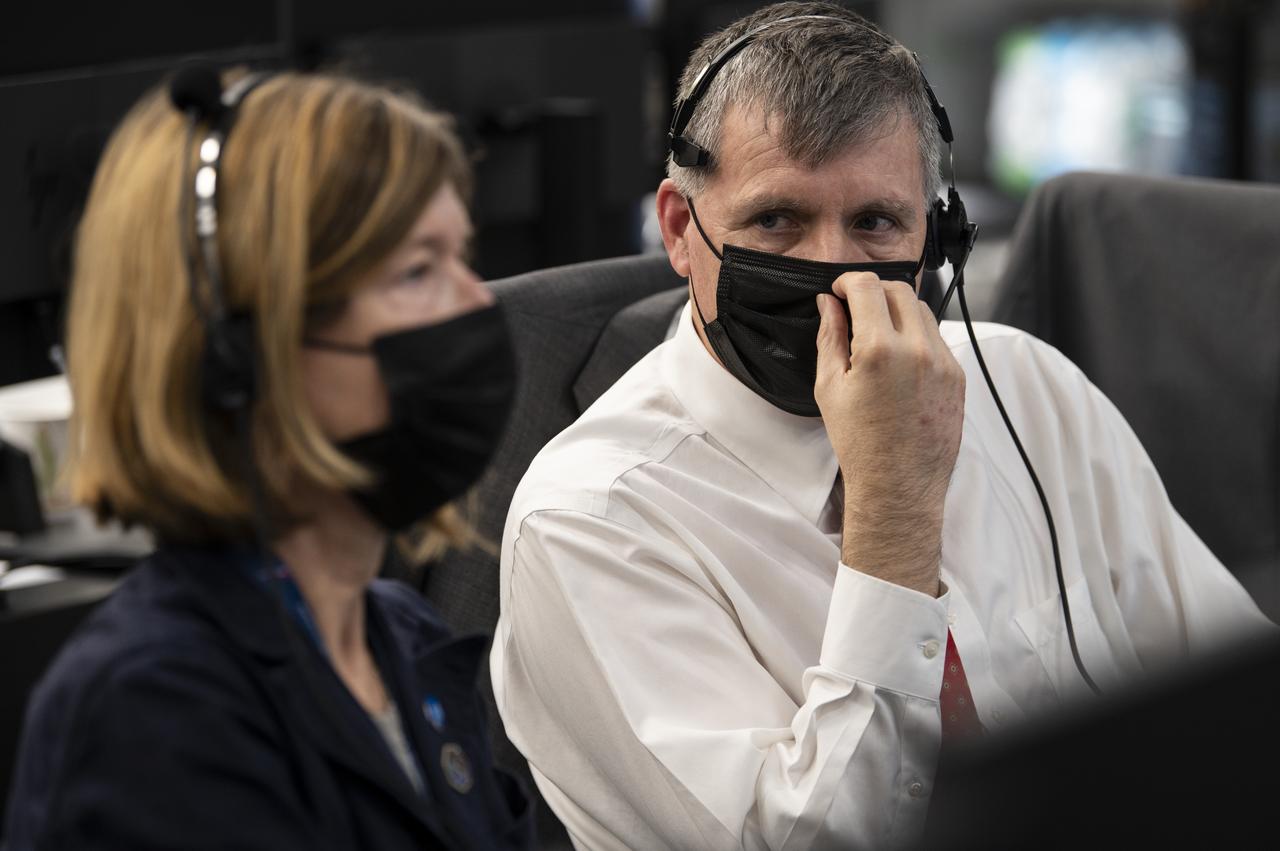
Steve Stich, program manager for NASA's Commercial Crew Program speaks with Kathy Lueders, Associate Administrator of the Human Exploration and Operations Mission Directorate as they monitor the countdown of the launch of a SpaceX Falcon 9 rocket carrying the company's Crew Dragon spacecraft on NASA’s SpaceX Crew-1 mission with NASA astronauts Mike Hopkins, Victor Glover, Shannon Walker, and Japan Aerospace Exploration Agency (JAXA) astronaut Soichi Noguchi onboard, Sunday, Nov. 15, 2020, in firing room four of the Launch Control Center at NASA’s Kennedy Space Center in Florida. NASA’s SpaceX Crew-1 mission is the first crew rotation mission of the SpaceX Crew Dragon spacecraft and Falcon 9 rocket to the International Space Station as part of the agency’s Commercial Crew Program. Hopkins, Glover, Walker, and Noguchi are scheduled to launch at 7:27 p.m. EST, from Launch Complex 39A at the Kennedy Space Center. Photo Credit: (NASA/Aubrey Gemignani)
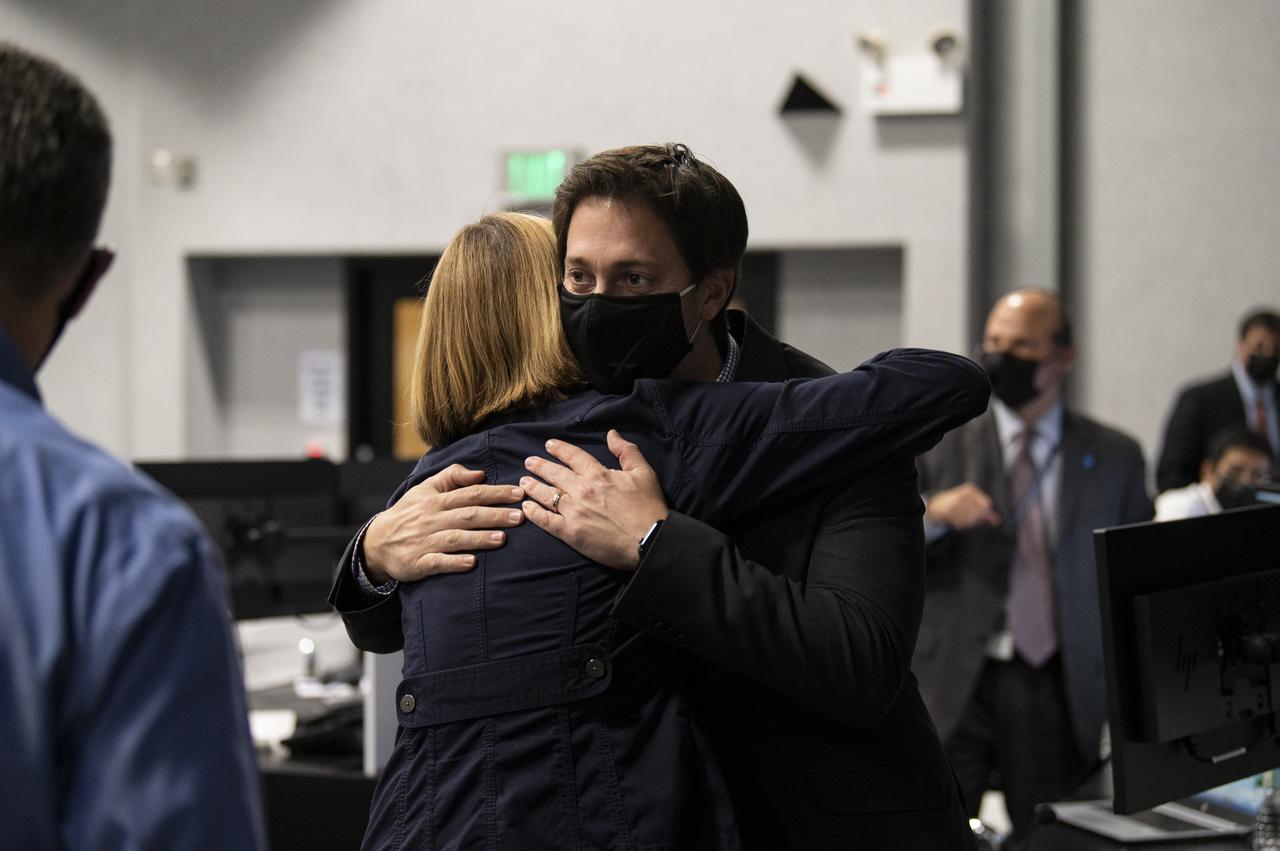
Kathy Lueders, Associate Administrator of the Human Exploration and Operations Mission Directorate, hugs members of the SpaceX team after the launch of a SpaceX Falcon 9 rocket carrying the company's Crew Dragon spacecraft on NASA’s SpaceX Crew-1 mission with NASA astronauts Mike Hopkins, Victor Glover, Shannon Walker, and Japan Aerospace Exploration Agency (JAXA) astronaut Soichi Noguchi onboard, Sunday, Nov. 15, 2020, in firing room four of the Launch Control Center at NASA’s Kennedy Space Center in Florida. NASA’s SpaceX Crew-1 mission is the first crew rotation mission of the SpaceX Crew Dragon spacecraft and Falcon 9 rocket to the International Space Station as part of the agency’s Commercial Crew Program. Hopkins, Glover, Walker, and Noguchi launched at 7:27 p.m. EST, from Launch Complex 39A at the Kennedy Space Center. Photo Credit: (NASA/Aubrey Gemignani)
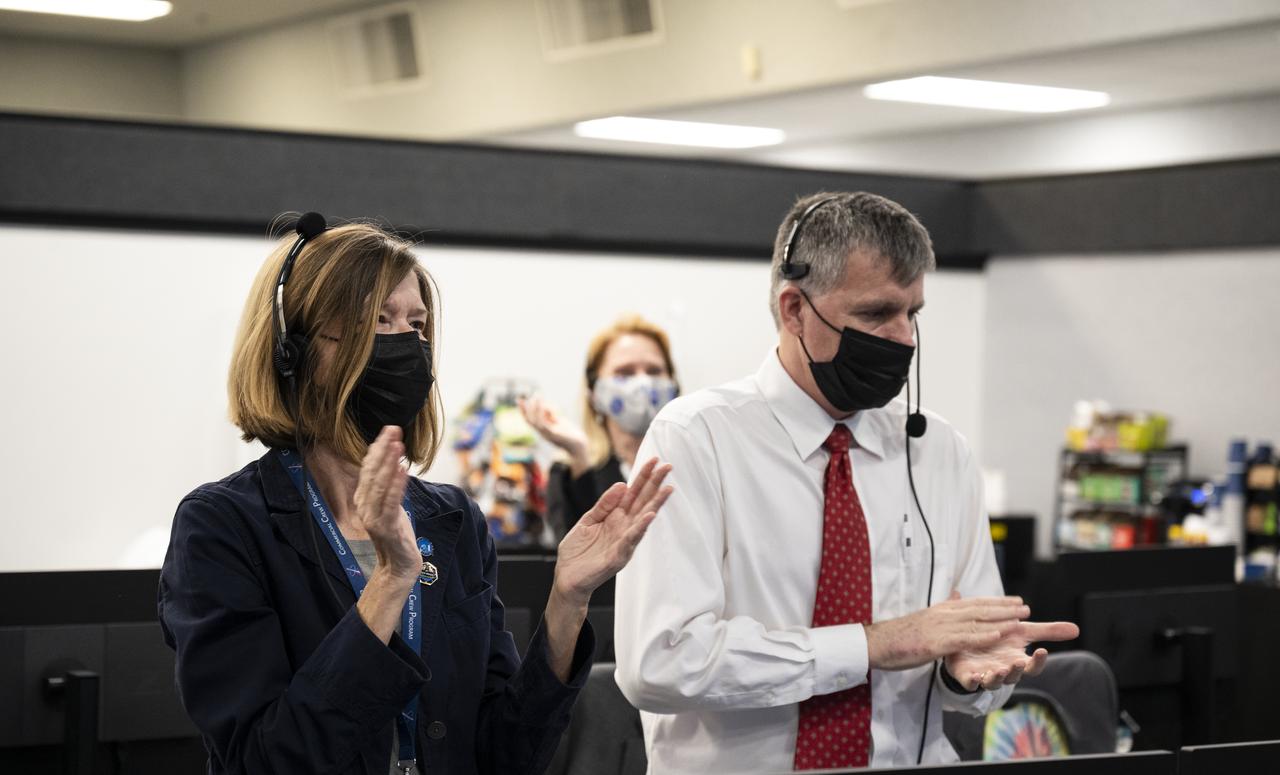
Kathy Lueders, Associate Administrator of the Human Exploration and Operations Mission Directorate, left; Steve Stich, program manager for NASA's Commercial Crew Program, clap after the launch of a SpaceX Falcon 9 rocket carrying the company's Crew Dragon spacecraft on NASA’s SpaceX Crew-1 mission with NASA astronauts Mike Hopkins, Victor Glover, Shannon Walker, and Japan Aerospace Exploration Agency (JAXA) astronaut Soichi Noguchi onboard, Sunday, Nov. 15, 2020, in firing room four of the Launch Control Center at NASA’s Kennedy Space Center in Florida. NASA’s SpaceX Crew-1 mission is the first crew rotation mission of the SpaceX Crew Dragon spacecraft and Falcon 9 rocket to the International Space Station as part of the agency’s Commercial Crew Program. Hopkins, Glover, Walker, and Noguchi launched at 7:27 p.m. EST, from Launch Complex 39A at the Kennedy Space Center. Photo Credit: (NASA/Aubrey Gemignani)
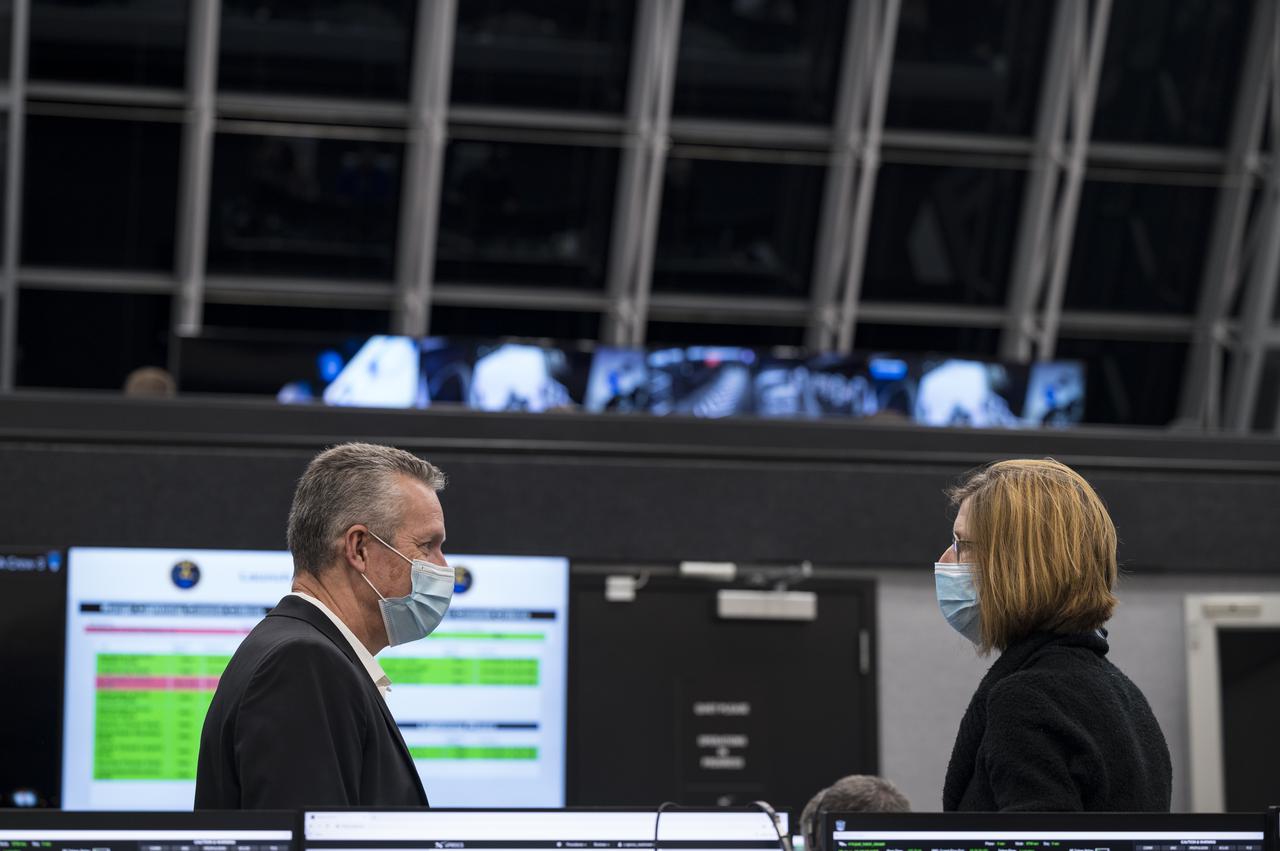
Phil McAlister, director of Commercial Spaceflight at NASA, left, and Kathy Lueders, associate administrator for NASA's Space Operations Mission Directorate, monitor the countdown of the launch of a SpaceX Falcon 9 rocket carrying the company's Crew Dragon spacecraft on NASA’s SpaceX Crew-3 mission with NASA astronauts Raja Chari, Tom Marshburn, Kayla Barron, and ESA (European Space Agency) astronaut Matthias Maurer onboard, Wednesday, Nov. 10, 2021, in firing room four of the Launch Control Center at NASA’s Kennedy Space Center in Florida. NASA’s SpaceX Crew-3 mission is the first crew rotation mission of the SpaceX Crew Dragon spacecraft and Falcon 9 rocket to the International Space Station as part of the agency’s Commercial Crew Program. Chari, Marshburn, Barron, Maurer are scheduled to launch at 9:03 p.m. EST, from Launch Complex 39A at the Kennedy Space Center. Photo Credit: (NASA/Aubrey Gemignani)

Kathy Lueders, associate administrator for NASA's Space Operations Mission Directorate, monitors the launch of a SpaceX Falcon 9 rocket carrying the company's Dragon spacecraft on the Crew-6 mission with NASA astronauts Stephen Bowen and Warren "Woody" Hoburg, UAE (United Arab Emirates) astronaut Sultan Alneyadi, and Roscosmos cosmonaut Andrey Fedyaev onboard, Thursday, March 2, 2023, in firing room four of the Rocco A. Petrone Launch Control Center at NASA’s Kennedy Space Center in Florida. NASA’s SpaceX Crew-6 mission is the sixth crew rotation mission of the SpaceX Dragon spacecraft and Falcon 9 rocket to the International Space Station as part of the agency’s Commercial Crew Program. Bowen, Hoburg, Alneyadi, and Fedyaev launched at 12:34 a.m. EST, from Launch Complex 39A at the Kennedy Space Center. Photo Credit: (NASA/Joel Kowsky)
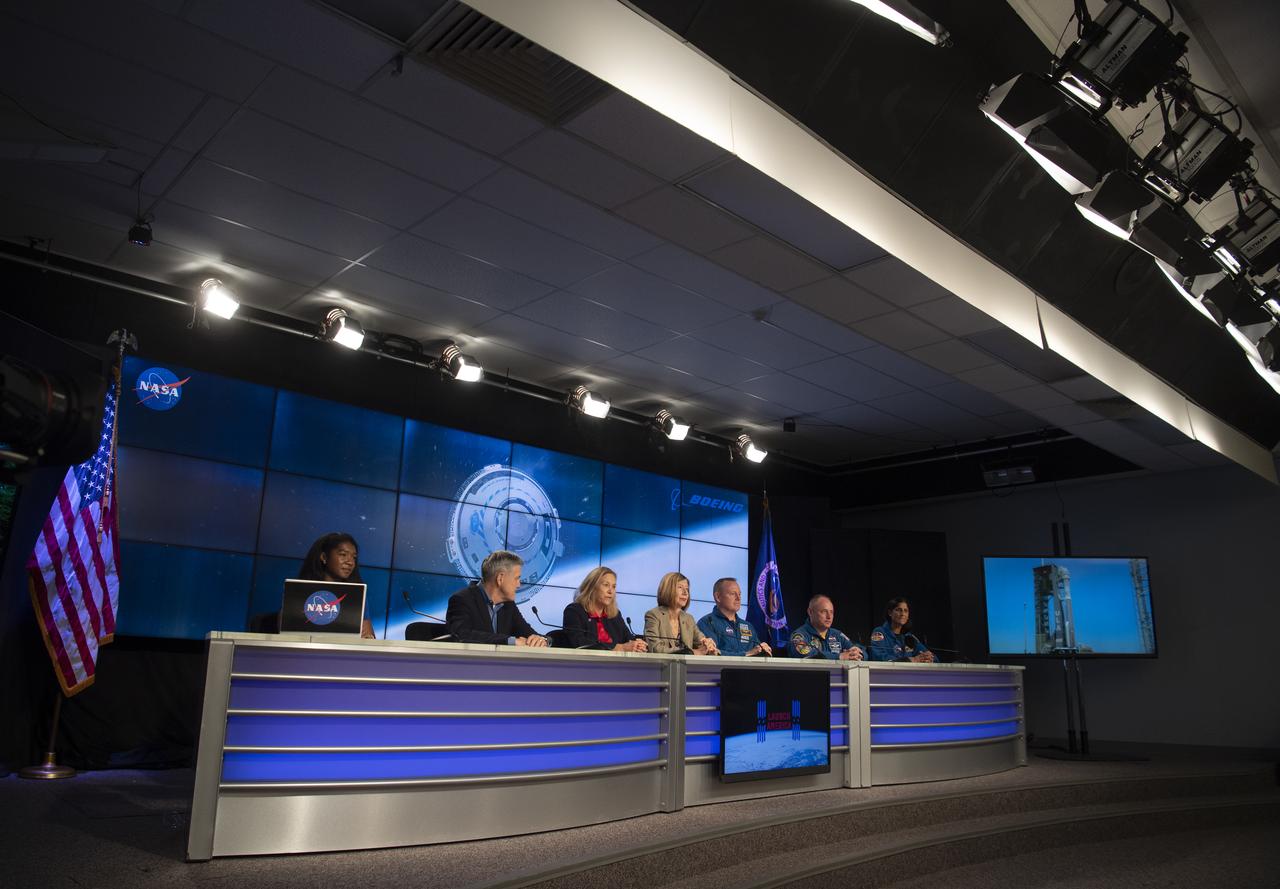
Jasmine Hopkins, NASA Communications, left, Bob Cabana, NASA associate administrator, second from left, Kennedy Space Center director Janet Petro, third from left, Kathy Lueders, associate administrator for NASA's Space Operations Mission Directorate, center, and NASA astronauts Barry "Butch" Wilmore, third from right, Mike Fincke, second from right, and Suni Williams, right, are seen during a press conference ahead of the launch of Boeing’s Starliner spacecraft aboard a United Launch Alliance Atlas V rocket, Wednesday, May 18, 2022, at NASA’s Kennedy Space Center in Florida. Boeing’s Orbital Flight Test-2 will be Starliner’s second uncrewed flight test and will dock to the International Space Station as part of NASA's Commercial Crew Program. The mission, currently targeted for launch on 6:54 p.m. ET on May 19, will serve as an end-to-end test of the system's capabilities. Photo Credit: (NASA/Joel Kowsky)
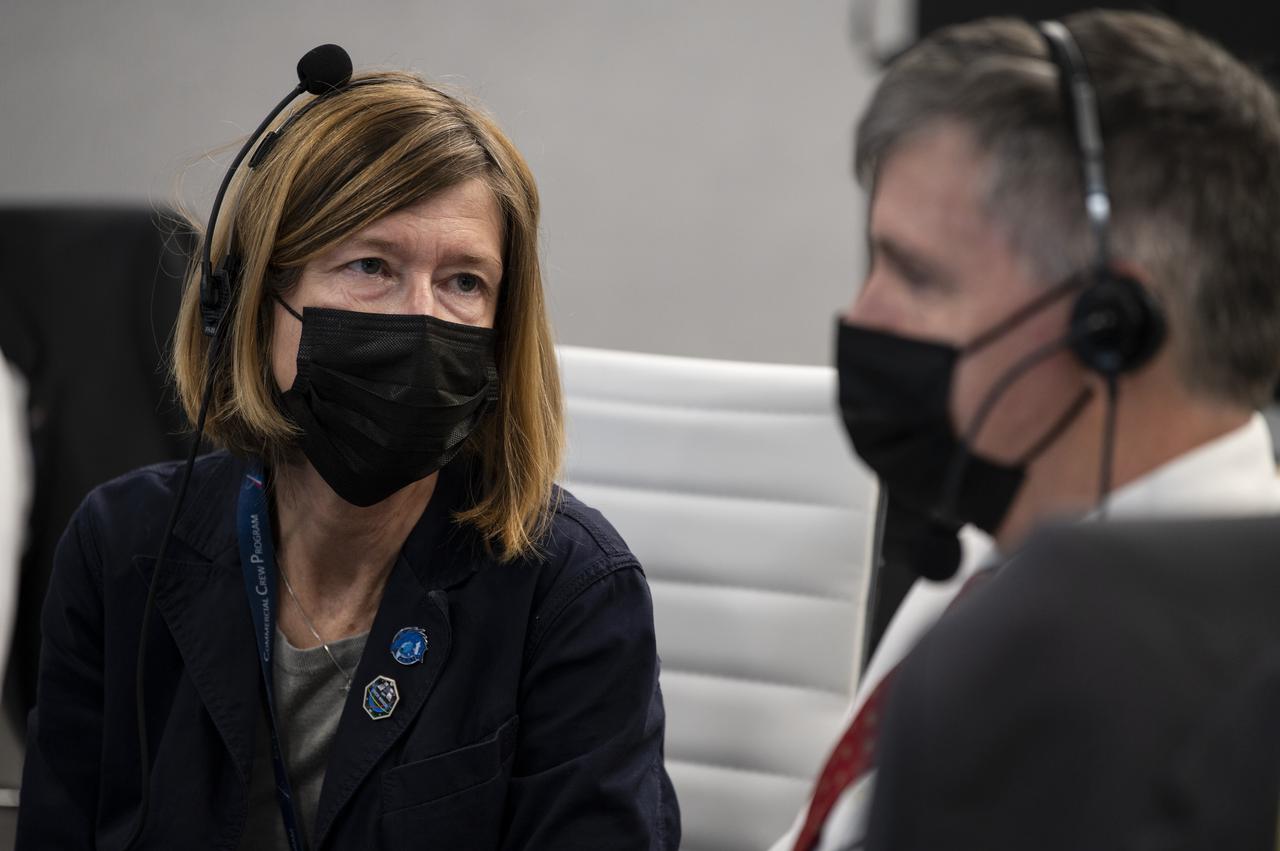
Kathy Lueders, Associate Administrator of the Human Exploration and Operations Mission Directorate speaks with Steve Stich, program manager for NASA's Commercial Crew Program as they monitor the countdown of the launch of a SpaceX Falcon 9 rocket carrying the company's Crew Dragon spacecraft on NASA’s SpaceX Crew-1 mission with NASA astronauts Mike Hopkins, Victor Glover, Shannon Walker, and Japan Aerospace Exploration Agency (JAXA) astronaut Soichi Noguchi onboard, Sunday, Nov. 15, 2020, in firing room four of the Launch Control Center at NASA’s Kennedy Space Center in Florida. NASA’s SpaceX Crew-1 mission is the first crew rotation mission of the SpaceX Crew Dragon spacecraft and Falcon 9 rocket to the International Space Station as part of the agency’s Commercial Crew Program. Hopkins, Glover, Walker, and Noguchi are scheduled to launch at 7:27 p.m. EST, from Launch Complex 39A at the Kennedy Space Center. Photo Credit: (NASA/Aubrey Gemignani)
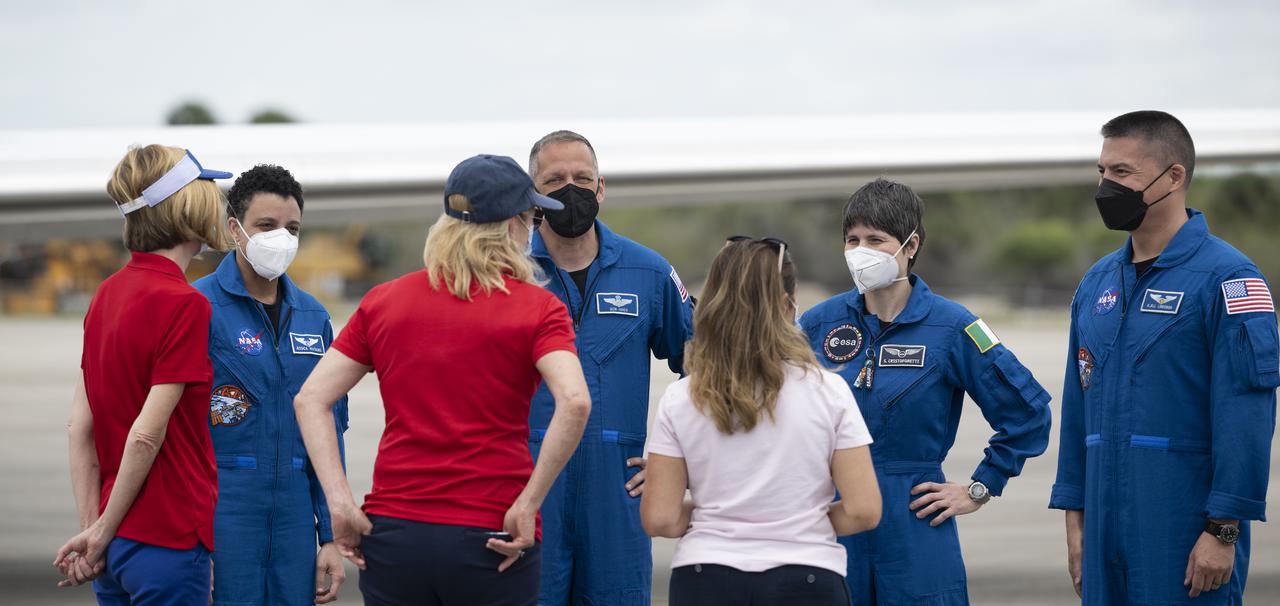
NASA astronauts Jessica Watkins, Robert Hines, ESA (European Space Agency) astronaut Samantha Cristoforetti, and NASA astronaut Kjell Lindgren, are seen with Kathy Lueders, associate administrator for NASA's Space Operations Mission Directorate, Kennedy Space Center director Janet Petro, and Barbara Nucera, ESA (European Space Agency) Houston Team Leader, after arriving at the Launch and Landing Facility at NASA’s Kennedy Space Center ahead of SpaceX’s Crew-4 mission, Monday, April 18, 2022, in Florida. NASA’s SpaceX Crew-4 mission is the fourth crew rotation mission of the SpaceX Crew Dragon spacecraft and Falcon 9 rocket to the International Space Station as part of the agency’s Commercial Crew Program. Lindgren, Hines, Watkins, and Cristoforetti are scheduled to launch at April 23 at 5:26 a.m. EDT, from Launch Complex 39A at the Kennedy Space Center. Photo Credit: (NASA/Joel Kowsky)
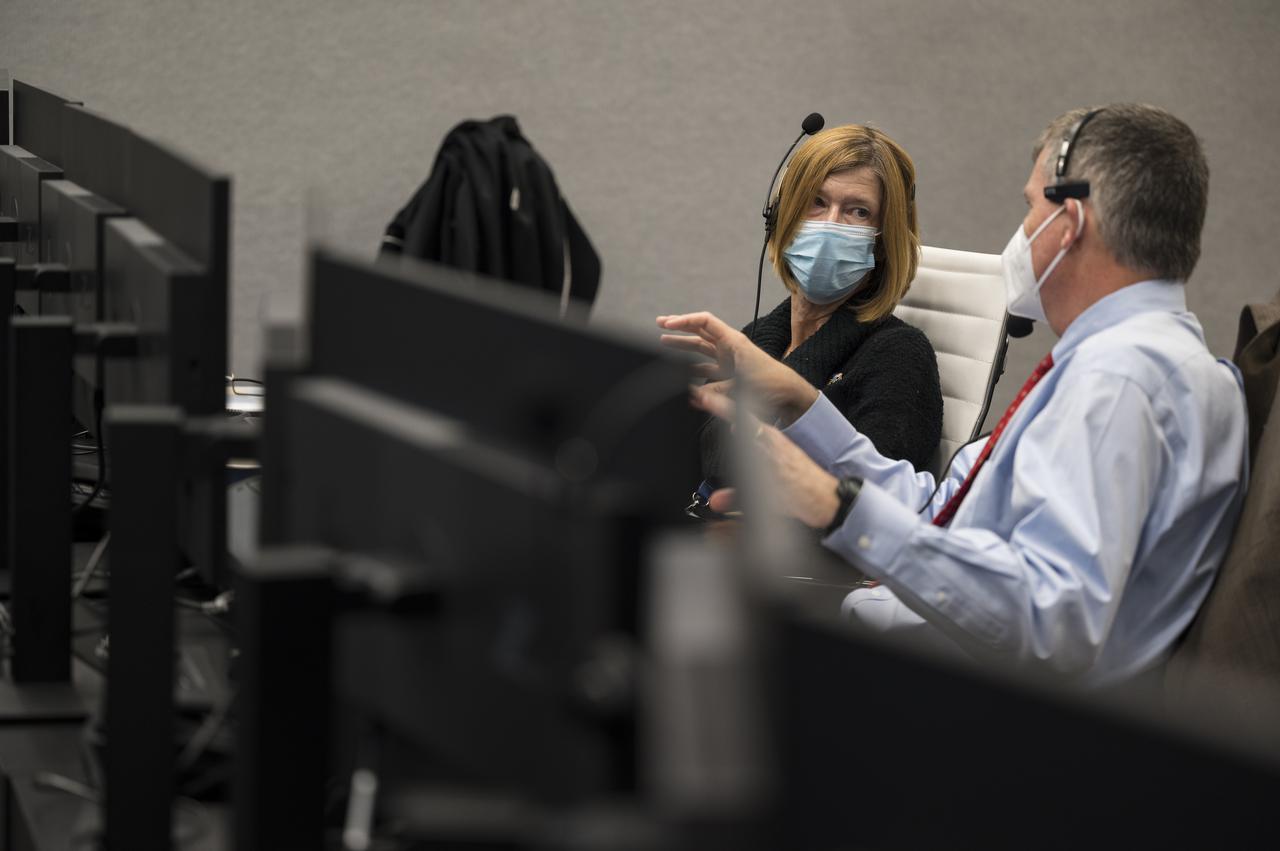
Kathy Lueders, associate administrator for NASA's Space Operations Mission Directorate, left, and Steve Stich, manager of NASA’s Commercial Crew Program, monitor the countdown of the launch of a SpaceX Falcon 9 rocket carrying the company's Crew Dragon spacecraft on NASA’s SpaceX Crew-3 mission with NASA astronauts Raja Chari, Tom Marshburn, Kayla Barron, and ESA (European Space Agency) astronaut Matthias Maurer onboard, Wednesday, Nov. 10, 2021, in firing room four of the Launch Control Center at NASA’s Kennedy Space Center in Florida. NASA’s SpaceX Crew-3 mission is the first crew rotation mission of the SpaceX Crew Dragon spacecraft and Falcon 9 rocket to the International Space Station as part of the agency’s Commercial Crew Program. Chari, Marshburn, Barron, Maurer are scheduled to launch at 9:03 p.m. EST, from Launch Complex 39A at the Kennedy Space Center. Photo Credit: (NASA/Aubrey Gemignani)
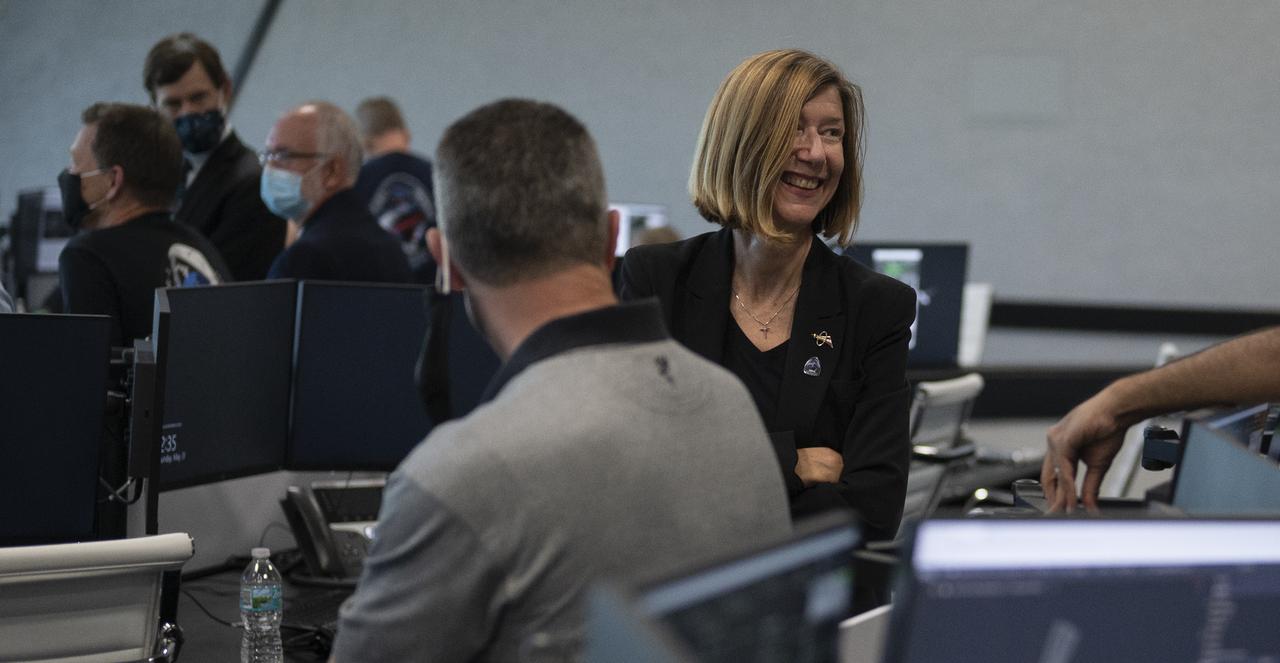
Kathy Lueders, manager of NASA's Commercial Crew Program, is seen following the docking of SpaceX’s Crew Dragon spacecraft with NASA astronauts Douglas Hurley and Robert Behnken onboard to the International Space Station, Sunday, May 31, 2020, in firing room four of the Launch Control Center at NASA’s Kennedy Space Center in Florida. NASA’s SpaceX Demo-2 mission is the first launch with astronauts of the SpaceX Crew Dragon spacecraft and Falcon 9 rocket to the International Space Station as part of the agency’s Commercial Crew Program. The test flight serves as an end-to-end demonstration of SpaceX’s crew transportation system. Behnken and Hurley launched at 3:22 p.m. EDT on Saturday, May 30, from Launch Complex 39A at the Kennedy Space Center and docked with the International Space Station at 10:16am EDT on Sunday, May 31. A new era of human spaceflight is set to begin as American astronauts once again launch on an American rocket from American soil to low-Earth orbit for the first time since the conclusion of the Space Shuttle Program in 2011. Photo Credit: (NASA/Joel Kowsky)

Kathy Lueders, manager of NASA's Commercial Crew Program, watches as the hatches are opened between SpaceX’s Crew Dragon spacecraft with NASA astronauts Douglas Hurley and Robert Behnken onboard and the International Space Station, Sunday, May 31, 2020, in firing room four of the Launch Control Center at NASA’s Kennedy Space Center in Florida. NASA’s SpaceX Demo-2 mission is the first launch with astronauts of the SpaceX Crew Dragon spacecraft and Falcon 9 rocket to the International Space Station as part of the agency’s Commercial Crew Program. The test flight serves as an end-to-end demonstration of SpaceX’s crew transportation system. Behnken and Hurley launched at 3:22 p.m. EDT on Saturday, May 30, from Launch Complex 39A at the Kennedy Space Center and docked with the International Space Station at 10:16am EDT on Sunday, May 31.. A new era of human spaceflight is set to begin as American astronauts once again launch on an American rocket from American soil to low-Earth orbit for the first time since the conclusion of the Space Shuttle Program in 2011. Photo Credit: (NASA/Joel Kowsky)
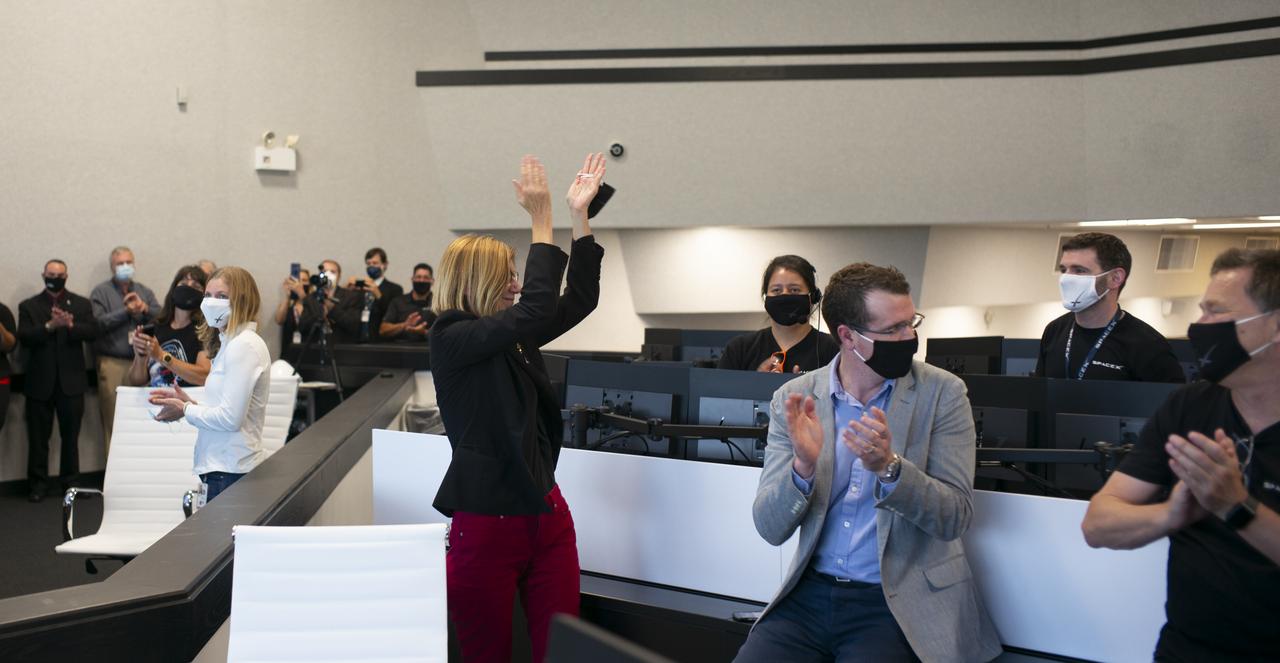
Kathy Lueders, manager of NASA's Commercial Crew Program, applauds the SpaceX and NASA teams present in firing room four after the hatches were opened between SpaceX’s Crew Dragon spacecraft with NASA astronauts Douglas Hurley and Robert Behnken onboard and the International Space Station, Sunday, May 31, 2020, in firing room four of the Launch Control Center at NASA’s Kennedy Space Center in Florida. NASA’s SpaceX Demo-2 mission is the first launch with astronauts of the SpaceX Crew Dragon spacecraft and Falcon 9 rocket to the International Space Station as part of the agency’s Commercial Crew Program. The test flight serves as an end-to-end demonstration of SpaceX’s crew transportation system. Behnken and Hurley launched at 3:22 p.m. EDT on Saturday, May 30, from Launch Complex 39A at the Kennedy Space Center and docked with the International Space Station at 10:16am EDT on Sunday, May 31.. A new era of human spaceflight is set to begin as American astronauts once again launch on an American rocket from American soil to low-Earth orbit for the first time since the conclusion of the Space Shuttle Program in 2011. Photo Credit: (NASA/Joel Kowsky)
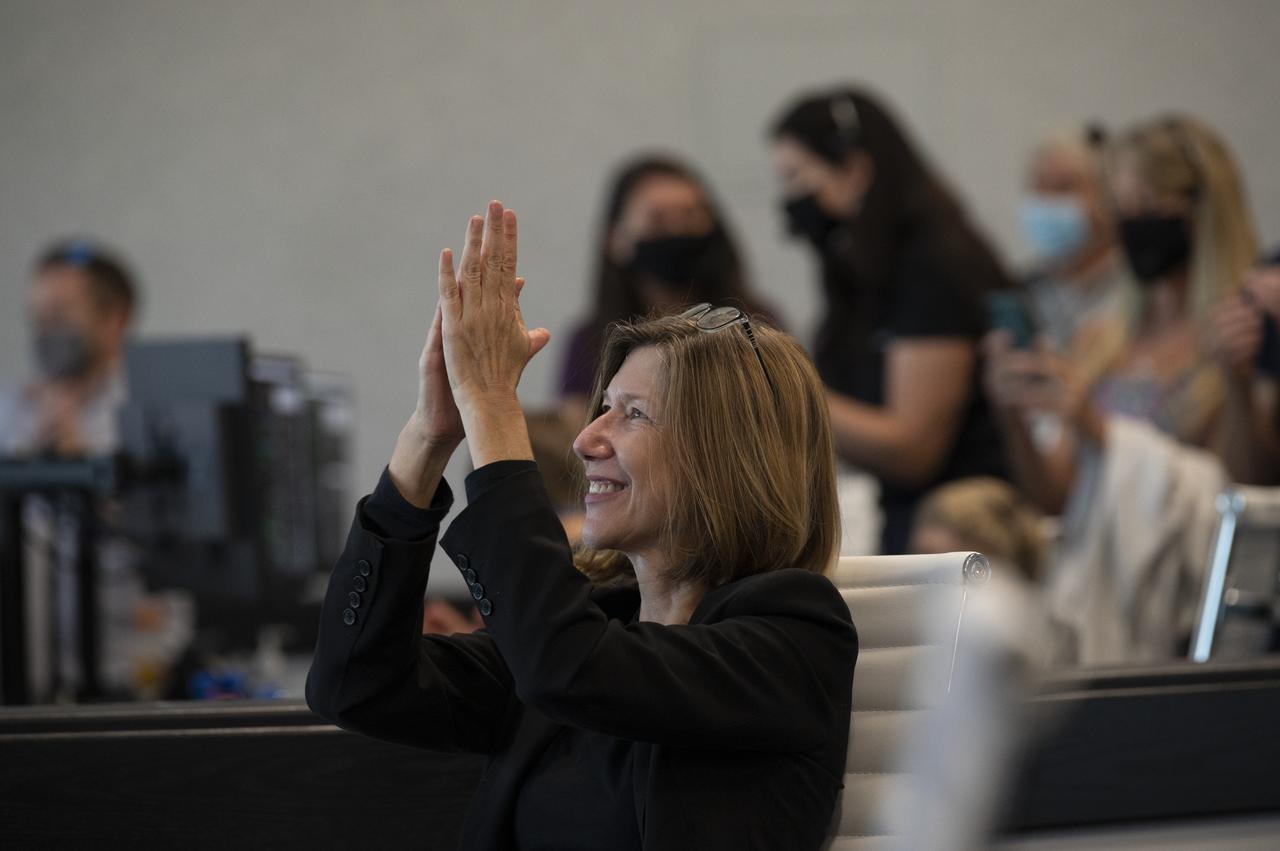
Kathy Lueders, manager of NASA's Commercial Crew Program, is seen after the hatches are opened between SpaceX’s Crew Dragon spacecraft with NASA astronauts Douglas Hurley and Robert Behnken onboard and the International Space Station, Sunday, May 31, 2020, in firing room four of the Launch Control Center at NASA’s Kennedy Space Center in Florida. NASA’s SpaceX Demo-2 mission is the first launch with astronauts of the SpaceX Crew Dragon spacecraft and Falcon 9 rocket to the International Space Station as part of the agency’s Commercial Crew Program. The test flight serves as an end-to-end demonstration of SpaceX’s crew transportation system. Behnken and Hurley launched at 3:22 p.m. EDT on Saturday, May 30, from Launch Complex 39A at the Kennedy Space Center and docked with the International Space Station at 10:16am EDT on Sunday, May 31.. A new era of human spaceflight is set to begin as American astronauts once again launch on an American rocket from American soil to low-Earth orbit for the first time since the conclusion of the Space Shuttle Program in 2011. Photo Credit: (NASA/Joel Kowsky)
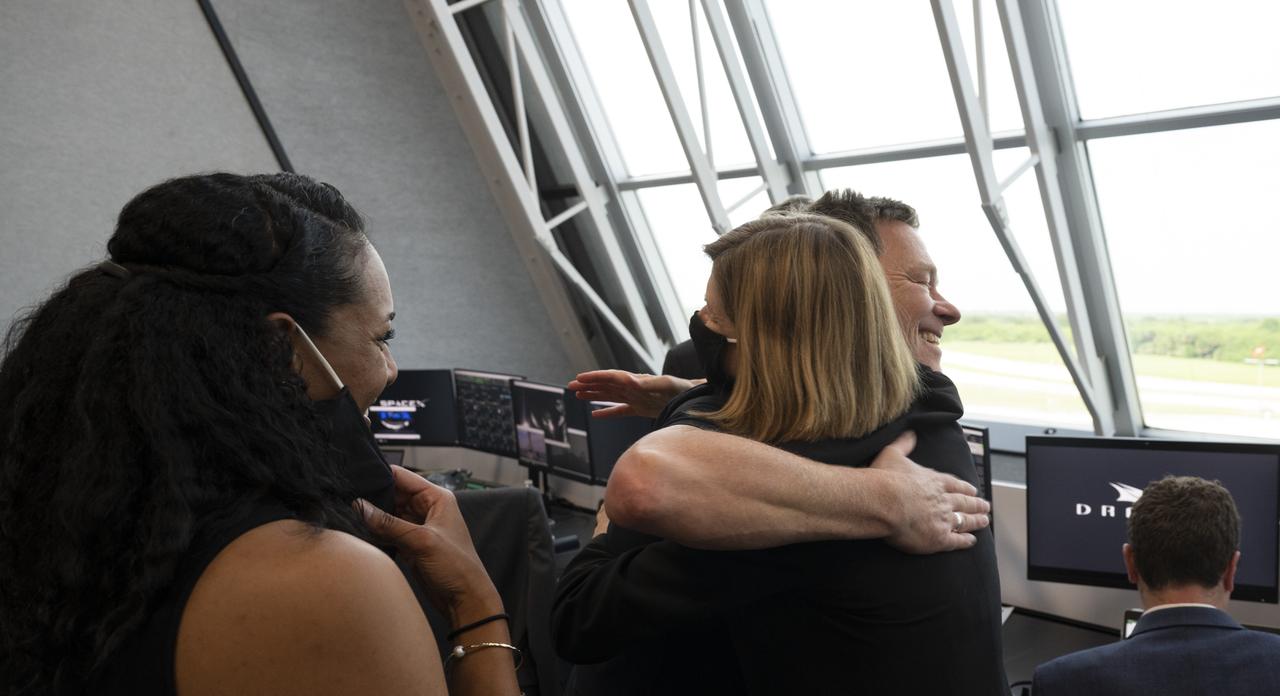
Hans Koenigsmann, vice president for build and flight reliability at SpaceX hugs Kathy Lueders, manager of NASA's Commercial Crew Program, following the launch of a SpaceX Falcon 9 rocket carrying the company's Crew Dragon spacecraft on the Demo-2 mission with NASA astronauts Douglas Hurley and Robert Behnken onboard, Saturday, May 30, 2020, in firing room four of the Launch Control Center at NASA’s Kennedy Space Center in Florida. NASA’s SpaceX Demo-2 mission is the first launch with astronauts of the SpaceX Crew Dragon spacecraft and Falcon 9 rocket to the International Space Station as part of the agency’s Commercial Crew Program. The test flight serves as an end-to-end demonstration of SpaceX’s crew transportation system. Behnken and Hurley launched at 3:22 p.m. EDT on Saturday, May 30, from Launch Complex 39A at the Kennedy Space Center. A new era of human spaceflight is set to begin as American astronauts once again launch on an American rocket from American soil to low-Earth orbit for the first time since the conclusion of the Space Shuttle Program in 2011. Photo Credit: (NASA/Joel Kowsky)

Kathy Lueders, manager of NASA's Commercial Crew Program, is seen after the hatches are opened between SpaceX’s Crew Dragon spacecraft with NASA astronauts Douglas Hurley and Robert Behnken onboard and the International Space Station, Sunday, May 31, 2020, in firing room four of the Launch Control Center at NASA’s Kennedy Space Center in Florida. NASA’s SpaceX Demo-2 mission is the first launch with astronauts of the SpaceX Crew Dragon spacecraft and Falcon 9 rocket to the International Space Station as part of the agency’s Commercial Crew Program. The test flight serves as an end-to-end demonstration of SpaceX’s crew transportation system. Behnken and Hurley launched at 3:22 p.m. EDT on Saturday, May 30, from Launch Complex 39A at the Kennedy Space Center and docked with the International Space Station at 10:16am EDT on Sunday, May 31.. A new era of human spaceflight is set to begin as American astronauts once again launch on an American rocket from American soil to low-Earth orbit for the first time since the conclusion of the Space Shuttle Program in 2011. Photo Credit: (NASA/Joel Kowsky)
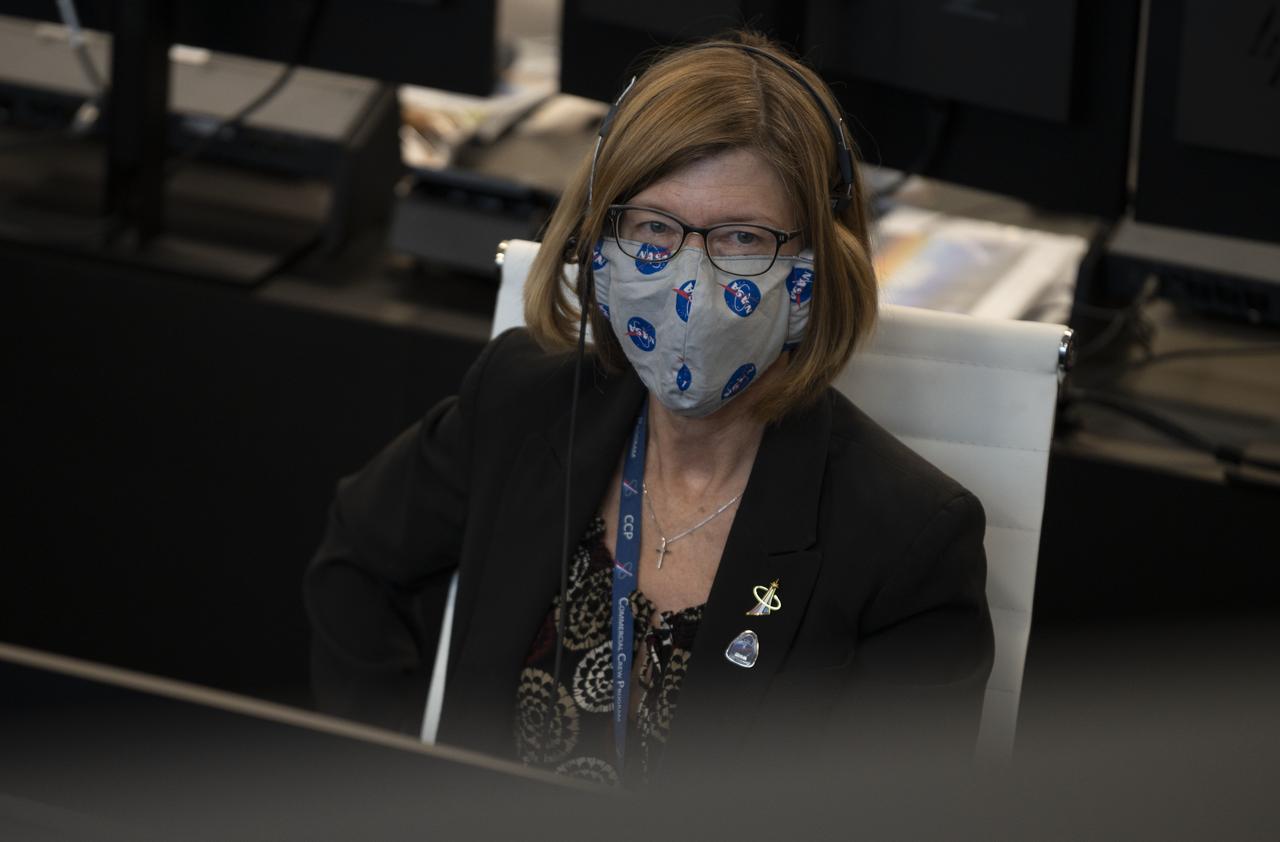
Kathy Lueders, manager of NASA's Commercial Crew Program is seen monitoring the launch of a SpaceX Falcon 9 rocket carrying the company's Crew Dragon spacecraft on the Demo-2 mission with NASA astronauts Douglas Hurley and Robert Behnken onboard, Saturday, May 30, 2020, in firing room four of the Launch Control Center at NASA’s Kennedy Space Center in Florida. NASA’s SpaceX Demo-2 mission is the first launch with astronauts of the SpaceX Crew Dragon spacecraft and Falcon 9 rocket to the International Space Station as part of the agency’s Commercial Crew Program. The test flight serves as an end-to-end demonstration of SpaceX’s crew transportation system. Behnken and Hurley launched at 3:22 p.m. EDT on Saturday, May 30, from Launch Complex 39A at the Kennedy Space Center. A new era of human spaceflight is set to begin as American astronauts once again launch on an American rocket from American soil to low-Earth orbit for the first time since the conclusion of the Space Shuttle Program in 2011. Photo Credit: (NASA/Joel Kowsky)
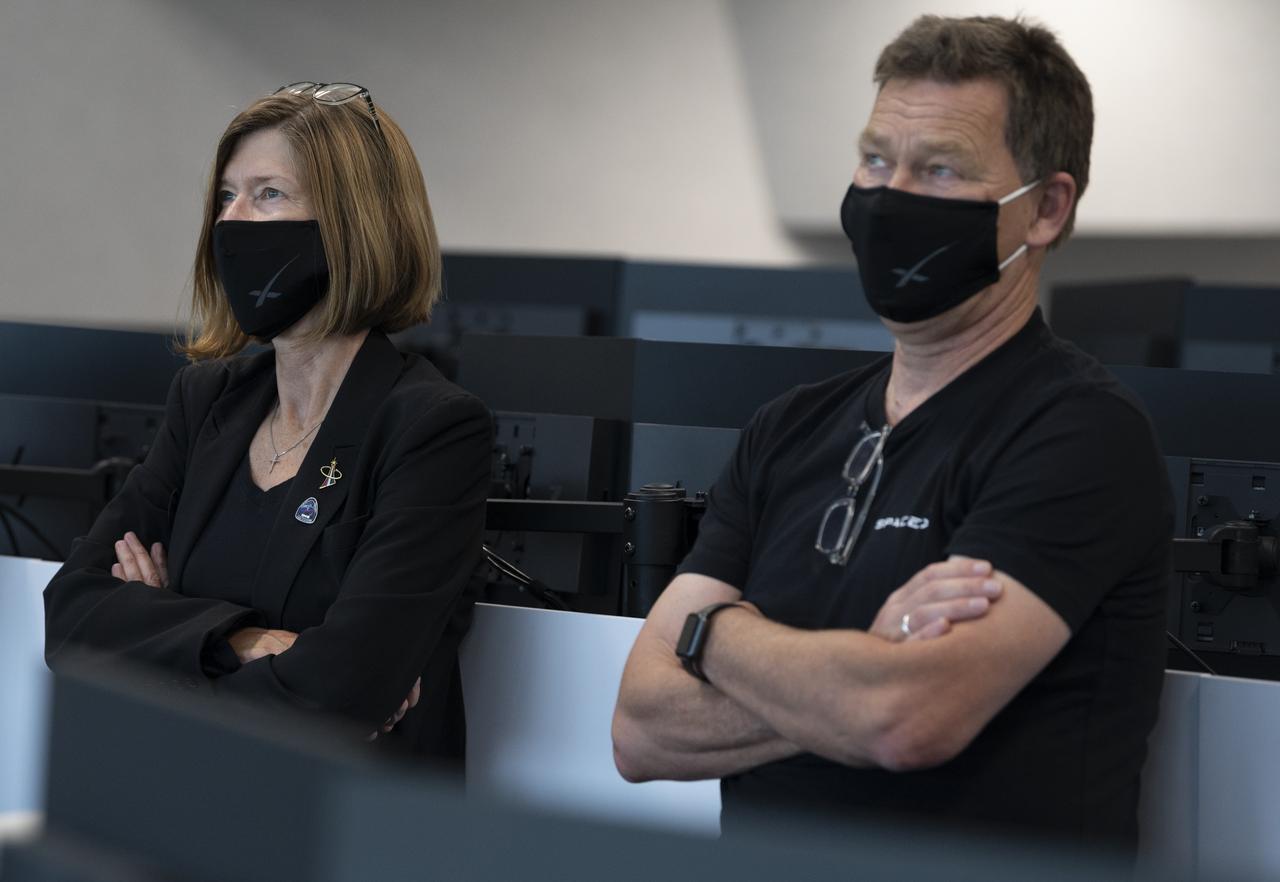
Kathy Lueders, manager of NASA's Commercial Crew Program, left, and Hans Koenigsmann, vice president for build and flight reliability at SpaceX, watch as the hatches are opened between SpaceX’s Crew Dragon spacecraft with NASA astronauts Douglas Hurley and Robert Behnken onboard and the International Space Station, Sunday, May 31, 2020, in firing room four of the Launch Control Center at NASA’s Kennedy Space Center in Florida. NASA’s SpaceX Demo-2 mission is the first launch with astronauts of the SpaceX Crew Dragon spacecraft and Falcon 9 rocket to the International Space Station as part of the agency’s Commercial Crew Program. The test flight serves as an end-to-end demonstration of SpaceX’s crew transportation system. Behnken and Hurley launched at 3:22 p.m. EDT on Saturday, May 30, from Launch Complex 39A at the Kennedy Space Center and docked with the International Space Station at 10:16am EDT on Sunday, May 31.. A new era of human spaceflight is set to begin as American astronauts once again launch on an American rocket from American soil to low-Earth orbit for the first time since the conclusion of the Space Shuttle Program in 2011. Photo Credit: (NASA/Joel Kowsky)
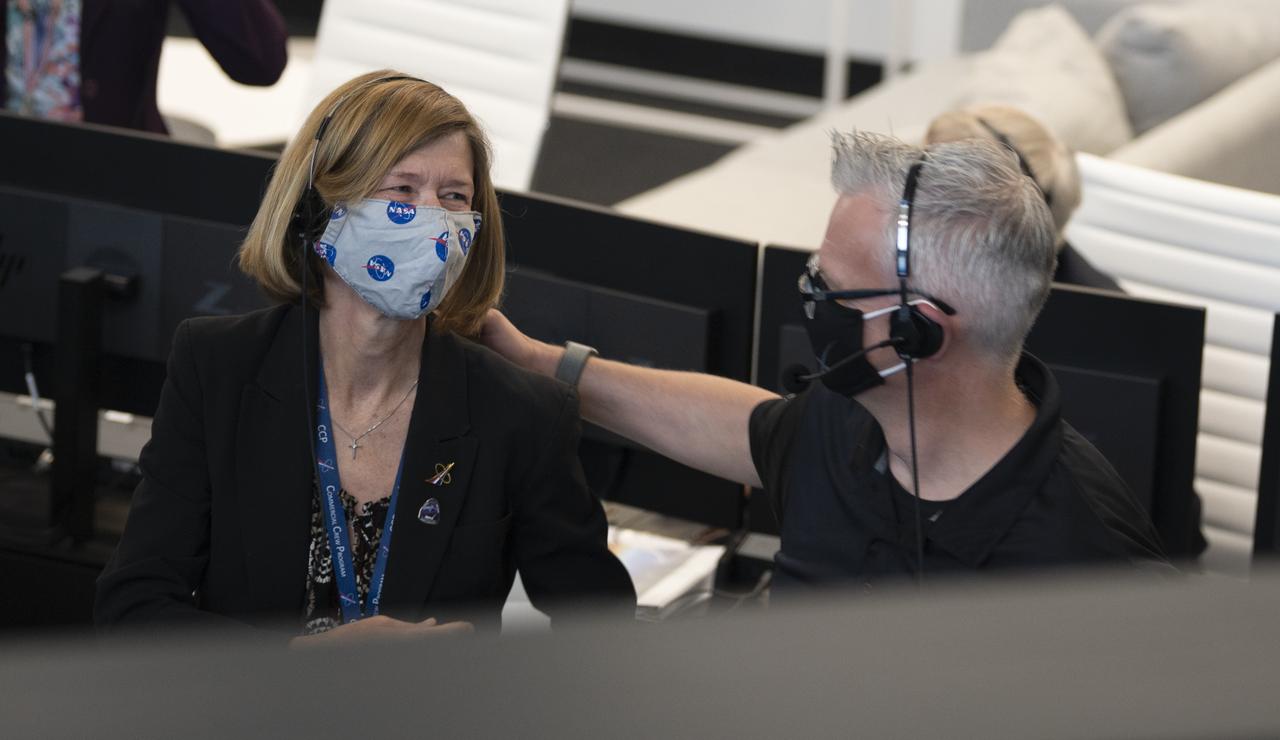
Kathy Lueders, manager of NASA's Commercial Crew Program, left, and Benji Reed, director of crew mission management at SpaceX are seen during the launch of a SpaceX Falcon 9 rocket carrying the company's Crew Dragon spacecraft on the Demo-2 mission with NASA astronauts Douglas Hurley and Robert Behnken onboard, Saturday, May 30, 2020, in firing room four of the Launch Control Center at NASA’s Kennedy Space Center in Florida. NASA’s SpaceX Demo-2 mission is the first launch with astronauts of the SpaceX Crew Dragon spacecraft and Falcon 9 rocket to the International Space Station as part of the agency’s Commercial Crew Program. The test flight serves as an end-to-end demonstration of SpaceX’s crew transportation system. Behnken and Hurley launched at 3:22 p.m. EDT on Saturday, May 30, from Launch Complex 39A at the Kennedy Space Center. A new era of human spaceflight is set to begin as American astronauts once again launch on an American rocket from American soil to low-Earth orbit for the first time since the conclusion of the Space Shuttle Program in 2011. Photo Credit: (NASA/Joel Kowsky)
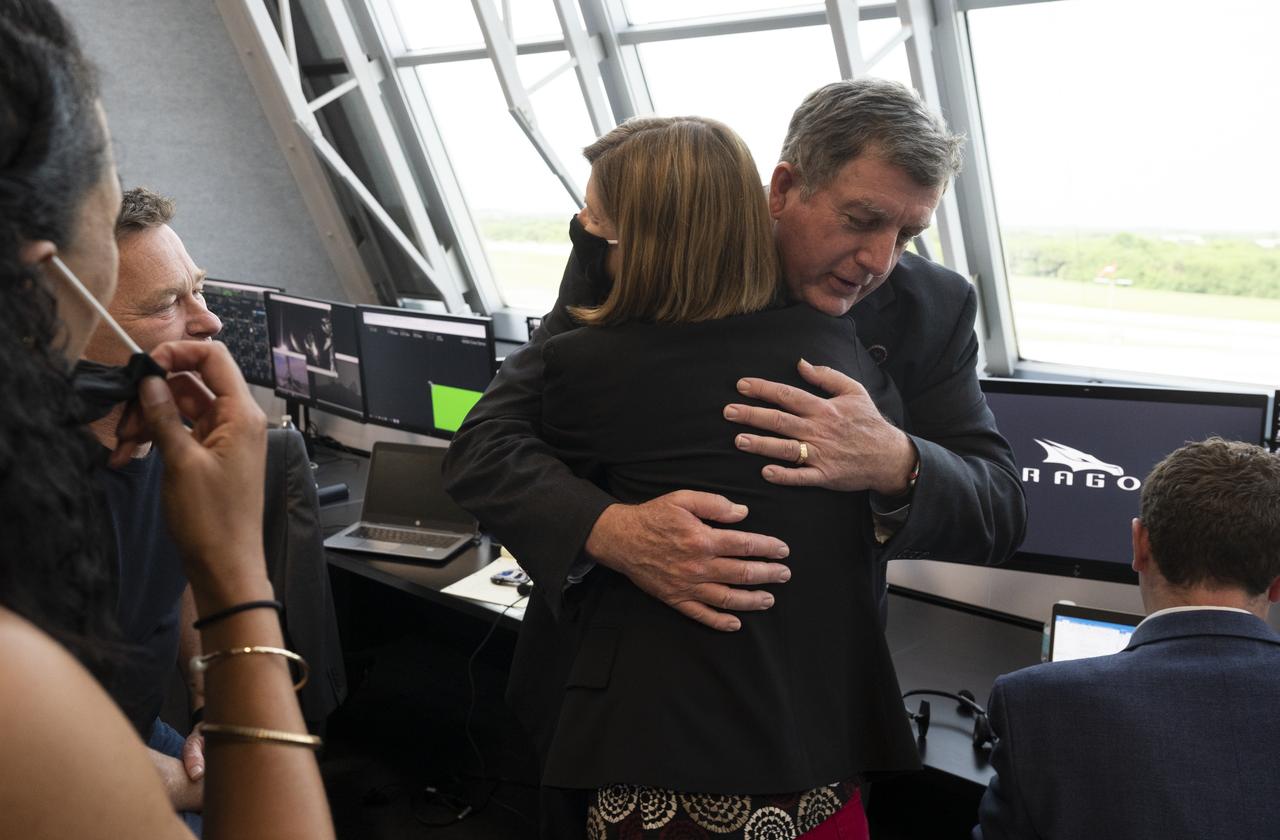
NASA International Space Station Program Manger Kirk Shireman hugs Kathy Lueders, manager of NASA's Commercial Crew Program, following the launch of a SpaceX Falcon 9 rocket carrying the company's Crew Dragon spacecraft on the Demo-2 mission with NASA astronauts Douglas Hurley and Robert Behnken onboard, Saturday, May 30, 2020, in firing room four of the Launch Control Center at NASA’s Kennedy Space Center in Florida. NASA’s SpaceX Demo-2 mission is the first launch with astronauts of the SpaceX Crew Dragon spacecraft and Falcon 9 rocket to the International Space Station as part of the agency’s Commercial Crew Program. The test flight serves as an end-to-end demonstration of SpaceX’s crew transportation system. Behnken and Hurley launched at 3:22 p.m. EDT on Saturday, May 30, from Launch Complex 39A at the Kennedy Space Center. A new era of human spaceflight is set to begin as American astronauts once again launch on an American rocket from American soil to low-Earth orbit for the first time since the conclusion of the Space Shuttle Program in 2011. Photo Credit: (NASA/Joel Kowsky)
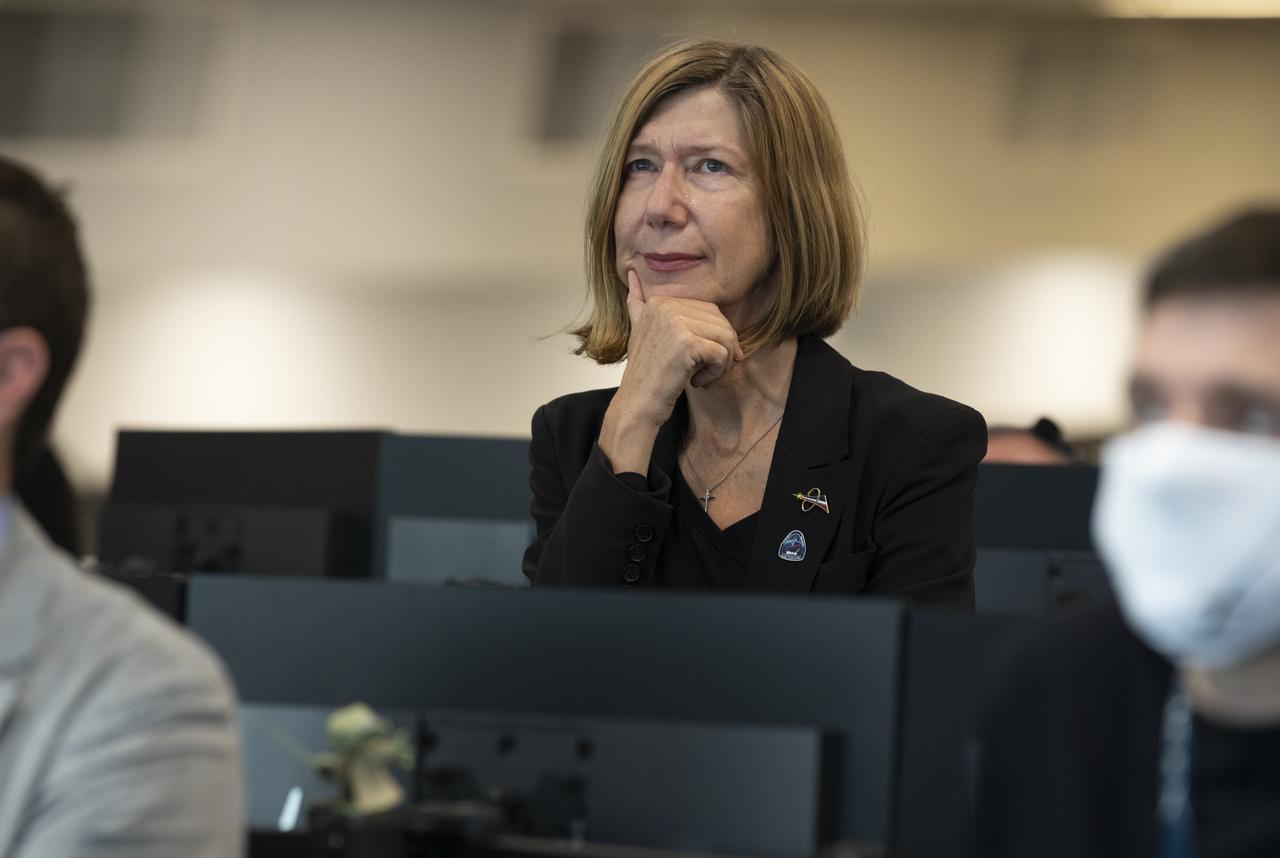
Kathy Lueders, manager of NASA's Commercial Crew Program, watchs the docking of SpaceX’s Crew Dragon spacecraft with NASA astronauts Douglas Hurley and Robert Behnken onboard to the International Space Station, Sunday, May 31, 2020, in firing room four of the Launch Control Center at NASA’s Kennedy Space Center in Florida. NASA’s SpaceX Demo-2 mission is the first launch with astronauts of the SpaceX Crew Dragon spacecraft and Falcon 9 rocket to the International Space Station as part of the agency’s Commercial Crew Program. The test flight serves as an end-to-end demonstration of SpaceX’s crew transportation system. Behnken and Hurley launched at 3:22 p.m. EDT on Saturday, May 30, from Launch Complex 39A at the Kennedy Space Center and docked with the International Space Station at 10:16am EDT on Sunday, May 31.. A new era of human spaceflight is set to begin as American astronauts once again launch on an American rocket from American soil to low-Earth orbit for the first time since the conclusion of the Space Shuttle Program in 2011. Photo Credit: (NASA/Joel Kowsky)
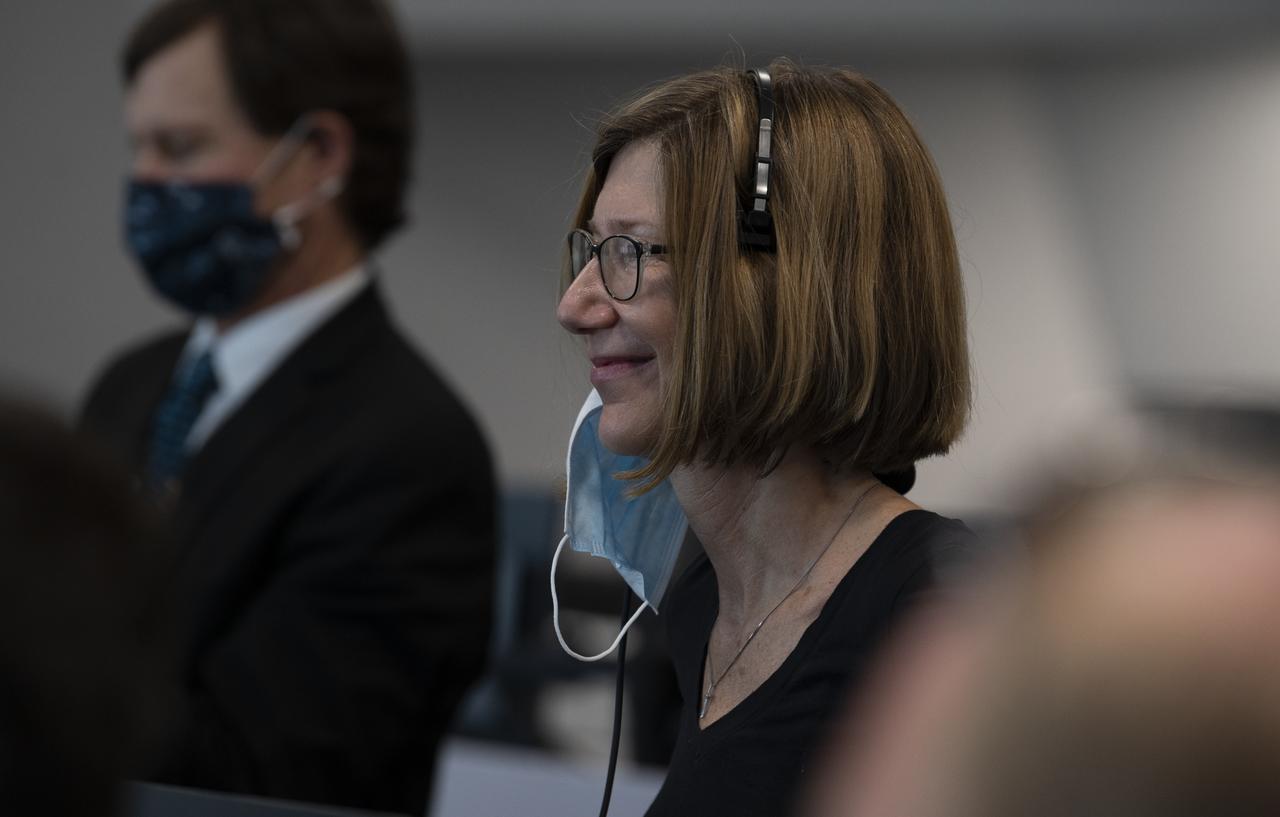
Kathy Lueders, manager of NASA's Commercial Crew Program,watchs the docking of SpaceX’s Crew Dragon spacecraft with NASA astronauts Douglas Hurley and Robert Behnken onboard to the International Space Station, Sunday, May 31, 2020, in firing room four of the Launch Control Center at NASA’s Kennedy Space Center in Florida. NASA’s SpaceX Demo-2 mission is the first launch with astronauts of the SpaceX Crew Dragon spacecraft and Falcon 9 rocket to the International Space Station as part of the agency’s Commercial Crew Program. The test flight serves as an end-to-end demonstration of SpaceX’s crew transportation system. Behnken and Hurley launched at 3:22 p.m. EDT on Saturday, May 30, from Launch Complex 39A at the Kennedy Space Center and docked with the International Space Station at 10:16am EDT on Sunday, May 31.. A new era of human spaceflight is set to begin as American astronauts once again launch on an American rocket from American soil to low-Earth orbit for the first time since the conclusion of the Space Shuttle Program in 2011. Photo Credit: (NASA/Joel Kowsky)
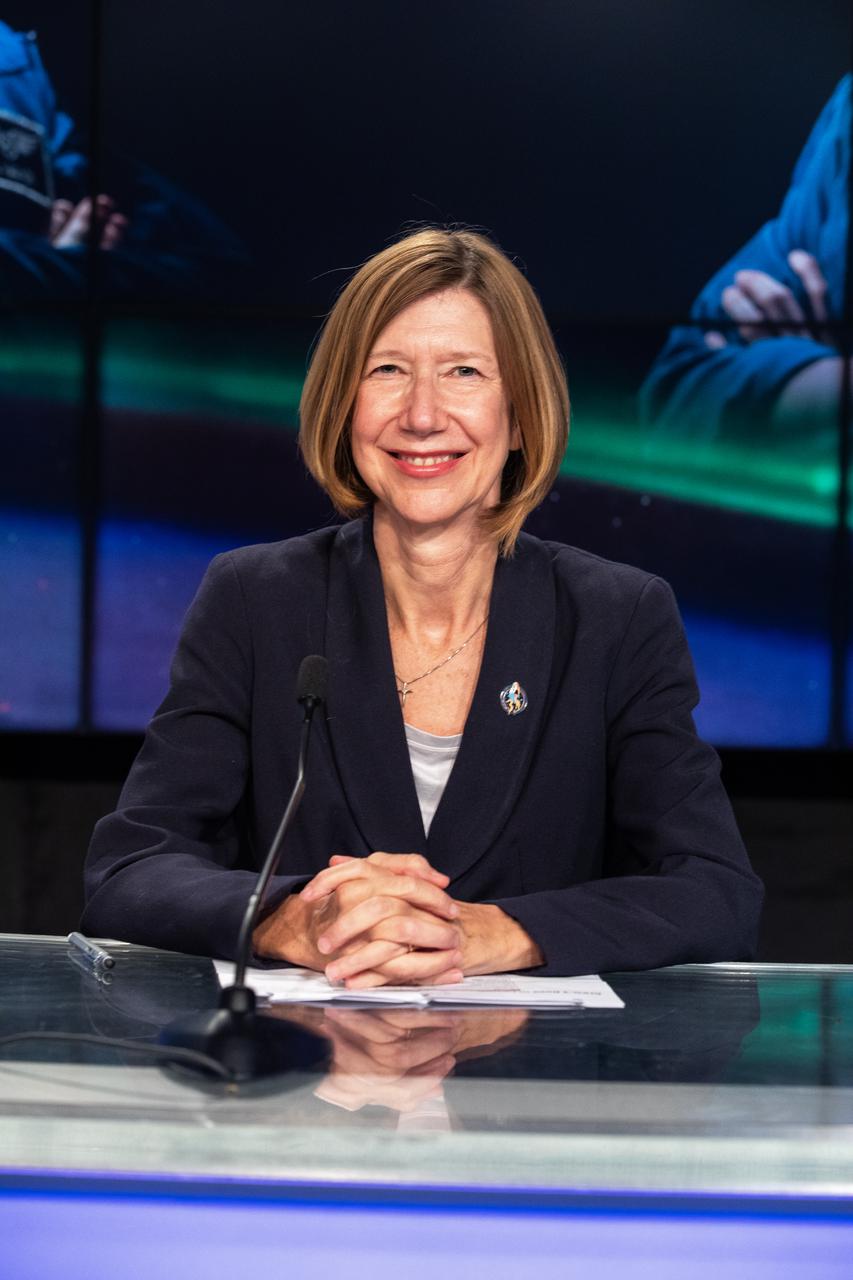
NASA Associate Administrator for Space Operations Kathy Lueders speaks during a briefing for the upcoming SpaceX Crew-3 mission at the agency’s Kennedy Space Center in Florida on Oct. 29, 2021. The SpaceX Falcon 9 with Crew Dragon atop is scheduled to launch Oct. 31 at 2:21 a.m. EDT from Launch Complex 39A at Kennedy. Crew Dragon will carry four astronauts to the International Space Station for NASA’s Commercial Crew Program. Crew-3 is the third crew rotation flight to the space station, and the first flight of a new Crew Dragon spacecraft.
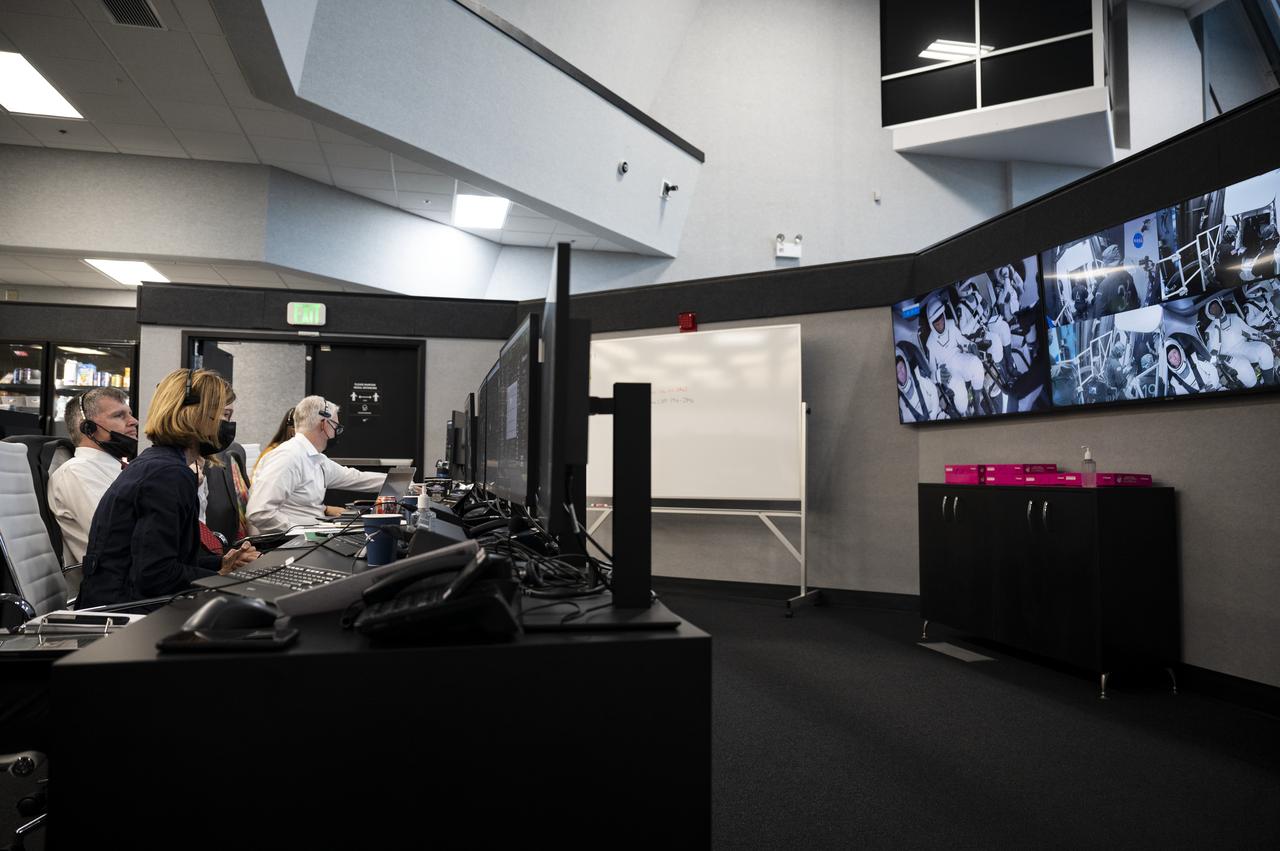
From left to right, Kathy Lueders, Associate Administrator of the Human Exploration and Operations Mission Directorate; Steve Stich, program manager for NASA's Commercial Crew Program; and Benji Reed, director of crew mission management at SpaceX, monitor the countdown of the launch of a SpaceX Falcon 9 rocket carrying the company's Crew Dragon spacecraft on NASA’s SpaceX Crew-1 mission with NASA astronauts Mike Hopkins, Victor Glover, Shannon Walker, and Japan Aerospace Exploration Agency (JAXA) astronaut Soichi Noguchi onboard, Sunday, Nov. 15, 2020, in firing room four of the Launch Control Center at NASA’s Kennedy Space Center in Florida. NASA’s SpaceX Crew-1 mission is the first crew rotation mission of the SpaceX Crew Dragon spacecraft and Falcon 9 rocket to the International Space Station as part of the agency’s Commercial Crew Program. Hopkins, Glover, Walker, and Noguchi are scheduled to launch at 7:27 p.m. EST, from Launch Complex 39A at the Kennedy Space Center. Photo Credit: (NASA/Aubrey Gemignani)
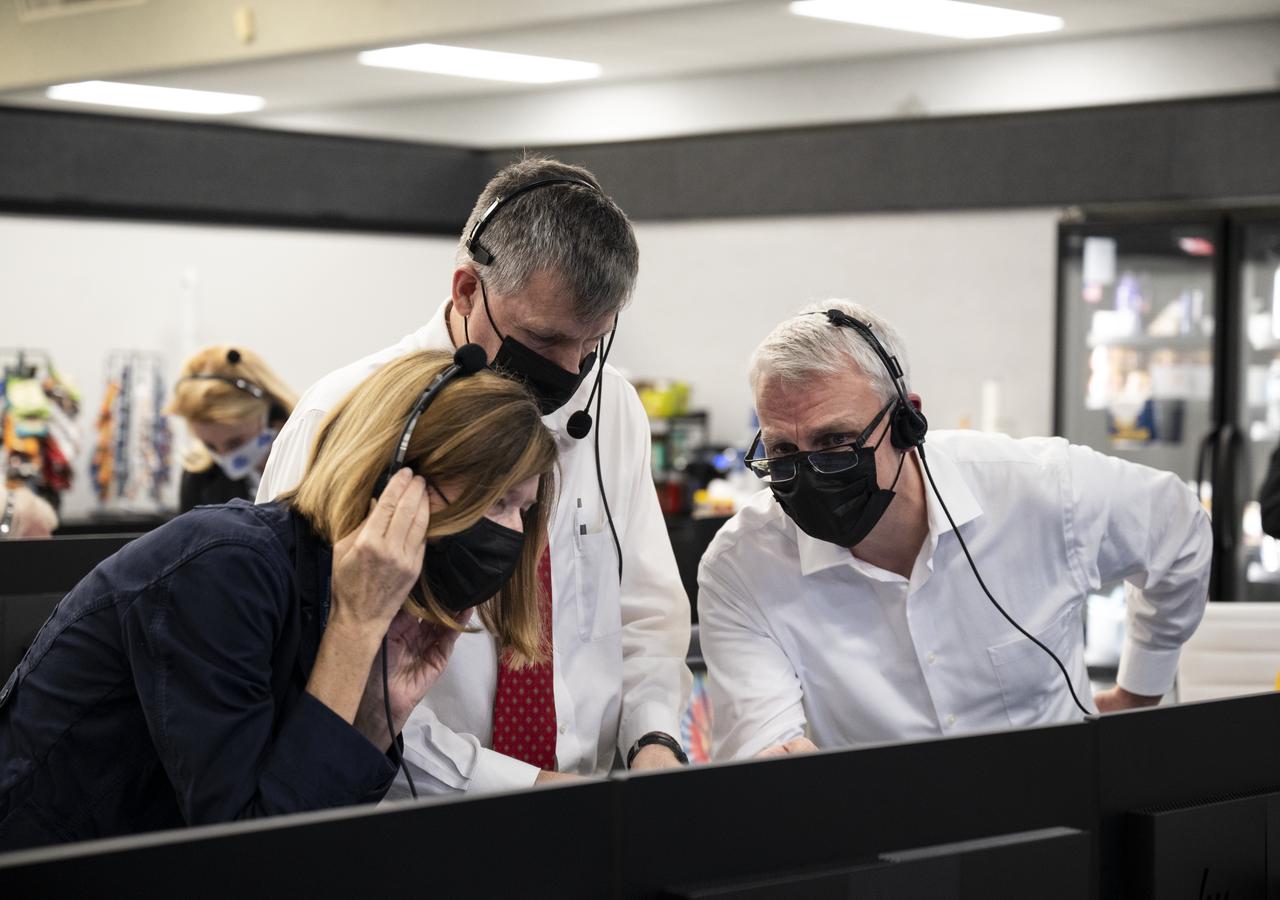
Kathy Lueders, Associate Administrator of the Human Exploration and Operations Mission Directorate, left; Steve Stich, program manager for NASA's Commercial Crew Program, center, and Benji Reed, director of crew mission management at SpaceX, monitor the launch of a SpaceX Falcon 9 rocket carrying the company's Crew Dragon spacecraft on NASA’s SpaceX Crew-1 mission with NASA astronauts Mike Hopkins, Victor Glover, Shannon Walker, and Japan Aerospace Exploration Agency (JAXA) astronaut Soichi Noguchi onboard, Sunday, Nov. 15, 2020, in firing room four of the Launch Control Center at NASA’s Kennedy Space Center in Florida. NASA’s SpaceX Crew-1 mission is the first crew rotation mission of the SpaceX Crew Dragon spacecraft and Falcon 9 rocket to the International Space Station as part of the agency’s Commercial Crew Program. Hopkins, Glover, Walker, and Noguchi launched at 7:27 p.m. EST, from Launch Complex 39A at the Kennedy Space Center. Photo Credit: (NASA/Aubrey Gemignani)
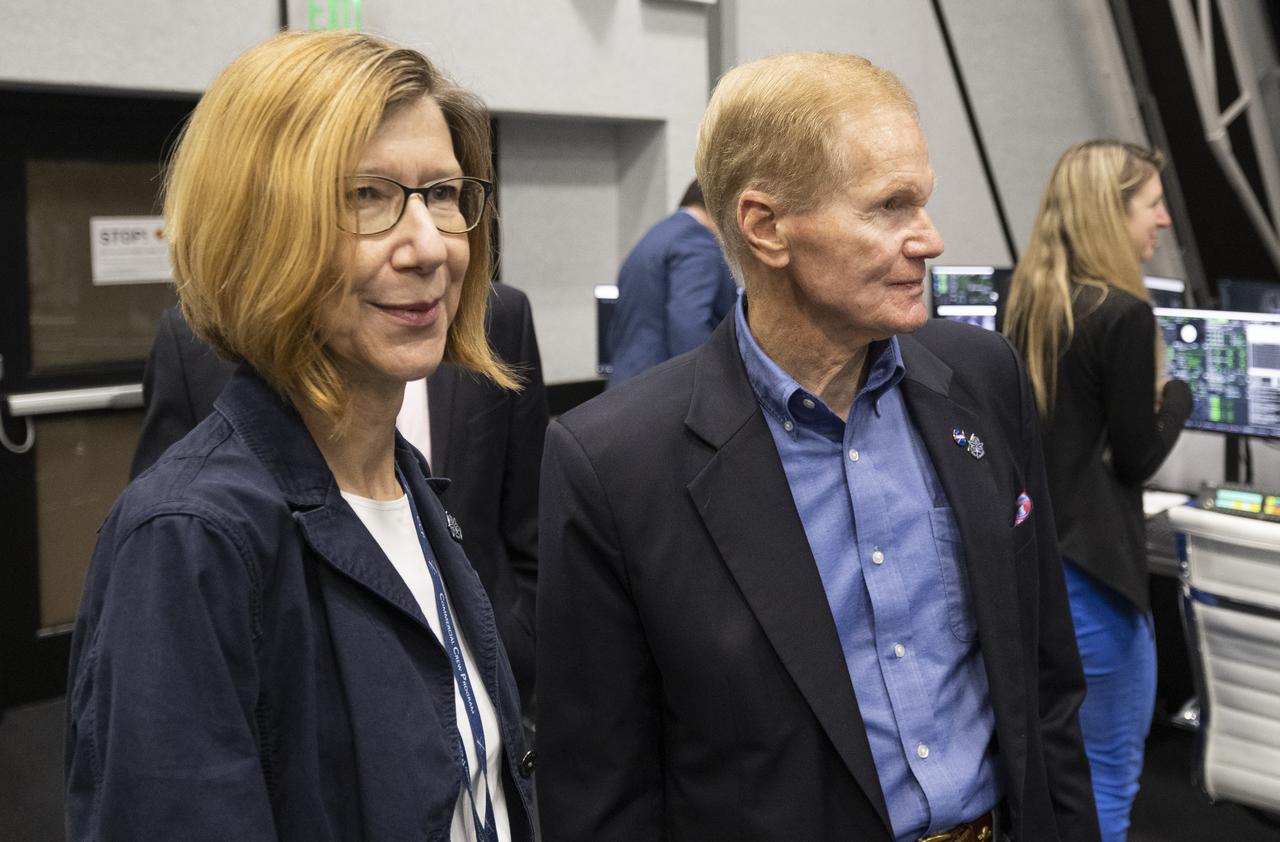
NASA Administrator Bill Nelson, right, and Kathy Lueders, associate administrator for NASA's Space Operations Mission Directorate, left, are seen following the launch of a SpaceX Falcon 9 rocket carrying the company's Crew Dragon spacecraft on the Crew-4 mission with NASA astronauts Kjell Lindgren, Robert Hines, Jessica Watkins, and ESA (European Space Agency) astronaut Samantha Cristoforetti onboard, Wednesday, April 27, 2022, in firing room four of the Launch Control Center at NASA’s Kennedy Space Center in Florida. NASA’s SpaceX Crew-4 mission is the fourth crew rotation mission of the SpaceX Crew Dragon spacecraft and Falcon 9 rocket to the International Space Station as part of the agency’s Commercial Crew Program. Lindgren, Hines, Watkins, and Cristoforetti launched at 3:52 a.m. ET, from Launch Complex 39A at the Kennedy Space Center to begin a six month mission onboard the International Space Station. Photo Credit: (NASA/Joel Kowsky)
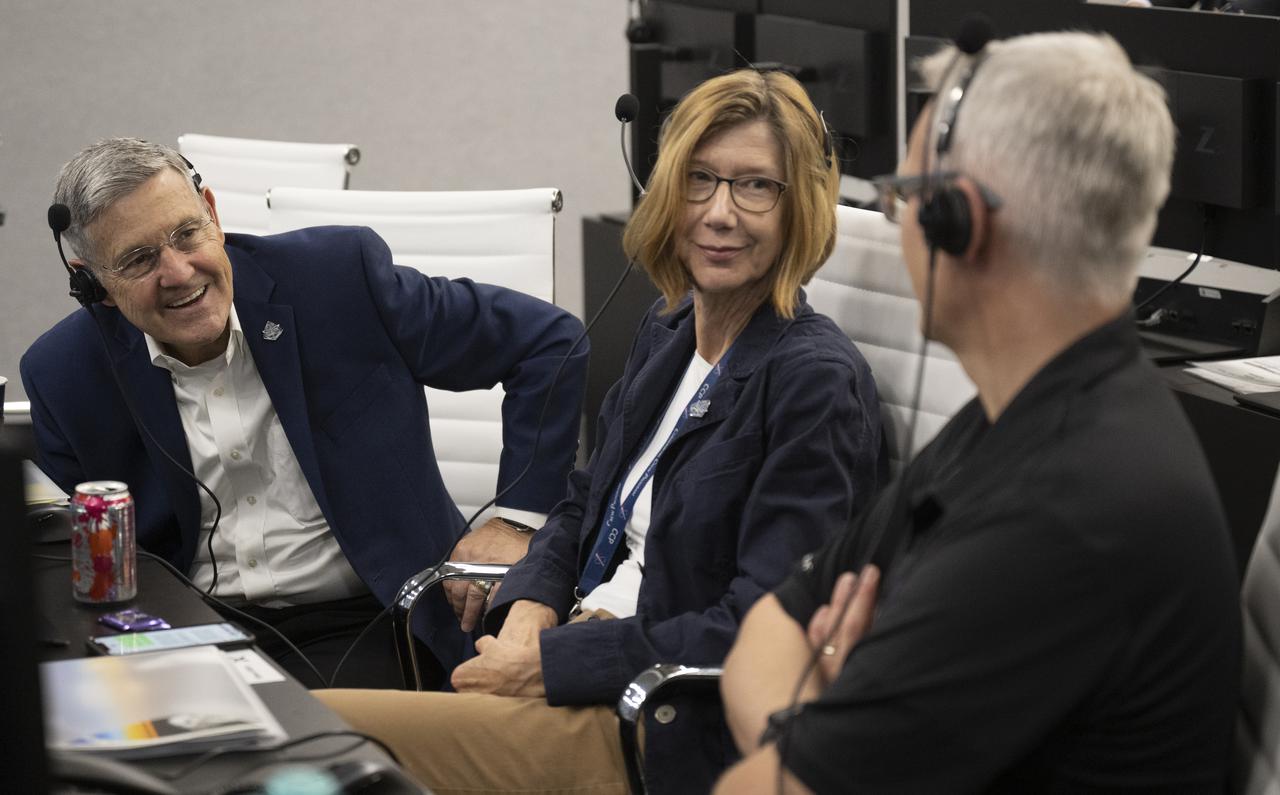
Bob Cabana, NASA associate administrator, left, Kathy Lueders, associate administrator for NASA's Space Operations Mission Directorate, center, and Benji Reed, senior director of Human Spaceflight Programs at SpaceX, are seen as teams from NASA and SpaceX monitor the countdown of the launch of a SpaceX Falcon 9 rocket carrying the company's Crew Dragon spacecraft on NASA’s SpaceX Crew-4 mission with NASA astronauts Kjell Lindgren, Robert Hines, Jessica Watkins, and ESA (European Space Agency) astronaut Samantha Cristoforetti onboard, Wednesday, April 27, 2022, in firing room four of the Rocco A. Petrone Launch Control Center at NASA’s Kennedy Space Center in Florida. NASA’s SpaceX Crew-4 mission is the fourth crew rotation mission of the SpaceX Crew Dragon spacecraft and Falcon 9 rocket to the International Space Station as part of the agency’s Commercial Crew Program. Lindgren, Hines, Watkins, and Cristoforetti are launched at 3:52 a.m. ET, from Launch Complex 39A at the Kennedy Space Center. Photo Credit: (NASA/Joel Kowsky)
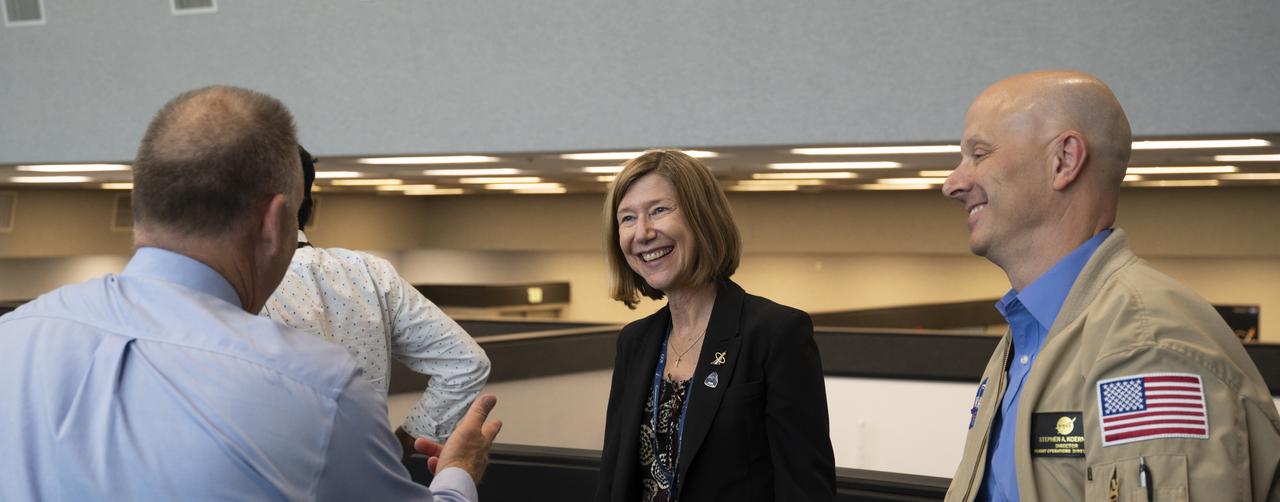
Kathy Lueders, manager of NASA's Commercial Crew Program, center, is seen with Norm Knight, deputy director of Flight Operations at NASA's Johnson Space Center, left, and Stephen Koerner, Director of the Flight Operations Directorate at NASA’s Johnson Space Center, right, following launch of a SpaceX Falcon 9 rocket carrying the company's Crew Dragon spacecraft on the Demo-2 mission with NASA astronauts Douglas Hurley and Robert Behnken onboard, Saturday, May 30, 2020, in firing room four of the Launch Control Center at NASA’s Kennedy Space Center in Florida. NASA’s SpaceX Demo-2 mission is the first launch with astronauts of the SpaceX Crew Dragon spacecraft and Falcon 9 rocket to the International Space Station as part of the agency’s Commercial Crew Program. The test flight serves as an end-to-end demonstration of SpaceX’s crew transportation system. Behnken and Hurley launched at 3:22 p.m. EDT on Saturday, May 30, from Launch Complex 39A at the Kennedy Space Center. A new era of human spaceflight is set to begin as American astronauts once again launch on an American rocket from American soil to low-Earth orbit for the first time since the conclusion of the Space Shuttle Program in 2011. Photo Credit: (NASA/Joel Kowsky)
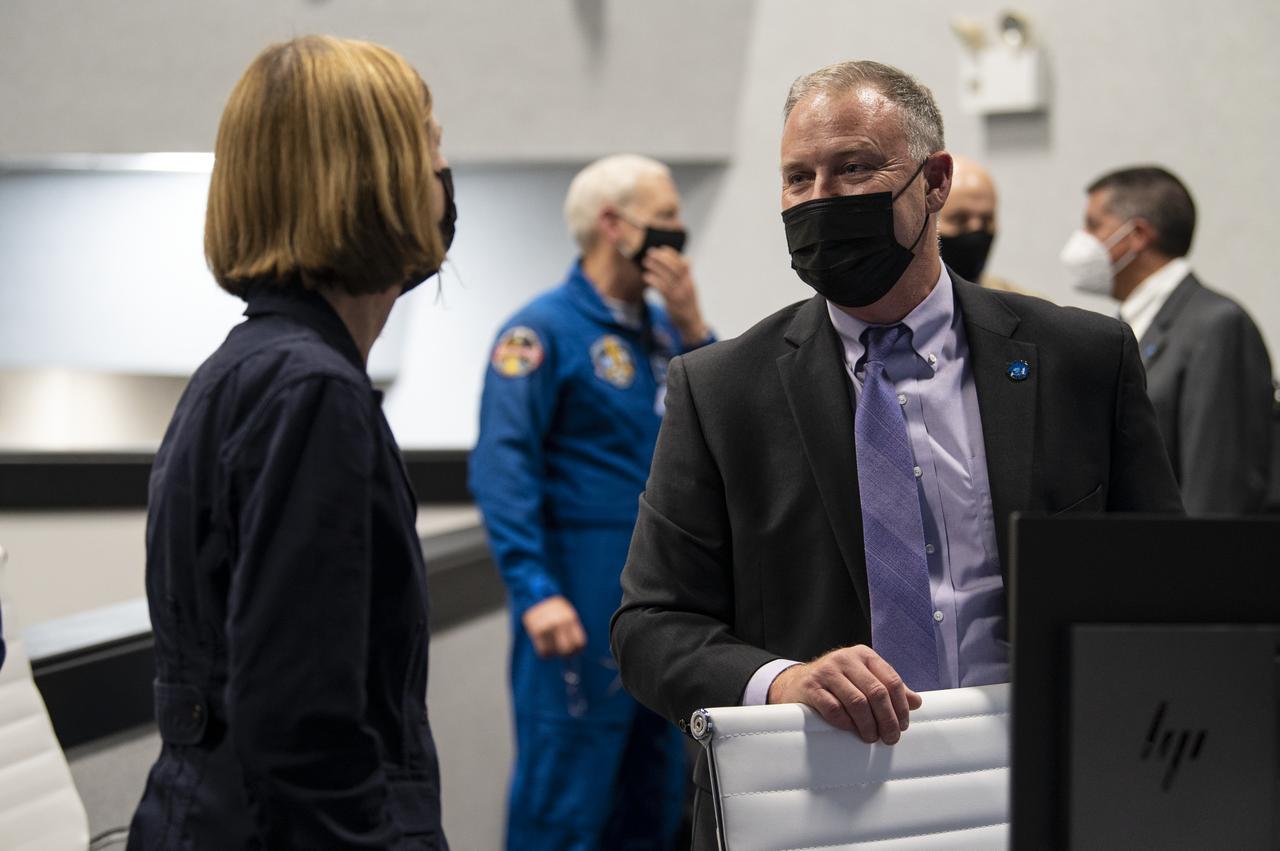
Kathy Lueders, Associate Administrator of the Human Exploration and Operations Mission Directorate, left, congratulates Norm Knight, deputy director of Flight Operations at NASA's Johnson Space Center after the launch of a SpaceX Falcon 9 rocket carrying the company's Crew Dragon spacecraft on NASA’s SpaceX Crew-1 mission with NASA astronauts Mike Hopkins, Victor Glover, Shannon Walker, and Japan Aerospace Exploration Agency (JAXA) astronaut Soichi Noguchi onboard, Sunday, Nov. 15, 2020, in firing room four of the Launch Control Center at NASA’s Kennedy Space Center in Florida. NASA’s SpaceX Crew-1 mission is the first crew rotation mission of the SpaceX Crew Dragon spacecraft and Falcon 9 rocket to the International Space Station as part of the agency’s Commercial Crew Program. Hopkins, Glover, Walker, and Noguchi launched at 7:27 p.m. EST, from Launch Complex 39A at the Kennedy Space Center. Photo Credit: (NASA/Aubrey Gemignani)
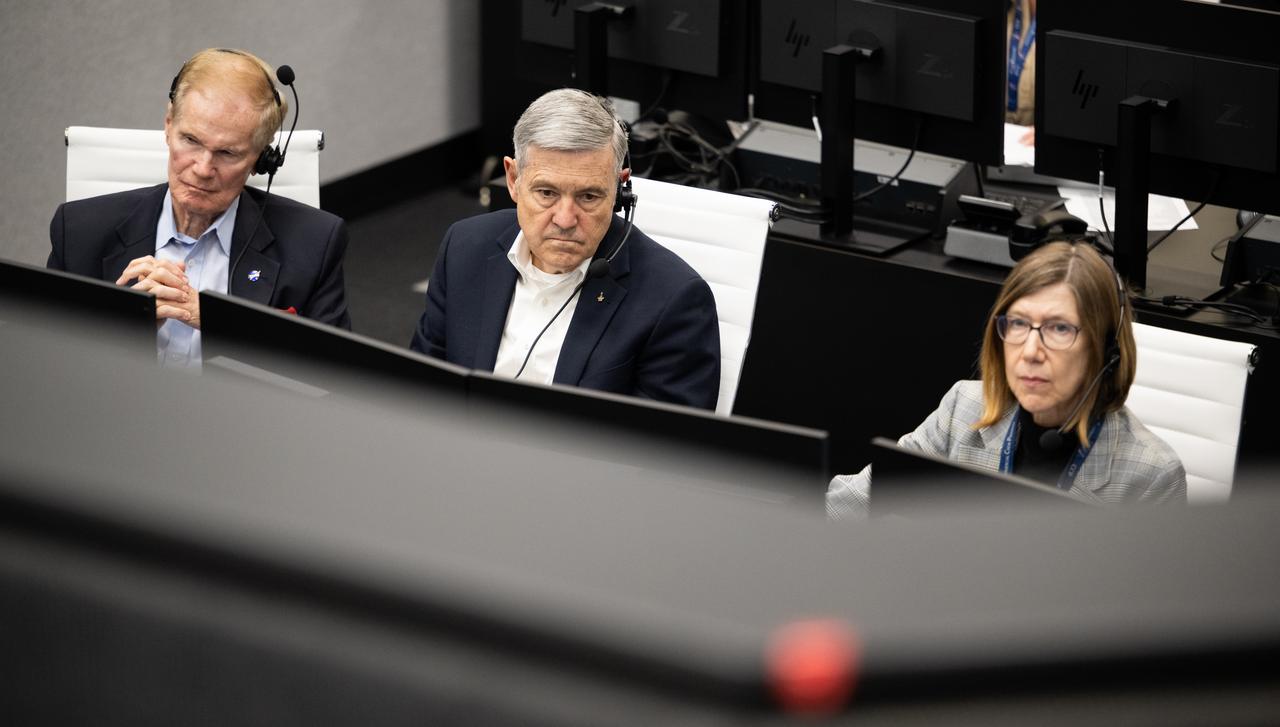
NASA Administrator Bill Nelson, left, Bob Cabana, NASA associate administrator, center, and Kathy Lueders, associate administrator for NASA's Space Operations Mission Directorate, right, monitor the countdown of the launch of a SpaceX Falcon 9 rocket carrying the company's Dragon spacecraft on NASA’s SpaceX Crew-6 mission with NASA astronauts Stephen Bowen and Warren "Woody" Hoburg, UAE (United Arab Emirates) astronaut Sultan Alneyadi, and Roscosmos cosmonaut Andrey Fedyaev onboard, Thursday, March 2, 2023, in firing room four of the Rocco A. Petrone Launch Control Center at NASA’s Kennedy Space Center in Florida. NASA’s SpaceX Crew-6 mission is the first crew rotation mission of the SpaceX Dragon spacecraft and Falcon 9 rocket to the International Space Station as part of the agency’s Commercial Crew Program. Bowen, Hoburg, Alneyadi, and Fedyaev launched at 12:34 a.m. EST on March 2, from Launch Complex 39A at the Kennedy Space Center. Photo Credit: (NASA/Joel Kowsky)
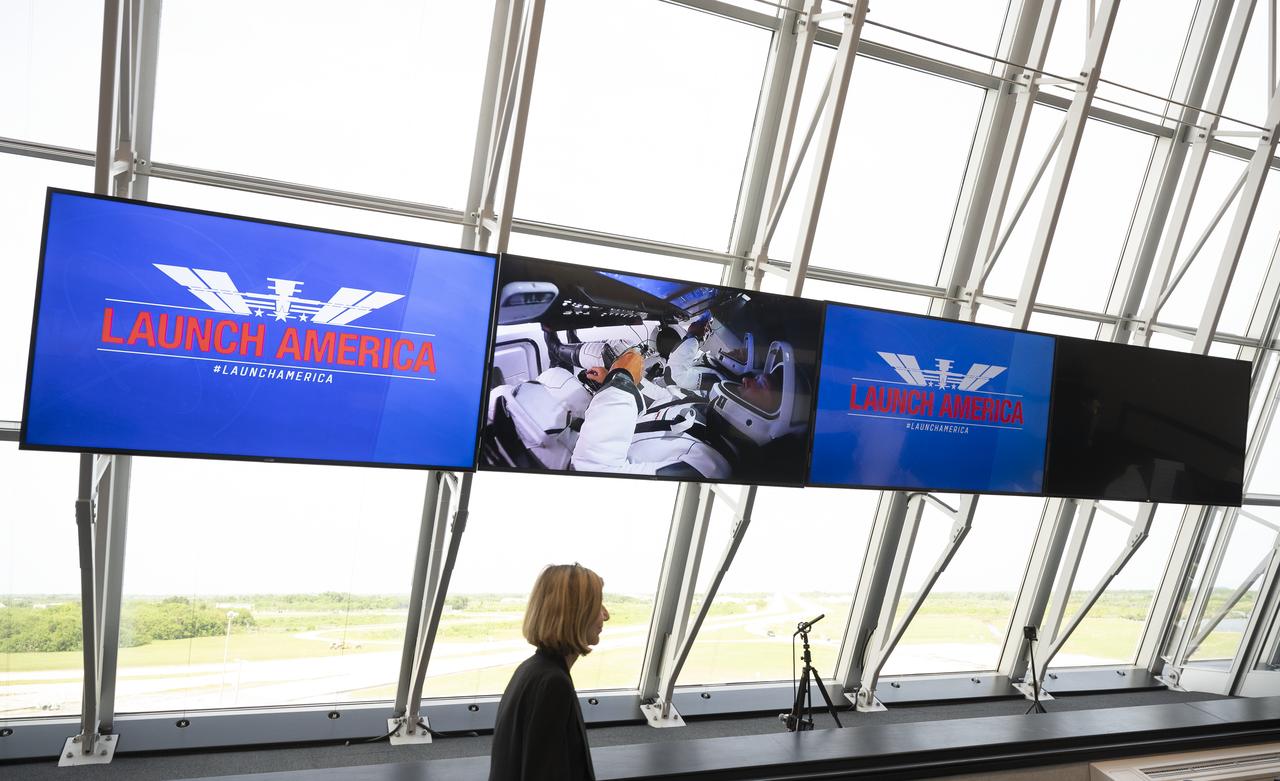
Kathy Lueders, manager of NASA's Commercial Crew Program walks past a monitor displaying video of NASA astronauts Robert Behnken and Douglas Hurley onboard SpaceX’s Crew Dragon spacecraft following launch atop the company’s Falcon 9 rocket the Demo-2 to the International Space Station, Saturday, May 30, 2020, in firing room four of the Launch Control Center at NASA’s Kennedy Space Center in Florida. NASA’s SpaceX Demo-2 mission is the first launch with astronauts of the SpaceX Crew Dragon spacecraft and Falcon 9 rocket to the International Space Station as part of the agency’s Commercial Crew Program. The test flight serves as an end-to-end demonstration of SpaceX’s crew transportation system. Behnken and Hurley launched at 3:22 p.m. EDT on Saturday, May 30, from Launch Complex 39A at the Kennedy Space Center. A new era of human spaceflight is set to begin as American astronauts once again launch on an American rocket from American soil to low-Earth orbit for the first time since the conclusion of the Space Shuttle Program in 2011. Photo Credit: (NASA/Joel Kowsky)
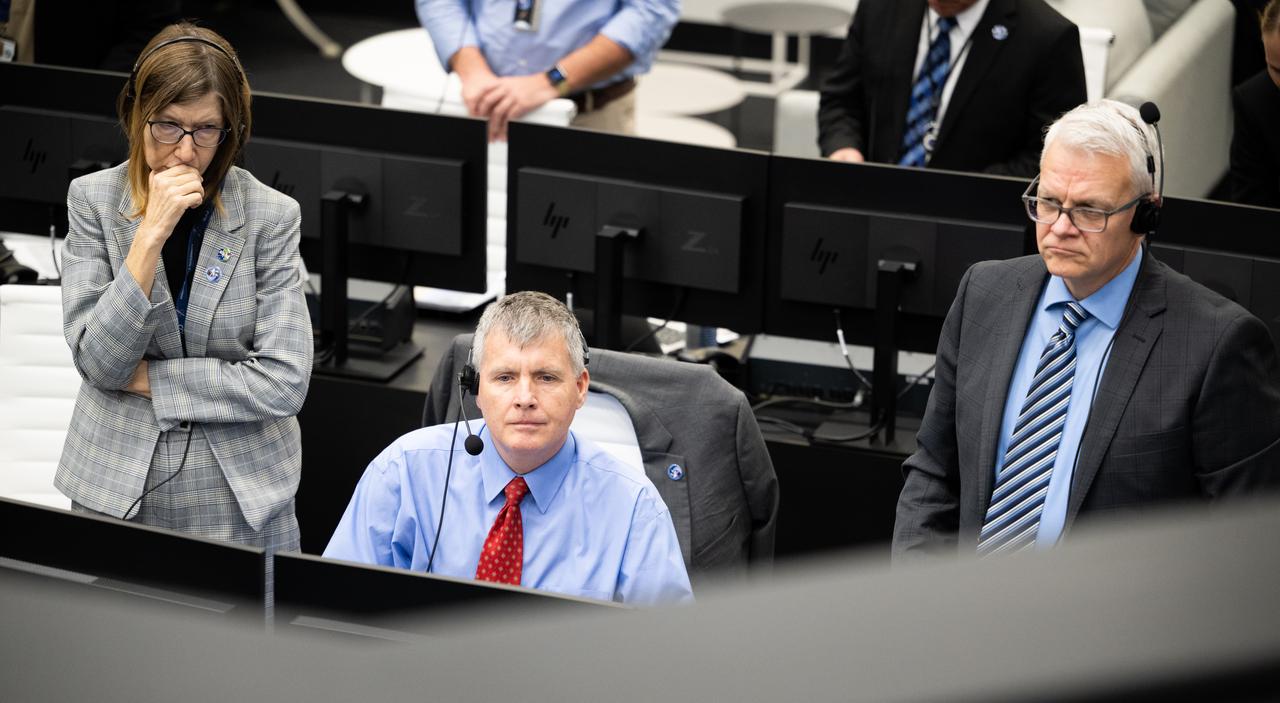
Kathy Lueders, associate administrator for NASA's Space Operations Mission Directorate, left, Steve Stich, manager of NASA’s Commercial Crew Program, center, and Benji Reed, senior director of Human Spaceflight Programs at SpaceX, right, monitor the launch of a SpaceX Falcon 9 rocket carrying the company's Dragon spacecraft on the Crew-6 mission with NASA astronauts Stephen Bowen and Warren "Woody" Hoburg, UAE (United Arab Emirates) astronaut Sultan Alneyadi, and Roscosmos cosmonaut Andrey Fedyaev onboard, Thursday, March 2, 2023, in firing room four of the Rocco A. Petrone Launch Control Center at NASA’s Kennedy Space Center in Florida. NASA’s SpaceX Crew-6 mission is the sixth crew rotation mission of the SpaceX Dragon spacecraft and Falcon 9 rocket to the International Space Station as part of the agency’s Commercial Crew Program. Bowen, Hoburg, Alneyadi, and Fedyaev launched at 12:34 a.m. EST, from Launch Complex 39A at the Kennedy Space Center. Photo Credit: (NASA/Joel Kowsky)
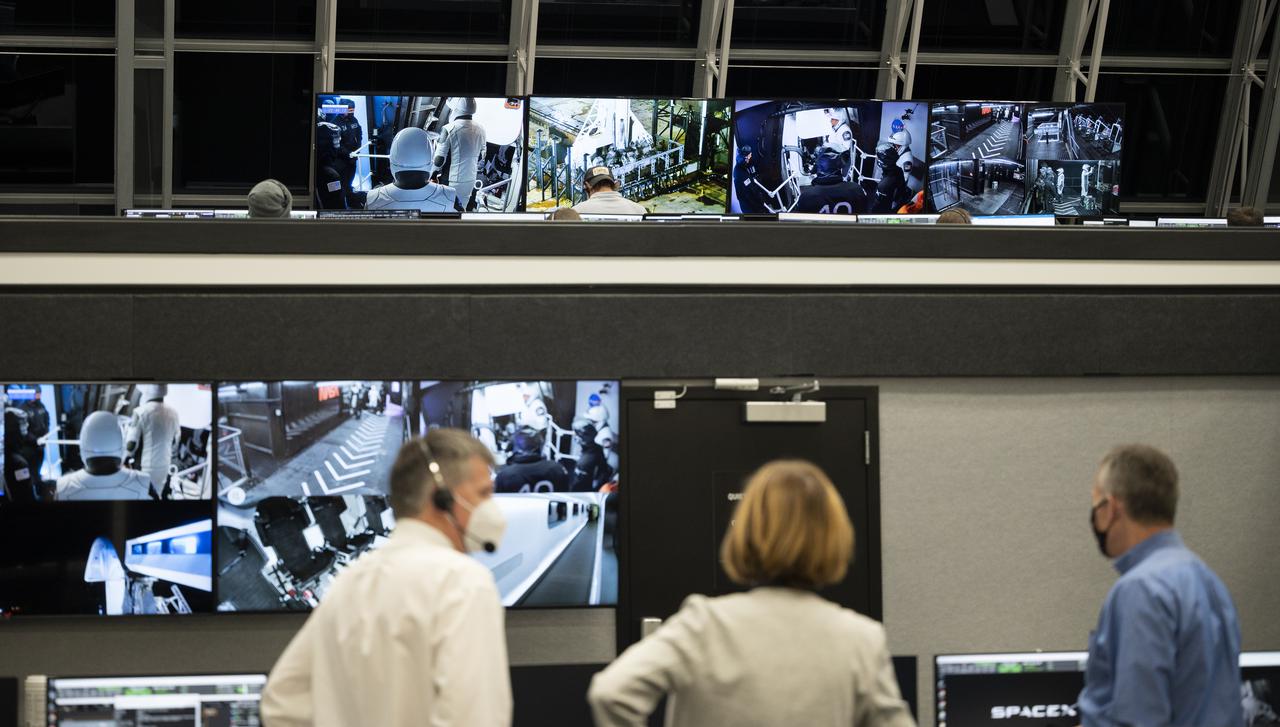
Steve Stich, manager of NASA’s Commercial Crew Program, left, Kathy Lueders, associate administrator for NASA's Human Exploration and Operations Mission Directorate, center, and Phil McAlister, NASA’s director of commercial spaceflight, watch as NASA astronauts Shane Kimbrough and Megan McArthur are seen on monitors as they prepare to board SpaceX’s Crew Dragon spacecraft for launch, Friday, April 23, 2021, in firing room four of the Launch Control Center at NASA’s Kennedy Space Center in Florida. NASA’s SpaceX Crew-2 mission is the second crew rotation mission of the SpaceX Crew Dragon spacecraft and Falcon 9 rocket to the International Space Station as part of the agency’s Commercial Crew Program. Kimbrough, McArthur, ESA (European Space Agency) astronaut Thomas Pesquet, and Japan Aerospace Exploration Agency (JAXA) astronaut Akihiko Hoshide launched at 5:49 a.m. EDT, from Launch Complex 39A at the Kennedy Space Center. Photo Credit: (NASA/Joel Kowsky)
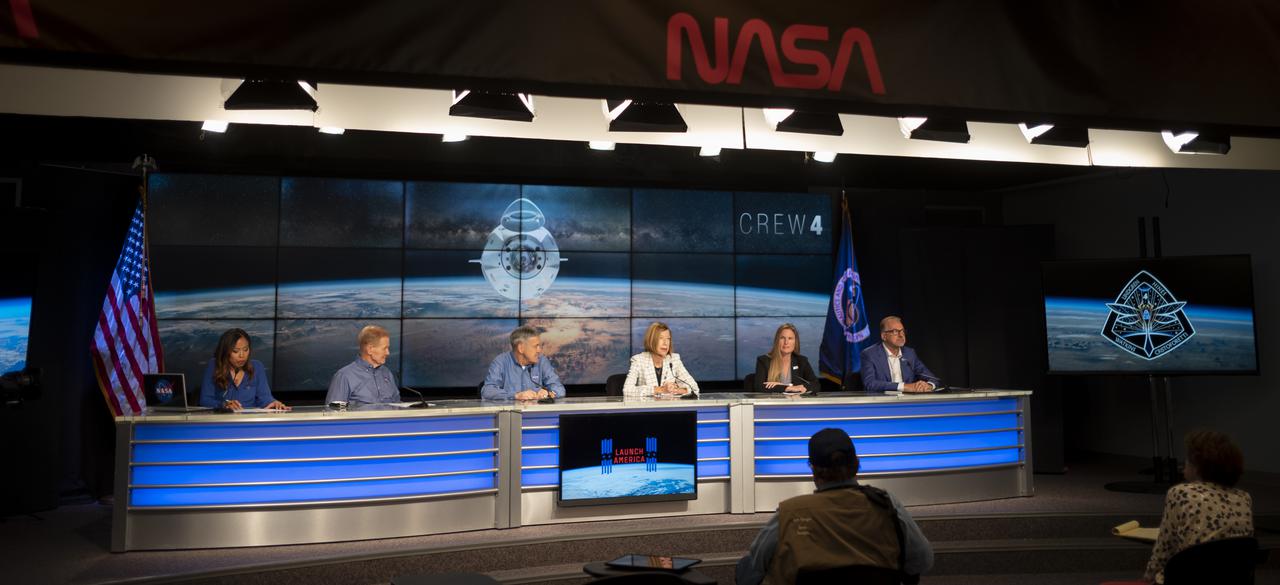
Megan Cruz, NASA Communications, left, NASA Administrator Bill Nelson, second from left, Bob Cabana, NASA associate administrator, third from left, Kathy Lueders, associate administrator for NASA's Space Operations Mission Directorate, third from right, Heidi Parris, associate program scientist for the International Space Station Program at NASA’s Johnson Space Center , second from right, and Josef Aschbacher, Director General of ESA (European Space Agency), right, are seen during a press conference ahead of the Crew-4 launch, Tuesday, April 26, 2022, at NASA’s Kennedy Space Center in Florida. NASA’s SpaceX Crew-4 mission is the fourth crew rotation mission of the SpaceX Crew Dragon spacecraft and Falcon 9 rocket to the International Space Station as part of the agency’s Commercial Crew Program. NASA astronauts Kjell Lindgren, Robert Hines, Jessica Watkins, and ESA (European Space Agency) astronaut Samantha Cristoforetti are scheduled to launch at 3:52 a.m. ET on April 27 from Launch Complex 39A at the Kennedy Space Center. Photo Credit: (NASA/Joel Kowsky)
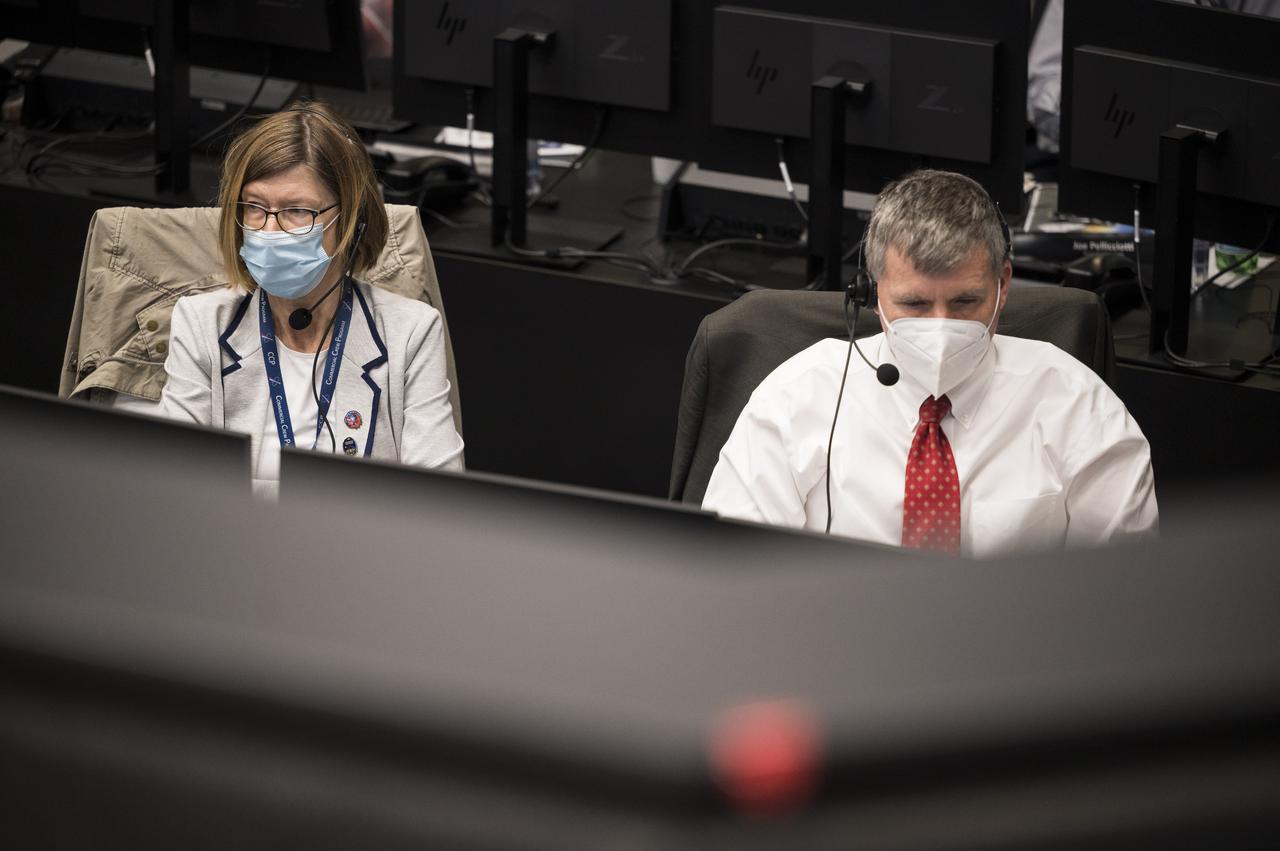
Kathy Lueders, associate administrator for NASA's Human Exploration and Operations Mission Directorate, left, and Steve Stich, manager of NASA’s Commercial Crew Program, right, monitor the countdown of the launch of a SpaceX Falcon 9 rocket carrying the company's Crew Dragon spacecraft on the Crew-2 mission with NASA astronauts Shane Kimbrough and Megan McArthur, ESA (European Space Agency) astronaut Thomas Pesquet, and Japan Aerospace Exploration Agency (JAXA) astronaut Akihiko Hoshide onboard, Friday, April 23, 2021, in firing room four of the Launch Control Center at NASA’s Kennedy Space Center in Florida. NASA’s SpaceX Crew-2 mission is the second crew rotation mission of the SpaceX Crew Dragon spacecraft and Falcon 9 rocket to the International Space Station as part of the agency’s Commercial Crew Program. Kimbrough, McArthur, Pesquet, and Hoshide launched at 5:49 a.m. EDT, from Launch Complex 39A at the Kennedy Space Center to begin a six month mission onboard the International Space Station. Photo Credit: (NASA/Joel Kowsky)
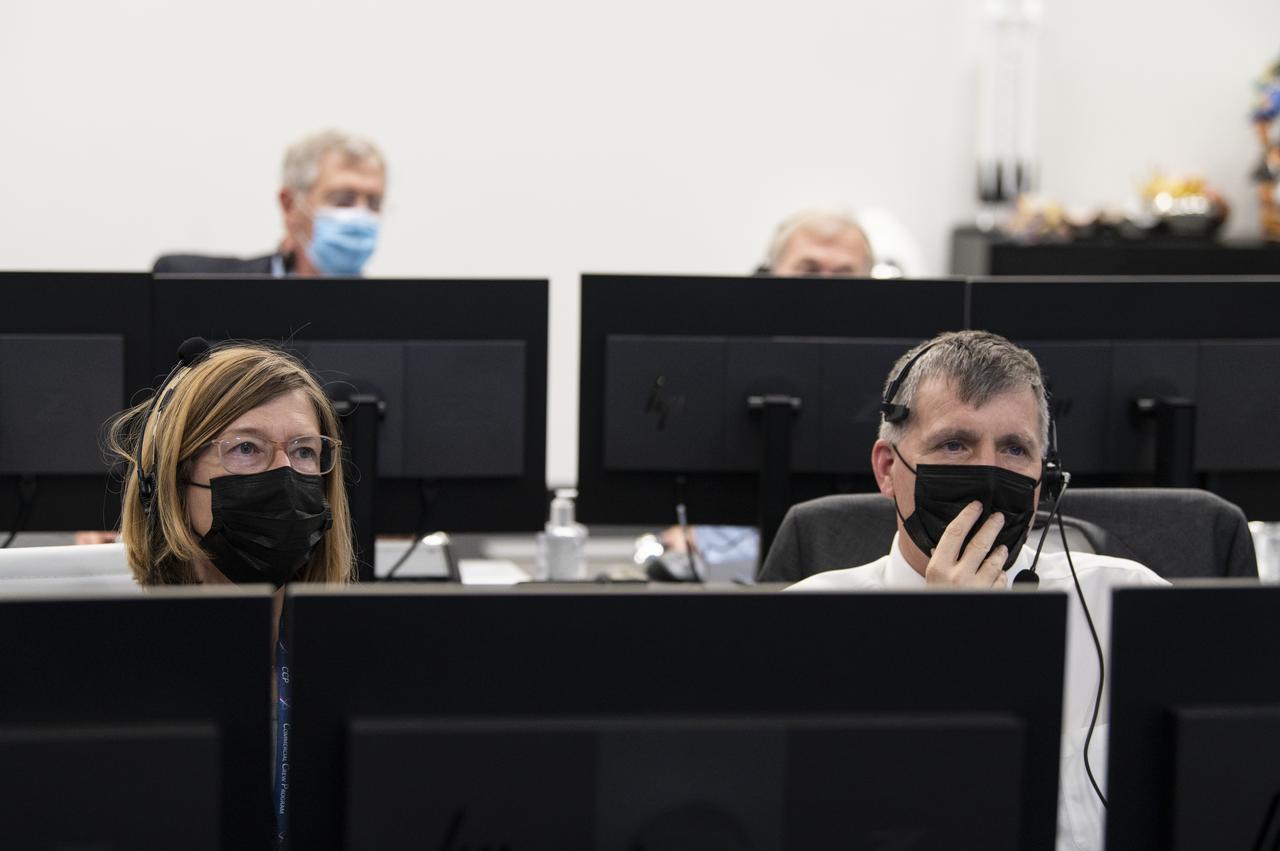
Kathy Lueders, Associate Administrator of the Human Exploration and Operations Mission Directorate, left, and Steve Stich, program manager for NASA's Commercial Crew Program, right, monitor the countdown of the launch of a SpaceX Falcon 9 rocket carrying the company's Crew Dragon spacecraft on NASA’s SpaceX Crew-1 mission with NASA astronauts Mike Hopkins, Victor Glover, Shannon Walker, and Japan Aerospace Exploration Agency (JAXA) astronaut Soichi Noguchi onboard, Sunday, Nov. 15, 2020, in firing room four of the Launch Control Center at NASA’s Kennedy Space Center in Florida. NASA’s SpaceX Crew-1 mission is the first crew rotation mission of the SpaceX Crew Dragon spacecraft and Falcon 9 rocket to the International Space Station as part of the agency’s Commercial Crew Program. Hopkins, Glover, Walker, and Noguchi are scheduled to launch at 7:27 p.m. EST, from Launch Complex 39A at the Kennedy Space Center. Photo Credit: (NASA/Aubrey Gemignani)