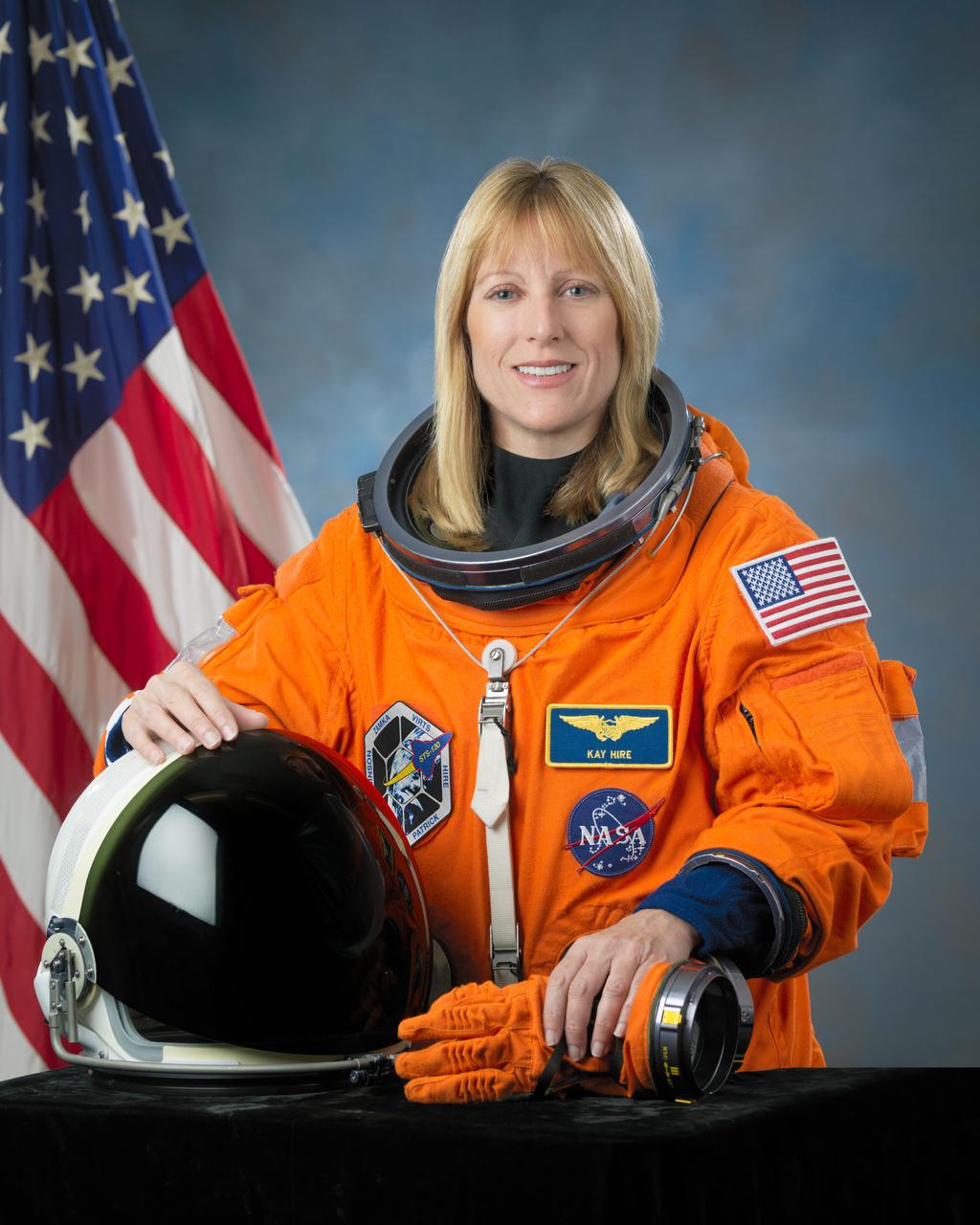
JSC2010-E-012250 (26 Oct. 2009) --- Astronaut Kathryn P. (Kay) Hire, mission specialist
![JSC2010-E-012251 (26 Oct. 2009) --- Astronaut Kathryn P. (Kay) Hire, mission specialist [alternate portrait]](https://images-assets.nasa.gov/image/jsc2010e012251/jsc2010e012251~medium.jpg)
JSC2010-E-012251 (26 Oct. 2009) --- Astronaut Kathryn P. (Kay) Hire, mission specialist [alternate portrait]
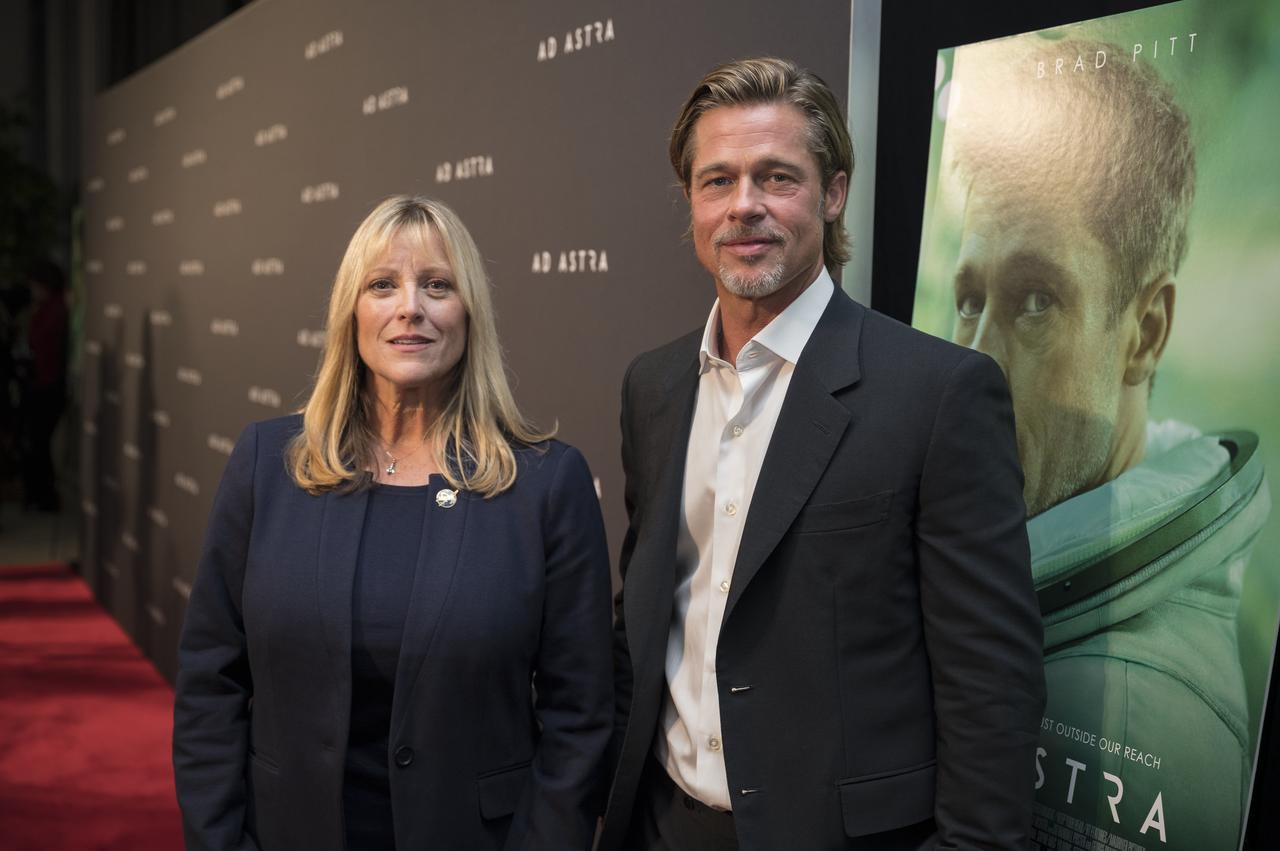
Former NASA astronaut Kay Hire poses for a photo with actor Brad Pitt, at a screening of the film "Ad Astra" at National Geographic Society, Monday, September 16, 2019 in Washington. The film stars Pitt, Tommy Lee Jones, Ruth Negga, Liv Tyler, and Donald Sutherland. Pitt stars as astronaut Roy McBride who travels deep into the solar system in hopes of solving a mystery that threatens life on Earth. Photo Credit: (NASA/Aubrey Gemignani)
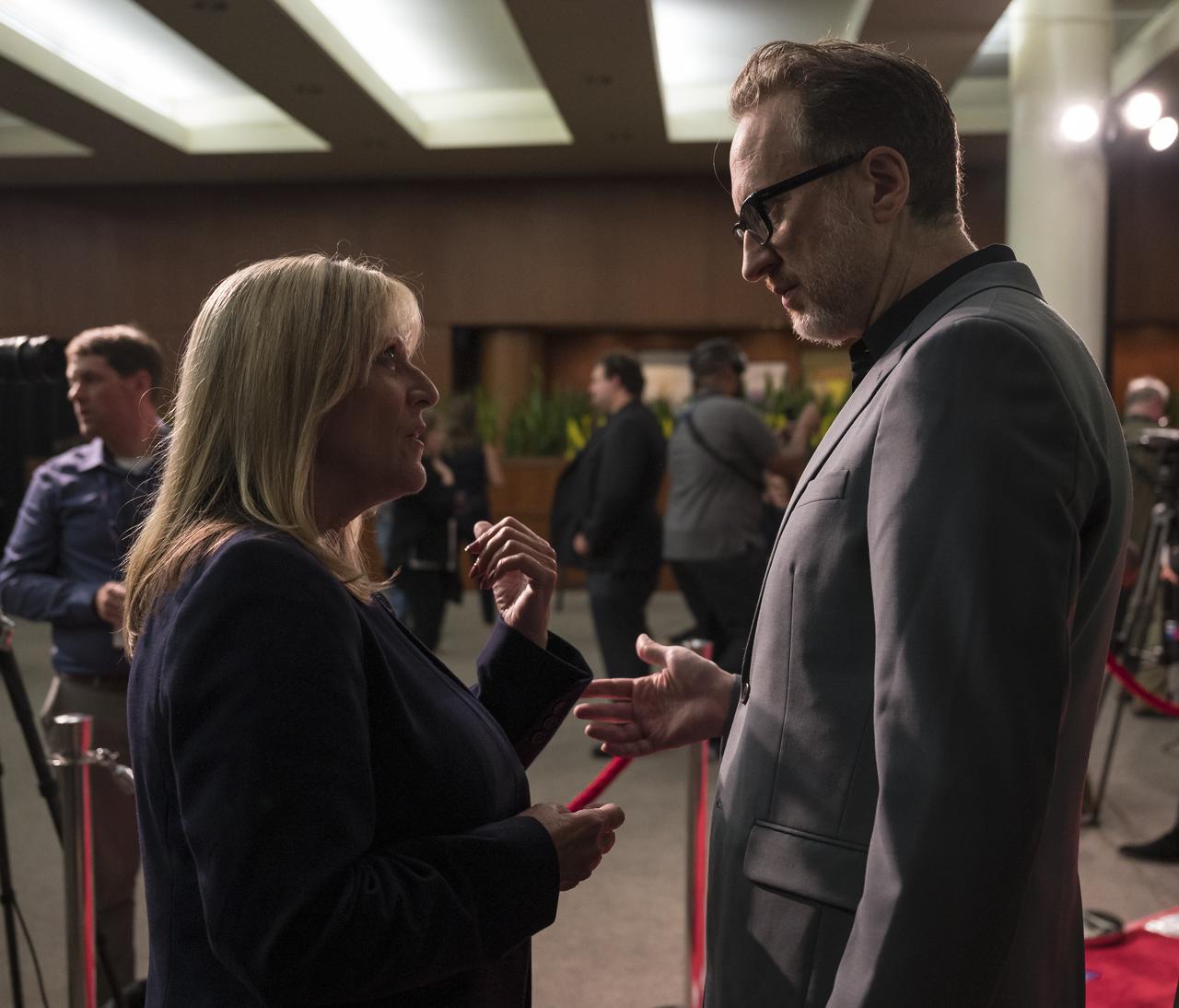
Former NASA astronaut Kay Hire, left, speaks with film producer, co-writer, and director James Gray at a screening of "Ad Astra" at National Geographic Society, Monday, September 16, 2019 in Washington. It stars Tommy Lee Jones, Brad Pitt, Ruth Negga, Liv Tyler, and Donald Sutherland. Pitt stars as astronaut Roy McBride who travels deep into the solar system in hopes of solving a mystery that threatens life on Earth. Photo Credit: (NASA/Aubrey Gemignani)
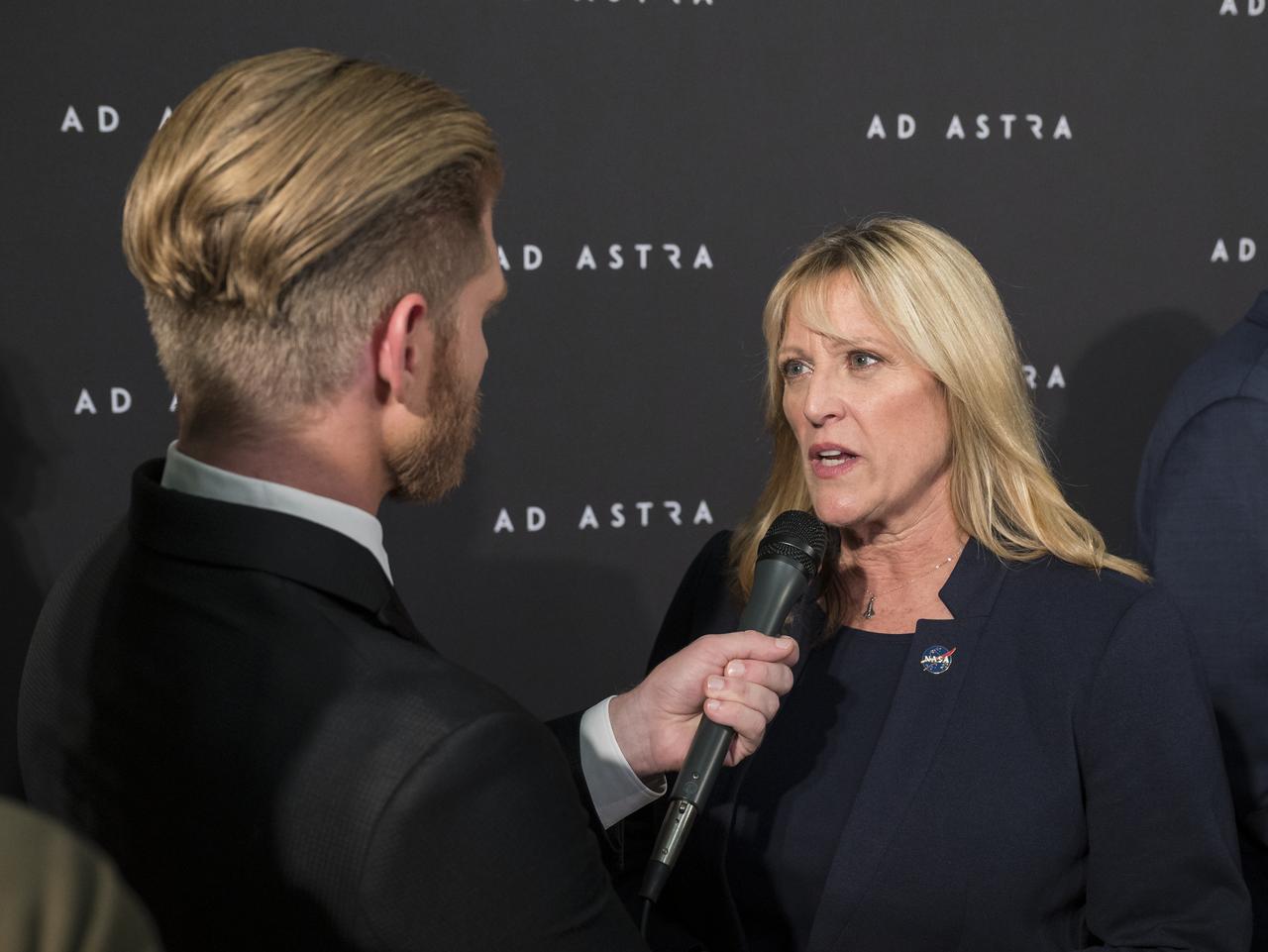
Former NASA astronaut Kay Hire is interviewed on the red carpet during a screening of the film "Ad Astra" at National Geographic Society, Monday, September 16, 2019 in Washington. The film was produced, co-written, and directed by James Gray and stars Brad Pitt, Tommy Lee Jones, Ruth Negga, Liv Tyler, and Donald Sutherland. Pitt stars as astronaut Roy McBride who travels deep into the solar system in hopes of solving a mystery that threatens life on Earth. Photo Credit: (NASA/Aubrey Gemignani)
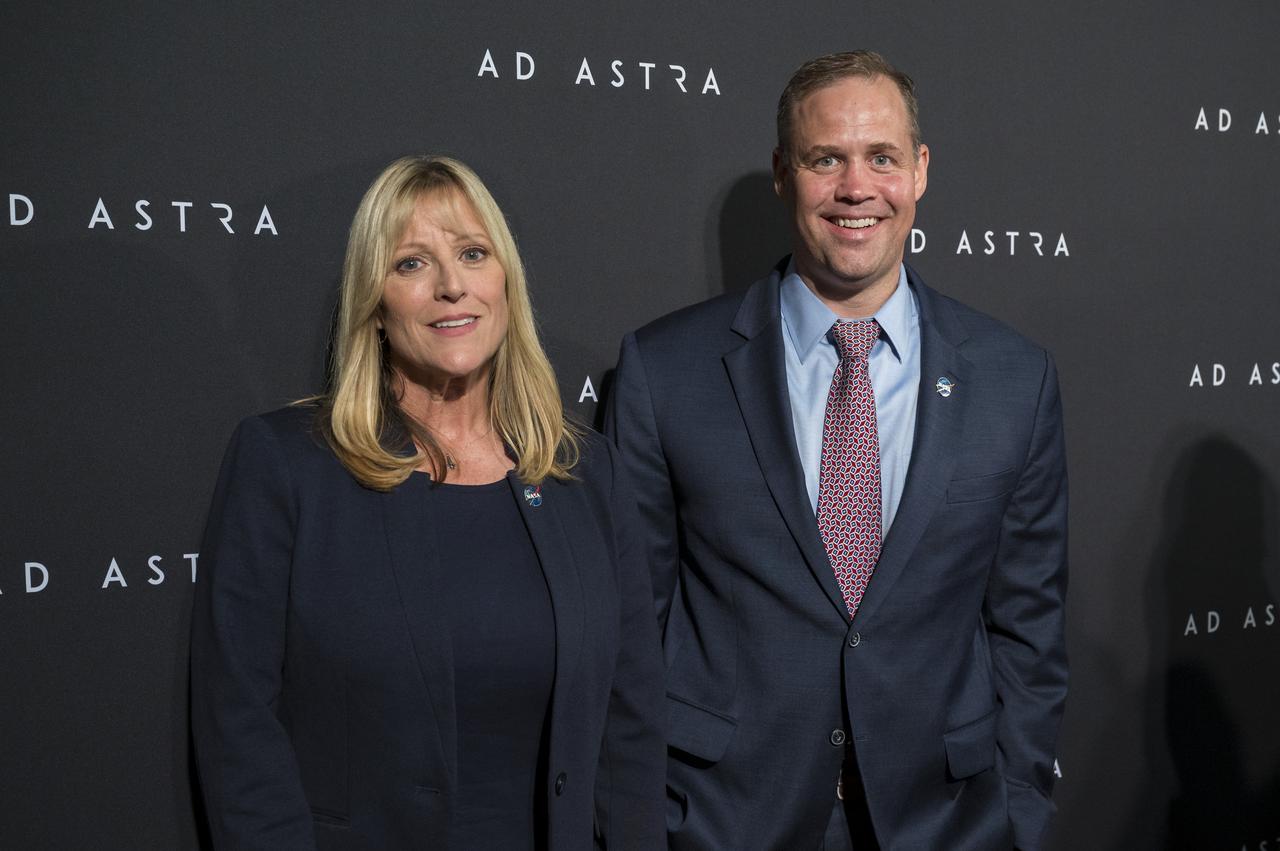
Former NASA astronaut Kay Hire and NASA Administrator Jim Bridenstine pose for a photo on the red carpet during a screening of the film "Ad Astra" at National Geographic Society, Monday, September 16, 2019 in Washington. The film was produced, co-written, and directed by James Gray and stars Jones, Brad Pitt, Ruth Negga, Liv Tyler, and Donald Sutherland. Pitt stars as astronaut Roy McBride who travels deep into the solar system in hopes of solving a mystery that threatens life on Earth. Photo Credit: (NASA/Aubrey Gemignani)
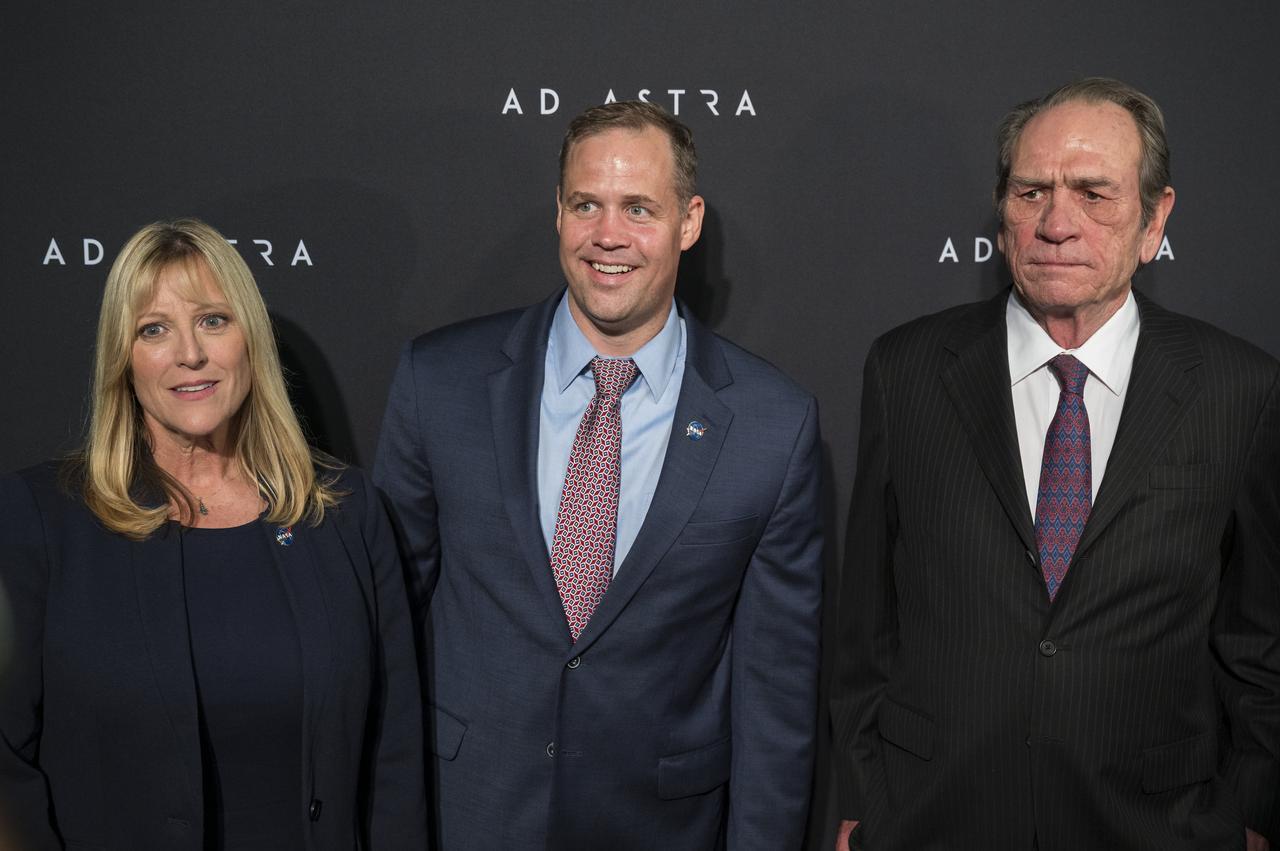
From left to right, former NASA astronaut Kay Hire, NASA Administrator Jim Bridenstine, and actor Tommy Lee Jones arrive on the red carpet for a screening of the film "Ad Astra" at National Geographic Society, Monday, September 16, 2019 in Washington. The film was produced, co-written, and directed by James Gray and stars Jones, Brad Pitt, Ruth Negga, Liv Tyler, and Donald Sutherland. Pitt stars as astronaut Roy McBride who travels deep into the solar system in hopes of solving a mystery that threatens life on Earth. Photo Credit: (NASA/Aubrey Gemignani)

From left to right, NASA staff, Cindy Steele, Bert Ulrich, and Cheryl Warner, "Ad Astra" producer, co-writer, and director James Gray, former NASA astronaut Kay Hire, and NASA Associate Administrator for the Office of Communications, Bettina Inclán, pose for a photo on the red carpet during a screening of the film "Ad Astra" at National Geographic Society, Monday, September 16, 2019 in Washington. The film was produced, co-written, and directed by James Gray and stars Pitt, Tommy Lee Jones, Ruth Negga, Liv Tyler, and Donald Sutherland. Pitt stars as astronaut Roy McBride who travels deep into the solar system in hopes of solving a mystery that threatens life on Earth. Photo Credit: (NASA/Aubrey Gemignani)

From left to right are seen Apollo 7 astronaut Walter Cunningham (second from right), NASA astronaut Kay Hire, Hildreth Walker, Founder of A-MAN Inc. STEM International Science Center; NASA astronauts Michael Fincke and Gregory Johnson at the Endeavour Kick-Off Ceremony, Saturday, Oct. 13, 2012 in Inglewood. Endeavour, built as a replacement for space shuttle Challenger, completed 25 missions, spent 299 days in orbit, and orbited Earth 4,671 times while traveling 122,883,151 miles. Beginning Oct. 30, the shuttle will be on display in the CSC’s Samuel Oschin Space Shuttle Endeavour Display Pavilion, embarking on its new mission to commemorate past achievements in space and educate and inspire future generations of explorers. Photo Credit: (NASA/Carla Cioffi)
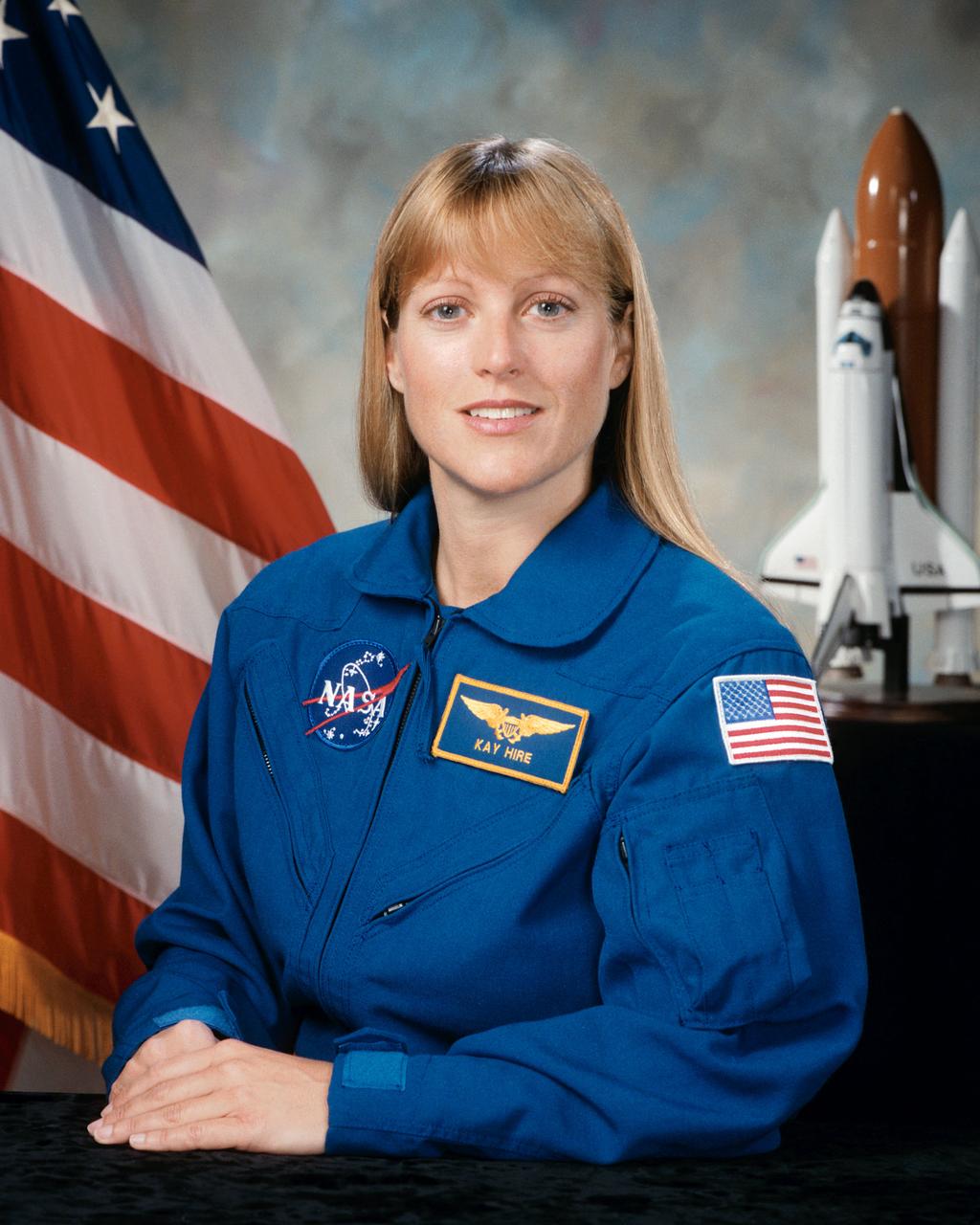
S95-10063 (1995) --- Astronaut Kathryn P. (Kay) Hire, mission specialist
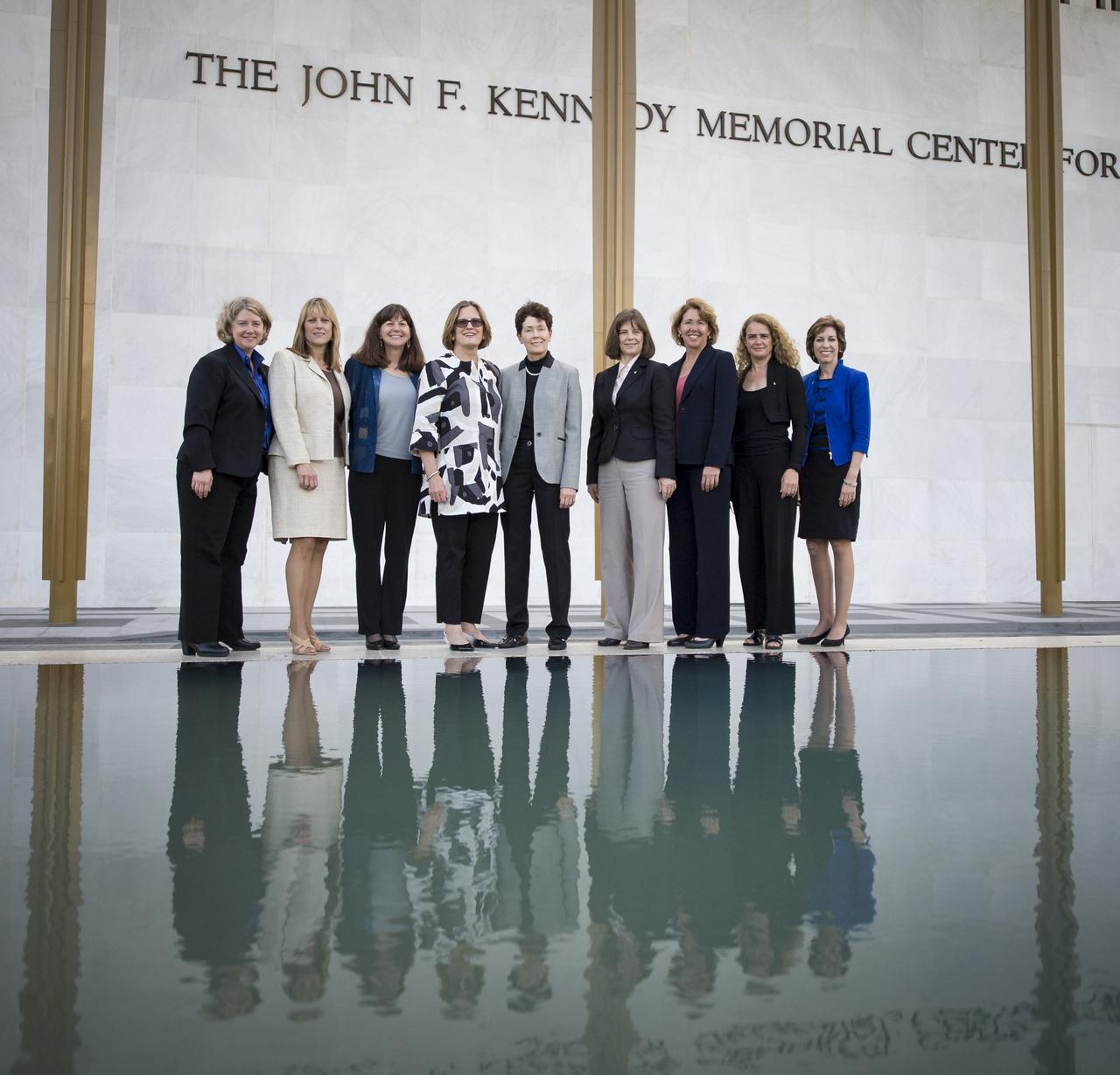
From left, astronauts Pam Melroy; Kay Hire; Cady Coleman; Kathy Sullivan; Tam O'Shaughnessy, Sally Ride's life partner and chair, board of directors of Sally Ride Science; astronauts Bonnie Dunbar; Sandy Magnus; Julie Payette; and Ellen Ochoa, pose for a photograph before a National Tribute to Sally Ride at the John F. Kennedy Center for the Performing Arts, Monday, May 20, 2013 in Washington. Photo Credit: (NASA/Bill Ingalls)
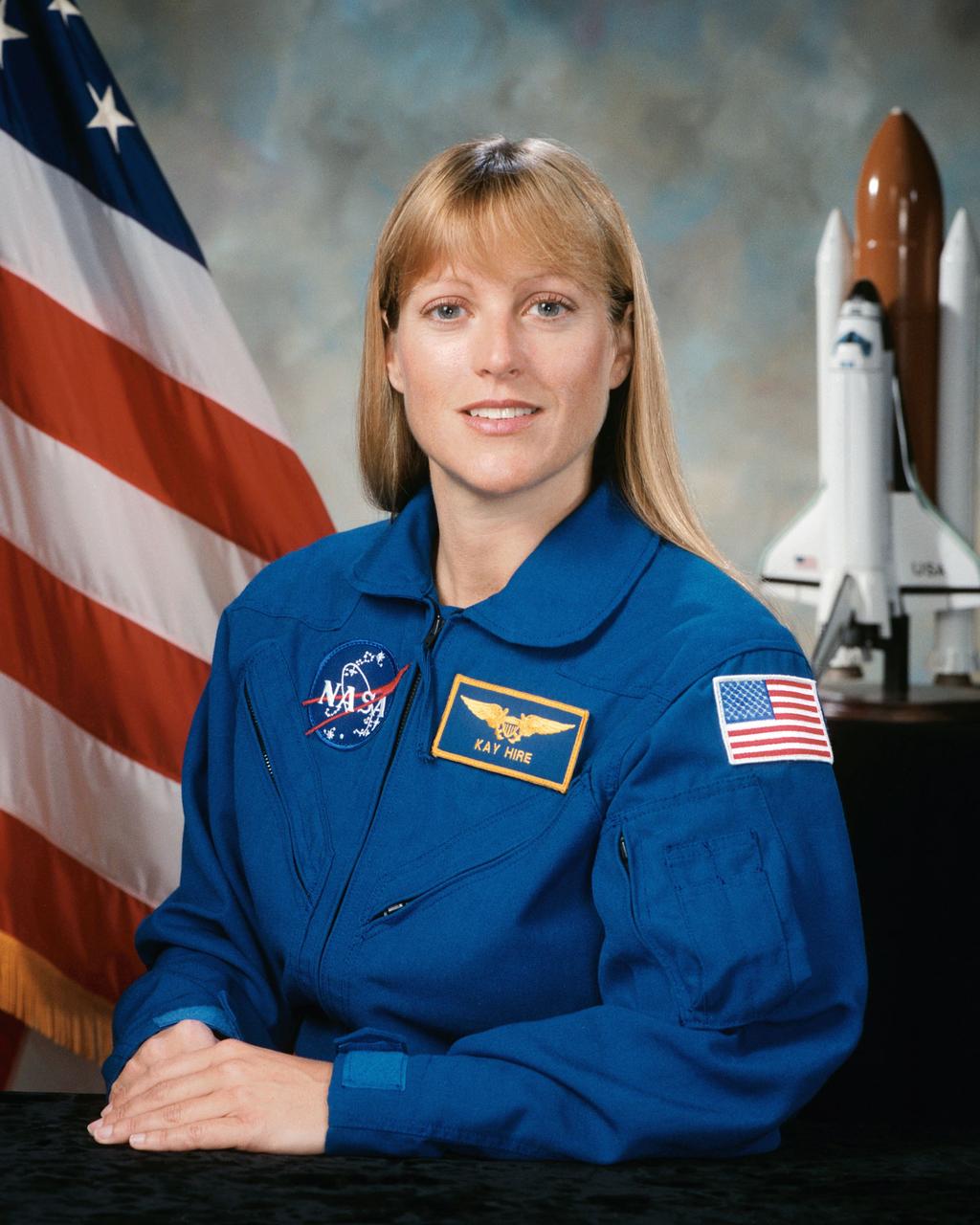
JOHNSON SPACE CENTER, Houston - S95-10063 - Astronaut Kathryn P. (Kay) Hire, mission specialist
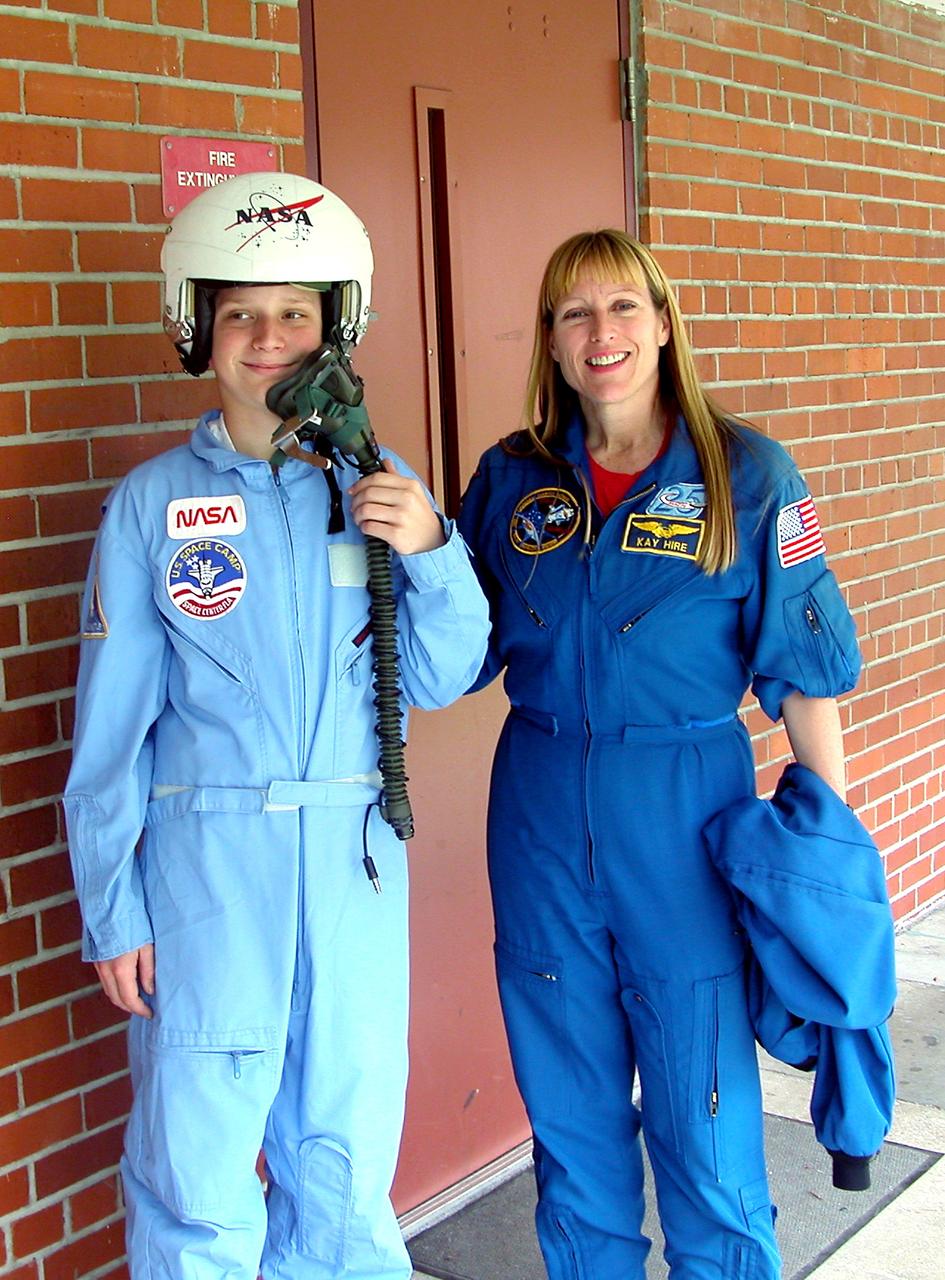
KENNEDY SPACE CENTER, FLA. - Astronaut Kay Hire poses with 8th grader Kristy Wiggins at Garland V. Stewart Magnet Middle School, a NASA Explorer School (NES) in Tampa, Fla. Hire joined Center Director Jim Kennedy at the school in sharing the agency’s new vision for space exploration with the next generation of explorers. Kennedy is talking with students about our destiny as explorers, NASA’s stepping stone approach to exploring Earth, the Moon, Mars and beyond, how space impacts our lives, and how people and machines rely on each other in space.
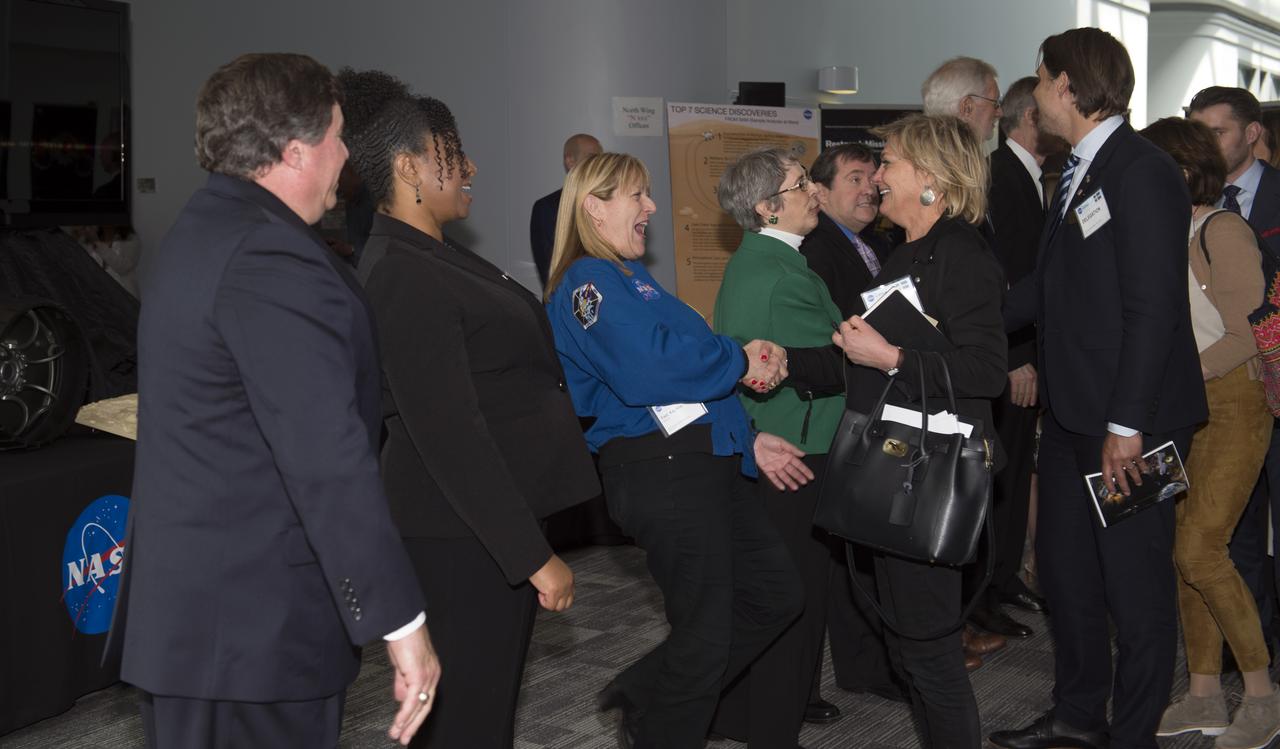
Swedish Delegation was greeted by Center Director Chris Scolese and staff at Building 28. Kay Hire astronaut, greets member of delegation as George Morrow and Christyl Johnson look on.
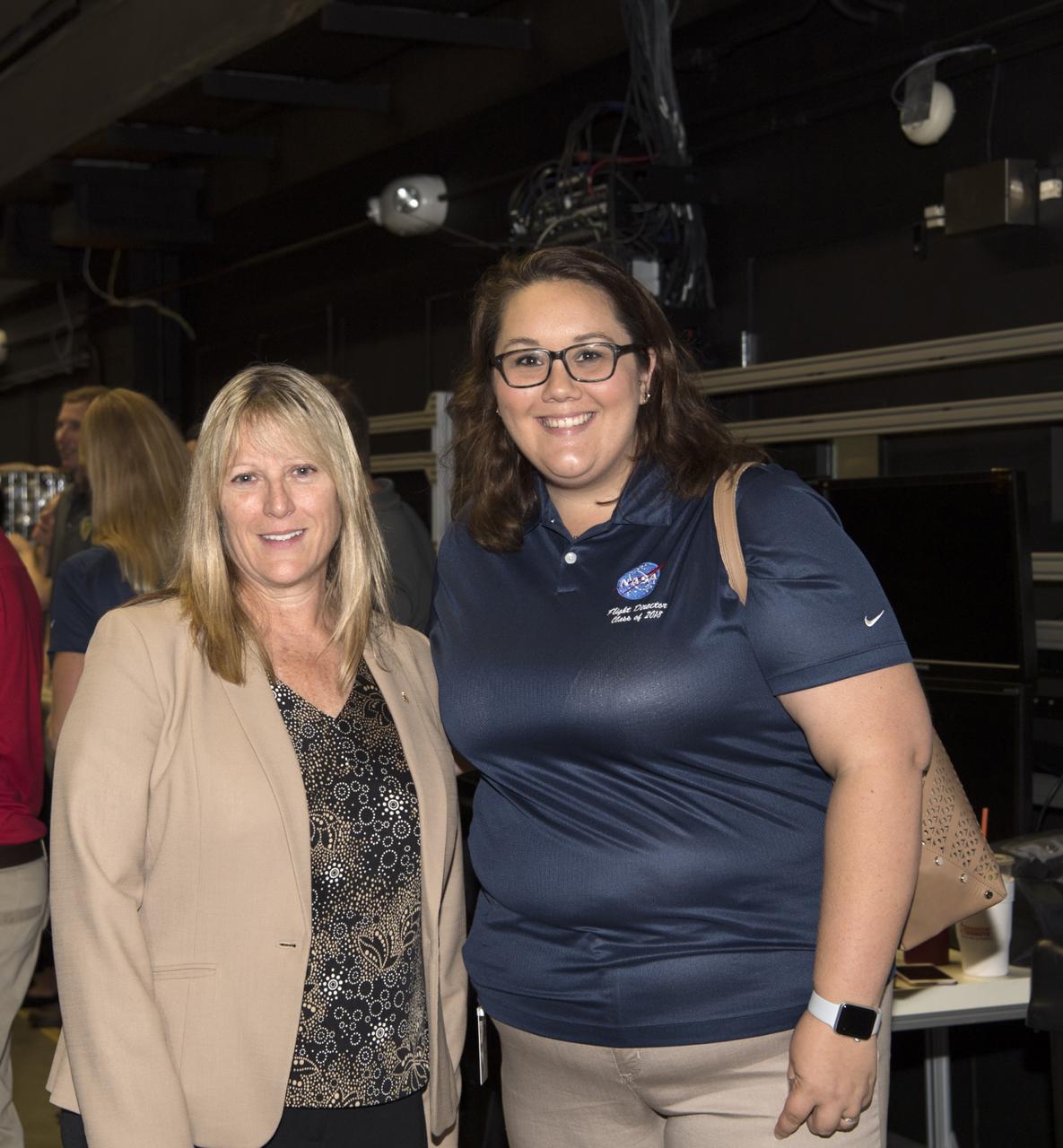
NASA Astronaut Candidates Group 22 visited Goddard on September 26, 2018 and toured facilities. Nicknamed “Turtles†group will gain intricate understanding of core functions within the agency. Kay Hire with candidate
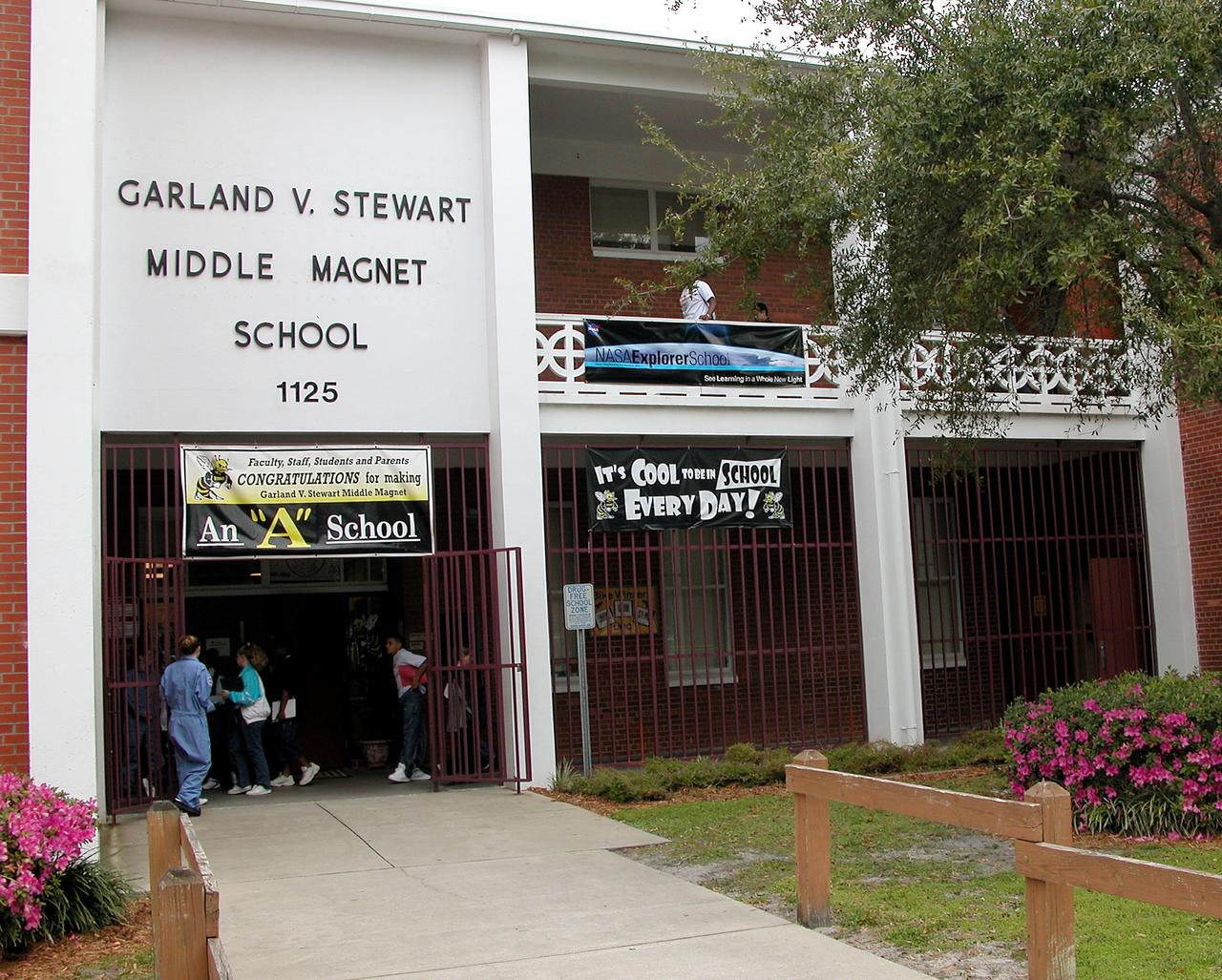
KENNEDY SPACE CENTER, FLA. - Garland V. Stewart Magnet Middle School, a NASA Explorer School (NES) in Tampa, Fla., is the site where Center Director Jim Kennedy and astronaut Kay Hire shared the agency’s new vision for space exploration with the next generation of explorers. Kennedy talked with students about our destiny as explorers, NASA’s stepping stone approach to exploring Earth, the Moon, Mars and beyond, how space impacts our lives, and how people and machines rely on each other in space.
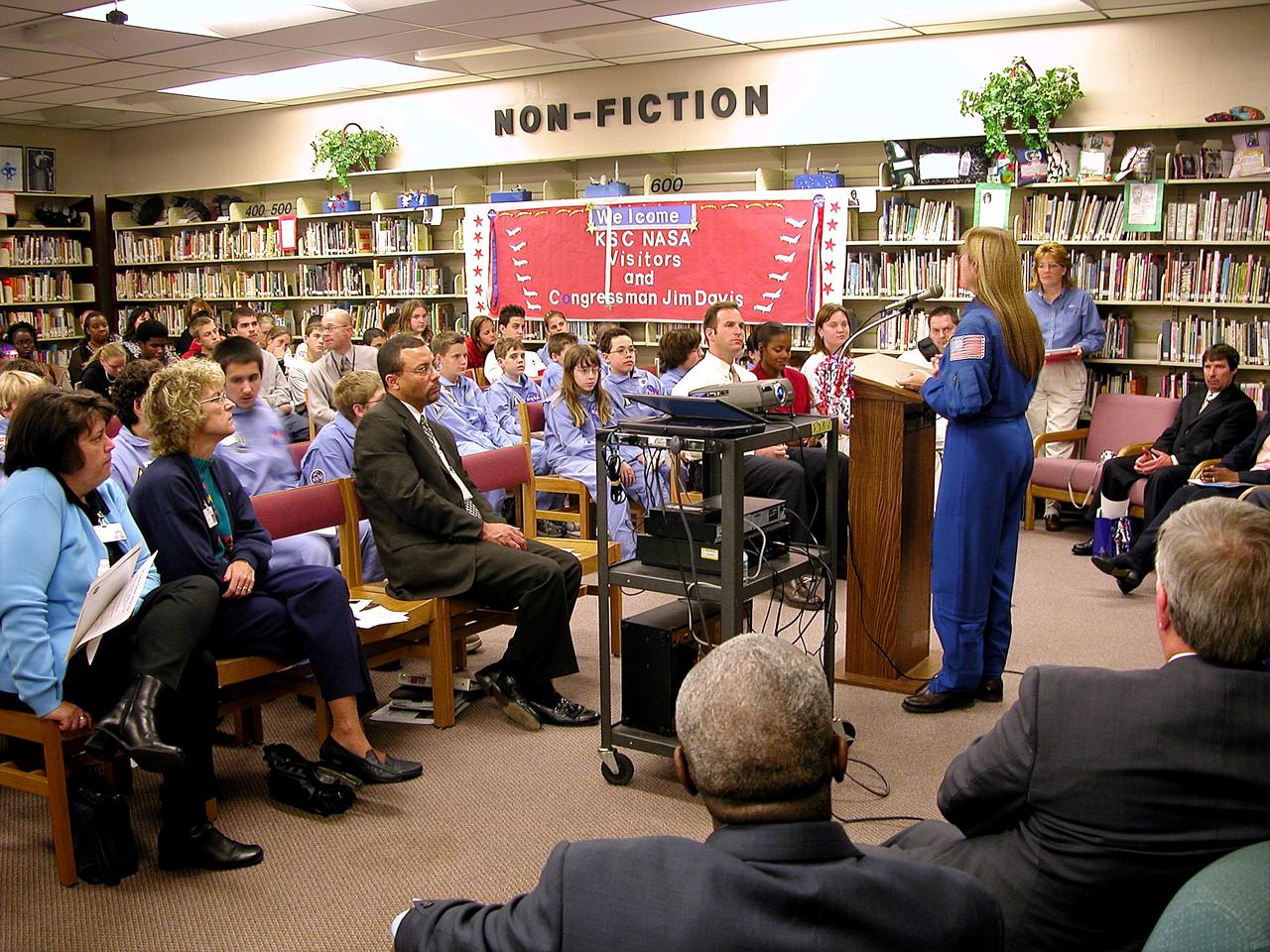
KENNEDY SPACE CENTER, FLA. - Astronaut Kay Hire talks to students in Garland V. Stewart Magnet Middle School, a NASA Explorer School (NES) in Tampa, Fla. She joined Center Director Jim Kennedy in sharing the agency’s new vision for space exploration with the next generation of explorers. Kennedy is talking with students about our destiny as explorers, NASA’s stepping stone approach to exploring Earth, the Moon, Mars and beyond, how space impacts our lives, and how people and machines rely on each other in space.
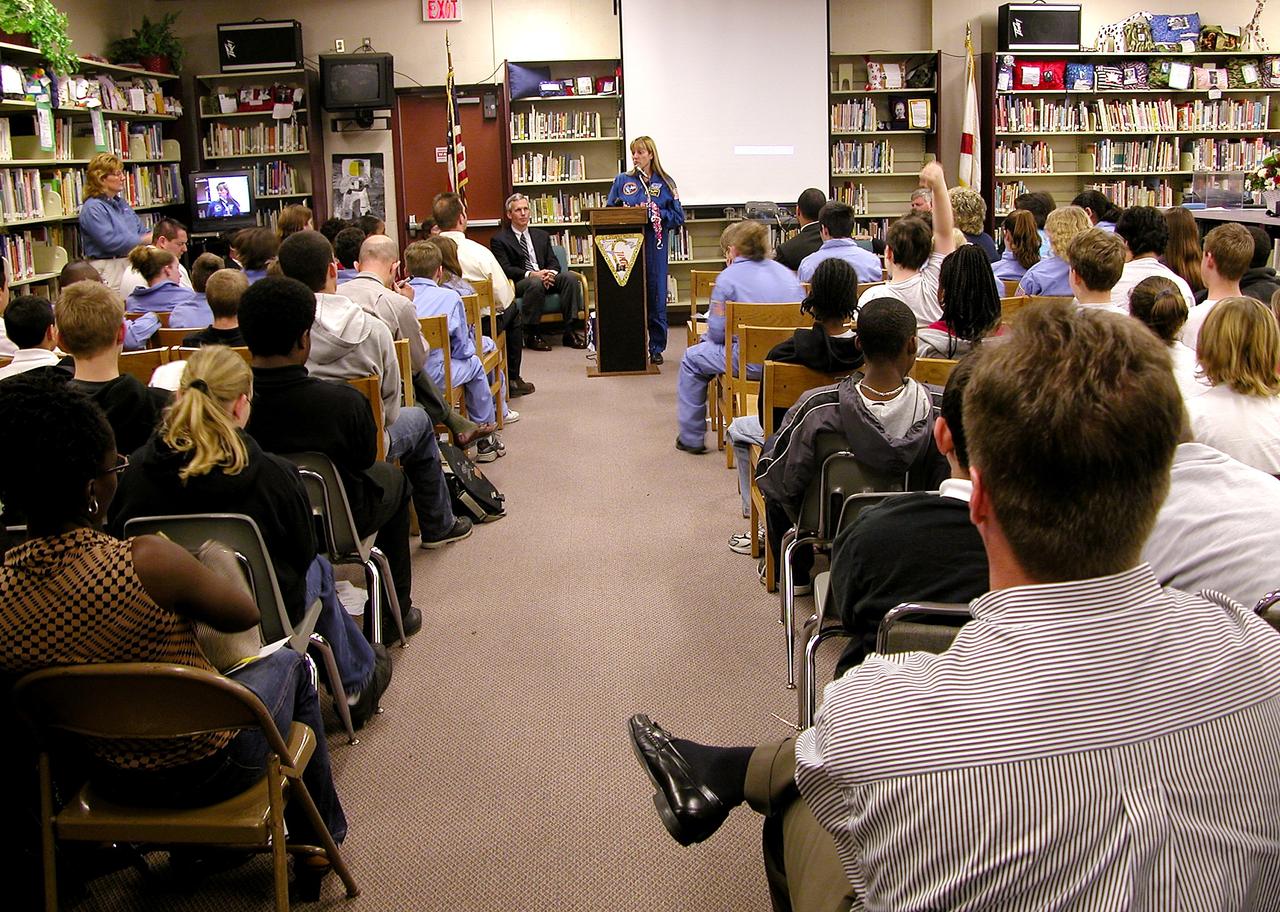
KENNEDY SPACE CENTER, FLA. - Astronaut Kay Hire talks to students in Garland V. Stewart Magnet Middle School, a NASA Explorer School (NES) in Tampa, Fla. She joined Center Director Jim Kennedy in sharing the agency’s new vision for space exploration with the next generation of explorers. Kennedy is talking with students about our destiny as explorers, NASA’s stepping stone approach to exploring Earth, the Moon, Mars and beyond, how space impacts our lives, and how people and machines rely on each other in space.
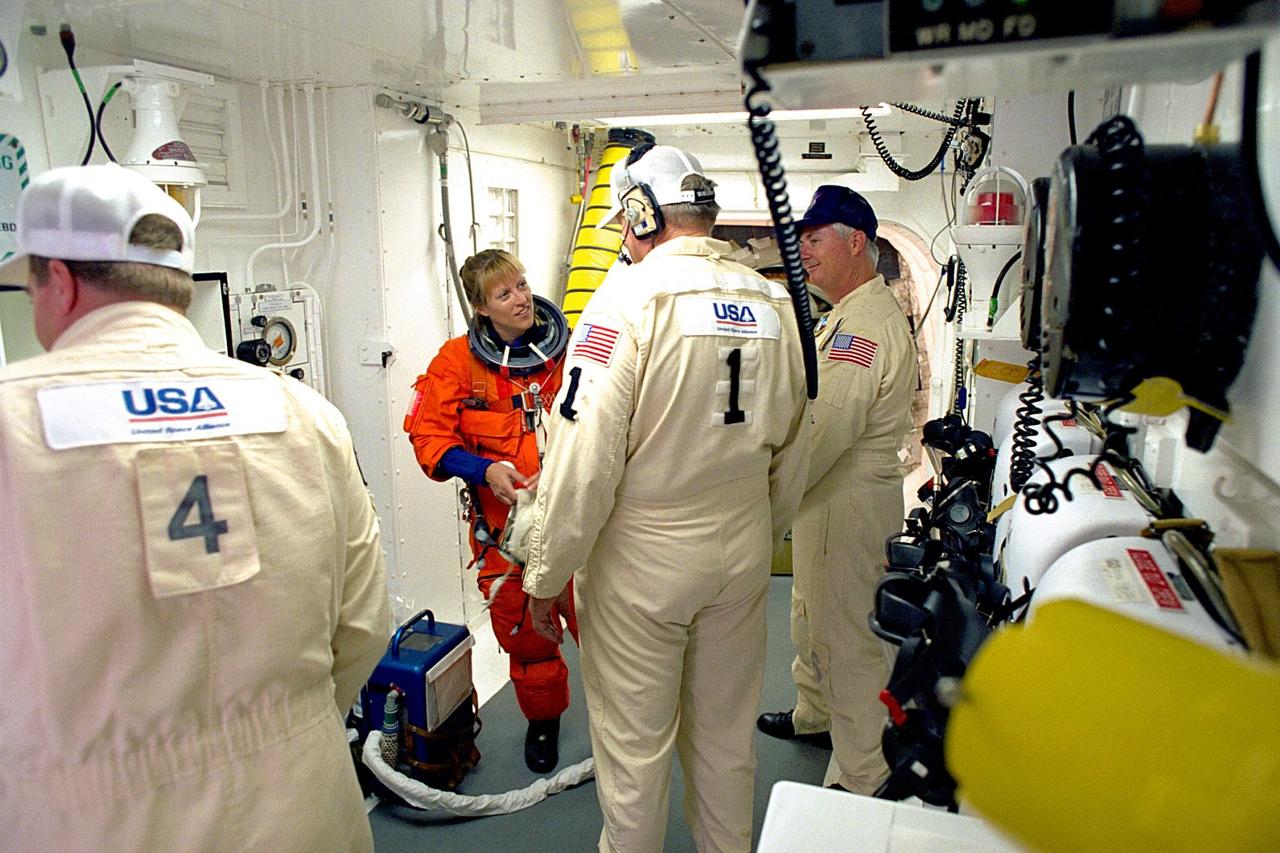
STS-90 Mission Specialist Kathryn (Kay) Hire is assisted by NASA and USA closeout crew members immediately preceding launch for the nearly 17-day Neurolab mission. Investigations during the Neurolab mission will focus on the effects of microgravity on the nervous system. Hire and six fellow crew members will shortly enter the orbiter at KSC's Launch Pad 39B, where the Space Shuttle Columbia will lift off during a launch window that opens at 2:19 p.m. EDT, April 17
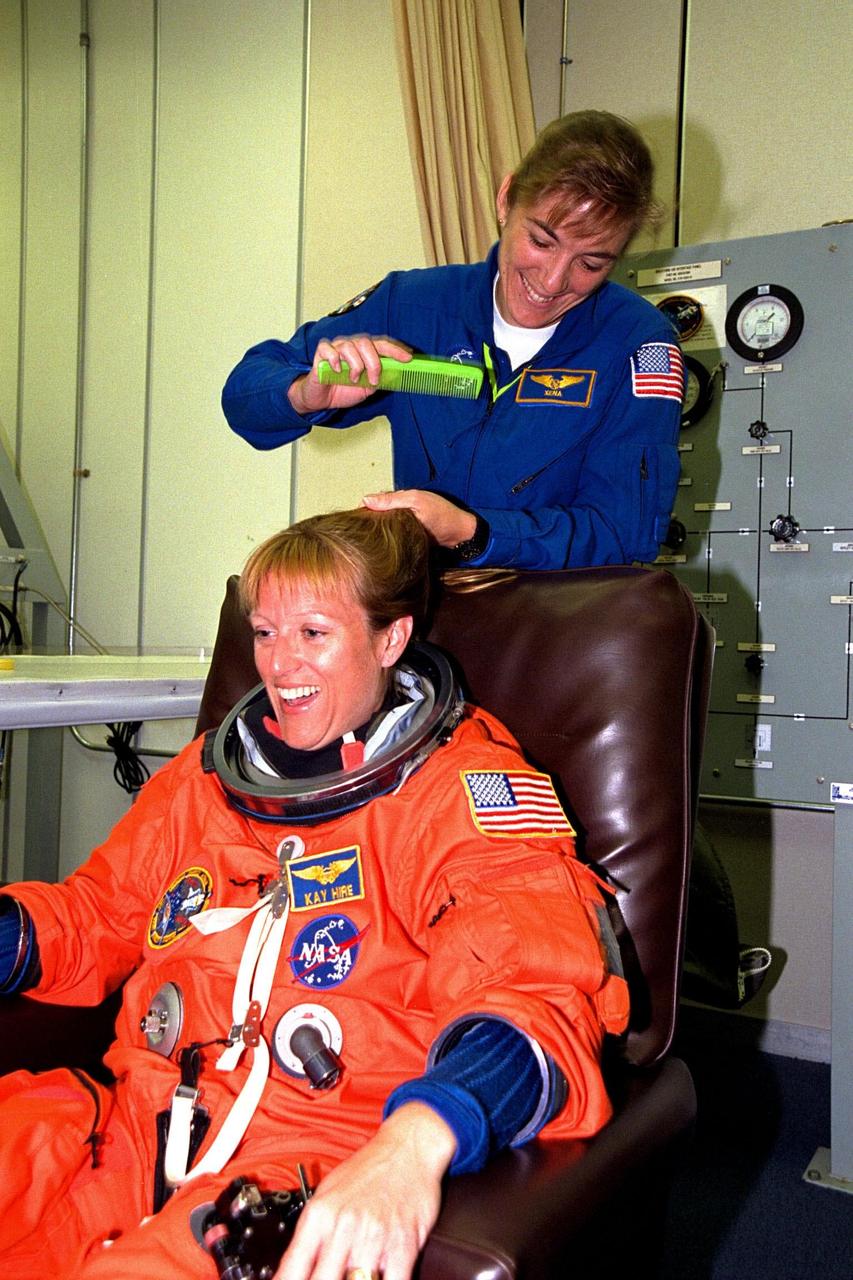
KENNEDY SPACE CENTER, FLA. -- STS-90 Mission Specialist Kathryn (Kay) Hire prepares for launch during suitup activities in the Operations and Checkout Building as Astronaut Support Personnel team member Heide Piper braids Hire's hair. Hire and the rest of the STS-90 crew will shortly depart for Launch Pad 39B, where the Space Shuttle Columbia awaits a second liftoff attempt at 2:19 p.m. EDT. Her first trip into space, Hire is participating in this life sciences research flight that will focus on the most complex and least understood part of the human body the nervous system. Neurolab will examine the effects of spaceflight on the brain, spinal cord, peripheral nerves and sensory organs in the human body.
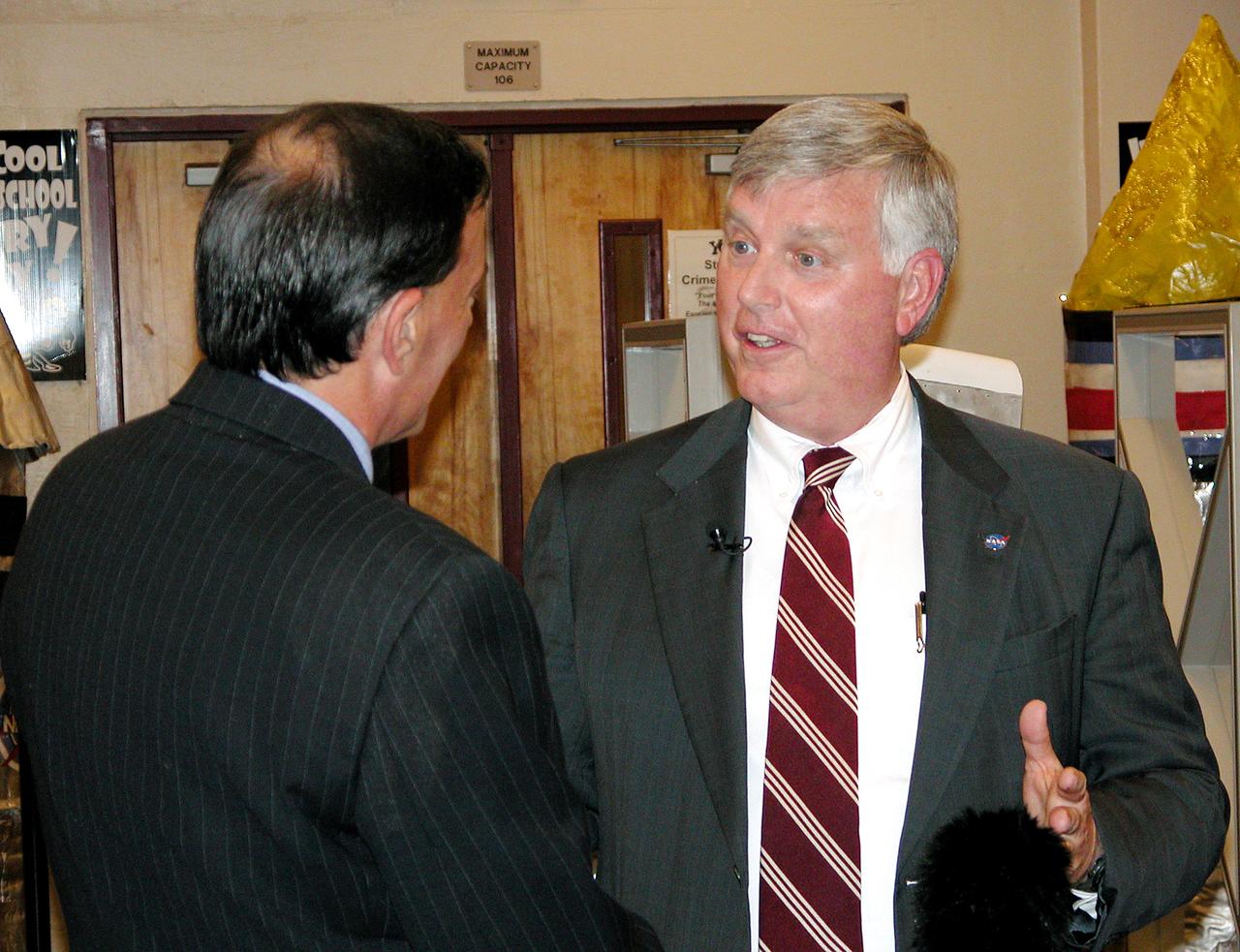
KENNEDY SPACE CENTER, FLA. - Warren Elly (left), with WTVT-TV, Fox News, talks with Center Director Jim Kennedy at Garland V. Stewart Magnet Middle School, a NASA Explorer School (NES) in Tampa, Fla. Kennedy was joined by astronaut Kay Hire in sharing the agency’s new vision for space exploration with the next generation of explorers. Kennedy talked with students about our destiny as explorers, NASA’s stepping stone approach to exploring Earth, the Moon, Mars and beyond, how space impacts our lives, and how people and machines rely on each other in space.
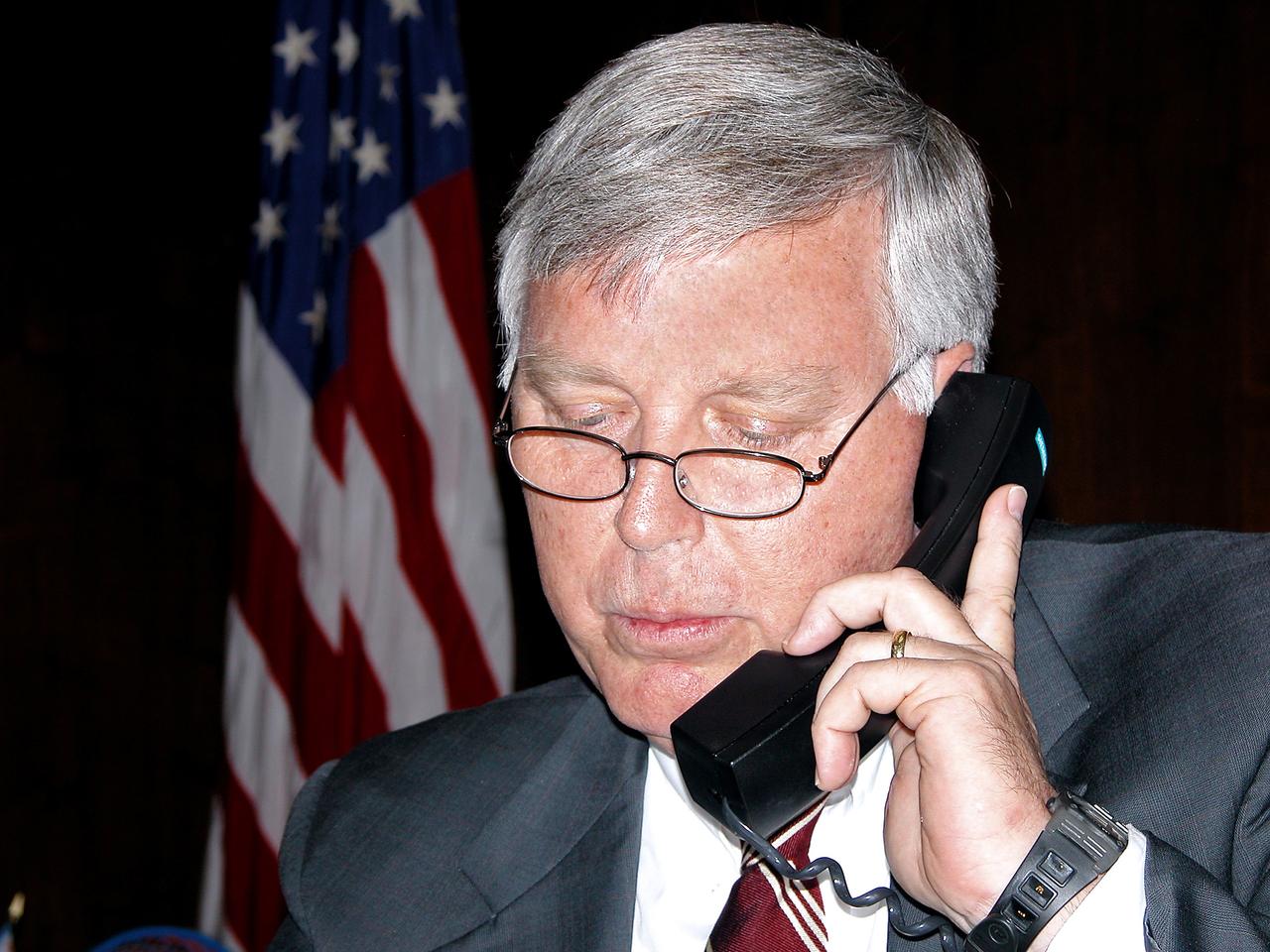
KENNEDY SPACE CENTER, FLA. - Center Director Jim Kennedy talks to WTSP-ABC News about his trip to Garland V. Stewart Magnet Middle School, a NASA Explorer School (NES) in Tampa, Fla. Kennedy made the trip with NASA astronaut Kay Hire to share the agency’s new vision for space exploration with the next generation of explorers. Kennedy is talking with students about our destiny as explorers, NASA’s stepping stone approach to exploring Earth, the Moon, Mars and beyond, how space impacts our lives, and how people and machines rely on each other in space.
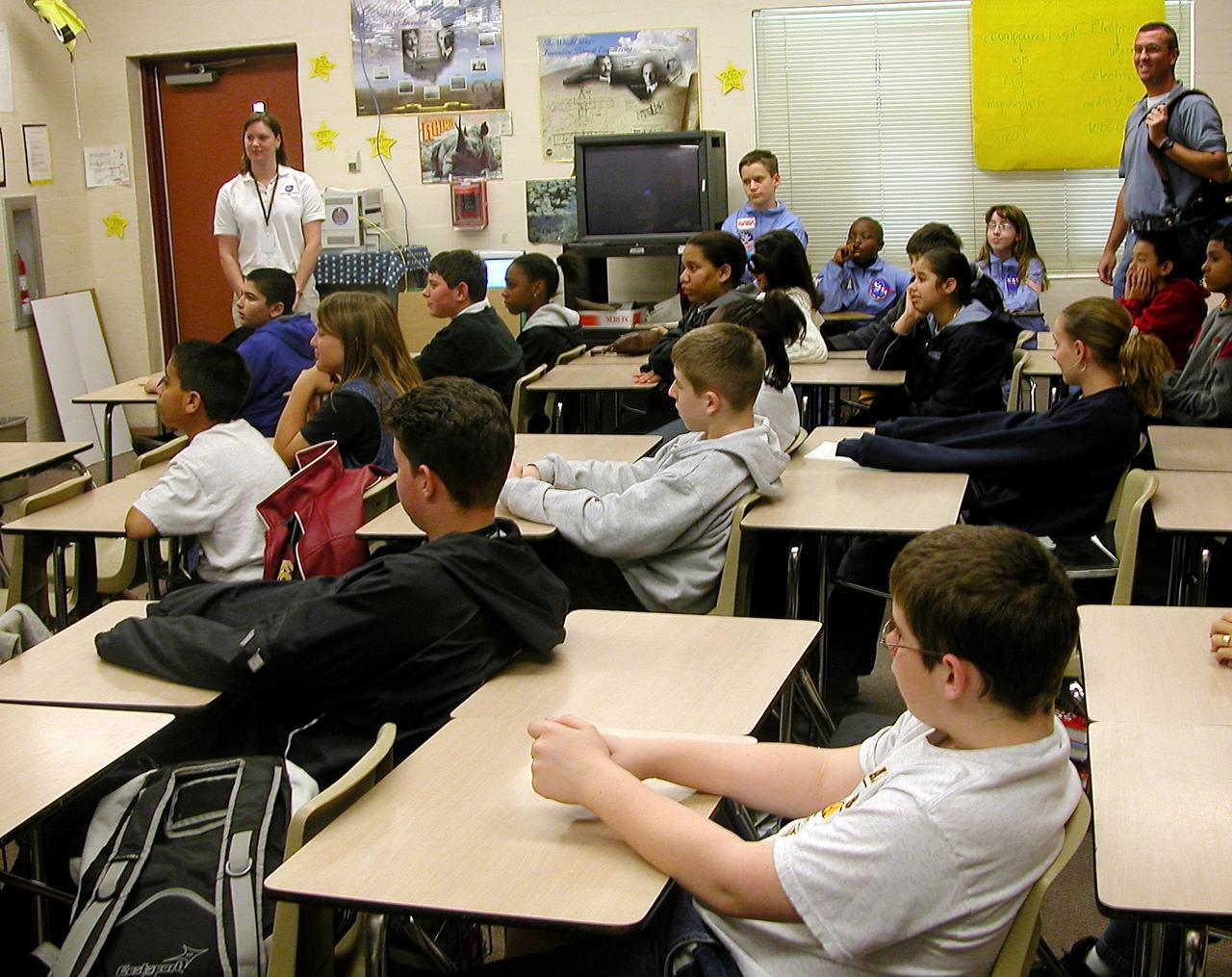
KENNEDY SPACE CENTER, FLA. - Students at Garland V. Stewart Magnet Middle School, a NASA Explorer School (NES) in Tampa, Fla., listen attentively to astronaut Kay Hire. She and Center Director Jim Kennedy were at the school to share the agency’s new vision for space exploration with the next generation of explorers. Kennedy is talking with students about our destiny as explorers, NASA’s stepping stone approach to exploring Earth, the Moon, Mars and beyond, how space impacts our lives, and how people and machines rely on each other in space.
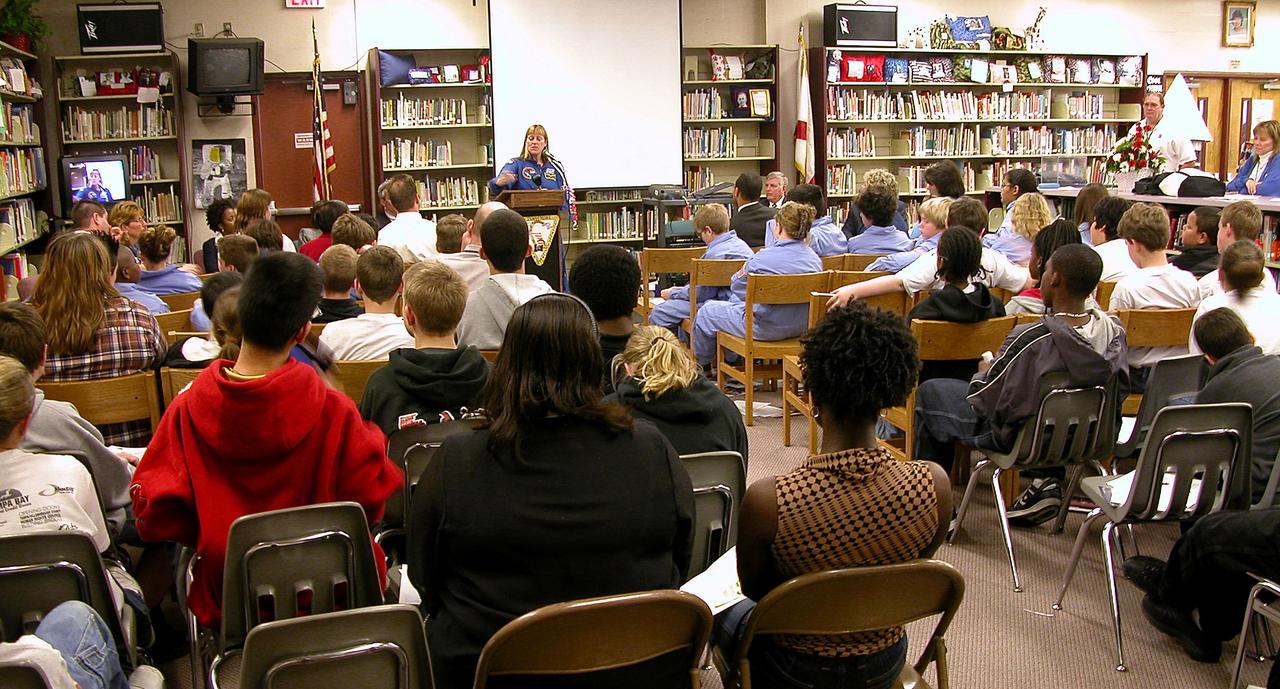
KENNEDY SPACE CENTER, FLA. - Students at Garland V. Stewart Magnet Middle School, a NASA Explorer School (NES) in Tampa, Fla., listen attentively to astronaut Kay Hire. She and Center Director Jim Kennedy were at the school to share the agency’s new vision for space exploration with the next generation of explorers. Kennedy is talking with students about our destiny as explorers, NASA’s stepping stone approach to exploring Earth, the Moon, Mars and beyond, how space impacts our lives, and how people and machines rely on each other in space.
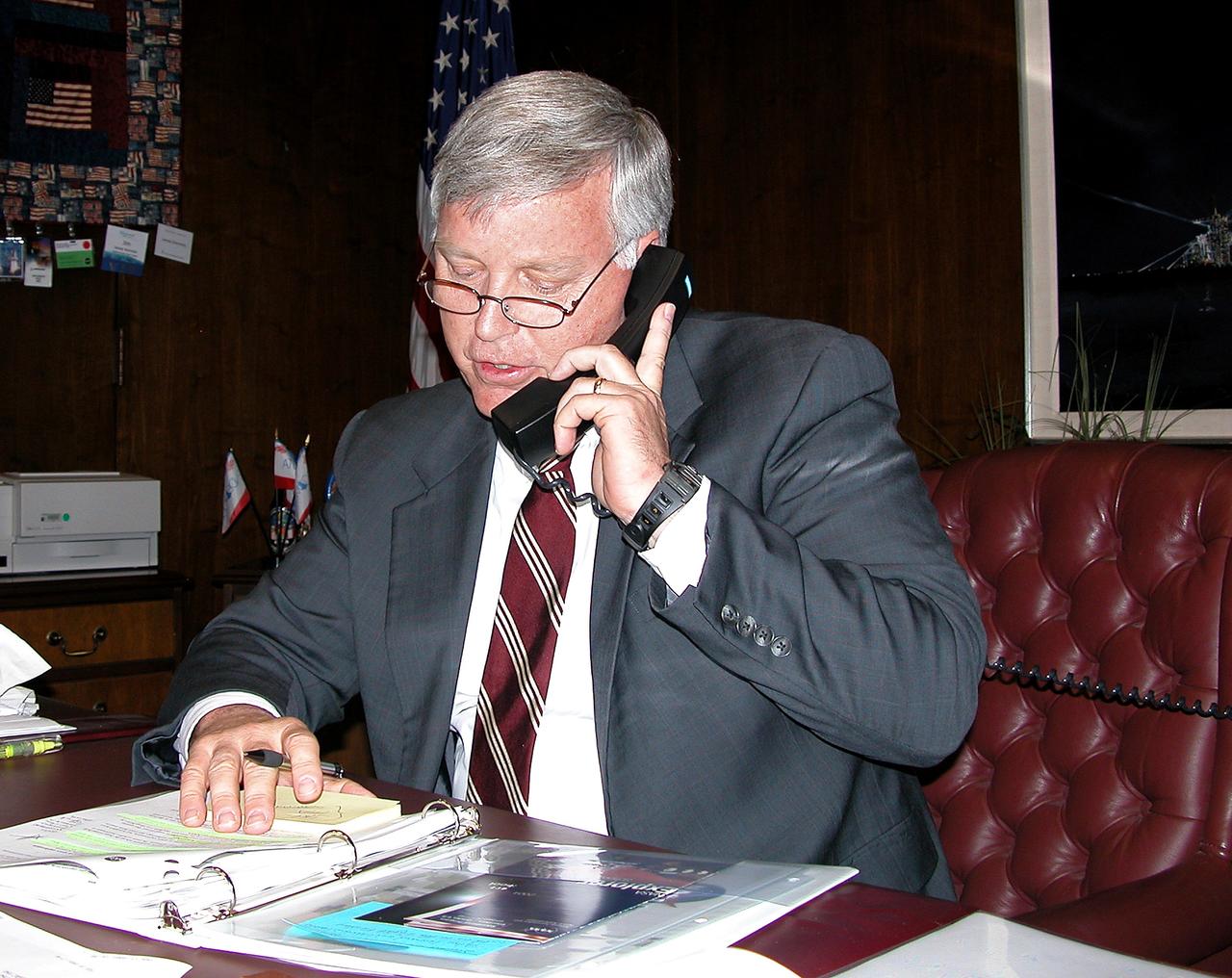
KENNEDY SPACE CENTER, FLA. - Center Director Jim Kennedy talks to radio station WFLA-AM and Florida Radio Network about his trip to Garland V. Stewart Magnet Middle School, a NASA Explorer School (NES) in Tampa, Fla. Kennedy made the trip with NASA astronaut Kay Hire to share the agency’s new vision for space exploration with the next generation of explorers. Kennedy is talking with students about our destiny as explorers, NASA’s stepping stone approach to exploring Earth, the Moon, Mars and beyond, how space impacts our lives, and how people and machines rely on each other in space.
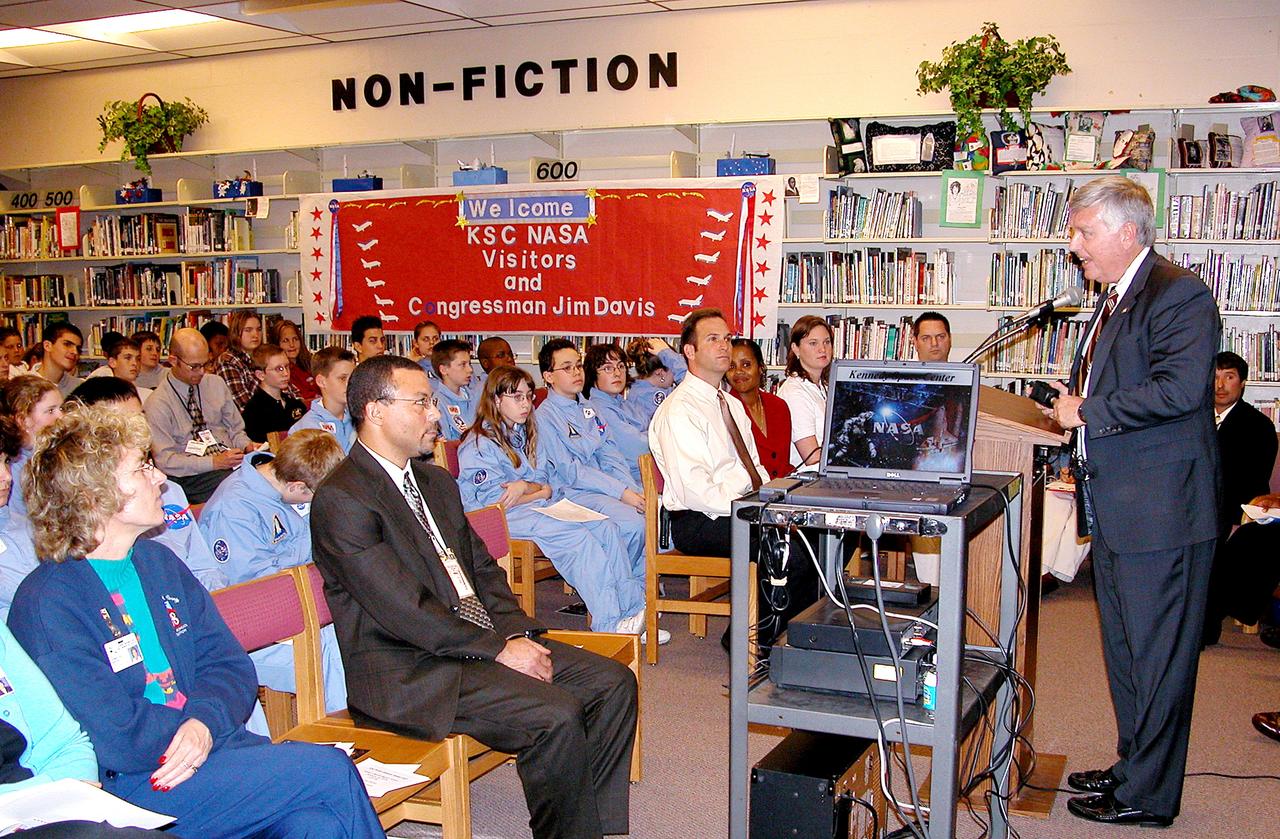
KENNEDY SPACE CENTER, FLA. - Center Director Jim Kennedy talks to students in Garland V. Stewart Magnet Middle School, a NASA Explorer School (NES) in Tampa, Fla. Kennedy made the trip with NASA astronaut Kay Hire to share the agency’s new vision for space exploration with the next generation of explorers. Kennedy is talking with students about our destiny as explorers, NASA’s stepping stone approach to exploring Earth, the Moon, Mars and beyond, how space impacts our lives, and how people and machines rely on each other in space.
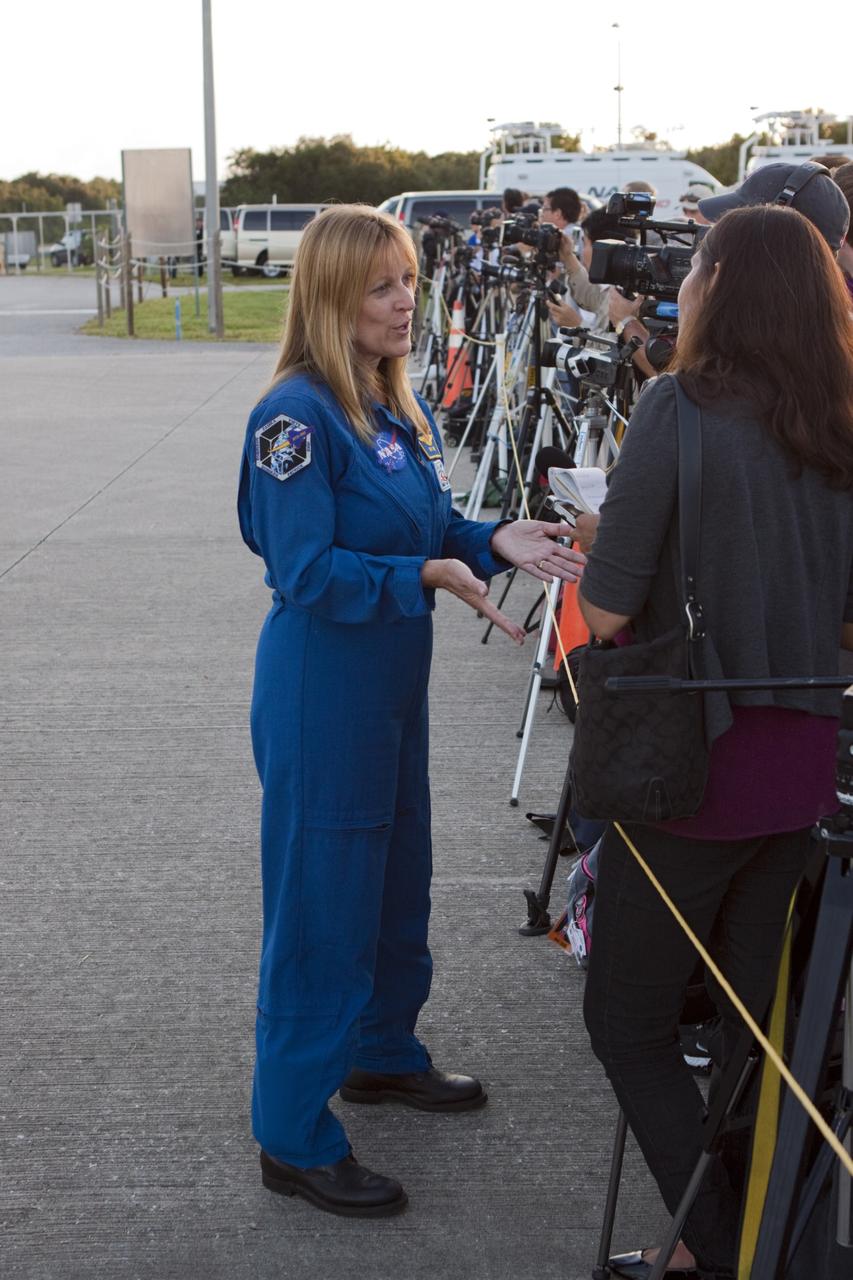
CAPE CANAVERAL, Fla. – NASA astronaut Kay Hire is interviewed by members of the news media at the Shuttle Landing Facility at NASA's Kennedy Space Center in Florida. Hire was on hand to discuss the space shuttle Endeavour's trip to California mounted atop NASA's Shuttle Carrier Aircraft, or SCA. The SCA, a modified 747 jetliner, will fly Endeavour to Los Angeles where it will be placed on public display at the California Science Center. This is the final ferry flight scheduled in the Space Shuttle Program era. For more information on the shuttles' transition and retirement, visit http://www.nasa.gov/transition. Photo credit: NASA/ Tim Jacobs
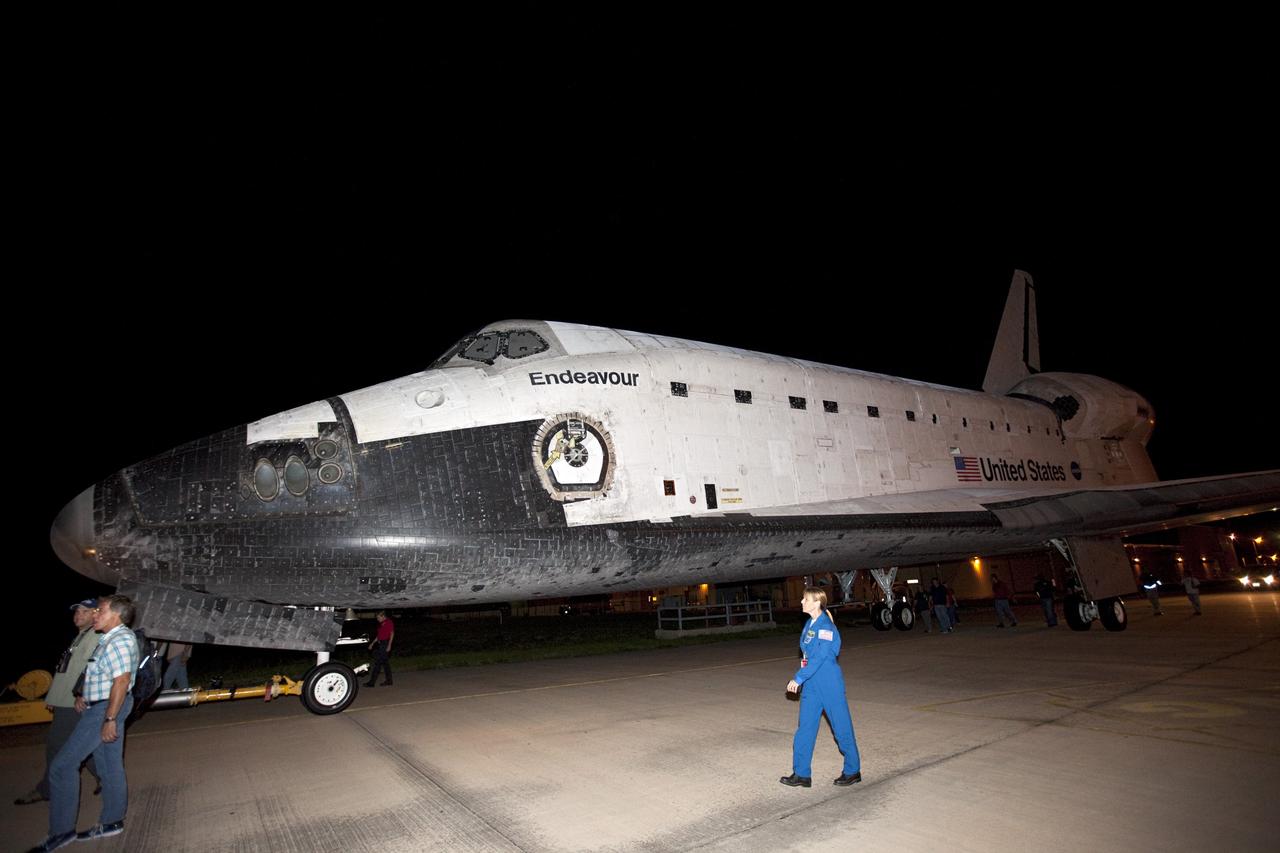
CAPE CANAVERAL, Fla. – NASA astronaut Kay Hire walks beside space shuttle Endeavour as it is towed to the Shuttle Landing Facility at Kennedy Space Center in Florida. The spacecraft will be lifted in the gantry-like Mate-Demate Device and placed atop NASA's modified 747 Shuttle Carrier Aircraft for the final ferry flight of the Space Shuttle Program. Endeavour will be placed on permanent public display at the California Science Center in Los Angeles. Photo credit: NASA/Kim Shiflett
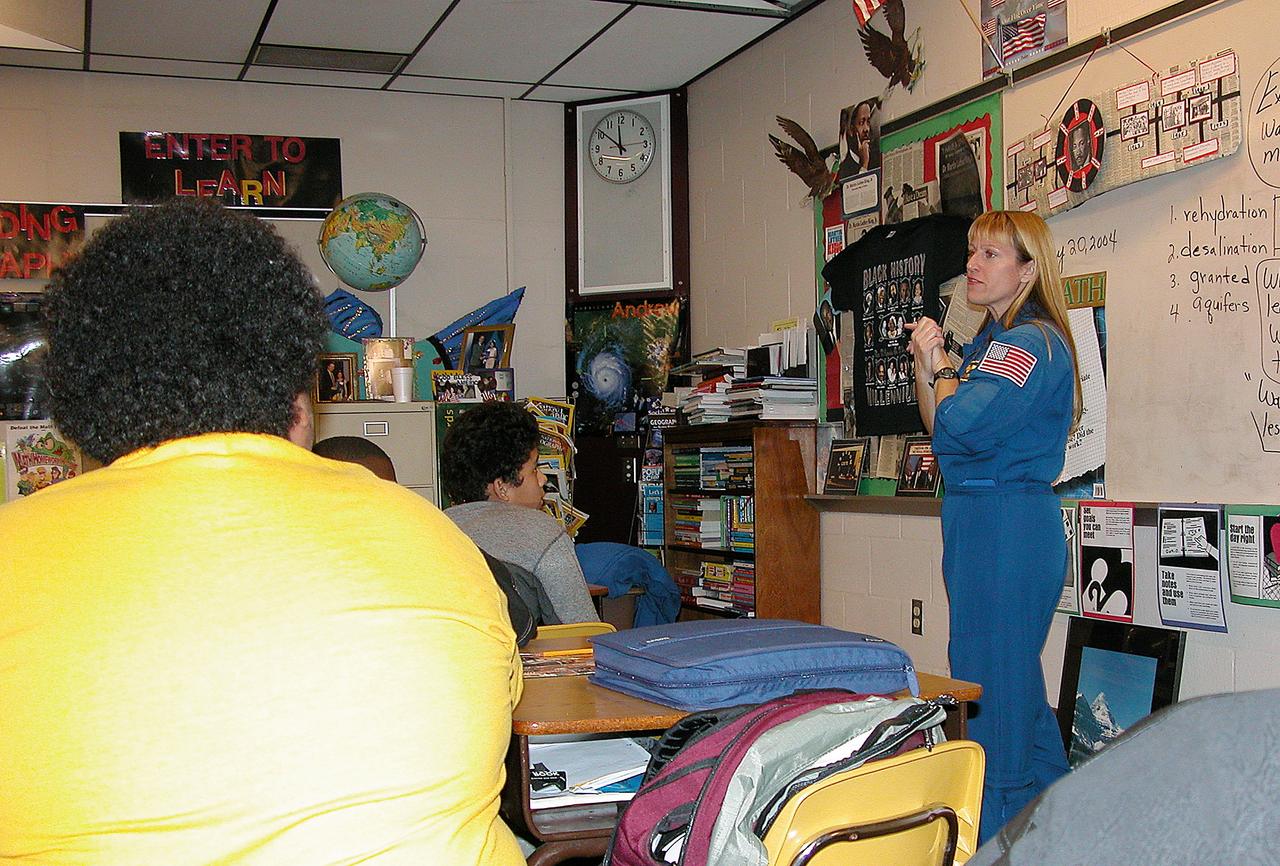
KENNEDY SPACE CENTER, FLA. - Astronaut Kay Hire talks to students in Garland V. Stewart Magnet Middle School, a NASA Explorer School (NES) in Tampa, Fla. She joined Center Director Jim Kennedy in sharing the agency’s new vision for space exploration with the next generation of explorers. Kennedy is talking with students about our destiny as explorers, NASA’s stepping stone approach to exploring Earth, the Moon, Mars and beyond, how space impacts our lives, and how people and machines rely on each other in space.
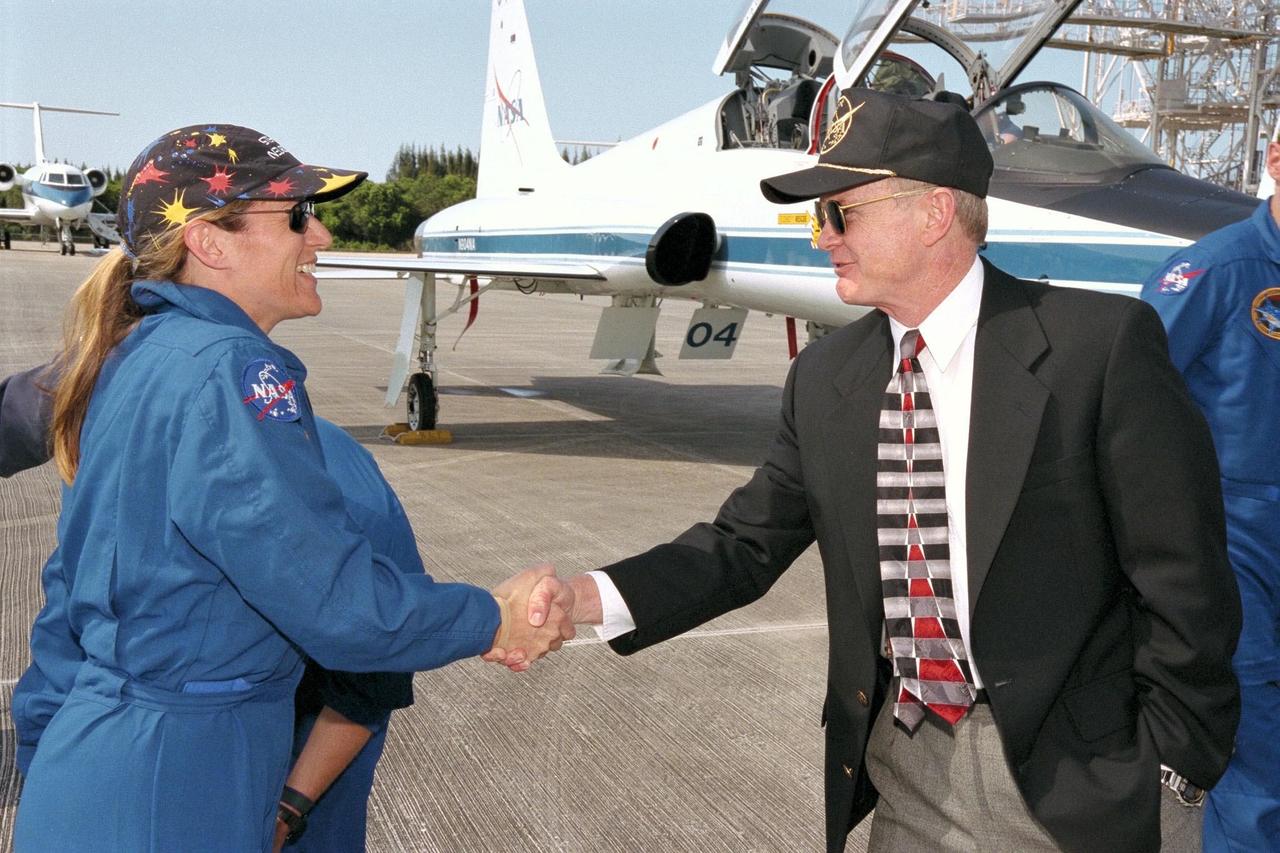
KENNEDY SPACE CENTER, FLA. -- Center Director Roy Bridges greets STS-90 Mission Specialist Kathryn (Kay) Hire shortly after her arrival at Kennedy Space Center's Shuttle Landing Facility in preparation for the launch of Columbia on April 16 at 2:19 p.m. EDT from KSC's Launch Pad 39B. The flight of Neurolab on STS-90, which will be the second mission of 1998, is scheduled to last nearly 17 days.

Retired Marshall scientist, Jeanette Scissum-Mickens, was honored by Alabama Governor Kay Ivey at the Alabama Historically Black Colleges and Universities Roundtable Discussion: Minority Women in STEM event held at the University of Alabama A&M in Huntsville, Alabama. Scissum-Mickens was honored as the “Hidden Figure of Alabama A&M.” She was the first African-American mathematician hired by Marshall in 1964.
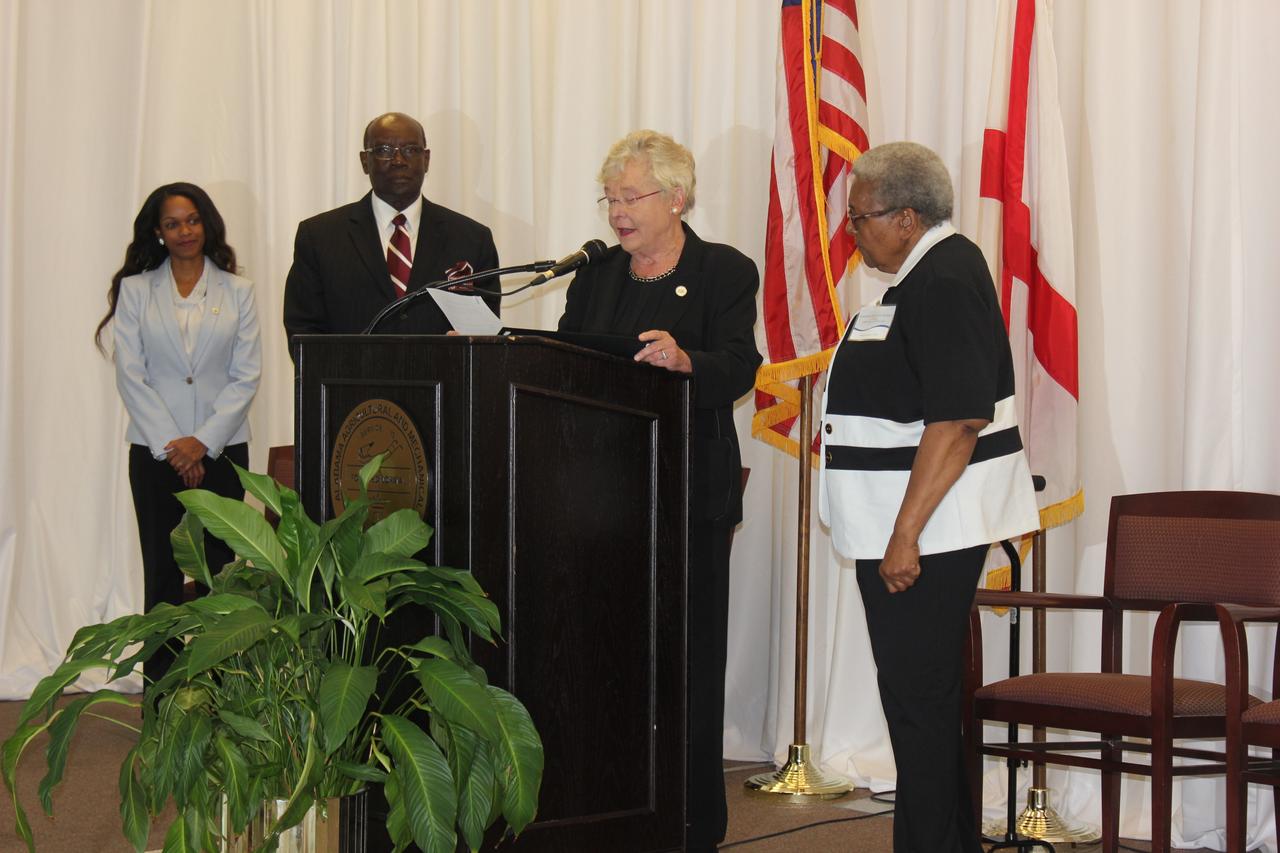
Governor Kay Ivey recognized retired NASA Space Flight Center team member, Jeanette Scissum-Mickens on Sept. 27 at the Alabama HBCU Roundtable Discussion: Minority Women in STEM held at the Alabama A&M University. Scissum-Mickens was honored as the “Hidden Figure of Alabama A&M.” She was the first African American mathematician hired by Marshall in 1964. While at Marshall, she was a space scientist and helped improved forecast models of the sunspot cycle and led activities in Marshall’s Atmospheric, Magentospheric, and Plasmas in Space project.
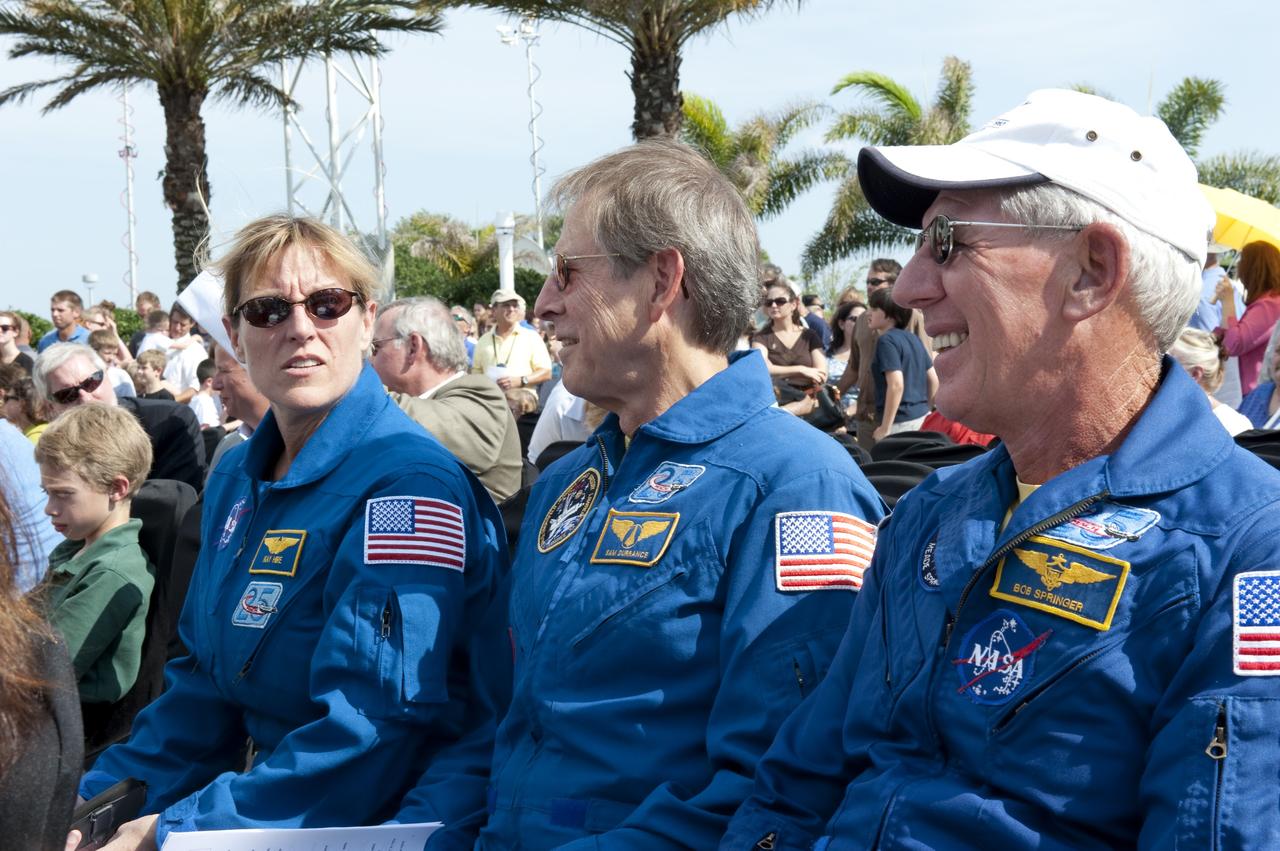
CAPE CANAVERAL, Fla. -- NASA Astronaut Kay Hire and former NASA Astronauts Sam Durrance and Bob Springer take a moment to converse on a very warm, sunny Florida afternoon while attending the 30th anniversary celebration in honor of the Space Shuttle Program's first shuttle launch. The event is being held at NASA's Kennedy Space Center Visitor Complex. The celebration followed an announcement by NASA Administrator Charles Bolden where the four orbiters will be placed for permanent display after retirement. Photo credit: NASA/Kim Shiflett
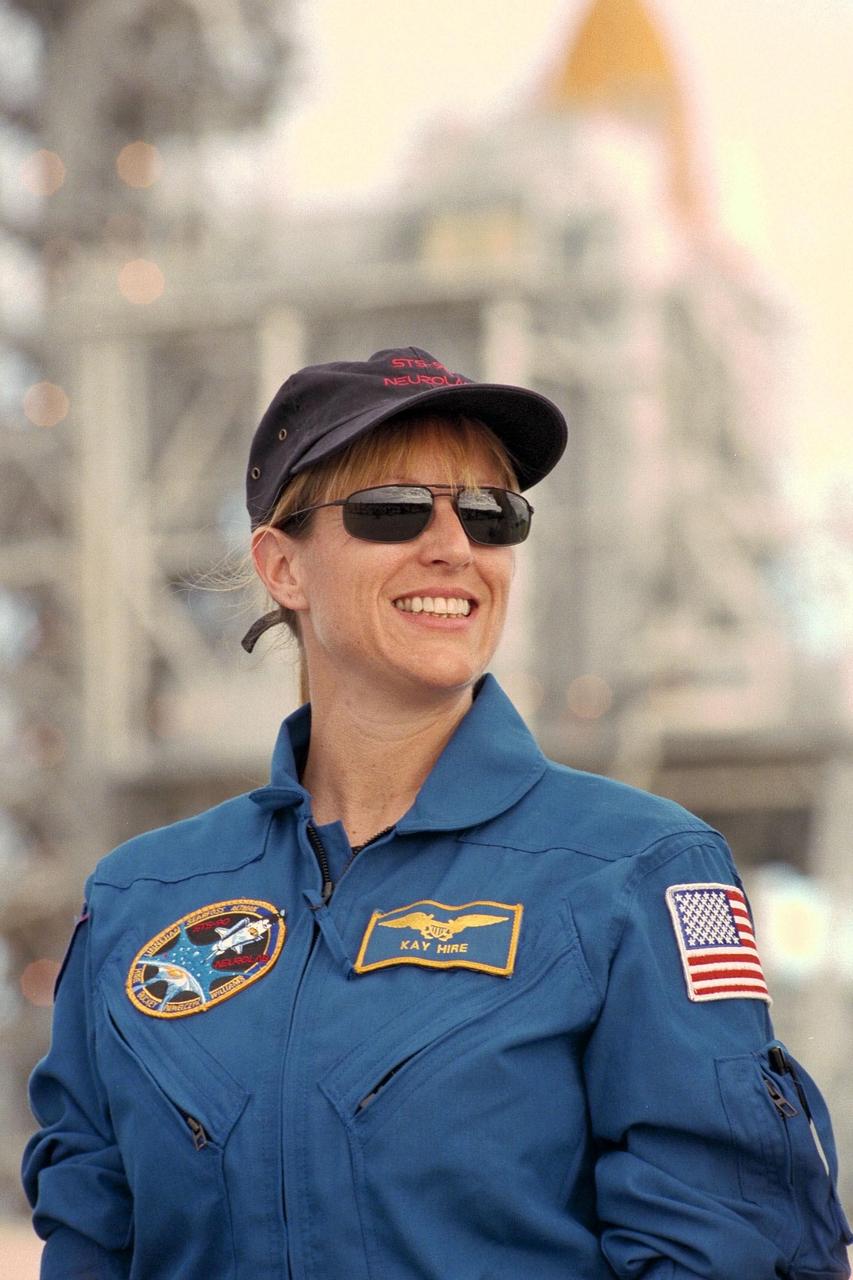
STS-90 Mission Specialist Kathryn (Kay) Hire participates in Terminal Countdown Demonstration Test (TCDT) activities at KSC's Launch Pad 39B. The TCDT is held at KSC prior to each Space Shuttle flight to provide crews with the opportunity to participate in simulated countdown activities. Columbia is targeted for launch of STS-90 on April 16 at 2:19 p.m. EDT and will be the second mission of 1998. The mission is scheduled to last nearly 17 days
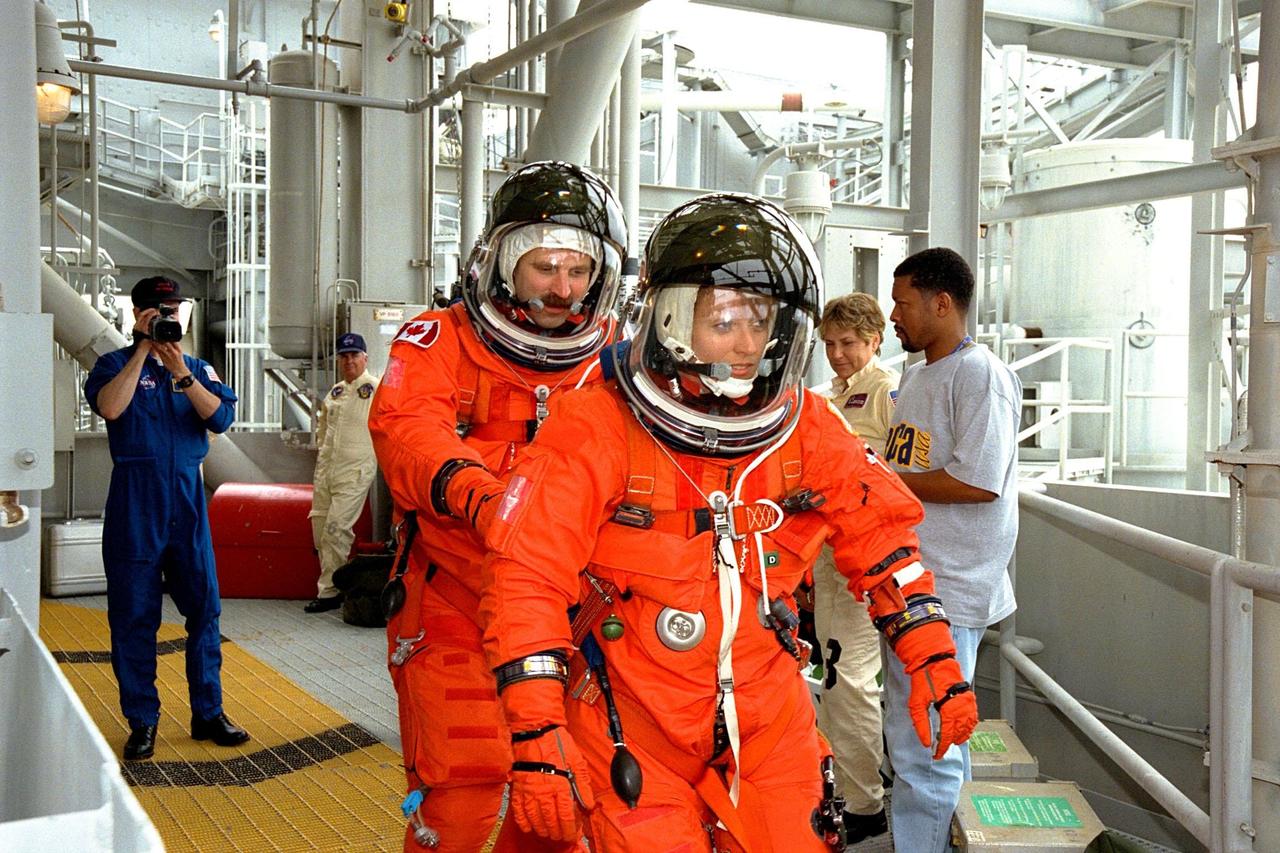
STS-90 Mission Specialists Dafydd (Dave) Williams with the Canadian Space Agency and Kathryn (Kay) Hire participate in Terminal Countdown Demonstration Test (TCDT) activities at KSC's Launch Pad 39B. The TCDT is held at KSC prior to each Space Shuttle flight to provide crews with the opportunity to participate in simulated countdown activities. The Space Shuttle Columbia is targeted for launch of STS-90 on April 16 at 2:19 p.m. EDT and will be the second mission of 1998. The mission is scheduled to last nearly 17 days
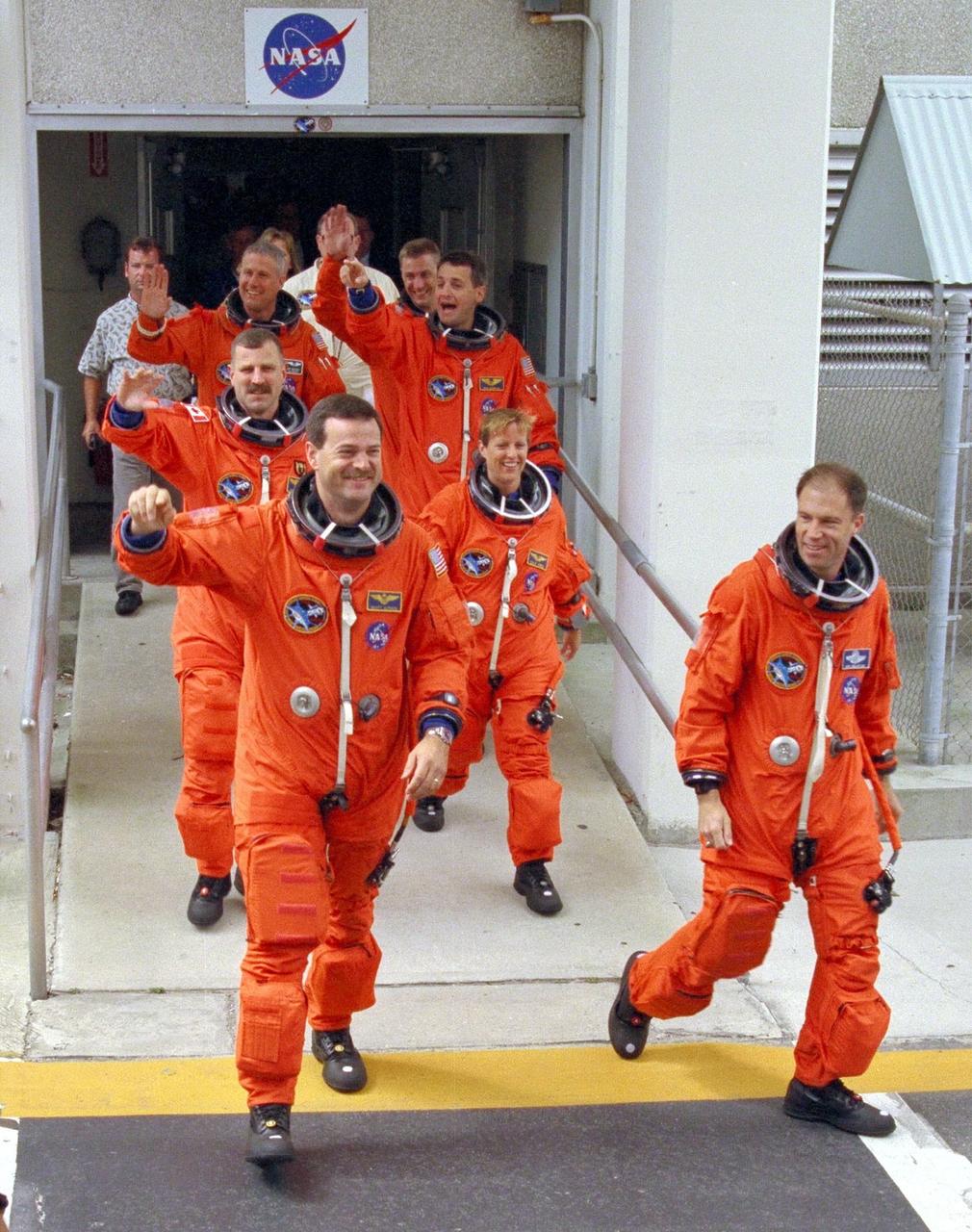
KENNEDY SPACE CENTER, FLA. -- Greeted by cheers from wellwishers at KSC and eager for their venture into space on the Neurolab mission, the STS-90 astronauts depart the Operations and Checkout Building on their way to Launch Pad 39B. Leading the seven-member crew is Mission Commander Richard Searfoss (far right), with Pilot Scott Altman by his side. Behind Altman are Mission Specialist Dafydd (Dave) Williams, M.D., (waving) with the Canadian Space Agency, and Mission Specialist Kathryn (Kay) Hire. Behind Hire is Mission Specialist Richard Linnehan, D.V.M., and next to Linnehan is Payload Specialist Jay Buckey, M.D. At the rear behind Linnehan is Payload Specialist James Pawelczyk, Ph.D. Their trip to the pad will take about 25 minutes aboard the Astrovan. Once there, they will take their positions in the crew cabin of the Space Shuttle Columbia to await a liftoff during a two-and-a-half hour window that will open at 2:19 p.m. EDT
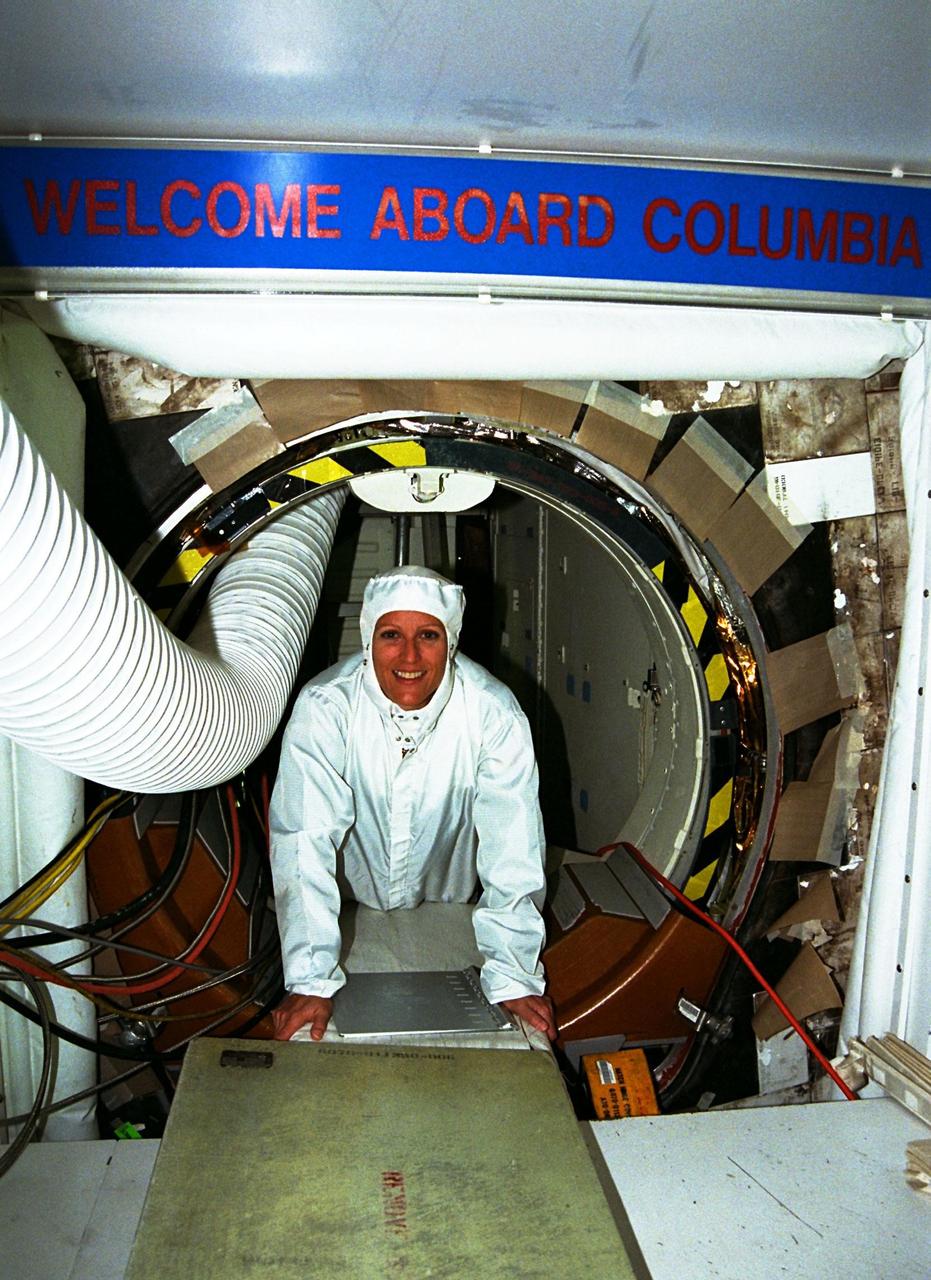
STS-90 Mission Specialist Kathryn (Kay) Hire enjoys the crawl between Columbia and the white room that allows access to the orbiter. The crew of STS-90 recently participated in the Crew Equipment Interface Test (CEIT) in Kennedy Space Center's Orbiter Processing Facility Bay 3. The CEIT gives astronauts an opportunity to get a hands-on look at the payloads with which they will be working on-orbit. Investigations during the STS-90 Neurolab mission will focus on the effects of microgravity on the nervous system. Specifically, experiments will study the adaptation of the vestibular system, the central nervous system, and the pathways that control the ability to sense location in the absence of gravity, as well as the effect of microgravity on a developing nervous system. STS-90, which will be Hire's first Shuttle flight, is scheduled for launch on April 16 at 2:19 p.m. EDT

KENNEDY SPACE CENTER, FLA. -- The Space Shuttle Columbia soars from Launch Pad 39B at 2:19 p.m. EDT Apr. 17 to begin the STS-90 Neurolab mission. The launch was delayed 24 hours due to difficulty with a network signal processor, which was replaced Apr. 16, on the orbiter. The crew members are Commander Richard Searfoss, Pilot Scott Altman, Mission Specialists Richard Linnehan, D.V.M., Dafydd (Dave) Williams, M.D., with the Canadian Space Agency, and Kathryn (Kay) Hire; and Payload Specialists Jay Buckey, M.D., and James Pawelczyk, Ph.D. Investigations during the Neurolab mission will focus on the effects of microgravity on the nervous system
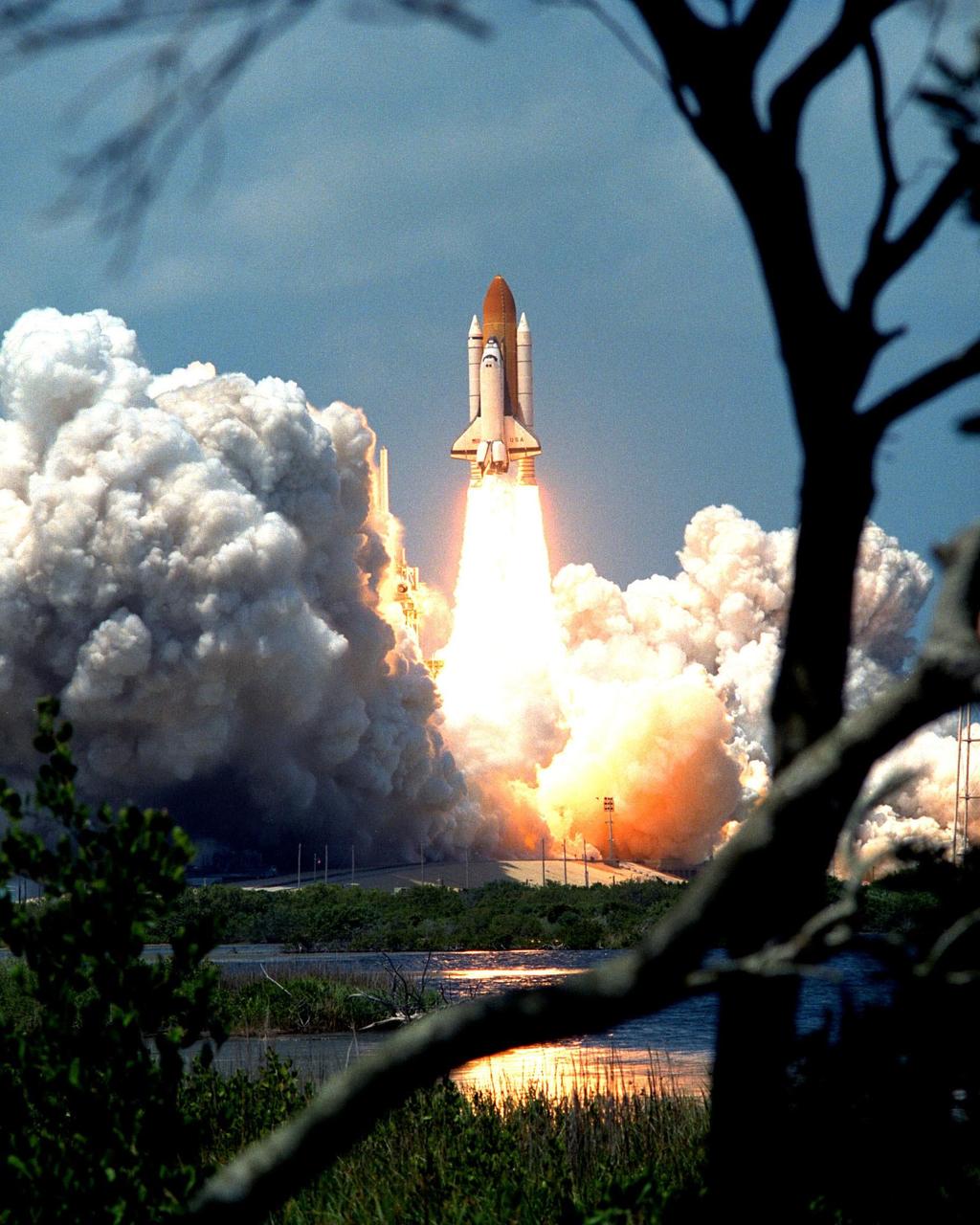
KENNEDY SPACE CENTER, FLA. -- The Space Shuttle Columbia soars from Launch Pad 39B at 2:19 p.m. EDT Apr. 17 to begin the nearly 17-day STS-90 Neurolab mission. The launch was delayed 24 hours due to difficulty with a network signal processor, which was replaced Apr. 16, on the orbiter. The crew members are Commander Richard Searfoss, Pilot Scott Altman, Mission Specialists Richard Linnehan, D.V.M., Dafydd (Dave) Williams, M.D., with the Canadian Space Agency, and Kathryn (Kay) Hire; and Payload Specialists Jay Buckey, M.D., and James Pawelczyk, Ph.D. Investigations during the Neurolab mission will focus on the effects of microgravity on the nervous system.
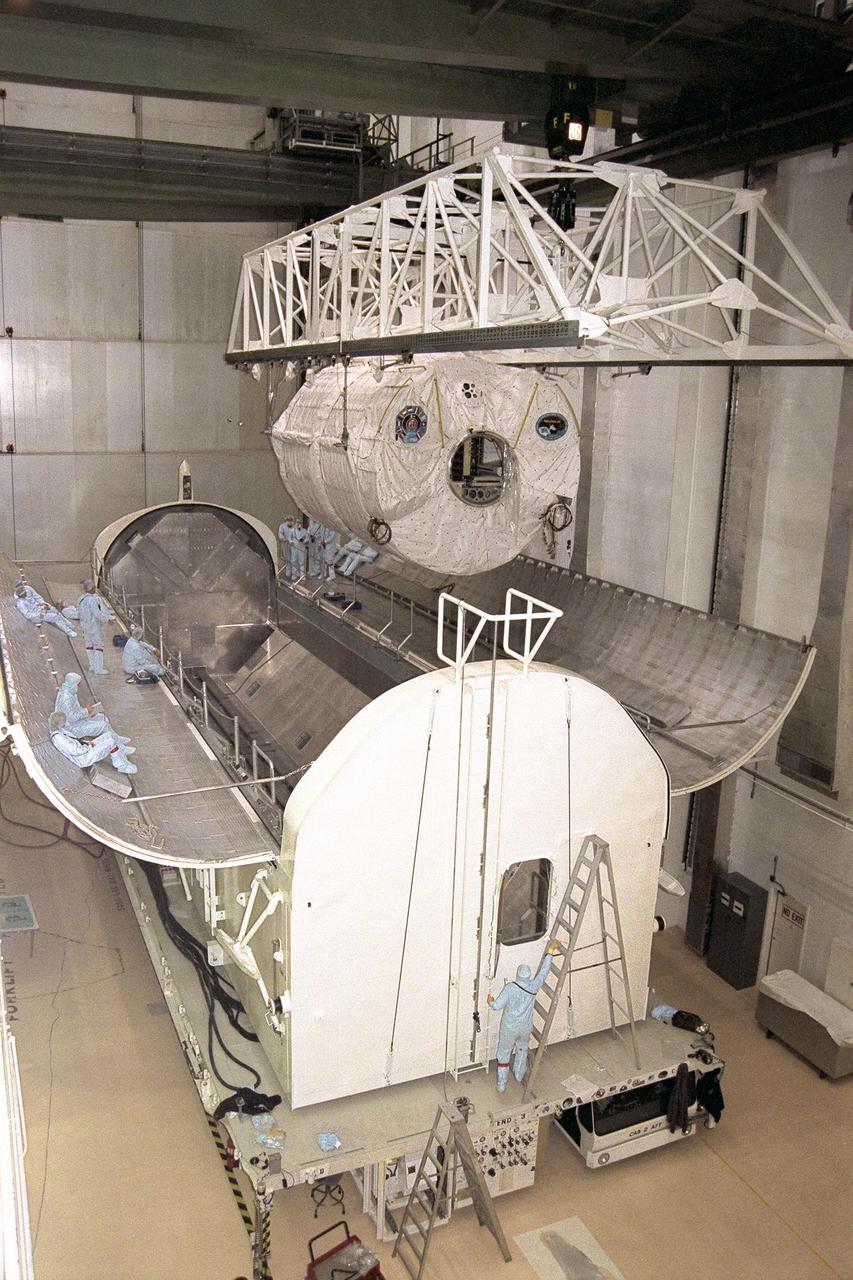
KENNEDY SPACE CENTER, FLA. -- The STS-90 Neurolab payload is lowered into its payload canister in KSC's Operations and Checkout Building. Investigations during the Neurolab mission will focus on the effects of microgravity on the nervous system. Specifically, experiments will study the adaptation of the vestibular system, the central nervous system, and the pathways that control the ability to sense location in the absence of gravity, as well as the effect of microgravity on a developing nervous system. The crew of STS-90, slated for launch in April, will include Commander Richard Searfoss, Pilot Scott Altman, Mission Specialists Richard Linnehan, Dafydd (Dave) Williams, M.D., and Kathryn (Kay) Hire, and Payload Specialists Jay Buckey, M.D., and James Pawelczyk, Ph.D
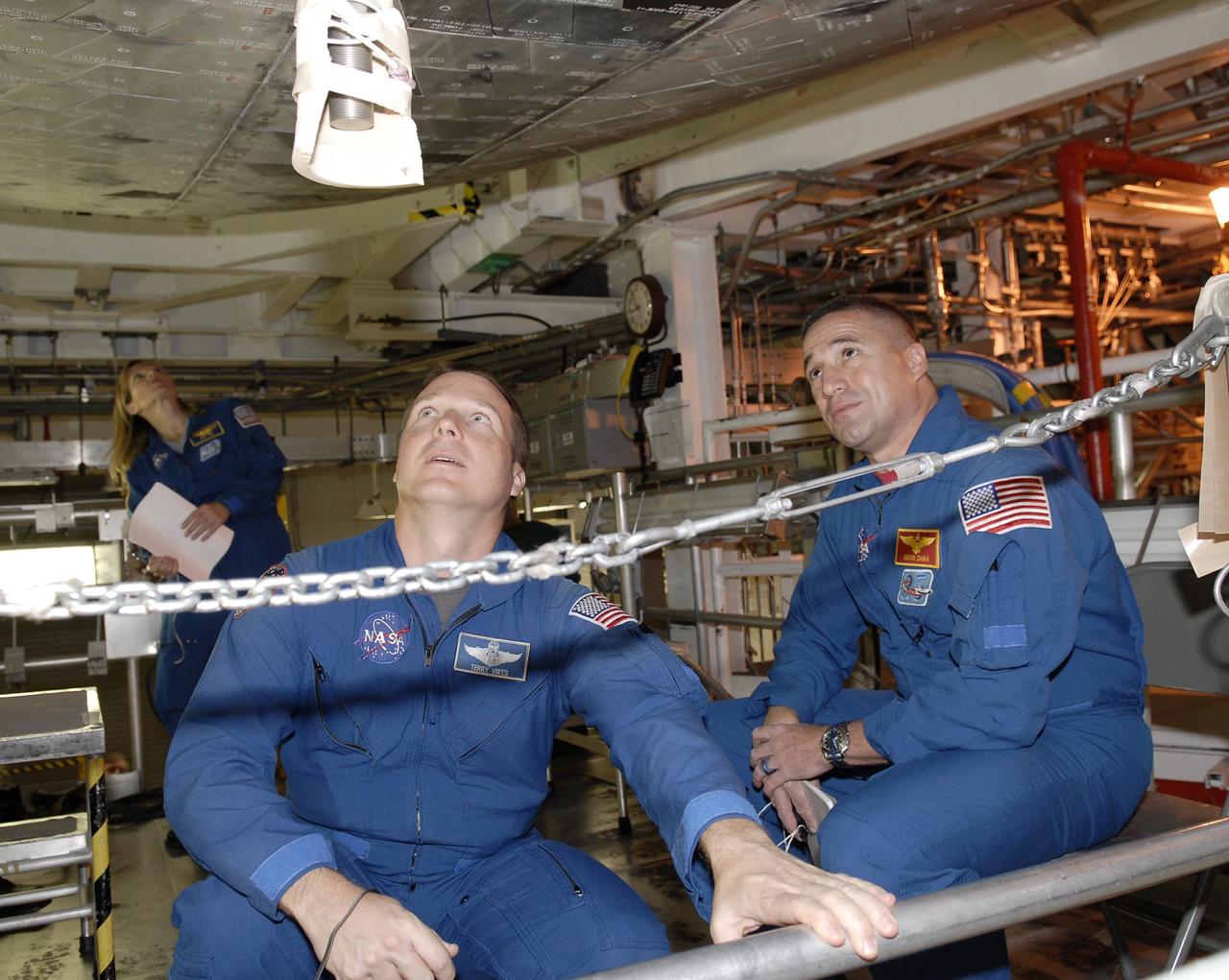
CAPE CANAVERAL, Fla. – In Orbiter Processing Facility-3 at NASA's Kennedy Space Center in Florida, STS-130 Pilot Terry Virts Jr., left, and Commander George Zamka inspect the thermal protection system beneath space shuttle Endeavour as Mission Specialist Kathryn "Kay" Hire does the same in the background. The crew is at Kennedy for a crew equipment interface test, or CEIT, which provides hands-on training and observation of shuttle and flight hardware. The STS-130 flight will carry the Tranquility pressurized module with a built-in cupola to the International Space Station aboard Endeavour. Launch is targeted for Feb. 4, 2010. Photo credit: NASA/Kim Shiflett

KENNEDY SPACE CENTER, FLA. -- Technicians gather around the STS-90 Neurolab payload during weight and center-of-gravity measurements in KSC's Operations and Checkout Building. Investigations during the Neurolab mission will focus on the effects of microgravity on the nervous system. Specifically, experiments will study the adaptation of the vestibular system, the central nervous system, and the pathways that control the ability to sense location in the absence of gravity, as well as the effect of microgravity on a developing nervous system. The crew of STS-90, slated for launch in April, will include Commander Richard Searfoss, Pilot Scott Altman, Mission Specialists Richard Linnehan, Dafydd (Dave) Williams, M.D., and Kathryn (Kay) Hire, and Payload Specialists Jay Buckey, M.D., and James Pawelczyk, Ph.D

The STS-90 Neurolab payload is lowered into position into the cargo bay of Space Shuttle Columbia today in Orbiter Processing Facility bay 3. Investigations during the Neurolab mission will focus on the effects of microgravity on the nervous system. Specifically, experiments will study the adaptation of the vestibular system, the central nervous system, and the pathways that control the ability to sense location in the absence of gravity, as well as the effect of microgravity on a developing nervous system. The crew of STS-90, slated for launch in April, will include Commander Richard Searfoss, Pilot Scott Altman, Mission Specialists Richard Linnehan, Dafydd (Dave) Williams, M.D., and Kathryn (Kay) Hire, and Payload Specialists Jay Buckey, M.D., and James Pawelczyk, Ph.D
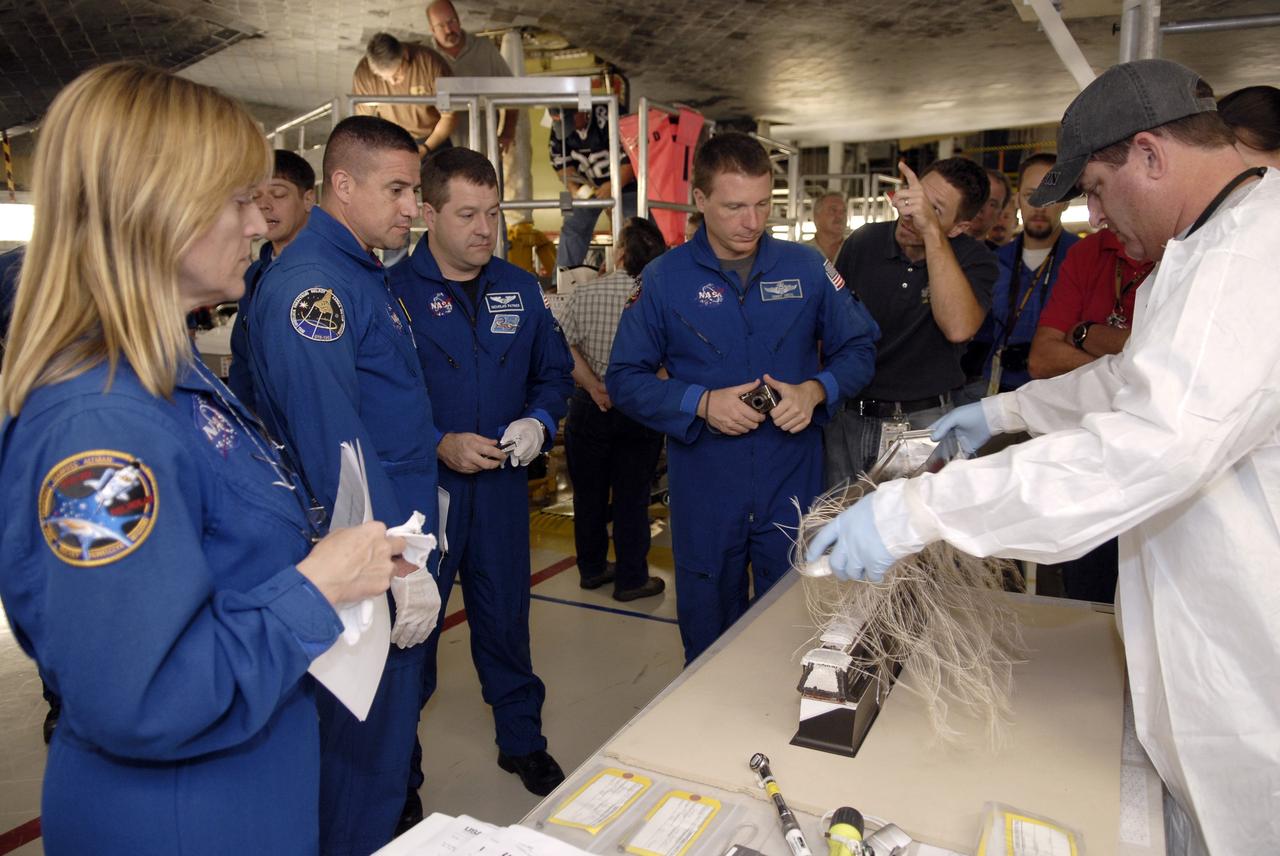
CAPE CANAVERAL, Fla. – In Orbiter Processing Facility-3 at NASA's Kennedy Space Center in Florida, members of the STS-130 crew view a demonstration on the upkeep of space shuttle Endeavour's thermal protection system. From left are Mission Specialist Kathryn "Kay" Hire, Commander George Zamka, Mission Specialist Nicolas Patrick and Pilot Terry Virts Jr. The crew is at Kennedy for a crew equipment interface test, or CEIT, which provides hands-on training and observation of shuttle and flight hardware. The STS-130 flight will carry the Tranquility pressurized module with a built-in cupola to the International Space Station aboard Endeavour. Launch is targeted for Feb. 4, 2010. Photo credit: NASA/Kim Shiflett
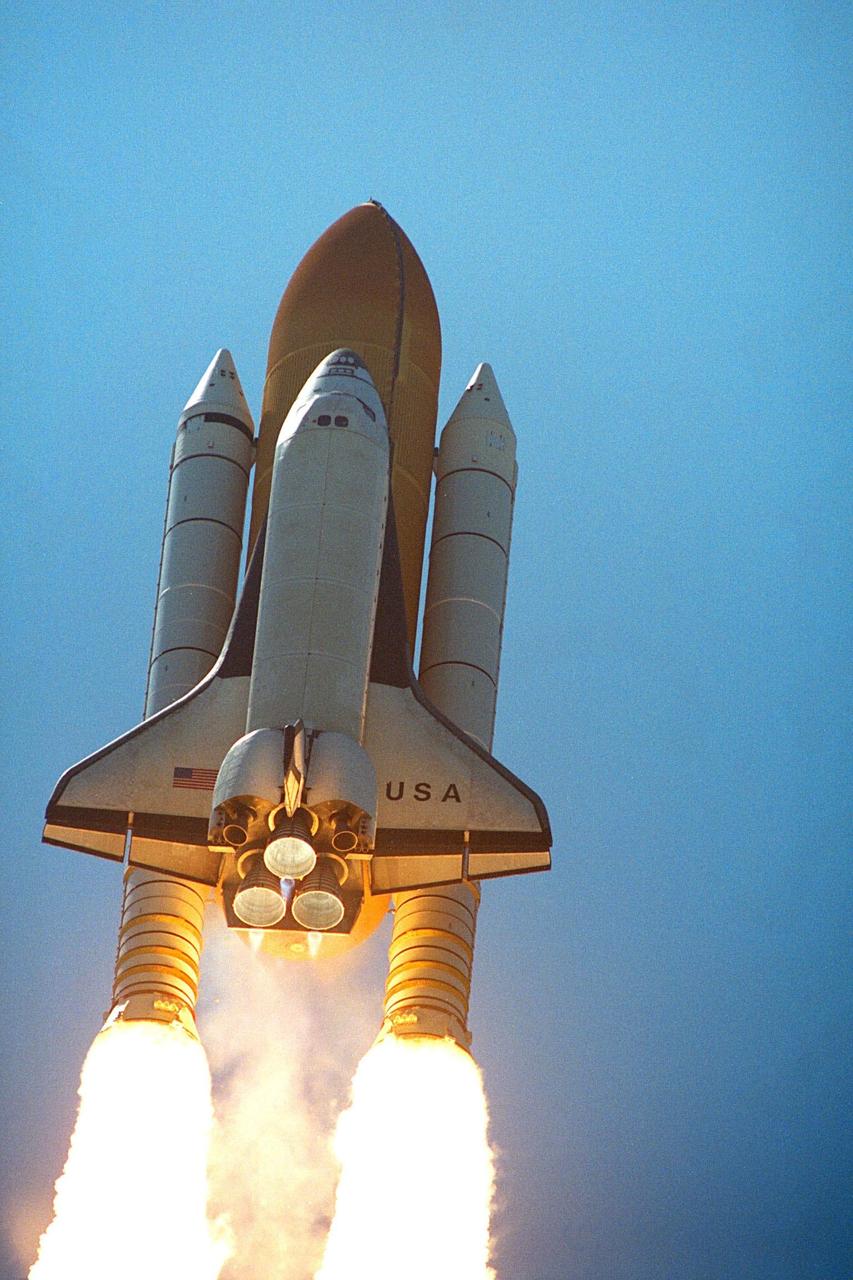
KENNEDY SPACE CENTER, FLA. -- The Space Shuttle Columbia surges skyward from Launch Pad 39B at 2:19 p.m. EDT Apr. 17 to begin the nearly 17-day STS-90 Neurolab mission. The launch was delayed 24 hours due to difficulty with a network signal processor, which was replaced Apr. 16, on the orbiter. The crew members on-board include Commander Richard Searfoss, Pilot Scott Altman, Mission Specialists Richard Linnehan, D.V.M., Dafydd (Dave) Williams, M.D., with the Canadian Space Agency, and Kathryn (Kay) Hire; and Payload Specialists Jay Buckey, M.D., and James Pawelczyk, Ph.D. Investigations during the Neurolab mission will focus on the effects of microgravity on the nervous system
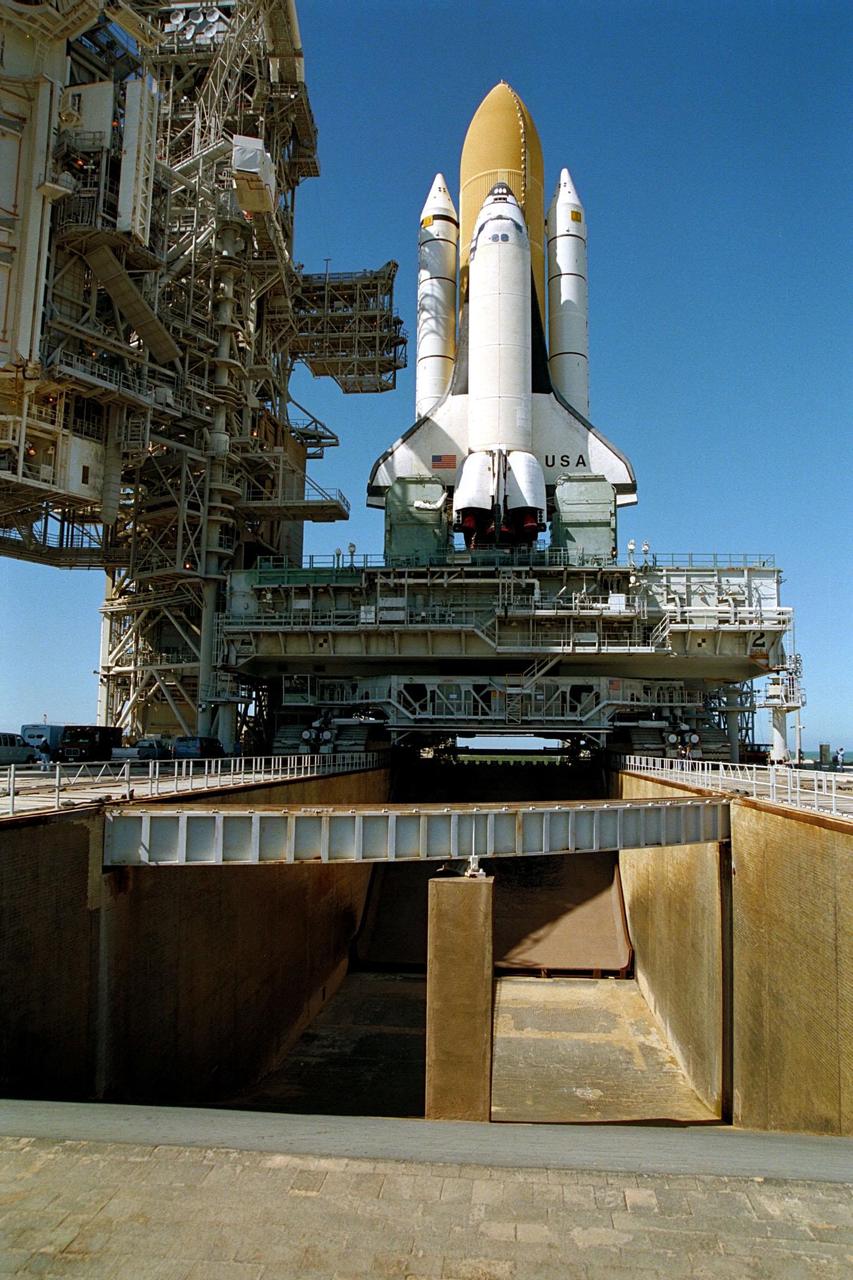
KENNEDY SPACE CENTER, FLA. -- The Space Shuttle Columbia arrives at the top of Launch Pad 39B after its morning rollout prior to STS-90. The Neurolab experiments are the primary payload on this nearly 17-day space flight. Investigations during the Neurolab mission will focus on the effects of microgravity on the nervous system. The crew of STS-90, slated for launch April 16 at 2:19 p.m. EDT, includes Commander Richard Searfoss, Pilot Scott Altman, Mission Specialists Richard Linnehan, Dafydd (Dave) Williams, M.D., and Kathryn (Kay) Hire, and Payload Specialists Jay Buckey, M.D., and James Pawelczyk, Ph.D
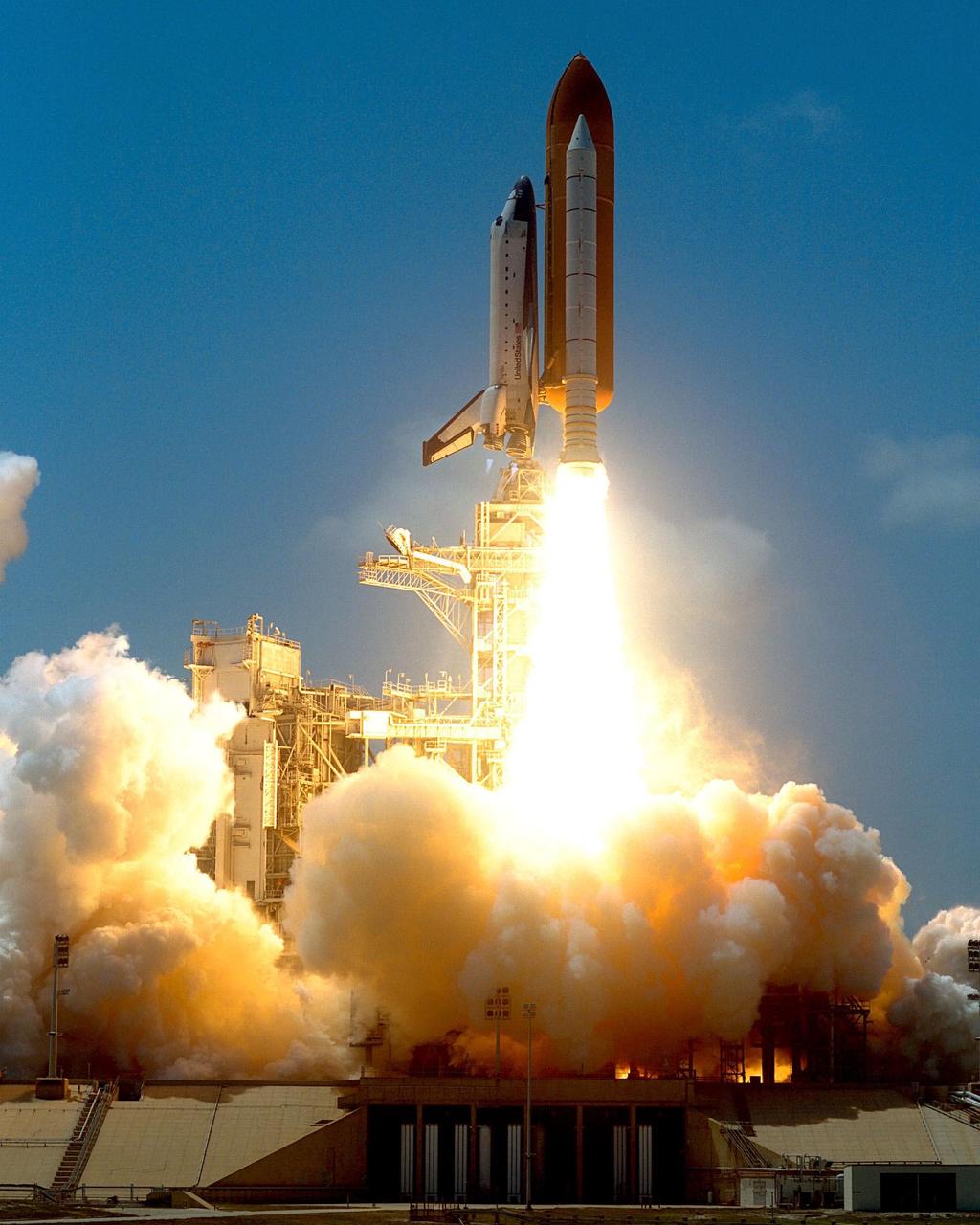
KENNEDY SPACE CENTER, FLA. -- The Space Shuttle Columbia lifts off from Launch Pad 39B at 2:19 p.m. EDT Apr. 17 to begin the nearly 17-day STS-90 Neurolab mission. The launch was delayed 24 hours due to difficulty with a network signal processor, which was replaced Apr. 16, on the orbiter. The crew members are Commander Richard Searfoss, Pilot Scott Altman, Mission Specialists Richard Linnehan, D.V.M., Dafydd (Dave) Williams, M.D., with the Canadian Space Agency, and Kathryn (Kay) Hire; and Payload Specialists Jay Buckey, M.D., and James Pawelczyk, Ph.D. Investigations during the Neurolab mission will focus on the effects of microgravity on the nervous system
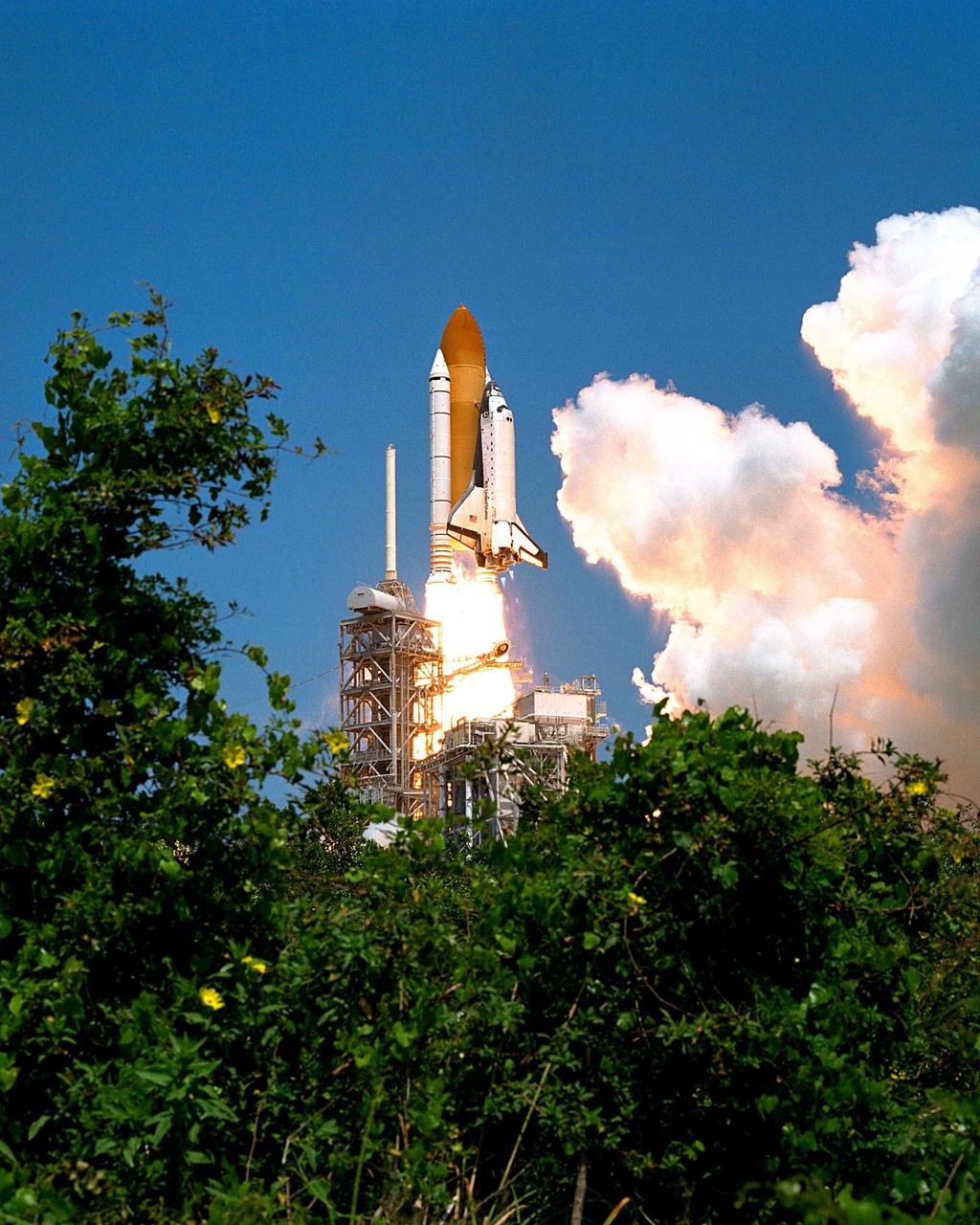
KENNEDY SPACE CENTER, FLA. -- The Space Shuttle Columbia soars from Launch Pad 39B at 2:19 p.m. EDT Apr. 17 to begin the STS-90 Neurolab mission. The launch was delayed 24 hours due to difficulty with a network signal processor, which was replaced Apr. 16, on the orbiter. The crew members are Commander Richard Searfoss, Pilot Scott Altman, Mission Specialists Richard Linnehan, D.V.M., Dafydd (Dave) Williams, M.D., with the Canadian Space Agency, and Kathryn (Kay) Hire; and Payload Specialists Jay Buckey, M.D., and James Pawelczyk, Ph.D. Investigations during the Neurolab mission will focus on the effects of microgravity on the nervous system
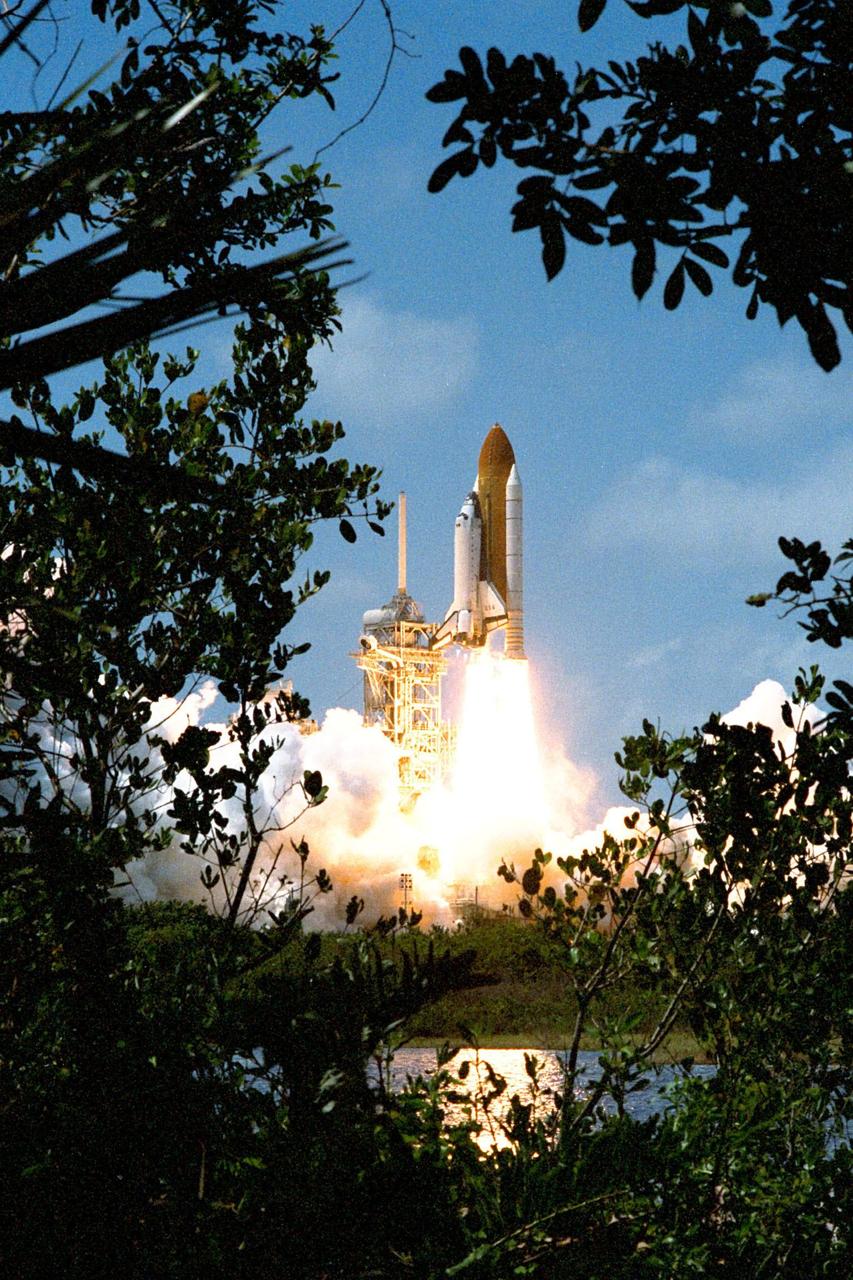
Framed by native Floridian foliage, the Space Shuttle Columbia soars from Launch Pad 39B at 2:19 p.m. EDT Apr. 17 to begin the nearly 17-day STS-90 Neurolab mission. The launch was delayed 24 hours due to difficulty with a network signal processor, which was replaced Apr. 16, on the orbiter. The crew members are Commander Richard Searfoss, Pilot Scott Altman, Mission Specialists Richard Linnehan, D.V.M., Dafydd (Dave) Williams, M.D., with the Canadian Space Agency, and Kathryn (Kay) Hire; and Payload Specialists Jay Buckey, M.D., and James Pawelczyk, Ph.D. Investigations during the Neurolab mission will focus on the effects of microgravity on the nervous system
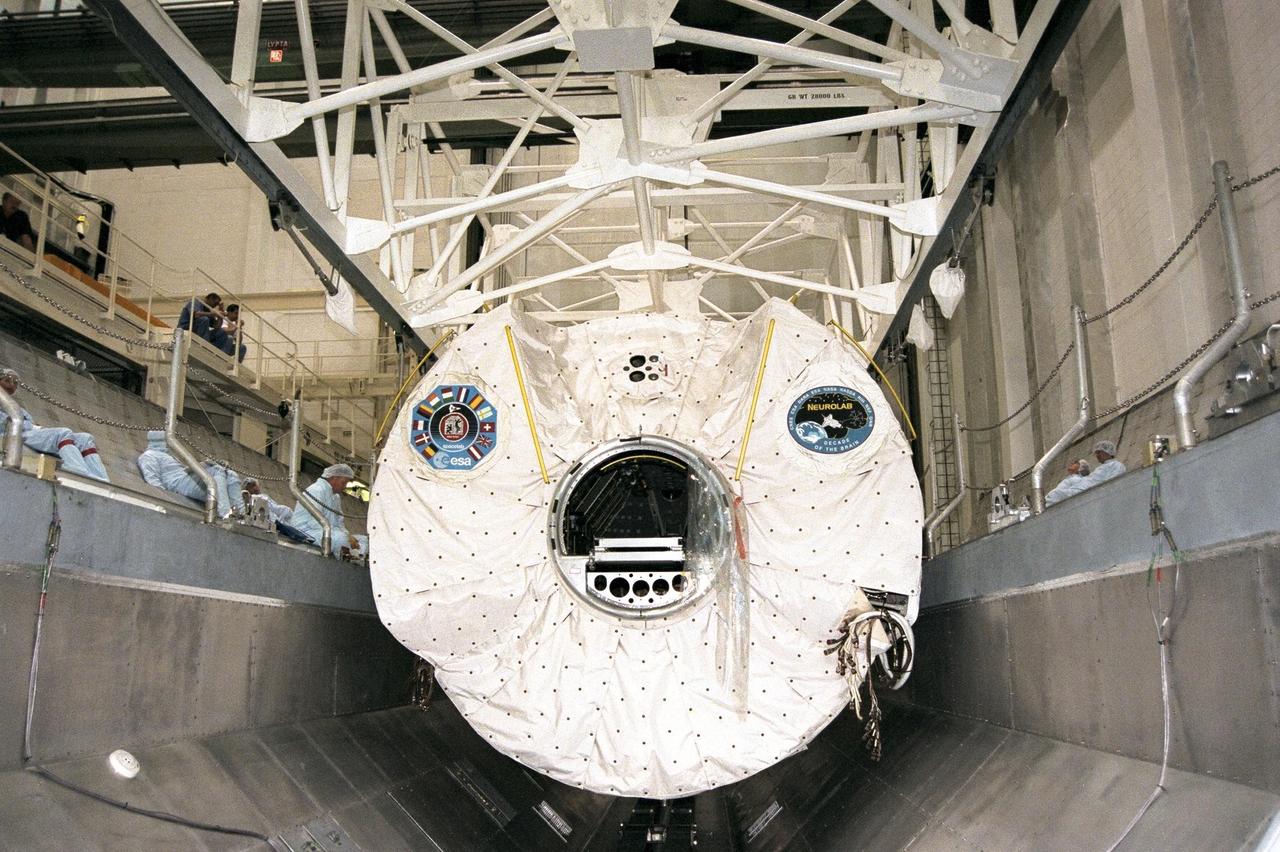
KENNEDY SPACE CENTER, FLA. -- The STS-90 Neurolab payload is lowered into its payload canister in KSC's Operations and Checkout Building. Investigations during the Neurolab mission will focus on the effects of microgravity on the nervous system. Specifically, experiments will study the adaptation of the vestibular system, the central nervous system, and the pathways that control the ability to sense location in the absence of gravity, as well as the effect of microgravity on a developing nervous system. The crew of STS-90, slated for launch in April, will include Commander Richard Searfoss, Pilot Scott Altman, Mission Specialists Richard Linnehan, Dafydd (Dave) Williams, M.D., and Kathryn (Kay) Hire, and Payload Specialists Jay Buckey, M.D., and James Pawelczyk, Ph.D
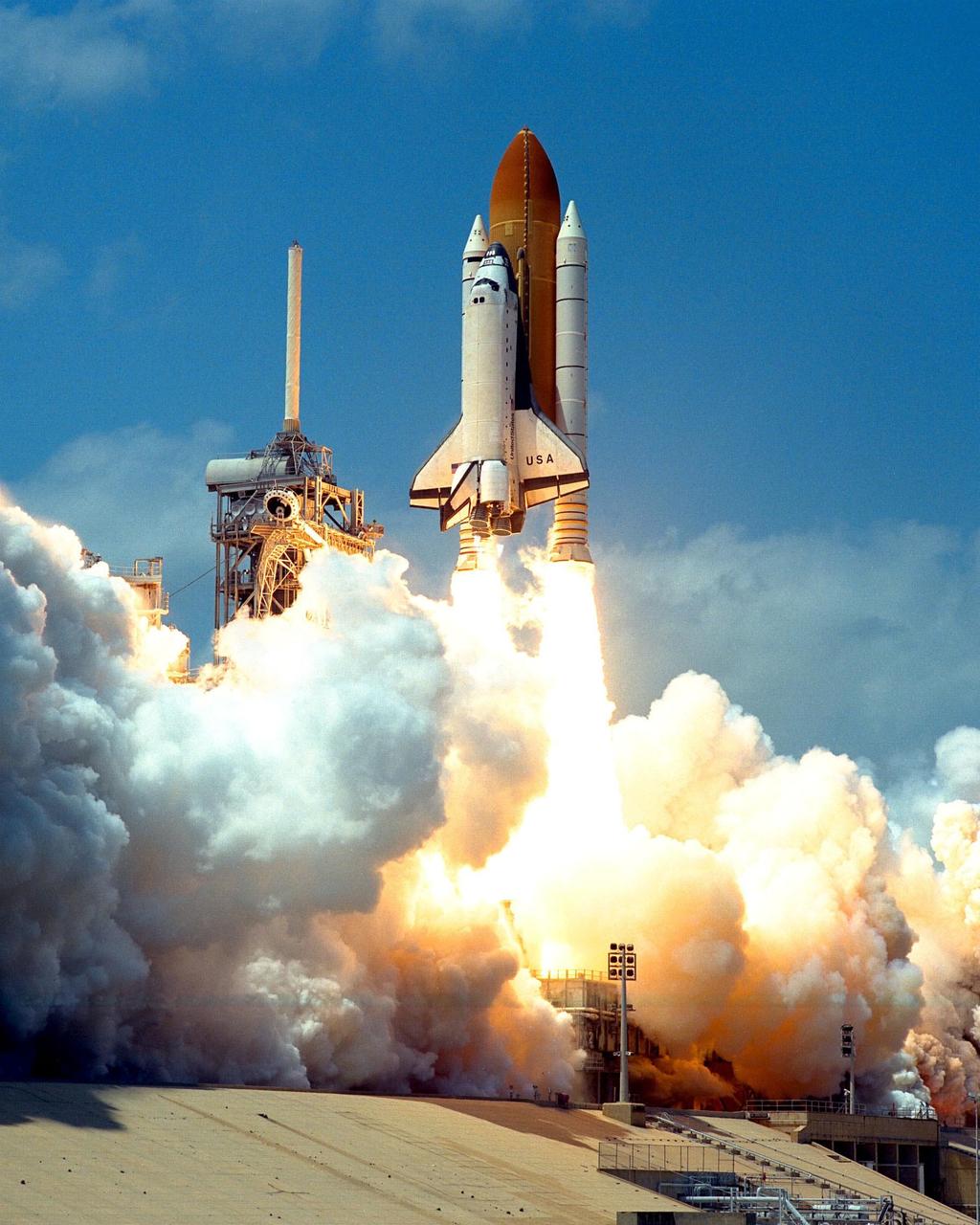
KENNEDY SPACE CENTER, FLA. -- The Space Shuttle Columbia soars from Launch Pad 39B at 2:19 p.m. EDT Apr. 17 to begin the nearly 17-day STS-90 Neurolab mission. The launch was delayed 24 hours due to difficulty with a network signal processor, which was replaced Apr. 16, on the orbiter. The crew members are Commander Richard Searfoss, Pilot Scott Altman, Mission Specialists Richard Linnehan, D.V.M., Dafydd (Dave) Williams, M.D., with the Canadian Space Agency, and Kathryn (Kay) Hire; and Payload Specialists Jay Buckey, M.D., and James Pawelczyk, Ph.D. Investigations during the Neurolab mission will focus on the effects of microgravity on the nervous system
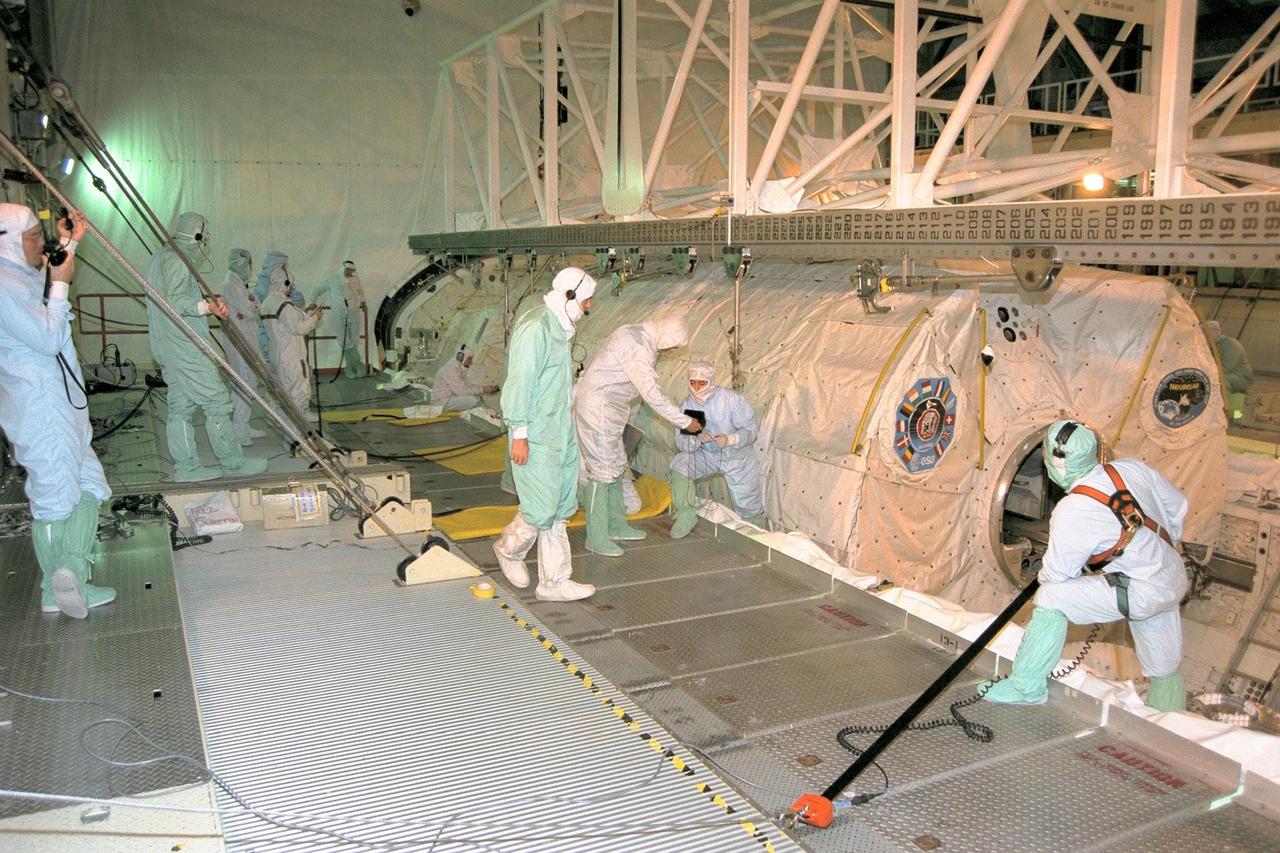
The STS-90 Neurolab payload is positioned into the cargo bay of Space Shuttle Columbia today in Orbiter Processing Facility bay 3. Investigations during the Neurolab mission will focus on the effects of microgravity on the nervous system. Specifically, experiments will study the adaptation of the vestibular system, the central nervous system, and the pathways that control the ability to sense location in the absence of gravity, as well as the effect of microgravity on a developing nervous system. The crew of STS-90, slated for launch in April, will include Commander Richard Searfoss, Pilot Scott Altman, Mission Specialists Richard Linnehan, Dafydd (Dave) Williams, M.D., and Kathryn (Kay) Hire, and Payload Specialists Jay Buckey, M.D., and James Pawelczyk, Ph.D

The crew of STS-90 participate in Terminal Countdown Demonstration Test (TCDT) activities at KSC's Launch Pad 39B. The TCDT is held at KSC prior to each Space Shuttle flight to provide crews with the opportunity to participate in simulated countdown activities. Here, Mission Specialist Kathryn (Kay) Hire gives a "thumbs-up" to the mission after being suited up in her orange launch and re-entry suit. Columbia is targeted for launch of STS-90 on April 16 at 2:19 p.m. EDT and will be the second mission of 1998. The mission is scheduled to last nearly 17 days
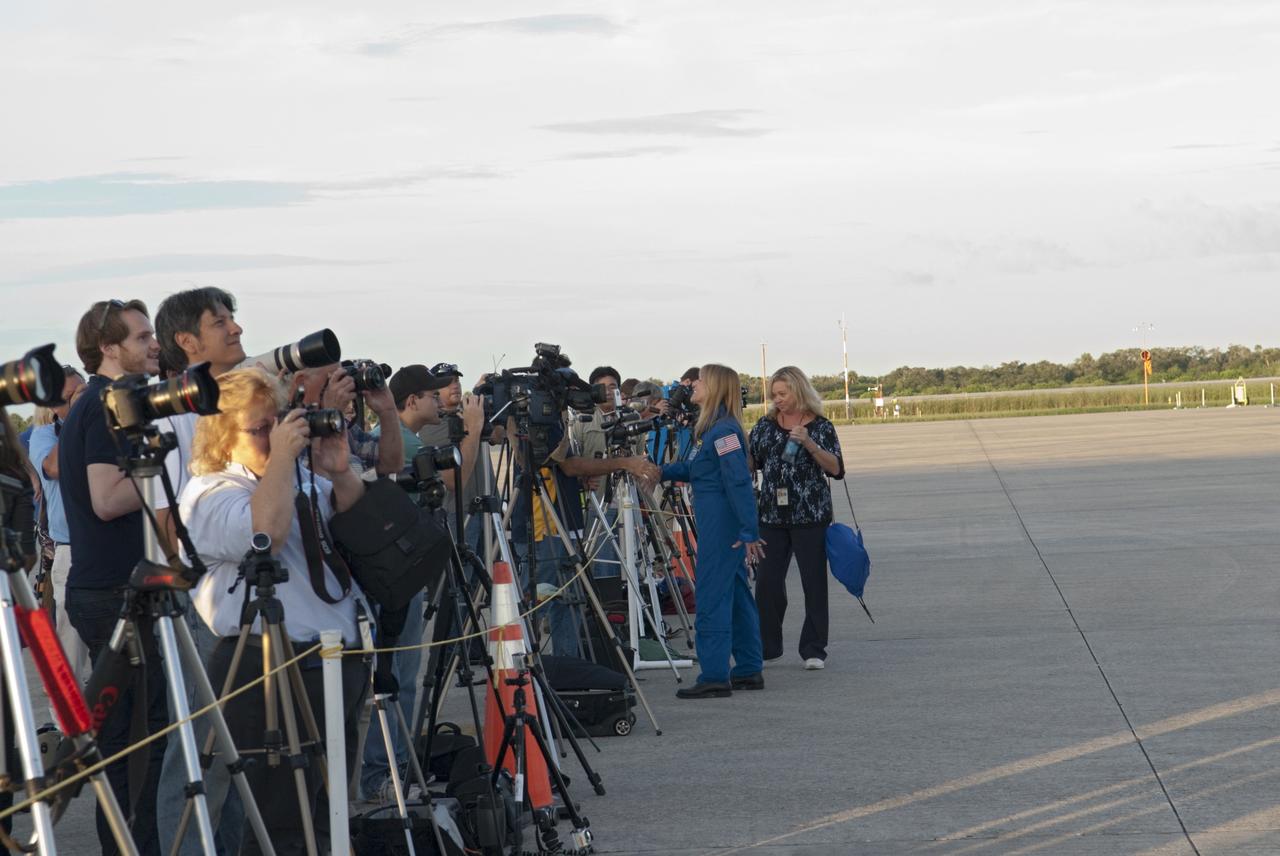
CAPE CANAVERAL, Fla. – Media representatives are given the opportunity to photograph and interview astronaut Kay Hire, in the blue flight suit, at the Shuttle Landing Facility at NASA's Kennedy Space Center in Florida. Preparations are under way for space shuttle Endeavour's upcoming ferry flight atop NASA's Shuttle Carrier Aircraft, or SCA. The SCA, a modified 747 jetliner, will fly Endeavour to Los Angeles where it will be placed on public display at the California Science Center. This is the final ferry flight scheduled in the Space Shuttle Program era. For more information on the shuttles' transition and retirement, visit http://www.nasa.gov/transition. Photo credit: NASA/Charisse Nahser
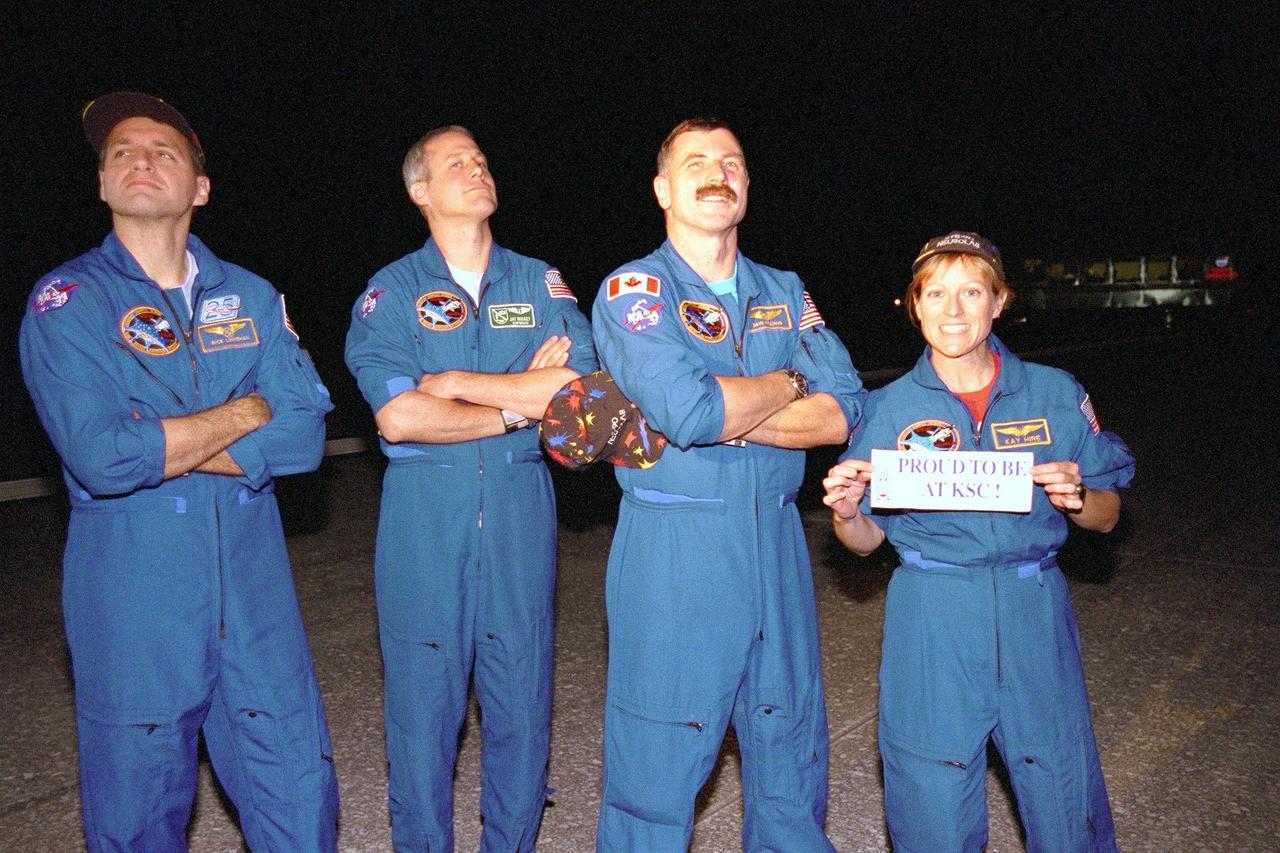
Some of the STS-90 crew members pose at the Shuttle Landing Facility hours after arrival on May 3, ending their nearly 16-day Neurolab mission. Shown left to right are Mission Specialist Richard Linnehan, D.V.M.; Payload Specialist Jay Buckey, M.D.; and Mission Specialists Dafydd (Dave) Williams, M.D., with the Canadian Space Agency and Kathryn (Kay) Hire holding a sign that states "Proud to be at KSC." The 90th Shuttle mission was Columbia's 13th landing at the space center and the 43rd KSC landing in the history of the Space Shuttle program. During the mission, the crew conducted research to contribute to a better understanding of the human nervous system
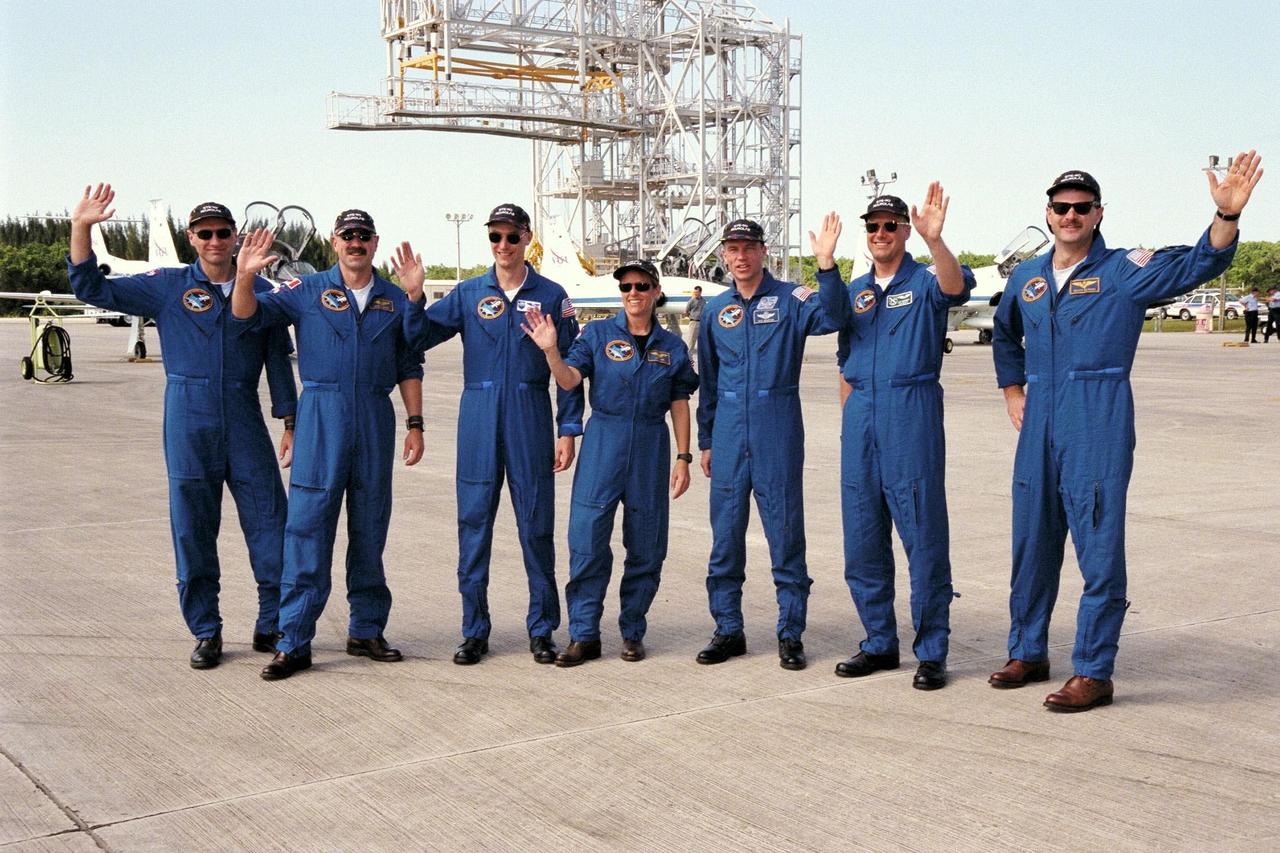
KENNEDY SPACE CENTER, FLA. -- The STS-90 crew arrive at Kennedy Space Center's Shuttle Landing Facility in preparation for the launch of Columbia on April 16 at 2:19 p.m. EDT from KSC's Launch Pad 39B. The crew of STS-90 are, left to right, Mission Specialist Richard Linnehan, D.V.M.; Mission Specialist Dafydd (Dave) Williams with the Canadian Space Agency; Payload Specialist James Pawelczyk, Ph.D.; Mission Specialist Kathryn (Kay) Hire; Commander Richard Searfoss; Payload Specialist Jay Buckey, M.D.; and Pilot Scott Altman. STS-90, which will be the second mission of 1998, is scheduled to last nearly 17 days
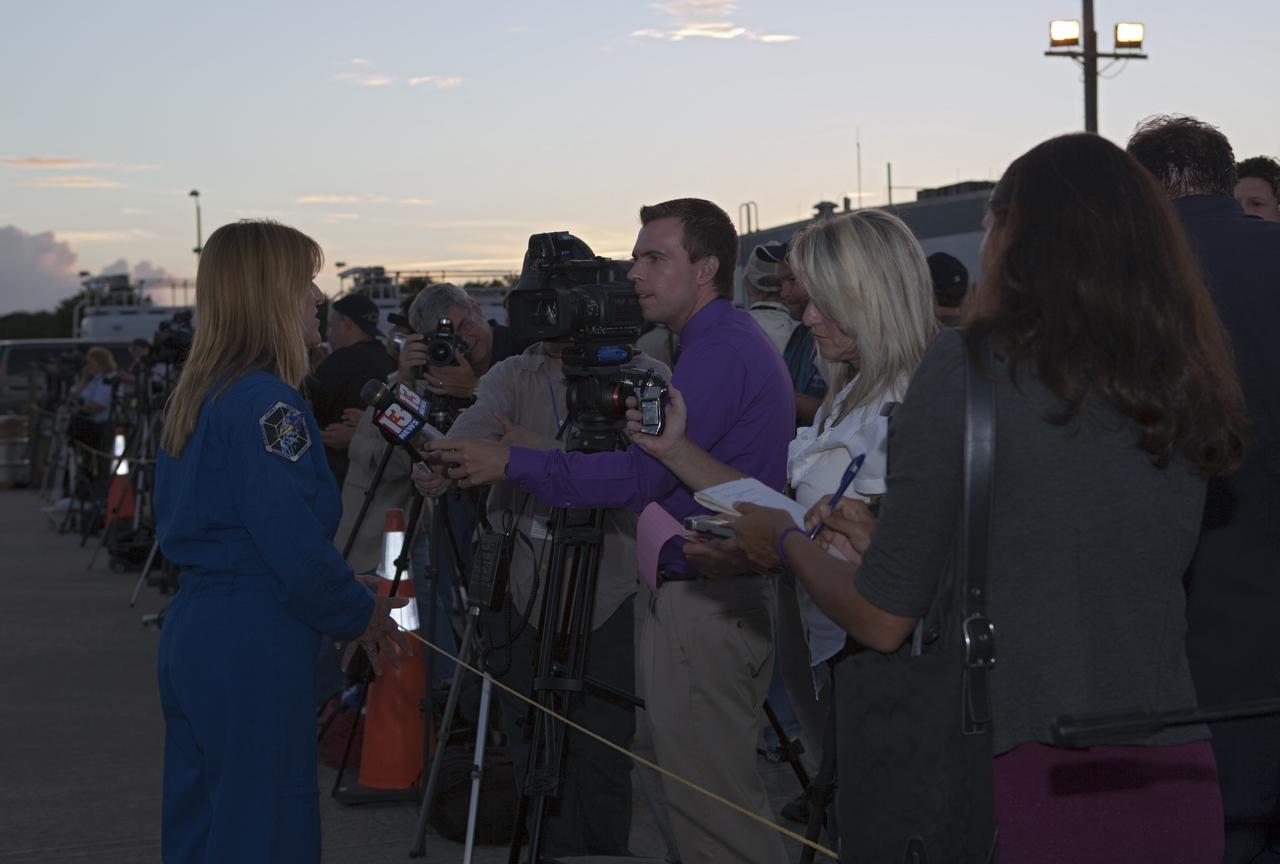
CAPE CANAVERAL, Fla. – Media representatives turn out to interview astronaut Kay Hire at the Shuttle Landing Facility at NASA's Kennedy Space Center in Florida. Preparations are under way for space shuttle Endeavour's upcoming ferry flight atop NASA's Shuttle Carrier Aircraft, or SCA. The SCA, a modified 747 jetliner, will fly Endeavour to Los Angeles where it will be placed on public display at the California Science Center. This is the final ferry flight scheduled in the Space Shuttle Program era. For more information on the shuttles' transition and retirement, visit http://www.nasa.gov/transition. Photo credit: NASA/Dimitri Gerondidakis
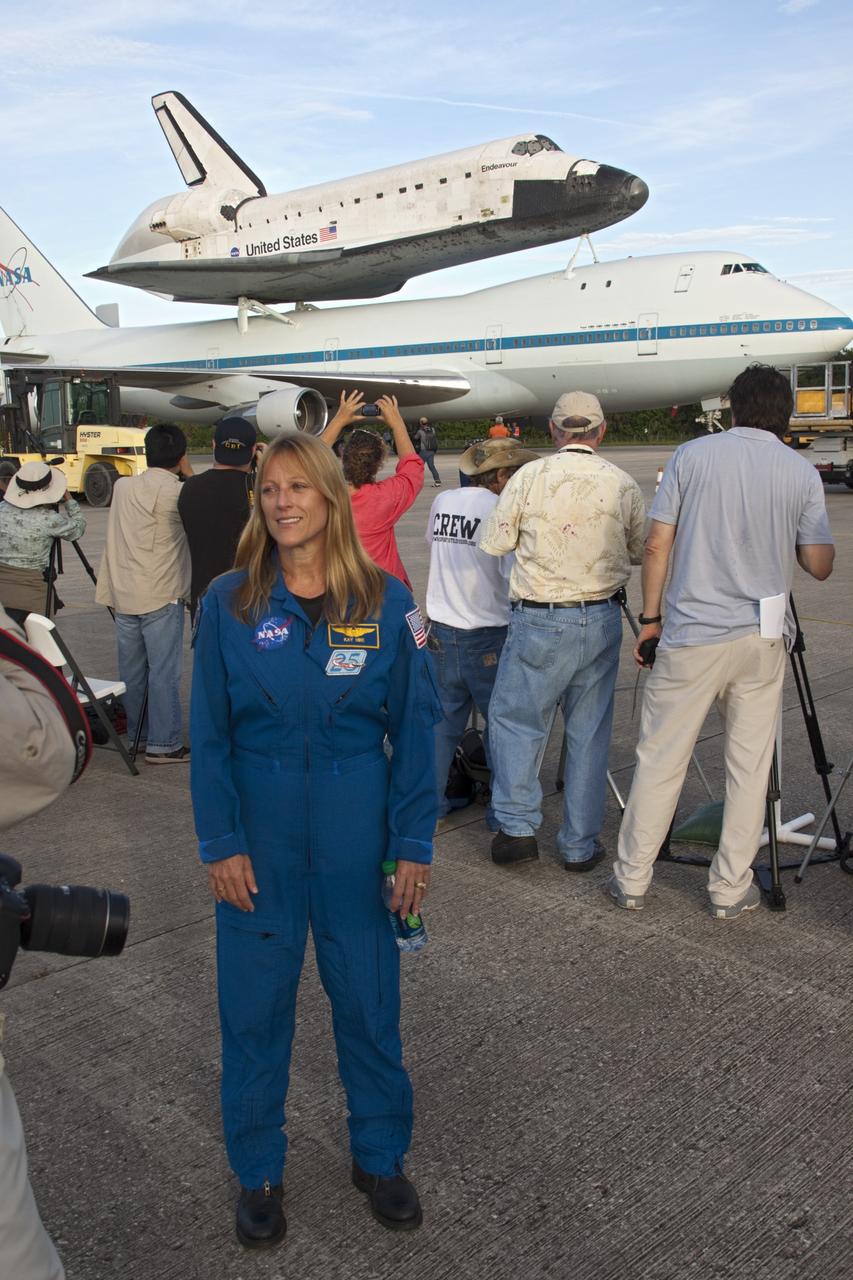
CAPE CANAVERAL, Fla. – At the Shuttle Landing Facility at NASA's Kennedy Space Center in Florida, NASA astronaut Kay Hire is on hand discuss the space shuttle Endeavour's trip to California mounted atop NASA's Shuttle Carrier Aircraft, or SCA. The SCA, a modified 747 jetliner, will fly Endeavour to Los Angeles where it will be placed on public display at the California Science Center. This is the final ferry flight scheduled in the Space Shuttle Program era. For more information on the shuttles' transition and retirement, visit http://www.nasa.gov/transition. Photo credit: NASA/ Tim Jacobs
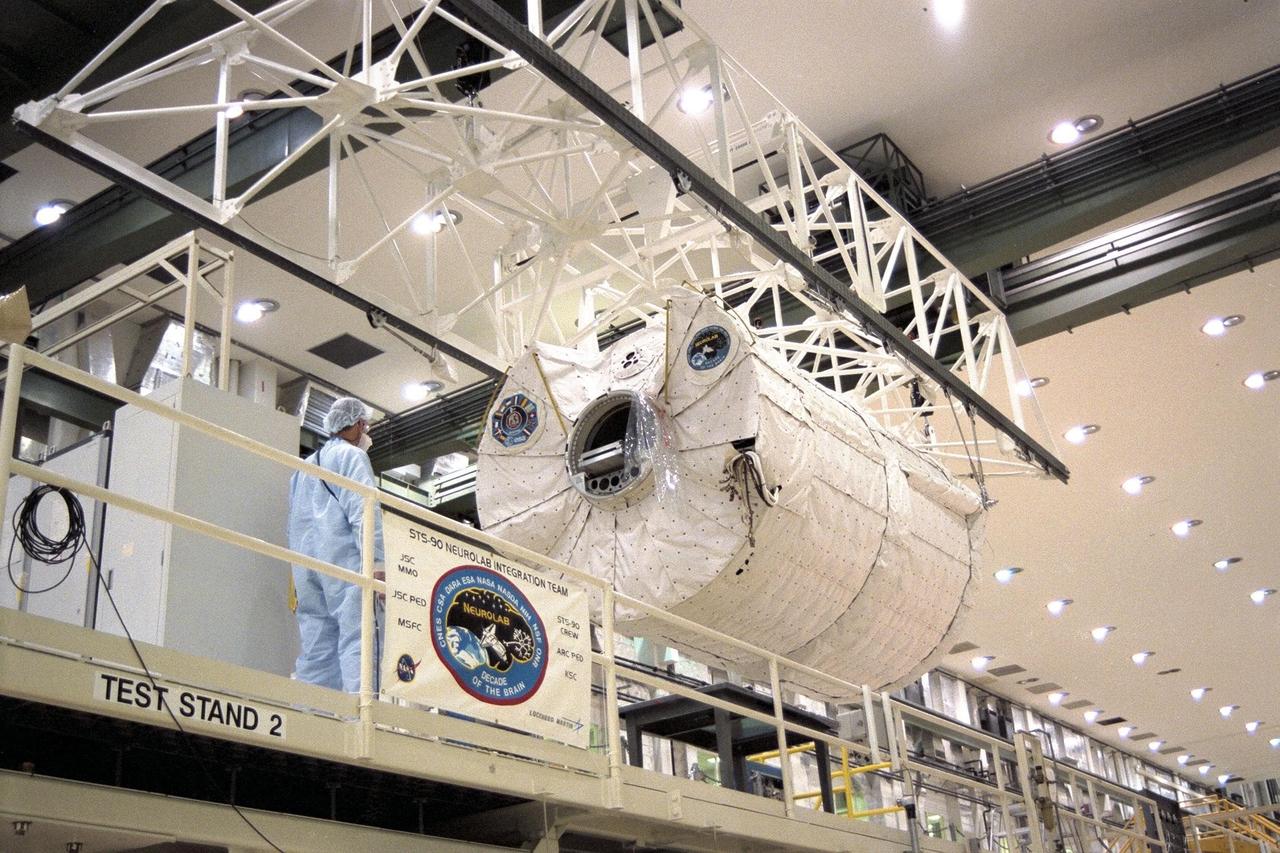
KENNEDY SPACE CENTER, FLA. -- A technician looks at the STS-90 Neurolab payload as it is moved from its test stand in KSC's Operations and Checkout Building. Investigations during the Neurolab mission will focus on the effects of microgravity on the nervous system. Specifically, experiments will study the adaptation of the vestibular system, the central nervous system, and the pathways that control the ability to sense location in the absence of gravity, as well as the effect of microgravity on a developing nervous system. The crew of STS-90, slated for launch in April, will include Commander Richard Searfoss, Pilot Scott Altman, Mission Specialists Richard Linnehan, Dafydd (Dave) Williams, M.D., and Kathryn (Kay) Hire, and Payload Specialists Jay Buckey, M.D., and James Pawelczyk, Ph.D
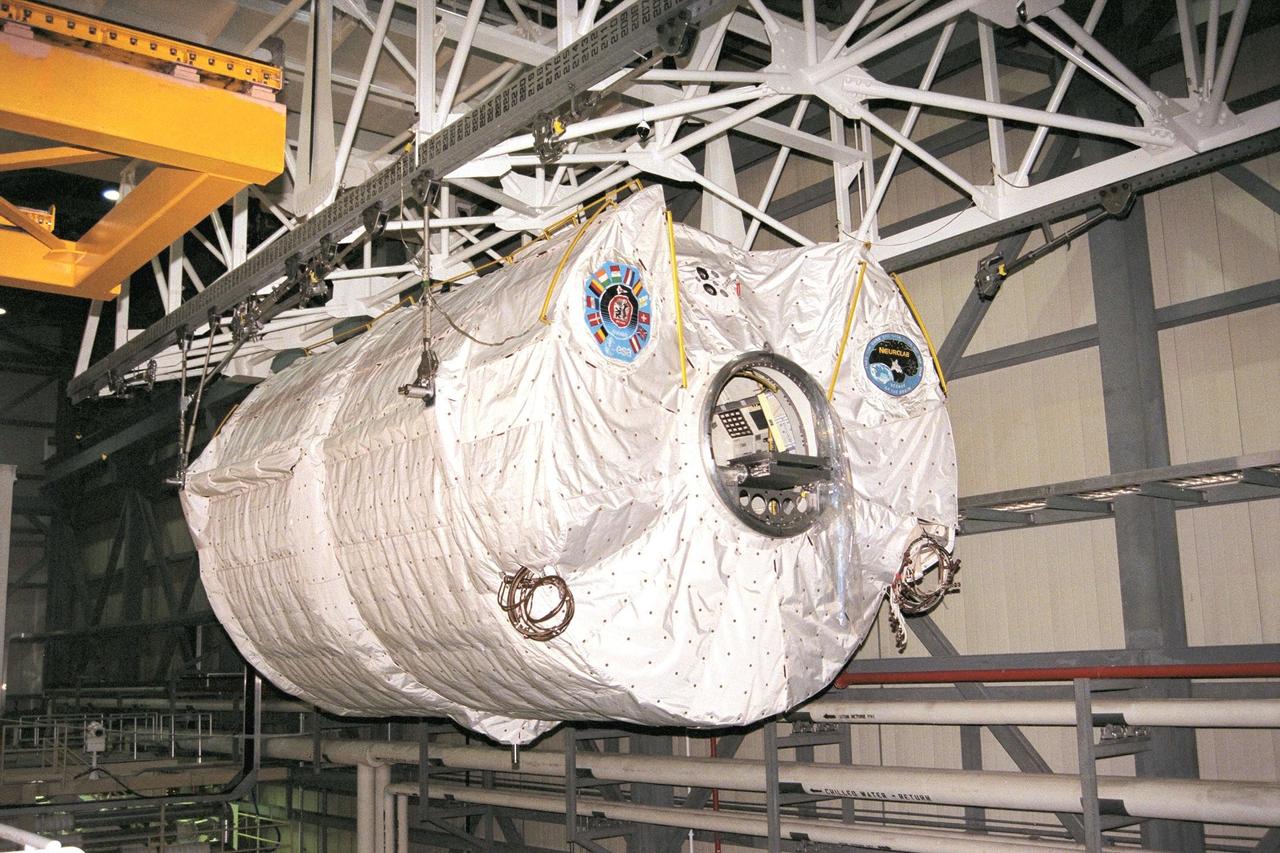
The STS-90 Neurolab payload is prepared to be positioned into the cargo bay of Space Shuttle Columbia today in Orbiter Processing Facility bay 3. Investigations during the Neurolab mission will focus on the effects of microgravity on the nervous system. Specifically, experiments will study the adaptation of the vestibular system, the central nervous system, and the pathways that control the ability to sense location in the absence of gravity, as well as the effect of microgravity on a developing nervous system. The crew of STS-90, slated for launch in April, will include Commander Richard Searfoss, Pilot Scott Altman, Mission Specialists Richard Linnehan, Dafydd (Dave) Williams, M.D., and Kathryn (Kay) Hire, and Payload Specialists Jay Buckey, M.D., and James Pawelczyk, Ph.D
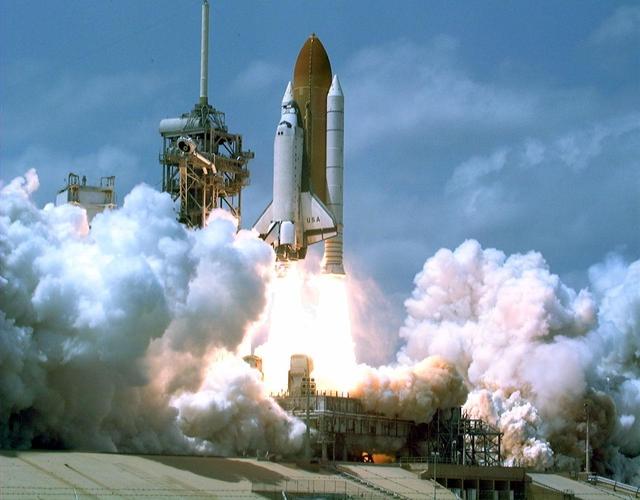
The Space Shuttle Columbia soars from Launch Pad 39B at 2:19 p.m. EDT Apr. 17 to begin the nearly 17-day STS-90 Neurolab mission. The launch was delayed 24 hours due to difficulty with a network signal processor, which was replaced Apr. 16, on the orbiter. The crew members are Commander Richard Searfoss, Pilot Scott Altman, Mission Specialists Richard Linnehan, D.V.M., Dafydd (Dave) Williams, M.D., with the Canadian Space Agency, and Kathryn (Kay) Hire; and Payload Specialists Jay Buckey, M.D., and James Pawelczyk, Ph.D. Investigations during the Neurolab mission will focus on the effects of microgravity on the nervous system
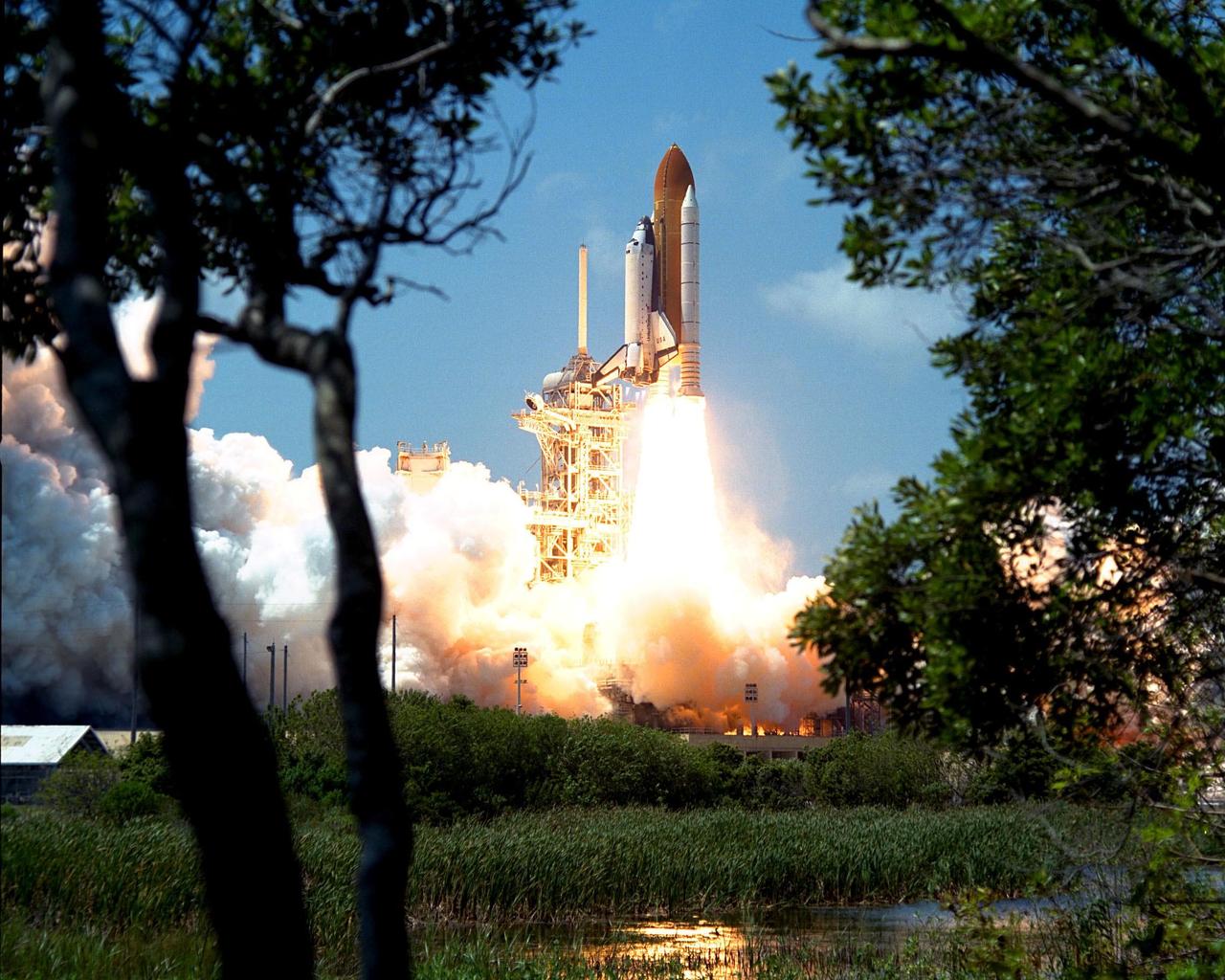
Framed by native Floridian foliage, the Space Shuttle Columbia soars from Launch Pad 39B at 2:19 p.m. EDT Apr. 17 to begin the nearly 17-day STS-90 Neurolab mission. The launch was delayed 24 hours due to difficulty with a network signal processor, which was replaced Apr. 16, on the orbiter. The crew members are Commander Richard Searfoss, Pilot Scott Altman, Mission Specialists Richard Linnehan, D.V.M., Dafydd (Dave) Williams, M.D., with the Canadian Space Agency, and Kathryn (Kay) Hire; and Payload Specialists Jay Buckey, M.D., and James Pawelczyk, Ph.D. Investigations during the Neurolab mission will focus on the effects of microgravity on the nervous system
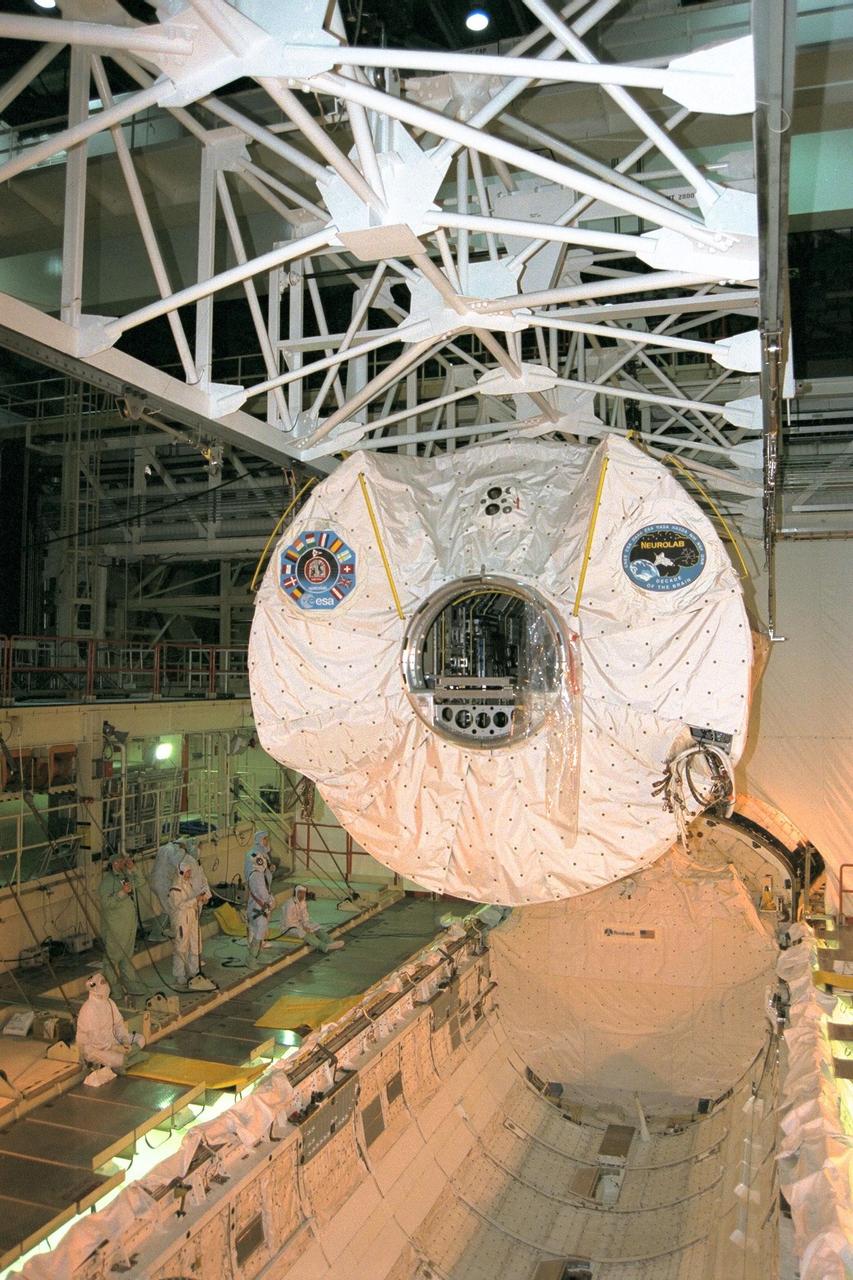
The STS-90 Neurolab payload is lowered into position into the cargo bay of Space Shuttle Columbia today in Orbiter Processing Facility bay 3. Investigations during the Neurolab mission will focus on the effects of microgravity on the nervous system. Specifically, experiments will study the adaptation of the vestibular system, the central nervous system, and the pathways that control the ability to sense location in the absence of gravity, as well as the effect of microgravity on a developing nervous system. The crew of STS-90, slated for launch in April, will include Commander Richard Searfoss, Pilot Scott Altman, Mission Specialists Richard Linnehan, Dafydd (Dave) Williams, M.D., and Kathryn (Kay) Hire, and Payload Specialists Jay Buckey, M.D., and James Pawelczyk, Ph.D
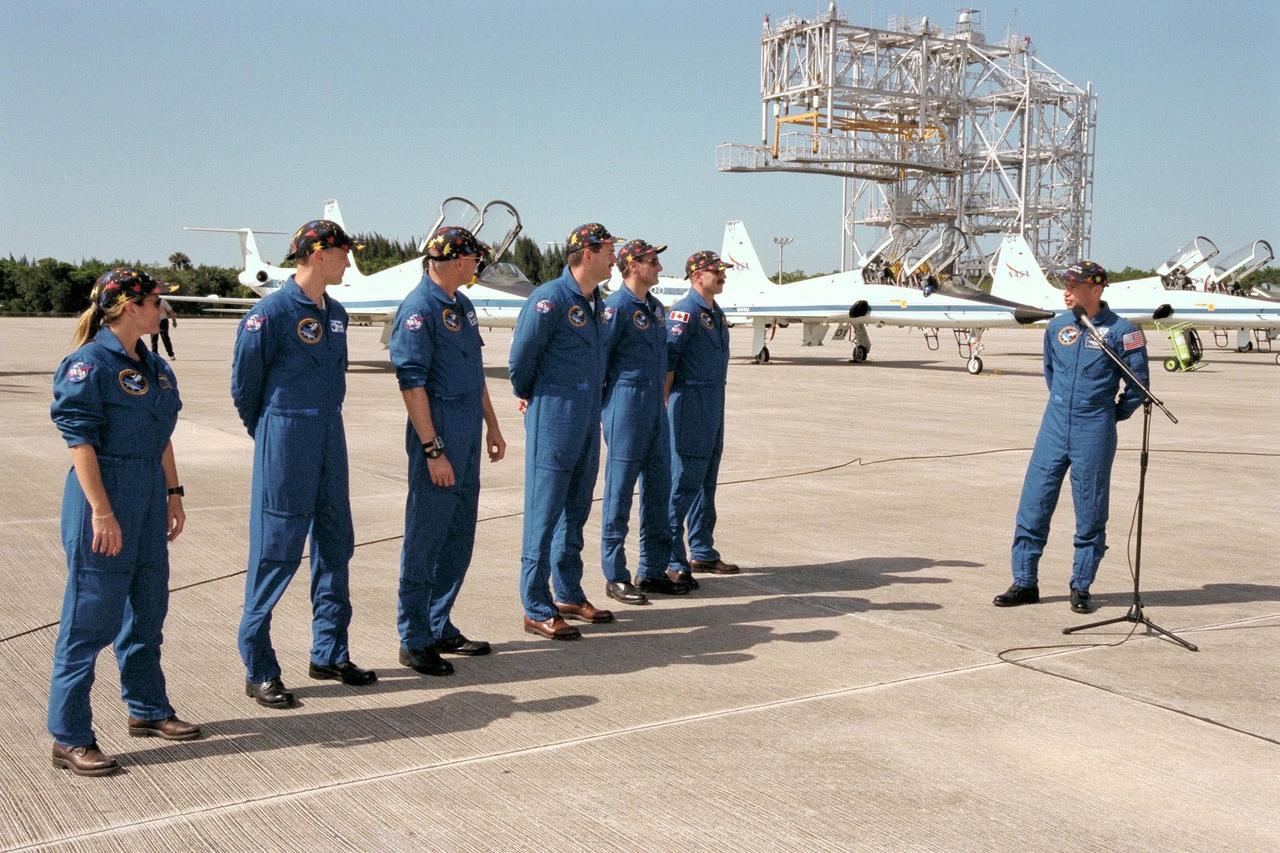
KENNEDY SPACE CENTER, FLA. -- The STS-90 crew arrive at Kennedy Space Center's Shuttle Landing Facility in preparation for the launch of Columbia on April 16 at 2:19 p.m. EDT from KSC's Launch Pad 39B. The crew of STS-90 are, left to right, Mission Specialist Kathryn (Kay) Hire; Payload Specialist James Pawelczyk, Ph.D.; Payload Specialist Jay Buckey, M.D.; Pilot Scott Altman; Mission Specialist Richard Linnehan, D.V.M.; Mission Specialist Dafydd (Dave) Williams with the Canadian Space Agency; and Commander Richard Searfoss. STS-90, which will be the second mission of 1998, is scheduled to last nearly 17 days
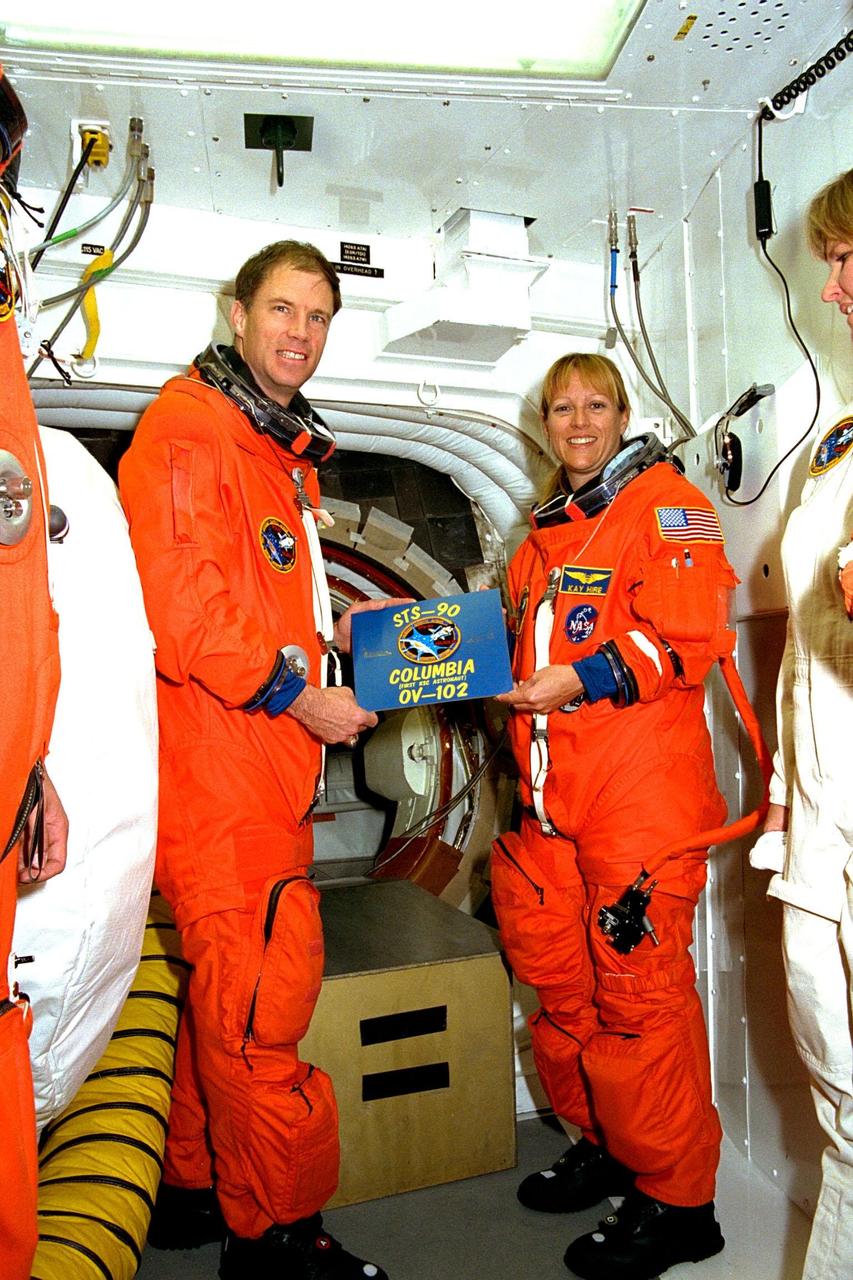
The crew of STS-90 participate in Terminal Countdown Demonstration Test (TCDT) activities at KSC's Launch Pad 39B. The TCDT is held at KSC prior to each Space Shuttle flight to provide crews with the opportunity to participate in simulated countdown activities. Here, STS-90 Commander Richard Searfoss and Mission Specialist Kathryn (Kay) Hire hold the mission patch with orbiter information. Columbia is targeted for launch of STS-90 on April 16 at 2:19 p.m. EDT and will be the second mission of 1998. The mission is scheduled to last nearly 17 days

The Space Shuttle Columbia soars from Launch Pad 39B at 2:19 p.m. EDT Apr. 17 to begin the nearly 17-day STS-90 Neurolab mission. The launch was delayed 24 hours due to difficulty with a network signal processor, which was replaced Apr. 16, on the orbiter. The crew members are Commander Richard Searfoss, Pilot Scott Altman, Mission Specialists Richard Linnehan, D.V.M., Dafydd (Dave) Williams, M.D., with the Canadian Space Agency, and Kathryn (Kay) Hire; and Payload Specialists Jay Buckey, M.D., and James Pawelczyk, Ph.D. Investigations during the Neurolab mission will focus on the effects of microgravity on the nervous system
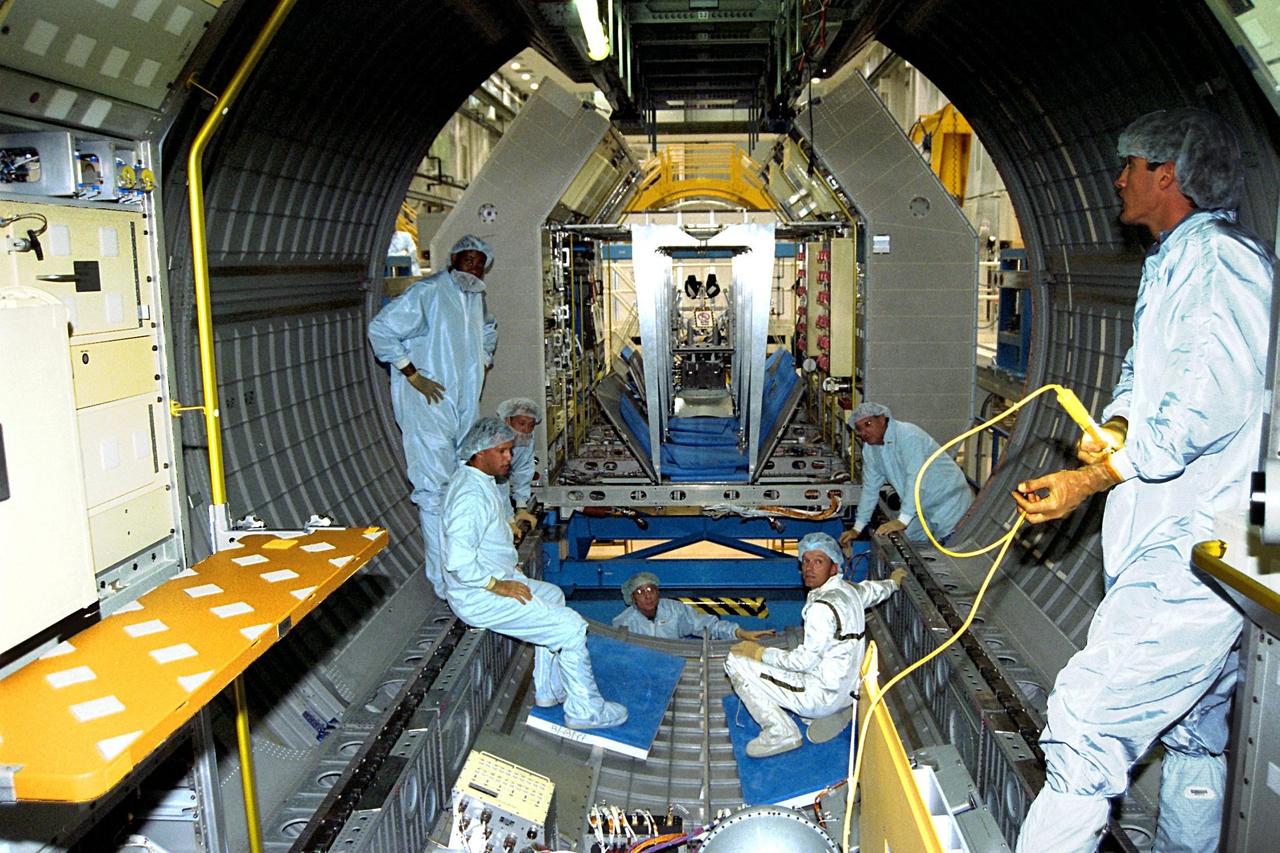
The Neurolab payload for STS-90, scheduled to launch aboard the Shuttle Columbia from Kennedy Space Center (KSC) on April 2, 1998, is installed in the Spacelab module by Boeing technicians in the Operations and Checkout Building at KSC. Investigations during the Neurolab mission will focus on the effects of microgravity on the nervous system. Specifically, experiments will study the adaptation of the vestibular system, the central nervous system, and the pathways that control the ability to sense location in the absence of gravity, as well as the effect of microgravity on a developing nervous system. The crew of STS-90 will include Commander Richard Searfoss, Pilot Scott Altman, Mission Specialists Richard Linnehan, Dafydd (Dave) Williams, M.D., and Kathryn (Kay) Hire, and Payload Specialists Jay Buckey, M.D., and James Pawelczyk, Ph.D

The crew of STS-90 pose in the white room at KSC's Launch Pad 39B, where they are participating in Terminal Countdown Demonstration Test (TCDT) activities. The TCDT is held at KSC prior to each Space Shuttle flight to provide crews with the opportunity to participate in simulated countdown activities. The crew include, left to right, Commander Richard Searfoss, Pilot Scott Altman, Mission Specialist Kathryn (Kay) Hire, Richard Linnehan, D.V.M., Payload Specialists James Pawelczyk, Ph.D., and Jay Buckey, M.D., and Mission Specialist Dafydd (Dave) Williams, M.D., with the Canadian Space Agency. Columbia is targeted for launch of STS-90 on April 16 at 2:19 p.m. EDT and will be the second mission of 1998. The mission is scheduled to last nearly 17 days
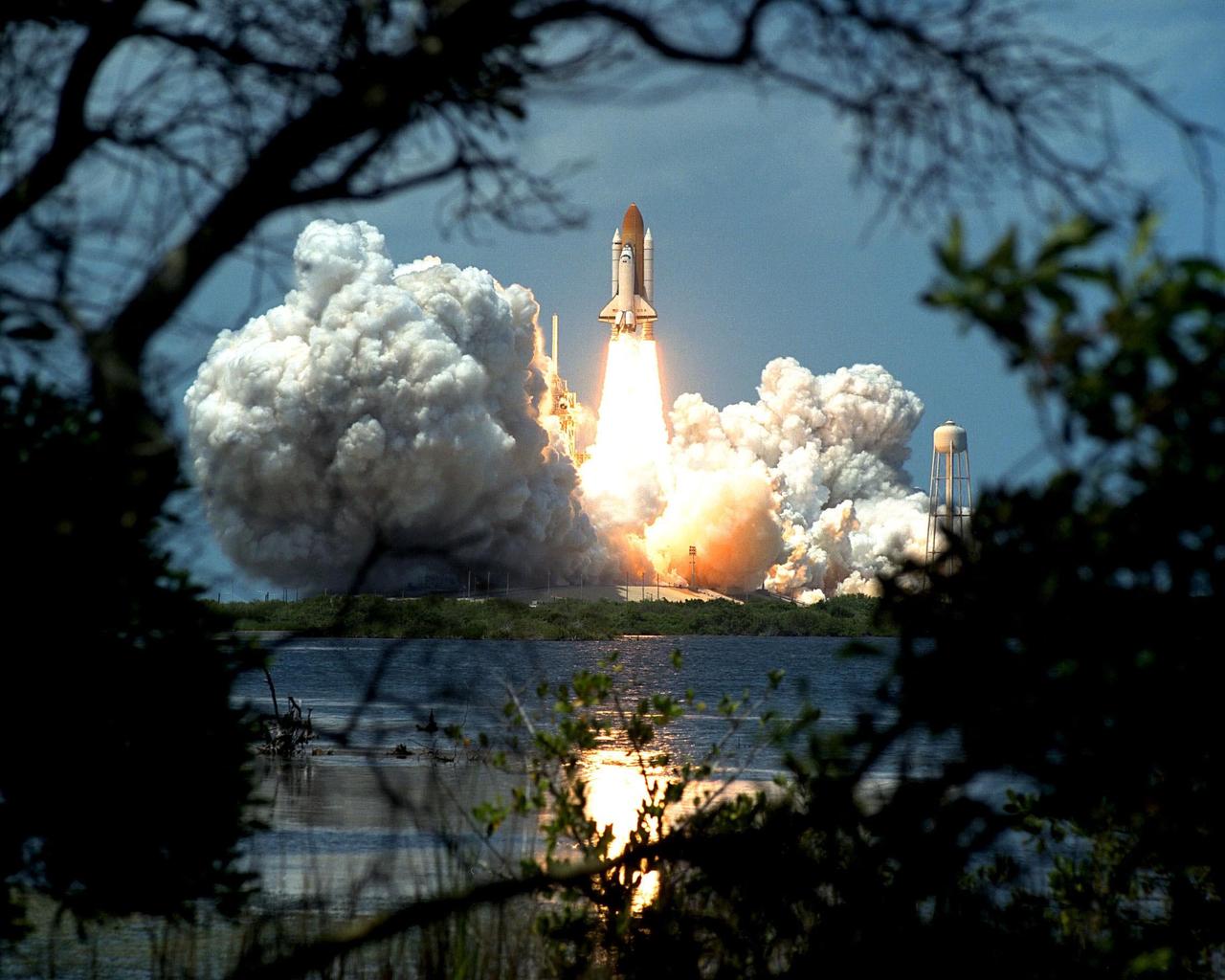
KENNEDY SPACE CENTER, FLA. -- Framed by native Floridian foliage, the Space Shuttle Columbia soars from Launch Pad 39B at 2:19 p.m. EDT Apr. 17 to begin the nearly 17-day STS-90 Neurolab mission. The launch was delayed 24 hours due to difficulty with a network signal processor, which was replaced Apr. 16, on the orbiter. The crew members are Commander Richard Searfoss, Pilot Scott Altman, Mission Specialists Richard Linnehan, D.V.M., Dafydd (Dave) Williams, M.D., with the Canadian Space Agency, and Kathryn (Kay) Hire; and Payload Specialists Jay Buckey, M.D., and James Pawelczyk, Ph.D. Investigations during the Neurolab mission will focus on the effects of microgravity on the nervous system
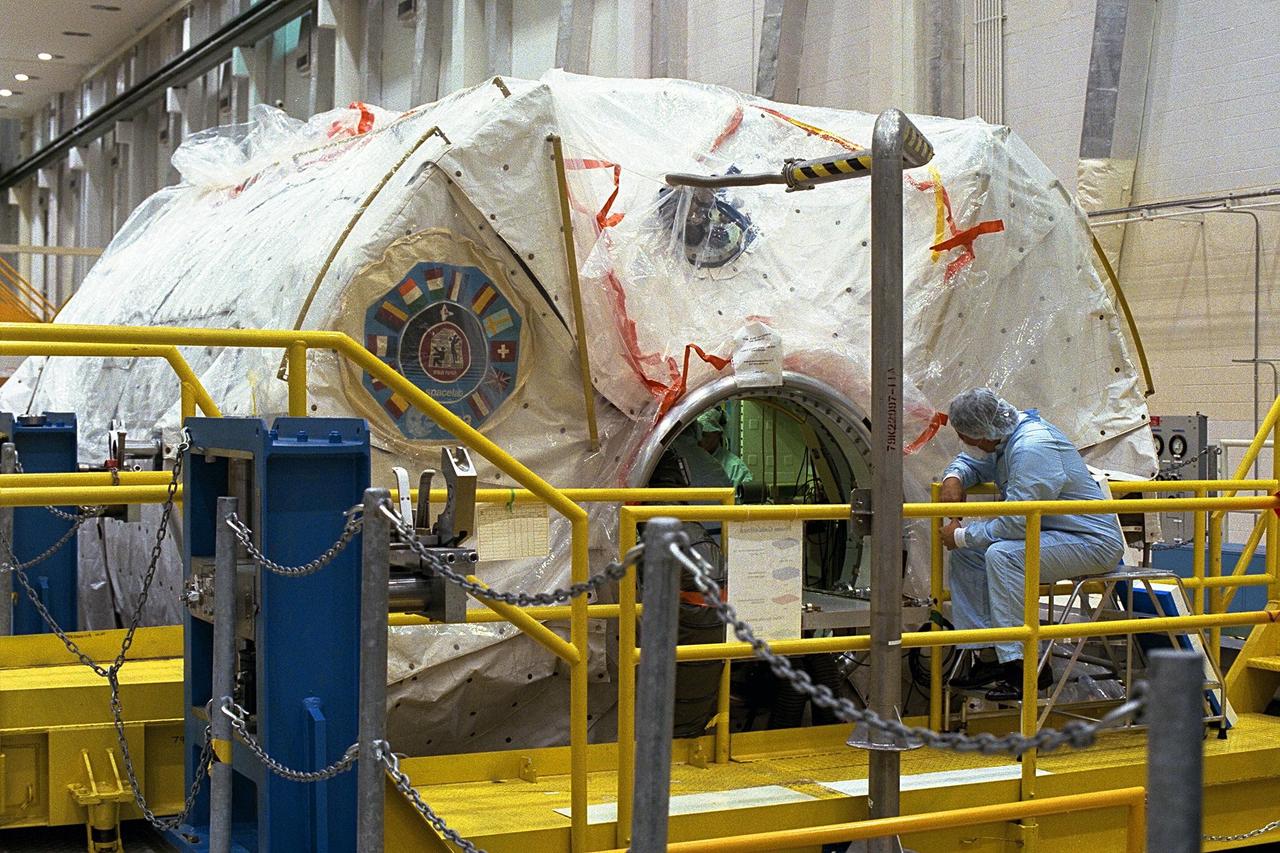
The Neurolab payload for STS-90, scheduled to launch aboard the Shuttle Columbia from Kennedy Space Center (KSC) on April 2, 1998, undergoes further processing in the Operations and Checkout Building at KSC. Investigations during the Neurolab mission will focus on the effects of microgravity on the nervous system. Specifically, experiments will study the adaptation of the vestibular system, the central nervous system, and the pathways that control the ability to sense location in the absence of gravity, as well as the effect of microgravity on a developing nervous system. The crew of STS-90 will include Commander Richard Searfoss, Pilot Scott Altman, Mission Specialists Richard Linnehan, Dafydd (Dave) Williams, M.D., and Kathryn (Kay) Hire, and Payload Specialists Jay Buckey, M.D., and James Pawelczyk, Ph.D
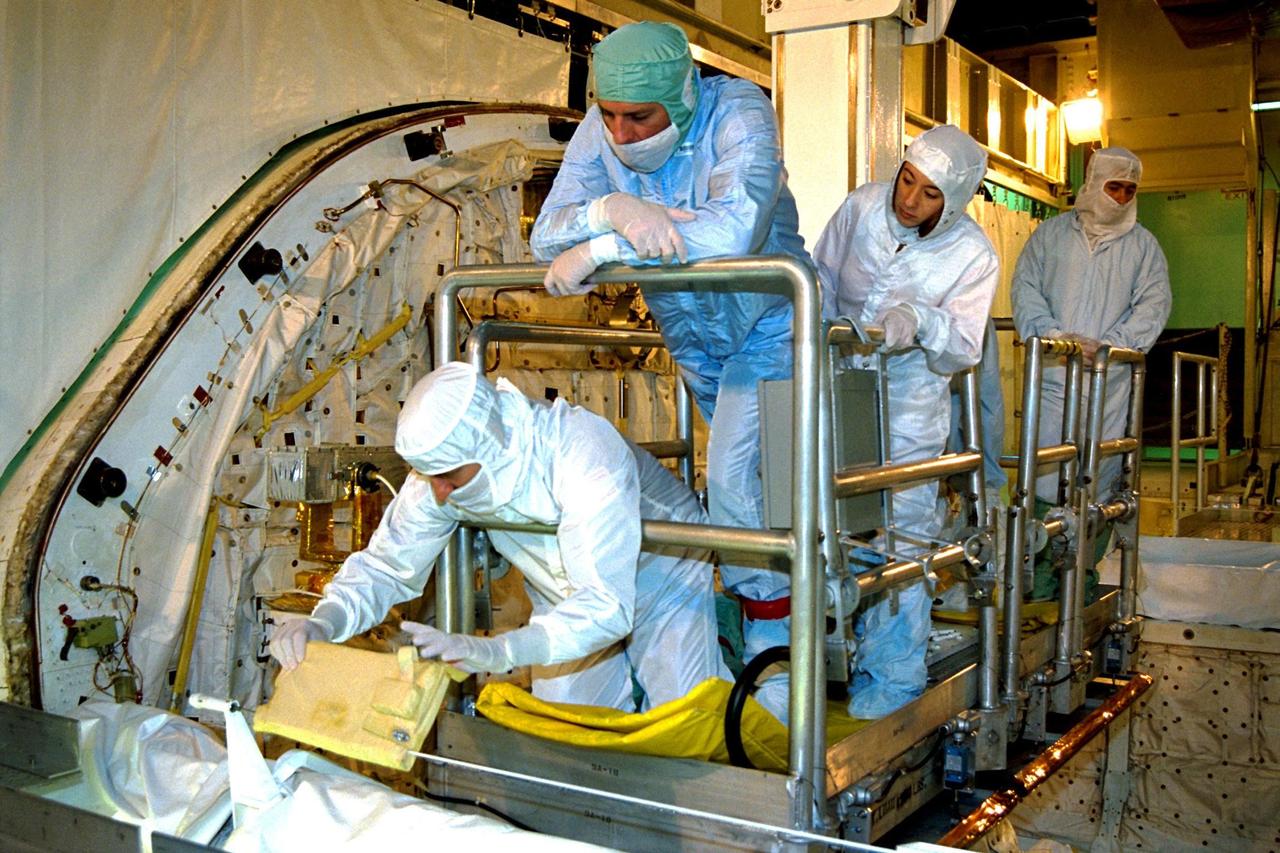
Members of the STS-90 crew participate in the Crew Equipment Interface Test (CEIT) in Kennedy Space Center's Orbiter Processing Facility Bay 3. The CEIT gives astronauts an opportunity to get a hands-on look at the payloads with which they will be working on-orbit. Investigations during the STS-90 Neurolab mission will focus on the effects of microgravity on the nervous system. Specifically, experiments will study the adaptation of the vestibular system, the central nervous system, and the pathways that control the ability to sense location in the absence of gravity, as well as the effect of microgravity on a developing nervous system. The crew of STS-90, slated for launch in April, will include Commander Richard Searfoss, Pilot Scott Altman, Mission Specialists Richard Linnehan, Dafydd (Dave) Williams, M.D., and Kathryn (Kay) Hire, and Payload Specialists Jay Buckey, M.D., and James Pawelczyk, Ph.D
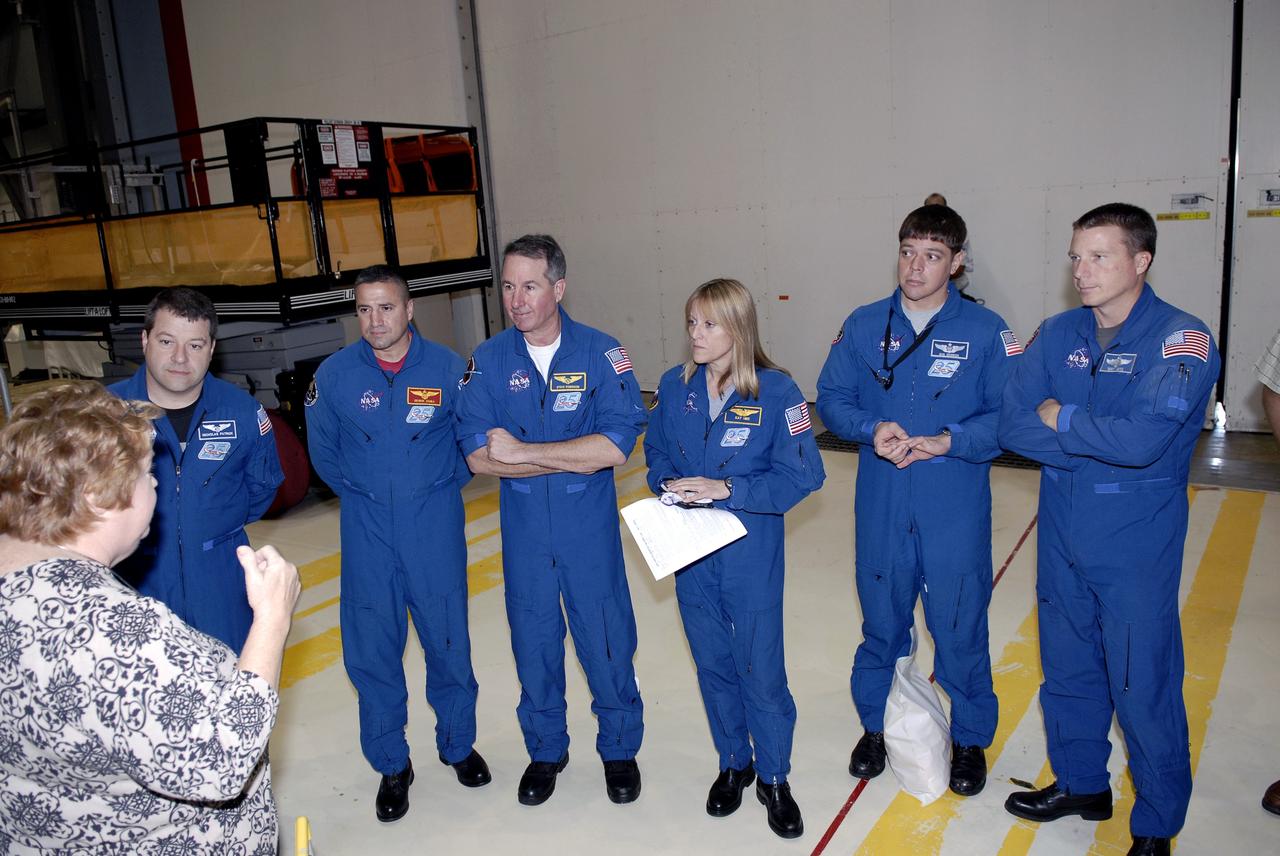
CAPE CANAVERAL, Fla. – In Orbiter Processing Facility-3 at NASA's Kennedy Space Center in Florida, members of the STS-130 crew receive a briefing about the processing of space shuttle Endeavour. From left are Mission Specialist Nicolas Patrick; Commander George Zamka; Mission Specialists Stephen Robinson, Kathryn "Kay" Hire and Robert Behnken; and Pilot Terry Virts Jr. The crew is at Kennedy for a crew equipment interface test, or CEIT, which provides hands-on training and observation of shuttle and flight hardware. The STS-130 flight will carry the Tranquility pressurized module with a built-in cupola to the International Space Station aboard Endeavour. Launch is targeted for Feb. 4, 2010. Photo credit: NASA/Steven Durnin
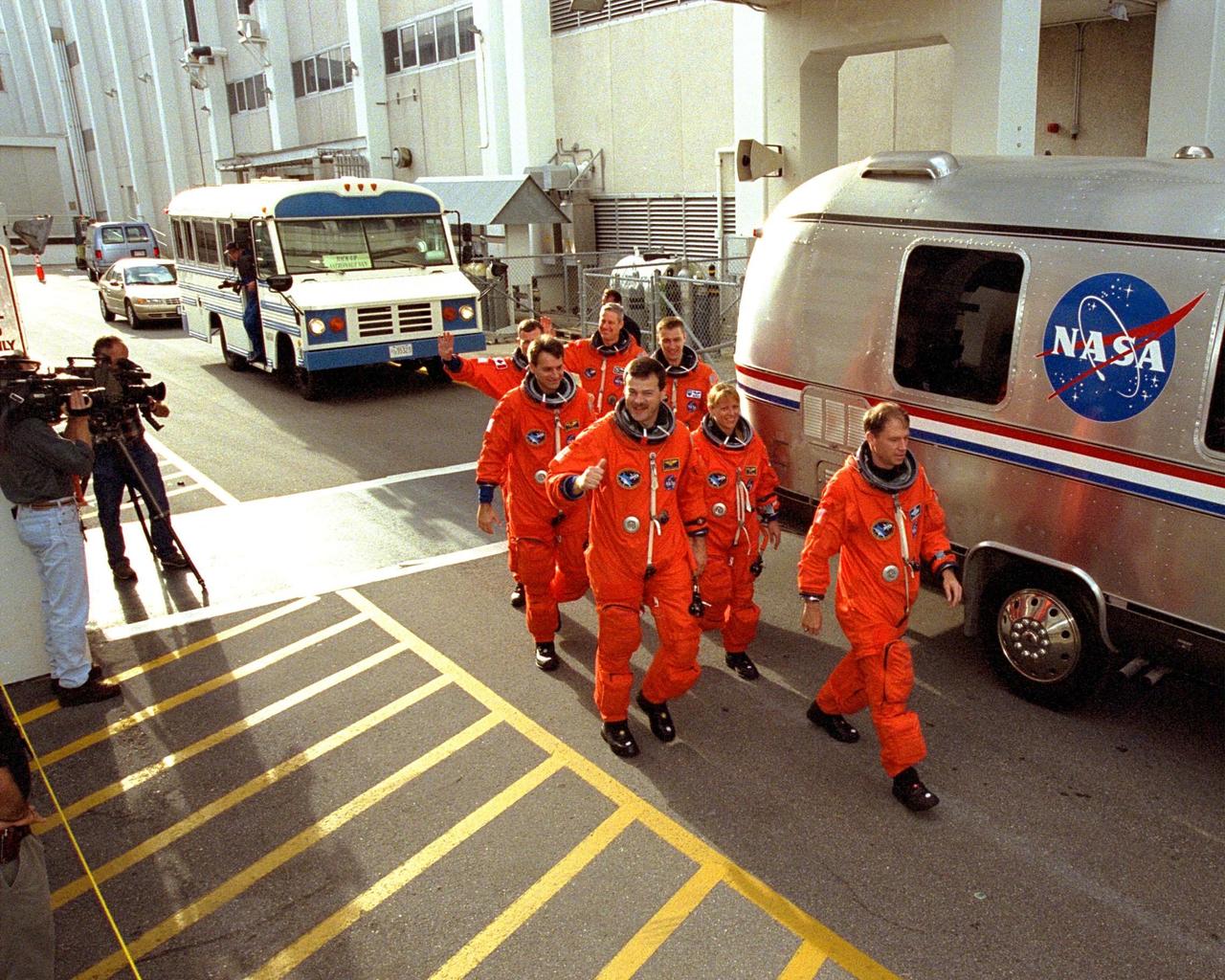
The crew of STS-90 leave the Operations and Checkout Building for Launch Pad 39B during Terminal Countdown Demonstration Test (TCDT) activities. The TCDT is held at KSC prior to each Space Shuttle flight to provide crews with the opportunity to participate in simulated countdown activities. The STS-90 crew members are, front to back and left to right, Commander Richard Searfoss, Pilot Scott Altman, Mission Specialist Kathryn (Kay) Hire, Mission Specialist Richard Linnehan, D.V.M., Payload Specialist James Pawelczyk, Ph.D., Mission Specialist Dafydd (Dave) Williams with the Canadian Space Agency, and Payload Specialist Jay Buckey, M.D. Columbia is targeted for launch of STS-90 on April 16 at 2:19 p.m. EDT and will be the second mission of 1998. The mission is scheduled to last nearly 17 days
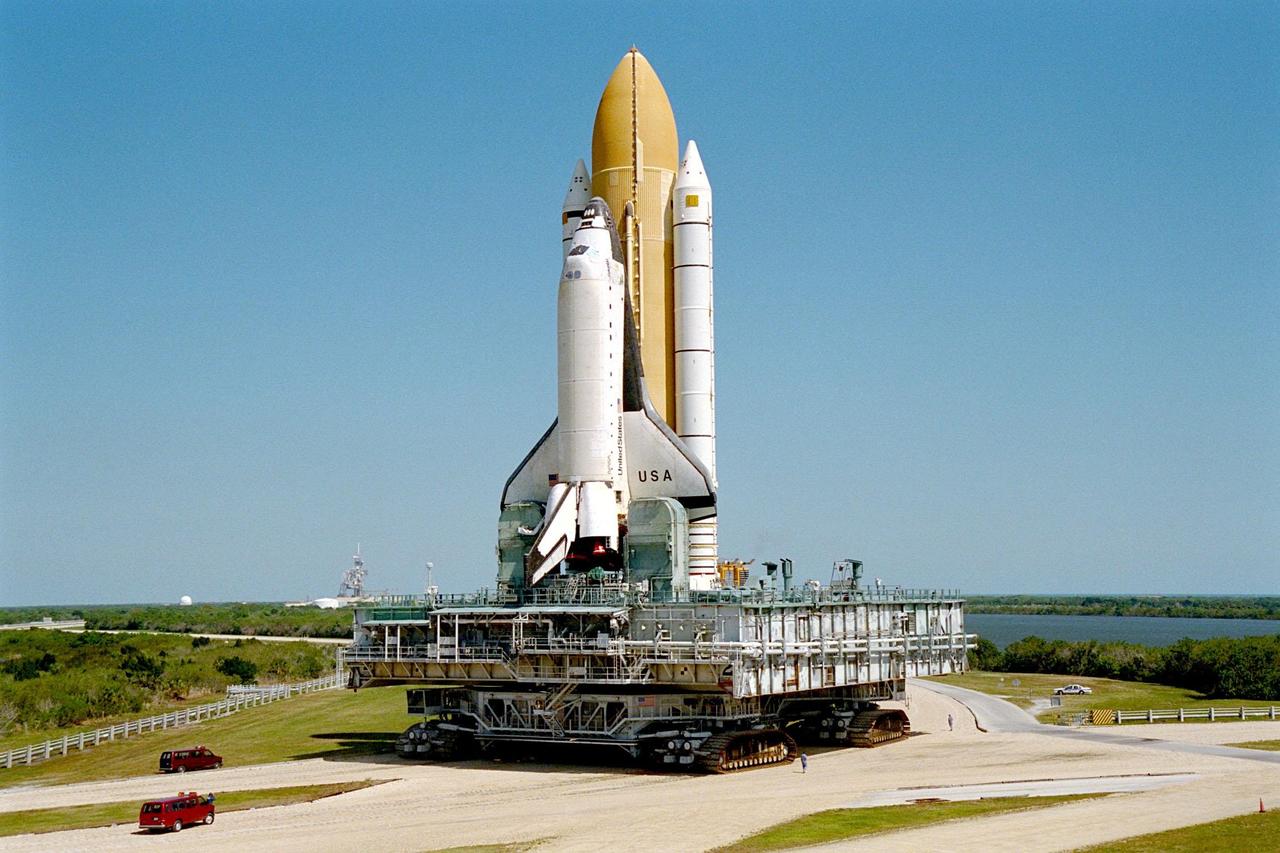
KENNEDY SPACE CENTER, FLA. -- The Space Shuttle Columbia continues its morning rollout from the Vehicle Assembly Building to Launch Pad 39B in preparation for the STS-90 mission. The Neurolab experiments are the primary payload on this nearly 17-day space flight. Investigations during the Neurolab mission will focus on the effects of microgravity on the nervous system. Specifically, experiments will study the adaptation of the vestibular system, the central nervous system, and the pathways that control the ability to sense location in the absence of gravity, as well as the effect of microgravity on a developing nervous system. The crew of STS-90, slated for launch April 16 at 2:19 p.m. EDT, includes Commander Richard Searfoss, Pilot Scott Altman, Mission Specialists Richard Linnehan, Dafydd (Dave) Williams, M.D., and Kathryn (Kay) Hire, and Payload Specialists Jay Buckey, M.D., and James Pawelczyk, Ph.D
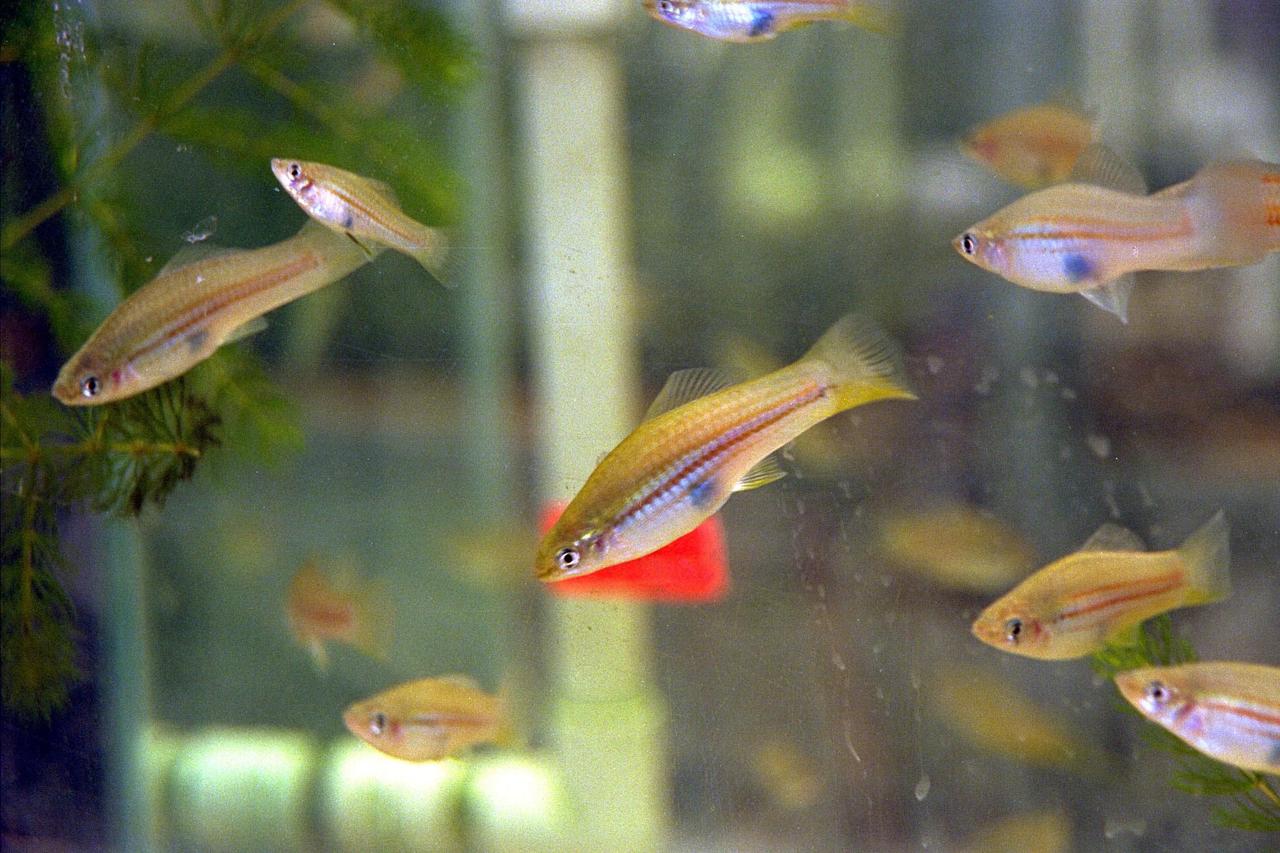
KENNEDY SPACE CENTER, FLA. -- Swordtail fish (Xiphophorus helleri), like those that are part of the Neurolab payload on Space Shuttle Mission STS-90, are shown in their holding tank in the Operations and Checkout Building. The fish will fly in the Closed Equilibrated Biological Aquatic System (CEBAS) Minimodule, a middeck locker-sized fresh water habitat, designed to allow the controlled incubation of aquatic species in a self-stabilizing, artifical ecosystem for up to three weeks under space conditions. Investigations during the Neurolab mission will focus on the effects of microgravity on the nervous system. The crew of STS-90, slated for launch April 16 at 2:19 p.m. EDT, include Commander Richard Searfoss, Pilot Scott Altman, Mission Specialists Richard Linnehan, D.V.M., Dafydd (Dave) Williams, M.D., and Kathryn (Kay) Hire, and Payload Specialists Jay Buckey, M.D., and James Pawelczyk, Ph.D.

The Neurolab payload for STS-90, scheduled to launch aboard the Shuttle Columbia from Kennedy Space Center (KSC) on April 2, 1998, is moved to its workstand in the Operations and Checkout Building at KSC. Investigations during the Neurolab mission will focus on the effects of microgravity on the nervous system. Specifically, experiments will study the adaptation of the vestibular system, the central nervous system, and the pathways that control the ability to sense location in the absence of gravity, as well as the effect of microgravity on a developing nervous system. The crew of STS-90 will include Commander Richard Searfoss, Pilot Scott Altman, Mission Specialists Richard Linnehan, Dafydd (Dave) Williams, M.D., and Kathryn (Kay) Hire, and Payload Specialists Jay Buckey, M.D., and James Pawelczyk, Ph.D
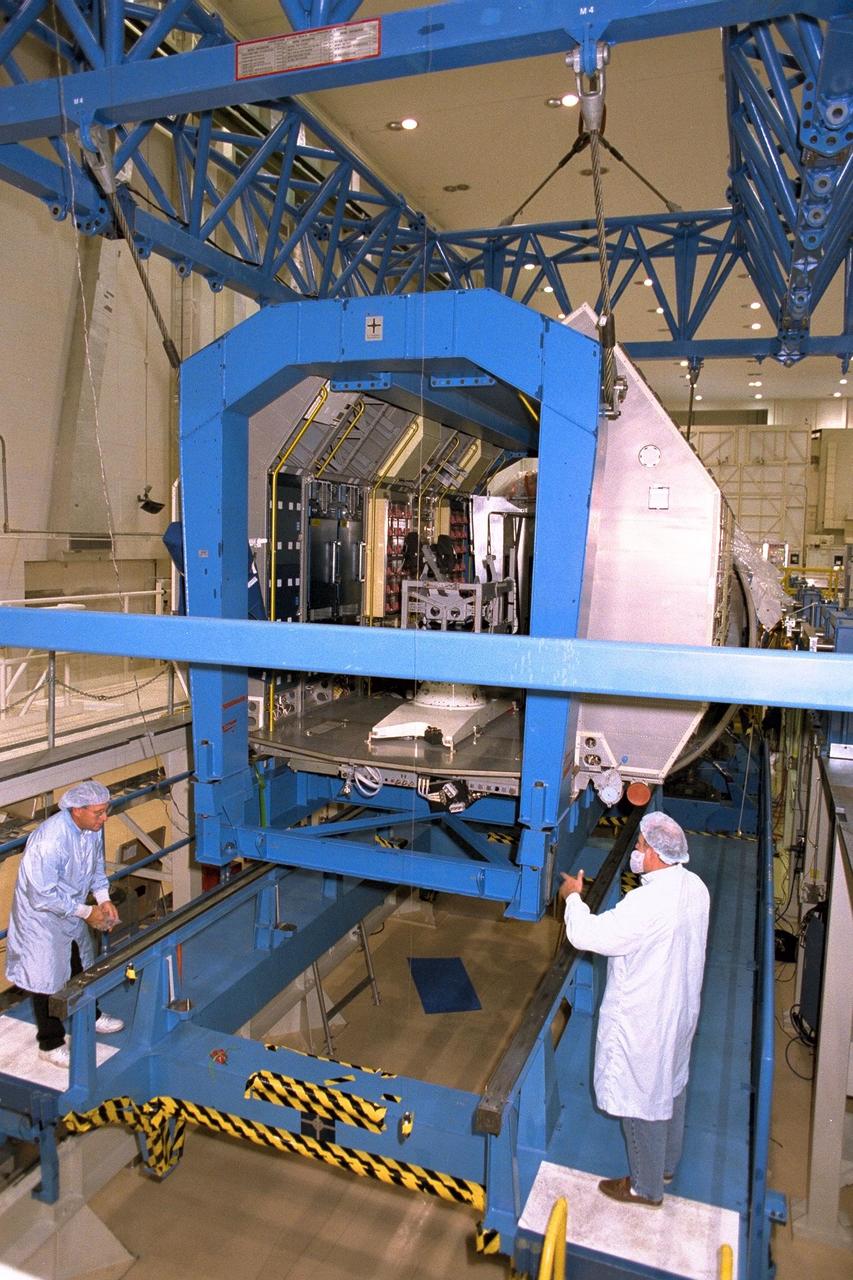
The Neurolab payload for STS-90, scheduled to launch aboard the Shuttle Columbia from Kennedy Space Center (KSC) on April 2, 1998, is moved to its workstand in the Operations and Checkout Building at KSC. Investigations during the Neurolab mission will focus on the effects of microgravity on the nervous system. Specifically, experiments will study the adaptation of the vestibular system, the central nervous system, and the pathways that control the ability to sense location in the absence of gravity, as well as the effect of microgravity on a developing nervous system. The crew of STS-90 will include Commander Richard Searfoss, Pilot Scott Altman, Mission Specialists Richard Linnehan, Dafydd (Dave) Williams, M.D., and Kathryn (Kay) Hire, and Payload Specialists Jay Buckey, M.D., and James Pawelczyk, Ph.D

KENNEDY SPACE CENTER, FLA. -- The Space Shuttle Columbia arrives at the top of Launch Pad 39B after its morning rollout prior to STS-90. The white room of the Orbiter Access Arm where astronauts suit up for launch can be seen to the left of the orbiter. The Neurolab experiments are the primary payload on this nearly 17-day space flight. Investigations during the Neurolab mission will focus on the effects of microgravity on the nervous system. The crew of STS-90, slated for launch April 16 at 2:19 p.m. EDT, includes Commander Richard Searfoss, Pilot Scott Altman, Mission Specialists Richard Linnehan, Dafydd (Dave) Williams, M.D., and Kathryn (Kay) Hire, and Payload Specialists Jay Buckey, M.D., and James Pawelczyk, Ph.D
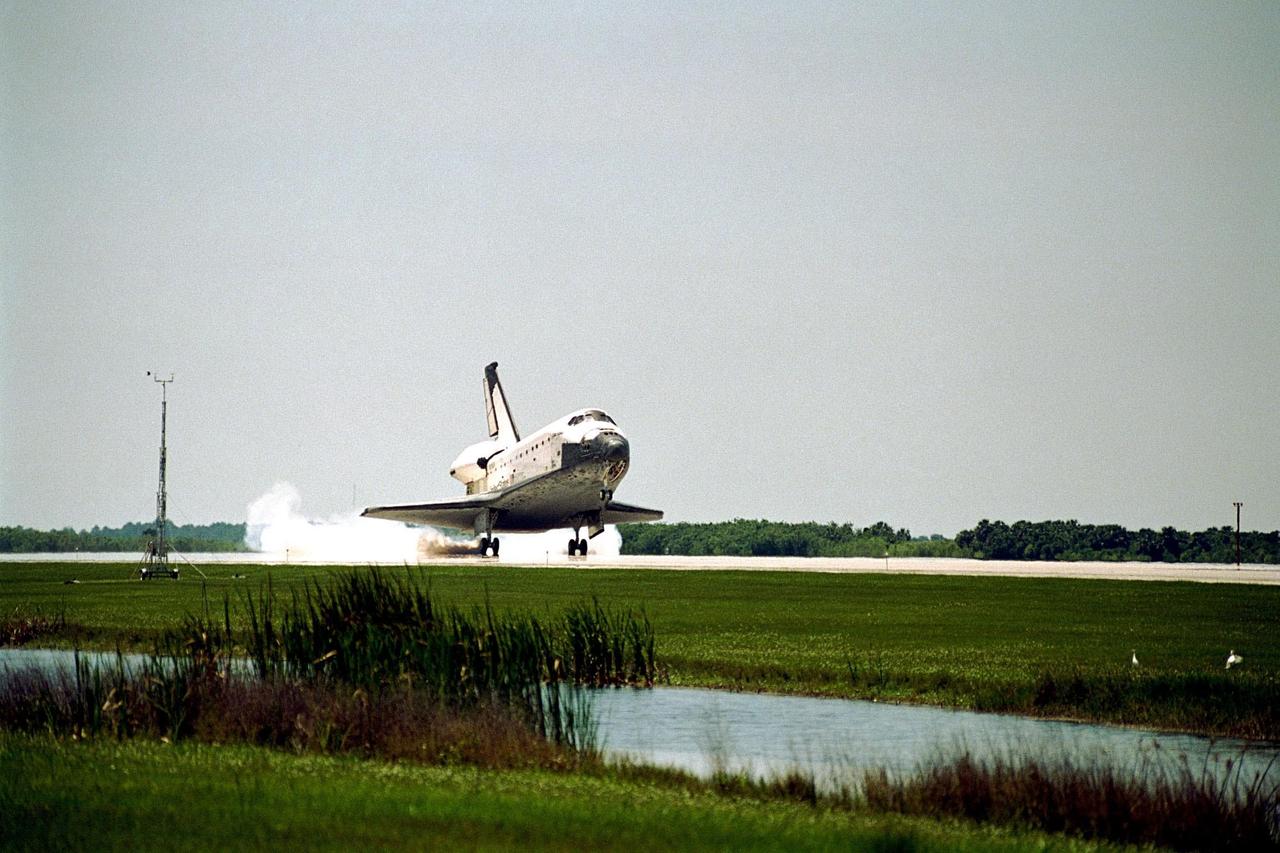
The orbiter Columbia touches down on Runway 33 of KSC's Shuttle Landing Facility to complete the nearly 16-day STS-90 mission. Main gear touchdown was at 12:08:59 p.m. EDT on May 3, 1998, landing on orbit 256 of the mission. The wheels stopped at 12:09:58 EDT, completing a total mission time of 15 days, 21 hours, 50 minutes and 58 seconds. The 90th Shuttle mission was Columbia's 13th landing at the space center and the 43rd KSC landing in the history of the Space Shuttle program. During the mission, the crew conducted research to contribute to a better understanding of the human nervous system. The crew of the STS-90 Neurolab mission include Commander Richard Searfoss; Pilot Scott Altman; Mission Specialists Richard Linnehan, D.V.M., Dafydd (Dave) Williams, M.D., with the Canadian Space Agency, and Kathryn (Kay) Hire; and Payload Specialists Jay Buckey, M.D., and James Pawelczyk, Ph.D
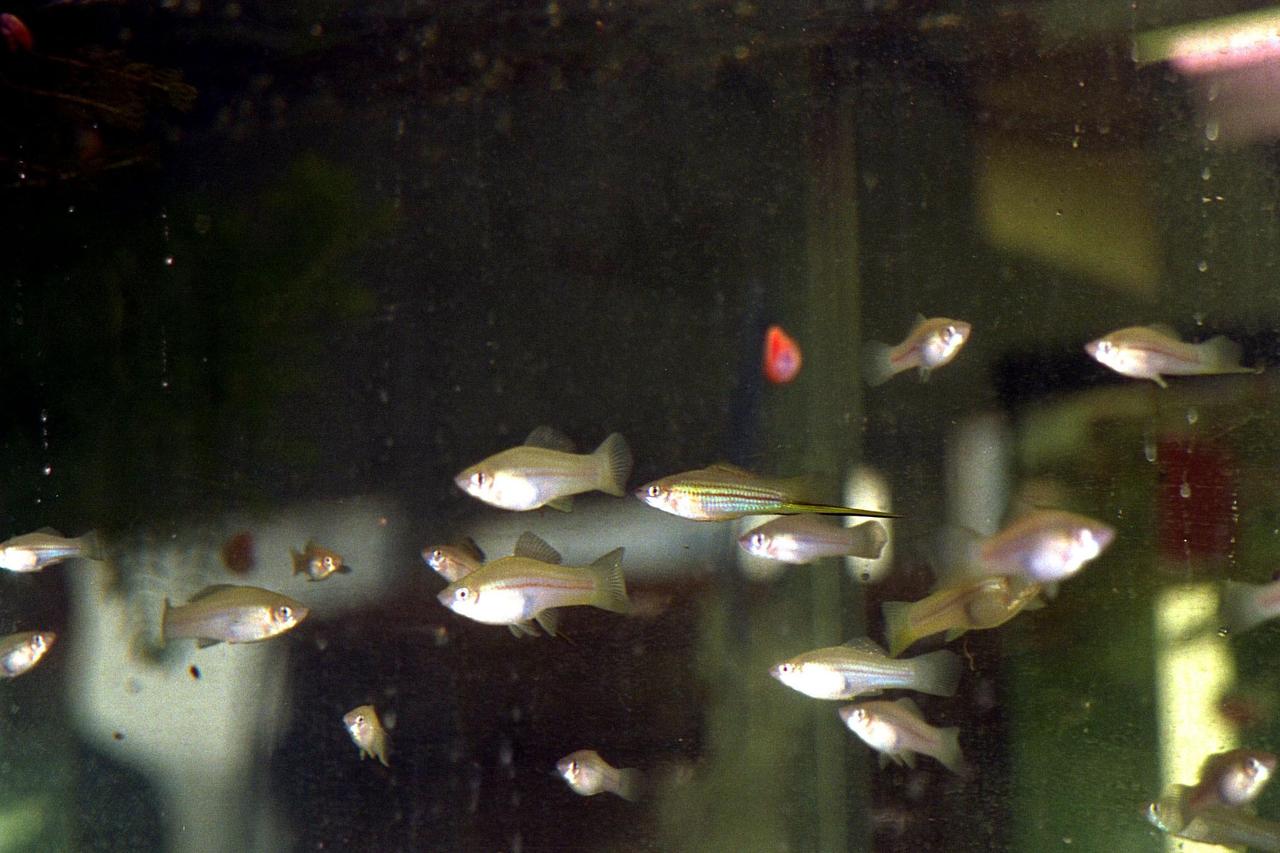
KENNEDY SPACE CENTER, FLA. -- Swordtail fish (Xiphophorus helleri), like those that are part of the Neurolab payload on Space Shuttle Mission STS-90, are shown in their holding tank in the Operations and Checkout Building. The fish will fly in the Closed Equilibrated Biological Aquatic System (CEBAS) Minimodule, a middeck locker-sized fresh water habitat, designed to allow the controlled incubation of aquatic species in a self-stabilizing, artifical ecosystem for up to three weeks under space conditions. Investigations during the Neurolab mission will focus on the effects of microgravity on the nervous system. The crew of STS-90, slated for launch April 16 at 2:19 p.m. EDT, include Commander Richard Searfoss, Pilot Scott Altman, Mission Specialists Richard Linnehan, D.V.M., Dafydd (Dave) Williams, M.D., and Kathryn (Kay) Hire, and Payload Specialists Jay Buckey, M.D., and James Pawelczyk, Ph.D
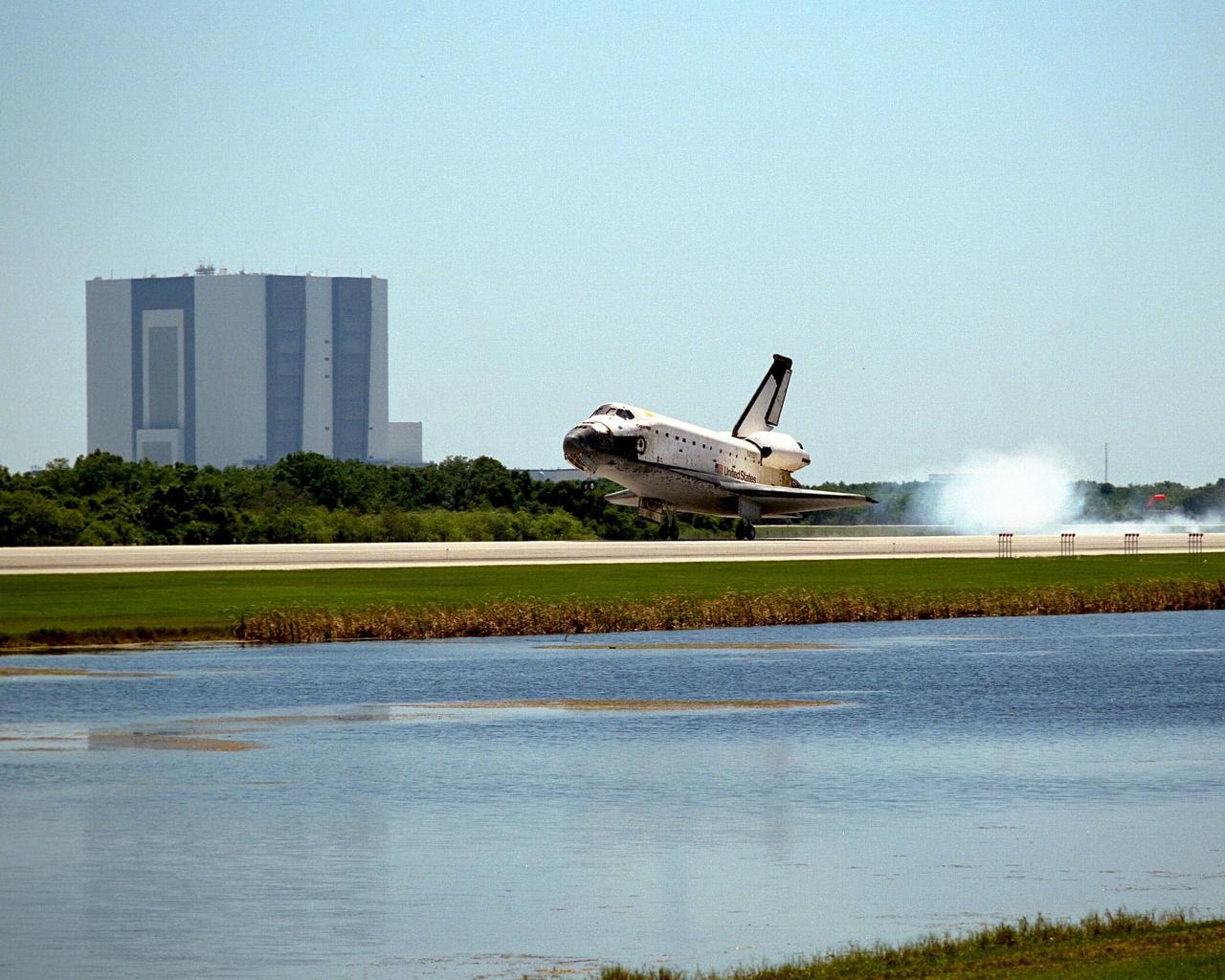
The orbiter Columbia touches down on Runway 33 of KSC's Shuttle Landing Facility to complete the nearly 16-day STS-90 mission. Main gear touchdown was at 12:08:59 p.m. EDT on May 3, 1998, landing on orbit 256 of the mission. The wheels stopped at 12:09:58 EDT, completing a total mission time of 15 days, 21 hours, 50 minutes and 58 seconds. The 90th Shuttle mission was Columbia's 13th landing at the space center and the 43rd KSC landing in the history of the Space Shuttle program. During the mission, the crew conducted research to contribute to a better understanding of the human nervous system. The crew of the STS-90 Neurolab mission include Commander Richard Searfoss; Pilot Scott Altman; Mission Specialists Richard Linnehan, D.V.M., Dafydd (Dave) Williams, M.D., with the Canadian Space Agency, and Kathryn (Kay) Hire; and Payload Specialists Jay Buckey, M.D., and James Pawelczyk, Ph.D
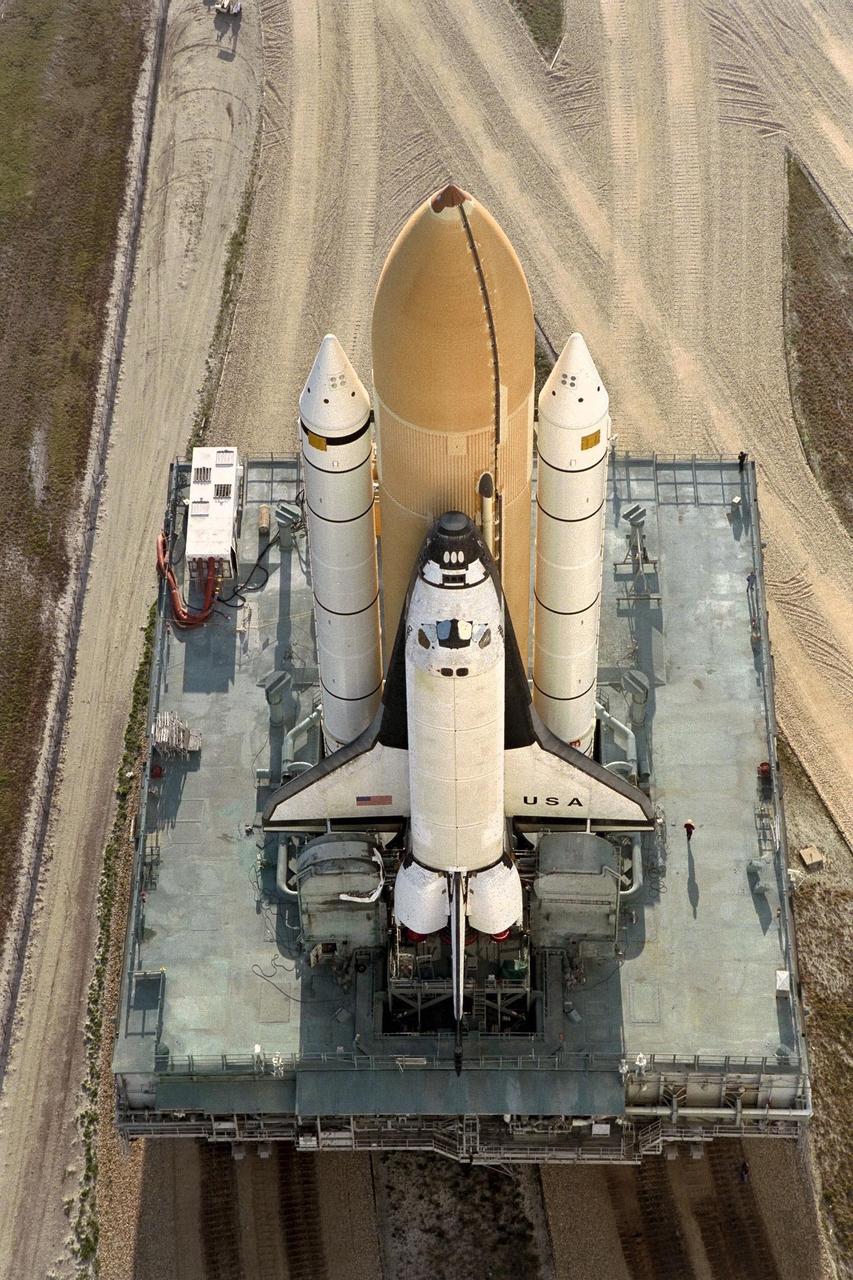
KENNEDY SPACE CENTER, FLA. -- The Space Shuttle Columbia continues its morning rollout from the Vehicle Assembly Building to Launch Pad 39B in preparation for the STS-90 mission. The Neurolab experiments are the primary payload on this nearly 17-day space flight. Investigations during the Neurolab mission will focus on the effects of microgravity on the nervous system. Specifically, experiments will study the adaptation of the vestibular system, the central nervous system, and the pathways that control the ability to sense location in the absence of gravity, as well as the effect of microgravity on a developing nervous system. The crew of STS-90, slated for launch April 16 at 2:19 p.m. EDT, includes Commander Richard Searfoss, Pilot Scott Altman, Mission Specialists Richard Linnehan, Dafydd (Dave) Williams, M.D., and Kathryn (Kay) Hire, and Payload Specialists Jay Buckey, M.D., and James Pawelczyk, Ph.D
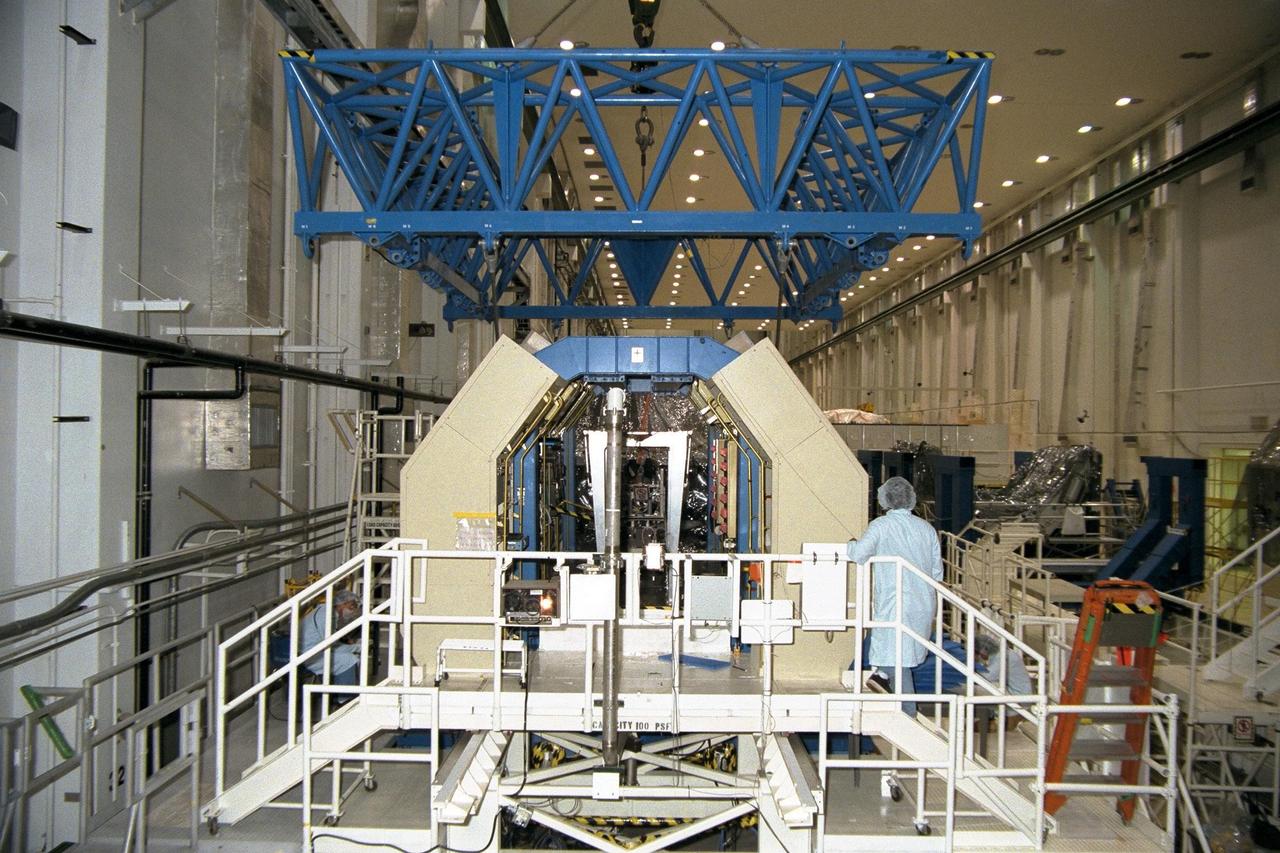
The Neurolab payload for STS-90, scheduled to launch aboard the Shuttle Columbia from Kennedy Space Center (KSC) on April 2, 1998, is ready for processing after being placed in its workstand in the Operations and Checkout Building at KSC. Investigations during the Neurolab mission will focus on the effects of microgravity on the nervous system. Specifically, experiments will study the adaptation of the vestibular system, the central nervous system, and the pathways that control the ability to sense location in the absence of gravity, as well as the effect of microgravity on a developing nervous system. The crew of STS-90 will include Commander Richard Searfoss, Pilot Scott Altman, Mission Specialists Richard Linnehan, Dafydd (Dave) Williams, M.D., and Kathryn (Kay) Hire, and Payload Specialists Jay Buckey, M.D., and James Pawelczyk, Ph.D
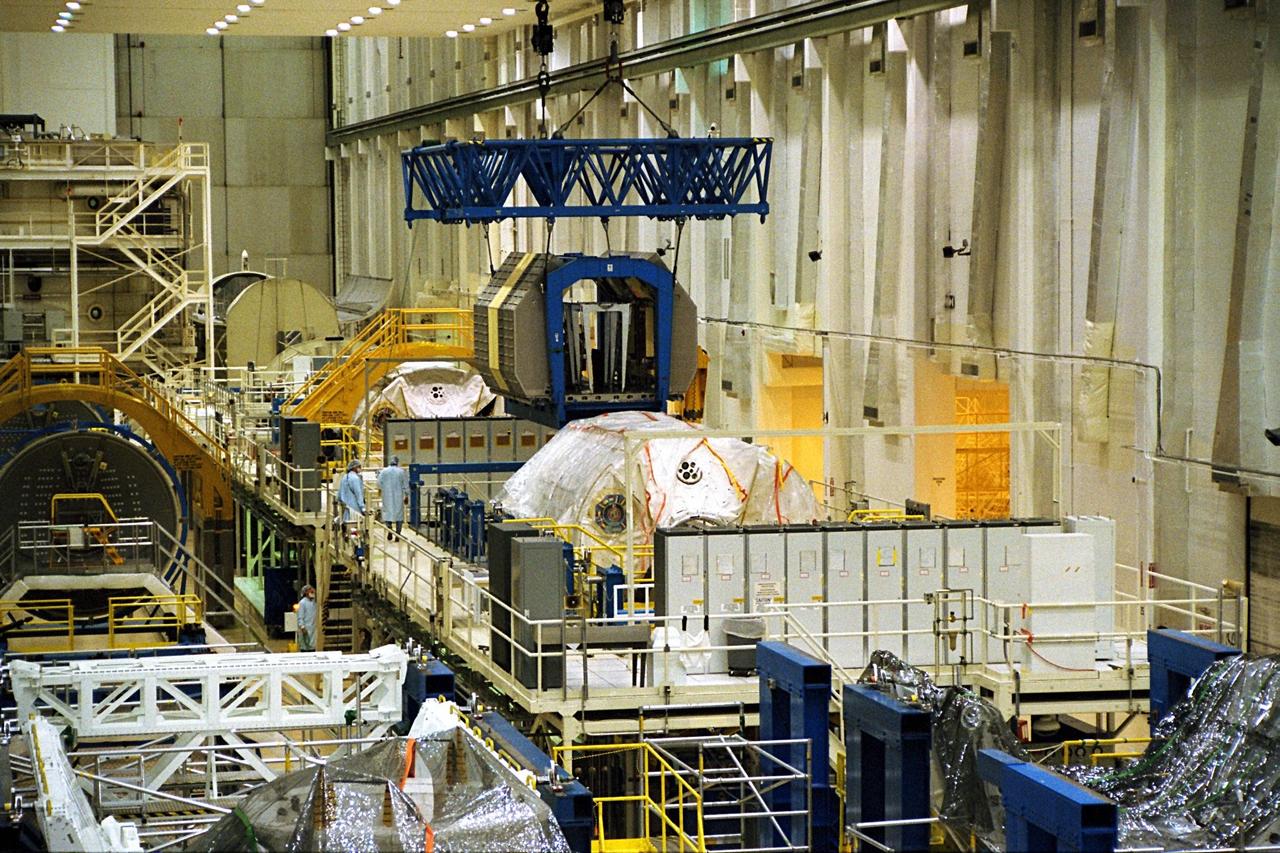
The Neurolab payload for STS-90, scheduled to launch aboard the Shuttle Columbia from Kennedy Space Center (KSC) on April 2, 1998, is moved to its workstand in the Operations and Checkout Building at KSC. Investigations during the Neurolab mission will focus on the effects of microgravity on the nervous system. Specifically, experiments will study the adaptation of the vestibular system, the central nervous system, and the pathways that control the ability to sense location in the absence of gravity, as well as the effect of microgravity on a developing nervous system. The crew of STS-90 will include Commander Richard Searfoss, Pilot Scott Altman, Mission Specialists Richard Linnehan, Dafydd (Dave) Williams, M.D., and Kathryn (Kay) Hire, and Payload Specialists Jay Buckey, M.D., and James Pawelczyk, Ph.D
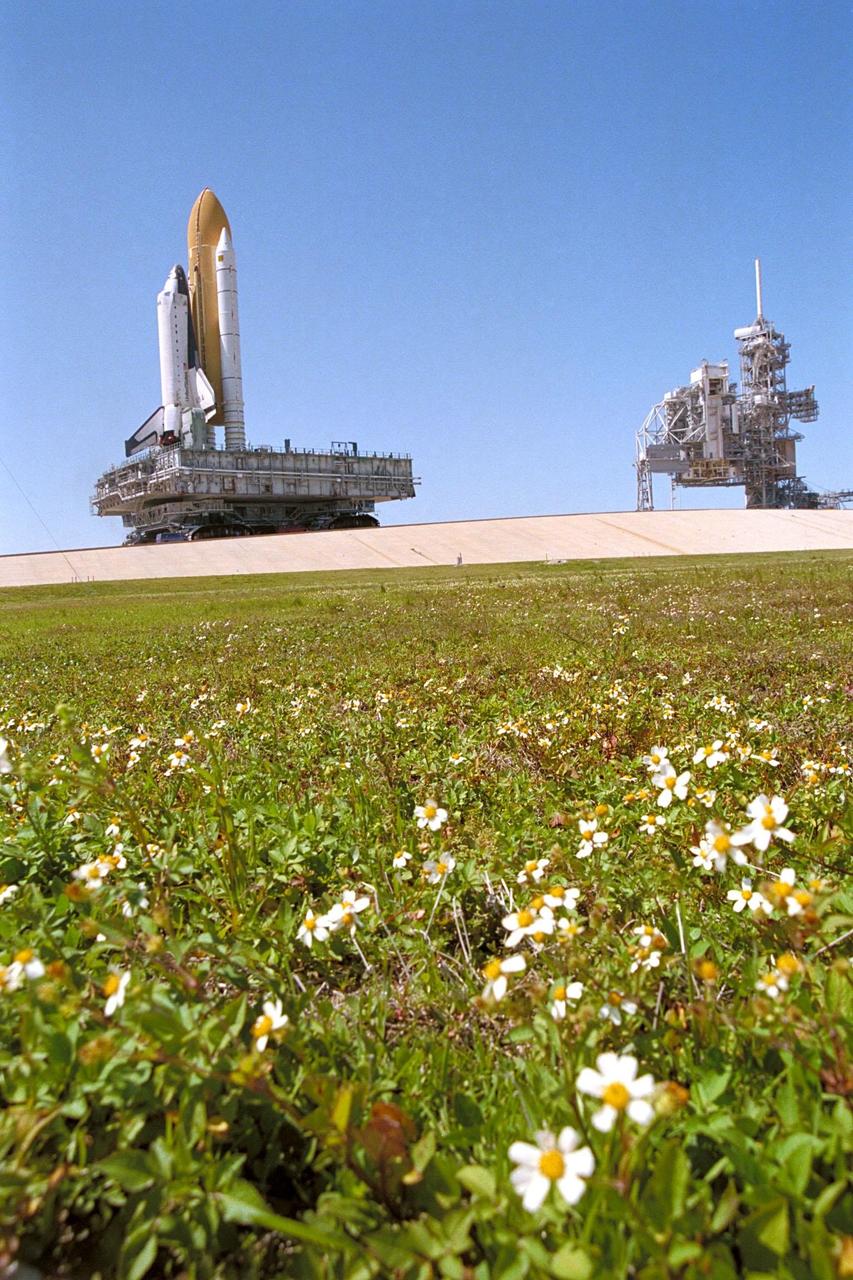
KENNEDY SPACE CENTER, FLA. -- The Space Shuttle Columbia continues up the ramp to Launch Pad 39B in its morning rollout prior to STS-90. Leveling systems within the crawler-transporter underneath the Shuttle keep the platform level while negotiating the five percent ramp leading up to the pad surface. The top of the orbiter is kept vertical within plus or minus 10 minutes of arc, about the diameter of a basketball during the journey. The Neurolab experiments are the primary payload on this nearly 17-day space flight. Investigations during the Neurolab mission will focus on the effects of microgravity on the nervous system. The crew of STS-90, slated for launch April 16 at 2:19 p.m. EDT, includes Commander Richard Searfoss, Pilot Scott Altman, Mission Specialists Richard Linnehan, Dafydd (Dave) Williams, M.D., and Kathryn (Kay) Hire, and Payload Specialists Jay Buckey, M.D., and James Pawelczyk, Ph.D
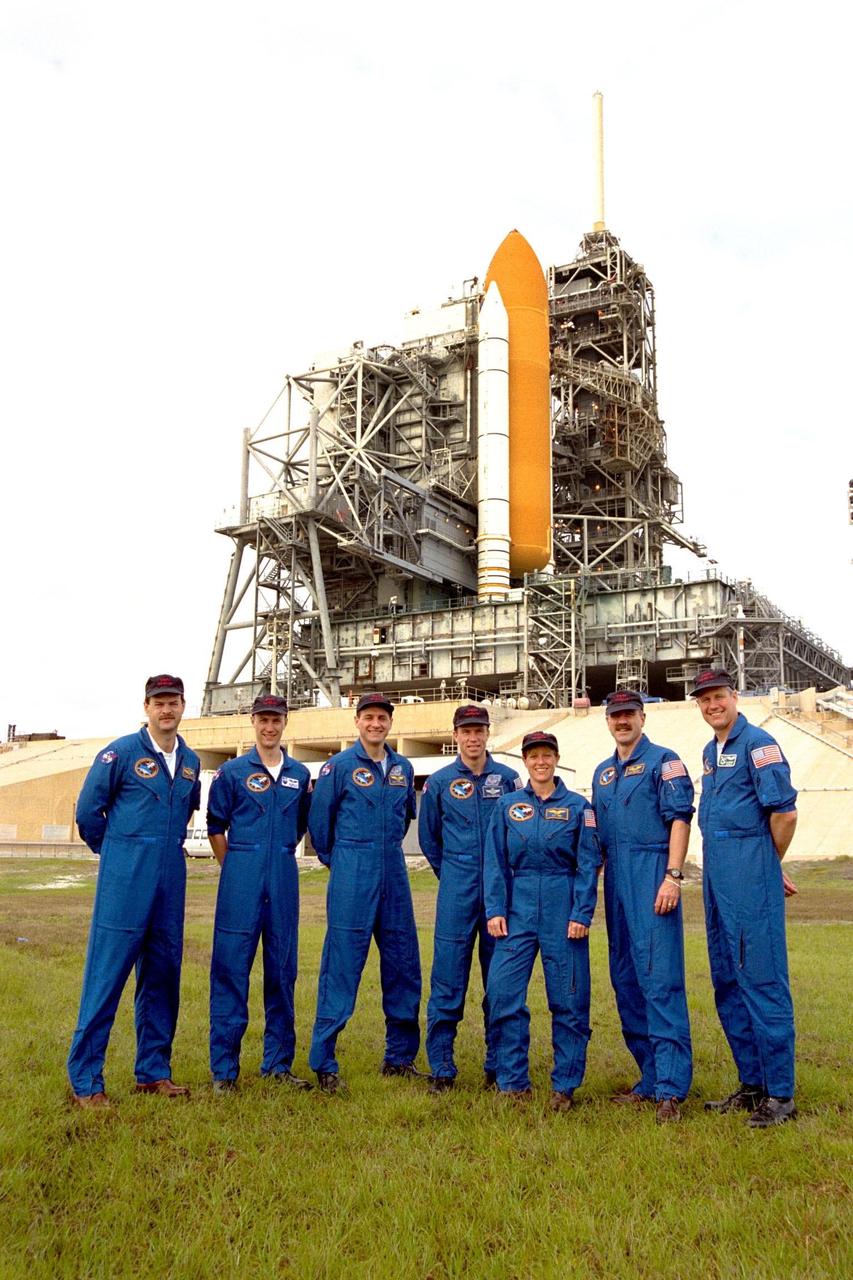
The crew of STS-90 participate in Terminal Countdown Demonstration Test (TCDT) activities at KSC's Launch Pad 39B. The TCDT is held at KSC prior to each Space Shuttle flight to provide crews with the opportunity to participate in simulated countdown activities. The STS-90 crew, left to right, are Pilot Scott Altman, Payload Specialist James Pawelczyk, Ph.D., Mission Specialist Richard Linnehan, D.V.M., Commander Richard Searfoss, Mission Specialists Kathryn (Kay) Hire and Dafydd (Dave) Williams with the Canadian Space Agency, and Payload Specialist Jay Buckey, M.D. Columbia is targeted for launch of STS-90 on April 16 at 2:19 p.m. EST and will be the second mission of 1998. The mission is scheduled to last nearly 17 days
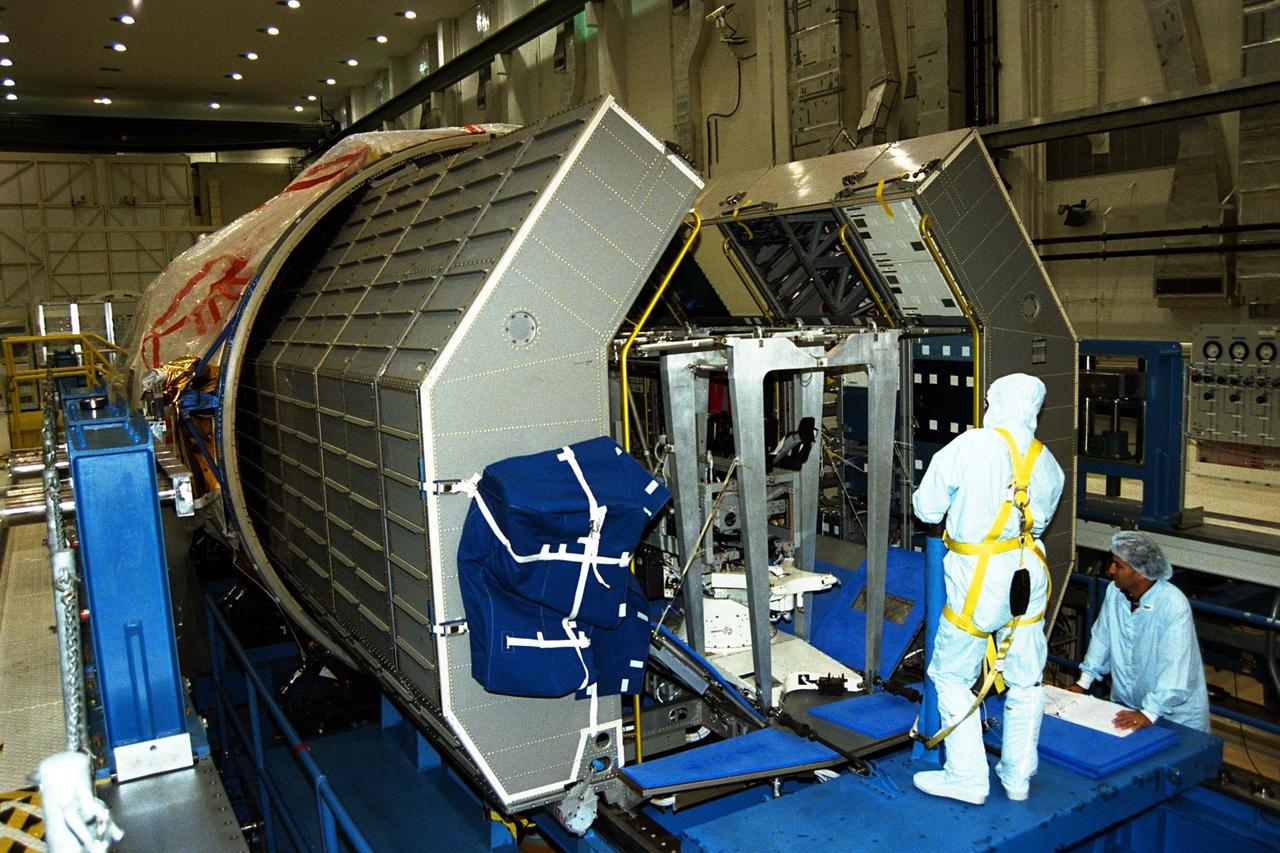
The Neurolab payload for STS-90, scheduled to launch aboard the Shuttle Columbia from Kennedy Space Center (KSC) on April 2, 1998, is installed in the Spacelab module by Boeing technicians in the Operations and Checkout Building at KSC. Investigations during the Neurolab mission will focus on the effects of microgravity on the nervous system. Specifically, experiments will study the adaptation of the vestibular system, the central nervous system, and the pathways that control the ability to sense location in the absence of gravity, as well as the effect of microgravity on a developing nervous system. The crew of STS-90 will include Commander Richard Searfoss, Pilot Scott Altman, Mission Specialists Richard Linnehan, Dafydd (Dave) Williams, M.D., and Kathryn (Kay) Hire, and Payload Specialists Jay Buckey, M.D., and James Pawelczyk, Ph.D

The Neurolab payload for STS-90, scheduled to launch aboard the Shuttle Columbia from Kennedy Space Center (KSC) on April 2, 1998, is installed in the Spacelab module by Boeing technicians in the Operations and Checkout Building at KSC. Investigations during the Neurolab mission will focus on the effects of microgravity on the nervous system. Specifically, experiments will study the adaptation of the vestibular system, the central nervous system, and the pathways that control the ability to sense location in the absence of gravity, as well as the effect of microgravity on a developing nervous system. The crew of STS-90 will include Commander Richard Searfoss, Pilot Scott Altman, Mission Specialists Richard Linnehan, Dafydd (Dave) Williams, M.D., and Kathryn (Kay) Hire, and Payload Specialists Jay Buckey, M.D., and James Pawelczyk, Ph.D
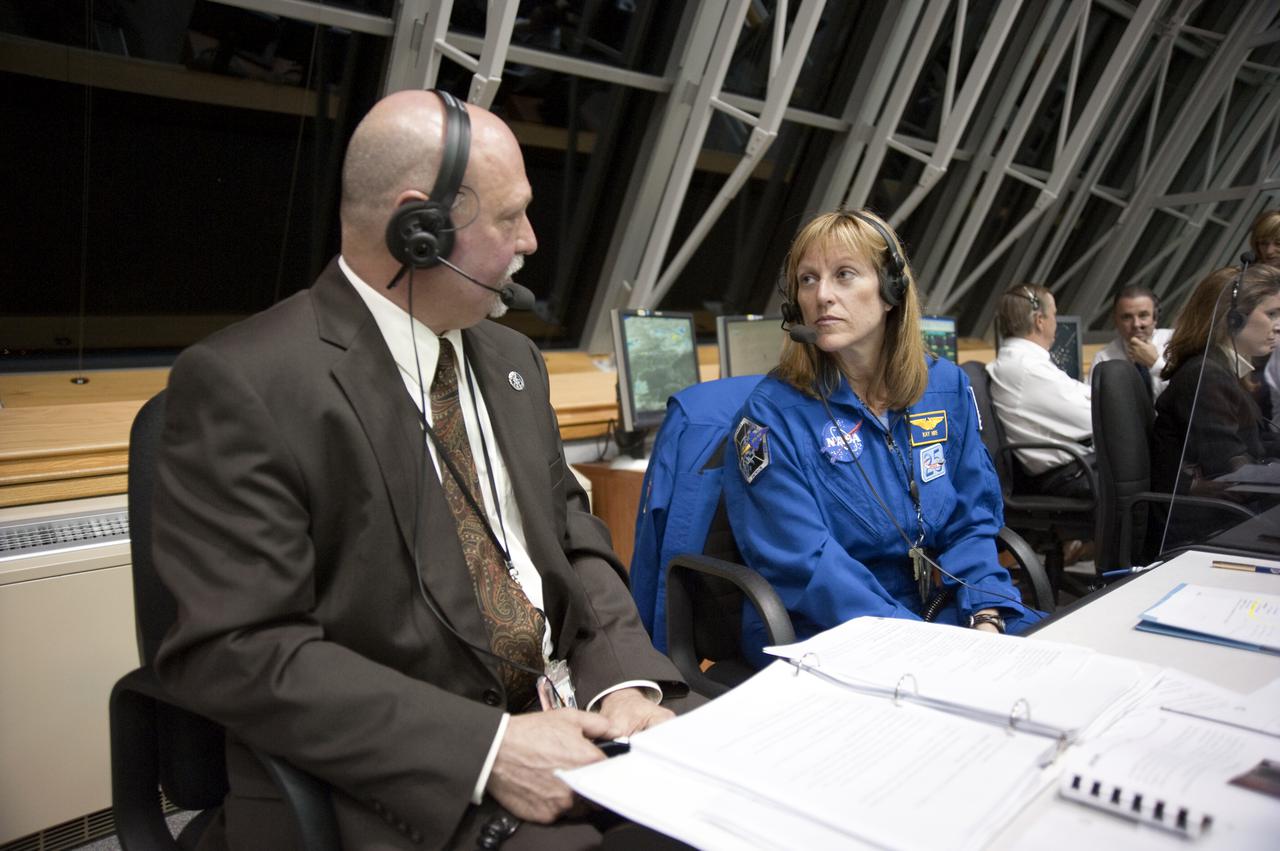
CAPE CANAVERAL, Fla. - NASA Commentator Mike Curie and Astronaut Kathryn 'Kay' Hire discuss the launch of space shuttle Discovery on the STS-131 mission in the Launch Control Center's Firing Room 4 at NASA's Kennedy Space Center in Florida. The seven-member STS-131 crew will deliver the multi-purpose logistics module Leonardo, filled with supplies, a new crew sleeping quarters and science racks that will be transferred to the International Space Station's laboratories. The crew also will switch out a gyroscope on the station’s truss, install a spare ammonia storage tank and retrieve a Japanese experiment from the station’s exterior. STS-131 is the 33rd shuttle mission to the station and the 131st shuttle mission overall. For information on the STS-131 mission and crew, visit http:__www.nasa.gov_mission_pages_shuttle_shuttlemissions_sts131_index.html. Photo credit: NASA_Kim Shiflett
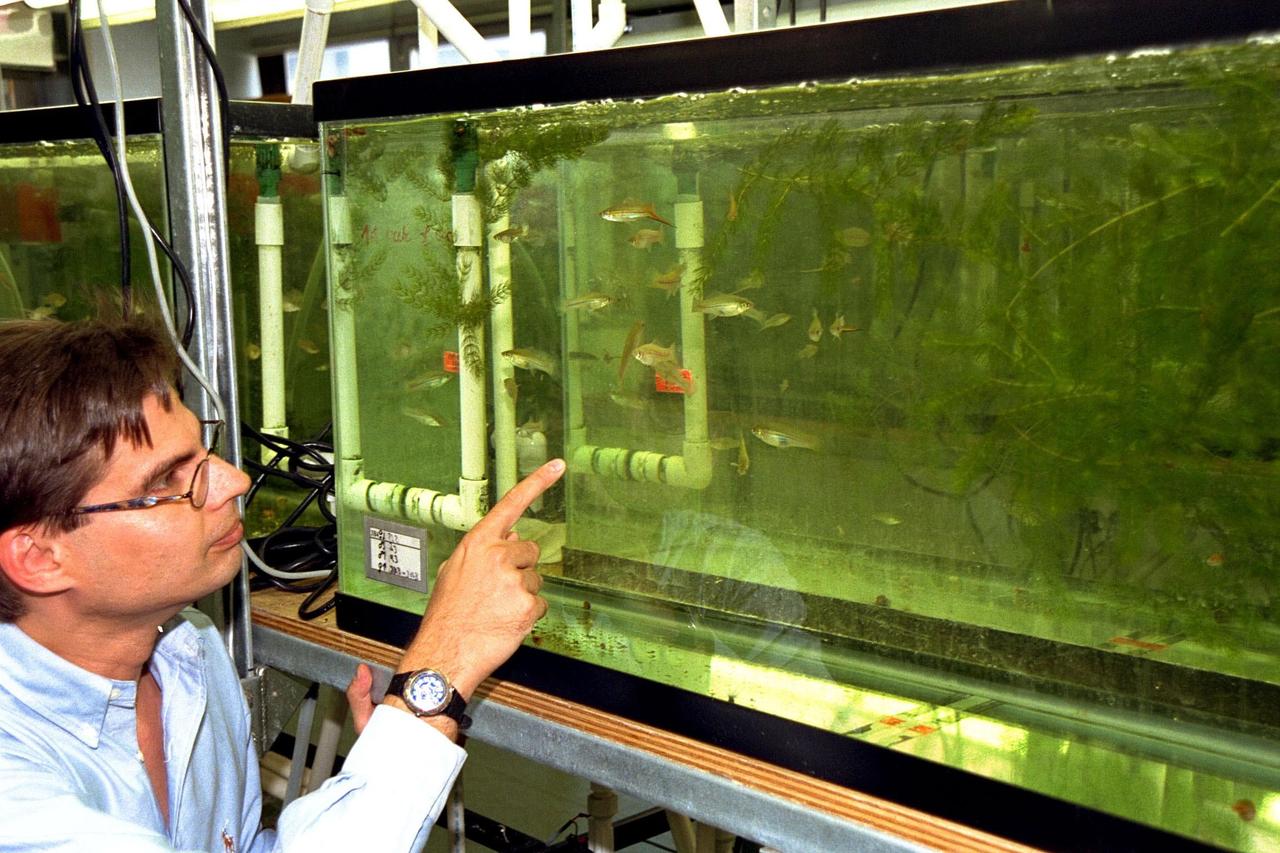
KENNEDY SPACE CENTER, FLA. -- Dr. Dirk Voeste, a scientist with Ruhr-University of Bochum, Germany, examines some swordtail fish (Xiphophorus helleri), like those that are part of the Neurolab payload on Space Shuttle Mission STS-90, in their holding tank in the Operations and Checkout Building. The fish will fly in the Closed Equilibrated Biological Aquatic System (CEBAS) Minimodule, a middeck locker-sized fresh water habitat, designed to allow the controlled incubation of aquatic species in a self-stabilizing, artifical ecosystem for up to three weeks under space conditions. Investigations during the Neurolab mission will focus on the effects of microgravity on the nervous system. The crew of STS-90, slated for launch April 16 at 2:19 p.m. EDT, include Commander Richard Searfoss, Pilot Scott Altman, Mission Specialists Richard Linnehan, D.V.M., Dafydd (Dave) Williams, M.D., and Kathryn (Kay) Hire, and Payload Specialists Jay Buckey, M.D., and James Pawelczyk, Ph.D
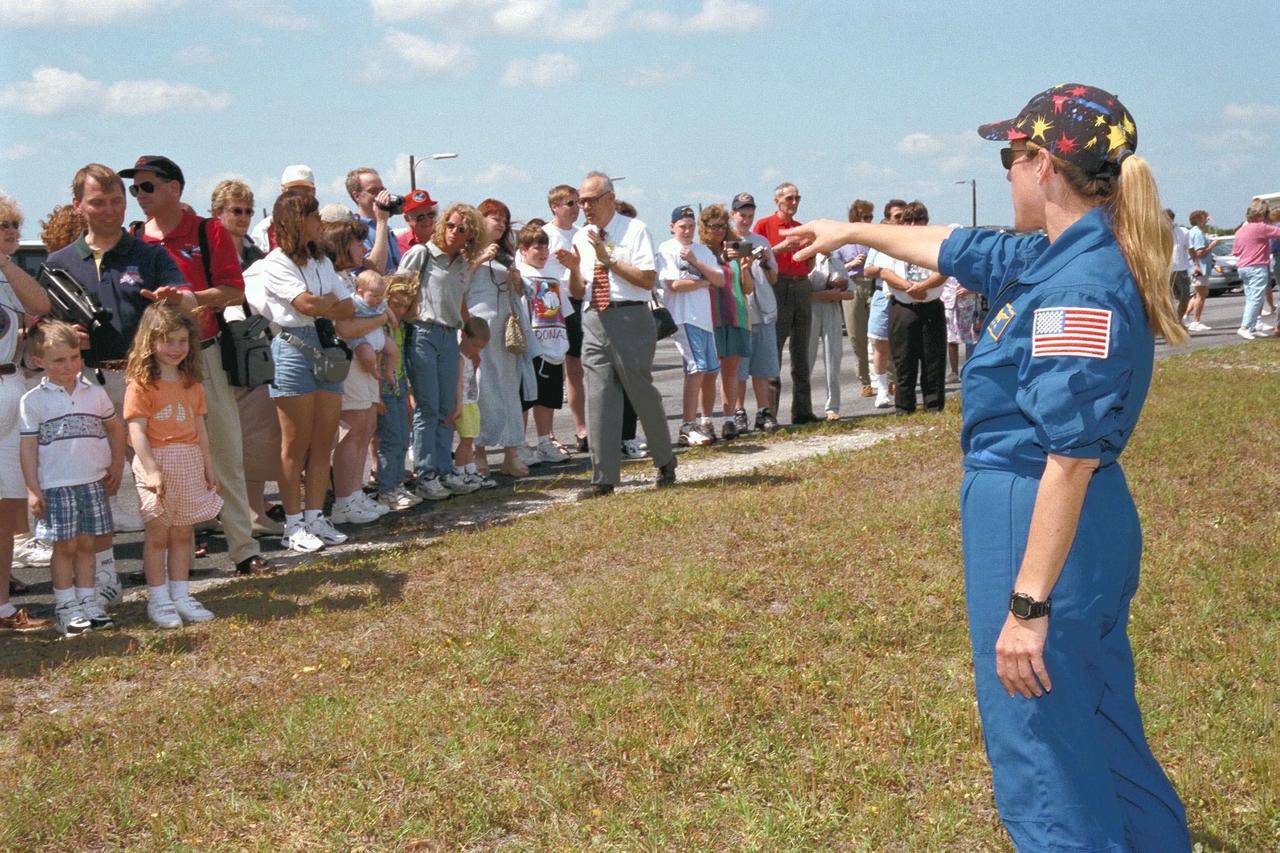
KENNEDY SPACE CENTER, FLA. -- STS-90 Mission Specialist Kathryn (Kay) Hire waves to friends and family members near Launch Pad 39B, from which she and the rest of the seven-member crew are scheduled to launch aboard Columbia on May 16 at 2:19 p.m. EDT. The astronauts are under strict health stabilization guidelines to protect them from close contact with persons who do not have health stabilization clearance. This is the 25th flight of Columbia and the 90th mission flown since the start of the Space Shuttle program. STS-90 is a nearly 17-day life sciences research flight that will focus on the most complex and least understood part of the human body the nervous system. Neurolab will examine the effects of spaceflight on the brain, spinal cord, peripheral nerves and sensory organs in the human body
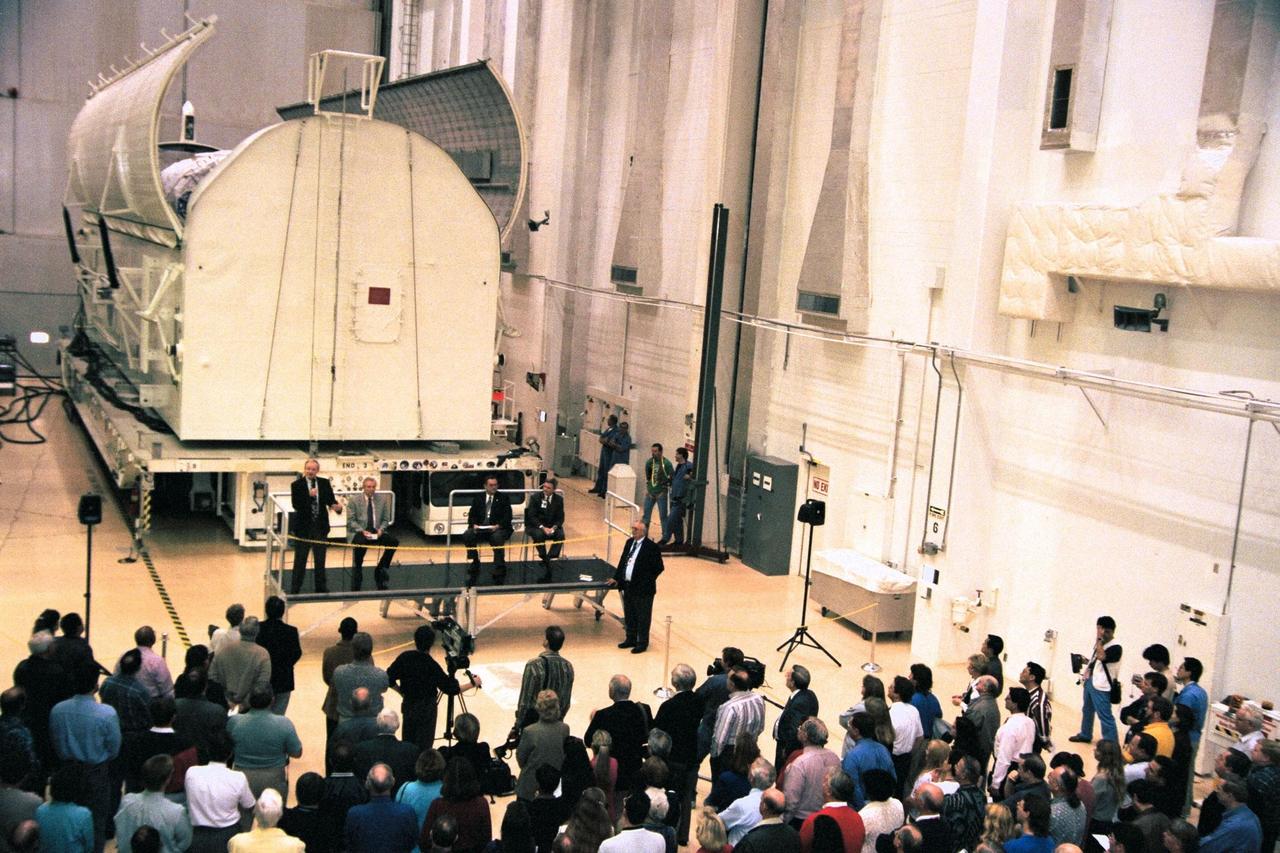
The STS-90 Neurolab payload is honored with a ceremony after being lowered into its payload canister in KSC's Operations and Checkout Building for the last time. This phase of the Shuttle program is winding down as the second phase of the International Space Station (ISS) program gets under way. Microgravity and life science research that formerly was conducted in Spacelab modules, such as Neurolab, will eventually be conducted inside the completed ISS. Investigations during the Neurolab mission will focus on the effects of microgravity on the nervous system. The crew of STS-90, slated for launch in April, will include Commander Richard Searfoss, Pilot Scott Altman, Mission Specialists Richard Linnehan, Dafydd (Dave) Williams, M.D., and Kathryn (Kay) Hire, and Payload Specialists Jay Buckey, M.D., and James Pawelczyk, Ph.D

The Neurolab payload for STS-90, scheduled to launch aboard the Shuttle Columbia from Kennedy Space Center (KSC) on April 2, 1998, is ready for processing after being placed in its workstand in the Operations and Checkout Building at KSC. Investigations during the Neurolab mission will focus on the effects of microgravity on the nervous system. Specifically, experiments will study the adaptation of the vestibular system, the central nervous system, and the pathways that control the ability to sense location in the absence of gravity, as well as the effect of microgravity on a developing nervous system. The crew of STS-90 will include Commander Richard Searfoss, Pilot Scott Altman, Mission Specialists Richard Linnehan, Dafydd (Dave) Williams, M.D., and Kathryn (Kay) Hire, and Payload Specialists Jay Buckey, M.D., and James Pawelczyk, Ph.D
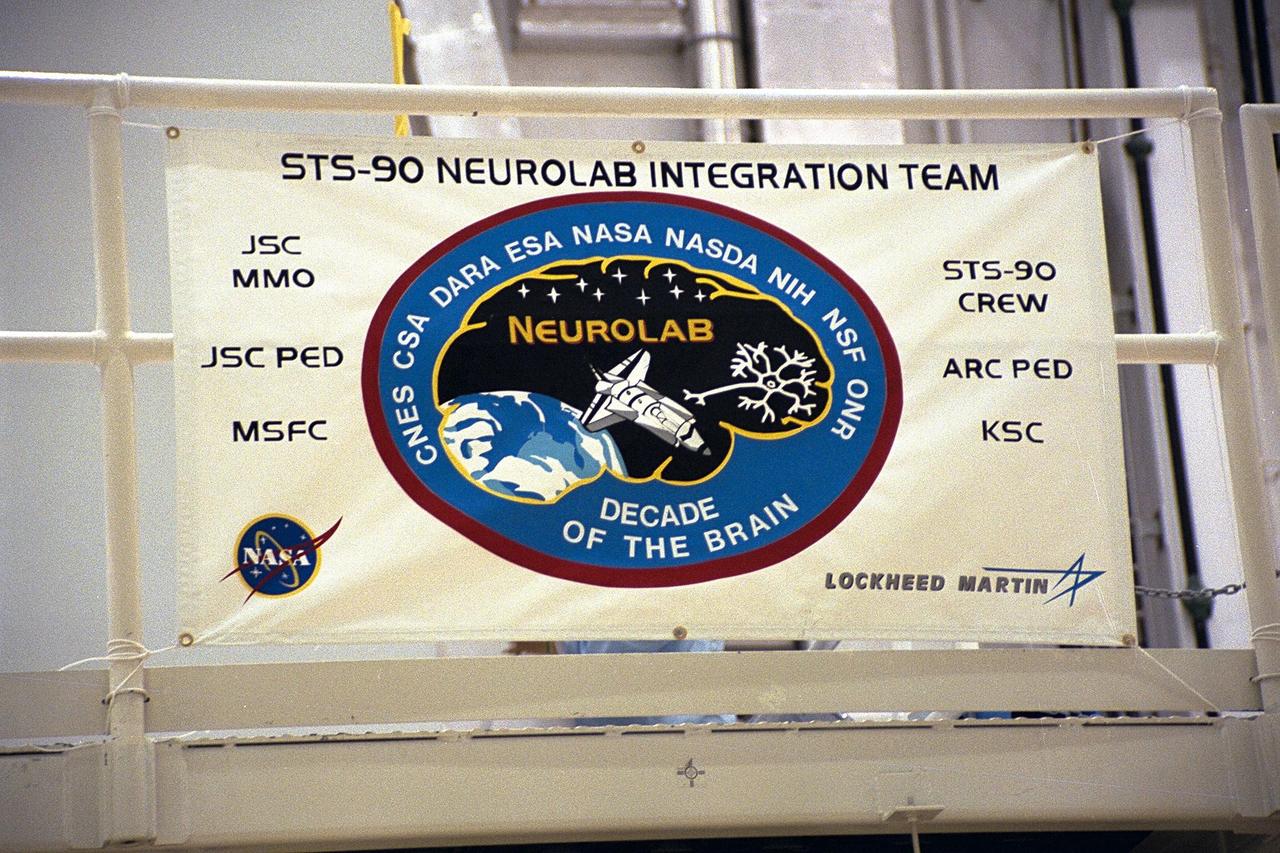
The Neurolab payload for STS-90, scheduled to launch aboard the Shuttle Columbia from Kennedy Space Center (KSC) on April 2, 1998, undergoes further processing in the Operations and Checkout Building at KSC. Investigations during the Neurolab mission will focus on the effects of microgravity on the nervous system. Specifically, experiments will study the adaptation of the vestibular system, the central nervous system, and the pathways that control the ability to sense location in the absence of gravity, as well as the effect of microgravity on a developing nervous system. The crew of STS-90 will include Commander Richard Searfoss, Pilot Scott Altman, Mission Specialists Richard Linnehan, Dafydd (Dave) Williams, M.D., and Kathryn (Kay) Hire, and Payload Specialists Jay Buckey, M.D., and James Pawelczyk, Ph.D
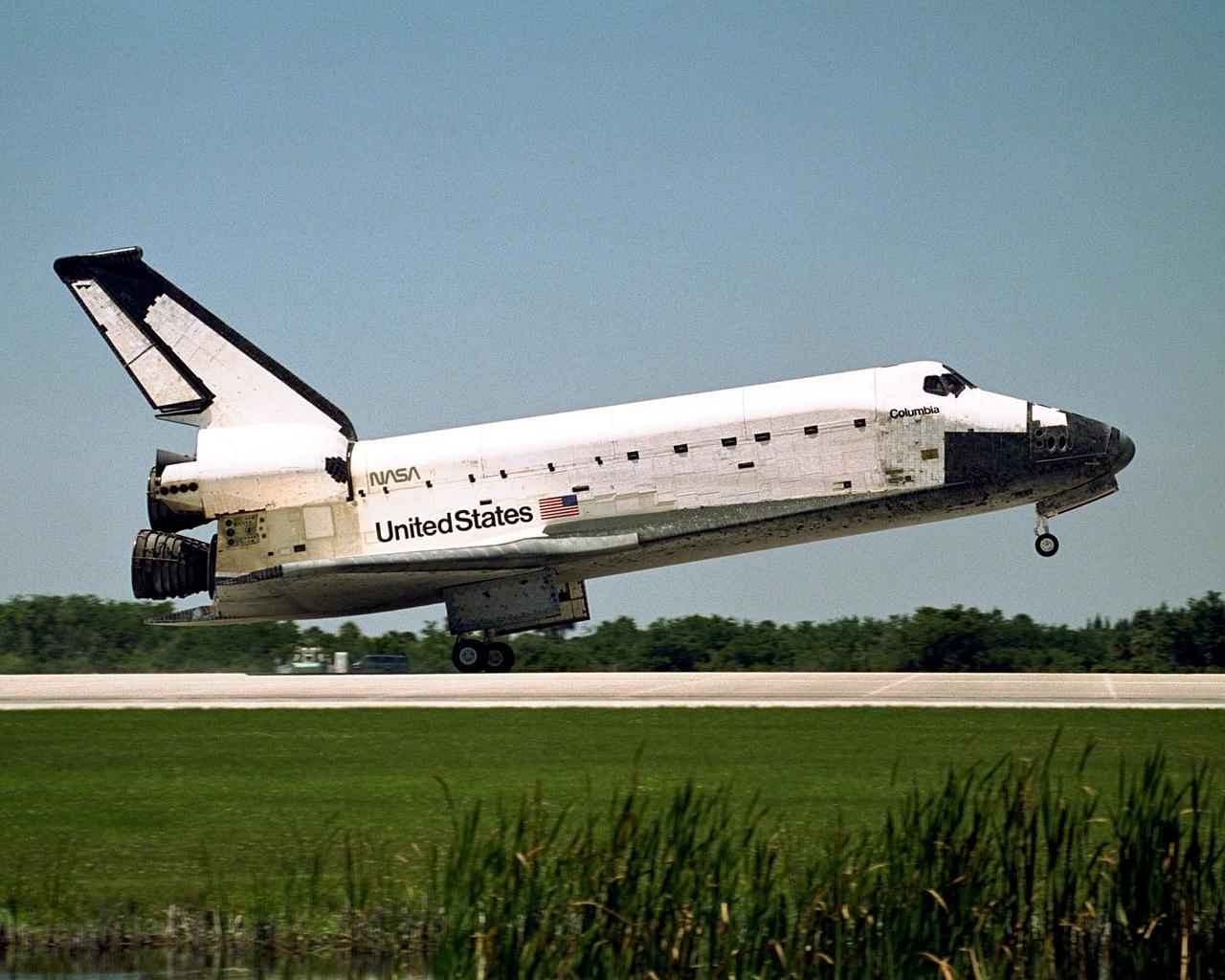
The orbiter Columbia approaches touchdown on Runway 33 of KSC's Shuttle Landing Facility to complete the nearly 16-day STS-90 mission. Main gear touchdown was at 12:08:59 p.m. EDT on May 3, 1998, landing on orbit 256 of the mission. The wheels stopped at 12:09:58 EDT, completing a total mission time of 15 days, 21 hours, 50 minutes and 58 seconds. The 90th Shuttle mission was Columbia's 13th landing at the space center and the 43rd KSC landing in the history of the Space Shuttle program. During the mission, the crew conducted research to contribute to a better understanding of the human nervous system. The crew of the STS-90 Neurolab mission include Commander Richard Searfoss; Pilot Scott Altman; Mission Specialists Richard Linnehan, D.V.M., Dafydd (Dave) Williams, M.D., with the Canadian Space Agency, and Kathryn (Kay) Hire; and Payload Specialists Jay Buckey, M.D., and James Pawelczyk, Ph.D
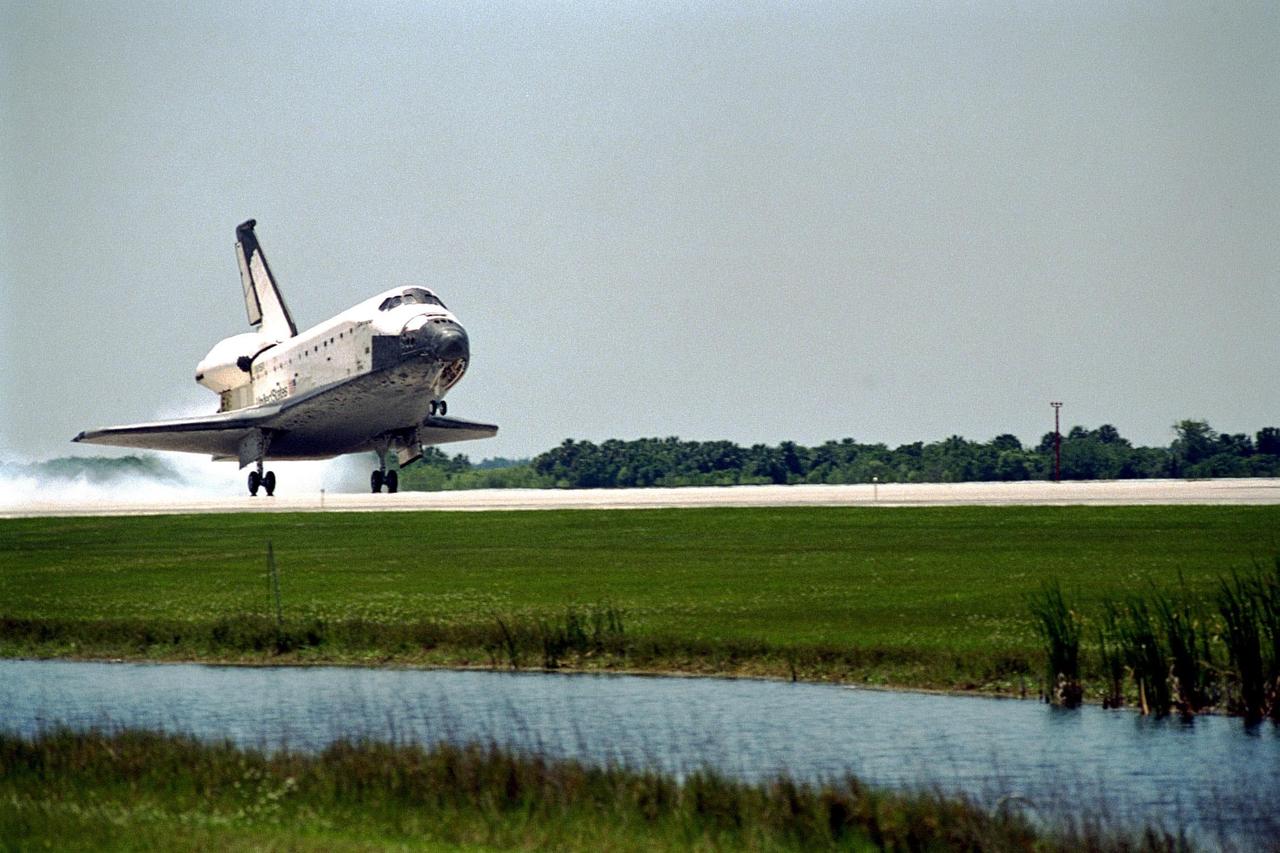
The orbiter Columbia touches down on Runway 33 of KSC's Shuttle Landing Facility to complete the nearly 16-day STS-90 mission. Main gear touchdown was at 12:08:59 p.m. EDT on May 3, 1998, landing on orbit 256 of the mission. The wheels stopped at 12:09:58 EDT, completing a total mission time of 15 days, 21 hours, 50 minutes and 58 seconds. The 90th Shuttle mission was Columbia's 13th landing at the space center and the 43rd KSC landing in the history of the Space Shuttle program. During the mission, the crew conducted research to contribute to a better understanding of the human nervous system. The crew of the STS-90 Neurolab mission include Commander Richard Searfoss; Pilot Scott Altman; Mission Specialists Richard Linnehan, D.V.M., Dafydd (Dave) Williams, M.D., with the Canadian Space Agency, and Kathryn (Kay) Hire; and Payload Specialists Jay Buckey, M.D., and James Pawelczyk, Ph.D
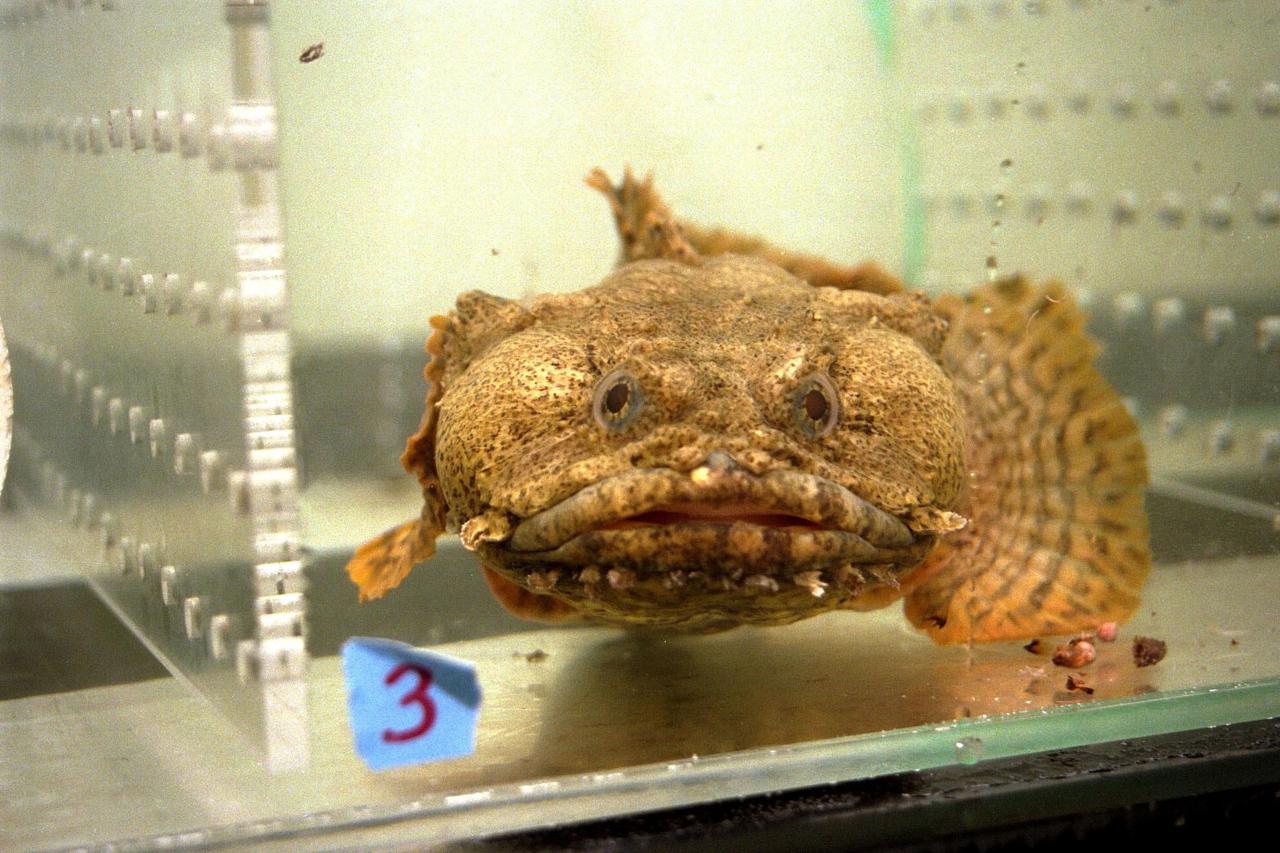
KENNEDY SPACE CENTER, FLA. -- An oyster toadfish (Opsanus tau), like those that are part of the Neurolab payload on Space Shuttle Mission STS-90, is shown in its holding tank in the Space Station Processing Facility. Each fish is between eight and 14 inches long. Toadfish live in an estuarine environment and are native to areas along the Northeast coast of the United States. Investigations during the Neurolab mission will focus on the effects of microgravity on the nervous system. This fish is an excellent model for looking at vestibular function because the architecture of its inner and middle ear are similar to those of mammals with respect to the vestibular apparatus. The crew of STS-90, slated for launch April 16 at 2:19 p.m. EDT, includes Commander Richard Searfoss, Pilot Scott Altman, Mission Specialists Richard Linnehan, Dafydd (Dave) Williams, M.D., and Kathryn (Kay) Hire, and Payload Specialists Jay Buckey, M.D., and James Pawelczyk, Ph.D
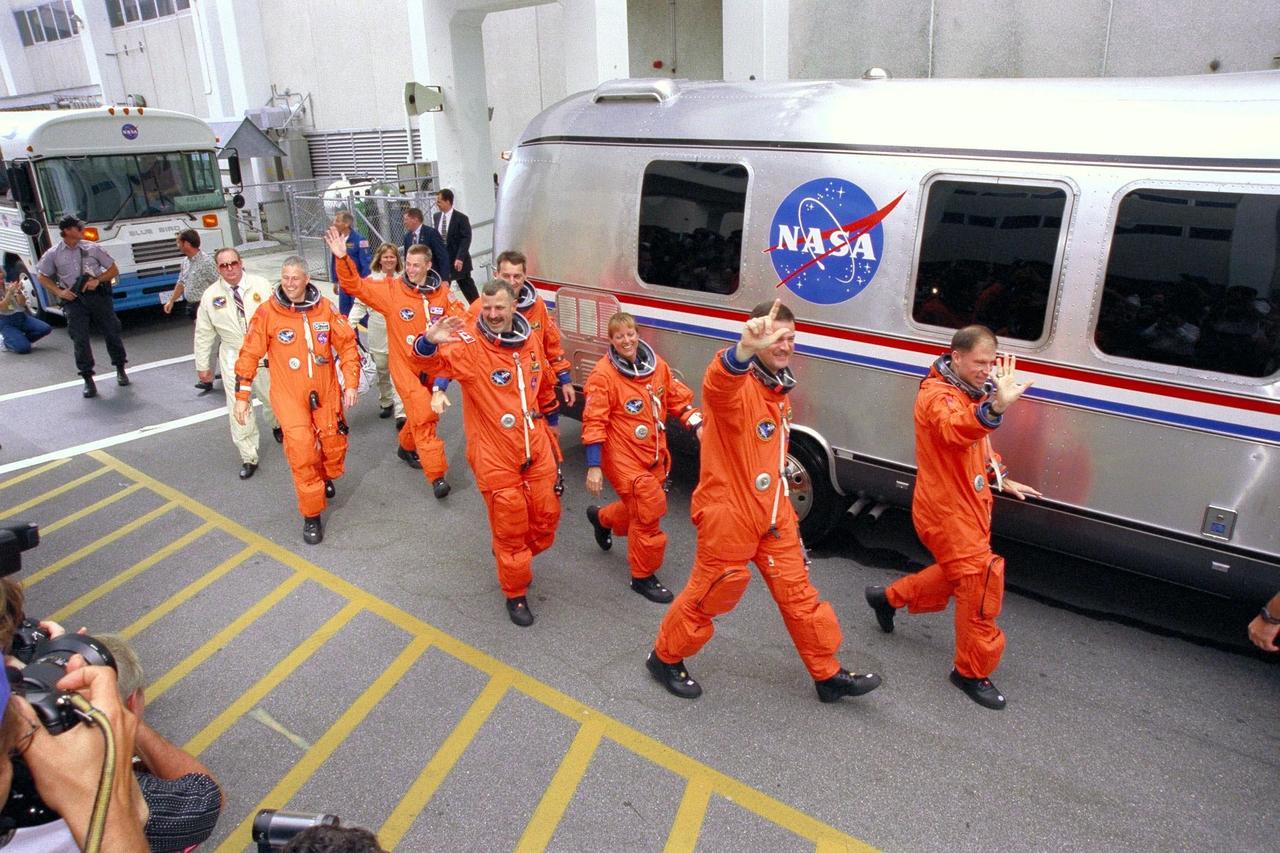
KENNEDY SPACE CENTER, FLA. -- Greeted by cheers from wellwishers at KSC and eager for their venture into space on the Neurolab mission, the STS-90 astronauts depart the Operations and Checkout Building on their way to Launch Pad 39B. The seven-member crew include (front to back, right to left) Mission Commander Richard Searfoss; Pilot Scott Altman; Mission Specialists Kathryn (Kay) Hire, Dafydd (Dave) Williams, M.D., with the Canadian Space Agency, and Richard Linnehan, D.V.M.; and Payload Specialists James Pawelczyk, Ph.D., and Jay Buckey, M.D. Their trip to the pad will take about 25 minutes aboard the Astrovan. Once there, they will take their positions in the crew cabin of the Space Shuttle Columbia to await a liftoff during a two-and-a-half hour window that will open at 2:19 p.m. EDT.
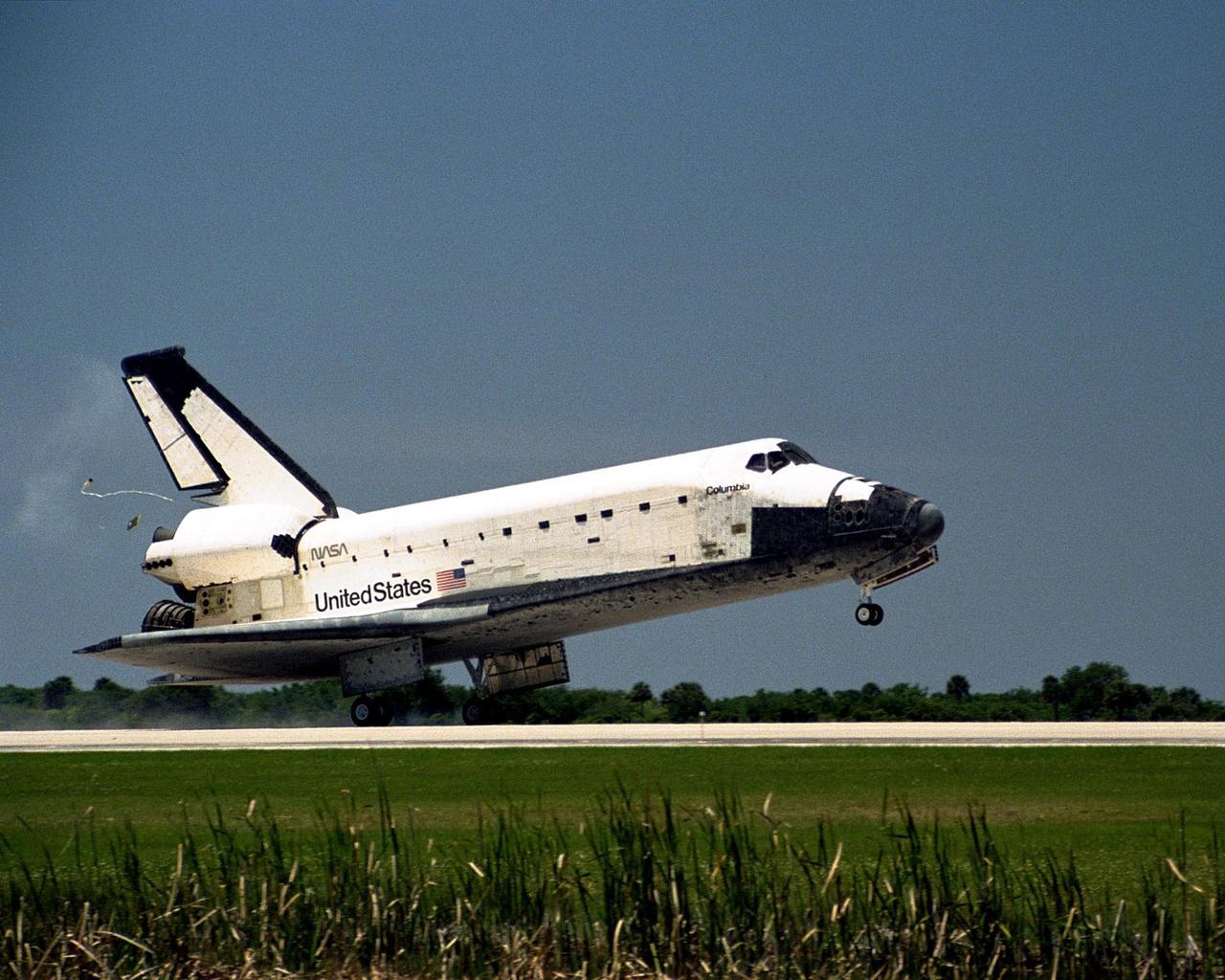
The orbiter Columbia touches down on Runway 33 of KSC's Shuttle Landing Facility to complete the nearly 16-day STS-90 mission. Main gear touchdown was at 12:08:59 p.m. EDT on May 3, 1998, landing on orbit 256 of the mission. The wheels stopped at 12:09:58 EDT, completing a total mission time of 15 days, 21 hours, 50 minutes and 58 seconds. The 90th Shuttle mission was Columbia's 13th landing at the space center and the 43rd KSC landing in the history of the Space Shuttle program. During the mission, the crew conducted research to contribute to a better understanding of the human nervous system. The crew of the STS-90 Neurolab mission include Commander Richard Searfoss; Pilot Scott Altman; Mission Specialists Richard Linnehan, D.V.M., Dafydd (Dave) Williams, M.D., with the Canadian Space Agency, and Kathryn (Kay) Hire; and Payload Specialists Jay Buckey, M.D., and James Pawelczyk, Ph.D
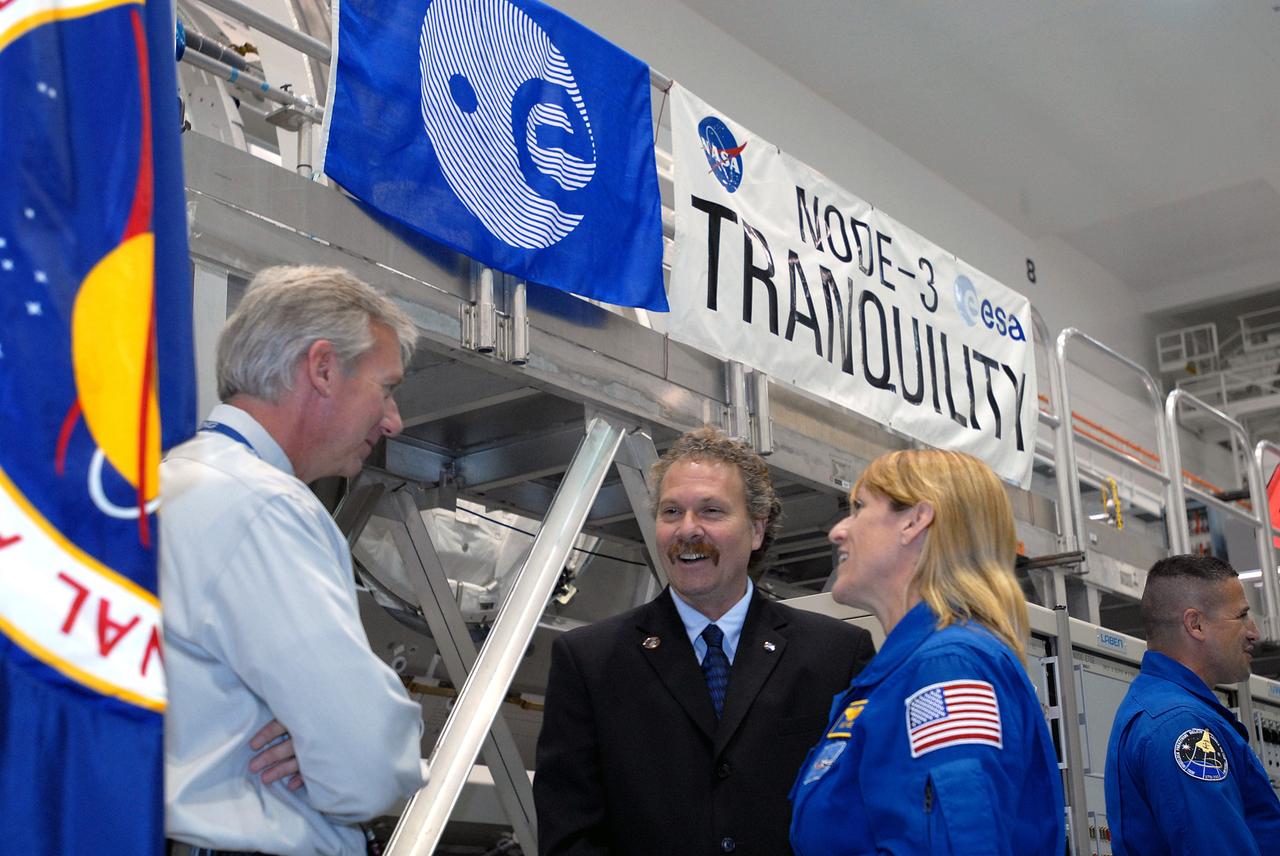
CAPE CANAVERAL, Fla. – – During a media event in the Space Station Processing Facility at NASA's Kennedy Space Center in Florida to showcase the newest section of the International Space Station, the Tranquility node, astronaut Kay Hire and Director of the ISS and Spacecraft Processing Directorate Russell Romanella (center) talk with Mark Jager, program manager, with Checkout Assembly and Payload Processing Services at The Boeing Company. At far right is astronaut George Zamka, who is commander for the STS-130 mission that will deliver Tranquility to the space station. Managers from NASA, the European Space Agency, Thales Alenia Space and Boeing -- the organizations involved in building and processing the module for flight -- were available for a question-and-answer session during the event. Tranquility is a pressurized module that will provide room for many of the station's life support systems. Photo credit: NASA/Jim Grossmann