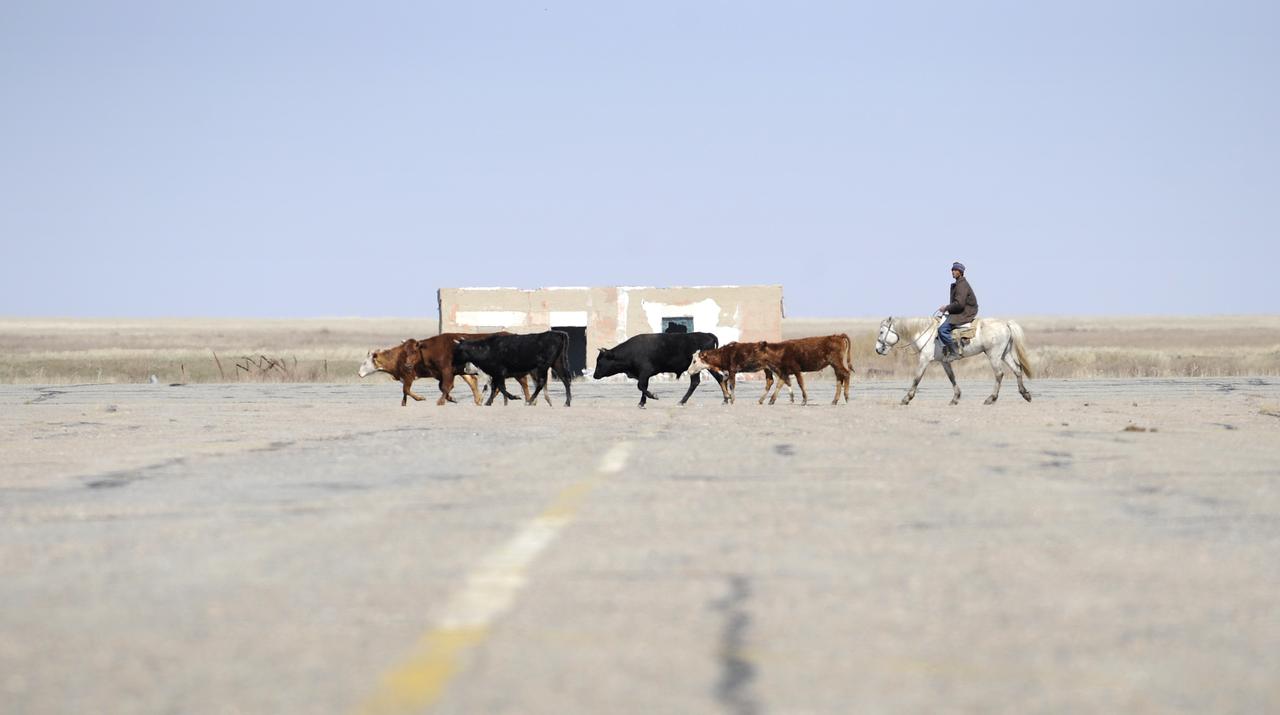
A Kazakh man herds cattle across the tarmac at the Arkalyk airport in Kazakhstan, Friday, April, 19, 2008. Arkalyk was used as one of the helicopter staging areas for the landing of the Soyuz TMA-11 spacecraft carrying Expedition 16 Commander Peggy Whitson, Flight Engineer and Soyuz Commander Yuri Malenchenko and South Korean spaceflight participant So-yeon Yi. The Soyuz made a ballistic landing, touching down more then 400 kilometers short of the intended target in central Kazakhstan. Photo Credit: (NASA/Bill Ingalls)
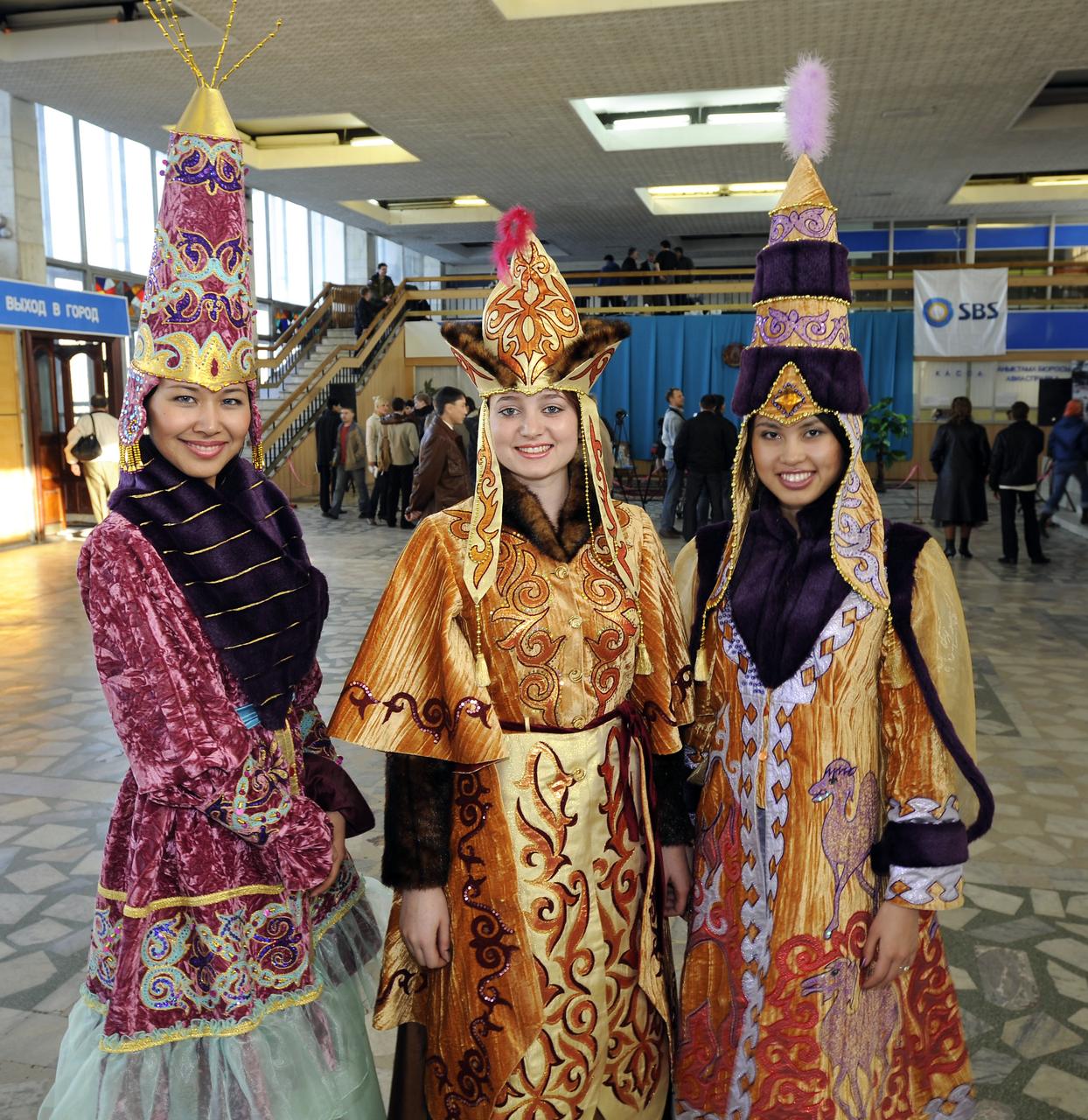
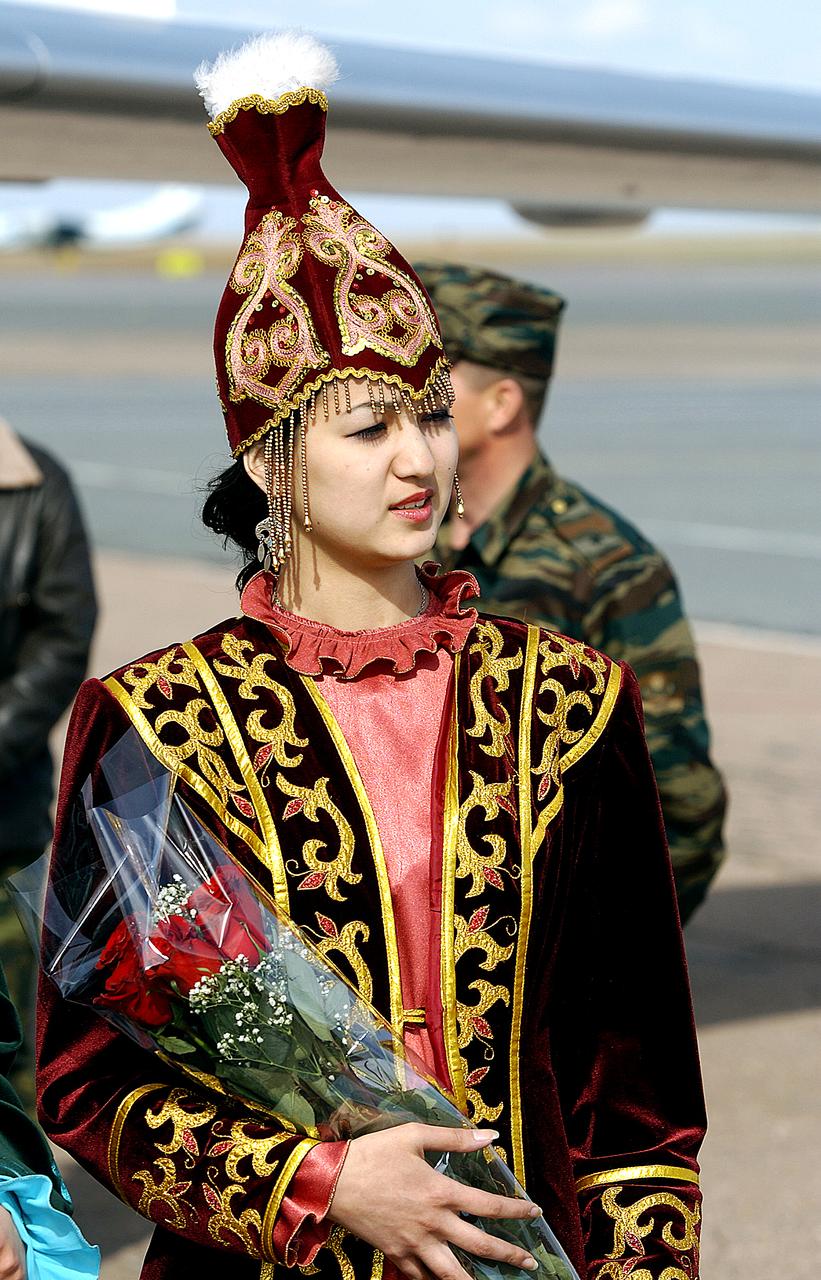
Women in traditional Kazakh dress wait to welcome Expedition 16 Commander Peggy Whitson, Flight Engineer and Soyuz Commander Yuri Malenchenko and South Korean spaceflight participant So-yeon Yi at the Kustanay airport in Kazakhstan, Friday, April 19, 2008. Whitson, Malenchenko and Yi landed their Soyuz TMA-11 capule in central Kazakhstan to complete 192 days in space for Whitson and Malenchenko and 11 days in orbit for Yi. Photo Credit: (NASA/Bill Ingalls)
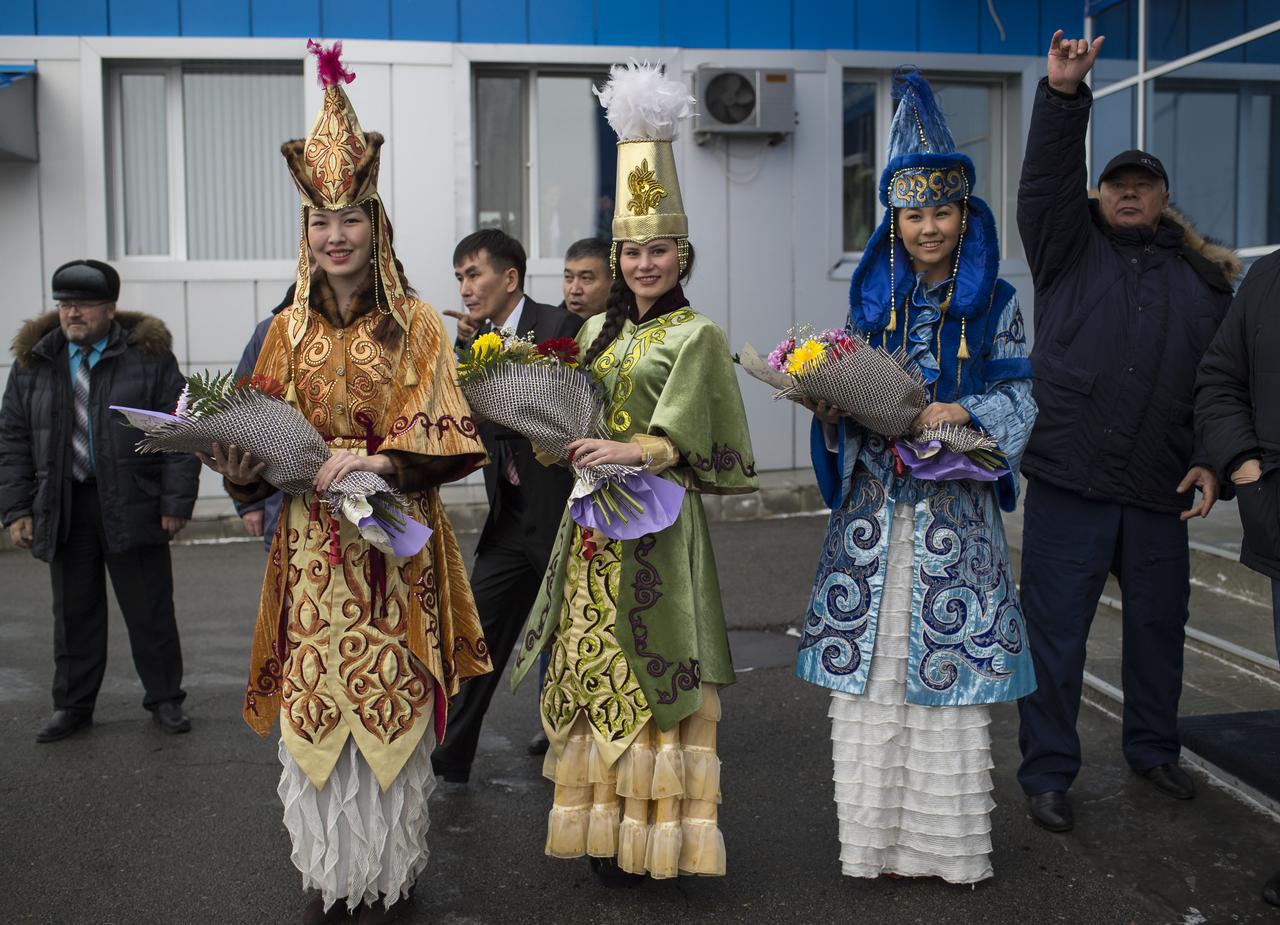
Women in ceremonial Kazakh dress prepare to welcome home Expedition 41 Commander Max Suraev of the Russian Federal Space Agency (Roscosmos), NASA Flight Engineer Reid Wiseman and Flight Engineer Alexander Gerst of the European Space Agency (ESA) at the Kustanay Airport a few hours after they landed near the town of Arkalyk, Kazakhstan on on Monday, Nov. 10, 2014. Suraev, Wiseman and Gerst returned to Earth after more than five months onboard the International Space Station where they served as members of the Expedition 40 and 41 crews. Photo Credit: (NASA/Bill Ingalls)
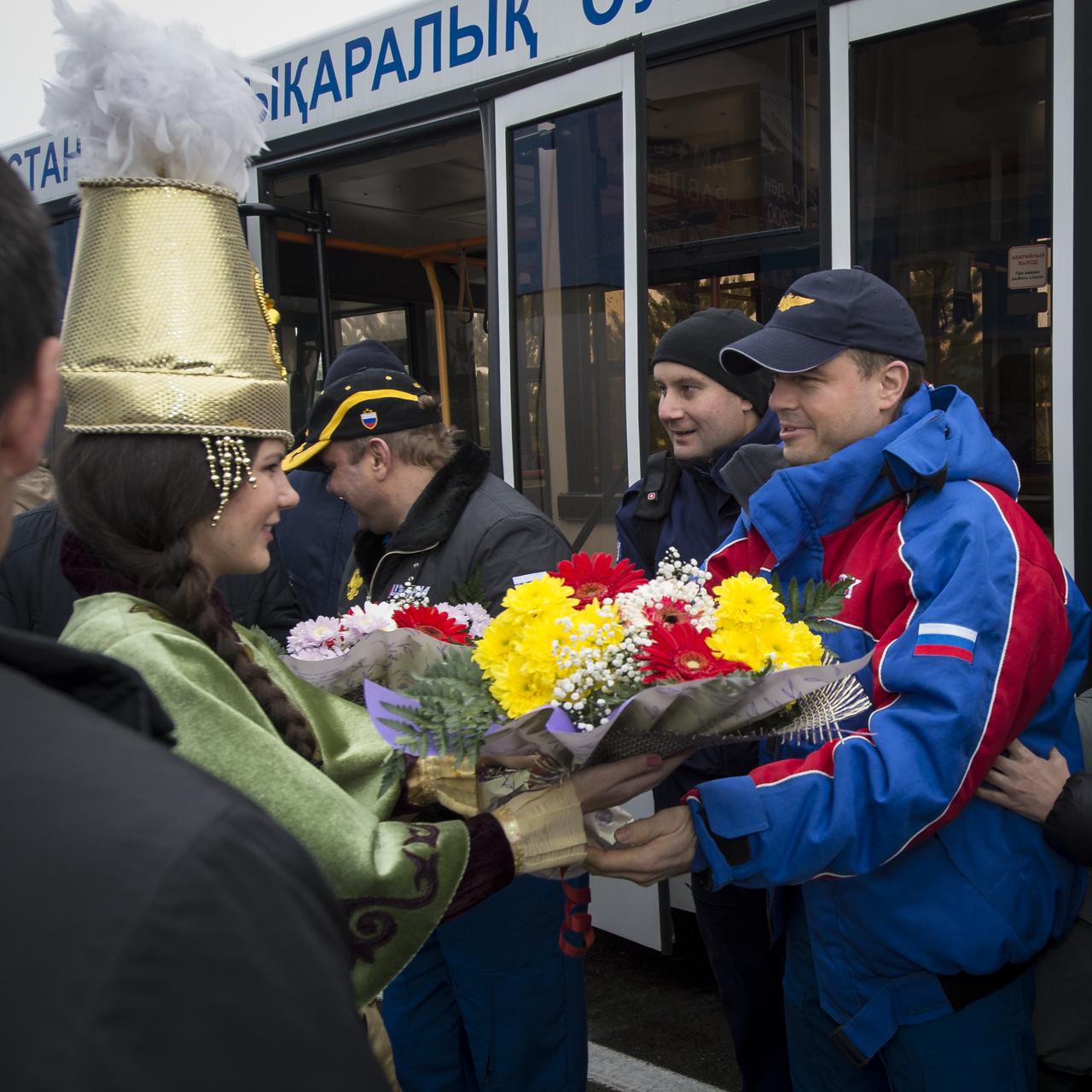
A woman in ceremonial Kazakh dress presents flowers to Expedition 41 Flight Engineer Reid Wiseman of NASA at the Kustanay Airport after he and Expedition 41 Commander Max Suraev of the Russian Federal Space Agency (Roscosmos) and Flight Engineer Alexander Gerst of the European Space Agency (ESA) landed in their Soyuz TMA-13M capsule in a remote area near the town of Arkalyk, Kazakhstan on Monday, Nov. 10, 2014. Suraev, Wiseman and Gerst returned to Earth after more than five months onboard the International Space Station where they served as members of the Expedition 40 and 41 crews. Photo Credit: (NASA/Bill Ingalls)
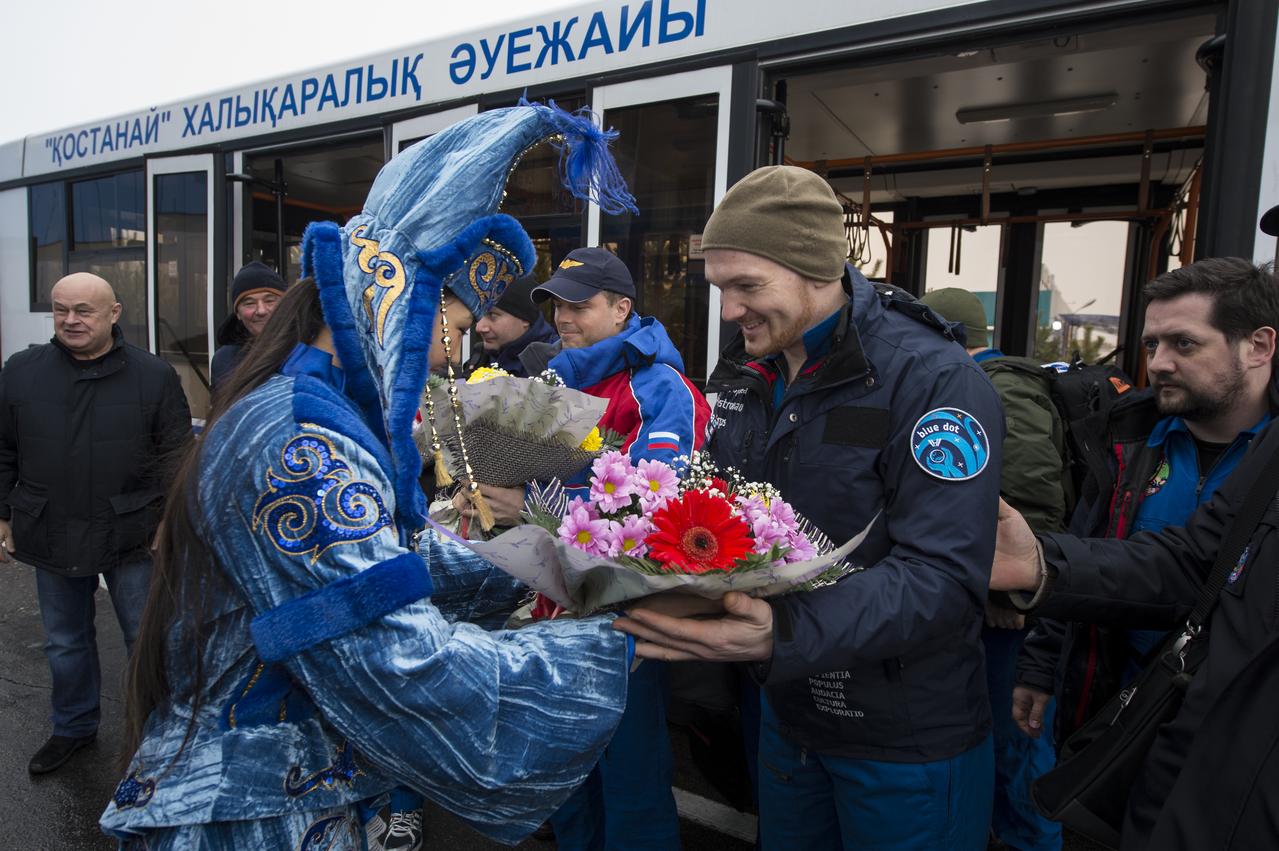
A woman in ceremonial Kazakh dress presents flowers to Expedition 41 Flight Engineer Alexander Gerst of the European Space Agency (ESA) at the Kustanay Airport after he and Expedition 41 Commander Max Suraev of the Russian Federal Space Agency (Roscosmos) and Flight Engineer Reid Wiseman of NASA landed in their Soyuz TMA-13M capsule in a remote area near the town of Arkalyk, Kazakhstan on Monday, Nov. 10, 2014. Suraev, Wiseman and Gerst returned to Earth after more than five months onboard the International Space Station where they served as members of the Expedition 40 and 41 crews. Photo Credit: (NASA/Bill Ingalls)

JSC2014-E-079812 (5 Sept. 2014) --- Accompanied by his wife and daughters at the Gagarin Cosmonaut Training Center in Star City, Russia, Expedition 41 Flight Engineer Barry Wilmore of NASA takes a walk through the Gagarin Museum Sept. 5. Wilmore, Alexander Samokutyaev of the Russian Federal Space Agency (Roscosmos) and Elena Serova of Roscosmos are scheduled to launch from the Baikonur Cosmodrome in Kazakhstan on Sept. 26, Kazakh time, in their Soyuz TMA-14M spacecraft for a 5 ? month mission on the International Space Station. Serova will become the fourth Russian woman to fly in space and the first Russian woman to conduct a long duration mission on the station. Photo credit: NASA/Stephanie Stoll
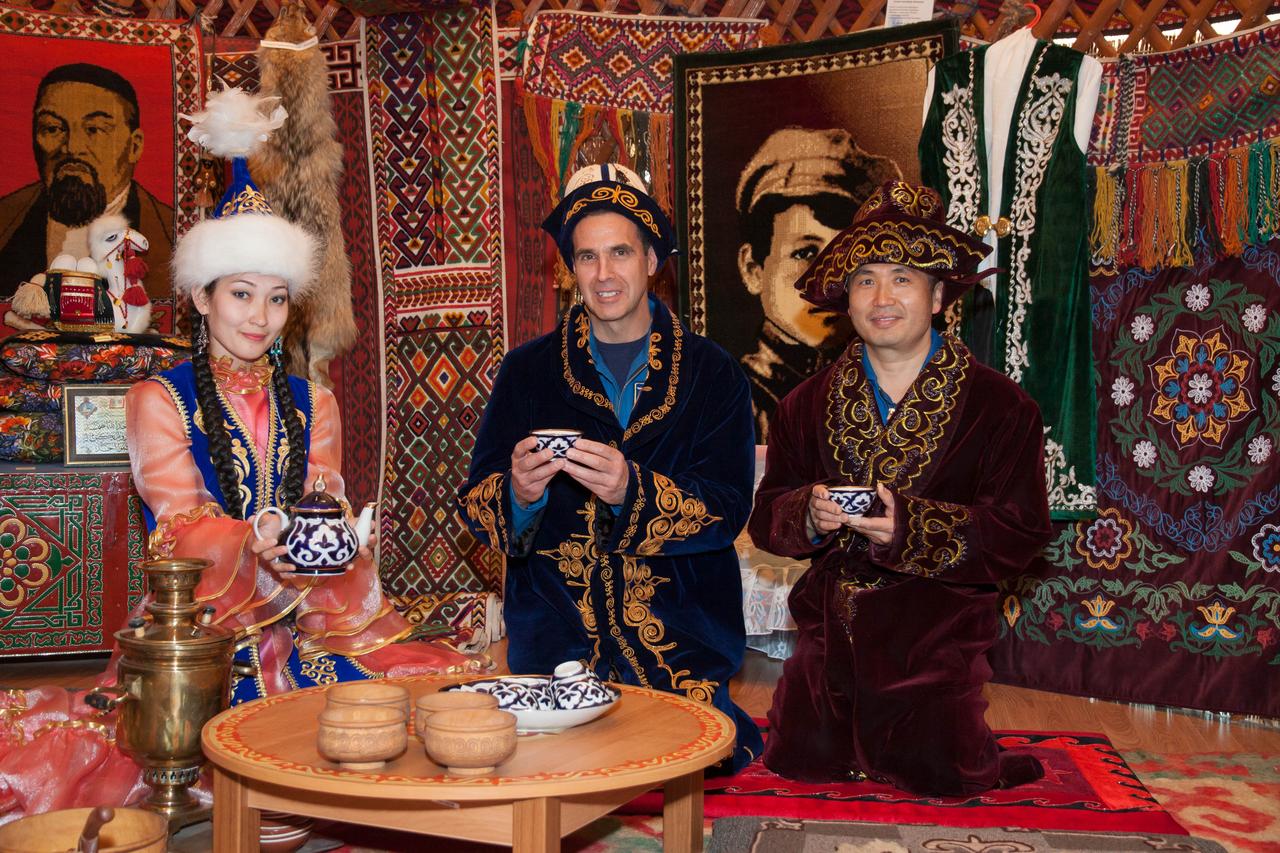
Joining their unidentified Kazakh host (left), Expedition 36/37 backup crewmembers Rick Mastracchio of NASA (center) and Koichi Wakata of the Japan Aerospace Exploration Agency (right) enjoy a traditional Kazakh meal in a Kazakh tent known as a “yurt” in Baikonur, Kazakhstan May 19. Their visit, along with backup crewmate Mikhail Tyurin was part of traditional ceremonies as they serve as backups to prime crewmembers Karen Nyberg of NASA, Soyuz Commander Fyodor Yurchikhin and Luca Parmitano of the European Space Agency, who are preparing for launch May 29, Kazakh time, in their Soyuz TMA-09M spacecraft to begin a 5 ½ month mission on the International Space Station. NASA/Victor Zelentsov
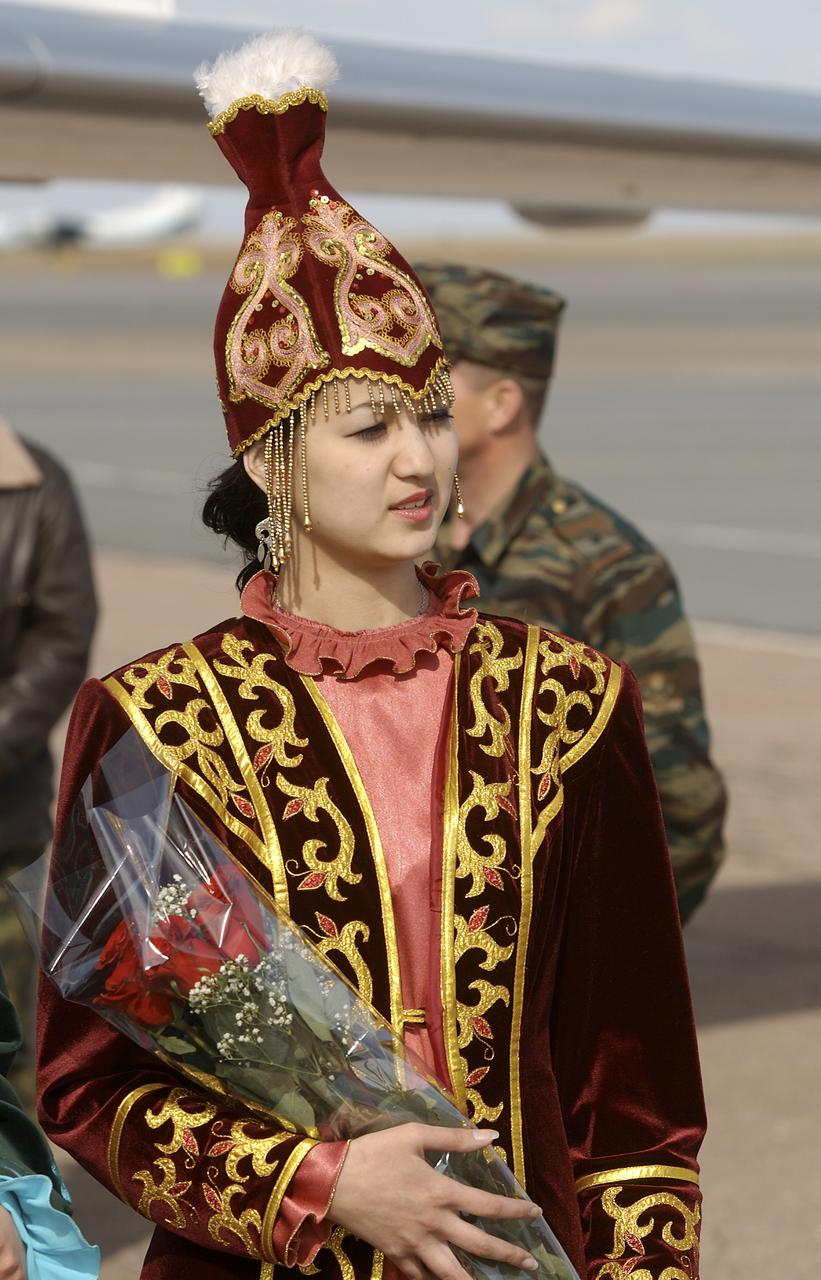
One of three local Kazakh girls who were on hand at the International Airport Astana to welcome the Expedition 6 crew with roses after the crew landed on the Kazakh steppe in their Soyuz capsule, Tuesday, May 4, 2003 in Astana, Kazakhstan. Photo Credit: (NASA/Bill Ingalls)
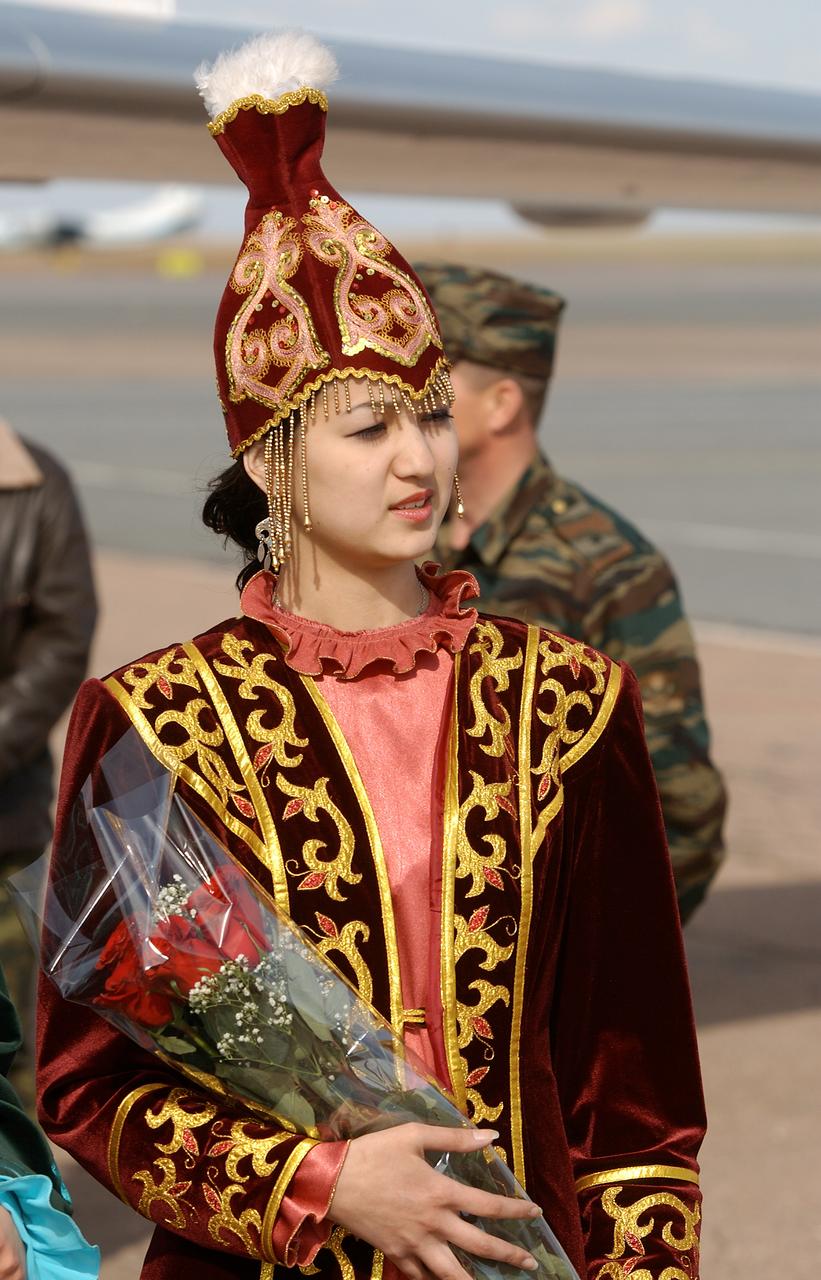
May 4, 2003, Astana, Kazakhstan. One of three local Kazakh girls who were on hand at the Astana airport to welcome the Expedition Six crew with Roses after the crew landed on the Kazakh Steppe in their Soyuz capsule. Photo Credit: "NASA/Bill Ingalls"
May 4, 2003, Astana, Kazakhstan. One of three local Kazakh girls who were on hand at the Astana airport to welcome the Expedition Six crew with Roses after the crew landed on the Kazakh Steppe in their Soyuz capsule. Photo Credit: "NASA/Bill Ingalls"

The Expedition 30 backup crewmembers sample local food served by a Kazakh host inside a model of a primitive Kazakh hut-type house during a tour of a museum near their launch site in Baikonur, Kazakhstan Dec. 11, 2011. Clad in traditional Kazakh garb are backup Flight Engineer Suni Williams of NASA (second from the left), backup Soyuz Commander Yuri Malenchenko and backup Flight Engineer Aki Hoshide of the Japan Aerospace Exploration Agency. The prime crewmembers, NASA’s Don Pettit, Oleg Kononenko and Andre Kuipers of the European Space Agency will launch to the International Space Station Dec. 21 from the Baikonur Cosmodrome in their Soyuz TMA-03M spacecraft. Credit: NASA
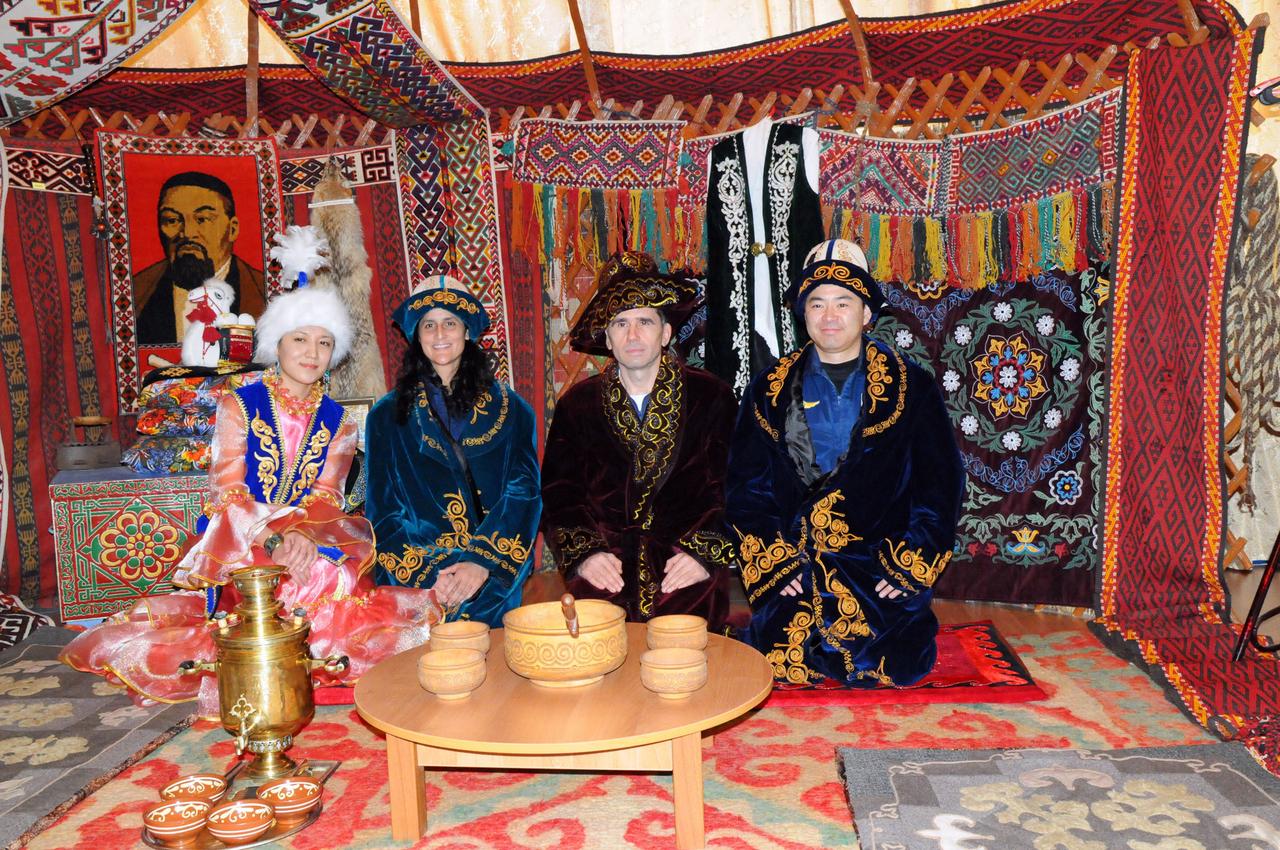
The Expedition 30 backup crewmembers pose for pictures with a Kazakh host inside a model of a primitive Kazakh hut-type house during a tour of a museum near their launch site in Baikonur, Kazakhstan Dec. 11, 2011. Clad in traditional Kazakh garb are backup Flight Engineer Suni Williams of NASA (second from the left), backup Soyuz Commander Yuri Malenchenko and backup Flight Engineer Aki Hoshide of the Japan Aerospace Exploration Agency. The prime crewmembers, NASA’s Don Pettit, Oleg Kononenko and Andre Kuipers of the European Space Agency will launch to the International Space Station Dec. 21 from the Baikonur Cosmodrome in their Soyuz TMA-03M spacecraft. Credit: NASA
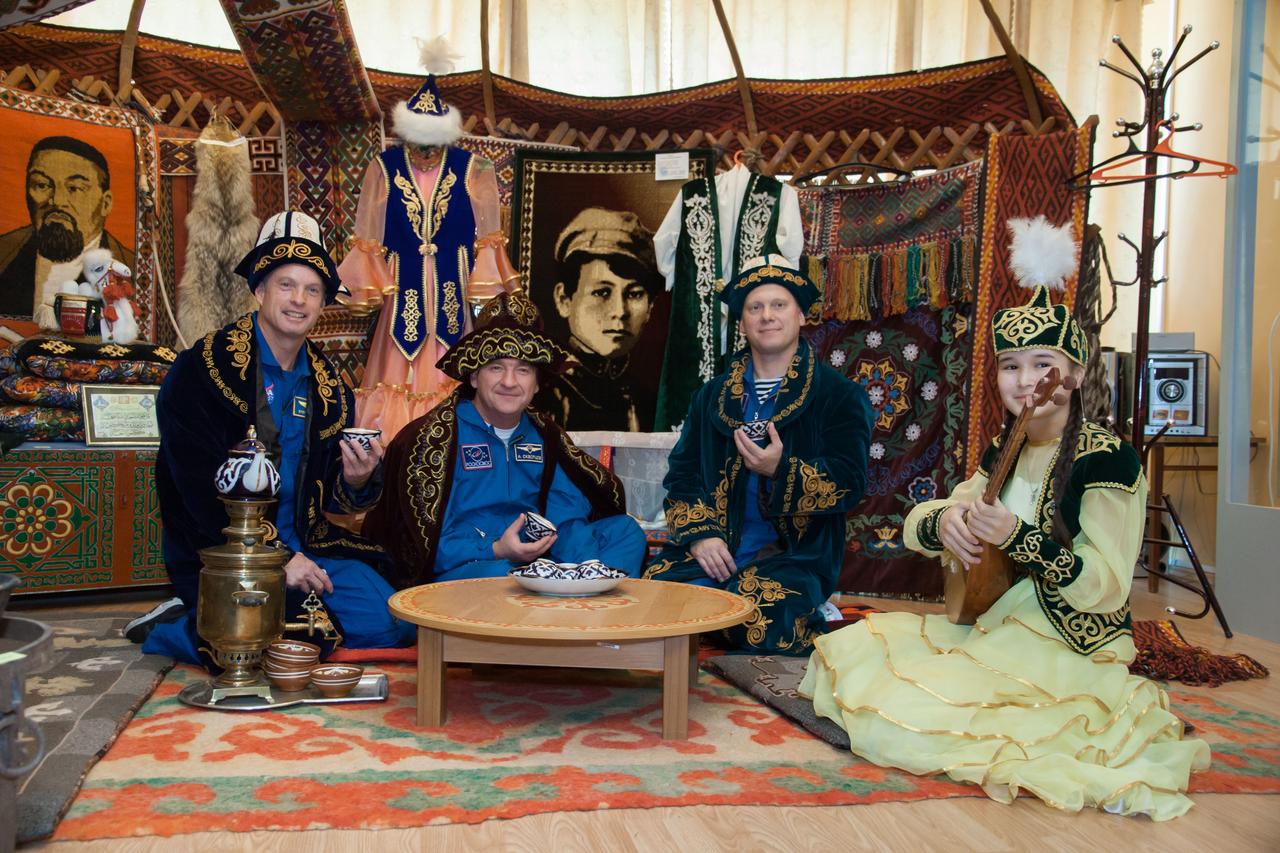
Dressed in traditional Kazakh garb, Expedition 37/38 backup crewmembers Steve Swanson of NASA (left), Alexander Skvortsov (center) and Oleg Artemyev (right) enjoy festivities and a Kazakh meal in Baikonur, Kazakhstan Sept. 17. Swanson, Skvortsov and Artemyev are serving as backups to the prime crewmembers, Flight Engineer Michael Hopkins of NASA, Soyuz Commander Oleg Kotov and Flight Engineer Sergey Ryazanskiy, who are preparing for launch Sept. 26, Kazakh time from the Baikonur Cosmodrome in the Soyuz TMA-10M spacecraft for a five and a half month mission on the International Space Station. NASA/Victor Zelentsov
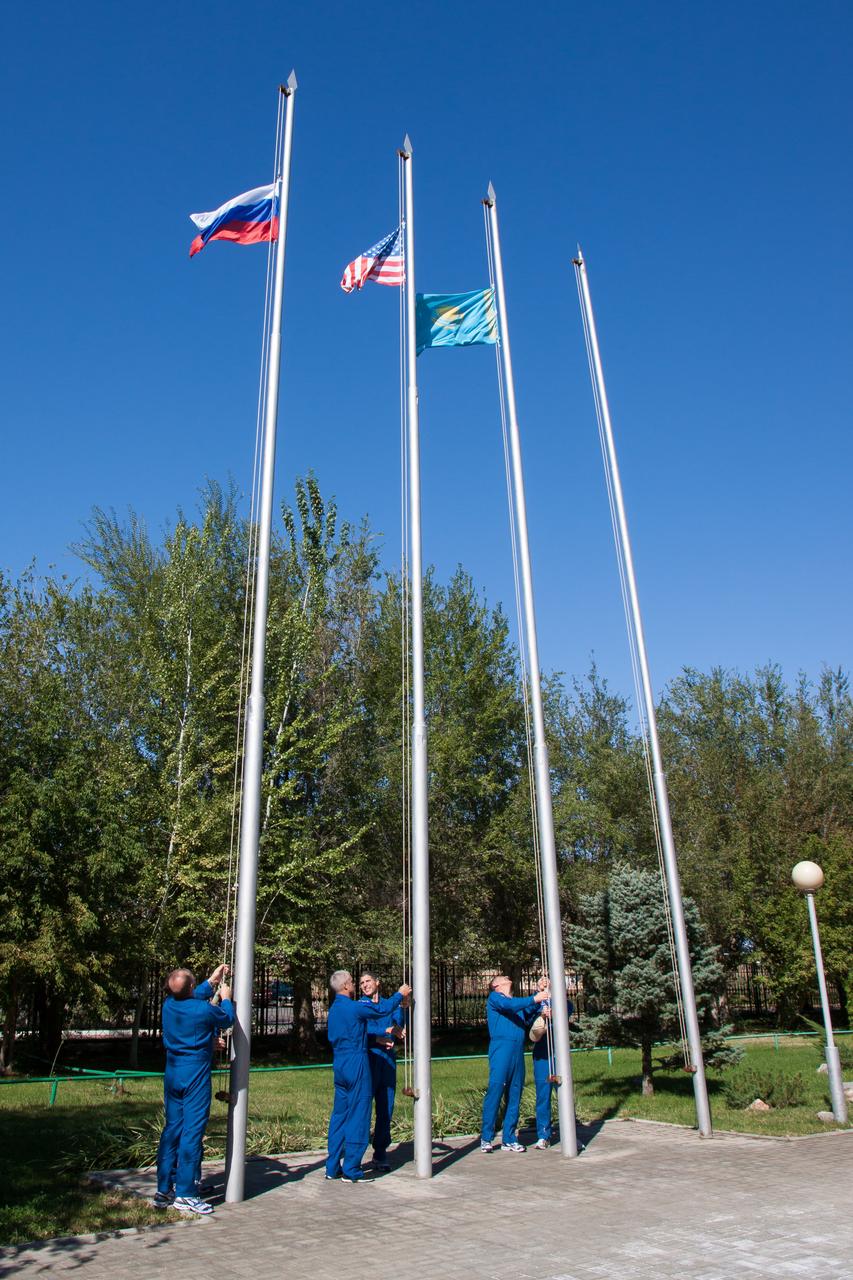
At their Cosmonaut Hotel crew quarters in Baikonur, Kazakhstan, the Expedition 37/38 prime and backup crewmembers raise the U.S., Russian and Kazakh flags Sept. 15 in a traditional ceremony. The event was part of the activities that will lead to the launch Sept. 26, Kazakh time, of Michael Hopkins of NASA, Oleg Kotov and Sergey Ryazanskiy from the Baikonur Cosmodrome on their Soyuz TMA-10M spacecraft to begin a five and a half month mission on the International Space Station. NASA/Victor Zelentsov
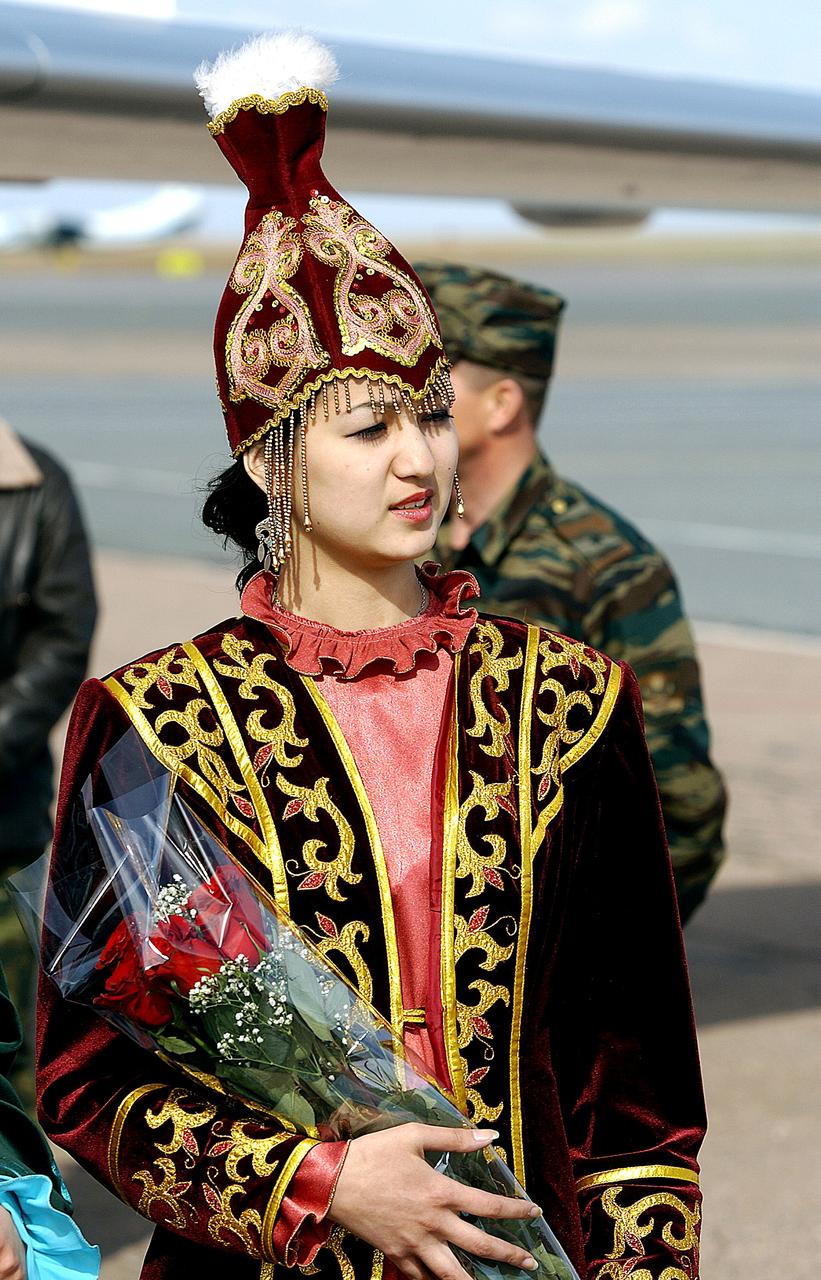
ASTANA, KAZAKHSTAN - One of three local Kazakh girls who were on hand at the Astana airport to welcome the Expedition Six crew with roses after the crew landed on the Kazakh Steppe in their Soyuz capsule. The Expedition Six crew spent 161 days in space, 159 manning the International Space Station. Photo Credit: NASA/Bill Ingalls
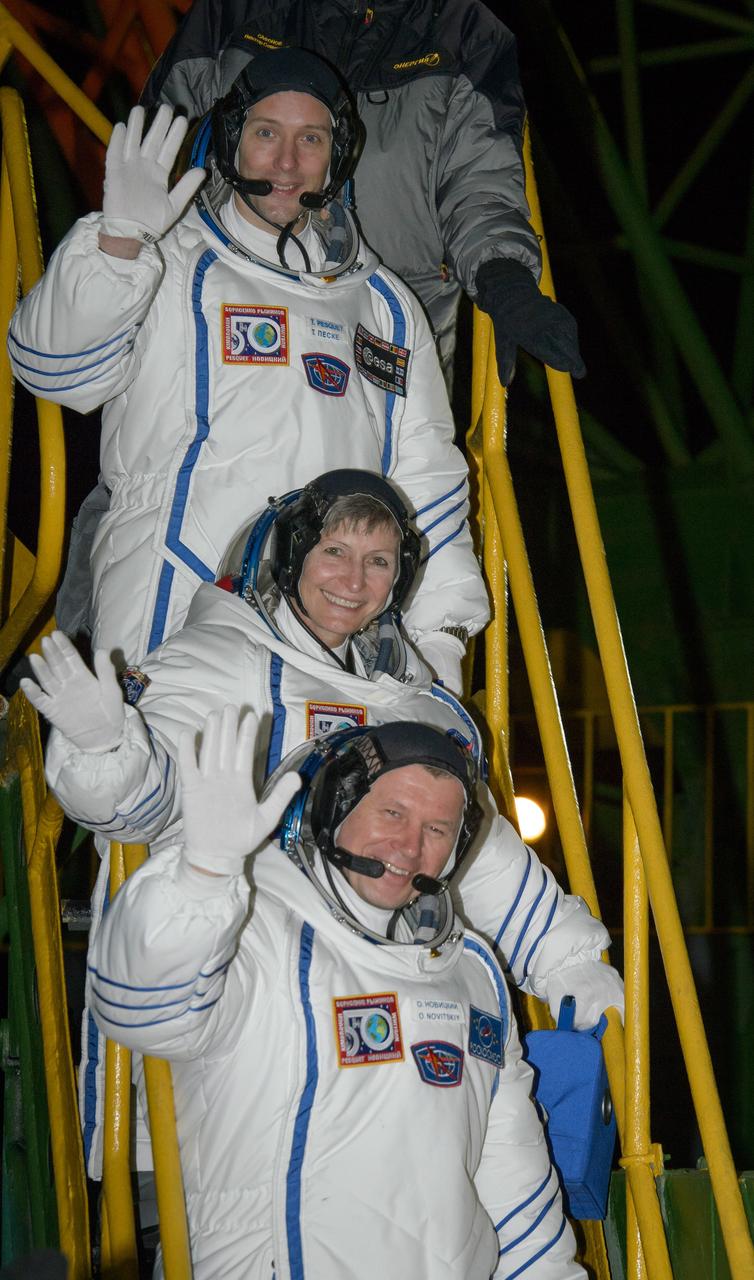
nhq201611170001 (Nov. 17, 2016) --- Expedition 50 crewmembers ESA astronaut Thomas Pesquet, top, NASA astronaut Peggy Whitson, middle, and Russian cosmonaut Oleg Novitskiy of Roscosmos wave farewell before boarding their Soyuz MS-03 spacecraft for launch Thursday, Nov. 17, 2016, (Kazakh Time) in Baikonur, Kazakhstan. The trio will launch from the Baikonur Cosmodrome in Kazakhstan the morning of November 18 (Kazakh time.) All three will spend approximately six months on the orbital complex. Photo Credit: (NASA/Bill Ingalls)

Wearing native garb, Expedition 49 backup crewmembers Mark Vande Hei of NASA and Alexander Misurkin and Nikolai Tikhonov of Roscosmos enjoy a cup a tea in a traditional Kazakh setting at a local museum Sept. 10 while on a tour of the city of Baikonur, Kazakhstan. They are serving as backups to Shane Kimbrough of NASA and Sergey Ryzhikov and Andrey Borisenko of Roscosmos, who will launch on Sept. 24, Kazakh time from the Baikonur Cosmodrome in Kazakhstan on the Soyuz MS-02 vehicle for a five-month mission on the International Space Station. NASA/Victor Zelentsov
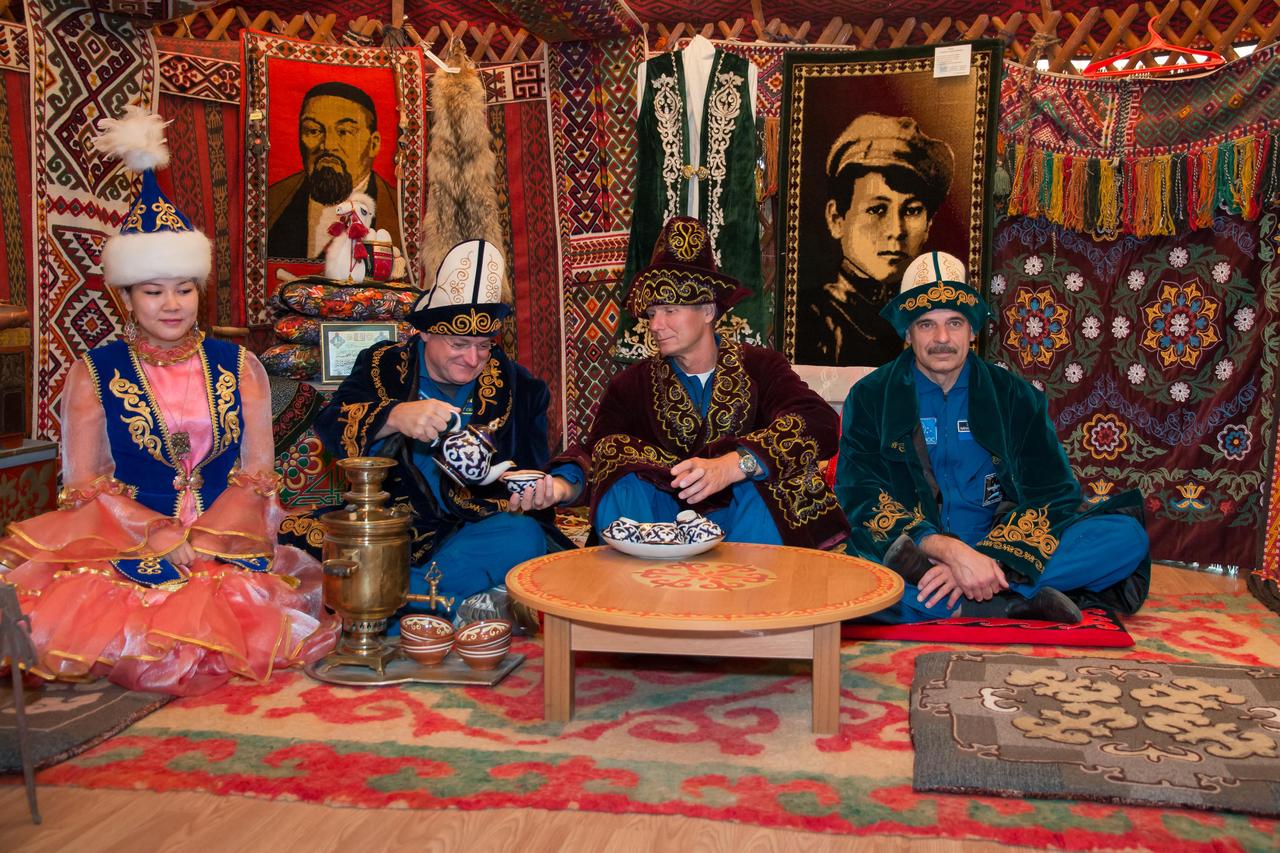
14-12-59-00: (14 Sept. 2014) --- Wearing native Kazakh clothing, Expedition 41/42 backup crewmembers Scott Kelly of NASA (second from left), Gennady Padalka of the Russian Federal Space Agency (Roscosmos, second from right) and Mikhail Kornienko of Roscosmos (far right) enjoy the ambiance of a traditional Kazakh lunch in a “yurt”, or tent, during a tour of Baikonur, Kazakhstan Sept. 14. Kelly and Kornienko will launch from Baikonur in March 2015 to spend a full year on the International Space Station. They are backups to Barry Wilmore of NASA, Alexander Samokutyaev of the Russian Federal Space Agency (Roscosmos) and Elena Serova of Roscosmos. Wilmore, Samokutyaev and Serova will launch on Sept. 26, Kazakh time, in the Soyuz TMA-14M spacecraft to begin a 5 ½ month mission on the station. Serova will become the fourth Russian woman to fly in space. NASA/Victor Zelentsov
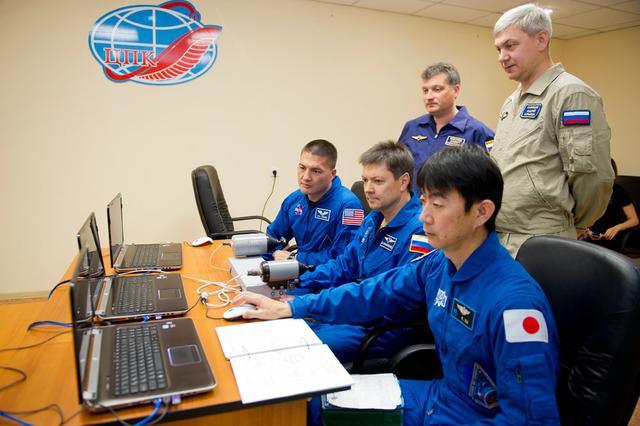
3918: At the Cosmonaut Hotel crew quarters in Baikonur, Kazakhstan, Expedition 44 crewmembers Kjell Lindgren of NASA (left), Oleg Kononenko of the Russian Federal Space Agency (center) and Kimiya Yui of the Japan Aerospace Exploration Agency (right) rehearse rendezvous and docking techniques on a laptop computer as their trainers look on July 15. Yui, Kononenko and Lindgren will launch July 23, Kazakh time on the Soyuz TMA-17M spacecraft from the Baikonur Cosmodrome for a five-month mission on the International Space Station.
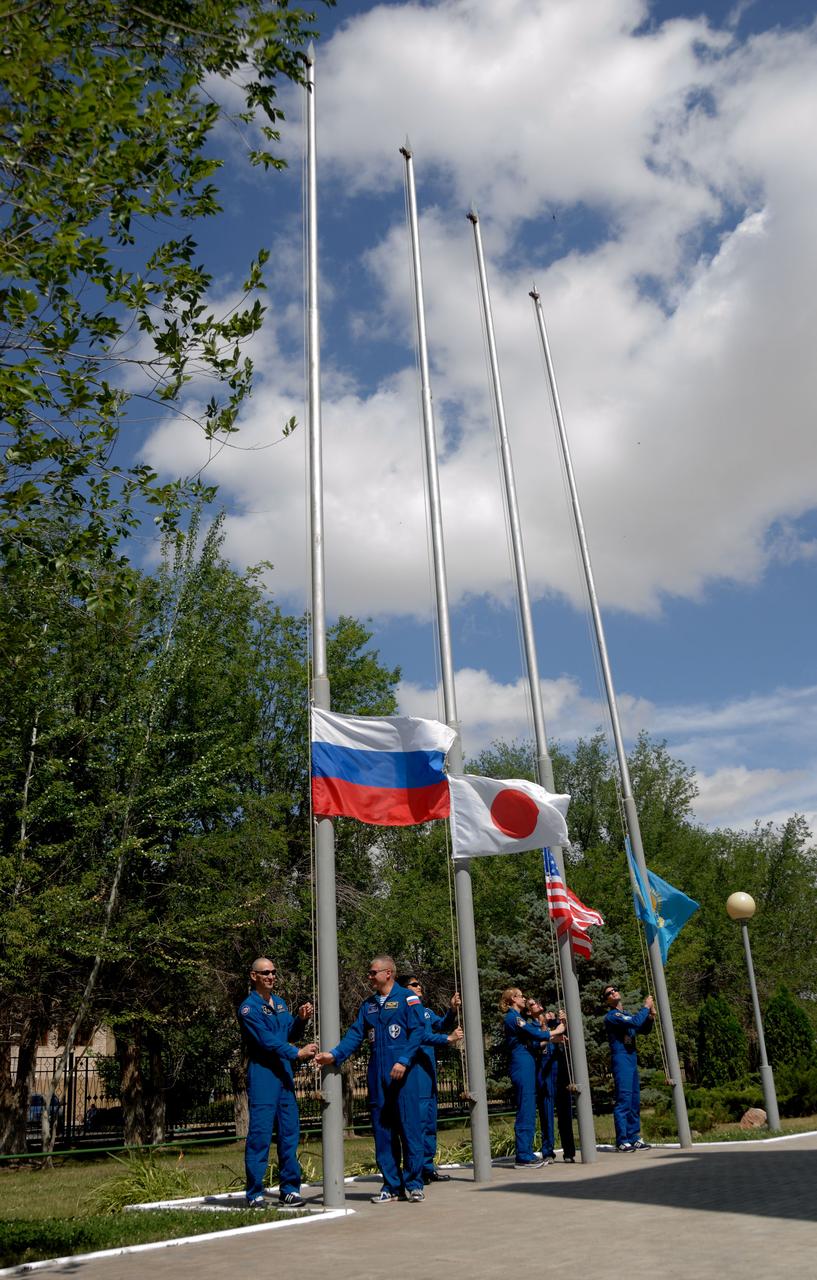
Outside their Cosmonaut Hotel crew quarters in Baikonur, Kazakhstan, the Expedition 48-49 prime and backup crewmembers conduct the traditional raising of the Russian, Japanese, American and Kazakh flags June 26. Prime crewmembers Kate Rubins of NASA, Anatoly Ivanishin of Roscosmos and Takuya Onishi of the Japan Aerospace Exploration Agency will launch on July 7, Baikonur time, on the Soyuz MS-01 spacecraft for a planned four-month mission on the International Space Station. NASA/Alexander Vysotsky
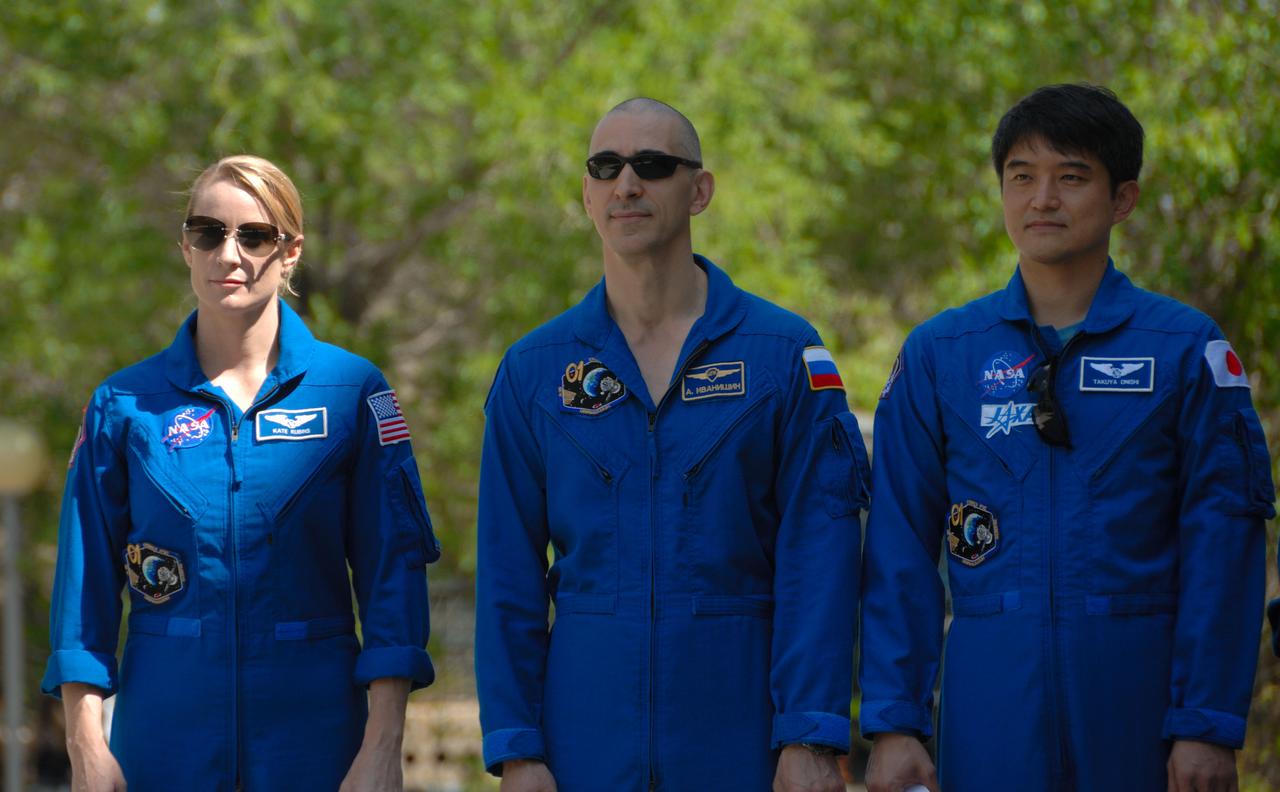
Outside their Cosmonaut Hotel crew quarters in Baikonur, Kazakhstan, Expedition 48-49 crewmembers Kate Rubins of NASA (left), Anatoly Ivanishin of Roscosmos (center) and Takuya Onishi of the Japan Aerospace Exploration Agency (right) listen to remarks June 26 during the traditional raising of the American, Russian, Japanese and Kazakh flags. The trio will launch on July 7, Baikonur time, on the Soyuz MS-01 spacecraft for a planned four-month mission on the International Space Station. NASA/Alexander Vysotsky
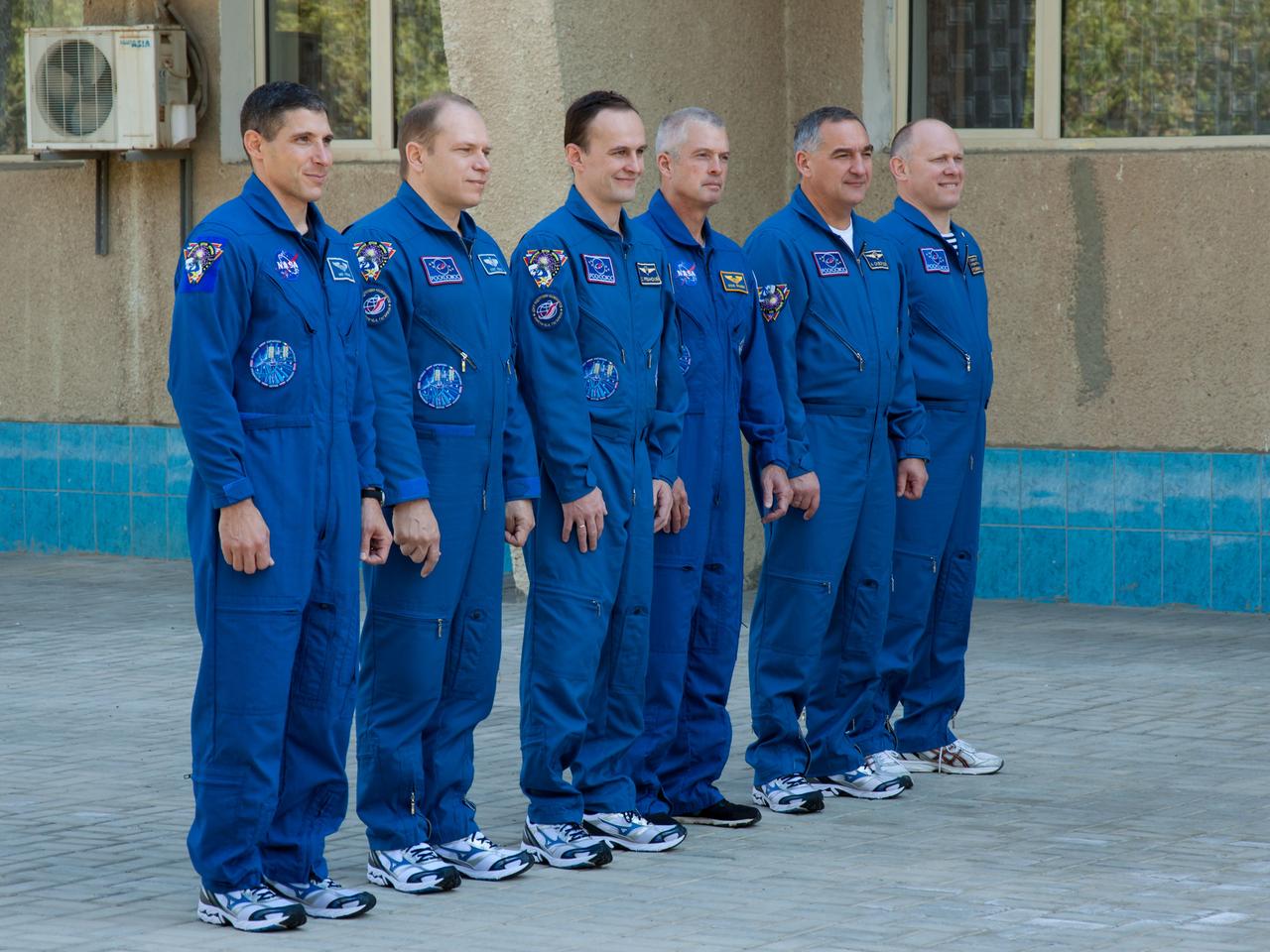
At their Cosmonaut Hotel crew quarters in Baikonur, Kazakhstan, the Expedition 37/38 prime and backup crewmembers participate in ceremonies following the traditional raising of U.S., Russian and Kazakh flags Sept. 15. From left to right are prime crewmembers Michael Hopkins of NASA, Oleg Kotov and Sergey Ryazanskiy and their backups, Steve Swanson of NASA, Alexander Skvortsov and Oleg Artemyev. Hopkins, Kotov and Ryazanskiy are preparing for launch Sept. 26, Kazakh time, from Baikonur on their Soyuz TMA-10M spacecraft to begin a five and a half month mission on the International Space Station. NASA/Victor Zelentsov

jsc2017e040350 (April 7, 2017) --- In Baikonur, Kazakhstan, Expedition 51 backup crewmembers Sergey Ryazanskiy of the Russian Federal Space Agency (Roscosmos, center) and Randy Bresnik of NASA (right) sample local tea in a traditional Kazakh “yurt” or tent April 7 while wearing traditional Kazakh robes and hats. They are serving as backups to Fyodor Yurchikhin of Roscosmos and Jack Fischer of NASA, who will launch April 20 on the Soyuz MS-04 spacecraft from the Baikonur Cosmodrome for a four and a half month mission on the International Space Station. NASA/Victor Zelentsov
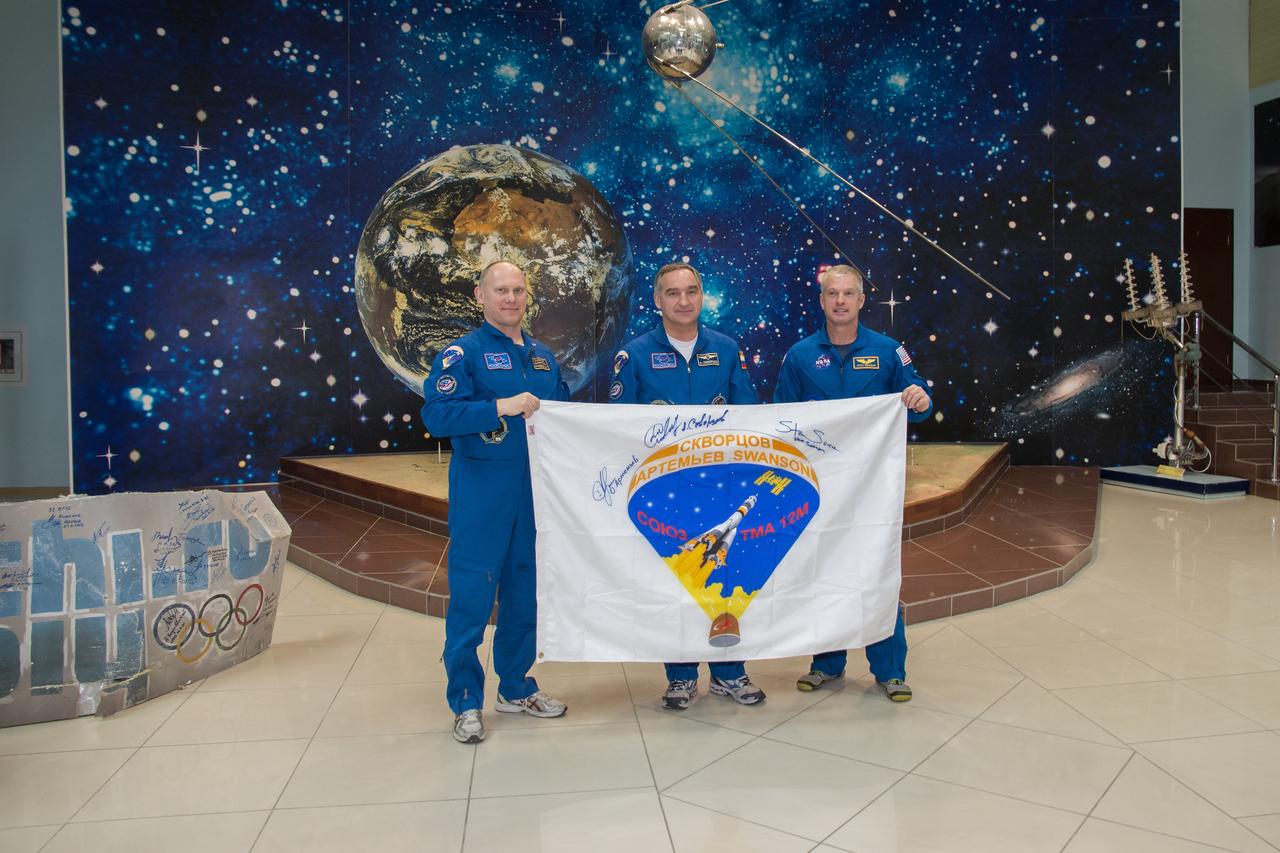
13-26-08: In the Baikonur Cosmodrome Museum in Kazakhstan, Expedition 39/40 Flight Engineer Oleg Artemyev of the Russian Federal Space Agency (Roscosmos; left), Soyuz Commander Alexander Skvortsov of Roscosmos (center) and Flight Engineer Steve Swanson of NASA (right) hold a banner bearing the insignia of their Soyuz crew patch March 21 during traditional ceremonies. Swanson, Skvortsov and Artemyev are wrapping up training for their launch to the station March 26, Kazakh time, Swanson, Skvortsov and Artemyev are wrapping up training for their launch to the station March 26, Kazakh time, on the Soyuz TMA-12 spacecraft for a six-month mission on the orbital laboratory. NASA/Victor Zelentsov
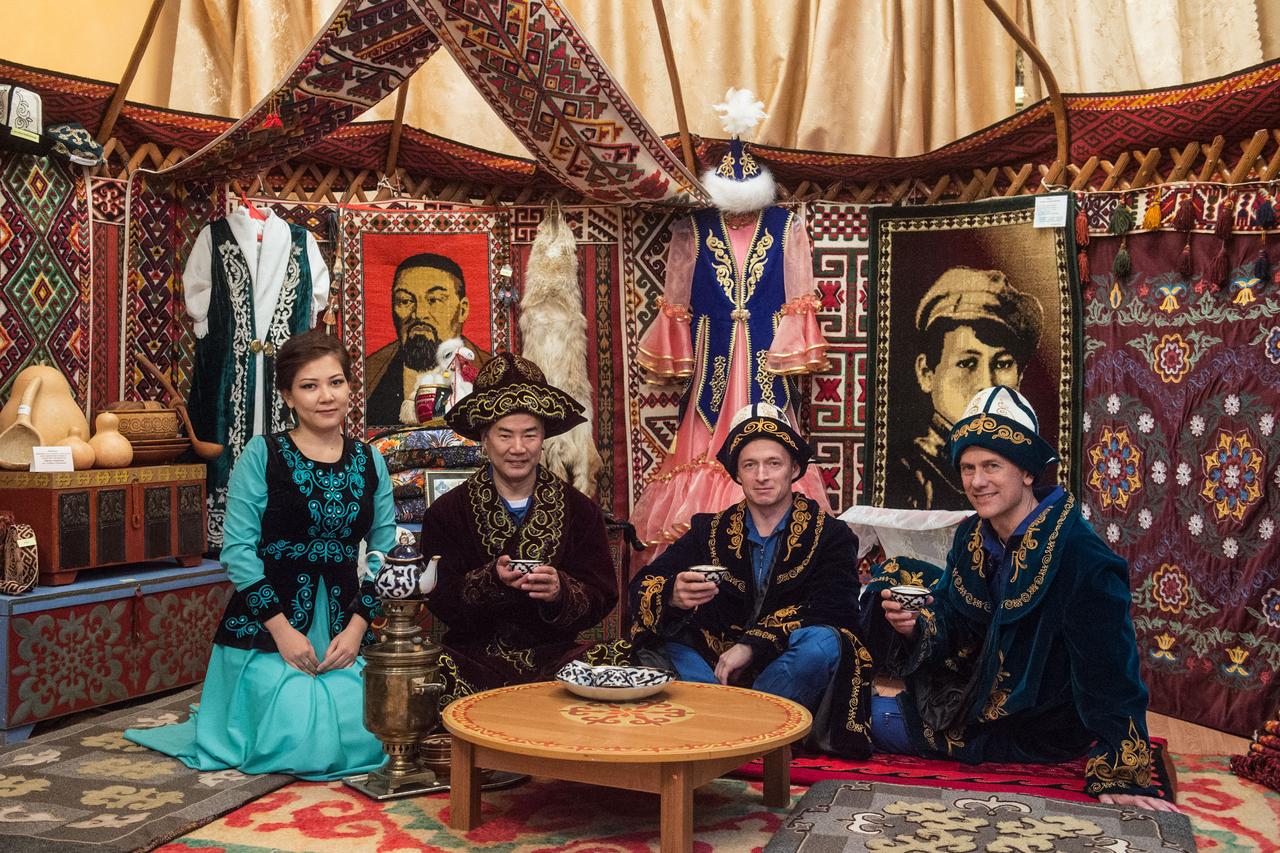
jsc2019e038391 - At the Baikonur Museum in the town of Baikonur, Kazakhstan, Expedition 60 backup crewmembers Soichi Noguchi of the Japan Aerospace Exploration Agency (second from left), Sergey Ryzhikov of Roscosmos (second from right) and Tom Marshburn of NASA (right) pose for pictures July 6 in traditional Kazakh garb in a yurt, or Kazakh dwelling, during pre-launch activities. They are the backups to the prime crew, Drew Morgan of NASA, Luca Parmitano of the European Space Agency and Alexander Skvortsov of Roscosmos, who will launch July 20 on the Soyuz MS-13 spacecraft from the Baikonur Cosmodrome in Kazakhstan for a mission on the International Space Station...Andrey Shelepin/GCTC..

The Expedition 38/39 backup crewmembers participate in a traditional meal in a Kazakh “yurt” or tent October 27 during a tour of Baikonur, Kazakhstan. NASA’s Reid Wiseman (left), Max Suraev (center) and Alexander Gerst of the European Space Agency (right) are understudies to the prime crew, Koichi Wakata of the Japan Aerospace Exploration Agency, Soyuz Commander Mikhail Tyurin and Rick Mastracchio of NASA, who will launch Nov. 7, Kazakh time, in the Soyuz TMA-11M spacecraft from Baikonur to begin a six-month mission on the International Space Station. NASA/Victor Zelentsov
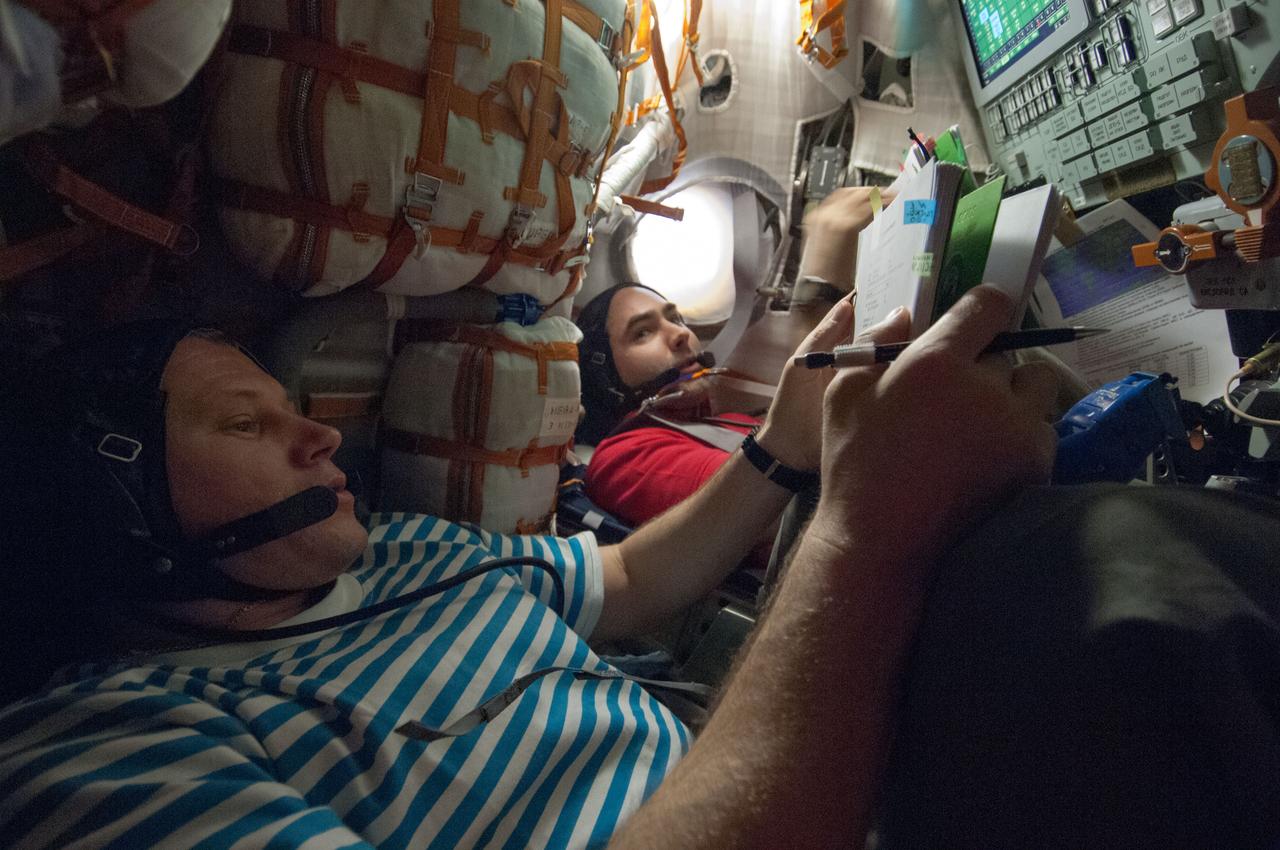
ISS034-E-066640 (11 March 2013) --- Russian cosmonauts Oleg Novitskiy (foreground), and Evgeny Tarelkin, both Expedition 34 flight engineers, participate in descent training in the Soyuz TMA-06M spacecraft, which is docked to the International Space Station. Undocking and landing are scheduled for March 16, Kazakh time.
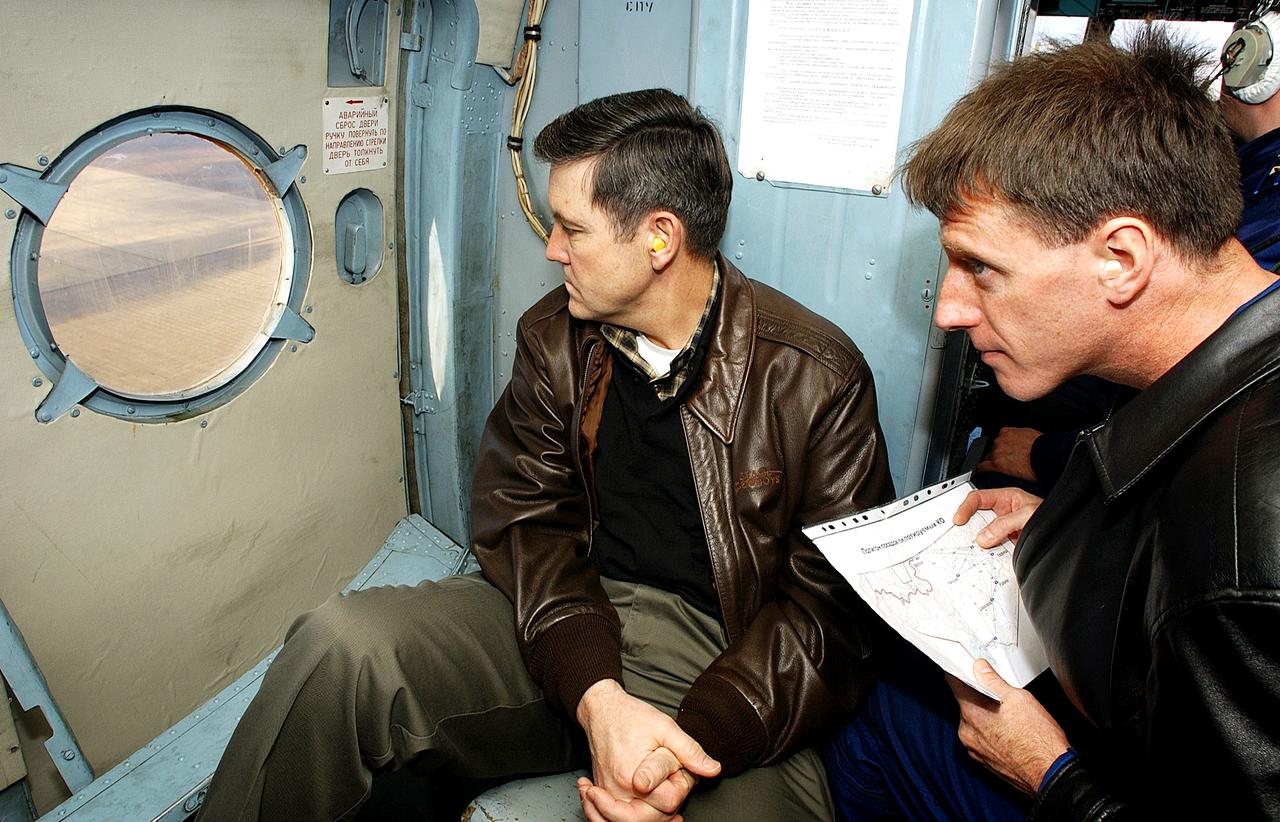
May 4, 2003, Kazakhstan. From the seat of a Russian Helicopter, Bob Cabana (L), Director of Flight Crew Operations and Astronaut Michael Foale (R) look out over the Kazakh terrain for the Expedition Six Soyuz capsule after it's landing in Kazakhstan. Photo Credit: "NASA/Bill Ingalls"
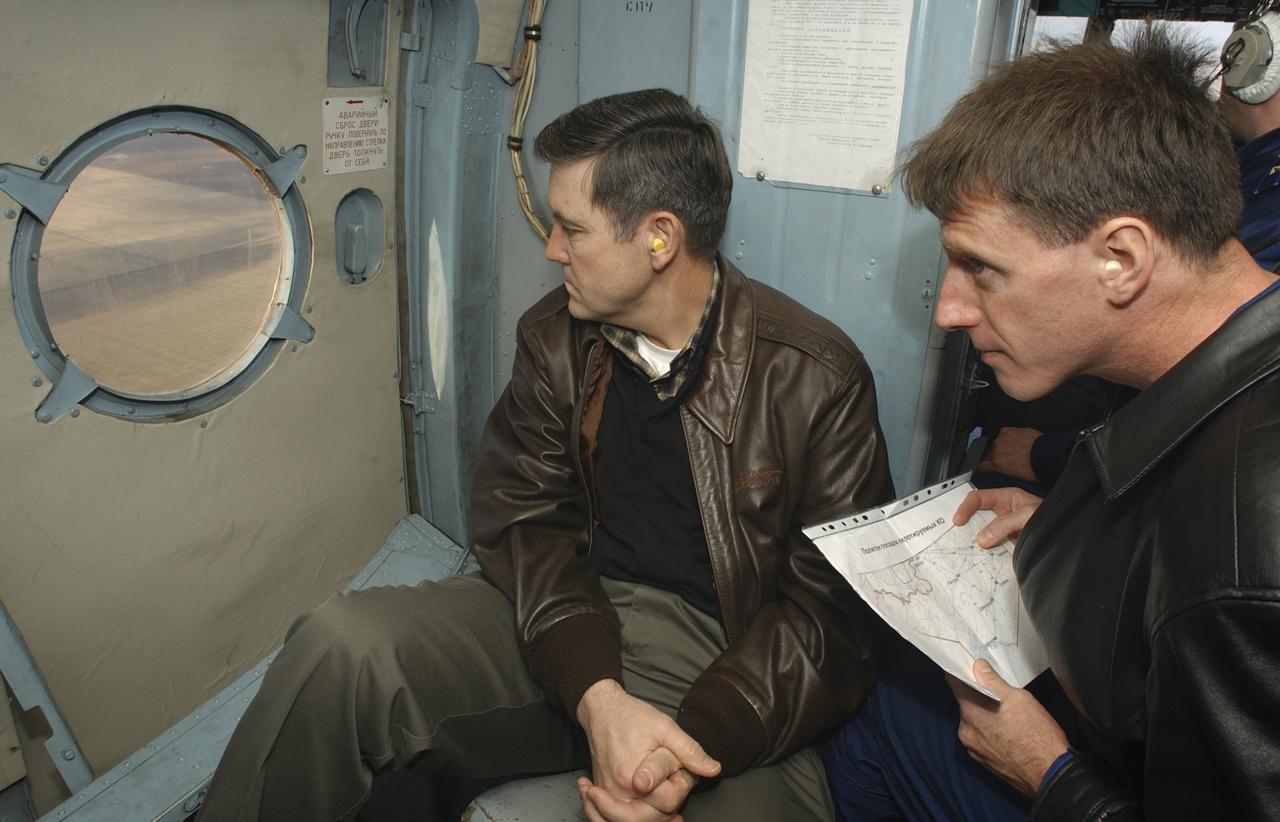
From the seat of a Russian helicopter, Bob Cabana, left, Director of Flight Crew Operations and astronaut Michael Foale look out over the Kazakh terrain for the Expedition 6 Soyuz capsule after its landing on Tuesday, May 4, 2003, in Kazakhstan. Photo Credit: (NASA/Bill Ingalls)
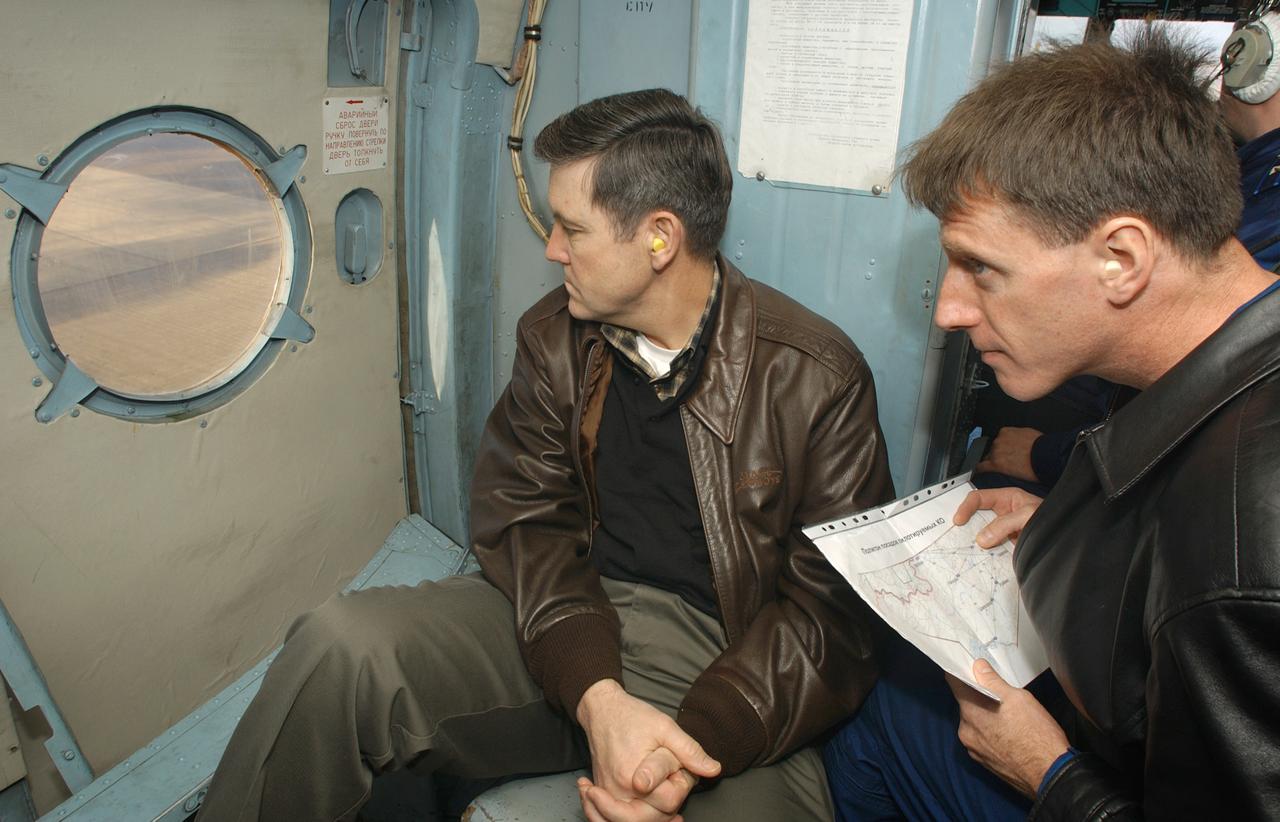
May 4, 2003, Kazakhstan. From the seat of a Russian Helicopter, Bob Cabana (L), Director of Flight Crew Operations and Astronaut Michael Foale (R) look out over the Kazakh terrain for the Expedition Six Soyuz capsule after it's landing in Kazakhstan. Photo Credit: "NASA/Bill Ingalls"
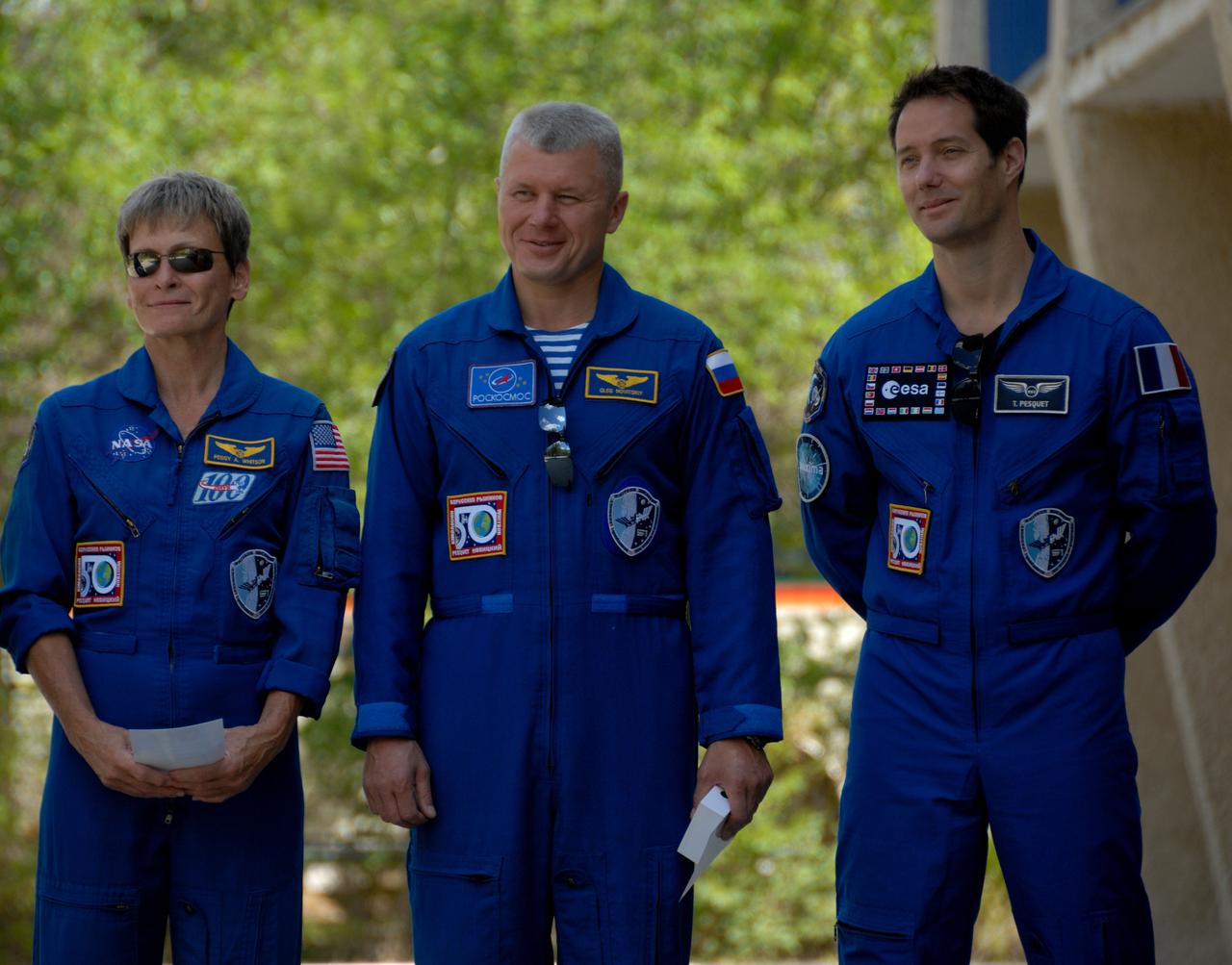
Outside their Cosmonaut Hotel crew quarters in Baikonur, Kazakhstan, Expedition 48-49 backup crewmembers Peggy Whitson of NASA (left), Oleg Novitskiy of Roscosmos (center) and Thomas Pesquet of the European Space Agency (right) listen to remarks June 26 during the traditional raising of the American, Russian, Japanese and Kazakh flags. Prime crewmembers Kate Rubins of NASA, Anatoly Ivanishin of Roscosmos and Takuya Onishi of the Japan Aerospace Exploration Agency will launch on July 7, Baikonur time, on the Soyuz MS-01 spacecraft for a planned four-month mission on the International Space Station. NASA/Alexander Vysotsky
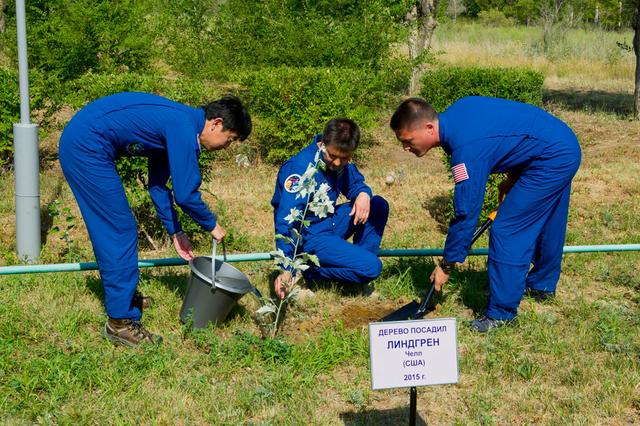
3850: At the Cosmonaut Hotel crew quarters in Baikonur, Kazakhstan, Expedition 44 prime crewmember Kjell Lindgren of NASA (right) plants a tree in his name in a traditional pre-launch ceremony July 15. Assisting are crewmates Kimiya Yui of the Japan Aerospace Exploration Agency (left) and Oleg Kononenko of the Russian Federal Space Agency (Roscosmos, center), Yui, Kononenko and Lindgren will launch July 23, Kazakh time on the Soyuz TMA-17M spacecraft from the Baikonur Cosmodrome for a five-month mission on the International Space Station. Credit: Gagarin Cosmonaut Training Center
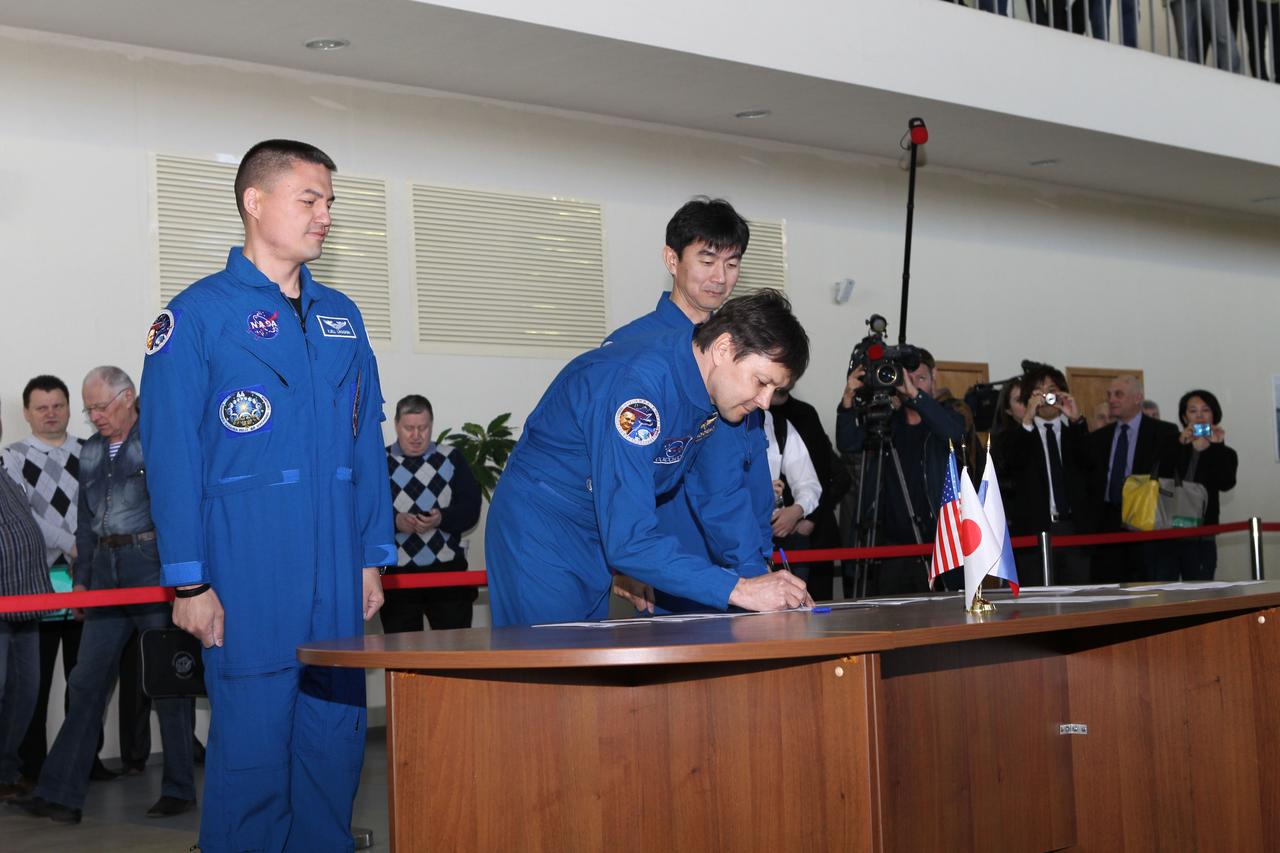
CG4G8895 --- (6 May 2015) --- At the Gagarin Cosmonaut Training Center in Star City, Russia, Expedition 44/45 Soyuz Commander Oleg Kononenko of the Russian Federal Space Agency (Roscosmos) signs in for the first of two days of qualification exams May 6 as his crewmates, Kjell Lindgren of NASA (left) and Kimya Yui of the Japan Aerospace Exploration Agency (right), look on. The trio is preparing for launch from the Baikonur Cosmodrome in Kazakhstan on May 27, Kazakh time, in the Soyuz TMA-17M spacecraft to begin a five and a half month mission to the International Space Station. Photo credit: NASA/Seth Marcantel

CG4G9064 --- (6 May 2015) --- At the Gagarin Cosmonaut Training Center in Star City, Russia, Expedition 44/45 crewmembers Kimya Yui of the Japan Aerospace Exploration Agency (left), Oleg Kononenko of the Russian Federal Space Agency (Roscosmos, center), and Kjell Lindgren of NASA (right) clasp hands for photographers on the first of two days of qualification exams May 6. The trio is preparing for launch from the Baikonur Cosmodrome in Kazakhstan on May 27, Kazakh time, in the Soyuz TMA-17M spacecraft to begin a five and a half month mission to the International Space Station. Photo credit: NASA/Seth Marcantel
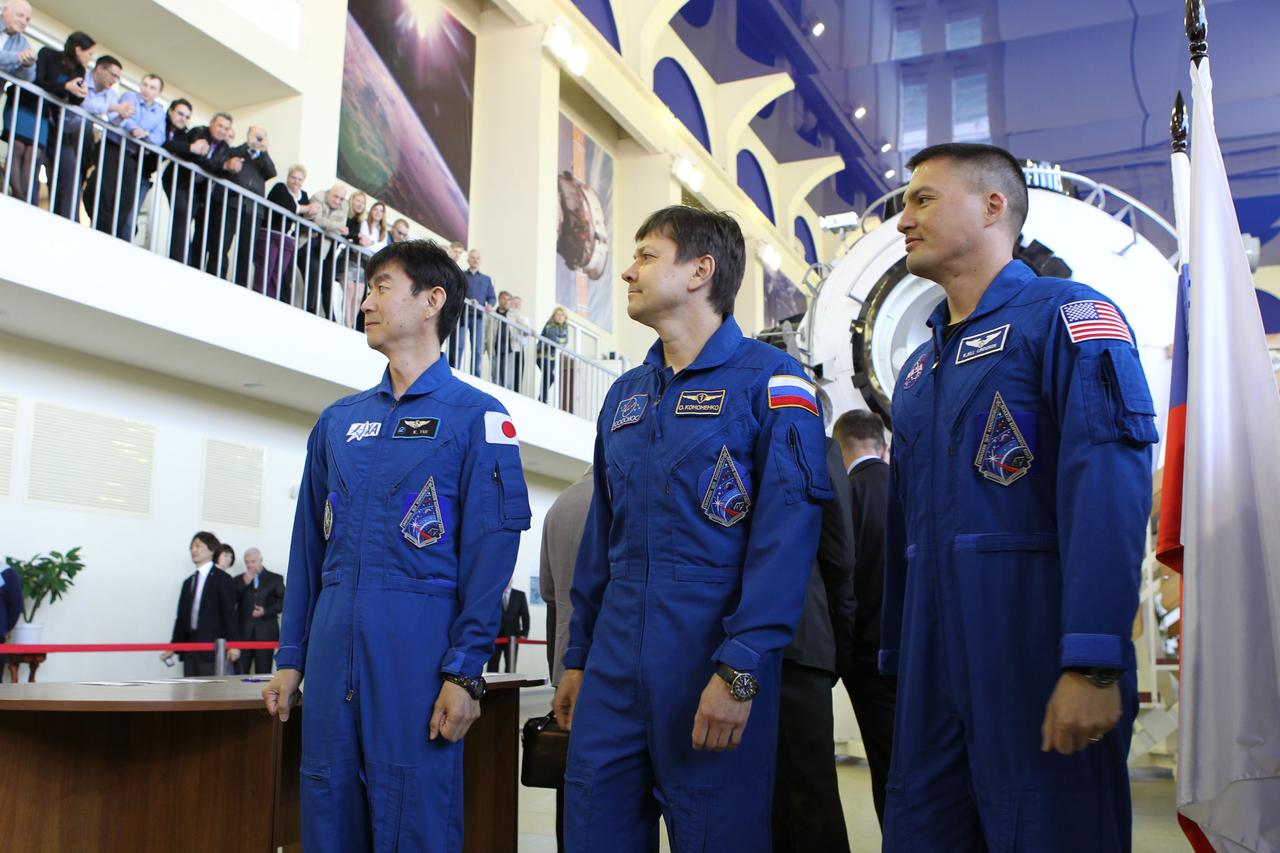
CG4G8954 --- (6 May 2015) --- At the Gagarin Cosmonaut Training Center in Star City, Russia, Expedition 44/45 crewmembers Kimya Yui of the Japan Aerospace Exploration Agency (left), Oleg Kononenko of the Russian Federal Space Agency (Roscosmos, center), and Kjell Lindgren of NASA (right) answer questions from media on the first of two days of qualification exams May 6. The trio is preparing for launch from the Baikonur Cosmodrome in Kazakhstan on May 27, Kazakh time, in the Soyuz TMA-17M spacecraft to begin a five and a half month mission to the International Space Station. Photo credit: NASA/Seth Marcantel
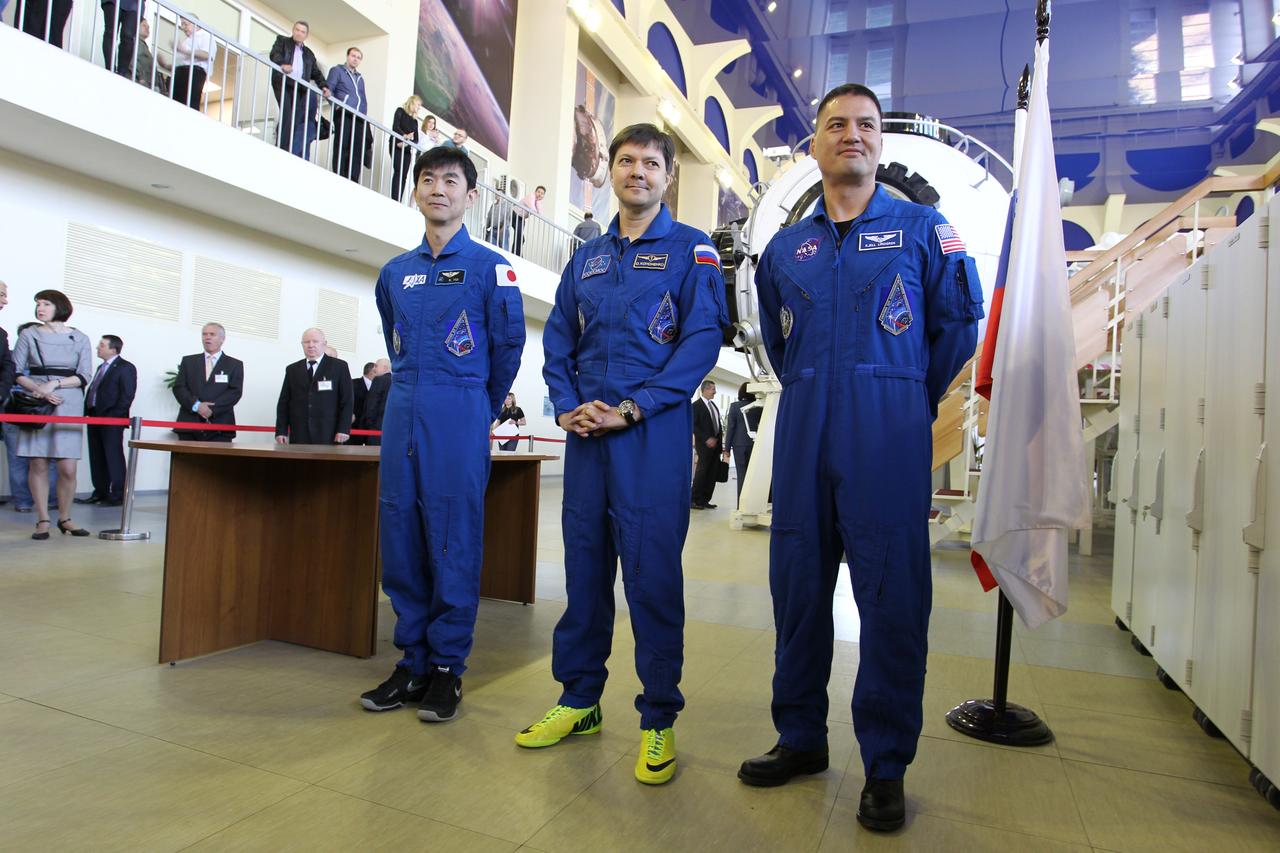
CG4G9036 --- (6 May 2015) --- At the Gagarin Cosmonaut Training Center in Star City, Russia, Expedition 44/45 crewmembers Kimya Yui of the Japan Aerospace Exploration Agency (left), Oleg Kononenko of the Russian Federal Space Agency (Roscosmos, center), and Kjell Lindgren of NASA (right) answer questions from media on the first of two days of qualification exams May 6. The trio is preparing for launch from the Baikonur Cosmodrome in Kazakhstan on May 27, Kazakh time, in the Soyuz TMA-17M spacecraft to begin a five and a half month mission to the International Space Station. Photo credit: NASA/Seth Marcantel
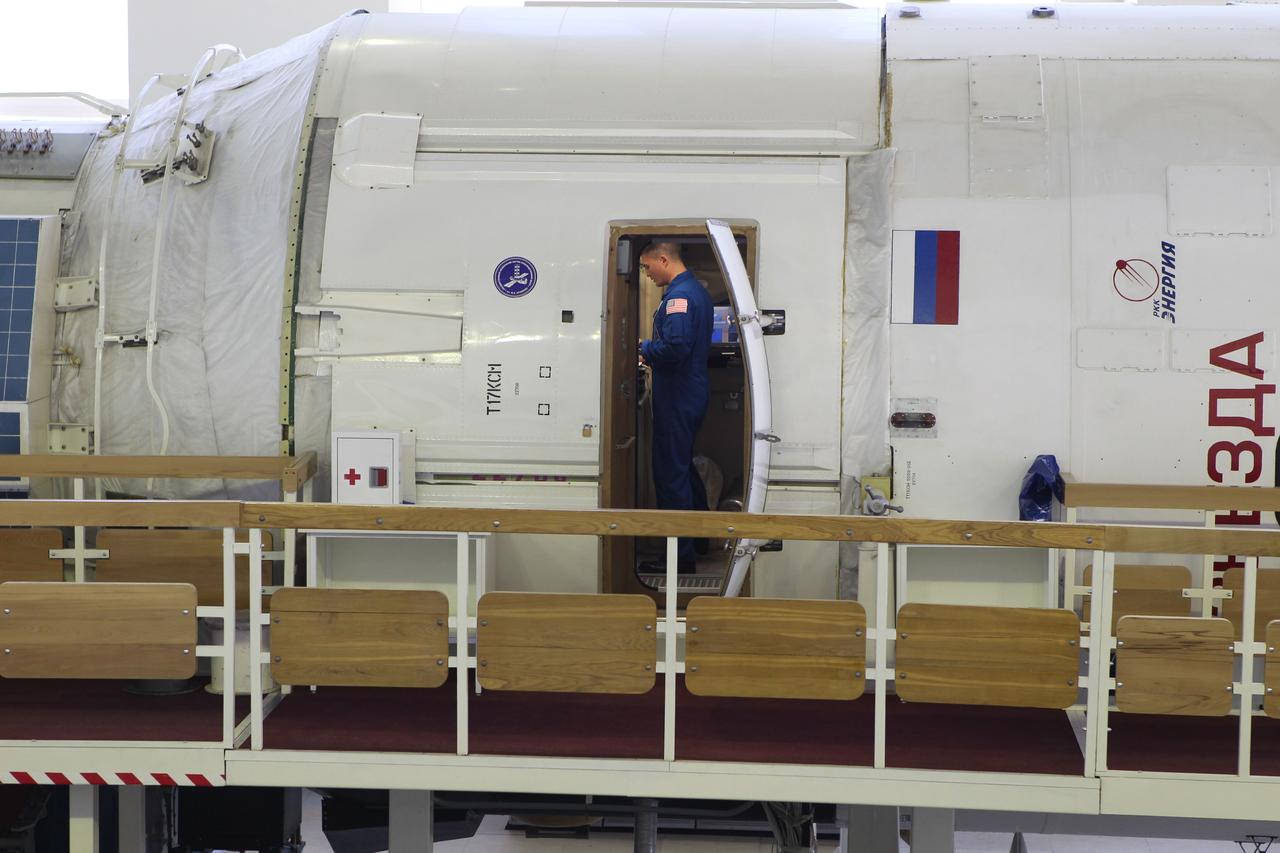
CG4G9159 --- (6 May 2015) --- At the Gagarin Cosmonaut Training Center in Star City, Russia, Expedition 44/45 Flight Engineer Kjell Lindgren of NASA joins his crewmates, Oleg Kononenko of the Russian Federal Space Agency (Roscosmos) and Kimya Yui of the Japan Aerospace Exploration Agency (not pictured), in the International Space Station Zvezda Service Module training mockup on the first of two days of qualification exams May 6. The trio is preparing for launch from the Baikonur Cosmodrome in Kazakhstan on May 27, Kazakh time, in the Soyuz TMA-17M spacecraft to begin a five and a half month mission to the International Space Station. Photo credit: NASA/Seth Marcantel
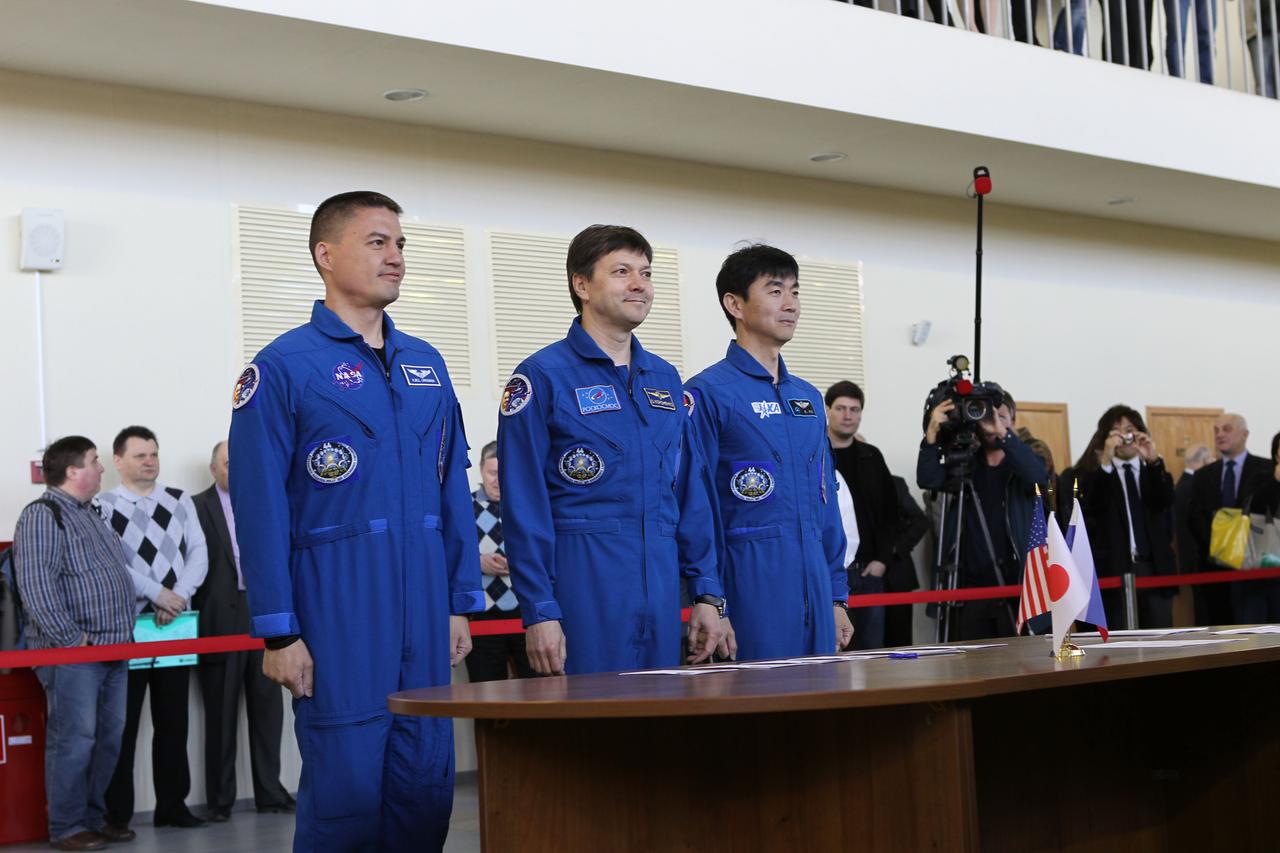
CG4G8889 --- (6 May 2015) --- At the Gagarin Cosmonaut Training Center in Star City, Russia, Expedition 44/45 crewmembers Kjell Lindgren of NASA (left), Oleg Kononenko of the Russian Federal Space Agency (Roscosmos, center), and Kimya Yui of the Japan Aerospace Exploration Agency (right) appear before Russian space officials on the first of two days of qualification exams May 6. The trio is preparing for launch from the Baikonur Cosmodrome in Kazakhstan on May 27, Kazakh time, in the Soyuz TMA-17M spacecraft to begin a five and a half month mission to the International Space Station. Photo credit: NASA/Seth Marcantel
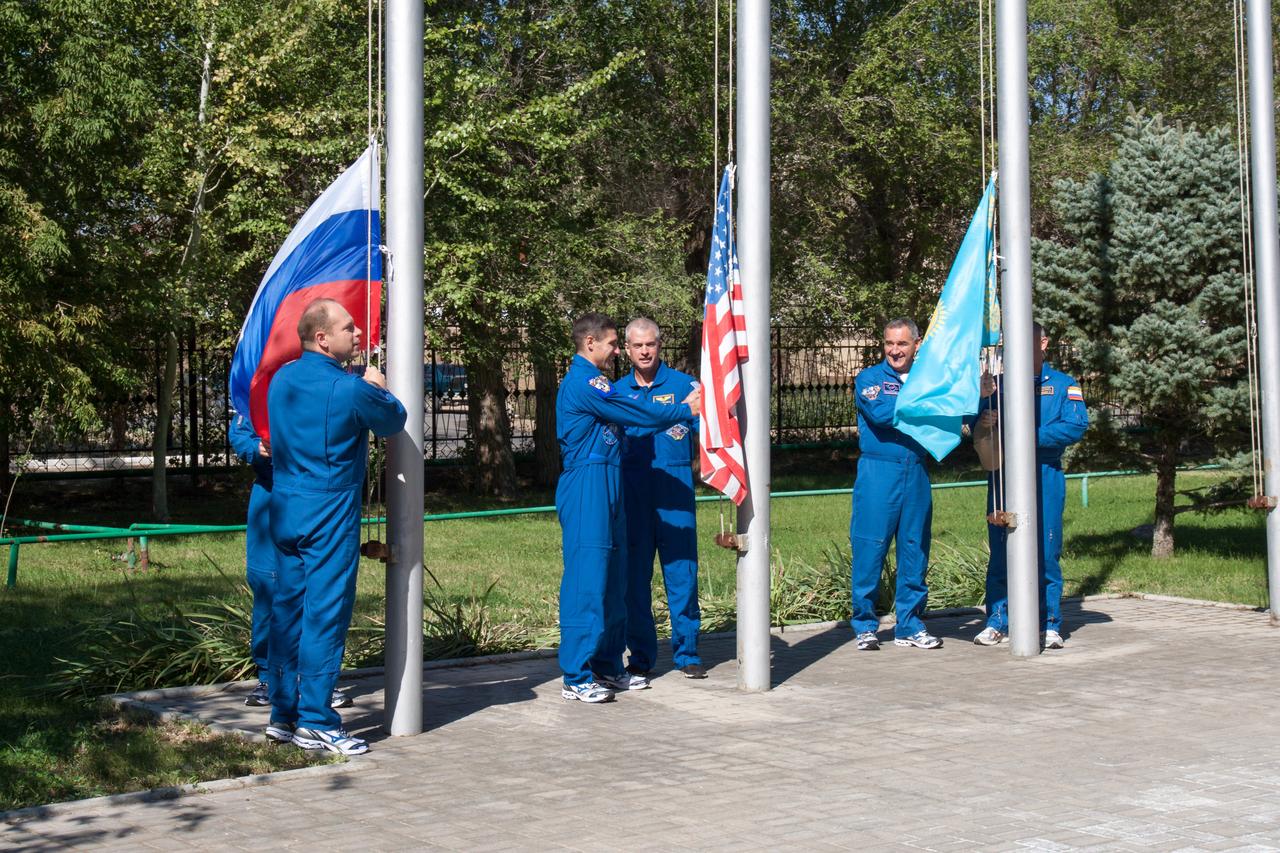
At their Cosmonaut Hotel crew quarters in Baikonur, Kazakhstan, the Expedition 37/38 prime and backup crewmembers prepare to raise the U.S., Russian and Kazakh flags Sept. 15 in a traditional ceremony. From left to right are prime Soyuz Commander Oleg Kotov, prime Flight Engineer Michael Hopkins of NASA, his backup, Steve Swanson of NASA and backup Alexander Skvortsov (far right). Hidden from view are prime Flight Engineer Sergei Ryazanskiy and his backup, Oleg Artemyev. Hopkins, Kotov and Ryazanskiy are preparing for launch Sept. 26, Kazakh time, from Baikonur on their Soyuz TMA-10M spacecraft to begin a five and a half month mission on the International Space Station. NASA/Victor Zelentsov
![2014-03-15-13-00-13[1] Wearing native garb, the Expedition 39/40 backup crewmembers partake in traditional ceremonies with a Kazakh host March 15 in Baikonur, Kazakhstan as pre-flight training for them and their prime crewmember colleagues continues. Barry Wilmore of NASA (second from left), Alexander Samokutyaev of the Russian Federal Space Agency (Roscosmos; second from right) and Elena Serova of Roscosmos (far right) are the backups to Expedition 39/40 Flight Engineer Steve Swanson of NASA, Soyuz Commander Alexander Skvortsov of Roscosmos and Flight Engineer Oleg Artemyev of Roscosmos, who are scheduled to launch to the International Space Station March 26 (Kazakh time) for the start of a six-month mission. NASA/Victor Zelentsov](https://images-assets.nasa.gov/image/jsc2014e026290/jsc2014e026290~medium.jpg)
2014-03-15-13-00-13[1] Wearing native garb, the Expedition 39/40 backup crewmembers partake in traditional ceremonies with a Kazakh host March 15 in Baikonur, Kazakhstan as pre-flight training for them and their prime crewmember colleagues continues. Barry Wilmore of NASA (second from left), Alexander Samokutyaev of the Russian Federal Space Agency (Roscosmos; second from right) and Elena Serova of Roscosmos (far right) are the backups to Expedition 39/40 Flight Engineer Steve Swanson of NASA, Soyuz Commander Alexander Skvortsov of Roscosmos and Flight Engineer Oleg Artemyev of Roscosmos, who are scheduled to launch to the International Space Station March 26 (Kazakh time) for the start of a six-month mission. NASA/Victor Zelentsov

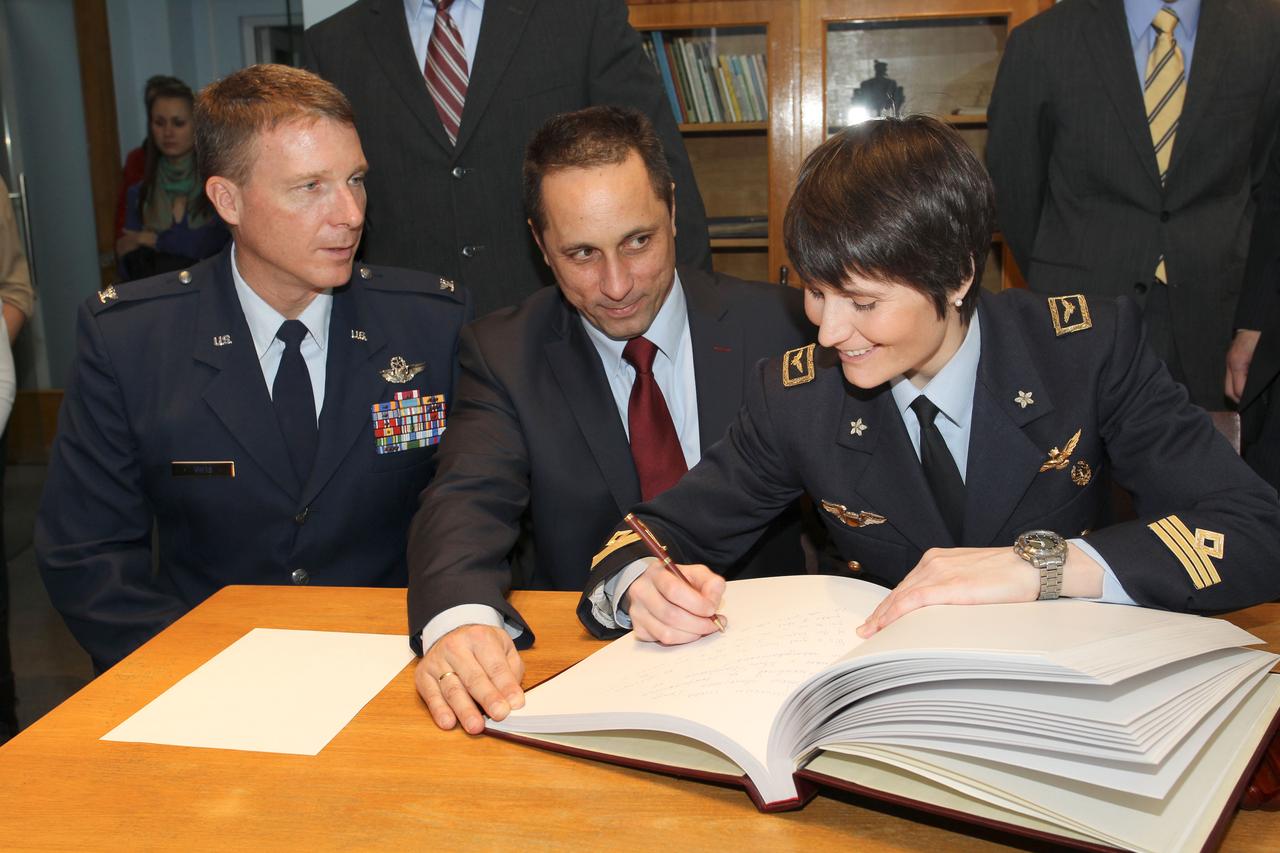
13-43-56-2: In the town of Baikonur, Kazakhstan, Expedition 40/41 backup crewmembers Terry Virts of NASA (left), Anton Shkaplerov of the Russian Federal Space Agency (Roscosmos, center) and Samantha Cristoforetti of the European Space Agency (right) partake in a traditional Kazakh ceremony May 17 in a “yurt”, or tent, during a tour of the community. The trio is backing up the prime crew, Flight Engineer Alexander Gerst of the European Space Agency, Soyuz Commander Max Suraev of the Russian Federal Space Agency (Roscosmos) and NASA Flight Engineer Reid Wiseman, who will launch from Baikonur on May 29, Kazakh time, for a 5 ½ month mission on the International Space Station. NASA/Victor Zelentsov
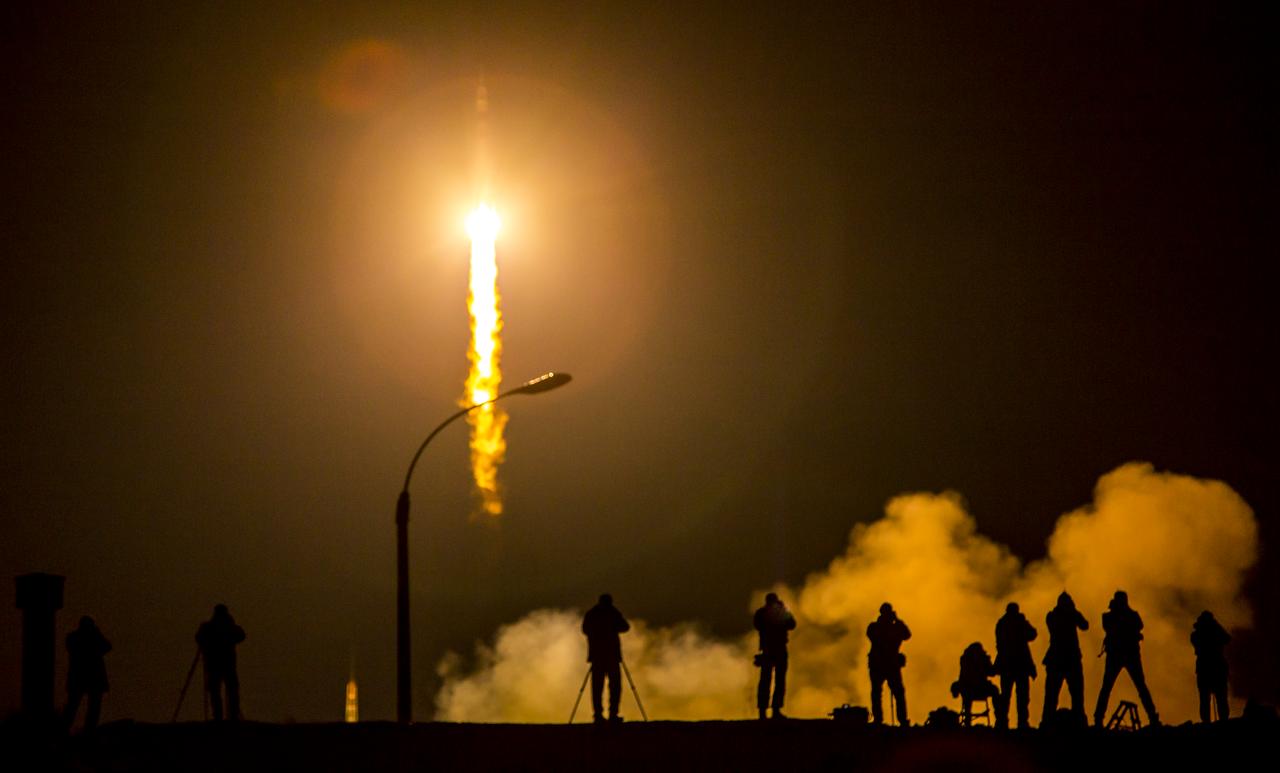
Media photograph the Soyuz TMA-16M spacecraft as it launches to the International Space Station with Expedition 43 NASA Astronaut Scott Kelly, Russian Cosmonauts Mikhail Kornienko, and Gennady Padalka of the Russian Federal Space Agency (Roscosmos) onboard Saturday, March 28, 2015, Kazakh time (March 27 Eastern time) from the Baikonur Cosmodrome in Kazakhstan. As the one-year crew, Kelly and Kornienko will return to Earth on Soyuz TMA-18M in March 2016. Photo Credit (NASA/Bill Ingalls)
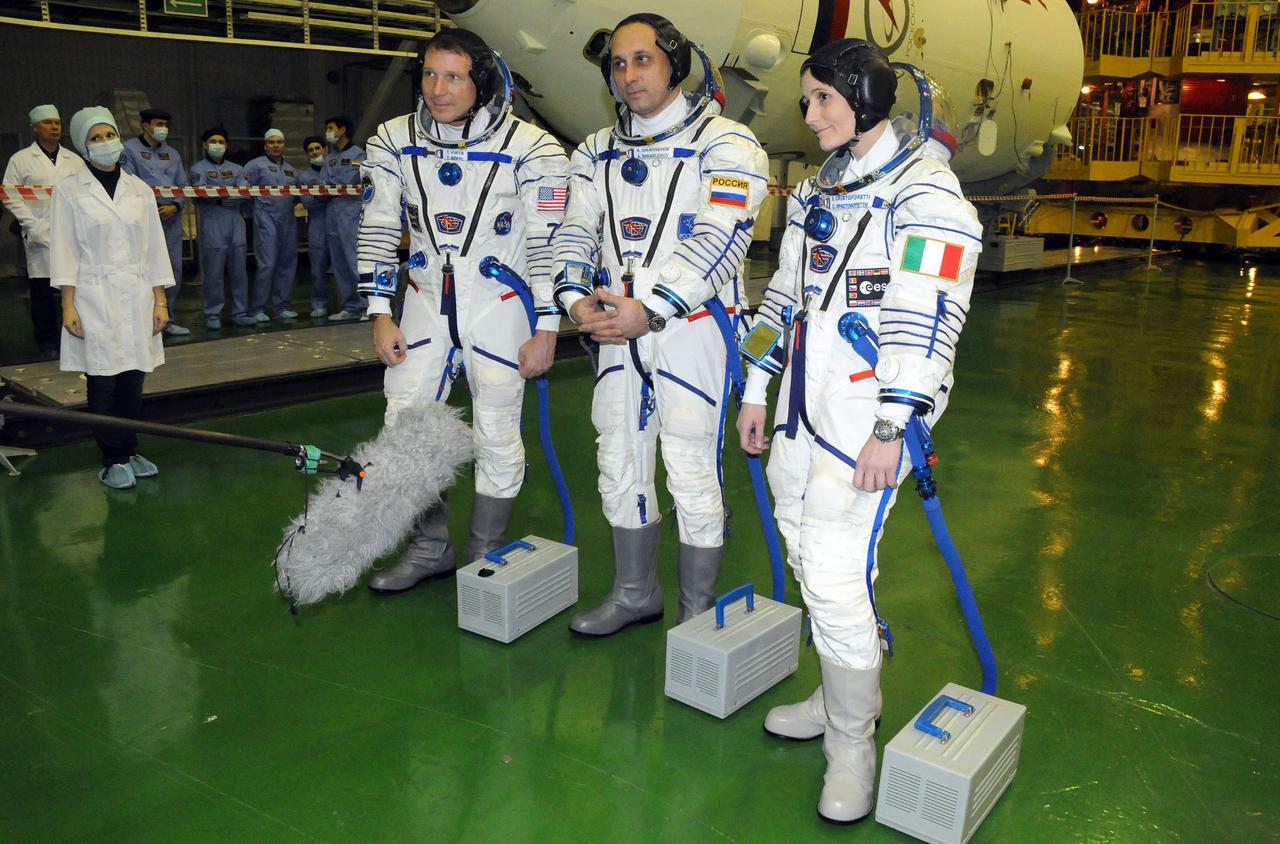
5473: In the Integration Facility at the Baikonur Cosmodrome in Kazakhstan, Expedition 42/43 crewmembers Terry Virts of NASA (left), Anton Shkaplerov of the Russian Federal Space Agency (Roscosmos, center) and Samantha Cristoforetti of the European Space Agency (right) listen to reporters’ questions Nov. 12 during a “fit check” dress rehearsal. The trio will launch Nov. 24, Kazakh time, from Baikonur in the Soyuz TMA-15M spacecraft for a 5 ½ month mission on the International Space Station. NASA/Victor Ivanov
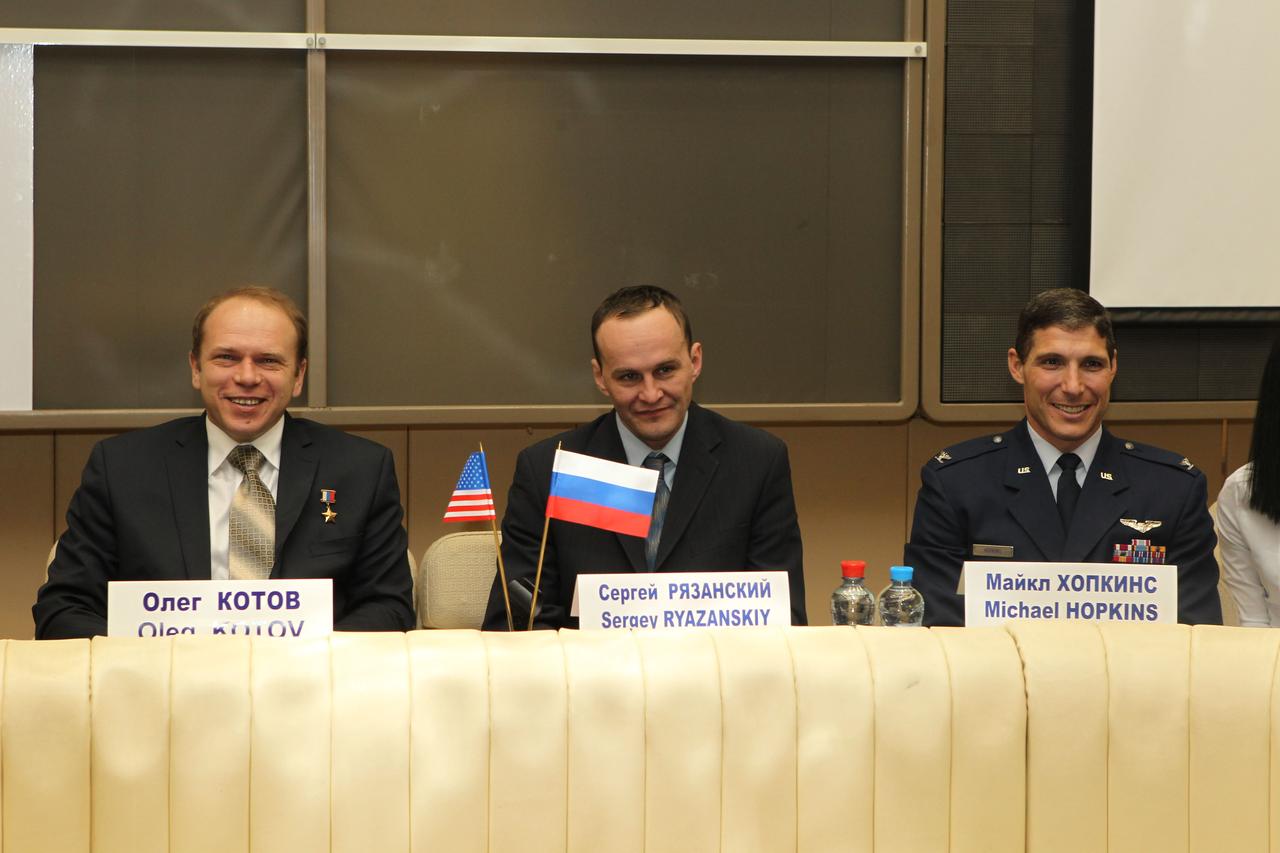
At the Gagarin Cosmonaut Training Center in Star City, Russia, Expedition 35-36 backup crewmembers Oleg Kotov (left), Sergey Ryazanskiy (center) and Michael Hopkins of NASA (right) pose for pictures during a pre-launch news conference March 7. The three crewmembers are in training as backups to Chris Cassidy of NASA, Alexander Misurkin and Pavel Vinogradov who are scheduled to launch to the International Space Station March 29, Kazakh time, in the Soyuz TMA-08M spacecraft from the Baikonur Cosmodrome in Kazakhstan. NASA / Stephanie Stoll
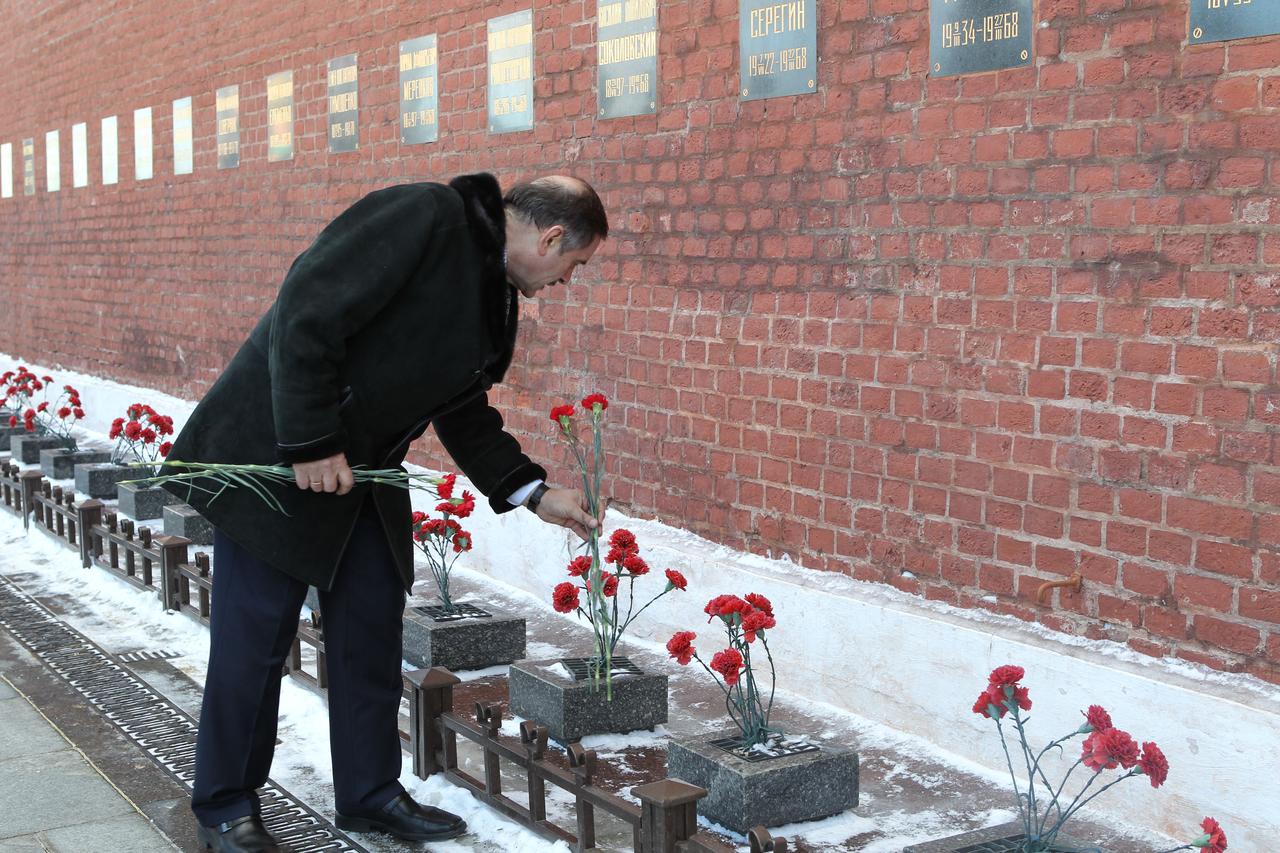
During a traditional tour of Red Square in Moscow March 7, Expedition 35-36 Soyuz Commander Pavel Vinogradov laid flowers at the Kremlin Wall where Russian space icons are interred. Vinogradov, NASA Flight Engineer Chris Cassidy and Flight Engineer Alexander Misurkin will launch to the International Space Station March 29, Kazakh time, in their Soyuz TMA-08M spacecraft from the Baikonur Cosmodrome in Kazakhstan. NASA / Stephanie Stoll
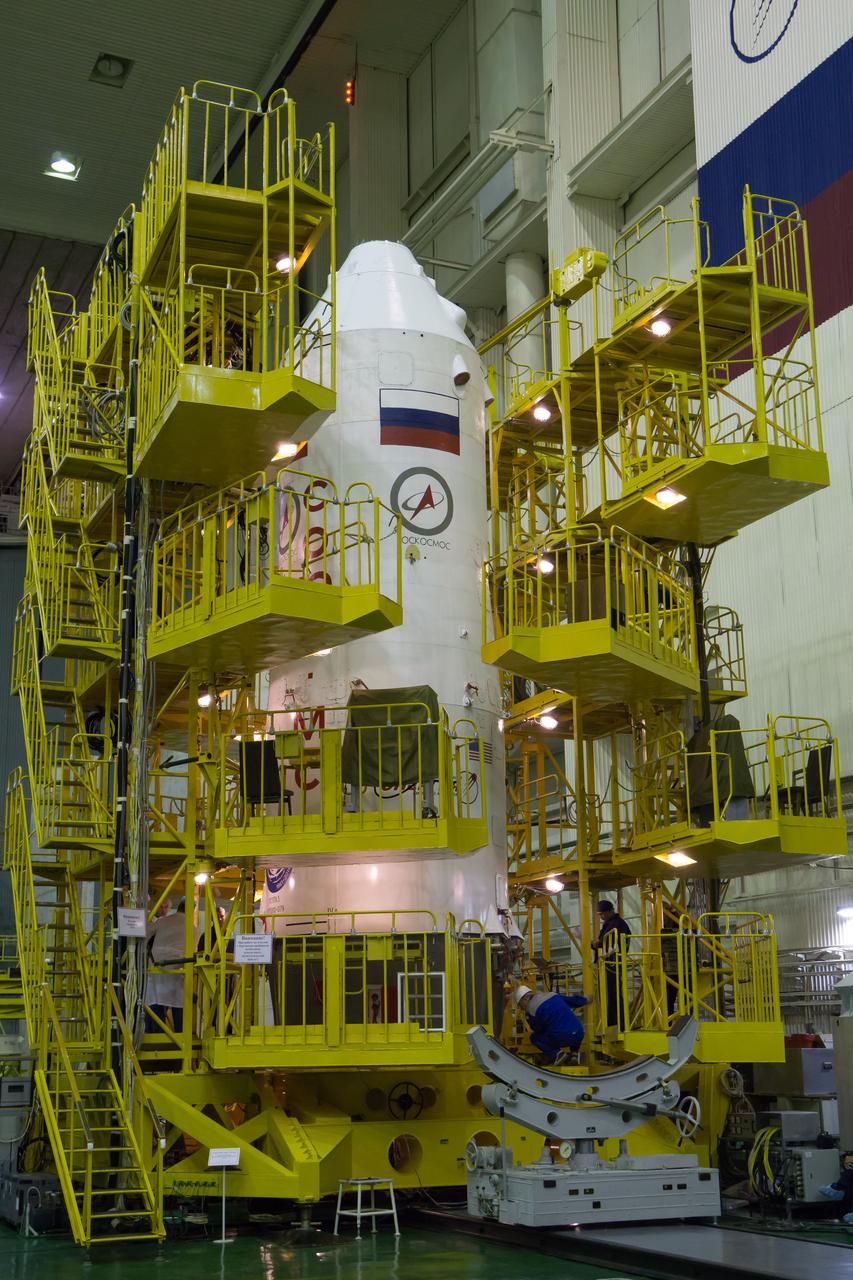
The Soyuz MS-02 spacecraft is seen after being encapsualted in its fairing on Thursday, Sept. 15, 2016 at the Baikonur Cosmodrome in Kazakhstan. Expedition 49 flight engineer Shane Kimbrough of NASA, flight engineer Andrey Borisenko of Roscosmos, and Soyuz commander Sergey Ryzhikov of Roscosmos are scheduled to launch to the International Space Station aboard the Soyuz MS-02 spacecraft from the Baikonur Cosmodrome on September 24 Kazakh time. Photo Credit: (NASA/Victor Zelentsov)
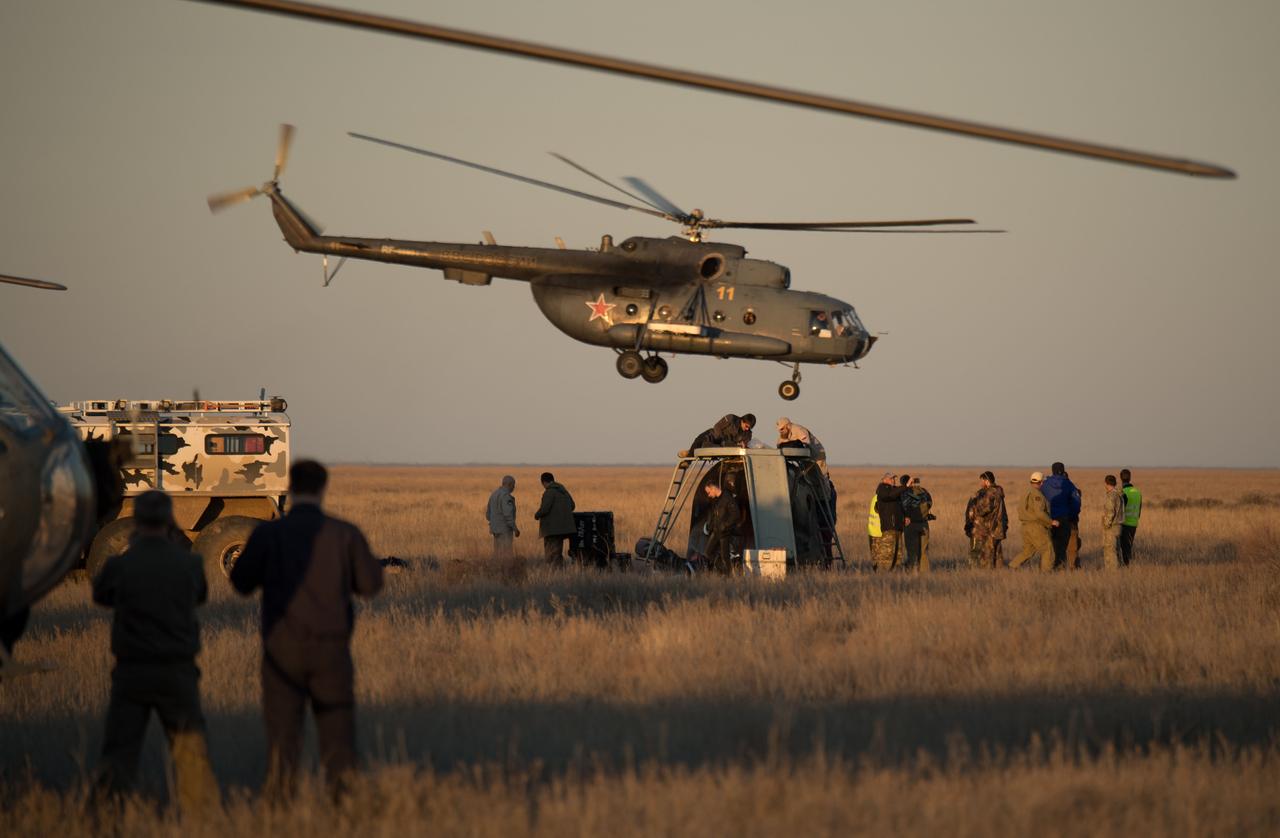
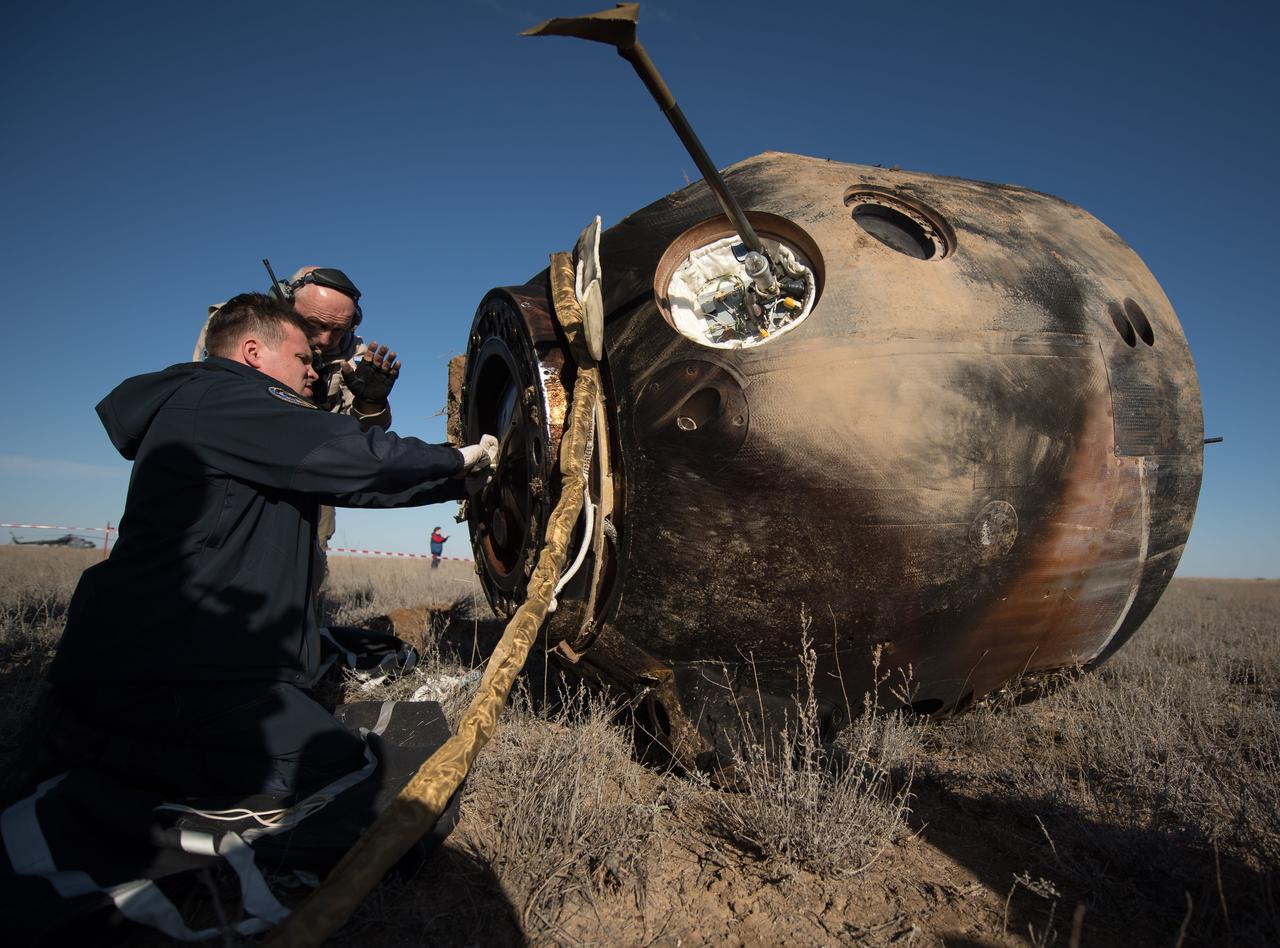
nhq201704100044 (April 10, 2017) --- Russian support personnel work around the Soyuz MS-02 spacecraft shortly after it landed with Expedition 50 Commander Shane Kimbrough of NASA and Flight Engineers Sergey Ryzhikov and Andrey Borisenko of Roscosmos near the town of Zhezkazgan, Kazakhstan on Monday, April 10, 2017 (Kazakh time). Kimbrough, Ryzhikov, and Borisenko are returning after 173 days in space where they served as members of the Expedition 49 and 50 crews onboard the International Space Station. Photo Credit: (NASA/Bill Ingalls)

ISS034-E-066644 (11 March 2013) --- NASA astronaut Kevin Ford (left), Expedition 34 commander, and Russian cosmonaut Oleg Novitskiy, Expedition 34 flight engineer (partially visible at right foreground), participate in descent training in the Soyuz TMA-06M spacecraft, which is docked to the International Space Station. Undocking and landing are scheduled for March 16, Kazakh time.
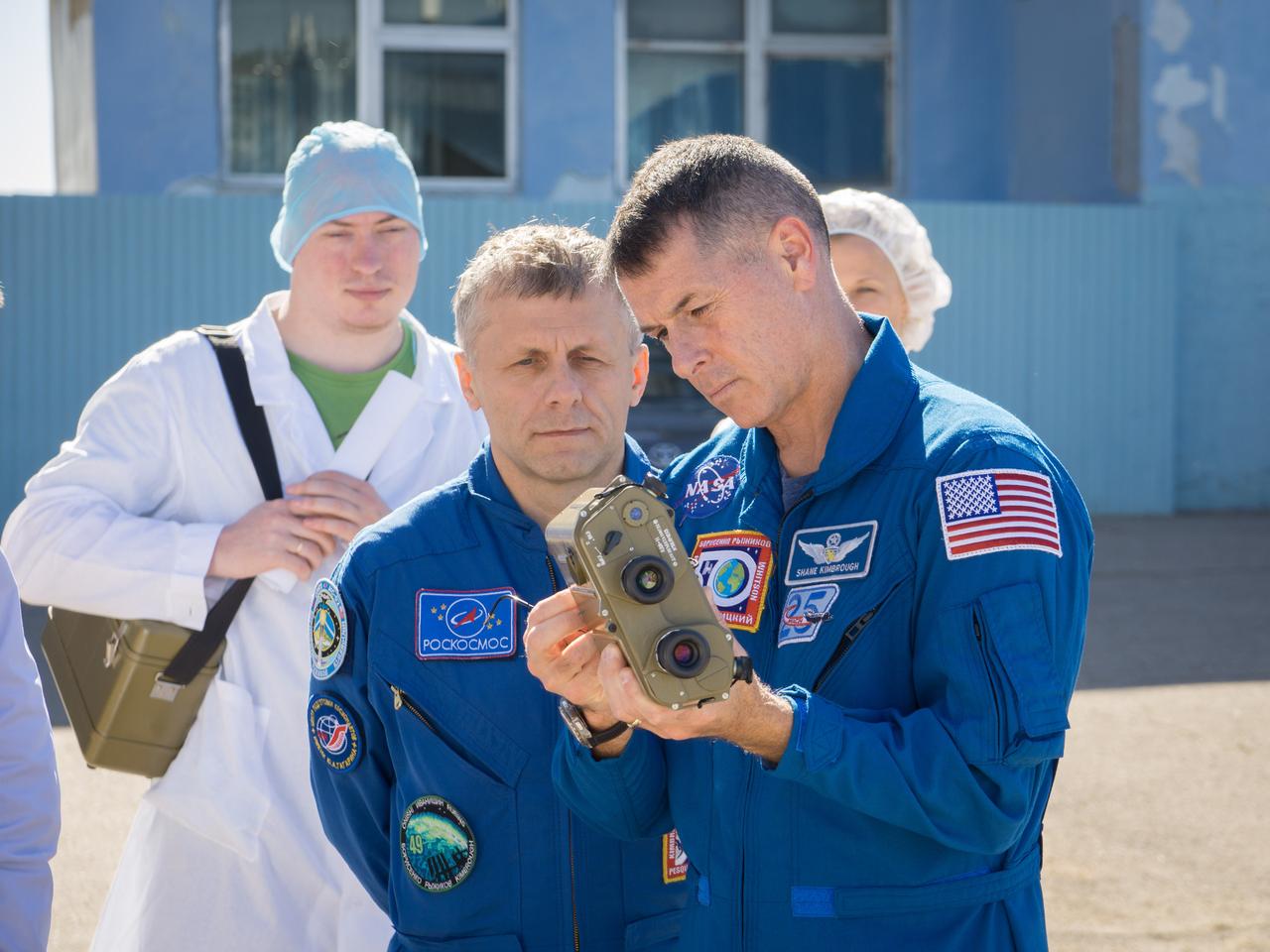
At the Integration Facility at the Baikonur Cosmodrome in Kazakhstan, Expedition 49 crewmember Shane Kimbrough of NASA (right) tests a pair of binoculars Sept. 9 as part of pre-launch training. Looking on is crewmate Andrey Borisenko of Roscosmos. Kimbrough, Borisenko and Sergey Ryzhikov of Roscosmos will launch Sept. 24, Kazakh time on the Soyuz MS-02 vehicle for a five-month mission on the International Space Station. NASA/Victor Zelentsov
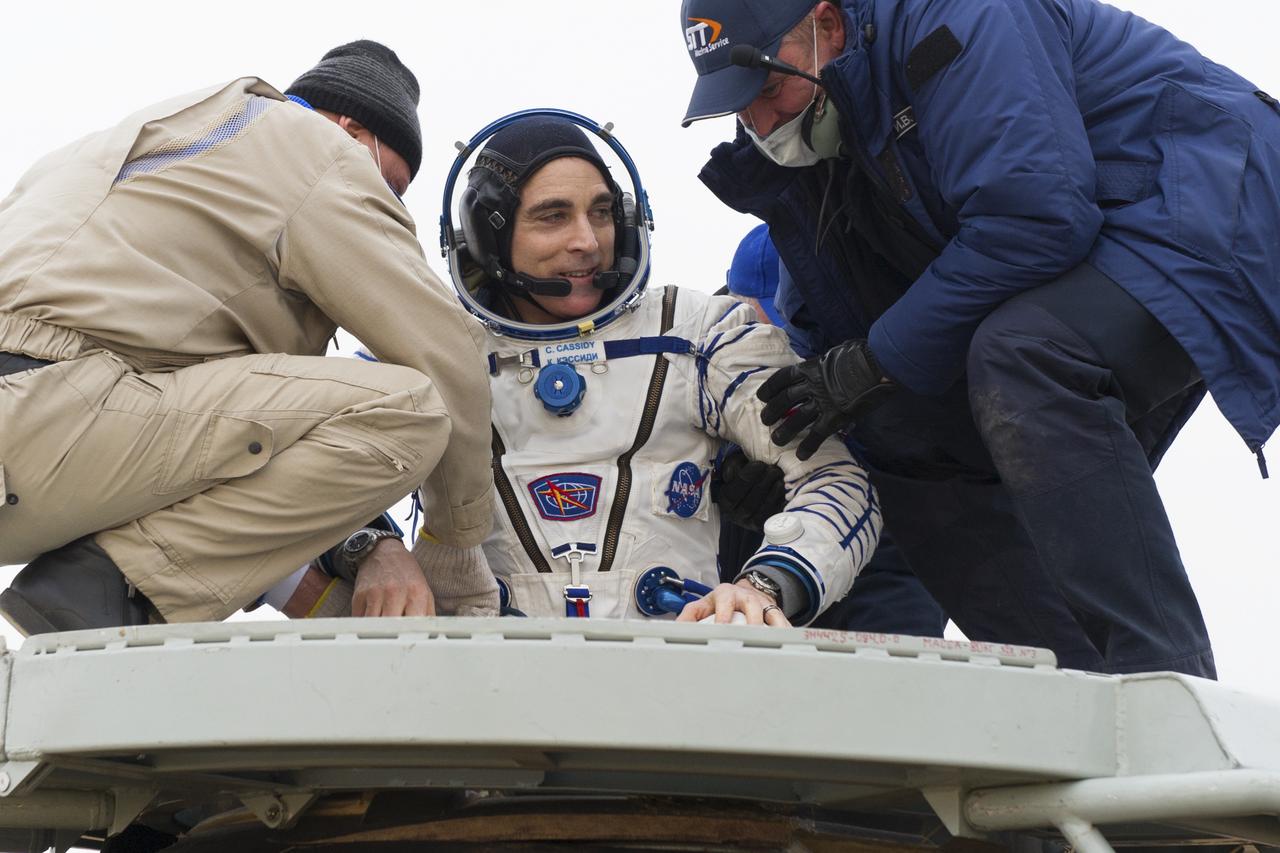
Expedition 63 NASA astronaut Chris Cassidy is helped out of the Soyuz MS-16 spacecraft just minutes after he and Roscosmos cosmonauts Anatoly Ivanishin, and Ivan Vagner, landed in a remote area near the town of Zhezkazgan, Kazakhstan on Thursday, October 22, 2020, Kazakh time (Oct. 21 Eastern time). Cassidy, Ivanishin and Vagner returned after 196 days in space having served as Expedition 62-63 crew members onboard the International Space Station. Photo Credit: (NASA/GCTC/Denis Derevtsov)
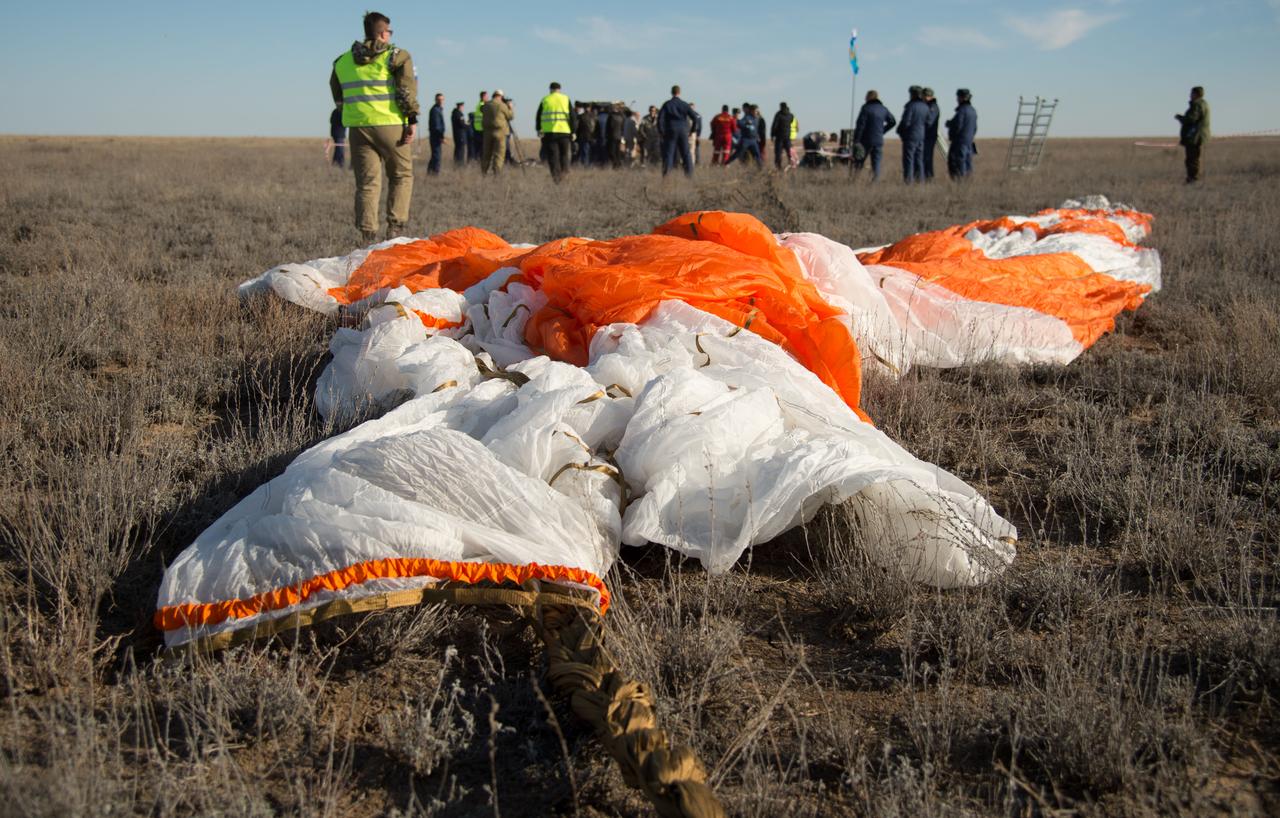
nhq201704100036 (April 10, 2017) --- Russian support personnel work around the Soyuz MS-02 spacecraft shortly after it landed with Expedition 50 Commander Shane Kimbrough of NASA and Flight Engineers Sergey Ryzhikov and Andrey Borisenko of Roscosmos near the town of Zhezkazgan, Kazakhstan on Monday, April 10, 2017 (Kazakh time). Kimbrough, Ryzhikov, and Borisenko are returning after 173 days in space where they served as members of the Expedition 49 and 50 crews onboard the International Space Station. Photo Credit: (NASA/Bill Ingalls)
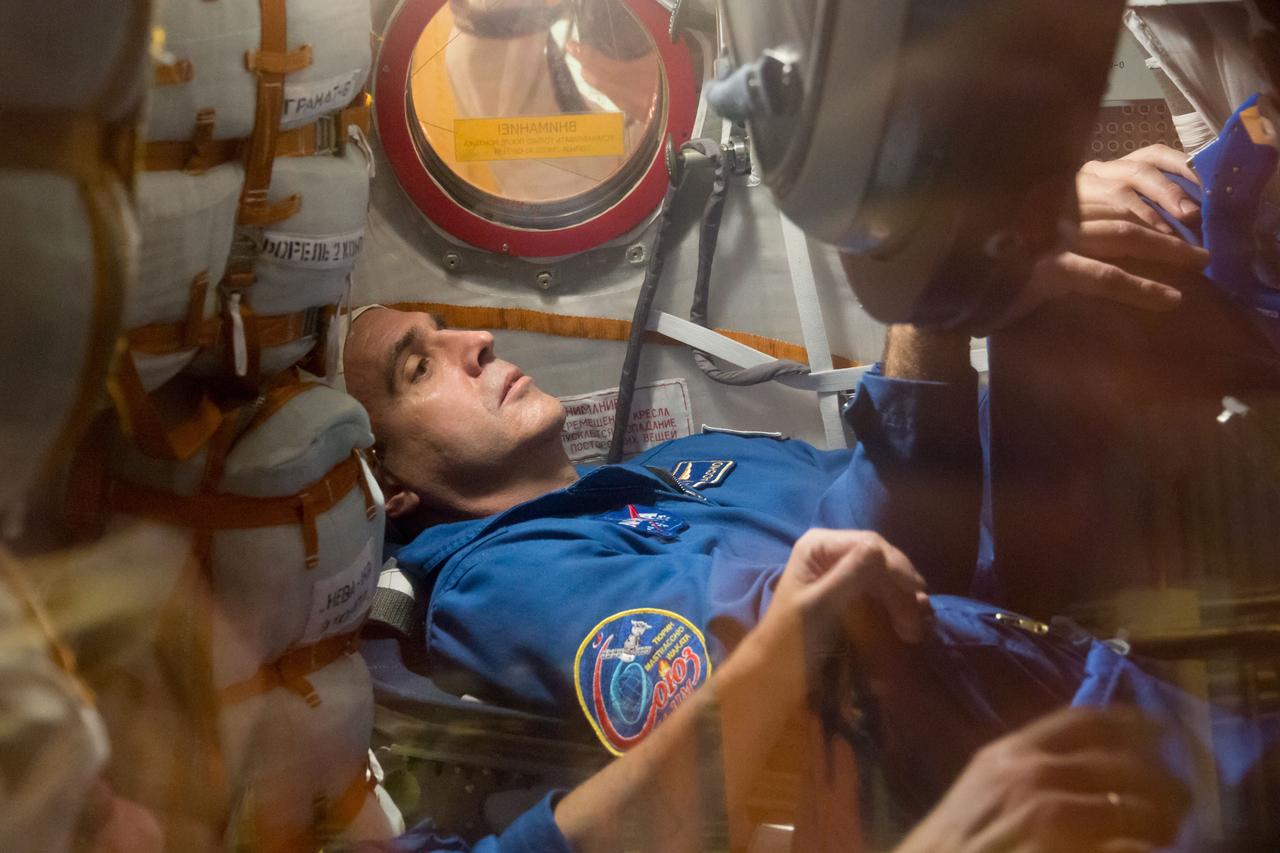
In the Integration Facility at the Baikonur Cosmodrome in Kazakhstan, Expedition 38/39 Flight Engineer Rick Mastracchio of NASA conducts a fit check dress rehearsal October 28 inside the Soyuz TMA-11M spacecraft. Mastracchio, Soyuz Commander Mikhail Tyurin and Flight Engineer Koichi Wakata of the Japan Aerospace Exploration Agency will launch Nov. 7, Kazakh time, in the Soyuz from Baikonur to begin a six-month mission on the International Space Station. NASA/Victor Zelentsov
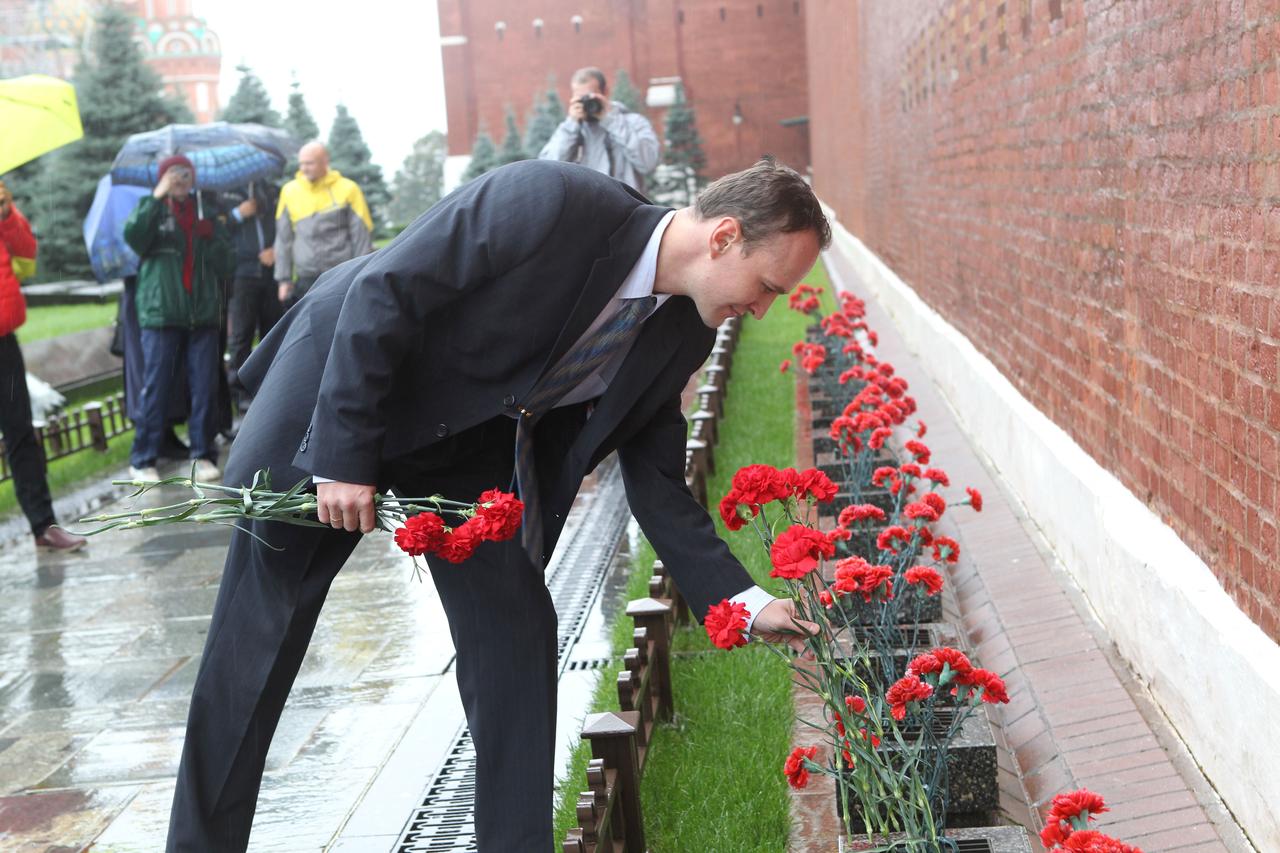
At the Kremlin Wall at Red Square in Moscow, Expedition 37/38 Flight Engineer Sergey Ryazanskiy lays flowers Sept. 6 in a traditional ceremony to honor Russian space icons who are interred there. Ryazanskiy, Soyuz Commander Oleg Kotov and Flight Engineer Michael Hopkins of NASA are preparing for their launch to the International Space Station from the Baikonur Cosmodrome in Kazakhstan on Sept. 26, Kazakh time, aboard the Soyuz TMA-10M spacecraft. NASA/Stephanie Stoll
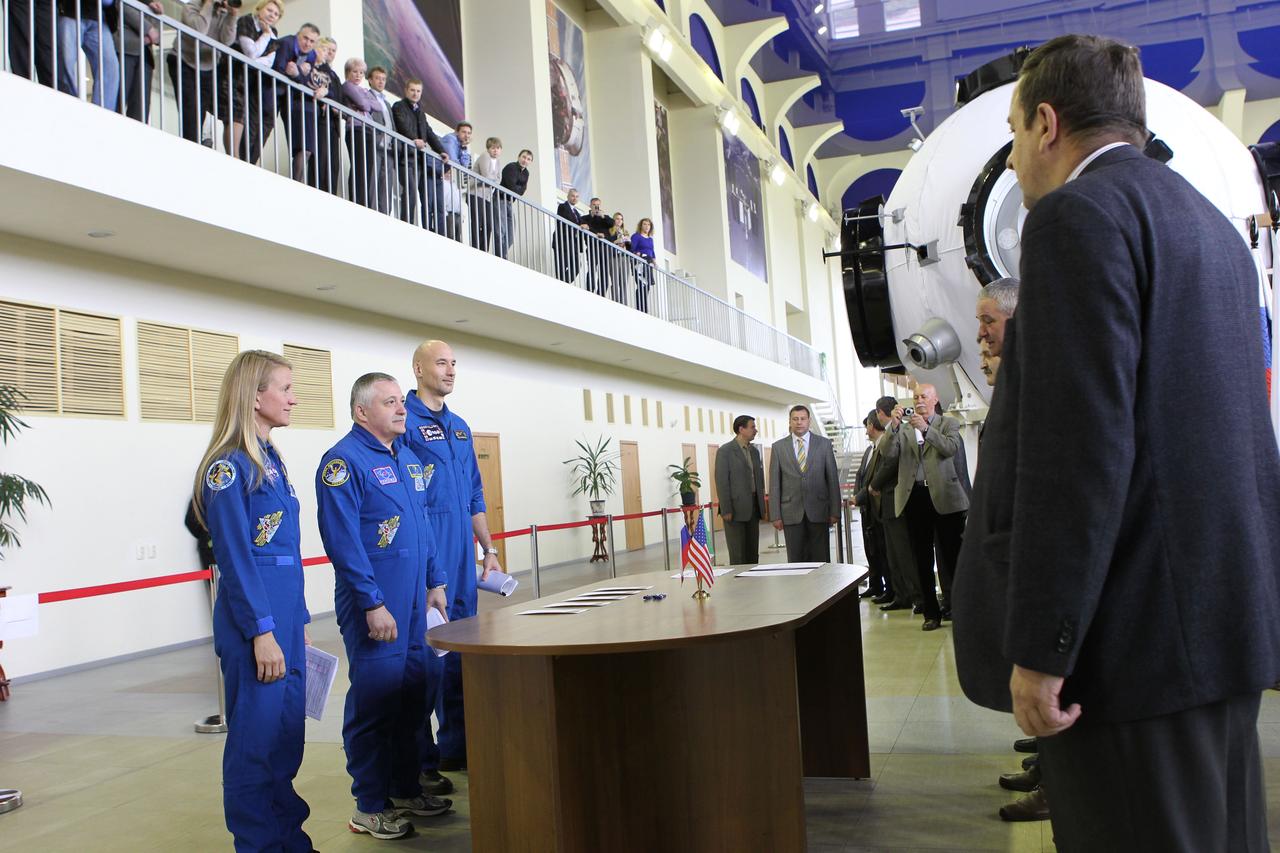
At the Gagarin Cosmonaut Training Center in Star City, Russia, Expedition 36/37 prime crewmembers Karen Nyberg of NASA (left), Soyuz Commander Fyodor Yurchikhin (center) and Luca Parmitano of the European Space Agency (right) check in May 6 for another round of qualification exams as they prepare for launch to the International Space Station. Nyberg, Yurchikhin and Parmitano are set to launch from the Baikonur Cosmodrome in Kazakhstan in their Soyuz TMA-09M spacecraft on May 29, Kazakh time, for a five-month mission. NASA/Stephanie Stoll
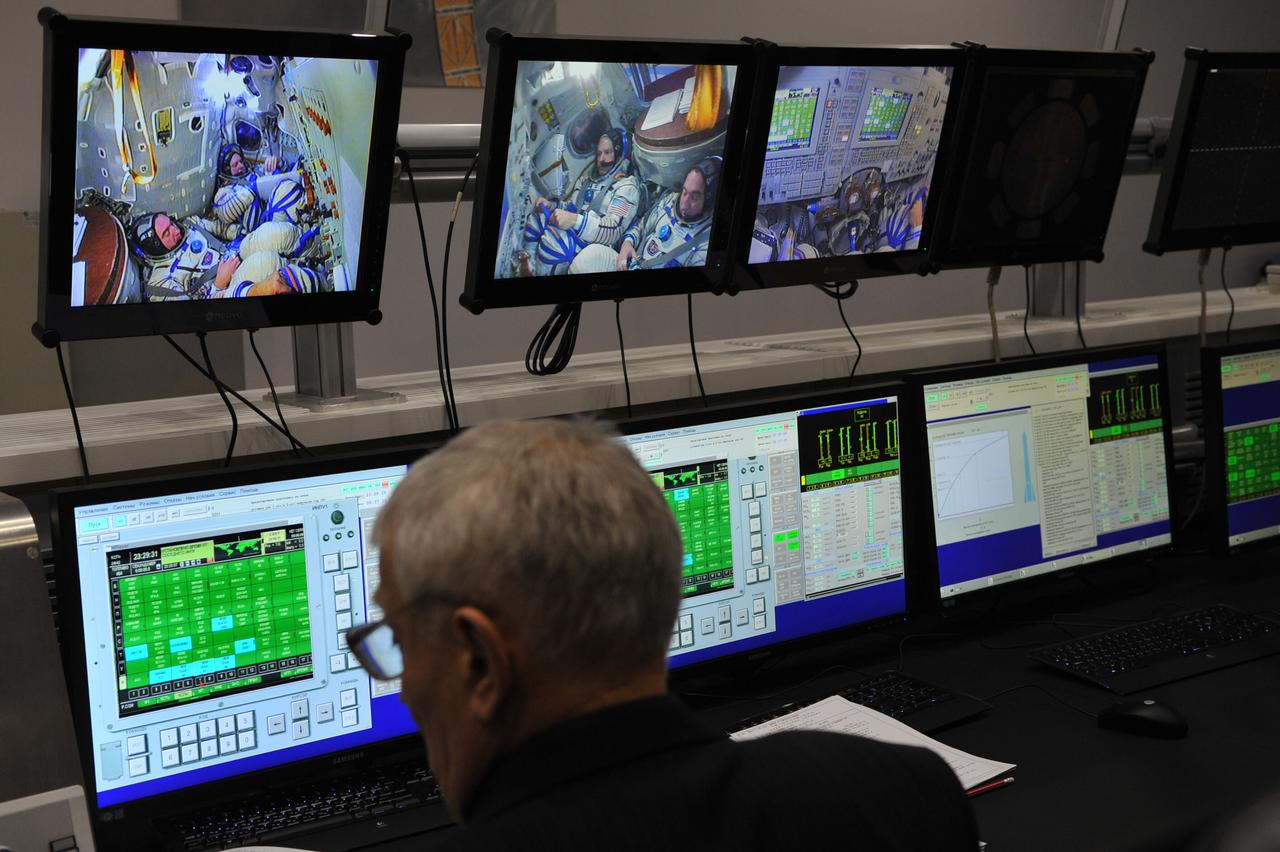
At the Gagarin Cosmonaut Training Center in Star City, Russia, a flight instructor monitors the progress of qualification exams for the Expedition 39/40 crewmembers March 5 as the crew heads into the homestretch of its training. Flight Engineer Steve Swanson of NASA, Soyuz Commander Alexander Skvortsov of Roscosmos and Oleg Artemyev of Roscosmos are preparing for their launch to the International Space Station from the Baikonur Cosmodrome in Star City, Russia March 26, Kazakh time, on the Soyuz TMA-12M spacecraft for a six-month mission. NASA/Stephanie Stoll
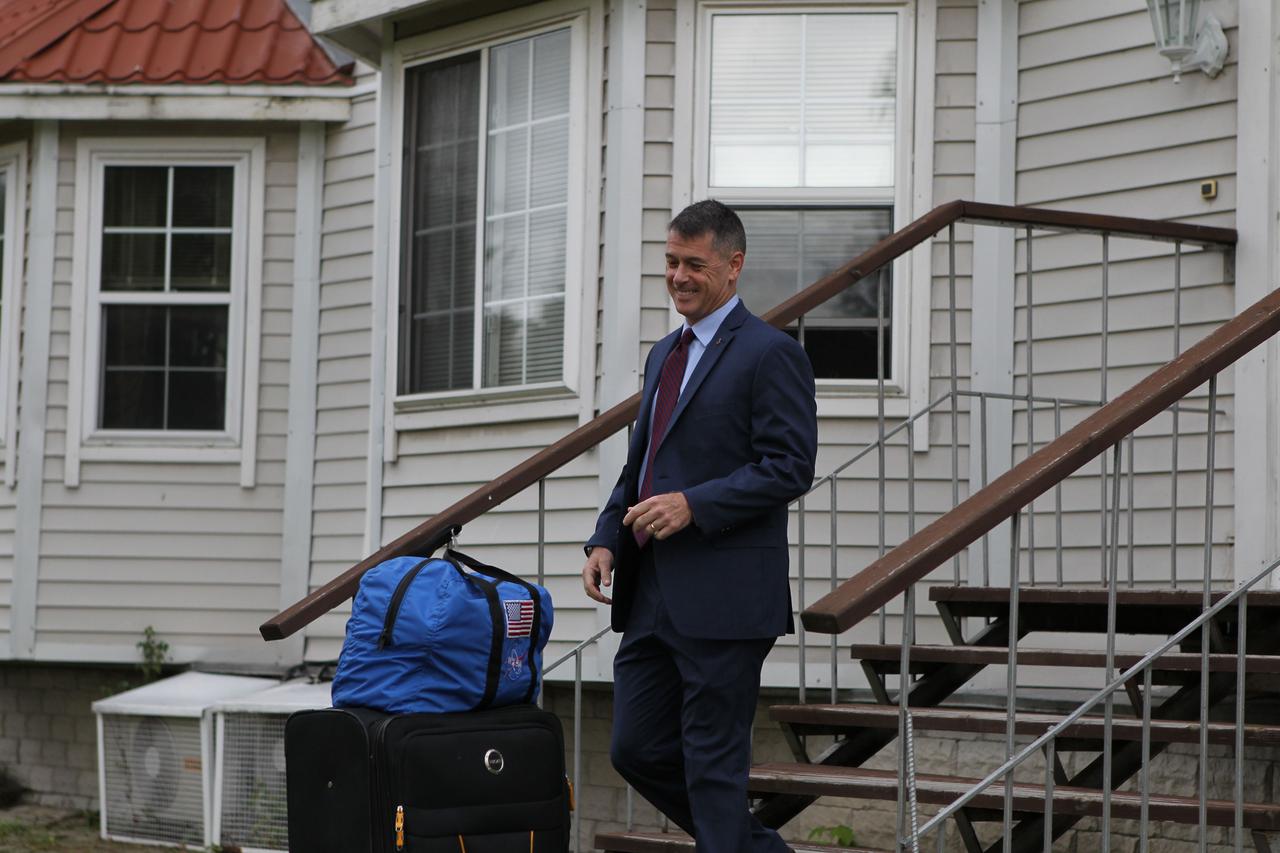
At the Gagarin Cosmonaut Training Center in Star City, Russia, Expedition 49 crewmember Shane Kimbrough of NASA departs his cottage Sept. 8 for a flight to the launch site at the Baikonur Cosmodrome in Kazakhstan, where he and cosmonauts Sergey Ryzhikov and Andrey Borisenko of Roscosmos will launch on Sept. 24, Kazakh time on the Soyuz MS-02 spacecraft for a five-month mission on the International Space Station. NASA/Stephanie Stoll
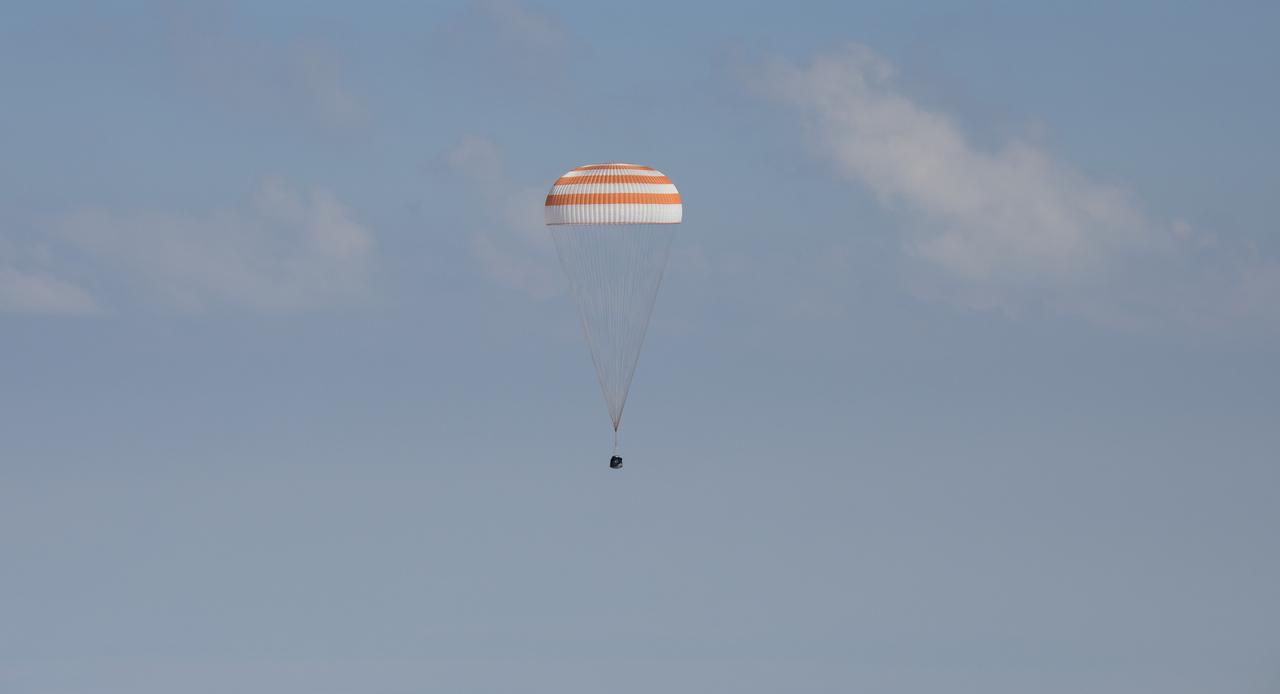
The Soyuz MS-11 spacecraft is seen as it lands in a remote area near the town of Zhezkazgan, Kazakhstan with Expedition 59 crew members Anne McClain of NASA, David Saint-Jacques of the Canadian Space Agency, and Oleg Kononenko of Roscosmos, Tuesday, June 25, 2019 Kazakh time (June 24 Eastern time). McClain, Saint-Jacques, and Kononenko are returning after 204 days in space where they served as members of the Expedition 58 and 59 crews onboard the International Space Station. Photo Credit: (NASA/Bill Ingalls)
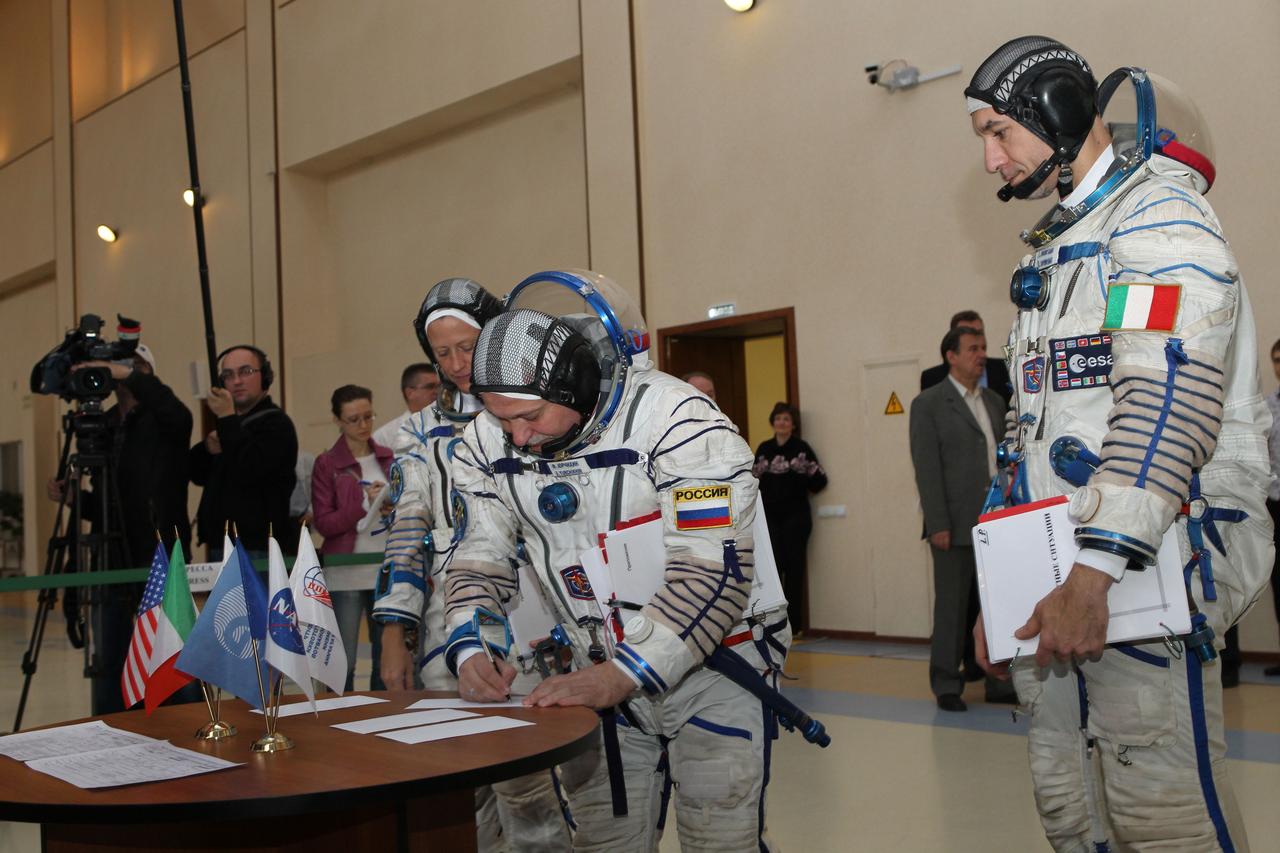
At the Gagarin Cosmonaut Training Center in Star City, Russia, Expedition 36/37 Soyuz Commander Fyodor Yurchikhin signs in for the start of final qualification training April 30 as his crewmates, NASA Flight Engineer Karen Nyberg (left) and Luca Parmitano of the European Space Agency (right), look on. The three crewmembers are training for their launch May 29, Kazakh time, in their Soyuz TMA-09M spacecraft from the Baikonur Cosmodrome in Kazakhstan for a 5 ½ month mission on the International Space Station. NASA/Stephanie Stoll
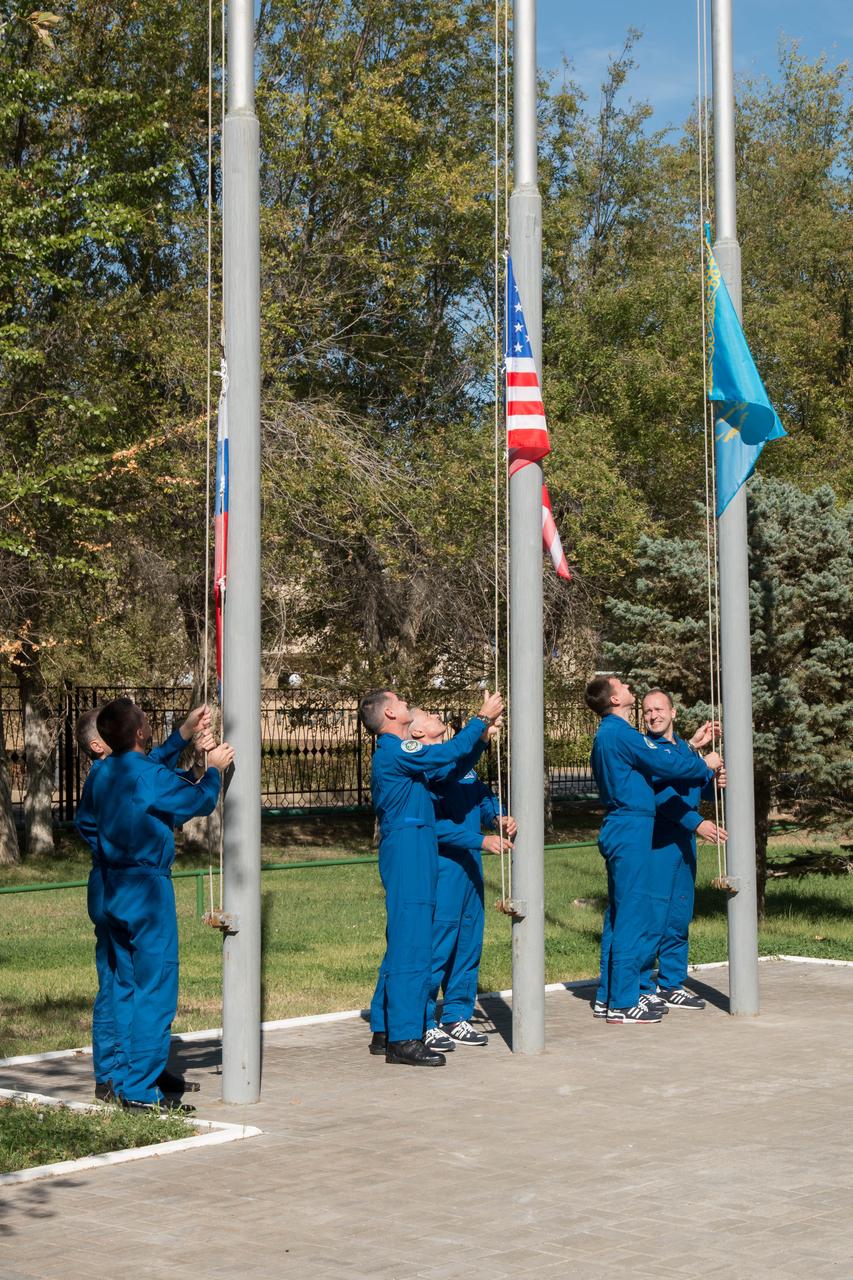
At their Cosmonaut Hotel crew quarters in Baikonur, Kazakhstan, the Expedition 49 prime and backup crewmembers participate in a traditional ceremony Sept. 10 to raise the flags of the U.S., Russia and Kazakhstan. Shane Kimbrough of NASA and Sergey Ryzhikov and Andrey Borisenko of Roscosmos will launch on Sept. 24, Kazakh time from the Baikonur Cosmodrome in Kazakhstan on the Soyuz MS-02 vehicle for a five-month mission on the International Space Station. NASA/Victor Zelentsov
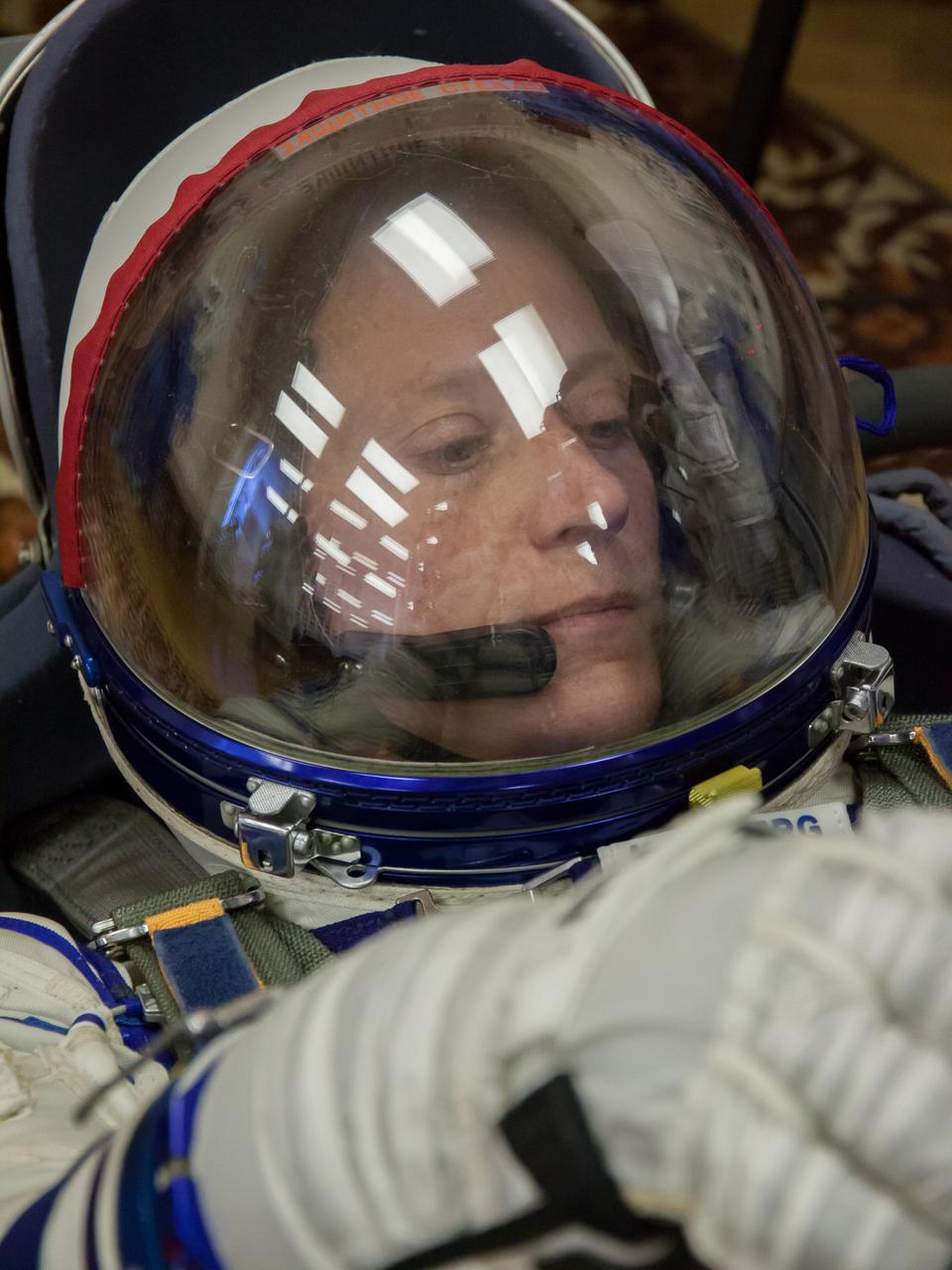
In the Integration Facility at the Baikonur Cosmodrome in Kazakhstan, Expedition 36/37 Flight Engineer Karen Nyberg of NASA strikes a thoughtful pose during a portion of a suited dress rehearsal “fit check” exercise May 17. Nyberg, Flight Engineer Luca Parmitano of the European Space Agency and Soyuz Commander Fyodor Yurchikhin will launch May 29, Kazakh time, in their Soyuz TMA-09M spacecraft to begin a 5 ½ mission on the International Space Station. NASA/Victor Zelentsov
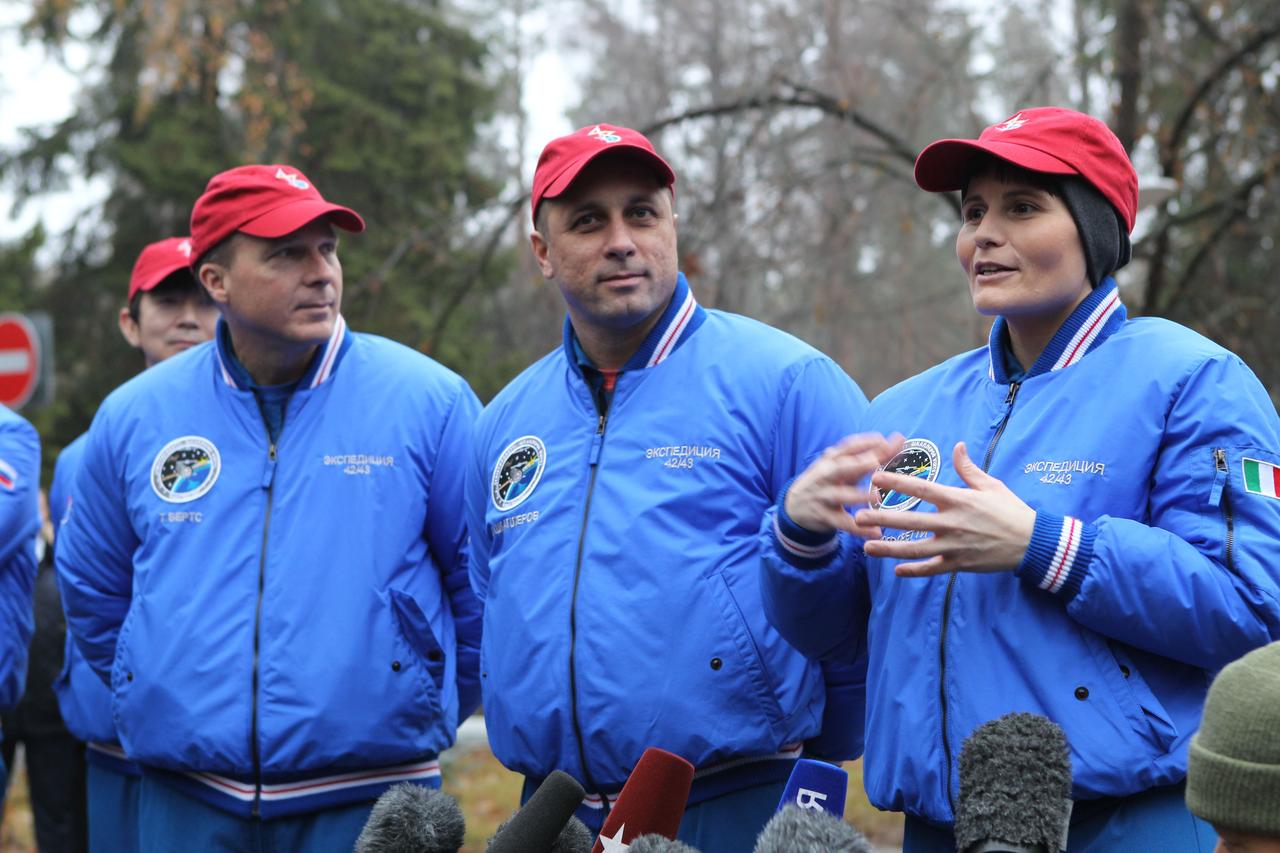
4502: At the Gagarin Cosmonaut Training Center in Star City, Russia, Expedition 42/43 crewmember Samantha Cristoforetti of the European Space Agency (right) answers a reporter’s question Nov. 11 while her crewmates, Terry Virts of NASA (left) and Anton Shkaplerov of the Russian Federal Space Agency (Roscosmos, center) look on. Virts, Shkaplerov and Cristoforetti will launch Nov. 24, Kazakh time from Baikonur in their Soyuz TMA-15M spacecraft for a five and a half month mission on the International Space Station. NASA/Stephanie Stoll
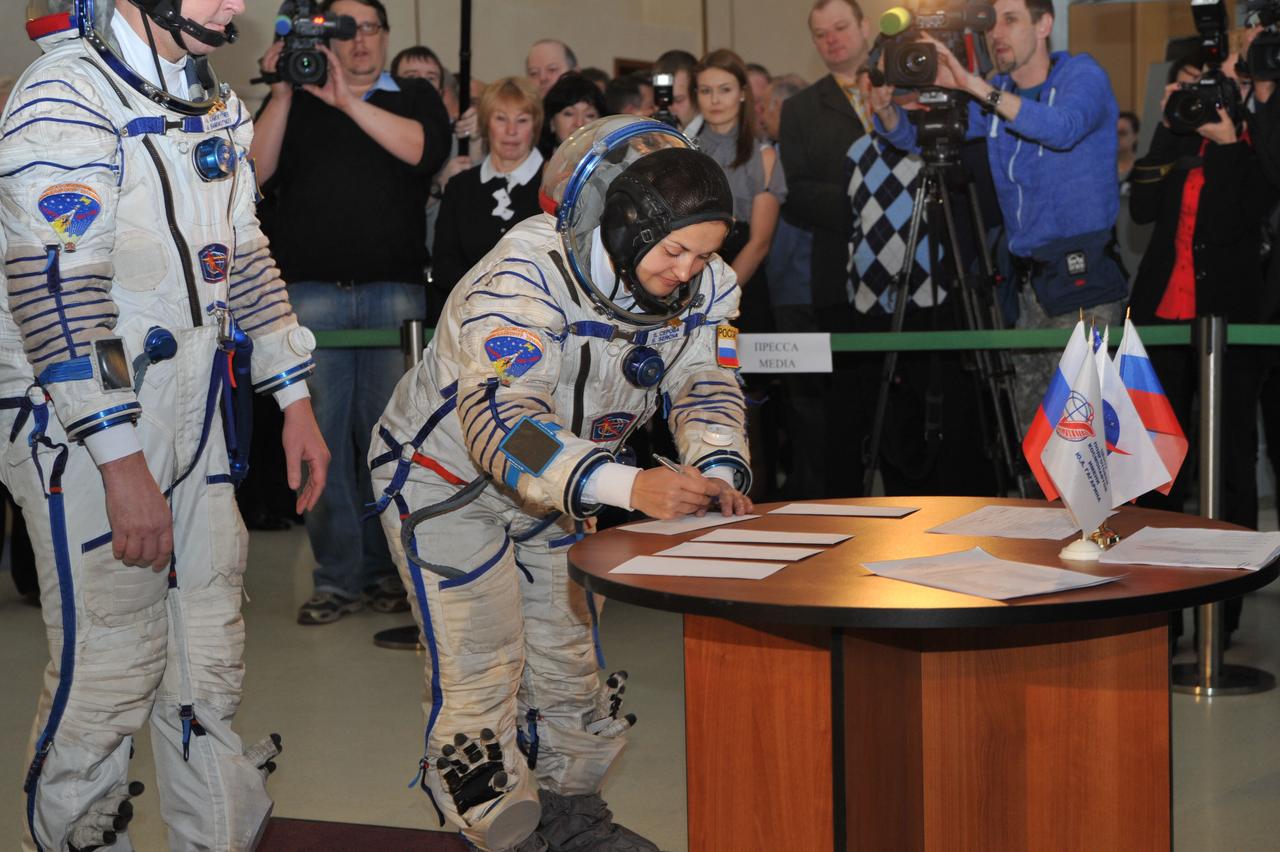
At the Gagarin Cosmonaut Training Center in Star City, Russia, Expedition 39/40 backup crewmember Elena Serova of Roscosmos signs in for the first of two days of qualification exams March 4 as her crewmate, Soyuz Commander Alexander Samokutyaev looks on. The prime crew – Steve Swanson of NASA and Alexander Skvortsov and Oleg Artemyev of Roscosmos are preparing to launch to the International Space Station from the Baikonur Cosmodrome in Kazakhstan on March 26, Kazakh time, on their Soyuz TMA-12M spacecraft for a six-month mission. NASA/Stephanie Stoll
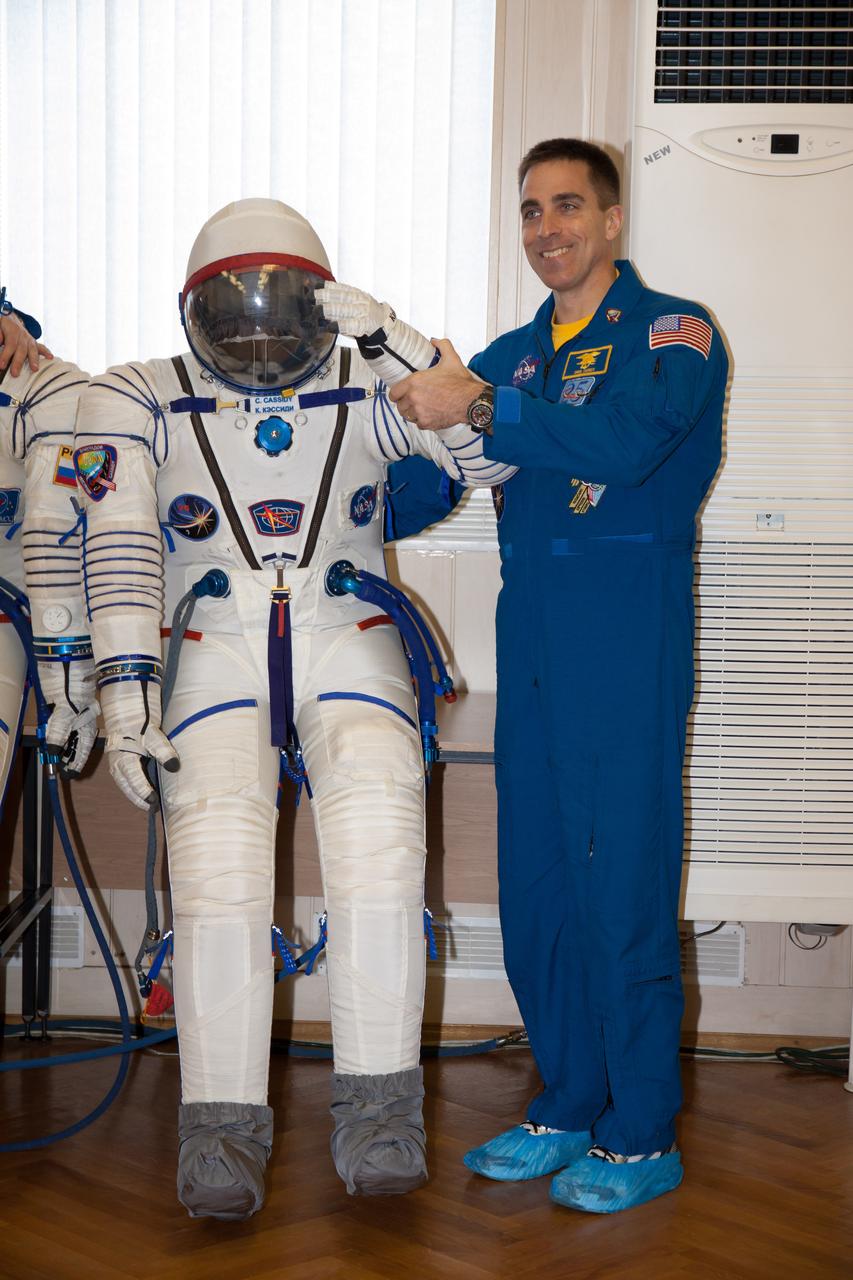
In the Integration Facility at the Baikonur Cosmodrome in Kazakhstan, Expedition 35-36 Flight Engineer Chris Cassidy of NASA has a playful moment with his Russian Sokol launch and entry suit March 17 during a systems dress rehearsal called a “fit check”. Cassidy, Soyuz Commander Pavel Vinogradov and Flight Engineer Alexander Misurkin are preparing for launch to the International Space Station from Baikonur on March 29, Kazakh time. NASA/Victor Zelentsov
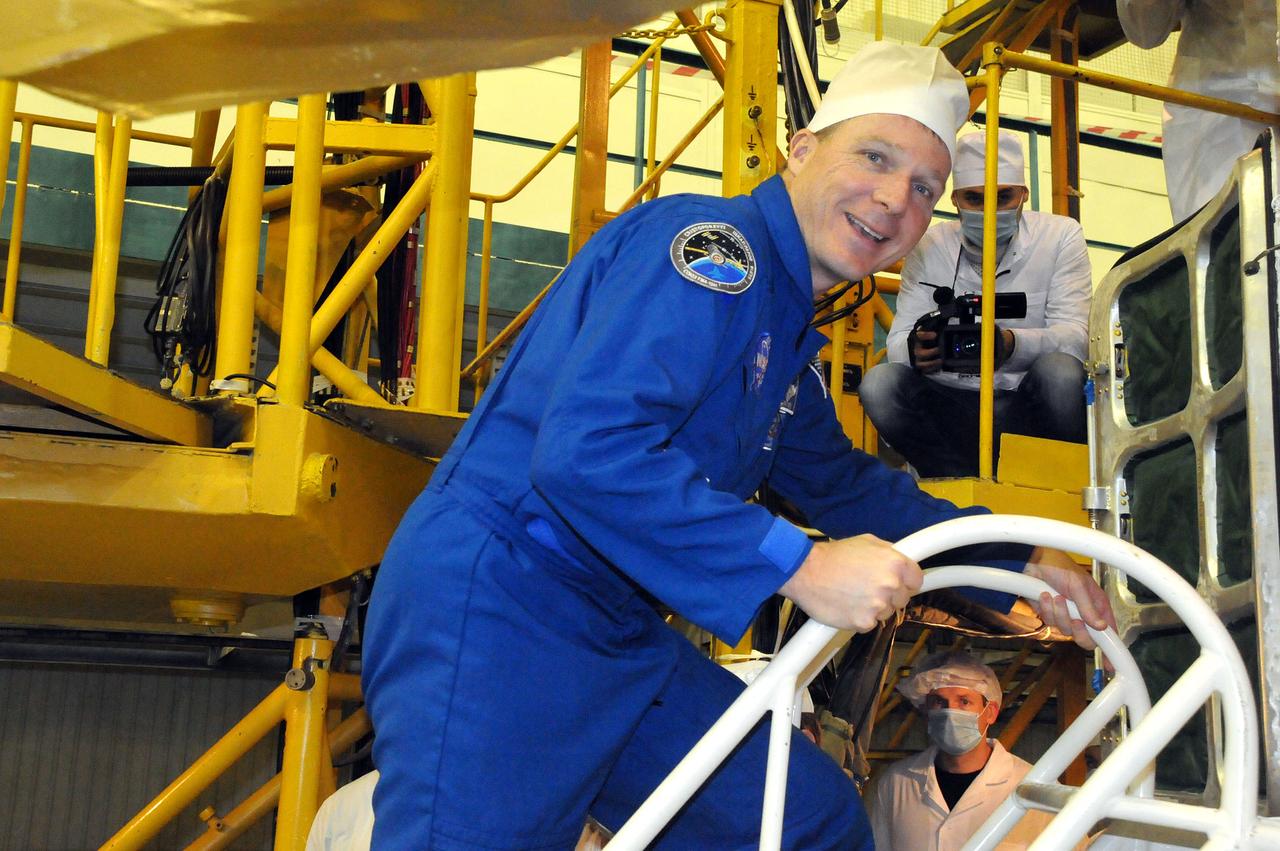
6388: In the Integration Facility at the Baikonur Cosmodrome in Kazakhstan, Expedition 42/43 crewmember Terry Virts of NASA poses for a picture Nov. 19 by the Soyuz TMA-15M spacecraft during the crew’s second and final pre-launch “fit check” dress rehearsal activities. Virts, Anton Shkaplerov of the Russian Federal Space Agency (Roscosmos) and Samantha Cristoforetti of the European Space Agency will launch on Nov. 24, Kazakh time, from Baikonur for a 5 ½ month mission on the International Space Station. NASA/Viktor Ivanov

The Soyuz MS-12 spacecraft is launched with Expedition 59 crewmembers Nick Hague and Christina Koch of NASA, along with Alexey Ovchinin of Roscosmos, Friday March 15, 2019, Kazakh time (March 14 Eastern time) at the Baikonur Cosmodrome in Kazakhstan. Hague, Koch, and Ovchinin will spend six-and-a-half months living and working aboard the International Space Station. Photo Credit: (NASA/Bill Ingalls)
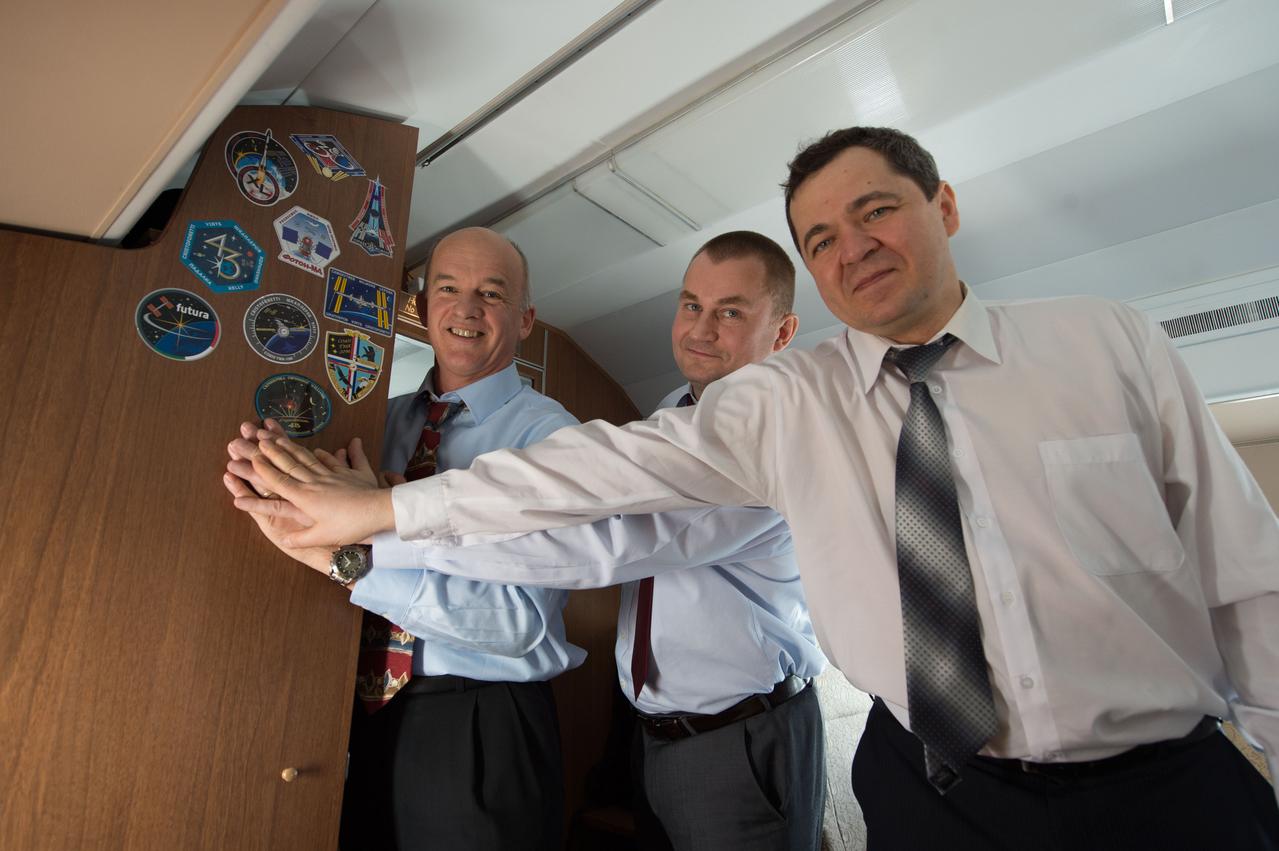
Aboard their Gagarin Cosmonaut Training Center aircraft, Expedition 47-48 crewmembers Jeff Williams of NASA (left) and Alexey Ovchinin (center) and Oleg Skripochka (right) of Roscosmos affix a sticker of their crew patch to the wall of the cabin as they flew from their training base to the Baikonur Cosmodrome in Kazakhstan March 3. The trio will launch March 19, Kazakh time, in their Soyuz TMA-20M spacecraft for a six-month mission on the International Space Station. Courtesy of Gagarin Cosmonaut Training Center
3851: At the Gagarin Cosmonaut Training Center in Star City, Russia, Expedition 42/43 crewmember Samantha Cristoforetti of the European Space Agency (right) signs a ceremonial book Nov. 6 as her crewmates, Terry Virts of NASA (left) and Anton Shkaplerov of the Russian Federal Space Agency (Roscosmos, center) look on. Virts, Cristoforetti and Shkaplerov will launch Nov. 24, Kazakh time from the Baikonur Cosmodrome in Kazakhstan on their Soyuz TMA-15M spacecraft for a 5 ½ month mission on the International Space Station. NASA/Stephanie Stoll
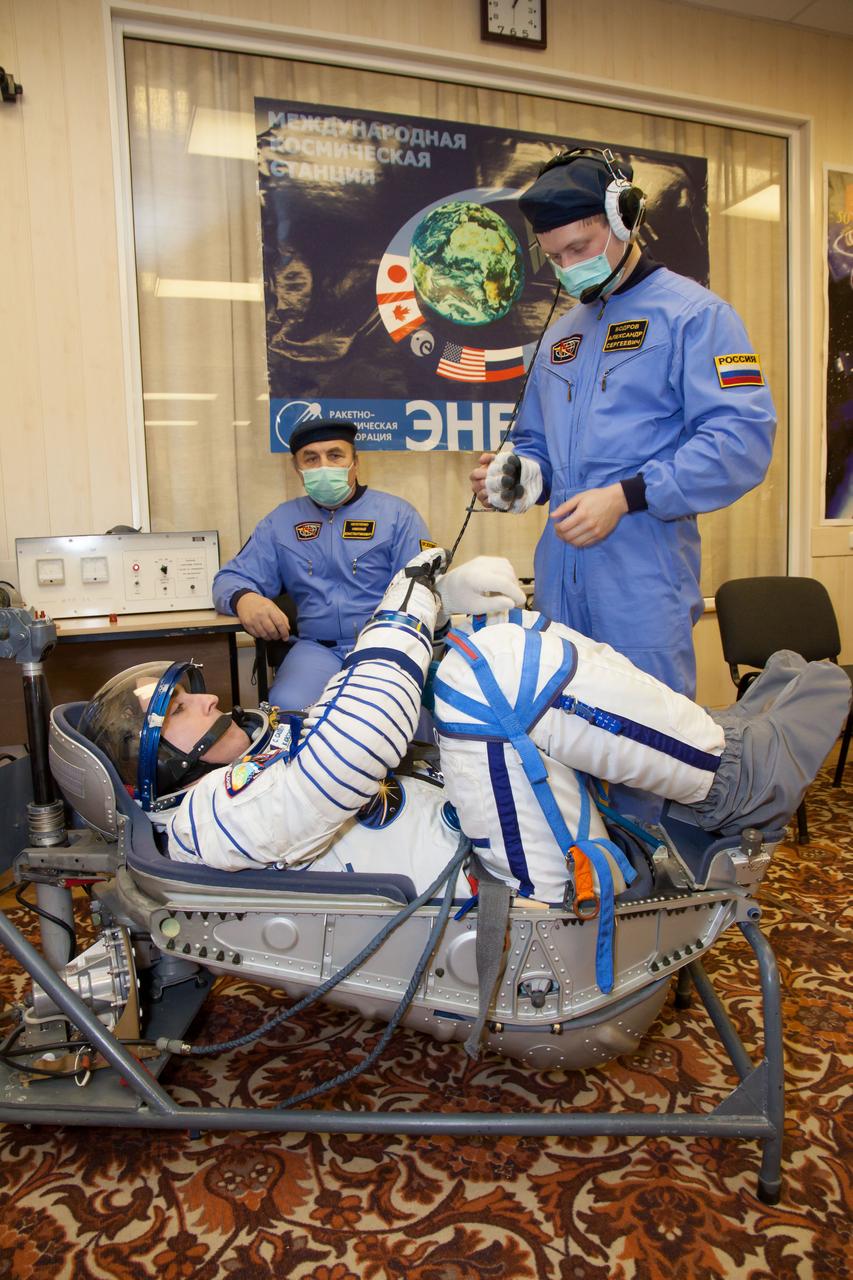
In the Integration Facility at the Baikonur Cosmodrome in Kazakhstan, Expedition 35-36 Flight Engineer Chris Cassidy of NASA conducts a leak check of his Russian Sokol launch and entry suit March 17 as he runs through a systems dress rehearsal called a “fit check” Cassidy, Soyuz Commander Pavel Vinogradov and Flight Engineer Alexander Misurkin are preparing for launch to the International Space Station from Baikonur on March 29, Kazakh time. NASA/Victor Zelentsov
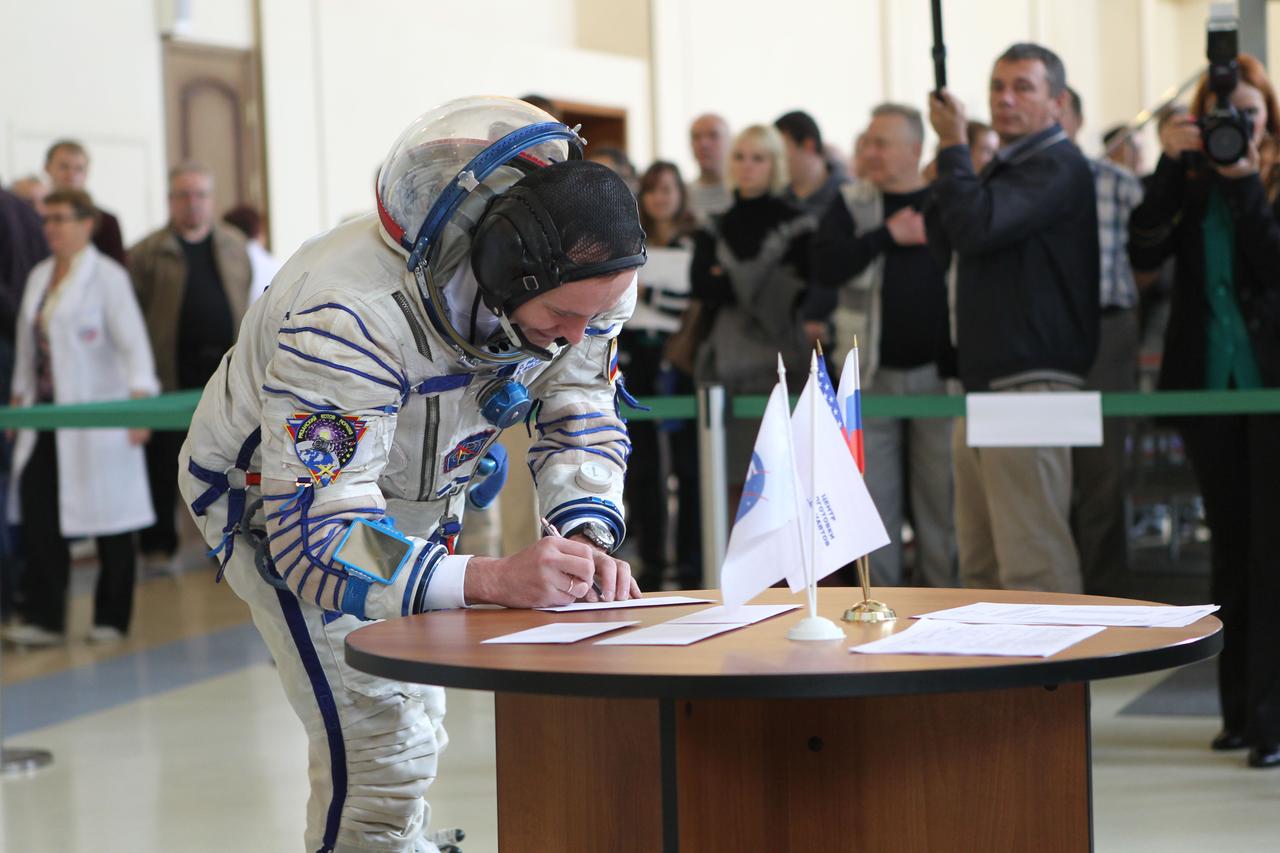
At the Gagarin Cosmonaut Training Center in Star City, Russia, Expedition 37/38 Flight Engineer Sergey Ryazanskiy signs in for a round of qualification exams Sept. 4 as he and his crewmates, Soyuz Commander Oleg Kotov and NASA Flight Engineer Michael Hopkins enter the final phase of their training. The trio is preparing for launch on Sept. 26, Kazakh time, from the Baikonur Cosmodrome in Kazakhstan on the Soyuz TMA-10M spacecraft for a 5 ½ month mission on the International Space Station. NASA/Stephanie Stoll
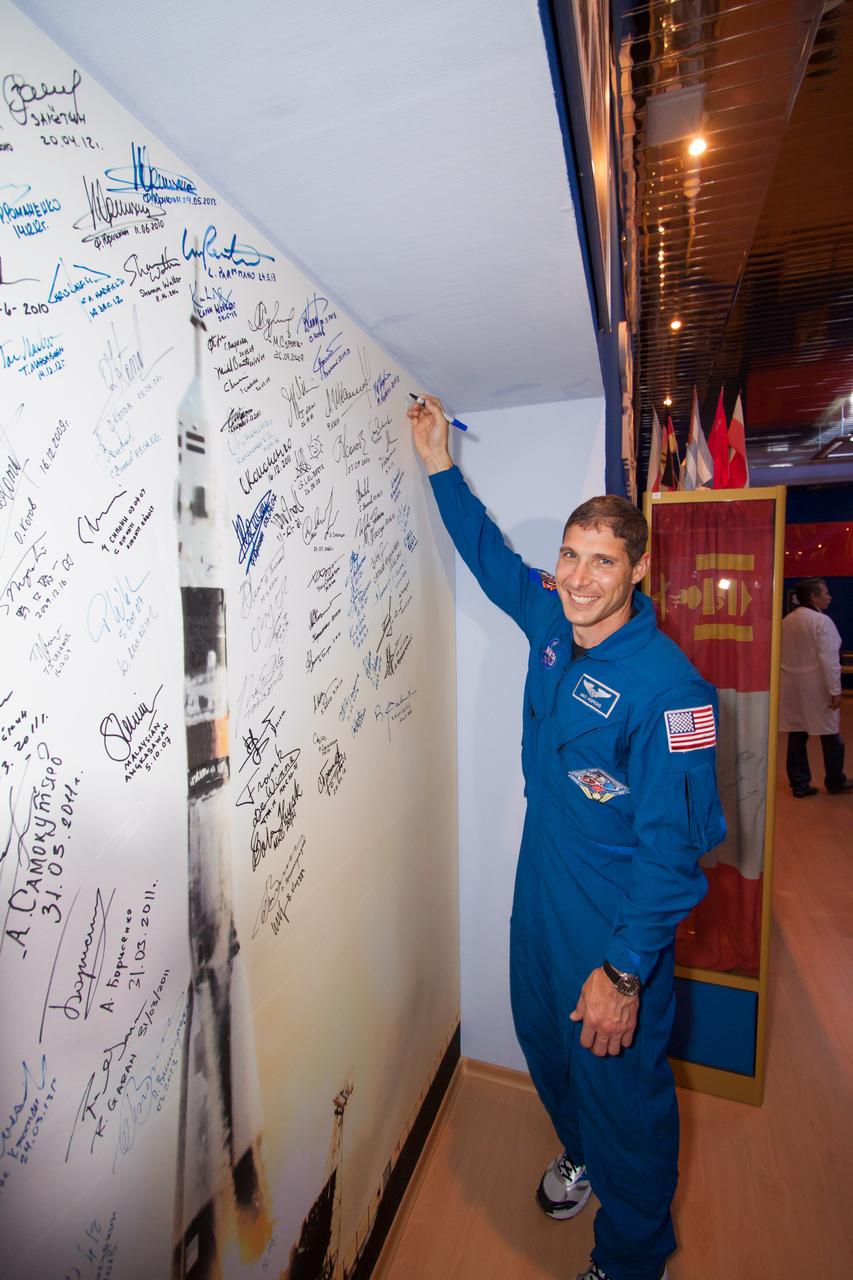
Touring the Korolev Museum at the Baikonur Cosmodrome in Kazakhstan, Expedition 37/38 Flight Engineer Michael Hopkins of NASA signs a wall mural depicting a Soyuz rocket Sept. 20 as he and his crewmates, Soyuz Commander Oleg Kotov and Flight Engineer Sergey Ryazanskiy completed a final “fit check” inspection of their Soyuz TMA-10M spacecraft. Hopkins, Kotov and Ryazanskiy are preparing for launch Sept. 26, Kazakh time, to begin a five and a half month mission on the International Space Station. NASA/Victor Zelentsov
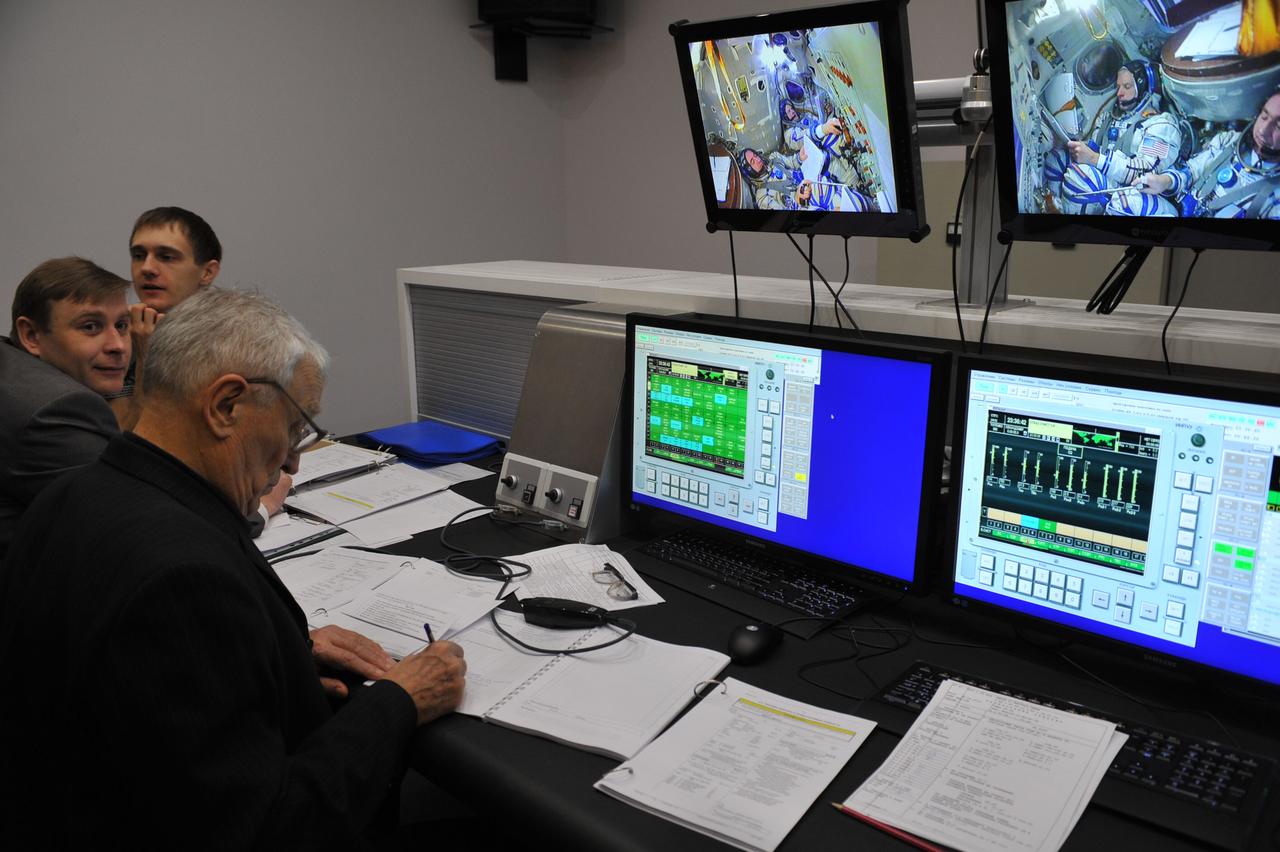
At the Gagarin Cosmonaut Training Center in Star City, Russia, flight instructors monitor the progress of qualification exams for the Expedition 39/40 crewmembers March 5 as the crew heads into the homestretch of its training. Flight Engineer Steve Swanson of NASA, Soyuz Commander Alexander Skvortsov of Roscosmos and Oleg Artemyev of Roscosmos are preparing for their launch to the International Space Station from the Baikonur Cosmodrome in Star City, Russia March 26, Kazakh time, on the Soyuz TMA-12M spacecraft for a six-month mission. NASA/Stephanie Stoll
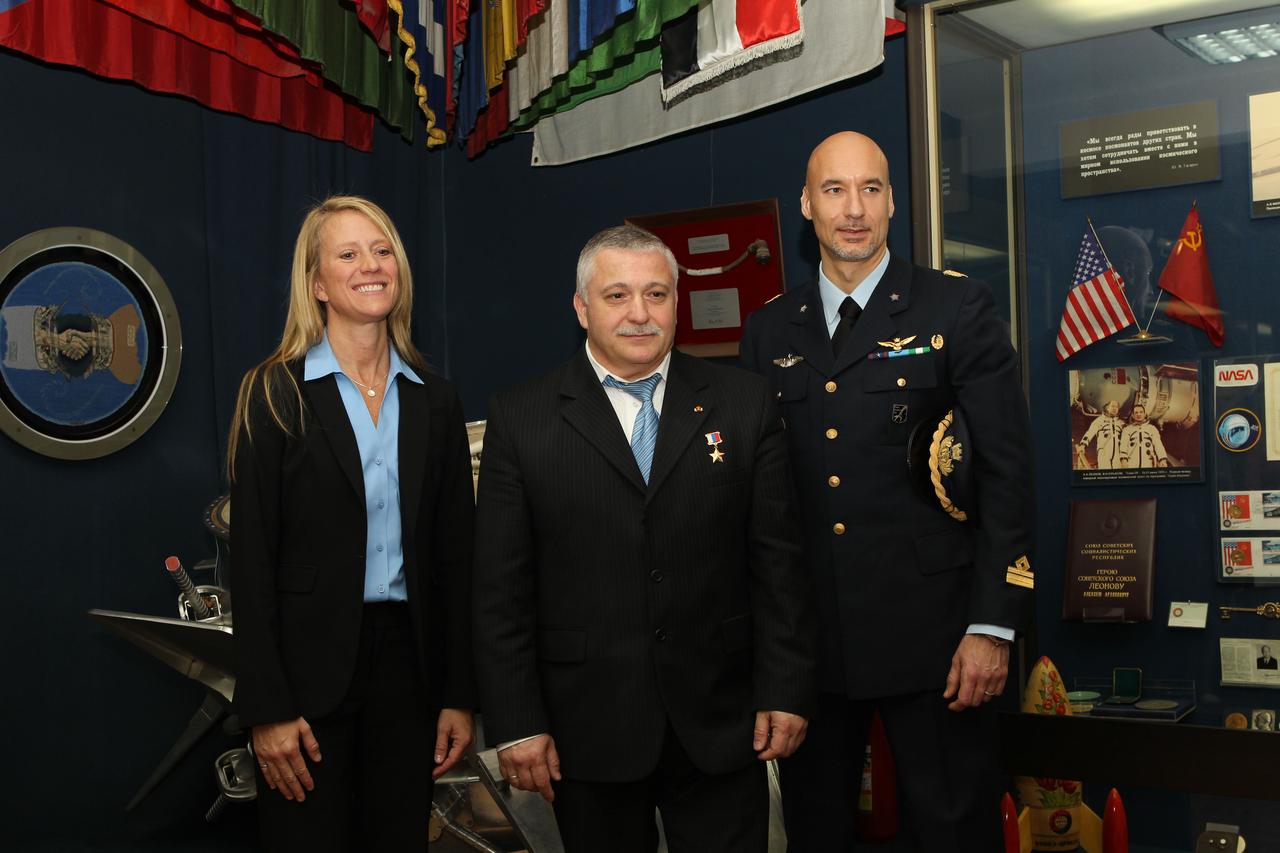
At the Gagarin Cosmonaut Training Center in Star City, Russia, Expedition 36/37 Flight Engineer Karen Nyberg (left), Soyuz Commander Fyodor Yurchikhin (center) and Flight Engineer Luca Parmitano of the European Space Agency (right) pose for pictures at the Cosmonautics Museum May 8 as part of their pre-launch activities. Nyberg, Yurchikhin and Parmitano are preparing for their launch May 29, Kazakh time, in their Soyuz TMA-09M spacecraft from the Baikonur Cosmodrome in Kazakhstan for a six-month mission on the International Space Station. NASA/Stephanie Stoll
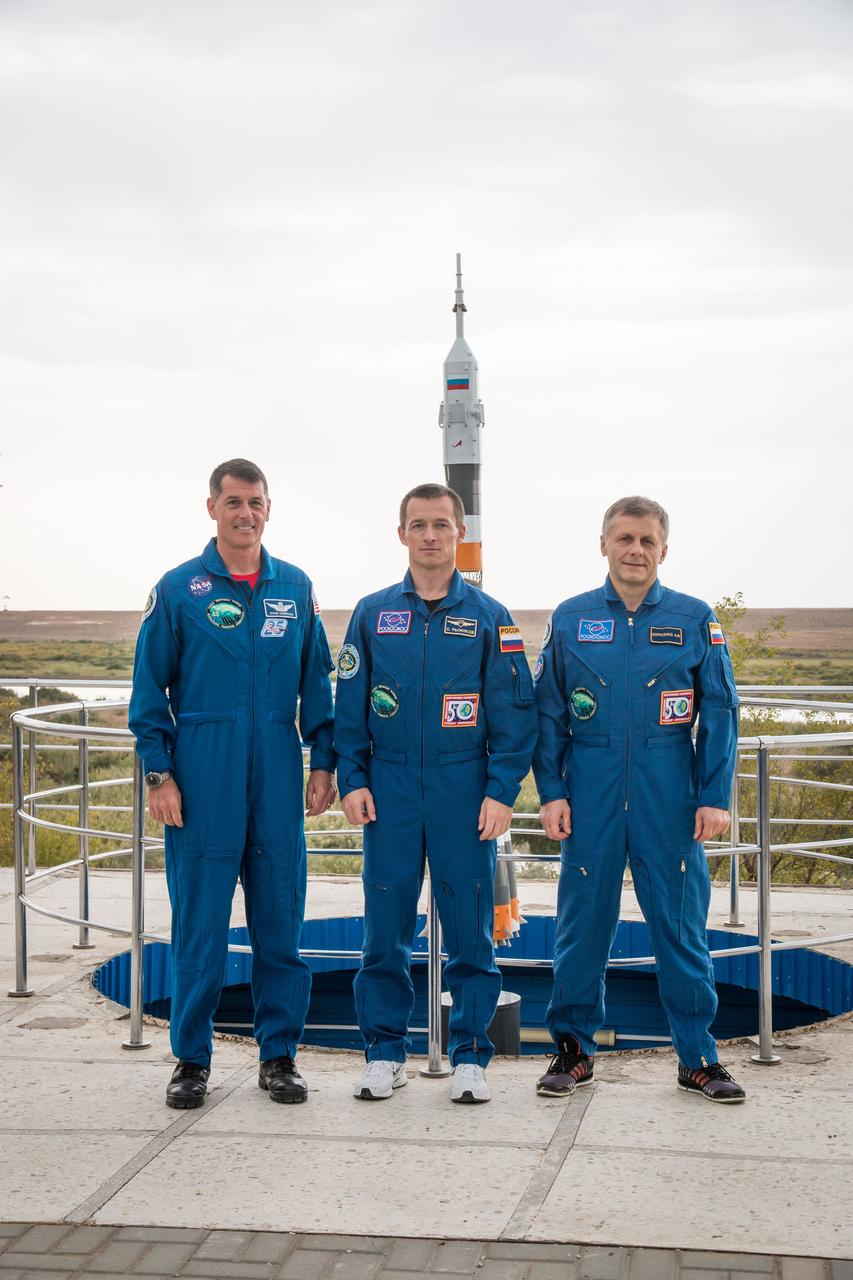
Expedition 49 flight engineer Shane Kimbrough of NASA, left, Soyuz commander Sergey Ryzhikov of Roscosmos, center, and flight engineer Andrey Borisenko of Roscosmos left, pose for a group picture by a model of the Soyuz rocket during media day at the Cosmonaut Hotel on Friday, Sept. 16, 2016 in Baikonur, Kazakhstan. Kimbrough, Ryzhikov, and Borisenko are scheduled to launch to the International Space Station aboard the Soyuz MS-02 spacecraft from the Baikonur Cosmodrome on September 24 Kazakh time. Photo Credit: (NASA/Victor Zelentsov)
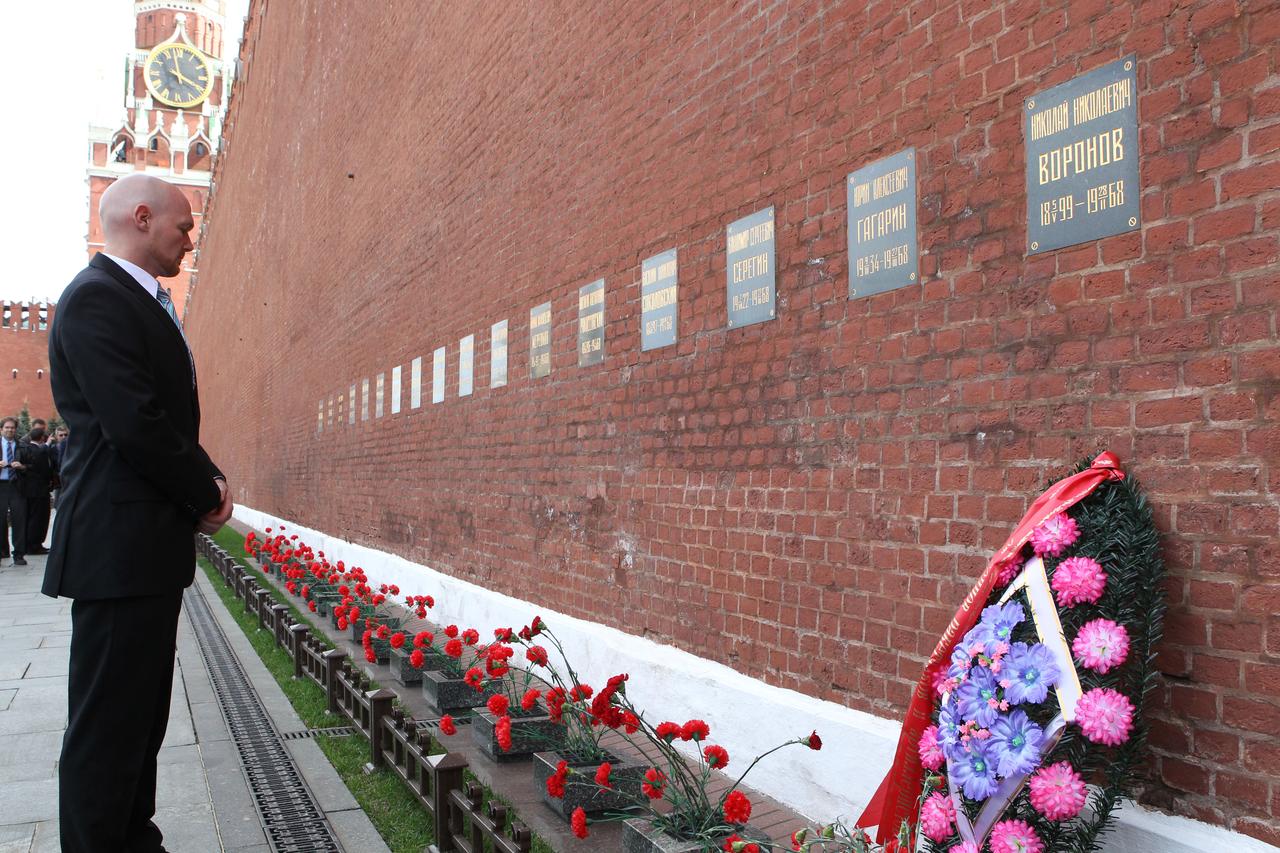
1107: At the Kremlin Wall in Moscow’s Red Square, Expedition 40/41 Flight Engineer Alexander Gerst of the European Space Agency pauses to reflect May 8 after laying flowers at the site where Russian space icons are interred. Gerst, Max Suraev of the Russian Federal Space Agency (Roscosmos) and Reid Wiseman of NASA are preparing for launch May 29, Kazakh time, in the Soyuz TMA-13M spacecraft from the Baikonur Cosmodrome in Kazakhstan for a 5 ½ month mission on the International Space Station. NASA/Stephanie Stoll
nhq201704100022 (April 10, 2017) --- Russian Search and Rescue teams arrive at the Soyuz MS-02 spacecraft shortly after it landed with Expedition 50 Commander Shane Kimbrough of NASA and Flight Engineers Sergey Ryzhikov and Andrey Borisenko of Roscosmos near the town of Zhezkazgan, Kazakhstan on Monday, April 10, 2017 (Kazakh time). Kimbrough, Ryzhikov, and Borisenko are returning after 173 days in space where they served as members of the Expedition 49 and 50 crews onboard the International Space Station. Photo Credit: (NASA/Bill Ingalls)
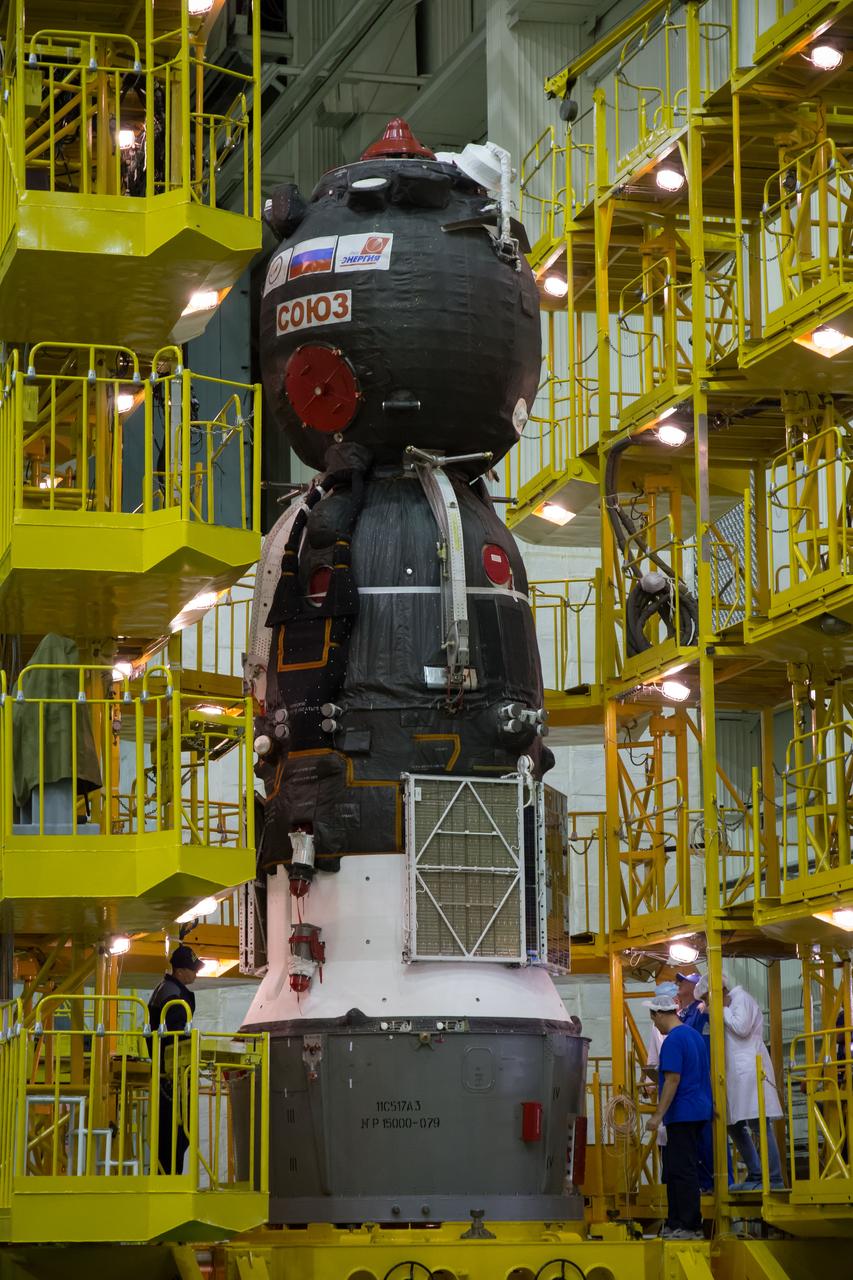
The Soyuz MS-02 spacecraft is seen prior to being encapsulated in its fairing on Thursday, Sept. 15, 2016 at the Baikonur Cosmodrome in Kazakhstan. Expedition 49 flight engineer Shane Kimbrough of NASA, flight engineer Andrey Borisenko of Roscosmos, and Soyuz commander Sergey Ryzhikov of Roscosmos are scheduled to launch to the International Space Station aboard the Soyuz MS-02 spacecraft from the Baikonur Cosmodrome on September 24 Kazakh time. Photo Credit: (NASA/Victor Zelentsov)
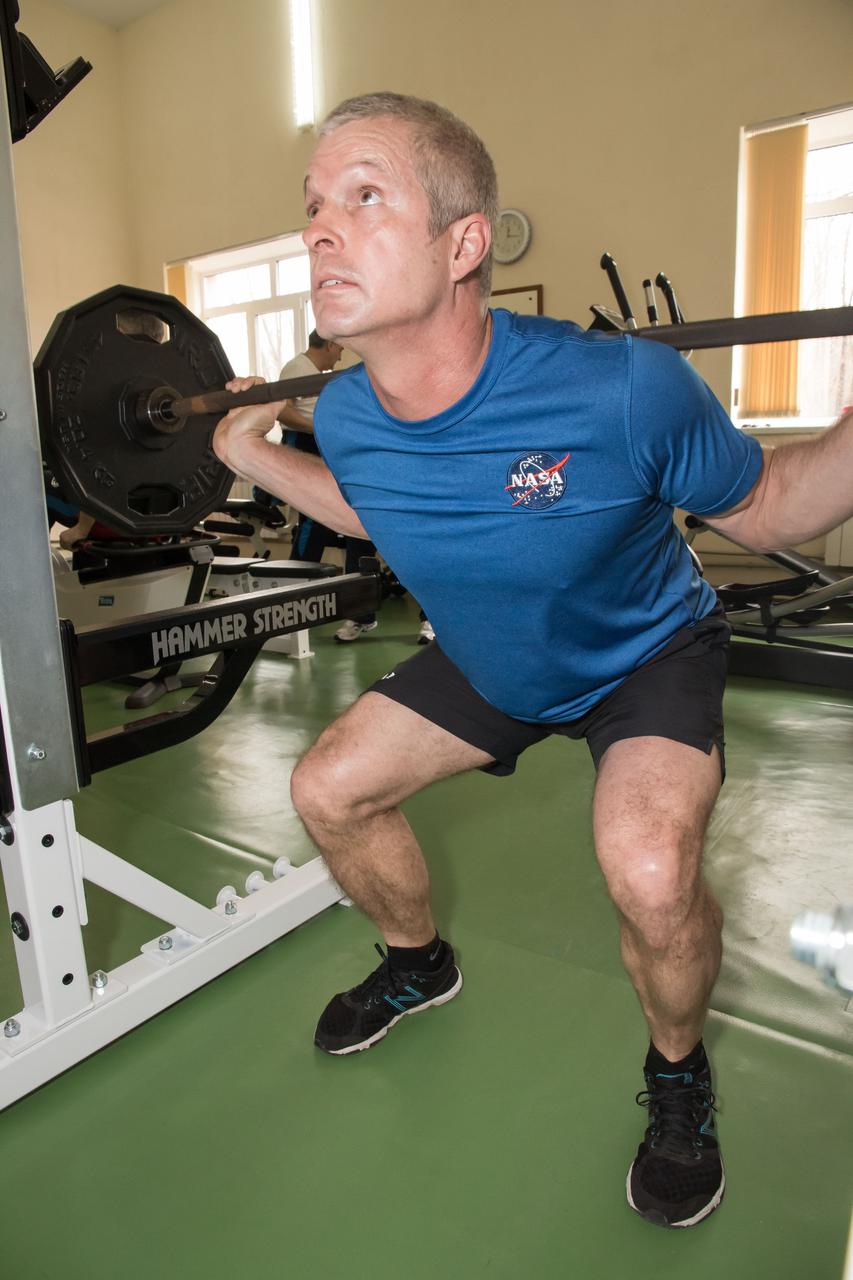
19-12-18-04: At his Cosmonaut Hotel crew quarters in Baikonur, Kazakhstan, Expedition 39/40 Flight Engineer Steve Swanson of NASA gets in a workout March 19 as he prepares for launch to the International Space Station with his crewmates, Alexander Skvortsov and Oleg Artemyev of the Russian Federal Space Agency (Roscosmos) on March 26, Kazakh time, in the Soyuz TMA-12M spacecraft for a six-month mission. NASA/Victor Zelentsov
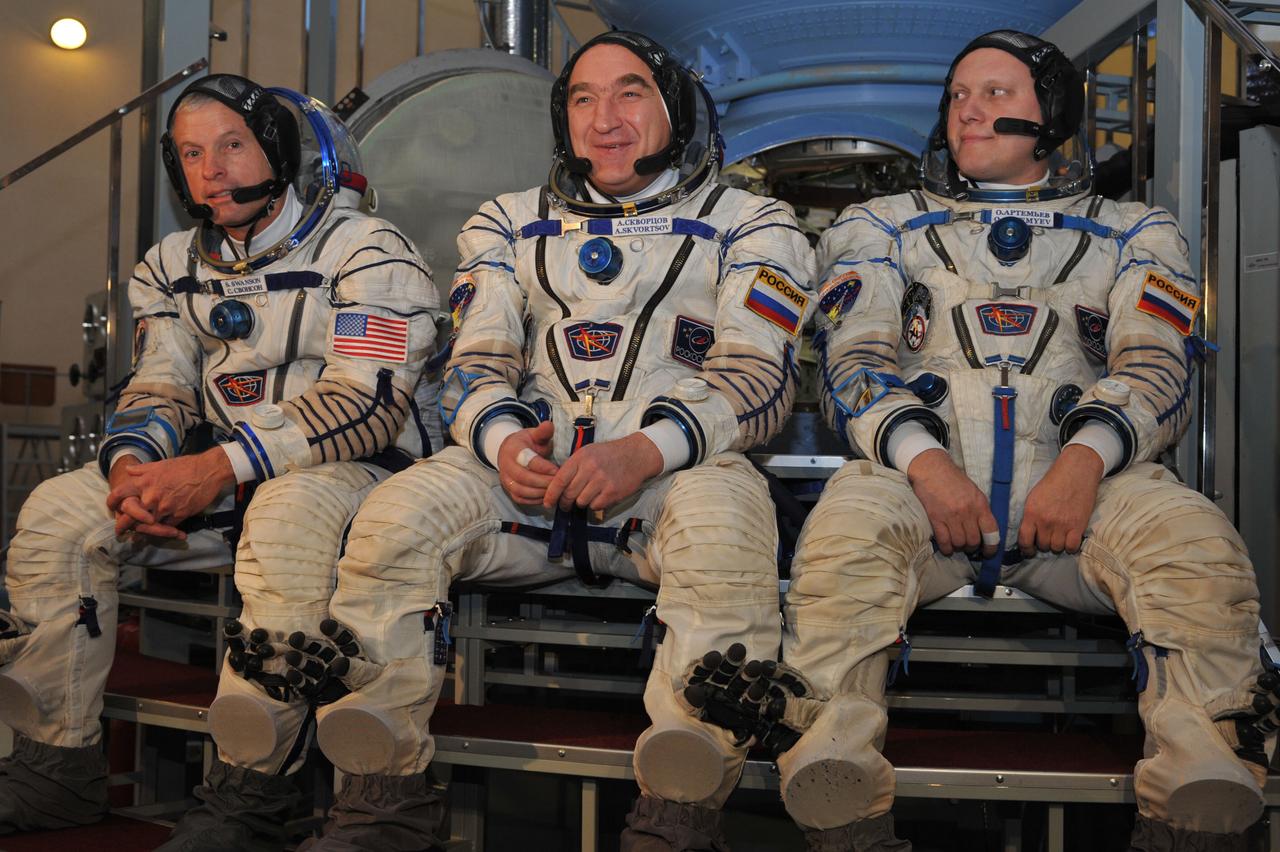
At the Gagarin Cosmonaut Training Center in Star City, Russia, Expedition 39/40 Flight Engineer Steve Swanson of NASA (left), Soyuz Commander Alexander Skvortsov of Roscosmos (center) and Oleg Artemyev of Roscosmos (right) field questions from reporters March 5 prior to qualification exams. They are preparing for their launch to the International Space Station from the Baikonur Cosmodrome in Star City, Russia March 26, Kazakh time, on the Soyuz TMA-12M spacecraft for a six-month mission. NASA/Stephanie Stoll
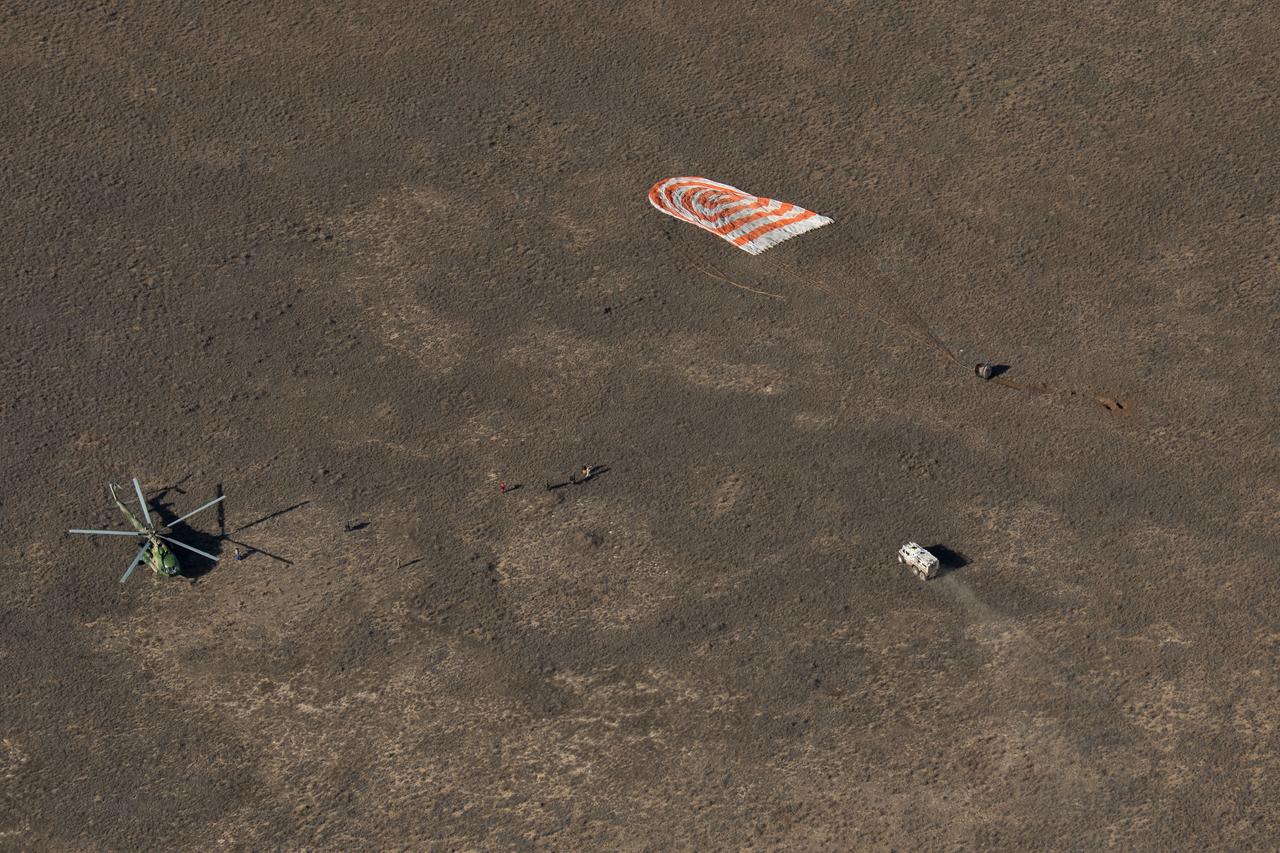
nhq201704100021 (April 10, 2017) --- Russian Search and Rescue teams arrive at the Soyuz MS-02 spacecraft shortly after it landed with Expedition 50 Commander Shane Kimbrough of NASA and Flight Engineers Sergey Ryzhikov and Andrey Borisenko of Roscosmos near the town of Zhezkazgan, Kazakhstan on Monday, April 10, 2017 (Kazakh time). Kimbrough, Ryzhikov, and Borisenko are returning after 173 days in space where they served as members of the Expedition 49 and 50 crews onboard the International Space Station. Photo Credit: (NASA/Bill Ingalls)
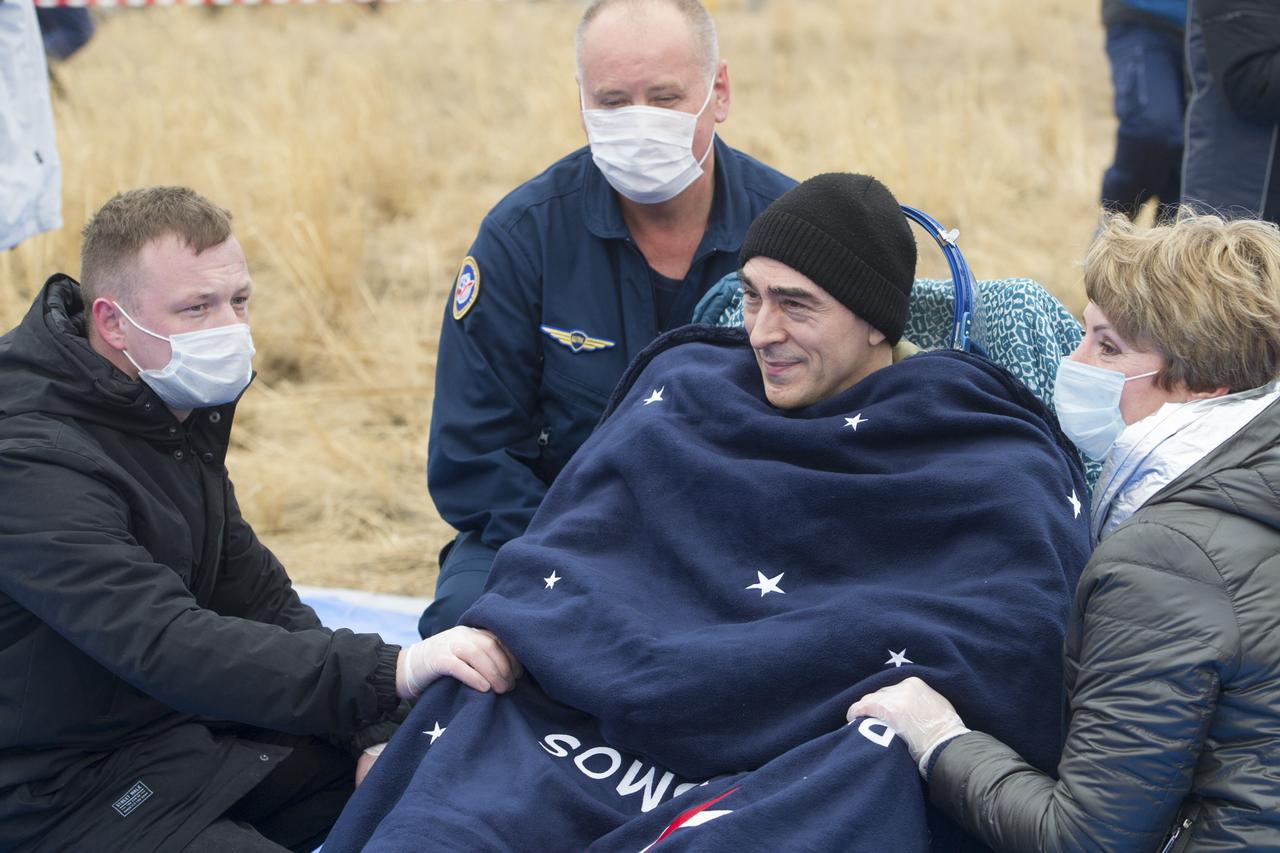
Expedition 63 Roscosmos cosmonaut Anatoly Ivanishin is seen outside the Soyuz MS-16 spacecraft after he landed with Roscosmos cosmonaut Ivan Vagner and NASA astronaut Chris Cassidy in a remote area near the town of Zhezkazgan, Kazakhstan on Thursday, October 22, 2020, Kazakh time (Oct. 21 Eastern time). Cassidy, Ivanishin and Vagner returned after 196 days in space having served as Expedition 62-63 crew members onboard the International Space Station. Photo Credit: (NASA/GCTC/Denis Derevtsov)
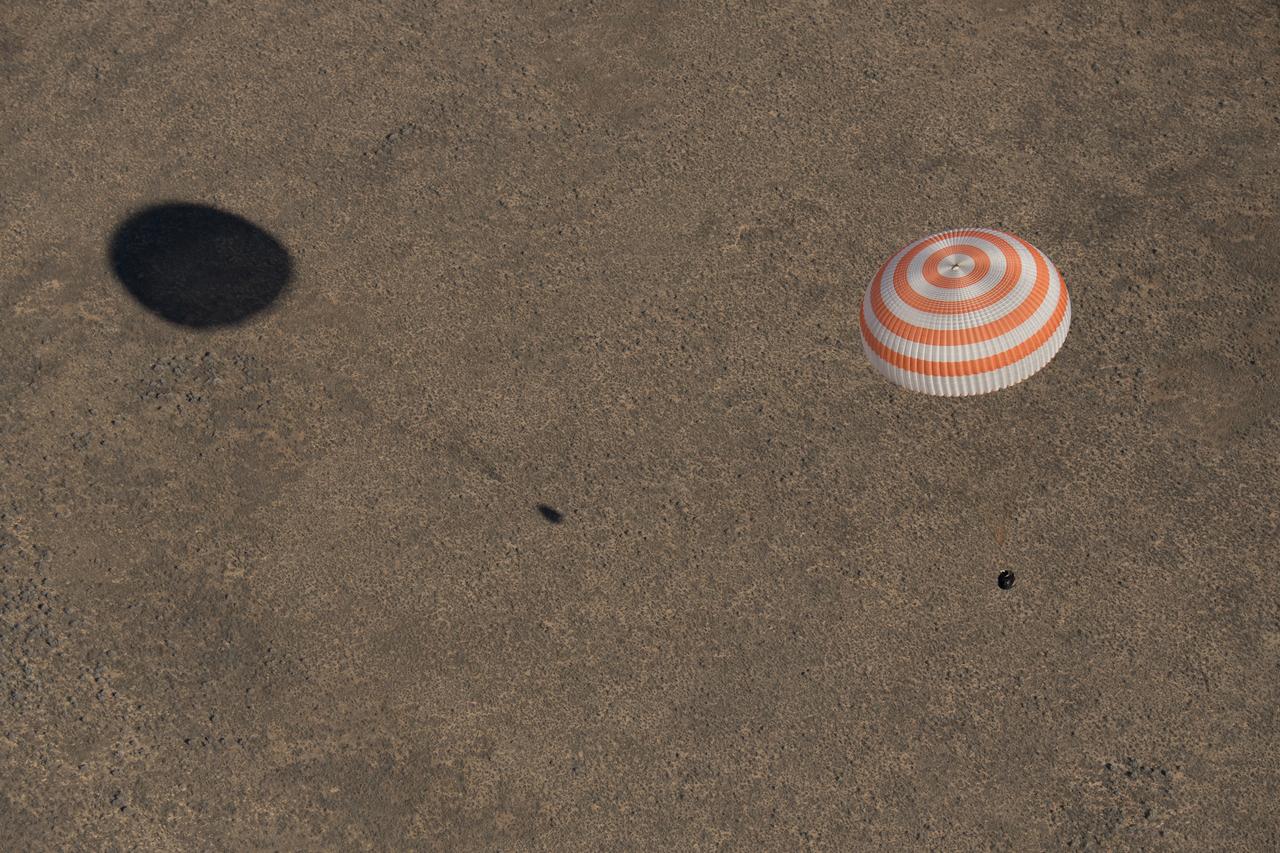
nhq201704100017 (April 10, 2017) --- The Soyuz MS-02 spacecraft is seen as it lands with Expedition 50 Commander Shane Kimbrough of NASA and Flight Engineers Sergey Ryzhikov and Andrey Borisenko of Roscosmos near the town of Zhezkazgan, Kazakhstan on Monday, April 10, 2017 (Kazakh time). Kimbrough, Ryzhikov, and Borisenko are returning after 173 days in space where they served as members of the Expedition 49 and 50 crews onboard the International Space Station. Photo Credit: (NASA/Bill Ingalls)
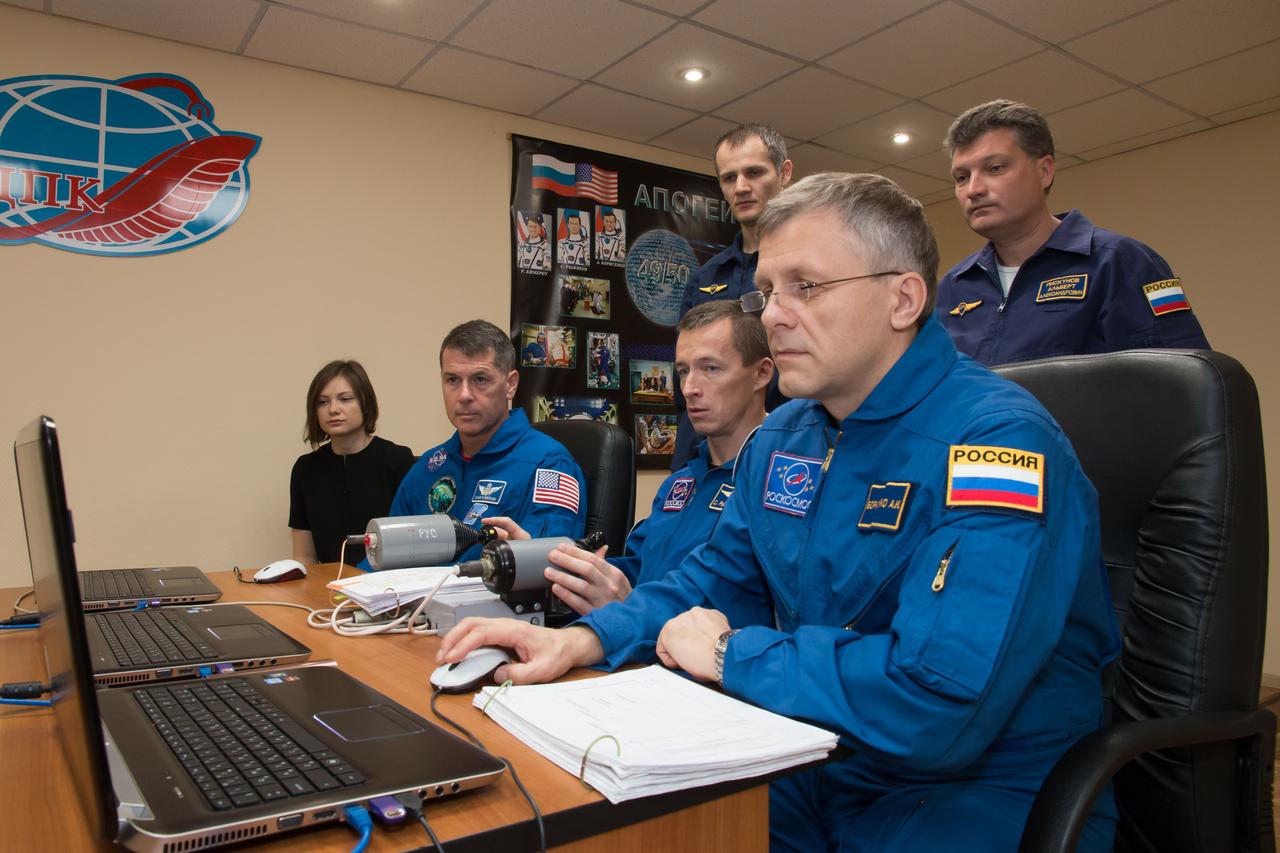
Expedition 49 flight engineer Shane Kimbrough of NASA, left, Soyuz commander Sergey Ryzhikov of Roscosmos, center, and flight engineer Andrey Borisenko of Roscosmos, right, work on Soyuz training at the Cosmonaut Hotel on Friday, Sept. 16, 2016 in Baikonur, Kazakhstan. Kimbrough, Ryzhikov, and Borisenko are scheduled to launch to the International Space Station aboard the Soyuz MS-02 spacecraft from the Baikonur Cosmodrome on September 24 Kazakh time. Photo Credit: (NASA/Victor Zelentsov)
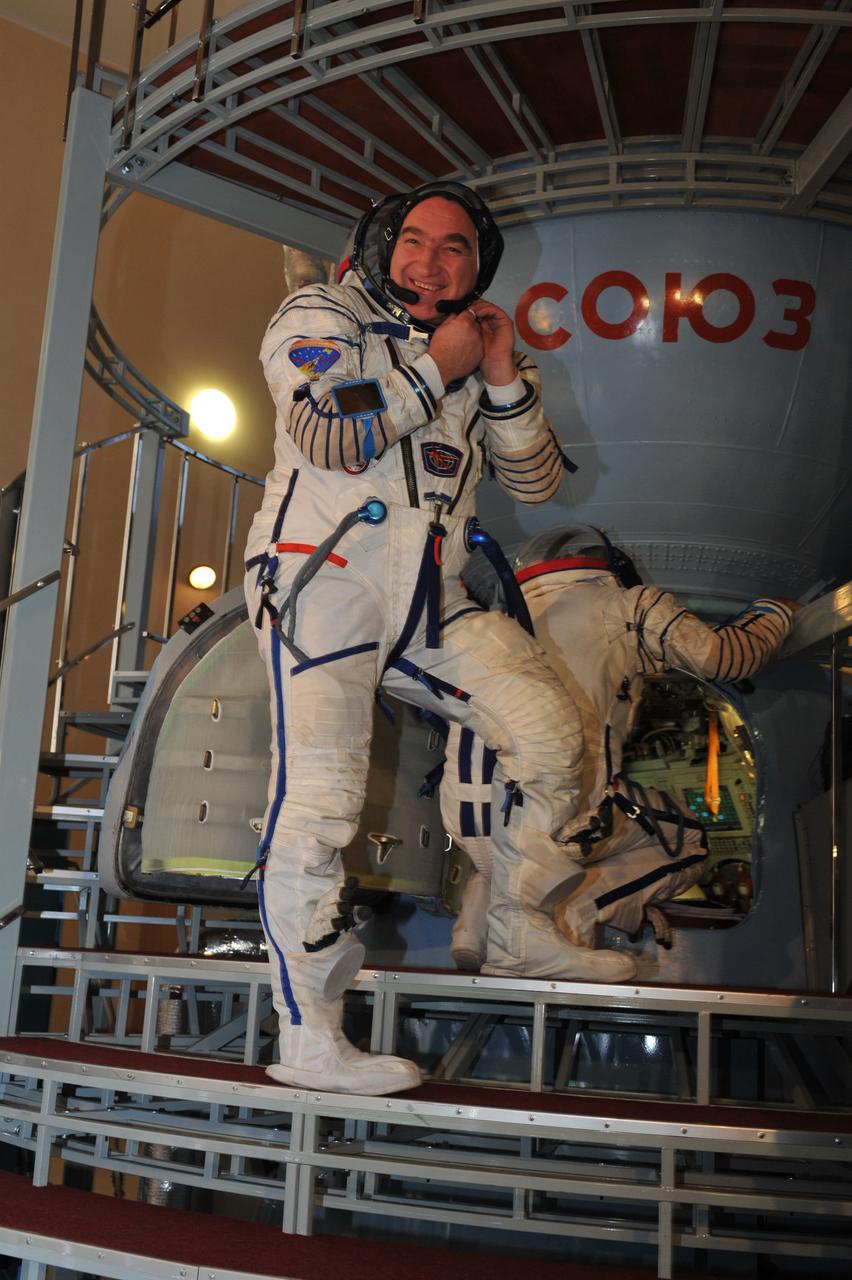
At the Gagarin Cosmonaut Training Center in Star City, Russia, Expedition 39/40 Soyuz Commander Alexander Skvortsov of Roscosmos smiles before entering a Soyuz spacecraft simulator during qualification exams March 5. Skvortsov, NASA Flight Engineer Steve Swanson and Flight Engineer Oleg Artemyev of Roscosmos are preparing for their launch to the International Space Station from the Baikonur Cosmodrome in Star City, Russia March 26, Kazakh time, on the Soyuz TMA-12M spacecraft for a six-month mission. NASA/Stephanie Stoll
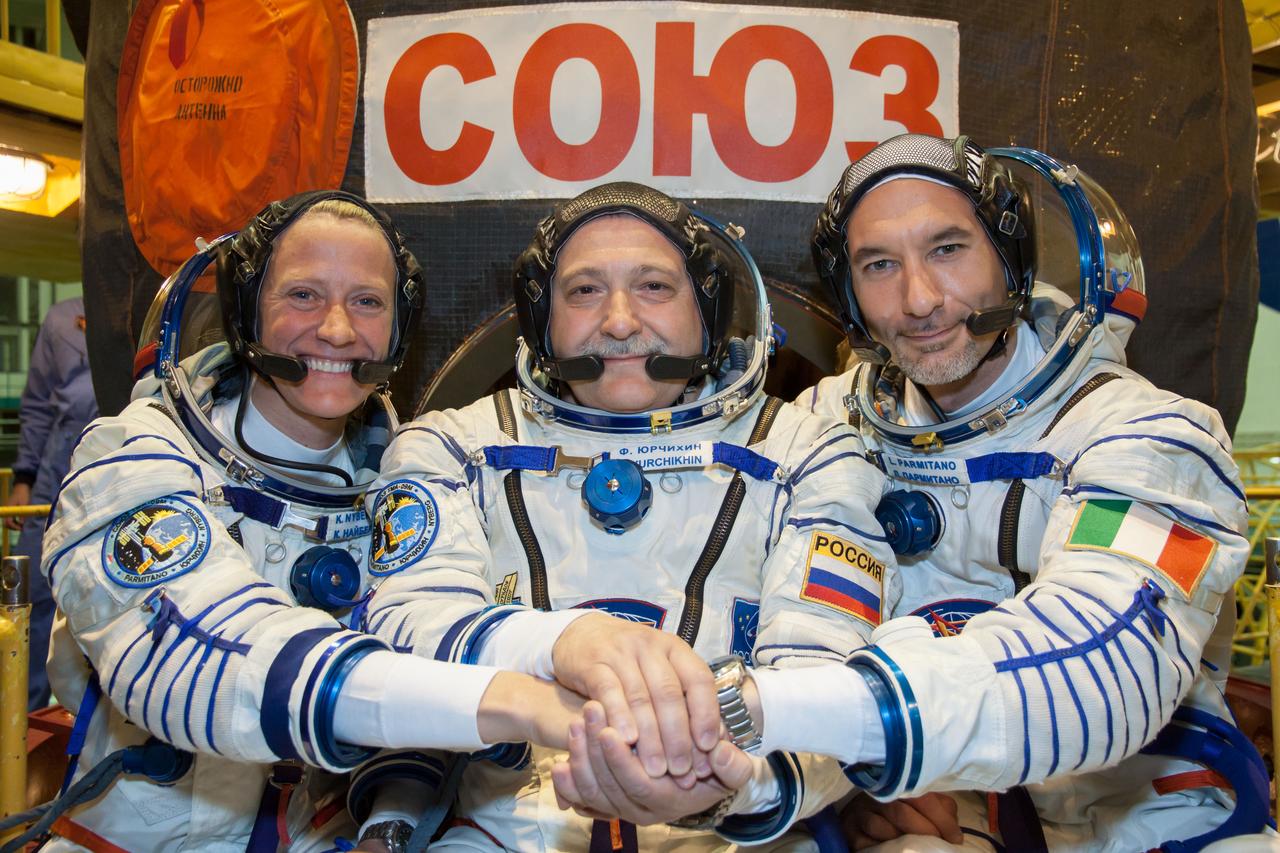
In the Integration Facility at the Baikonur Cosmodrome in Kazakhstan, Expedition 36/37 Flight Engineer Karen Nyberg of NASA (left), Soyuz Commander Fyodor Yurchikhin (center) and Flight Engineer Luca Parmitano of the European Space Agency (right) pose for pictures during a suited dress rehearsal “fit check” exercise May 17. The trio will launch May 29, Kazakh time, in their Soyuz TMA-09M spacecraft to begin a 5 ½ month mission on the International Space Station. NASA/Victor Zelentsov
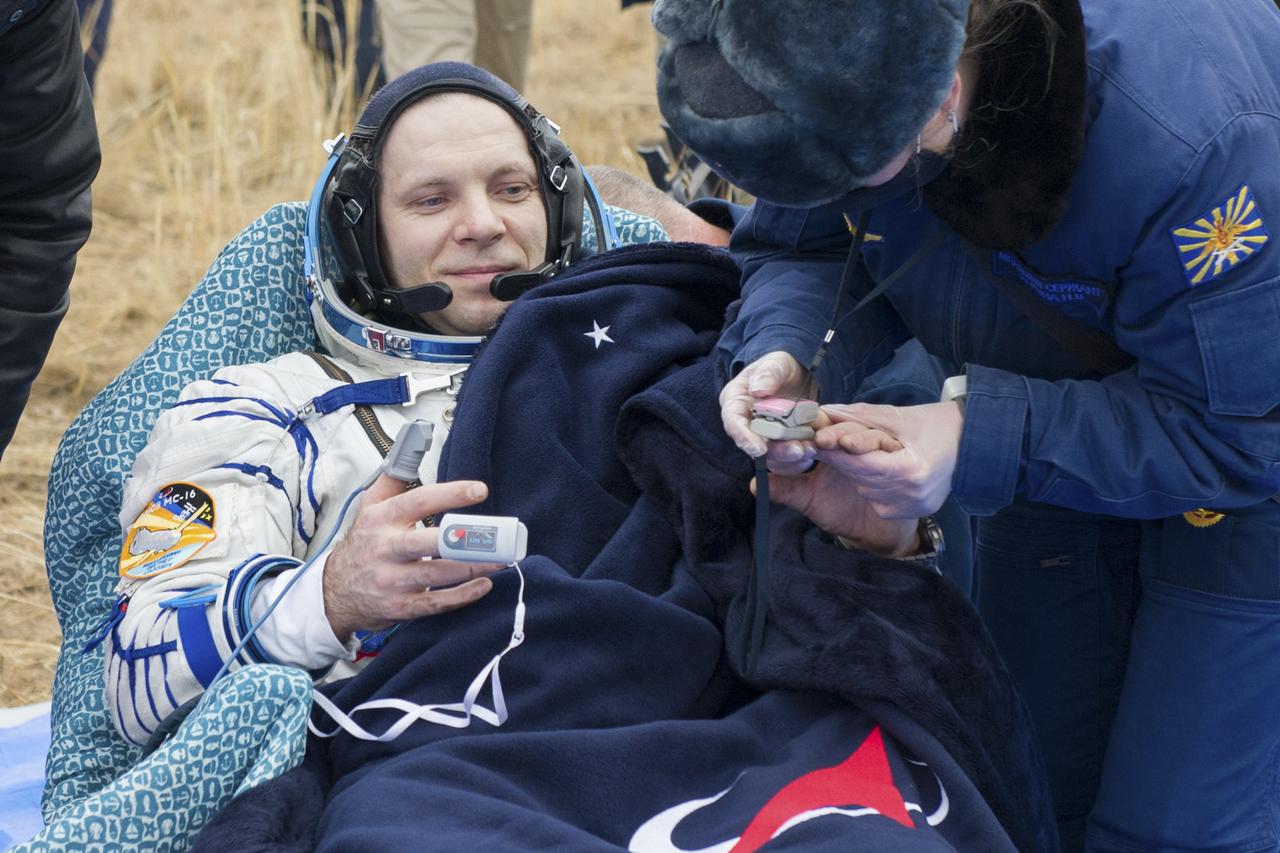
Expedition 63 Roscosmos cosmonaut Ivan Vagner is seen outside the Soyuz MS-16 spacecraft after he landed with Roscosmos cosmonaut Anatoly Ivanishin and NASA astronaut Chris Cassidy in a remote area near the town of Zhezkazgan, Kazakhstan on Thursday, October 22, 2020, Kazakh time (Oct. 21 Eastern time). Cassidy, Ivanishin and Vagner returned after 196 days in space having served as Expedition 62-63 crew members onboard the International Space Station. Photo Credit: (NASA/GCTC/Denis Derevtsov)
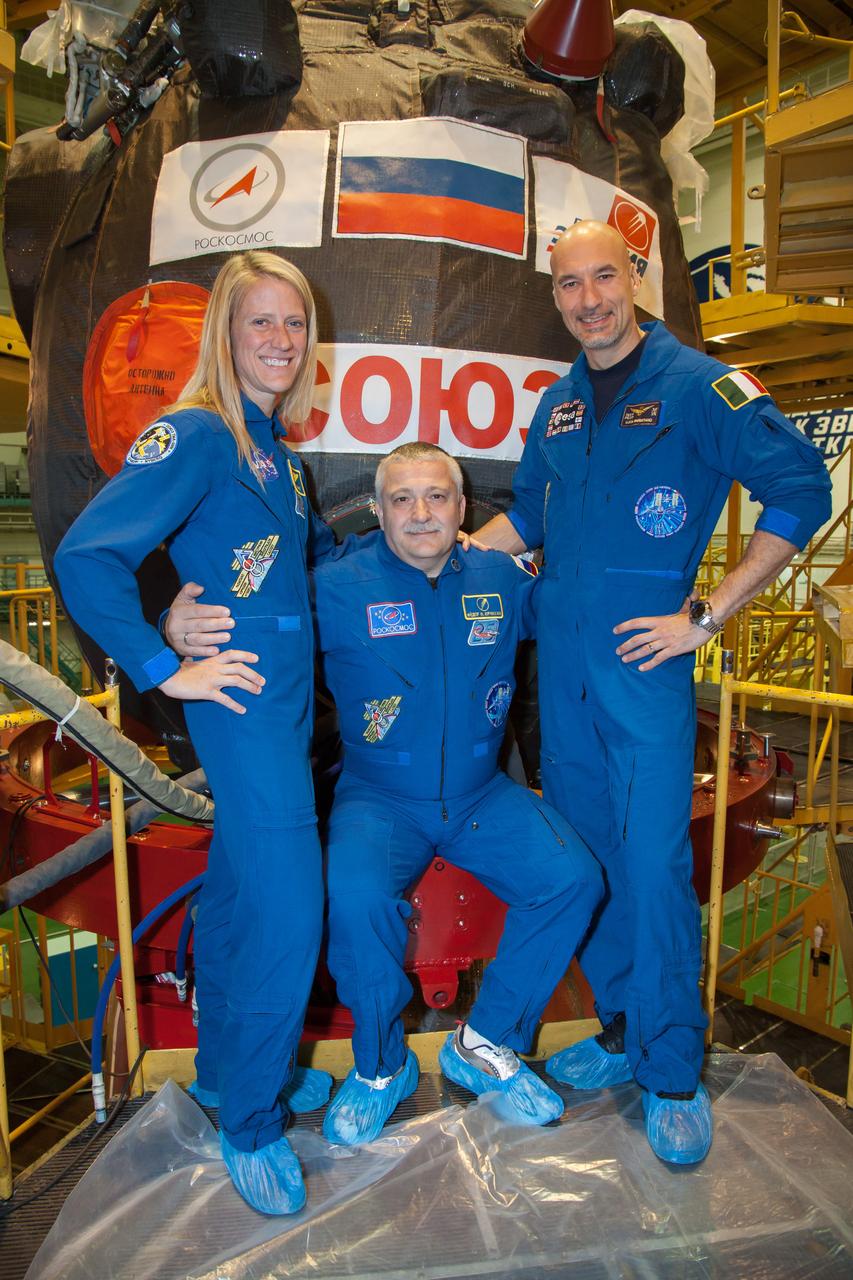
In the Integration Facility at the Baikonur Cosmodrome in Kazakhstan, Expedition 36/37 Flight Engineer Karen Nyberg of NASA (left), Soyuz Commander Fyodor Yurchikhin (center) and Flight Engineer Luca Parmitano of the European Space Agency (right) pose for pictures during a suited dress rehearsal “fit check” exercise May 17. The trio will launch May 29, Kazakh time, in their Soyuz TMA-09M spacecraft to begin a 5 ½ month mission on the International Space Station. NASA/Victor Zelentsov
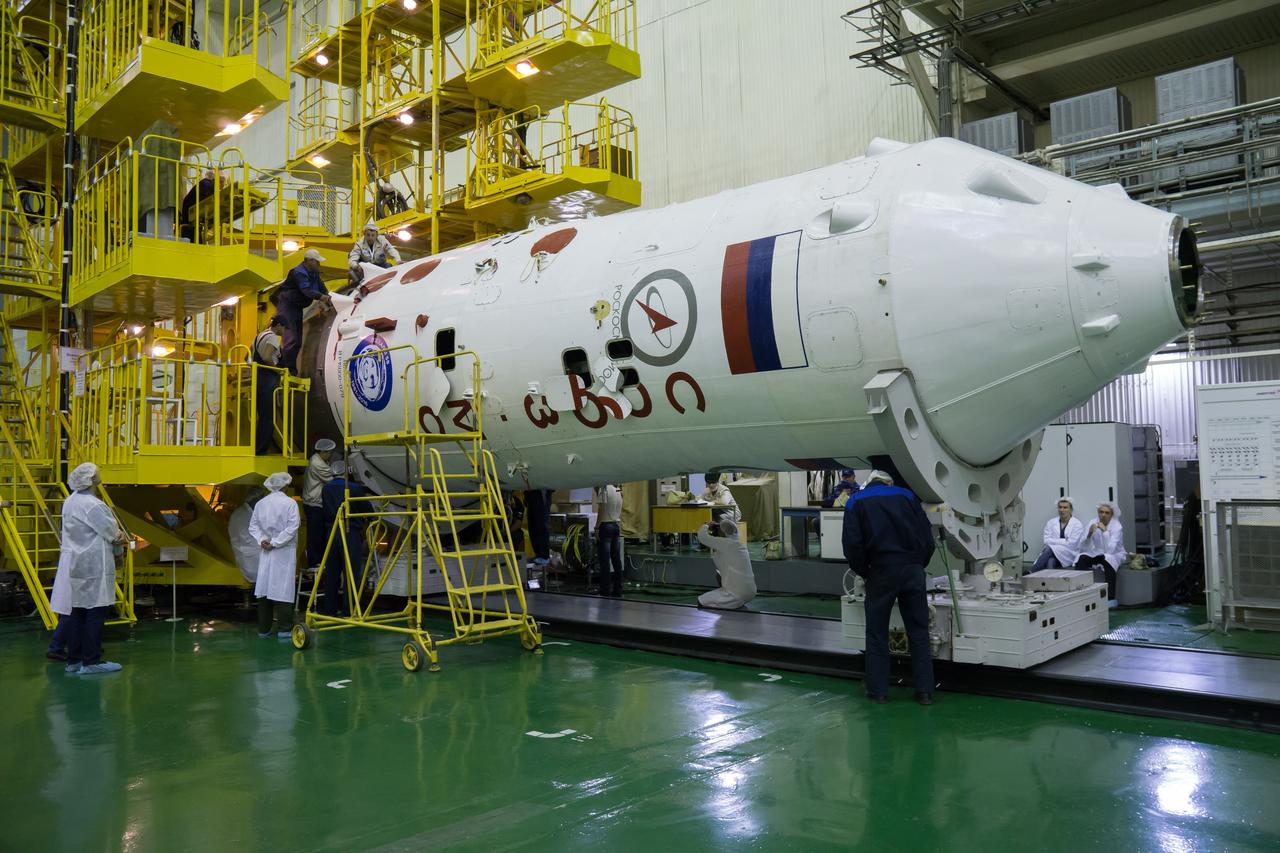
The Soyuz MS-02 spacecraft is seen after being encapsulated in its fairing on Thursday, Sept. 15, 2016 at the Baikonur Cosmodrome in Kazakhstan. Expedition 49 flight engineer Shane Kimbrough of NASA, flight engineer Andrey Borisenko of Roscosmos, and Soyuz commander Sergey Ryzhikov of Roscosmos are scheduled to launch to the International Space Station aboard the Soyuz MS-02 spacecraft from the Baikonur Cosmodrome on September 24 Kazakh time. Photo Credit: (NASA/Victor Zelentsov)
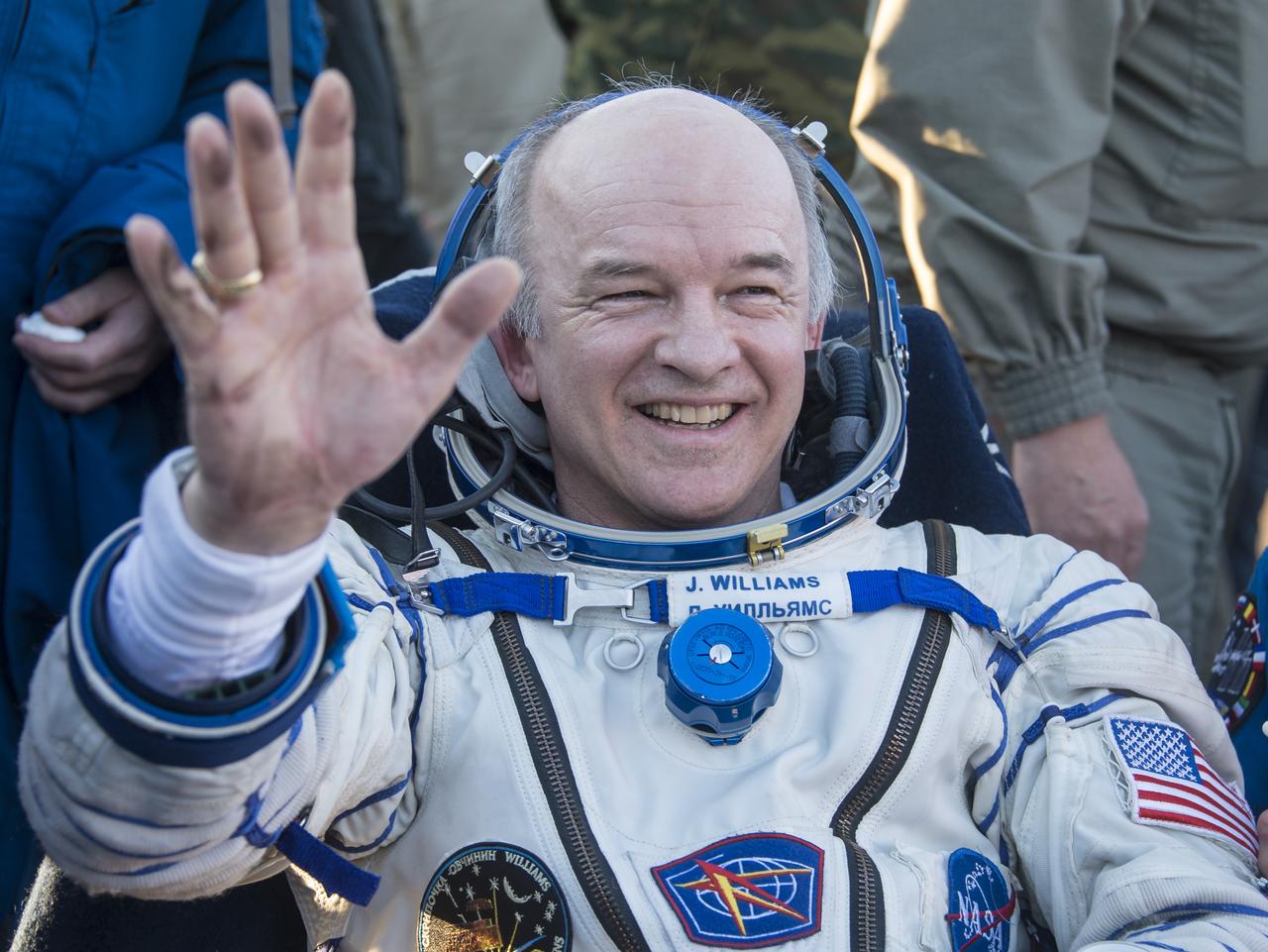
Expedition 48 NASA astronaut Jeff Williams rest in a chairs outside the Soyuz TMA-20M spacecraft a few moments after he and Russian cosmonauts Alexey Ovchinin and Oleg Skripochka of Roscosmos landed in a remote area near the town of Zhezkazgan, Kazakhstan on Wednesday, Sept. 7, 2016(Kazakh time). Williams, Ovchinin, and Skripochka are returning after 172 days in space where they served as members of the Expedition 47 and 48 crews onboard the International Space Station. Photo Credit: (NASA/Bill Ingalls)
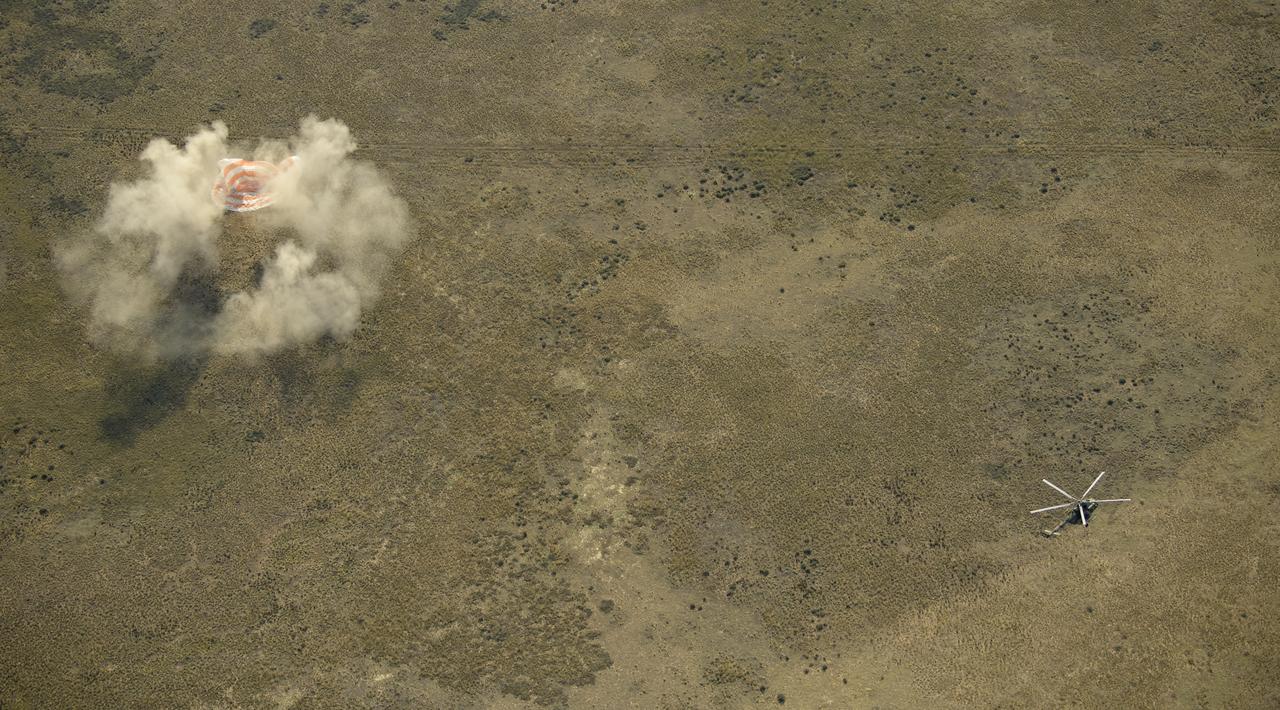
The Soyuz MS-11 spacecraft is seen as it lands in a remote area near the town of Zhezkazgan, Kazakhstan with Expedition 59 crew members Anne McClain of NASA, David Saint-Jacques of the Canadian Space Agency, and Oleg Kononenko of Roscosmos, Tuesday, June 25, 2019 Kazakh time (June 24 Eastern time). McClain, Saint-Jacques, and Kononenko are returning after 204 days in space where they served as members of the Expedition 58 and 59 crews onboard the International Space Station. Photo Credit: (NASA/Bill Ingalls)
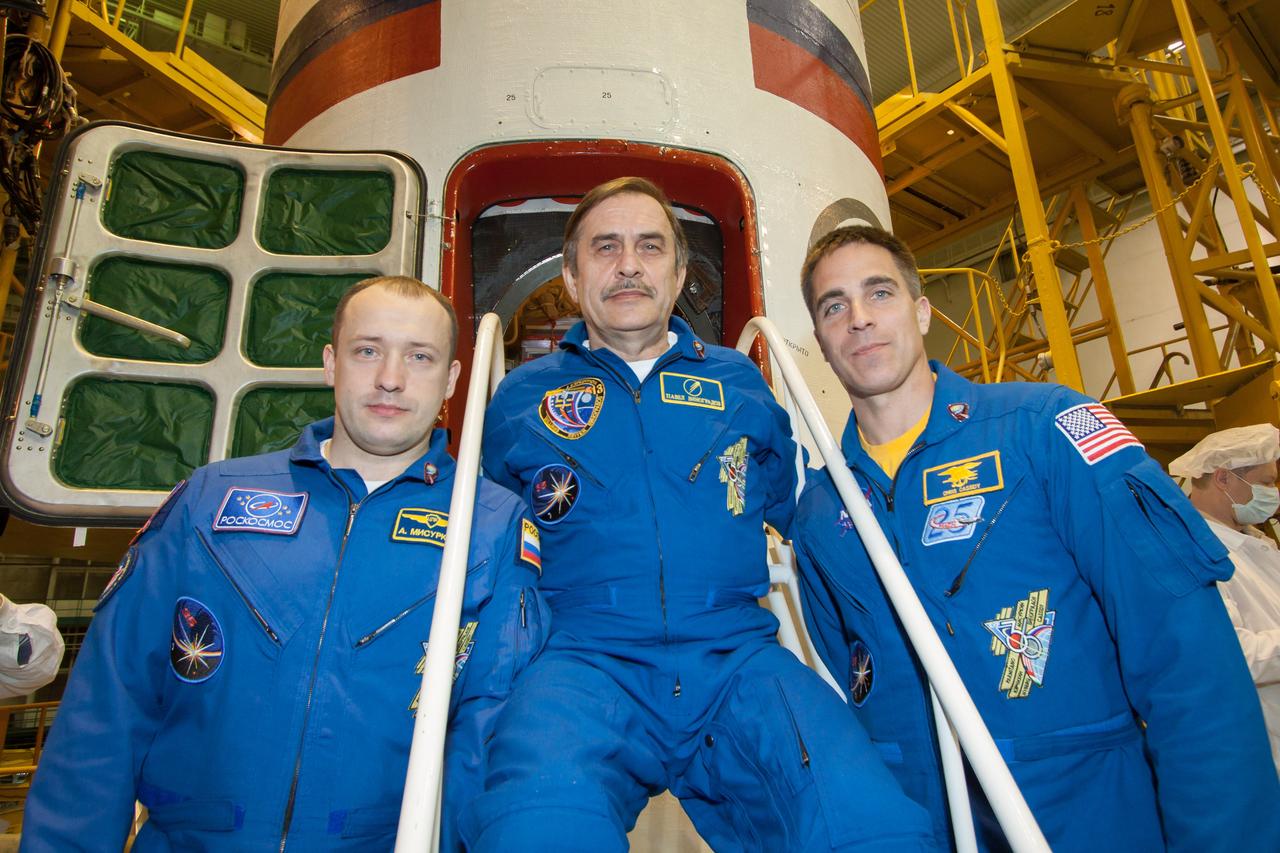
At the Integration Facility at the Baikonur Cosmodrome in Kazakhstan, Expedition 35/36 Flight Engineer Alexander Misurkin (left), Soyuz Commander Pavel Vinogradov (center) and Flight Engineer Chris Cassidy of NASA (right) pose for pictures March 23 in front of the Soyuz TMA-08M spacecraft in which they will launch to the International Space Station March 29, Kazakh time, from the Baikonur Cosmodrome. The three crewmembers will spend 5 ½ months on the orbital laboratory. NASA/Victor Zelentsov
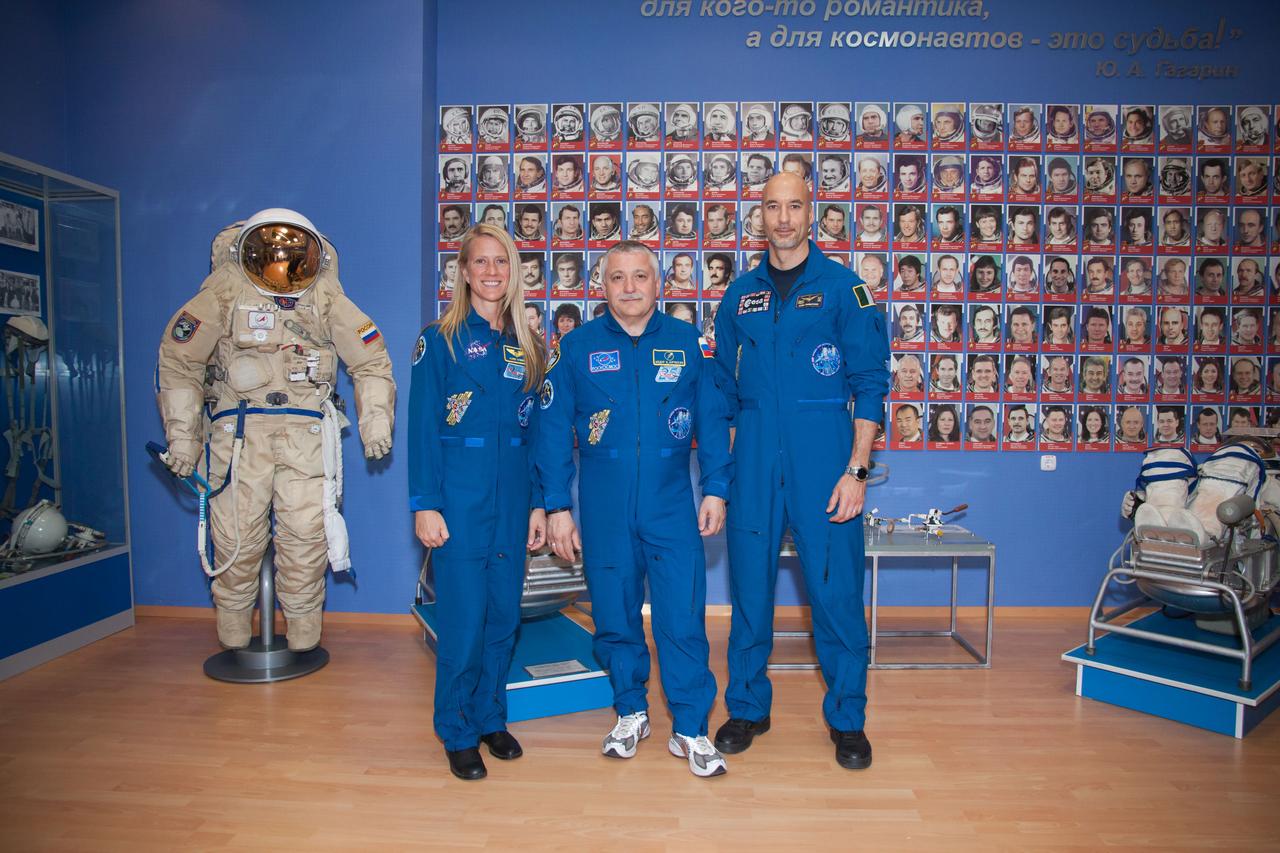
At the Baikonur Cosmodrome in Kazakhstan, Expedition 36/37 Flight Engineer Karen Nyberg of NASA (left), Soyuz Commander Fyodor Yurchikhin (center) and Flight Engineer Luca Parmitano of the European Space Agency (right) pose for pictures in the Korolev Museum May 24 following the final “fit check” dress rehearsal before launch. Nyberg, Yurchikhin and Parmitano are preparing for launch May 29, Kazakh time, in the Soyuz TMA-09M spacecraft to begin a 5 ½ month mission on the International Space Station. NASA/Victor Zelentsov
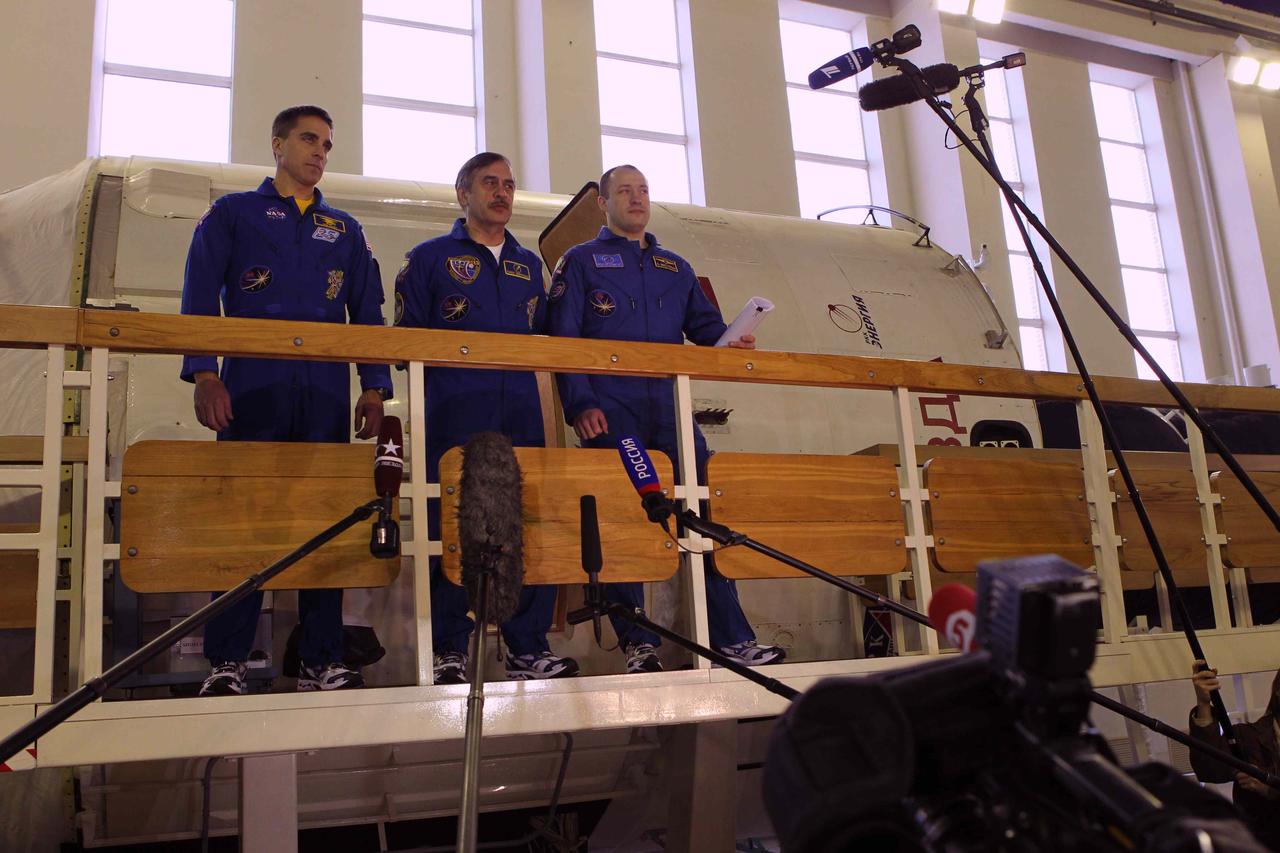
At the Gagarin Cosmonaut Training Center in Star City, Russia, Expedition 35-36 prime crewmembers Chris Cassidy of NASA (left), Soyuz Commander Pavel Vinogradov (center) and Alexander Misurkin (right) answer questions from the news media March 4 before the start of qualification simulations in Soyuz and Russian segment trainers. The three crewmembers are preparing for their launch March 29 (Kazakh time) to the International Space Station in their Soyuz TMA-08M spacecraft from the Baikonur Cosmodrome in Kazakhstan. NASA / Stephanie Stoll
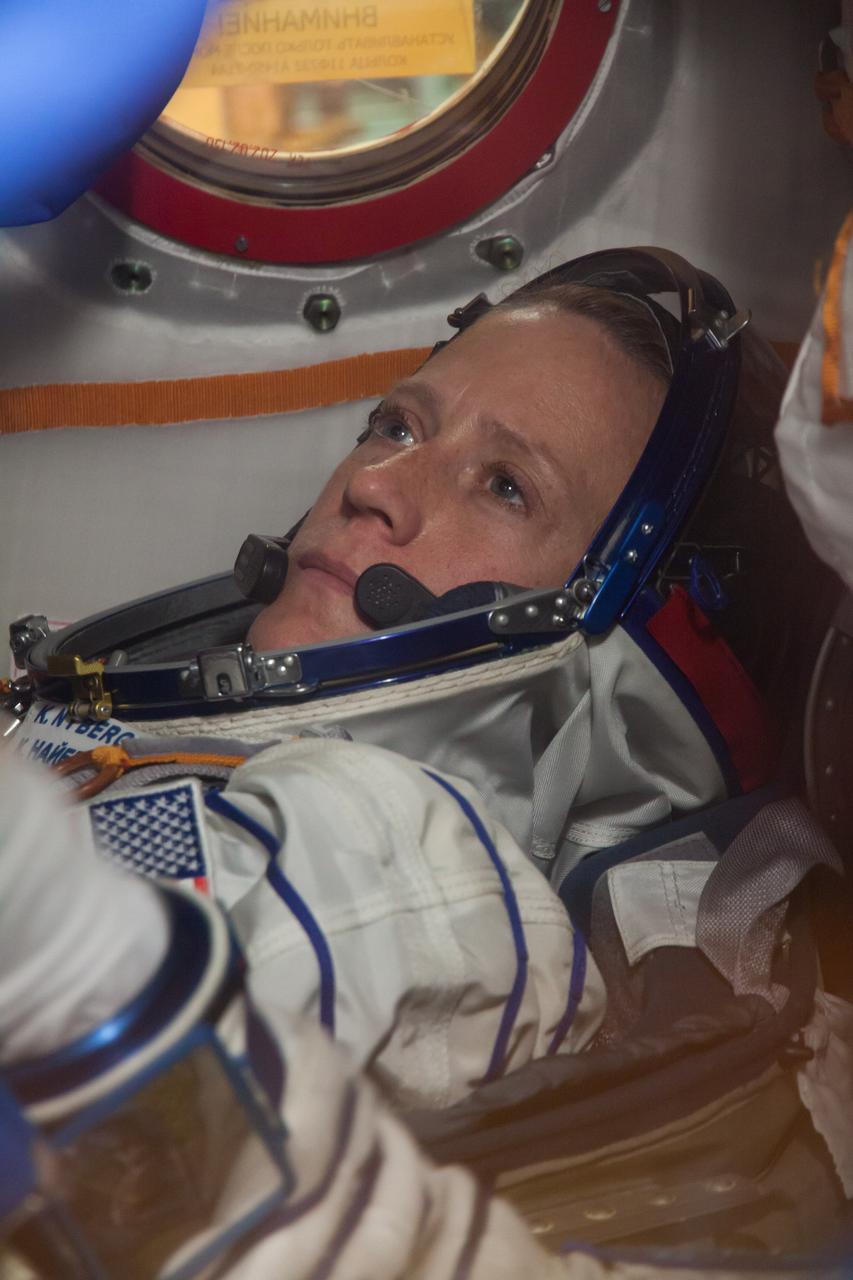
In the Integration Facility at the Baikonur Cosmodrome in Kazakhstan, Expedition 36/37 Flight Engineer Karen Nyberg of NASA is seen inside the Soyuz TMA-09M spacecraft May 17 as she, Soyuz Commander Fyodor Yurchikhin and Flight Engineer Luca Parmitano of the European Space Agency conducted a suited “fit check” dress rehearsal exercise. The trio will launch May 29, Kazakh time, in their Soyuz vehicle to begin a 5 ½ mission on the International Space Station. NASA/Victor Zelentsov
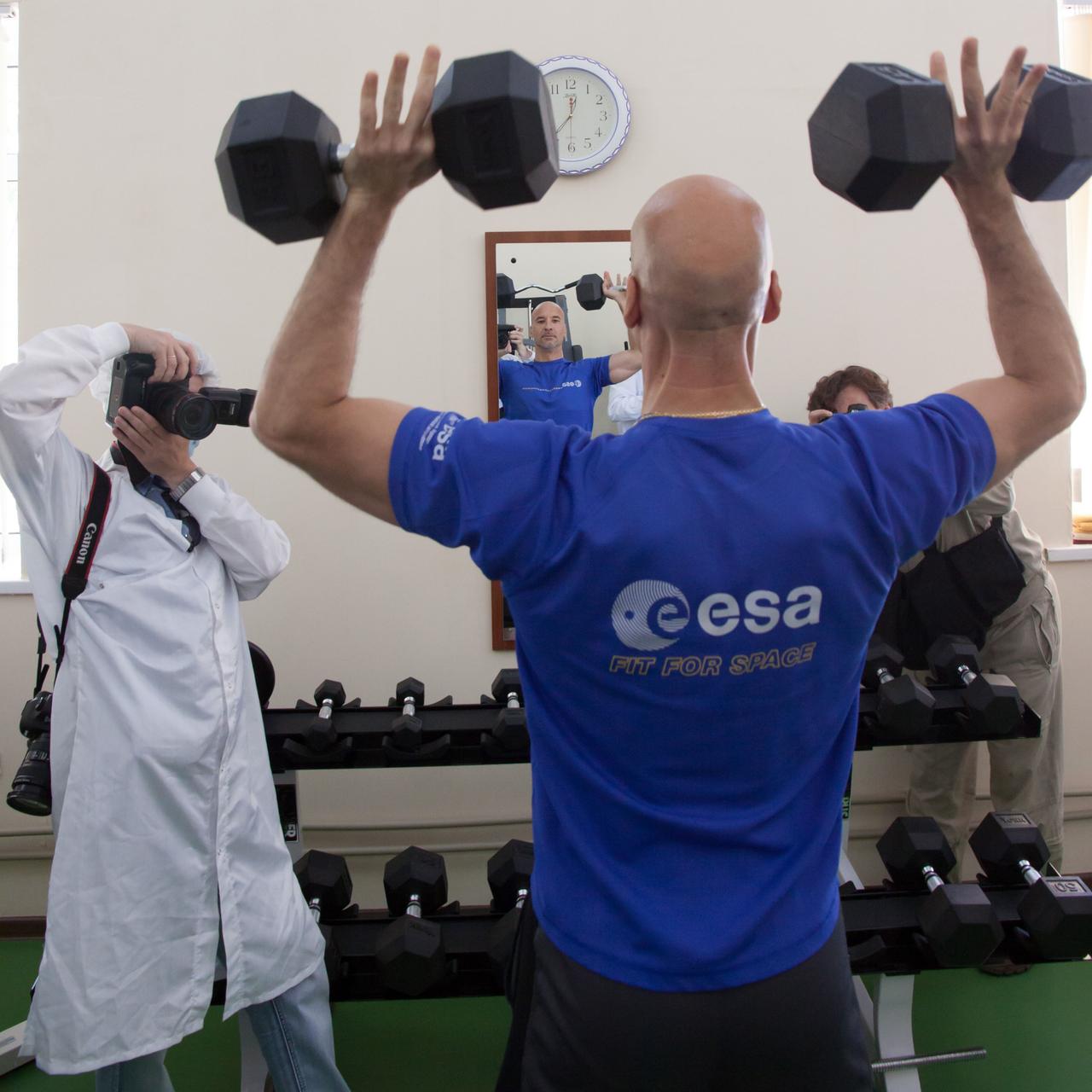
In the Cosmonaut Hotel crew quarters in Baikonur, Kazakhstan, Expedition 36/37 Flight Engineer Luca Parmitano of the European Space Agency strikes a pose during an exercise session May 22 as he, Flight Engineer Karen Nyberg of NASA and Soyuz Commander Fyodor Yurchikhin prepare for their launch May 29, Kazakh time, in the Soyuz TMA-09M spacecraft to begin a 5 ½ month mission on the International Space Station. NASA/Victor Zelentsov

nhq201704100051 (April 10, 2017) --- Girls in traditional Kazakhstan dress welcome back from space Expedition 50 Commander Shane Kimbrough of NASA and Flight Engineers Sergey Ryzhikov and Andrey Borisenko of Roscosmos at a Karaganda Airport welcome ceremony in Kazakhstan on Monday, April 10, 2017. 2017 (Kazakh time). Kimbrough, Ryzhikov, and Borisenko are returning after 173 days in space where they served as members of the Expedition 49 and 50 crews onboard the International Space Station. Photo Credit: (NASA/Bill Ingalls)
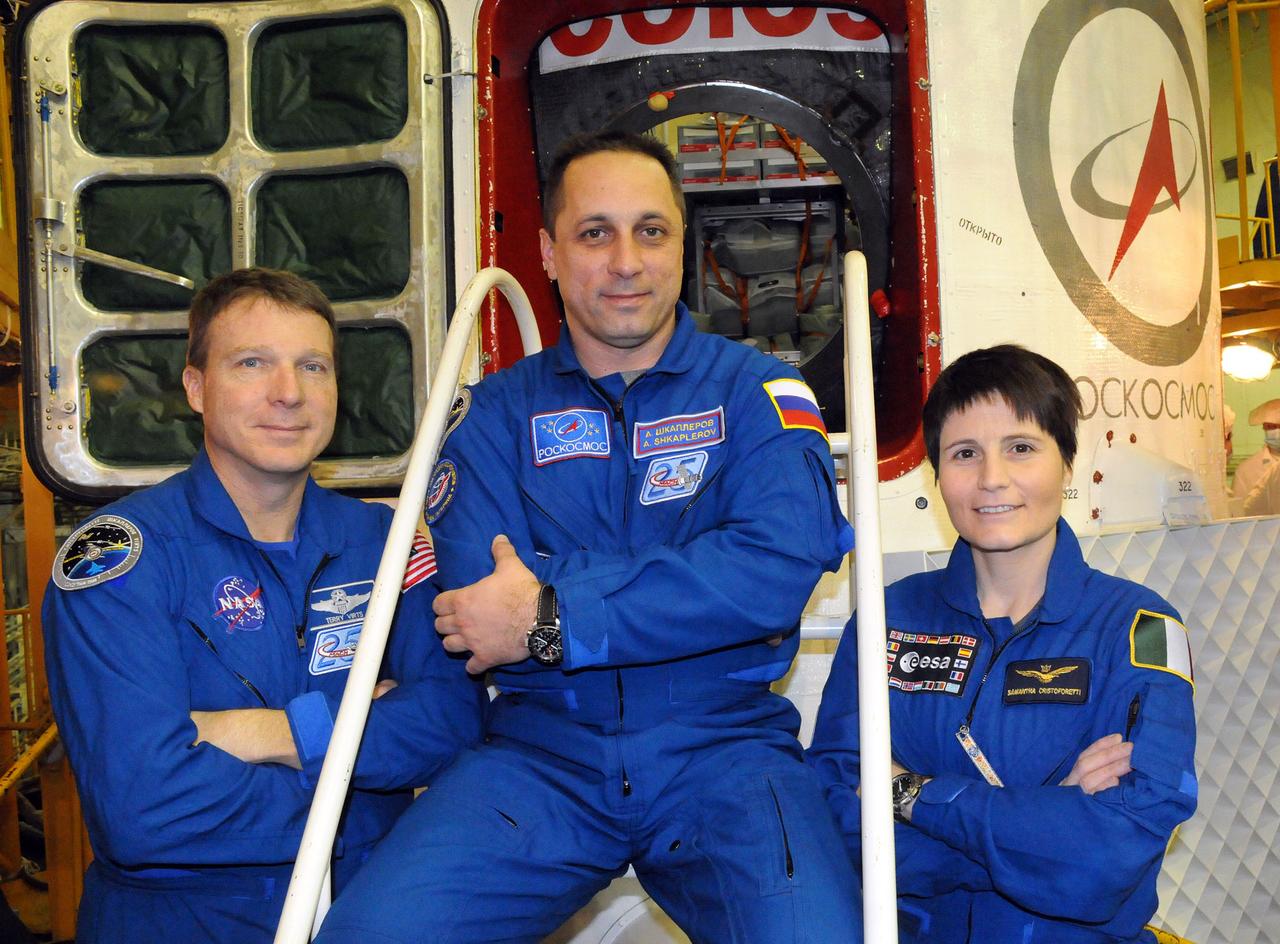
6374: In the Integration Facility at the Baikonur Cosmodrome in Kazakhstan, Expedition 42/43 crewmembers Terry Virts of NASA (left), Anton Shkaplerov of the Russian Federal Space Agency (Roscosmos, center) and Samantha Cristoforetti of the European Space Agency (right) pose for pictures Nov. 19 in front of their Soyuz TMA-15M spacecraft during their second and final pre-launch “fit check” dress rehearsal activities. The trio will launch on Nov. 24, Kazakh time, from Baikonur for a 5 ½ month mission on the International Space Station. NASA/Viktor Ivanov
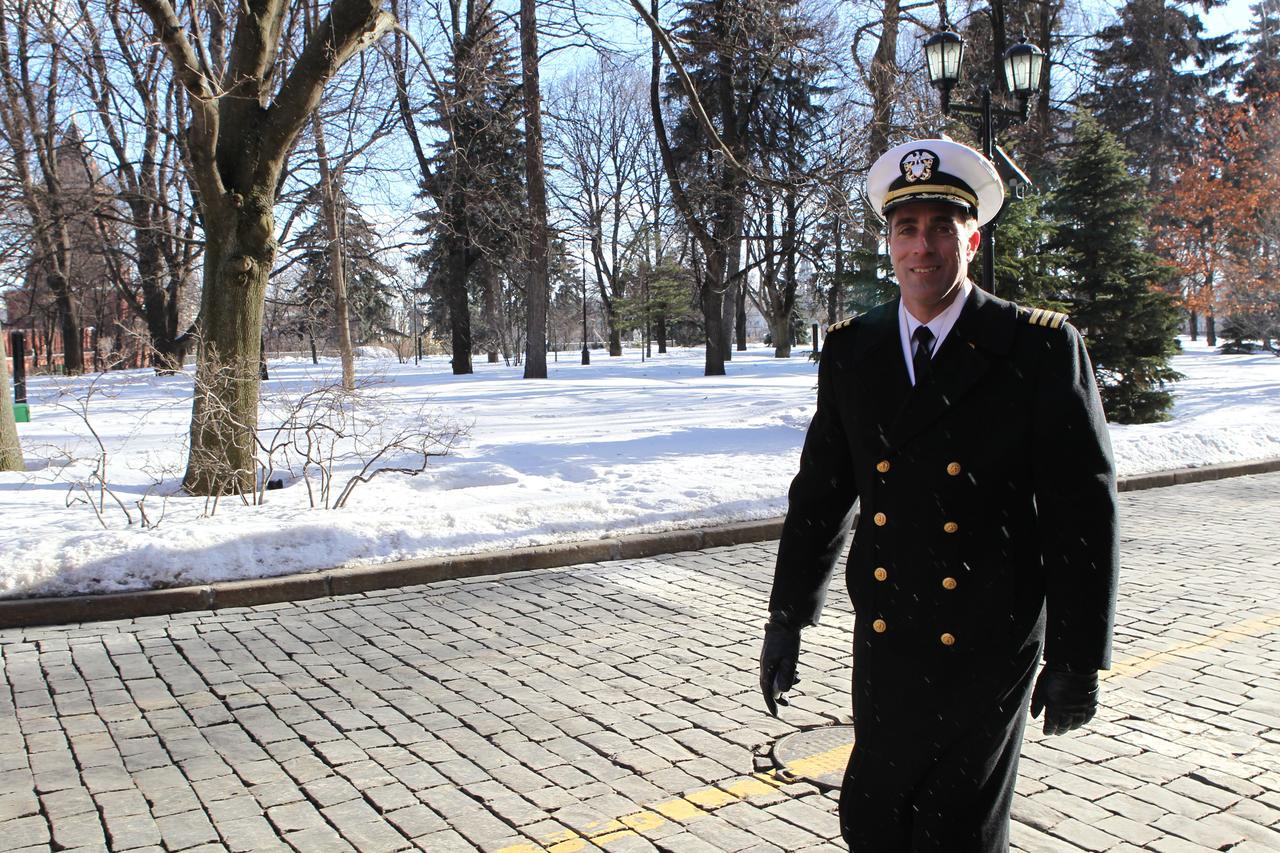
With a few snow flurries falling on an otherwise sunny day, Expedition 35-36 Flight Engineer Chris Cassidy of NASA walked through the grounds of the Kremlin in Moscow March 7 during a traditional tour of the Kremlin and Red Square. Cassidy, Soyuz Commander Pavel Vinogradov and Flight Engineer Alexander Misurkin are preparing for launch to the International Space Station March 29, Kazakh time, in their Soyuz TMA-08M spacecraft from the Baikonur Cosmodrome in Kazakhstan. NASA / Stephanie Stoll
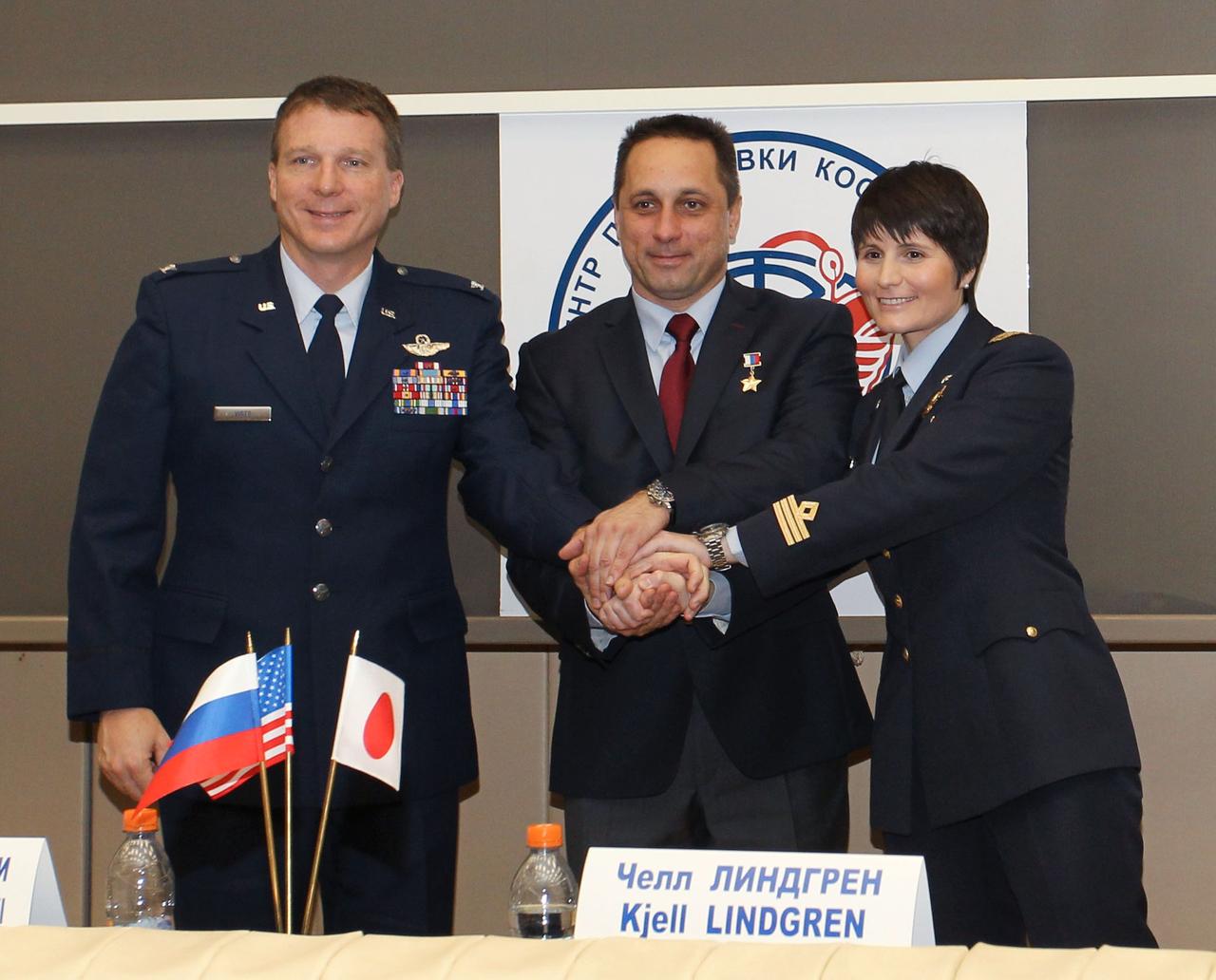
3779a: At the Gagarin Cosmonaut Training Center in Star City, Russia, Expedition 42/43 prime crewmembers Terry Virts of NASA (left), Anton Shkaplerov of the Russian Federal Space Agency (Roscosmos, center) and Samantha Cristoforetti of the European Space Agency (right) pose for pictures following a news conference Nov. 6. Virts, Cristoforetti and Shkaplerov will launch Nov. 24, Kazakh time from the Baikonur Cosmodrome in Kazakhstan on their Soyuz TMA-15M spacecraft for a 5 ½ month mission on the International Space Station. NASA/Stephanie Stoll
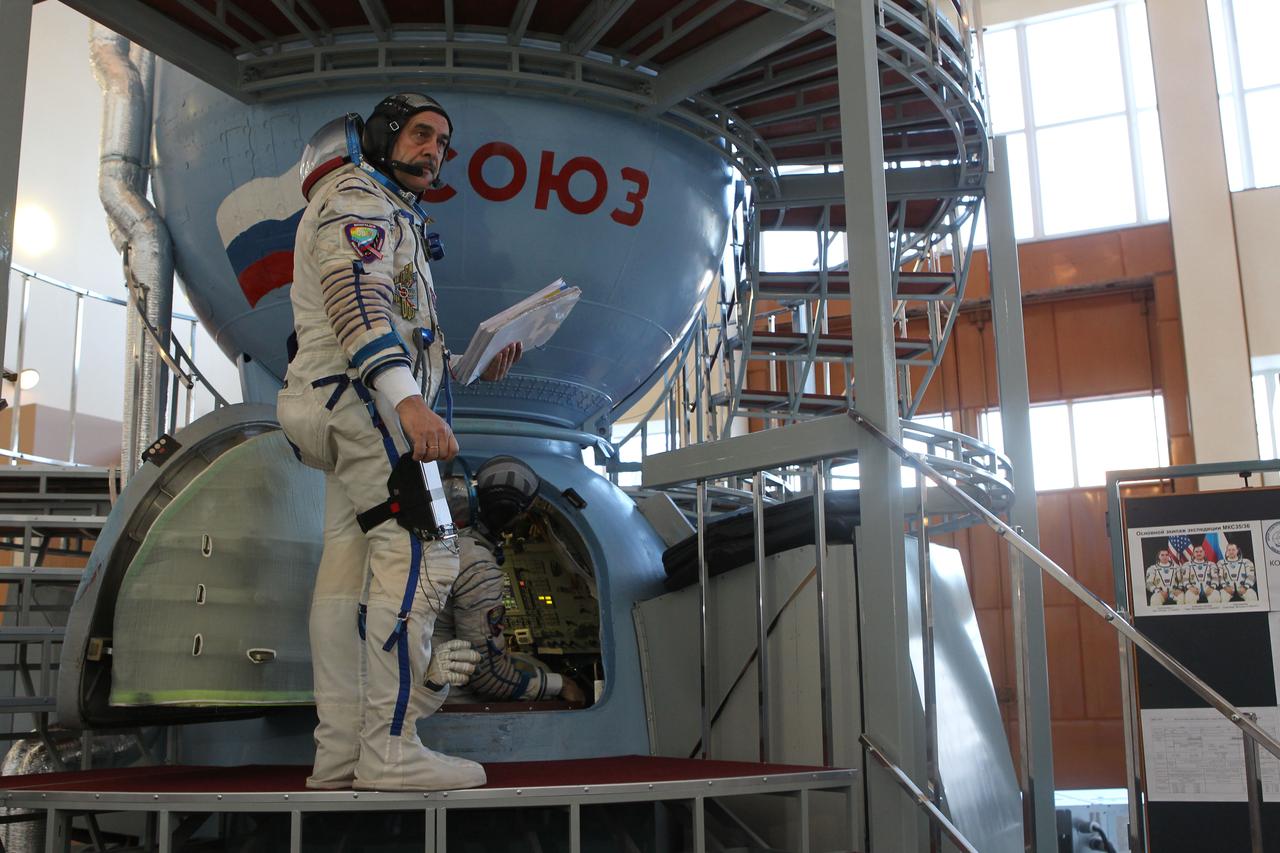
At the Gagarin Cosmonaut Training Center in Star City, Russia, Expedition 35-36 Soyuz Commander Pavel Vinogradov prepares to enter a Soyuz spacecraft mockup March 5 for the start of qualification simulation runs. Vinogradov, NASA Flight Engineer Chris Cassidy and Flight Engineer Alexander Misurkin are training for launch March 29, Kazakh time, to the International Space Station in their Soyuz TMA-08M spacecraft from the Baikonur Cosmodrome in Kazakhstan. NASA / Stephanie Stoll
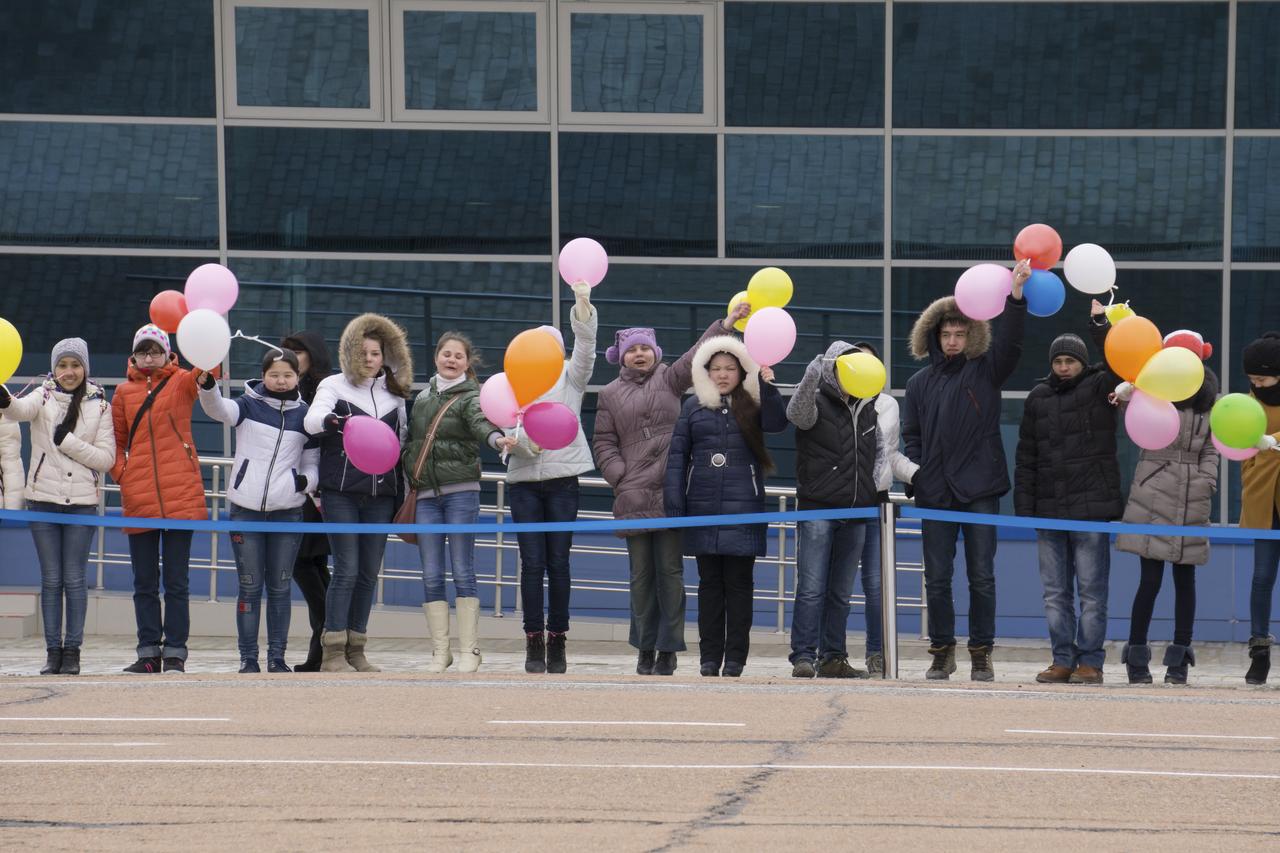
Well wishers welcome Expedition 43 NASA Astronaut Scott Kelly, Russian Cosmonauts Gennady Padalka and Mikhail Kornienko of the Russian Federal Space Agency (Roscosmos) after as they arrive in Baikonur, Kazakhstan, Saturday, March 14, 2015. The trio are preparing for launch to the International Space Station in their Soyuz TMA-16M spacecraft from the Baikonur Cosmodrome in Kazakhstan March 28, Kazakh time. As the one-year crew, Kelly and Kornienko will return to Earth on Soyuz TMA-18M in March 2016. Photo Credit: (NASA/Victor Zelentsov)