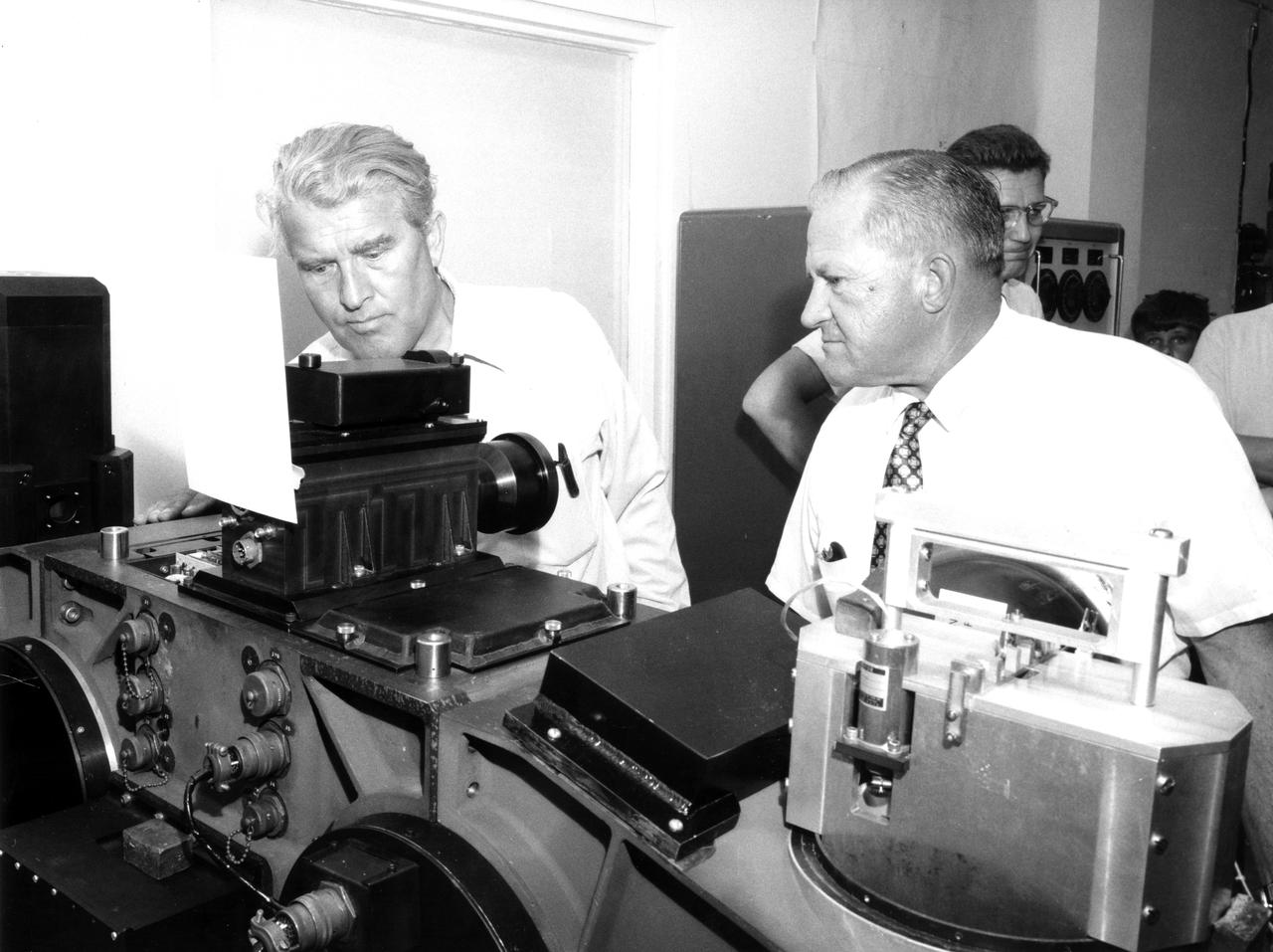
This photograph was taken after Dr. von Braun moved from his post as Director of the Marshall Space Flight Center (MSFC) to Deputy Associate Administrator for Planning at NASA Headquarters. On June 27, 1970, he visited the MSFC again during the center’s 10th anniversary to look at a mockup of the spacecraft that would later be known as Skylab. In this photograph, von Braun (left) and Fred W. Kelley examine an ST-100 stellar instrument platform in MSFC’s Astrionics Lab.
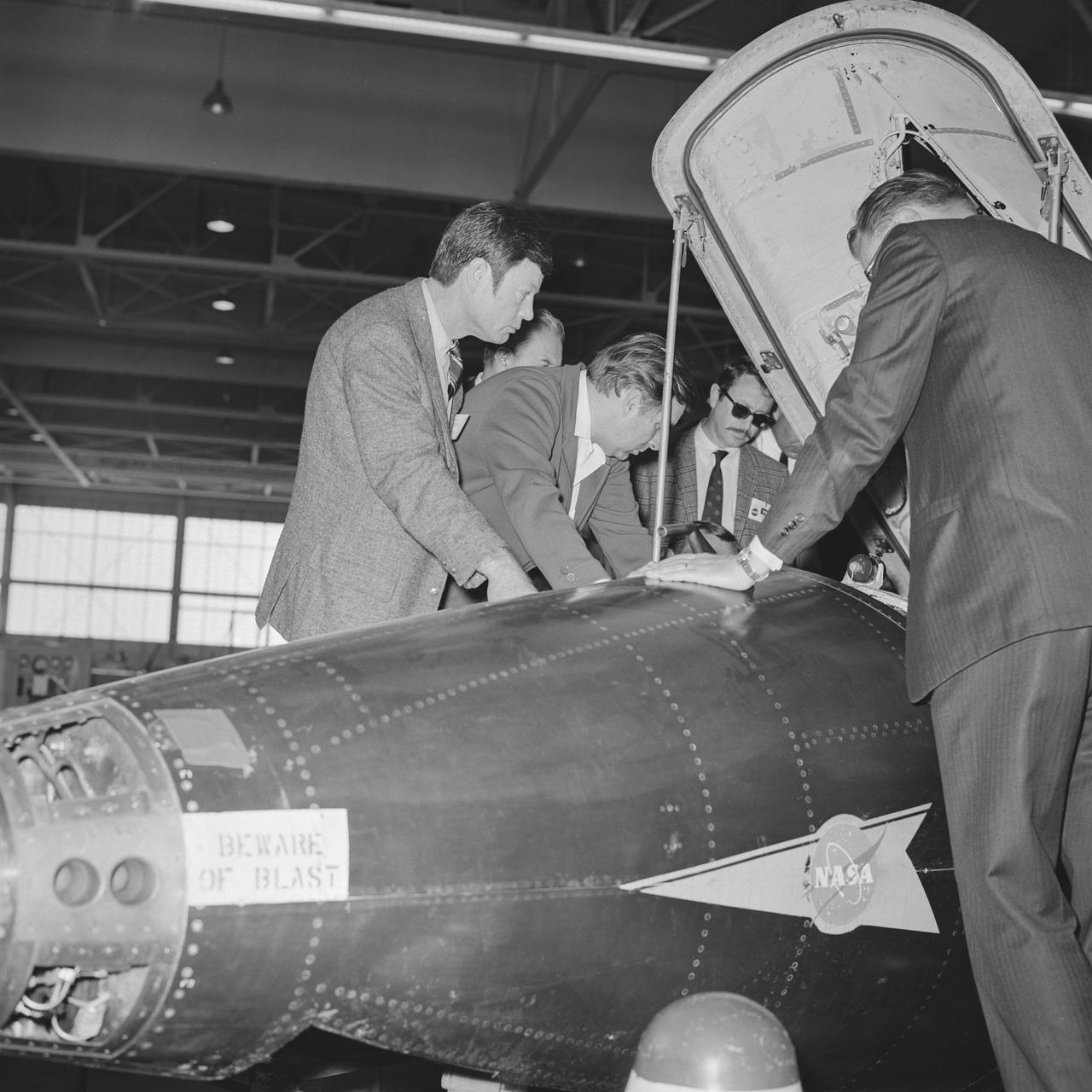
The 1960s Star Trek television series’ cast members visit NASA Dryden Flight Research Center, now Armstrong, in 1967. Chief Medical Officer Leonard ‘Bones’ McCoy played by DeForest Kelley and the show’s creator Gene Roddenberry receive briefing on X-15 cockpit as they view inside.
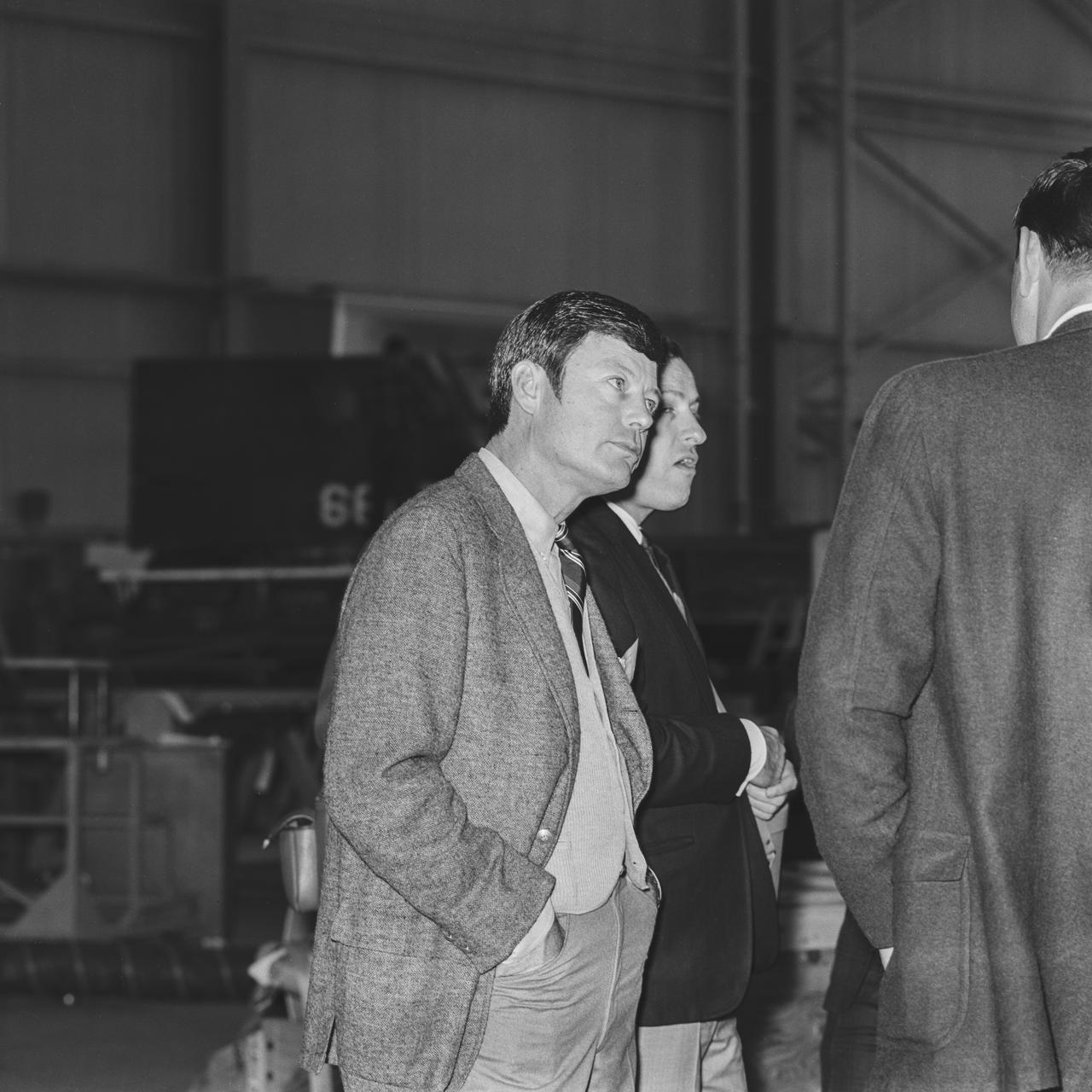
The 1960s Star Trek television series’ cast members visit NASA Dryden Flight Research Center, now Armstrong, in 1967. Chief Medical Officer Leonard ‘Bones’ McCoy played by DeForest Kelley talks with NASA officials in one of the center’s aircraft hangar.
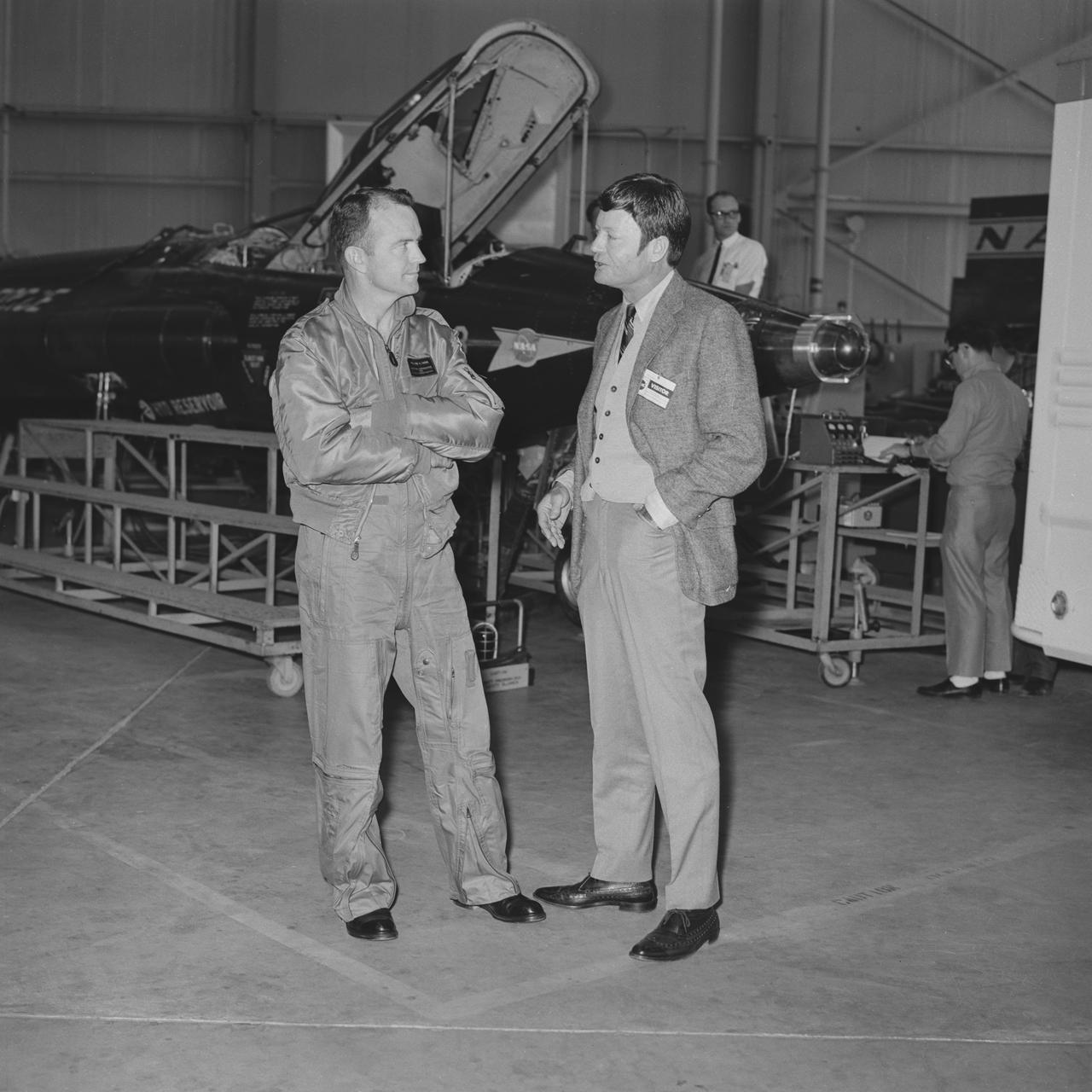
The 1960s Star Trek television series’ cast member Chief Medical Officer Leonard ‘Bones’ McCoy played by DeForest Kelley talks to Bill Dana, NASA X-15 pilot, in front of one of three X-15’s during visit to NASA Dryden Flight Research Center, now Armstrong, back in 1967.

STS-102 mission astronauts James S. Voss and James D. Weatherbee share a congratulatory handshake as the Space Shuttle Orbiter Discovery successfully docks with the International Space Station (ISS). Photographed from left to right are: Astronauts Susan J. Helms, mission specialist; James S. Voss, Expedition 2 crew member; James D. Weatherbee, mission commander; Andrew S.W. Thomas, mission specialist; and nearly out of frame is James M. Kelley, Pilot. Launched March 8, 2001, STS-102's primary cargo was the Leonardo, the Italian Space Agency-built Multipurpose Logistics Module (MPLM). The Leonardo MPLM is the first of three such pressurized modules that will serve as ISS' moving vans, carrying laboratory racks filled with equipment, experiments, and supplies to and from the Station aboard the Space Shuttle. The cylindrical module is approximately 21-feet long and 15- feet in diameter, weighing almost 4.5 tons. It can carry up to 10 tons of cargo in 16 standard Space Station equipment racks. Of the 16 racks the module can carry, 5 can be furnished with power, data, and fluid to support refrigerators or freezers. In order to function as an attached station module as well as a cargo transport, the logistics module also includes components that provide life support, fire detection and suppression, electrical distribution, and computer functions. NASA's 103rd overall mission and the 8th Space Station Assembly Flight, STS-102 mission also served as a crew rotation flight. It delivered the Expedition Two crew to the Station and returned the Expedition One crew back to Earth.
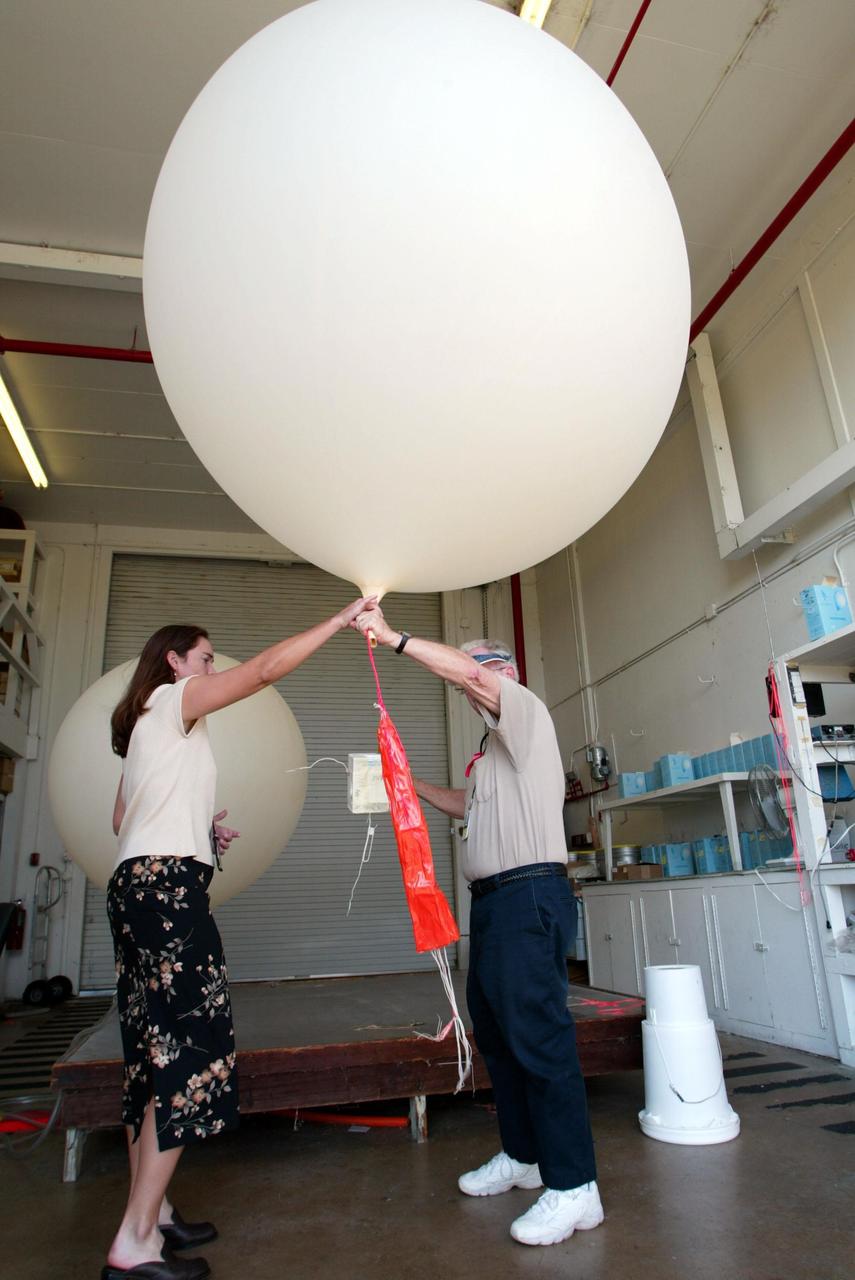
KENNEDY SPACE CENTER, FLA. - At Weather Station A, Cape Canaveral Air Force Station, Judy Kelley, supervisor of Meteorology Operations, and Stephen Ezell, meteorological systems operator, get ready to release a weather balloon. Such balloons are released twice a day. The package at the bottom is a radio sonde that collects temperature and humidity data as the balloon rises. The data is released to agencies nationwide, including the 45th Space Wing, which uses the data for its daily weather reports. The weather station provides additional data to NASA for launches -- releasing 12 balloons in eight hours prior to liftoff - and landings - releasing 5 balloons in six and a half hours before expected touchdown.
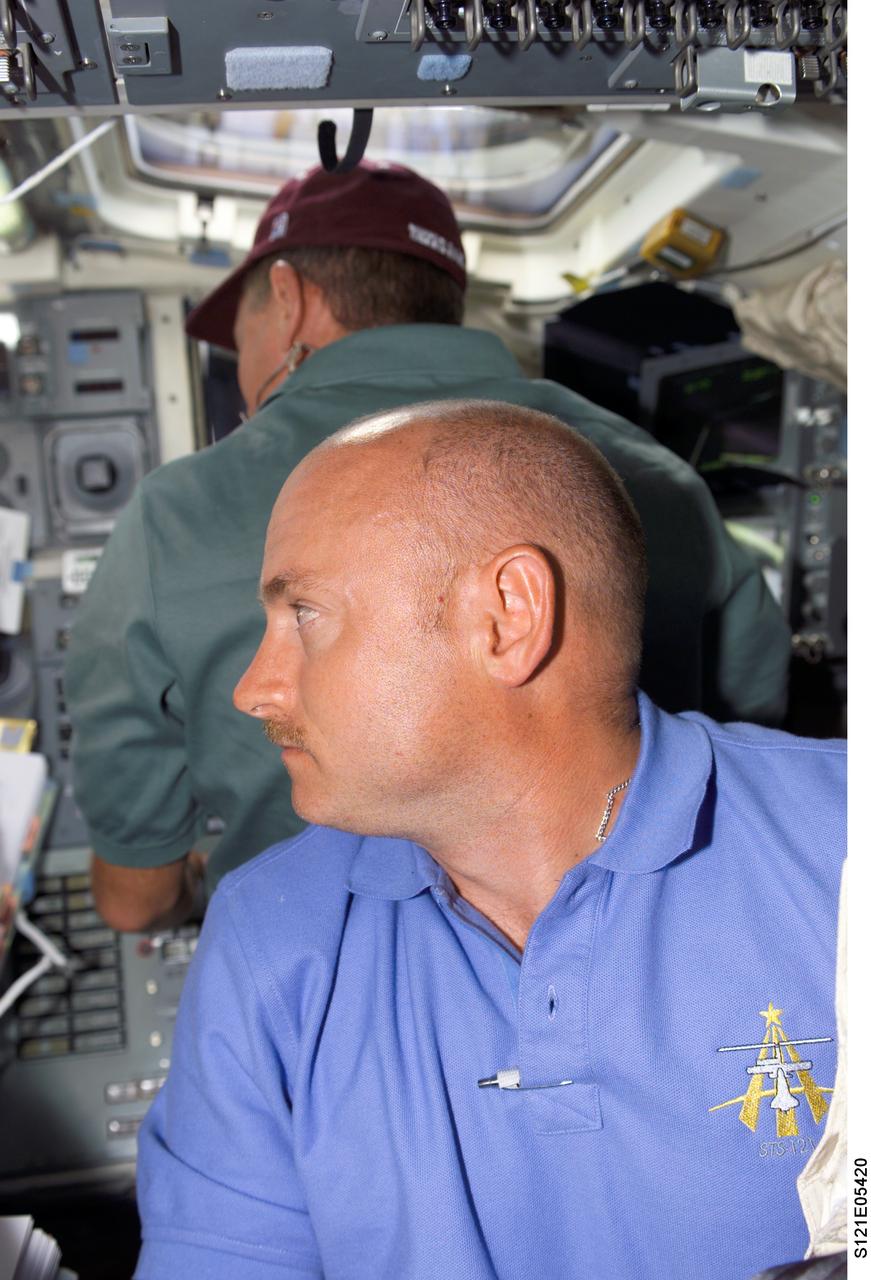
S121-E-05420 (5 July 2006) --- Astronaut Mark E. Kelly, STS-121 pilot, joins his Discovery crewmates on the flight deck as they prepare for the upcoming docking day. Astronaut Michael E. Fossum is seen on the aft flight deck in the background.

VANDENBERG AFB, Calif. -- NASA and contractor officials discussed NASA's readiness to launch the Landsat Data Continuity Mission, or LDCM, during a prelaunch news conference at Vandenberg Air Force Base, Calif. Participants included 1st Lt. Jennifer Kelley, launch weather officer for the 30th Operations Support Squadron at Vandenberg. The Landsat Data Continuity Mission LDCM is the future of Landsat satellites. It will continue to obtain valuable data and imagery to be used in agriculture, education, business, science, and government. The Landsat Program provides repetitive acquisition of high resolution multispectral data of the Earth's surface on a global basis. The data from the Landsat spacecraft constitute the longest record of the Earth's continental surfaces as seen from space. It is a record unmatched in quality, detail, coverage, and value. Liftoff is planned for Feb. 11, 2013 aboard a United Launch Alliance Atlas V rocket. For more information, visit: http:__www.nasa.gov_mission_pages_landsat_main_index.html Photo credit: NASA_Kim Shiflett
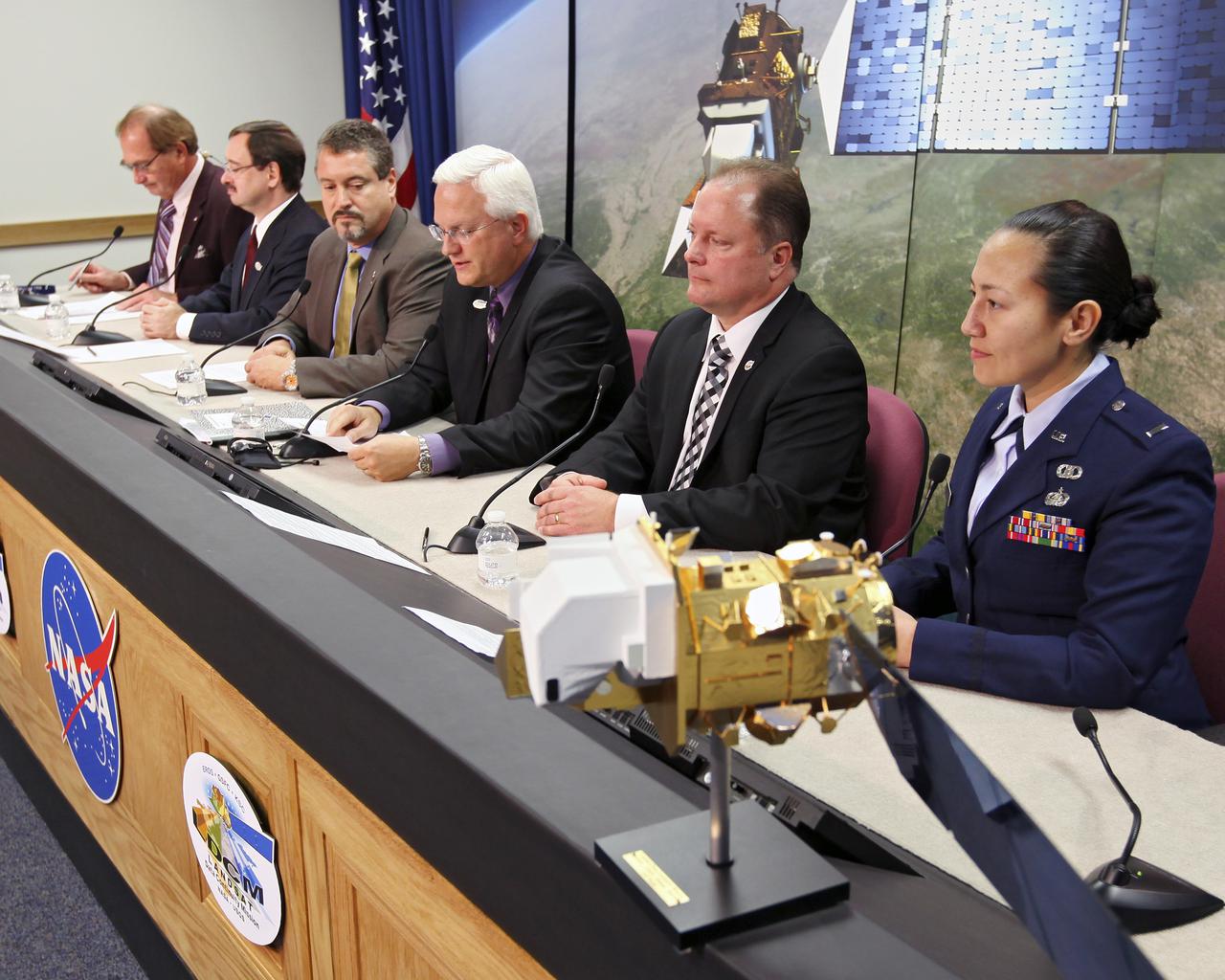
VANDENBERG AIR FORCE BASE, Calif. -- Media attend a prelaunch press conference at Vandenberg Air Force Base in California to discuss NASA's readiness to launch the Landsat Data Continuity Mission LDCM. From left are George Diller of NASA Public Affairs, LDCM program executive David Jarrett from NASA Headquarters, NASA Launch Director Omar Baez from Kennedy Space Center, United Launch Alliance Program Manager for NASA Missions Vernon Thorp, LDCM Project Manager Ken Schwer from Goddard Space Flight Center, and 1st Lt. Jennifer Kelley, launch weather officer for the 30th Operations Support Squadron at Vandenberg. The Landsat Data Continuity Mission LDCM is the future of Landsat satellites. It will continue to obtain valuable data and imagery to be used in agriculture, education, business, science, and government. The Landsat Program provides repetitive acquisition of high resolution multispectral data of the Earth's surface on a global basis. The data from the Landsat spacecraft constitute the longest record of the Earth's continental surfaces as seen from space. It is a record unmatched in quality, detail, coverage, and value. Liftoff is planned for Feb. 11, 2013 aboard a United Launch Alliance Atlas V rocket. For more information, visit: http:__www.nasa.gov_mission_pages_landsat_main_index.html Photo credit: NASA_Kim Shiflett
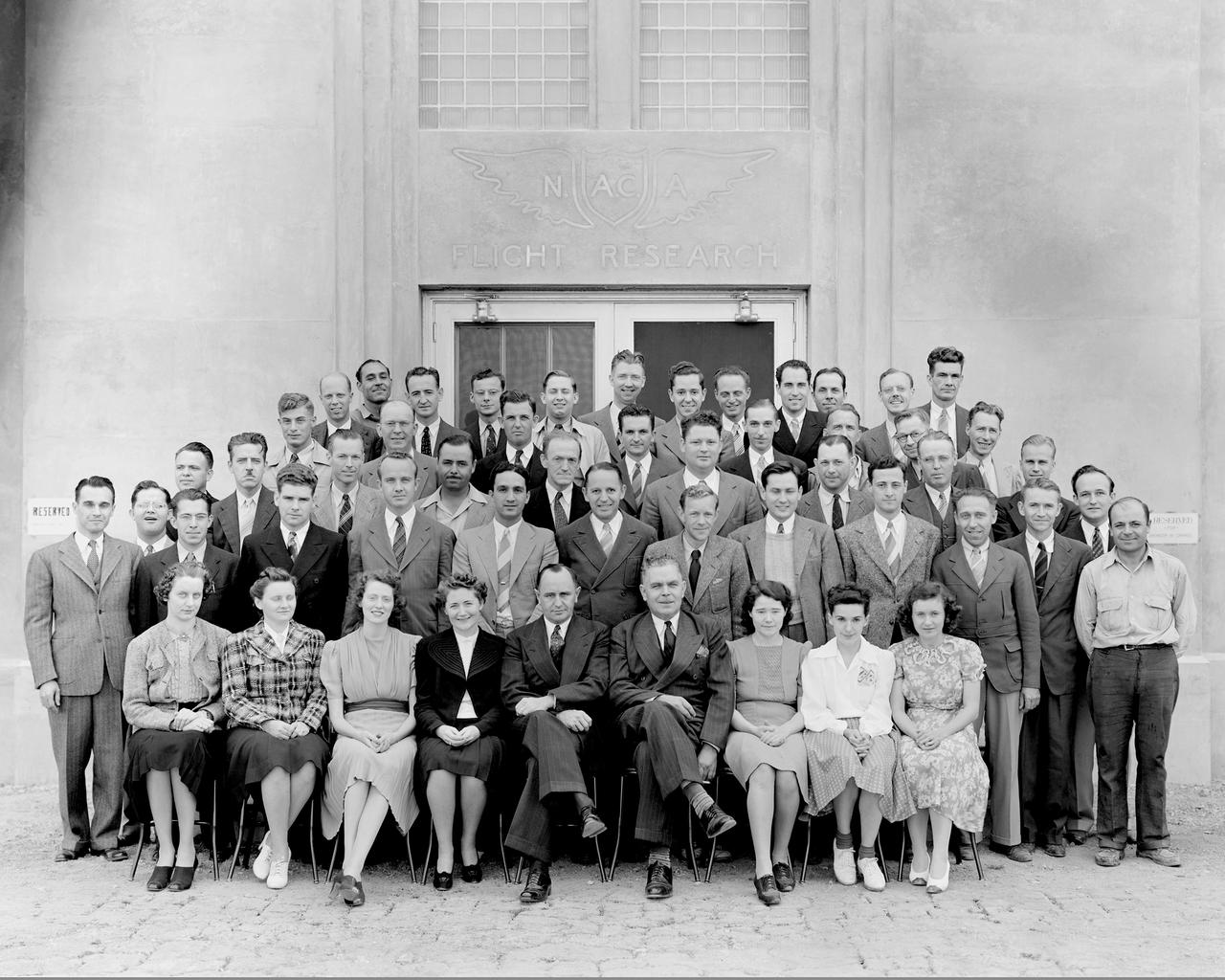
AMES STAFF STANDING IN FRONT OF THE NEW FLIGHT RESEARCH BUILDING. FROM LEFT TO RIGHT: FIRST ROW: M.U. NETTLE, M.A. WILLEY, M.H. DAVIES, M.W. ST. JOHN, S.J. DEFRANCE, E.R. SHARP, M.G. POOLE, V. BURGESS, R.A. PIPKIN. SECOND ROW: A.B. FREEMAN, T.W. O'BRIANT, L.T. VIDELL, C. F. WILSON, R.M. FOSTER, M.C. MASSA, M.J. HOOD, C. BIOLETTI, C.W. FRICK, W.G. VINCENTI, H.W. KIRSCHBAUM, L. A. RODERT, E.C. BRAIG, C. GERBO. THIRD ROW: R.E. BROWNING, E.H. WOOD, R HUGHES, G BULIFANT, J.V. KELLEY, H.J. ALLEN, J. P. HOUSTON, K.S. BURCHARD, M. A. GREENE, FOURTH ROW: A. G. BUCK, E.W. BETTS, R.E. BRAIG, H.J. GOETT, J.F. PARSONS, H.S. DUNLAP, L.E. MINDEN, R.J. CLARKE. FIFTH ROW: W.O. PETERSON, W. WALKER, C.H. HARVEY, J.C. DELANEY, T.W. MACOMBER, A.L. BLOCKER, N.K. DELANY, A.S. HERTZOG, R.R. NICKLE, P.T. PRIZLER, R.R. BENN, E.H.A. SCHNITKER.
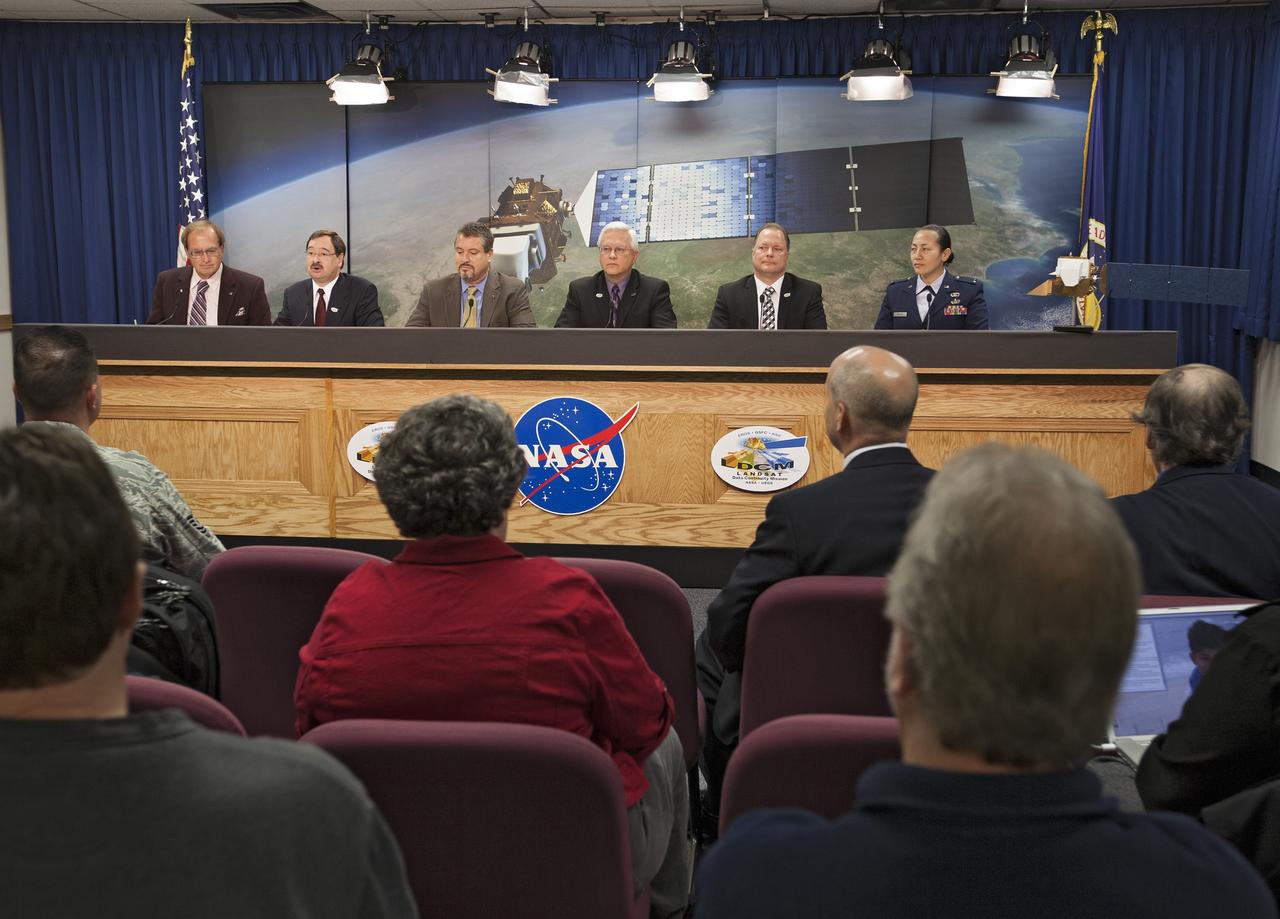
VANDENBERG AIR FORCE BASE, Calif. -- Media attend a prelaunch press conference at Vandenberg Air Force Base in California to discuss NASA's readiness to launch the Landsat Data Continuity Mission LDCM. From left are George Diller of NASA Public Affairs, LDCM program executive David Jarrett from NASA Headquarters, NASA Launch Director Omar Baez from Kennedy Space Center, United Launch Alliance Program Manager for NASA Missions Vernon Thorp, LDCM Project Manager Ken Schwer from Goddard Space Flight Center, and 1st Lt. Jennifer Kelley, launch weather officer for the 30th Operations Support Squadron at Vandenberg. Launch of LDCM aboard a United Launch Alliance Atlas V rocket from Vandenberg's Space Launch Complex-3E is planned for Feb. 11 during a 48-minute launch window that opens at 10:02 a.m. PST, or 1:02 p.m. EST. LDCM is the eighth satellite in the Landsat Program series of Earth-observing missions and will continue the program’s critical role in monitoring, understanding and managing the resources needed for human sustainment, such as food, water and forests. NASA's Goddard Space Flight Center in Greenbelt, Md., is responsible for LDCM project management. Orbital Sciences Corp. built the LDCM satellite. NASA's Launch Services Program at the Kennedy Space Center in Florida provides launch management. After launch and the initial checkout phase, the U. S. Geological Survey will take operational control of LDCM, and it will be renamed Landsat 8. Photo credit: NASA/Kim Shiflett
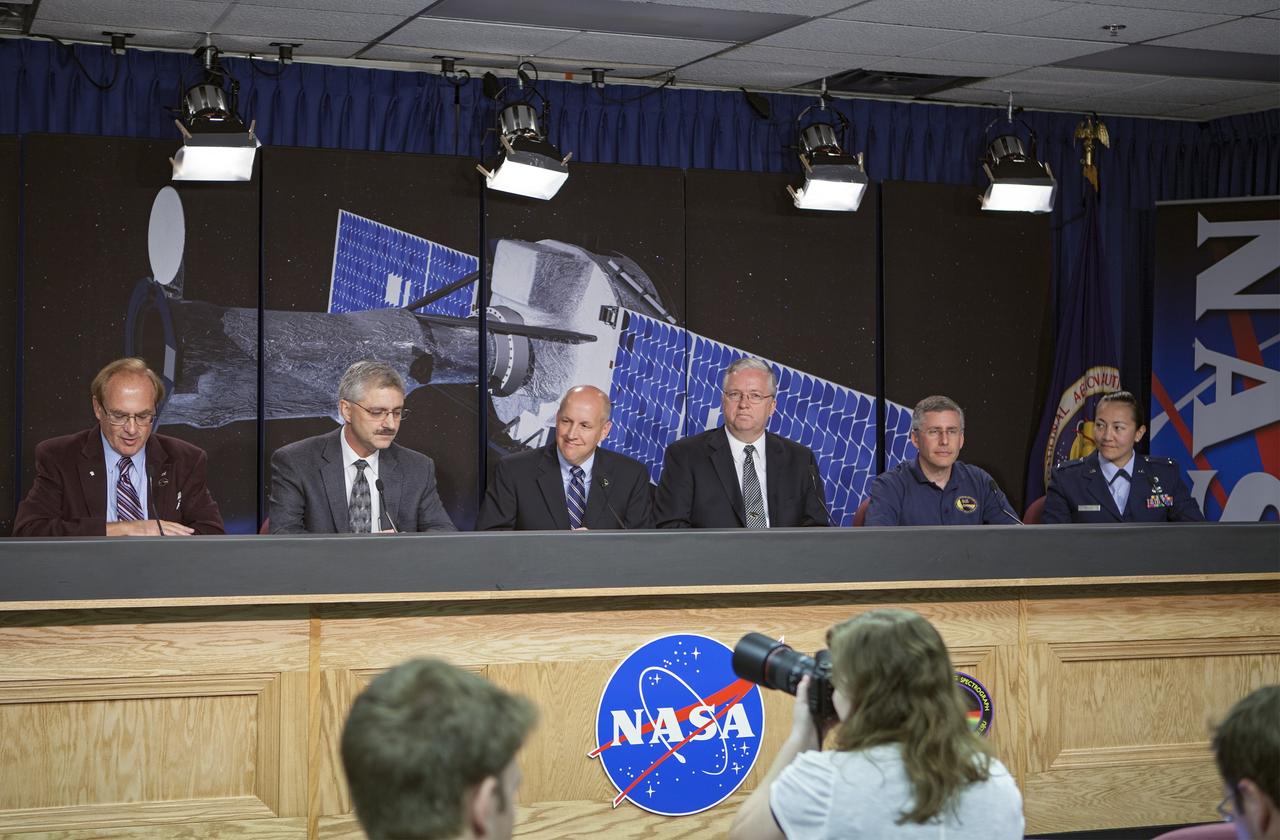
VANDENBERG AIR FORCE BASE, Calif. – At Vandenberg Air Force Base in California, NASA hosted a prelaunch news conference on the Interface Region Imaging Spectrograph, or IRIS, solar observatory scheduled to launch on a Pegasus XL rocket. Participating in the news conference are George Diller, NASA Public Affairs, Geoffrey Yoder, deputy associate administrator for the Programs, Science Mission Directorate at NASA Headquarters in Washington, D.C., Tim Dunn, NASA launch director/NASA Launch Manager at the Kennedy Space Center in Florida, Bryan Baldwin, Pegasus launch vehicle program director for Orbital Sciences Corp. of Dulles, Va., Gary Kushner, IRIS project manager for Lockheed Martin's Solar and Astrophysics Laboratory in Palo Alto, Calif., and First Lt. Jennifer Kelley, launch weather officer for the U.S. Air Force 30th Operations Support Squadron at Vandenberg. Scheduled for launch from Vandenberg on June 26, 2013, IRIS will open a new window of discovery by tracing the flow of energy and plasma through the chromospheres and transition region into the sun’s corona using spectrometry and imaging. The IRIS mission will observe how solar material moves, gathers energy and heats up as it travels through a largely unexplored region of the solar atmosphere. The interface region, located between the sun's visible surface and upper atmosphere, is where most of the sun's ultraviolet emission is generated. These emissions impact the near-Earth space environment and Earth's climate. For more information, visit http://www.nasa.gov/iris Photo credit: NASA/ Daniel Casper
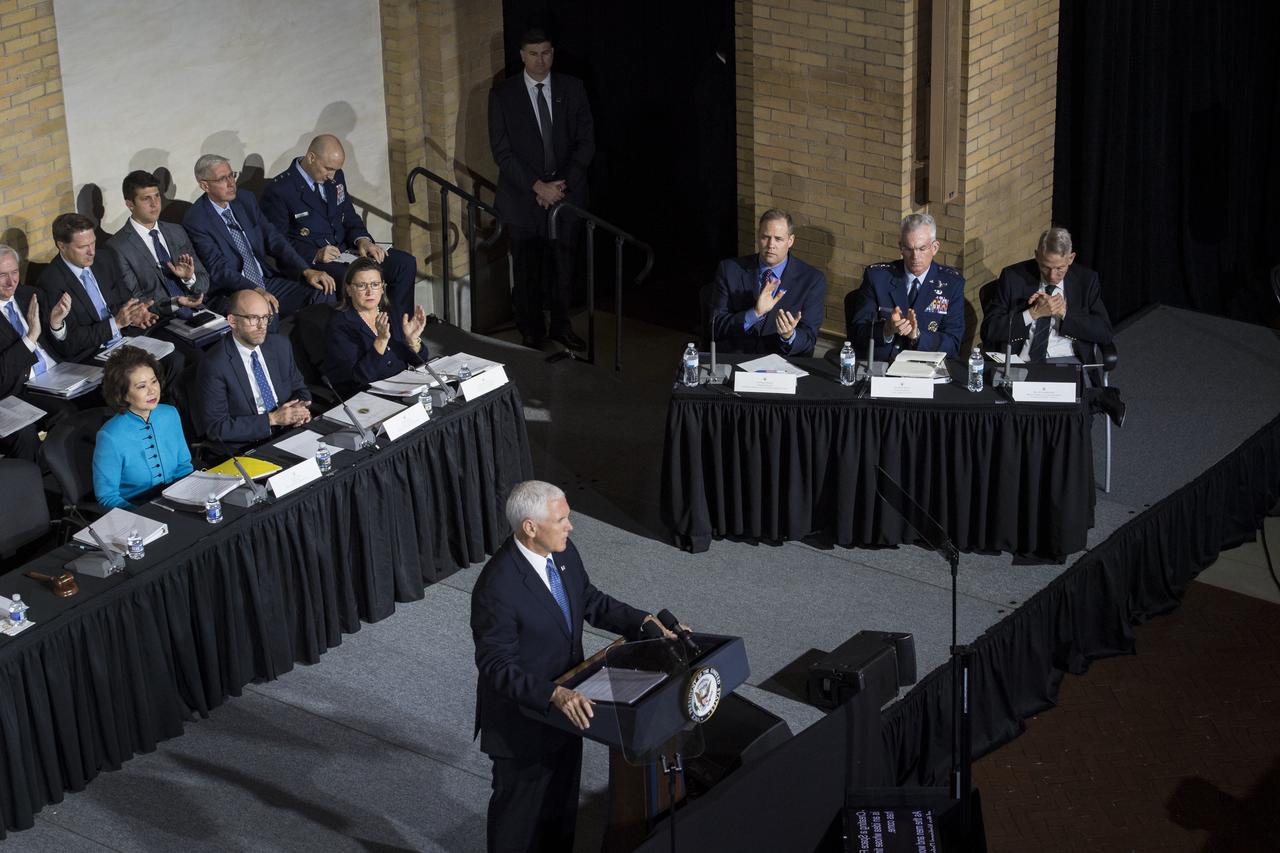
NASA Administrator Jim Bridenstine, third from right, applauds as Vice President Mike Pence delivers opening remarks during the National Space Council meeting titled, Moon, Mars, and Worlds Beyond, Winning the Next Frontier, Tuesday, Oct. 23, 2018 at the National War College at Fort Lesley J. McNair in Washington. Chaired by the Vice President, the council's role is to advise the President regarding national space policy and strategy, and review the nation's long-range goals for space activities.Photo Credit: (NASA/Aubrey Gemignani)
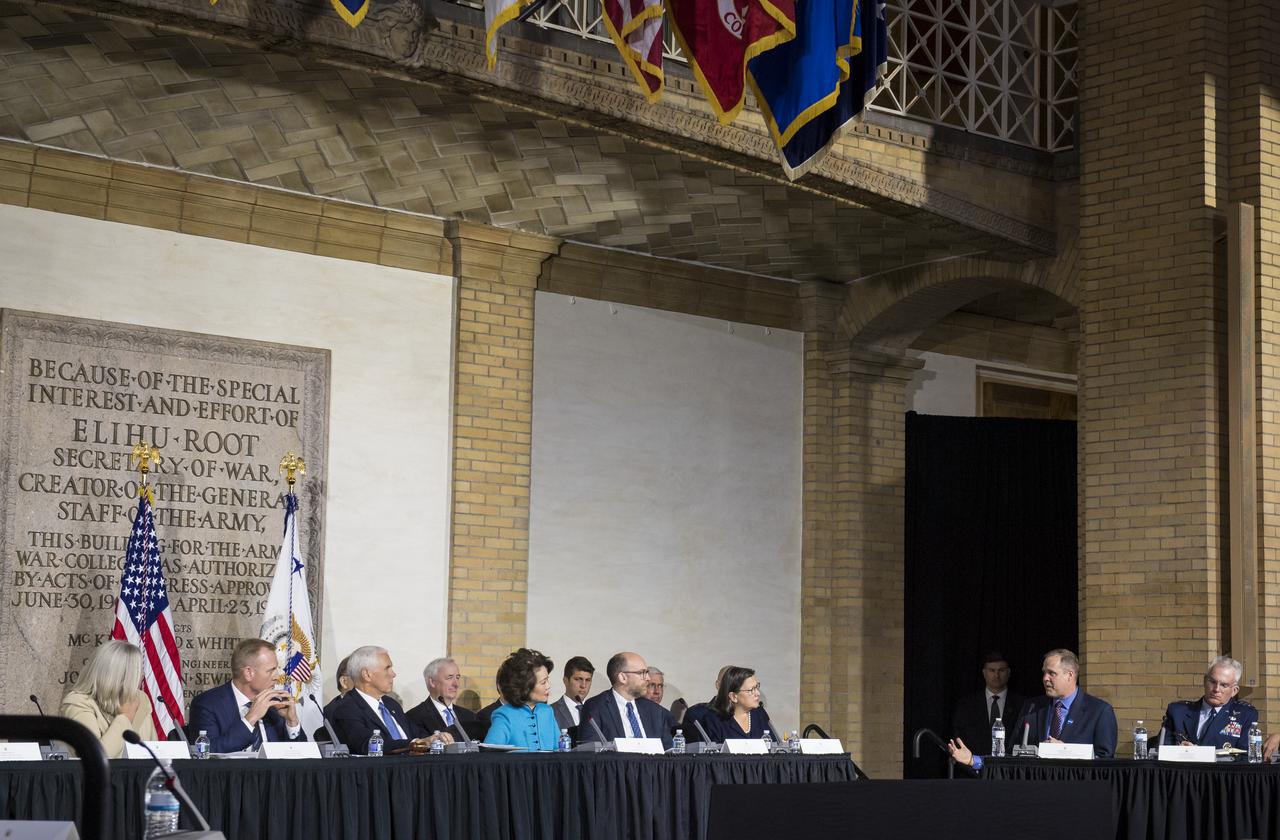
NASA Administrator Jim Bridenstine speaks during the National Space Council meeting titled, Moon, Mars, and Worlds Beyond, Winning the Next Frontier, Tuesday, Oct. 23, 2018 at the National War College at Fort Lesley J. McNair in Washington. Chaired by the Vice President, the council's role is to advise the President regarding national space policy and strategy, and review the nation's long-range goals for space activities.Photo Credit: (NASA/Aubrey Gemignani)