
Dr. Kelly Fast, acting planetary defense officer for NASA’s Planetary Defense Coordination Office, asks NASA Administrator Jared Isaacman and NASA Associate Administrator Amit Kshatriya a question during a monthly coffee and donuts with the Administrator event, Tuesday, Feb. 24, 2026, at the Mary W. Jackson NASA Headquarters building in Washington. Photo Credit: (NASA/Aubrey Gemignani)

Kelly Fast, MAVEN program scientist, NASA Headquarters, discusses the upcoming launch of the Mars Atmosphere and Volatile Evolution (MAVEN) mission, at a press conference at NASA Headquarters in Washington on Monday, Oct. 28th, 2013. MAVEN is the agency's next mission to Mars and the first devoted to understanding the upper atmosphere of the Red Planet. (Photo credit: NASA/Jay Westcott)
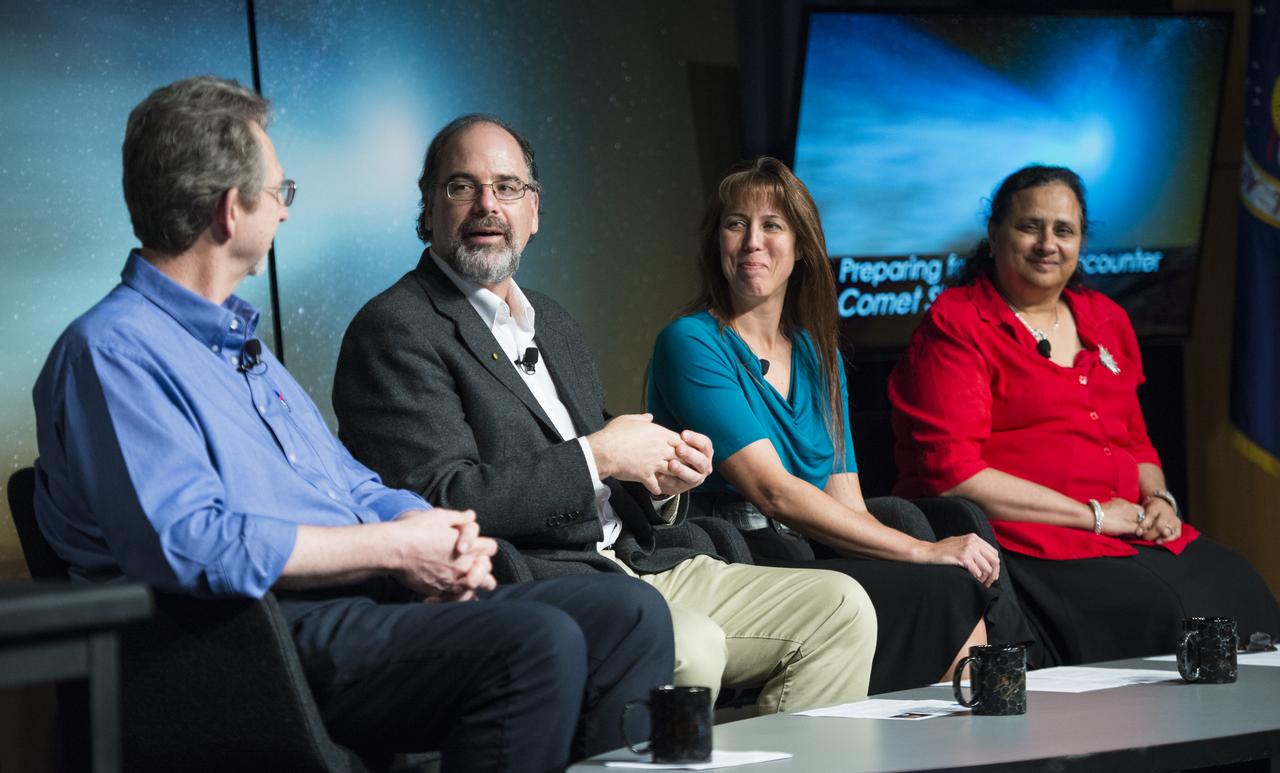
Panelists, from left, Jim Green, director, Planetary Science Division, NASA Headquarters, Washington, Carey Lisse, senior astrophysicist, Johns Hopkins University Applied Physics Laboratory, Laurel, Maryland, Kelly Fast, program scientist, Planetary Science Division, NASA Headquarters, Washington, and Padma Yanamandra-Fisher, senior research scientist, Space Science Institute, Rancho Cucamonga Branch, California, are seen during a media briefing where they outlined how space and Earth-based assets will be used to image and study comet Siding Spring during its Sunday, Oct. 19 flyby of Mars, Thursday, Oct. 9, 2014 at NASA Headquarters in Washington. (Photo credit: NASA/Joel Kowsky)
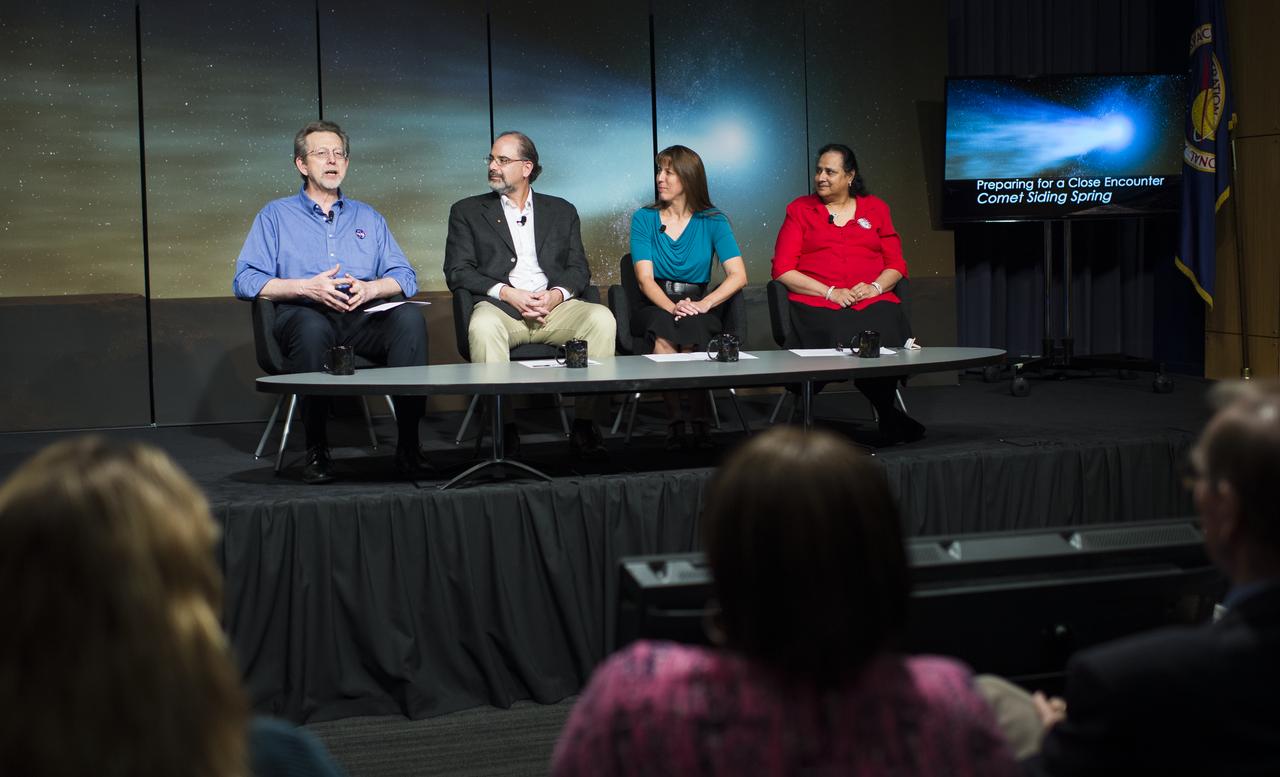
Panelists, from left, Jim Green, director, Planetary Science Division, NASA Headquarters, Washington, Carey Lisse, senior astrophysicist, Johns Hopkins University Applied Physics Laboratory, Laurel, Maryland, Kelly Fast, program scientist, Planetary Science Division, NASA Headquarters, Washington, and Padma Yanamandra-Fisher, senior research scientist, Space Science Institute, Rancho Cucamonga Branch, California, are seen during a media briefing where they outlined how space and Earth-based assets will be used to image and study comet Siding Spring during its Sunday, Oct. 19 flyby of Mars, Thursday, Oct. 9, 2014 at NASA Headquarters in Washington. (Photo credit: NASA/Joel Kowsky)

Jim Green, director, Planetary Science Division, NASA Headquarters, Washington, left, is seen with fellow panelists Carey Lisse, senior astrophysicist, Johns Hopkins University Applied Physics Laboratory, Laurel, Maryland, Kelly Fast, program scientist, Planetary Science Division, NASA Headquarters, Washington, and Padma Yanamandra-Fisher, senior research scientist, Space Science Institute, Rancho Cucamonga Branch, California during a media briefing where they outlined how space and Earth-based assets will be used to image and study comet Siding Spring during its Sunday, Oct. 19 flyby of Mars, Thursday, Oct. 9, 2014 at NASA Headquarters in Washington. Photo Credit: (NASA/Joel Kowsky)
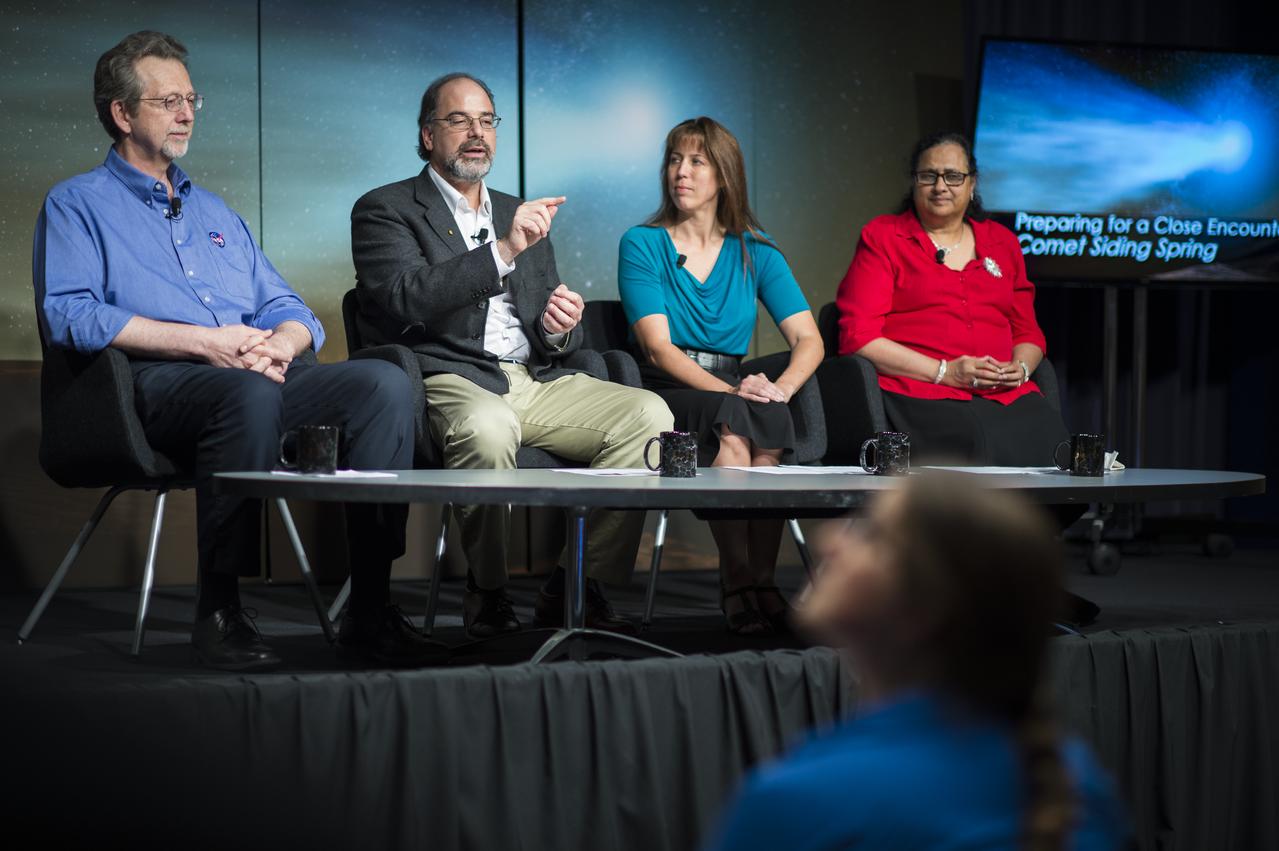
Panelists, from left, Jim Green, director, Planetary Science Division, NASA Headquarters, Washington, Carey Lisse, senior astrophysicist, Johns Hopkins University Applied Physics Laboratory, Laurel, Maryland, Kelly Fast, program scientist, Planetary Science Division, NASA Headquarters, Washington, and Padma Yanamandra-Fisher, senior research scientist, Space Science Institute, Rancho Cucamonga Branch, California, are seen during a media briefing where they outlined how space and Earth-based assets will be used to image and study comet Siding Spring during its Sunday, Oct. 19 flyby of Mars, Thursday, Oct. 9, 2014 at NASA Headquarters in Washington. (Photo credit: NASA/Joel Kowsky)
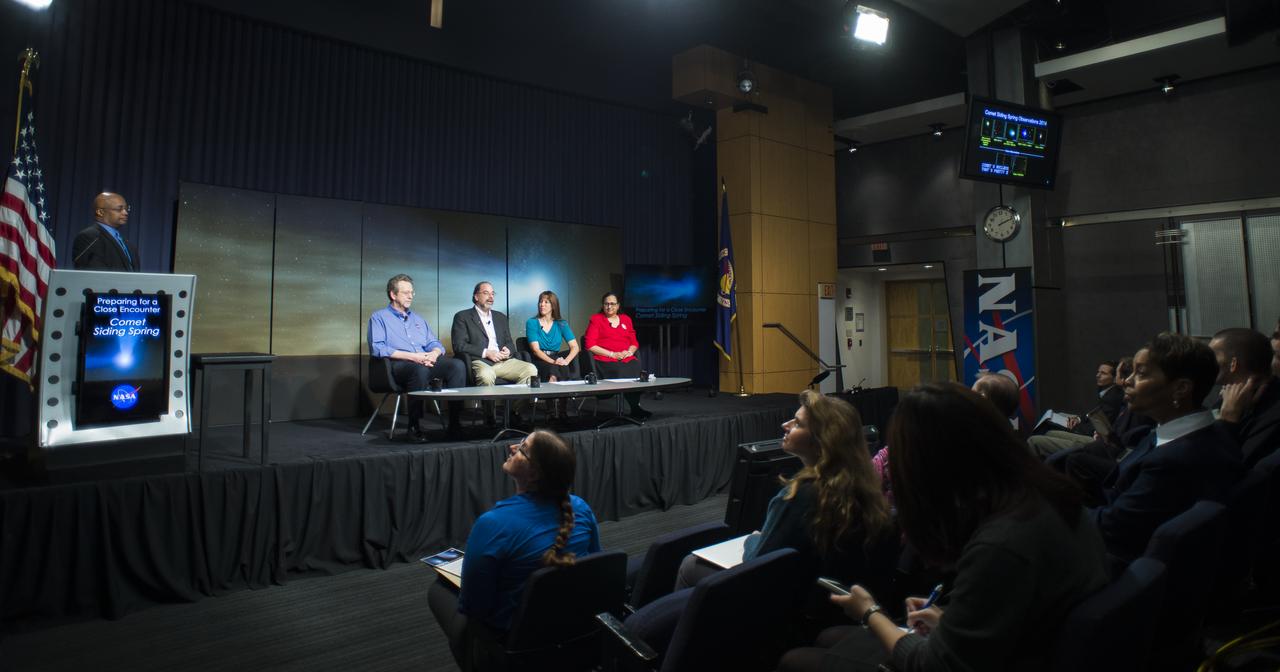
Dwayne Brown, NASA public affairs officer, left, moderates a media briefing where panelist, seated from left, Jim Green, director, Planetary Science Division, NASA Headquarters, Washington, Carey Lisse, senior astrophysicist, Johns Hopkins University Applied Physics Laboratory, Laurel, Maryland, Kelly Fast, program scientist, Planetary Science Division, NASA Headquarters, Washington, and Padma Yanamandra-Fisher, senior research scientist, Space Science Institute, Rancho Cucamonga Branch, California, outlined how space and Earth-based assets will be used to image and study comet Siding Spring during its Sunday, Oct. 19 flyby of Mars, Thursday, Oct. 9, 2014 at NASA Headquarters in Washington. (Photo credit: NASA/Joel Kowsky)
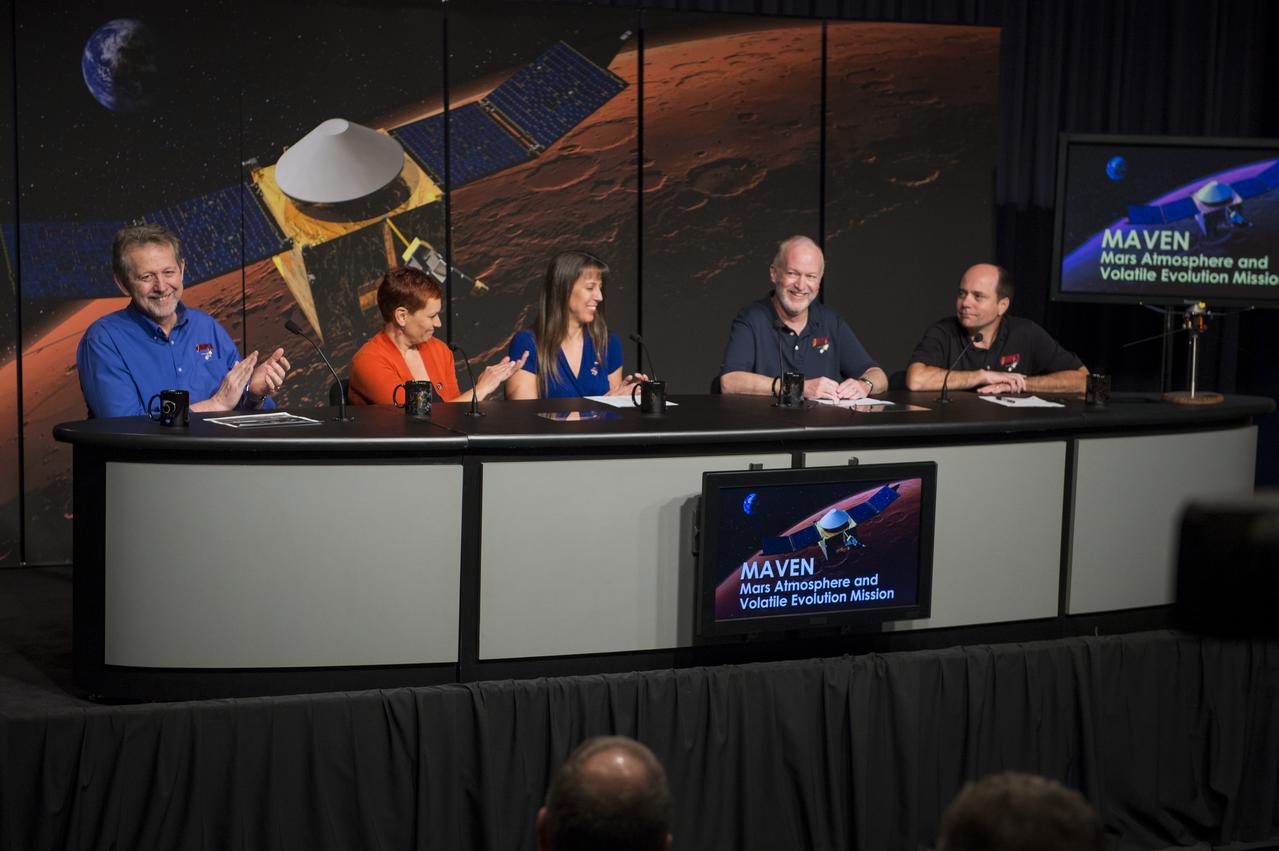
L-R: Jim Green, director, Planetary Science Division, NASA Headquarters, Lisa May, MAVEN program executive, NASA Headquarters, Kelly Fast, MAVEN program scientist, NASA Headquarters, Bruce Jakosky, MAVEN principal investigator, University of Colorado Boulder Laboratory for Atmospheric and Space Physics, and David Mitchell, MAVEN project manager, NASA's Goddard Space Flight Center, Greenbelt, Md. are applauded at the end of a panel discussion on the upcoming launch of the Mars Atmosphere and Volatile Evolution (MAVEN) mission, at a press conference at NASA Headquarters in Washington on Monday, Oct. 28th, 2013. MAVEN is the agency's next mission to Mars and the first devoted to understanding the upper atmosphere of the Red Planet. (Photo credit: NASA/Jay Westcott)
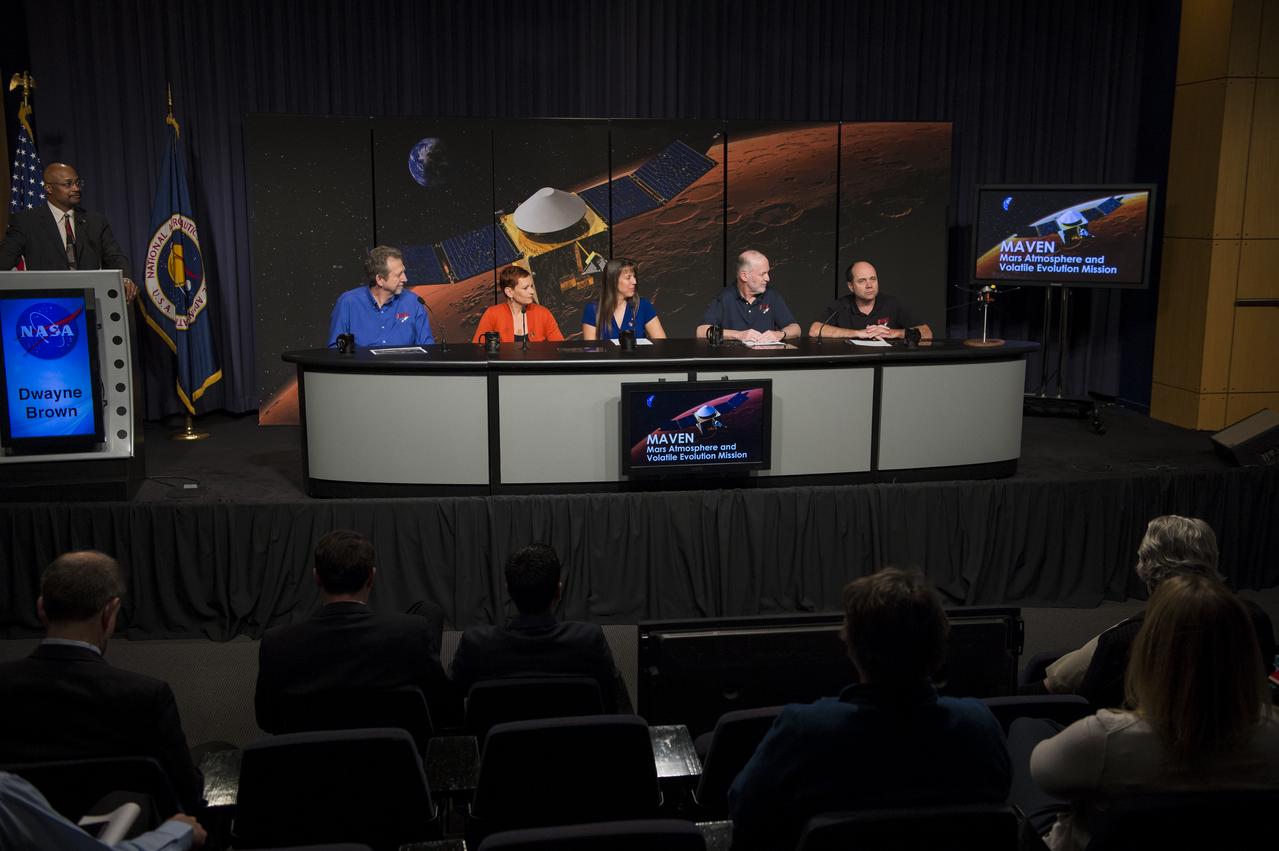
L-R: Dwayne Brown, NASA Public Affairs Officer, Jim Green, director, Planetary Science Division, NASA Headquarters, Lisa May, MAVEN program executive, NASA Headquarters, Kelly Fast, MAVEN program scientist, NASA Headquarters, Bruce Jakosky, MAVEN principal investigator, University of Colorado Boulder Laboratory for Atmospheric and Space Physics, and David Mitchell, MAVEN project manager, NASA's Goddard Space Flight Center, Greenbelt, Md. discuss the upcoming launch of the Mars Atmosphere and Volatile Evolution (MAVEN) mission, at a press conference at NASA Headquarters in Washington on Monday, Oct. 28th, 2013. MAVEN is the agency's next mission to Mars and the first devoted to understanding the upper atmosphere of the Red Planet. (Photo credit: NASA/Jay Westcott)
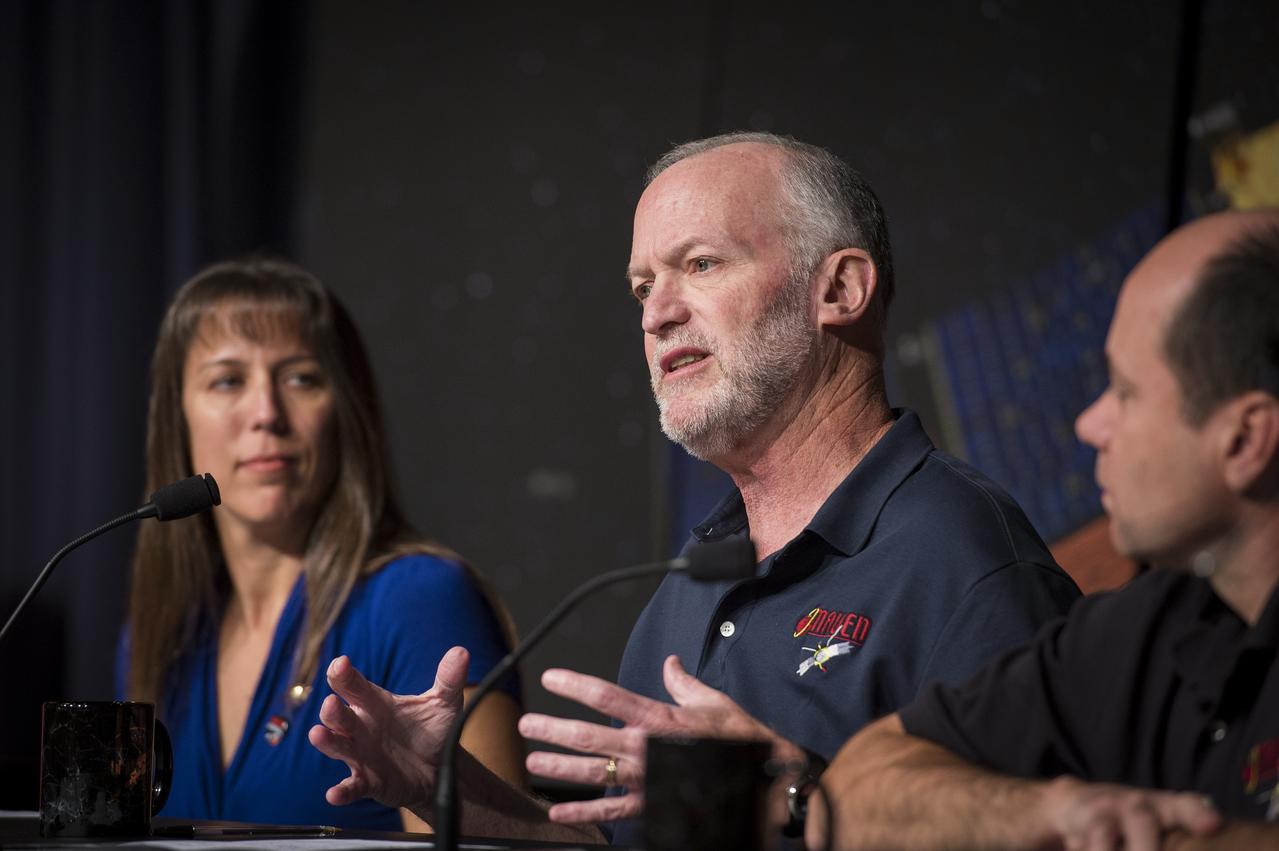
Bruce Jakosky, MAVEN principal investigator, University of Colorado Boulder Laboratory for Atmospheric and Space Physics, discusses the upcoming launch of the Mars Atmosphere and Volatile Evolution (MAVEN) mission, at a press conference at NASA Headquarters in Washington on Monday, Oct. 28th, 2013. MAVEN is the agency's next mission to Mars and the first devoted to understanding the upper atmosphere of the Red Planet. (Photo credit: NASA/Jay Westcott)
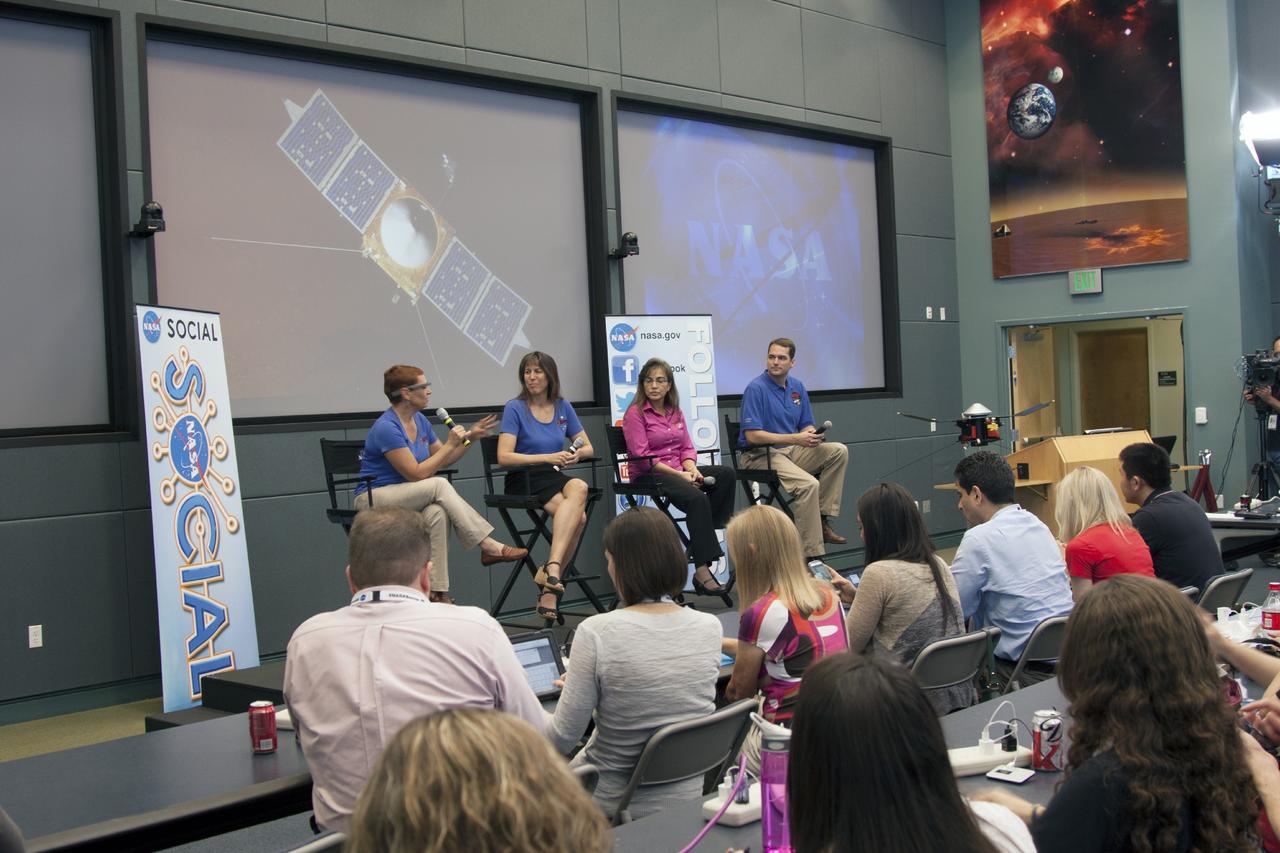
CAPE CANAVERAL, Fla. -- In the conference room of Operations Support Building II at NASA's Kennedy Space Center in Florida, social media participants listen to a briefing on the Mars Atmosphere and Volatile Evolution, or MAVEN, mission by, from the left, Lisa May, MAVEN Program executive, Kelly Fast, Mars Program scientist, Sandra Cauffman, deputy project manager at the agency's Goddard Spaceflight Center, in Greenbelt, Md., and Chris Waters, systems design team lead at Lockheed Martin. The social media participants gathered at the Florida spaceport for the launch of the Mars Atmosphere and Volatile Evolution, or MAVEN, spacecraft. Their visit included tours of key facilities and participating in presentations by key NASA leaders who updated the space agency's current efforts. Photo credit: NASA/Jim Grossman
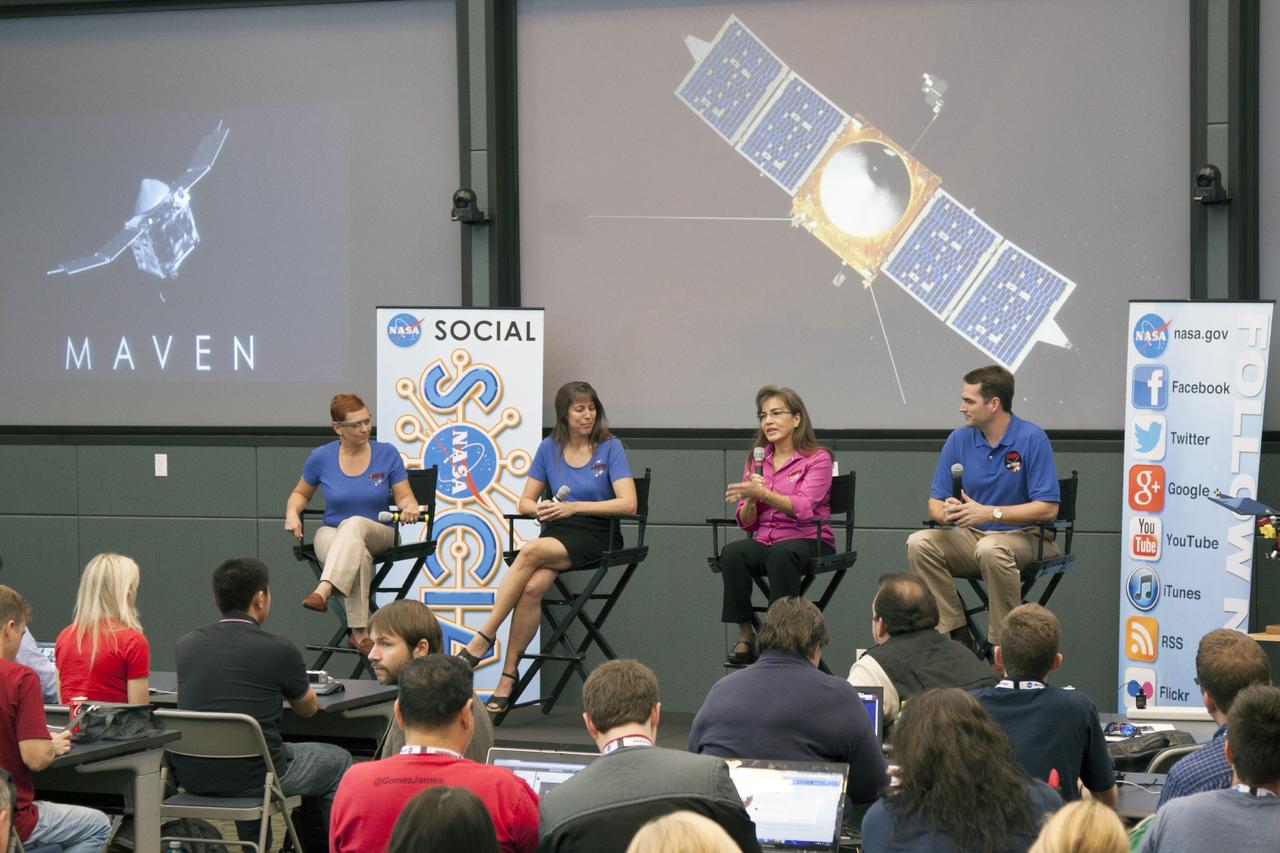
CAPE CANAVERAL, Fla. -- In the conference room of Operations Support Building II at NASA's Kennedy Space Center in Florida, social media participants listen to a briefing on the Mars Atmosphere and Volatile Evolution, or MAVEN, mission by, from the left, Lisa May, MAVEN Program executive, Kelly Fast, Mars Program scientist, Sandra Cauffman, deputy project manager at the agency's Goddard Spaceflight Center, in Greenbelt, Md., and Chris Waters, systems design team lead at Lockheed Martin. The social media participants gathered at the Florida spaceport for the launch of the Mars Atmosphere and Volatile Evolution, or MAVEN, spacecraft. Their visit included tours of key facilities and participating in presentations by key NASA leaders who updated the space agency's current efforts. Photo credit: NASA/Jim Grossman
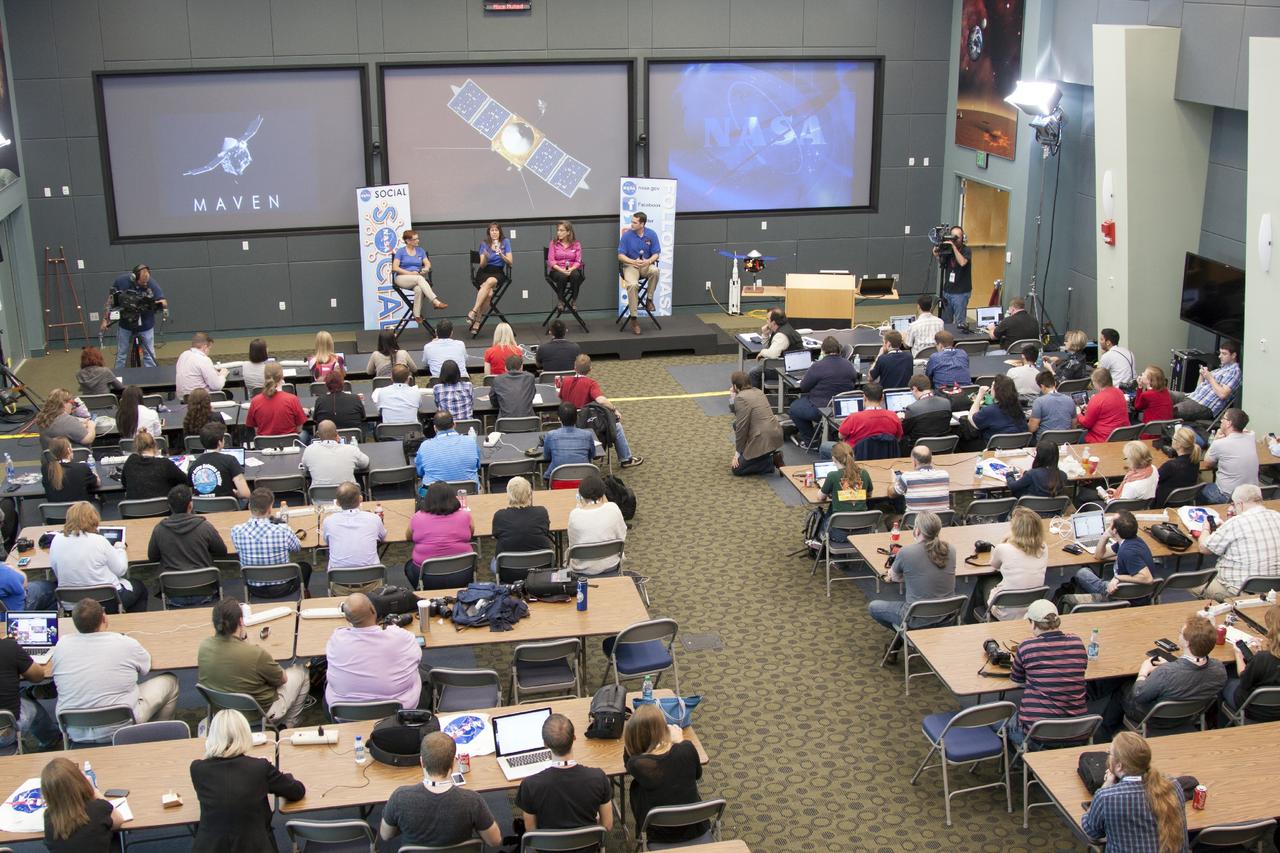
CAPE CANAVERAL, Fla. -- In the conference room of Operations Support Building II at NASA's Kennedy Space Center in Florida, social media participants listen to a briefing on the Mars Atmosphere and Volatile Evolution, or MAVEN, mission by, from the left, Lisa May, MAVEN Program executive, Kelly Fast, Mars Program scientist, Sandra Cauffman, deputy project manager at the agency's Goddard Spaceflight Center, in Greenbelt, Md., and Chris Waters, systems design team lead at Lockheed Martin. The social media participants gathered at the Florida spaceport for the launch of the Mars Atmosphere and Volatile Evolution, or MAVEN, spacecraft. Their visit included tours of key facilities and participating in presentations by key NASA leaders who updated the space agency's current efforts. Photo credit: NASA/Jim Grossman
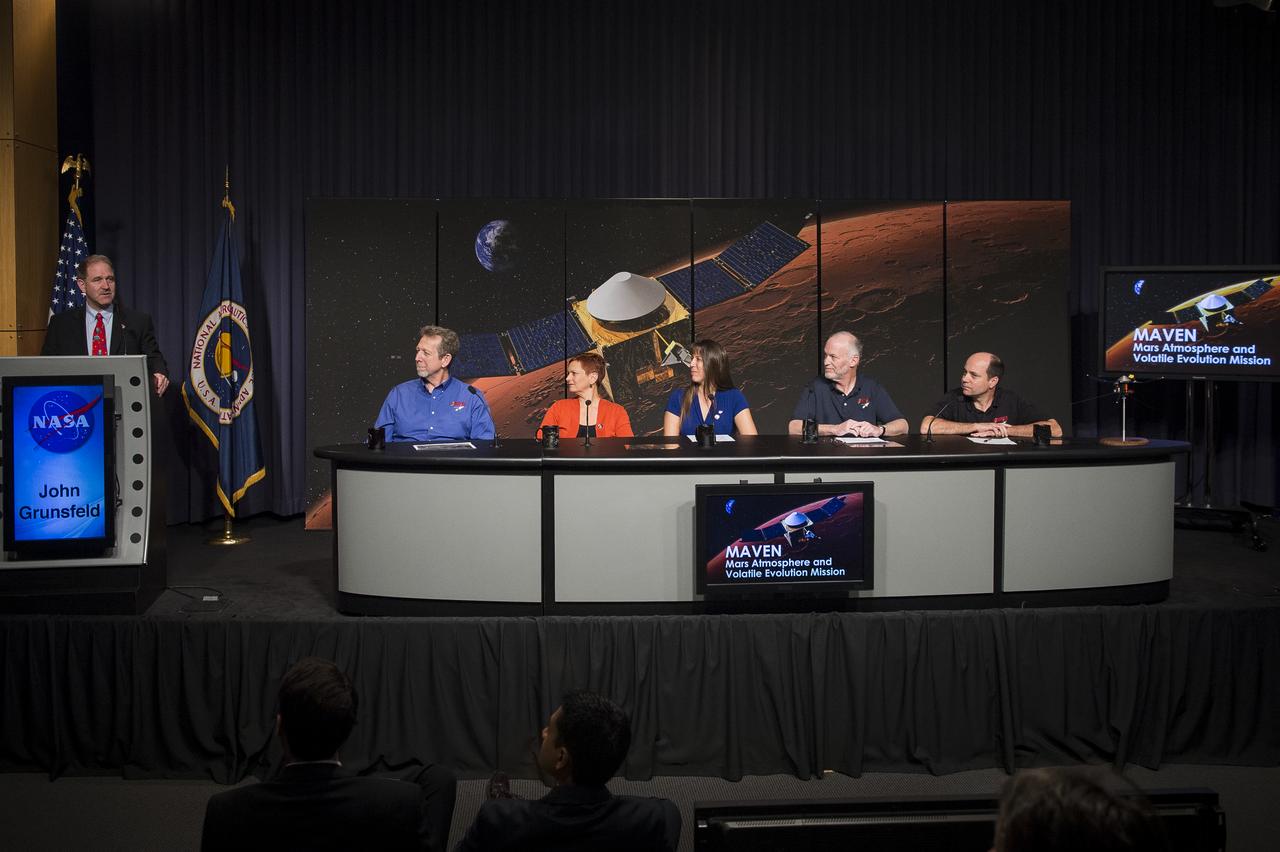
John Grunsfeld, associate administrator for the Science Mission Directorate, NASA Headquarters, Washington, introduces a panel to discuss the upcoming launch of the Mars Atmosphere and Volatile Evolution (MAVEN) mission, at a press conference at NASA Headquarters in Washington on Monday, Oct. 28th, 2013. MAVEN is the agency's next mission to Mars and the first devoted to understanding the upper atmosphere of the Red Planet. (Photo credit: NASA/Jay Westcott)