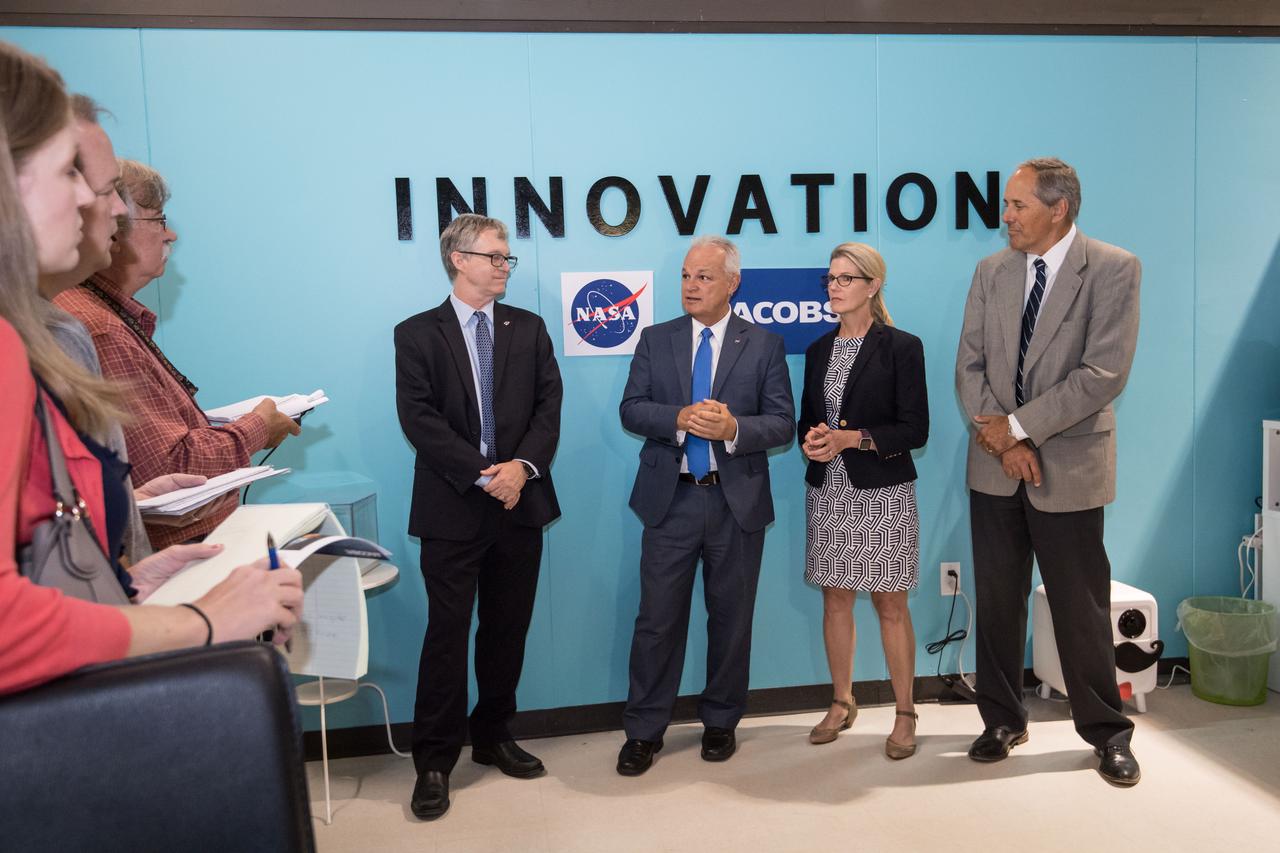
NASA Chief Technologist Douglas Terrier joins Jacobs General Manager Lon Miller during a tour of the company's Engineering Development Facility in Houston. Jacobs provides advanced technologies used aboard the International Space Station and for deep space exploration. From left: NASA’s Johnson Space Center Chief Technologist Chris Culbert, Chief Technologist Douglas Terrier, Jacobs Clear Lake Group Deputy General Manager Joy Kelly and Jacobs Clear Lake Group General Manager Lon Miller. Date: 08-10-2017 Location: B1 & Jacobs Engineering Subject: NASA Acting Chief Technology Officer Douglas Terrier Tours JSC and Jacobs Photographer: David DeHoyos
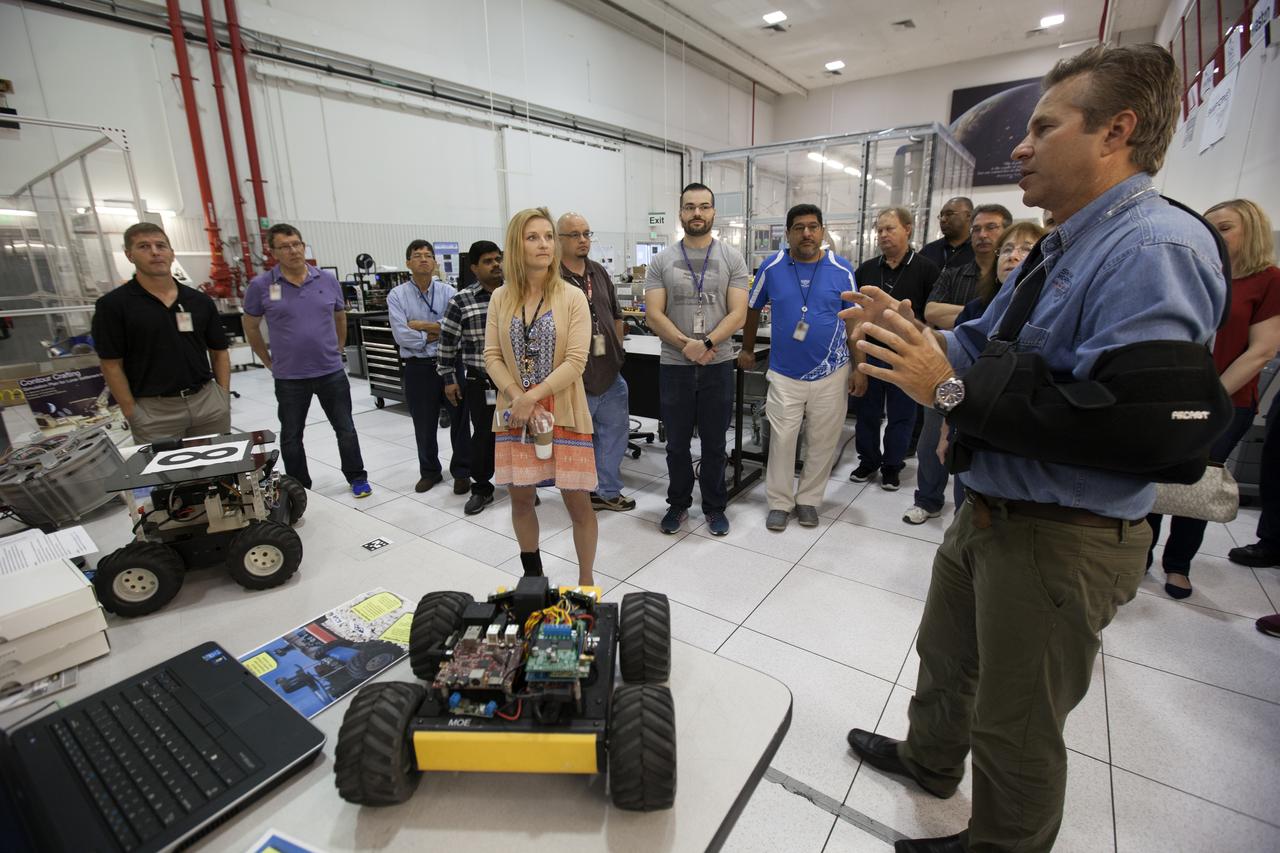
Jenn Gustetic, NASA's Small Business Innovation Research Program executive, talks with Rob Mueller, senior technologist and co-founder of Kennedy Space Center's Swamp Works. Gustetic met team members and viewed many of the pioneering technologies and innovations in development at Kennedy. Swamp Works is a hands-on, lean development environment for innovation following the philosophies pioneered in Kelly Johnson's Skunk Works and Werner von Braun's development shops. The Swamp Works establishes rapid, innovative and cost-effective exploration mission solutions through a highly collaborative, "no walls" approach, leveraging partnerships across NASA, industry and academia.
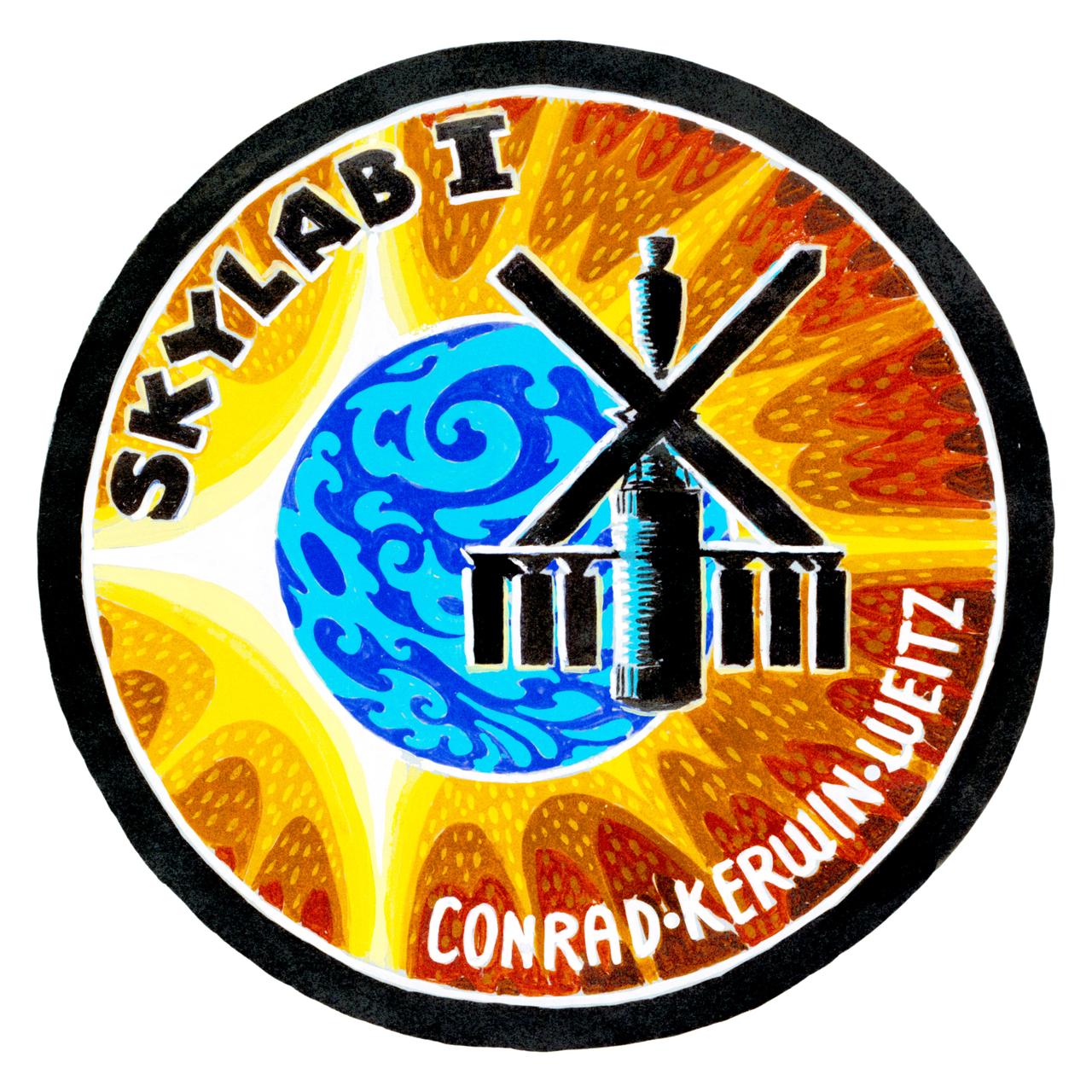
S72-52630 (February 1972) --- This is the emblem for the first manned Skylab mission. It will be a mission of up to 28 days. Skylab is an experimental space station consisting of a 100-ton laboratory complex in which medical, scientific and technological experiments will be performed in Earth orbit. The prime crew of this mission will be astronaut Charles Conrad Jr., commander; scientist-astronaut Joseph P. Kerwin, science pilot; and astronaut Paul J. Weits, pilot. The patch, designed by artist Kelly Freas, shows the Skylab silhouetted against the Earth's globe, which in turn is eclipsing the sun--showing the brilliant signet-ring pattern of the instant before the total eclipse. Photo credit: NASA
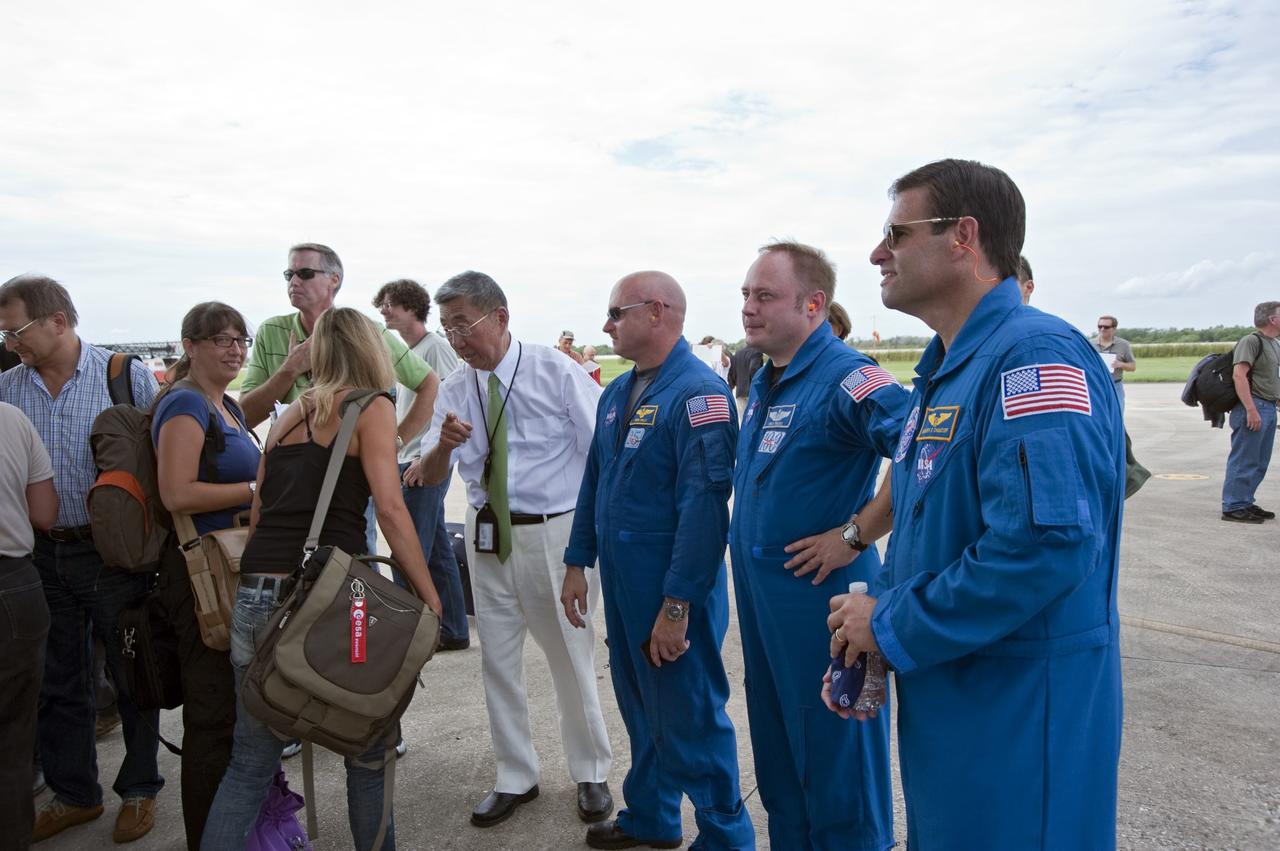
CAPE CANAVERAL, Fla. -- After the arrival of the Alpha Magnetic Spectrometer, or AMS, at the Shuttle Landing Facility at NASA's Kennedy Space Center in Florida, Professor Sam Ting, AMS Principal Investigator from the Massachusetts Institute of Technology speaks with the media while STS-134 Commander Mark Kelly, Mission Specialists Michael Fincke and Greg Chamitoff look on. AMS,a state-of-the-art particle physics detector, is designed to operate as an external module on the International Space Station. It will use the unique environment of space to study the universe and its origin by searching for dark matter. AMS will fly to the International Space Station aboard space shuttle Endeavour's STS-134 mission targeted to launch Feb. 26, 2011. Photo credit: NASA/Kim Shiflett
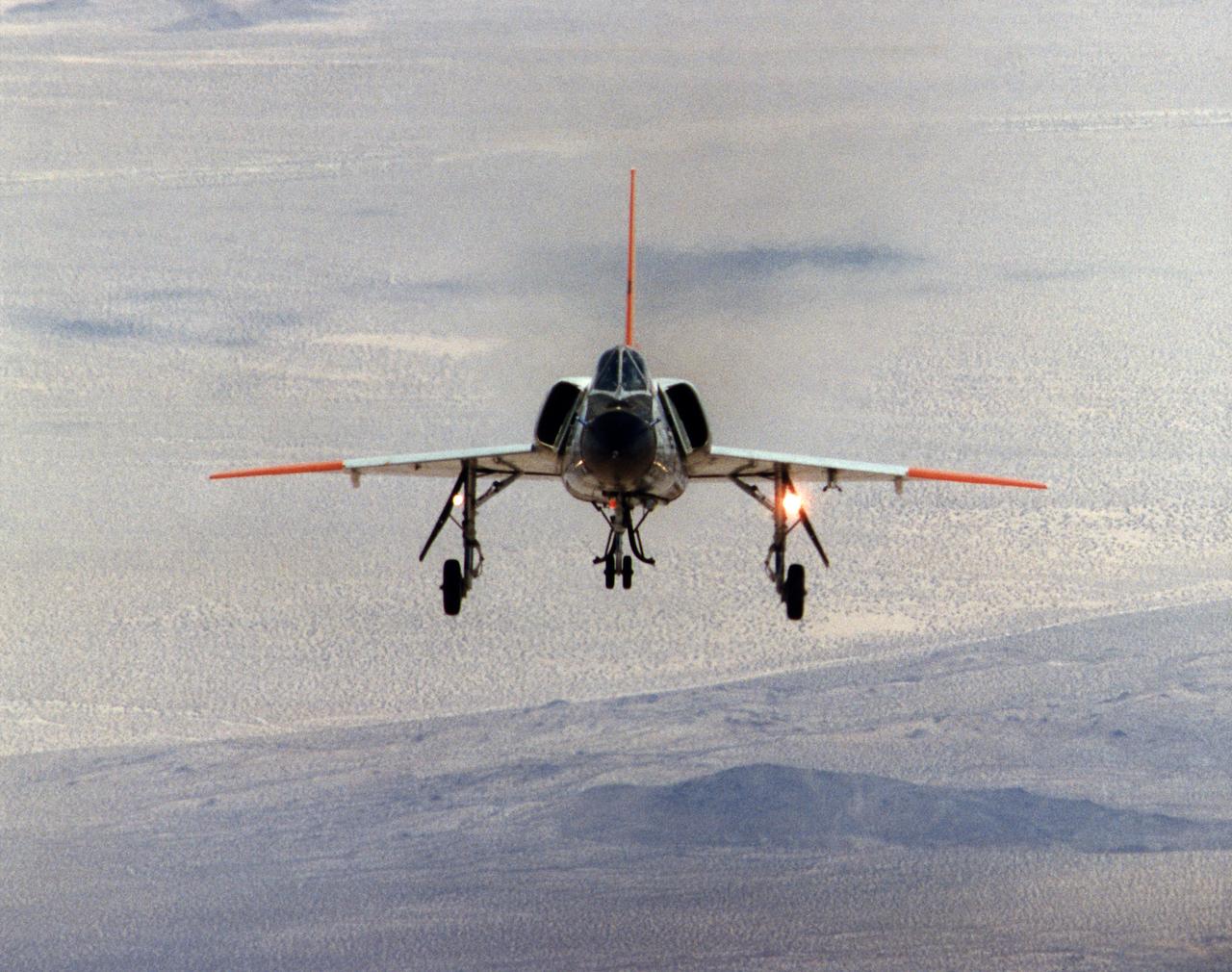
Eclipse program F-106 aircraft in flight, front view.
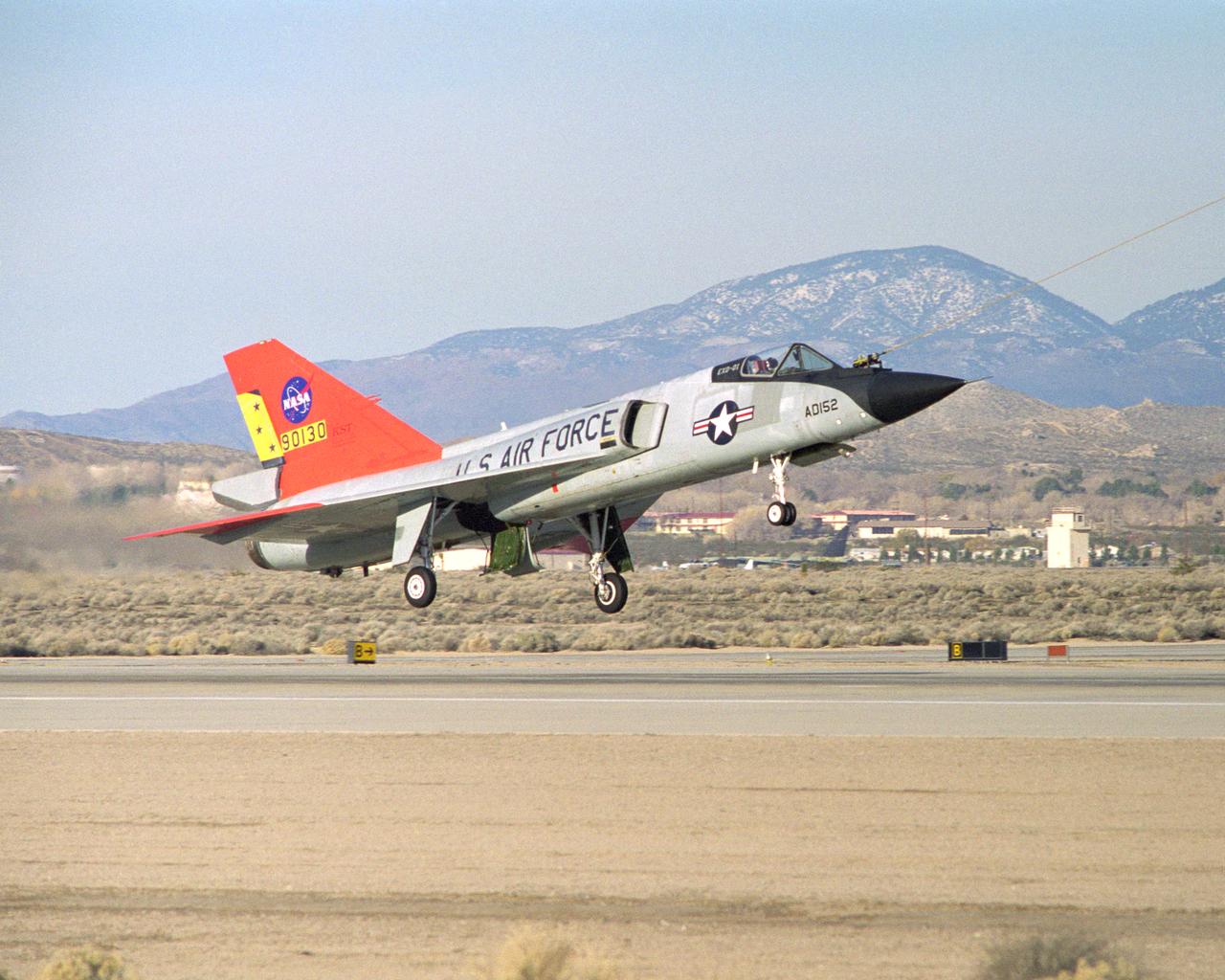
Eclipse project closeup of QF-106 under tow on takeoff on first flight December 20, 1997
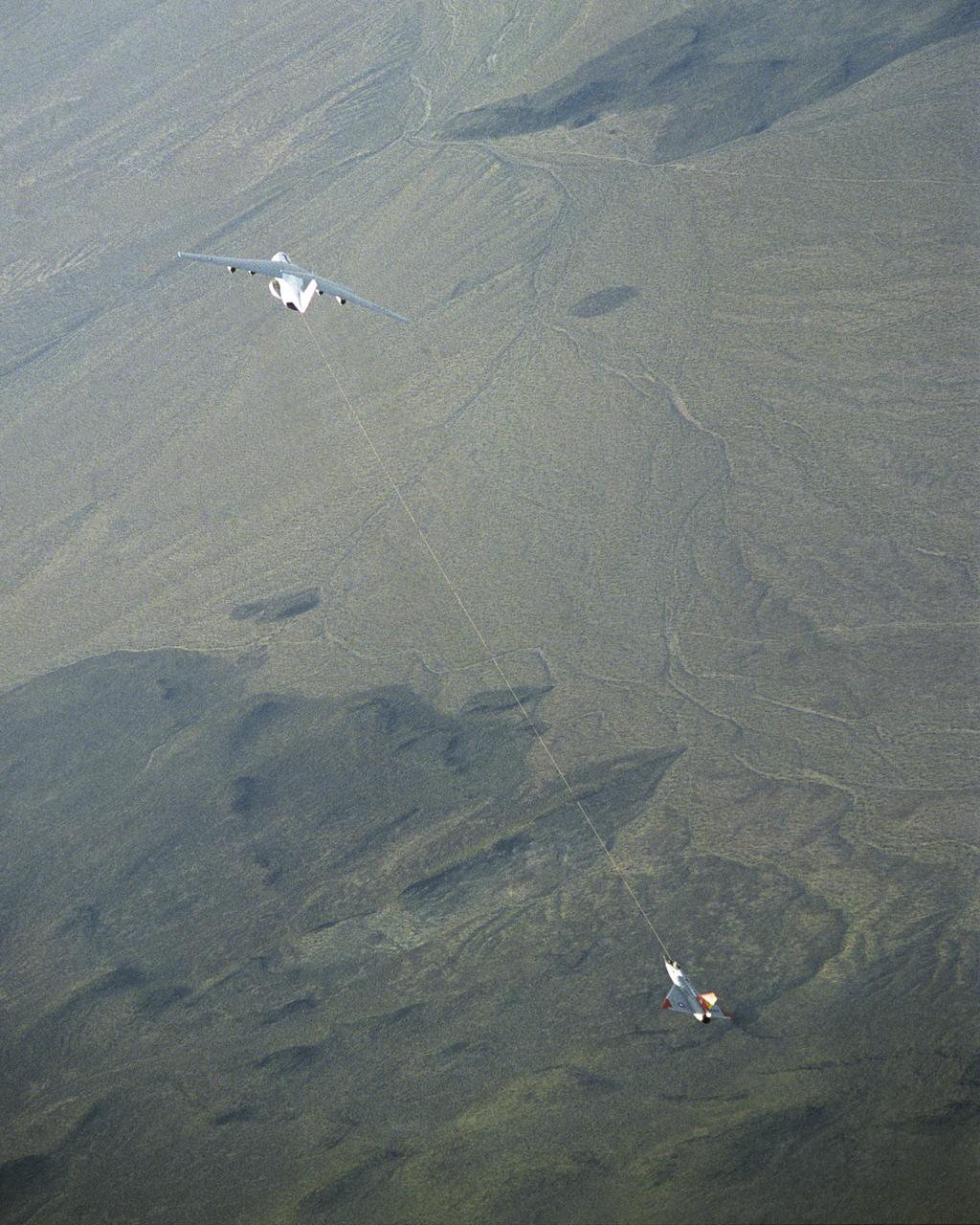
The Eclipse projectís modified QF-106 under tow by a USAF C-141A.
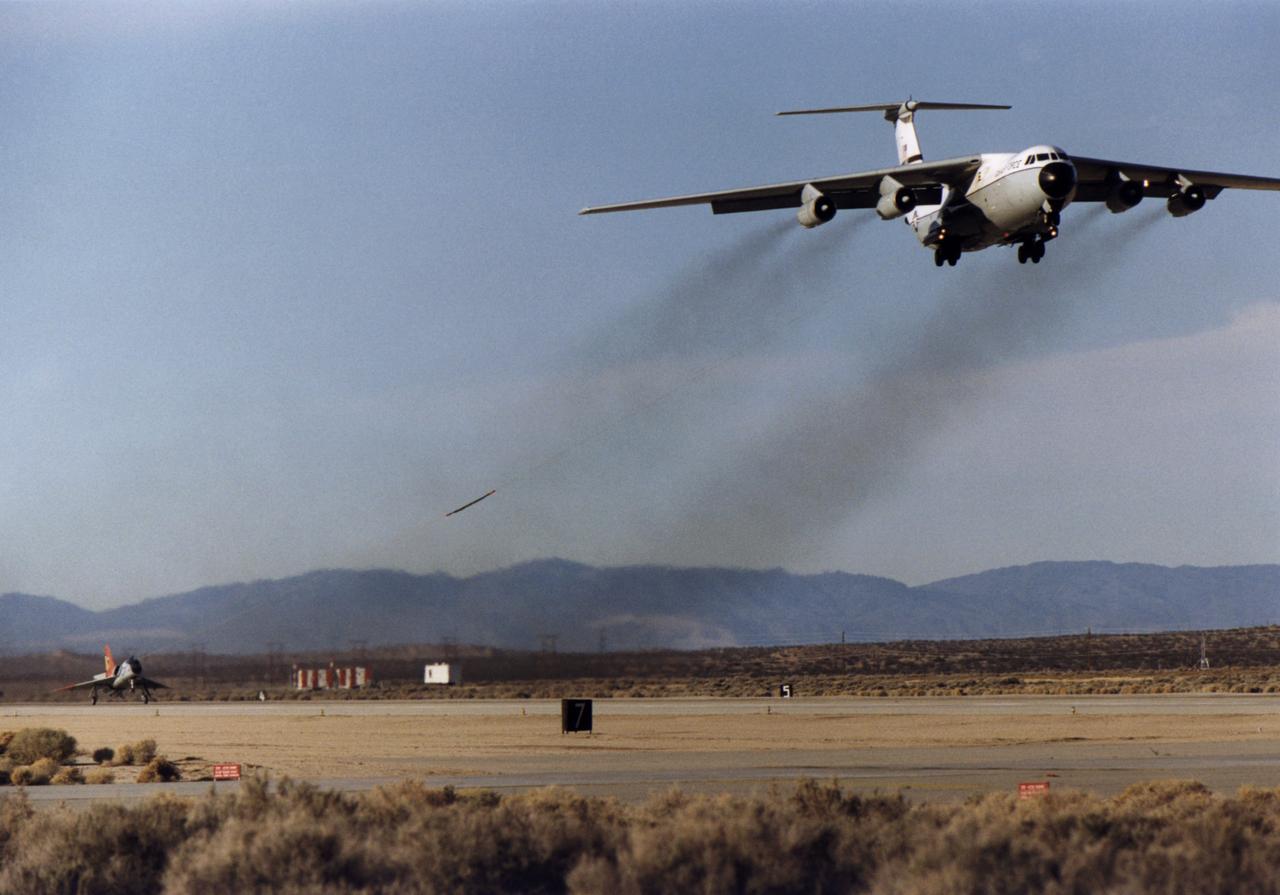
Eclipse project QF-106 and C-141A takeoff on first tethered flight December 20, 1997
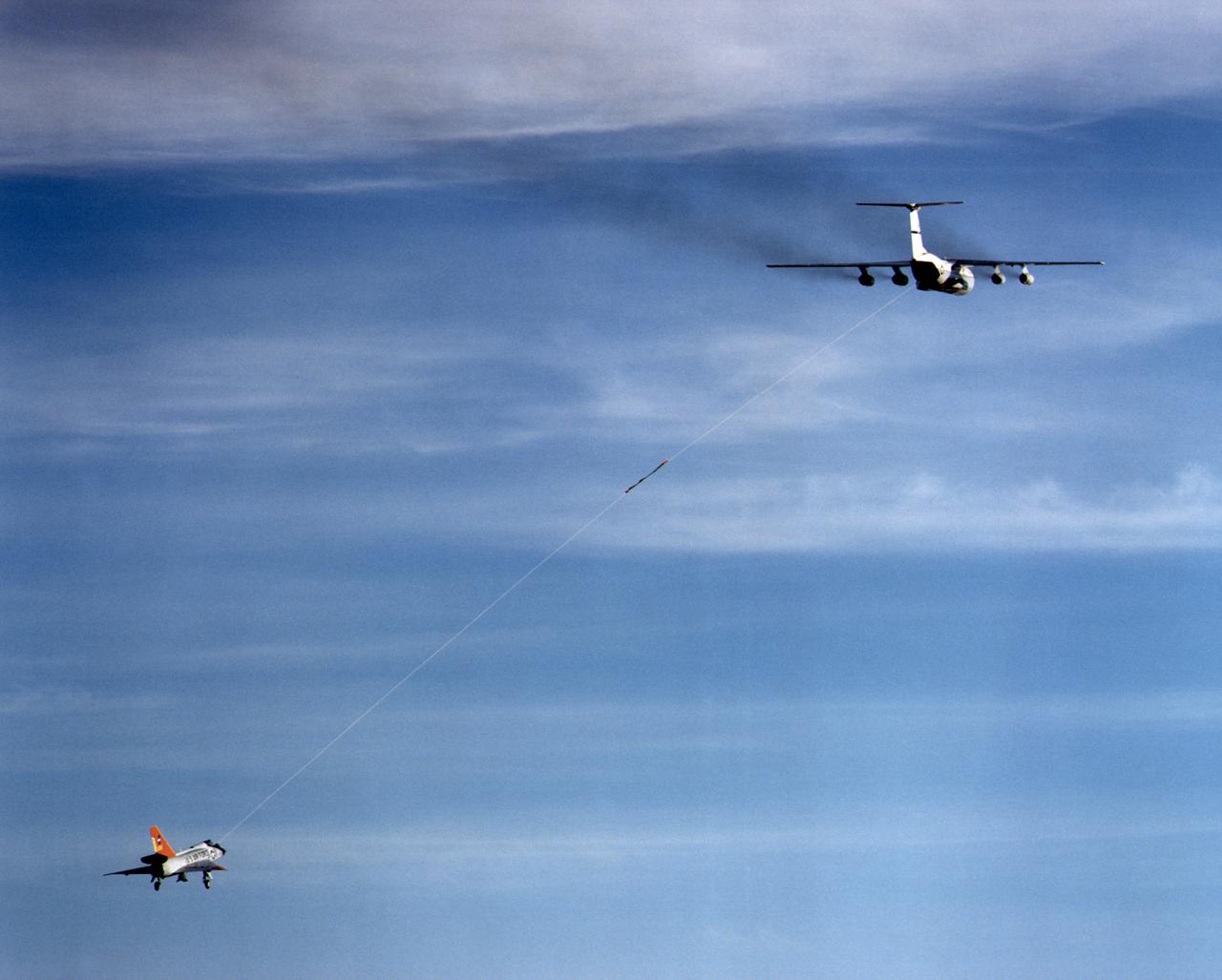
Eclipse project QF-106 and C-141A climbs out under tow on first tethered flight December 20, 1997
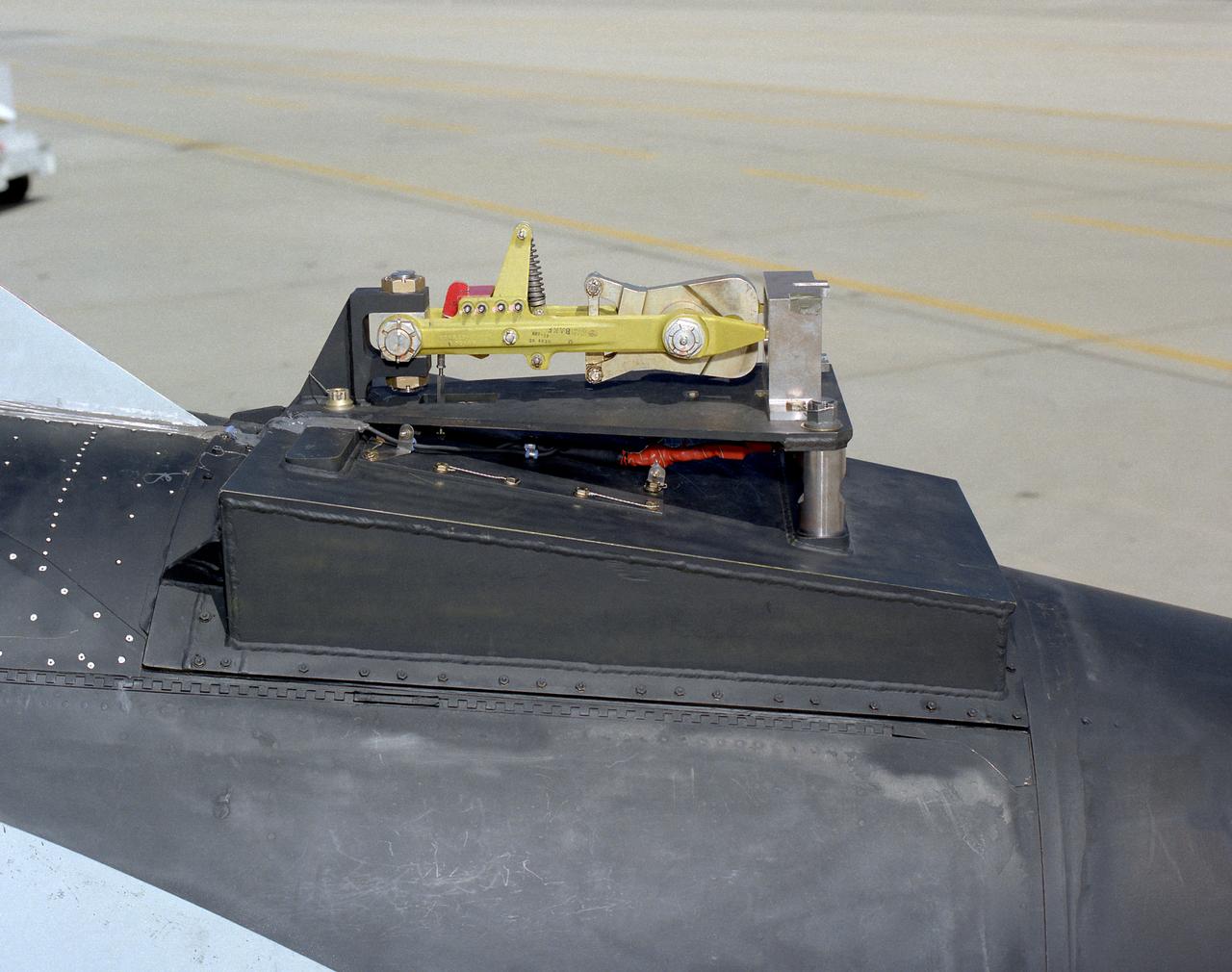
Closeup of QF-106 release hook for Eclipse program
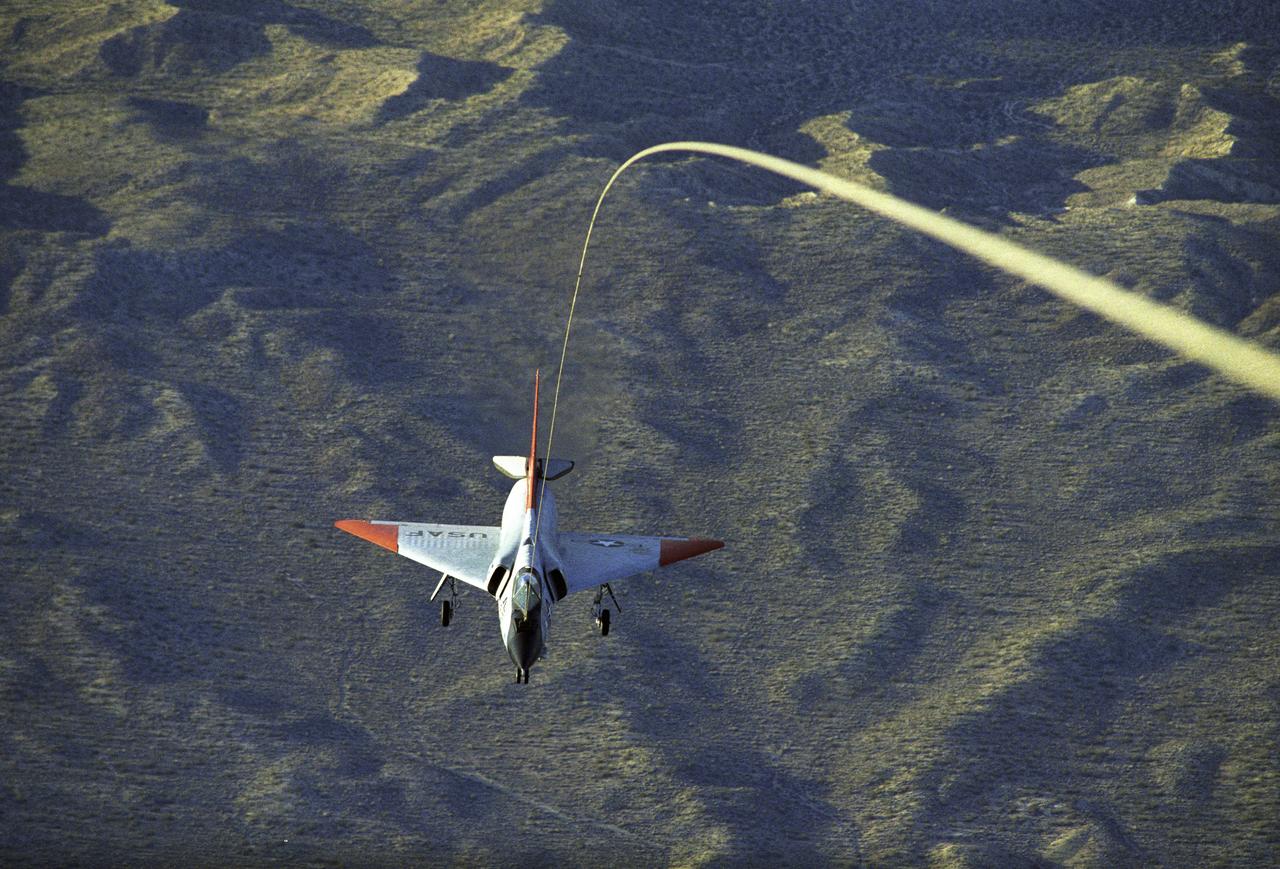
Eclipse project F-106 under tow on January 23, 1998
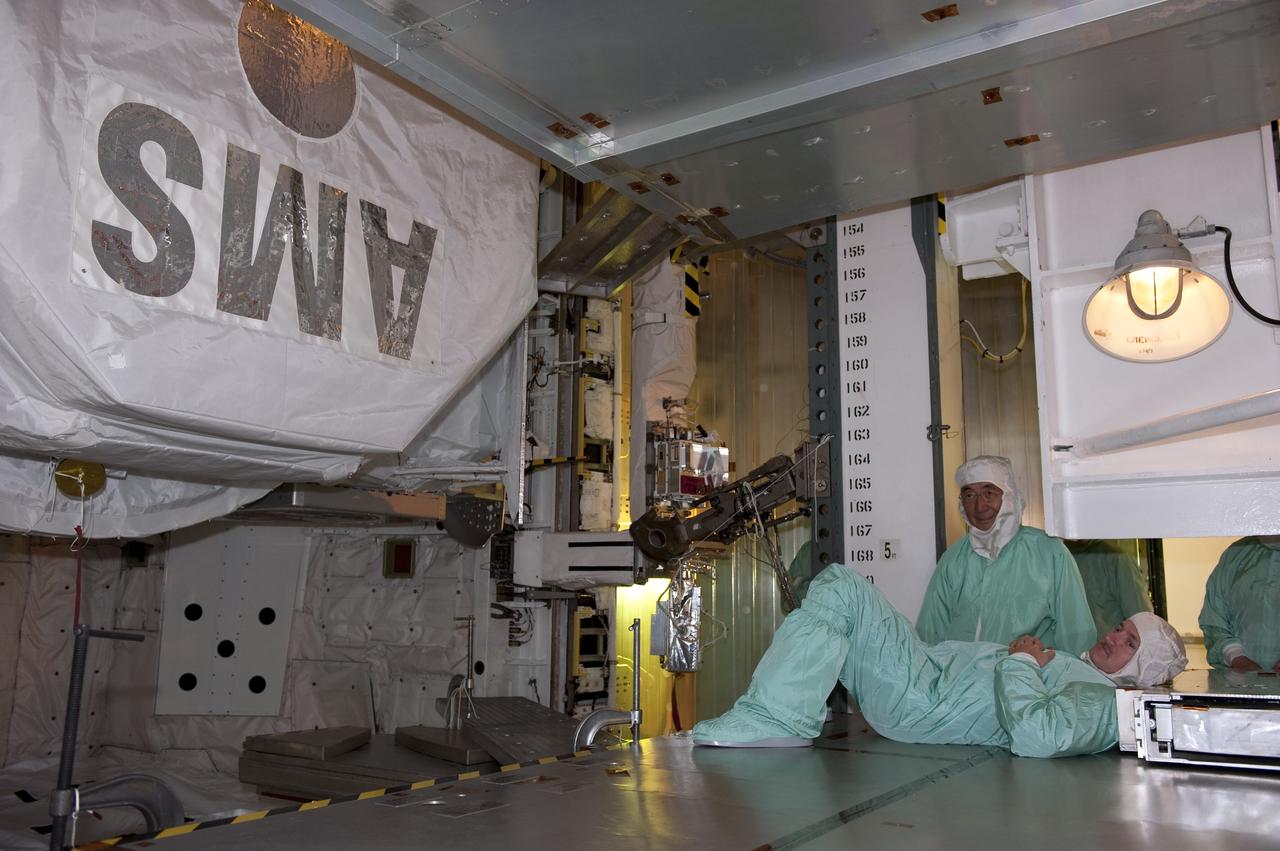
CAPE CANAVERAL, Fla. -- STS-134 Commander Mark Kelly, lying down, and Professor Sam Ting, Alpha Magnetic Spectrometer-2 (AMS) principal investigator at the Massachusetts Institute of Technology, perform a walkdown of space shuttle Endeavour's payload bay. The Express Logistics Carrier-3 packed with spare parts and the (AMS) are inside the bay for the STS-134 mission to the International Space Station. Endeavour's six crew members are at Kennedy for the launch countdown dress rehearsal called the Terminal Countdown Demonstration Test (TCDT) and related training. Endeavour is targeted to launch April 19 at 7:48 p.m. EDT on its final spaceflight mission. For more information visit, www.nasa.gov/mission_pages/shuttle/shuttlemissions/sts134/index.html. Photo credit: NASA/Kim Shiflett
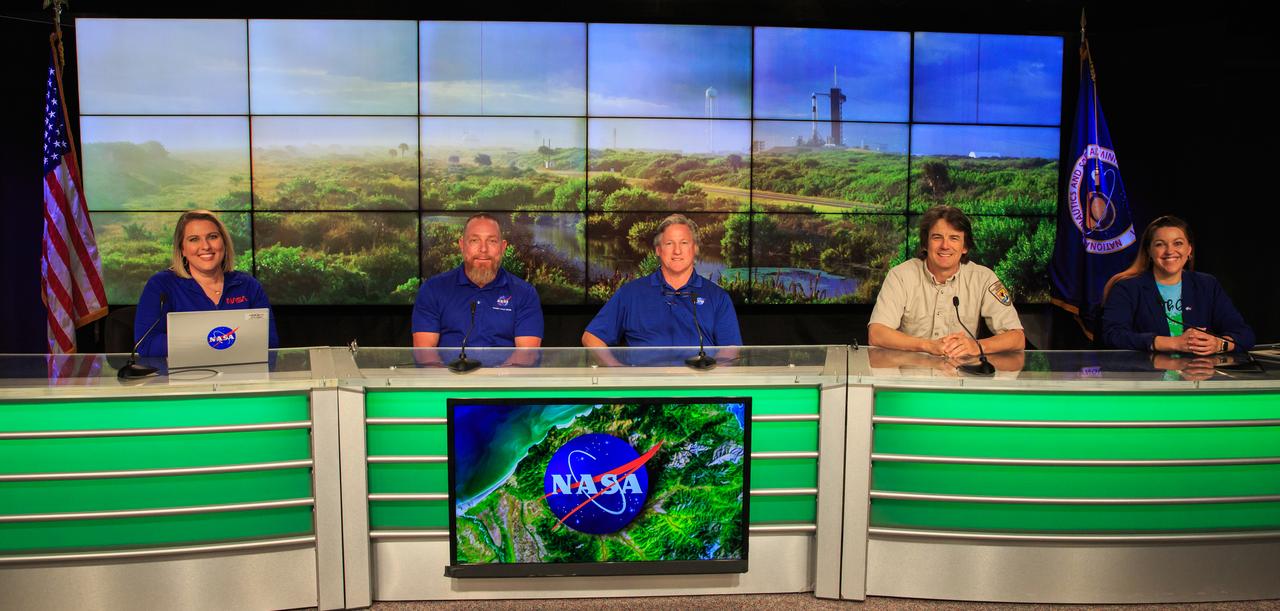
From left, NASA Communications’ Leah Martin; Environmental Planning Group Lead in Kennedy Space Center's Environmental Management Branch Don Dankert; Kennedy Environmental Protection Specialist Jeff Collins; Florida Fish and Wildlife Conservation Commission Officer Stanley Howater; and Stennis Space Center's Kelly McCarthy participate in an environmentally focused Earth Day briefing inside the News Auditorium at the Florida spaceport on April 20, 2023. As part of NASA’s NextGen STEM project, students from Florida’s Montverde Academy, Storm Grove Middle School, and Whispering Pines School, as well as a homeschool collective from Georgia, participated in person during the briefing, while middle- and high-school students across the country had the opportunity to ask questions of the panel via phone to discuss how technology and science coexist with nature at Kennedy.

As part of NASA’s NextGen STEM project, students from Andrew Jackson Middle School in Titusville, Florida, participate in an environmentally focused Earth Day briefing on Tuesday, April 2, 2024, inside the news auditorium at the agency’s Kennedy Space Center in Florida. Along with the students participating in person, middle school students from across the country participated virtually to discuss how technology and science coexist with nature at Kennedy with panel participants. The panelists from left to right are Messod Bendayan, NASA Communications; Kelly McCarthy, NASA’s Office of STEM Engagement, Bob Kline, Kennedy’s Environmental Assurance Branch; Spencer Davis, Kennedy’s Exploration Ground Systems; Kim King-Wrenn, Merritt Island National Wildlife Refuge.
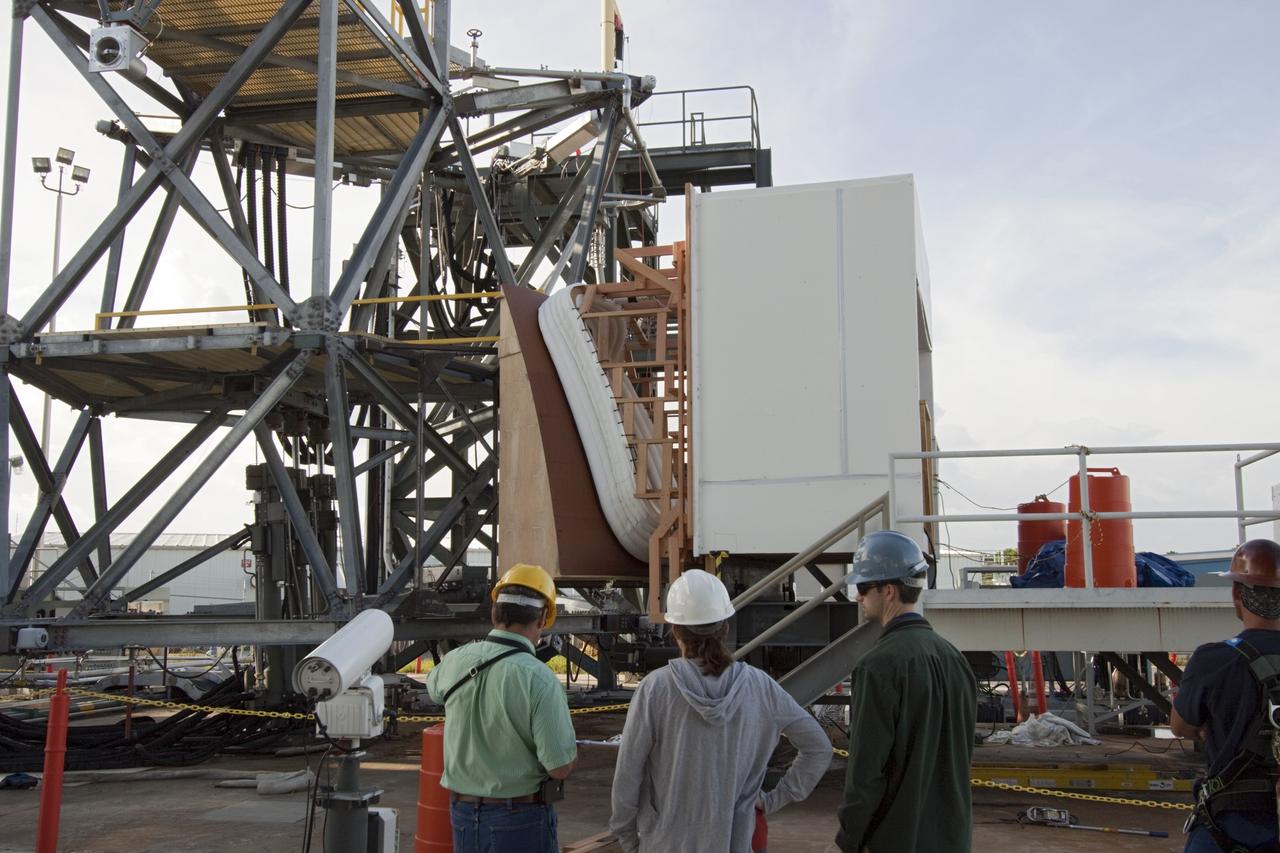
CAPE CANAVERAL, Fla. – The Orion spacecraft crew access arm, or CAA, seal prototype is being checked out at the Launch Equipment Test Facility at NASA's Kennedy Space Center in Florida. Monitoring the activity, from the left are Kent Bachelor, Stinger Ghaffarian Technologies lead, Kelli Maloney, NASA lead and Clayton Gvasse, Nelson Engineering lead. The tests will use a mockup of the vehicle Outer Mold Line and CAA white room to test the performance of the seal while simulating vehicle to CAA white room excursions. Orion is the exploration spacecraft designed to carry crews to space beyond low Earth orbit. It will provide emergency abort capability, sustain the crew during the space travel and provide safe re-entry from deep space return velocities. The first unpiloted test flight of the Orion is scheduled to launch in 2014 atop a Delta IV rocket and in 2017 on a Space Launch System rocket. For more information, visit http://www.nasa.gov/orion Photo credit: NASA/Jim Grossmann
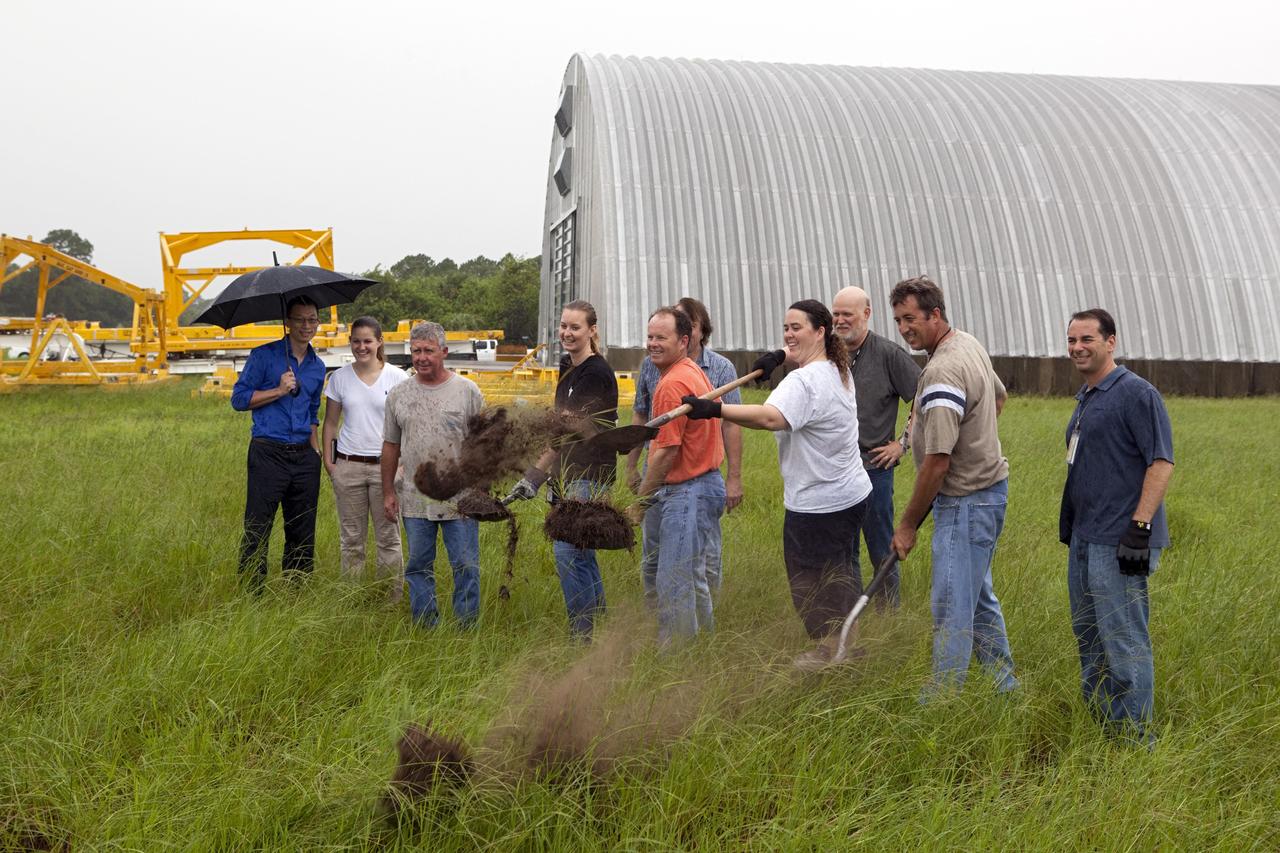
CAPE CANAVERAL, Fla. – Near the Hypergolic Maintenance Facility at NASA’s Kennedy Space Center in Florida, a groundbreaking ceremony was held to mark the location of the Ground Operations Demonstration Unit Liquid Hydrogen, or GODU LH2, test site. From left, are Johnny Nguyen, Fluids Test and Technology Development branch chief Emily Watkins, engineering intern Jeff Walls, Engineering Services Contract, or ESC, Cryogenics Test Lab engineer Kelly Currin, systems engineer Stephen Huff and Rudy Werlink partially hidden, cryogenics engineers Angela Krenn, systems engineer Doug Hammond, command and control engineer in the electrical division William Notardonato, GODU LH2 project manager and Kevin Jumper, ESC Cryogenics Test Lab manager. The GODU LH2 test site is one of the projects in NASA’s Advanced Exploration Systems Program. The site will be used to demonstrate advanced liquid hydrogen systems that are cost and energy efficient ways to store and transfer liquid hydrogen during process, loading, launch and spaceflight. The main components of the site will be a storage tank and a cryogenic refrigerator. Photo credit: NASA/Dimitri Gerondidakis
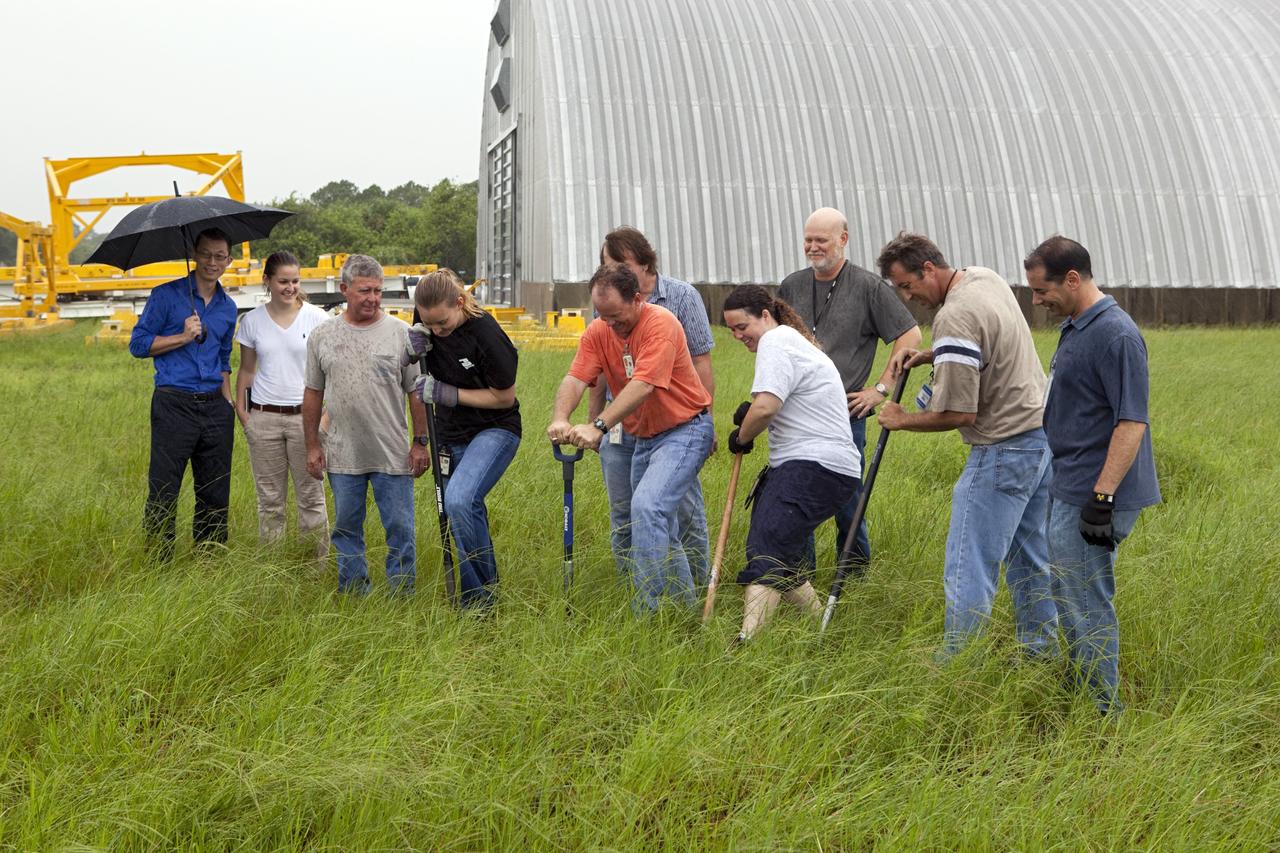
CAPE CANAVERAL, Fla. – Near the Hypergolic Maintenance Facility at NASA’s Kennedy Space Center in Florida, a groundbreaking ceremony was held to mark the location of the Ground Operations Demonstration Unit Liquid Hydrogen, or GODU LH2, test site. From left, are Johnny Nguyen, Fluids Test and Technology Development branch chief Emily Watkins, engineering intern Jeff Walls, Engineering Services Contract, or ESC, Cryogenics Test Lab engineer Kelly Currin, systems engineer Stephen Huff and Rudy Werlink partially hidden, cryogenics engineers Angela Krenn, systems engineer Doug Hammond, command and control engineer in the electrical division William Notardonato, GODU LH2 project manager and Kevin Jumper, ESC Cryogenics Test Lab manager. The GODU LH2 test site is one of the projects in NASA’s Advanced Exploration Systems Program. The site will be used to demonstrate advanced liquid hydrogen systems that are cost and energy efficient ways to store and transfer liquid hydrogen during process, loading, launch and spaceflight. The main components of the site will be a storage tank and a cryogenic refrigerator. Photo credit: NASA/Dimitri Gerondidakis