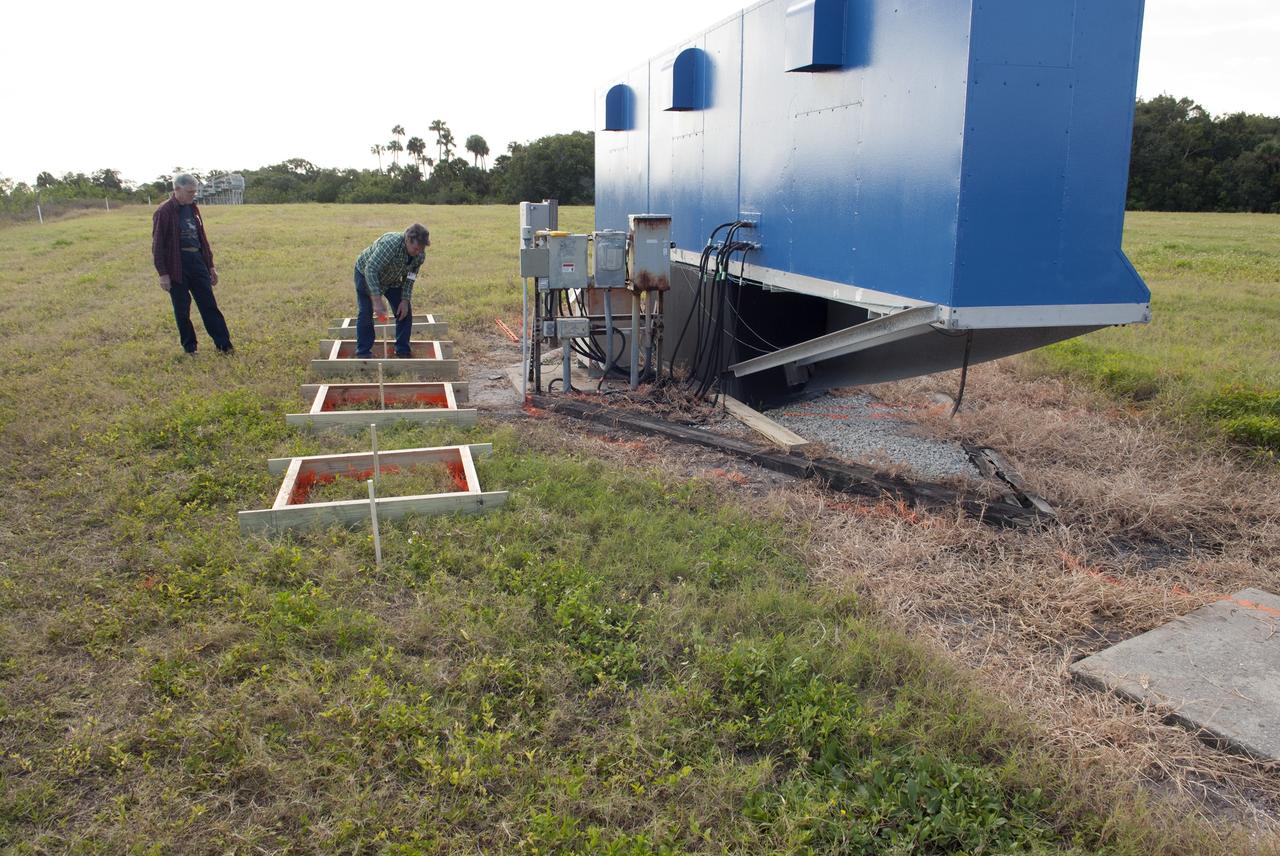
CAPE CANAVERAL, Fla. -- At NASA's Kennedy Space Center in Florida, Jeff Pratt and Frank Morse with Abacus Technology prep the area behind the current countdown clock for the groundbreaking ceremony for the new countdown clock. The old timepiece was designed by Kennedy engineers and built by Kennedy technicians in 1969. Not including the triangular concrete and aluminum base, the famous landmark is nearly 6 feet 70 inches high, 26 feet 315 inches wide and 3 feet deep. The new display will be similar in size, with the screen being nearly 26 feet wide by 7 feet high. For more information on the countdown clock, go to http://go.nasa.gov/10Zku10. Photo credit: NASA/Jim Grossmann
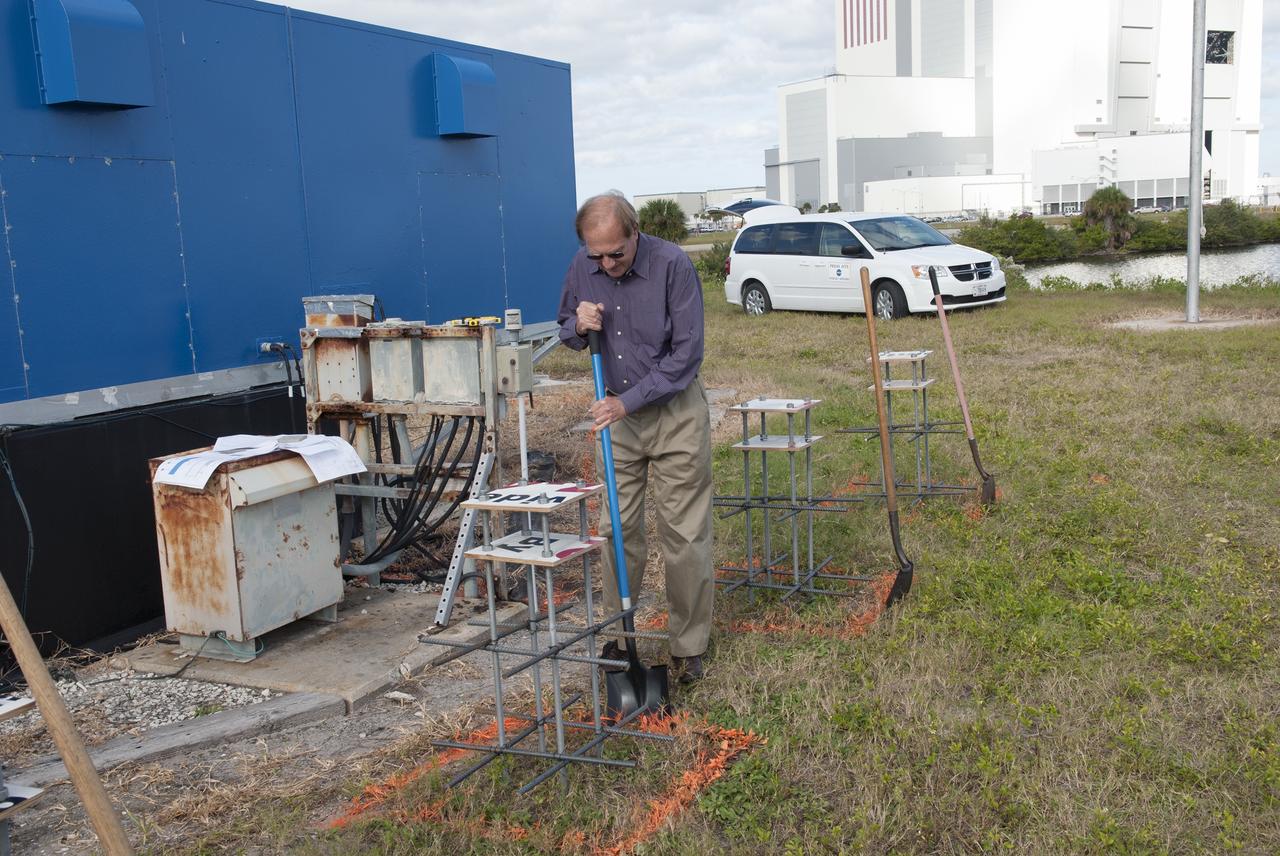
CAPE CANAVERAL, Fla. -- At NASA's Kennedy Space Center in Florida, Public Affairs Officer George Diller digs in behind the current countdown clock during the groundbreaking ceremony for the new countdown clock. The old timepiece was designed by Kennedy engineers and built by Kennedy technicians in 1969. Not including the triangular concrete and aluminum base, the famous landmark is nearly 6 feet 70 inches high, 26 feet 315 inches wide and 3 feet deep. The new display will be similar in size, with the screen being nearly 26 feet wide by 7 feet high. For more information on the countdown clock, go to http://go.nasa.gov/10Zku10. Photo credit: NASA/Jim Grossmann
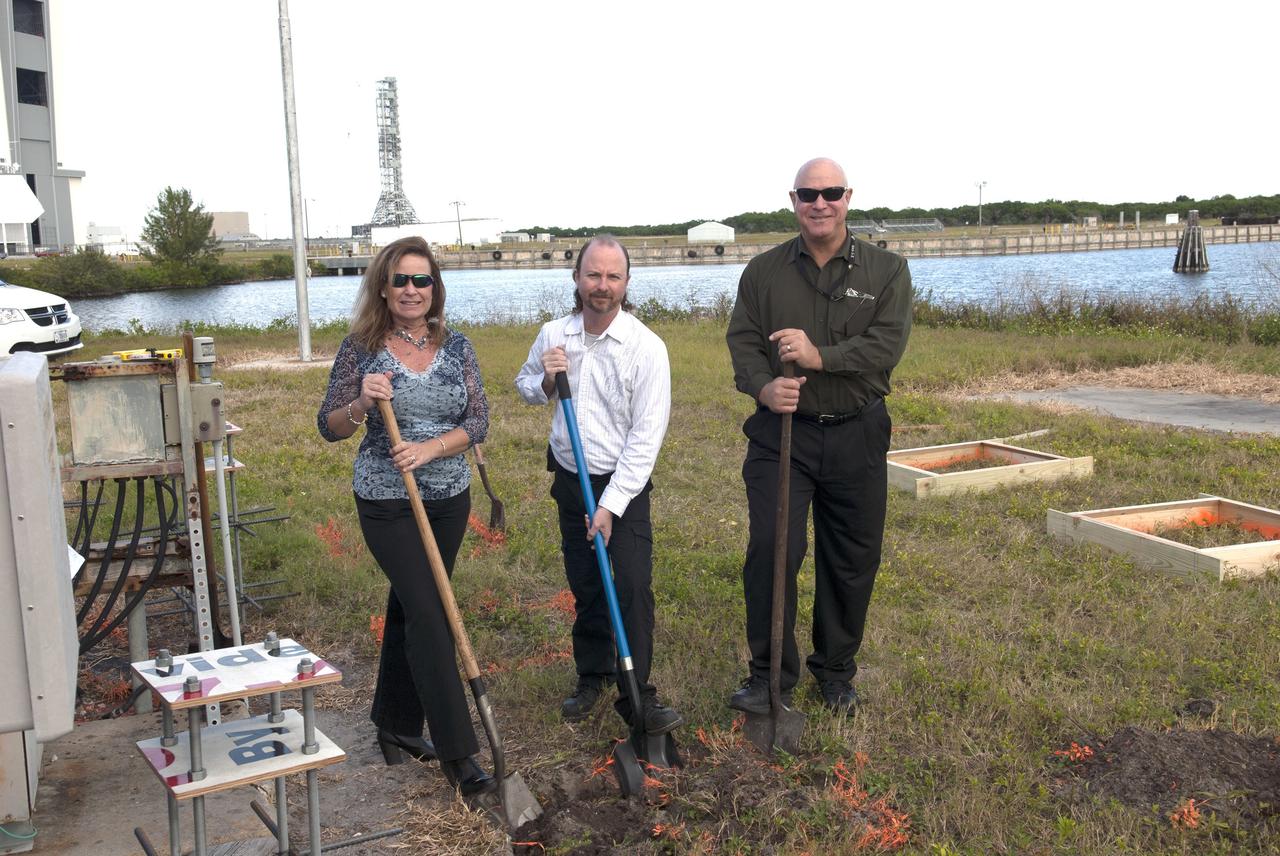
CAPE CANAVERAL, Fla. -- At NASA's Kennedy Space Center in Florida, Project Manager Sonja Hernandez, Kennedy TV senior systems engineer Ronald Gonser and Kennedy/IMCS senior manager Jeff Van Pelt dig in behind the current countdown clock during the groundbreaking ceremony for the new countdown clock. The old timepiece was designed by Kennedy engineers and built by Kennedy technicians in 1969. Not including the triangular concrete and aluminum base, the famous landmark is nearly 6 feet 70 inches high, 26 feet 315 inches wide and 3 feet deep. The new display will be similar in size, with the screen being nearly 26 feet wide by 7 feet high. For more information on the countdown clock, go to http://go.nasa.gov/10Zku10. Photo credit: NASA/Jim Grossmann
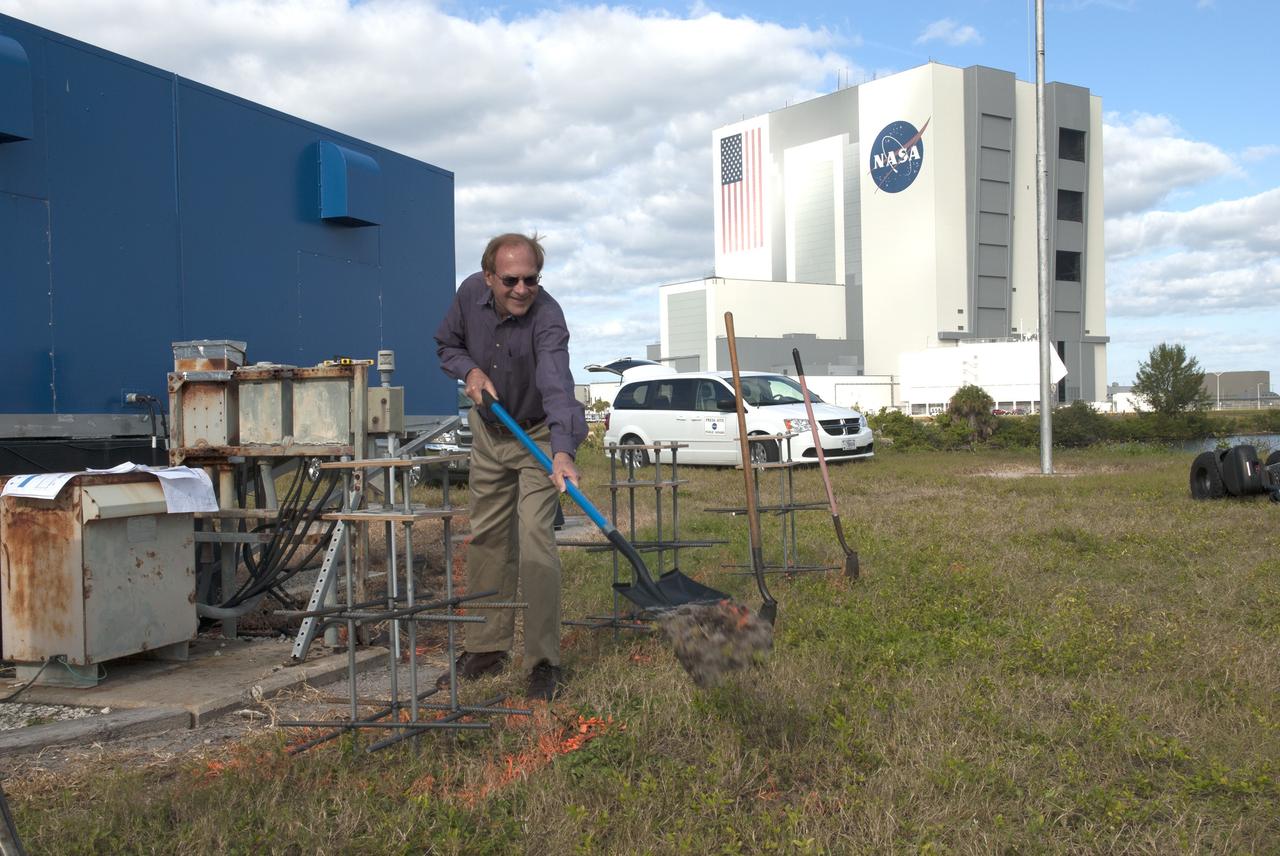
CAPE CANAVERAL, Fla. -- At NASA's Kennedy Space Center in Florida, Public Affairs Officer George Diller shovels the first scoop of soil behind the current countdown clock during the groundbreaking ceremony for the new countdown clock. The old timepiece was designed by Kennedy engineers and built by Kennedy technicians in 1969. Not including the triangular concrete and aluminum base, the famous landmark is nearly 6 feet 70 inches high, 26 feet 315 inches wide and 3 feet deep. The new display will be similar in size, with the screen being nearly 26 feet wide by 7 feet high. For more information on the countdown clock, go to http://go.nasa.gov/10Zku10. Photo credit: NASA/Jim Grossmann
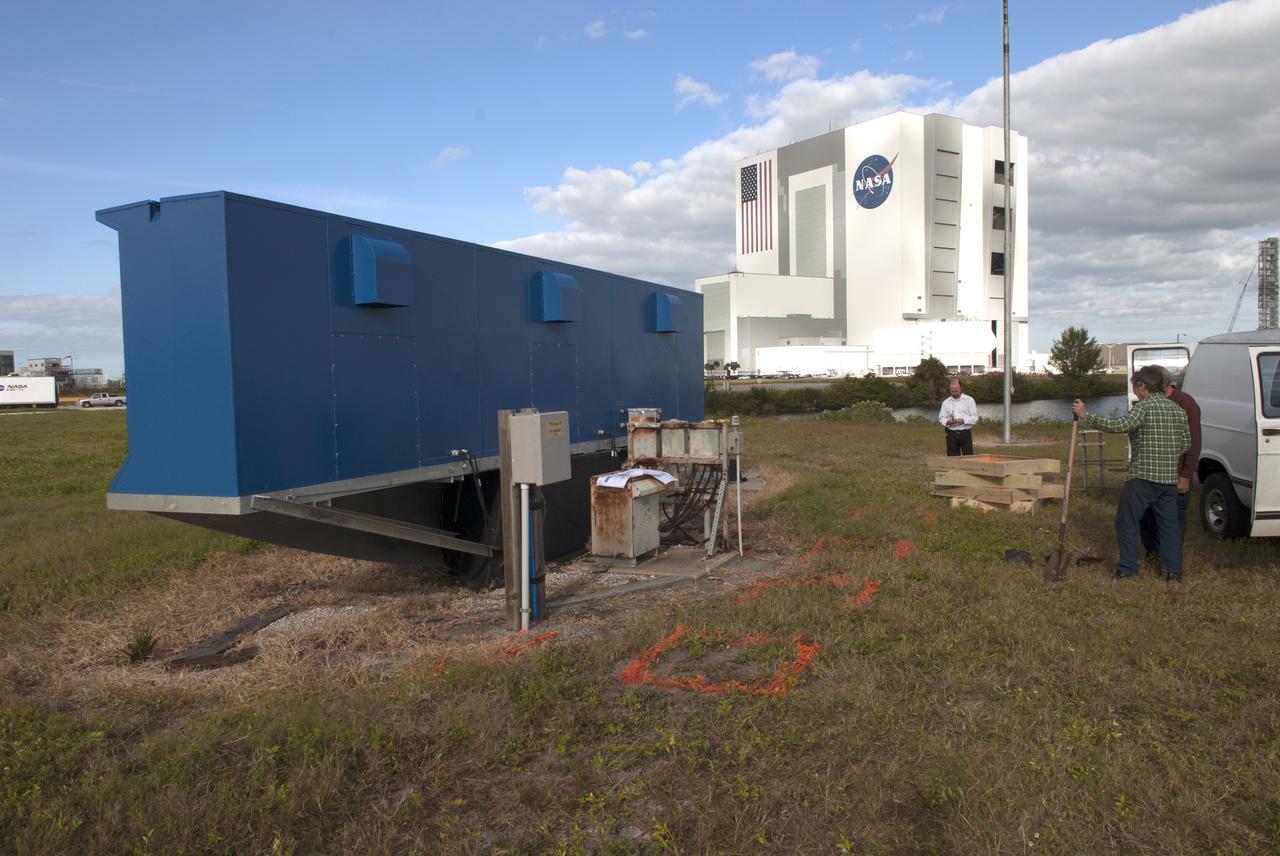
CAPE CANAVERAL, Fla. -- At NASA's Kennedy Space Center in Florida, Kennedy TV senior systems engineer Ronald Gonser, left, Jeff Pratt and Frank Morse with Abacus Technology prep the area behind the current countdown clock for the groundbreaking ceremony for the new countdown clock. The old timepiece was designed by Kennedy engineers and built by Kennedy technicians in 1969. Not including the triangular concrete and aluminum base, the famous landmark is nearly 6 feet 70 inches high, 26 feet 315 inches wide and 3 feet deep. The new display will be similar in size, with the screen being nearly 26 feet wide by 7 feet high. For more information on the countdown clock, go to http://go.nasa.gov/10Zku10. Photo credit: NASA/Jim Grossmann
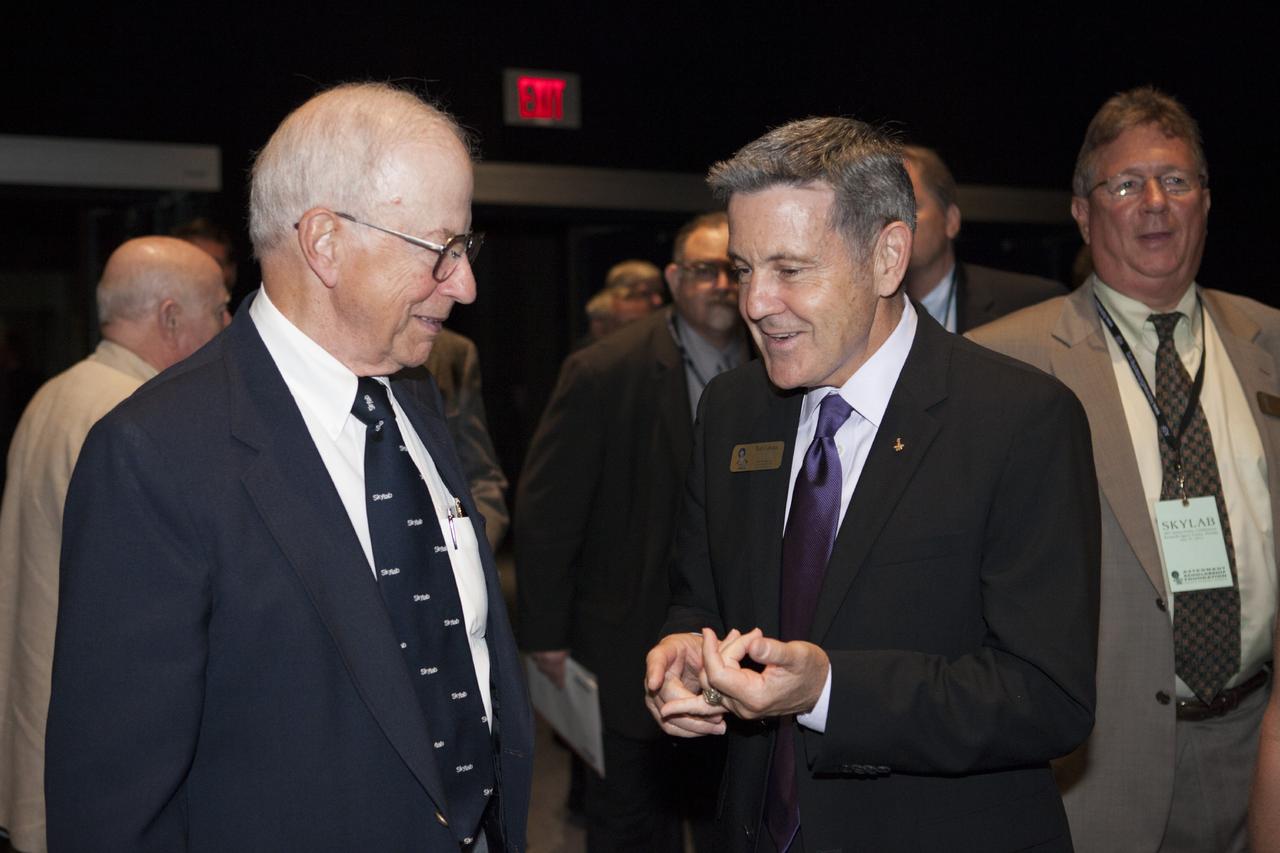
CAPE CANAVERAL, Fla. – At the Kennedy Space Center's Apollo/Saturn V Center Bob Cabana, Kennedy's director, right, speaks with Skylab 2 pilot Paul Weitz during an event sponsored by the Astronaut Scholarship Foundation celebrating the 40th anniversary of Skylab. Both astronauts also flew missions during the Space Shuttle Program. The gala commemorating the 40th anniversary of Skylab included six of the nine astronauts who flew missions to America's first space station. The orbiting laboratory was launched unpiloted from Kennedy on May 14, 1973. Between May 25, 1973 and Feb. 8, 1974, crews of three spent 28, 59 and 84 days living and working in low-Earth orbit aboard the station. For more information, visit http://www.nasa.gov/mission_pages/skylab/ Photo credit: NASA/Kim Shiflett
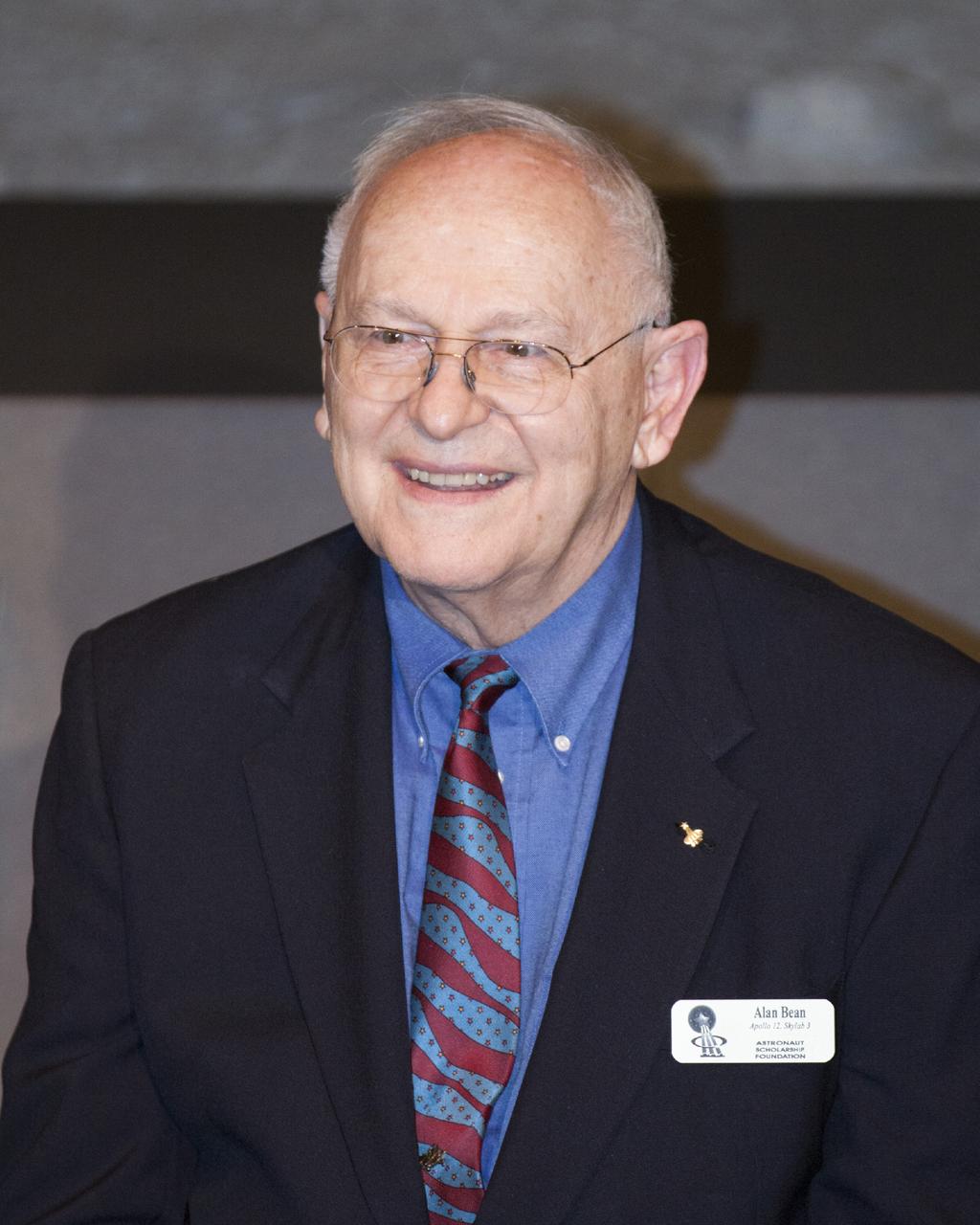
CAPE CANAVERAL, Fla. – At the Kennedy Space Center's Apollo/Saturn V Center, former NASA astronaut Alan Bean speaks to guests at the Astronaut Scholarship Foundation's event celebrating the 40th anniversary of Skylab. Bean served as commander of Skylab 3, the second piloted mission to the space station. In 1969, Bean was lunar module pilot on Apollo 12, the second mission to land on the moon. The gala commemorating the 40th anniversary of Skylab included six of the nine astronauts who flew missions to America's first space station. The orbiting laboratory was launched unpiloted from Kennedy on May 14, 1973. Between May 25, 1973 and Feb. 8, 1974, crews of three spent 28, 59 and 84 days living and working in low-Earth orbit aboard the station. For more information, visit http://www.nasa.gov/mission_pages/skylab/ Photo credit: NASA/Kim Shiflett
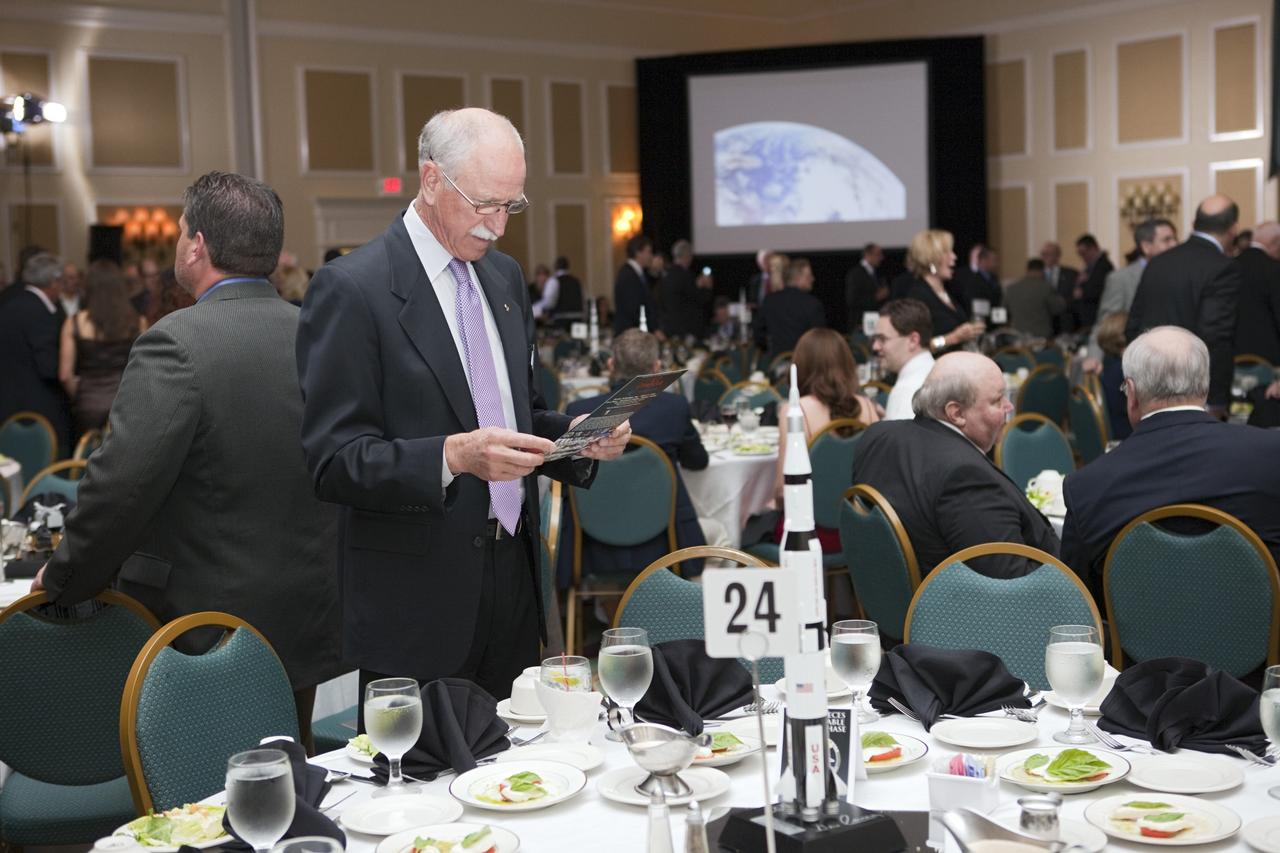
CAPE CANAVERAL, Fla. – Former space shuttle astronaut Richard Covey was among guests gathering for the Astronaut Scholarship Foundation's dinner at the Radisson Resort at the Port in Cape Canaveral celebrating the 40th anniversary of Apollo 17. The gala commemorating the anniversary of Apollo 17 included mission commander Eugene Cernan and other astronauts who flew Apollo missions. Launched Dec. 7, 1972, Cernan and lunar module pilot Harrison Schmitt landed in the moon's Taurus-Littrow highlands while command module pilot Ronald Evans remained in lunar orbit operating a scientific instrument module. For more information, visit http://www-pao.ksc.nasa.gov/history/apollo/apollo-17/apollo-17.htm Photo credit: NASA/Kim Shiflett
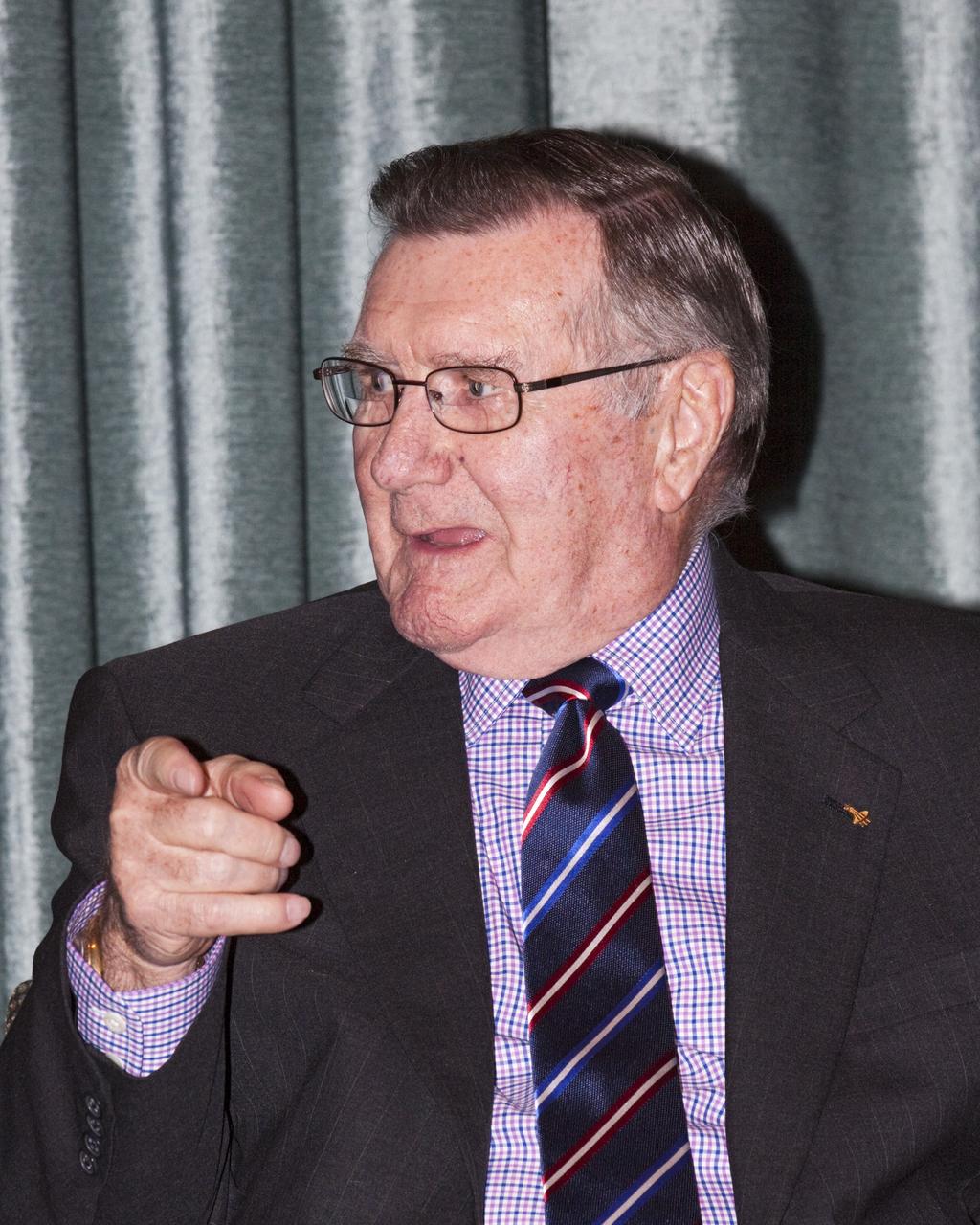
CAPE CANAVERAL, Fla. – Gemini 11 and Apollo 12 astronaut Richard Gordon speaks to guests gathered for the Astronaut Scholarship Foundation's dinner at the Radisson Resort at the Port in Cape Canaveral celebrating the 40th anniversary of Apollo 17. The gala commemorating the anniversary of Apollo 17 included mission commander Eugene Cernan and other astronauts who flew Apollo missions. Launched Dec. 7, 1972, Cernan and lunar module pilot Harrison Schmitt landed in the moon's Taurus-Littrow highlands while command module pilot Ronald Evans remained in lunar orbit operating a scientific instrument module. For more information, visit http://www-pao.ksc.nasa.gov/history/apollo/apollo-17/apollo-17.htm Photo credit: NASA/Kim Shiflett
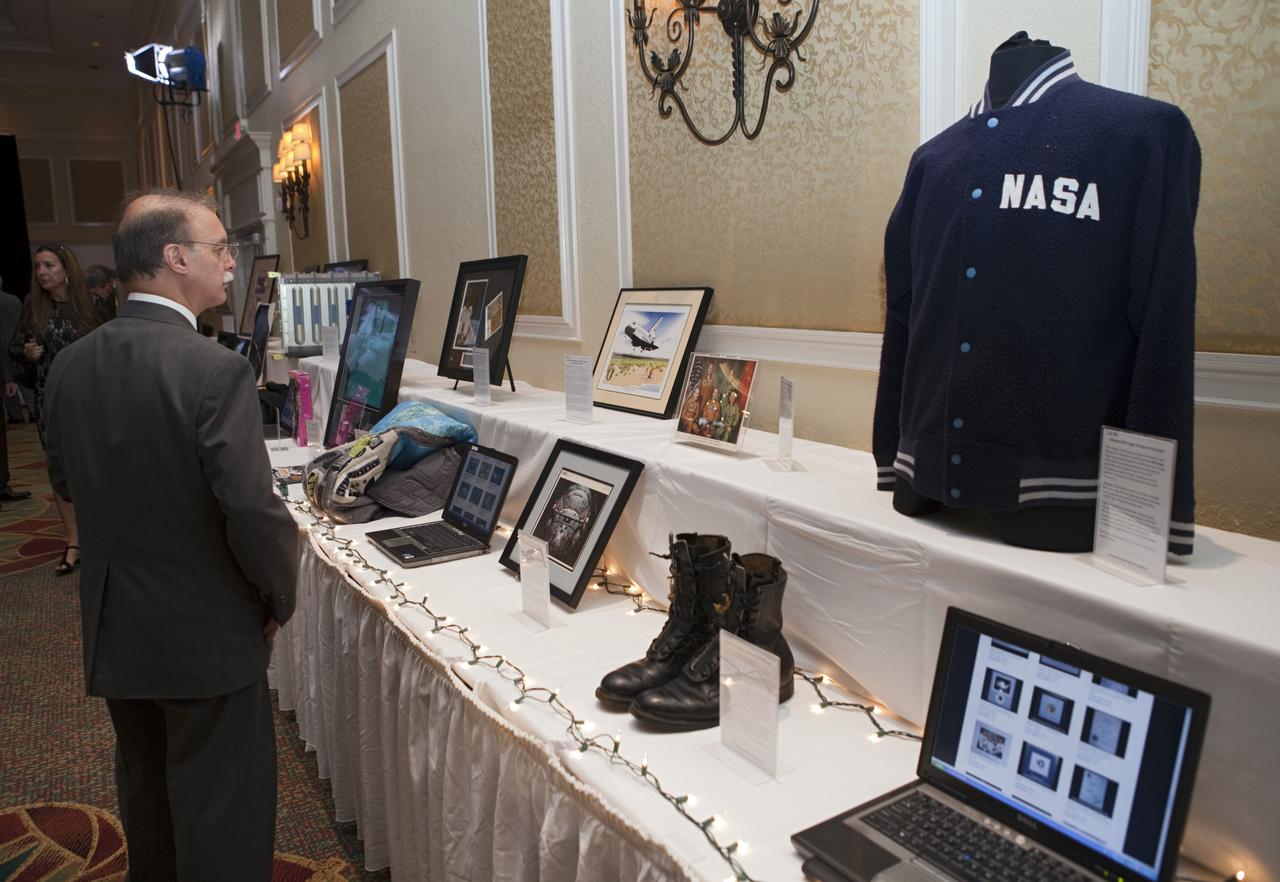
CAPE CANAVERAL, Fla. – A guest checks out an item available for auction at the Astronaut Scholarship Foundation's dinner at the Radisson Resort at the Port in Cape Canaveral celebrating the 40th anniversary of Apollo 17. The auction of space-related memorabilia was held with proceeds supporting college scholarships for students who exhibit imagination and exceptional performance in science, technology, engineering and math. The gala commemorating the anniversary of Apollo 17 included mission commander Eugene Cernan and other astronauts who flew Apollo missions. Launched Dec. 7, 1972, Cernan and lunar module pilot Harrison Schmitt landed in the moon's Taurus-Littrow highlands while command module pilot Ronald Evans remained in lunar orbit operating a scientific instrument module. For more information, visit http://www-pao.ksc.nasa.gov/history/apollo/apollo-17/apollo-17.htm Photo credit: NASA/Kim Shiflett
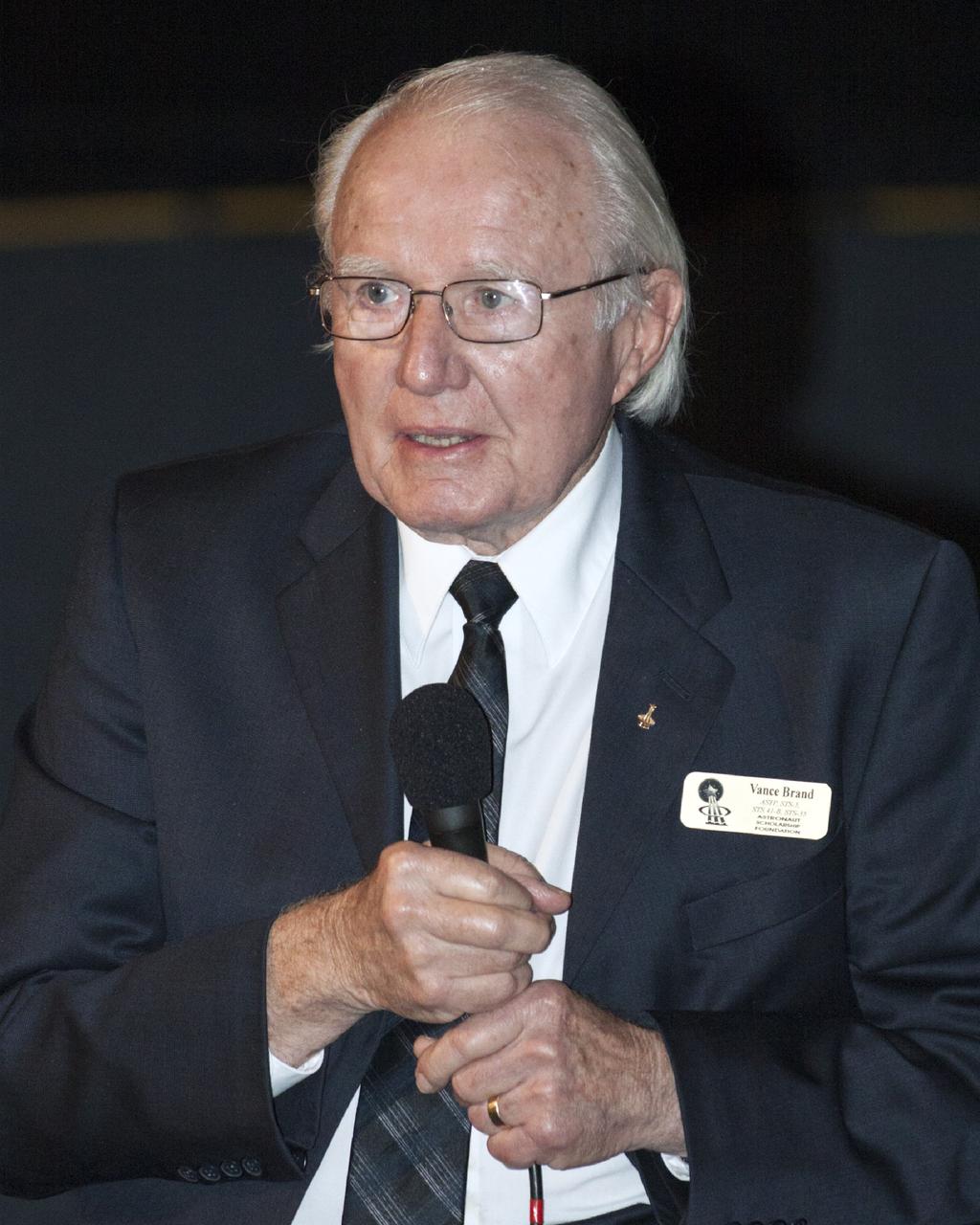
CAPE CANAVERAL, Fla. – At the Kennedy Space Center's Apollo/Saturn V Center, former NASA astronaut Vance Brand speaks to guests at the Astronaut Scholarship Foundation's event celebrating the 40th anniversary of Skylab. Brand, along with astronaut Don Lind, were prepared to fly a mission to rescue a Skylab crew if their Apollo command-service module was unusable. Brand went on to fly as pilot on the Apollo-Soyuz Test Project and missions aboard the space shuttle. The gala commemorating the 40th anniversary of Skylab included six of the nine astronauts who flew missions to America's first space station. The orbiting laboratory was launched unpiloted from Kennedy on May 14, 1973. Between May 25, 1973 and Feb. 8, 1974, crews of three spent 28, 59 and 84 days living and working in low-Earth orbit aboard the station. For more information, visit http://www.nasa.gov/mission_pages/skylab/ Photo credit: NASA/Kim Shiflett
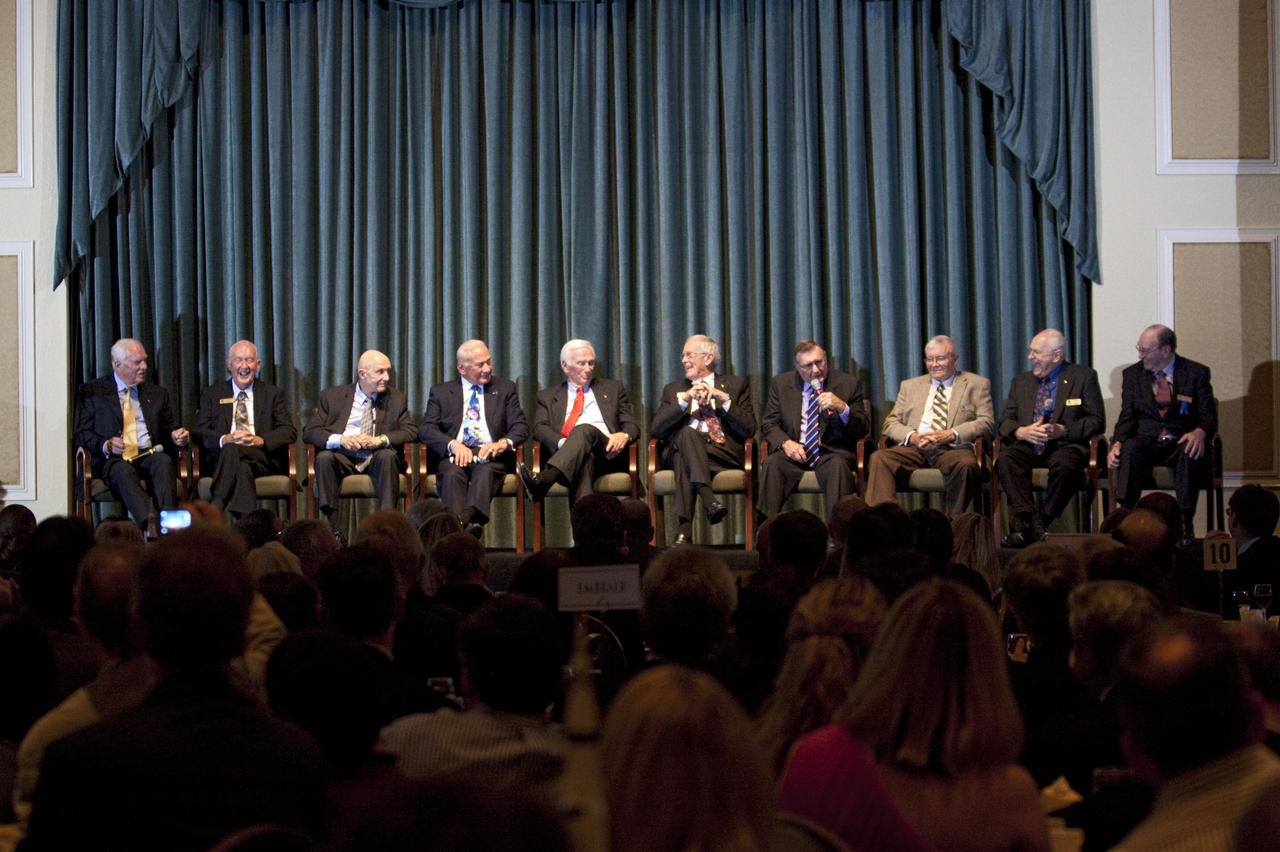
CAPE CANAVERAL, Fla. – Apollo astronauts, from the left, David Scott, James McDivitt, Thomas Stafford, Buzz Aldrin, Eugene Cernan, Charles Duke, Richard Gordon, Fred Haise, Alan Bean and Edgar Mitchell speak to guests gathered for the Astronaut Scholarship Foundation's dinner at the Radisson Resort at the Port in Cape Canaveral celebrating the 40th anniversary of Apollo 17. The gala commemorating the anniversary of Apollo 17 included mission commander Eugene Cernan and other astronauts who flew Apollo missions. Launched Dec. 7, 1972, Cernan and lunar module pilot Harrison Schmitt landed in the moon's Taurus-Littrow highlands while command module pilot Ronald Evans remained in lunar orbit operating a scientific instrument module. For more information, visit http://www-pao.ksc.nasa.gov/history/apollo/apollo-17/apollo-17.htm Photo credit: NASA/Kim Shiflett
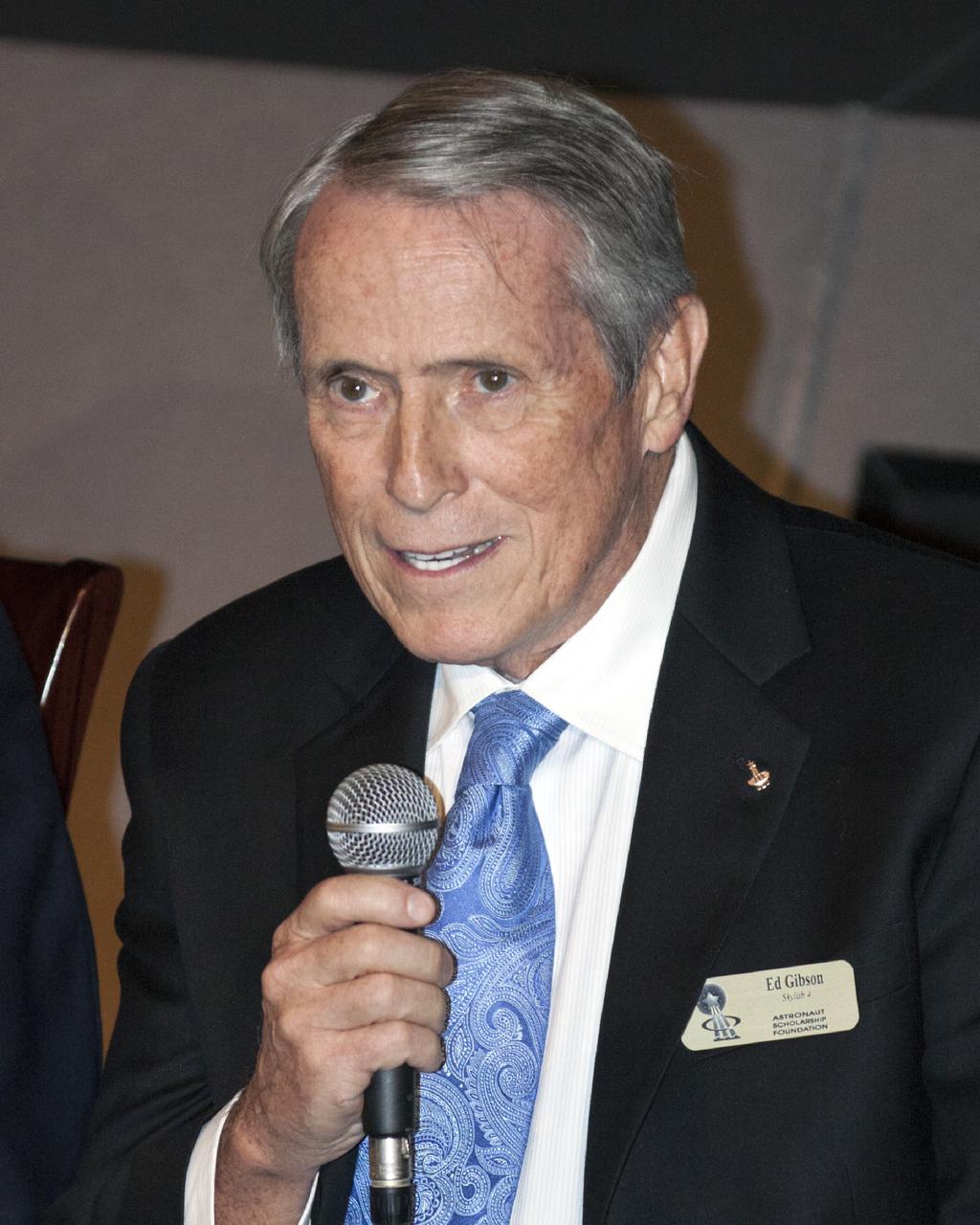
CAPE CANAVERAL, Fla. – At the Kennedy Space Center's Apollo/Saturn V Center, former NASA astronaut Edward Gibson speaks to guests at the Astronaut Scholarship Foundation's event celebrating the 40th anniversary of Skylab. Gibson served as science pilot on Skylab 4, the third piloted mission to the space station. The gala commemorating the 40th anniversary of Skylab included six of the nine astronauts who flew missions to America's first space station. The orbiting laboratory was launched unpiloted from Kennedy on May 14, 1973. Between May 25, 1973 and Feb. 8, 1974, crews of three spent 28, 59 and 84 days living and working in low-Earth orbit aboard the station. For more information, visit http://www.nasa.gov/mission_pages/skylab/ Photo credit: NASA/Kim Shiflett
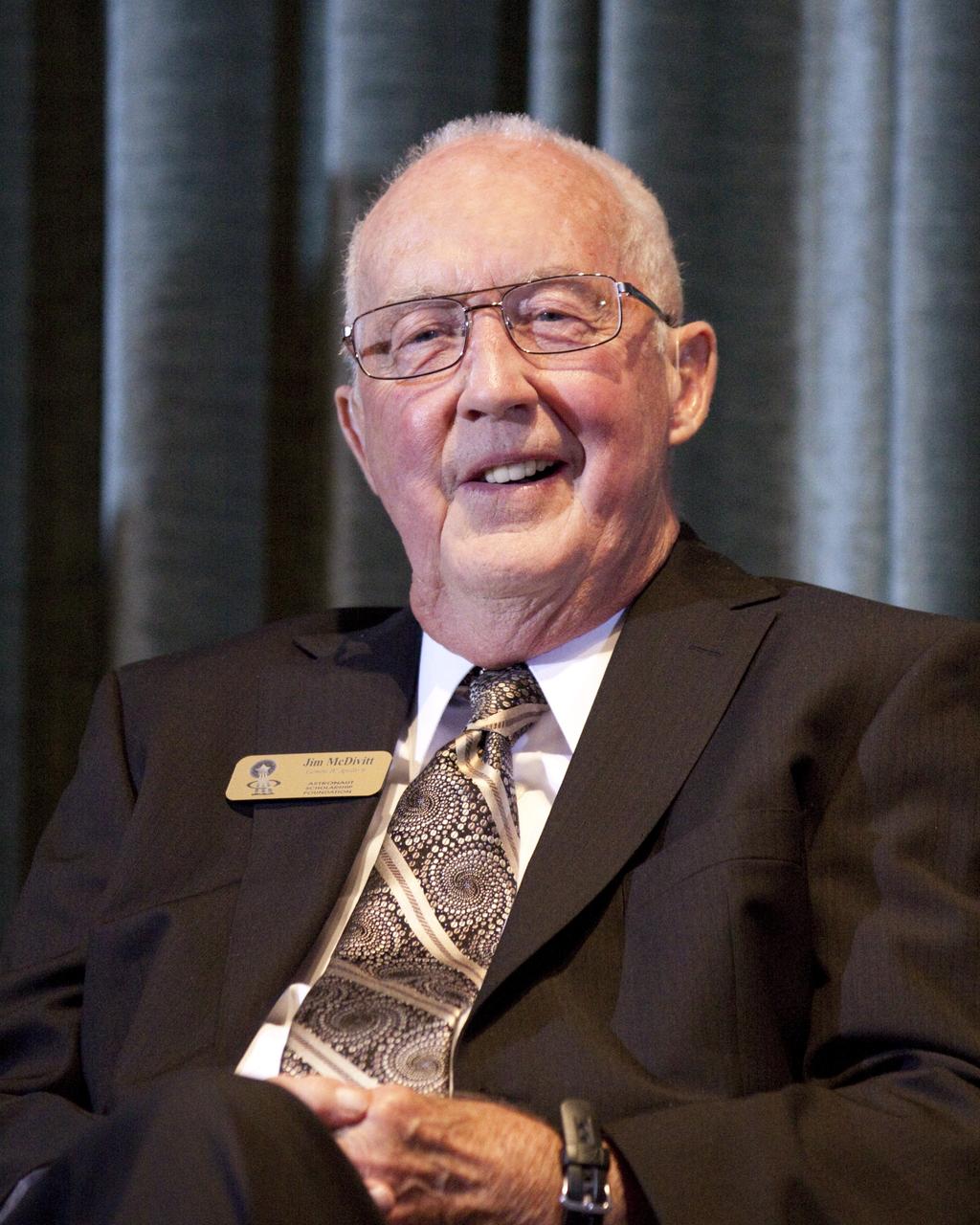
CAPE CANAVERAL, Fla. – Gemini 4 and Apollo 9 astronaut James McDivitt speaks to guests gathered for the Astronaut Scholarship Foundation's dinner at the Radisson Resort at the Port in Cape Canaveral celebrating the 40th anniversary of Apollo 17. The gala commemorating the anniversary of Apollo 17 included mission commander Eugene Cernan and other astronauts who flew Apollo missions. Launched Dec. 7, 1972, Cernan and lunar module pilot Harrison Schmitt landed in the moon's Taurus-Littrow highlands while command module pilot Ronald Evans remained in lunar orbit operating a scientific instrument module. For more information, visit http://www-pao.ksc.nasa.gov/history/apollo/apollo-17/apollo-17.htm Photo credit: NASA/Kim Shiflett
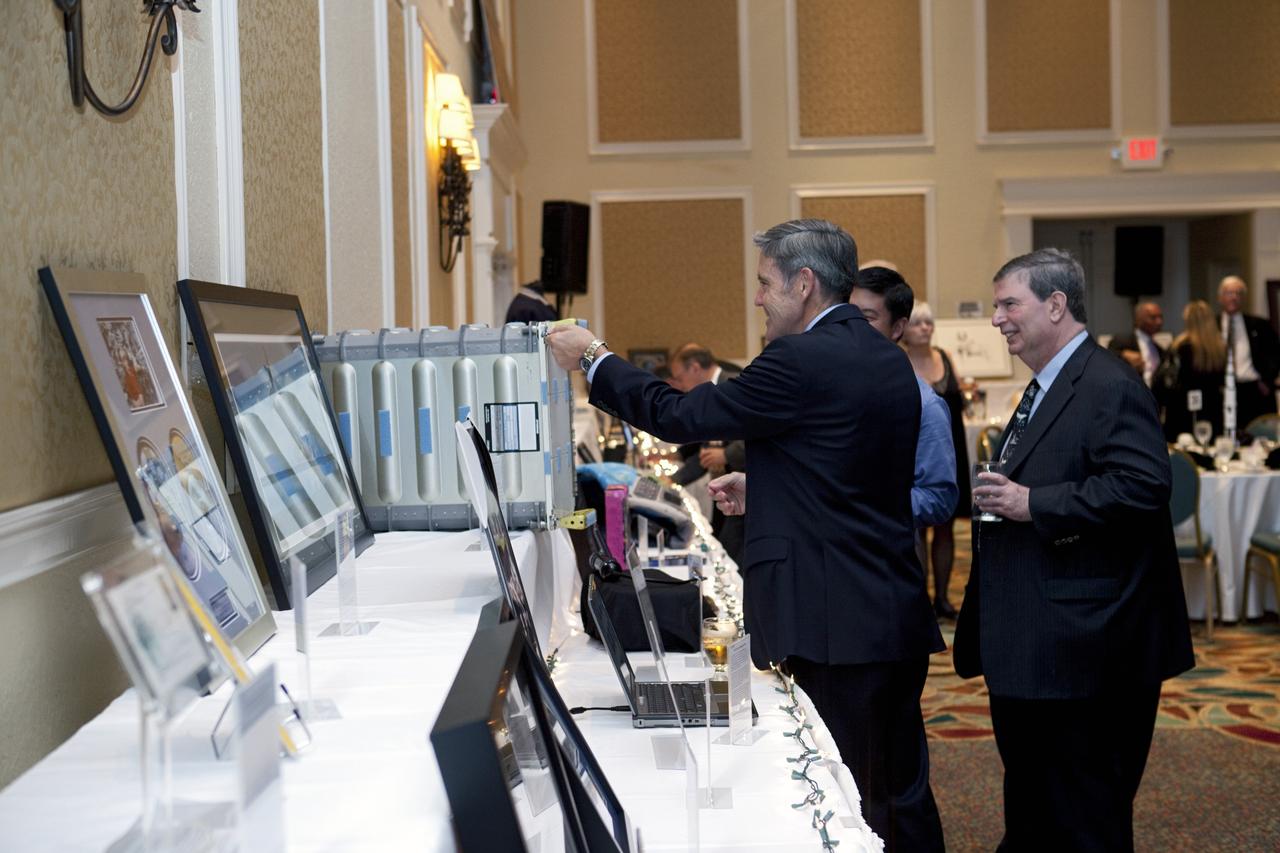
CAPE CANAVERAL, Fla. – Kennedy Space Center Director Bob Cabana checks out an item available for auction at the Astronaut Scholarship Foundation's dinner at the Radisson Resort at the Port in Cape Canaveral celebrating the 40th anniversary of Apollo 17. The auction of space-related memorabilia was held with proceeds supporting college scholarships for students who exhibit imagination and exceptional performance in science, technology, engineering and math. The gala commemorating the anniversary of Apollo 17 included mission commander Eugene Cernan and other astronauts who flew Apollo missions. Launched Dec. 7, 1972, Cernan and lunar module pilot Harrison Schmitt landed in the moon's Taurus-Littrow highlands while command module pilot Ronald Evans remained in lunar orbit operating a scientific instrument module. For more information, visit http://www-pao.ksc.nasa.gov/history/apollo/apollo-17/apollo-17.htm Photo credit: NASA/Kim Shiflett
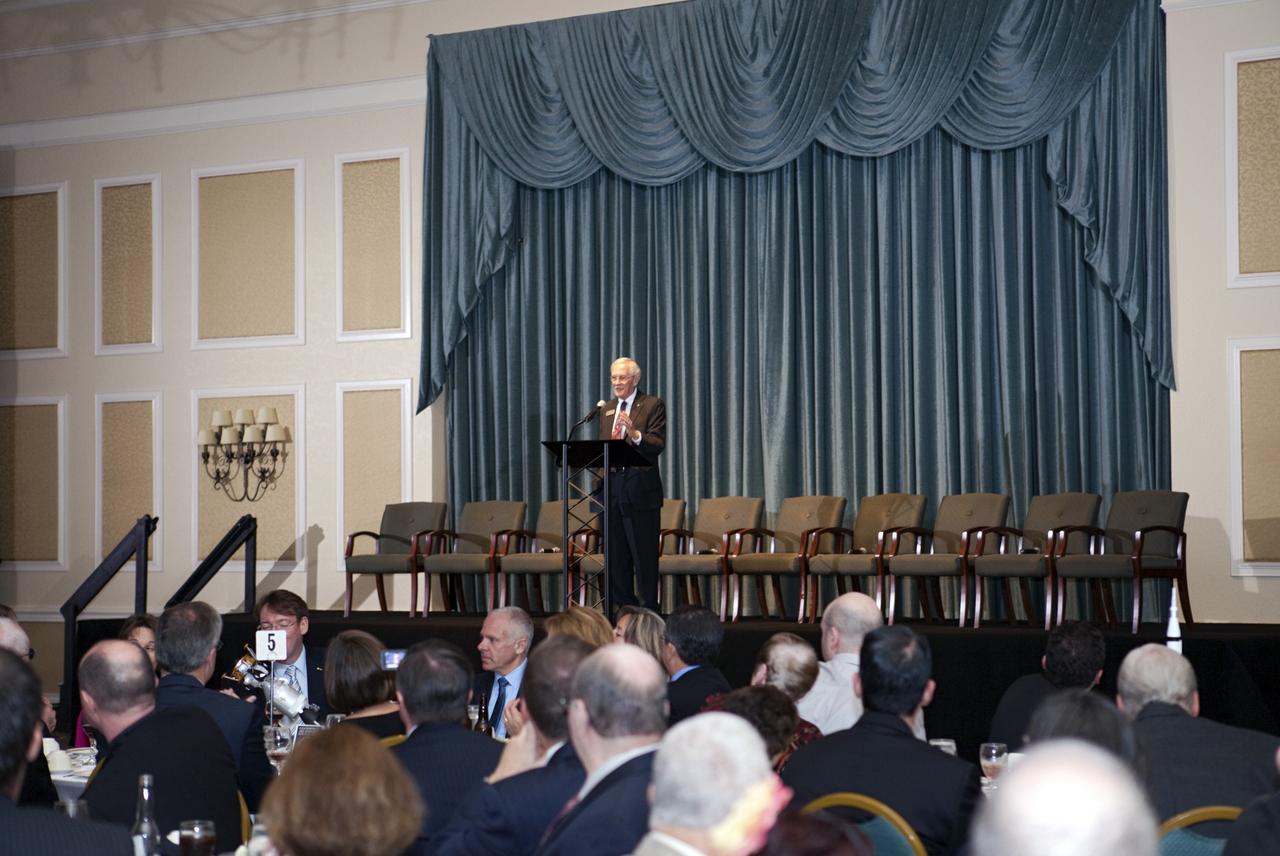
CAPE CANAVERAL, Fla. – Charles Duke, chairman of the board of directors for the Astronaut Scholarship Foundation welcomes guests who have gathered for the organization's dinner at the Radisson Resort at the Port in Cape Canaveral celebrating the 40th anniversary of Apollo 17. The gala commemorating the anniversary of Apollo 17 included mission commander Eugene Cernan and other astronauts who flew Apollo missions. Launched Dec. 7, 1972, Cernan and lunar module pilot Harrison Schmitt landed in the moon's Taurus-Littrow highlands while command module pilot Ronald Evans remained in lunar orbit operating a scientific instrument module. For more information, visit http://www-pao.ksc.nasa.gov/history/apollo/apollo-17/apollo-17.htm Photo credit: NASA/Kim Shiflett
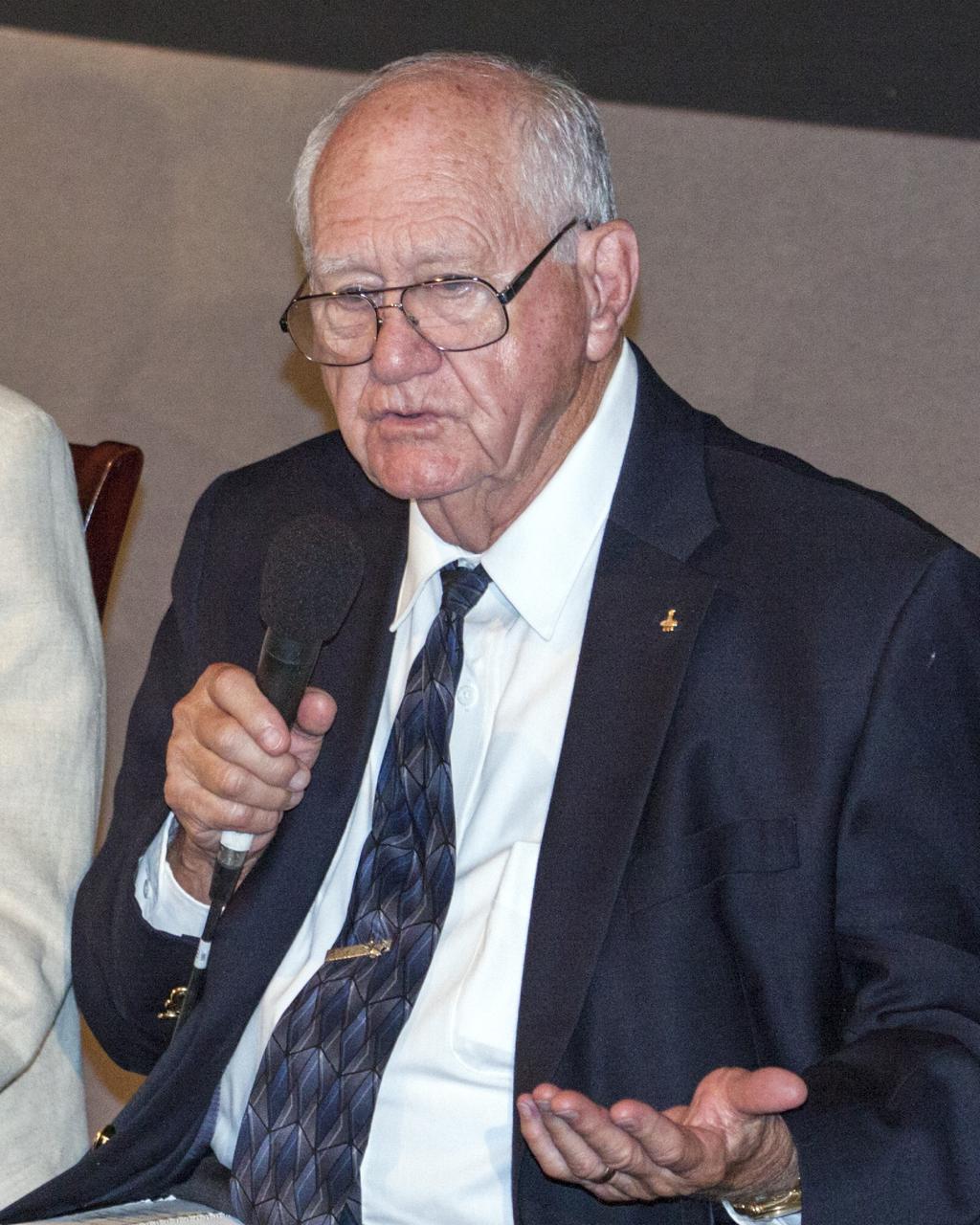
CAPE CANAVERAL, Fla. – At the Kennedy Space Center's Apollo/Saturn V Center, former NASA astronaut William Pogue speaks to guests at the Astronaut Scholarship Foundation's event celebrating the 40th anniversary of Skylab. Pogue served as pilot on Skylab 4, the third piloted mission to the space station. The gala commemorating the 40th anniversary of Skylab included six of the nine astronauts who flew missions to America's first space station. The orbiting laboratory was launched unpiloted from Kennedy on May 14, 1973. Between May 25, 1973 and Feb. 8, 1974, crews of three spent 28, 59 and 84 days living and working in low-Earth orbit aboard the station. For more information, visit http://www.nasa.gov/mission_pages/skylab/ Photo credit: NASA/Kim Shiflett
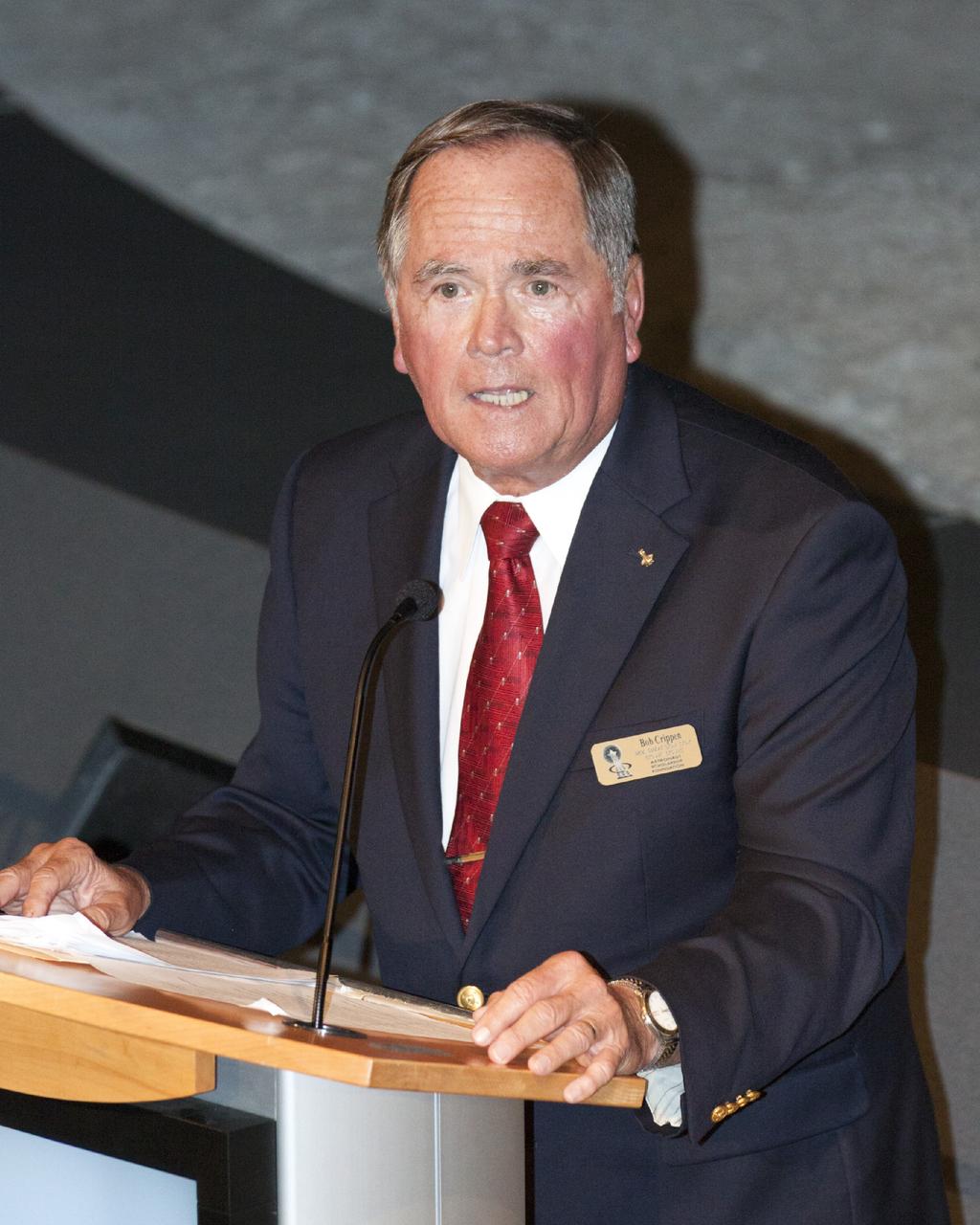
CAPE CANAVERAL, Fla. – At the Kennedy Space Center's Apollo/Saturn V Center, former NASA astronaut Robert Crippen speaks to guests at the Astronaut Scholarship Foundation's event celebrating the 40th anniversary of Skylab. Crippen, along with astronauts William Thornton and Karol Bobko, took part in a 56-day activity during 1972 called SMEAT -- Skylab Medical Experiment Altitude Test -- that preceded the launch of Skylab and helped NASA evaluate equipment and procedures proposed for the long-duration Skylab missions. Crippen went on to fly missions during the Space Shuttle Program and served as center director at Kennedy from January 1992 until January 1995. The gala commemorating the 40th anniversary of Skylab included six of the nine astronauts who flew missions to America's first space station. The orbiting laboratory was launched unpiloted from Kennedy on May 14, 1973. Between May 25, 1973 and Feb. 8, 1974, crews of three spent 28, 59 and 84 days living and working in low-Earth orbit aboard the station. For more information, visit http://www.nasa.gov/mission_pages/skylab/ Photo credit: NASA/Kim Shiflett
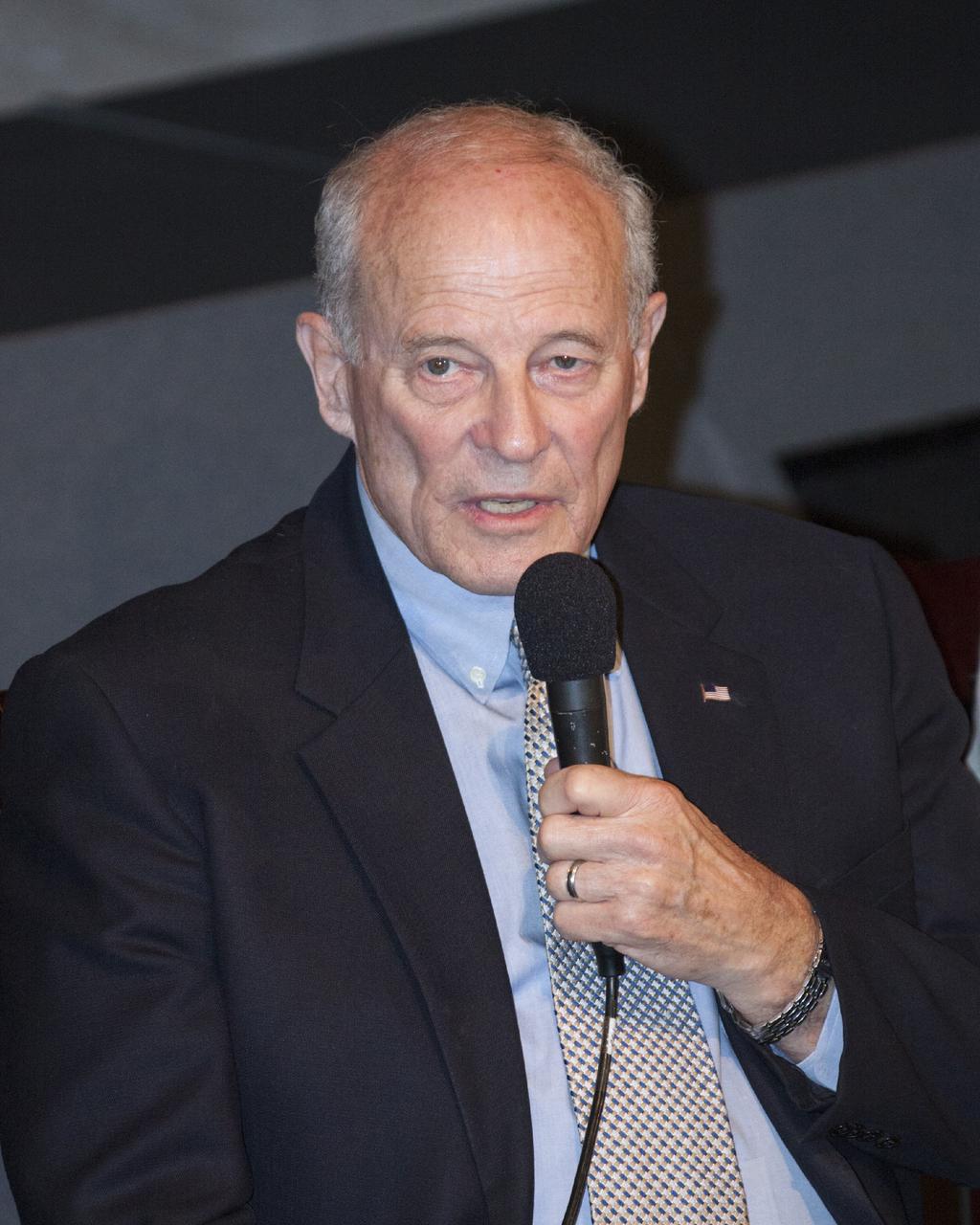
CAPE CANAVERAL, Fla. – At the Kennedy Space Center's Apollo/Saturn V Center, former NASA astronaut Jack Lousma speaks to guests at the Astronaut Scholarship Foundation's event celebrating the 40th anniversary of Skylab. Lousma served as pilot on Skylab 3, the second piloted mission to the space station. Lousma went on to command a mission of the space shuttle. The gala commemorating the 40th anniversary of Skylab included six of the nine astronauts who flew missions to America's first space station. The orbiting laboratory was launched unpiloted from Kennedy on May 14, 1973. Between May 25, 1973 and Feb. 8, 1974, crews of three spent 28, 59 and 84 days living and working in low-Earth orbit aboard the station. For more information, visit http://www.nasa.gov/mission_pages/skylab/ Photo credit: NASA/Kim Shiflett
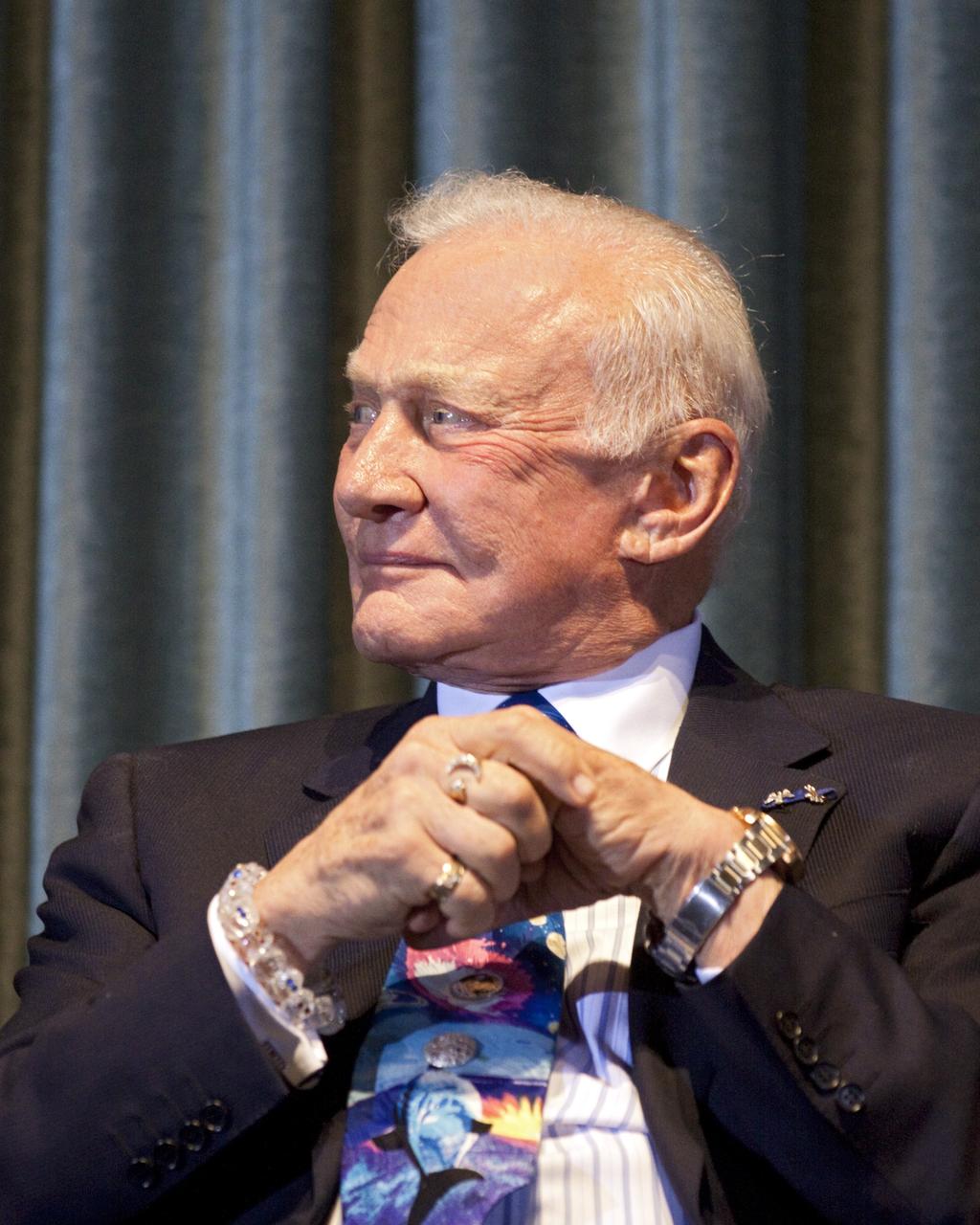
CAPE CANAVERAL, Fla. – Gemini 12 and Apollo 11 astronaut Buzz Aldrin participates in a presentation to guests gathered for the Astronaut Scholarship Foundation's dinner at the Radisson Resort at the Port in Cape Canaveral celebrating the 40th anniversary of Apollo 17. The gala commemorating the anniversary of Apollo 17 included mission commander Eugene Cernan and other astronauts who flew Apollo missions. Launched Dec. 7, 1972, Cernan and lunar module pilot Harrison Schmitt landed in the moon's Taurus-Littrow highlands while command module pilot Ronald Evans remained in lunar orbit operating a scientific instrument module. For more information, visit http://www-pao.ksc.nasa.gov/history/apollo/apollo-17/apollo-17.htm Photo credit: NASA/Kim Shiflett
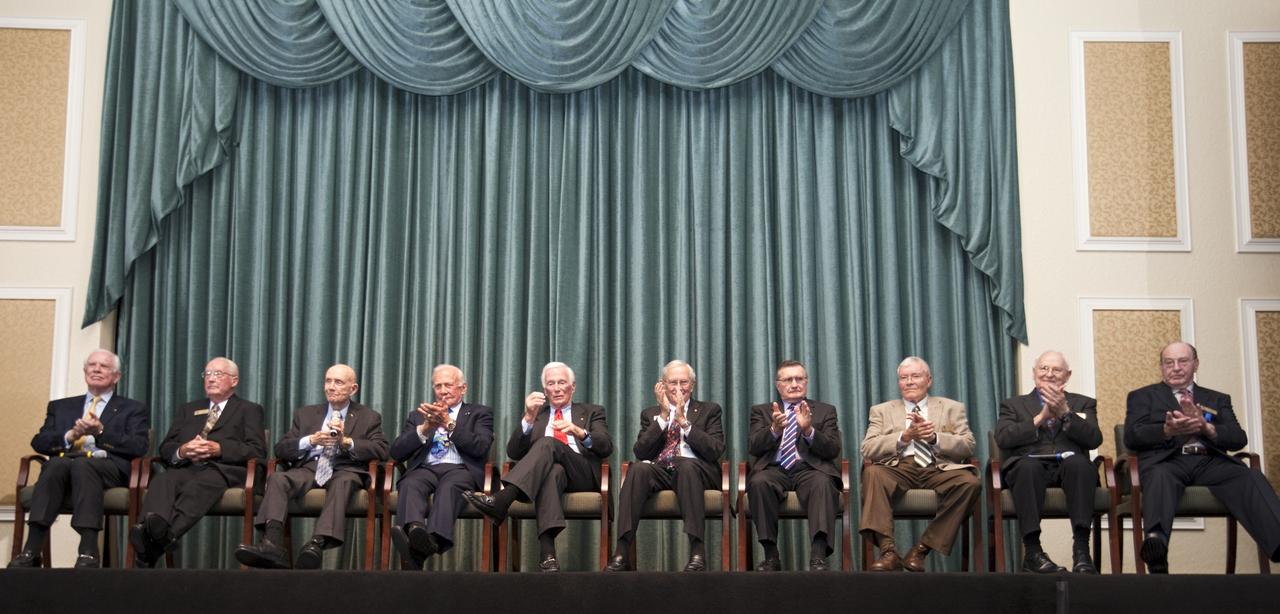
CAPE CANAVERAL, Fla. – Apollo astronauts, from the left, David Scott, James McDivitt, Thomas Stafford, Buzz Aldrin, Eugene Cernan, Charles Duke, Richard Gordon, Fred Haise, Alan Bean and Edgar Mitchell speak to guests gathered for the Astronaut Scholarship Foundation's dinner at the Radisson Resort at the Port in Cape Canaveral celebrating the 40th anniversary of Apollo 17. The gala commemorating the anniversary of Apollo 17 included mission commander Eugene Cernan and other astronauts who flew Apollo missions. Launched Dec. 7, 1972, Cernan and lunar module pilot Harrison Schmitt landed in the moon's Taurus-Littrow highlands while command module pilot Ronald Evans remained in lunar orbit operating a scientific instrument module. For more information, visit http://www-pao.ksc.nasa.gov/history/apollo/apollo-17/apollo-17.htm Photo credit: NASA/Kim Shiflett
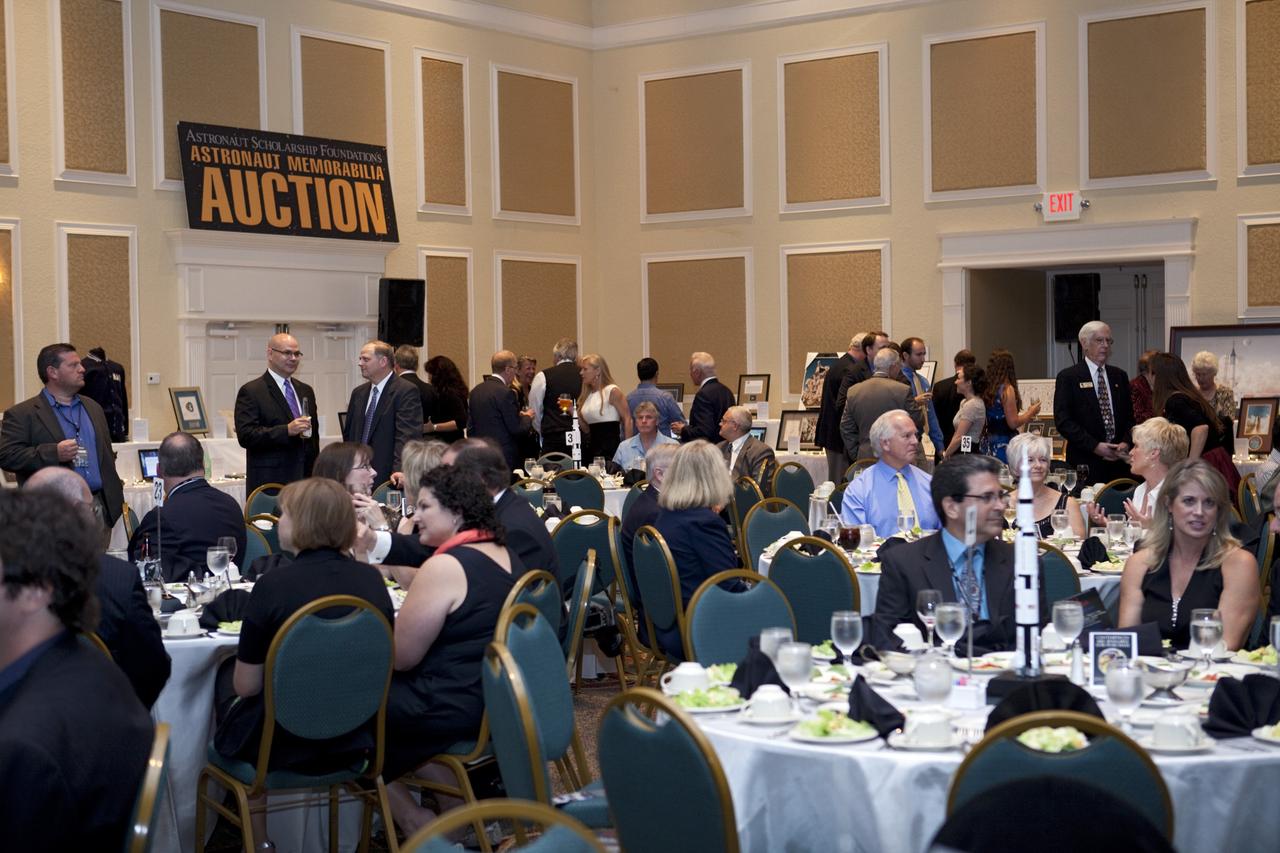
CAPE CANAVERAL, Fla. – Guests gather for the Astronaut Scholarship Foundation's dinner at the Radisson Resort at the Port in Cape Canaveral celebrating the 40th anniversary of Apollo 17. The gala commemorating the anniversary of Apollo 17 included mission commander Eugene Cernan and other astronauts who flew Apollo missions. Launched Dec. 7, 1972, Cernan and lunar module pilot Harrison Schmitt landed in the moon's Taurus-Littrow highlands while command module pilot Ronald Evans remained in lunar orbit operating a scientific instrument module. For more information, visit http://www-pao.ksc.nasa.gov/history/apollo/apollo-17/apollo-17.htm Photo credit: NASA/Kim Shiflett
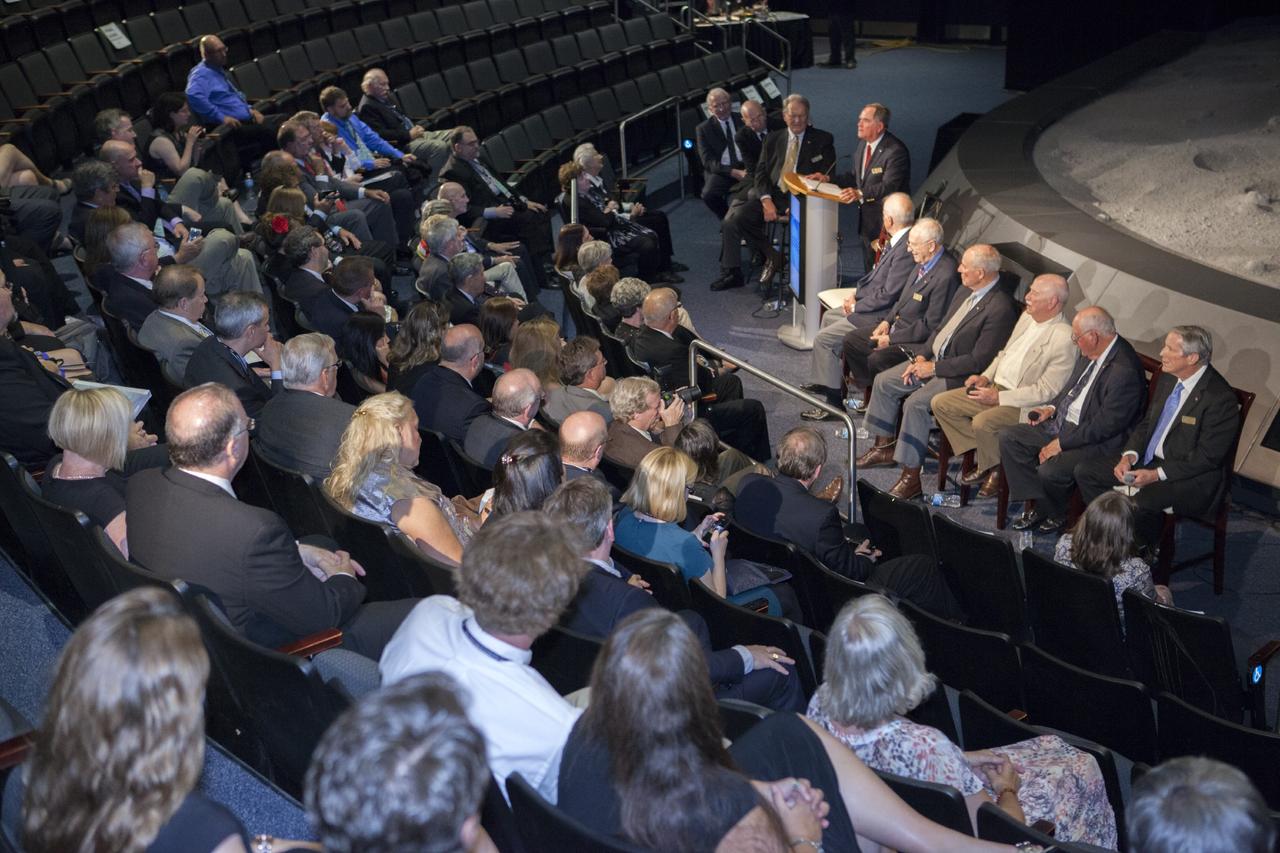
CAPE CANAVERAL, Fla. – Astronaut Scholarship Foundation guests at the Kennedy Space Center's Apollo/Saturn V Center listen as Skylab era astronauts celebrate the 40th anniversary of Skylab. The gala commemorating the 40th anniversary of Skylab included six of the nine astronauts who flew missions to America's first space station. The orbiting laboratory was launched unpiloted from Kennedy on May 14, 1973. Between May 25, 1973 and Feb. 8, 1974, crews of three spent 28, 59 and 84 days living and working in low-Earth orbit aboard the station. For more information, visit http://www.nasa.gov/mission_pages/skylab/ Photo credit: NASA/Kim Shiflett
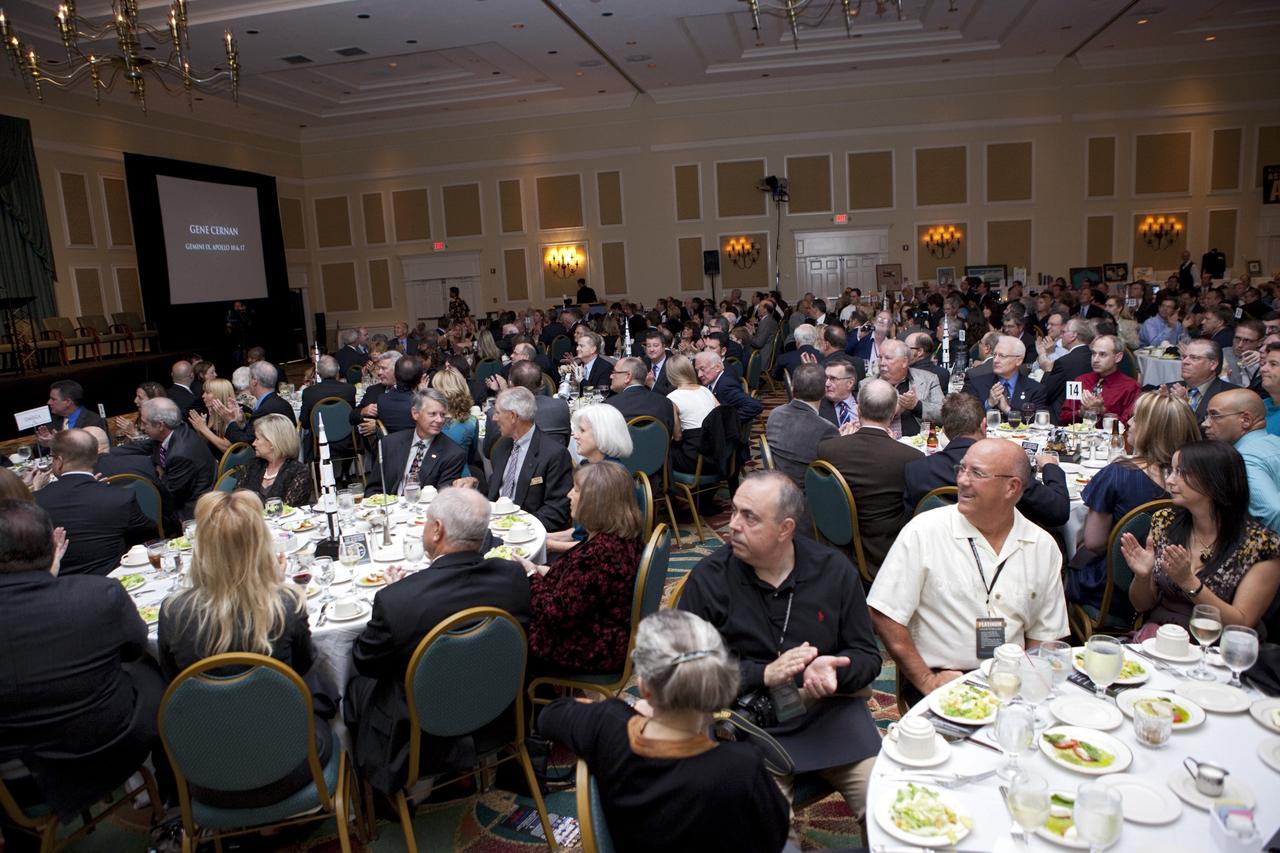
CAPE CANAVERAL, Fla. – Guests gather for the Astronaut Scholarship Foundation's dinner at the Radisson Resort at the Port in Cape Canaveral celebrating the 40th anniversary of Apollo 17. The gala commemorating the anniversary of Apollo 17 included mission commander Eugene Cernan and other astronauts who flew Apollo missions. Launched Dec. 7, 1972, Cernan and lunar module pilot Harrison Schmitt landed in the moon's Taurus-Littrow highlands while command module pilot Ronald Evans remained in lunar orbit operating a scientific instrument module. For more information, visit http://www-pao.ksc.nasa.gov/history/apollo/apollo-17/apollo-17.htm Photo credit: NASA/Kim Shiflett
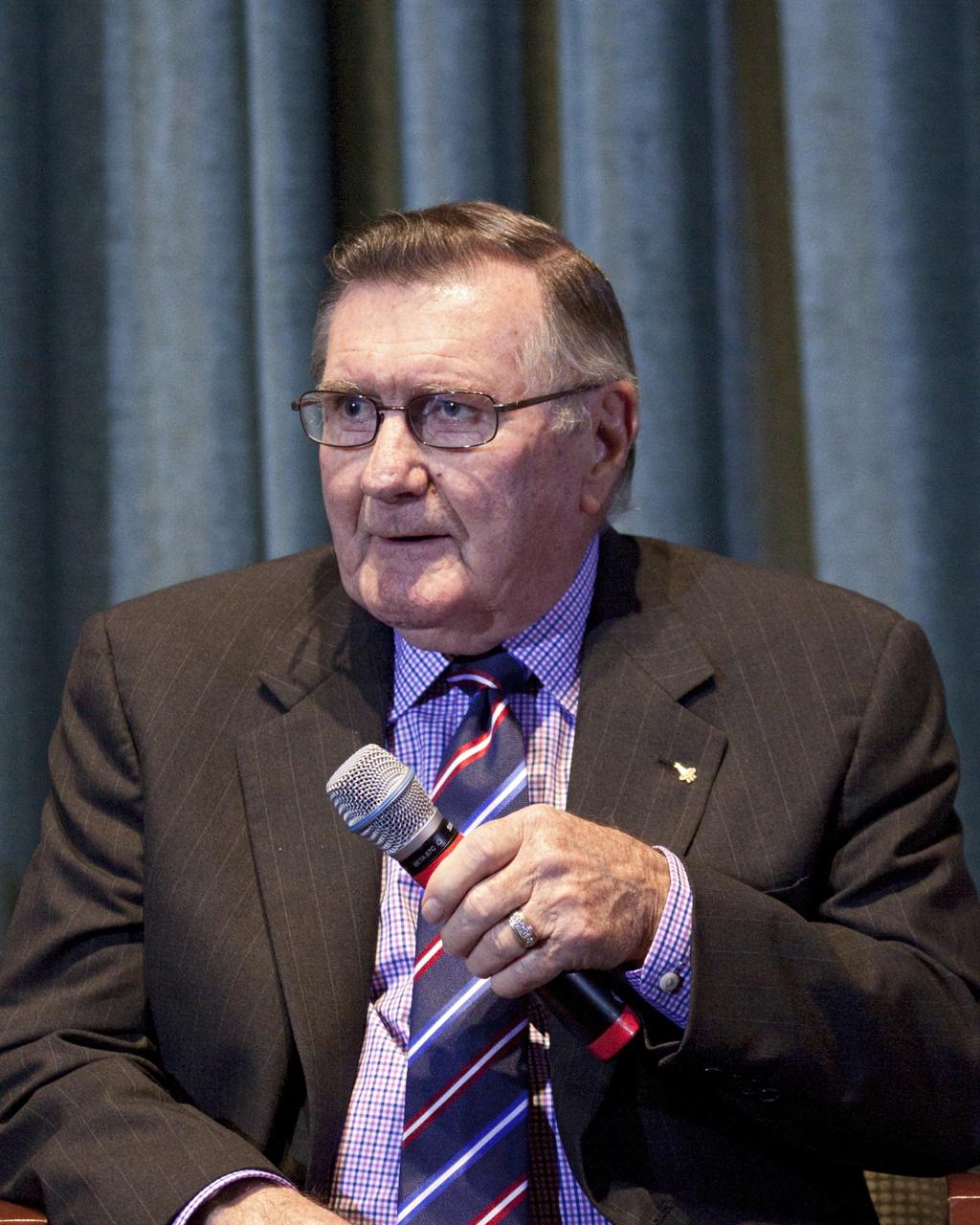
CAPE CANAVERAL, Fla. – Gemini 11 and Apollo 12 astronaut Richard Gordon speaks to guests gathered for the Astronaut Scholarship Foundation's dinner at the Radisson Resort at the Port in Cape Canaveral celebrating the 40th anniversary of Apollo 17. The gala commemorating the anniversary of Apollo 17 included mission commander Eugene Cernan and other astronauts who flew Apollo missions. Launched Dec. 7, 1972, Cernan and lunar module pilot Harrison Schmitt landed in the moon's Taurus-Littrow highlands while command module pilot Ronald Evans remained in lunar orbit operating a scientific instrument module. For more information, visit http://www-pao.ksc.nasa.gov/history/apollo/apollo-17/apollo-17.htm Photo credit: NASA/Kim Shiflett
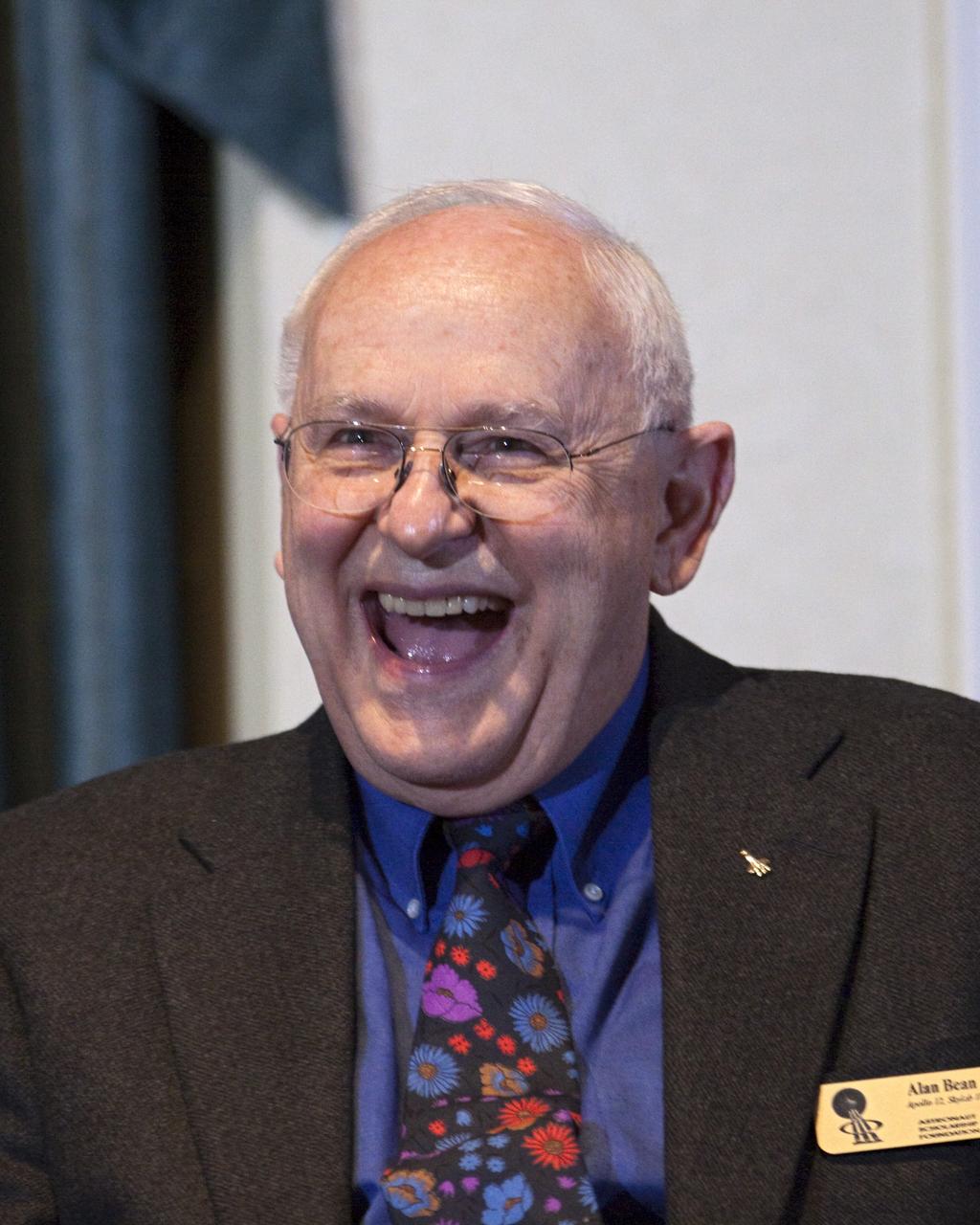
CAPE CANAVERAL, Fla. – Apollo 12 and Skylab 3 astronaut Alan Bean enjoys a light moment during a presentation to guests gathered for the Astronaut Scholarship Foundation's dinner at the Radisson Resort at the Port in Cape Canaveral celebrating the 40th anniversary of Apollo 17. The gala commemorating the anniversary of Apollo 17 included mission commander Eugene Cernan and other astronauts who flew Apollo missions. Launched Dec. 7, 1972, Cernan and lunar module pilot Harrison Schmitt landed in the moon's Taurus-Littrow highlands while command module pilot Ronald Evans remained in lunar orbit operating a scientific instrument module. For more information, visit http://www-pao.ksc.nasa.gov/history/apollo/apollo-17/apollo-17.htm Photo credit: NASA/Kim Shiflett
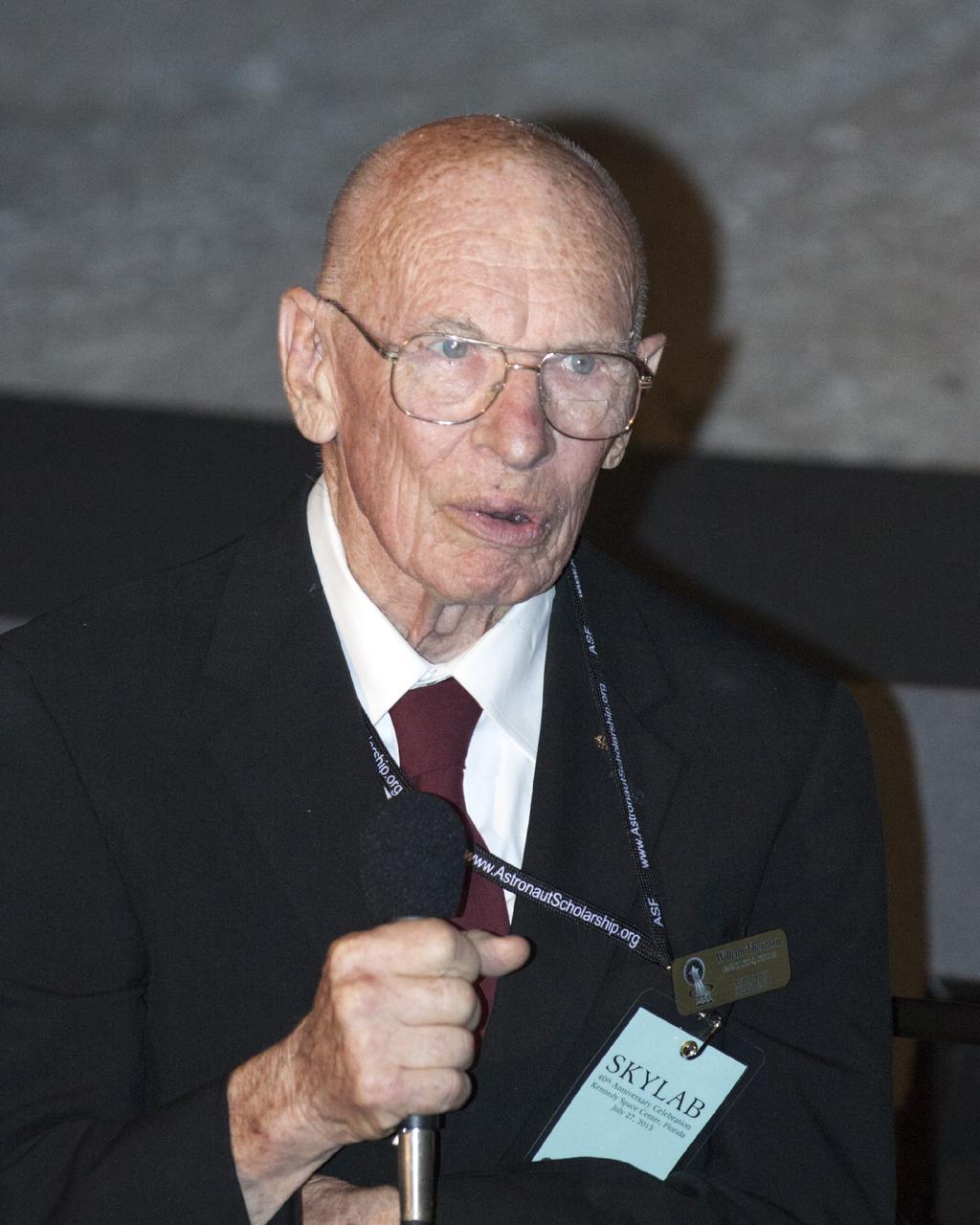
CAPE CANAVERAL, Fla. – At the Kennedy Space Center's Apollo/Saturn V Center, former NASA astronaut William Thornton speaks to guests at the Astronaut Scholarship Foundation's event celebrating the 40th anniversary of Skylab. Thornton, along with astronauts Robert Crippen and Karol Bobko, took part in a 56-day activity during 1972 called SMEAT -- Skylab Medical Experiment Altitude Test -- that preceded the launch of Skylab and helped NASA evaluate equipment and procedures proposed for the long-duration Skylab missions. Thornton went on to fly missions during the Space Shuttle Program. The gala commemorating the 40th anniversary of Skylab included six of the nine astronauts who flew missions to America's first space station. The orbiting laboratory was launched unpiloted from Kennedy on May 14, 1973. Between May 25, 1973 and Feb. 8, 1974, crews of three spent 28, 59 and 84 days living and working in low-Earth orbit aboard the station. For more information, visit http://www.nasa.gov/mission_pages/skylab/ Photo credit: NASA/Kim Shiflett
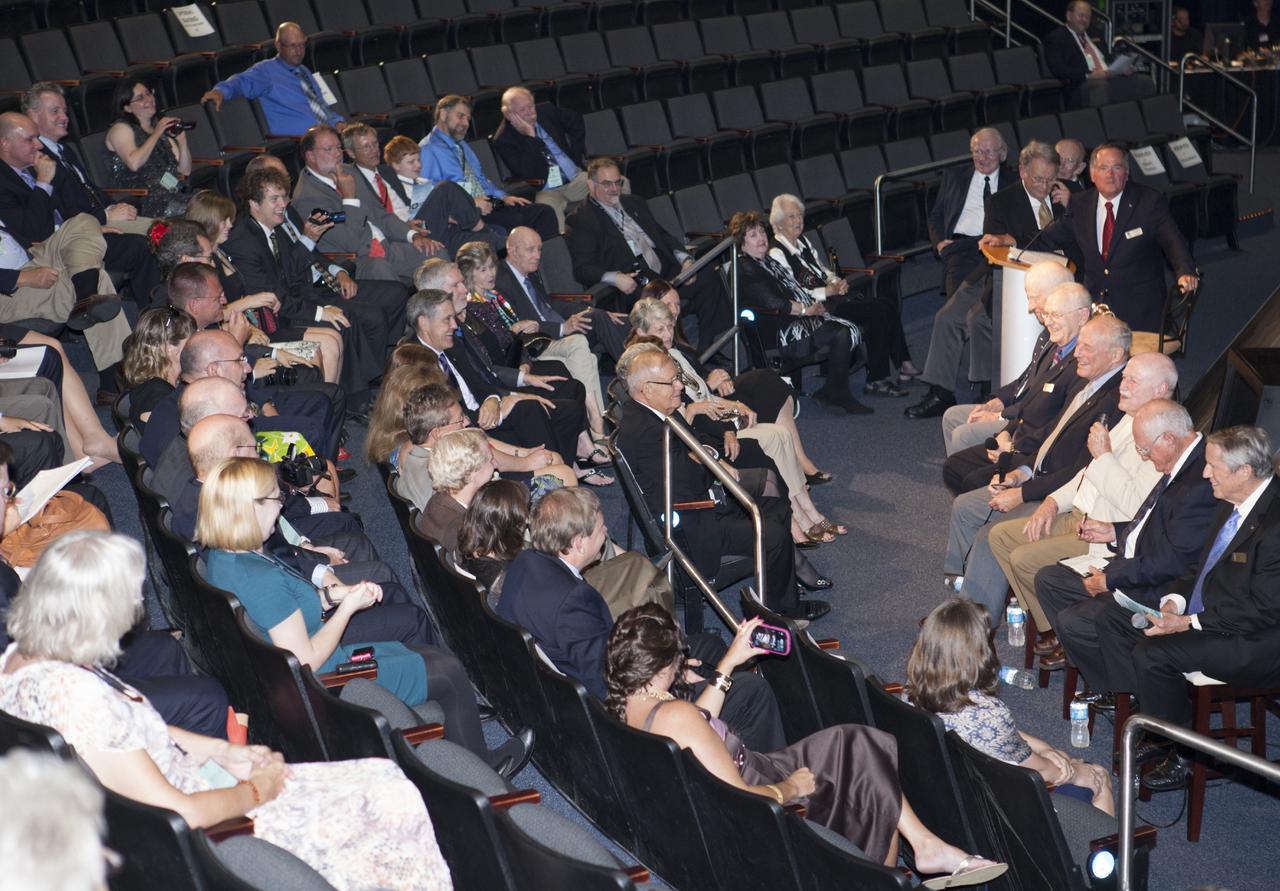
CAPE CANAVERAL, Fla. – Astronaut Scholarship Foundation guests at the Kennedy Space Center's Apollo/Saturn V Center listen as Skylab era astronauts celebrate the 40th anniversary of Skylab. The gala commemorating the 40th anniversary of Skylab included six of the nine astronauts who flew missions to America's first space station. The orbiting laboratory was launched unpiloted from Kennedy on May 14, 1973. Between May 25, 1973 and Feb. 8, 1974, crews of three spent 28, 59 and 84 days living and working in low-Earth orbit aboard the station. For more information, visit http://www.nasa.gov/mission_pages/skylab/ Photo credit: NASA/Kim Shiflett
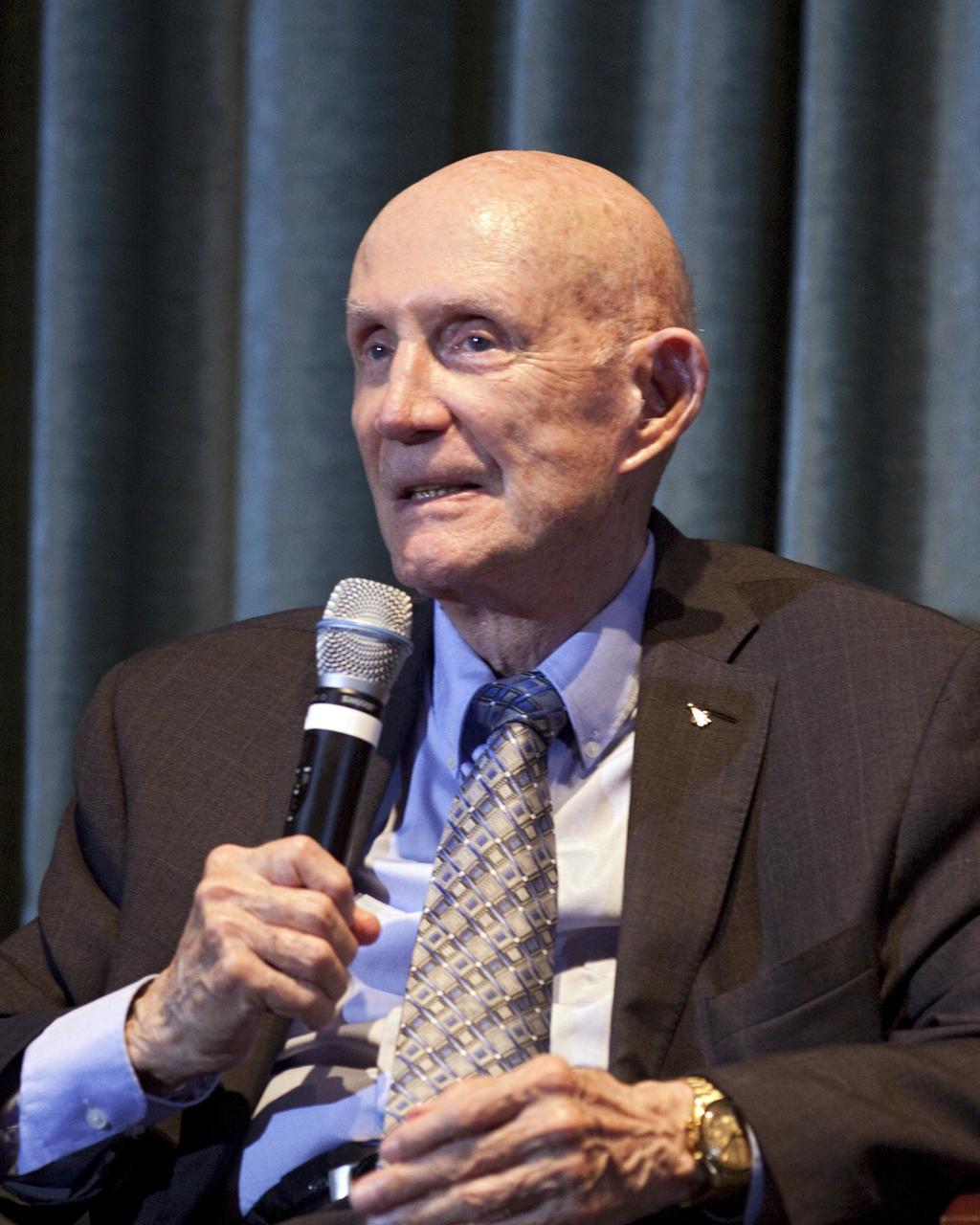
CAPE CANAVERAL, Fla. – Gemini 6 and 9, as well as Apollo 10 and Apollo-Soyuz astronaut Thomas Stafford speaks to guests gathered for the Astronaut Scholarship Foundation's dinner at the Radisson Resort at the Port in Cape Canaveral celebrating the 40th anniversary of Apollo 17. The gala commemorating the anniversary of Apollo 17 included mission commander Eugene Cernan and other astronauts who flew Apollo missions. Launched Dec. 7, 1972, Cernan and lunar module pilot Harrison Schmitt landed in the moon's Taurus-Littrow highlands while command module pilot Ronald Evans remained in lunar orbit operating a scientific instrument module. For more information, visit http://www-pao.ksc.nasa.gov/history/apollo/apollo-17/apollo-17.htm Photo credit: NASA/Kim Shiflett
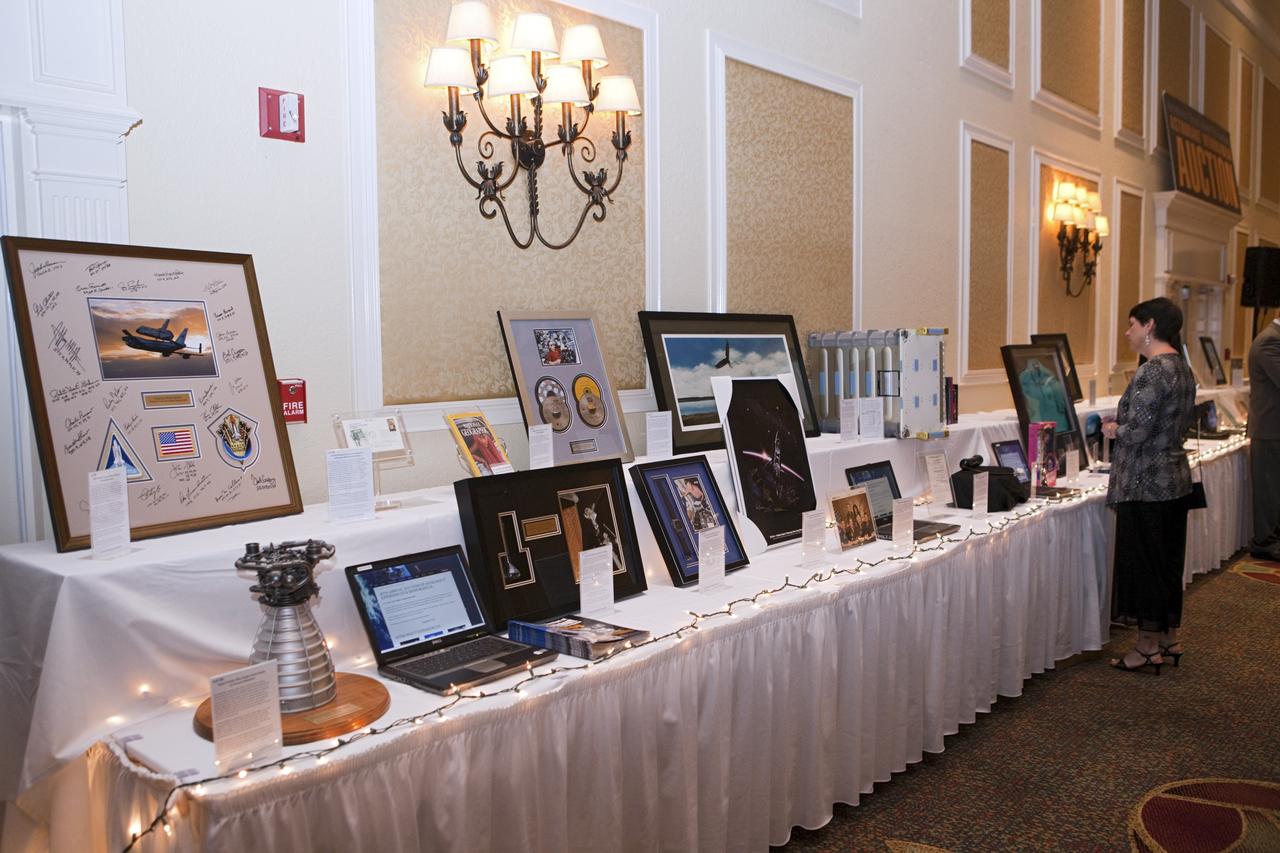
CAPE CANAVERAL, Fla. – The Astronaut Scholarship Foundation hosts a dinner at the Radisson Resort at the Port in Cape Canaveral celebrating the 40th anniversary of Apollo 17. An auction of space-related memorabilia was held with proceeds supporting college scholarships for students who exhibit imagination and exceptional performance in science, technology, engineering and math. The gala commemorating the anniversary of Apollo 17 included mission commander Eugene Cernan and other astronauts who flew Apollo missions. Launched Dec. 7, 1972, Cernan and lunar module pilot Harrison Schmitt landed in the moon's Taurus-Littrow highlands while command module pilot Ronald Evans remained in lunar orbit operating a scientific instrument module. For more information, visit http://www-pao.ksc.nasa.gov/history/apollo/apollo-17/apollo-17.htm Photo credit: NASA/Kim Shiflett
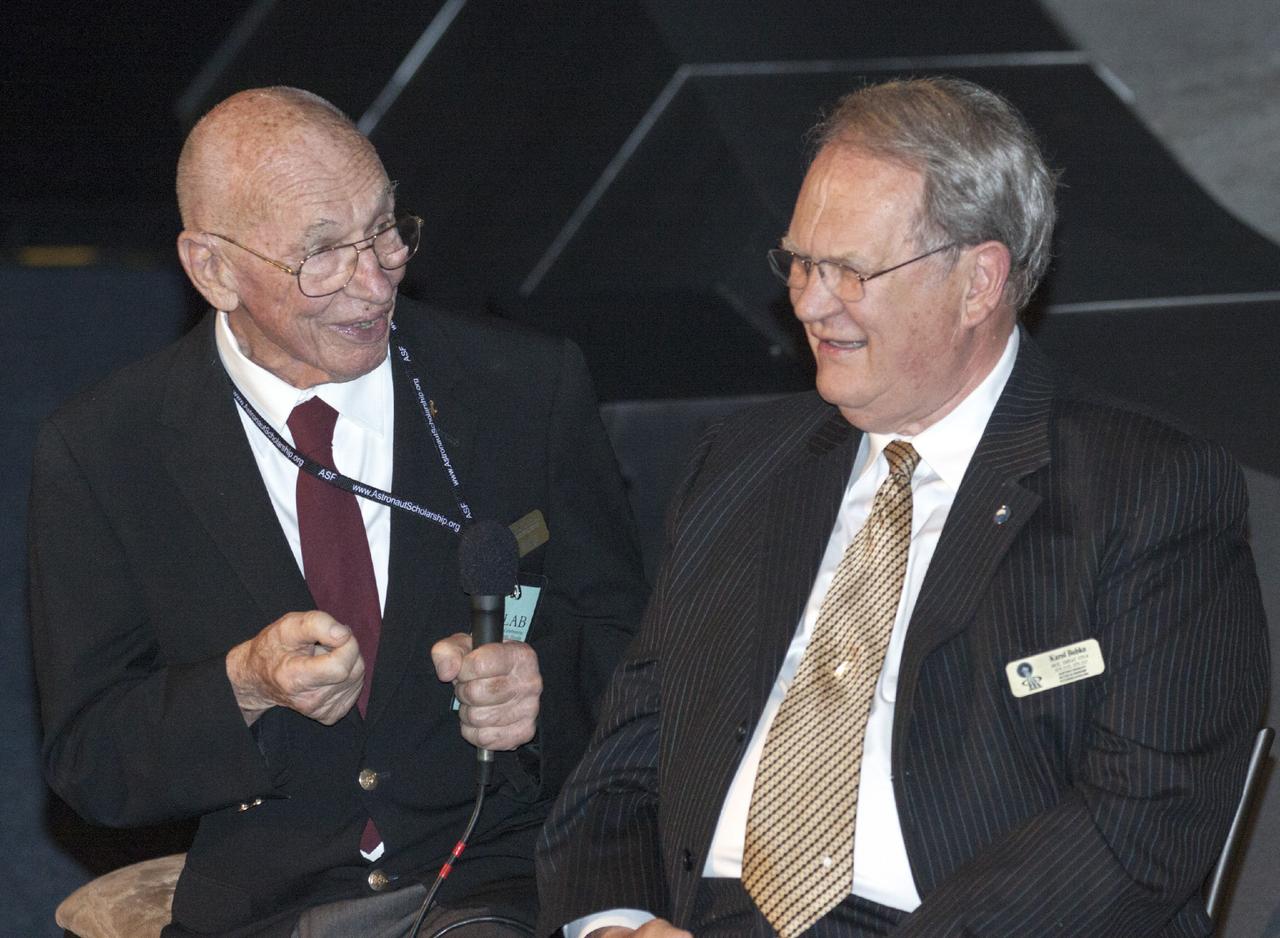
CAPE CANAVERAL, Fla. – At the Kennedy Space Center's Apollo/Saturn V Center, former NASA astronauts William Thornton, left, and Karol Bobko recall experiences during the Astronaut Scholarship Foundation's event celebrating the 40th anniversary of Skylab. Along with astronaut Robert Crippen, Thornton, and Bobko, took part in a 56-day activity during 1972 called SMEAT -- Skylab Medical Experiment Altitude Test -- that preceded the launch of Skylab and helped NASA evaluate equipment and procedures proposed for the long-duration Skylab missions. Thornton and Bobko went on to fly missions during the Space Shuttle Program. The gala commemorating the 40th anniversary of Skylab included six of the nine astronauts who flew missions to America's first space station. The orbiting laboratory was launched unpiloted from Kennedy on May 14, 1973. Between May 25, 1973 and Feb. 8, 1974, crews of three spent 28, 59 and 84 days living and working in low-Earth orbit aboard the station. For more information, visit http://www.nasa.gov/mission_pages/skylab/ Photo credit: NASA/Kim Shiflett
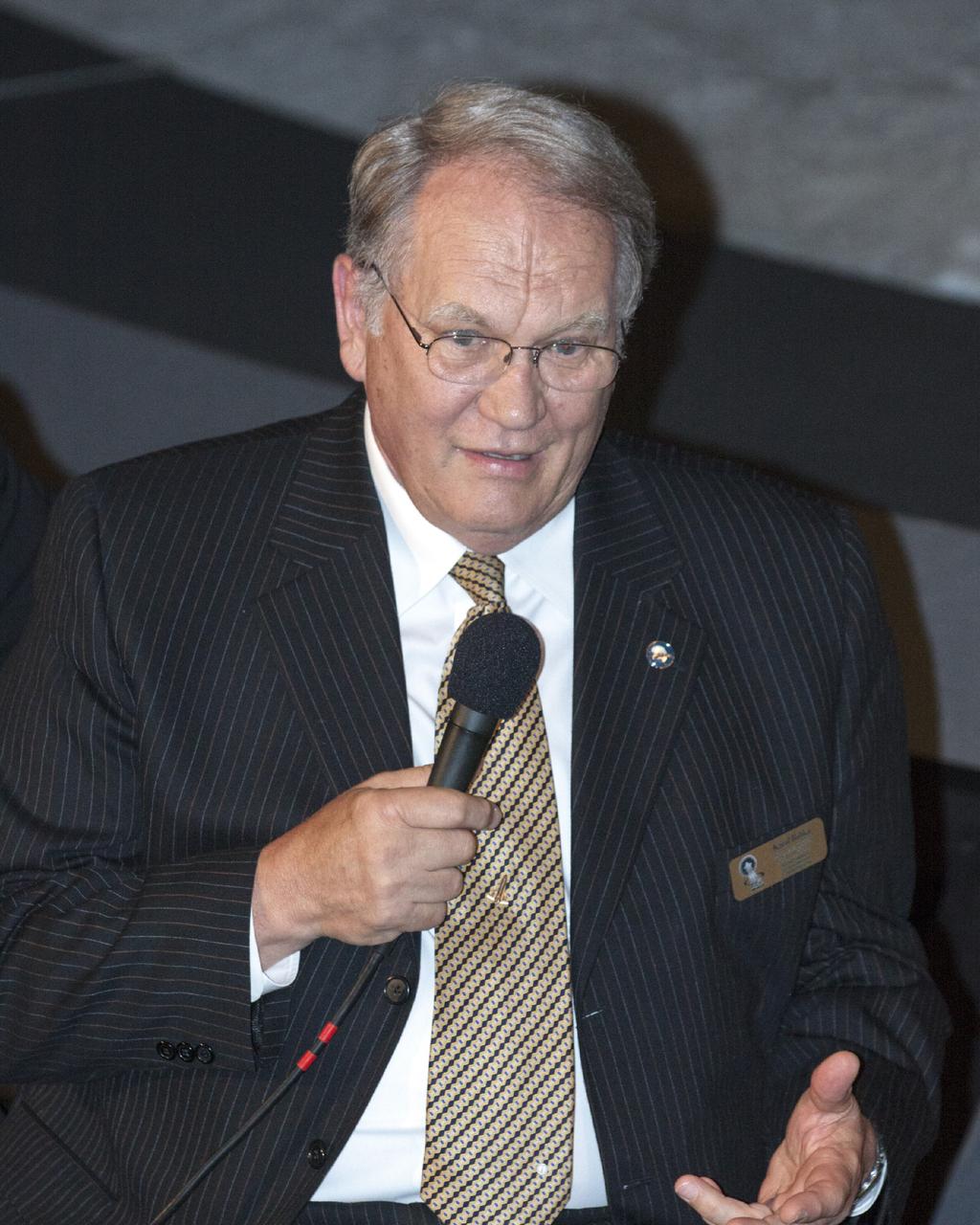
CAPE CANAVERAL, Fla. – At the Kennedy Space Center's Apollo/Saturn V Center, former NASA astronaut Karol Bobko speaks to guests at the Astronaut Scholarship Foundation's event celebrating the 40th anniversary of Skylab. Bobko, along with astronauts Robert Crippen and William Thornton, took part in a 56-day activity during 1972 called SMEAT -- Skylab Medical Experiment Altitude Test -- that preceded the launch of Skylab and helped NASA evaluate equipment and procedures proposed for the long-duration Skylab missions. Bobko went on to fly missions during the Space Shuttle Program. The gala commemorating the 40th anniversary of Skylab included six of the nine astronauts who flew missions to America's first space station. The orbiting laboratory was launched unpiloted from Kennedy on May 14, 1973. Between May 25, 1973 and Feb. 8, 1974, crews of three spent 28, 59 and 84 days living and working in low-Earth orbit aboard the station. For more information, visit http://www.nasa.gov/mission_pages/skylab/ Photo credit: NASA/Kim Shiflett
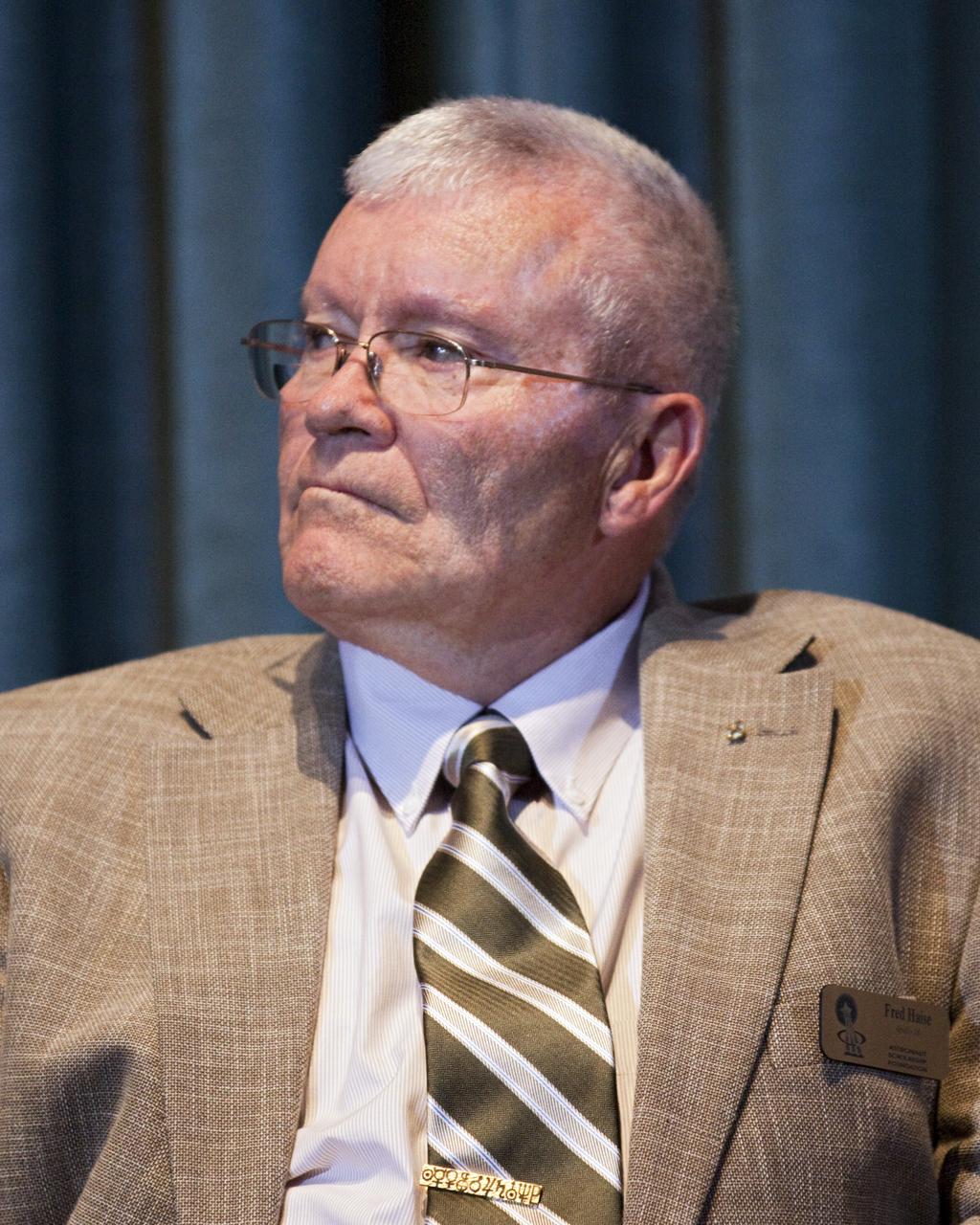
CAPE CANAVERAL, Fla. – Apollo 13 astronaut Fred Haise participates in a presentation to guests gathered for the Astronaut Scholarship Foundation's dinner at the Radisson Resort at the Port in Cape Canaveral celebrating the 40th anniversary of Apollo 17. The gala commemorating the anniversary of Apollo 17 included mission commander Eugene Cernan and other astronauts who flew Apollo missions. Launched Dec. 7, 1972, Cernan and lunar module pilot Harrison Schmitt landed in the moon's Taurus-Littrow highlands while command module pilot Ronald Evans remained in lunar orbit operating a scientific instrument module. For more information, visit http://www-pao.ksc.nasa.gov/history/apollo/apollo-17/apollo-17.htm Photo credit: NASA/Kim Shiflett
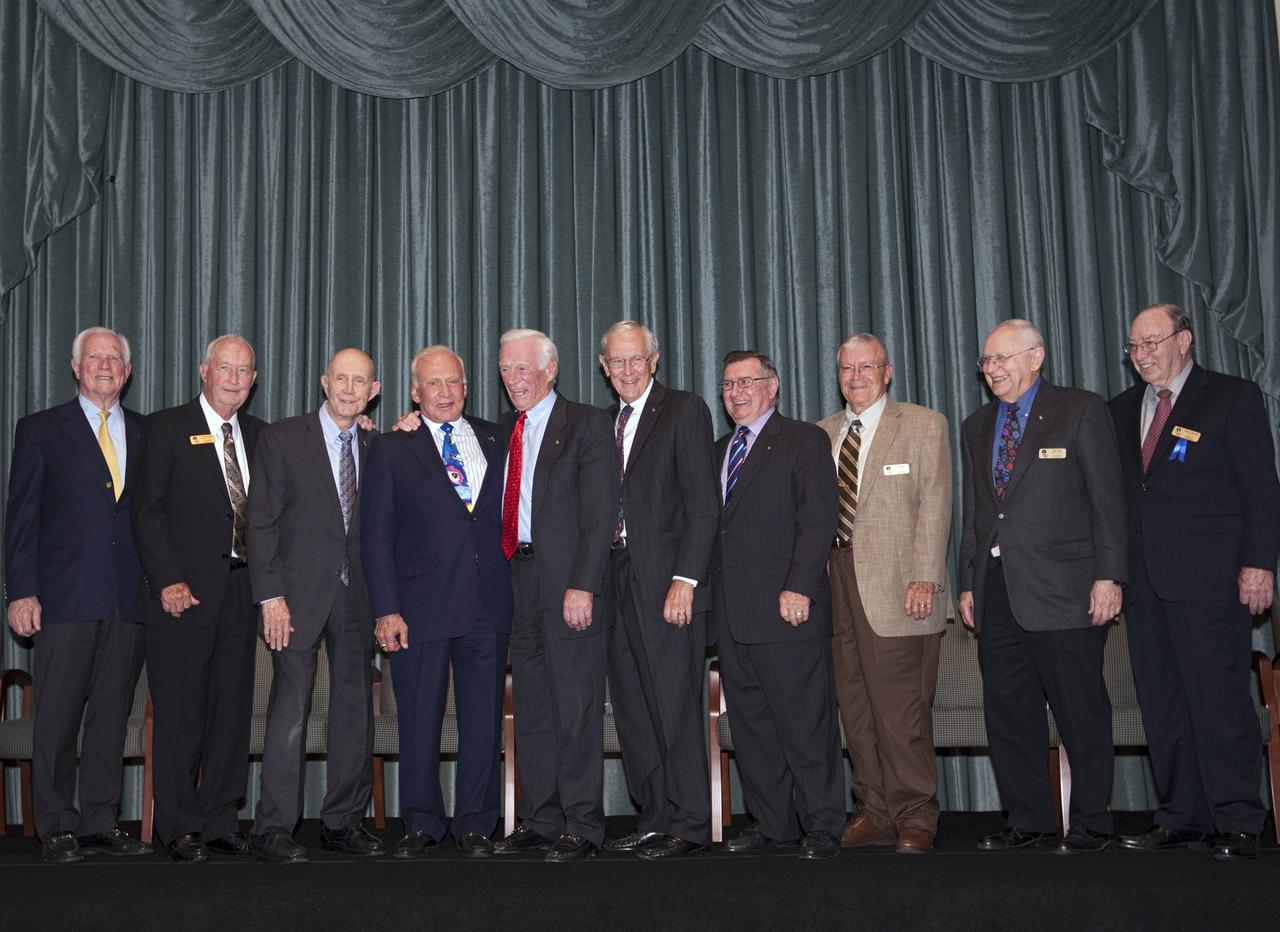
CAPE CANAVERAL, Fla. – Apollo astronauts, from the left, David Scott, James McDivitt, Thomas Stafford, Buzz Aldrin, Eugene Cernan, Charles Duke, Richard Gordon, Fred Haise, Alan Bean and Edgar Mitchell participated in the Astronaut Scholarship Foundation's dinner at the Radisson Resort at the Port in Cape Canaveral celebrating the 40th anniversary of Apollo 17. The gala commemorating the anniversary of Apollo 17 included mission commander Eugene Cernan and other astronauts who flew Apollo missions. Launched Dec. 7, 1972, Cernan and lunar module pilot Harrison Schmitt landed in the moon's Taurus-Littrow highlands while command module pilot Ronald Evans remained in lunar orbit operating a scientific instrument module. For more information, visit http://www-pao.ksc.nasa.gov/history/apollo/apollo-17/apollo-17.htm Photo credit: NASA/Kim Shiflett
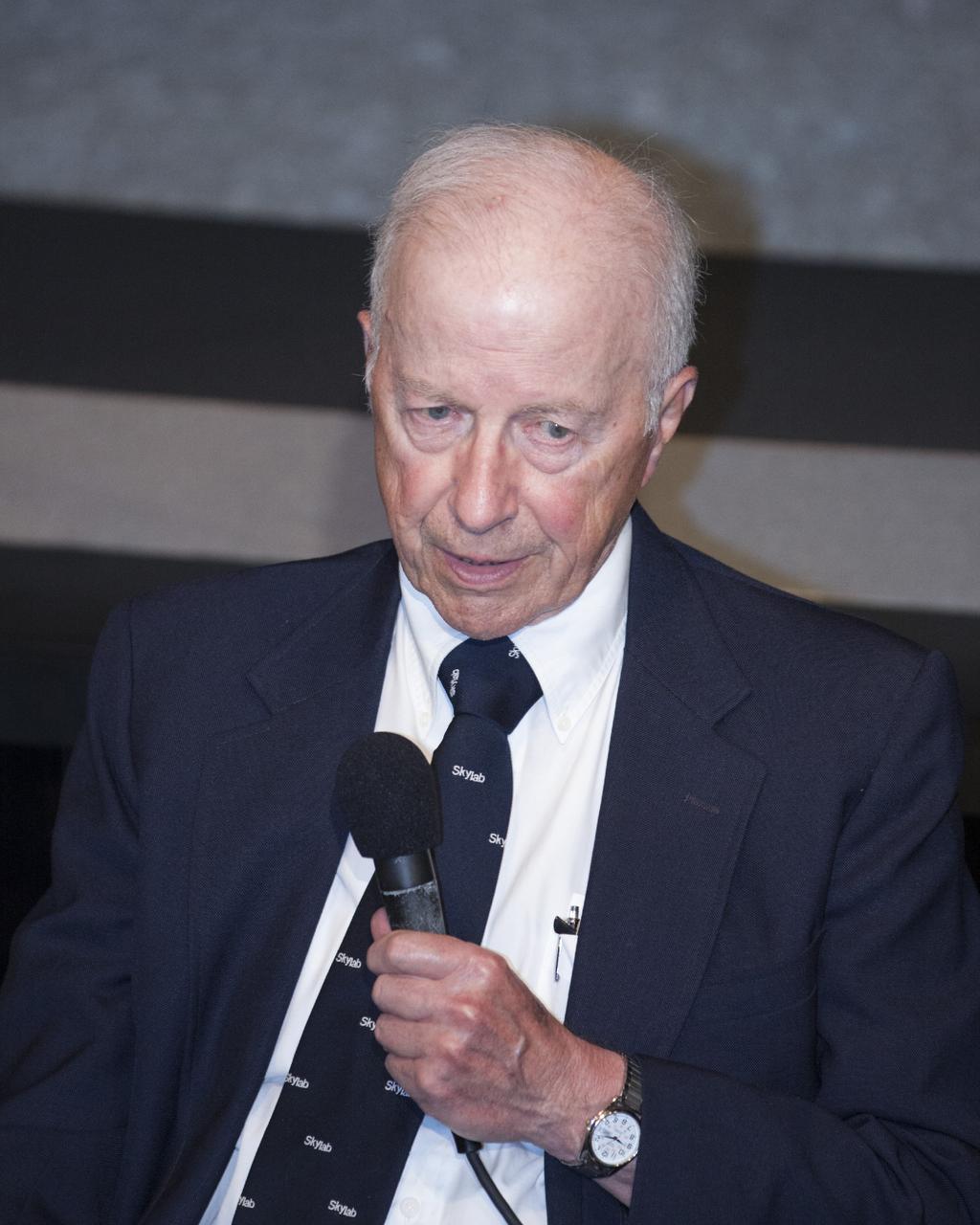
CAPE CANAVERAL, Fla. – At the Kennedy Space Center's Apollo/Saturn V Center, former NASA astronaut Paul Weitz speaks to guests at the Astronaut Scholarship Foundation's event celebrating the 40th anniversary of Skylab. Weitz served as pilot on Skylab 2, the first piloted mission to the space station. Weitz went on to fly missions aboard the space shuttle. The gala commemorating the 40th anniversary of Skylab included six of the nine astronauts who flew missions to America's first space station. The orbiting laboratory was launched unpiloted from Kennedy on May 14, 1973. Between May 25, 1973 and Feb. 8, 1974, crews of three spent 28, 59 and 84 days living and working in low-Earth orbit aboard the station. For more information, visit http://www.nasa.gov/mission_pages/skylab/ Photo credit: NASA/Kim Shiflett
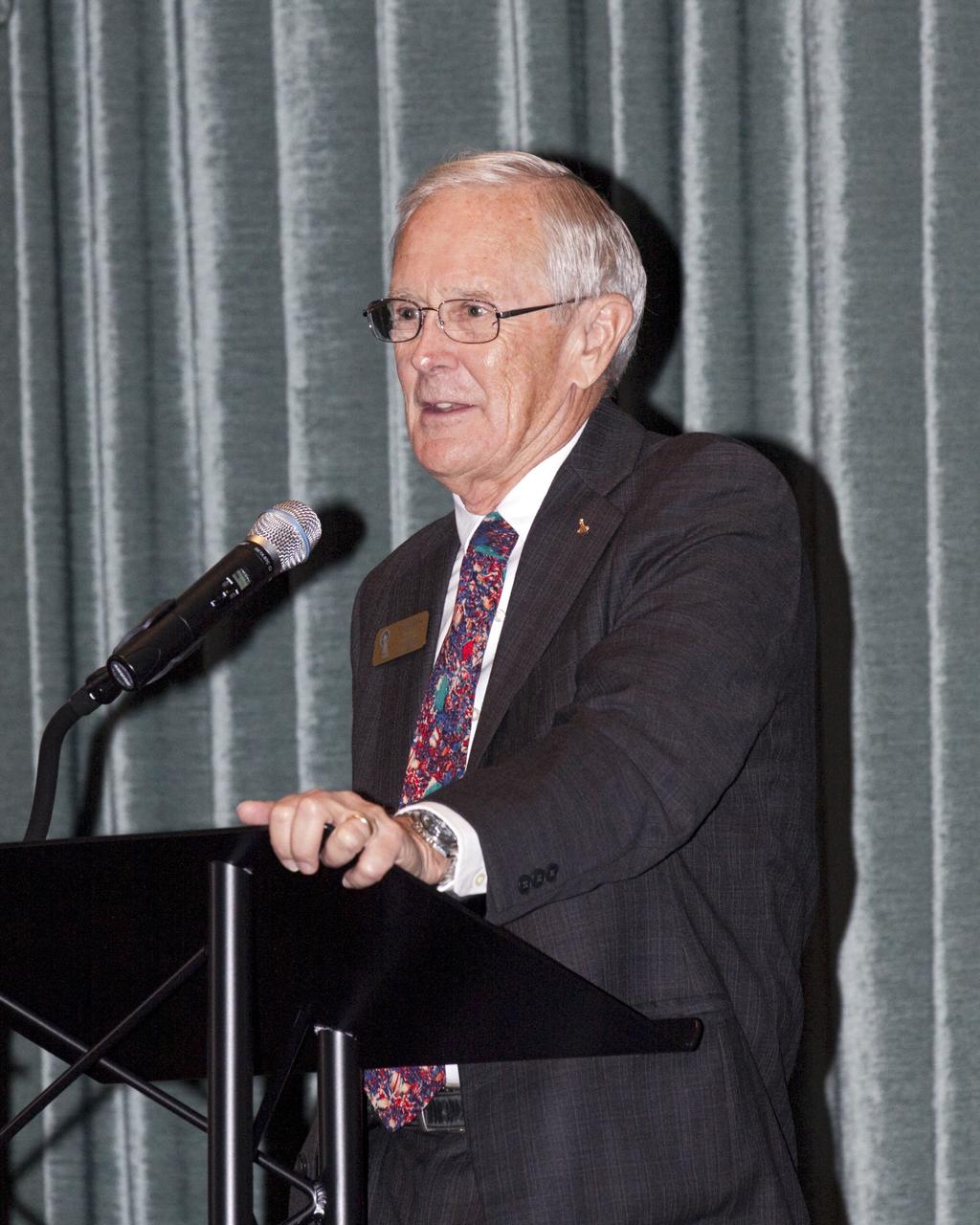
CAPE CANAVERAL, Fla. – Charles Duke, chairman of the board of directors for the Astronaut Scholarship Foundation welcomes guests who have gathered for the organization's dinner at the Radisson Resort at the Port in Cape Canaveral celebrating the 40th anniversary of Apollo 17. The gala commemorating the anniversary of Apollo 17 included mission commander Eugene Cernan and other astronauts who flew Apollo missions. Launched Dec. 7, 1972, Cernan and lunar module pilot Harrison Schmitt landed in the moon's Taurus-Littrow highlands while command module pilot Ronald Evans remained in lunar orbit operating a scientific instrument module. For more information, visit http://www-pao.ksc.nasa.gov/history/apollo/apollo-17/apollo-17.htm Photo credit: NASA/Kim Shiflett
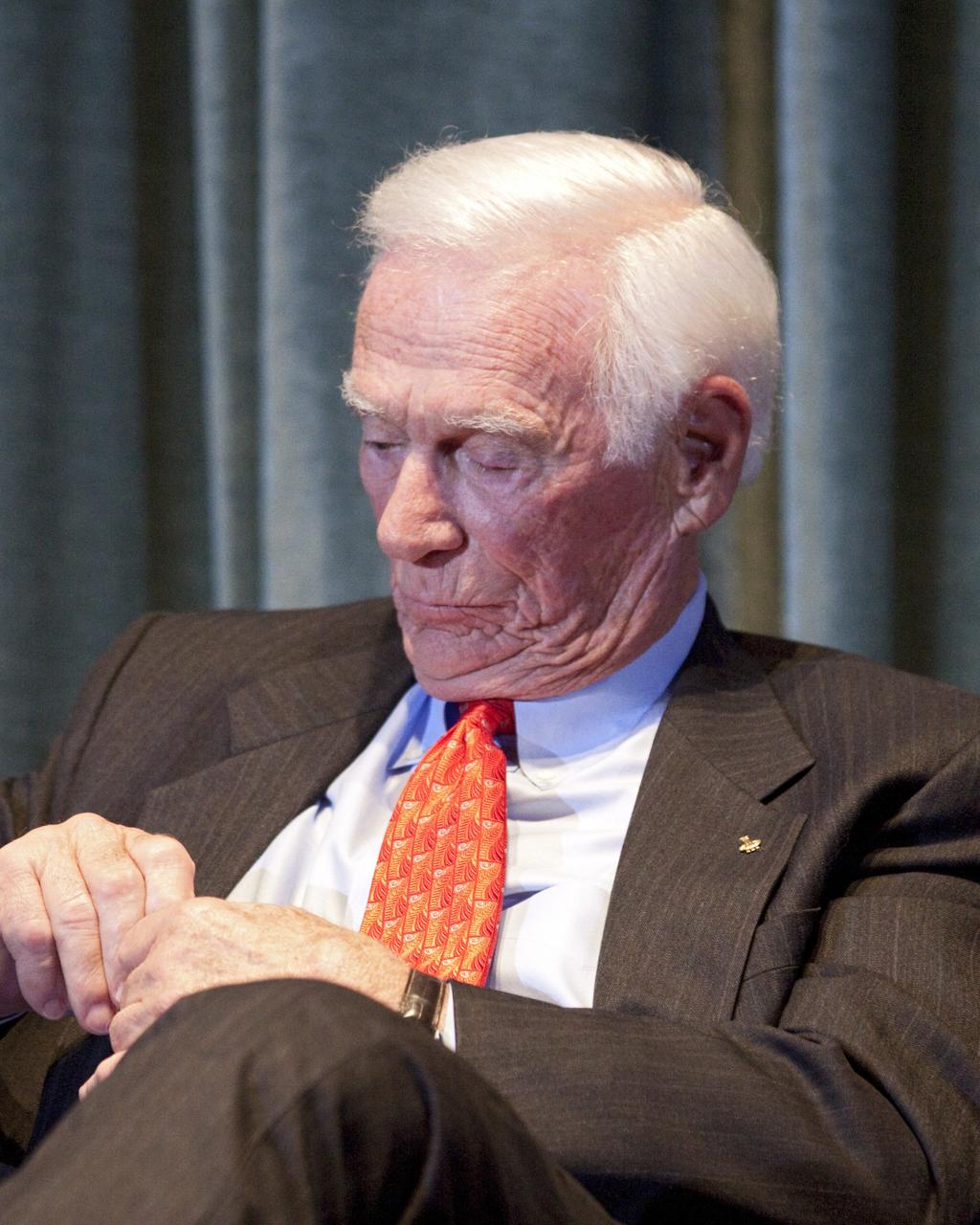
CAPE CANAVERAL, Fla. – Gemini 9, Apollo 10 and 17 astronaut Eugene Cernan participates in a presentation to guests gathered for the Astronaut Scholarship Foundation's dinner at the Radisson Resort at the Port in Cape Canaveral celebrating the 40th anniversary of Apollo 17. The gala commemorating the anniversary of Apollo 17 included mission commander Eugene Cernan and other astronauts who flew Apollo missions. Launched Dec. 7, 1972, Cernan and lunar module pilot Harrison Schmitt landed in the moon's Taurus-Littrow highlands while command module pilot Ronald Evans remained in lunar orbit operating a scientific instrument module. For more information, visit http://www-pao.ksc.nasa.gov/history/apollo/apollo-17/apollo-17.htm Photo credit: NASA/Kim Shiflett
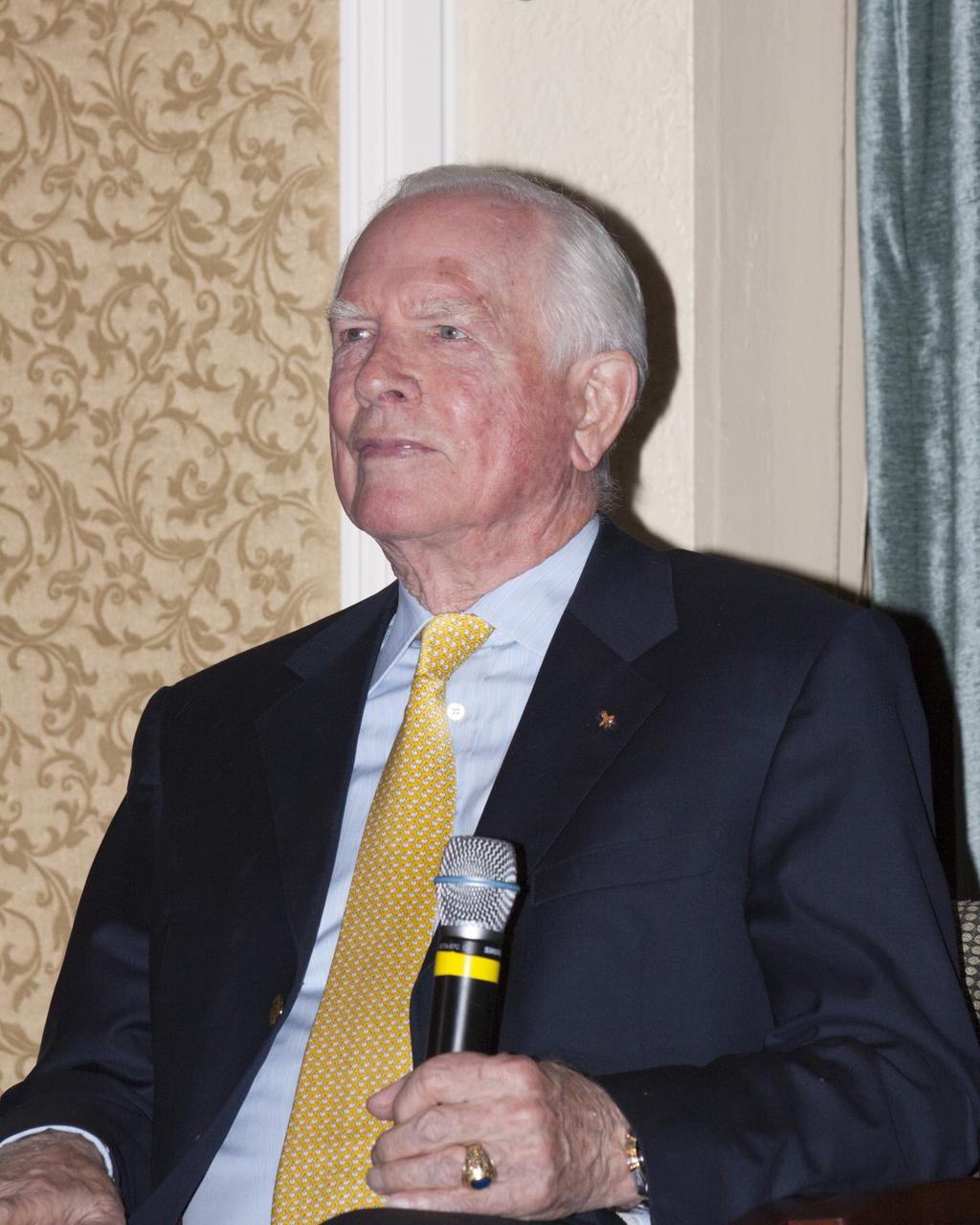
CAPE CANAVERAL, Fla. – Gemini 8, Apollo 9 and 15 astronaut David Scott speaks to guests gathered for the Astronaut Scholarship Foundation's dinner at the Radisson Resort at the Port in Cape Canaveral celebrating the 40th anniversary of Apollo 17. The gala commemorating the anniversary of Apollo 17 included mission commander Eugene Cernan and other astronauts who flew Apollo missions. Launched Dec. 7, 1972, Cernan and lunar module pilot Harrison Schmitt landed in the moon's Taurus-Littrow highlands while command module pilot Ronald Evans remained in lunar orbit operating a scientific instrument module. For more information, visit http://www-pao.ksc.nasa.gov/history/apollo/apollo-17/apollo-17.htm Photo credit: NASA/Kim Shiflett
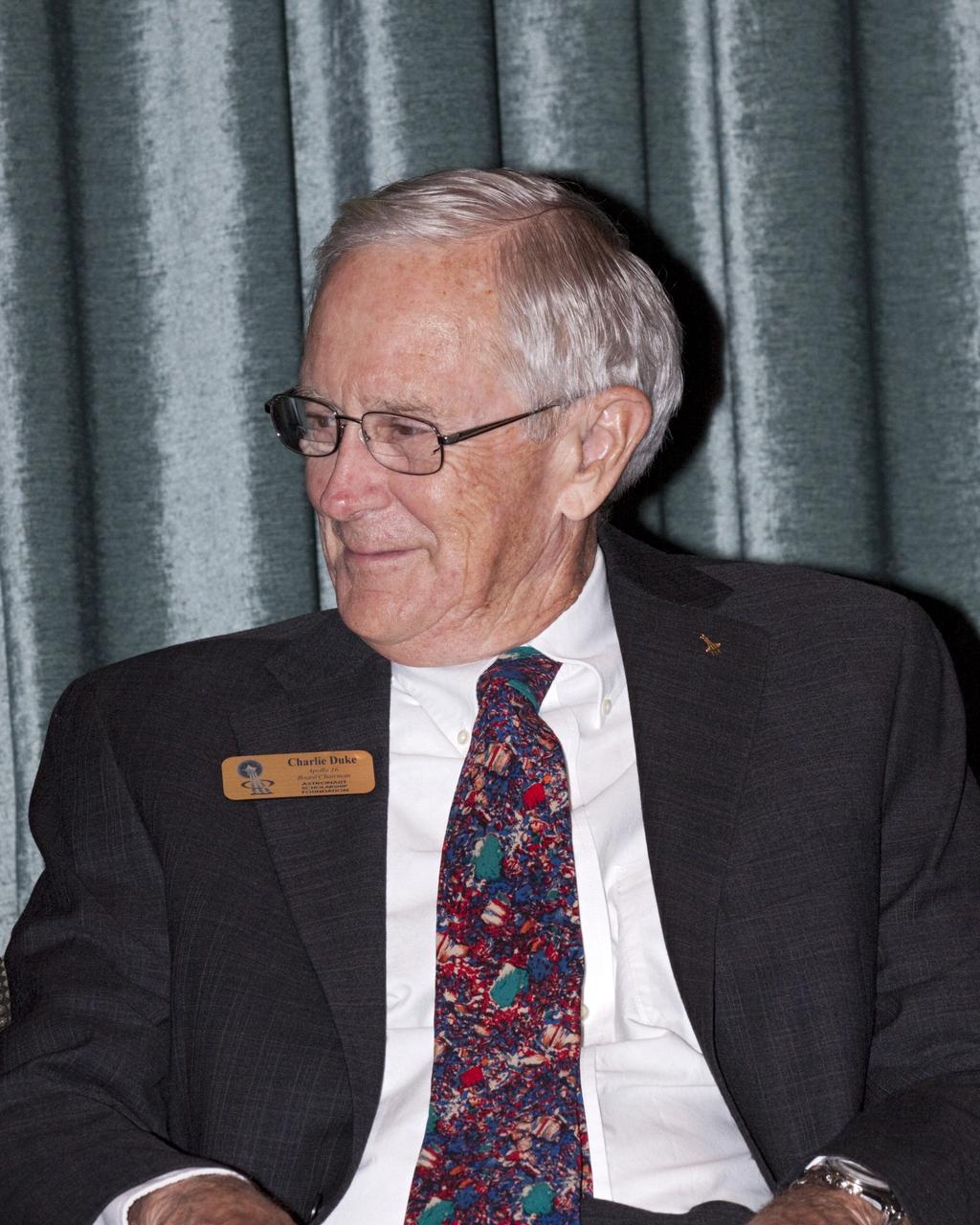
CAPE CANAVERAL, Fla. – Apollo 16 astronaut Charles Duke participates in a presentation to guests gathered for the Astronaut Scholarship Foundation's dinner at the Radisson Resort at the Port in Cape Canaveral celebrating the 40th anniversary of Apollo 17. The gala commemorating the anniversary of Apollo 17 included mission commander Eugene Cernan and other astronauts who flew Apollo missions. Launched Dec. 7, 1972, Cernan and lunar module pilot Harrison Schmitt landed in the moon's Taurus-Littrow highlands while command module pilot Ronald Evans remained in lunar orbit operating a scientific instrument module. For more information, visit http://www-pao.ksc.nasa.gov/history/apollo/apollo-17/apollo-17.htm Photo credit: NASA/Kim Shiflett
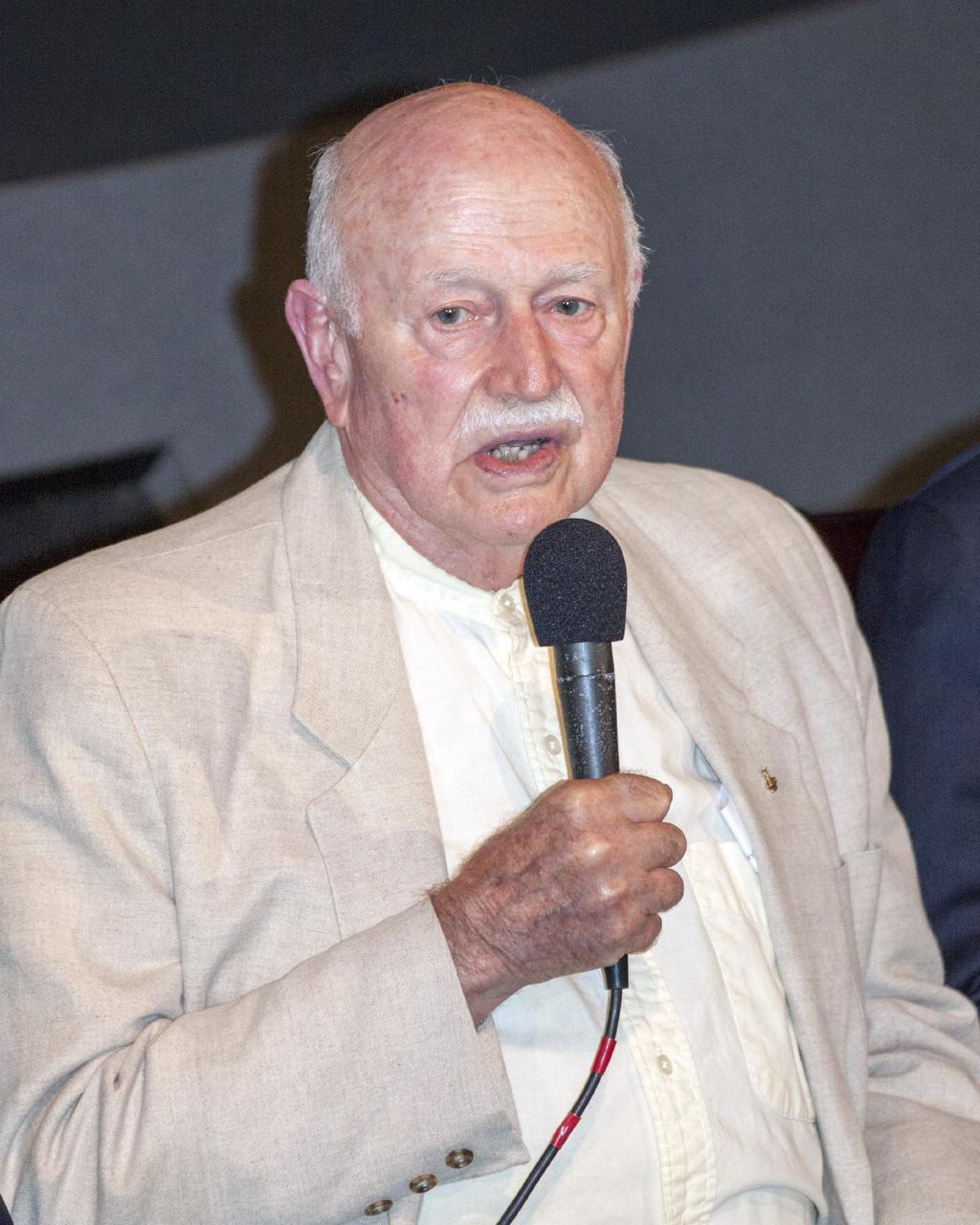
CAPE CANAVERAL, Fla. – At the Kennedy Space Center's Apollo/Saturn V Center, former NASA astronaut Gerald Carr speaks to guests at the Astronaut Scholarship Foundation's event celebrating the 40th anniversary of Skylab. Carr served as commander of Skylab 4, the third piloted mission to the space station. The gala commemorating the 40th anniversary of Skylab included six of the nine astronauts who flew missions to America's first space station. The orbiting laboratory was launched unpiloted from Kennedy on May 14, 1973. Between May 25, 1973 and Feb. 8, 1974, crews of three spent 28, 59 and 84 days living and working in low-Earth orbit aboard the station. For more information, visit http://www.nasa.gov/mission_pages/skylab/ Photo credit: NASA/Kim Shiflett
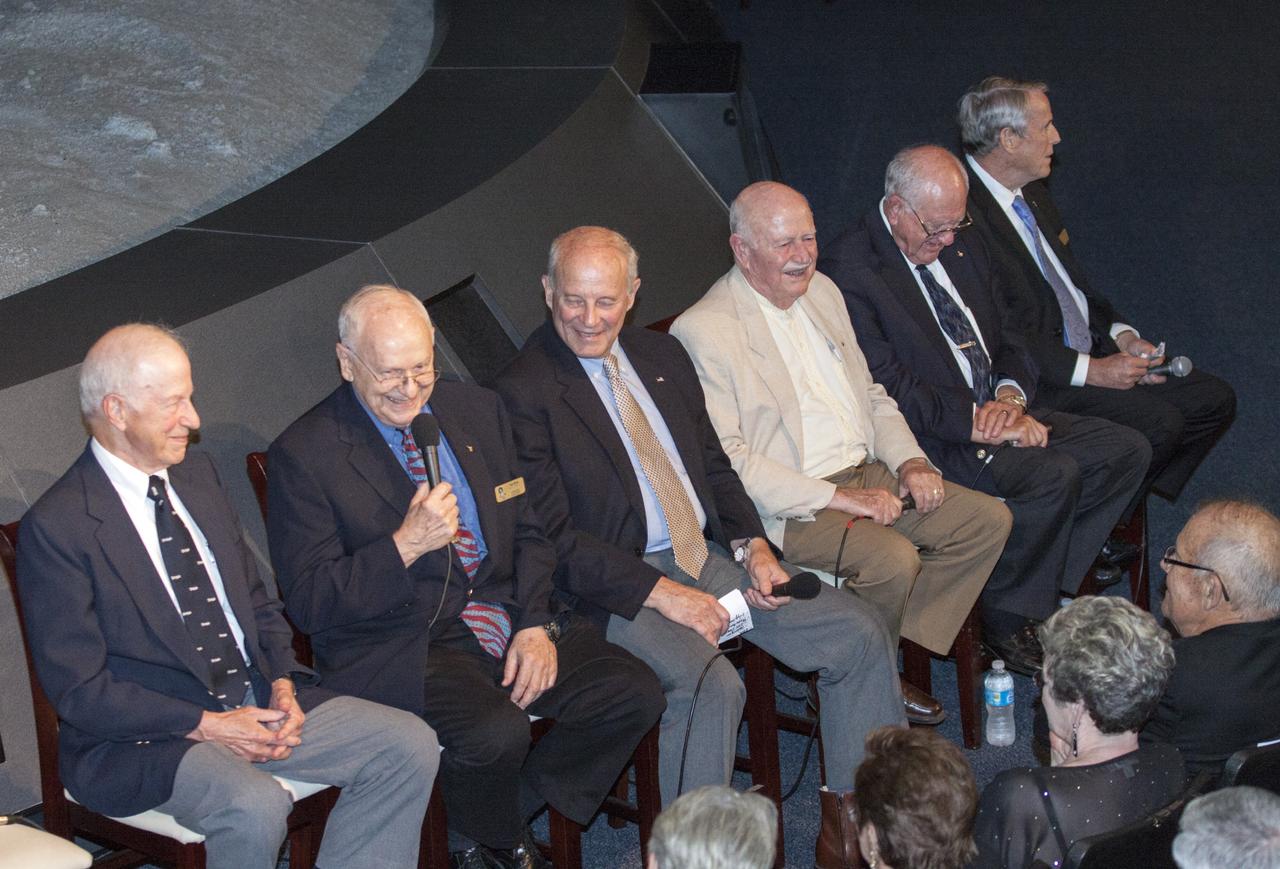
CAPE CANAVERAL, Fla. – At the Kennedy Space Center's Apollo/Saturn V Center, Skylab astronauts, from the left, Paul Weitz, Alan Bean, Jack Lousma, Gerald Carr, William Pogue and Edward Gibson recall experiences during the Astronaut Scholarship Foundation's event celebrating the 40th anniversary of Skylab. The gala commemorating the 40th anniversary of Skylab included six of the nine astronauts who flew missions to America's first space station. The orbiting laboratory was launched unpiloted from Kennedy on May 14, 1973. Between May 25, 1973 and Feb. 8, 1974, crews of three spent 28, 59 and 84 days living and working in low-Earth orbit aboard the station. For more information, visit http://www.nasa.gov/mission_pages/skylab/ Photo credit: NASA/Kim Shiflett
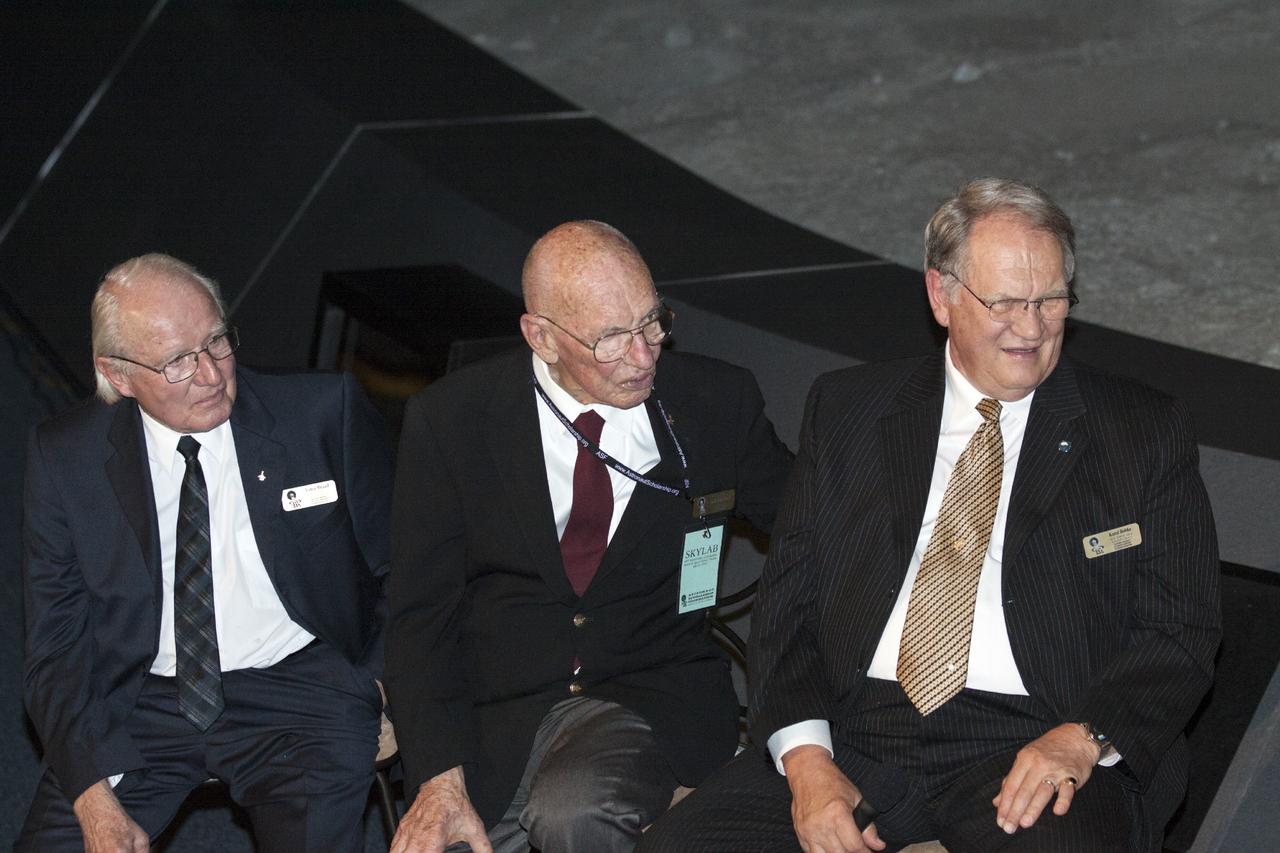
CAPE CANAVERAL, Fla. – At the Kennedy Space Center's Apollo/Saturn V Center, former NASA astronauts, from the left, Vance Brand, William Thornton and Karol Bobko recall experiences during the Astronaut Scholarship Foundation's event celebrating the 40th anniversary of Skylab. Each went on to fly missions during the Space Shuttle Program. Brand was also pilot on the Apollo-Soyuz Test Project. The gala commemorating the 40th anniversary of Skylab included six of the nine astronauts who flew missions to America's first space station. The orbiting laboratory was launched unpiloted from Kennedy on May 14, 1973. Between May 25, 1973 and Feb. 8, 1974, crews of three spent 28, 59 and 84 days living and working in low-Earth orbit aboard the station. For more information, visit http://www.nasa.gov/mission_pages/skylab/ Photo credit: NASA/Kim Shiflett
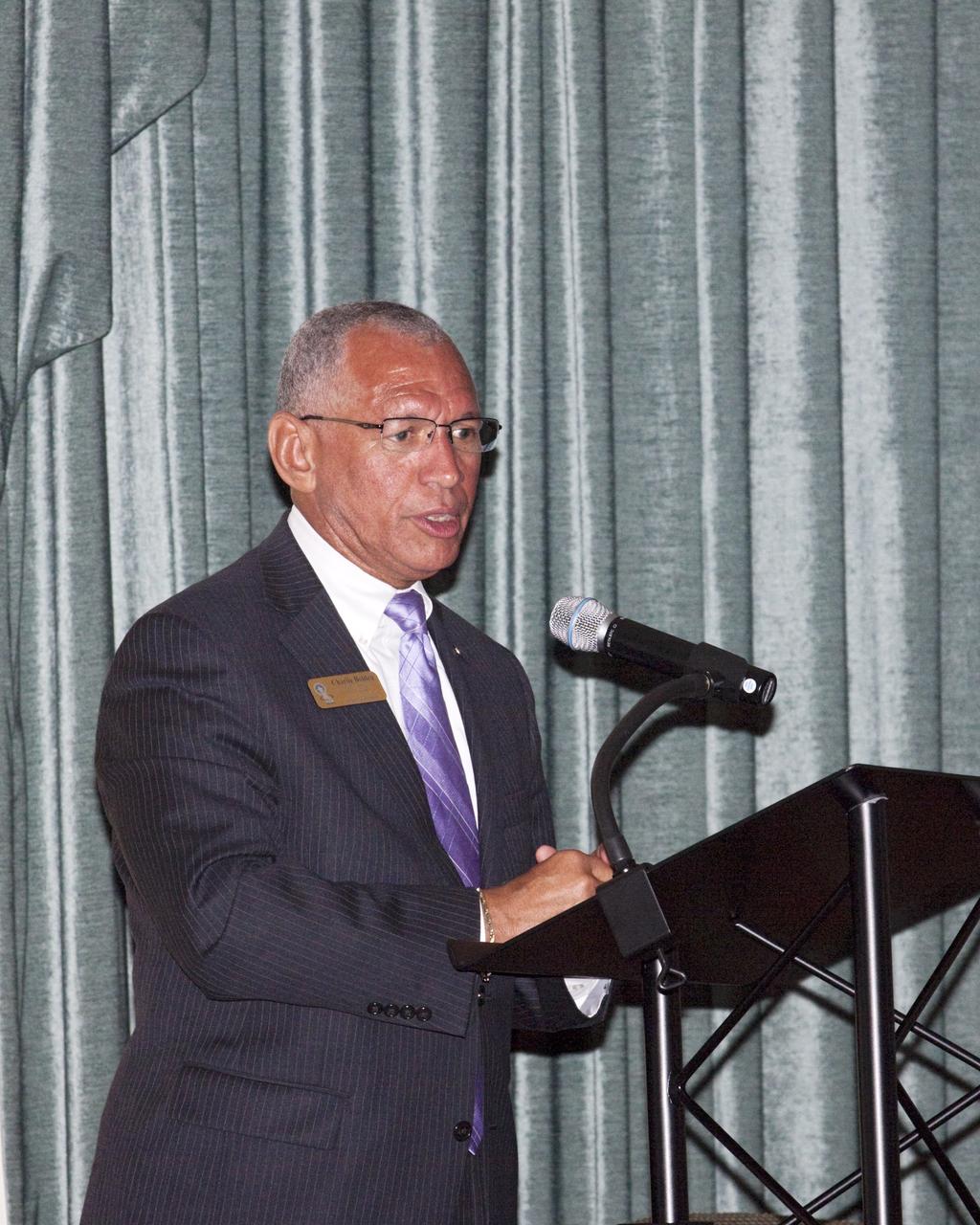
CAPE CANAVERAL, Fla. – NASA Administrator Charles Bolden speaks to guests gathered for the Astronaut Scholarship Foundation's dinner at the Radisson Resort at the Port in Cape Canaveral celebrating the 40th anniversary of Apollo 17. The gala commemorating the anniversary of Apollo 17 included mission commander Eugene Cernan and other astronauts who flew Apollo missions. Launched Dec. 7, 1972, Cernan and lunar module pilot Harrison Schmitt landed in the moon's Taurus-Littrow highlands while command module pilot Ronald Evans remained in lunar orbit operating a scientific instrument module. For more information, visit http://www-pao.ksc.nasa.gov/history/apollo/apollo-17/apollo-17.htm Photo credit: NASA/Kim Shiflett
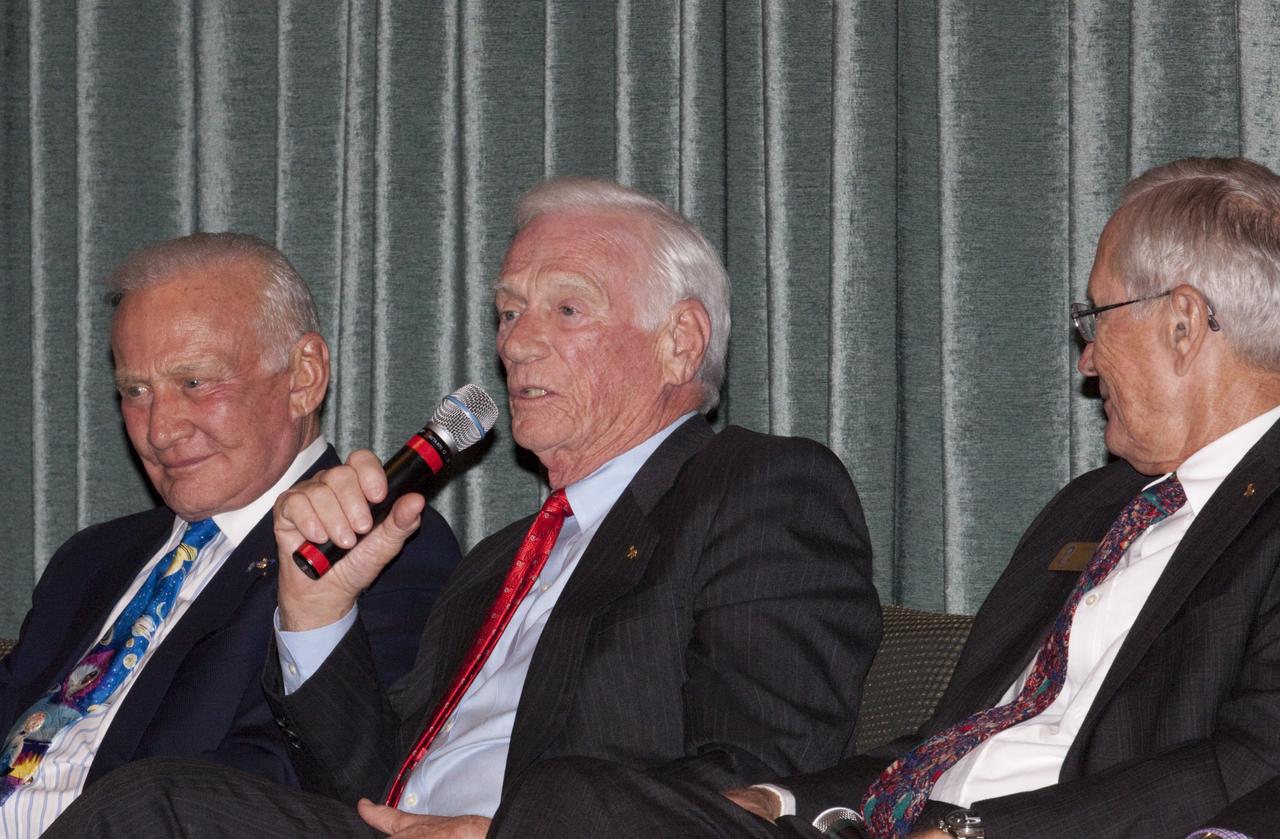
CAPE CANAVERAL, Fla. – Gemini 9, Apollo 10 and 17 astronaut Eugene Cernan speaks to guests gathered for the Astronaut Scholarship Foundation's dinner at the Radisson Resort at the Port in Cape Canaveral celebrating the 40th anniversary of Apollo 17. Listening on the left is Gemini 12 and Apollo 11 astronaut Buzz Aldrin, along with Apollo 16 astronaut Charles Duke. The gala commemorating the anniversary of Apollo 17 included mission commander Eugene Cernan and other astronauts who flew Apollo missions. Launched Dec. 7, 1972, Cernan and lunar module pilot Harrison Schmitt landed in the moon's Taurus-Littrow highlands while command module pilot Ronald Evans remained in lunar orbit operating a scientific instrument module. For more information, visit http://www-pao.ksc.nasa.gov/history/apollo/apollo-17/apollo-17.htm Photo credit: NASA/Kim Shiflett