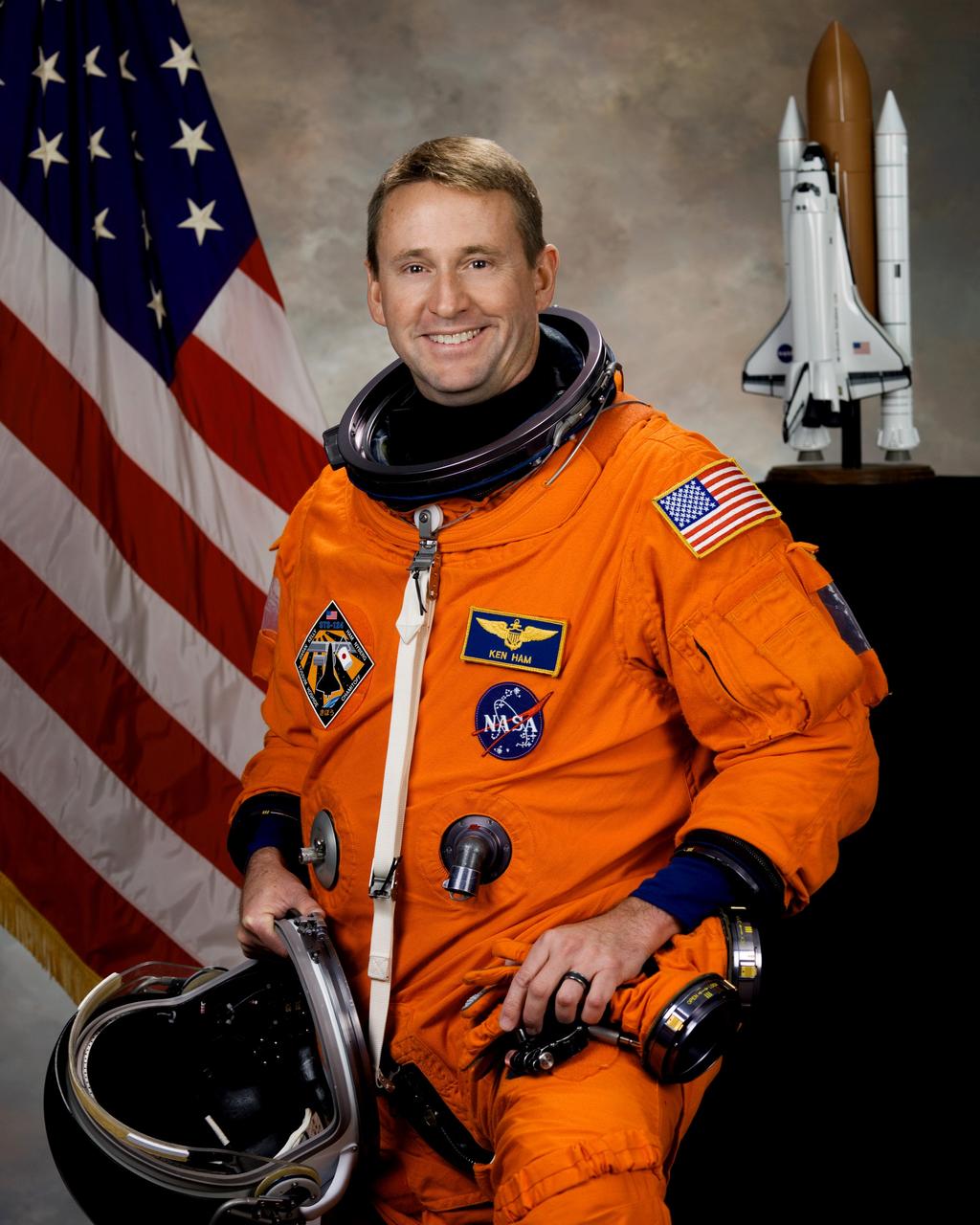
JOHNSON SPACE CENTER, Houston --- JSC2007-E-093431 --- Astronaut Kenneth T. Ham, commander

JSC2007-E-093431 (13 Sept. 2007) --- Astronaut Kenneth T. Ham, commander
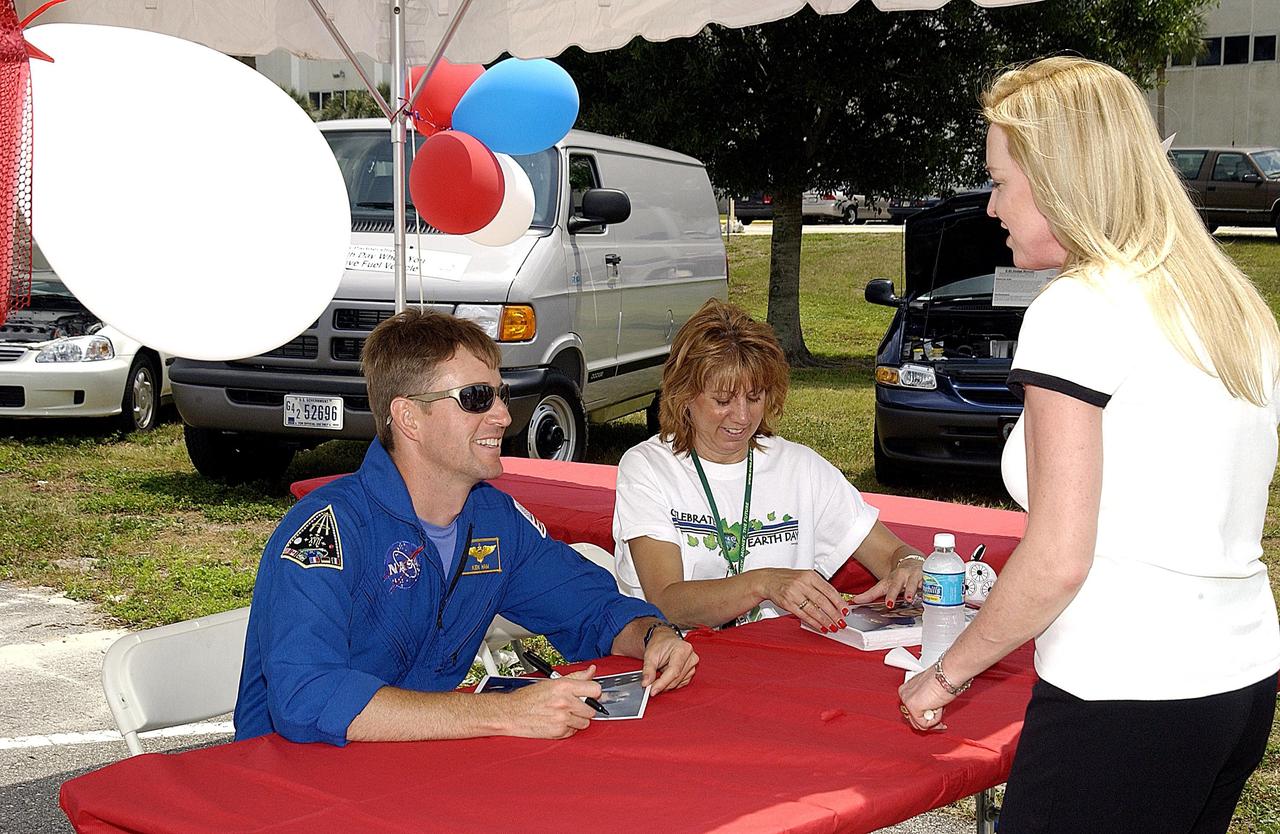
KENNEDY SPACE CENTER, FLA. - During Energy and Awareness Week, astronaut Kenneth Ham autographs a photo for an employee (right). Ham is one of two astronauts celebrating Earth Day with KSC. The other is Mark Polansky. The two-day event was held April 22-23 around the Center.
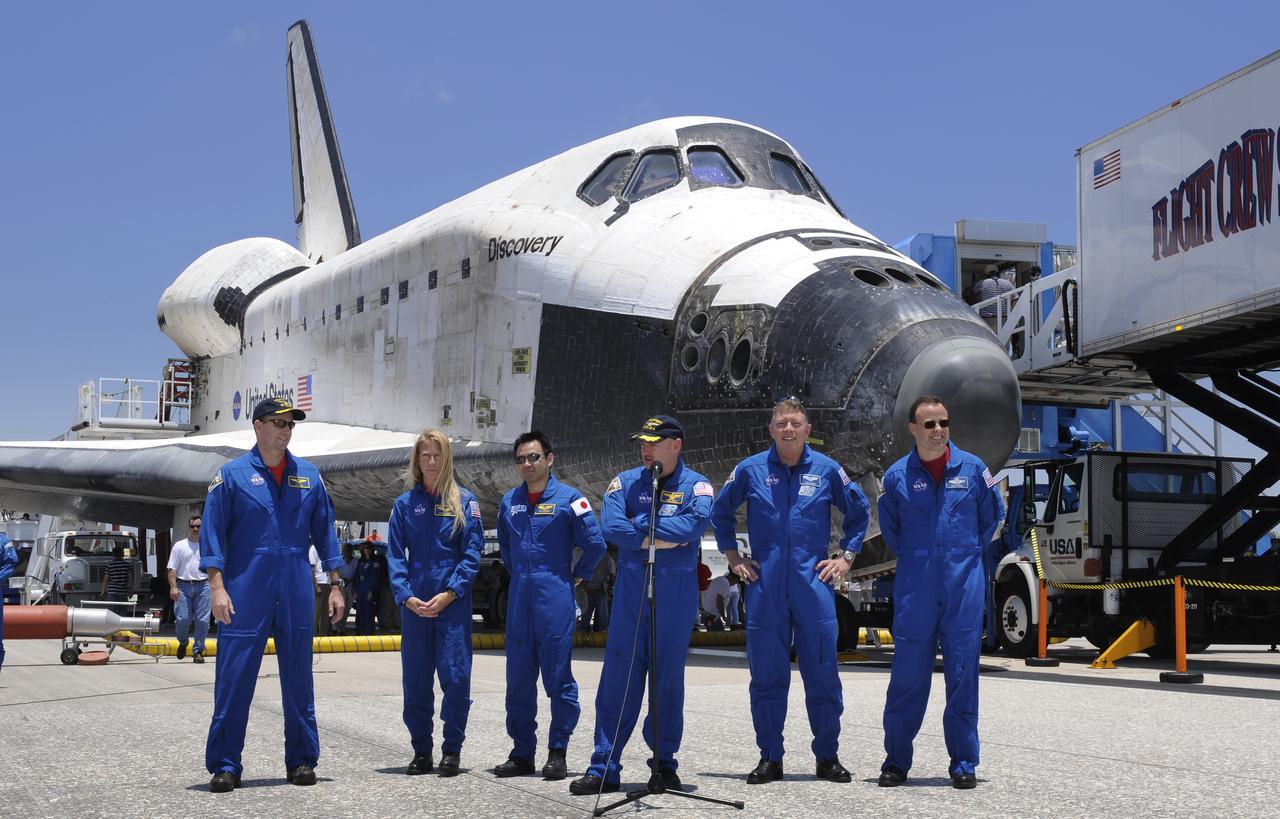
STS-124 crew members, from left, pilot Kenneth T. Ham, mission specialist Karen L. Nyberg, mission specialist, Japan Aerospace Exploration Agency's (JAXA) Akihiko Hoshide, Commander Mark E. Kelly, mission specialist Michael E. Fossum and mission specialist Ronald J. Garan talk about their STS-124 mission shortly after landing the space shuttle Discovery at 11:15 a.m. on June 14, 2008 at the Kennedy Space Center in Cape Canaveral, Florida. During the 14-day mission the crew of STS-124 installed the Japan Aerospace Exploration Agency's large Kibo laboratory and its remote manipulator system leaving a larger space station and one with increased science capabilities. Discovery also brought home NASA astronaut Garrett Reisman after his 3 month mission onboard the International Space Station. Photo Credit: (NASA/Bill Ingalls)
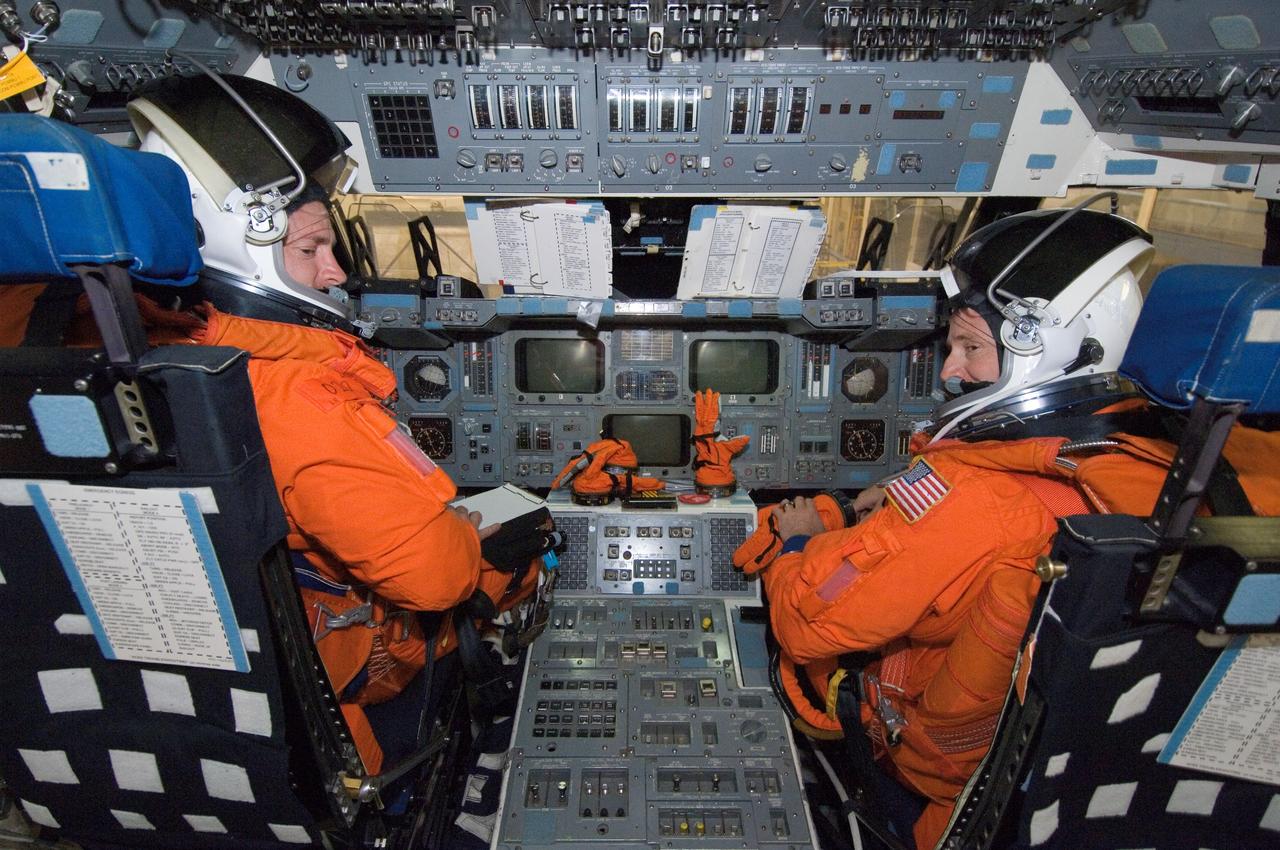
JSC2007-E-48205 (28 Sept. 2007) --- While seated at the commander's and pilot's stations, astronauts Mark E. Kelly (left) and Kenneth T. Ham, STS-124 commander and pilot, respectively, participate in a training session in the crew compartment trainer (CCT-2) in the Space Vehicle Mockup Facility at Johnson Space Center. Kelly and Ham are wearing training versions of their shuttle launch and entry suits.
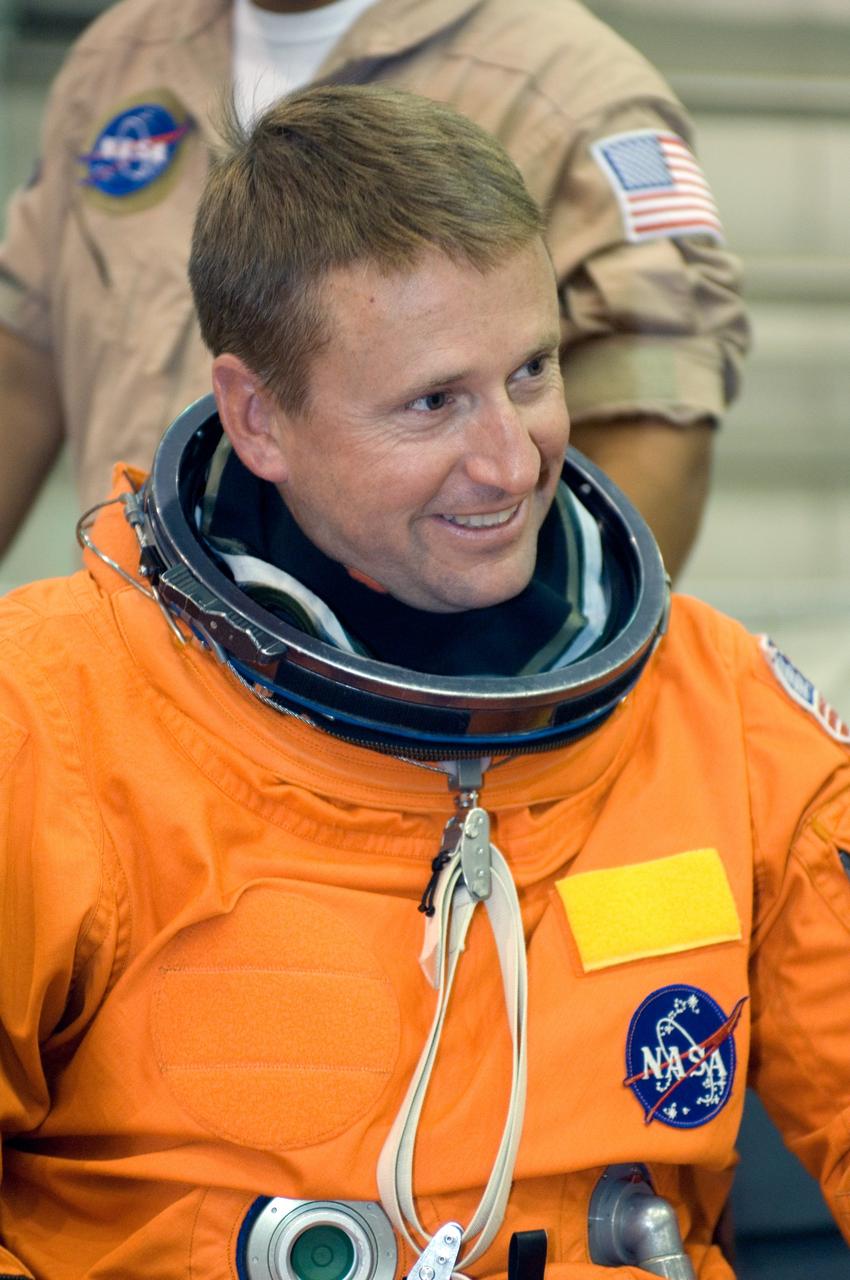
JSC2007-E-43408 (15 Aug. 2007) --- Attired in a training version of his shuttle launch and entry suit, astronaut Kenneth T. Ham, STS-124 pilot, awaits the start of a water survival training session in the Neutral Buoyancy Laboratory (NBL) near Johnson Space Center.
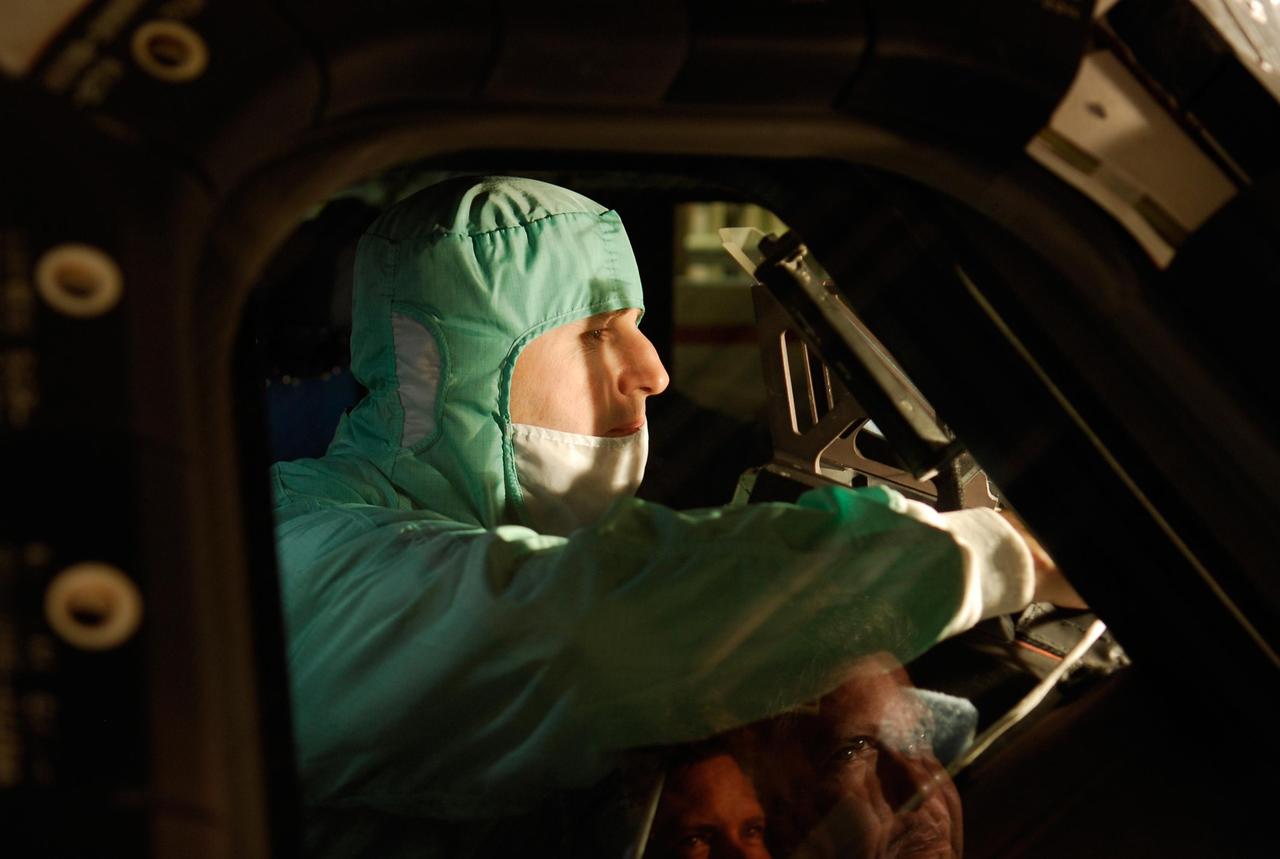
KENNEDY SPACE CENTER, FLA. -- During a crew equipment interface test in the Orbiter Processing Facility bay 3 at NASA's Kennedy Space Center, STS-124 Pilot Kenneth Ham checks the cockpit window in space shuttle Discovery. The shuttle will transport the Kibo Japanese Experiment Module - Pressurized Module (JEM-PM) and the Japanese Remote Manipulator System (JEM-RMS) to the International Space Station to complete the Kibo laboratory. The launch of Discovery is targeted for April 24. Photo credit: NASA/Kim Shiflett
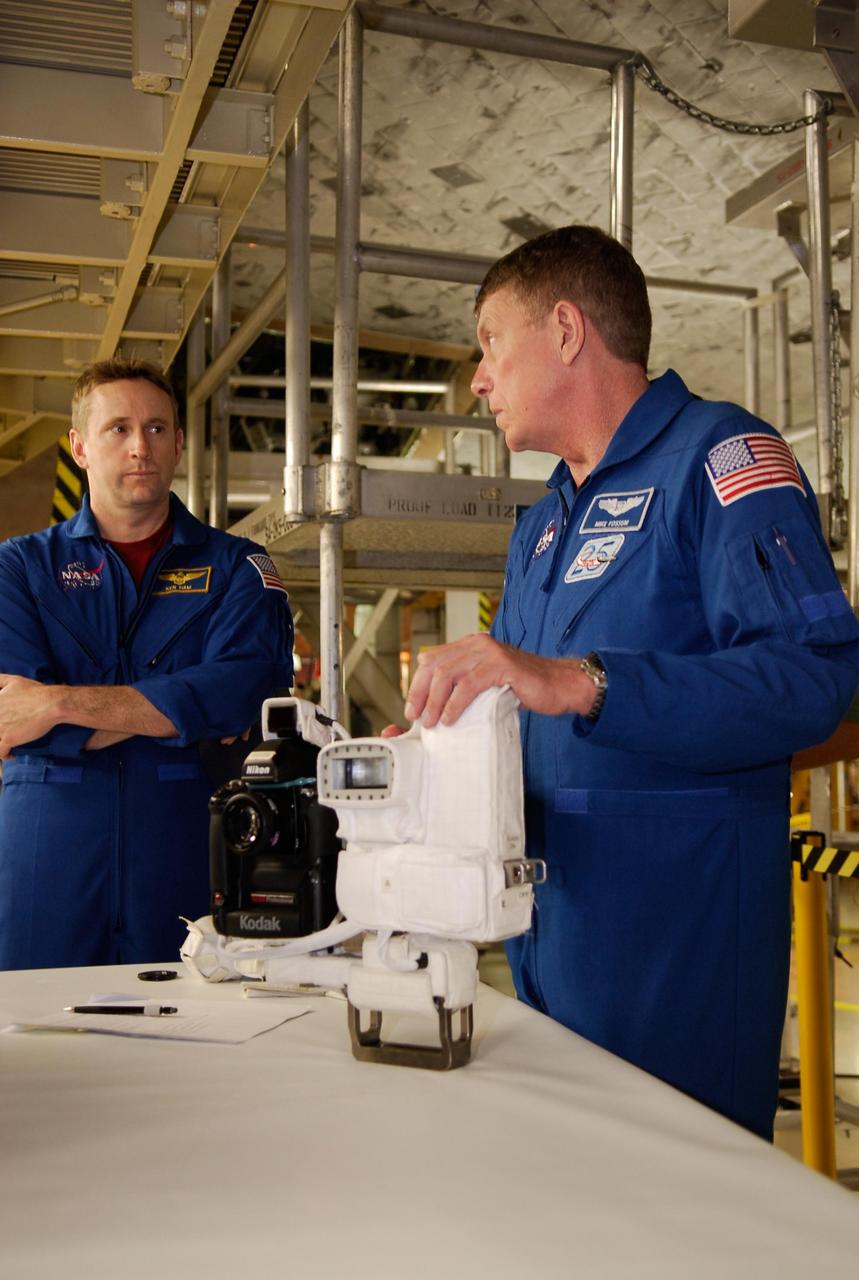
KENNEDY SPACE CENTER, FLA. -- During a crew equipment interface test in the Orbiter Processing Facility bay 3, space shuttle Discovery's STS-124 Pilot Kenneth Ham (left) and Mission Specialist Michael Fossum look at cameras that will be used on the mission. Discovery will transport the Kibo Japanese Experiment Module - Pressurized Module (JEM-PM) and the Japanese Remote Manipulator System (JEM-RMS) to the International Space Station to complete the Kibo laboratory. The launch of Discovery is targeted for April 24. Photo credit: NASA/Kim Shiflett
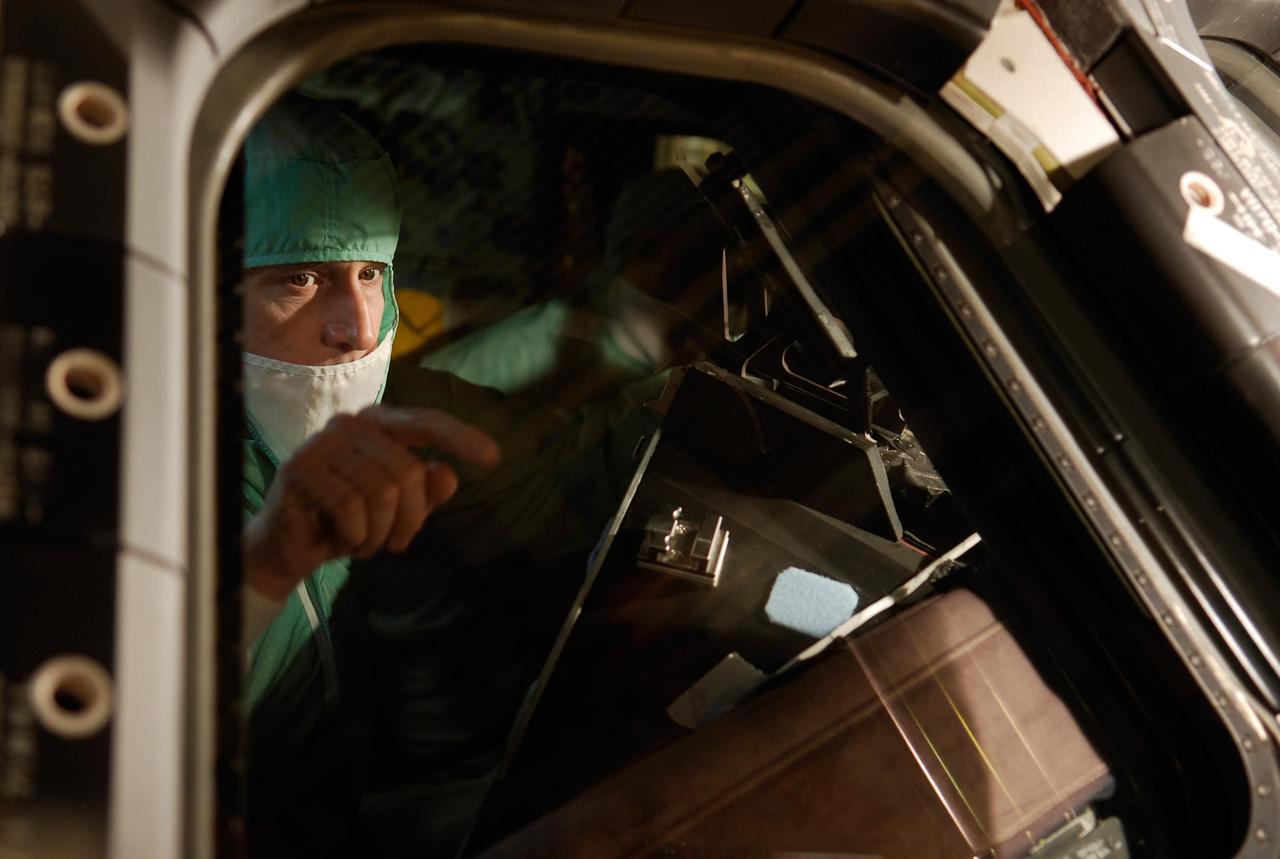
KENNEDY SPACE CENTER, FLA. -- During a crew equipment interface test in the Orbiter Processing Facility bay 3 at NASA's Kennedy Space Center, STS-124 Pilot Kenneth Ham checks a manual in the cockpit of space shuttle Discovery. The shuttle will transport the Kibo Japanese Experiment Module - Pressurized Module (JEM-PM) and the Japanese Remote Manipulator System (JEM-RMS) to the International Space Station to complete the Kibo laboratory. The launch of Discovery is targeted for April 24. Photo credit: NASA/Kim Shiflett
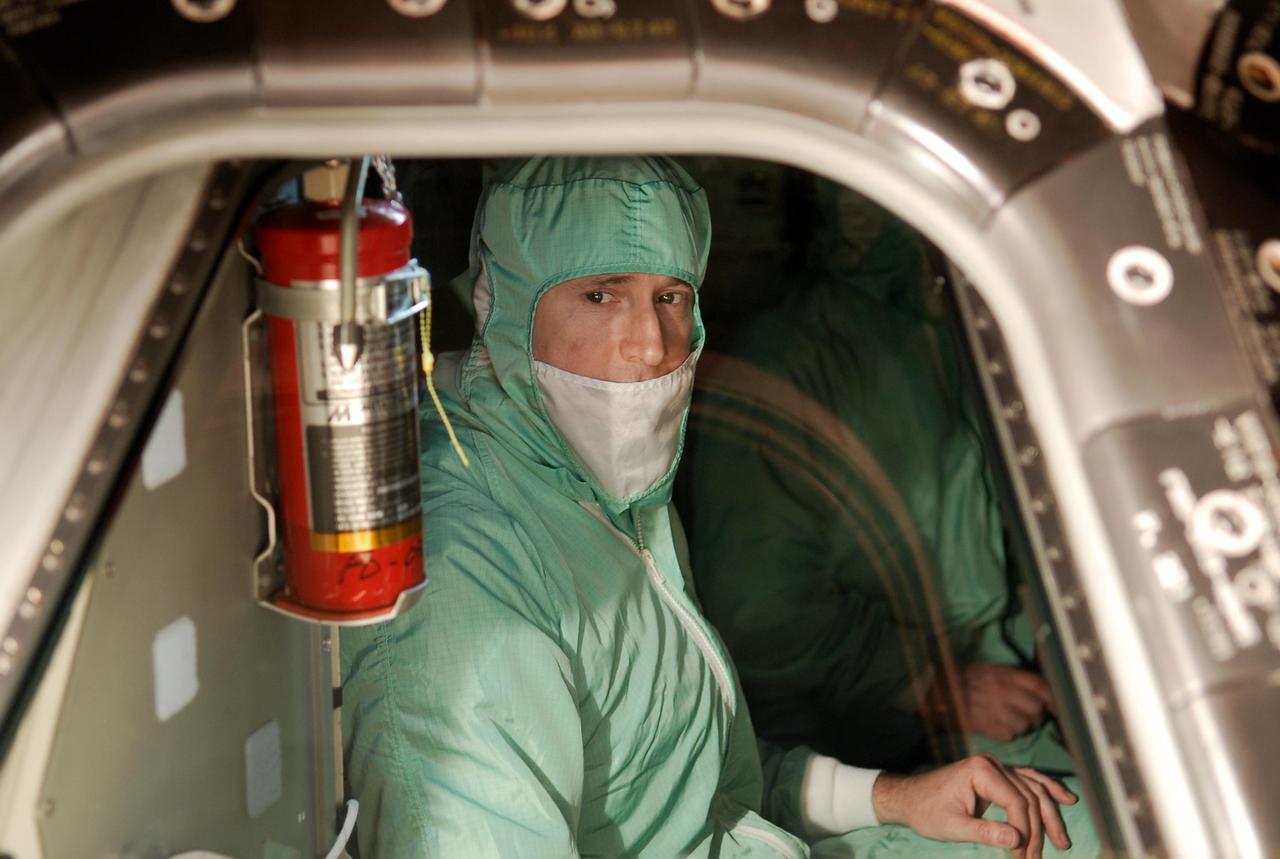
KENNEDY SPACE CENTER, FLA. -- During a crew equipment interface test in the Orbiter Processing Facility bay 3 at NASA's Kennedy Space Center, STS-124 Pilot Kenneth Ham examines the area around his seat in the cockpit of space shuttle Discovery. The shuttle will transport the Kibo Japanese Experiment Module - Pressurized Module (JEM-PM) and the Japanese Remote Manipulator System (JEM-RMS) to the International Space Station to complete the Kibo laboratory. The launch of Discovery is targeted for April 24. Photo credit: NASA/Kim Shiflett

ISS017-E-008690 (2 June 2008) --- Astronaut Ken Ham, STS-124 pilot, uses a communication system in the Destiny laboratory of the International Space Station while Space Shuttle Discovery is docked with the station.
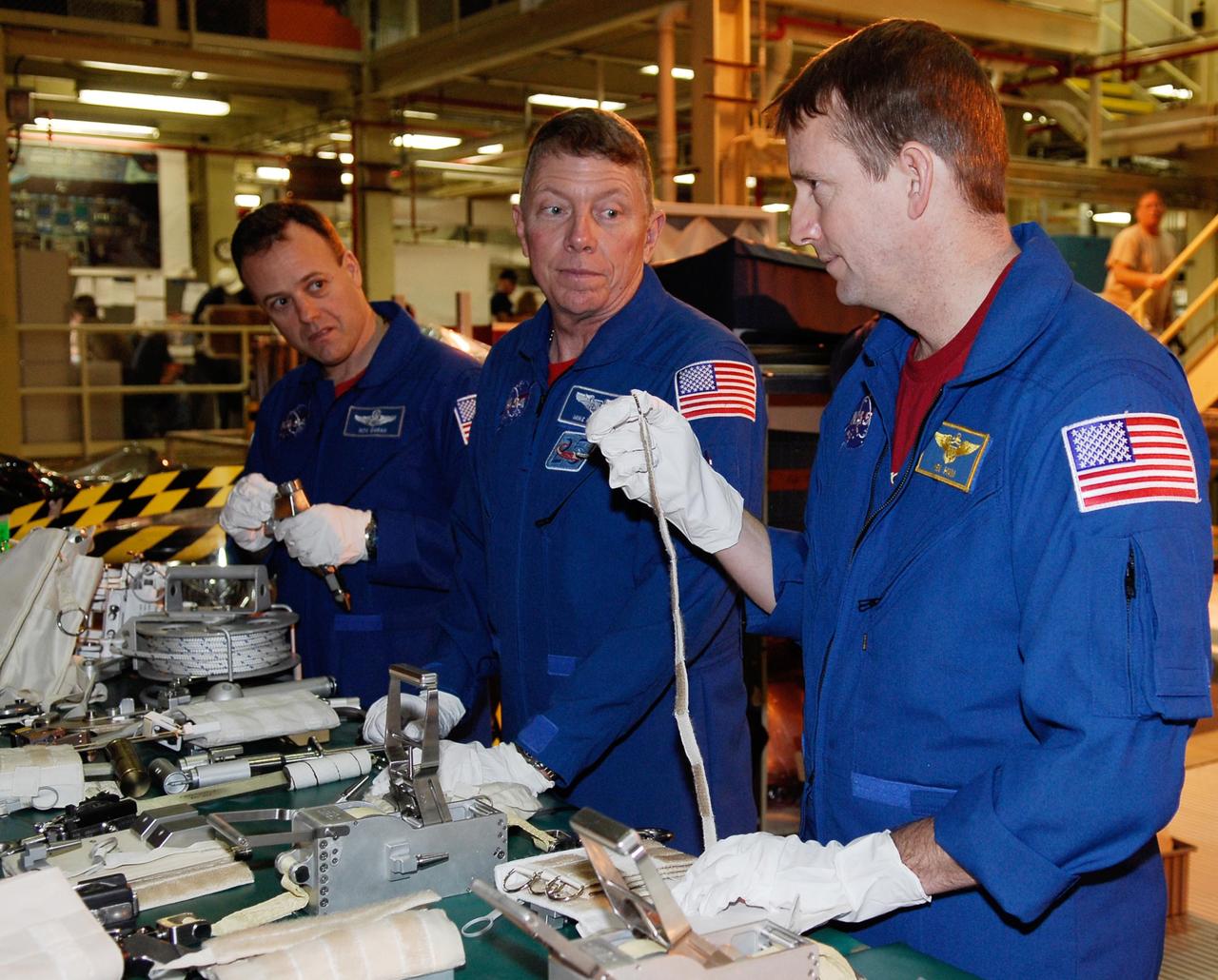
KENNEDY SPACE CENTER, FLA. -- During a crew equipment interface test in the Orbiter Processing Facility bay 3 NASA's Kennedy Space Center, space shuttle Discovery's STS-124 crew members get hands-on experience with some of the equipment that will used on the mission. From left are Mission Specialists Ronald Garan and Michael Fossum and Pilot Kenneth Ham. Discovery will transport the Kibo Japanese Experiment Module - Pressurized Module (JEM-PM) and the Japanese Remote Manipulator System (JEM-RMS) to the International Space Station to complete the Kibo laboratory. The launch of Discovery is targeted for April 24. Photo credit: NASA/Kim Shiflett
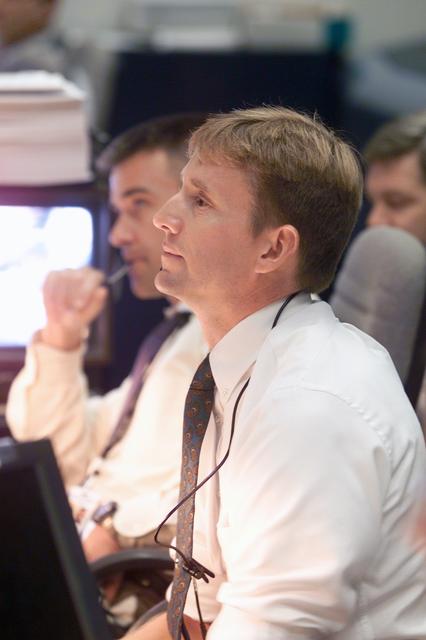
JSC2002-E-41160 (7 October 2002) --- Astronauts Kenneth T. Ham (foreground) and Duane G. Carey, spacecraft communicators (CAPCOM), watch the large screens from their consoles in the shuttle flight control room (WFCR) in Houston’s Mission Control Center (MCC). At the time this photo was taken the Space Shuttle Atlantis was about to launch from the Kennedy Space Center, Florida. Atlantis lifted off at 2:46 p.m. (CDT) on October 7, 2002. Once the vehicle cleared the tower in Florida, the Houston-based team of flight controllers took over the ground control of the flight.
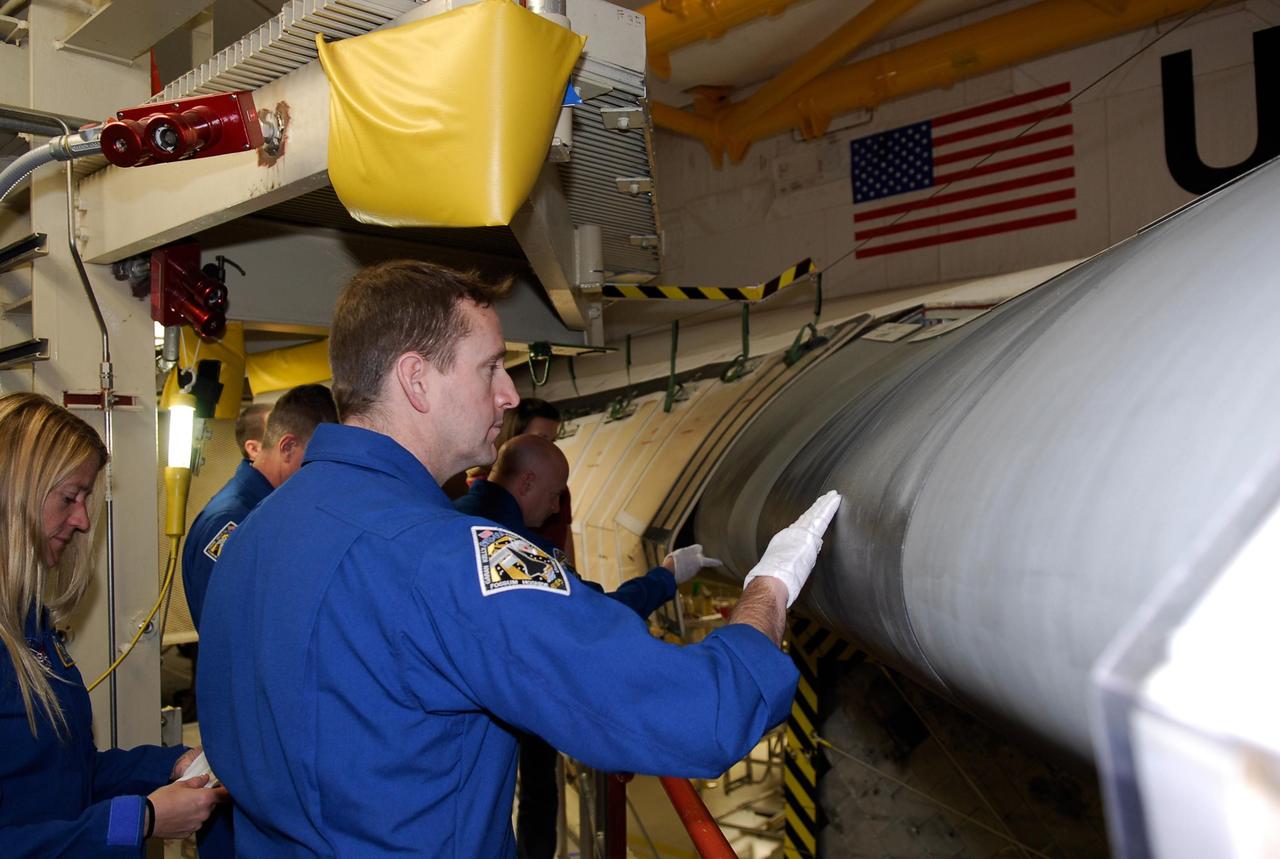
KENNEDY SPACE CENTER, FLA. -- In the Orbiter Processing Facility bay 3 at NASA's Kennedy Space Center, STS-124 Pilot Kenneth Ham takes a close look at the wing leading edge on space shuttle Discovery. Members of the crew are at Kennedy for a crew equipment interface test. On the mission, Discovery will transport the Kibo Japanese Experiment Module - Pressurized Module (JEM-PM) and the Japanese Remote Manipulator System (JEM-RMS) to the International Space Station to complete the Kibo laboratory. The launch of Discovery is targeted for April 24. Photo credit: NASA/Kim Shiflett
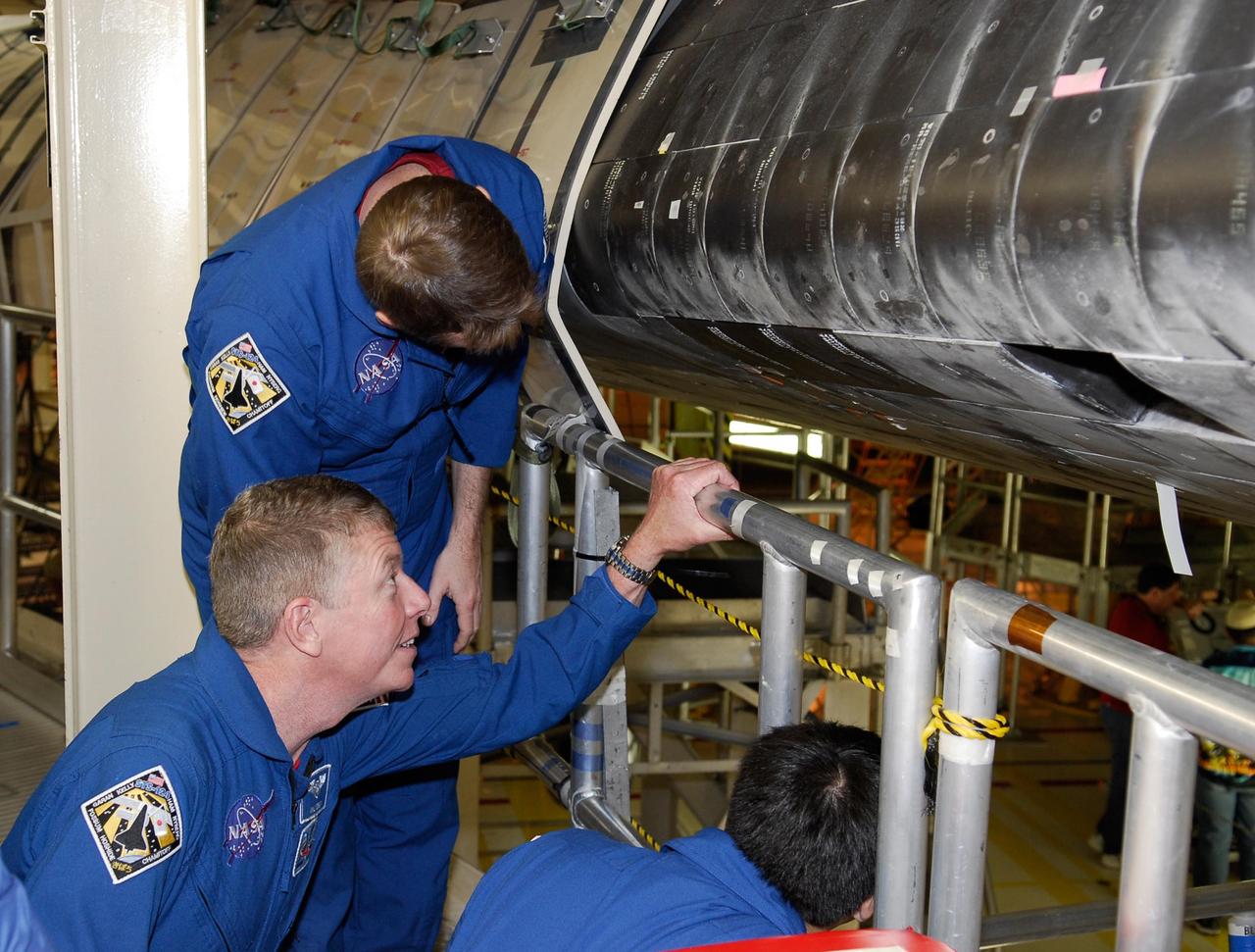
KENNEDY SPACE CENTER, FLA. -- In the Orbiter Processing Facility bay 3 at NASA's Kennedy Space Center, members of the STS-124 crew inspect space shuttle Discovery during a crew equipment interface test. Seen, top to bottom are Pilot Kenneth Ham and Mission Specialists Michael Fossum and Akihiko Hoshide, who represents the Japan Aerospace Exploration Agency, called JAXA. On the mission, Discovery will transport the Kibo Japanese Experiment Module - Pressurized Module (JEM-PM) and the Japanese Remote Manipulator System (JEM-RMS) to the International Space Station to complete the Kibo laboratory. The launch of Discovery is targeted for April 24. Photo credit: NASA/Kim Shiflett
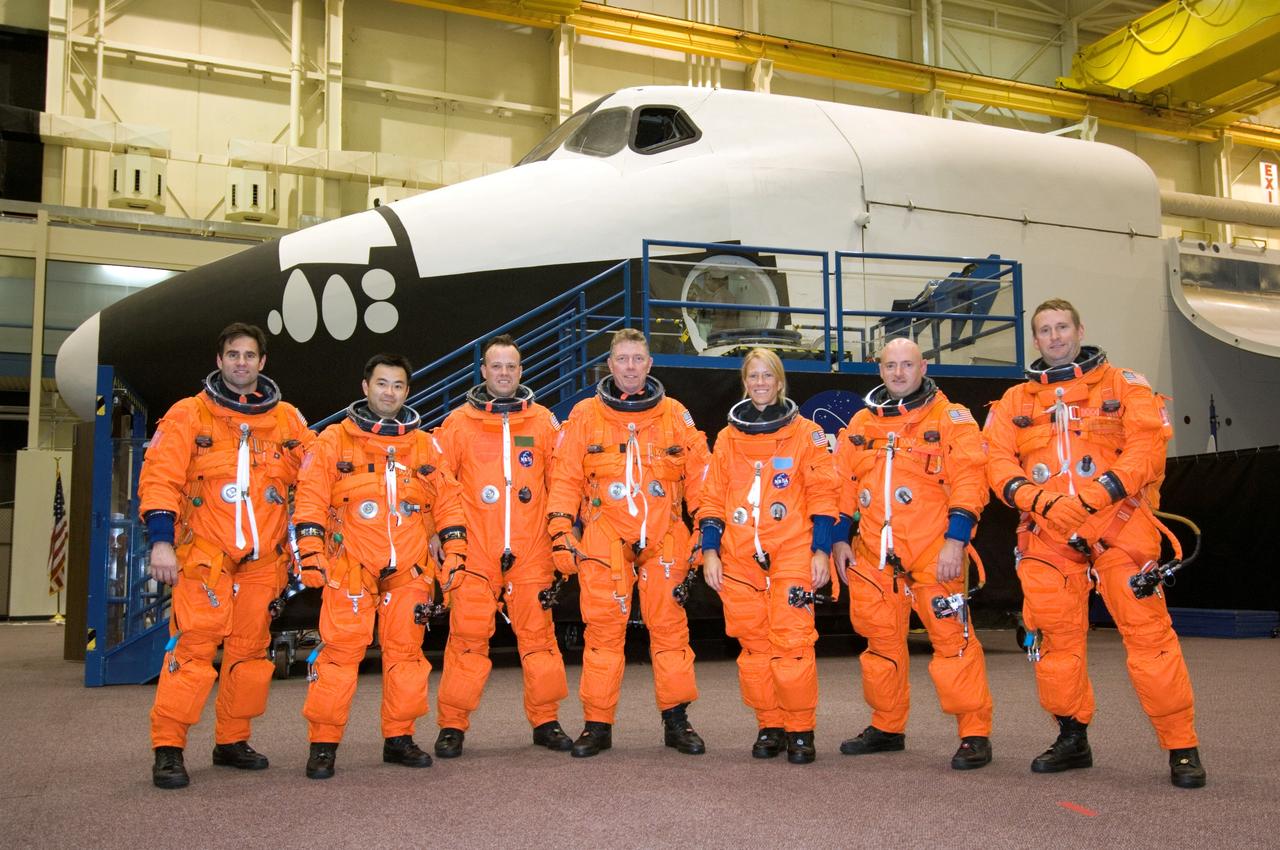
JSC2007-E-48272 (28 Sept. 2007) --- Astronauts Gregory E. Chamitoff (left), Expedition 17 flight engineer; Japan Aerospace Exploration Agency's (JAXA) Akihiko Hoshide, Ronald J. Garan, Michael E. Fossum, Karen L. Nyberg, all STS-124 mission specialists; Mark E. Kelly and Kenneth T. Ham, STS-124 commander and pilot, respectively, pose for a group photo prior to a training session in the Space Vehicle Mockup Facility at Johnson Space Center. The crewmembers are wearing training versions of their shuttle launch and entry suits.
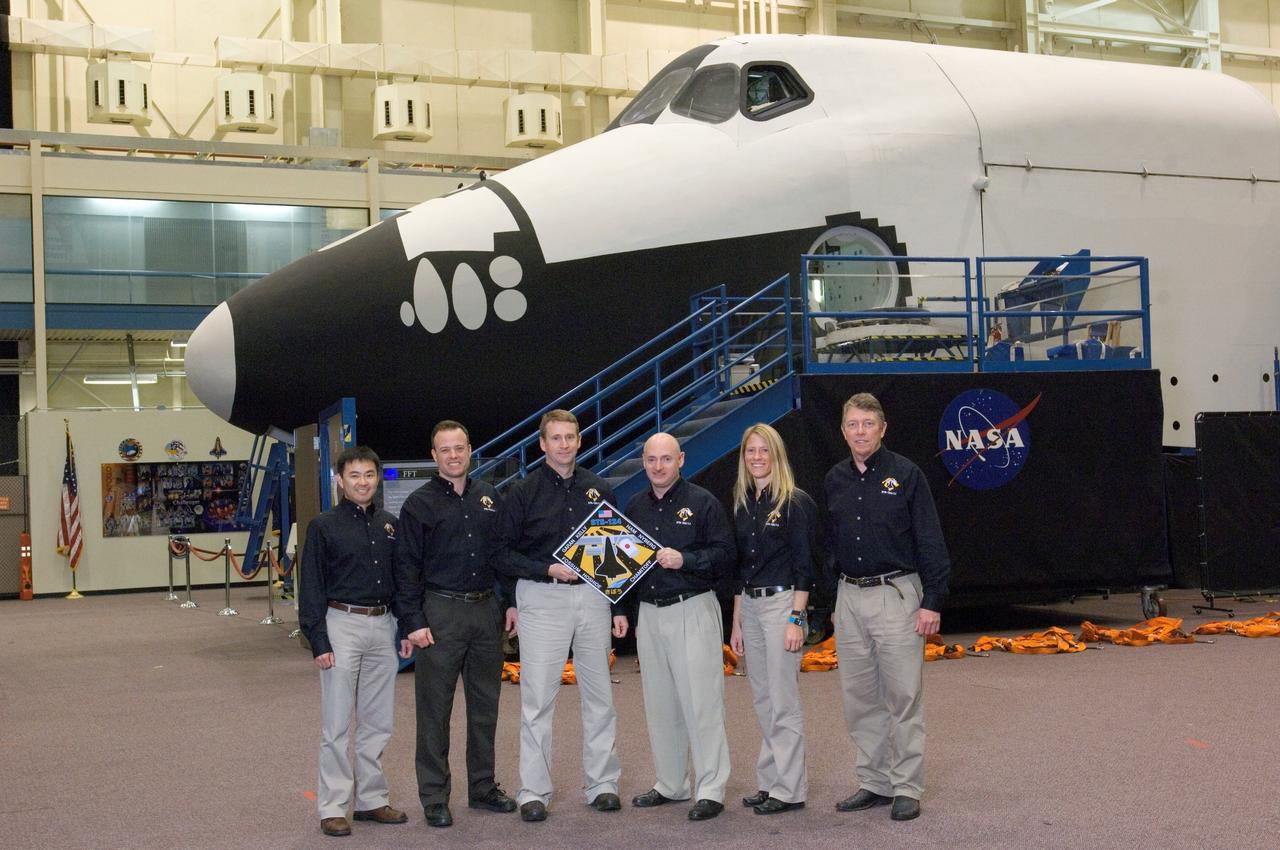
JSC2008-E-009414 (31 Jan. 2008) --- The STS-124 crewmembers take a moment to pose for a portrait during a training session in the Space Vehicle Mockup Facility at the Johnson Space Center. Astronauts Mark E. Kelly (center right) and Kenneth T. Ham, commander and pilot, respectively, hold the STS-124 mission logo. Also pictured (from the left) are Japan Aerospace Exploration Agency (JAXA) astronaut Akihiko Hoshide, NASA astronauts Ronald J. Garan, Karen L. Nyberg and Michael E. Fossum, all mission specialists.
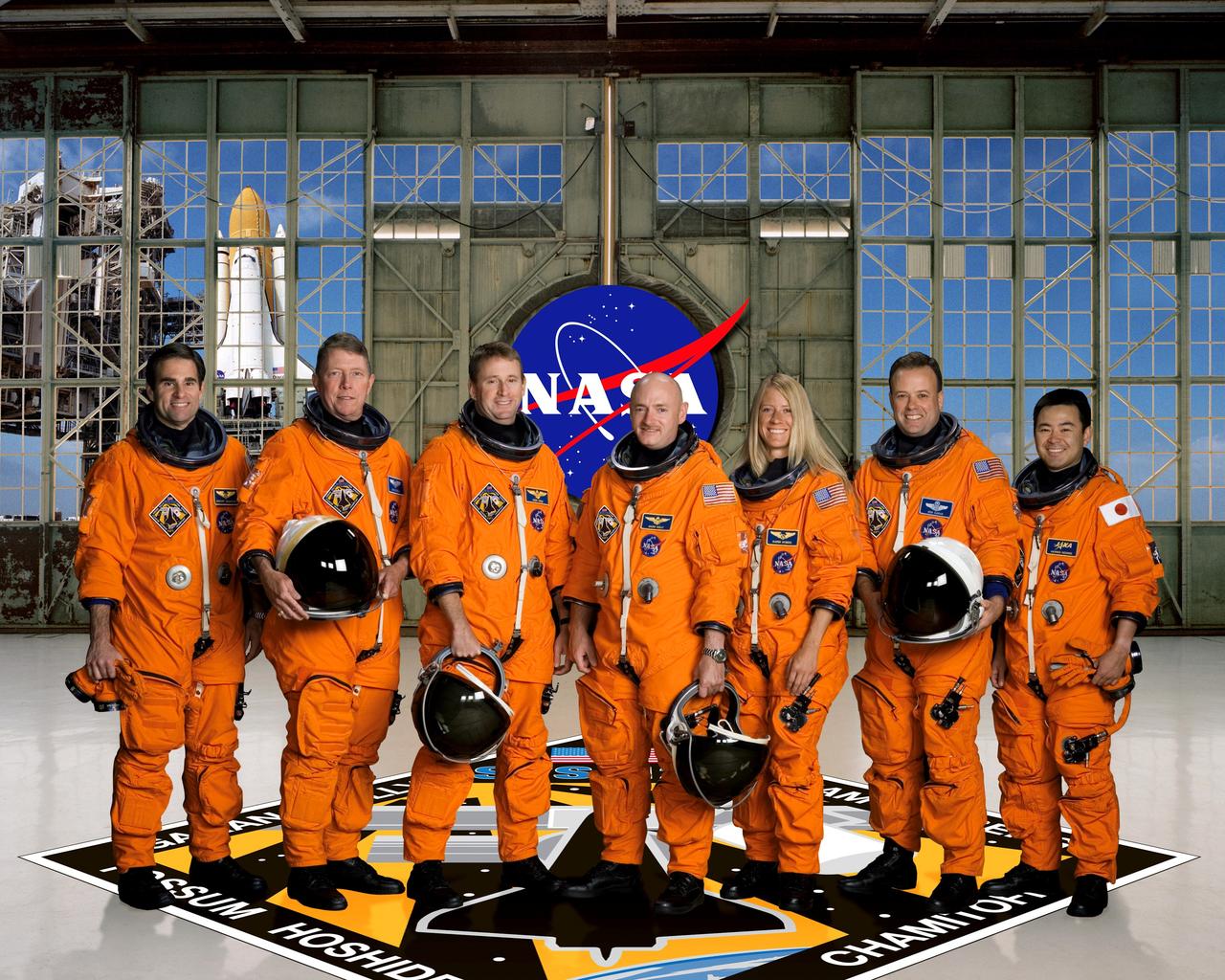
KENNEDY SPACE CENTER, FLA. --- STS124-S-002 --- These seven astronauts take a break from training to pose for the STS-124 crew portrait. From the left are astronauts Gregory E. Chamitoff, Michael E. Fossum, both STS-124 mission specialists; Kenneth T. Ham, pilot; Mark E. Kelly, commander; Karen L. Nyberg, Ronald J. Garan and Japan Aerospace Exploration Agency's (JAXA) Akihiko Hoshide, all mission specialists. Chamitoff is scheduled to join Expedition 17 as flight engineer after launching to the International Space Station on mission STS-124. The crewmembers are attired in training versions of their shuttle launch and entry suits.
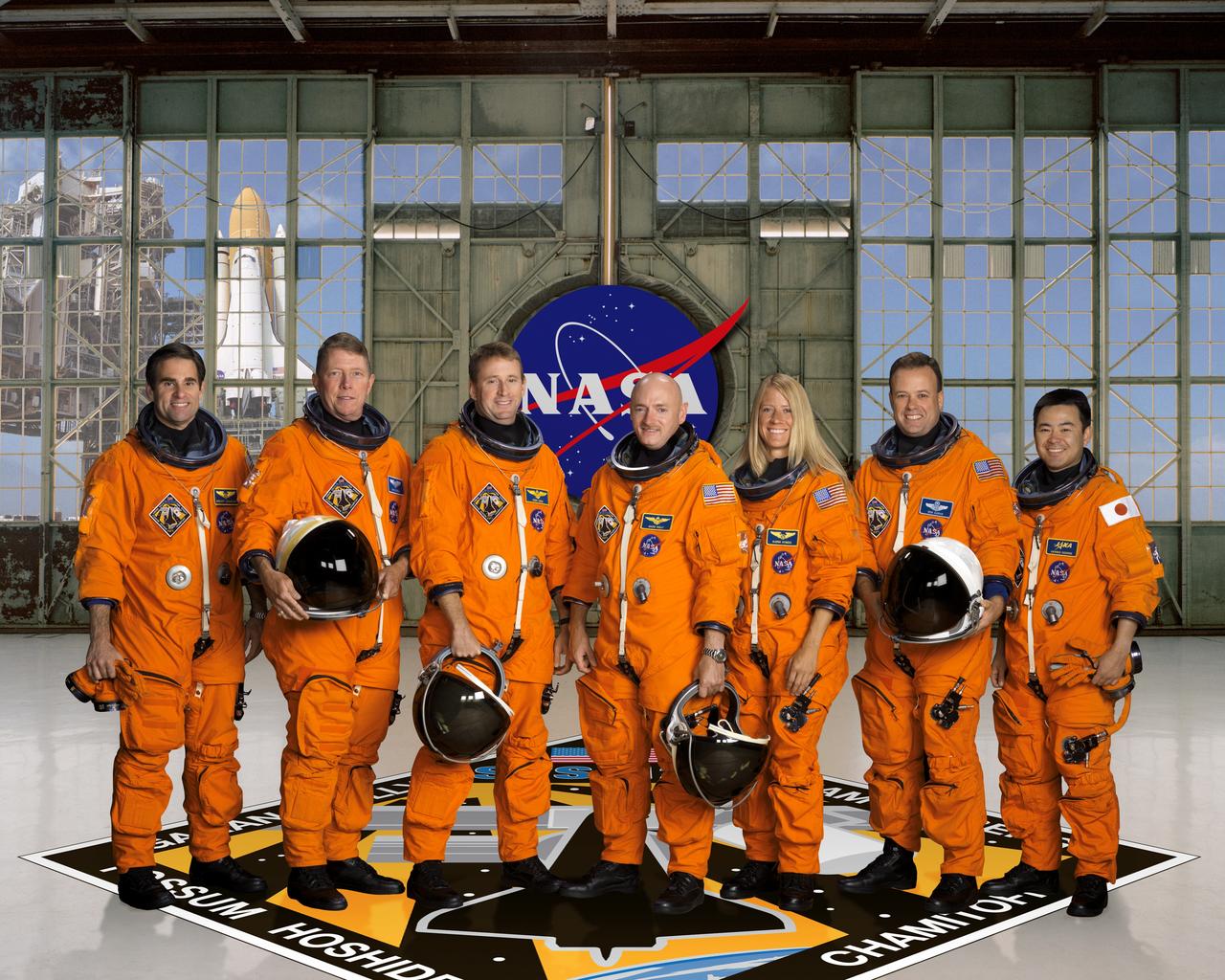
STS124-S-002 (25 Sept. 2007) --- These seven astronauts take a break from training to pose for the STS-124 crew portrait. From the left are astronauts Gregory E. Chamitoff, Michael E. Fossum, both STS-124 mission specialists; Kenneth T. Ham, pilot; Mark E. Kelly, commander; Karen L. Nyberg, Ronald J. Garan and Japan Aerospace Exploration Agency's (JAXA) Akihiko Hoshide, all mission specialists. Chamitoff is scheduled to join Expedition 17 as flight engineer after launching to the International Space Station on mission STS-124. The crewmembers are attired in training versions of their shuttle launch and entry suits.
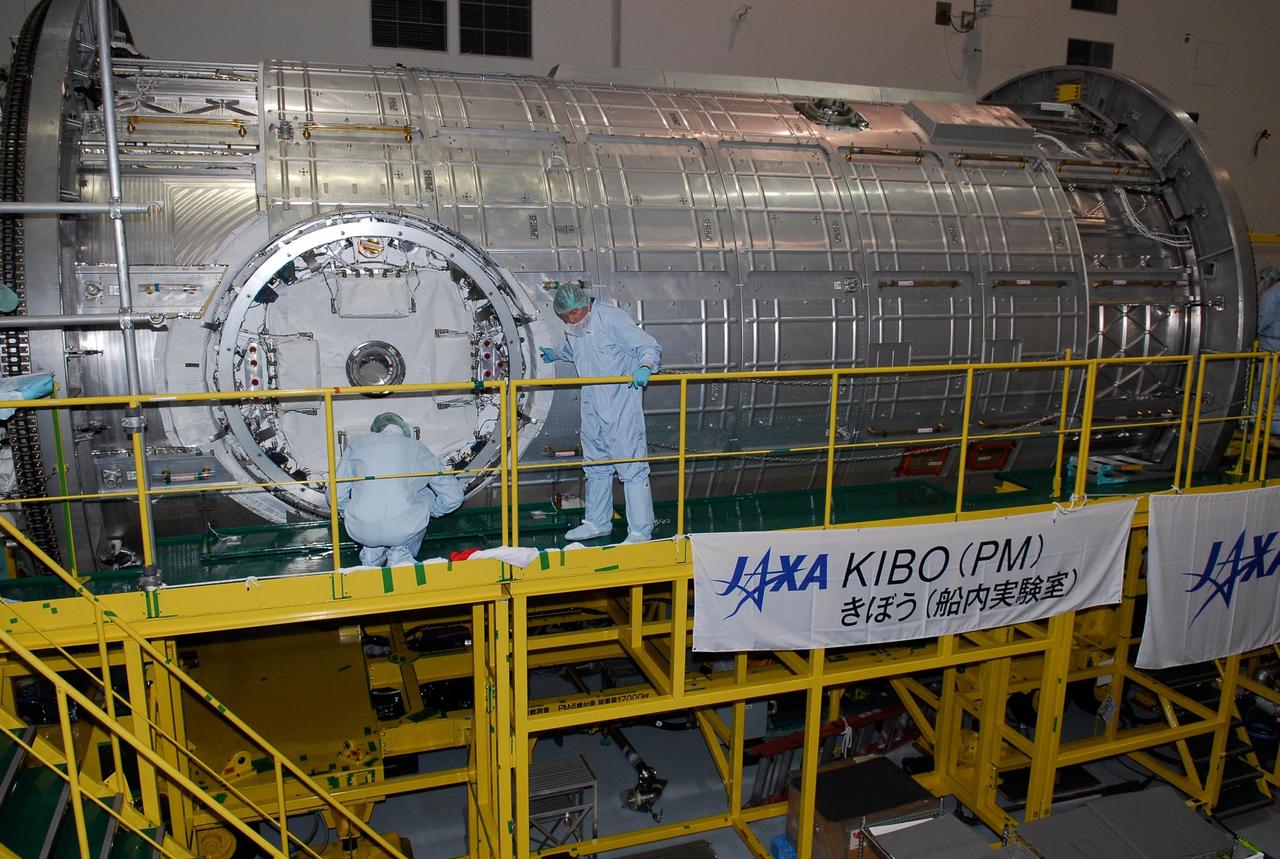
KENNEDY SPACE CENTER, FLA. -- In the Space Station Processing Facility at NASA's Kennedy Space Center, members of the STS-124 crew look over equipment related to the scientific airlock in the Kibo pressurized module. The module is part of the payload for the mission, targeted for launch no earlier than April 24. The crew comprises seven: Commander Mark Kelly, Pilot Kenneth Ham, and Mission Specialists Karen Nyberg, Ronald Garan, Michael Fossum and Akihiko Hoshide. The crew is at Kennedy for a crew equipment interface test that includes familiarization with tools and equipment that will be used on the mission. The STS-124 mission is the second of three flights that will launch components to complete the Japanese pressurized module, the Kibo laboratory. The mission will include two spacewalks to install the new lab and its remote manipulator system. The lab's logistics module, which will have been installed in a temporary location during STS-123, will be attached to the new lab. Photo credit: NASA/Kim Shiflett
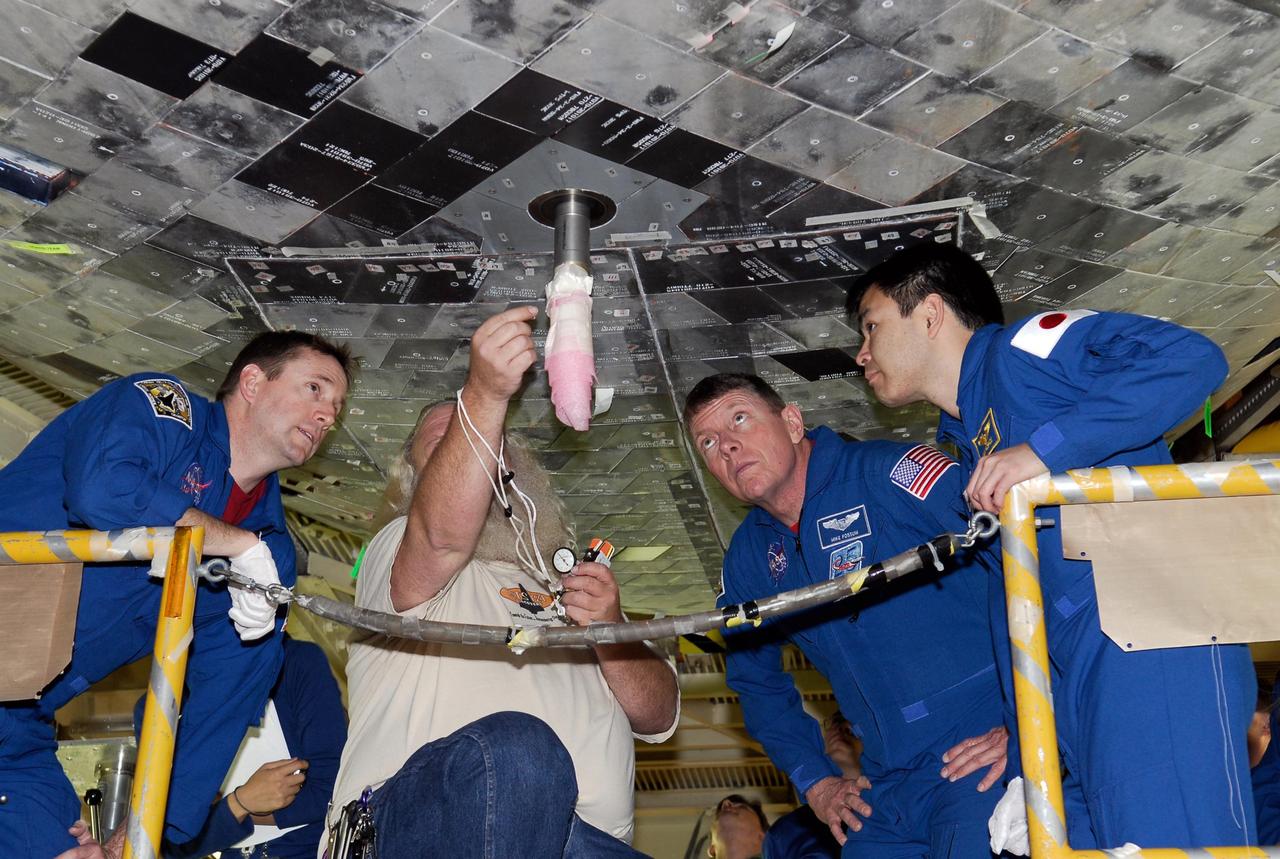
KENNEDY SPACE CENTER, FLA. -- During a crew equipment interface test in the Orbiter Processing Facility bay 3 at NASA's Kennedy Space Center, members of the STS-124 crew, along with a technician, get a close look at the underside of space shuttle Discovery and the attach point for the external tank. The crew members from left are Pilot Kenneth Ham and Mission Specialists Michael Fossum and Akihiko Hoshide, who represents the Japan Aerospace Exploration Agency, called JAXA. On the mission, Discovery will transport the Kibo Japanese Experiment Module - Pressurized Module (JEM-PM) and the Japanese Remote Manipulator System (JEM-RMS) to the International Space Station to complete the Kibo laboratory. The launch of Discovery is targeted for April 24. Photo credit: NASA/Kim Shiflett
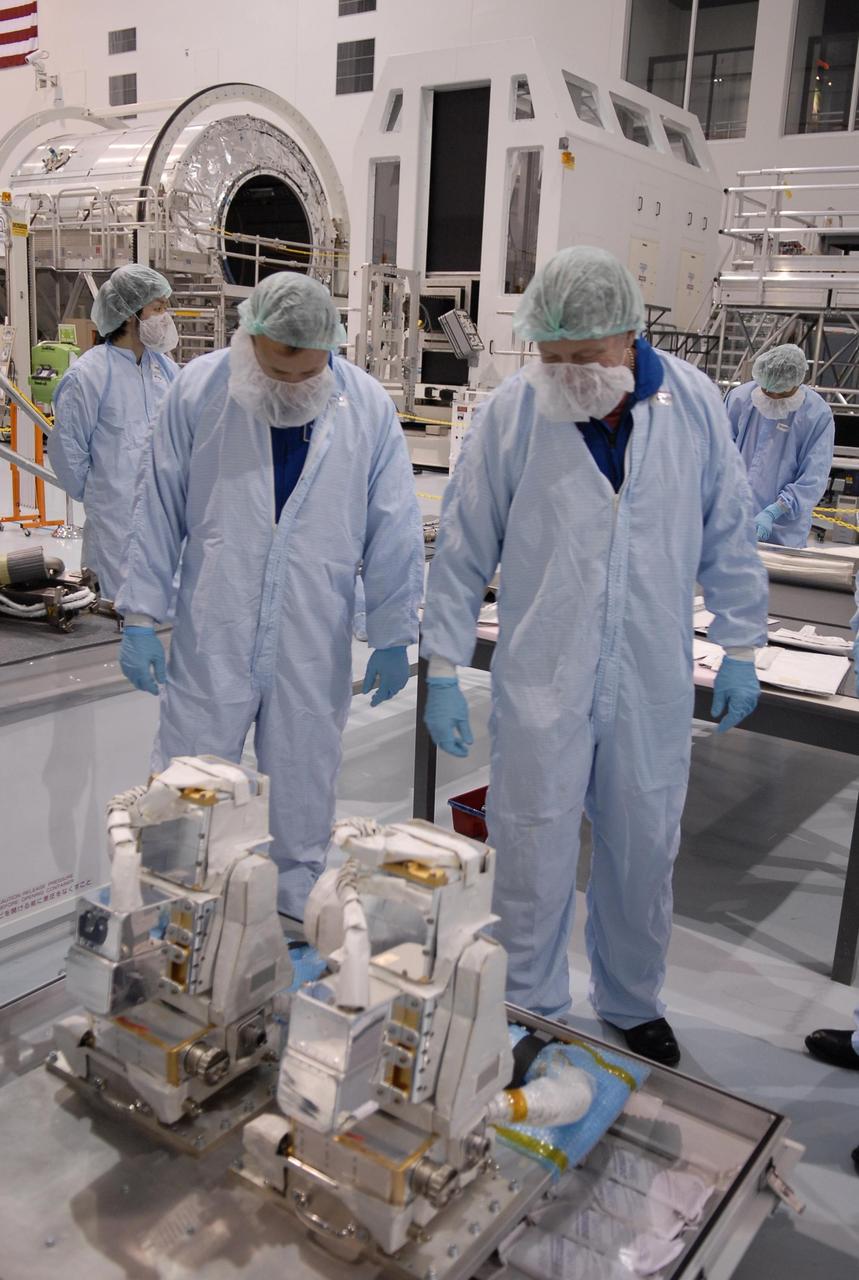
KENNEDY SPACE CENTER, FLA. -- Crew members of mission STS-124 are in the Space Station Processing Facility to look over equipment. The crew comprises Commander Mark Kelly, Pilot Kenneth Ham, and Mission Specialists Karen Nyberg, Ronald Garan, Michael Fossum, Stephen Bowen and Akihiko Hoshide, who represents the Japanese Aerospace and Exploration Agency. Seen here are Garan and Fossum. The STS-124 mission is the second of three flights that will launch components to complete the Japanese pressurized module, the Kibo laboratory. The mission will include two spacewalks to install the new lab and its remote manipulator system. The lab's logistics module, which will have been installed in a temporary location during STS-123, will be attached to the new lab. The mission is scheduled to launch in 2008. Photo credit: NASA/Kim Shiflett
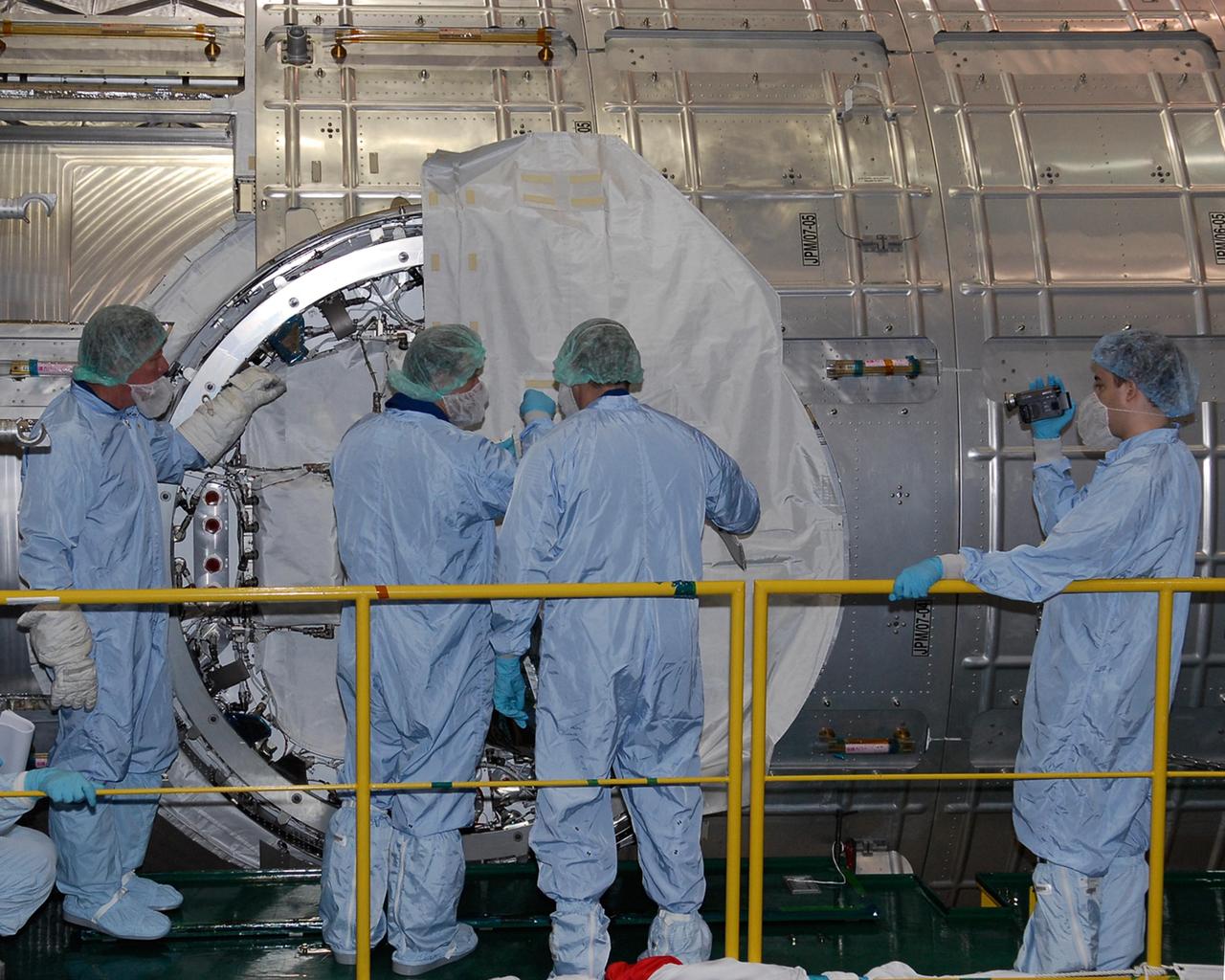
KENNEDY SPACE CENTER, FLA. -- In the Space Station Processing Facility at NASA's Kennedy Space Center, members of the STS-124 crew look over the scientific airlock in the Kibo pressurized module. The module is part of the payload for the mission, targeted for launch no earlier than April 24. The crew comprises seven: Commander Mark Kelly, Pilot Kenneth Ham, and Mission Specialists Karen Nyberg, Ronald Garan, Michael Fossum and Akihiko Hoshide. The crew is at Kennedy for a crew equipment interface test that includes familiarization with tools and equipment that will be used on the mission. The STS-124 mission is the second of three flights that will launch components to complete the Japanese pressurized module, the Kibo laboratory. The mission will include two spacewalks to install the new lab and its remote manipulator system. The lab's logistics module, which will have been installed in a temporary location during STS-123, will be attached to the new lab. Photo credit: NASA/Kim Shiflett
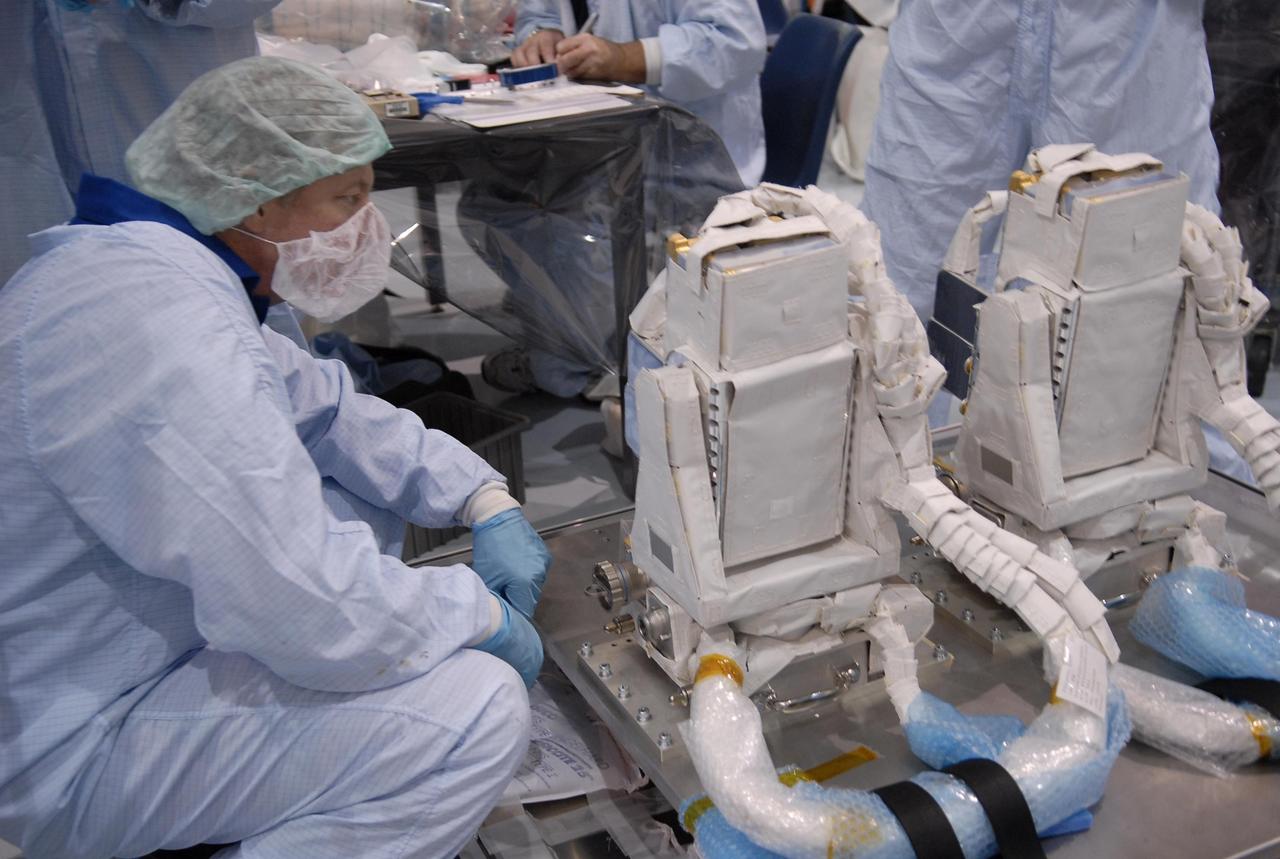
KENNEDY SPACE CENTER, FLA. -- In the Space Station Processing Facility, STS-124 Mission Specialist Michael Fossum looks over equipment going to the International Space Station. Crew members of the mission are at KSC for equipment familiarization. The crew comprises Commander Mark Kelly, Pilot Kenneth Ham, and Mission Specialists Karen Nyberg, Ronald Garan, Fossum, Stephen Bowen and Akihiko Hoshide, who represents the Japanese Aerospace and Exploration Agency. The STS-124 mission is the second of three flights that will launch components to complete the Japanese pressurized module, the Kibo laboratory. The mission will include two spacewalks to install the new lab and its remote manipulator system. The lab's logistics module, which will have been installed in a temporary location during STS-123, will be attached to the new lab. The mission is scheduled to launch in 2008. Photo credit: NASA/Kim Shiflett
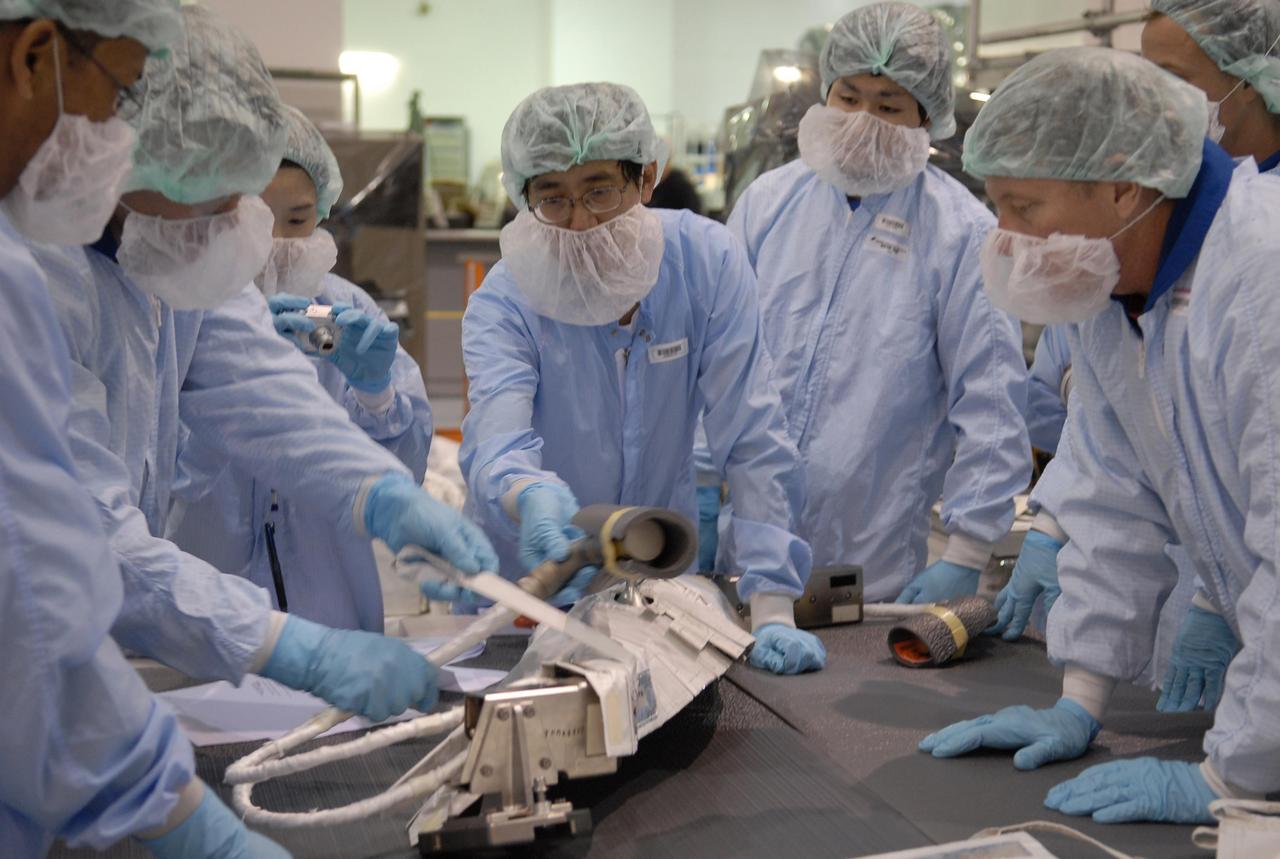
KENNEDY SPACE CENTER, FLA. -- Crew members of mission STS-124 are in the Space Station Processing Facility to look over equipment. Mission Specialist Michael Fossum (right) watches while others get hands-on experience. Other crew members are Commander Mark Kelly, Pilot Kenneth Ham, and Mission Specialists Karen Nyberg, Ronald Garan, Stephen Bowen and Akihiko Hoshide, who represents the Japanese Aerospace and Exploration Agency. The STS-124 mission is the second of three flights that will launch components to complete the Japanese pressurized module, the Kibo laboratory. The mission will include two spacewalks to install the new lab and its remote manipulator system. The lab's logistics module, which will have been installed in a temporary location during STS-123, will be attached to the new lab. The mission is scheduled to launch in 2008. Photo credit: NASA/Kim Shiflett
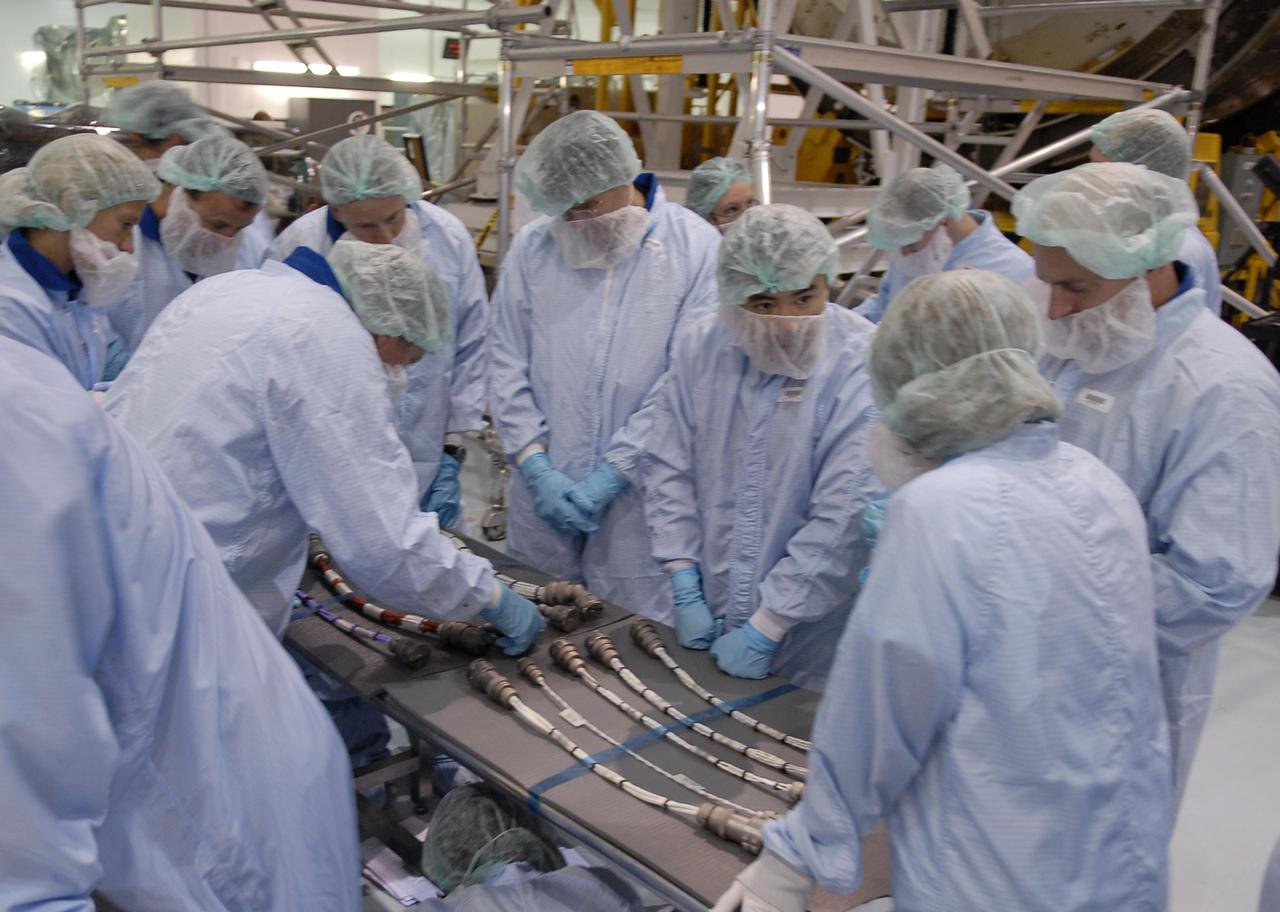
KENNEDY SPACE CENTER, FLA. -- Crew members of mission STS-124 are in the Space Station Processing Facility to look over equipment. The crew comprises Commander Mark Kelly, Pilot Kenneth Ham, and Mission Specialists Karen Nyberg, Ronald Garan, Michael Fossum, Stephen Bowen and Akihiko Hoshide, who represents the Japanese Aerospace and Exploration Agency. The STS-124 mission is the second of three flights that will launch components to complete the Japanese pressurized module, the Kibo laboratory. The mission will include two spacewalks to install the new lab and its remote manipulator system. The lab's logistics module, which will have been installed in a temporary location during STS-123, will be attached to the new lab. The mission is scheduled to launch in 2008. Photo credit: NASA/Kim Shiflett
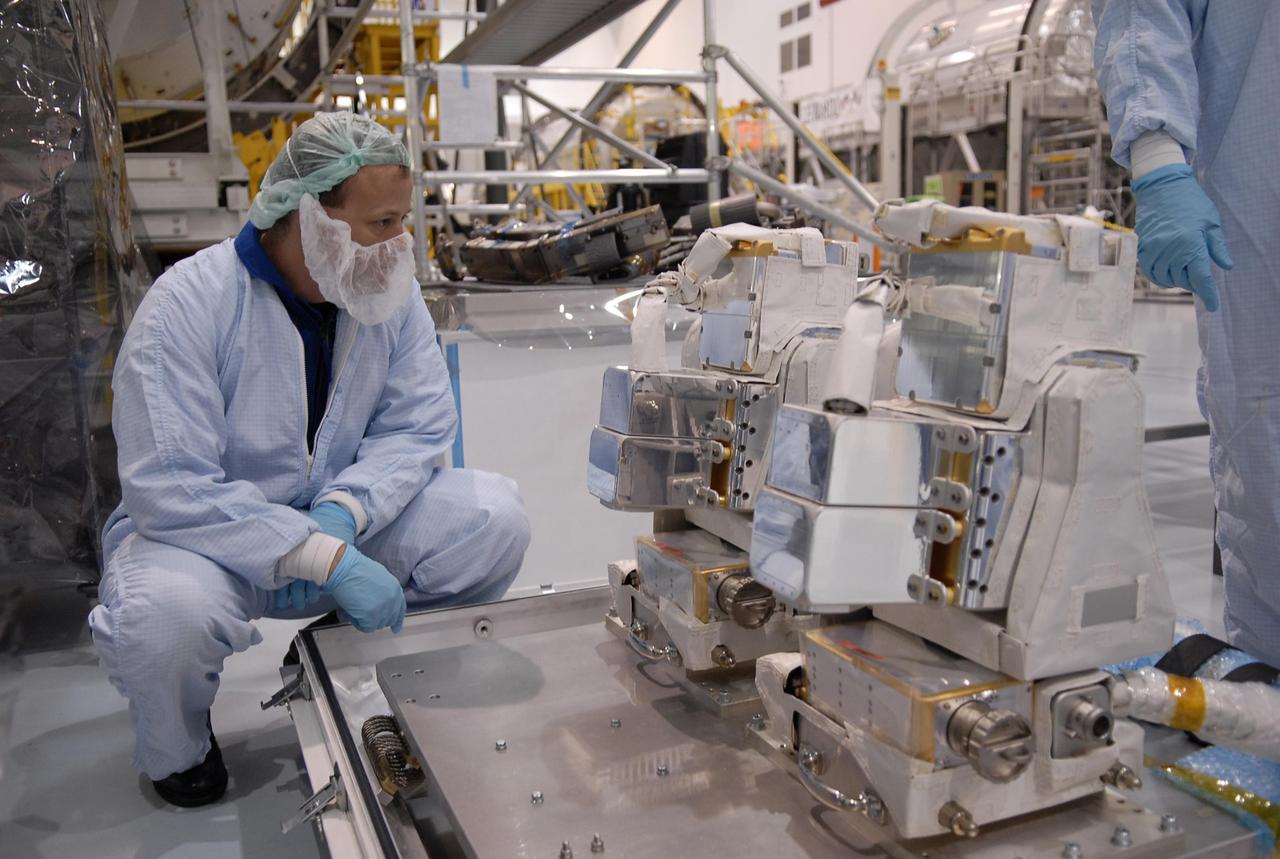
KENNEDY SPACE CENTER, FLA. -- Crew members of mission STS-124 are in the Space Station Processing Facility to look over equipment. The crew comprises Commander Mark Kelly, Pilot Kenneth Ham, and Mission Specialists Karen Nyberg, Ronald Garan, Michael Fossum, Stephen Bowen and Akihiko Hoshide, who represents the Japanese Aerospace and Exploration Agency. Seen here is Garan. The STS-124 mission is the second of three flights that will launch components to complete the Japanese pressurized module, the Kibo laboratory. The mission will include two spacewalks to install the new lab and its remote manipulator system. The lab's logistics module, which will have been installed in a temporary location during STS-123, will be attached to the new lab. The mission is scheduled to launch in 2008. Photo credit: NASA/Kim Shiflett
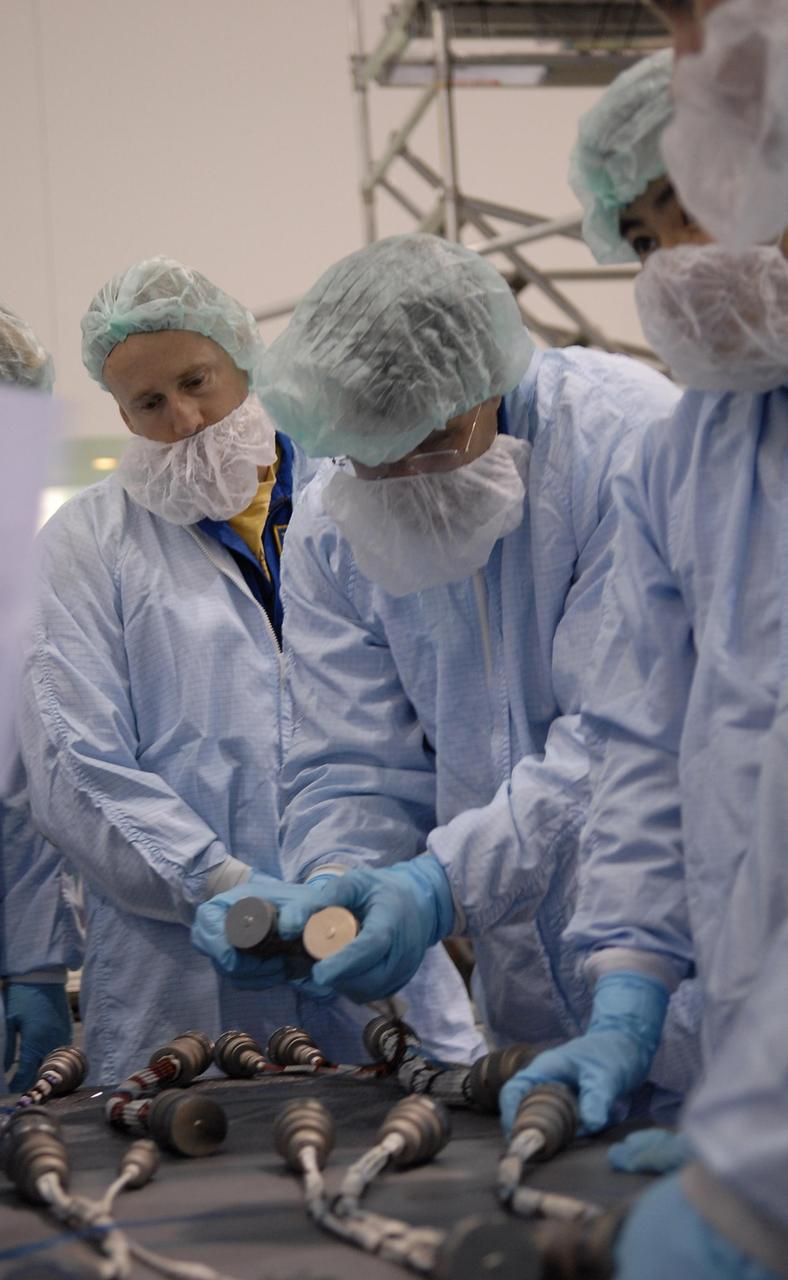
KENNEDY SPACE CENTER, FLA. -- Crew members of mission STS-124 are in the Space Station Processing Facility to look over equipment. Here they watch a demonstration using some of the equipment. At left is Commander Mark Kelly. Other crew members are Pilot Kenneth Ham, and Mission Specialists Karen Nyberg, Ronald Garan, Michael Fossum, Stephen Bowen and Akihiko Hoshide, who represents the Japanese Aerospace and Exploration Agency. The STS-124 mission is the second of three flights that will launch components to complete the Japanese pressurized module, the Kibo laboratory. The mission will include two spacewalks to install the new lab and its remote manipulator system. The lab's logistics module, which will have been installed in a temporary location during STS-123, will be attached to the new lab. The mission is scheduled to launch in 2008. Photo credit: NASA/Kim Shiflett
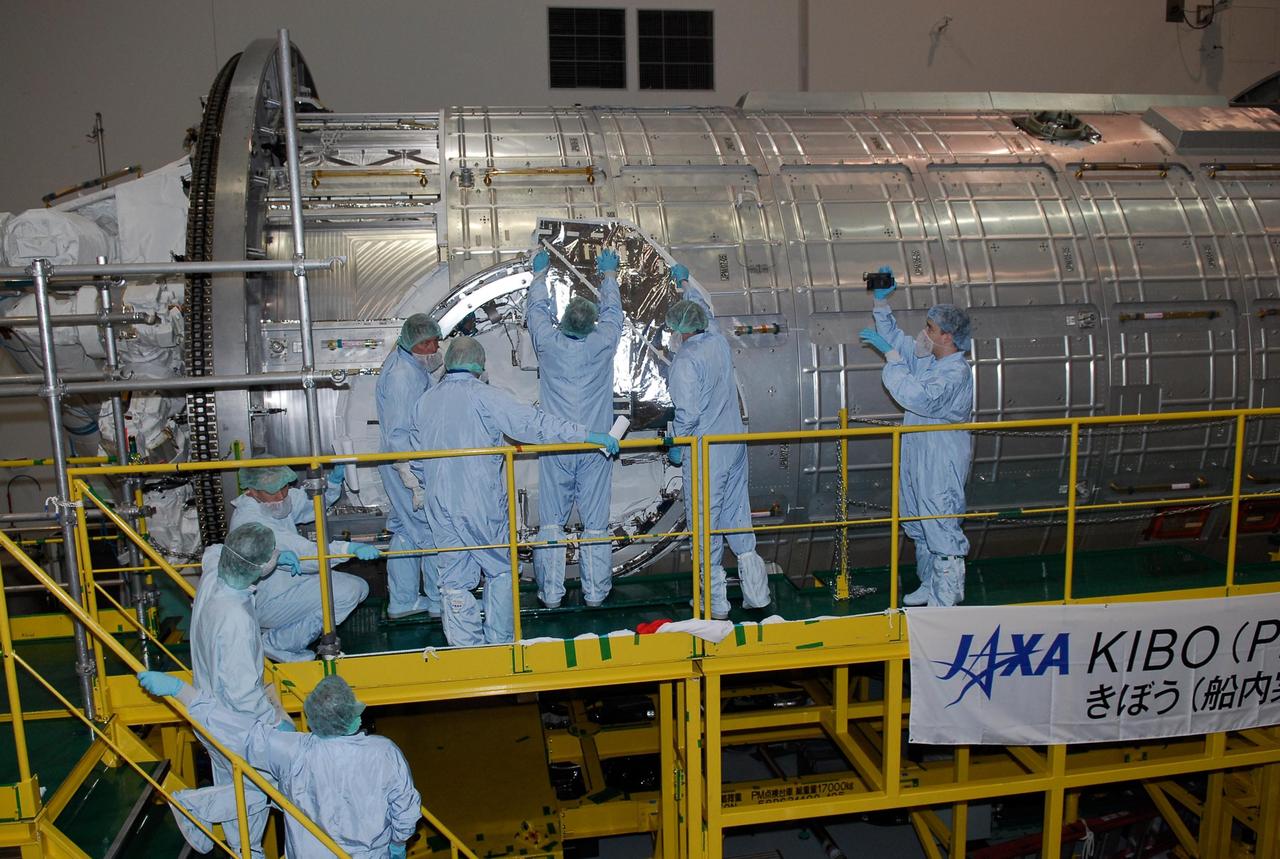
KENNEDY SPACE CENTER, FLA. -- In the Space Station Processing Facility at NASA's Kennedy Space Center, members of the STS-124 crew look over the scientific airlock in the Kibo pressurized module. The module is part of the payload for the mission, targeted for launch no earlier than April 24. The crew comprises seven: Commander Mark Kelly, Pilot Kenneth Ham, and Mission Specialists Karen Nyberg, Ronald Garan, Michael Fossum and Akihiko Hoshide. The crew is at Kennedy for a crew equipment interface test that includes familiarization with tools and equipment that will be used on the mission. The STS-124 mission is the second of three flights that will launch components to complete the Japanese pressurized module, the Kibo laboratory. The mission will include two spacewalks to install the new lab and its remote manipulator system. The lab's logistics module, which will have been installed in a temporary location during STS-123, will be attached to the new lab. Photo credit: NASA/Kim Shiflett
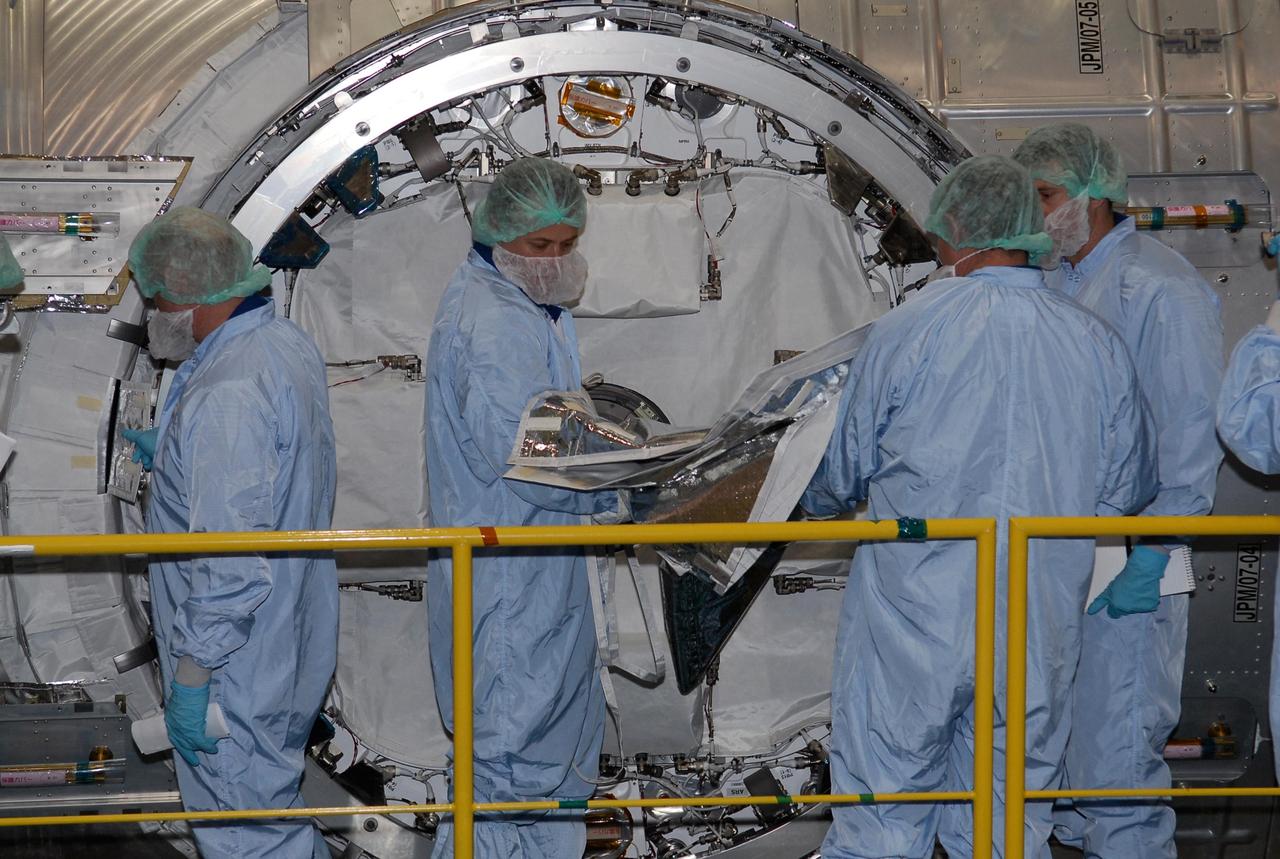
KENNEDY SPACE CENTER, FLA. -- In the Space Station Processing Facility at NASA's Kennedy Space Center, members of the STS-124 crew look over equipment related to the scientific airlock in the Kibo pressurized module. The module is part of the payload for the mission, targeted for launch no earlier than April 24. The crew comprises seven: Commander Mark Kelly, Pilot Kenneth Ham, and Mission Specialists Karen Nyberg, Ronald Garan, Michael Fossum and Akihiko Hoshide. The crew is at Kennedy for a crew equipment interface test that includes familiarization with tools and equipment that will be used on the mission. The STS-124 mission is the second of three flights that will launch components to complete the Japanese pressurized module, the Kibo laboratory. The mission will include two spacewalks to install the new lab and its remote manipulator system. The lab's logistics module, which will have been installed in a temporary location during STS-123, will be attached to the new lab. Photo credit: NASA/Kim Shiflett
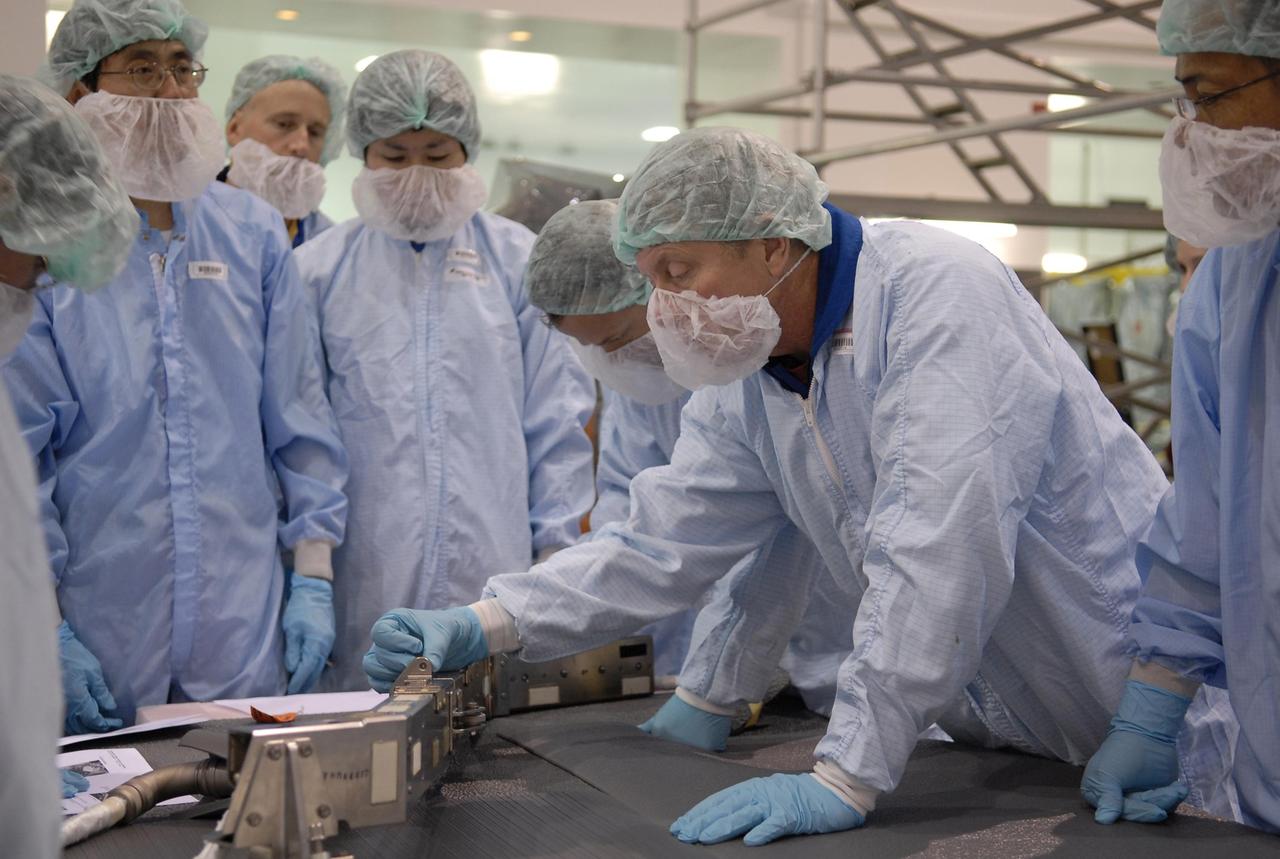
KENNEDY SPACE CENTER, FLA. -- Crew members of mission STS-124 are in the Space Station Processing Facility to look over equipment. Here Mission Specialist Michael Fossum gets hands-on experience with a piece of hardware. Other crew members are Commander Mark Kelly, Pilot Kenneth Ham, and Mission Specialists Karen Nyberg, Ronald Garan, Stephen Bowen and Akihiko Hoshide, who represents the Japanese Aerospace and Exploration Agency. The STS-124 mission is the second of three flights that will launch components to complete the Japanese pressurized module, the Kibo laboratory. The mission will include two spacewalks to install the new lab and its remote manipulator system. The lab's logistics module, which will have been installed in a temporary location during STS-123, will be attached to the new lab. The mission is scheduled to launch in 2008. Photo credit: NASA/Kim Shiflett
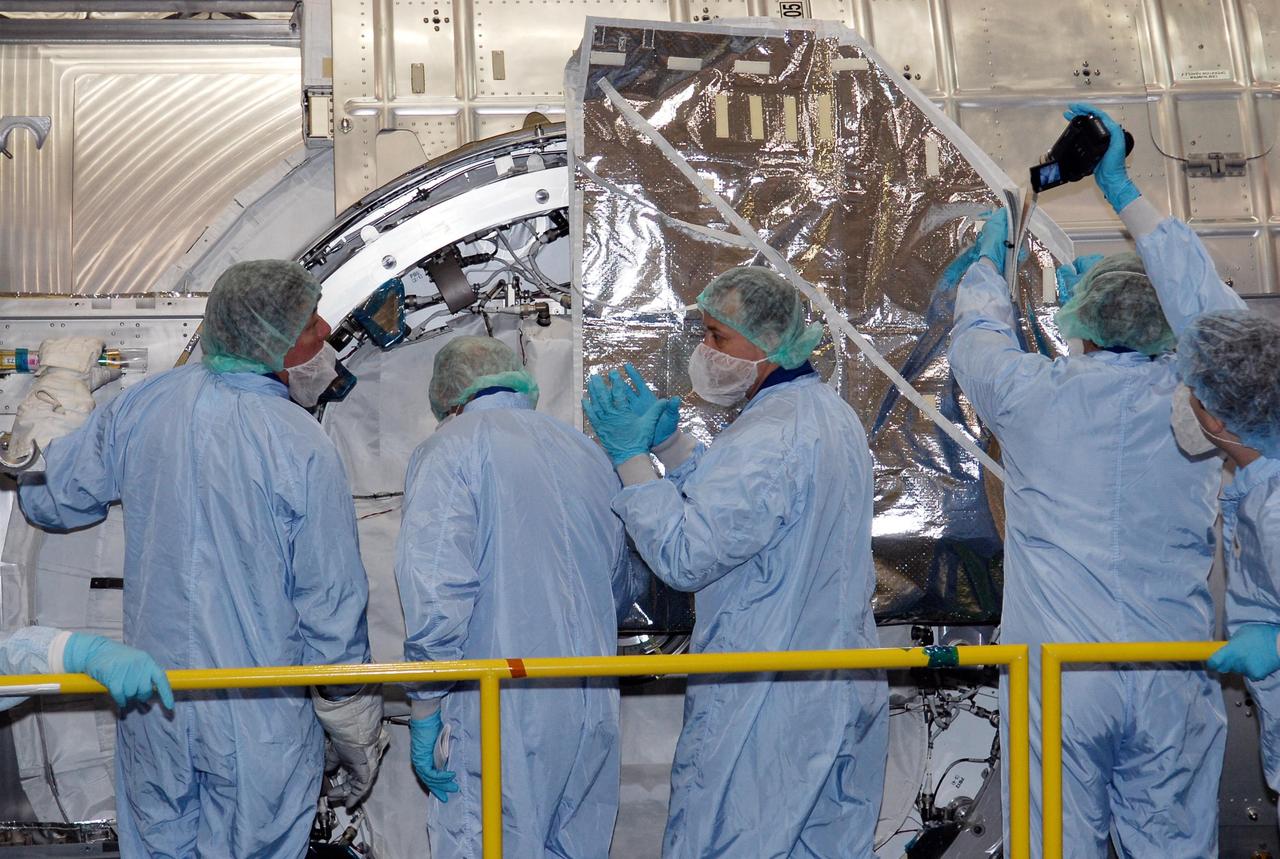
KENNEDY SPACE CENTER, FLA. -- In the Space Station Processing Facility at NASA's Kennedy Space Center, members of the STS-124 crew look over the scientific airlock in the Kibo pressurized module. The module is part of the payload for the mission, targeted for launch no earlier than April 24. The crew comprises seven: Commander Mark Kelly, Pilot Kenneth Ham, and Mission Specialists Karen Nyberg, Ronald Garan, Michael Fossum and Akihiko Hoshide. The crew is at Kennedy for a crew equipment interface test that includes familiarization with tools and equipment that will be used on the mission. The STS-124 mission is the second of three flights that will launch components to complete the Japanese pressurized module, the Kibo laboratory. The mission will include two spacewalks to install the new lab and its remote manipulator system. The lab's logistics module, which will have been installed in a temporary location during STS-123, will be attached to the new lab. Photo credit: NASA/Kim Shiflett

KENNEDY SPACE CENTER, FLA. -- In the Space Station Processing Facility at NASA's Kennedy Space Center, members of the STS-124 crew look over equipment for the scientific airlock in the Kibo pressurized module. The module is part of the payload for the mission targeted for launch no earlier than April 24. The crew comprises seven: Commander Mark Kelly, Pilot Kenneth Ham, and Mission Specialists Karen Nyberg, Ronald Garan, Michael Fossum and Akihiko Hoshide. The crew members are at Kennedy for a crew equipment interface test, that includes familiarization with tools and equipment that will be used on the mission. The STS-124 mission is the second of three flights that will launch components to complete the Japanese pressurized module, the Kibo laboratory. The mission will include two spacewalks to install the new lab and its remote manipulator system. The lab's logistics module, which will have been installed in a temporary location during STS-123, will be attached to the new lab. Photo credit: NASA/Kim Shiflett
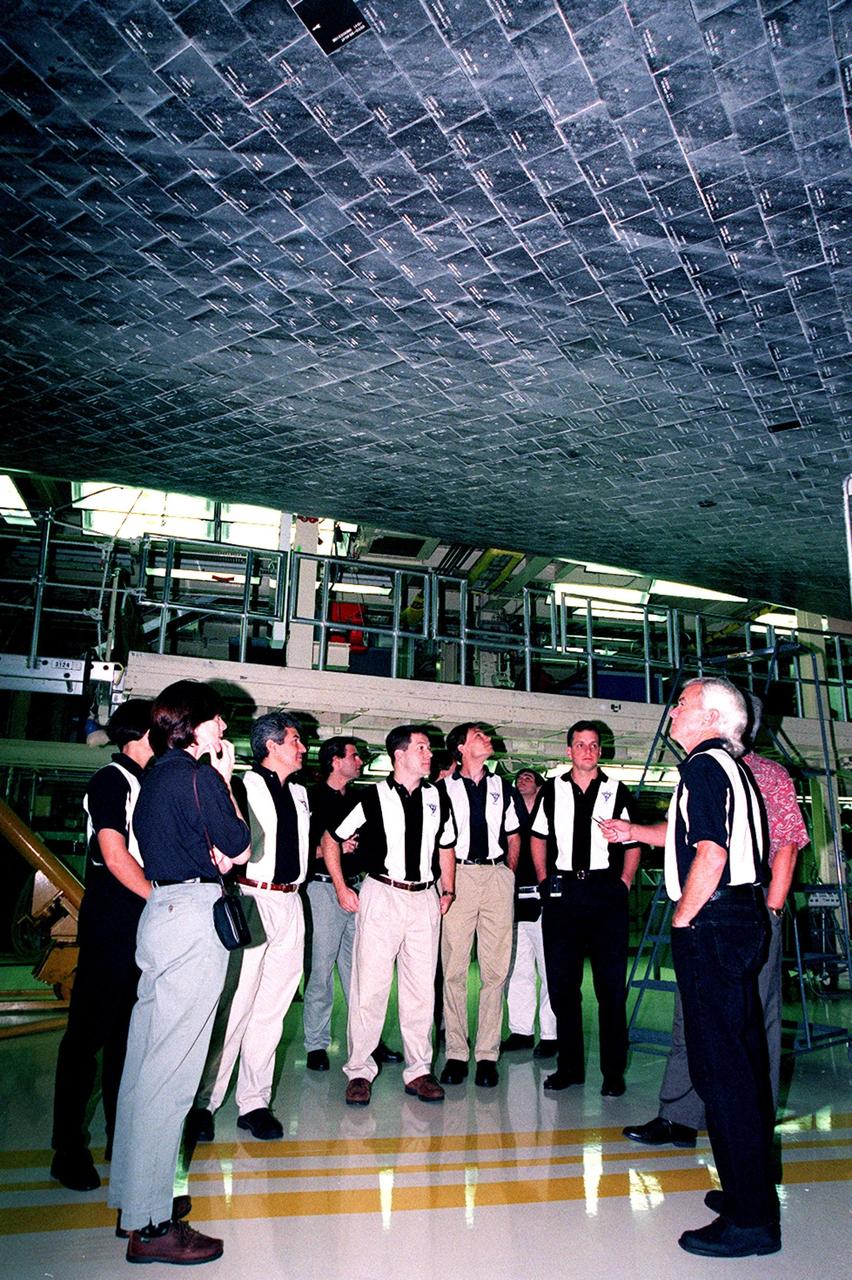
In the Orbiter Processing Facility bay 3, members of the 1998 astronaut candidate class (group 17) get a close-up view of the tiles, part of the thermal protection system, on the underside of the orbiter Atlantis overhead. The class is at KSC for training activities, including fire training and a flight awareness program, plus touring the OPF, SSME Processing Facility, VAB, SSPF, launch pads, SLF, Apollo/Saturn V Center and the crew headquarters. The U.S. candidates in the '98 class are Clayton C. Anderson, Lee J. Archambault, Tracy E. Caldwell (Ph.D.), Gregory E. Chamitoff (Ph.D.), Timothy J. Creamer, Christopher J. Ferguson, Michael J. Foreman, Michael E. Fossum, Kenneth T. Ham, Patricia C. Hilliard (M.D.), Gregory C. Johnson, Gregory H. Johnson, Stanley G. Love (Ph.D.), Leland D. Melvin, Barbara R. Morgan, William A. Oefelein, John D. Olivas (Ph.D.), Nicholas J.M. Patrick (Ph.D.), Alan G. Poindexter, Garrett E. Reisman (Ph.D.), Steven R. Swanson, Douglas H. Wheelock, Sunita L. Williams, Neil W. Woodward III, George D. Zamka; and the international candidates are Leopold Eyharts, Paolo Nespoli, Hans Schlegel, Roberto Vittori, Bjarni V. Tryggvason, and Marcos Pontes
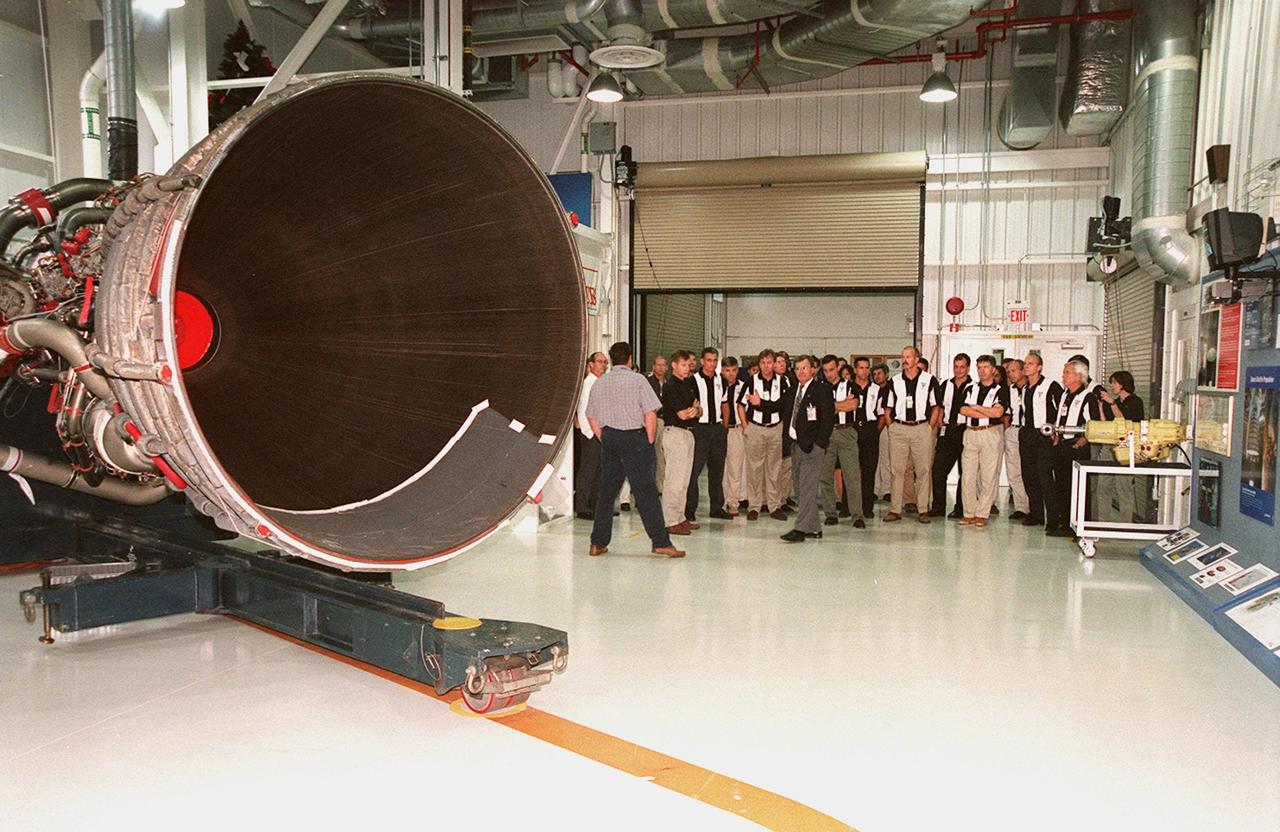
The 1998 astronaut candidate class (group 17) gather in the Space Shuttle Main Engine Processing (SSMEP) Facility. In the foreground is one of the main shuttle engines. The class is at KSC for training activities, including fire training and a flight awareness program, plus touring the OPF, SSME Processing Facility, VAB, SSPF, launch pads, SLF, Apollo/Saturn V Center and the crew headquarters. The U.S. candidates in the '98 class are Clayton C. Anderson, Lee J. Archambault, Tracy E. Caldwell (Ph.D.), Gregory E. Chamitoff (Ph.D.), Timothy J. Creamer, Christopher J. Ferguson, Michael J. Foreman, Michael E. Fossum, Kenneth T. Ham, Patricia C. Hilliard (M.D.), Gregory C. Johnson, Gregory H. Johnson, Stanley G. Love (Ph.D.), Leland D. Melvin, Barbara R. Morgan, William A. Oefelein, John D. Olivas (Ph.D.), Nicholas J.M. Patrick (Ph.D.), Alan G. Poindexter, Garrett E. Reisman (Ph.D.), Steven R. Swanson, Douglas H. Wheelock, Sunita L. Williams, Neil W. Woodward III, George D. Zamka; and the international candidates are Leopold Eyharts, Paolo Nespoli, Hans Schlegel, Roberto Vittori, Bjarni V. Tryggvason, and Marcos Pontes

KENNEDY SPACE CENTER, FLA. -- On the grounds of the Kennedy Space Center, members of the 1998 astronaut candidate class (Group 17) watch as candidate Sunita L. Williams practices using firefighting equipment during fire training. The class is at KSC for training activities, including a flight awareness program, plus touring the OPF, VAB, SSPF, SSME Processing Facility, launch pads, SLF, Apollo/Saturn V Center, and the crew quarters. The other U.S. candidates in the '98 class are Clayton C. Anderson, Lee J. Archambault, Tracy E. Caldwell (Ph.D.), Gregory E. Chamitoff (Ph.D.), Timothy J. Creamer, Christopher J. Ferguson, Michael J. Foreman, Michael E. Fossum, Kenneth T. Ham, Patricia C. Hilliard (M.D.), Gregory C. Johnson, Gregory H. Johnson, Stanley G. Love (Ph.D.), Leland D. Melvin, Barbara R. Morgan, William A. Oefelein, John D. Olivas (Ph.D.), Nicholas J.M. Patrick (Ph.D.), Alan G. Poindexter, Garrett E. Reisman (Ph.D.), Steven R. Swanson, Douglas H. Wheelock, Neil W. Woodward III, George D. Zamka; and the international candidates are Leopold Eyharts, Paolo Nespoli, Hans Schlegel, Roberto Vittori, Bjarni V. Tryggvason, and Marcos Pontes
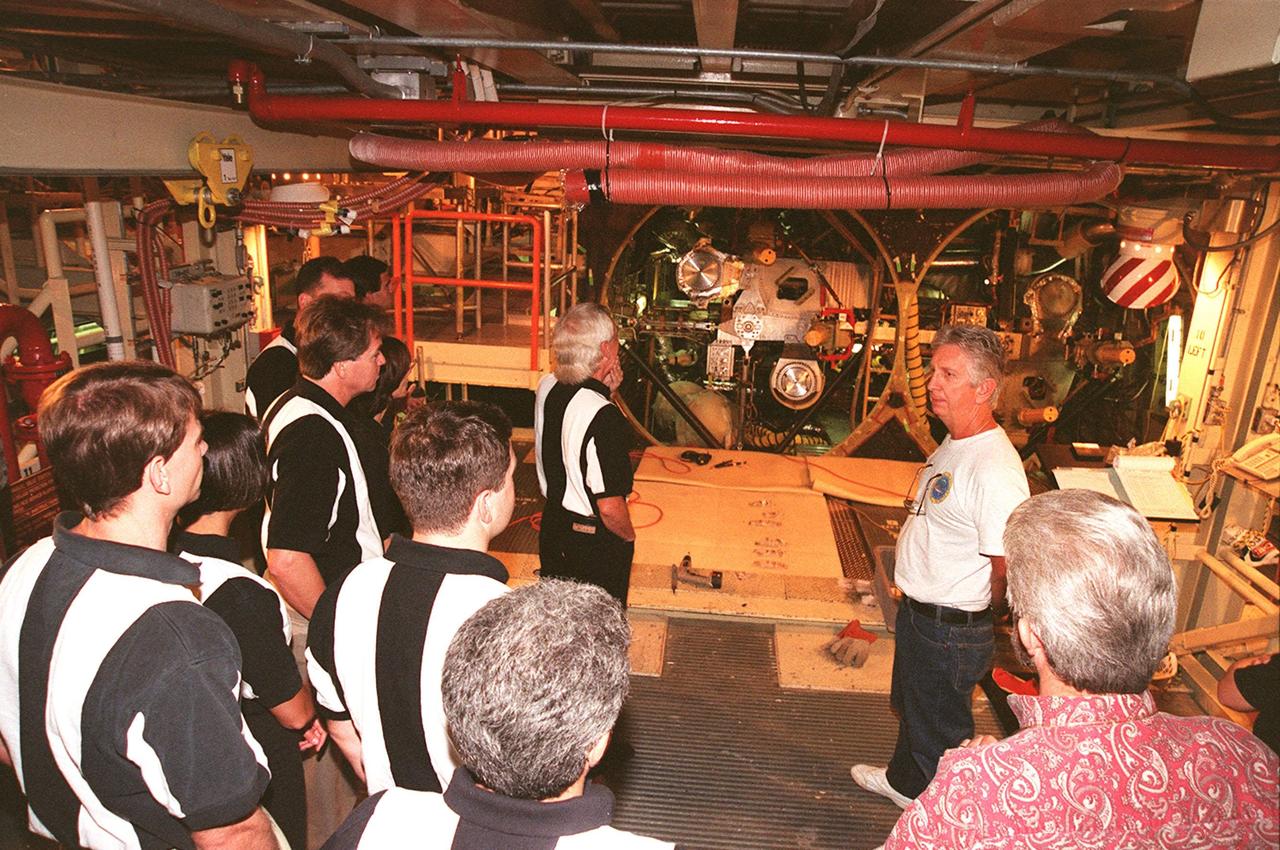
On a raised platform in the Orbiter Processing Facility bay 3, members of the 1998 astronaut candidate class (group 17) look at the aft fuselage of the orbiter Atlantis. The class is at KSC for training activities, including fire training and a flight awareness program, plus touring the OPF, SSME Processing Facility, VAB, SSPF, launch pads, SLF, Apollo/Saturn V Center and the crew headquarters. The U.S. candidates in the '98 class are Clayton C. Anderson, Lee J. Archambault, Tracy E. Caldwell (Ph.D.), Gregory E. Chamitoff (Ph.D.), Timothy J. Creamer, Christopher J. Ferguson, Michael J. Foreman, Michael E. Fossum, Kenneth T. Ham, Patricia C. Hilliard (M.D.), Gregory C. Johnson, Gregory H. Johnson, Stanley G. Love (Ph.D.), Leland D. Melvin, Barbara R. Morgan, William A. Oefelein, John D. Olivas (Ph.D.), Nicholas J.M. Patrick (Ph.D.), Alan G. Poindexter, Garrett E. Reisman (Ph.D.), Steven R. Swanson, Douglas H. Wheelock, Sunita L. Williams, Neil W. Woodward III, George D. Zamka; and the international candidates are Leopold Eyharts, Paolo Nespoli, Hans Schlegel, Roberto Vittori, Bjarni V. Tryggvason, and Marcos Pontes
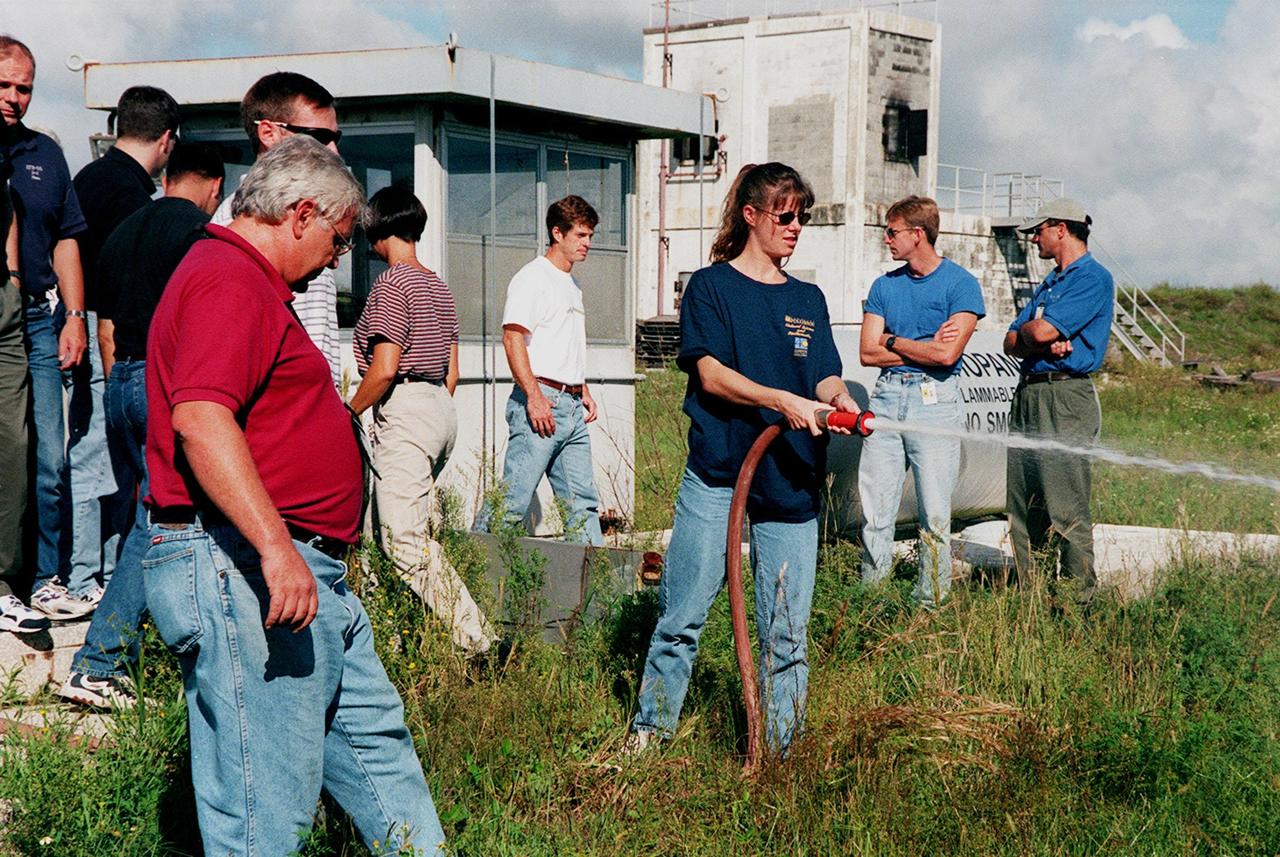
KENNEDY SPACE CENTER, FLA. -- On the grounds of the Kennedy Space Center, members of the 1998 astronaut candidate class (Group 17) watch as candidate Tracy E. Caldwell (Ph.D.) practices using firefighting equipment during fire training. The class is at KSC for training activities, including a flight awareness program, plus touring the OPF, VAB, SSPF, SSME Processing Facility, launch pads, SLF, Apollo/Saturn V Center, and the crew quarters. The other U.S. candidates in the '98 class are Clayton C. Anderson, Lee J. Archambault, Gregory E. Chamitoff (Ph.D.), Timothy J. Creamer, Christopher J. Ferguson, Michael J. Foreman, Michael E. Fossum, Kenneth T. Ham, Patricia C. Hilliard (M.D.), Gregory C. Johnson, Gregory H. Johnson, Stanley G. Love (Ph.D.), Leland D. Melvin, Barbara R. Morgan, William A. Oefelein, John D. Olivas (Ph.D.), Nicholas J.M. Patrick (Ph.D.), Alan G. Poindexter, Garrett E. Reisman (Ph.D.), Steven R. Swanson, Douglas H. Wheelock, Sunita L. Williams, Neil W. Woodward III, George D. Zamka; and the international candidates are Leopold Eyharts, Paolo Nespoli, Hans Schlegel, Roberto Vittori, Bjarni V. Tryggvason, and Marcos Pontes
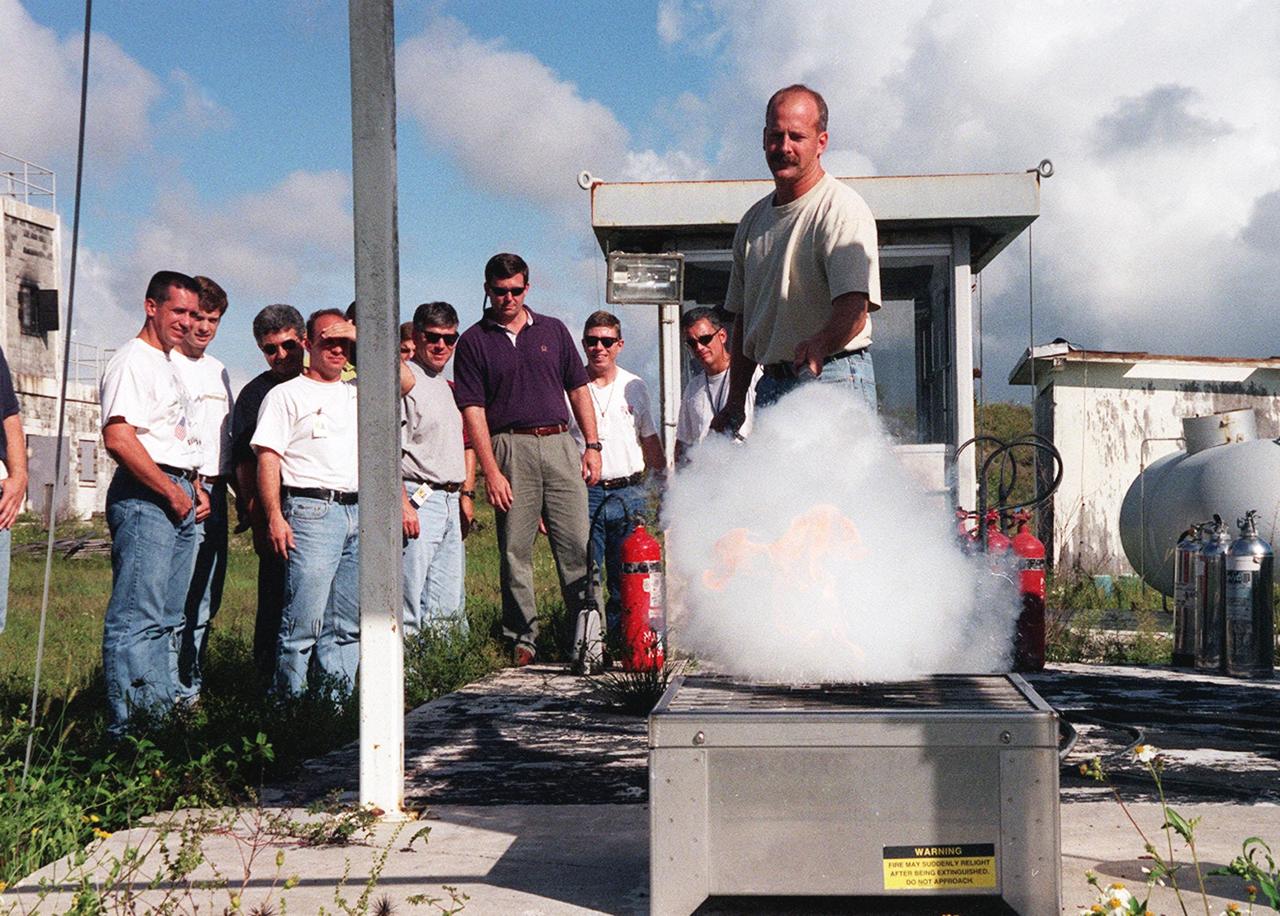
KENNEDY SPACE CENTER, FLA. -- On the grounds of the Kennedy Space Center, members of the 1998 astronaut candidate class (Group 17) watch as candidate Alan G. Poindexter practices using firefighting equipment during fire training. The class is at KSC for training activities, including a flight awareness program, plus touring the OPF, VAB, SSPF, SSME Processing Facility, launch pads, SLF, Apollo/Saturn V Center, and the crew quarters. The other U.S. candidates in the '98 class are Clayton C. Anderson, Lee J. Archambault, Tracy E. Caldwell (Ph.D.), Gregory E. Chamitoff (Ph.D.), Timothy J. Creamer, Christopher J. Ferguson, Michael J. Foreman, Michael E. Fossum, Kenneth T. Ham, Patricia C. Hilliard (M.D.), Gregory C. Johnson, Gregory H. Johnson, Stanley G. Love (Ph.D.), Leland D. Melvin, Barbara R. Morgan, William A. Oefelein, John D. Olivas (Ph.D.), Nicholas J.M. Patrick (Ph.D.), Garrett E. Reisman (Ph.D.), Steven R. Swanson, Douglas H. Wheelock, Sunita L. Williams, Neil W. Woodward III, George D. Zamka; and the international candidates are Leopold Eyharts, Paolo Nespoli, Hans Schlegel, Roberto Vittori, Bjarni V. Tryggvason, and Marcos Pontes
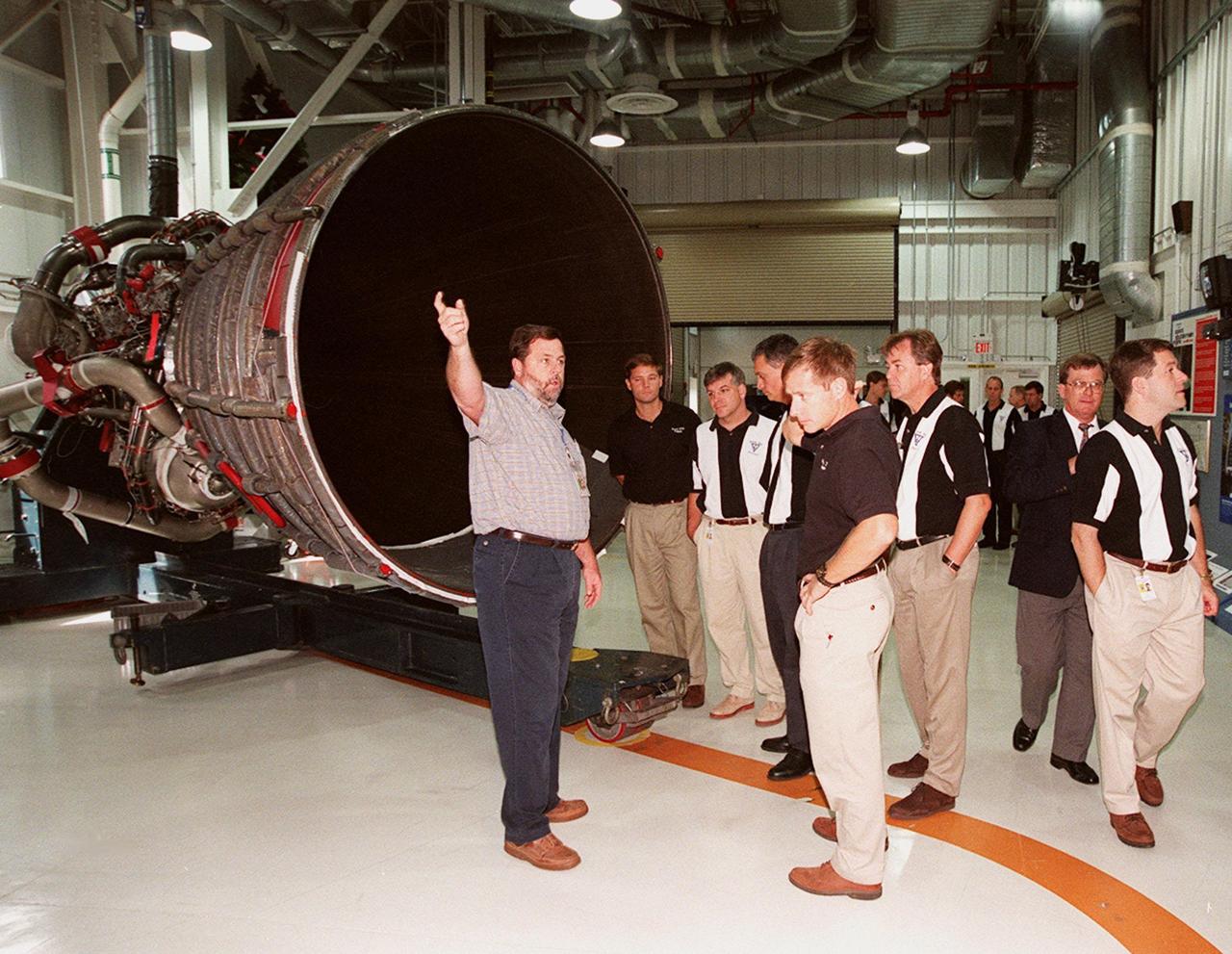
Members of the 1998 astronaut candidate class (group 17) learn about the use of the Space Shuttle Main Engine (SSME) Processing Facility. At left is one of the main shuttle engines. The class is at KSC for training activities, including fire training and a flight awareness program, plus touring the OPF, VAB, SSPF, launch pads, SLF, Apollo/Saturn V Center, the crew headquarters, as well as the SSME Processing Facility. The U.S. candidates in the '98 class are Clayton C. Anderson, Lee J. Archambault, Tracy E. Caldwell (Ph.D.), Gregory E. Chamitoff (Ph.D.), Timothy J. Creamer, Christopher J. Ferguson, Michael J. Foreman, Michael E. Fossum, Kenneth T. Ham, Patricia C. Hilliard (M.D.), Gregory C. Johnson, Gregory H. Johnson, Stanley G. Love (Ph.D.), Leland D. Melvin, Barbara R. Morgan, William A. Oefelein, John D. Olivas (Ph.D.), Nicholas J.M. Patrick (Ph.D.), Alan G. Poindexter, Garrett E. Reisman (Ph.D.), Steven R. Swanson, Douglas H. Wheelock, Sunita L. Williams, Neil W. Woodward III, George D. Zamka; and the international candidates are Leopold Eyharts, Paolo Nespoli, Hans Schlegel, Roberto Vittori, Bjarni V. Tryggvason, and Marcos Pontes
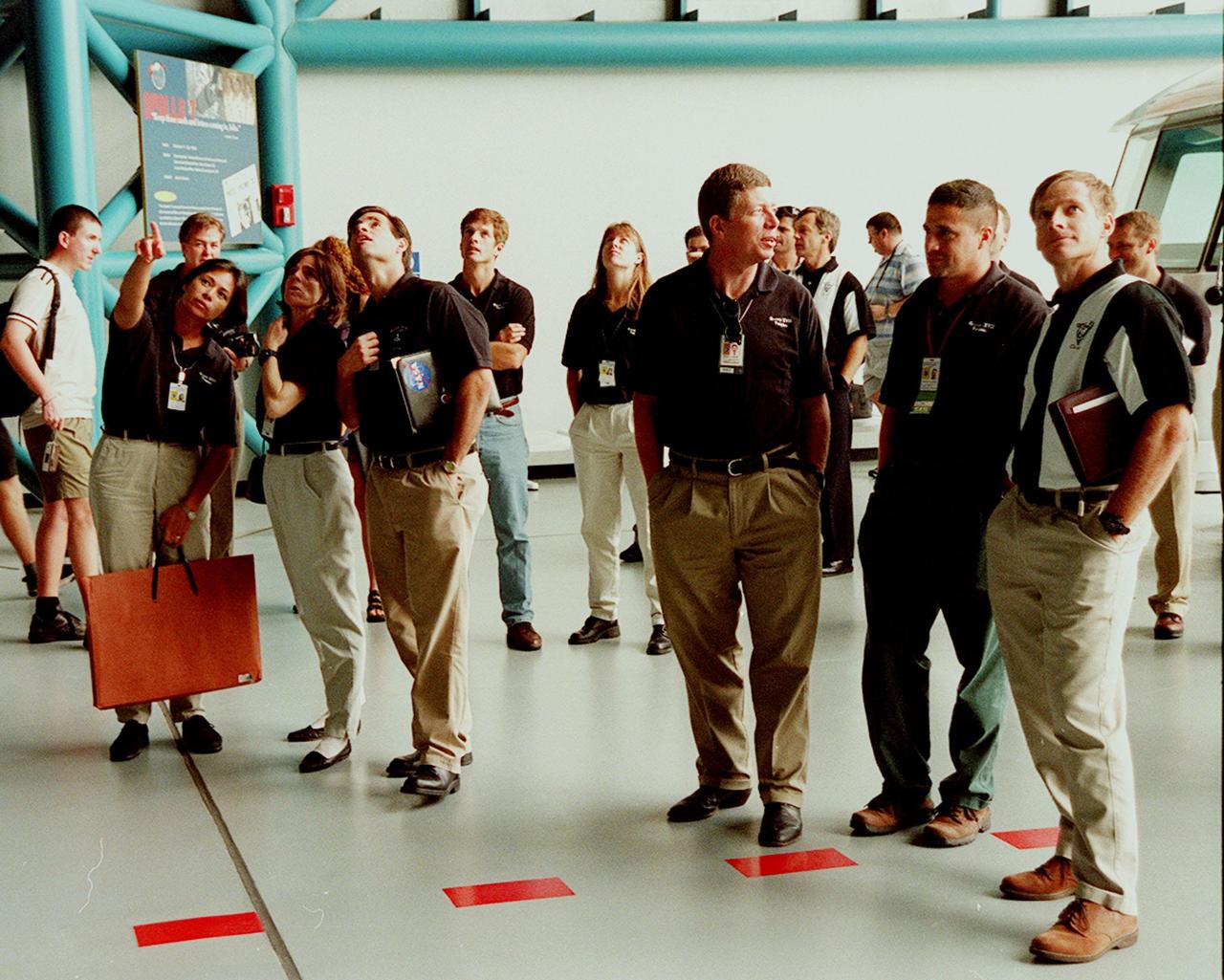
KENNEDY SPACE CENTER, FLA. -- At the Apollo/Saturn V Center, some of the 1998 astronaut candidate class (group 17) take a close look at the Saturn V rocket on display. The U.S. candidates include Clayton C. Anderson, Lee J. Archambault, Tracy E. Caldwell (Ph.D.), Gregory E. Chamitoff (Ph.D.), Timothy J. Creamer, Christopher J. Ferguson, Michael J. Foreman, Michael E. Fossum, Kenneth T. Ham, Patricia C. Hilliard (M.D.), Gregory C. Johnson, Gregory H. Johnson, Stanley G. Love (Ph.D.), Leland D. Melvin, Barbara R. Morgan, William A. Oefelein, John D. Olivas (Ph.D.), Nicholas J.M. Patrick (Ph.D.), Alan G. Poindexter, Garrett E. Reisman (Ph.D.), Steven R. Swanson, Douglas H. Wheelock, Sunita L. Williams, Neil W. Woodward III, George D. Zamka; and international candidates Leopold Eyharts, Paolo Nespoli, Hans Schlegel, Roberto Vittori, Bjarni V. Tryggvason, and Marcos Pontes. The class is at KSC for training activities, including fire training and a flight awareness program, plus touring the OPF, SSME Processing Facility, VAB, SSPF, launch pads, SLF, Apollo/Saturn V Center and the crew headquarters
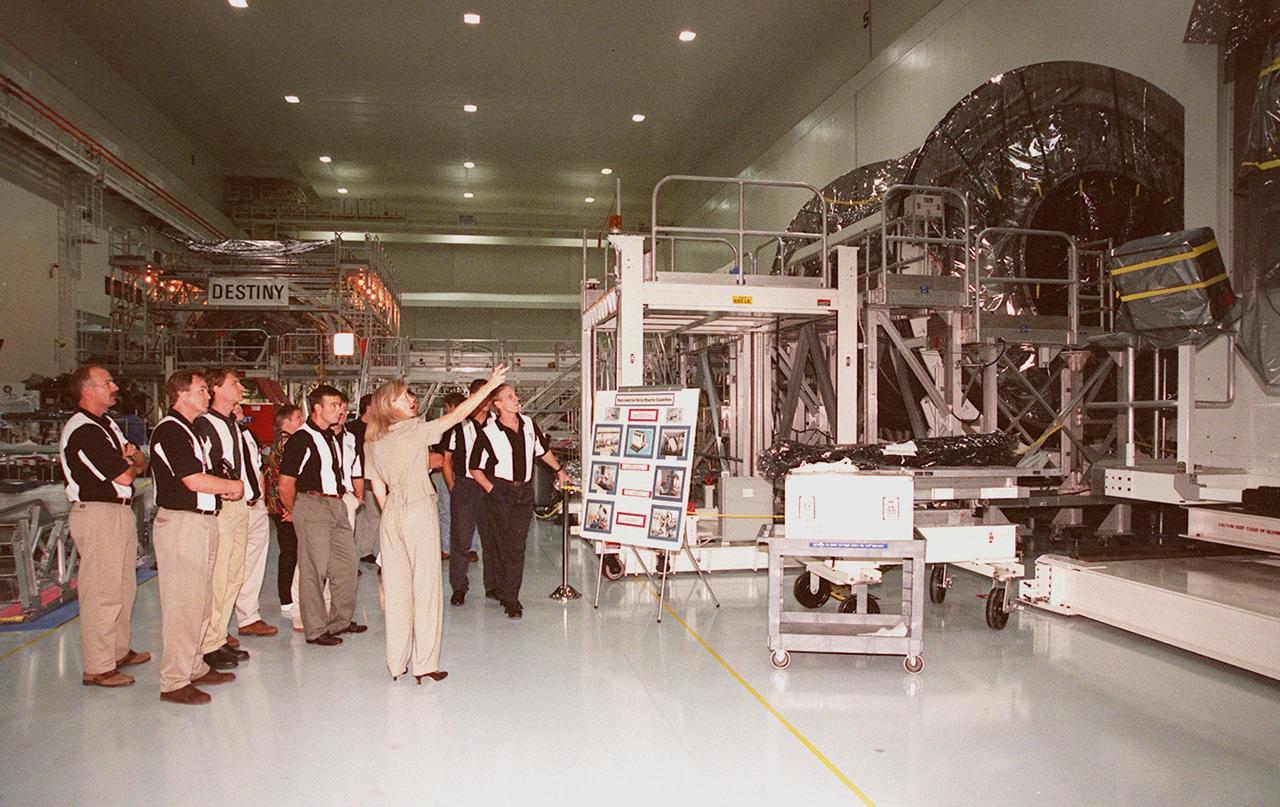
KENNEDY SPACE CENTER, FLA. -- In the Space Station Processing Facility (SSPF), members of the 1998 astronaut candidate class (group 17) are shown future components of the International Space Station, such as the Multi-Purpose Logistics Module at right. The class is taking part in training activities, including fire training and a flight awareness program, plus touring the OPF, VAB, SSME Processing Facility, launch pads, SLF, Apollo/Saturn V Center, the crew headquarters, as well as the SSPF. The U.S. candidates in the '98 class are Clayton C. Anderson, Lee J. Archambault, Tracy E. Caldwell (Ph.D.), Gregory E. Chamitoff (Ph.D.), Timothy J. Creamer, Christopher J. Ferguson, Michael J. Foreman, Michael E. Fossum, Kenneth T. Ham, Patricia C. Hilliard (M.D.), Gregory C. Johnson, Gregory H. Johnson, Stanley G. Love (Ph.D.), Leland D. Melvin, Barbara R. Morgan, William A. Oefelein, John D. Olivas (Ph.D.), Nicholas J.M. Patrick (Ph.D.), Alan G. Poindexter, Garrett E. Reisman (Ph.D.), Steven R. Swanson, Douglas H. Wheelock, Sunita L. Williams, Neil W. Woodward III, George D. Zamka; and the international candidates are Leopold Eyharts, Paolo Nespoli, Hans Schlegel, Roberto Vittori, Bjarni V. Tryggvason, and Marcos Pontes
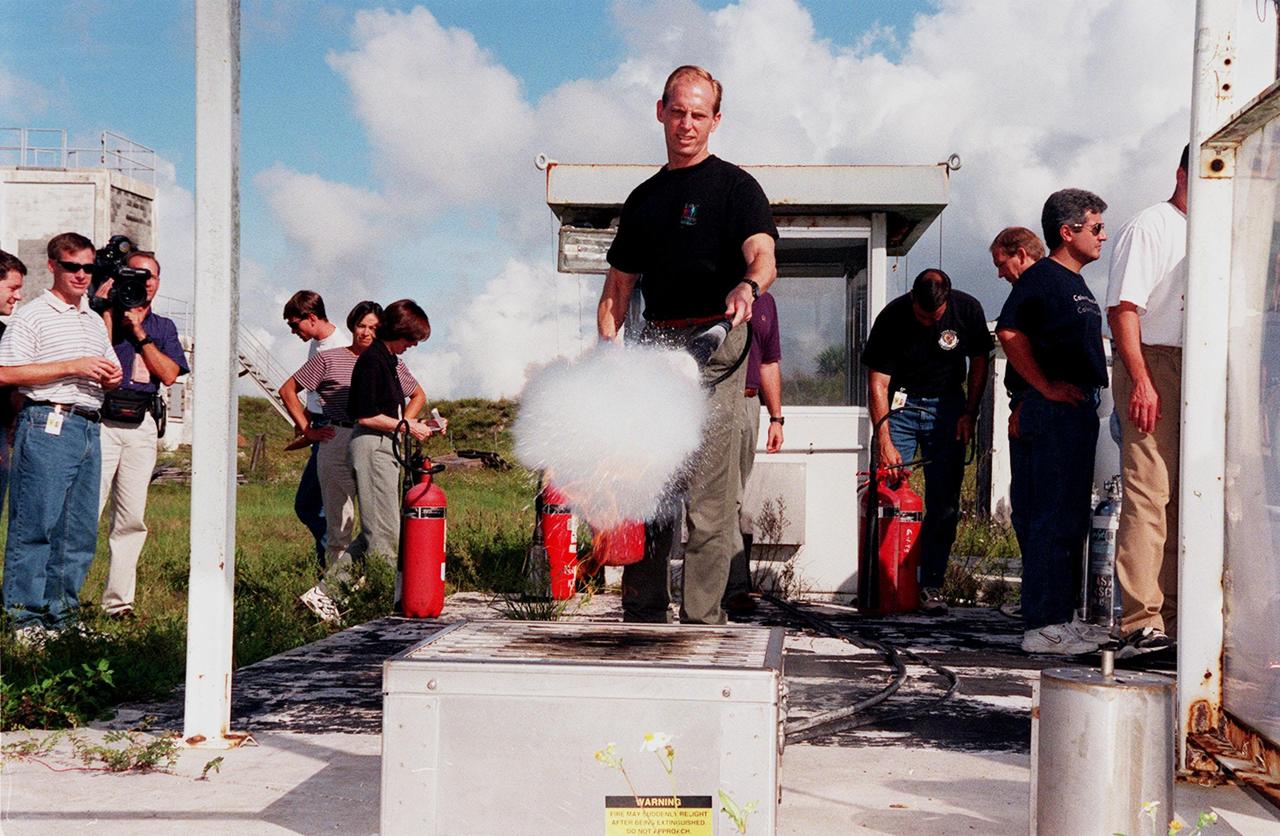
KENNEDY SPACE CENTER, FLA. -- On the grounds of the Kennedy Space Center, members of the 1998 astronaut candidate class (Group 17) watch as candidate Clayton C. Anderson practices using firefighting equipment during fire training. The class is at KSC for training activities, including a flight awareness program, plus touring the OPF, VAB, SSPF, SSME Processing Facility, launch pads, SLF, Apollo/Saturn V Center, and the crew quarters. The other U.S. candidates in the '98 class are Lee J. Archambault, Tracy E. Caldwell (Ph.D.), Gregory E. Chamitoff (Ph.D.), Timothy J. Creamer, Christopher J. Ferguson, Michael J. Foreman, Michael E. Fossum, Kenneth T. Ham, Patricia C. Hilliard (M.D.), Gregory C. Johnson, Gregory H. Johnson, Stanley G. Love (Ph.D.), Leland D. Melvin, Barbara R. Morgan, William A. Oefelein, John D. Olivas (Ph.D.), Nicholas J.M. Patrick (Ph.D.), Alan G. Poindexter, Garrett E. Reisman (Ph.D.), Steven R. Swanson, Douglas H. Wheelock, Sunita L. Williams, Neil W. Woodward III, George D. Zamka; and the international candidates are Leopold Eyharts, Paolo Nespoli, Hans Schlegel, Roberto Vittori, Bjarni V. Tryggvason, and Marcos Pontes
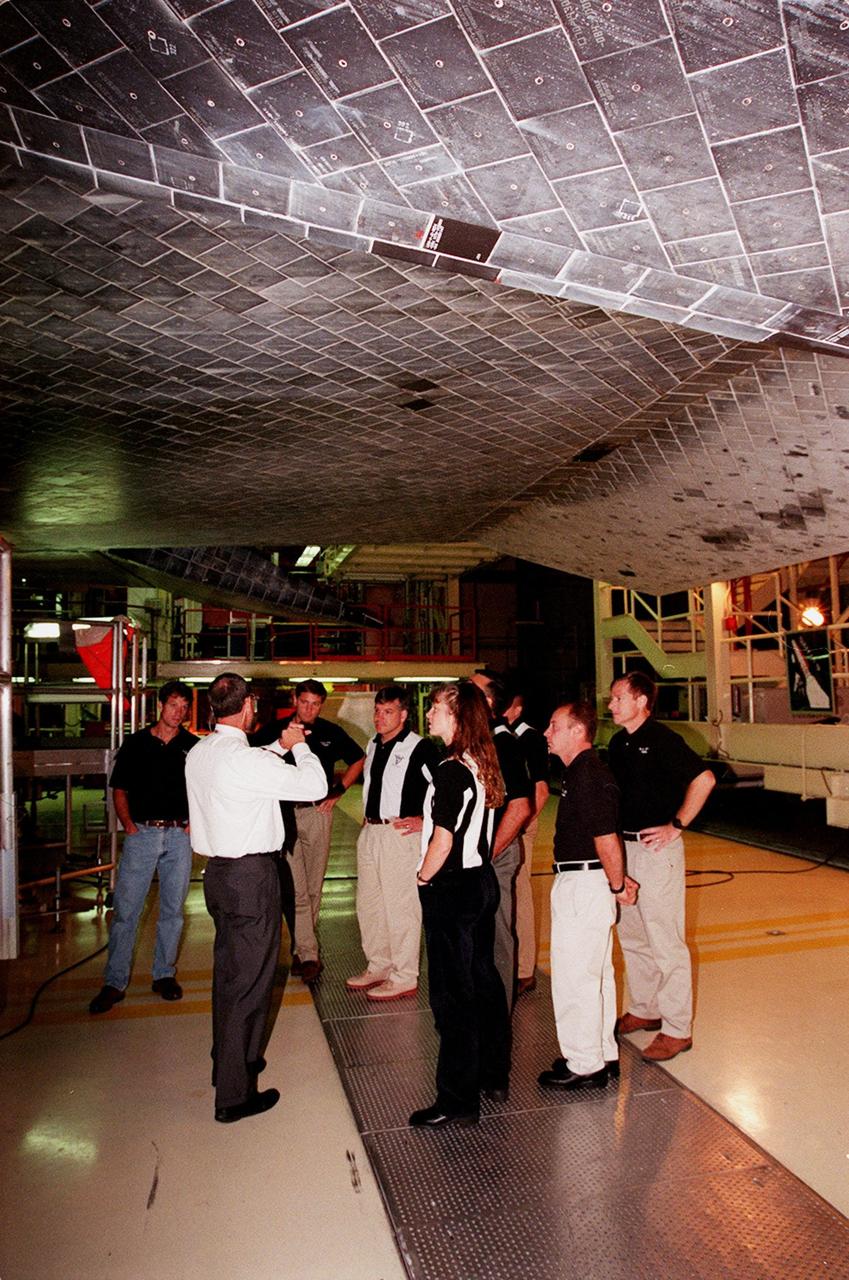
In the Orbiter Processing Facility, members of the 1998 astronaut candidate class (group 17) learn about the thermal protection system on the orbiters, such as Atlantis overhead. The class is at KSC for training activities, including fire training and a flight awareness program, plus touring the OPF, SSME Processing Facility, VAB, SSPF, launch pads, SLF, Apollo/Saturn V Center and the crew headquarters. The U.S. candidates in the '98 class are Clayton C. Anderson, Lee J. Archambault, Tracy E. Caldwell (Ph.D.), Gregory E. Chamitoff (Ph.D.), Timothy J. Creamer, Christopher J. Ferguson, Michael J. Foreman, Michael E. Fossum, Kenneth T. Ham, Patricia C. Hilliard (M.D.), Gregory C. Johnson, Gregory H. Johnson, Stanley G. Love (Ph.D.), Leland D. Melvin, Barbara R. Morgan, William A. Oefelein, John D. Olivas (Ph.D.), Nicholas J.M. Patrick (Ph.D.), Alan G. Poindexter, Garrett E. Reisman (Ph.D.), Steven R. Swanson, Douglas H. Wheelock, Sunita L. Williams, Neil W. Woodward III, George D. Zamka; and the international candidates are Leopold Eyharts, Paolo Nespoli, Hans Schlegel, Roberto Vittori, Bjarni V. Tryggvason, and Marcos Pontes
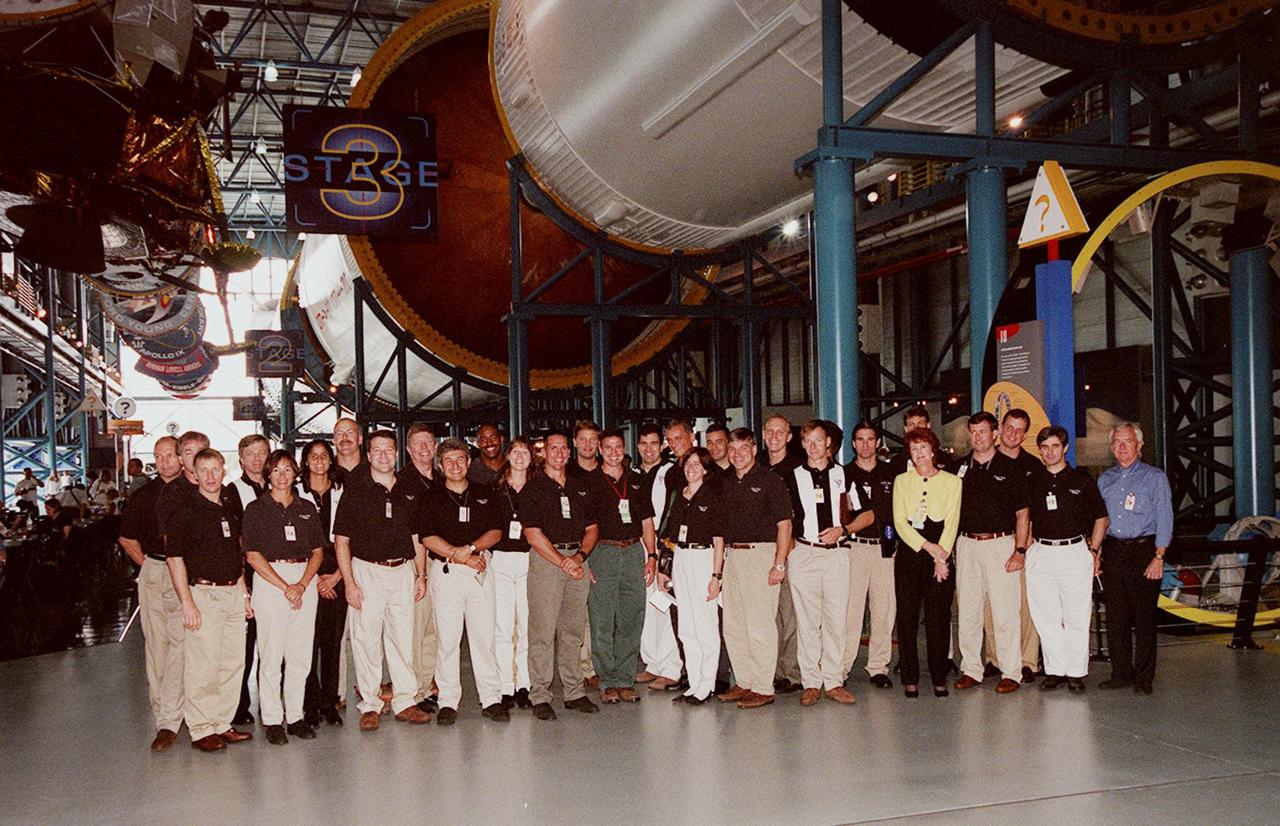
KENNEDY SPACE CENTER, FLA. -- At the Apollo/Saturn V Center, some of the 1998 astronaut candidate class (group 17) line up for a photo during a tour of facilities at KSC. The U.S. candidates include Clayton C. Anderson, Lee J. Archambault, Tracy E. Caldwell (Ph.D.), Gregory E. Chamitoff (Ph.D.), Timothy J. Creamer, Christopher J. Ferguson, Michael J. Foreman, Michael E. Fossum, Kenneth T. Ham, Patricia C. Hilliard (M.D.), Gregory C. Johnson, Gregory H. Johnson, Stanley G. Love (Ph.D.), Leland D. Melvin, Barbara R. Morgan, William A. Oefelein, John D. Olivas (Ph.D.), Nicholas J.M. Patrick (Ph.D.), Alan G. Poindexter, Garrett E. Reisman (Ph.D.), Steven R. Swanson, Douglas H. Wheelock, Sunita L. Williams, Neil W. Woodward III, George D. Zamka; and international candidates Leopold Eyharts, Paolo Nespoli, Hans Schlegel, Roberto Vittori, Bjarni V. Tryggvason, and Marcos Pontes. The class is at KSC for training activities, including fire training and a flight awareness program, plus touring the OPF, SSME Processing Facility, VAB, SSPF, launch pads, SLF and the crew headquarters
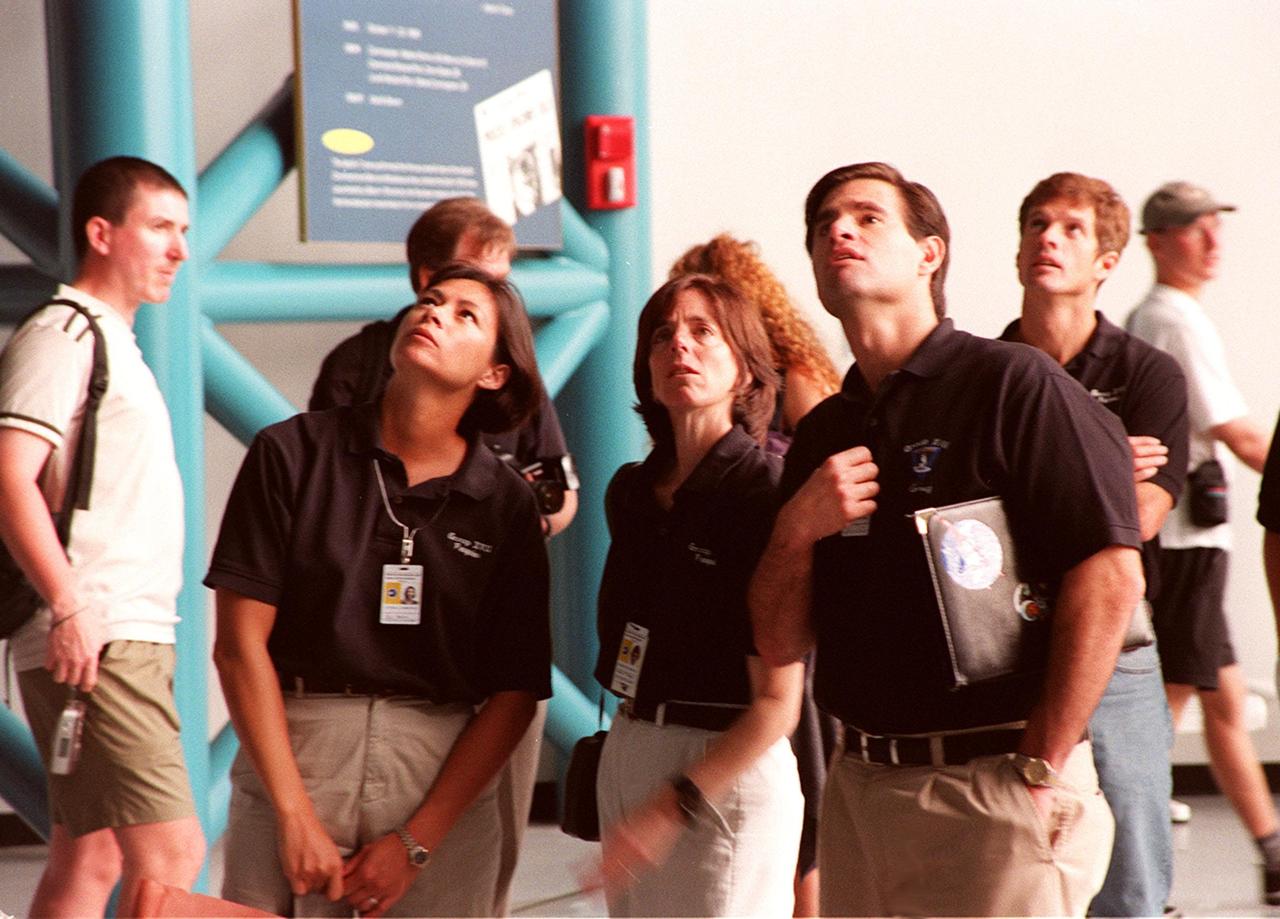
KENNEDY SPACE CENTER, FLA. -- Some of the 1998 astronaut candidate class (group 17) take a close look at displays in the Apollo/Saturn V Center at KSC. The U.S. candidates include Clayton C. Anderson, Lee J. Archambault, Tracy E. Caldwell (Ph.D.), Gregory E. Chamitoff (Ph.D.), Timothy J. Creamer, Christopher J. Ferguson, Michael J. Foreman, Michael E. Fossum, Kenneth T. Ham, Patricia C. Hilliard (M.D.), Gregory C. Johnson, Gregory H. Johnson, Stanley G. Love (Ph.D.), Leland D. Melvin, Barbara R. Morgan, William A. Oefelein, John D. Olivas (Ph.D.), Nicholas J.M. Patrick (Ph.D.), Alan G. Poindexter, Garrett E. Reisman (Ph.D.), Steven R. Swanson, Douglas H. Wheelock, Sunita L. Williams, Neil W. Woodward III, George D. Zamka; and international candidates Leopold Eyharts, Paolo Nespoli, Hans Schlegel, Roberto Vittori, Bjarni V. Tryggvason, and Marcos Pontes. The class is at KSC for training activities, including fire training and a flight awareness program, plus touring the OPF, SSME Processing Facility, VAB, SSPF, launch pads, SLF, Apollo/Saturn V Center and the crew headquarters
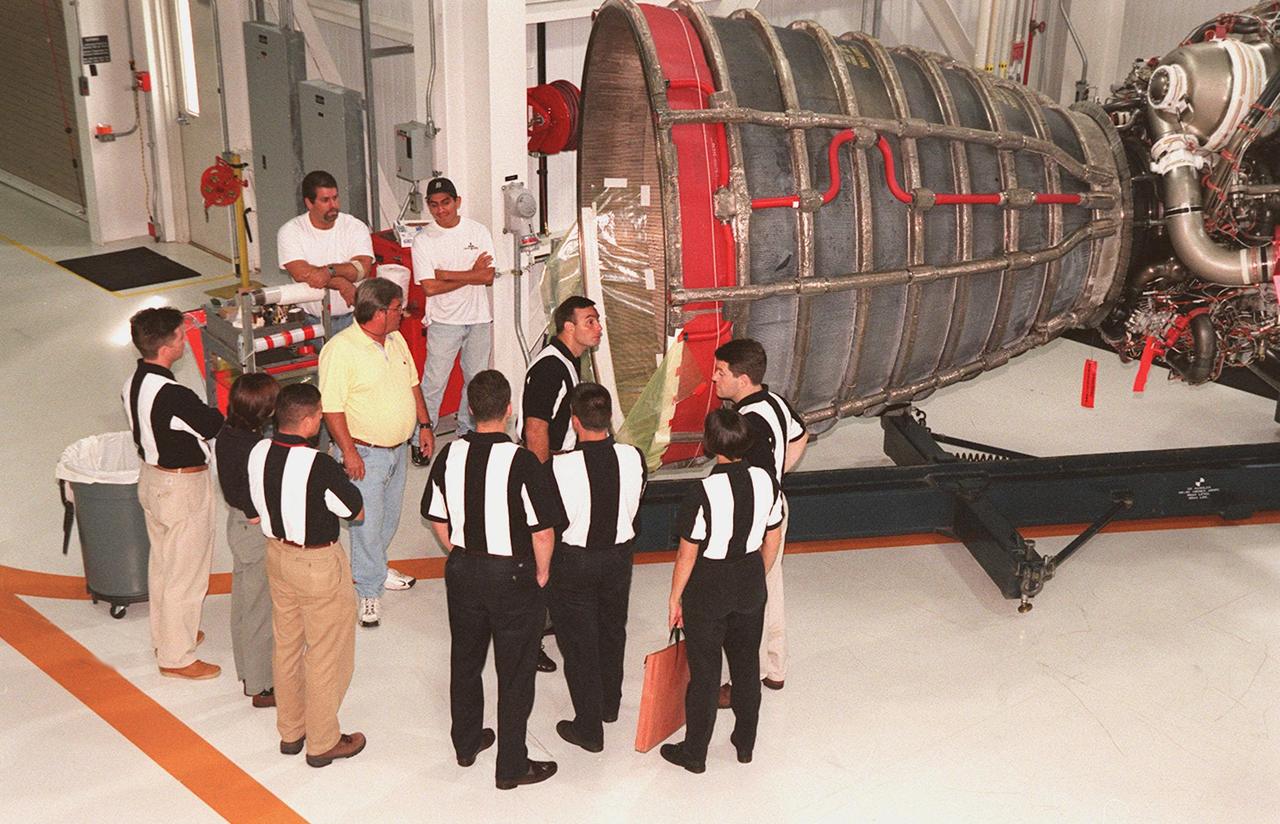
Members of the 1998 astronaut candidate class (group 17) look at the aft of a Space Shuttle Main Engine (SSME) (right). The class is at KSC for training activities, including fire training and a flight awareness program, plus touring the OPF, VAB, SSPF, launch pads, SLF, Apollo/Saturn V Center, the crew headquarters, as well as the SSME Processing Facility. The U.S. candidates in the '98 class are Clayton C. Anderson, Lee J. Archambault, Tracy E. Caldwell (Ph.D.), Gregory E. Chamitoff (Ph.D.), Timothy J. Creamer, Christopher J. Ferguson, Michael J. Foreman, Michael E. Fossum, Kenneth T. Ham, Patricia C. Hilliard (M.D.), Gregory C. Johnson, Gregory H. Johnson, Stanley G. Love (Ph.D.), Leland D. Melvin, Barbara R. Morgan, William A. Oefelein, John D. Olivas (Ph.D.), Nicholas J.M. Patrick (Ph.D.), Alan G. Poindexter, Garrett E. Reisman (Ph.D.), Steven R. Swanson, Douglas H. Wheelock, Sunita L. Williams, Neil W. Woodward III, George D. Zamka; and the international candidates are Leopold Eyharts, Paolo Nespoli, Hans Schlegel, Roberto Vittori, Bjarni V. Tryggvason, and Marcos Pontes
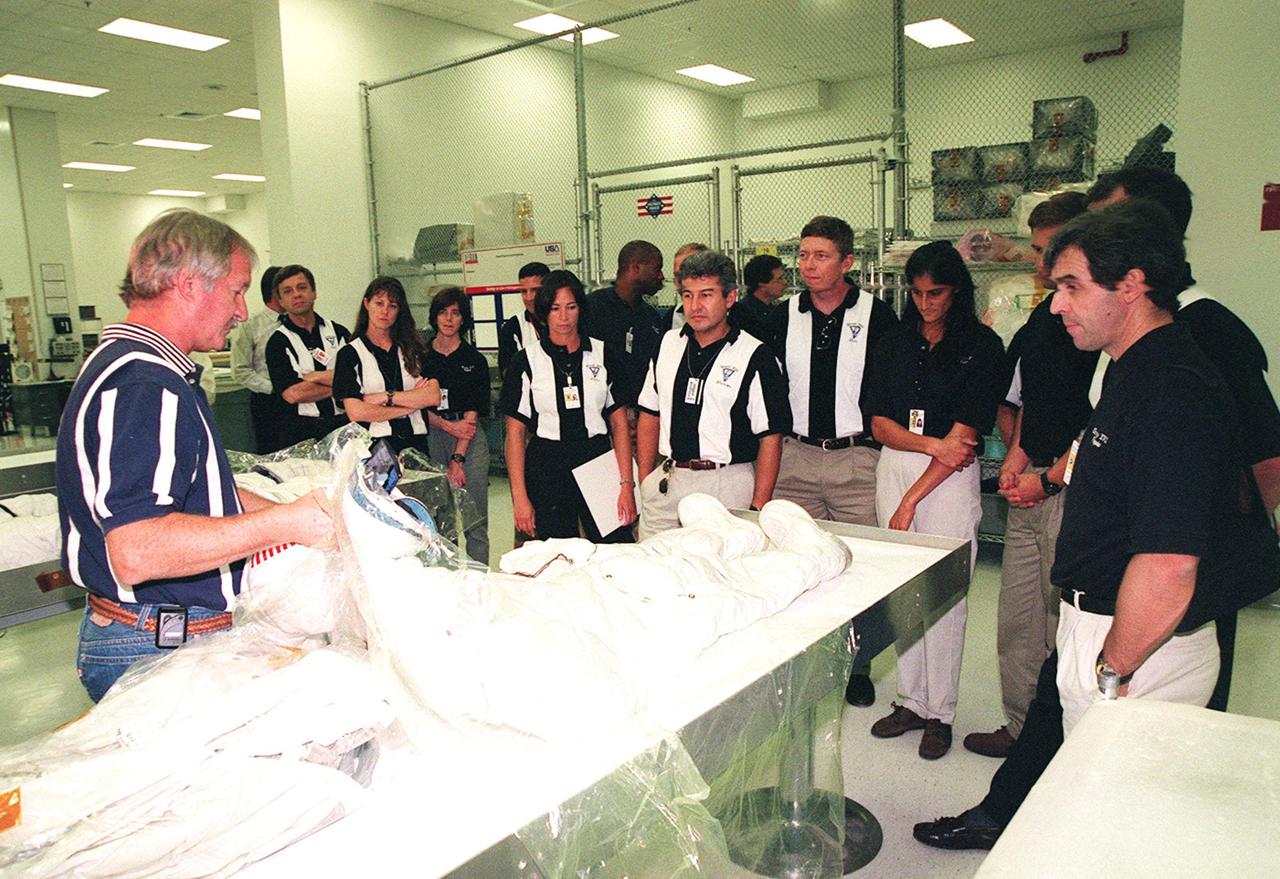
KENNEDY SPACE CENTER, FLA. -- In the Space Station Processing Facility, Ron Woods (left) shows members of the 1998 astronaut candidate class (group 17) an Apollo-style space suit and how it differs from the current suits. The class is taking part in training activities, including fire training and a flight awareness program, plus touring the OPF, VAB, SSPF, launch pads, SLF, Apollo/Saturn V Center, the crew headquarters, as well as the SSME Processing Facility. The U.S. candidates in the '98 class are Clayton C. Anderson, Lee J. Archambault, Tracy E. Caldwell (Ph.D.), Gregory E. Chamitoff (Ph.D.), Timothy J. Creamer, Christopher J. Ferguson, Michael J. Foreman, Michael E. Fossum, Kenneth T. Ham, Patricia C. Hilliard (M.D.), Gregory C. Johnson, Gregory H. Johnson, Stanley G. Love (Ph.D.), Leland D. Melvin, Barbara R. Morgan, William A. Oefelein, John D. Olivas (Ph.D.), Nicholas J.M. Patrick (Ph.D.), Alan G. Poindexter, Garrett E. Reisman (Ph.D.), Steven R. Swanson, Douglas H. Wheelock, Sunita L. Williams, Neil W. Woodward III, George D. Zamka; and the international candidates are Leopold Eyharts, Paolo Nespoli, Hans Schlegel, Roberto Vittori, Bjarni V. Tryggvason, and Marcos Pontes
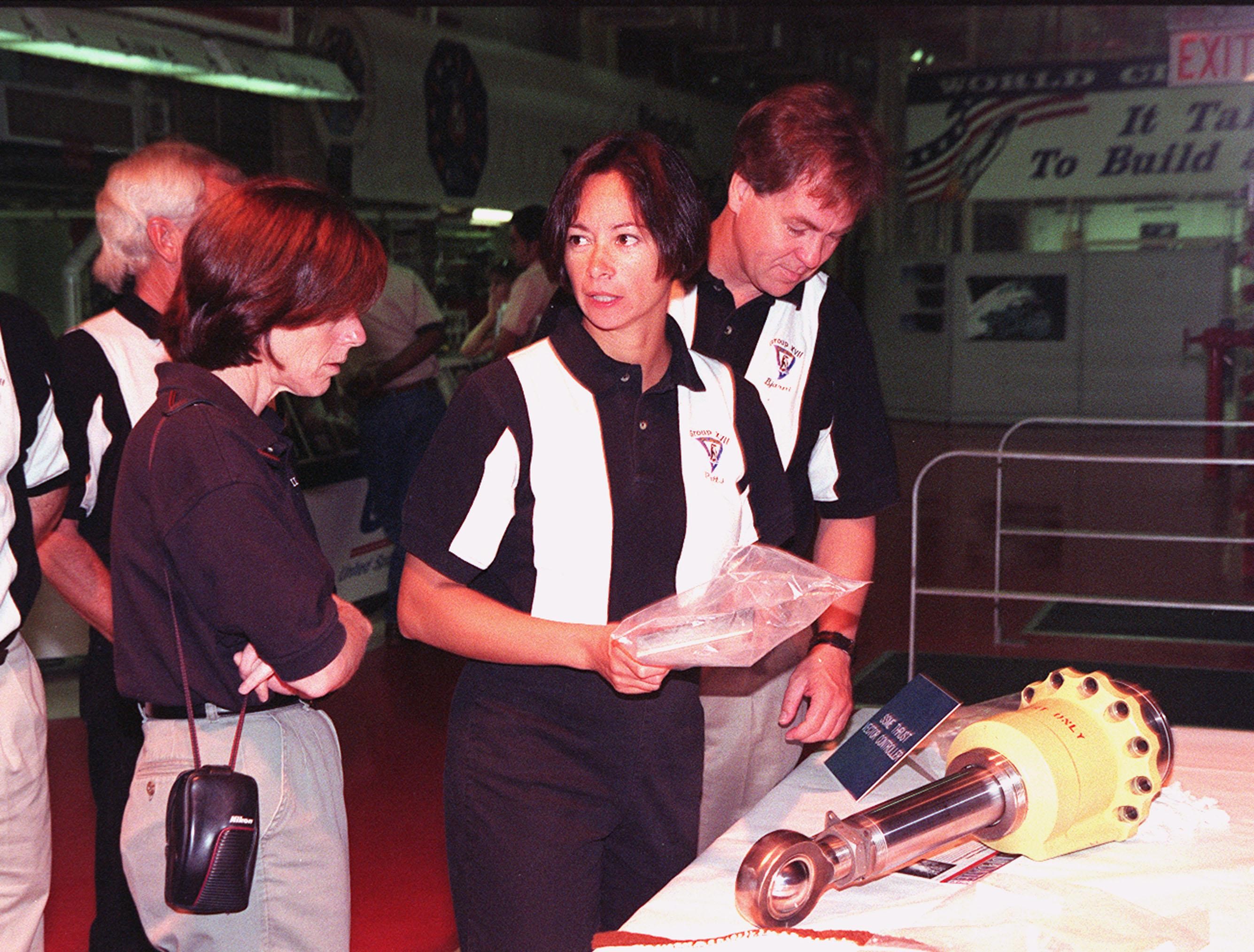
In the Orbiter Processing Facility, 1998 astronaut candidates (ASCAN) Barbara R. Morgan, Patricia C. Hilliard (M.D.) and Bjarni V. Tryggvason look at the hardware exhibits, such as the engine actuator on the table. Tryggvason is with the Canadian Space Agency. The 1998 ASCAN class is at KSC for training activities, including fire training and a flight awareness program, plus touring the OPF, SSME Processing Facility, VAB, SSPF, launch pads, SLF, Apollo/Saturn V Center and the crew headquarters. Other U.S. candidates in the '98 class are Clayton C. Anderson, Lee J. Archambault, Tracy E. Caldwell (Ph.D.), Gregory E. Chamitoff (Ph.D.), Timothy J. Creamer, Christopher J. Ferguson, Michael J. Foreman, Michael E. Fossum, Kenneth T. Ham, Gregory C. Johnson, Gregory H. Johnson, Stanley G. Love (Ph.D.), Leland D. Melvin, William A. Oefelein, John D. Olivas (Ph.D.), Nicholas J.M. Patrick (Ph.D.), Alan G. Poindexter, Garrett E. Reisman (Ph.D.), Steven R. Swanson, Douglas H. Wheelock, Sunita L. Williams, Neil W. Woodward III, George D. Zamka; and the other international candidates are Leopold Eyharts, Paolo Nespoli, Hans Schlegel, Roberto Vittori, and Marcos Pontes
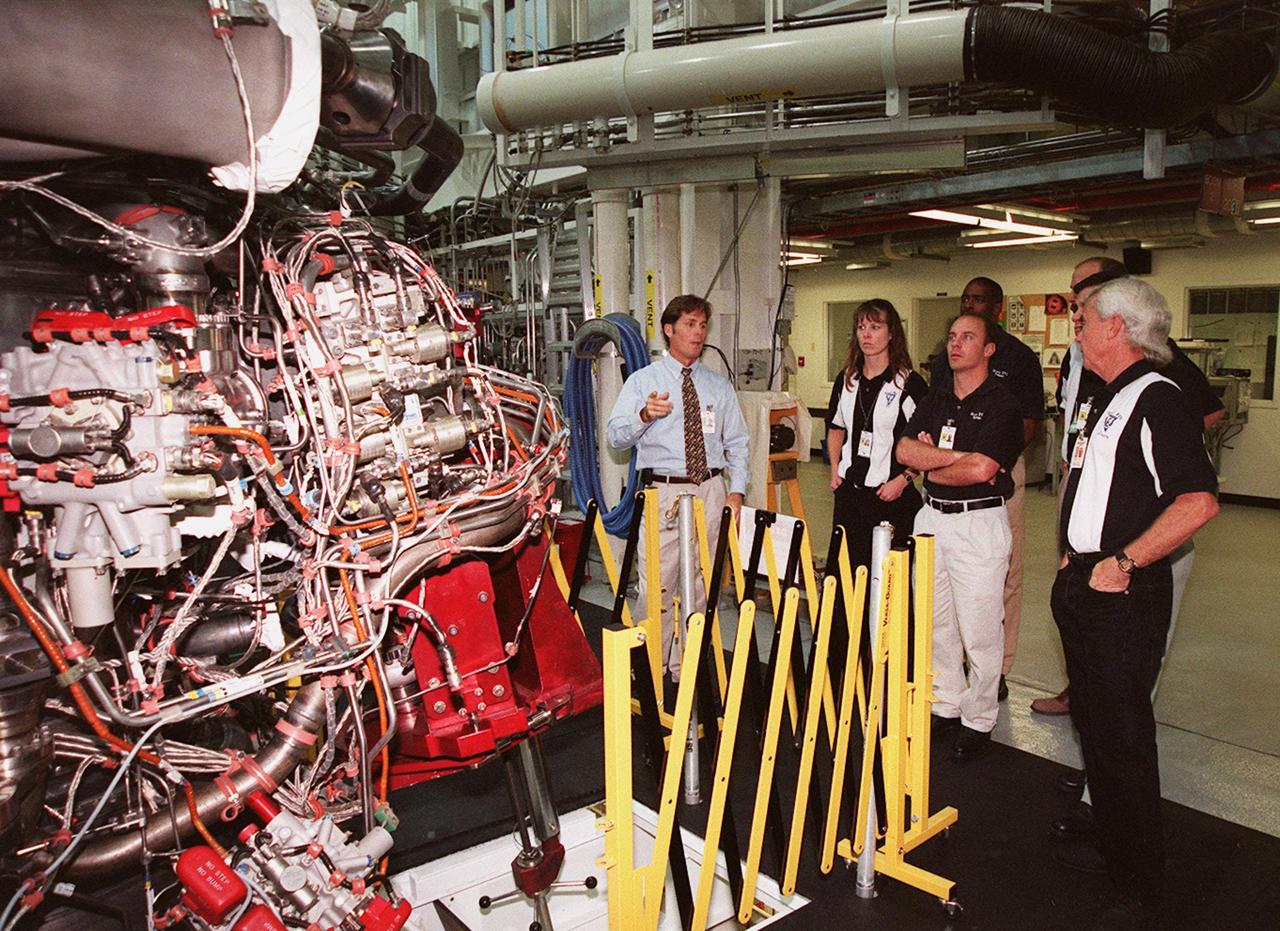
KENNEDY SPACE CENTER, FLA. -- On their tour of KSC, members of the 1998 astronaut candidate class (group 17) stop at the Space Shuttle Main Engine (SSME) Processing Facility for a close up look at a main shuttle engine. The class is taking part in training activities, including fire training and a flight awareness program, plus touring the OPF, VAB, SSPF, launch pads, SLF, Apollo/Saturn V Center, the crew headquarters, as well as the SSME Processing Facility. The U.S. candidates in the '98 class are Clayton C. Anderson, Lee J. Archambault, Tracy E. Caldwell (Ph.D.), Gregory E. Chamitoff (Ph.D.), Timothy J. Creamer, Christopher J. Ferguson, Michael J. Foreman, Michael E. Fossum, Kenneth T. Ham, Patricia C. Hilliard (M.D.), Gregory C. Johnson, Gregory H. Johnson, Stanley G. Love (Ph.D.), Leland D. Melvin, Barbara R. Morgan, William A. Oefelein, John D. Olivas (Ph.D.), Nicholas J.M. Patrick (Ph.D.), Alan G. Poindexter, Garrett E. Reisman (Ph.D.), Steven R. Swanson, Douglas H. Wheelock, Sunita L. Williams, Neil W. Woodward III, George D. Zamka; and the international candidates are Leopold Eyharts, Paolo Nespoli, Hans Schlegel, Roberto Vittori, Bjarni V. Tryggvason, and Marcos Pontes
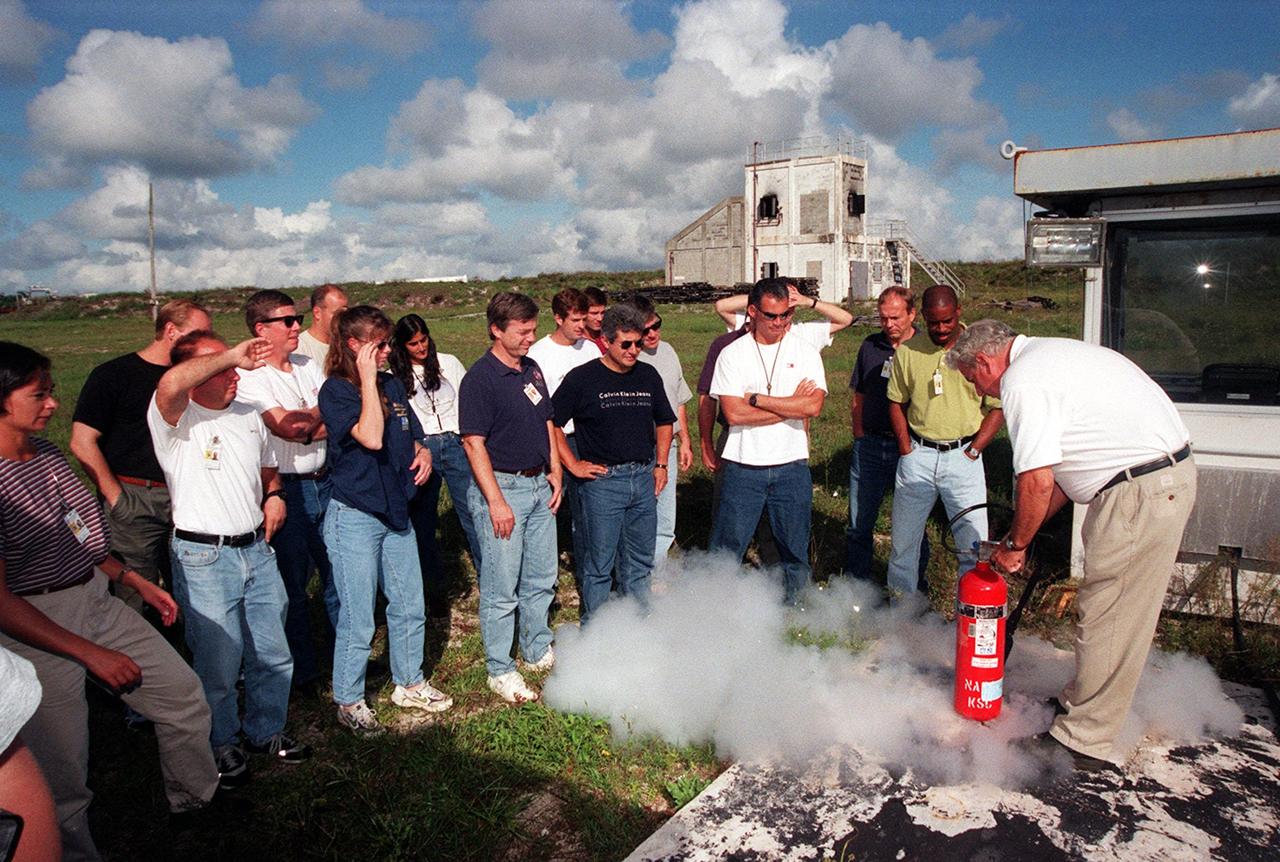
KENNEDY SPACE CENTER, FLA. -- On the grounds of the Kennedy Space Center, members of the 1998 astronaut candidate class (Group 17) take part in fire training. The class is taking part in training activities, including a flight awareness program, plus touring the OPF, VAB, SSPF, SSME Processing Facility, launch pads, SLF, Apollo/Saturn V Center, and the crew quarters. The U.S. candidates in the '98 class are Clayton C. Anderson, Lee J. Archambault, Tracy E. Caldwell (Ph.D.), Gregory E. Chamitoff (Ph.D.), Timothy J. Creamer, Christopher J. Ferguson, Michael J. Foreman, Michael E. Fossum, Kenneth T. Ham, Patricia C. Hilliard (M.D.), Gregory C. Johnson, Gregory H. Johnson, Stanley G. Love (Ph.D.), Leland D. Melvin, Barbara R. Morgan, William A. Oefelein, John D. Olivas (Ph.D.), Nicholas J.M. Patrick (Ph.D.), Alan G. Poindexter, Garrett E. Reisman (Ph.D.), Steven R. Swanson, Douglas H. Wheelock, Sunita L. Williams, Neil W. Woodward III, George D. Zamka; and the international candidates are Leopold Eyharts, Paolo Nespoli, Hans Schlegel, Roberto Vittori, Bjarni V. Tryggvason, and Marcos Pontes
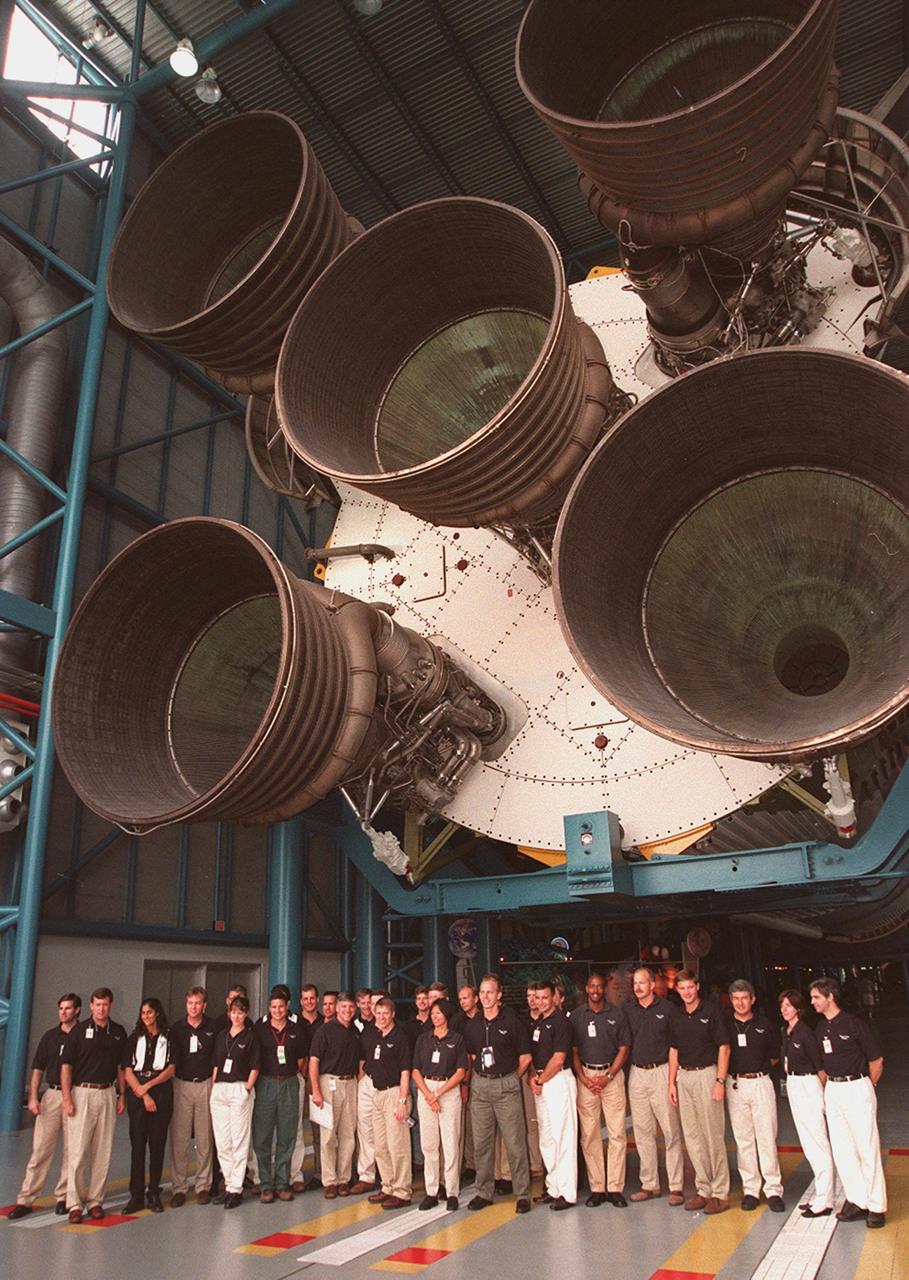
KENNEDY SPACE CENTER, FLA. -- At the Apollo/Saturn V Center, some of the 1998 astronaut candidate class (group 17) line up for a photo while standing under the engines of the Saturn V rocket on display. The U.S. candidates include Clayton C. Anderson, Lee J. Archambault, Tracy E. Caldwell (Ph.D.), Gregory E. Chamitoff (Ph.D.), Timothy J. Creamer, Christopher J. Ferguson, Michael J. Foreman, Michael E. Fossum, Kenneth T. Ham, Patricia C. Hilliard (M.D.), Gregory C. Johnson, Gregory H. Johnson, Stanley G. Love (Ph.D.), Leland D. Melvin, Barbara R. Morgan, William A. Oefelein, John D. Olivas (Ph.D.), Nicholas J.M. Patrick (Ph.D.), Alan G. Poindexter, Garrett E. Reisman (Ph.D.), Steven R. Swanson, Douglas H. Wheelock, Sunita L. Williams, Neil W. Woodward III, George D. Zamka; and international candidates Leopold Eyharts, Paolo Nespoli, Hans Schlegel, Roberto Vittori, Bjarni V. Tryggvason, and Marcos Pontes. The class is at KSC for training activities, including fire training and a flight awareness program, plus touring the OPF, SSME Processing Facility, VAB, SSPF, launch pads, SLF, Apollo/Saturn V Center and the crew headquarters
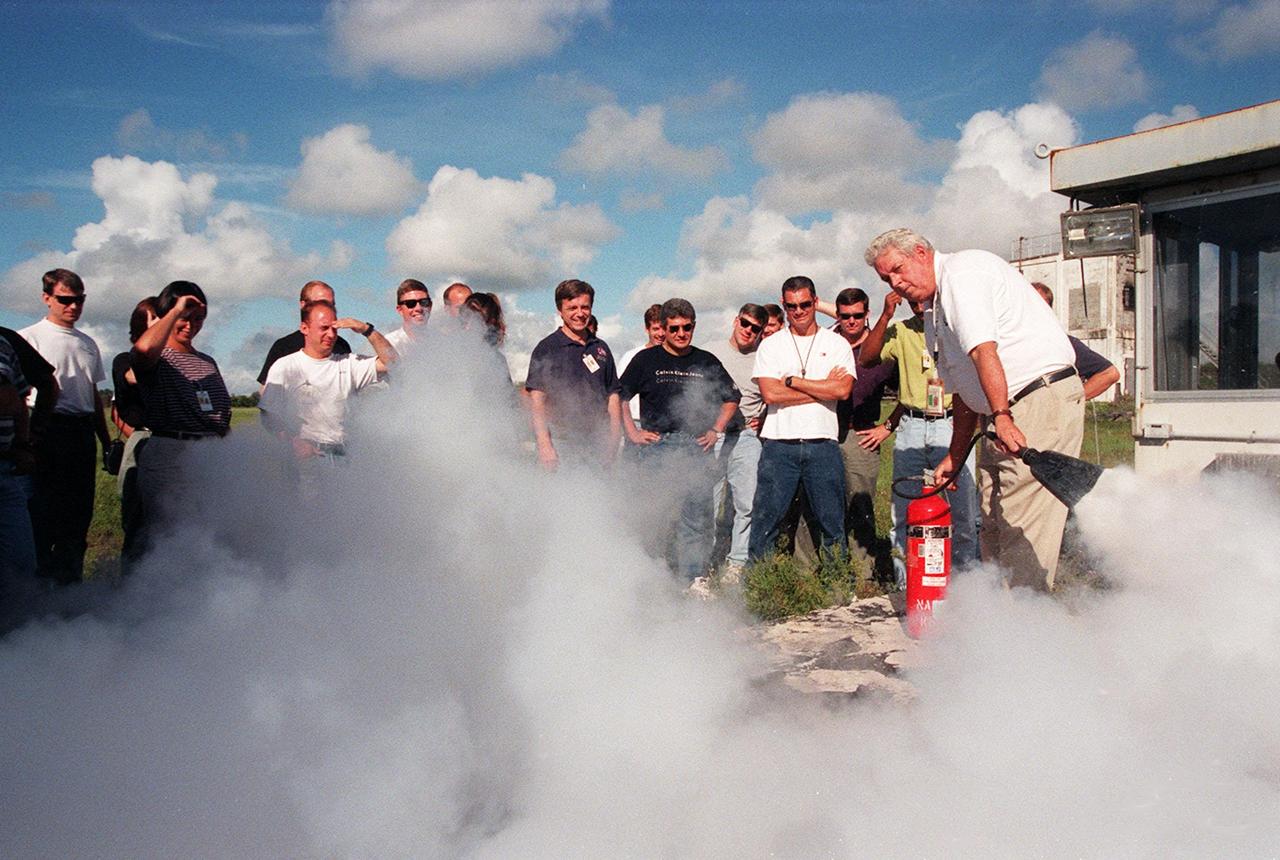
KENNEDY SPACE CENTER, FLA. -- On the grounds of the Kennedy Space Center, members of the 1998 astronaut candidate class (Group 17) watch a demonstration as part of fire training. The class is taking part in training activities, including a flight awareness program, plus touring the OPF, VAB, SSPF, SSME Processing Facility, launch pads, SLF, Apollo/Saturn V Center, and the crew quarters. The U.S. candidates in the '98 class are Clayton C. Anderson, Lee J. Archambault, Tracy E. Caldwell (Ph.D.), Gregory E. Chamitoff (Ph.D.), Timothy J. Creamer, Christopher J. Ferguson, Michael J. Foreman, Michael E. Fossum, Kenneth T. Ham, Patricia C. Hilliard (M.D.), Gregory C. Johnson, Gregory H. Johnson, Stanley G. Love (Ph.D.), Leland D. Melvin, Barbara R. Morgan, William A. Oefelein, John D. Olivas (Ph.D.), Nicholas J.M. Patrick (Ph.D.), Alan G. Poindexter, Garrett E. Reisman (Ph.D.), Steven R. Swanson, Douglas H. Wheelock, Sunita L. Williams, Neil W. Woodward III, George D. Zamka; and the international candidates are Leopold Eyharts, Paolo Nespoli, Hans Schlegel, Roberto Vittori, Bjarni V. Tryggvason, and Marcos Pontes
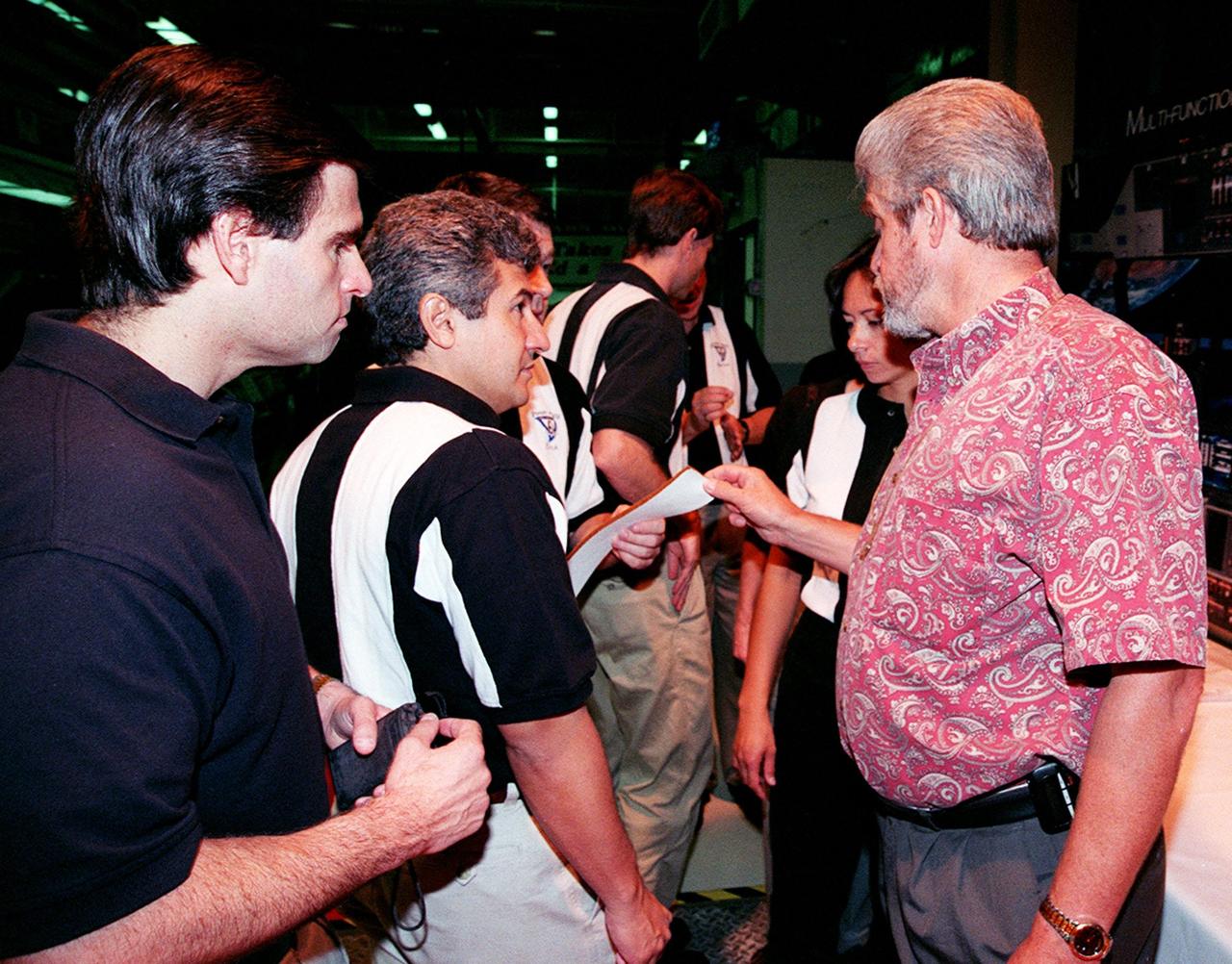
In the Orbiter Processing Facility bay 3, Larry Osheim (right), who is with United Space Alliance, shows members of the 1998 astronaut candidate class (group 17) a sample of Felt Reusable Surface Insulation (FRSI) blankets used on the orbiters. The class is at KSC for training activities, including fire training and a flight awareness program, plus touring the OPF, SSME Processing Facility, VAB, SSPF, launch pads, SLF, Apollo/Saturn V Center and the crew headquarters. The U.S. candidates in the '98 class are Clayton C. Anderson, Lee J. Archambault, Tracy E. Caldwell (Ph.D.), Gregory E. Chamitoff (Ph.D.), Timothy J. Creamer, Christopher J. Ferguson, Michael J. Foreman, Michael E. Fossum, Kenneth T. Ham, Patricia C. Hilliard (M.D.), Gregory C. Johnson, Gregory H. Johnson, Stanley G. Love (Ph.D.), Leland D. Melvin, Barbara R. Morgan, William A. Oefelein, John D. Olivas (Ph.D.), Nicholas J.M. Patrick (Ph.D.), Alan G. Poindexter, Garrett E. Reisman (Ph.D.), Steven R. Swanson, Douglas H. Wheelock, Sunita L. Williams, Neil W. Woodward III, George D. Zamka; and the international candidates are Leopold Eyharts, Paolo Nespoli, Hans Schlegel, Roberto Vittori, Bjarni V. Tryggvason, and Marcos Pontes
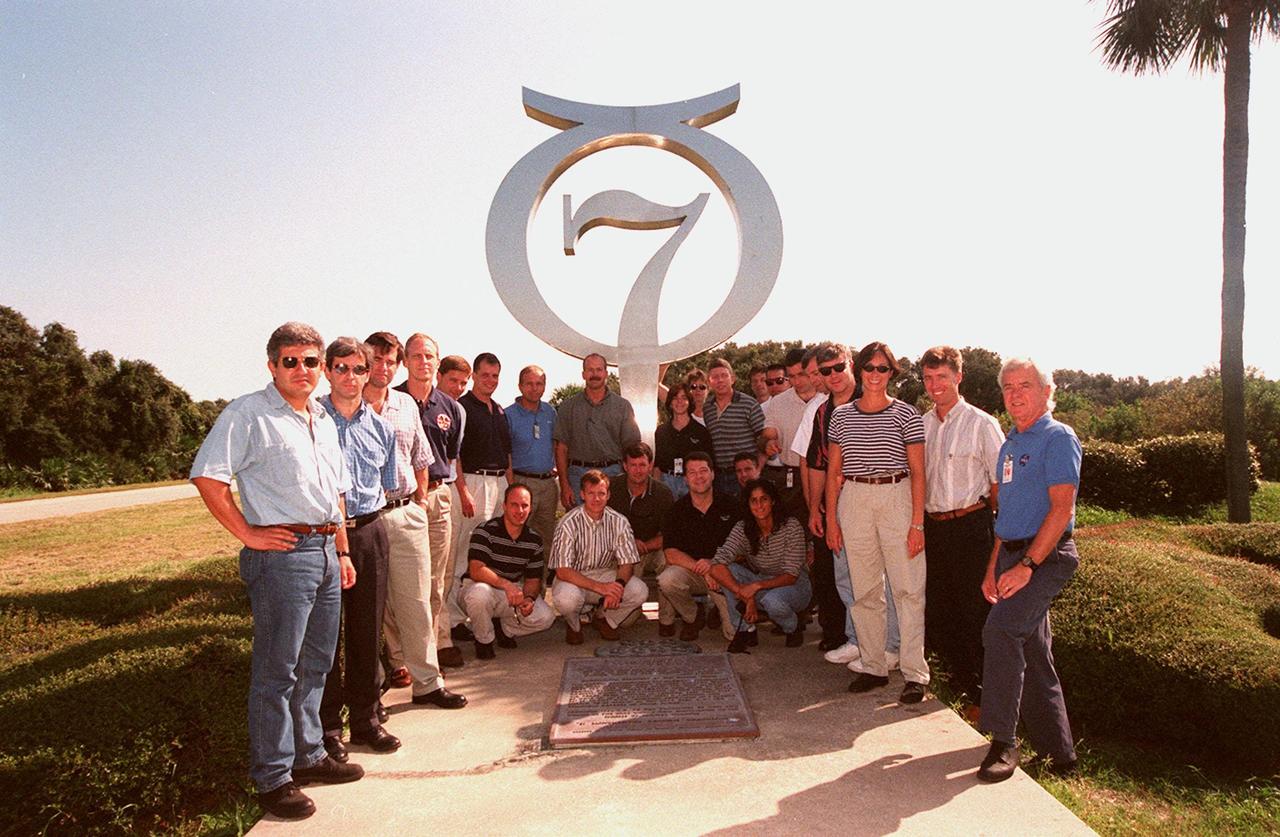
At Cape Canaveral Air Station, members of the 1998 astronaut candidate class (Group 17) pose in front of the Project Mercury monument at Launch Complex 14 during a tour of the station's facilities. This 13-foot-high astronomical symbol for the planet Mercury was constructed by General Dynamics, the Atlas airframe contractor, and dedicated in 1964 in honor of those who flew in the Mercury 7 capsule. The class is at Kennedy Space Center taking part in training activities, including a flight awareness program, as well as touring the OPF, VAB, SSPF, SSME Processing Facility, launch pads, SLF, Apollo/Saturn V Center, and the crew quarters. The U.S. candidates in the '98 class are Clayton C. Anderson, Lee J. Archambault, Tracy E. Caldwell (Ph.D.), Gregory E. Chamitoff (Ph.D.), Timothy J. Creamer, Christopher J. Ferguson, Michael J. Foreman, Michael E. Fossum, Kenneth T. Ham, Patricia C. Hilliard (M.D.), Gregory C. Johnson, Gregory H. Johnson, Stanley G. Love (Ph.D.), Leland D. Melvin, Barbara R. Morgan, William A. Oefelein, John D. Olivas (Ph.D.), Nicholas J.M. Patrick (Ph.D.), Alan G. Poindexter, Garrett E. Reisman (Ph.D.), Steven R. Swanson, Douglas H. Wheelock, Sunita L. Williams, Neil W. Woodward III, George D. Zamka; and the international candidates are Leopold Eyharts, Paolo Nespoli, Hans Schlegel, Roberto Vittori, Bjarni V. Tryggvason, and Marcos Pontes
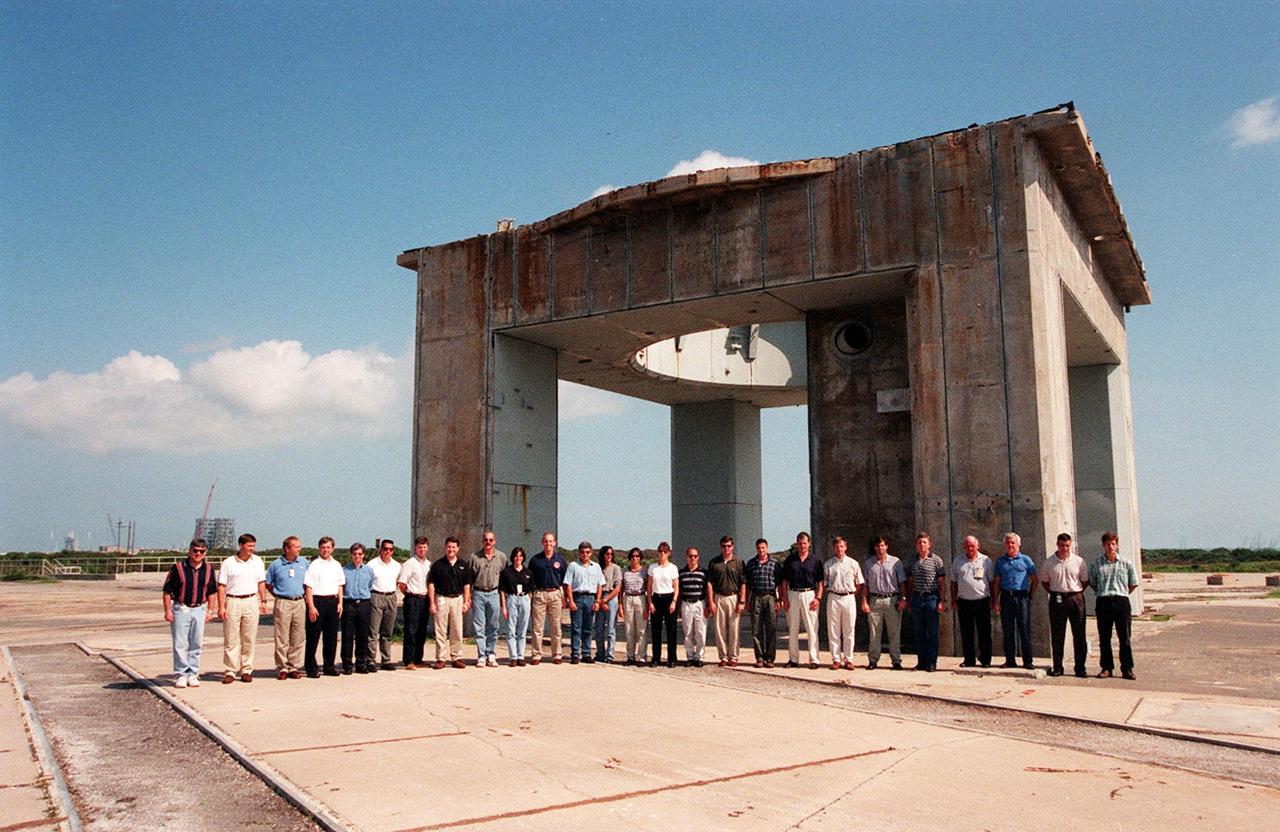
At Cape Canaveral Air Station, members of the 1998 astronaut candidate class (Group 17) pose in front of what remains of the launch tower at Launch Complex 34 during a tour of the station's facilities. During the Apollo Program, Launch Complex 34 was the site of the first Saturn I and Saturn IB launches, as well as the tragic fire in which the Apollo I astronauts lost their lives. The class is at Kennedy Space Center taking part in training activities, including a flight awareness program, as well as touring the OPF, VAB, SSPF, SSME Processing Facility, launch pads, SLF, Apollo/Saturn V Center, and the crew quarters. The U.S. candidates in the '98 class are Clayton C. Anderson, Lee J. Archambault, Tracy E. Caldwell (Ph.D.), Gregory E. Chamitoff (Ph.D.), Timothy J. Creamer, Christopher J. Ferguson, Michael J. Foreman, Michael E. Fossum, Kenneth T. Ham, Patricia C. Hilliard (M.D.), Gregory C. Johnson, Gregory H. Johnson, Stanley G. Love (Ph.D.), Leland D. Melvin, Barbara R. Morgan, William A. Oefelein, John D. Olivas (Ph.D.), Nicholas J.M. Patrick (Ph.D.), Alan G. Poindexter, Garrett E. Reisman (Ph.D.), Steven R. Swanson, Douglas H. Wheelock, Sunita L. Williams, Neil W. Woodward III, George D. Zamka; and the international candidates are Leopold Eyharts, Paolo Nespoli, Hans Schlegel, Roberto Vittori, Bjarni V. Tryggvason, and Marcos Pontes