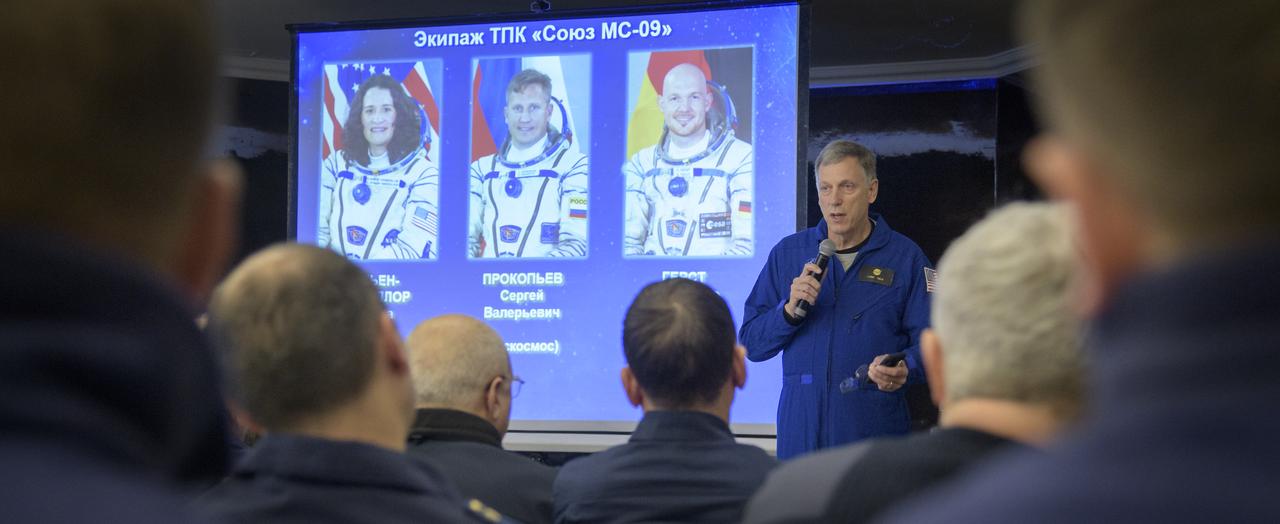
NASA International Space Station Operations Integration Manager Kenny Todd thanks Russian Search and Rescue teams for their amazing support during the October 11, 2018 aborted Expedition 57 launch, Tuesday, Dec. 18, 2018 at the Cosmonaut Hotel in Karaganda, Kazakhstan. NASA, ESA, and Roscosmos teams were gathered to discuss the readiness for the landing of Expedition 57 crew members Serena Auñón-Chancellor of NASA, Alexander Gerst of ESA (European Space Agency), and Sergey Prokopyev of Roscosmos, Auñón-Chancellor, Gerst, and Prokopyev are returning after 197 days in space where they served as members of the Expedition 56 and 57 crews onboard the International Space Station. Photo Credit: (NASA/Bill Ingalls)
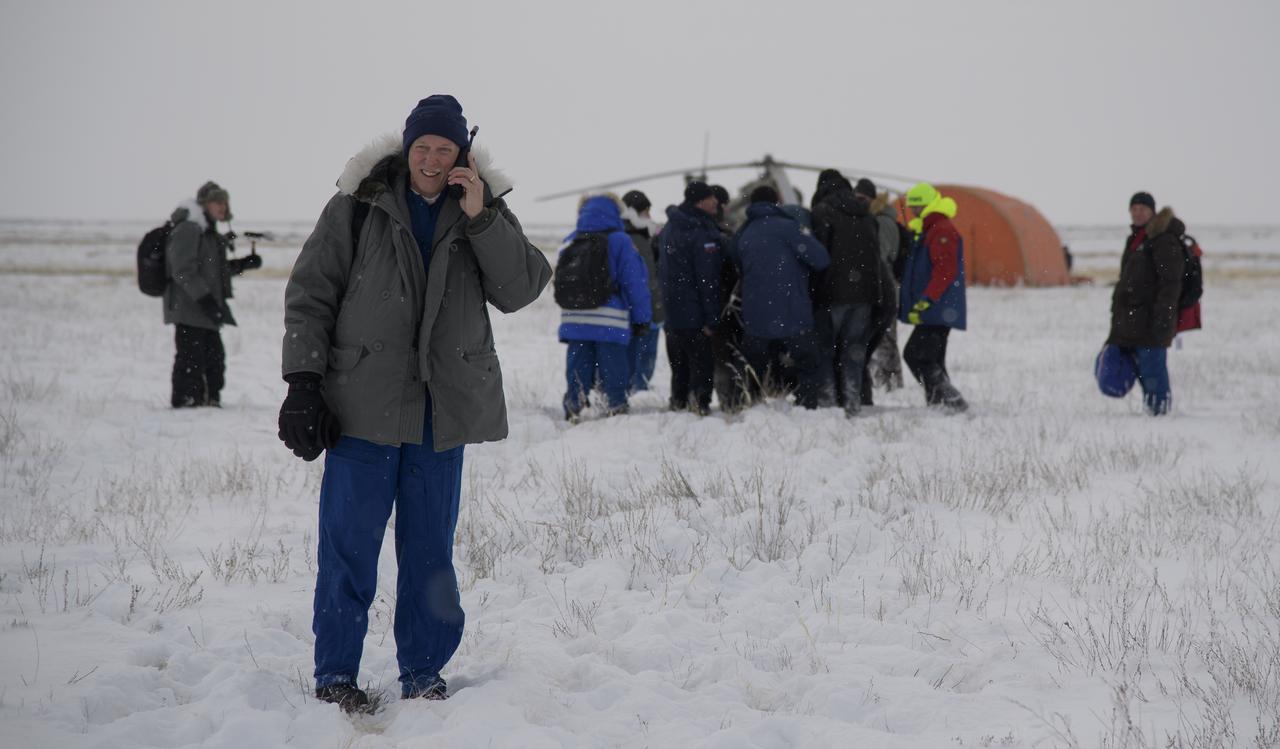
NASA International Space Station Operations Integration Manager Kenny Todd talks to NASA teams back in Houston as Serena Auñón-Chancellor of NASA is carried to a medical tent shortly after she, Alexander Gerst of ESA (European Space Agency), and Sergey Prokopyev of Roscosmos landed in their Soyuz MS-09 spacecraft near the town of Zhezkazgan, Kazakhstan on Thursday, Dec. 20, 2018. Auñón-Chancellor, Gerst, and Prokopyev are returning after 197 days in space where they served as members of the Expedition 56 and 57 crews onboard the International Space Station. Photo Credit: (NASA/Bill Ingalls)
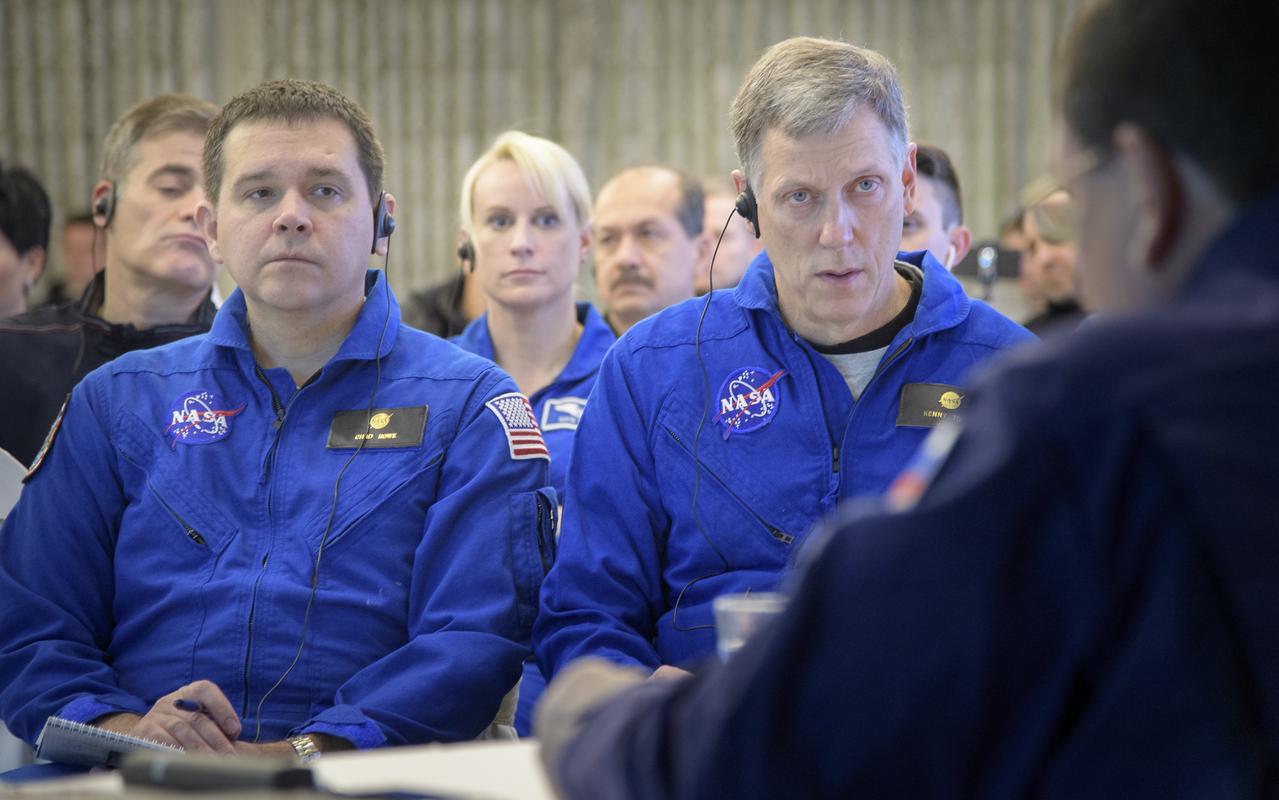
NASA International Space Station Operations Integration Manager Kenny Todd, left, and NASA Director for Human Space Flight Programs, Russia, Chad Rowe, along with Roscosmos and Russian Search and Recovery Forces, meet to discuss the readiness for the landing of Expedition 54 crew members Joe Acaba and Mark Vande Hei of NASA and cosmonaut Alexander Misurkin Sunday, Feb. 25, 2018. Acaba, Vande Hei, and Misurkin are returning after 168 days in space where they served as members of the Expedition 53 and 54 crews onboard the International Space Station. Photo Credit: (NASA/Bill Ingalls)
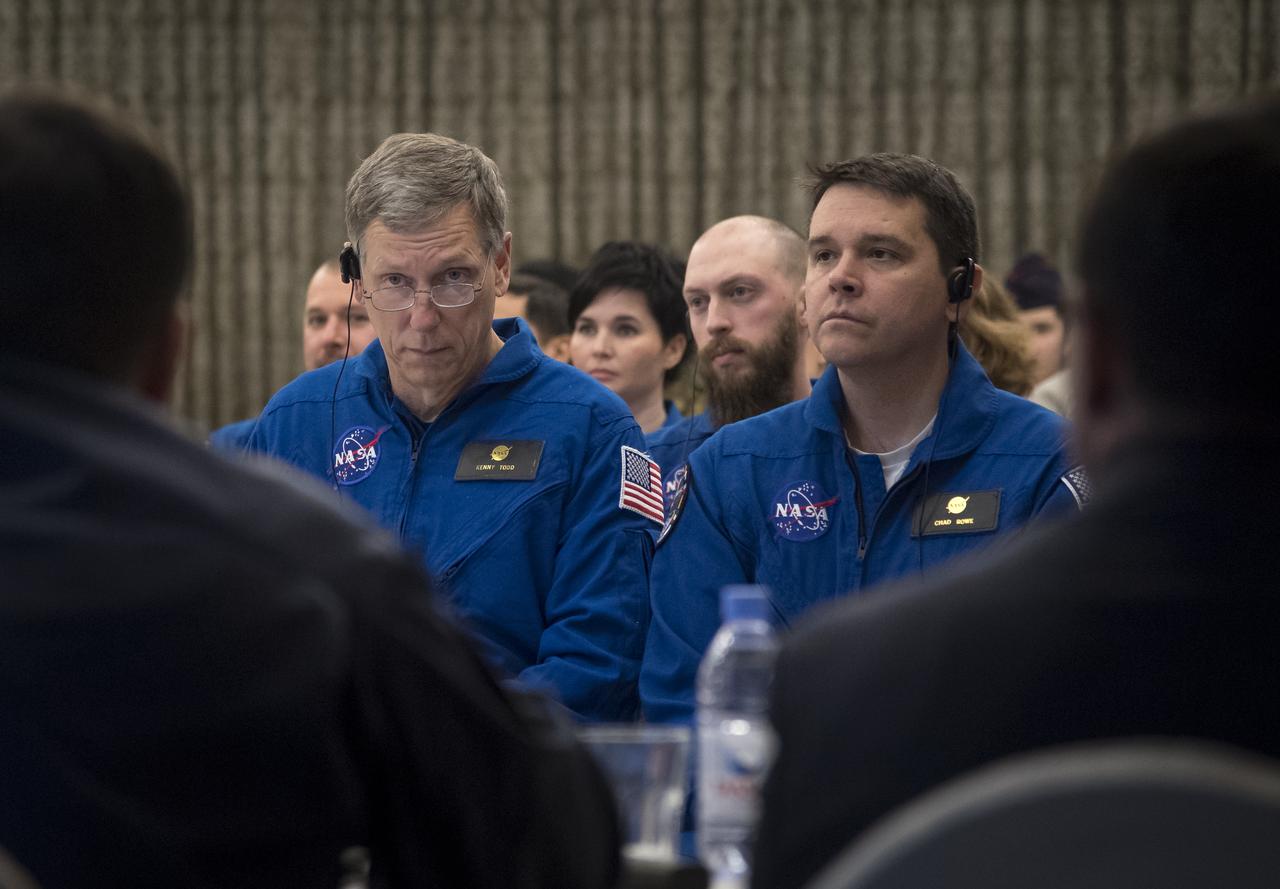
NASA Director for Human Space Flight Programs, Russia, Chad Rowe, left, NASA astronaut and Astronaut Office Representative Kate Rubins, center, and NASA International Space Station Operations Integration Manager Kenny Todd listen as NASA, ESA, Roscosmos, and Russian Search and Recovery Forces meet at the Cosmonaut Hotel in Karaganda, Kazakhstan to discuss the readiness for the landing of Expedition 57 crew members Serena Auñón-Chancellor of NASA, Alexander Gerst of ESA (European Space Agency), and Sergey Prokopyev of Roscosmos, Tuesday, Dec. 18, 2018. Auñón-Chancellor, Gerst, and Prokopyev are returning after 197 days in space where they served as members of the Expedition 56 and 57 crews onboard the International Space Station. Photo Credit: (NASA/Bill Ingalls)
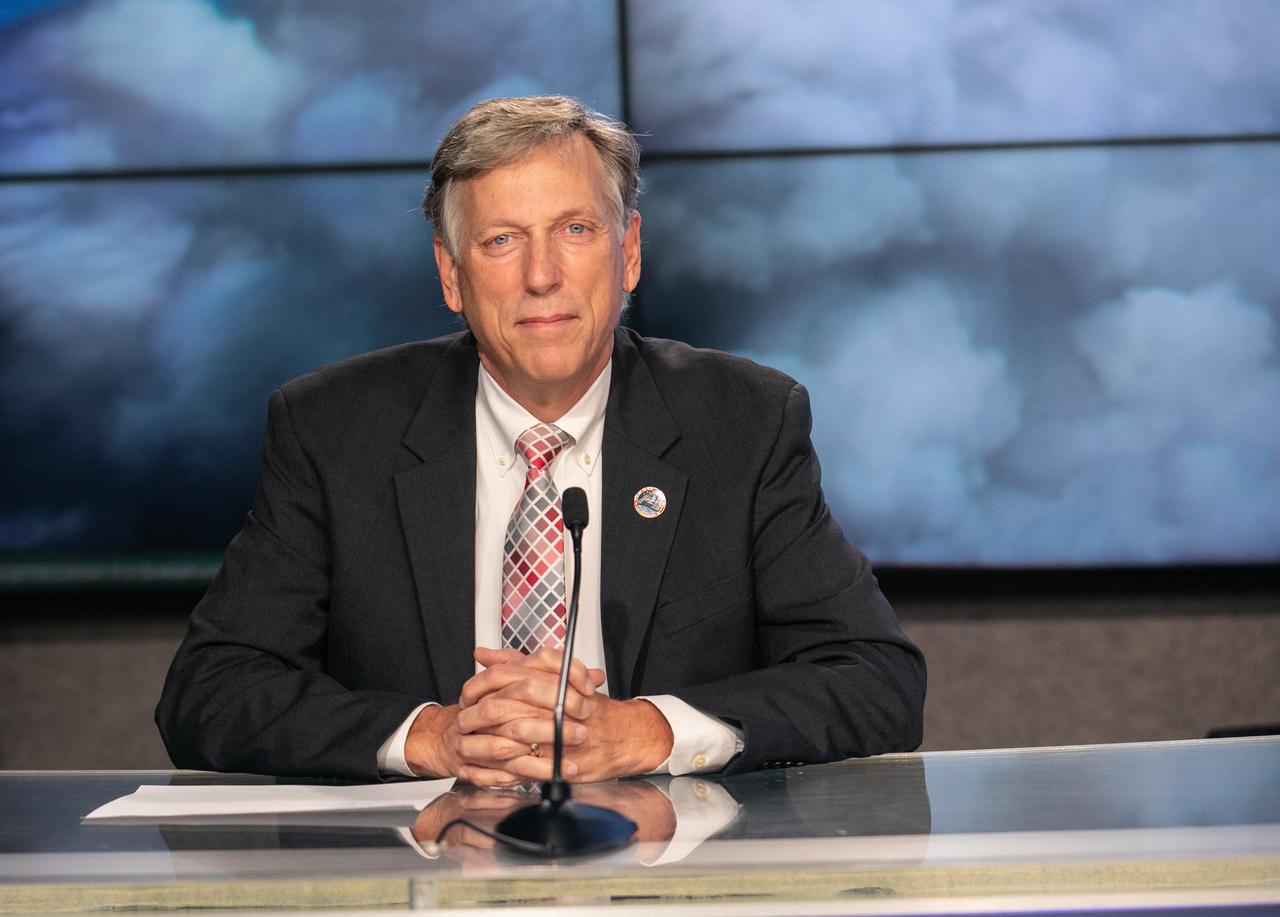
Kirt Costello, chief scientist, International Space Station Program Office, is introduced during a CRS-21 prelaunch news conference at NASA’s Kennedy Space Center in Florida on Dec. 4, 2020. Kenny Todd, deputy program manager, International Space Station Program Office; Sarah Walker, director, Dragon Mission Management, SpaceX; and Melody Lovin, launch weather officer, U.S. Air Force 45th Space Wing, also participated in the event, which was moderated by NASA Communications’ Jasmine Hopkins. SpaceX’s Falcon 9 rocket, with the upgraded version of the Cargo Dragon spacecraft atop, is targeted to lift off from Kennedy’s Launch Complex 39A Saturday, Dec. 5, at 11:39 a.m. EST. CRS-21 will deliver supplies, equipment, and critical materials needed to support a variety of science and research investigations on the International Space Station.
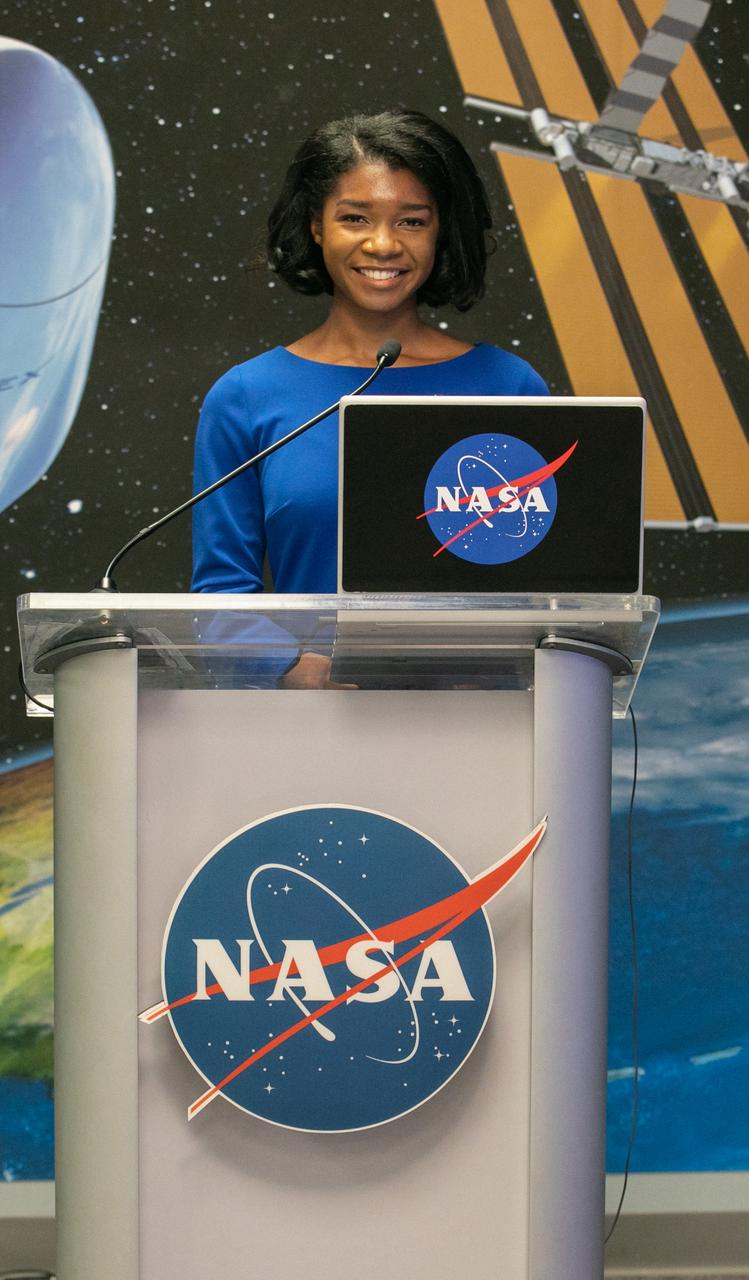
NASA Communications’ Jasmine Hopkins moderates a CRS-21 prelaunch news conference at Kennedy Space Center in Florida on Dec. 4, 2020. Participants included Kenny Todd, deputy program manager, International Space Station Program Office; Kirt Costello, chief scientist, International Space Station Program Office; Sarah Walker, director, Dragon Mission Management, SpaceX; and Melody Lovin, launch weather officer, U.S. Air Force 45th Space Wing. SpaceX’s Falcon 9 rocket, with the upgraded version of the Cargo Dragon spacecraft atop, is targeted to lift off from Kennedy’s Launch Complex 39A Saturday, Dec. 5, at 11:39 a.m. EST. CRS-21 will deliver supplies, equipment, and critical materials needed to support a variety of science and research investigations on the International Space Station.

Melody Lovin, launch weather officer, U.S. Air Force 45th Space Wing, responds to a question during a CRS-21 prelaunch news conference at NASA’s Kennedy Space Center in Florida on Dec. 4, 2020. Sarah Walker, director, Dragon Mission Management, SpaceX, Kirt Costello, chief scientist, International Space Station Program Office, and Kenny Todd, deputy program manager, International Space Station Program Office, also participated in the event, which was moderated by NASA Communications’ Jasmine Hopkins. SpaceX’s Falcon 9 rocket, with the upgraded version of the Cargo Dragon spacecraft atop, is targeted to lift off from Kennedy’s Launch Complex 39A Saturday, Dec. 5, at 11:39 a.m. EST. CRS-21 will deliver supplies, equipment, and critical materials needed to support a variety of science and research investigations on the International Space Station.
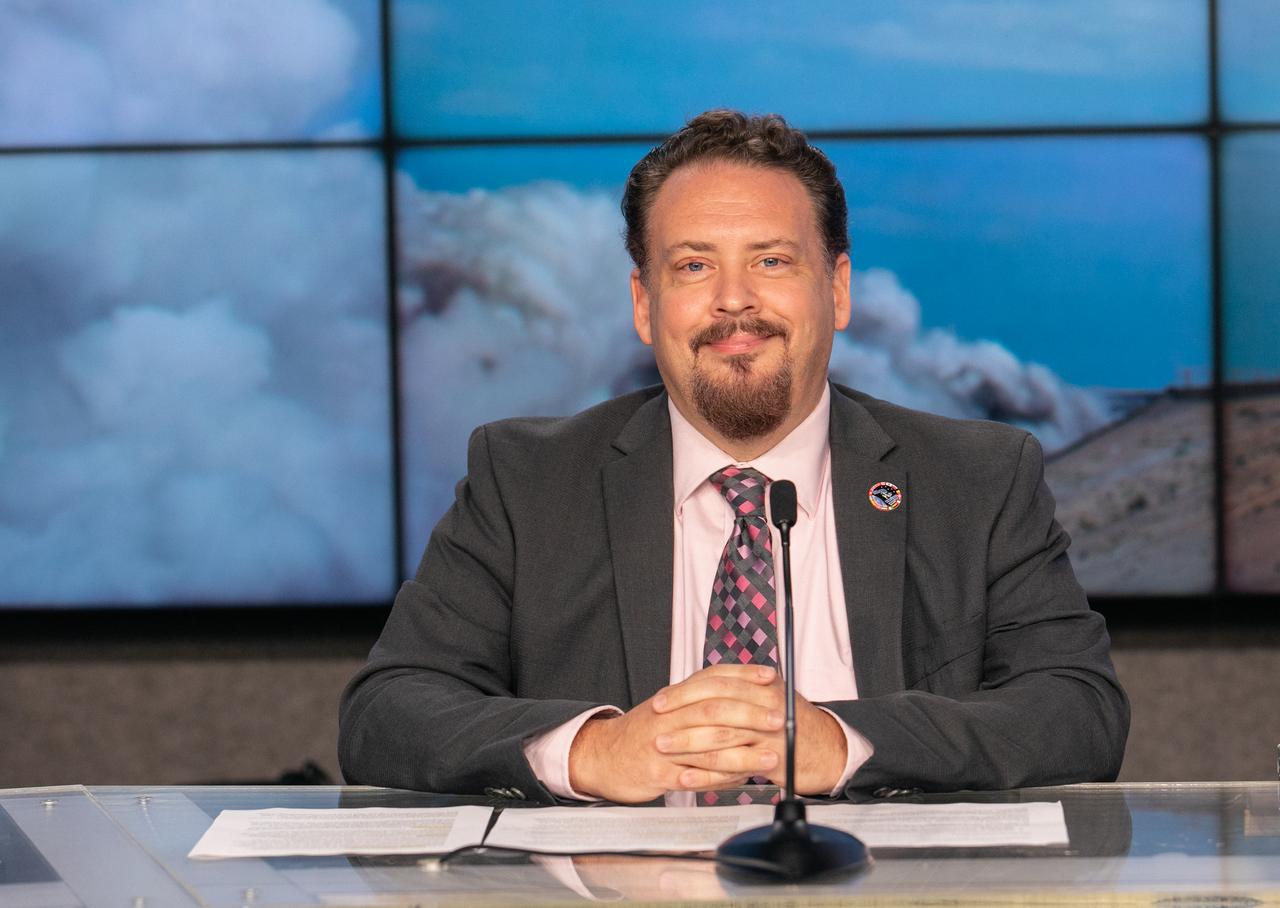
Kenny Todd, deputy program manager, International Space Station Program Office, is introduced during a CRS-21 prelaunch news conference at NASA’s Kennedy Space Center in Florida on Dec. 4, 2020. Kirt Costello, chief scientist, International Space Station Program Office; Sarah Walker, director, Dragon Mission Management, SpaceX; and Melody Lovin, launch weather officer, U.S. Air Force 45th Space Wing, also participated in the event, which was moderated by NASA Communications’ Jasmine Hopkins. SpaceX’s Falcon 9 rocket, with the upgraded version of the Cargo Dragon spacecraft atop, is targeted to lift off from Kennedy’s Launch Complex 39A Saturday, Dec. 5, at 11:39 a.m. EST. CRS-21 will deliver supplies, equipment, and critical materials needed to support a variety of science and research investigations on the International Space Station.
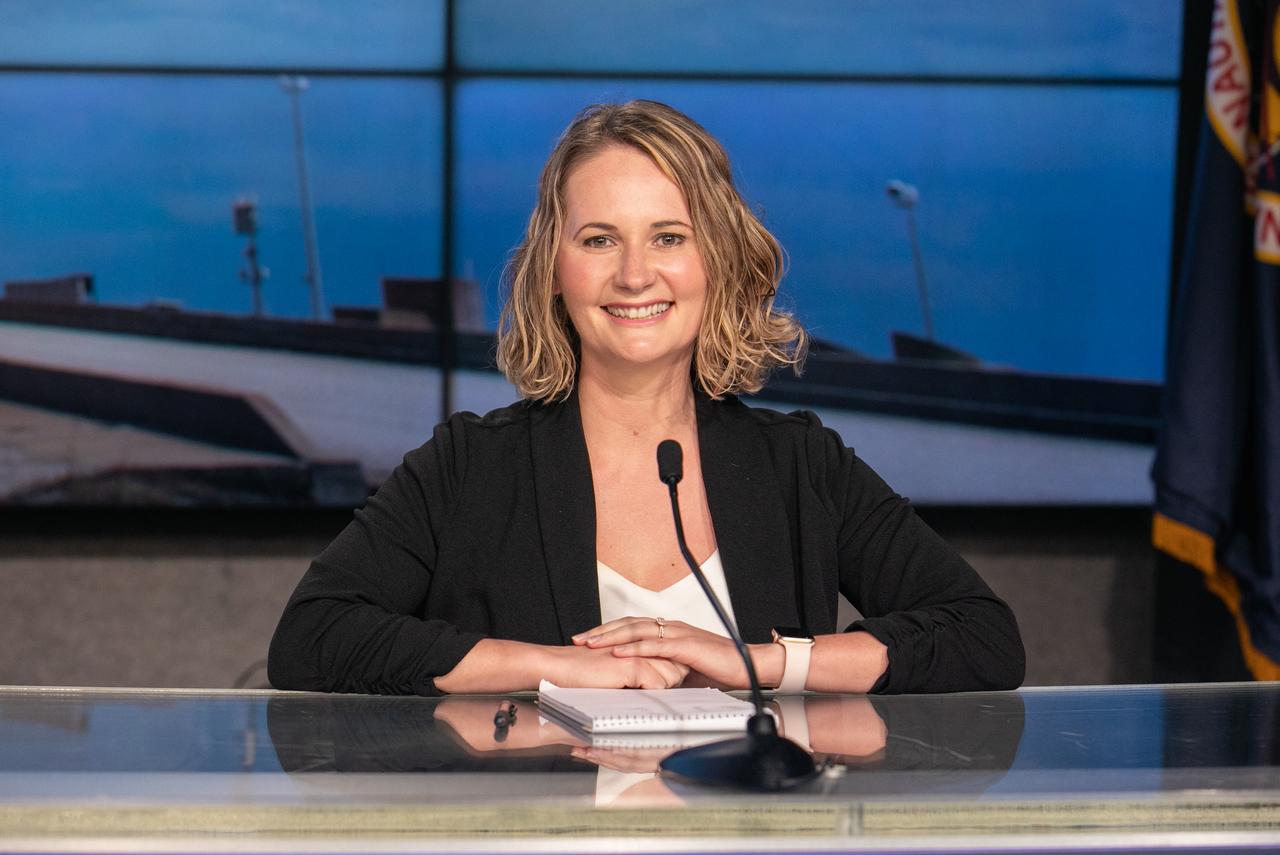
Melody Lovin, launch weather officer, U.S. Air Force 45th Space Wing, is introduced during a CRS-21 prelaunch news conference at NASA’s Kennedy Space Center in Florida on Dec. 4, 2020. Sarah Walker, director, Dragon Mission Management, SpaceX, Kirt Costello, chief scientist, International Space Station Program Office, and Kenny Todd, deputy program manager, International Space Station Program Office, also participated in the event, which was moderated by NASA Communications’ Jasmine Hopkins. SpaceX’s Falcon 9 rocket, with the upgraded version of the Cargo Dragon spacecraft atop, is targeted to lift off from Kennedy’s Launch Complex 39A Saturday, Dec. 5, at 11:39 a.m. EST. CRS-21 will deliver supplies, equipment, and critical materials needed to support a variety of science and research investigations on the International Space Station.
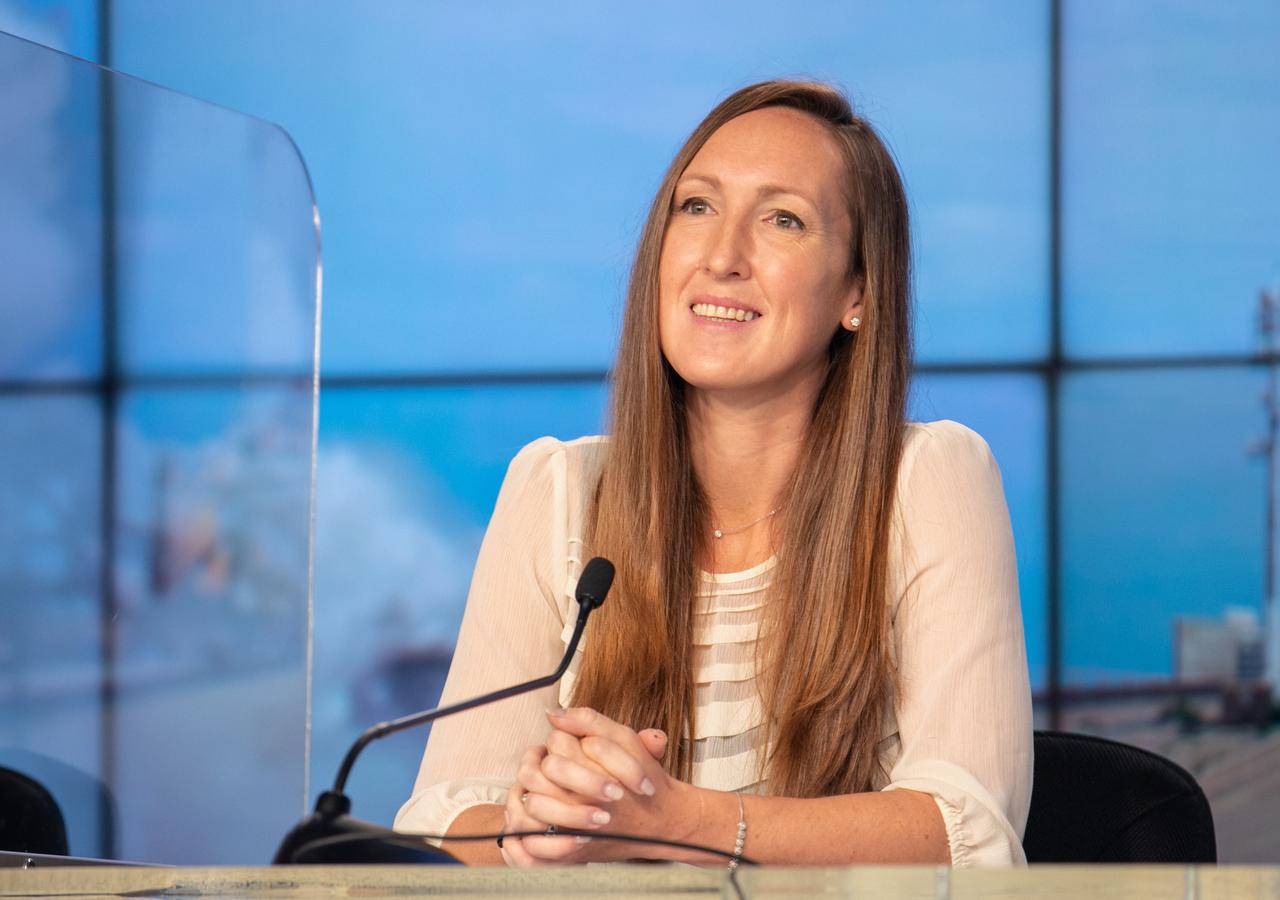
Sarah Walker, director, Dragon Mission Management, SpaceX, listens to a question during a CRS-21 prelaunch news conference at NASA’s Kennedy Space Center in Florida on Dec. 4, 2020. Kirt Costello, chief scientist, International Space Station Program Office, Kenny Todd, deputy program manager, International Space Station Program Office; and Melody Lovin, launch weather officer, U.S. Air Force 45th Space Wing, also participated in the event, which was moderated by NASA Communications’ Jasmine Hopkins. SpaceX’s Falcon 9 rocket, with the upgraded version of the Cargo Dragon spacecraft atop, is targeted to lift off from Kennedy’s Launch Complex 39A Saturday, Dec. 5, at 11:39 a.m. EST. CRS-21 will deliver supplies, equipment, and critical materials needed to support a variety of science and research investigations on the International Space Station.
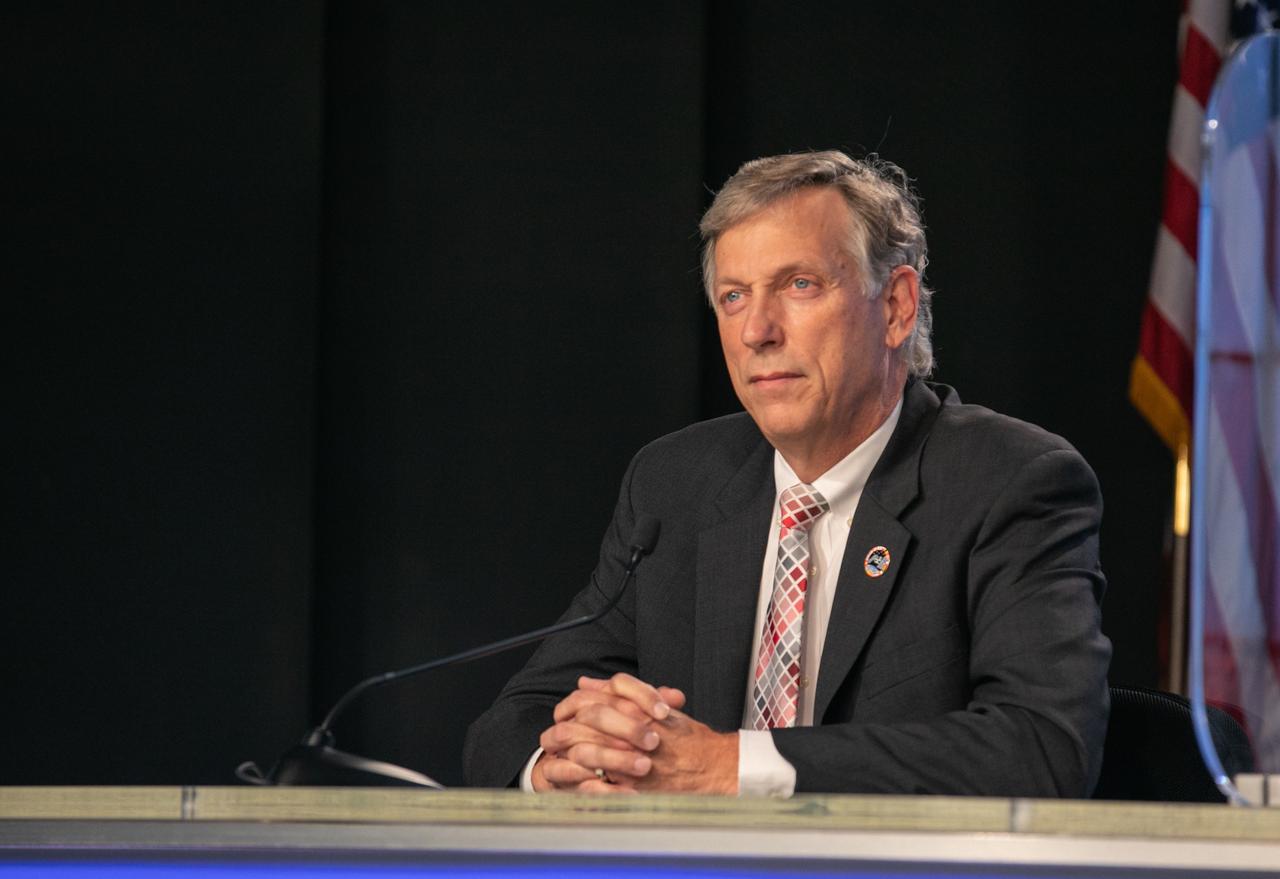
Kenny Todd, deputy program manager, International Space Station Program Office, listens to a question during a CRS-21 prelaunch news conference at NASA’s Kennedy Space Center in Florida on Dec. 4, 2020. Kirt Costello, chief scientist, International Space Station Program Office; Sarah Walker, director, Dragon Mission Management, SpaceX; and Melody Lovin, launch weather officer, U.S. Air Force 45th Space Wing, also participated in the event, which was moderated by NASA Communications’ Jasmine Hopkins. SpaceX’s Falcon 9 rocket, with the upgraded version of the Cargo Dragon spacecraft atop, is targeted to lift off from Kennedy’s Launch Complex 39A Saturday, Dec. 5, at 11:39 a.m. EST. CRS-21 will deliver supplies, equipment, and critical materials needed to support a variety of science and research investigations on the International Space Station.
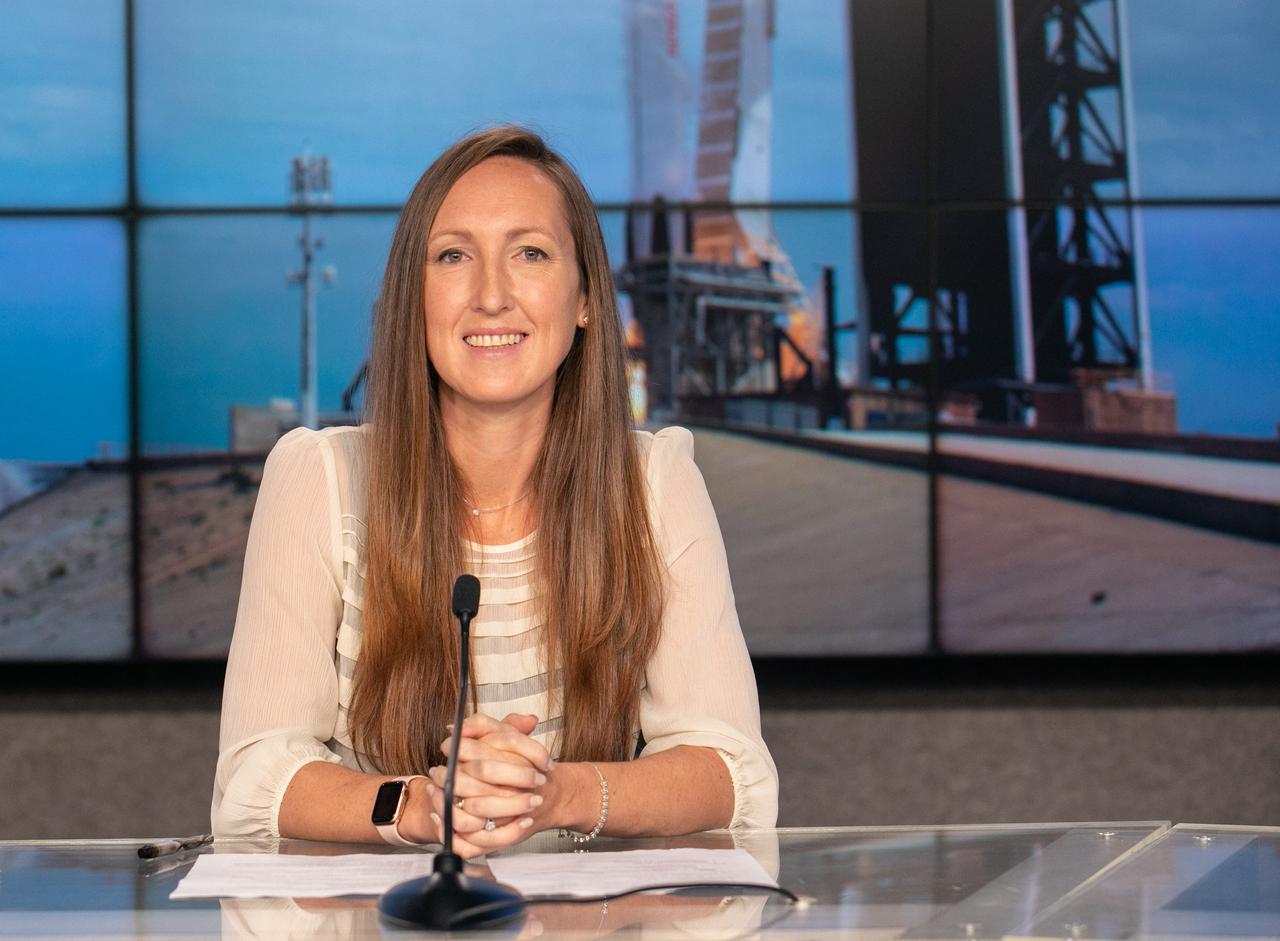
Sarah Walker, director, Dragon Mission Management, SpaceX, is introduced during a CRS-21 prelaunch news conference at NASA’s Kennedy Space Center in Florida on Dec. 4, 2020. Kirt Costello, chief scientist, International Space Station Program Office, Kenny Todd, deputy program manager, International Space Station Program Office; and Melody Lovin, launch weather officer, U.S. Air Force 45th Space Wing, also participated in the event, which was moderated by NASA Communications’ Jasmine Hopkins. SpaceX’s Falcon 9 rocket, with the upgraded version of the Cargo Dragon spacecraft atop, is targeted to lift off from Kennedy’s Launch Complex 39A Saturday, Dec. 5, at 11:39 a.m. EST. CRS-21 will deliver supplies, equipment, and critical materials needed to support a variety of science and research investigations on the International Space Station.
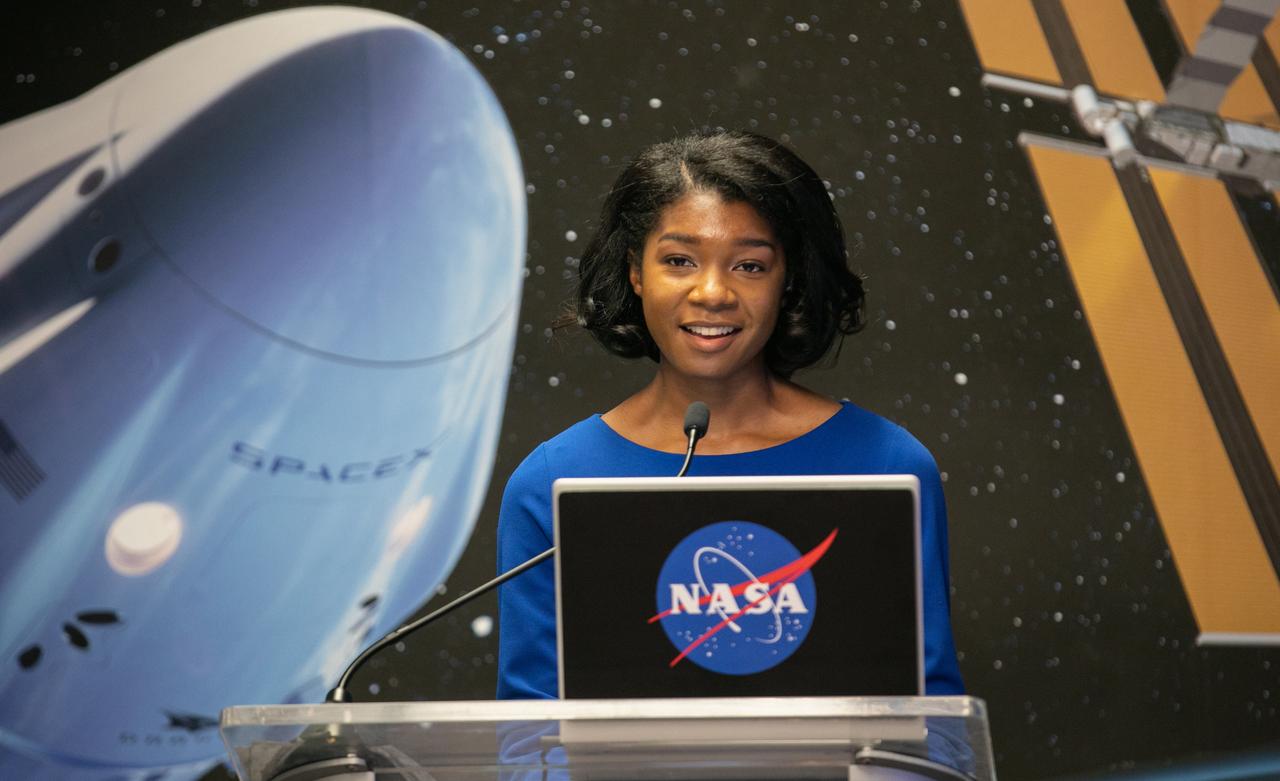
NASA Communications’ Jasmine Hopkins moderates a CRS-21 prelaunch news conference at Kennedy Space Center in Florida on Dec. 4, 2020. Participants included Kenny Todd, deputy program manager, International Space Station Program Office; Kirt Costello, chief scientist, International Space Station Program Office; Sarah Walker, director, Dragon Mission Management, SpaceX; and Melody Lovin, launch weather officer, U.S. Air Force 45th Space Wing. SpaceX’s Falcon 9 rocket, with the upgraded version of the Cargo Dragon spacecraft atop, is targeted to lift off from Kennedy’s Launch Complex 39A Saturday, Dec. 5, at 11:39 a.m. EST. CRS-21 will deliver supplies, equipment, and critical materials needed to support a variety of science and research investigations on the International Space Station.
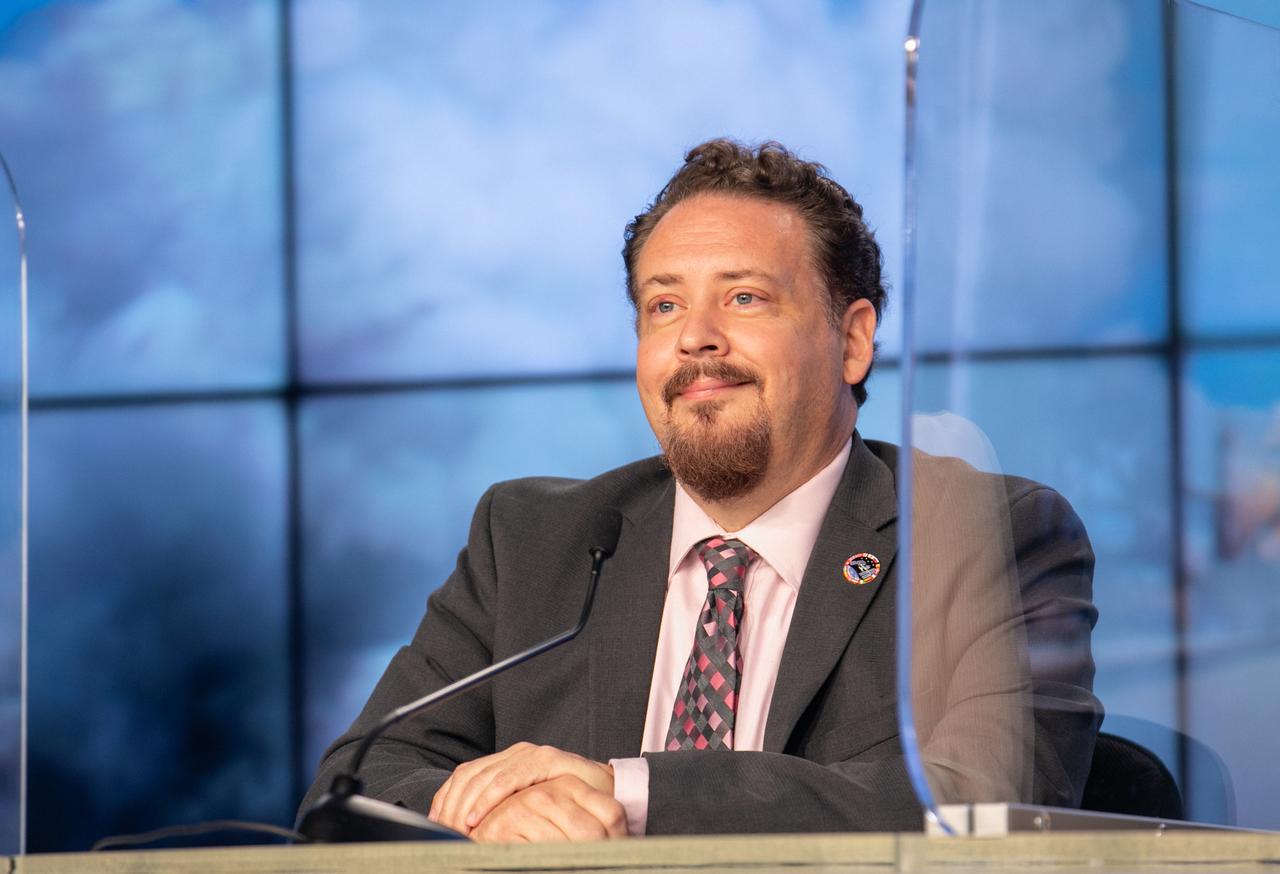
Kirt Costello, chief scientist, International Space Station Program Office, listens to a question during a CRS-21 prelaunch news conference at NASA’s Kennedy Space Center in Florida on Dec. 4, 2020. Kenny Todd, deputy program manager, International Space Station Program Office; Sarah Walker, director, Dragon Mission Management, SpaceX; and Melody Lovin, launch weather officer, U.S. Air Force 45th Space Wing, also participated in the event, which was moderated by NASA Communications’ Jasmine Hopkins. SpaceX’s Falcon 9 rocket, with the upgraded version of the Cargo Dragon spacecraft atop, is targeted to lift off from Kennedy’s Launch Complex 39A Saturday, Dec. 5, at 11:39 a.m. EST. CRS-21 will deliver supplies, equipment, and critical materials needed to support a variety of science and research investigations on the International Space Station.
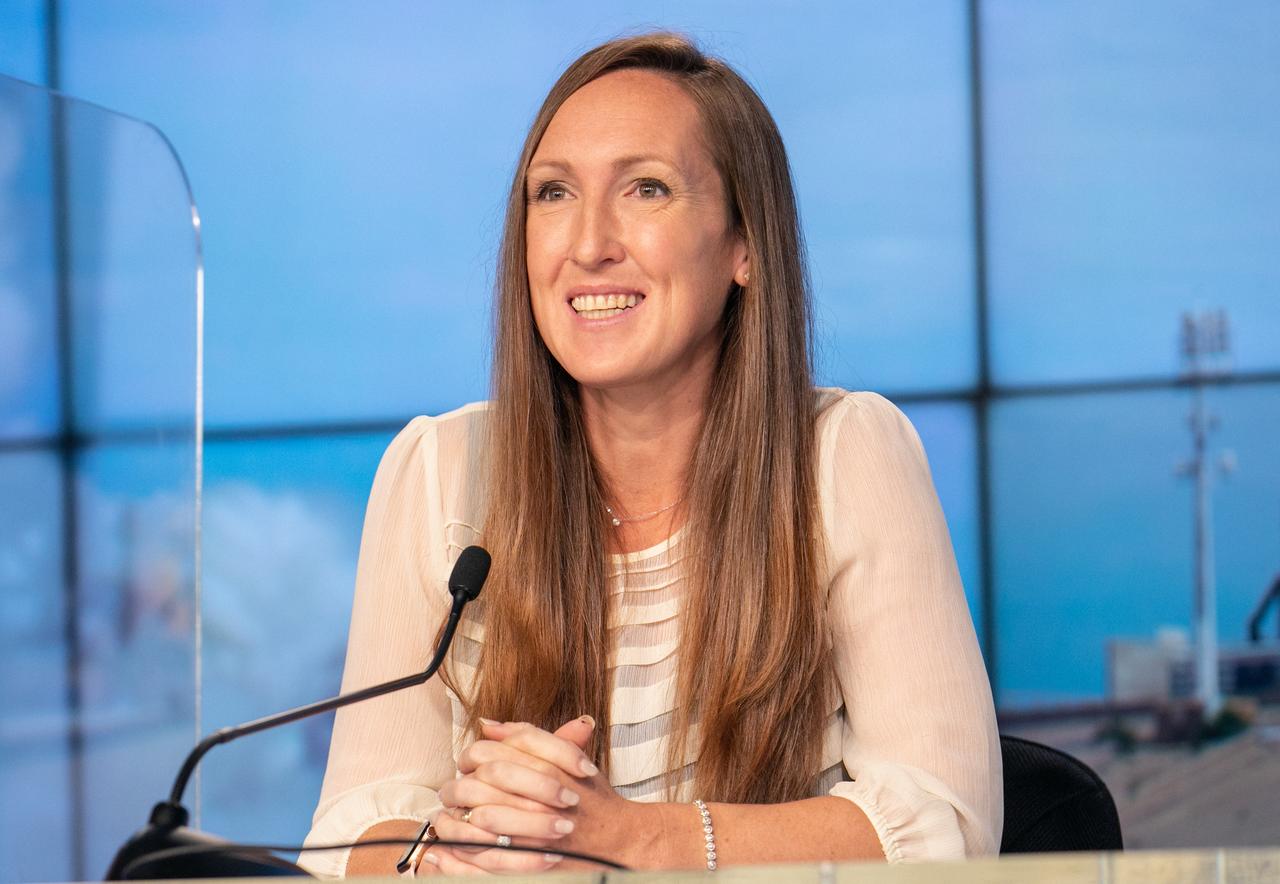
Sarah Walker, director, Dragon Mission Management, SpaceX, responds to a question during a CRS-21 prelaunch news conference at NASA’s Kennedy Space Center in Florida on Dec. 4, 2020. Kirt Costello, chief scientist, International Space Station Program Office, Kenny Todd, deputy program manager, International Space Station Program Office; and Melody Lovin, launch weather officer, U.S. Air Force 45th Space Wing, also participated in the event, which was moderated by NASA Communications’ Jasmine Hopkins. SpaceX’s Falcon 9 rocket, with the upgraded version of the Cargo Dragon spacecraft atop, is targeted to lift off from Kennedy’s Launch Complex 39A Saturday, Dec. 5, at 11:39 a.m. EST. CRS-21 will deliver supplies, equipment, and critical materials needed to support a variety of science and research investigations on the International Space Station.
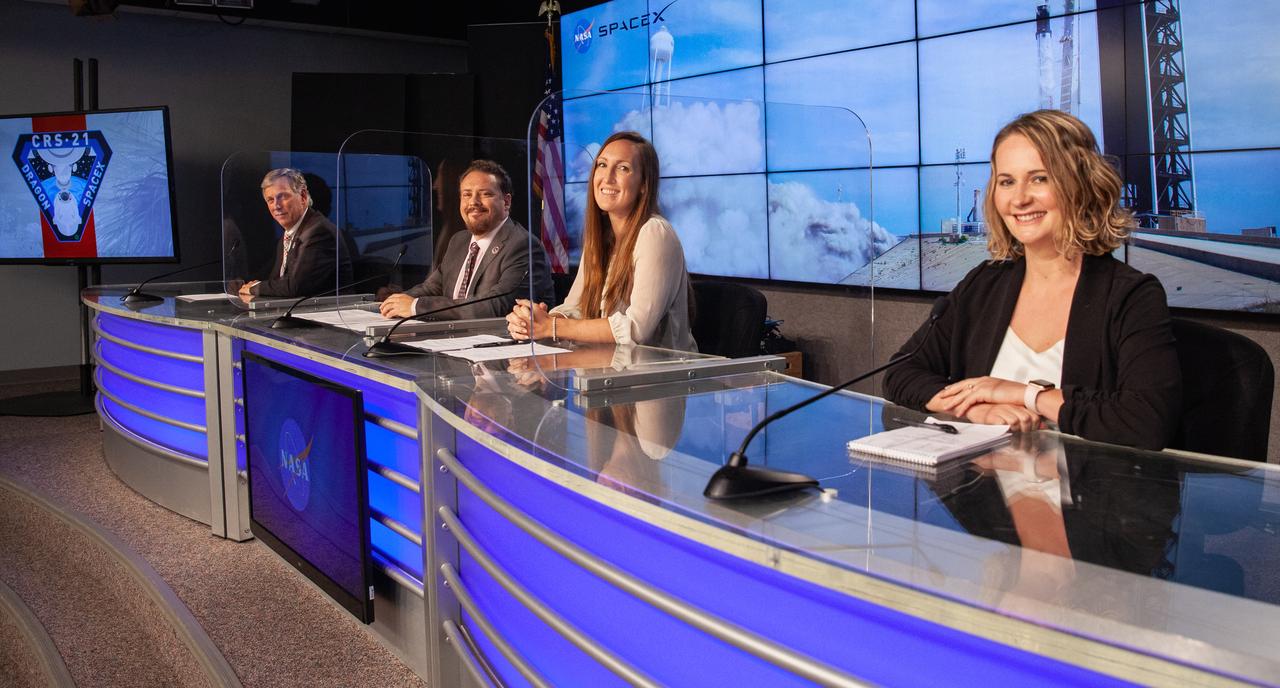
From left, Kenny Todd, deputy program manager, International Space Station Program Office; Kirt Costello, chief scientist, International Space Station Program Office; Sarah Walker, director, Dragon Mission Management, SpaceX; and Melody Lovin, launch weather officer, U.S. Air Force 45th Space Wing, participate in a CRS-21 prelaunch news conference at Kennedy Space Center in Florida on Dec. 4, 2020. NASA Communications’ Jasmine Hopkins moderated the event. SpaceX’s Falcon 9 rocket, with the upgraded version of the Cargo Dragon spacecraft atop, is targeted to lift off from Kennedy’s Launch Complex 39A Saturday, Dec. 5, at 11:39 a.m. EST. CRS-21 will deliver supplies, equipment, and critical materials needed to support a variety of science and research investigations on the International Space Station.
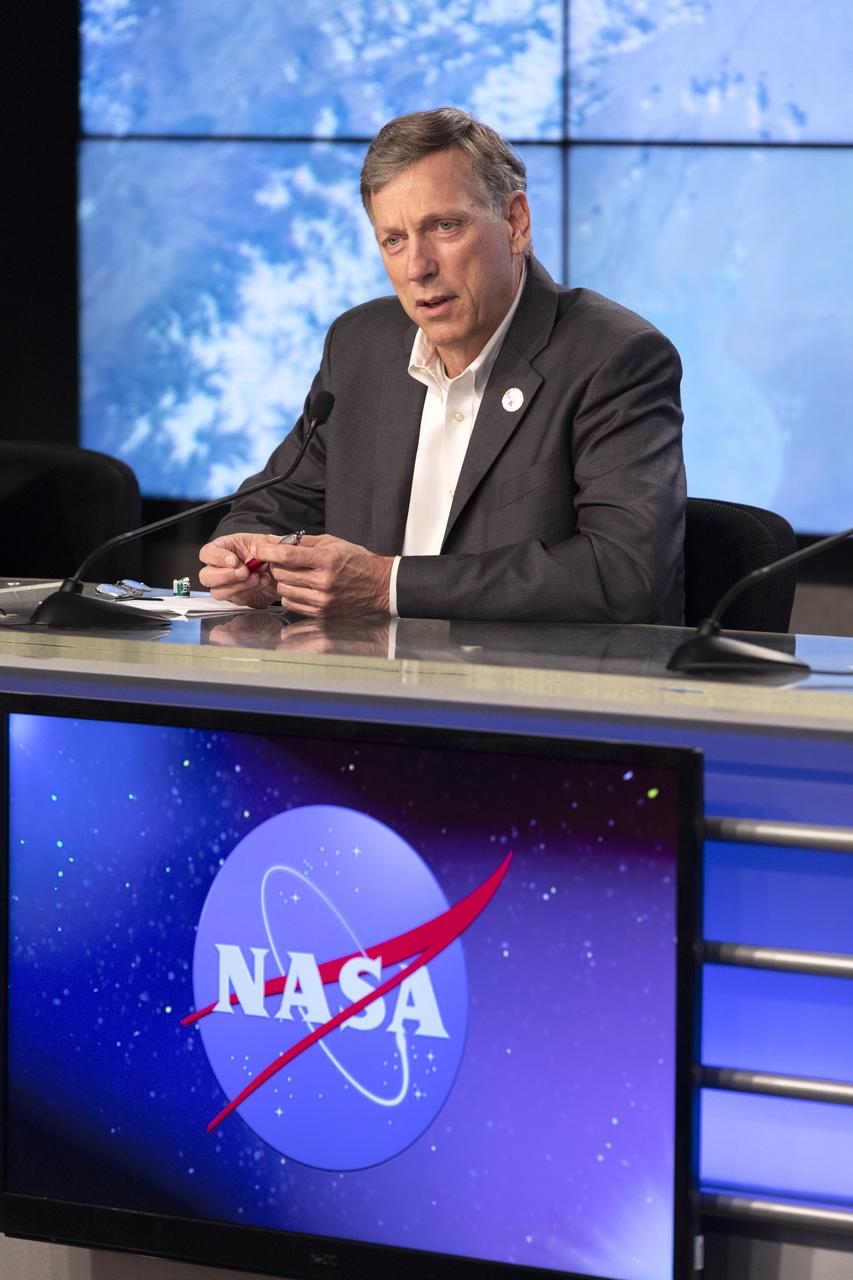
Kenny Todd, manager, International Space Station Operations and Integration at NASA’s Johnson Space Center in Houston speaks to members of the news media during a postlaunch news conference at NASA’s Kennedy Space Center in Florida on May 4, 2019, for SpaceX’s 17th Commercial Resupply Services (CRS-17) mission to the International Space Station for the agency. The company’s Falcon 9 rocket with the Dragon cargo module lifted off from Space Launch Complex 40 at Cape Canaveral Air Force Station in Florida at 2:48 a.m. EDT. The Dragon cargo module will deliver about 5,500 pounds of science and research, crew supplies and vehicle hardware to the orbital laboratory and its crew.
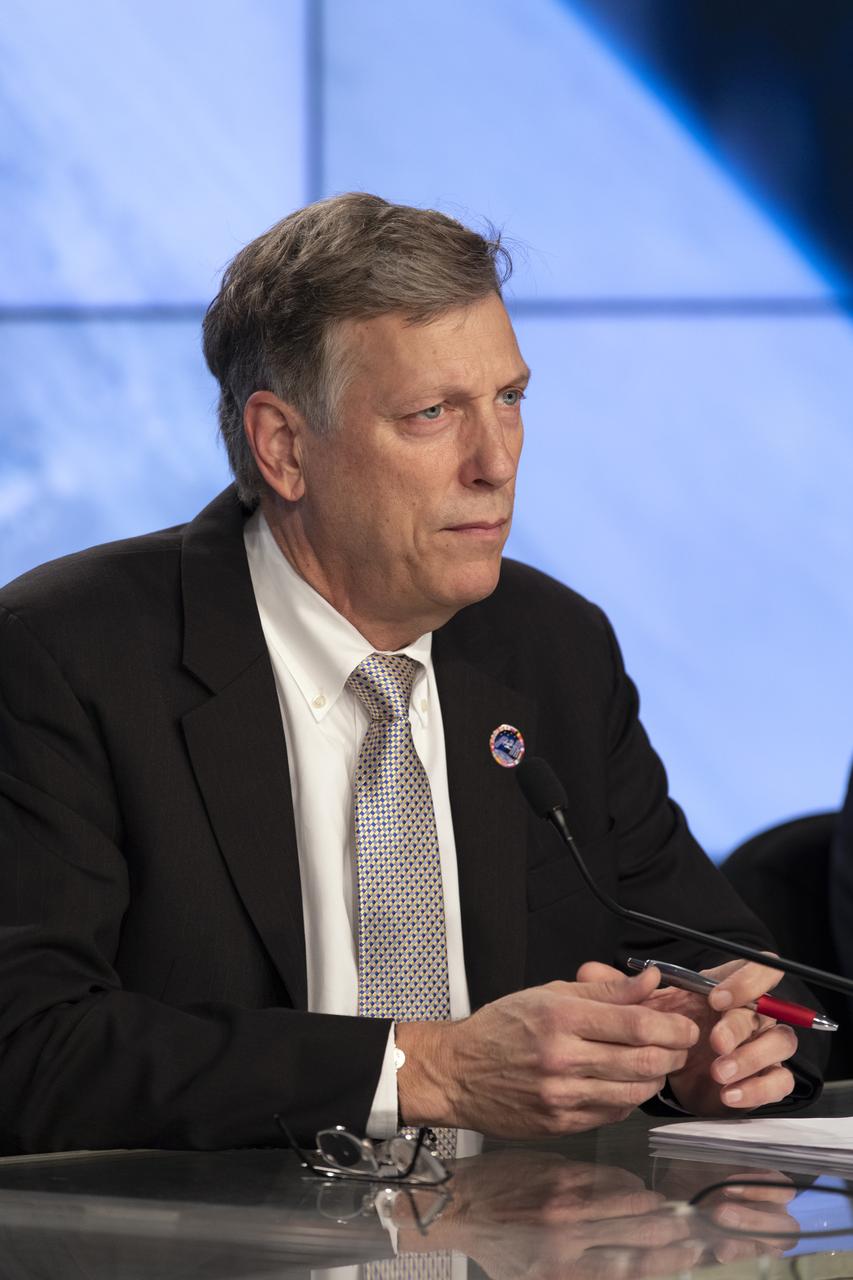
Kenny Todd, manager, International Space Station Operations and Integration, NASA’s Johnson Space Center in Houston, speaks to members of the news media during a prelaunch news conference for SpaceX’s 17th Commercial Resupply Services (CRS-17) mission for NASA to the International Space Station on May 2, 2019, at the agency’s Kennedy Space Center in Florida. The SpaceX Falcon 9 rocket and Dragon cargo module are scheduled to launch no earlier than May 3, 2019, from Space Launch Complex 40 on Cape Canaveral Air Force Station in Florida.
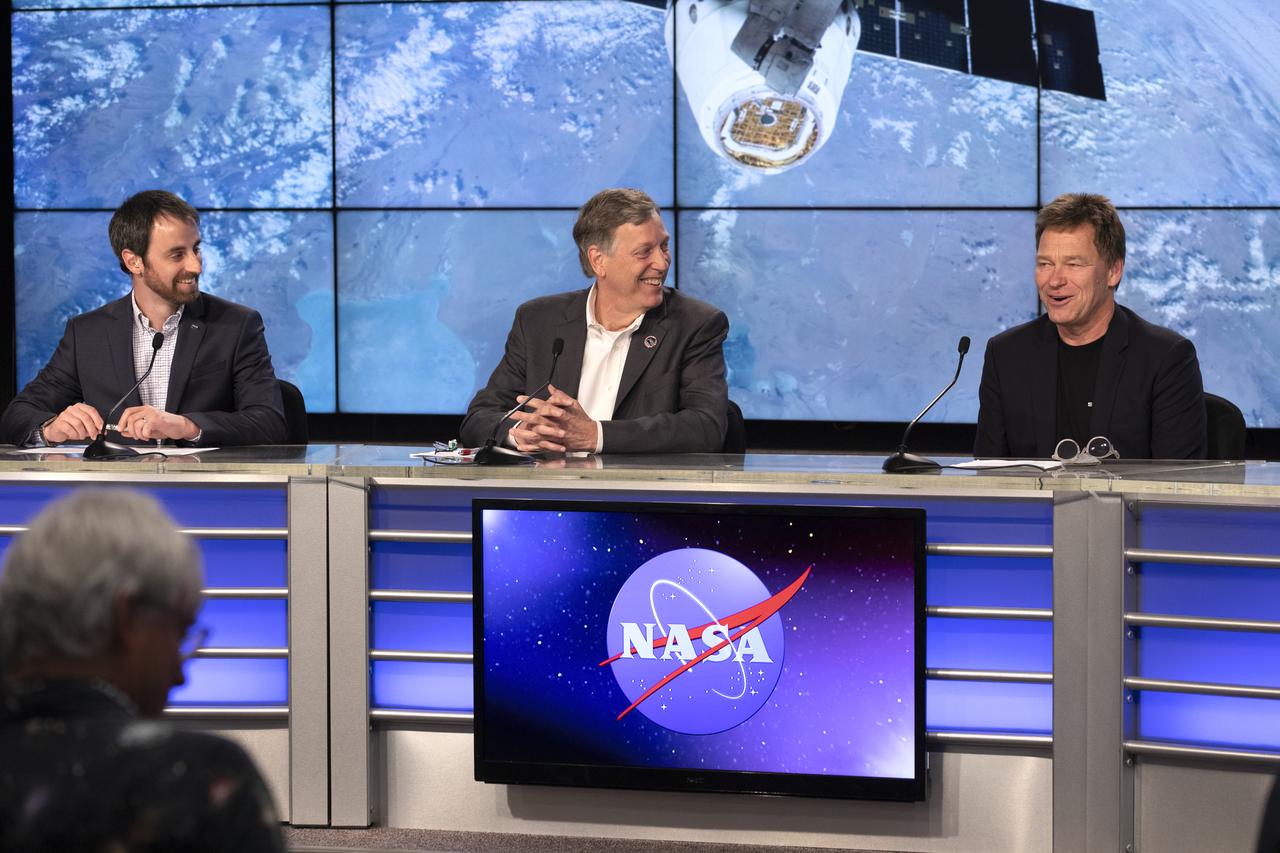
From left, Josh Santora, moderator with NASA Communications; Kenny Todd, manager, International Space Station Operations and Integration at NASA’s Johnson Space Center in Houston; and Hans Koenigsmann, vice president, Build and Flight Reliability with SpaceX, speak to members of the news media during a postlaunch news conference at NASA’s Kennedy Space Center in Florida on May 4, 2019, for SpaceX’s 17th Commercial Resupply Services (CRS-17) mission to the International Space Station for the agency. The company’s Falcon 9 rocket with the Dragon cargo module lifted off from Space Launch Complex 40 at Cape Canaveral Air Force Station in Florida at 2:48 a.m. EDT. The Dragon cargo module will deliver about 5,500 pounds of science and research, crew supplies and vehicle hardware to the orbital laboratory and its crew.
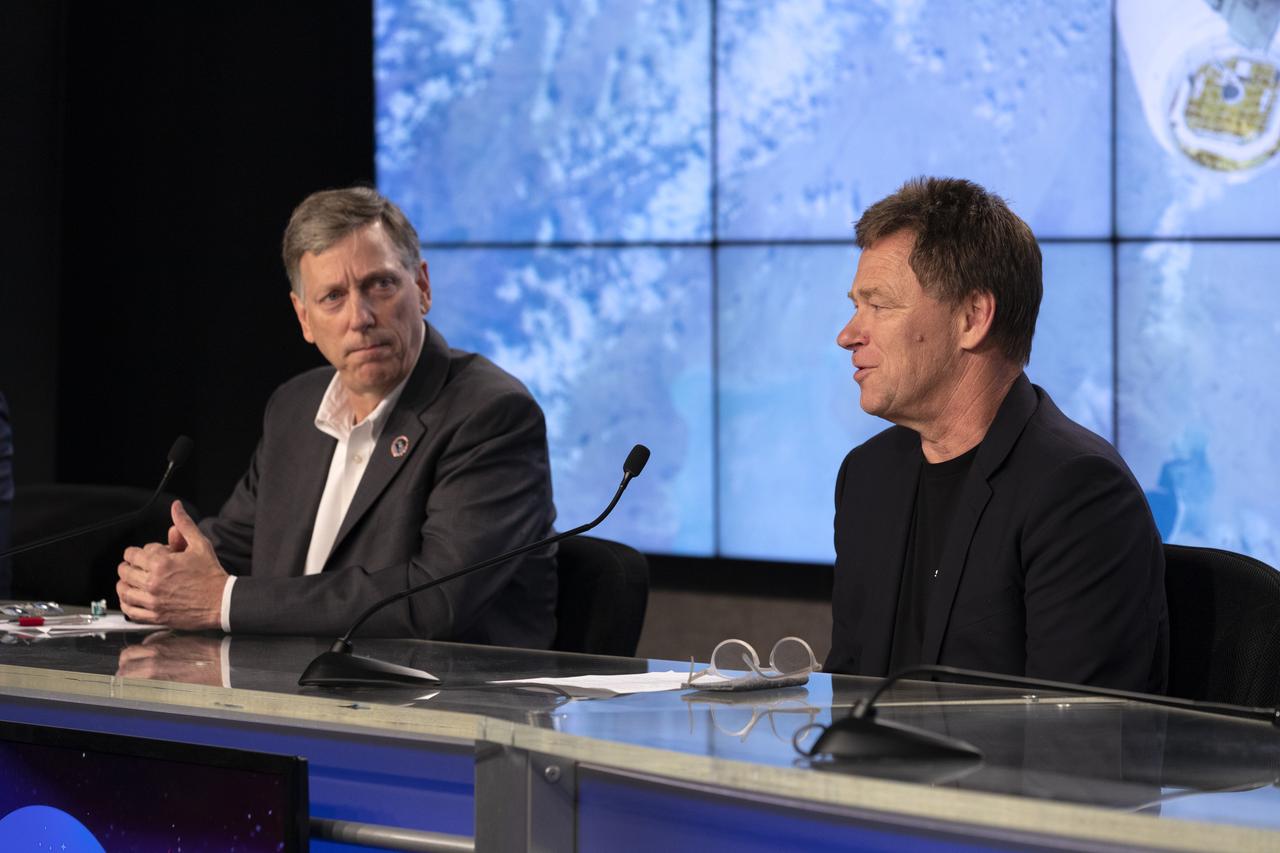
From left, Kenny Todd, manager, International Space Station Operations and Integration at NASA’s Johnson Space Center in Houston; and Hans Koenigsmann, vice president, Build and Flight Reliability with SpaceX, speak to members of the news media during a postlaunch news conference at NASA’s Kennedy Space Center in Florida on May 4, 2019, for SpaceX’s 17th Commercial Resupply Services (CRS-17) mission to the International Space Station for the agency. The company’s Falcon 9 rocket with the Dragon cargo module lifted off from Space Launch Complex 40 at Cape Canaveral Air Force Station in Florida at 2:48 a.m. EDT. The Dragon cargo module will deliver about 5,500 pounds of science and research, crew supplies and vehicle hardware to the orbital laboratory and its crew.
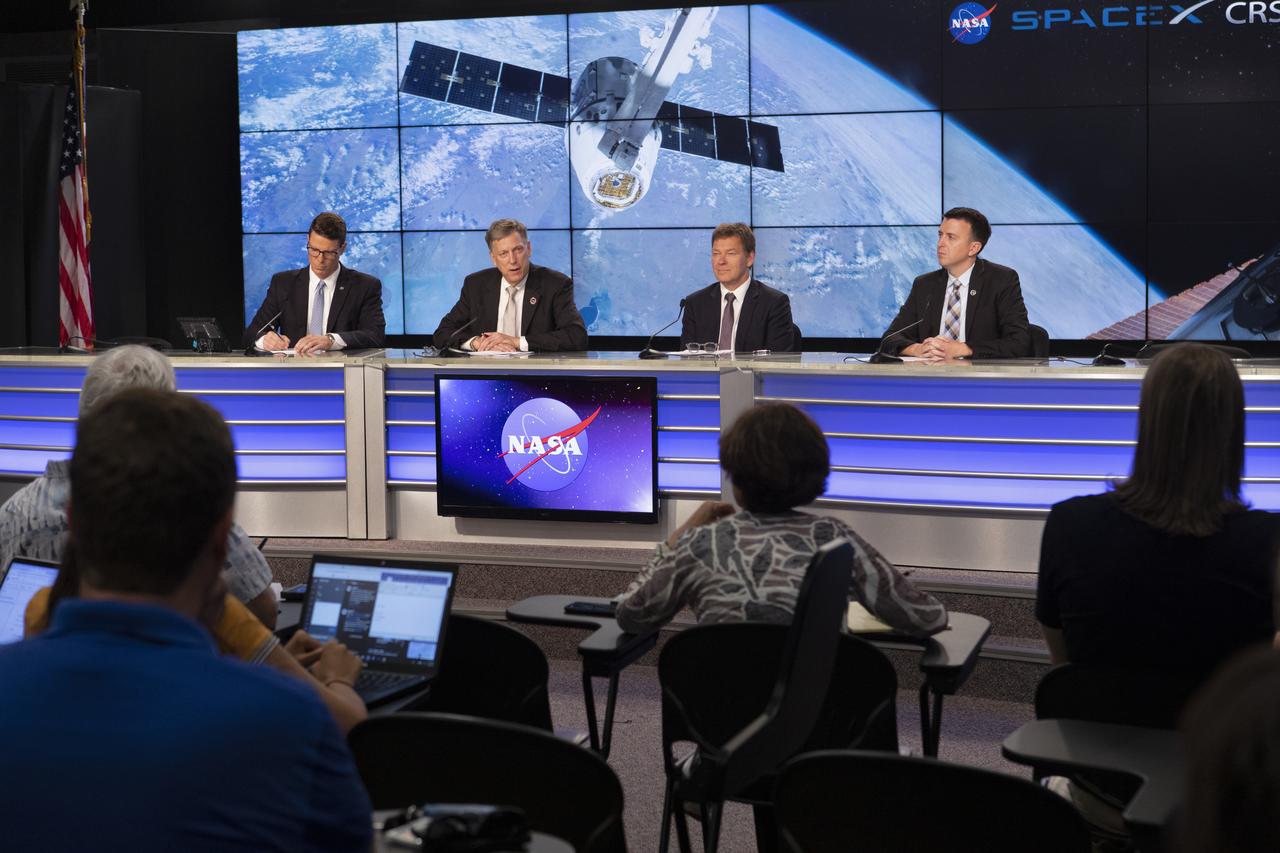
A prelaunch news conference for SpaceX’s 17th Commercial Resupply Services (CRS-17) mission to the International Space Station for NASA is held at the agency’s Kennedy Space Center in Florida on May 2, 2019. From left, are Derrol Nail, NASA Communications moderator; Kenny Todd, Manager, International Space Station Operations and Integration at NASA’s Johnson Space Center in Houston; Hans Koenigsmann, VP, Build and Flight Reliability with SpaceX; and Will Ulrich, 45th launch weather officer with the U.S. Air Force. The SpaceX Falcon 9 rocket and Dragon cargo module are scheduled to launch no earlier than May 3, 2019, from Space Launch Complex 40 on Cape Canaveral Air Force Station in Florida.
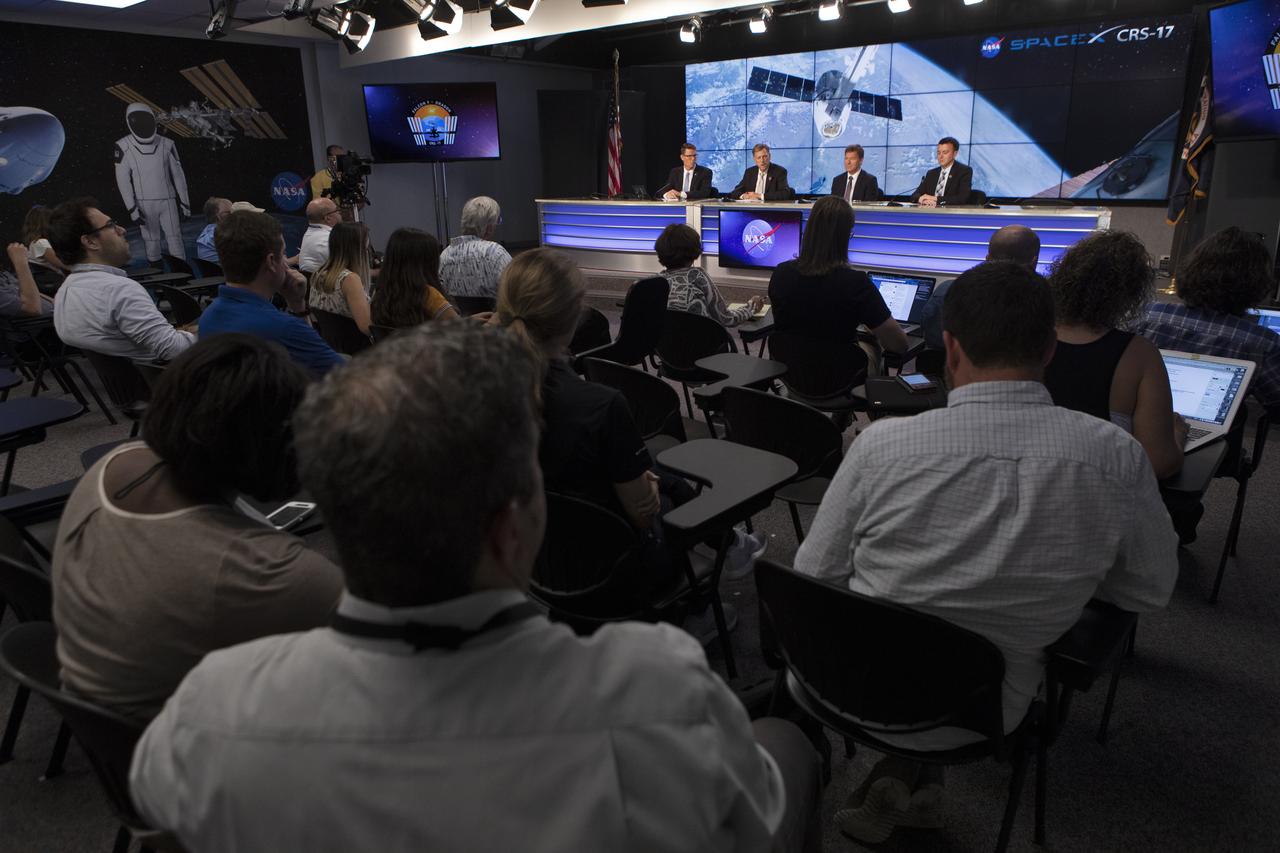
Members of the news media attend a prelaunch news conference for SpaceX’s 17th Commercial Resupply Services (CRS-17) mission to the International Space Station for NASA on May 2, 2019, at the agency’s Kennedy Space Center in Florida. From left, are Derrol Nail, NASA Communications moderator; Kenny Todd, Manager, International Space Station Operations and Integration at NASA’s Johnson Space Center in Houston; Hans Koenigsmann, VP, Build and Flight Reliability with SpaceX; and Will Ulrich, 45th launch weather officer with the U.S. Air Force. The SpaceX Falcon 9 rocket and Dragon cargo module are scheduled to launch no earlier than May 3, 2019, from Space Launch Complex 40 on Cape Canaveral Air Force Station in Florida.
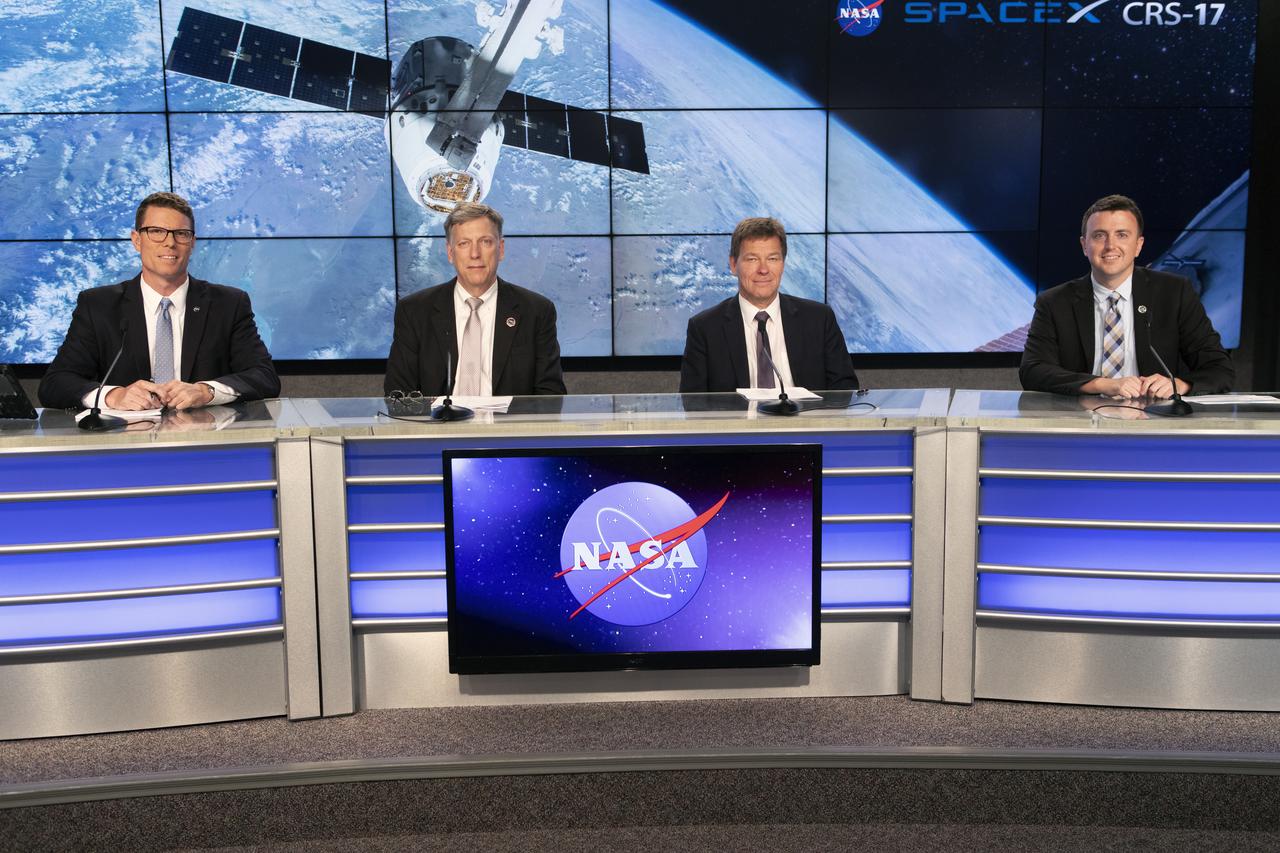
A prelaunch news conference for SpaceX’s 17th Commercial Resupply Services (CRS-17) mission to the International Space Station for NASA is held at the agency’s Kennedy Space Center in Florida on May 2, 2019. From left, are Derrol Nail, NASA Communications moderator; Kenny Todd, Manager, International Space Station Operations and Integration at NASA’s Johnson Space Center in Houston; Hans Koenigsmann, VP, Build and Flight Reliability with SpaceX; and Will Ulrich, 45th launch weather officer with the U.S. Air Force. The SpaceX Falcon 9 rocket and Dragon cargo module are scheduled to launch no earlier than May 3, 2019, from Space Launch Complex 40 on Cape Canaveral Air Force Station in Florida.
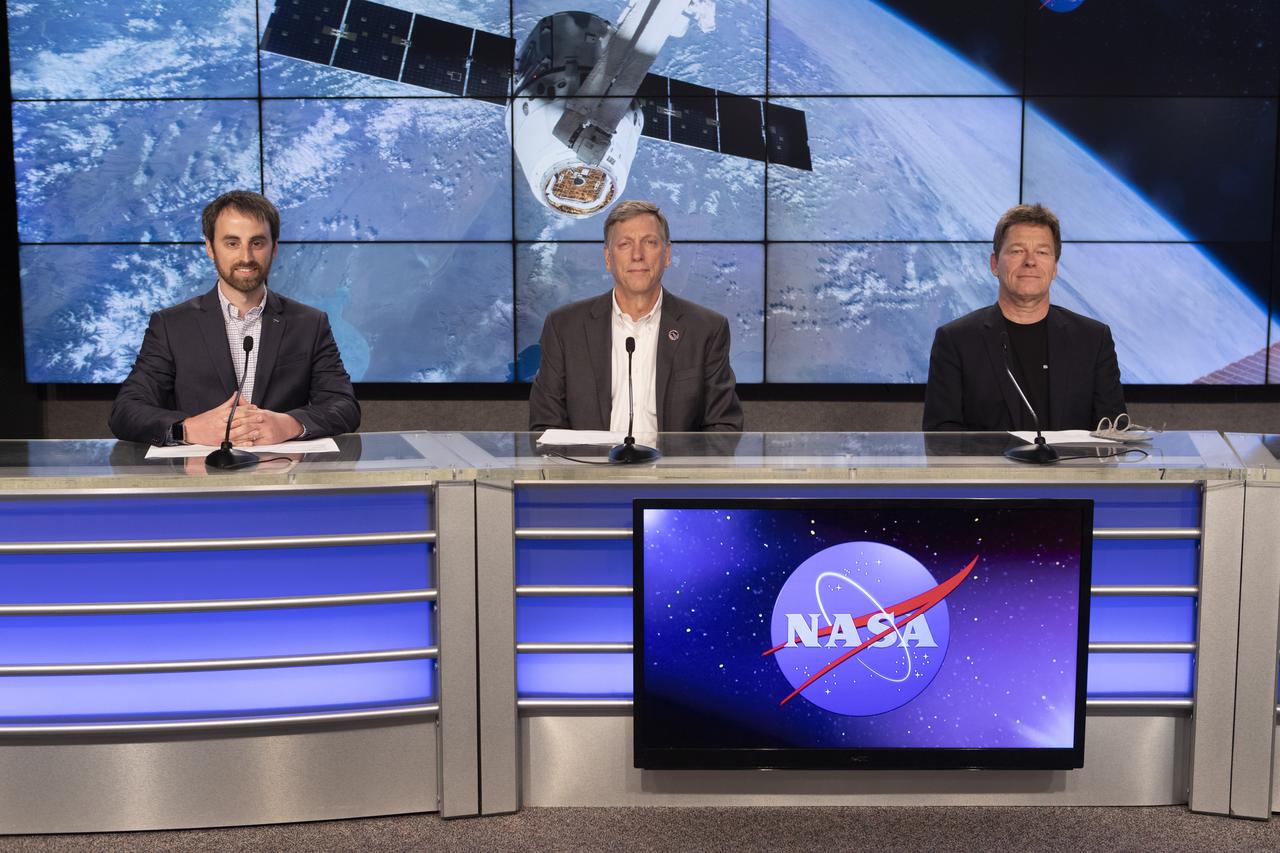
From left, Josh Santora, moderator with NASA Communications; Kenny Todd, manager, International Space Station Operations and Integration at NASA’s Johnson Space Center in Houston; and Hans Koenigsmann, vice president, Build and Flight Reliability with SpaceX, speak to members of the news media during a postlaunch news conference at NASA’s Kennedy Space Center in Florida on May 4, 2019, for SpaceX’s 17th Commercial Resupply Services (CRS-17) mission to the International Space Station for the agency. The company’s Falcon 9 rocket with the Dragon cargo module lifted off from Space Launch Complex 40 at Cape Canaveral Air Force Station in Florida at 2:48 a.m. EDT. The Dragon cargo module will deliver about 5,500 pounds of science and research, crew supplies and vehicle hardware to the orbital laboratory and its crew.
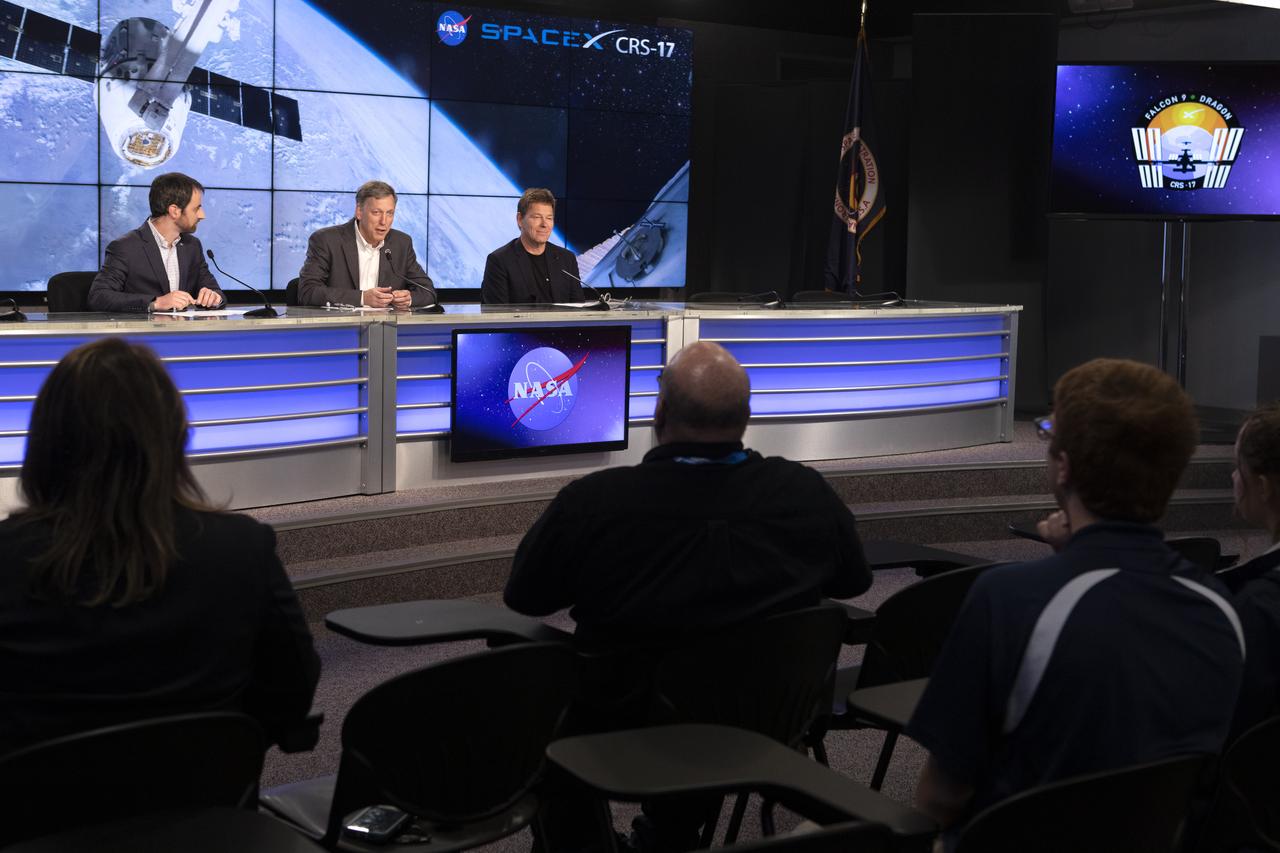
From left, Josh Santora, moderator with NASA Communications; Kenny Todd, manager, International Space Station Operations and Integration at NASA’s Johnson Space Center in Houston; and Hans Koenigsmann, vice president, Build and Flight Reliability with SpaceX, speak to members of the news media during a postlaunch news conference at NASA’s Kennedy Space Center in Florida on May 4, 2019, for SpaceX’s 17th Commercial Resupply Services (CRS-17) mission to the International Space Station for the agency. The company’s Falcon 9 rocket with the Dragon cargo module lifted off from Space Launch Complex 40 at Cape Canaveral Air Force Station in Florida at 2:48 a.m. EDT. The Dragon cargo module will deliver about 5,500 pounds of science and research, crew supplies and vehicle hardware to the orbital laboratory and its crew.