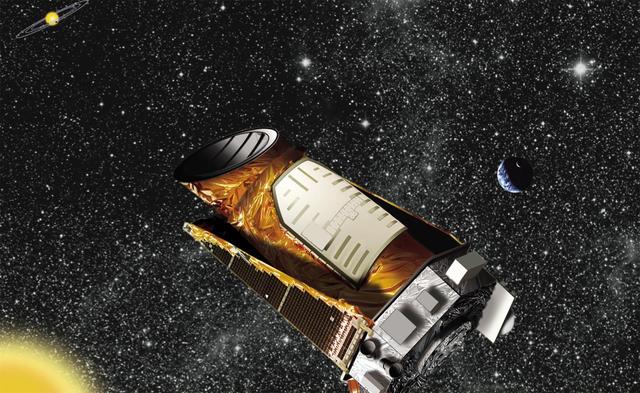
This artist concept shows NASA Kepler spacecraft.
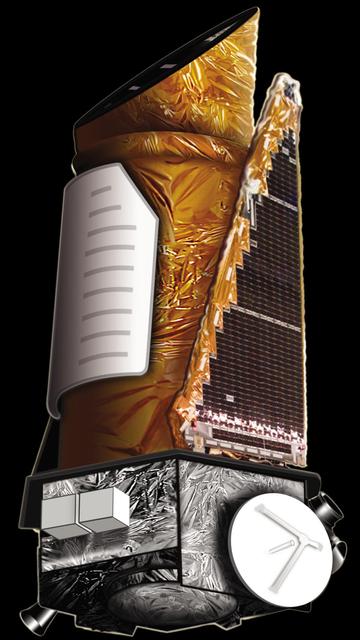
This artist concept shows NASA Kepler spacecraft.
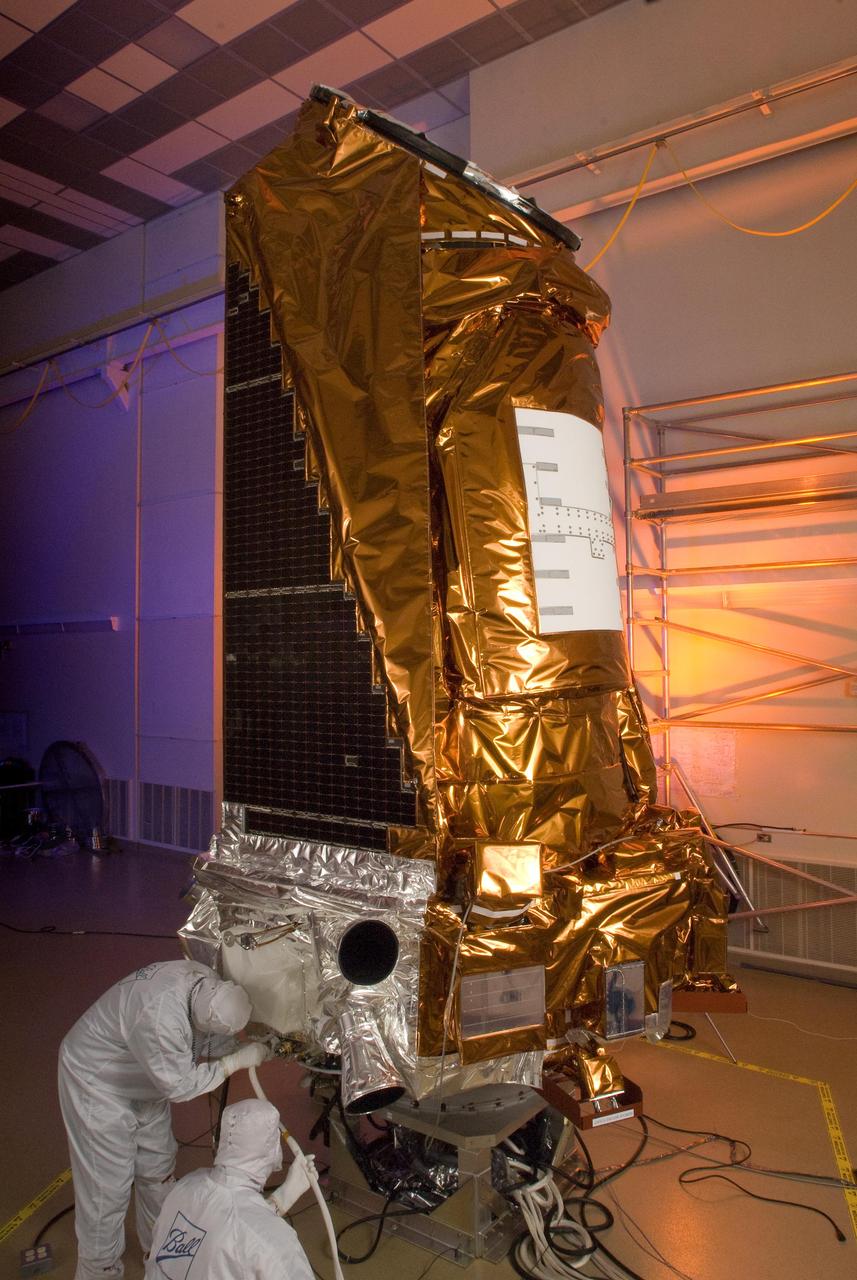
NASA Kepler spacecraft at Ball Aerospace & Technologies Corp. in Boulder, Colo.

An artist conception shows the Kepler-10 system, home to two rocky planets. In the foreground is Kepler-10c, a planet that weighs 17 times as much as Earth and is more than twice as large in size.
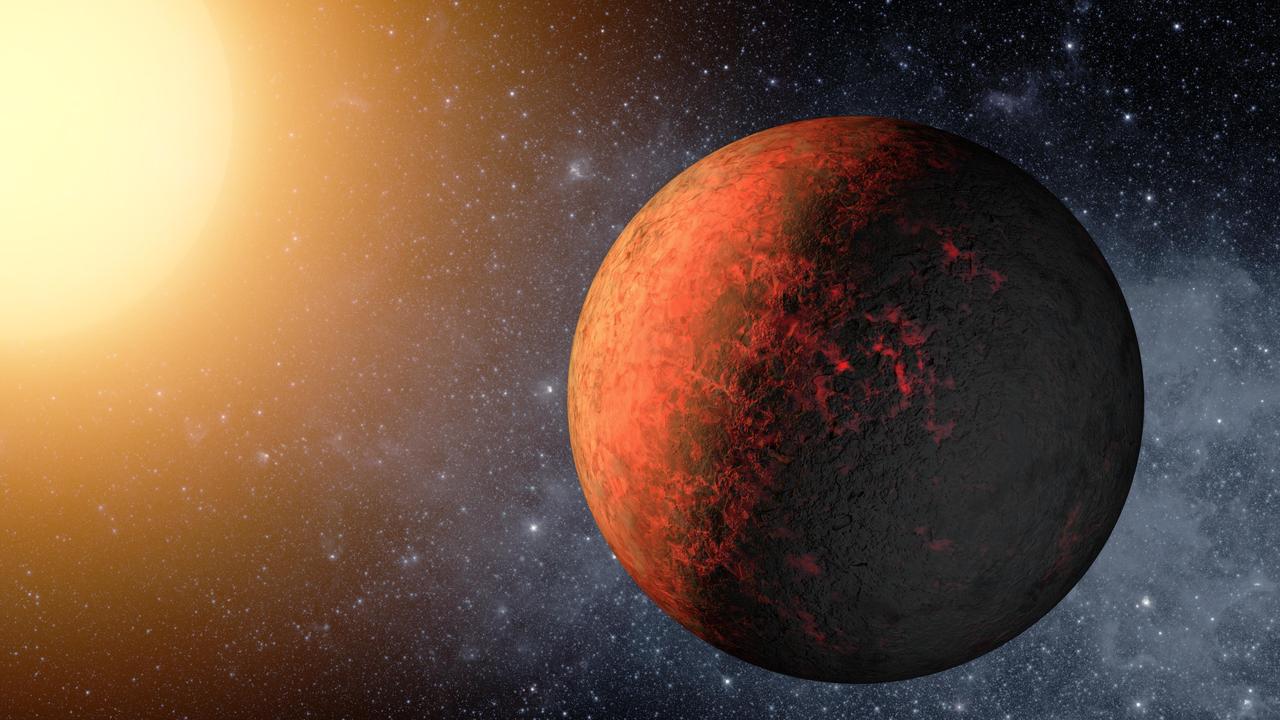
Kepler-20e is the first planet smaller than the Earth discovered to orbit a star other than the sun. A year on Kepler-20e only lasts 6 days, as it is much closer to its host star than the Earth is to the sun.
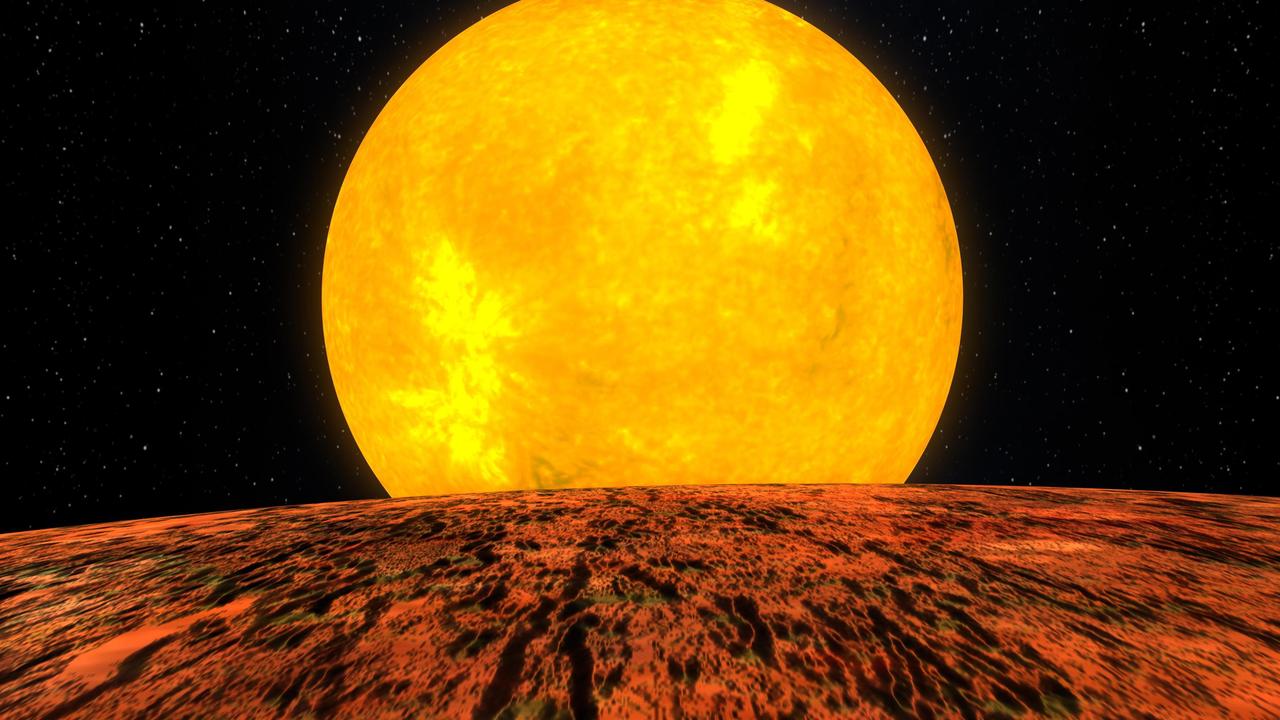
Artist concept of the first rocky world discovered by NASA Kepler mission. The planet, called Kepler 10-b, is shown in front of its host star.
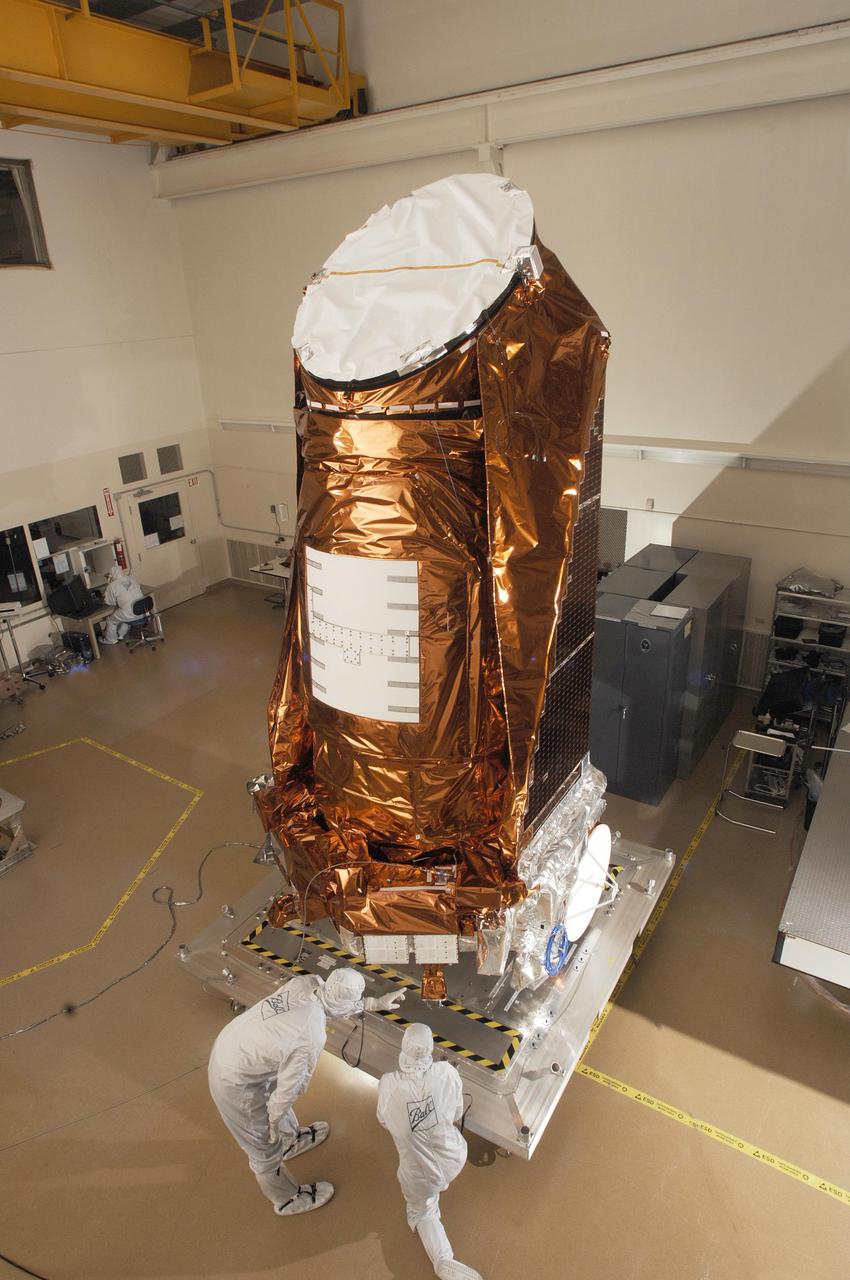
NASA Kepler spacecraft in a clean room at Ball Aerospace & Technologies Corp. in Boulder, Colo.
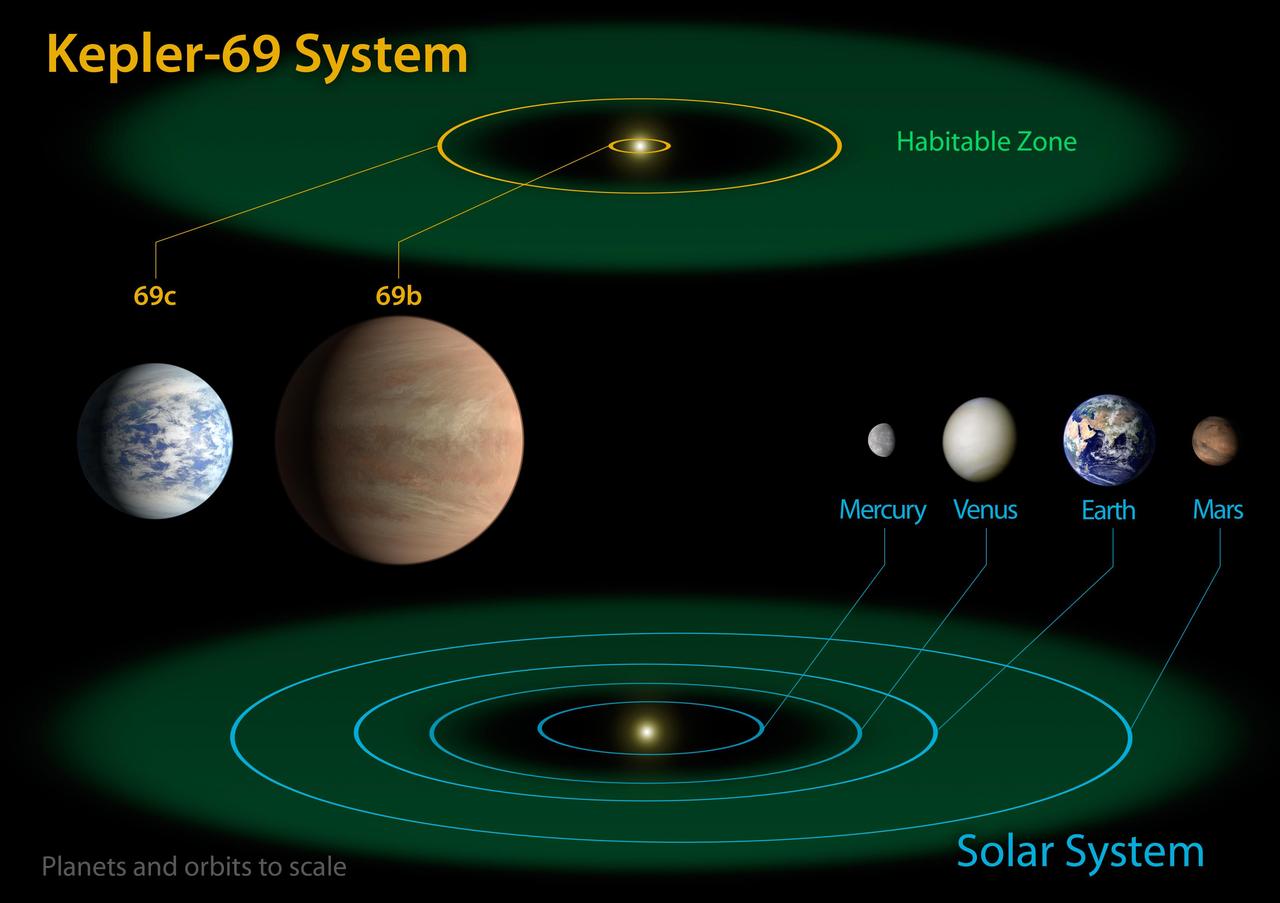
This diagram compares the planets of the inner solar system to Kepler-69, a two-planet system about 2,700 light-years from Earth in the constellation Cygnus.
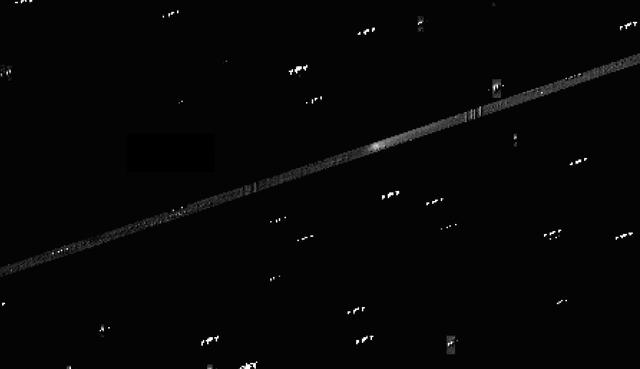
The European Space Agency's Rosetta mission concluded its study of comet 67P/Churyumov-Gerasimenko on Sept. 30, 2016. NASA's planet-hunting Kepler spacecraft observed the comet during the final month of the Rosetta mission, while the comet was not visible from Earth. This animation is composed of images from Kepler of the comet. From Sept. 7 through Sept. 20, the Kepler spacecraft, operating in its K2 mission, fixed its gaze on comet 67P. From the distant vantage point of Kepler, the comet's nucleus and tail could be observed. The long-range view from Kepler complements the closeup view of the Rosetta spacecraft, providing context for the high-resolution investigation Rosetta performed as it descended closer and closer to the comet. During the two-week period of study, Kepler took a picture of the comet every 30 minutes. The animation shows a period of 29.5 hours of observation from Sept. 17 thru Sept. 18. The comet is seen passing through Kepler's field of view from top right to bottom left, as outlined by the diagonal strip. The white dots represent stars and other regions in space studied during K2's tenth observing campaign. As a comet travels through space it sheds a tail of gas and dust. The more material that is shed, the more surface area there is to reflect sunlight. A comet's activity level can be obtained by measuring the reflected sunlight. Analyzing the Kepler data, scientists will be able to determine the amount of mass lost each day as comet 67P travels through the solar system. An animation is available at http://photojournal.jpl.nasa.gov/catalog/PIA21072

Our solar system now is tied for most number of planets around a single star, with the recent discovery of an eighth planet circling Kepler-90, a Sun-like star 2,545 light years from Earth. The planet was discovered in data from NASA's Kepler Space Telescope. The newly-discovered Kepler-90i -- a sizzling hot, rocky planet that orbits its star once every 14.4 days -- was found using machine learning from Google. Machine learning is an approach to artificial intelligence in which computers "learn." In this case, computers learned to identify planets by finding in Kepler data instances where the telescope recorded changes in starlight caused by planets beyond our solar system, known as exoplanets. https://photojournal.jpl.nasa.gov/catalog/PIA22192

This diagram compares our own solar system to Kepler-22, a star system containing the first habitable zone planet -- the sweet spot around a star where temperatures are right for water to exist in its liquid form, discovered by NASA Kepler mission.
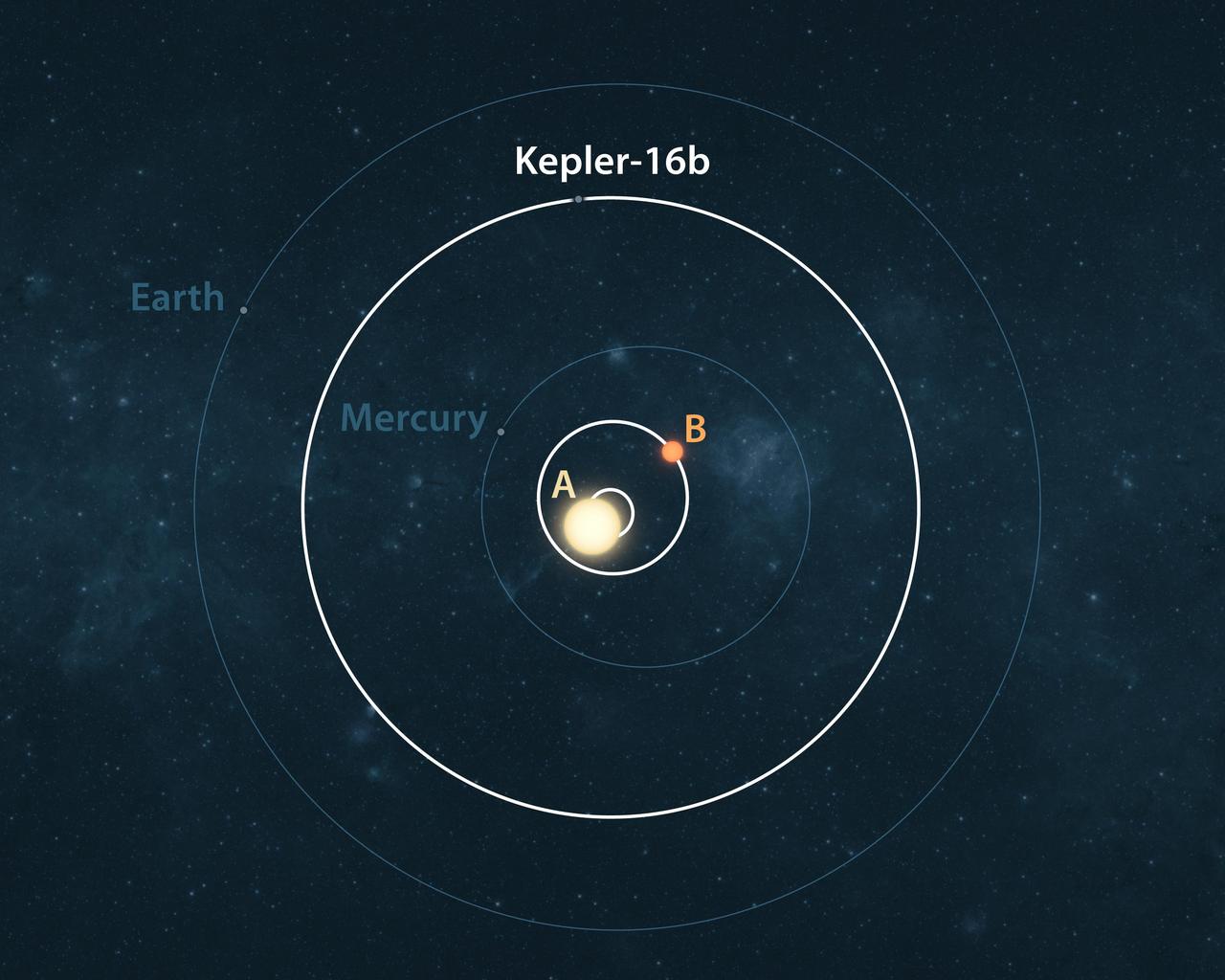
This artist conception illustrates the Kepler-16 system white from an overhead view, showing its planet Kepler-16b and the eccentric orbits of the two stars it circles labeled A and B.
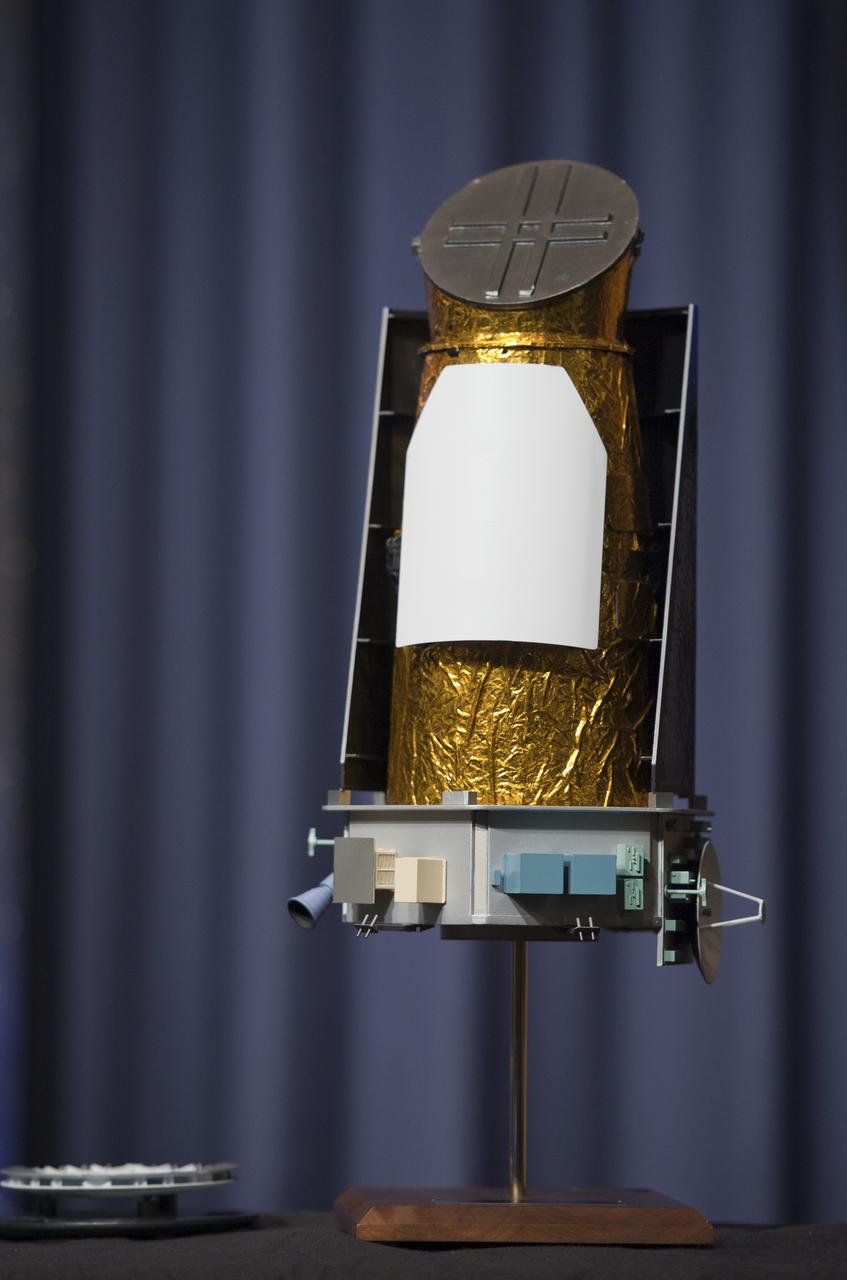
A scale model of the Kepler space telescope is seen at a news conference, Wednesday, Feb. 2, 2010, at NASA Headquarters in Washington. Scientists using NASA's Kepler, a space telescope, recently discovered six planets made of a mix of rock and gases orbiting a single sun-like star, known as Kepler-11, which is located approximately 2,000 light years from Earth. Photo Credit: (NASA/Paul E. Alers)
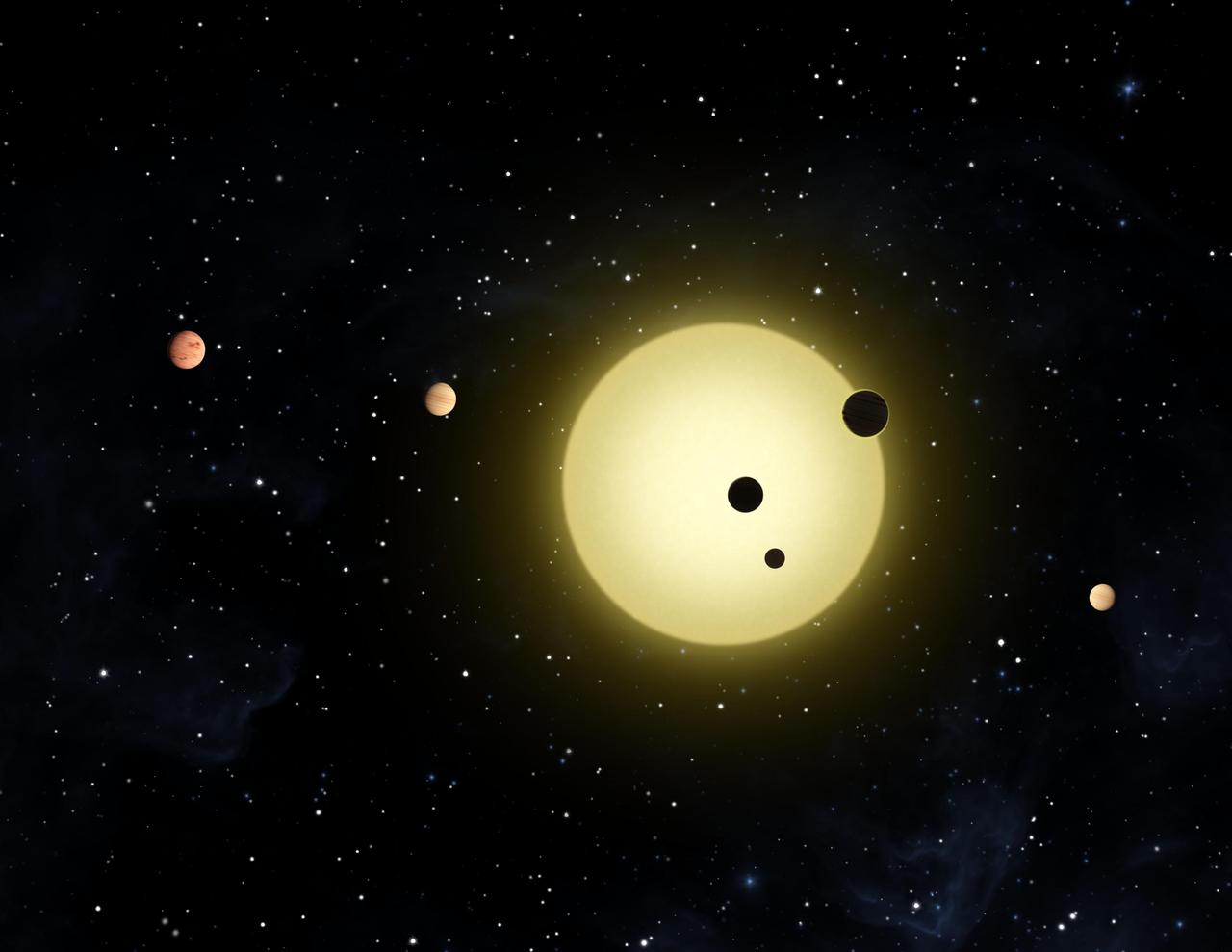
This artist concept shows Kepler-11 -- the most tightly packed planetary system yet discovered.

Relative sizes of Kepler habitable zone planets discovered as of 2013 April 18. Except for Earth, these are artists renditions.
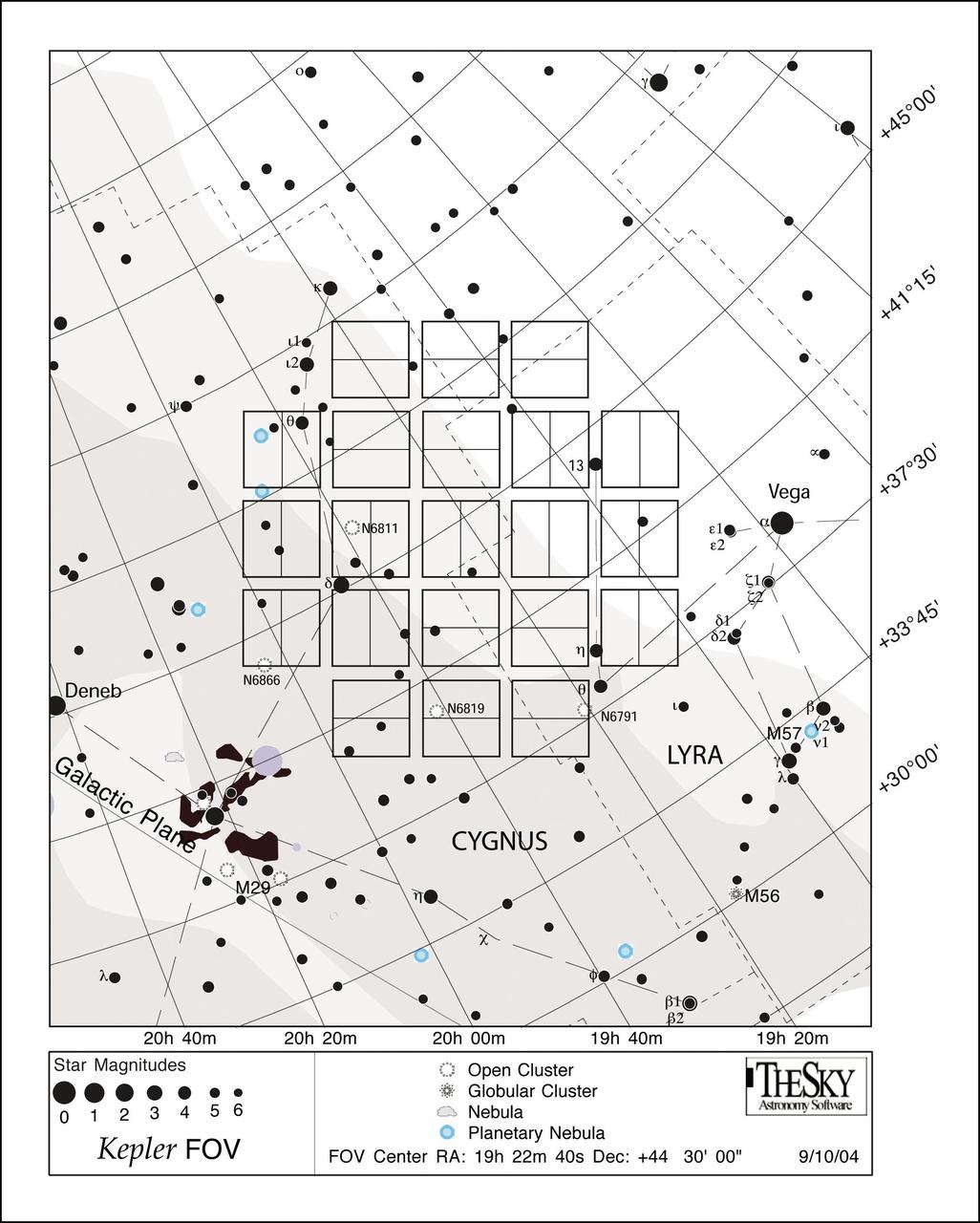
This star chart illustrates the large patch of sky that NASA Kepler mission will stare at for the duration of its three-and-a-half-year lifetime. The planet hunter's full field of view occupies 100 square degrees of our Milky Way galaxy, in the constellations Cygnus and Lyra. Kepler's focal plane, or the area where starlight is focused, is depicted on the star chart as a series of 42 vertical and horizontal rectangles. These rectangles represent the 95-megapixel camera's 42 charge-coupled devices, or CCDs. Scientists selected the orientation of the focal plane's field of view to avoid the region's brightest stars, which are shown as the largest black dots. Some of these bright stars can be seen falling in between the CCD modules, in areas that are not imaged. This was done so that the brightest stars will not saturate large portions of the detectors. Saturation causes signals from the bright stars to spill, or "bloom," into nearby planet-hunting territory. http://photojournal.jpl.nasa.gov/catalog/PIA11983
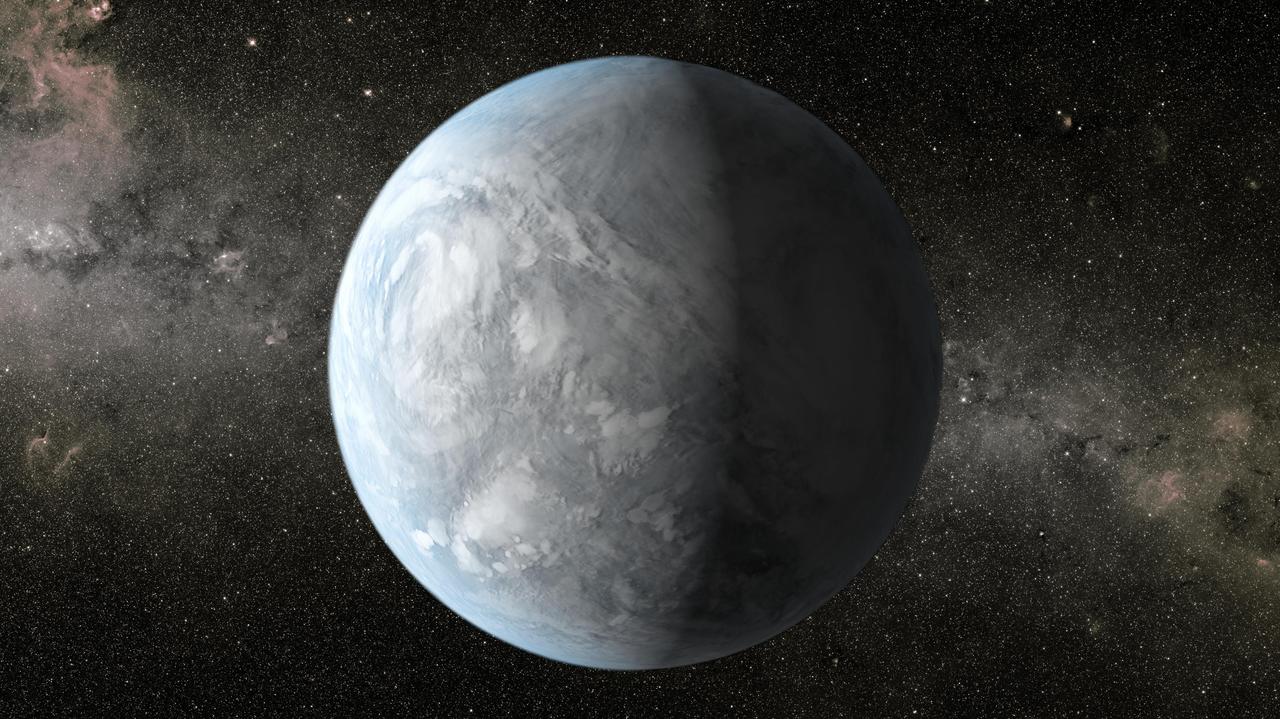
The artist concept depicts Kepler-62e, a super-Earth-size planet in the habitable zone of a star smaller and cooler than the sun, located about 1,200 light-years from Earth in the constellation Lyra.
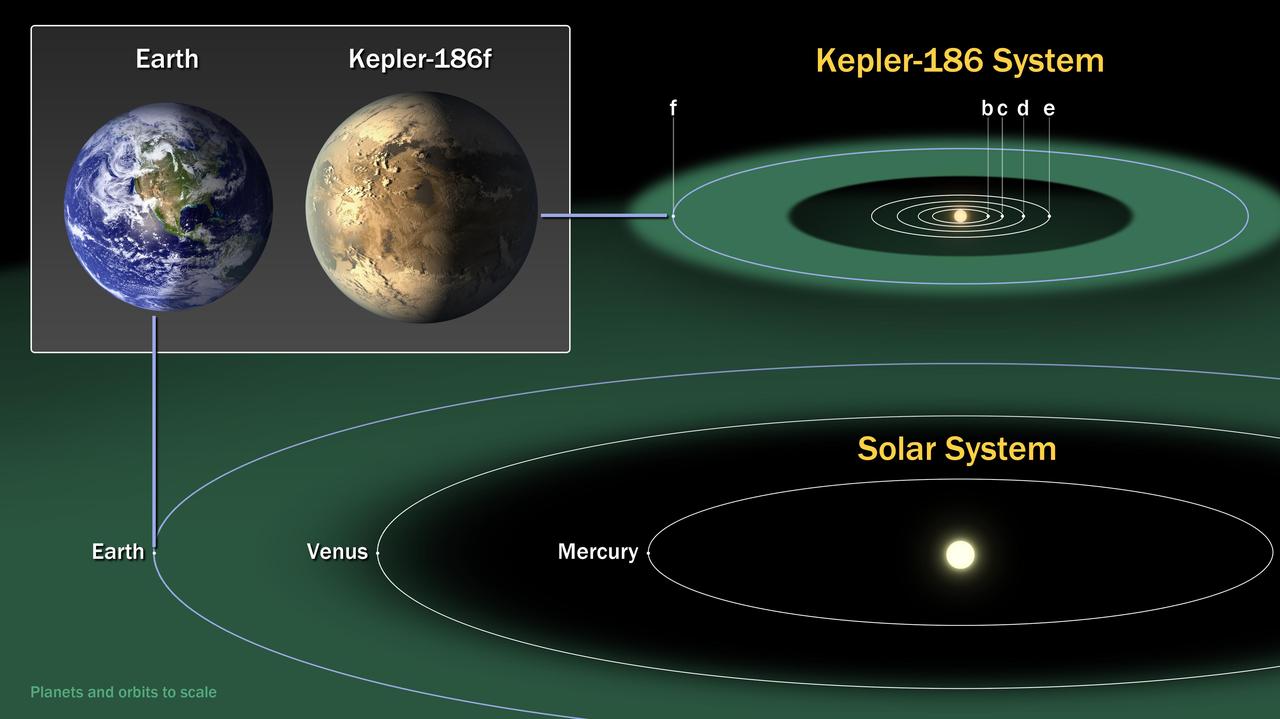
This diagram compares the planets of our inner solar system to Kepler-186, a five-planet star system about 500 light-years from Earth in the constellation Cygnus.

Kepler data has increased by 20 percent and now totals 2,740 potential planets orbiting 2,036 stars; dramatic increases are seen in the number of Earth-size and super Earth-size candidates discovered.
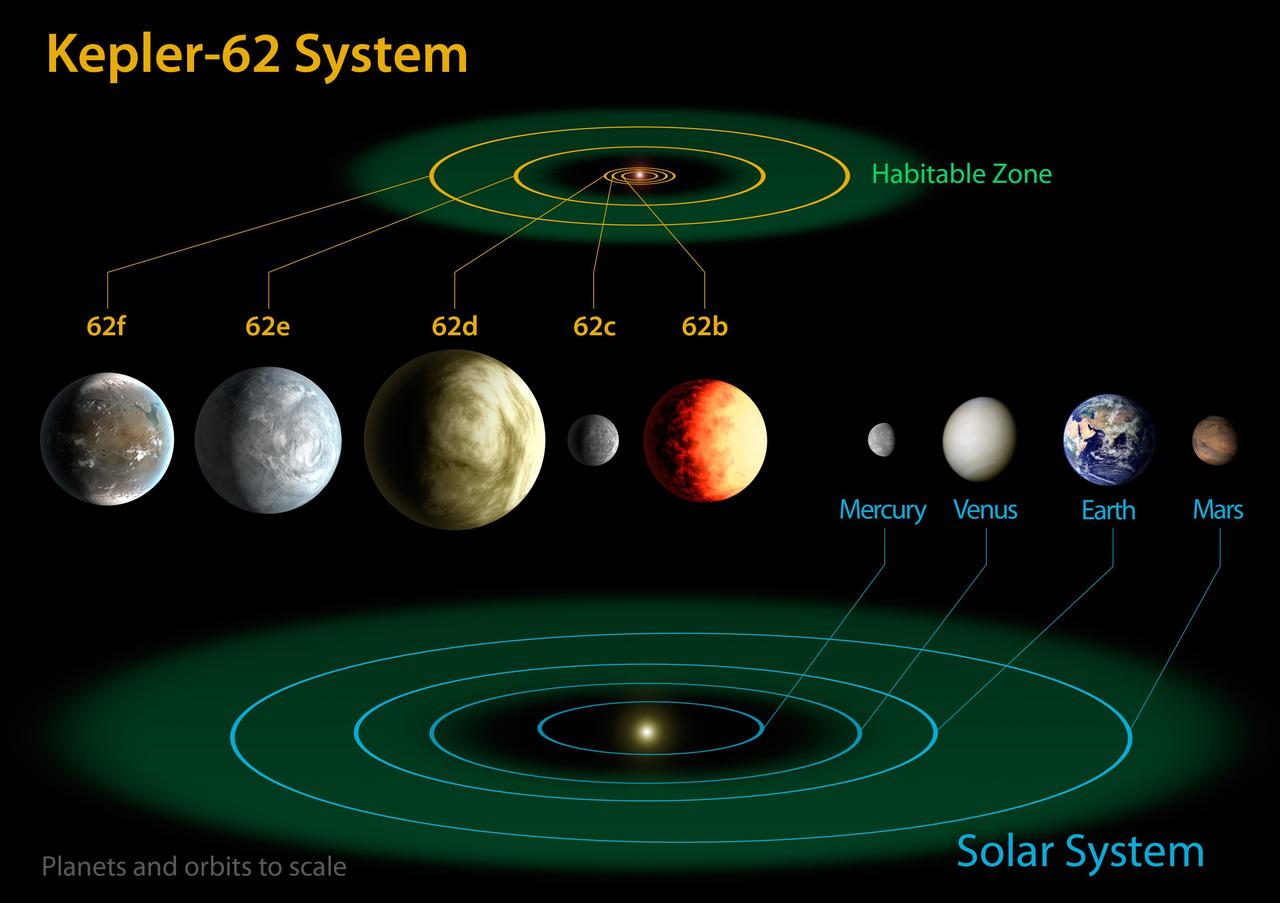
This diagram compares the planets of the inner solar system to Kepler-62, a five-planet system about 1,200 light-years from Earth in the constellation Lyra. At seven billion years old, the star is somewhat older than the sun.
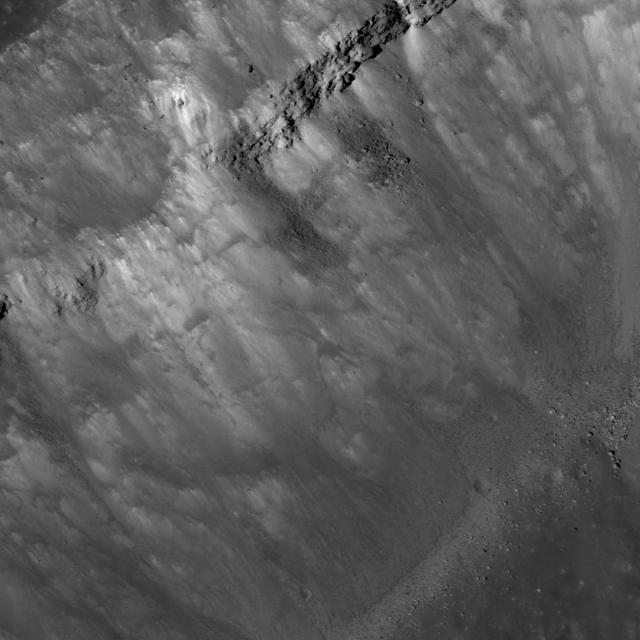
Kepler Rim
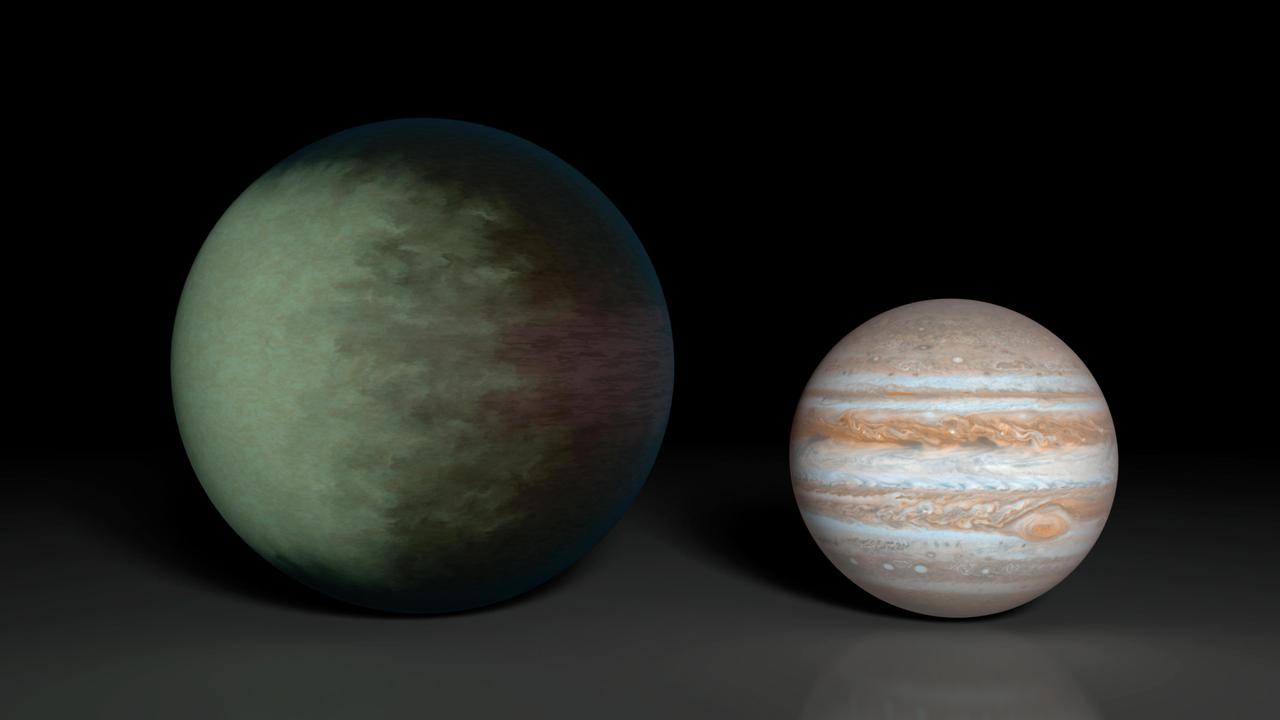
Kepler-7b right, which is 1.5 times the radius of Jupiter left, is the first exoplanet to have its clouds mapped. The cloud map was produced using data from NASA Kepler and Spitzer space telescopes.

This artist's concept shows what exoplanet Kepler-1649c could look like on its surface. The planet is the closest to Earth in size and temperature found yet in data from the Kepler space telescope. https://photojournal.jpl.nasa.gov/catalog/PIA23690
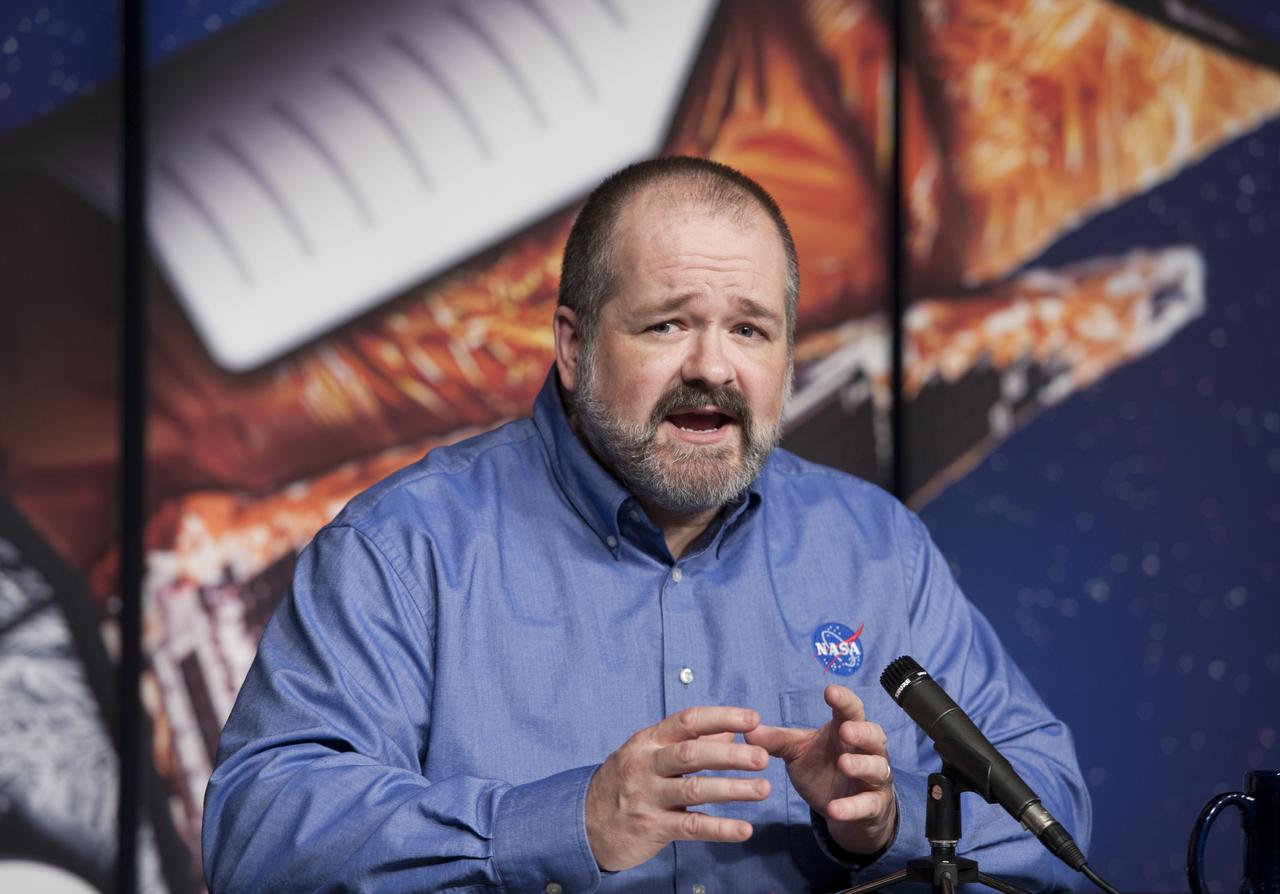
Douglas Hudgins, a Kepler Program Scientist, speaks during a news conference, Wednesday, Feb. 2, 2010, at NASA Headquarters in Washington. Scientists using NASA's Kepler, a space telescope, recently discovered six planets made of a mix of rock and gases orbiting a single sun-like star, known as Kepler-11, which is located approximately 2,000 light years from Earth. Photo Credit: (NASA/Paul E. Alers)
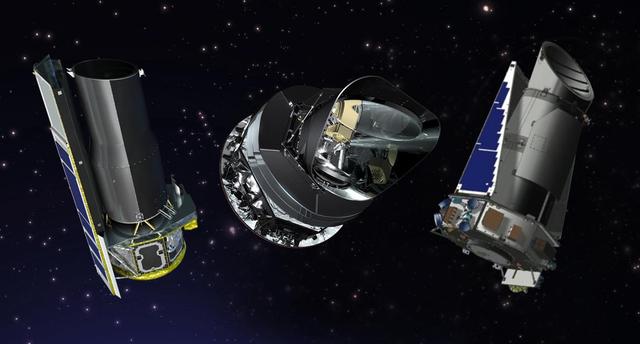
From left to right, artist concepts of the Spitzer, Planck and Kepler space telescopes. NASA extended Spitzer and Kepler for two additional years; and the U.S. portion of Planck, a European Space Agency mission, for one year.

This artist concept shows NASA planet-hunting Kepler spacecraft operating in a new mission profile called K2. Using publicly available data, astronomers have confirmed K2 first exoplanet discovery proving Kepler can still find planets.

This artist's concept shows exoplanet Kepler-1649c orbiting around its host red dwarf star. This exoplanet is in its star's habitable zone (the distance where liquid water could exist on the planet's surface) and is the closest to Earth in size and temperature found yet in Kepler's data. https://photojournal.jpl.nasa.gov/catalog/PIA23689
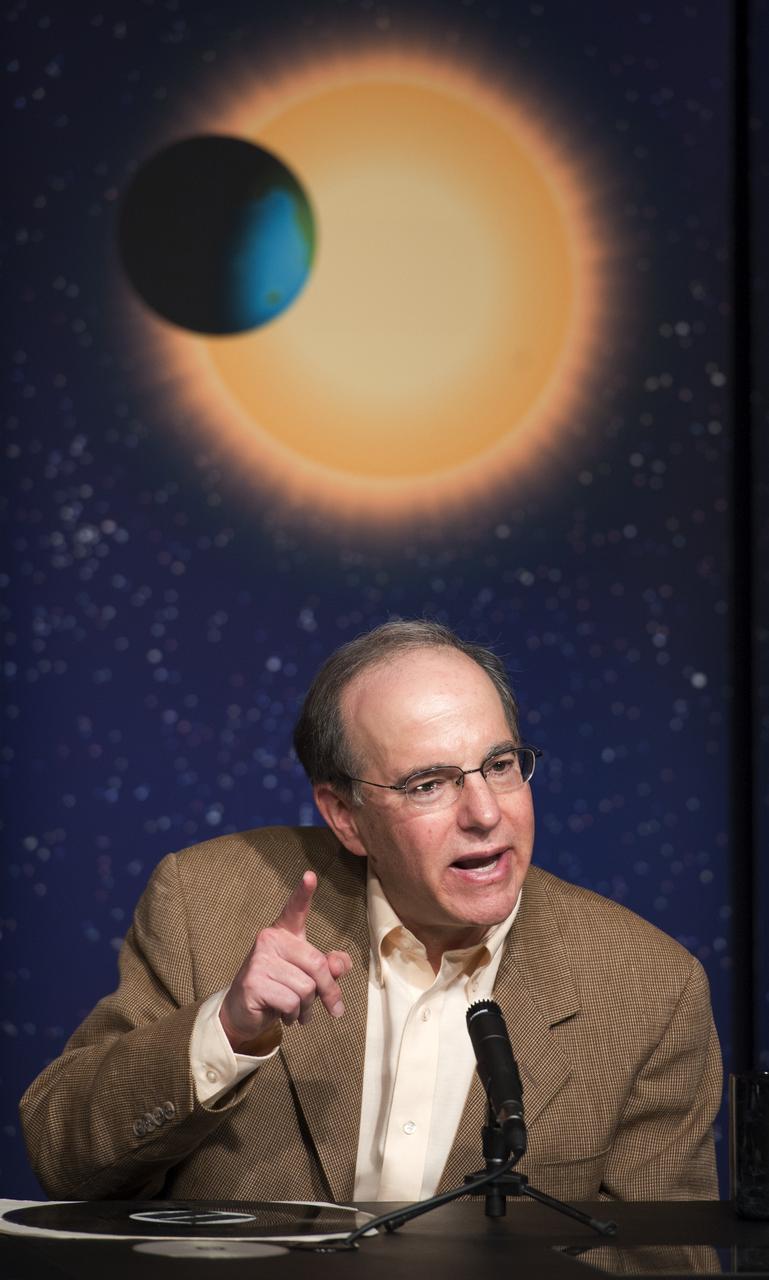
Jack Lissauer, a planetary scientist and a Kepler science team member at NASA's Ames Research Center, speaks during a news conference, Wednesday, Feb. 2, 2010, at NASA Headquarters in Washington. Scientists using NASA's Kepler, a space telescope, recently discovered six planets made of a mix of rock and gases orbiting a single sun-like star, known as Kepler-11, which is located approximately 2,000 light years from Earth. "It’s amazingly compact, it’s amazingly flat, there’s an amazingly large number of big planets orbiting close to their star - we didn’t know such systems could even exist," he said. Photo Credit: (NASA/Paul E. Alers)
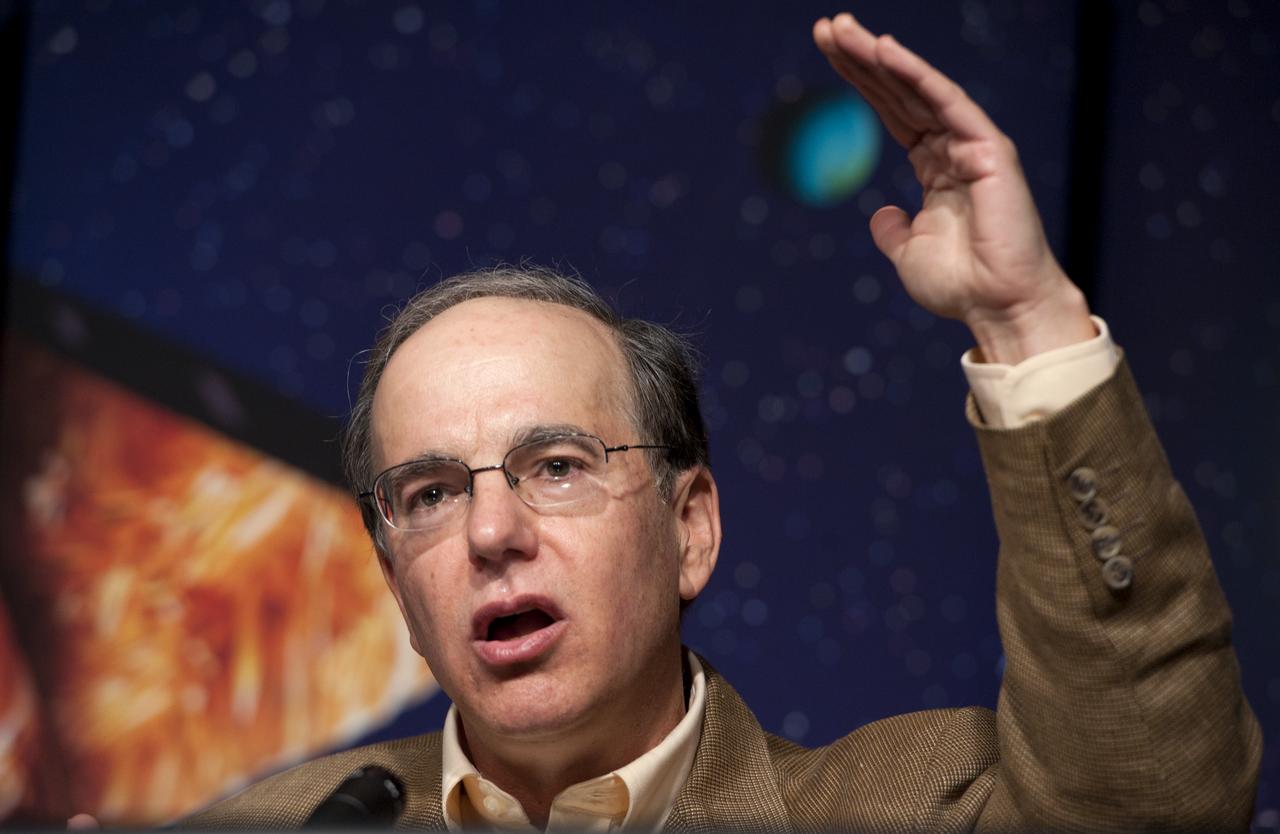
Jack Lissauer, a planetary scientist and a Kepler science team member at NASA's Ames Research Center, speaks during a news conference, Wednesday, Feb. 2, 2010, at NASA Headquarters in Washington. Scientists using NASA's Kepler, a space telescope, recently discovered six planets made of a mix of rock and gases orbiting a single sun-like star, known as Kepler-11, which is located approximately 2,000 light years from Earth."It’s amazingly compact, it’s amazingly flat, there’s an amazingly large number of big planets orbiting close to their star - we didn’t know such systems could even exist." Photo Credit: (NASA/Paul E. Alers)
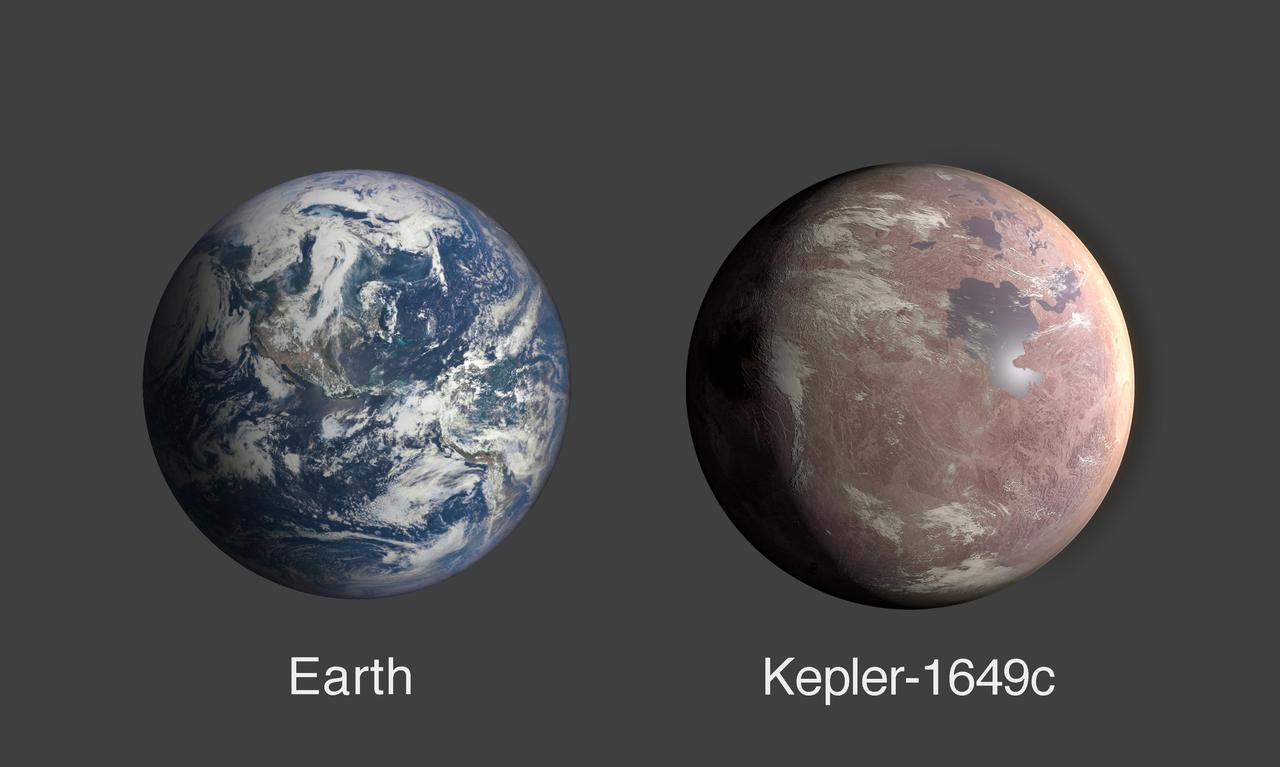
This graphic compares the size of Earth and Kepler-1649c, an exoplanet only 1.06 times larger than Earth by radius. https://photojournal.jpl.nasa.gov/catalog/PIA23774
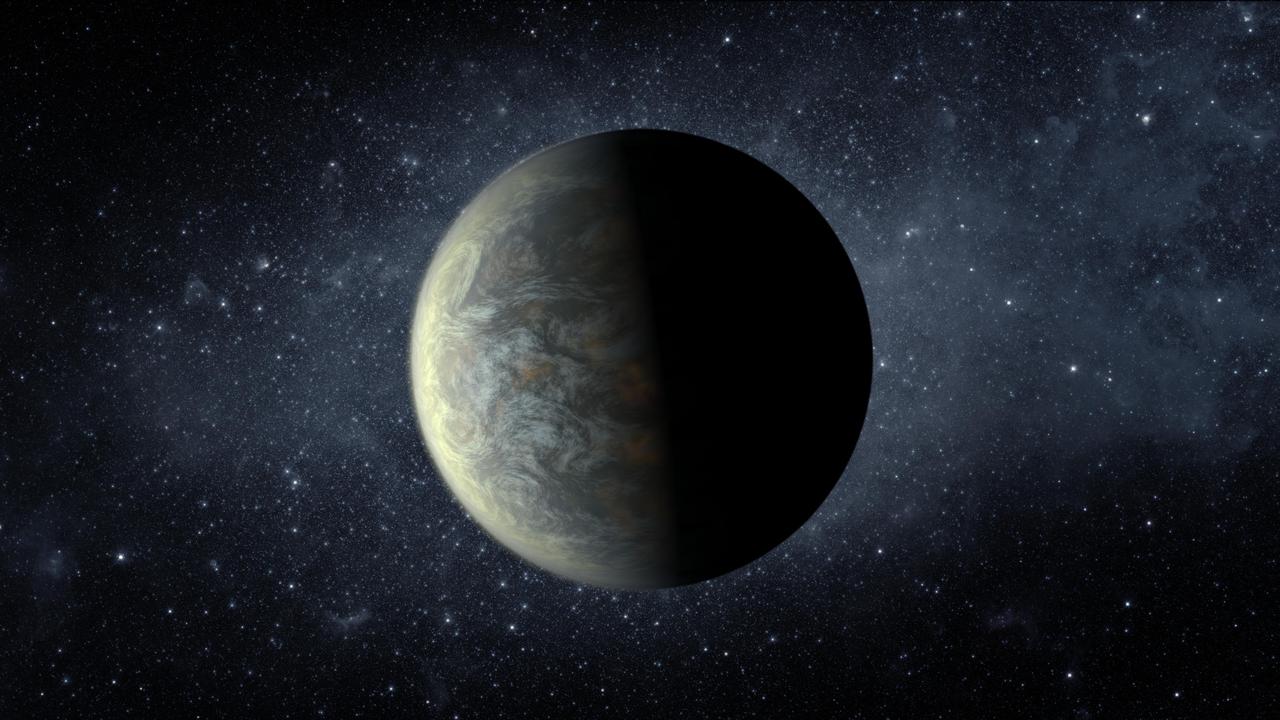
Kepler-20f is the closest object to the Earth in terms of size ever discovered. With an orbital period of 20 days and a surface temperature of 800 degrees Fahrenheit 430 degrees Celsius, it is too hot to host life, as we know it.
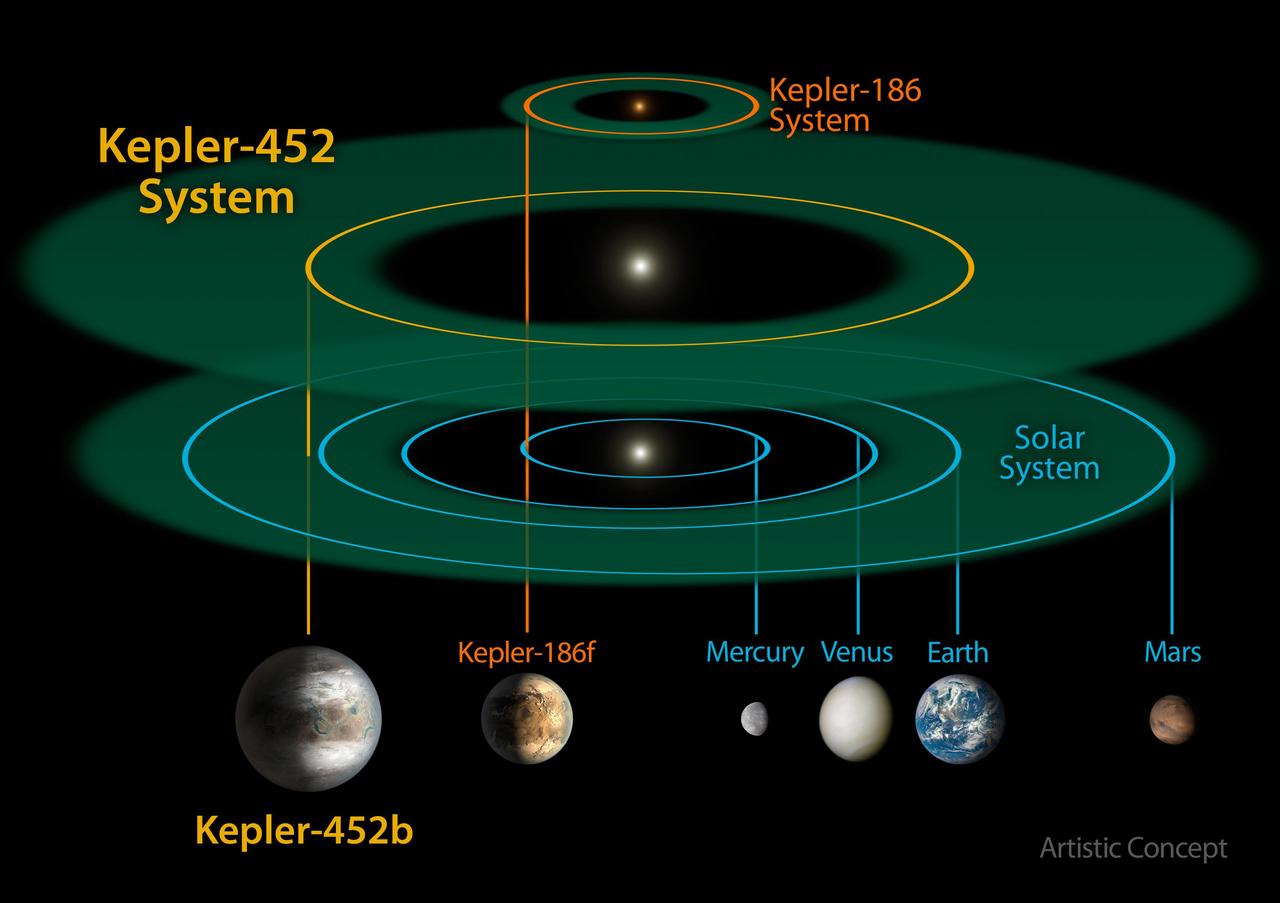
This size and scale of the Kepler-452 system compared alongside the Kepler-186 system and the solar system. Kepler-186 is a miniature solar system that would fit entirely inside the orbit of Mercury. The habitable zone of Kepler-186 is very small compared to that of Kepler-452 or the sun because it is a much smaller, cooler star. The size and extent of the habitable zone of Kepler-452 is nearly the same as that of the sun, but is slightly bigger because Kepler-452 is somewhat older, bigger and brighter. The size of the orbit of Kepler-452b is nearly the same as that of Earth at 1.05 astronomical units (an astronomical unit is the distance between Earth and the sun). Kepler-452b orbits its star once every 385 days. http://photojournal.jpl.nasa.gov/catalog/PIA19826
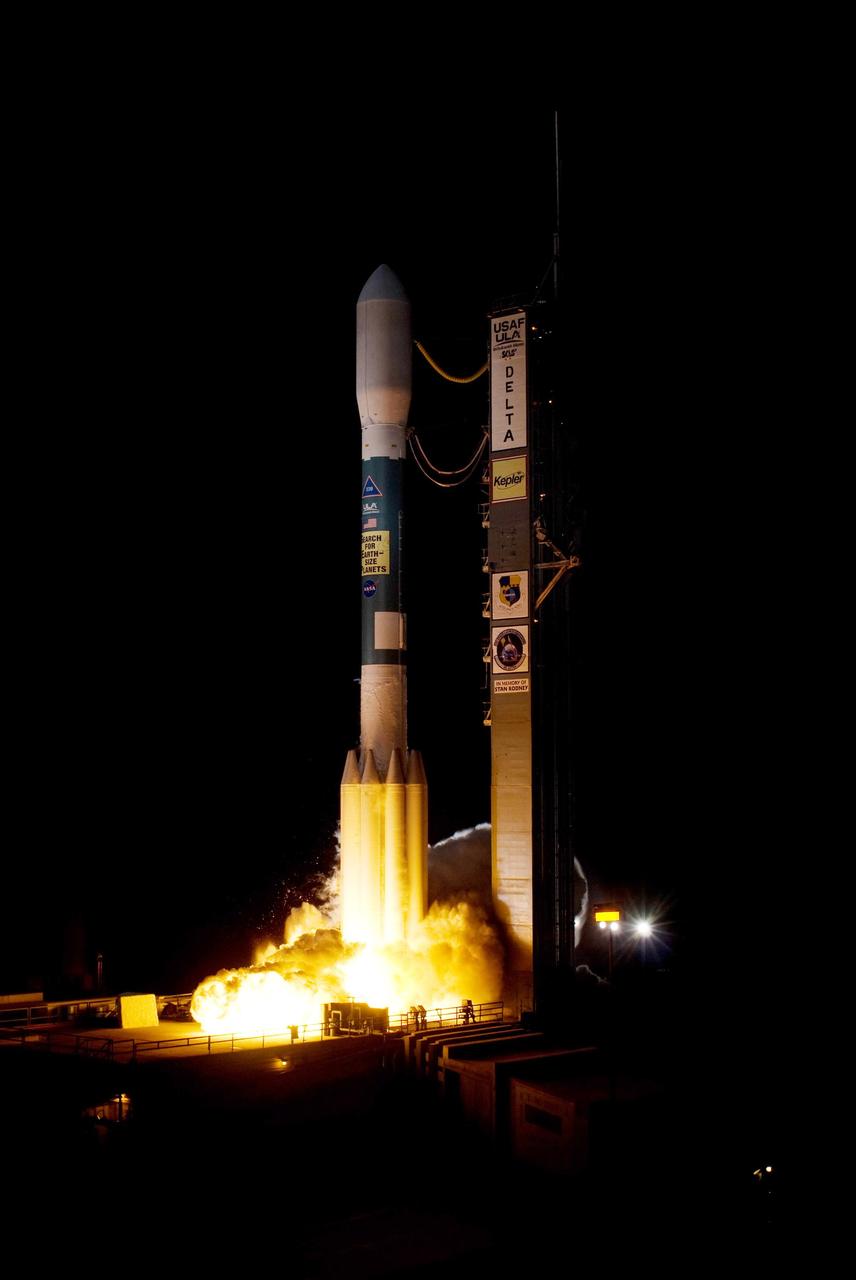
On March 6, 2009, NASA Kepler Space Telescope rocketed into the night skies above Cape Canaveral Air Force Station in Florida to find planets around other stars, called exoplanets, in search of potentially habitable worlds.
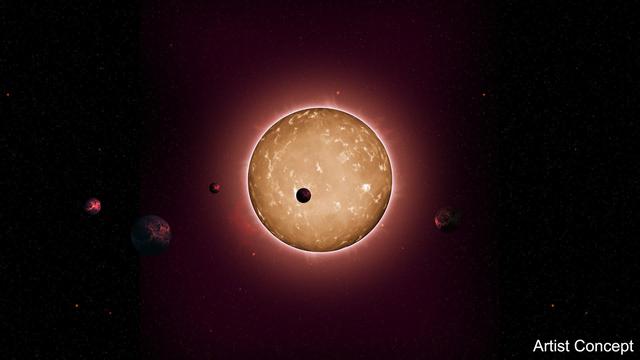
The tightly packed system, named Kepler-444, is home to five small planets in very compact orbits. The planets were detected from the dimming that occurs when they transit the disk of their parent star, as shown in this artist conception.
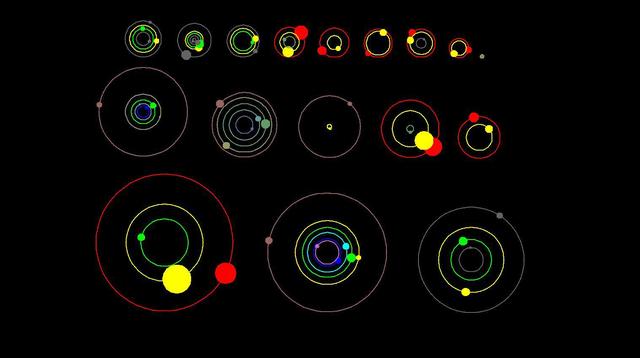
This artist concept shows an overhead view of the orbital position of the planets in systems with multiple transiting planets discovered by NASA Kepler mission. All the colored planets have been verified.
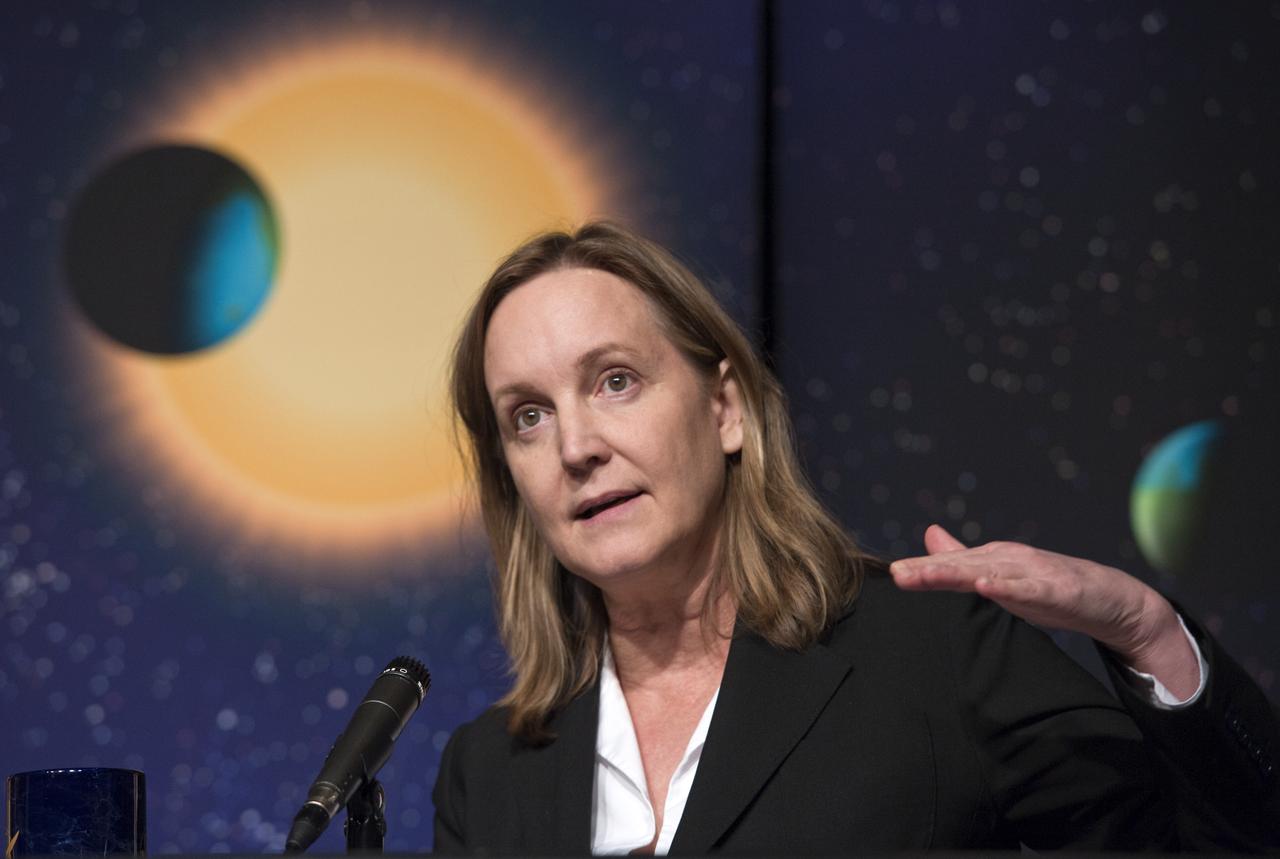
Debra Fischer, a professor of Astronomy at Yale University, speaks during a news conference, Wednesday, Feb. 2, 2010, at NASA Headquarters in Washington. Scientists using NASA's Kepler, a space telescope, recently discovered six planets made of a mix of rock and gases orbiting a single sun-like star, known as Kepler-11, which is located approximately 2,000 light years from Earth. Photo Credit: (NASA/Paul E. Alers)
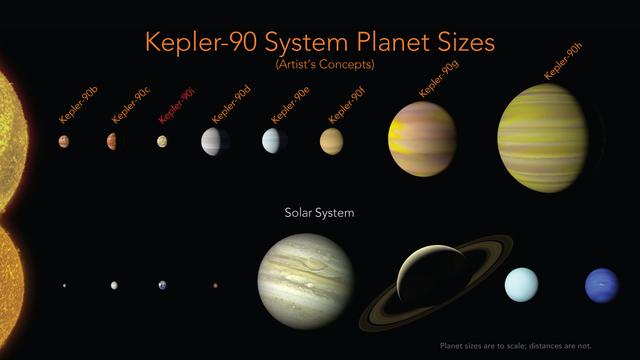
Our solar system now is tied for most number of planets around a single star, with the recent discovery of an eighth planet circling Kepler-90, a Sun-like star 2,545 light years from Earth. The planet was discovered in data from NASA's Kepler Space Telescope. This artist's concept depicts the Kepler-90 system compared with our own solar system. The newly-discovered Kepler-90i -- a sizzling hot, rocky planet that orbits its star once every 14.4 days -- was found using machine learning from Google. Machine learning is an approach to artificial intelligence in which computers "learn." In this case, computers learned to identify planets by finding in Kepler data instances where the telescope recorded changes in starlight caused by planets beyond our solar system, known as exoplanets. https://photojournal.jpl.nasa.gov/catalog/PIA22193
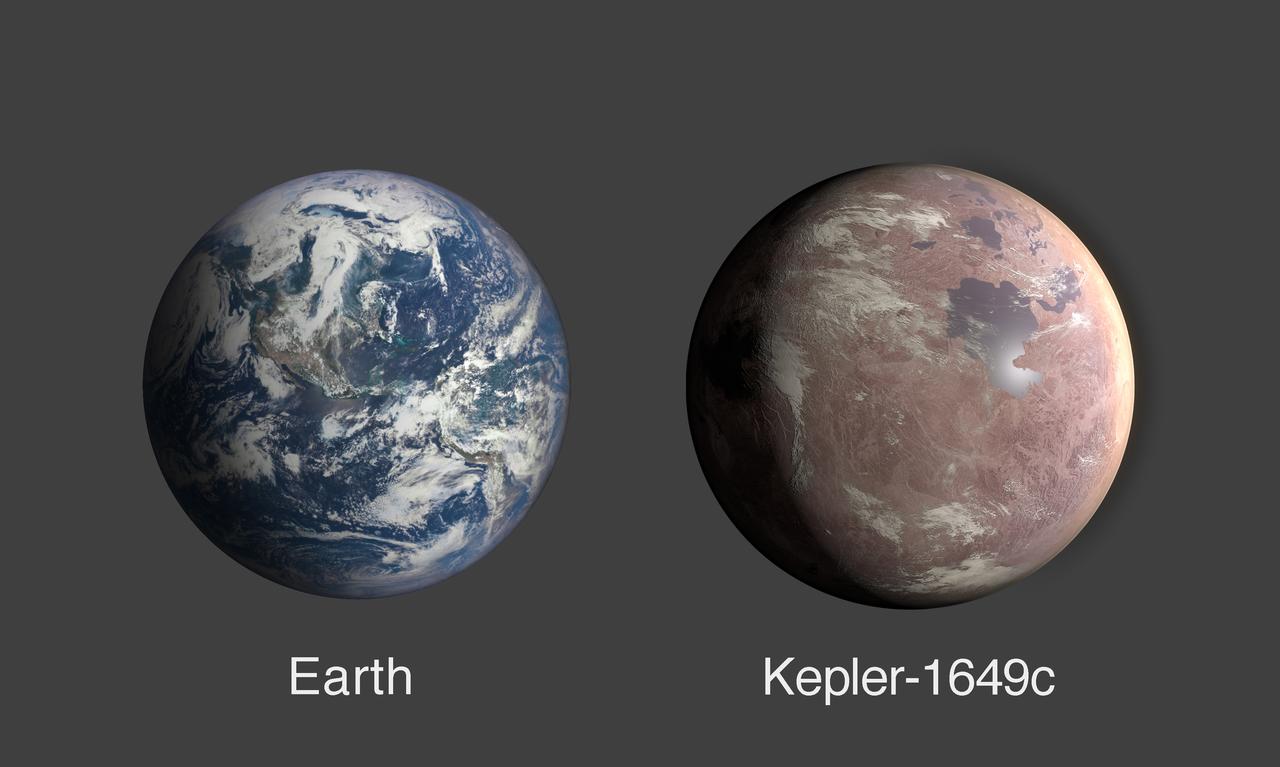
A comparison of Earth and Kepler-1649c, an exoplanet only 1.06 times Earth's radius. Labeled Art Credit: NASA/Ames Research Center/Daniel Rutter
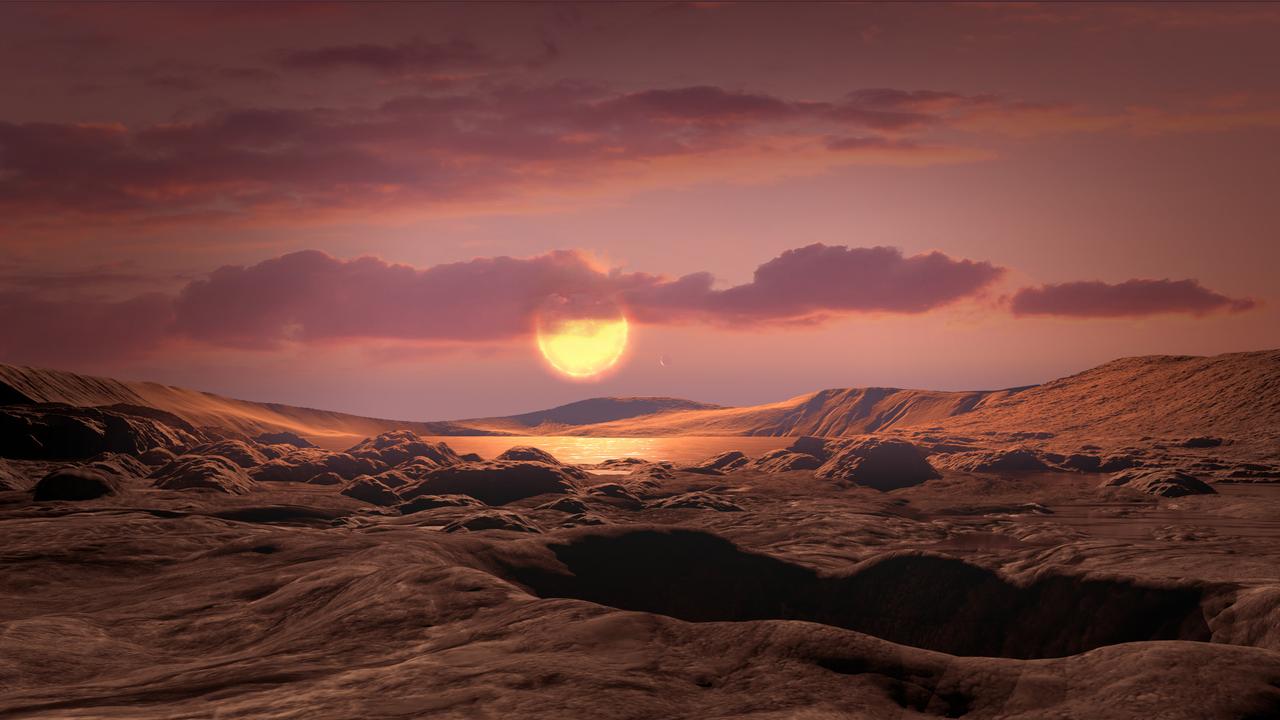
An illustration of what Kepler-1649c could look like from its surface. Credits: NASA/Ames Research Center/Daniel Rutter

Of the 1,030 confirmed planets from Kepler, a dozen are less than twice the size of Earth and reside in the habitable zone of their host stars. In this diagram, the sizes of the exoplanets are represented by the size of each sphere. These are arranged by size from left to right, and by the type of star they orbit, from the M stars that are significantly cooler and smaller than the sun, to the K stars that are somewhat cooler and smaller than the sun, to the G stars that include the sun. The sizes of the planets are enlarged by 25 times compared to the stars. The Earth is shown for reference. http://photojournal.jpl.nasa.gov/catalog/PIA19827
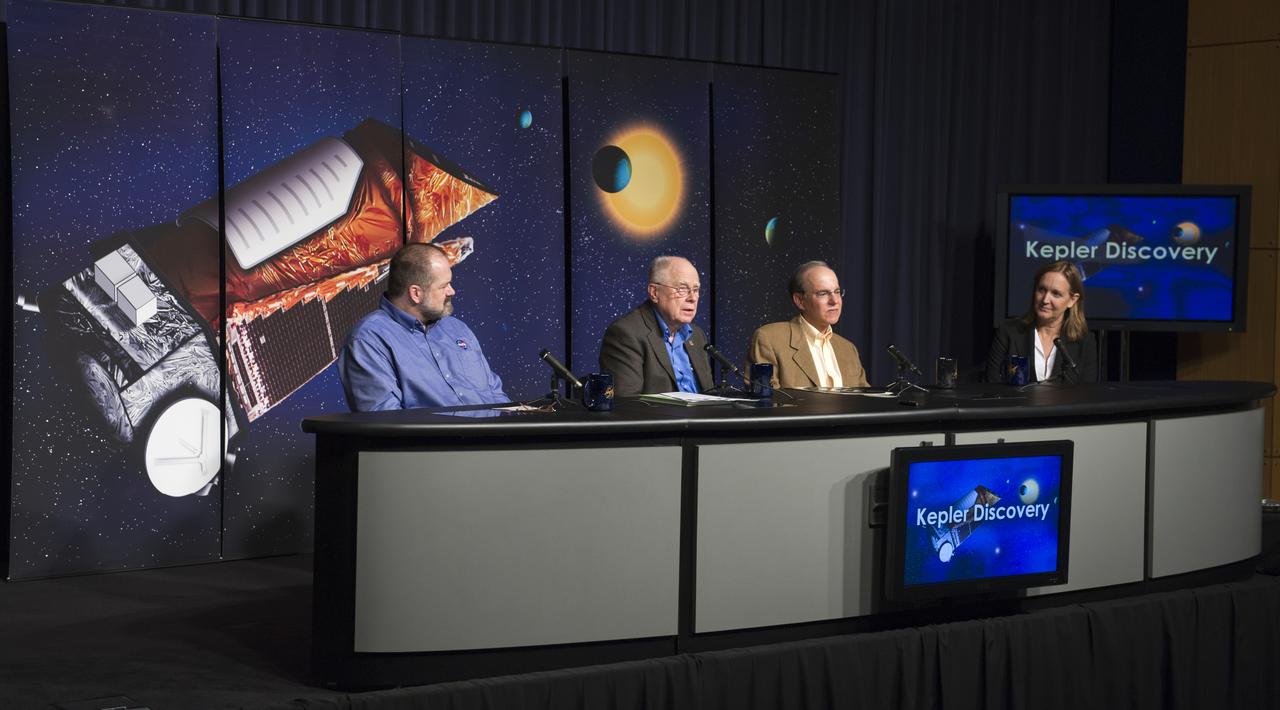
William Borucki, Kepler Science Principal Investigator from NASA's Ames Research Center, second from left, speaks during a news conference, Wednesday, Feb. 2, 2010, at NASA Headquarters in Washington as Douglas Hudgins, left, Jack Lissauer and Debra Fischer, far right, look on. Scientists using NASA's Kepler, a space telescope, recently discovered six planets made of a mix of rock and gases orbiting a single sun-like star, known as Kepler-11, which is located approximately 2,000 light years from Earth. Photo Credit: (NASA/Paul E. Alers)
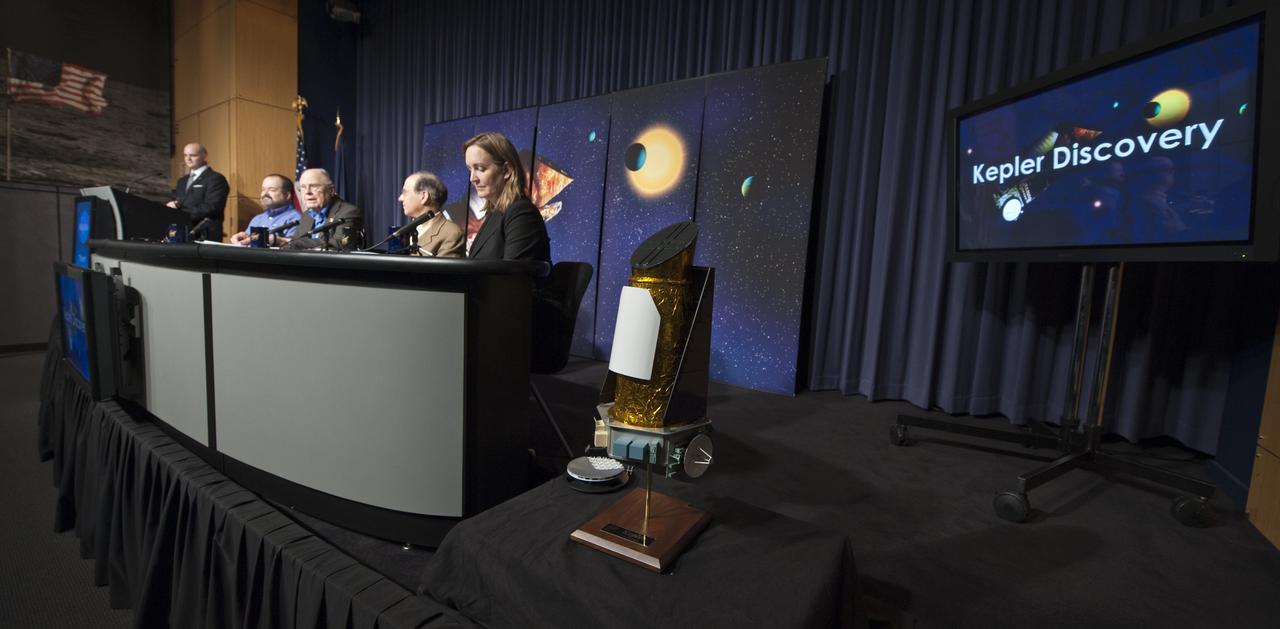
William Borucki, Kepler Science Principal Investigator from NASA's Ames Research Center, second from left, speaks during a news conference, Wednesday, Feb. 2, 2010, at NASA Headquarters in Washington as Douglas Hudgins, left, Jack Lissauer and Debra Fischer, far right, look on. Scientists using NASA's Kepler, a space telescope, recently discovered six planets made of a mix of rock and gases orbiting a single sun-like star, known as Kepler-11, which is located approximately 2,000 light years from Earth. Photo Credit: (NASA/Paul E. Alers)

This image from NASA Kepler mission shows the telescope full field of view an expansive star-rich patch of sky in the constellations Cygnus and Lyra stretching across 100 square degrees, or the equivalent of two side-by-side dips of the Big Dipper. A cluster of stars, called NGC 6791, and a star with a known planet, called TrES-2, are outlined. The cluster is eight billion years old, and located 13,000 light-years from Earth. It is called an open cluster because its stars are loosely bound and have started to spread out. TrES-2 is a hot Jupiter-like planet known to cross in front of, or transit, its star every 2.5 days. Kepler will hunt for transiting planets that are as small as Earth. Kepler was designed to hunt for planets like Earth. Of the approximately 4.5 million stars in the region pictured here, more than 100,000 were selected as candidates for Kepler's search. The mission will spend the next three-and-a-half years staring at these target stars, looking for periodic dips in brightness. Such dips occur when planets cross in front of their stars from our point of view in the galaxy, partially blocking the starlight. The area in the lower right of the image is brighter because it is closer to the plane of our galaxy and is jam-packed with stars. The area in upper left is farther from the galactic plane and contains fewer stars. The image has been color-coded so that brighter stars appear white, and fainter stars, red. It is a 60-second exposure, taken on April 8, 2009, one day after the spacecraft's dust cover was jettisoned. To achieve the level of precision needed to spot planets as small as Earth, Kepler's images are intentionally blurred slightly. This minimizes the number of saturated stars. Saturation, or "blooming," occurs when the brightest stars overload the individual pixels in the detectors, causing the signal to spill out into nearby pixels. These spills can be seen in the image as fine white lines extending above and below some of the brightest stars. Blooming is an expected side effect of Kepler's ultra-sensitive camera. Some of the lightly saturated stars are candidates for planet searches, while those that are heavily saturated are not. The grid lines across the picture show how the focal plane is laid out on Kepler's camera —the largest ever launched in space at 95 megapixels. There are 42 charge-coupled devices (CCDs), paired into square-shaped modules, whose outline can be seen in the image. A thin black line in each module shows adjacent pairs of CCDs. The thicker black lines that cross through the image are from structures holding the modules together, and were purposely oriented to block out the very brightest stars in Kepler's field of view. The four black corners of the image show where the fine-guidance sensors reside on the focal plane. These sensors are used to hold the telescope's gaze steady by measuring its position on the sky 10 times every second, and by feeding this information to the spacecraft's attitude control system. Ghost images also appear in the image, which are reflections off the lenses above the CCDs. These expected artifacts were mapped out during ground testing for Kepler, and will not affect science observations because they will be removed as the data are processed. http://photojournal.jpl.nasa.gov/catalog/PIA11984
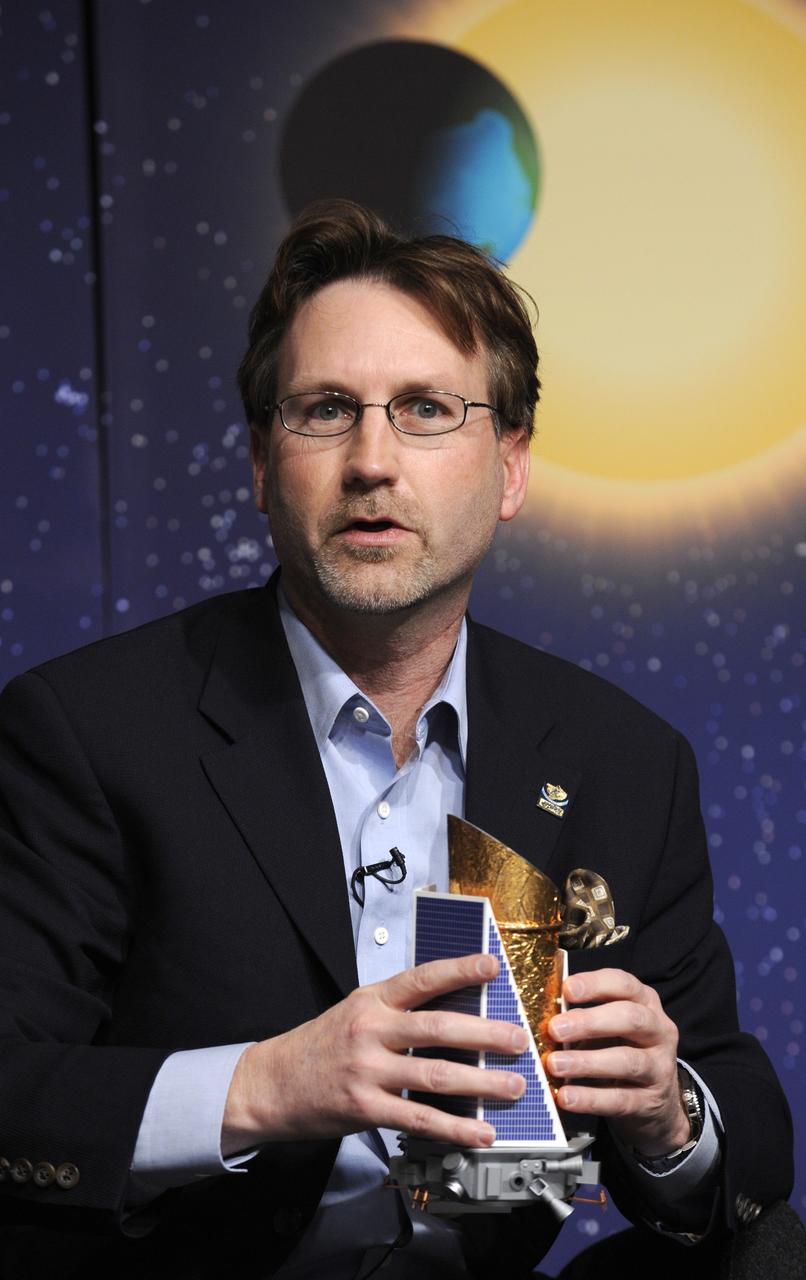
Jim Fanson, Kepler project manager, at NASA's Jet Propulsion Laboratory in Pasadena, Calif. holds a model of the Kepler spacecraft as he talks about the Kepler mission during a media briefing, Thursday, Feb. 19, 2008, at NASA Headquarters in Washington. Kepler, the first mission with the ability to find planets like earth, is scheduled to launch on March 5, 2009 from Cape Canaveral Air Force Station, Fla. aboard a Delta II rocket. Photo Credit: (NASA/Paul. E. Alers)
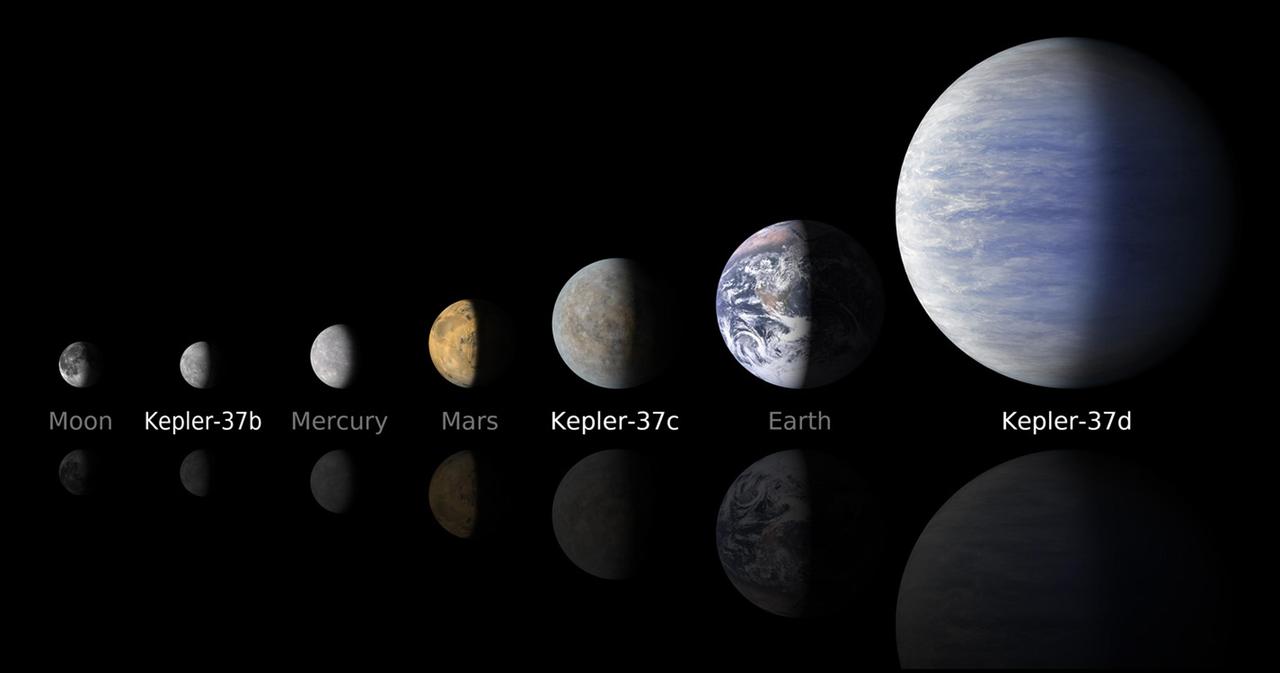
NASA Kepler mission compares artist concepts of the planets in the Kepler-37 system to the moon and planets in the solar system. The smallest planet, Kepler-37b, is slightly larger than our moon.
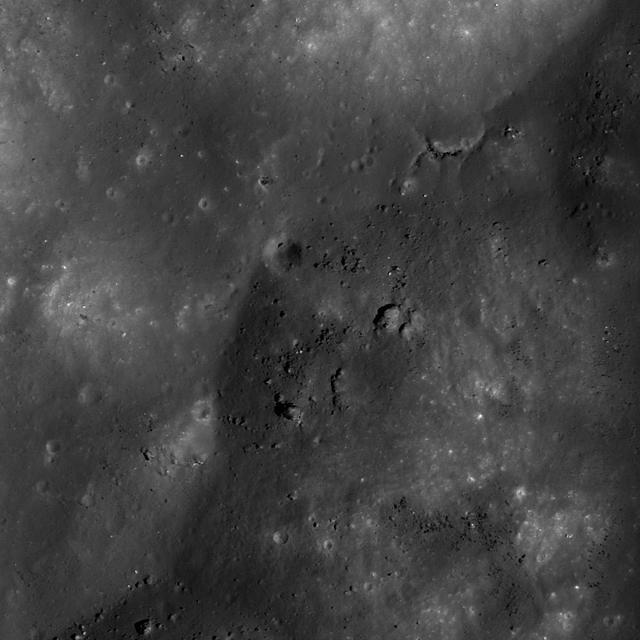
Kepler Crater - Central Peak
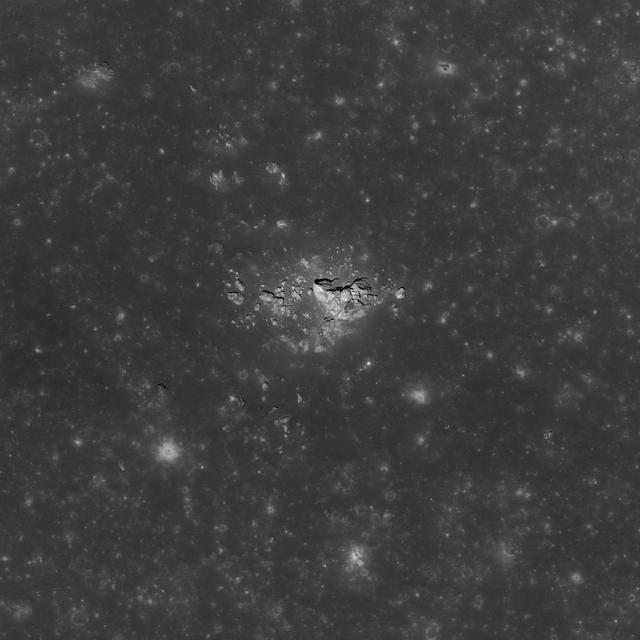
Kepler Crater Ejecta

This artist concept depicts Kepler-186f, the first validated Earth-size planet to orbit a distant star in the habitable zone, a range of distance from a star where liquid water might pool on the planet surface.

The artist concept depicts Kepler-62f, a super-Earth-size planet in the habitable zone of a star smaller and cooler than the sun, located about 1,200 light-years from Earth in the constellation Lyra.
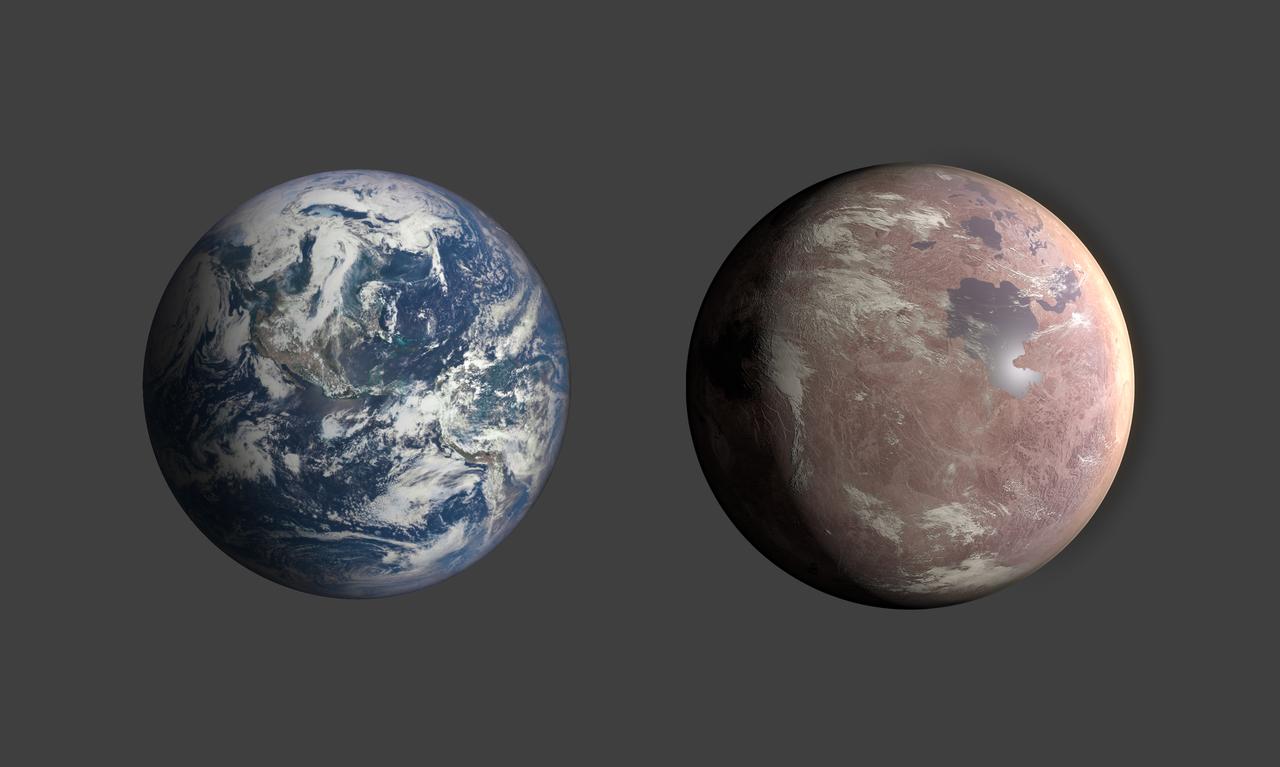
A comparison of Earth and Kepler-1649c, an exoplanet only 1.06 times Earth's radius Credit: NASA/Ames Research Center/Daniel Rutter
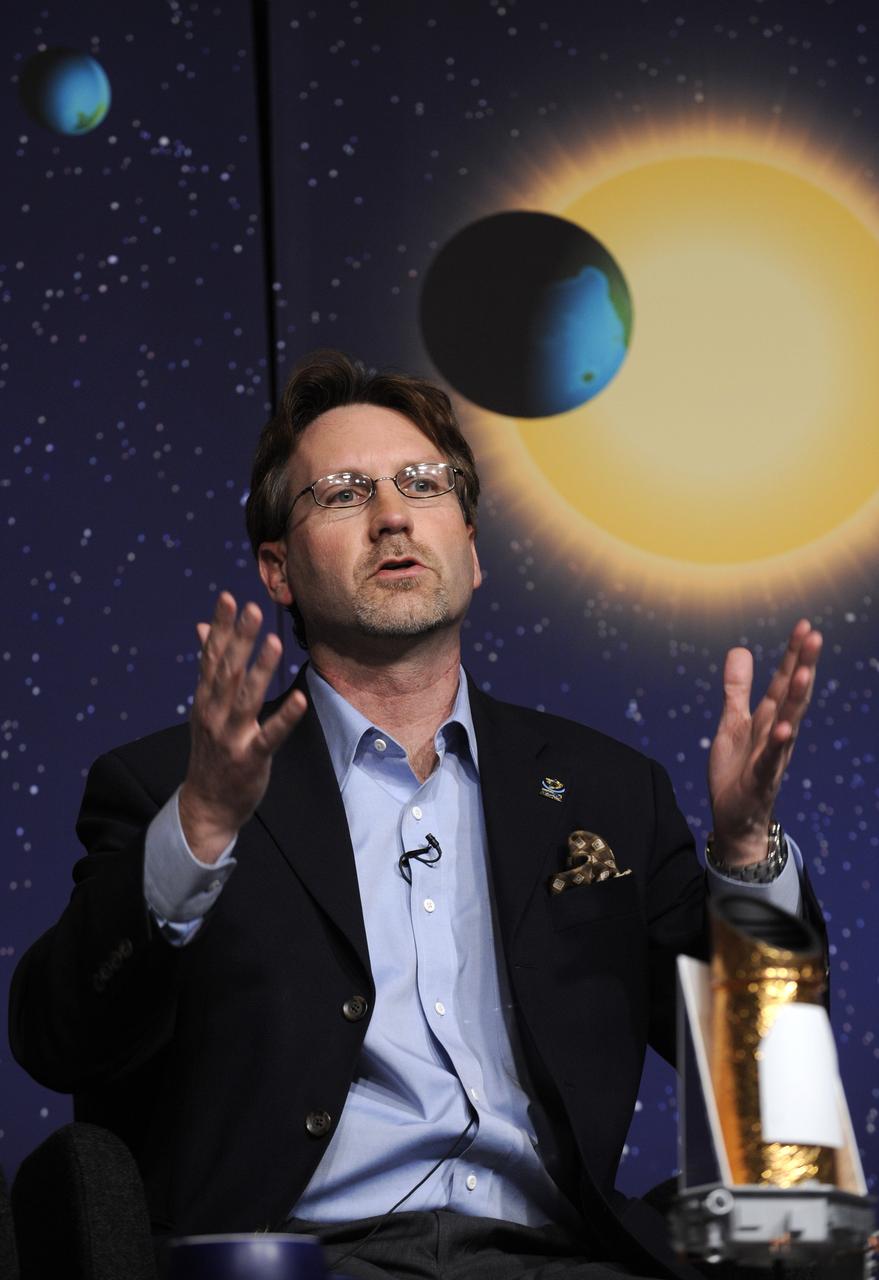
Jim Fanson, Kepler project manager, at NASA's Jet Propulsion Laboratory in Pasadena, Calif. talks about the Kepler mission during a media briefing, Thursday, Feb. 19, 2008, at NASA Headquarters in Washington. Kepler, the first mission with the ability to find planets like earth, is scheduled to launch on March 5, 2009 from Cape Canaveral Air Force Station, Fla. aboard a Delta II rocket. Photo Credit: (NASA/Paul. E. Alers)
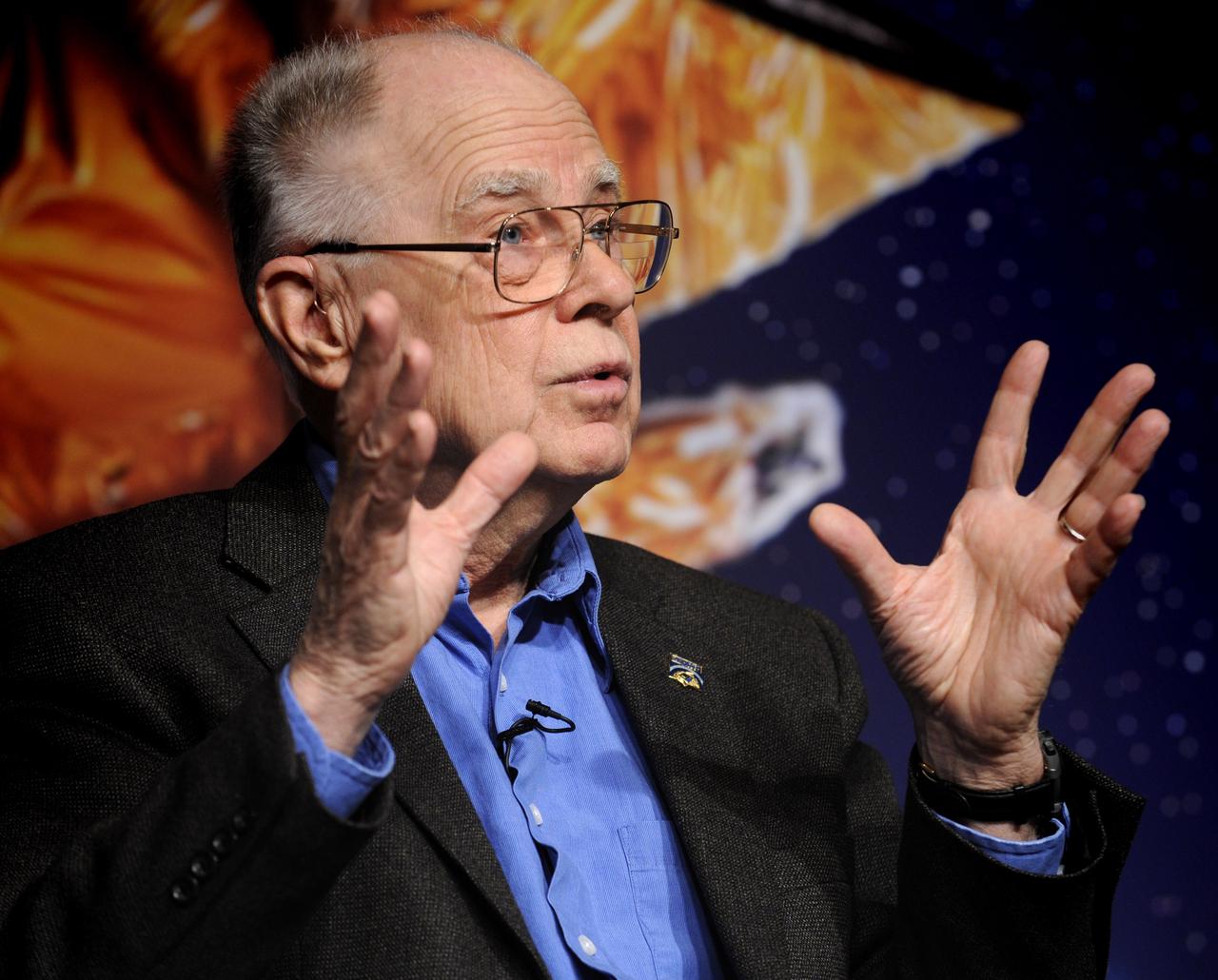
William Borucki, principal investigator for Kepler Science at Ames Research Center, Moffett Field, Calif., talks about the Kepler mission during a media briefing, Thursday, Feb. 19, 2008, at NASA Headquarters in Washington. Kepler, the first mission with the ability to find planets like earth, is scheduled to launch on March 5, 2009 from Cape Canaveral Air Force Station, Fla. aboard a Delta II rocket. Photo Credit: (NASA/Paul. E. Alers)
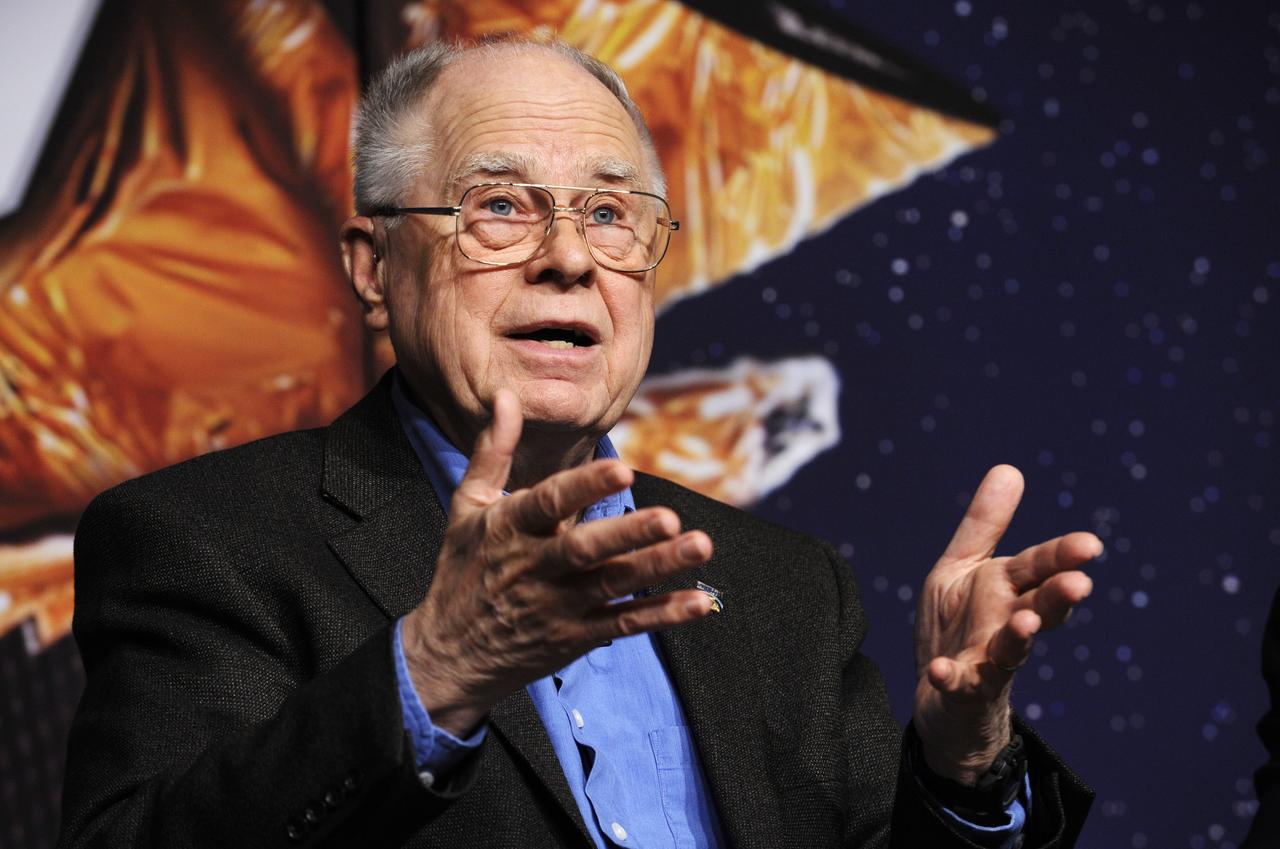
William Borucki, principal investigator for Kepler Science at Ames Research Center, Moffett Field, Calif., talks about the Kepler mission during a media briefing, Thursday, Feb. 19, 2008, at NASA Headquarters in Washington. Kepler, the first mission with the ability to find planets like earth, is scheduled to launch on March 5, 2009 from Cape Canaveral Air Force Station, Fla. aboard a Delta II rocket. Photo Credit: (NASA/Paul. E. Alers)
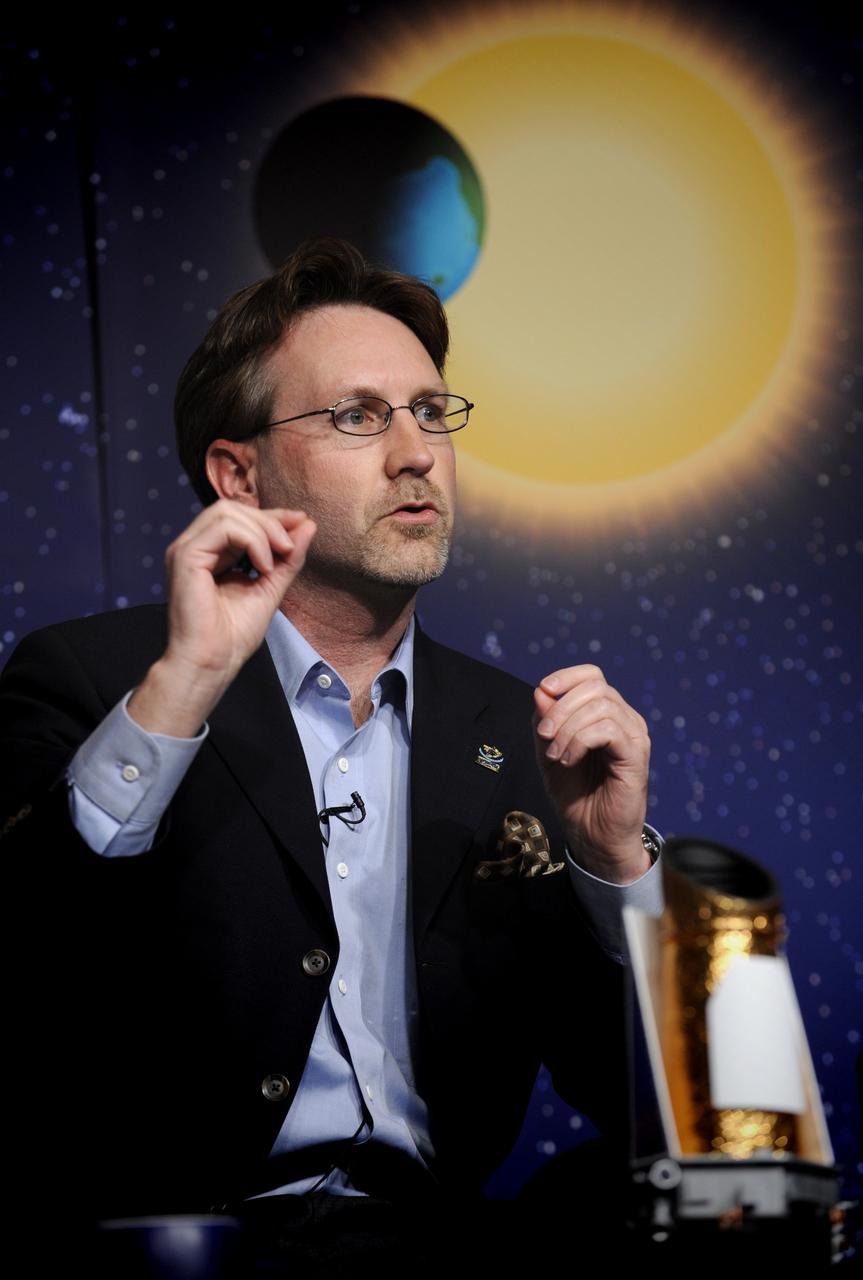
Jim Fanson, Kepler project manager, at NASA's Jet Propulsion Laboratory in Pasadena, Calif. talks about the Kepler mission during a media briefing, Thursday, Feb. 19, 2008, at NASA Headquarters in Washington. Kepler, the first mission with the ability to find planets like earth, is scheduled to launch on March 5, 2009 from Cape Canaveral Air Force Station, Fla. aboard a Delta II rocket. Photo Credit: (NASA/Paul. E. Alers)
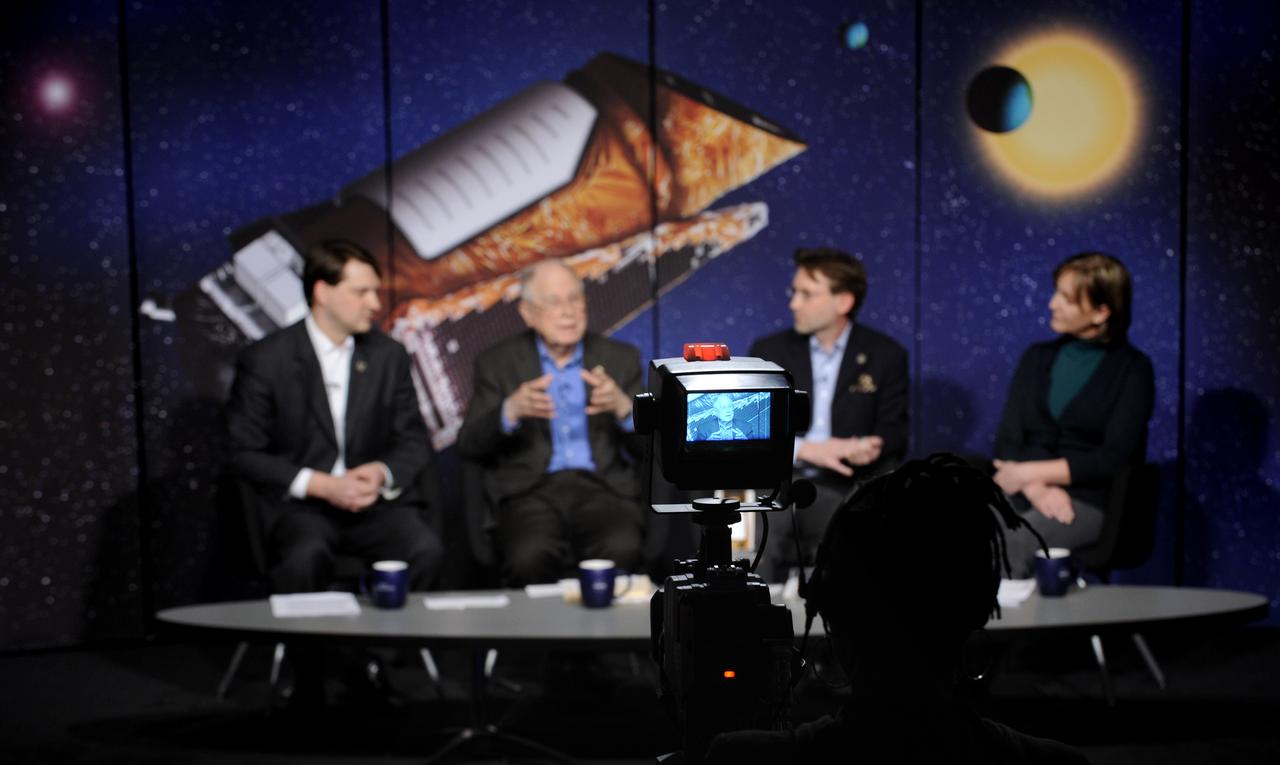
William Borucki, principal investigator for Kepler Science at Ames Research Center, Moffett Field, Calif., second from left, is seen through a television camer monitor as he talks about the Kepler mission during a media briefing, Thursday, Feb. 19, 2008, at NASA Headquarters in Washington. Kepler, the first mission with the ability to find planets like earth, is scheduled to launch on March 5, 2009 from Cape Canaveral Air Force Station, Fla. aboard a Delta II rocket. Photo Credit: (NASA/Paul. E. Alers)

This chart compares the first Earth-size planets found around a sun-like star to planets in our own solar system, Earth and Venus. NASA Kepler mission discovered the newfound planets, called Kepler-20e and Kepler-20f.
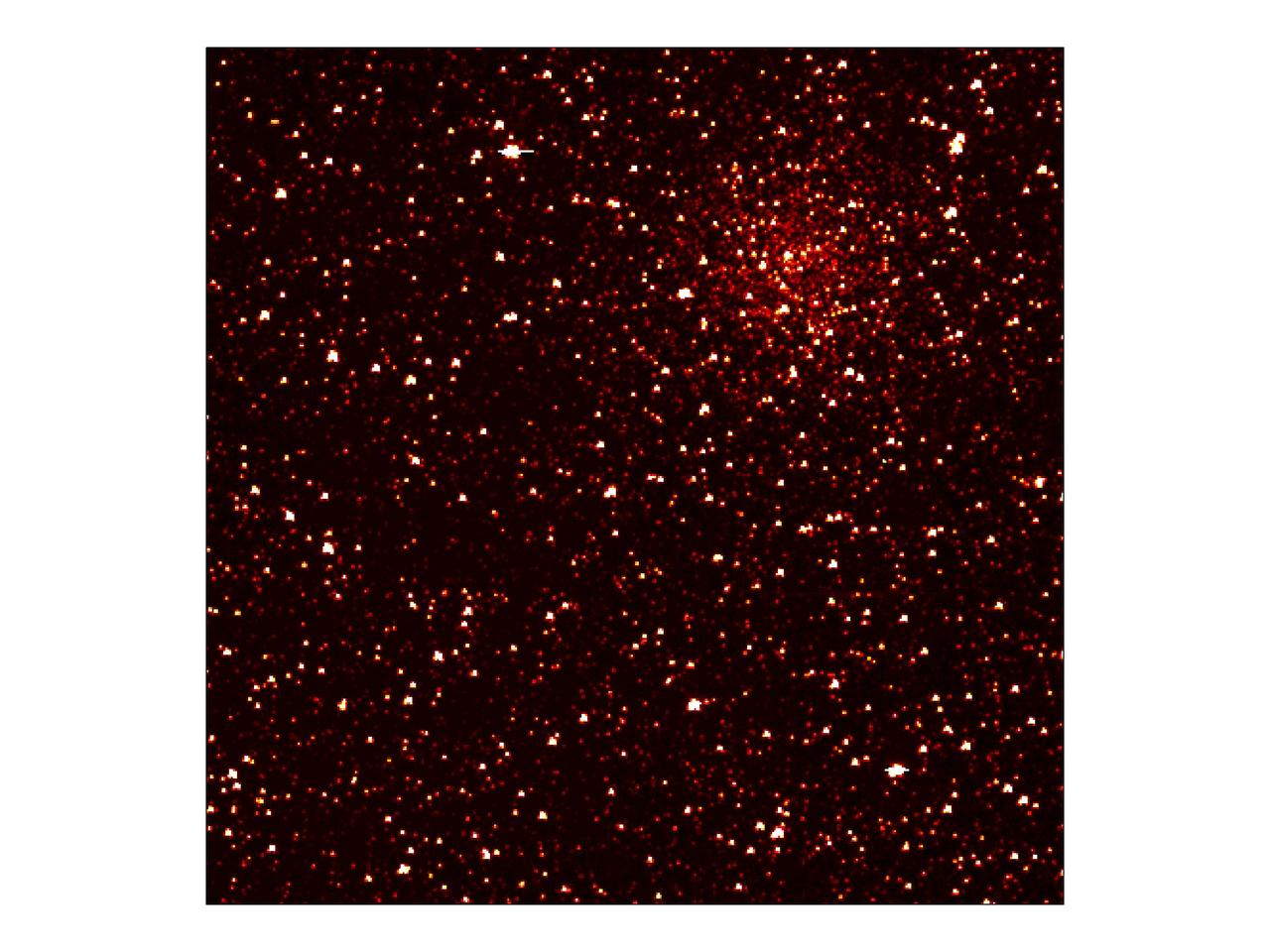
This image zooms into a small portion of NASA Kepler full field of view, an expansive, 100-square-degree patch of sky in our Milky Way galaxy. An eight-billion-year-old cluster of stars 13,000 light-years from Earth, called NGC 6791, can be seen in the image. Clusters are families of stars that form together out of the same gas cloud. This particular cluster is called an open cluster, because the stars are loosely bound and have started to spread out from each other. The area pictured is 0.2 percent of Kepler's full field of view, and shows hundreds of stars in the constellation Lyra. The image has been color-coded so that brighter stars appear white, and fainter stars, red. It is a 60-second exposure, taken on April 8, 2009, one day after the spacecraft's dust cover was jettisoned. Kepler was designed to hunt for planets like Earth. The mission will spend the next three-and-a-half years staring at the same stars, looking for periodic dips in brightness. Such dips occur when planets cross in front of their stars from our point of view in the galaxy, partially blocking the starlight. To achieve the level of precision needed to spot planets as small as Earth, Kepler's images are intentionally blurred slightly. This minimizes the number of saturated stars. Saturation, or "blooming," occurs when the brightest stars overload the individual pixels in the detectors, causing the signal to spill out into nearby pixels. http://photojournal.jpl.nasa.gov/catalog/PIA11986
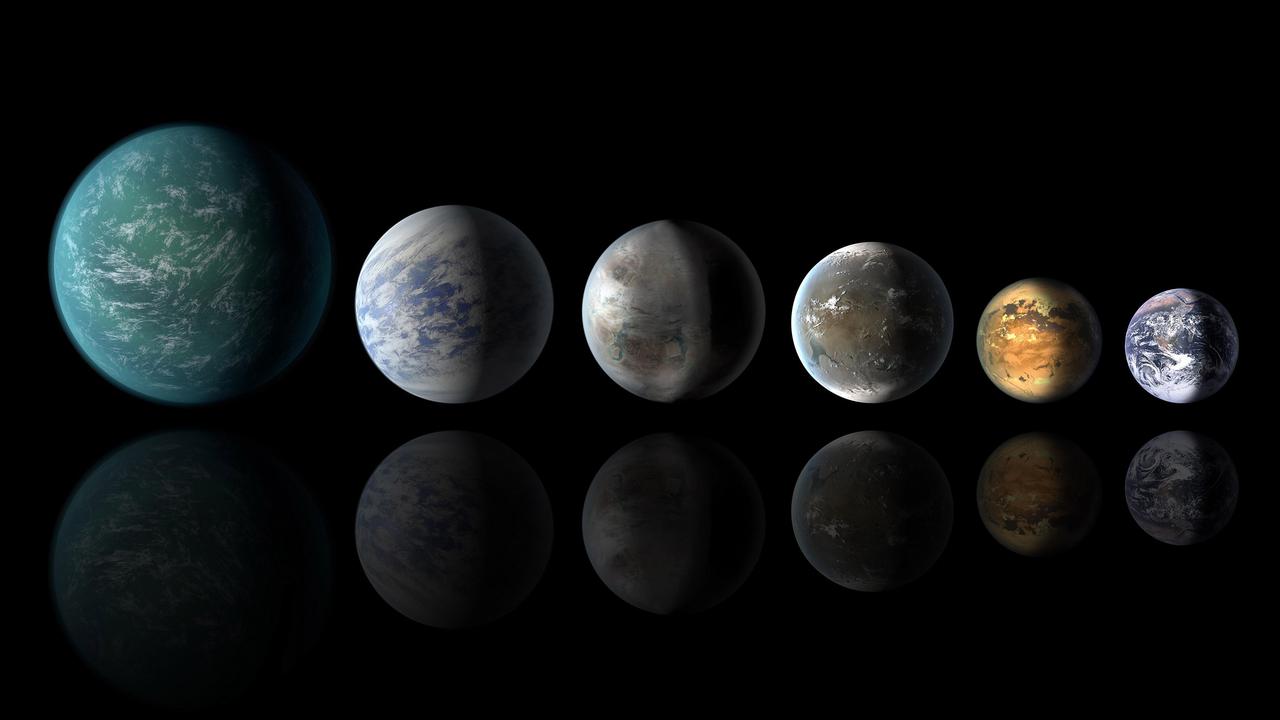
A newly discovered exoplanet, Kepler-452b, comes the closest of any found so far to matching our Earth-sun system. This artist's conception of a planetary lineup shows habitable-zone planets with similarities to Earth: from left, Kepler-22b, Kepler-69c, the just announced Kepler-452b, Kepler-62f and Kepler-186f. Last in line is Earth itself. http://photojournal.jpl.nasa.gov/catalog/PIA19830
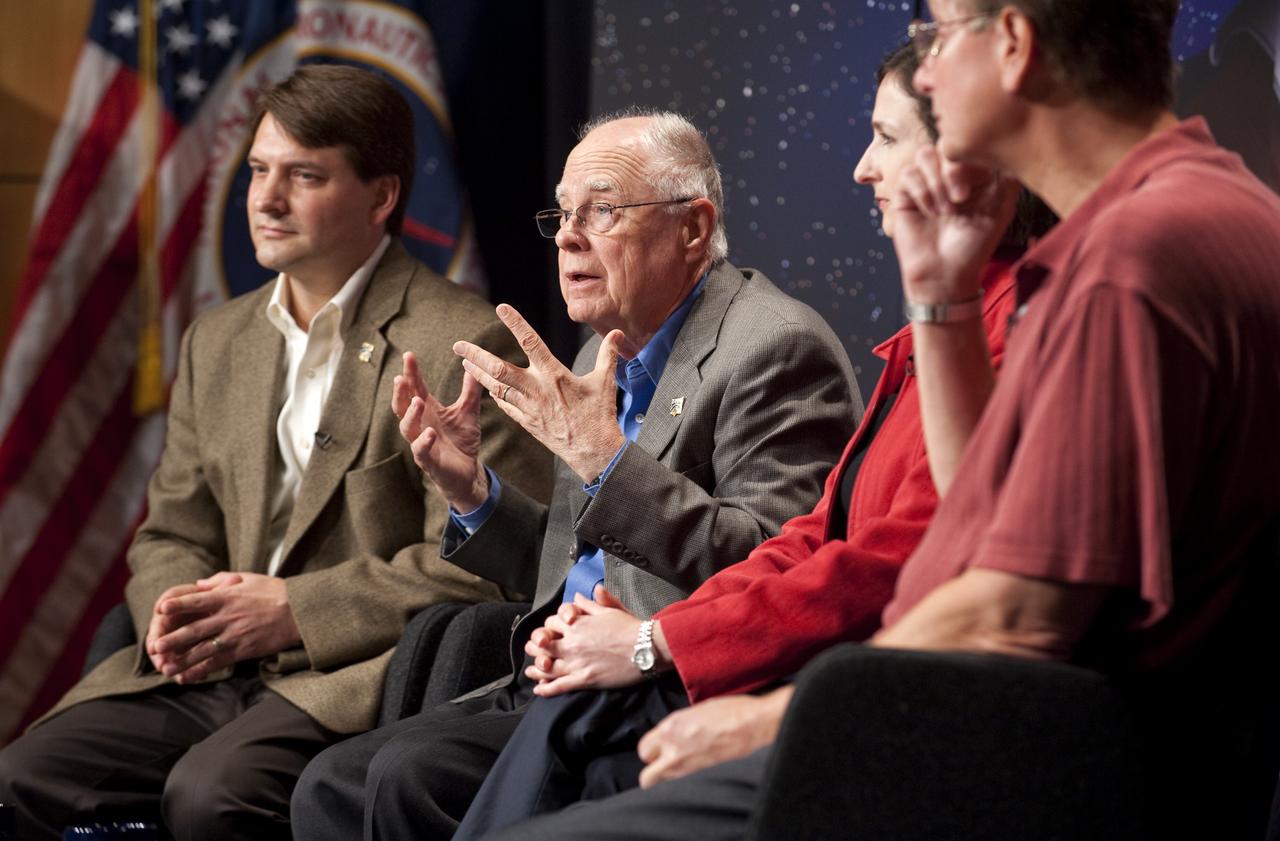
William Bo-Ricki, Kepler principal investigator at NASA's Ames Research Center, second from left, speaks during a press conference, Thursday, Aug. 6, 2009, at NASA Headquarters in Washington about the scientific observations coming from the Kepler spacecraft that was launched this past March as Jon Morse, NASA's Astrophysics Division Director, left, looks on. Kepler is NASA's first mission that is capable of discovering earth-sized planets in the habitable zones of stars like our Sun. Photo Credit: (NASA/Paul E. Alers)

William Bo-Ricki, Kepler principal investigator at NASA's Ames Research Center, speaks during a press conference, Thursday, Aug. 6, 2009, at NASA Headquarters in Washington about the scientific observations coming from the Kepler spacecraft that was launched this past March. Kepler is NASA's first mission that is capable of discovering earth-sized planets in the habitable zones of stars like our Sun. Photo Credit: (NASA/Paul E. Alers)
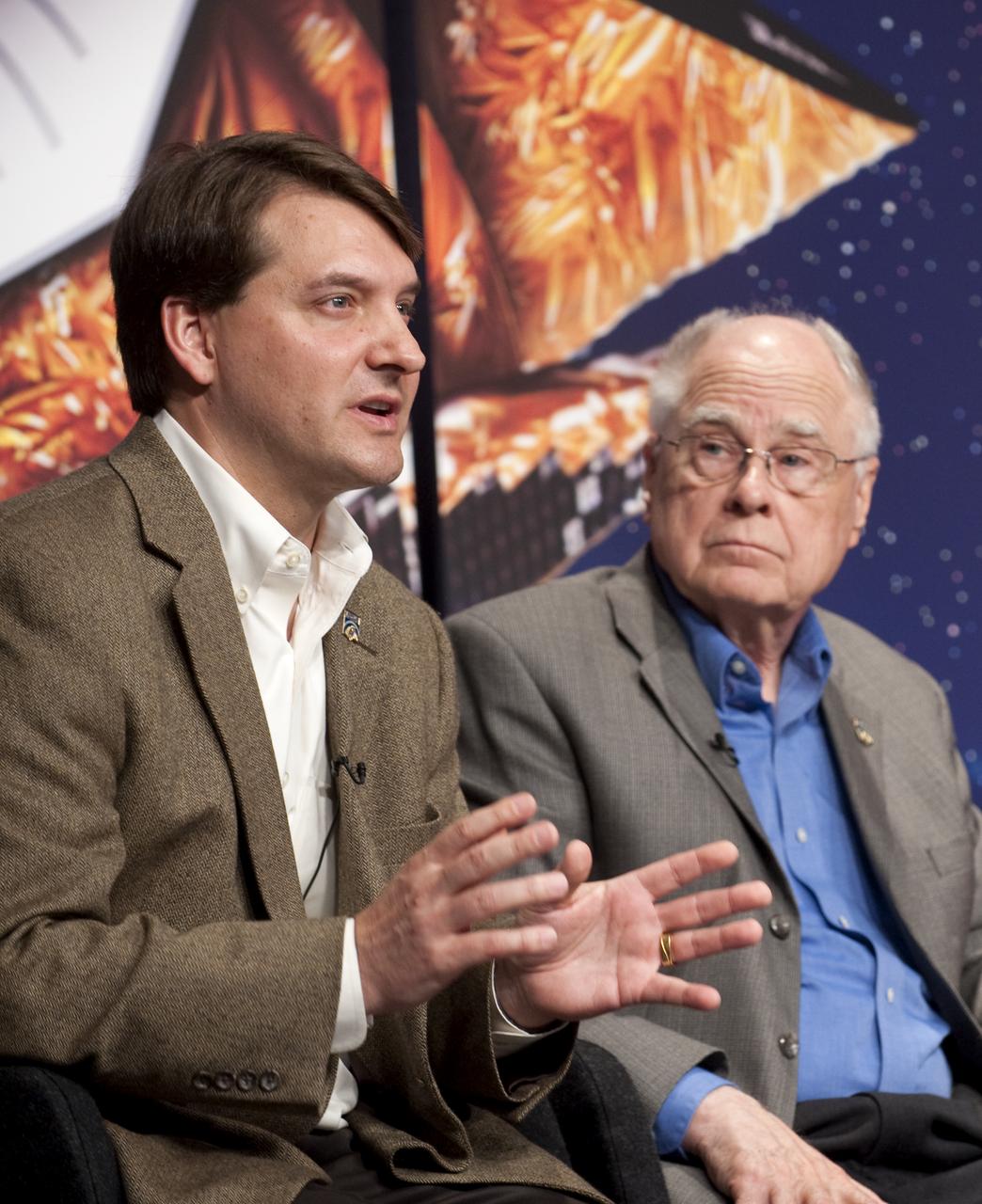
Jim Fanson, Kepler project manager, right, talks about the Kepler mission as William Borucki, left, listens during a media briefing, Thursday, Feb. 19, 2008, at NASA Headquarters in Washington. Kepler, the first mission with the ability to find planets like earth, is scheduled to launch on March 5, 2009 from Cape Canaveral Air Force Station, Fla. aboard a Delta II rocket. Photo Credit: (NASA/Paul. E. Alers)
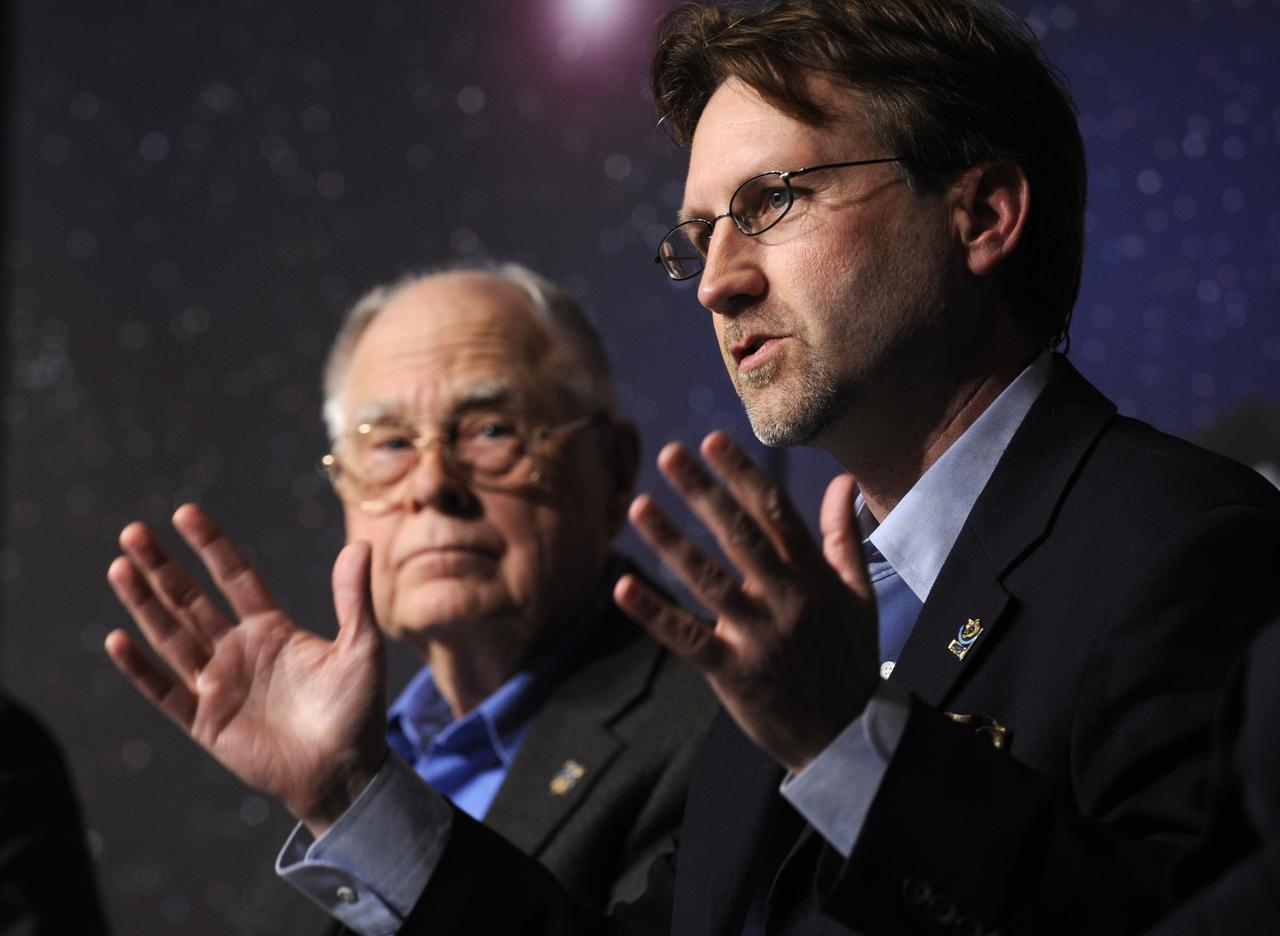
Jon Morse, NASA's Astrophysics Division Director, left, speaks during a press conference, Thursday, Aug. 6, 2009, at NASA Headquarters in Washington about the scientific observations coming from the Kepler spacecraft that was launched this past March asWilliam Bo-Ricki, Kepler principal investigator at NASA's Ames Research Center, looks on. Kepler is NASA's first mission that is capable of discovering earth-sized planets in the habitable zones of stars like our Sun. Photo Credit: (NASA/Paul E. Alers)

Sara Seager, Professor of Planetary Science at the Massachusetts Institute of Technology, speaks during a press conference, Thursday, Aug. 6, 2009, at NASA Headquarters in Washington about the scientific observations coming from the Kepler spacecraft that was launched this past March. Kepler is NASA's first mission that is capable of discovering earth-sized planets in the habitable zones of stars like our Sun. Photo Credit: (NASA/Paul E. Alers)
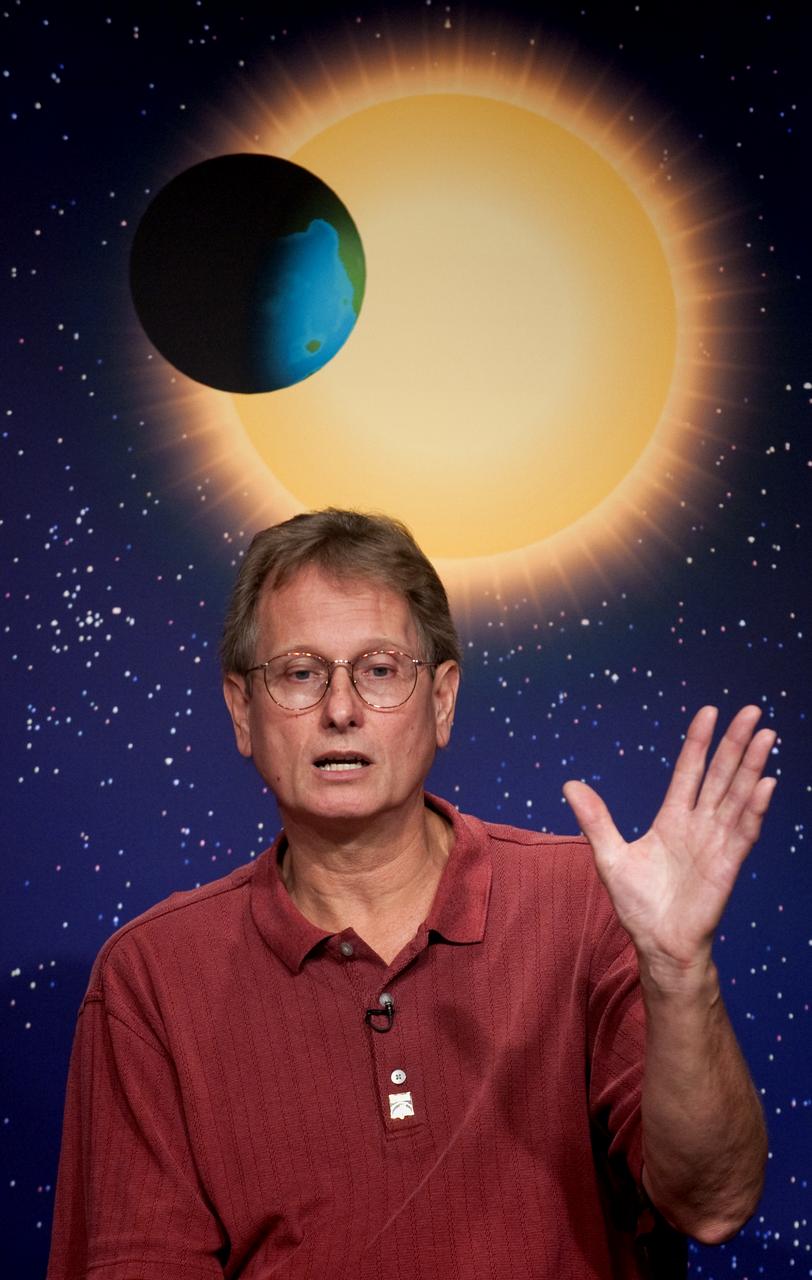
Alan Boss, an astrophyscist at the Carnegie Institution at the Department of Terrestrial Magnetism speaks during a press conference, Thursday, Aug. 6, 2009, at NASA Headquarters in Washington about the scientific observations coming from the Kepler spacecraft that was launched this past March. Kepler is NASA's first mission that is capable of discovering earth-sized planets in the habitable zones of stars like our Sun. Photo Credit: (NASA/Paul E. Alers)
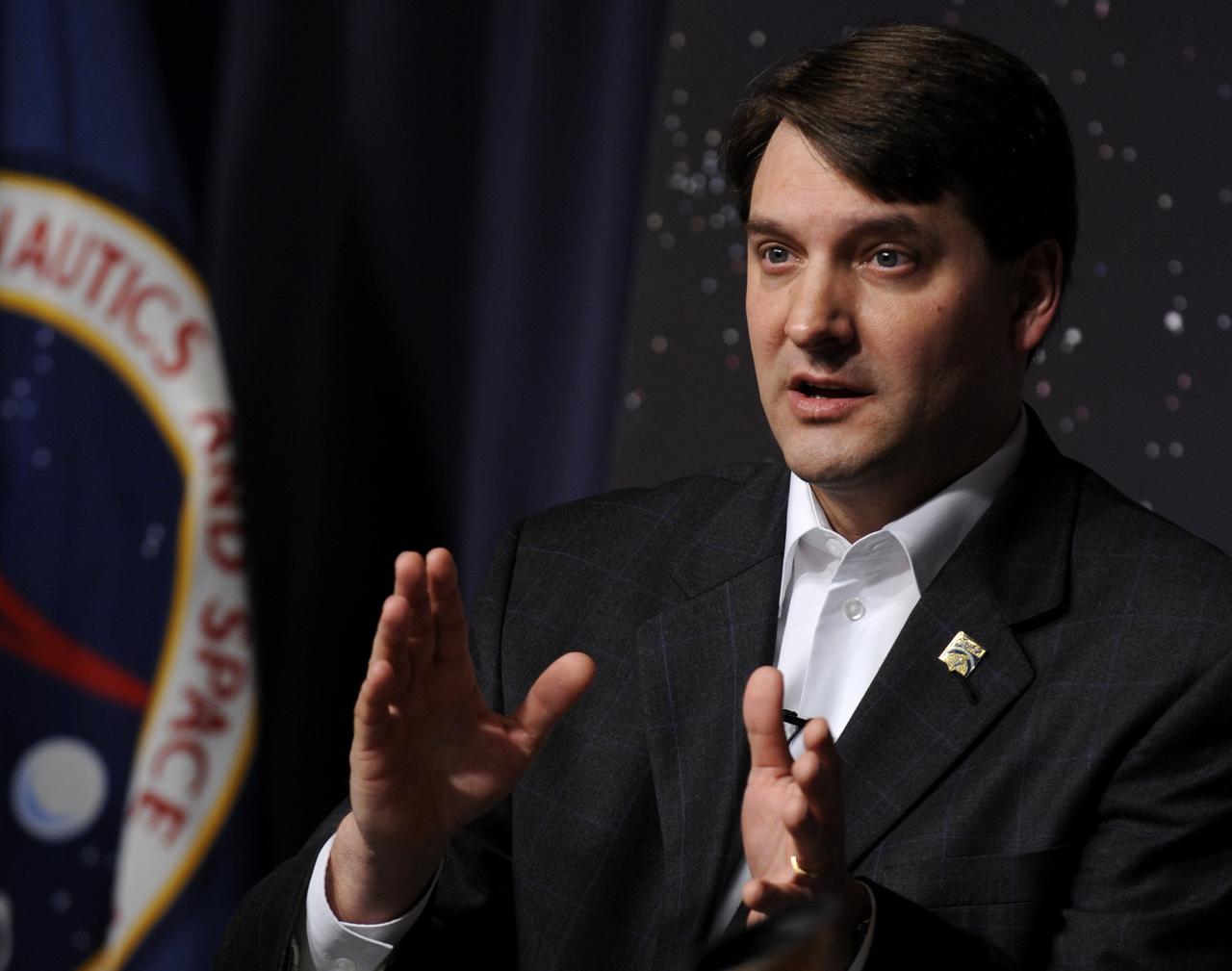
Jon Morse, director, Astrophysics Division at NASA Headquarters talks about the Kepler mission during a media briefing, Thursday, Feb. 19, 2008, at NASA Headquarters in Washington. Kepler, the first mission with the ability to find planets like earth, is scheduled to launch on March 5, 2009 from Cape Canaveral Air Force Station, Fla. aboard a Delta II rocket. Photo Credit: (NASA/Paul. E. Alers)
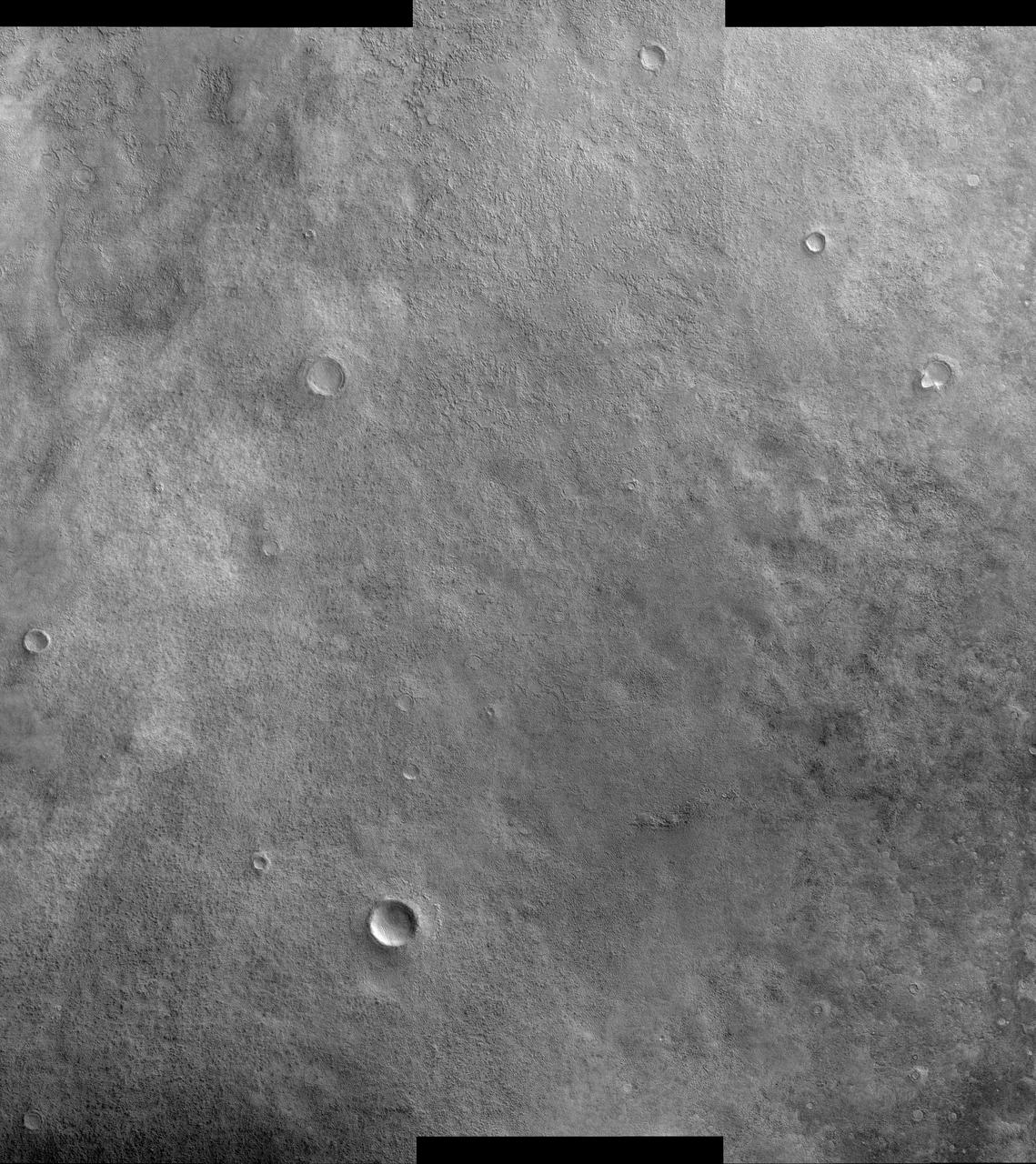
Twilight Imaging of Kepler Crater Floor

This artist conception illustrates Kepler-22b, a planet known to comfortably circle in the habitable zone of a sun-like star. It is the first planet that NASA Kepler mission has confirmed to orbit in a star habitable zone.
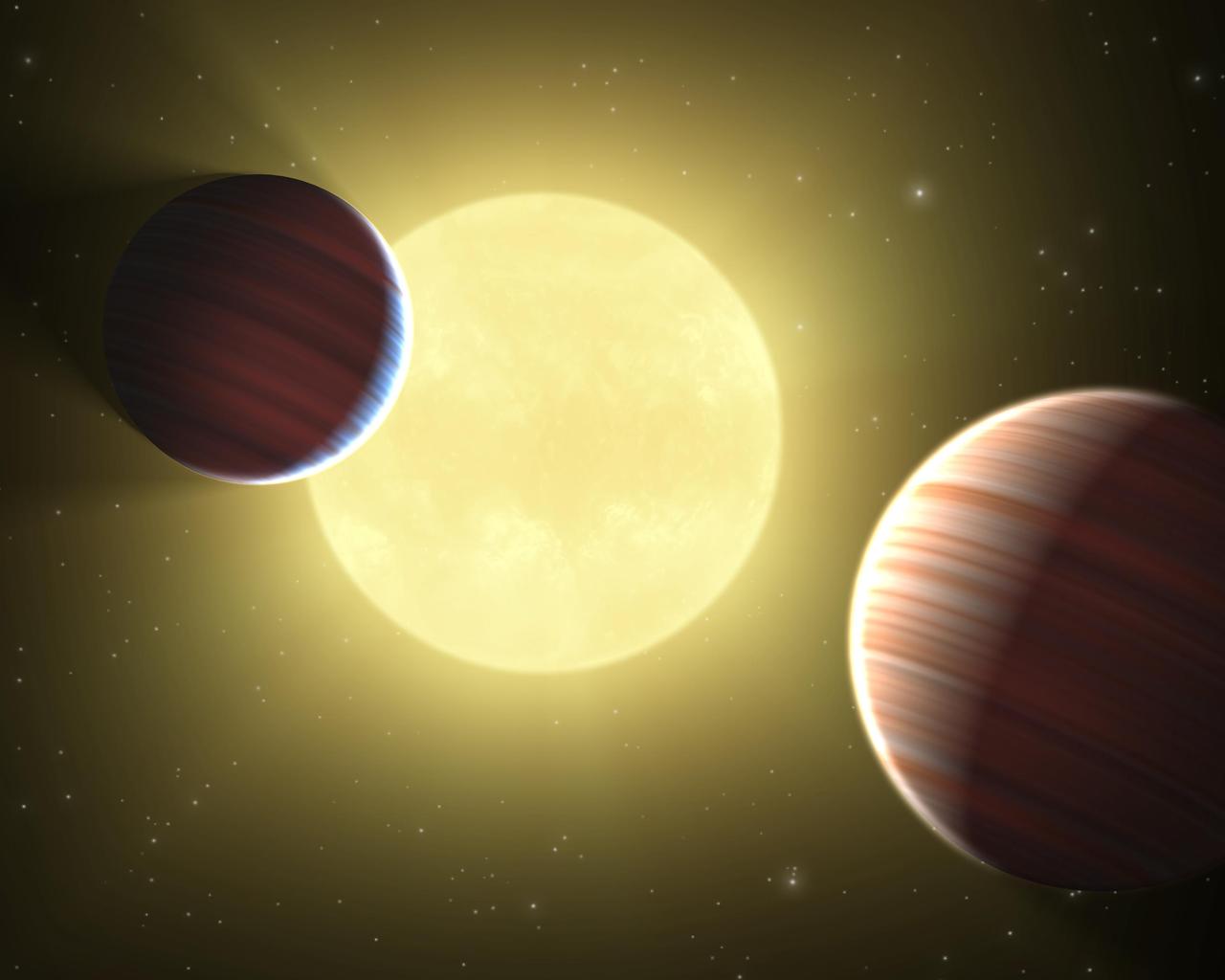
This artist concept illustrates the two Saturn-sized planets discovered by NASA Kepler mission. The star system is oriented edge-on, as seen by Kepler, such that both planets cross in front, or transit, their star, named Kepler-9.

The Kepler space telescope examined twenty-one patches of the sky during it’s nine and a half years of operation. Within these regions, Kepler gathered high precision brightness measurements of over half a million stars facilitating the discovery of thousands of exoplanets and yielding insight into a multitude of other astrophysical phenomena. Illustration by Wendy Stenzel. Science content: Jeff Coughlin, Kenneth Mighell, Doug Caldwell, all of NASA Ames. Key words: Kepler, K2, Missions, nasa, Ames research center, spacecraft, FFI, Full Frame Image, fields of view, science.

A small model of NASA's Kepler spacecraft is seen on display prior to a media briefing, Thursday, Feb. 19, 2009, at NASA Headquarters in Washington. Photo Credit: (NASA/Paul. E. Alers)
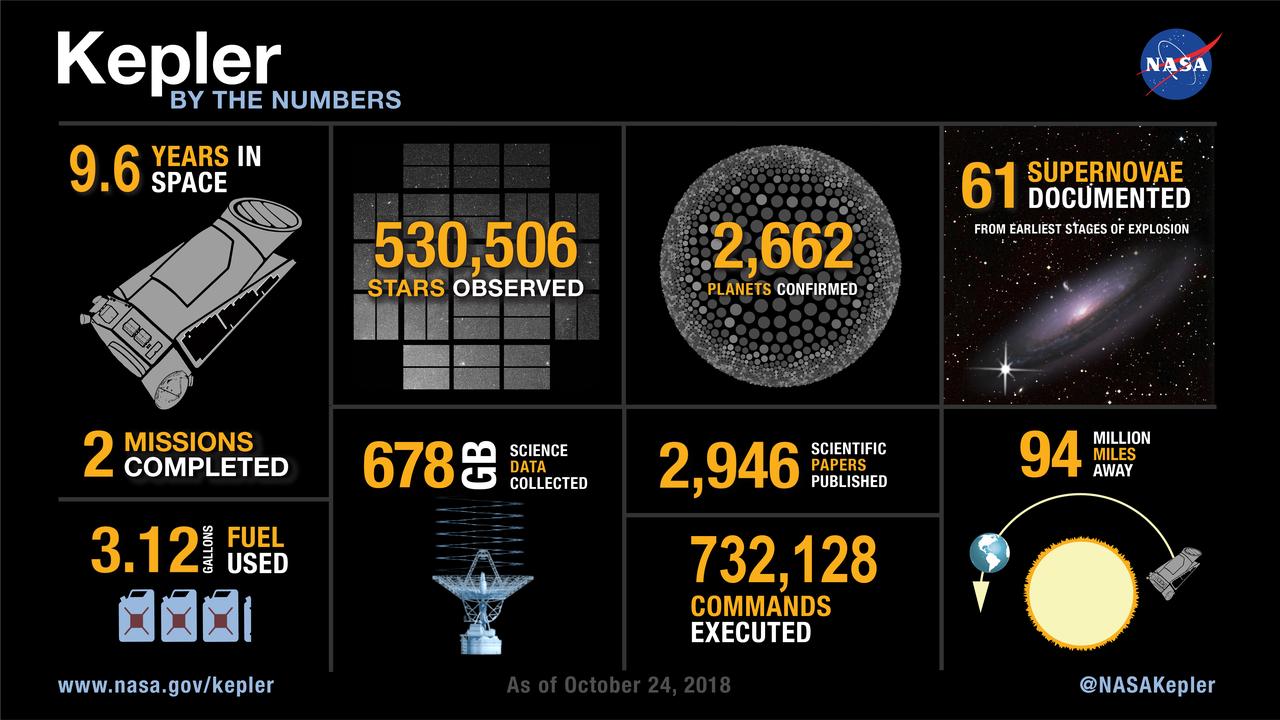
The Kepler space telescope is done with its work collecting astounding science data showing there are more planets than stars in our galaxy. Here’s a round-up of what Kepler has achieved.
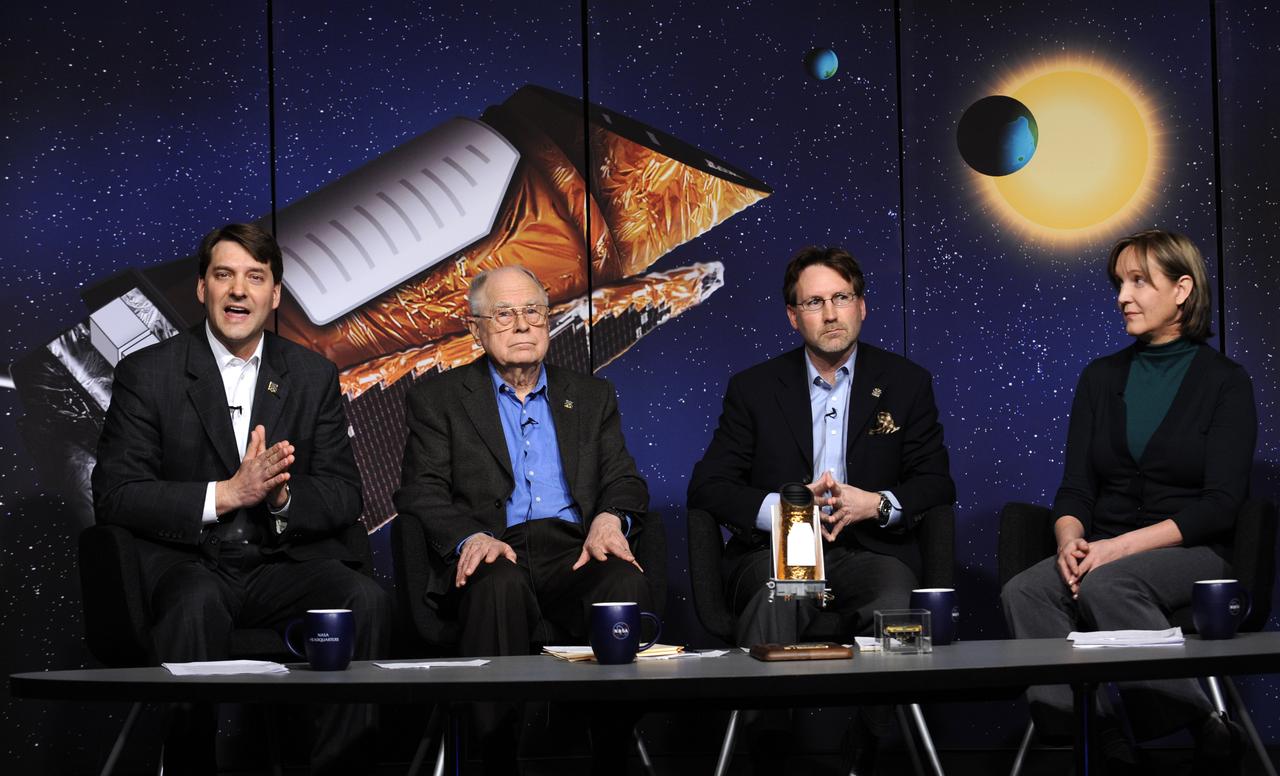
Jon Morse, Director, Astrophysics Division, at NASA Headquarters, left, talks about the Kepler mission during a media briefing, Thursday, Feb. 19, 2008, at NASA Headquarters in Washington. Morse was joined at the briefing by William Borucki, principal investigator for Kepler Science at Ames Research Center, second left, Jim Fanson, Kepler Project Manager at the Jet Propulsion Laboratory and Debra Fischer, professor of Astronomy at San Francisco State University, right. Kepler is scheduled to launch on March 5, 2009 from Cape Canaveral Air Force Station, Fla. aboard a Delta II rocket. Photo Credit: (NASA/Paul. E. Alers)
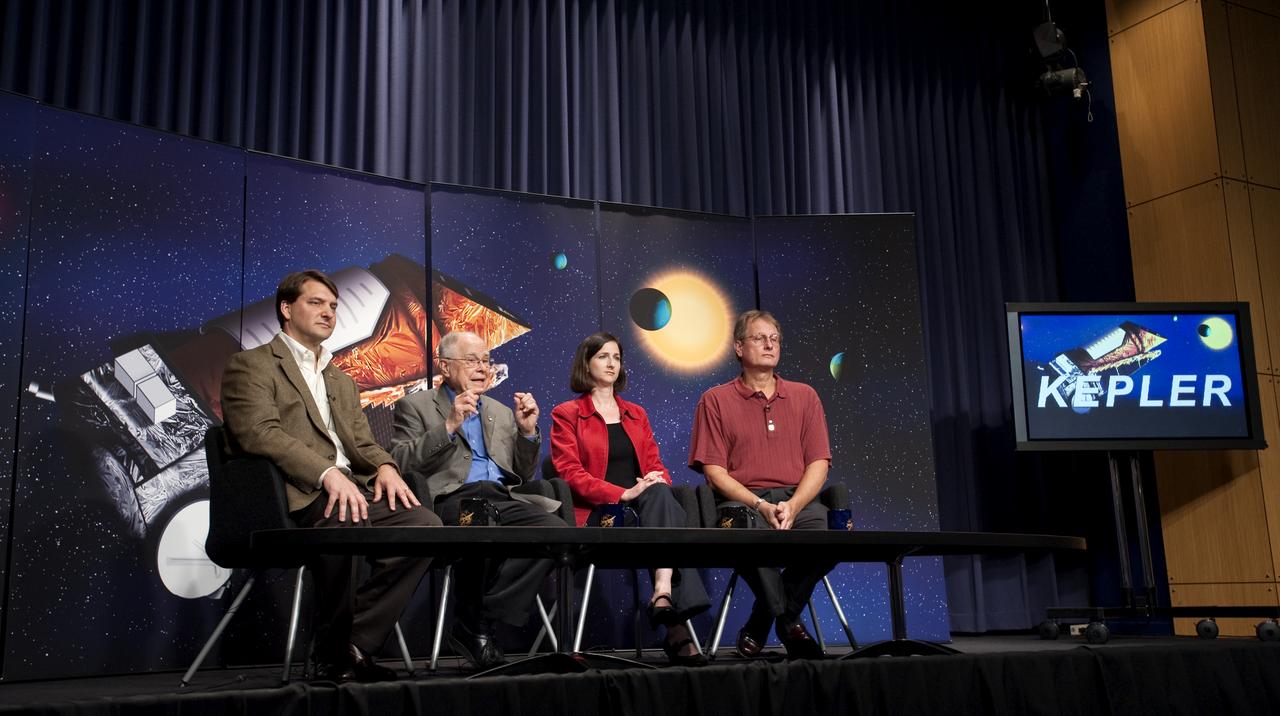
William Bo-Ricki, Kepler principal investigator at NASA's Ames Research Center, second from left, is joined by Jon Morse, left, Sara Seager, and Alan Boss while speaking at a press conference, Thursday, Aug. 6, 2009, at NASA Headquarters in Washington about the scientific observations coming from the Kepler spacecraft that was launched this past March. Kepler is NASA's first mission that is capable of discovering earth-sized planets in the habitable zones of stars like our Sun. Photo Credit: (NASA/Paul E. Alers)
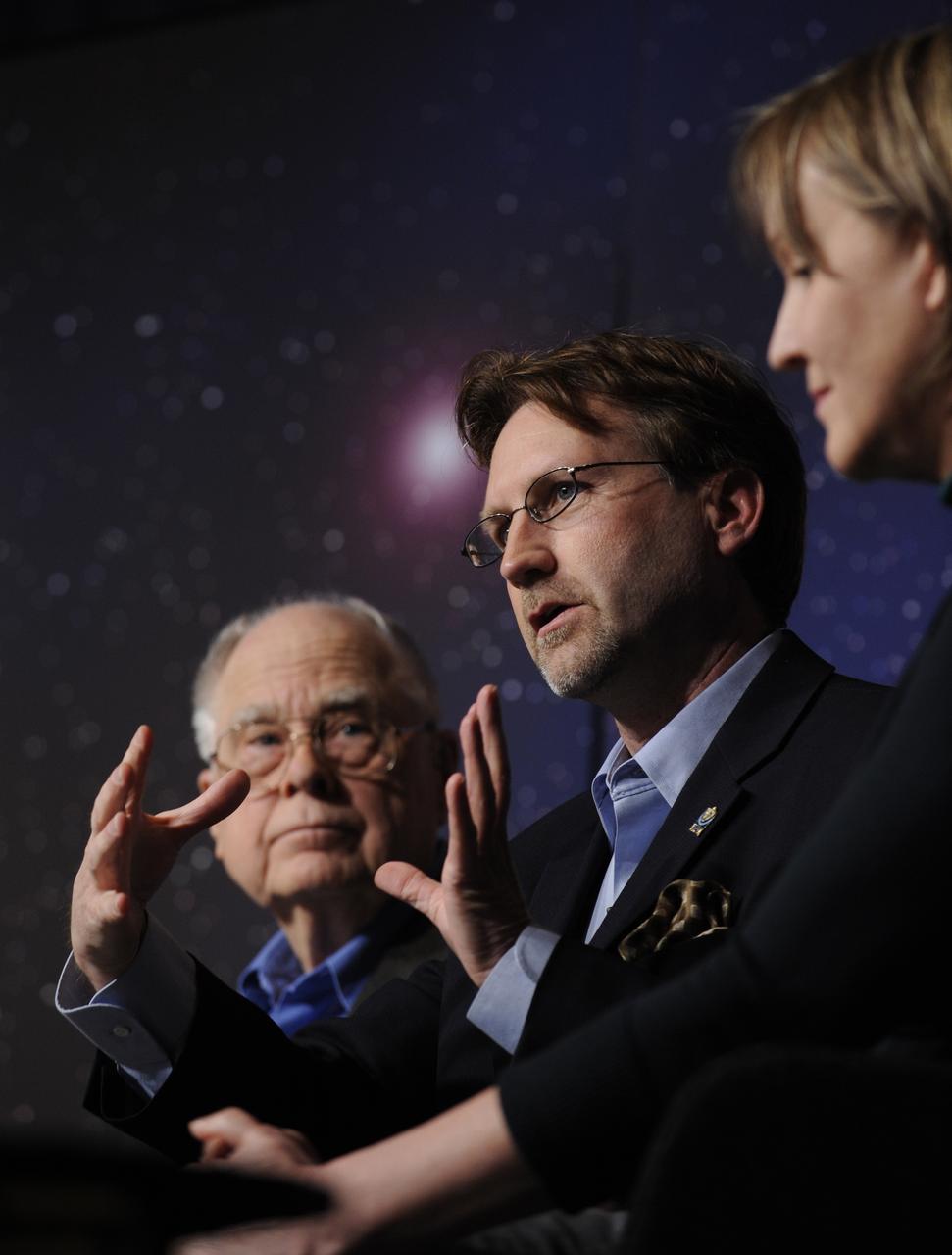
Jim Fanson, Kepler project manager, center, talks about the Kepler mission as William Borucki, left, and Debra Fischer, right, listen during a media briefing, Thursday, Feb. 19, 2008, at NASA Headquarters in Washington. Kepler, the first mission with the ability to find planets like earth, is scheduled to launch on March 5, 2009 from Cape Canaveral Air Force Station, Fla. aboard a Delta II rocket. Photo Credit: (NASA/Paul. E. Alers)

An illustration of Kepler-1649c orbiting around its host red dwarf star. This newly discovered exoplanet is in its star’s habitable zone and is the closest to Earth in size and temperature found yet in Kepler's data. Credits: NASA/Ames Research Center/Daniel Rutter
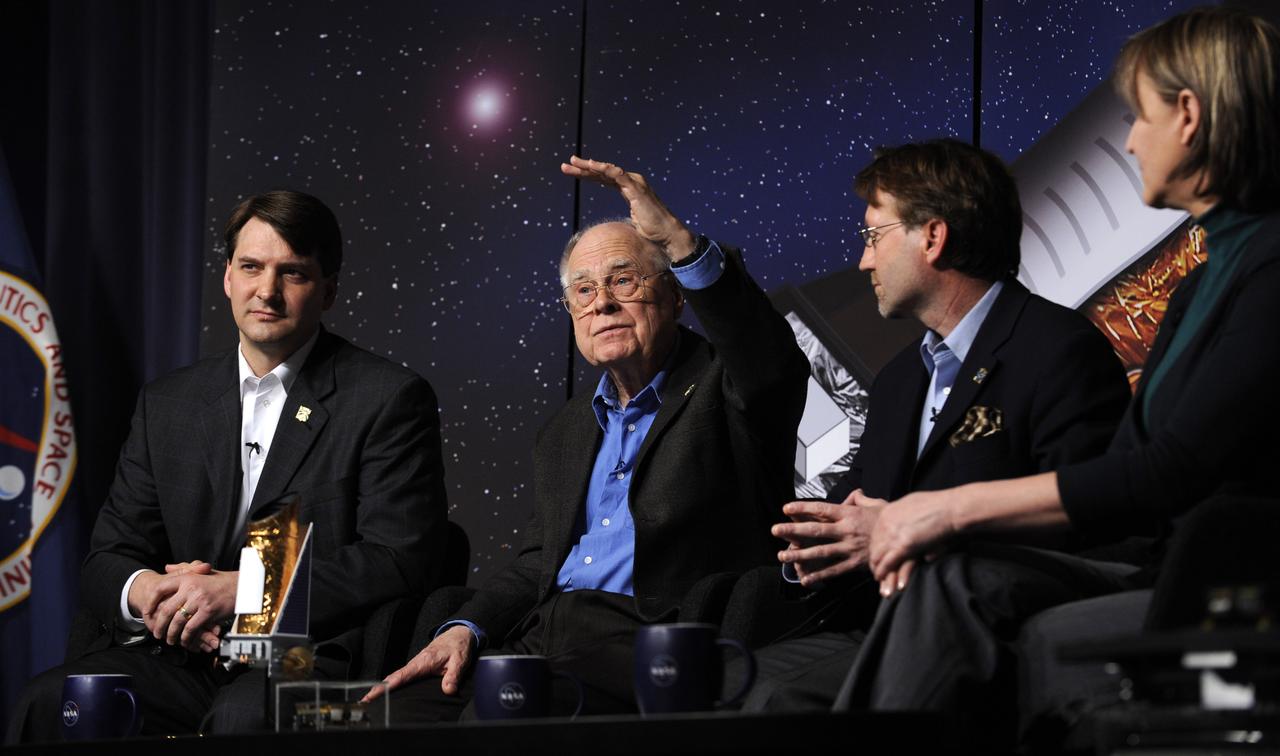
William Borucki, principal investigator for Kepler Science at Ames Research Center, Moffett Field, Calif.,, second from left, talks about the Kepler mission during a media briefing, Thursday, Feb. 19, 2008, at NASA Headquarters in Washington. Kepler, the first mission with the ability to find planets like earth, is scheduled to launch on March 5, 2009 from Cape Canaveral Air Force Station, Fla. aboard a Delta II rocket. Joining Borucki at the briefing were Jon Morse, director, Astrophysics Division, NASA Headquarters, Jim Fanson, Kepler project manager at the Jet Propulsion Laboratory and Debra Fischer, a professor of Astronomy at San Francisco State University. Photo Credit: (NASA/Paul. E. Alers)
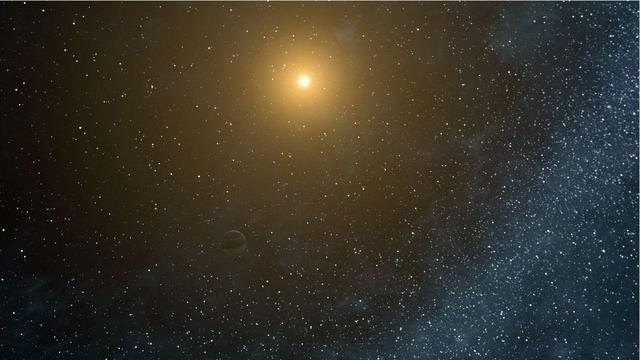
This still from an artist animation flies through the Kepler-20 star system, where NASA Kepler mission discovered the first Earth-size planets around a star beyond our own. The system is jam-packed with five planets.
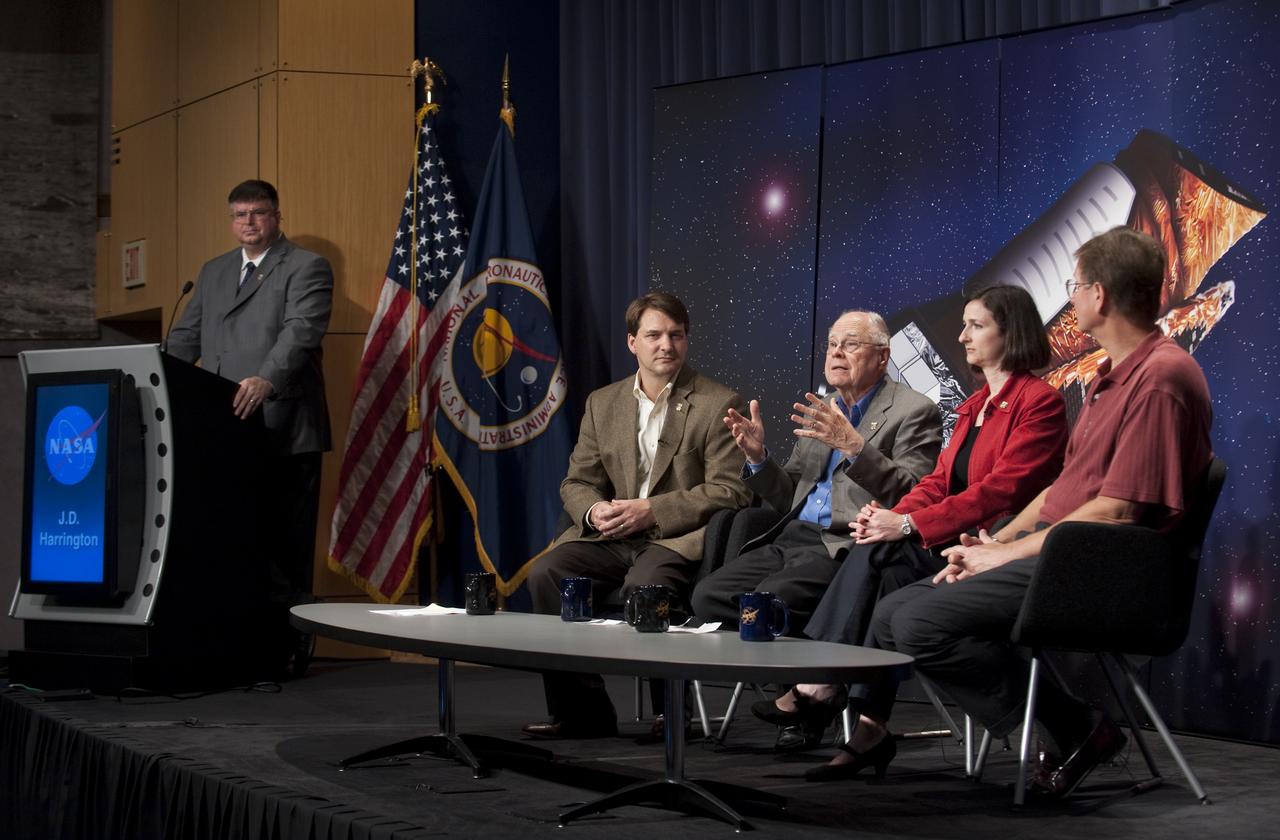
William Bo-Ricki, Kepler principal investigator at NASA's Ames Research Center, second from left, speaks during a press conference, Thursday, Aug. 6, 2009, at NASA Headquarters in Washington about the scientific observations coming from the Kepler spacecraft that was launched this past March. Others seated include Jon Morse, NASA's Astrophysics Director, Sara Seager, Professor of Planetary Science and Physics at MIT, and Alan Boss, an Astrophysicist at the Carnegie Institution at the Department of Terrestrial Magnetism in Washington, right. Kepler is NASA's first mission that is capable of discovering earth-sized planets in the habitable zones of stars like our Sun. Photo Credit: (NASA/Paul E. Alers)
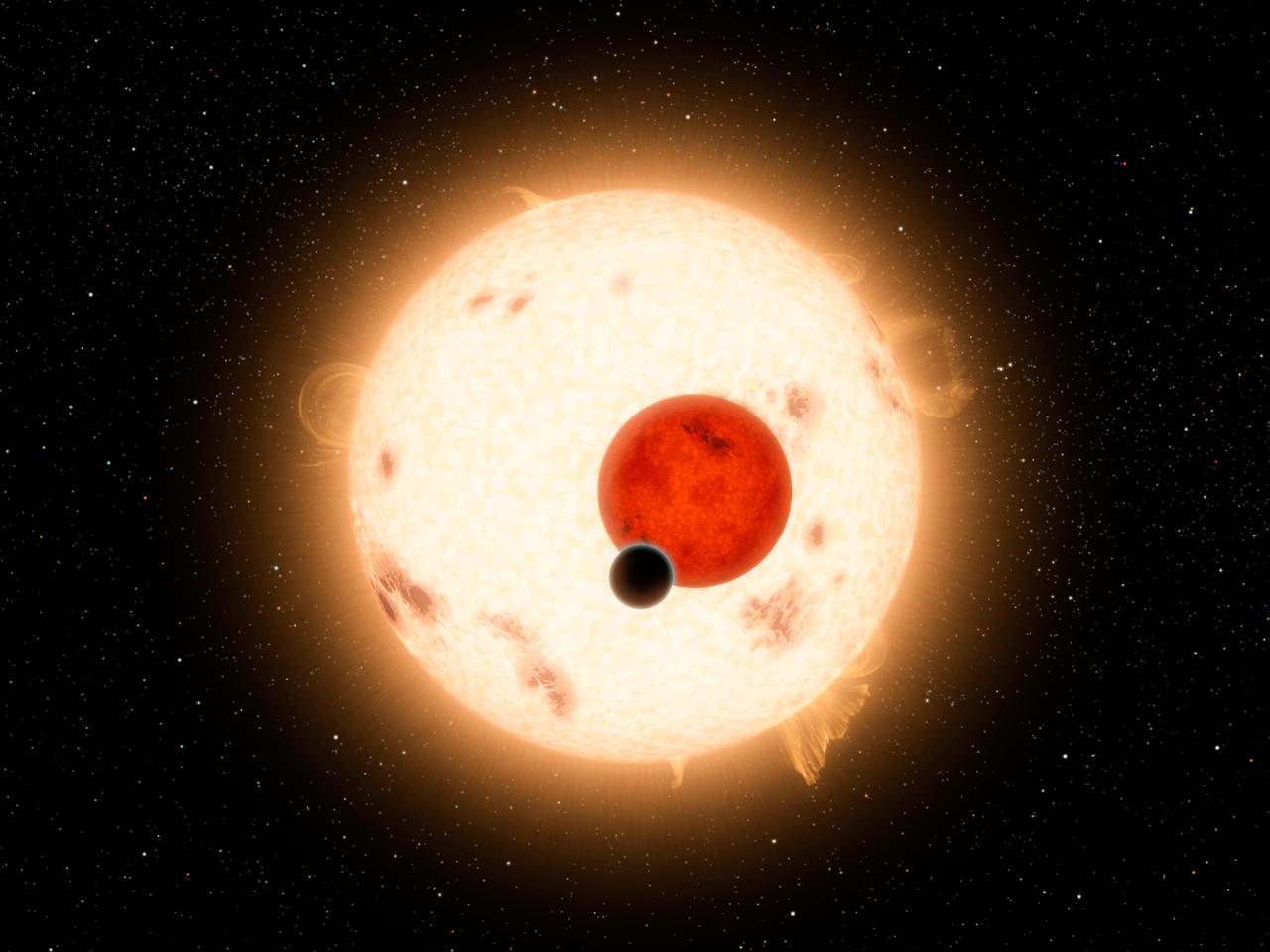
NASA Kepler mission has discovered a world where two suns set over the horizon instead of just one. The planet, called Kepler-16b, is the most Tatooine-like planet yet found in our galaxy and is depicted here in this artist concept.
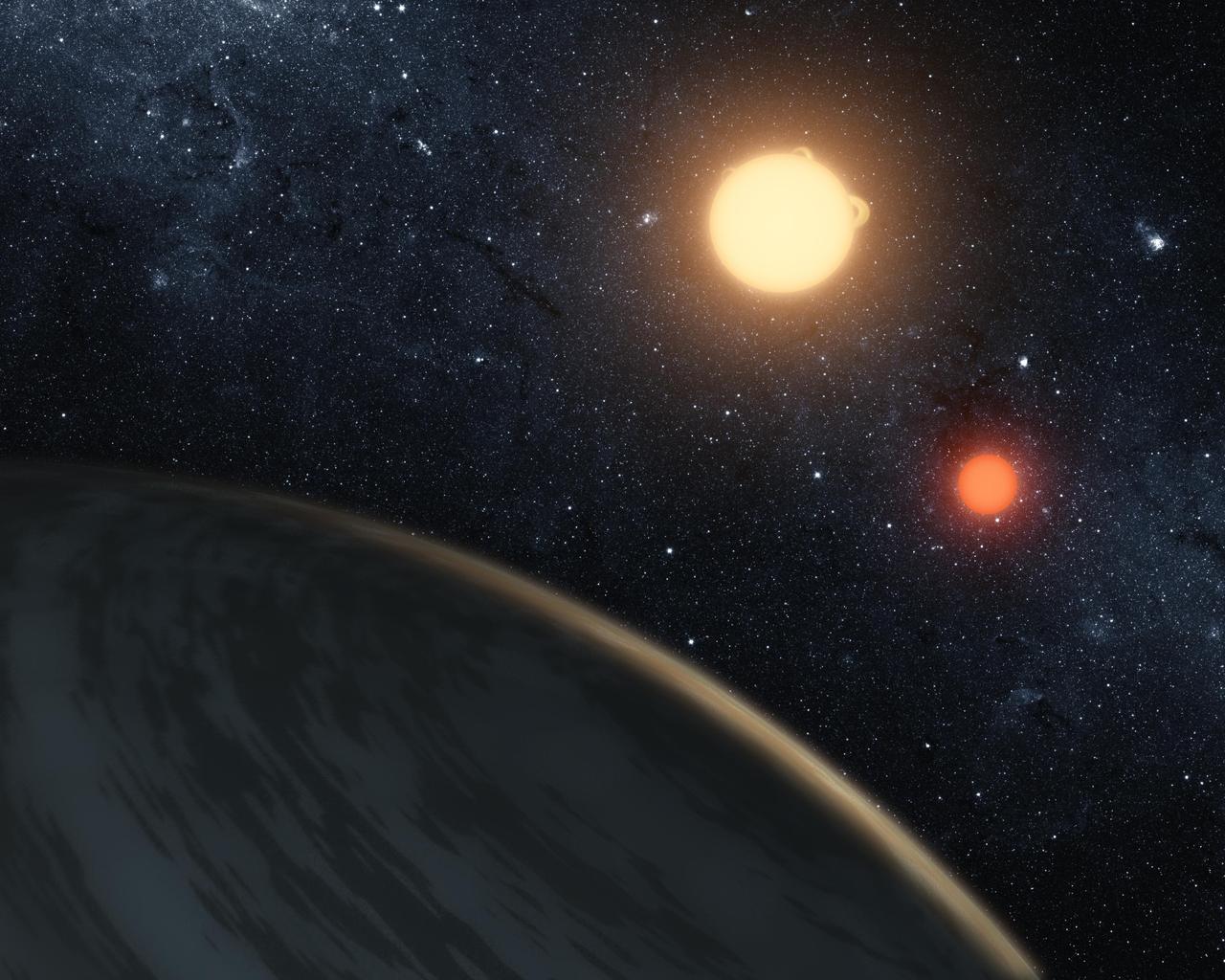
This artist image illustrates Kepler-16b, the first directly detected circumbinary planet, which is a planet that orbits two stars.
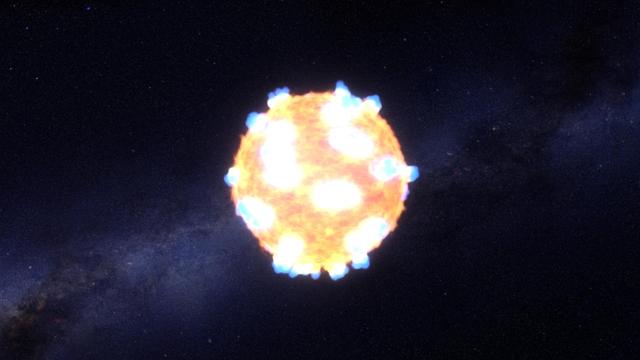
The brilliant flash of an exploding star shockwave -- what astronomers call the hock breakout -- is illustrated in artist concept based on NASA Kepler.

The Kepler Mission Science Principal Investigator Dr William 'Bill' Borucki in his office at NASA Ames Research center.

The Kepler Mission Science Principal Investigator Dr William 'Bill' Borucki in his office at NASA Ames Research center.

Space Farm 7Space Farm 7 Program; NASA Day at the Dell'osso Family Farm, Lathrop,CA for the opening of the Kepler Corn Maze. Lots of fun activities were available and Kepler scientists gave talks and hands on demos to the audience of kids and adults alike to better understand Kepler and it's mission. Program; NASA Day at the Dell'osso Family Farm, Lathrop,CA for the opening of the Kepler Corn Maze. Lots of fun activities were available and Kepler scientists gave talks and hands on demos to the audience of kids and adults alike to better understand Kepler and it's mission.
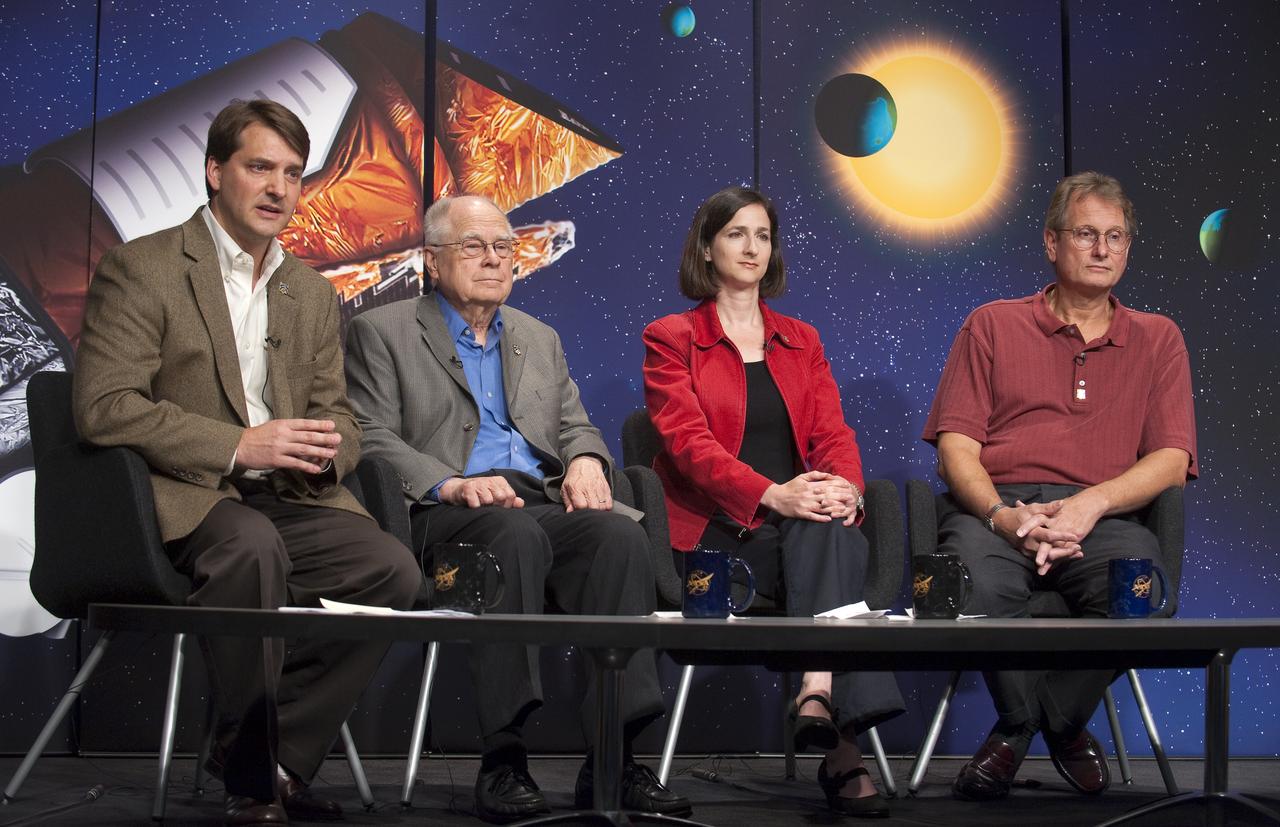
Jon Morse, Astrophysics Division Director, NASA Headquarters, left, is seen Thursday, Aug. 6, 2009 at a press conference at NASA Headquarters in Washington where he along with William Bo-Ricki, principal investigator, Sara Seager, professor of Planetary Science at the Massachusetts Institute of Technology and Alan Boss, an astrophysicist at the Carnegie Institution at the Department of Terrestrial Magnetism, far right, discussed the scientific observations coming from the Kepler spacecraft that was launched this past March. Kepler is NASA's first mission that is capable of discovering earth-sized planets in the habitable zones of stars like our Sun. Photo Credit: (NASA/Paul E. Alers)
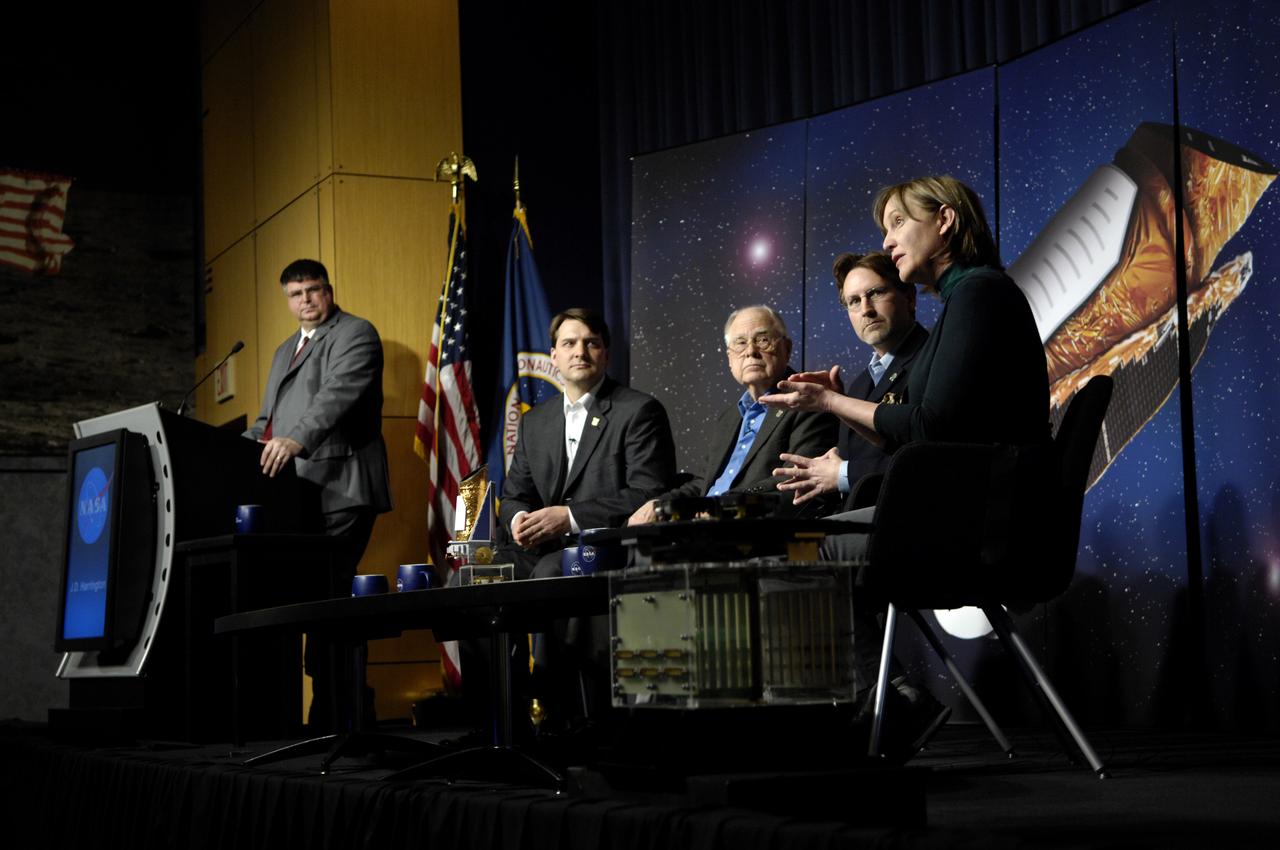
Debra Fischer, a professor of Astronomy at San Francisco State University, right, makes a comment, as Jim Fanson, William Borucki and Jon Morse, fourth from right, look on during a media briefing on the Kepler mission, Thursday, Feb. 19, 2008, at NASA Headquarters in Washington. Kepler, the first mission with the ability to find planets like earth, is scheduled to launch on March 5, 2009 from Cape Canaveral Air Force Station, Fla. aboard a Delta II rocket. At far left is J.D. Harrington. Photo Credit: (NASA/Paul. E. Alers)
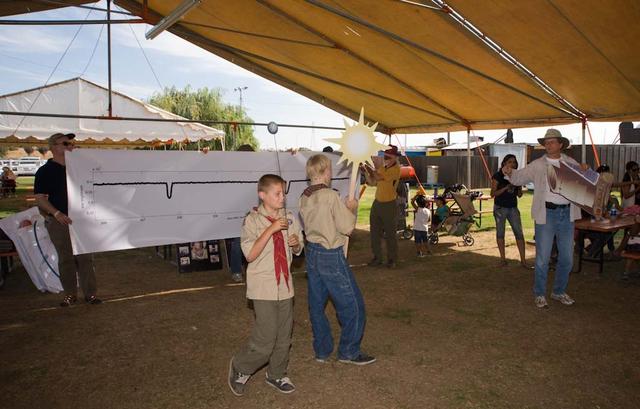
Space Farm 7 Program; NASA Day at the Dell'osso Family Farm, Lathrop,CA for the opening of the Kepler Corn Maze. Lots of fun activities were available and Kepler scientists gave talks and hands on demos to the audience of kids and adults alike to better understand Kepler and it's mission.
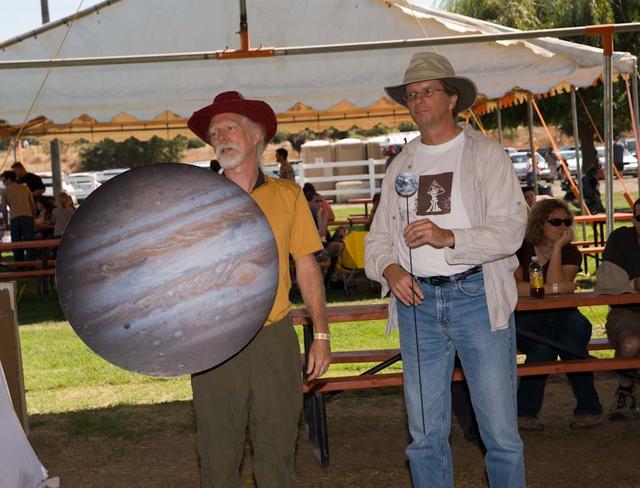
Space Farm 7 Program; NASA Day at the Dell'osso Family Farm, Lathrop,CA for the opening of the Kepler Corn Maze. Lots of fun activities were available and Kepler scientists gave talks and hands on demos to the audience of kids and adults alike to better understand Kepler and it's mission.
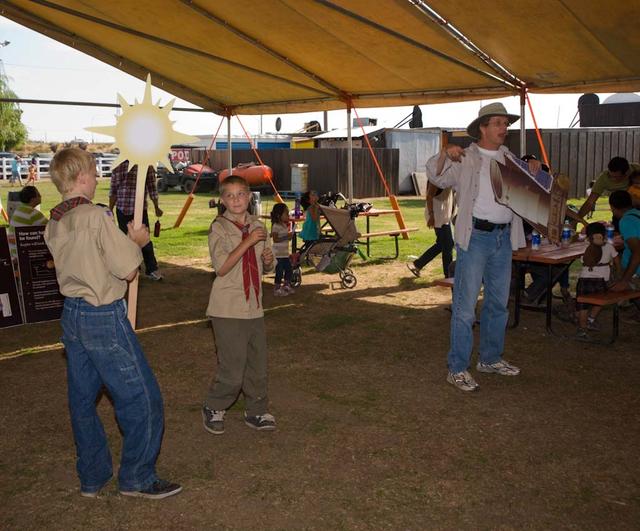
Space Farm 7 Program; NASA Day at the Dell'osso Family Farm, Lathrop,CA for the opening of the Kepler Corn Maze. Lots of fun activities were available and Kepler scientists gave talks and hands on demos to the audience of kids and adults alike to better understand Kepler and it's mission.
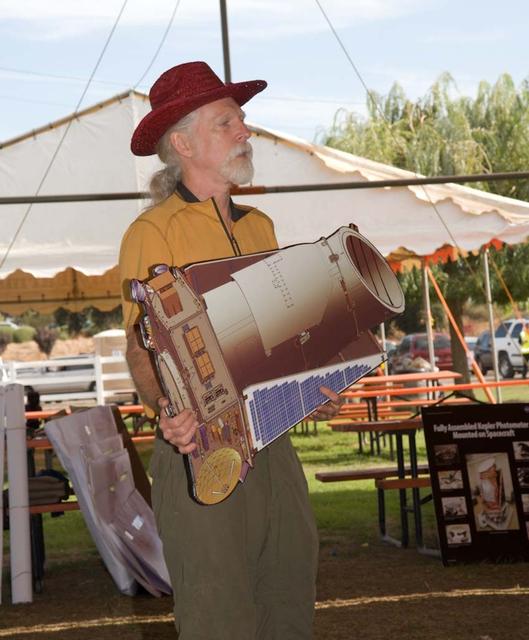
Space Farm 7 Program; NASA Day at the Dell'osso Family Farm, Lathrop,CA for the opening of the Kepler Corn Maze. Lots of fun activities were available and Kepler scientists gave talks and hands on demos to the audience of kids and adults alike to better understand Kepler and it's mission.

Space Farm 7 Program; NASA Day at the Dell'osso Family Farm, Lathrop,CA for the opening of the Kepler Corn Maze. Lots of fun activities were available and Kepler scientists gave talks and hands on demos to the audience of kids and adults alike to better understand Kepler and it's mission.
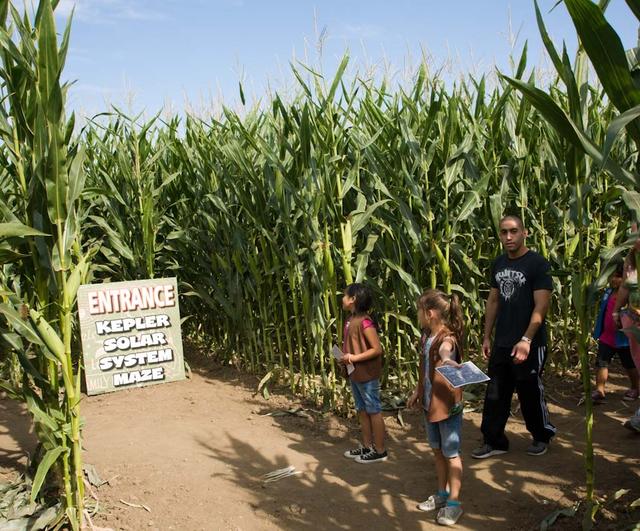
Space Farm 7 Program; NASA Day at the Dell'osso Family Farm, Lathrop,CA for the opening of the Kepler Corn Maze. Lots of fun activities were available and Kepler scientists gave talks and hands on demos to the audience of kids and adults alike to better understand Kepler and it's mission.
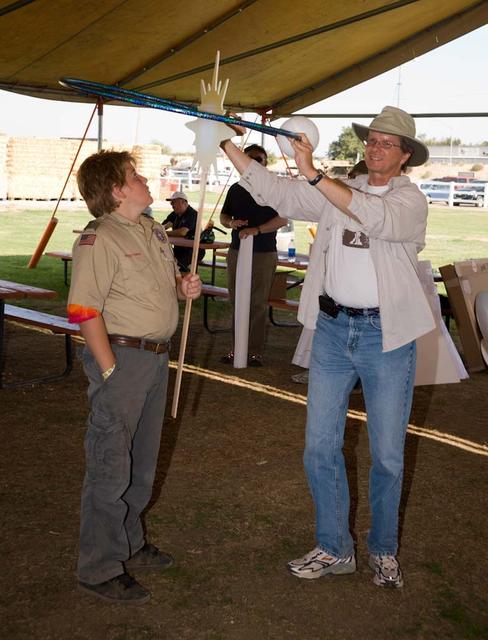
Space Farm 7 Program; NASA Day at the Dell'osso Family Farm, Lathrop,CA for the opening of the Kepler Corn Maze. Lots of fun activities were available and Kepler scientists gave talks and hands on demos to the audience of kids and adults alike to better understand Kepler and it's mission.

Space Farm 7 Program; NASA Day at the Dell'osso Family Farm, Lathrop,CA for the opening of the Kepler Solar System (Corn) Maze. Lots of fun activities were available and Kepler scientists gave talks and hands on demos to the audience of kids and adults alike to better understand Kepler and it's mission.
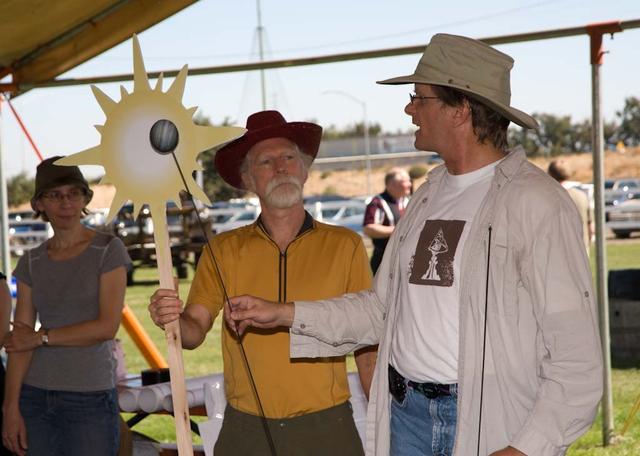
Space Farm 7 Program; NASA Day at the Dell'osso Family Farm, Lathrop,CA for the opening of the Kepler Corn Maze. Lots of fun activities were available and Kepler scientists gave talks and hands on demos to the audience of kids and adults alike to better understand Kepler and it's mission.
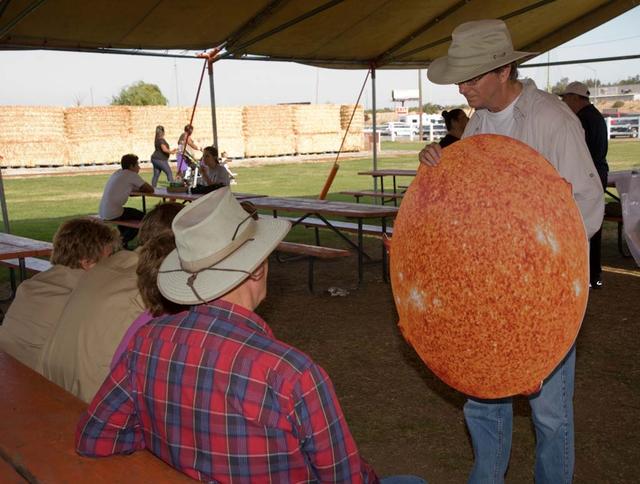
Space Farm 7 Program; NASA Day at the Dell'osso Family Farm, Lathrop,CA for the opening of the Kepler Corn Maze. Lots of fun activities were available and Kepler scientists gave talks and hands on demos to the audience of kids and adults alike to better understand Kepler and it's mission.
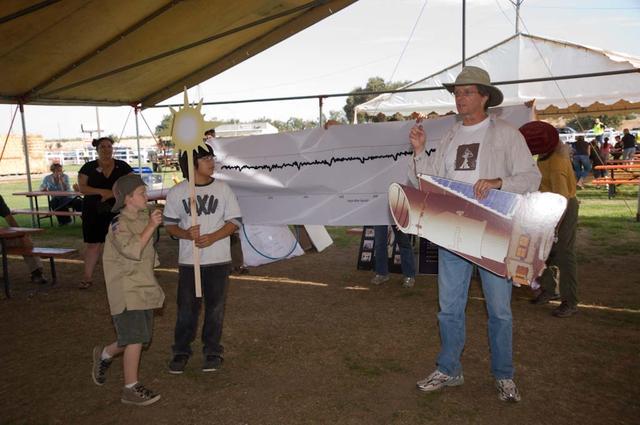
Space Farm 7 Program; NASA Day at the Dell'osso Family Farm, Lathrop,CA for the opening of the Kepler Corn Maze. Lots of fun activities were available and Kepler scientists gave talks and hands on demos to the audience of kids and adults alike to better understand Kepler and it's mission.
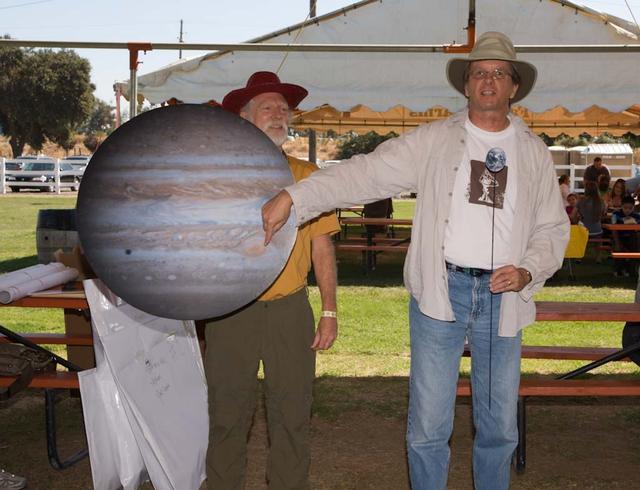
Space Farm 7 Program; NASA Day at the Dell'osso Family Farm, Lathrop,CA for the opening of the Kepler Corn Maze. Lots of fun activities were available and Kepler scientists gave talks and hands on demos to the audience of kids and adults alike to better understand Kepler and it's mission.
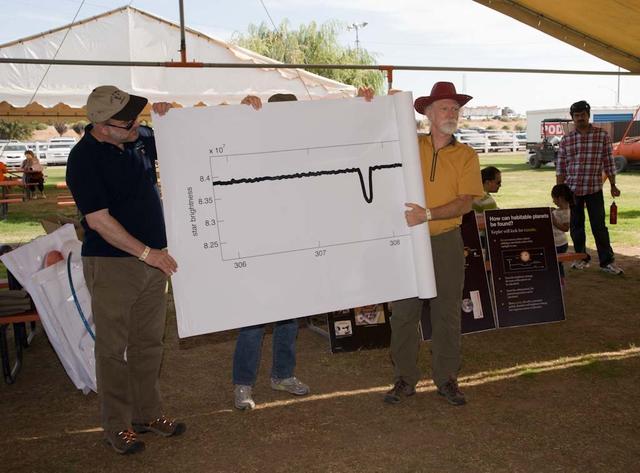
Space Farm 7 Program; NASA Day at the Dell'osso Family Farm, Lathrop,CA for the opening of the Kepler Corn Maze. Lots of fun activities were available and Kepler scientists gave talks and hands on demos to the audience of kids and adults alike to better understand Kepler and it's mission.
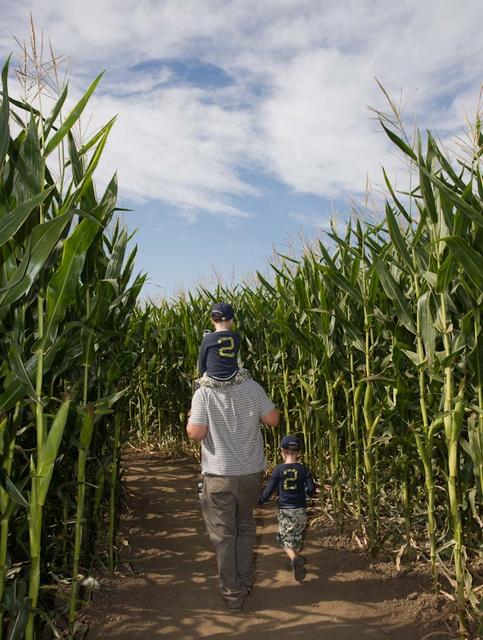
Space Farm 7 Program; NASA Day at the Dell'osso Family Farm, Lathrop,CA for the opening of the Kepler Corn Maze. Lots of fun activities were available and Kepler scientists gave talks and hands on demos to the audience of kids and adults alike to better understand Kepler and it's mission.