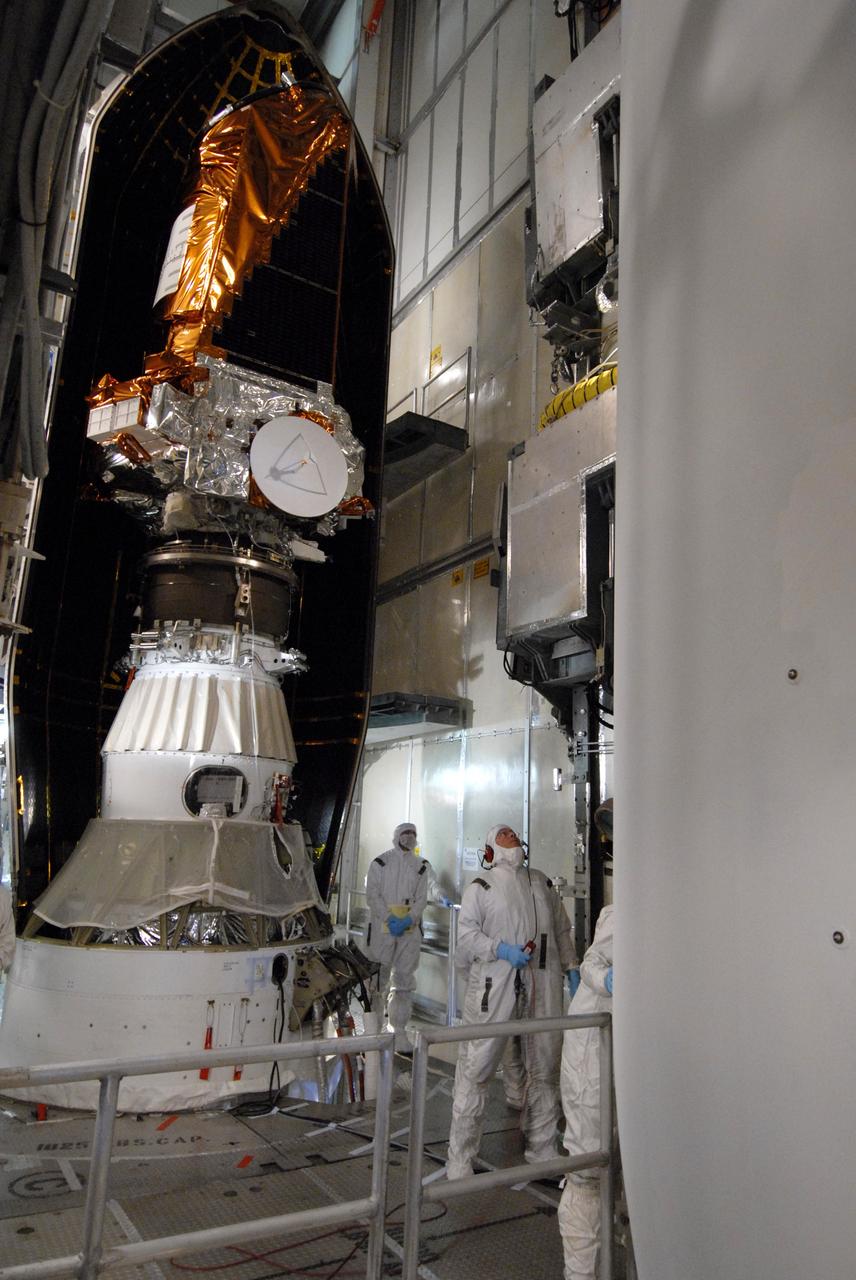
CAPE CANAVERAL, Fla. – On Launch Pad 17-B at Cape Canaveral Air Force Station in Florida, workers watch closely as the second half of the fairing is moved into the mobile service tower for placement around NASA's Kepler spacecraft (left) to complete encapsulation. The fairing is a molded structure that fits flush with the outside surface of the rocket and forms an aerodynamically smooth nose cone, protecting the spacecraft during launch and ascent. The liftoff of Kepler aboard the Delta II rocket is currently targeted for launch in a window extending 10:49 to 10:52 p.m. EST March 6 from Pad 17-B. Kepler is designed to survey more than 100,000 stars in our galaxy to determine the number of sun-like stars that have Earth-size and larger planets, including those that lie in a star's "habitable zone," a region where liquid water, and perhaps life, could exist. If these Earth-size worlds do exist around stars like our sun, Kepler is expected to be the first to find them and the first to measure how common they are. Photo credit: NASA/Jack Pfaller
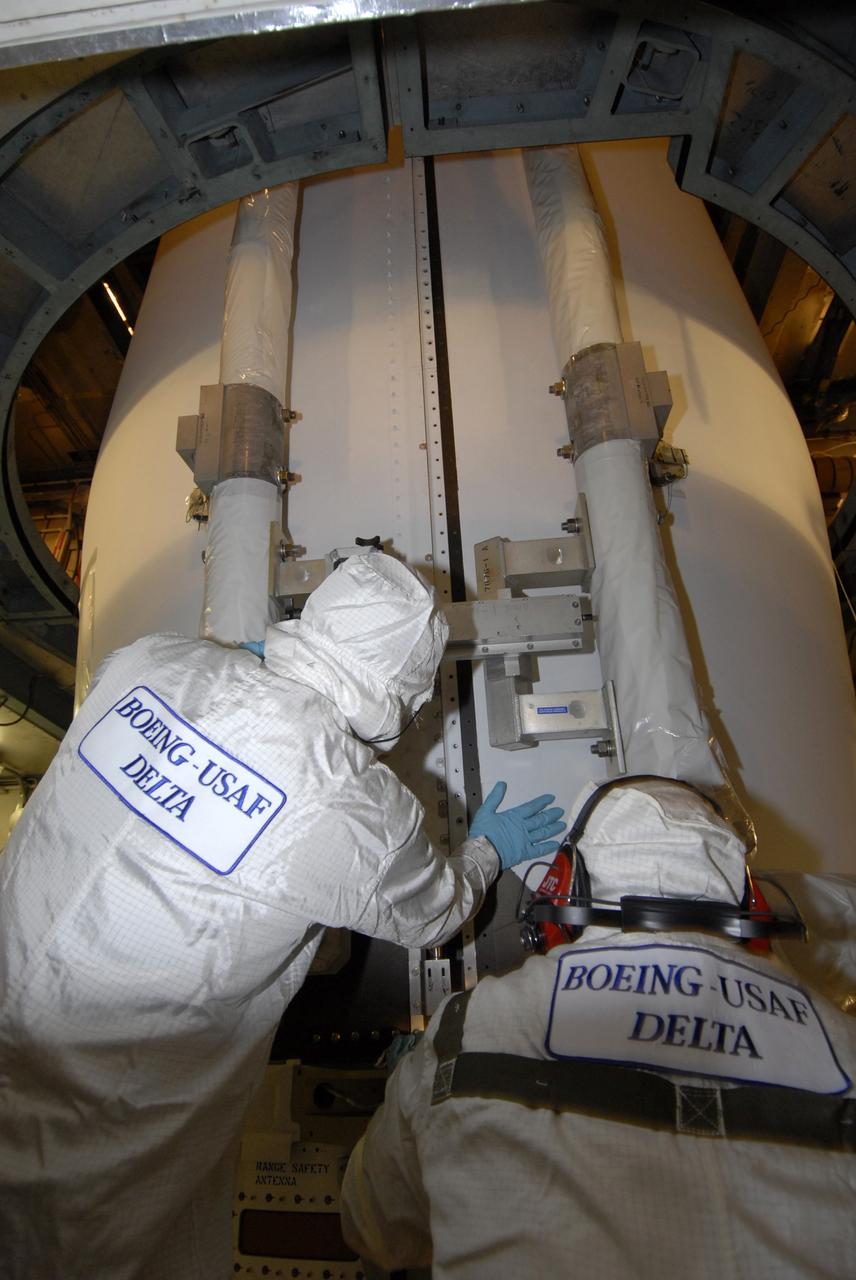
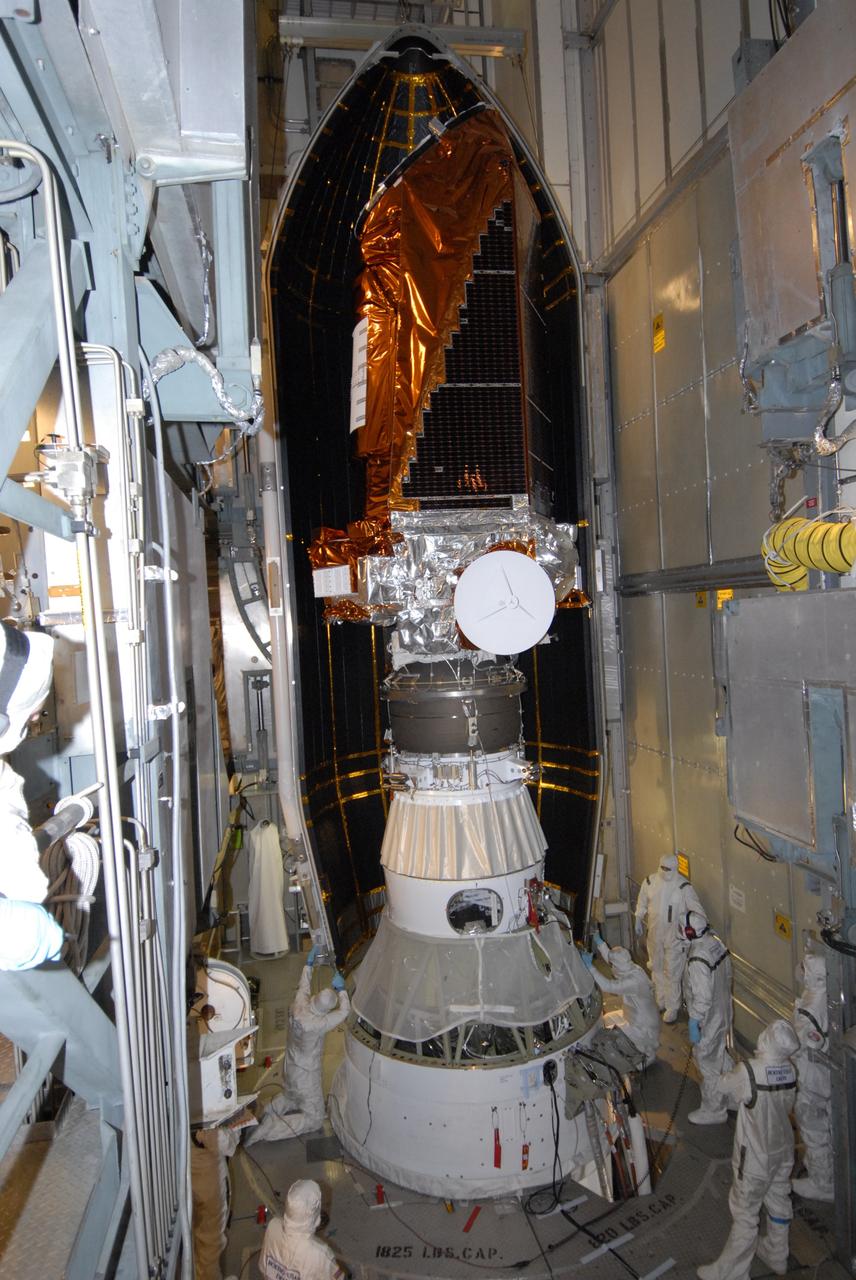
CAPE CANAVERAL, Fla. – On Launch Pad 17-B at Cape Canaveral Air Force Station in Florida, workers complete the mating of the two fairing segments around NASA's Kepler spacecraft for encapsulation. The fairing is a molded structure that fits flush with the outside surface of the rocket and forms an aerodynamically smooth nose cone, protecting the spacecraft during launch and ascent. The liftoff of Kepler aboard the Delta II rocket is currently targeted for launch in a window extending 10:49 to 10:52 p.m. EST March 6 from Pad 17-B. Kepler is designed to survey more than 100,000 stars in our galaxy to determine the number of sun-like stars that have Earth-size and larger planets, including those that lie in a star's "habitable zone," a region where liquid water, and perhaps life, could exist. If these Earth-size worlds do exist around stars like our sun, Kepler is expected to be the first to find them and the first to measure how common they are. Photo credit: NASA/Jack Pfaller
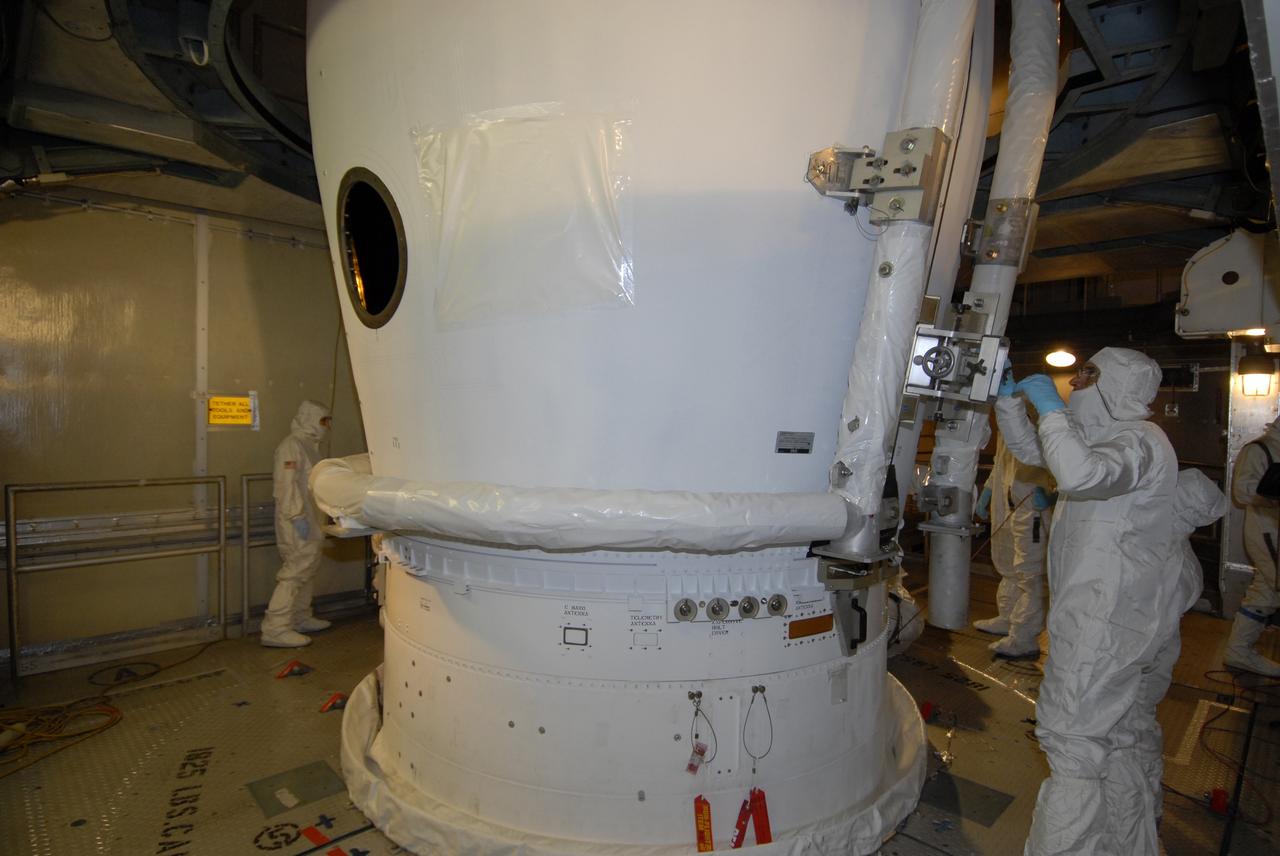
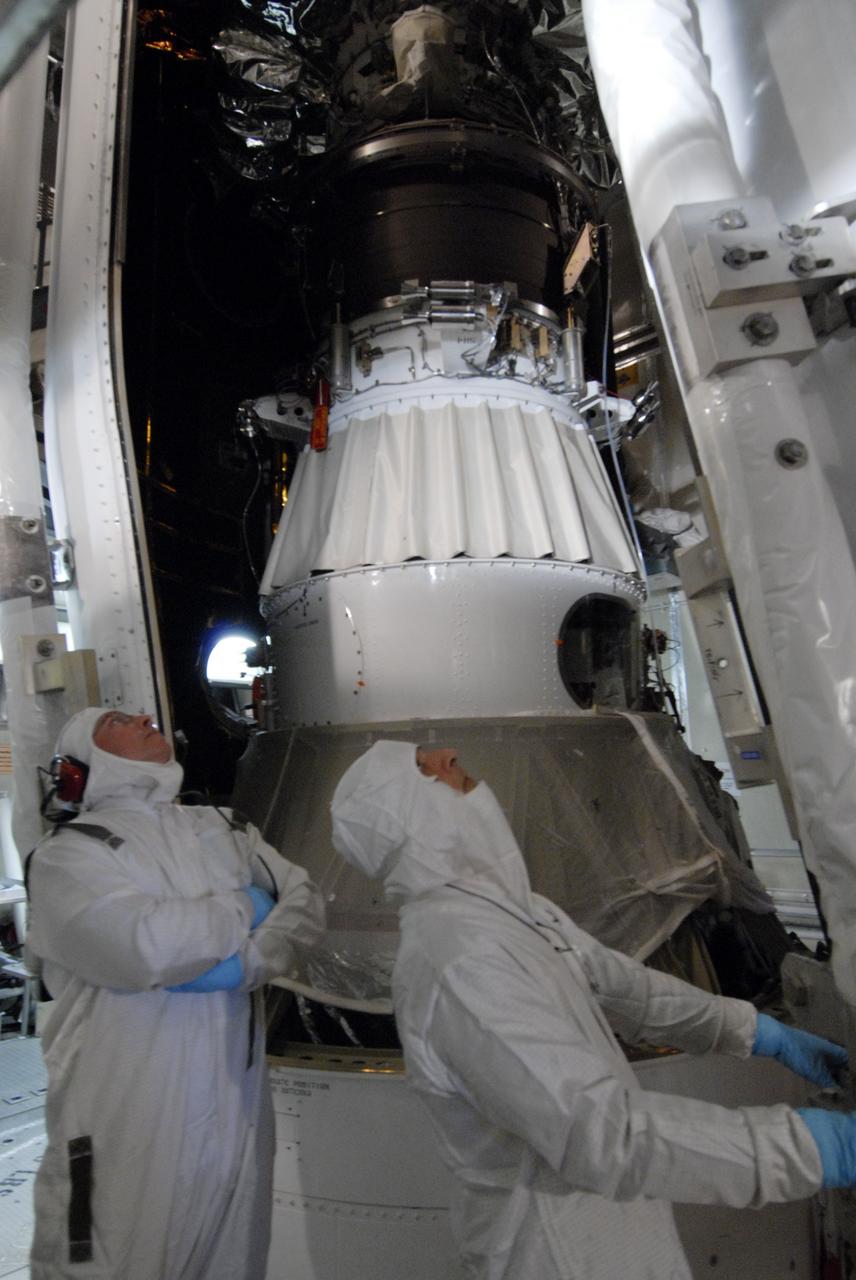
CAPE CANAVERAL, Fla. – On Launch Pad 17-B at Cape Canaveral Air Force Station in Florida, a worker examines the closure of the fairing segments around NASA's Kepler spacecraft. The fairing is a molded structure that fits flush with the outside surface of the rocket and forms an aerodynamically smooth nose cone, protecting the spacecraft during launch and ascent. The liftoff of Kepler aboard the Delta II rocket is currently targeted for launch in a window extending 10:49 to 10:52 p.m. EST March 6 from Pad 17-B. Kepler is designed to survey more than 100,000 stars in our galaxy to determine the number of sun-like stars that have Earth-size and larger planets, including those that lie in a star's "habitable zone," a region where liquid water, and perhaps life, could exist. If these Earth-size worlds do exist around stars like our sun, Kepler is expected to be the first to find them and the first to measure how common they are. Photo credit: NASA/Jack Pfaller
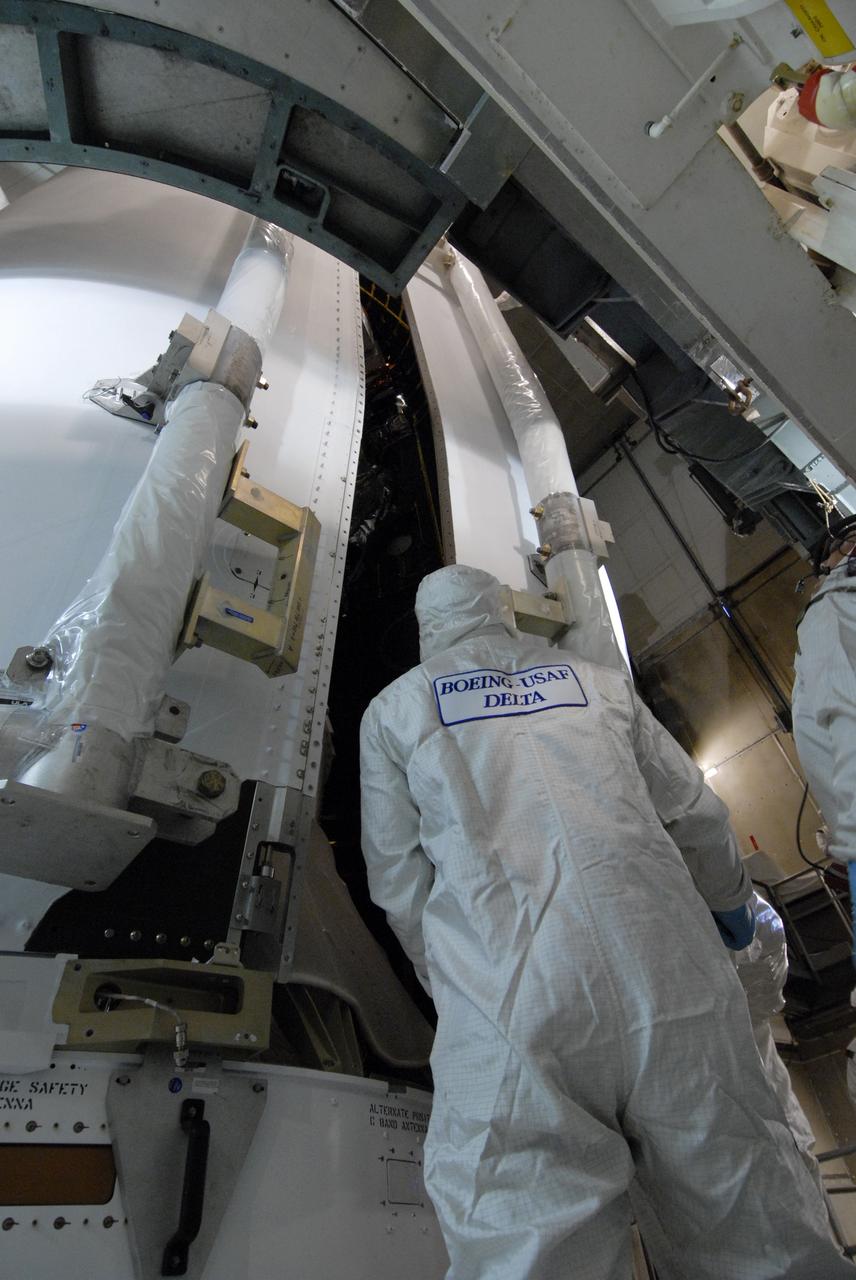
CAPE CANAVERAL, Fla. – On Launch Pad 17-B at Cape Canaveral Air Force Station in Florida, the second half of the fairing moves closer to the first half around NASA's Kepler spacecraft for encapsulation. The fairing is a molded structure that fits flush with the outside surface of the rocket and forms an aerodynamically smooth nose cone, protecting the spacecraft during launch and ascent. The liftoff of Kepler aboard the Delta II rocket is currently targeted for launch in a window extending 10:49 to 10:52 p.m. EST March 6 from Pad 17-B. Kepler is designed to survey more than 100,000 stars in our galaxy to determine the number of sun-like stars that have Earth-size and larger planets, including those that lie in a star's "habitable zone," a region where liquid water, and perhaps life, could exist. If these Earth-size worlds do exist around stars like our sun, Kepler is expected to be the first to find them and the first to measure how common they are. Photo credit: NASA/Jack Pfaller
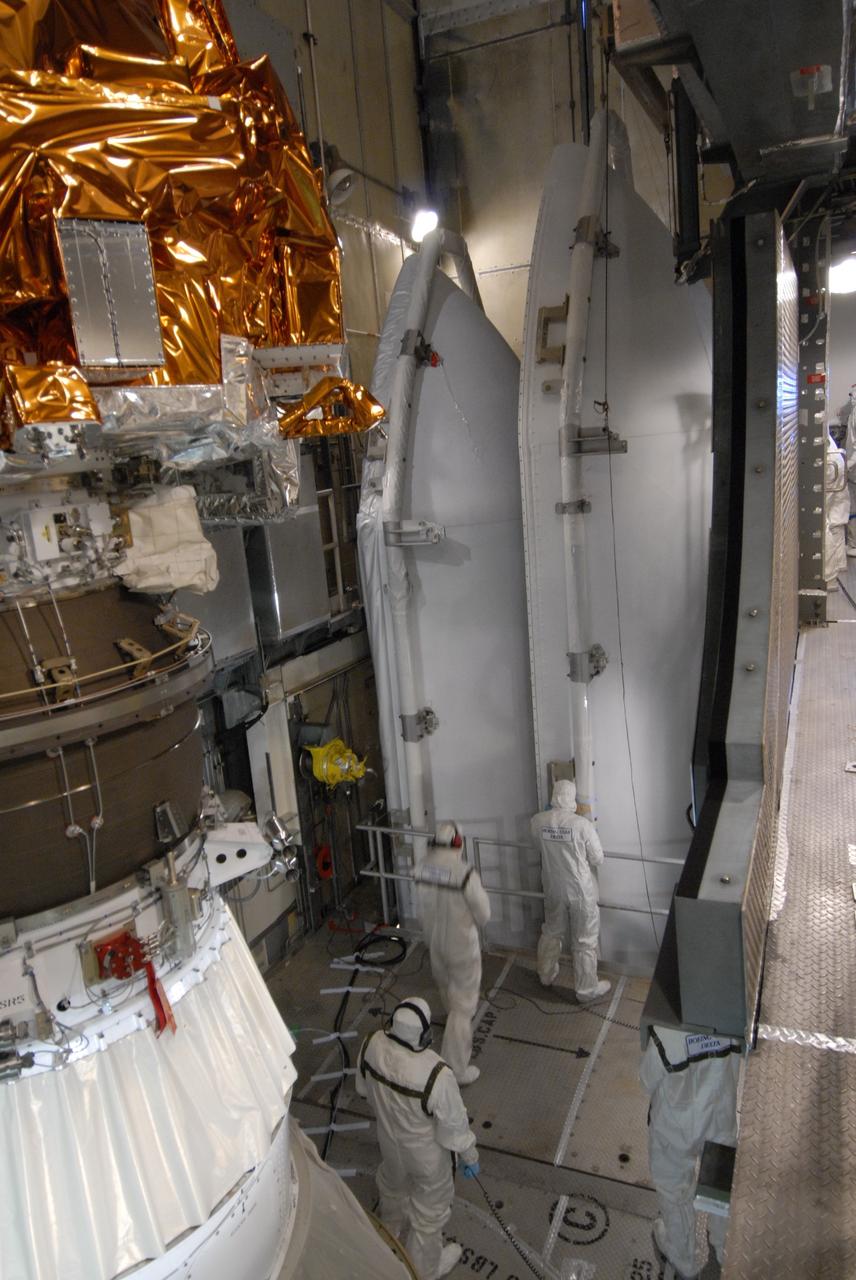
CAPE CANAVERAL, Fla. – On Launch Pad 17-B at Cape Canaveral Air Force Station in Florida, workers wait for the arrival of the two fairing components that will be installed around NASA's Kepler spacecraft, seen at left. The fairing is a molded structure that fits flush with the outside surface of the rocket and forms an aerodynamically smooth nose cone, protecting the spacecraft during launch and ascent. The liftoff of Kepler aboard the Delta II rocket is currently targeted for launch in a window extending 10:49 to 10:52 p.m. EST March 6 from Pad 17-B. Kepler is designed to survey more than 100,000 stars in our galaxy to determine the number of sun-like stars that have Earth-size and larger planets, including those that lie in a star's "habitable zone," a region where liquid water, and perhaps life, could exist. If these Earth-size worlds do exist around stars like our sun, Kepler is expected to be the first to find them and the first to measure how common they are. Photo credit: NASA/Jack Pfaller
CAPE CANAVERAL, Fla. – On Launch Pad 17-B at Cape Canaveral Air Force Station in Florida, workers watch closely as the second half of the fairing moves toward NASA's Kepler spacecraft (left) to complete encapsulation. The fairing is a molded structure that fits flush with the outside surface of the rocket and forms an aerodynamically smooth nose cone, protecting the spacecraft during launch and ascent. The liftoff of Kepler aboard the Delta II rocket is currently targeted for launch in a window extending 10:49 to 10:52 p.m. EST March 6 from Pad 17-B. Kepler is designed to survey more than 100,000 stars in our galaxy to determine the number of sun-like stars that have Earth-size and larger planets, including those that lie in a star's "habitable zone," a region where liquid water, and perhaps life, could exist. If these Earth-size worlds do exist around stars like our sun, Kepler is expected to be the first to find them and the first to measure how common they are. Photo credit: NASA/Jack Pfaller
CAPE CANAVERAL, Fla. – On Launch Pad 17-B at Cape Canaveral Air Force Station in Florida, the first half of the fairing is moved into place around NASA's Kepler spacecraft, atop the United Launch Alliance Delta II rocket. The fairing is a molded structure that fits flush with the outside surface of the rocket and forms an aerodynamically smooth nose cone, protecting the spacecraft during launch and ascent. The liftoff of Kepler aboard the Delta II rocket is currently targeted for launch in a window extending 10:49 to 10:52 p.m. EST March 6 from Pad 17-B. Kepler is designed to survey more than 100,000 stars in our galaxy to determine the number of sun-like stars that have Earth-size and larger planets, including those that lie in a star's "habitable zone," a region where liquid water, and perhaps life, could exist. If these Earth-size worlds do exist around stars like our sun, Kepler is expected to be the first to find them and the first to measure how common they are. Photo credit: NASA/Jack Pfaller
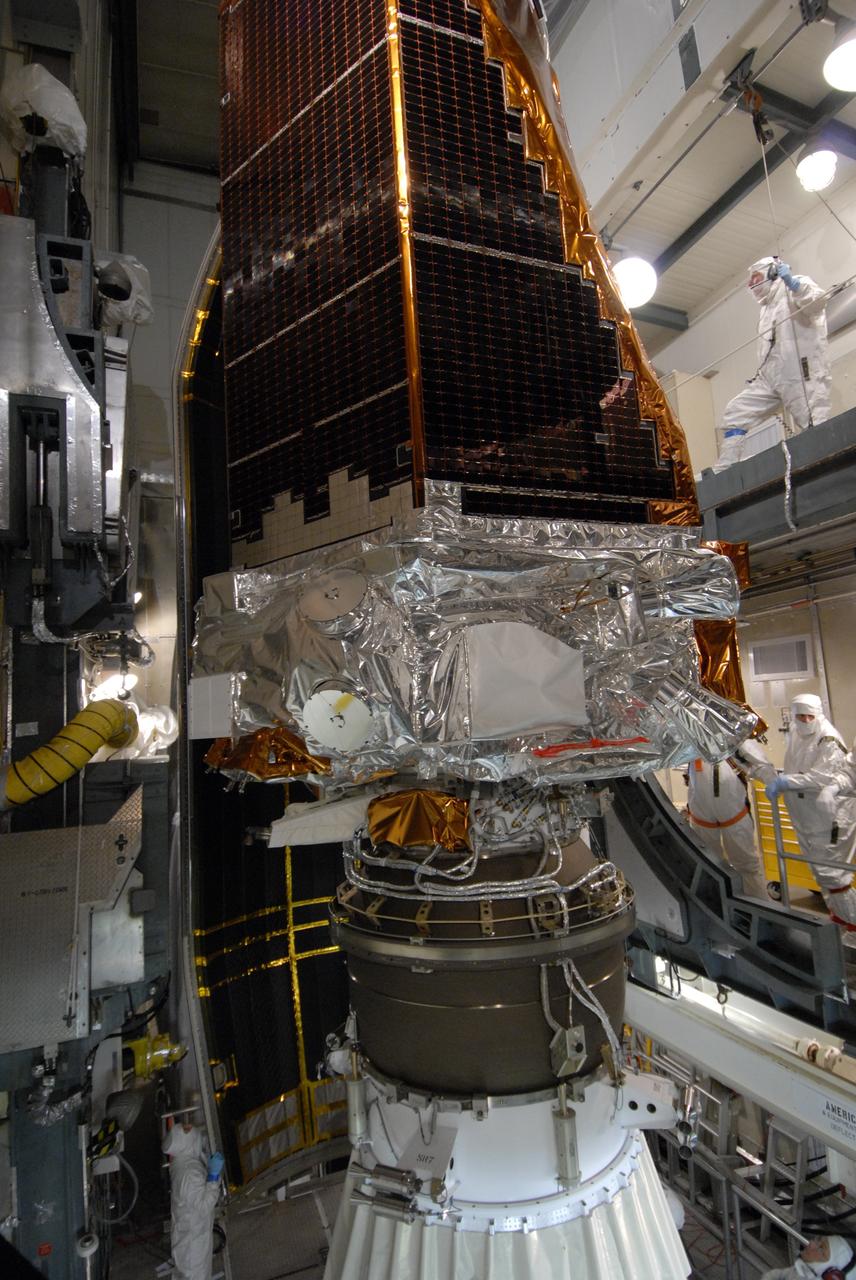
CAPE CANAVERAL, Fla. – On Launch Pad 17-B at Cape Canaveral Air Force Station in Florida, NASA's Kepler spacecraft, atop the United Launch Alliance Delta II rocket, waits for encapsulation in the fairing. The fairing is a molded structure that fits flush with the outside surface of the rocket and forms an aerodynamically smooth nose cone, protecting the spacecraft during launch and ascent. The liftoff of Kepler aboard the Delta II rocket is currently targeted for launch in a window extending 10:49 to 10:52 p.m. EST March 6 from Pad 17-B. Kepler is designed to survey more than 100,000 stars in our galaxy to determine the number of sun-like stars that have Earth-size and larger planets, including those that lie in a star's "habitable zone," a region where liquid water, and perhaps life, could exist. If these Earth-size worlds do exist around stars like our sun, Kepler is expected to be the first to find them and the first to measure how common they are. Photo credit: NASA/Jack Pfaller