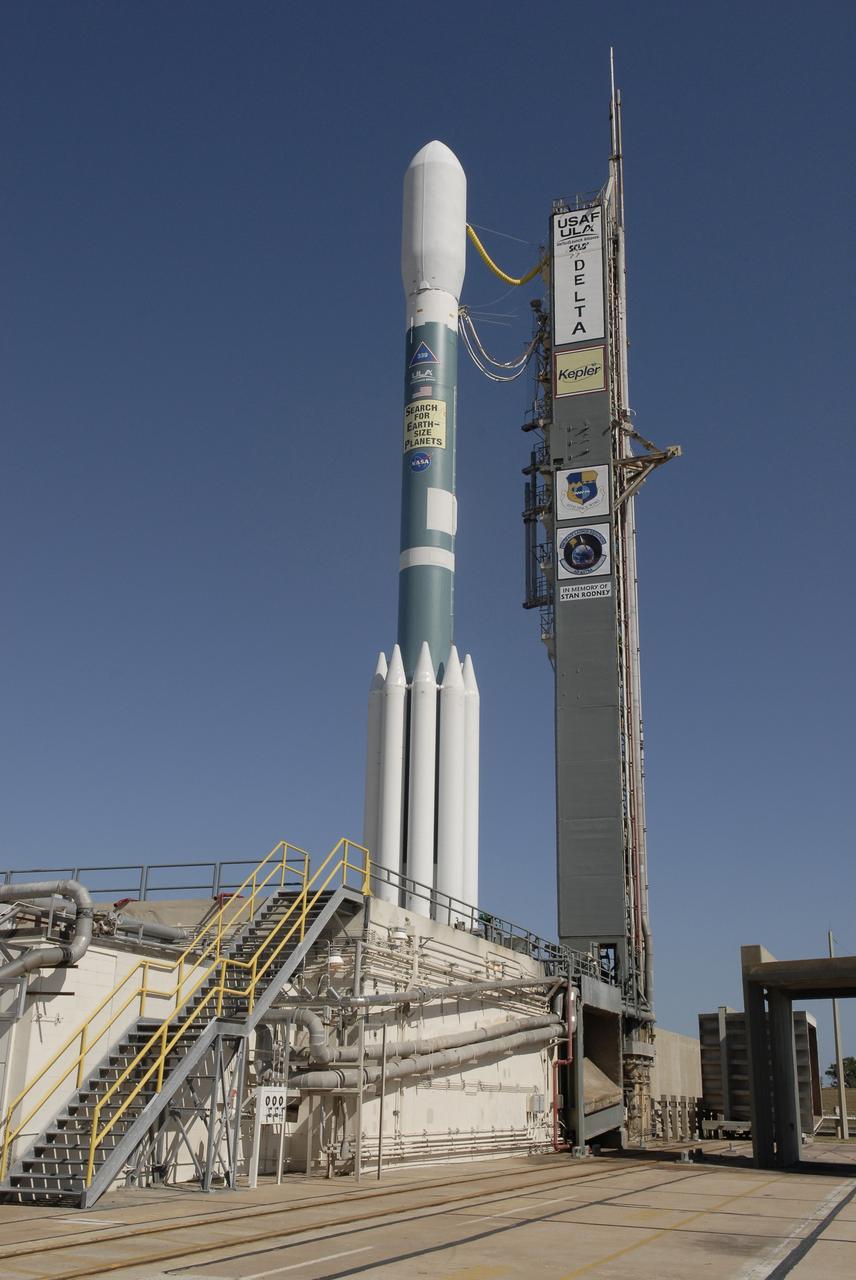
CAPE CANAVERAL, Fla. – After rollback of the mobile service tower on Cape Canaveral Air Force Station's Launch Pad 17-B in Florida, NASA's Kepler spacecraft sits poised for launch atop the United Launch Alliance Delta II 7925 rocket. Kepler is a spaceborne telescope designed to search the nearby region of our galaxy for Earth-size planets orbiting in the habitable zone of stars like our sun. The habitable zone is the region around a star where temperatures permit water to be liquid on a planet's surface. The challenge for Kepler is to look at a large number of stars in order to statistically estimate the total number of Earth-size planets orbiting sun-like stars in the habitable zone. Kepler will survey more than 100,000 stars in our galaxy. Photo credit: NASA/Jack Pfaller
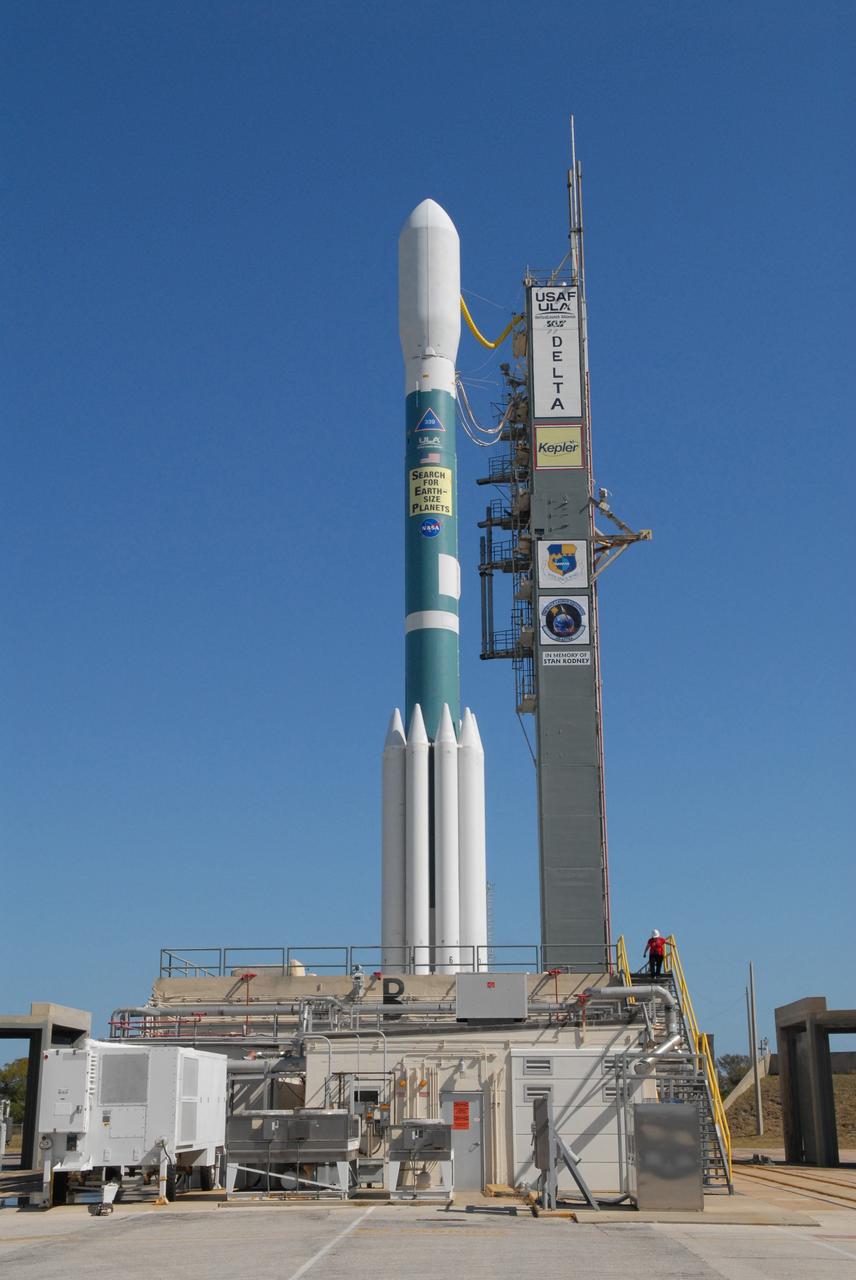
CAPE CANAVERAL, Fla. – The Delta II 7925 rocket stands ready for launch following rollback of the mobile service tower on Launch Pad 17-B at Cape Canaveral Air Force Station in Florida. Atop the rocket is NASA's Kepler spacecraft. Kepler is a spaceborne telescope designed to search the nearby region of our galaxy for Earth-size planets orbiting in the habitable zone of stars like our sun. The habitable zone is the region around a star where temperatures permit water to be liquid on a planet's surface. The challenge for Kepler is to look at a large number of stars in order to statistically estimate the total number of Earth-size planets orbiting sun-like stars in the habitable zone. Kepler will survey more than 100,000 stars in our galaxy. Photo credit: NASA/Jack Pfaller
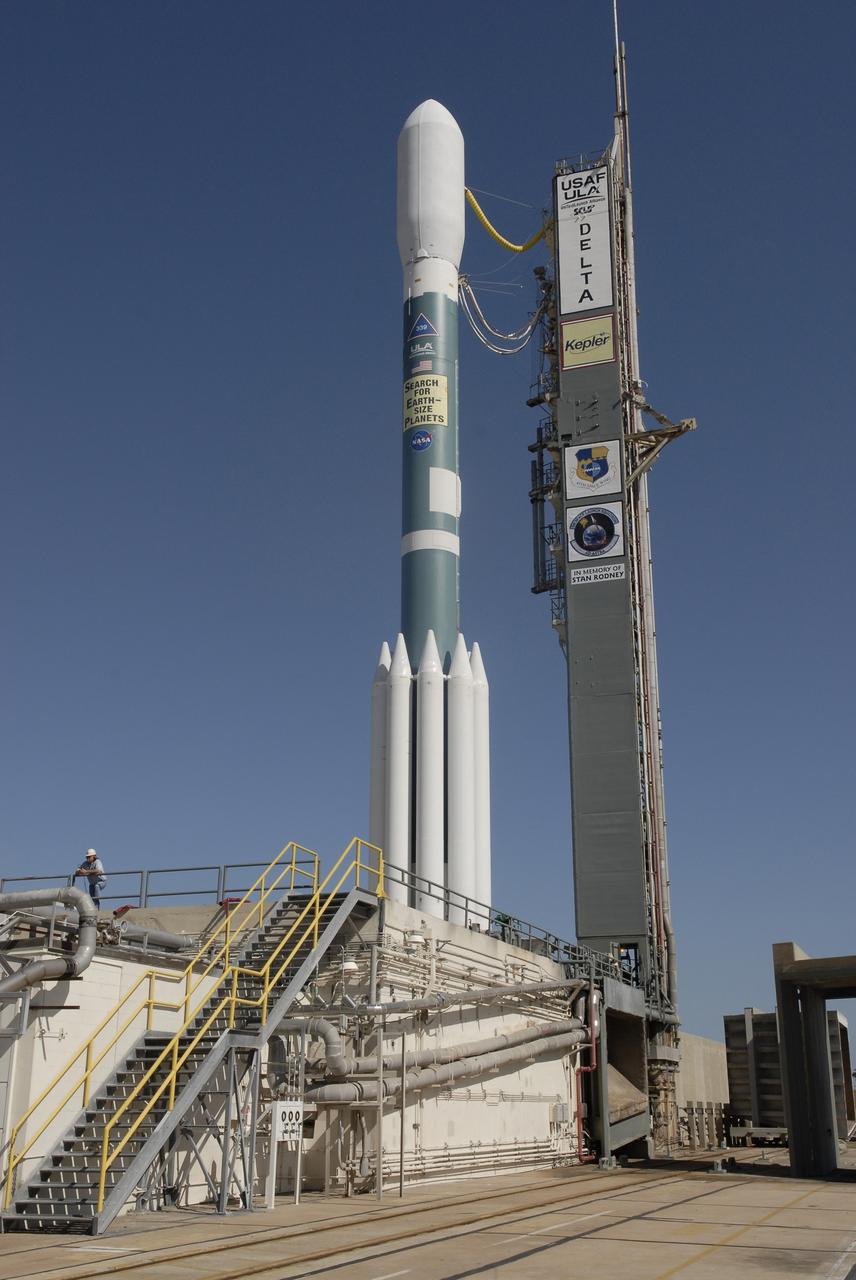
CAPE CANAVERAL, Fla. – After rollback of the mobile service tower on Cape Canaveral Air Force Station's Launch Pad 17-B in Florida, NASA's Kepler spacecraft sits poised for launch atop the United Launch Alliance Delta II 7925 rocket. Kepler is a spaceborne telescope designed to search the nearby region of our galaxy for Earth-size planets orbiting in the habitable zone of stars like our sun. The habitable zone is the region around a star where temperatures permit water to be liquid on a planet's surface. The challenge for Kepler is to look at a large number of stars in order to statistically estimate the total number of Earth-size planets orbiting sun-like stars in the habitable zone. Kepler will survey more than 100,000 stars in our galaxy. Photo credit: NASA/Jack Pfaller
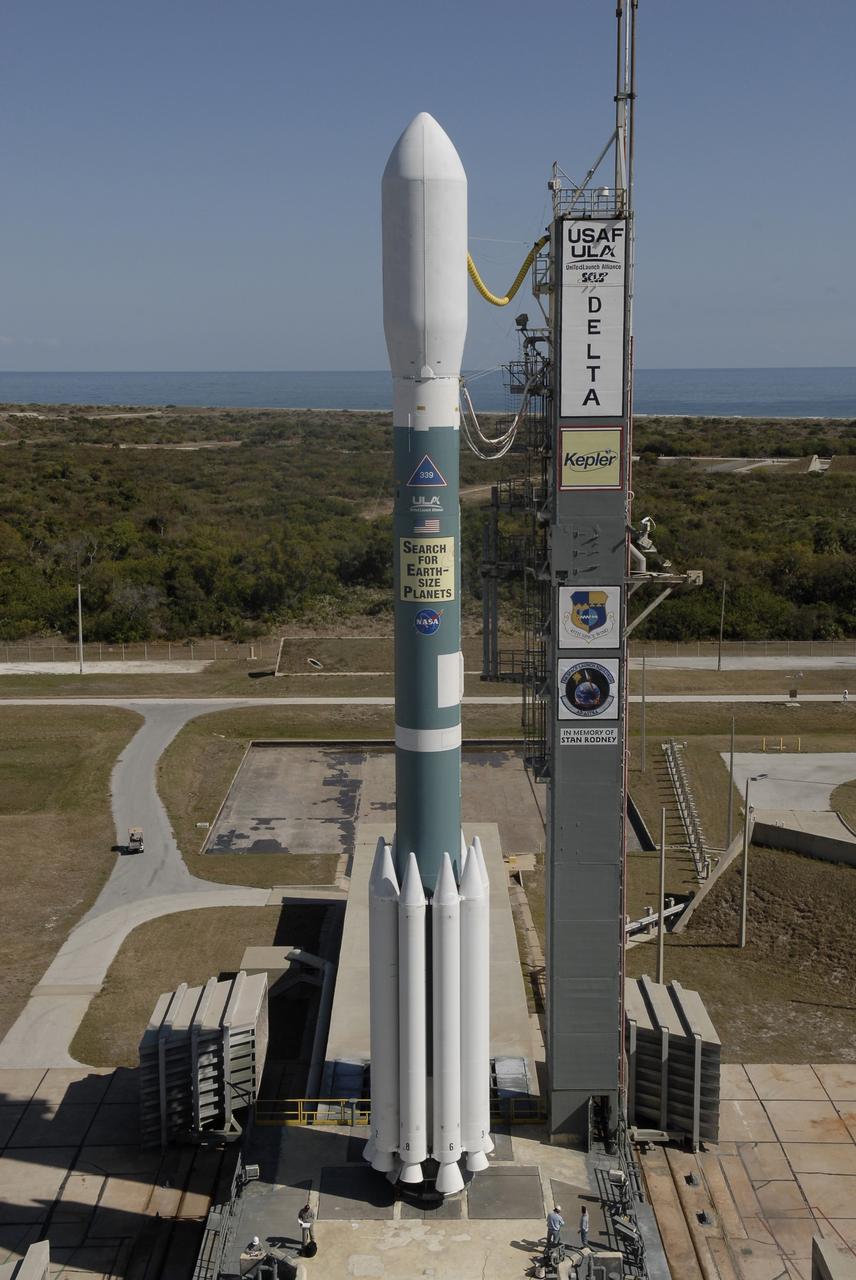
CAPE CANAVERAL, Fla. – After rollback of the mobile service tower on Cape Canaveral Air Force Station's Launch Pad 17-B, in Florida, NASA's Kepler spacecraft sits poised for launch atop the United Launch Alliance Delta II 7925 rocket. Kepler is a spaceborne telescope designed to search the nearby region of our galaxy for Earth-size planets orbiting in the habitable zone of stars like our sun. The habitable zone is the region around a star where temperatures permit water to be liquid on a planet's surface. The challenge for Kepler is to look at a large number of stars in order to statistically estimate the total number of Earth-size planets orbiting sun-like stars in the habitable zone. Kepler will survey more than 100,000 stars in our galaxy. Photo credit: NASA/Jack Pfaller
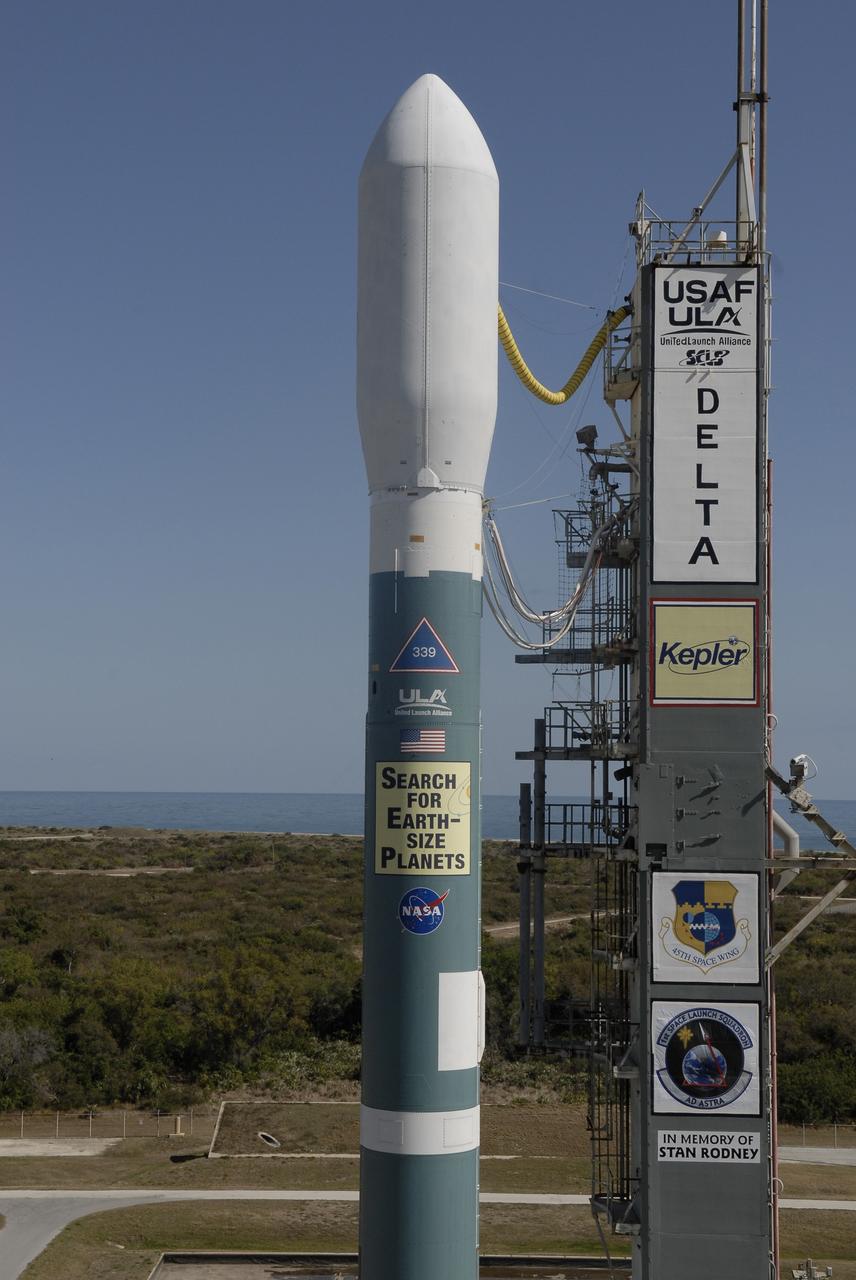
CAPE CANAVERAL, Fla. – Against the backdrop of the Atlantic Ocean, the Delta II 7925 rocket stands ready for launch following rollback of the mobile service tower on Launch Pad 17-B at Cape Canaveral Air Force Station. Atop the rocket is NASA's Kepler spacecraft. Kepler is a spaceborne telescope designed to search the nearby region of our galaxy for Earth-size planets orbiting in the habitable zone of stars like our sun. The habitable zone is the region around a star where temperatures permit water to be liquid on a planet's surface. The challenge for Kepler is to look at a large number of stars in order to statistically estimate the total number of Earth-size planets orbiting sun-like stars in the habitable zone. Kepler will survey more than 100,000 stars in our galaxy. Photo credit: NASA/Jack Pfaller
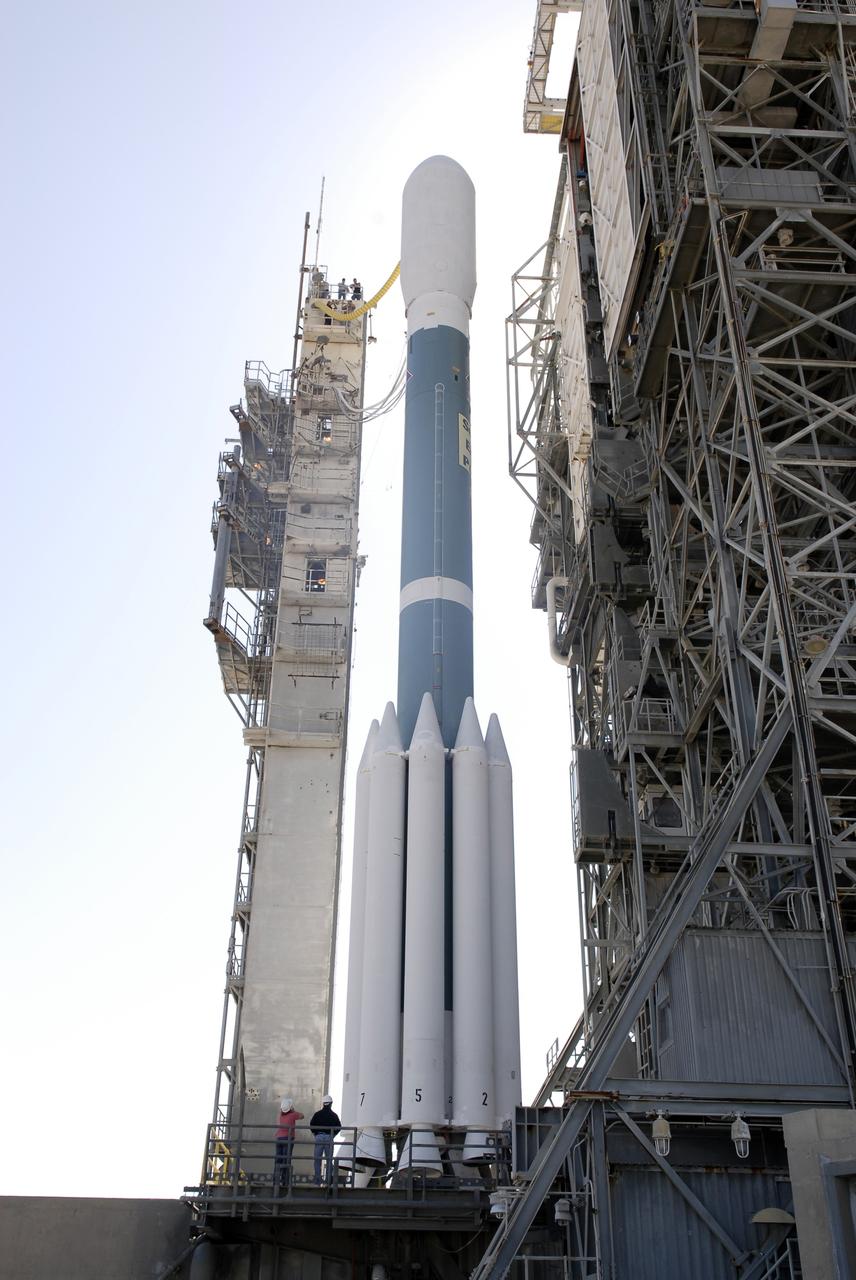
CAPE CANAVERAL, Fla. – The Delta II 7925 rocket stands ready for launch following rollback of the mobile service tower on Launch Pad 17-B at Cape Canaveral Air Force Station in Florida. Atop the rocket is NASA's Kepler spacecraft. Kepler is a spaceborne telescope designed to search the nearby region of our galaxy for Earth-size planets orbiting in the habitable zone of stars like our sun. The habitable zone is the region around a star where temperatures permit water to be liquid on a planet's surface. The challenge for Kepler is to look at a large number of stars in order to statistically estimate the total number of Earth-size planets orbiting sun-like stars in the habitable zone. Kepler will survey more than 100,000 stars in our galaxy. Photo credit: NASA/Jack Pfaller