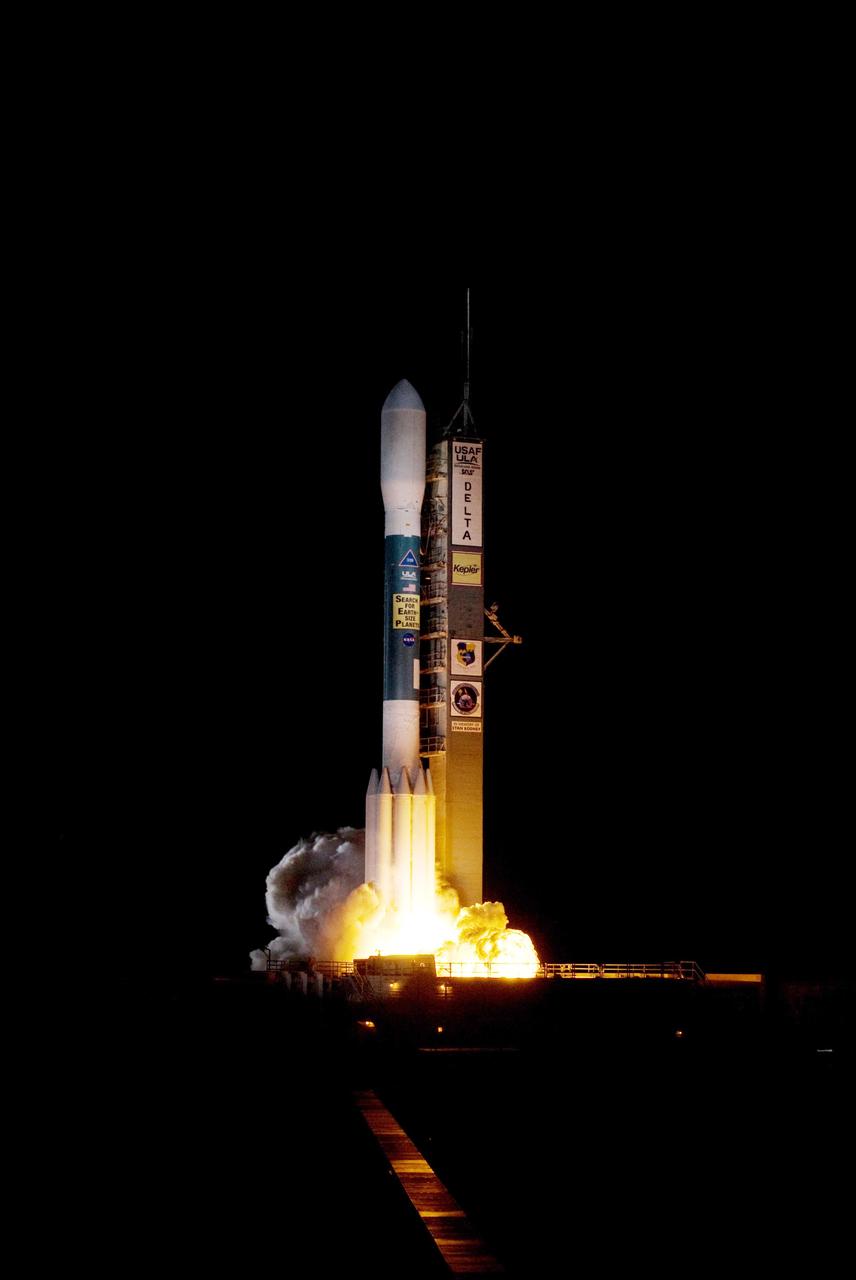
CAPE CANAVERAL, Fla. – On Launch Pad 17-B at Cape Canaveral Air Force Station in Florida, exhaust clouds cascade around the base of United Launch Alliance's Delta II rocket carrying NASA's Kepler spacecraft as the rocket’s engines ignite. Liftoff was on time at 10:49 p.m. EST. Kepler is a spaceborne telescope designed to search the nearby region of our galaxy for Earth-size planets orbiting in the habitable zone of stars like our sun. The habitable zone is the region around a star where temperatures permit water to be liquid on a planet's surface. The challenge for Kepler is to look at a large number of stars in order to statistically estimate the total number of Earth-size planets orbiting sun-like stars in the habitable zone. Kepler will survey more than 100,000 stars in our galaxy. Photo credit: NASA/Sandra Joseph, Kevin O'Connell
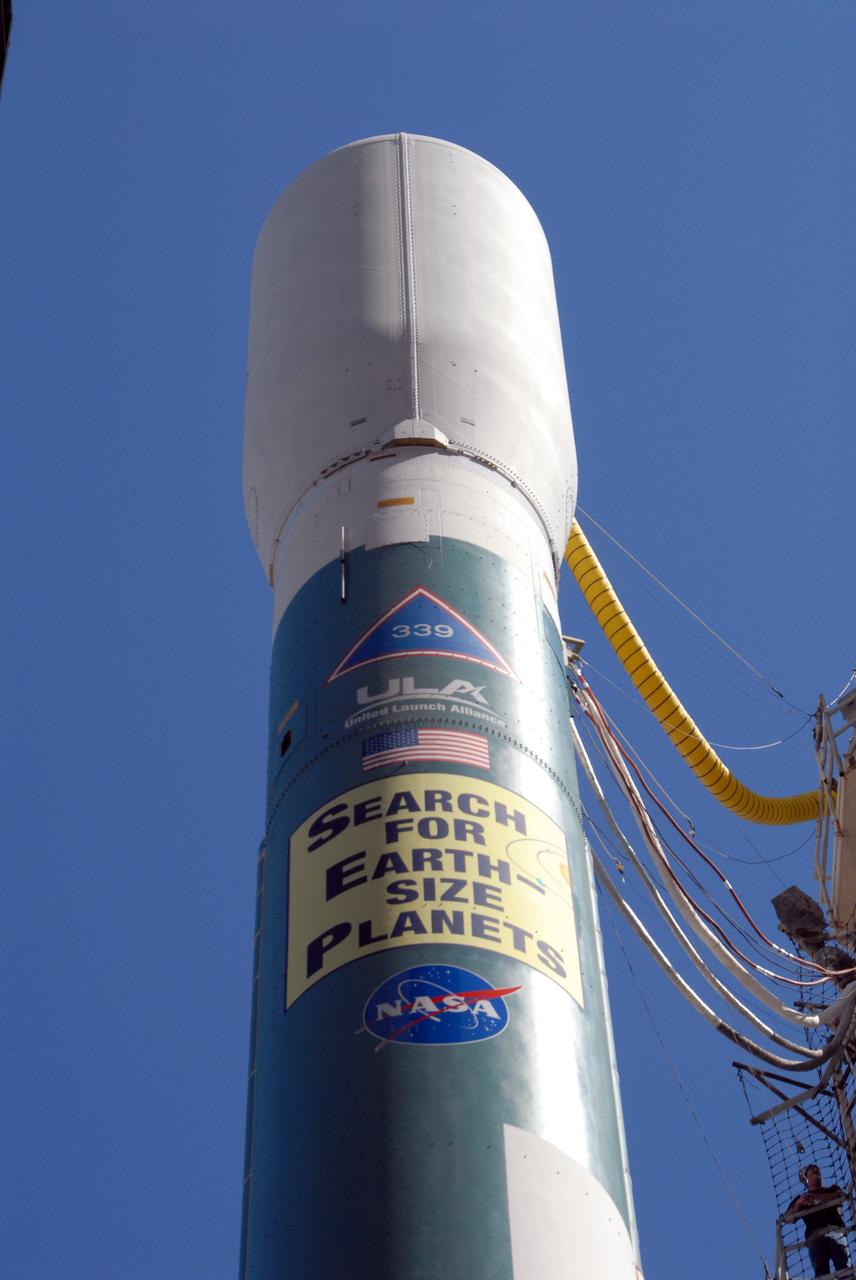
CAPE CANAVERAL, Fla. – The Delta II 7925 rocket stands ready for launch following rollback of the mobile service tower on Launch Pad 17-B at Cape Canaveral Air Force Station. Atop the rocket is NASA's Kepler spacecraft. Kepler is a spaceborne telescope designed to search the nearby region of our galaxy for Earth-size planets orbiting in the habitable zone of stars like our sun. The habitable zone is the region around a star where temperatures permit water to be liquid on a planet's surface. The challenge for Kepler is to look at a large number of stars in order to statistically estimate the total number of Earth-size planets orbiting sun-like stars in the habitable zone. Kepler will survey more than 100,000 stars in our galaxy. Photo credit: NASA/Jack Pfaller
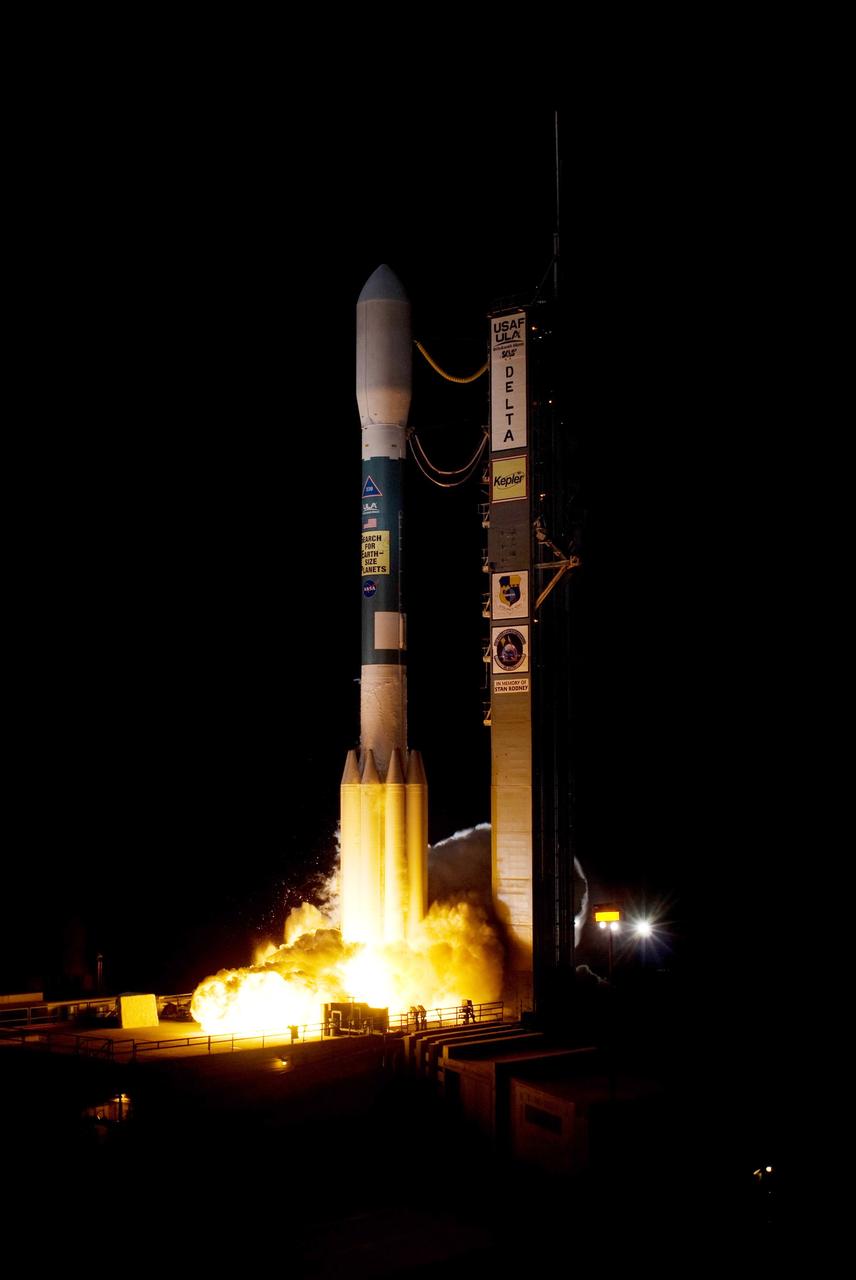
CAPE CANAVERAL, Fla. – On Launch Pad 17-B at Cape Canaveral Air Force Station in Florida, the engines on United Launch Alliance's Delta II rocket carrying NASA's Kepler spacecraft ignite. Liftoff was on time at 10:49 p.m. EST. Kepler is a spaceborne telescope designed to search the nearby region of our galaxy for Earth-size planets orbiting in the habitable zone of stars like our sun. The habitable zone is the region around a star where temperatures permit water to be liquid on a planet's surface. The challenge for Kepler is to look at a large number of stars in order to statistically estimate the total number of Earth-size planets orbiting sun-like stars in the habitable zone. Kepler will survey more than 100,000 stars in our galaxy. Photo credit: NASA/Tony Gray
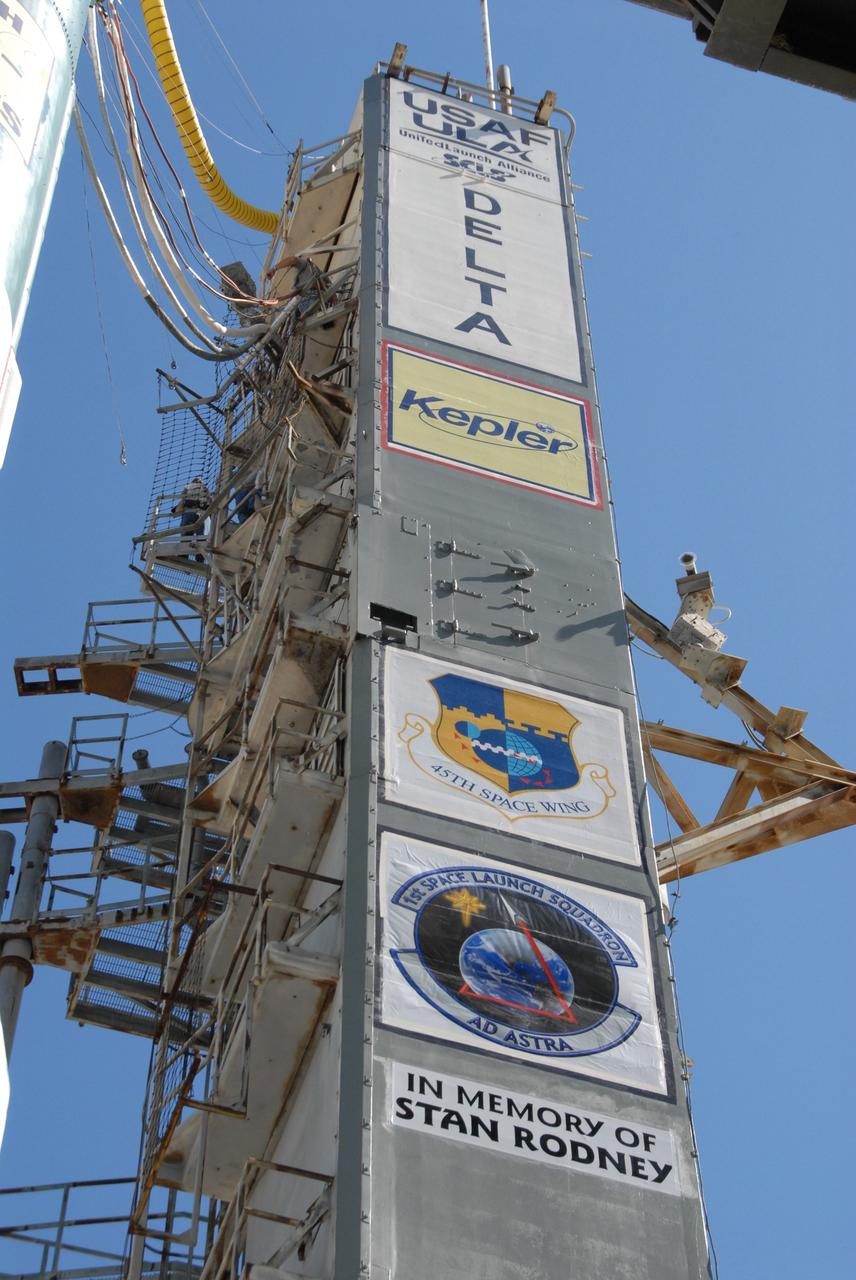
CAPE CANAVERAL, Fla. – The gantry on Launch Pad 17-B at Cape Canaveral Air Force Station in Florida shows the various logos of NASA's Kepler spacecraft launch. Kepler is a spaceborne telescope designed to search the nearby region of our galaxy for Earth-size planets orbiting in the habitable zone of stars like our sun. The habitable zone is the region around a star where temperatures permit water to be liquid on a planet's surface. The challenge for Kepler is to look at a large number of stars in order to statistically estimate the total number of Earth-size planets orbiting sun-like stars in the habitable zone. Kepler will survey more than 100,000 stars in our galaxy. Photo credit: NASA/Jack Pfaller
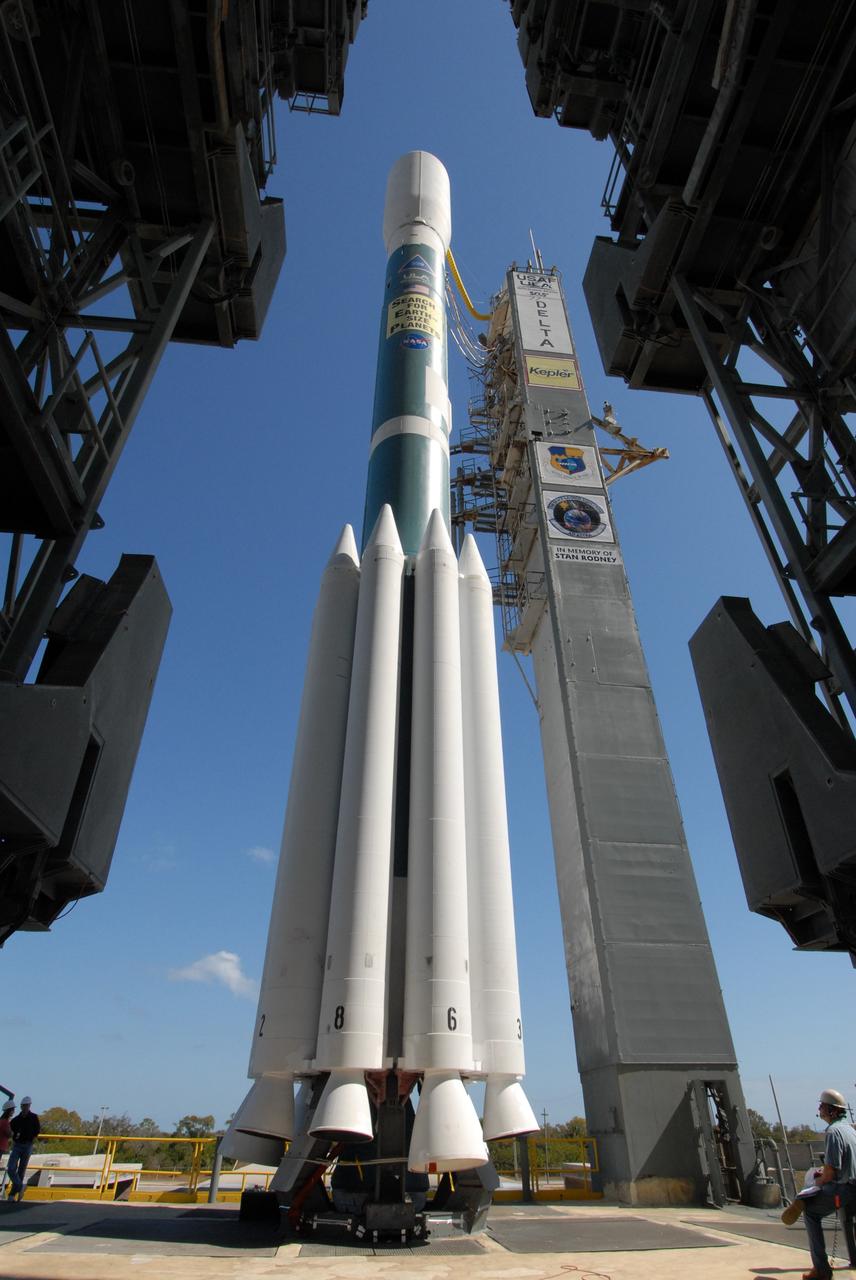
CAPE CANAVERAL, Fla. – The Delta II 7925 rocket stands ready for launch following rollback of the mobile service tower on Launch Pad 17-B at Cape Canaveral Air Force Station. Atop the rocket is NASA's Kepler spacecraft. Kepler is a spaceborne telescope designed to search the nearby region of our galaxy for Earth-size planets orbiting in the habitable zone of stars like our sun. The habitable zone is the region around a star where temperatures permit water to be liquid on a planet's surface. The challenge for Kepler is to look at a large number of stars in order to statistically estimate the total number of Earth-size planets orbiting sun-like stars in the habitable zone. Kepler will survey more than 100,000 stars in our galaxy. Photo credit: NASA/Jack Pfaller
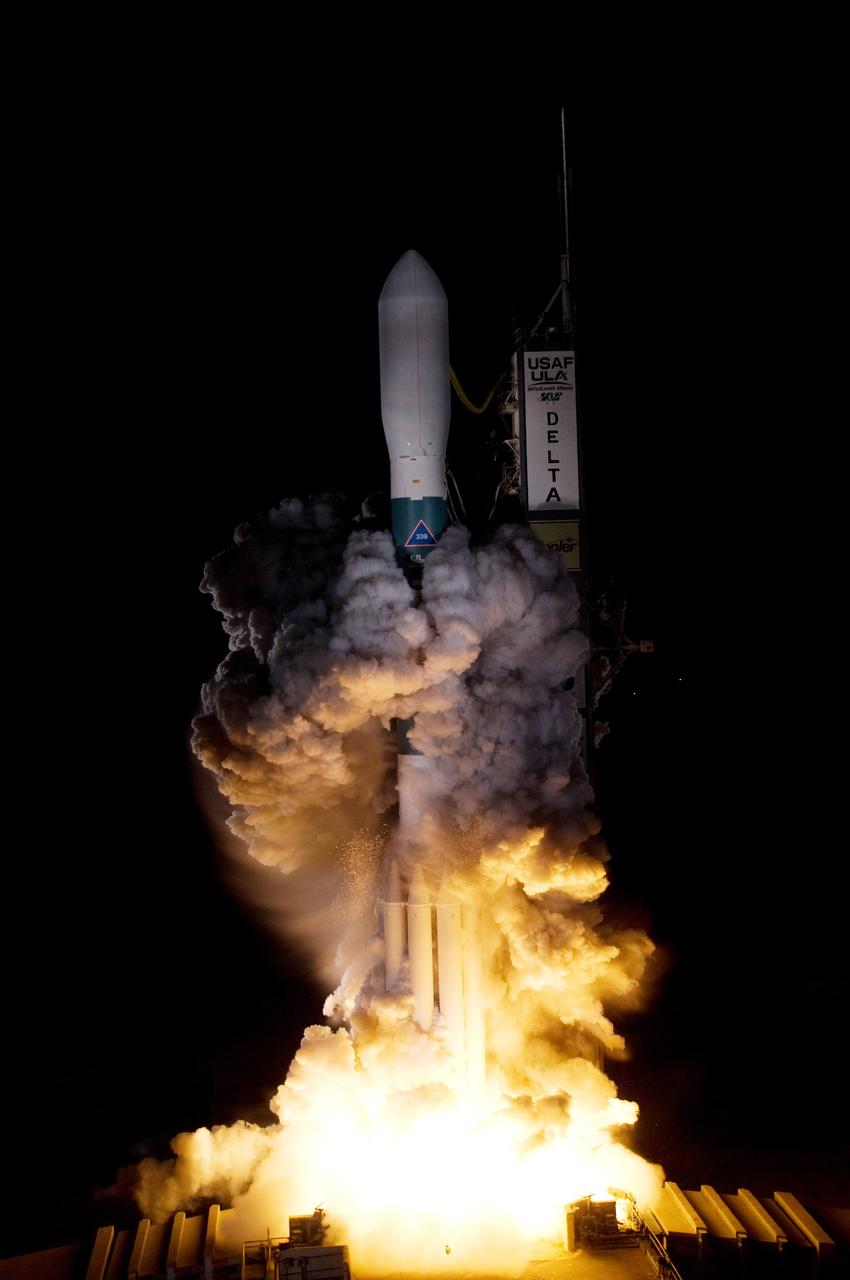
CAPE CANAVERAL, Fla. – On Launch Pad 17-B at Cape Canaveral Air Force Station in Florida, United Launch Alliance's Delta II rocket carrying NASA's Kepler spacecraft rises through the exhaust cloud created by the firing of the rocket’s engines. Liftoff was on time at 10:49 p.m. EST. Kepler is a spaceborne telescope designed to search the nearby region of our galaxy for Earth-size planets orbiting in the habitable zone of stars like our sun. The habitable zone is the region around a star where temperatures permit water to be liquid on a planet's surface. The challenge for Kepler is to look at a large number of stars in order to statistically estimate the total number of Earth-size planets orbiting sun-like stars in the habitable zone. Kepler will survey more than 100,000 stars in our galaxy. Photo credit: NASA/Regina Mitchell-Ryall, Tom Farrar
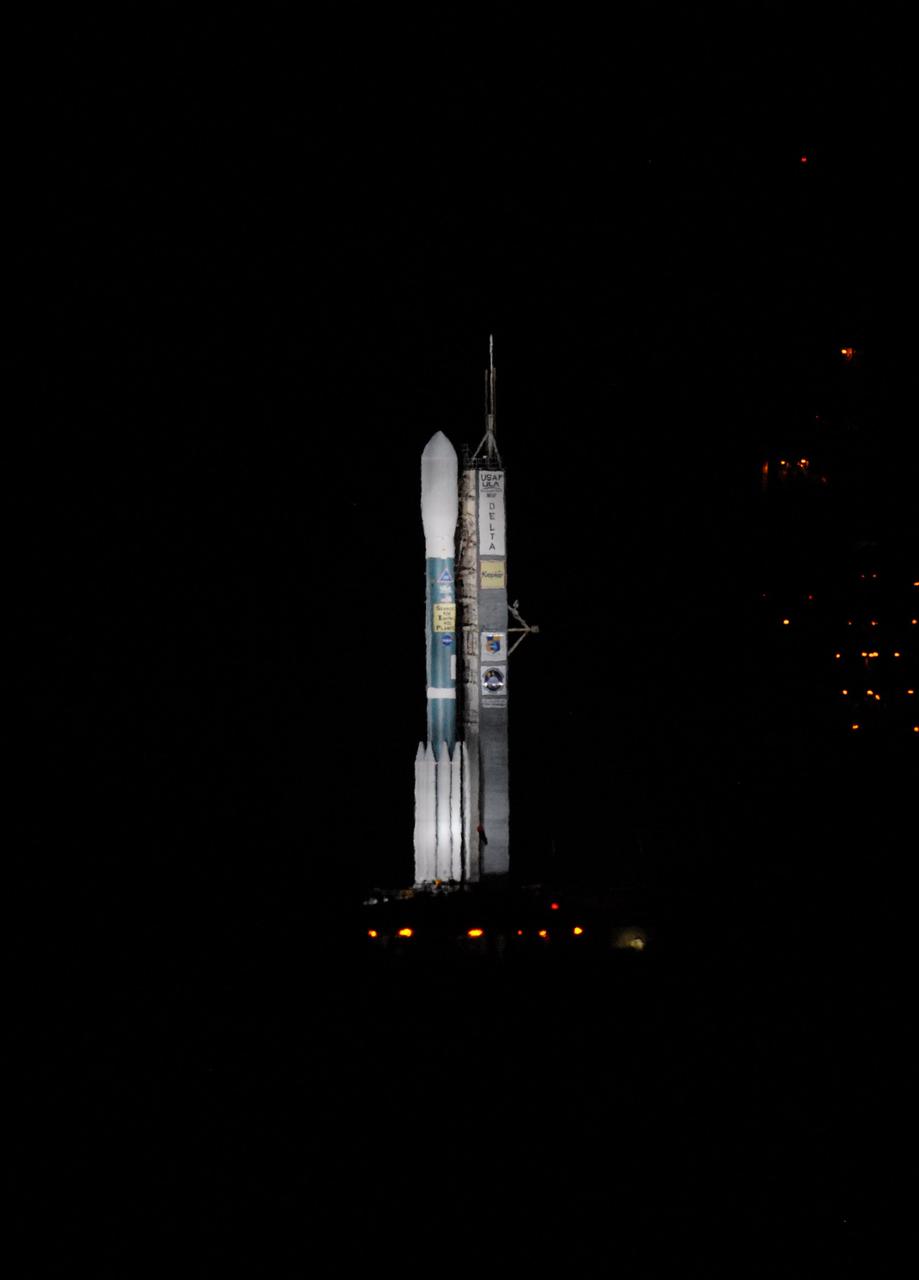
CAPE CANAVERAL, Fla. – United Launch Alliance's Delta II rocket, with NASA's Kepler spacecraft aboard, is bathed in light on Launch Pad 17-B at Cape Canaveral Air Force Station in Florida prior to launch. Liftoff is planned for 10:49 p.m. EST. Kepler is a spaceborne telescope designed to search the nearby region of our galaxy for Earth-size planets orbiting in the habitable zone of stars like our sun. The habitable zone is the region around a star where temperatures permit water to be liquid on a planet's surface. The challenge for Kepler is to look at a large number of stars in order to statistically estimate the total number of Earth-size planets orbiting sun-like stars in the habitable zone. Kepler will survey more than 100,000 stars in our galaxy. Photo credit: NASA/Jack Pfaller
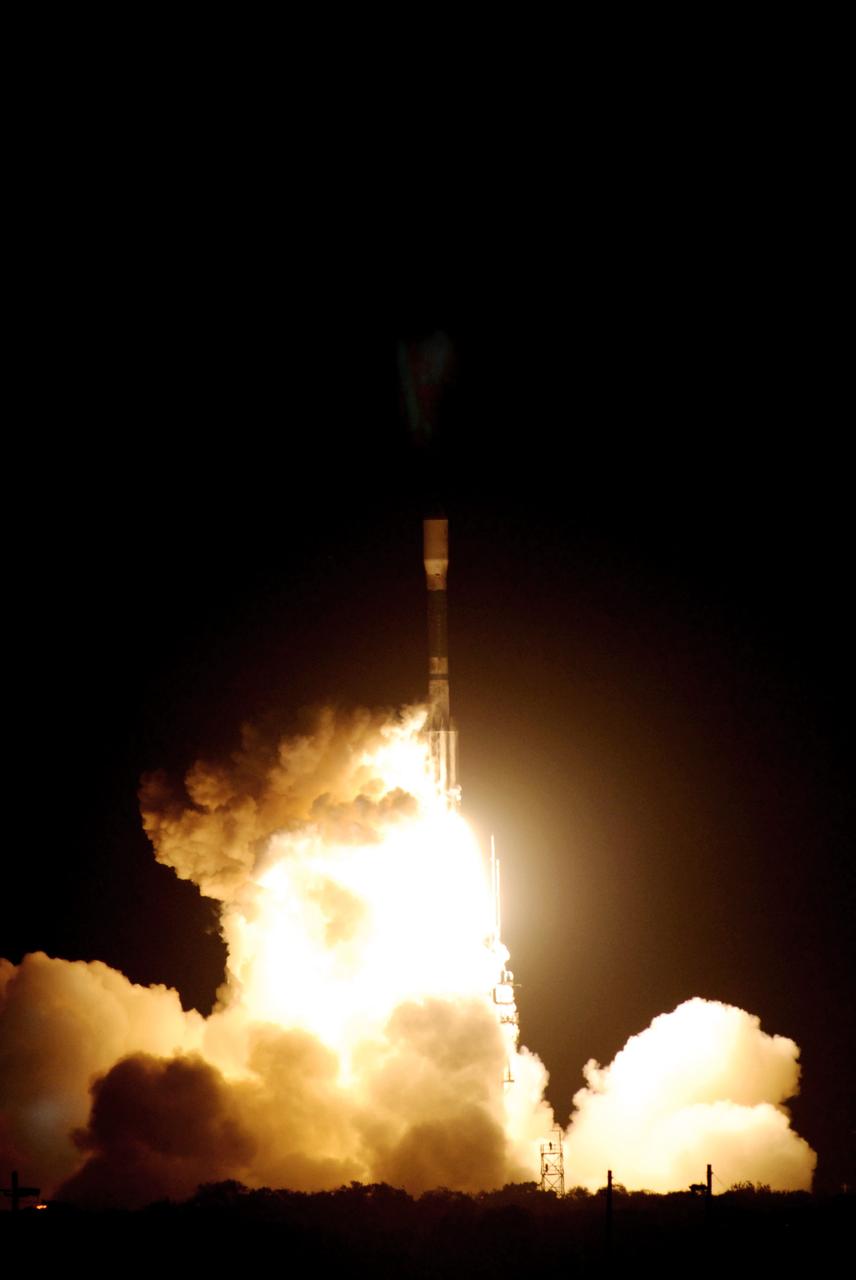
CAPE CANAVERAL, Fla. – United Launch Alliance's Delta II rocket roars into the night sky carrying NASA's Kepler spacecraft. Liftoff from Launch Pad 17-B at Cape Canaveral Air Force Station in Florida was on time at 10:49 p.m. EST. Kepler is a spaceborne telescope designed to search the nearby region of our galaxy for Earth-size planets orbiting in the habitable zone of stars like our sun. The habitable zone is the region around a star where temperatures permit water to be liquid on a planet's surface. The challenge for Kepler is to look at a large number of stars in order to statistically estimate the total number of Earth-size planets orbiting sun-like stars in the habitable zone. Kepler will survey more than 100,000 stars in our galaxy. Photo credit: NASA/Jack Pfaller
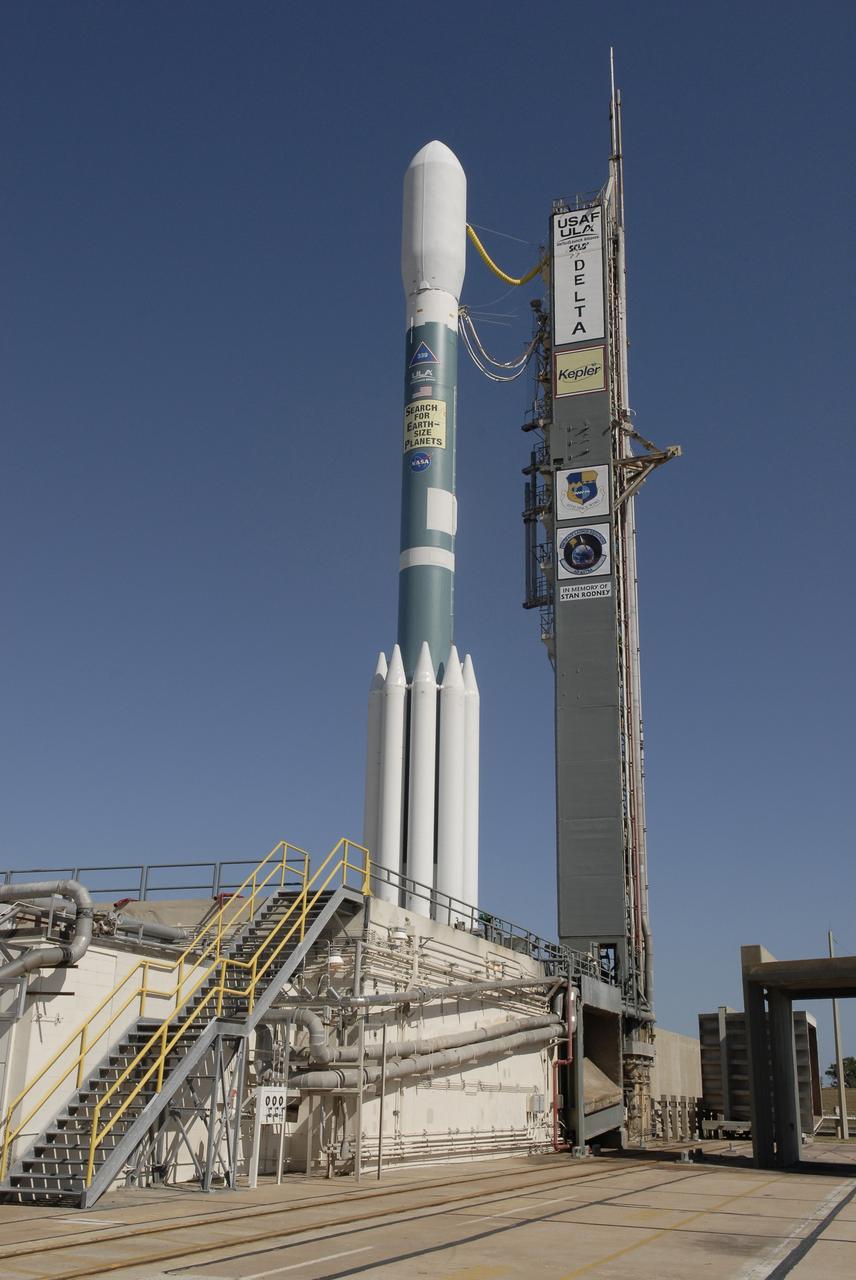
CAPE CANAVERAL, Fla. – After rollback of the mobile service tower on Cape Canaveral Air Force Station's Launch Pad 17-B in Florida, NASA's Kepler spacecraft sits poised for launch atop the United Launch Alliance Delta II 7925 rocket. Kepler is a spaceborne telescope designed to search the nearby region of our galaxy for Earth-size planets orbiting in the habitable zone of stars like our sun. The habitable zone is the region around a star where temperatures permit water to be liquid on a planet's surface. The challenge for Kepler is to look at a large number of stars in order to statistically estimate the total number of Earth-size planets orbiting sun-like stars in the habitable zone. Kepler will survey more than 100,000 stars in our galaxy. Photo credit: NASA/Jack Pfaller
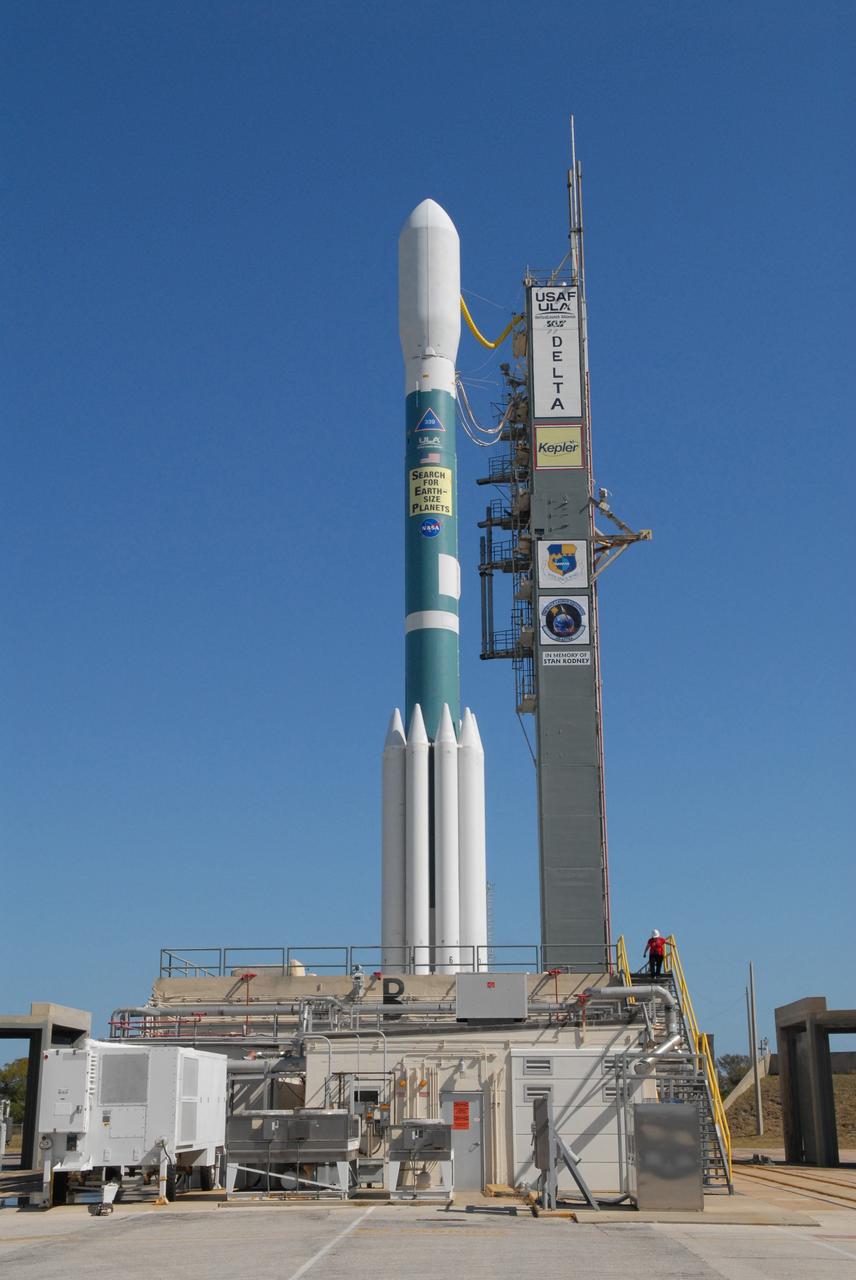
CAPE CANAVERAL, Fla. – The Delta II 7925 rocket stands ready for launch following rollback of the mobile service tower on Launch Pad 17-B at Cape Canaveral Air Force Station in Florida. Atop the rocket is NASA's Kepler spacecraft. Kepler is a spaceborne telescope designed to search the nearby region of our galaxy for Earth-size planets orbiting in the habitable zone of stars like our sun. The habitable zone is the region around a star where temperatures permit water to be liquid on a planet's surface. The challenge for Kepler is to look at a large number of stars in order to statistically estimate the total number of Earth-size planets orbiting sun-like stars in the habitable zone. Kepler will survey more than 100,000 stars in our galaxy. Photo credit: NASA/Jack Pfaller
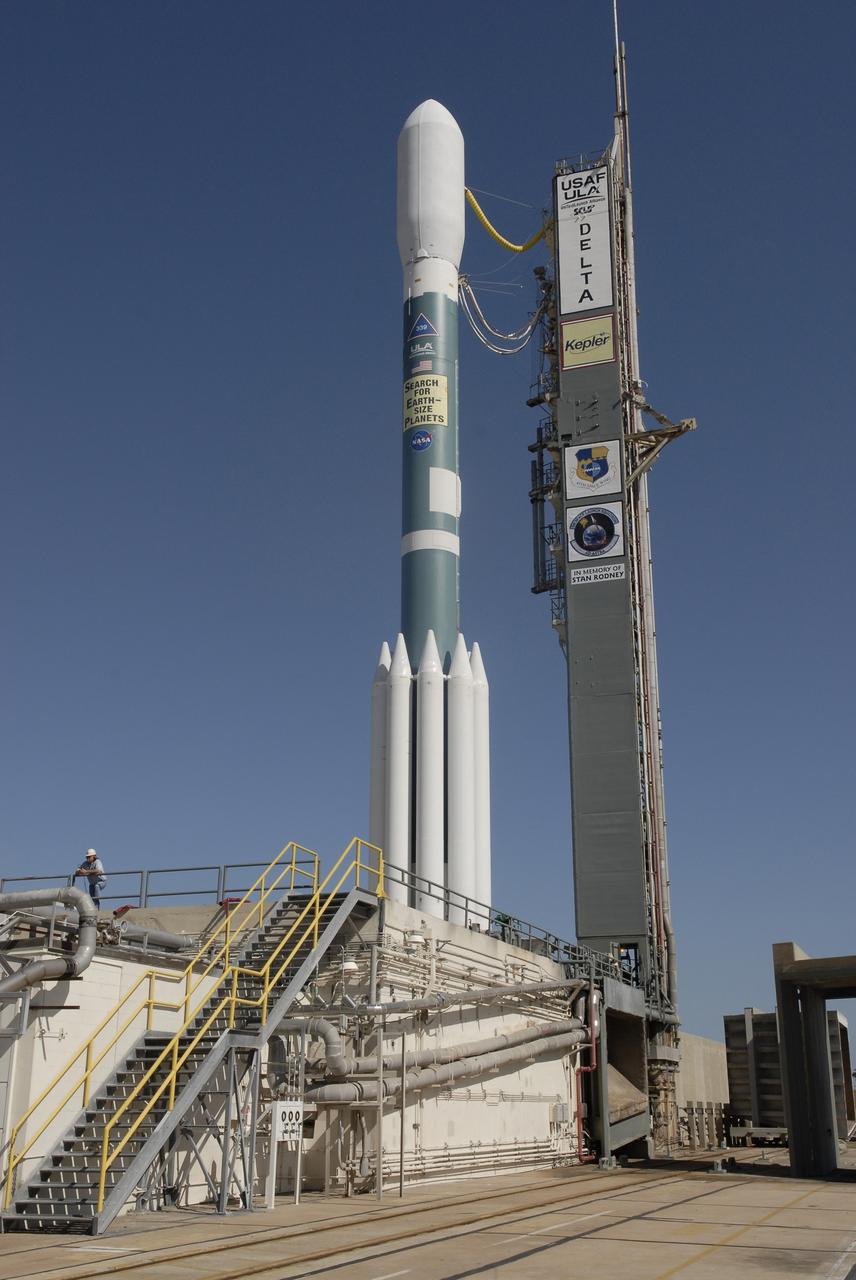
CAPE CANAVERAL, Fla. – After rollback of the mobile service tower on Cape Canaveral Air Force Station's Launch Pad 17-B in Florida, NASA's Kepler spacecraft sits poised for launch atop the United Launch Alliance Delta II 7925 rocket. Kepler is a spaceborne telescope designed to search the nearby region of our galaxy for Earth-size planets orbiting in the habitable zone of stars like our sun. The habitable zone is the region around a star where temperatures permit water to be liquid on a planet's surface. The challenge for Kepler is to look at a large number of stars in order to statistically estimate the total number of Earth-size planets orbiting sun-like stars in the habitable zone. Kepler will survey more than 100,000 stars in our galaxy. Photo credit: NASA/Jack Pfaller
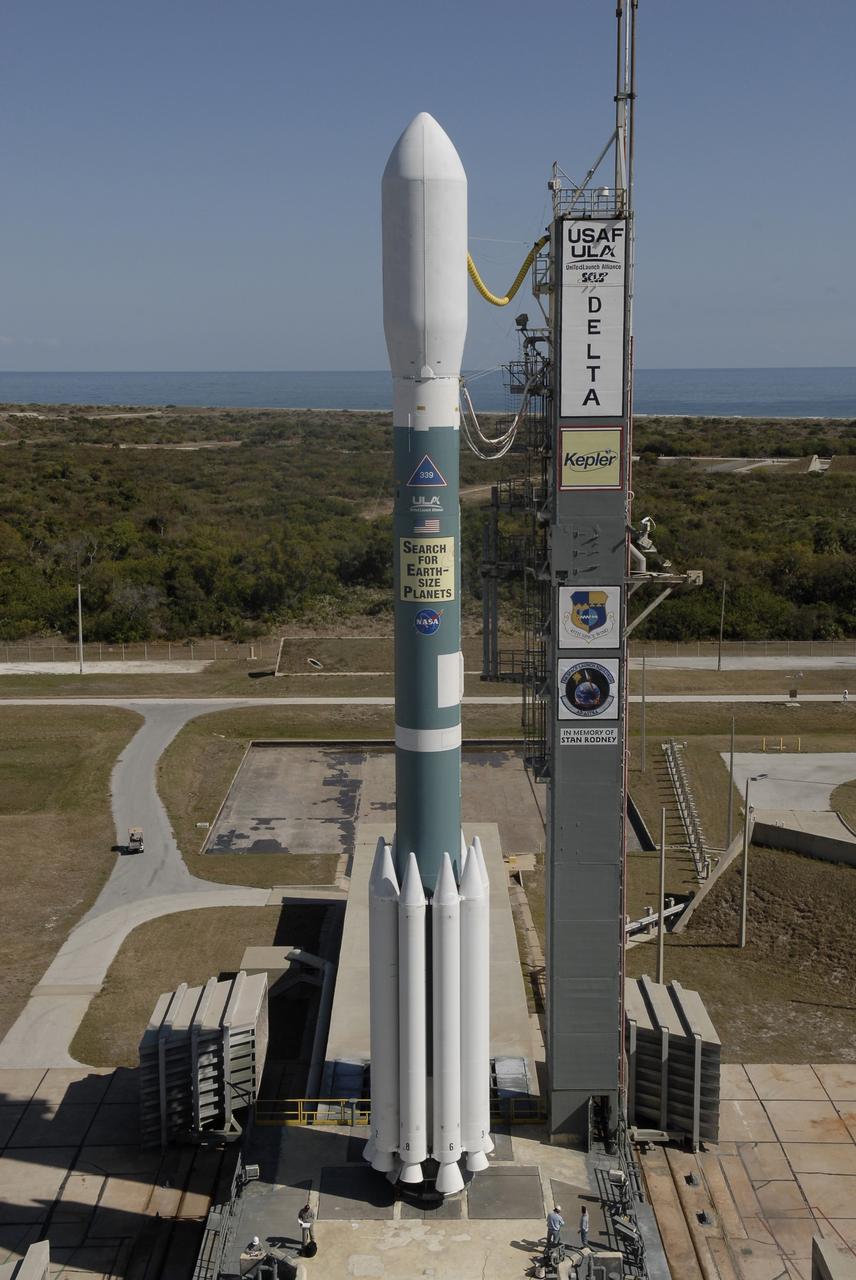
CAPE CANAVERAL, Fla. – After rollback of the mobile service tower on Cape Canaveral Air Force Station's Launch Pad 17-B, in Florida, NASA's Kepler spacecraft sits poised for launch atop the United Launch Alliance Delta II 7925 rocket. Kepler is a spaceborne telescope designed to search the nearby region of our galaxy for Earth-size planets orbiting in the habitable zone of stars like our sun. The habitable zone is the region around a star where temperatures permit water to be liquid on a planet's surface. The challenge for Kepler is to look at a large number of stars in order to statistically estimate the total number of Earth-size planets orbiting sun-like stars in the habitable zone. Kepler will survey more than 100,000 stars in our galaxy. Photo credit: NASA/Jack Pfaller
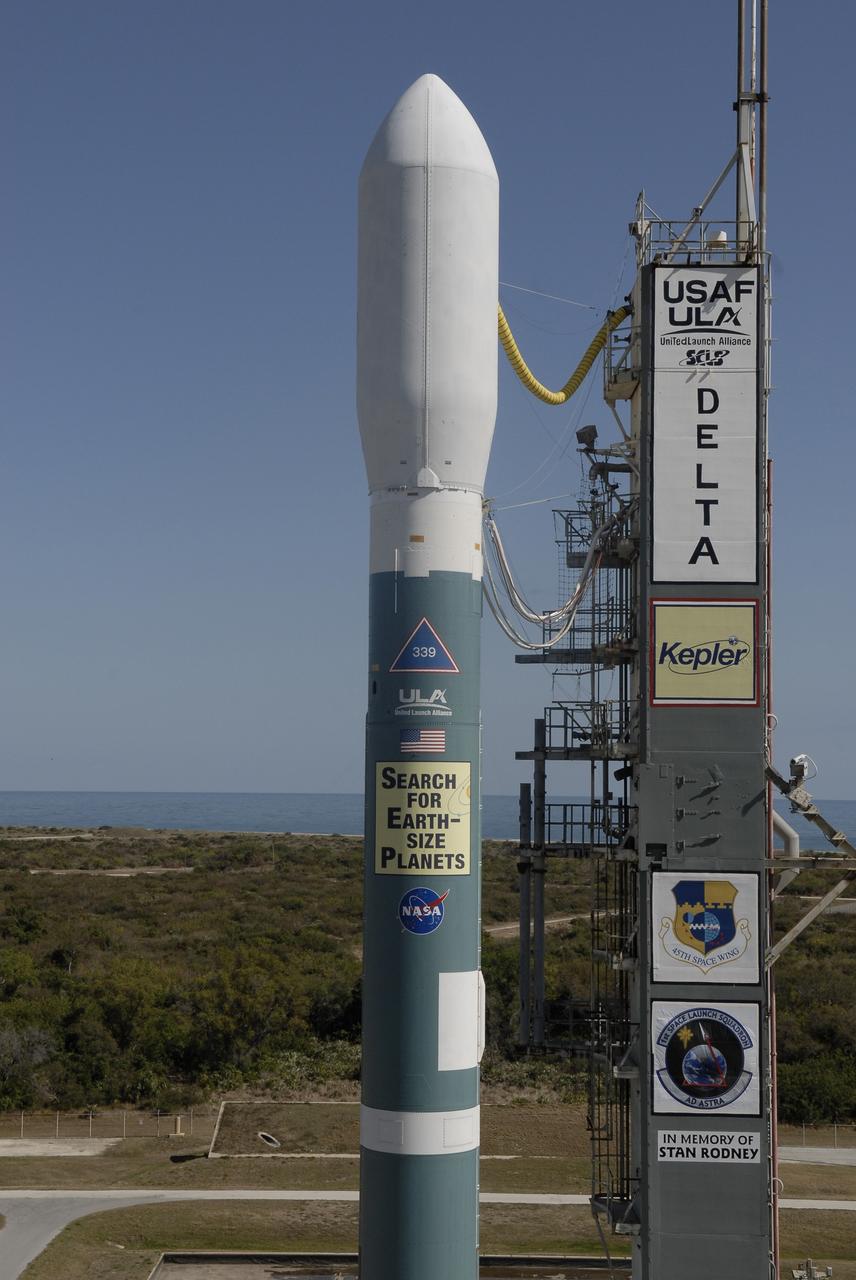
CAPE CANAVERAL, Fla. – Against the backdrop of the Atlantic Ocean, the Delta II 7925 rocket stands ready for launch following rollback of the mobile service tower on Launch Pad 17-B at Cape Canaveral Air Force Station. Atop the rocket is NASA's Kepler spacecraft. Kepler is a spaceborne telescope designed to search the nearby region of our galaxy for Earth-size planets orbiting in the habitable zone of stars like our sun. The habitable zone is the region around a star where temperatures permit water to be liquid on a planet's surface. The challenge for Kepler is to look at a large number of stars in order to statistically estimate the total number of Earth-size planets orbiting sun-like stars in the habitable zone. Kepler will survey more than 100,000 stars in our galaxy. Photo credit: NASA/Jack Pfaller
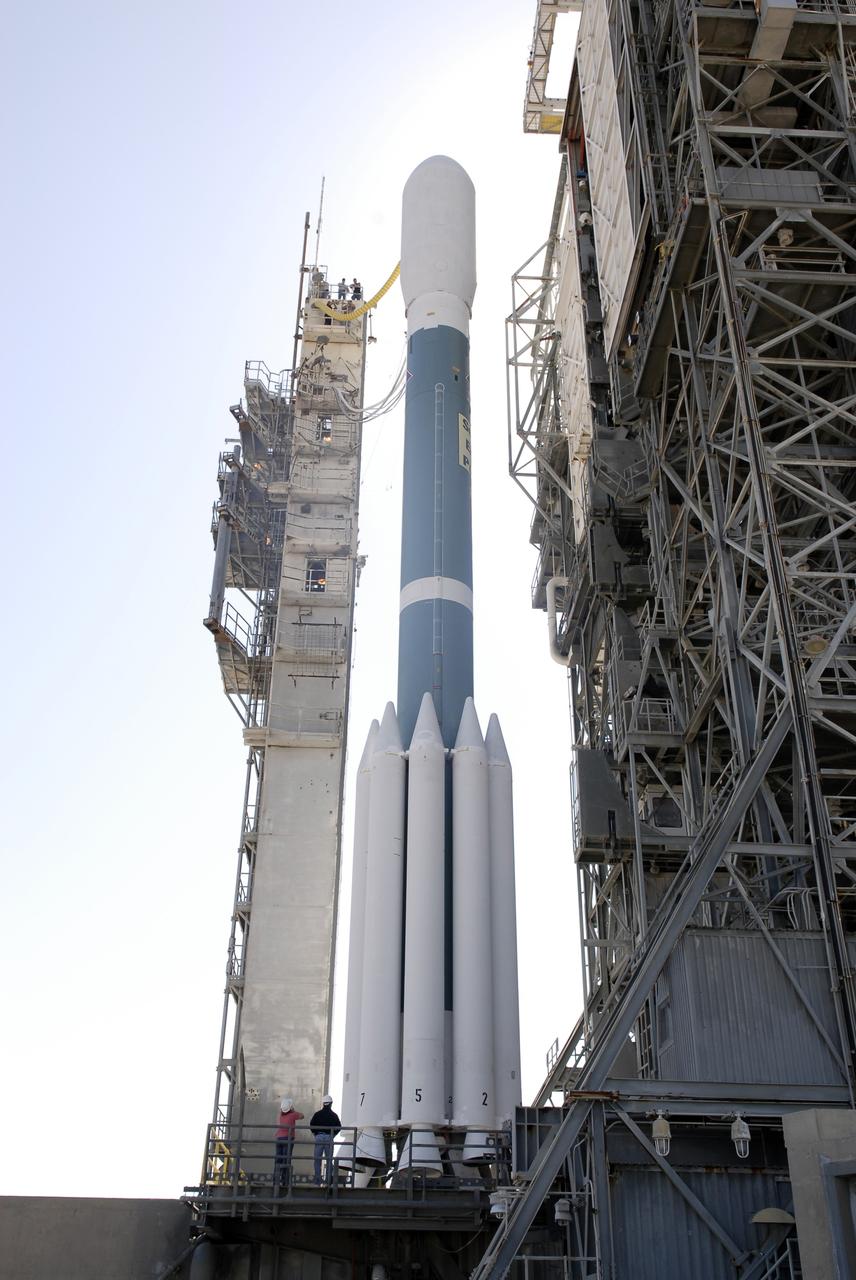
CAPE CANAVERAL, Fla. – The Delta II 7925 rocket stands ready for launch following rollback of the mobile service tower on Launch Pad 17-B at Cape Canaveral Air Force Station in Florida. Atop the rocket is NASA's Kepler spacecraft. Kepler is a spaceborne telescope designed to search the nearby region of our galaxy for Earth-size planets orbiting in the habitable zone of stars like our sun. The habitable zone is the region around a star where temperatures permit water to be liquid on a planet's surface. The challenge for Kepler is to look at a large number of stars in order to statistically estimate the total number of Earth-size planets orbiting sun-like stars in the habitable zone. Kepler will survey more than 100,000 stars in our galaxy. Photo credit: NASA/Jack Pfaller
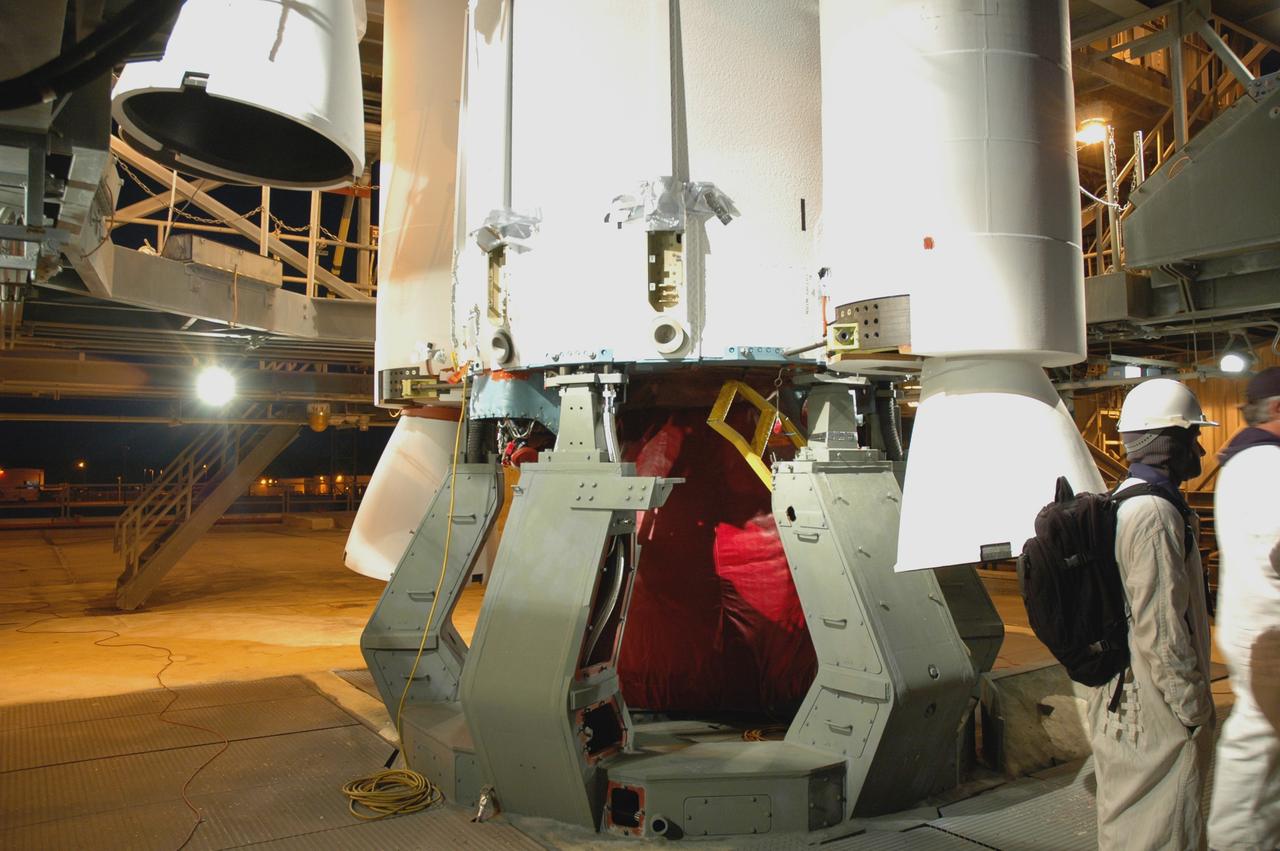
CAPE CANAVERAL, Fla. – On Launch Pad 17-B at Cape Canaveral Air Force Station in Florida, workers prepare the air-lit strap-on solid rocket boosters to be mated onto the Delta 2 launch vehicle that will carry the Kepler spacecraft into orbit. The Kepler mission is specifically designed to survey our region of the Milky Way galaxy to discover hundreds of Earth-size and smaller planets in or near the habitable zone and determine how many of the billions of stars in our galaxy have such planets. Results from this mission will allow us to place our solar system within the continuum of planetary systems in the Galaxy. NASA's planet-hunting Kepler mission is scheduled to launch no earlier than March 5, 2009. Photo credit: NASA/Jim Grossmann
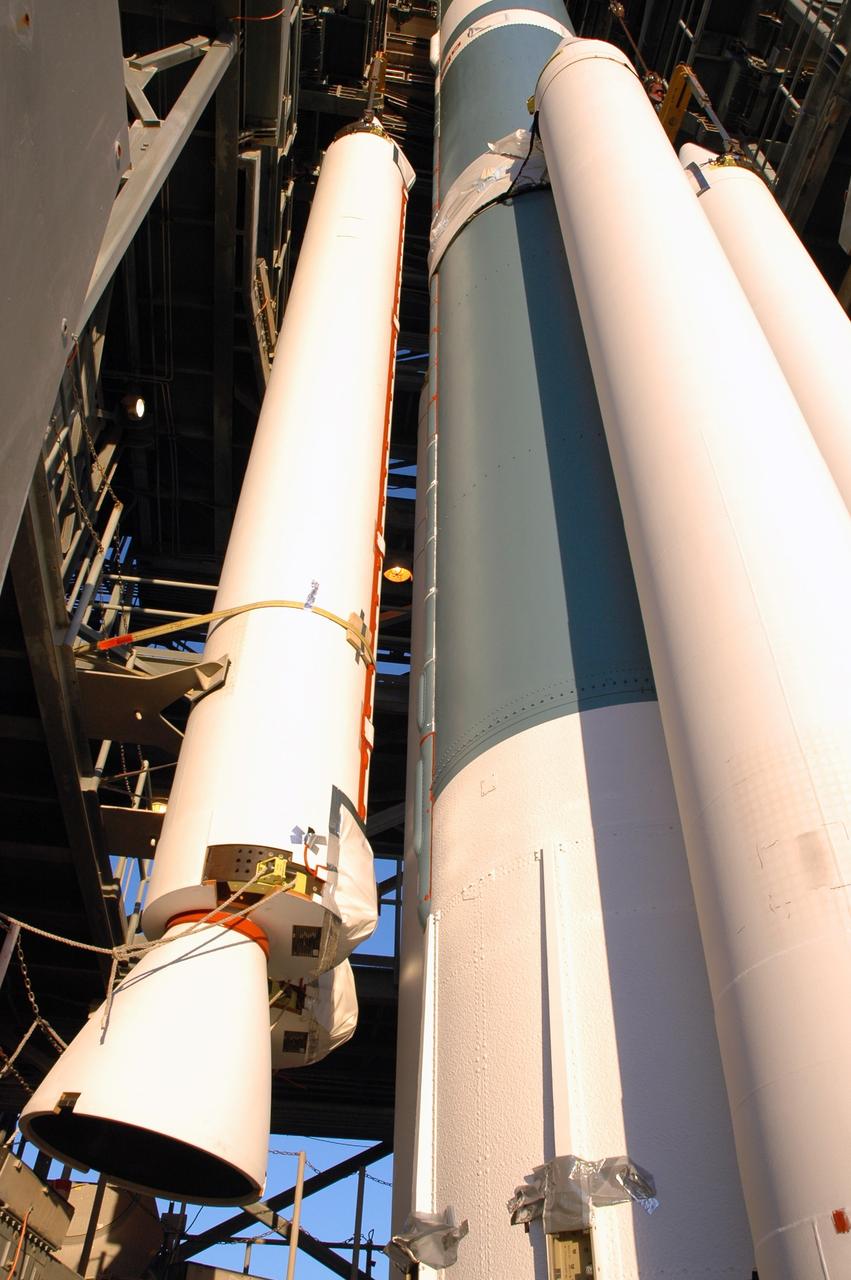
CAPE CANAVERAL, Fla. – On Launch Pad 17-B at Cape Canaveral Air Force Station in Florida, an air-lit strap-on solid rocket booster is lifted up for mating onto the Delta 2 launch vehicle that will carry the Kepler spacecraft into orbit. The Kepler mission is specifically designed to survey our region of the Milky Way galaxy to discover hundreds of Earth-size and smaller planets in or near the habitable zone and determine how many of the billions of stars in our galaxy have such planets. Results from this mission will allow us to place our solar system within the continuum of planetary systems in the Galaxy. NASA's planet-hunting Kepler mission is scheduled to launch no earlier than March 5, 2009. Photo credit: NASA/Jim Grossmann
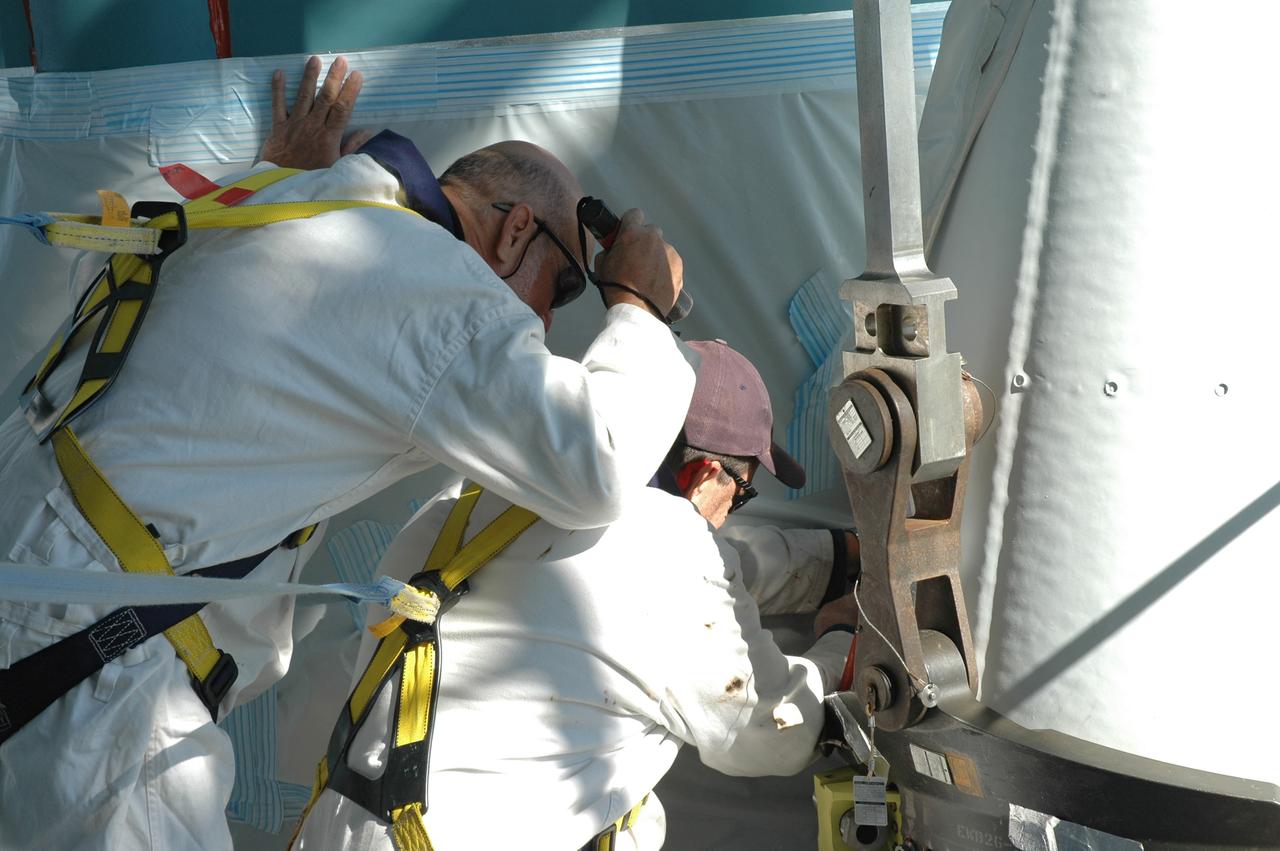
CAPE CANAVERAL, Fla. – On Launch Pad 17-B at Cape Canaveral Air Force Station in Florida, workers make adjustments on one of the solid rocket boosters being mated to the first stage of the Delta 2 launch vehicle that will carry the Kepler spacecraft into orbit. The Kepler mission is specifically designed to survey our region of the Milky Way galaxy to discover hundreds of Earth-size and smaller planets in or near the habitable zone and determine how many of the billions of stars in our galaxy have such planets. Results from this mission will allow us to place our solar system within the continuum of planetary systems in the Galaxy. NASA's planet-hunting Kepler mission is scheduled to launch no earlier than March 5, 2009. Photo credit: NASA/Jim Grossmann
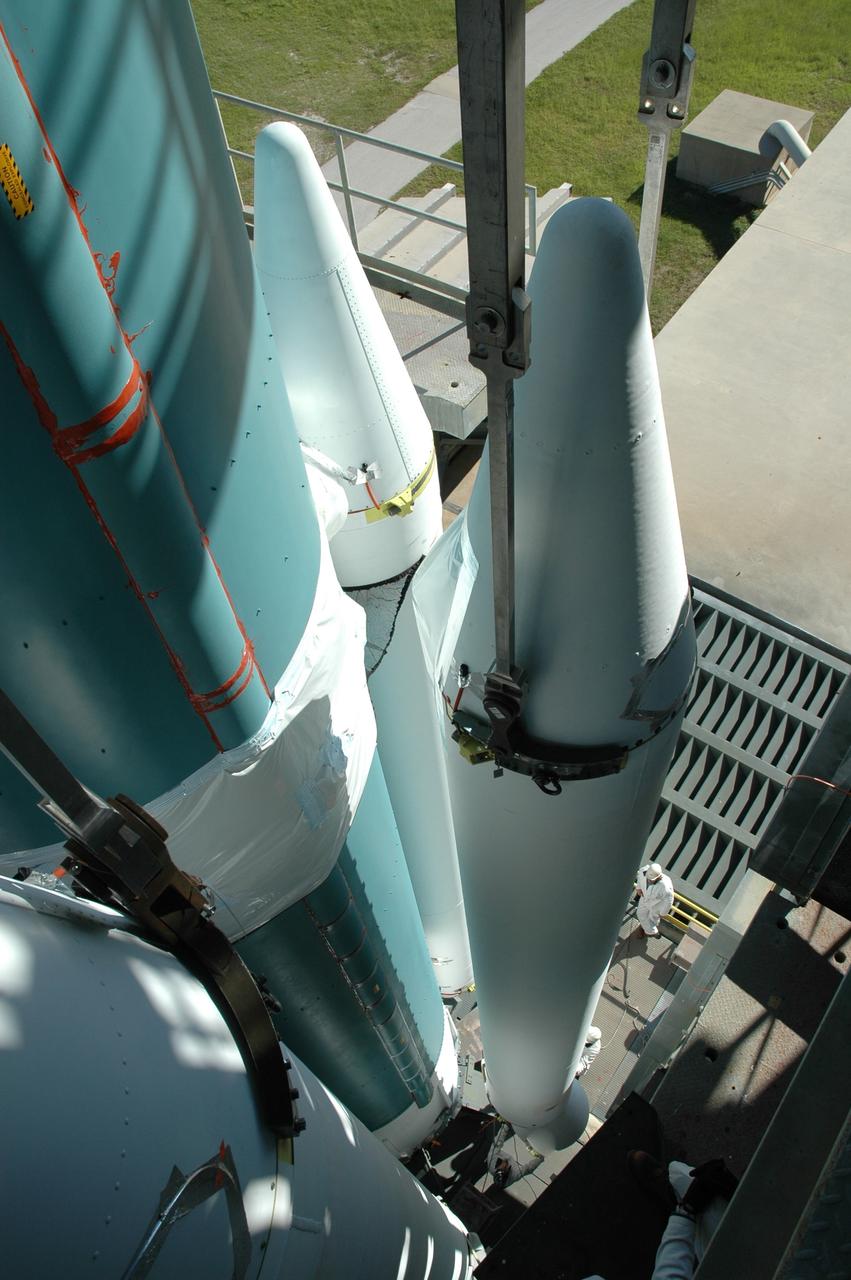
CAPE CANAVERAL, Fla. – On Launch Pad 17-B at Cape Canaveral Air Force Station in Florida, a view from an upper level of the launch tower show air-lit strap-on solid rocket boosters being added to the first stage of the Delta 2 launch vehicle that will carry the Kepler spacecraft into orbit. The Kepler mission is specifically designed to survey our region of the Milky Way galaxy to discover hundreds of Earth-size and smaller planets in or near the habitable zone and determine how many of the billions of stars in our galaxy have such planets. Results from this mission will allow us to place our solar system within the continuum of planetary systems in the Galaxy. NASA's planet-hunting Kepler mission is scheduled to launch no earlier than March 5, 2009. Photo credit: NASA/Jim Grossmann
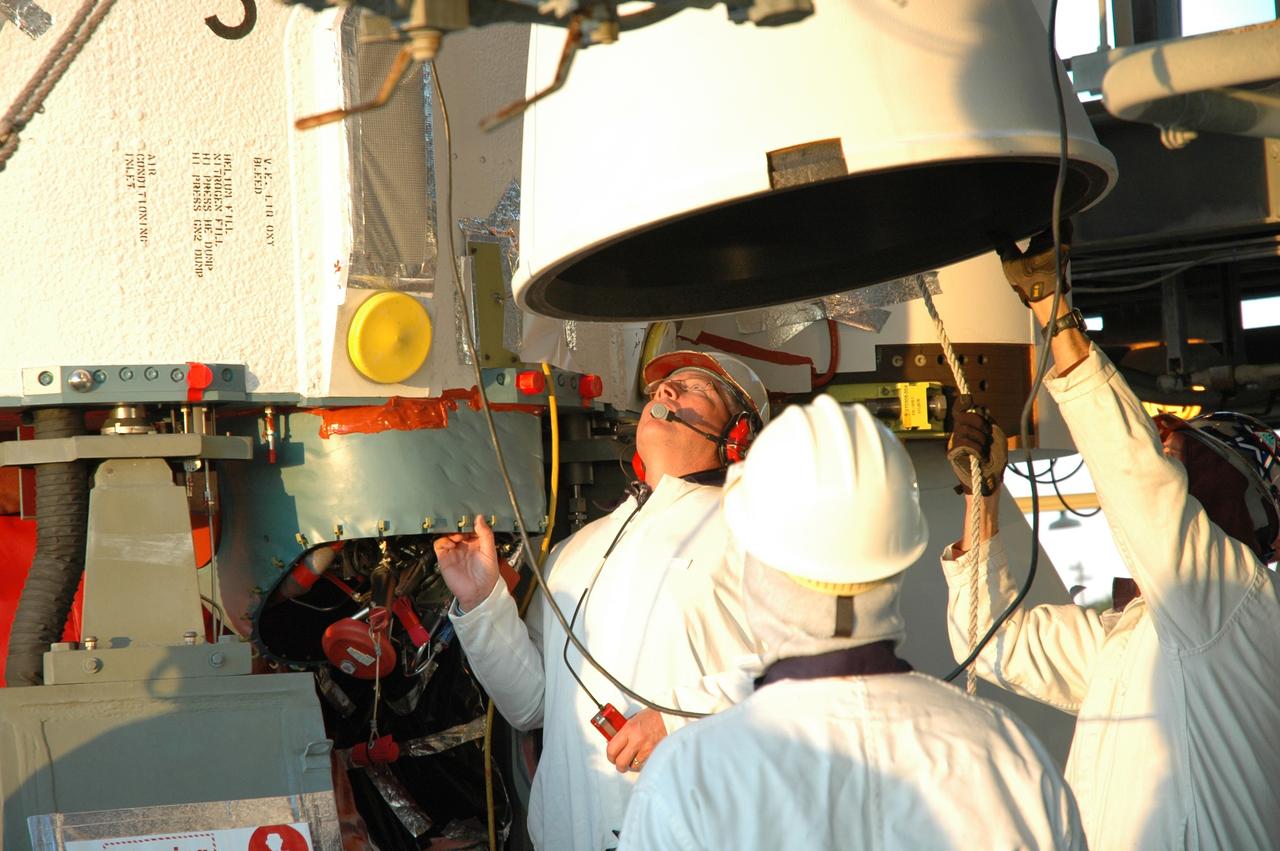
CAPE CANAVERAL, Fla. – On Launch Pad 17-B at Cape Canaveral Air Force Station in Florida, workers get ready to lift an air-lit strap-on solid rocket booster to be mated onto the Delta 2 launch vehicle that will carry the Kepler spacecraft into orbit. The Kepler mission is specifically designed to survey our region of the Milky Way galaxy to discover hundreds of Earth-size and smaller planets in or near the habitable zone and determine how many of the billions of stars in our galaxy have such planets. Results from this mission will allow us to place our solar system within the continuum of planetary systems in the Galaxy. NASA's planet-hunting Kepler mission is scheduled to launch no earlier than March 5, 2009. Photo credit: NASA/Jim Grossmann
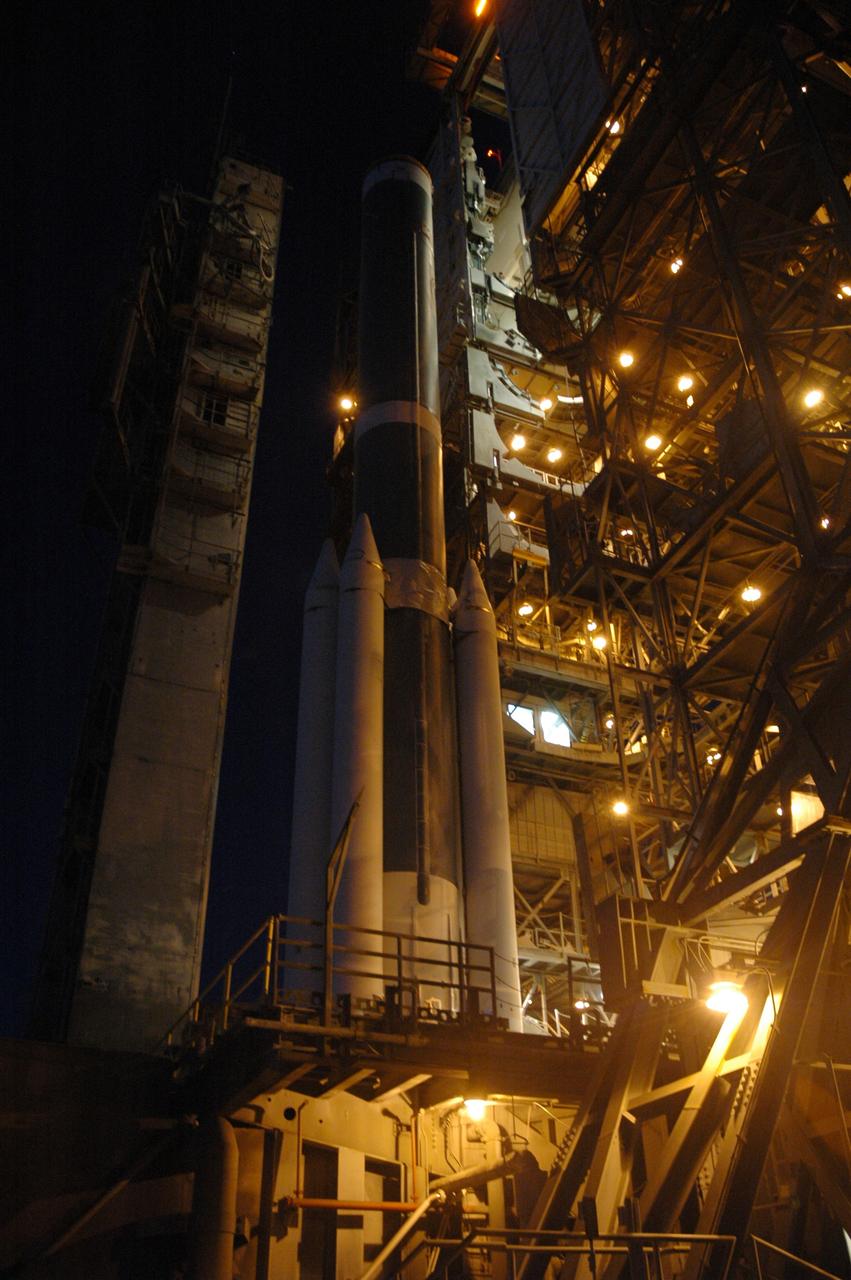
CAPE CANAVERAL, Fla. – On Launch Pad 17-B at Cape Canaveral Air Force Station in Florida, the first stage of the Delta 2 launch vehicle that will carry the Kepler spacecraft into orbit waits for the installation of the final solid rocket boosters. The Kepler mission is specifically designed to survey our region of the Milky Way galaxy to discover hundreds of Earth-size and smaller planets in or near the habitable zone and determine how many of the billions of stars in our galaxy have such planets. Results from this mission will allow us to place our solar system within the continuum of planetary systems in the Galaxy. NASA's planet-hunting Kepler mission is scheduled to launch no earlier than March 5, 2009. Photo credit: NASA/Jim Grossmann
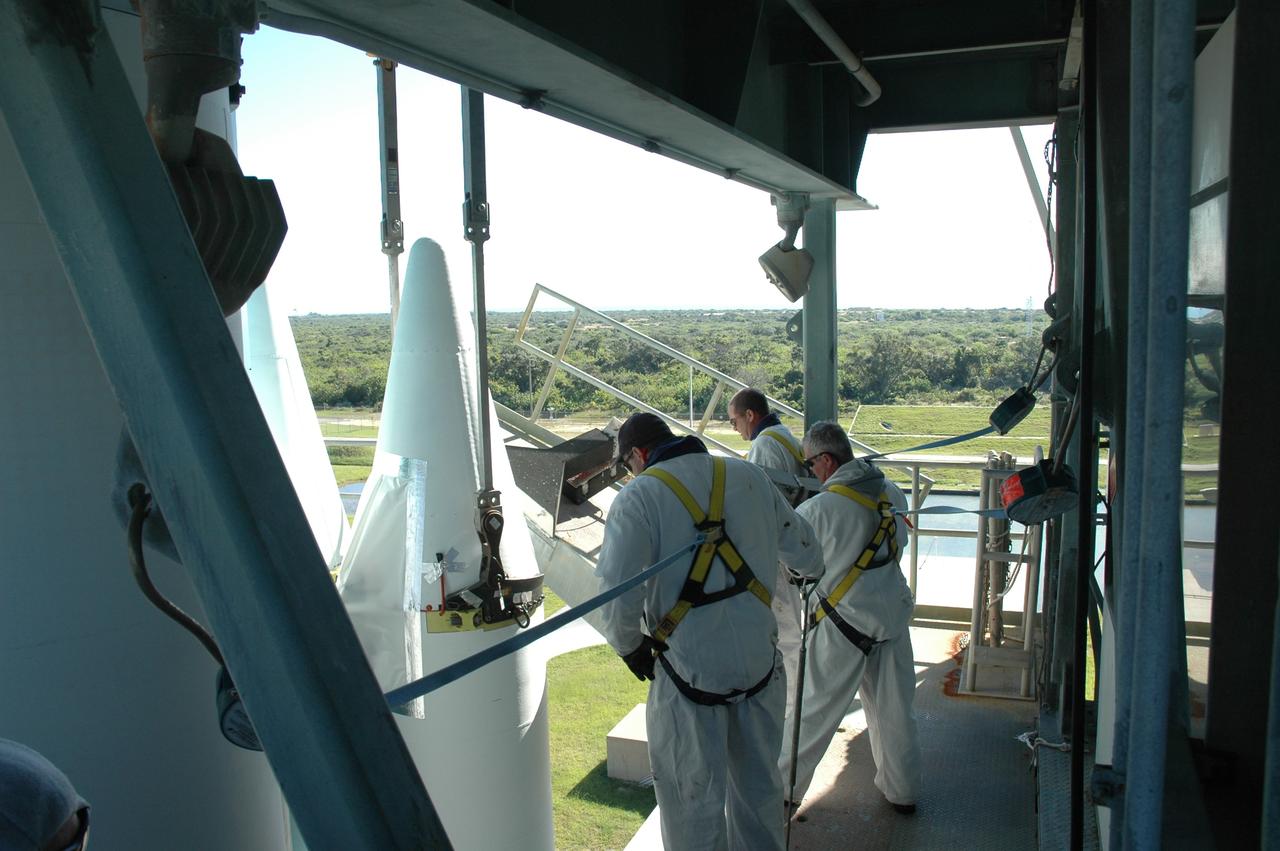
CAPE CANAVERAL, Fla. – On Launch Pad 17-B at Cape Canaveral Air Force Station in Florida, workers on an upper level of the launch tower watch as a strap-on solid rocket booster is lifted into place to mate to the first stage of the Delta 2 launch vehicle that will carry the Kepler spacecraft into orbit. The Kepler mission is specifically designed to survey our region of the Milky Way galaxy to discover hundreds of Earth-size and smaller planets in or near the habitable zone and determine how many of the billions of stars in our galaxy have such planets. Results from this mission will allow us to place our solar system within the continuum of planetary systems in the Galaxy. NASA's planet-hunting Kepler mission is scheduled to launch no earlier than March 5, 2009. Photo credit: NASA/Jim Grossmann
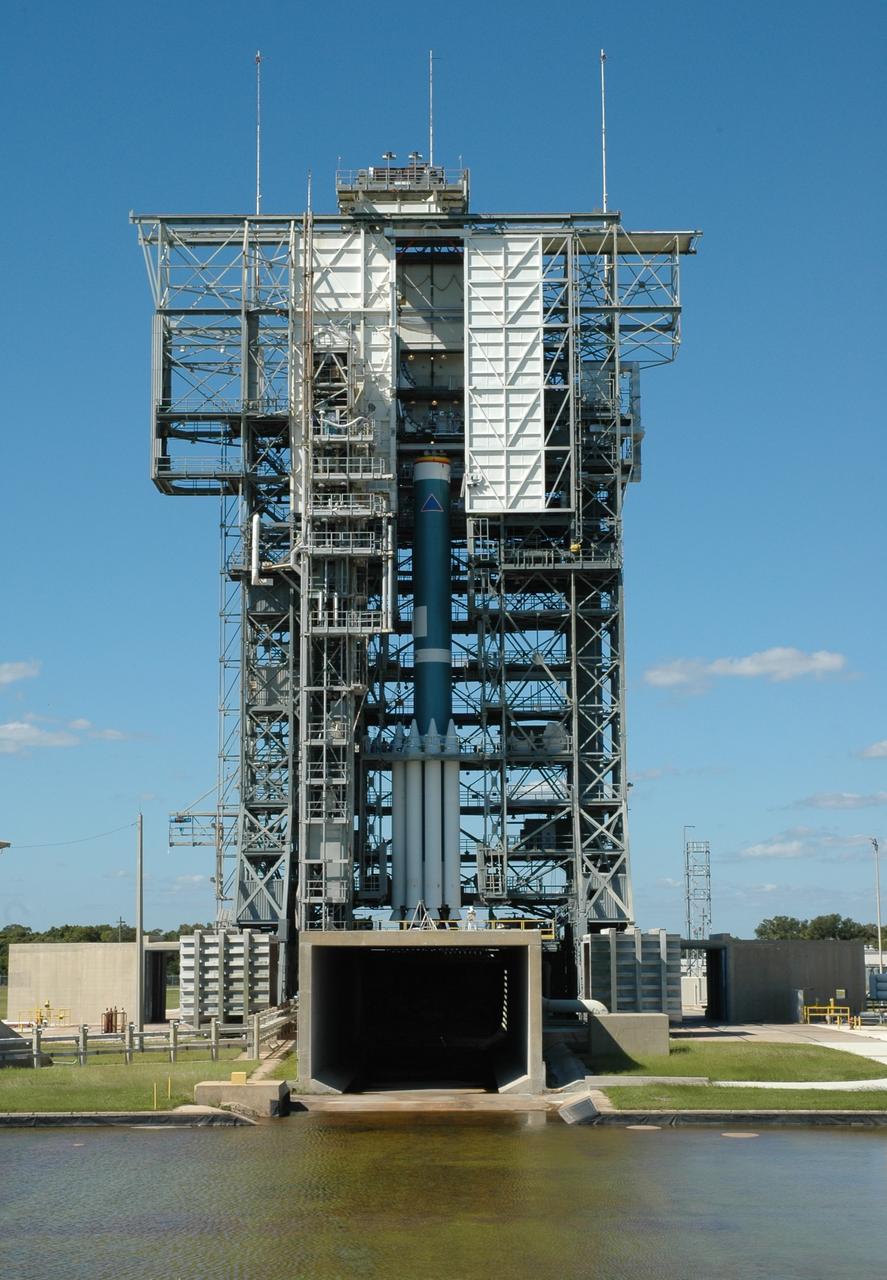
CAPE CANAVERAL, Fla. – On Launch Pad 17-B at Cape Canaveral Air Force Station in Florida, air-lit strap-on solid rocket boosters are added to the first stage of the Delta 2 launch vehicle (seen here) that will carry the Kepler spacecraft into orbit. The Kepler mission is specifically designed to survey our region of the Milky Way galaxy to discover hundreds of Earth-size and smaller planets in or near the habitable zone and determine how many of the billions of stars in our galaxy have such planets. Results from this mission will allow us to place our solar system within the continuum of planetary systems in the Galaxy. NASA's planet-hunting Kepler mission is scheduled to launch no earlier than March 5, 2009. Photo credit: NASA/Jim Grossmann
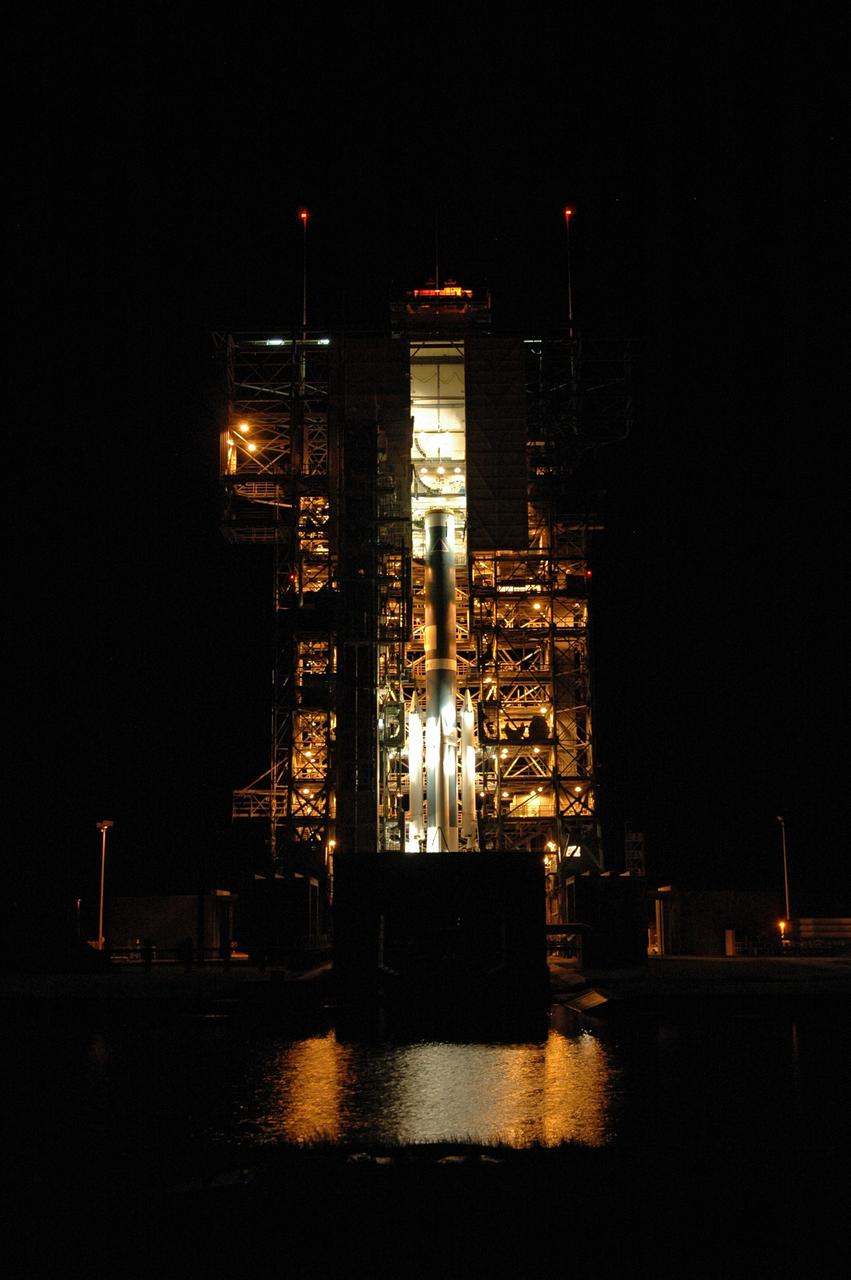
CAPE CANAVERAL, Fla. – On Launch Pad 17-B at Cape Canaveral Air Force Station in Florida, the first stage of the Delta 2 launch vehicle that will carry the Kepler spacecraft into orbit is illuminated on the pad. The Kepler mission is specifically designed to survey our region of the Milky Way galaxy to discover hundreds of Earth-size and smaller planets in or near the habitable zone and determine how many of the billions of stars in our galaxy have such planets. Results from this mission will allow us to place our solar system within the continuum of planetary systems in the Galaxy. NASA's planet-hunting Kepler mission is scheduled to launch no earlier than March 5, 2009. Photo credit: NASA/Jim Grossmann
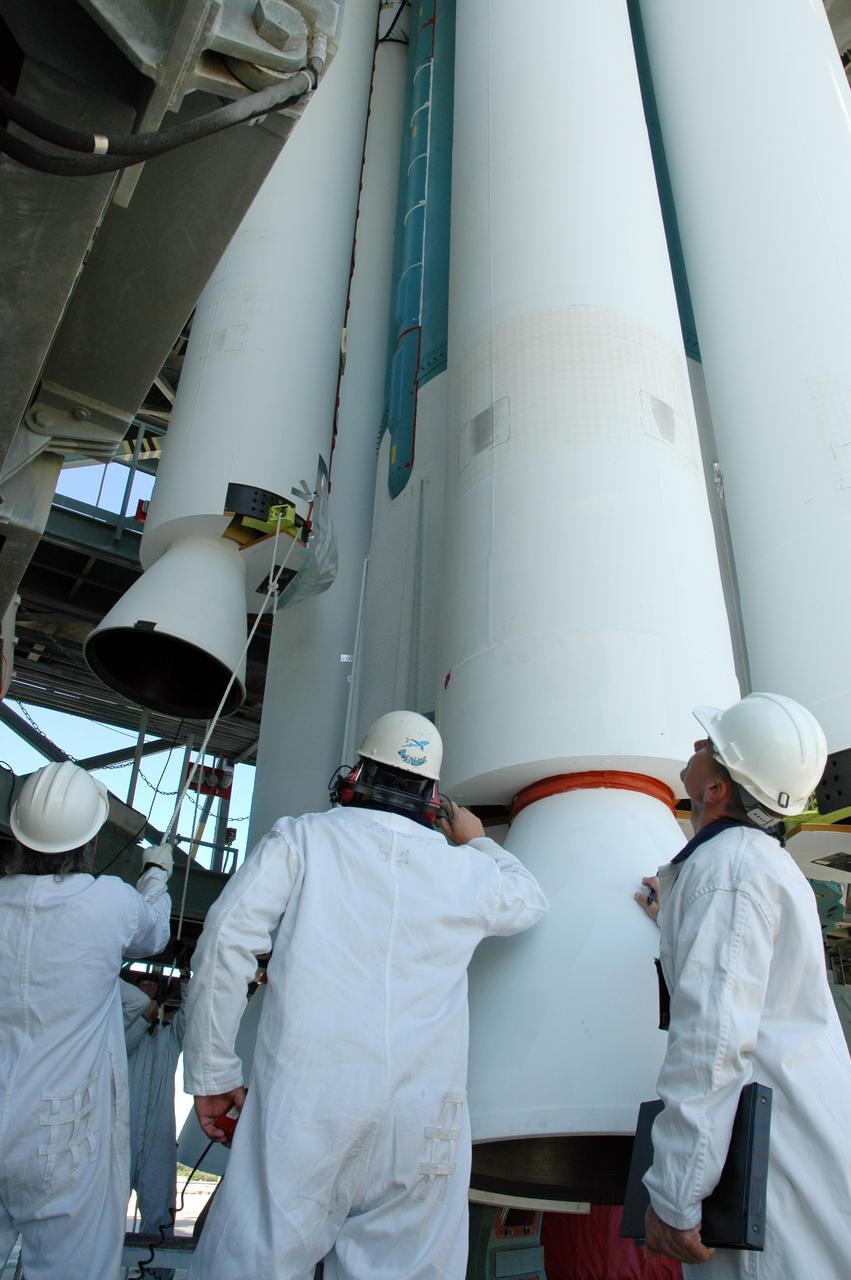
CAPE CANAVERAL, Fla. – On Launch Pad 17-B at Cape Canaveral Air Force Station in Florida, workers oversee the lifting of an air-lit strap-on solid rocket booster that will be mated to the Delta 2 launch vehicle that will carry the Kepler spacecraft into orbit. The Kepler mission is specifically designed to survey our region of the Milky Way galaxy to discover hundreds of Earth-size and smaller planets in or near the habitable zone and determine how many of the billions of stars in our galaxy have such planets. Results from this mission will allow us to place our solar system within the continuum of planetary systems in the Galaxy. NASA's planet-hunting Kepler mission is scheduled to launch no earlier than March 5, 2009. Photo credit: NASA/Jim Grossmann
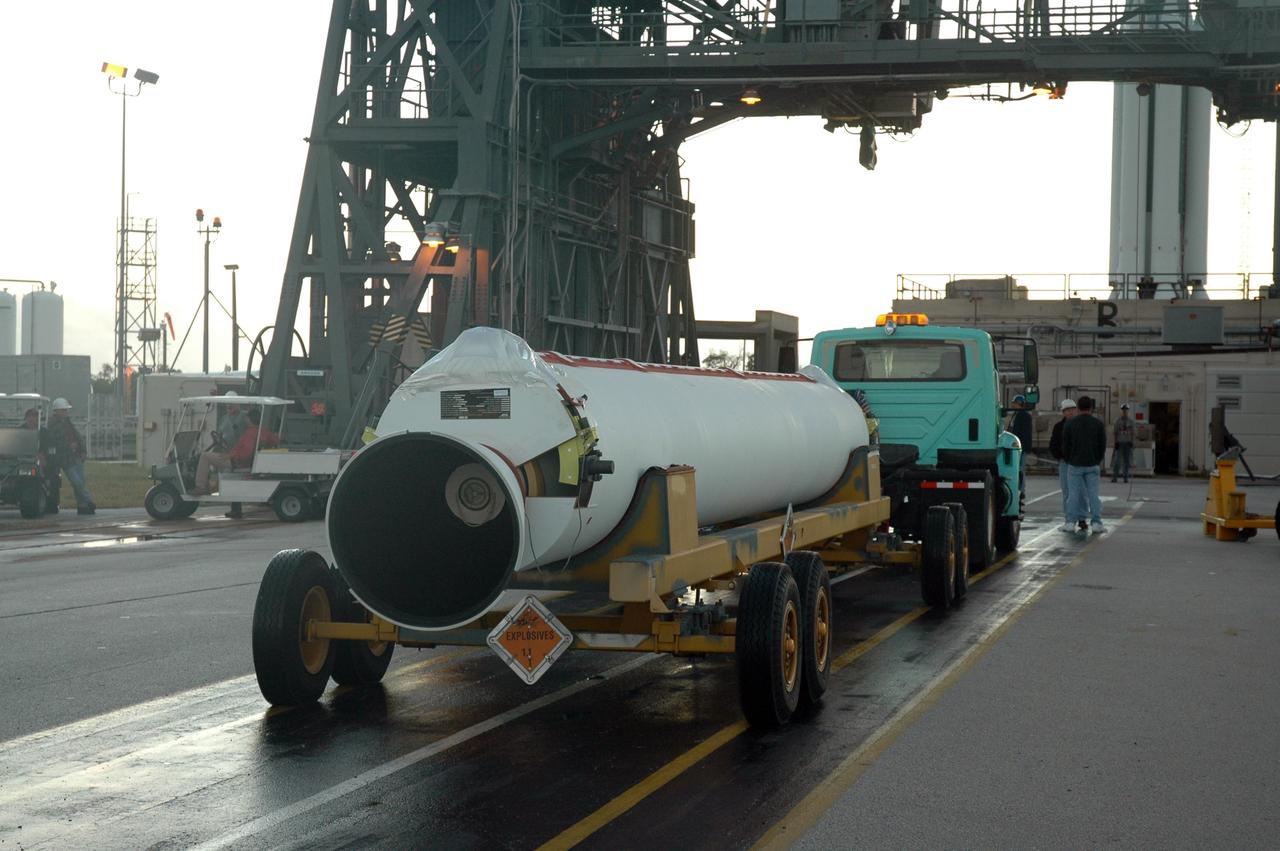
CAPE CANAVERAL, Fla. – On Launch Pad 17-B at Cape Canaveral Air Force Station in Florida, one of the final solid rocket boosters arrives for installation on the first stage of the Delta 2 launch vehicle that will carry the Kepler spacecraft into orbit. The Kepler mission is specifically designed to survey our region of the Milky Way galaxy to discover hundreds of Earth-size and smaller planets in or near the habitable zone and determine how many of the billions of stars in our galaxy have such planets. Results from this mission will allow us to place our solar system within the continuum of planetary systems in the Galaxy. NASA's planet-hunting Kepler mission is scheduled to launch no earlier than March 5, 2009. Photo credit: NASA/Jim Grossmann
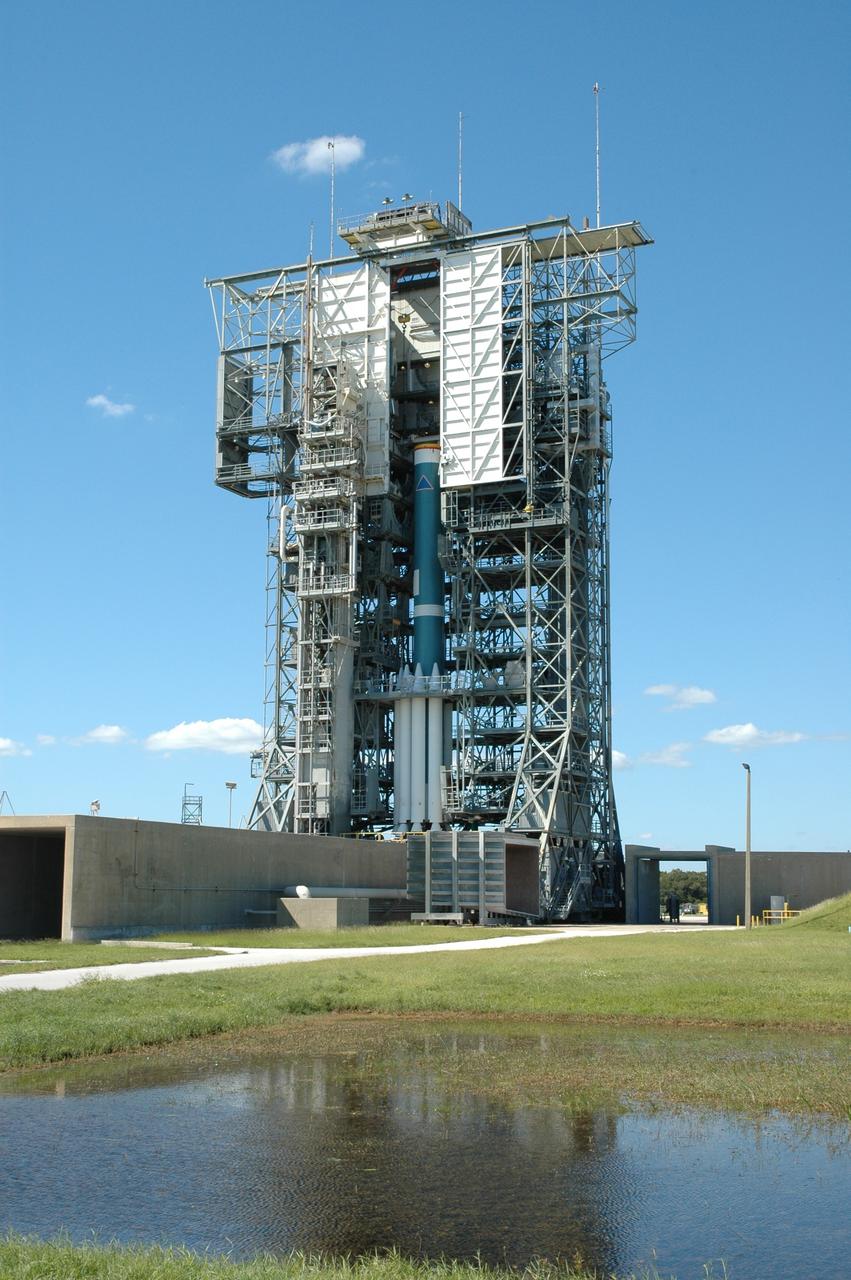
CAPE CANAVERAL, Fla. – On Launch Pad 17-B at Cape Canaveral Air Force Station in Florida, air-lit strap-on solid rocket boosters are being added to the first stage of the Delta 2 launch vehicle (seen here) that will carry the Kepler spacecraft into orbit. The Kepler mission is specifically designed to survey our region of the Milky Way galaxy to discover hundreds of Earth-size and smaller planets in or near the habitable zone and determine how many of the billions of stars in our galaxy have such planets. Results from this mission will allow us to place our solar system within the continuum of planetary systems in the Galaxy. NASA's planet-hunting Kepler mission is scheduled to launch no earlier than March 5, 2009. Photo credit: NASA/Jim Grossmann
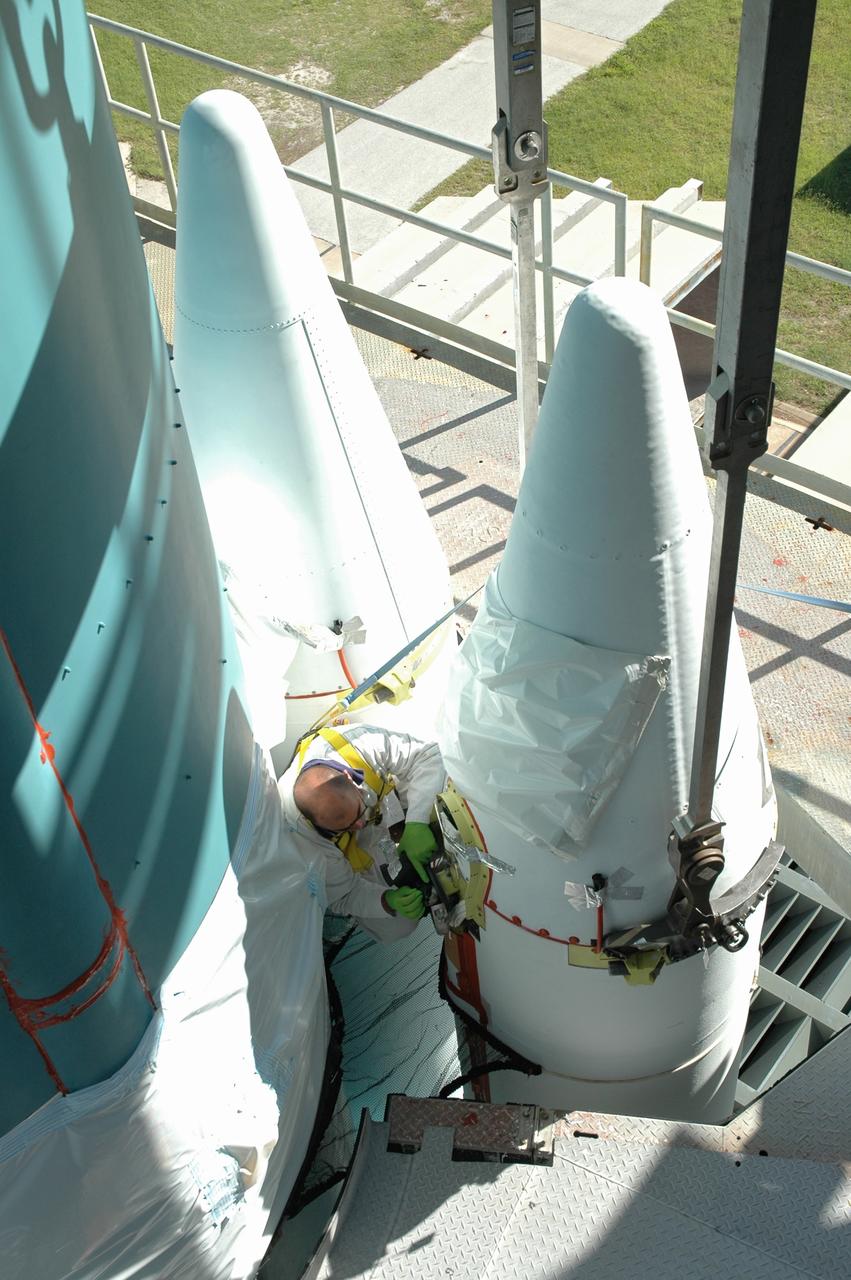
CAPE CANAVERAL, Fla. – On Launch Pad 17-B at Cape Canaveral Air Force Station in Florida, a worker makes adjustments on one of the solid rocket boosters being mated to the first stage of the Delta 2 launch vehicle that will carry the Kepler spacecraft into orbit. The Kepler mission is specifically designed to survey our region of the Milky Way galaxy to discover hundreds of Earth-size and smaller planets in or near the habitable zone and determine how many of the billions of stars in our galaxy have such planets. Results from this mission will allow us to place our solar system within the continuum of planetary systems in the Galaxy. NASA's planet-hunting Kepler mission is scheduled to launch no earlier than March 5, 2009. Photo credit: NASA/Jim Grossmann
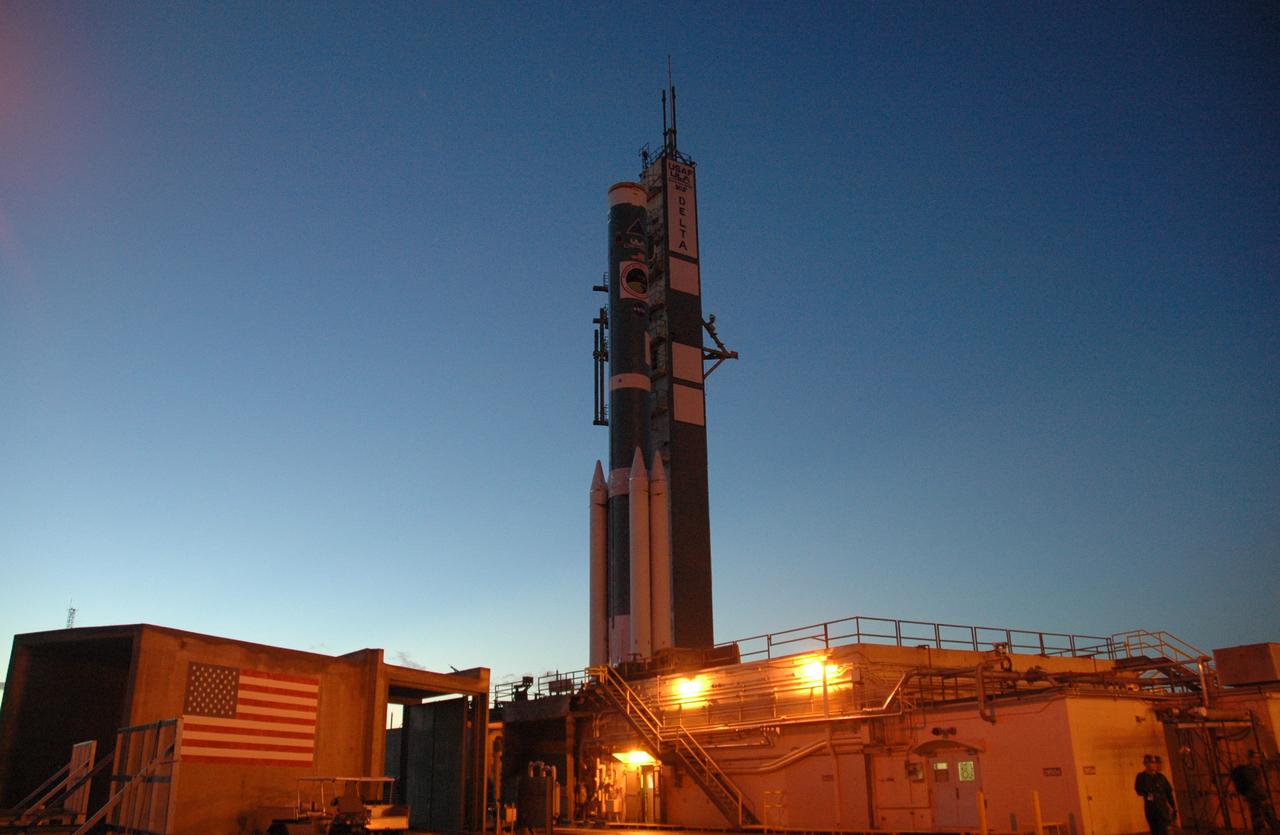
CAPE CANAVERAL, Fla. – As dawn lights the sky on Launch Pad 17-B at Cape Canaveral Air Force Station in Florida, the first stage of the Delta 2 launch vehicle that will carry the Kepler spacecraft into orbit waits for the installation of the final solid rocket boosters. The Kepler mission is specifically designed to survey our region of the Milky Way galaxy to discover hundreds of Earth-size and smaller planets in or near the habitable zone and determine how many of the billions of stars in our galaxy have such planets. Results from this mission will allow us to place our solar system within the continuum of planetary systems in the Galaxy. NASA's planet-hunting Kepler mission is scheduled to launch no earlier than March 5, 2009. Photo credit: NASA/Jim Grossmann
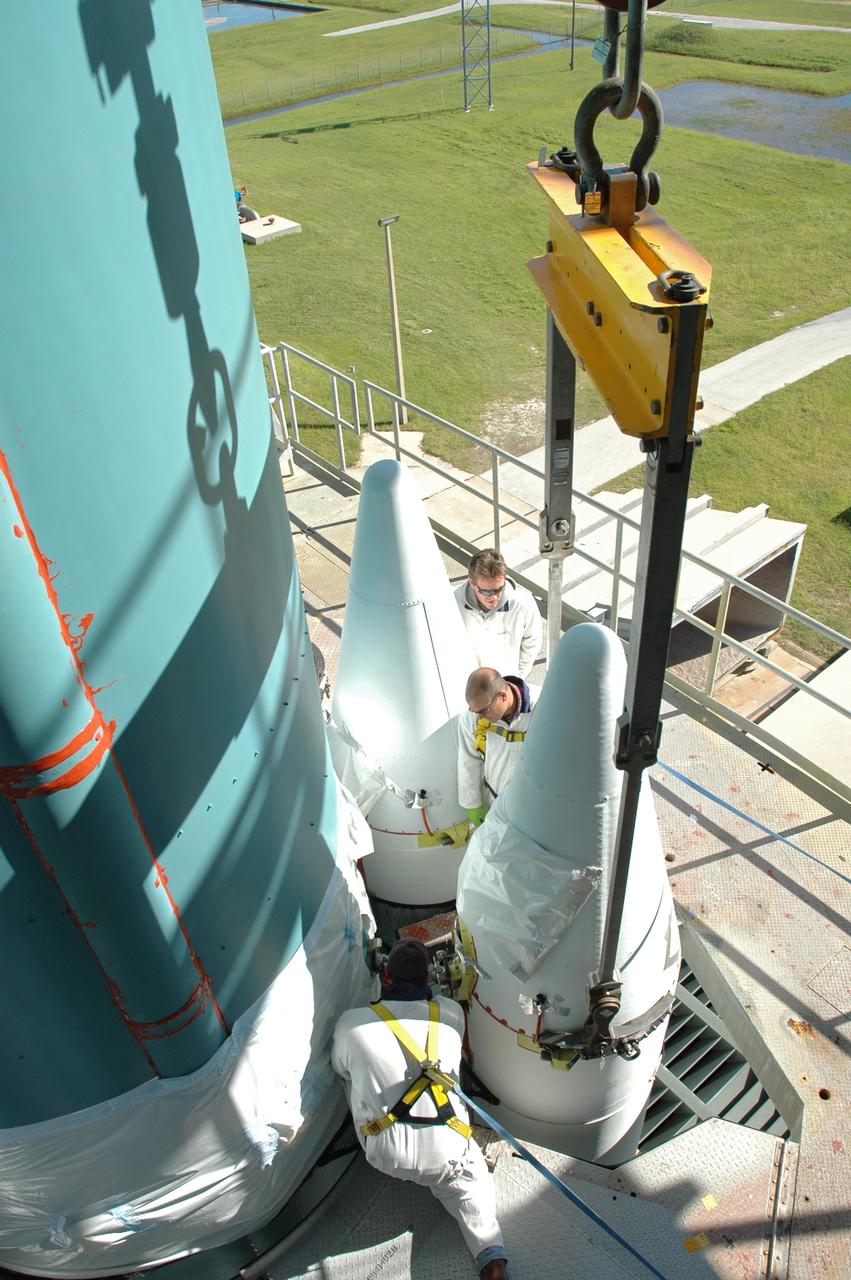
CAPE CANAVERAL, Fla. – On Launch Pad 17-B at Cape Canaveral Air Force Station in Florida, workers make adjustments on one of the solid rocket boosters being mated to the first stage of the Delta 2 launch vehicle that will carry the Kepler spacecraft into orbit. The Kepler mission is specifically designed to survey our region of the Milky Way galaxy to discover hundreds of Earth-size and smaller planets in or near the habitable zone and determine how many of the billions of stars in our galaxy have such planets. Results from this mission will allow us to place our solar system within the continuum of planetary systems in the Galaxy. NASA's planet-hunting Kepler mission is scheduled to launch no earlier than March 5, 2009. Photo credit: NASA/Jim Grossmann
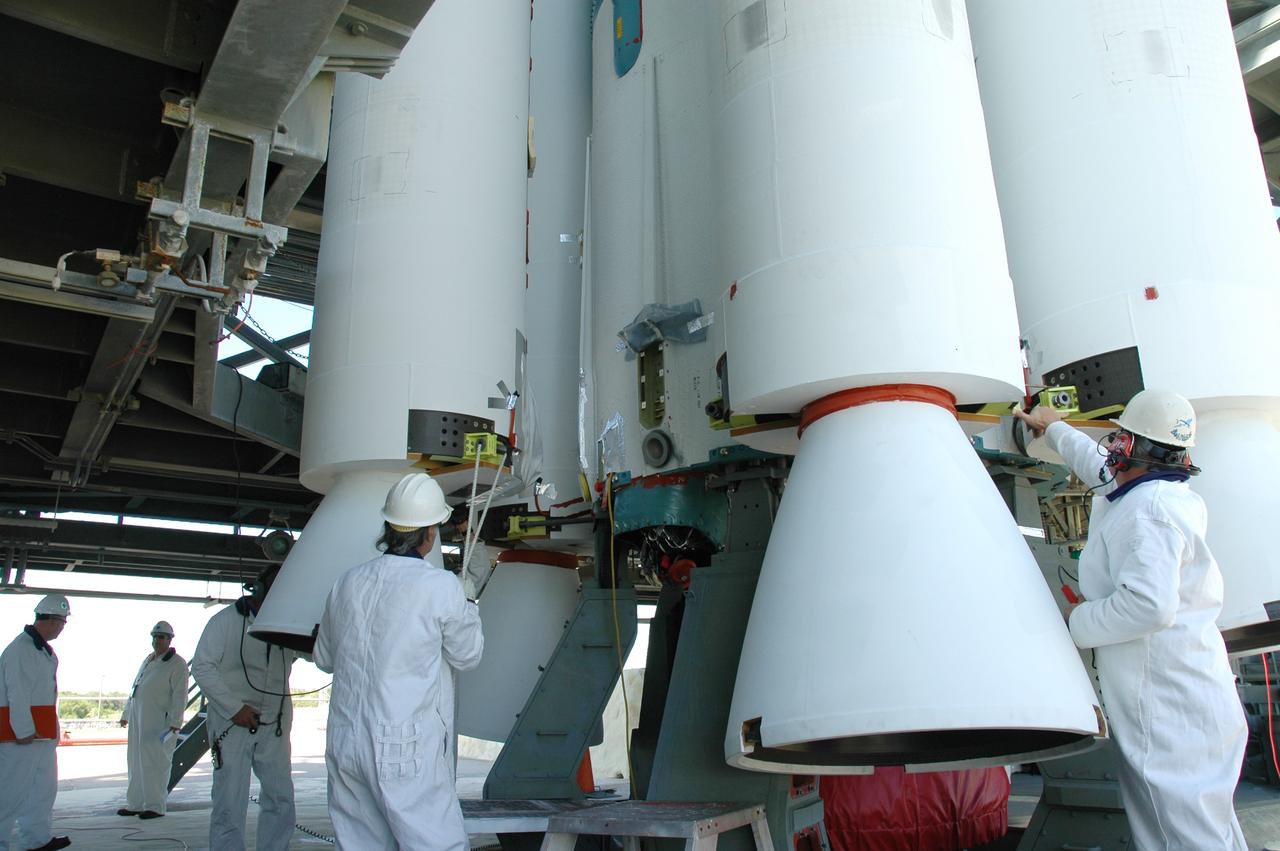
CAPE CANAVERAL, Fla. – On Launch Pad 17-B at Cape Canaveral Air Force Station in Florida, workers prepare to mate an air-lit strap-on solid rocket booster onto the Delta 2 launch vehicle that will carry the Kepler spacecraft into orbit. The Kepler mission is specifically designed to survey our region of the Milky Way galaxy to discover hundreds of Earth-size and smaller planets in or near the habitable zone and determine how many of the billions of stars in our galaxy have such planets. Results from this mission will allow us to place our solar system within the continuum of planetary systems in the Galaxy. NASA's planet-hunting Kepler mission is scheduled to launch no earlier than March 5, 2009. Photo credit: NASA/Jim Grossmann
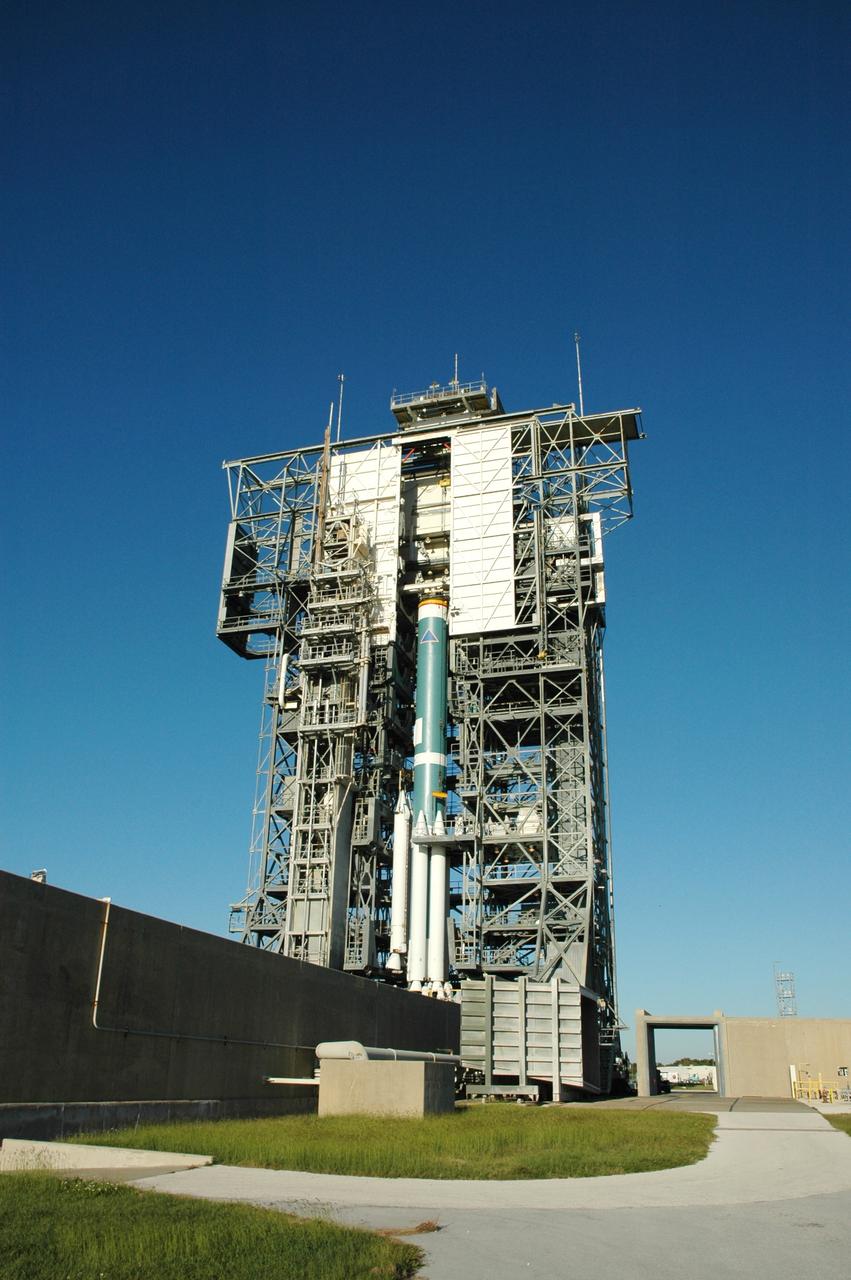
CAPE CANAVERAL, Fla. – On Launch Pad 17-B at Cape Canaveral Air Force Station in Florida, air-lit strap-on solid rocket boosters are being added to the first stage of the Delta 2 launch vehicle (seen here) that will carry the Kepler spacecraft into orbit. The Kepler mission is specifically designed to survey our region of the Milky Way galaxy to discover hundreds of Earth-size and smaller planets in or near the habitable zone and determine how many of the billions of stars in our galaxy have such planets. Results from this mission will allow us to place our solar system within the continuum of planetary systems in the Galaxy. NASA's planet-hunting Kepler mission is scheduled to launch no earlier than March 5, 2009. Photo credit: NASA/Jim Grossmann
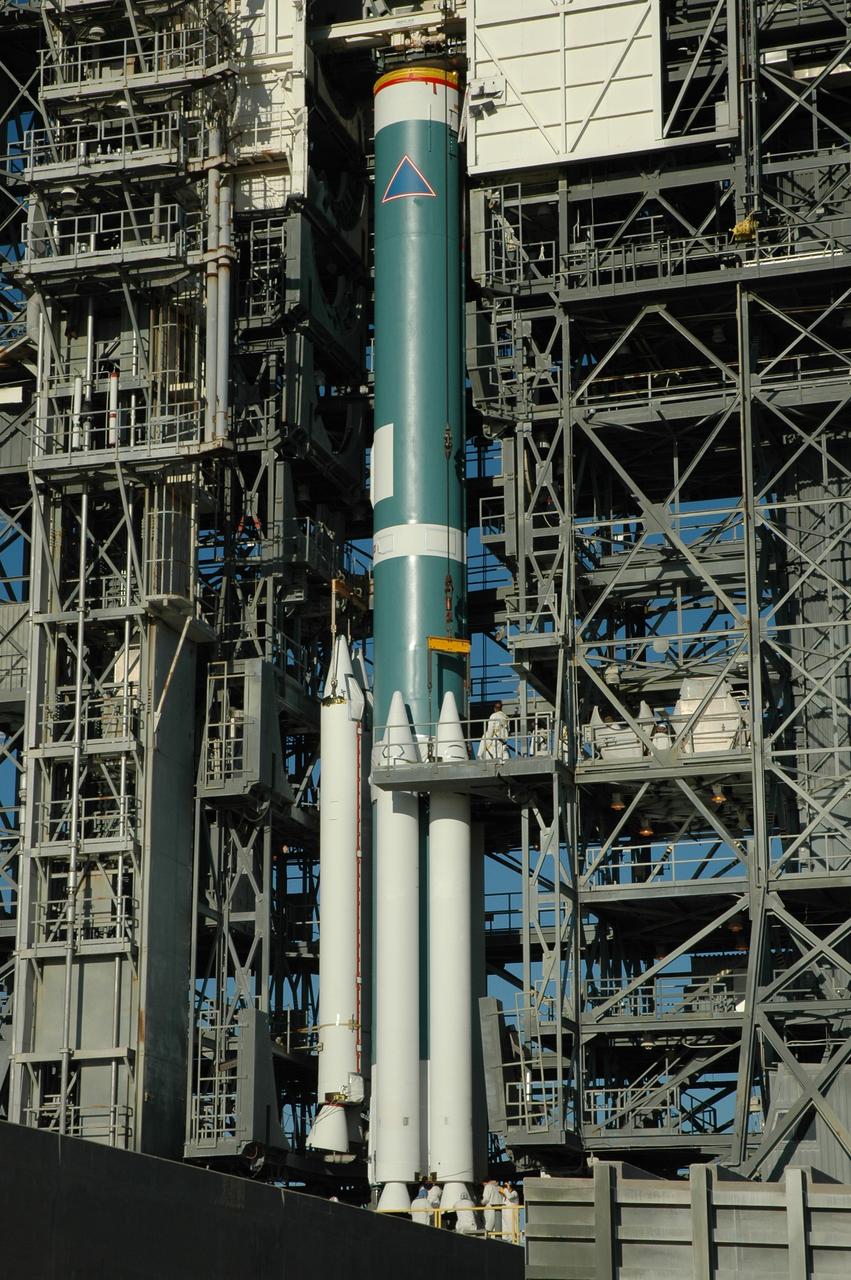
CAPE CANAVERAL, Fla. – On Launch Pad 17-B at Cape Canaveral Air Force Station in Florida, air-lit strap-on solid rocket boosters are being added to the first stage of the Delta 2 launch vehicle (seen here) that will carry the Kepler spacecraft into orbit. The Kepler mission is specifically designed to survey our region of the Milky Way galaxy to discover hundreds of Earth-size and smaller planets in or near the habitable zone and determine how many of the billions of stars in our galaxy have such planets. Results from this mission will allow us to place our solar system within the continuum of planetary systems in the Galaxy. NASA's planet-hunting Kepler mission is scheduled to launch no earlier than March 5, 2009. Photo credit: NASA/Jim Grossmann
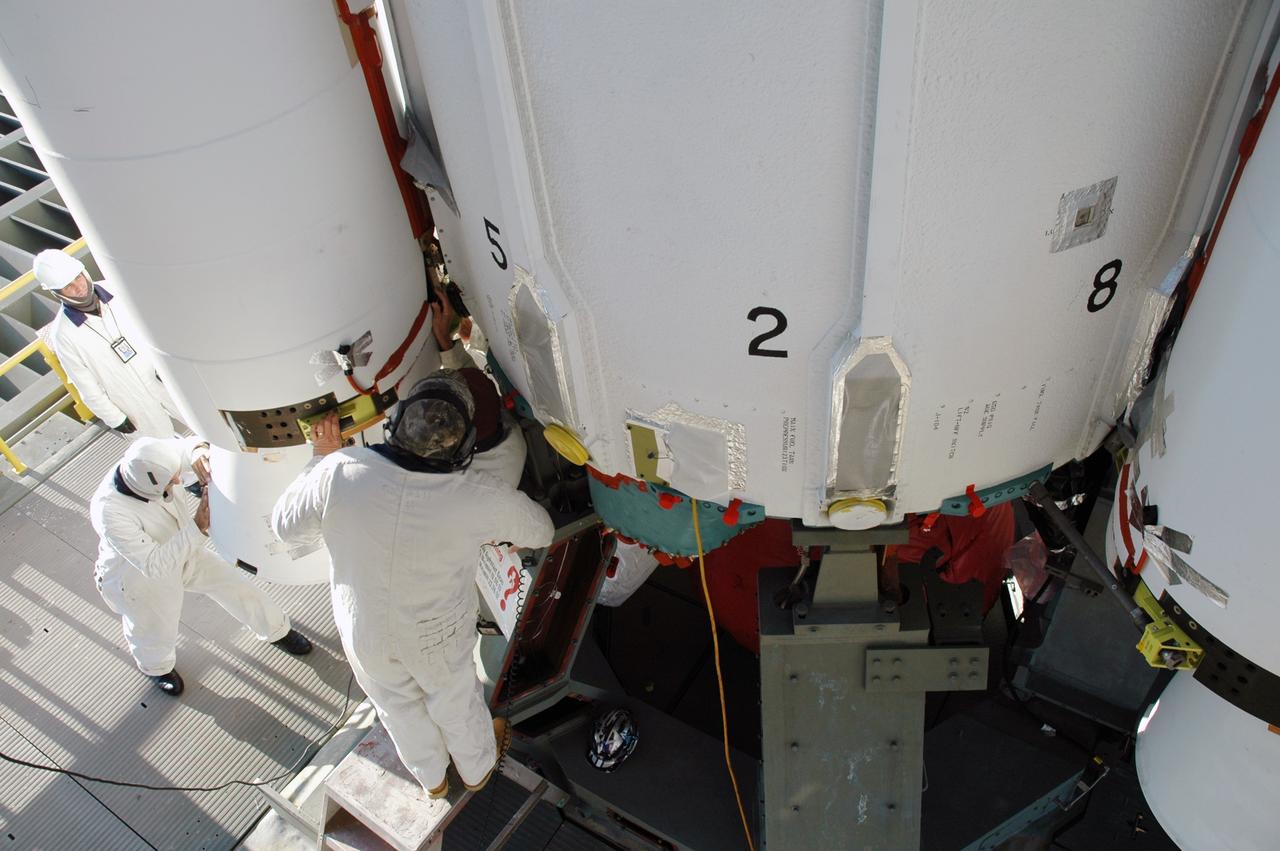
CAPE CANAVERAL, Fla. – On Launch Pad 17-B at Cape Canaveral Air Force Station in Florida, workers mate an air-lit strap-on solid rocket booster onto the Delta 2 launch vehicle that will carry the Kepler spacecraft into orbit. The Kepler mission is specifically designed to survey our region of the Milky Way galaxy to discover hundreds of Earth-size and smaller planets in or near the habitable zone and determine how many of the billions of stars in our galaxy have such planets. Results from this mission will allow us to place our solar system within the continuum of planetary systems in the Galaxy. NASA's planet-hunting Kepler mission is scheduled to launch no earlier than March 5, 2009. Photo credit: NASA/Jim Grossmann
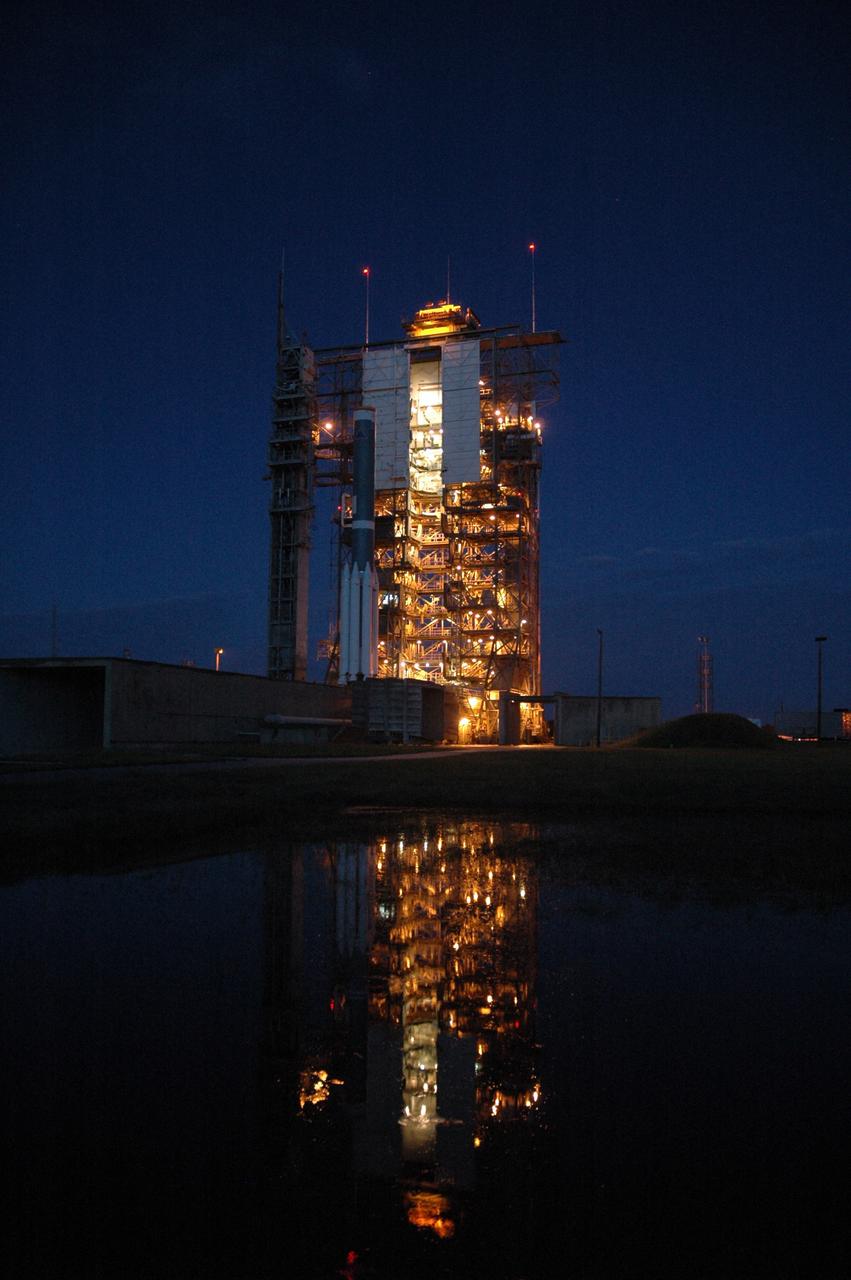
CAPE CANAVERAL, Fla. – Just before dawn on Launch Pad 17-B at Cape Canaveral Air Force Station in Florida, the first stage of the Delta 2 launch vehicle that will carry the Kepler spacecraft into orbit waits for the installation of the final solid rocket boosters. The Kepler mission is specifically designed to survey our region of the Milky Way galaxy to discover hundreds of Earth-size and smaller planets in or near the habitable zone and determine how many of the billions of stars in our galaxy have such planets. Results from this mission will allow us to place our solar system within the continuum of planetary systems in the Galaxy. NASA's planet-hunting Kepler mission is scheduled to launch no earlier than March 5, 2009. Photo credit: NASA/Jim Grossmann
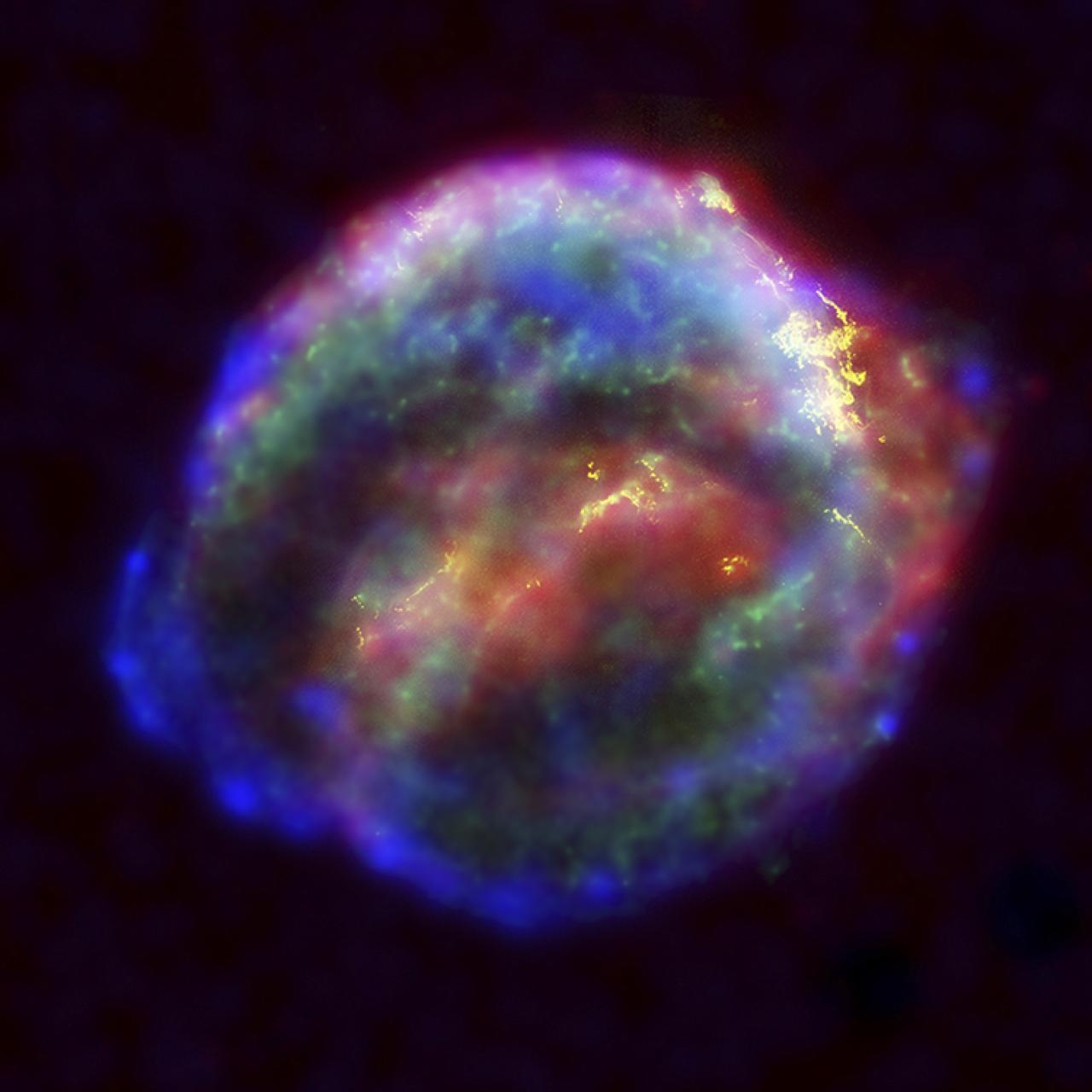
Four hundred years ago, sky watchers, including the famous astronomer Johannes Kepler, best known as the discoverer of the laws of planetary motion, were startled by the sudden appearance of a new star in the western sky, rivaling the brilliance of the nearby planets. Modern astronomers, using NASA's three orbiting Great Observatories, are unraveling the mysteries of the expanding remains of Kepler's supernova, the last such object seen to explode in our Milky Way galaxy. When a new star appeared Oct. 9, 1604, observers could use only their eyes to study it. The telescope would not be invented for another four years. A team of modern astronomers has the combined abilities of NASA's Great Observatories, the Spritzer Space Telescope (SST), Hubble Space Telescope (HST), and Chandra X-Ray Observatory (CXO), to analyze the remains in infrared radiation, visible light, and X-rays. Visible-light images from Hubble's Advanced Camera for Surveys reveal where the supernova shock wave is slamming into the densest regions of surrounding gas. The astronomers used the SST to probe for material that radiates in infrared light, which shows heated microscopic dust particles that have been swept up by the supernova shock wave. The CXO data show regions of very hot gas. The combined image unveils a bubble-shaped shroud of gas and dust, 14 light-years wide and expanding at 4 million mph. There have been six known supernovas in our Milky Way over the past 1,000 years. Kepler's is the only one in which astronomers do not know what type of star exploded. By combining information from all three Great Observatories, astronomers may find the clues they need. Project management for both the HST and CXO programs is the responsibility of NASA’s Marshall Space Flight Center in Huntsville, Alabama.