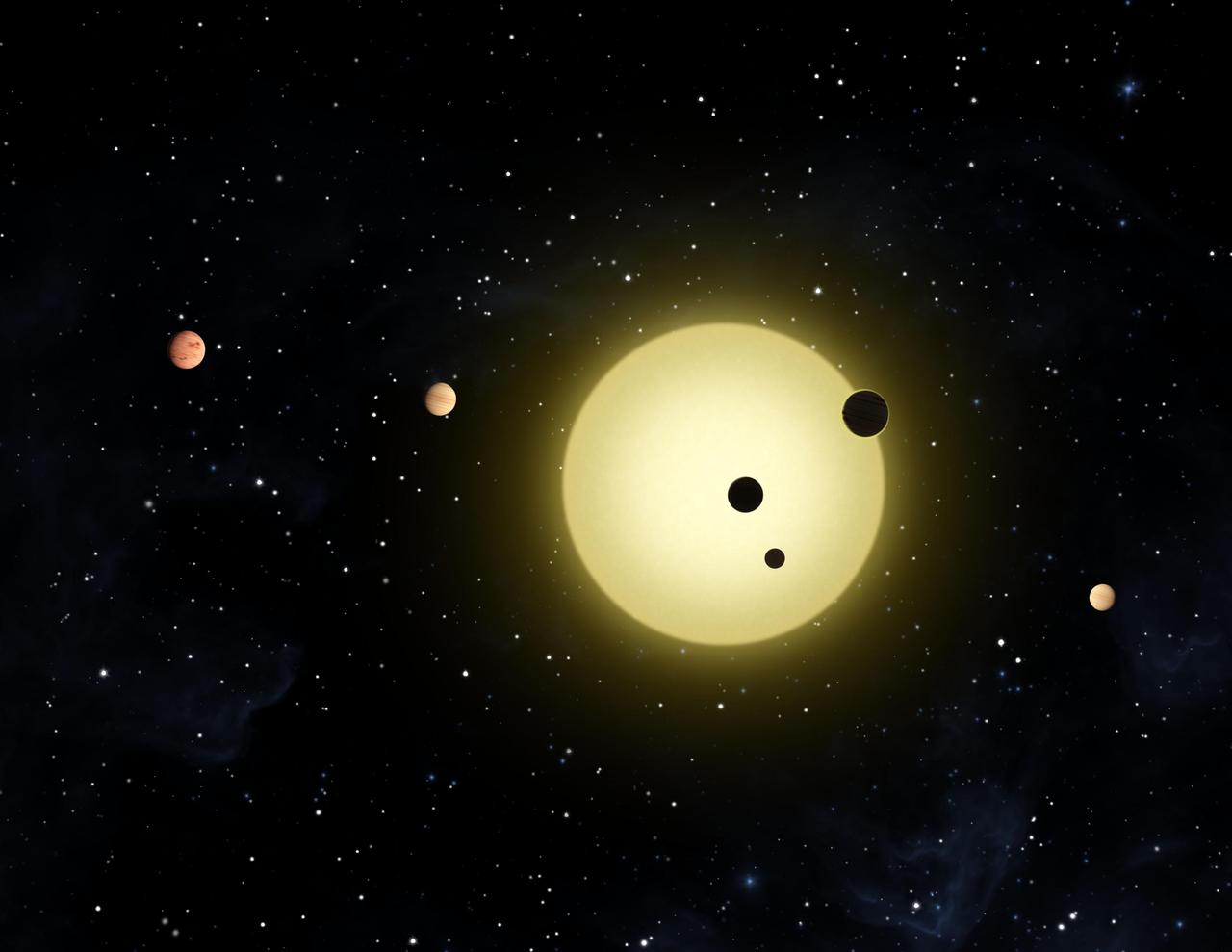
This artist concept shows Kepler-11 -- the most tightly packed planetary system yet discovered.
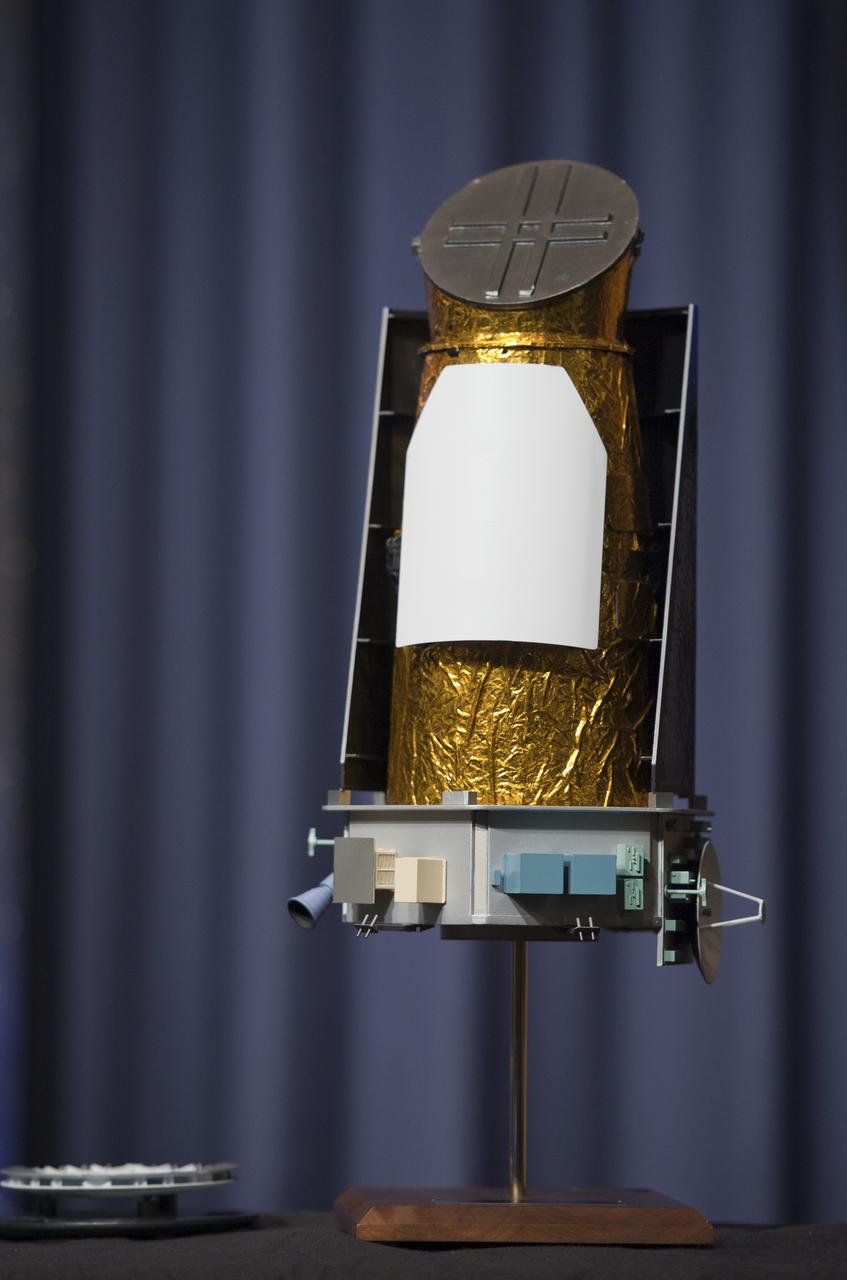
A scale model of the Kepler space telescope is seen at a news conference, Wednesday, Feb. 2, 2010, at NASA Headquarters in Washington. Scientists using NASA's Kepler, a space telescope, recently discovered six planets made of a mix of rock and gases orbiting a single sun-like star, known as Kepler-11, which is located approximately 2,000 light years from Earth. Photo Credit: (NASA/Paul E. Alers)
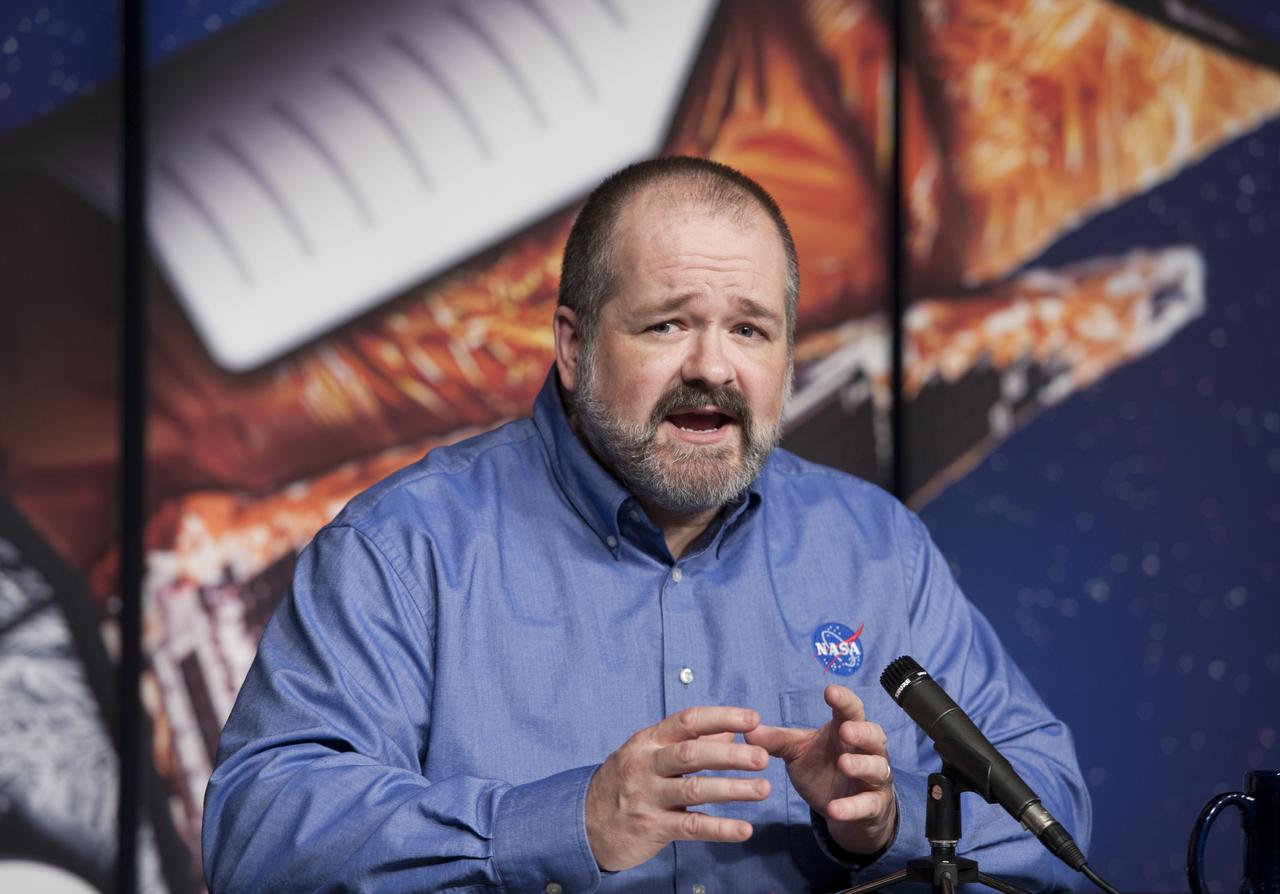
Douglas Hudgins, a Kepler Program Scientist, speaks during a news conference, Wednesday, Feb. 2, 2010, at NASA Headquarters in Washington. Scientists using NASA's Kepler, a space telescope, recently discovered six planets made of a mix of rock and gases orbiting a single sun-like star, known as Kepler-11, which is located approximately 2,000 light years from Earth. Photo Credit: (NASA/Paul E. Alers)
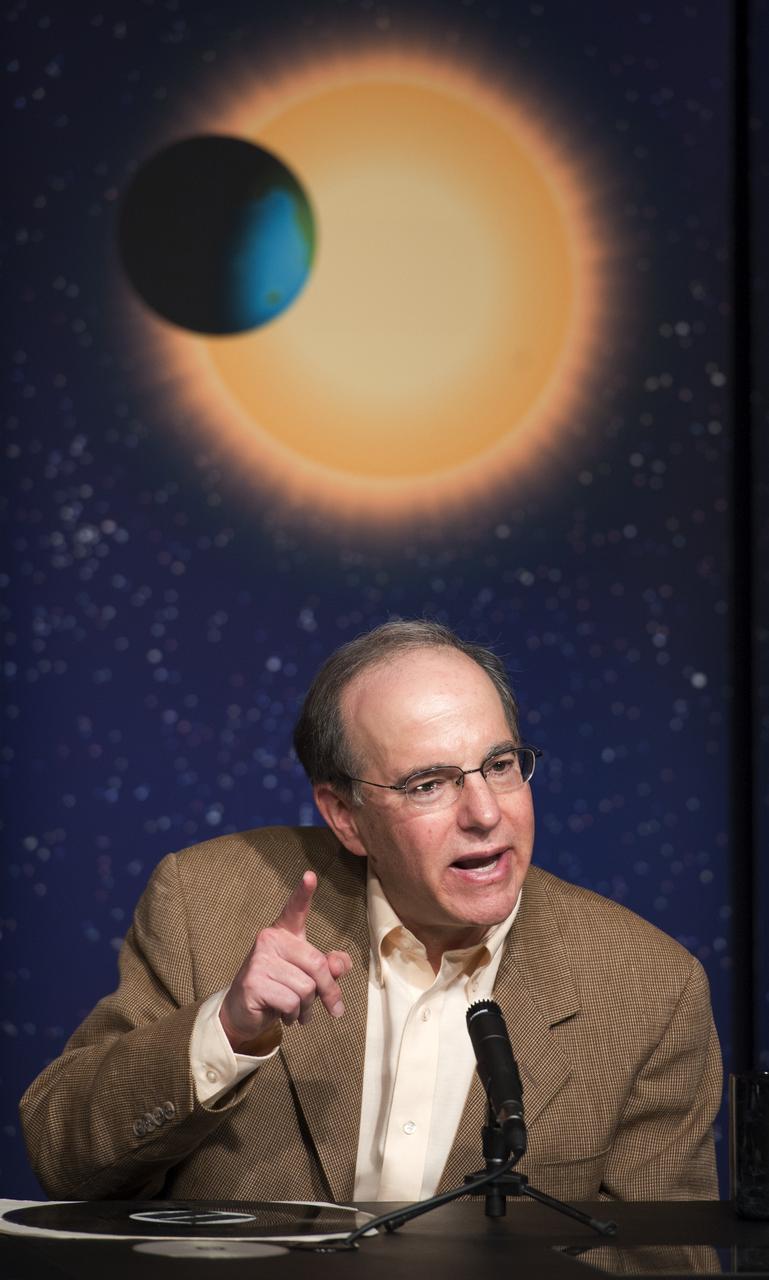
Jack Lissauer, a planetary scientist and a Kepler science team member at NASA's Ames Research Center, speaks during a news conference, Wednesday, Feb. 2, 2010, at NASA Headquarters in Washington. Scientists using NASA's Kepler, a space telescope, recently discovered six planets made of a mix of rock and gases orbiting a single sun-like star, known as Kepler-11, which is located approximately 2,000 light years from Earth. "It’s amazingly compact, it’s amazingly flat, there’s an amazingly large number of big planets orbiting close to their star - we didn’t know such systems could even exist," he said. Photo Credit: (NASA/Paul E. Alers)

Jack Lissauer, a planetary scientist and a Kepler science team member at NASA's Ames Research Center, speaks during a news conference, Wednesday, Feb. 2, 2010, at NASA Headquarters in Washington. Scientists using NASA's Kepler, a space telescope, recently discovered six planets made of a mix of rock and gases orbiting a single sun-like star, known as Kepler-11, which is located approximately 2,000 light years from Earth."It’s amazingly compact, it’s amazingly flat, there’s an amazingly large number of big planets orbiting close to their star - we didn’t know such systems could even exist." Photo Credit: (NASA/Paul E. Alers)
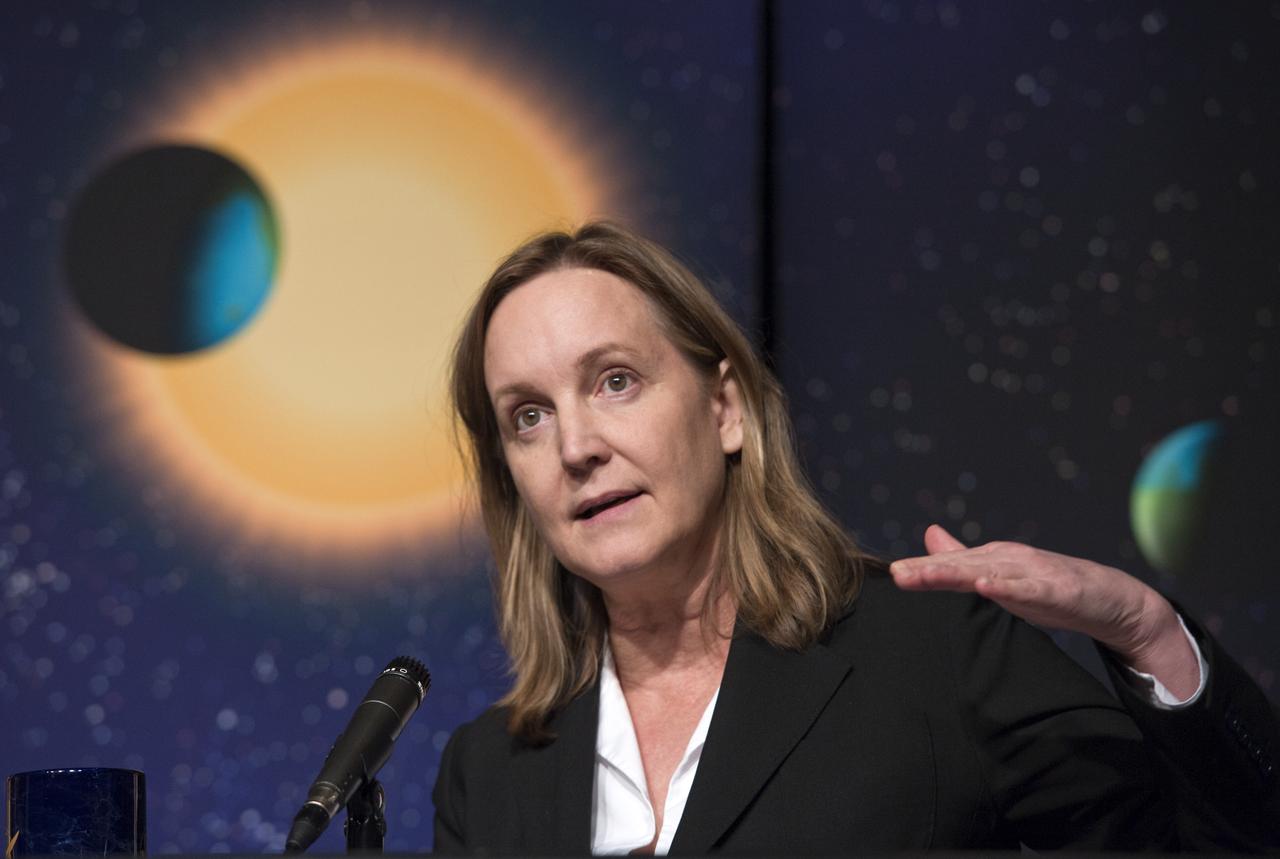
Debra Fischer, a professor of Astronomy at Yale University, speaks during a news conference, Wednesday, Feb. 2, 2010, at NASA Headquarters in Washington. Scientists using NASA's Kepler, a space telescope, recently discovered six planets made of a mix of rock and gases orbiting a single sun-like star, known as Kepler-11, which is located approximately 2,000 light years from Earth. Photo Credit: (NASA/Paul E. Alers)
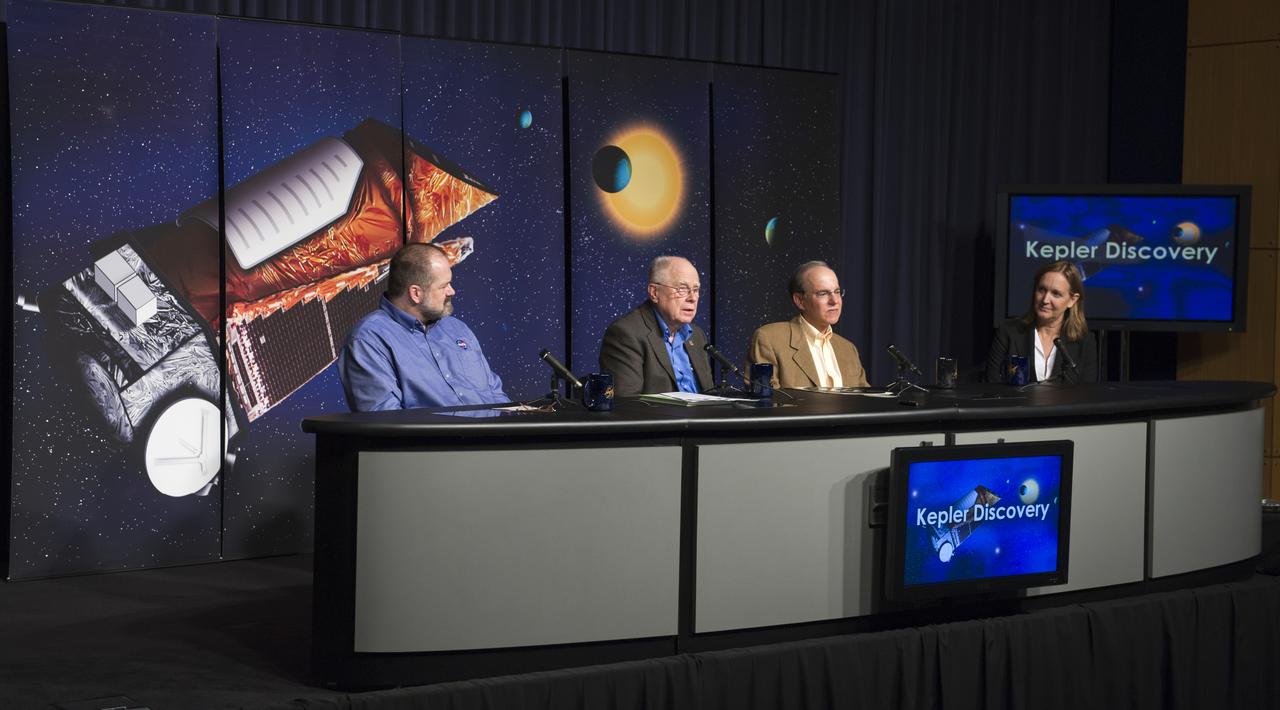
William Borucki, Kepler Science Principal Investigator from NASA's Ames Research Center, second from left, speaks during a news conference, Wednesday, Feb. 2, 2010, at NASA Headquarters in Washington as Douglas Hudgins, left, Jack Lissauer and Debra Fischer, far right, look on. Scientists using NASA's Kepler, a space telescope, recently discovered six planets made of a mix of rock and gases orbiting a single sun-like star, known as Kepler-11, which is located approximately 2,000 light years from Earth. Photo Credit: (NASA/Paul E. Alers)
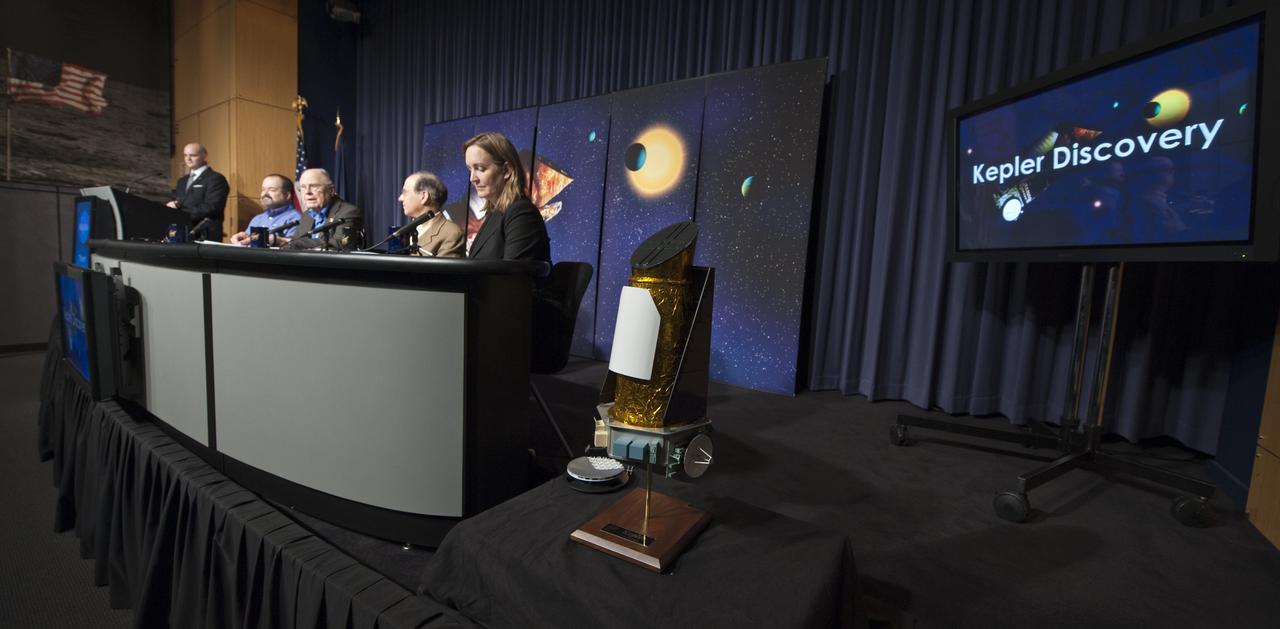
William Borucki, Kepler Science Principal Investigator from NASA's Ames Research Center, second from left, speaks during a news conference, Wednesday, Feb. 2, 2010, at NASA Headquarters in Washington as Douglas Hudgins, left, Jack Lissauer and Debra Fischer, far right, look on. Scientists using NASA's Kepler, a space telescope, recently discovered six planets made of a mix of rock and gases orbiting a single sun-like star, known as Kepler-11, which is located approximately 2,000 light years from Earth. Photo Credit: (NASA/Paul E. Alers)
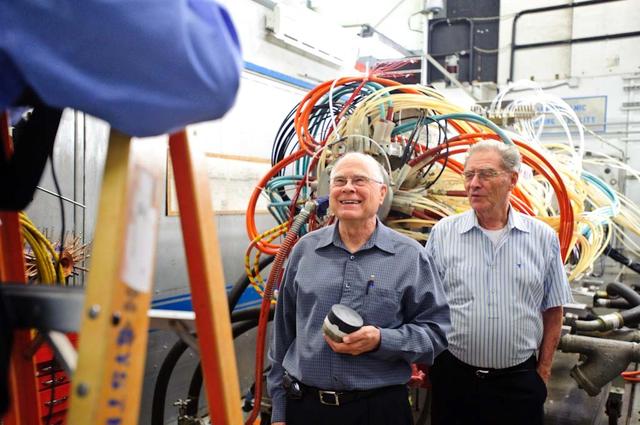
Dr William 'Bill' Borucki, NASA Ames Scientist on the Kepler Mission and John W. 'Jack' Boyd, NASA Ames Historian at the Ames Arc Jet Complex, Aerodynamic Heating Facility talking with a Mercury News photographer about the Kepler Mission and the 40th Anniversary of the Apollo 11 Mission.
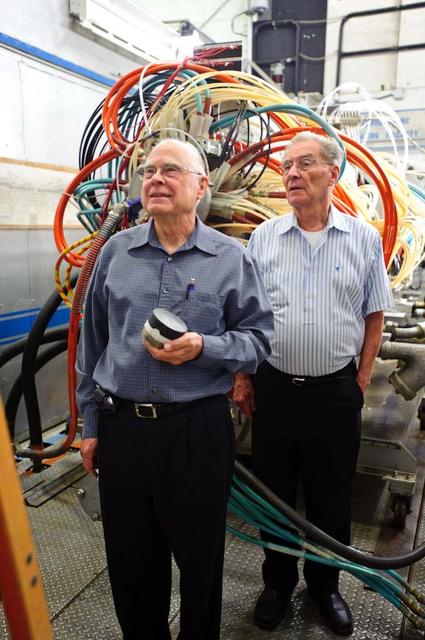
Dr William 'Bill' Borucki, NASA Ames Scientist on the Kepler Mission and John W. 'Jack' Boyd, NASA Ames Historian at the Ames Arc Jet Complex, Aerodynamic Heating Facility talking with a Mercury News photographer about the Kepler Mission and the 40th Anniversary of the Apollo 11 Mission.
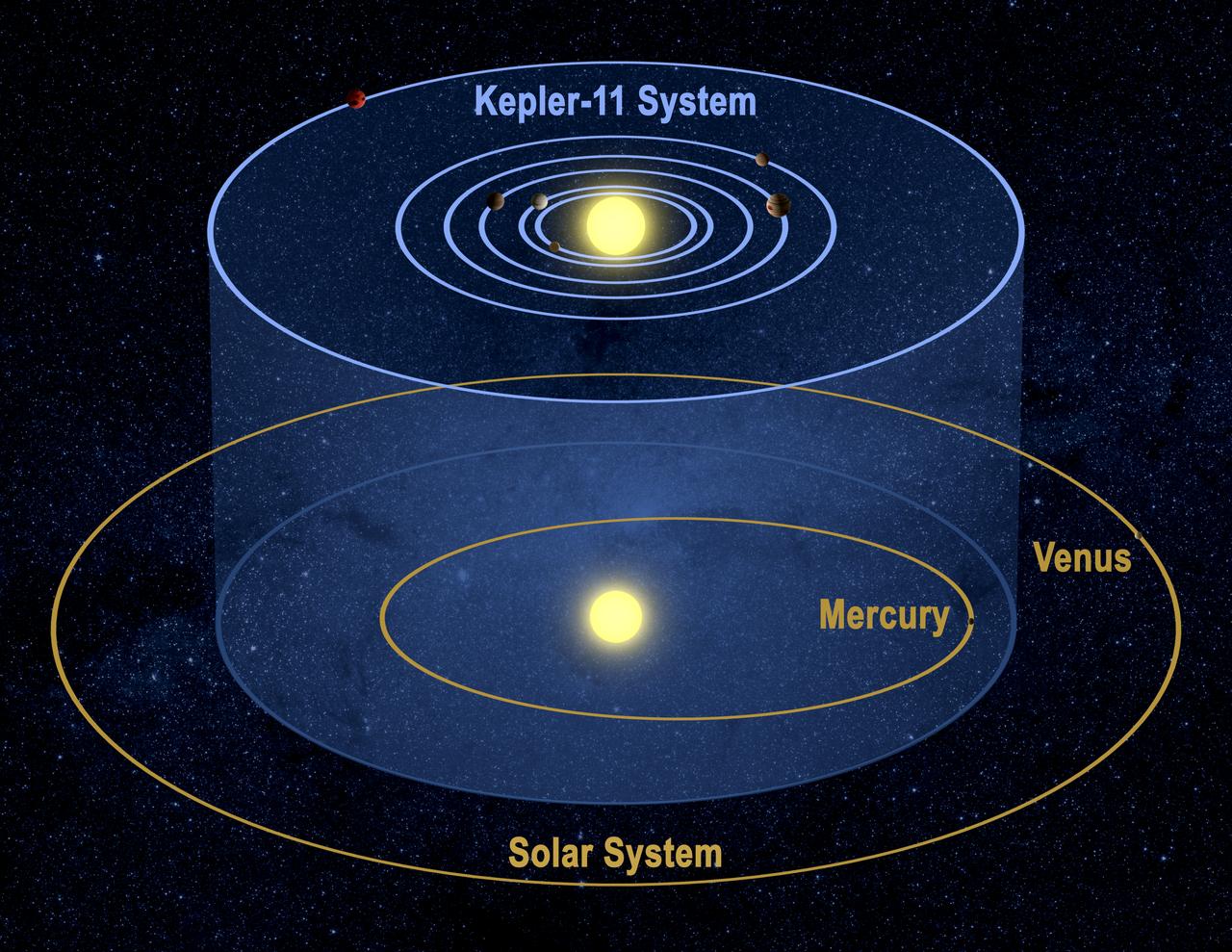
This artist's conception shows the Kepler-11 planetary system and our solar system from a tilted perspective to demonstrate that the orbits of each lie on similar planes. Image credit: NASA/Tim Pyle
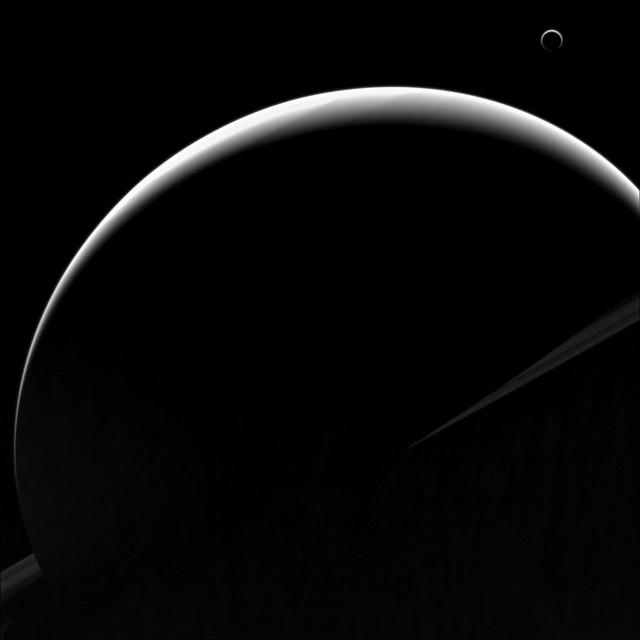
When Galileo first observed Venus displaying a crescent phase, he excitedly wrote to Kepler (in anagram) of Venus mimicking the moon-goddess. He would have been delirious with joy to see Saturn and Titan, seen in this image, doing the same thing. More than just pretty pictures, high-phase observations -- taken looking generally toward the Sun, as in this image -- are very powerful scientifically since the way atmospheres and rings transmit sunlight is often diagnostic of compositions and physical states. In this example, Titan's crescent nearly encircles its disk due to the small haze particles high in its atmosphere refracting the incoming light of the distant Sun. This view looks toward the sunlit side of the rings from about 3 degrees above the ringplane. The image was taken in violet light with the Cassini spacecraft wide-angle camera on Aug. 11, 2013. The view was obtained at a distance of approximately 1.1 million miles (1.7 million kilometers) from Saturn and at a Sun-Saturn-spacecraft, or phase, angle of 154 degrees. Image scale is 64 miles (103 kilometers) per pixel. http://photojournal.jpl.nasa.gov/catalog/PIA18291