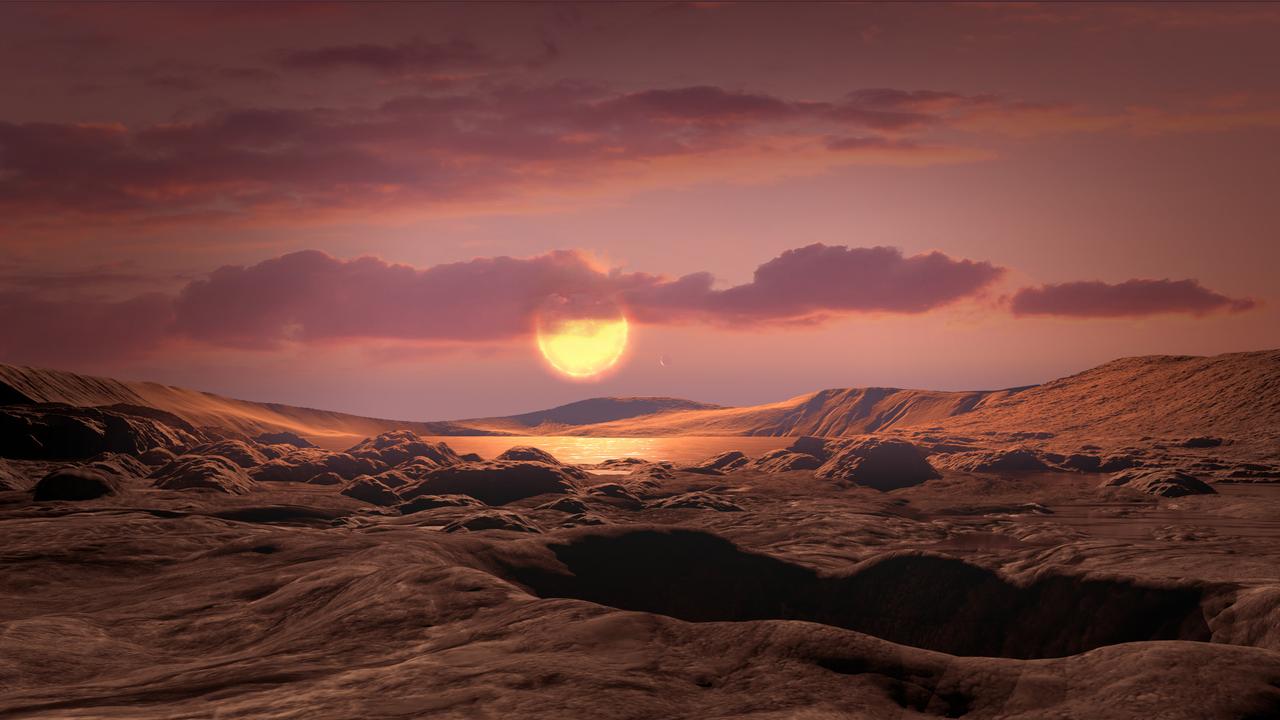
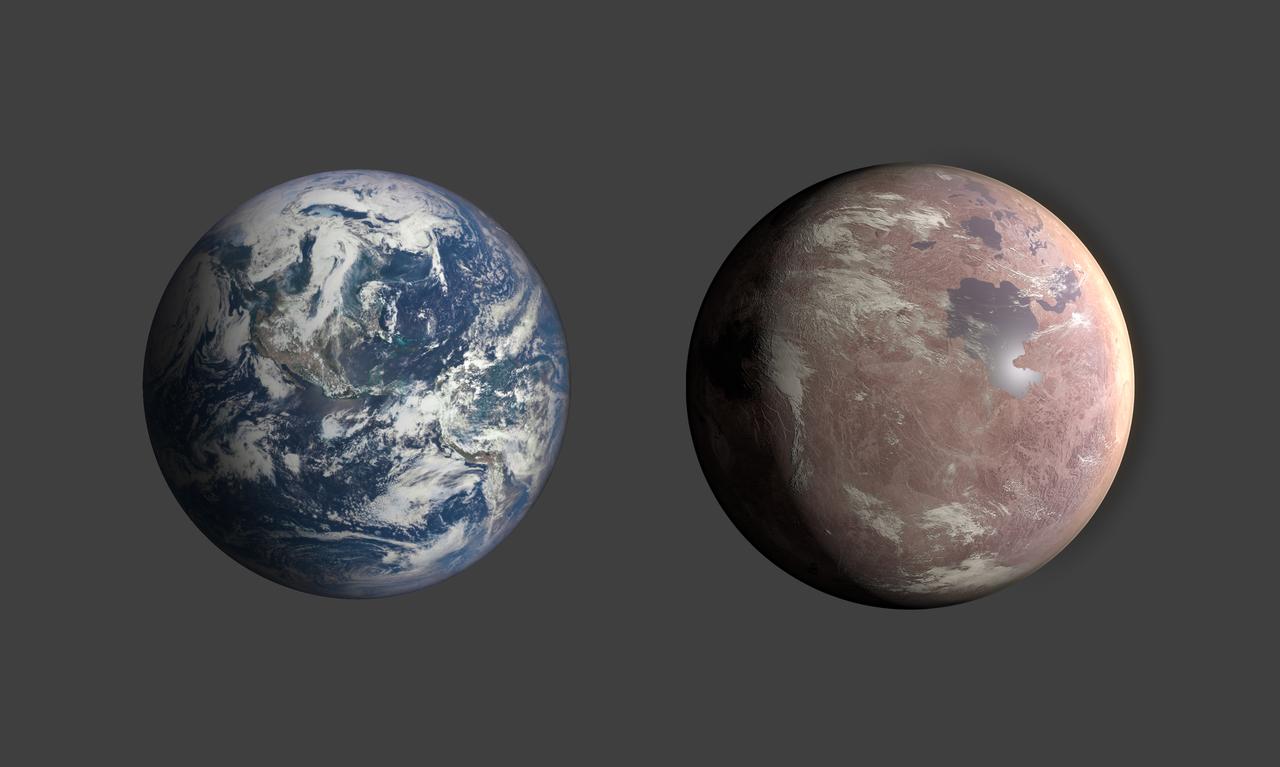
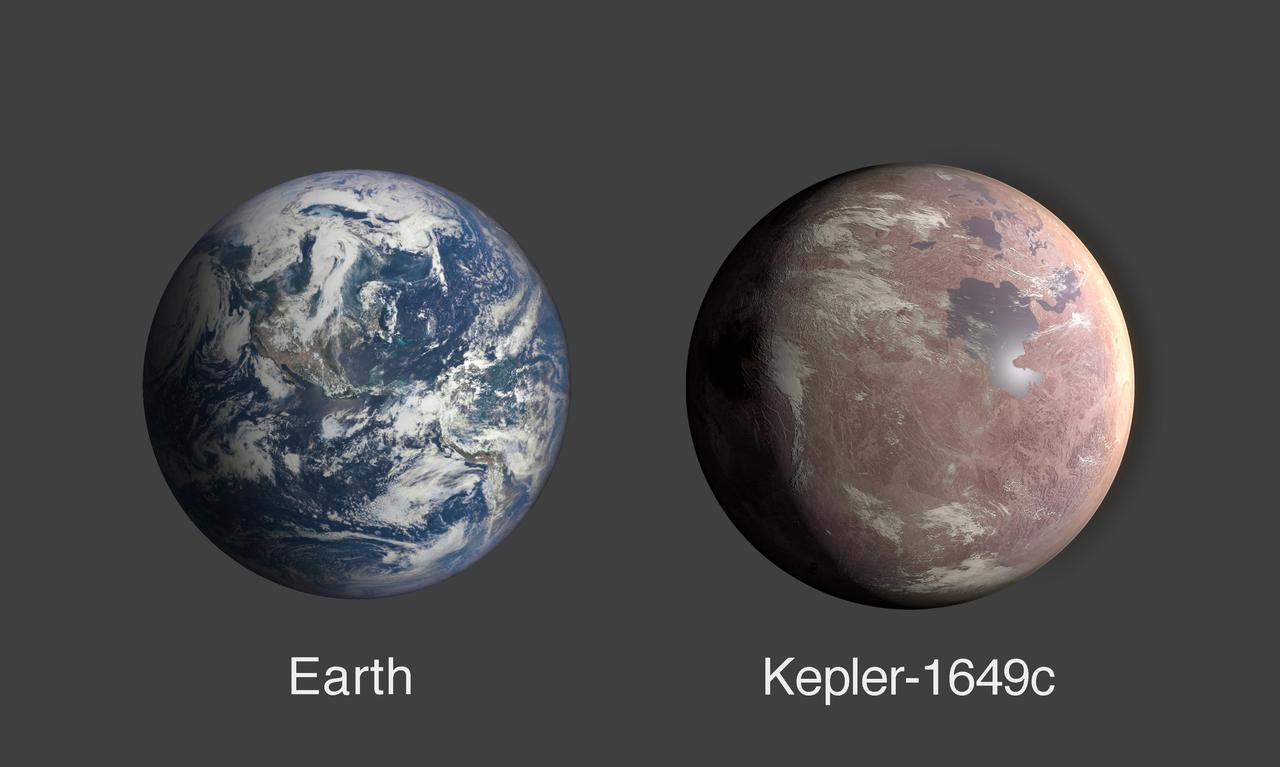
A comparison of Earth and Kepler-1649c, an exoplanet only 1.06 times Earth's radius. Labeled Art Credit: NASA/Ames Research Center/Daniel Rutter
ACD20-0044-003_1
An illustration of what Kepler-1649c could look like from its surface. Credits: NASA/Ames Research Center/Daniel Rutter
ACD20-0044-002
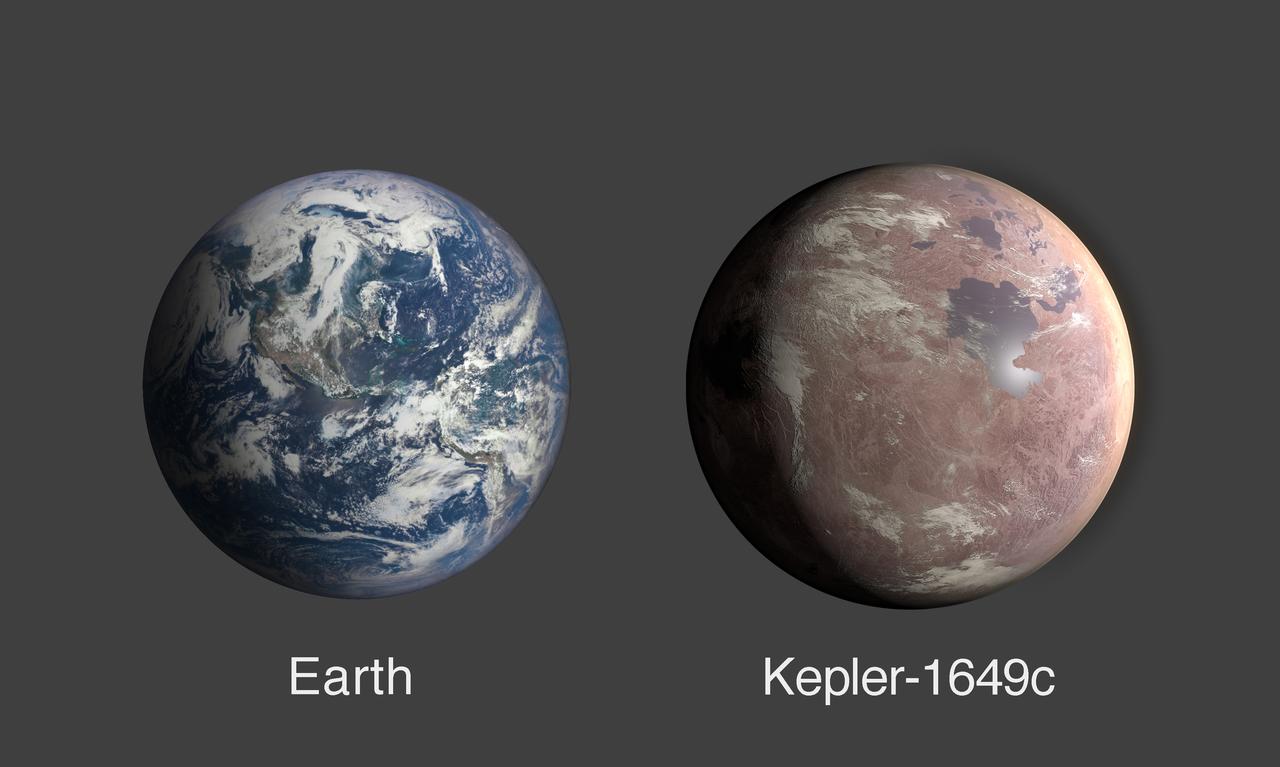
A comparison of Earth and Kepler-1649c, an exoplanet only 1.06 times Earth's radius Credit: NASA/Ames Research Center/Daniel Rutter
ACD20-0044-003
An illustration of Kepler-1649c orbiting around its host red dwarf star. This newly discovered exoplanet is in its star’s habitable zone and is the closest to Earth in size and temperature found yet in Kepler's data. Credits: NASA/Ames Research Center/Daniel Rutter
ACD20-0044-001
This artist's concept shows what exoplanet Kepler-1649c could look like on its surface. The planet is the closest to Earth in size and temperature found yet in data from the Kepler space telescope.  https://photojournal.jpl.nasa.gov/catalog/PIA23690
Kepler Planet 1649c Surface View Artist's Concept
This graphic compares the size of Earth and Kepler-1649c, an exoplanet only 1.06 times larger than Earth by radius.  https://photojournal.jpl.nasa.gov/catalog/PIA23774
Comparing the Size of Exoplanet Kepler-1649c and Earth (Illustration)
This artist's concept shows exoplanet Kepler-1649c orbiting around its host red dwarf star. This exoplanet is in its star's habitable zone (the distance where liquid water could exist on the planet's surface) and is the closest to Earth in size and temperature found yet in Kepler's data.  https://photojournal.jpl.nasa.gov/catalog/PIA23689
Kepler Planet 1649c Artist's Illustration From Space