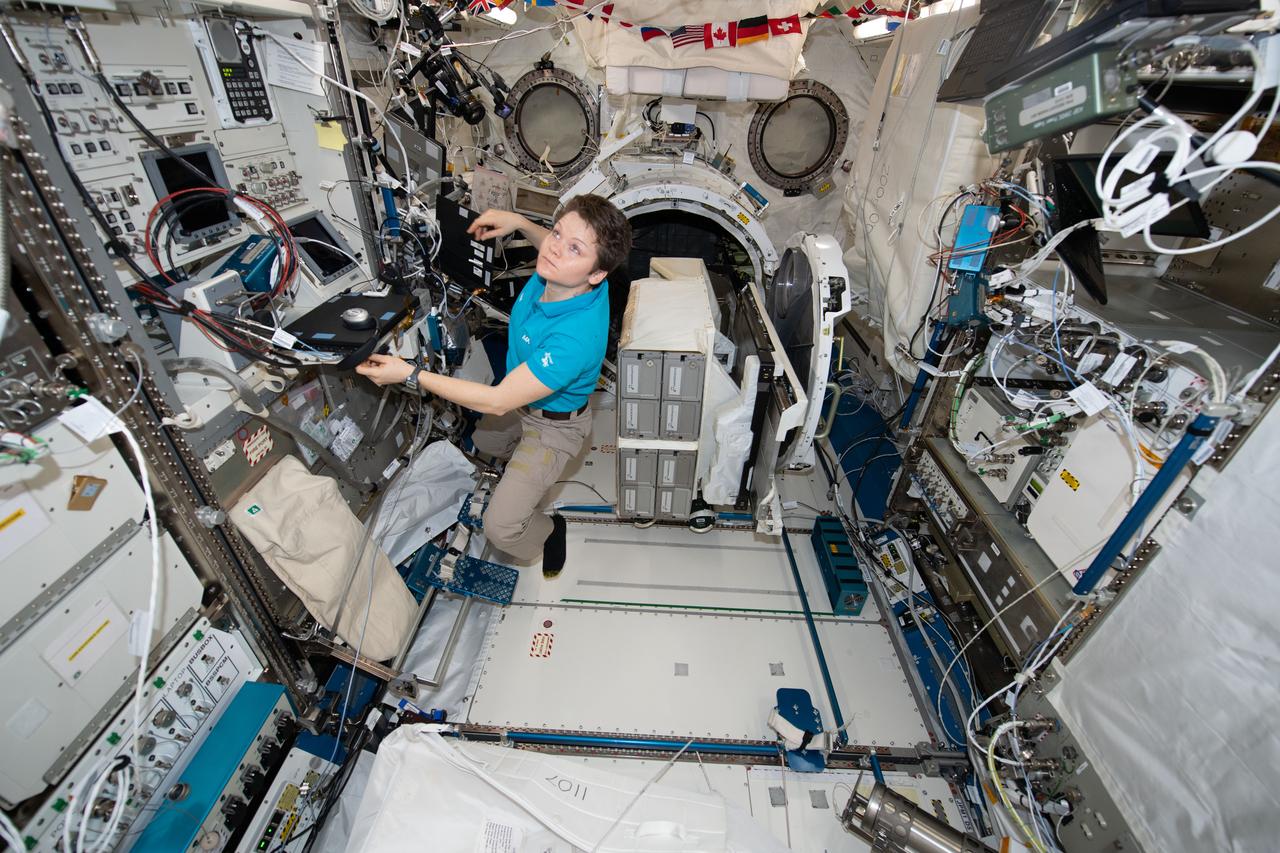
iss058e007642 (Jan. 30, 2019) --- NASA astronaut Anne McClain works inside the Kibo laboratory module designed and built by the Japan Aerospace Exploration Agency. McClain is working to install the NanoRacks CubeSat Deployer in Kibo's airlock.
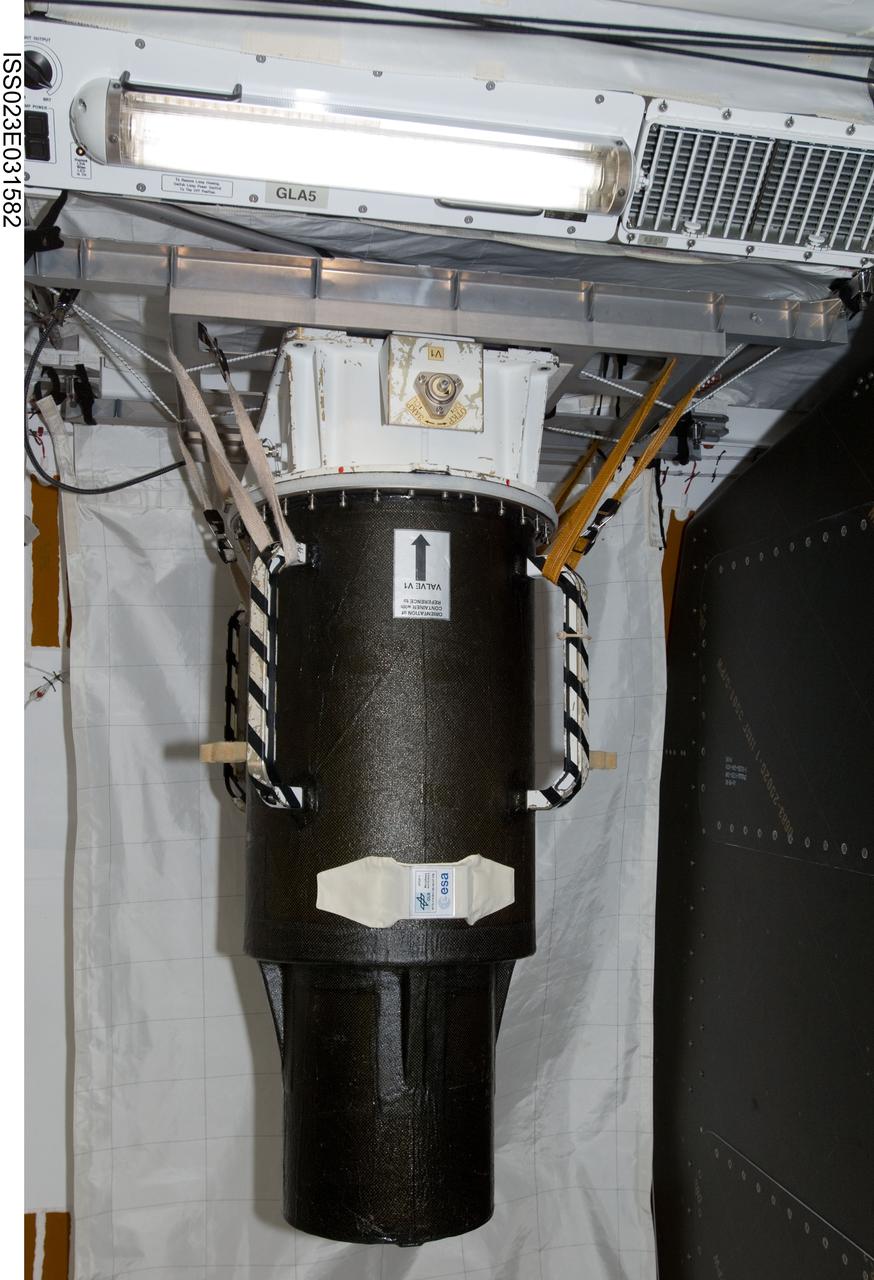
iss023e031582 (5/4/2010) --- A view of the anthropomorphic Phantom for the Matroshka-2 Kibo experiment installed at location JPM1F2 in the Kibo Japanese Experiment Pressurized Module (JPM) aboard the International Space Station (ISS).
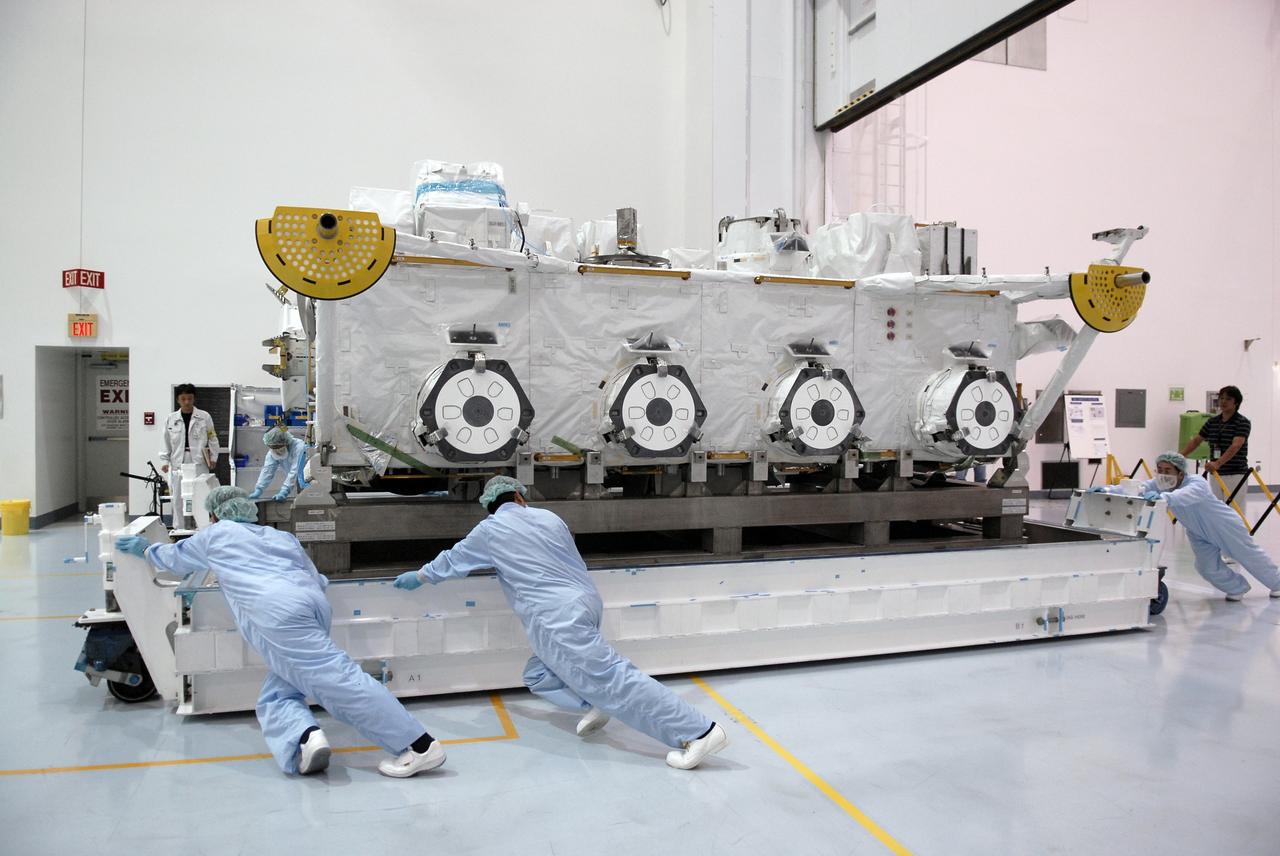
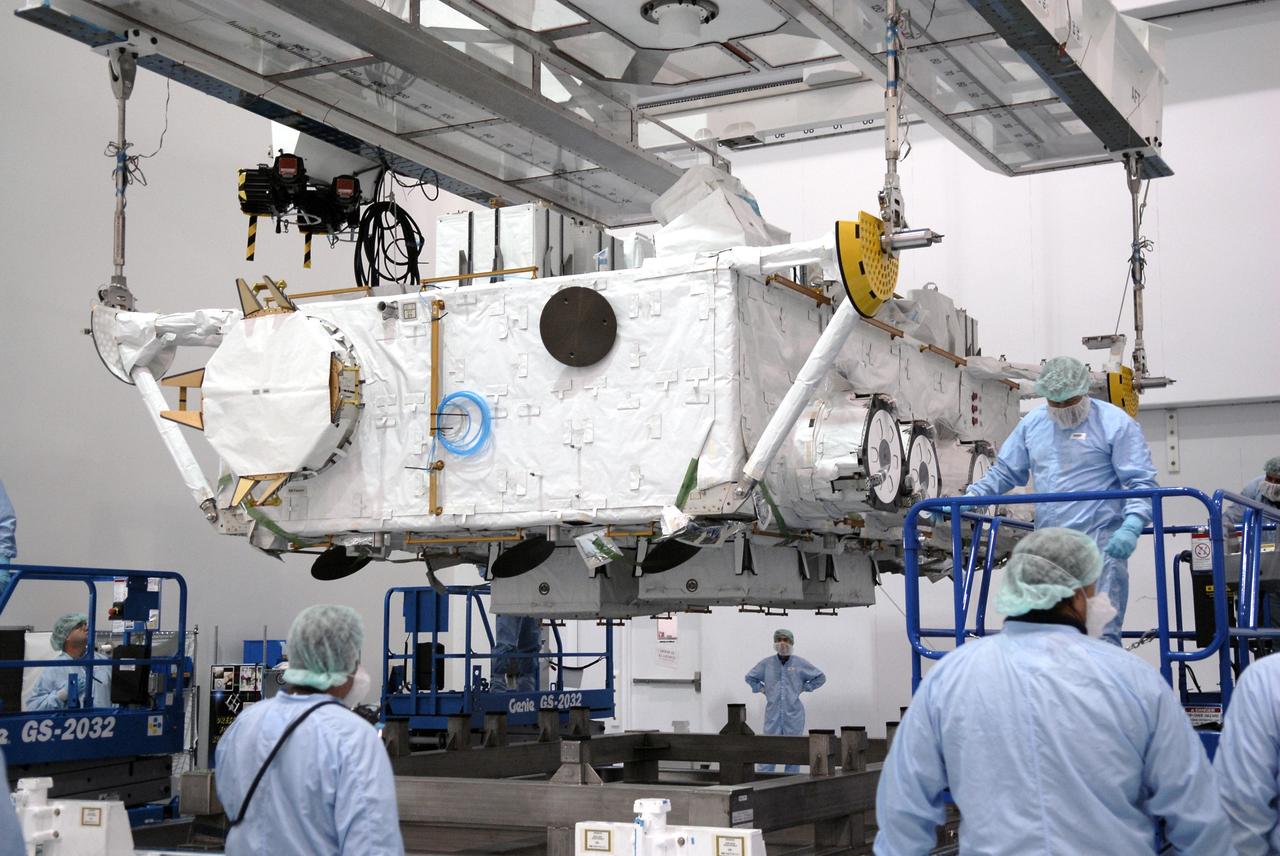
CAPE CANAVERAL, Fla. - After its shipping cover was removed, the Japan Aerospace Exploration Agency's Kibo Exposed Facility is moved to a high bay in the Space Station Processing Facility, or EF, at NASA's Kennedy Space Center in Florida. When it is installed on the Kibo laboratory, the EF will provide a multipurpose platform where science experiments can be deployed and operated in the exposed environment. The payloads attached to the EF can be exchanged or retrieved by Kibo's robotic arm, the JEM Remote Manipulator System. The EF, along with the Experiment Logistics Module Exposed Section, will be carried aboard space shuttle Endeavour on the STS-127 mission targeted for launch May 15, 2009. Photo credit: NASA/Kim Shiflett
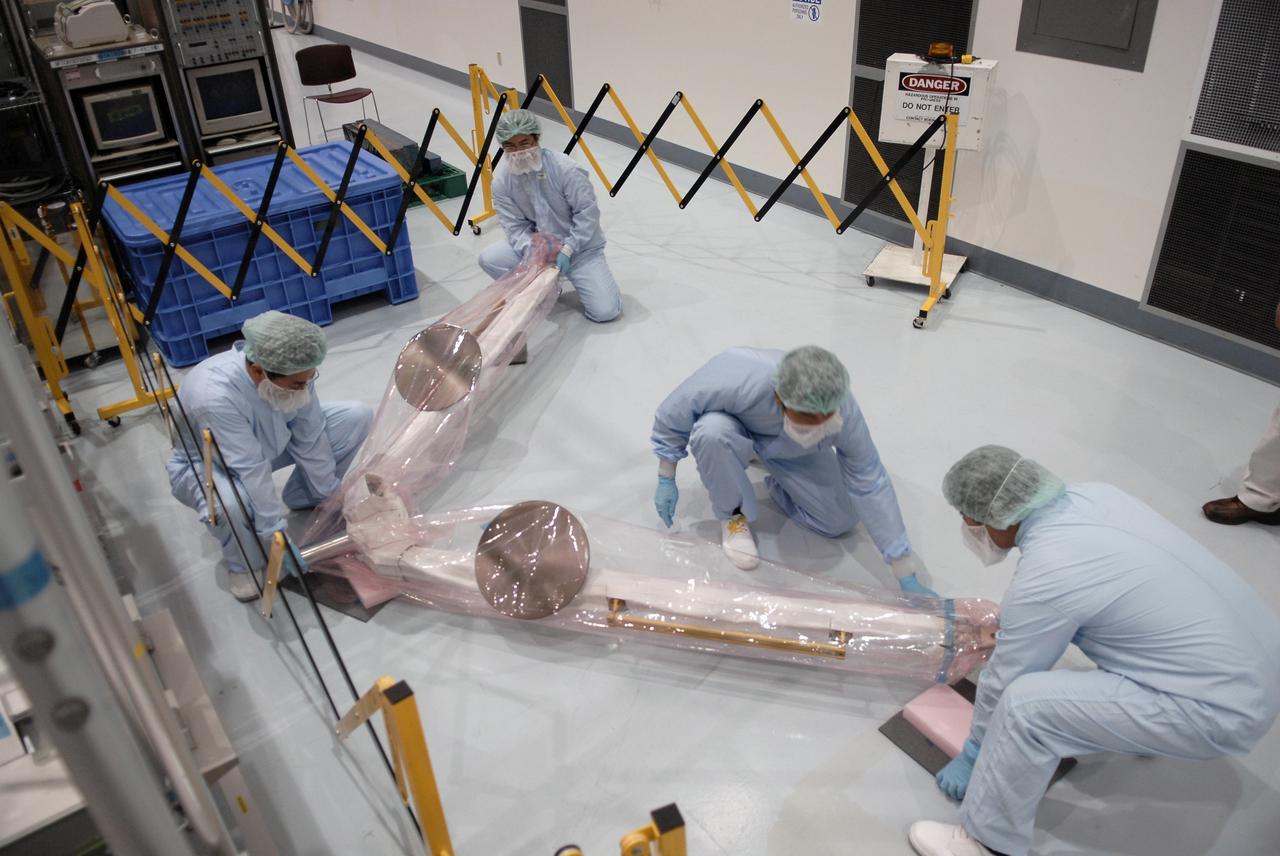
CAPE CANAVERAL, Fla. - In the Space Station Processing Facility at NASA's Kennedy Space Center in Florida, workers place an element of the Japan Aerospace Exploration Agency's Kibo Exposed Facility, or EF, on the floor of the high bay. When it is installed on the Kibo laboratory, the EF will provide a multipurpose platform where science experiments can be deployed and operated in the exposed environment. The payloads attached to the EF can be exchanged or retrieved by Kibo's robotic arm, the JEM Remote Manipulator System. The EF, along with the Experiment Logistics Module Exposed Section, will be carried aboard space shuttle Endeavour on the STS-127 mission targeted for launch May 15, 2009. Photo credit: NASA/Kim Shiflett
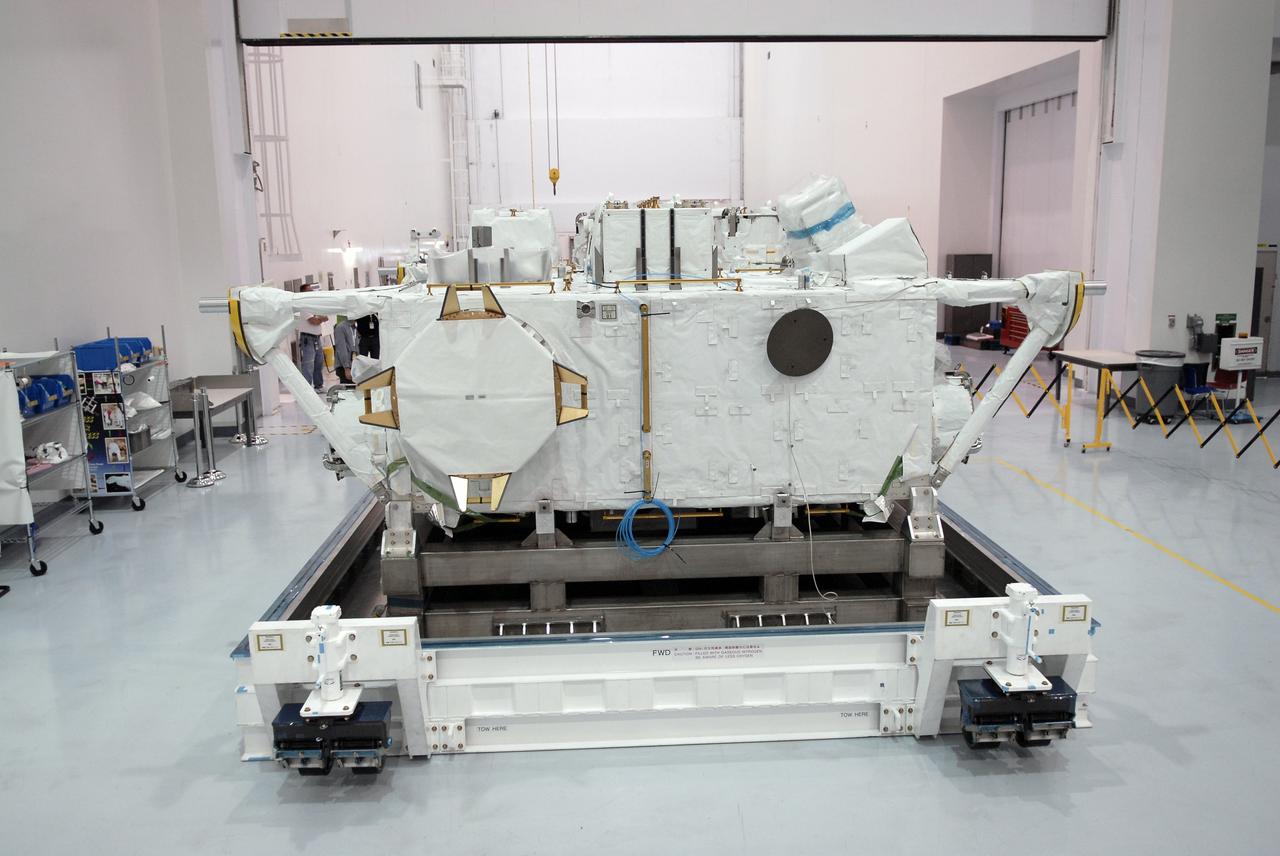
CAPE CANAVERAL, Fla. - In the Space Station Processing Facility at NASA's Kennedy Space Center in Florida, the Japan Aerospace Exploration Agency's Kibo Exposed Facility, or EF, rests in the high bay. When it is installed on the Kibo laboratory, the EF will provide a multipurpose platform where science experiments can be deployed and operated in the exposed environment. The payloads attached to the EF can be exchanged or retrieved by Kibo's robotic arm, the JEM Remote Manipulator System. The EF, along with the Experiment Logistics Module Exposed Section, will be carried aboard space shuttle Endeavour on the STS-127 mission targeted for launch May 15, 2009. Photo credit: NASA/Kim Shiflett
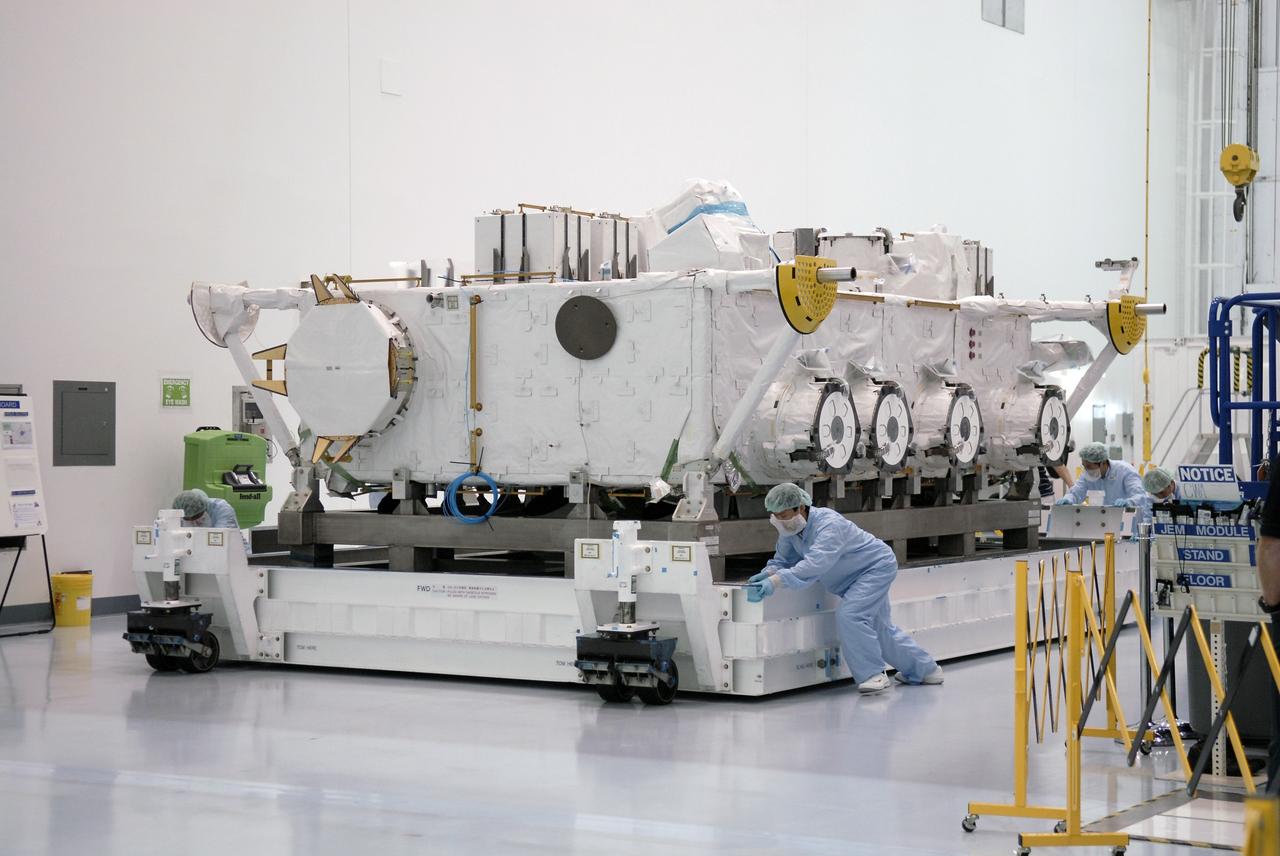
CAPE CANAVERAL, Fla. - After its shipping cover was removed, the Japan Aerospace Exploration Agency's Kibo Exposed Facility, or EF, is moved to a high bay in the Space Station Processing Facility at NASA's Kennedy Space Center in Florida. When it is installed on the Kibo laboratory, the EF will provide a multipurpose platform where science experiments can be deployed and operated in the exposed environment. The payloads attached to the EF can be exchanged or retrieved by Kibo's robotic arm, the JEM Remote Manipulator System. The EF, along with the Experiment Logistics Module Exposed Section, will be carried aboard space shuttle Endeavour on the STS-127 mission targeted for launch May 15, 2009. Photo credit: NASA/Kim Shiflett
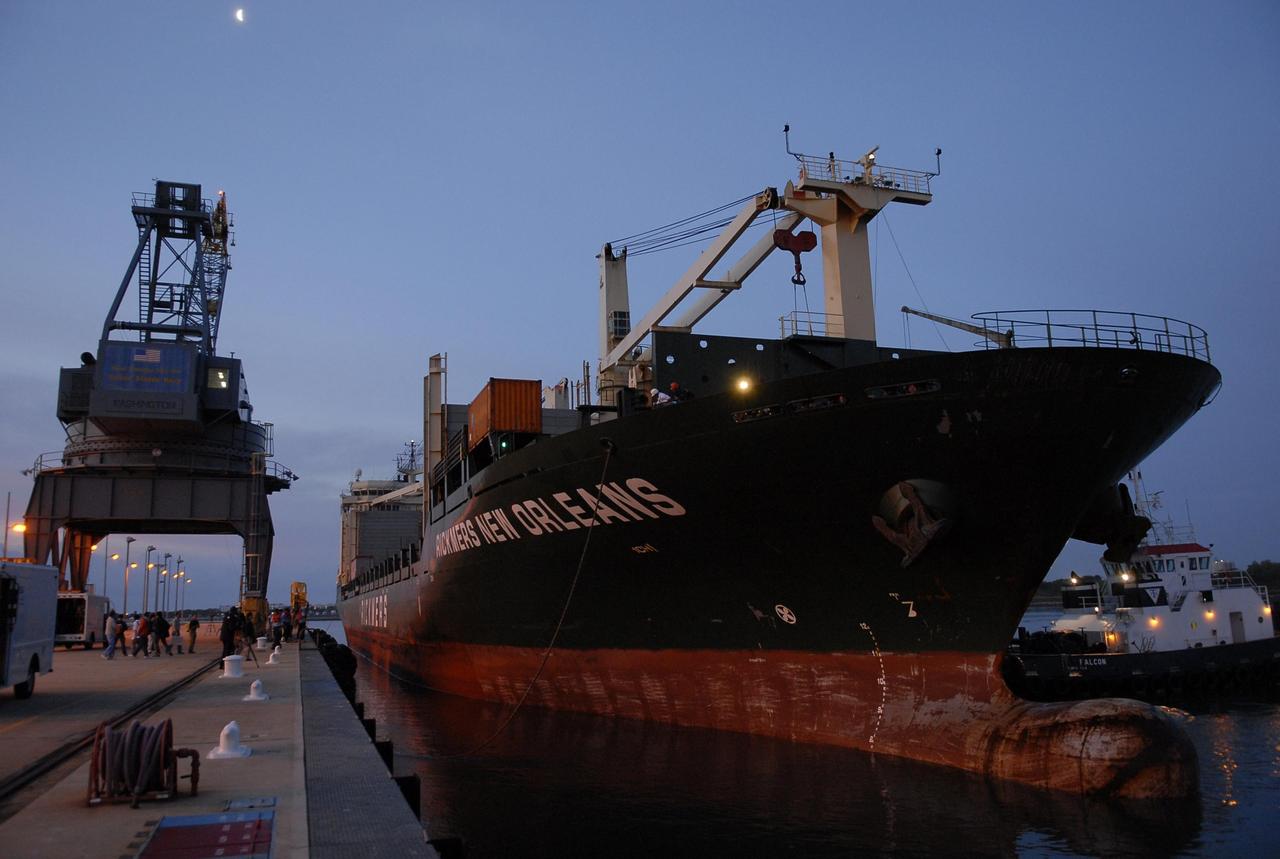
KENNEDY SPACE CENTER, FLA. -- The ship carrying the Experiment Logistics Module Pressurized Section for the Japanese Experiment Module arrives at the Trident wharf after departing from Yokohama, Japan, Feb. 7. The logistics module will be offloaded and transported to the Space Station Processing Facility at NASA's Kennedy Space Center. The Japanese Experiment Module is composed of three segments and is known as Kibo, which means "hope" in Japanese. Kibo consists of six components: two research facilities -- the Pressurized Module and Exposed Facility; a Logistics Module attached to each of them; a Remote Manipulator System; and an Inter-Orbit Communication System unit. Kibo also has a scientific airlock through which experiments are transferred and exposed to the external environment of space. Kibo is Japan's first human space facility and its primary contribution to the station. Kibo will enhance the unique research capabilities of the orbiting complex by providing an additional environment in which astronauts can conduct science experiments. The various components of JEM will be assembled in space over the course of three Space Shuttle missions. The first of those three missions, STS-123, will carry the Experiment Logistics Module Pressurized Section aboard the Space Shuttle Endeavour, targeted for launch in 2007. Photo credit: NASA/Kim Shiflett
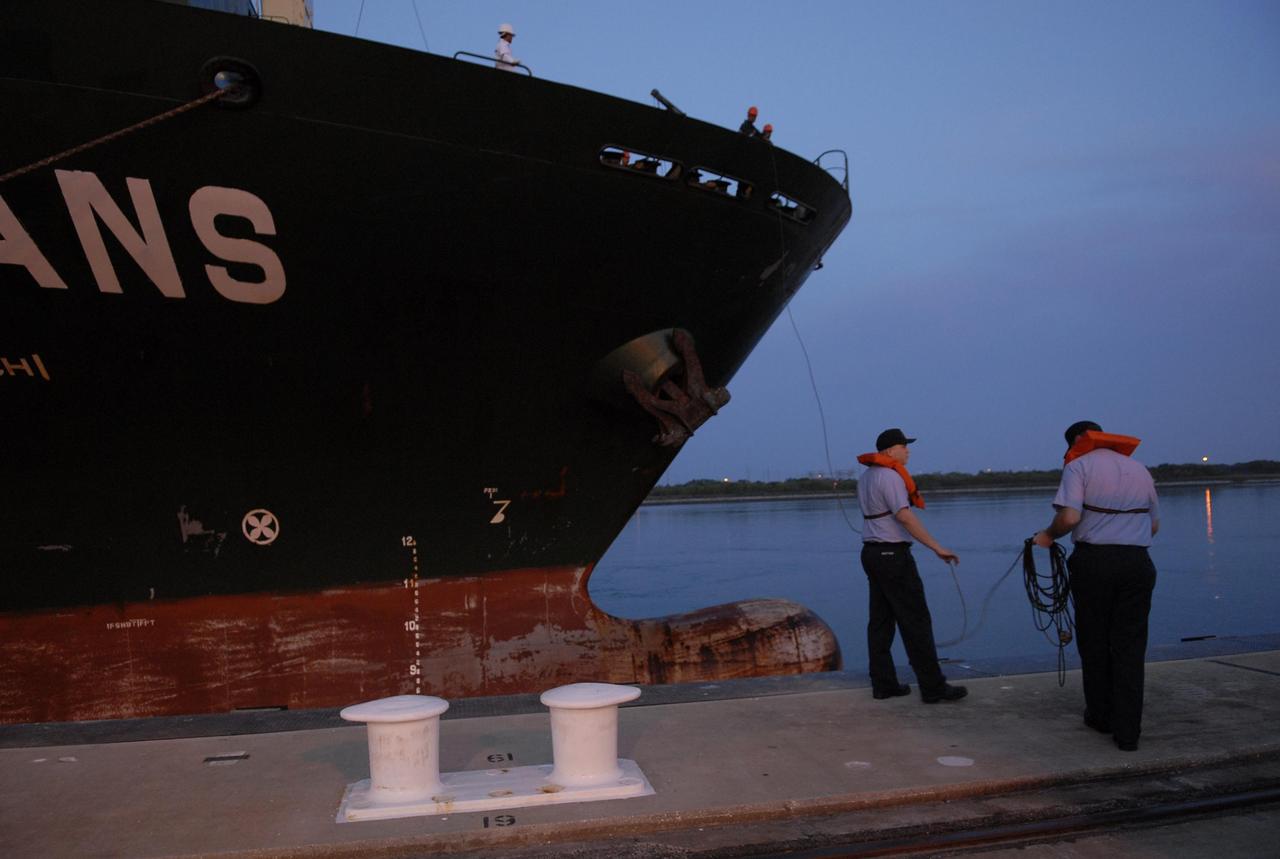
KENNEDY SPACE CENTER, FLA. -- The ship carrying the Experiment Logistics Module Pressurized Section for the Japanese Experiment Module is tied up at the Trident wharf after departing from Yokohama, Japan, Feb. 7. The logistics module will be offloaded and transported to the Space Station Processing Facility at NASA's Kennedy Space Center. The Japanese Experiment Module is composed of three segments and is known as Kibo, which means "hope" in Japanese. Kibo consists of six components: two research facilities -- the Pressurized Module and Exposed Facility; a Logistics Module attached to each of them; a Remote Manipulator System; and an Inter-Orbit Communication System unit. Kibo also has a scientific airlock through which experiments are transferred and exposed to the external environment of space. Kibo is Japan's first human space facility and its primary contribution to the station. Kibo will enhance the unique research capabilities of the orbiting complex by providing an additional environment in which astronauts can conduct science experiments. The various components of JEM will be assembled in space over the course of three Space Shuttle missions. The first of those three missions, STS-123, will carry the Experiment Logistics Module Pressurized Section aboard the Space Shuttle Endeavour, targeted for launch in 2007. Photo credit: NASA/Kim Shiflett

KENNEDY SPACE CENTER, FLA. -- The ship carrying the Experiment Logistics Module Pressurized Section for the Japanese Experiment Module arrives at the Trident wharf after departing from Yokohama, Japan, Feb. 7. The logistics module will be offloaded and transported to the Space Station Processing Facility at NASA's Kennedy Space Center. The Japanese Experiment Module is composed of three segments and is known as Kibo, which means "hope" in Japanese. Kibo consists of six components: two research facilities -- the Pressurized Module and Exposed Facility; a Logistics Module attached to each of them; a Remote Manipulator System; and an Inter-Orbit Communication System unit. Kibo also has a scientific airlock through which experiments are transferred and exposed to the external environment of space. Kibo is Japan's first human space facility and its primary contribution to the station. Kibo will enhance the unique research capabilities of the orbiting complex by providing an additional environment in which astronauts can conduct science experiments. The various components of JEM will be assembled in space over the course of three Space Shuttle missions. The first of those three missions, STS-123, will carry the Experiment Logistics Module Pressurized Section aboard the Space Shuttle Endeavour, targeted for launch in 2007. Photo credit: NASA/Kim Shiflett
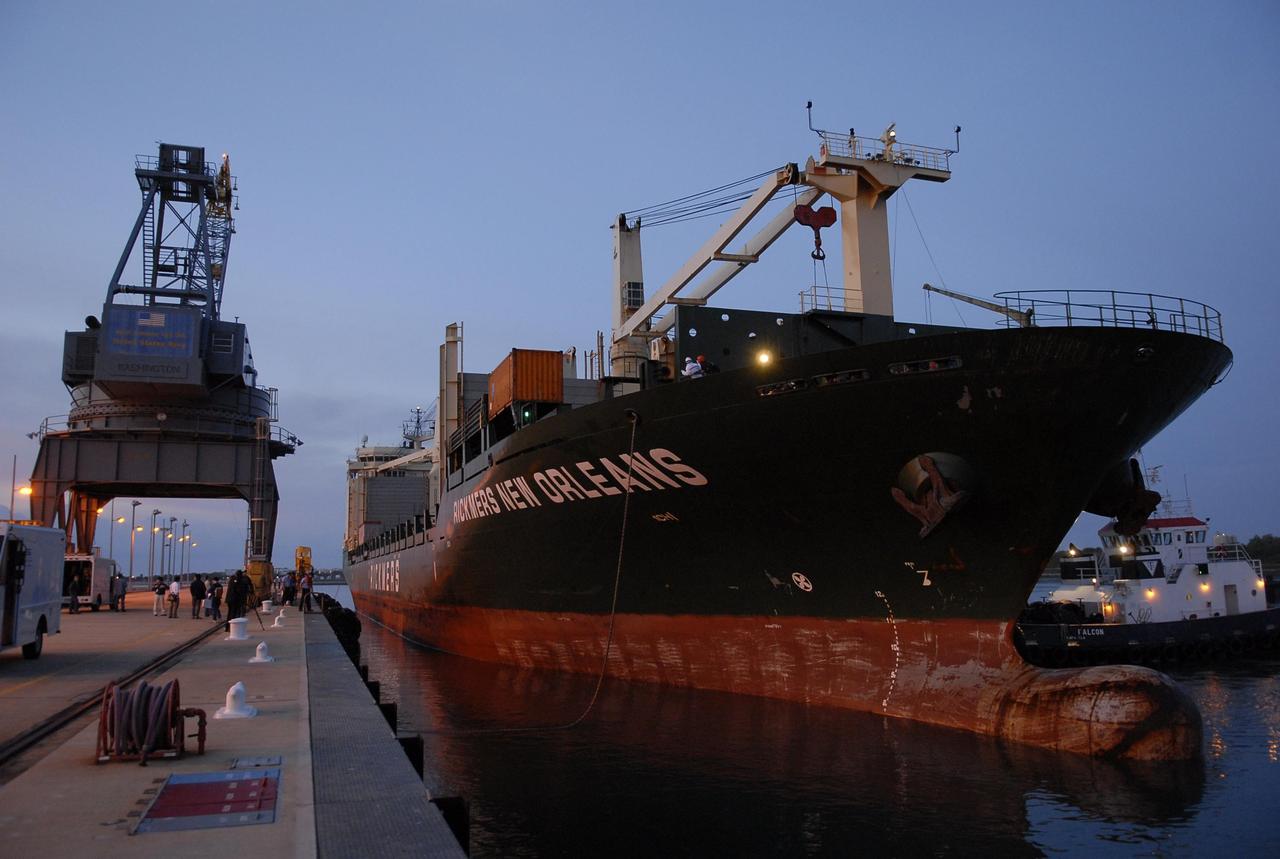
KENNEDY SPACE CENTER, FLA. -- The ship carrying the Experiment Logistics Module Pressurized Section for the Japanese Experiment Module arrives at the Trident wharf after departing from Yokohama, Japan, Feb. 7. The logistics module will be offloaded and transported to the Space Station Processing Facility at NASA's Kennedy Space Center. The Japanese Experiment Module is composed of three segments and is known as Kibo, which means "hope" in Japanese. Kibo consists of six components: two research facilities -- the Pressurized Module and Exposed Facility; a Logistics Module attached to each of them; a Remote Manipulator System; and an Inter-Orbit Communication System unit. Kibo also has a scientific airlock through which experiments are transferred and exposed to the external environment of space. Kibo is Japan's first human space facility and its primary contribution to the station. Kibo will enhance the unique research capabilities of the orbiting complex by providing an additional environment in which astronauts can conduct science experiments. The various components of JEM will be assembled in space over the course of three Space Shuttle missions. The first of those three missions, STS-123, will carry the Experiment Logistics Module Pressurized Section aboard the Space Shuttle Endeavour, targeted for launch in 2007. Photo credit: NASA/Kim Shiflett

KENNEDY SPACE CENTER, FLA. -- At the Trident wharf, workers help guide the container with the Experiment Logistics Module Pressurized Section inside toward a flat bed on the dock. The logistics module is part of the Japanese Experiment Module. The logistics module will be transported to the Space Station Processing Facility at NASA's Kennedy Space Center. The Japanese Experiment Module is composed of three segments and is known as Kibo, which means "hope" in Japanese. Kibo consists of six components: two research facilities -- the Pressurized Module and Exposed Facility; a Logistics Module attached to each of them; a Remote Manipulator System; and an Inter-Orbit Communication System unit. Kibo also has a scientific airlock through which experiments are transferred and exposed to the external environment of space. Kibo is Japan's first human space facility and its primary contribution to the station. Kibo will enhance the unique research capabilities of the orbiting complex by providing an additional environment in which astronauts can conduct science experiments. The various components of JEM will be assembled in space over the course of three Space Shuttle missions. The first of those three missions, STS-123, will carry the Experiment Logistics Module Pressurized Section aboard the Space Shuttle Endeavour, targeted for launch in 2007. Photo credit: NASA/Kim Shiflett
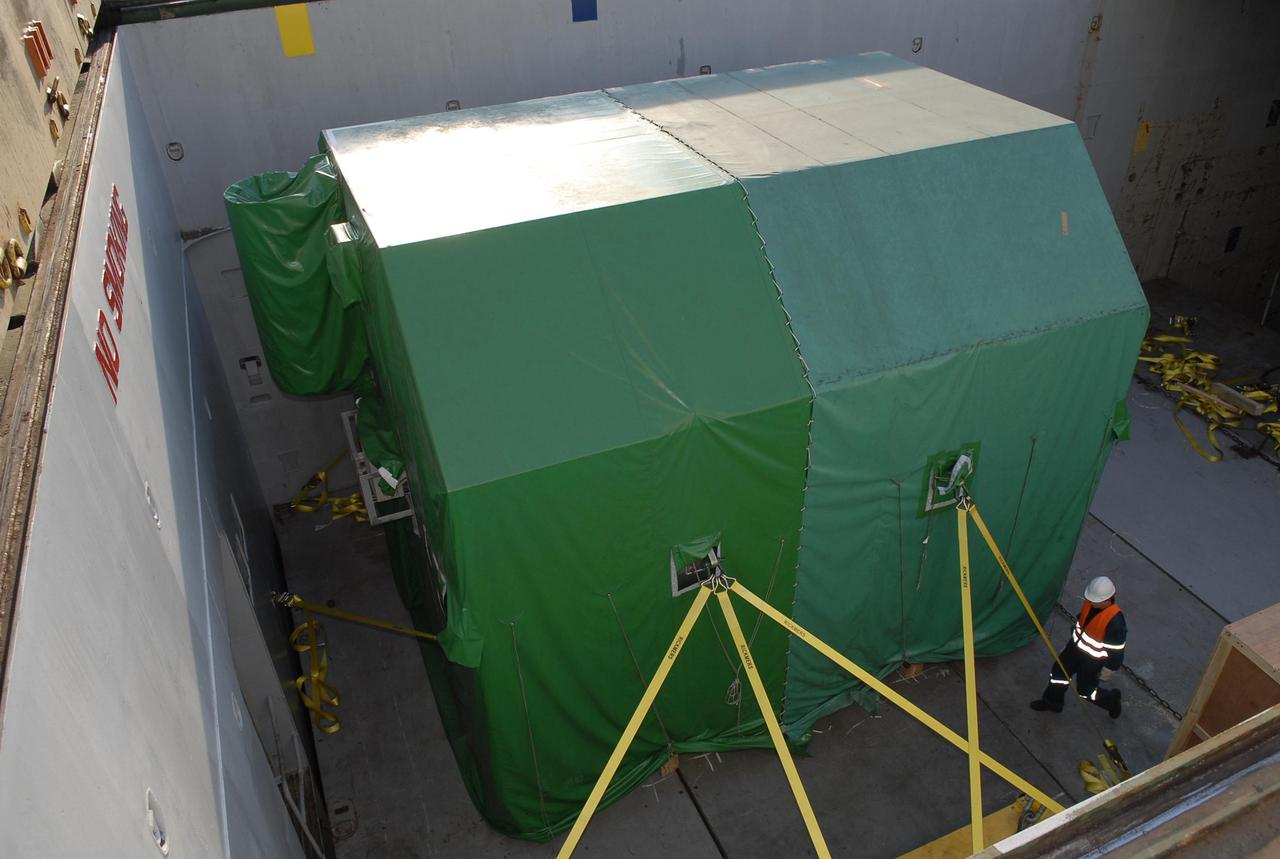
KENNEDY SPACE CENTER, FLA. -- At the Trident wharf, the shipping container with the Experiment Logistics Module Pressurized Section for the Japanese Experiment Module is ready for lifting out of the hold of the ship that brought it from Yokohama, Japan. The logistics module will be offloaded and transported to the Space Station Processing Facility at NASA's Kennedy Space Center. The Japanese Experiment Module is composed of three segments and is known as Kibo, which means "hope" in Japanese. Kibo consists of six components: two research facilities -- the Pressurized Module and Exposed Facility; a Logistics Module attached to each of them; a Remote Manipulator System; and an Inter-Orbit Communication System unit. Kibo also has a scientific airlock through which experiments are transferred and exposed to the external environment of space. Kibo is Japan's first human space facility and its primary contribution to the station. Kibo will enhance the unique research capabilities of the orbiting complex by providing an additional environment in which astronauts can conduct science experiments. The various components of JEM will be assembled in space over the course of three Space Shuttle missions. The first of those three missions, STS-123, will carry the Experiment Logistics Module Pressurized Section aboard the Space Shuttle Endeavour, targeted for launch in 2007. Photo credit: NASA/Kim Shiflett
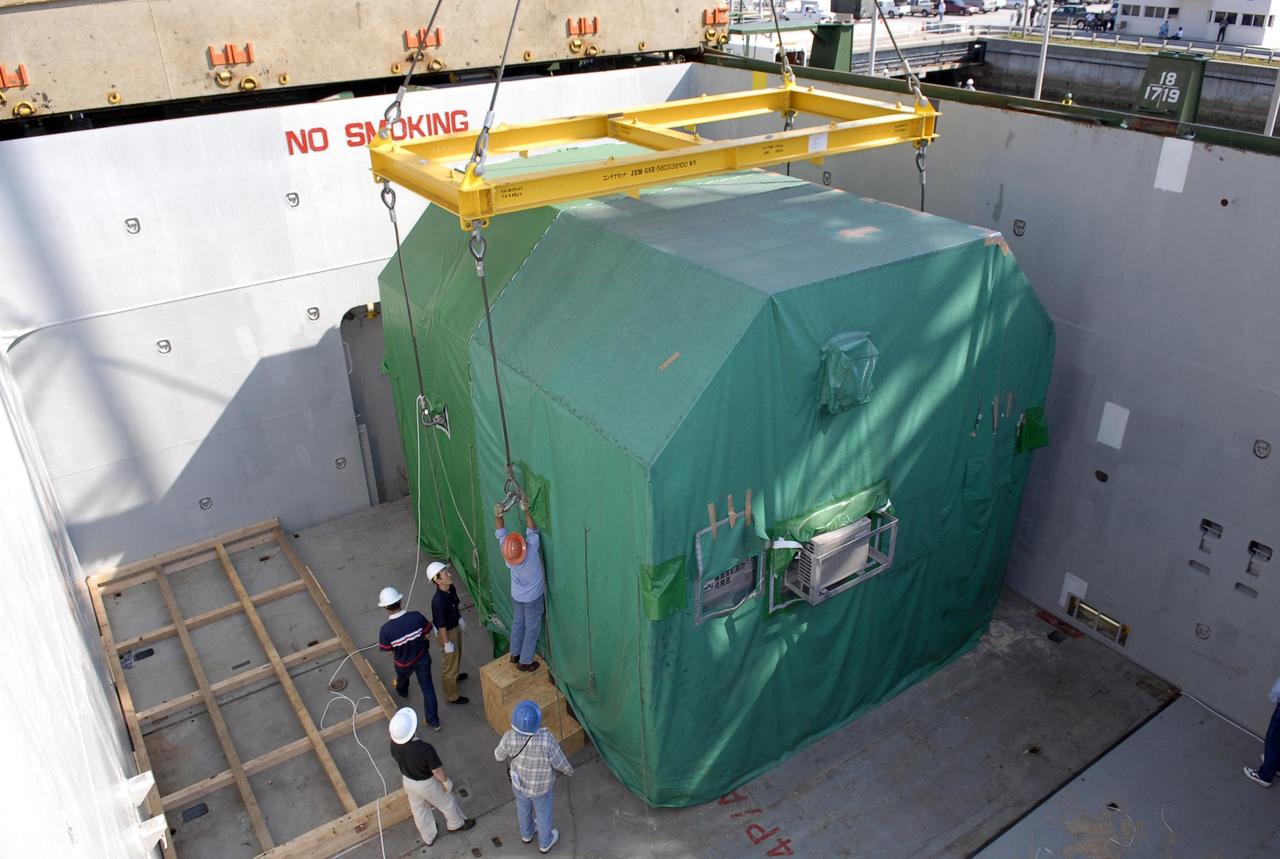
KENNEDY SPACE CENTER, FLA. -- At the Trident wharf, workers in the hold of a ship attach a crane to the shipping container with the Experiment Logistics Module Pressurized Section for the Japanese Experiment Module. The ship brought the module from Yokohama, Japan. The logistics module will be offloaded and transported to the Space Station Processing Facility at NASA's Kennedy Space Center. The Japanese Experiment Module is composed of three segments and is known as Kibo, which means "hope" in Japanese. Kibo consists of six components: two research facilities -- the Pressurized Module and Exposed Facility; a Logistics Module attached to each of them; a Remote Manipulator System; and an Inter-Orbit Communication System unit. Kibo also has a scientific airlock through which experiments are transferred and exposed to the external environment of space. Kibo is Japan's first human space facility and its primary contribution to the station. Kibo will enhance the unique research capabilities of the orbiting complex by providing an additional environment in which astronauts can conduct science experiments. The various components of JEM will be assembled in space over the course of three Space Shuttle missions. The first of those three missions, STS-123, will carry the Experiment Logistics Module Pressurized Section aboard the Space Shuttle Endeavour, targeted for launch in 2007. Photo credit: NASA/Kim Shiflett
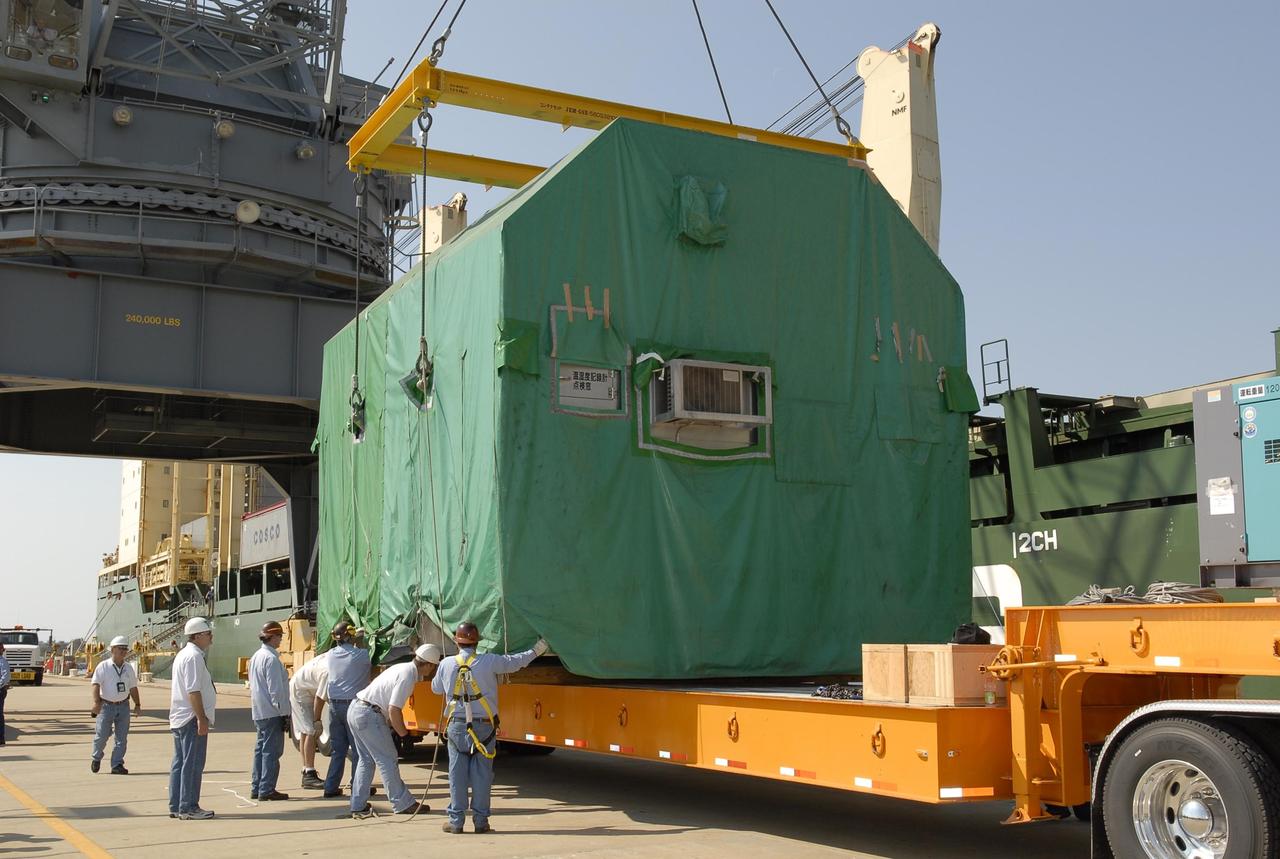
KENNEDY SPACE CENTER, FLA. -- At the Trident wharf, workers help guide the container with the Experiment Logistics Module Pressurized Section inside onto a flat bed on the dock. The logistics module is part of the Japanese Experiment Module. The logistics module will be transported to the Space Station Processing Facility at NASA's Kennedy Space Center. The Japanese Experiment Module is composed of three segments and is known as Kibo, which means "hope" in Japanese. Kibo consists of six components: two research facilities -- the Pressurized Module and Exposed Facility; a Logistics Module attached to each of them; a Remote Manipulator System; and an Inter-Orbit Communication System unit. Kibo also has a scientific airlock through which experiments are transferred and exposed to the external environment of space. Kibo is Japan's first human space facility and its primary contribution to the station. Kibo will enhance the unique research capabilities of the orbiting complex by providing an additional environment in which astronauts can conduct science experiments. The various components of JEM will be assembled in space over the course of three Space Shuttle missions. The first of those three missions, STS-123, will carry the Experiment Logistics Module Pressurized Section aboard the Space Shuttle Endeavour, targeted for launch in 2007. Photo credit: NASA/Kim Shiflett
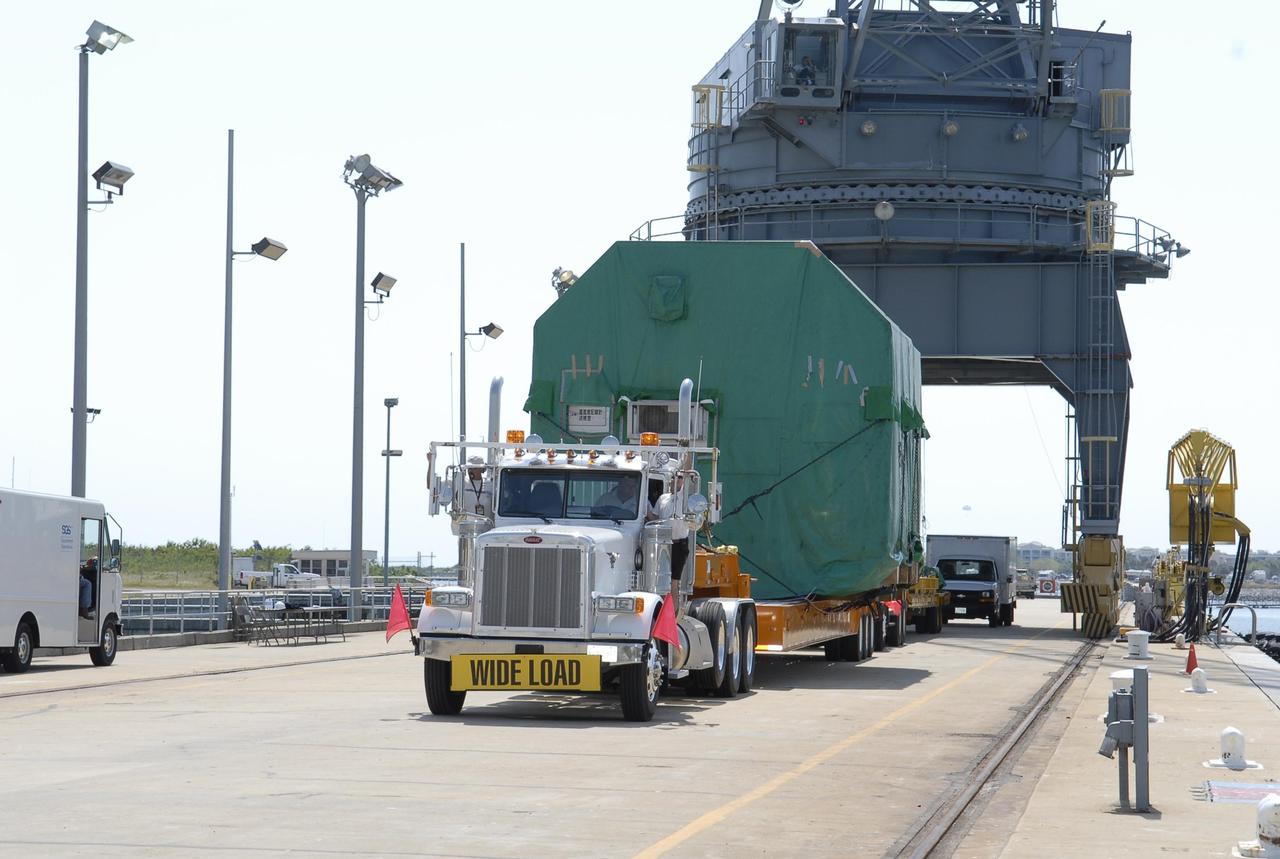
KENNEDY SPACE CENTER, FLA. -- A flat bed truck hauls the container with the Experiment Logistics Module Pressurized Section inside away from the Trident wharf. The logistics module is part of the Japanese Experiment Module. The logistics module is being transported to the Space Station Processing Facility at NASA's Kennedy Space Center. The Japanese Experiment Module is composed of three segments and is known as Kibo, which means "hope" in Japanese. Kibo consists of six components: two research facilities -- the Pressurized Module and Exposed Facility; a Logistics Module attached to each of them; a Remote Manipulator System; and an Inter-Orbit Communication System unit. Kibo also has a scientific airlock through which experiments are transferred and exposed to the external environment of space. Kibo is Japan's first human space facility and its primary contribution to the station. Kibo will enhance the unique research capabilities of the orbiting complex by providing an additional environment in which astronauts can conduct science experiments. The various components of JEM will be assembled in space over the course of three Space Shuttle missions. The first of those three missions, STS-123, will carry the Experiment Logistics Module Pressurized Section aboard the Space Shuttle Endeavour, targeted for launch in 2007. Photo credit: NASA/Kim Shiflett

KENNEDY SPACE CENTER, FLA. -- A flat bed truck hauls the container with the Experiment Logistics Module Pressurized Section inside away from the Trident wharf. The logistics module is part of the Japanese Experiment Module, known as Kibo. The logistics module is being transported to the Space Station Processing Facility at NASA's Kennedy Space Center. Kibo consists of six components: two research facilities -- the Pressurized Module and Exposed Facility; a Logistics Module attached to each of them; a Remote Manipulator System; and an Inter-Orbit Communication System unit. Kibo also has a scientific airlock through which experiments are transferred and exposed to the external environment of space. Kibo is Japan's first human space facility and its primary contribution to the station. Kibo will enhance the unique research capabilities of the orbiting complex by providing an additional environment in which astronauts can conduct science experiments. The various components of JEM will be assembled in space over the course of three Space Shuttle missions. The first of those three missions, STS-123, will carry the Experiment Logistics Module Pressurized Section aboard the Space Shuttle Endeavour, targeted for launch in 2007. Photo credit: NASA/Kim Shiflett

KENNEDY SPACE CENTER, FLA. -- At the Trident wharf, workers help guide the container with the Experiment Logistics Module Pressurized Section inside toward the dock. The logistics module is part of the Japanese Experiment Module. The logistics module will be transported to the Space Station Processing Facility at NASA's Kennedy Space Center. The Japanese Experiment Module is composed of three segments and is known as Kibo, which means "hope" in Japanese. Kibo consists of six components: two research facilities -- the Pressurized Module and Exposed Facility; a Logistics Module attached to each of them; a Remote Manipulator System; and an Inter-Orbit Communication System unit. Kibo also has a scientific airlock through which experiments are transferred and exposed to the external environment of space. Kibo is Japan's first human space facility and its primary contribution to the station. Kibo will enhance the unique research capabilities of the orbiting complex by providing an additional environment in which astronauts can conduct science experiments. The various components of JEM will be assembled in space over the course of three Space Shuttle missions. The first of those three missions, STS-123, will carry the Experiment Logistics Module Pressurized Section aboard the Space Shuttle Endeavour, targeted for launch in 2007. Photo credit: NASA/Kim Shiflett

S133-E-006731 (26 Feb. 2011) --- Backdropped by the blackness of space and Earth's horizon, the Japanese Kibo complex of the International Space Station is featured in this image photographed by an STS-133 crew member while space shuttle Discovery remains docked with the station. Photo credit: NASA or National Aeronautics and Space Administration
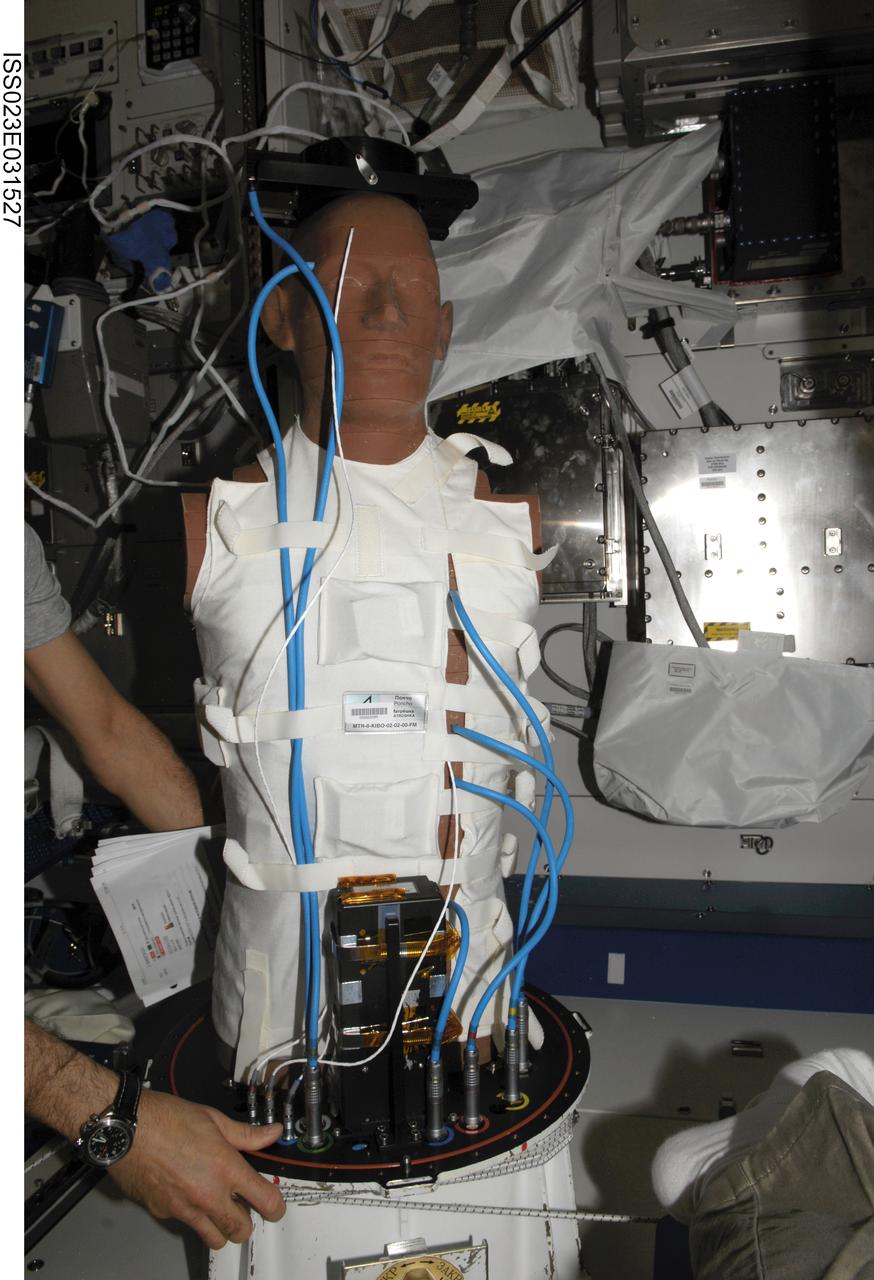
iss023e031527 (5/4/2010) --- A view of the anthropomorphic Phantom for the Matroshka-2 Kibo experiment installed at location JPM1F2 in the Kibo Japanese Experiment Pressurized Module (JPM) aboard the International Space Station (ISS).
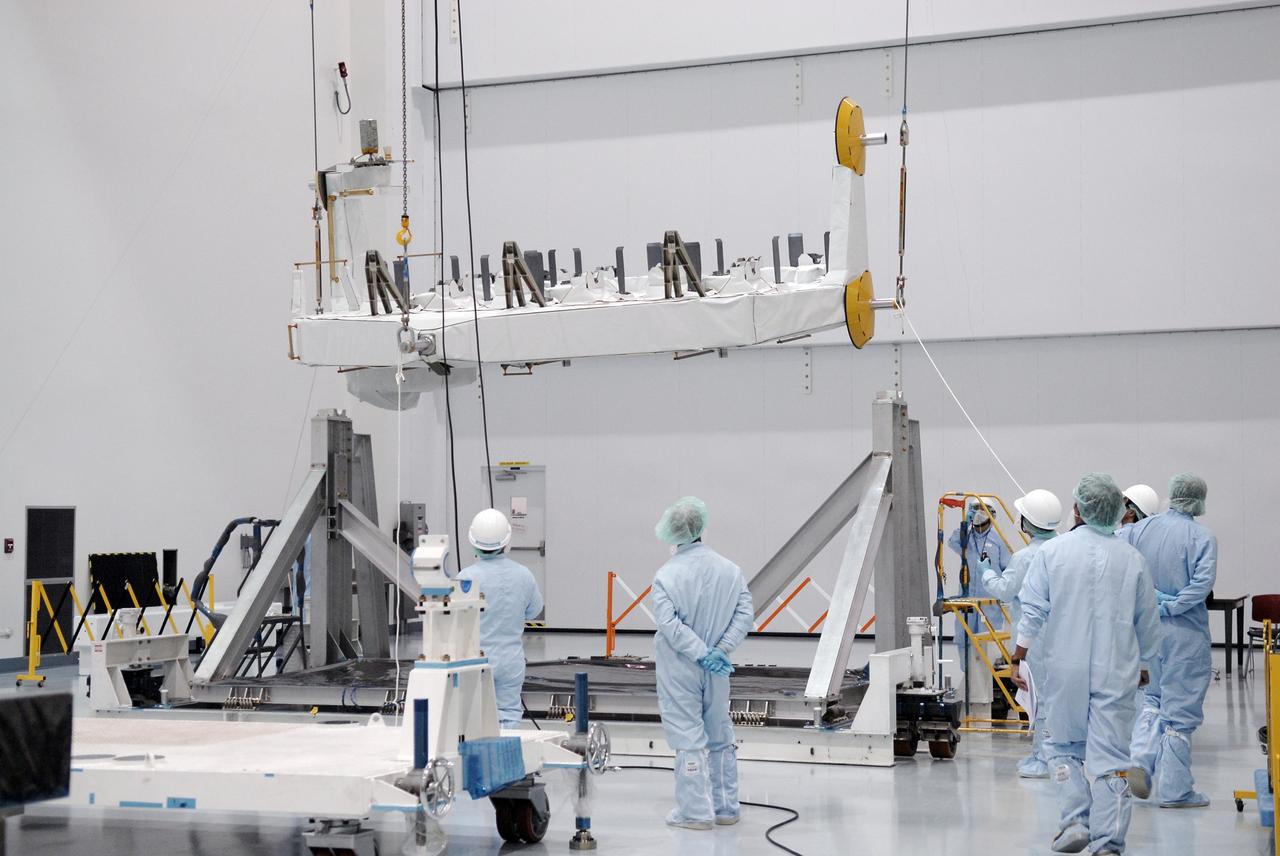
CAPE CANAVERAL, Fla. - In the Space Station Processing Facility at NASA's Kennedy Space Center in Florida, cables lift the Kibo Experiment Logistics Module Exposed Section, or ELM-ES, to move it to a work stand. The ELM-ES is one of the final components of the Japan Aerospace Exploration Agency's Kibo laboratory for the International Space Station. It can provide payload storage space and can carry up to three payloads at launch. In addition, the ELM-ES provides a logistics function where it can be returned to the ground aboard the space shuttle. The ELM-ES will be carried aboard space shuttle Endeavour on the STS-127 mission targeted for launch May 15, 2009. Photo credit: NASA/Kim Shiflett
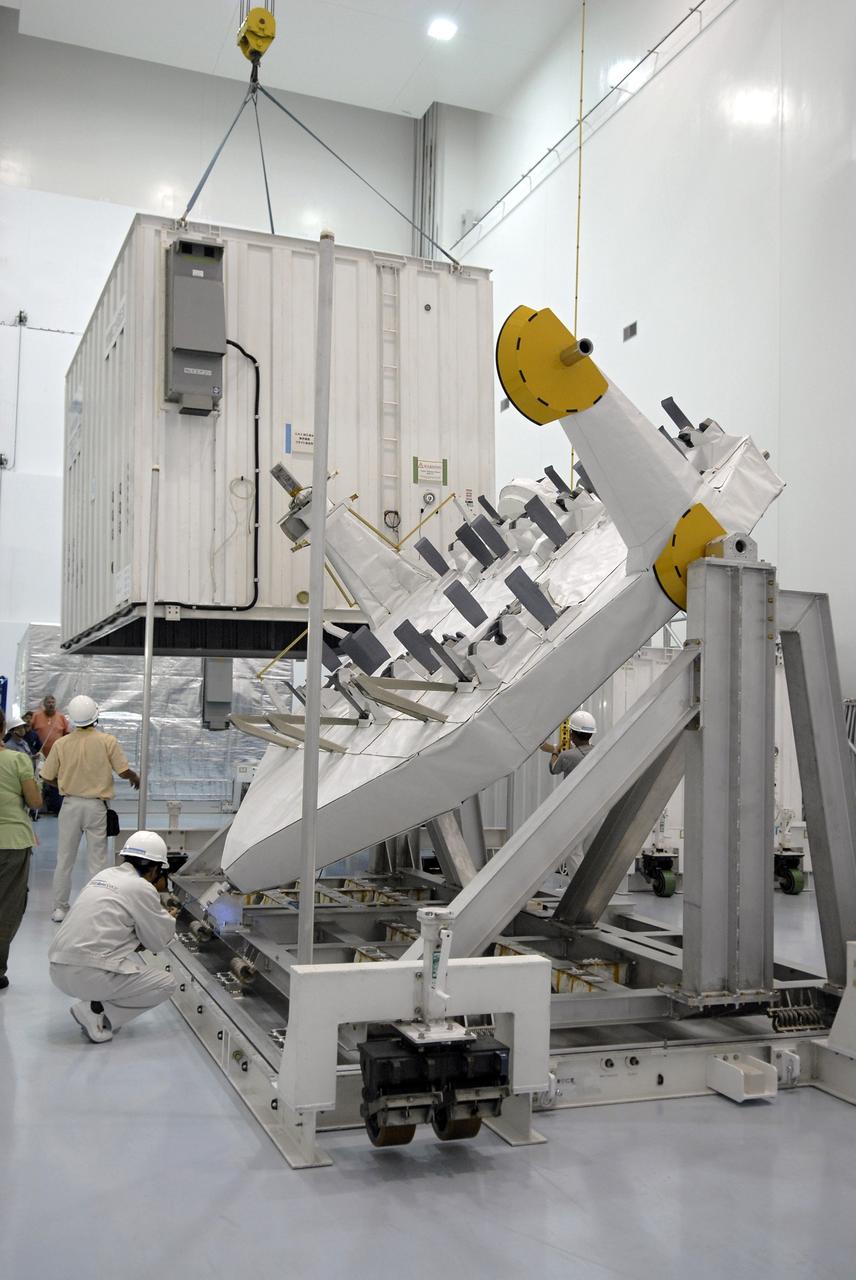
CAPE CANAVERAL, Fla. - The shipping container is moved away from the Kibo Experiment Logistics Module Exposed Section, or ELM-ES, in the Space Station Processing Facility at NASA's Kennedy Space Center in Florida. The ELM-ES is one of the final components of the Japan Aerospace Exploration Agency's Kibo laboratory for the International Space Station. It can provide payload storage space and can carry up to three payloads at launch. In addition, the ELM-ES provides a logistics function where it can be returned to the ground aboard the space shuttle. The ELM-ES will be carried aboard space shuttle Endeavour on the STS-127 mission targeted for launch May 15, 2009. Photo credit: NASA/Kim Shiflett
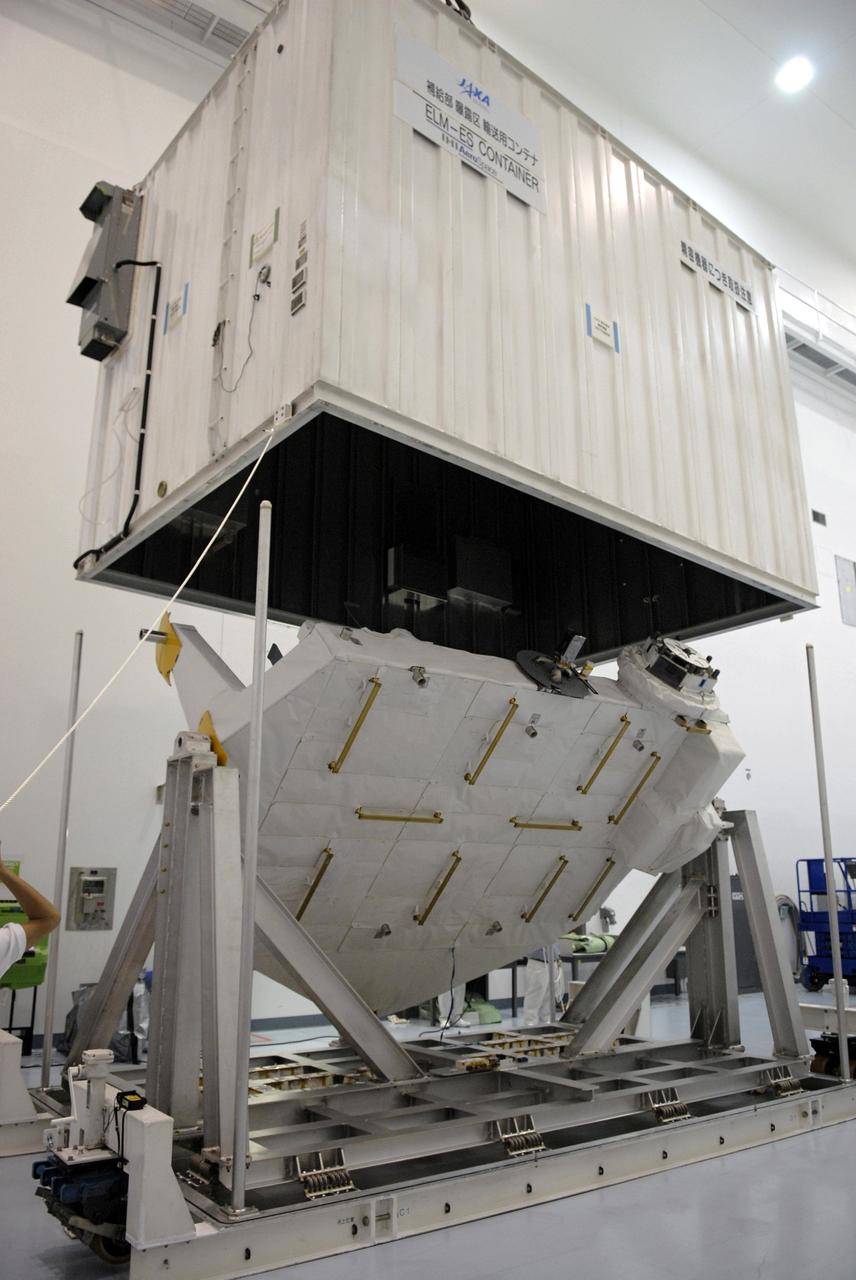
CAPE CANAVERAL, Fla. - The shipping container is lifted above the Kibo Experiment Logistics Module Exposed Section, or ELM-ES, in the Space Station Processing Facility at NASA's Kennedy Space Center in Florida. The ELM-ES is one of the final components of the Japan Aerospace Exploration Agency's Kibo laboratory for the International Space Station. It can provide payload storage space and can carry up to three payloads at launch. In addition, the ELM-ES provides a logistics function where it can be returned to the ground aboard the space shuttle. The ELM-ES will be carried aboard space shuttle Endeavour on the STS-127 mission targeted for launch May 15, 2009. Photo credit: NASA/Kim Shiflett
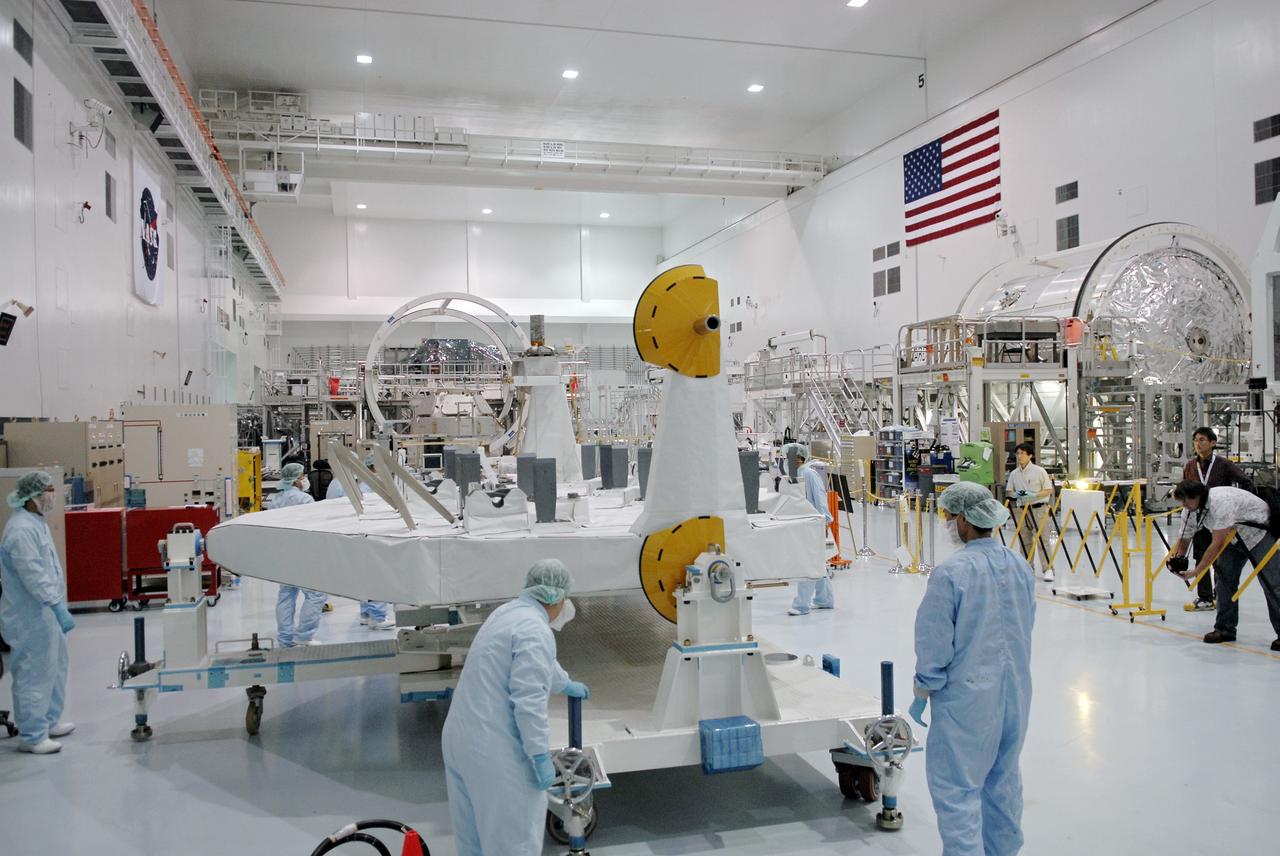
CAPE CANAVERAL, Fla. - In the Space Station Processing Facility at NASA's Kennedy Space Center in Florida, workers secure the work stand holding the Kibo Experiment Logistics Module Exposed Section, or ELM-ES. The ELM-ES is one of the final components of the Japan Aerospace Exploration Agency's Kibo laboratory for the International Space Station. It can provide payload storage space and can carry up to three payloads at launch. In addition, the ELM-ES provides a logistics function where it can be returned to the ground aboard the space shuttle. The ELM-ES will be carried aboard space shuttle Endeavour on the STS-127 mission targeted for launch May 15, 2009. Photo credit: NASA/Kim Shiflett
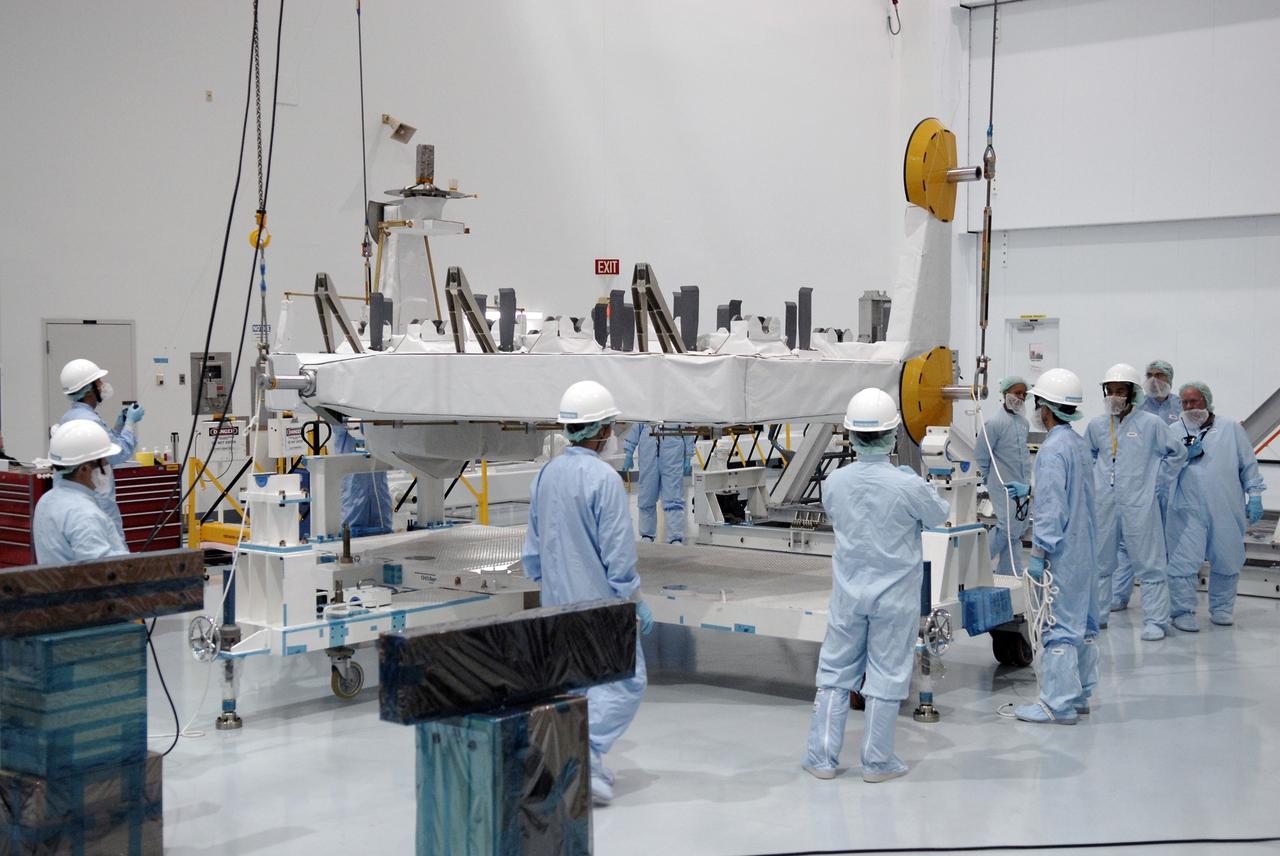
CAPE CANAVERAL, Fla. - In the Space Station Processing Facility at NASA's Kennedy Space Center in Florida, cables lower the Kibo Experiment Logistics Module Exposed Section, or ELM-ES, onto a work stand. The ELM-ES is one of the final components of the Japan Aerospace Exploration Agency's Kibo laboratory for the International Space Station. It can provide payload storage space and can carry up to three payloads at launch. In addition, the ELM-ES provides a logistics function where it can be returned to the ground aboard the space shuttle. The ELM-ES will be carried aboard space shuttle Endeavour on the STS-127 mission targeted for launch May 15, 2009. Photo credit: NASA/Kim Shiflett
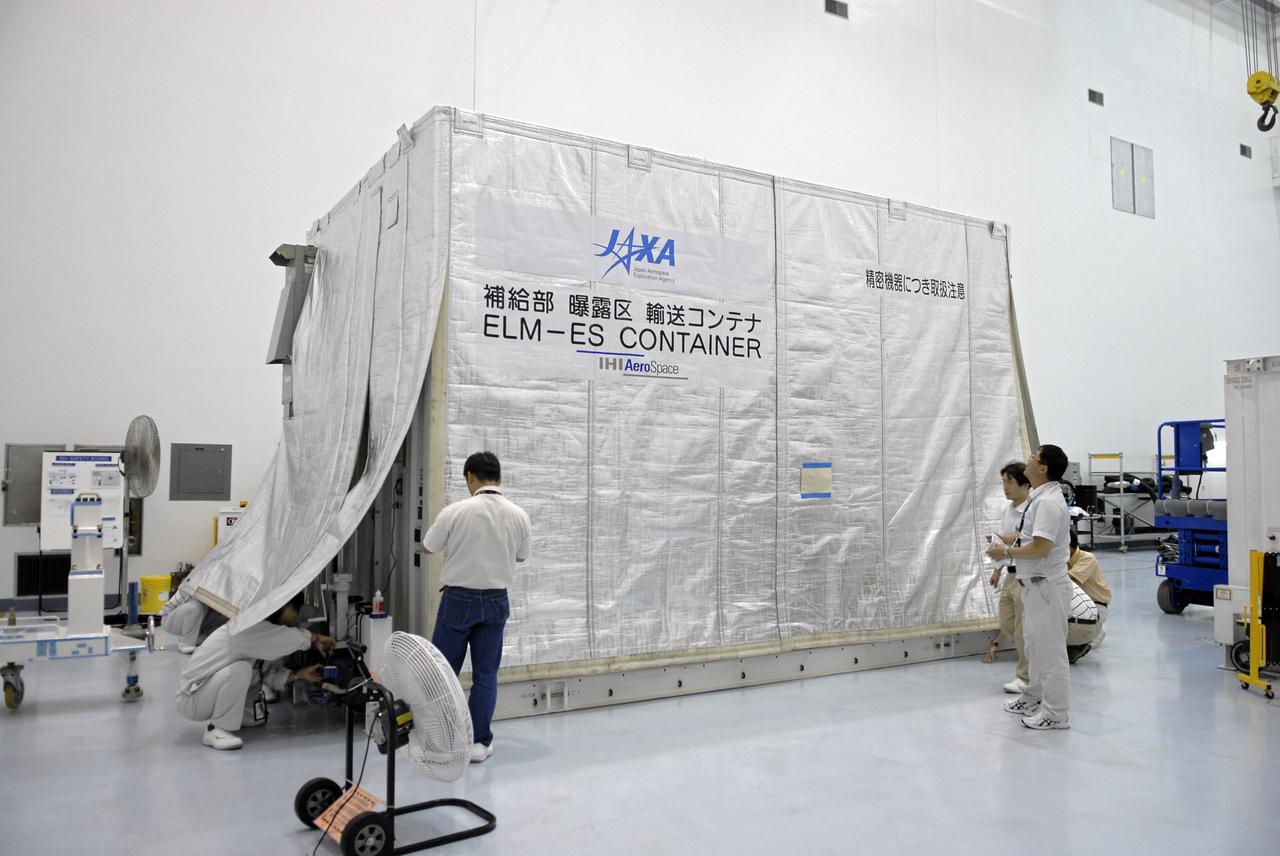
CAPE CANAVERAL, Fla. - The Kibo Experiment Logistics Module Exposed Section, or ELM-ES, shipping container is uncovered in the Space Station Processing Facility at NASA's Kennedy Space Center in Florida. The ELM-ES is one of the final components of the Japan Aerospace Exploration Agency's Kibo laboratory for the International Space Station. It can provide payload storage space and can carry up to three payloads at launch. In addition, the ELM-ES provides a logistics function where it can be returned to the ground aboard the space shuttle. The ELM-ES will be carried aboard space shuttle Endeavour on the STS-127 mission targeted for launch May 15, 2009. Photo credit: NASA/Kim Shiflett
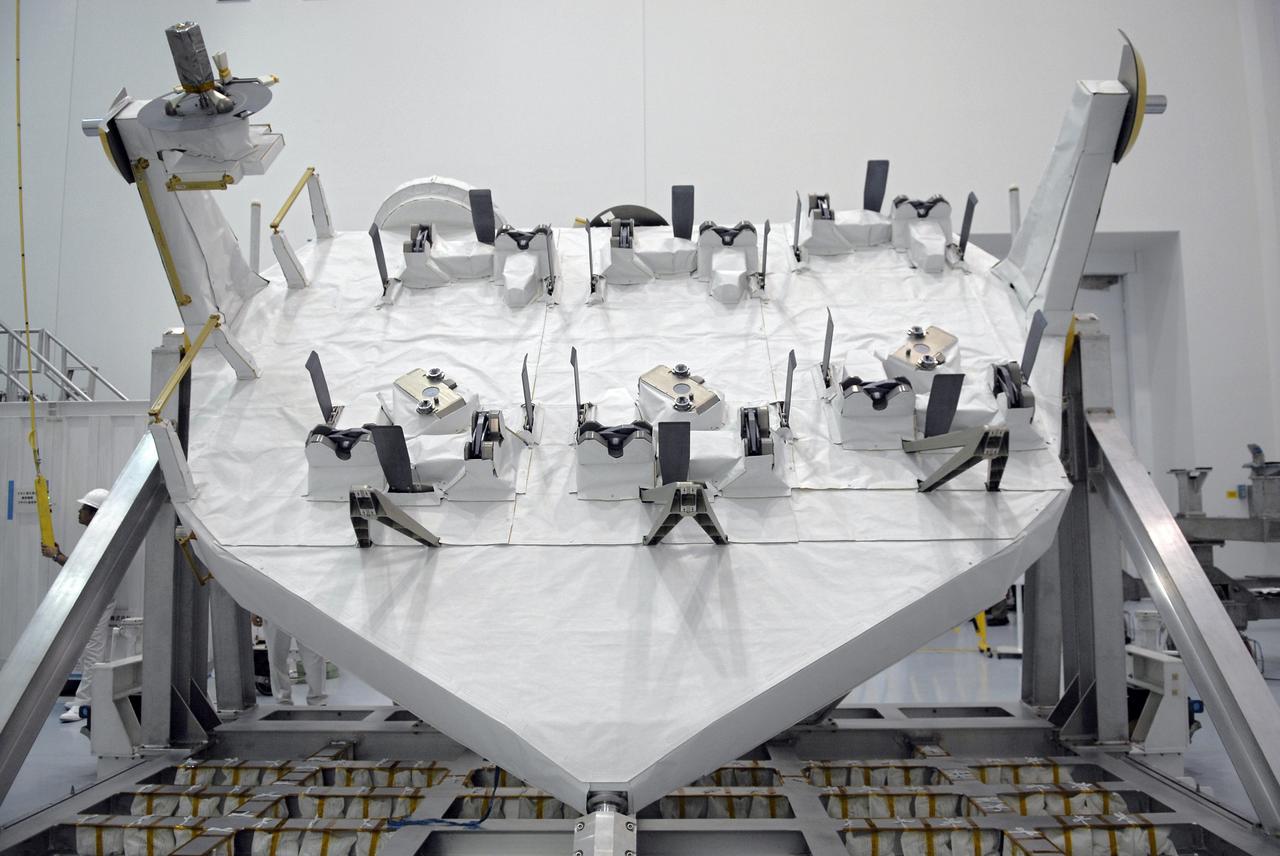
CAPE CANAVERAL, Fla. - In the Space Station Processing Facility at NASA's Kennedy Space Center in Florida, the Kibo Experiment Logistics Module Exposed Section, or ELM-ES, is exposed after removal of the shipping container. The ELM-ES is one of the final components of the Japan Aerospace Exploration Agency's Kibo laboratory for the International Space Station. It can provide payload storage space and can carry up to three payloads at launch. In addition, the ELM-ES provides a logistics function where it can be returned to the ground aboard the space shuttle. The ELM-ES will be carried aboard space shuttle Endeavour on the STS-127 mission targeted for launch May 15, 2009. Photo credit: NASA/Kim Shiflett
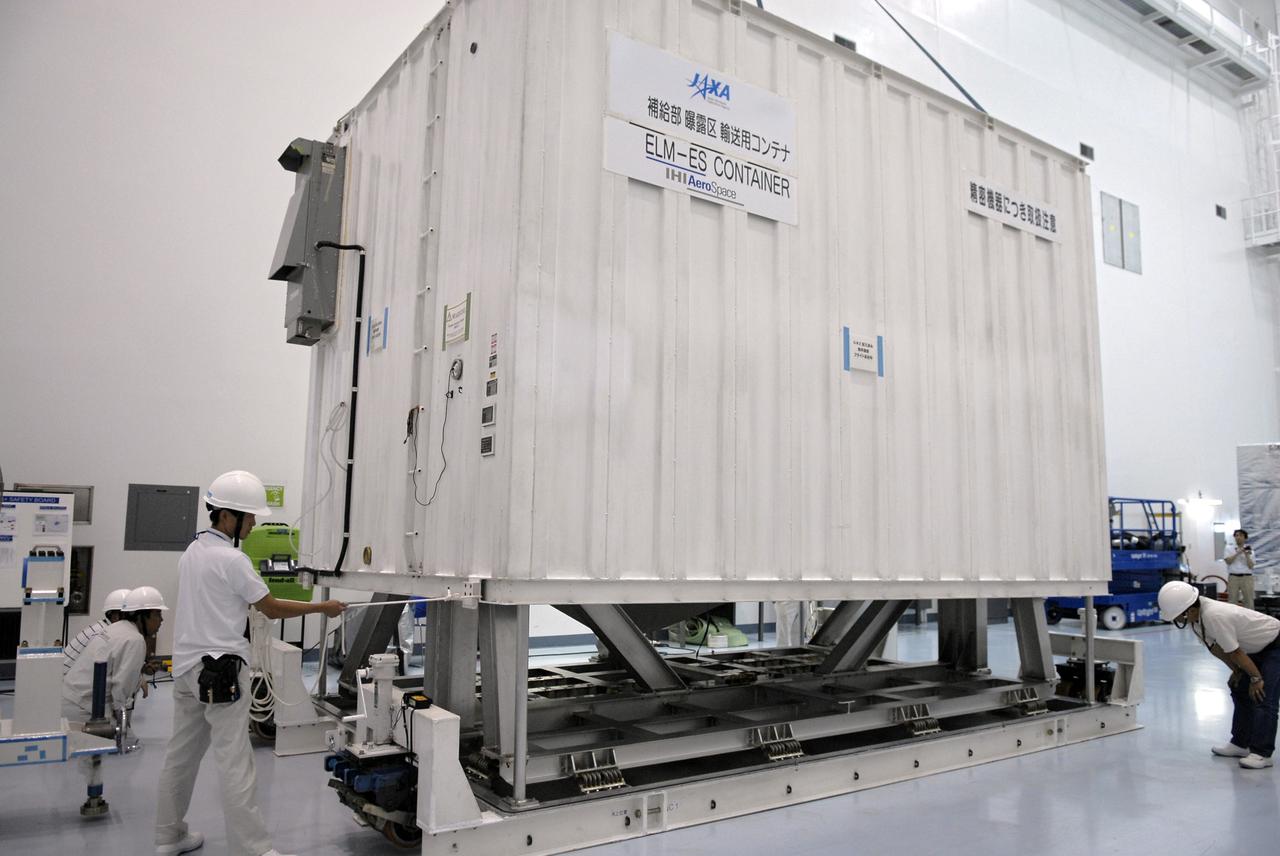
CAPE CANAVERAL, Fla. - The shipping container is lifted from the Kibo Experiment Logistics Module Exposed Section, or ELM-ES, in the Space Station Processing Facility at NASA's Kennedy Space Center in Florida. The ELM-ES is one of the final components of the Japan Aerospace Exploration Agency's Kibo laboratory for the International Space Station. It can provide payload storage space and can carry up to three payloads at launch. In addition, the ELM-ES provides a logistics function where it can be returned to the ground aboard the space shuttle. The ELM-ES will be carried aboard space shuttle Endeavour on the STS-127 mission targeted for launch May 15, 2009. Photo credit: NASA/Kim Shiflett
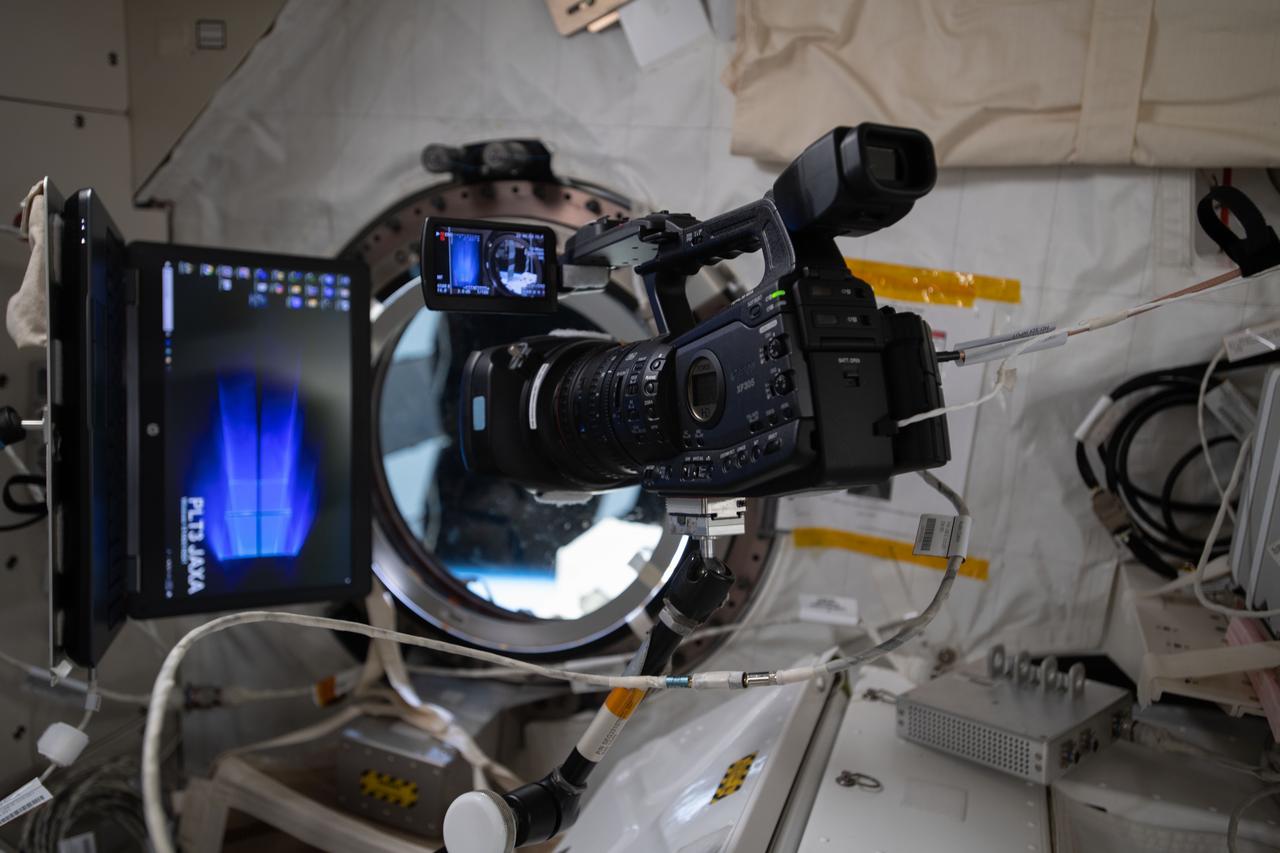
iss063e068091 (8/12/2020) --- Photo documentation of the Space Studio KIBO setup in the Japanese Experiment Module (JEM) aboard the International Space Station (ISS). The Space Frontier Studio KIBO is a broadcasting studio that is constructed and operated in the Japanese Experiment Module (JEM), also known as Kibo. The studio can livestream activities, interactive entertainment, and communication from space.
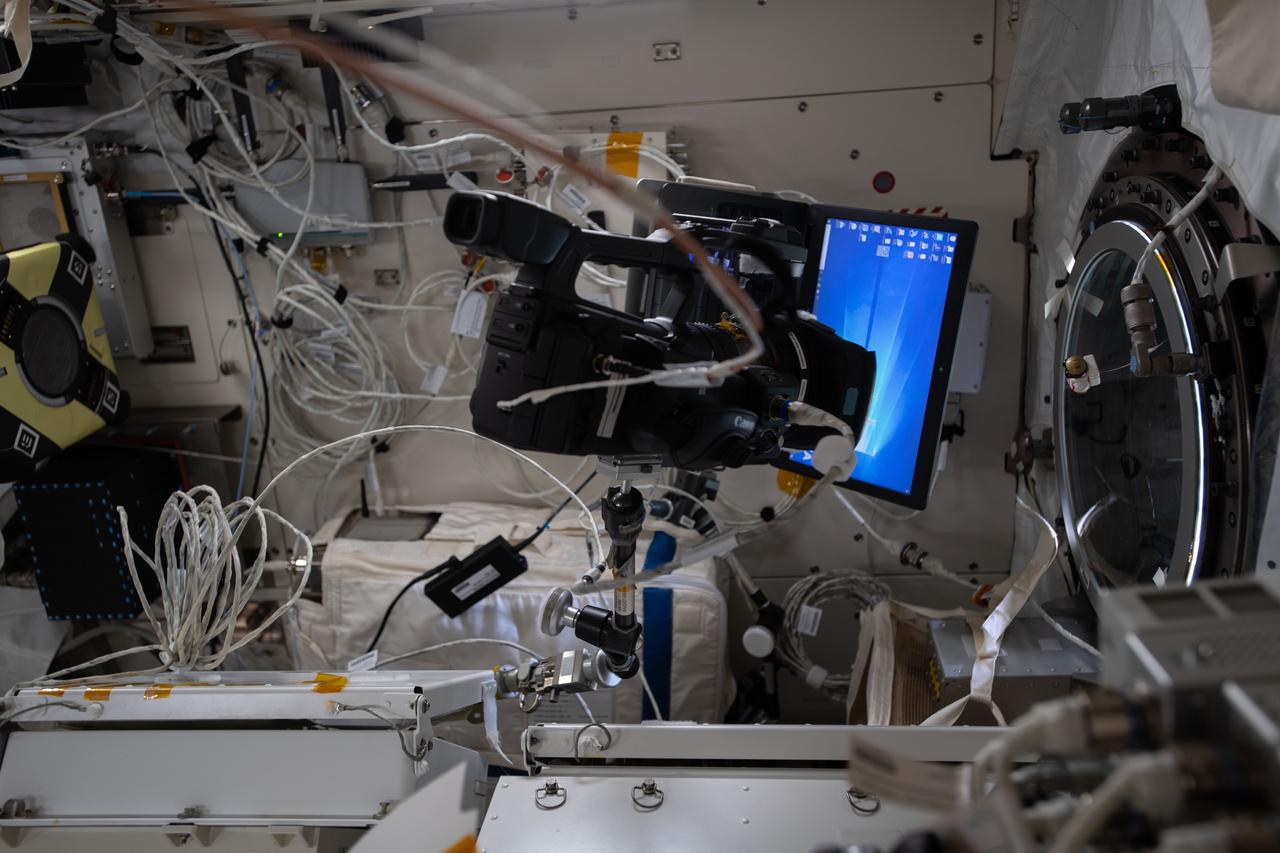
iss063e068100 (8/12/2020) --- Photo documentation of the Space Studio KIBO setup in the Japanese Experiment Module (JEM) aboard the International Space Station (ISS). The Space Frontier Studio KIBO is a broadcasting studio that is constructed and operated in the Japanese Experiment Module (JEM), also known as Kibo. The studio can livestream activities, interactive entertainment, and communication from space.
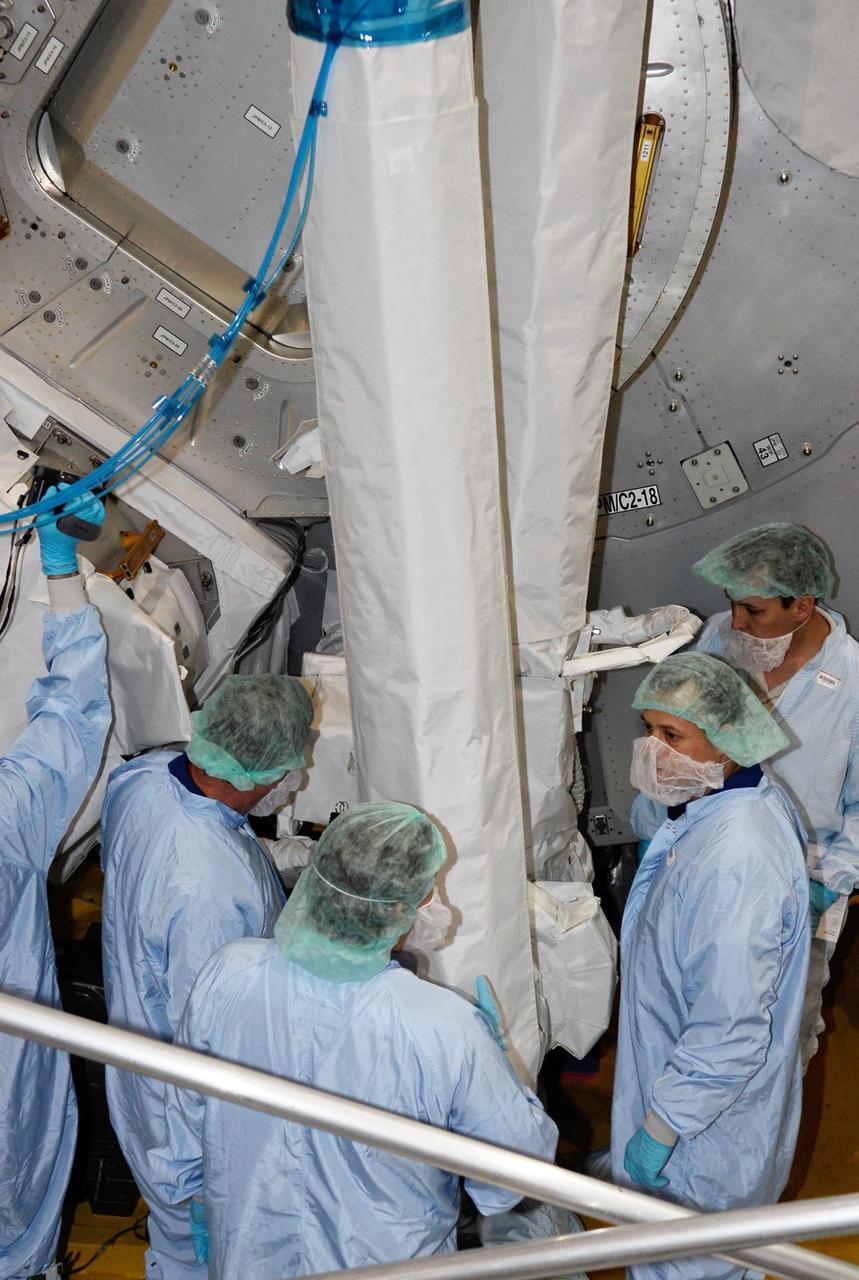
KENNEDY SPACE CENTER, FLA. -- In the Space Station Processing Facility at NASA's Kennedy Space Center, members of the STS-124 crew get a close look at equipment on the Japanese Experiment Module, called Kibo, including the Remote Manipulator System, or RMS, two robotic arms that support operations on the outside of the Kibo. Crew members are at Kennedy for a crew equipment interface test that includes familiarization with tools and equipment that will be used on the mission. The STS-124 mission is the second of three flights that will launch components to complete the Japanese pressurized module, the Kibo laboratory. The mission will include two spacewalks to install the new lab and its remote manipulator system. The lab's logistics module, which will have been installed in a temporary location during STS-123, will be attached to the new lab. Photo credit: NASA/Kim Shiflett
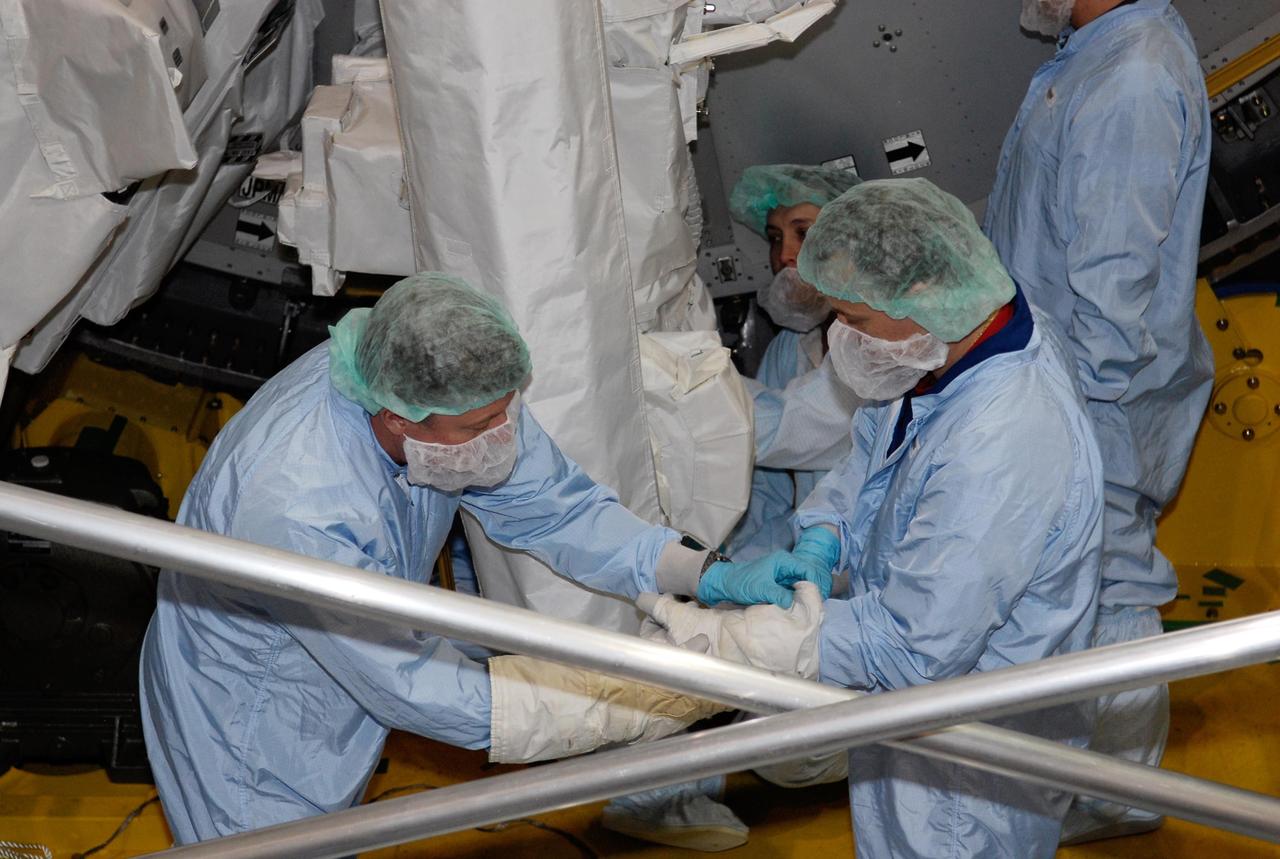
KENNEDY SPACE CENTER, FLA. -- In the Space Station Processing Facility at NASA's Kennedy Space Center, STS-124 Mission Specialist Michael Fossum (left) gets a close look at equipment on the Japanese Experiment Module, called Kibo, including the Remote Manipulator System, or RMS, two robotic arms that support operations on the outside of the Kibo. Crew members are at Kennedy for a crew equipment interface test that includes familiarization with tools and equipment that will be used on the mission. The STS-124 mission is the second of three flights that will launch components to complete the Japanese pressurized module, the Kibo laboratory. The mission will include two spacewalks to install the new lab and its remote manipulator system. The lab's logistics module, which will have been installed in a temporary location during STS-123, will be attached to the new lab. Photo credit: NASA/Kim Shiflett
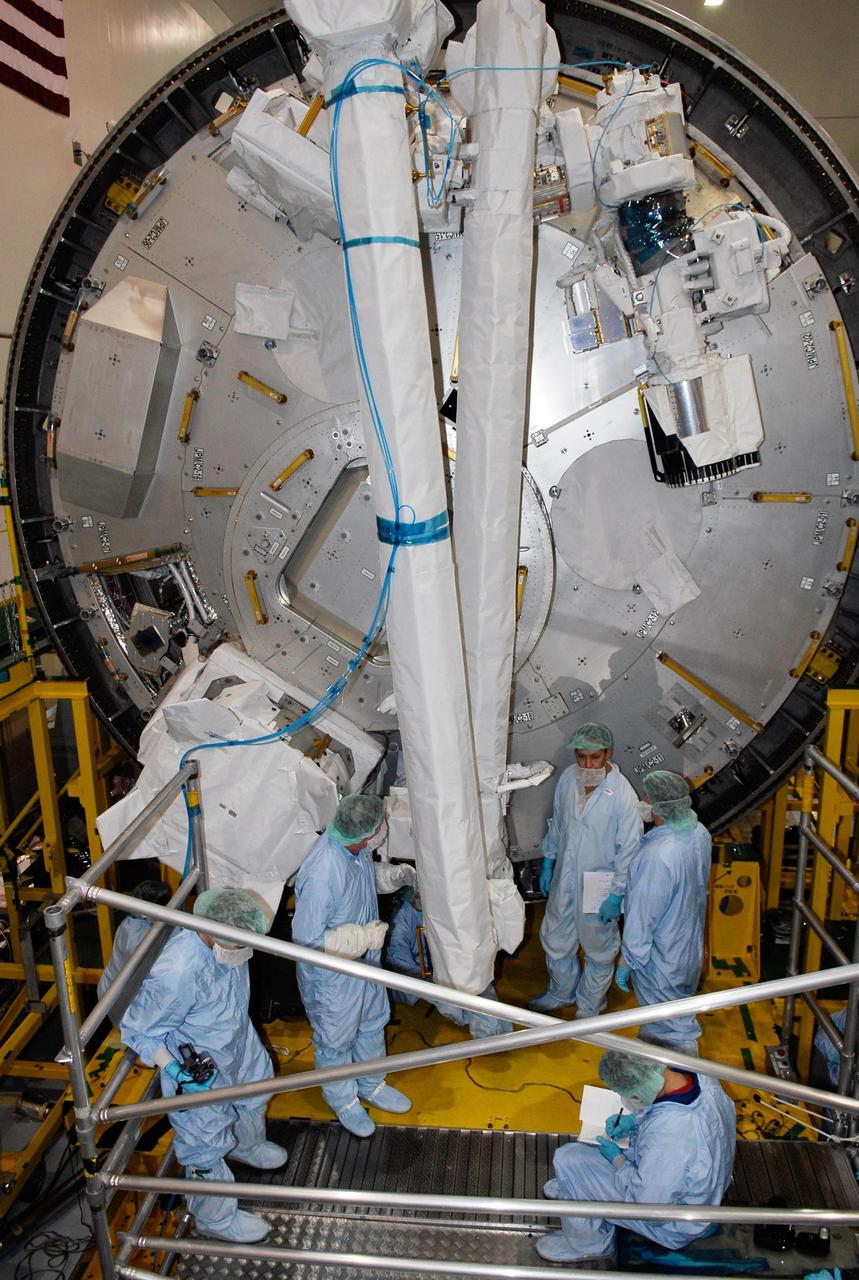
KENNEDY SPACE CENTER, FLA. -- In the Space Station Processing Facility at NASA's Kennedy Space Center, members of the STS-124 crew get a close look at equipment on the Japanese Experiment Module, called Kibo, including the Remote Manipulator System, or RMS, two robotic arms that support operations on the outside of the Kibo. Crew members are at Kennedy for a crew equipment interface test that includes familiarization with tools and equipment that will be used on the mission. The STS-124 mission is the second of three flights that will launch components to complete the Japanese pressurized module, the Kibo laboratory. The mission will include two spacewalks to install the new lab and its remote manipulator system. The lab's logistics module, which will have been installed in a temporary location during STS-123, will be attached to the new lab. Photo credit: NASA/Kim Shiflett
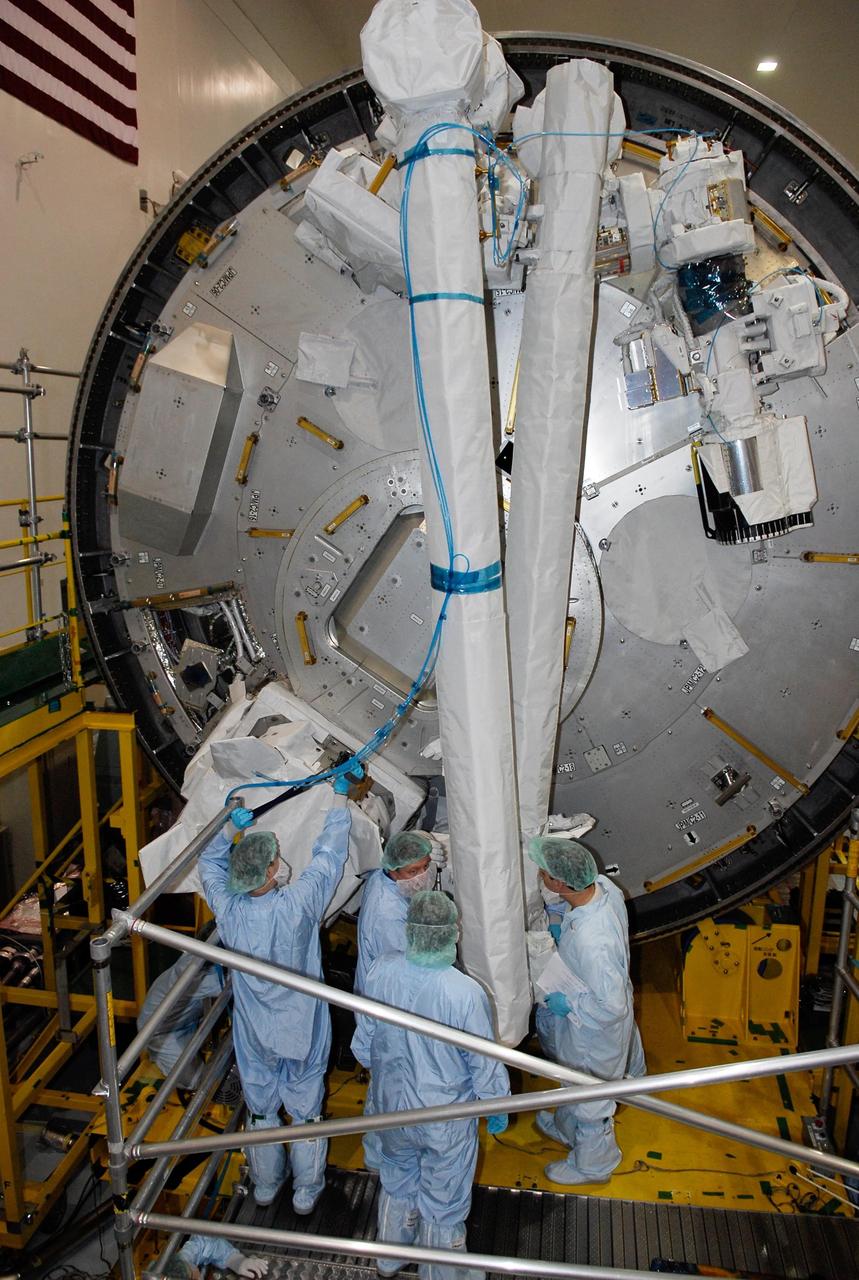
KENNEDY SPACE CENTER, FLA. -- In the Space Station Processing Facility at NASA's Kennedy Space Center, members of the STS-124 crew get a close look at equipment on the Japanese Experiment Module, called Kibo, including the Remote Manipulator System, or RMS, two robotic arms that support operations on the outside of the Kibo. Crew members are at Kennedy for a crew equipment interface test that includes familiarization with tools and equipment that will be used on the mission. The STS-124 mission is the second of three flights that will launch components to complete the Japanese pressurized module, the Kibo laboratory. The mission will include two spacewalks to install the new lab and its remote manipulator system. The lab's logistics module, which will have been installed in a temporary location during STS-123, will be attached to the new lab. Photo credit: NASA/Kim Shiflett
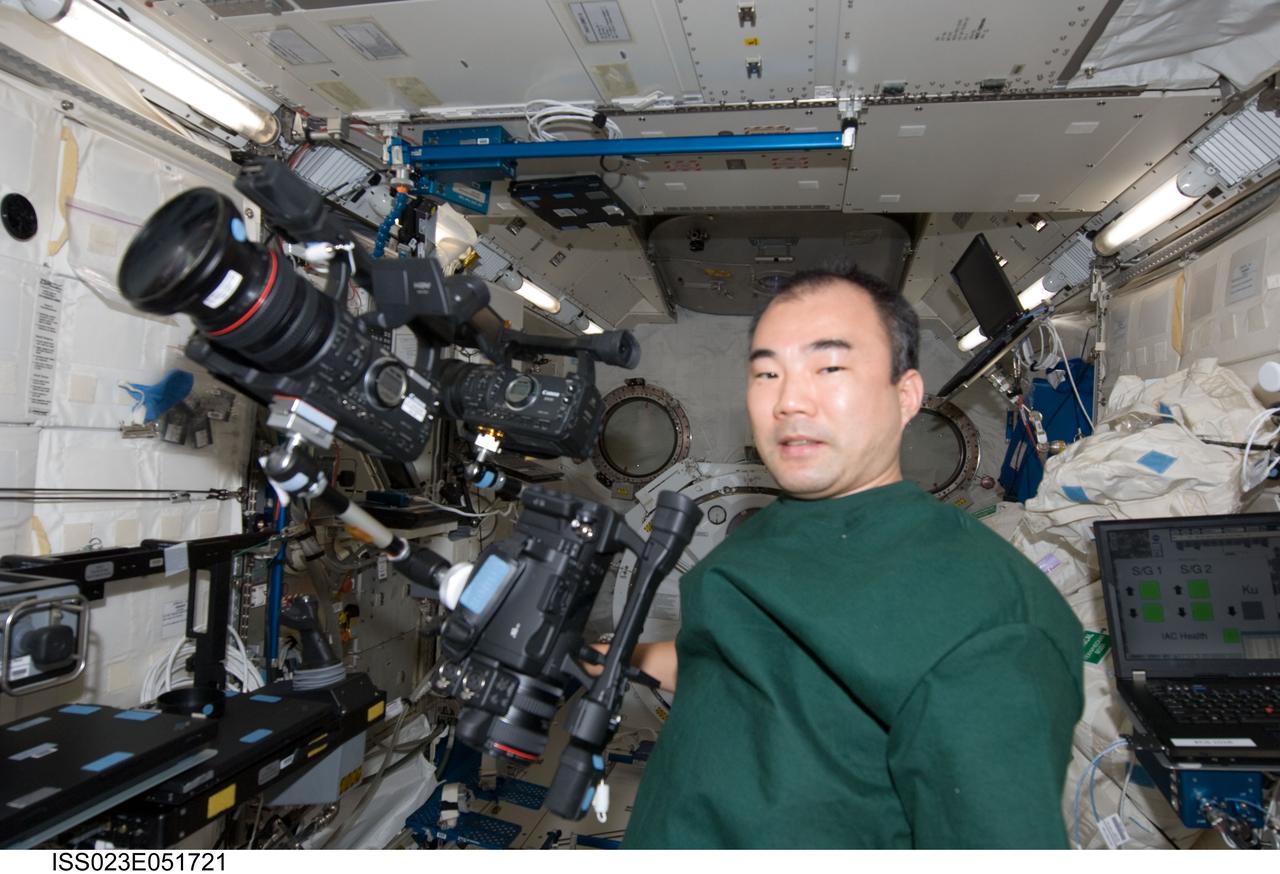
ISS023-E-051721 (25 May 2010) --- Japan Aerospace Exploration Agency (JAXA) astronaut Soichi Noguchi, Expedition 23 flight engineer, is pictured near camera equipment in the Kibo laboratory of the International Space Station.
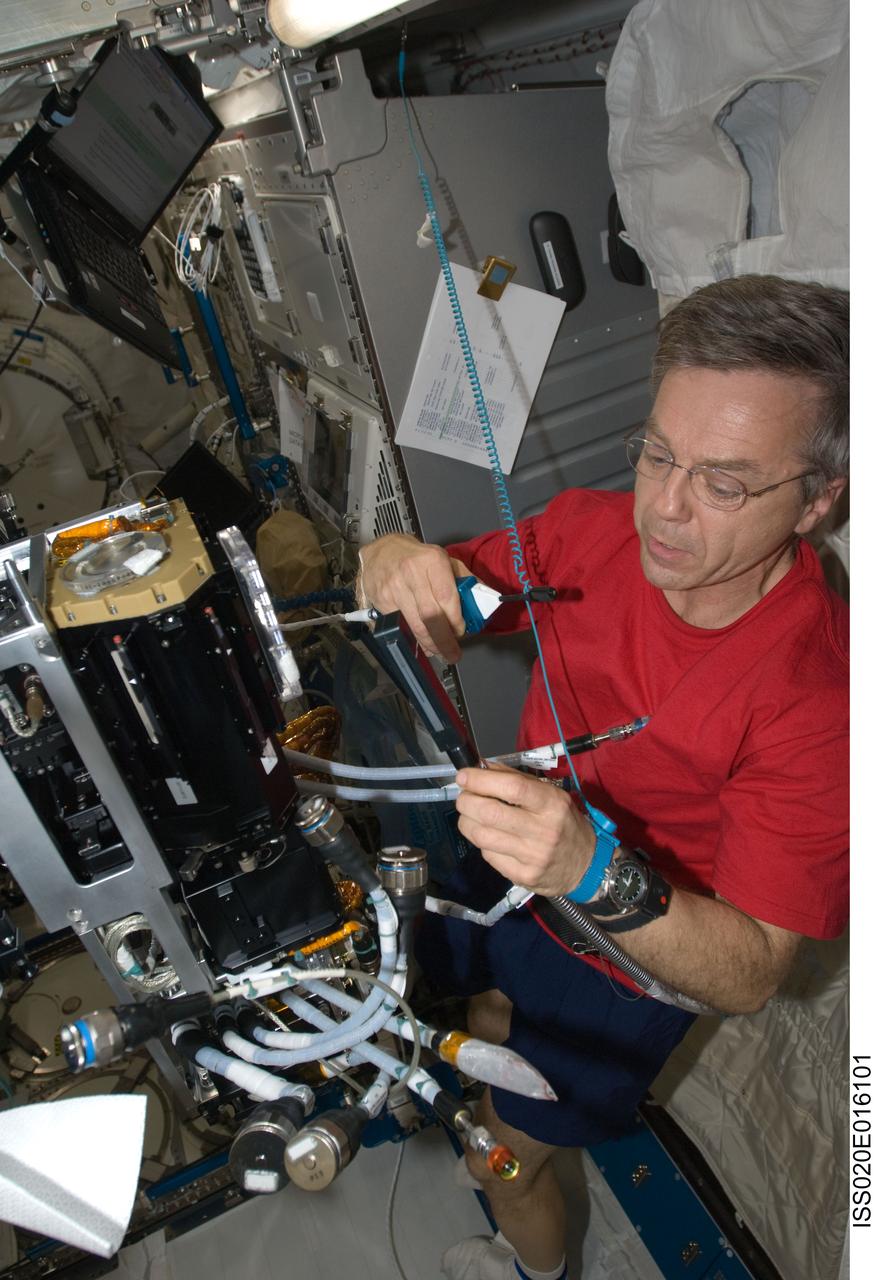
ISS020-E-016101 (1 July 2009) --- Canadian Space Agency astronaut Robert Thirsk, Expedition 20 flight engineer, works with hardware in the Kibo laboratory of the International Space Station.
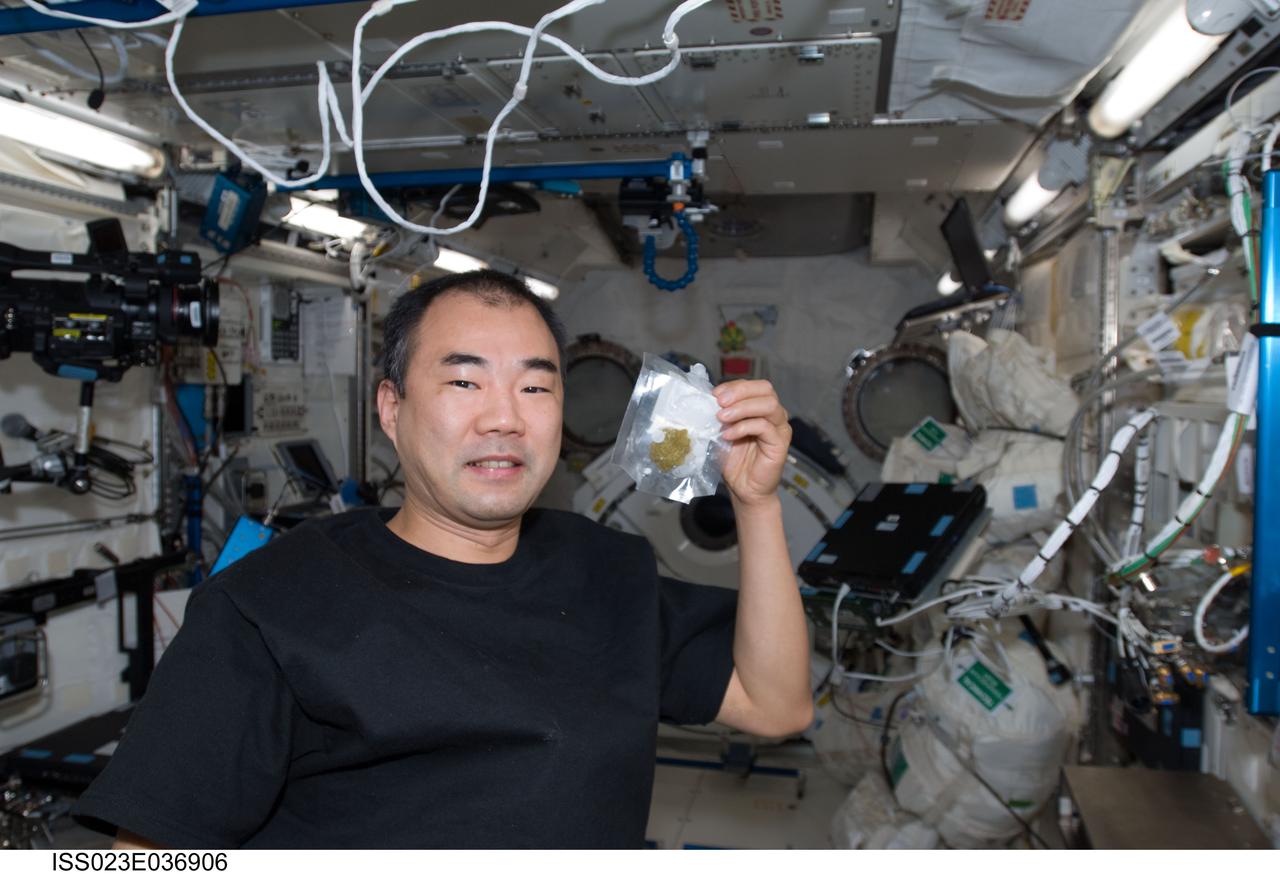
ISS023-E-036906 (7 May 2010) --- Japan Aerospace Exploration Agency (JAXA) astronaut Soichi Noguchi, Expedition 23 flight engineer, is pictured in the Kibo laboratory of the International Space Station.
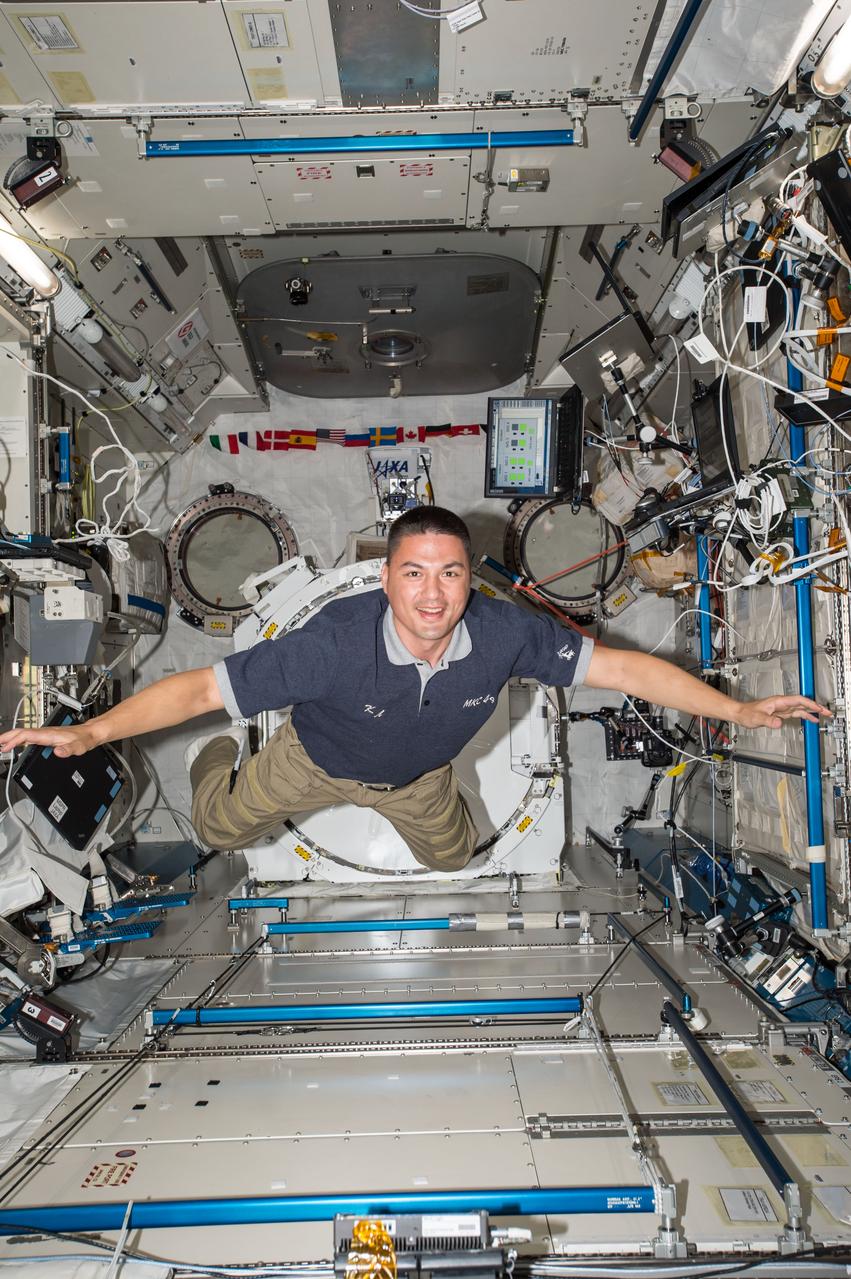
View of astronaut Kjell Lindgren flying in the Kibo module of the ISS. Sent as part of Twitter message: It's already been a week! Time is flying...and so am I!
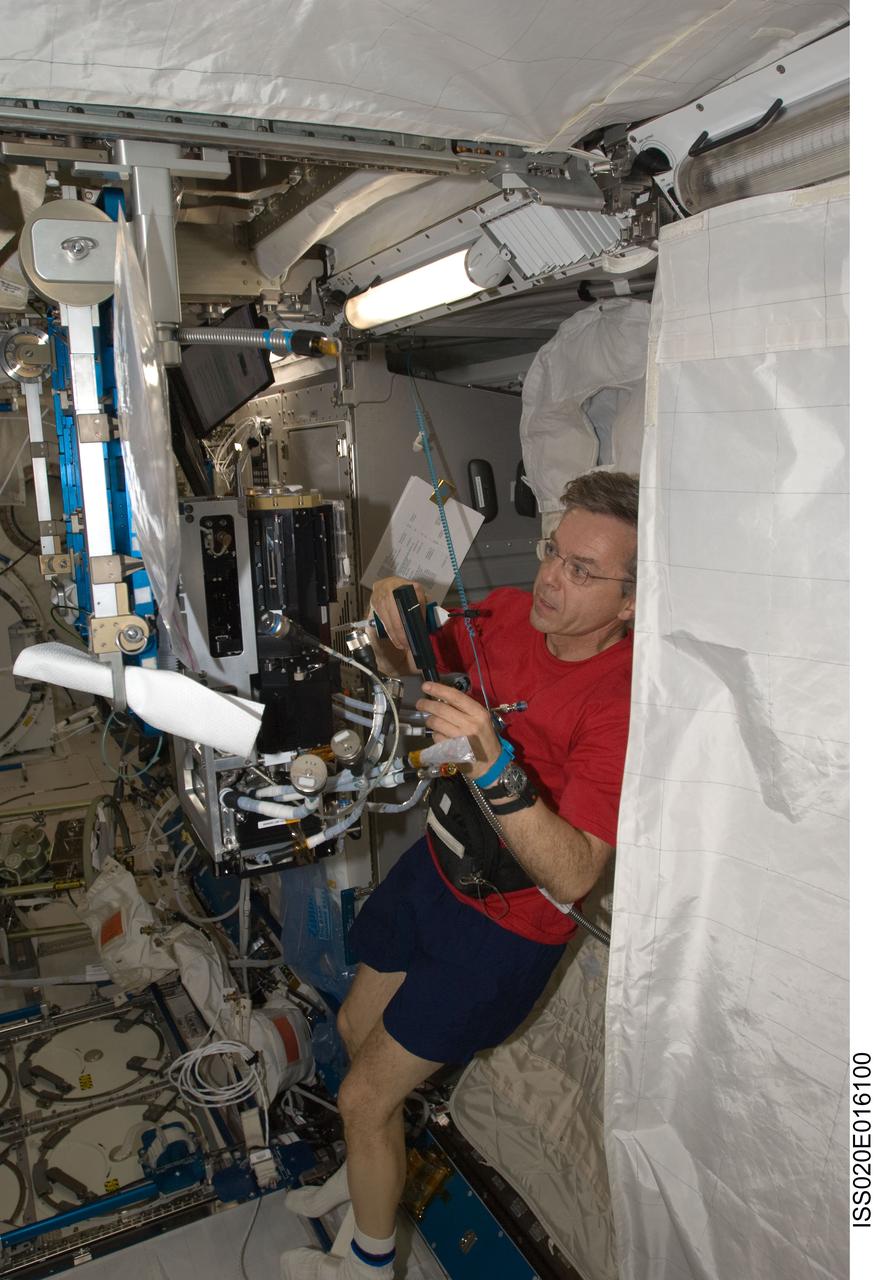
ISS020-E-016100 (1 July 2009) --- Canadian Space Agency astronaut Robert Thirsk, Expedition 20 flight engineer, works with hardware in the Kibo laboratory of the International Space Station.
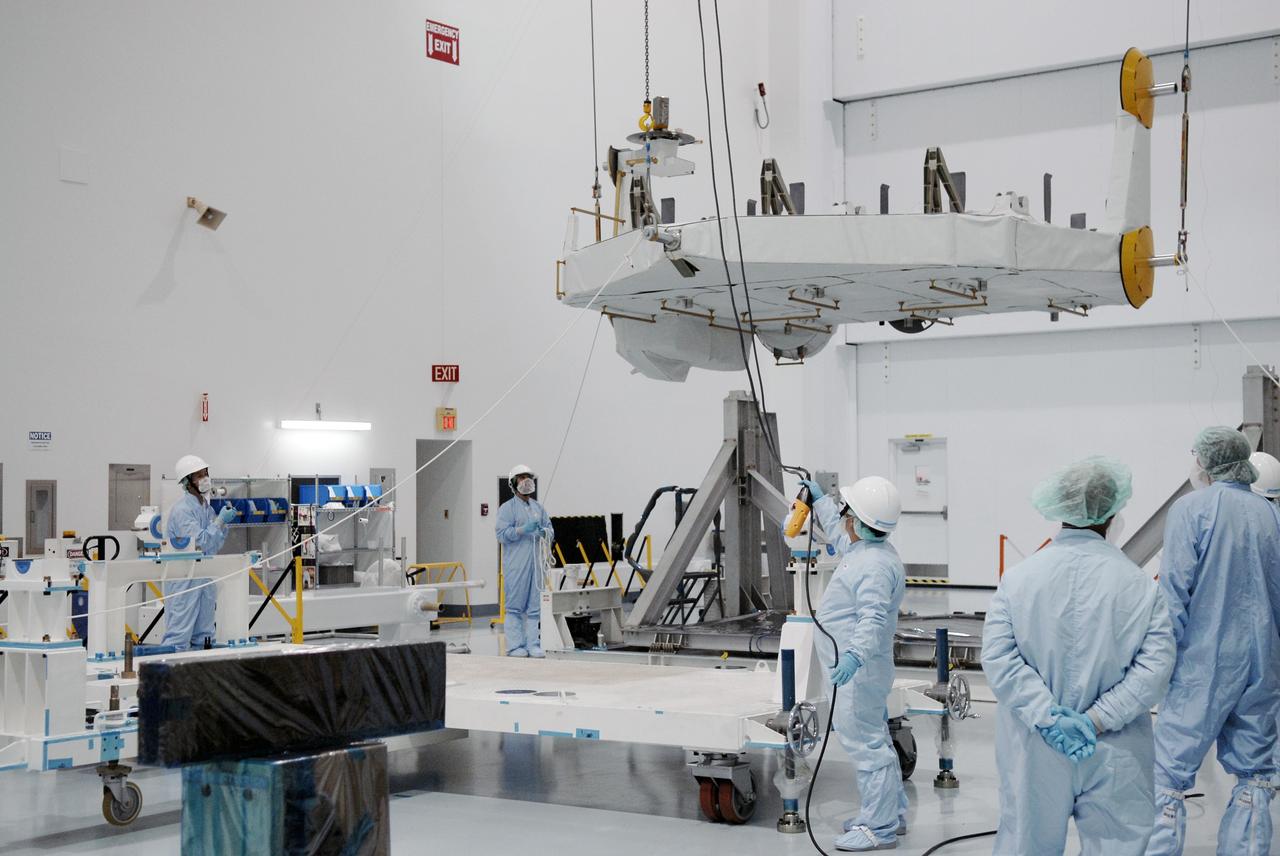
CAPE CANAVERAL, Fla. - In the Space Station Processing Facility at NASA's Kennedy Space Center in Florida, workers guide cables holding the Kibo Experiment Logistics Module Exposed Section, or ELM-ES, as it moves to a work stand. The ELM-ES is one of the final components of the Japan Aerospace Exploration Agency's Kibo laboratory for the International Space Station. It can provide payload storage space and can carry up to three payloads at launch. In addition, the ELM-ES provides a logistics function where it can be returned to the ground aboard the space shuttle. The ELM-ES will be carried aboard space shuttle Endeavour on the STS-127 mission targeted for launch May 15, 2009. Photo credit: NASA/Kim Shiflett
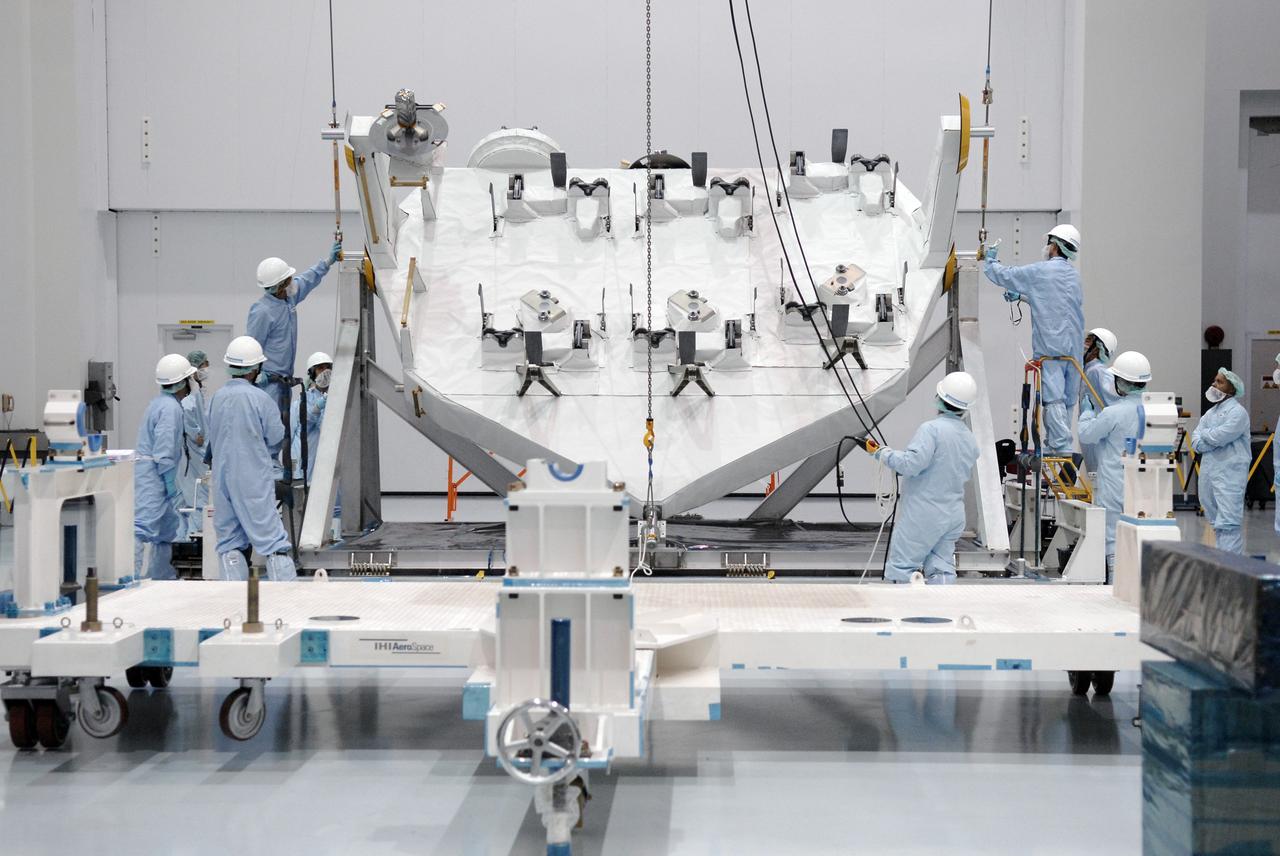
CAPE CANAVERAL, Fla. - In the Space Station Processing Facility at NASA's Kennedy Space Center in Florida, workers connect cables to the Kibo Experiment Logistics Module Exposed Section, or ELM-ES. The ELM-ES will be moved to a work stand. The ELM-ES is one of the final components of the Japan Aerospace Exploration Agency's Kibo laboratory for the International Space Station. It can provide payload storage space and can carry up to three payloads at launch. In addition, the ELM-ES provides a logistics function where it can be returned to the ground aboard the space shuttle. The ELM-ES will be carried aboard space shuttle Endeavour on the STS-127 mission targeted for launch May 15, 2009. Photo credit: NASA/Kim Shiflett
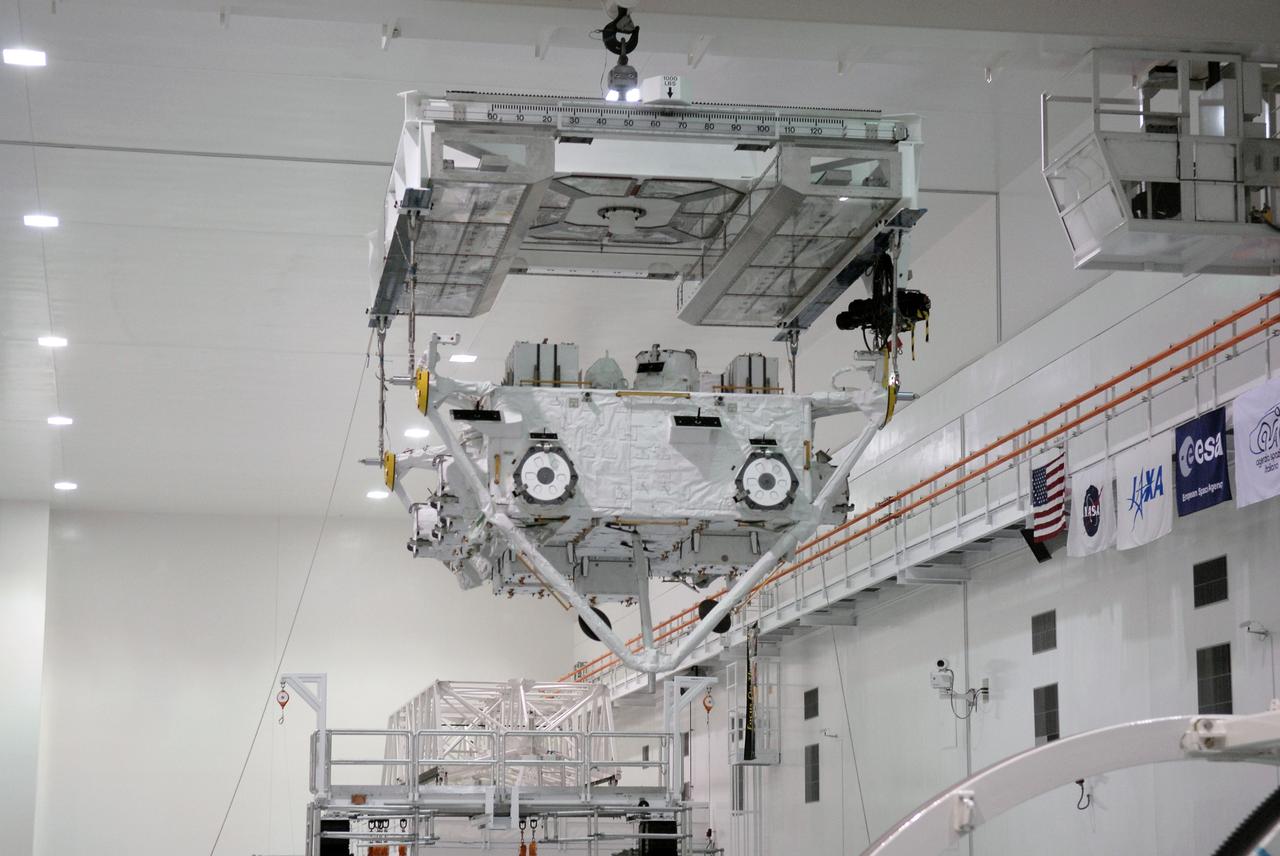
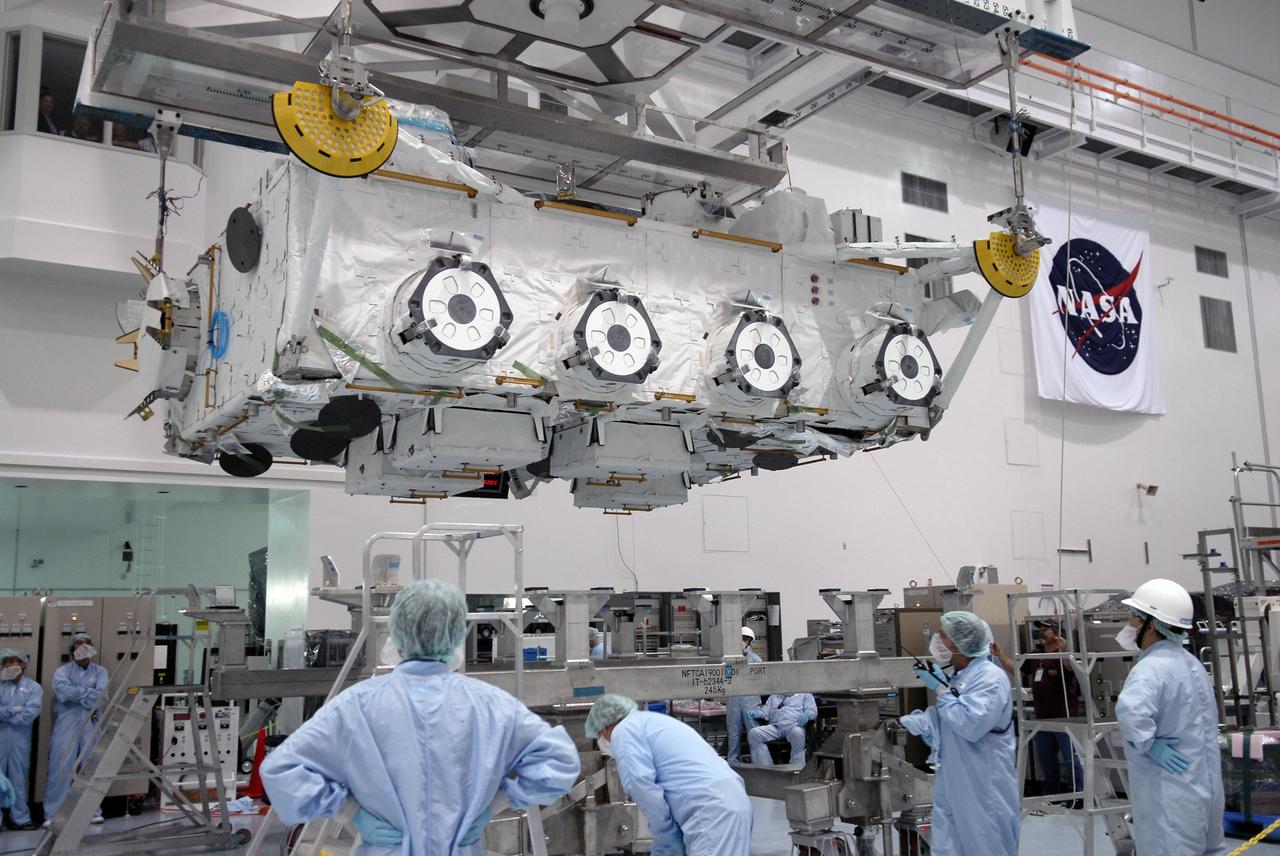
CAPE CANAVERAL, Fla. –– In the Space Station Processing Facility at NASA's Kennedy Space Center in Florida, the Japan Aerospace Exploration Agency's Kibo Exposed Facility, or EF, is moved across the room to transfer it to a workstand. When it is installed on the Kibo laboratory, the EF will provide a multipurpose platform where science experiments can be deployed and operated in the exposed environment. The payloads attached to the EF can be exchanged or retrieved by Kibo's robotic arm, the JEM Remote Manipulator System. The EF, along with the Experiment Logistics Module Exposed Section, will be carried aboard space shuttle Endeavour on the STS-127 mission targeted for launch June 13, 2009. Photo credit: NASA/Kim Shiflett

CAPE CANAVERAL, Fla. –– In the Space Station Processing Facility at NASA's Kennedy Space Center in Florida, the suspended Japan Aerospace Exploration Agency's Kibo Exposed Facility, or EF, is lowered into a workstand. When it is installed on the Kibo laboratory, the EF will provide a multipurpose platform where science experiments can be deployed and operated in the exposed environment. The payloads attached to the EF can be exchanged or retrieved by Kibo's robotic arm, the JEM Remote Manipulator System. The EF, along with the Experiment Logistics Module Exposed Section, will be carried aboard space shuttle Endeavour on the STS-127 mission targeted for launch June 13, 2009. Photo credit: NASA/Kim Shiflett
CAPE CANAVERAL, Fla. –– In the Space Station Processing Facility at NASA's Kennedy Space Center in Florida, the Japan Aerospace Exploration Agency's Kibo Exposed Facility, or EF, is lifted for transfer to a workstand. When it is installed on the Kibo laboratory, the EF will provide a multipurpose platform where science experiments can be deployed and operated in the exposed environment. The payloads attached to the EF can be exchanged or retrieved by Kibo's robotic arm, the JEM Remote Manipulator System. The EF, along with the Experiment Logistics Module Exposed Section, will be carried aboard space shuttle Endeavour on the STS-127 mission targeted for launch June 13, 2009. Photo credit: NASA/Kim Shiflett
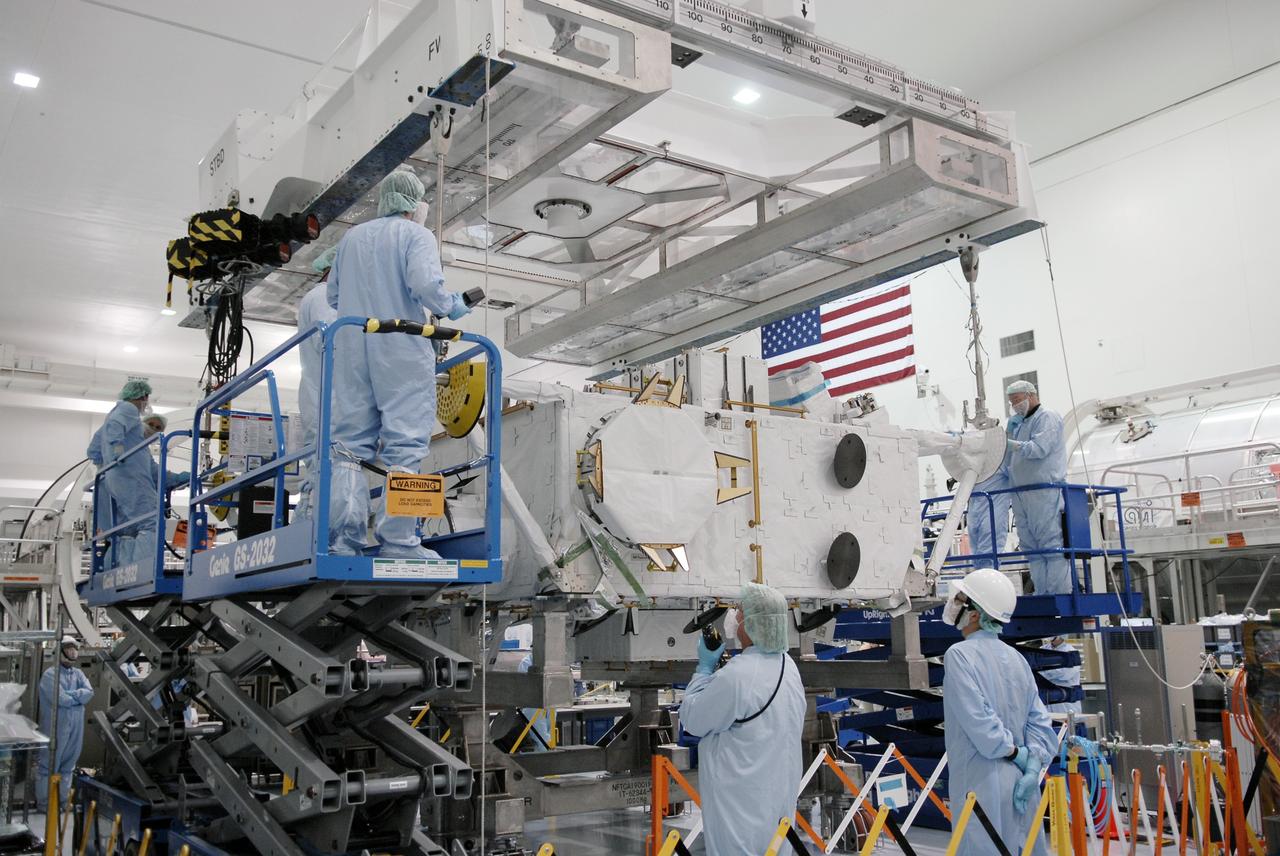
CAPE CANAVERAL, Fla. –– In the Space Station Processing Facility at NASA's Kennedy Space Center in Florida, the Japan Aerospace Exploration Agency's Kibo Exposed Facility, or EF, is being transferred to a workstand. When it is installed on the Kibo laboratory, the EF will provide a multipurpose platform where science experiments can be deployed and operated in the exposed environment. The payloads attached to the EF can be exchanged or retrieved by Kibo's robotic arm, the JEM Remote Manipulator System. The EF, along with the Experiment Logistics Module Exposed Section, will be carried aboard space shuttle Endeavour on the STS-127 mission targeted for launch June 13, 2009. Photo credit: NASA/Kim Shiflett
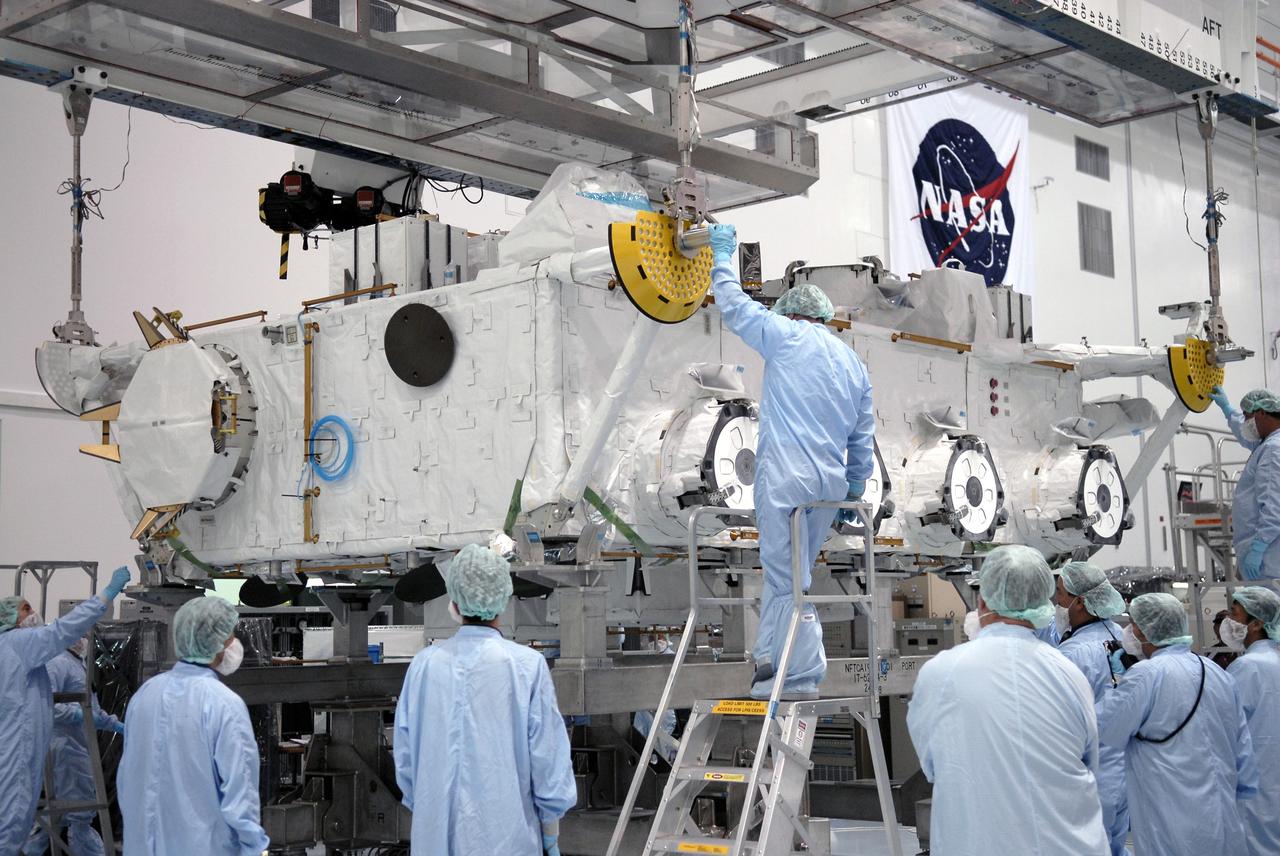
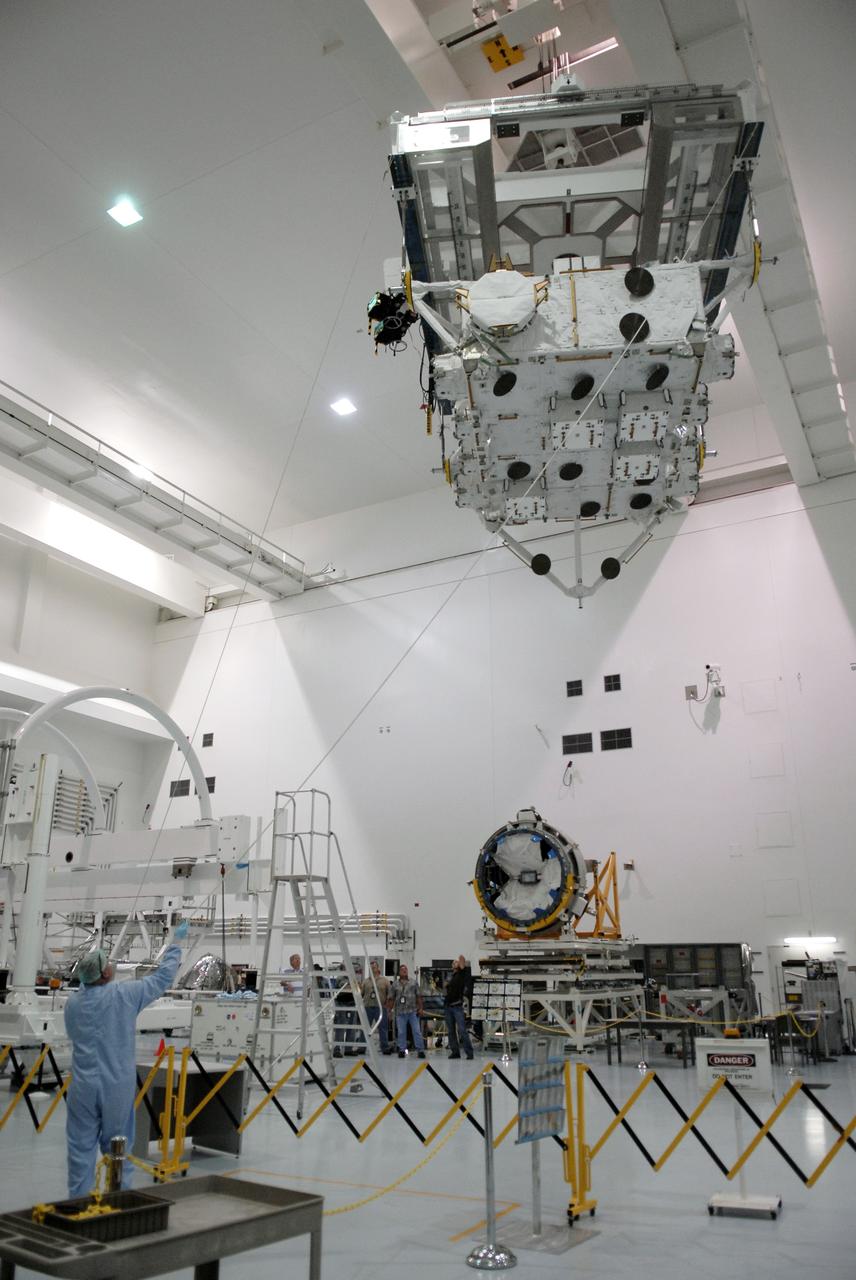
CAPE CANAVERAL, Fla. – In the Space Station Processing Facility at NASA's Kennedy Space Center in Florida, workers check the placement of the Japan Aerospace Exploration Agency's Kibo Exposed Facility, or EF, on the stand. The EF, along with the Experiment Logistics Module Exposed Section, will be carried aboard space shuttle Endeavour on the STS-127 mission to the International Space Station targeted for launch May 15, 2009. When it is installed on the Kibo laboratory,the EF will provide a multipurpose platform where science experiments can be deployed and operated in the exposed environment. The payloads attached to the EF can be exchanged or retrieved by Kibo's robotic arm, the JEM Remote Manipulator System. Photo credit: NASA/Kim Shiflett
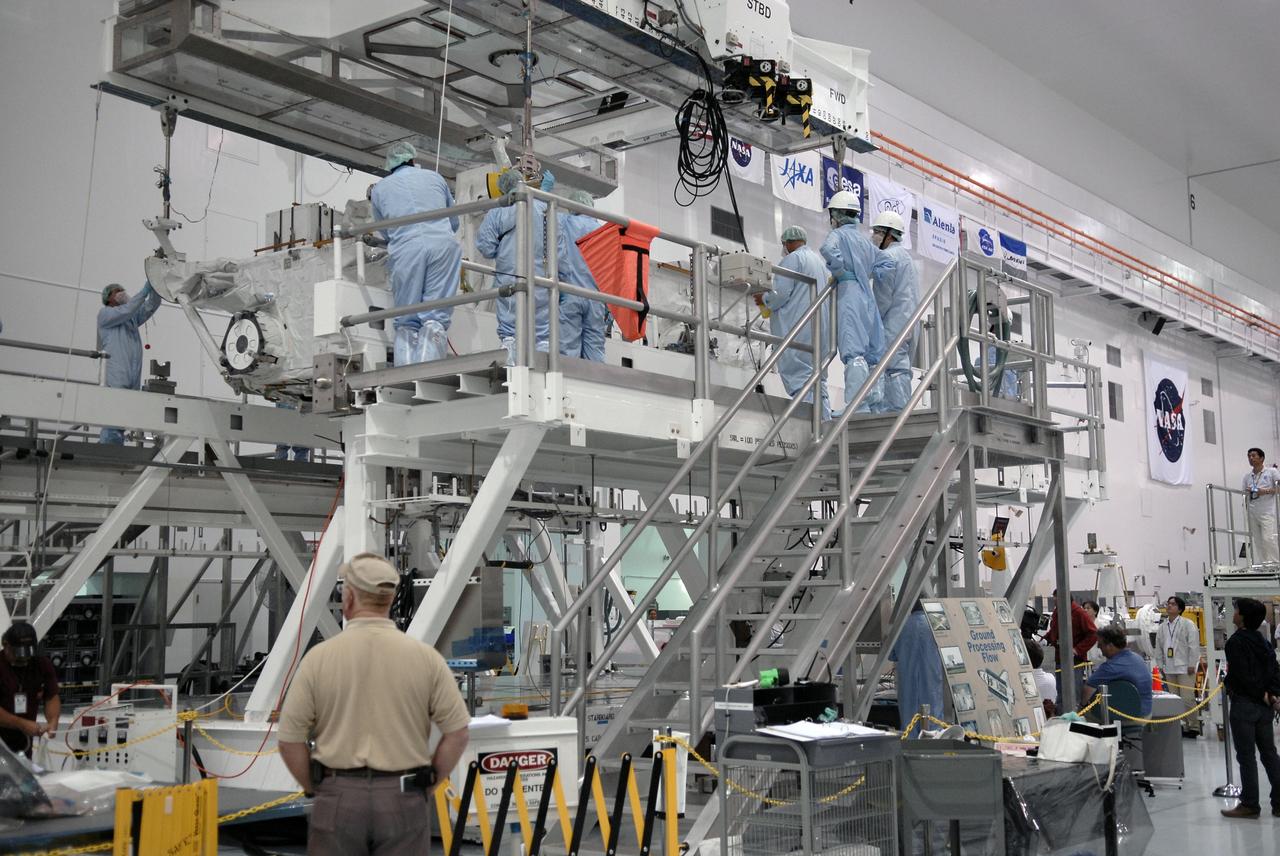
CAPE CANAVERAL, Fla. – In the Space Station Processing Facility at NASA's Kennedy Space Center in Florida, the Japan Aerospace Exploration Agency's Kibo Exposed Facility, or EF, is moved across the room to another stand. The EF, along with the Experiment Logistics Module Exposed Section, will be carried aboard space shuttle Endeavour on the STS-127 mission to the International Space Station targeted for launch May 15, 2009. When it is installed on the Kibo laboratory,the EF will provide a multipurpose platform where science experiments can be deployed and operated in the exposed environment. The payloads attached to the EF can be exchanged or retrieved by Kibo's robotic arm, the JEM Remote Manipulator System. Photo credit: NASA/Kim Shiflett
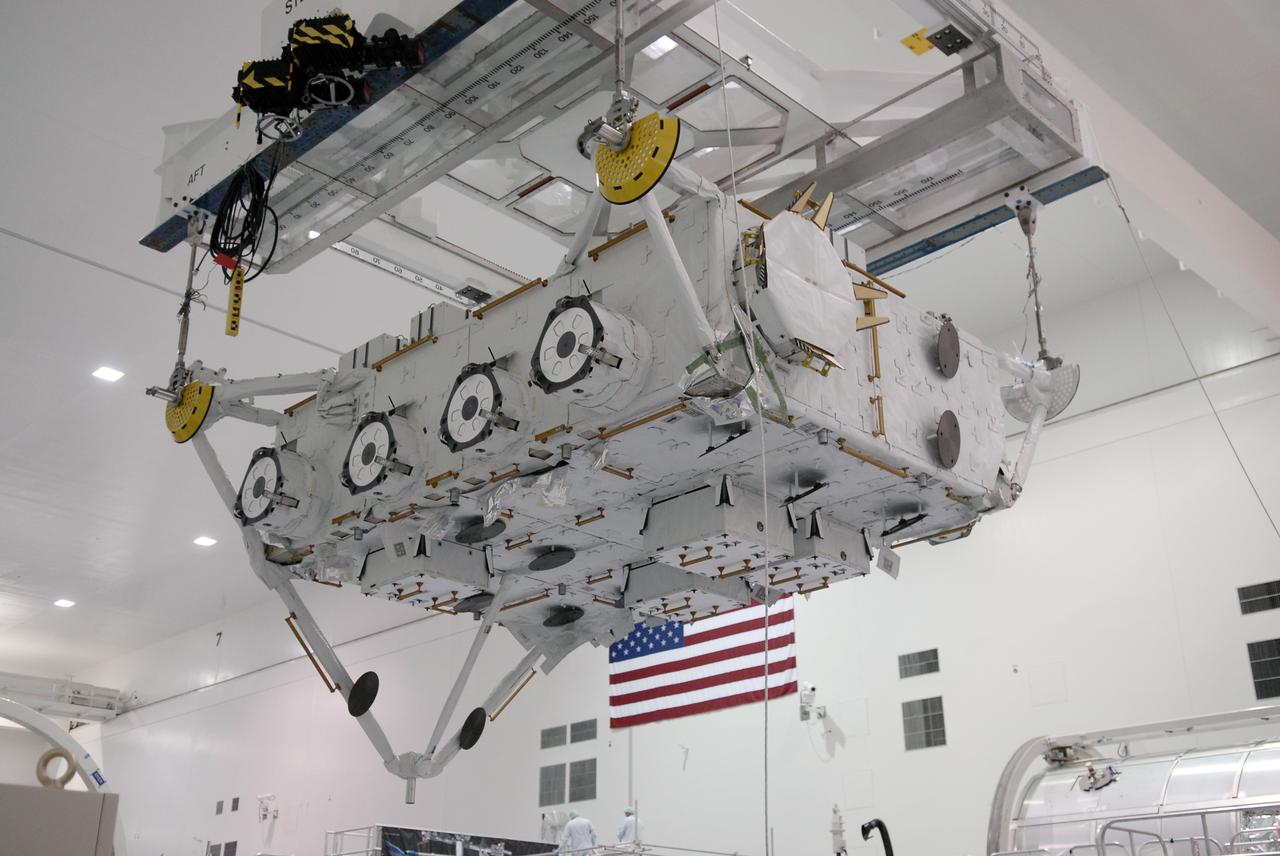
CAPE CANAVERAL, Fla. – In the Space Station Processing Facility at NASA's Kennedy Space Center in Florida, the Japan Aerospace Exploration Agency's Kibo Exposed Facility, or EF, is lifted for a move to another stand. The EF, along with the Experiment Logistics Module Exposed Section, will be carried aboard space shuttle Endeavour on the STS-127 mission to the International Space Station targeted for launch May 15, 2009. When it is installed on the Kibo laboratory,the EF will provide a multipurpose platform where science experiments can be deployed and operated in the exposed environment. The payloads attached to the EF can be exchanged or retrieved by Kibo's robotic arm, the JEM Remote Manipulator System. Photo credit: NASA/Kim Shiflett
CAPE CANAVERAL, Fla. – In the Space Station Processing Facility at NASA's Kennedy Space Center in Florida, workers observe the movement of the Japan Aerospace Exploration Agency's Kibo Exposed Facility, or EF, as it is lowered toward a stand. The EF, along with the Experiment Logistics Module Exposed Section, will be carried aboard space shuttle Endeavour on the STS-127 mission to the International Space Station targeted for launch May 15, 2009. When it is installed on the Kibo laboratory,the EF will provide a multipurpose platform where science experiments can be deployed and operated in the exposed environment. The payloads attached to the EF can be exchanged or retrieved by Kibo's robotic arm, the JEM Remote Manipulator System. Photo credit: NASA/Kim Shiflett
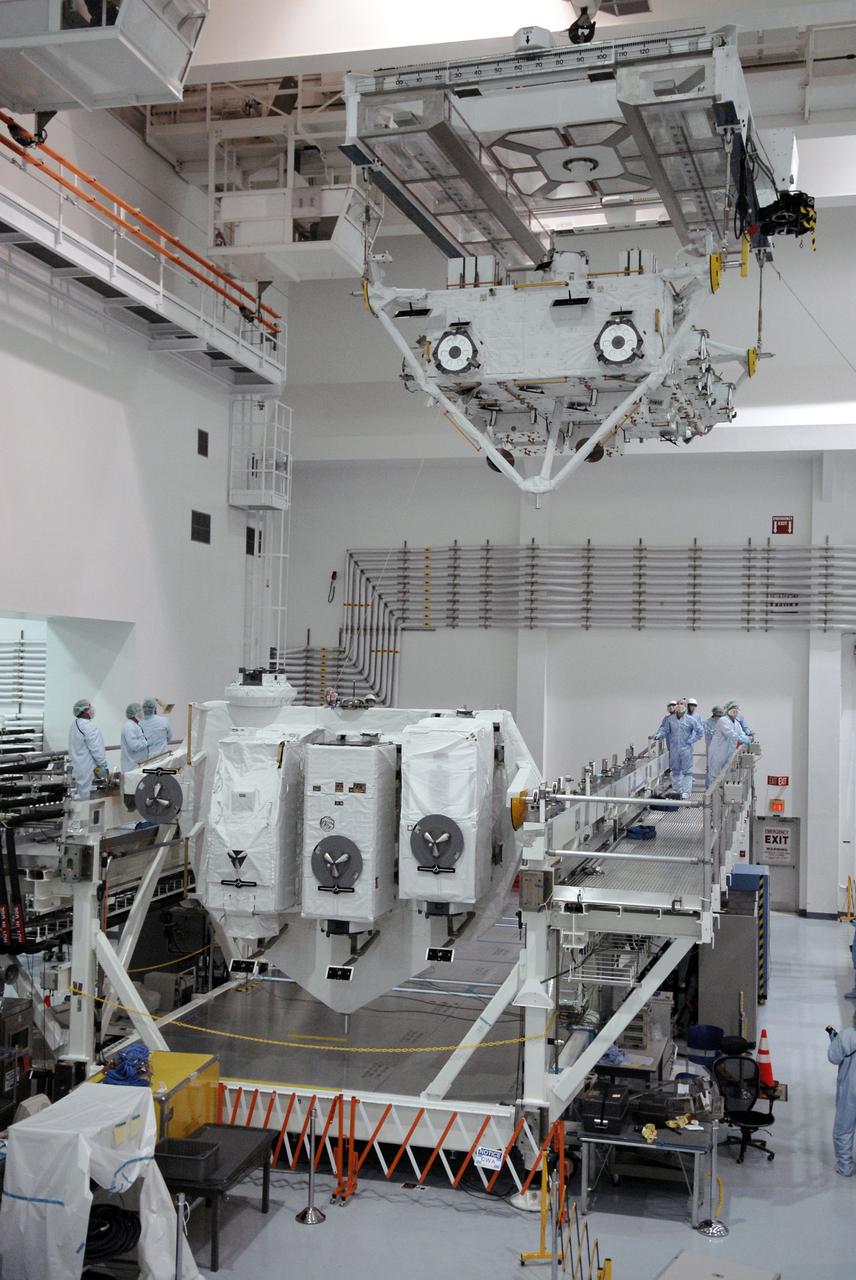
CAPE CANAVERAL, Fla. –– In the Space Station Processing Facility at NASA's Kennedy Space Center in Florida, the suspended Japan Aerospace Exploration Agency's Kibo Exposed Facility, or EF, is moved over a workstand. When it is installed on the Kibo laboratory, the EF will provide a multipurpose platform where science experiments can be deployed and operated in the exposed environment. The payloads attached to the EF can be exchanged or retrieved by Kibo's robotic arm, the JEM Remote Manipulator System. The EF, along with the Experiment Logistics Module Exposed Section, will be carried aboard space shuttle Endeavour on the STS-127 mission targeted for launch June 13, 2009. Photo credit: NASA/Kim Shiflett
CAPE CANAVERAL, Fla. –– In the Space Station Processing Facility at NASA's Kennedy Space Center in Florida, the suspended Japan Aerospace Exploration Agency's Kibo Exposed Facility, or EF, is guided toward a workstand, at left. When it is installed on the Kibo laboratory, the EF will provide a multipurpose platform where science experiments can be deployed and operated in the exposed environment. The payloads attached to the EF can be exchanged or retrieved by Kibo's robotic arm, the JEM Remote Manipulator System. The EF, along with the Experiment Logistics Module Exposed Section, will be carried aboard space shuttle Endeavour on the STS-127 mission targeted for launch June 13, 2009. Photo credit: NASA/Kim Shiflett
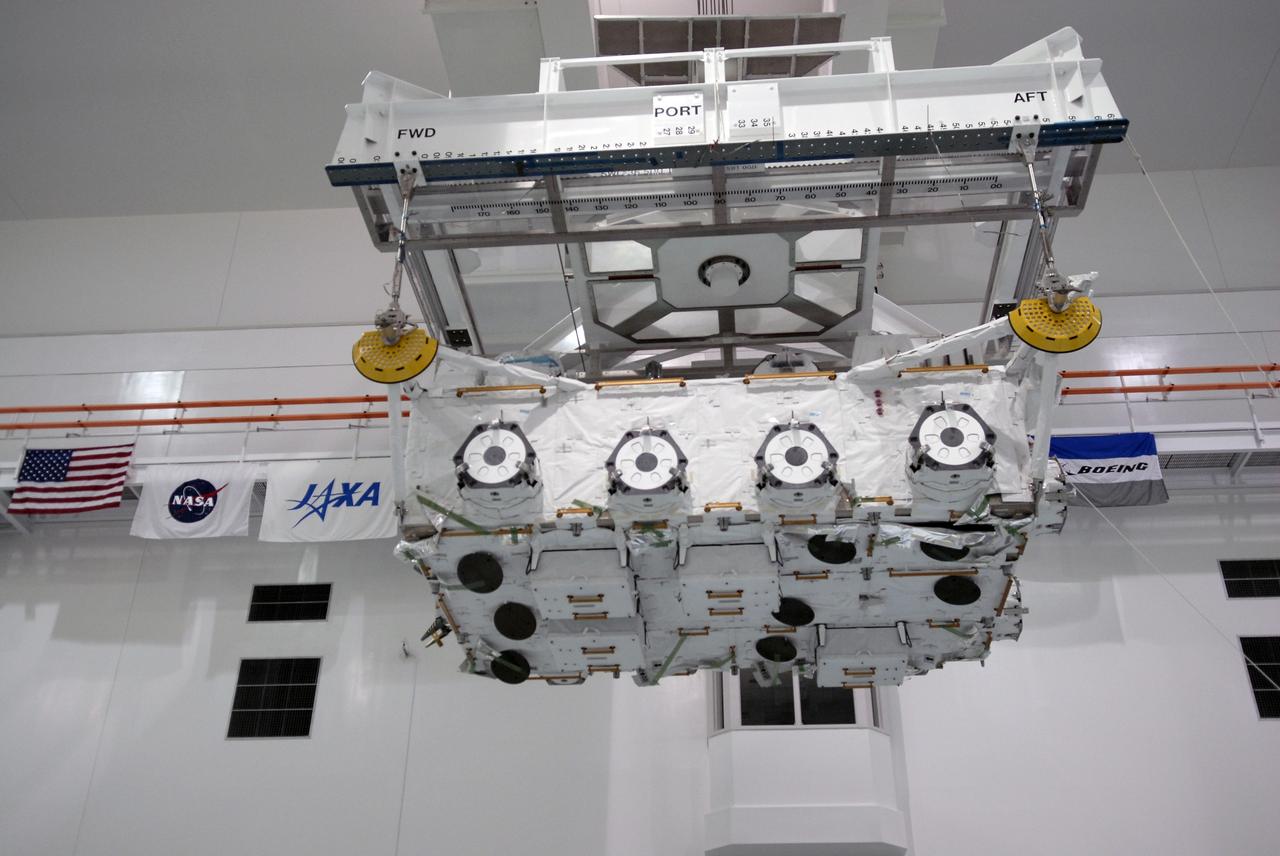
CAPE CANAVERAL, Fla. – In the Space Station Processing Facility at NASA's Kennedy Space Center in Florida, the Japan Aerospace Exploration Agency's Kibo Exposed Facility, or EF, is ready to be lowered onto a stand. The EF, along with the Experiment Logistics Module Exposed Section, will be carried aboard space shuttle Endeavour on the STS-127 mission to the International Space Station targeted for launch May 15, 2009. When it is installed on the Kibo laboratory,the EF will provide a multipurpose platform where science experiments can be deployed and operated in the exposed environment. The payloads attached to the EF can be exchanged or retrieved by Kibo's robotic arm, the JEM Remote Manipulator System. Photo credit: NASA/Kim Shiflett
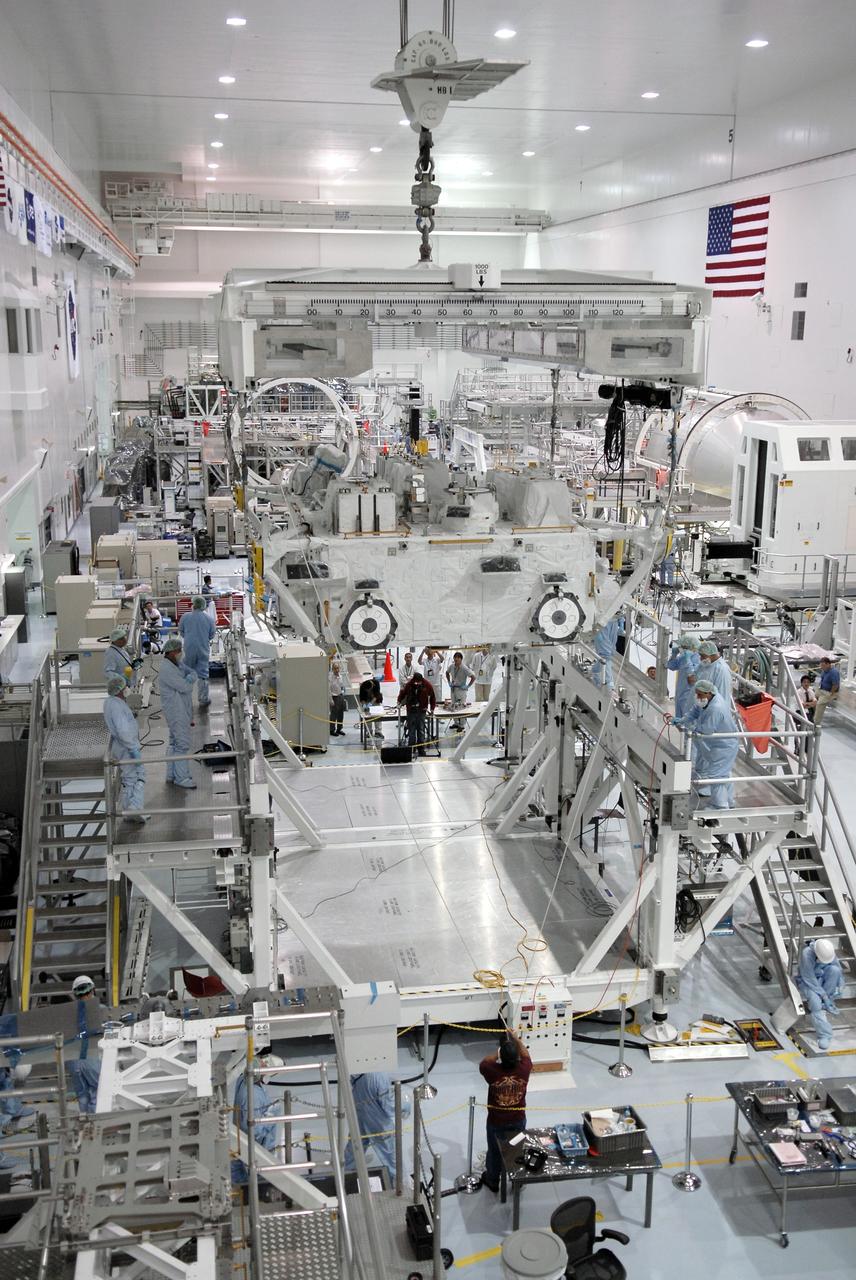
CAPE CANAVERAL, Fla. – In the Space Station Processing Facility at NASA's Kennedy Space Center in Florida, the Japan Aerospace Exploration Agency's Kibo Exposed Facility, or EF, is moved across the room to another stand. The EF, along with the Experiment Logistics Module Exposed Section, will be carried aboard space shuttle Endeavour on the STS-127 mission to the International Space Station targeted for launch May 15, 2009. When it is installed on the Kibo laboratory,the EF will provide a multipurpose platform where science experiments can be deployed and operated in the exposed environment. The payloads attached to the EF can be exchanged or retrieved by Kibo's robotic arm, the JEM Remote Manipulator System. Photo credit: NASA/Kim Shiflett
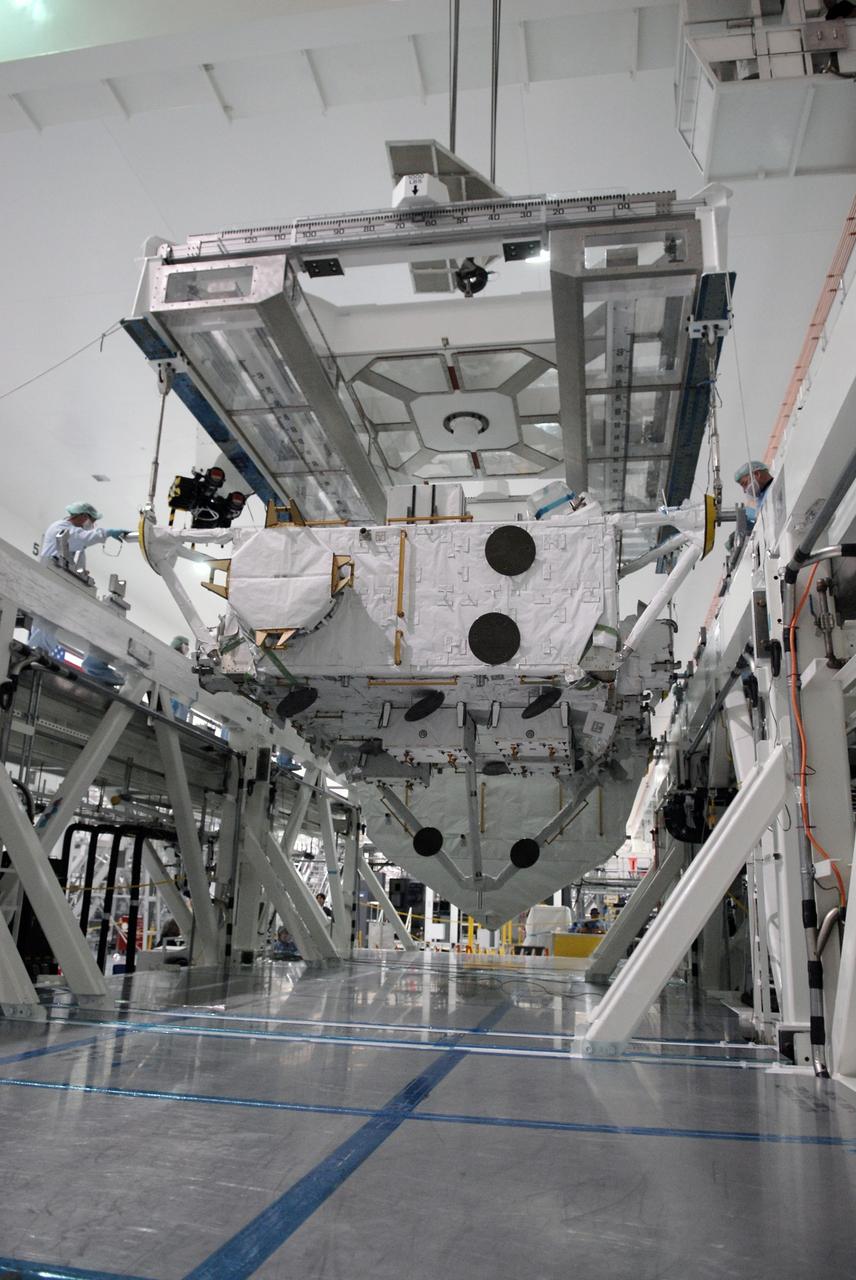
CAPE CANAVERAL, Fla. –– In the Space Station Processing Facility at NASA's Kennedy Space Center in Florida, the suspended Japan Aerospace Exploration Agency's Kibo Exposed Facility, or EF, is lowered into a workstand. When it is installed on the Kibo laboratory, the EF will provide a multipurpose platform where science experiments can be deployed and operated in the exposed environment. The payloads attached to the EF can be exchanged or retrieved by Kibo's robotic arm, the JEM Remote Manipulator System. The EF, along with the Experiment Logistics Module Exposed Section, will be carried aboard space shuttle Endeavour on the STS-127 mission targeted for launch June 13, 2009. Photo credit: NASA/Kim Shiflett
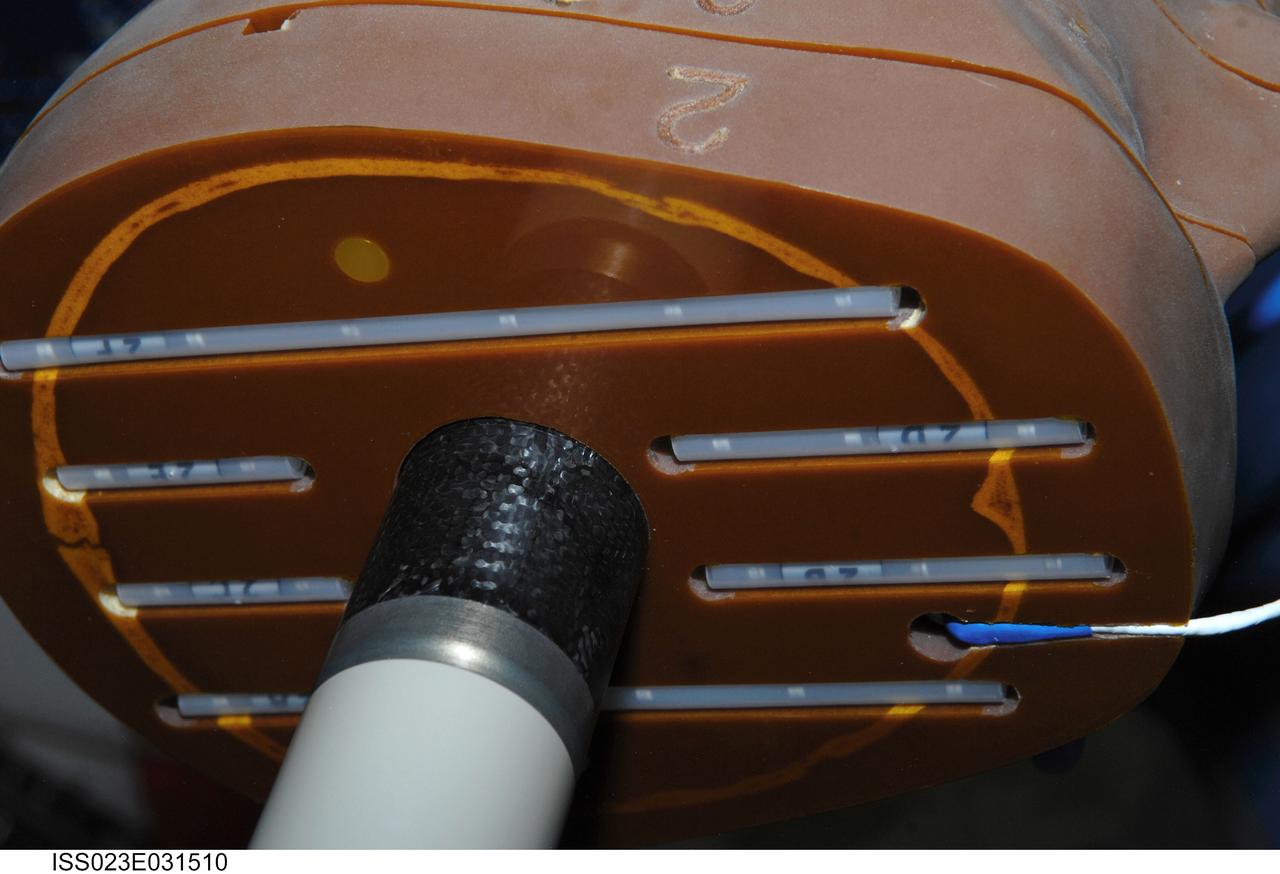
iss023e031510 (542010) --- A view of the detectors installed in the anthropomorphic Phantom for the Matroshka-2 Kibo experiment.
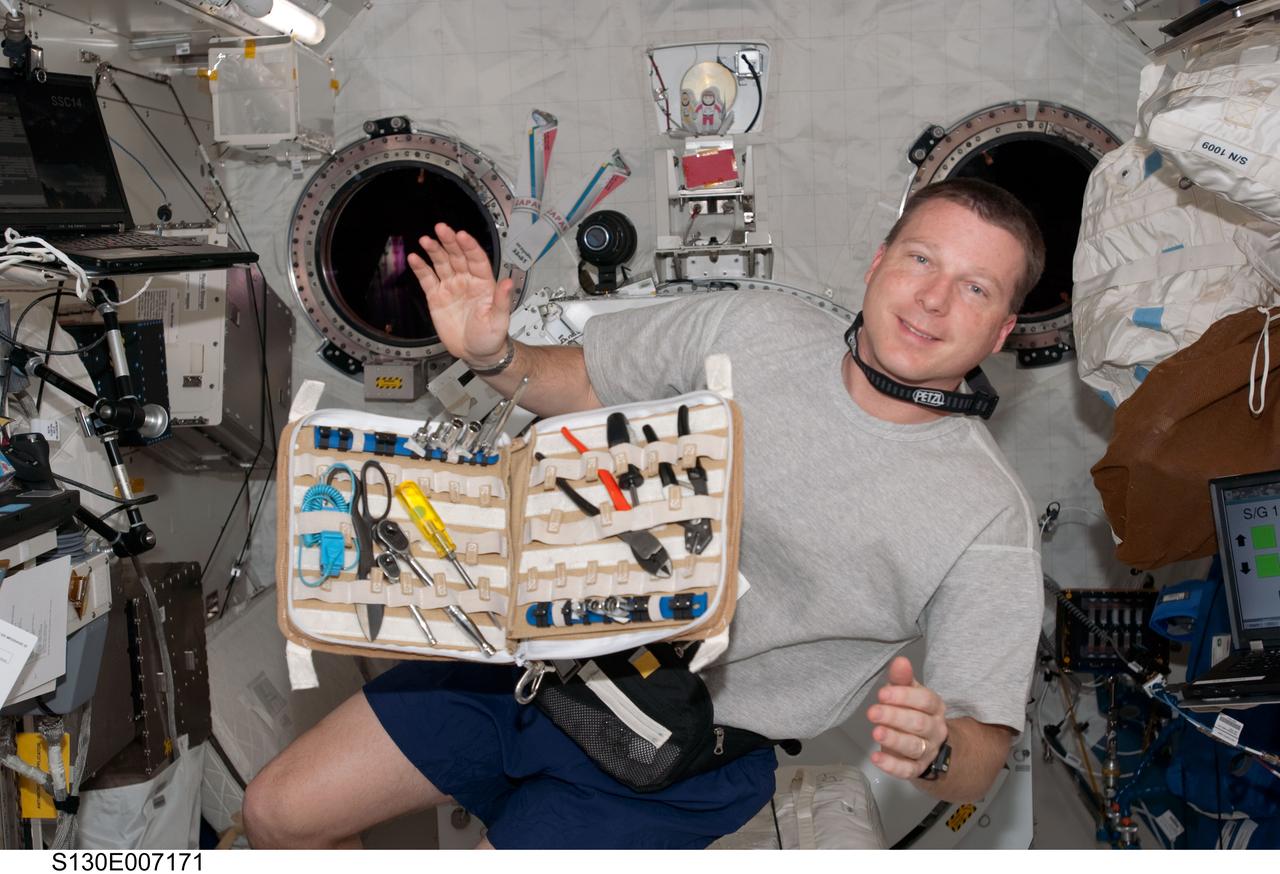
S130-E-007171 (11 Feb. 2010) --- NASA astronaut Terry Virts, STS-130 pilot, poses for a photo near a container of tools floating freely in the Kibo laboratory of the International Space Station while space shuttle Endeavour remains docked with the station.
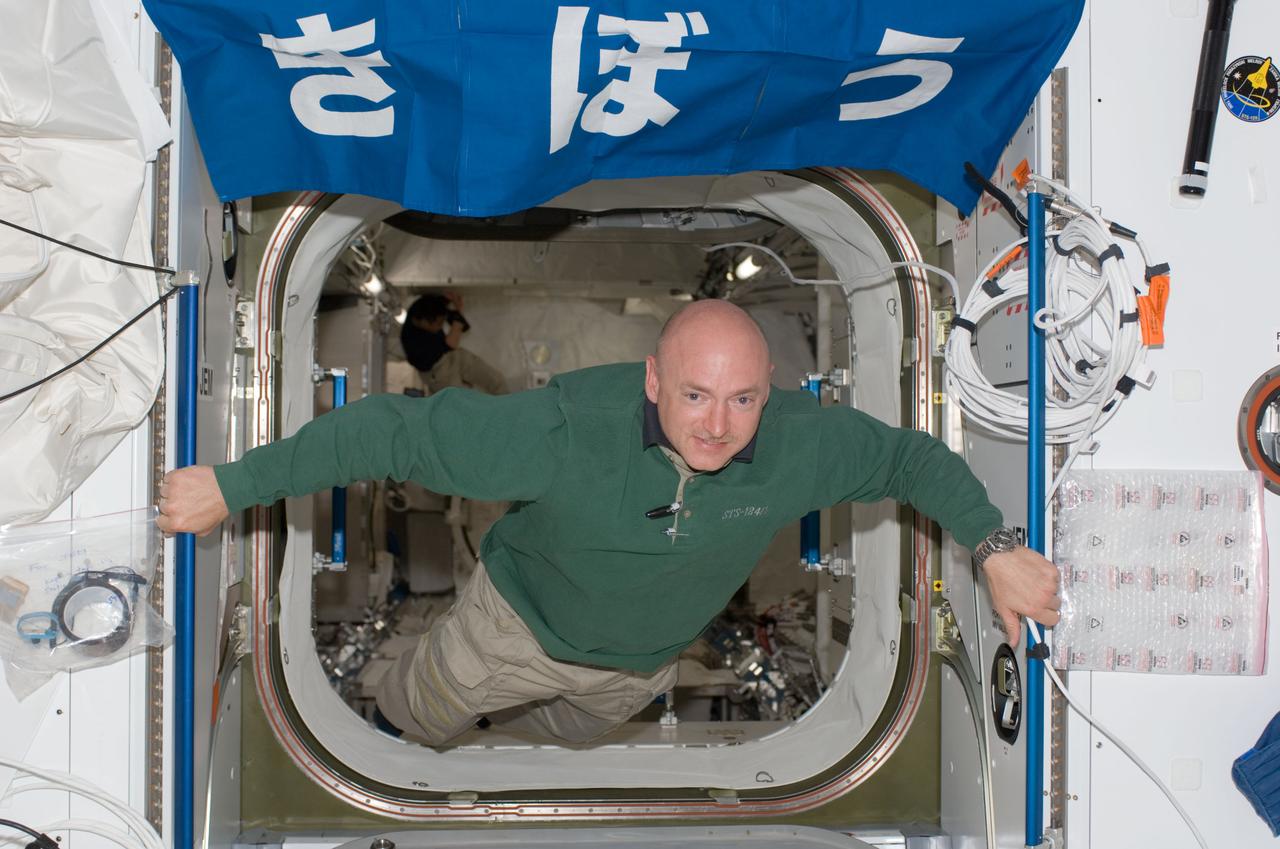
S124-E-006287 (4 June 2008) --- Astronaut Mark Kelly, STS-124 commander, floats in the hatch between the Harmony node and the newly installed Kibo Japanese Pressurized Module (JPM) of the International Space Station while Space Shuttle Discovery is docked with the station.
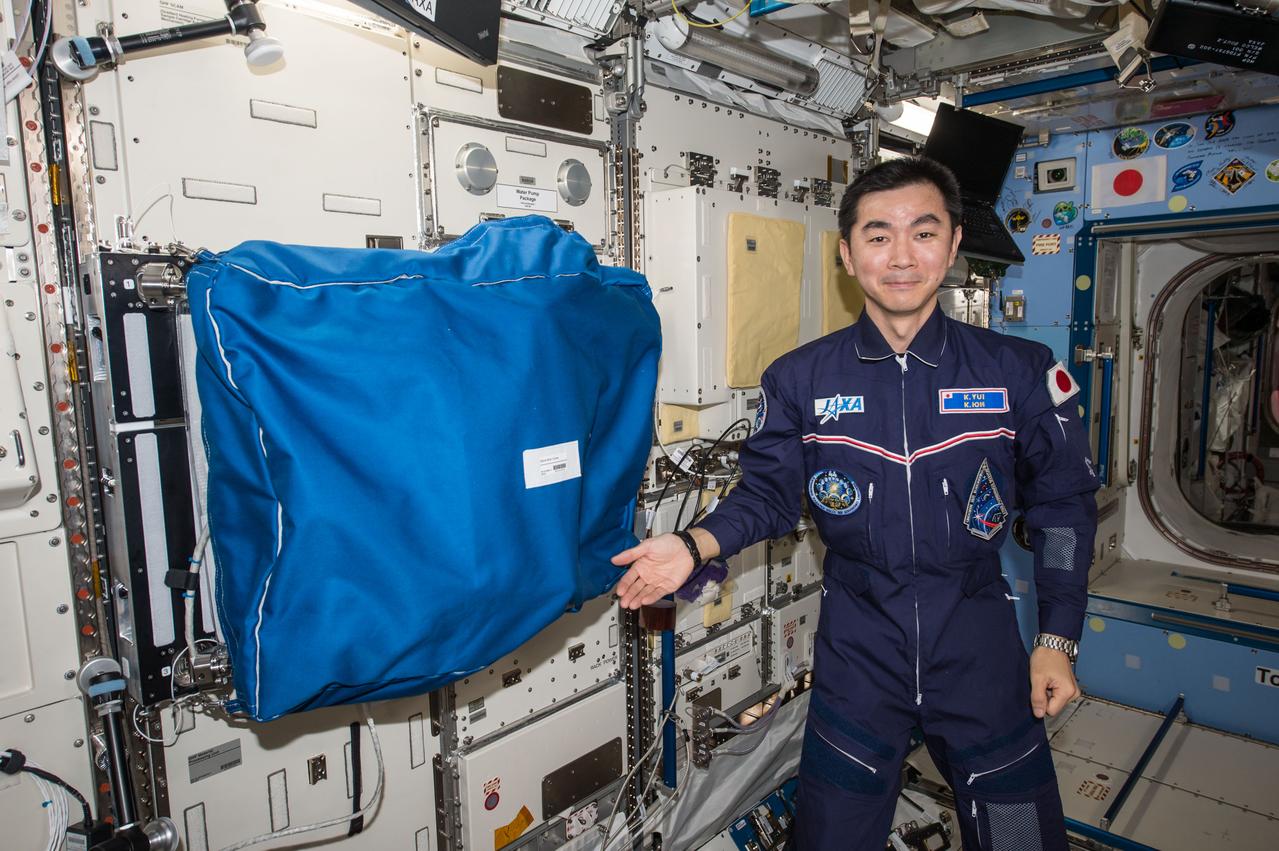
iss045e152163 (12/1/2015) --- A view of Japan Aerospace Exploration Agency (JAXA) astronaut Kimiya Yui photographed next to the Kobairo rack, JPM1F3 in the Kibo Japanese Experiment Pressurized Module (JPM) aboard the International Space Station (ISS). The rack contains the Gradient Heating Furnace (GHF) and has a Glovebox attached to the rack front.
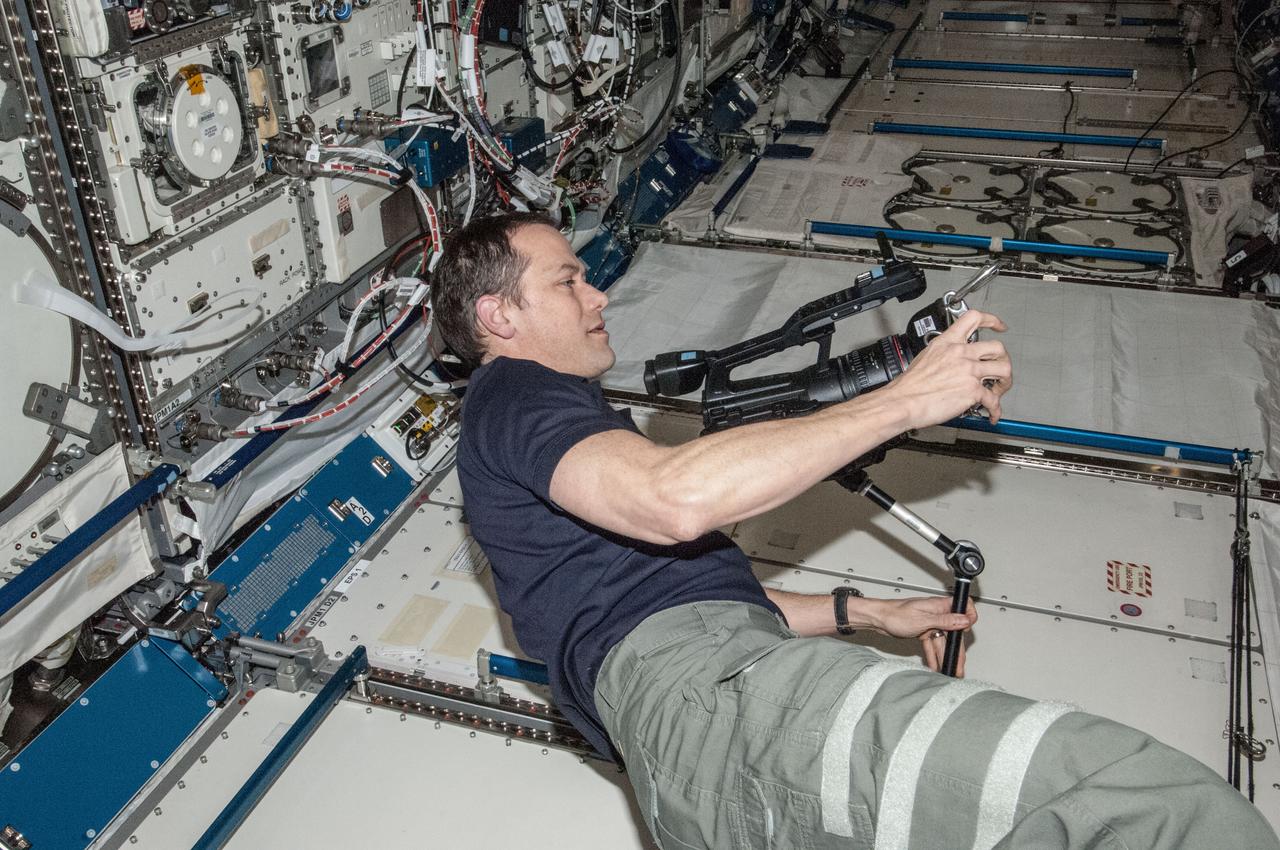
ISS035-E-022390 (17 April 2013) --- NASA astronaut Tom Marshburn, Expedition 35 flight engineer, sets up a video camera to record activity in the Kibo lab aboard the International Space Station on April 17, 2013.
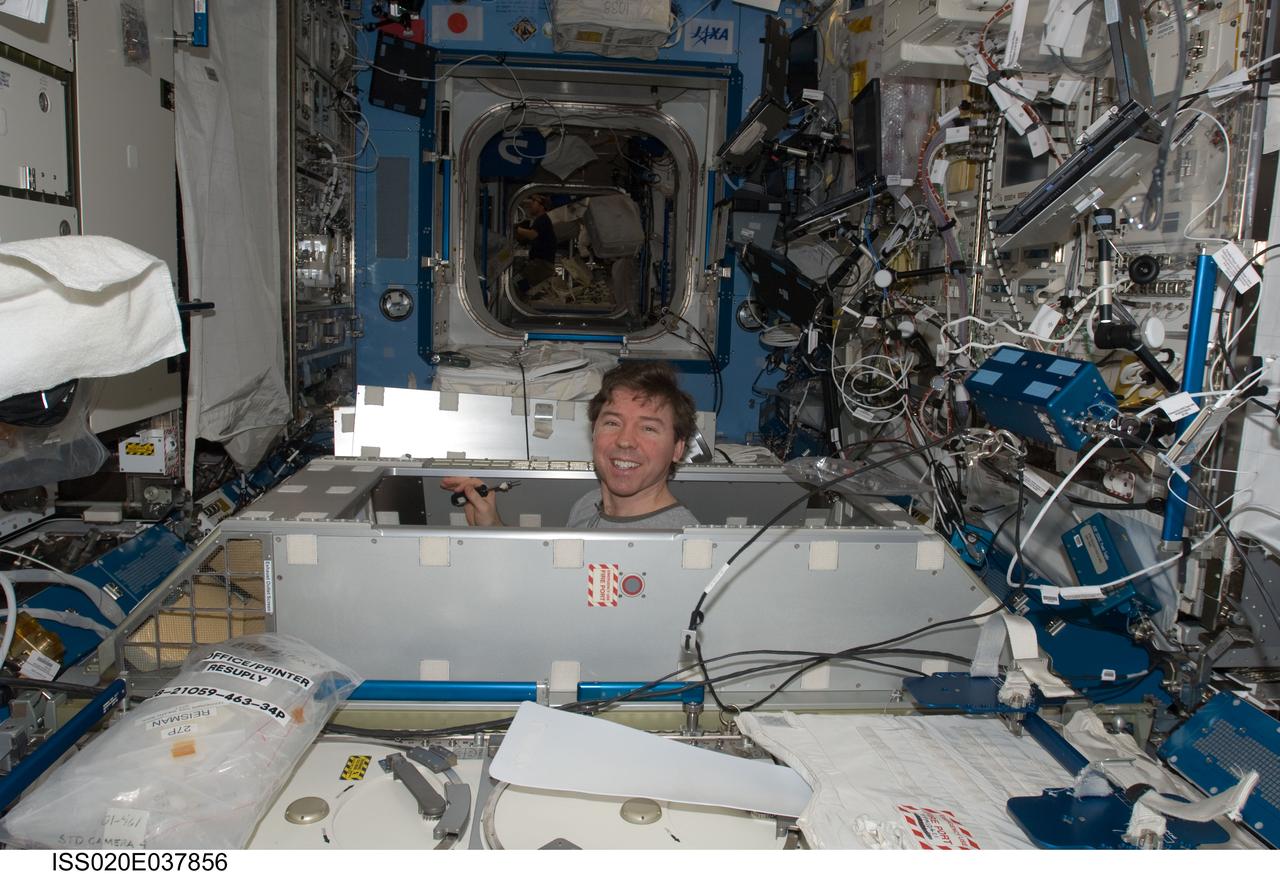
ISS020-E-037856 (2 Sept. 2009) --- NASA astronaut Michael Barratt, Expedition 20 flight engineer, works in the Kibo laboratory of the International Space Station while Space Shuttle Discovery (STS-128) remains docked with the station.
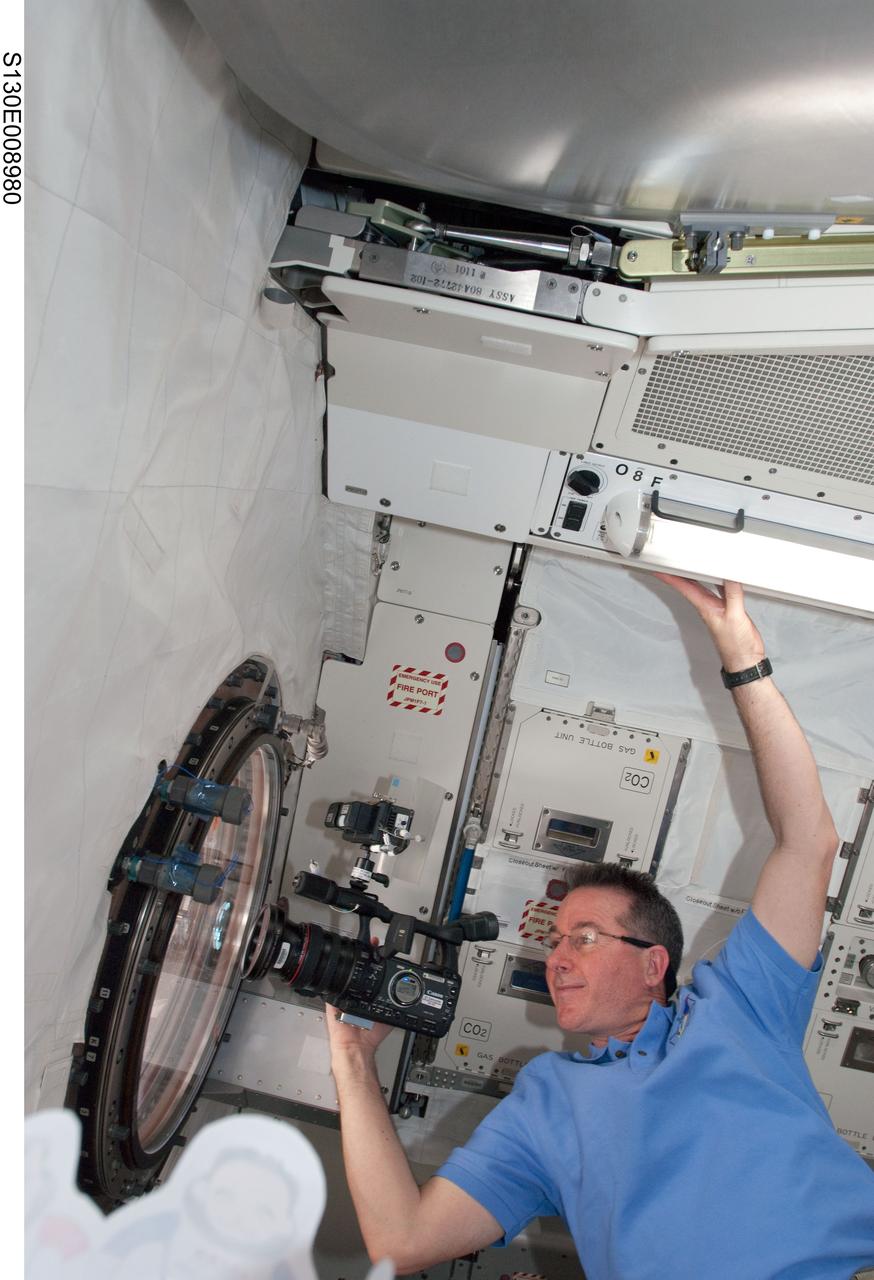
S130-E-008980 (16 Feb. 2010) --- NASA astronaut Stephen Robinson, STS-130 mission specialist, uses a High Definition Video (HDV) camera at a window in the Kibo laboratory of the International Space Station while space shuttle Endeavour remains docked with the station.
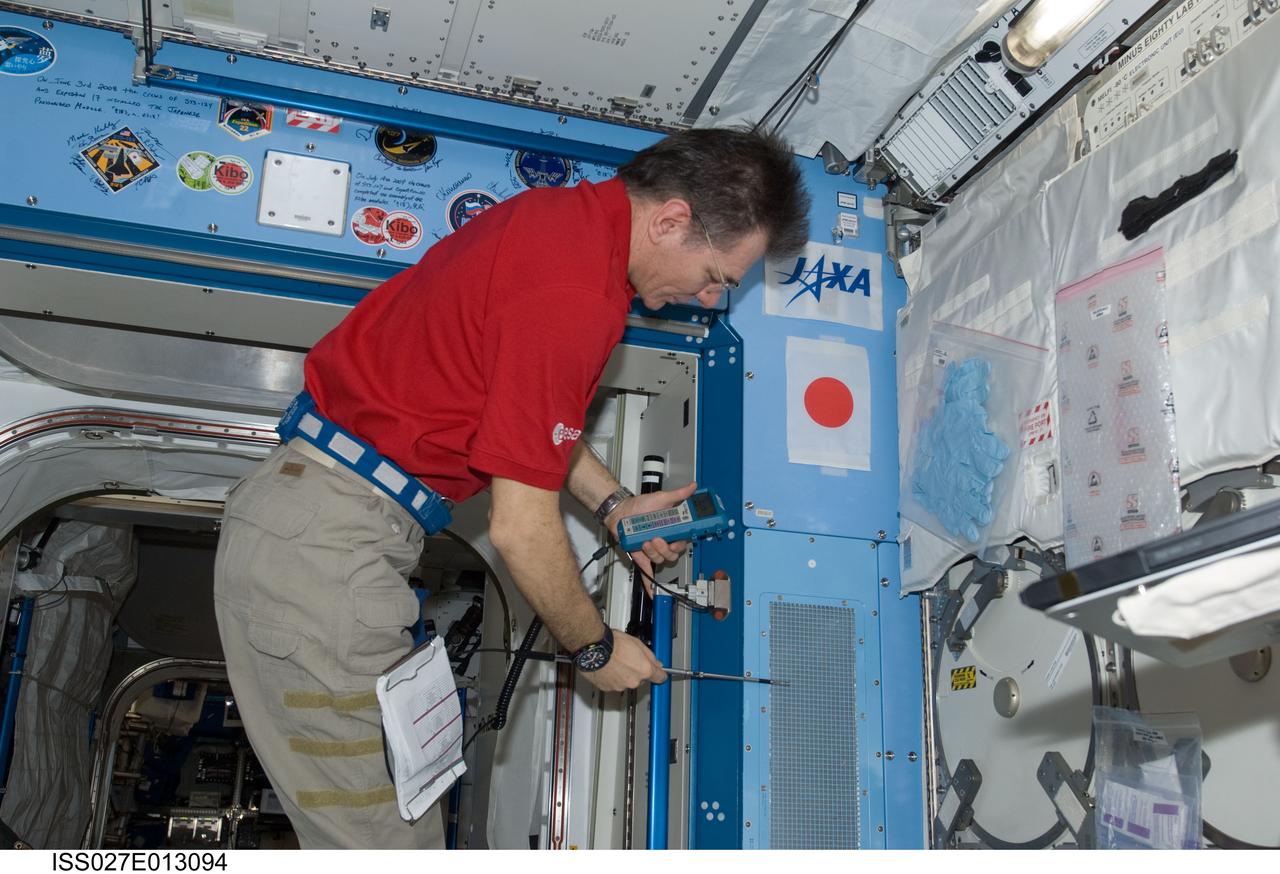
ISS027-E-013094 (14 April 2011) --- European Space Agency astronaut Paolo Nespoli, Expedition 27 flight engineer, uses a portable ventilation test instrument to take intermodular ventilation (IMV) flow measurements in the Kibo laboratory of the International Space Station.

ISS023-E-020654 (7 April 2010) --- Japan Aerospace Exploration Agency astronaut Naoko Yamazaki, STS-131 mission specialist, enjoys her first in-space experience of weightlessness as she floats in the Kibo laboratory aboard the International Space Station shortly after arriving at the orbital complex on April 7.
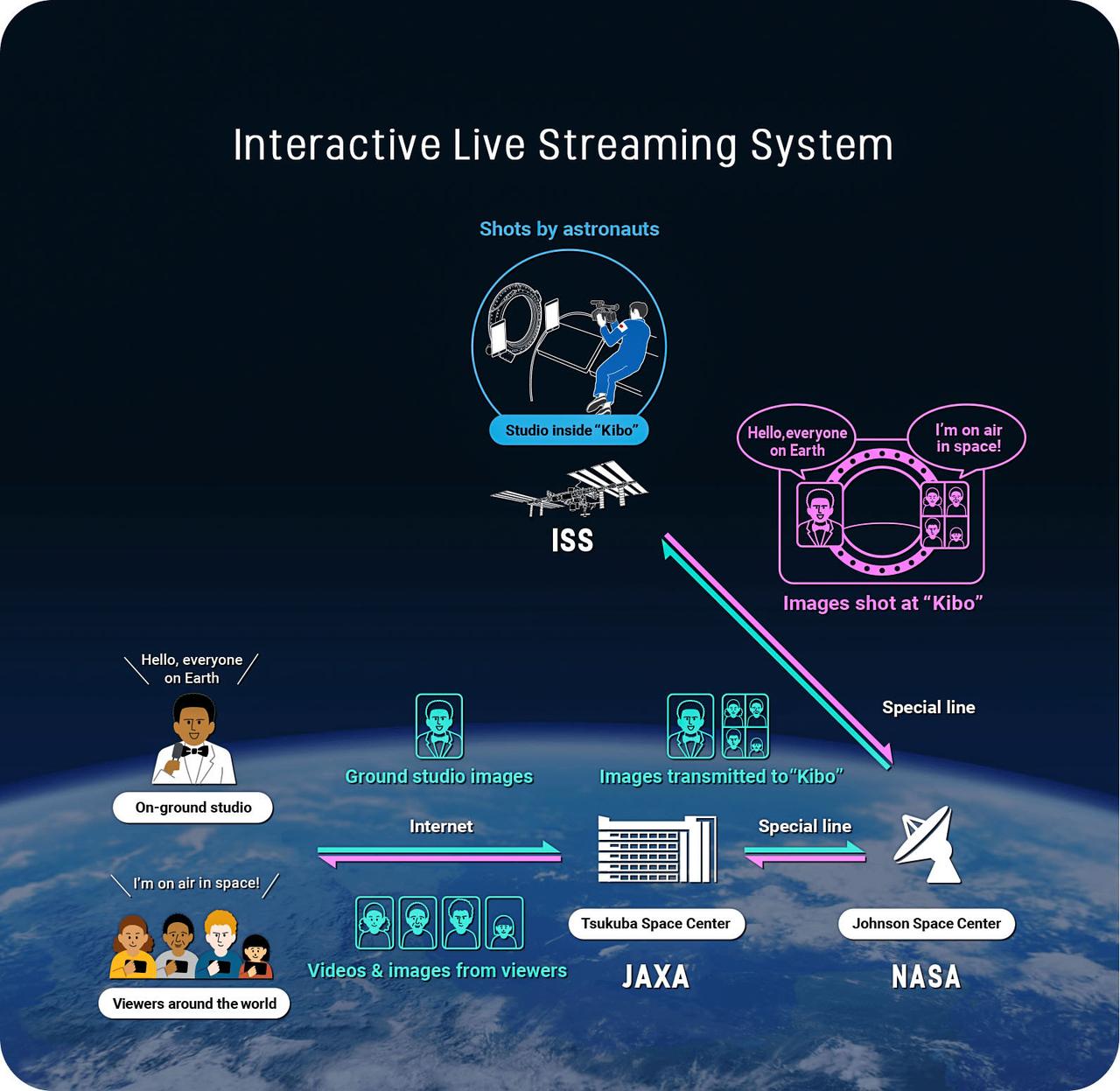
jsc2020e016851 (3/26/2020) --- A Preflight diagram of the interactive live streaming system for the Space Studio Kibo experiment. Image Courtesy of: © Bascule Inc
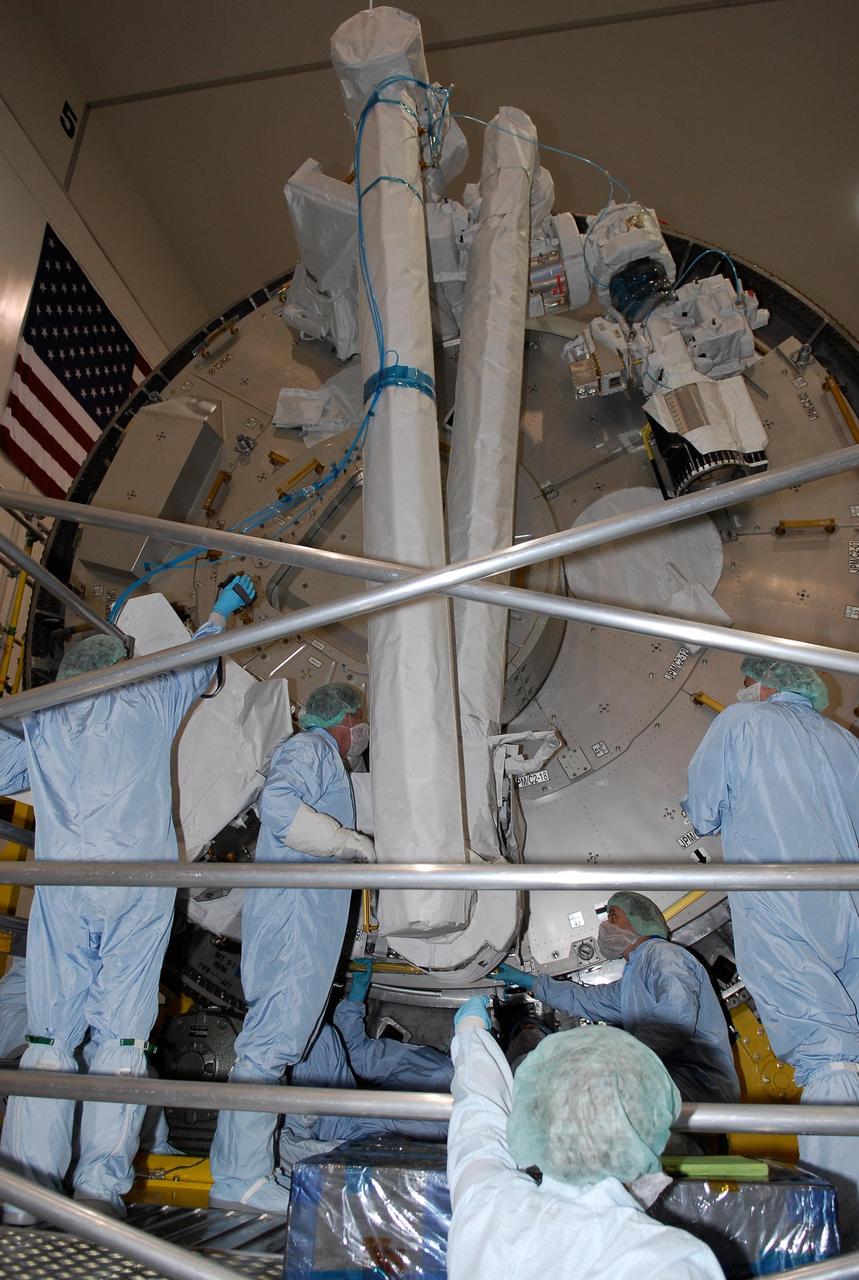
KENNEDY SPACE CENTER, FLA. -- In the Space Station Processing Facility at NASA's Kennedy Space Center, members of the STS-124 crew get a close look at the Remote Manipulator System, or RMS, two robotic arms that support operations on the outside of the Japanese Experiment Module, called Kibo. They will be used to exchange experiment payloads or hardware located on the Exposed Facility and Experiment Logistics Module - Exposed Section and from inside the pressurized module through a scientific airlock, support maintenance tasks of Kibo and handle orbital replacement units. Crew members are at Kennedy for a crew equipment interface test that includes familiarization with tools and equipment that will be used on the mission. The STS-124 mission is the second of three flights that will launch components to complete the Japanese pressurized module, the Kibo laboratory. The mission will include two spacewalks to install the new lab and its remote manipulator system. The lab's logistics module, which will have been installed in a temporary location during STS-123, will be attached to the new lab. Photo credit: NASA/Kim Shiflett
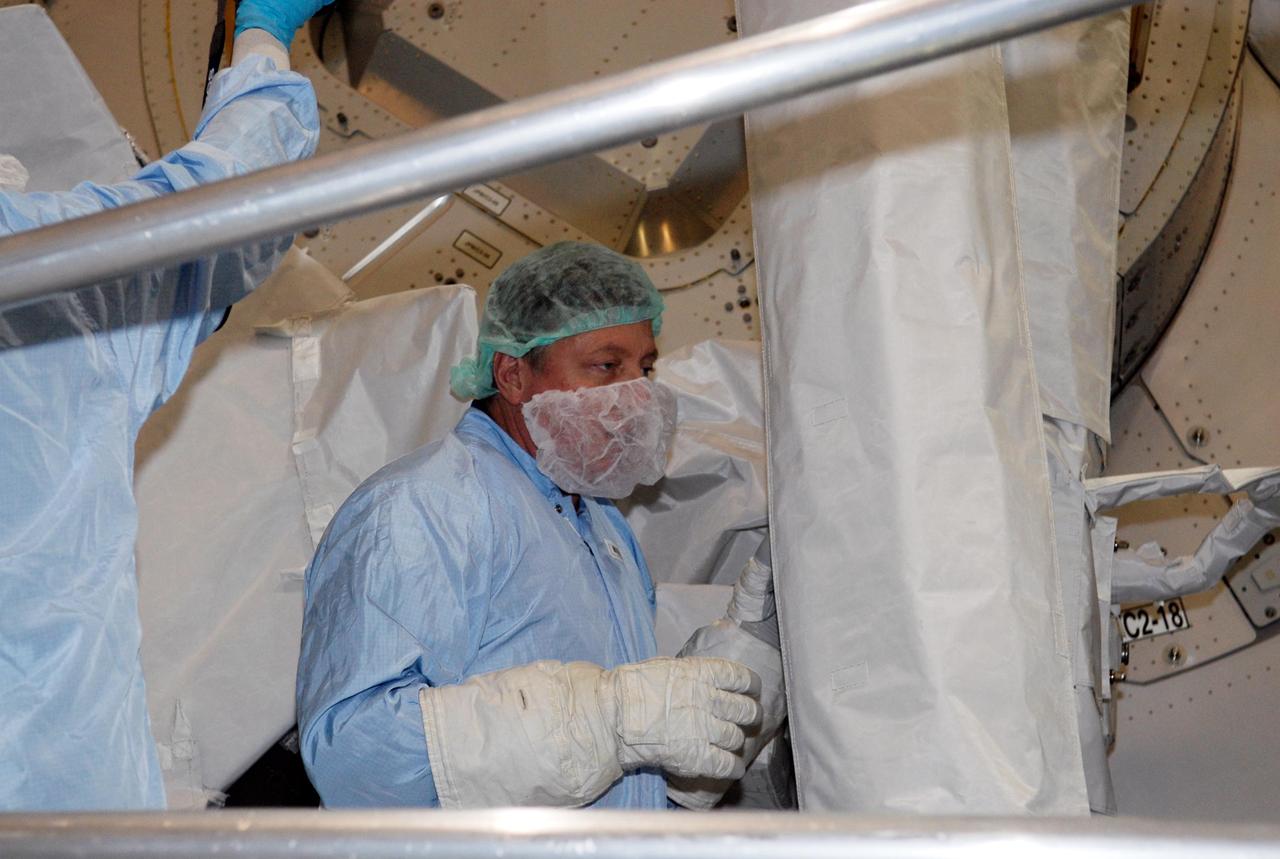
KENNEDY SPACE CENTER, FLA. -- In the Space Station Processing Facility at NASA's Kennedy Space Center, STS-124 Mission Specialist Michael Fossum gets a close look at the Remote Manipulator System, or RMS, two robotic arms that support operations on the outside of the Japanese Experiment Module, called Kibo. They will be used to exchange experiment payloads or hardware located on the Exposed Facility and Experiment Logistics Module - Exposed Section and from inside the pressurized module through a scientific airlock, support maintenance tasks of Kibo and handle orbital replacement units. Crew members are at Kennedy for a crew equipment interface test that includes familiarization with tools and equipment that will be used on the mission. The STS-124 mission is the second of three flights that will launch components to complete the Japanese pressurized module, the Kibo laboratory. The mission will include two spacewalks to install the new lab and its remote manipulator system. The lab's logistics module, which will have been installed in a temporary location during STS-123, will be attached to the new lab. Photo credit: NASA/Kim Shiflett
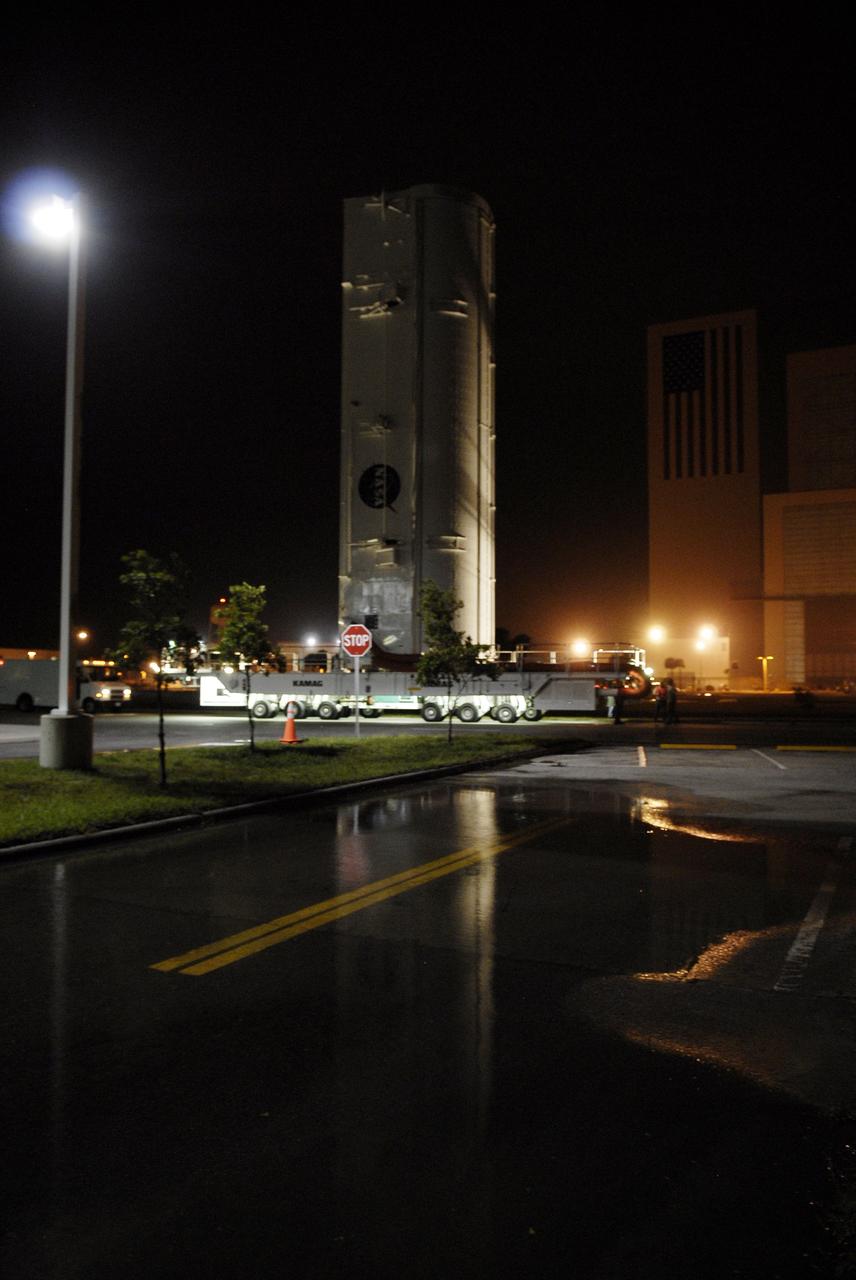
CAPE CANAVERAL, Fla. – The transporter with the payload canister rolls past the Vehicle Assembly Building at NASA's Kennedy Space Center in Florida on its way to Launch Pad 39A. Inside the canister is space shuttle Endeavour's payload for the STS-127 mission, which includes the Japan Aerospace Exploration Agency's Kibo Exposed Facility and the Experiment Logistics Module Exposed Section to the International Space Station. They will be installed on the Kibo laboratory on the station. Launch of Endeavour is targeted for June 13. Photo credit: NASA/Kim Shiflett
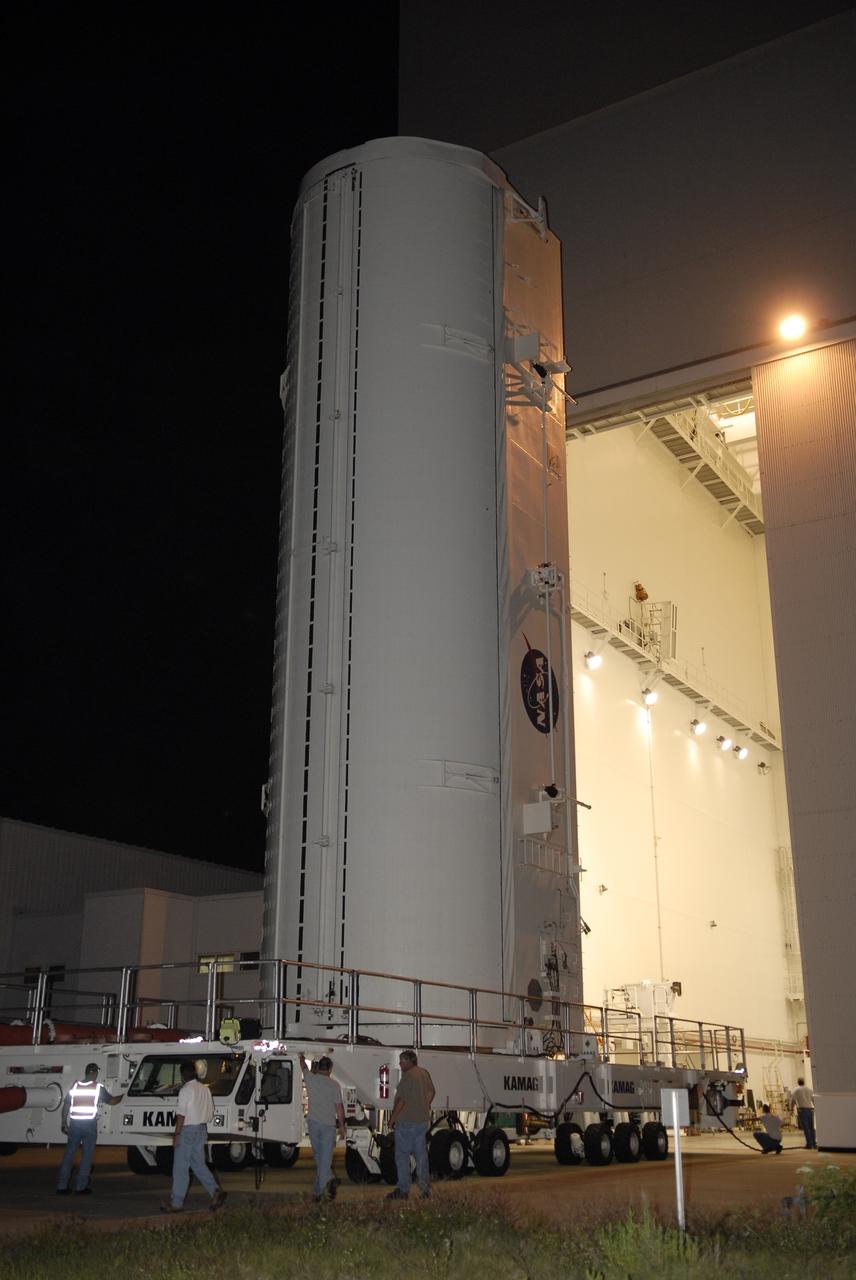
CAPE CANAVERAL, Fla. – The transporter with the payload canister exits the Canister Rotation Facility at NASA's Kennedy Space Center in Florida. Inside the canister is space shuttle Endeavour's payload for the STS-127 mission, which includes the Japan Aerospace Exploration Agency's Kibo Exposed Facility and the Experiment Logistics Module Exposed Section to the International Space Station. They will be installed on the Kibo laboratory on the station. Launch of Endeavour is targeted for June 13. Photo credit: NASA/Kim Shiflett
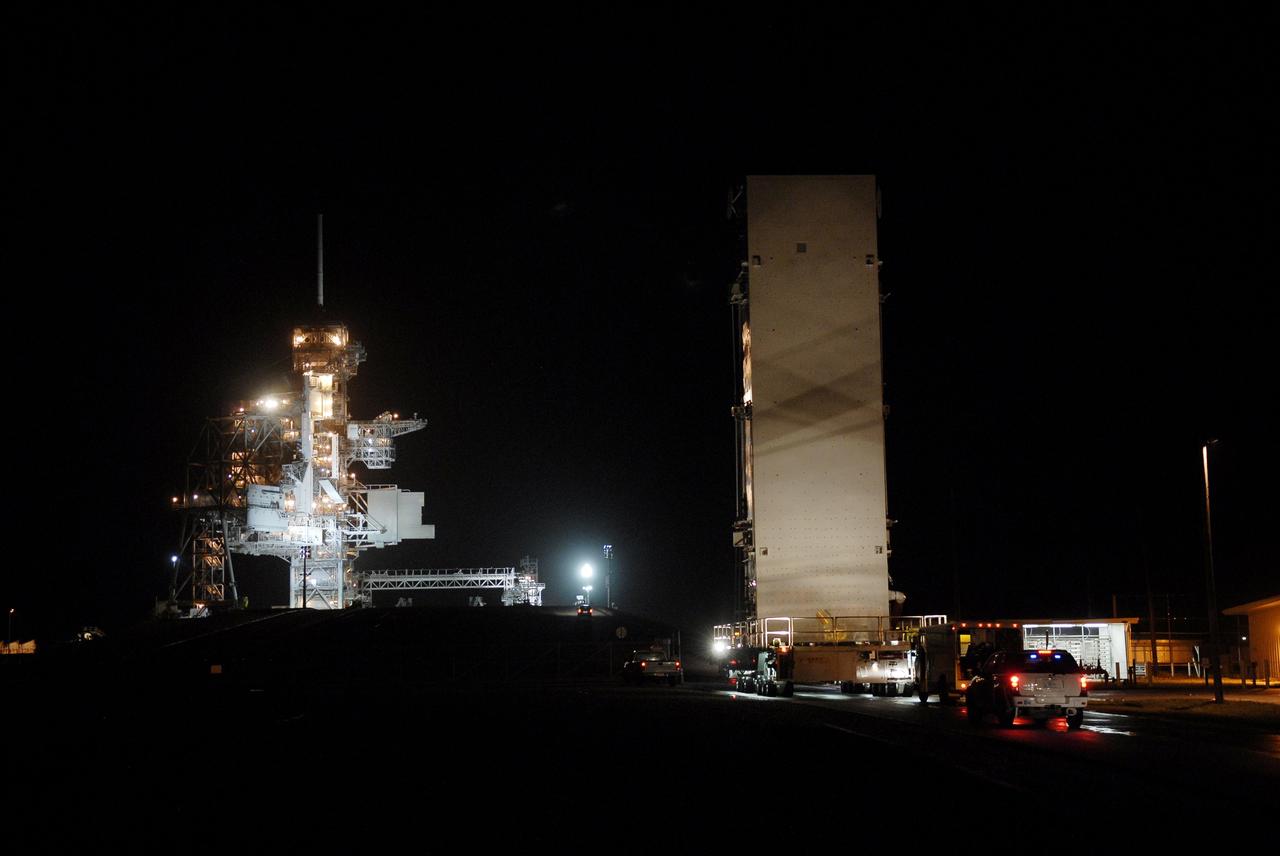
CAPE CANAVERAL, Fla. – The transporter with the payload canister arrives at Launch Pad 39A at NASA's Kennedy Space Center in Florida. Under lights at left are the rotating and fixed service structures on the pad. Inside the canister is space shuttle Endeavour's payload for the STS-127 mission, which includes the Japan Aerospace Exploration Agency's Kibo Exposed Facility and the Experiment Logistics Module Exposed Section to the International Space Station. They will be installed on the Kibo laboratory on the station. Launch of Endeavour is targeted for June 13. Photo credit: NASA/Kim Shiflett
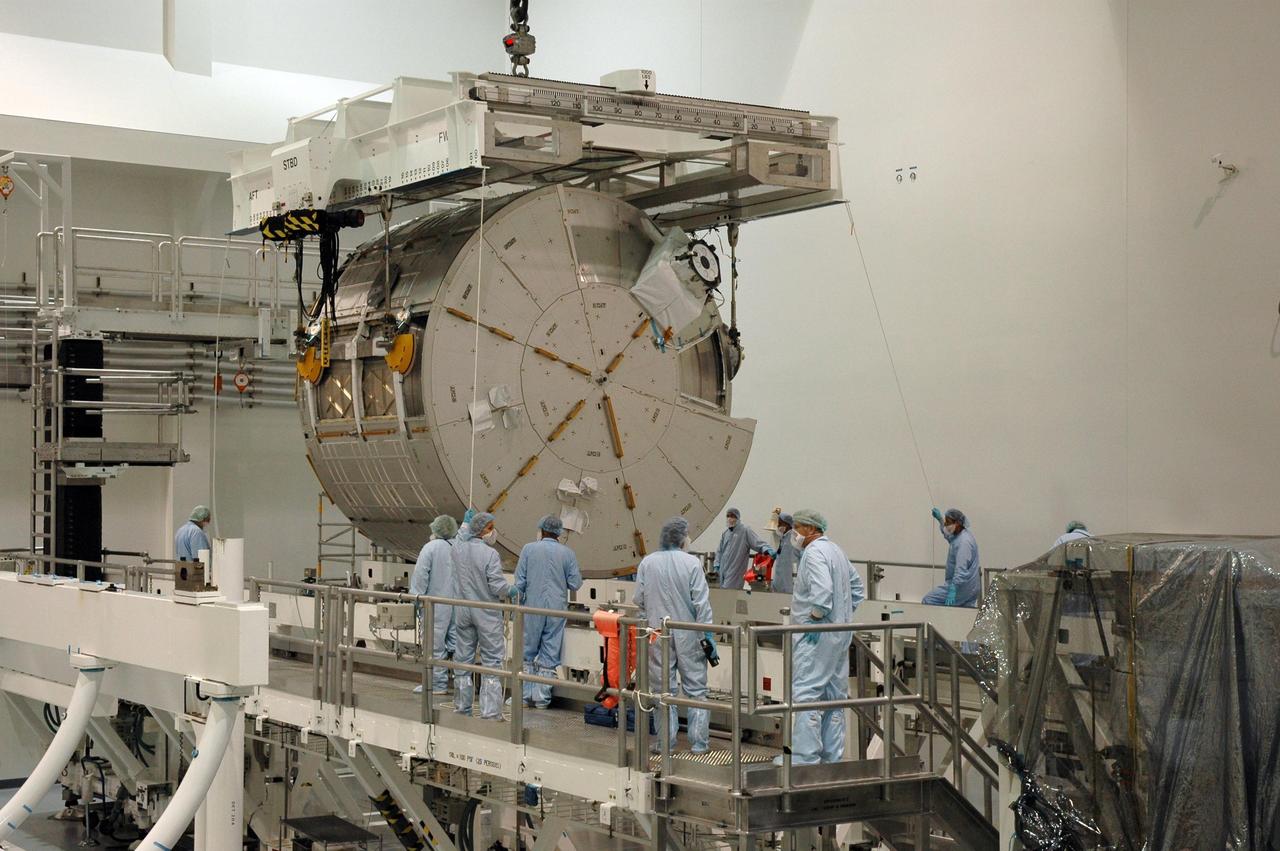
KENNEDY SPACE CENTER, FLA. -- In the Space Station Processing Facility at NASA's Kennedy Space Center, workers help guide the crane holding the Experiment Logistics Module Pressurized Section, or ELM-PS, which is being lowered toward a rotation stand. Part of the Japanese Experiment Module, called Kibo, the ELM-PS is the primary payload for space shuttle Endeavour's STS-123 mission, which is targeted for launch to the International Space Station on Feb. 14. Photo credit: NASA/Dimitri Gerondidakis

KENNEDY SPACE CENTER, FLA. -- In the Space Station Processing Facility at NASA's Kennedy Space Center, the Experiment Logistics Module Pressurized Section, or ELM-PS, is moved toward a rotation stand. The ELM-PS is part of the Japanese Experiment Module, called Kibo. The ELM-PS is the primary payload for space shuttle Endeavour's STS-123 mission, which is targeted for launch to the International Space Station on Feb. 14. Photo credit: NASA/Dimitri Gerondidakis
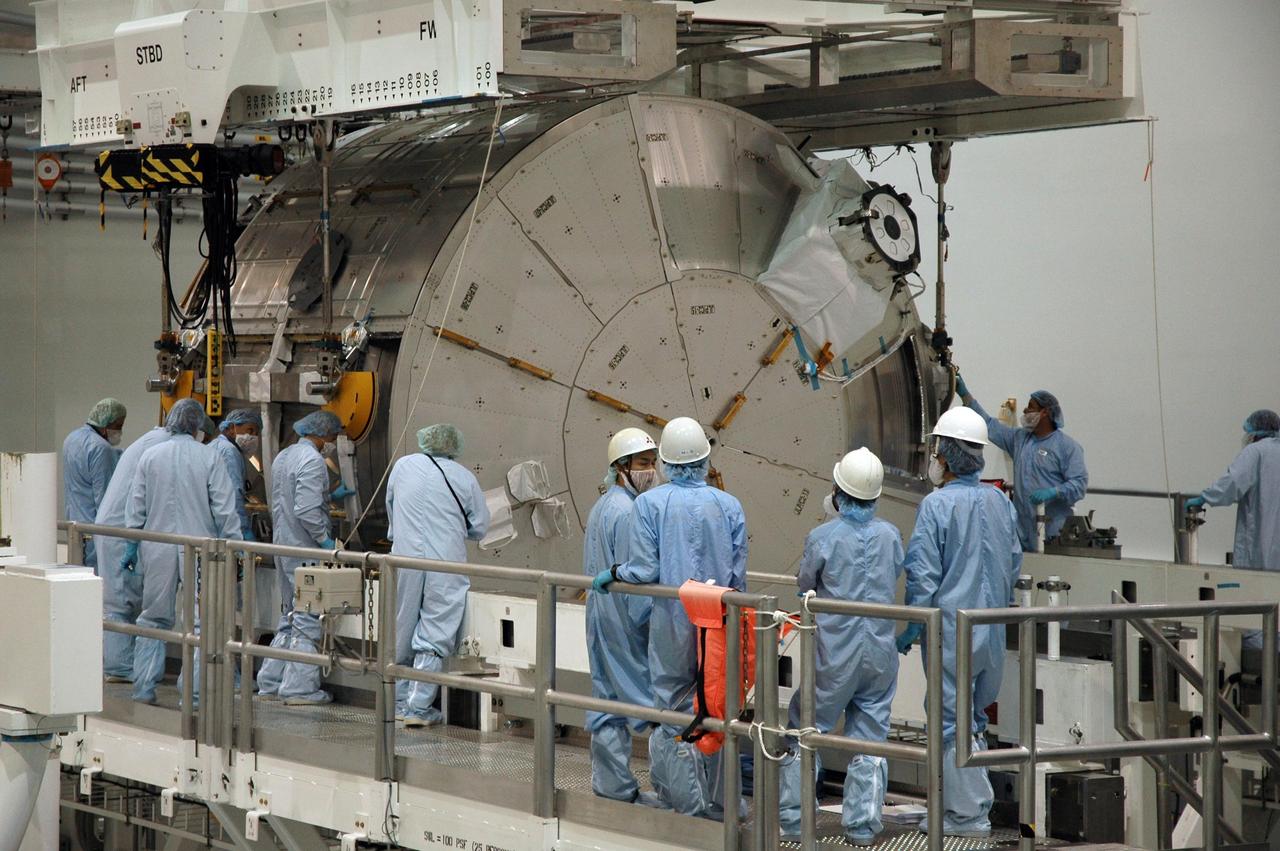
KENNEDY SPACE CENTER, FLA. -- In the Space Station Processing Facility at NASA's Kennedy Space Center, workers stand by as the Experiment Logistics Module Pressurized Section, or ELM-PS, is lowered onto the rotation stand. Part of the Japanese Experiment Module, called Kibo, the ELM-PS is the primary payload for space shuttle Endeavour's STS-123 mission, which is targeted for launch to the International Space Station on Feb. 14. Photo credit: NASA/Dimitri Gerondidakis

KENNEDY SPACE CENTER, FLA. -- In the Space Station Processing Facility at NASA's Kennedy Space Center, the Experiment Logistics Module Pressurized Section, or ELM-PS, of the Japanese Experiment Module, called Kibo, is moved from its work stand (at left). It is being moved to a rotation stand. The ELM-PS is the primary payload for space shuttle Endeavour's STS-123 mission, which is targeted for launch to the International Space Station on Feb. 14. Photo credit: NASA/Dimitri Gerondidakis

KENNEDY SPACE CENTER, FLA. -- In the Space Station Processing Facility at NASA's Kennedy Space Center, workers help guide the crane holding the Experiment Logistics Module Pressurized Section, or ELM-PS, which is being lowered toward a rotation stand. Part of the Japanese Experiment Module, called Kibo, the ELM-PS is the primary payload for space shuttle Endeavour's STS-123 mission, which is targeted for launch to the International Space Station on Feb. 14. Photo credit: NASA/Dimitri Gerondidakis

KENNEDY SPACE CENTER, FLA. -- In the Space Station Processing Facility at NASA's Kennedy Space Center, the Experiment Logistics Module Pressurized Section, or ELM-PS, of the Japanese Experiment Module, called Kibo, is lifted from its work stand. It is being moved to a rotation stand. The ELM-PS is the primary payload for space shuttle Endeavour's STS-123 mission, which is targeted for launch to the International Space Station on Feb. 14. Photo credit: NASA/Dimitri Gerondidakis

KENNEDY SPACE CENTER, FLA. -- In the Space Station Processing Facility at NASA's Kennedy Space Center, the Experiment Logistics Module Pressurized Section, or ELM-PS, moves toward a rotation stand, at right. The ELM-PS is part of the Japanese Experiment Module, called Kibo. The ELM-PS is the primary payload for space shuttle Endeavour's STS-123 mission, which is targeted for launch to the International Space Station on Feb. 14. Photo credit: NASA/Dimitri Gerondidakis

KENNEDY SPACE CENTER, FLA. -- In the Space Station Processing Facility at NASA's Kennedy Space Center, workers help guide the Experiment Logistics Module Pressurized Section, or ELM-PS, onto a rotation stand. Part of the Japanese Experiment Module, called Kibo, the ELM-PS is the primary payload for space shuttle Endeavour's STS-123 mission, which is targeted for launch to the International Space Station on Feb. 14. Photo credit: NASA/Dimitri Gerondidakis

KENNEDY SPACE CENTER, FLA. -- In the Space Station Processing Facility at NASA's Kennedy Space Center, workers are preparing the Experiment Logistics Module Pressurized Section, or ELM-PS, of the Japanese Experiment Module, called Kibo, for its move to a rotation stand. The ELM-PS is the primary payload for space shuttle Endeavour's STS-123 mission, which is targeted for launch to the International Space Station on Feb. 14. Photo credit: NASA/Dimitri Gerondidakis

CAPE CANAVERAL, Fla. – In the Space Station Processing Facility at NASA's Kennedy Space Center in Florida, a worker (right) help guides the progress of the Japan Aerospace Exploration Agency's Kibo Exposed Facility, or EF, as it moves across the room to another stand. The EF, along with the Experiment Logistics Module Exposed Section, will be carried aboard space shuttle Endeavour on the STS-127 mission to the International Space Station targeted for launch May 15, 2009. When it is installed on the Kibo laboratory,the EF will provide a multipurpose platform where science experiments can be deployed and operated in the exposed environment. The payloads attached to the EF can be exchanged or retrieved by Kibo's robotic arm, the JEM Remote Manipulator System. Photo credit: NASA/Kim Shiflett
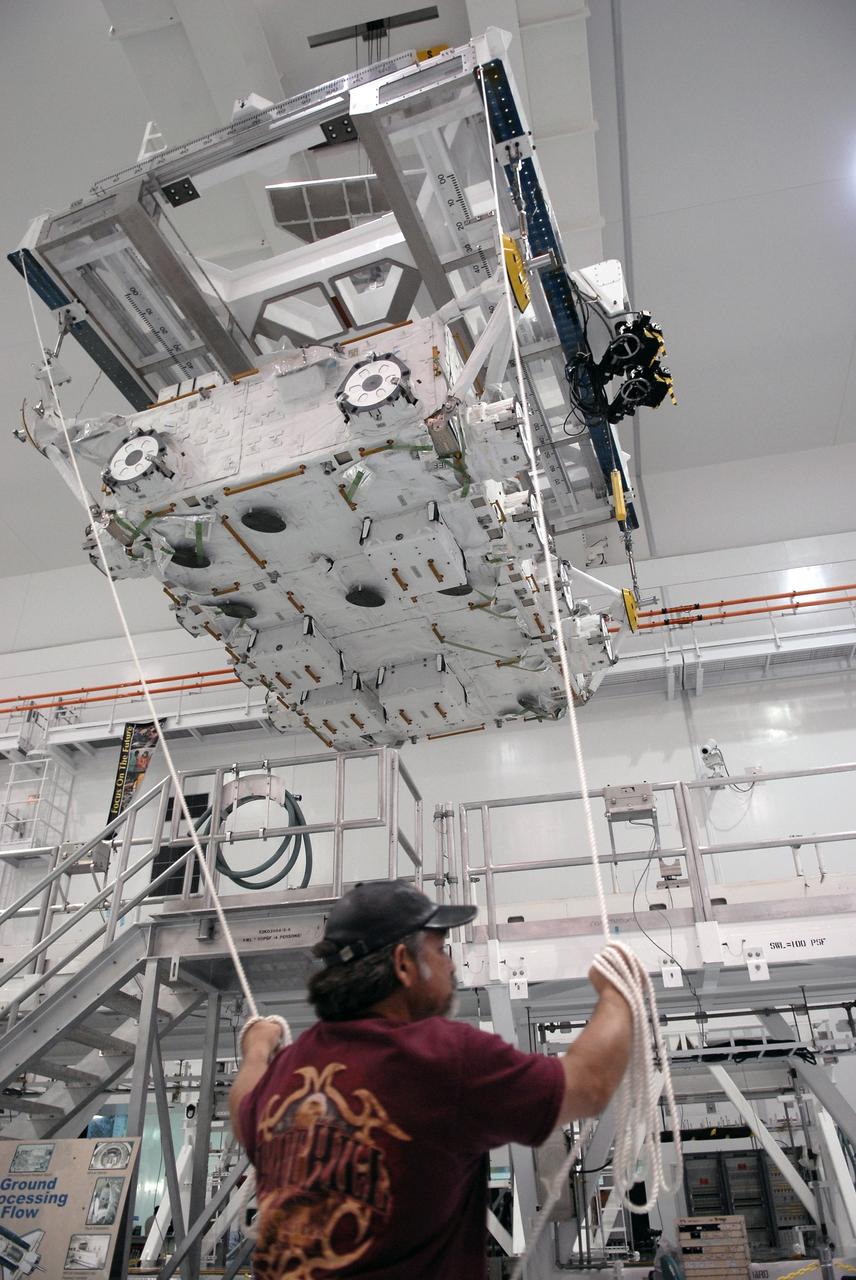
CAPE CANAVERAL, Fla. – In the Space Station Processing Facility at NASA's Kennedy Space Center in Florida, a worker help guides the progress of the Japan Aerospace Exploration Agency's Kibo Exposed Facility, or EF, as it moves across the room to another stand. The EF, along with the Experiment Logistics Module Exposed Section, will be carried aboard space shuttle Endeavour on the STS-127 mission to the International Space Station targeted for launch May 15, 2009. When it is installed on the Kibo laboratory,the EF will provide a multipurpose platform where science experiments can be deployed and operated in the exposed environment. The payloads attached to the EF can be exchanged or retrieved by Kibo's robotic arm, the JEM Remote Manipulator System. Photo credit: NASA/Kim Shiflett
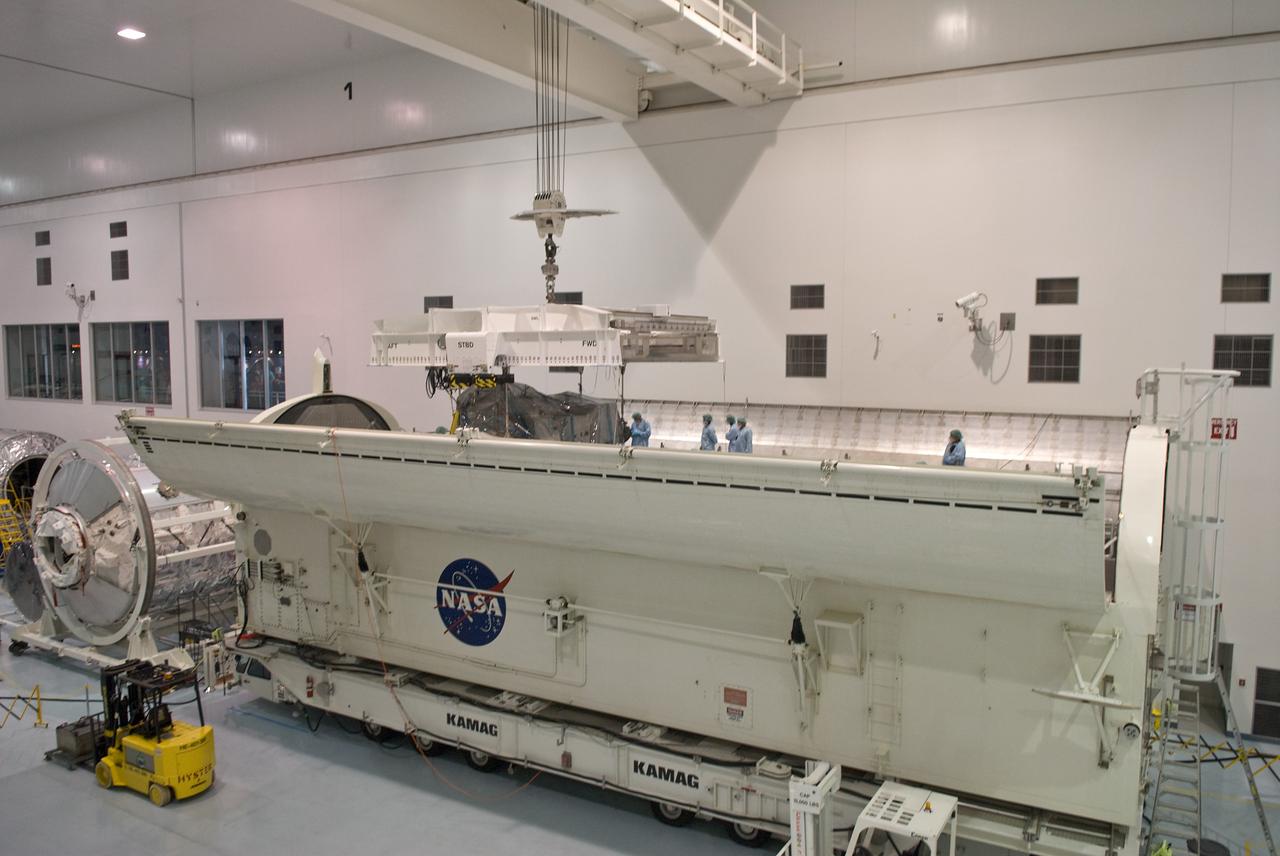
CAPE CANAVERAL, Fla. – In the Space Station Processing Facility at NASA's Kennedy Space Center in Florida, the Kibo Experiment Logistics Module Exposed Section, or ELM-ES, is lowered into the payload canister. The canister will transport the payload to Launch Pad 39A. The ES, along with the Japan Aerospace Exploration Agency's Kibo Exposed Facility, or EF, will be carried aboard space shuttle Endeavour on the STS-127 mission targeted for launch June 13. The ELM-ES is one of the final components of the Japan Aerospace Exploration Agency's Kibo laboratory for the International Space Station. It can provide payload storage space and can carry up to three payloads at launch. The canister will deliver the ELM-ES and other elements to Launch Pad 39A for installation in space shuttle Endeavour's payload bay. The STS-127 mission is targeted for launch June 13. Photo credit: NASA/Jack Pfaller
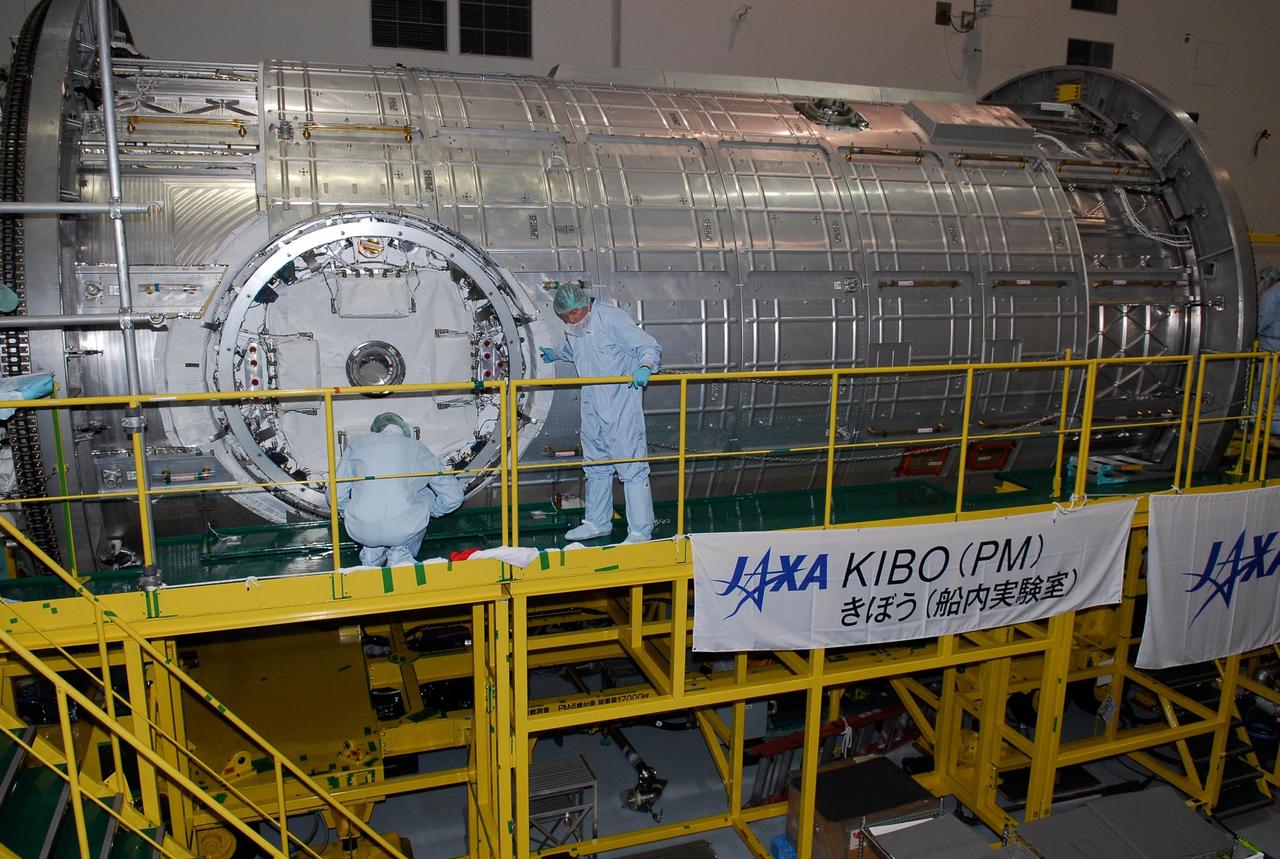
KENNEDY SPACE CENTER, FLA. -- In the Space Station Processing Facility at NASA's Kennedy Space Center, members of the STS-124 crew look over equipment related to the scientific airlock in the Kibo pressurized module. The module is part of the payload for the mission, targeted for launch no earlier than April 24. The crew comprises seven: Commander Mark Kelly, Pilot Kenneth Ham, and Mission Specialists Karen Nyberg, Ronald Garan, Michael Fossum and Akihiko Hoshide. The crew is at Kennedy for a crew equipment interface test that includes familiarization with tools and equipment that will be used on the mission. The STS-124 mission is the second of three flights that will launch components to complete the Japanese pressurized module, the Kibo laboratory. The mission will include two spacewalks to install the new lab and its remote manipulator system. The lab's logistics module, which will have been installed in a temporary location during STS-123, will be attached to the new lab. Photo credit: NASA/Kim Shiflett
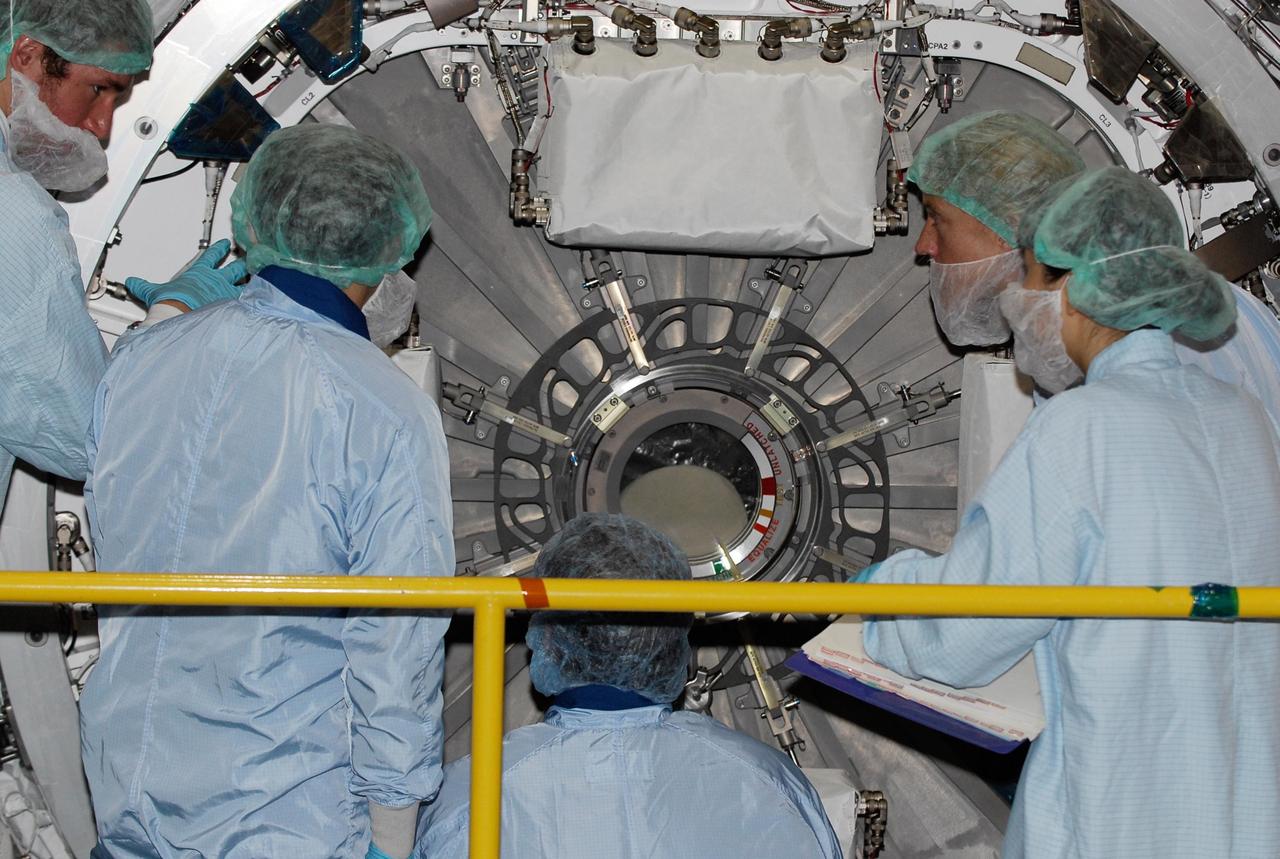
KENNEDY SPACE CENTER, FLA. -- In the Space Station Processing Facility at NASA's Kennedy Space Center, members of the STS-124 crew get a close look at the scientific airlock on Kibo pressurized module. The module is part of the payload for the mission, targeted for launch no earlier than April 24. Crew members are at Kennedy for a crew equipment interface test that includes familiarization with tools and equipment that will be used on the mission. The STS-124 mission is the second of three flights that will launch components to complete the Japanese pressurized module, the Kibo laboratory. The mission will include two spacewalks to install the new lab and its remote manipulator system. The lab's logistics module, which will have been installed in a temporary location during STS-123, will be attached to the new lab. Photo credit: NASA/Kim Shiflett
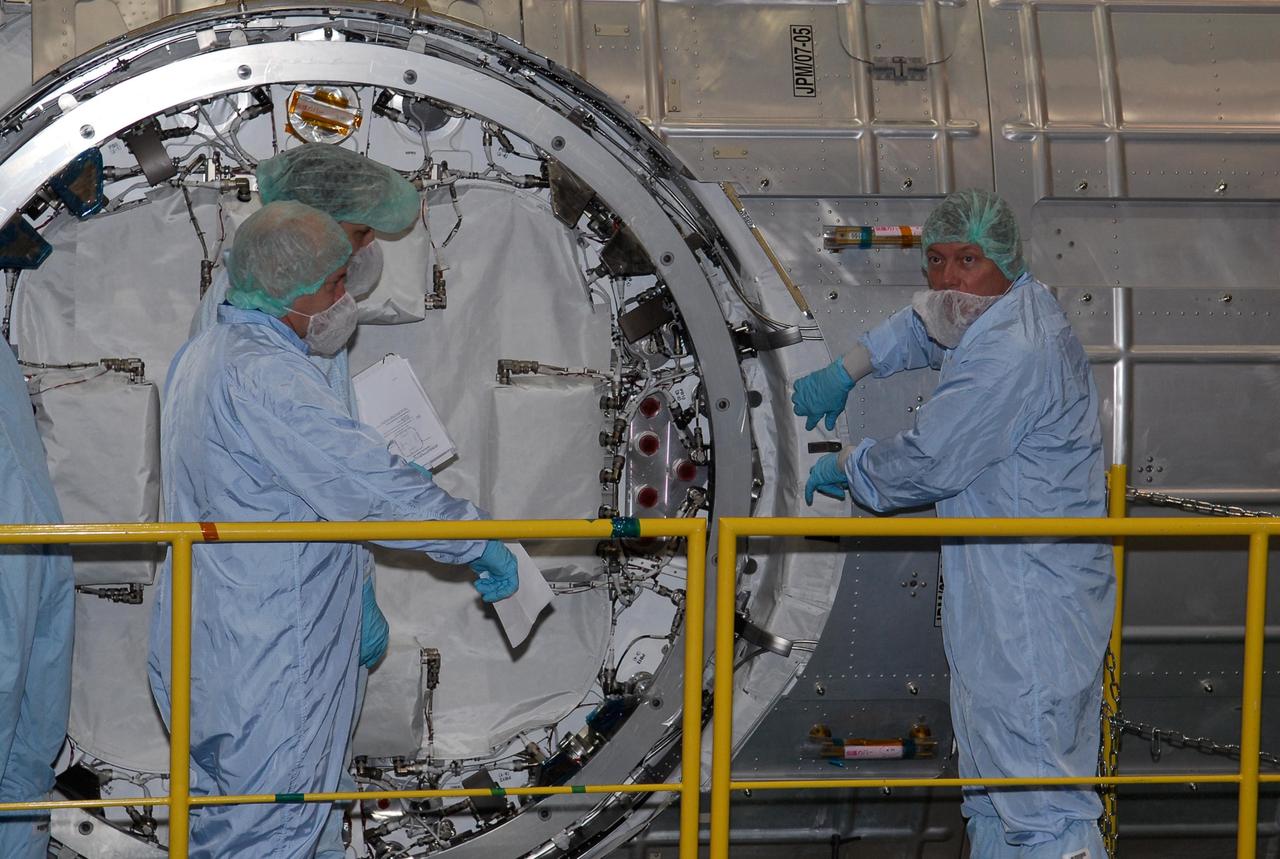
KENNEDY SPACE CENTER, FLA. -- In the Space Station Processing Facility at NASA's Kennedy Space Center, STS-124 Mission Specialist Michael Fossum (right) gets hands-on experience with the scientific airlock in the Kibo pressurized module. The module is part of the payload for the mission, targeted for launch no earlier than April 24. He and other crew members are at Kennedy for a crew equipment interface test that includes familiarization with tools and equipment that will be used on the mission. The STS-124 mission is the second of three flights that will launch components to complete the Japanese pressurized module, the Kibo laboratory. The mission will include two spacewalks to install the new lab and its remote manipulator system. The lab's logistics module, which will have been installed in a temporary location during STS-123, will be attached to the new lab. Photo credit: NASA/Kim Shiflett
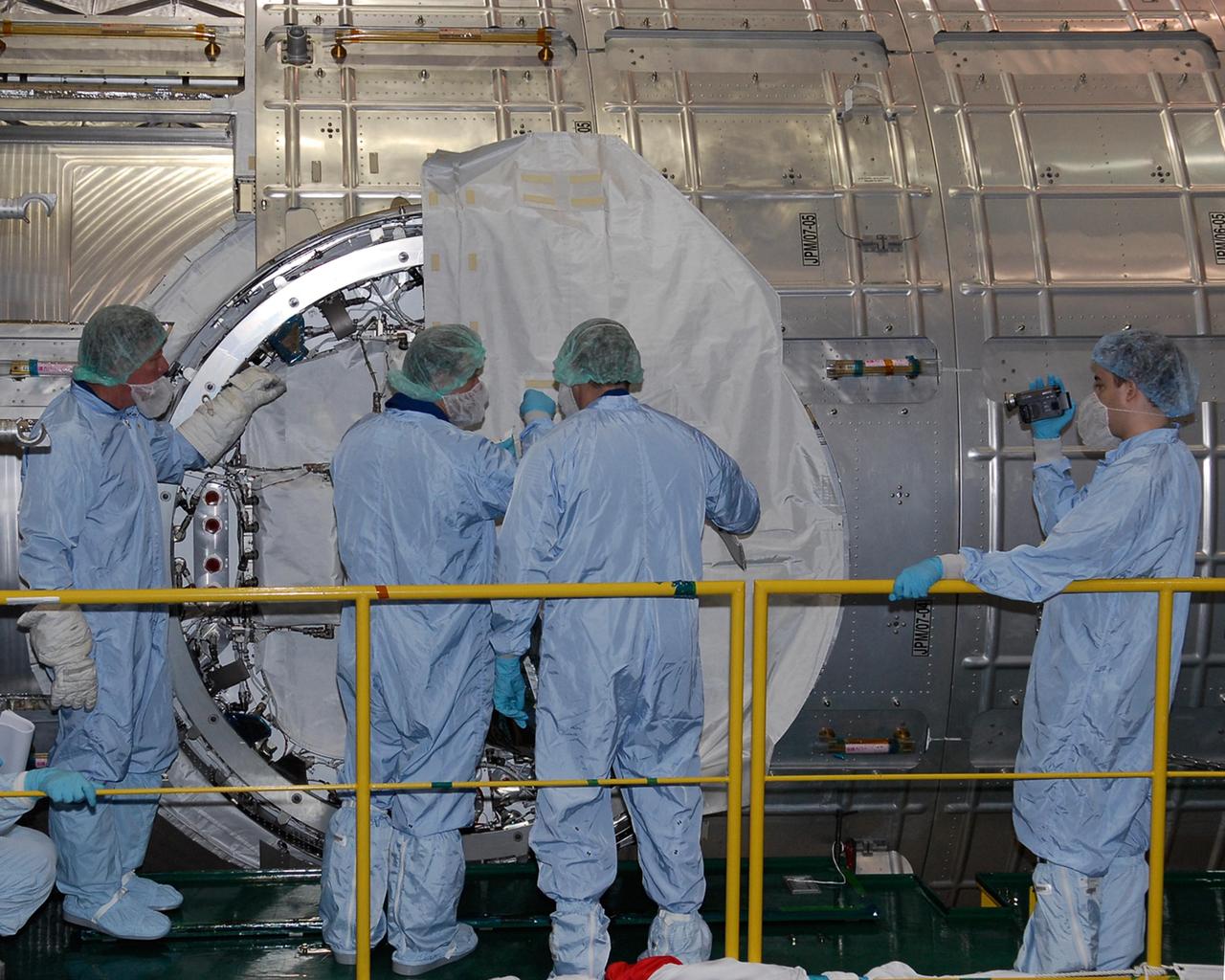
KENNEDY SPACE CENTER, FLA. -- In the Space Station Processing Facility at NASA's Kennedy Space Center, members of the STS-124 crew look over the scientific airlock in the Kibo pressurized module. The module is part of the payload for the mission, targeted for launch no earlier than April 24. The crew comprises seven: Commander Mark Kelly, Pilot Kenneth Ham, and Mission Specialists Karen Nyberg, Ronald Garan, Michael Fossum and Akihiko Hoshide. The crew is at Kennedy for a crew equipment interface test that includes familiarization with tools and equipment that will be used on the mission. The STS-124 mission is the second of three flights that will launch components to complete the Japanese pressurized module, the Kibo laboratory. The mission will include two spacewalks to install the new lab and its remote manipulator system. The lab's logistics module, which will have been installed in a temporary location during STS-123, will be attached to the new lab. Photo credit: NASA/Kim Shiflett
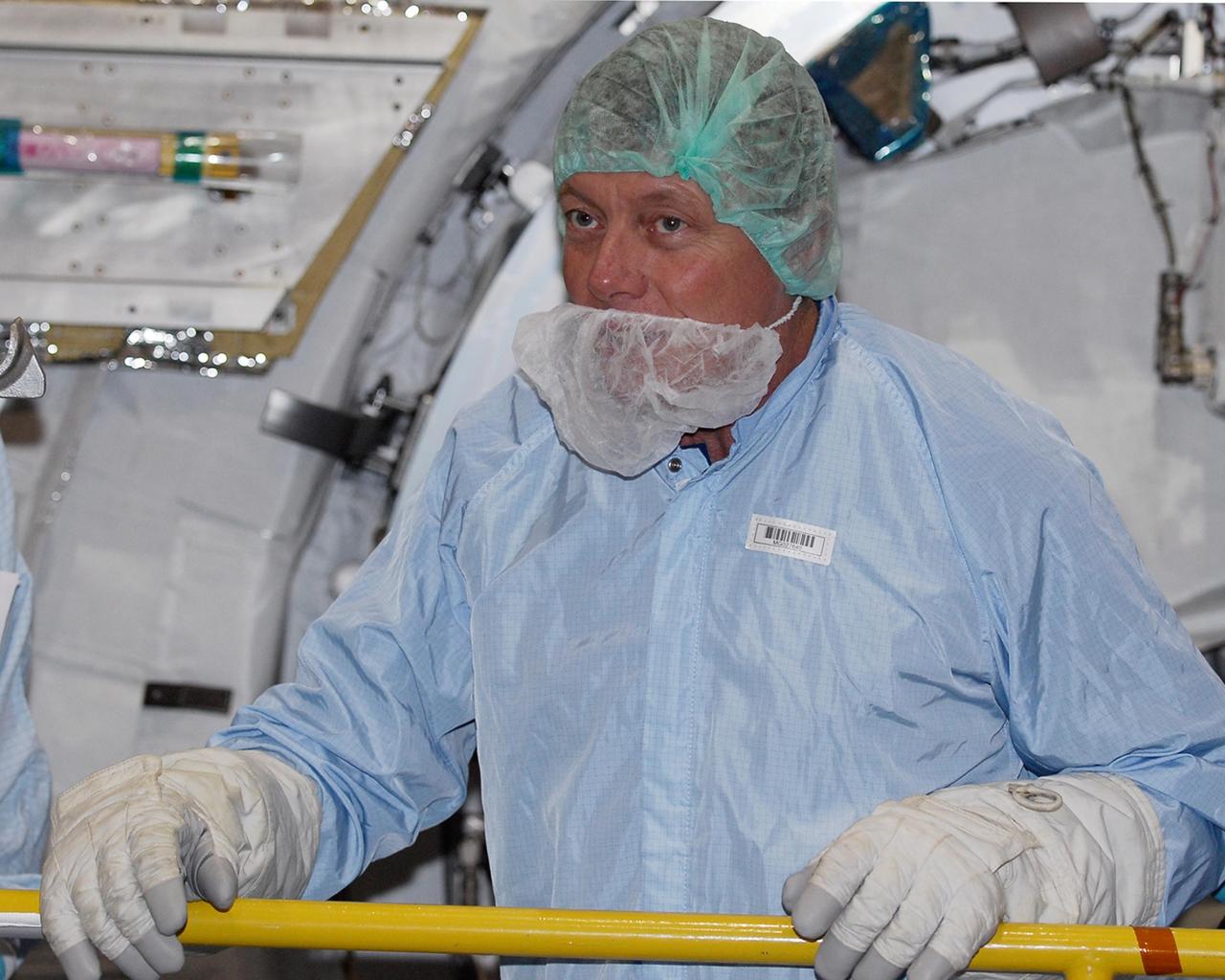
KENNEDY SPACE CENTER, FLA. -- In the Space Station Processing Facility at NASA's Kennedy Space Center, STS-124 Mission Specialist Michael Fossum is one of the crew members getting hands-on experience with equipment that is part of the Kibo pressurized module. The module is part of the payload for the mission, targeted for launch no earlier than April 24. He and other crew members are at Kennedy for a crew equipment interface test that includes familiarization with tools and equipment that will be used on the mission. The STS-124 mission is the second of three flights that will launch components to complete the Japanese pressurized module, the Kibo laboratory. The mission will include two spacewalks to install the new lab and its remote manipulator system. The lab's logistics module, which will have been installed in a temporary location during STS-123, will be attached to the new lab. Photo credit: NASA/Kim Shiflett
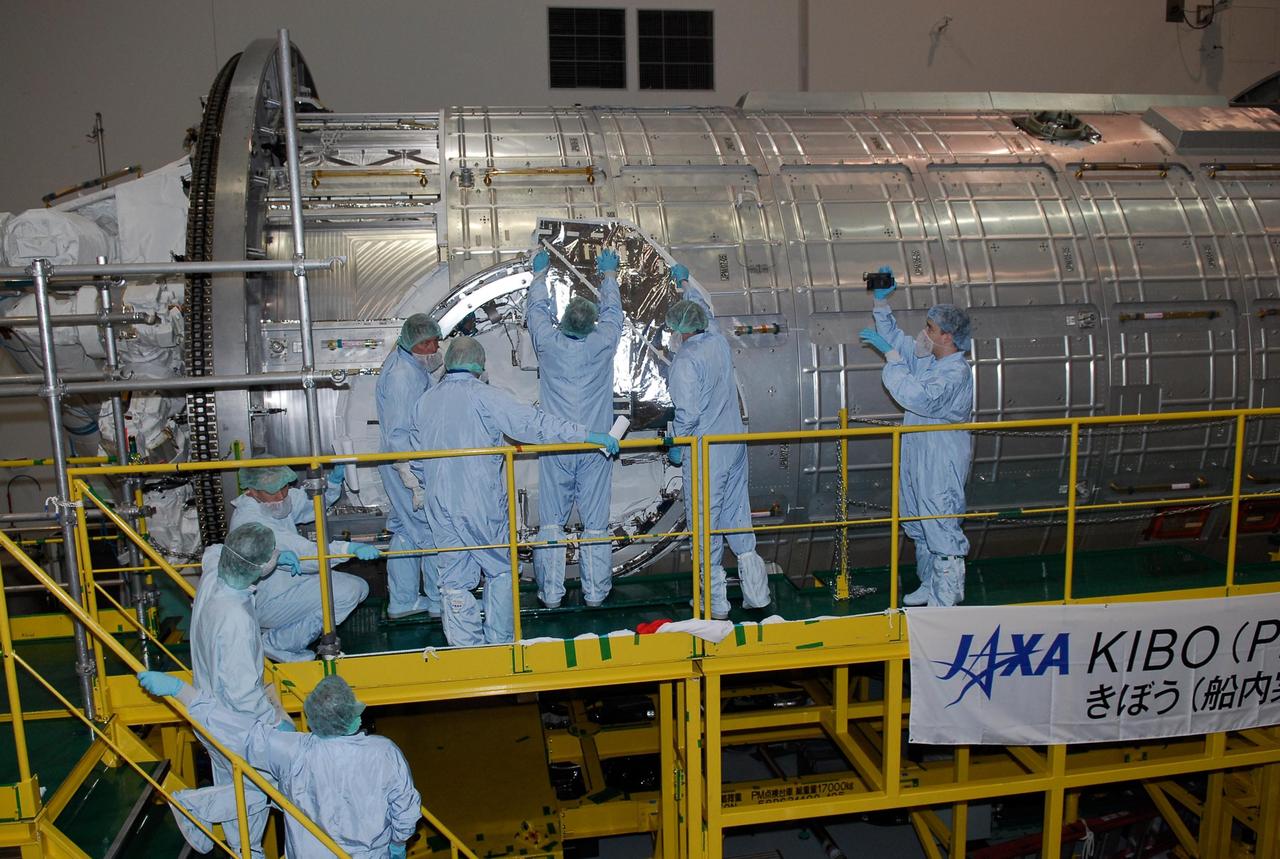
KENNEDY SPACE CENTER, FLA. -- In the Space Station Processing Facility at NASA's Kennedy Space Center, members of the STS-124 crew look over the scientific airlock in the Kibo pressurized module. The module is part of the payload for the mission, targeted for launch no earlier than April 24. The crew comprises seven: Commander Mark Kelly, Pilot Kenneth Ham, and Mission Specialists Karen Nyberg, Ronald Garan, Michael Fossum and Akihiko Hoshide. The crew is at Kennedy for a crew equipment interface test that includes familiarization with tools and equipment that will be used on the mission. The STS-124 mission is the second of three flights that will launch components to complete the Japanese pressurized module, the Kibo laboratory. The mission will include two spacewalks to install the new lab and its remote manipulator system. The lab's logistics module, which will have been installed in a temporary location during STS-123, will be attached to the new lab. Photo credit: NASA/Kim Shiflett
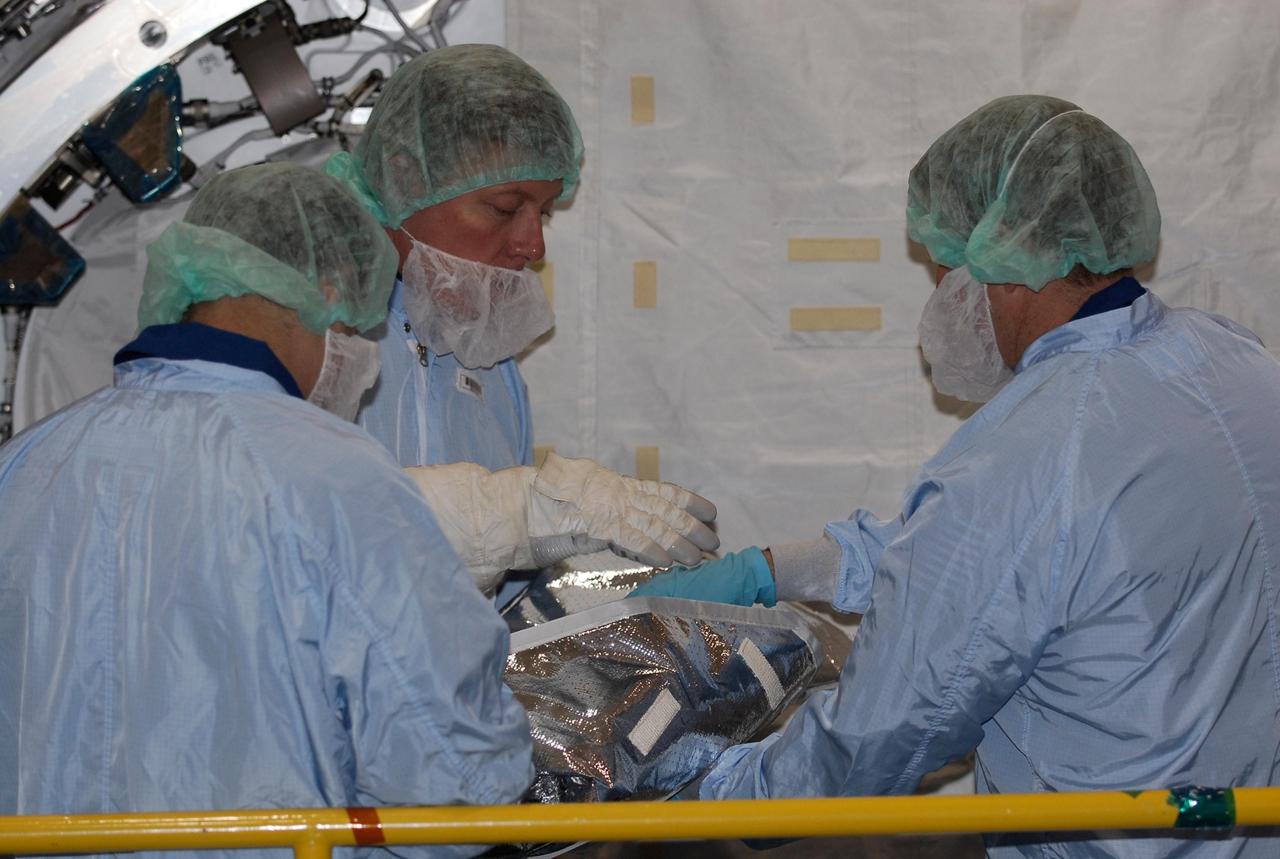
KENNEDY SPACE CENTER, FLA. -- In the Space Station Processing Facility at NASA's Kennedy Space Center, STS-124 Mission Specialist Michael Fossum (facing camera) gets hands-on experience with equipment that is part of the Kibo pressurized module. He and other crew members are at Kennedy for a crew equipment interface test that includes familiarization with tools and equipment that will be used on the mission, targeted for launch no earlier than April 24. The STS-124 mission is the second of three flights that will launch components to complete the Japanese pressurized module, the Kibo laboratory. The mission will include two spacewalks to install the new lab and its remote manipulator system. The lab's logistics module, which will have been installed in a temporary location during STS-123, will be attached to the new lab. Photo credit: NASA/Kim Shiflett
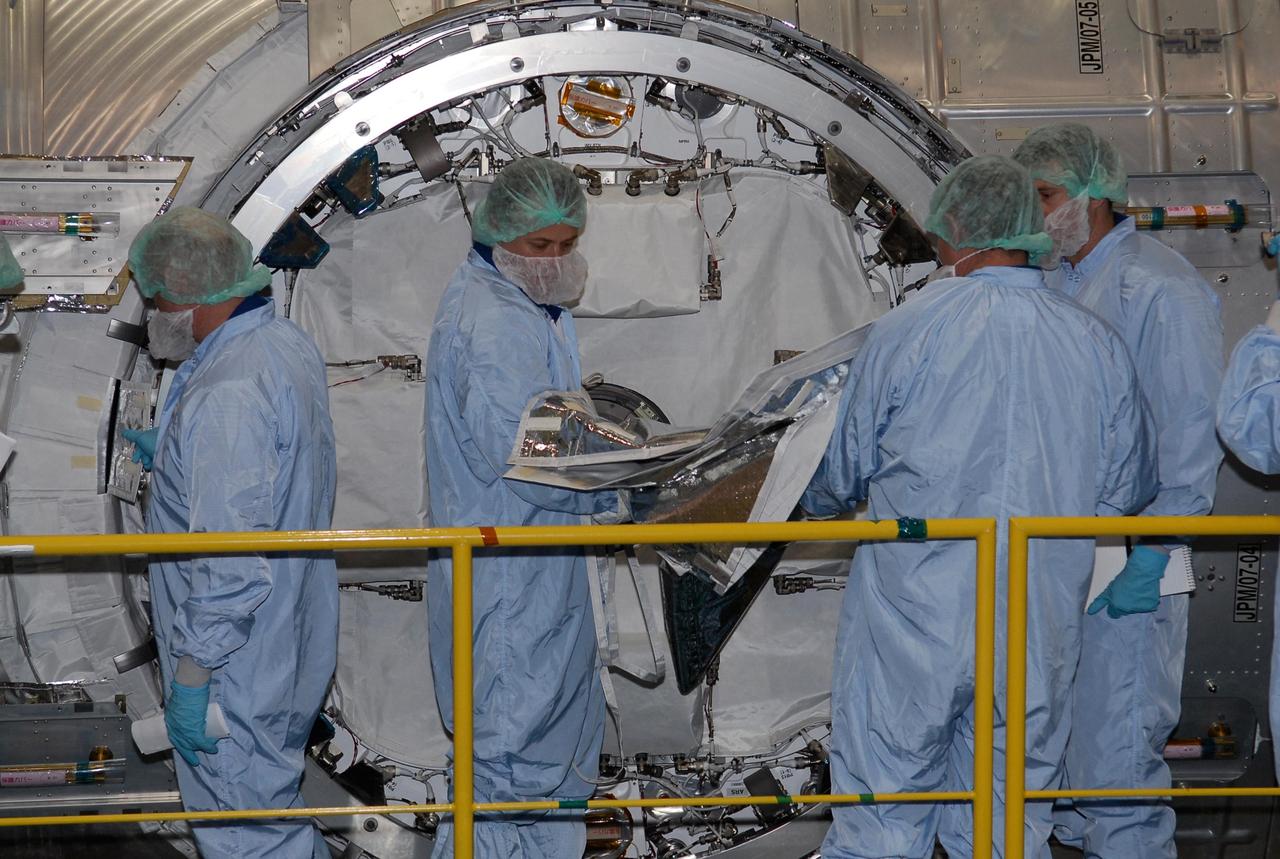
KENNEDY SPACE CENTER, FLA. -- In the Space Station Processing Facility at NASA's Kennedy Space Center, members of the STS-124 crew look over equipment related to the scientific airlock in the Kibo pressurized module. The module is part of the payload for the mission, targeted for launch no earlier than April 24. The crew comprises seven: Commander Mark Kelly, Pilot Kenneth Ham, and Mission Specialists Karen Nyberg, Ronald Garan, Michael Fossum and Akihiko Hoshide. The crew is at Kennedy for a crew equipment interface test that includes familiarization with tools and equipment that will be used on the mission. The STS-124 mission is the second of three flights that will launch components to complete the Japanese pressurized module, the Kibo laboratory. The mission will include two spacewalks to install the new lab and its remote manipulator system. The lab's logistics module, which will have been installed in a temporary location during STS-123, will be attached to the new lab. Photo credit: NASA/Kim Shiflett
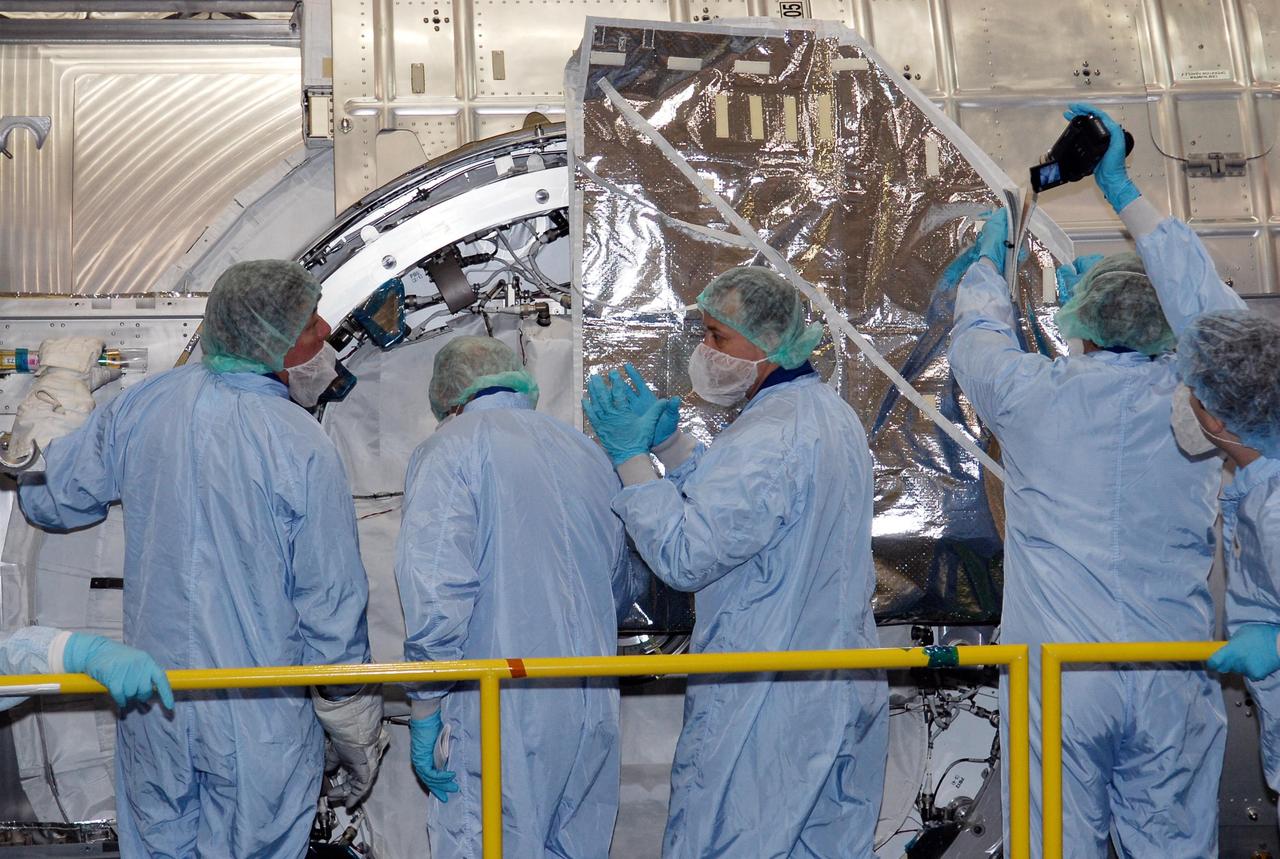
KENNEDY SPACE CENTER, FLA. -- In the Space Station Processing Facility at NASA's Kennedy Space Center, members of the STS-124 crew look over the scientific airlock in the Kibo pressurized module. The module is part of the payload for the mission, targeted for launch no earlier than April 24. The crew comprises seven: Commander Mark Kelly, Pilot Kenneth Ham, and Mission Specialists Karen Nyberg, Ronald Garan, Michael Fossum and Akihiko Hoshide. The crew is at Kennedy for a crew equipment interface test that includes familiarization with tools and equipment that will be used on the mission. The STS-124 mission is the second of three flights that will launch components to complete the Japanese pressurized module, the Kibo laboratory. The mission will include two spacewalks to install the new lab and its remote manipulator system. The lab's logistics module, which will have been installed in a temporary location during STS-123, will be attached to the new lab. Photo credit: NASA/Kim Shiflett

KENNEDY SPACE CENTER, FLA. -- In the Space Station Processing Facility at NASA's Kennedy Space Center, members of the STS-124 crew look over equipment for the scientific airlock in the Kibo pressurized module. The module is part of the payload for the mission targeted for launch no earlier than April 24. The crew comprises seven: Commander Mark Kelly, Pilot Kenneth Ham, and Mission Specialists Karen Nyberg, Ronald Garan, Michael Fossum and Akihiko Hoshide. The crew members are at Kennedy for a crew equipment interface test, that includes familiarization with tools and equipment that will be used on the mission. The STS-124 mission is the second of three flights that will launch components to complete the Japanese pressurized module, the Kibo laboratory. The mission will include two spacewalks to install the new lab and its remote manipulator system. The lab's logistics module, which will have been installed in a temporary location during STS-123, will be attached to the new lab. Photo credit: NASA/Kim Shiflett
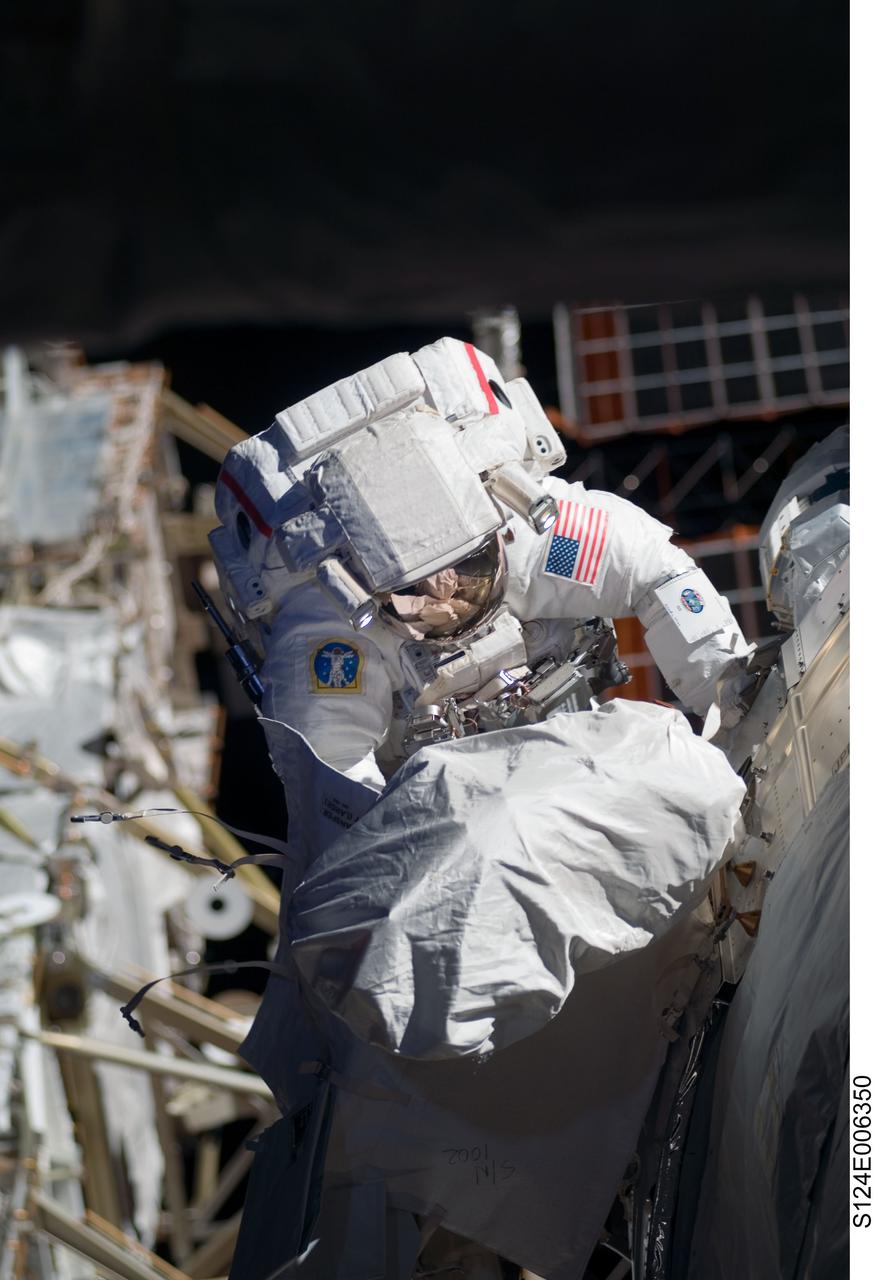
S124-E-006350 (5 June 2008) --- Astronaut Mike Fossum, STS-124 mission specialist, participates in the mission's second scheduled session of extravehicular activity (EVA) as construction and maintenance continue on the International Space Station. During the seven-hour, 11-minute spacewalk, Fossum and astronaut Ron Garan (out of frame), mission specialist, installed television cameras on the front and rear of the Kibo Japanese Pressurized Module (JPM) to assist Kibo robotic arm operations, removed thermal covers from the Kibo robotic arm, prepared an upper JPM docking port for flight day seven's attachment of the Kibo logistics module, readied a spare nitrogen tank assembly for its installation during the third spacewalk, retrieved a failed television camera from the Port 1 truss, and inspected the port Solar Alpha Rotary Joint (SARJ).
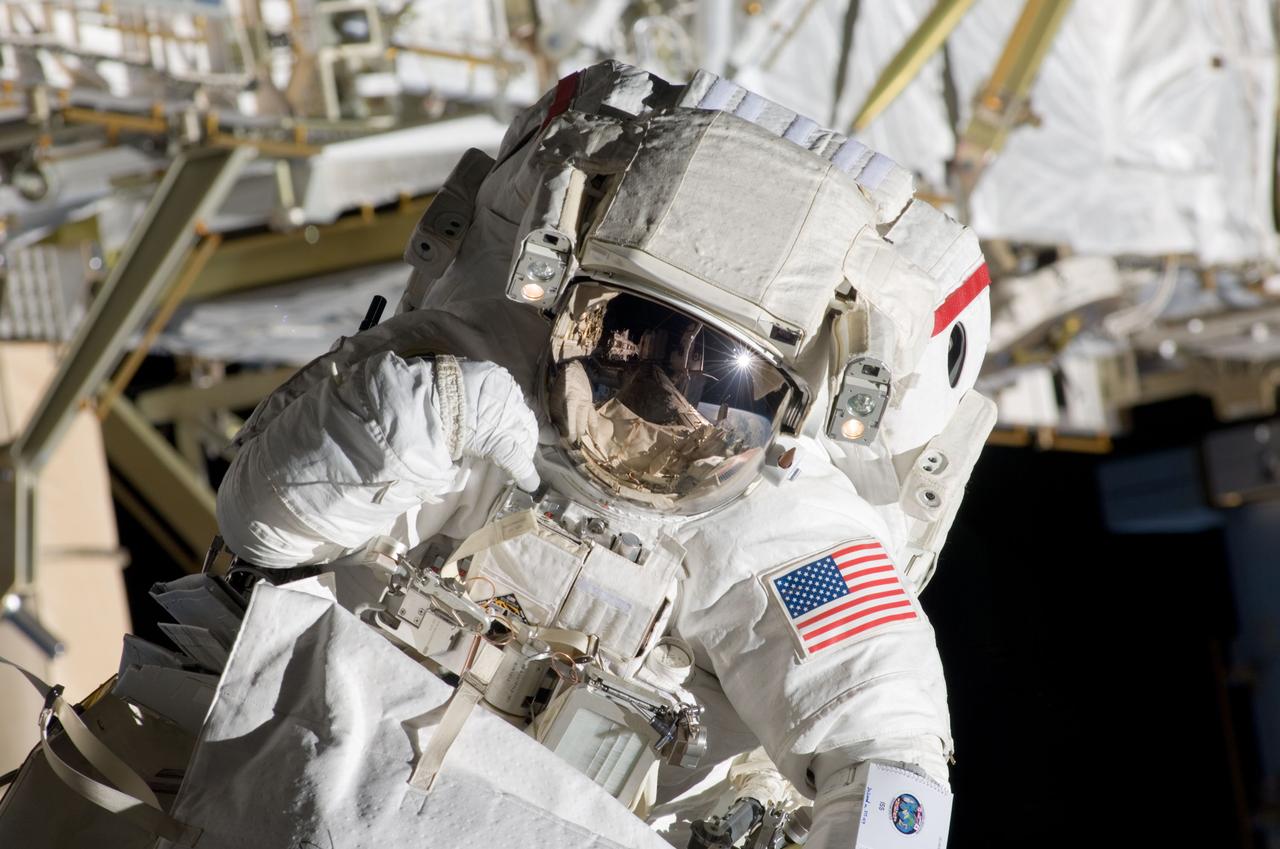
S124-E-006336 (5 June 2008) --- Astronaut Mike Fossum, STS-124 mission specialist, participates in the mission's second scheduled session of extravehicular activity (EVA) as construction and maintenance continue on the International Space Station. During the seven-hour, 11-minute spacewalk, Fossum and astronaut Ron Garan (out of frame), mission specialist, installed television cameras on the front and rear of the Kibo Japanese Pressurized Module (JPM) to assist Kibo robotic arm operations, removed thermal covers from the Kibo robotic arm, prepared an upper JPM docking port for flight day seven's attachment of the Kibo logistics module, readied a spare nitrogen tank assembly for its installation during the third spacewalk, retrieved a failed television camera from the Port 1 truss, and inspected the port Solar Alpha Rotary Joint (SARJ).
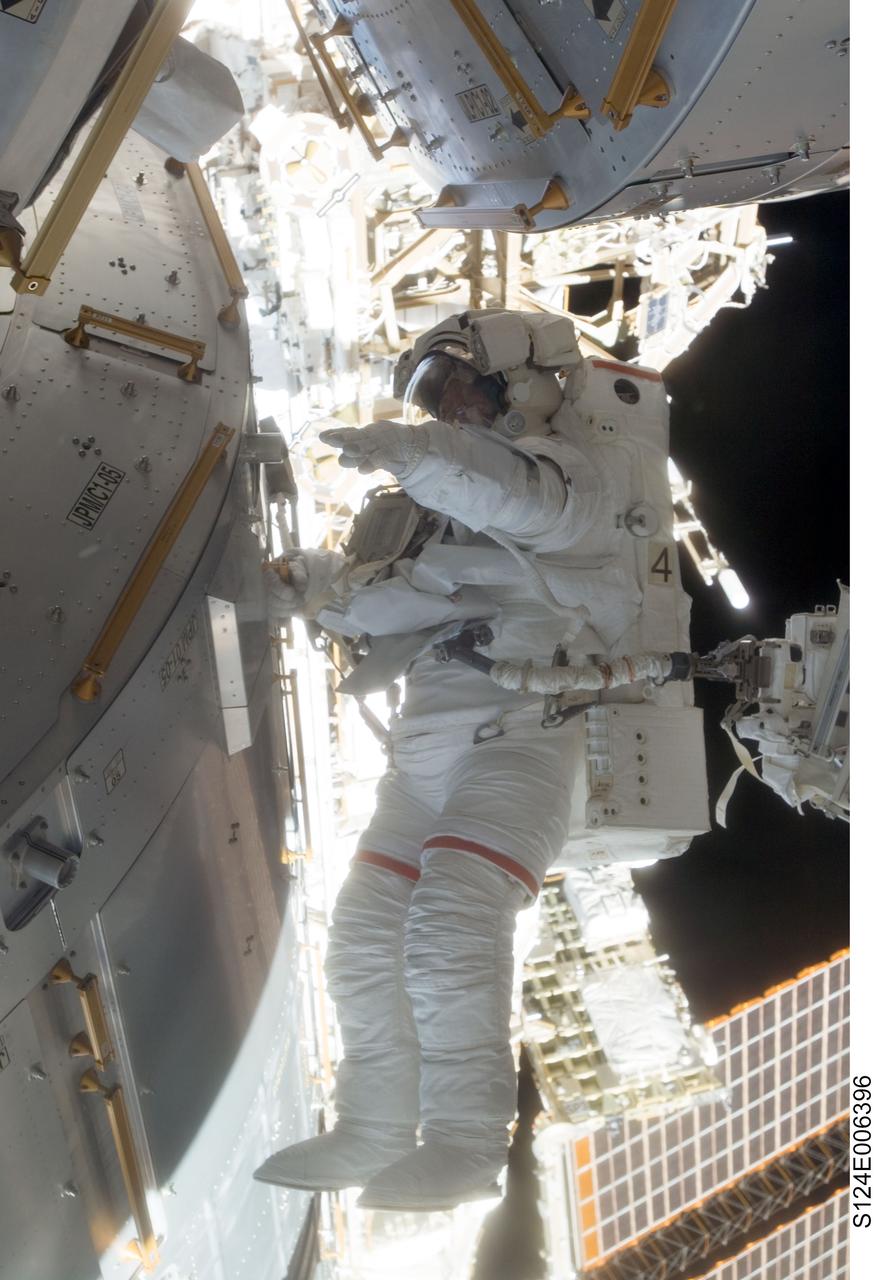
S124-E-006396 (5 June 2008) --- Astronaut Mike Fossum, STS-124 mission specialist, participates in the mission's second scheduled session of extravehicular activity (EVA) as construction and maintenance continue on the International Space Station. During the seven-hour, 11-minute spacewalk, Fossum and astronaut Ron Garan (out of frame), mission specialist, installed television cameras on the front and rear of the Kibo Japanese Pressurized Module (JPM) to assist Kibo robotic arm operations, removed thermal covers from the Kibo robotic arm, prepared an upper JPM docking port for flight day seven's attachment of the Kibo logistics module, readied a spare nitrogen tank assembly for its installation during the third spacewalk, retrieved a failed television camera from the Port 1 truss, and inspected the port Solar Alpha Rotary Joint (SARJ).
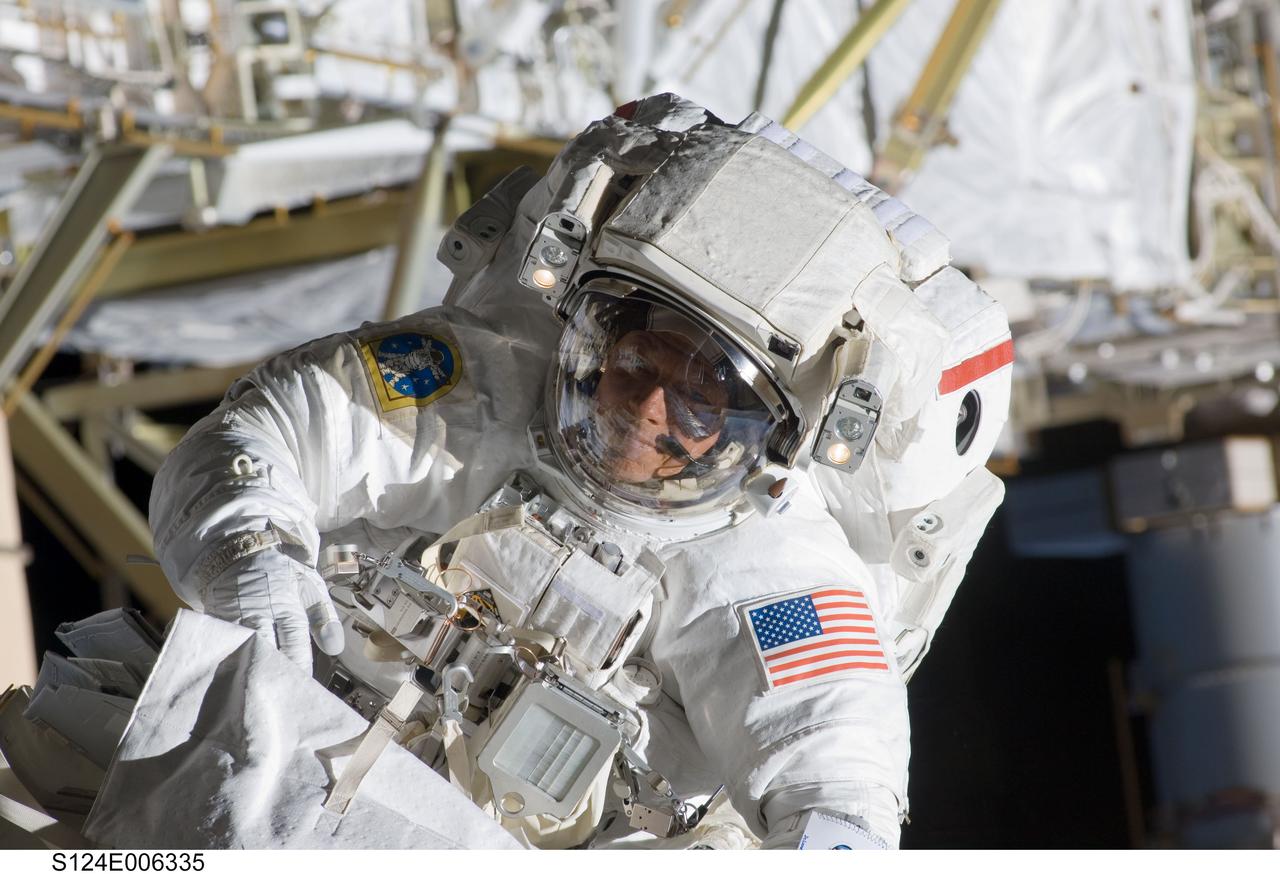
S124-E-006335 (5 June 2008) --- Astronaut Mike Fossum, STS-124 mission specialist, participates in the mission's second scheduled session of extravehicular activity (EVA) as construction and maintenance continue on the International Space Station. During the seven-hour, 11-minute spacewalk, Fossum and astronaut Ron Garan (out of frame), mission specialist, installed television cameras on the front and rear of the Kibo Japanese Pressurized Module (JPM) to assist Kibo robotic arm operations, removed thermal covers from the Kibo robotic arm, prepared an upper JPM docking port for flight day seven's attachment of the Kibo logistics module, readied a spare nitrogen tank assembly for its installation during the third spacewalk, retrieved a failed television camera from the Port 1 truss, and inspected the port Solar Alpha Rotary Joint (SARJ).
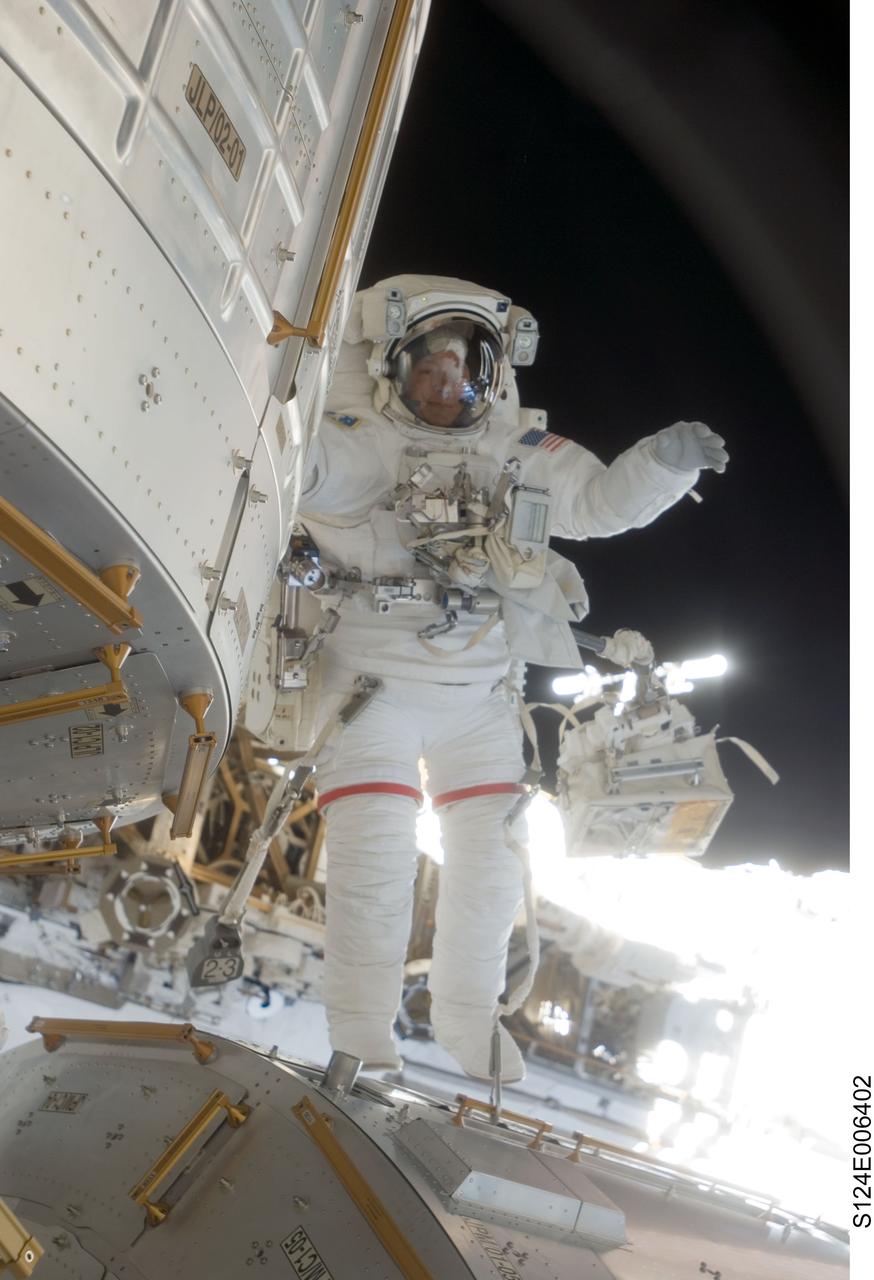
S124-E-006402 (5 June 2008) --- Astronaut Mike Fossum, STS-124 mission specialist, participates in the mission's second scheduled session of extravehicular activity (EVA) as construction and maintenance continue on the International Space Station. During the seven-hour, 11-minute spacewalk, Fossum and astronaut Ron Garan (out of frame), mission specialist, installed television cameras on the front and rear of the Kibo Japanese Pressurized Module (JPM) to assist Kibo robotic arm operations, removed thermal covers from the Kibo robotic arm, prepared an upper JPM docking port for flight day seven's attachment of the Kibo logistics module, readied a spare nitrogen tank assembly for its installation during the third spacewalk, retrieved a failed television camera from the Port 1 truss, and inspected the port Solar Alpha Rotary Joint (SARJ).
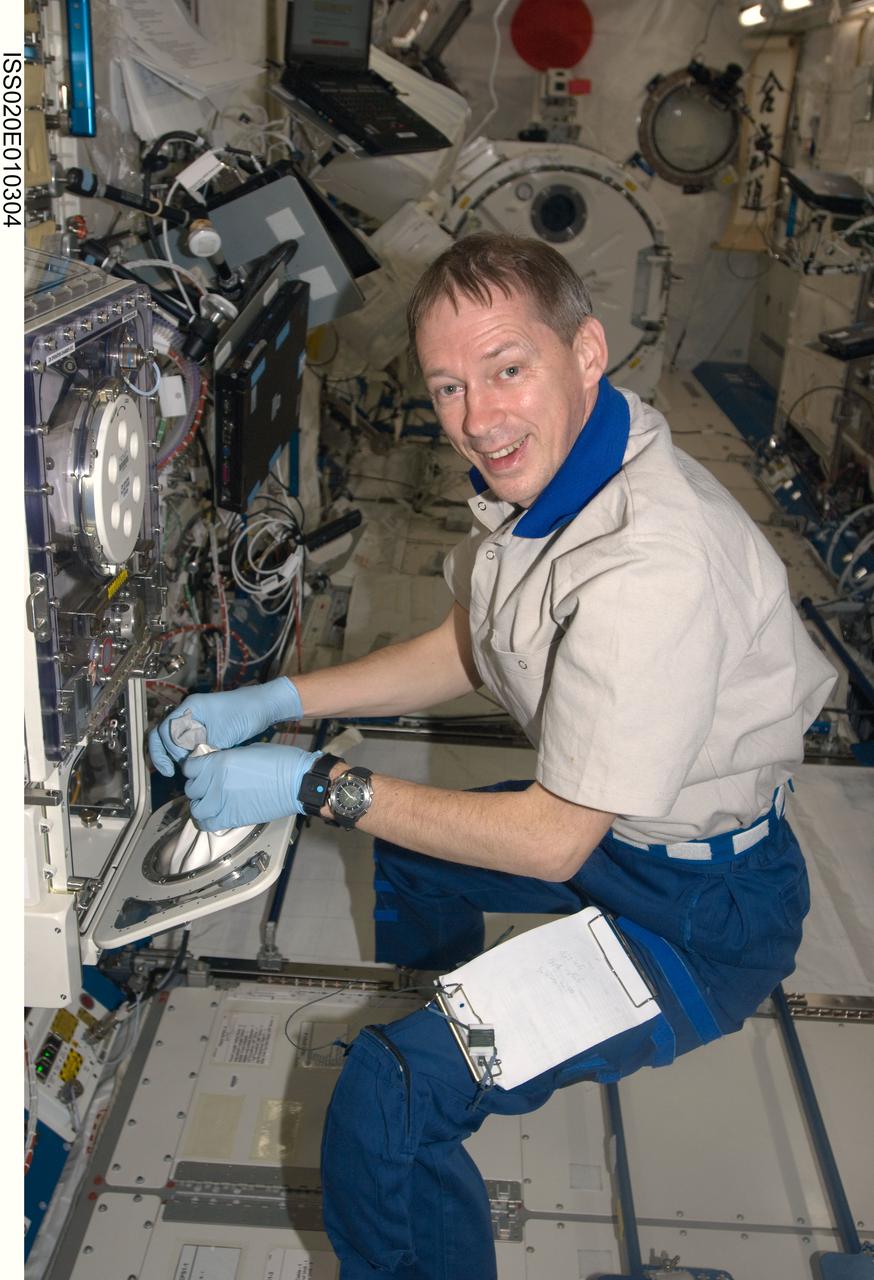
ISS020-E-010304 (15 June 2009) --- European Space Agency astronaut Frank De Winne, Expedition 20 flight engineer, works at the Clean Bench Facility in the Kibo laboratory of the International Space Station.
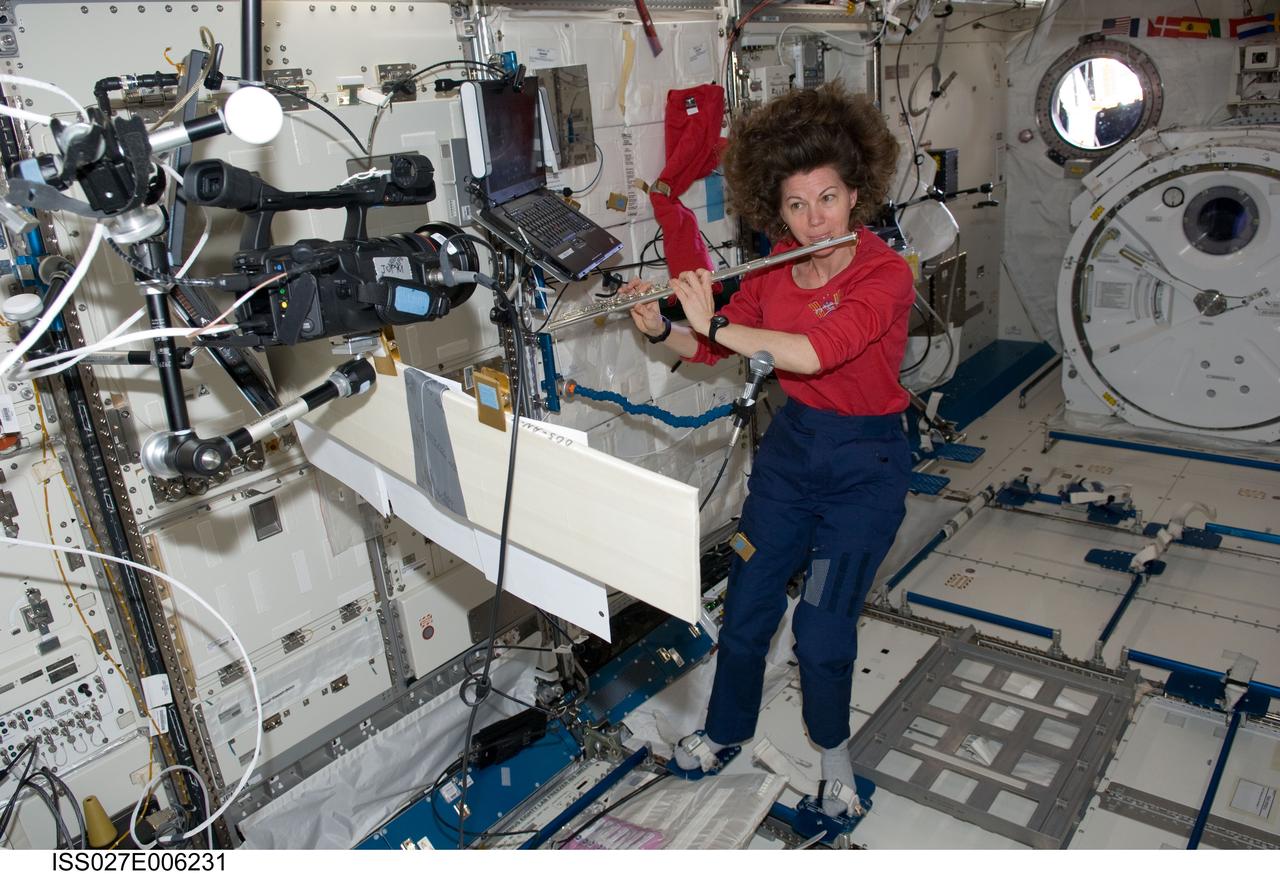
ISS027-E-006231 (19 March 2011) --- During some free time, NASA astronaut Cady Coleman, Expedition 27 flight engineer, plays a flute in the JAXA Kibo laboratory onboard the International Space Station.
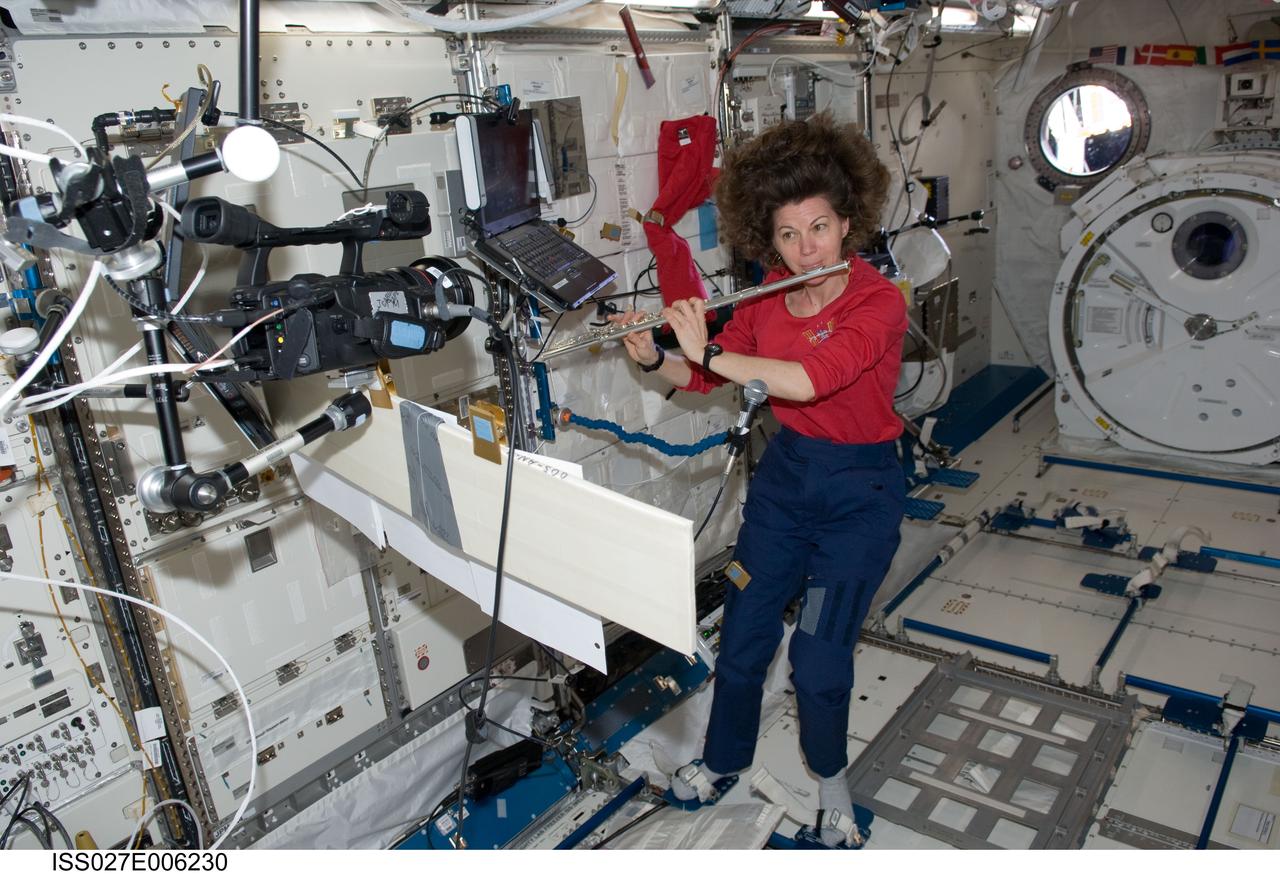
ISS027-E-006230 (19 March 2011) --- During some free time, NASA astronaut Cady Coleman, Expedition 27 flight engineer, plays a flute in the JAXA Kibo laboratory onboard the International Space Station.
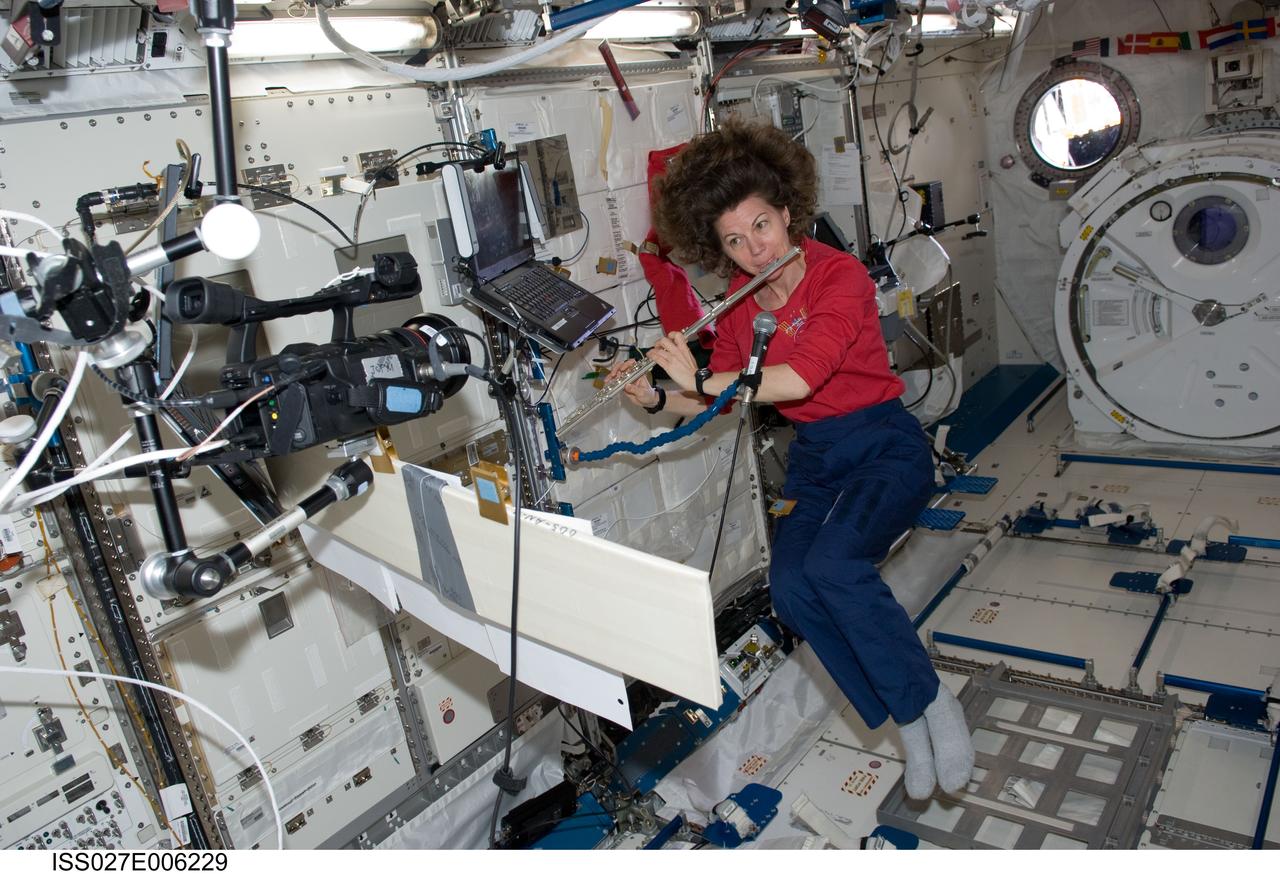
ISS027-E-006229 (19 March 2011) --- During some free time, NASA astronaut Cady Coleman, Expedition 27 flight engineer, plays a flute in the JAXA Kibo laboratory onboard the International Space Station.
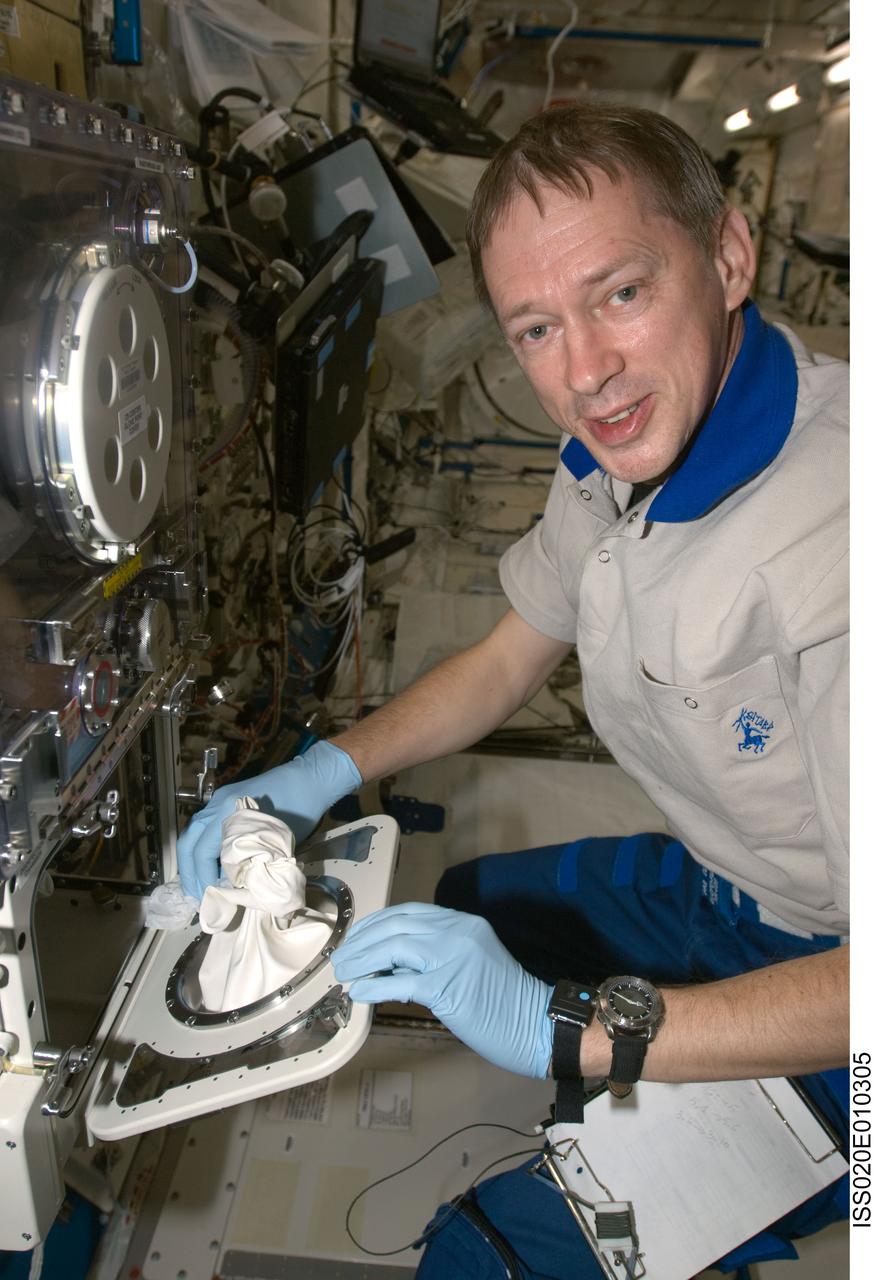
ISS020-E-010305 (15 June 2009) --- European Space Agency astronaut Frank De Winne, Expedition 20 flight engineer, works at the Clean Bench Facility in the Kibo laboratory of the International Space Station.