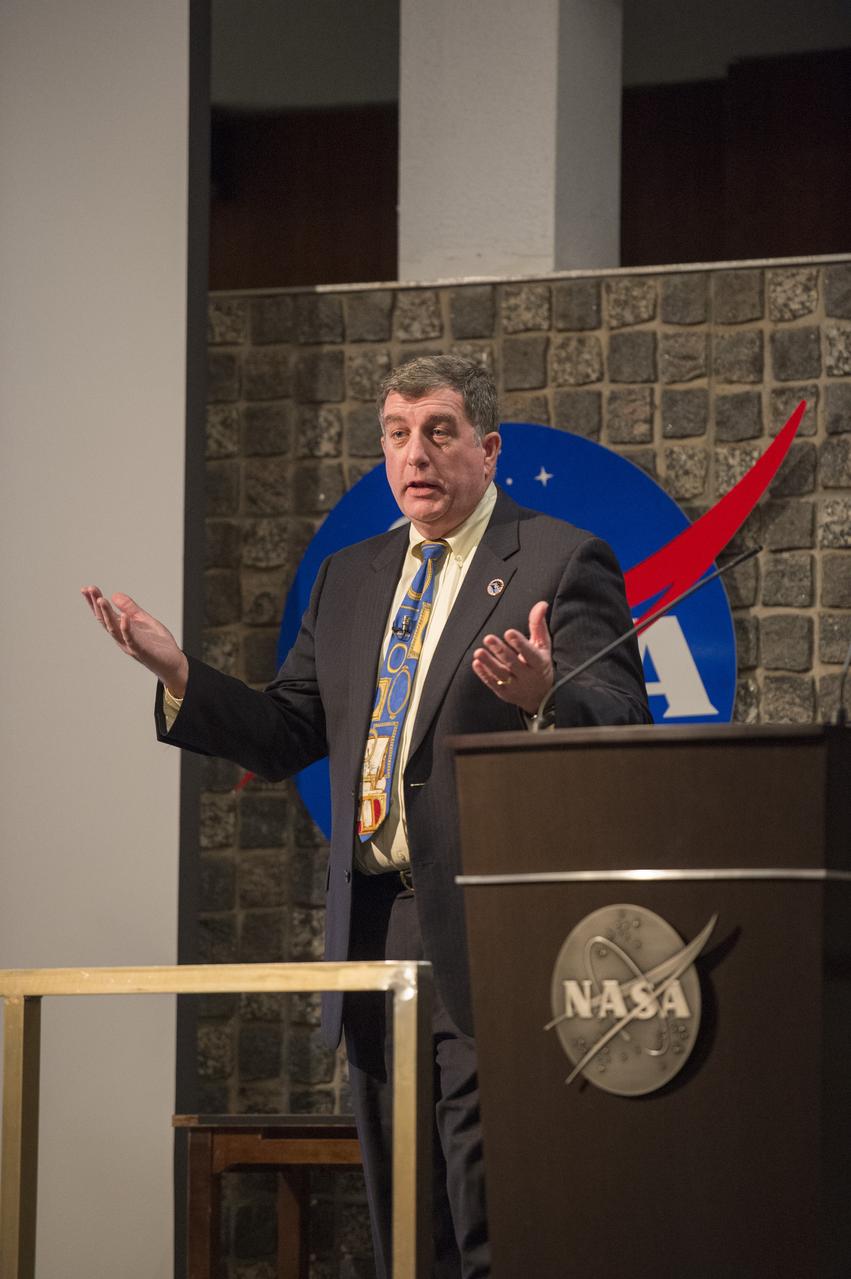
International Space Station program manager Kirk Shireman addresses station hardware and science teams at NASA's Marshall Space Flight Center.
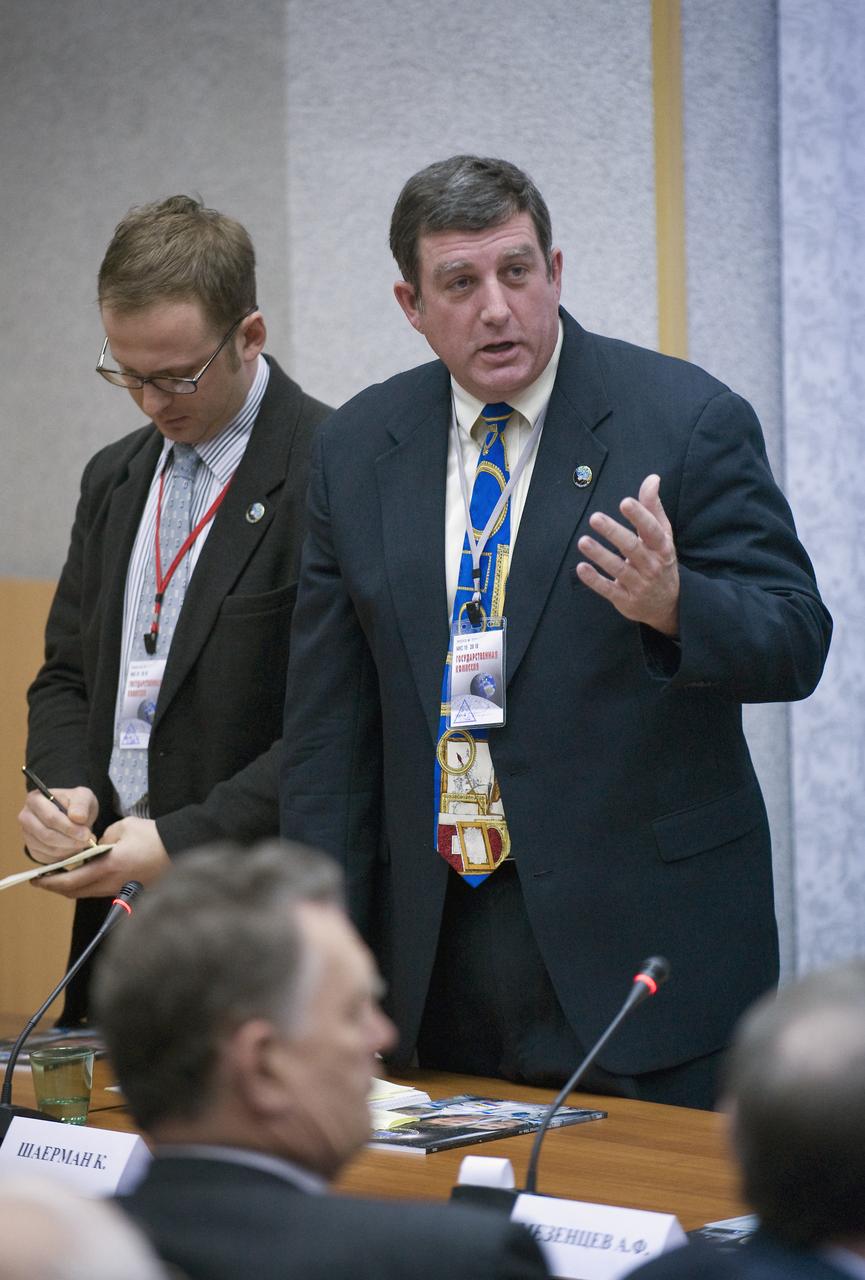
International Space Station deputy program manager, Kirk Shireman, speaks during the State Commission meeting to approve the Soyuz launch of Expedition 19 Commander Gennady I. Padalka, Flight Engineer Michael R. Barratt and Spaceflight Participant Charles Simonyi on Wednesday, March 25, 2009 in Baikonur, Kazakhstan. Photo Credit: (NASA/Bill Ingalls)
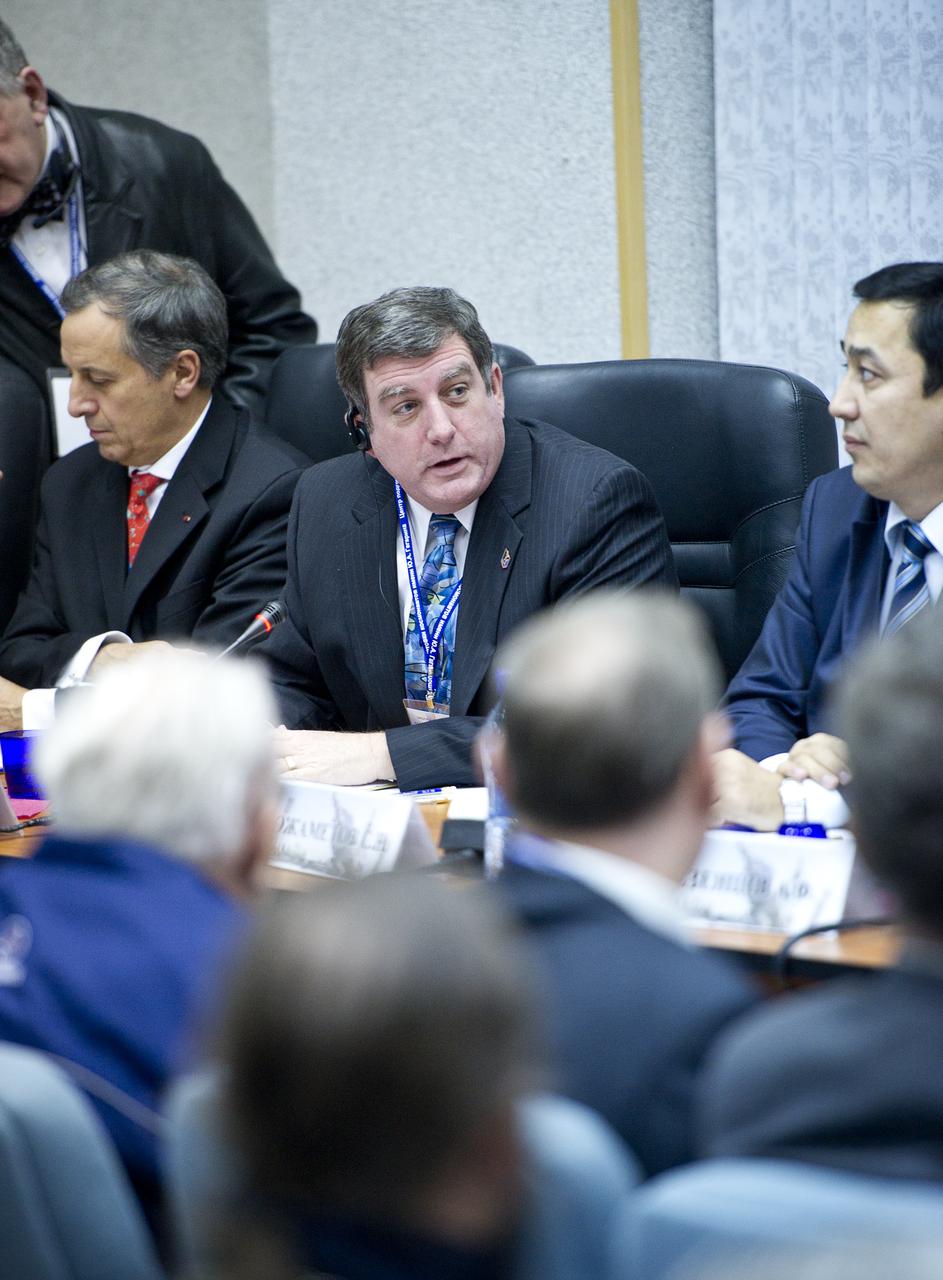
Kirk Shireman, International Space Station Deputy Program Manager, speaks at the State Commission meeting held at the Cosmonaut Hotel in Baikonur, Kazakhstan on Tuesday, Dec. 14, 2010. Photo Credit: (NASA/Carla Cioffi)
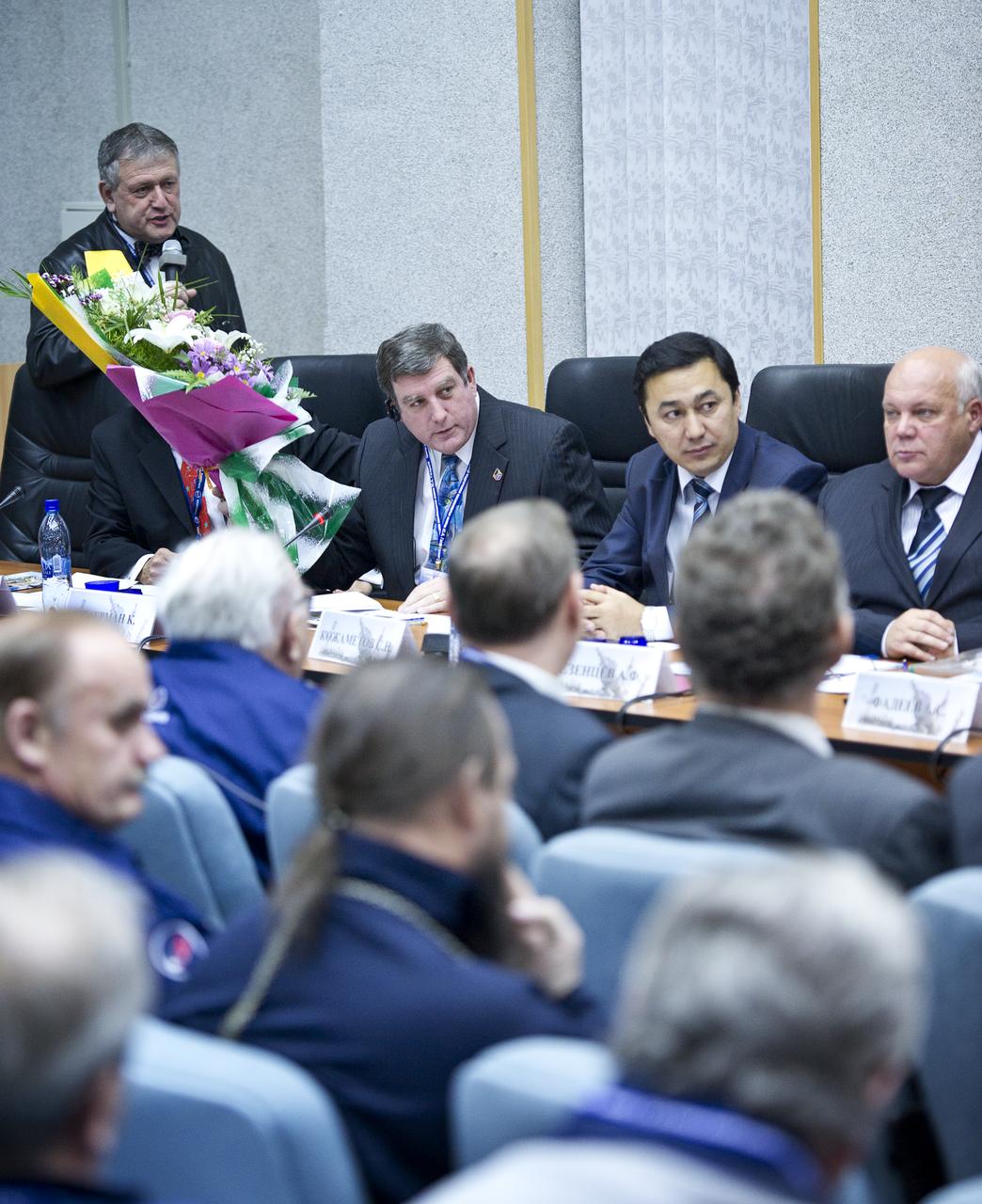
Kirk Shireman, International Space Station Deputy Program Manager, speaks at the State Commission meeting held at the Cosmonaut Hotel in Baikonur, Kazakhstan on Tuesday, Dec. 14, 2010. Photo Credit: (NASA/Carla Cioffi)
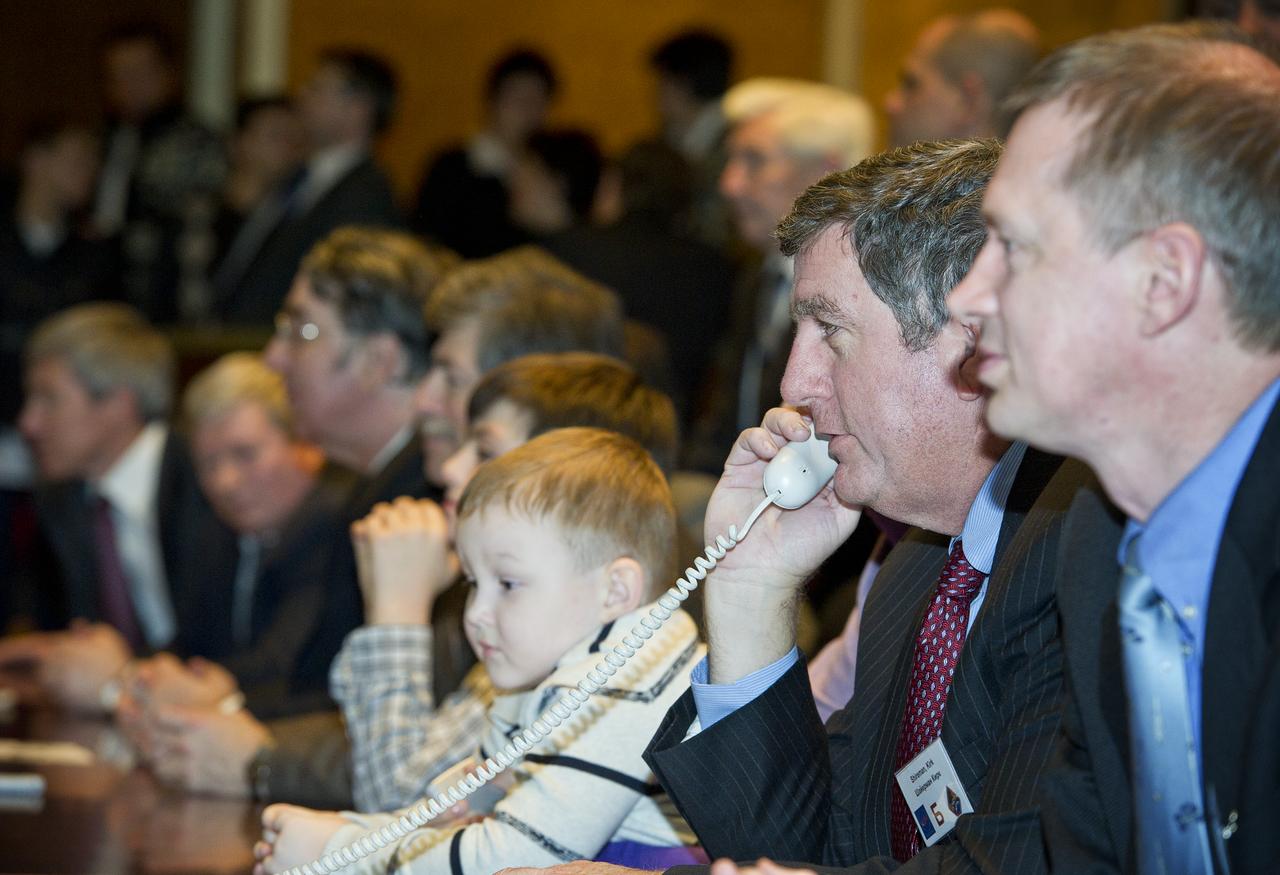
Kirk Shireman, second from right, NASA's ISS Deputy Program Manager, is seen at Russian Mission Control in Korolev, Russia speaking to the crew of Expedition 26 shortly after their arrival at the International Space Station on Saturday, Dec. 18, 2010. Photo Credit: (NASA/Carla Cioffi)
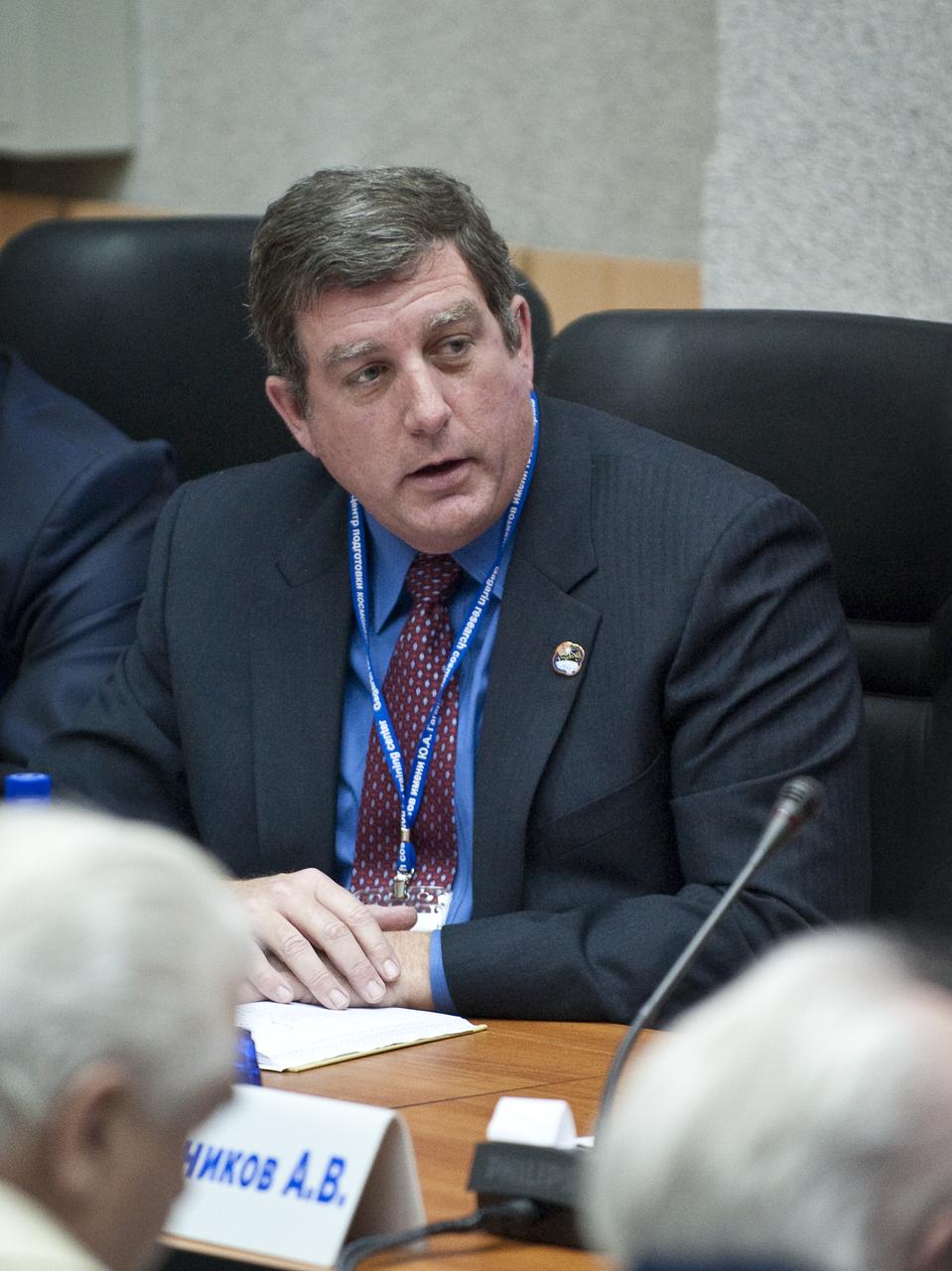
Kirk Shireman, NASA's deputy ISS program manager, speaks during the State Commission meeting to approve the Soyuz launch of Expedition 23 Soyuz Commander Alexander Skvortsov, Flight Engineer Tracy Caldwell Dyson and Flight Engineer Mikhail Kornienko on Thursday, April 1, 2010, in Baikonur, Kazakhstan. Photo Credit: (NASA/Carla Cioffi)
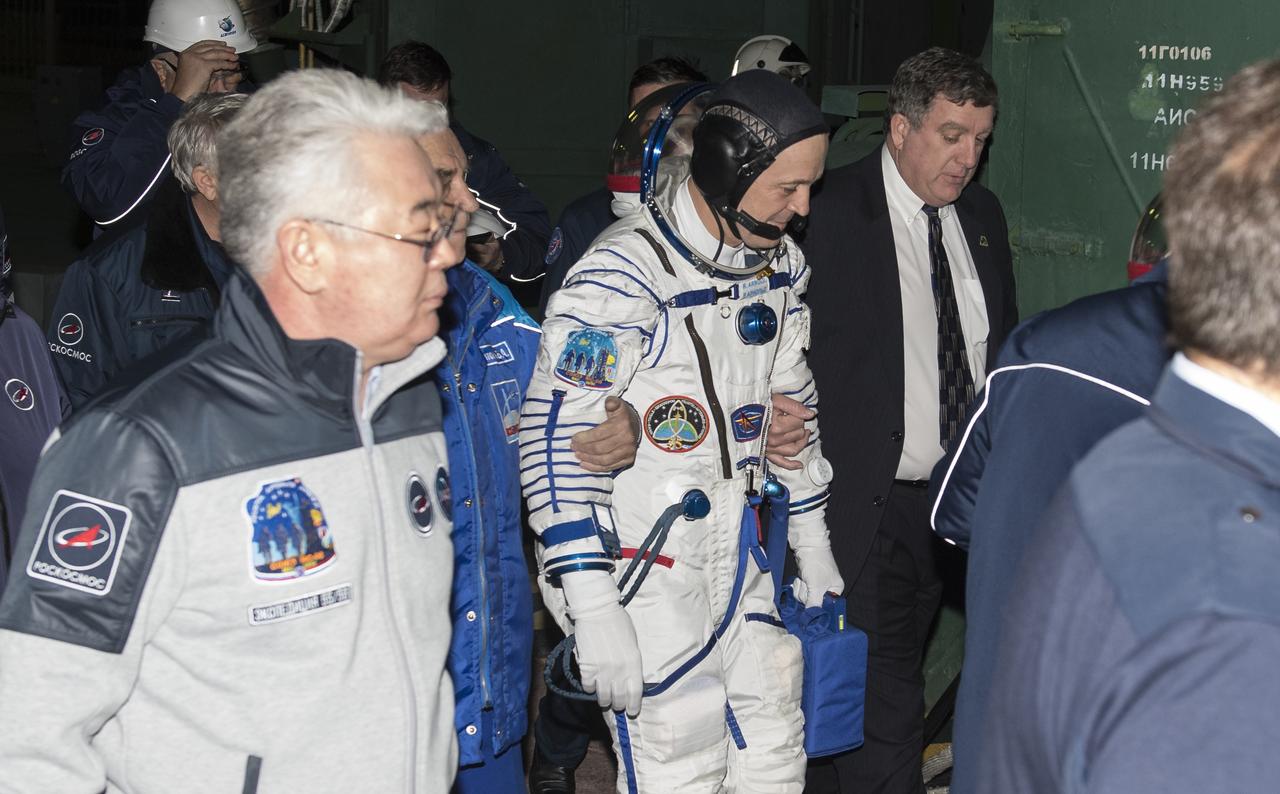
NASA International Space Station Program Manager Kirk Shireman escorts Expedition 55 flight engineer Ricky Arnold of NASA as he prepares to board the Soyuz MS-08 spacecraft for launch, Wednesday, March 21, 2018 at the Baikonur Cosmodrome in Kazakhstan. Arnold and his crewmates Drew Feustel of NASA and Oleg Artemyev of Roscosmos will spend the next five months living and working aboard the International Space Station. Photo Credit: (NASA/Joel Kowsky)
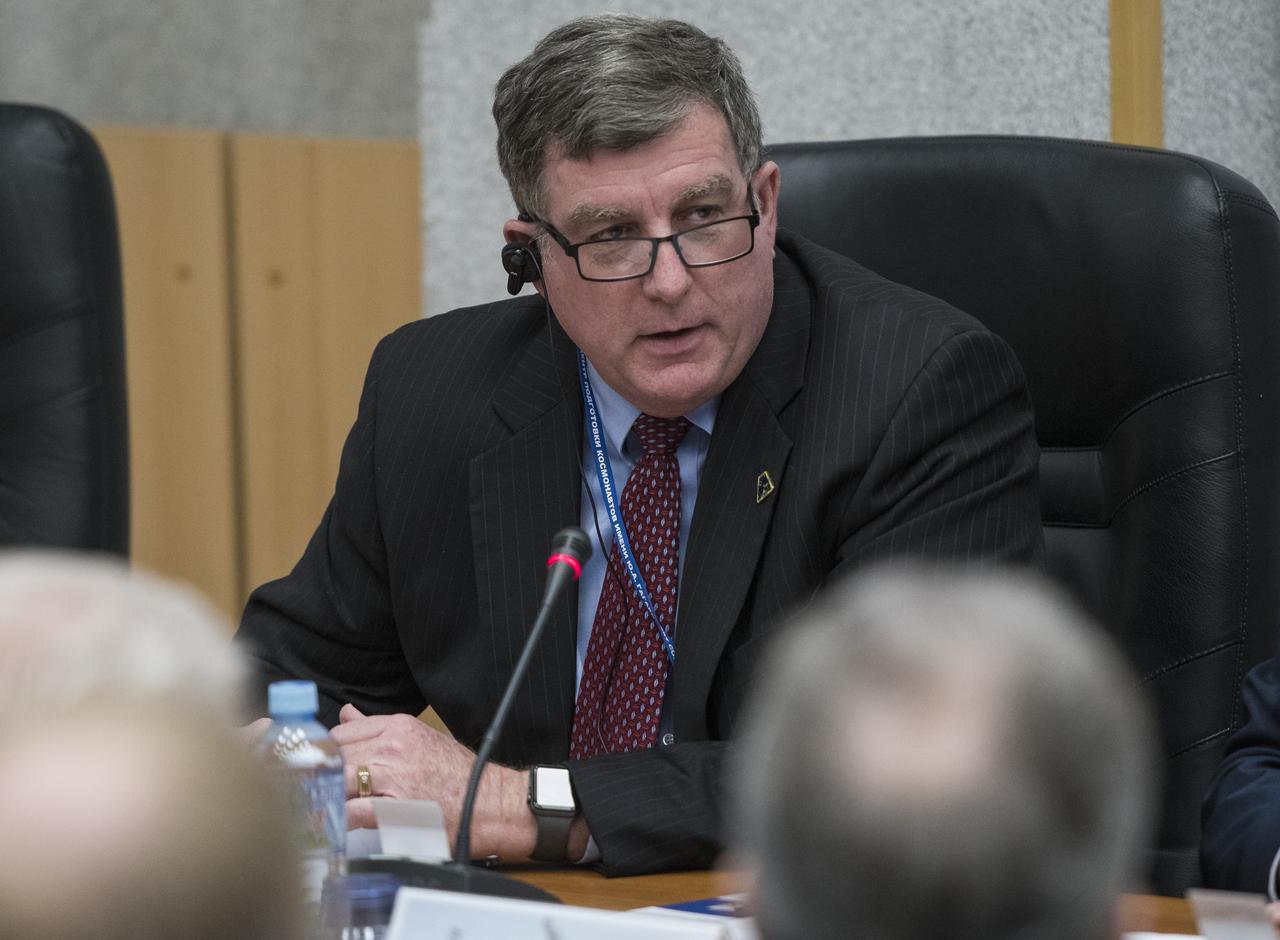
NASA International Space Station Program Manager Kirk Shireman is seen during the State Commission meeting to approve the Soyuz launch of Expedition 55 to the International Space Station, Tuesday, March 20, 2018. Expedition 55 Soyuz Commander Oleg Artemyev of Roscosmos, flight engineer Ricky Arnold and flight engineer Drew Feustel of NASA are scheduled to launch to the International Space Station aboard the Soyuz MS-08 spacecraft on Wednesday, March, 21. Photo Credit: (NASA/Joel Kowsky)
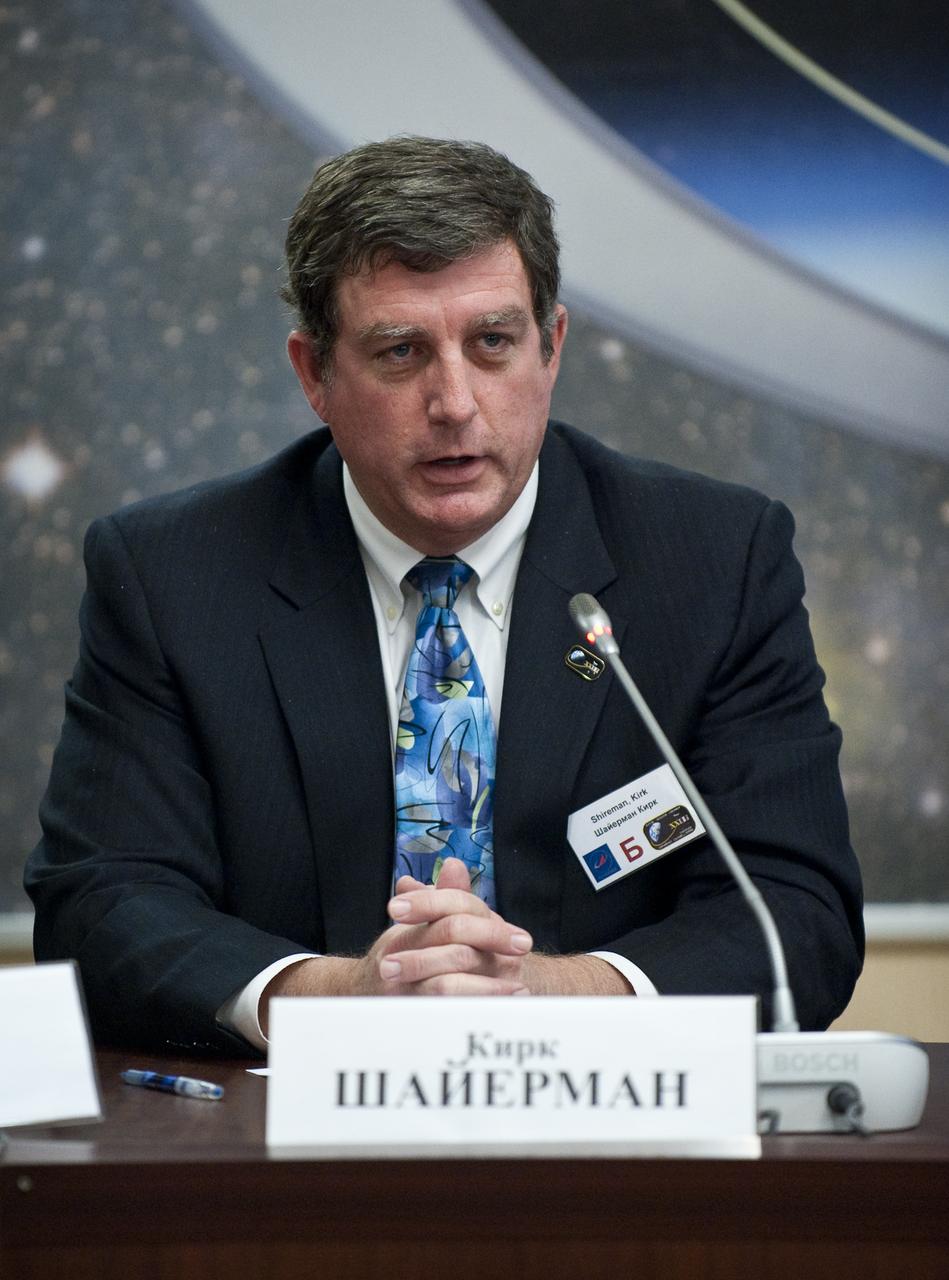
Kirk Shireman, NASA's deputy ISS program manager, answers reporter’s questions during a Soyuz post-docking press conference at the Russian Mission Control Center in Korolev, Russia on Sunday, April 4, 2010. The Soyuz TMA-18 docked to the International Space Station carrying Expedition 23 Soyuz Commander Alexander Skvortsov, Flight Engineer Mikhail Kornienko and NASA Flight Engineer Tracy Caldwell Dyson. Photo Credit: (NASA/Carla Cioffi)
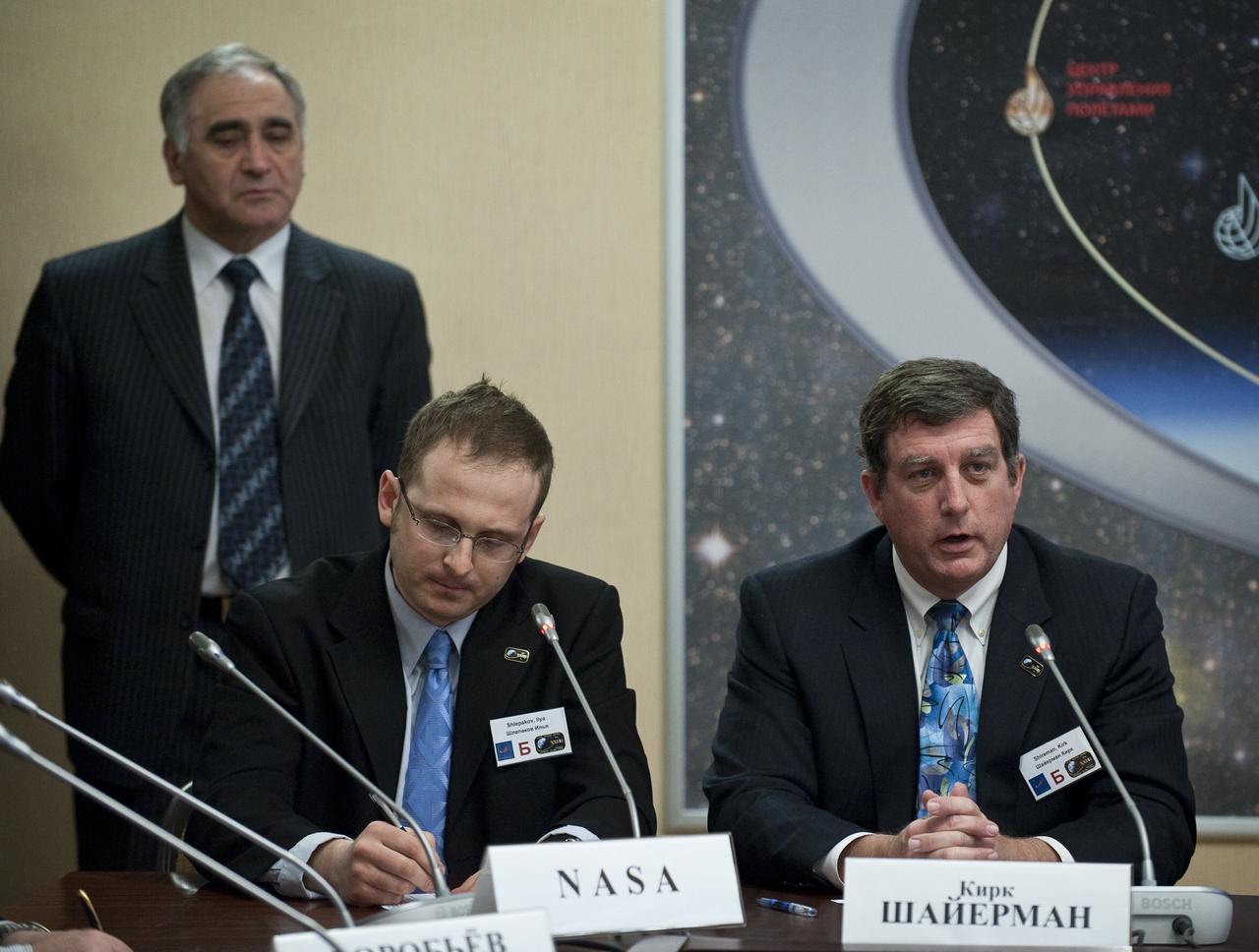
Kirk Shireman, right, NASA's deputy ISS program manager, answers reporter’s questions during a Soyuz post-docking press conference at the Russian Mission Control Center in Korolev, Russia on Sunday, April 4, 2010. The Soyuz TMA-18 docked to the International Space Station carrying Expedition 23 Soyuz Commander Alexander Skvortsov, Flight Engineer Mikhail Kornienko and NASA Flight Engineer Tracy Caldwell Dyson. Photo Credit: (NASA/Carla Cioffi)
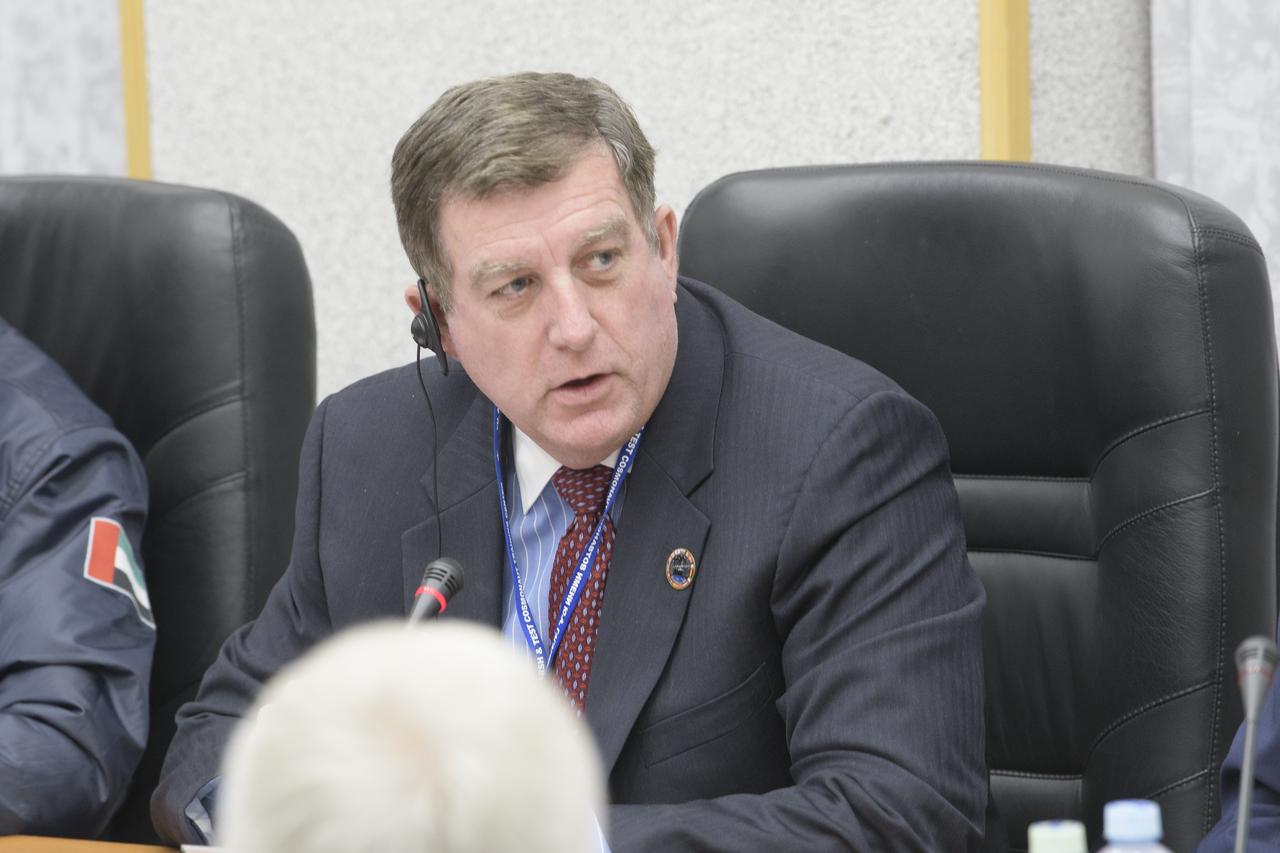
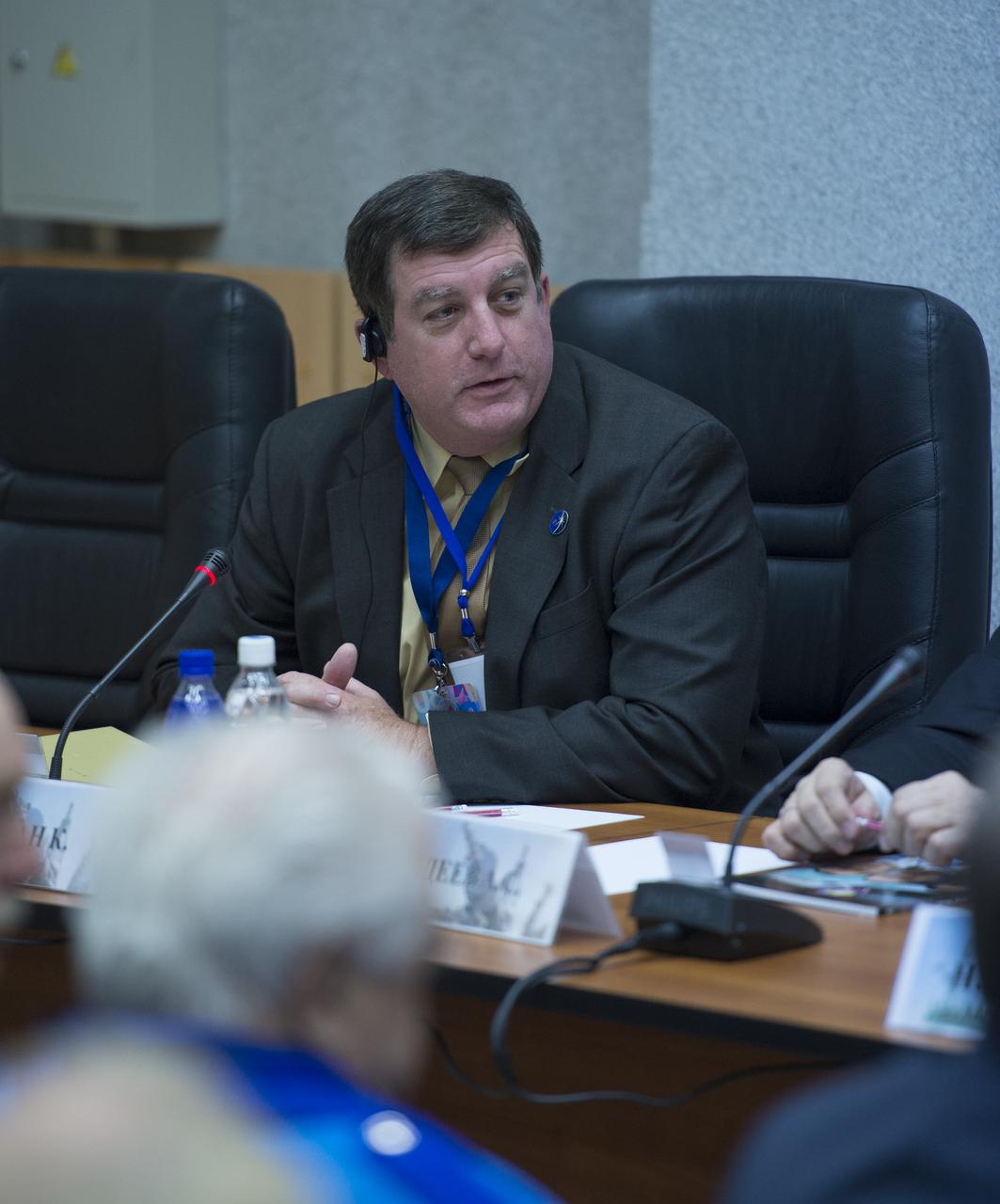
NASA ISS Program Manager Kirk Shireman gives remarks during the State Commission meeting to approve the Soyuz launch of spaceflight participant Hazzaa Ali Almansoori of the United Arab Emirates and Expedition 61 crewmembers Oleg Skripochka of Roscosmos and Jessica Meir of NASA to the International Space Station, Tuesday, Sept. 24, 2019 at the Cosmonaut Hotel in Baikonur, Kazakhstan. The trio will launch September 25th on the Soyuz MS-15 spacecraft from the Baikonur Cosmodrome to the International Space Station. Photo Credit: (NASA/Bill Ingalls)
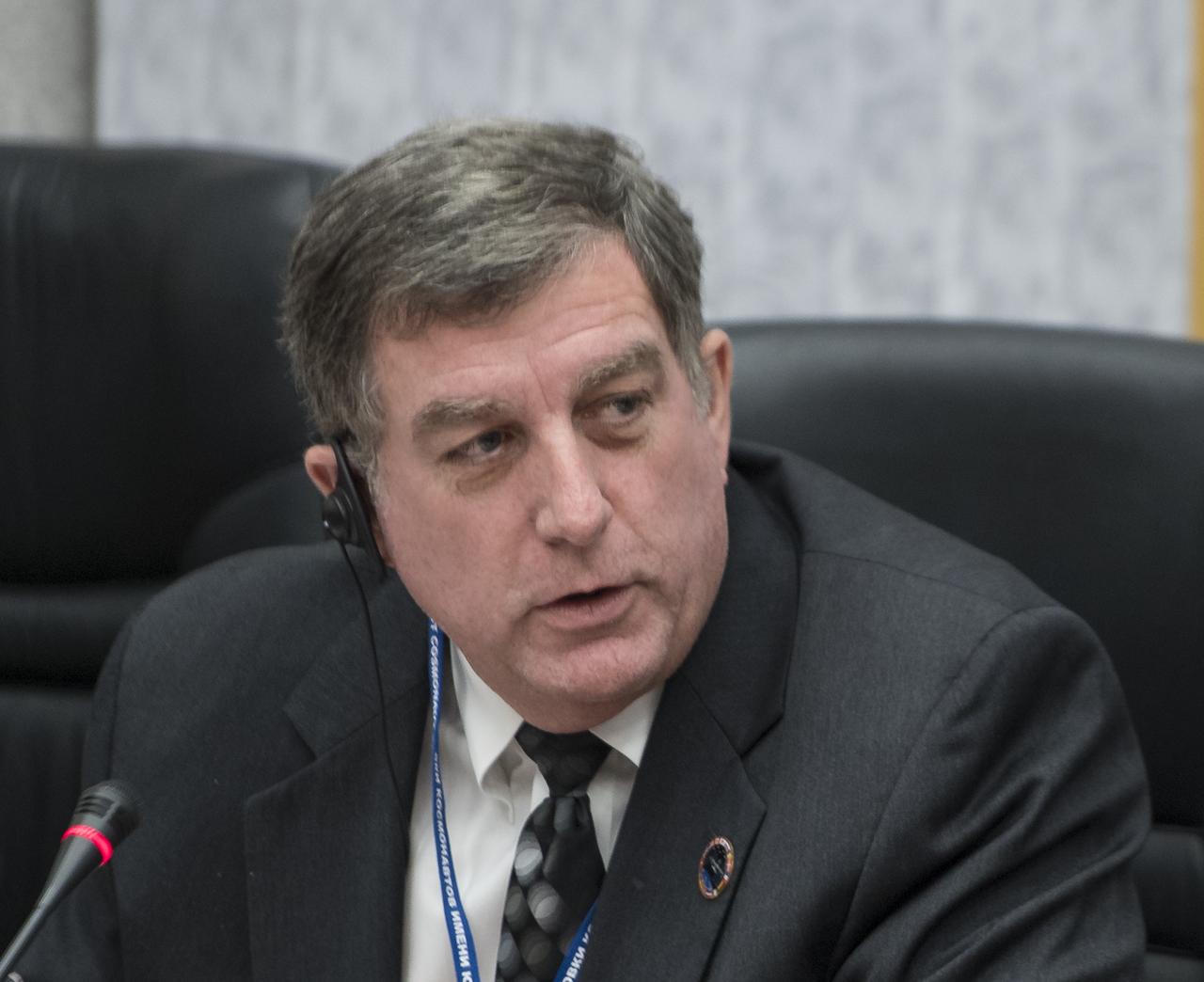
Kirk Shireman, manager, International Space Station (ISS) Program, speaks to the Expedition 58 crew during the State Commission meeting to approve their Soyuz launch to the International Space Station, Sunday, Dec. 2, 2018 at the Cosmonaut Hotel in Baikonur, Kazakhstan. Launch of the Soyuz rocket is scheduled for Dec. 3 and will carry Soyuz Commander Oleg Kononenko, Flight Engineer Anne McClain of NASA, and Flight Engineer David Saint-Jacques of the Canadian Space Agency (CSA) into orbit to begin their six and a half month mission on the International Space Station. Photo Credit: (NASA/Aubrey Gemignani).
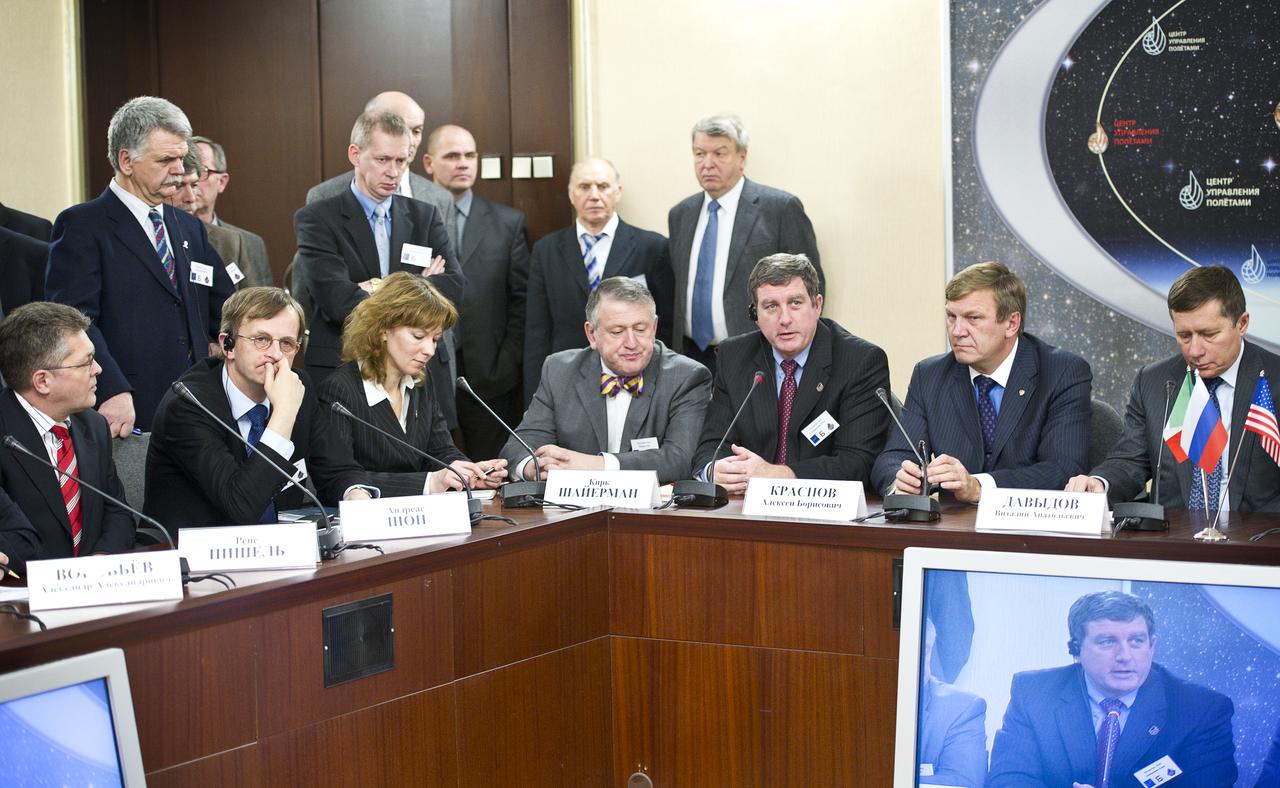
Kirk Shireman, third from right, NASA's deputy ISS program manager, answers reporter’s questions during a Soyuz post-docking press conference at the Russian Mission Control Center in Korolev, Russia on Saturday, Dec. 18, 2010. The Soyuz TMA-20 docked to the International Space Station carrying Expedition 26 Soyuz Commander Dmitry Kondratyev, Flight Engineer Catherine Coleman and European Space Agency Flight Engineer Paolo Nespoli. Photo Credit: (NASA/Carla Cioffi)

Mike Hawes, NASA's Acting Associate Administrator, left, looks on as Kirk Shireman, NASA's deputy ISS program manager, answers reporters questions during a Soyuz post-docking press conference at the Russian Mission Control Center in Korolev, Russia on Saturday March 28, 2009. The Soyuz TMA-14 docked to the International Space Station carrying Expedition 19 Commander Gennady I. Padalka, Flight Engineer Michael R. Barratt and Spaceflight Participant Charles Simonyi. Photo Credit: (NASA/Bill Ingalls)
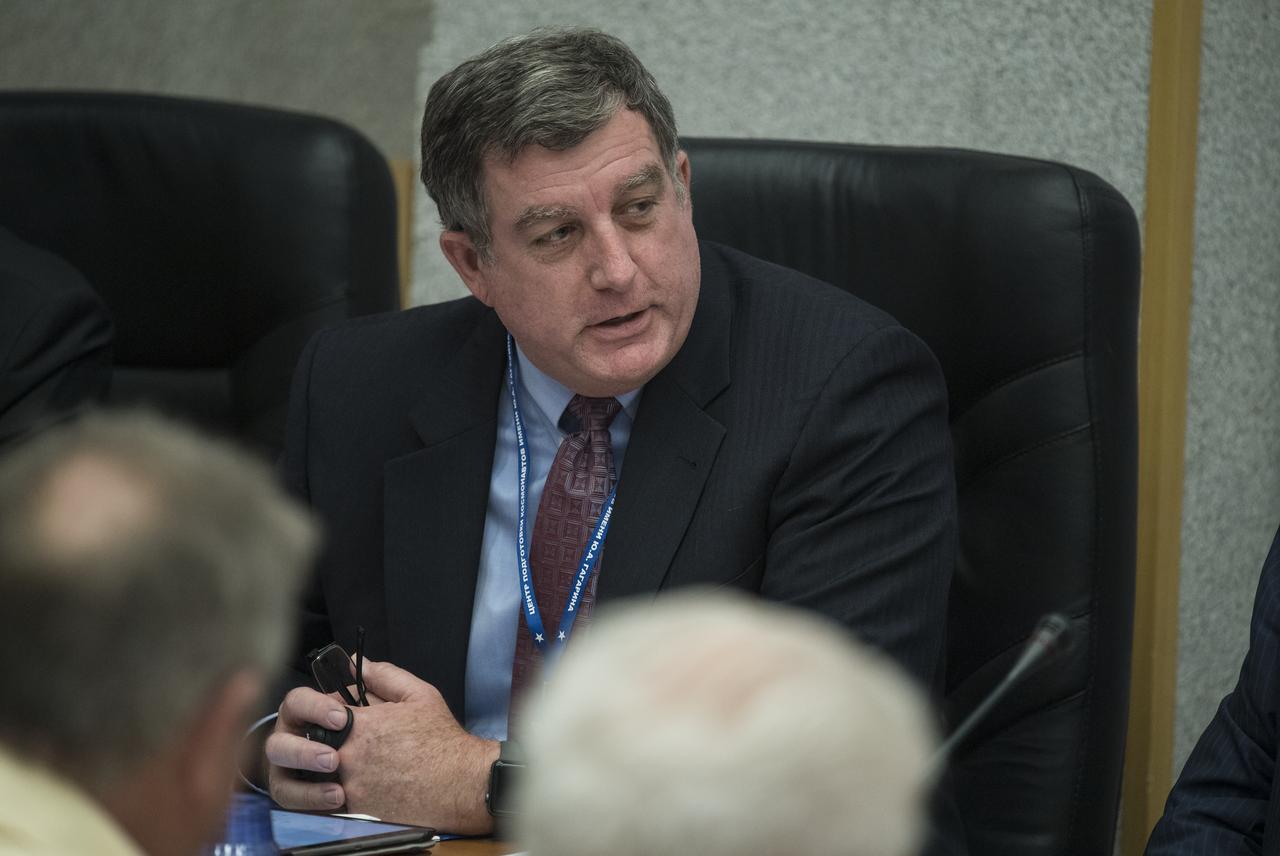
NASA International Space Station Program Manager Kirk Shireman is seen during the State Commission meeting to approve the Soyuz launch of Expedition 56 to the International Space Station, Tuesday, June 5, 2018 at the Cosmonaut Hotel in Baikonur, Kazakhstan. Expedition 56 Soyuz Commander Sergey Prokopyev of Roscosmos, Serena Auñón-Chancellor of NASA, and Alexander Gerst of ESA (European Space Agency) are scheduled to launch to the International Space Station aboard the Soyuz MS-09 spacecraft on Wednesday, June 6. Photo Credit: (NASA/Joel Kowsky)
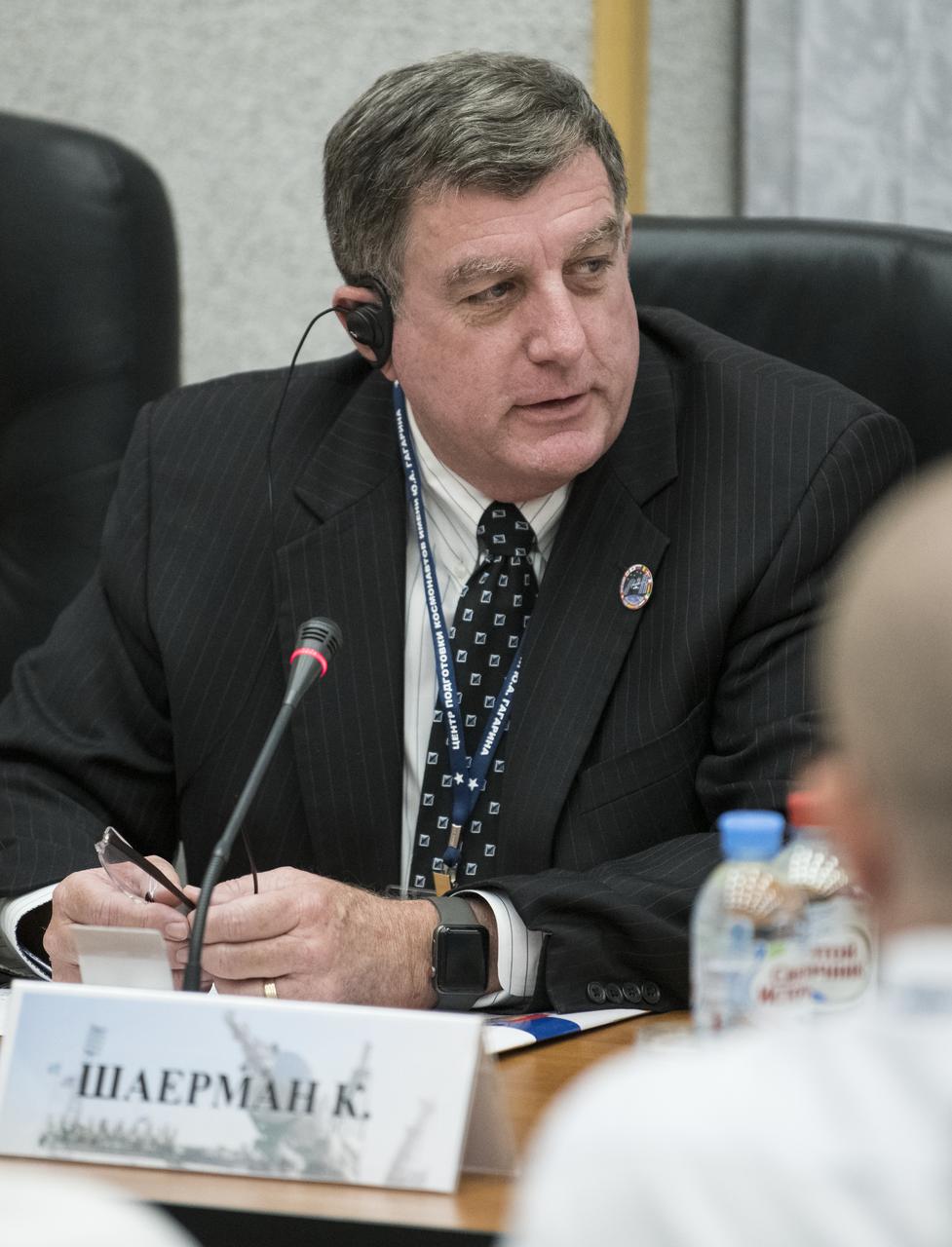
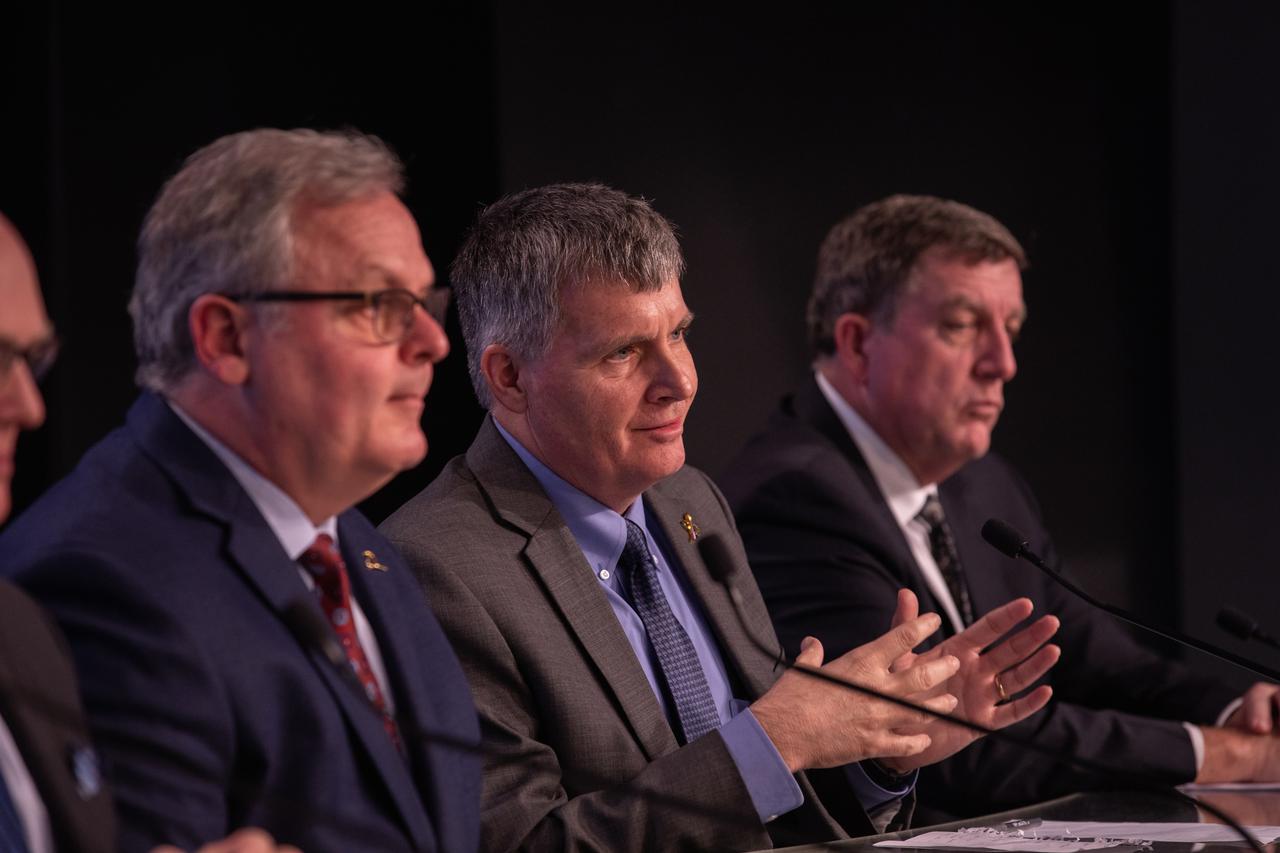
NASA International Space Station Program Manager Kirk Shireman is seen during the State Commission meeting to approve the Soyuz launch of Expedition 60 to the International Space Station, Friday, July 19, 2019 at the Cosmonaut Hotel in Baikonur, Kazakhstan. Expedition 60 Soyuz Commander Alexander Skvortsov of Roscosmos, Andrew Morgan of NASA, and Luca Parmitano of ESA (European Space Agency) are scheduled to launch to the International Space Station aboard the Soyuz MS-13 spacecraft on Saturday, July 20. Photo Credit: (NASA/Joel Kowsky)
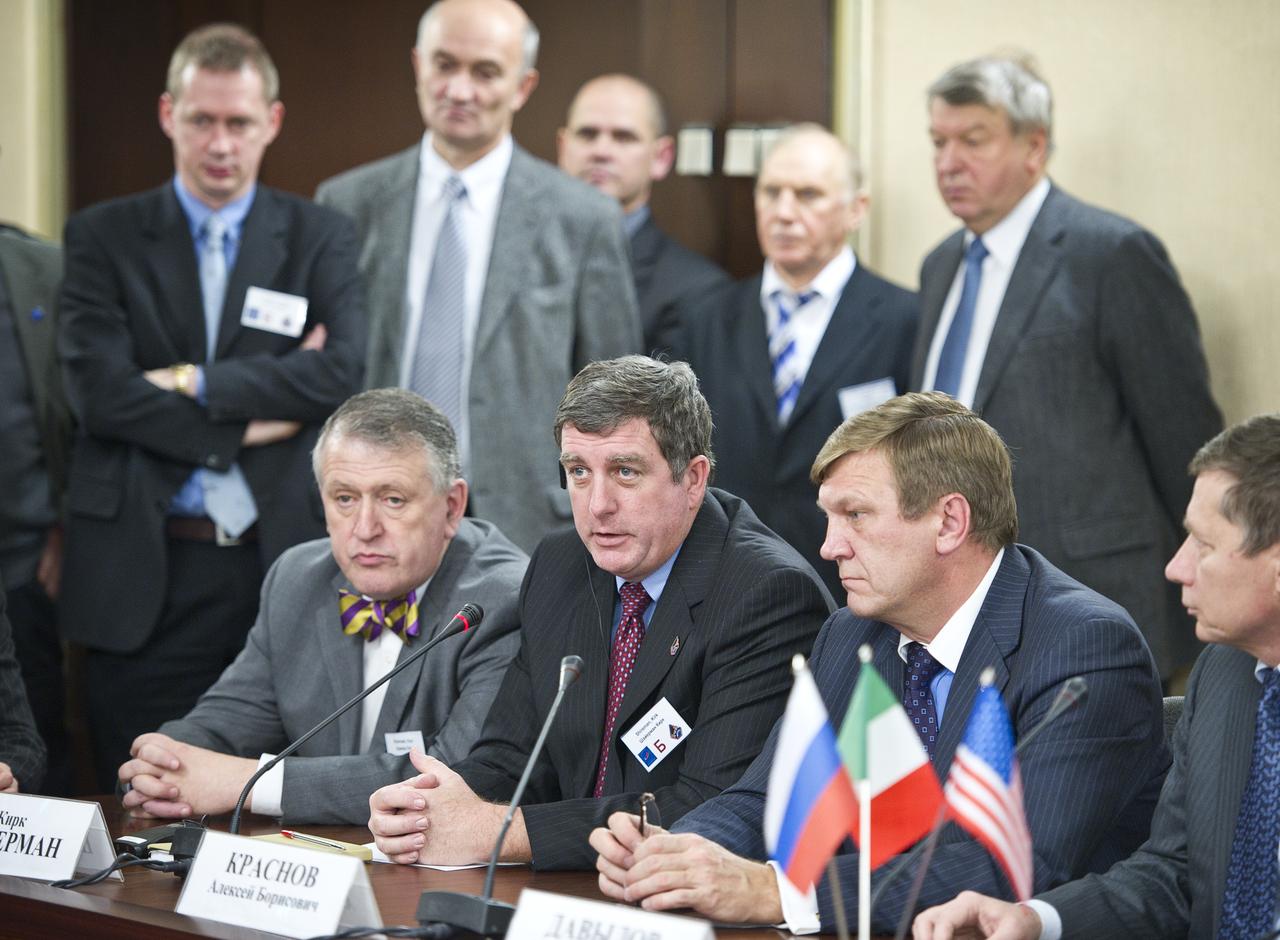
Kirk Shireman, third from right, NASA's deputy ISS program manager, answers reporter’s questions during a Soyuz post-docking press conference at the Russian Mission Control Center in Korolev, Russia on Saturday, Dec. 18, 2010. The Soyuz TMA-20 docked to the International Space Station carrying Expedition 26 Soyuz Commander Dmitry Kondratyev, Flight Engineer Catherine Coleman and European Space Agency Flight Engineer Paolo Nespoli. Photo Credit: (NASA/Carla Cioffi)
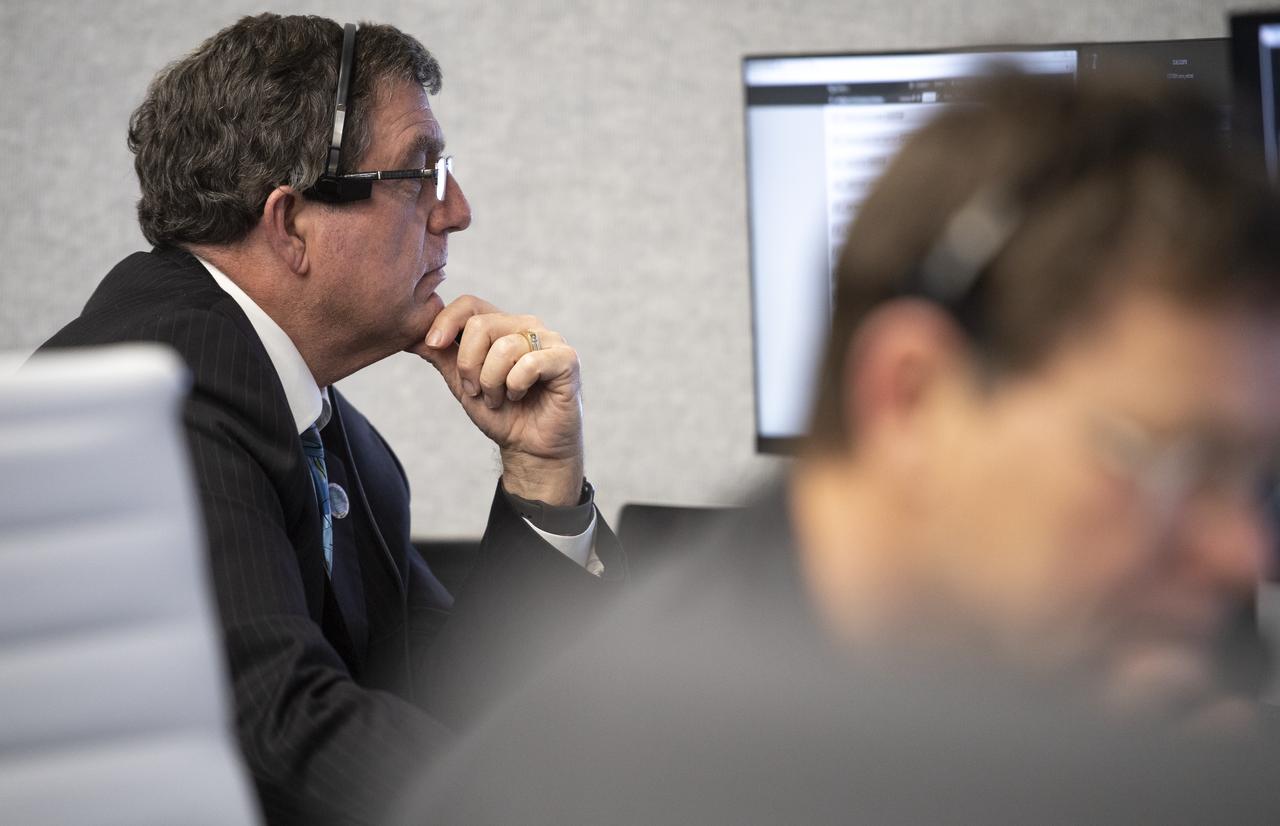
NASA International Space Station Program Manager Kirk Shireman monitors the countdown of the launch of a SpaceX Falcon 9 rocket carrying the company's Crew Dragon spacecraft on the Demo-1 mission from firing room four of the Launch Control Center, Saturday, March 2, 2019 at the Kennedy Space Center in Florida. The Demo-1 mission will be the first launch of a commercially built and operated American spacecraft and space system designed for humans as part of NASA's Commercial Crew Program. The mission will serve as an end-to-end test of the system's capabilities. Photo Credit: (NASA/Joel Kowsky)
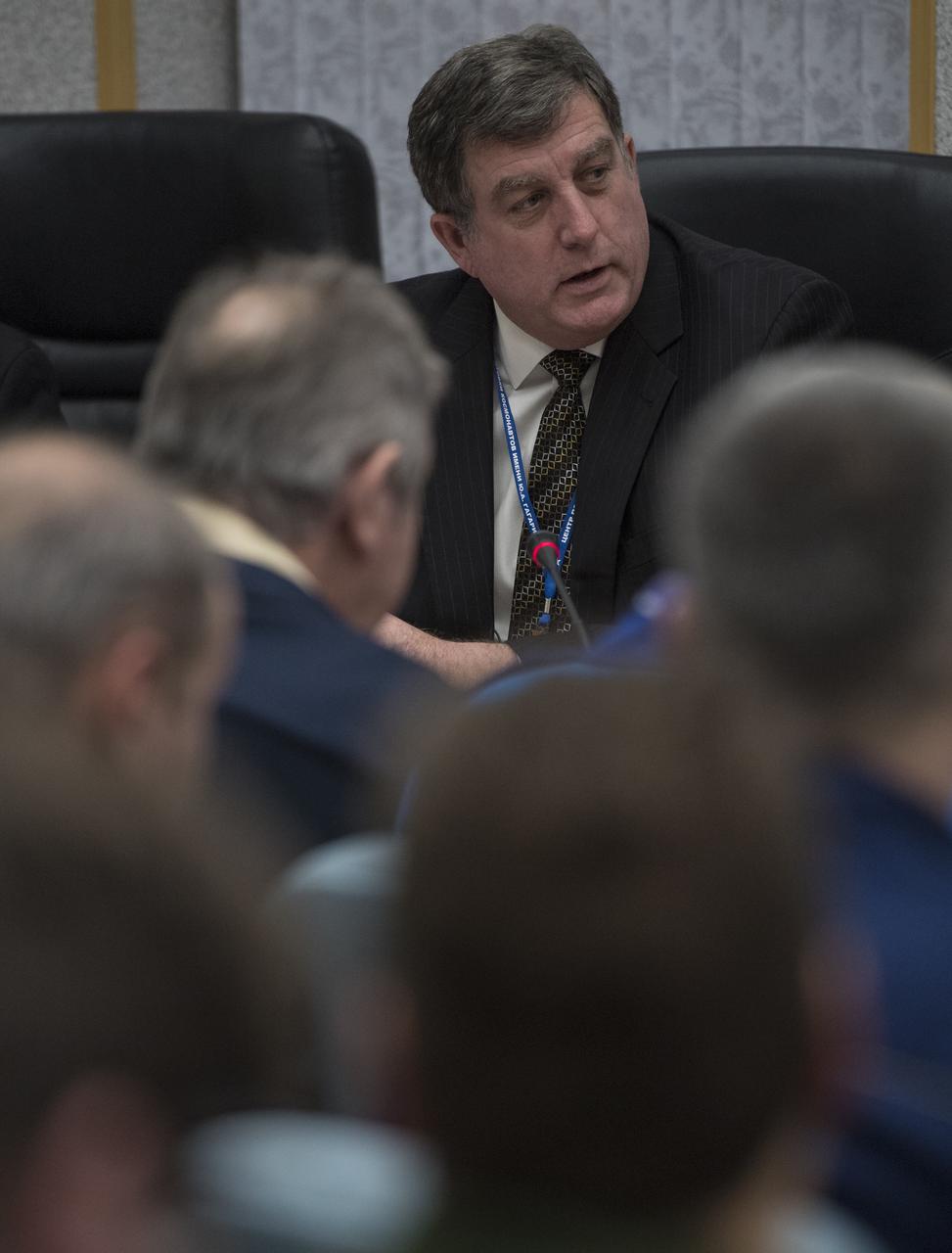
NASA International Space Station Program Manager Kirk Shireman is seen during the State Commission meeting to approve the Soyuz launch of Expedition 54 to the International Space Station, Saturday, Dec. 16, 2017 at the Cosmonaut Hotel in Baikonur, Kazakhstan. Expedition 54 Soyuz Commander Anton Shkaplerov of Roscosmos, flight engineer Scott Tingle of NASA, and flight engineer Norishige Kanai of the Japan Aerospace Exploration Agency (JAXA) are scheduled to launch to the International Space Station aboard the Soyuz spacecraft from the Baikonur Cosmodrome on December 17. Photo Credit: (NASA/Joel Kowsky)
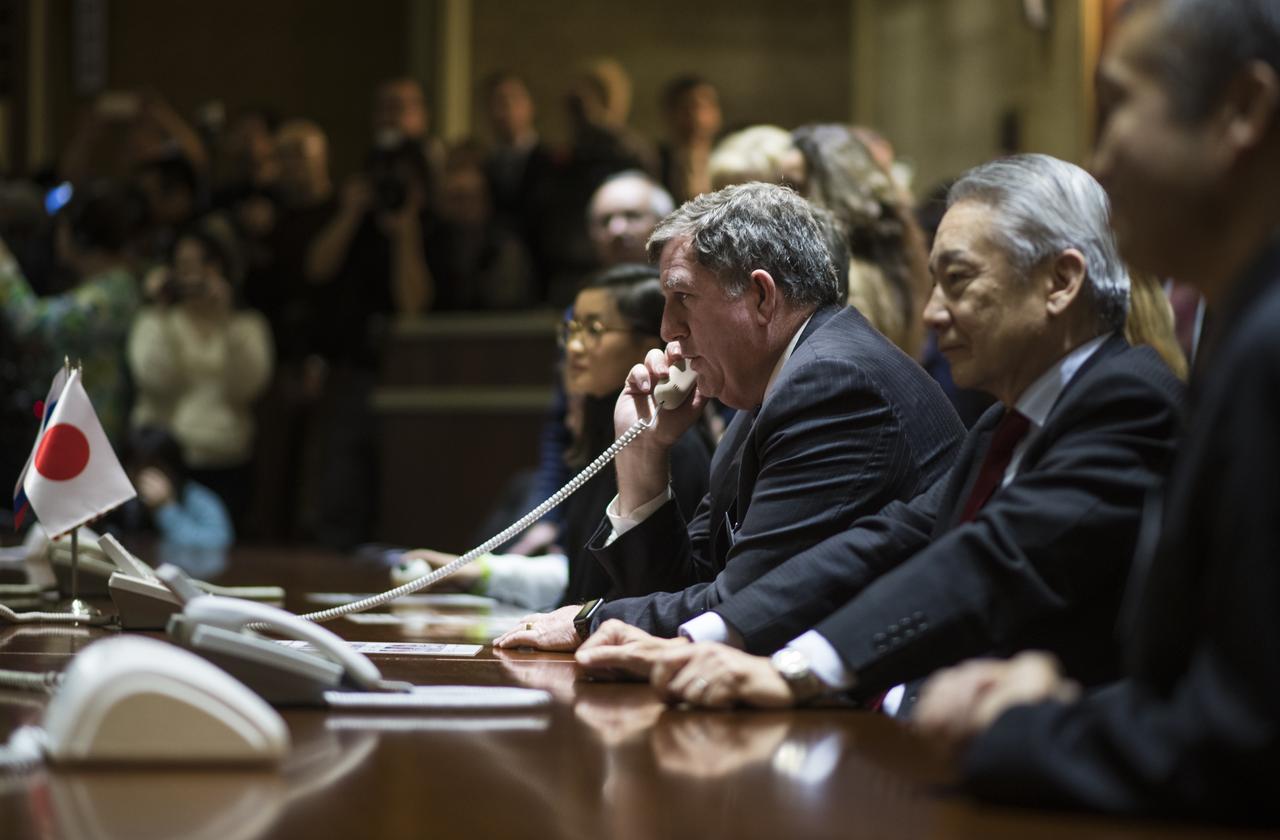
NASA International Space Station Program Manager Kirk Shireman speaks with the Expedition 54 crew from the Moscow Mission Control Center in Korolev, Russia a few hours after the Soyuz MS-07 docked to the International Space Station on Tuesday, Dec. 19, 2017. Hatches were opened at 5:55 a.m. EST and Anton Shkaplerov of Roscosmos, Scott Tingle of NASA, and Norishige Kanai of the Japan Aerospace Exploration Agency (JAXA) joined Expedition 54 Commander Alexander Misurkin of Roscosmos and crewmates Mark Vande Hei and Joe Acaba of NASA aboard the orbiting laboratory. Photo Credit: (NASA/Joel Kowsky)
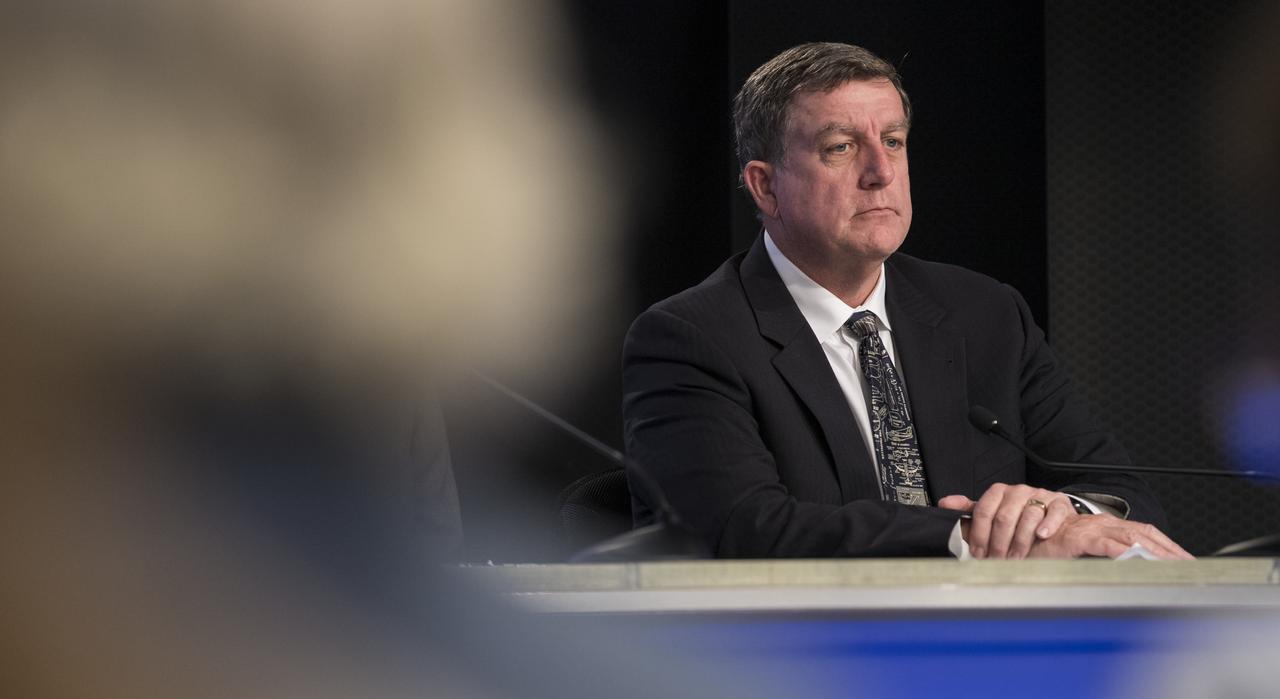
NASA ISS Program Manager Kirk Shireman is seen during a press conference at NASA's Kennedy Space Center following the launch of Boeing’s Starliner spacecraft onboard a United Launch Alliance Atlas V rocket, Friday, Dec. 20, 2019, at Cape Canaveral Air Force Station in Florida. After a successful launch at 6:36 a.m. EST, Boeing’s CST-100 Starliner is in an unplanned, but stable orbit. The team is assessing what test objectives can be achieved before the spacecraft’s return to land in White Sands, New Mexico. Photo Credit: (NASA/Joel Kowsky)
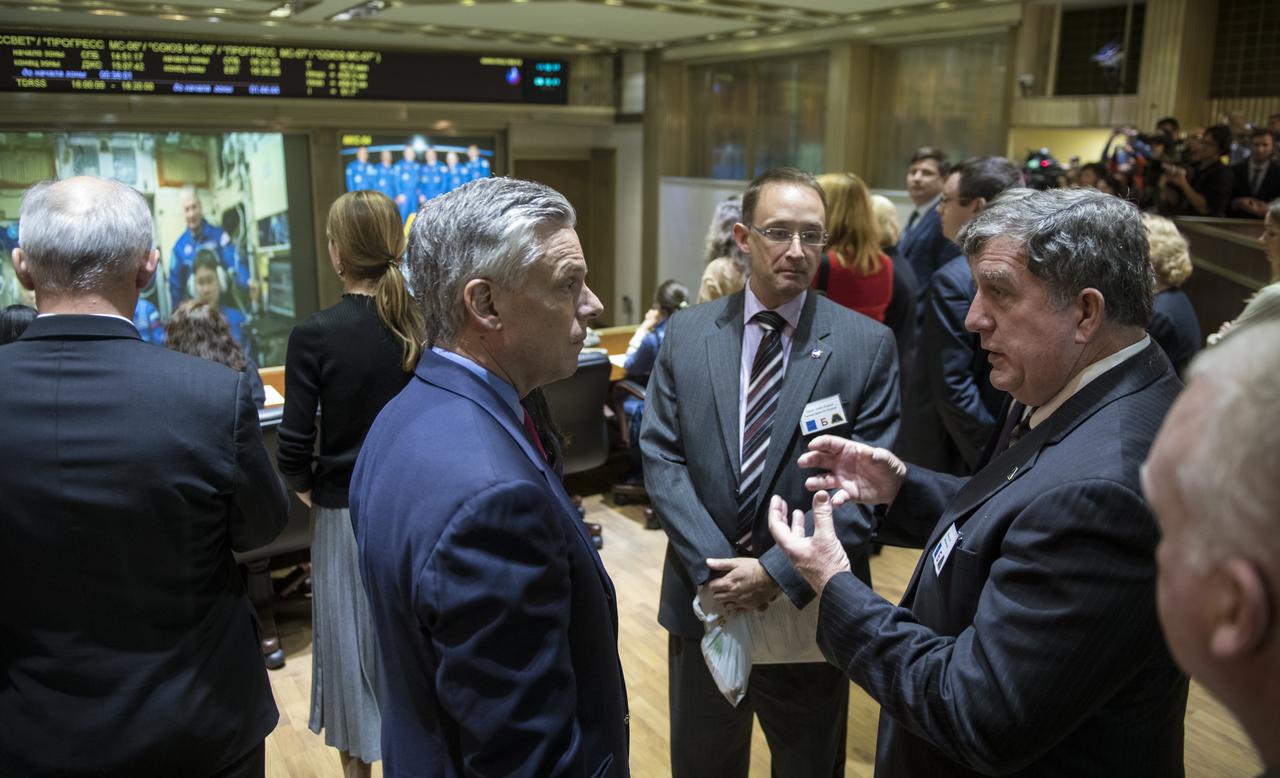
NASA International Space Station Program Manager Kirk Shireman, right, speaks with U.S. Ambassador to Russia Jon Huntsman Jr., left, at the Moscow Mission Control Center in Korolev, Russia a few hours after the Soyuz MS-07 docked to the International Space Station on Tuesday, Dec. 19, 2017. Photo Credit: (NASA/Joel Kowsky)
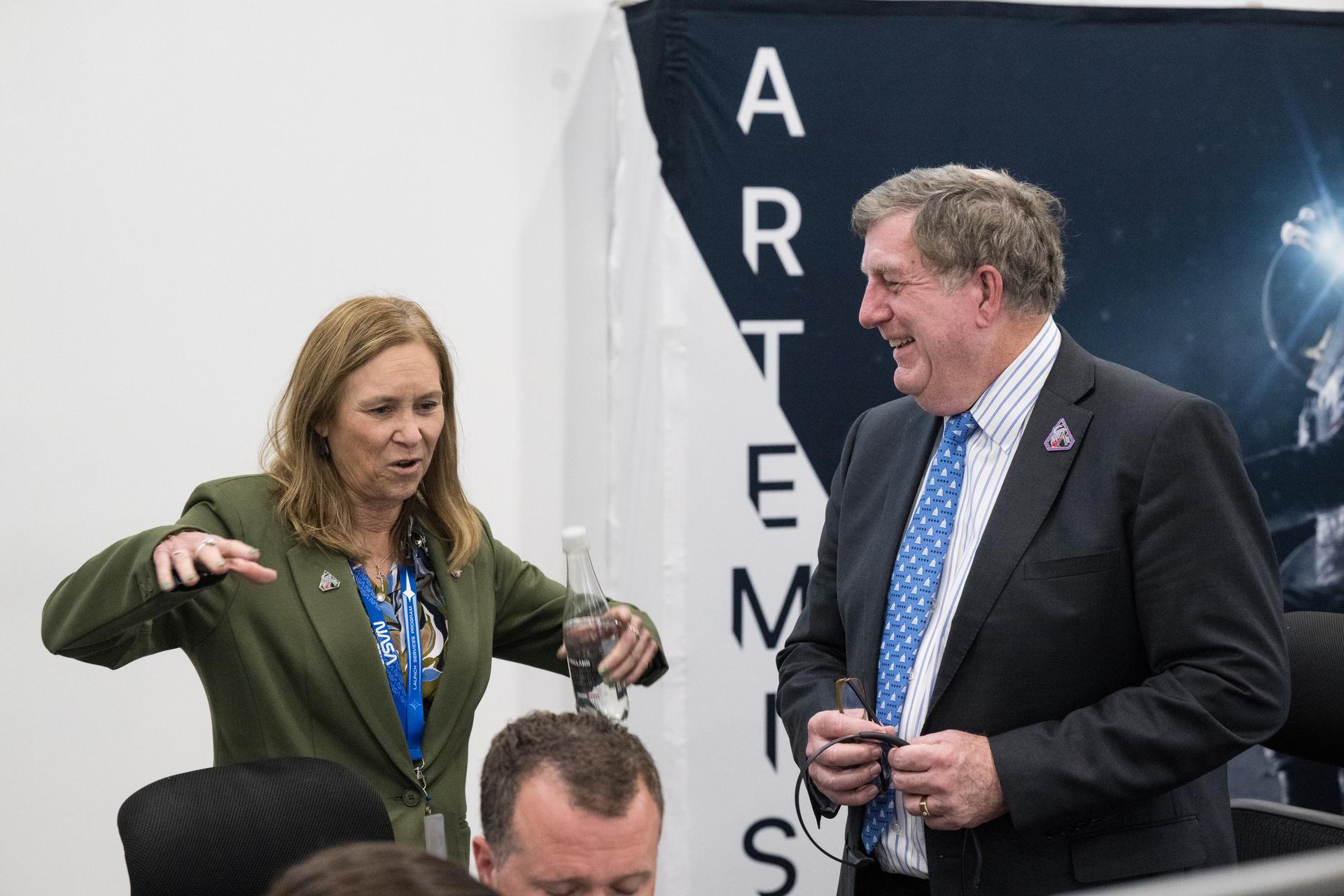
Director of NASA's Kennedy Space Center, Janet Petro, left, and Lockheed Martin Vice President of the Lunar Exploration Campaign, Kirk Shireman, speak after watching the launch of NASA’s Space Launch System (SLS) rocket and Orion spacecraft with NASA astronauts Reid Wiseman, commander; Victor Glover, pilot; Christina Koch, mission specialist; and CSA (Canadian Space Agency) astronaut Jeremy Hansen, mission specialist onboard on the Artemis II mission in Firing Room 2 of the Rocco A. Petrone Launch Control Center, Wednesday, April 1, 2026, at NASA’s Kennedy Space Center in Florida. NASA’s Artemis II mission will take Wiseman, Glover, Koch, and Hansen on a 10-day journey around the Moon and back aboard SLS rocket and Orion spacecraft from Launch Complex 39B. The quartet launched at 6:35pm EDT. Photo Credit: (NASA/Aubrey Gemignani) NOTE - Portions of this image have been blurred for security reasons.
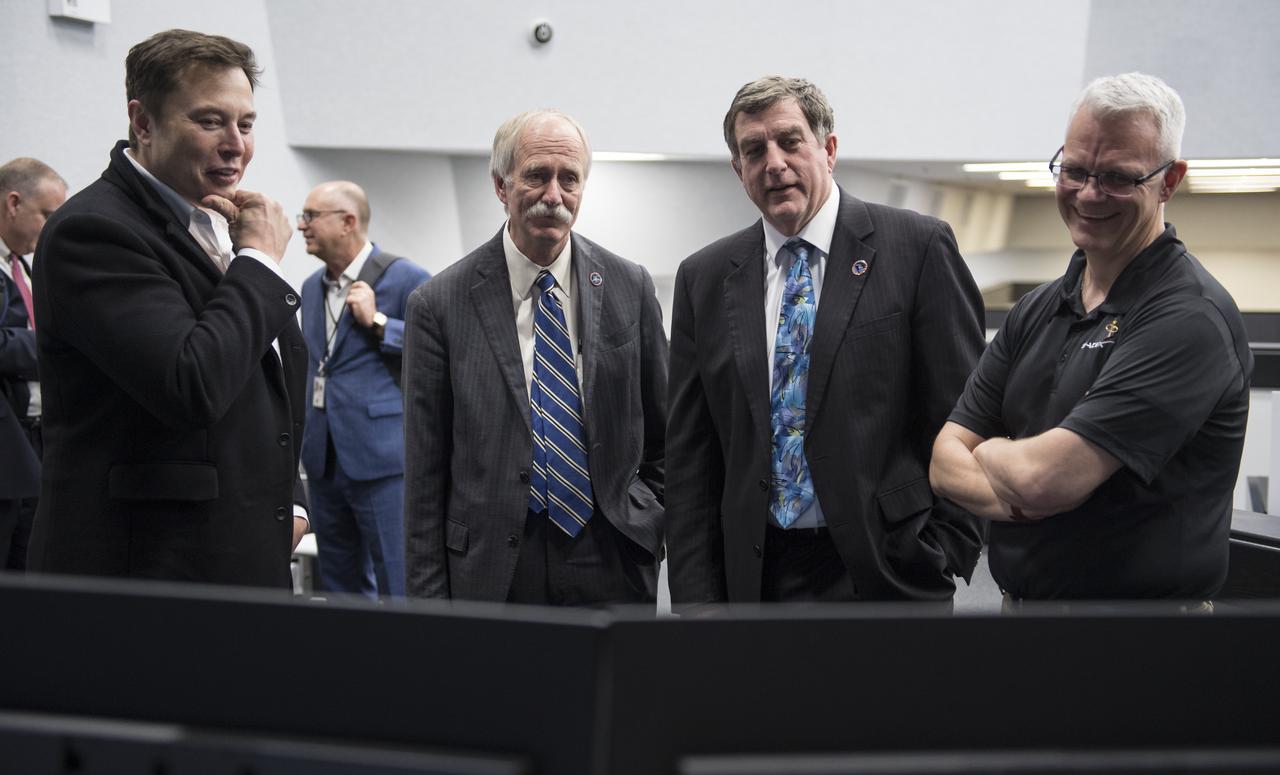
SpaceX CEO and Chief Designer Elon Musk, left, NASA Associate Administrator for the Human Exploration and Operations Mission Directorate William Gerstenmaier, second from left, NASA International Space Station Program Manager Kirk Shireman, second from right, and SpaceX Director of Crew Mission Management Benji Reed, right, watch the progress of the Crew Dragon spacecraft after launch from firing room four of the Launch Control Center, Saturday, March 2, 2019 at the Kennedy Space Center in Florida. The Demo-1 mission is the first launch of a commercially built and operated American spacecraft and space system designed for humans as part of NASA's Commercial Crew Program. The mission will serve as an end-to-end test of the system's capabilities. Photo Credit: (NASA/Joel Kowsky)
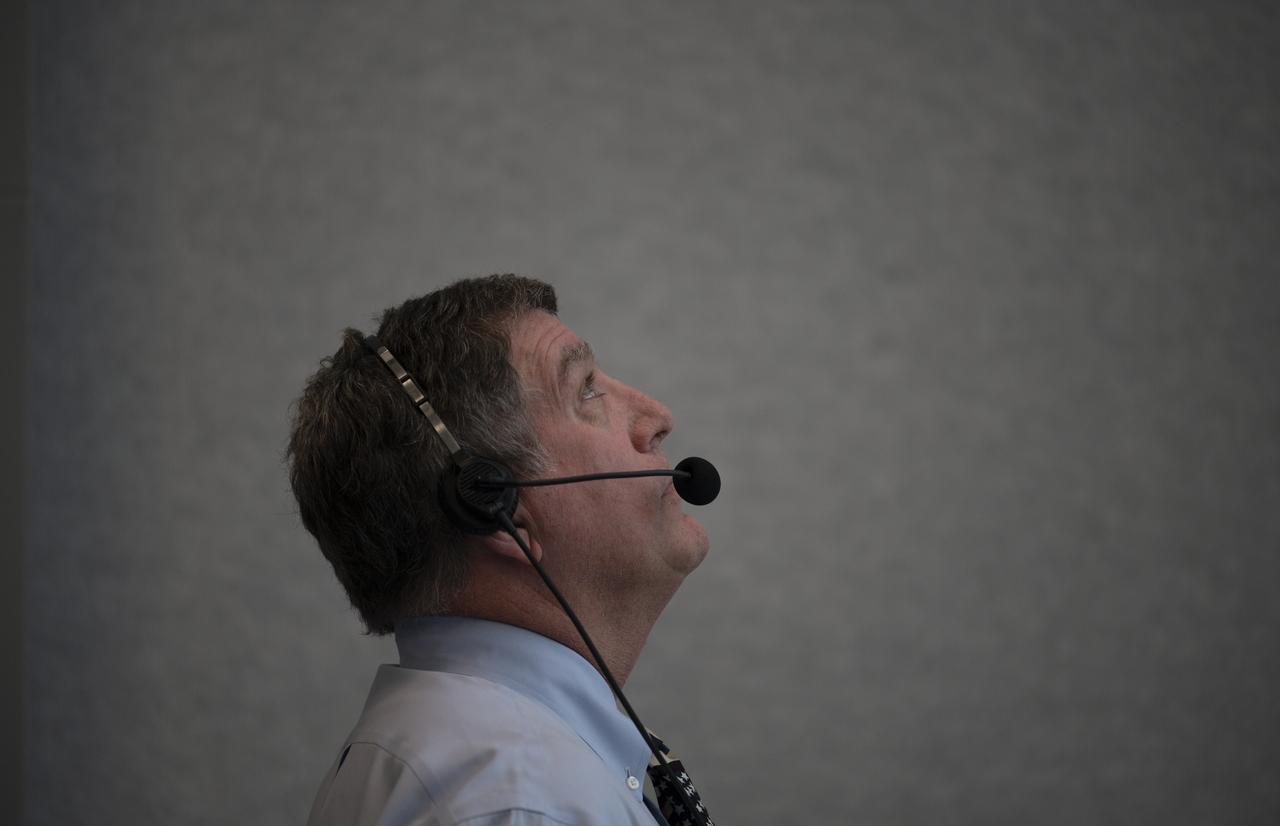
NASA International Space Station Program Manger Kirk Shireman watches the launch of a SpaceX Falcon 9 rocket carrying the company's Crew Dragon spacecraft on the Demo-2 mission with NASA astronauts Douglas Hurley and Robert Behnken onboard, Saturday, May 30, 2020, in firing room four of the Launch Control Center at NASA’s Kennedy Space Center in Florida. NASA’s SpaceX Demo-2 mission is the first launch with astronauts of the SpaceX Crew Dragon spacecraft and Falcon 9 rocket to the International Space Station as part of the agency’s Commercial Crew Program. The test flight serves as an end-to-end demonstration of SpaceX’s crew transportation system. Behnken and Hurley launched at 3:22 p.m. EDT on Saturday, May 30, from Launch Complex 39A at the Kennedy Space Center. A new era of human spaceflight is set to begin as American astronauts once again launch on an American rocket from American soil to low-Earth orbit for the first time since the conclusion of the Space Shuttle Program in 2011. Photo Credit: (NASA/Joel Kowsky)
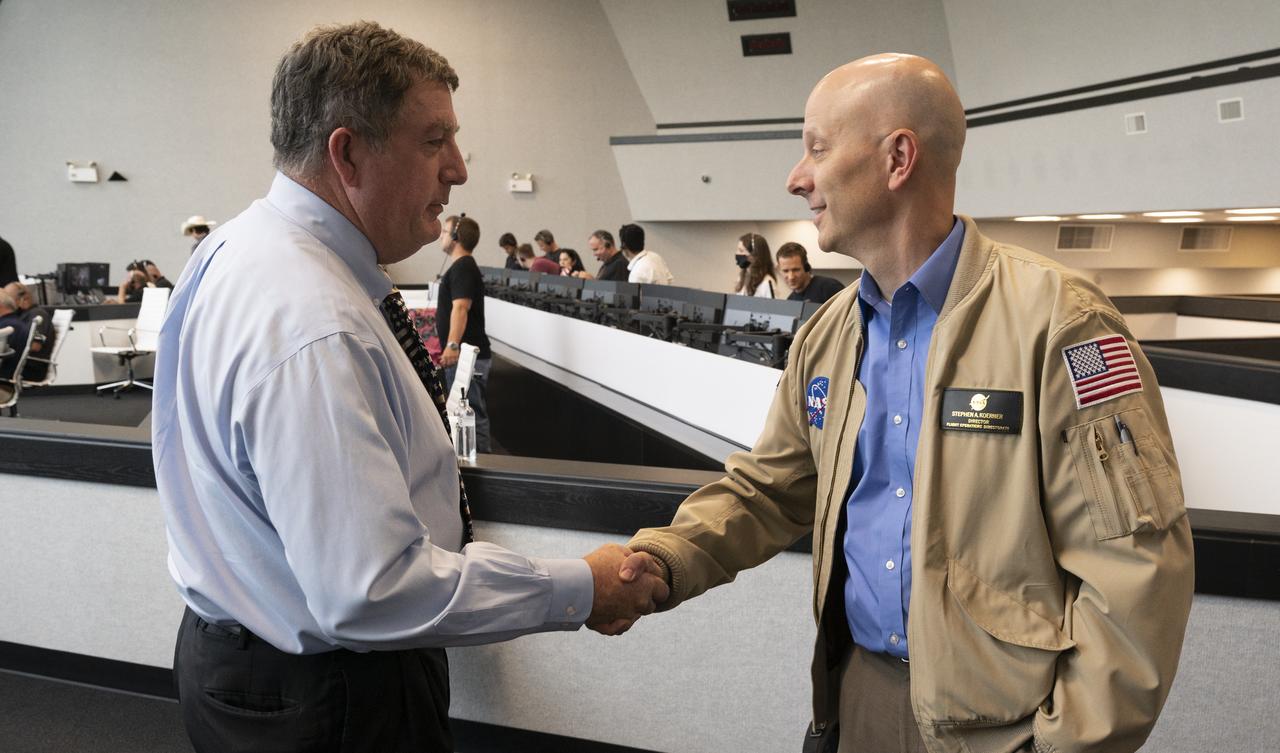
NASA International Space Station Program Manger Kirk Shireman, left, shakes hands with Stephen Koerner, Director of the Flight Operations Directorate at NASA’s Johnson Space Center, following the launch of a SpaceX Falcon 9 rocket carrying the company's Crew Dragon spacecraft on the Demo-2 mission with NASA astronauts Douglas Hurley and Robert Behnken onboard, Saturday, May 30, 2020, in firing room four of the Launch Control Center at NASA’s Kennedy Space Center in Florida. NASA’s SpaceX Demo-2 mission is the first launch with astronauts of the SpaceX Crew Dragon spacecraft and Falcon 9 rocket to the International Space Station as part of the agency’s Commercial Crew Program. The test flight serves as an end-to-end demonstration of SpaceX’s crew transportation system. Behnken and Hurley launched at 3:22 p.m. EDT on Saturday, May 30, from Launch Complex 39A at the Kennedy Space Center. A new era of human spaceflight is set to begin as American astronauts once again launch on an American rocket from American soil to low-Earth orbit for the first time since the conclusion of the Space Shuttle Program in 2011. Photo Credit: (NASA/Joel Kowsky)

Elon Musk, SpaceX Chief Engineer, speaks with NASA International Space Station Program Manger Kirk Shireman, after the launch of a SpaceX Falcon 9 rocket carrying the company's Crew Dragon spacecraft on the Demo-2 mission with NASA astronauts Douglas Hurley and Robert Behnken onboard, Saturday, May 30, 2020, in firing room four of the Launch Control Center at NASA’s Kennedy Space Center in Florida. NASA’s SpaceX Demo-2 mission is the first launch with astronauts of the SpaceX Crew Dragon spacecraft and Falcon 9 rocket to the International Space Station as part of the agency’s Commercial Crew Program. The test flight serves as an end-to-end demonstration of SpaceX’s crew transportation system. Behnken and Hurley launched at 3:22 p.m. EDT on Saturday, May 30, from Launch Complex 39A at the Kennedy Space Center. A new era of human spaceflight is set to begin as American astronauts once again launch on an American rocket from American soil to low-Earth orbit for the first time since the conclusion of the Space Shuttle Program in 2011. Photo Credit: (NASA/Joel Kowsky)
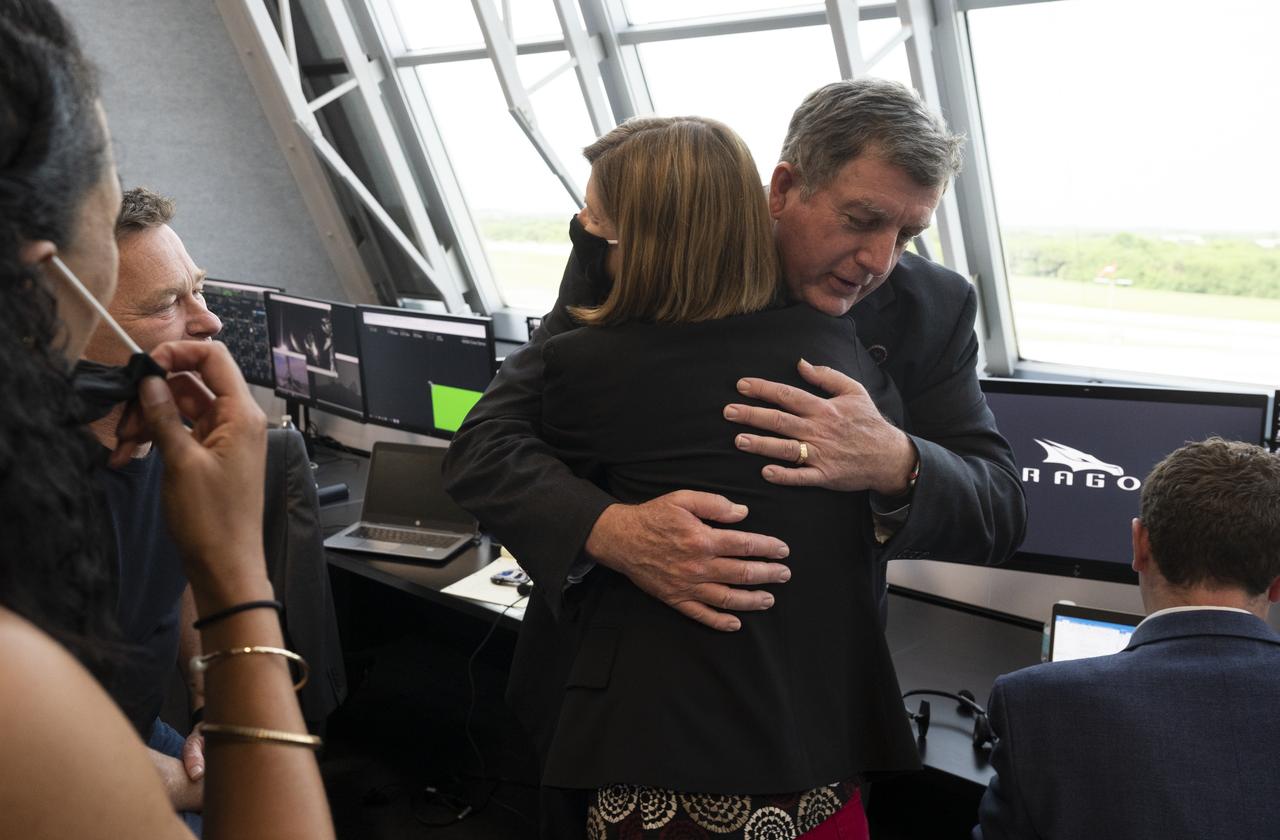
NASA International Space Station Program Manger Kirk Shireman hugs Kathy Lueders, manager of NASA's Commercial Crew Program, following the launch of a SpaceX Falcon 9 rocket carrying the company's Crew Dragon spacecraft on the Demo-2 mission with NASA astronauts Douglas Hurley and Robert Behnken onboard, Saturday, May 30, 2020, in firing room four of the Launch Control Center at NASA’s Kennedy Space Center in Florida. NASA’s SpaceX Demo-2 mission is the first launch with astronauts of the SpaceX Crew Dragon spacecraft and Falcon 9 rocket to the International Space Station as part of the agency’s Commercial Crew Program. The test flight serves as an end-to-end demonstration of SpaceX’s crew transportation system. Behnken and Hurley launched at 3:22 p.m. EDT on Saturday, May 30, from Launch Complex 39A at the Kennedy Space Center. A new era of human spaceflight is set to begin as American astronauts once again launch on an American rocket from American soil to low-Earth orbit for the first time since the conclusion of the Space Shuttle Program in 2011. Photo Credit: (NASA/Joel Kowsky)
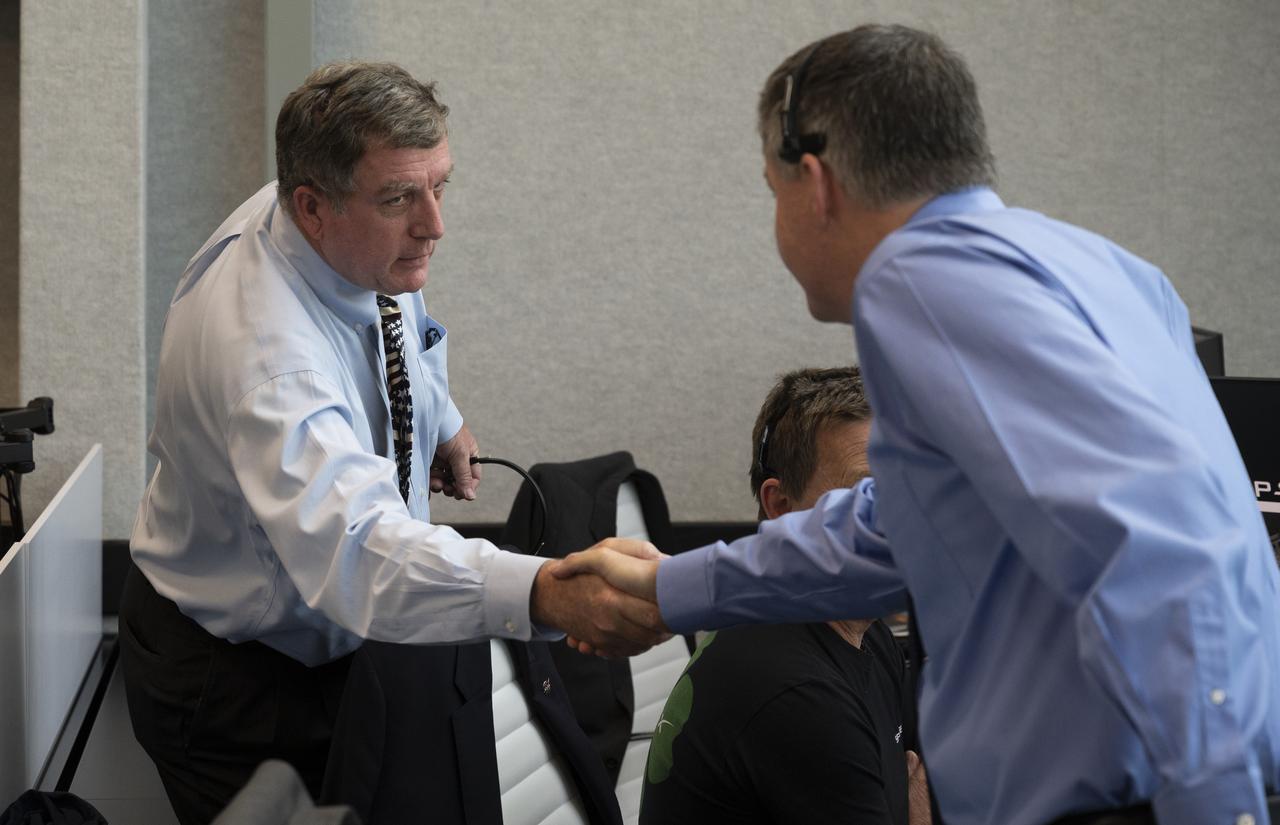
NASA International Space Station Program Manger Kirk Shireman shakes hands with Steve Stich, deputy manager of NASA’s Commercial Crew Program following the launch of a SpaceX Falcon 9 rocket carrying the company's Crew Dragon spacecraft on the Demo-2 mission with NASA astronauts Douglas Hurley and Robert Behnken onboard, Saturday, May 30, 2020, in firing room four of the Launch Control Center at NASA’s Kennedy Space Center in Florida. NASA’s SpaceX Demo-2 mission is the first launch with astronauts of the SpaceX Crew Dragon spacecraft and Falcon 9 rocket to the International Space Station as part of the agency’s Commercial Crew Program. The test flight serves as an end-to-end demonstration of SpaceX’s crew transportation system. Behnken and Hurley launched at 3:22 p.m. EDT on Saturday, May 30, from Launch Complex 39A at the Kennedy Space Center. A new era of human spaceflight is set to begin as American astronauts once again launch on an American rocket from American soil to low-Earth orbit for the first time since the conclusion of the Space Shuttle Program in 2011. Photo Credit: (NASA/Joel Kowsky)

NASA International Space Station Program Manger Kirk Shireman monitors the countdown of the launch attempt of a SpaceX Falcon 9 rocket carrying the company's Crew Dragon spacecraft on NASA’s SpaceX Demo-2 mission with NASA astronauts Robert Behnken and Douglas Hurley onboard, Wednesday, May 27, 2020, in firing room four of the Launch Control Center at NASA’s Kennedy Space Center in Florida. NASA’s SpaceX Demo-2 mission is the first launch with astronauts of the SpaceX Crew Dragon spacecraft and Falcon 9 rocket to the International Space Station as part of the agency’s Commercial Crew Program. The test flight serves as an end-to-end demonstration of SpaceX’s crew transportation system. Today’s launch of Behnken and Hurley was scrubbed due to weather and is now scheduled for 3:22 p.m. EDT on Saturday, May 30, from Launch Complex 39A at the Kennedy Space Center. A new era of human spaceflight is set to begin as American astronauts once again launch on an American rocket from American soil to low-Earth orbit for the first time since the conclusion of the Space Shuttle Program in 2011. Photo Credit: (NASA/Joel Kowsky)
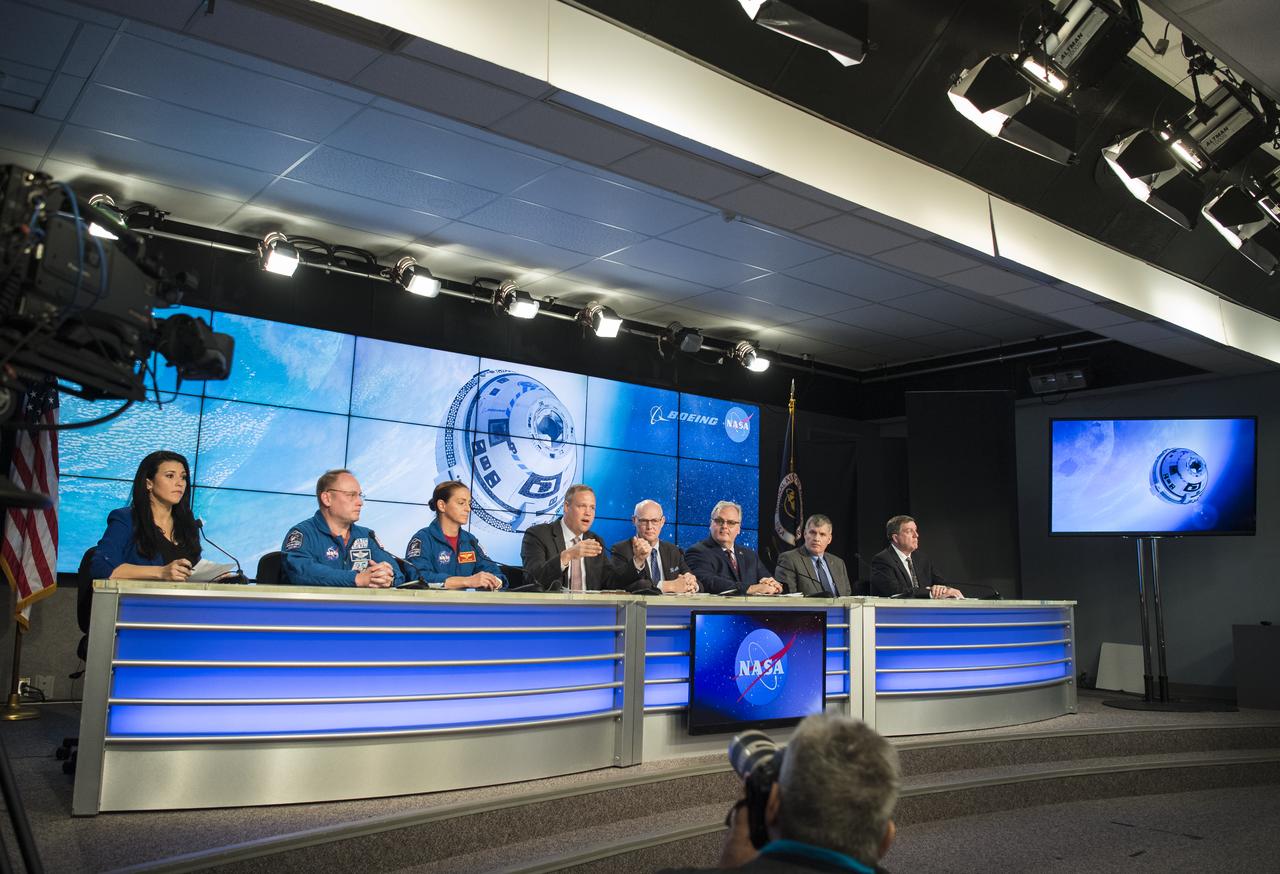
NASA Associate Administrator for the Office of Communications Bettina Inclán, left, NASA astronauts Michael Fincke and Nicole Mann, NASA Administrator Jim Bridenstine, Tory Bruno, president and CEO of United Launch Alliance, Jim Chilton, senior vice president of Boeing’s Space and Launch Division, Steve Stich, Deputy Manager of NASA’s Commercial Crew Program, and NASA ISS Program Manager Kirk Shireman, are seen during a press conference at NASA's Kennedy Space Center following the launch of Boeing’s Starliner spacecraft onboard a United Launch Alliance Atlas V rocket, Friday, Dec. 20, 2019, at Cape Canaveral Air Force Station in Florida. After a successful launch at 6:36 a.m. EST, Boeing’s CST-100 Starliner is in an unplanned, but stable orbit. The team is assessing what test objectives can be achieved before the spacecraft’s return to land in White Sands, New Mexico. Photo Credit: (NASA/Joel Kowsky)
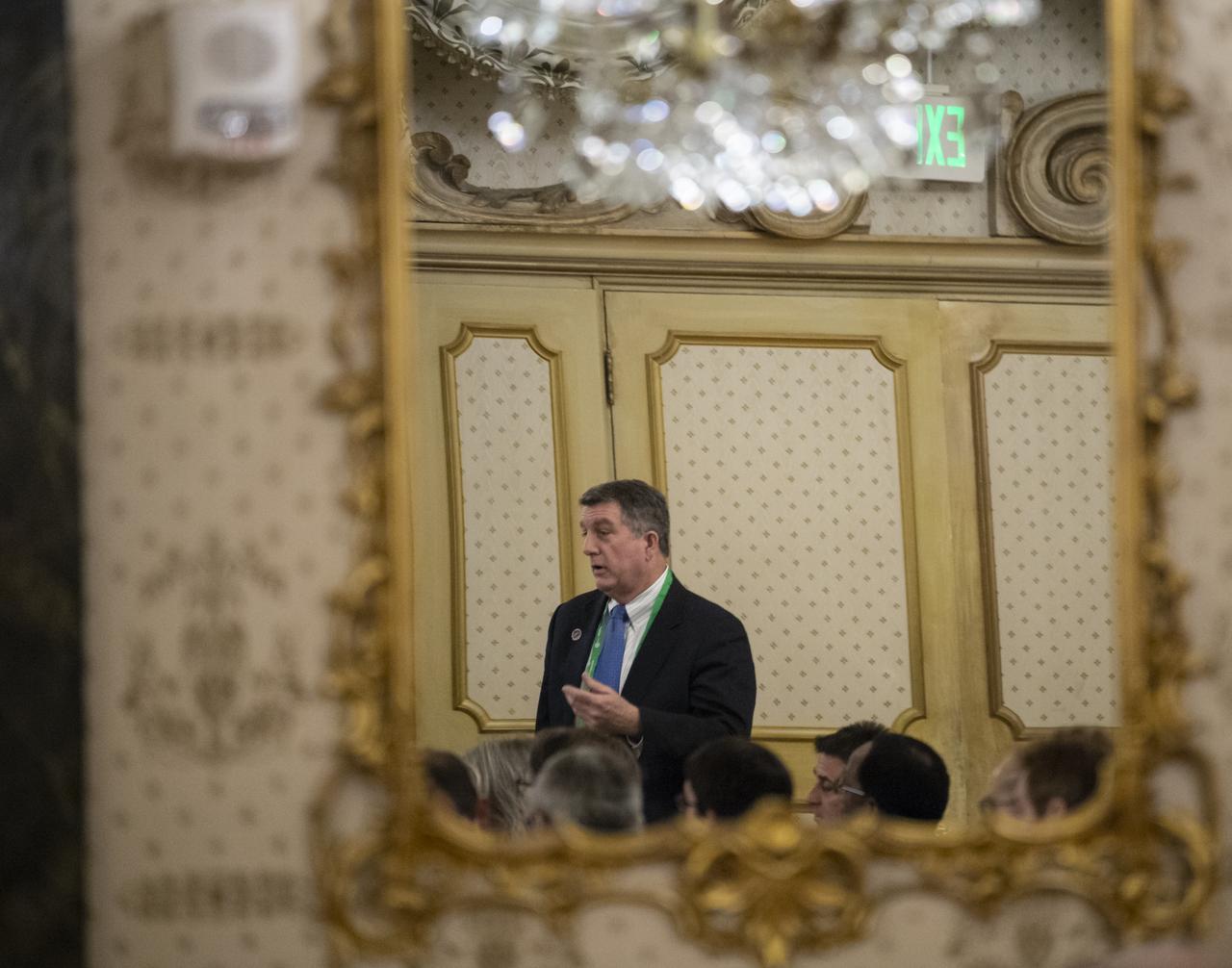
Kirk Shireman, ISS Program Manager, answers a question from NASA Administrator Jim Bridenstine during an agency meeting at the Space Symposium, Monday, April 8, 2019, at the Broadmoor Hotel in Colorado Springs, Colorado. Senior NASA officials from NASA centers around the country were in attendance. Photo credit: (NASA/Aubrey Gemignani)
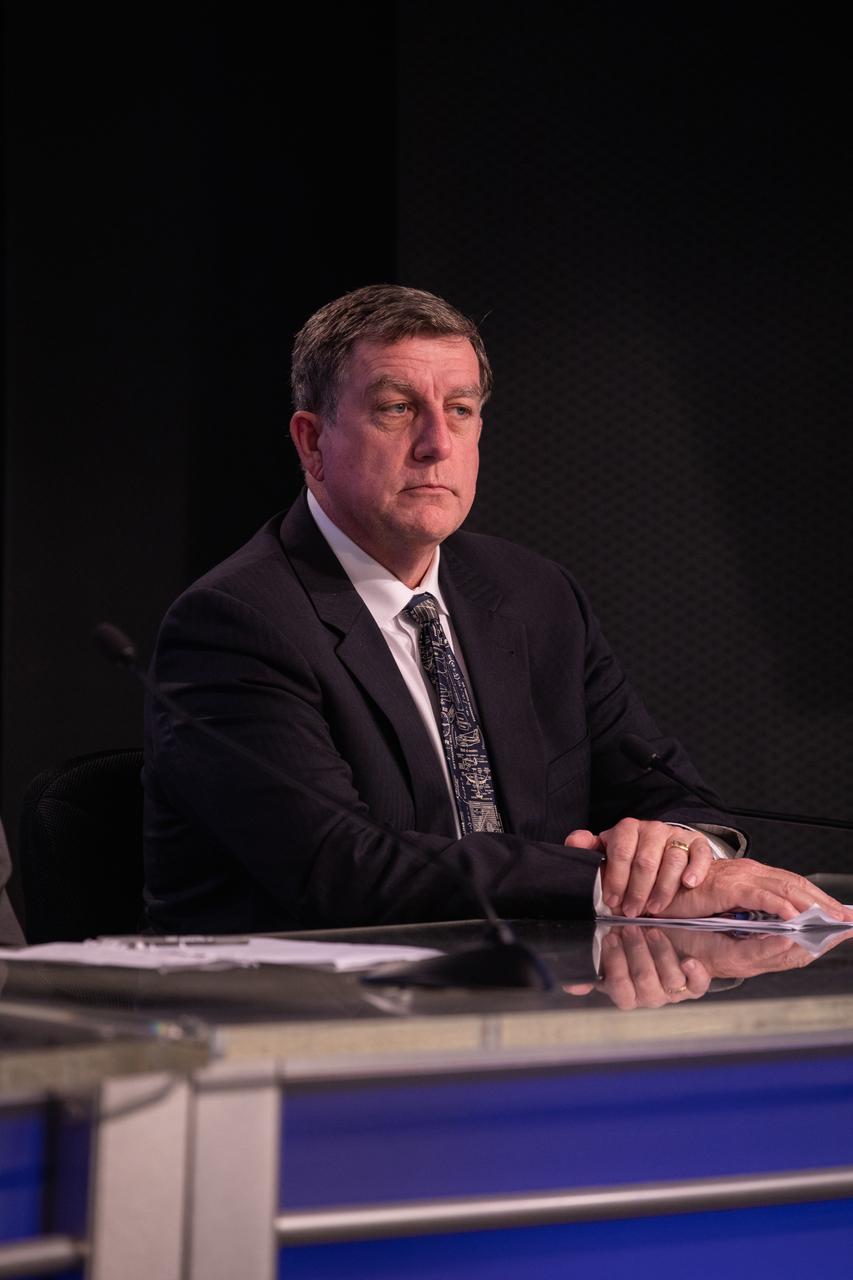
Kirk Shireman, manager of NASA’s International Space Station Program, listens during a briefing at the agency’s Kennedy Space Center in Florida following launch of Boeing’s Orbital Flight Test, Dec. 20, 2019. Boeing’s CST-100 Starliner spacecraft launched atop a United Launch Alliance Atlas V rocket from Space Launch Complex 41 at Cape Canaveral Air Force Station at 6:36 a.m. EST. The uncrewed Orbital Flight Test is the Starliner’s first flight for NASA’s Commercial Crew Program.
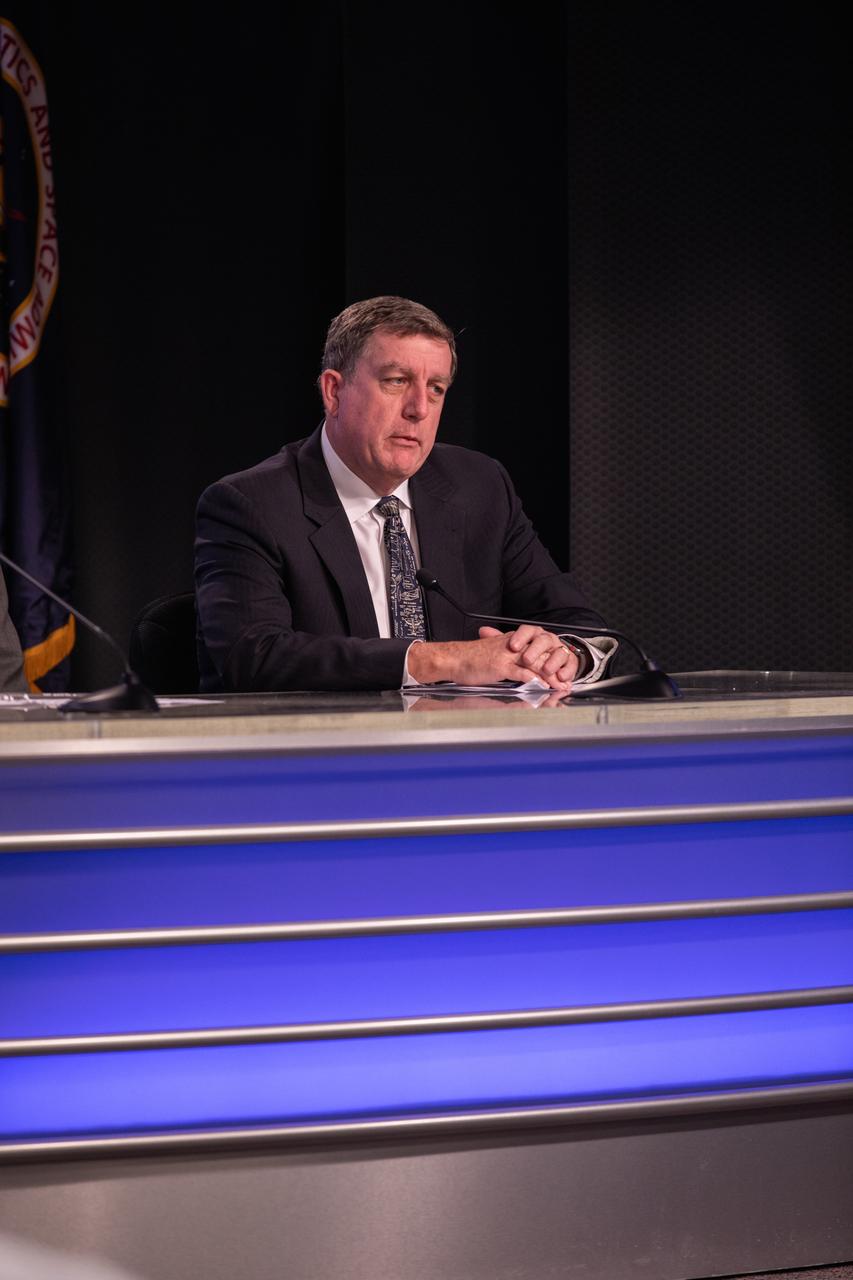
Kirk Shireman, manager of NASA’s International Space Station Program, speaks during a briefing at the agency’s Kennedy Space Center in Florida following launch of Boeing’s Orbital Flight Test, Dec. 20, 2019. Boeing’s CST-100 Starliner spacecraft launched atop a United Launch Alliance Atlas V rocket from Space Launch Complex 41 at Cape Canaveral Air Force Station at 6:36 a.m. EST. The uncrewed Orbital Flight Test is the Starliner’s first flight for NASA’s Commercial Crew Program.
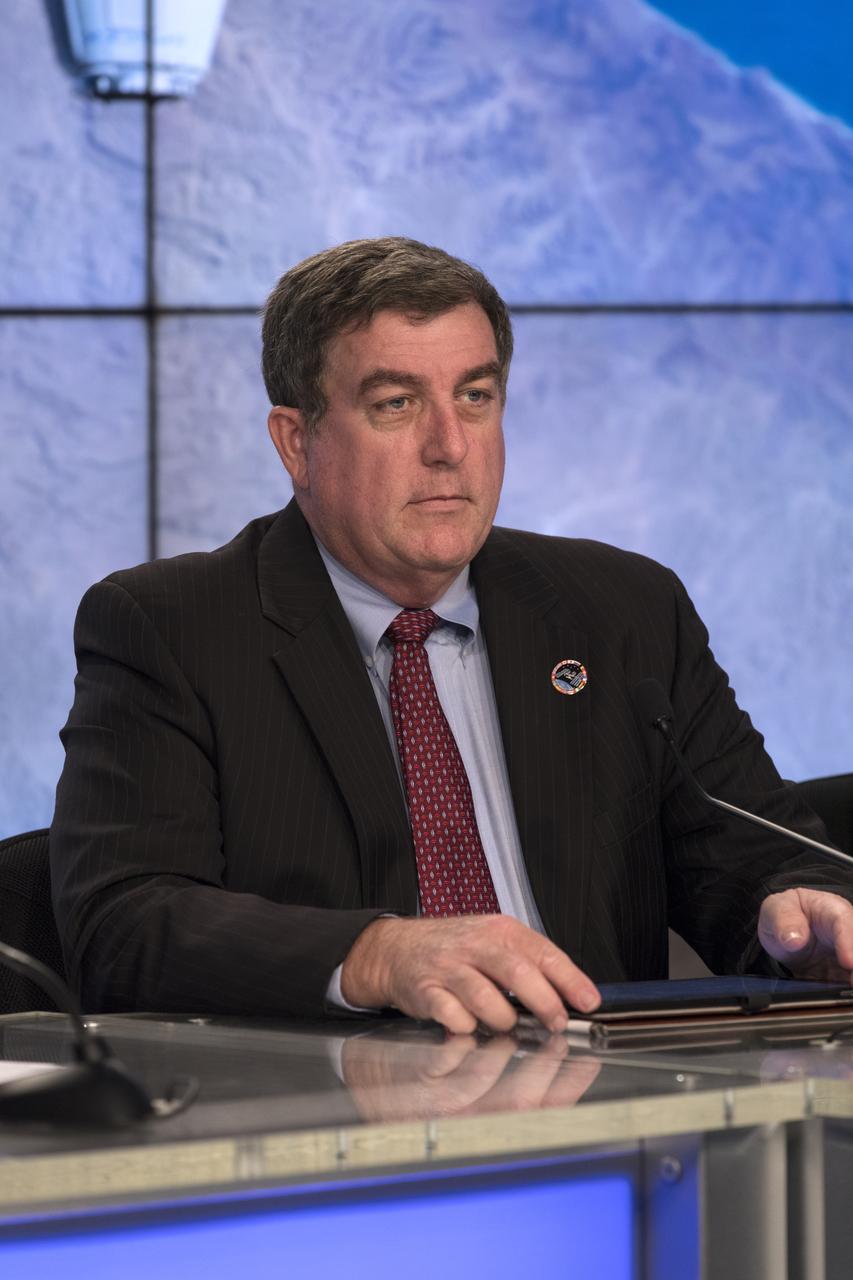
In the Kennedy Space Center’s Press Site auditorium, Kirk Shireman, manager of the International Space Station Program, speaks to members of the media during a prelaunch news conference for the SpaceX CRS-15 Commercial Resupply Services mission to the International Space Station. A SpaceX Dragon spacecraft is scheduled to be launched from Space Launch Complex 40 at Cape Canaveral Air Force Station. The SpaceX Falcon 9 rocket will lift off on the company's 15th Commercial Resupply Services mission to the space station.
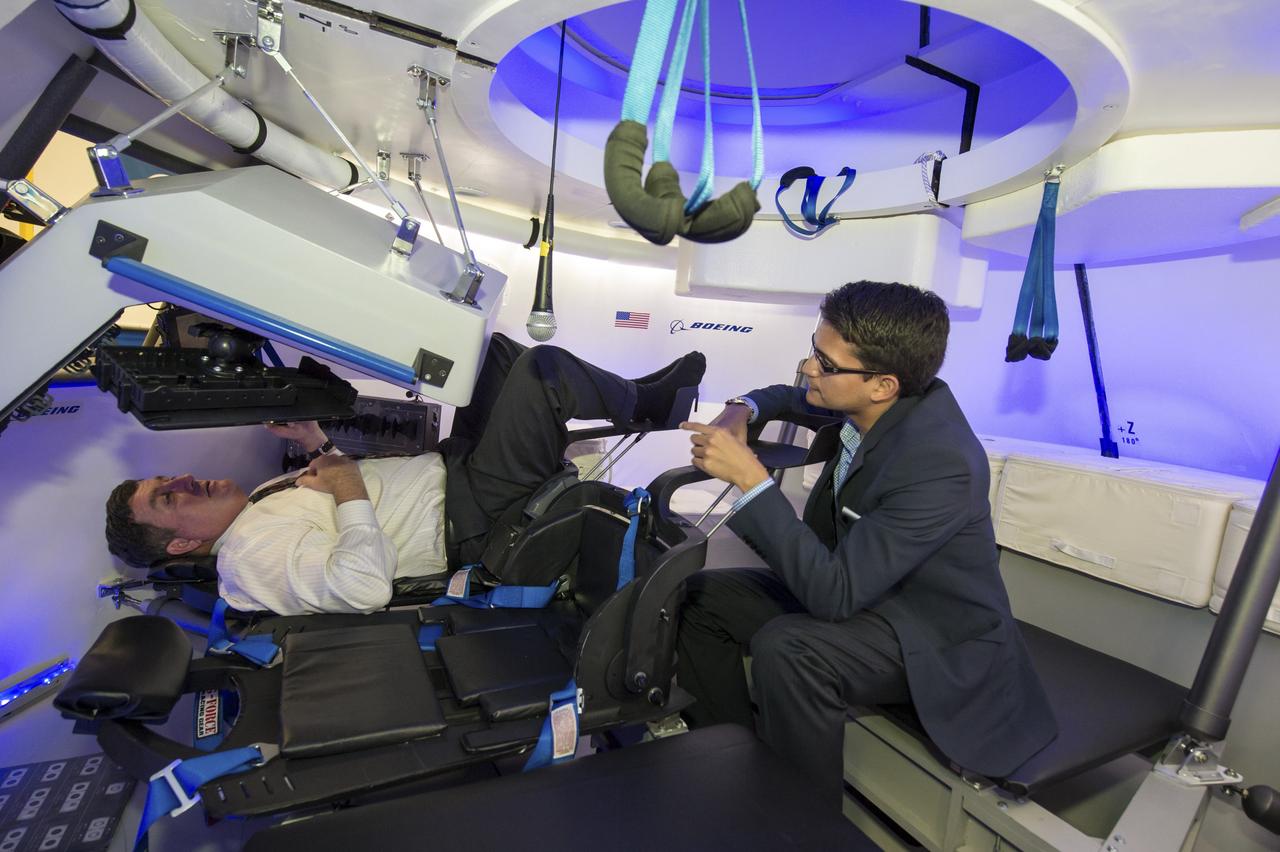
HOUSTON -- JSC-2013-E076056 -- Kirk Shireman, deputy director of NASA's Johnson Space Center, takes the controls of The Boeing Company's mock-up CST-100 spacecraft at the company's Houston Product Support Center. Helping Shireman inside the fully outfitted test version of the CST-100 is Tony Castilleja, a mechanical engineer working on the Boeing project. Boeing showcased its work on a fully outfitted test version of the spacecraft to Bolden and Johnson management. Boeing's CST-100 is designed to transport a mix of crew and cargo to low-Earth-orbit destinations. Boeing is one of three aerospace industry partners working with NASA's Commercial Crew Program, or CCP, during the Commercial Crew Integrated Capability, or CCiCap, initiative, which is intended to make commercial human spaceflight services available for government and commercial customers. To learn more about CCP, visit www.nasa.gov/commercialcrew. Photo credit: NASA/James Blair
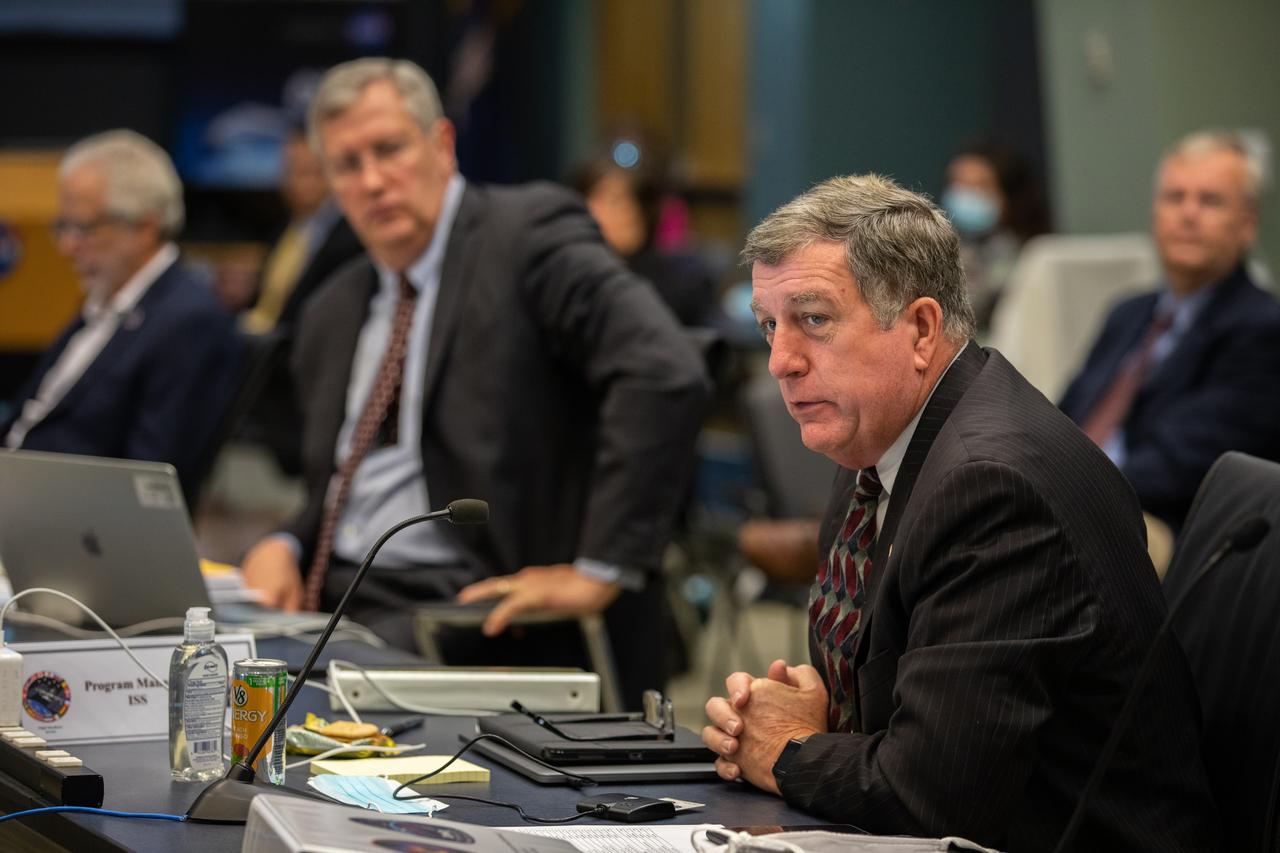
On May 21, 2020, inside the Operations Support Building II at NASA’s Kennedy Space Center in Florida, International Space Station Program Manager Kirk Shireman participates in a flight readiness review for the upcoming Demo-2 launch. A SpaceX Falcon 9 rocket and Crew Dragon spacecraft will carry NASA astronauts Robert Behnken and Douglas Hurley to the International Space Station as part of the agency’s Commercial Crew Program, returning human spaceflight capability to the U.S. after nearly a decade. Launch is slated for 4:33 p.m. EDT on Wednesday, May 27, from Kennedy’s Launch Complex 39A.
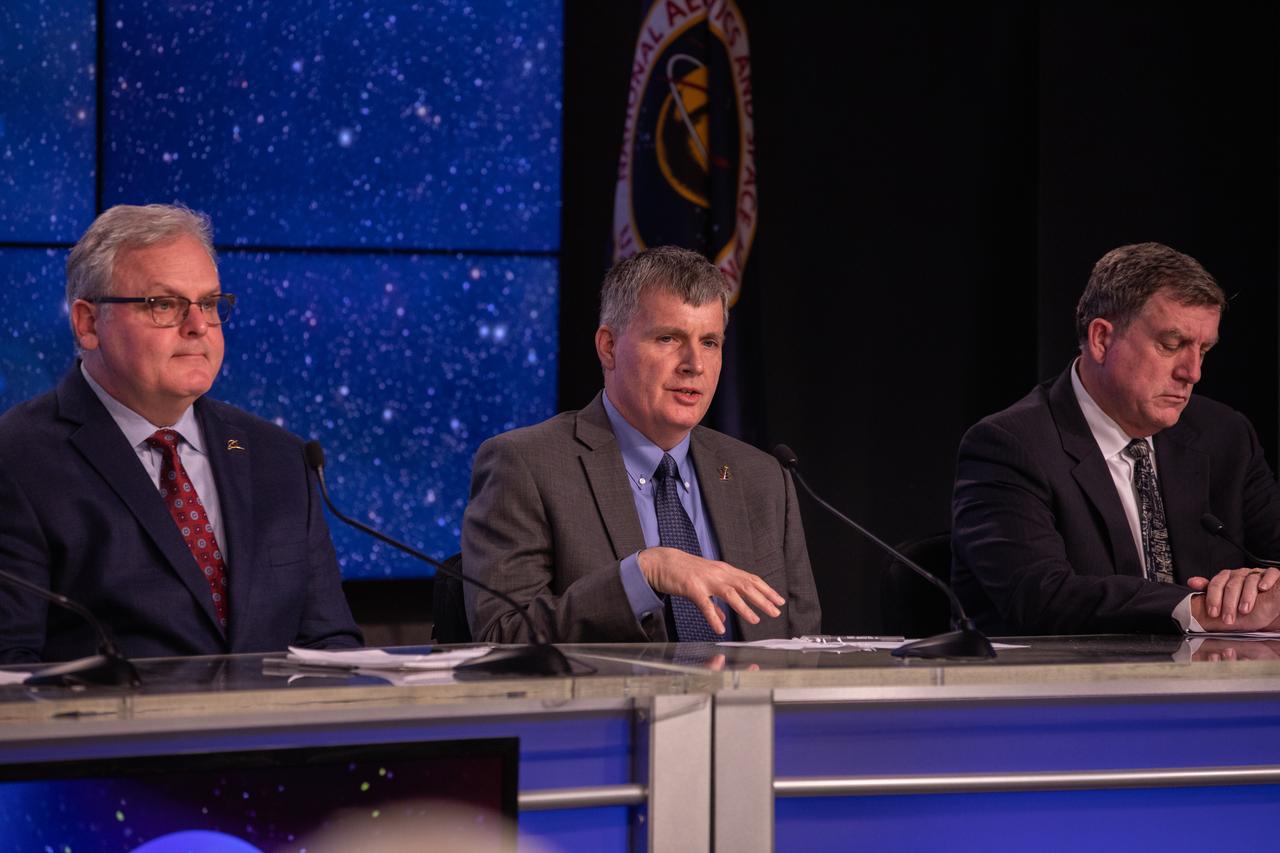
Steve Stich, deputy manager, NASA Commercial Crew Program, speaks during a briefing at the agency’s Kennedy Space Center in Florida following launch of Boeing’s Orbital Flight Test, Dec. 20, 2019. Beside him are Jim Chilton, Boeing senior vice president, Space and Launch Division, left, and Kirk Shireman, manager of NASA’s International Space Station Program. Boeing’s CST-100 Starliner spacecraft launched atop a United Launch Alliance Atlas V rocket from Space Launch Complex 41 at Cape Canaveral Air Force Station at 6:36 a.m. EST. The uncrewed Orbital Flight Test is the Starliner’s first flight for NASA’s Commercial Crew Program.
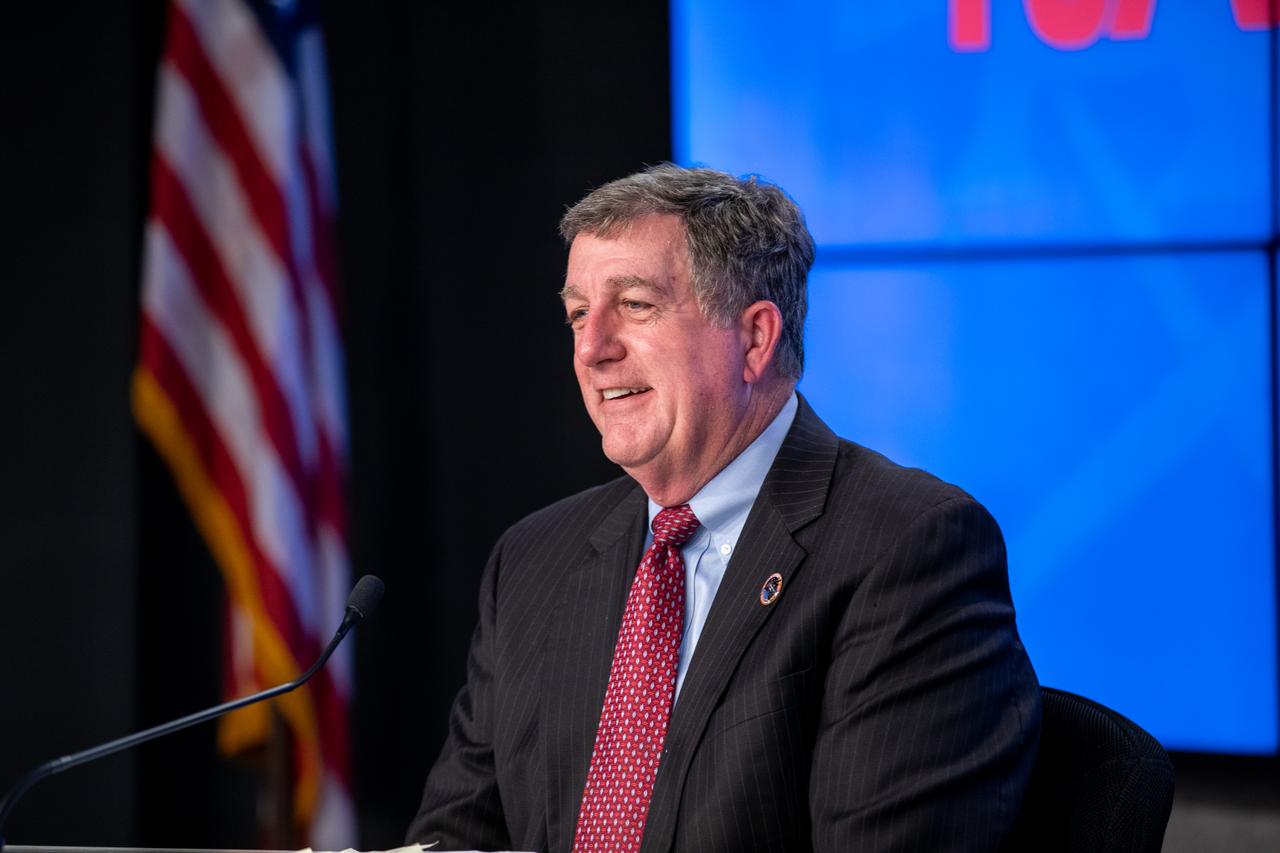
International Space Station Program Manager Kirk Shireman participates in a news briefing inside the Press Site auditorium at NASA’s Kennedy Space Center in Florida on May 22, 2020, following the conclusion of the flight readiness review for NASA’s SpaceX Demo-2 mission, with NASA astronauts Robert Behnken and Douglas Hurley, to the International Space Station. This will be SpaceX’s final flight test for NASA’s Commercial Crew Program. Behnken and Hurley will fly to the orbiting laboratory in a SpaceX Crew Dragon spacecraft, launching atop a Falcon 9 rocket from Kennedy’s Launch Complex 39A. Liftoff is scheduled for 4:33 p.m. EDT on Wednesday, May 27.
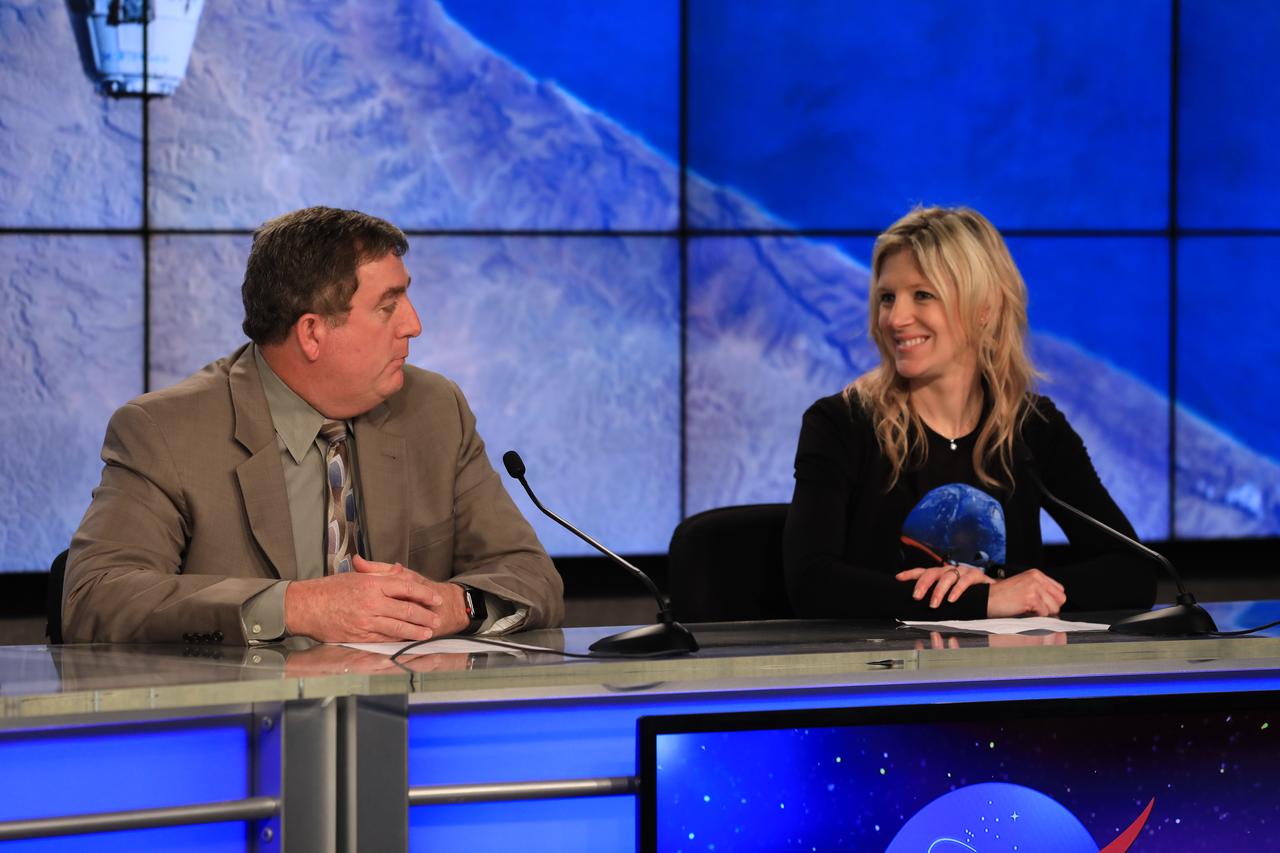
In the Press Site auditorium of NASA's Kennedy Space Center in Florida, from left, Kirk Shireman, manager, International Space Station Program, and Jessica Jensen, Director, Dragon Mission Management, SpaceX, speak to media at a post-launch news conference following the liftoff of SpaceX CRS-15. The flight is a commercial resupply services mission to the International Space Station. SpaceX CRS-15 lifted off atop a Falcon 9 rocket from Space Launch Complex 40 at Cape Canaveral Air Force Station on Friday, June 29, 2018, at 5:42 a.m. EDT with supplies and materials to support multiple critical science and research investigations.
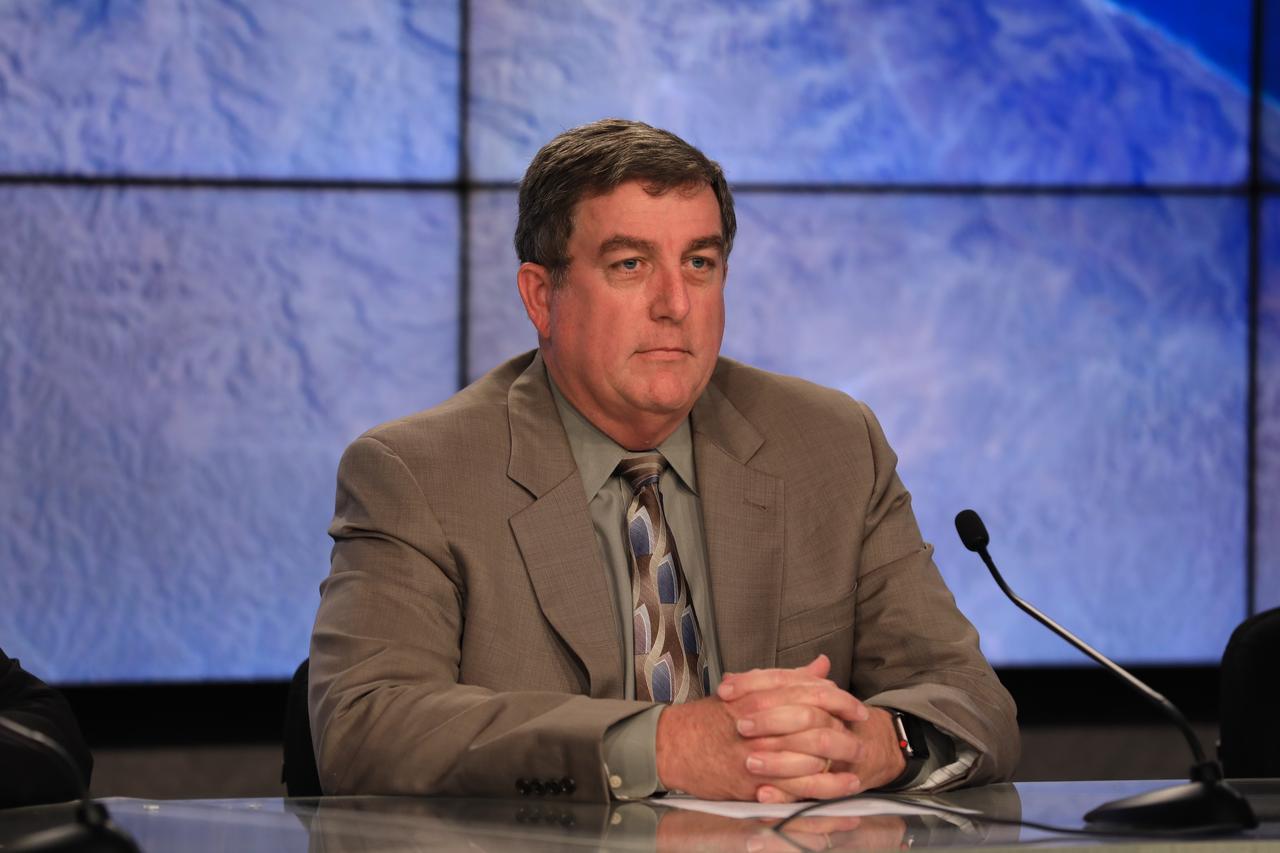
In the Press Site auditorium of NASA's Kennedy Space Center in Florida, Kirk Shireman, manager, International Space Station Program, speaks to media at a post-launch news conference following the liftoff of SpaceX CRS-15. The flight is a commercial resupply services mission to the International Space Station. SpaceX CRS-15 lifted off atop a Falcon 9 rocket from Space Launch Complex 40 at Cape Canaveral Air Force Station on Friday, June 29, 2018, at 5:42 a.m. EDT with supplies and materials to support multiple critical science and research investigations.
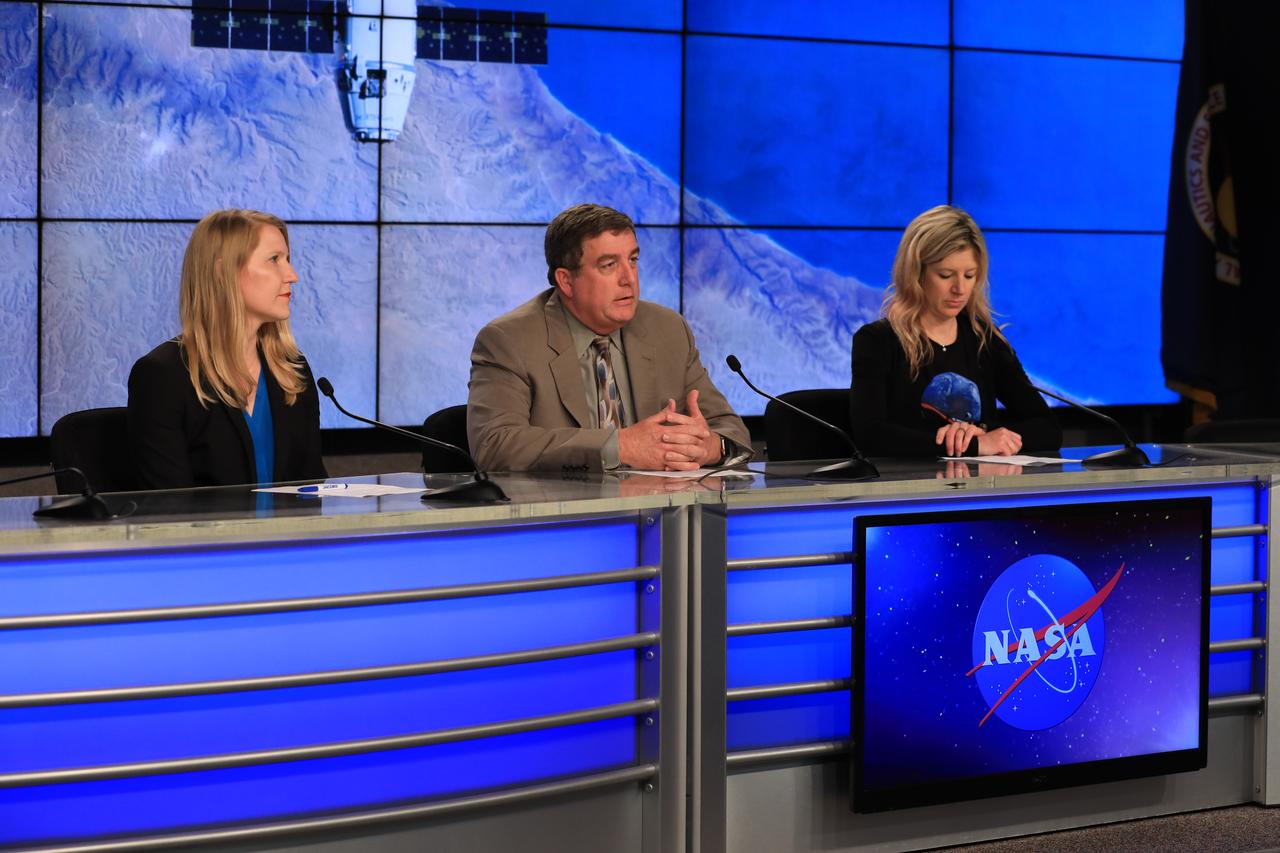
In the Press Site auditorium of NASA's Kennedy Space Center in Florida, from left, Stephanie Schierholz of NASA Communications, Kirk Shireman, manager, International Space Station Program, and Jessica Jensen, Director, Dragon Mission Management, SpaceX, speak to media at a post-launch news conference following the liftoff of SpaceX CRS-15. The flight is a commercial resupply services mission to the International Space Station. SpaceX CRS-15 lifted off atop a Falcon 9 rocket from Space Launch Complex 40 at Cape Canaveral Air Force Station on Friday, June 29, 2018, at 5:42 a.m. EDT with supplies and materials to support multiple critical science and research investigations.
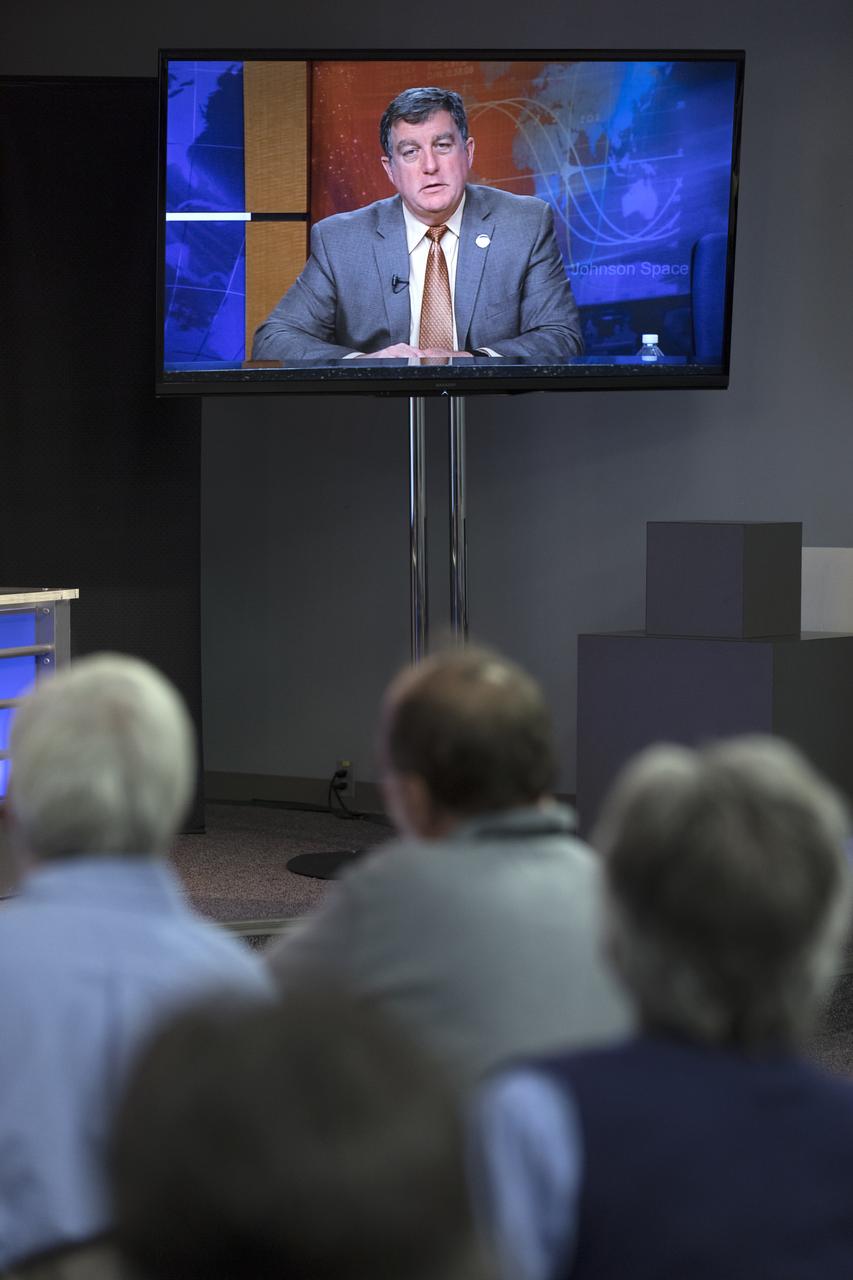
In the Kennedy Space Center’s Press Site auditorium, Kirk Shireman, International Space Station Program manager at Johnson, participates by video link speaking to members of the media during a prelaunch news conference for the SpaceX CRS-13 commercial resupply services mission to the International Space Station. A Dragon spacecraft is scheduled to be launched from Space Launch Complex 40 at Cape Canaveral Air Force Station at 11:46 a.m. EST, on Dec. 12, 2017. The SpaceX Falcon 9 rocket will lift off on the company's 13th Commercial Resupply Services mission to the space station.
Steve Stich, deputy manager, NASA Commercial Crew Program, speaks during a briefing at the agency’s Kennedy Space Center in Florida following launch of Boeing’s Orbital Flight Test, Dec. 20, 2019. Beside him are Jim Chilton, Boeing senior vice president, Space and Launch Division, left, and Kirk Shireman, manager of NASA’s International Space Station Program. Boeing’s CST-100 Starliner spacecraft launched atop a United Launch Alliance Atlas V rocket from Space Launch Complex 41 at Cape Canaveral Air Force Station at 6:36 a.m. EST. The uncrewed Orbital Flight Test is the Starliner’s first flight for NASA’s Commercial Crew Program.
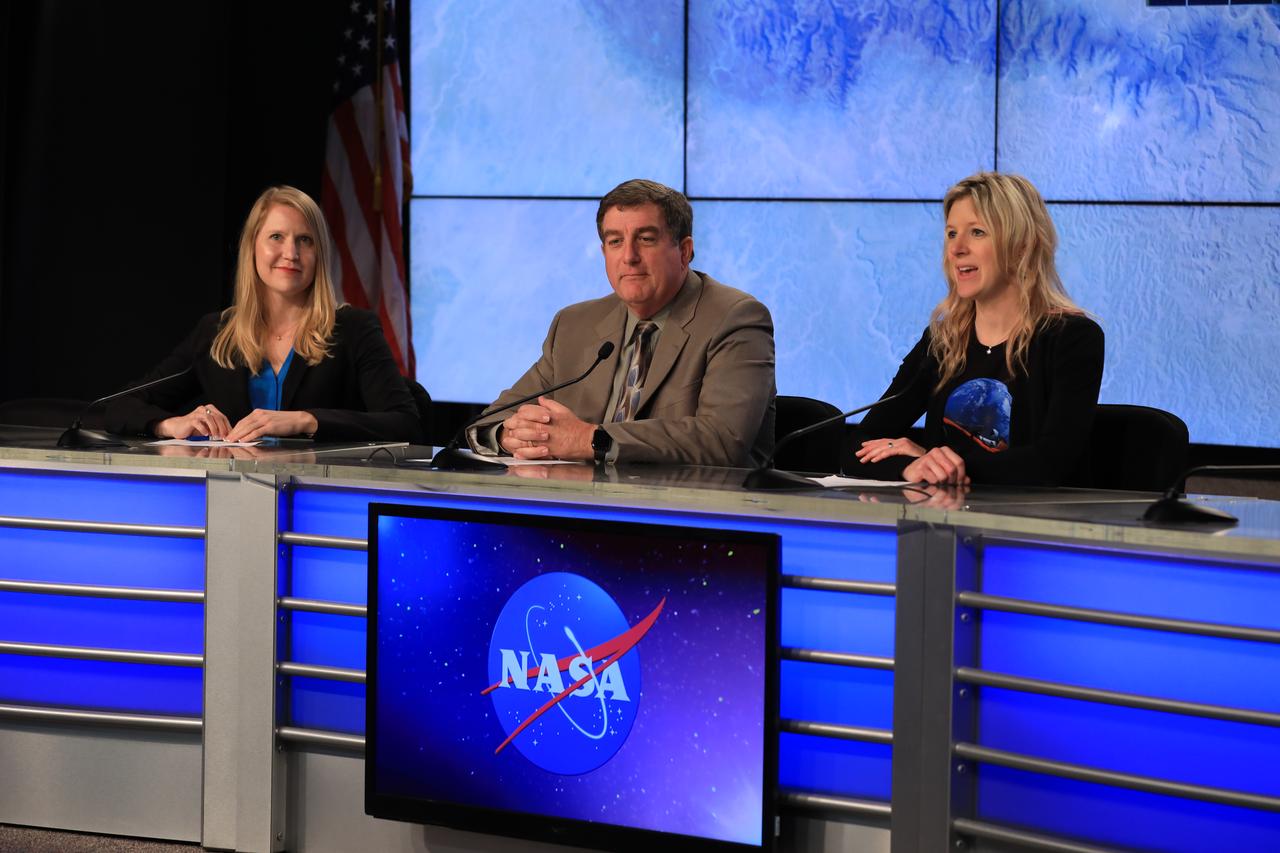
In the Press Site auditorium of NASA's Kennedy Space Center in Florida, from left, Stephanie Schierholz of NASA Communications, Kirk Shireman, manager, International Space Station Program, and Jessica Jensen, Director, Dragon Mission Management, SpaceX, speak to media at a post-launch news conference following the liftoff of SpaceX CRS-15. The flight is a commercial resupply services mission to the International Space Station. SpaceX CRS-15 lifted off atop a Falcon 9 rocket from Space Launch Complex 40 at Cape Canaveral Air Force Station on Friday, June 29, 2018, at 5:42 a.m. EDT with supplies and materials to support multiple critical science and research investigations.
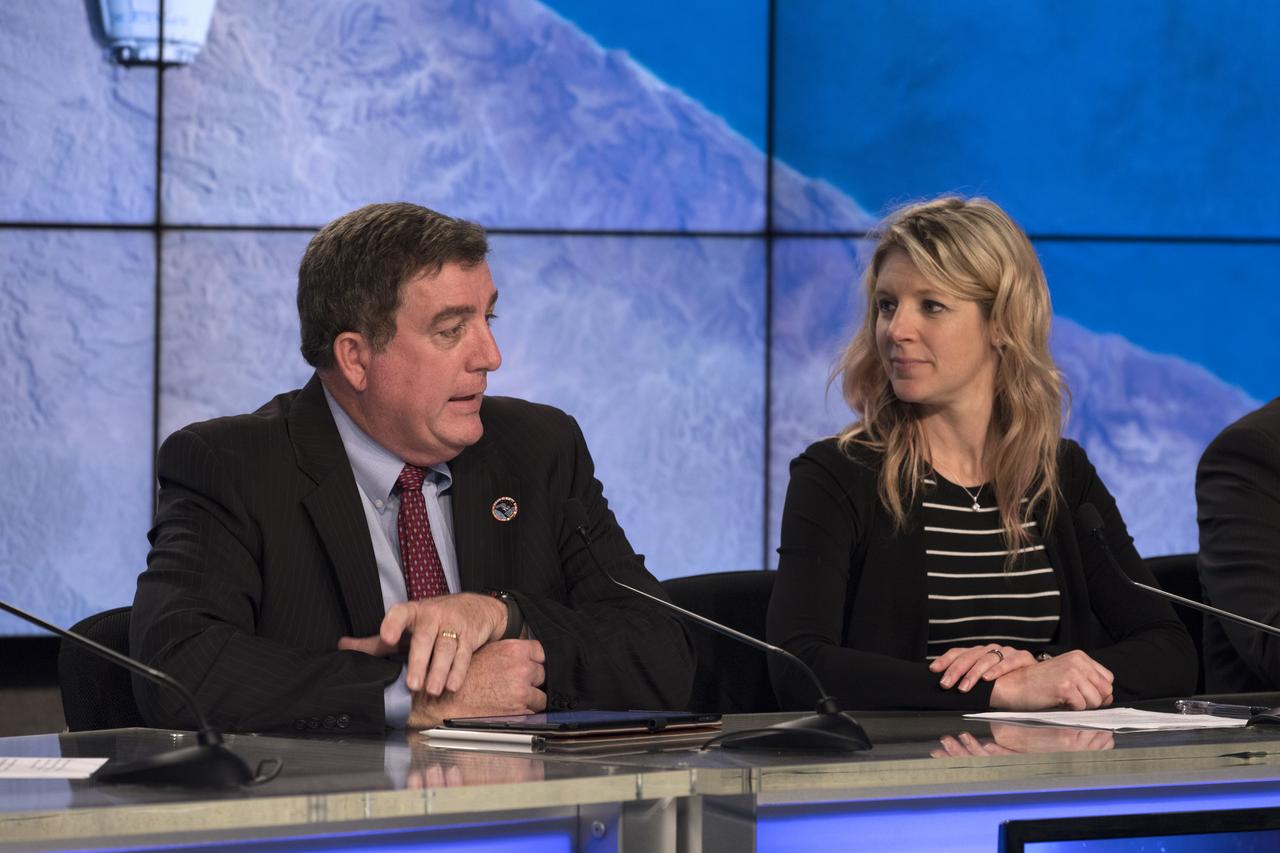
In the Kennedy Space Center’s Press Site auditorium, Kirk Shireman, manager of the International Space Station Program, left, and Jessica Jensen, director of Dragon Mission Management for SpaceX, speak to members of the media during a prelaunch news conference for the SpaceX CRS-15 Commercial Resupply Services mission to the International Space Station. A SpaceX Dragon spacecraft is scheduled to be launched from Space Launch Complex 40 at Cape Canaveral Air Force Station. The SpaceX Falcon 9 rocket will lift off on the company's 15th Commercial Resupply Services mission to the space station.
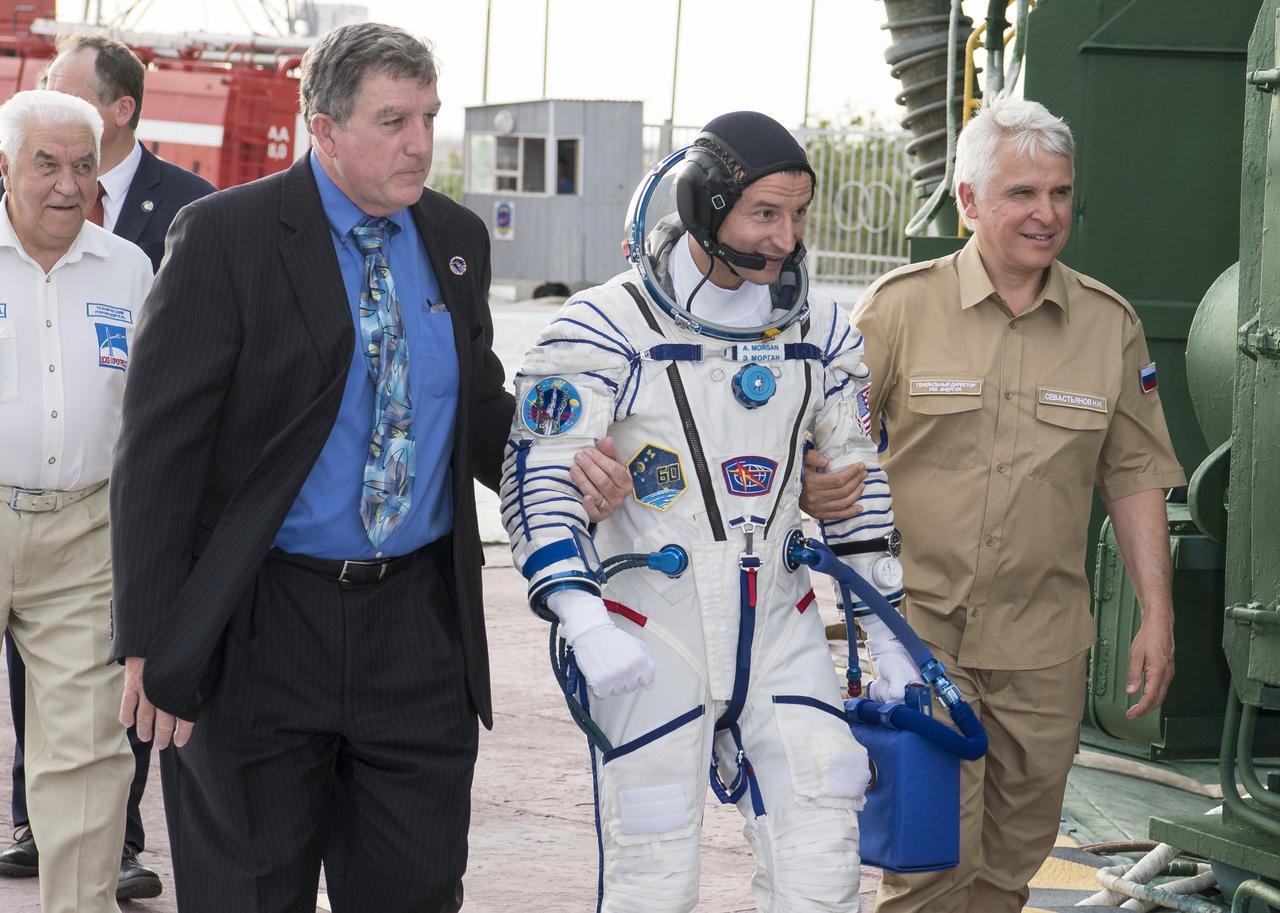
Expedition 60 flight engineer Andrew Morgan of NASA, is escorted by NASA International Space Station Program Manager Kirk Shireman as he prepares to board the Soyuz MS-13 spacecraft for launch, Saturday, July 20, 2019 at the Baikonur Cosmodrome in Kazakhstan. Morgan, Alexander Skvortsov of Roscosmos, and Luca Parmitano of ESA (European Space Agency) launched aboard the Soyuz MS-13 spacecraft at 12:28 p.m. Eastern time (9:28 p.m. Baikonur time) on July 20 to begin their journey to the International Space Station. Photo Credit: (NASA/Joel Kowsky)
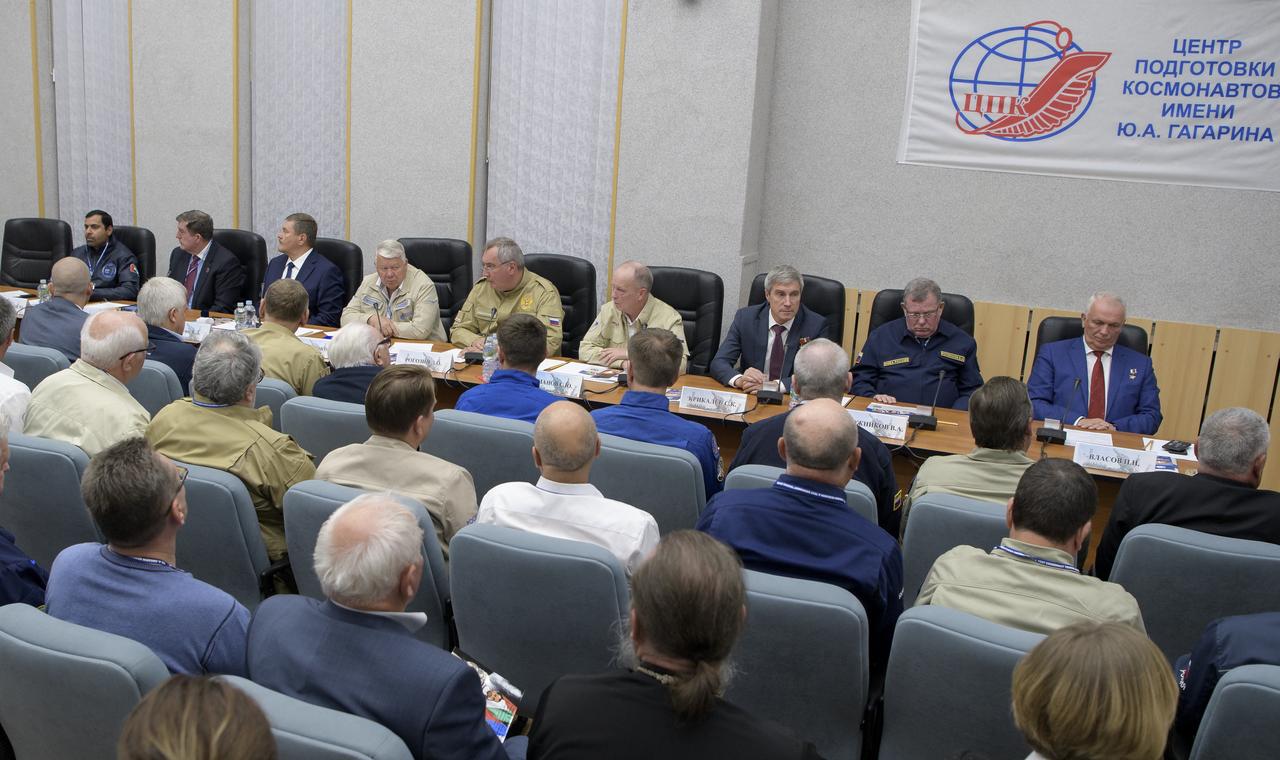
Management from Roscosmos, NASA and the United Arab Emirates participate in State Commission meeting to approve the Soyuz launch of spaceflight participant Hazzaa Ali Almansoori of the United Arab Emirates and Expedition 61 crewmembers Oleg Skripochka of Roscosmos and Jessica Meir of NASA to the International Space Station, Tuesday, Sept. 24, 2019 at the Cosmonaut Hotel in Baikonur, Kazakhstan. The trio will launch September 25th on the Soyuz MS-15 spacecraft from the Baikonur Cosmodrome to the International Space Station. Photo Credit: (NASA/Bill Ingalls)
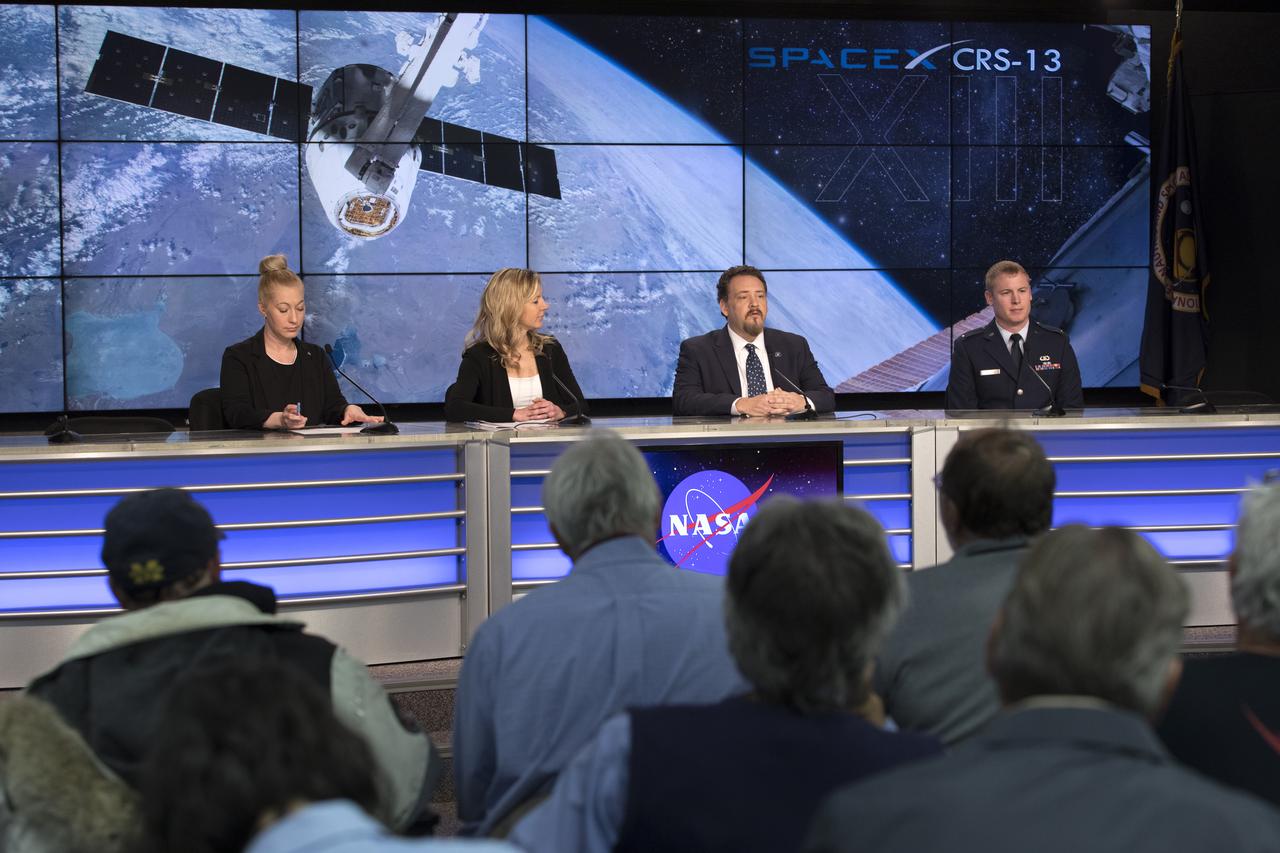
In the Kennedy Space Center’s Press Site auditorium, NASA and industry leaders speak to members of the media during a prelaunch news conference for the SpaceX CRS-13 commercial resupply services mission to the International Space Station. From left are: Cheryl Warner of NASA Communications, Jessica Jensen, SpaceX director of Dragon Mission Management, Kirt Costello, deputy chief scientist for the International Space Station Program Science Office at NASA’s Johnson Space Center in Houston, and Lt. David Myers, weather officer for the 45th Weather Squadron. Kirk Shireman, International Space Station Program manager at Johnson, participated by video link. A Dragon spacecraft is scheduled to be launched from Space Launch Complex 40 at Cape Canaveral Air Force Station at 11:46 a.m. EST, on Dec. 12, 2017. The SpaceX Falcon 9 rocket will lift off on the company's 13th Commercial Resupply Services mission to the space station.
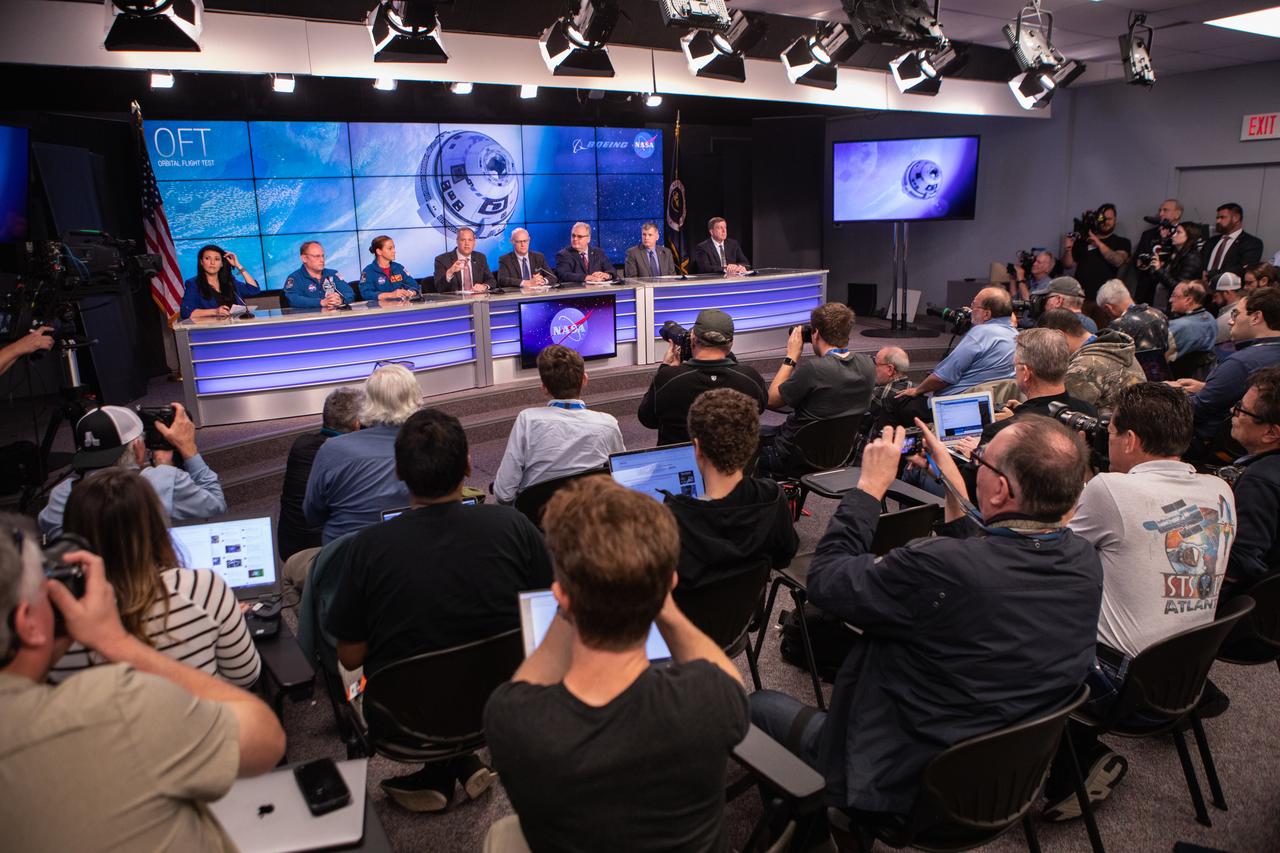
Officials from NASA, Boeing and United Launch Alliance participate in a briefing at the agency’s Kennedy Space Center in Florida following launch of Boeing’s Orbital Flight Test, Dec. 20, 2019. From left to right are Bettina Inclan, NASA Communications; NASA astronauts Mike Fincke and Nicole Mann; Jim Bridenstine, NASA Administrator; Tory Bruno, President and CEO, United Launch Alliance; Jim Chilton, Boeing senior vice president, Space and Launch Division; Steve Stich, deputy manager, NASA Commercial Crew Program; and Kirk Shireman, manager, International Space Station Program. Boeing’s CST-100 Starliner spacecraft launched atop a United Launch Alliance Atlas V rocket from Space Launch Complex 41 at Cape Canaveral Air Force Station at 6:36 a.m. EST. The uncrewed Orbital Flight Test is the Starliner’s first flight for NASA’s Commercial Crew Program.
In Kennedy Space Center’s Press Site auditorium, agency and industry leaders speak to members of the media on Friday, Feb. 22, during the post-flight readiness review briefing for the SpaceX Demo-1 Commercial Crew Program (CCP) mission to the International Space Station. From left are: Kathy Lueders, manager, NASA Commercial Crew Program; Hans Koenigsmann, vice president, Build and Flight Reliability, SpaceX; and Kirk Shireman, International Space Station Program manager. The inaugural uncrewed flight of the SpaceX Crew Dragon, known as Demo-1, is targeted to lift off from Kennedy’s Launch Complex 39A on Saturday, March 2. EST. A SpaceX Falcon 9 rocket will launch the Crew Dragon on a mission designed to validate end-to-end systems and capabilities, leading to certification to fly crew.
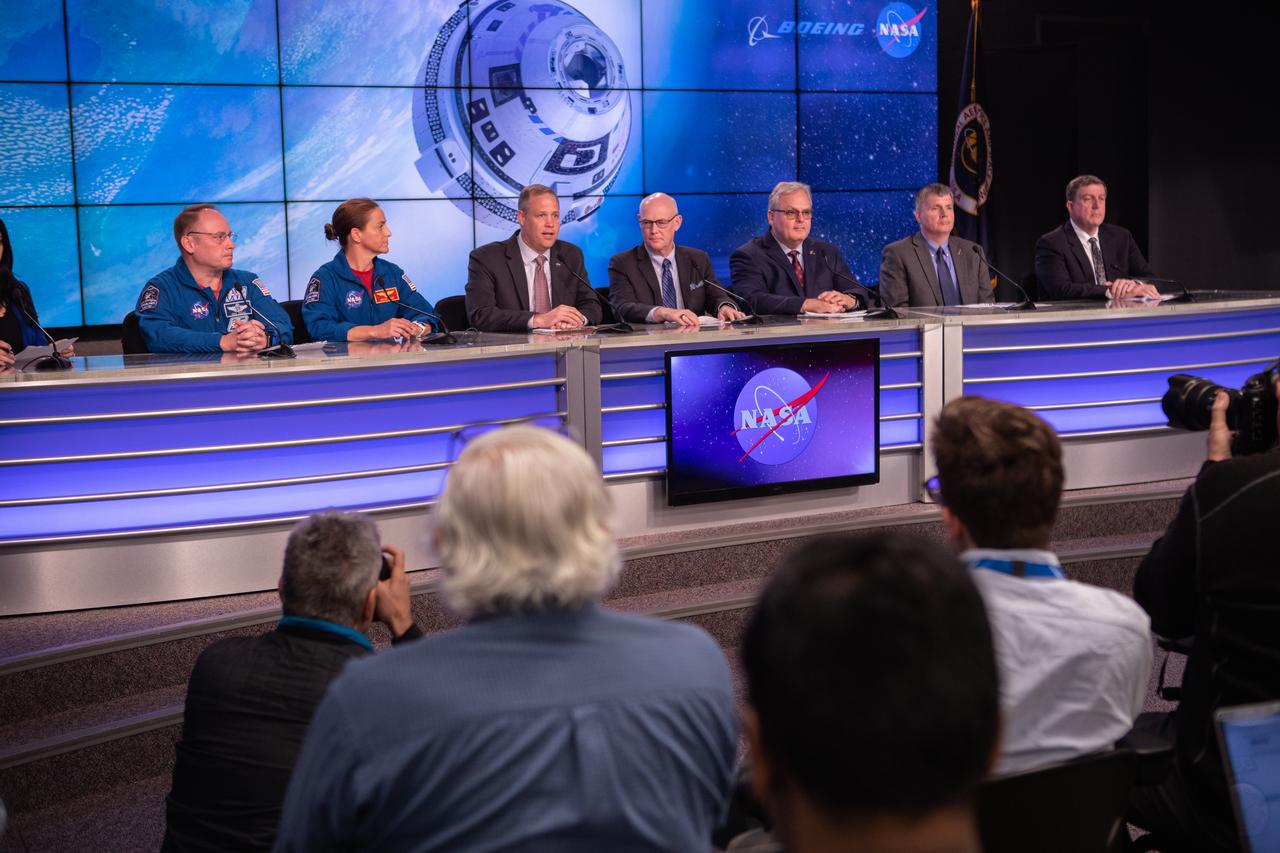
Officials from NASA, Boeing and United Launch Alliance participate in a briefing at the agency’s Kennedy Space Center in Florida following launch of Boeing’s Orbital Flight Test, Dec. 20, 2019. From left to right are NASA astronauts Mike Fincke and Nicole Mann; Jim Bridenstine, NASA Administrator; Tory Bruno, President and CEO, United Launch Alliance; Jim Chilton, Boeing senior vice president, Space and Launch Division; Steve Stich, deputy manager, NASA Commercial Crew Program; and Kirk Shireman, manager, International Space Station Program. Boeing’s CST-100 Starliner spacecraft launched atop a United Launch Alliance Atlas V rocket from Space Launch Complex 41 at Cape Canaveral Air Force Station at 6:36 a.m. EST. The uncrewed Orbital Flight Test is the Starliner’s first flight for NASA’s Commercial Crew Program.
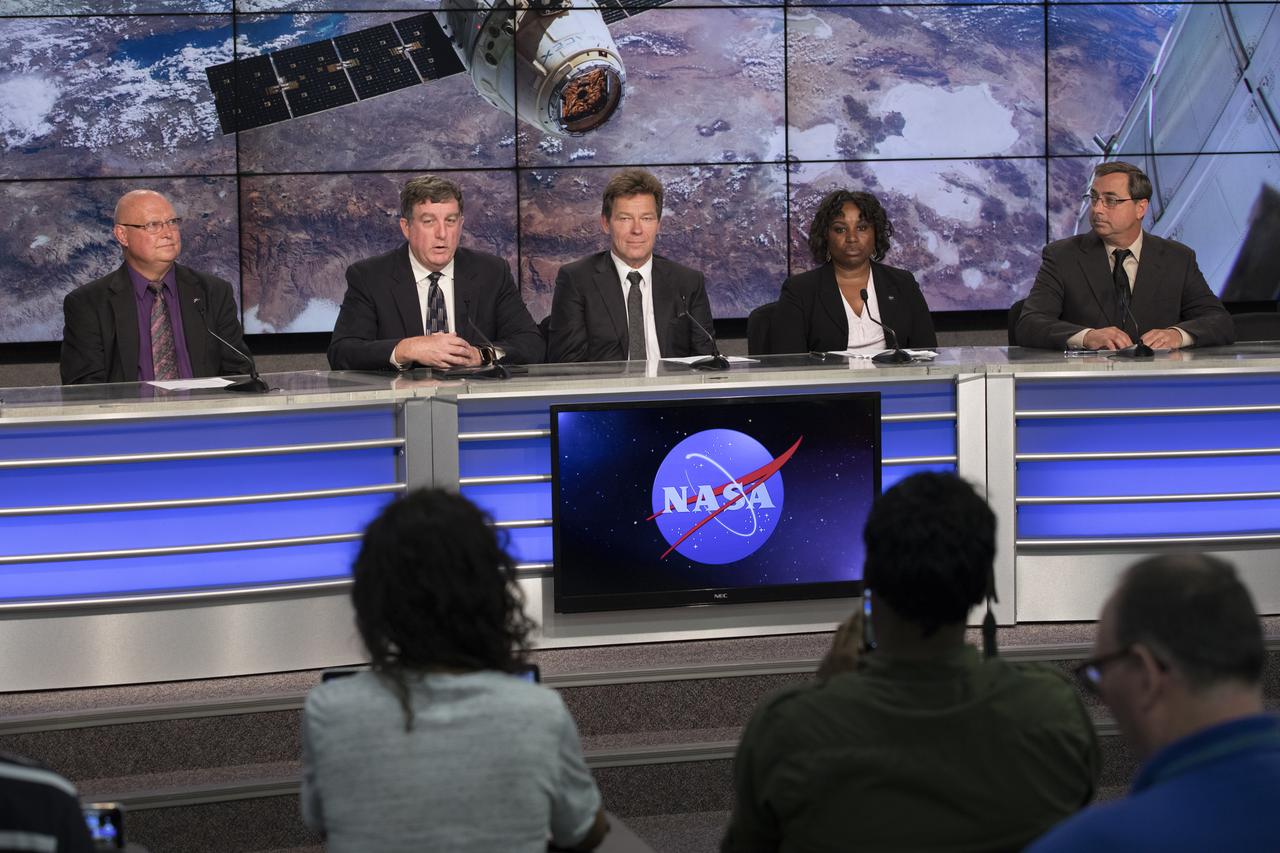
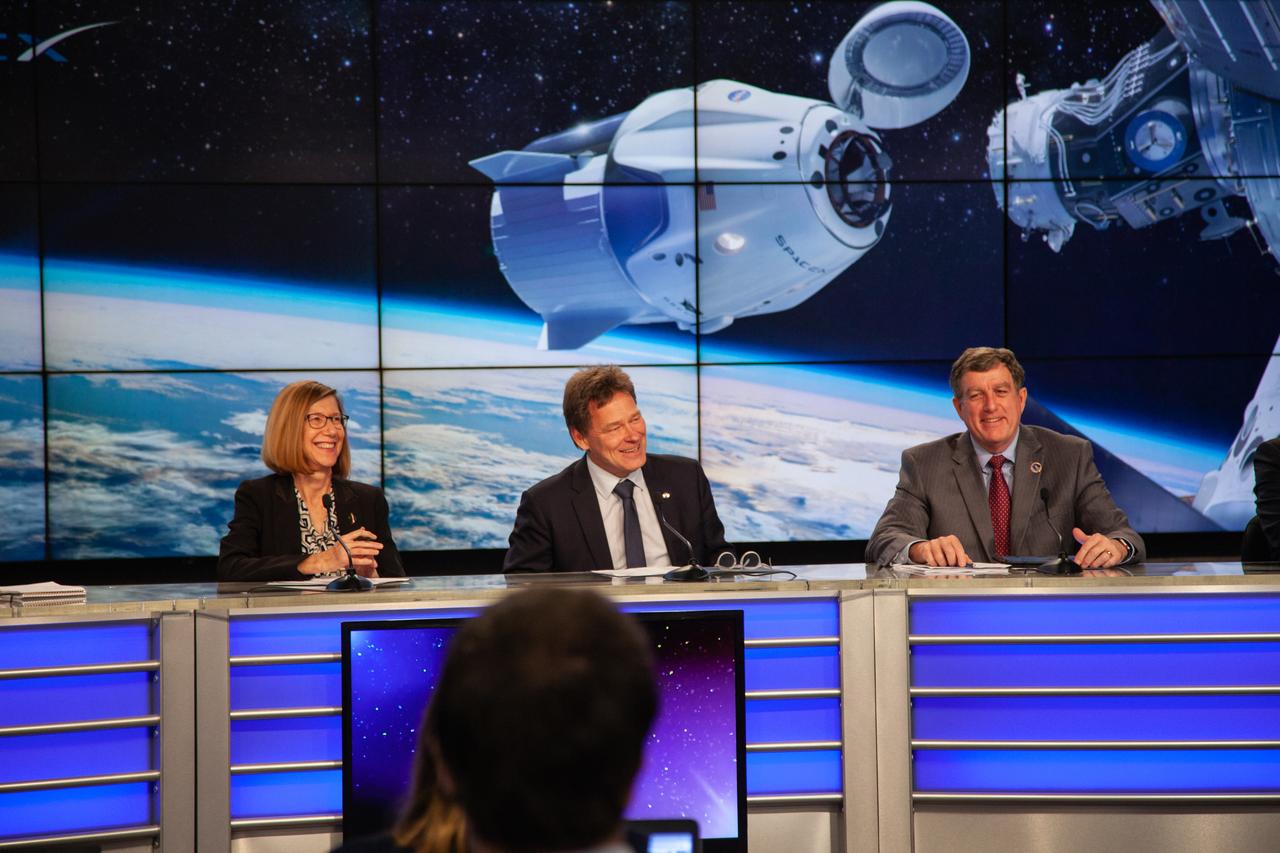
In the Kennedy Space Center’s Press Site auditorium, agency and industry leaders speak to members of the media during a prelaunch news conference for the SpaceX CRS-11 commercial resupply services mission to the International Space Station. From left are: Mike Curie of NASA Communications, Kirk Shireman, NASA's International Space Station Program manager, Hans Koenigsmann, vice president of Flight Reliability for SpaceX, Camille Alleyne, associate program scientist for the International Space Station at NASA’s Johnson Space Center, and Mike McAleenan, launch weather officer for the U.S. Air Force 45th Weather Squadron. A Dragon spacecraft is scheduled to be launched from Kennedy’s Launch Complex 39A on June 1 atop a SpaceX Falcon 9 rocket on the company's 11th Commercial Resupply Services mission to the space station.
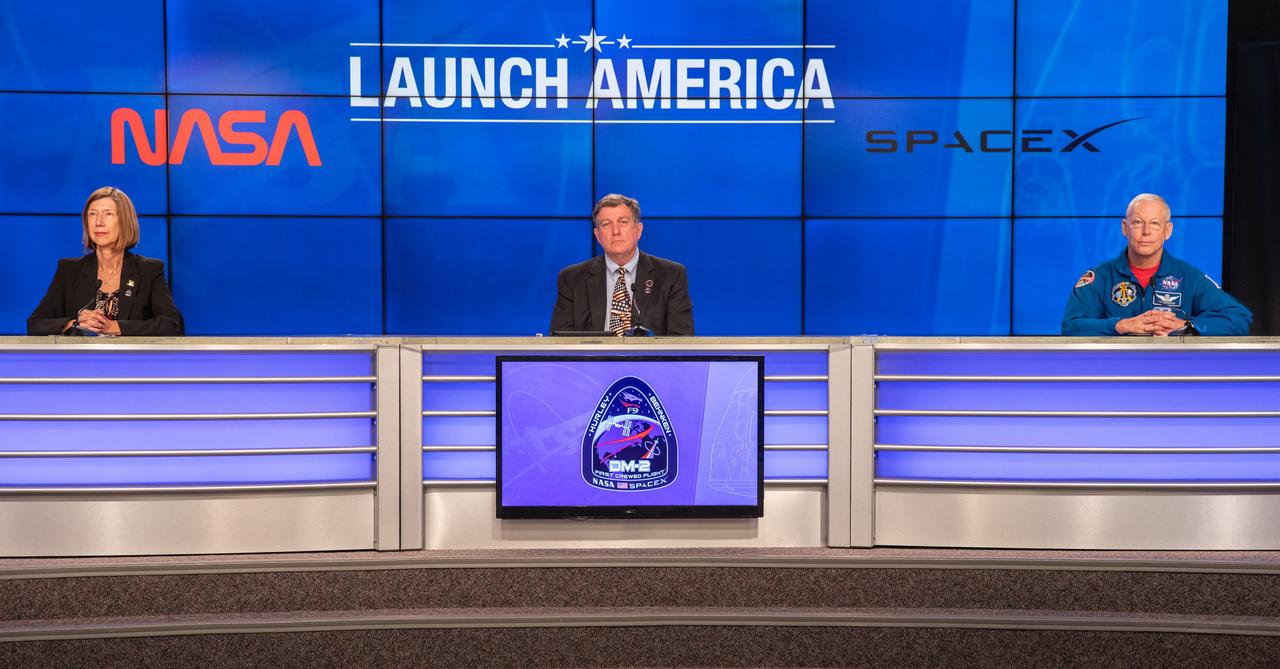
From left, NASA Commercial Crew Program Manager Kathy Lueders, NASA International Space Station Program Manager Kirk Shireman and NASA Chief Astronaut Pat Forrester participate in a postlaunch news conference inside the Press Site auditorium at NASA’s Kennedy Space Center in Florida on May 30, 2020, following the launch of the agency’s SpaceX Demo-2 mission to the International Space Station. Liftoff of the SpaceX Falcon 9 rocket and Crew Dragon spacecraft, carrying NASA astronauts Robert Behnken and Douglas Hurley, occurred at 3:22 p.m. EDT from historic Launch Complex 39A. Behnken and Hurley are the first astronauts to launch to the space station from U.S. soil since the end of the Space Shuttle Program in 2011. Part of NASA’s Commercial Crew Program, this will be SpaceX’s final flight test, paving the way for the agency to certify the crew transportation system for regular, crewed flights to the orbiting laboratory.
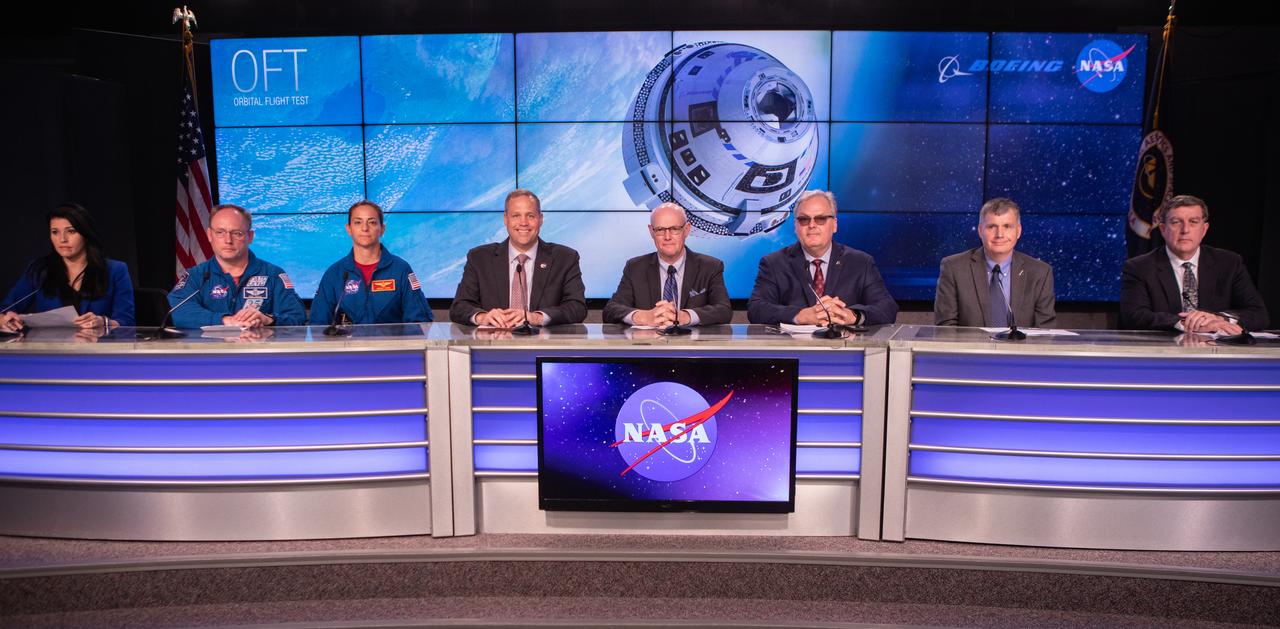
Officials from NASA, Boeing and United Launch Alliance participate in a briefing at the agency’s Kennedy Space Center in Florida following launch of Boeing’s Orbital Flight Test, Dec. 20, 2019. From left to right are Bettina Inclan, NASA Communications; NASA astronauts Mike Fincke and Nicole Mann; Jim Bridenstine, NASA Administrator; Tory Bruno, President and CEO, United Launch Alliance; Jim Chilton, Boeing senior vice president, Space and Launch Division; Steve Stich, deputy manager, NASA Commercial Crew Program; and Kirk Shireman, manager, International Space Station Program. Boeing’s CST-100 Starliner spacecraft launched atop a United Launch Alliance Atlas V rocket from Space Launch Complex 41 at Cape Canaveral Air Force Station at 6:36 a.m. EST. The uncrewed Orbital Flight Test is the Starliner’s first flight for NASA’s Commercial Crew Program.
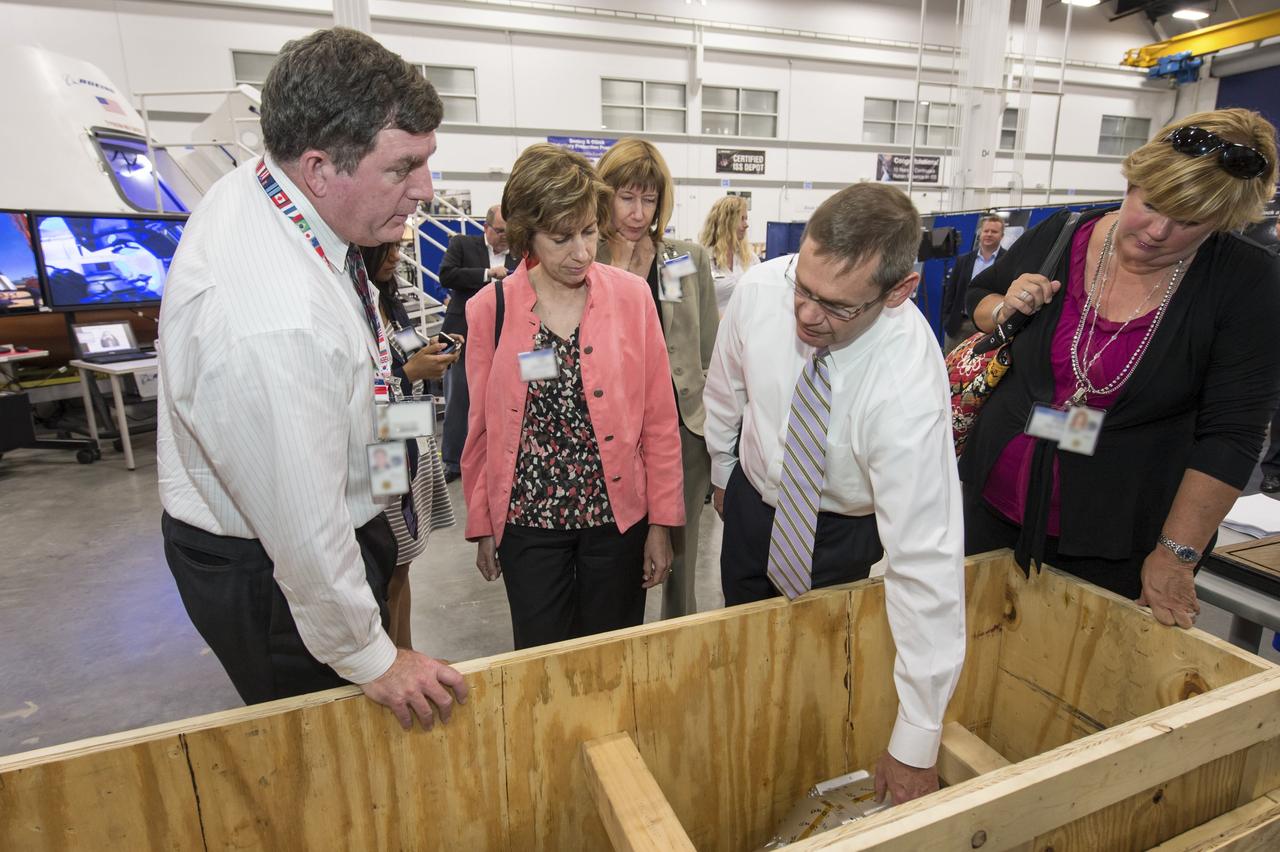
HOUSTON -- JSC-2013-E076043 -- John Elbon, The Boeing Company's vice president of Space Exploration, second right, shows off a wind tunnel model of the CST-100 spacecraft to Johnson Space Center management at the company's Houston Product Support Center. From left, are Kirk Shireman, Johnson's deputy director, Ellen Ochoa, Johnson's director, Kathy Lueders, deputy director of NASA's Commercial Crew Program, Elbon, and Melanie Saunders, Johnson's associate director. Boeing's CST-100 is designed to transport a mix of crew and cargo to low-Earth-orbit destinations. Boeing is one of three aerospace industry partners working with NASA's Commercial Crew Program, or CCP, during the Commercial Crew Integrated Capability, or CCiCap, initiative, which is intended to make commercial human spaceflight services available for government and commercial customers. To learn more about CCP, visit www.nasa.gov/commercialcrew. Photo credit: NASA/James Blair
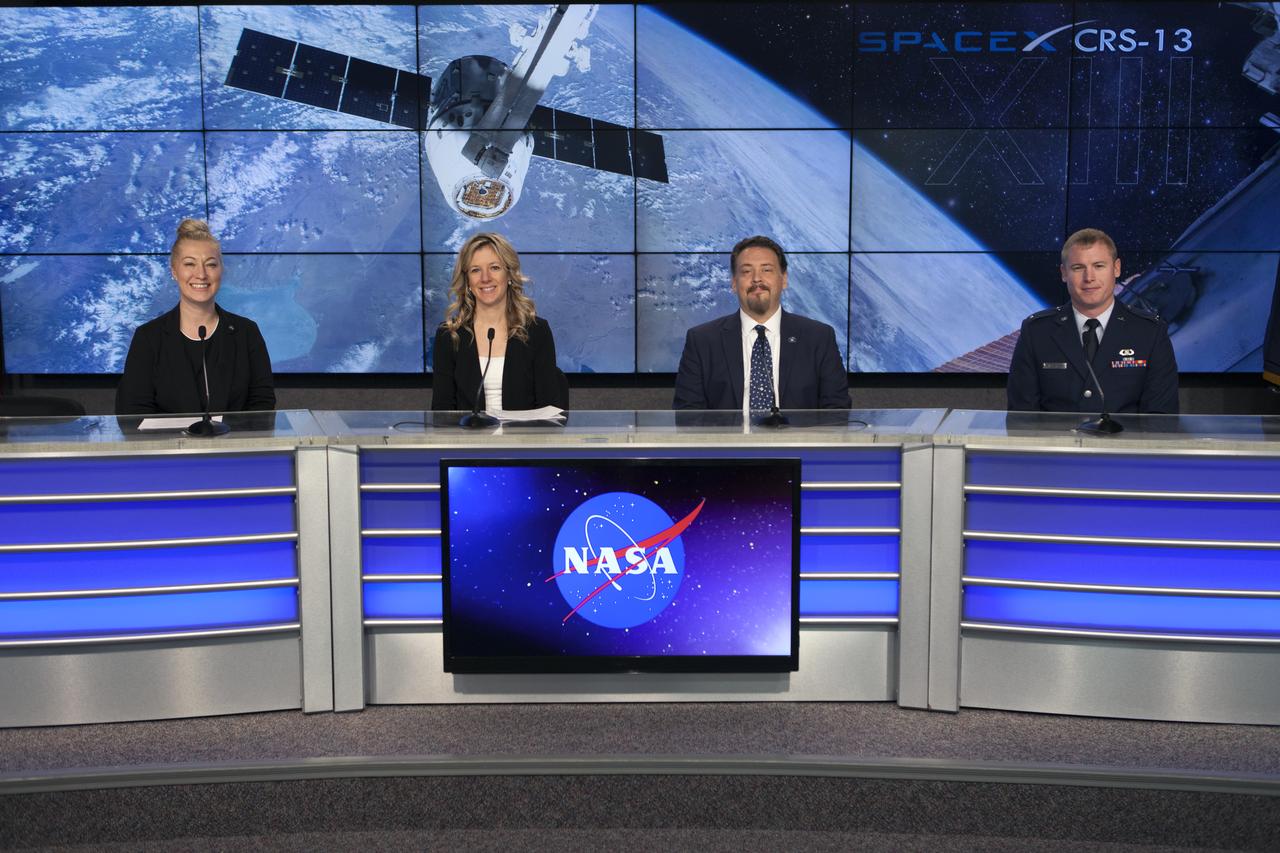
In the Kennedy Space Center’s Press Site auditorium, NASA and industry leaders speak to members of the media during a prelaunch news conference for the SpaceX CRS-13 commercial resupply services mission to the International Space Station. From left are: Cheryl Warner of NASA Communications, Jessica Jensen, SpaceX director of Dragon Mission Management, Kirt Costello, deputy chief scientist for the International Space Station Program Science Office at NASA’s Johnson Space Center in Houston, and Lt. David Myers, weather officer for the 45th Weather Squadron. Kirk Shireman, International Space Station Program manager at Johnson, participated by video link. A Dragon spacecraft is scheduled to be launched from Space Launch Complex 40 at Cape Canaveral Air Force Station at 11:46 a.m. EST, on Dec. 12, 2017. The SpaceX Falcon 9 rocket will lift off on the company's 13th Commercial Resupply Services mission to the space station.
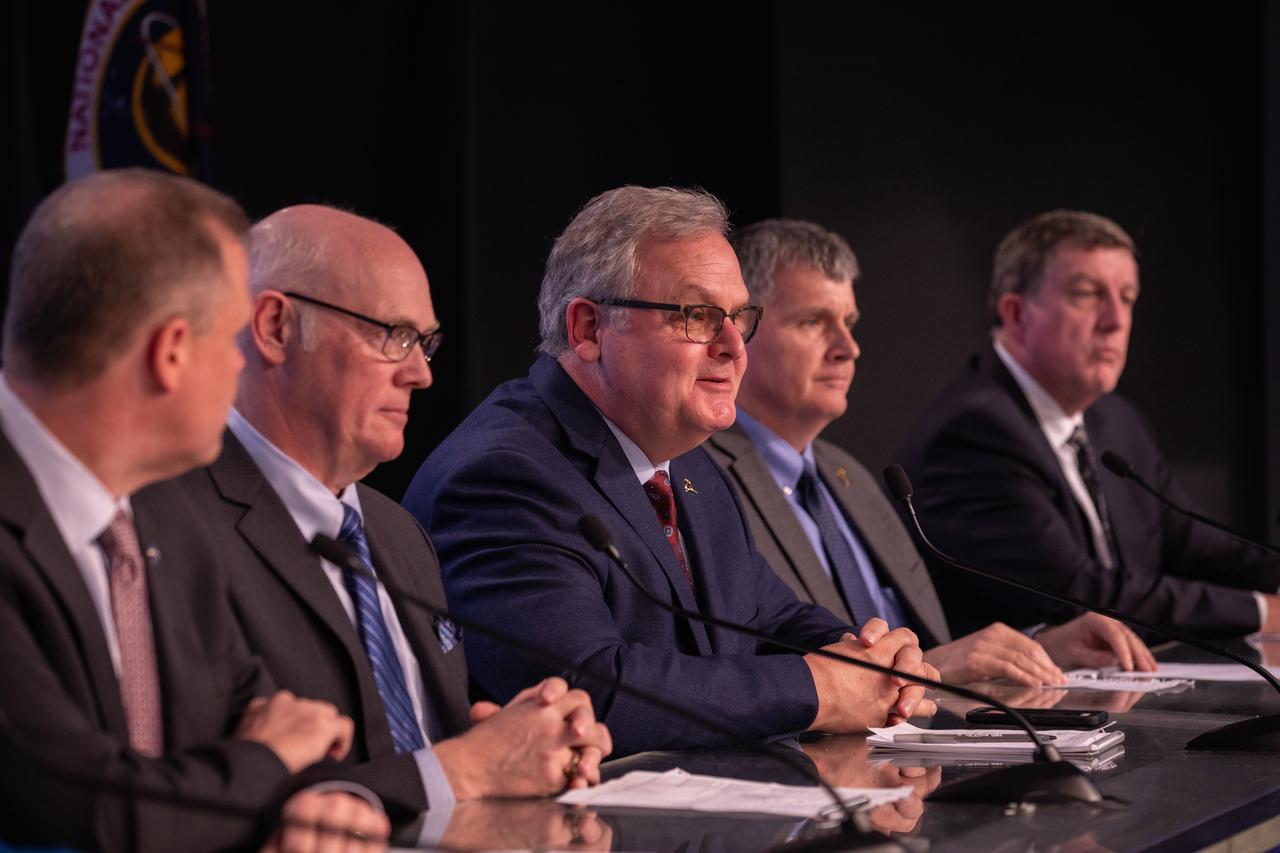
Jim Chilton, Boeing senior vice president, Space and Launch Division, speaks during a briefing at NASA’s Kennedy Space Center in Florida following launch of Boeing’s Orbital Flight Test, Dec. 20, 2019. From left to right are Jim Bridenstine, NASA Administrator; Tory Bruno, president and CEO, United Launch Alliance; Chilton; Steve Stich, deputy manager, NASA Commercial Crew Program; and Kirk Shireman, manager of NASA’s International Space Station Program. Boeing’s CST-100 Starliner spacecraft launched atop a United Launch Alliance Atlas V rocket from Space Launch Complex 41 at Cape Canaveral Air Force Station at 6:36 a.m. EST. The uncrewed Orbital Flight Test is the Starliner’s first flight for NASA’s Commercial Crew Program.
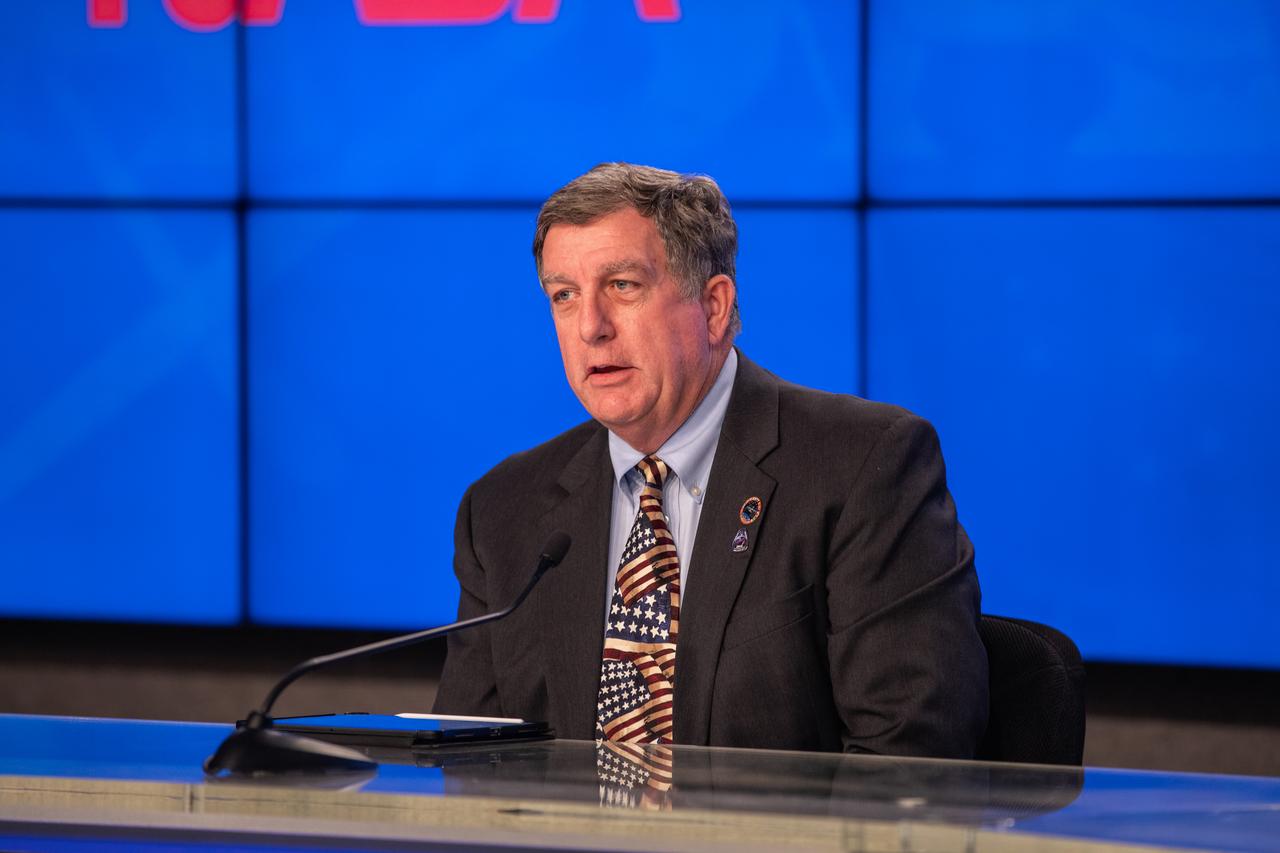
NASA’s International Space Station Program Manager, Kirk Shireman, participates in a postlaunch news conference inside the Press Site auditorium at the agency’s Kennedy Space Center in Florida on May 30, 2020, following the launch of NASA’s SpaceX Demo-2 mission to the International Space Station. Liftoff of the SpaceX Falcon 9 rocket and Crew Dragon spacecraft, carrying NASA astronauts Robert Behnken and Douglas Hurley, occurred at 3:22 p.m. EDT from historic Launch Complex 39A. Behnken and Hurley are the first astronauts to launch to the space station from U.S. soil since the end of the Space Shuttle Program in 2011. Part of NASA’s Commercial Crew Program, this will be SpaceX’s final flight test, paving the way for the agency to certify the crew transportation system for regular, crewed flights to the orbiting laboratory.
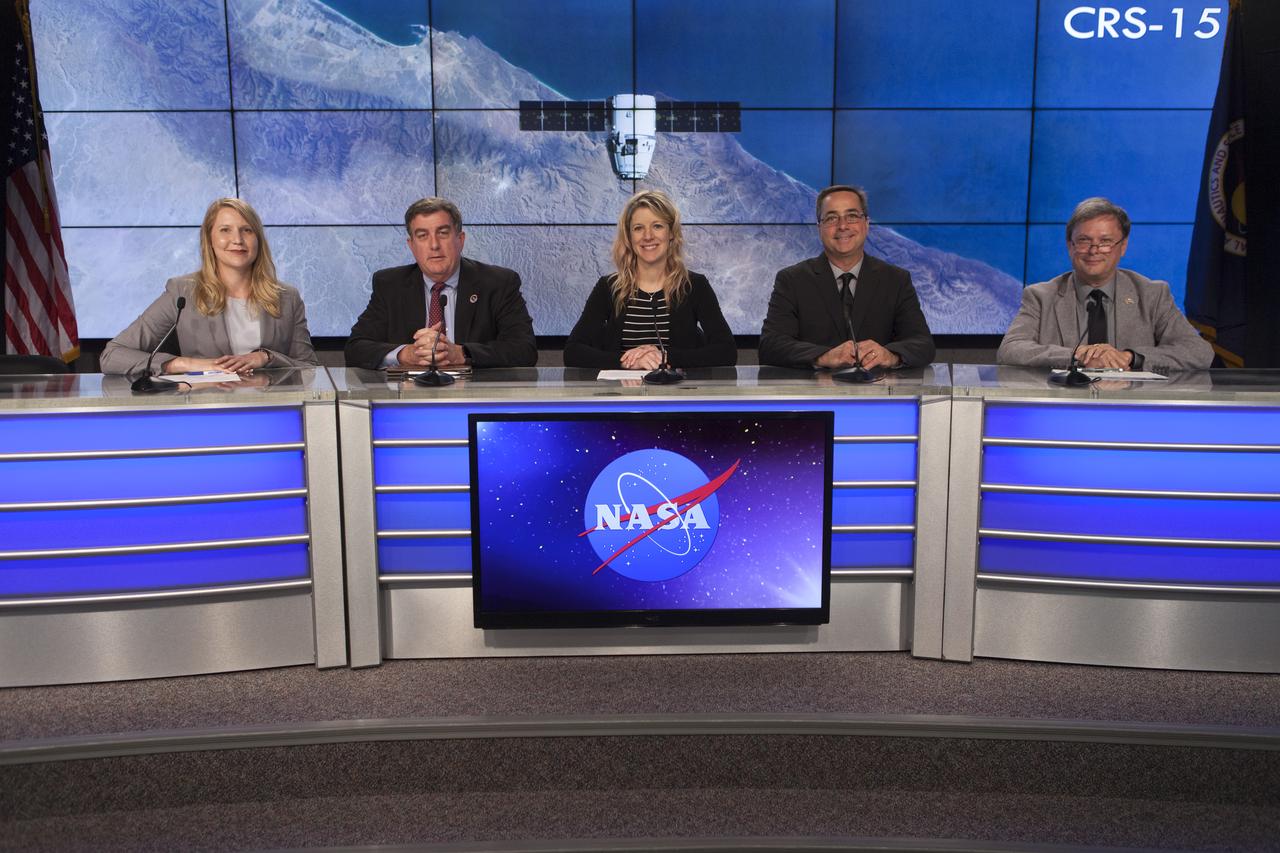
In the Kennedy Space Center’s Press Site auditorium, agency and industry leaders speak to members of the media during a prelaunch news conference for the SpaceX CRS-15 Commercial Resupply Services mission to the International Space Station. From left are: Stephanie Schierholz of NASA Communications,Kirk Shireman, NASA manager of the International Space Station Program, Jessica Jensen, director of Dragon Mission Management for SpaceX, Mike McAleenan, launch weather officer for the U.S. Air Force 45th Weather Squadron at Cape Canaveral Air Force Station, and David Brady, assistant program scientist for the International Space Station Program. A SpaceX Dragon spacecraft is scheduled to be launched from Space Launch Complex 40 at Cape Canaveral Air Force Station. The SpaceX Falcon 9 rocket will lift off on the company's 15th Commercial Resupply Services mission to the space station.
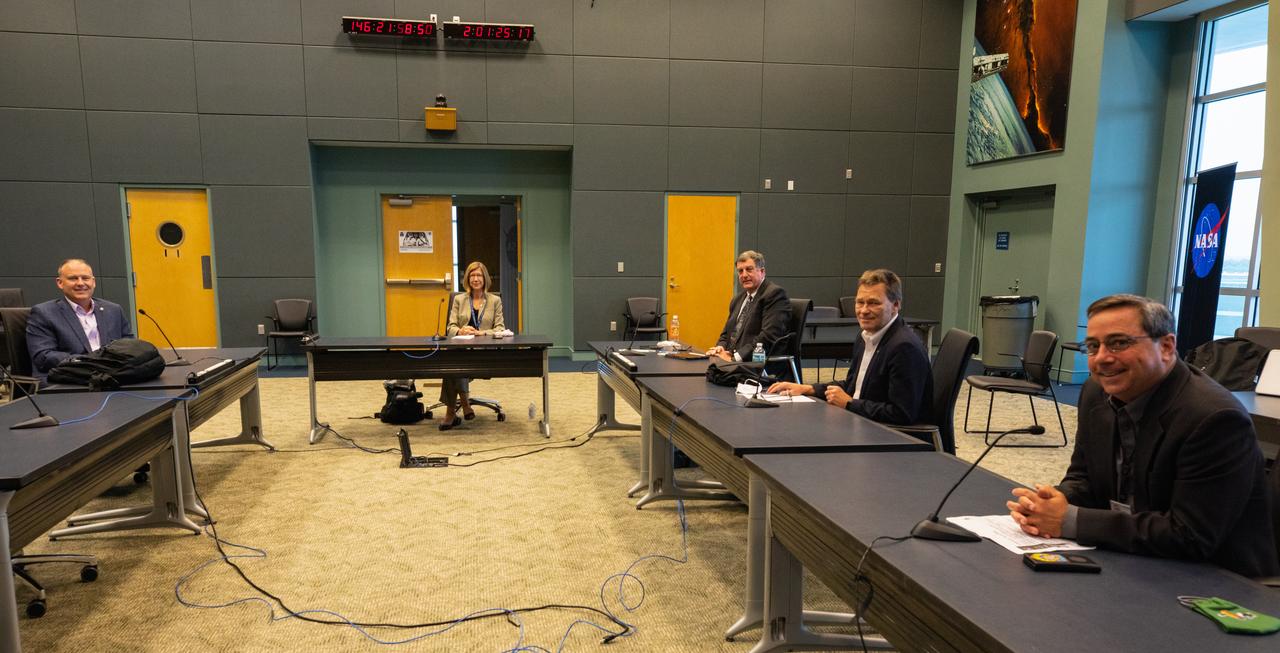
Representatives from NASA, SpaceX and the U.S. Space Force 45th Weather Squadron participate in a news conference following the Launch Readiness Review at the agency’s Kennedy Space Center in Florida on Monday, May 25, 2020, in advance of NASA’s SpaceX Demo-2 Flight Test to the International Space Station as part of NASA’s Commercial Crew Program. From the left are: Norm Knight, deputy director, NASA Johnson Space Center Flight Operations Kathy Lueders, manager, NASA Commercial Crew Program; Kirk Shireman, manager, International Space Station Program; Hans Koenigsmann, vice president, Build and Flight Reliability, SpaceX; and Mike McAleenan, launch weather officer, 45th Weather Squadron. Launch is currently targeted for 4:33 p.m. EDT Wednesday, May 27. The SpaceX Crew Dragon spacecraft will launch on a Falcon 9 rocket from historic Launch Complex 39A at NASA’s Kennedy Space Center in Florida.
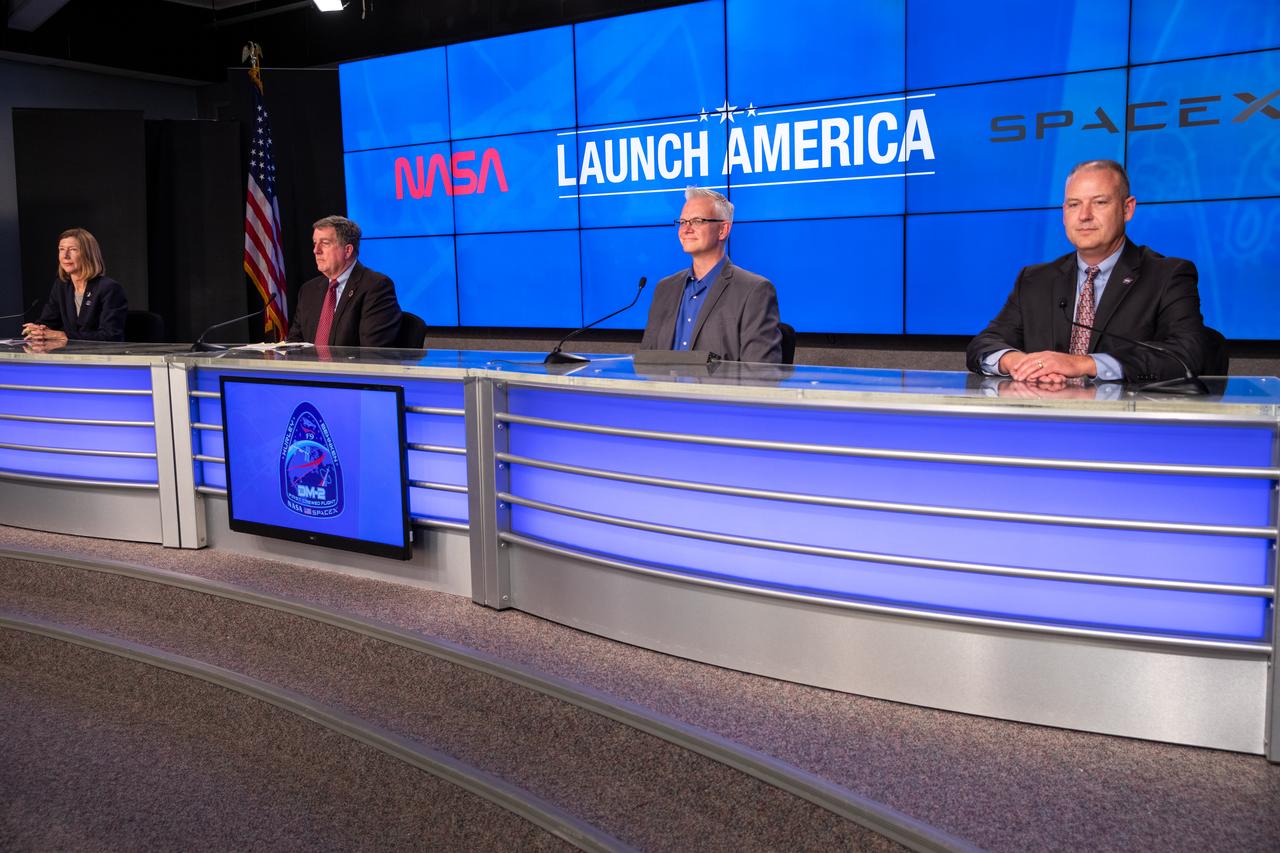
Inside the Press Site auditorium at NASA’s Kennedy Space Center in Florida, agency and industry leaders conduct a virtual news conference with members of the media on May 22, 2020, following the conclusion of the flight readiness review for NASA’s SpaceX Demo-2 mission, with NASA astronauts Robert Behnken and Douglas Hurley, to the International Space Station. From left are Kathy Lueders, Commercial Crew Program manager; Kirk Shireman, International Space Station Program manager; Benji Reed, director of Crew Mission Management, SpaceX; and Norm Knight, deputy director of NASA’s Johnson Space Center’s Flight Operations. This will be SpaceX’s final flight test for NASA’s Commercial Crew Program. Behnken and Hurley will fly to the orbiting laboratory in a SpaceX Crew Dragon spacecraft, launching atop a Falcon 9 rocket from Kennedy’s Launch Complex 39A. Liftoff is scheduled for 4:33 p.m. EDT on Wednesday, May 27.
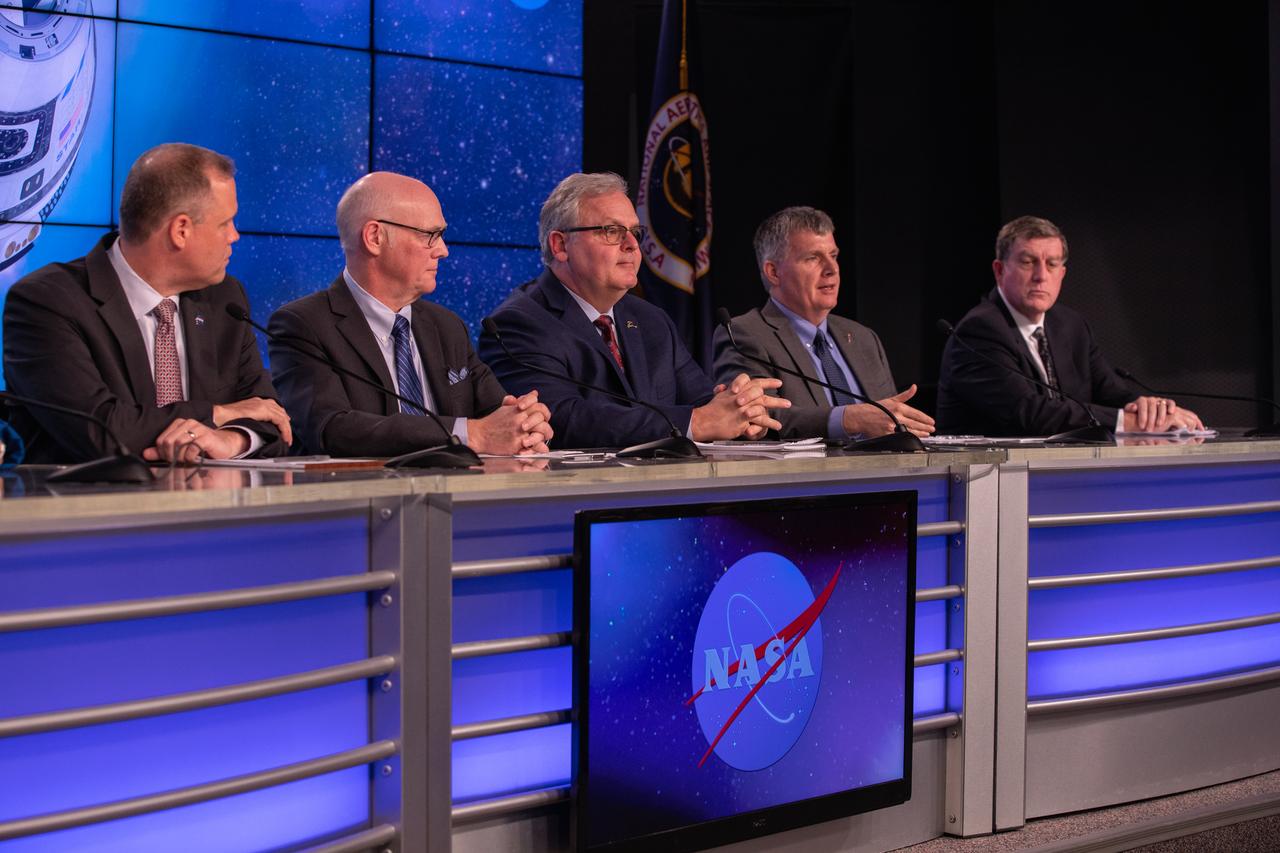
Officials from NASA, Boeing and United Launch Alliance participate in a briefing at the agency’s Kennedy Space Center in Florida following launch of Boeing’s Orbital Flight Test, Dec. 20, 2019. From left to right are Jim Bridenstine, NASA Administrator; Tory Bruno, president and CEO, United Launch Alliance; Jim Chilton, Boeing senior vice president, Space and Launch Division; Steve Stich, deputy manager, NASA Commercial Crew Program; and Kirk Shireman, manager of NASA’s International Space Station Program. Boeing’s CST-100 Starliner spacecraft launched atop a United Launch Alliance Atlas V rocket from Space Launch Complex 41 at Cape Canaveral Air Force Station at 6:36 a.m. EST. The uncrewed Orbital Flight Test is the Starliner’s first flight for NASA’s Commercial Crew Program.
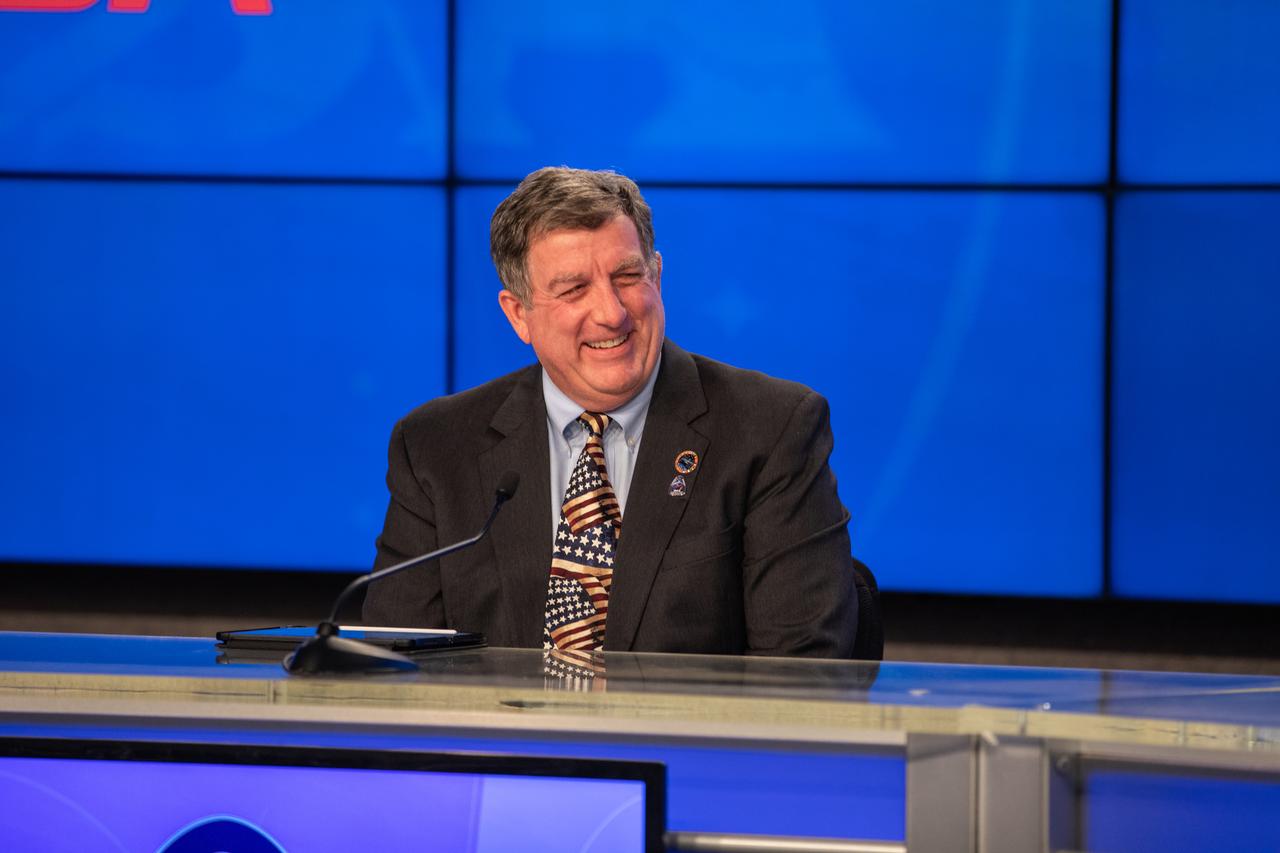
NASA’s International Space Station Program Manager, Kirk Shireman, participates in a postlaunch news conference inside the Press Site auditorium at the agency’s Kennedy Space Center in Florida on May 30, 2020, following the launch of NASA’s SpaceX Demo-2 mission to the International Space Station. Liftoff of the SpaceX Falcon 9 rocket and Crew Dragon spacecraft, carrying NASA astronauts Robert Behnken and Douglas Hurley, occurred at 3:22 p.m. EDT from historic Launch Complex 39A. Behnken and Hurley are the first astronauts to launch to the space station from U.S. soil since the end of the Space Shuttle Program in 2011. Part of NASA’s Commercial Crew Program, this will be SpaceX’s final flight test, paving the way for the agency to certify the crew transportation system for regular, crewed flights to the orbiting laboratory.
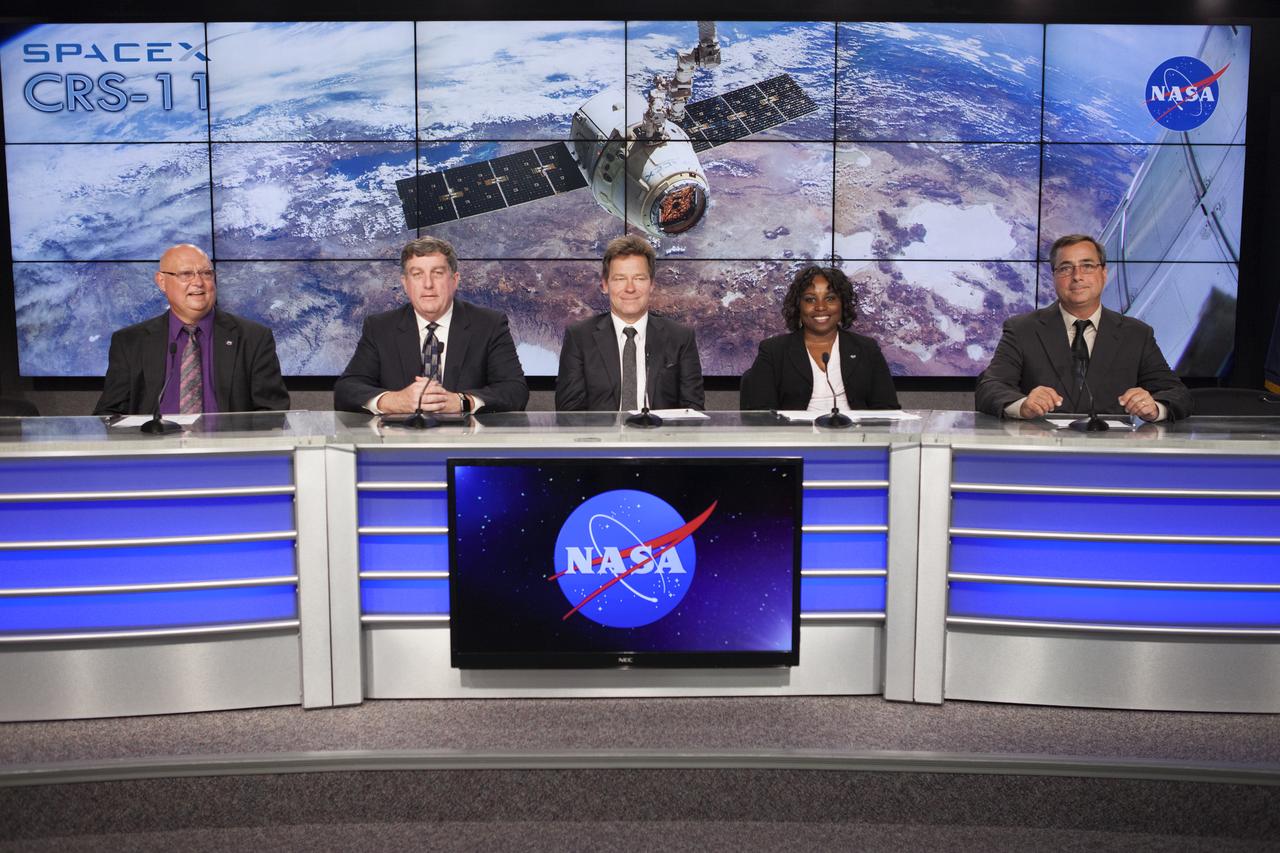
In the Kennedy Space Center’s Press Site auditorium, agency and industry leaders speak to members of the media during a prelaunch news conference for the SpaceX CRS-11 commercial resupply services mission to the International Space Station. From left are: Mike Curie of NASA Communications, Kirk Shireman, NASA's International Space Station Program manager, Hans Koenigsmann, vice president of Flight Reliability for SpaceX, Camille Alleyne, associate program scientist for the International Space Station at NASA’s Johnson Space Center, and Mike McAleenan, launch weather officer for the U.S. Air Force 45th Weather Squadron. A Dragon spacecraft is scheduled to be launched from Kennedy’s Launch Complex 39A on June 1 atop a SpaceX Falcon 9 rocket on the company's 11th Commercial Resupply Services mission to the space station.
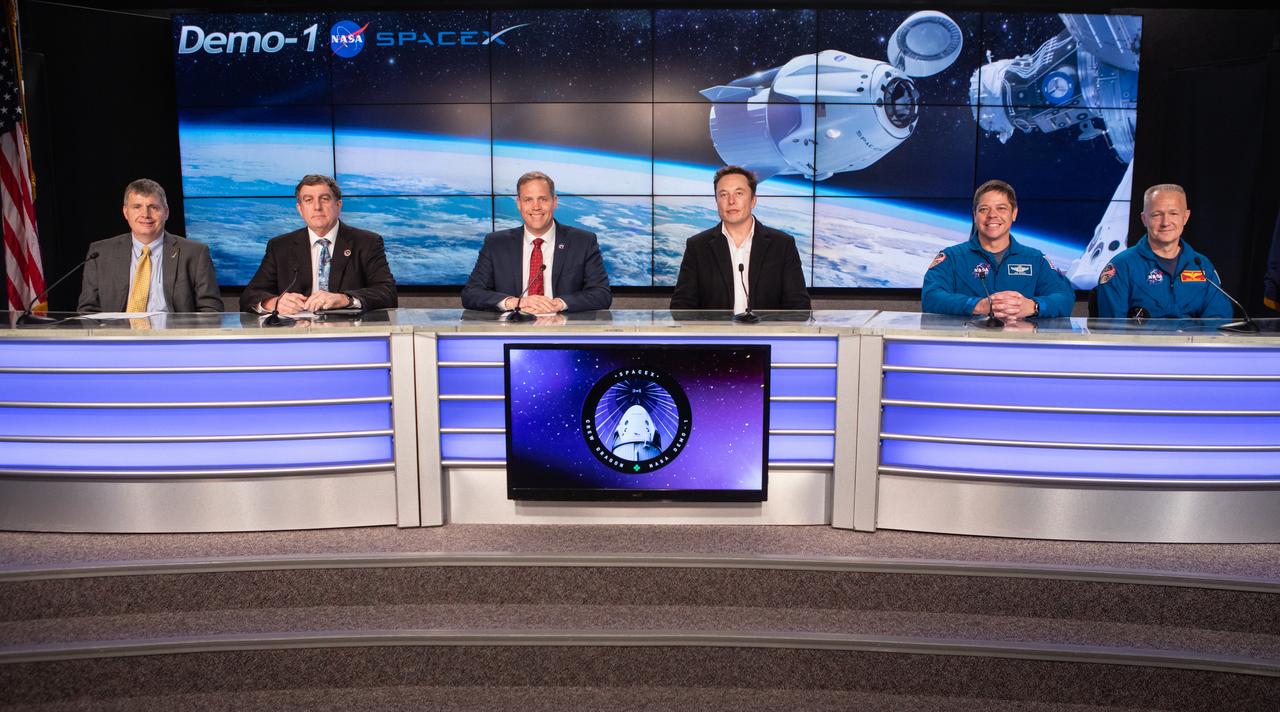
In Kennedy Space Center’s Press Site auditorium, agency and industry leaders speak to members of the media during a post launch news conference following the March 2, 2:49 a.m. EST launch of the SpaceX Demo-1 Commercial Crew Program (CCP) mission to the International Space Station. From left are: Steve Stich, NASA launch manager, Commercial Crew Program; Kirk Shireman, manager, International Space Station Program; Jim Bridenstine, NASA administrator; Elon Musk, CEO and lead designer, SpaceX; Bob Behnken, NASA astronaut and Doug Hurley, NASA astronaut. The Crew Dragon’s trip to the space station is designed to validate end-to-end systems and capabilities, leading to certification to fly crew. NASA has worked with SpaceX and Boeing in developing the CCP spacecraft to facilitate new human spaceflight systems launching from U.S. soil with the goal of safe, reliable and cost-effective access to low-Earth orbit destinations, such as the space station.
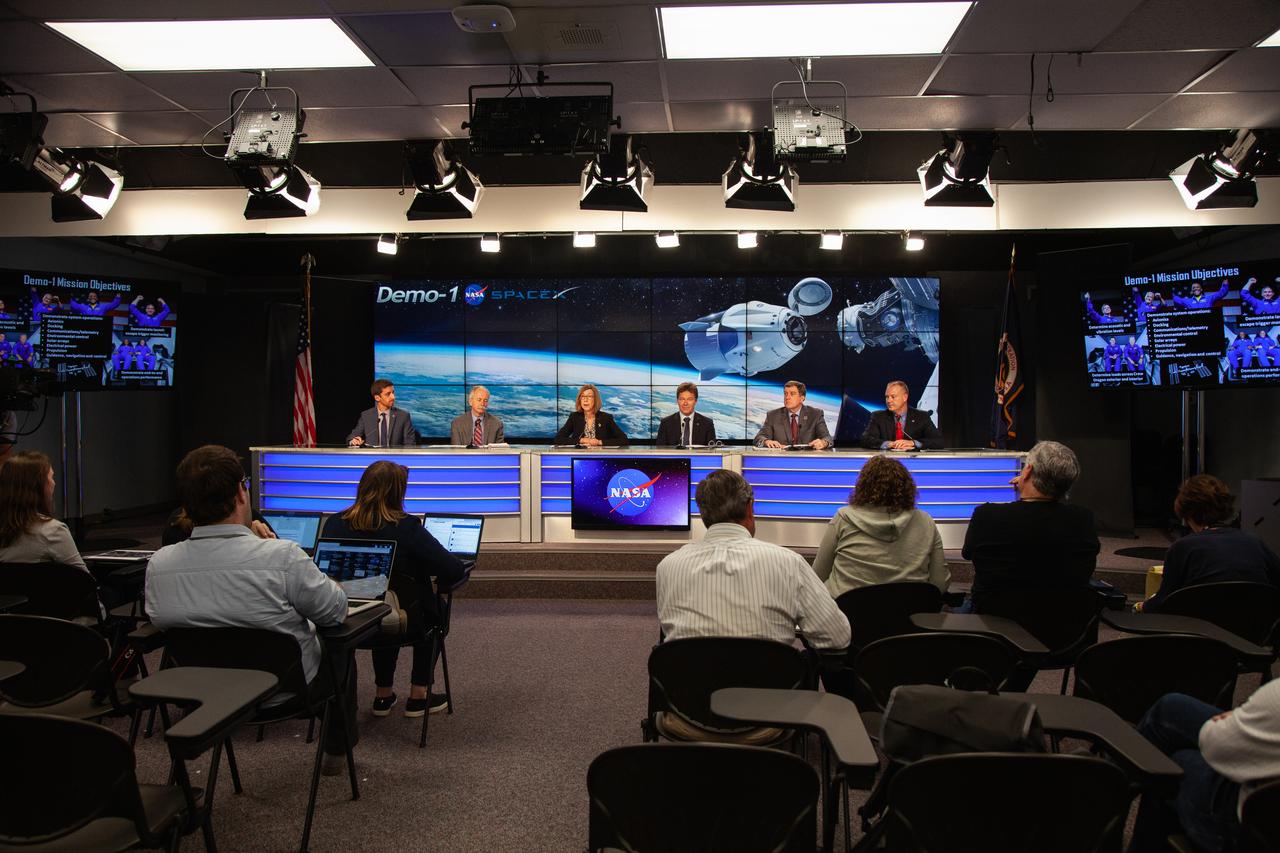
In Kennedy Space Center’s Press Site auditorium, agency and industry leaders speak to members of the media on Friday, Feb. 22, during the post-flight readiness review briefing for the SpaceX Demo-1 Commercial Crew Program (CCP) mission to the International Space Station. From left are: Josh Finch of NASA Communications; William Gerstenmaier, associate administrator, NASA Human Exploration and Operations; Kathy Lueders, manager, NASA Commercial Crew Program; Hans Koenigsmann, vice president, Build and Flight Reliability, SpaceX; Kirk Shireman, International Space Station Program manager; and Norm Knight, deputy director, NASA Johnson Space Center Flight Operations. The inaugural uncrewed flight of the SpaceX Crew Dragon, known as Demo-1, is targeted to lift off from Kennedy’s Launch Complex 39A on Saturday, March 2. EST. A SpaceX Falcon 9 rocket will launch the Crew Dragon on a mission designed to validate end-to-end systems and capabilities, leading to certification to fly crew.
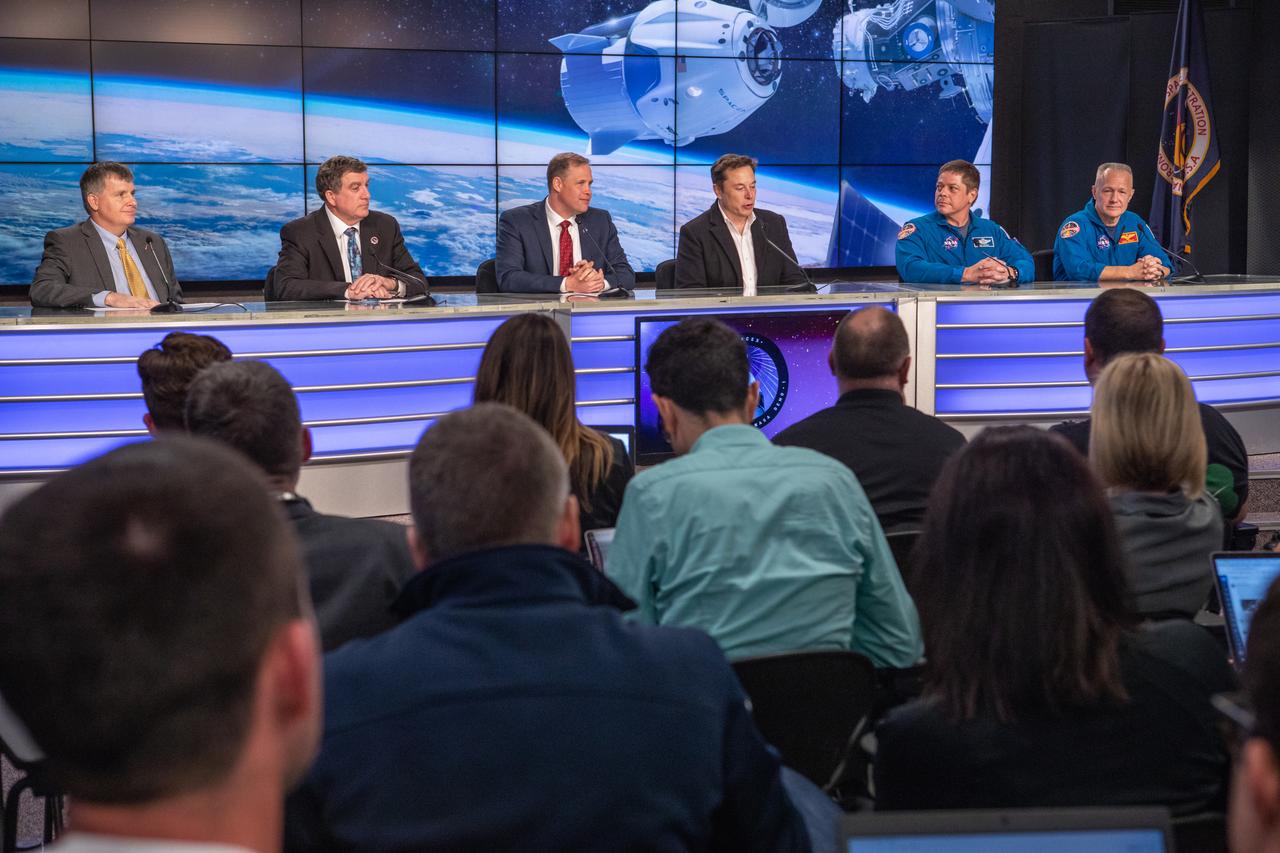
In Kennedy Space Center’s Press Site auditorium, agency and industry leaders speak to members of the media during a post launch news conference following the March 2, 2:49 a.m. EST launch of the SpaceX Demo-1 Commercial Crew Program (CCP) mission to the International Space Station. From left are: Steve Stich, NASA launch manager, Commercial Crew Program; Kirk Shireman, manager, International Space Station Program; Jim Bridenstine, NASA administrator; Elon Musk, CEO and lead designer, SpaceX; Bob Behnken, NASA astronaut and Doug Hurley, NASA astronaut. The Crew Dragon’s trip to the space station is designed to validate end-to-end systems and capabilities, leading to certification to fly crew. NASA has worked with SpaceX and Boeing in developing the CCP spacecraft to facilitate new human spaceflight systems launching from U.S. soil with the goal of safe, reliable and cost-effective access to low-Earth orbit destinations, such as the space station.
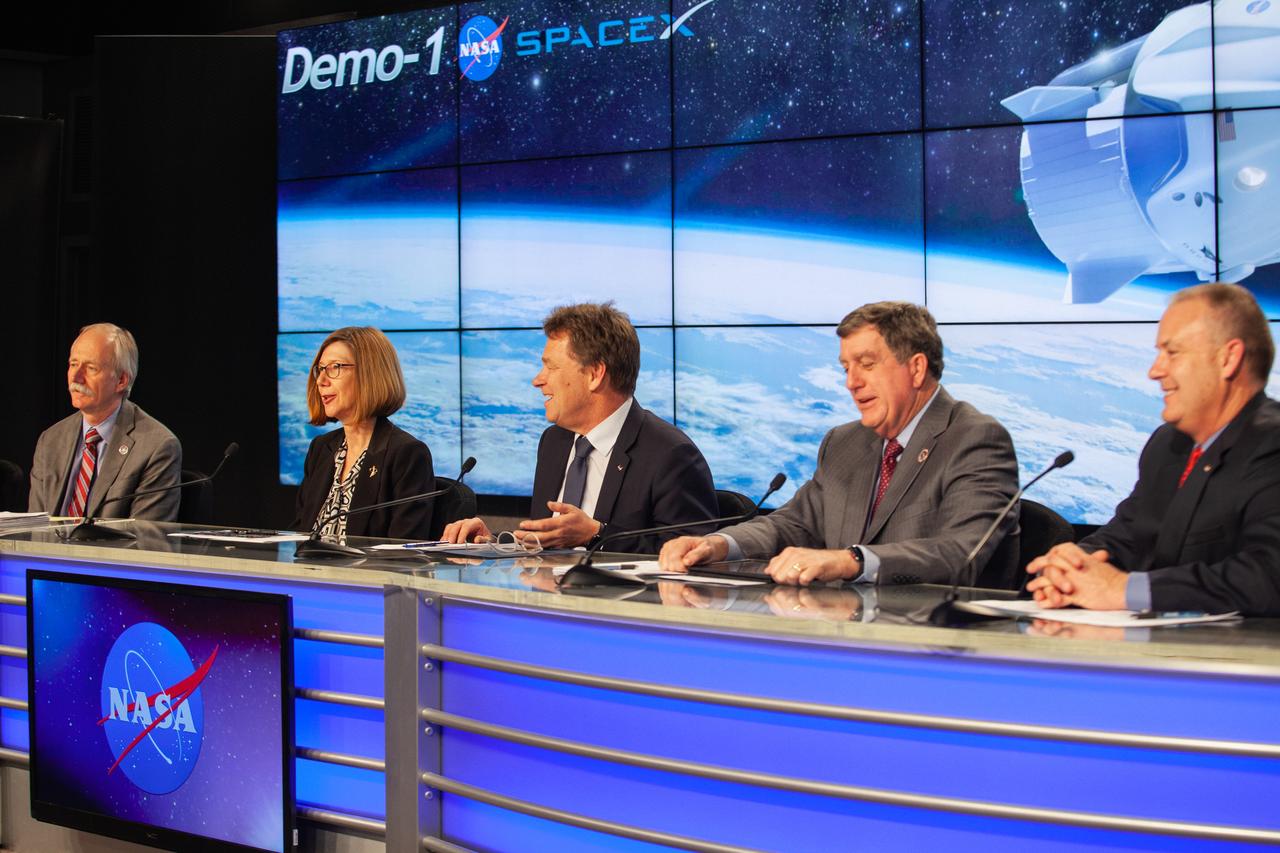
In Kennedy Space Center’s Press Site auditorium, agency and industry leaders speak to members of the media on Friday, Feb. 22, during the post-flight readiness review briefing for the SpaceX Demo-1 Commercial Crew Program (CCP) mission to the International Space Station. From left are: Josh Finch of NASA Communications; William Gerstenmaier, associate administrator, NASA Human Exploration and Operations; Kathy Lueders, manager, NASA Commercial Crew Program; Hans Koenigsmann, vice president, Build and Flight Reliability, SpaceX; Kirk Shireman, International Space Station Program manager; and Norm Knight, deputy director, NASA Johnson Space Center Flight Operations. The inaugural uncrewed flight of the SpaceX Crew Dragon, known as Demo-1, is targeted to lift off from Kennedy’s Launch Complex 39A on Saturday, March 2. EST. A SpaceX Falcon 9 rocket will launch the Crew Dragon on a mission designed to validate end-to-end systems and capabilities, leading to certification to fly crew.
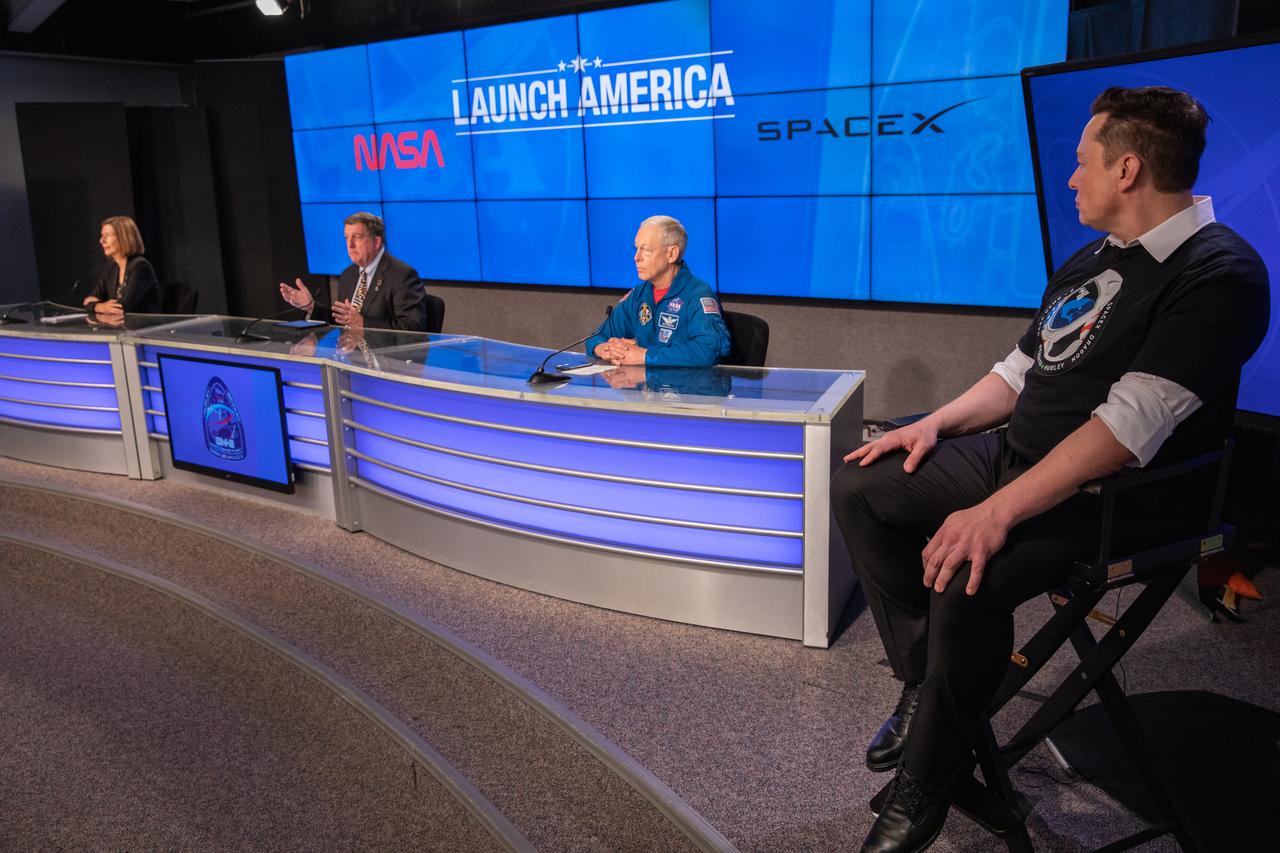
Inside the Press Site auditorium at NASA’s Kennedy Space Center in Florida, NASA and SpaceX officials conduct a postlaunch news conference on May 30, 2020, following the launch of the agency’s SpaceX Demo-2 mission to the International Space Station. From left are: Commercial Crew Program Manager Kathy Lueders; International Space Station Program Manager Kirk Shireman; NASA Chief Astronaut Pat Forrester; and Chief Engineer Elon Musk. Liftoff of the SpaceX Falcon 9 rocket and Crew Dragon spacecraft, carrying NASA astronauts Robert Behnken and Douglas Hurley, occurred at 3:22 p.m. EDT from historic Launch Complex 39A. Behnken and Hurley are the first astronauts to launch to the space station from U.S. soil since the end of the Space Shuttle Program in 2011. Part of NASA’s Commercial Crew Program, this will be SpaceX’s final flight test, paving the way for the agency to certify the crew transportation system for regular, crewed flights to the orbiting laboratory.
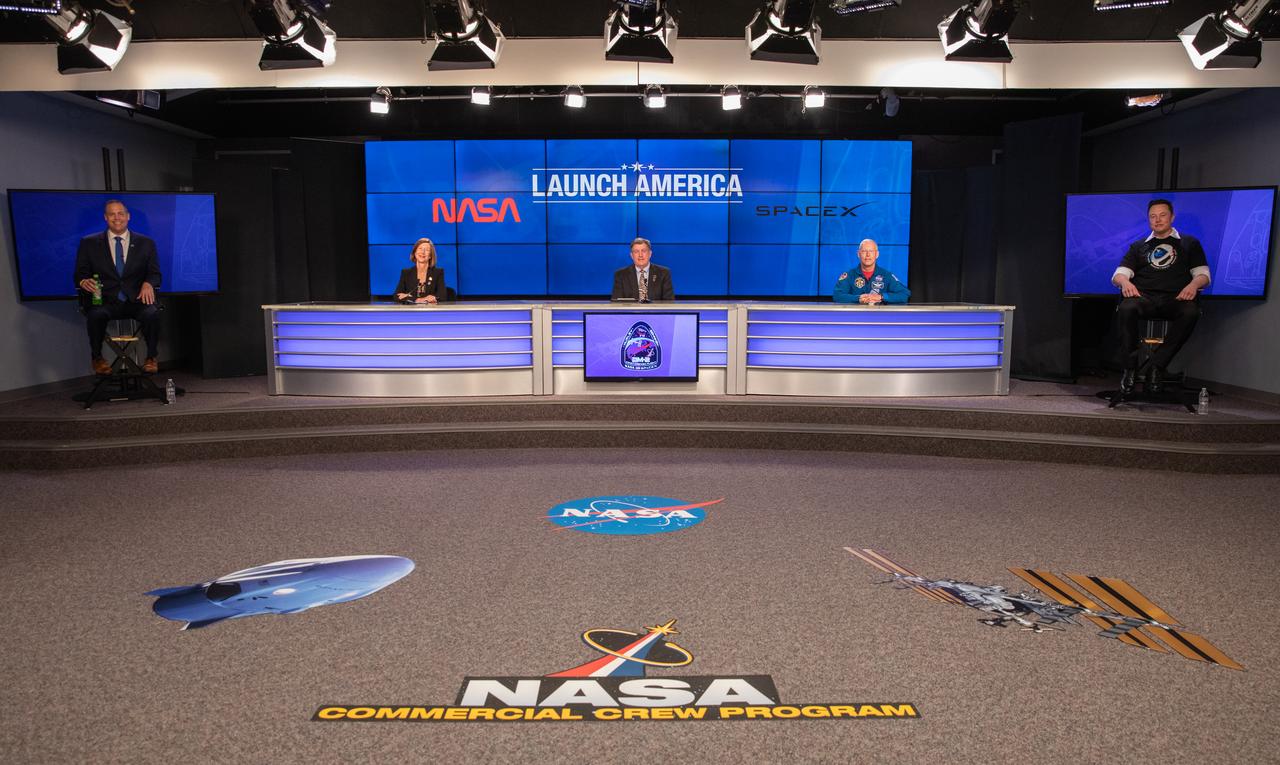
Inside the Press Site auditorium at NASA’s Kennedy Space Center in Florida, NASA and SpaceX officials conduct a postlaunch news conference on May 30, 2020, following the launch of the agency’s SpaceX Demo-2 mission to the International Space Station. From left are: NASA Administrator Jim Bridenstine; NASA Commercial Crew Program Manager Kathy Lueders; NASA International Space Station Program Manager Kirk Shireman; NASA Chief Astronaut Pat Forrester; and Chief Engineer Elon Musk. Liftoff of the SpaceX Falcon 9 rocket and Crew Dragon spacecraft, carrying NASA astronauts Robert Behnken and Douglas Hurley, occurred at 3:22 p.m. EDT from historic Launch Complex 39A. Behnken and Hurley are the first astronauts to launch to the space station from U.S. soil since the end of the Space Shuttle Program in 2011. Part of NASA’s Commercial Crew Program, this will be SpaceX’s final flight test, paving the way for the agency to certify the crew transportation system for regular, crewed flights to the orbiting laboratory.
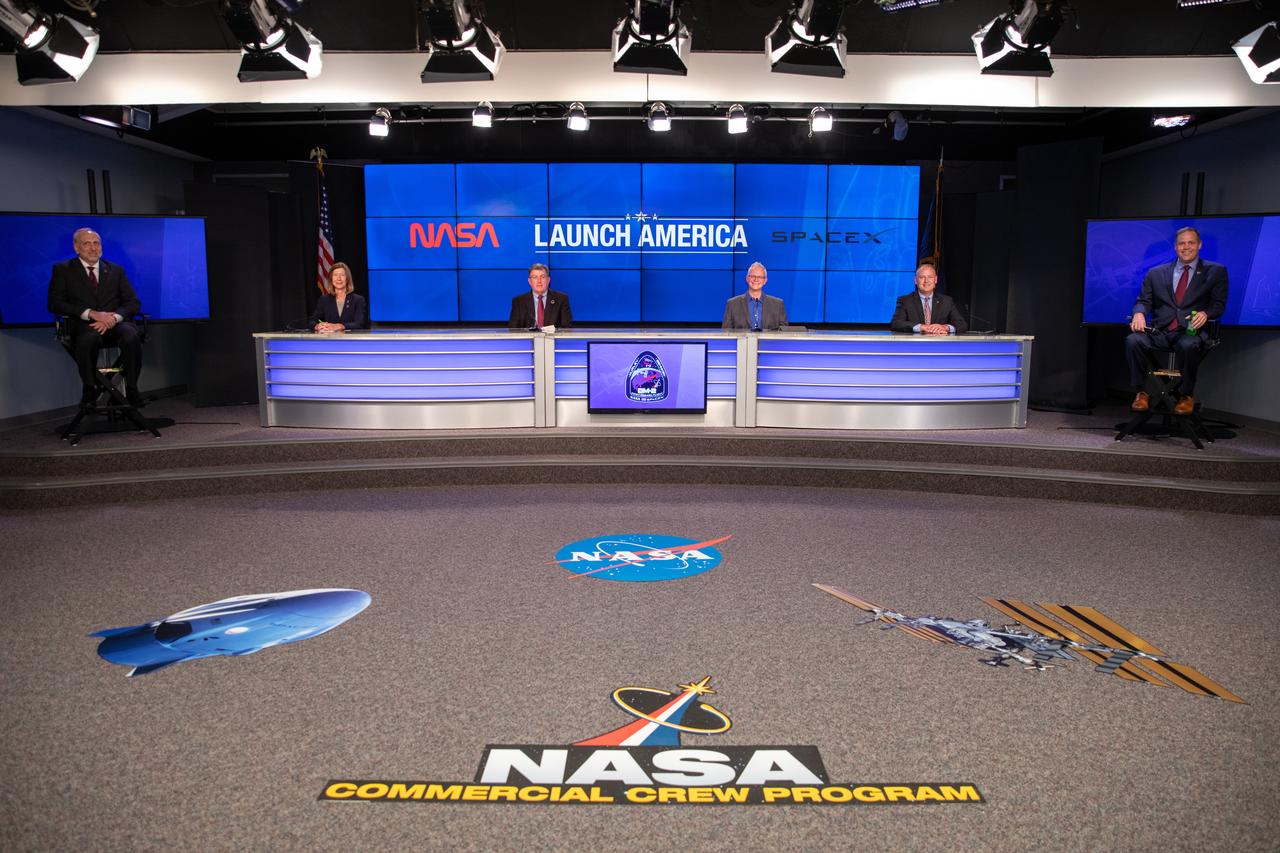
Inside the Press Site auditorium at NASA’s Kennedy Space Center in Florida, agency and industry leaders conduct a virtual news conference with members of the media on May 22, 2020, following the conclusion of the flight readiness review for NASA’s SpaceX Demo-2 mission, with NASA astronauts Robert Behnken and Douglas Hurley, to the International Space Station. From left are Steve Jurczyk, NASA associate administrator; Kathy Lueders, Commercial Crew Program manager; Kirk Shireman, International Space Station Program manager; Benji Reed, director of Crew Mission Management, SpaceX; Norm Knight, deputy director of NASA’s Johnson Space Center’s Flight Operations; and Jim Bridenstine, NASA administrator. This will be SpaceX’s final flight test for NASA’s Commercial Crew Program. Behnken and Hurley will fly to the orbiting laboratory in a SpaceX Crew Dragon spacecraft, launching atop a Falcon 9 rocket from Kennedy’s Launch Complex 39A. Liftoff is scheduled for 4:33 p.m. EDT on Wednesday, May 27.
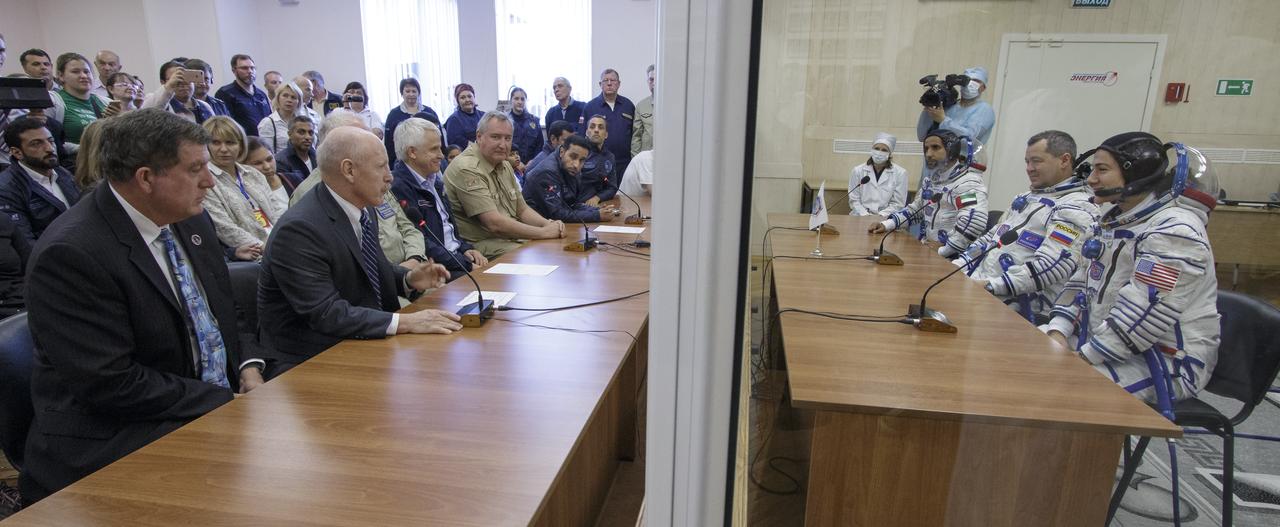
Spaceflight participant Hazzaa Ali Almansoori of the United Arab Emirates, Expedition crewmembers Oleg Skripochka of Roscosmos, and Jessica Meir of NASA talk to officials in charge after having their Sokol suits pressure checked a few hours ahead of their launch on a Soyuz rocket, Wednesday, Sept. 25, 2019 at the Baikonur Cosmodrome in Kazakhstan. Meir, Skripochka, and Almansoori will launch on the Soyuz MS-15 spacecraft from the Baikonur Cosmodrome to the International Space Station. Photo Credit: (NASA/Victor Zelentsov)
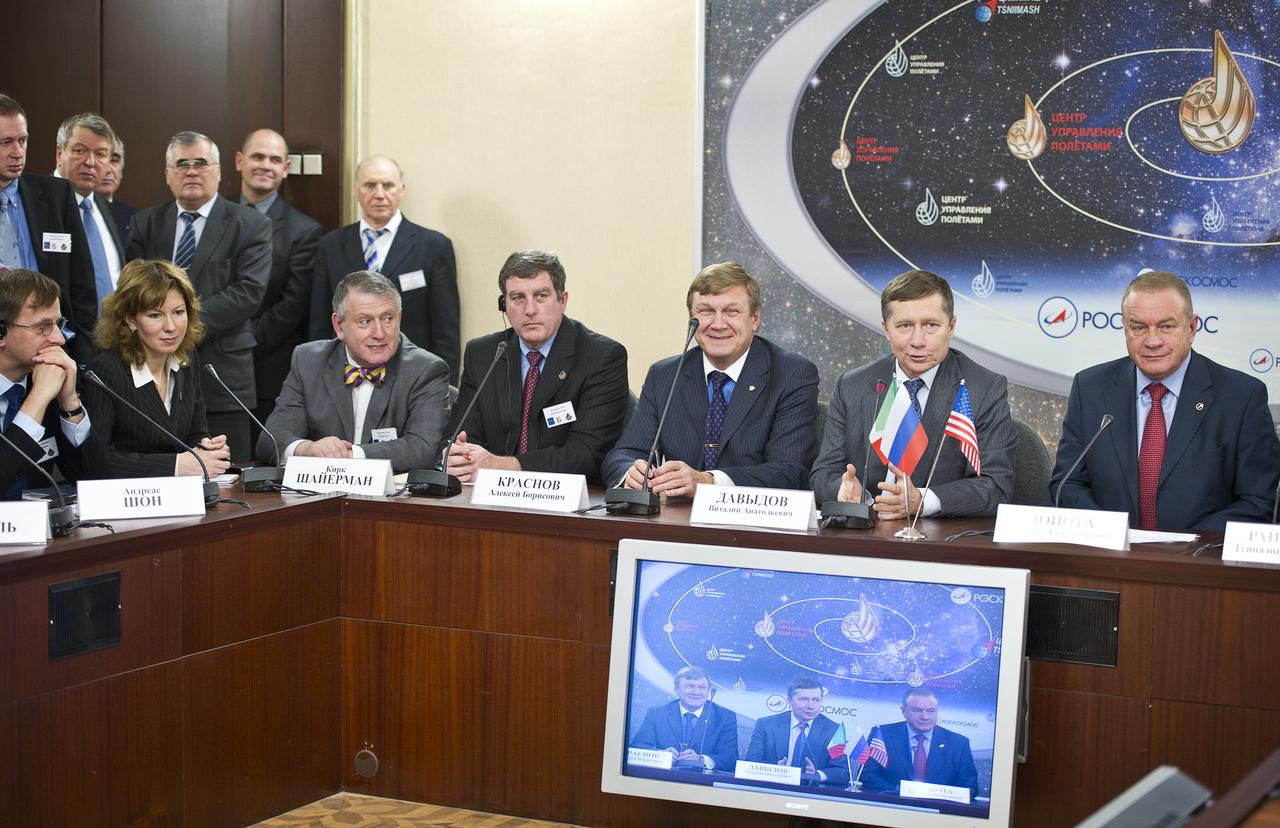
Vitaly Davyidov, second from right, Deputy Head of the Russian Federal Space Agency, answers reporter’s questions during a Soyuz post-docking press conference at the Russian Mission Control Center in Korolev, Russia on Saturday, Dec. 18, 2010. The Soyuz TMA-20 docked to the International Space Station carrying Expedition 26 Soyuz Commander Dmitry Kondratyev, Flight Engineer Catherine Coleman and European Space Agency Flight Engineer Paolo Nespoli. Photo Credit: (NASA/Carla Cioffi)
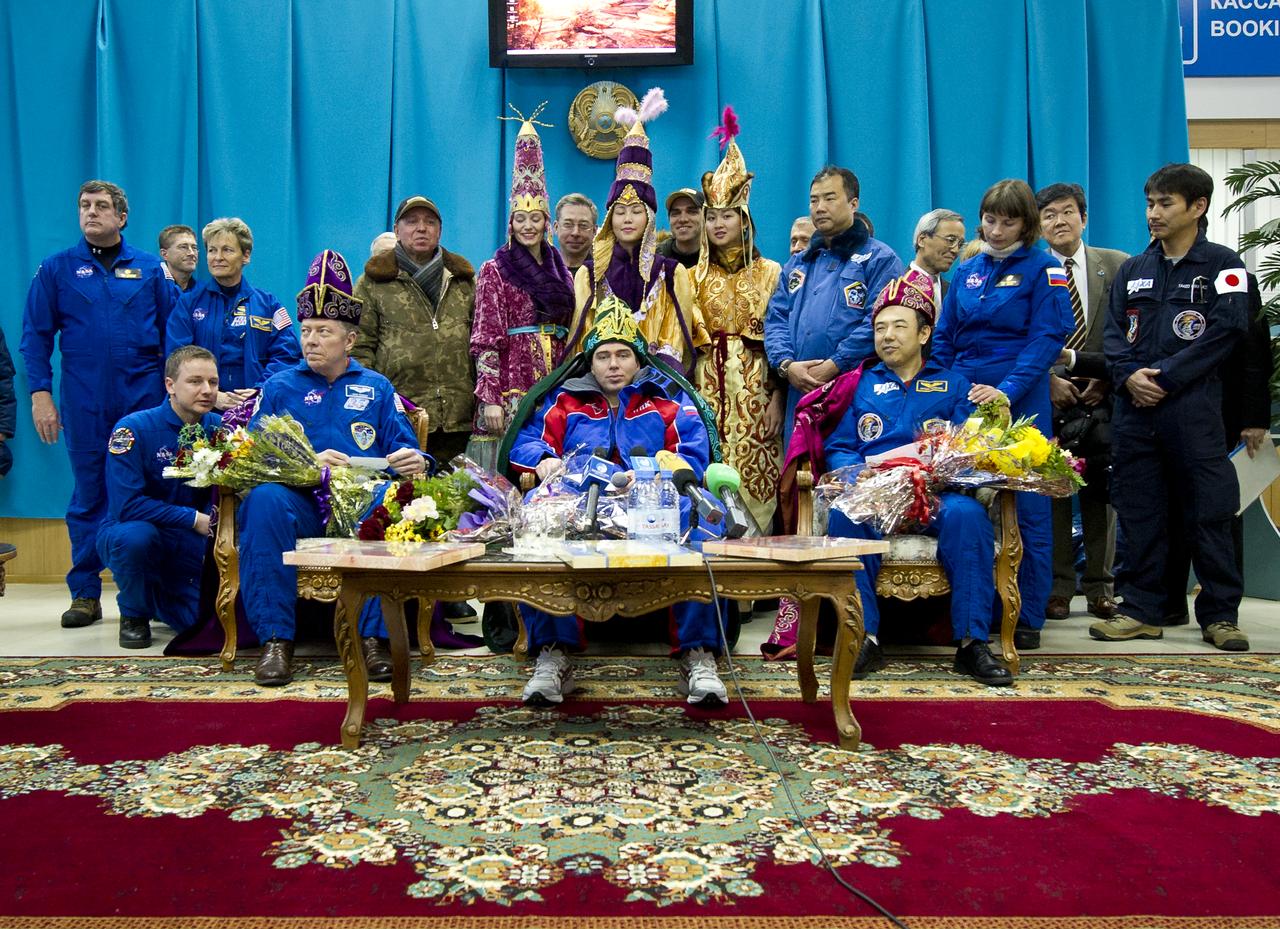
Seated from left, Expedition 29 Commander Mike Fossum, Flight Engineers Sergei Volkov, and Satoshi Furukawa are seen during a welcome ceremony and press conference at the Kustanay Airport in Kazakhstan on Tuesday, Nov. 22, 2011. NASA Astronaut Fossum, Russian Cosmonaut Volkov and JAXA (Japan Aerospace Exploration Agency) Astronaut Furukawa returned from more than five months onboard the International Space Station where they served as members of the Expedition 28 and 29 crews. Photo Credit: (NASA/Bill Ingalls)
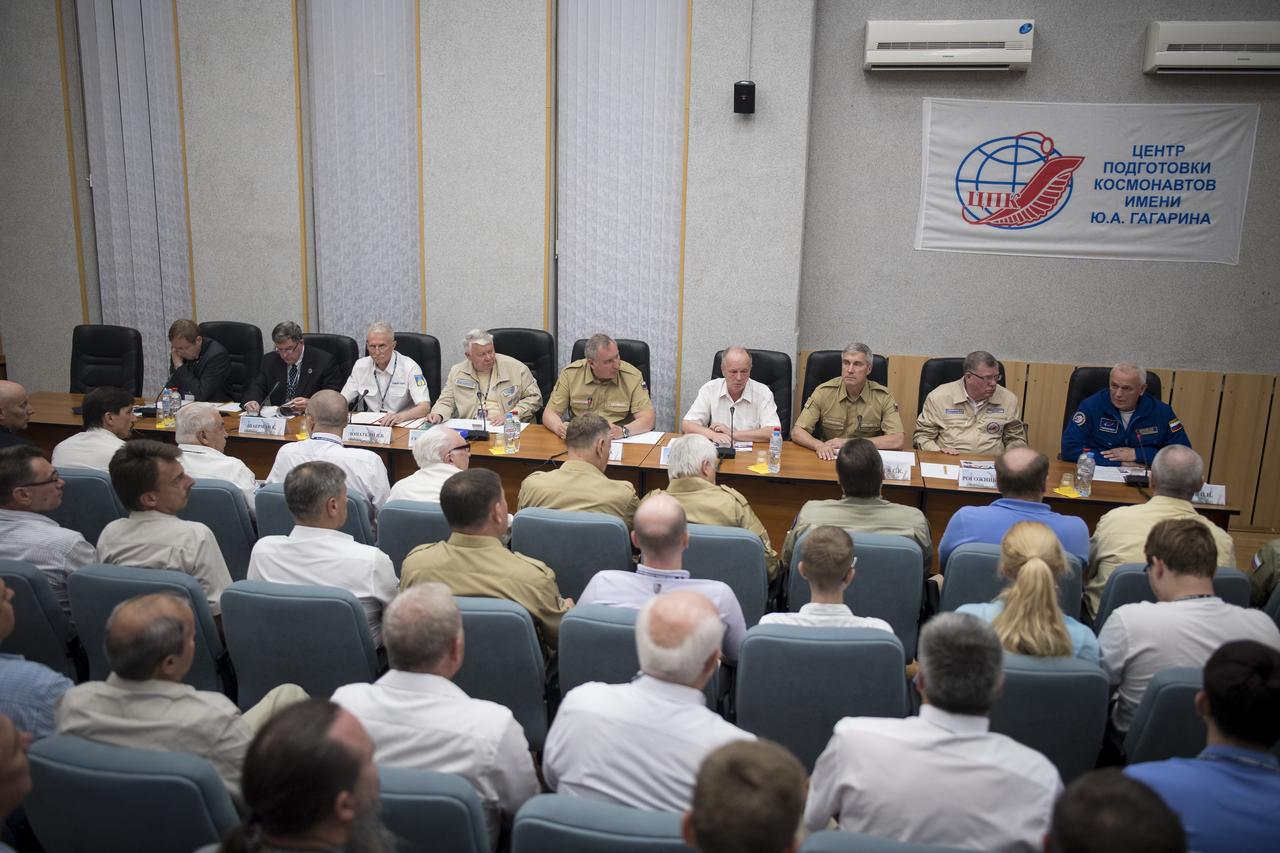
Members of the State Commission meet to approve the Soyuz launch of Expedition 60 to the International Space Station, Friday, July 19, 2019 at the Cosmonaut Hotel in Baikonur, Kazakhstan. Expedition 60 Soyuz Commander Alexander Skvortsov of Roscosmos, Andrew Morgan of NASA, and Luca Parmitano of ESA (European Space Agency) are scheduled to launch to the International Space Station aboard the Soyuz MS-13 spacecraft on Saturday, July 20. Photo Credit: (NASA/Joel Kowsky)
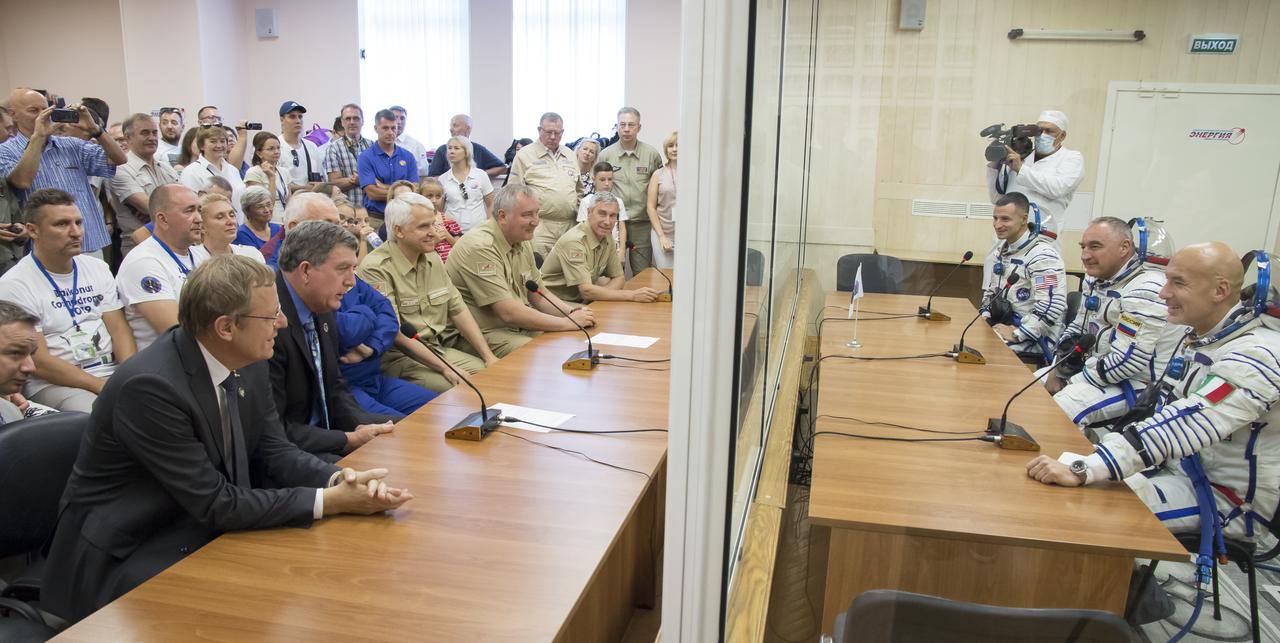
Expedition 60 flight engineer Andrew Morgan of NASA, Soyuz Commander Alexander Skvortsov of Roscosmos, and flight engineer Luca Parmitano or ESA (European Space Agency) speak with Roscosmos, NASA, and ESA (European Space Agency) management after having their Russian Sokol suits pressure checked in preparation for launch aboard the Soyuz MS-13 spacecraft, Saturday, July 20, 2019 at the Baikonur Cosmodrome in Kazakhstan. Launch of the Soyuz MS-13 spacecraft with Skvortsov, Morgan, and Parmitano occurred at 12:28 p.m. Eastern time (9:28 p.m. Baikonur time) on July 20 beginning their mission to the International Space Station. Photo Credit: (NASA/Victor Zelentsov)