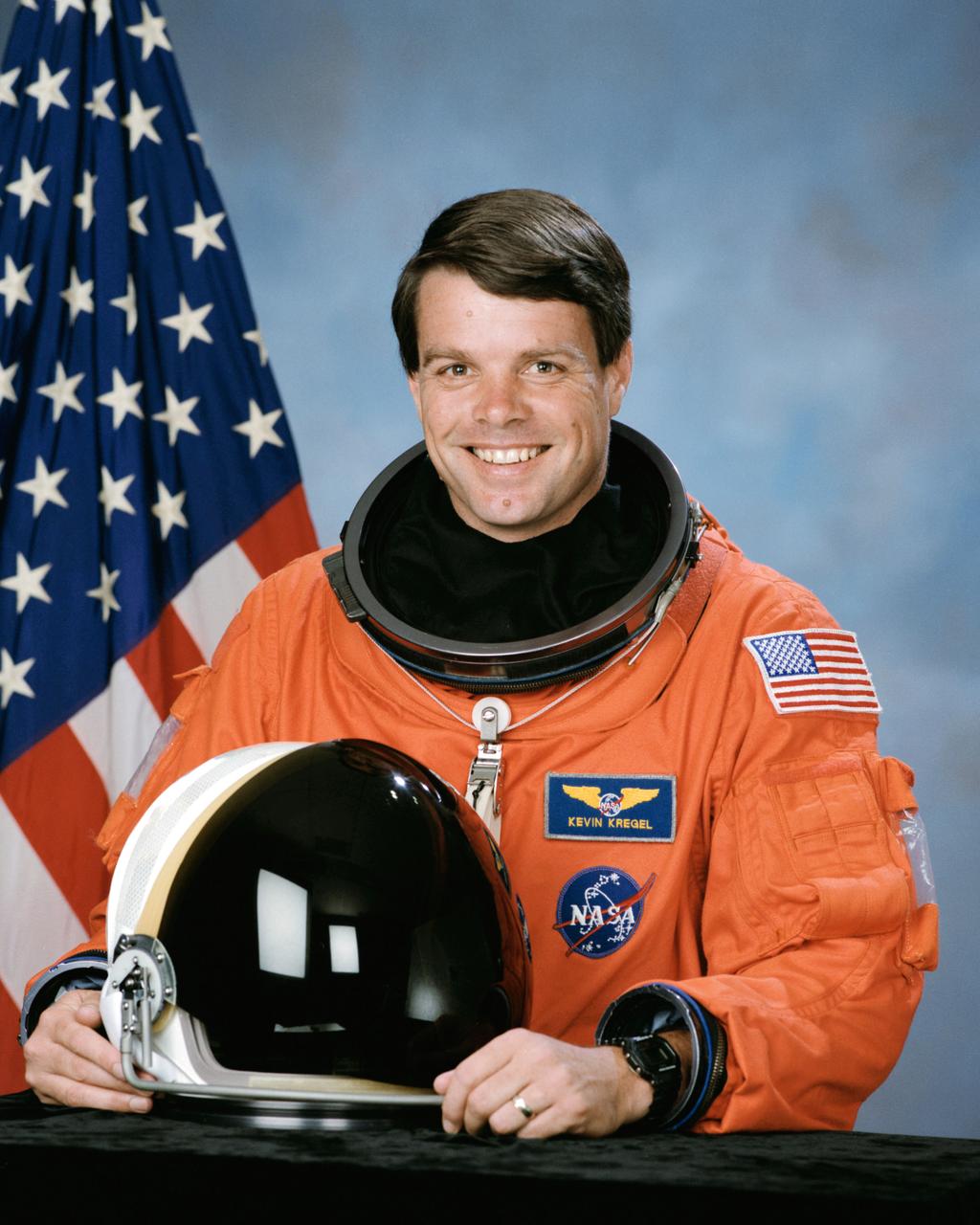
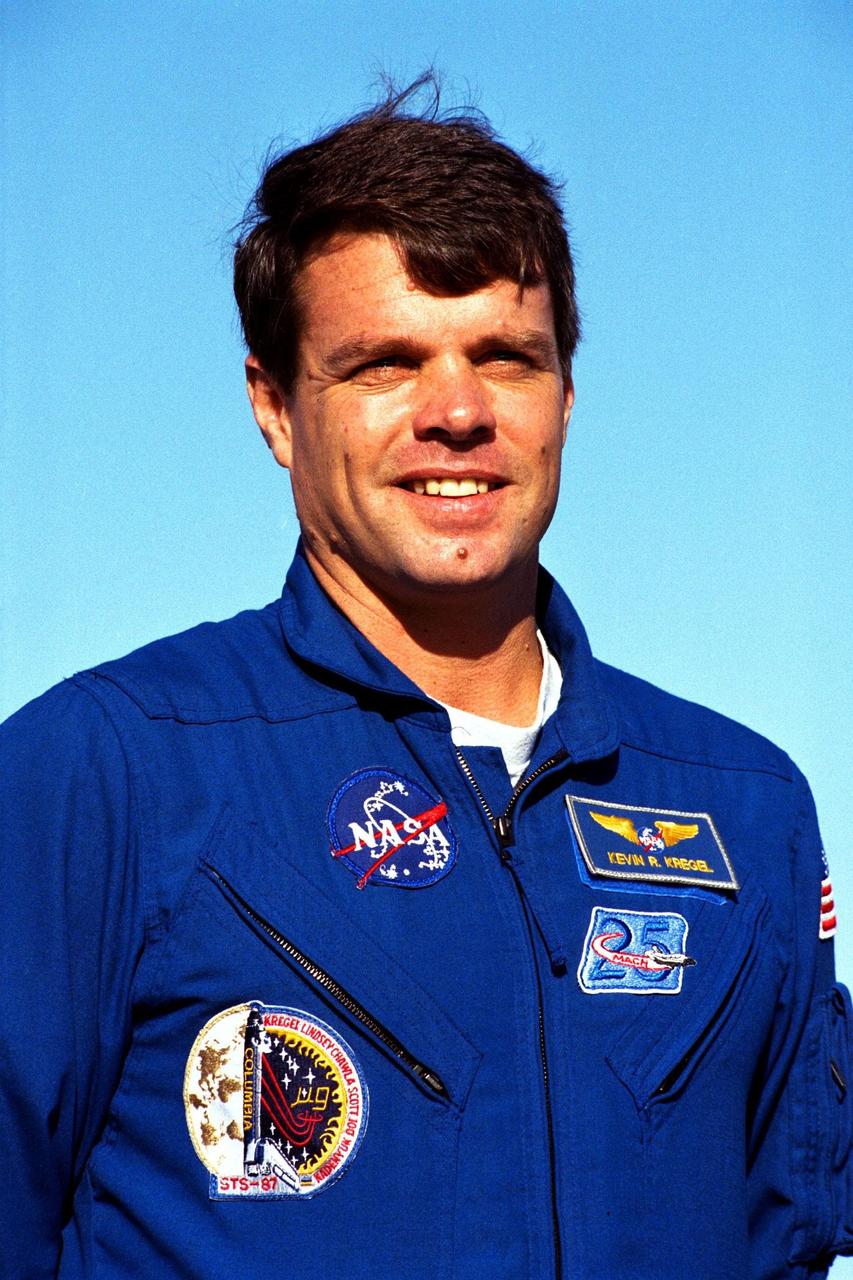
S96-09453 (7 May 1996) --- Astronaut Kevin R. Kregel, pilot.
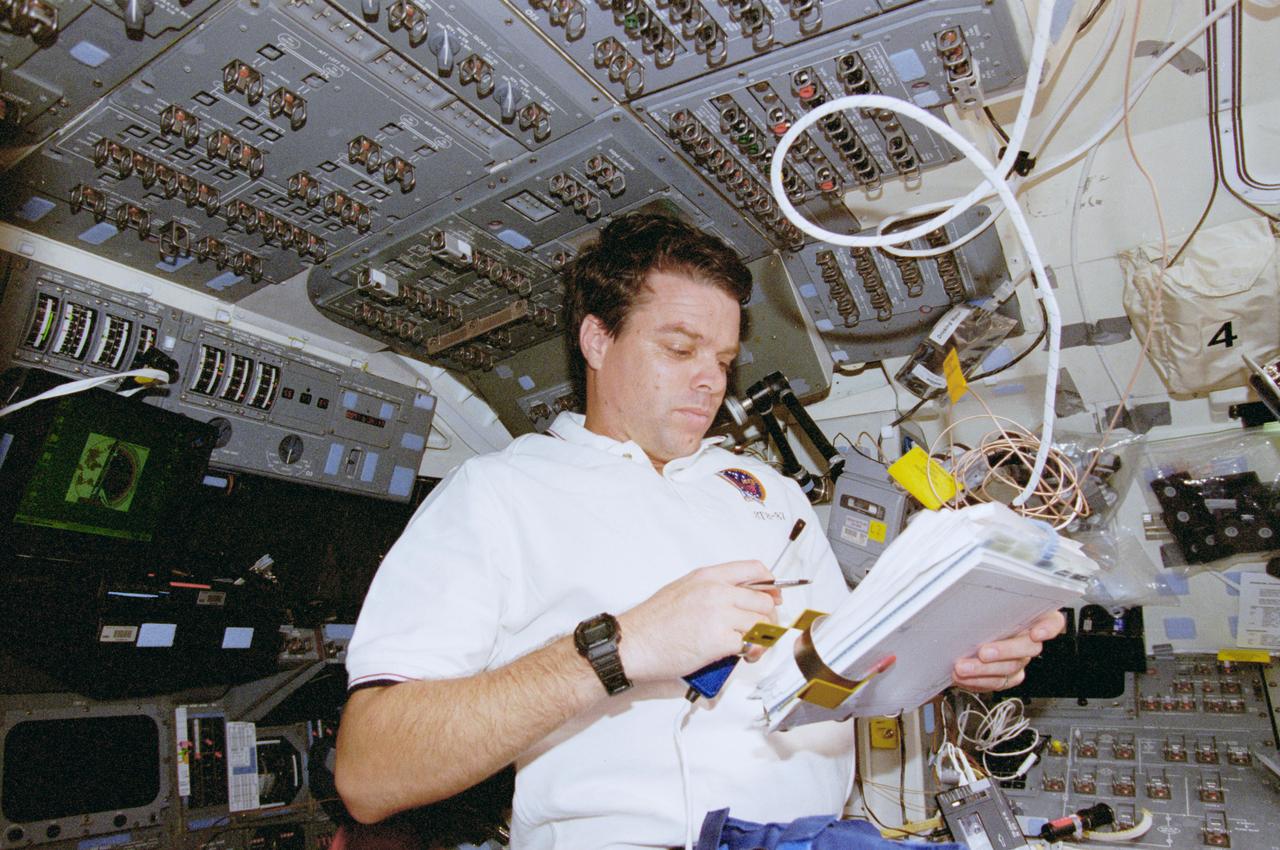
STS087-352-008 (19 November - 5 December 1997) --- Astronaut Kevin R. Kregel, mission commander, looks over the mission flight plan on the forward flight deck of the Space Shuttle Columbia. Kregel was accompanied by four other astronauts and a Ukrainian payload specialist for 16-days in space in support of the United States Microgravity Payload (USMP-4) mission.
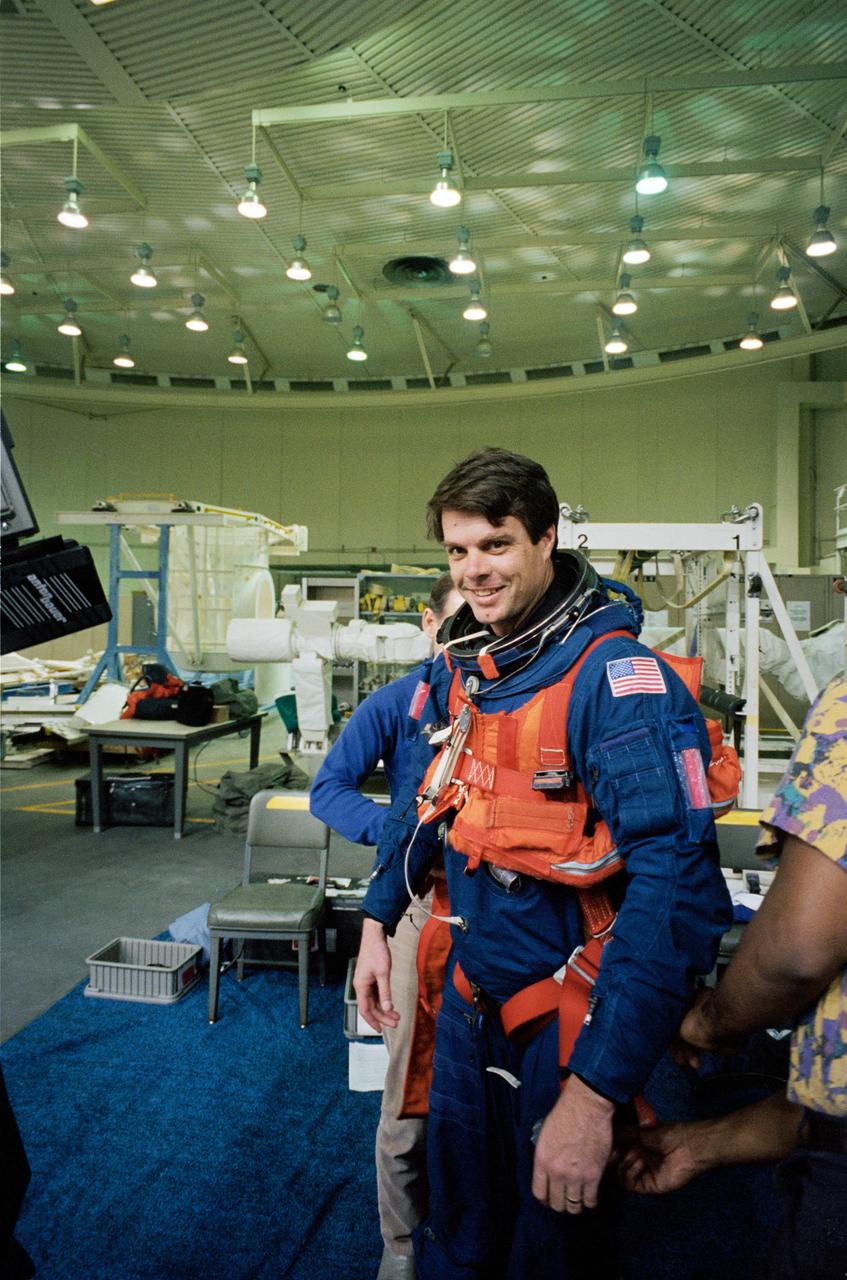
S95-03465 (16 Feb 1995) --- Attired in a training version of the Shuttle launch and entry garment, astronaut Kevin R. Kregel gets help with the final touches of suit donning during a training session at the Johnson Space Center's (JSC) Weightless Environment Training Facility (WET-F). Assigned as pilot for the STS-70 mission, Kregel was about to rehearse emergency bailout. The crew members made use of a nearby 25-feet deep pool to practice parachute landings in water and subsequent deployment of life rafts.
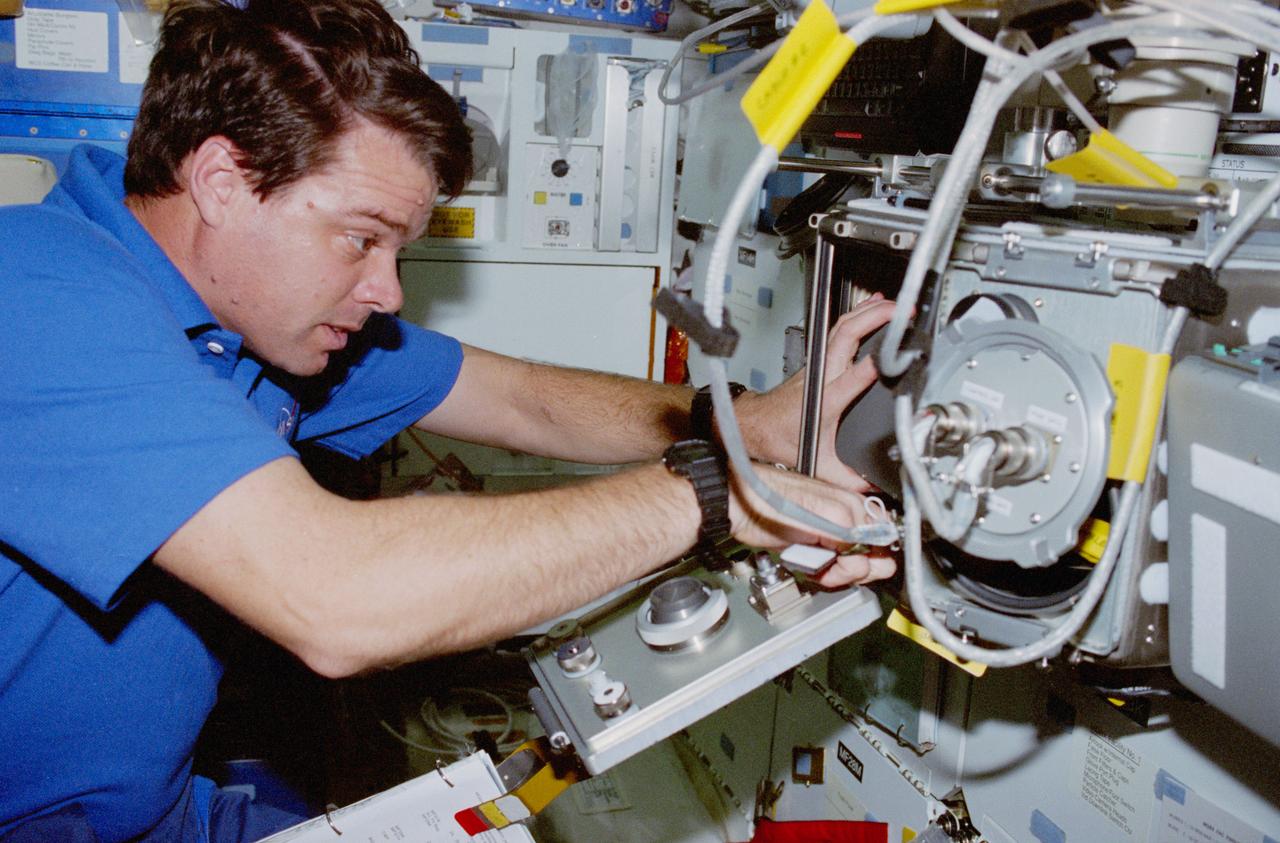
STS087-385-029 (19 November – 5 December 1997) --- Astronaut Kevin R. Kregel, mission commander, sets up the middeck glove box onboard the Space Shuttle Columbia during early hours of the 16-day United States Microgravity Payload 4 (USMP-4) mission. Kevin R. Kregel was joined by four other astronauts and a Ukrainian payload specialist for the mission.
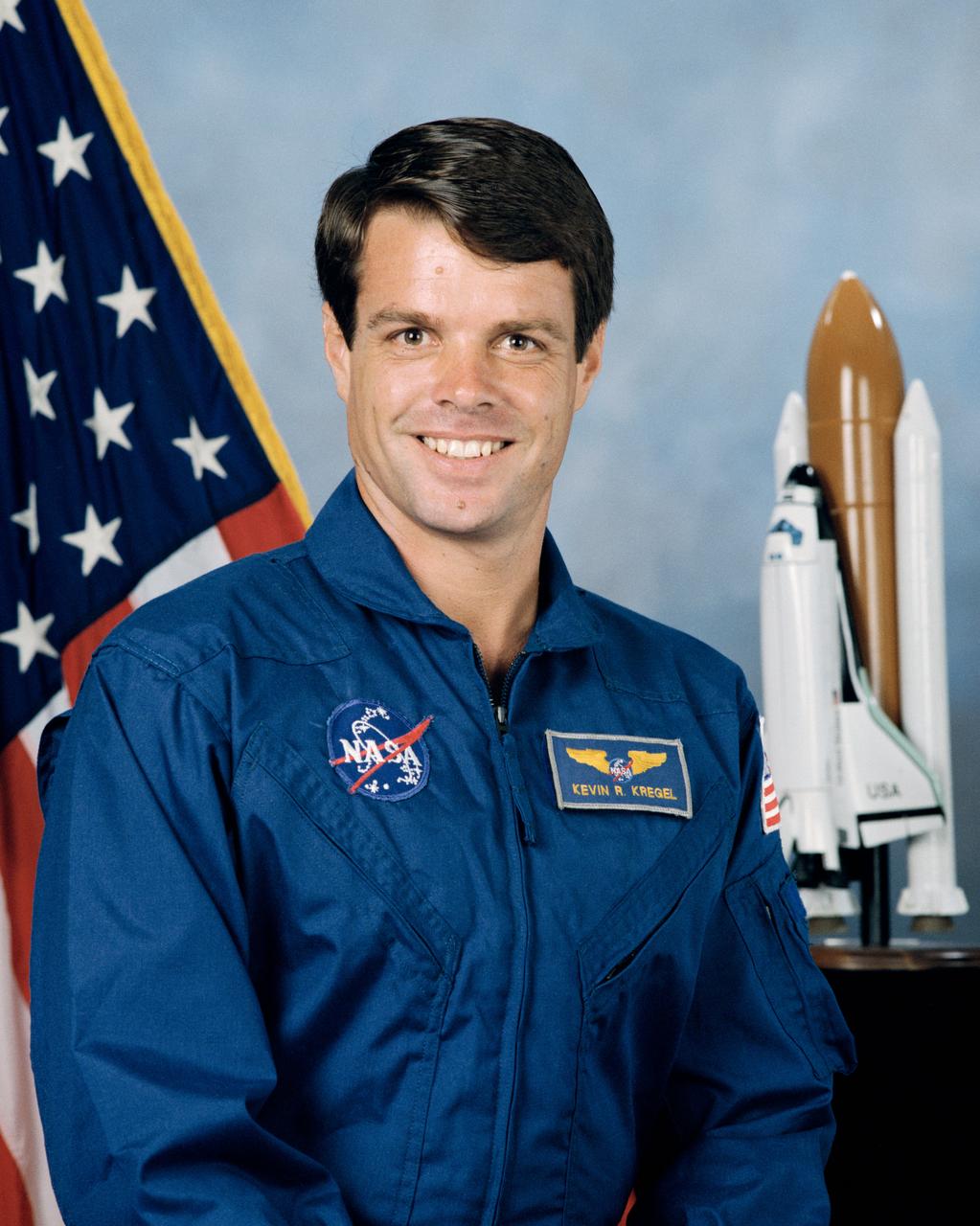
S92-45000 (9 Sept 1992) --- Astronaut Kevin R. Kregel.
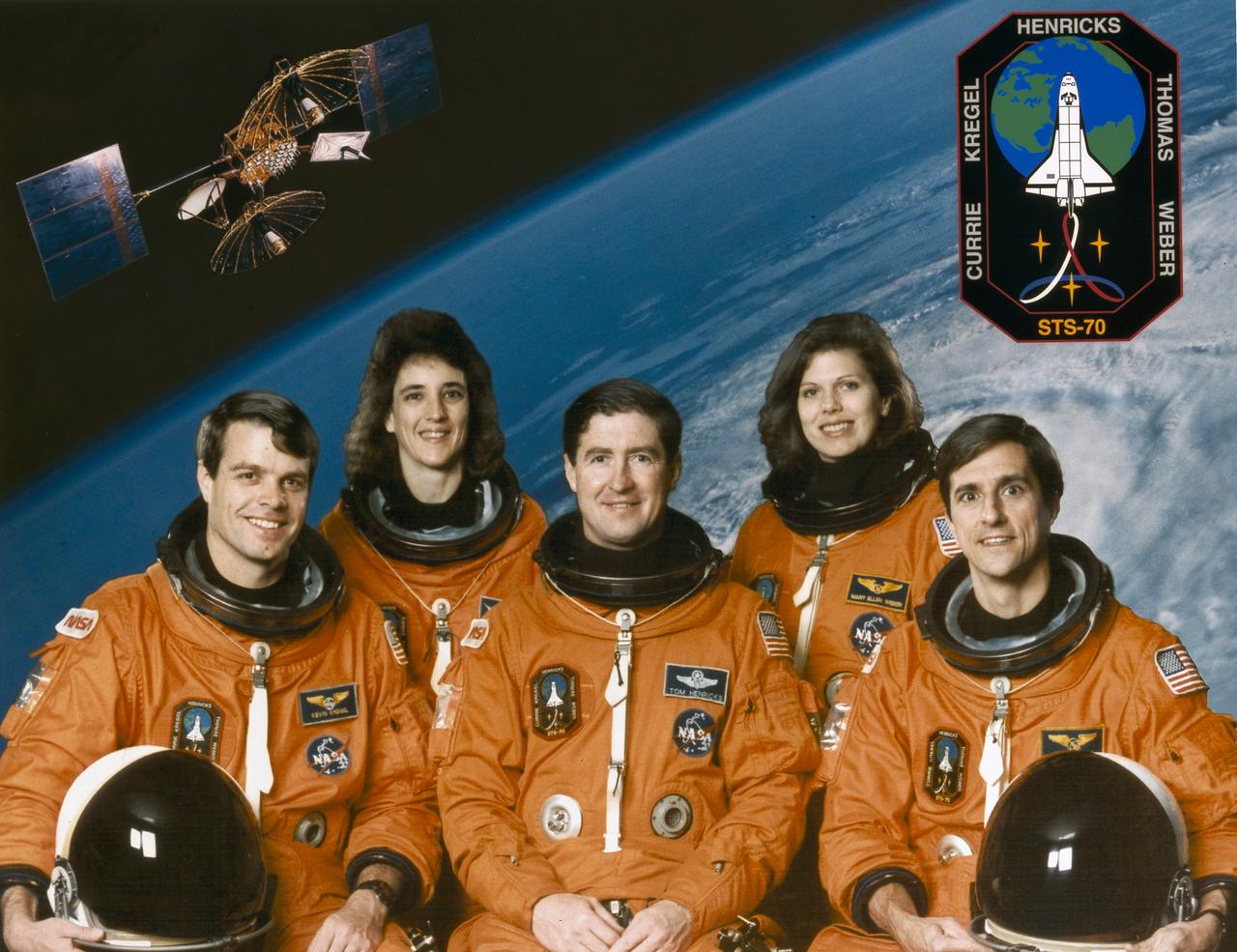
The crew assigned to the STS-70 mission included (front left to right) Kevin R. Kregel, pilot; Nancy J. Currie, mission specialist; Terrence T, Henricks, commander; Mary Ellen Weber, mission specialist, and Donald A. Thomas, mission specialist. Launched aboard the Space Shuttle Discovery on July 13,9:41:55.078 am (EDT), the STS-70 mission’s primary payload was the Tracking and Data Relay Satellite-G (TDRS-G).
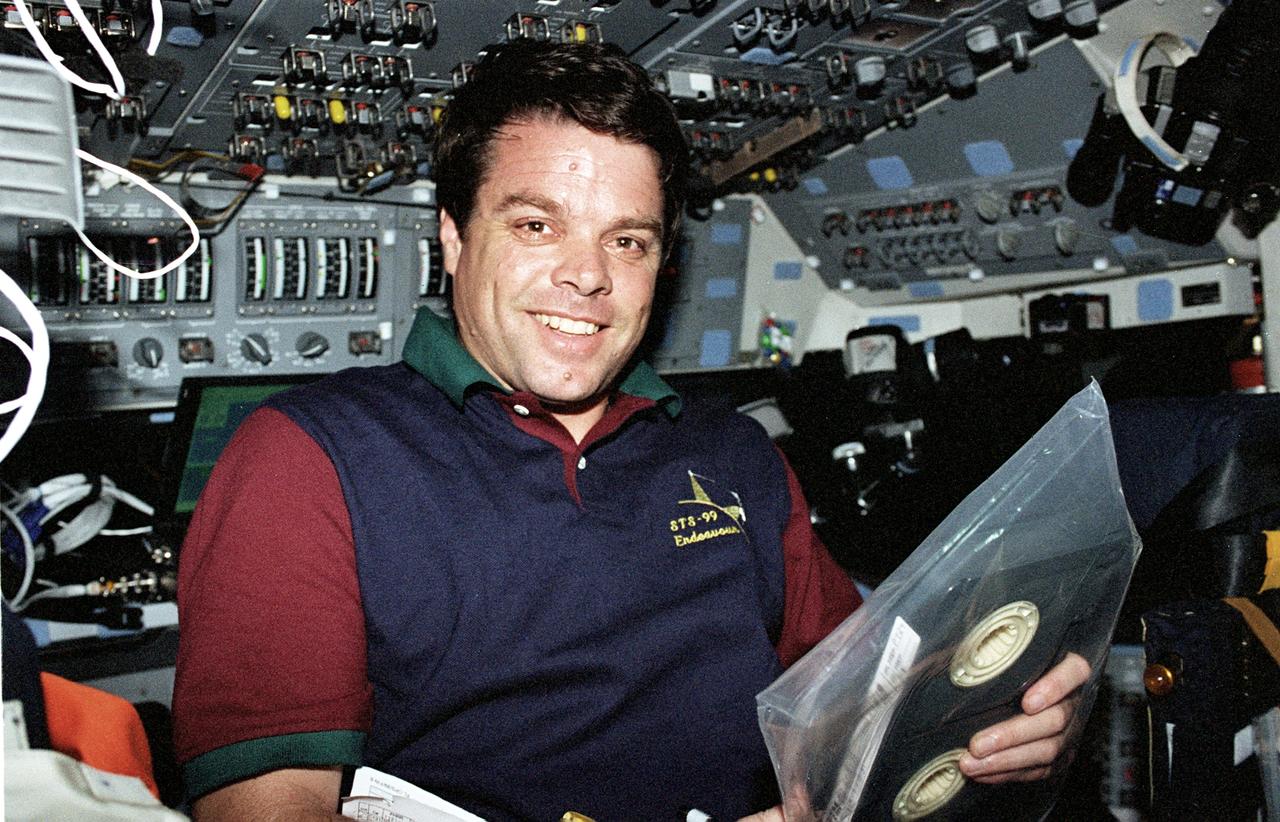
STS099-319-012 (11-22 February 2000) --- Astronaut Kevin R. Kregel, mission commander, works with video tape on Space Shuttle Endeavour's flight deck. Kregel and five other astronauts went on to spend over 11 days in Earth orbit in support of the Shuttle Radar Topography Mission (SRTM).
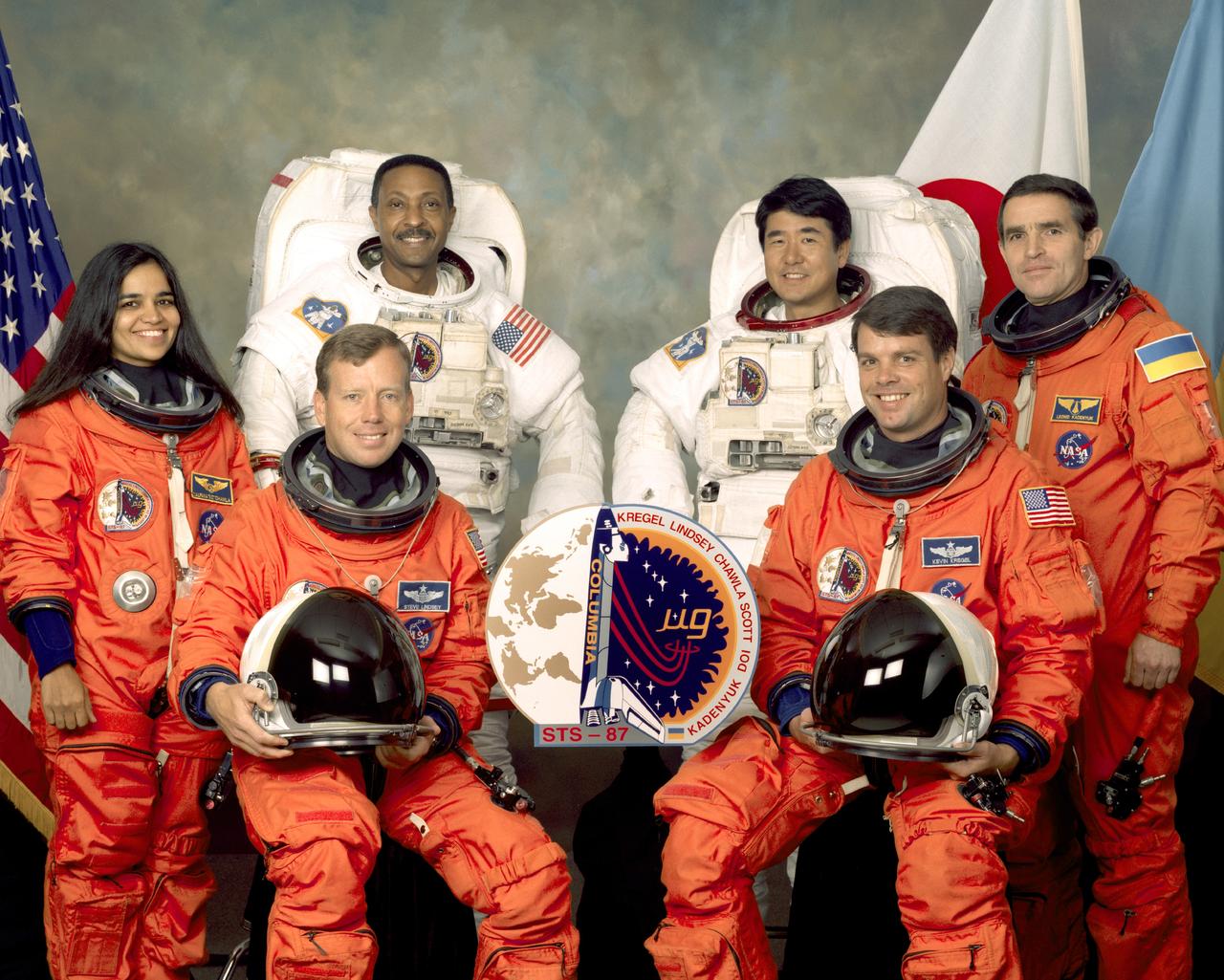
Five astronauts and a payload specialist take a break from training at the Johnson Space Center (JSC) to pose for the STS-87 crew portrait. Wearing the orange partial pressure launch and entry suits, from the left, are Kalpana Chawla, mission specialist; Steven W. Lindsey, pilot; Kevin R. Kregel, mission commander; and Leonid K. Kadenyuk, Ukrainian payload specialist. Wearing the white Extravehicular Mobility Unit (EMU) space suits are mission specialists Winston E. Scott (left) and Takao Doi (right). Doi represents Japan’s National Space Development Agency (NASDA). The STS-87 mission launched aboard the Space Shuttle Columbia on November 19, 1997. The primary payload for the mission was the U.S. Microgravity Payload-4 (USMP-4).
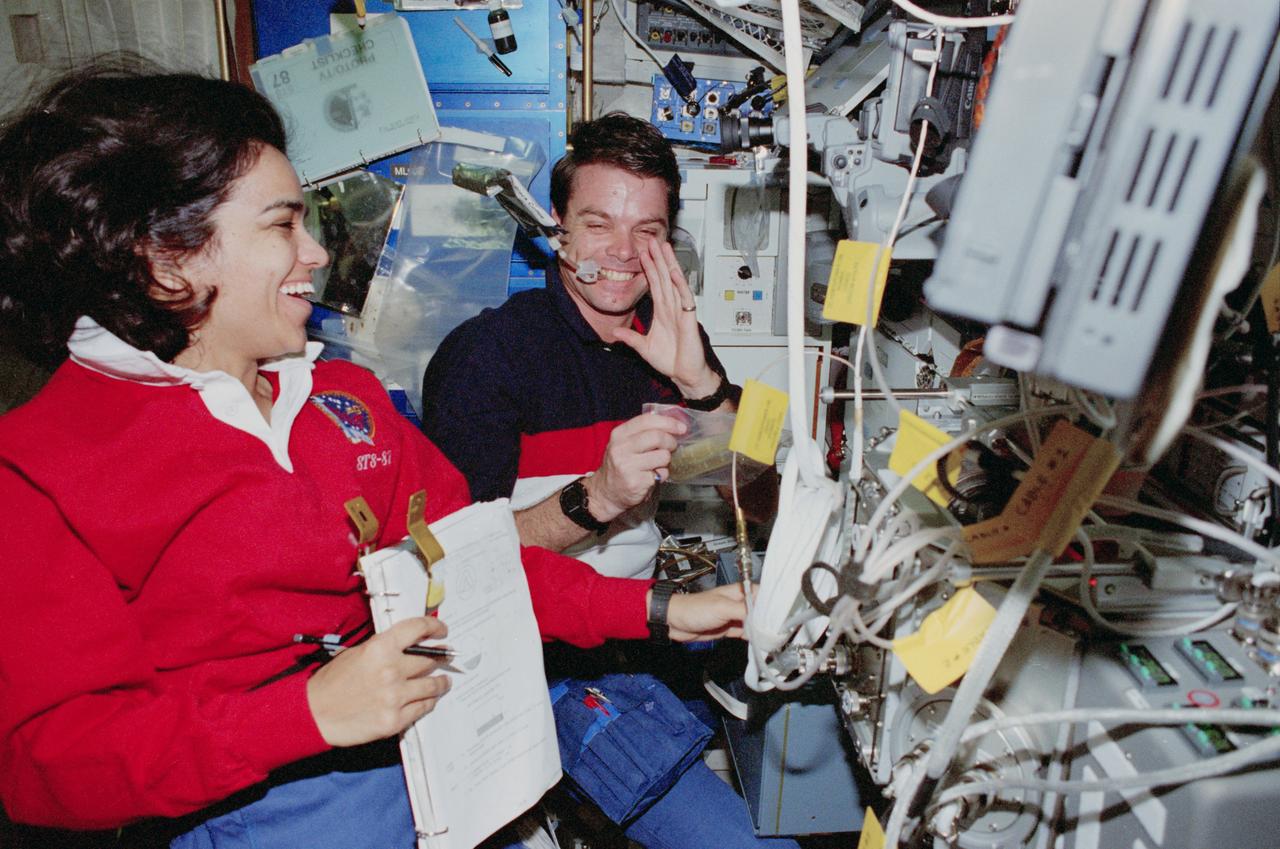
STS087-332-010 (19 November – 5 December 1997) --- Astronaut Kevin R. Kregel doesn't bother to "break" for coffee as he enjoys a serving while sharing work at the Space Shuttle Columbia's microgravity glove box with astronaut Kalpana Chawla. The glove box's (right edge of frame) proximity to the galley (partially obscured behind the mission commander) makes the time economy measure an easy task for the three-time space veteran. Chawla, mission specialist, is making her initial space flight.
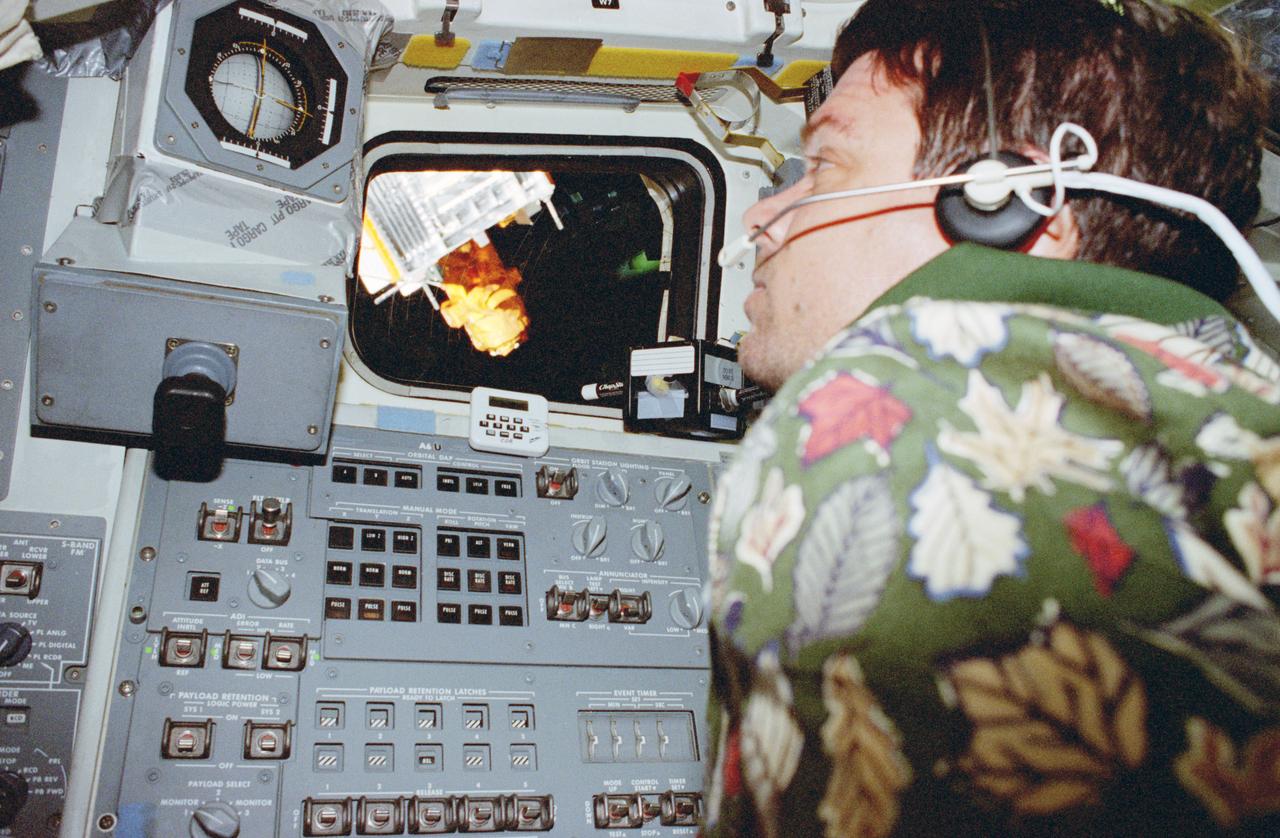
STS087-320-028 (19 November – 5 December 1997) --- Astronaut Kevin R. Kregel, mission commander, studies the movement of the SPARTAN-201 satellite while communicating with ground controllers and fellow crew members. He is using the Space Shuttle Columbia's aft starboard window to monitor the free-flyer, which earlier had been deployed from Columbia’s cargo bay.

STS070-334-031 (13-22 JULY 1995) --- Astronaut Kevin R. Kregel demonstrates the new shuttle sleep restraints on the space shuttle Discovery?s middeck. During an August 11, 1995, post flight presentation to fellow employees at the Johnson Space Center (JSC), the STS-70 pilot discussed features of the device and lauded its ability to add comfort for crew members.
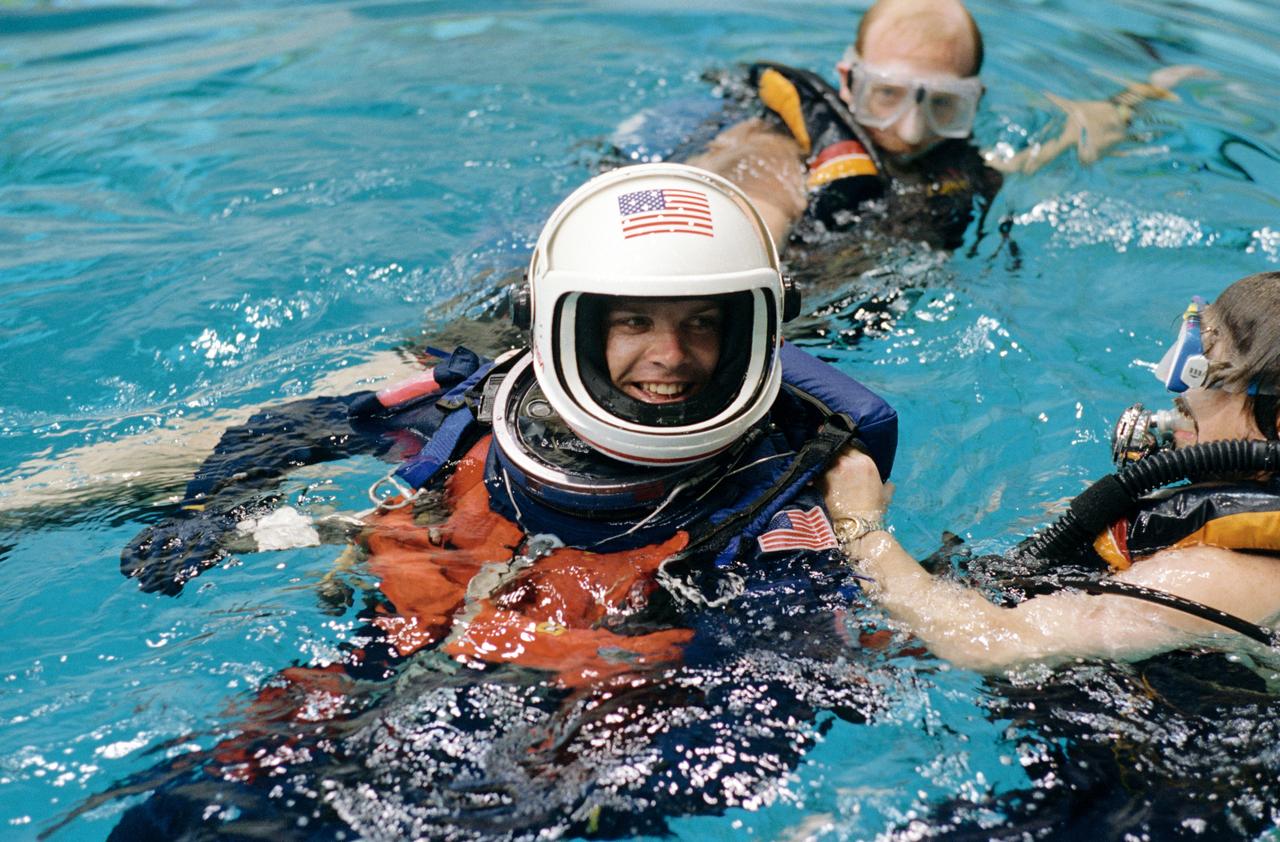
S95-03480 (16 FEB 1995) --- Attired in a training version of the Shuttle launch and entry garment, astronaut Kevin R. Kregel, pilot, gets help from SCUBA-equipped divers during a training session at the Johnson Space Center's (JSC) Weightless Environment Training Facility (WET-F). As part of the emergency bailout phase of their training agenda, the STS-70 crew members made use of this 25-feet deep pool to practice parachute landings in water and subsequent deployment of life rafts.
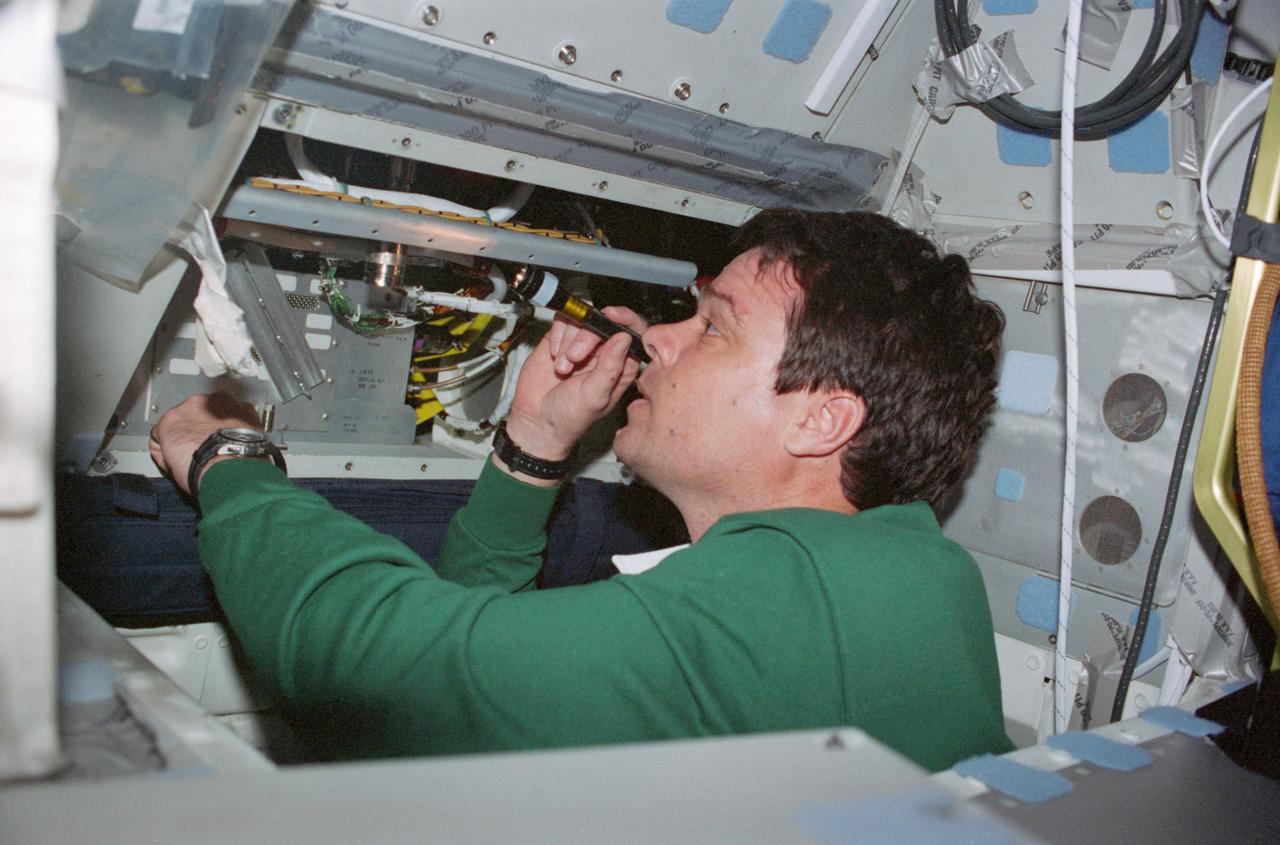
STS099-312-033 (11-22 February 2000) ---Astronaut Kevin R. Kregel, mission commander, works with the Digital Data Routing Equipment (DDRE) on the middeck of the Earth-orbiting Space Shuttle Endeavour.

STS078-397-010 (20 June - 7 July 1996) --- Payload specialist Jean-Jacques Favier, representing the French Space Agency (CNES), and astronaut Kevin R. Kregel, pilot, perform a successful Inflight Maintenance (IFM) on the Bubble Drop Particle Unit (BDPU). The IFM technique was performed initially on the ground at the Marshall Space Flight Center (MSFC) by alternate payload specialist Pedro Duque of the European Space Agency (ESA), with the procedure being recorded on video and uplinked to the crew of the Space Shuttle Columbia to aid in the repair.
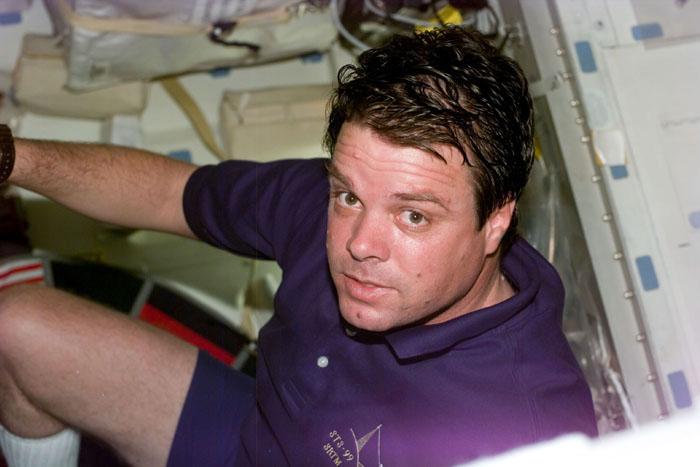
S99-E-5719 (18 February 2000) --- Astronaut Kevin R. Kregel, mission commander, on the mid deck of the Space Shuttle Endeavour. A series of electronic stills was taken of the STS-99 indiviaul crew members on the day they got the good news from flight controllers in Houston that Shuttle Radar Topograpy Mission (SRTM) mapping time had been extended.
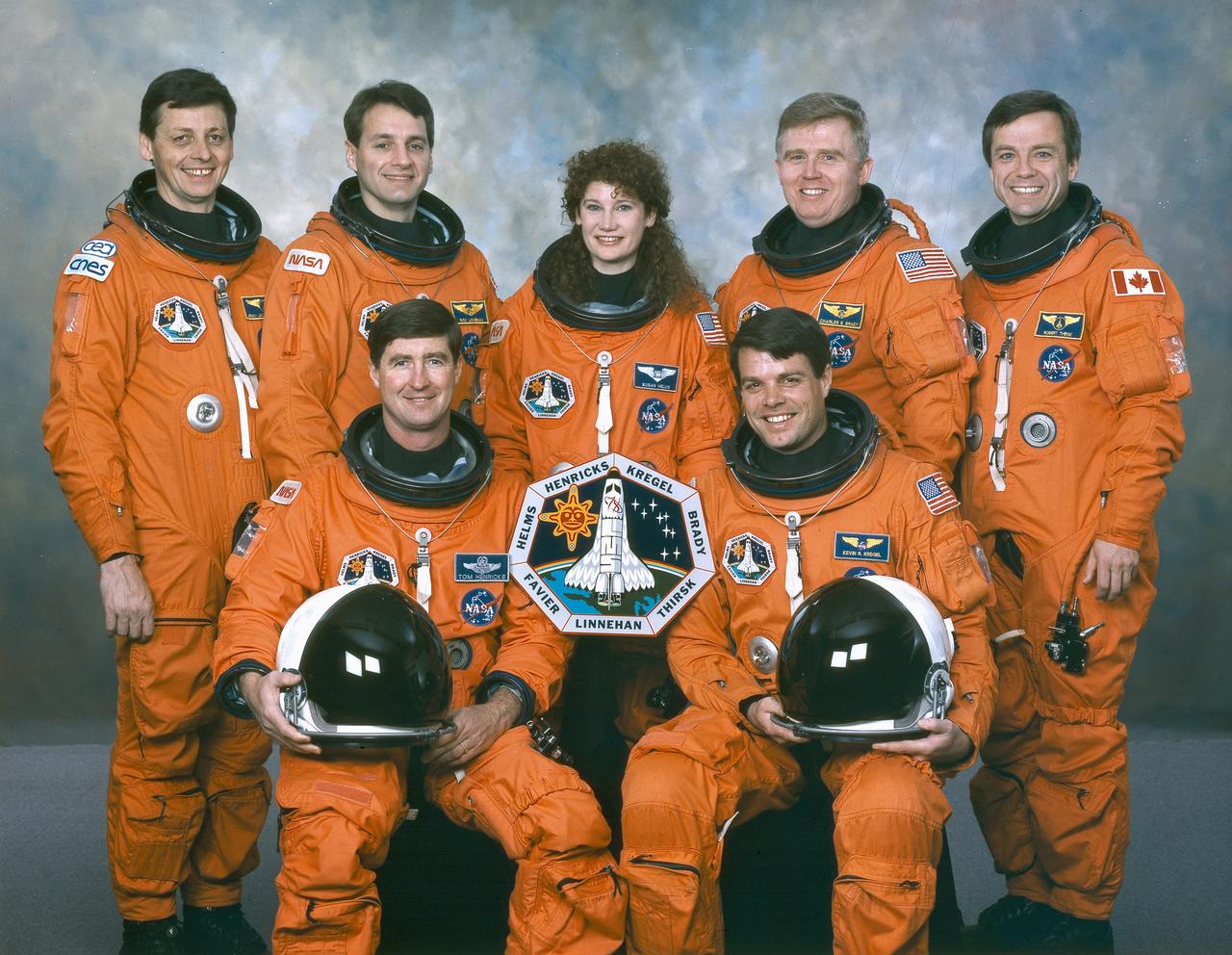
The crew assigned to the STS-78 mission included (seated left to right) Terrence T. (Tom) Henricks, commander; and Kevin R. Kregel, pilot. Standing, left to right, are Jean-Jacques Favier (CNES), payload specialist; Richard M. Linneham, mission specialist; Susan J. Helms, payload commander; Charles E. Brady, mission specialist; and Robert Brent Thirsk (CSA). Launched aboard the Space Shuttle Columbia on June 20, 1996 at 10:49:00 am (EDT), the STS-78 mission’s primary payloads was the Life and Microgravity Spacelab (LMS). Five space agencies (NASA/USA, European Space Agency/Europe (ESA), French Space Agency/France, Canadian Space Agency /Canada, and Italian Space Agency/Italy) along with research scientists from 10 countries worked together on the design, development and construction of the LMS.
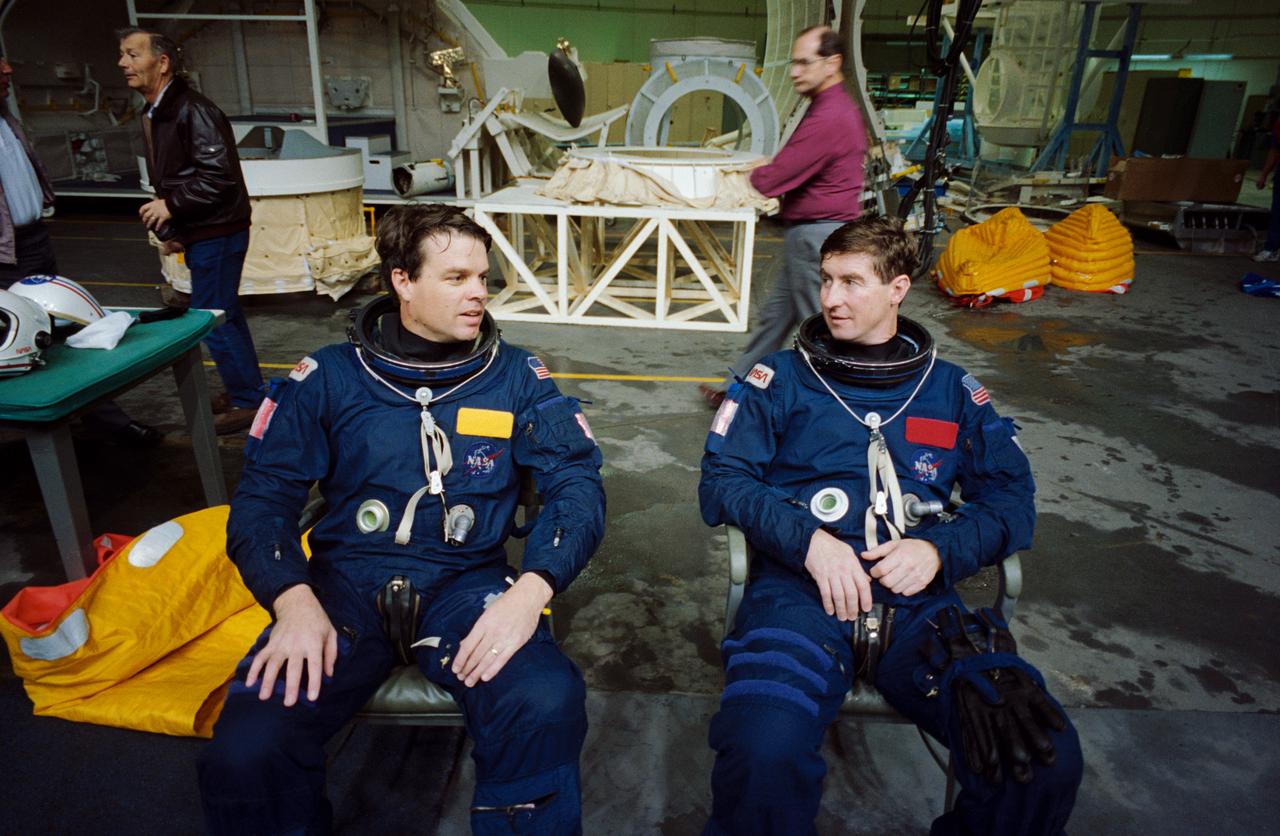
S95-03470 (16 FEB 1995) --- Attired in blue training versions of the orange Shuttle launch and entry garments, astronauts Terence T. (Tom) Henricks, right, and Kevin R. Kregel take a break during a bailout training session at the Johnson Space Center's (JSC) Weightless Environment Training Facility (WET-F). Assigned as commander and pilot, respectively, for the STS-70 mission, the two later joined their crew mates in making use of a nearby 25-feet deep pool to practice parachute landings in water and subsequent deployment of life rafts.
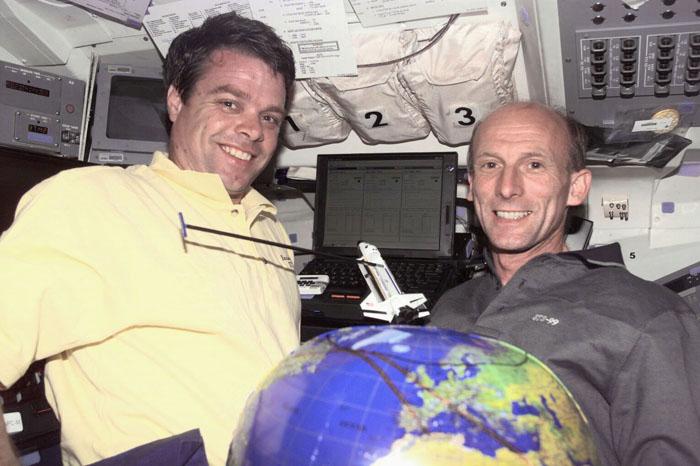
S99-E-5259 (13 February 2000) --- Astronauts Kevin R. Kregel (left), mission commander, and Gerhard P.J. Thiele demonstrate mapping techniques for the Space Radar Topography Mission (SRTM) using a payload-equipped model and a globe on Endeavour's flight deck. The two are joined by astronaut Janet L. Kavandi, mission specialist, on the SRTM's Red Team. Thiele is a mission specialist representing the European Space Agency (ESA).
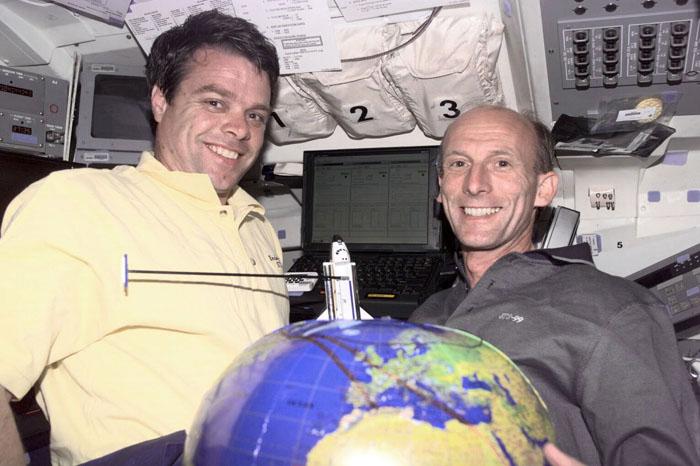
S99-E-5258 (13 February 2000) --- Astronauts Kevin R. Kregel (left), mission commander, and Gerhard P.J. Thiele demonstrate mapping techniques for the Space Radar Topography Mission (SRTM) using a payload-equipped Shuttle and a globe on Endeavour's flight deck. The two are joined by astronaut Janet L. Kavandi, mission specialist, on the SRTM's Red Team. Thiele is a mission specialist representing the European Space Agency (ESA).
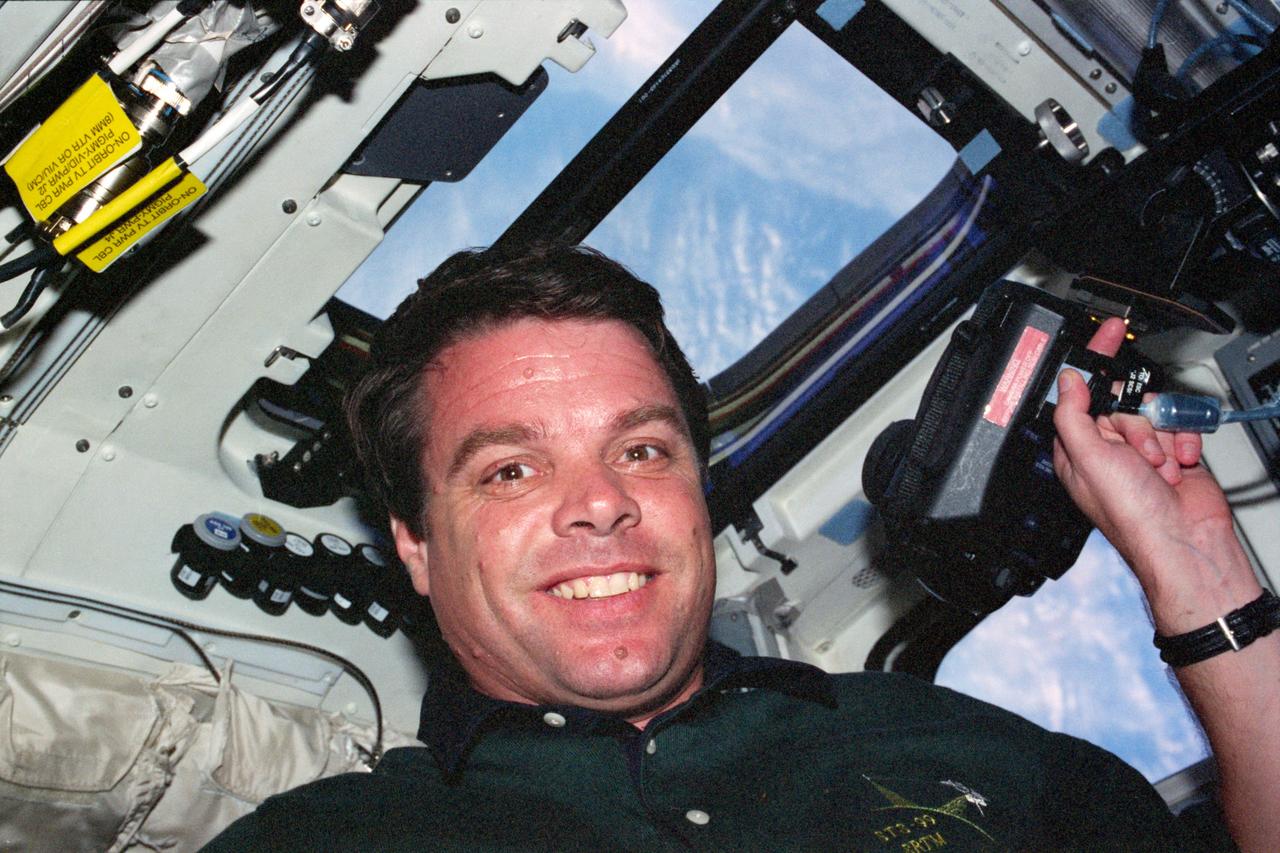
STS099-314-035 (11-22 February 2000) ---Astronaut Kevin R. Kregel, mission commander, works with camera equipment, which was used for the EarthKAM project. The camera stayed busy throughout the 11-day mission taking vertical imagery of the Earth points of opportunity for the project. Students across the United States and in France, Germany and Japan took photos throughout the STS-99 mission. And they are using these new photos, plus all the images already available in the EarthKAM system, to enhance their classroom learning in Earth and space science, social studies, geography, mathematics and more.
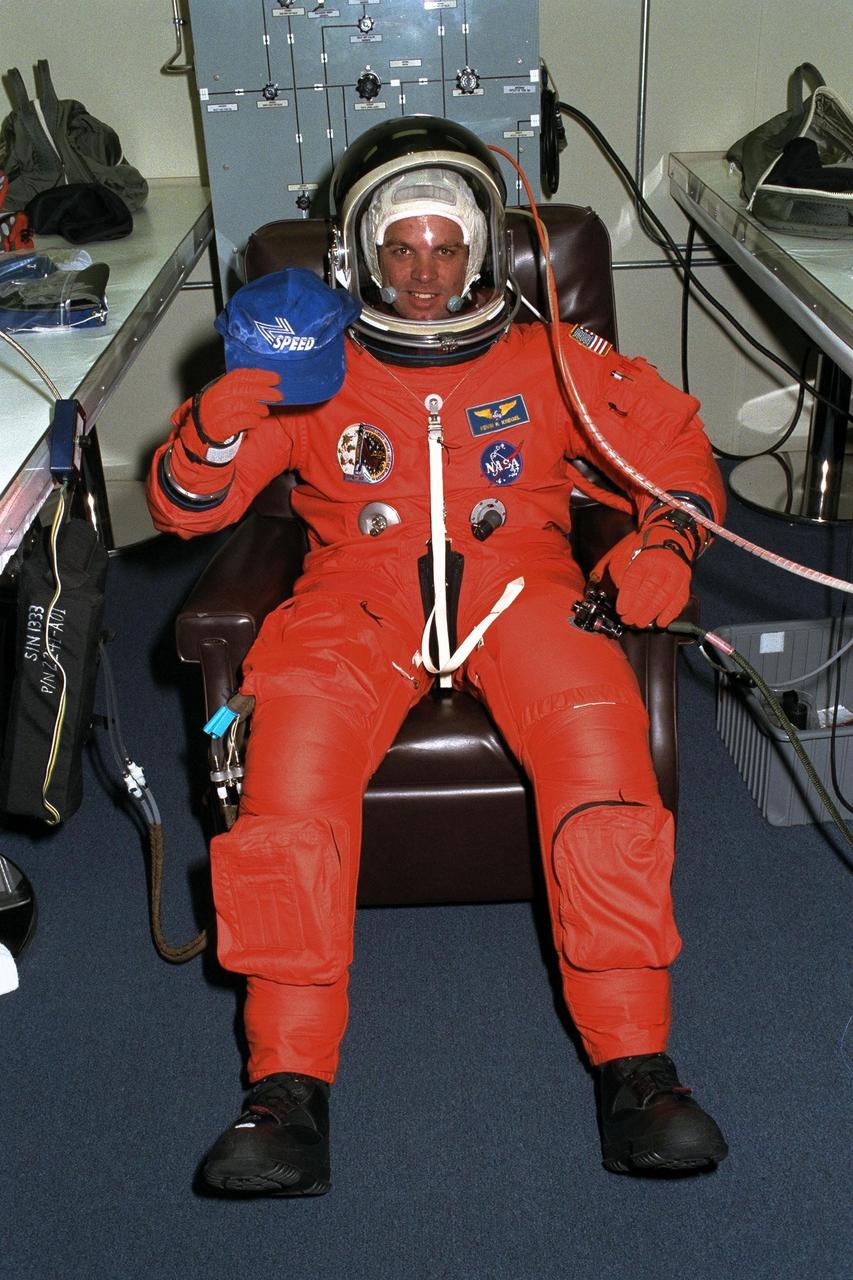
STS-87 Commander Kevin Kregel sits in his launch and entry suit in the Operations and Checkout Building holding a cap of his son’s soccer team of which Kregel is the coach. Shortly, he and the five other crew members of STS-87 will depart for Launch Pad 39B, where the Space Shuttle Columbia awaits liftoff on a 16-day mission to perform microgravity and solar research. A veteran of two space flights (STS-70 and -78), Kregel has logged more than 618 hours in space
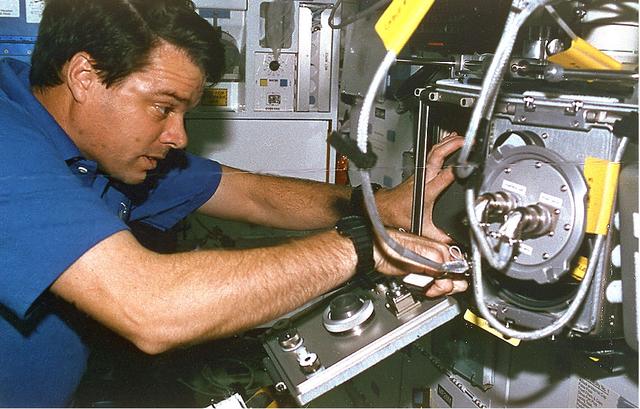
Onboard Space Shuttle Columbia (STS-87) Mission Commander Kevin R. Kregel sets up the mid-deck glove box during early hours of the 16-day United States Microgravity Payload 4 (USMP-4) mission. Kregel was joined by four other astronauts and a Ukrainian payload specialist for the mission.
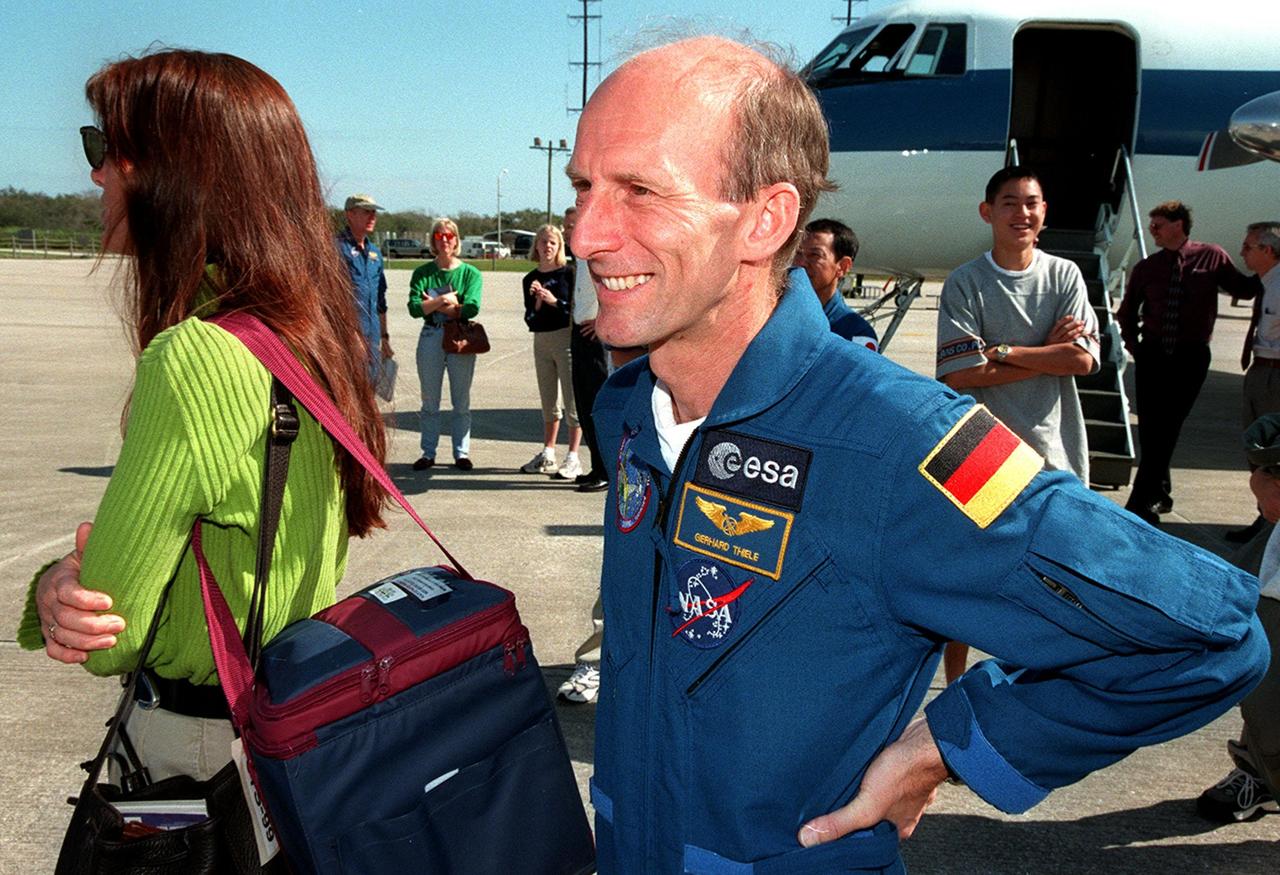
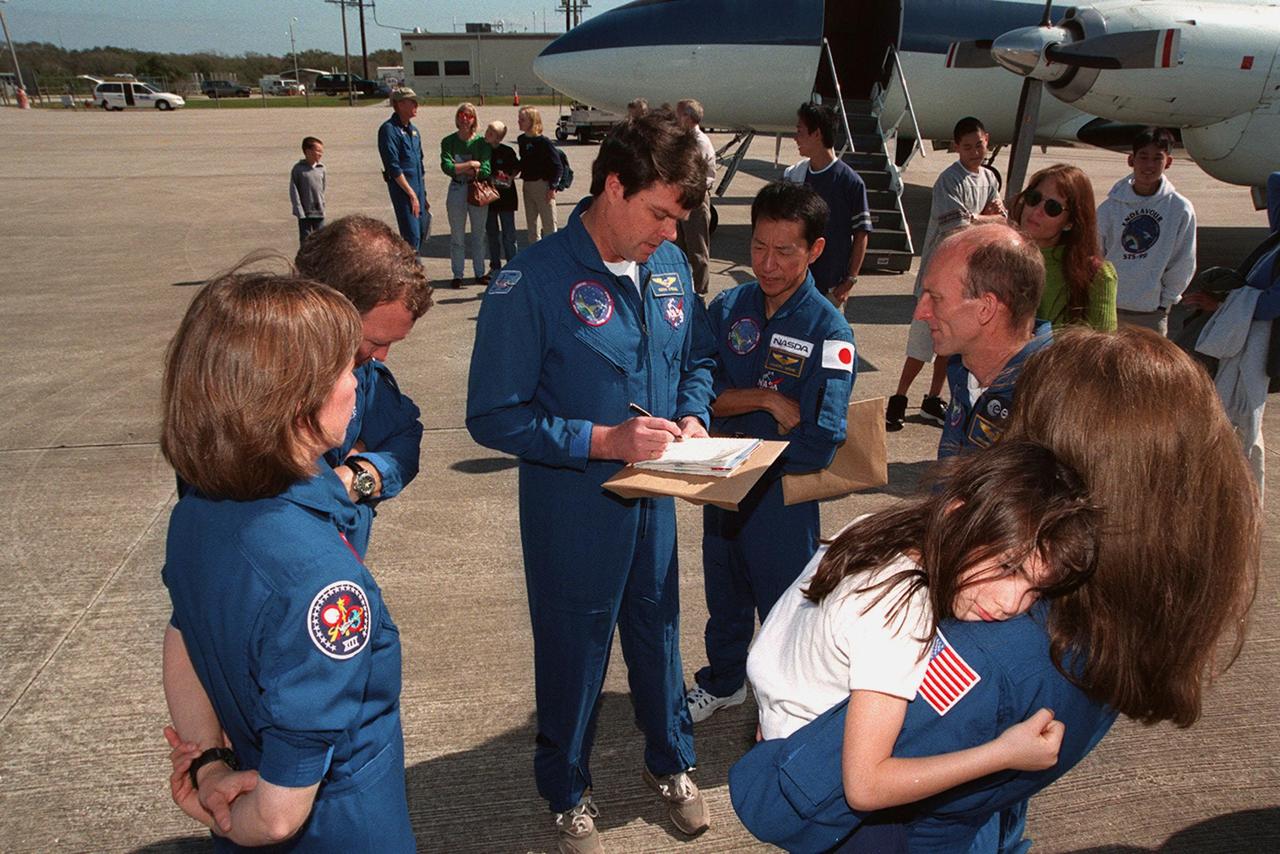
At the Shuttle Landing Facility, STS-99 crew members join family members for their return trip to Houston. At left is Jeanne Kregel, wife of Commander Kevin Kregel. At right is Mission Specialist Gerhard Thiele of Germany. The STS-99 crew completed a successful 11-day Shuttle Radar Topography Mission mapping 47 million square miles of the Earth's surface before landing at KSC Feb. 22
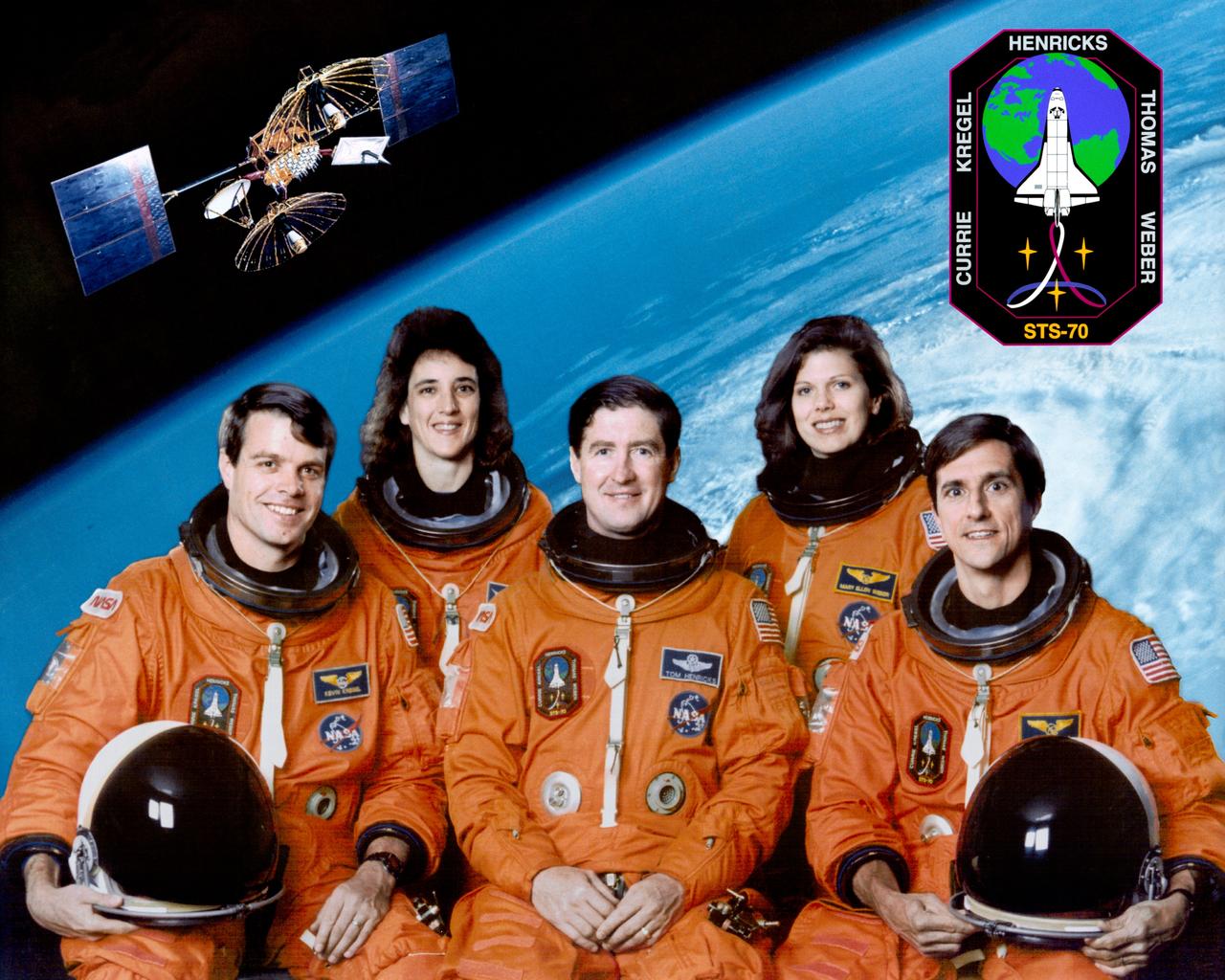
STS070-S-002 (May 1995) --- These five NASA astronauts are in training for the STS-70 mission aboard the Space Shuttle Discovery. Left to right are astronauts Kevin R. Kregel, Nancy J. Currie, Terence T. (Tom) Henricks, Mary Ellen Weber and Donald A. Thomas. Henricks and Kregel are commander and pilot, respectively. The other three are mission specialists. Among the tasks they are expected to perform is the deployment of another satellite in the network of the Tracking and Data Relay Satellite System (TDRSS).
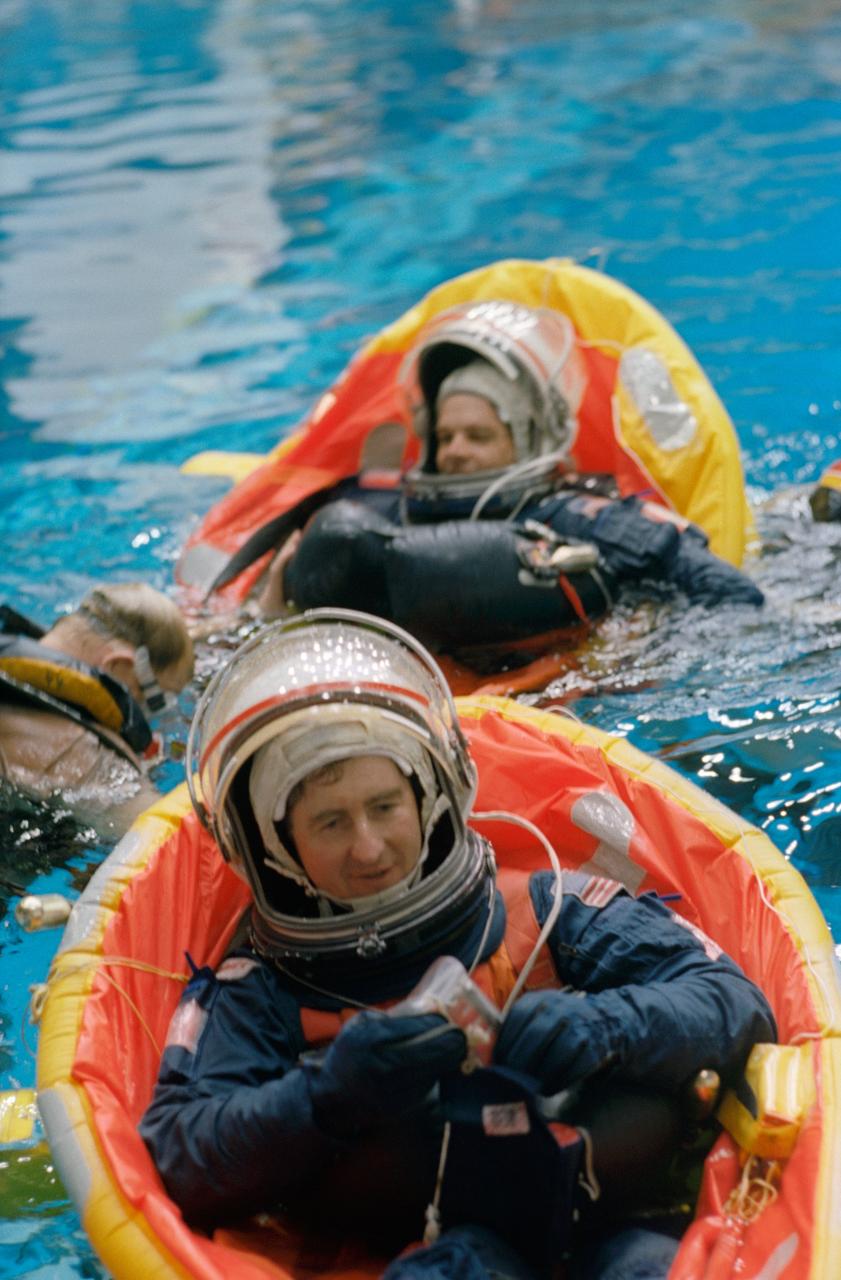
S95-03473 (16 Feb 1995) --- Astronauts Terence T. (Tom) Henricks (foreground) and Kevin R. Kregel deploy their life rafts during emergency bailout training in a 25 feet deep pool at the Johnson Space Center's (JSC) Weightless Environment Training Facility (WET-F). Henricks and Kregel are commander and pilot, respectively, for the STS-70 mission, now scheduled for a liftoff in early June.
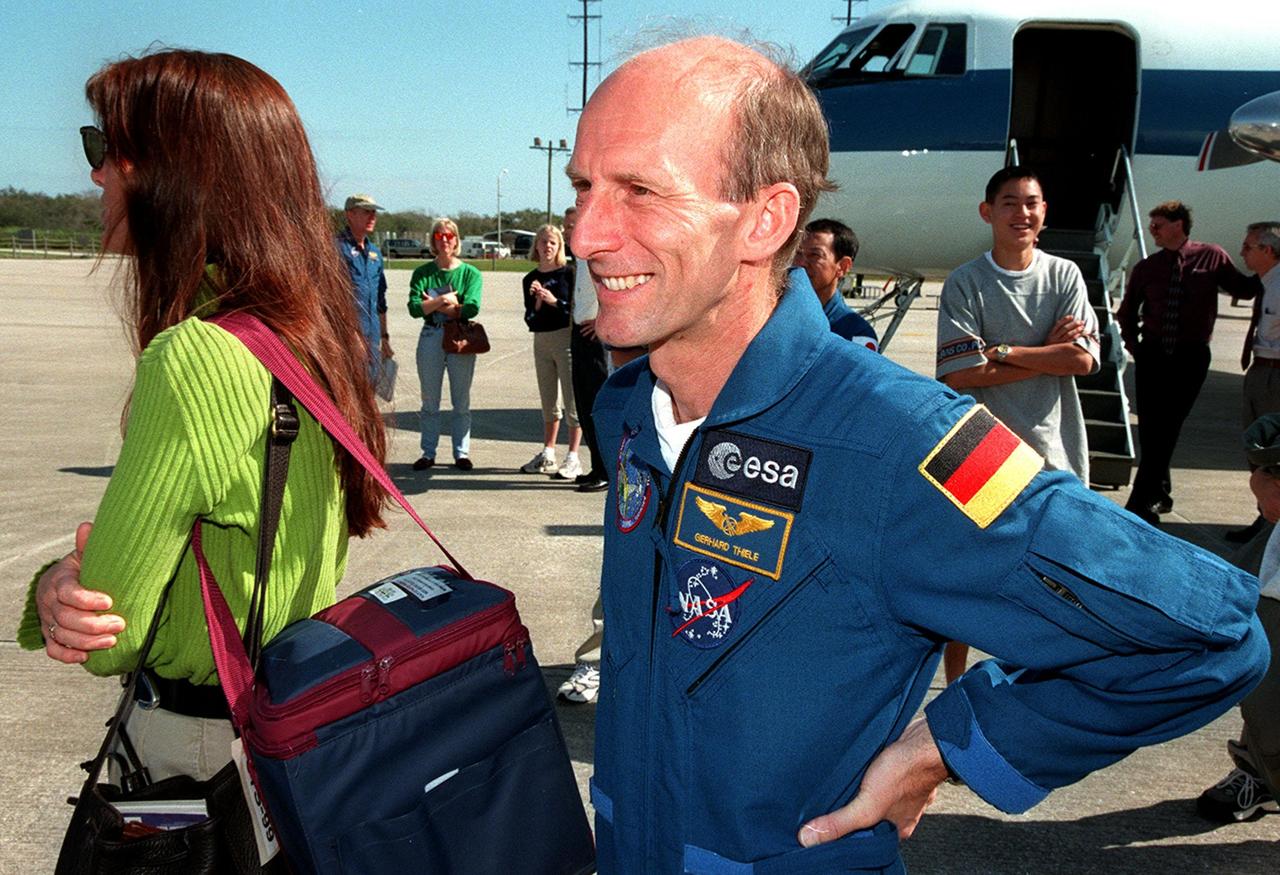
At the Shuttle Landing Facility, STS-99 crew members join family members for their return trip to Houston. At left is Jeanne Kregel, wife of Commander Kevin Kregel. At right is Mission Specialist Gerhard Thiele of Germany. The STS-99 crew completed a successful 11-day Shuttle Radar Topography Mission mapping 47 million square miles of the Earth's surface before landing at KSC Feb. 22
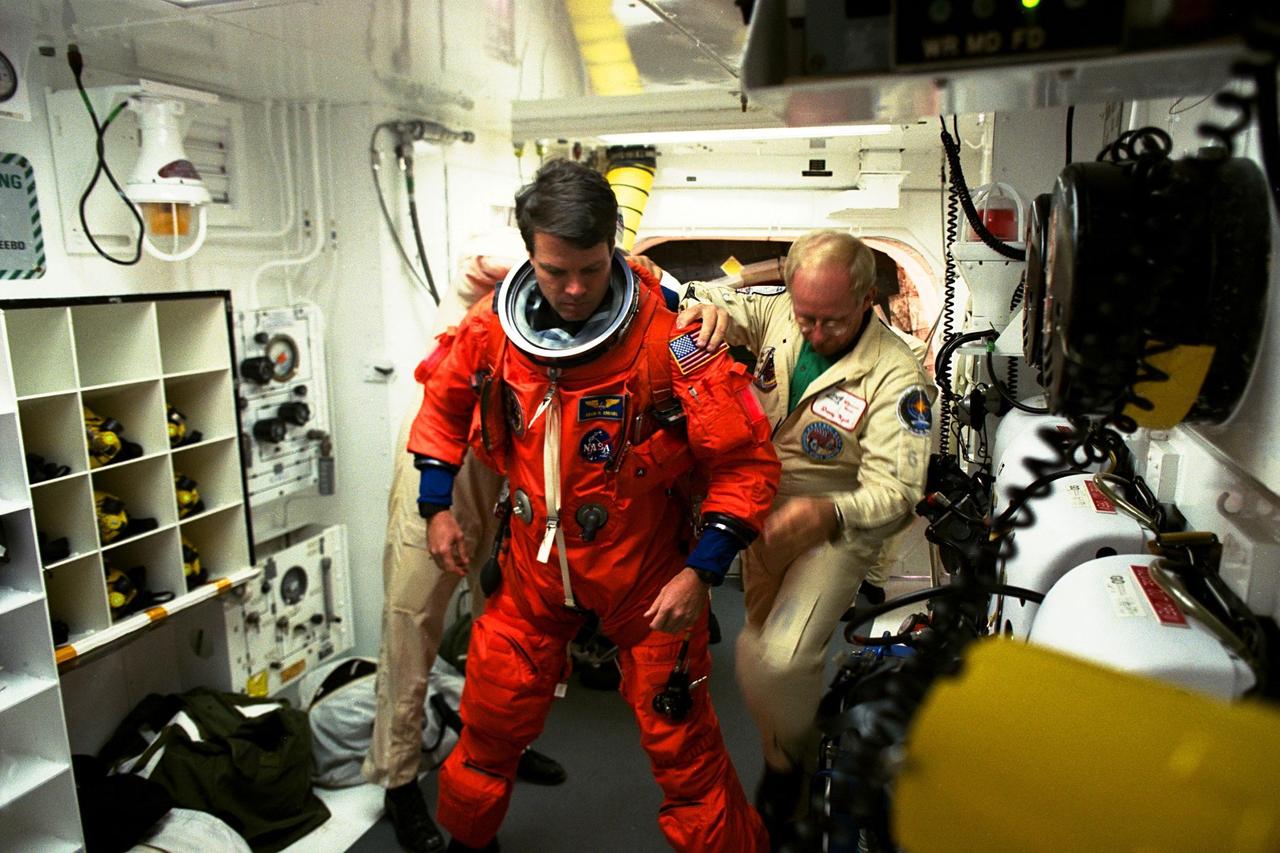
STS-87 Commander Kevin Kregel is assisted with his ascent and re-entry flight suit in the white room at Launch Pad 39B by Danny Wyatt, NASA quality assurance specialist. STS-87 is the fourth flight of the United States Microgravity Payload and Spartan-201. A veteran of two space flights (STS-70 and -78), Kregel has logged more than 618 hours in space
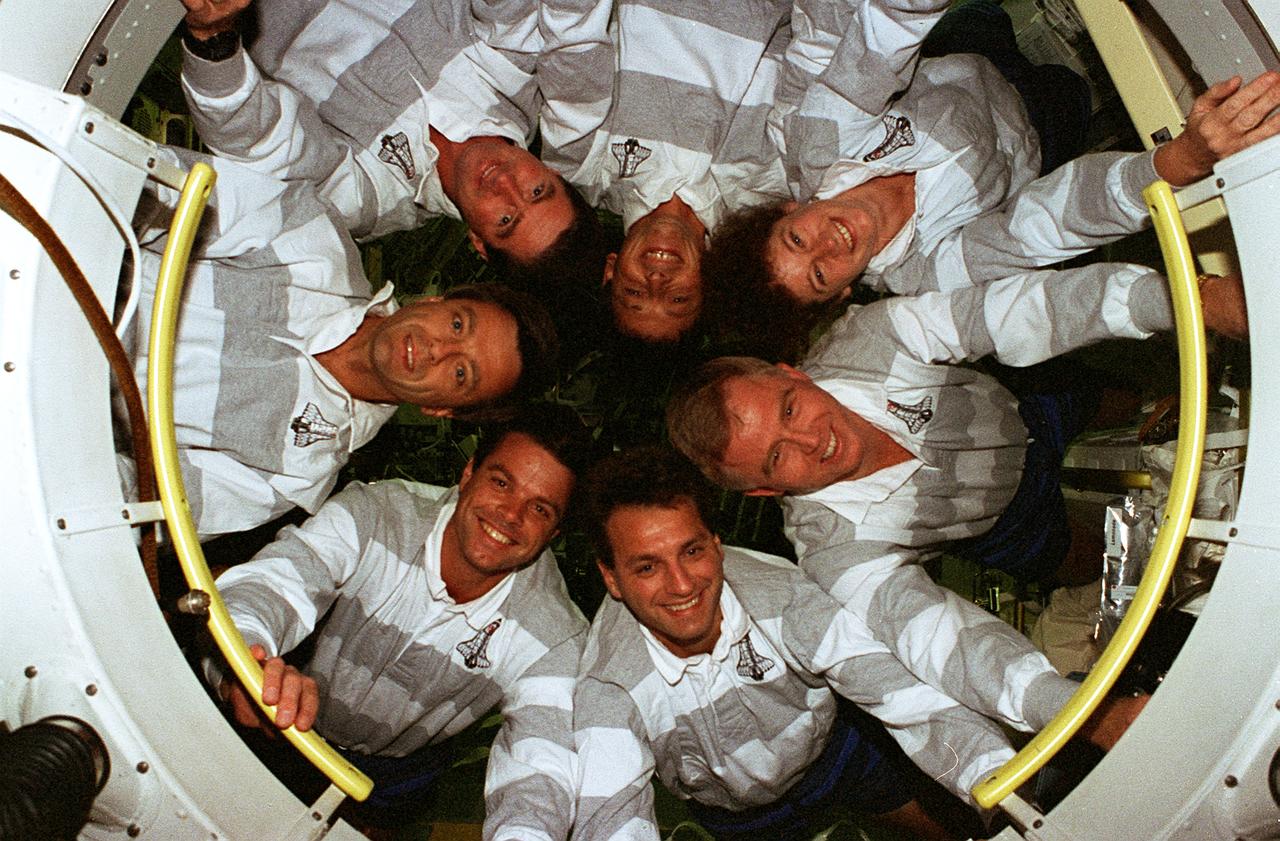
STS078-428-015 (20 June-7 July 1996) --- The crewmembers chose the Life and Microgravity Spacelab (LMS-1) Science Module as a backdrop for their traditional inflight portrait. Hold picture vertically with payload commander Susan J. Helms in lower right. Clockwise from astronaut Helms are Charles J. Brady, Richard M. Linnehan, Kevin R. Kregel, Canadian payload specialist Robert B. Thirsk, Terence T. (Tom) Henricks and French payload specialist Jean-Jacques Favier. Henricks and Kregel are commander and pilot, respectively, with Linnehan and Brady serving as mission specialists.
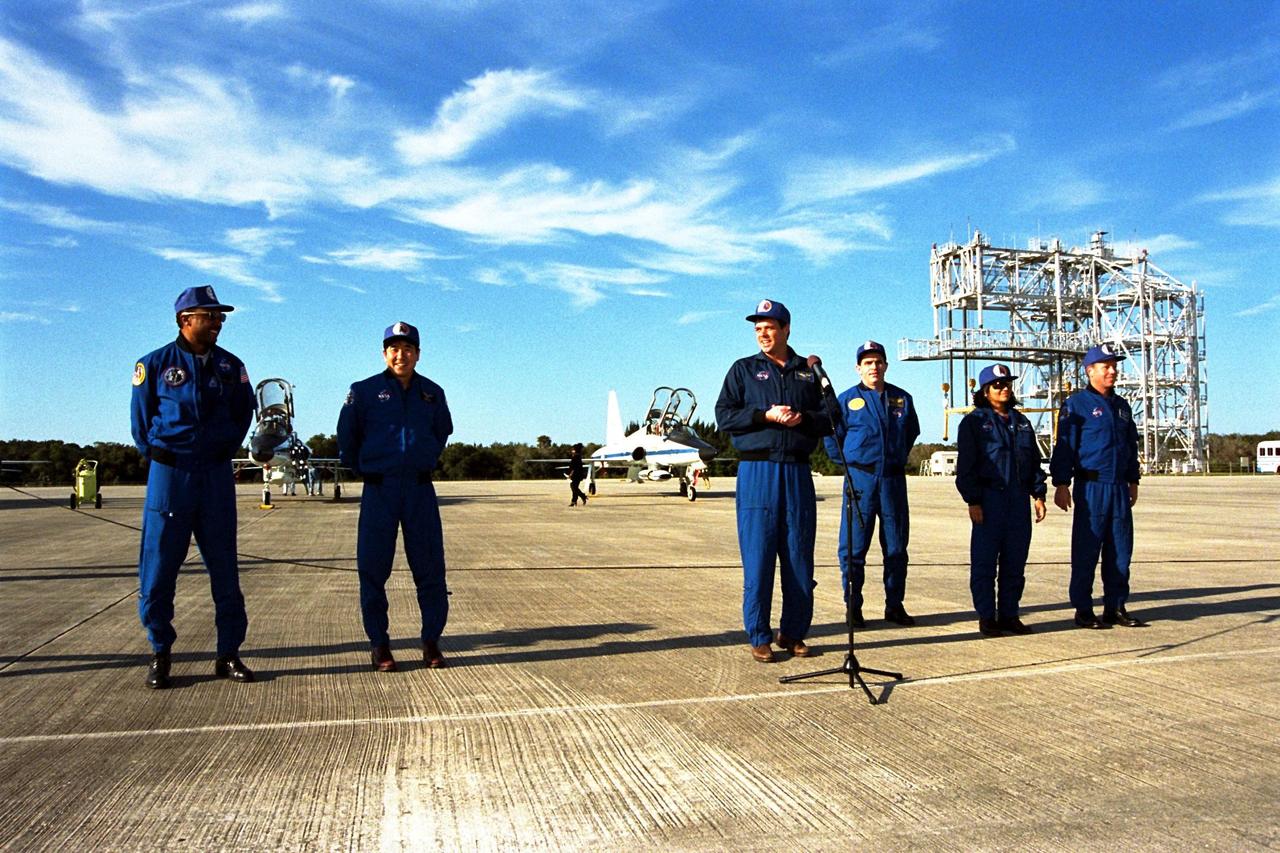
STS-87 Commander Kevin Kregel addresses members of the press and media at Kennedy Space Center's Shuttle Landing Facility after arriving for the final prelaunch activities leading up to the scheduled Nov. 19 liftoff. The STS-87 crew members are, from left to right, Mission Specialists Winston Scott and Takao Doi, Ph.D., of the National Space Development Agency of Japan; Commander Kevin Kregel; Payload Specialist Leonid Kadenyuk of the National Space Agency of Ukraine; Mission Specialist Kalpana Chawla, Ph.D.; and Pilot Steven Lindsey. STS-87 will be the fourth flight of the United States Microgravity Payload and the Spartan-201 deployable satellite
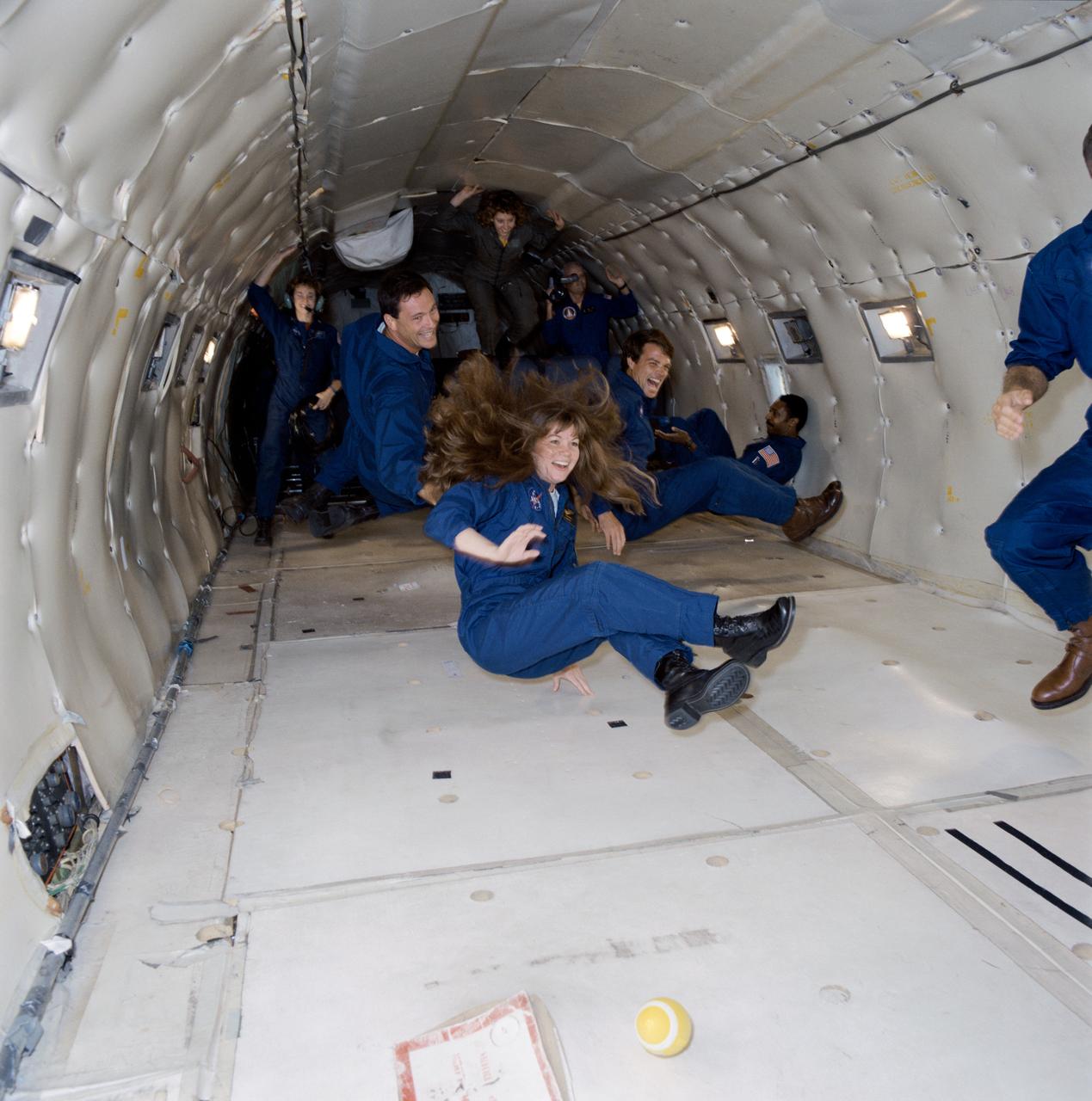
S94-26350 (10 Jan. 1994) --- Astronaut Catherine G. Coleman seems to enjoy the brief period of weightlessness she is sharing with fellow members of the 1992 class of astronauts. The weightless experience was afforded by a special parabolic pattern flown by NASA?s KC-135 ?zero gravity? aircraft. Left to right behind her are astronauts Michael E. Lopez-Alegria, Kevin R. Kregel and Winston E. Scott. EDITOR?S NOTE: Since this photograph was taken the four have been named to flights as follows: Kregel, STS-70; Scott, STS-72.
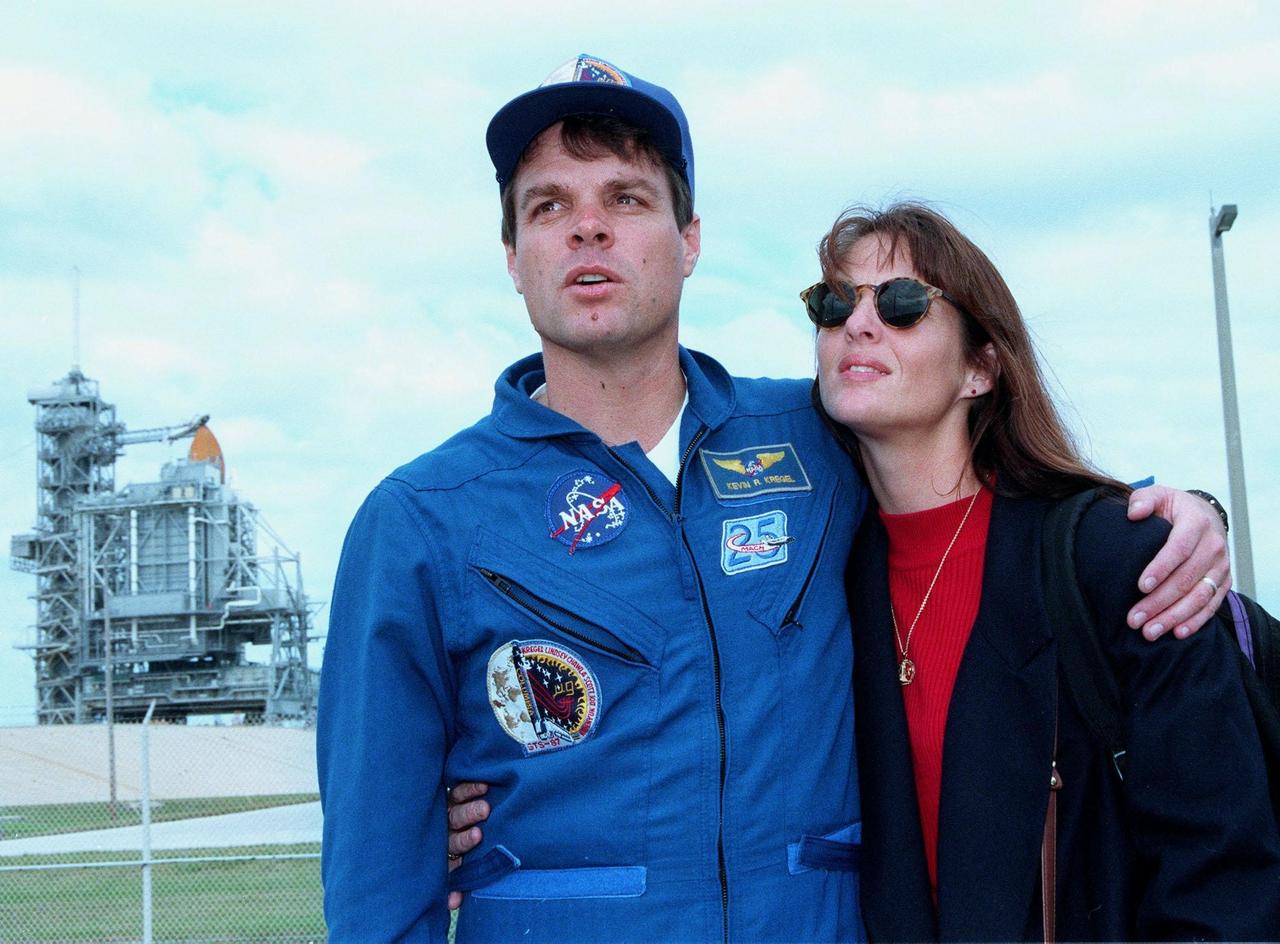
STS-87 Commander Kevin Kregel poses with his wife, Jeannie Kregel, in front of Kennedy Space Center's Launch Pad 39B during final prelaunch activities leading up to the scheduled Nov. 19 liftoff. The other STS-87 crew members are Pilot Steven Lindsey; Mission Specialists Kalpana Chawla, Ph.D., Winston Scott, and Takao Doi, Ph.D., of the National Space Development Agency of Japan; and Payload Specialist Leonid Kadenyuk of the National Space Agency of Ukraine. STS-87 will be the fourth flight of the United States Microgravity Payload and the Spartan-201 deployable satellite
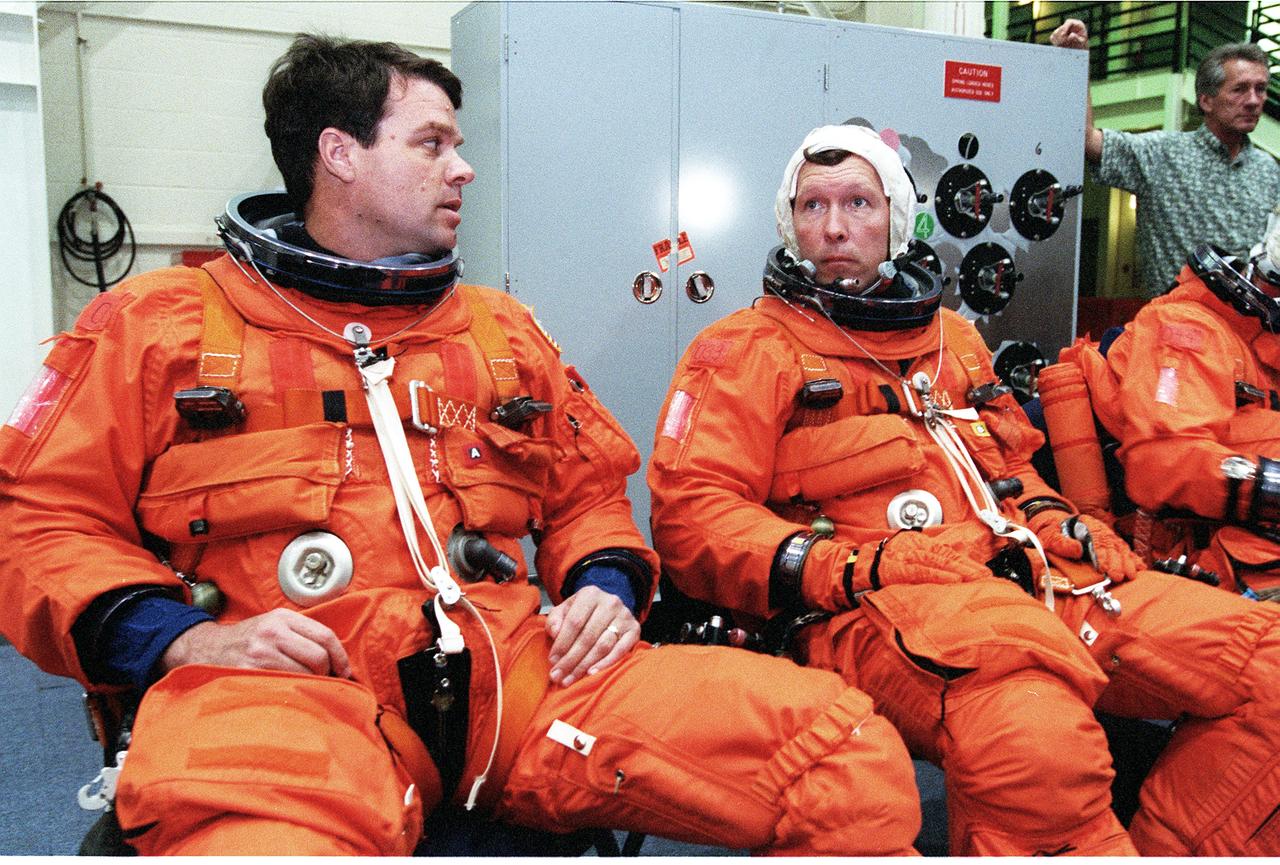
S99-05619 (19 May 1999) --- Astronauts Kevin R. Kregel (left) and Dominic L. Gorie, mission commander and pilot, respectively, for STS-99, are pictured during the briefing portion of emergency bailout training at the Johnson Space Center's Systems Integration Facility. Other members of the crew are out of frame at right.
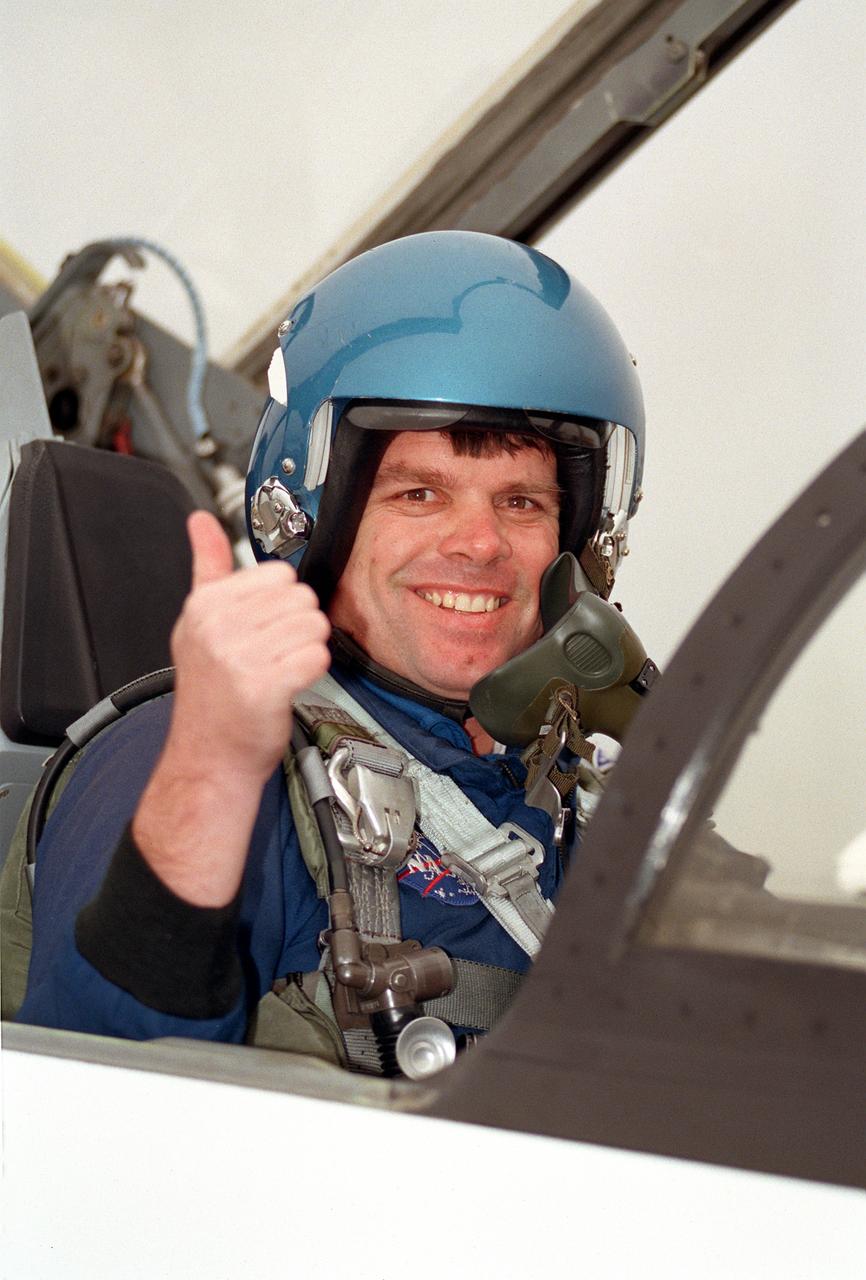
JSC2000-00924 (27 January 2000) --- Astronaut Kevin R. Kregel, mission commander, signals thumbs up as he prepares to pilot a T-38 jet aircraft to southern Florida in preparation for launch next week aboard the Space Shuttle Endeavour.
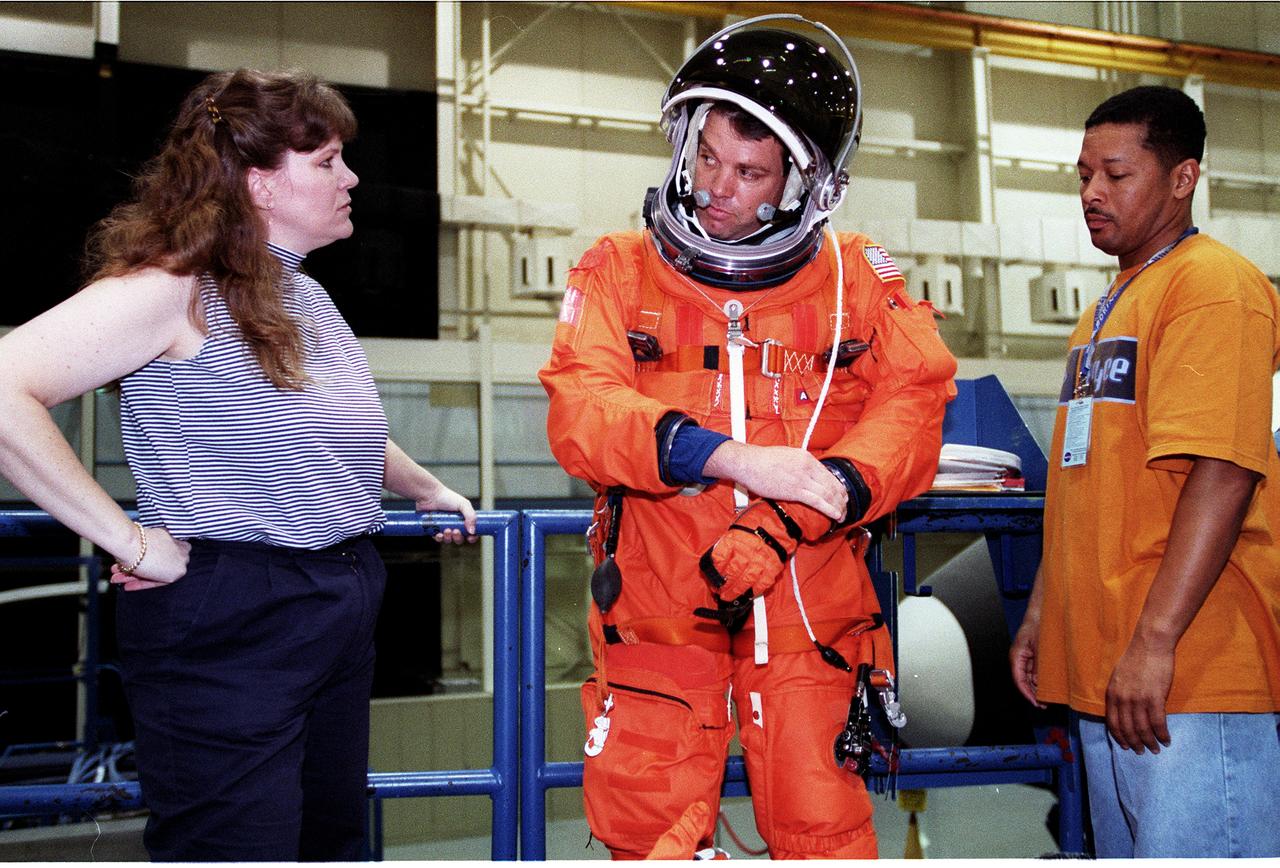
S99-05620 (19 May 1999) --- Astronaut Kevin R. Kregel (left), STS-99 mission commander, is briefed by a member of the crew training staff (out of frame at left) during emergency bailout training at the Johnson Space Center's Systems Integration Facility. Looking on is insertion technician George Britingham, United Space Alliance.
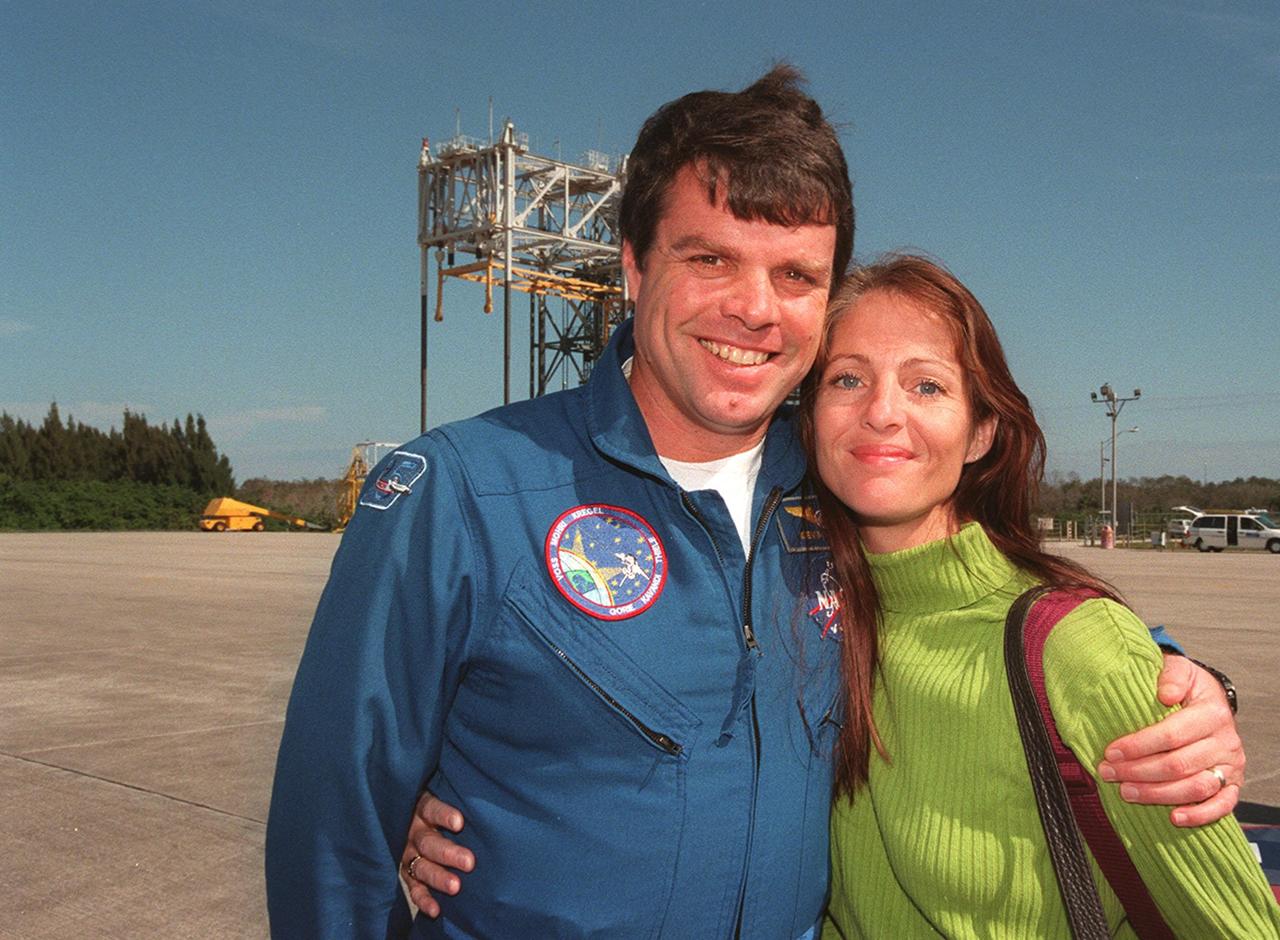
At the Shuttle Landing Facility, STS-99 Commander Kevin Kregel is joined by his wife, Jeanne, before their departure for Houston. The STS-99 crew completed a successful 11-day Shuttle Radar Topography Mission mapping 47 million square miles of the Earth's surface before landing at KSC Feb. 22
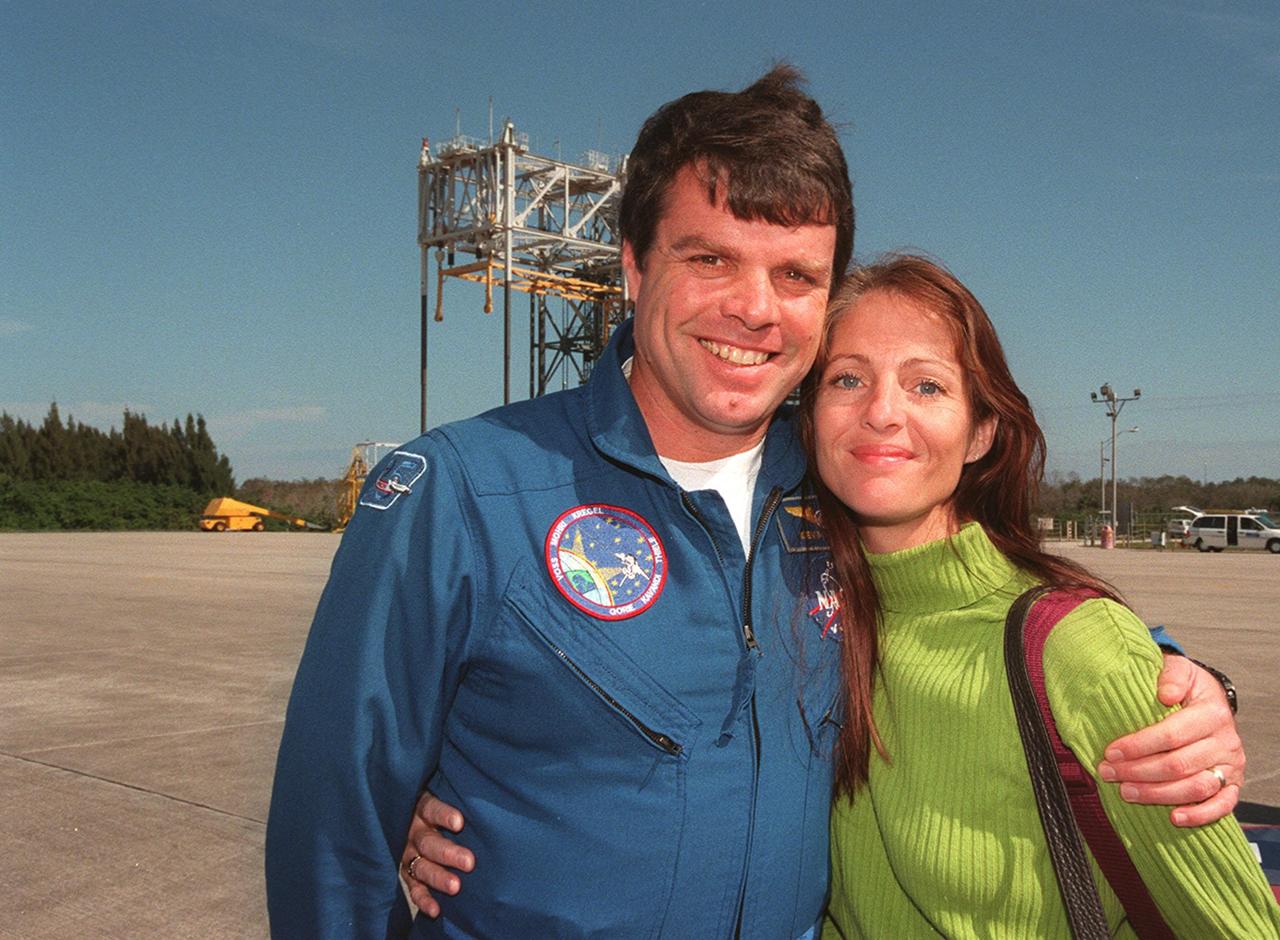
At the Shuttle Landing Facility, STS-99 Commander Kevin Kregel is joined by his wife, Jeanne, before their departure for Houston. The STS-99 crew completed a successful 11-day Shuttle Radar Topography Mission mapping 47 million square miles of the Earth's surface before landing at KSC Feb. 22
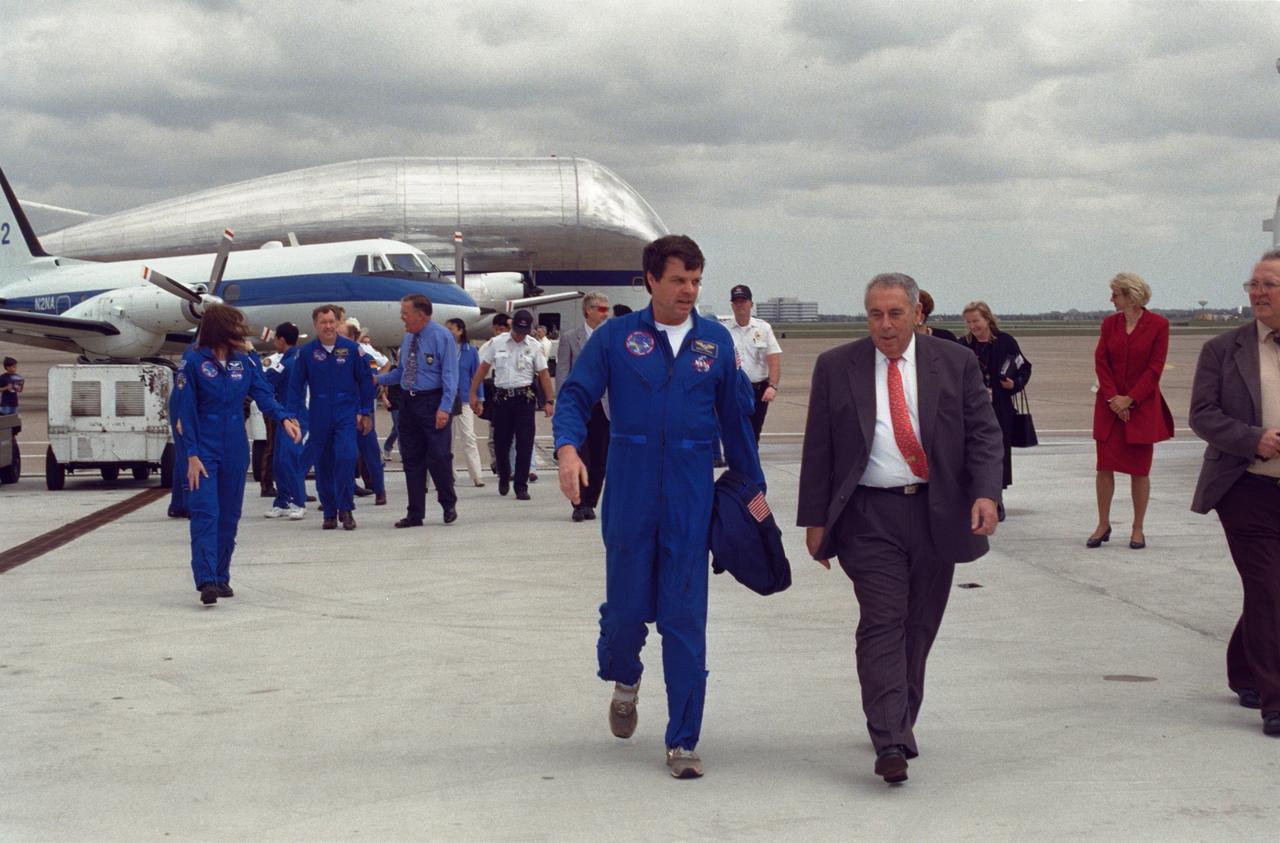
JSC2000-01671 (23 February 2000) --- Astronaut Kevin R. Kregel (left foreground), mission commander for STS-99, walks with JSC Director George W.S. Abbey toward Ellington Field's Hangar 990 following crew arrival on February 23. The six-member crew was welcomed by a crowd of supporters in the hangar.
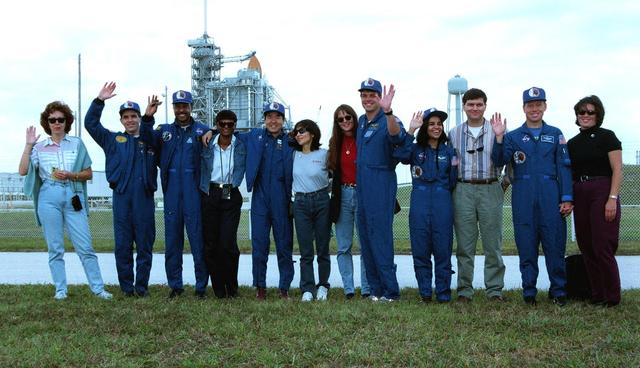
The crew of STS-87 pose with their spouses in front of Kennedy Space Center’s Launch Pad 39B during final prelaunch activities leading up to the scheduled Nov. 19 liftoff. From left to right are: Vera Kadenyuk, wife of Payload Specialist Leonid Kadenyuk of the National Space Agency of Ukraine who is next to Vera; Mission Specialist Winston Scott and his wife, Marilyn; Mission Specialist Takao Doi, Ph.D., of the National Space Development Agency of Japan, and his wife, Hitomi; Jeannie Kregel, who is married to Commander Kevin Kregel standing next to her; Mission Specialist Kalpana Chawla, Ph.D., and her husband, Jean-Pierre Harrison; and Pilot Steven Lindsey and his wife Diane. STS-87 will be the fourth flight of the United States Microgravity Payload and the Spartan-201 deployable satellite
Kevin Kregel, commander of the STS-87 crew, participates in a news briefing at Launch Pad 39B during the Terminal Countdown Demonstration Test (TCDT) at Kennedy Space Center (KSC). Selected by NASA in 1992, Kregel is a veteran of two space flights (STS-70 and 78) and has logged over 618 hours in space. The TCDT is held at KSC prior to each Space Shuttle flight providing the crew of each mission opportunities to participate in simulated countdown activities. The TCDT ends with a mock launch countdown culminating in a simulated main engine cut-off. The crew also spends time undergoing emergency egress training exercises at the pad and has an opportunity to view and inspect the payloads in the orbiter's payload bay. STS-87 is scheduled for launch Nov. 19 aboard the Space Shuttle Columbia from pad 39B at KSC
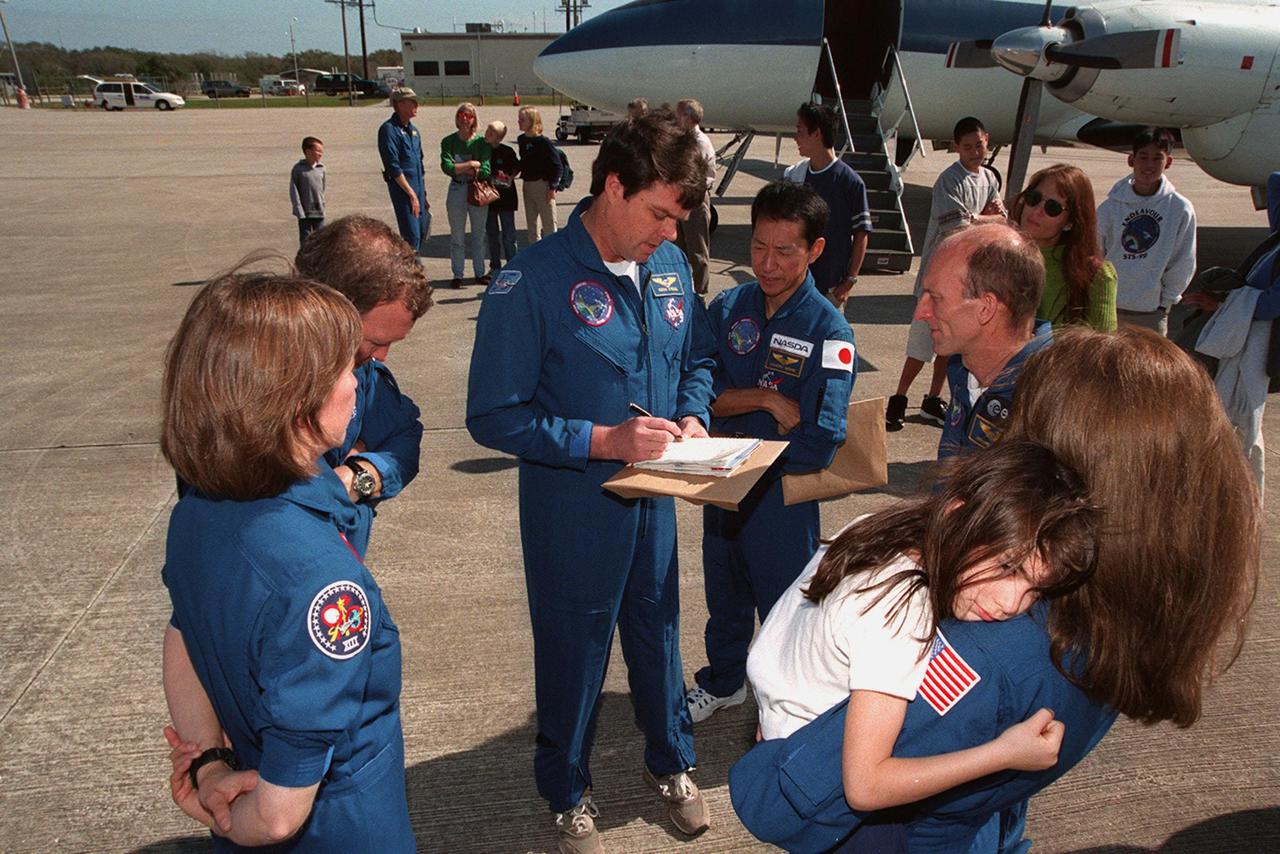
The STS-99 crew get ready to leave KSC with their families for a return trip to Houston. From left are Mission Specialist Janice Voss, Pilot Dominic Gorie, Commander Kevin Kregel, and Mission Specialists Mamoru Mohri of Japan, Gerhard Thiele of Germany, and Janet Kavandi, holding her daughter. The STS-99 crew completed a successful 11-day Shuttle Radar Topography Mission mapping 47 million square miles of the Earth's surface before landing at KSC Feb. 22
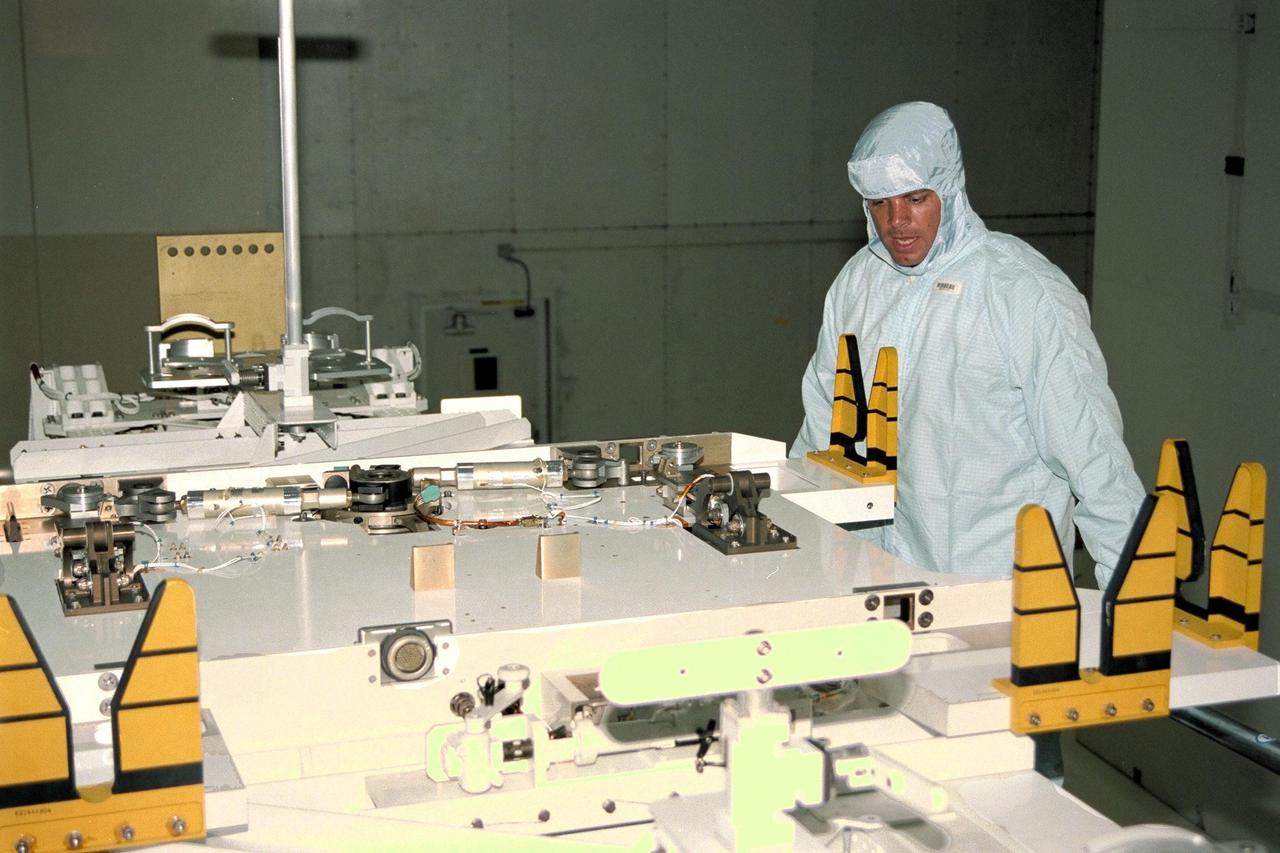
STS-87 Commander Kevin Kregel participates in the Crew Equipment Integration Test (CEIT) in Kennedy Space Center’s (KSC's) Vertical Processing Facility. The CEIT gives astronauts an opportunity to get a hands-on look at the payloads with which they will be working on-orbit. STS-87 will be the fourth United States Microgravity Payload and flight of the Spartan-201 deployable satellite. STS-87 is scheduled for a Nov. 19 liftoff from KSC

STS087-307-002 (19 November - 5 December 1997) --- On the Space Shuttle Columbia's middeck, the crewmembers for the mission pose for the traditional in-flight portrait. In front, left to right, are astronauts Steven W. Lindsey, pilot; Takao Doi, mission specialist representing Japan's National Space Development Agency (NASDA); and Winston E. Scott, mission specialist. In back are, from the left, astronauts Kevin R. Kregel, commander; and Kalpana Chawla, mission specialist; along with payload specialist Leonid Kadenyuk.
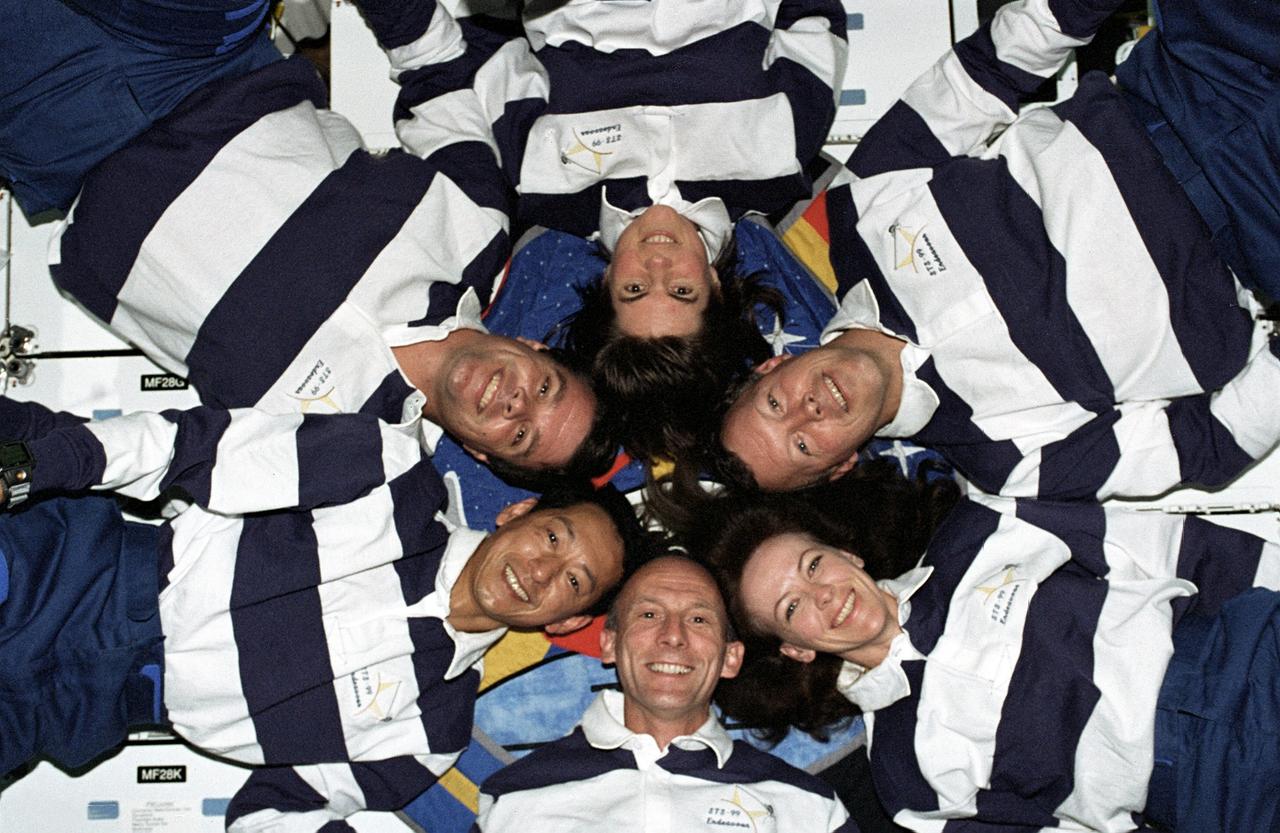
STS099-318-015 (11-22 February 2000) --- A "star-burst" pose by the STS-99 crew members helps to celebrate a successful Shuttle Radar Topographic Mission (SRTM) aboard NASA's Space Shuttle Endeavour. Astronaut Janice Voss is at top center. Clockwise, around the circle from her position, are astronauts Dominic L. Gorie, Janet L. Kavandi, Gerhard Thiele, Mamoru Mohri and Kevin R. Kregel. Mohri is with the Japanese Space Agency and Thiele represents the European Space Agency (ESA).
The STS-99 crew get ready to leave KSC with their families for a return trip to Houston. From left are Mission Specialist Janice Voss, Pilot Dominic Gorie, Commander Kevin Kregel, and Mission Specialists Mamoru Mohri of Japan, Gerhard Thiele of Germany, and Janet Kavandi, holding her daughter. The STS-99 crew completed a successful 11-day Shuttle Radar Topography Mission mapping 47 million square miles of the Earth's surface before landing at KSC Feb. 22
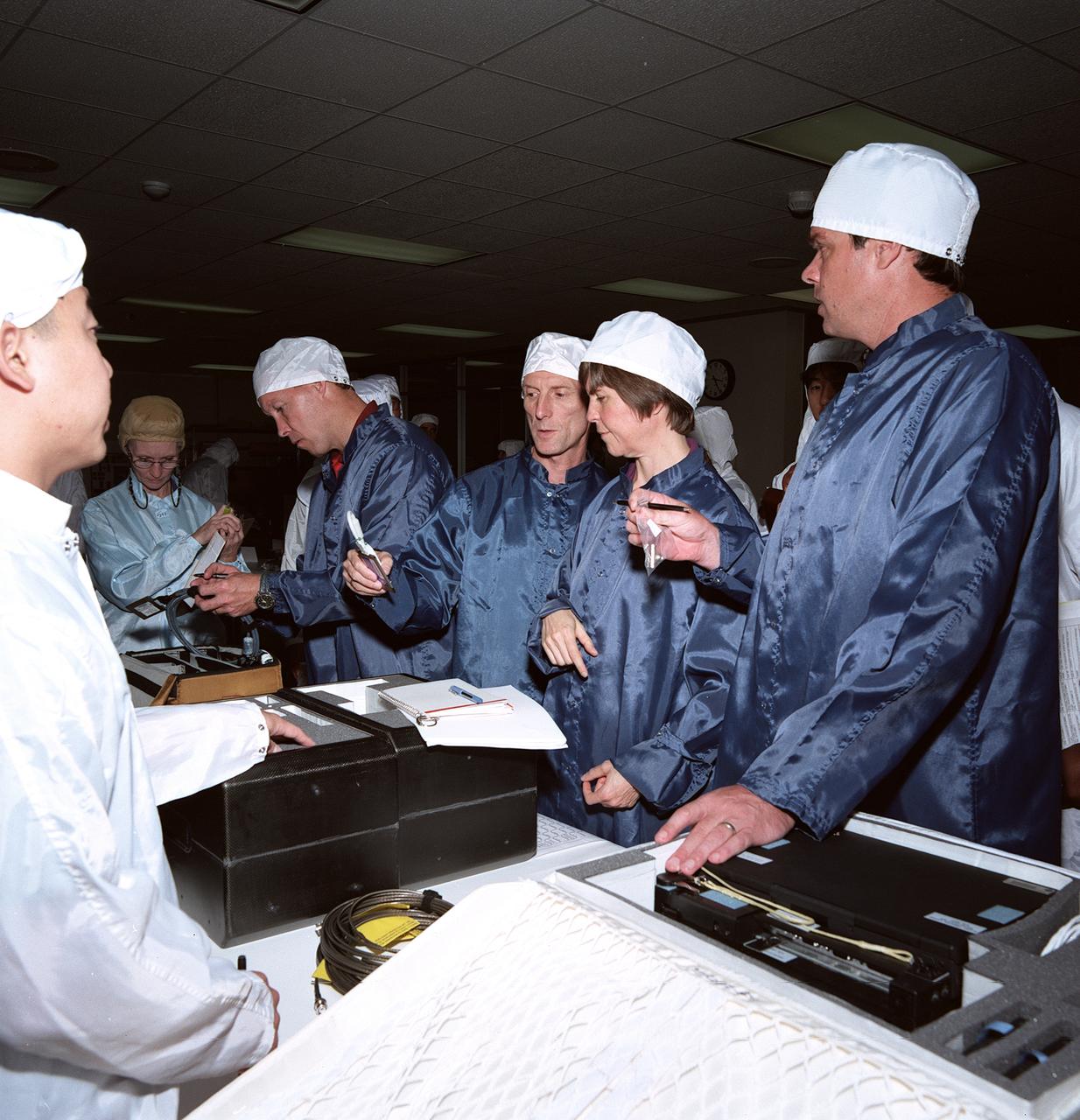
S99-09457 (11 August 1999) --- Wearing clean room suits, members of the STS-99 crew inspect some of the gear they will be using on their upcoming space mission. From the left (in blue lab coats) are astronauts Dominic L. Gorie, pilot; Gerhard P.J. Thiele, mission specialist representing the European Space Agency (ESA); Janice Voss, mission specialist; and Kevin R. Kregel, mission commander. This type flight crew equipment (FCE) bench review is routine preflight procedure for all shuttle crews.
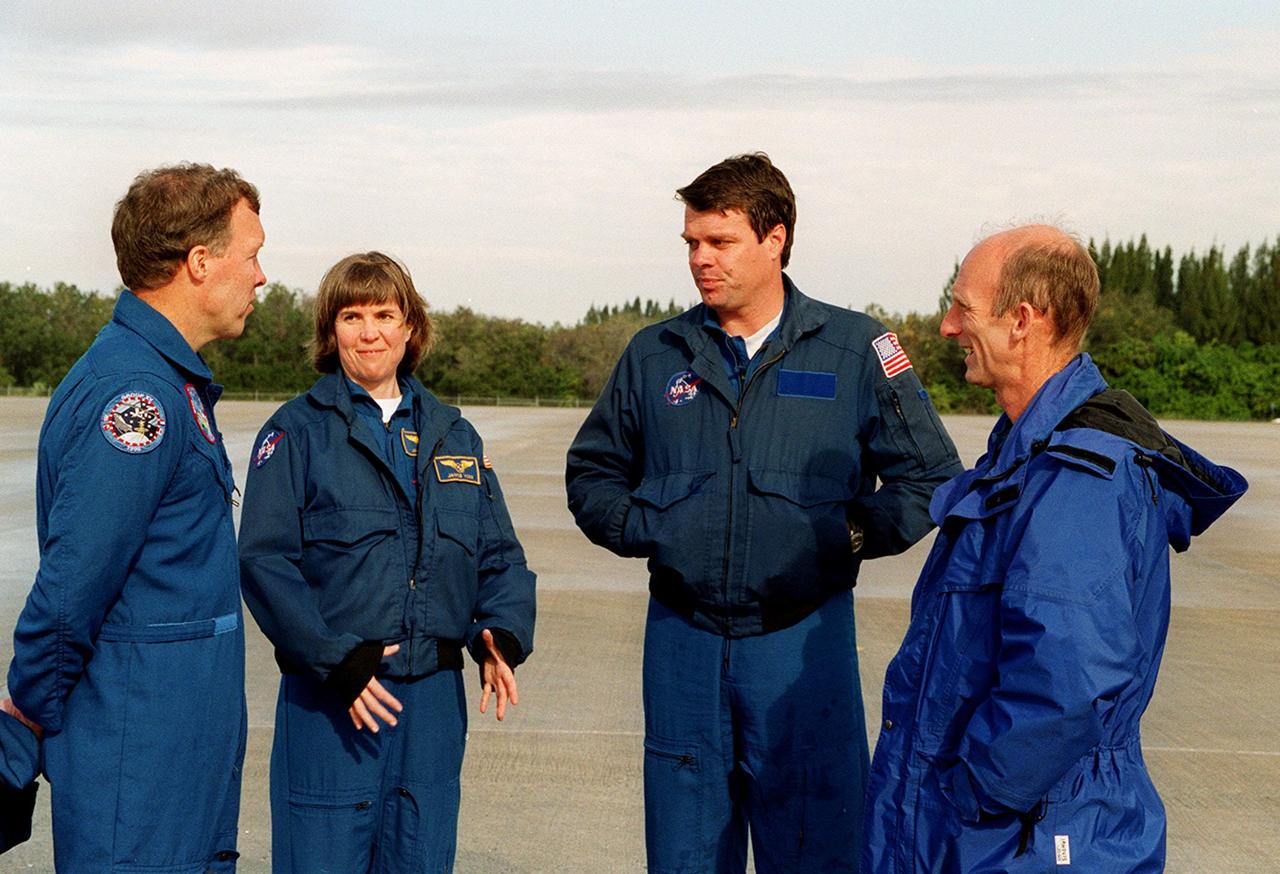
On the runway at the Shuttle Landing Facility, STS-99 crew members Pilot Dominic Gorie, Mission Specialist Janice Voss, Commander Kevin Kregel and Mission Specialist Gerhard Thiele discuss departure plans to Houston. Kregel and Gorie will be piloting T-38 jets with Voss and Thiele as passengers. During the Jan. 31 launch countdown, Endeavour's enhanced master events controller (E-MEC) No. 2 failed a standard preflight test. Launch was postponed and Shuttle managers decided to replace the E-MEC located in the orbiter's aft compartment. Launch controllers will be in a position to begin the STS-99 countdown the morning of Feb. 6 and ready to support a launch midto latenext week pending availability of the Eastern Range. The postponed launch gives the crew an opportunity for more training and time with their families. Known as the Shuttle Radar Topography Mission, it will chart a new course to produce unrivaled 3-D images of the Earth's surface, using two antennae and a 200-foot-long section of space station-derived mast protruding from the payload bay. The result could be close to 1 trillion measurements of the Earth's topography. Besides contributing to the production of better maps, these measurements could lead to improved water drainage modeling, more realistic flight simulators, better locations for cell phone towers, and enhanced navigation safety
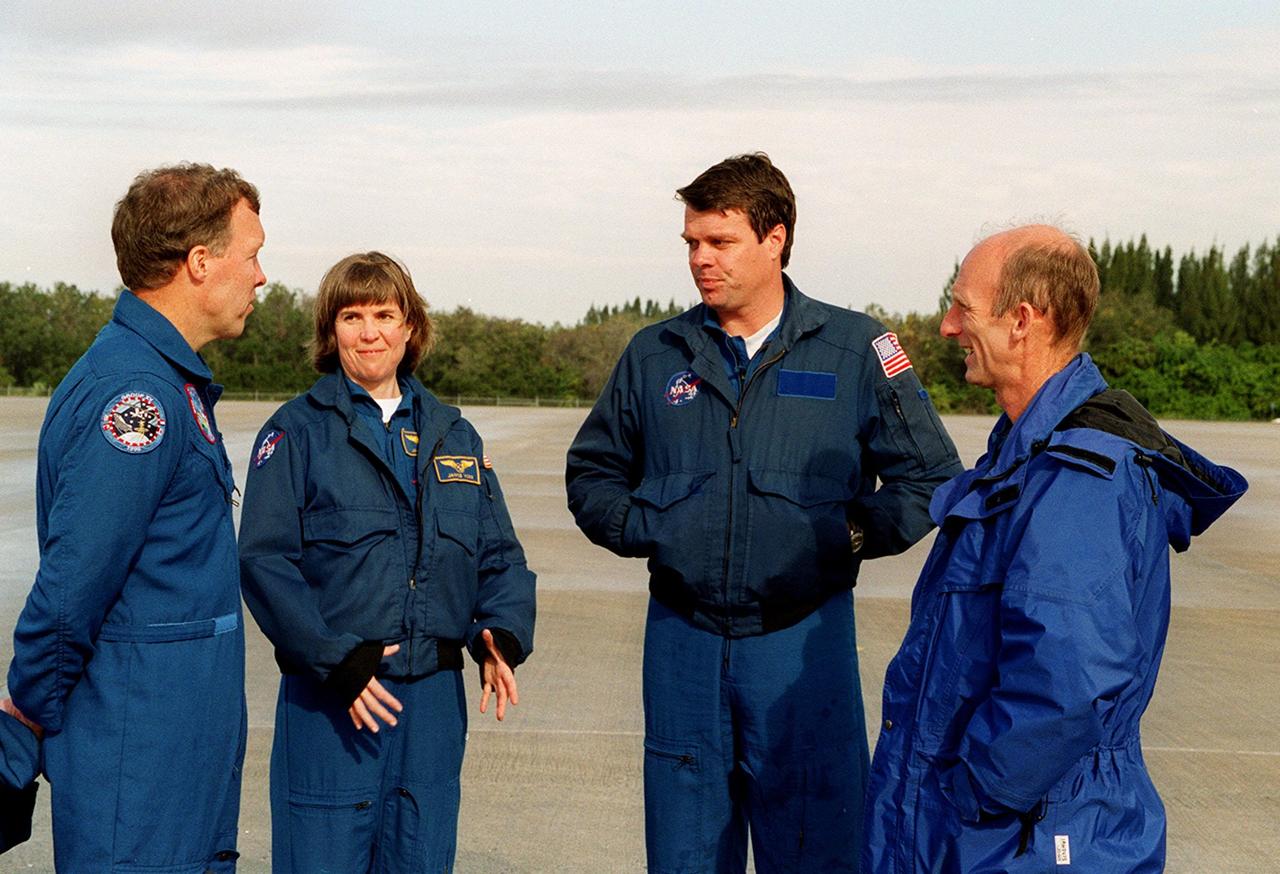
On the runway at the Shuttle Landing Facility, STS-99 crew members Pilot Dominic Gorie, Mission Specialist Janice Voss, Commander Kevin Kregel and Mission Specialist Gerhard Thiele discuss departure plans to Houston. Kregel and Gorie will be piloting T-38 jets with Voss and Thiele as passengers. During the Jan. 31 launch countdown, Endeavour's enhanced master events controller (E-MEC) No. 2 failed a standard preflight test. Launch was postponed and Shuttle managers decided to replace the E-MEC located in the orbiter's aft compartment. Launch controllers will be in a position to begin the STS-99 countdown the morning of Feb. 6 and ready to support a launch midto latenext week pending availability of the Eastern Range. The postponed launch gives the crew an opportunity for more training and time with their families. Known as the Shuttle Radar Topography Mission, it will chart a new course to produce unrivaled 3-D images of the Earth's surface, using two antennae and a 200-foot-long section of space station-derived mast protruding from the payload bay. The result could be close to 1 trillion measurements of the Earth's topography. Besides contributing to the production of better maps, these measurements could lead to improved water drainage modeling, more realistic flight simulators, better locations for cell phone towers, and enhanced navigation safety

On the runway at the Shuttle Landing Facility, STS-99 crew members Mission Specialists Gerhard Thiele and Janice Voss, Commander Kevin Kregel and Pilot Dominic Gorie briefly talk to the media about their imminent departure to Houston. Kregel and Gorie will be piloting T-38 jets with Voss and Thiele as passengers. During the Jan. 31 launch countdown, Endeavour's enhanced master events controller (E-MEC) No. 2 failed a standard preflight test. Launch was postponed and Shuttle managers decided to replace the E-MEC located in the orbiter's aft compartment. Launch controllers will be in a position to begin the STS-99 countdown the morning of Feb. 6 and ready to support a launch midto late next week pending availability of the Eastern Range. The postponed launch gives the crew an opportunity for more training and time with their families. Known as the Shuttle Radar Topography Mission, it will chart a new course to produce unrivaled 3-D images of the Earth's surface, using two antennae and a 200-foot-long section of space station-derived mast protruding from the payload bay. The result could be close to 1 trillion measurements of the Earth's topography. Besides contributing to the production of better maps, these measurements could lead to improved water drainage modeling, more realistic flight simulators, better locations for cell phone towers, and enhanced navigation safety
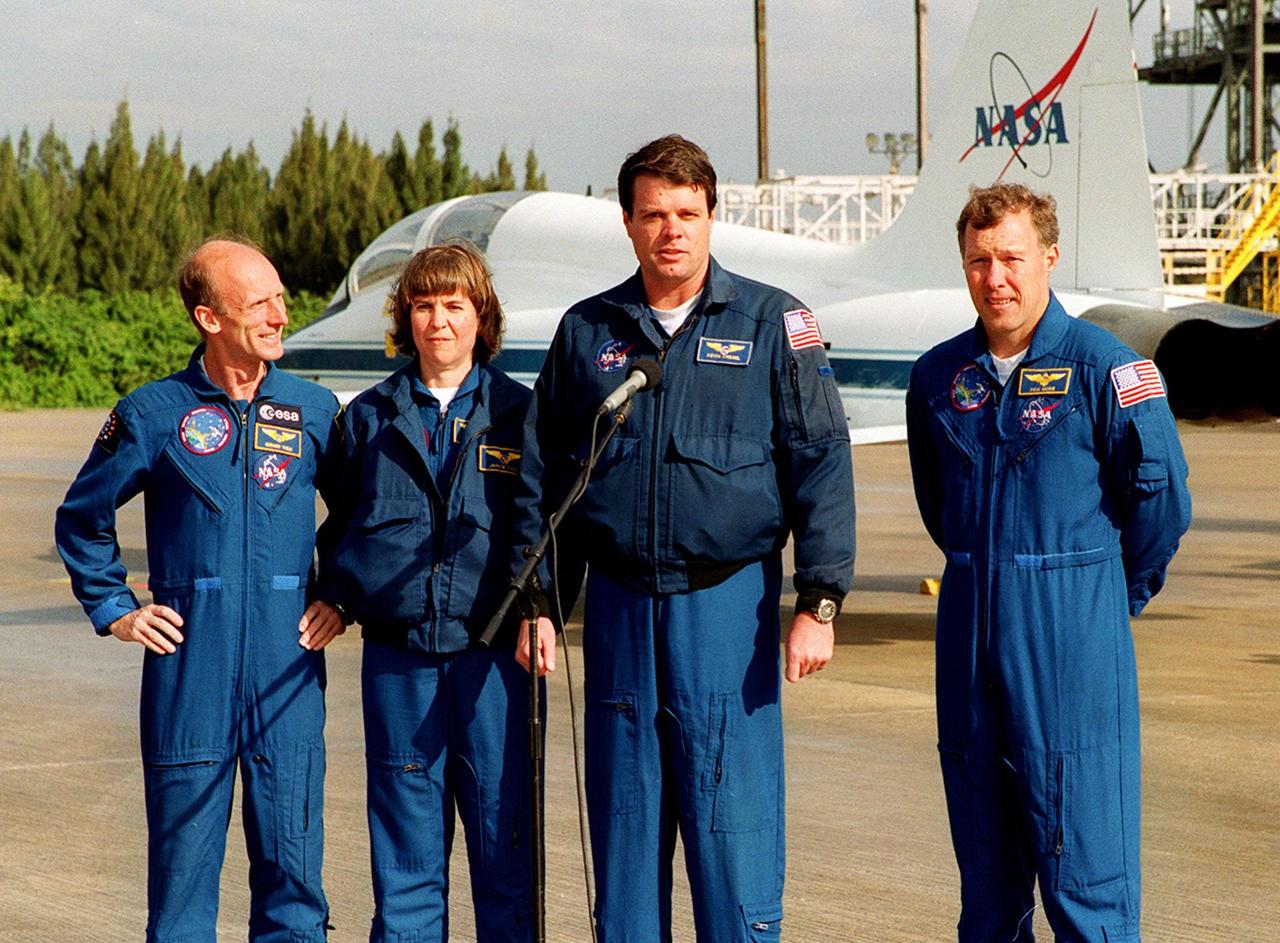
On the runway at the Shuttle Landing Facility, STS-99 crew members Mission Specialists Gerhard Thiele and Janice Voss, Commander Kevin Kregel and Pilot Dominic Gorie briefly talk to the media about their imminent departure to Houston. Kregel and Gorie will be piloting T-38 jets with Voss and Thiele as passengers. During the Jan. 31 launch countdown, Endeavour's enhanced master events controller (E-MEC) No. 2 failed a standard preflight test. Launch was postponed and Shuttle managers decided to replace the E-MEC located in the orbiter's aft compartment. Launch controllers will be in a position to begin the STS-99 countdown the morning of Feb. 6 and ready to support a launch midto late next week pending availability of the Eastern Range. The postponed launch gives the crew an opportunity for more training and time with their families. Known as the Shuttle Radar Topography Mission, it will chart a new course to produce unrivaled 3-D images of the Earth's surface, using two antennae and a 200-foot-long section of space station-derived mast protruding from the payload bay. The result could be close to 1 trillion measurements of the Earth's topography. Besides contributing to the production of better maps, these measurements could lead to improved water drainage modeling, more realistic flight simulators, better locations for cell phone towers, and enhanced navigation safety
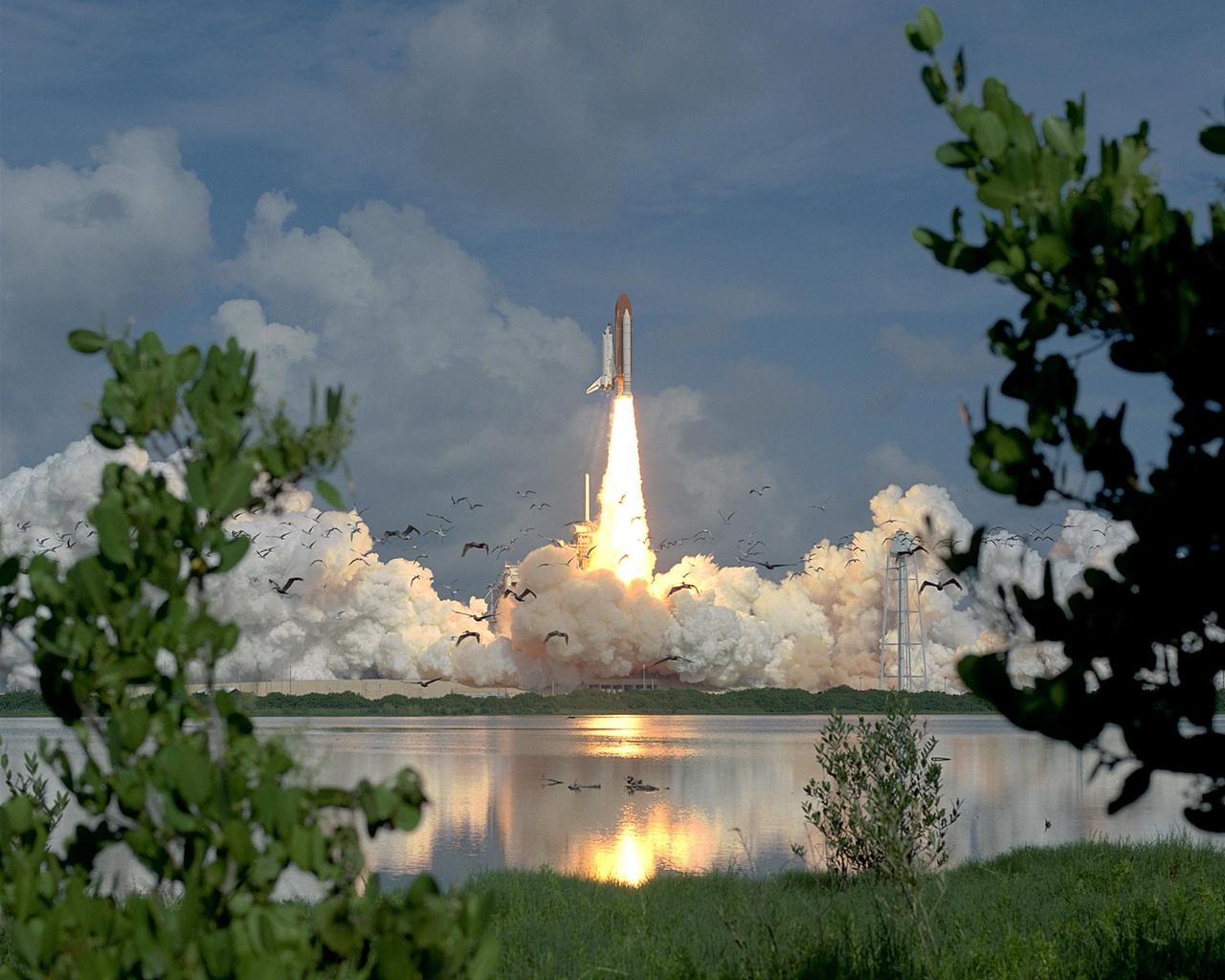
Startled birds scatter as the stillness of a summer morning is broken by a giant's roar. The Space Shuttle Discovery thundered into space from Launch Pad 39B at 9:41:55:078 a.m. EDT. STS-70 is the 70th Shuttle flight overall, the 21st for Discovery (OV-103), and the fourth Shuttle flight in 1995. On board for the nearly eight-day mission are a crew of five: Commander Terence "Tom" Henricks, Pilot Kevin R. Kregel, and Mission Specialists Nancy Jane Currie, Donald A. Thomas and Mary Ellen Weber. The crew's primary objective is to deploy the Tracking and Data Relay Satellite-G (TDRS-G), which will join a constellation of other TDRS spacecraft already on orbit
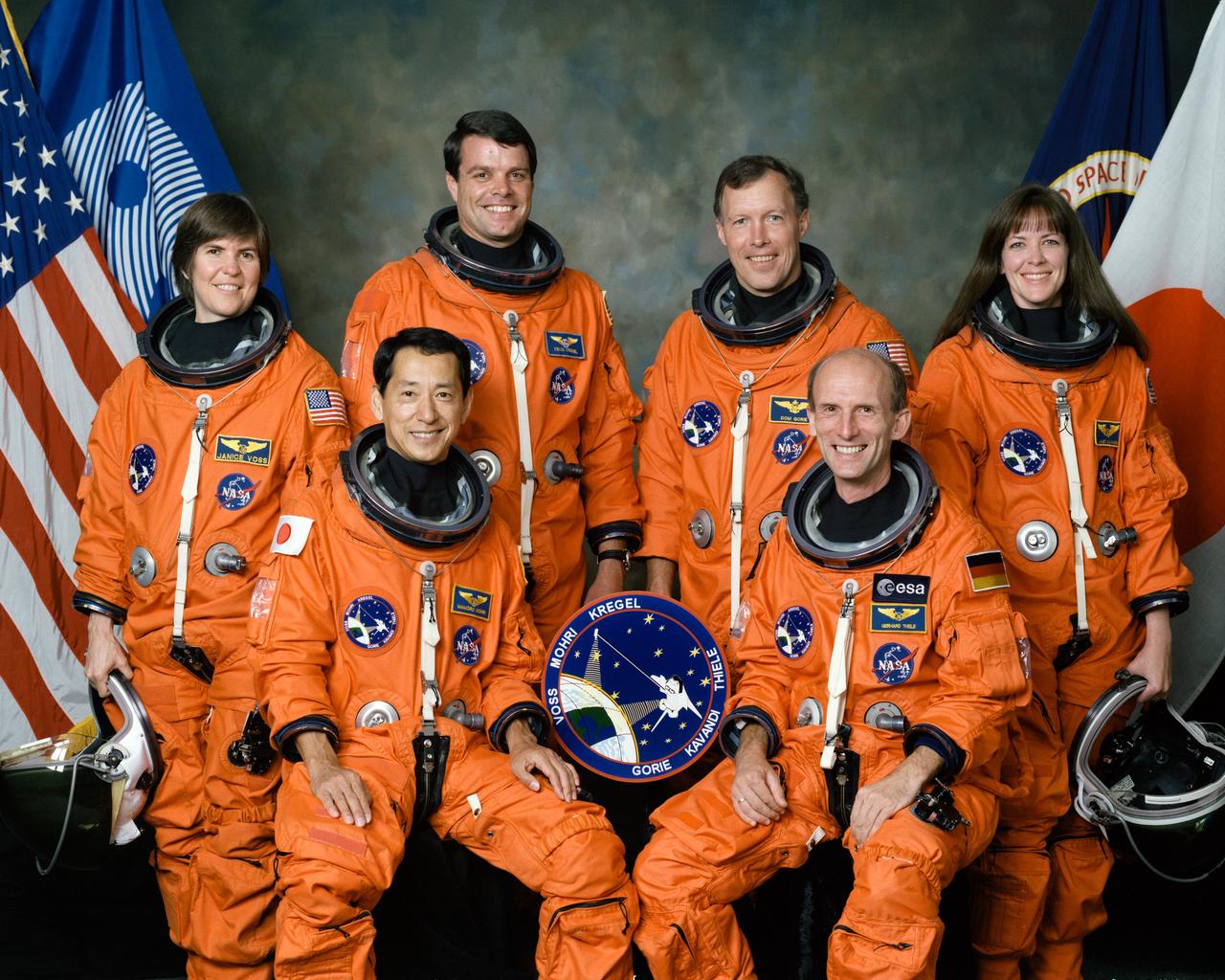
STS099-S-002 (June 1999) --- An international crew assigned to STS-99 takes a break from training to pose for the traditional crew portrait at NASA's Johnson Space Center (JSC). In front are international astronauts Mamoru Mohri and Gerhard P.J. Thiele, both mission specialists. In back are astronauts Janice Voss, mission specialist; Kevin R. Kregel, mission commander; Dominic L. Gorie, pilot; and Janet L. Kavandi, mission specialist. Mohri represents Japan's National Space Development Agency (NASDA) and Thiele represents the European Space Agency (ESA). The mission is scheduled as an eleven-day flight for late summer/early autumn of this year.
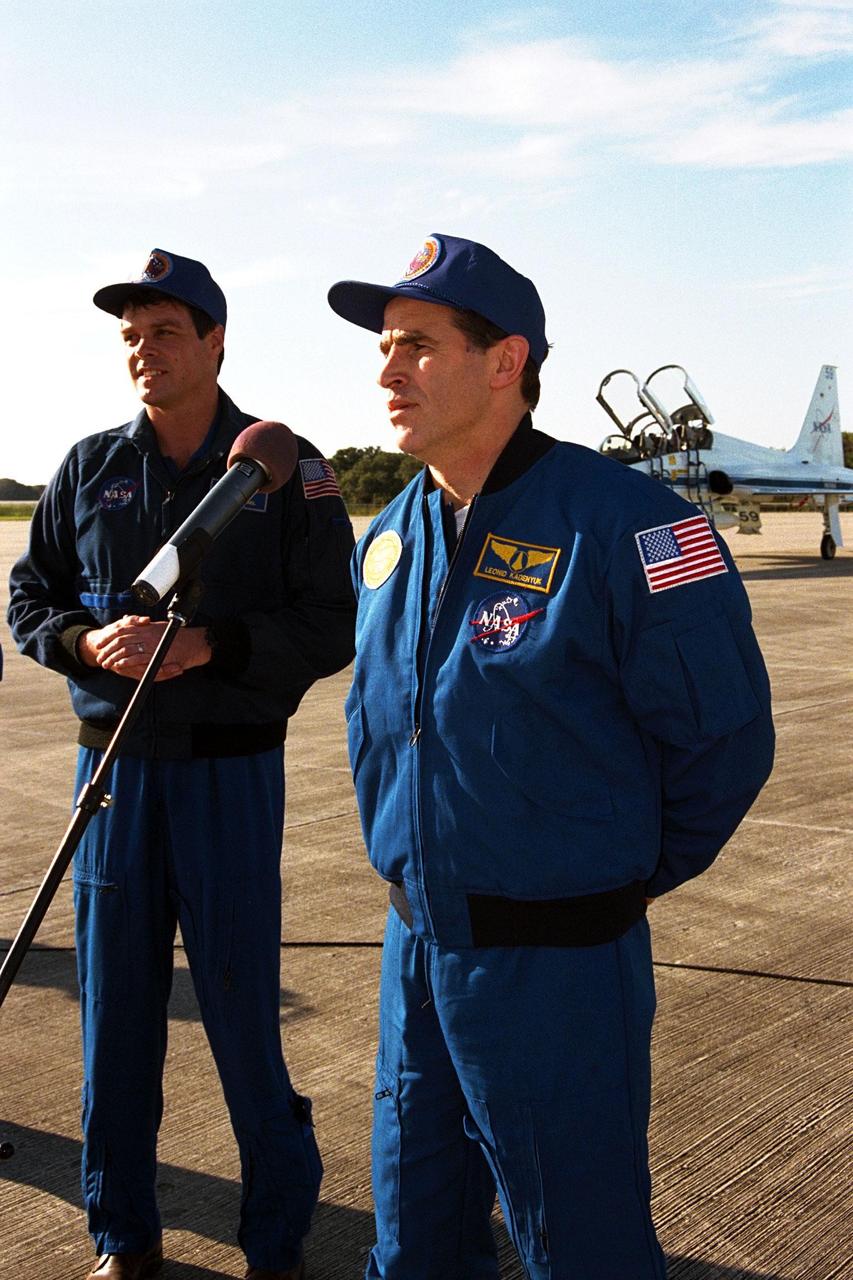
As STS-87 Commander Kevin Kregel looks on, Payload Specialist Leonid Kadenyuk of the National Space Agency of Ukraine addresses members of the press and media at Kennedy Space Center's Shuttle Landing Facility after arriving for the final prelaunch activities leading up to the scheduled Nov. 19 liftoff. Other STS-87 crew members not pictured are Pilot Steven Lindsey; and Mission Specialists Kalpana Chawla, Ph.D.; Takao Doi, Ph.D., of the National Space Development Agency of Japan; and Winston Scott. STS-87 will be the fourth flight of the United States Microgravity Payload and the Spartan-201 deployable satellite
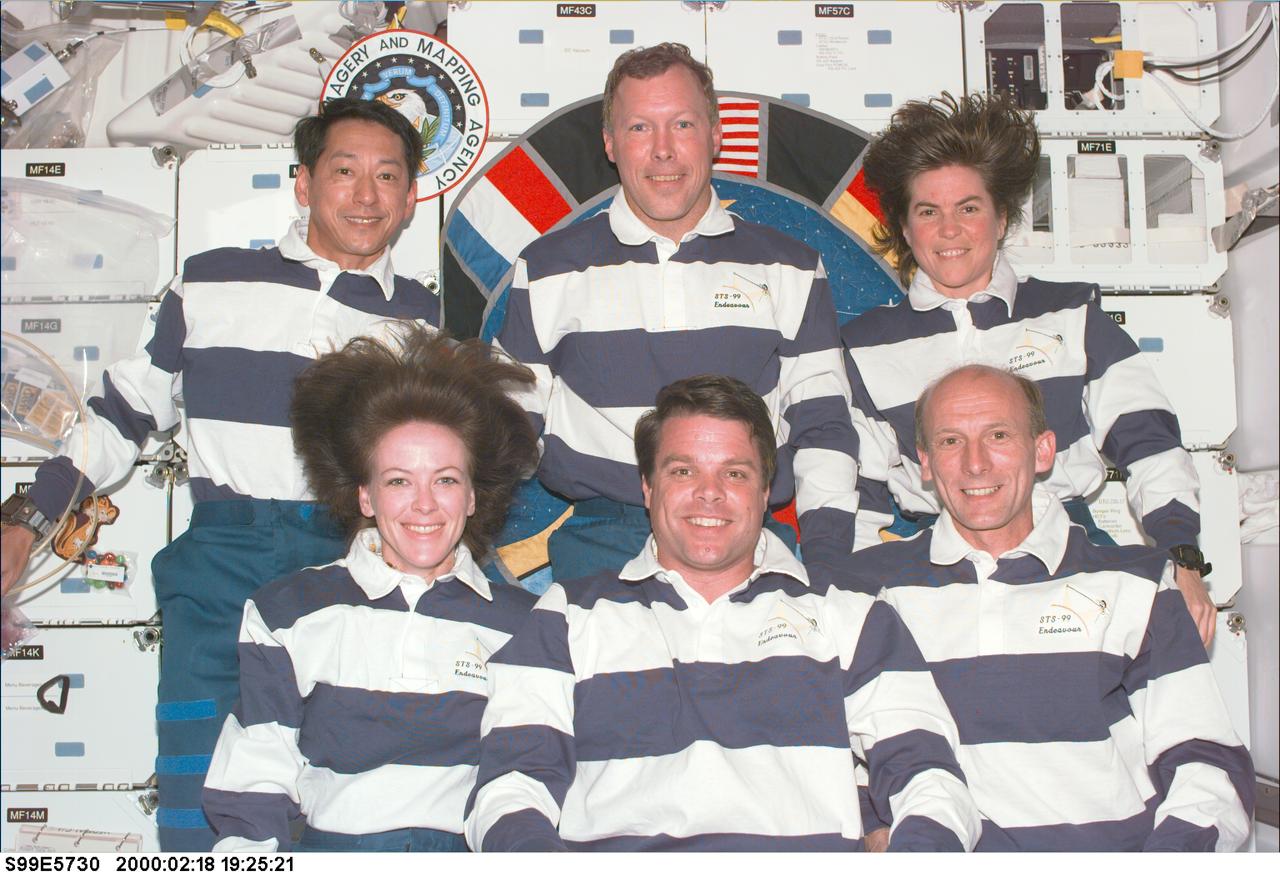
S99-E-5730 (18 February 2000) --- Not often seen together on the STS-99 flight which provides around-the-clock coverage for the Shuttle Radar Topography Mission (SRTM), the six astronauts pose for the traditional inflight crew portrait on Endeavour's mid deck. In the rear are the Blue Team members (from left), Mamoru Mohri, Dominic L. Gorie and Janice Voss. In front are Red Team members Janet L. Kavandi, Kevin R. Kregel and Gerhard P.J. Thiele. Mohri is with Japan's National Space Development Agency (NASDA) and Thiele represents the European Space Agency (ESA).
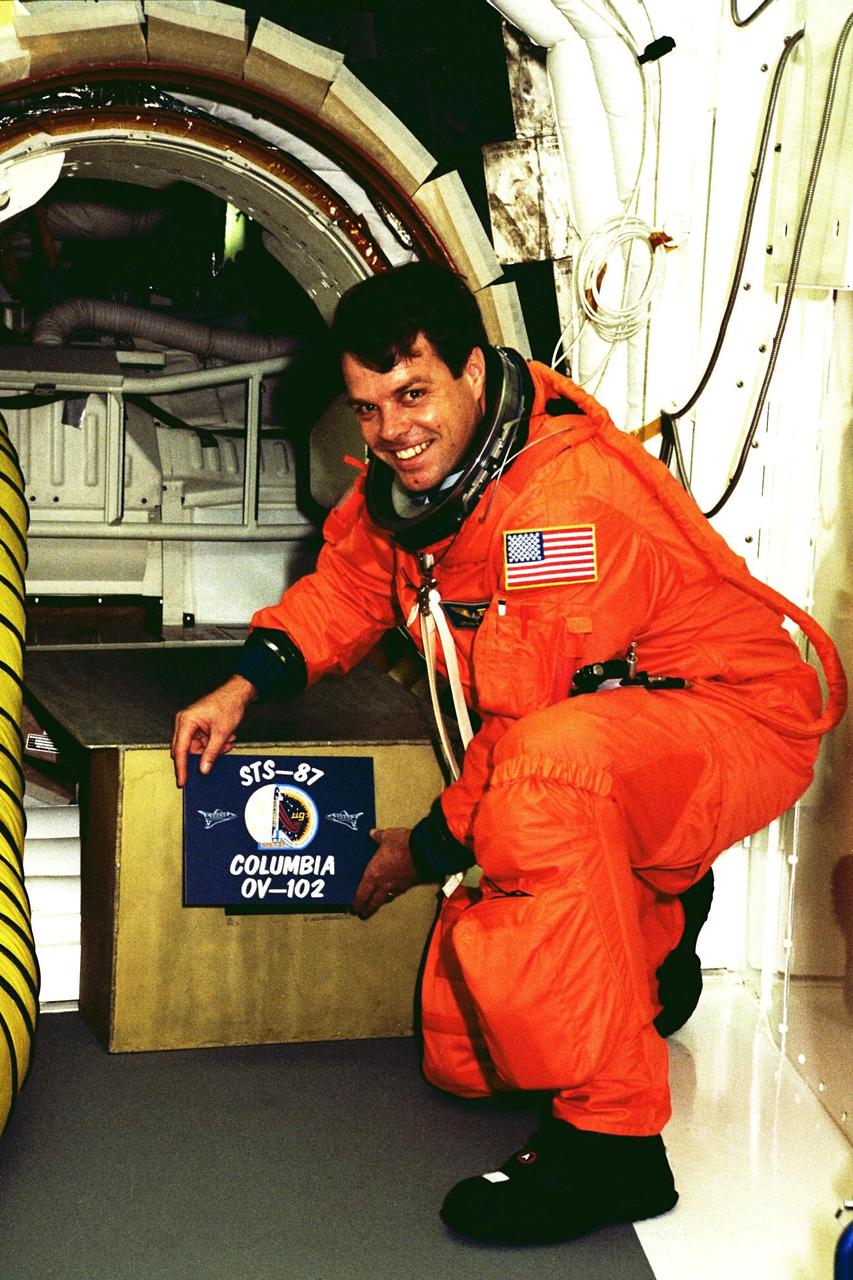
STS-87 Commander Kevin Kregel holds the crew patch in front of Columbia’s entry hatch at Launch Pad 39B during Terminal Countdown Demonstration Test (TCDT) activities. The crew of the STS-87 mission is scheduled for launch Nov. 19 aboard the Space Shuttle Columbia. The TCDT is held at KSC prior to each Space Shuttle flight providing the crew of each mission opportunities to participate in simulated countdown activities. The TCDT ends with a mock launch countdown culminating in a simulated main engine cut-off. The crew also spends time undergoing emergency egress training exercises at the pad and has an opportunity to view and inspect the payloads in the orbiter's payload bay
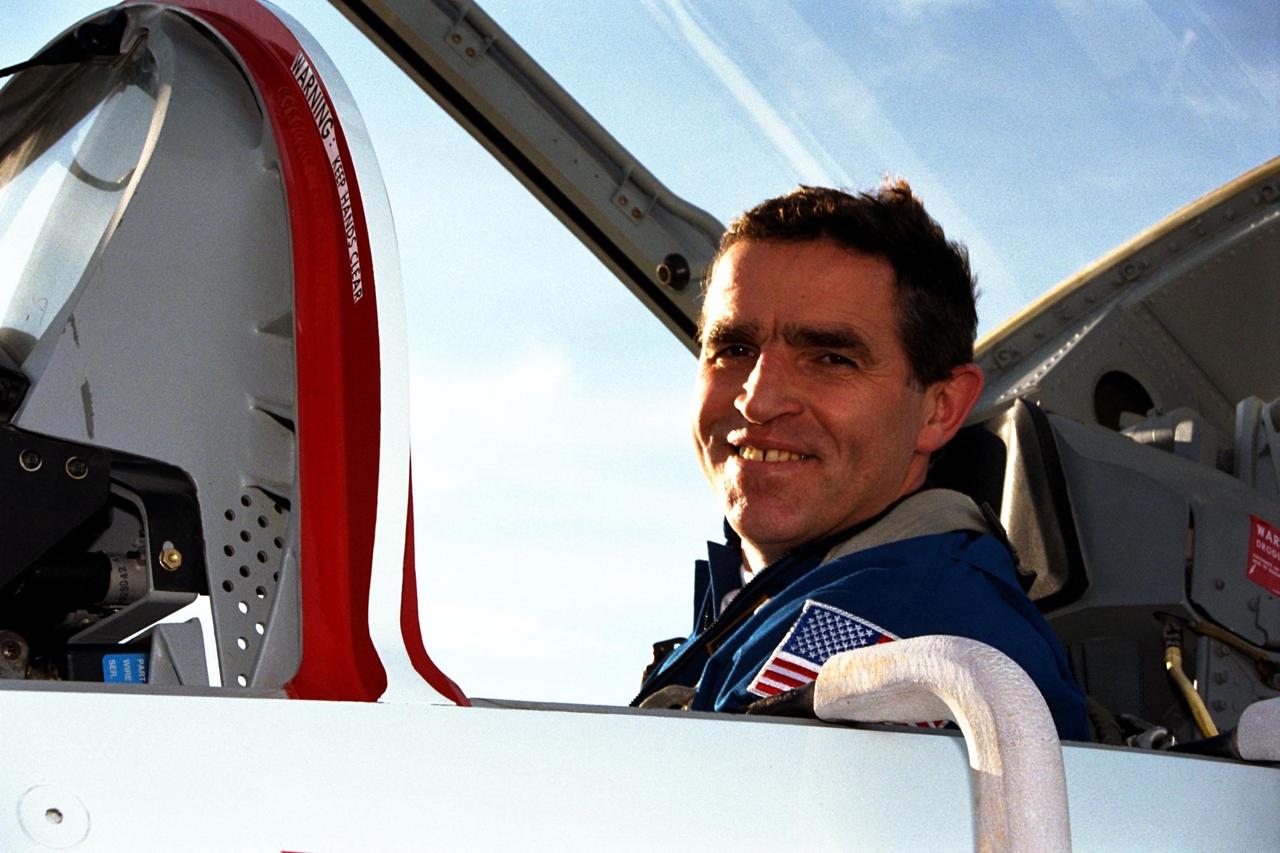
STS-87 Payload Specialist Leonid Kadenyuk of the National Space Agency of Ukraine arrives at Kennedy Space Center's Shuttle Landing Facility aboard a T-38 jet for the final prelaunch activities leading up to the scheduled Nov. 19 liftoff. The other STS-87 crew members are Commander Kevin Kregel; Pilot Steven Lindsey; and Mission Specialists Kalpana Chawla, Ph.D.; Takao Doi, Ph.D., of the National Space Development Agency of Japan; and Winston Scott. STS-87 will be the fourth flight of the United States Microgravity Payload and the Spartan-201 deployable satellite
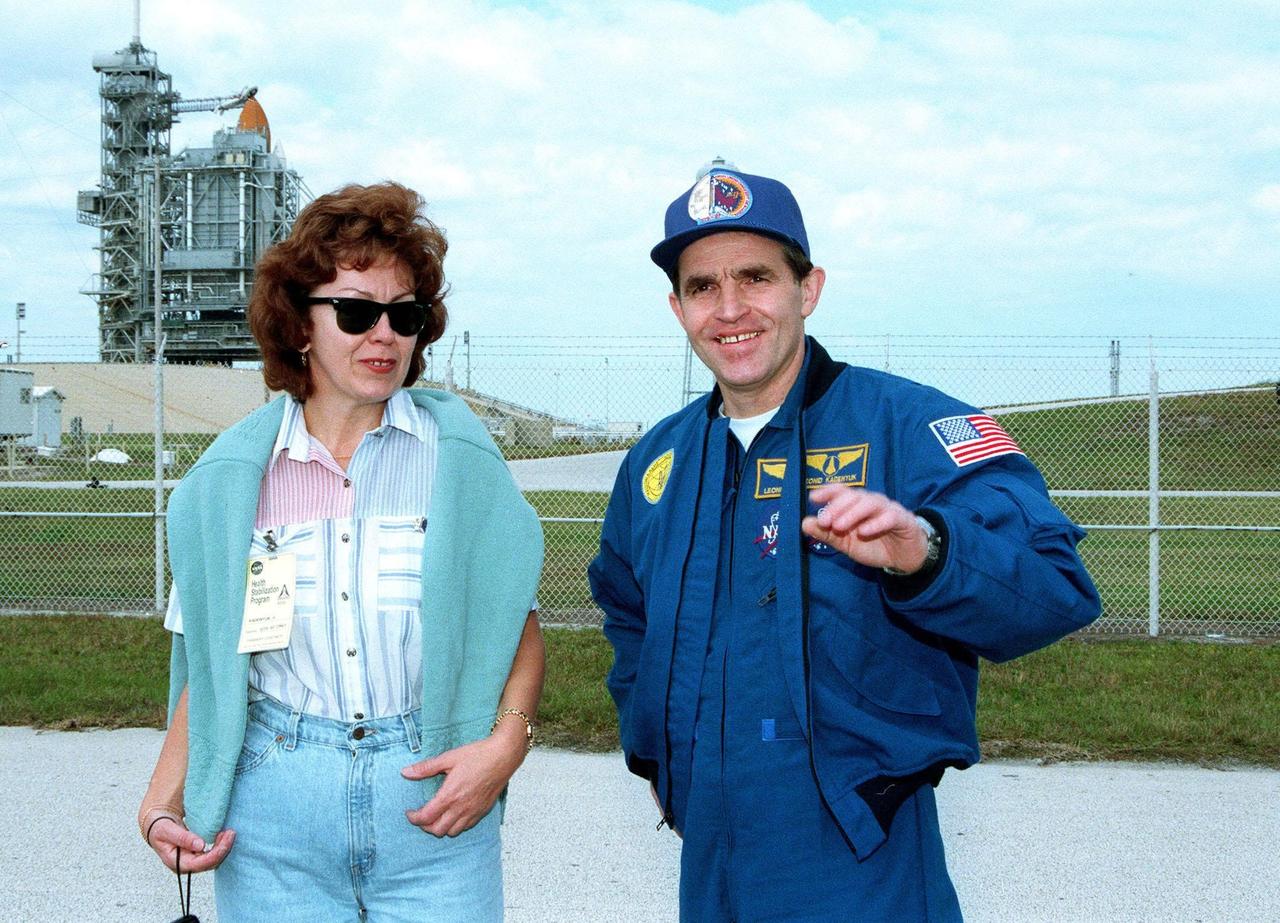
STS-87 Payload Specialist Leonid Kadenyuk of the National Space Agency of Ukraine poses with his wife, Vera Kadenyuk, in front of Kennedy Space Center's Launch Pad 39B during final prelaunch activities leading up to the scheduled Nov. 19 liftoff. The other STS-87 crew members are Commander Kevin Kregel; Pilot Steven Lindsey; and Mission Specialists Kalpana Chawla, Ph.D.; Winston Scott; and Takao Doi, Ph.D., National Space Development Agency of Japan. STS-87 will be the fourth flight of the United States Microgravity Payload and the Spartan-201 deployable satellite
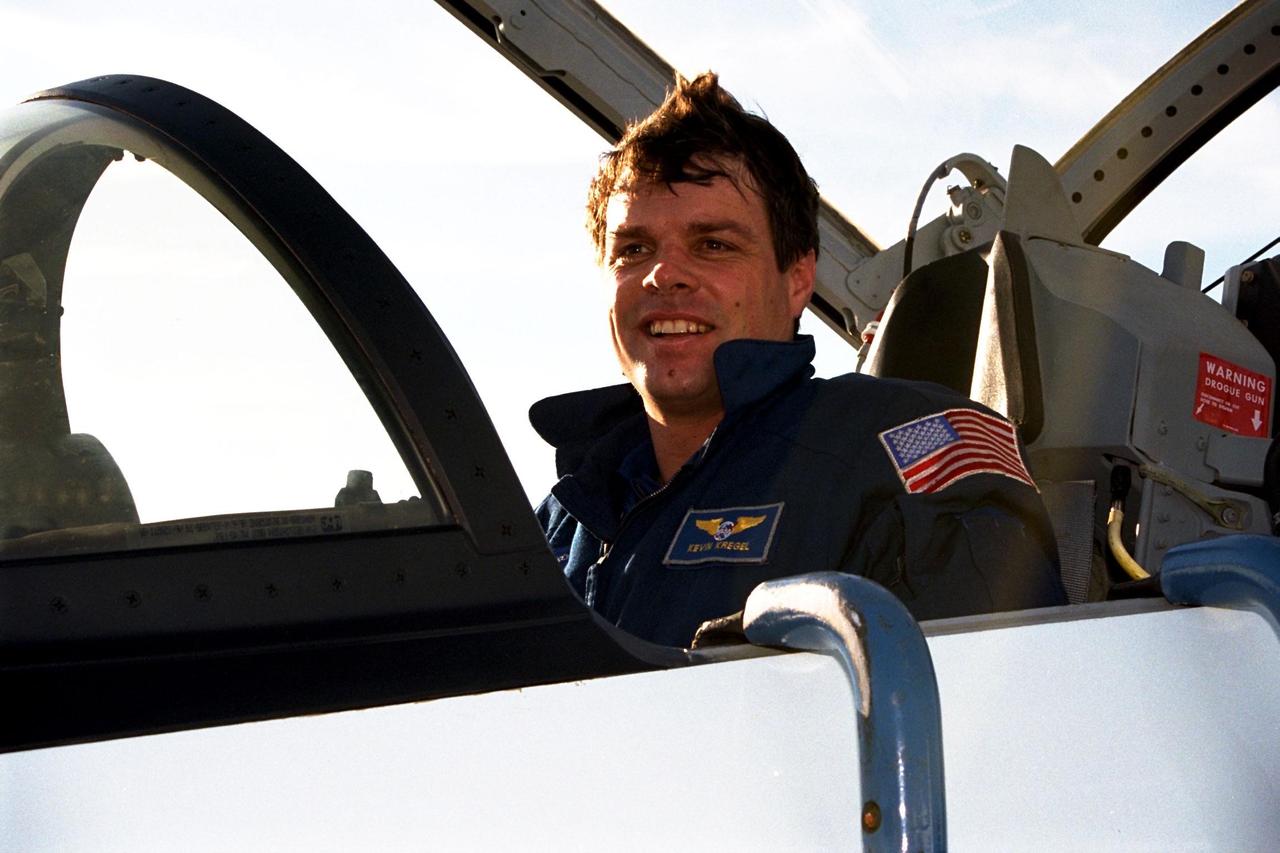
STS-87 Commander Kevin Kregel arrives at Kennedy Space Center's Shuttle Landing Facility aboard a T-38 jet for the final prelaunch activities leading up to the scheduled Nov. 19 liftoff. The other STS-87 crew members are Pilot Steven Lindsey; Mission Specialists Kalpana Chawla, Ph.D.; Takao Doi, Ph.D., of the National Space Development Agency of Japan; and Winston Scott; and Payload Specialist Leonid Kadenyuk of the National Space Agency of Ukraine. STS-87 will be the fourth flight of the United States Microgravity Payload and the Spartan-201 deployable satellite
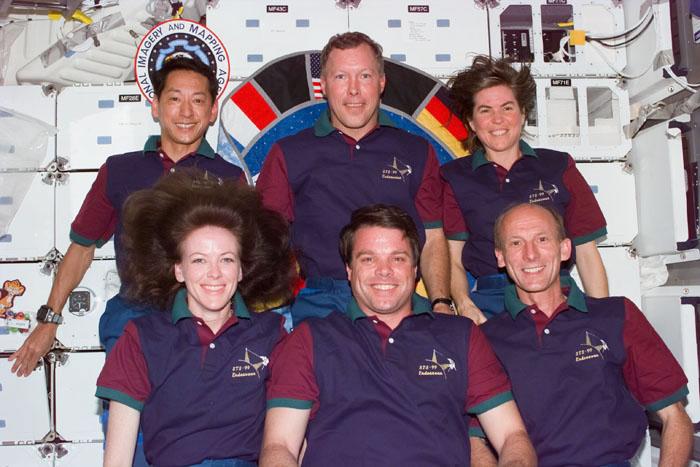
S99-E-5731 (18 February 2000) --- Not often seen together on the STS-99 flight which provides around-the-clock coverage for the Shuttle Radar Topography Mission (SRTM), the six astronauts pose for one of the traditional inflight crew portraits on Endeavour's mid deck. In the rear are the Blue Team members (from left), Mamoru Mohri, Dominic L. Gorie and Janice Voss. In front are Red Team members Janet L. Kavandi, Kevin R. Kregel and Gerhard P.J. Thiele. Mohri is with Japan's National Space Development Agency (NASDA) and Thiele represents the European Space Agency (ESA).
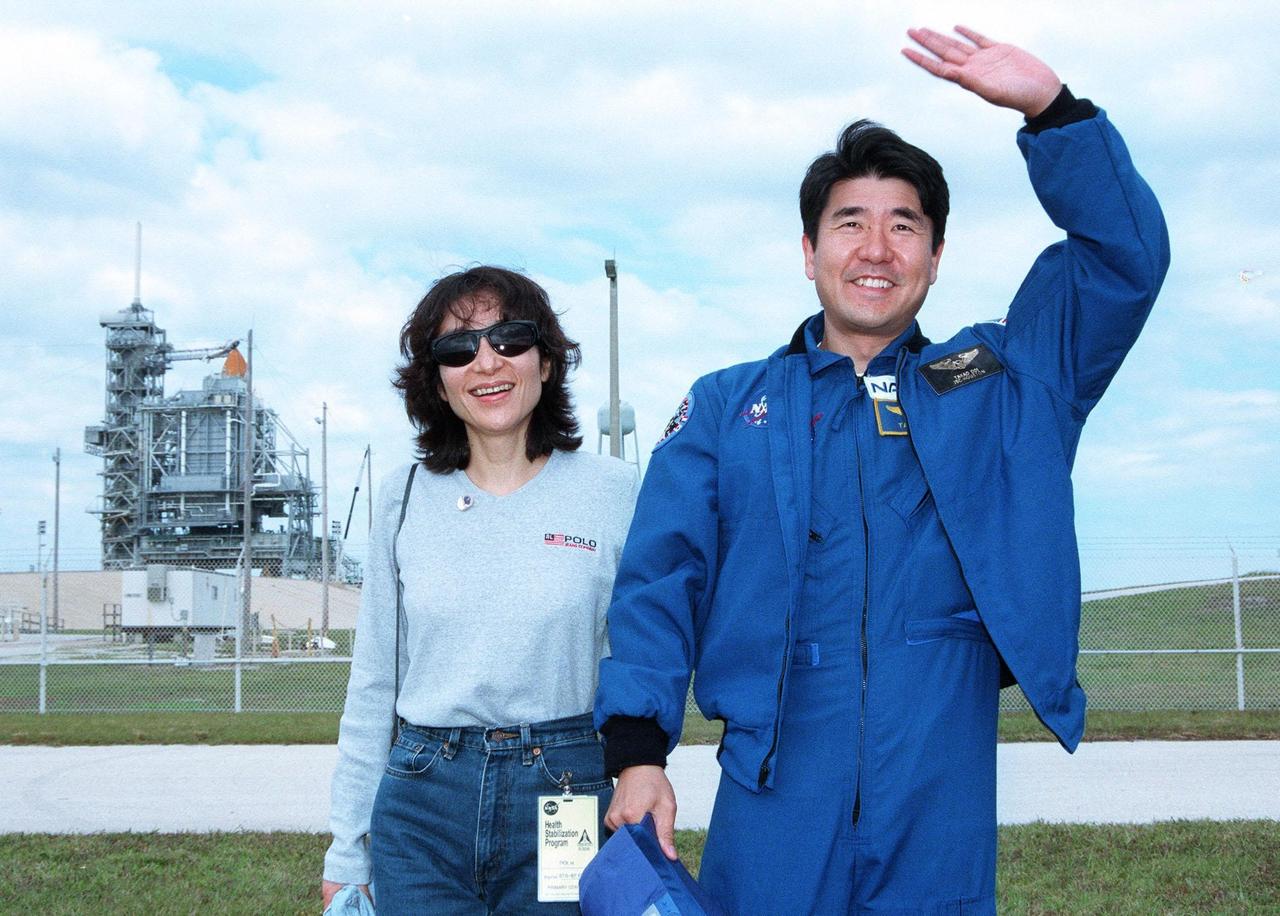
STS-87 Mission Specialist Takao Doi, Ph.D., of the National Space Development Agency of Japan poses with his wife, Hitomi Doi, in front of Kennedy Space Center's Launch Pad 39B during final prelaunch activities leading up to the scheduled Nov. 19 liftoff. The other STS-87 crew members are Commander Kevin Kregel; Pilot Steven Lindsey; Mission Specialists Kalpana Chawla, Ph.D., and Winston Scott; and Payload Specialist Leonid Kadenyuk of the National Space Agency of Ukraine. STS-87 will be the fourth flight of the United States Microgravity Payload and the Spartan-201 deployable satellite
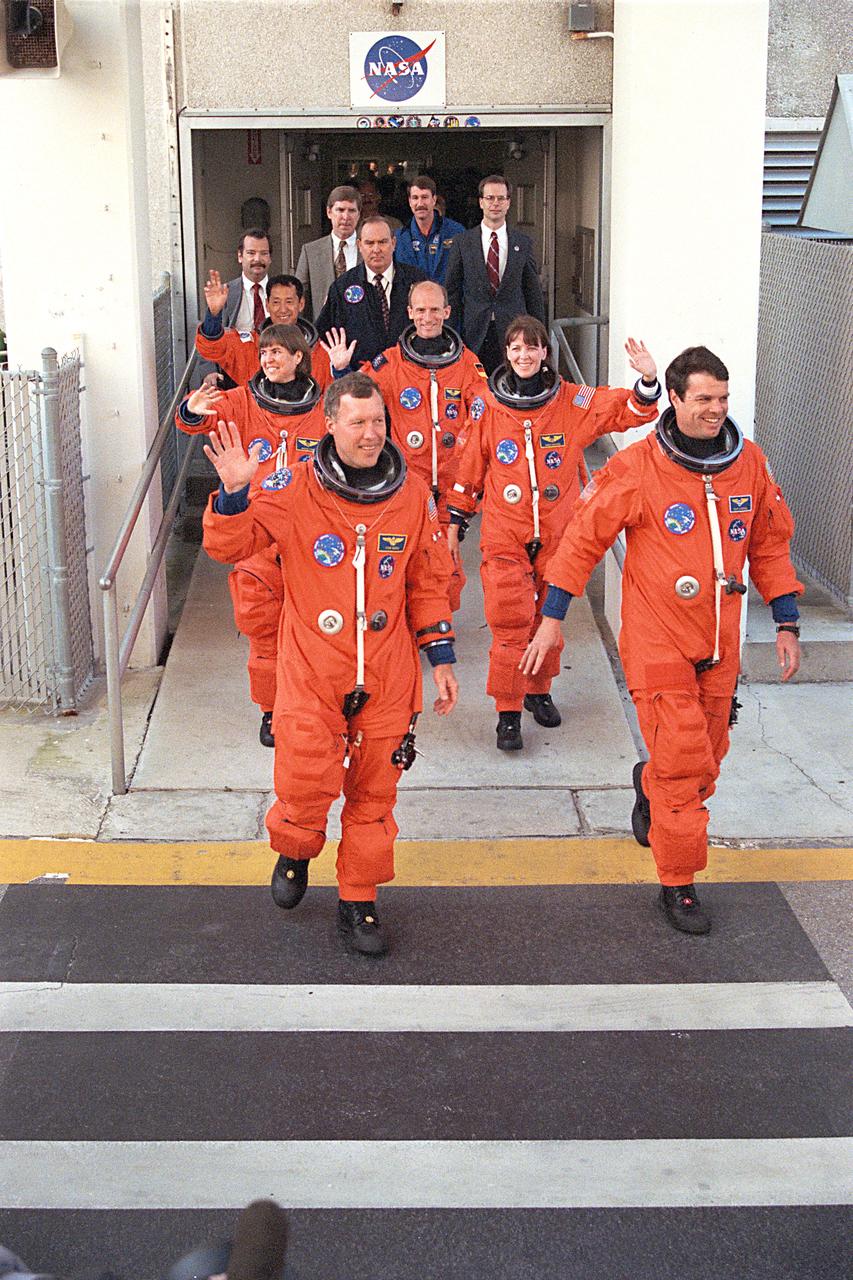
STS099-S-018 (11 February 2000) --- The STS-99 crew members wave to onlookers as they depart from the Operations and Checkout Building en route to Launch Pad 39A for liftoff of the Space Shuttle Endeavour. Attired in their burnt-orange launch and entry suits, the crewmembers are led in front by Dominic L. Gorie (left), pilot; and Kevin R. Kregel, mission commander. Behind them are the mission specialists (from the left) Janice Voss; Mamoru Mohri, with Japan's NASDA; Gerhard P. J. Thiele, representing the European Space Agency (ESA); and Janet L. Kavandi. This flight is the 97th shuttle mission and the 14th flight of the Space Shuttle Endeavour.
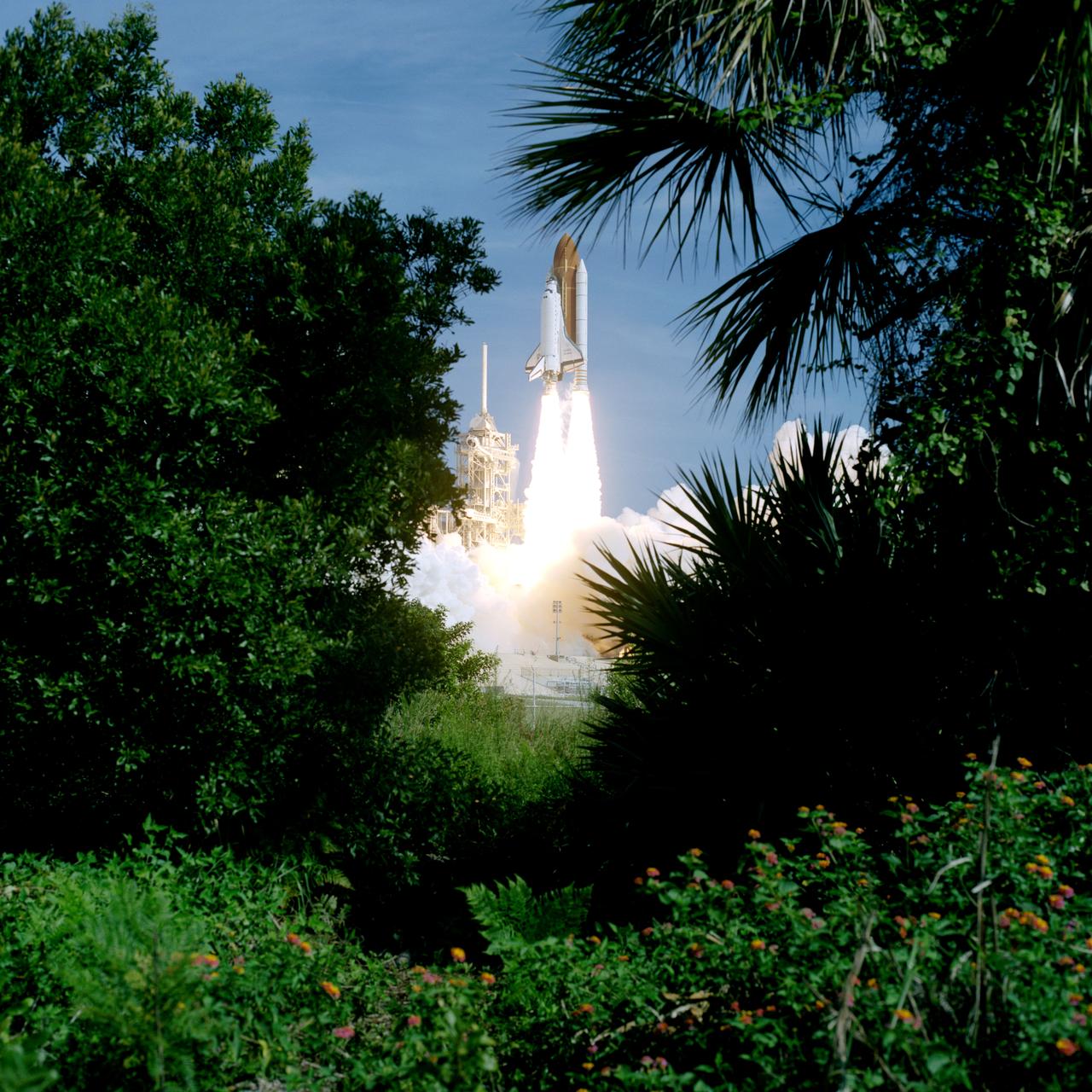
STS070-S-003 (13 JULY 1995) --- Framed by Florida foliage, the Space Shuttle Discovery begins its 21st Spaceflight. Five NASA astronauts and a Tracking and Data Relay Satellite (TDRS) were aboard for the liftoff, which occurred at 9:41:55 a.m. (EDT), July 13, 1995 from Launch Pad 39B. Onboard were astronauts Terence T. (Tom) Henricks, Kevin R. Kregel, Nancy J. Curie, Donald A. Thomas and Mary Ellen Weber. This mission also marks the maiden flight of the new Block I Space Shuttle Main Engine configuration designed to increase engine performance as well as safety and reliability.
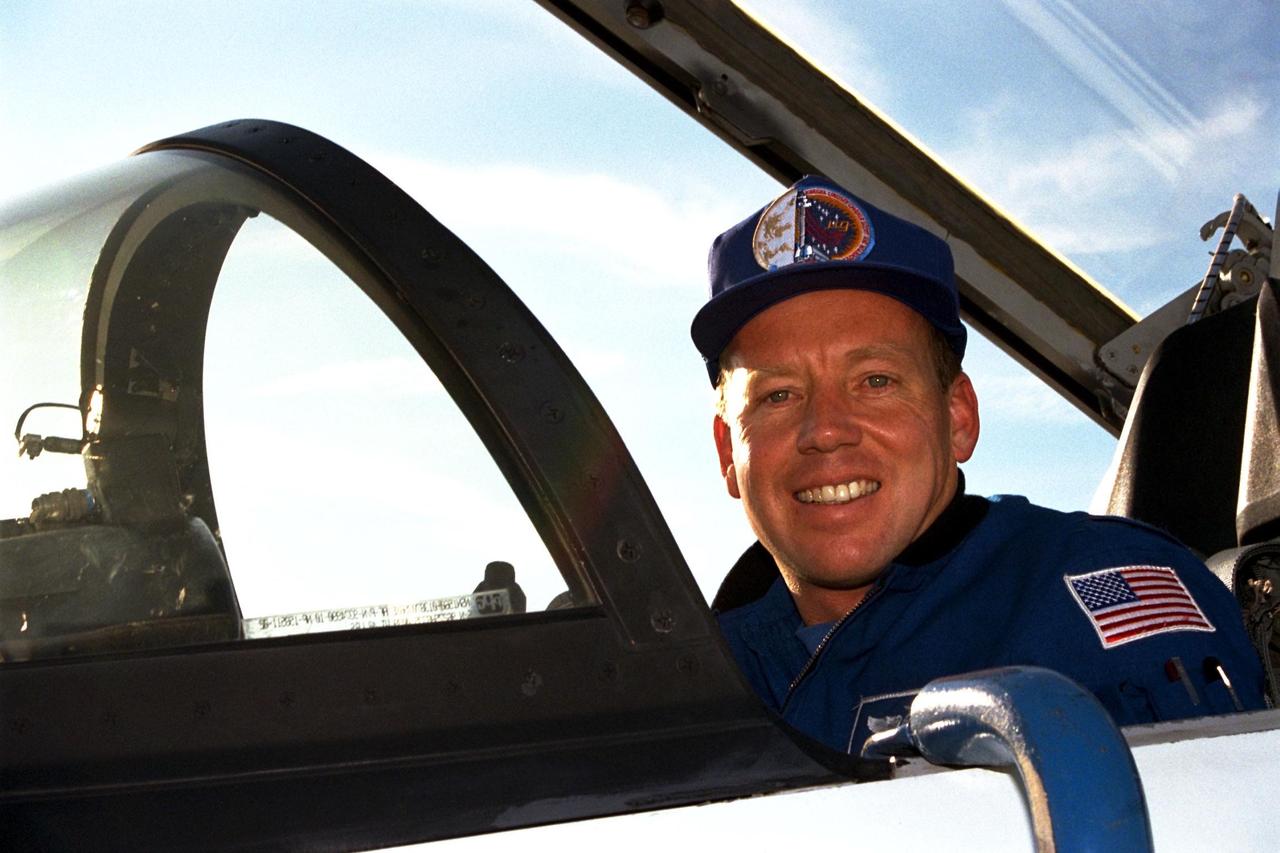
STS-87 Pilot Steven Lindsey arrives at Kennedy Space Center's Shuttle Landing Facility aboard a T-38 jet for the final prelaunch activities leading up to the scheduled Nov. 19 liftoff. The other STS-87 crew members are Commander Kevin Kregel; Mission Specialists Kalpana Chawla, Ph.D.; Takao Doi, Ph.D., of the National Space Development Agency of Japan; and Winston Scott; and Payload Specialist Leonid Kadenyuk of the National Space Agency of Ukraine. STS-87 will be the fourth flight of the United States Microgravity Payload and the Spartan-201 deployable satellite
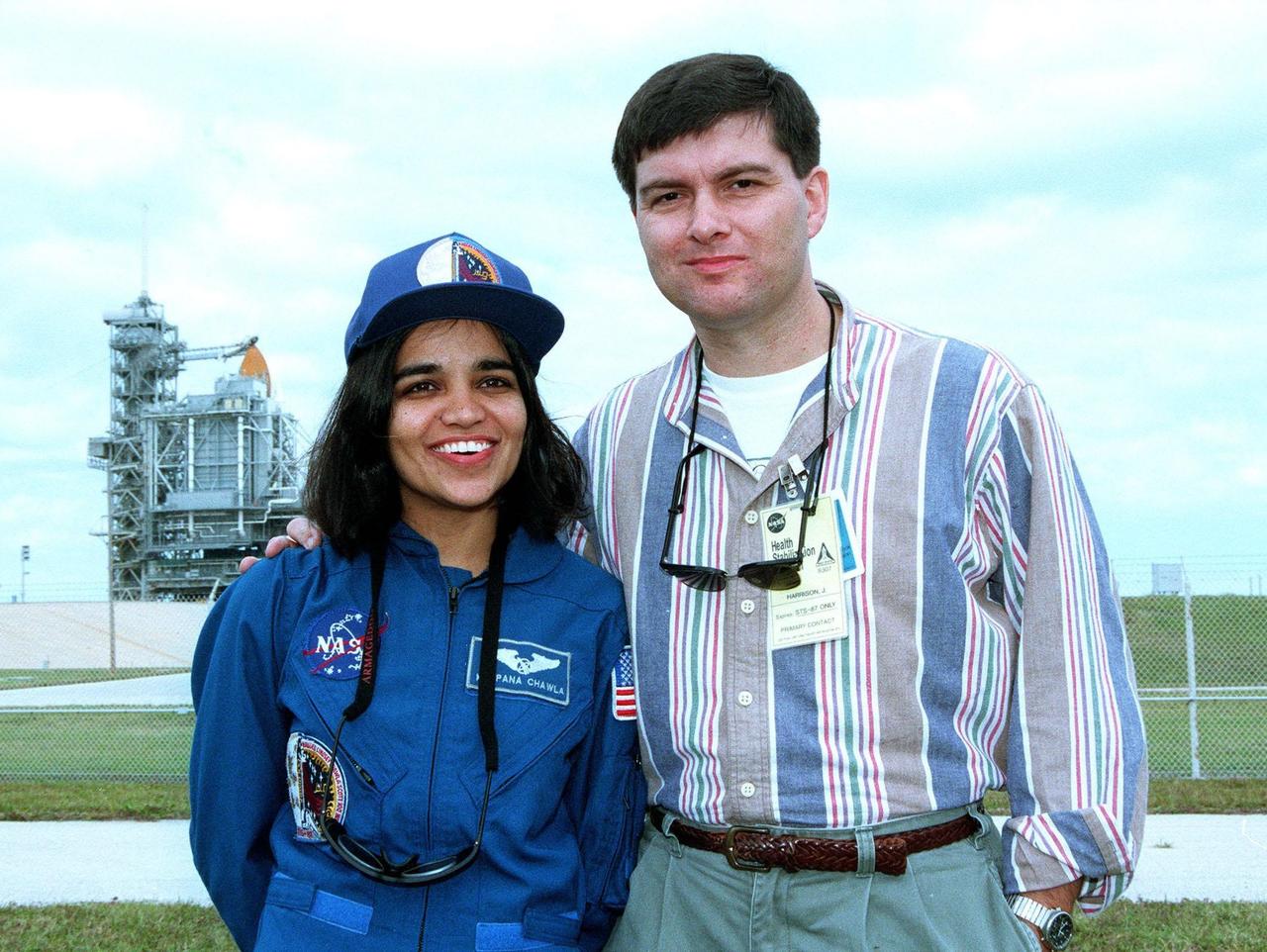
STS-87 Mission Specialist Kalpana Chawla, Ph.D., poses with her husband, Jean-Pierre Harrison, in front of Kennedy Space Center's Launch Pad 39B during final prelaunch activities leading up to the scheduled Nov. 19 liftoff. The other STS-87 crew members are Commander Kevin Kregel; Pilot Steven Lindsey; Mission Specialists Winston Scott and Takao Doi, Ph.D., of the National Space Development Agency of Japan; and Payload Specialist Leonid Kadenyuk of the National Space Agency of Ukraine. STS-87 will be the fourth flight of the United States Microgravity Payload and the Spartan-201 deployable satellite
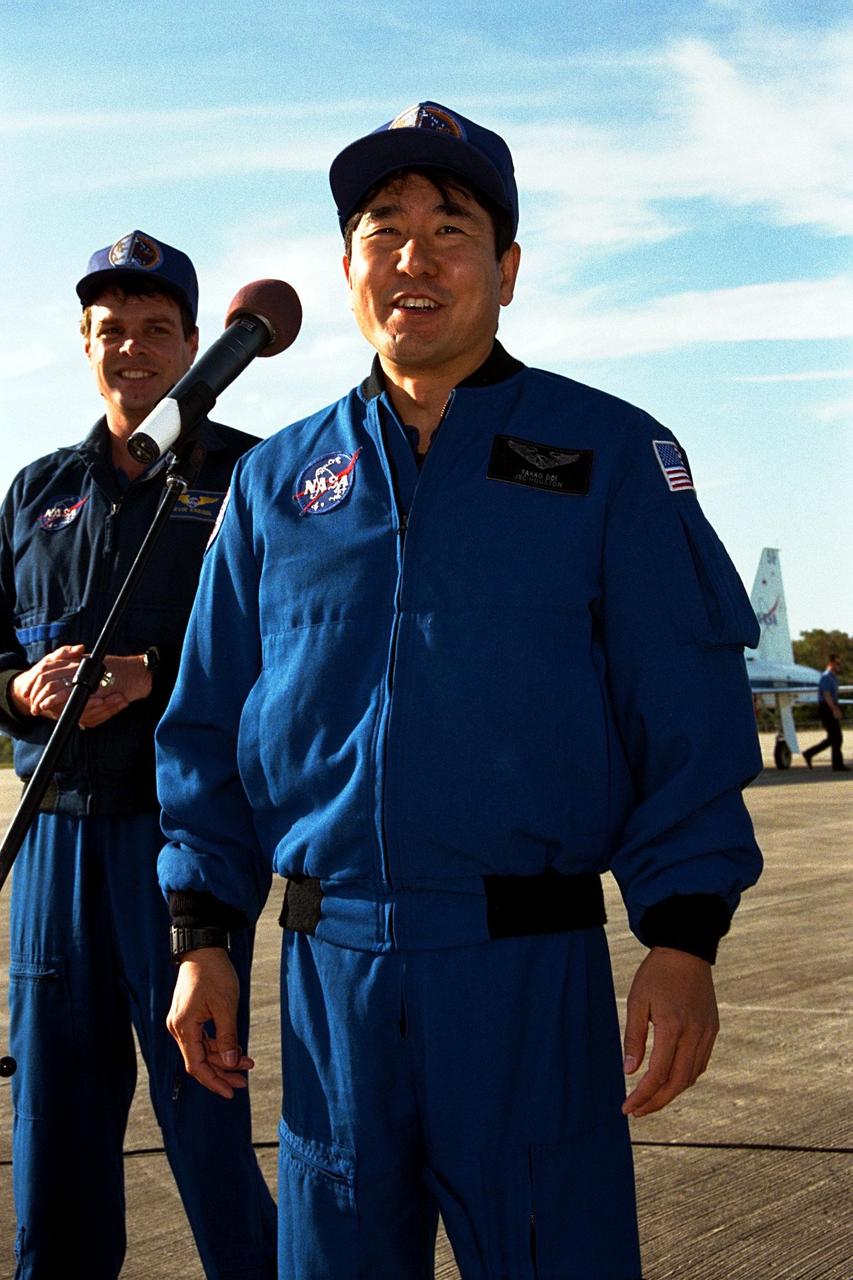
As STS-87 Commander Kevin Kregel looks on, Mission Specialist Takao Doi, Ph.D., of the National Space Development Agency of Japan addresses members of the press and media at Kennedy Space Center's Shuttle Landing Facility after arriving for the final prelaunch activities leading up to the scheduled Nov. 19 liftoff. Other STS-87 crew members not pictured are Pilot Steven Lindsey; Mission Specialists Kalpana Chawla, Ph.D., and Winston Scott; and Payload Specialist Leonid Kadenyuk of the National Space Agency of Ukraine. STS-87 will be the fourth flight of the United States Microgravity Payload and the Spartan-201 deployable satellite
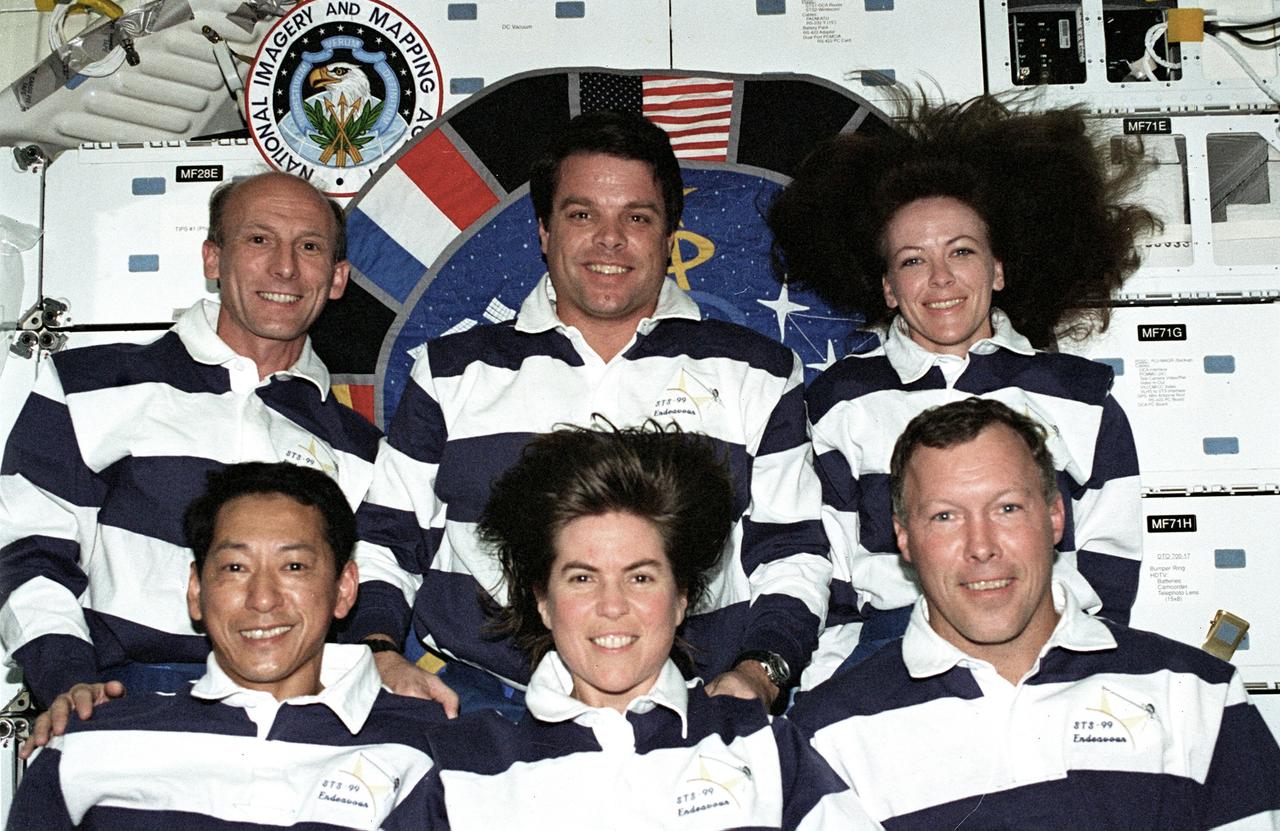
STS099-318-003 (11-22 February 2000) --- The six flight crew members for the Shuttle Radar Topography Mission (SRTM) pose for the traditional inflight crew portrait on Endeavour's mid deck. Blue Team members in front are (from the left), astronauts Mamoru Mohri, Janice Voss and Dominic L. Gorie. Red Team members are (from left, rear) astronauts Gerhard P.J. Thiele, Kevin R. Kregel and Janet L. Kavandi. Mohri is with Japan's National Space Development Agency (NASDA) and Thiele represents the European Space Agency (ESA).
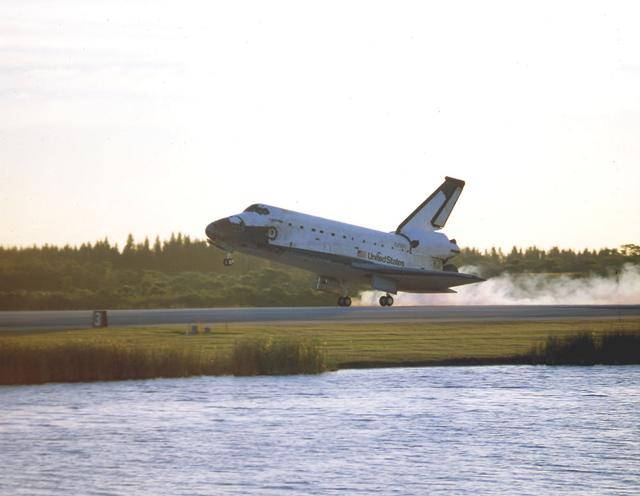
With Commander Kevin R. Kregel and Pilot Steven W. Lindsey at the controls, the orbiter Columbia (STS-87) touched down its main gear on Runway 33 at Kennedy Space Center's (KSC) Shuttle Landing Facility to complete a 15-day, 16-hour and 34-minute-long mission of 6.5 million miles. During the 88th Space Shuttle mission, the crew performed experiments on the United States Microgravity Payload-4 and pollinated plants as part of the Collaborative Ukrainian Experiment. This was the 12th landing for Columbia at KSC and the 41st KSC landing in the history of the Space Shuttle program.
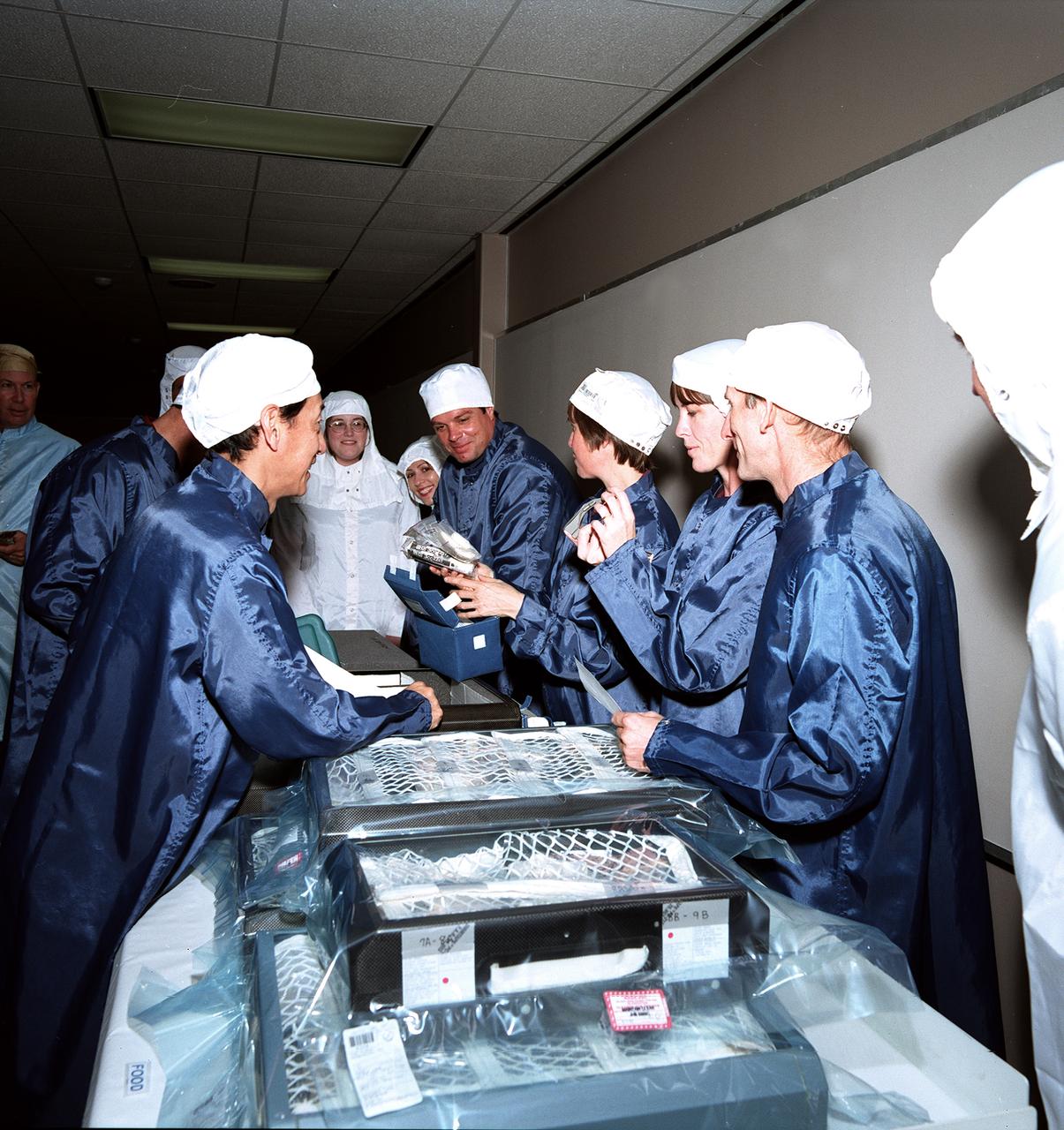
S99-09469 (11 August 1999) --- Wearing clean room suits, all six members of the STS-99 crew inspect some of the gear they will be using on their upcoming space shuttle mission. From the left (in blue lab coats) are astronauts Mamoru Mohri, mission specialist representing Japan's National Development Space Agency (NASDA); Dominic L. Gorie (partially obscured), pilot; Kevin R. Kregel, mission commander; Janice Voss, mission specialist; Janet L. Kavandi, mission specialist; and Gerhard P.J. Thiele, mission specialist representing the European Space Agency (ESA). This type flight crew equipment (FCE) bench review is routine preflight procedure for all shuttle crews.
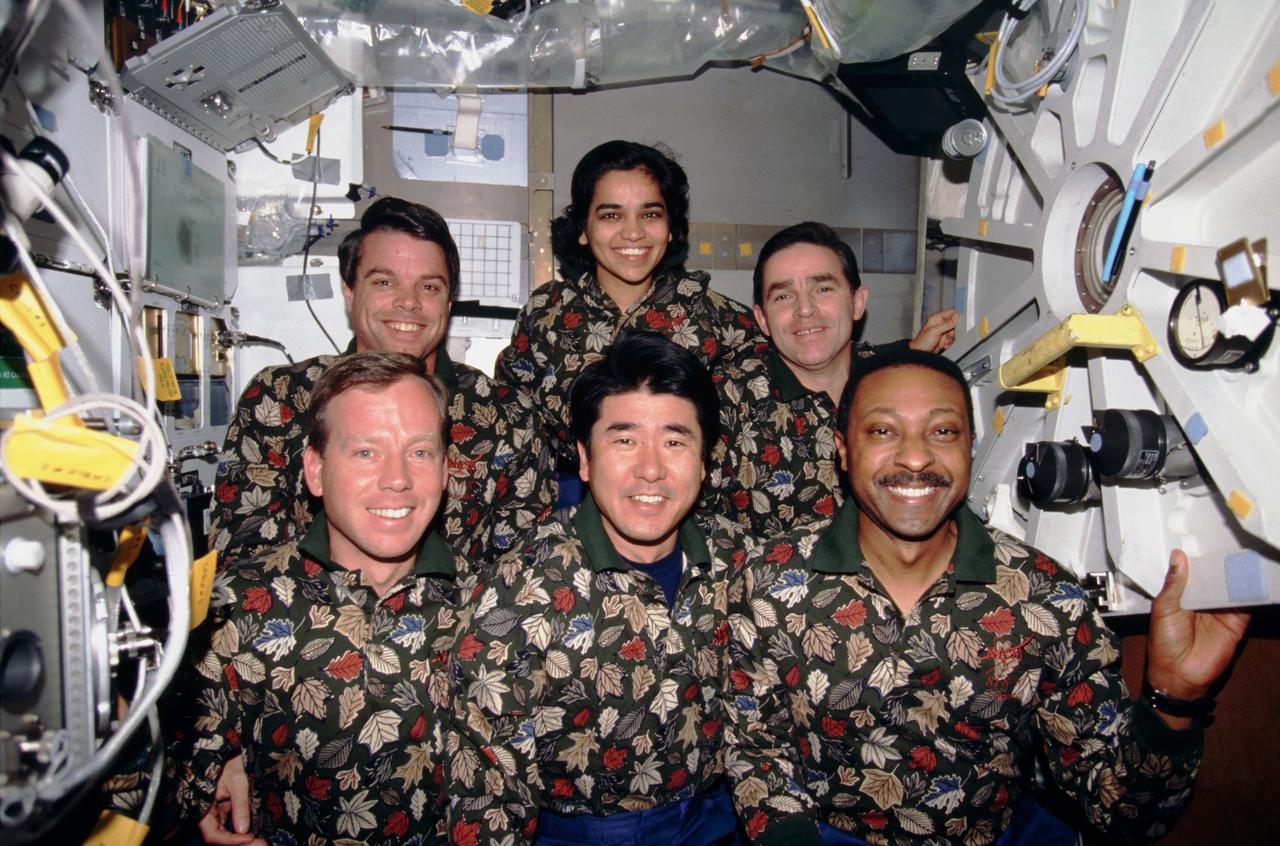
STS087-307-006 (19 November – 5 December 1997) --- One of the crew members' traditional in-flight crew portraits has them posed in other-than traditional attire on the Space Shuttle Columbia's mid-deck. On the front row, from the left, are astronauts Steven W. Lindsey, pilot; Takao Doi, an international mission specialist representing Japan's National Space Development Agency (NASDA); and Winston E. Scott, mission specialist. In the back are astronauts Kevin R. Kregel, mission commander; and Kalpana Chawla, mission specialist, along with Ukrainian payload specialist Leonid K. Kadenyuk.
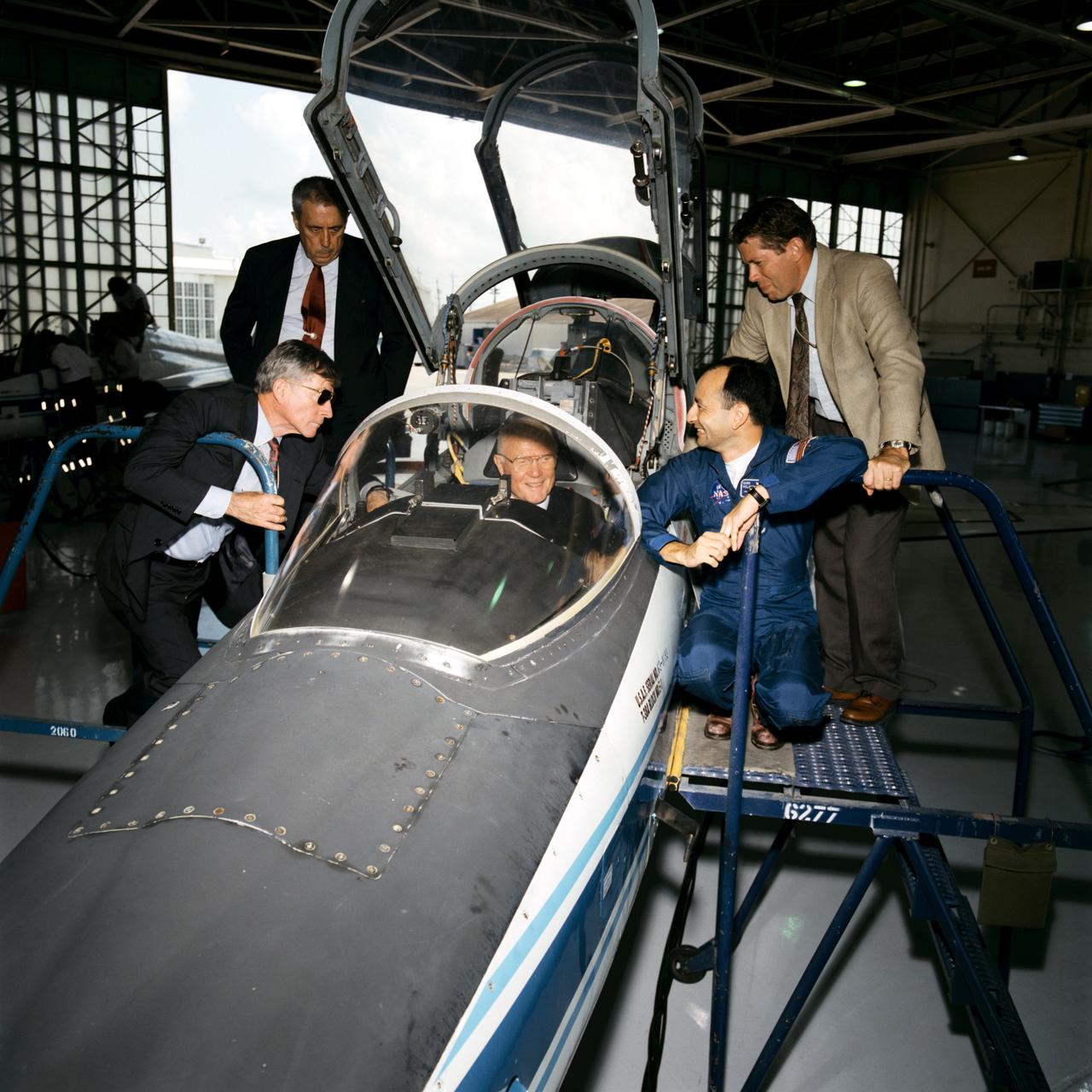
Senator John Glenn visit to Johnson Space Center (JSC). Views of Glenn sitting in cockpit of T-38 in Hangar 276 with John Young, George Abbey, David Leestma and Mark Polansky observing (11150). An engineer explains SPIFEX experiment hardware to Abby, Young and Glenn in Bldg 13 (11151, 11153). Glenn talks with astronaut Terrence T. Henricks and employees in Bldg 9C, Virtual reality lab (11152). Lunch in Bldg 17 Flight Crew support division with Dr. Ellen Baker, Robert "Hoot" Gibson and John Glenn (11154). Linda Godwin, Robert Cabana, Abbey, Young, Baker, Gibson and Glenn at lunch (11155). Astronaut Mark Lee shows Glenn and his aide how to use the virtural reality helmets (11156-7). Glenn shakes the hand of Franklin Chang-Diaz with his plasma rocket in the background in the Sonny Carter Training Facility (SCTF) (11158). Glenn in the Manipulator Development Facility (MDF) Remote Manipulator System (RMS) station mock-up in Bldg 9A with Abbey, Young and aide (11159, 11186). Glenn signs a book for Thomas D. Jones as Frederick Sturckow and Linda Godwin look on (11160). Glenn inside visual-vestibular trainer in Bldg 9B (11161). In conference room meeting with astronaut corps in Bldg 4S, Glenn shakes Robert Cabana's hand (11162). John Glenn and John Young pose for a group shot with Bldg 17 Food lab personnel (11163). Glenn thanks the food lab personnel (11164). Glenn visits Bldg 5 Fixed Base (FB) middeck simulator with astronauts Terrence Henricks and Mary Ellen Weber (11165). Glenn with Charles T. Bourland (11166). STS-70 crew Donald Thomas, Terrence Henricks, Mary Ellen Weber, Nancy Currie and Kevin Kregel with Glenn's advisor (11167). STS-70 crew Thomas, Henricks, Weber, Currie and Kregel with John Glenn (11175). Glenn with Thomas, Kregel, Weber, Henricks and trainer (11176-7). David J. Homan assists Glenn's aide with virtual reality goggles (11168) and Glenn (11174). John Young in Bldg 9C equilibrium trainer (11169). Glenn with Carl Walz in flight deck mock-up of MDF in Bldg 9NE (11170, 11187). Young, Abbey, aides, Glenn and Walz examine helium balloon in MDF (11171-2). Chang-Diaz shows Glenn's tour group the plasma rocket (11173). Glenn's presentation to astronaut corps (11178-81, 11184-5). Glenn is presented with framed picture of Sonny Carter Training Facility (SCTF) (11182) and framed picture of space station (11183).
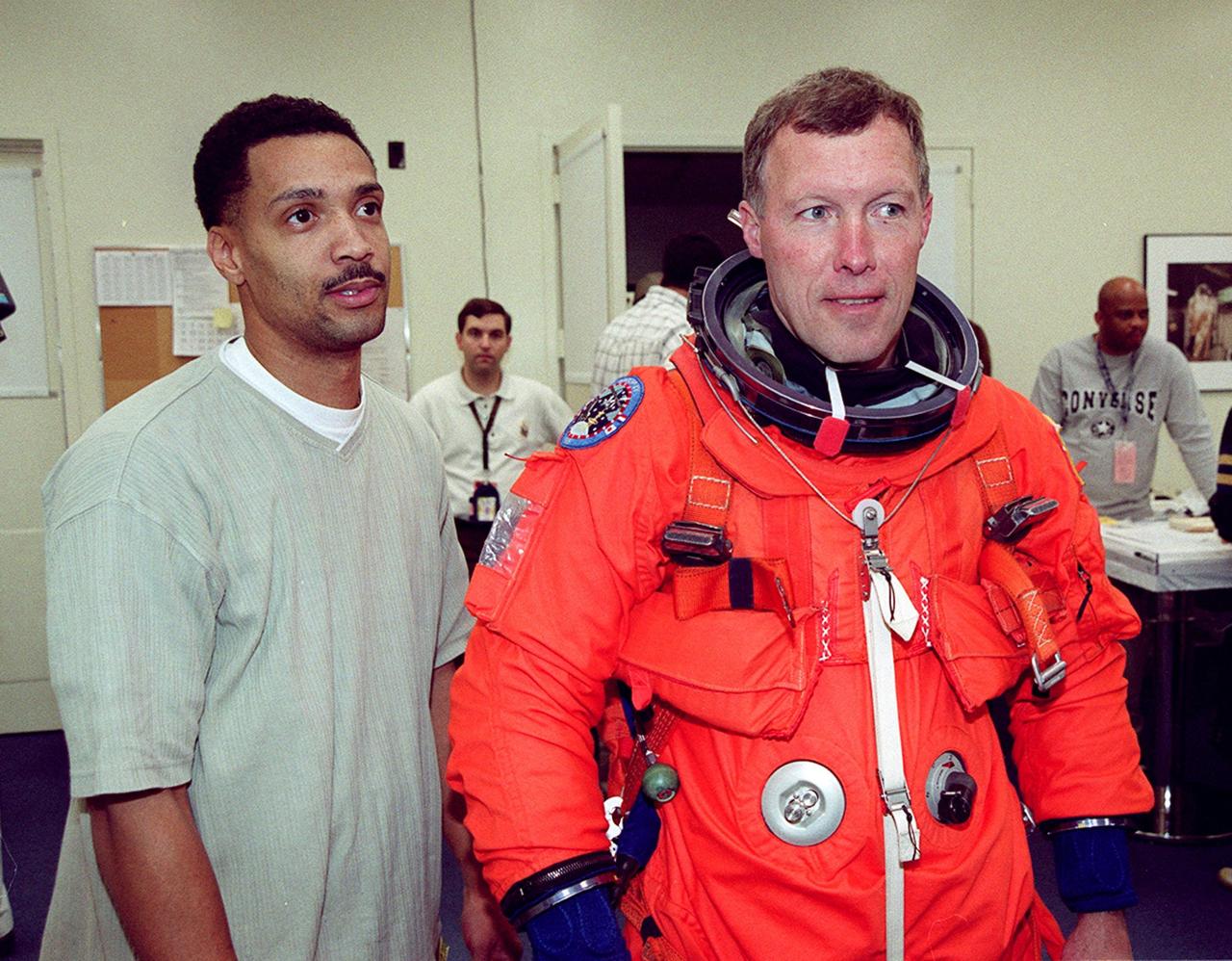
In the Operations and Checkout Building's suitup room, Carlous Gillis, with United Space Alliance, helps STS-99 Pilot Dominic Gorie with pre-pack and fit check. Gorie and other crew members Commander Kevin Kregel, and Mission Specialists Janet Kavandi, Janice Voss, Gerhard Thiele of Germany and Mamoru Mohri of Japan are preparing for launch of their mission on Feb. 11 at 12:30 p.m. EST aboard Space Shuttle Endeavour. STS-99 is the Shuttle Radar Topography Mission, which will produce unrivaled 3-D images of the Earth's surface. The result of the Shuttle Radar Topography Mission could be close to 1 trillion measurements of the Earth's topography. Landing is expected at KSC on Feb. 22 at 4:36 p.m. EST
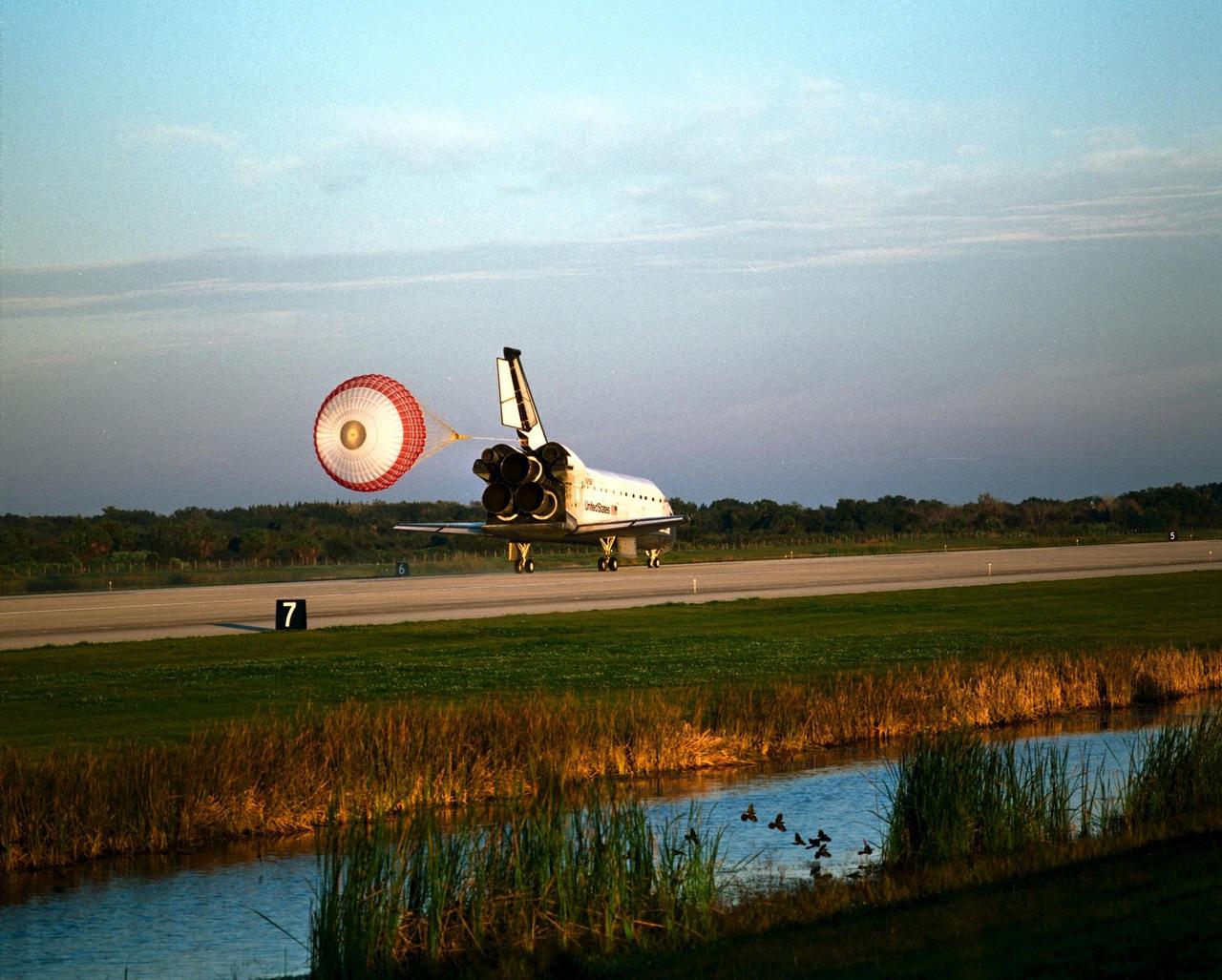
With Commander Kevin Kregel and Pilot Steven Lindsey at the controls, the orbiter Columbia, with its drag chute deployed, touches down on Runway 33 at KSC’s Shuttle Landing Facility at 7:20:04 a.m. EST Dec. 5 to complete the 15-day, 16-hour and 34-minute-long STS-87 mission of 6.5 million miles. Also onboard the orbiter are Mission Specialists Winston Scott; Kalpana Chawla, Ph.D.; and Takao Doi, Ph.D., of the National Space Development Agency of Japan; along with Payload Specialist Leonid Kadenyuk of the National Space Agency of Ukraine. During the 88th Space Shuttle mission, the crew performed experiments on the United States Microgravity Payload-4 and pollinated plants as part of the Collaborative Ukrainian Experiment. This was the 12th landing for Columbia at KSC and the 41st KSC landing in the history of the Space Shuttle program
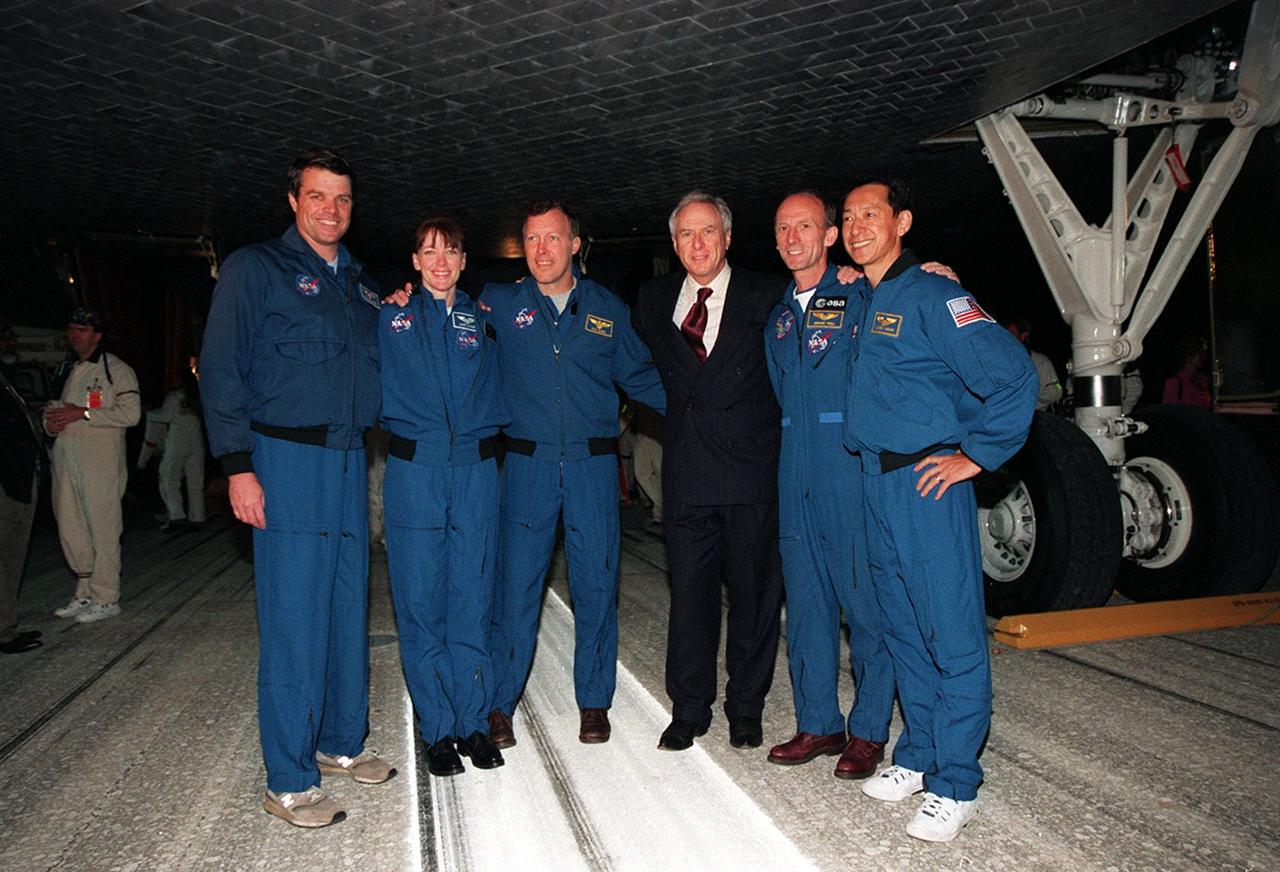
KENNEDY SPACE CENTER, FLA. -- Members of the STS-99 crew pose with NASA Administrator Dan Goldin underneath Space Shuttle Endeavour on KSC's Shuttle Landing Facility. From left are Commander Kevin Kregel, Mission Specialist Janet Kavandi, Pilot Dominic Gorie, Goldin, and Mission Specialists Gerhard Thiele and Mamoru Mohri. Not in the photo is Mission Specialist Janice Voss. Main gear touchdown was at 6:22:23 p.m. EST Feb. 22 , landing on orbit 181 of the mission. Nose gear touchdown was at 6:22:35 p.m.. EST, and wheel stop at 6:23:25 p.m. EST. The crew returned from the Shuttle Radar Topography Mission after mapping more than 47 million square miles of the Earth's surface. This was the 97th flight in the Space Shuttle program and the 14th for Endeavour, also marking the 50th landing at KSC, the 21st consecutive landing at KSC, and the 28th in the last 29 Shuttle flights
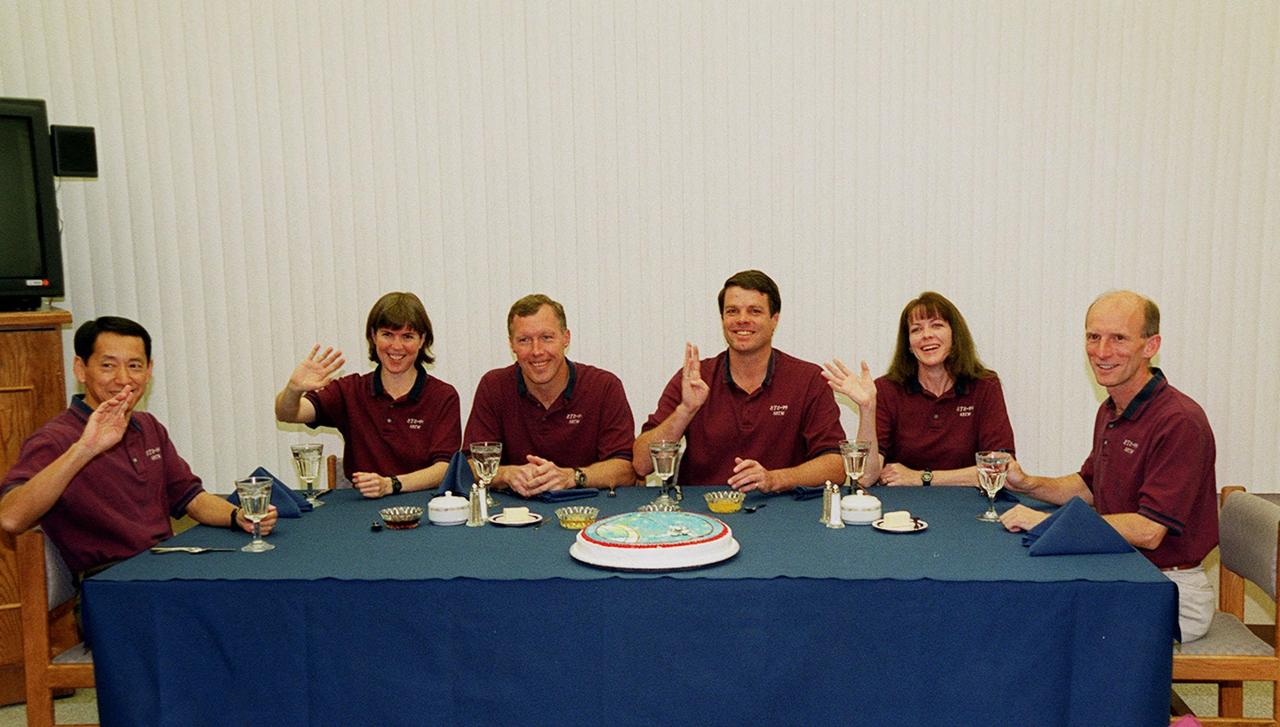
In the Operations and Checkout Building, an eager and smiling STS-99 crew gathers for breakfast before suiting up for launch. From left are Mission Specialists Mamoru Mohri and Janice Voss, Pilot Dominic Gorie, Commander Kevin Kregel, and Mission Specialists Janet Lynn Kavandi and Gerhard Thiele. Mohri is with the National Space Development Agency (NASDA) of Japan, and Thiele is with the European Space Agency. Known as the Shuttle Radar Topography Mission (SRTM), STS-99 is scheduled for liftoff at 12:30 p.m. EST from Launch Pad 39A. The SRTM will chart a new course to produce unrivaled 3-D images of the Earth's surface. The result of the Shuttle Radar Topography Mission could be close to 1 trillion measurements of the Earth's topography. The mission is expected to last about 11days, with Endeavour landing at KSC Tuesday, Feb. 22, at 4:36 p.m. EST. This is the 97th Shuttle flight and 14th for Shuttle Endeavour
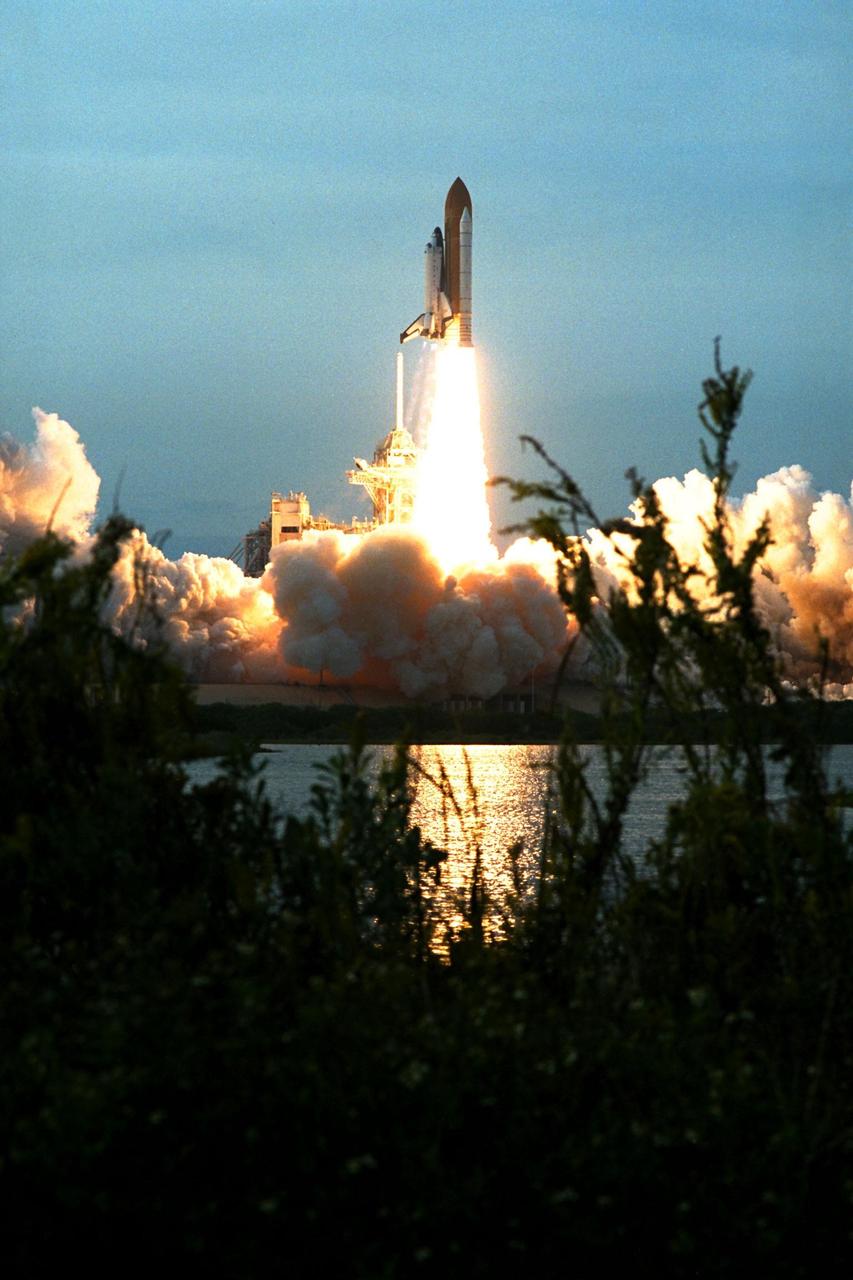
Like a rising sun lighting up the afternoon sky, the Space Shuttle Columbia soars from Launch Pad 39B at 2:46:00 p.m. EST, November 19, on the fourth flight of the United States Microgravity Payload and Spartan-201 satellite. The crew members include Mission Commander Kevin Kregel.; Pilot Steven Lindsey; Mission Specialists Kalpana Chawla, Ph.D., Winston Scott, and Takao Doi, Ph.D., of the National Space Development Agency of Japan; and Payload Specialist Leonid Kadenyuk of the National Space Agency of Ukraine. During the 16-day STS-87 mission, the crew will oversee experiments in microgravity; deploy and retrieve a solar satellite; and test a new experimental camera, the AERCam Sprint. Dr. Doi and Scott also will perform a spacewalk to practice International Space Station maneuvers
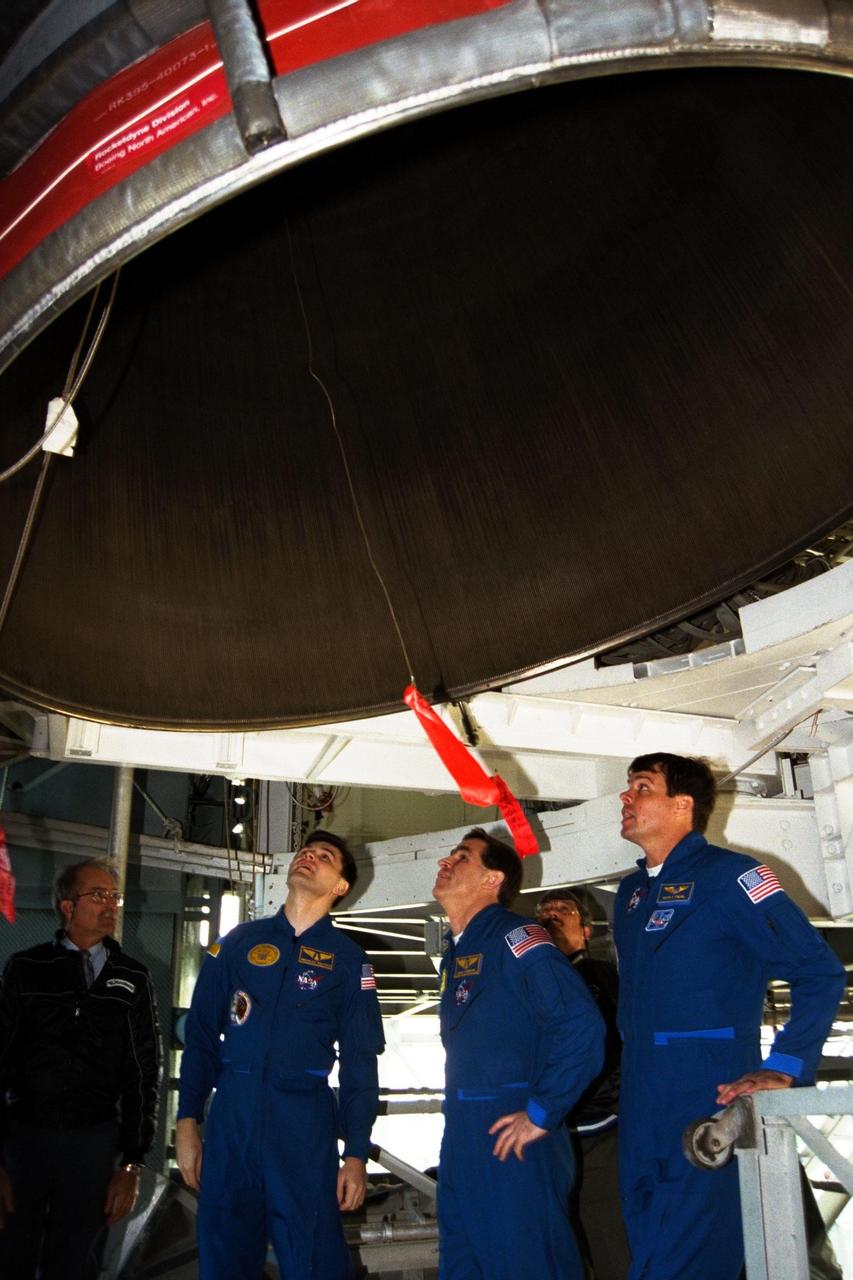
The crew of the STS-87 mission, scheduled for launch Nov. 19 aboard the Space Shuttle Columbia from Pad 39B at Kennedy Space Center (KSC), participates in the Terminal Countdown Demonstration Test (TCDT) at KSC. Getting a close look at one of the Space Shuttle’s main engines are, from right, Commander Kevin Kregel, Payload Specialist Leonid Kadenyuk of the National Space Agency of Ukraine (NSAU), and Kadenyuk’s back-up, Yaroslav Pustovyi, Ph.D., also of NSAU. The TCDT is held at KSC prior to each Space Shuttle flight, providing the crew of each mission opportunities to participate in simulated countdown activities. The TCDT ends with a mock launch countdown culminating in a simulated main engine cut-off. The crew also spends time undergoing emergency egress training exercises at the pad and has an opportunity to view and inspect the payloads in the orbiter's payload bay
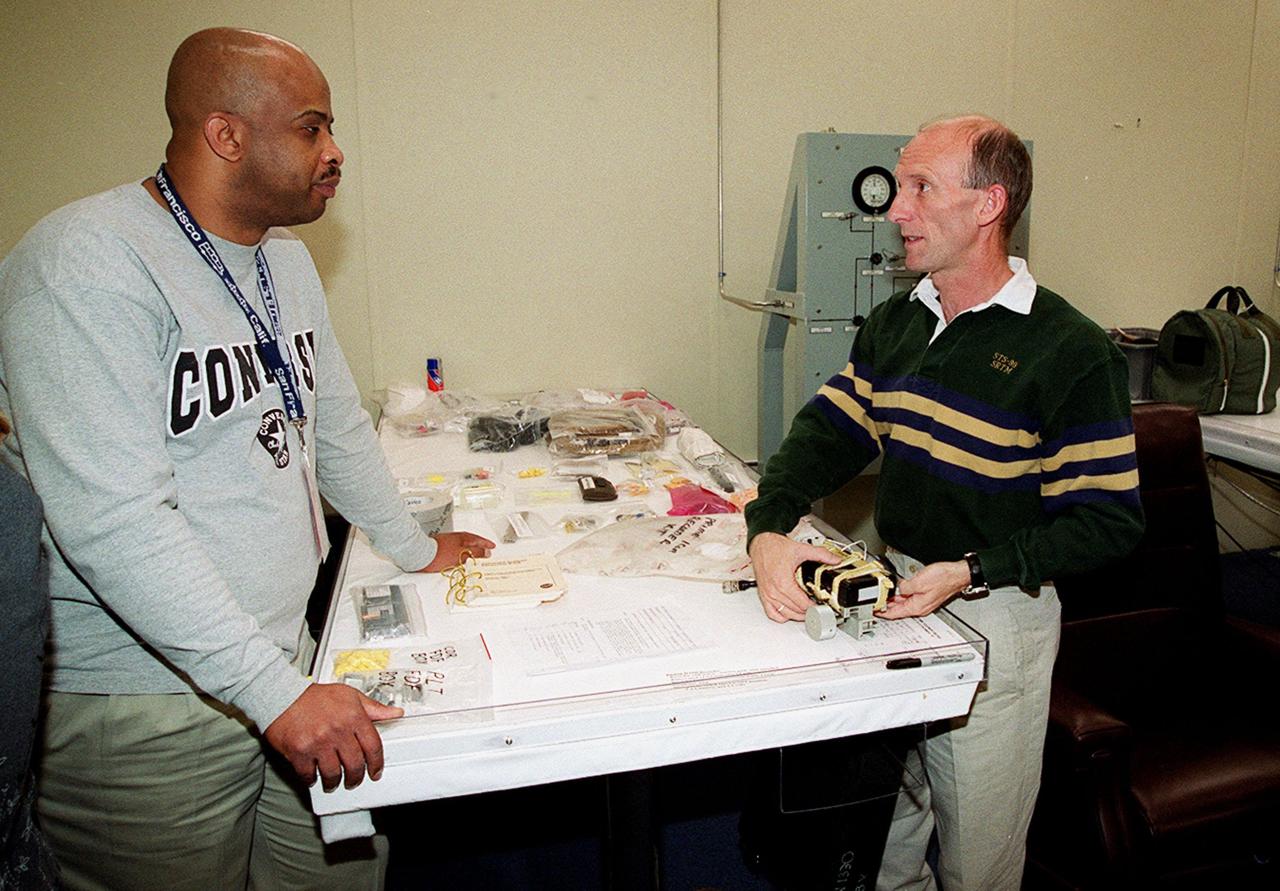
In the Operations and Checkout Building's suitup room, Andre Denard, with United Space Alliance, helps STS-99 Mission Specialist Gerhard Thiele with pre-pack and fit check. Thiele and other crew members Commander Kevin Kregel, Pilot Dominic Gorie, and Mission Specialists Janet Kavandi, Janice Voss, and Mamoru Mohri of Japan are preparing for launch of their mission on Feb. 11 at 12:30 p.m. EST aboard Space Shuttle Endeavour. STS-99 is the Shuttle Radar Topography Mission, which will produce unrivaled 3-D images of the Earth's surface. The result of the Shuttle Radar Topography Mission could be close to 1 trillion measurements of the Earth's topography. Landing is expected at KSC on Feb. 22 at 4:36 p.m. EST
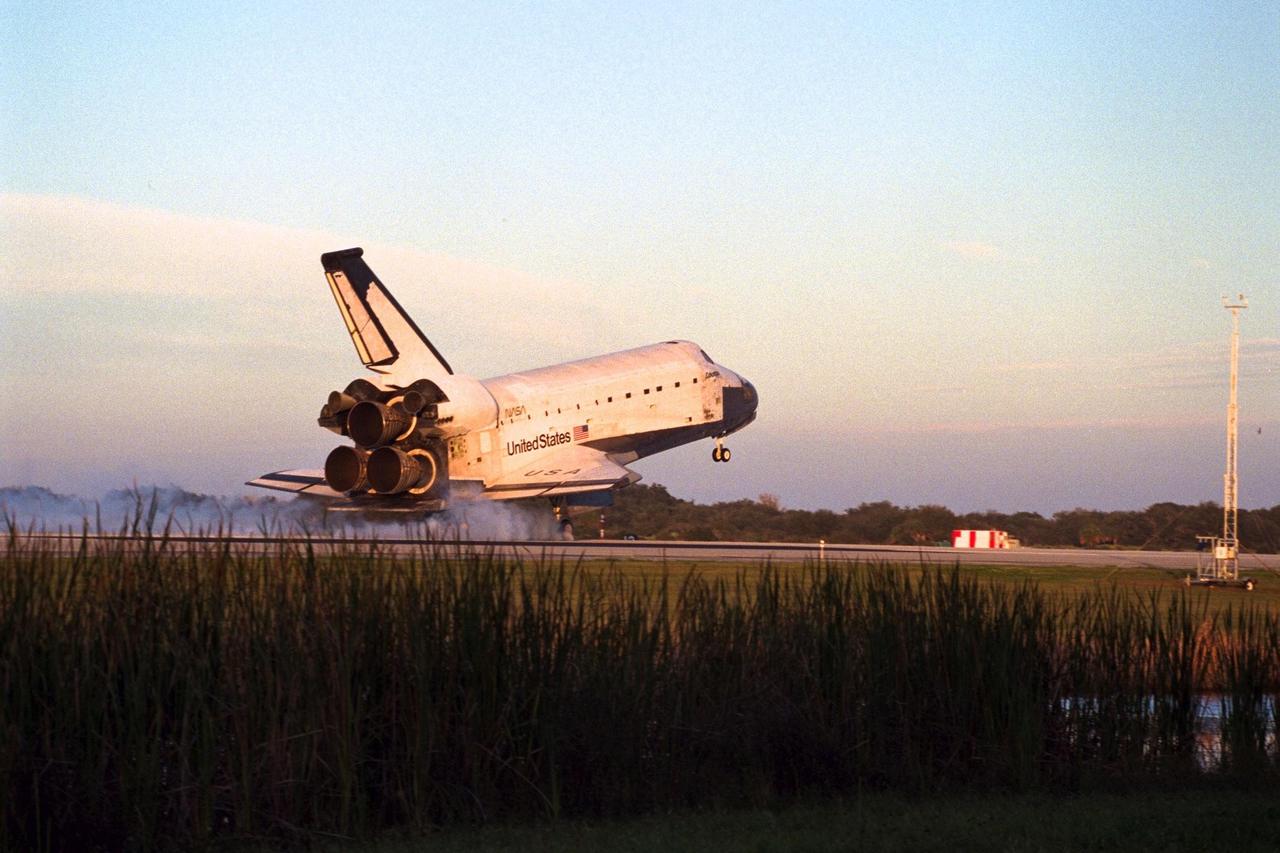
With Commander Kevin Kregel and Pilot Steven Lindsey at the controls, the orbiter Columbia makes a smooth touchdown on Runway 33 at KSC’s Shuttle Landing Facility at 7:20:04 a.m. EST Dec. 5, completing the 15-day, 16-hour and 34-minute-long STS-87 mission of 6.5 million miles. Also onboard the orbiter are Mission Specialists Winston Scott; Kalpana Chawla, Ph.D.; and Takao Doi, Ph.D., of the National Space Development Agency of Japan; along with Payload Specialist Leonid Kadenyuk of the National Space Agency of Ukraine. During the 88th Space Shuttle mission, the crew performed experiments on the United States Microgravity Payload-4 and pollinated plants as part of the Collaborative Ukrainian Experiment. This was the 12th landing for Columbia at KSC and the 41st KSC landing in the history of the Space Shuttle program

In the Operations and Checkout Building's suitup room, Carlous Gillis, with United Space Alliance, helps STS-99 Pilot Dominic Gorie with pre-pack and fit check. Gorie and other crew members Commander Kevin Kregel, and Mission Specialists Janet Kavandi, Janice Voss, Gerhard Thiele of Germany and Mamoru Mohri of Japan are preparing for launch of their mission on Feb. 11 at 12:30 p.m. EST aboard Space Shuttle Endeavour. STS-99 is the Shuttle Radar Topography Mission, which will produce unrivaled 3-D images of the Earth's surface. The result of the Shuttle Radar Topography Mission could be close to 1 trillion measurements of the Earth's topography. Landing is expected at KSC on Feb. 22 at 4:36 p.m. EST
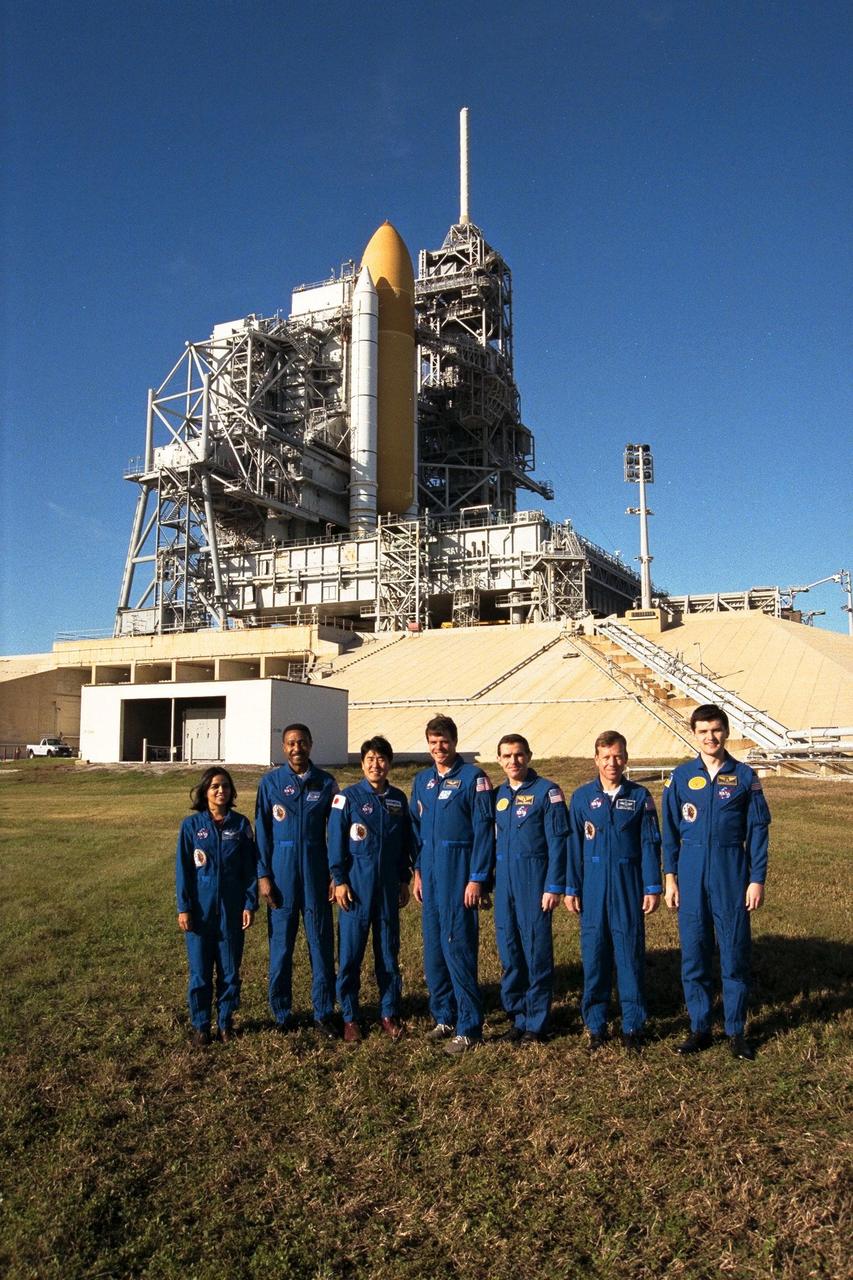
The crew of the STS-87 mission, scheduled for launch Nov. 19 aboard the Space Shuttle Columbia from Pad 39B at Kennedy Space Center (KSC), participate in the Terminal Countdown Demonstration Test (TCDT) at KSC. Posing for a group shot by Pad 39B are, from left to right, Mission Specialist Kalpana Chawla, Ph.D.; Mission Specialist Winston Scott; Mission Specialist Takao Doi, Ph.D., of the National Space Development Agency of Japan; Commander Kevin Kregel; Payload Specialist Leonid Kadenyuk of the National Space Agency of Ukraine (NSAU); Pilot Steven Lindsey; and Kadenyuk’s back-up, Yaroslav Pustovyi, Ph.D., also of NSAU. The TCDT is held at KSC prior to each Space Shuttle flight, providing the crew of each mission opportunities to participate in simulated countdown activities. The crew also spends time undergoing emergency egress training exercises at the pad and has an opportunity to view and inspect the payloads in the orbiter's payload bay
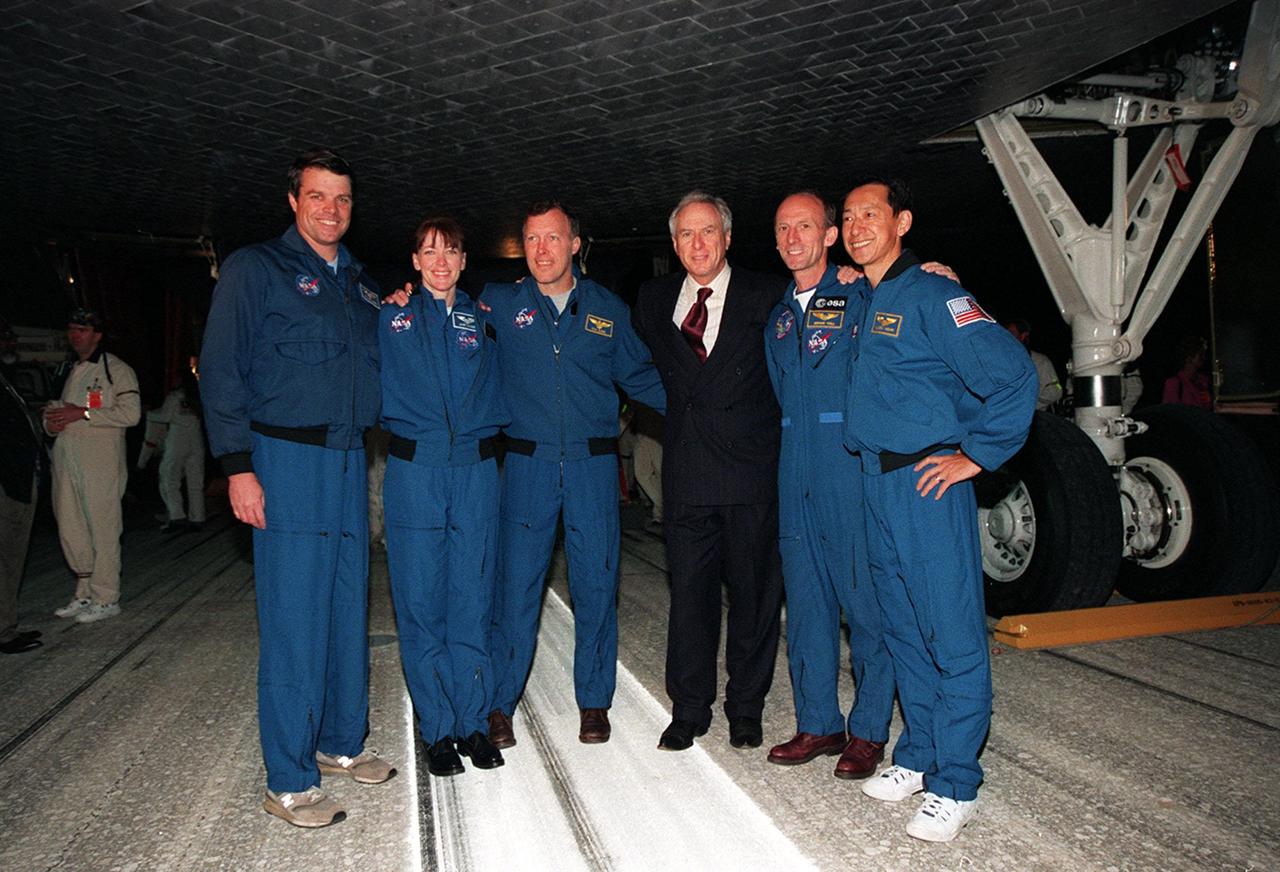
KENNEDY SPACE CENTER, FLA. -- Members of the STS-99 crew pose with NASA Administrator Dan Goldin underneath Space Shuttle Endeavour on KSC's Shuttle Landing Facility. From left are Commander Kevin Kregel, Mission Specialist Janet Kavandi, Pilot Dominic Gorie, Goldin, and Mission Specialists Gerhard Thiele and Mamoru Mohri. Not in the photo is Mission Specialist Janice Voss. Main gear touchdown was at 6:22:23 p.m. EST Feb. 22 , landing on orbit 181 of the mission. Nose gear touchdown was at 6:22:35 p.m.. EST, and wheel stop at 6:23:25 p.m. EST. The crew returned from the Shuttle Radar Topography Mission after mapping more than 47 million square miles of the Earth's surface. This was the 97th flight in the Space Shuttle program and the 14th for Endeavour, also marking the 50th landing at KSC, the 21st consecutive landing at KSC, and the 28th in the last 29 Shuttle flights
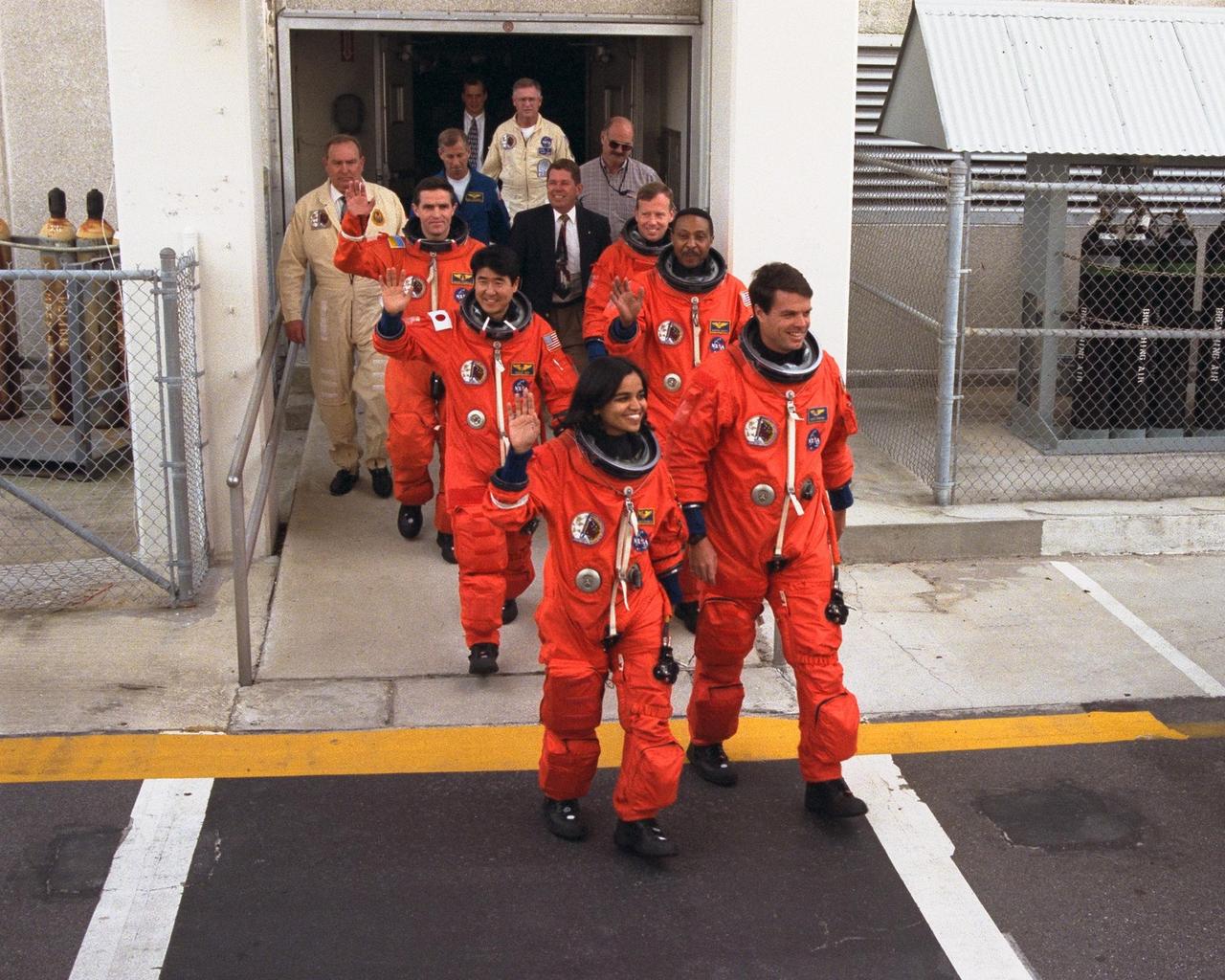
The crew of Mission STS-87 depart from the Operations and Checkout Building en route to Launch Pad 39B, where the Space Shuttle Columbia awaits liftoff on the fourth flight of the United States Microgravity Payload and the Spartan-201 deployable satellite. Leading the way are, from left to right, front to back: Mission Specialist Kalpana Chawla, Ph.D.; Commander Kevin Kregel; Mission Specialist Takao Doi, Ph.D., of the National Space Development Agency of Japan; Mission Specialist Winston Scott; Payload Specialist Leonid Kadenyuk of the National Space Agency of Ukraine; and Pilot Steven Lindsey. The Space Shuttle Columbia and its crew of six members are scheduled to lift off during a two-and-a-half hour launch window, which opens at 2:46 p.m
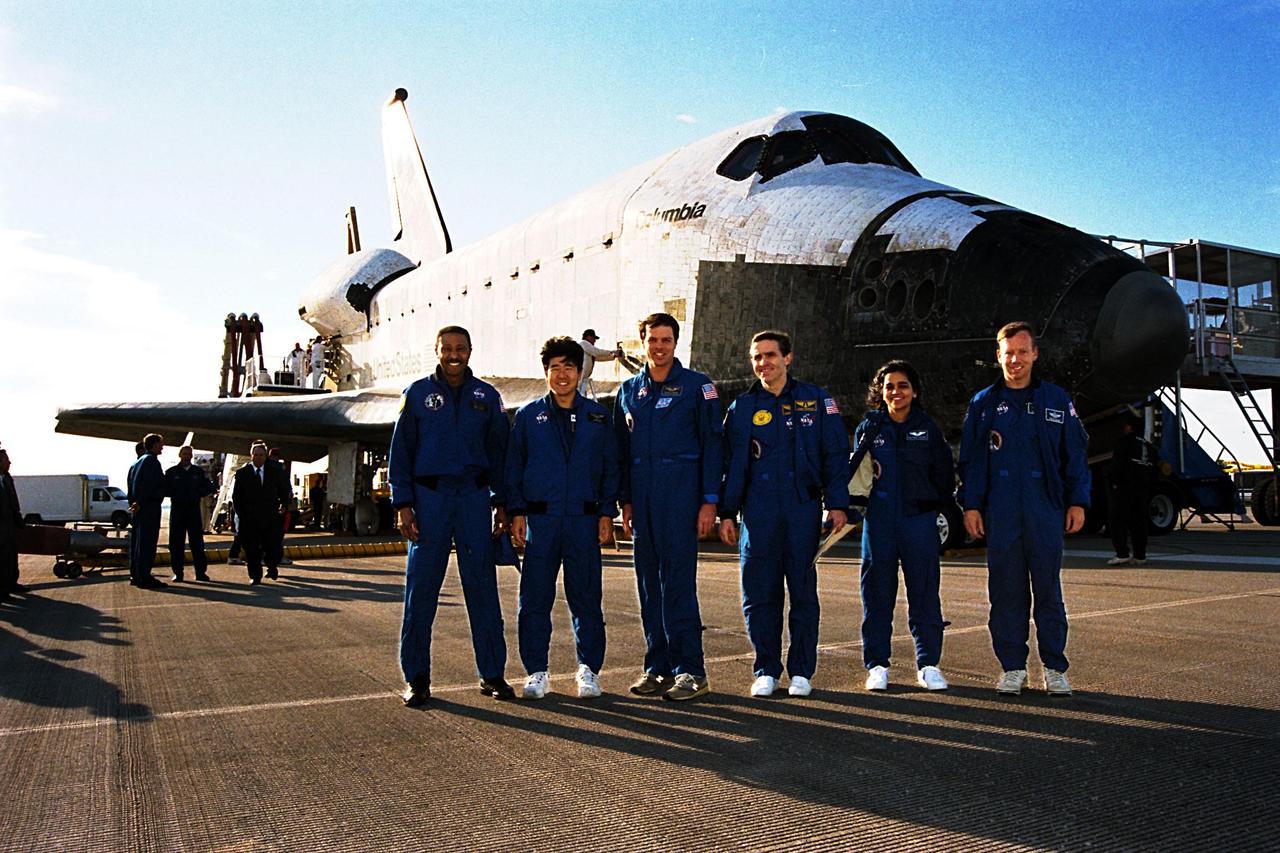
The STS-87 crew pose in front of the orbiter Columbia shortly after landing on Runway 33 at KSC's Shuttle Landing Facility. STS-87 concluded its mission with a main gear touchdown at 7:20:04 a.m. EST Dec. 5, drawing the 15-day, 16-hour and 34-minute-long mission of 6.5 million miles to a close. From left to right are Mission Specialists Winston Scott and Takao Doi, Ph.D., of the National Space Development Agency of Japan; Commander Kevin Kregel; Payload Specialist Leonid Kadenyuk of the National Space Agency of Ukraine; Mission Specialist Kalpana Chawla, Ph.D.; and Pilot Steven Lindsey. During the 88th Space Shuttle mission, the crew performed experiments on the United States Microgravity Payload-4 and pollinated plants as part of the Collaborative Ukrainian Experiment. This was the 12th landing for Columbia at KSC and the 41st KSC landing in the history of the Space Shuttle program
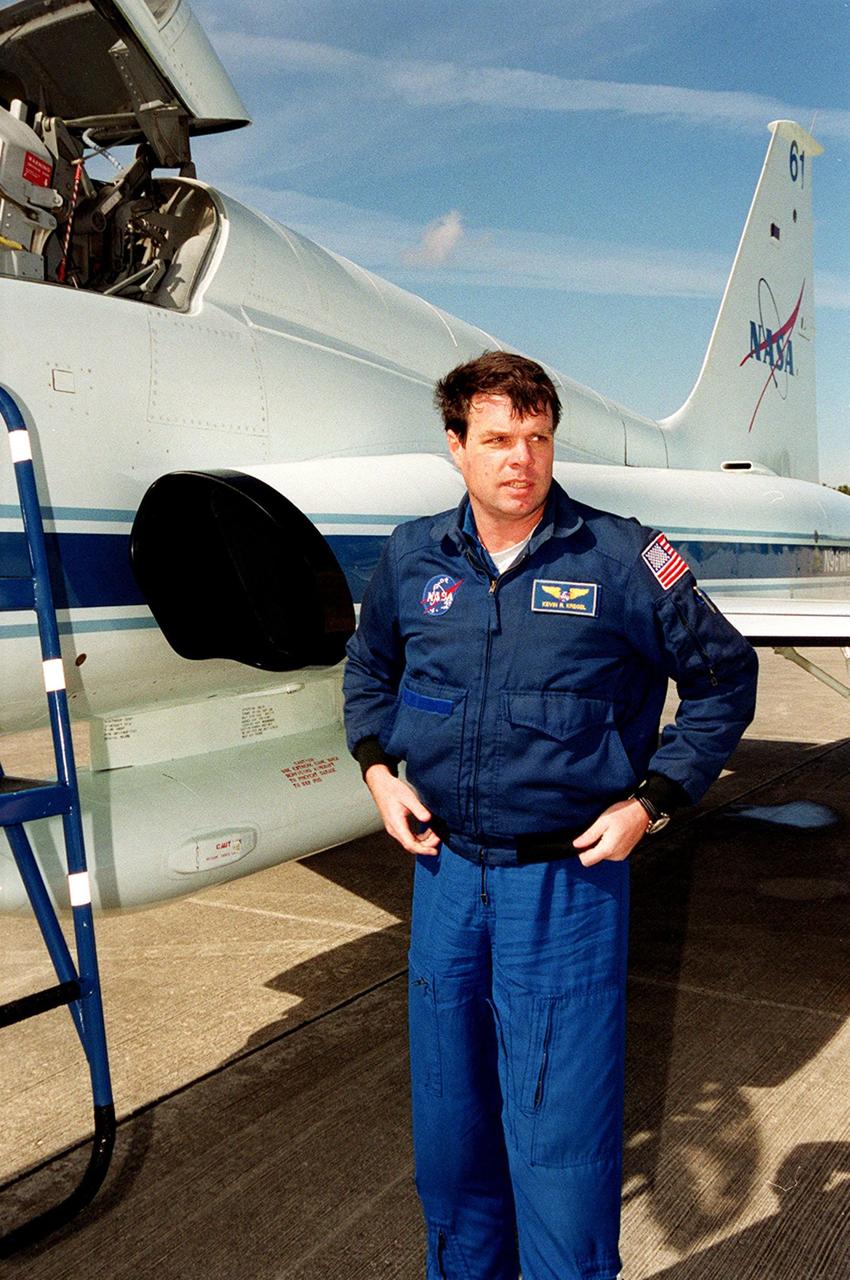
STS-99 Commander Kevin Kregel arrives at KSC aboard a T-38 jet aircraft to prepare for launch of Endeavour Jan. 31 at 12:47 p.m. EST. Over the next few days, the crew will review mission procedures, conduct test flights in the Shuttle Training Aircraft and undergo routine preflight medical exams. STS-99 is the Shuttle Radar Topography Mission, which will chart a new course, using two antennae and a 200-foot-long section of space station-derived mast protruding from the payload bay to produce unrivaled 3-D images of the Earth's surface. The result of the Shuttle Radar Topography Mission could be close to 1 trillion measurements of the Earth's topography. Besides contributing to the production of better maps, these measurements could lead to improved water drainage modeling, more realistic flight simulators, better locations for cell phone towers, and enhanced navigation safety
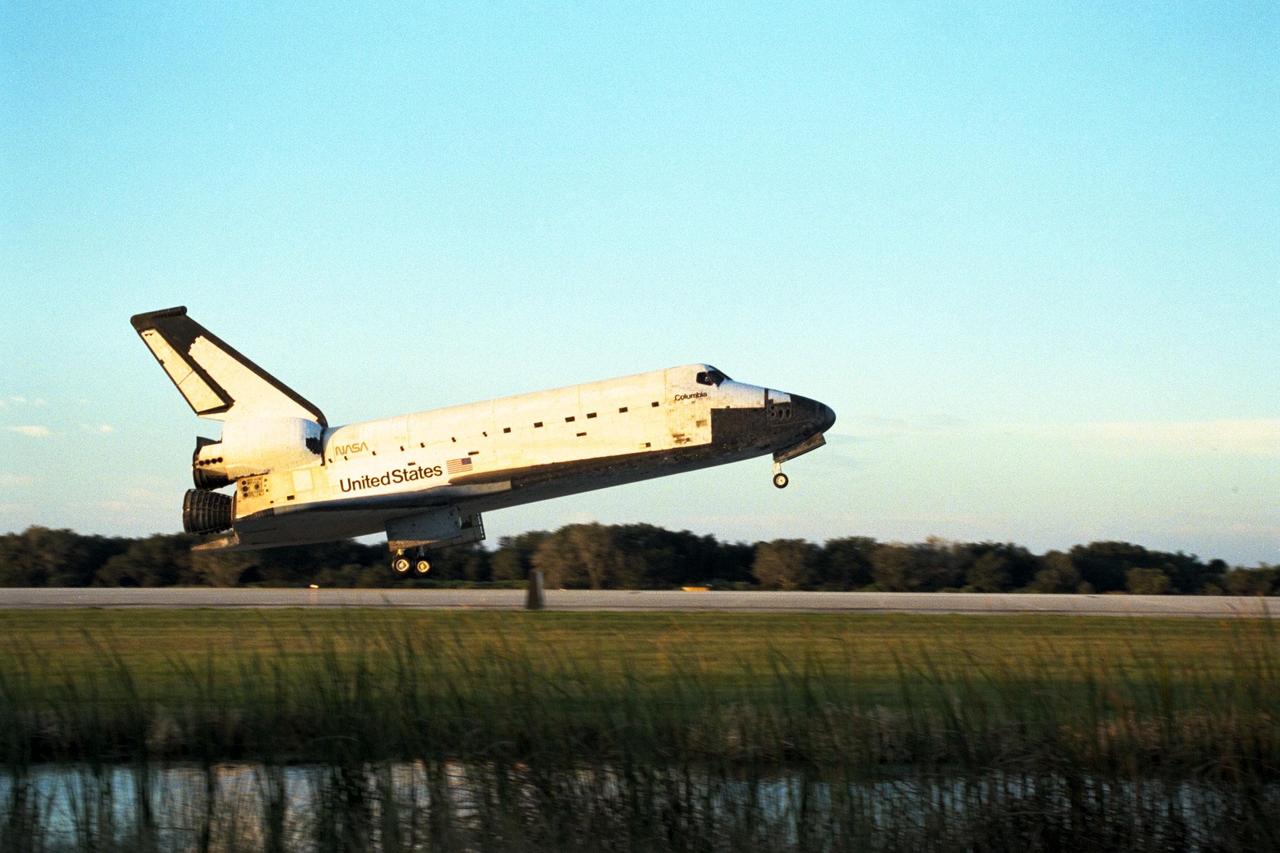
With Commander Kevin Kregel and Pilot Steven Lindsey at the controls, the orbiter Columbia makes a smooth touchdown on Runway 33 at KSC’s Shuttle Landing Facility at 7:20:04 a.m. EST Dec. 5, completing the 15-day, 16-hour and 34-minute-long STS-87 mission of 6.5 million miles. Also onboard the orbiter are Mission Specialists Winston Scott; Kalpana Chawla, Ph.D.; and Takao Doi, Ph.D., of the National Space Development Agency of Japan; along with Payload Specialist Leonid Kadenyuk of the National Space Agency of Ukraine. During the 88th Space Shuttle mission, the crew performed experiments on the United States Microgravity Payload-4 and pollinated plants as part of the Collaborative Ukrainian Experiment. This was the 12th landing for Columbia at KSC and the 41st KSC landing in the history of the Space Shuttle program
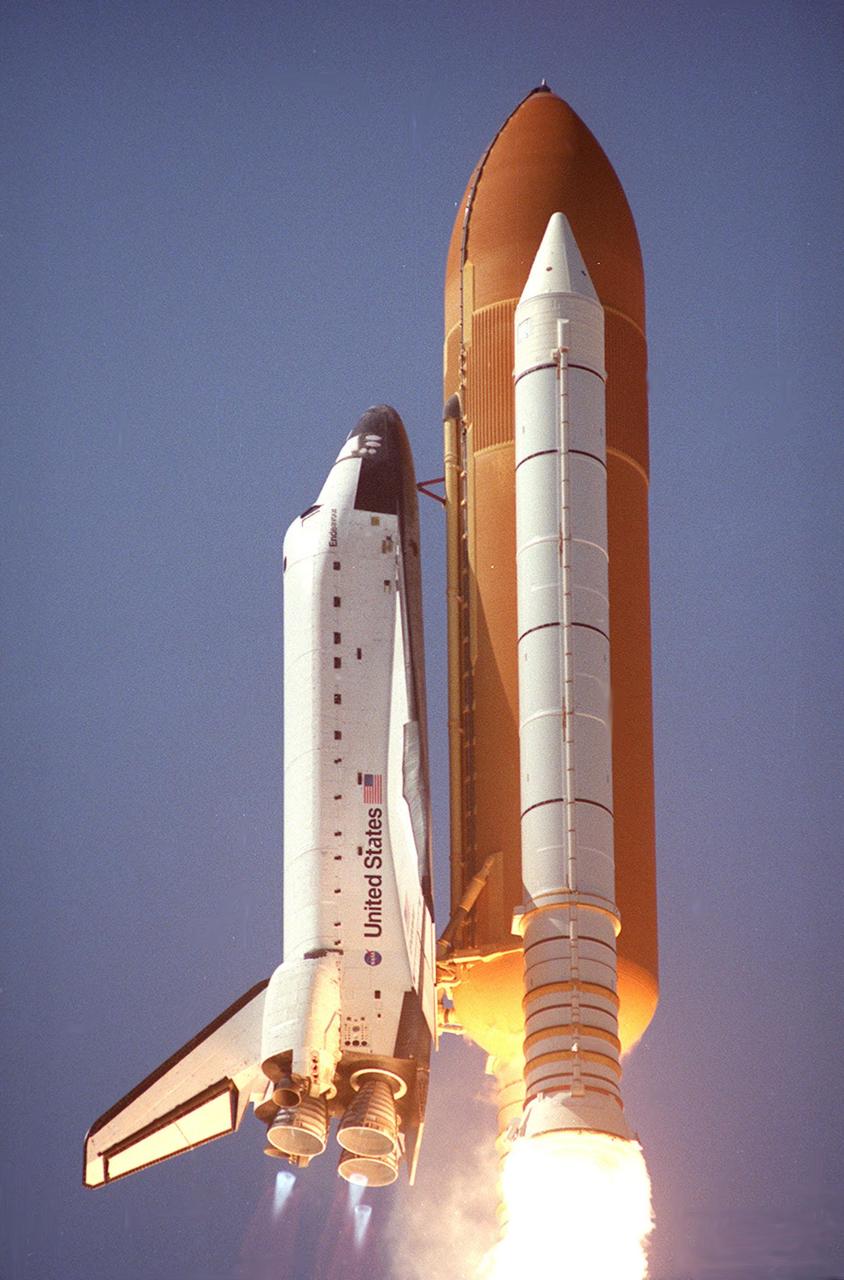
KENNEDY SPACE CENTER, FLA. -- A clear blue sky is the perfect setting behind Space Shuttle Endeavour as it hurtles into space. Launch of mission STS-99 occurred at 12:43:40 p.m. EST from Launch Pad 39A with a crew of five aboard: Commander Kevin Kregel, Pilot Dominic Gorie, and Mission Specialists Janet Kavandi, Janice Voss, Mamoru Mohri of Japan and Gerhard Thiele of Germany. Mohri is with the National Space Development Agency (NASDA) of Japan, and Thiele is with the European Space Agency. Known as the Shuttle Radar Topography Mission (SRTM), STS-99 will chart a new course to produce unrivaled 3-D images of the Earth's surface. The result of the SRTM could be close to 1 trillion measurements of the Earth's topography. The mission is expected to last 11days, with Endeavour landing at KSC Tuesday, Feb. 22, at 4:36 p.m. EST. This is the 97th Shuttle flight and 14th for Shuttle Endeavour
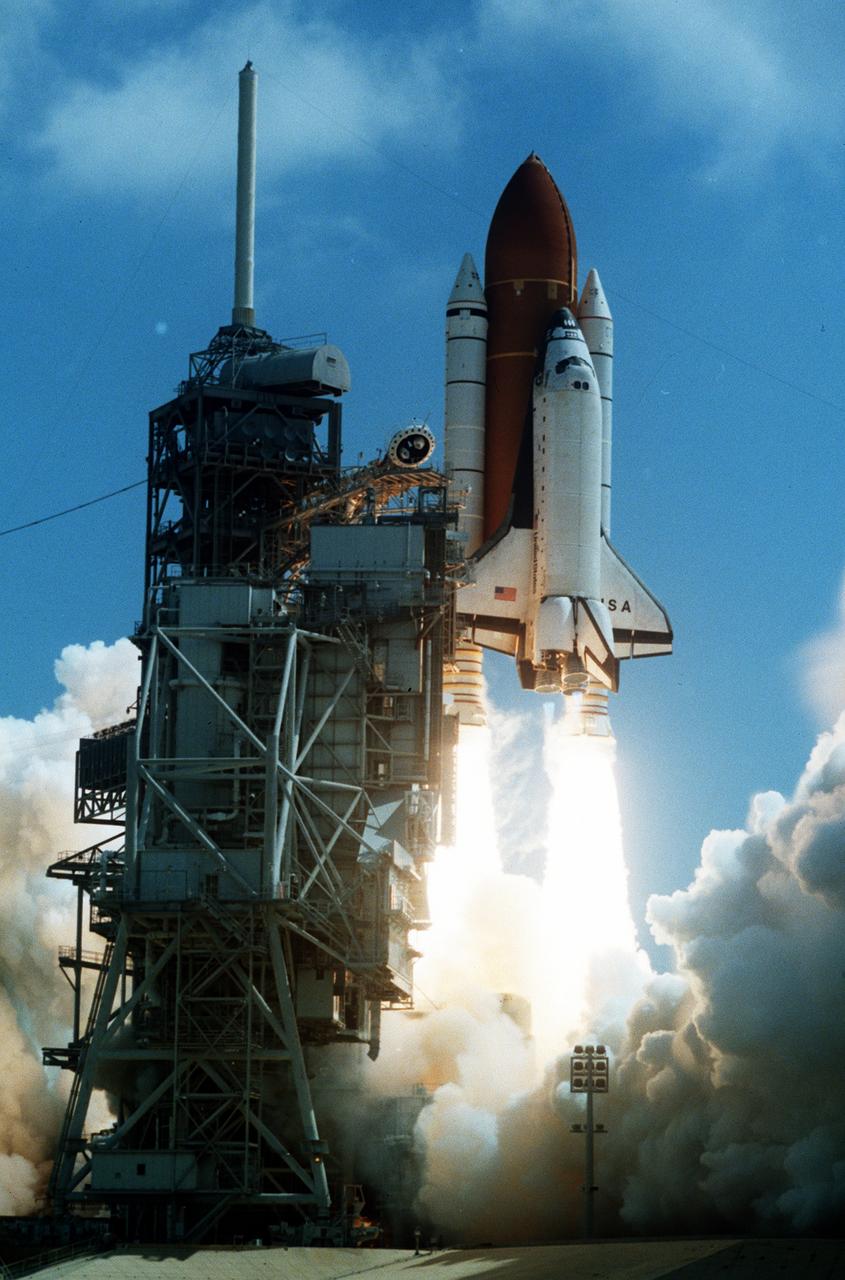
STS078-S-008 (20 June 1996) --- With an international payload and crew aboard, the Space Shuttle Columbia lifts off from Launch Pad 39B, at the Kennedy Space Center (KSC). Possibly expected to be NASA's longest duration Shuttle flight to date, the mission officially began at 10:49:00 a.m. (EDT), June 20, 1996. Onboard for Columbia’s 20th flight were astronauts Terence T. (Tom) Henricks, mission commander; Kevin R. Kregel, pilot; Susan J. Helms, payload commander; and Richard M. Linnehan and Charles E. Brady, Jr., both mission specialists, along with payload specialists Jean-Jacques Favier of the French Space Agency (CNES) and Robert B. Thirsk of the Canadian Space Agency (CSA). Flying in Columbia’s payload bay is the Life and Microgravity Spacelab (LMS), carrying a complement of United States and international experiments.
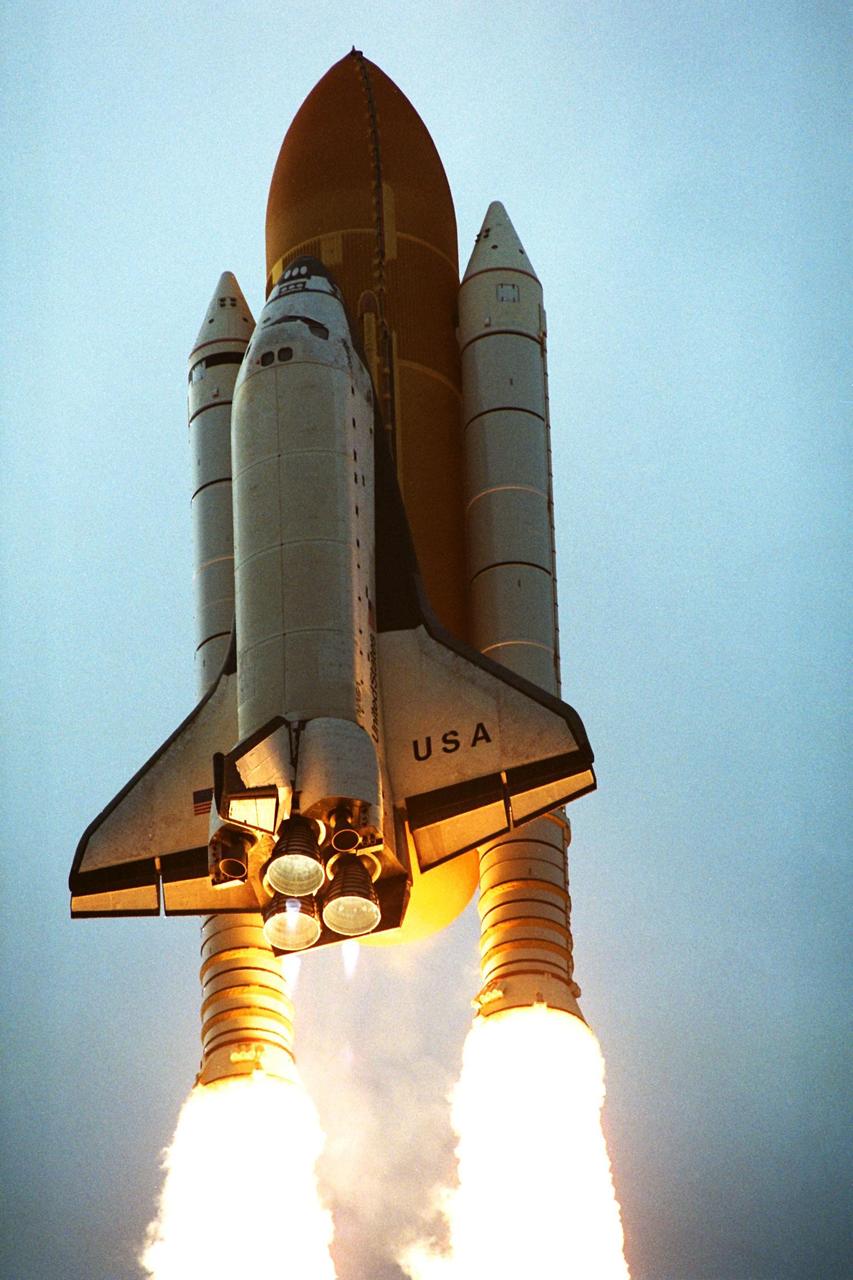
Like a rising sun lighting up the afternoon sky, the Space Shuttle Columbia soars from Launch Pad 39B at 2:46:00 p.m. EST, November 19, on the fourth flight of the United States Microgravity Payload and Spartan-201 satellite. The crew members include Mission Commander Kevin Kregel.; Pilot Steven Lindsey; Mission Specialists Kalpana Chawla, Ph.D., Winston Scott, and Takao Doi, Ph.D., of the National Space Development Agency of Japan; and Payload Specialist Leonid Kadenyuk of the National Space Agency of Ukraine. During the 16-day STS-87 mission, the crew will oversee experiments in microgravity; deploy and retrieve a solar satellite; and test a new experimental camera, the AERCam Sprint. Dr. Doi and Scott also will perform a spacewalk to practice International Space Station maneuvers
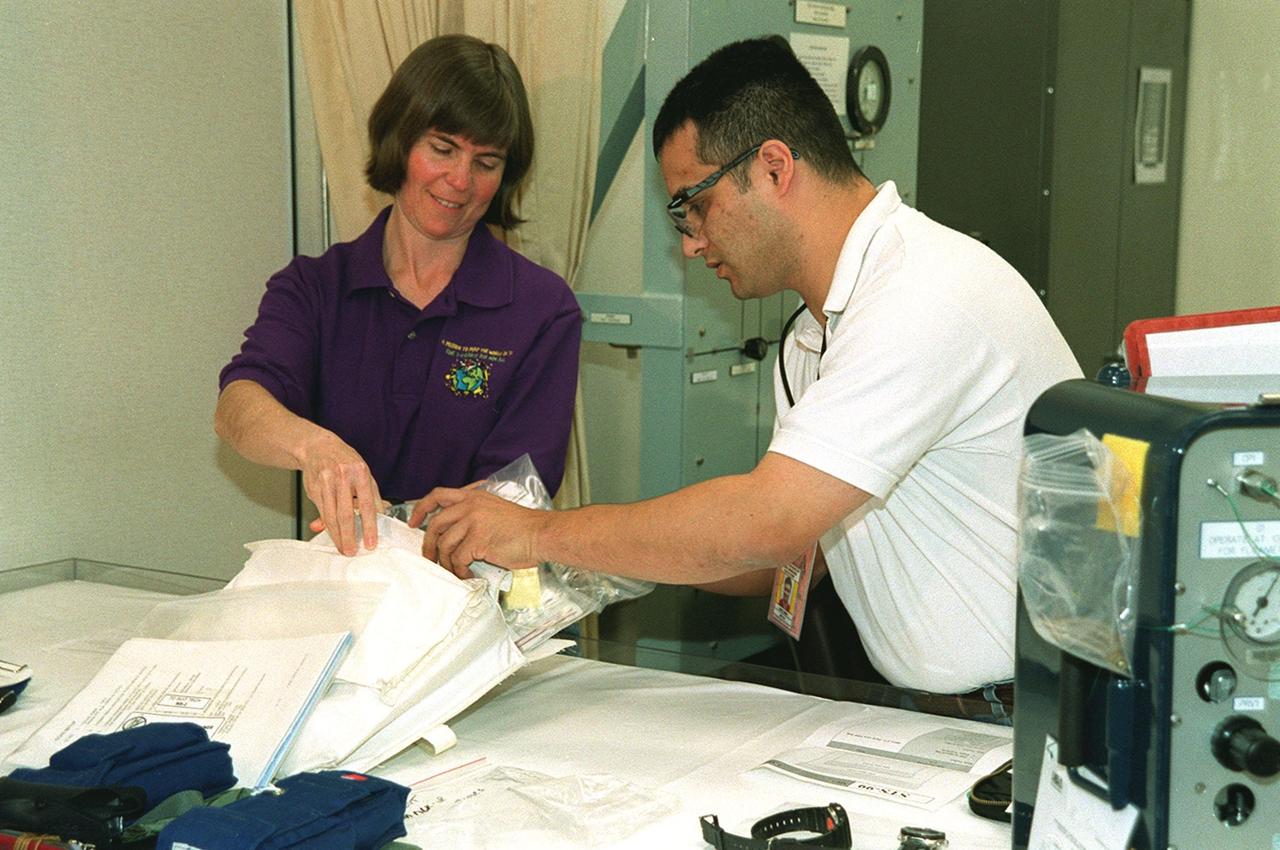
In the Operations and Checkout Building's suitup room, STS-99 Mission Specialist Janice Voss is helped with pre-pack and fit check by Santos Medina, with United Space Alliance. Voss and other crew members Commander Kevin Kregel, Pilot Dominic Gorie and Mission Specialists Janet Kavandi, Gerhard Thiele of Germany and Mamoru Mohri of Japan are preparing for launch of their mission on Feb. 11 at 12:30 p.m. EST aboard Space Shuttle Endeavour. STS-99 is the Shuttle Radar Topography Mission, which will produce unrivaled 3-D images of the Earth's surface. The result of the Shuttle Radar Topography Mission could be close to 1 trillion measurements of the Earth's topography. Landing is expected at KSC on Feb. 22 at 4:36 p.m. EST
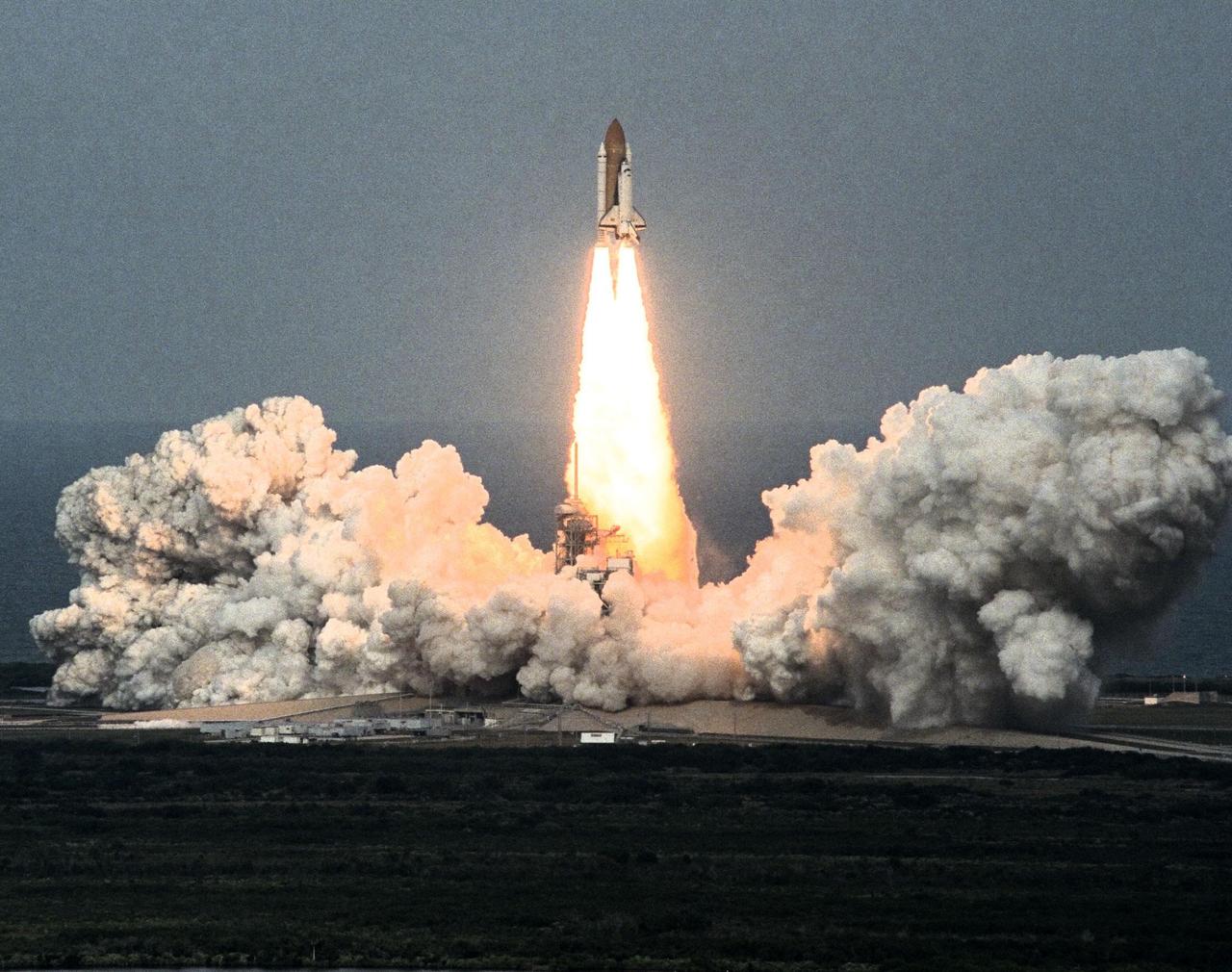
Like a rising sun lighting up the afternoon sky, the Space Shuttle Columbia soars from Launch Pad 39B at 2:46:00 p.m. EST, November 19, on the fourth flight of the United States Microgravity Payload and Spartan-201 satellite. The crew members include Mission Commander Kevin Kregel.; Pilot Steven Lindsey; Mission Specialists Kalpana Chawla, Ph.D., Winston Scott, and Takao Doi, Ph.D., of the National Space Development Agency of Japan; and Payload Specialist Leonid Kadenyuk of the National Space Agency of Ukraine. During the 16-day STS-87 mission, the crew will oversee experiments in microgravity; deploy and retrieve a solar satellite; and test a new experimental camera, the AERCam Sprint. Dr. Doi and Scott also will perform a spacewalk to practice International Space Station maneuvers
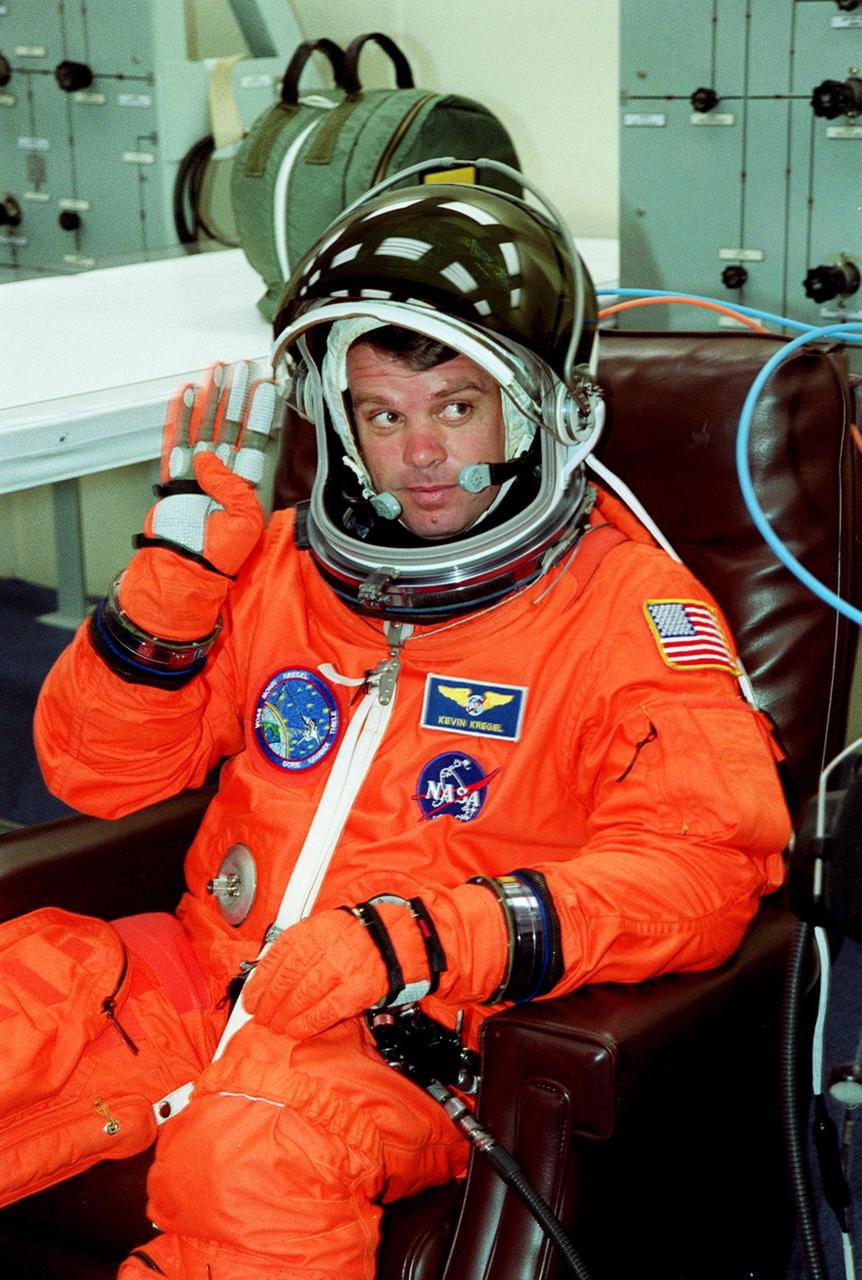
In the Operations and Checkout Building, STS-99 Commander Kevin Kregel waves as he suits up during final launch preparations. Liftoff of STS-99, known as the Shuttle Radar Topography Mission (SRTM), is scheduled for 12:47 p.m. EST from Launch Pad 39A. The SRTM will chart a new course to produce unrivaled 3-D images of the Earth's surface, using two antennae and a 200-foot-long section of space station-derived mast protruding from the payload bay. The result of the Shuttle Radar Topography Mission could be close to 1 trillion measurements of the Earth's topography. Besides contributing to the production of better maps, these measurements could lead to improved water drainage modeling, more realistic flight simulators, better locations for cell phone towers, and enhanced navigation safety. The mission is expected to last about 11days. Endeavour is expected to land at KSC Friday, Feb. 11, at 4:55 p.m. EST
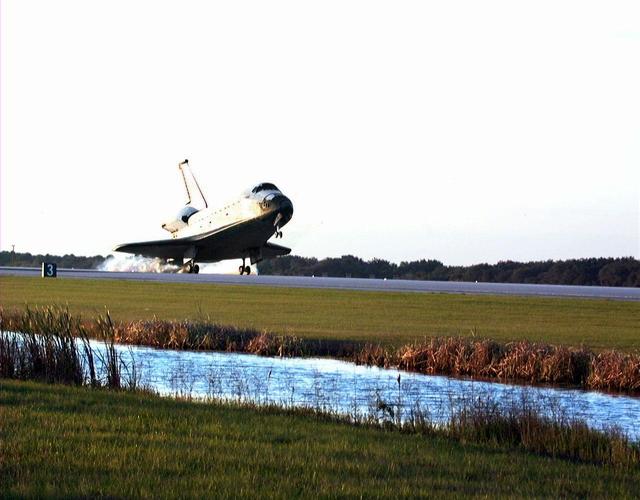
With Commander Kevin Kregel and Pilot Steven Lindsey at the controls, the orbiter Columbia touches its main gear down on Runway 33 at KSC’s Shuttle Landing Facility at 7:20:04 a.m. EST Dec. 5 to complete the 15-day, 16-hour and 34-minute-long STS-87 mission of 6.5 million miles. Also onboard the orbiter are Mission Specialists Winston Scott; Kalpana Chawla, Ph.D.; and Takao Doi, Ph.D., of the National Space Development Agency of Japan; along with Payload Specialist Leonid Kadenyuk of the National Space Agency of Ukraine. During the 88th Space Shuttle mission, the crew performed experiments on the United States Microgravity Payload-4 and pollinated plants as part of the Collaborative Ukrainian Experiment. This was the 12th landing for Columbia at KSC and the 41st KSC landing in the history of the Space Shuttle program
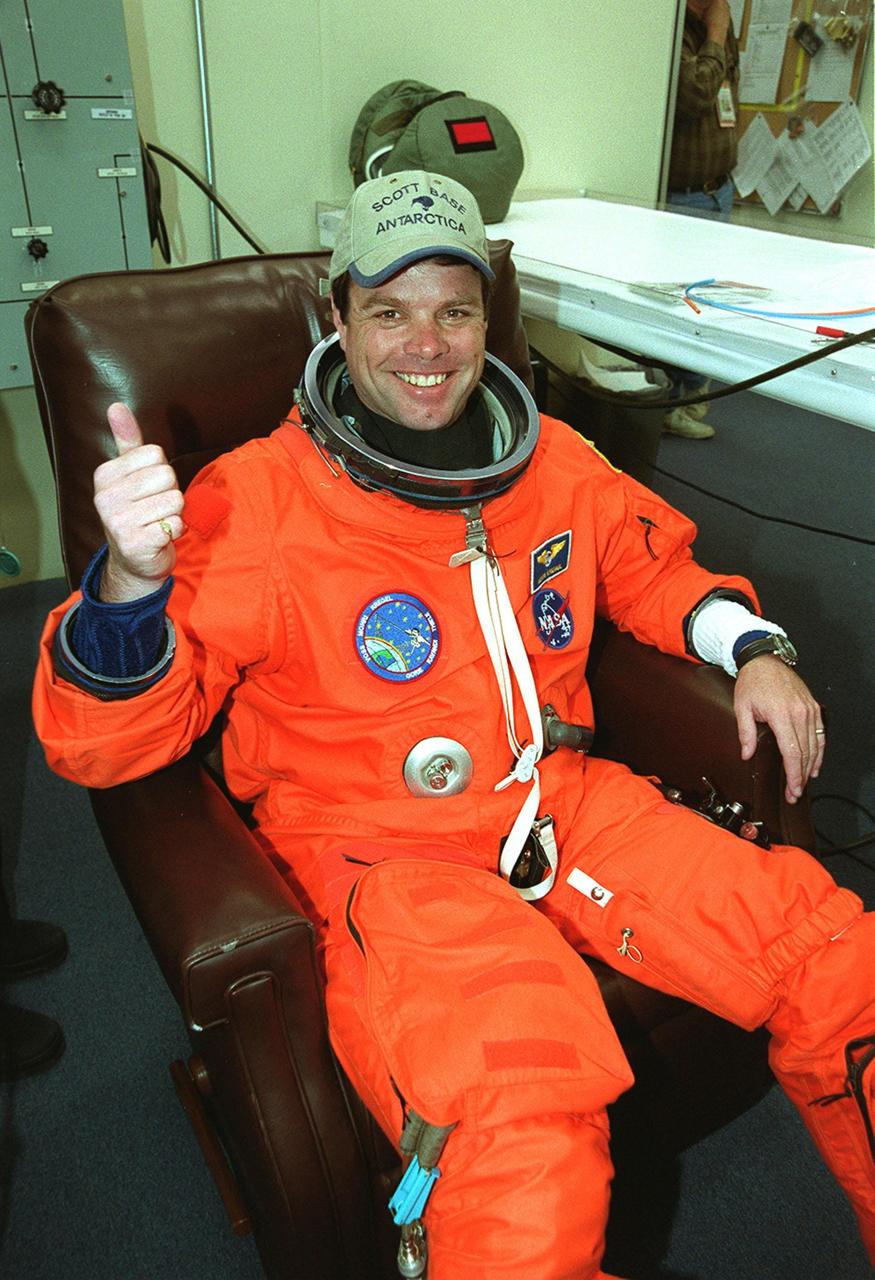
In the Operations and Checkout Building, a smiling STS-99 Commander Kevin Kregel gives a thumbs up for launch as he dons his launch and entry suit during final launch preparations. Known as the Shuttle Radar Topography Mission (SRTM), STS-99 is scheduled for liftoff at 12:30 p.m. EST from Launch Pad 39A. The SRTM will chart a new course to produce unrivaled 3-D images of the Earth's surface. The result of the Shuttle Radar Topography Mission could be close to 1 trillion measurements of the Earth's topography. The mission is expected to last 11days, with Endeavour landing at KSC Tuesday, Feb. 22, at 4:36 p.m. EST. This is the 97th Shuttle flight and 14th for Shuttle Endeavour
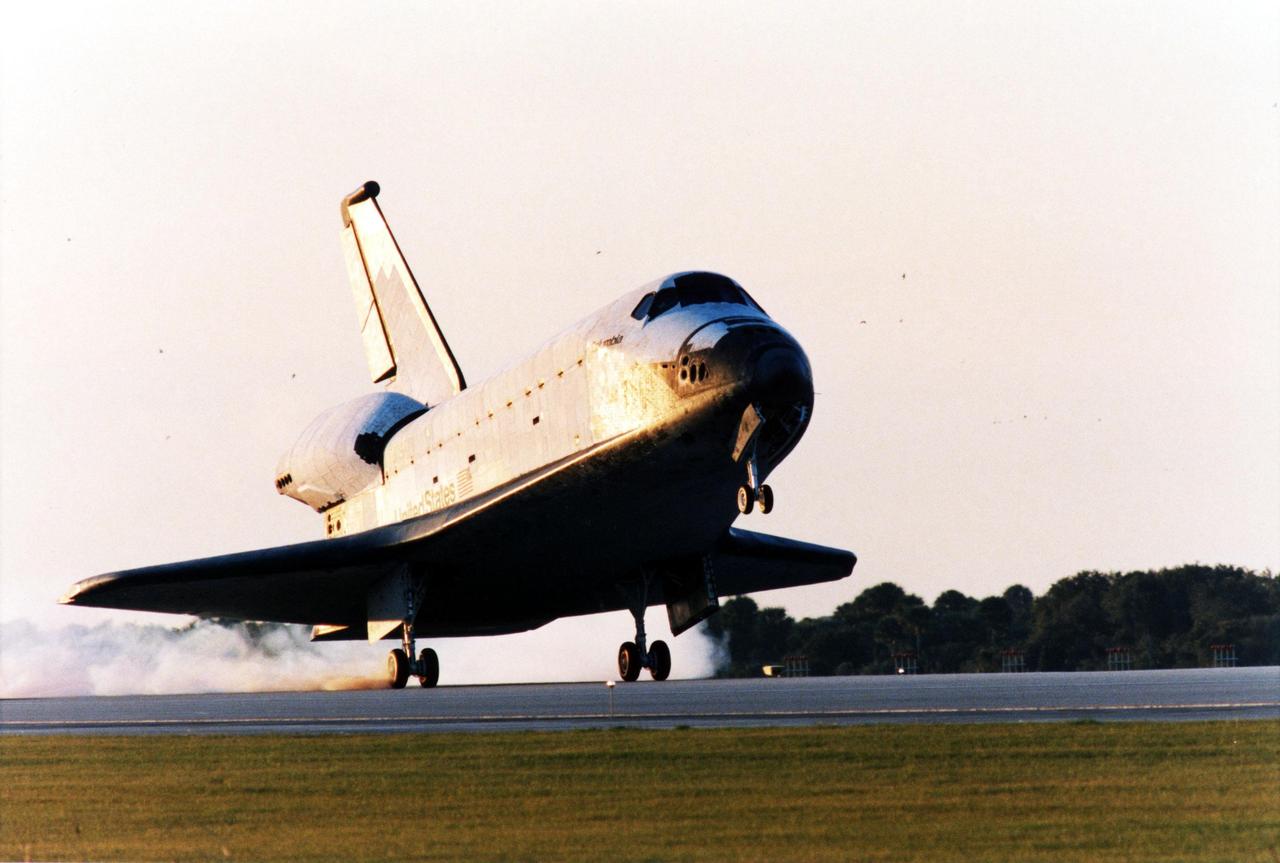
With Commander Kevin Kregel and Pilot Steven Lindsey at the controls, the orbiter Columbia touches its main gear down on Runway 33 at KSC’s Shuttle Landing Facility at 7:20:04 a.m. EST Dec. 5 to complete the 15-day, 16-hour and 34-minute-long STS-87 mission of 6.5 million miles. Also onboard the orbiter are Mission Specialists Winston Scott; Kalpana Chawla, Ph.D.; and Takao Doi, Ph.D., of the National Space Development Agency of Japan; along with Payload Specialist Leonid Kadenyuk of the National Space Agency of Ukraine. During the 88th Space Shuttle mission, the crew performed experiments on the United States Microgravity Payload-4 and pollinated plants as part of the Collaborative Ukrainian Experiment. This was the 12th landing for Columbia at KSC and the 41st KSC landing in the history of the Space Shuttle program
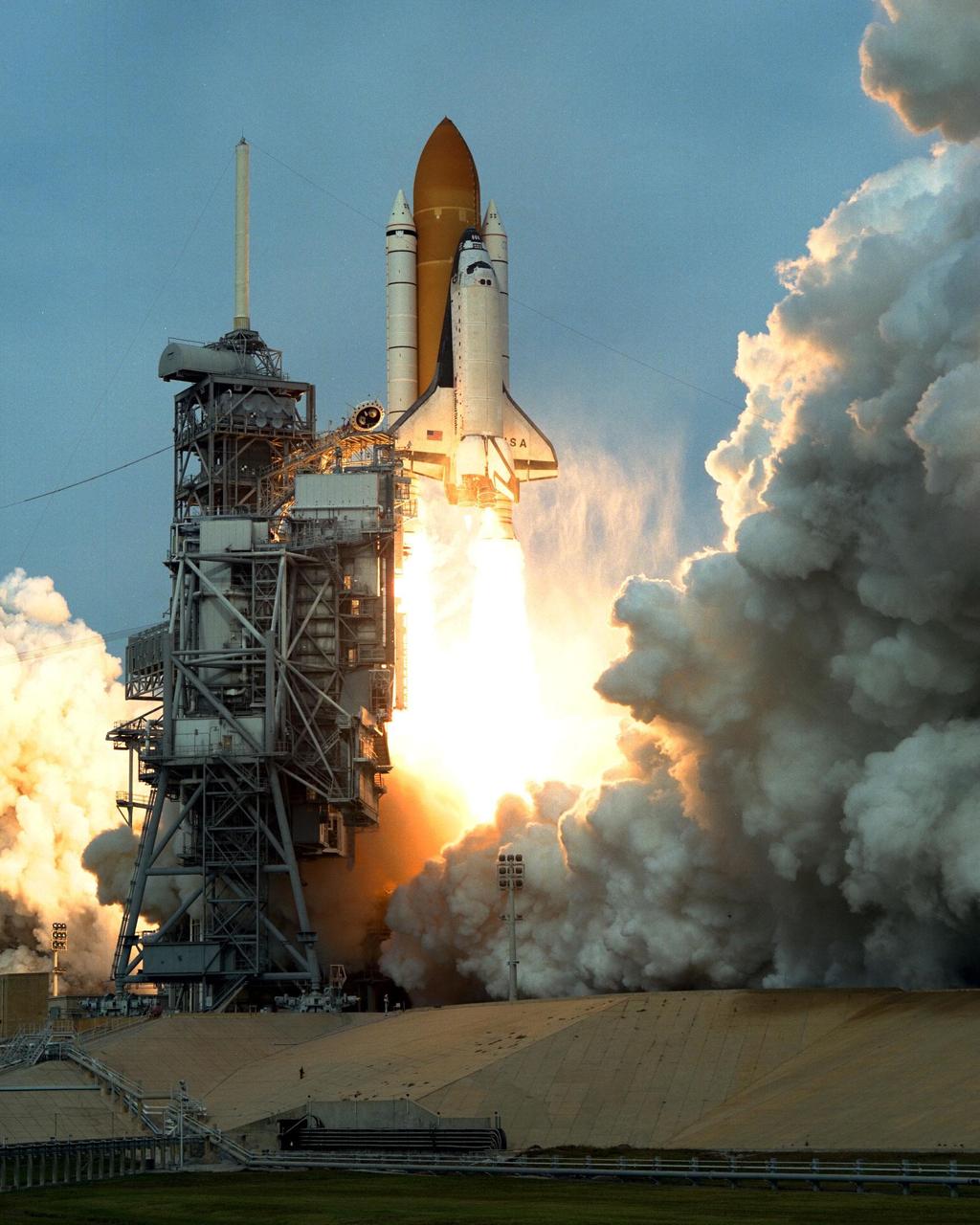
Like a rising sun lighting up the afternoon sky, the Space Shuttle Columbia soars from Launch Pad 39B at 2:46:00 p.m. EST, November 19, on the fourth flight of the United States Microgravity Payload and Spartan-201 satellite. The crew members include Mission Commander Kevin Kregel.; Pilot Steven Lindsey; Mission Specialists Kalpana Chawla, Ph.D., Winston Scott, and Takao Doi, Ph.D., of the National Space Development Agency of Japan; and Payload Specialist Leonid Kadenyuk of the National Space Agency of Ukraine. During the 16-day STS-87 mission, the crew will oversee experiments in microgravity; deploy and retrieve a solar satellite; and test a new experimental camera, the AERCam Sprint. Dr. Doi and Scott also will perform a spacewalk to practice International Space Station maneuvers
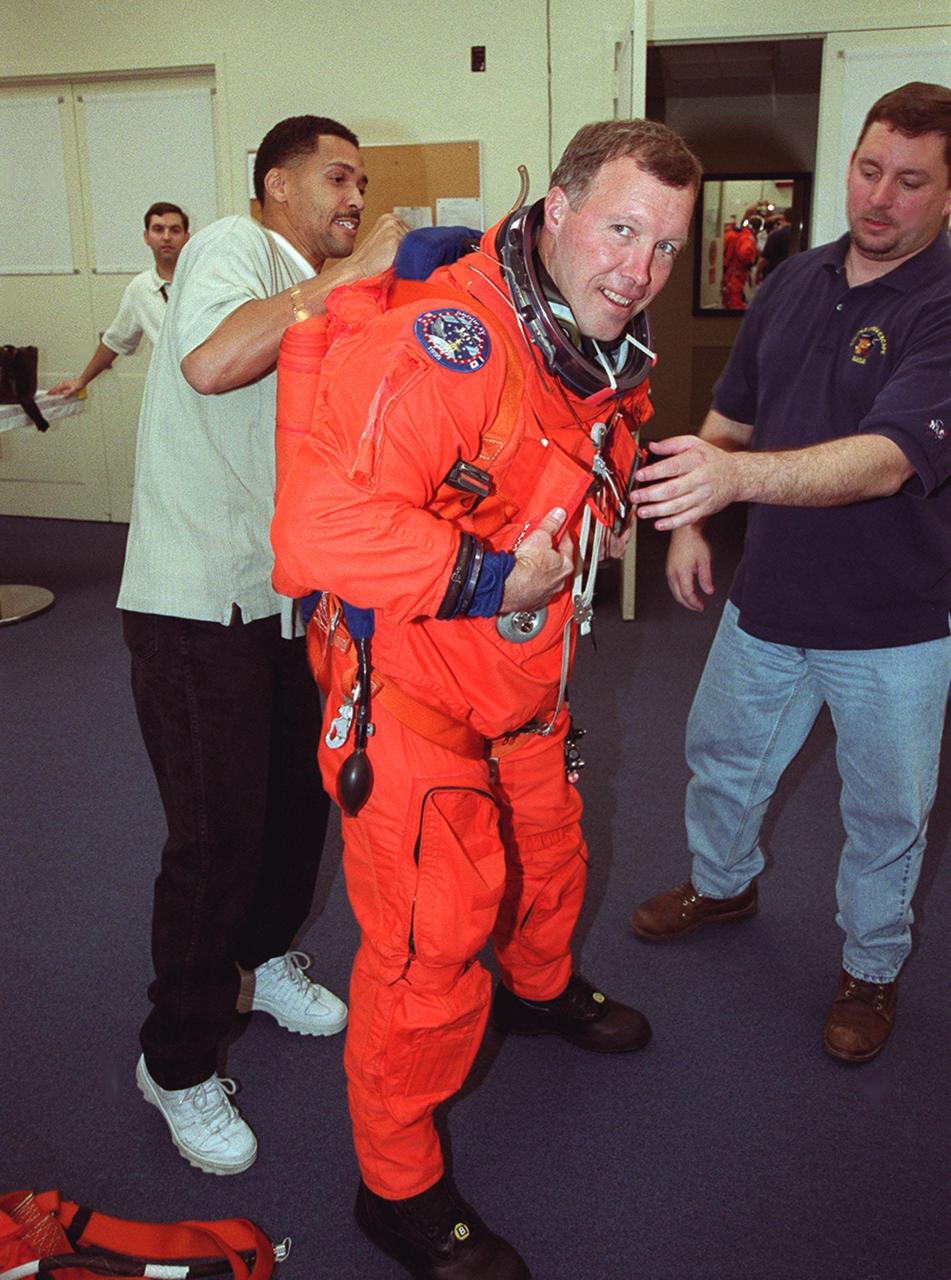
In the Operations and Checkout Building's suitup room, Carlos Gillis (left) and Leonard Groce (right)help STS-99 Pilot Dominic Gorie with his suit check. Gillis and Groce are with United Space Alliance. Gorie and other crew members Commander Kevin Kregel, and Mission Specialists Janet Kavandi, Janice Voss, Gerhard Thiele of Germany and Mamoru Mohri of Japan are preparing for launch of their mission on Feb. 11 at 12:30 p.m. EST aboard Space Shuttle Endeavour. STS-99 is the Shuttle Radar Topography Mission, which will produce unrivaled 3-D images of the Earth's surface. The result of the Shuttle Radar Topography Mission could be close to 1 trillion measurements of the Earth's topography. Landing is expected at KSC on Feb. 22 at 4:36 p.m. EST
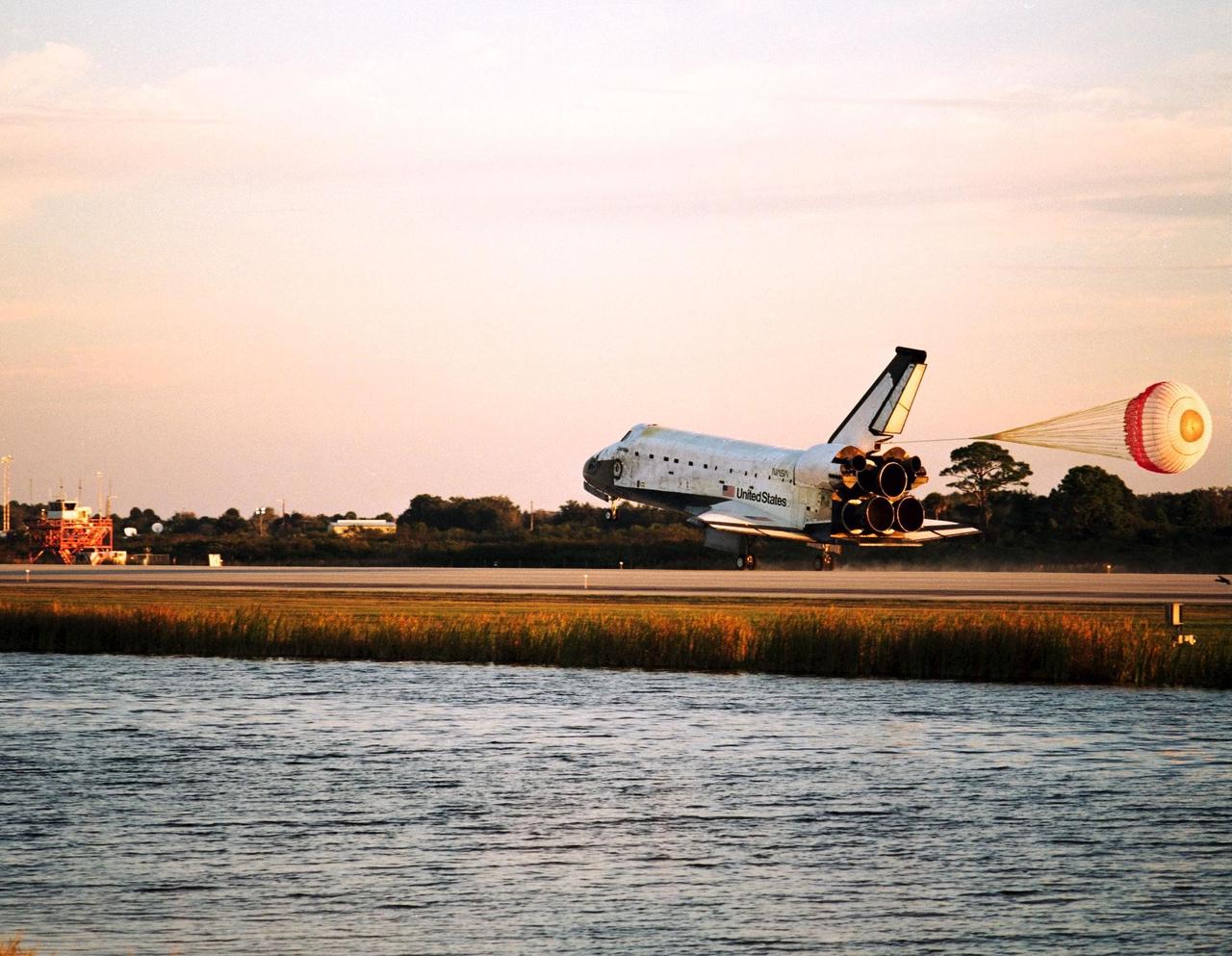
With Commander Kevin Kregel and Pilot Steven Lindsey at the controls, the orbiter Columbia, with its drag chute deployed, touches its main gear down on Runway 33 at KSC’s Shuttle Landing Facility at 7:20:04 a.m. EST Dec. 5 to complete the 15-day, 16-hour and 34-minute-long STS-87 mission of 6.5 million miles. Also onboard the orbiter are Mission Specialists Winston Scott; Kalpana Chawla, Ph.D.; and Takao Doi, Ph.D., of the National Space Development Agency of Japan; along with Payload Specialist Leonid Kadenyuk of the National Space Agency of Ukraine. During the 88th Space Shuttle mission, the crew performed experiments on the United States Microgravity Payload-4 and pollinated plants as part of the Collaborative Ukrainian Experiment. This was the 12th landing for Columbia at KSC and the 41st KSC landing in the history of the Space Shuttle program
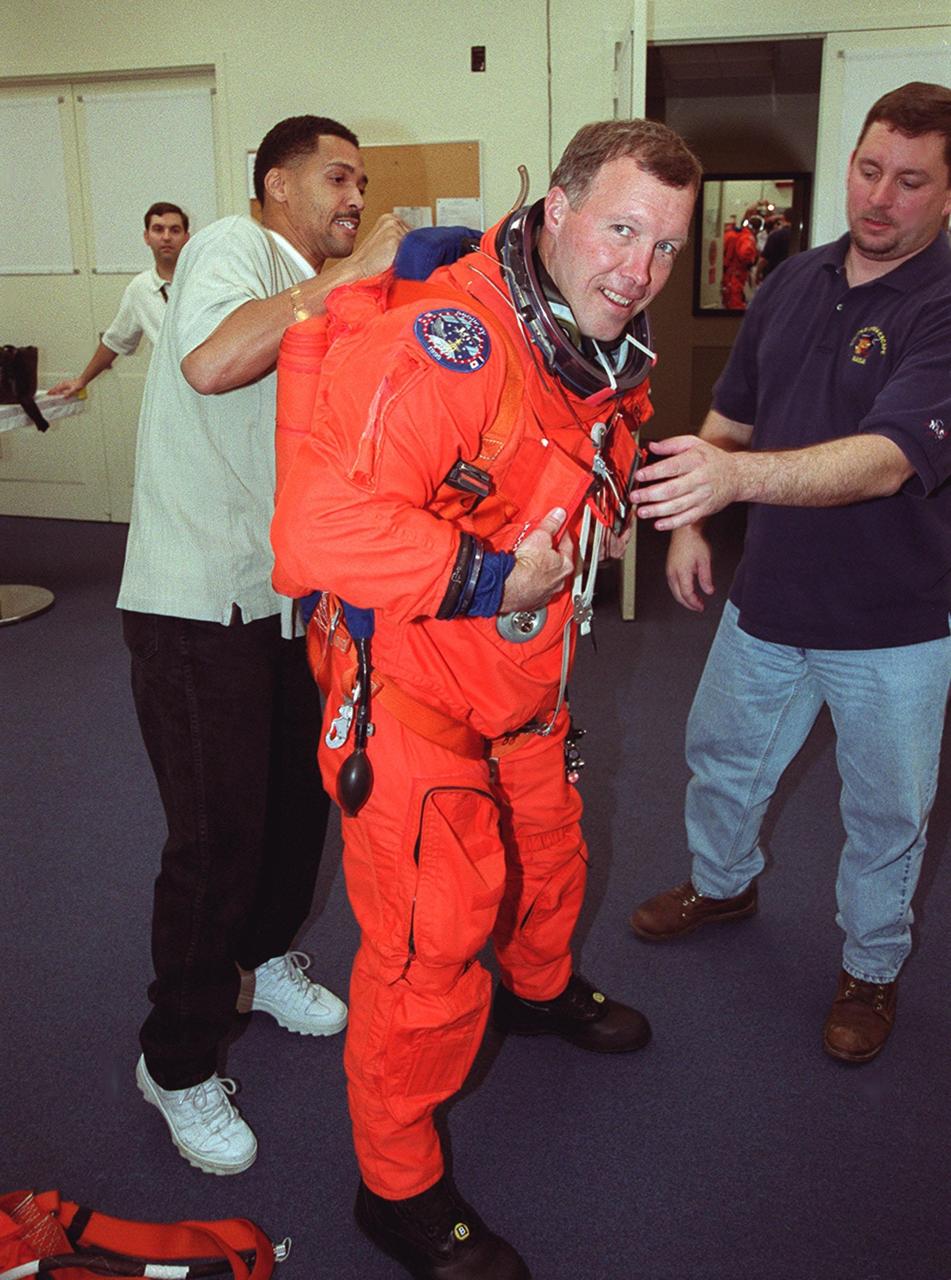
In the Operations and Checkout Building's suitup room, Carlos Gillis (left) and Leonard Groce (right)help STS-99 Pilot Dominic Gorie with his suit check. Gillis and Groce are with United Space Alliance. Gorie and other crew members Commander Kevin Kregel, and Mission Specialists Janet Kavandi, Janice Voss, Gerhard Thiele of Germany and Mamoru Mohri of Japan are preparing for launch of their mission on Feb. 11 at 12:30 p.m. EST aboard Space Shuttle Endeavour. STS-99 is the Shuttle Radar Topography Mission, which will produce unrivaled 3-D images of the Earth's surface. The result of the Shuttle Radar Topography Mission could be close to 1 trillion measurements of the Earth's topography. Landing is expected at KSC on Feb. 22 at 4:36 p.m. EST
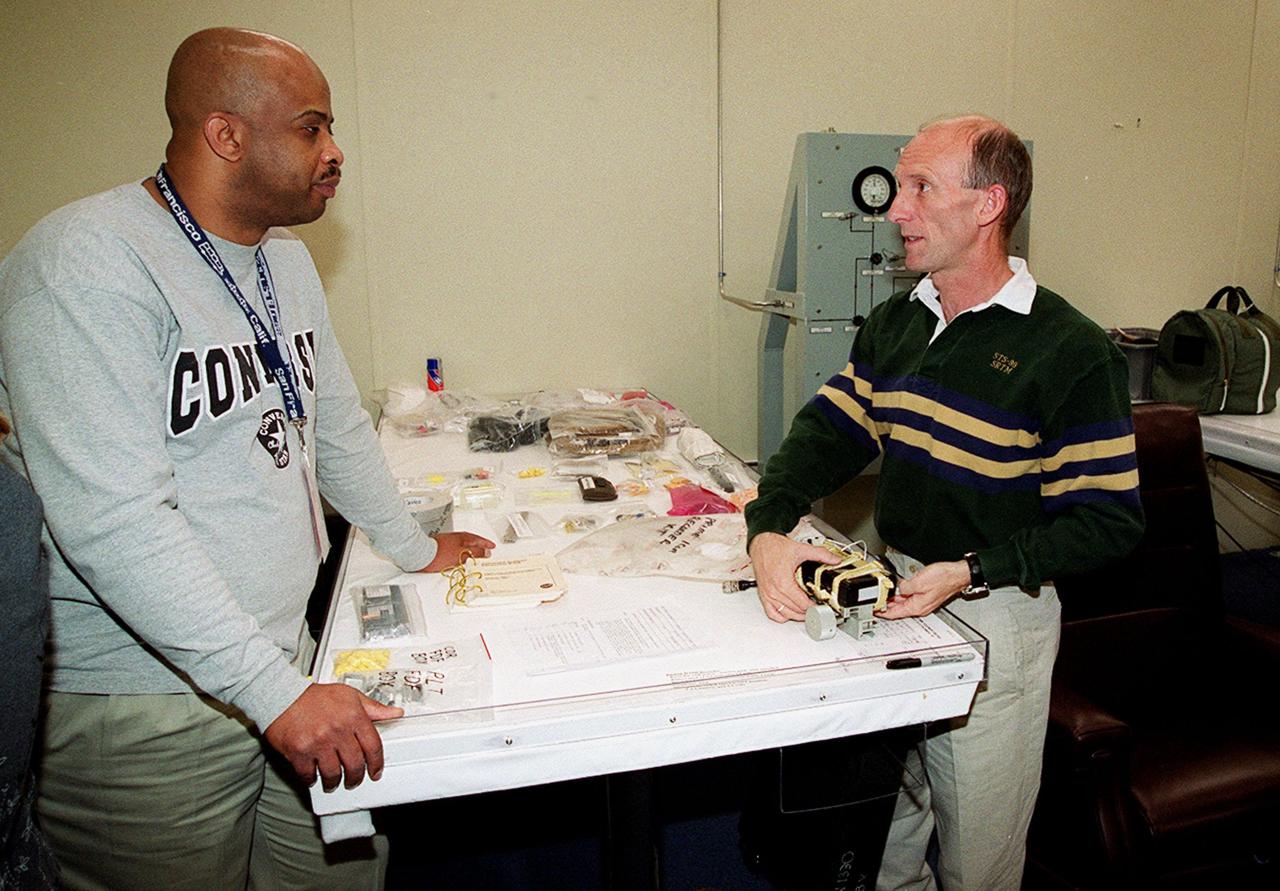
In the Operations and Checkout Building's suitup room, Andre Denard, with United Space Alliance, helps STS-99 Mission Specialist Gerhard Thiele with pre-pack and fit check. Thiele and other crew members Commander Kevin Kregel, Pilot Dominic Gorie, and Mission Specialists Janet Kavandi, Janice Voss, and Mamoru Mohri of Japan are preparing for launch of their mission on Feb. 11 at 12:30 p.m. EST aboard Space Shuttle Endeavour. STS-99 is the Shuttle Radar Topography Mission, which will produce unrivaled 3-D images of the Earth's surface. The result of the Shuttle Radar Topography Mission could be close to 1 trillion measurements of the Earth's topography. Landing is expected at KSC on Feb. 22 at 4:36 p.m. EST
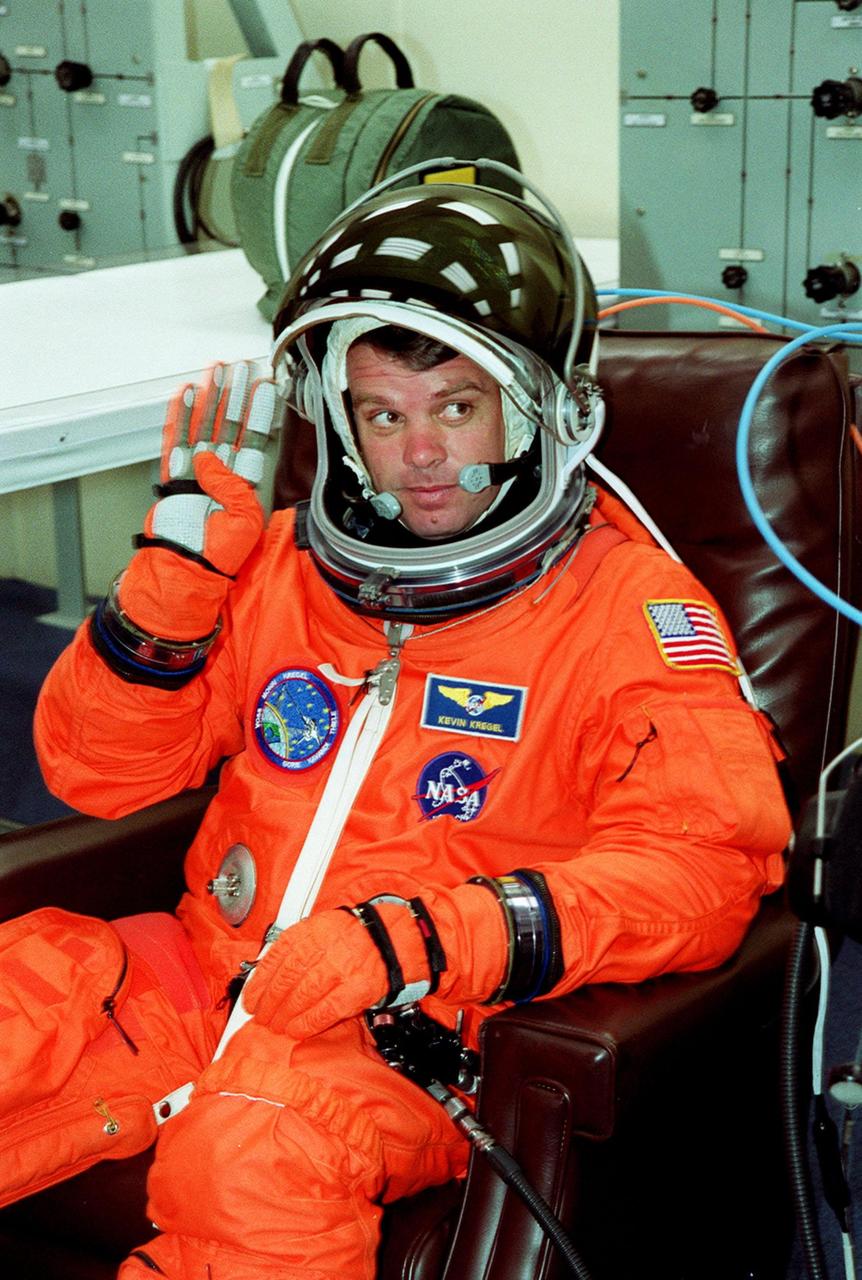
In the Operations and Checkout Building, STS-99 Commander Kevin Kregel waves as he suits up during final launch preparations. Liftoff of STS-99, known as the Shuttle Radar Topography Mission (SRTM), is scheduled for 12:47 p.m. EST from Launch Pad 39A. The SRTM will chart a new course to produce unrivaled 3-D images of the Earth's surface, using two antennae and a 200-foot-long section of space station-derived mast protruding from the payload bay. The result of the Shuttle Radar Topography Mission could be close to 1 trillion measurements of the Earth's topography. Besides contributing to the production of better maps, these measurements could lead to improved water drainage modeling, more realistic flight simulators, better locations for cell phone towers, and enhanced navigation safety. The mission is expected to last about 11days. Endeavour is expected to land at KSC Friday, Feb. 11, at 4:55 p.m. EST
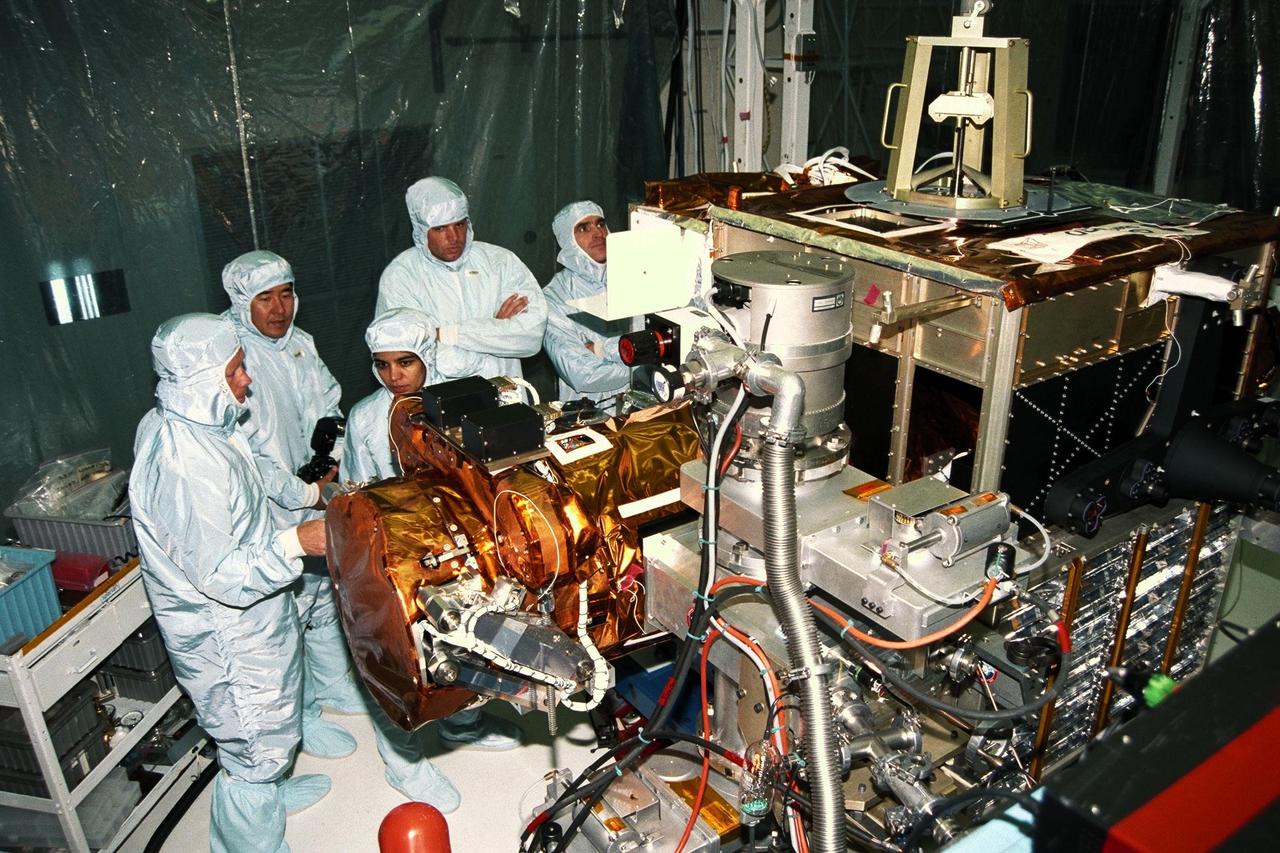
STS-87 astronaut crew members participate in the Crew Equipment Integration Test (CEIT) with the Spartan-201 payload in Kennedy Space Center’s (KSC's) Vertical Processing Facility. From left are Pilot Steven Lindsey; Mission Specialist Takao Doi, Ph.D., of the National Space Development Agency of Japan; Mission Specialist Kalpana Chawla, Ph.D.; Commander Kevin Kregel; and Payload Specialist Leonid Kadenyuk of the National Space Agency of Ukraine. The CEIT gives astronauts an opportunity to get a hands-on look at the payloads with which they will be working on-orbit. STS-87 will be the fourth United States Microgravity Payload and flight of the Spartan-201 deployable satellite. During the mission, Dr. Doi will be the first Japanese astronaut to perform a spacewalk. STS-87 is scheduled for a Nov. 19 liftoff from KSC