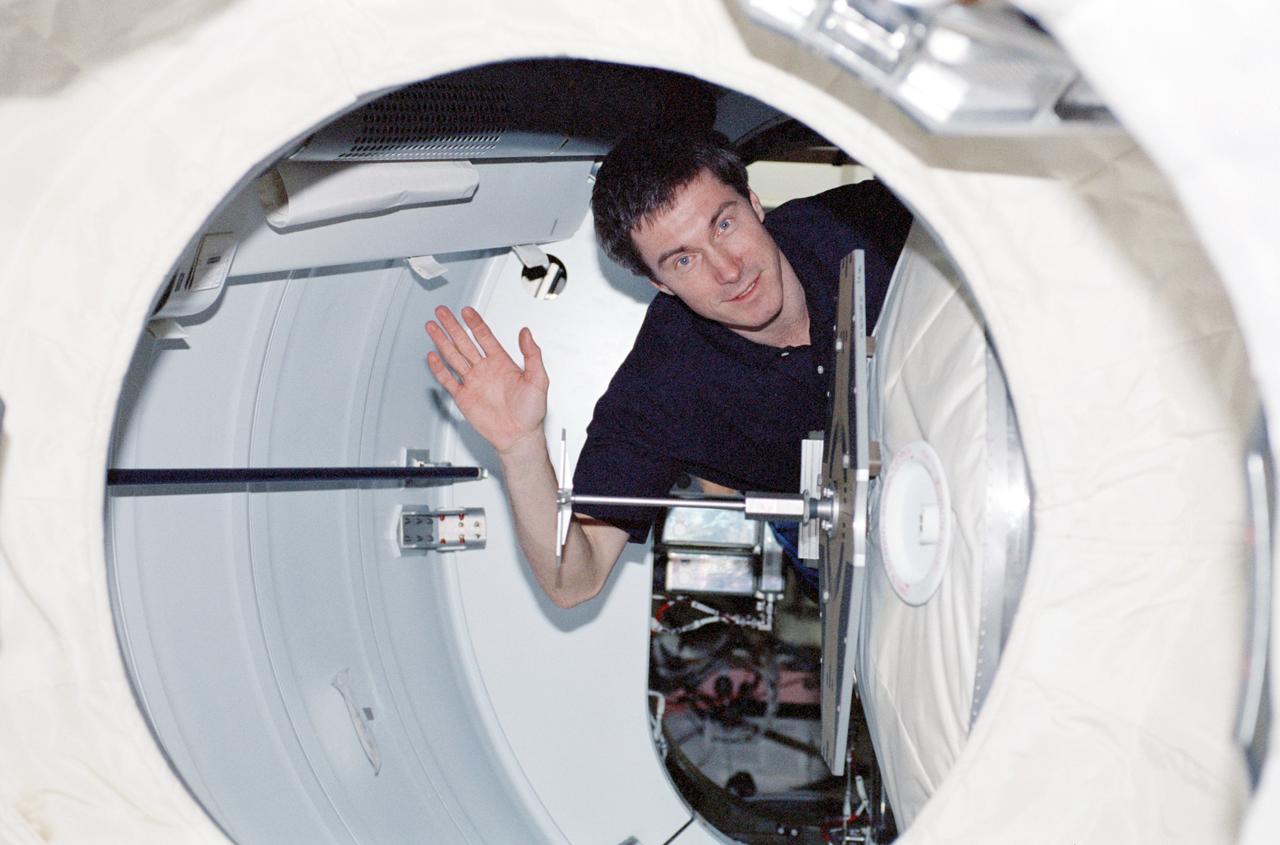
STS098-355-017 (7-20 February 2001) --- Cosmonaut Sergei K. Krikalev, Expedition One flight engineer, waves as he moves the hatch of the Pressurized Mating Adapter (PMA) leading to the Space Shuttle Atlantis. Krikalev represents Rosaviakosmos.
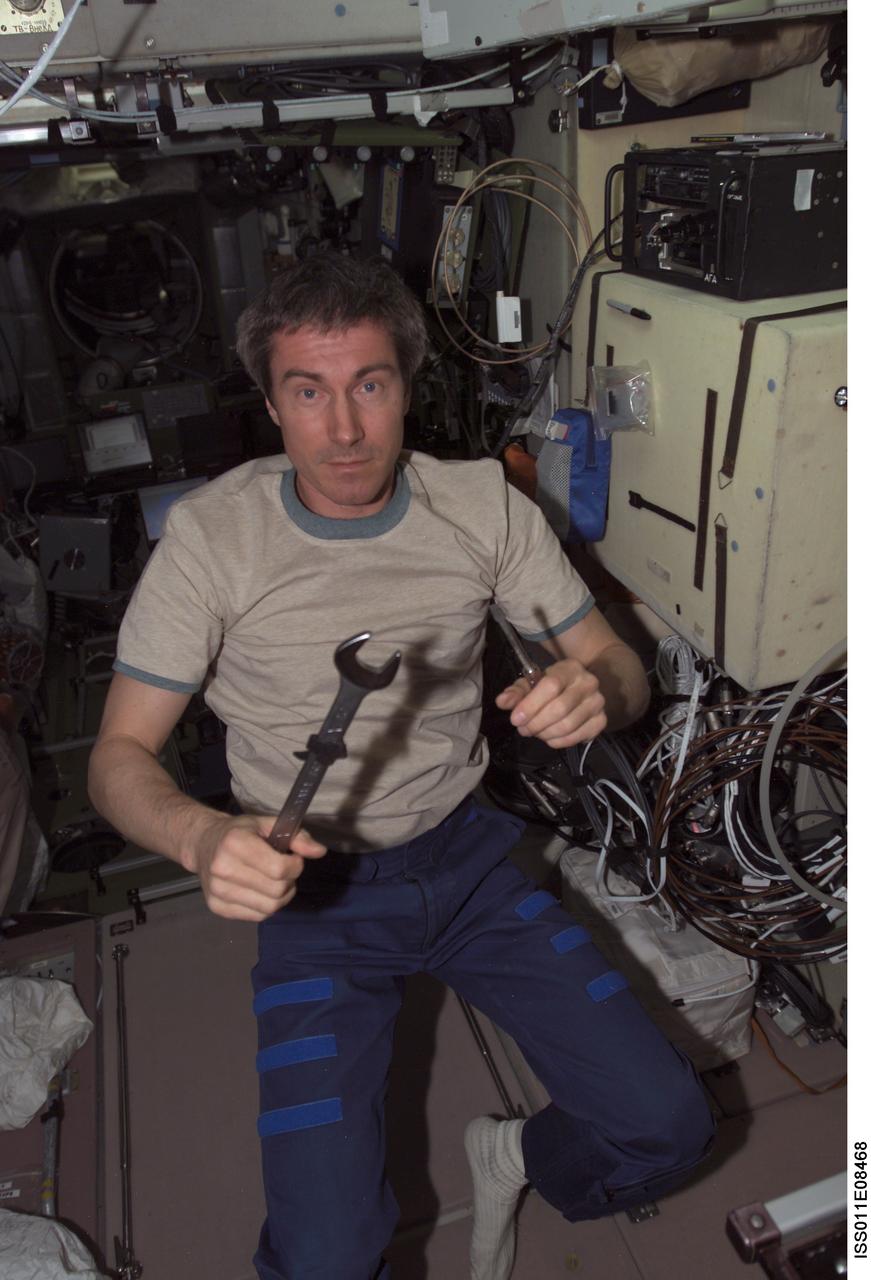
ISS011-E-08468 (9 June 2005) --- Cosmonaut Sergei K. Krikalev, Expedition 11 commander representing Russia's Federal Space Agency, holds tools in the Zvezda Service Module on the International Space Station (ISS). Krikalev was preparing to perform an in-flight maintenance task.
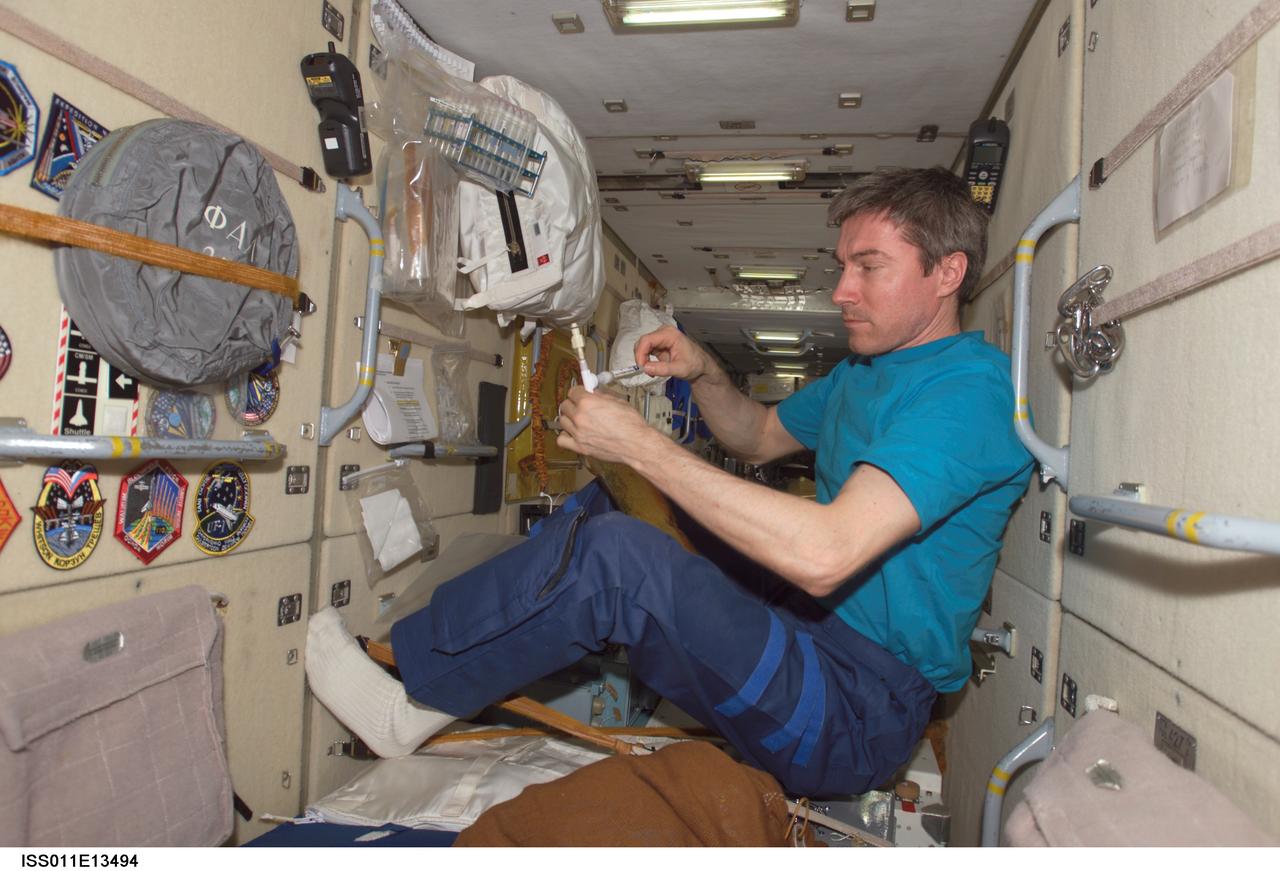
ISS011-E-13494 (22 September 2005) --- Cosmonaut Sergei K. Krikalev, Expedition 11 commander representing Russia's Federal Space Agency, inserts a syringe into a bag while working in the Zarya module of the international space station.
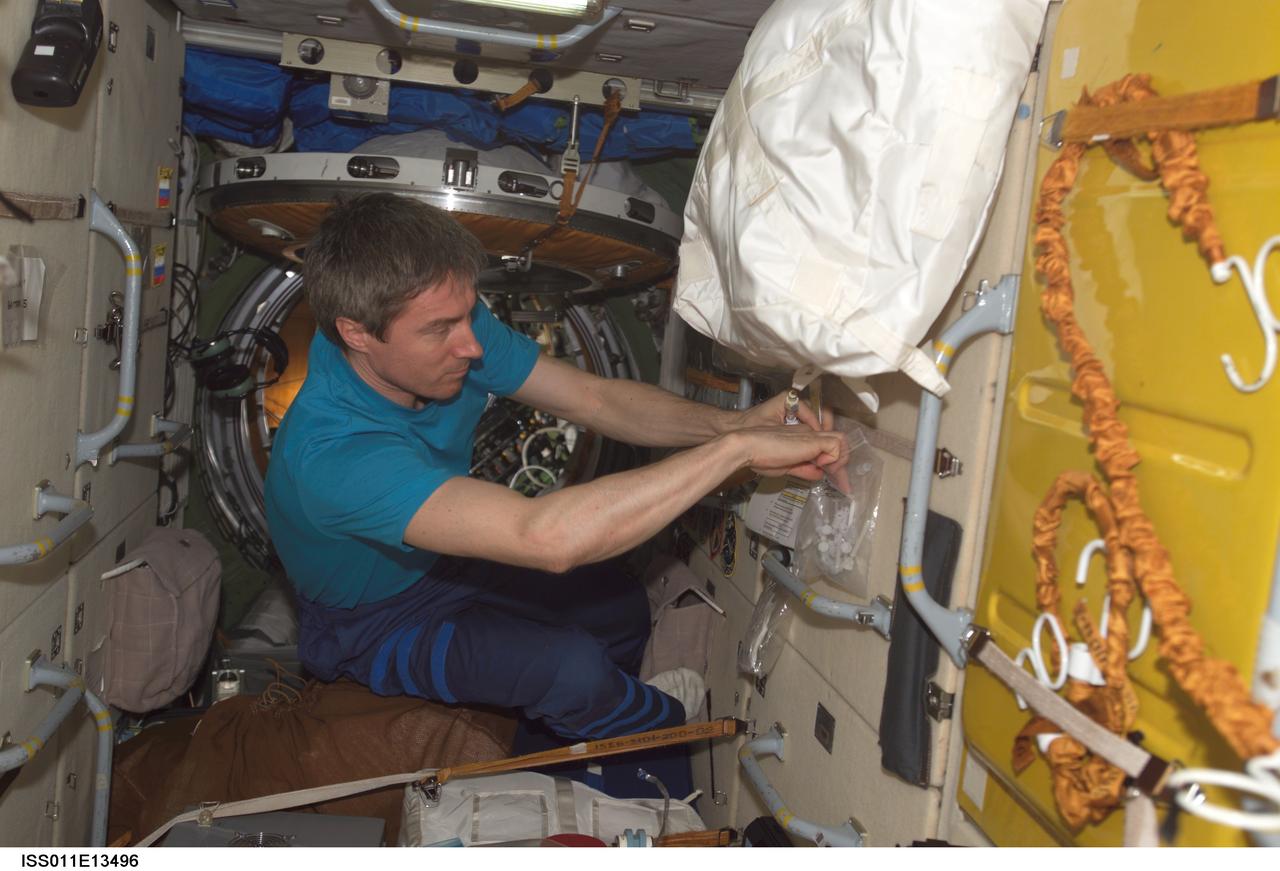
ISS011-E-13496 (22 September 2005) --- Cosmonaut Sergei K. Krikalev, Expedition 11 commander representing Russia's Federal Space Agency, reaches into a bag for supplies in the Zarya module of the international space station.
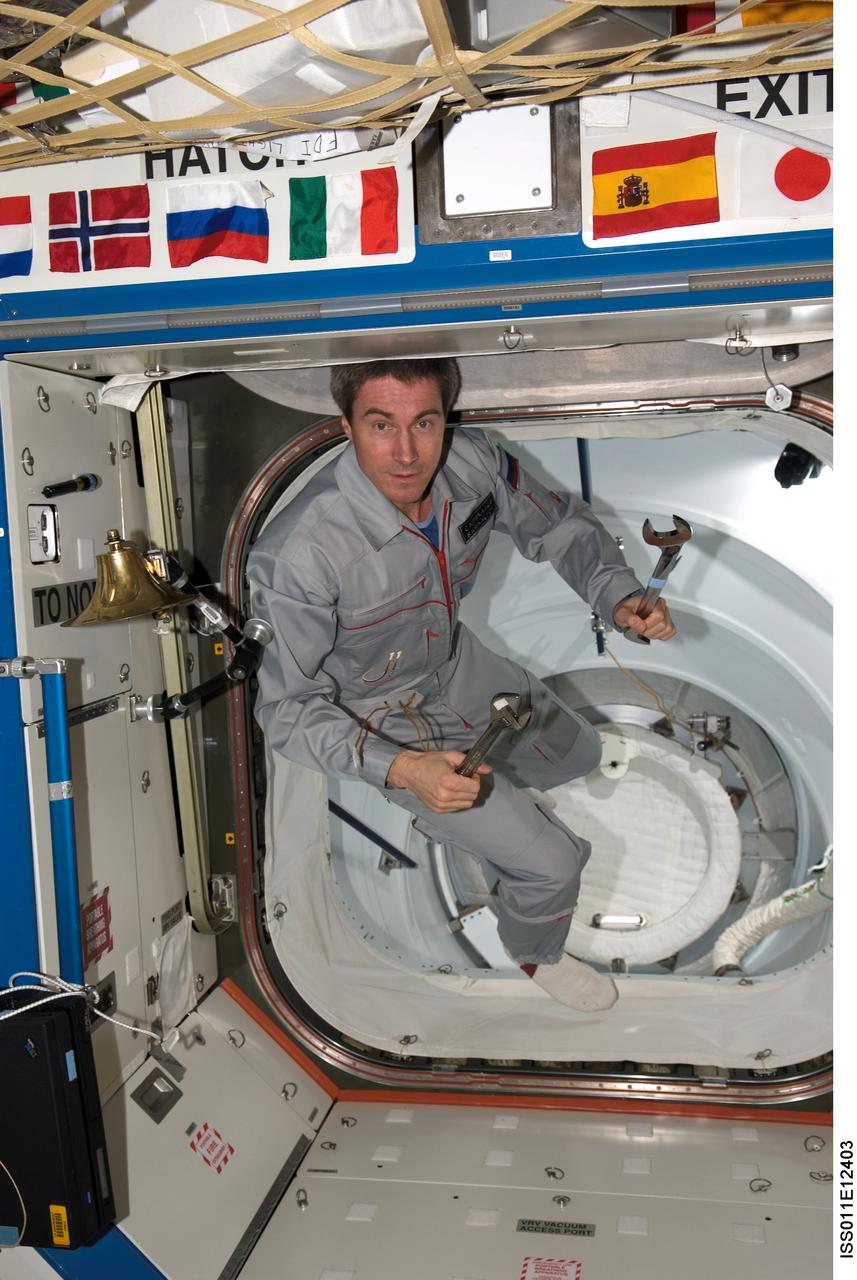
ISS011-E-12403 (28 July 2005) --- Cosmonaut Sergei K. Krikalev, Expedition 11 commander representing Russia's Federal Space Agency, holds tools while floating into the Destiny laboratory on the International Space Station.
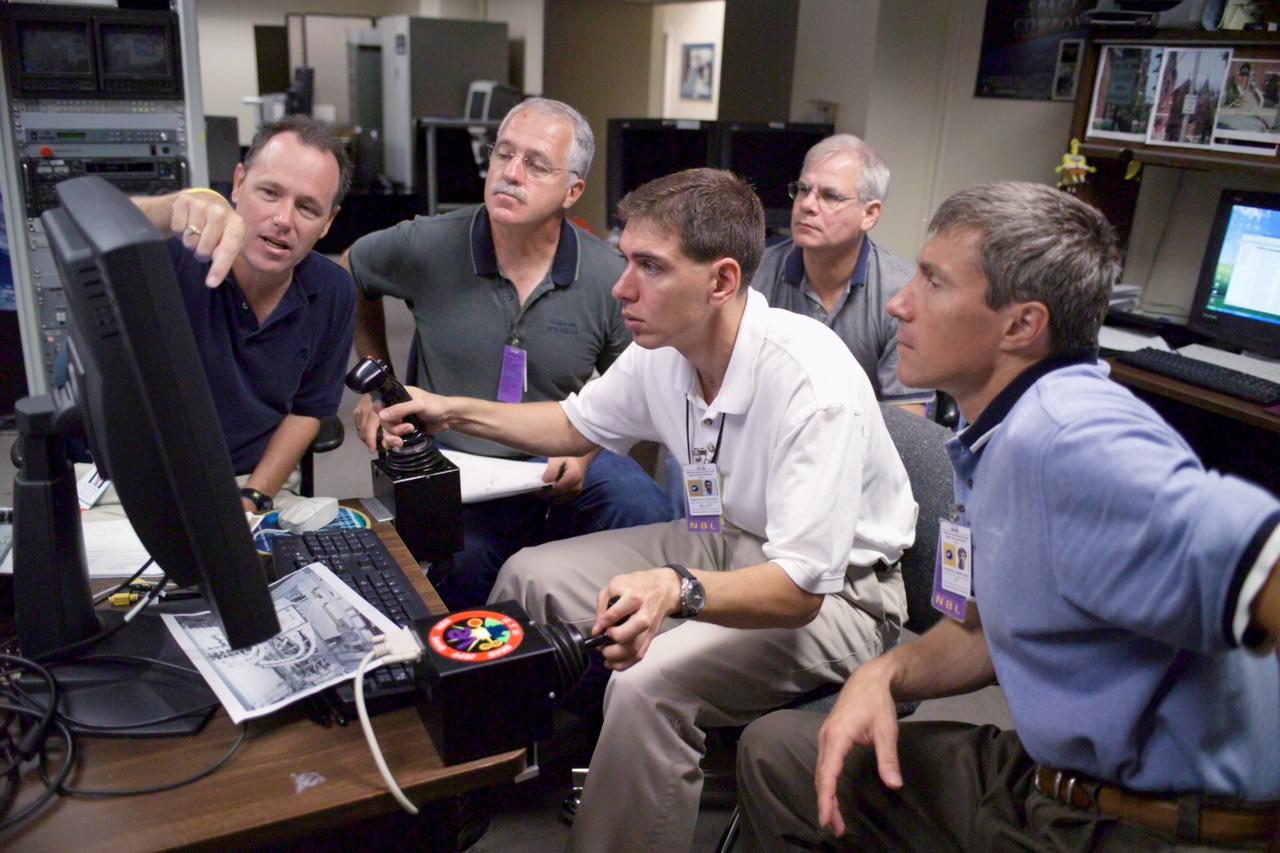
Expedition 11 Training with Krikalev/Henderson as their continued their training in the Virtual Reality Laboratory in building 9. View includes: Sergei Krikalev and Henderson using the virtual optics to view the International Space Station.
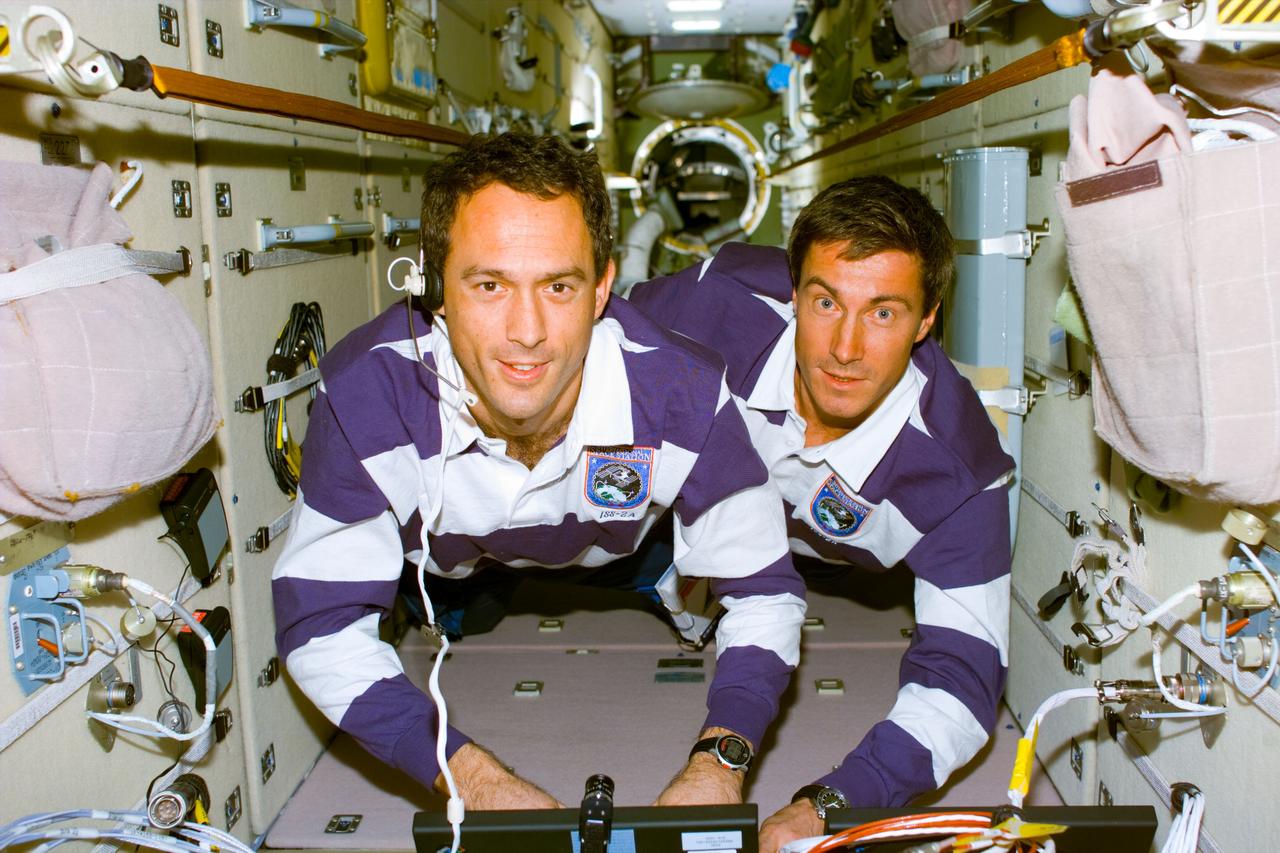
S88-E-5081 (12-11-98) --- James H. Newman (left) and Sergei Krikalev are in communications with ground controllers while working aboard Zarya. The two are mission specialists, with Krikalev representing the Russian Space Agency (RSA). The photo was taken with an electronic still camera (ESC) at 05:23:01 GMT, Dec. 11.
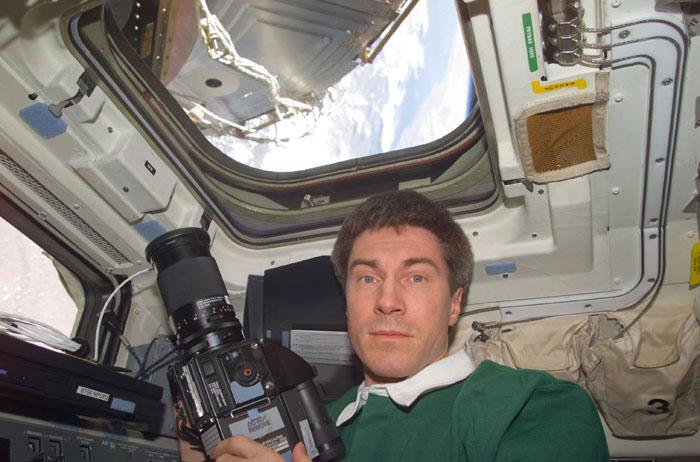
STS102-E-5139 (12 March 2001) --- Cosmonaut Sergei K. Krikalev, now a member of the STS-102 crew, prepares to use a camera on Discovery's flight deck. Krikalev, representing Rosaviakosmos, had been onboard the International Space Station (ISS) since early November 2000. The photograph was taken with a digital still camera.
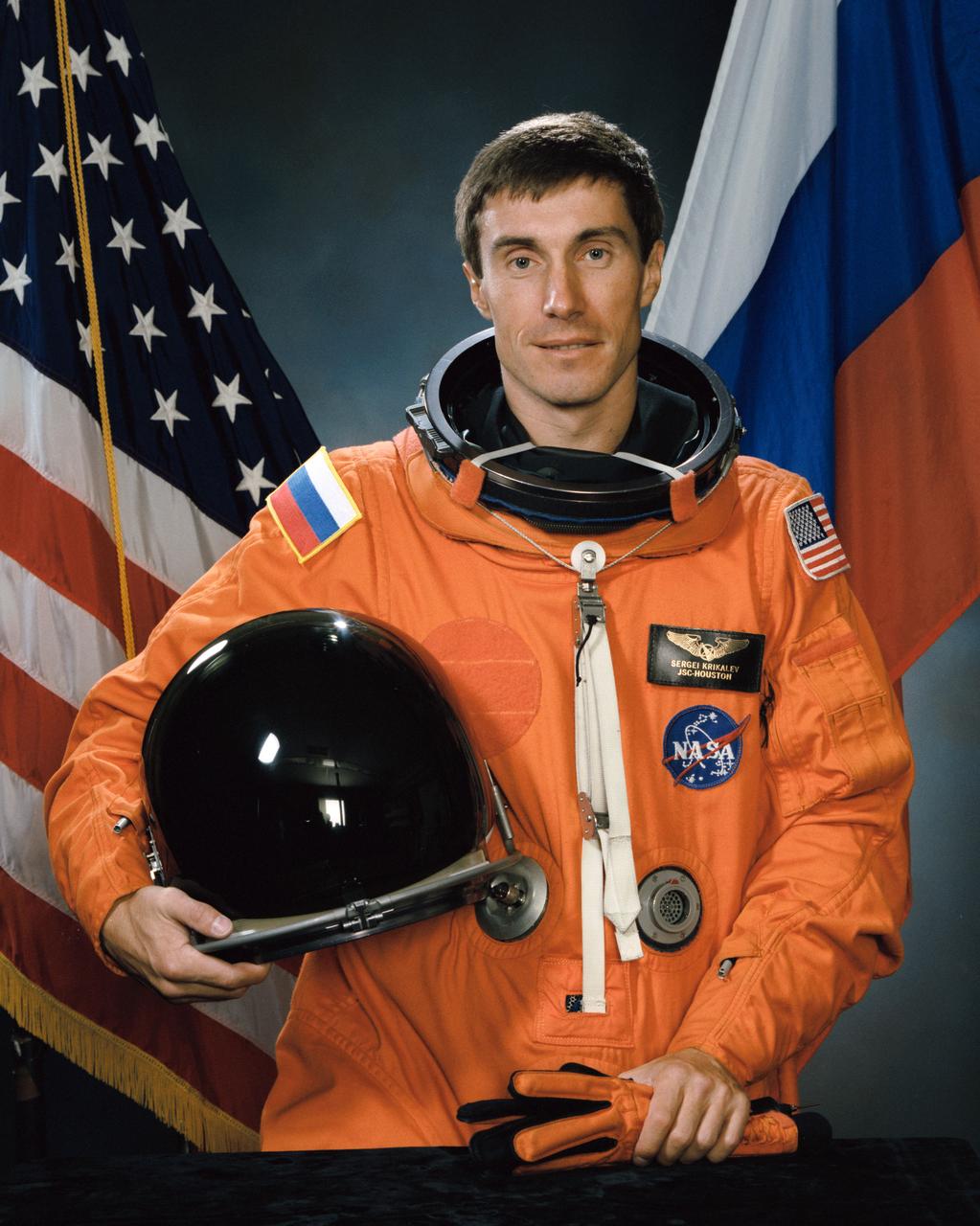
S93-40675 (6 Aug 1993) --- Cosmonaut Sergei Krikalev.
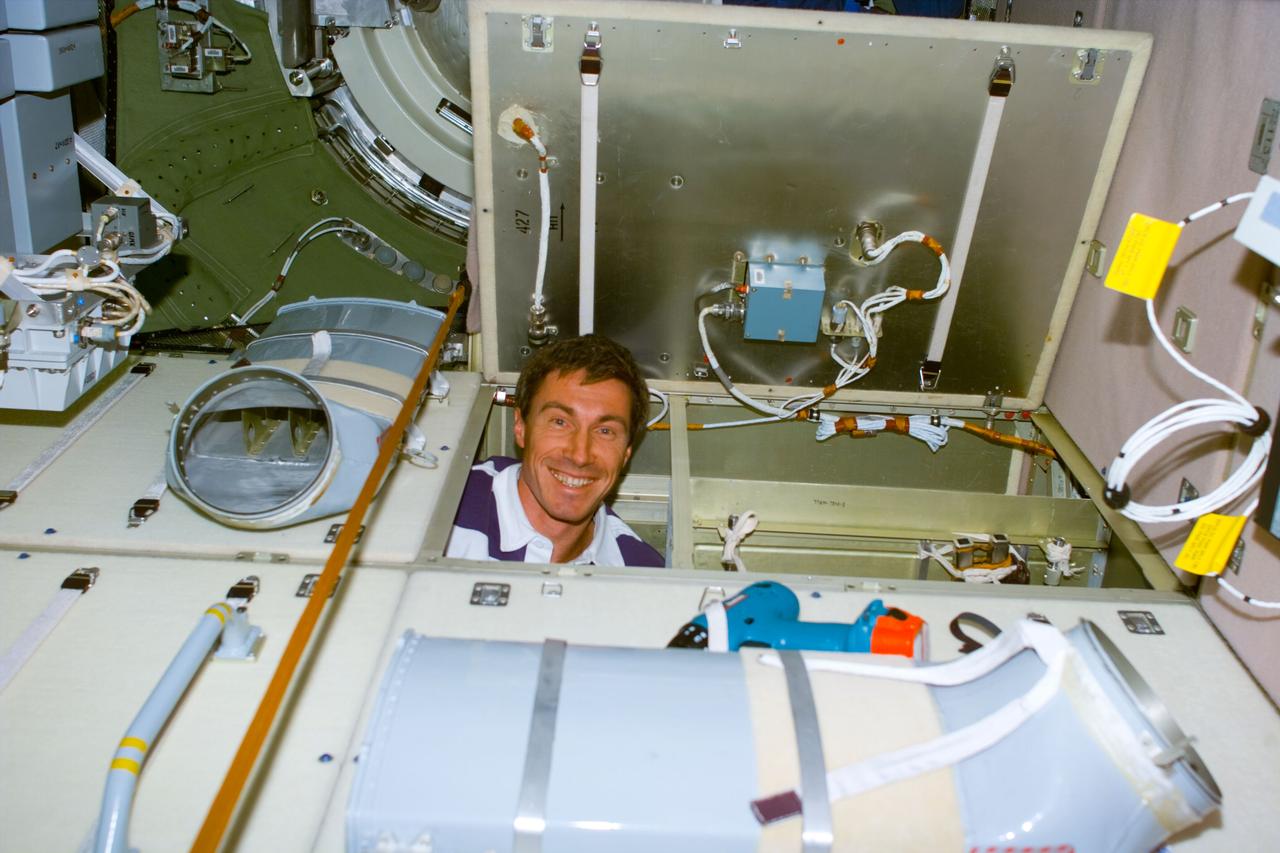
S88-E-5086 (12-11-98) --- Sergei Krikalev, mission specialist representing the Russian Space Agency (RSA), pokes his head up from inside one of the bays inside the walls on the Russian-built Zarya module. Krikalev and astronaut Nancy J. Currie replaced a faulty unit which controls the discharging of stored energy from one of Zarya's six batteries. The photo was taken with an electronic still camera (ESC) at 05:41:18 GMT, Dec. 11.
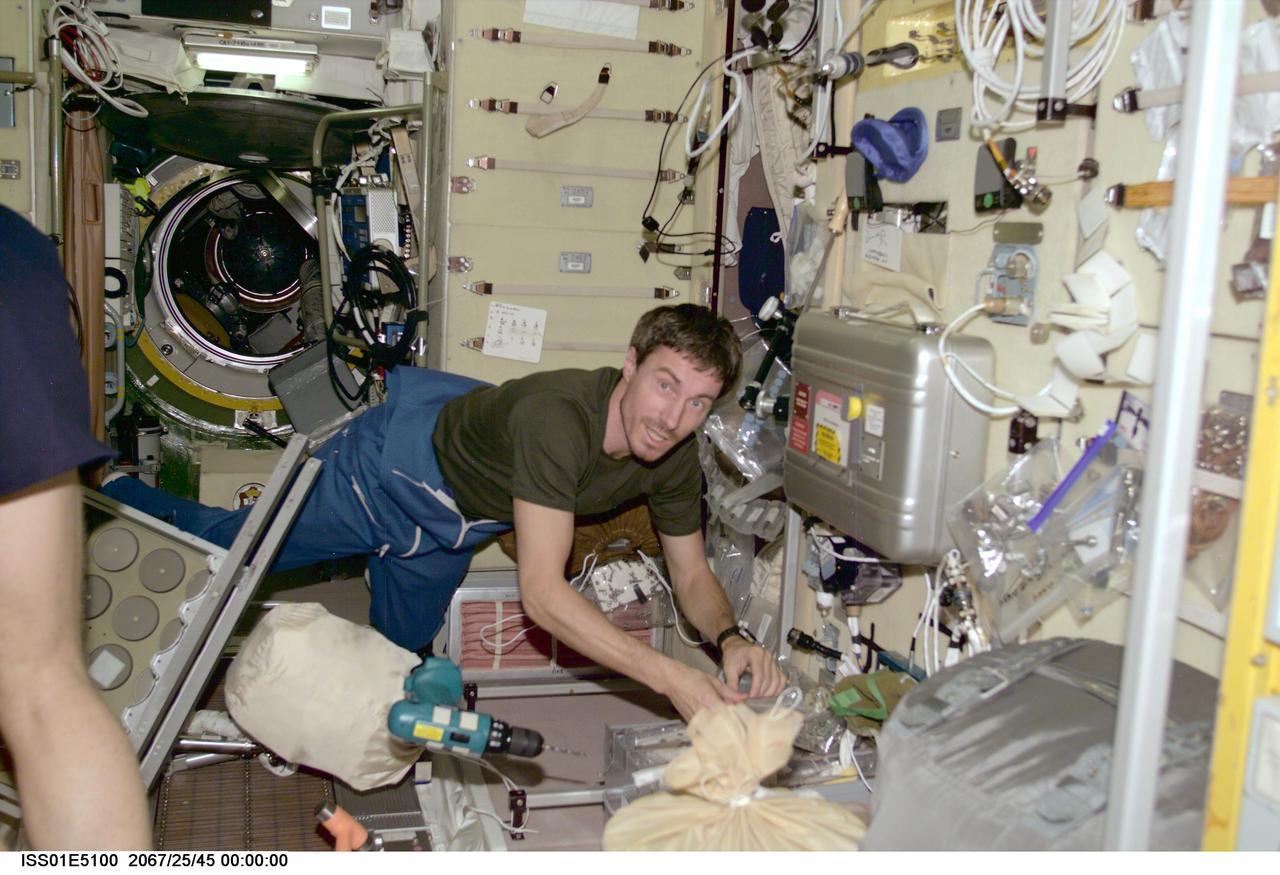
ISS01-E-5100 (December 2000) --- Cosmonaut Sergei K. Krikalev, Expedition One flight engineer, retrieves some tools on the International Space Station's Zvezda Service Module.
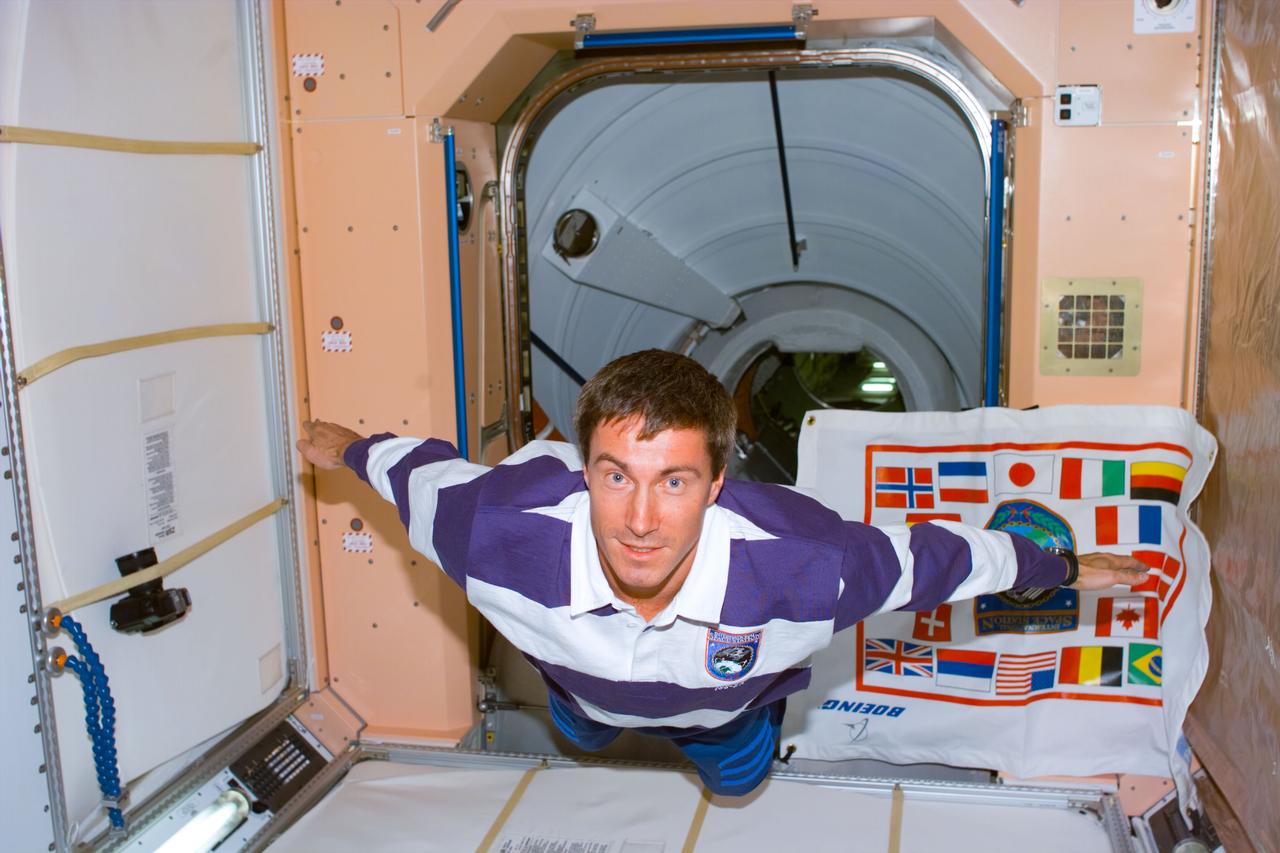
S88-E-5089 (12-11-98) --- Sergei Krikalev, mission specialist representing the Russian Space Agency (RSA), floats in the Unity module on Flight Day 8. A banner displaying the flags of all the ISS participants is at right.
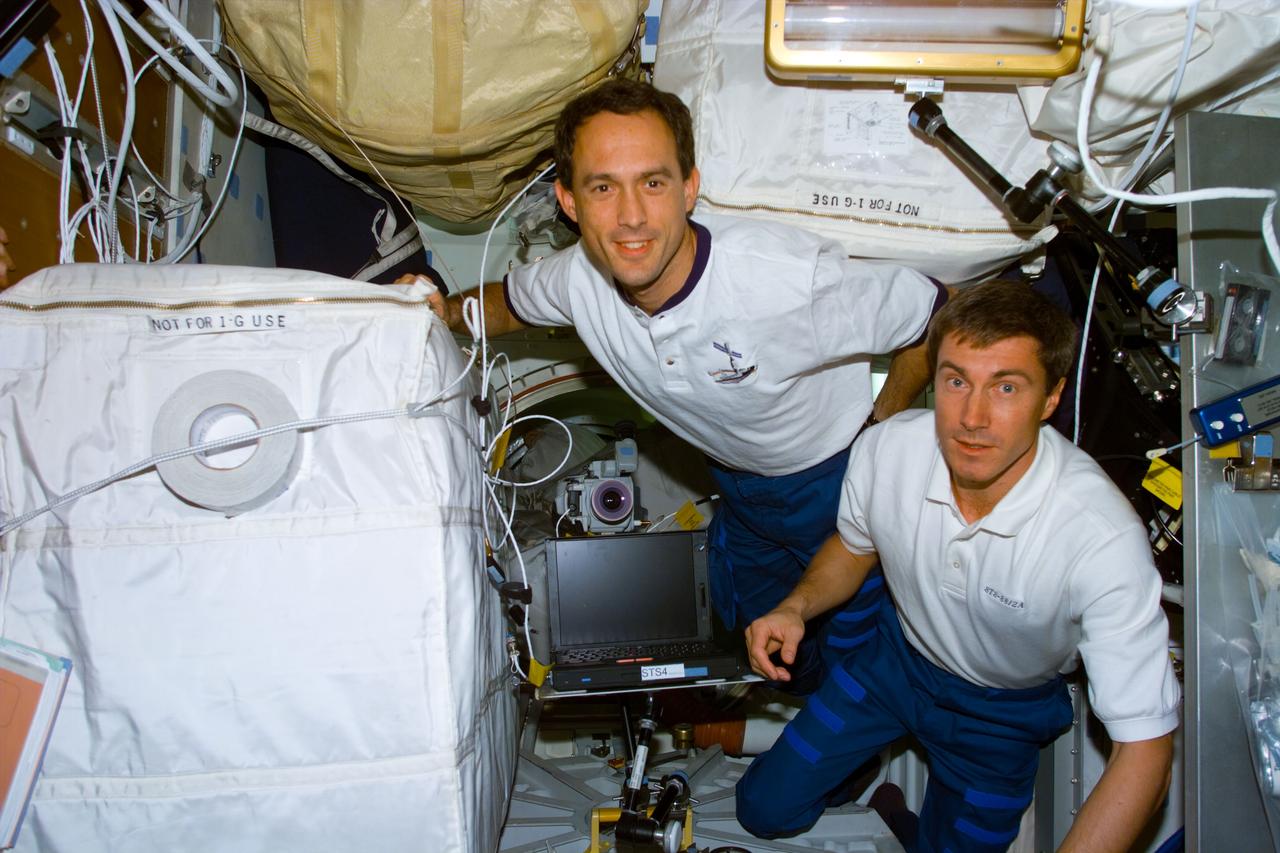
S88-E-5159 (12-14-98) --- Less than 48-hours prior to the completion of their 11-day mission in Earth orbit, two of the seven STS-88 crew members are pictured on Endeavour's middeck. They are James H. Newman (left) and Sergei K. Krikalev, both mission specialists. Krikalev represents the Russian Space Agency (RSA) and has been named to the first ISS crew. Newman earlier had joined astronaut Jerry L. Ross on three space walks to perform a number of tasks to ready the first components of ISS. The photo was taken with an electronic still camera (ESC) at 03:00:43, Dec. 14.
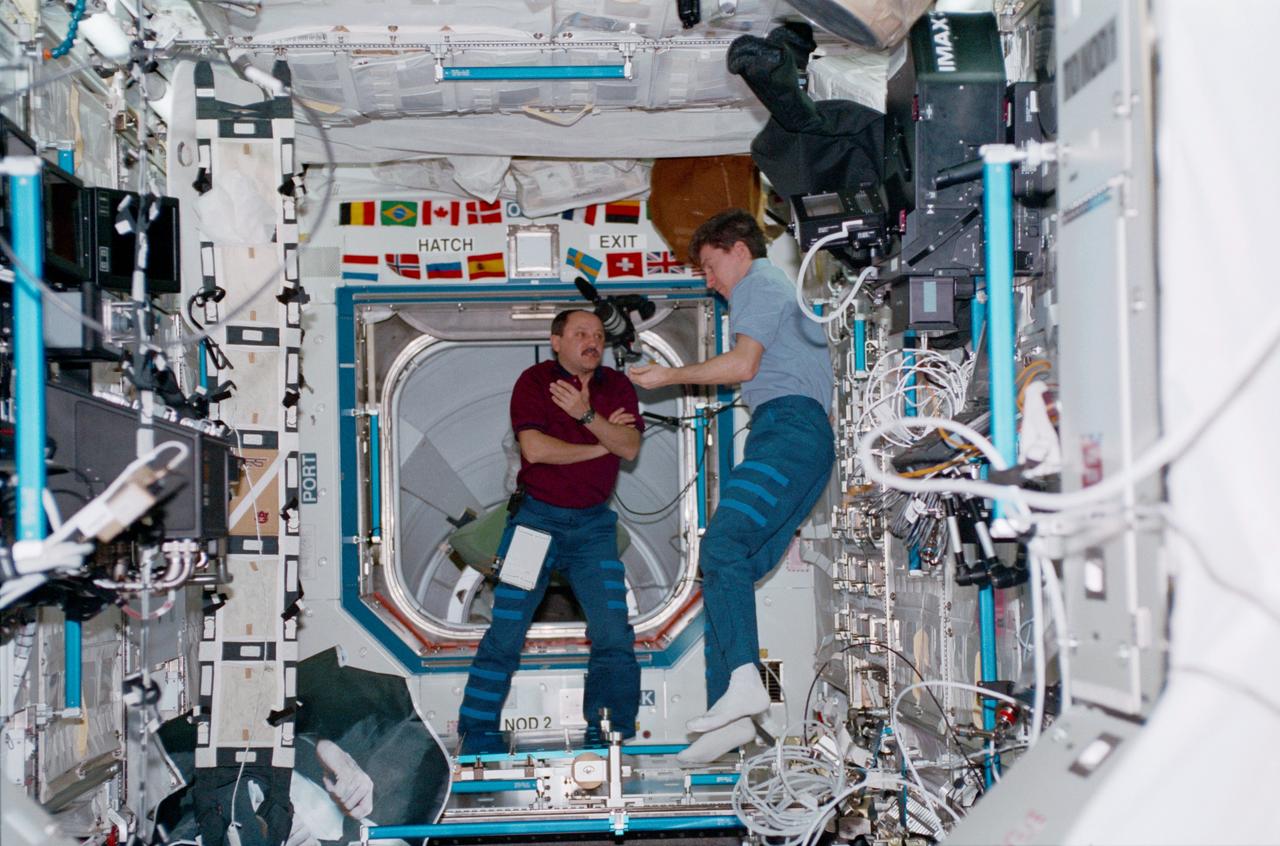
STS102-319-026 (8 - 21 March 2001) --- Cosmonauts Yury V. Usachev (left), Expedition Two commander, and Sergei K. Krikalev, Expedition One flight engineer, meet in the Destiny laboratory. Krikalev and two crew mates have just about completed their tour of duty on the International Space Station (ISS). Usachev is joined by two astronauts (out of frame) for several months' work and research on the outpost.
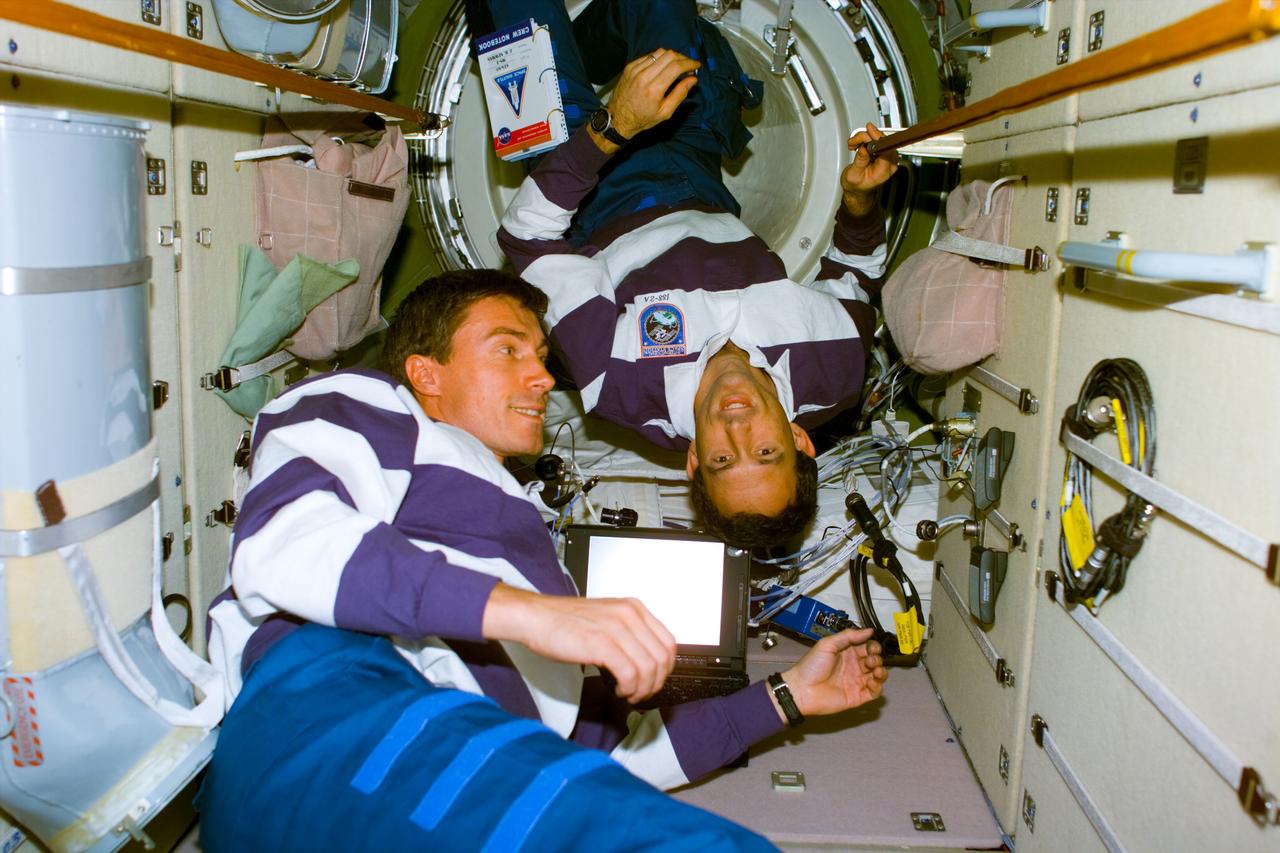
S88-E-5078 (12-11-98) --- Sergei Krikalev, left, and James H. Newman, both mission specialists, begin work in the Zarya. Krikalev, who has spent time in space on both Shuttle and Mir missions, represents the Russian Space Agency (RSA). The photo was taken with an electronic still camera (ESC) at 05:18:06, Dec. 11.
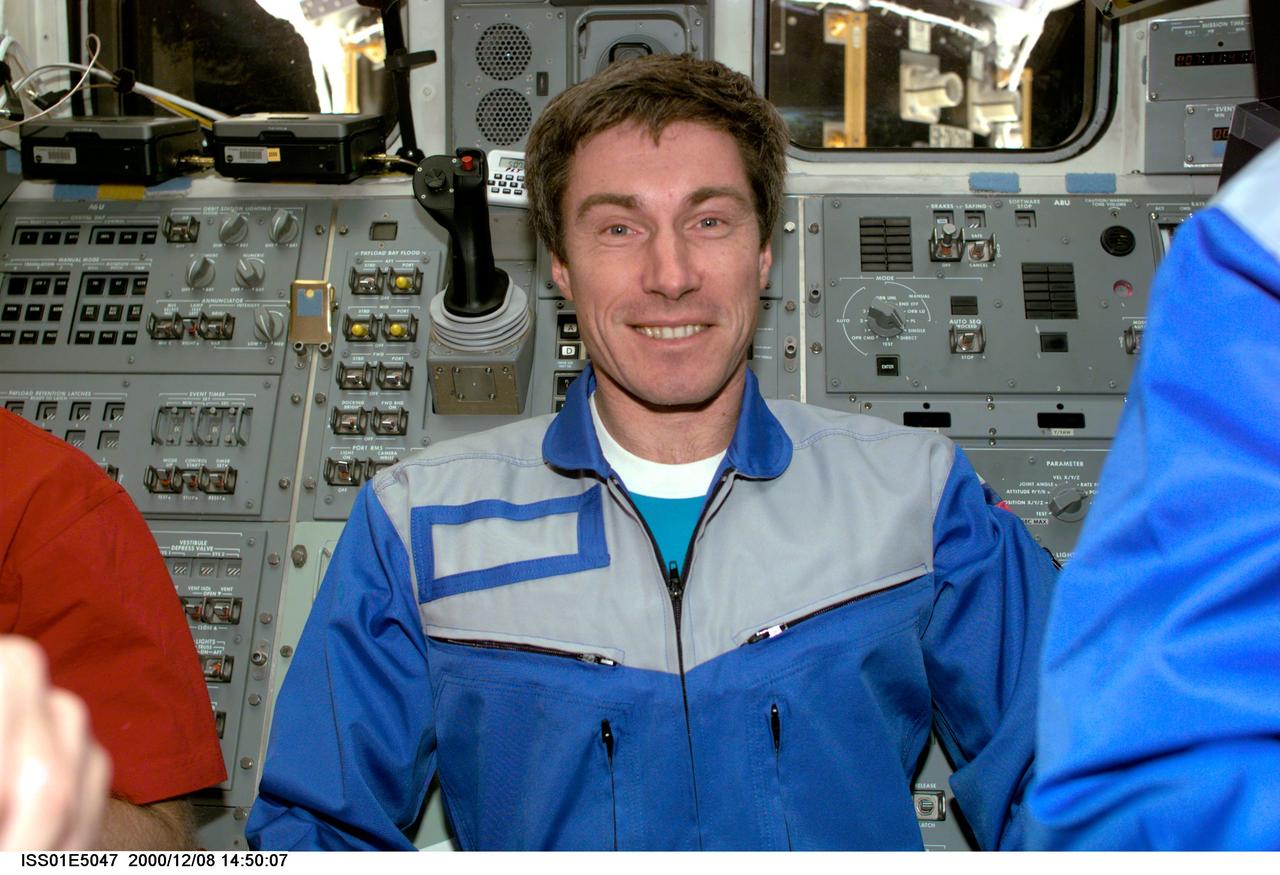
ISS01-E-5047 (8 December 2000) --- Cosmonaut Sergei K. Krikalev, Expedition One flight engineer, could be singing a new version of an old song, titled "Back in the Shuttle Again." Pictured on the aft flight deck of the Space Shttule Endeavour, Krikalev was just onboard for a brief visit soon after hatch opening and brief reunion on the ISS side of the shuttle-station tandem. In his cosmonaut career Krikalev has been assigned duty on missions aboard the shuttle, ISS, and the Russian Aviation and Space Agency's space station Mir.
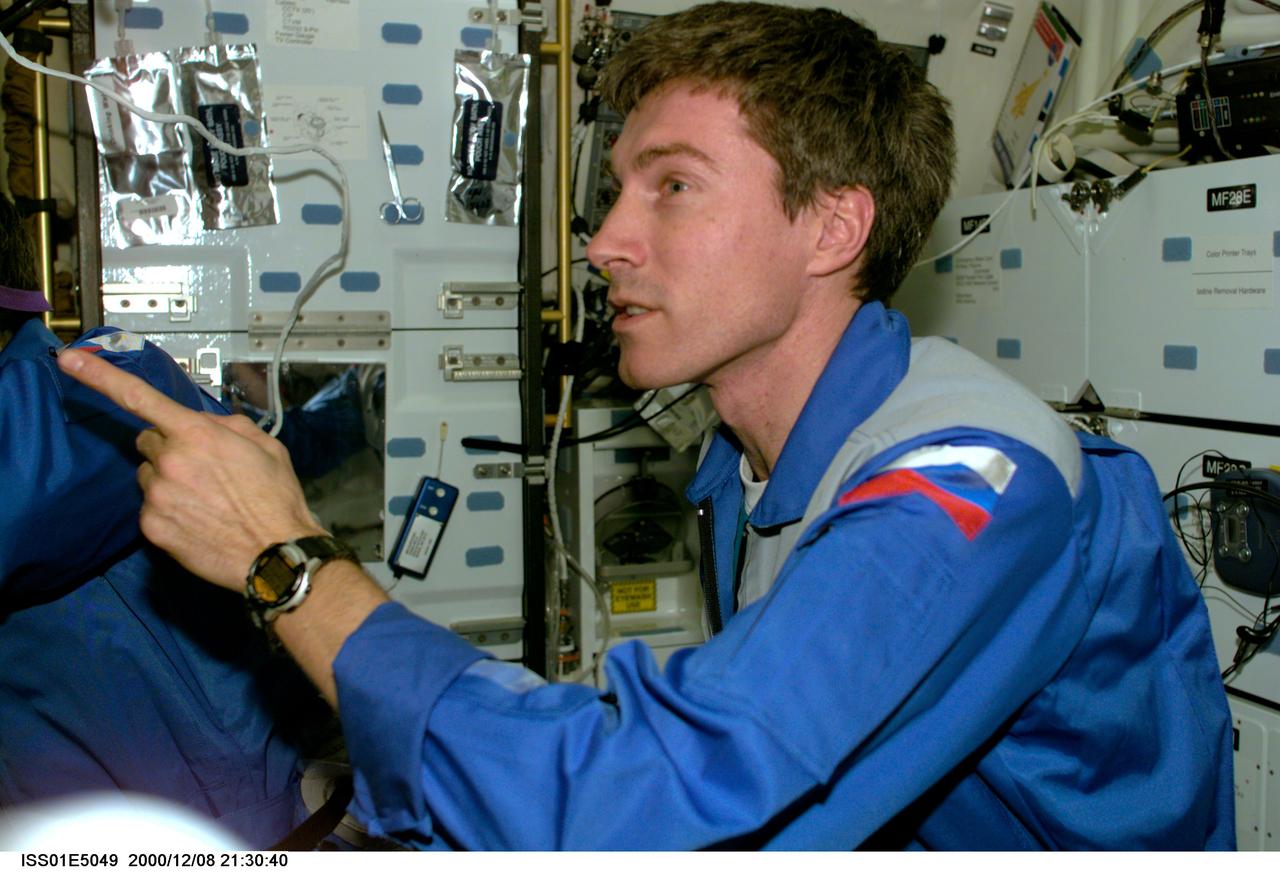
ISS01-E-5049 (8 December 2000) --- Expedition One flight engineer Sergei K. Krikalev reminisces for a brief moment during his visit aboard the Space Shuttle Endeavour. Krikalev is on the mid deck in this scene. Now assigned to a three-month stint aboard the International Space Station (ISS), the cosmonaut and his two Expedition One crew mates enjoyed a reunion with the STS-97 astronauts on Flight Day 9. In his cosmonaut career Krikalev has been assigned duty on missions aboard the shuttle, ISS, and the Russian Aviation and Space Agency's space station Mir.
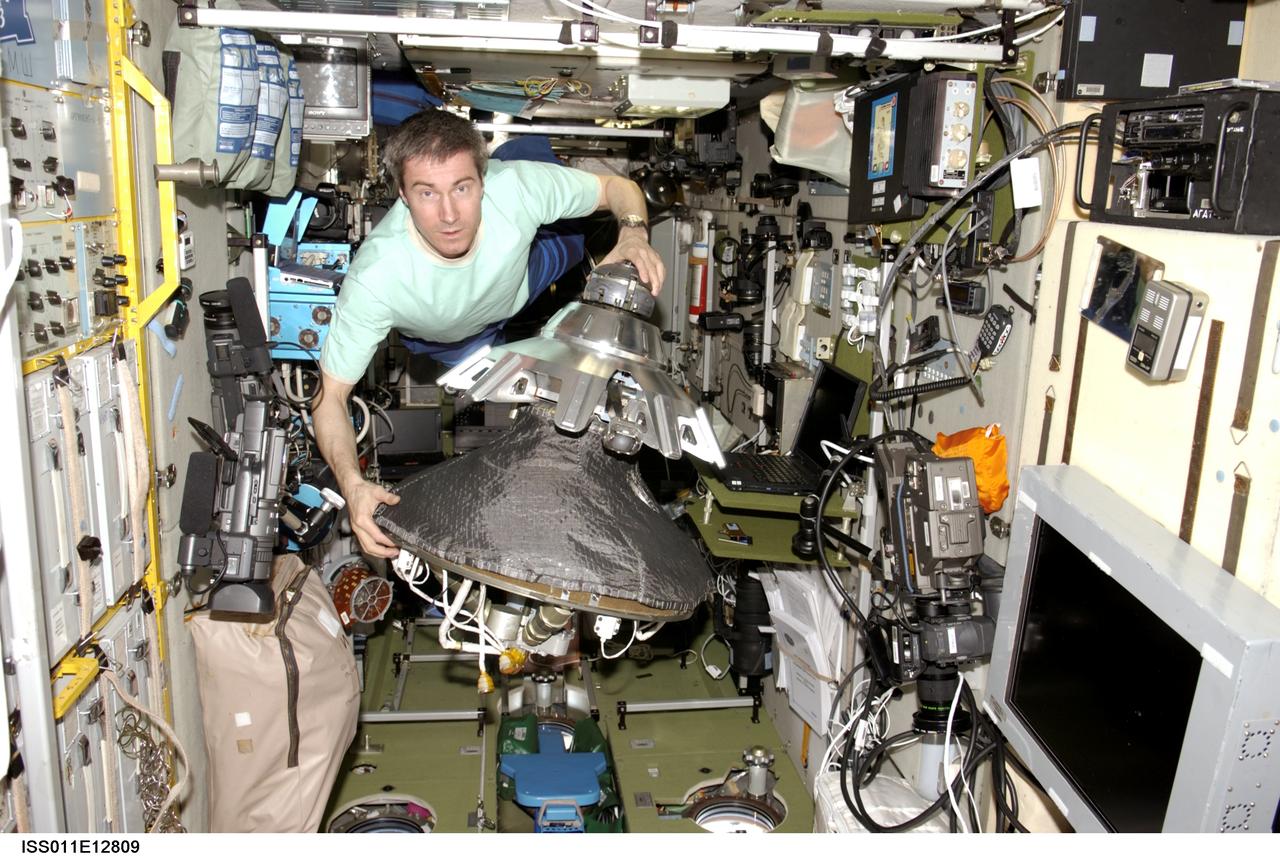
ISS011-E-12809 (10 September 2005) --- Cosmonaut Sergei K. Krikalev, Expedition 11 commander representing Russia's Federal Space Agency, holds the Progress supply vehicle probe-and-cone docking mechanism while floating in the Zvezda Service Module of the International Space Station.
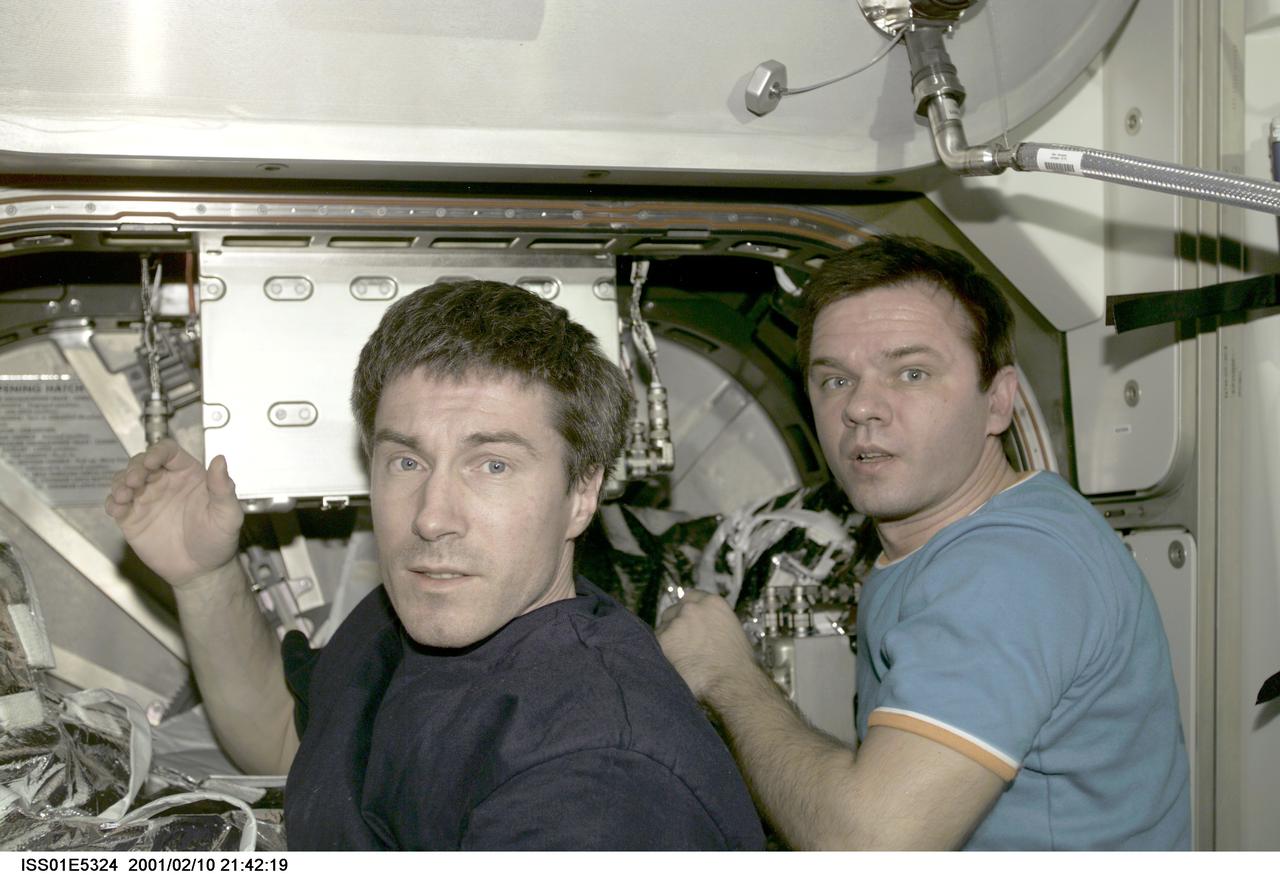
ISS-01-E-5324 (10 February 2001) --- Cosmonauts Sergei K. Krikalev (left), Expedition One flight engineer, and Yuri P. Gidzenko, Soyuz commander, are pictured at the hatch that leads from the Unity node into the newly attached Destiny laboratory. The picture was recorded with a digital still camera on the day the hatch was initially opened.
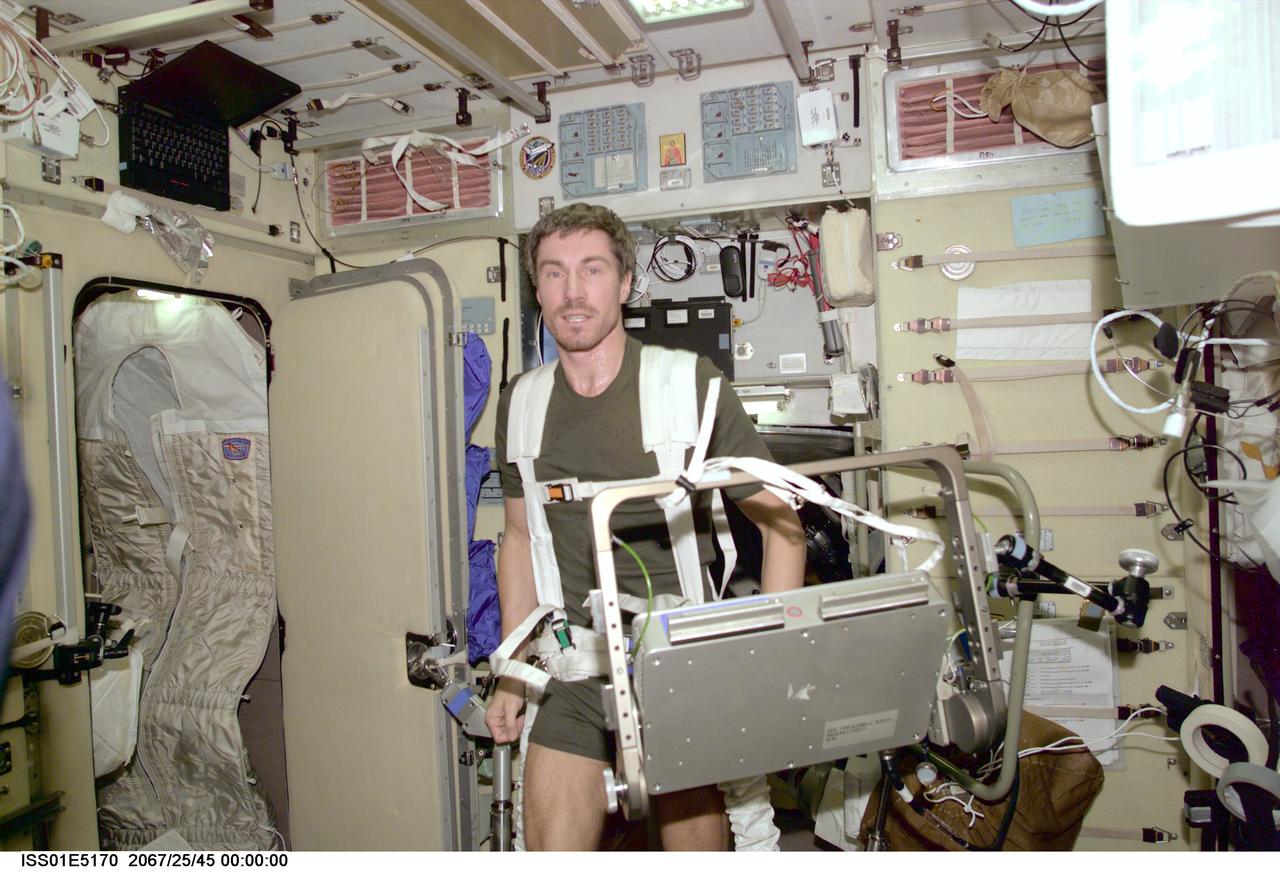
ISS01-E-5170 (December 2000) --- Cosmonaut Sergei K. Krikalev, flight engineer representing the Russian Aviation and Space Agency for Expedition One, is seen with part of the treadmill exercise device in the Zvezda Service Module aboard the International Space Station (ISS).
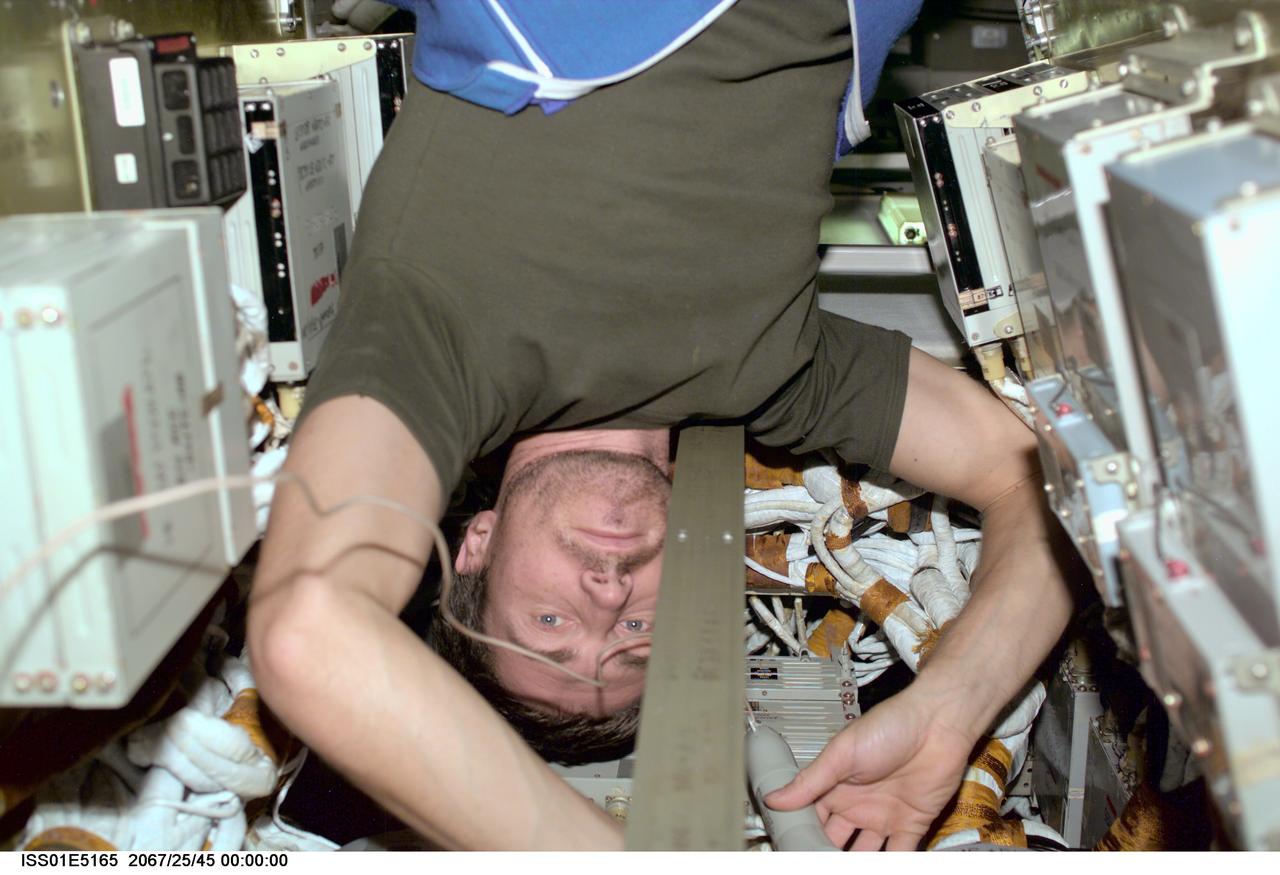
ISS01-E-5165 (December 2000) --- Inside the International Space Station's Zvezda Service Module, cosmonaut Sergei K. Krikalev, Expedition One flight engineer, uses a flashlight to check connections on a memory device in the telemetry system for the station.
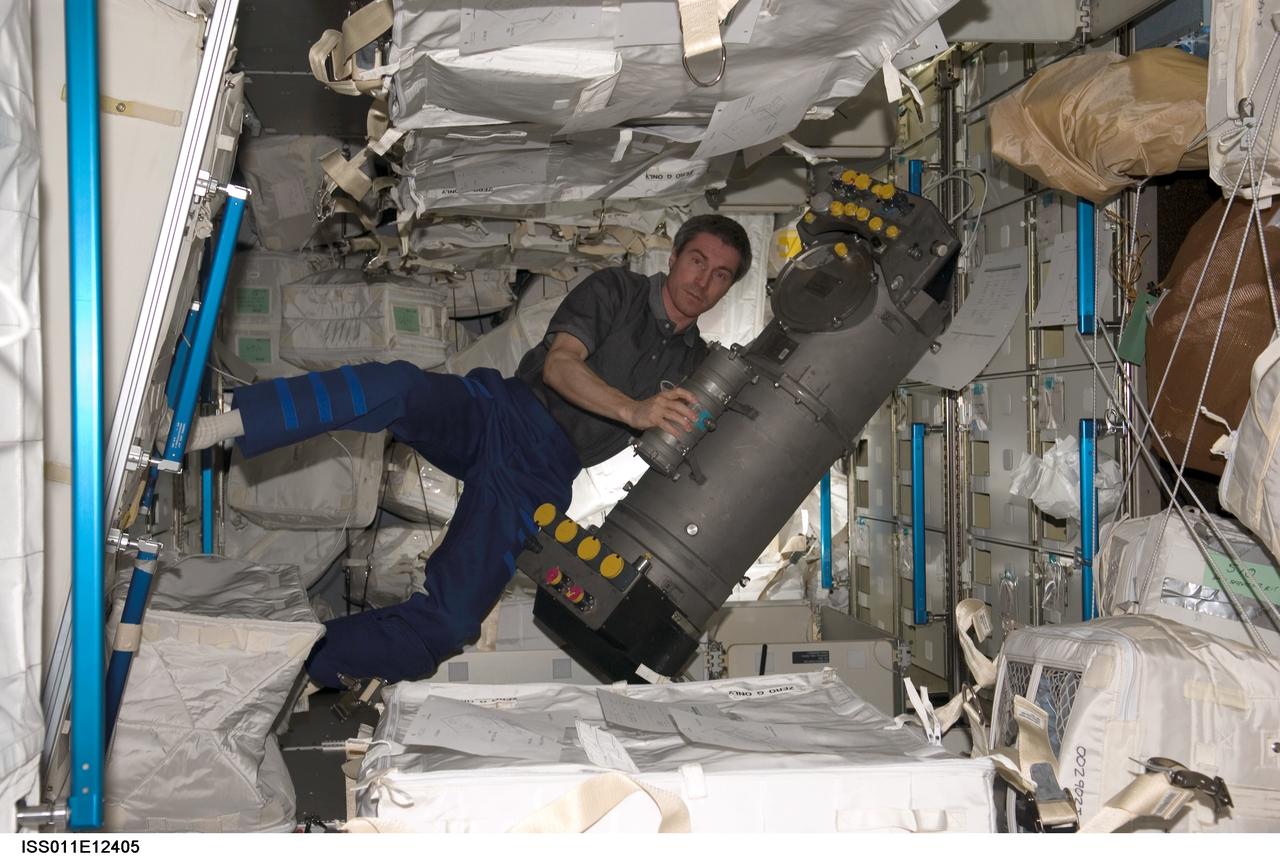
ISS011-E-12405 (31 July 2005) --- Cosmonaut Sergei K. Krikalev, Expedition 11 commander representing Russia's Federal Space Agency, holds the Elektron oxygen-generation system in the Italian-built Raffaello Multi-Purpose Logistics Module (MPLM) docked to the International Space Station during the STS-114 mission.

S97-E-5135 (8 December 2000) --- Cosmonaut Sergei K. Krikalev, flight engineer for the Expedition 1, prepares to document some activity in the docking compartment on Endeavour during a brief visit to the shuttle by the three-man station crew. The photo was taken with a digital still camera.
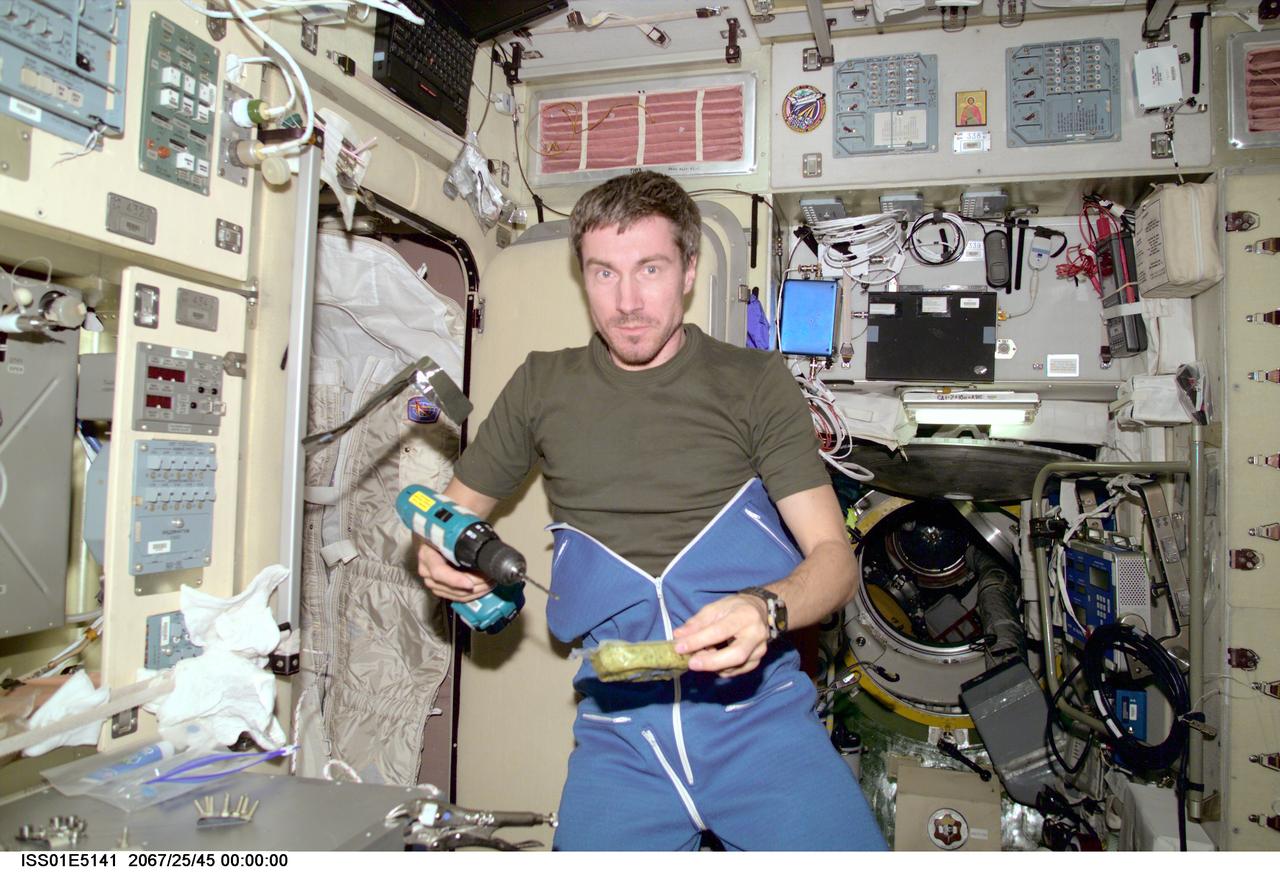
ISS01-E-5141 (December 2000) --- Cosmonaut Sergei K. Krikalev, Expedition One flight engineer, combines work and eating in the Zvezda service module aboard the Earth-orbiting International Space Station (ISS). The picture was recorded with a digital still camera.

SS01-E-5353 (14 February 2001) --- Cosmonaut Sergei K. Krikalev, flight engineer for the three-man Expedition One crew, floats in the Destiny laboratory onboard the International Space Station (ISS). The scene was recorded with a digital still camera.

ISS011-E-06165 (16 May 2005) --- Cosmonaut Sergei K. Krikalev, Expedition 11 commander representing Russia's Federal Space Agency, works with the Treadmill Vibration Isolation System (TVIS) Chassis Assembly during an In-Flight Maintenance (IFM) in the Zvezda Service Module of the International Space Station (ISS).
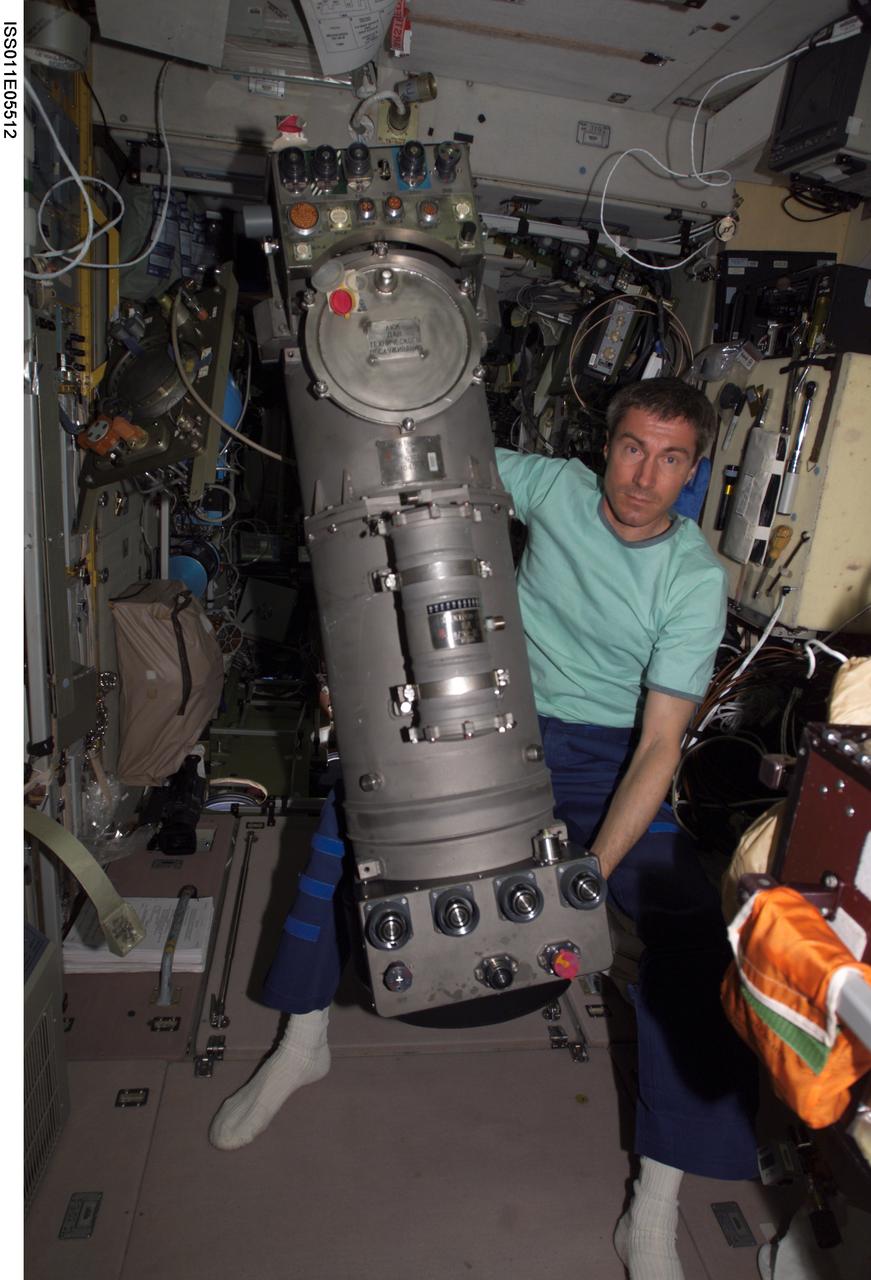
ISS011-E-05512 (5 May 2005) --- Cosmonaut Sergei K. Krikalev, Expedition 11 commander representing Russia's Federal Space Agency, working on the Elektron oxygen-generation system in the Zvezda Service Module that has worked intermittently aboard the International Space Station (ISS).
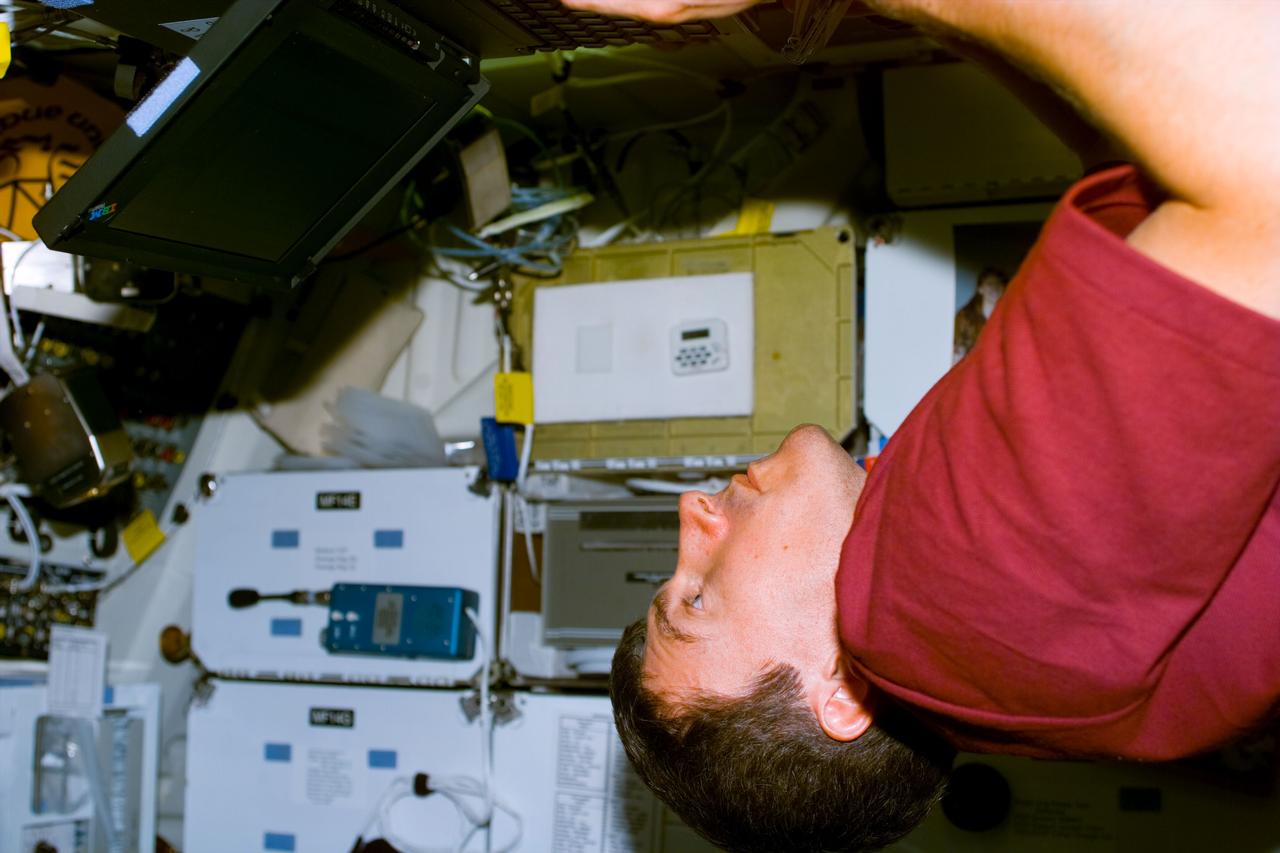
S88-E-5041 (12-06-98) --- Sergei Krikalev, mission specialist representing the Russian Space Agency (RSA), works on a laptop computer on Endeavour's middeck. The scene was photographed shortly after the successful mating of Unity with the shuttle's docking system.
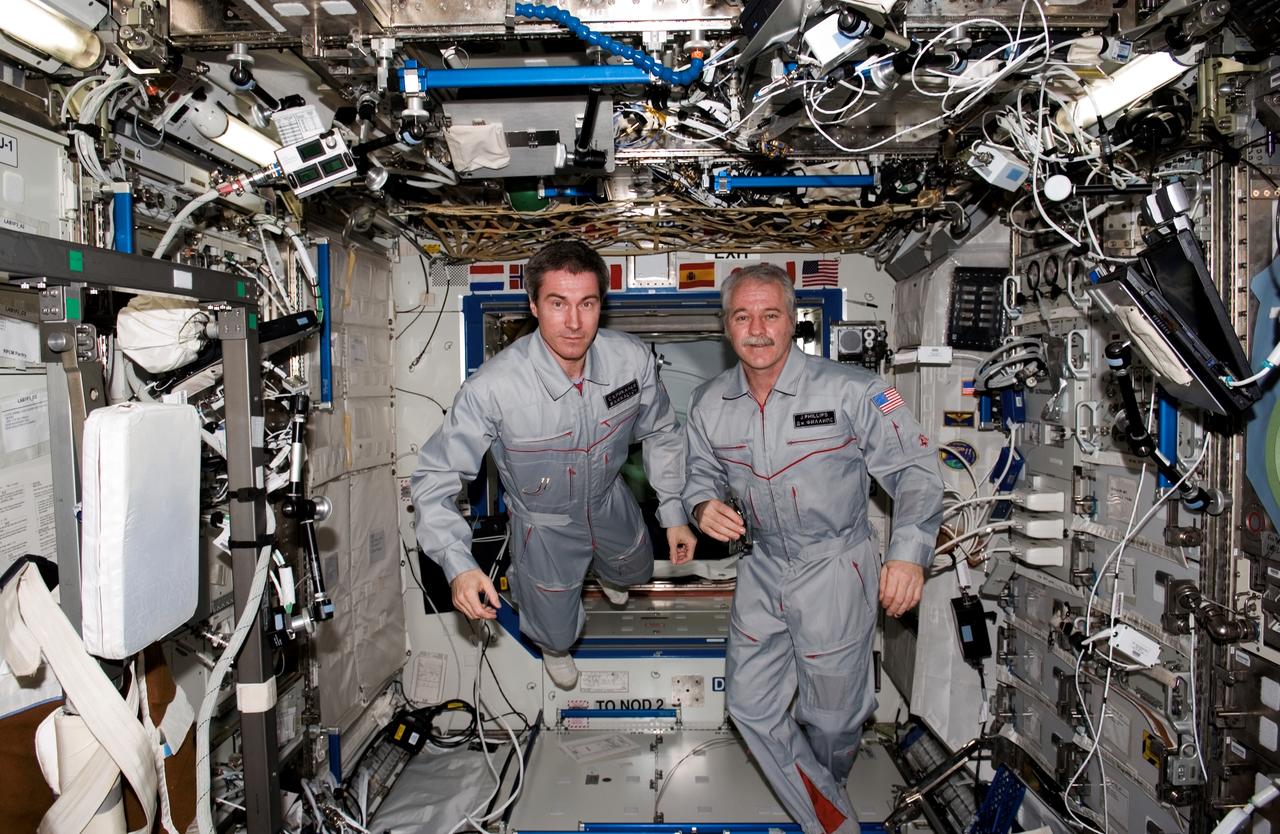
ISS011-E-12408 (2 August 2005) --- Cosmonaut Sergei K. Krikalev (left), Expedition 11 commander representing Russia's Federal Space Agency, and astronaut John L. Phillips, NASA space station science officer and flight engineer, pose for a photo in the Destiny laboratory of the international space station.
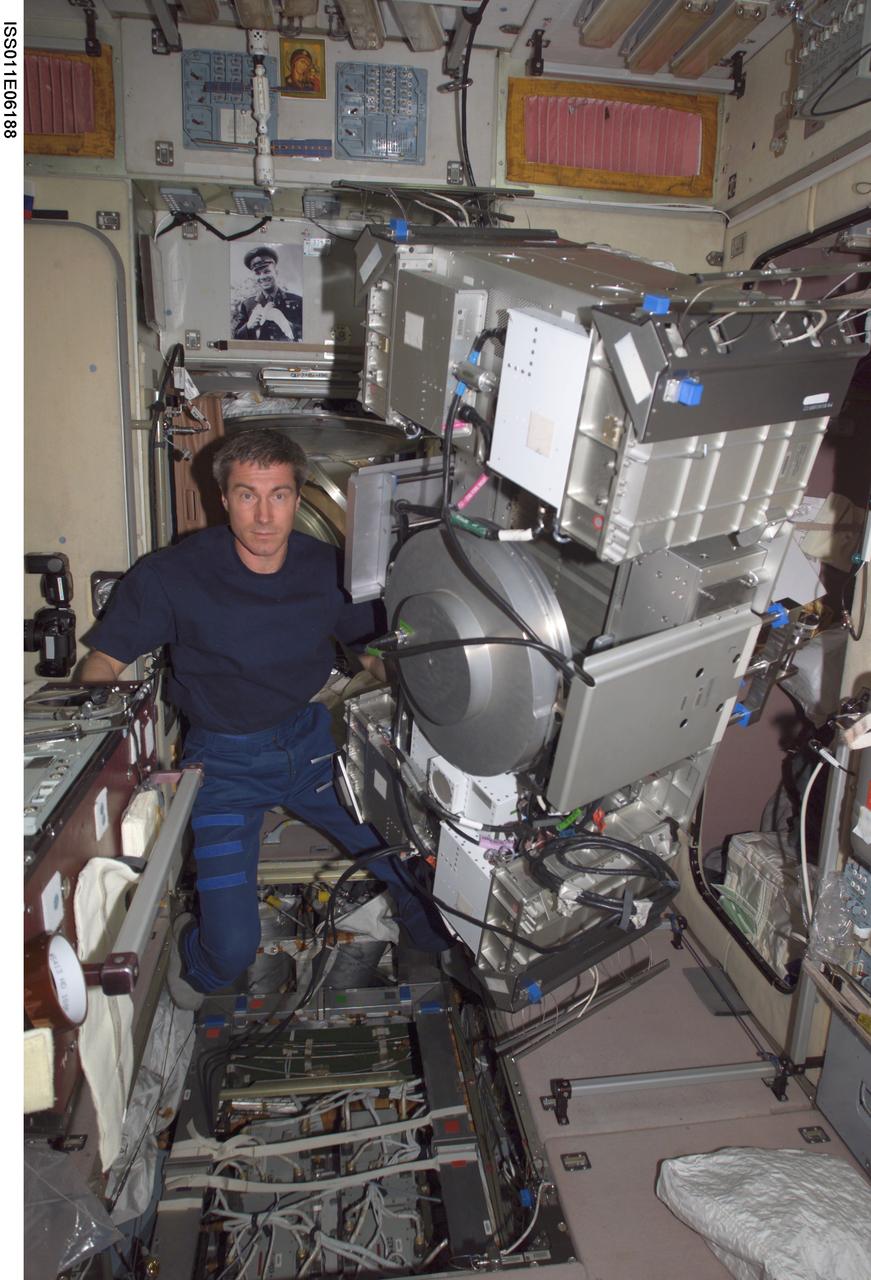
ISS011-E-06188 (16 May 2005) --- Cosmonaut Sergei K. Krikalev, Expedition 11 commander representing Russia's Federal Space Agency, works with the Treadmill Vibration Isolation System (TVIS) removed from the Zvezda Service Module floor during In-Flight Maintenance (IFM) on the International Space Station (ISS).
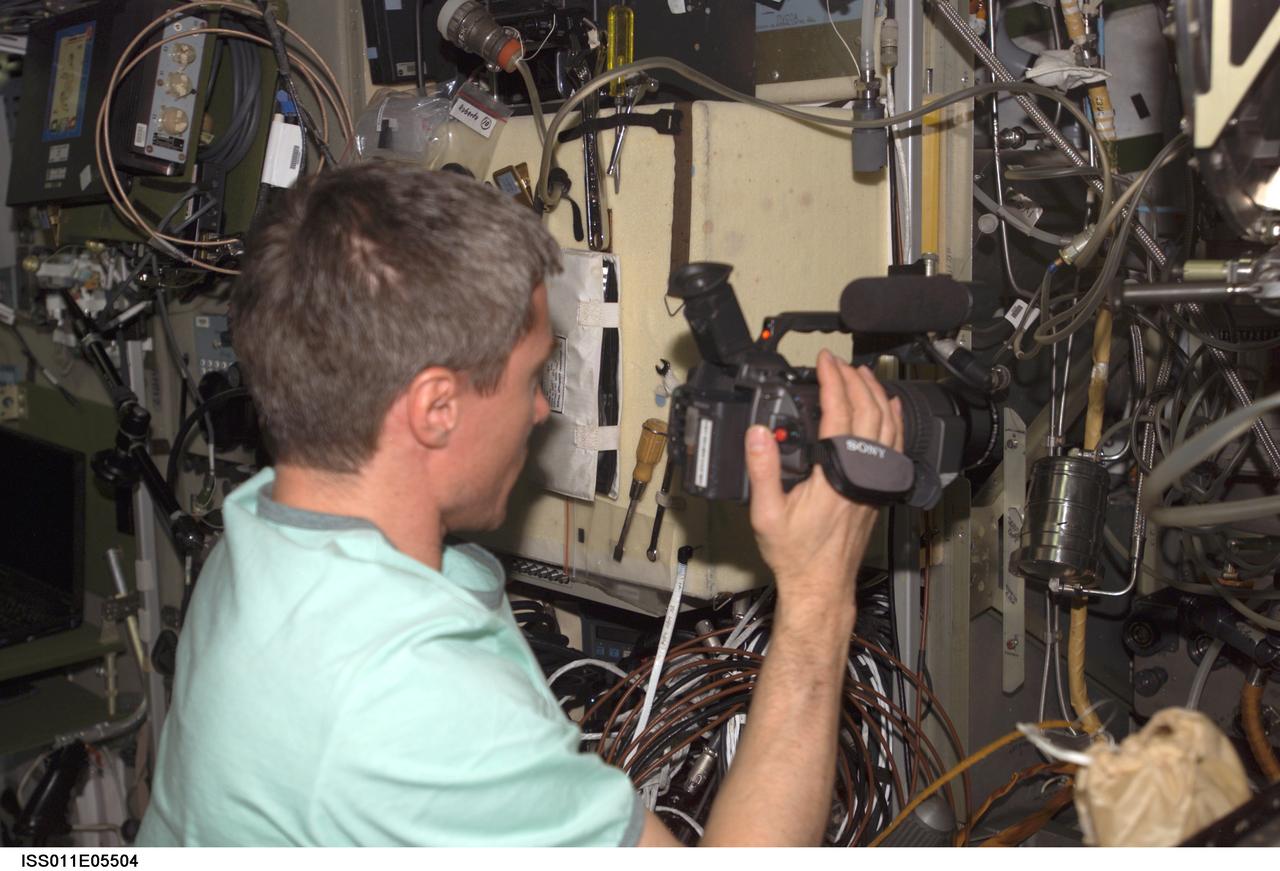
ISS011-E-05504 (5 May 2005) --- Cosmonaut Sergei K. Krikalev, Expedition 11 commander representing Russia's Federal Space Agency, uses a video camera to document repairs to the Elektron oxygen generator in the Zvezda Service Module of the International Space Station (ISS).
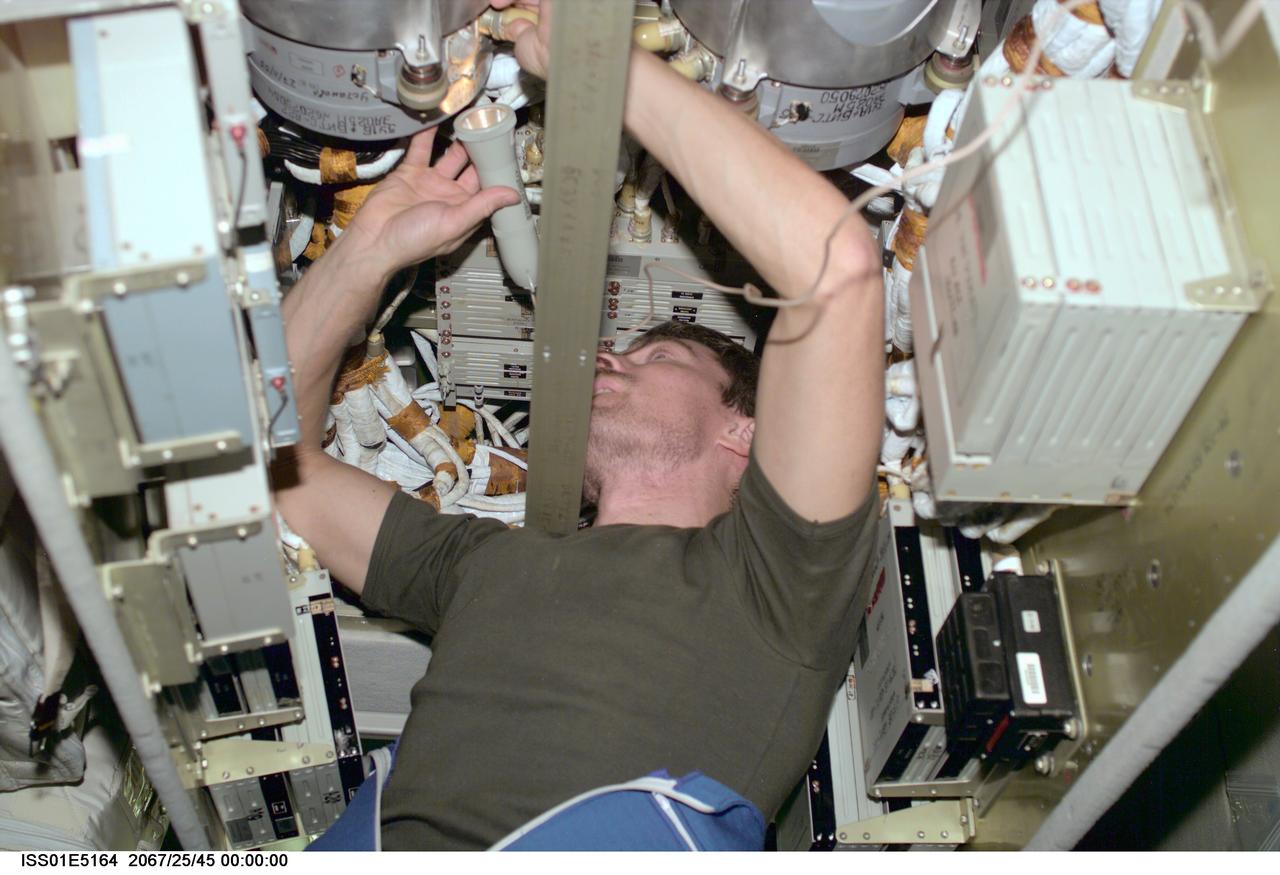
ISS01-E-5164 (December 2000) --- Inside the International Space Station's Zvezda Service Module, cosmonaut Sergei K. Krikalev, Expedition One flight engineer, uses a flashlight to check connections on a memory device in the telemetry system for the station.
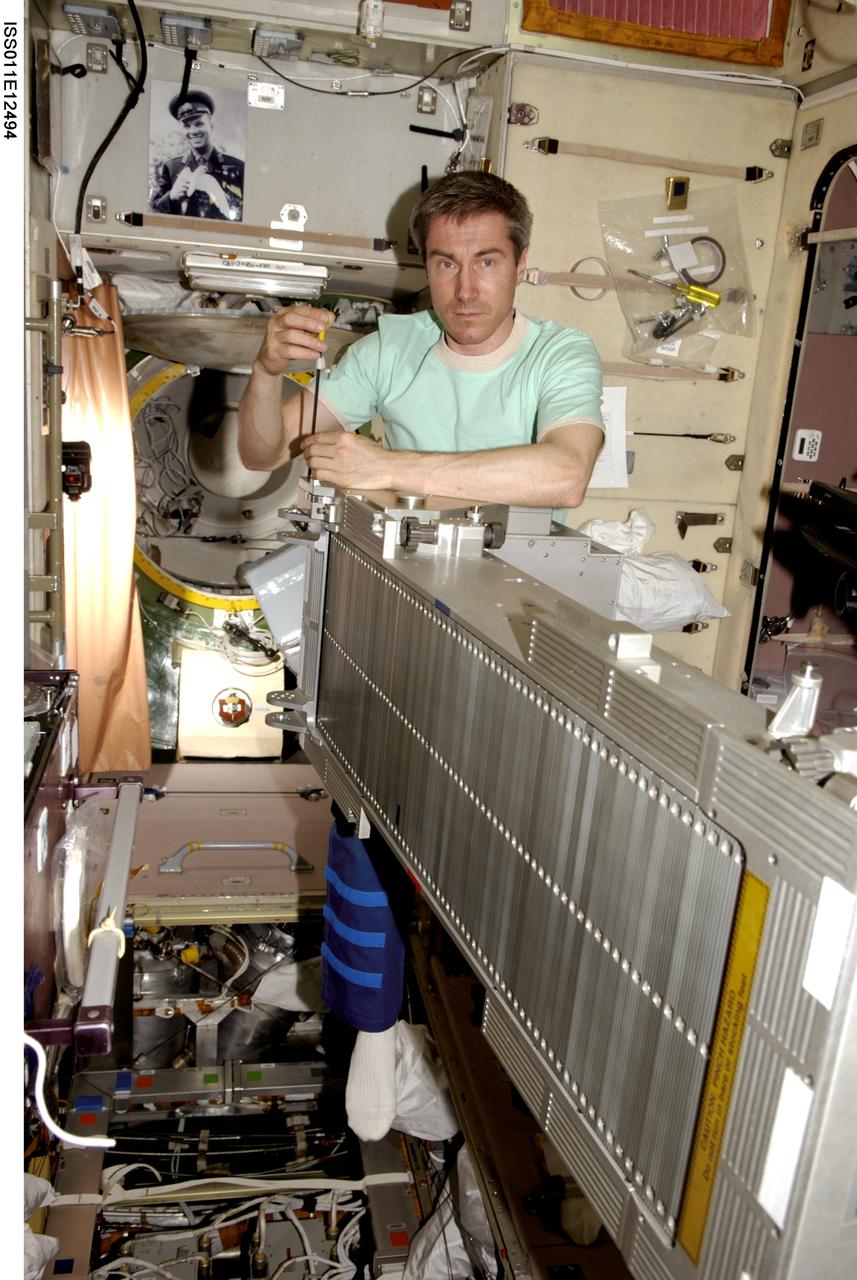
ISS011-E-12494 (7 September 2005) --- Cosmonaut Sergei K. Krikalev, Expedition 11 commander representing Russia's Federal Space Agency, works with the Treadmill Vibration Isolation System (TVIS) during In-Flight Maintenance (IFM) in the Zvezda Service Module of the International Space Station.
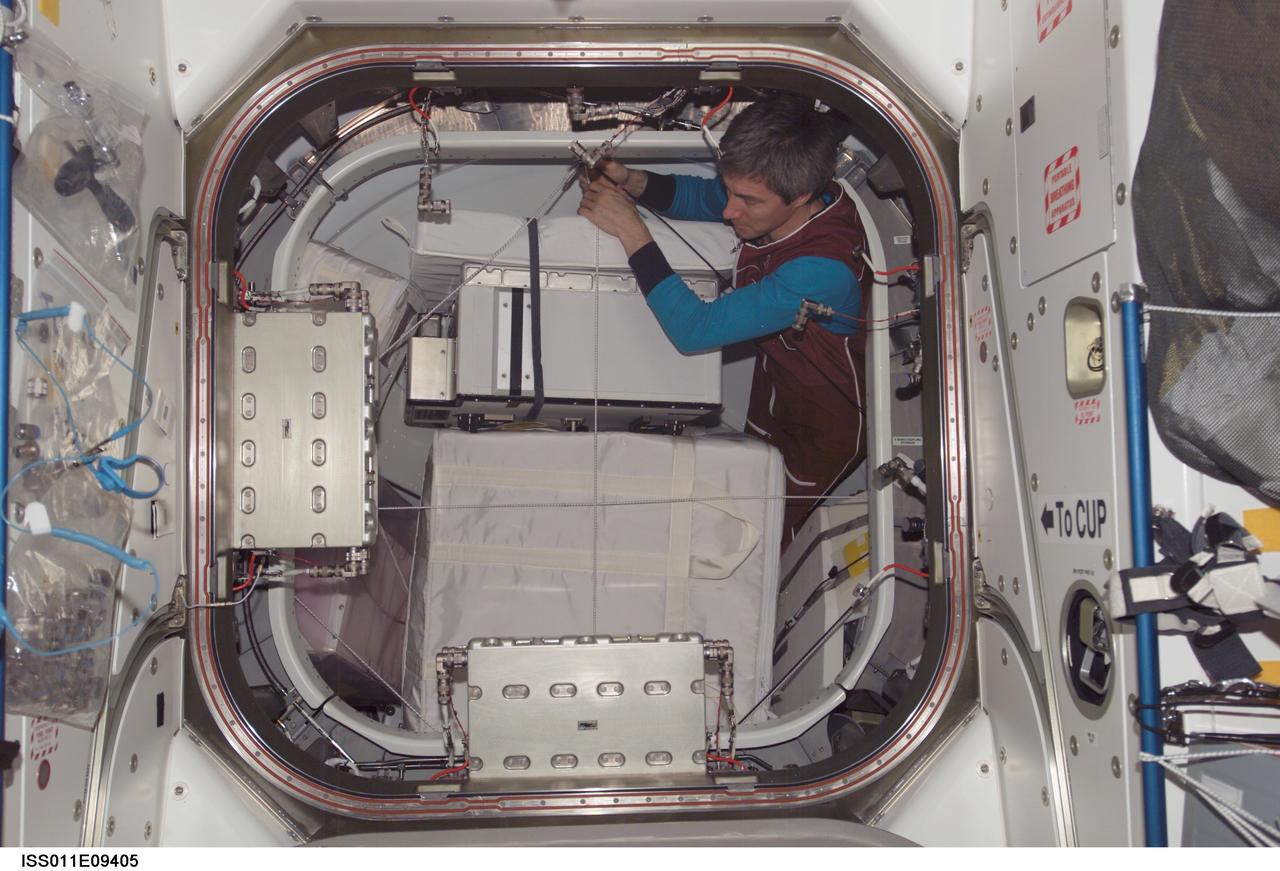
ISS011-E-09405 (21 June 2005) --- Cosmonaut Sergei K. Krikalev, Expedition 11 commander representing Russia's Federal Space Agency, moves stowage items from the Unity node into the Pressurized Mating Adapter (PMA-3) of the International Space Station (ISS).
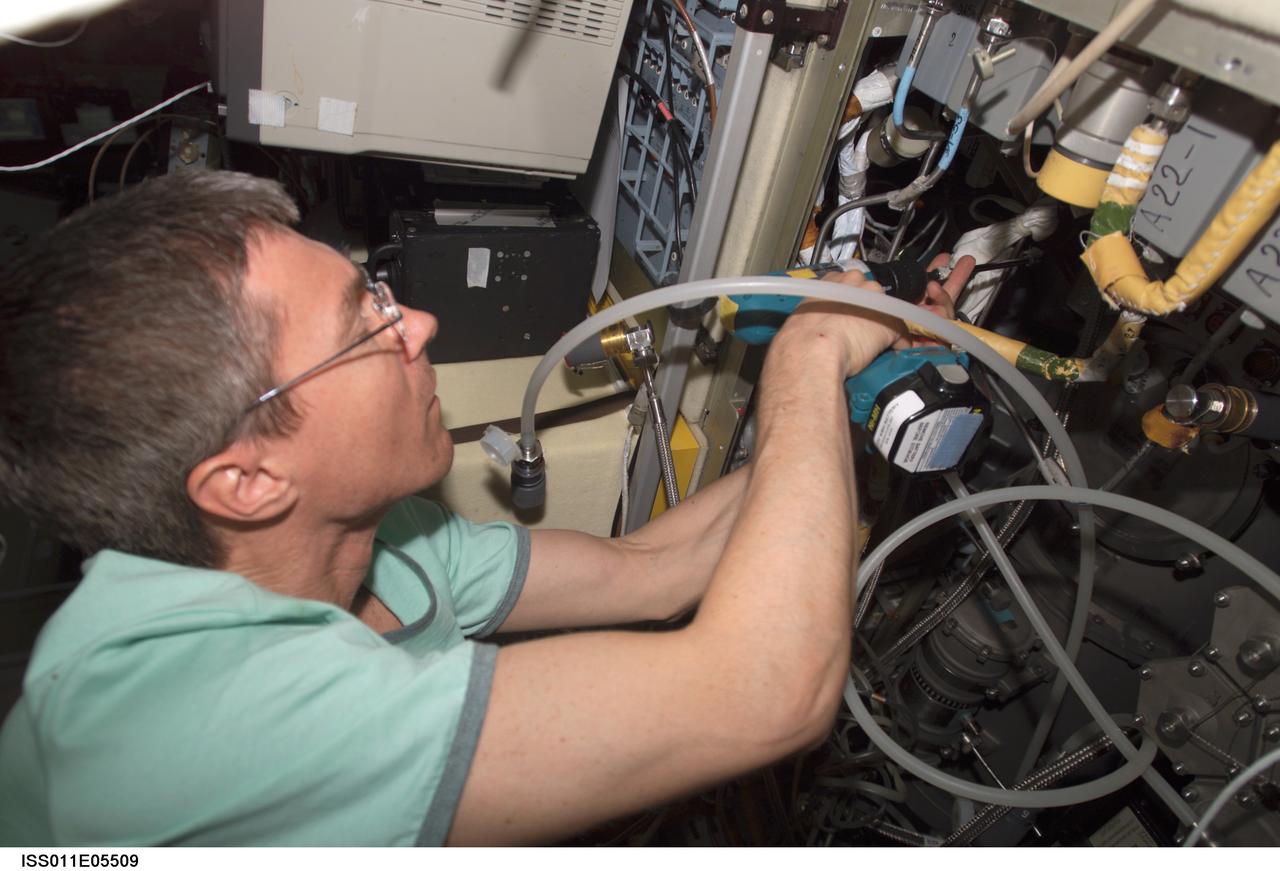
ISS011-E-05509 (5 May 2005) --- Cosmonaut Sergei K. Krikalev, Expedition 11 commander representing Russia's Federal Space Agency, uses a power tool as he makes repairs to the Elektron oxygen generator in the Zvezda Service Module of the International Space Station (ISS).

ISS011-E-05518 (5 May 2005) --- Cosmonaut Sergei K. Krikalev, Expedition 11 commander representing Russia's Federal Space Agency, working on the Elektron oxygen-generation system in the Zvezda Service Module that has worked intermittently aboard the International Space Station (ISS).
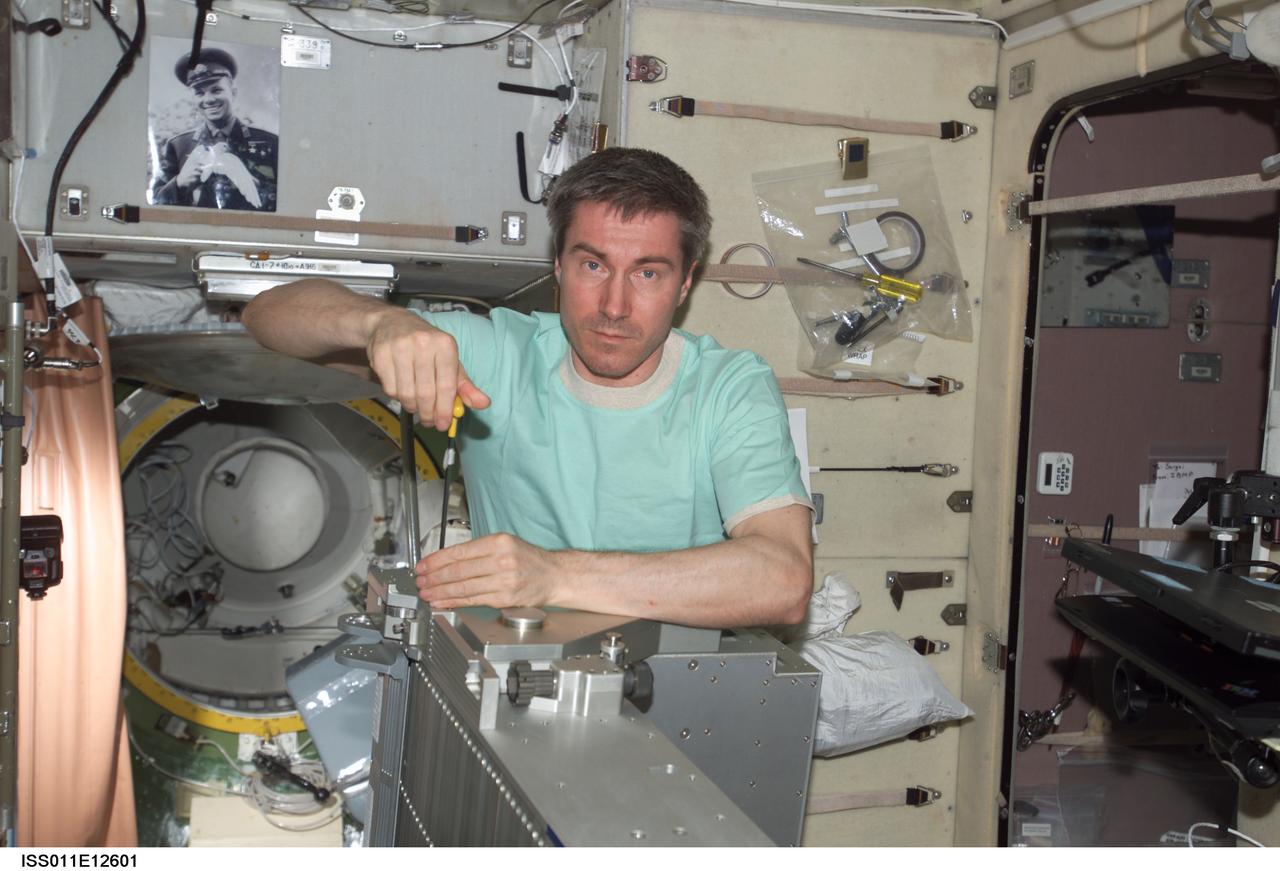
ISS011-E-12601 (7 September 2005) --- Cosmonaut Sergei K. Krikalev, Expedition 11 commander representing Russia's Federal Space Agency, works with the Treadmill Vibration Isolation System (TVIS) during In-Flight Maintenance (IFM) in the Zvezda Service Module of the International Space Station.
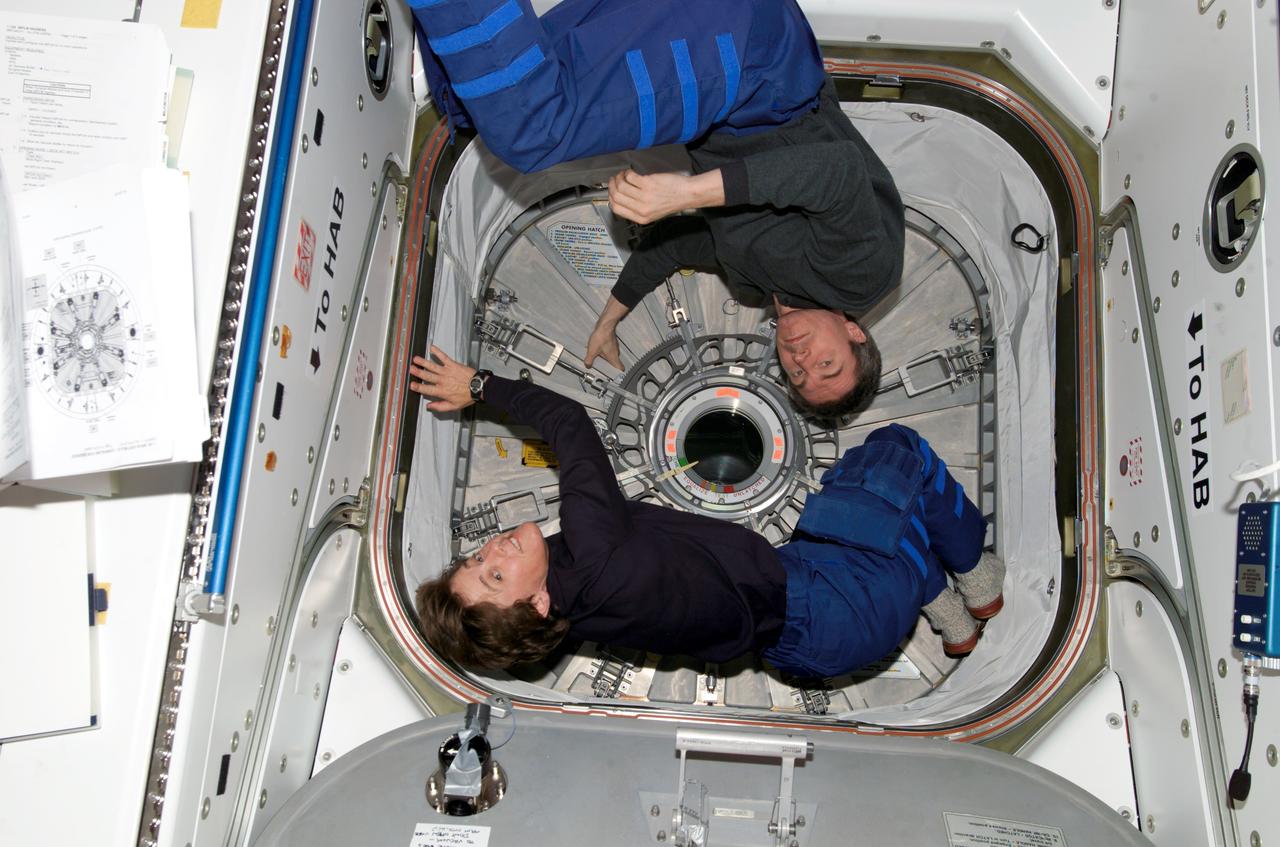
ISS011-E-11317 (29 July 2005) --- Russian Federal Space Agency cosmonaut Sergei K. Krikalev, Expedition 11 commander, and astronaut Wendy B. Lawrence, STS-114 mission specialist, prepare to unload the Raffaello Multi-Purpose Logistics Module (MPLM) docked to the international space station.
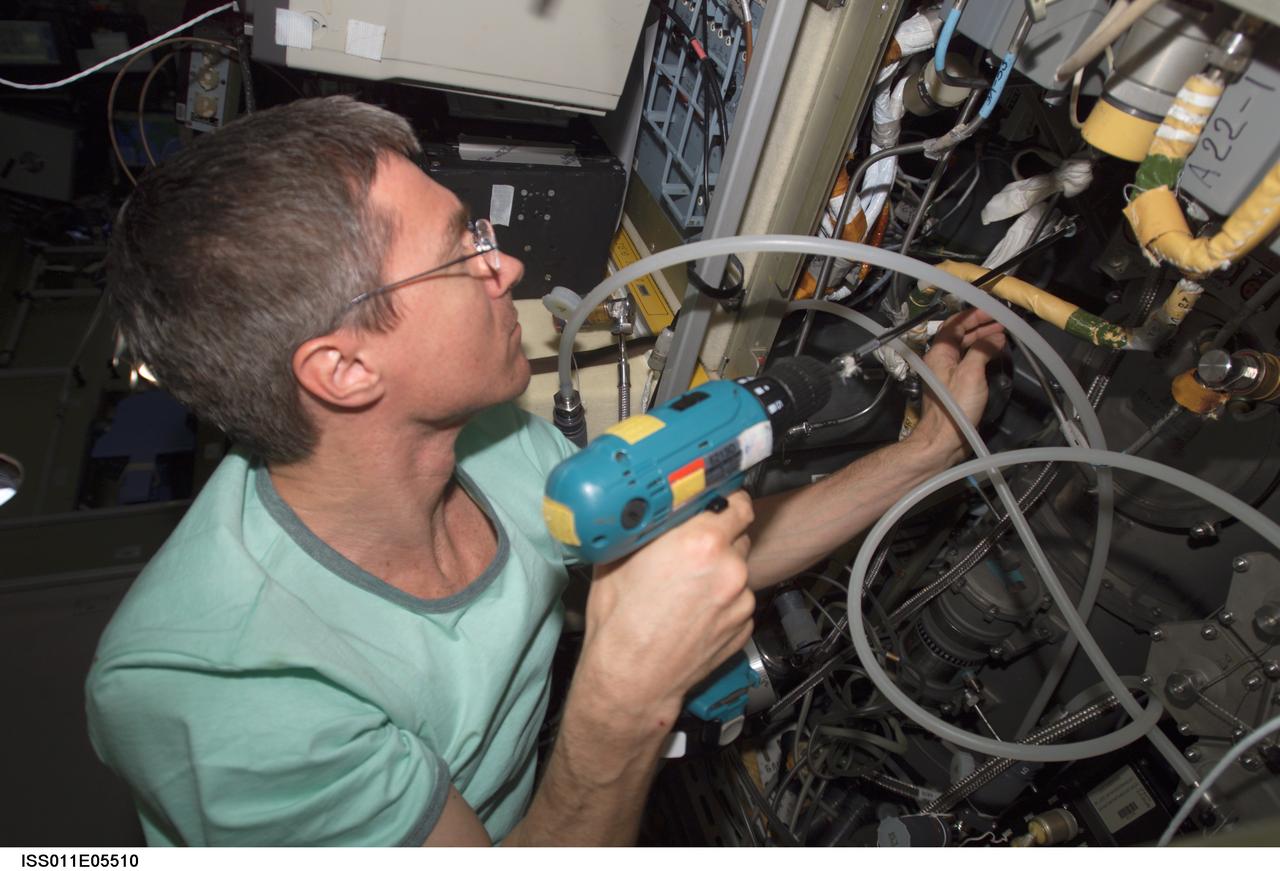
ISS011-E-05510 (5 May 2005) --- Cosmonaut Sergei K. Krikalev, Expedition 11 commander representing Russia's Federal Space Agency, uses a power tool as he makes repairs to the Elektron oxygen generator in the Zvezda Service Module of the International Space Station (ISS).
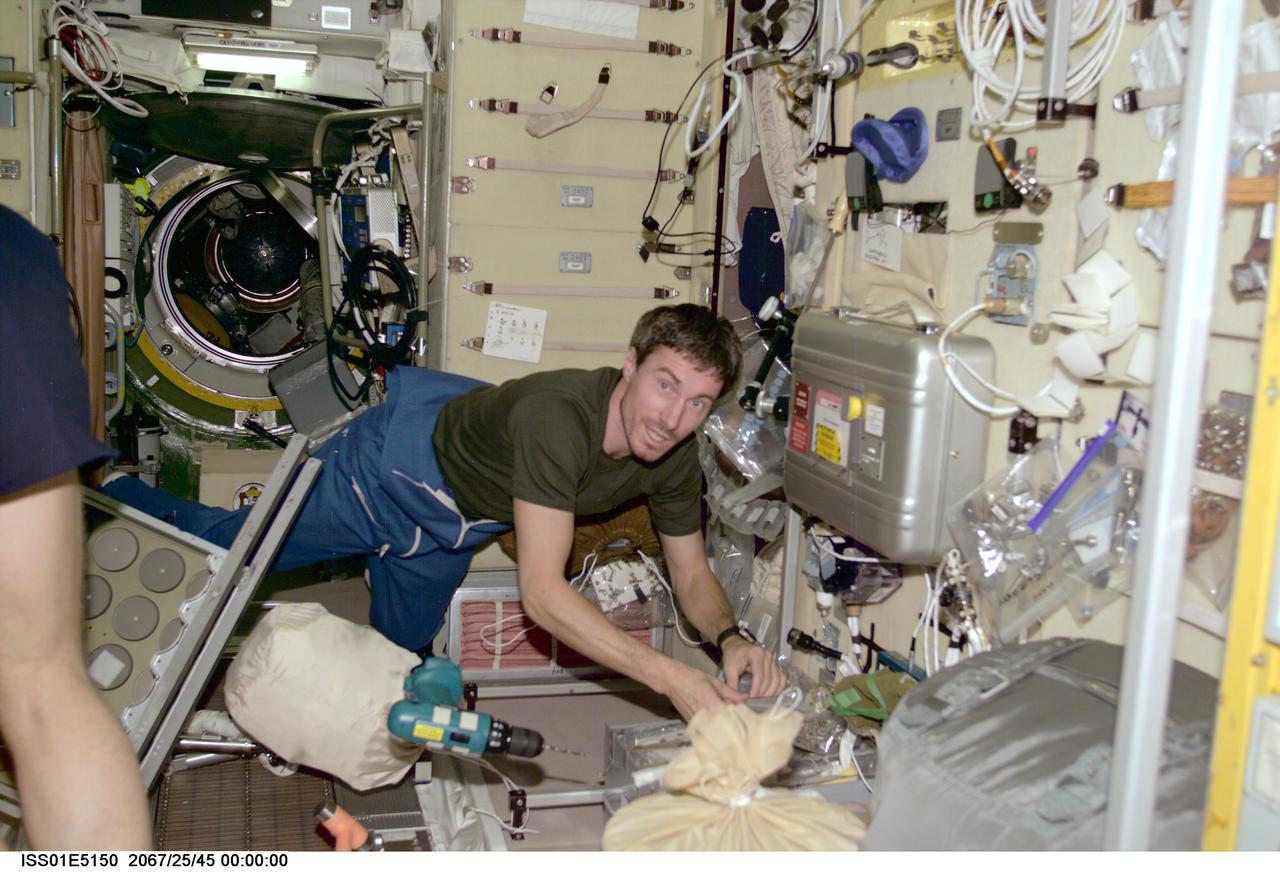
ISS01-E-5150 (December 2000) --- Cosmonaut Sergei K. Krikalev, Expedition One flight engineer, retrieves a tool during an installation and set-up session in the Zvezda service module aboard the International Space Station (ISS). The picture was recorded with a digital still camera.
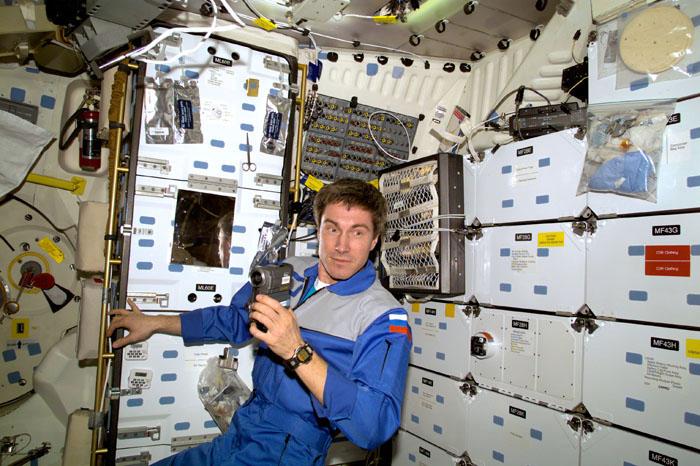
S97-E-5136 (8 December 2000) --- Cosmonaut Sergei K. Krikalev, flight engineer for the Expedition 1 crew, prepares to document some activity on the mid deck of the Space Shuttle Endeavour during a brief visit to the shuttle by the three-man station crew. The photo was taken with a digital still camera.
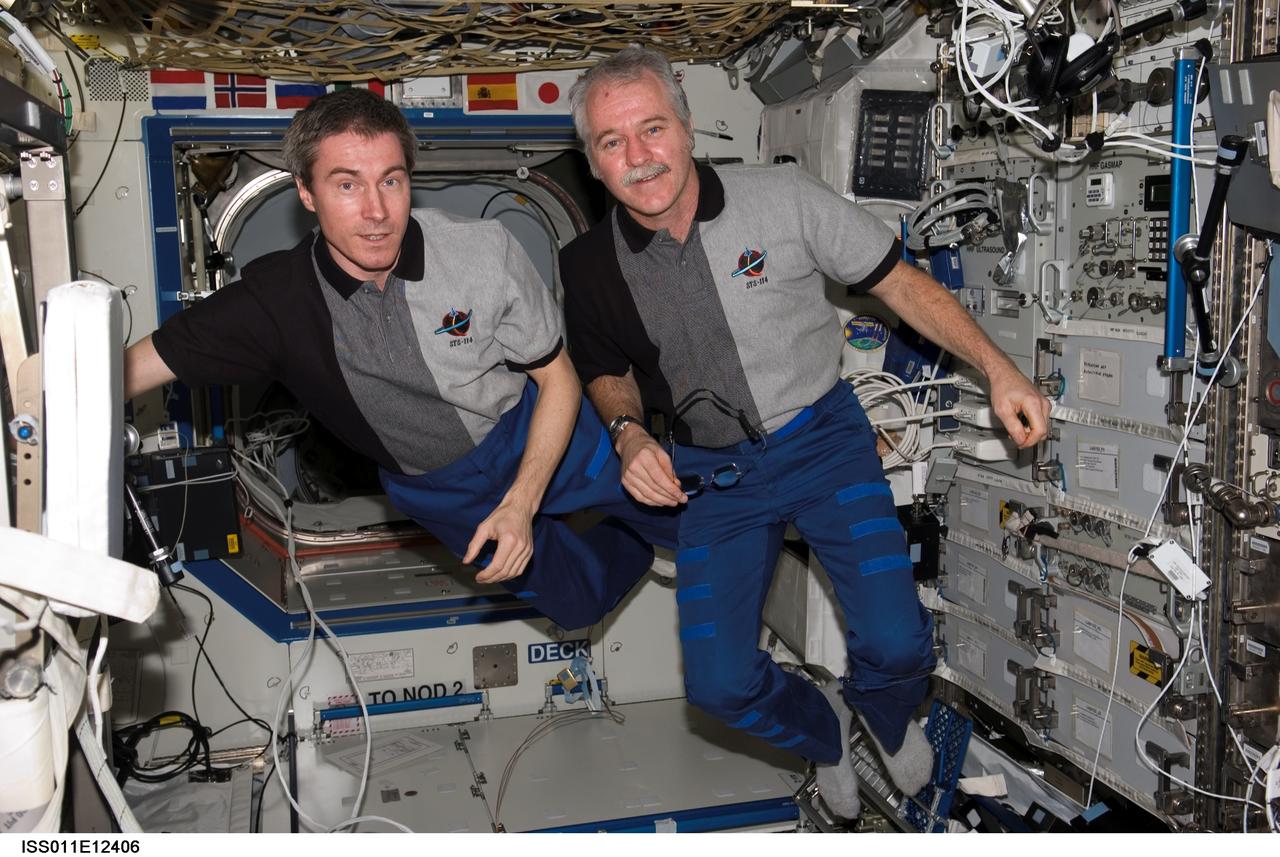
ISS011-E-12406 (2 August 2005) --- Cosmonaut Sergei K. Krikalev (left), Expedition 11 commander representing Russia's Federal Space Agency, and astronaut John L. Phillips, NASA Space Station science officer and flight engineer, pose for a photo in the Destiny laboratory of the International Space Station.
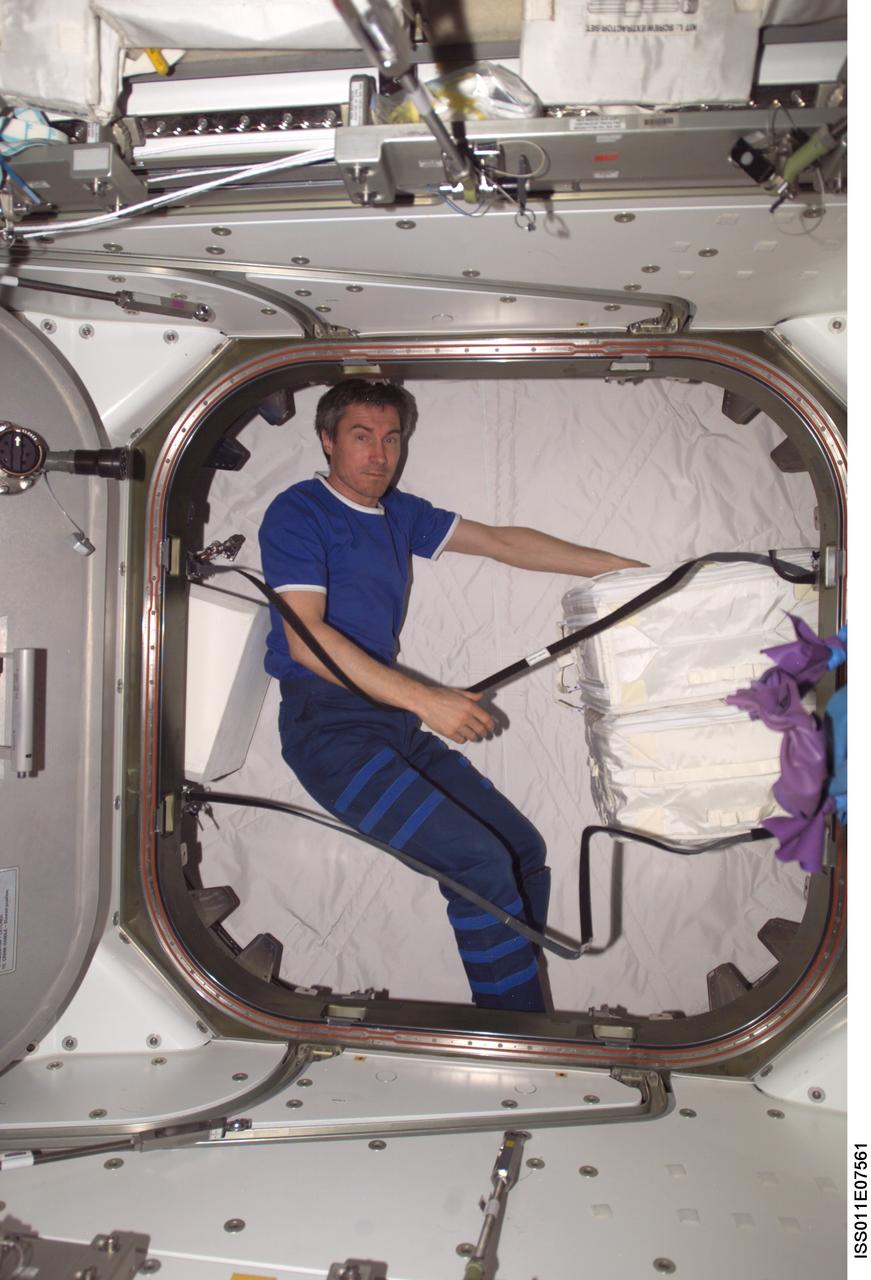
ISS011-E-07561 (30 May 2005) --- Cosmonaut Sergei K. Krikalev, Expedition 11 commander representing Russia's Federal Space Agency, participates in hardware transfers on the International Space Station (ISS).
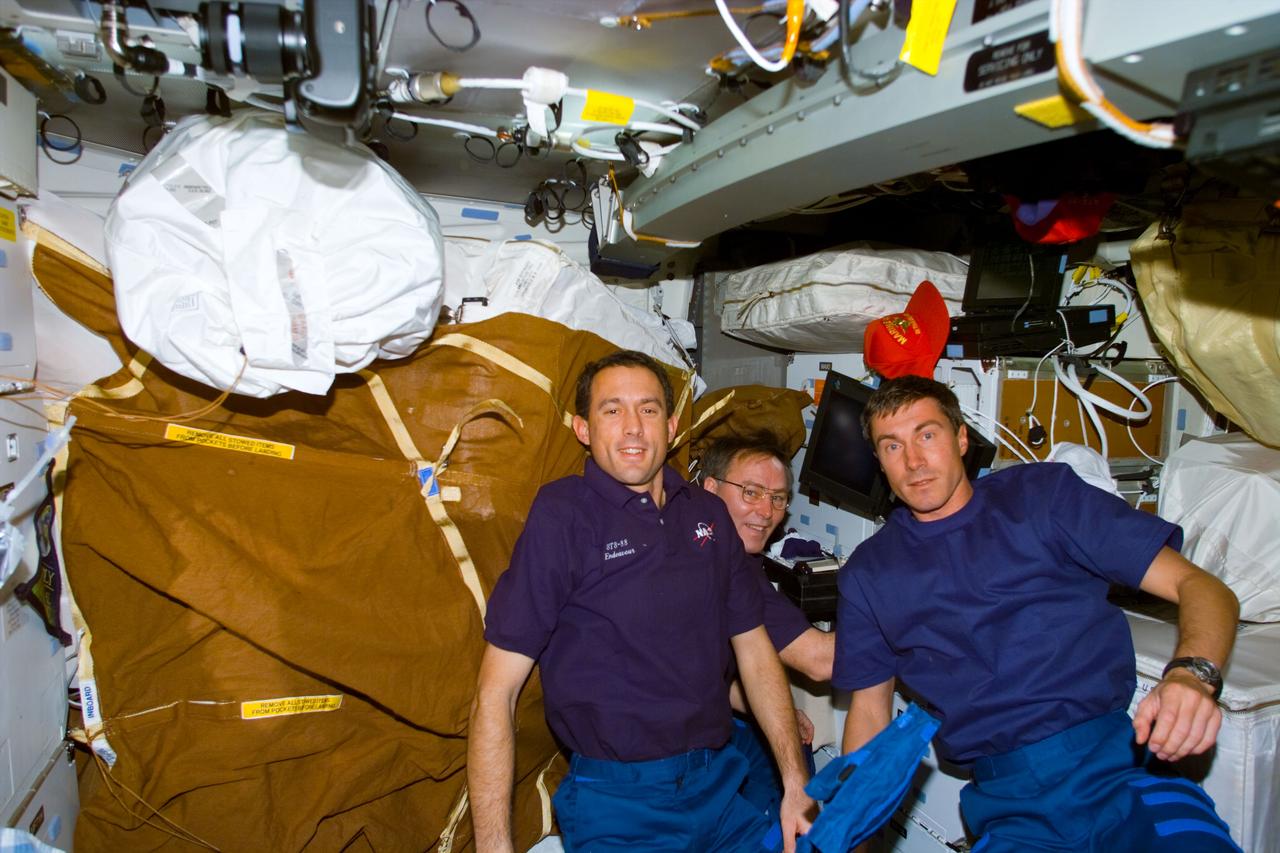
S88-E-5163 (12-08-98) --- Left to right, James H. Newman, Jerry L. Ross and Sergei K. Krikalev--all mission specialists--on Endeavour's middeck. Ross and Newman eventually participated in three space walks as part of the STS-88 work involved in readying the Unity and Zarya modules for their ISS roles. Krikalev, representing the Russian Space Agency, has been named as a member of the first ISS flight crew. This photo was taken with an electronic still camera (ESC) at 23:14:01 GMT, Dec. 8.
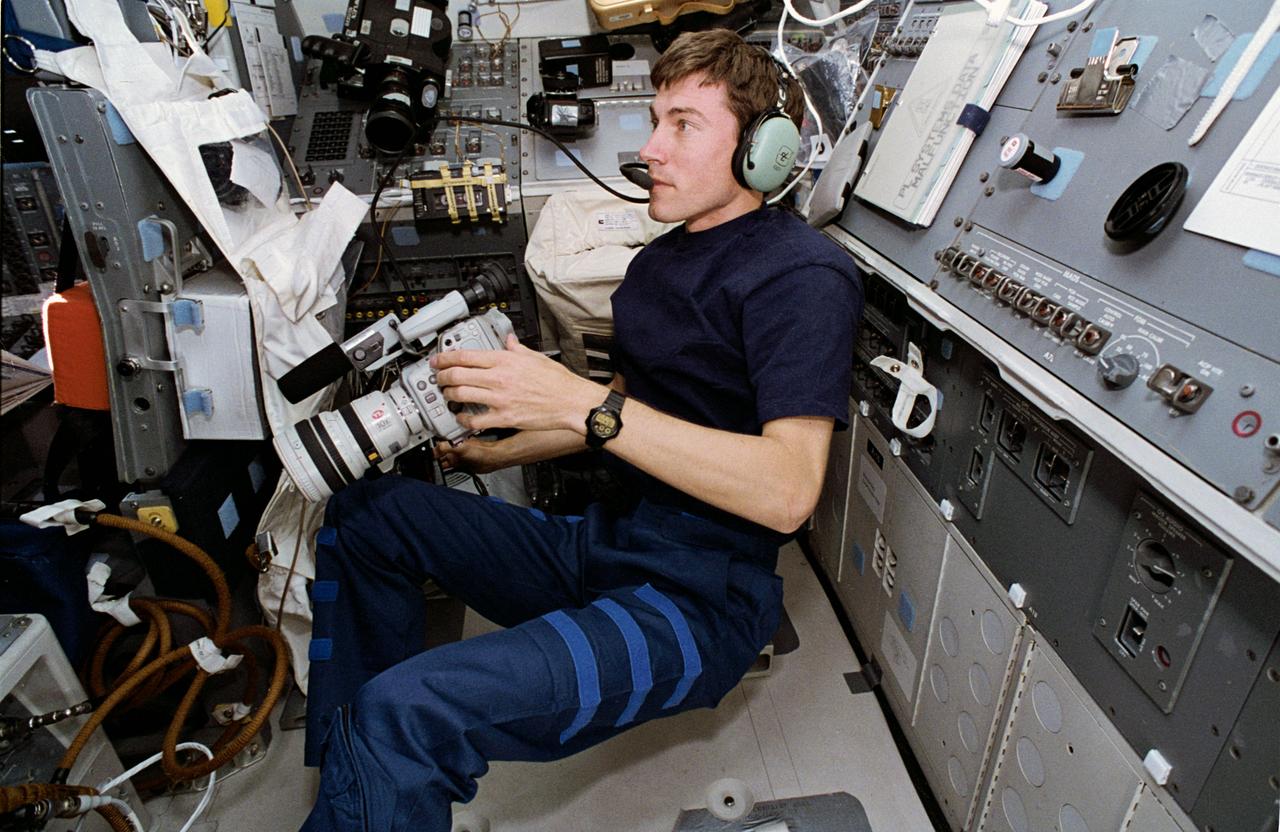
STS60-29-009 (10 Feb 1994) --- On the Space Shuttle Discovery's aft flight deck, Russian cosmonaut Sergei K. Krikalev prepares for one chore while performing another. Using the Shuttle Amateur Radio Experiment (SAREX) gear, the mission specialist was talking with students in Maine. He holds a camcorder, which was later called into action to record inflight activities. Krikalev joined five NASA astronauts for eight days in space aboard Discovery.
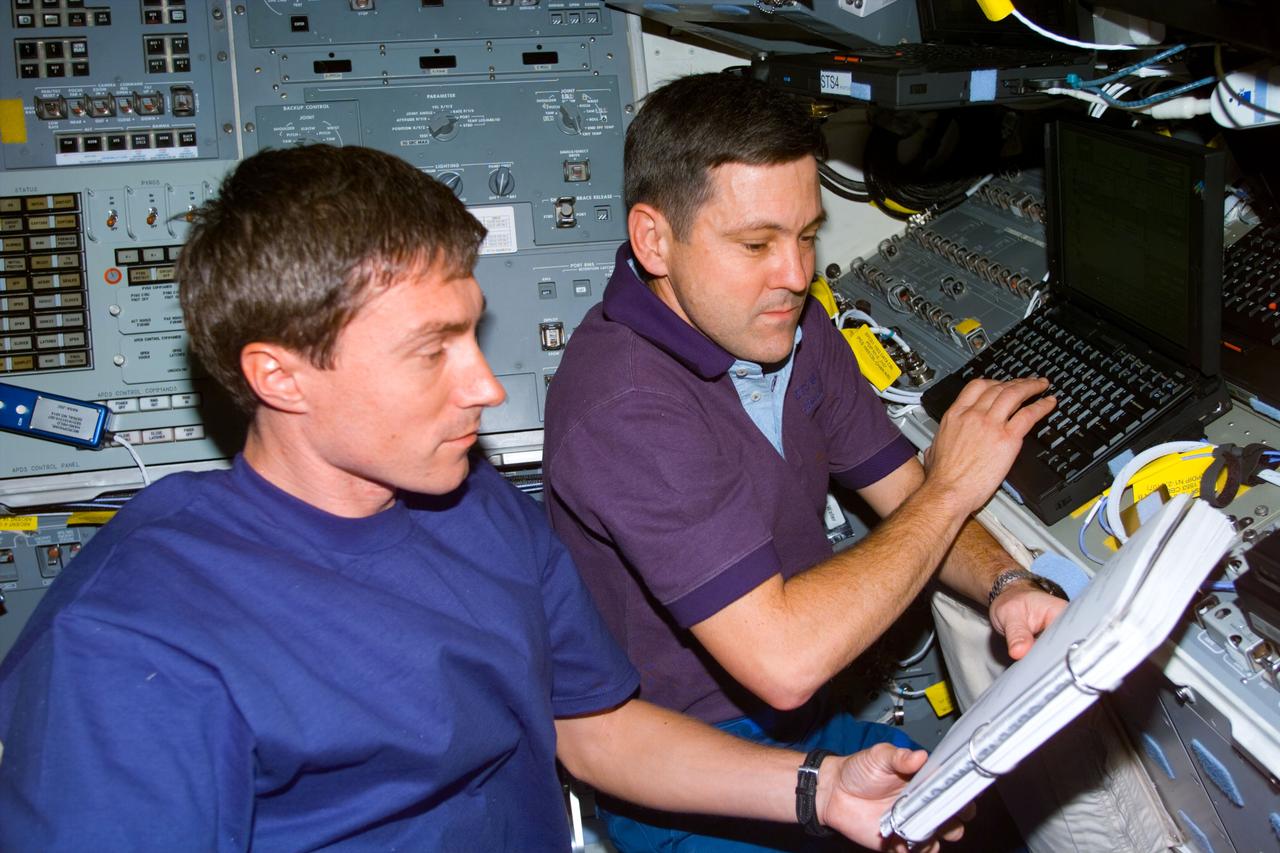
S88-E-5063 (12-08-98)--- Sergei Krikalev, left, and Robert D. Cabana team up on Endeavour's flight deck to input data into a general purpose laptop computer following crewmates' extravehicular activity (EVA) with Unity and Zarya in the shuttle's cargo bay. Krikalev, a mission specialist representing the Russian Space Agency, will also be on the first ISS crew. The scene was recorded with an electronic still camera (ESC) at 07:59:05 GMT, Dec. 8.
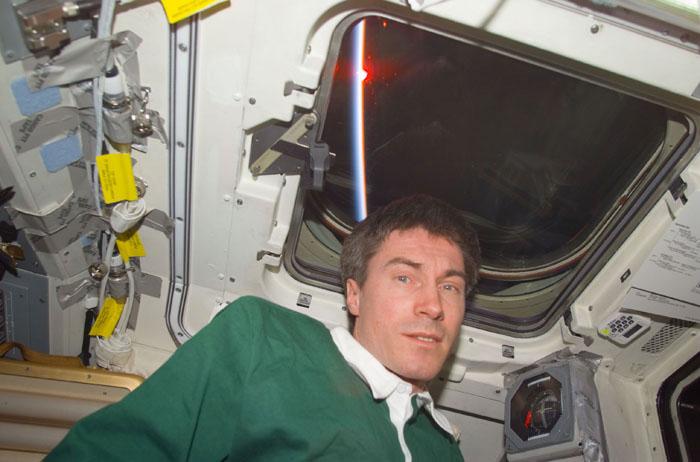
STS102-E-5147 (12 March 2001) --- Cosmonaut Sergei K. Krikalev, now a member of the STS-102 crew on Discovery's flight deck. A sun setting can be seen through the flight deck windows in the background. Krikalev, representing Rosaviakosmos, had been onboard the International Space Station (ISS) since early November 2000. The photograph was taken with a digital still camera.
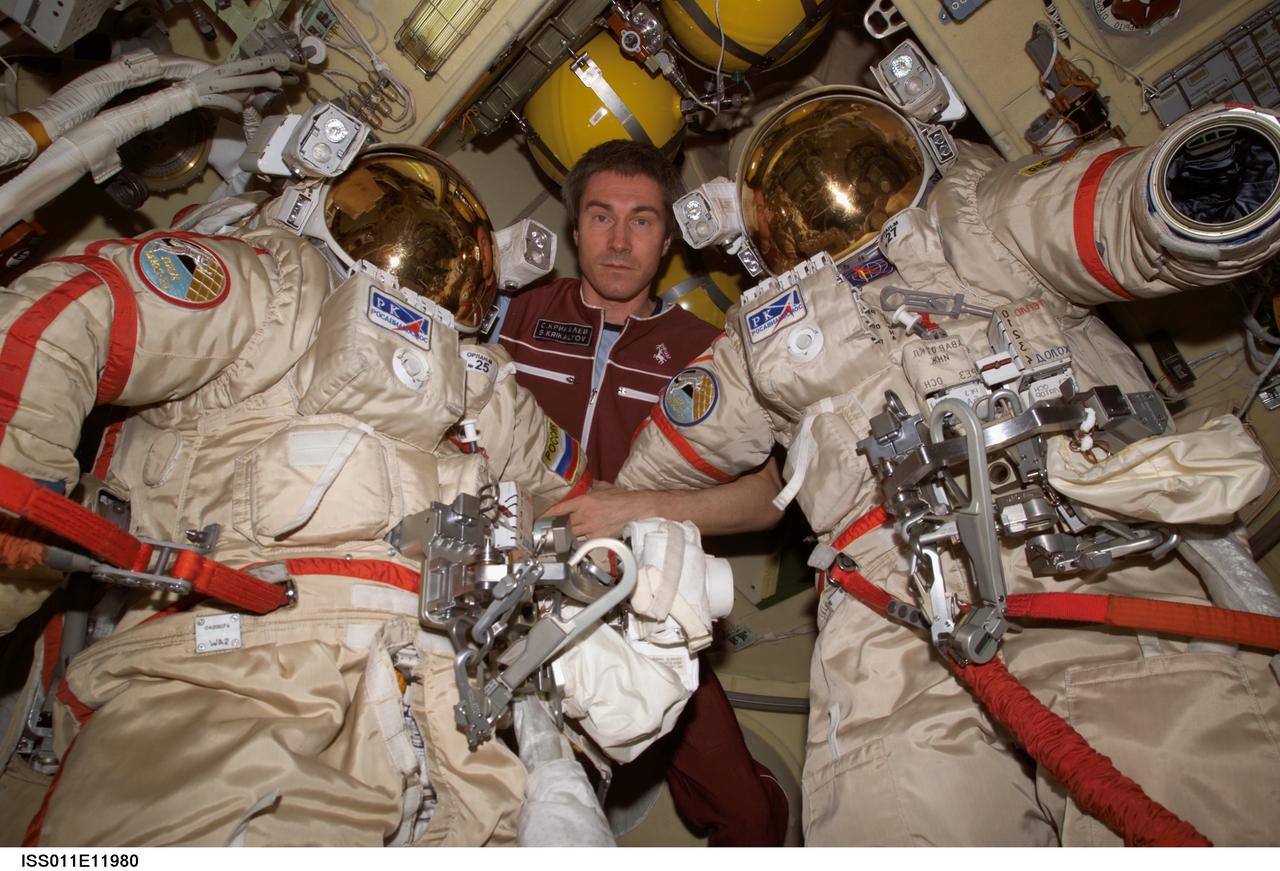
ISS011-E-11980 (17 August 2005) --- Cosmonaut Sergei K. Krikalev, Expedition 11 commander representing Russia's Federal Space Agency, poses with Russian Orlan spacesuits in the Pirs Docking Compartment of the International Space Station. The mission;s first spacewalk is scheduled for August 18.
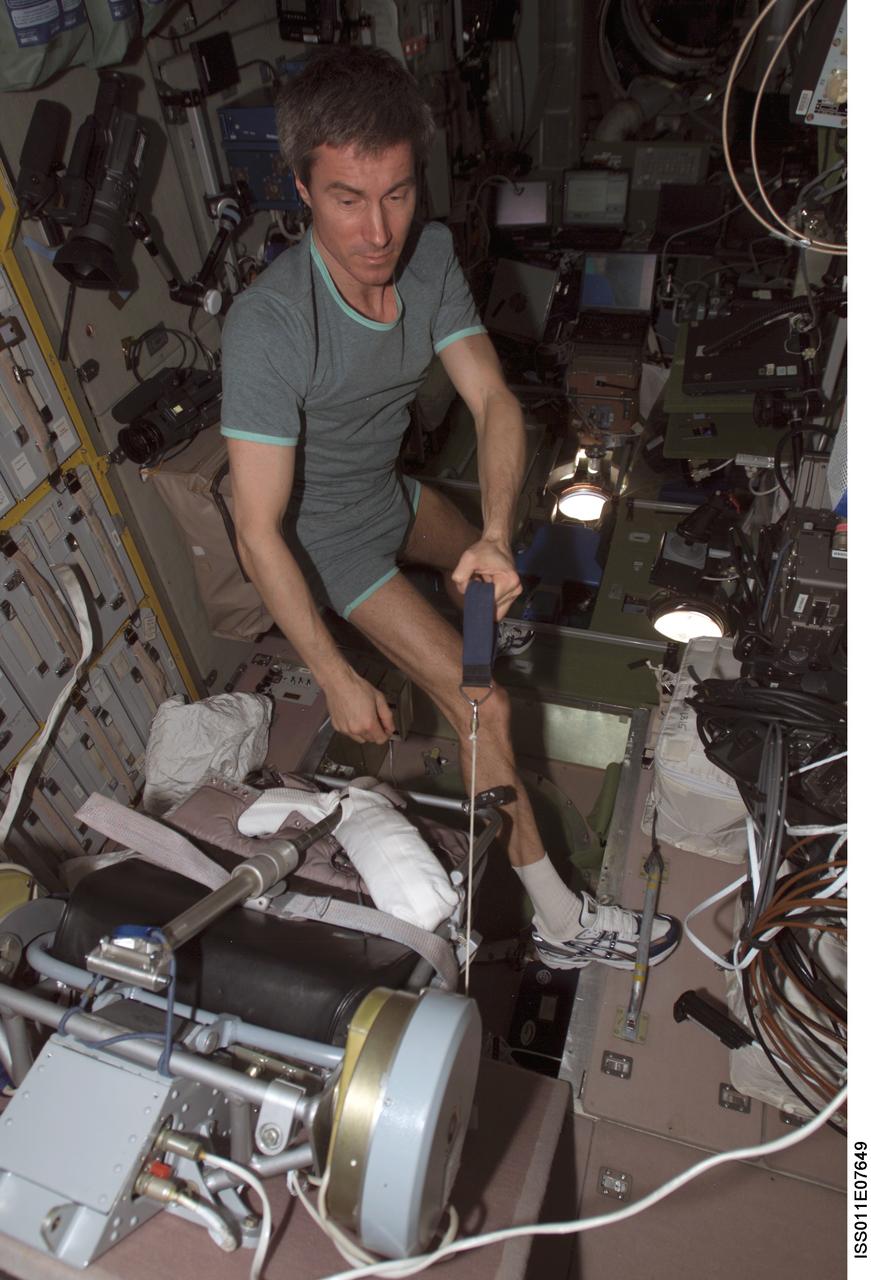
ISS011-E-07649 (31 May 2005) --- Cosmonaut Sergei K. Krikalev, Expedition 11 commander representing Russia's Federal Space Agency, exercises with bungee cord load trainer on the Russian VELO Ergometer in the Zvezda Service Module of the International Space Station (ISS).
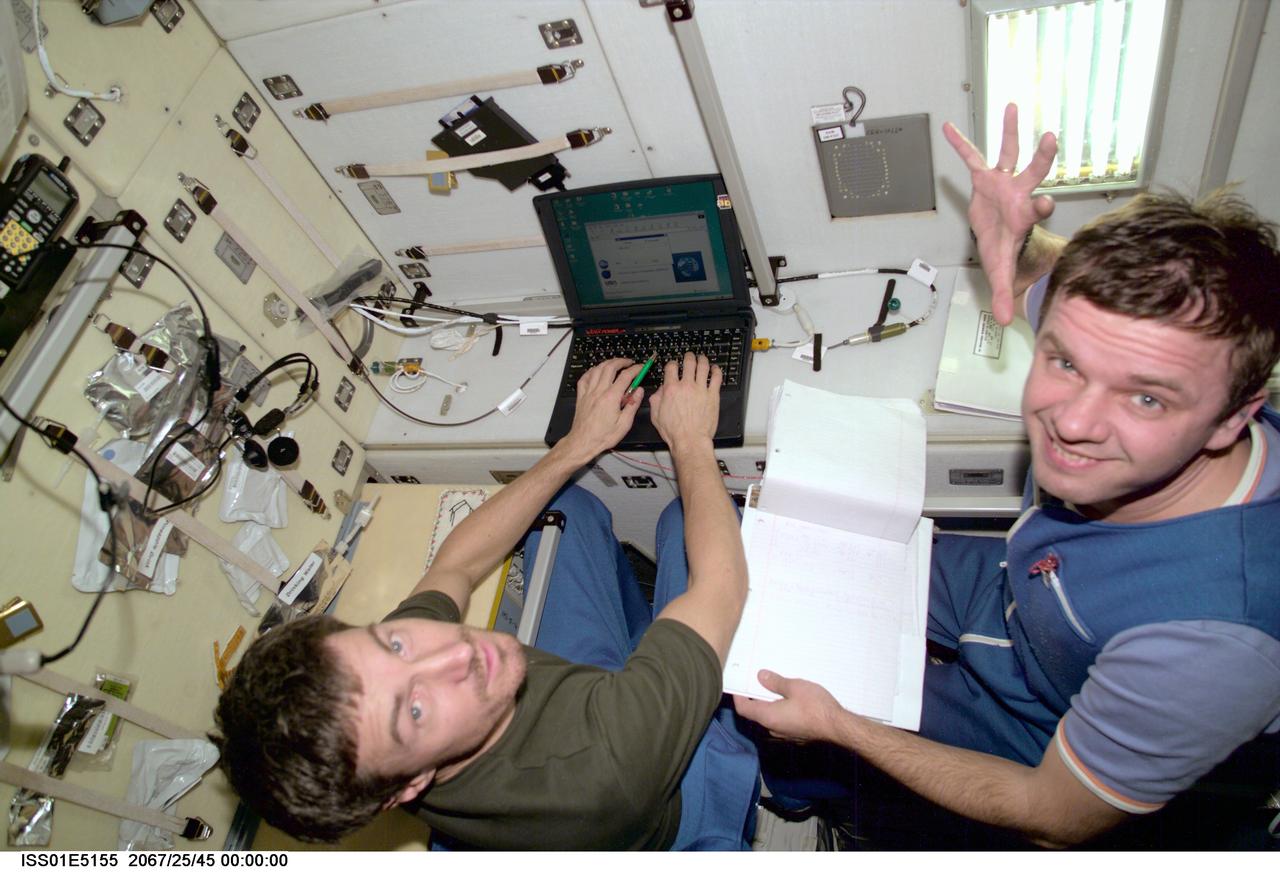
ISS01-E-5155 (December 2000) --- Cosmonauts Sergei K. Krikalev (left), Expedition One flight engineer, and Yuri P. Gidzenko, Soyuz commander, input data into a laptop computer in the Zvezda Service Module aboard the Earth-orbiting International Space Station (ISS).
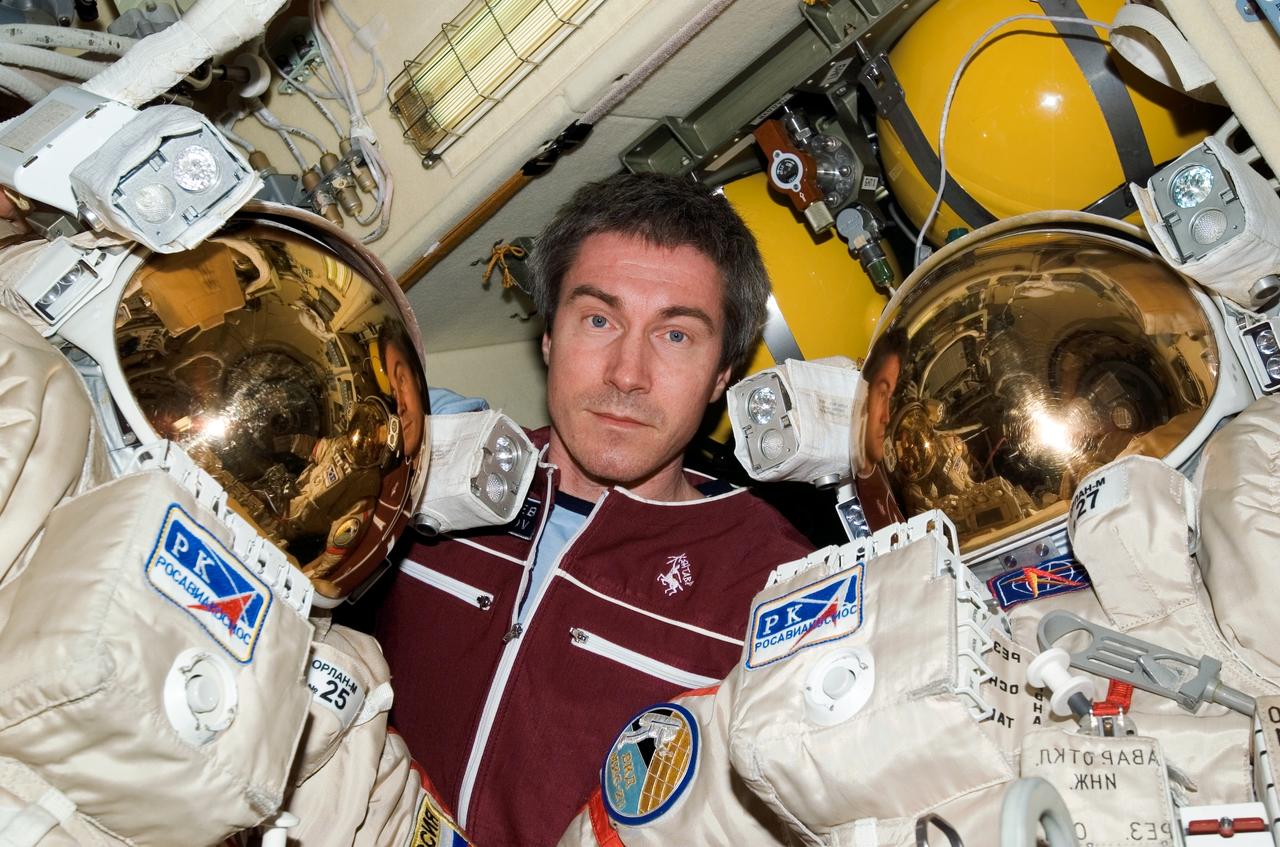
ISS011-E-11984 (17 August 2005) --- Cosmonaut Sergei K. Krikalev, Expedition 11 commander representing Russia's Federal Space Agency, poses with Russian Orlan spacesuits in the Pirs Docking Compartment of the international space station. The mission’s first spacewalk is scheduled for August 18.
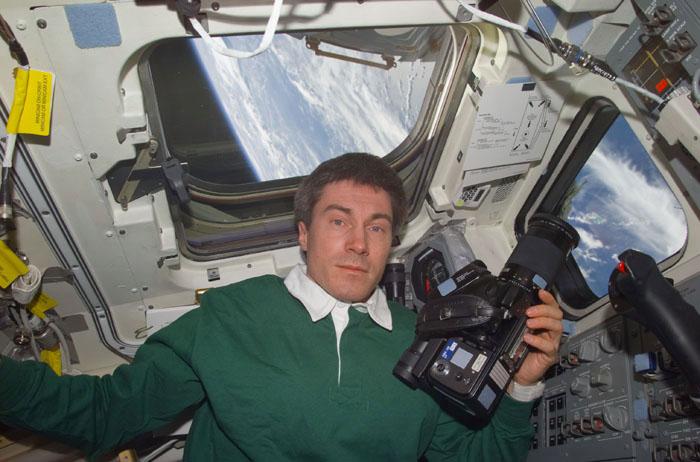
STS102-E-5142 (12 March 2001) --- Cosmonaut Sergei K. Krikalev, now a member of the STS-102 crew, prepares to use a camera on Discovery's flight deck. Krikalev, representing Rosaviakosmos, had been onboard the International Space Station (ISS) since early November 2000. The photograph was taken with a digital still camera.
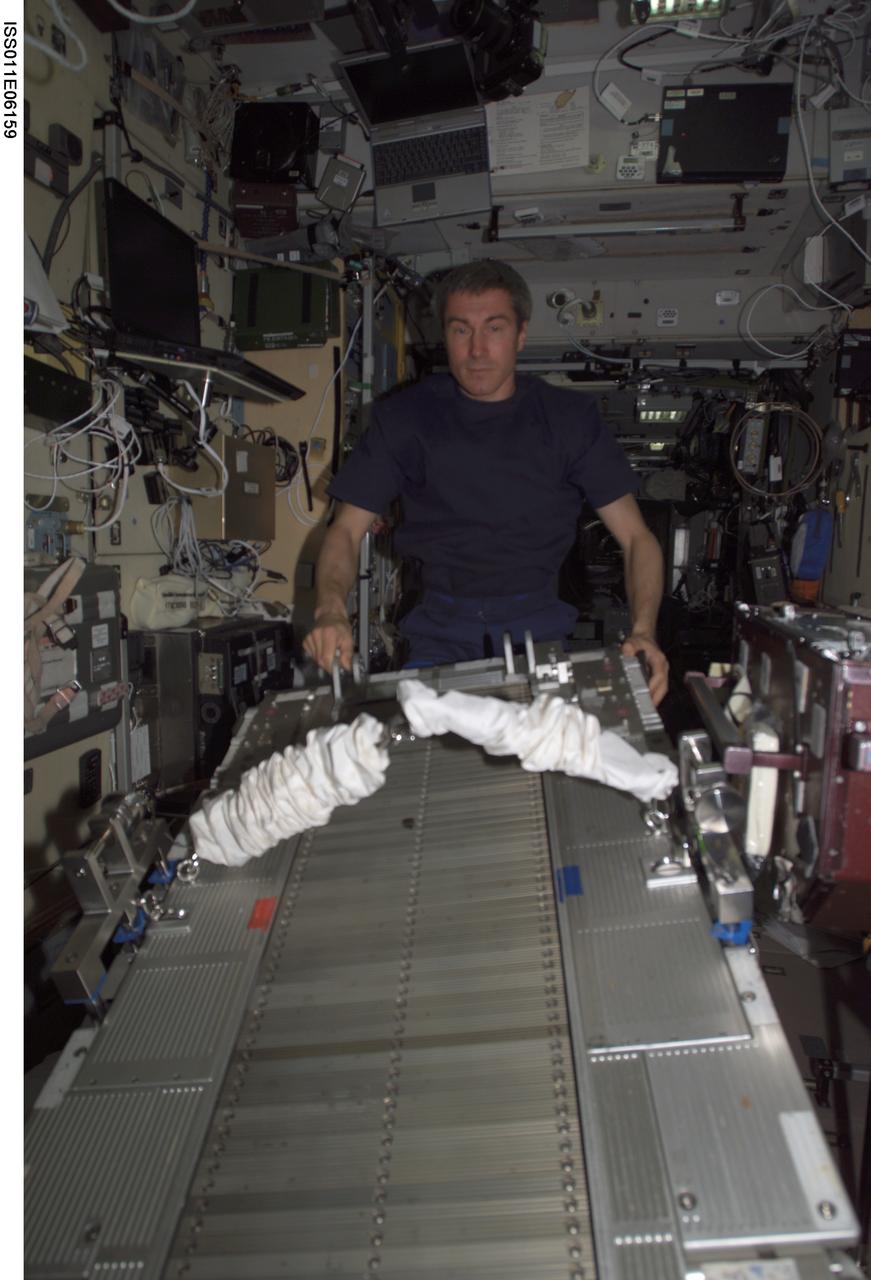
ISS011-E-06159 (16 May 2005) --- Cosmonaut Sergei K. Krikalev, Expedition 11 commander representing Russia's Federal Space Agency, works with the Treadmill Belt Assembly and exercise harness on the Treadmill Vibration Isolation System (TVIS) Chassis Assembly during an In-Flight Maintenance (IFM) in the Zvezda Service Module of the International Space Station (ISS).
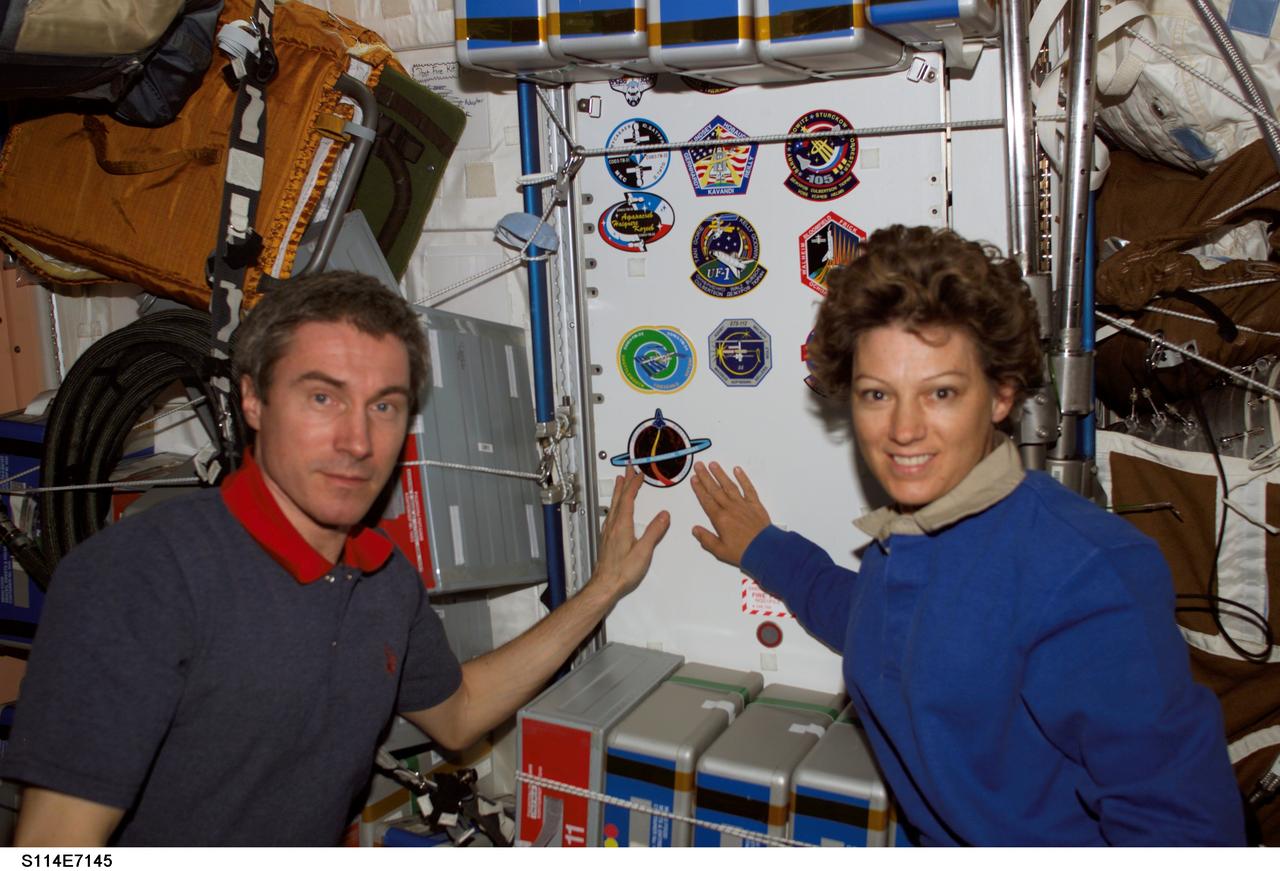
S114-E-7145 (5 August 2005) --- Astronaut Eileen M. Collins (right), STS-114 commander, and cosmonaut Sergei K. Krikalev, Expedition 11 commander representing Russia's Federal Space Agency, pose for a photo in the Unity node after the STS-114 crew patch was added to the growing collection of insignias representing crews who have worked on the International Space Station.
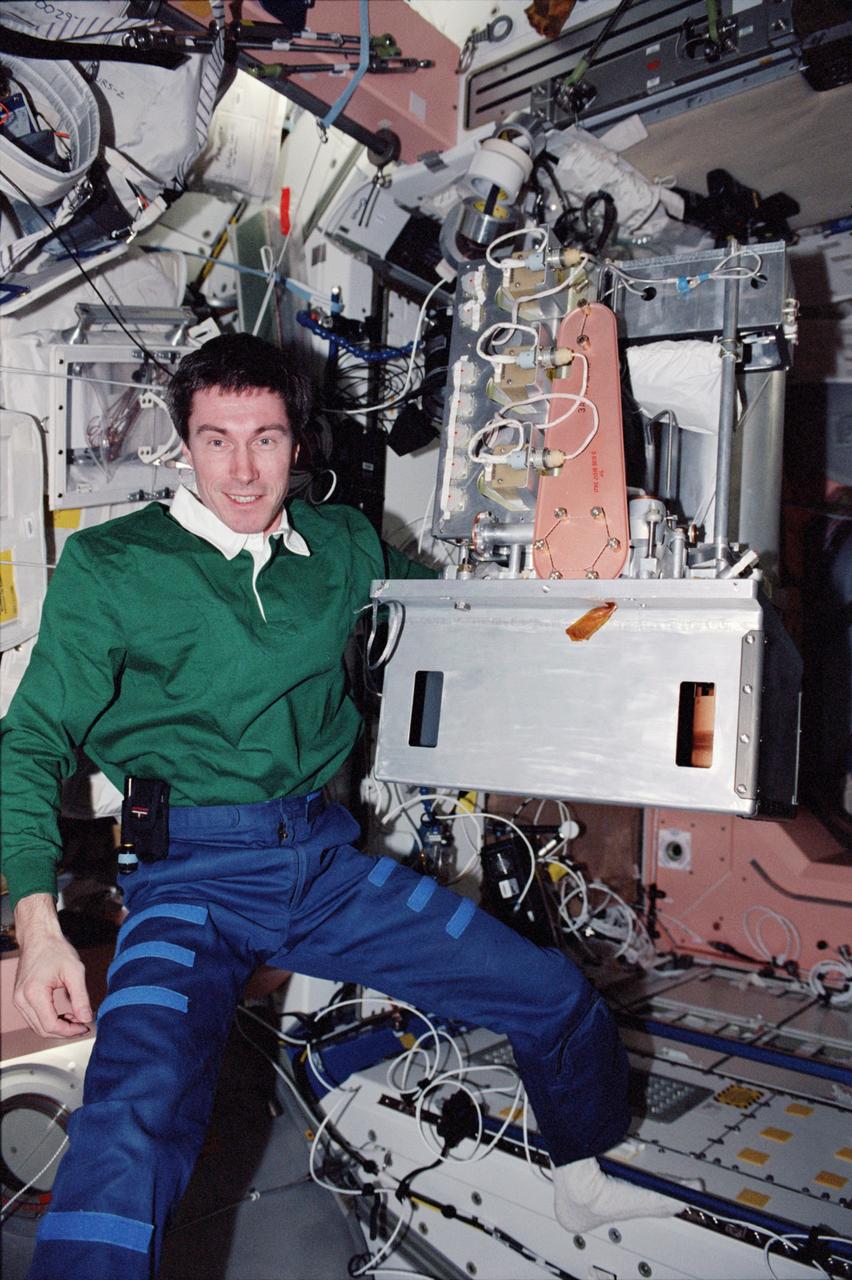
STS098-346-0032 (7-20 February 2001) --- Cosmonaut Sergei K. Krikalev, Expedition One flight engineer representing the Russian Aviation and Space Agency, carries the Vozdukh in the Unity node. Vozdukh is designed to maintain the partial pressure of carbon dioxide in the cabin air within the medically permissible range for long-duration exposure. It provides the primary means of removing CO2 from the outpost's atmosphere, and its operation is based on the use of regenerated adsorbers of CO2.

ISS011-E-11287 (28 July 2005) --- Onboard the International Space Station, cosmonaut Sergei Krikalev, Russia Federal Space Agency representative and commander of Expedition 11, opens a hatch in the tunnel leading to the Space Shuttle Discovery. The seven-member Shuttle crew was only moments away from joining its hosts on the orbital outpost. The two crews are scheduled to share several days of joint activities in space.

ISS011-E-13021 (14 September 2005) --- Cosmonaut Sergei K. Krikalev, Expedition 11 commander representing Russia's Federal Space Agency, works with the European Space Agency (ESA) Matroshka radiation experiment in the Zvezda Service Module of the International Space Station. Matroshka, a human-torso-like device, was retrieved from the exterior of the station during an August spacewalk, for return to Earth. The experiment is designed to better understand the exposure of astronauts, including those making spacewalks, to radiation.
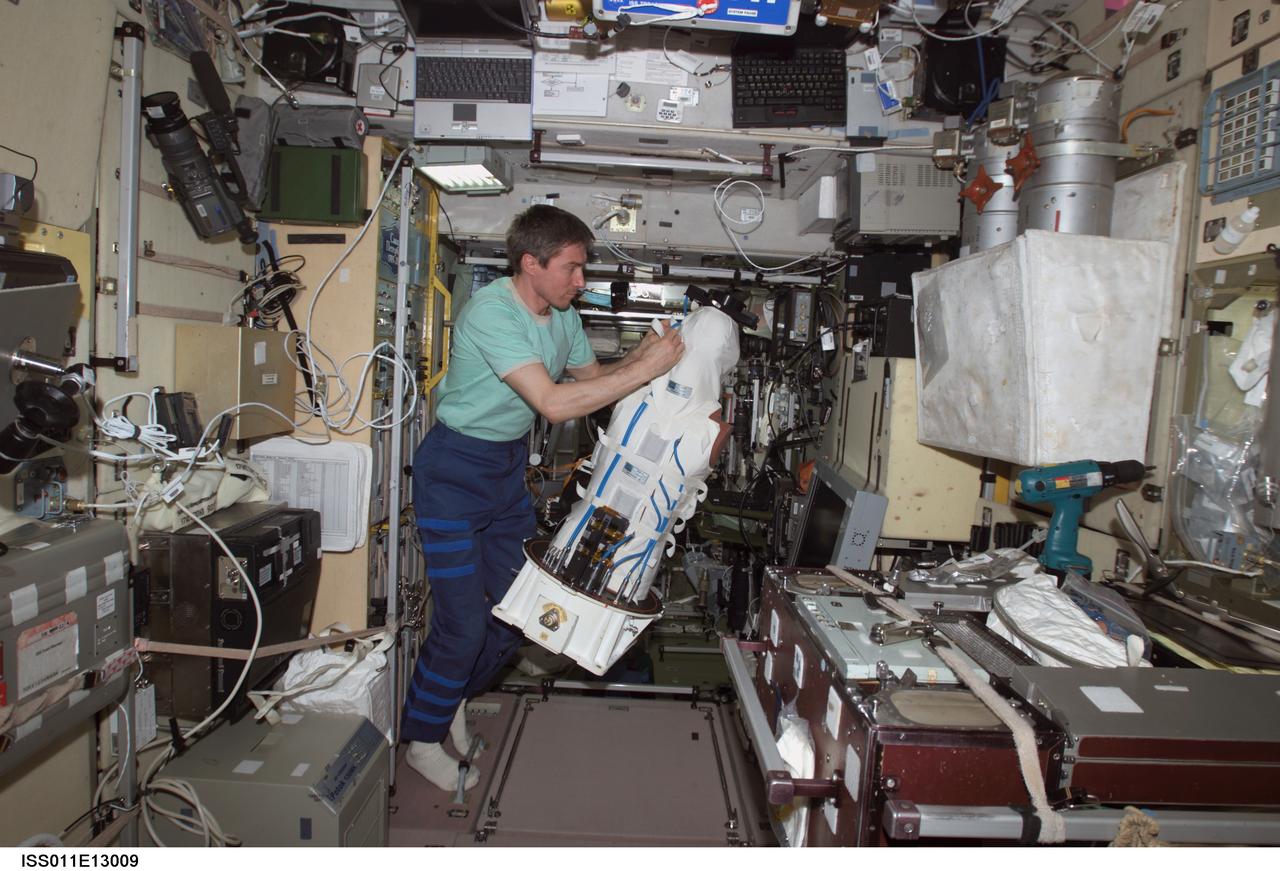
ISS011-E-13009 (14 September 2005) --- Cosmonaut Sergei K. Krikalev, Expedition 11 commander representing Russia's Federal Space Agency, works with the European Space Agency (ESA) Matroshka radiation experiment in the Zvezda Service Module of the International Space Station. Matroshka, a human-torso-like device, was retrieved from the exterior of the station during an August spacewalk, for return to Earth. The experiment is designed to better understand the exposure of astronauts, including those making spacewalks, to radiation.
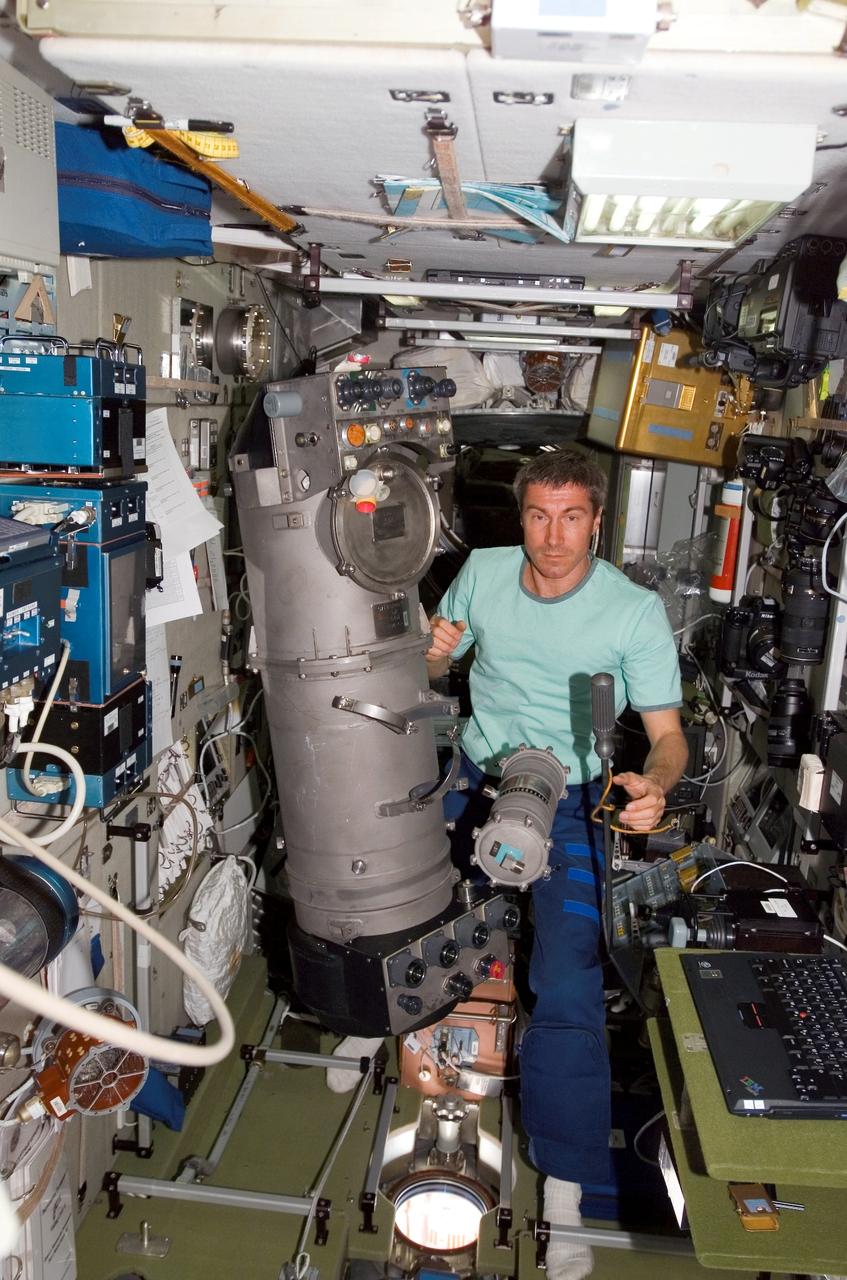
ISS011-E-05513 (5 May 2005) --- Cosmonaut Sergei K. Krikalev, Expedition 11 commander representing Russia's Federal Space Agency, poses beside the disconnected Liquid Unit #5 (BZh-5) and the O2 end-filter (BD, secondary purification unit) from the BZh5 he removed while making repairs to the Elektron oxygen generator in the Zvezda Service Module of the international space station.
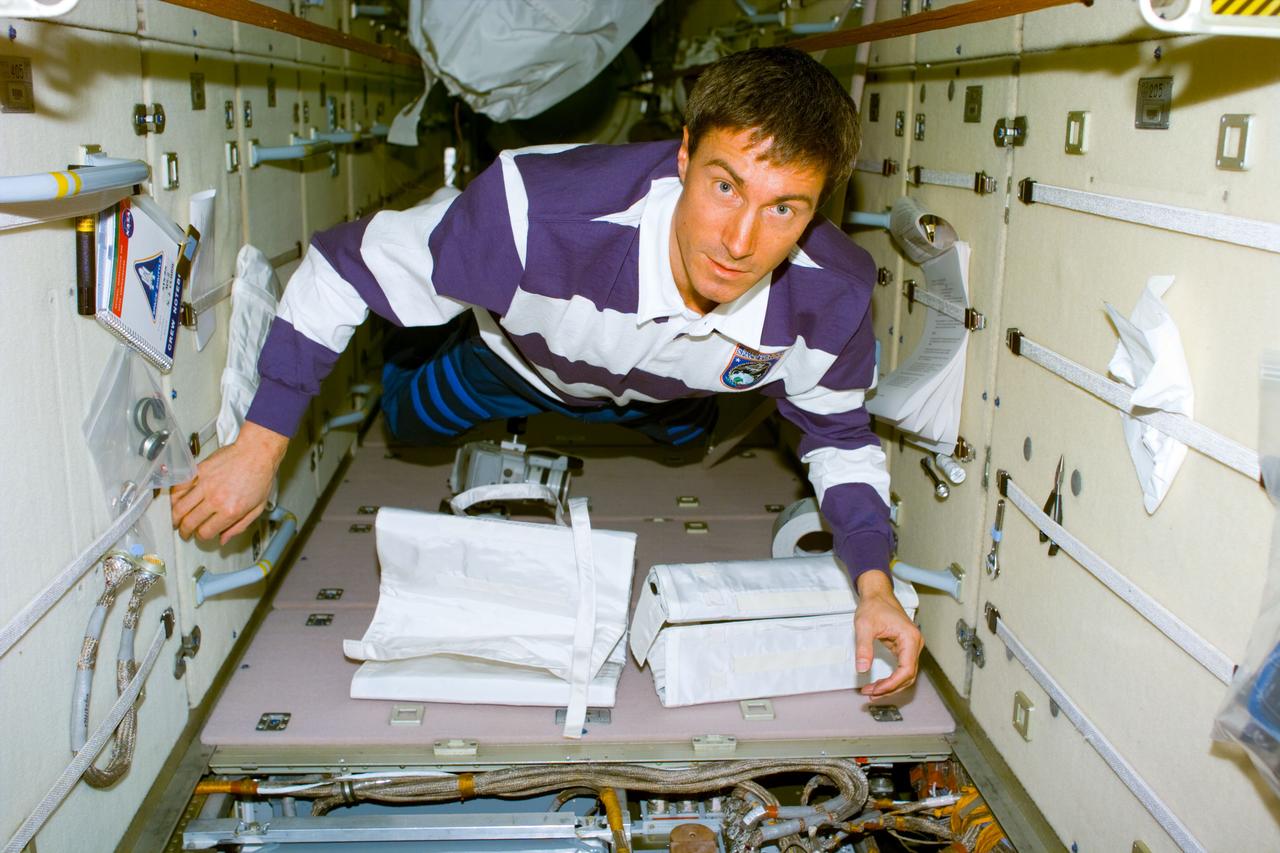
S88-E-5072 (12-11-98) --- Sergei Krikalev, mission specialist representing the Russian Space Agency (RSA), onboard Zarya. The photo was taken with an electronic still camera at 01:54:25 GMT, Dec. 11.
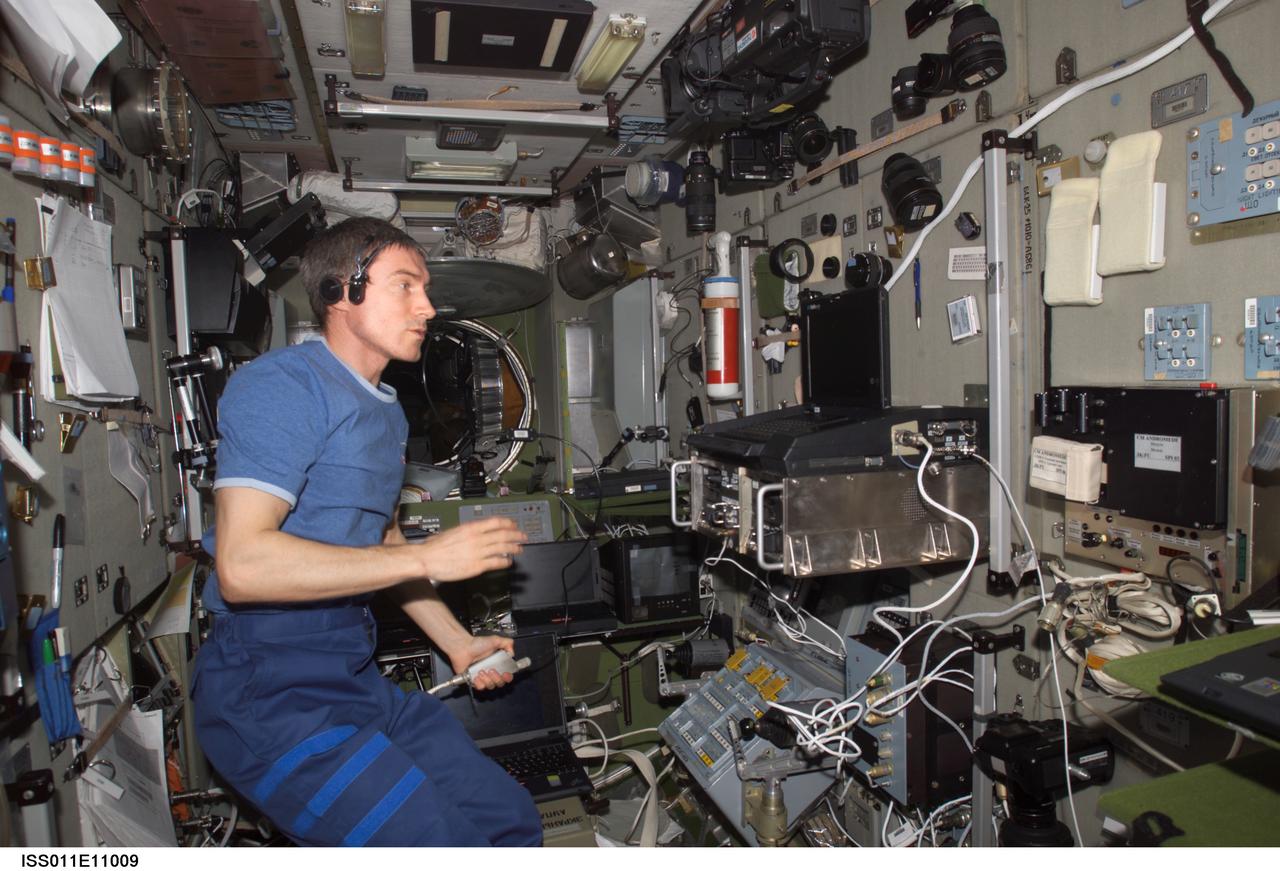
ISS011-E-11009 (28 July 2005) --- Cosmonaut Sergei Krikalev of Russia's Federal Space Agency, Expedition 11 commander onboard the International Space Station (ISS), communicates with the crew onboard the soon to be approaching Space Shuttle.
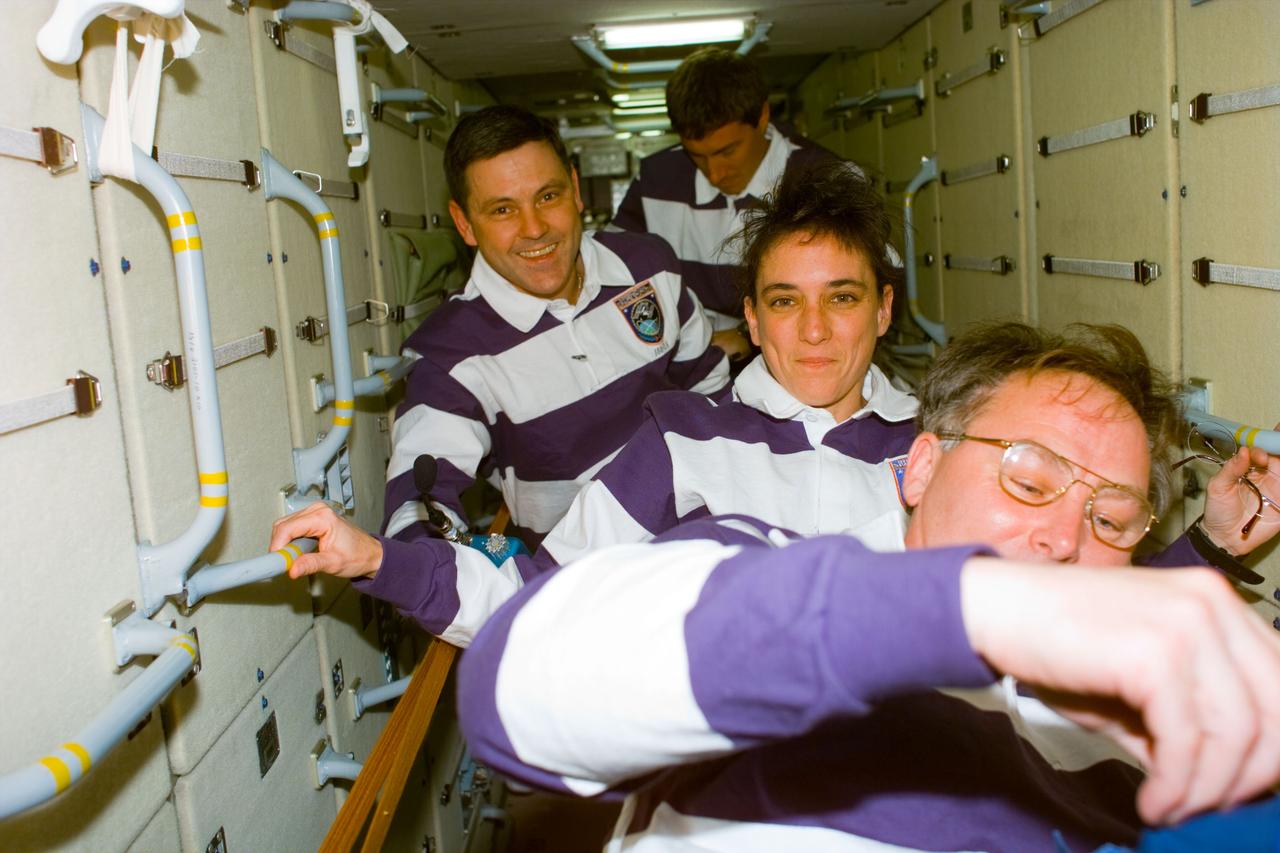
S88-E-5122 (12-10-98) --- From the front, Jerry L. Ross, Nancy J. Currie, Robert D. Cabana and Sergei Krikalev traverse single-file through the Russian-built Zarya module. Cabana, mission commander, and his crew commanders were busy readying Zarya for its ISS role. The other three pictured crew members are mission specialists, with Krikalev representing the Russian Space Agency (RSA). The photo was taken with an electronic still camera (ESC) at 21:30:37 GMT, Dec. 10.
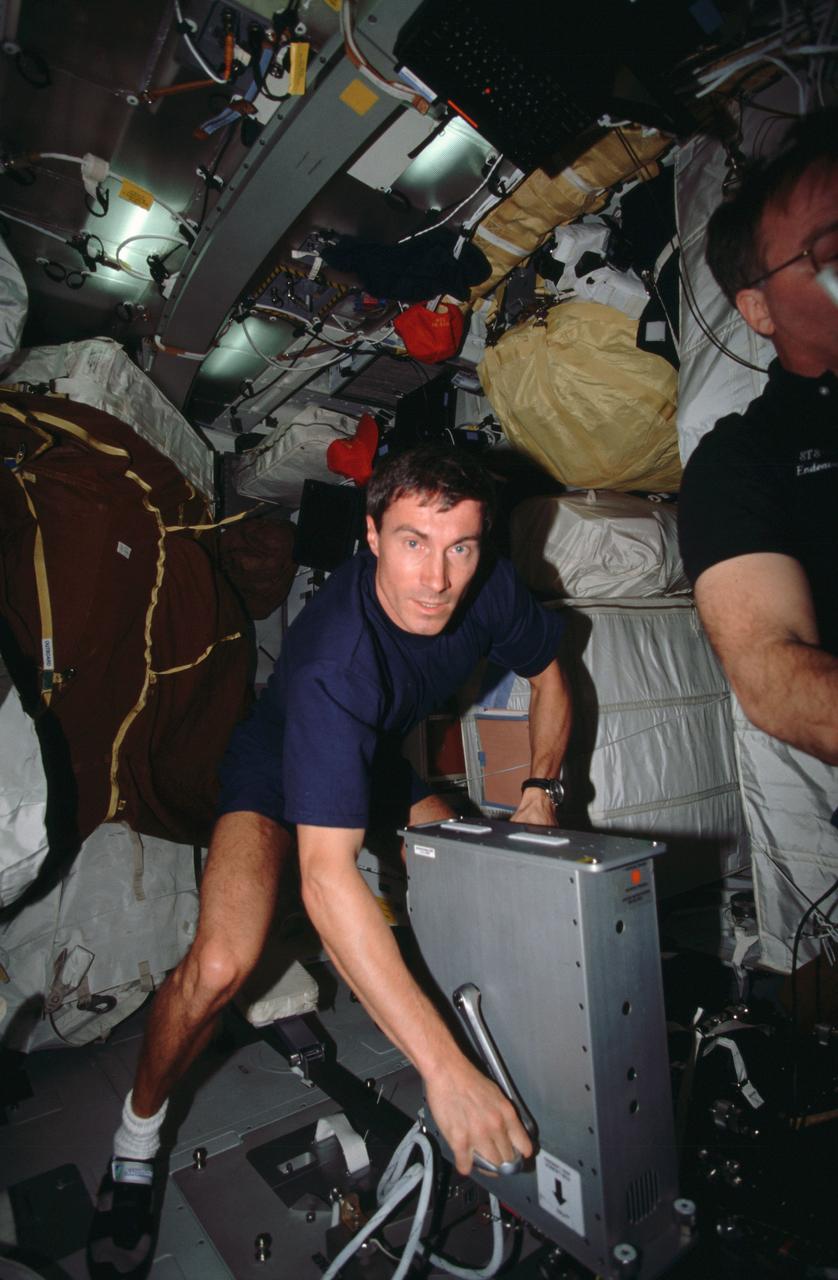
STS088-307-036 (4-15 December 1998) --- Cosmonaut Sergei K. Krikalev, mission specialist, uses a bicycle ergometer to exercise his upper body on the busy middeck of the Earth-orbiting Space Shuttle Endeavour. Krikalev, named recently to serve on the first International Space Station (ISS) crew, is representing the Russian Space Agency (RSA). After devoting the major portion of its mission time to various tasks to ready the Russian-built FGB Module (Zarya) and the docked United States-built Unity Module (Node 1), the six-member crew released the tandem toward mission’s end.
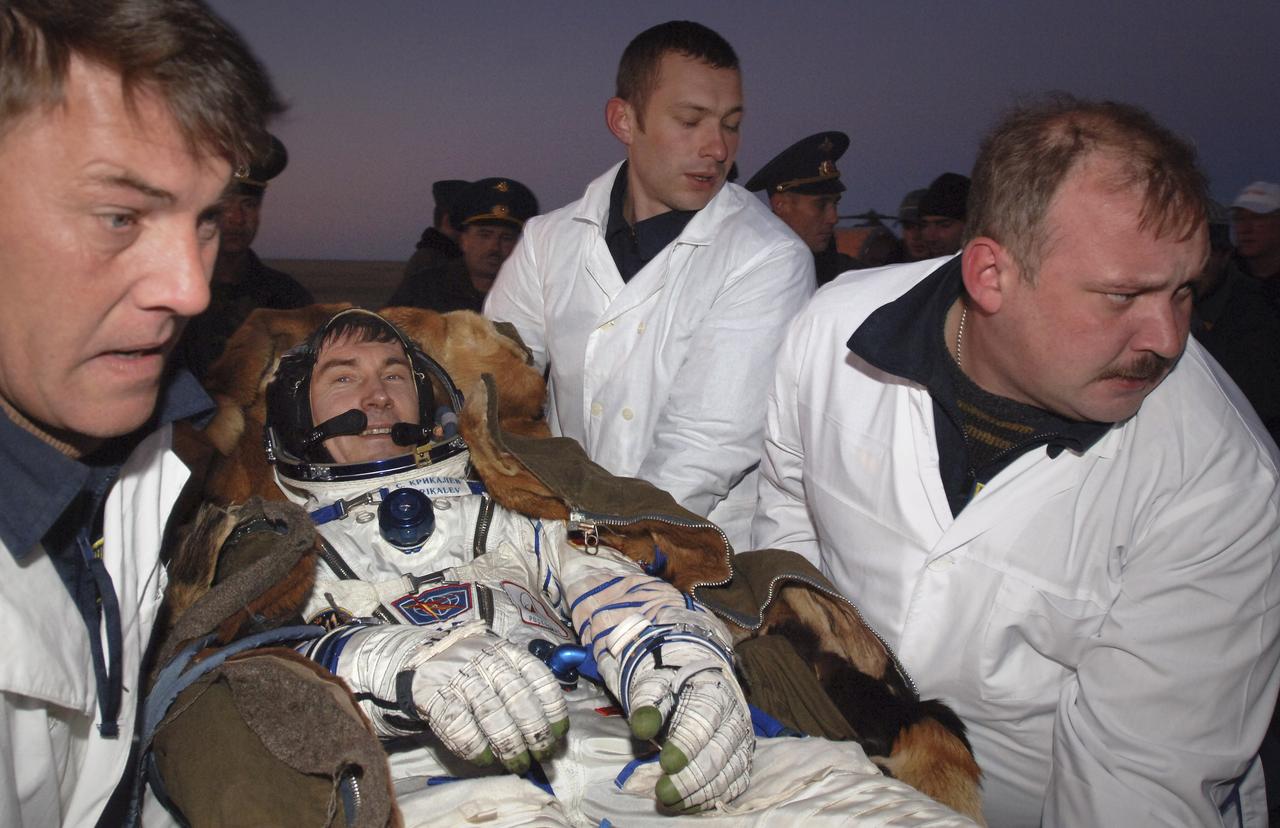
Expedition 11 cosmonaut Sergei Krikalev smiles after landing, Tuesday, Oct. 11, 2005, near Arlalyk, Kazakhstan. Krikalev and NASA astronaut John Phillips landed after a six-month mission in orbit. Along with American businessman Greg Olsen, who visited the station for more than a week, Phillips and Krikalev returned to Earth aboard a Russian Soyuz spacecraft. Photo Credit: (NASA/Bill Ingalls)
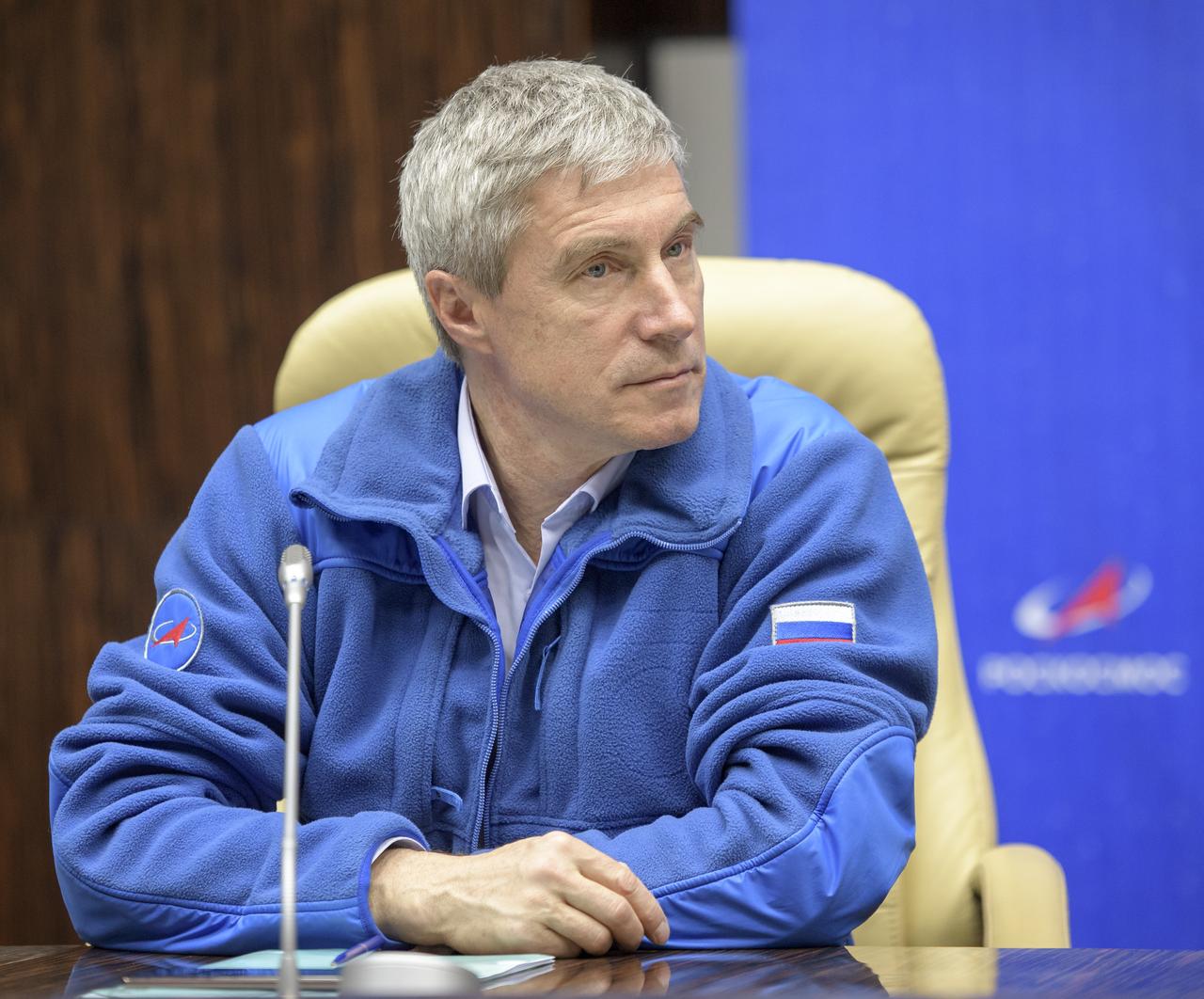
Roscosmos Director of Human Spaceflight Programs Sergei Krikalev listens to reporter's questions during a Expedition 59 post-docking press conference, Friday, March 15, 2019 at the Baikonur Hotel in Baikonur, Kazakhstan. Photo Credit: (NASA/Bill Ingalls)
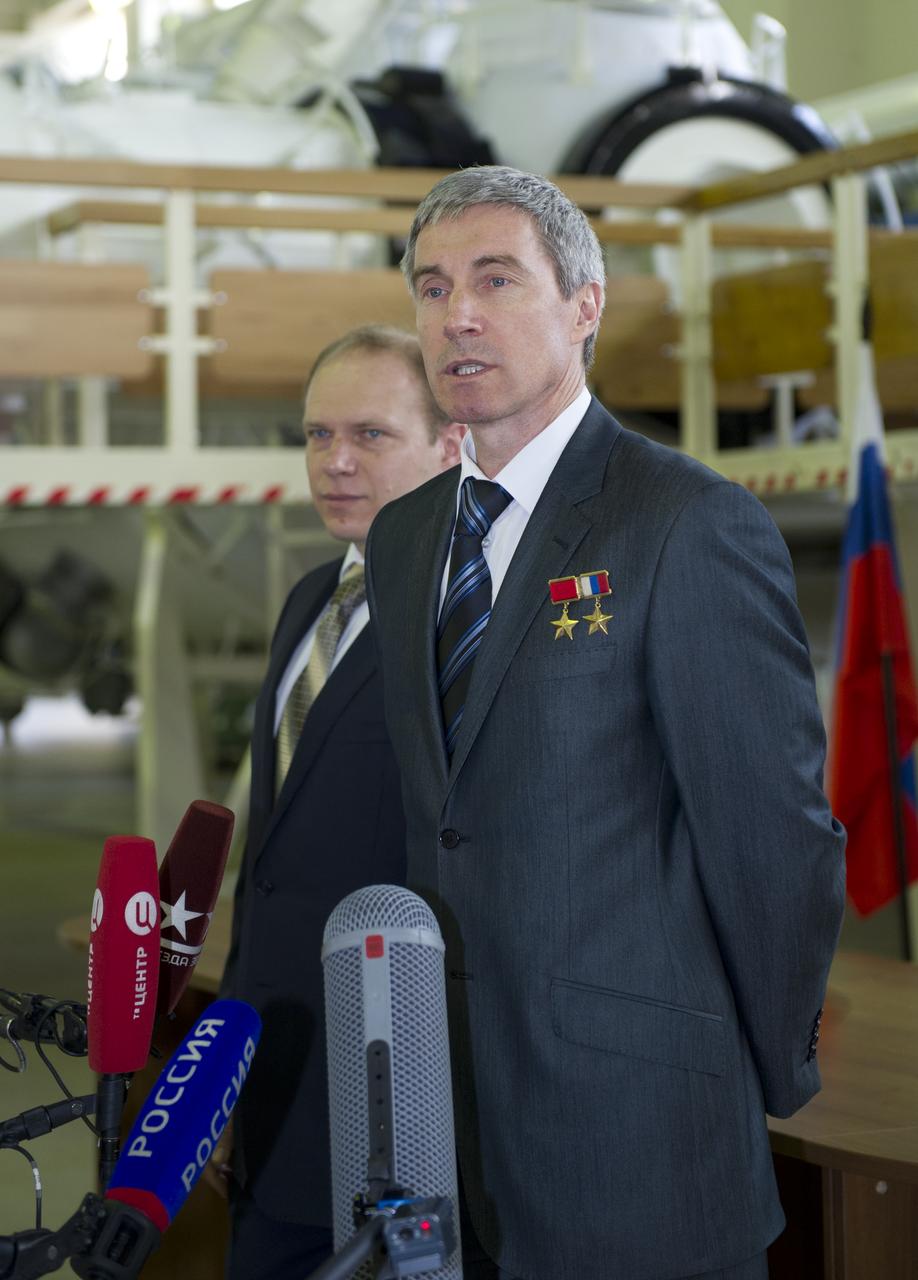
Sergei Krikalev, Director of the Gagarin Cosmonaut Training Center, answers a reporter's question, Monday, April 23, 2012 in Star City, Russia. Krikalev is joined by Oleg Kotov, Deputy Director, GCTC. Photo Credit: (NASA/Carla Cioffi)
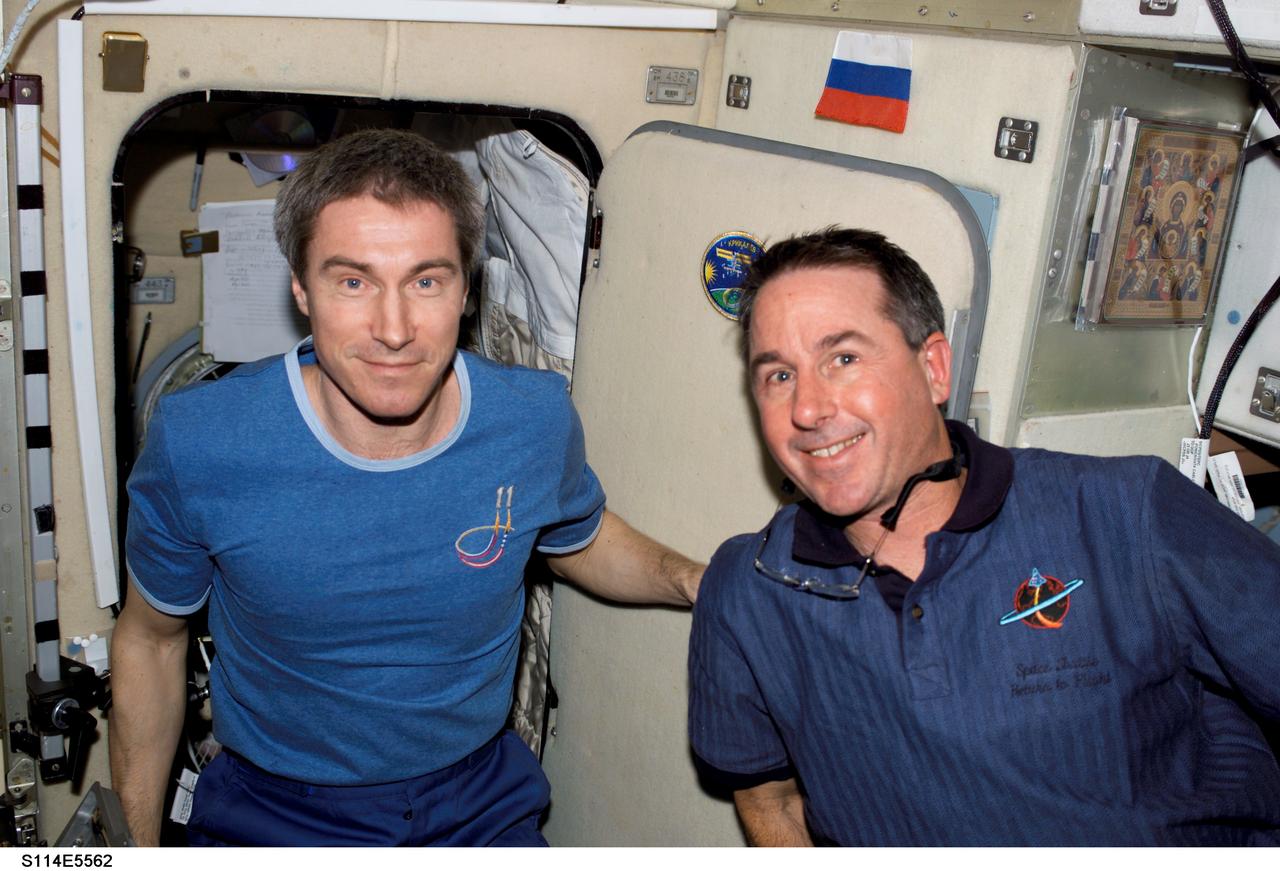
S114-E-5562 (28 July 2005) --- Russia's Federal Space Agency cosmonaut Sergei Krikalev (left) and NASA astronaut Stephen K. Robinson greet as Robinson and his STS-114 crewmates become the first human beings to interface face-to-face with the Expedition 11 crewmembers onboard the International Space Station. Earlier on this third flight day for STS-114, the Shuttle and its seven-member crew flawlessly docked with the orbiting outpost where all nine crew members will spend several days conducting joint activities.
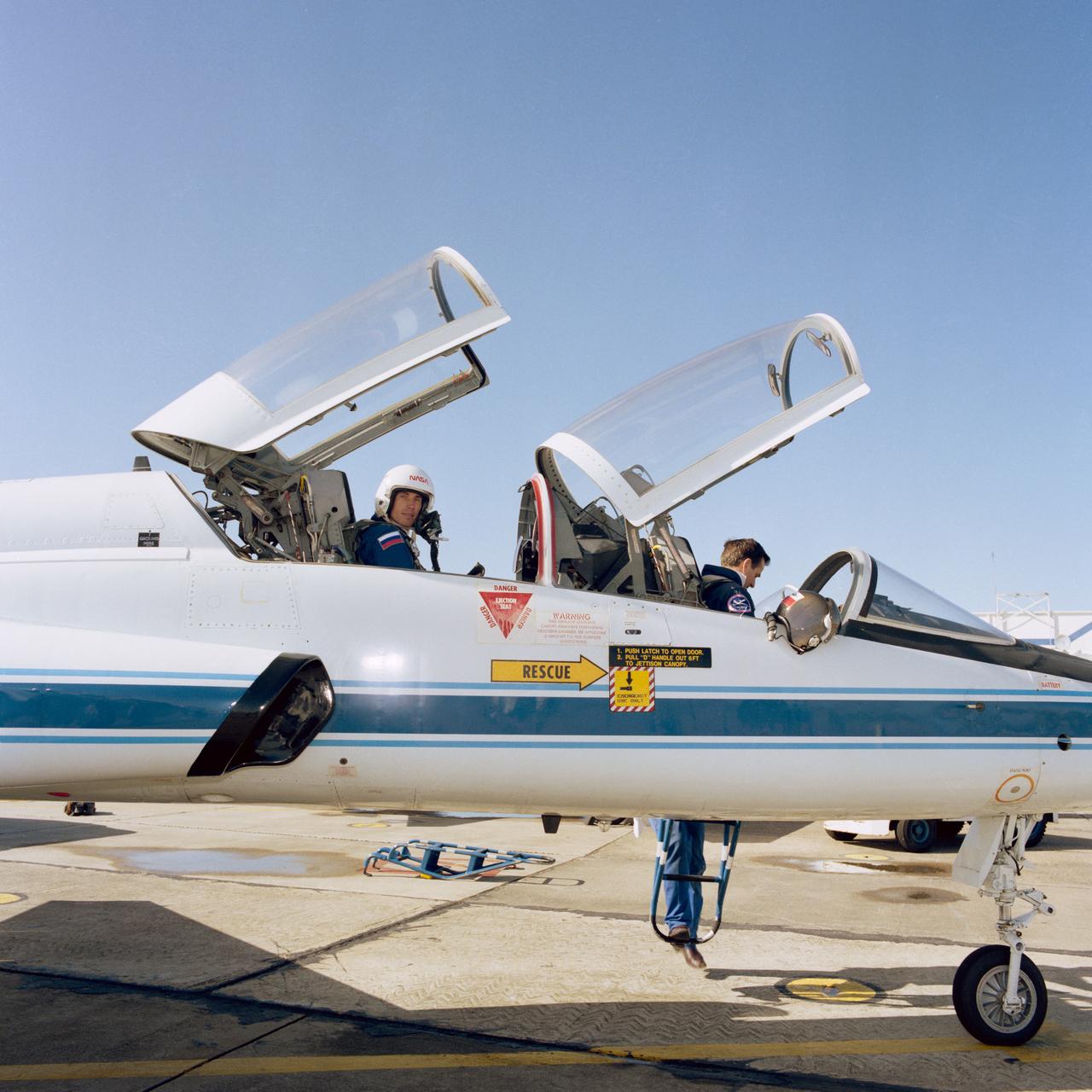
Seated in the rear station of a NASA T-38 jet trainer aircraft, Russian Cosmonaut Sergei Krikalev prepares to take a familiarization flight.
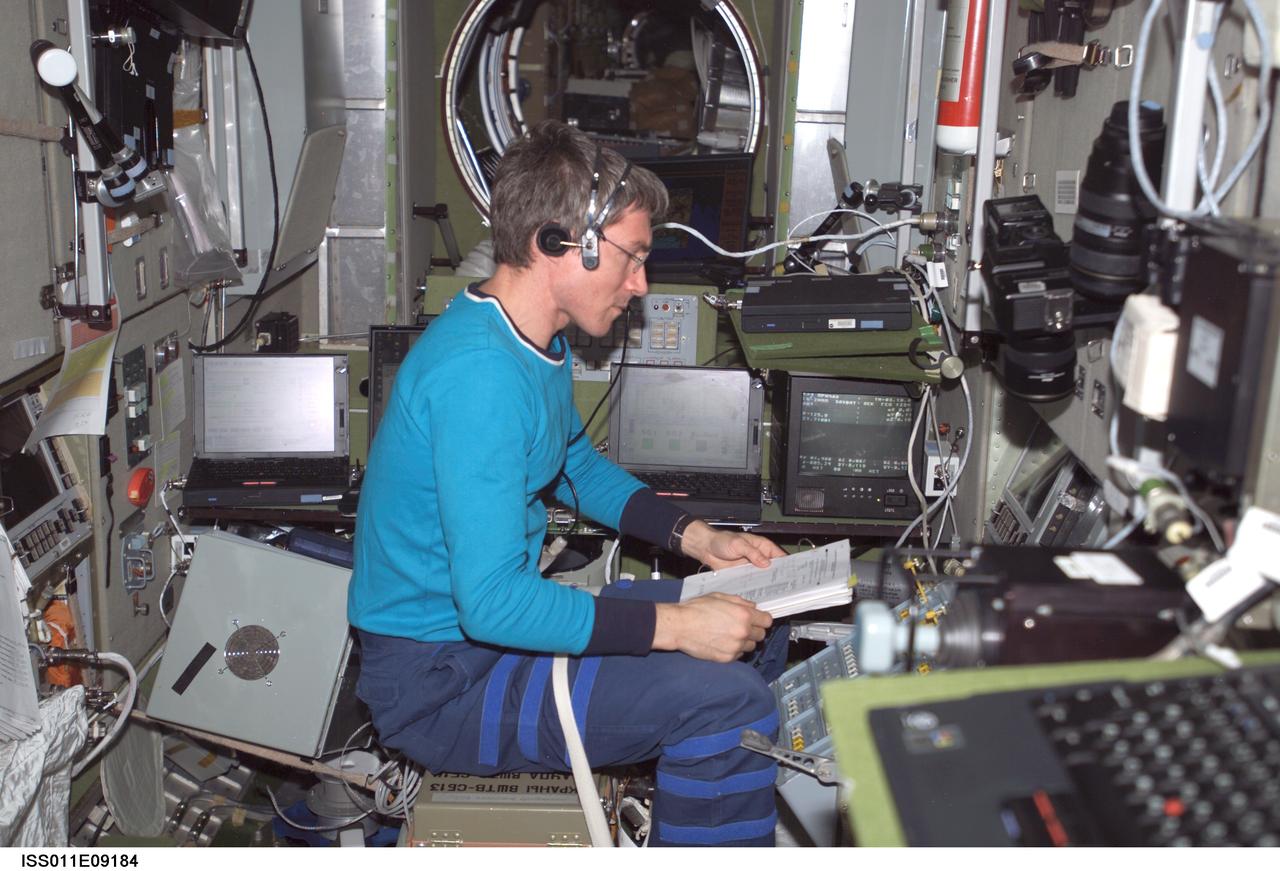
ISS011-E-09184 (18 June 2005) --- Cosmonaut Sergei K. Krikalev, Expedition 11 commander representing Russia's Federal Space Agency, practices docking procedures with the TORU teleoperated control system in the Zvezda Service Module of the International Space Station (ISS) in preparation for the docking of the Progress 18 spacecraft. Krikalev, using the Simvol-TS screen and hand controllers, could manually dock the Progress to the Station in the event of a failure of the Kurs automated docking system.
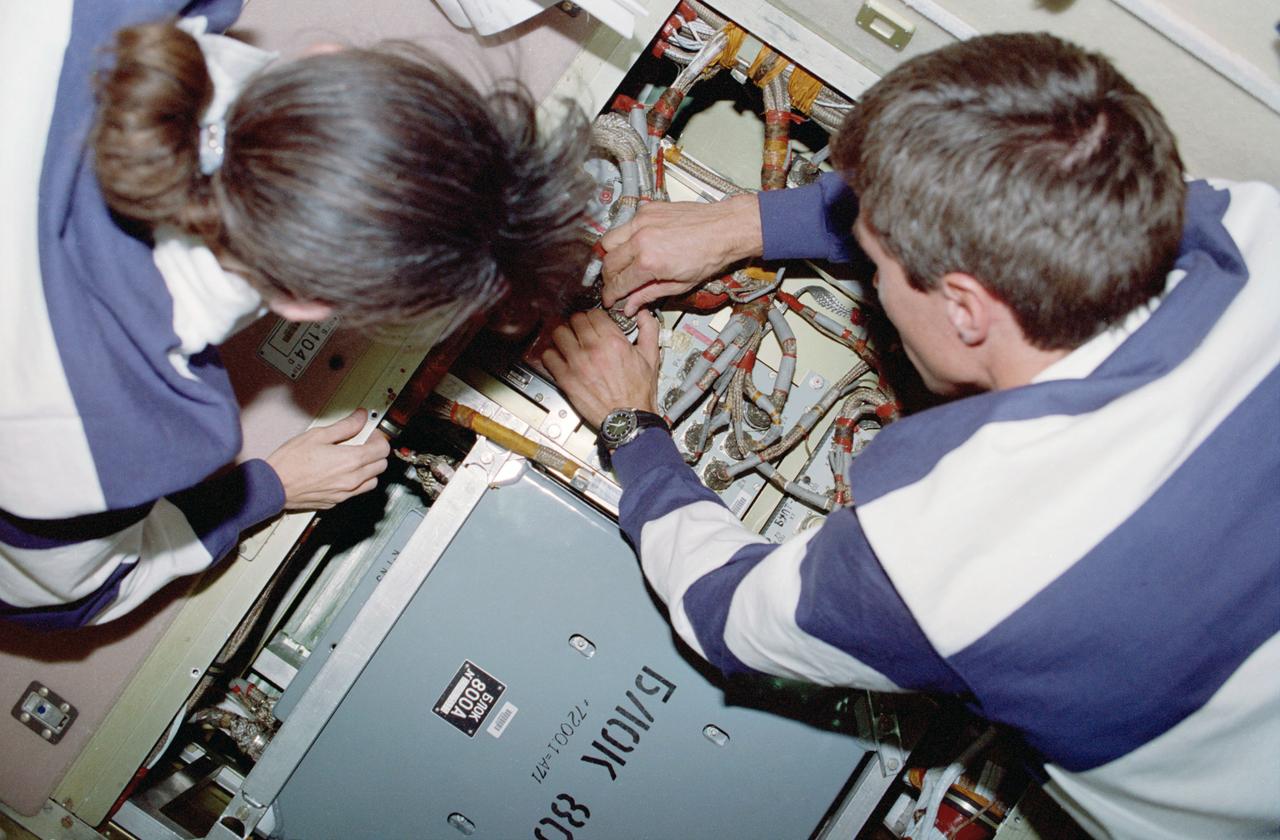
STS088-334-029 (4-15 Dec. 1998) --- Astronaut Nancy J. Currie, mission specialist, and cosmonaut Sergei K. Krikalev, mission specialist representing the Russian Space Agency (RSA), perform an in-flight maintenance on a battery charging unit on the Russian-built FGB Module (Zarya). One of Zarya's six batteries had experienced a problem discharging stored energy in its automatic configuration. Krikalev had swapped out an identical component during two previous flights on the Russia?s Mir Space Station.
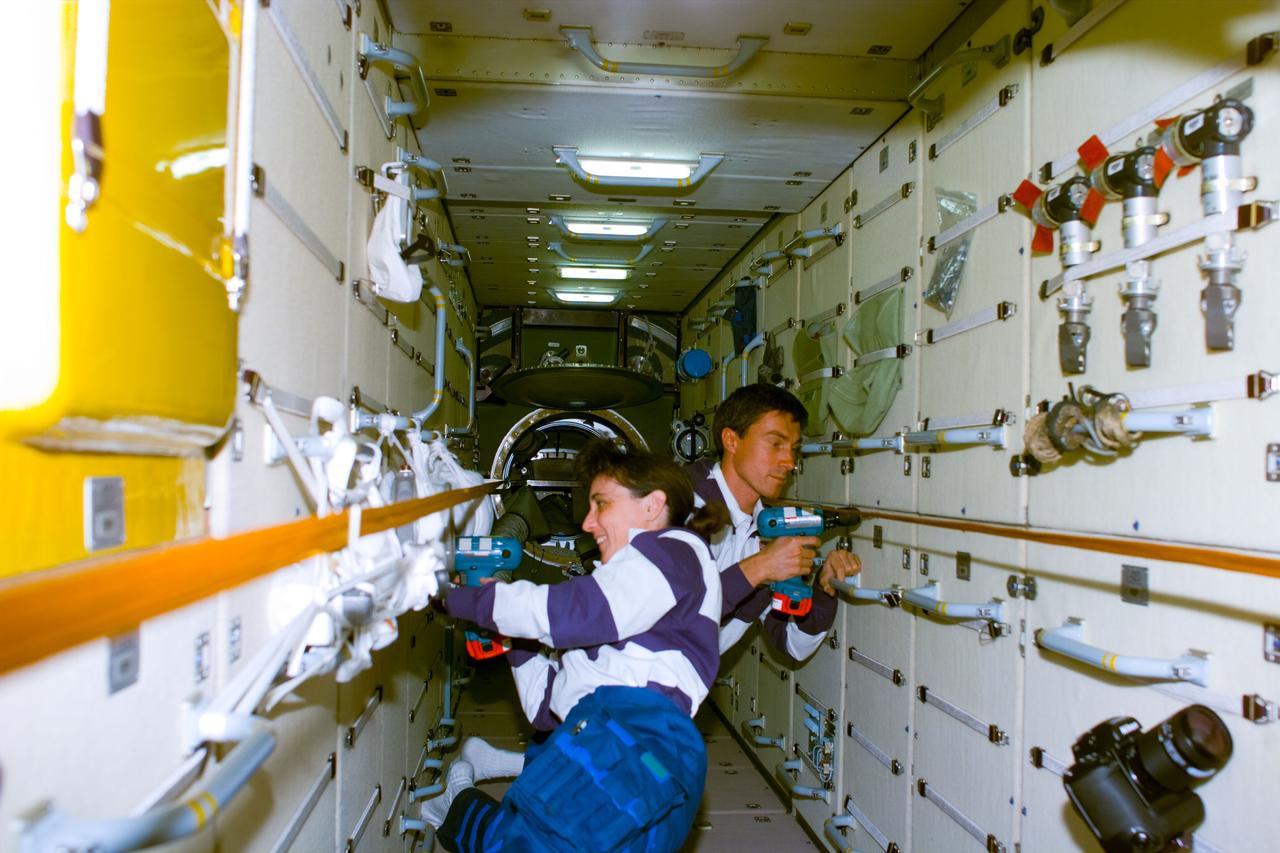
S88-E-5085 (12-11-98) --- Nancy J. Currie and Sergei Krikalev use rechargeable power tools to tighten and loosen nuts onboard the Russian-built Zarya module which they entered on Flight Day 8. The two are mission specialists, with Krikalev representing the Russian Space Agency (RSA). The photo was taken with an electronic still camera (ESC) at 05:28:53 GMT, Dec. 11.
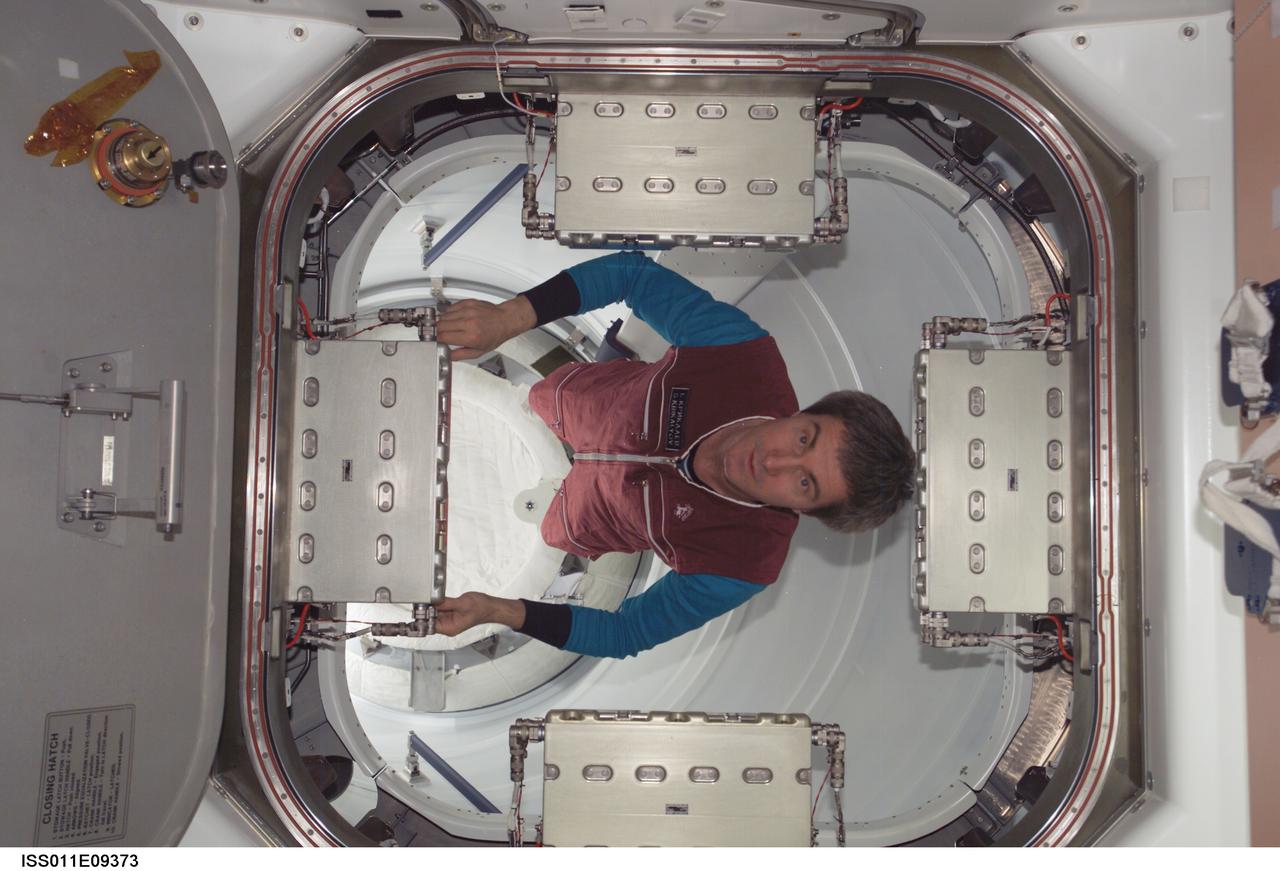
ISS011-E-09373 (21 June 2005) --- Cosmonaut Sergei K. Krikalev, Expedition 11 commander representing Russia's Federal Space Agency, prepares to uninstall two of the four Control Panel Assemblies (CPA) from the Unity node’s Common Berthing Assembly (CBA) on the International Space Station (ISS).

S88-E-5107 (12-11-98) --- Sergei Krikalev, mission specialist representing the Russian Space Agency (RSA), surrounded by monitors and computers on the flight deck, holds a large camera lens. The photo was taken with an electronic still camera (ESC) at 09:33:22 GMT, Dec. 11.
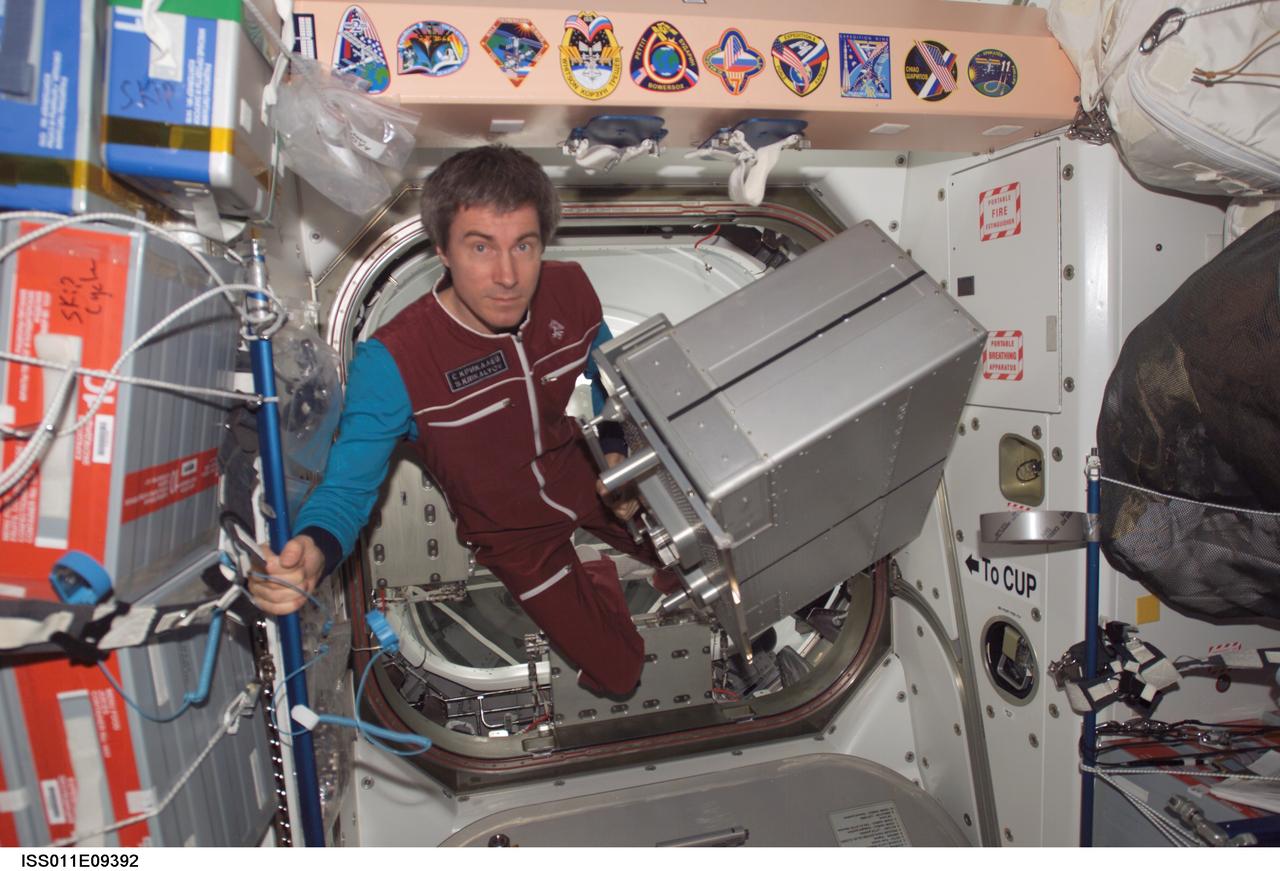
ISS011-E-09392 (21 June 2005) --- Cosmonaut Sergei K. Krikalev, Expedition 11 commander representing Russia's Federal Space Agency, moves one of the two Control Panel Assemblies (CPA) from the Unity node’s Common Berthing Assembly (CBA) on the International Space Station (ISS).

ISS011-E-09363 (21 June 2005) --- Cosmonaut Sergei K. Krikalev, Expedition 11 commander representing Russia's Federal Space Agency, adds the Expedition 11 patch to the Unity node’s growing collection of insignias representing crews who have worked on the international space station.
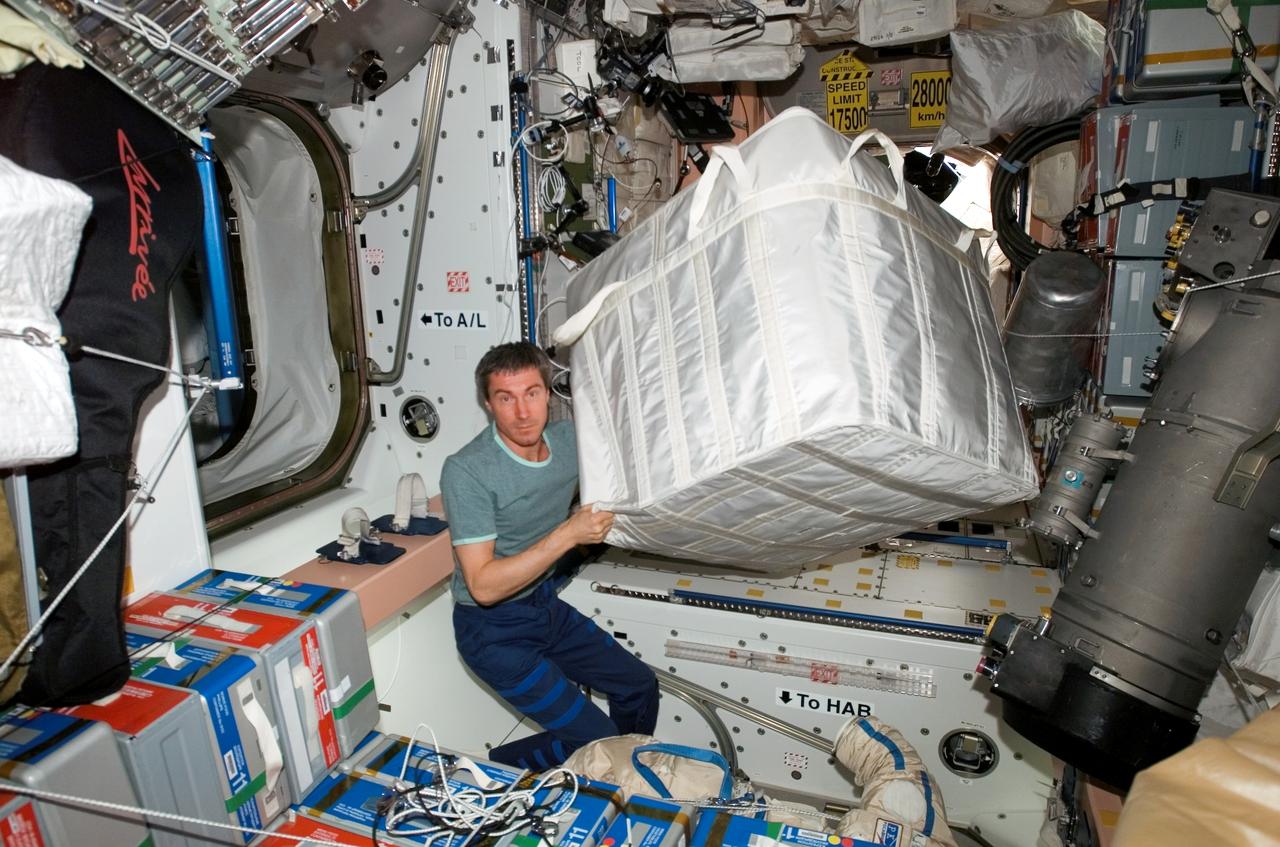
ISS011-E-06249 (18 May 2005) --- Cosmonaut Sergei K. Krikalev, Expedition 11 commander representing Russia's Federal Space Agency, moves un-stowed cargo through the Unity node from the PMA-2 (Pressurized Mating Adapter-2) in preparation for the scheduled docking of the space shuttle Discovery on international space station.
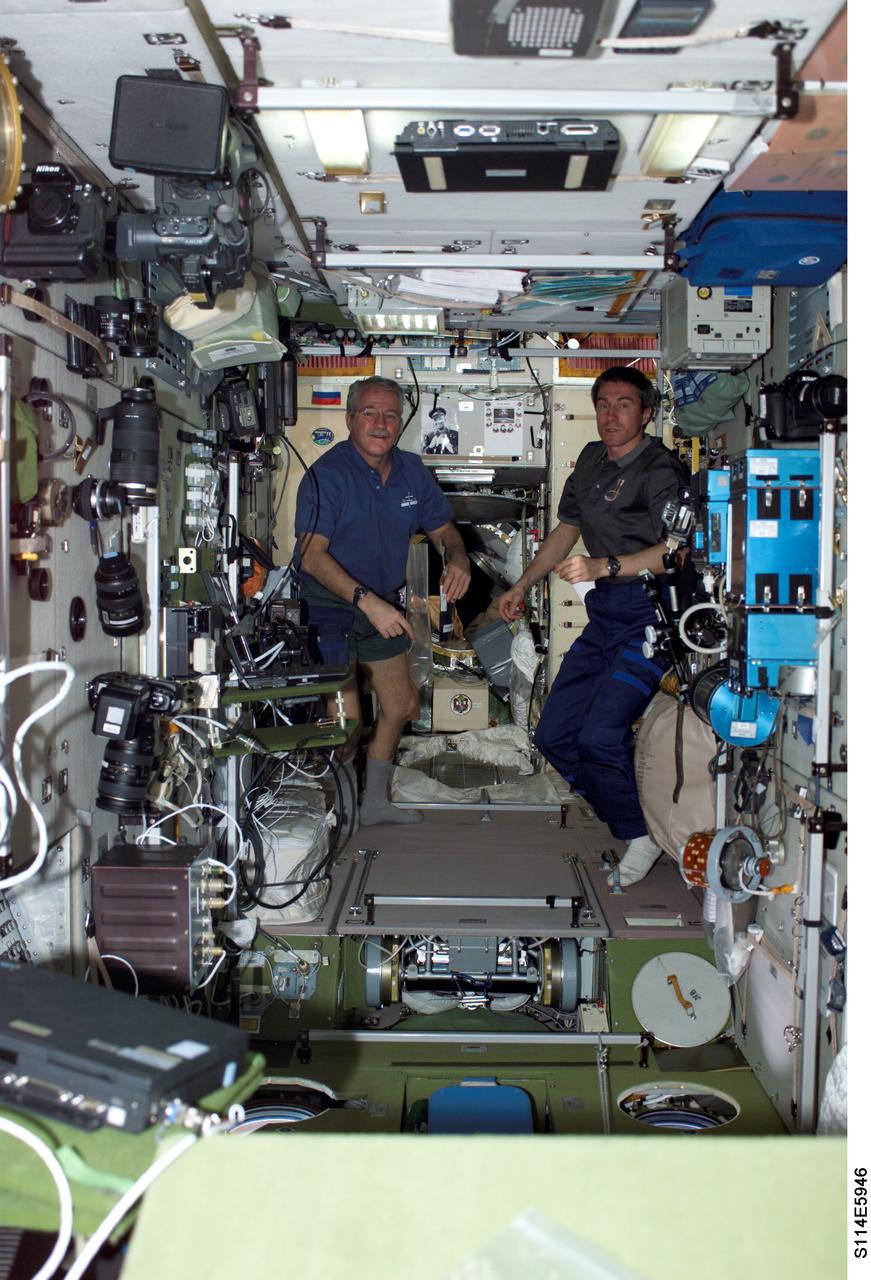
S114-E-5946 (31 July 2005) --- A Sunday morning picture onboard the International Space Station shows the Expedition 11 crew members--John L. Phillips (left) and Sergei Krikalev--in the Zvezda Service Module, while their "guests" from Discovery are at various other locations in the orbital outpost and the Shuttle. Transfer of supplies brought up from Earth still remains one of the high priority activities for the two crews.
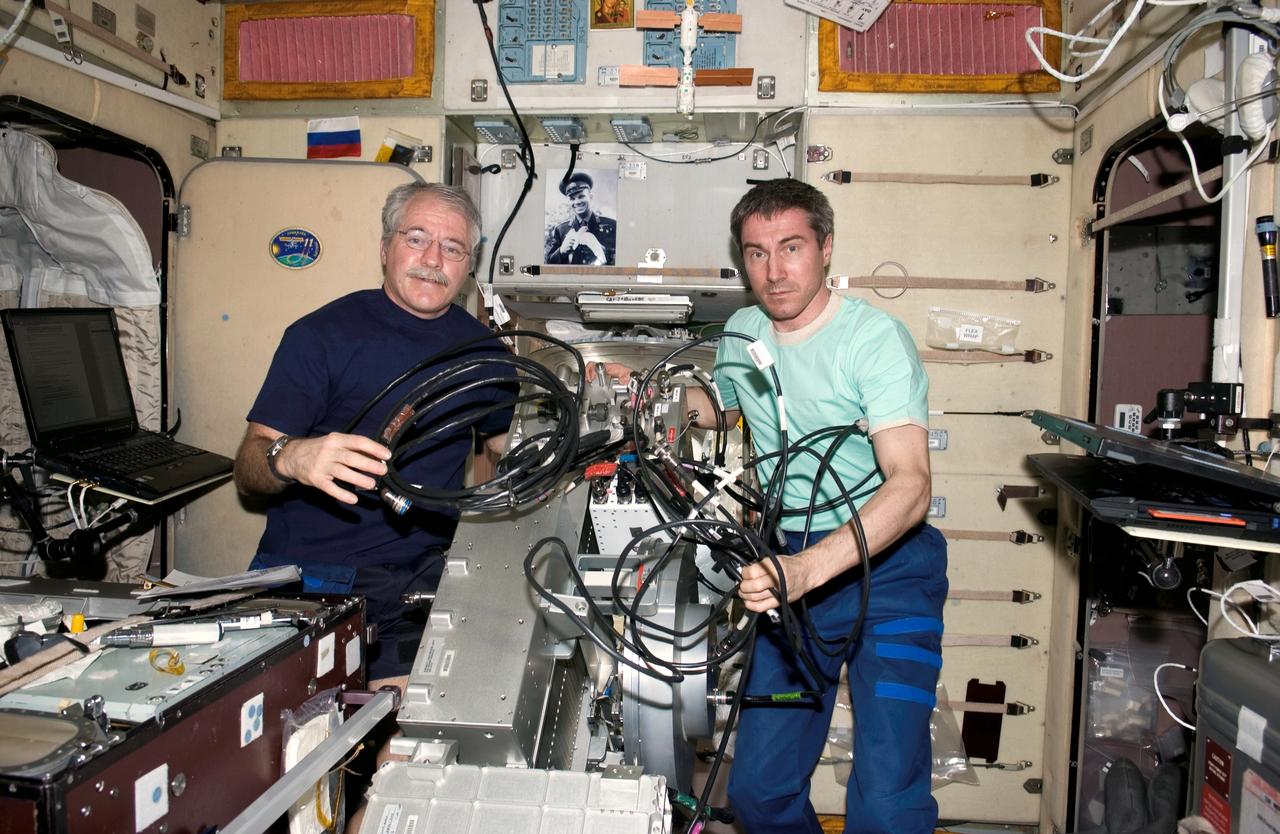
ISS011-E-12495 (7 September 2005) --- Cosmonaut Sergei K. Krikalev (right), Expedition 11 commander representing Russia's Federal Space Agency, and astronaut John L. Phillips, NASA space station science officer and flight engineer, work with the Treadmill Vibration Isolation System (TVIS) during In-Flight Maintenance (IFM) in the Zvezda Service Module of the international space station.
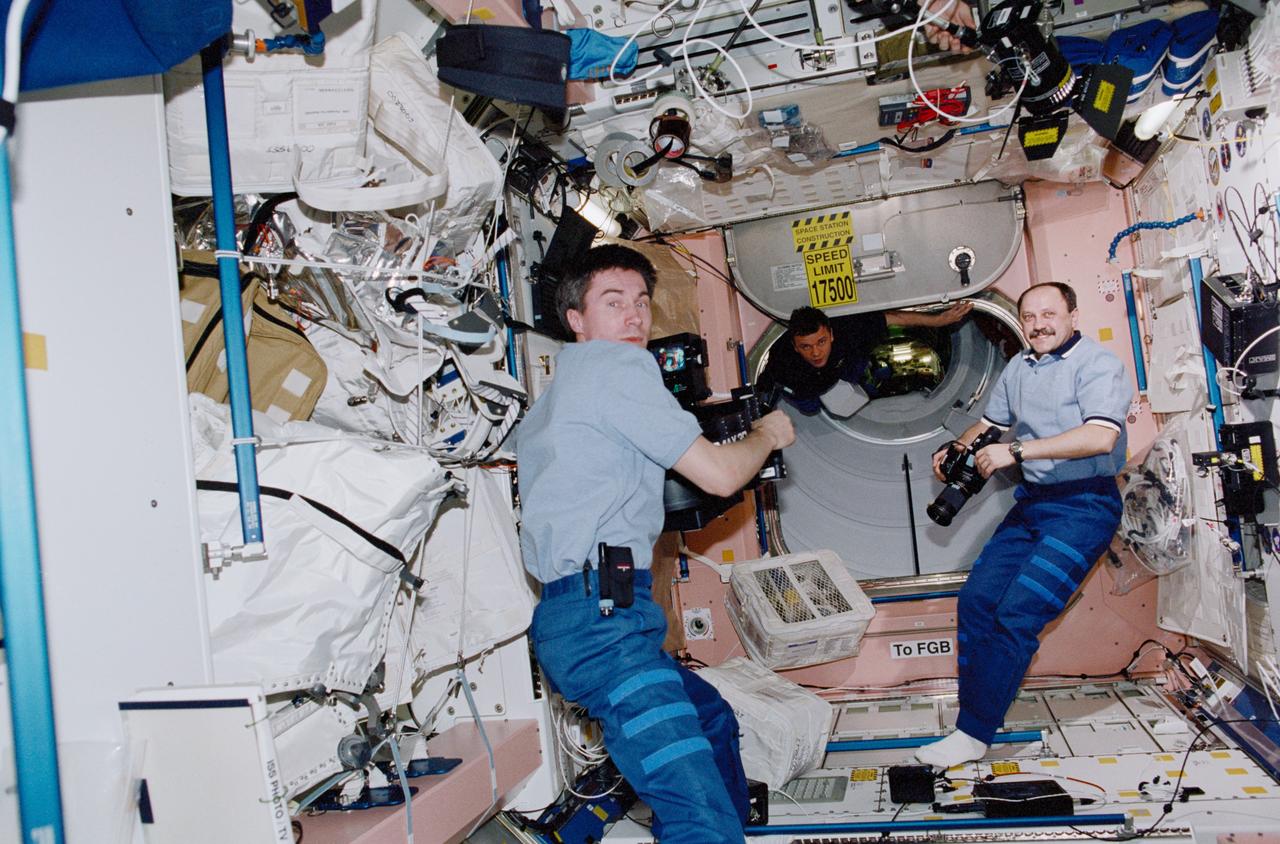
STS102-340-014 (8-21 March 2001) --- Cosmonaut Sergei K. Krikalev, Expedition One flight engineer (left), and cosmonaut Yury V. Usachev, Expedition Two commander, are photographed in the Unity node holding cameras. Cosmonaut Yuri P. Gidzenko, Expedition Two commander, joins them as he floats through the tunnel from the Russian-built Zarya control module. All three are associated with Rosaviakosmos.
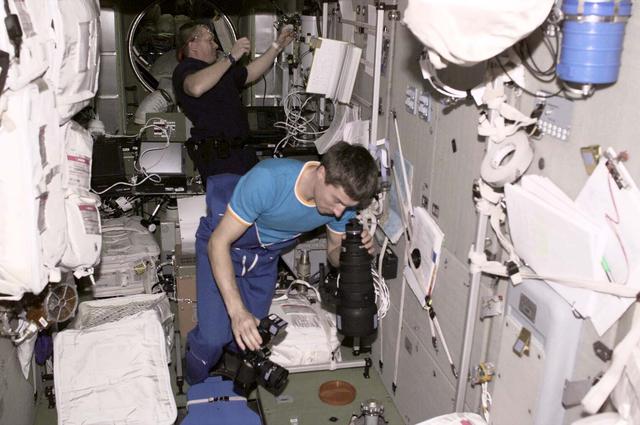
ISS01-E-5009 (November 2000) --- Cosmonaut Sergei K. Krikalev (foreground), flight engineer, works with cameras in the service module (Zvezda) on the International Space Station, while astronaut William M. (Bill) Shepherd, Expedition One commander, busily goes about chores in the background. The photograph was taken by cosmonaut Yuri P. Gidzenko, Soyuz commander, using an electronic still camera (ESC). This was one of the first still pictures to be downlinked from the station since the Expedition One crew boarded it earlier in the week.
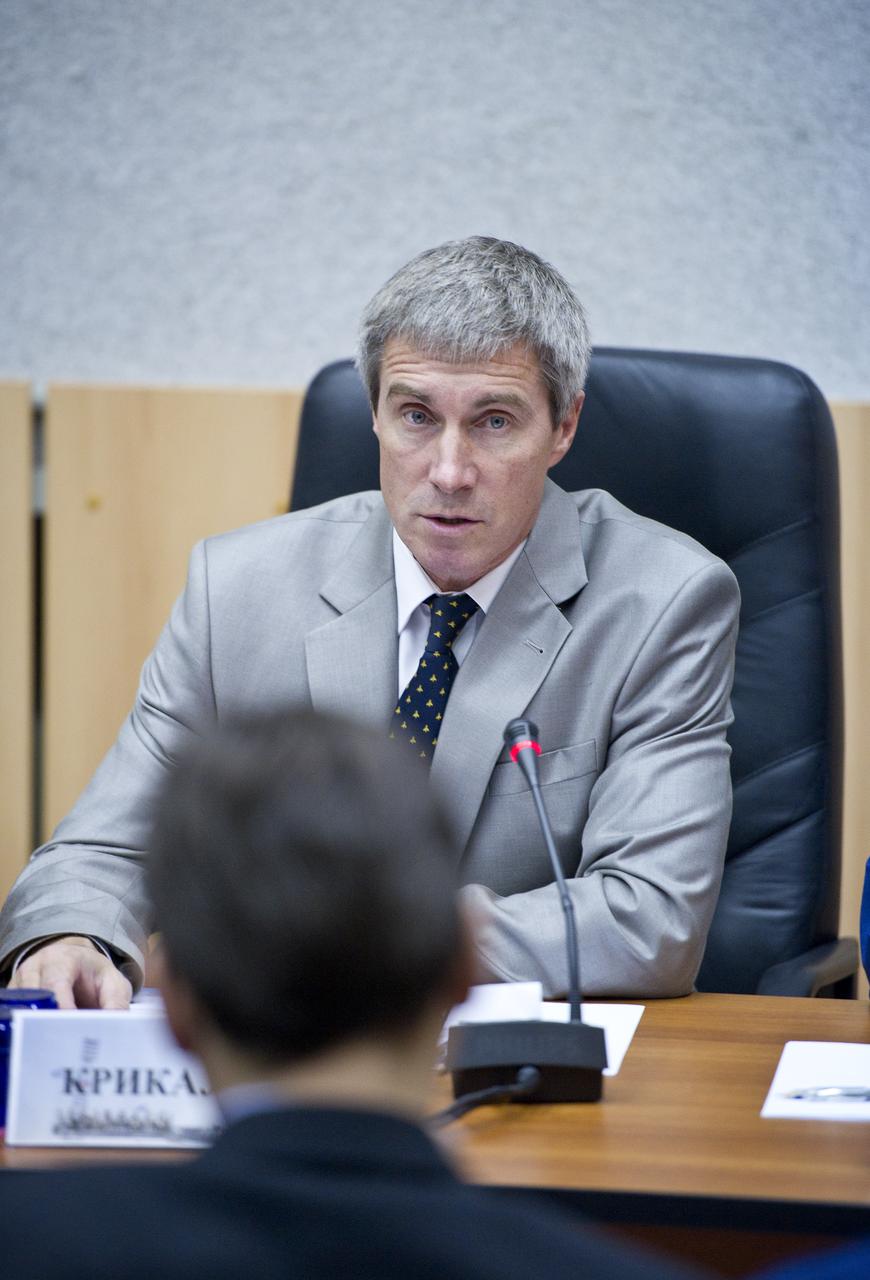
Sergei Krikalev, head of the Gagarin Cosmonaut Training Center, speaks at the State Commission meeting held at the Cosmonaut Hotel in Baikonur, Kazakhstan on Tuesday, Dec. 14, 2010. Photo Credit: (NASA/Carla Cioffi)
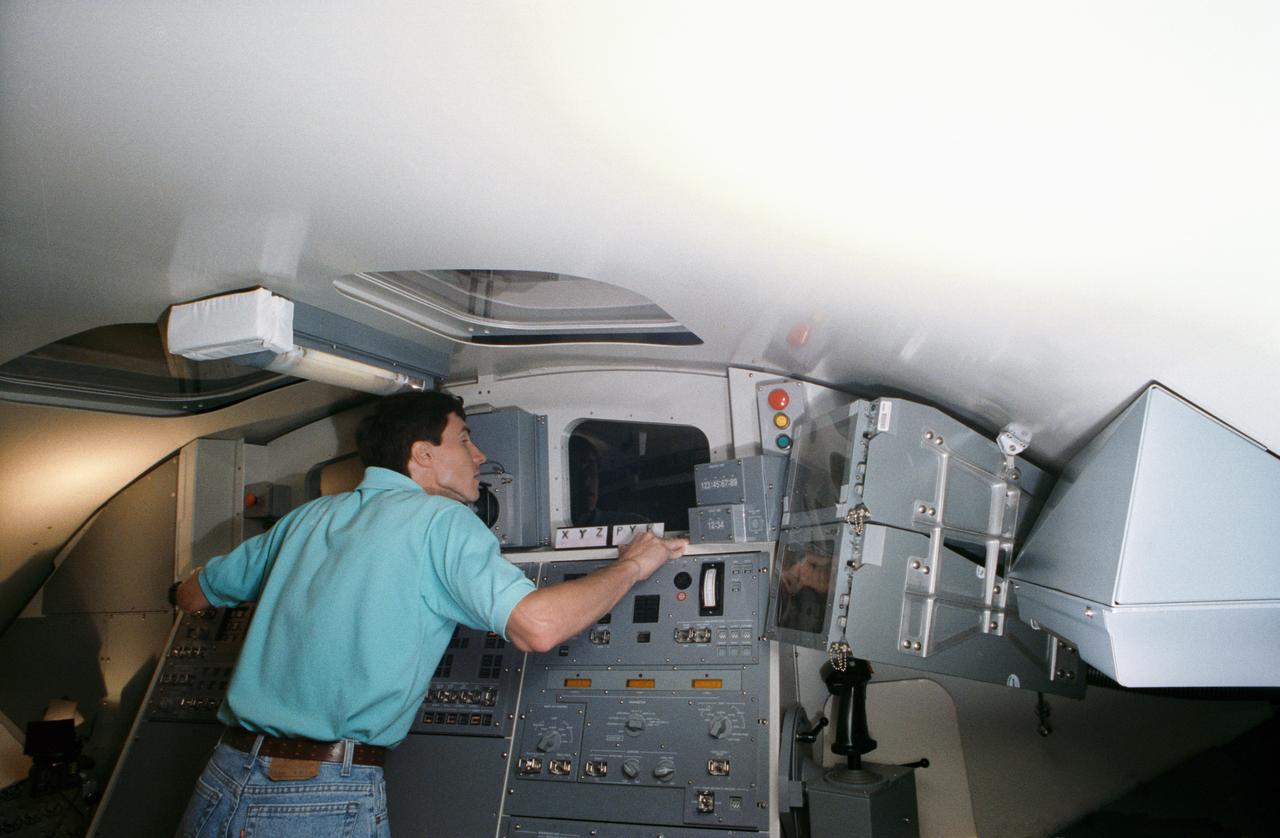
Cosmonaut Sergei Krikalev, STS-60 mission specialist, practices operating the Shuttle's Remote Manipulator System (RMS) during a training exercise at JSC's Shuttle mockup and integration laboratory.
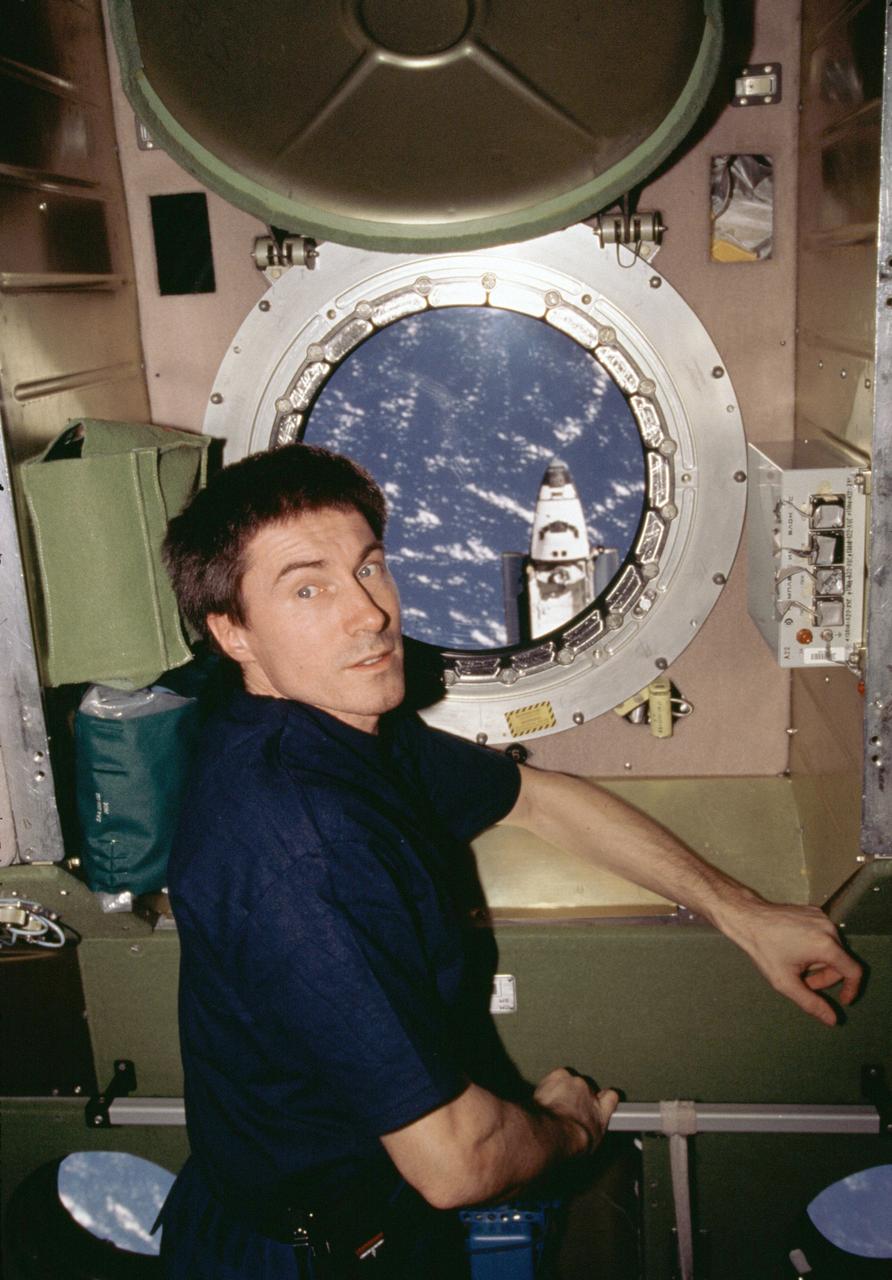
Cosmonaut Sergei K. Krikalev, flight engineer for Expedition One, is positioned by a porthole aboard the Zvezda Service Module of the International Space Station (ISS) as the Space Shuttle Atlantis approaches for docking to begin several days of joint activities between the two crews. Visible through the window are the crew cabin and forward section of the Shuttle amidst scattered clouds above the Western Pacific. The aft part of the cargo bay stowing the Destiny Laboratory is not visible in this scene.
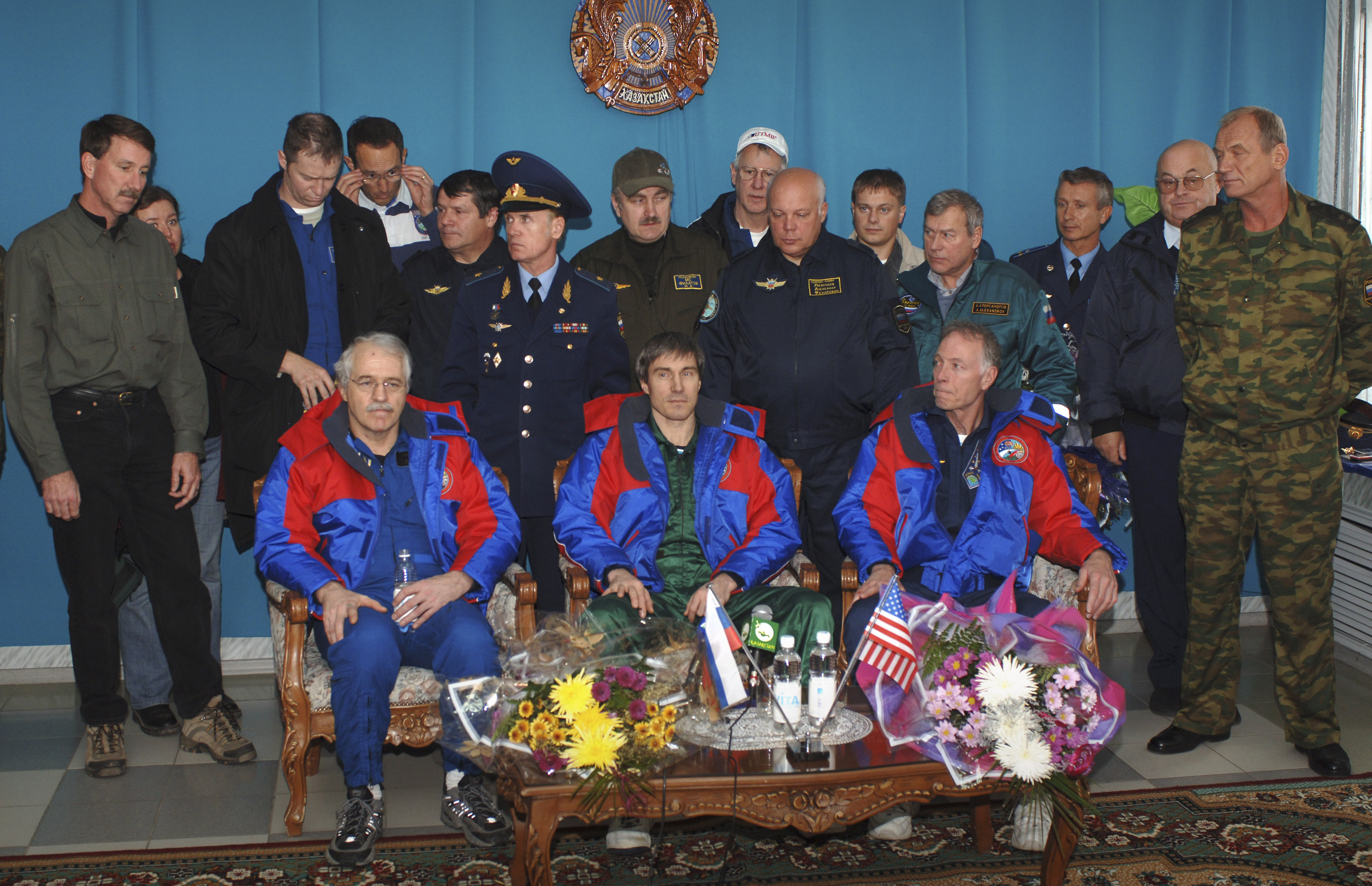
Members of the 11th expedition to the International Space Station, astronaut John Phillips, seated left, and Cosmonaut Sergei Krikalev, seated center, landed near Arlalyk, Kazakhstan Tuesday, Oct. 11 2005, after a six-month mission in orbit. Along with American businessman Greg Olsen, seated right, who visited the station for more than a week, Phillips and Krikalev returned to Earth aboard a Russian Soyuz spacecraft. Photo Credit: (NASA/Bill Ingalls)
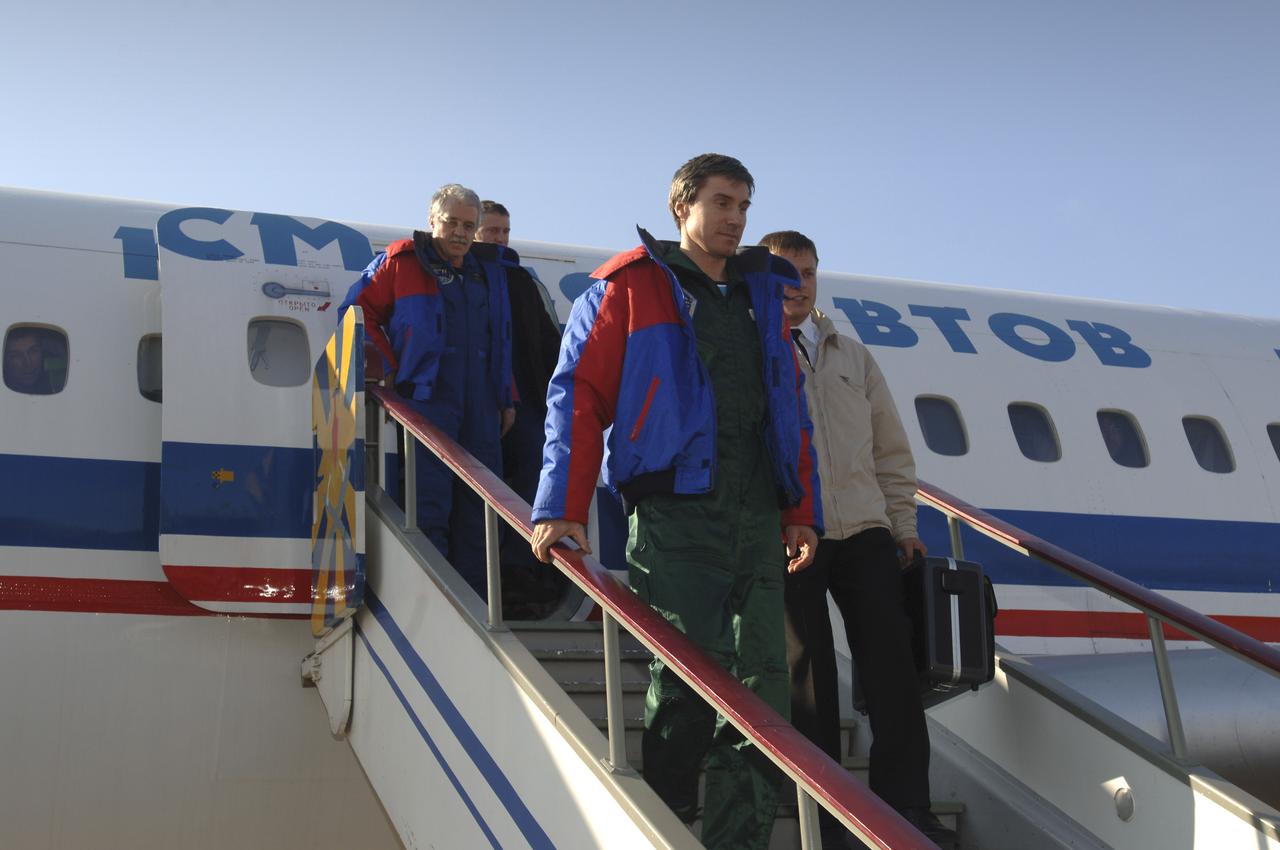
Members of the 11th expedition to the International Space Station, astronaut John Phillips, top left, and cosmonaut Sergei Krikalev, front, arrive at Star City, Russia, Tuesday, Oct. 11, 2005. The crew landed near Arlalyk, Kazakhstan after a six-month mission in orbit. Along with American businessman Greg Olsen, who visited the station for more than a week, Phillips and Krikalev returned to Earth aboard a Russian Soyuz spacecraft. Photo Credit: (NASA/Bill Ingalls)
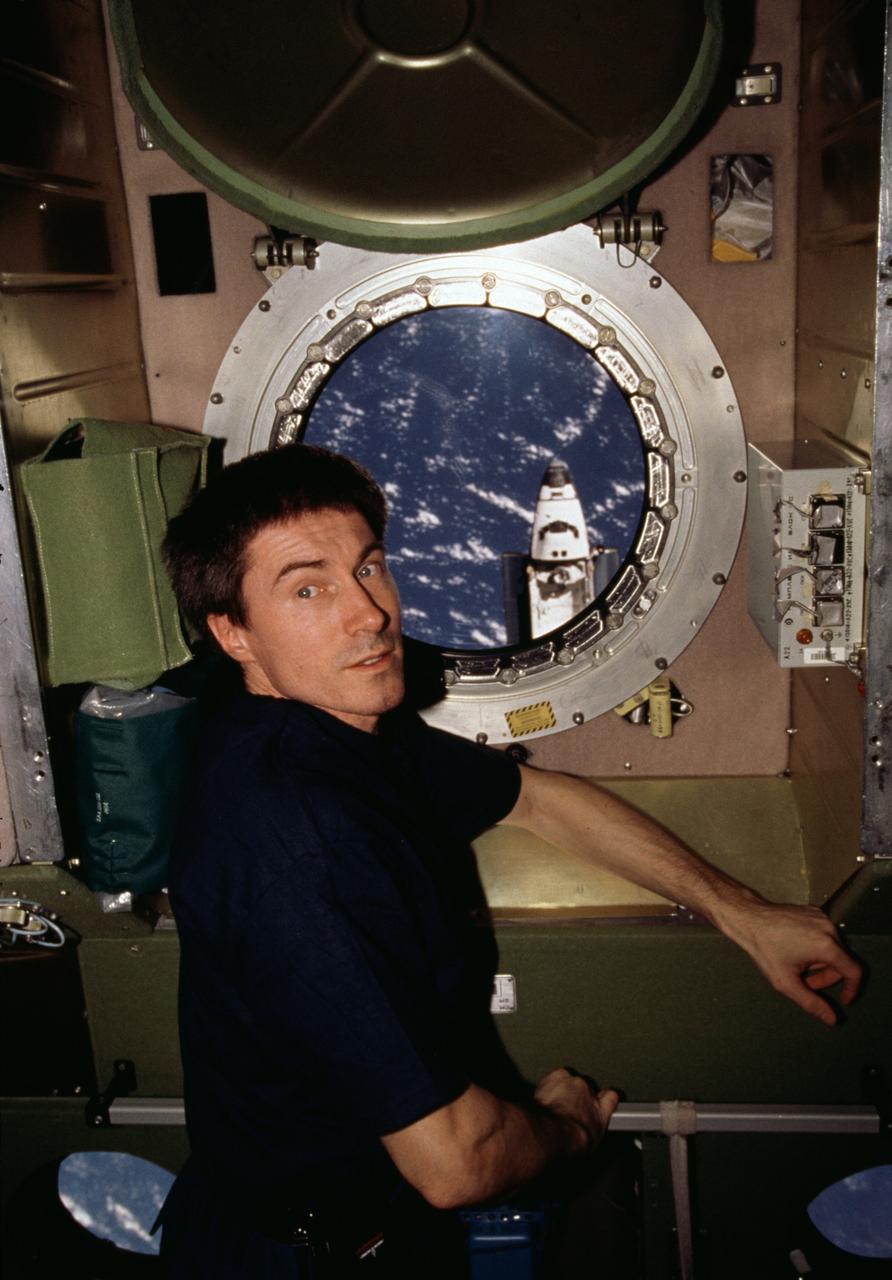
ISS001-361-017 (9 February 2001) --- Cosmonaut Sergei K. Krikalev, flight engineer for Expedition One, is positioned at a port hole on the Zvezda service module of the International Space Station (ISS) as the Space Shuttle Atlantis approaches for a link-up leading to several days of joint activities between the two crews. The crew cabin and forward section of the Space Shuttle Atlantis can be seen in the window. The aft part of the cargo bay, where the Destiny laboratory was stowed, is not visible in the scene. Scattered clouds over the Western Pacific are visible in the window scene.
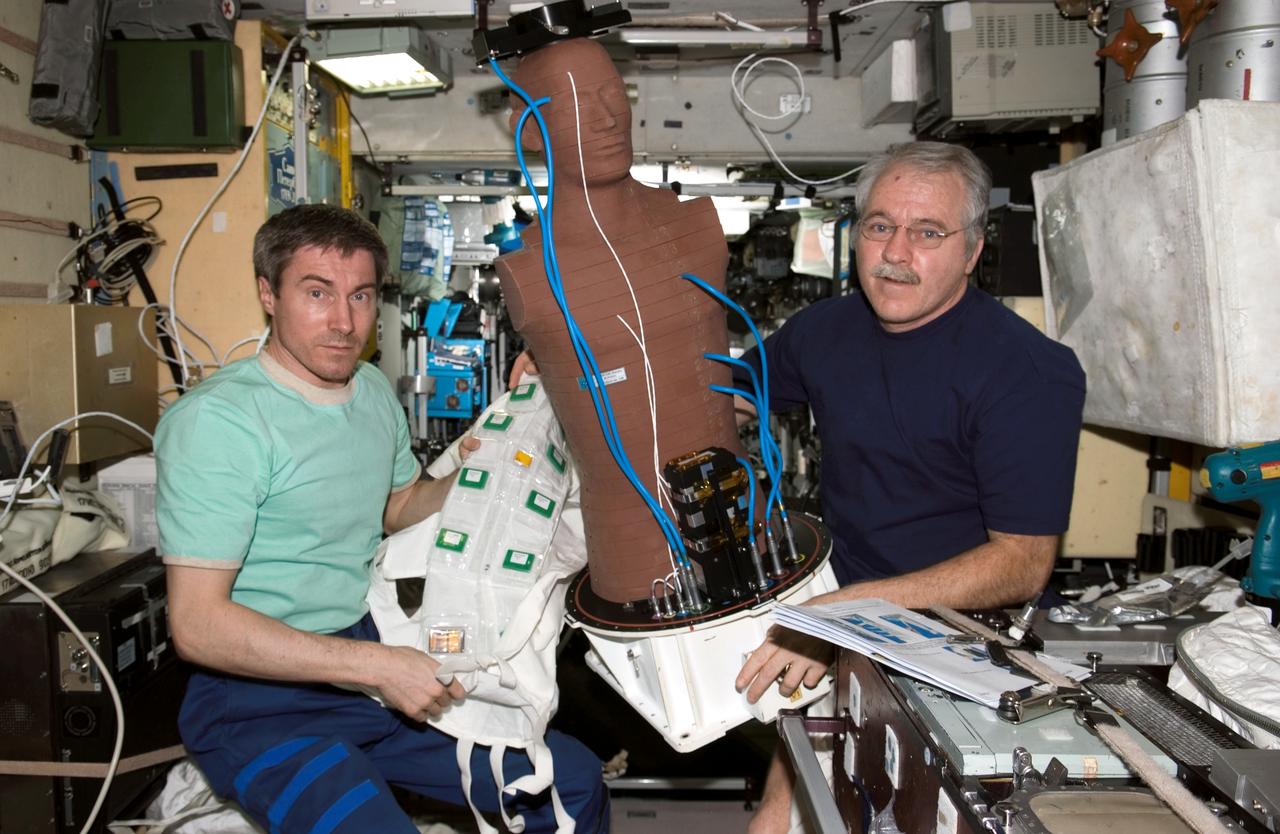
ISS011-E-13025 (14 September 2005) --- Cosmonaut Sergei K. Krikalev (left), Expedition 11 commander representing Russia's Federal Space Agency, and astronaut John L. Phillips, NASA space station science officer and flight engineer, hold the European Space Agency (ESA) Matroshka radiation experiment in the Zvezda Service Module of the international space station. Matroshka, a human-torso-like device, was retrieved from the exterior of the station during an August spacewalk, for return to Earth. The experiment is designed to better understand the exposure of astronauts, including those making spacewalks, to radiation.
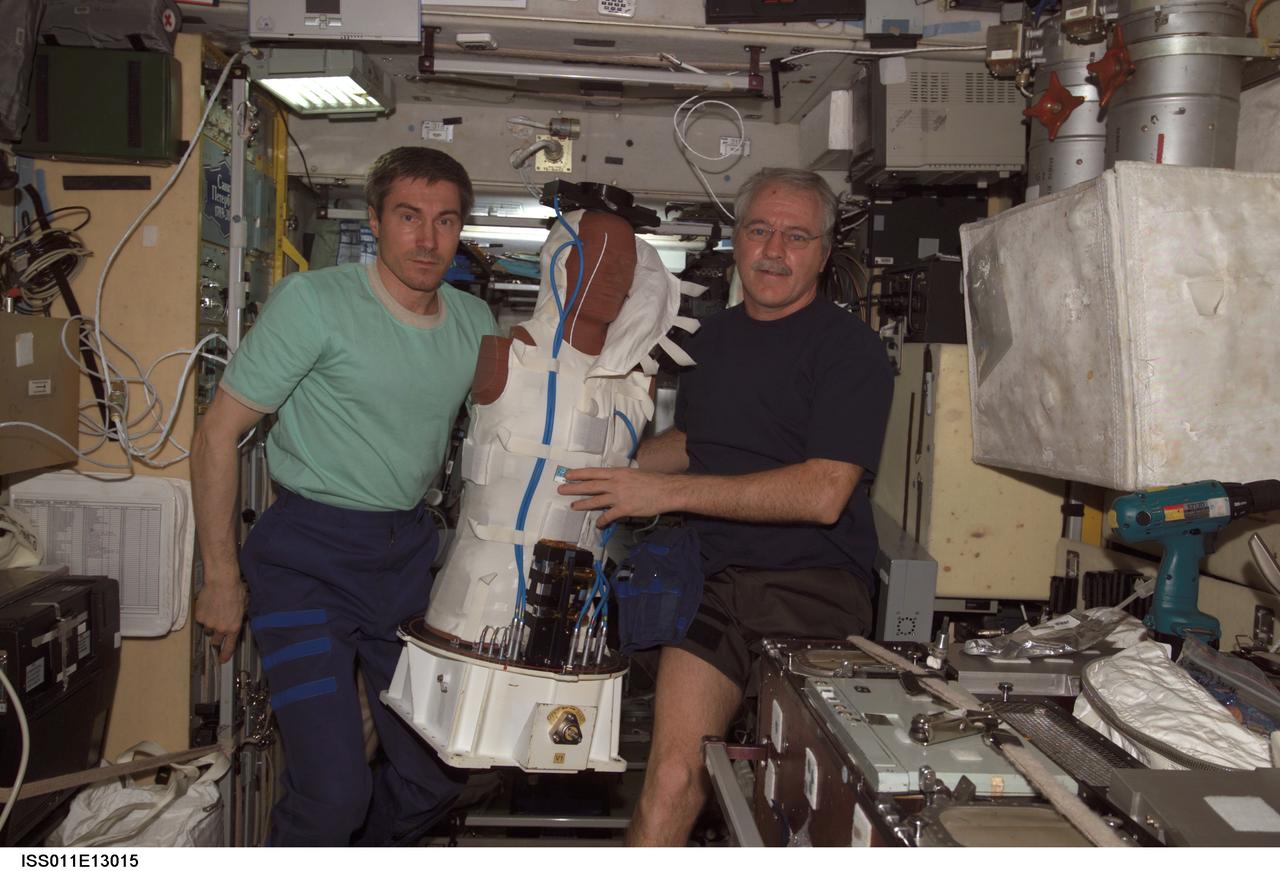
ISS011-E-13015 (14 September 2005) --- Cosmonaut Sergei K. Krikalev (left), Expedition 11 commander representing Russia's Federal Space Agency, and astronaut John L. Phillips, NASA Space Station science officer and flight engineer, hold the European Space Agency (ESA) Matroshka radiation experiment in the Zvezda Service Module of the International Space Station. Matroshka, a human-torso-like device, was retrieved from the exterior of the station during an August spacewalk, for return to Earth. The experiment is designed to better understand the exposure of astronauts, including those making spacewalks, to radiation.
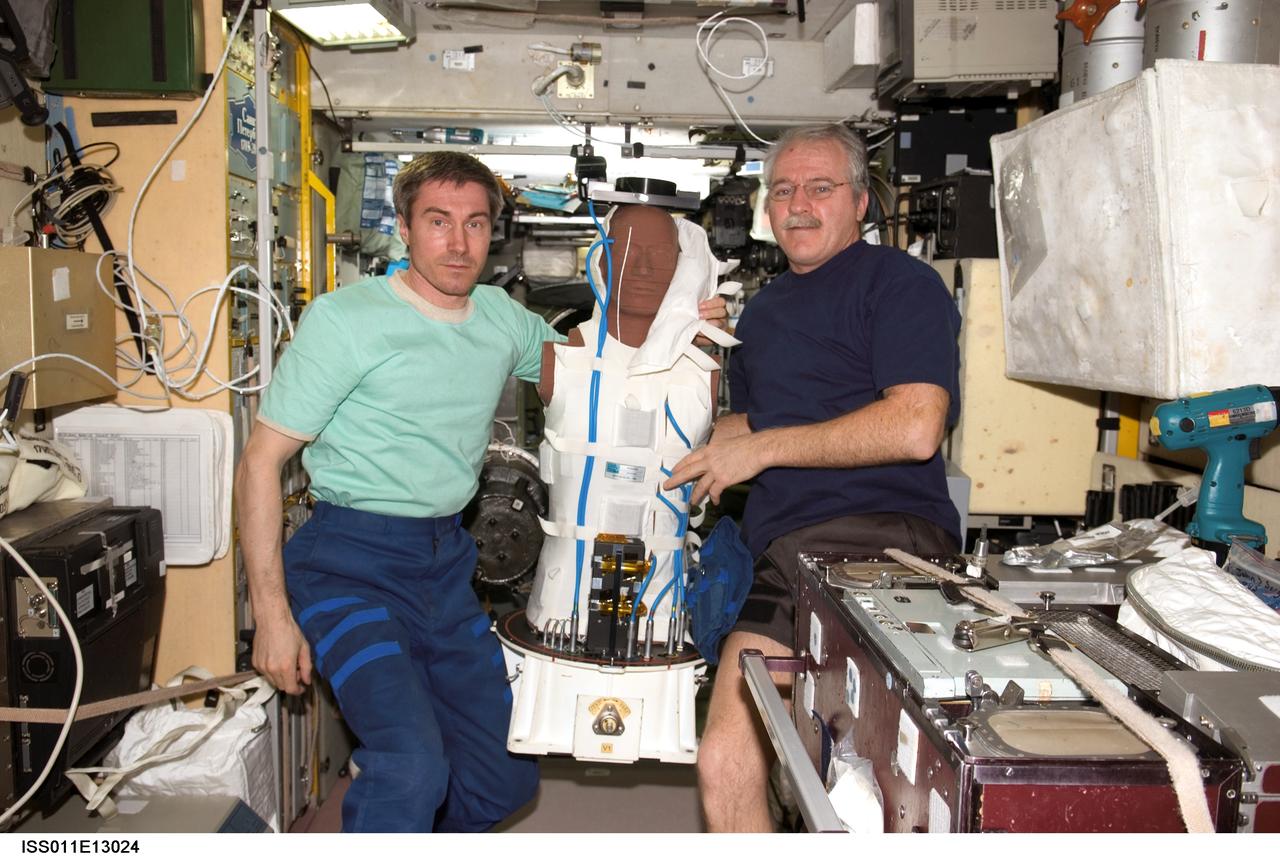
ISS011-E-13024 (14 September 2005) --- Cosmonaut Sergei K. Krikalev (left), Expedition 11 commander representing Russia's Federal Space Agency, and astronaut John L. Phillips, NASA Space Station science officer and flight engineer, hold the European Space Agency (ESA) Matroshka radiation experiment in the Zvezda Service Module of the International Space Station. Matroshka, a human-torso-like device, was retrieved from the exterior of the station during an August spacewalk, for return to Earth. The experiment is designed to better understand the exposure of astronauts, including those making spacewalks, to radiation.
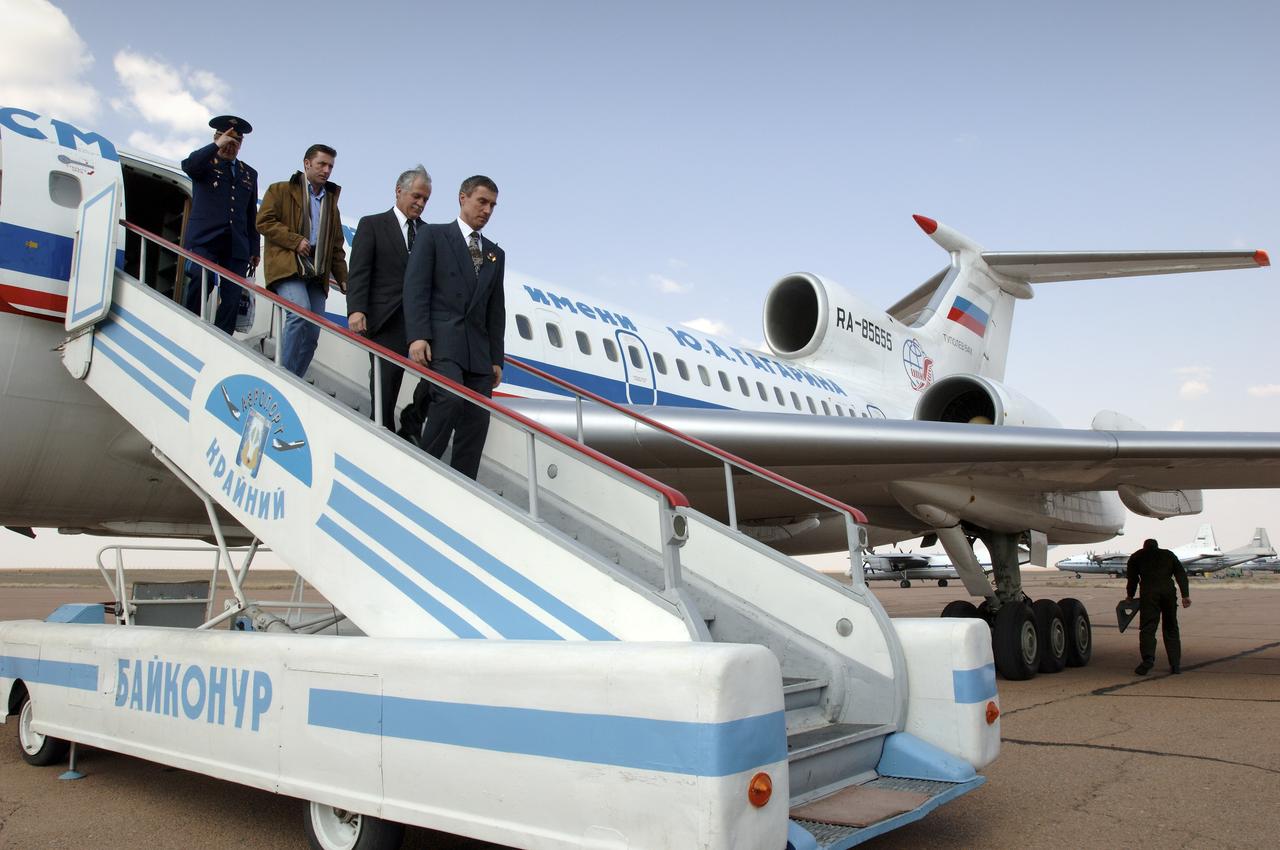
Expedition 11 Commander Sergei Krikalev, front, Flight Engineer John Phillips and European Space Agency astronaut Roberto Vittori, second from rear, arrive at the Baikonur Cosmodrome in Baikonur, Kazakhstan, Saturday, April 9, 2005, for pre-launch preparations. Krikalev, Phillips and Vittori will launch April 15 on a Soyuz TMA-6 spacecraft to the International Space Station. Krikalev and Phillips will spend six months in space and greet the first Shuttle crew to fly in more than two years when it arrives at the Station, while Vittori spends eight days on the Station under a commercial contract between ESA and the Russian Federal Space Agency. Photo Credit: (NASA/Bill Ingalls)
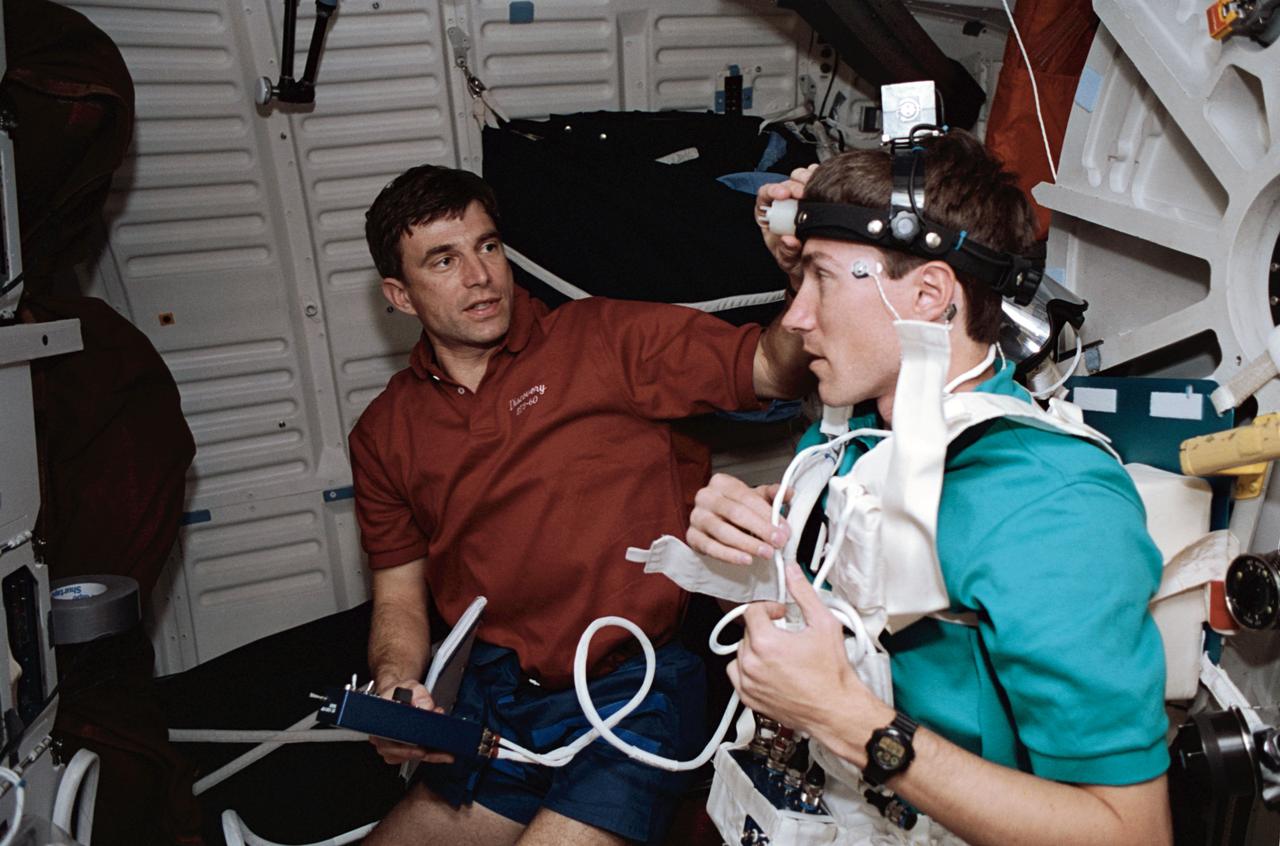
STS060-21-027 (3-11 Feb 1994) --- Astronaut Ronald M. Sega (left) and Russian cosmonaut Sergei K. Krikalev work on a joint U.S./Russian metabolic experiment on the Space Shuttle Discovery's middeck. A number of other U.S./Russian cooperative Detailed Supplementary Objectives (DSO) are included among the experiments conducted on the eight-day mission.
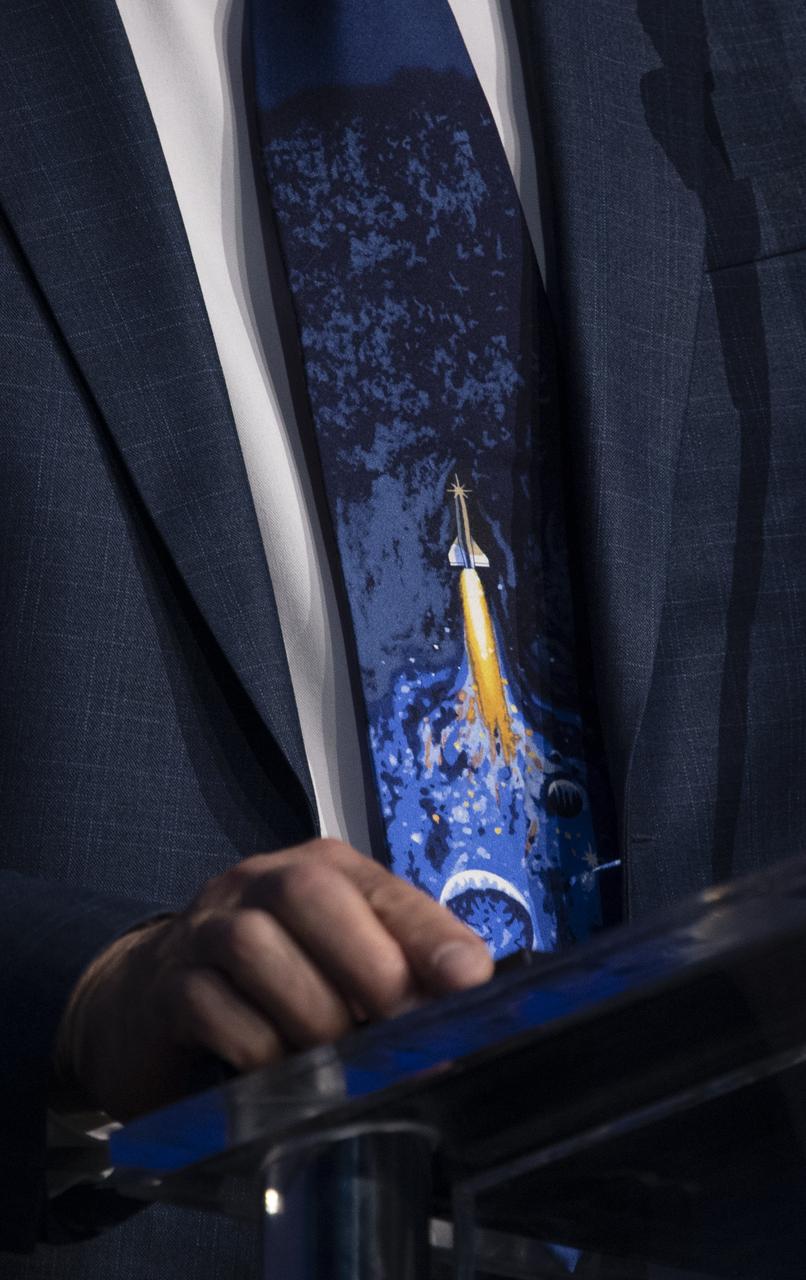
Sergey Krikalev, Executive Director for Piloted Spaceflights for Roscosmos, is seen during the Heads of Agency Plenary of the 70th International Astronautical Congress, Monday, Oct. 21, 2019 at the Walter E. Washington Convention Center in Washington. Photo Credit: (NASA/Bill Ingalls)
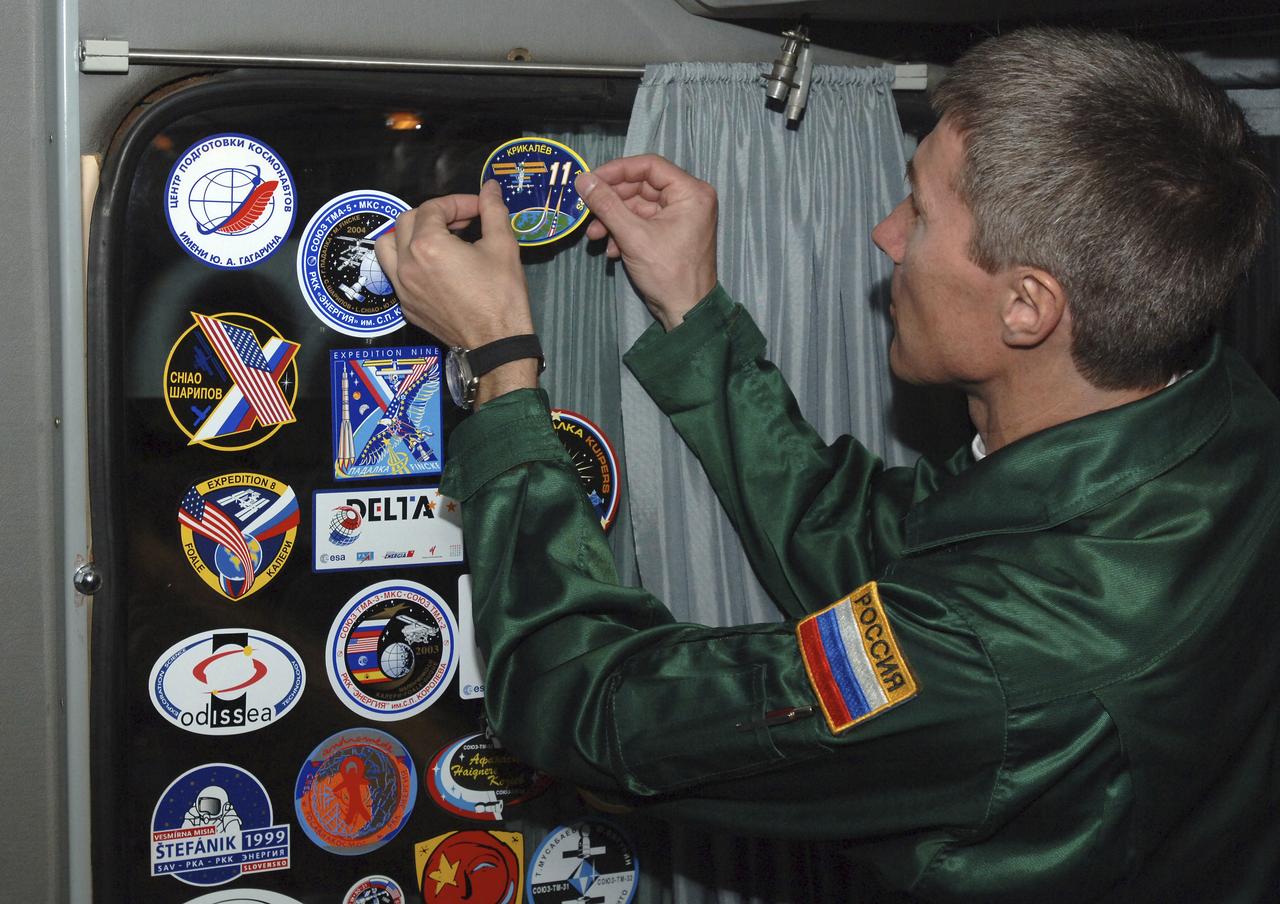
Expedition 11 crew Commander Sergei Krikalev places the Expedition 11 crew logo onboard the prime crew bus as they head to the cosmodrome for suit up, Thursday, April 14, 2005, in Baikonur, Kazakhstan. Photo Credit: (NASA/Bill Ingalls)
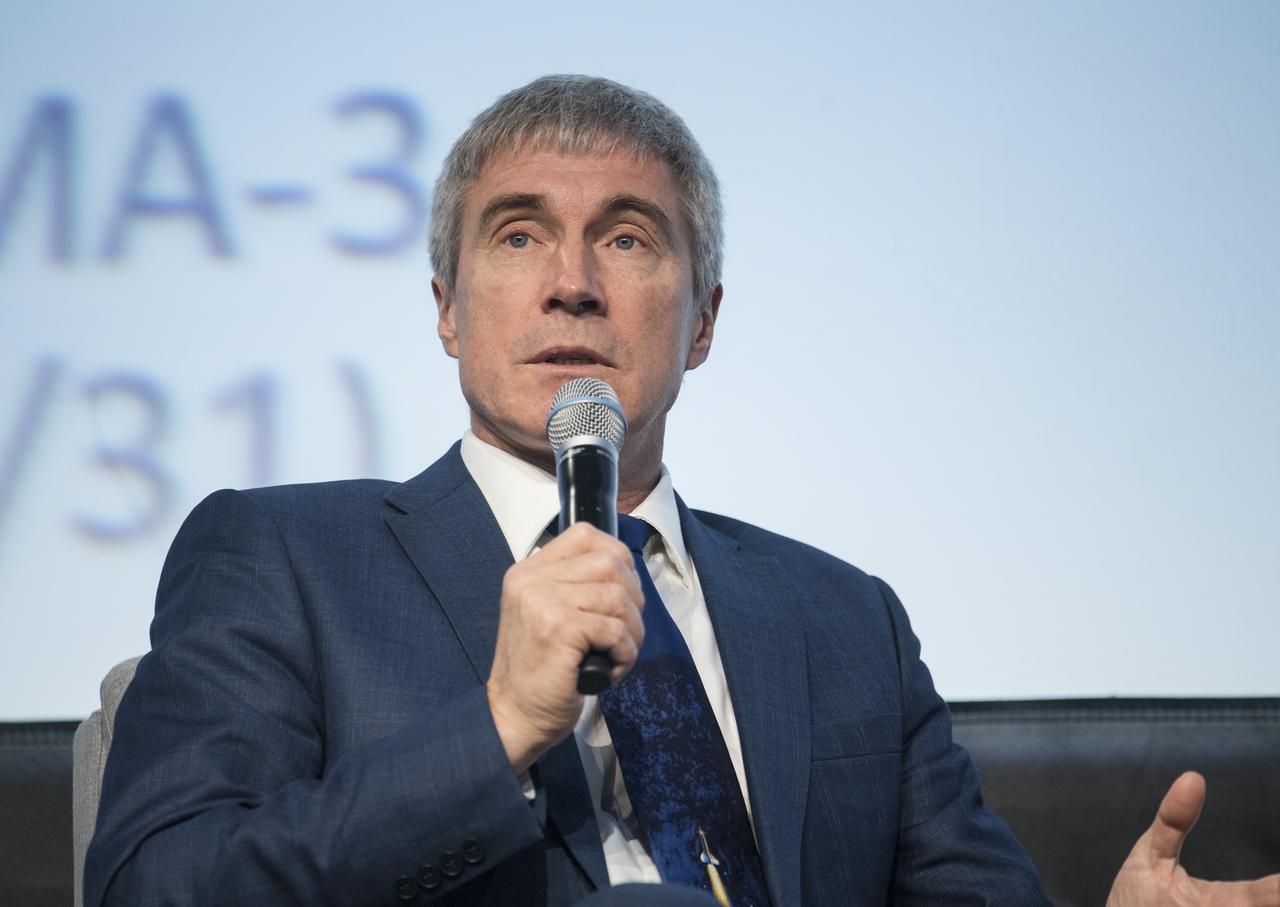
Roscosmos cosmonaut and executive director for piloted spaceflights, Sergey Krikalev, speaks during an astronaut panel discussion at the 70th International Astronautical Congress, Friday, Oct. 25, 2019, at the Walter E. Washington Convention Center in Washington. Photo credit: (NASA/Aubrey Gemignani)
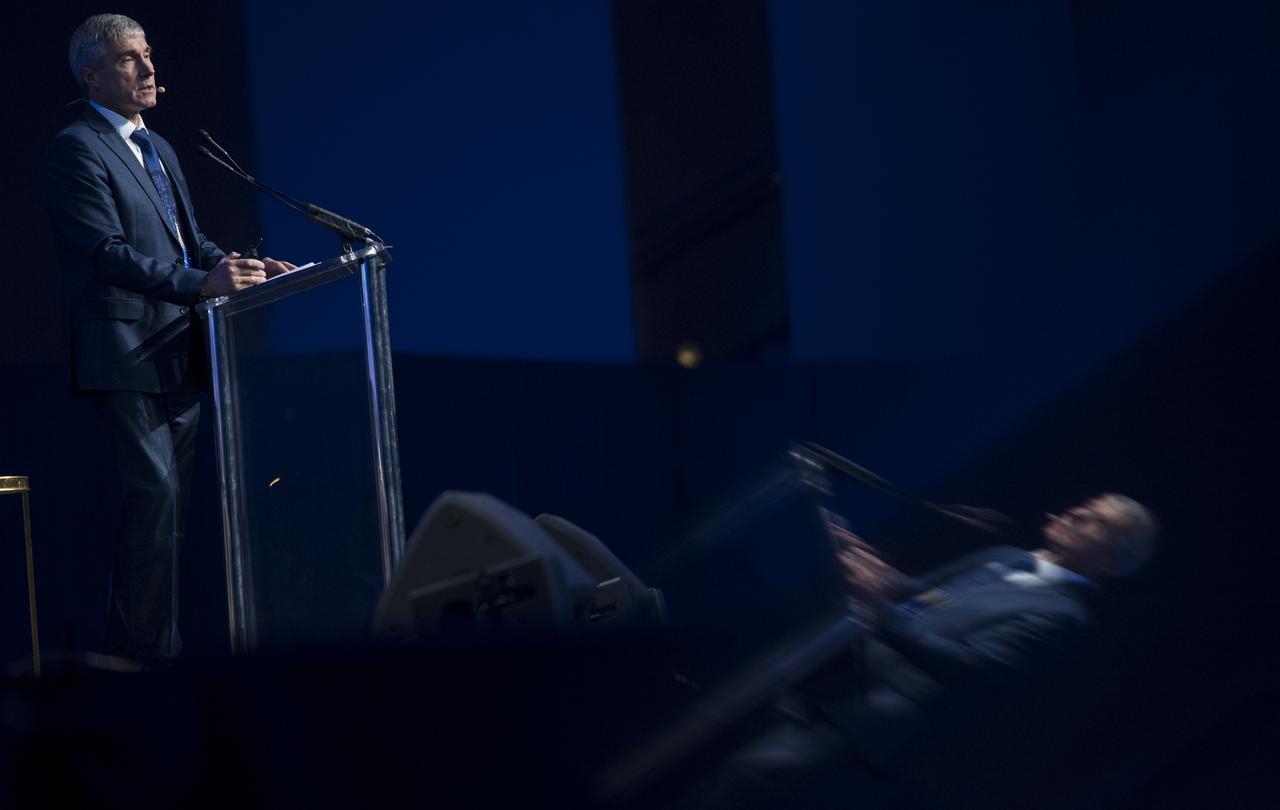
Sergey Krikalev, Executive Director for Piloted Spaceflights for Roscosmos, speaks during the Heads of Agency Plenary of the 70th International Astronautical Congress, Monday, Oct. 21, 2019 at the Walter E. Washington Convention Center in Washington. Photo Credit: (NASA/Joel Kowsky)
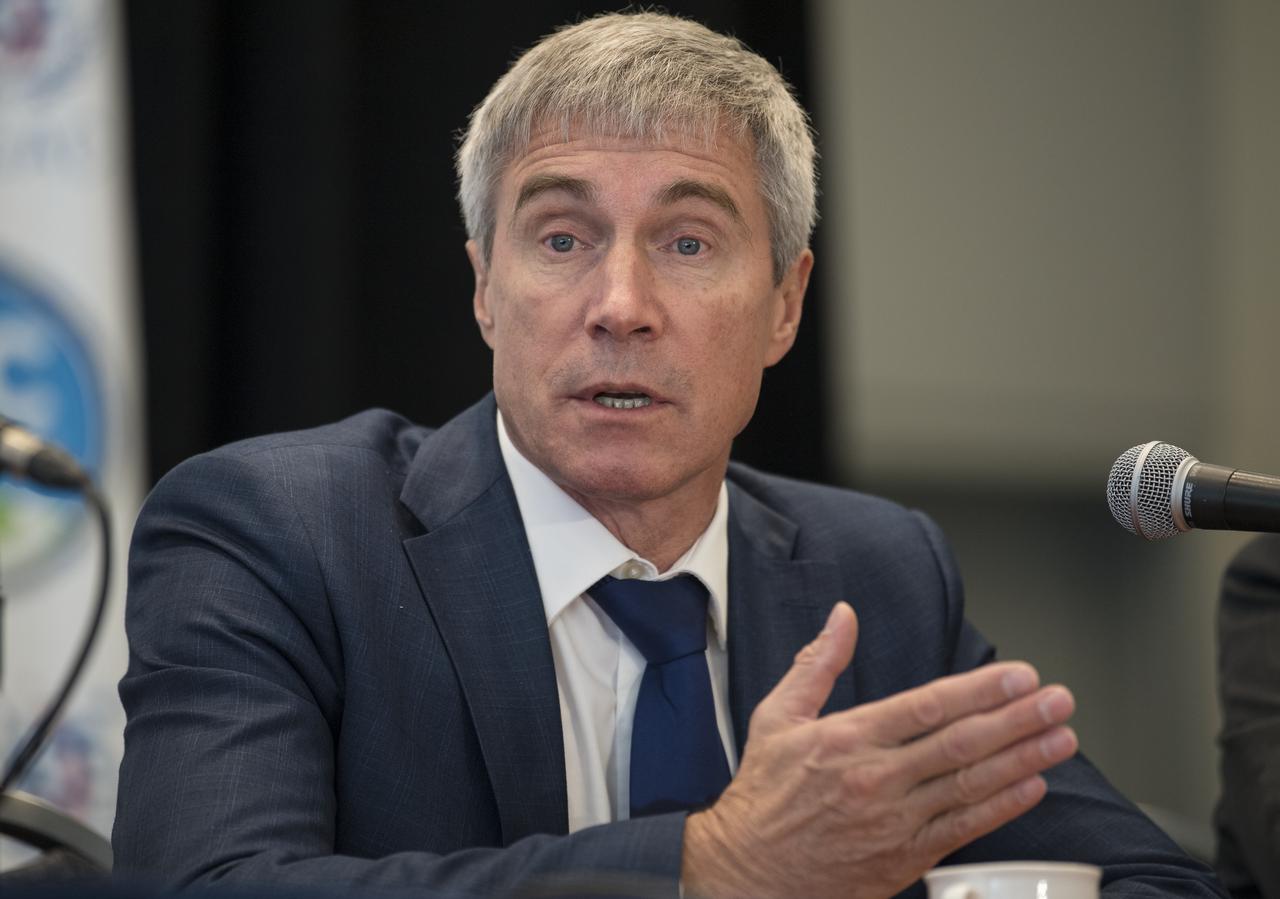
Sergey Krikalev, Executive Director for Piloted Spaceflights for Roscosmos, is seen during the Heads of Agency press conference at the 70th International Astronautical Congress, Monday, Oct. 21, 2019 at the Walter E. Washington Convention Center in Washington. Photo Credit: (NASA/Bill Ingalls)
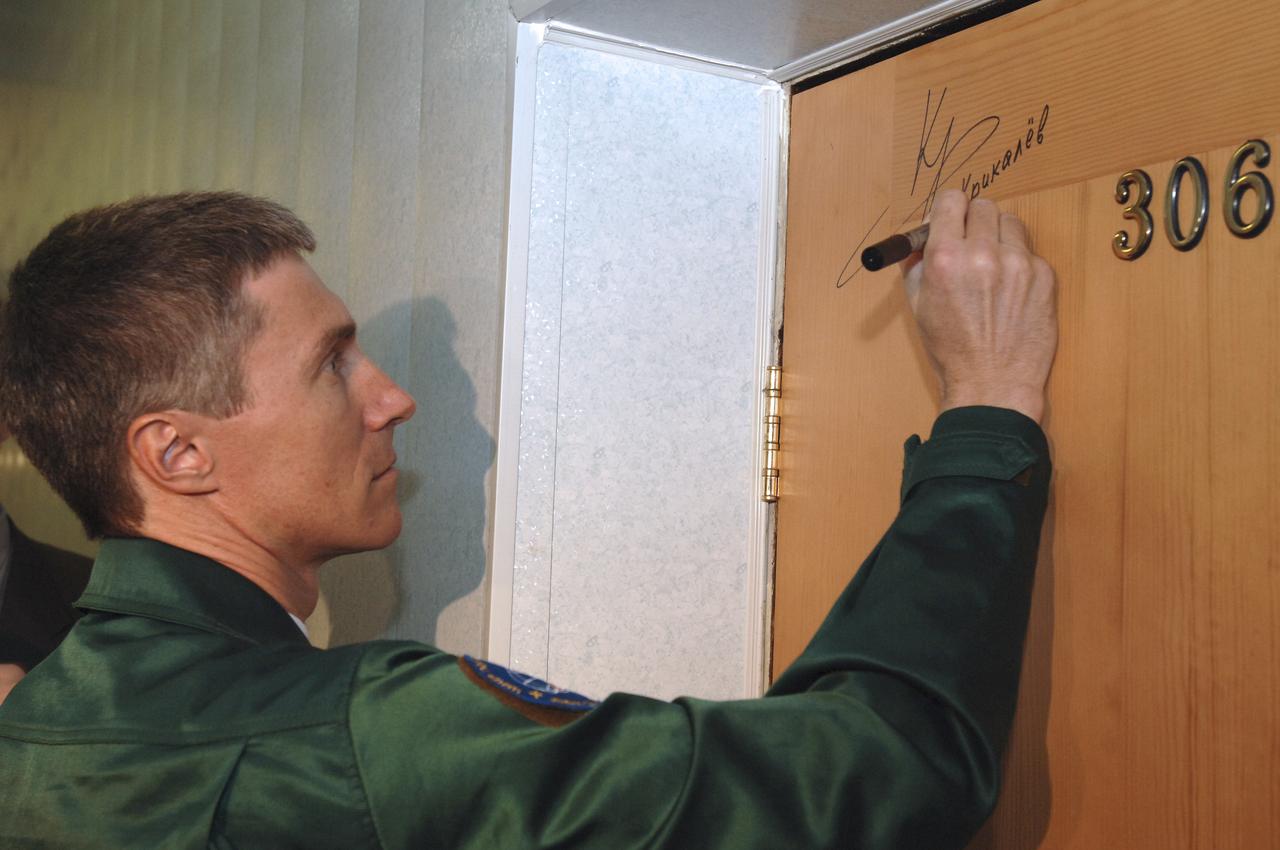
Expedition 11 Commander Sergei Krikalev autographs the door to his cosmonaut hotel room, part of a pre-launch tradition, prior to the launch aboard the Soyuz TMA-6 spacecraft, Thursday, April 14, 2005, in Baikonur, Kazakhstan. Photo Credit: (NASA/Bill Ingalls)

ISS011-E-08465 (9 June 2005) --- Cosmonaut Sergei K. Krikalev, Expedition 11 commander representing Russia's Federal Space Agency, works on the Elektron oxygen-generation system in the Zvezda Service Module on the International Space Station (ISS).
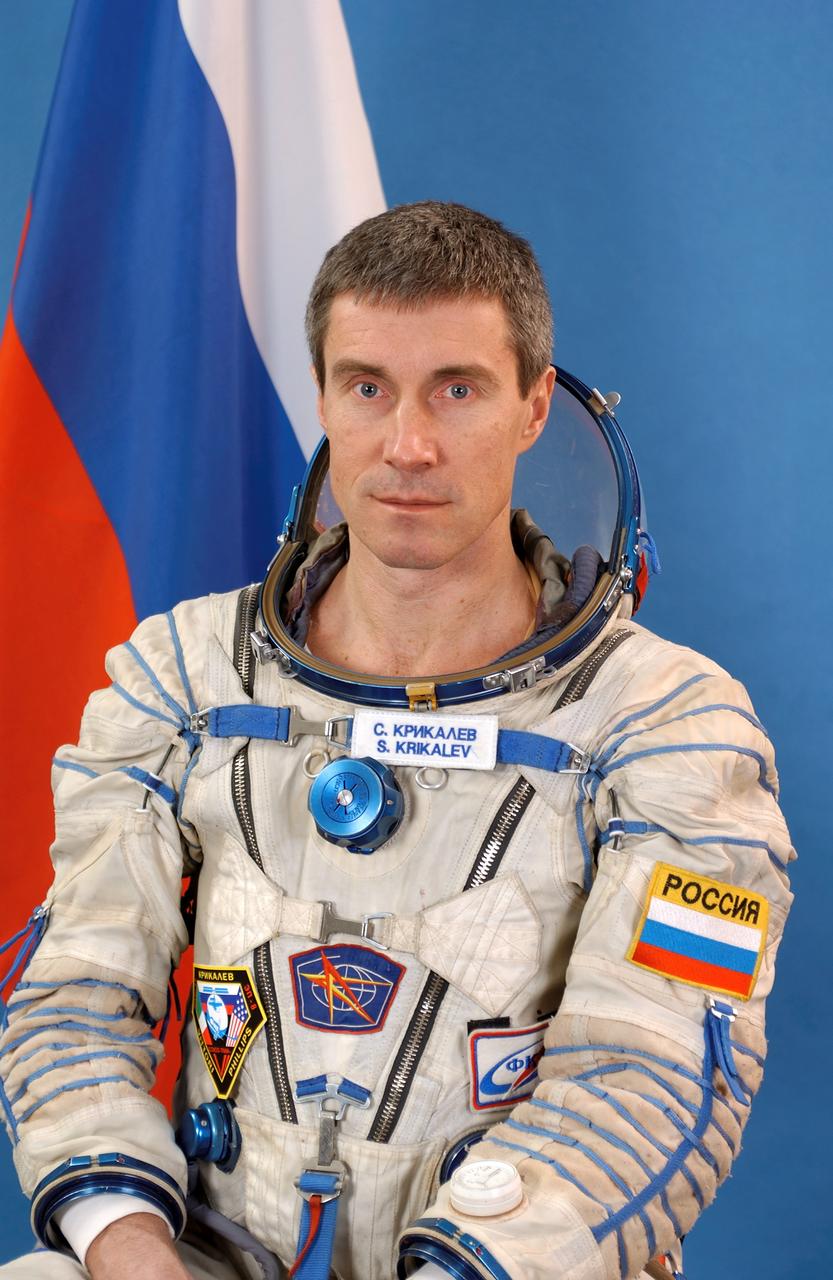
JSC2005-E-13488 (March 2005) --- Cosmonaut Sergei Krikalev, Russia's Federal Space Agency, Expedition 11 commander, Soyuz commander.
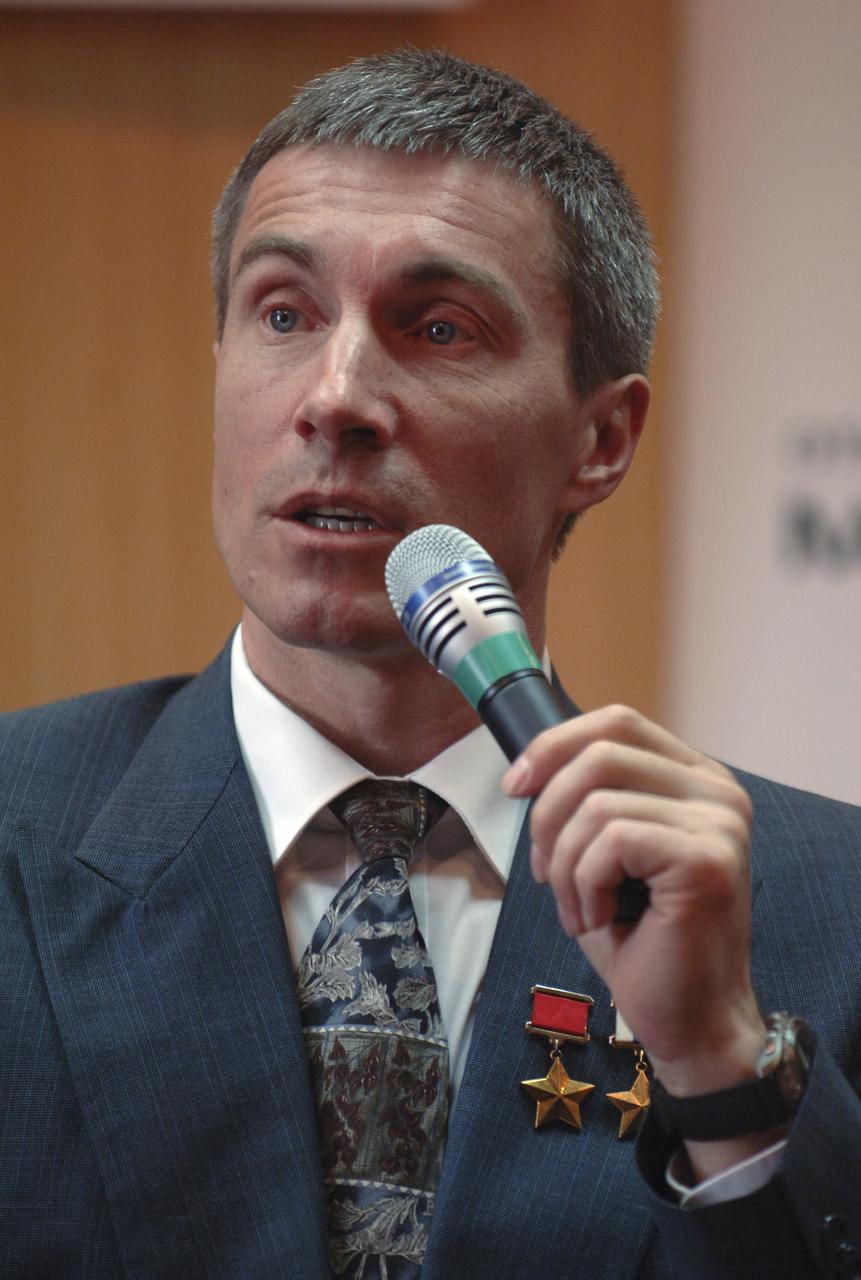
Expedition 11 Commander Sergei Krikalev speaks to the press, Thursday, April 14, 2005, in Baikonur, Kazakhstan. Kiralev, Flight Engineer and NASA Science Officer John Phillips and European Space Agency astronaut Roberto Vittori, of Italy, are scheduled to launch aboard a Soyuz TMA-6 spacecraft April 15. Krikalev and Phillips will spend six months on the station, replacing Expedition 10 Commander Leroy Chiao and Flight Engineer Salizhan Sharipov, while Vittori will spend eight days on the station under a commerical contract between ESA and the Russian Federal Space Agency, returning to Earth with Chiao and Sharipov on April 25. Photo Credit: (NASA/Bill Ingalls)