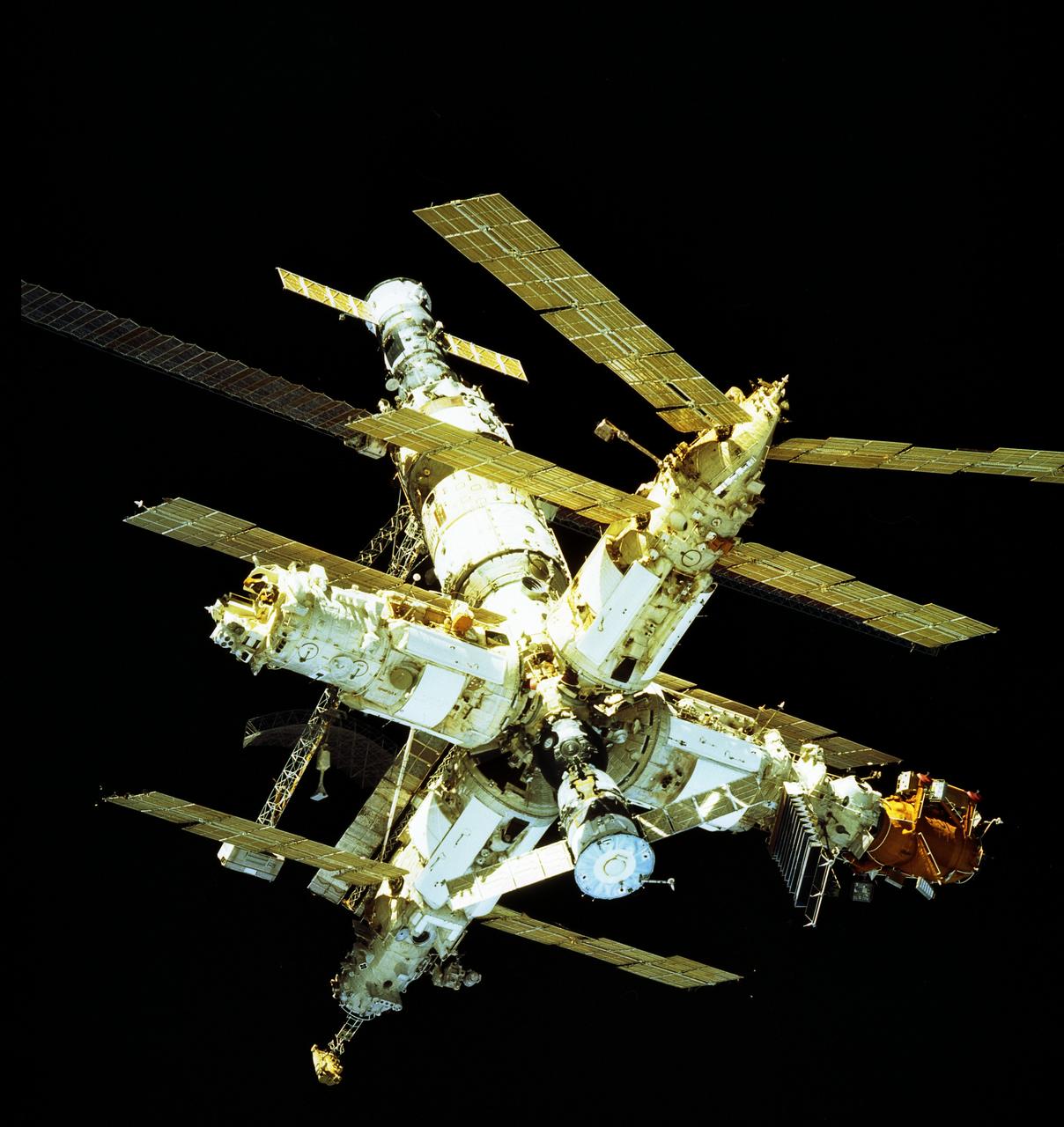
This is a view of the Russian Mir Space Station photographed by a crewmember of the fifth Shuttle/Mir docking mission, STS-81. The image shows: upper center - Progress supply vehicle, Kvant-1 module, and Core module; center left - Priroda module; center right - Spektr module; bottom left - Kvant-2 module; bottom center - Soyuz; and bottom right - Kristall module and Docking module. The Progress was an unmarned, automated version of the Soyuz crew transfer vehicle, designed to resupply the Mir. The Kvant-1 provided research in the physics of galaxies, quasars, and neutron stars, by measuring electromagnetic spectra and x-ray emissions. The Core module served as the heart of the space station and contained the primary living and working areas, life support, and power, as well as the main computer, communications, and control equipment. Priroda's main purpose was Earth remote sensing. The Spektr module provided Earth observation. It also supported research into biotechnology, life sciences, materials science, and space technologies. American astronauts used the Spektr as their living quarters. Kvant-2 was a scientific and airlock module, providing biological research, Earth observations, and EVA (extravehicular activity) capability. The Soyuz typically ferried three crewmembers to and from the Mir. A main purpose of the Kristall module was to develop biological and materials production technologies in the space environment. The Docking module made it possible for the Space Shuttle to dock easily with the Mir. The journey of the 15-year-old Russian Mir Space Station ended March 23, 2001, as the Mir re-entered the Earth's atmosphere and fell into the south Pacific Ocean.
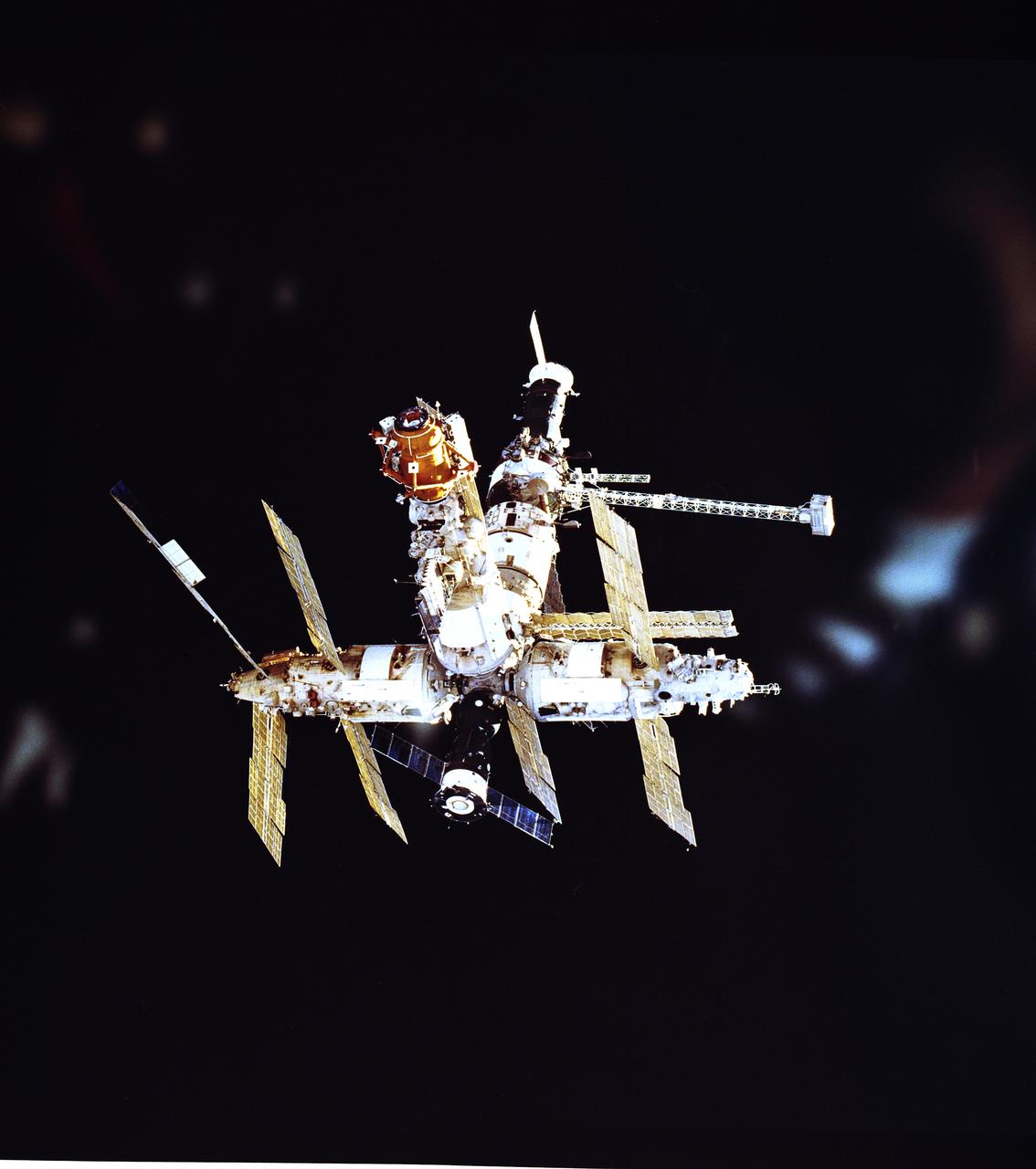
This is a view of the Russian Mir Space Station photographed by a crewmember of the second Shuttle/Mir docking mission, STS-74. The image shows: top - Progress supply vehicle, Kvant-1 module, and the Core module; middle left - Spektr module; middle center - Kristall module and Docking module; middle right - Kvant-2 module; and bottom - Soyuz. The Progress was an unmarned, automated version of the Soyuz crew transfer vehicle, designed to resupply the Mir. The Kvant-1 provided research in the physics of galaxies, quasars, and neutron stars by measuring electromagnetic spectra and x-ray emissions. The Core module served as the heart of the space station and contained the primary living and working areas, life support, and power, as well as the main computer, communications, and control equipment. The Spektr module provided Earth observation. It also supported research into biotechnology, life sciences, materials science, and space technologies. American astronauts used the Spektr as their living quarters. A main purpose of the Kristall module was to develop biological and materials production technologies in the space environment. The Docking module made it possible for the Space Shuttle to dock easily with the Mir. Kvant-2 was a scientific and airlock module, providing biological research, Earth observations, and EVA (extravehicular activity) capability. The Soyuz typically ferried three crewmembers to and from the Mir. The journey of the 15-year-old Russian Mir Space Station ended March 23, 2001, as the Mir re-entered the Earth's atmosphere and fell into the south Pacific Ocean.

STS071-701-064 (29 June 1995) --- Russia's Kvant 2 portion of the Mir Space Station is backdropped against the darkness of space, as photographed from the approaching space shuttle Atlantis on June 29, 1995. Cosmonaut Vladimir N. Dezhurov, Mir-18 mission commander, can be seen aiming a camera through a port hole at center frame. Norman E. Thagard, Mir-18 cosmonaut researcher, aims a camera through a smaller window. Five NASA astronauts and two cosmonauts were onboard Atlantis as it approached the Mir, which has been home for the three-member Mir-18 crew since March of this year.
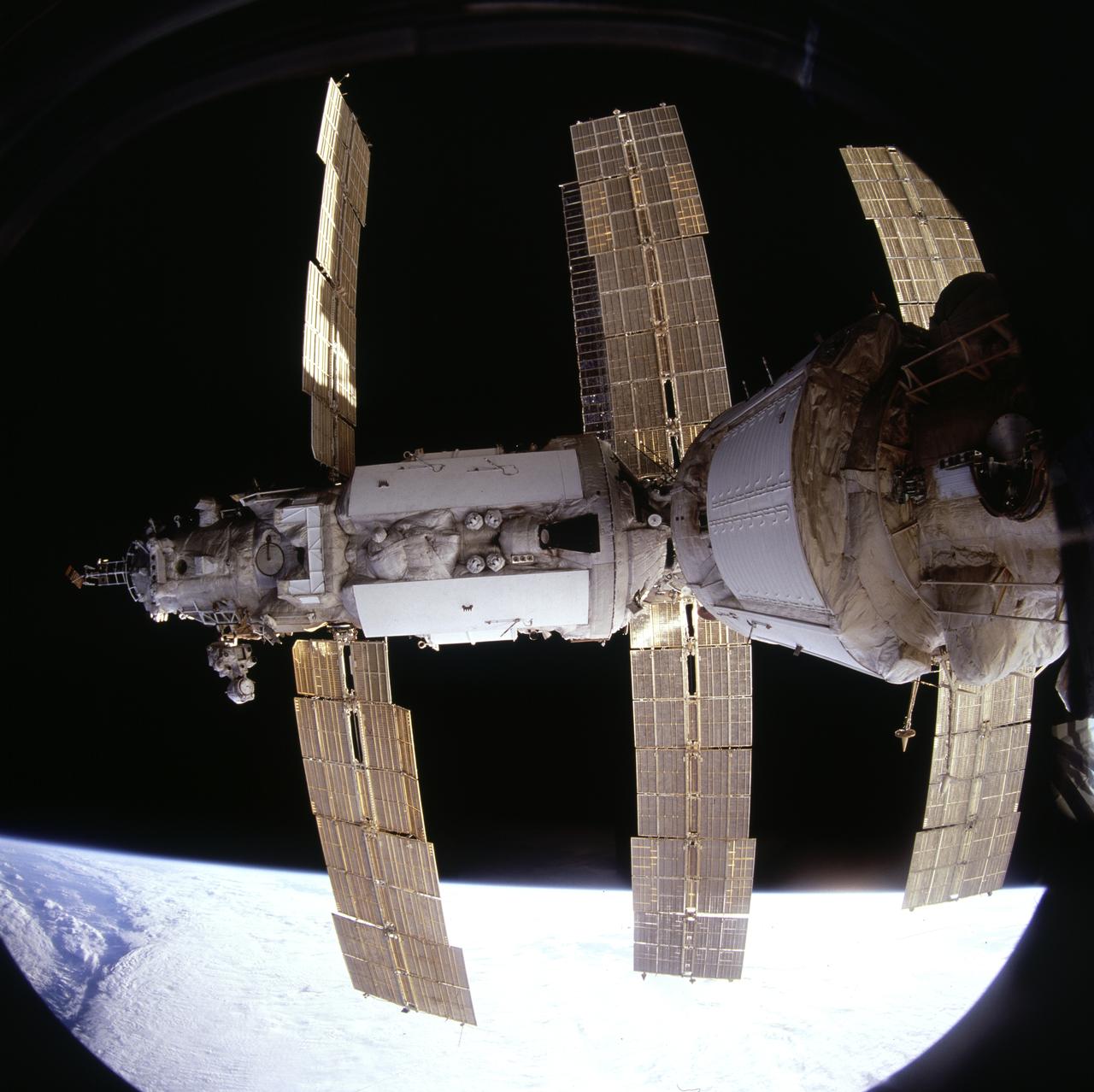
STS071-701-089 (27 June-7 July 1995) --- This view of many of the adjoined components of Russia's Mir Space Station was provided by a crew member aiming a hand-held Hasselblad camera through an overhead window on the space shuttle Atlantis' aft flight deck. During the week in which the Atlantis and Mir were docked, six astronauts and four cosmonauts stayed busy in several different areas. Most of the time was spent in the Spacelab Science Module in Atlantis' cargo bay.
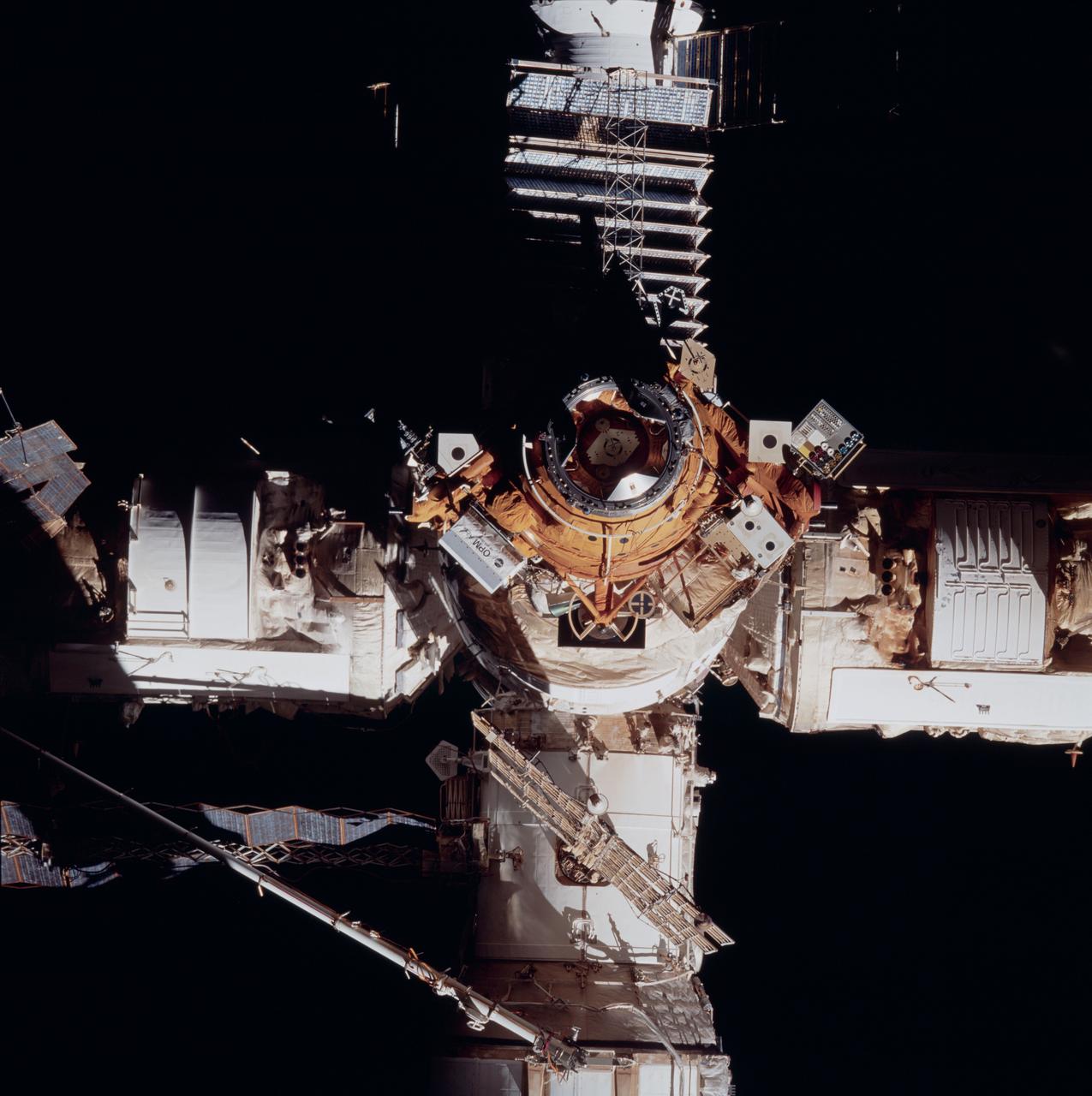
STS084-730-002 (15-24 May 1997) --- A Space Shuttle Atlantis point-of-view frame showing the docking port and target during separation from with Russia's Mir Space Station. The picture should be held with the retracted Kristall solar array at right. Other elements partially visible are Kvant-2 (top), Spektr (bottom) and Core Module (left).
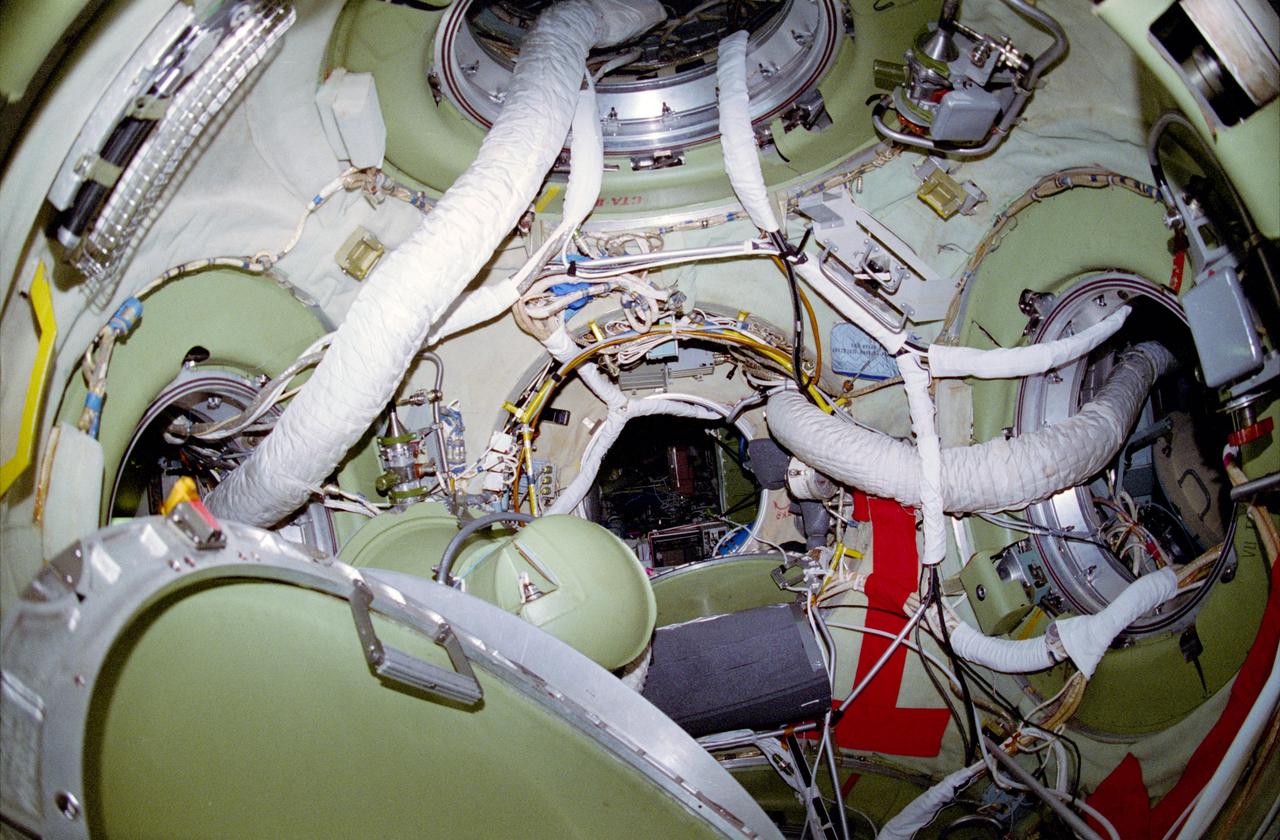
STS084-305-018 (15-24 May 1997) --- As seen from the docked Soyuz hatchway, this 35mm view shows the interior of a Russian Mir Space Station node connected to Kristall (bottom), Priroda (top), Mir Core Module (center), Kvant-2 (left) and Spektr (right). The Mir-23 and STS-84 crew members spent several days sharing joint activities in Earth-orbit as part of an ongoing cooperative program between the Russian Space Agency (RSA) and National Aeronautics and Space Administration (NASA).
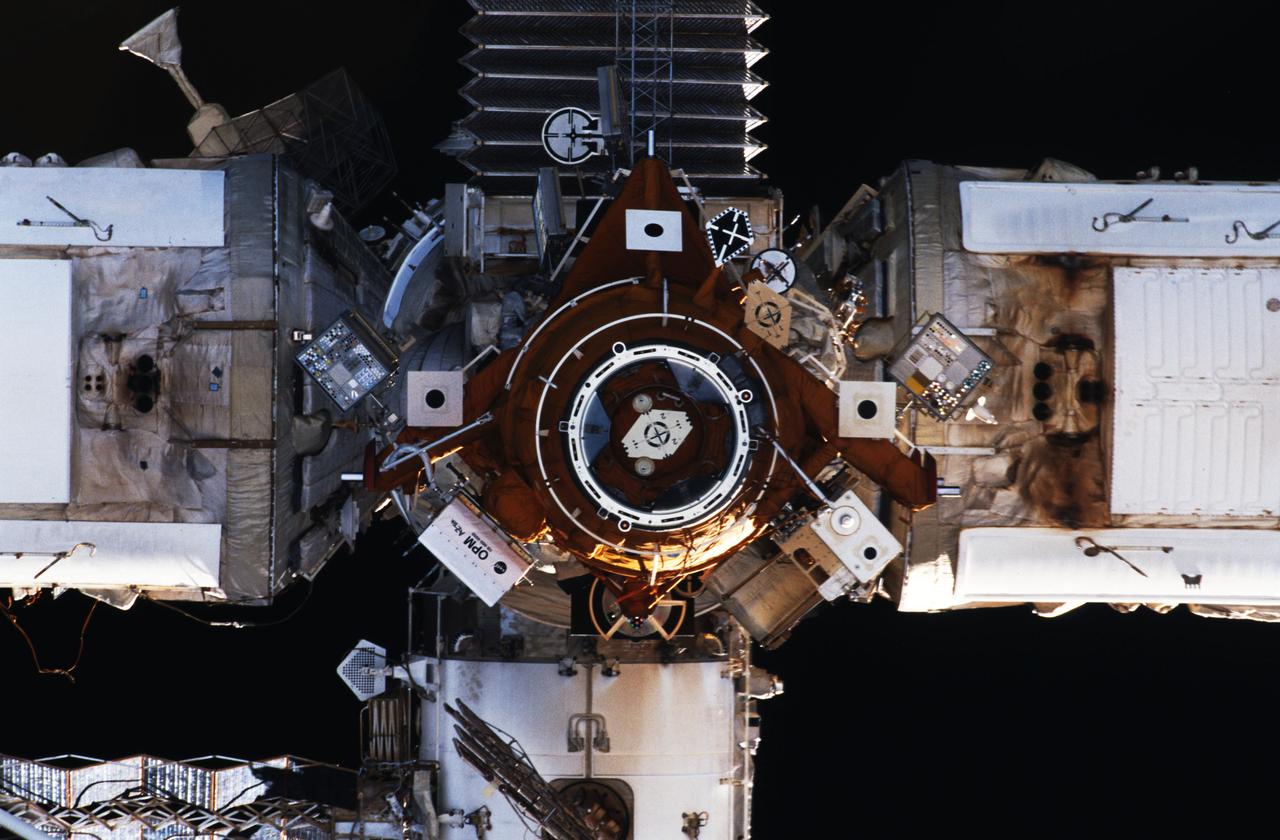
STS084-350-023 (15-24 May 1997) --- A Space Shuttle point-of-view frame showing the docking port and target during rendezvous with Russia's Mir Space Station. The picture should be held horizontally with the retracted Kristall solar array at top. Other elements partially visible are Kvant-2 (left), Spektr (right) and Core Module (bottom).
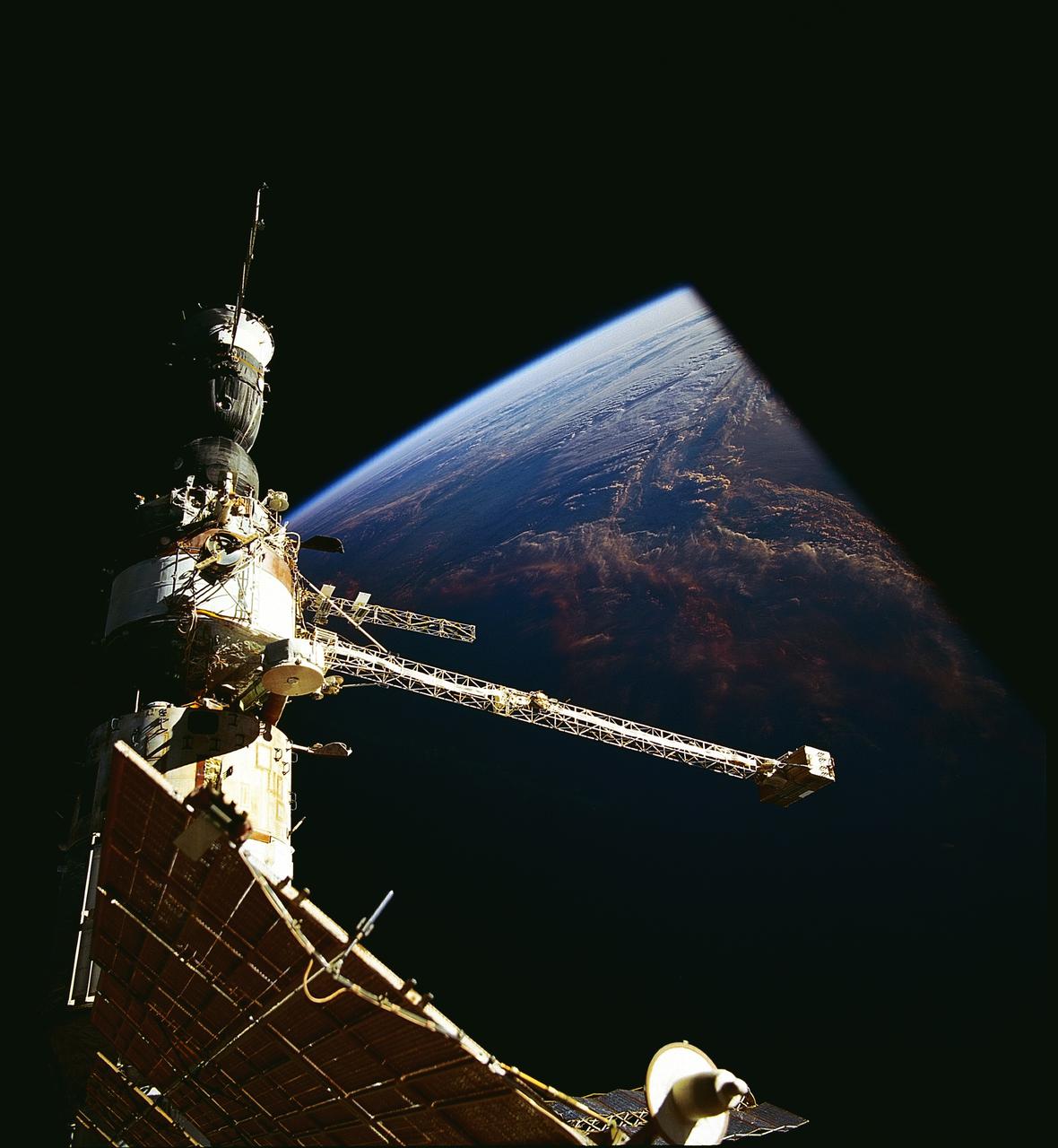
STS076-709-007 (22 - 31 March 1996) --- Earth's terminator forms the backdrop for this scene of Russia Mir Space Station's Soyuz and Kvant 2 Modules, as photographed from the aft flight deck of the Space Shuttle Atlantis. Atlantis docked with the Mir Space Station on March 23, 1996, and remained linked until March 28, 1996. Astronaut Shannon W. Lucid transferred from the STS-76 crew to the Mir-21 crew, which grew from two to three. Lucid will remain aboard Mir for approximately 140 days.
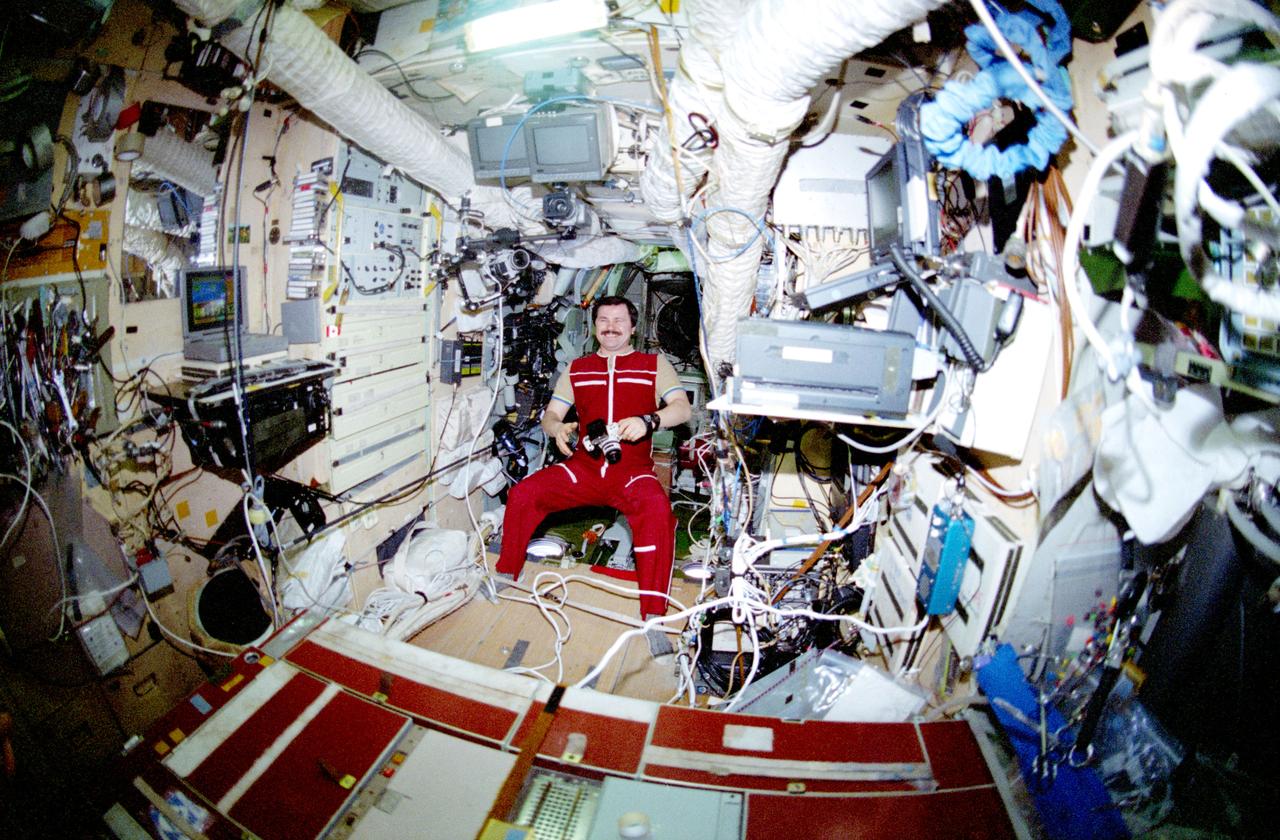
STS091-362-032 (2-12 June 1998) --- Cosmonaut Nikolai Budarin, Mir flight engineer, is at the center of this photo marking the final occasion of an American visit to Russia's Mir space station. Budarin is in the base block or core module of the complex--site of many interchanges between cosmonauts and astronauts over the last several years. Photo Credit: National Aeronautics and Space Administration (NASA) and the Russian Aviation and Space Agency.
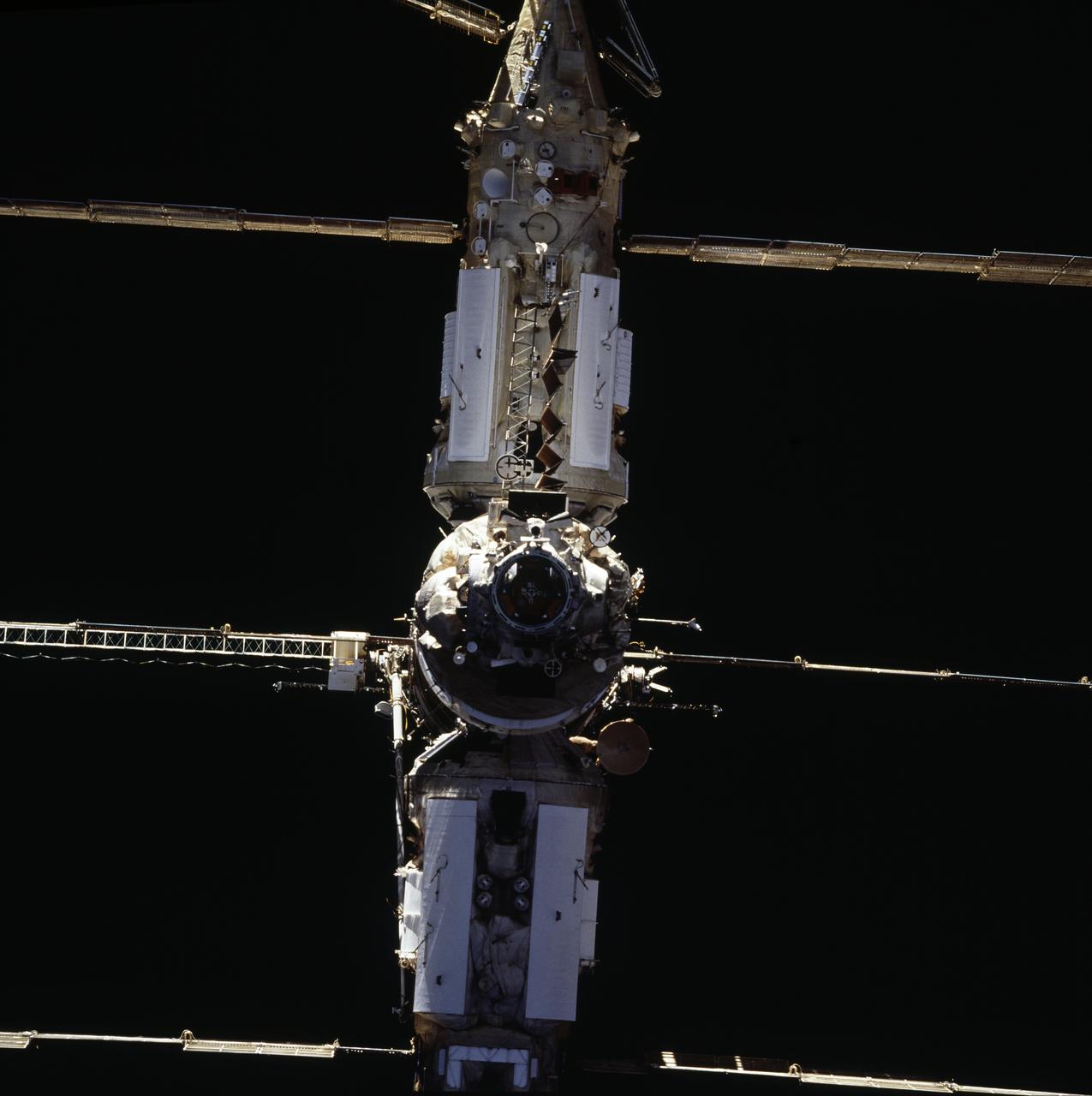
STS071-701-025 (29 June 1995) --- The approach for the June 29, 1995, link-up of the Russian Mir Space Station and the space shuttle Atlantis was recorded with a 70mm handheld camera from the aft flight deck of the Space Shuttle Atlantis. The Androgynous Peripheral Docking System (APDS) and the Kristall Module on Mir are at center frame. Later, five NASA astronauts and two Russian cosmonauts boarded Mir. The occasion was just two and a half weeks prior to the 20th anniversary of the Apollo-Soyuz Test Project (ASTP) docking in Earth-orbit.
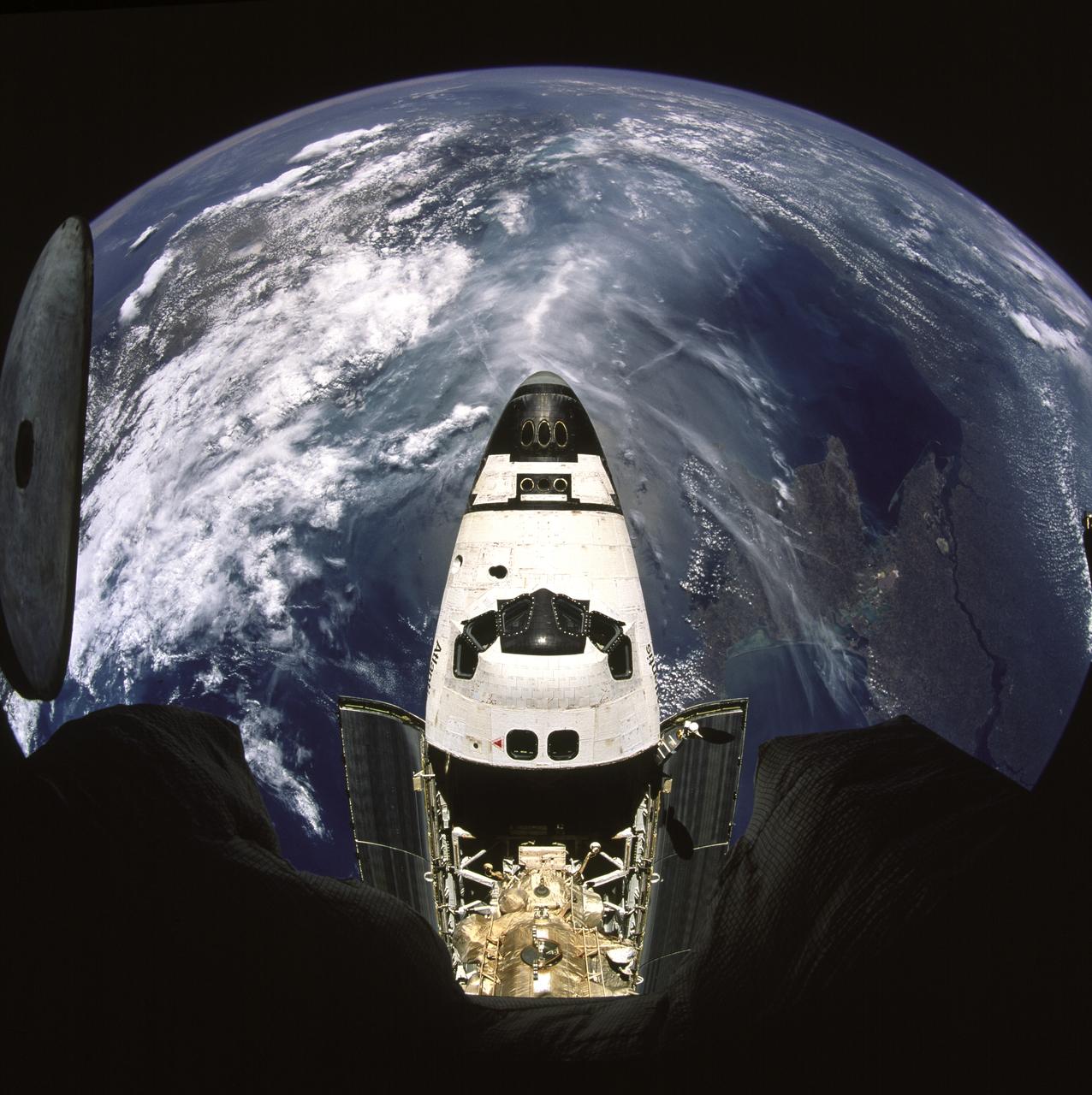
STS071-741-004 (27 June-7 July 1995) --- Docked already with Russia's Mir Space Station and backdropped against a half globe of Earth featuring the Crimean Peninsula, the space shuttle Atlantis is partially visible through a window on the Kvant 2 Module. A 70mm camera, carried into space by the STS-71 crew aboard the space shuttle Atlantis, was used to expose the image. The crew cabin and forward cargo bay of Atlantis are most prominent. Below center can be seen the Androgynous Peripheral Docking System (APDS) and the Kristall Module on Mir. The APDS is connected to a port in a tunnel leading to the Spacelab Science Module in Atlantis' cargo bay. The linkup enabled the seven STS-71 crew members to visit Mir and it allowed the three Mir-18 crew members, in space since March of this year, access to Spacelab. That module was quite busy with tests and data collection involving the three, Mir-18 crew, until Atlantis brought them home on July 7, 1995. The Black Sea lies directly beneath Atlantis, with Ukraine's diamond-shaped Crimean Peninsula immediately to the right of the cockpit. The wide lower course of the Dnepr River can be seen entering the Black Sea at far right. The coast of Romania and Bulgaria lies at a point where the cloud begins at top right. The peninsula of Asia Minor lies across the left of the view, mostly under cloud cover. The Mediterranean Sea is the cloud-free, blue mass beyond. Still further, at about 1,300 miles distance, the north edge of Africa is stretched out as a line across the horizon with its characteristic sandy color. The nose of Atlantis points southwest toward the only outlet of the Black Sea known as the Bosporus.