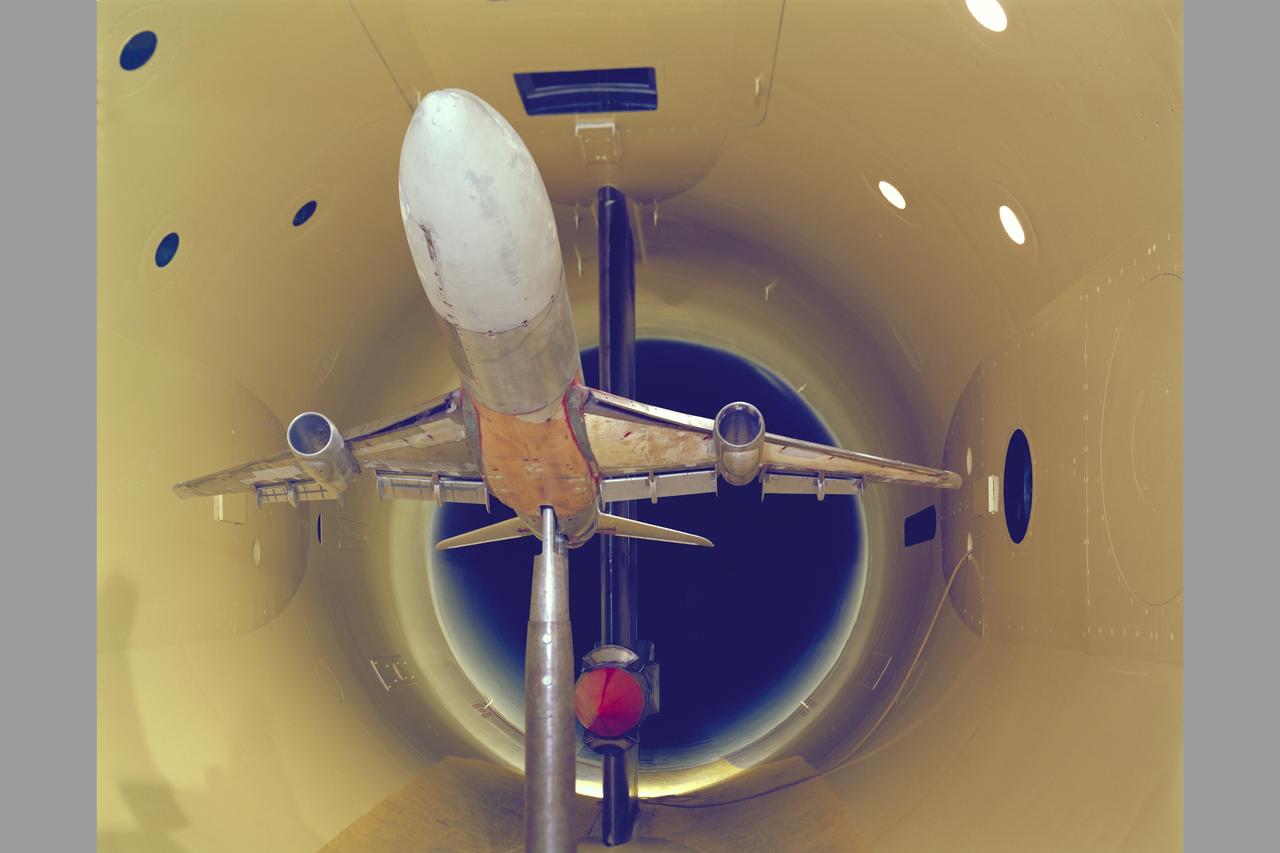
Lockheed L-1011 EET (Energy Efficient Transport) test-516 in 12ft. W.T.
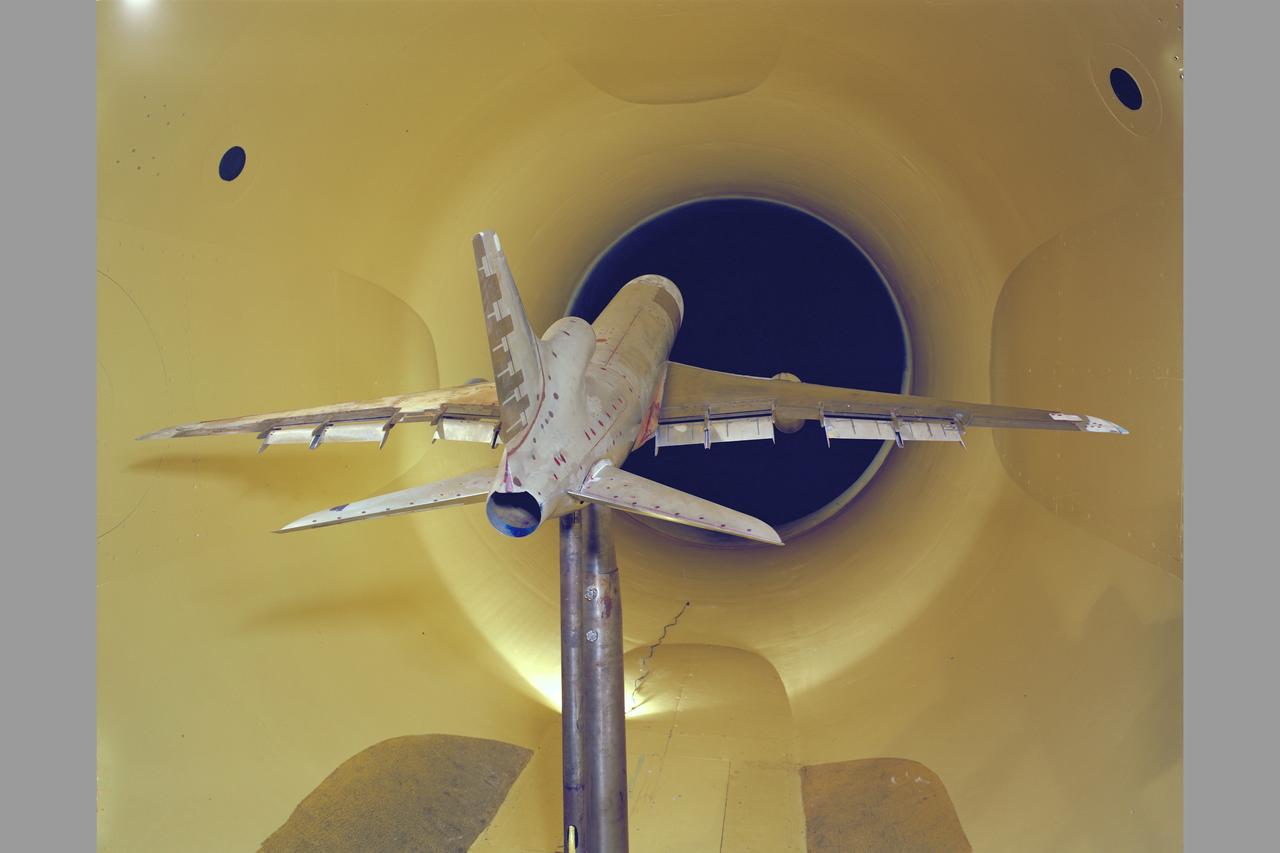
Lockheed L-1011 EET (Energy Efficient Transport) 12ft w.t. test-516
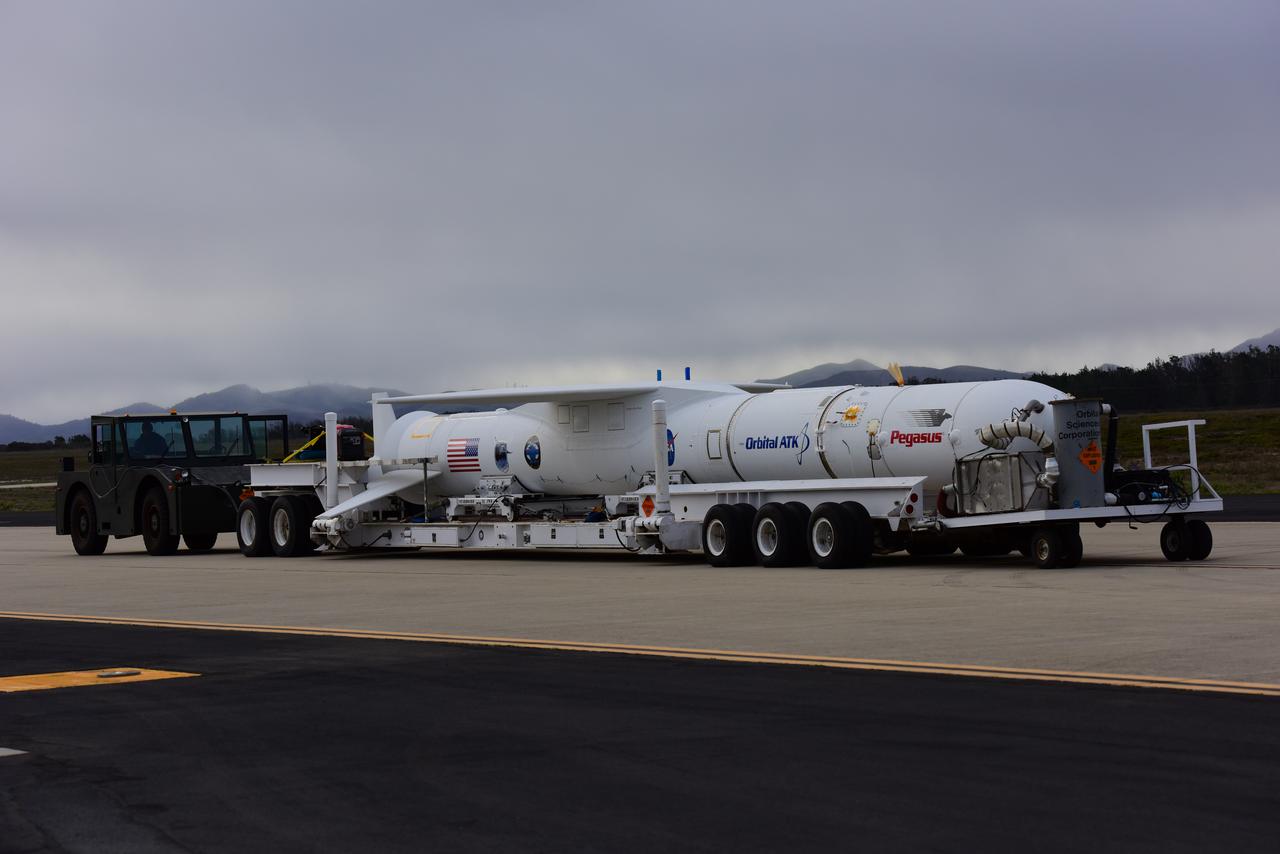
At Vandenberg Air Force Base in California, an Orbital ATK Pegasus XL rocket is transported to be mated to the company's L-1011 carrier aircraft near Vandenberg's runway. On board Pegasus are eight NASA Cyclone Global Navigation Satellite System, or CYGNSS, spacecraft. When preparations are competed at Vandenberg, the L-1011/Pegasus XL combination will be flown to NASA’s Kennedy Space Center in Florida. On Dec. 12, 2016, the carrier aircraft is scheduled to take off from the Skid Strip at Cape Canaveral Air Force Station and CYGNSS will launch on the Pegasus XL rocket with the L-1011 flying off shore. CYGNSS satellites will make frequent and accurate measurements of ocean surface winds throughout the life cycle of tropical storms and hurricanes. The data that CYGNSS provides will enable scientists to probe key air-sea interaction processes that take place near the core of storms, which are rapidly changing and play a critical role in the beginning and intensification of hurricanes.
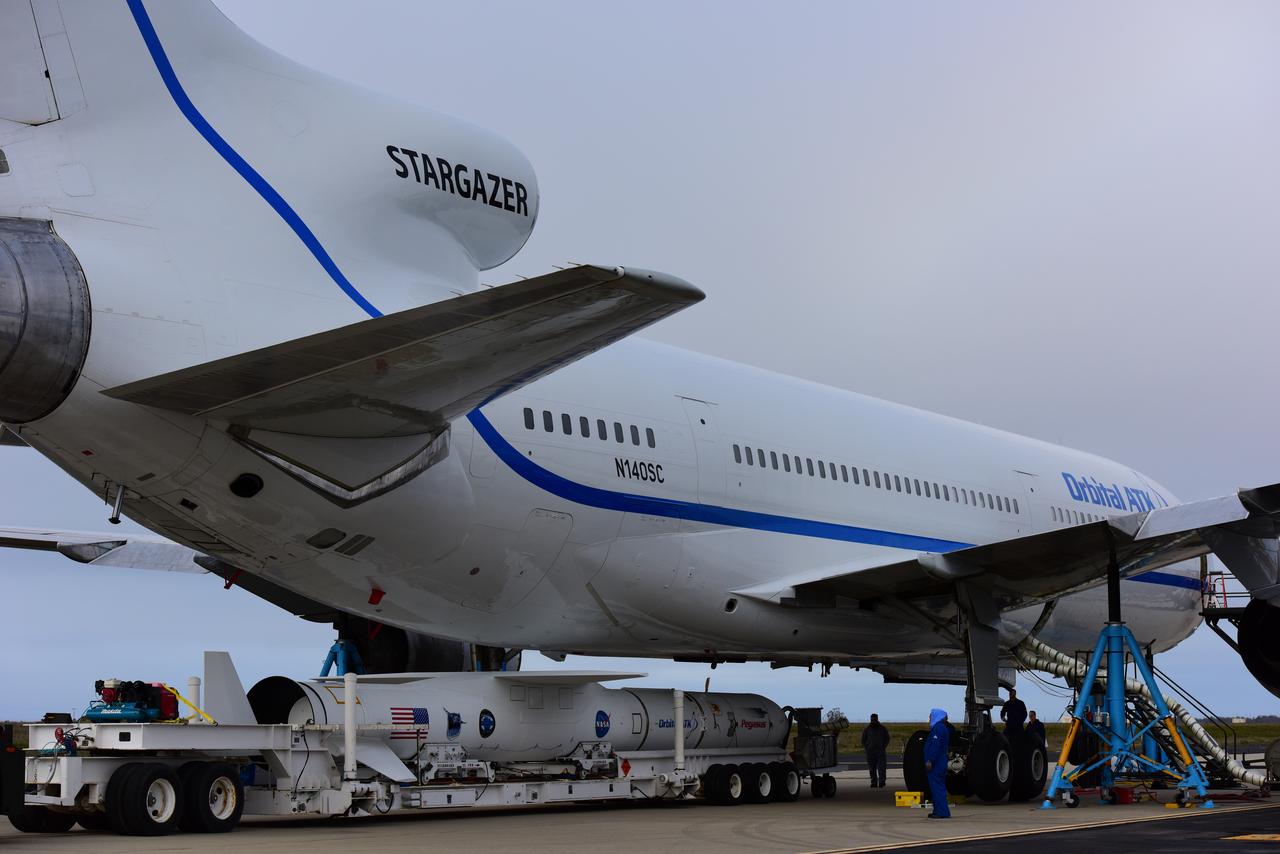
At Vandenberg Air Force Base in California, an Orbital ATK Pegasus XL rocket is mated to the company's L-1011 carrier aircraft near Vandenberg's runway. On board Pegasus are eight NASA Cyclone Global Navigation Satellite System, or CYGNSS, spacecraft. When preparations are competed at Vandenberg, the L-1011/Pegasus XL combination will be flown to NASA’s Kennedy Space Center in Florida. On Dec. 12, 2016, the carrier aircraft is scheduled to take off from the Skid Strip at Cape Canaveral Air Force Station and CYGNSS will launch on the Pegasus XL rocket with the L-1011 flying off shore. CYGNSS satellites will make frequent and accurate measurements of ocean surface winds throughout the life cycle of tropical storms and hurricanes. The data that CYGNSS provides will enable scientists to probe key air-sea interaction processes that take place near the core of storms, which are rapidly changing and play a critical role in the beginning and intensification of hurricanes.
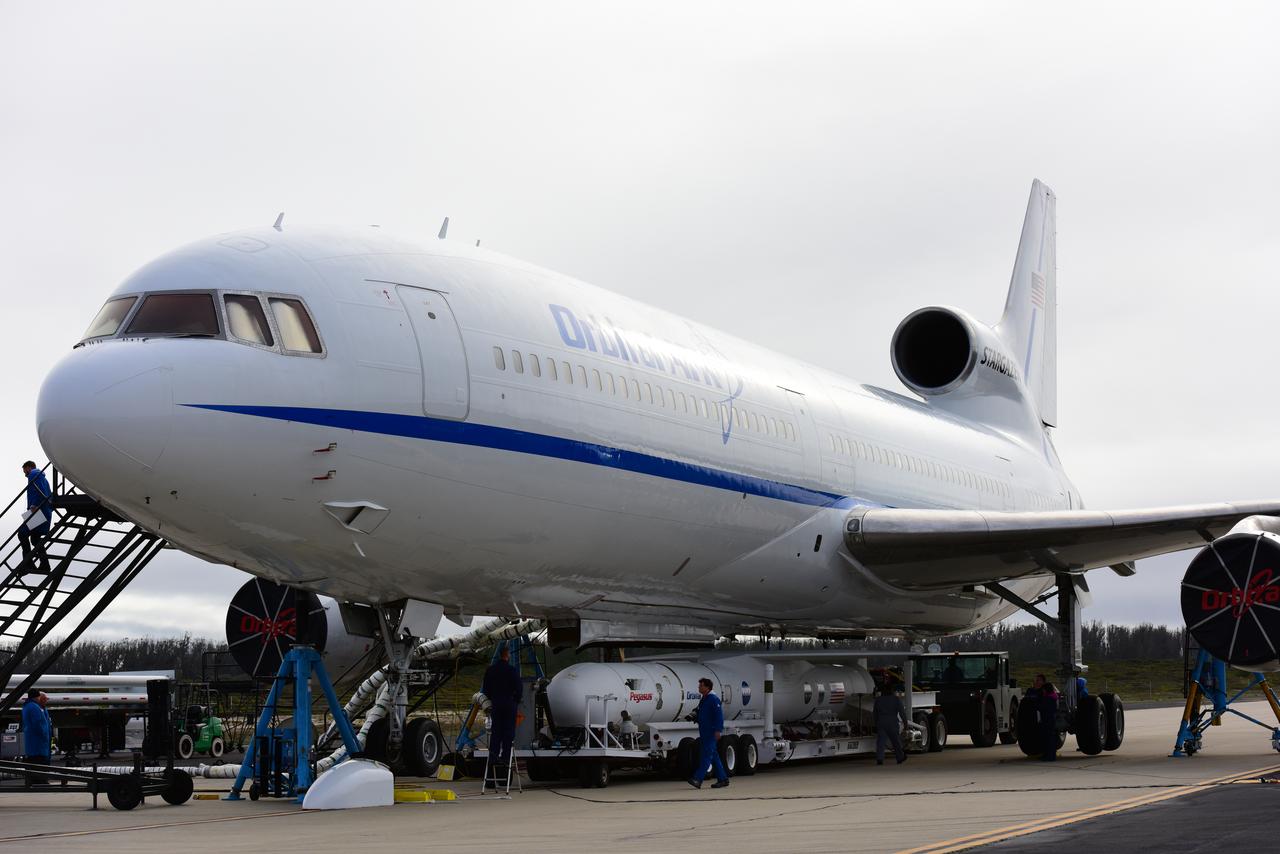
At Vandenberg Air Force Base in California, an Orbital ATK Pegasus XL rocket is mated to the company's L-1011 carrier aircraft near Vandenberg's runway. On board Pegasus are eight NASA Cyclone Global Navigation Satellite System, or CYGNSS, spacecraft. When preparations are competed at Vandenberg, the L-1011/Pegasus XL combination will be flown to NASA’s Kennedy Space Center in Florida. On Dec. 12, 2016, the carrier aircraft is scheduled to take off from the Skid Strip at Cape Canaveral Air Force Station and CYGNSS will launch on the Pegasus XL rocket with the L-1011 flying off shore. CYGNSS satellites will make frequent and accurate measurements of ocean surface winds throughout the life cycle of tropical storms and hurricanes. The data that CYGNSS provides will enable scientists to probe key air-sea interaction processes that take place near the core of storms, which are rapidly changing and play a critical role in the beginning and intensification of hurricanes.
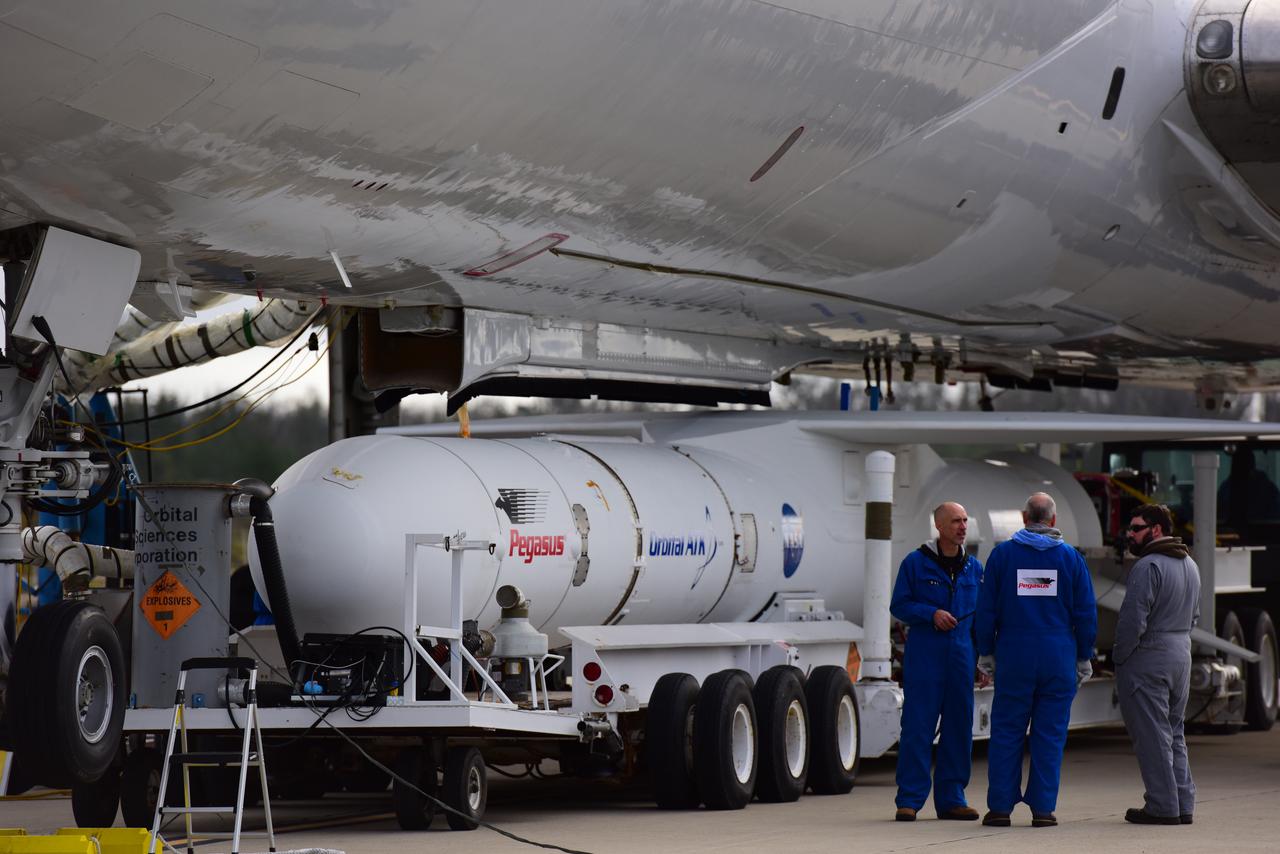
At Vandenberg Air Force Base in California, an Orbital ATK Pegasus XL rocket is mated to the company's L-1011 carrier aircraft near Vandenberg's runway. On board Pegasus are eight NASA Cyclone Global Navigation Satellite System, or CYGNSS, spacecraft. When preparations are competed at Vandenberg, the L-1011/Pegasus XL combination will be flown to NASA’s Kennedy Space Center in Florida. On Dec. 12, 2016, the carrier aircraft is scheduled to take off from the Skid Strip at Cape Canaveral Air Force Station and CYGNSS will launch on the Pegasus XL rocket with the L-1011 flying off shore. CYGNSS satellites will make frequent and accurate measurements of ocean surface winds throughout the life cycle of tropical storms and hurricanes. The data that CYGNSS provides will enable scientists to probe key air-sea interaction processes that take place near the core of storms, which are rapidly changing and play a critical role in the beginning and intensification of hurricanes.
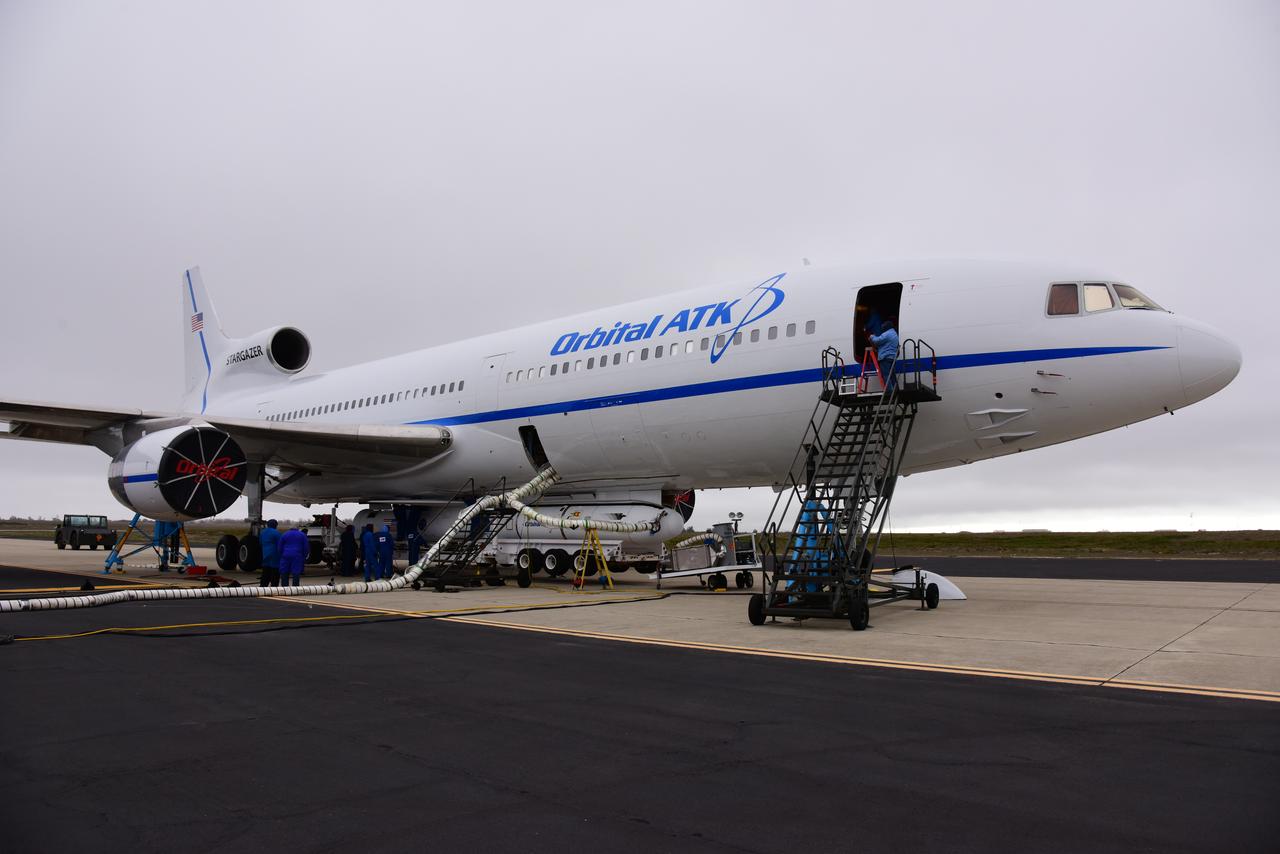
At Vandenberg Air Force Base in California, an Orbital ATK Pegasus XL rocket is mated to the company's L-1011 carrier aircraft near Vandenberg's runway. On board Pegasus are eight NASA Cyclone Global Navigation Satellite System, or CYGNSS, spacecraft. When preparations are competed at Vandenberg, the L-1011/Pegasus XL combination will be flown to NASA’s Kennedy Space Center in Florida. On Dec. 12, 2016, the carrier aircraft is scheduled to take off from the Skid Strip at Cape Canaveral Air Force Station and CYGNSS will launch on the Pegasus XL rocket with the L-1011 flying off shore. CYGNSS satellites will make frequent and accurate measurements of ocean surface winds throughout the life cycle of tropical storms and hurricanes. The data that CYGNSS provides will enable scientists to probe key air-sea interaction processes that take place near the core of storms, which are rapidly changing and play a critical role in the beginning and intensification of hurricanes.
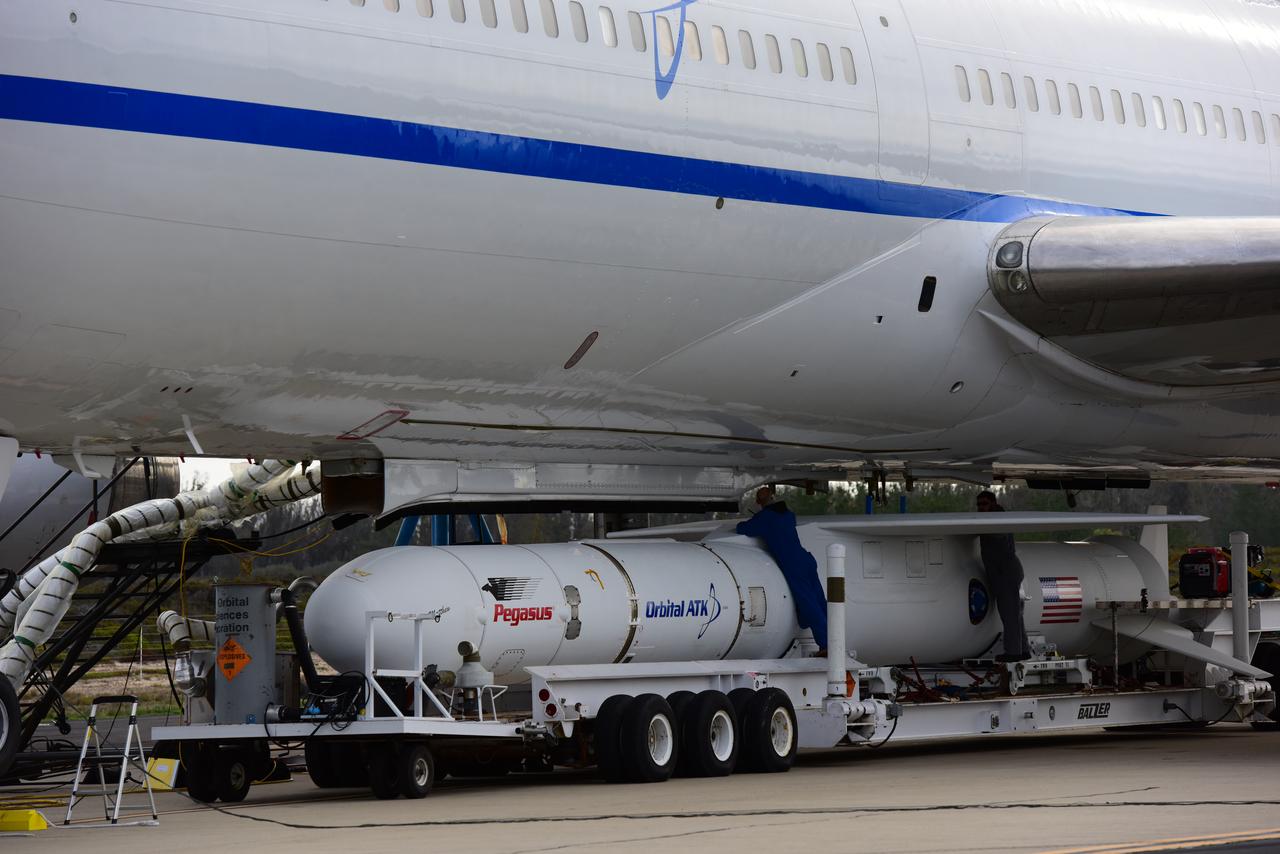
At Vandenberg Air Force Base in California, an Orbital ATK Pegasus XL rocket is mated to the company's L-1011 carrier aircraft near Vandenberg's runway. On board Pegasus are eight NASA Cyclone Global Navigation Satellite System, or CYGNSS, spacecraft. When preparations are competed at Vandenberg, the L-1011/Pegasus XL combination will be flown to NASA’s Kennedy Space Center in Florida. On Dec. 12, 2016, the carrier aircraft is scheduled to take off from the Skid Strip at Cape Canaveral Air Force Station and CYGNSS will launch on the Pegasus XL rocket with the L-1011 flying off shore. CYGNSS satellites will make frequent and accurate measurements of ocean surface winds throughout the life cycle of tropical storms and hurricanes. The data that CYGNSS provides will enable scientists to probe key air-sea interaction processes that take place near the core of storms, which are rapidly changing and play a critical role in the beginning and intensification of hurricanes.
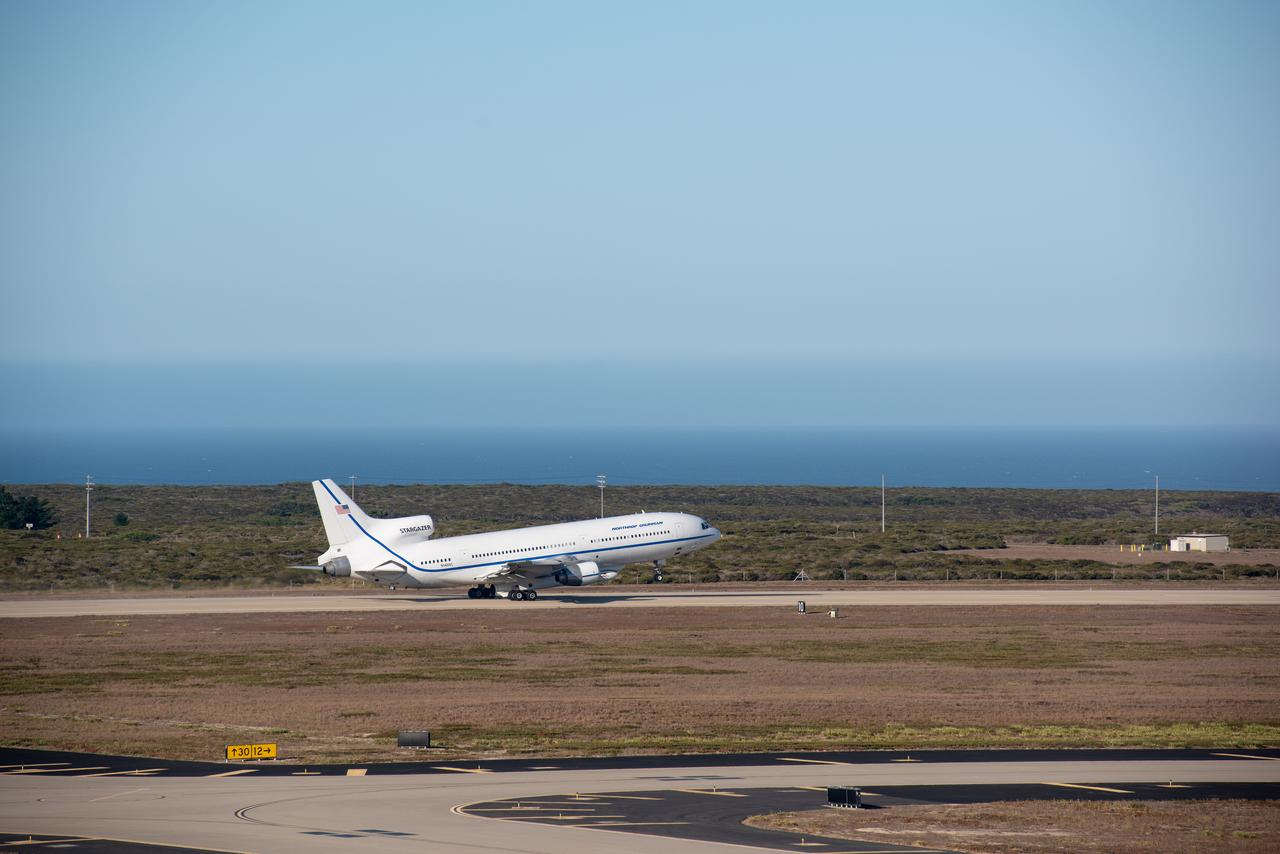
Northrop Grumman's L-1011 Stargazer takes off from Vandenberg Air Force Base in California on Oct. 1, 2019. The company's Pegasus XL rocket, containing NASA's Ionospheric Connection Explorer (ICON), is attached beneath the aircraft. The explorer is targeted to launch on Oct. 9, 2019, from Cape Canaveral Air Force Station in Florida. ICON will study the frontier of space - the dynamic zone high in Earth's atmosphere where terrestrial weather from below meets space weather above.
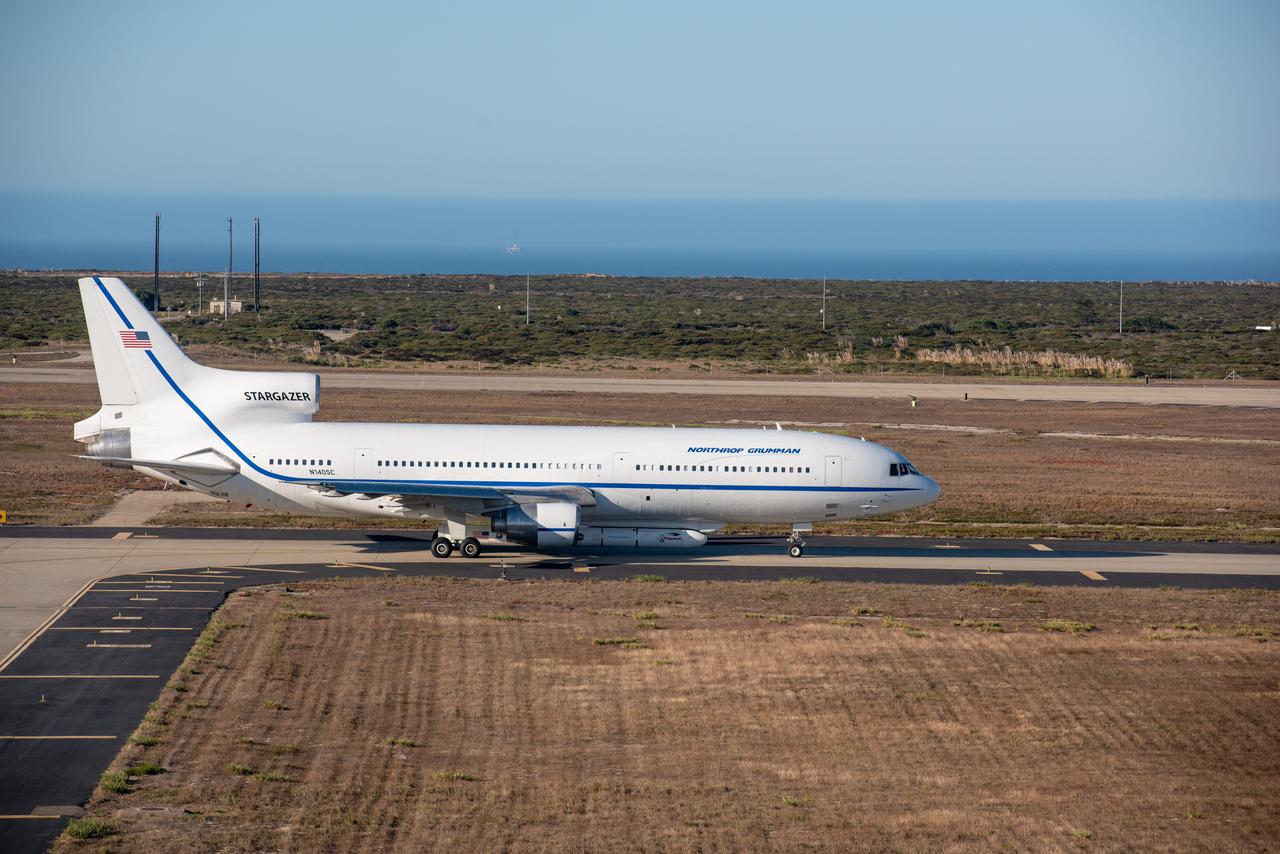
Northrop Grumman's L-1011 Stargazer awaits takeoff from Vandenberg Air Force Base in California on Oct. 1, 2019. The company's Pegasus XL rocket, containing NASA's Ionospheric Connection Explorer (ICON), is attached beneath the aircraft. The explorer is targeted to launch on Oct. 9, 2019, from Cape Canaveral Air Force Station in Florida. ICON will study the frontier of space - the dynamic zone high in Earth's atmosphere where terrestrial weather from below meets space weather above.
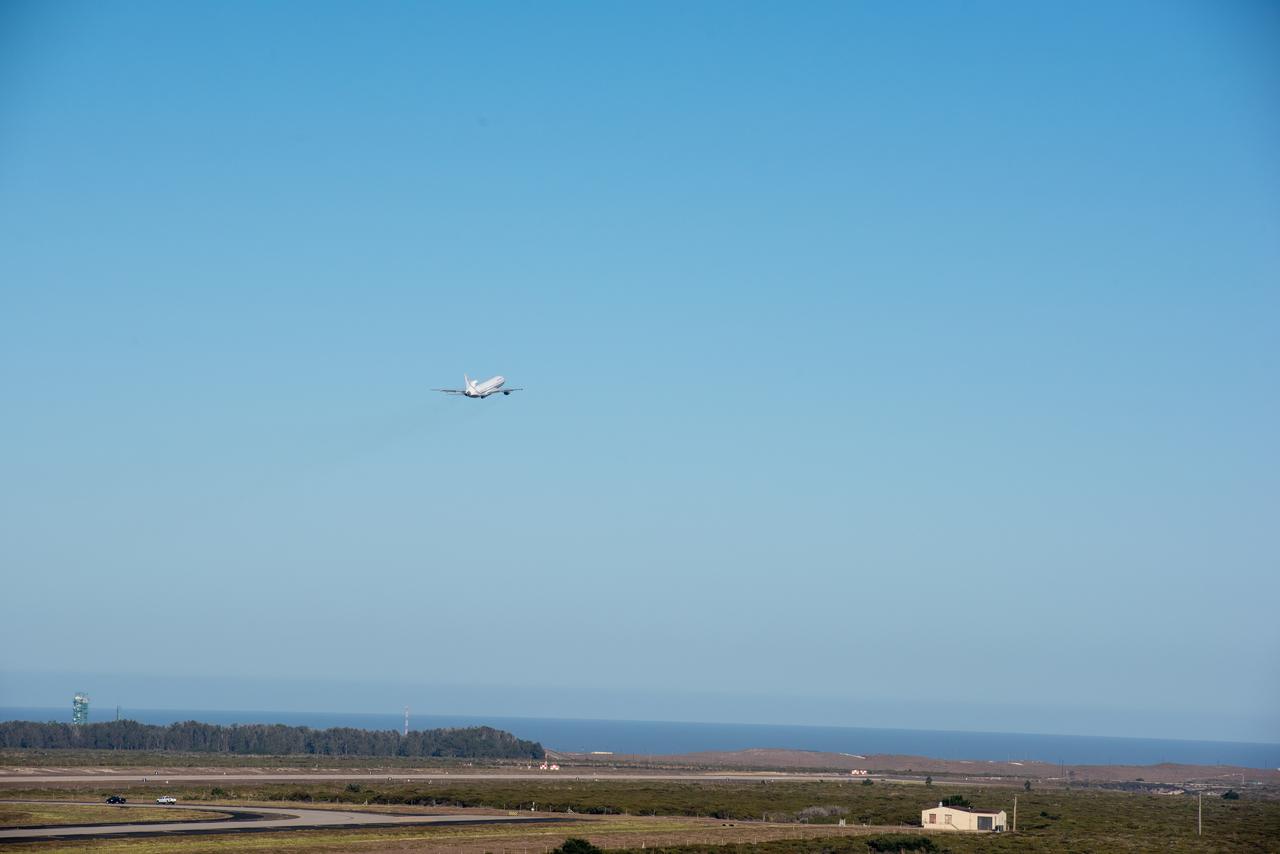
Northrop Grumman's L-1011 Stargazer takes off from Vandenberg Air Force Base in California on Oct. 1, 2019. The company's Pegasus XL rocket, containing NASA's Ionospheric Connection Explorer (ICON), is attached beneath the aircraft. The explorer is targeted to launch on Oct. 9, 2019, from Cape Canaveral Air Force Station in Florida. ICON will study the frontier of space - the dynamic zone high in Earth's atmosphere where terrestrial weather from below meets space weather above.
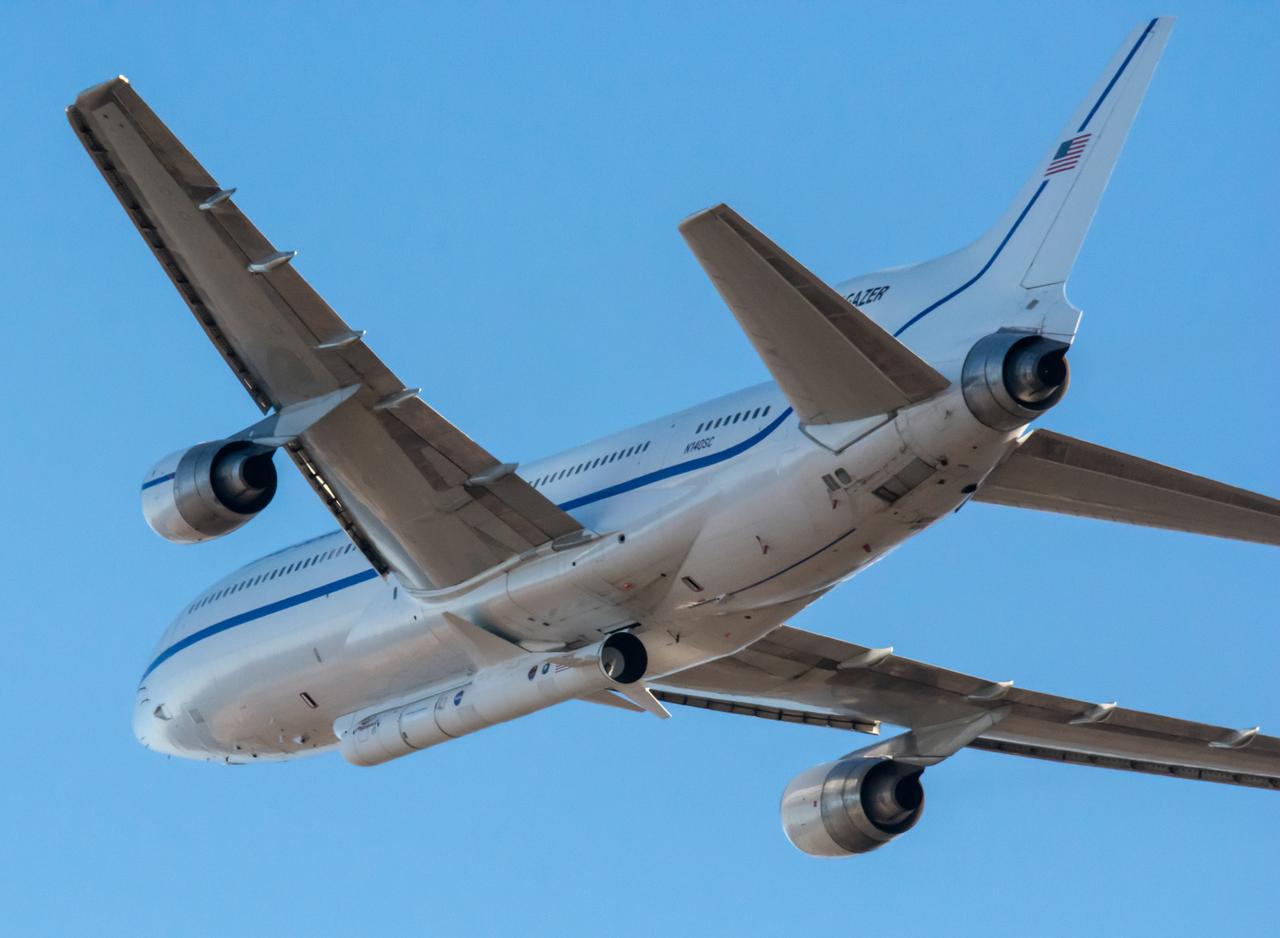
Northrop Grumman's L-1011 Stargazer takes off from Vandenberg Air Force Base in California on Oct. 1, 2019. The company's Pegasus XL rocket, containing NASA's Ionospheric Connection Explorer (ICON), is attached beneath the aircraft. The explorer is targeted to launch on Oct. 9, 2019, from Cape Canaveral Air Force Station in Florida. ICON will study the frontier of space - the dynamic zone high in Earth's atmosphere where terrestrial weather from below meets space weather above.
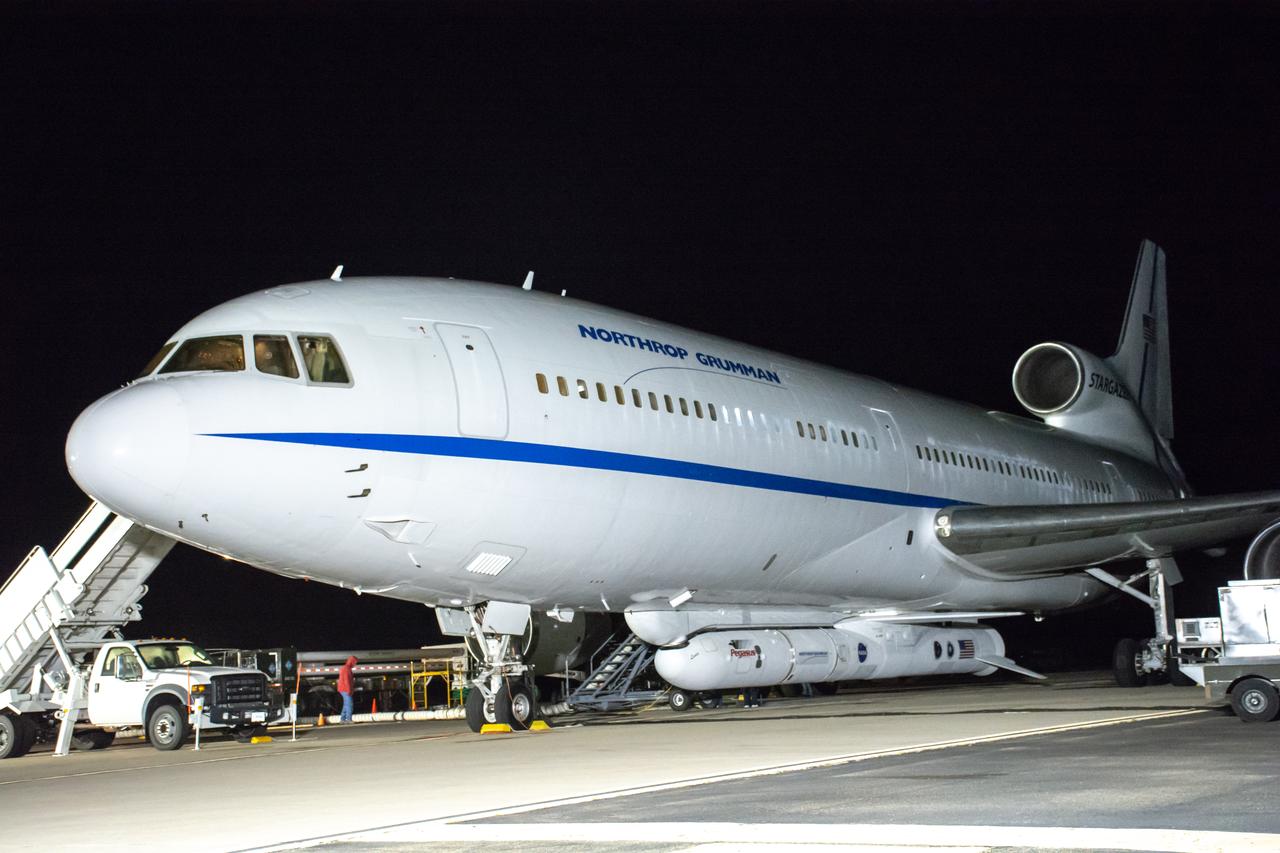
Northrop Grumman's L-1011 Stargazer is undergoing final preparations prior to its takeoff from Vandenberg Air Force Base in California on Oct. 1, 2019. The company's Pegasus XL rocket, containing NASA's Ionospheric Connection Explorer (ICON), is attached beneath the aircraft. The explorer is targeted to launch on Oct. 9, 2019, from Cape Canaveral Air Force Station in Florida. ICON will study the frontier of space - the dynamic zone high in Earth's atmosphere where terrestrial weather from below meets space weather above.
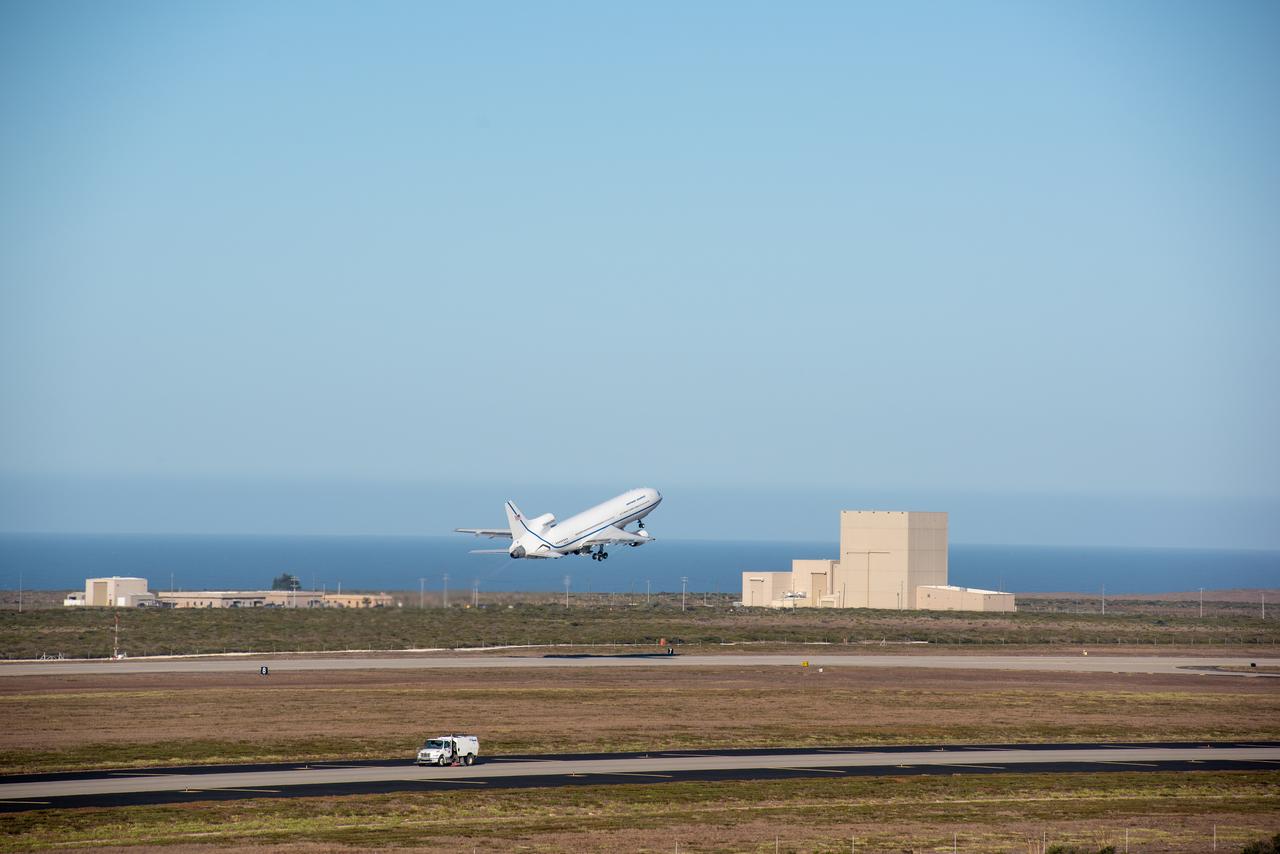
Northrop Grumman's L-1011 Stargazer takes off from Vandenberg Air Force Base in California on Oct. 1, 2019. The company's Pegasus XL rocket, containing NASA's Ionospheric Connection Explorer (ICON), is attached beneath the aircraft. The explorer is targeted to launch on Oct. 9, 2019, from Cape Canaveral Air Force Station in Florida. ICON will study the frontier of space - the dynamic zone high in Earth's atmosphere where terrestrial weather from below meets space weather above.

The L-1011 aircraft carrying a Pegasus XL rocket with NASA's Solar Radiation and Climate Experiment (SORCE) attached takes off from Cape Canaveral Air Force Station, Fla. The L-1011 will release the rocket over the Atlantic Ocean at 39,000 feet. After separation from the rocket, initial contact with the satellite will be made and the mission team will insure that the spacecraft is functioning properly. The SORCE science instruments will then be turned on and their health verified. Approximately 21 days after launch, if all is going well, the instruments will start initial science data collection and calibration will begin. The spacecraft will study the Sun's influence on our Earth and will measure from space how the Sun affects the Earth's ozone layer, atmospheric circulation, clouds, and oceans. This mission is a joint partnership between NASA and the University of Colorado's Laboratory for Atmospheric and Space Physics in Boulder, Colorado.

The L-1011 aircraft carrying a Pegasus XL rocket with NASA's Solar Radiation and Climate Experiment (SORCE) attached takes off from Cape Canaveral Air Force Station, Fla. The L-1011 will release the rocket over the Atlantic Ocean at 39,000 feet. After separation from the rocket, initial contact with the satellite will be made and the mission team will insure that the spacecraft is functioning properly. The SORCE science instruments will then be turned on and their health verified. Approximately 21 days after launch, if all is going well, the instruments will start initial science data collection and calibration will begin. The spacecraft will study the Sun's influence on our Earth and will measure from space how the Sun affects the Earth's ozone layer, atmospheric circulation, clouds, and oceans. This mission is a joint partnership between NASA and the University of Colorado's Laboratory for Atmospheric and Space Physics in Boulder, Colorado.
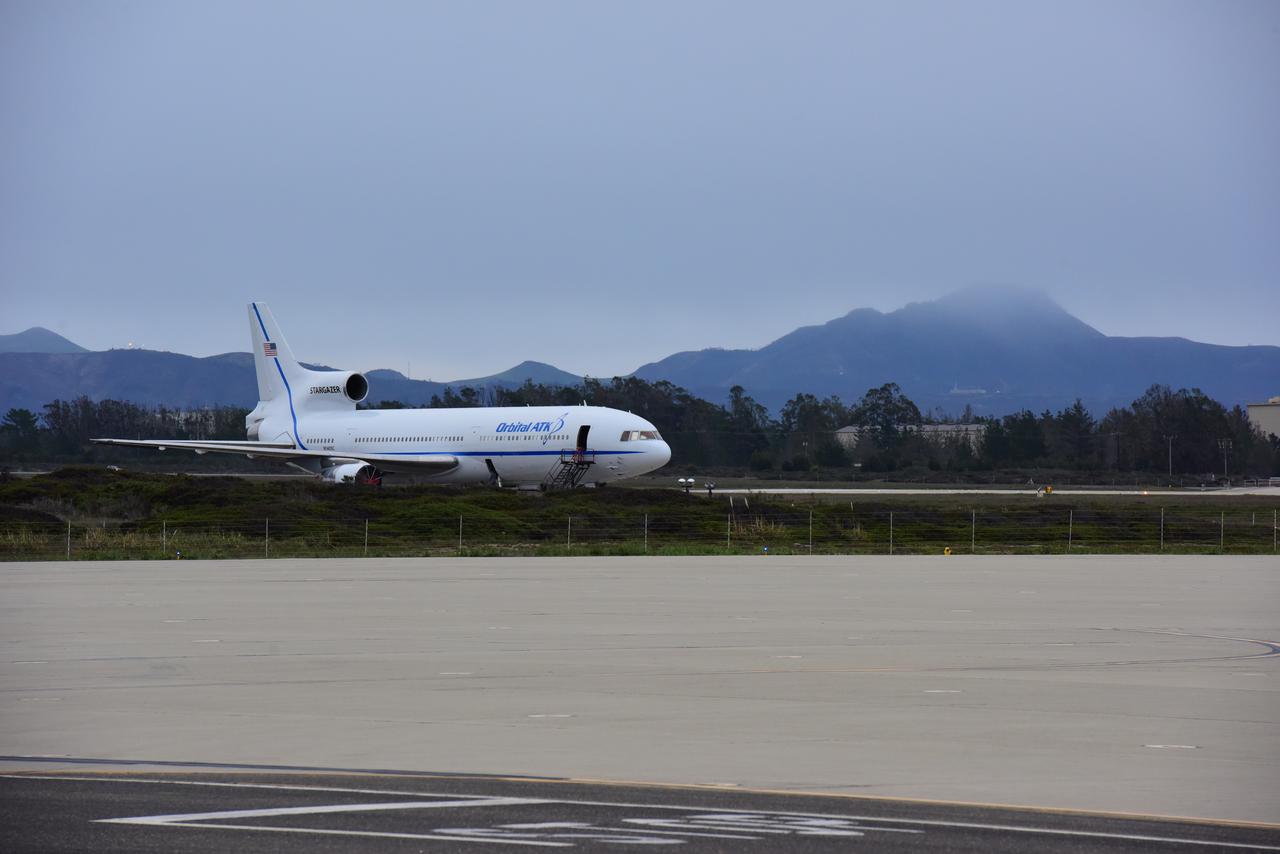
At Vandenberg Air Force Base in California, the Orbital ATK L-1011 Stargazer awaits a Pegasus XL rocket to be mated to the aircraft. On board Pegasus XL are eight NASA Cyclone Global Navigation Satellite System, or CYGNSS, spacecraft. When preparations are competed at Vandenberg, the /Pegasus XL combination will be flown to NASA’s Kennedy Space Center in Florida. On Dec. 12, 2016, the carrier aircraft is scheduled to take off from the Skid Strip at Cape Canaveral Air Force Station and CYGNSS will launch on the Pegasus XL rocket with the L-1011 flying off shore. CYGNSS satellites will make frequent and accurate measurements of ocean surface winds throughout the life cycle of tropical storms and hurricanes. The data that CYGNSS provides will help scientists to probe key air-sea interaction processes that take place near the core of storms, which are rapidly changing and play a crucial role in the beginning and intensification of hurricanes.
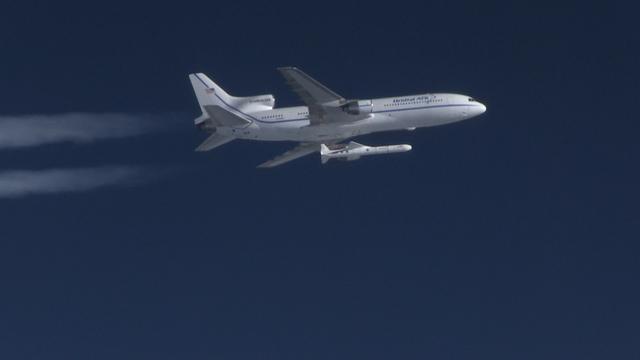
The Orbital ATK Pegasus XL rocket carrying NASA's Cyclone Global Navigation Satellite System, or CYGNSS, spacecraft is released and the first stage ignites at 8:37 a.m. EST. The rocket was released from the Orbital ATK L-1011 Stargazer aircraft flying over the Atlantic Ocean offshore from Daytona Beach, Florida following takeoff from the Skid Strip at Cape Canaveral Air Force Station. This image was taken from a NASA F-18 chase plane provided by Armstrong Flight Research Center in California. The CYGNSS satellites will make frequent and accurate measurements of ocean surface winds throughout the life cycle of tropical storms and hurricanes.
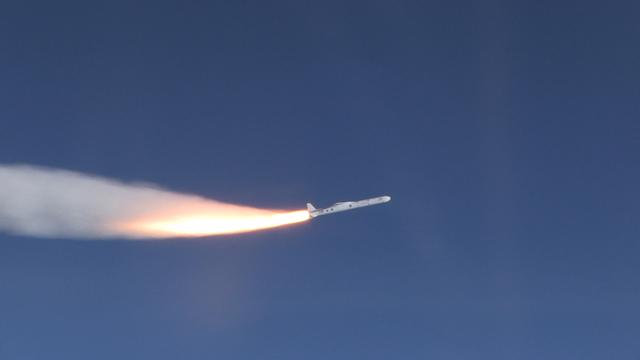
The Orbital ATK Pegasus XL rocket carrying NASA's Cyclone Global Navigation Satellite System, or CYGNSS, spacecraft is released and the first stage ignites at 8:37 a.m. EST. The rocket was released from the Orbital ATK L-1011 Stargazer aircraft flying over the Atlantic Ocean offshore from Daytona Beach, Florida following takeoff from the Skid Strip at Cape Canaveral Air Force Station. This image was taken from a NASA F-18 chase plane provided by Armstrong Flight Research Center in California. The CYGNSS satellites will make frequent and accurate measurements of ocean surface winds throughout the life cycle of tropical storms and hurricanes.
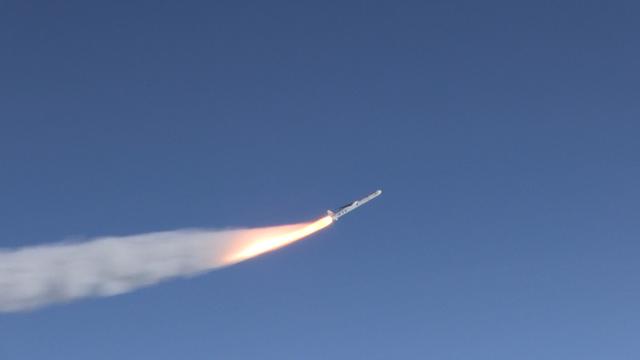
The Orbital ATK Pegasus XL rocket carrying NASA's Cyclone Global Navigation Satellite System, or CYGNSS, spacecraft is released and the first stage ignites at 8:37 a.m. EST. The rocket was released from the Orbital ATK L-1011 Stargazer aircraft flying over the Atlantic Ocean offshore from Daytona Beach, Florida following takeoff from the Skid Strip at Cape Canaveral Air Force Station. This image was taken from a NASA F-18 chase plane provided by Armstrong Flight Research Center in California. The CYGNSS satellites will make frequent and accurate measurements of ocean surface winds throughout the life cycle of tropical storms and hurricanes.
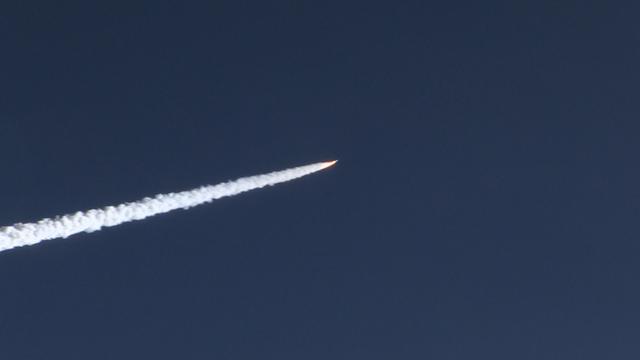
The Orbital ATK Pegasus XL rocket carrying NASA's Cyclone Global Navigation Satellite System, or CYGNSS, spacecraft is released and the first stage ignites at 8:37 a.m. EST. The rocket was released from the Orbital ATK L-1011 Stargazer aircraft flying over the Atlantic Ocean offshore from Daytona Beach, Florida following takeoff from the Skid Strip at Cape Canaveral Air Force Station. This image was taken from a NASA F-18 chase plane provided by Armstrong Flight Research Center in California. The CYGNSS satellites will make frequent and accurate measurements of ocean surface winds throughout the life cycle of tropical storms and hurricanes.
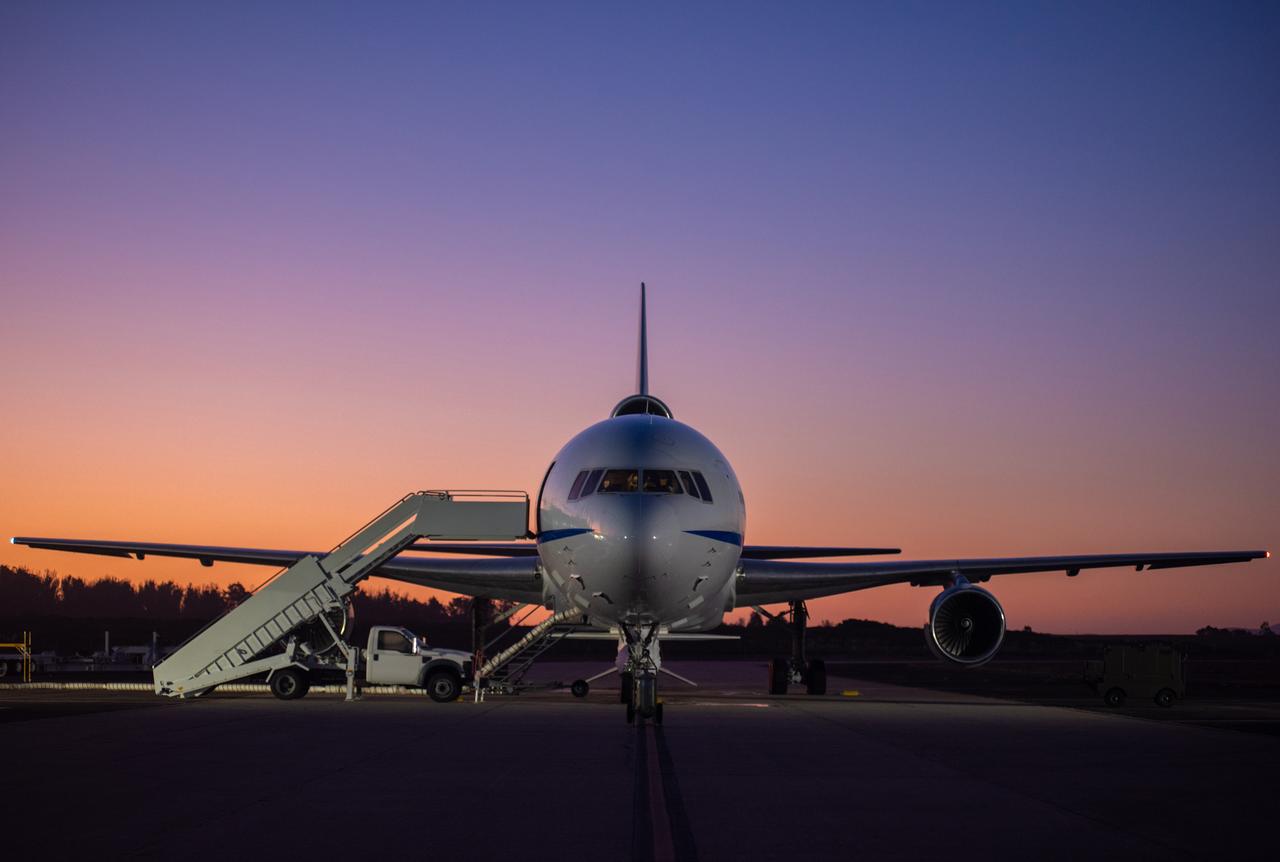
Backdropped by a twilight sky, Northrop Grumman's L-1011 Stargazer undergoes final preparations prior to its takeoff from Vandenberg Air Force Base in California on Oct. 1, 2019. The company's Pegasus XL rocket, containing NASA's Ionospheric Connection Explorer (ICON), is attached beneath the aircraft. The explorer is targeted to launch on Oct. 9, 2019, from Cape Canaveral Air Force Station in Florida. ICON will study the frontier of space - the dynamic zone high in Earth's atmosphere where terrestrial weather from below meets space weather above.
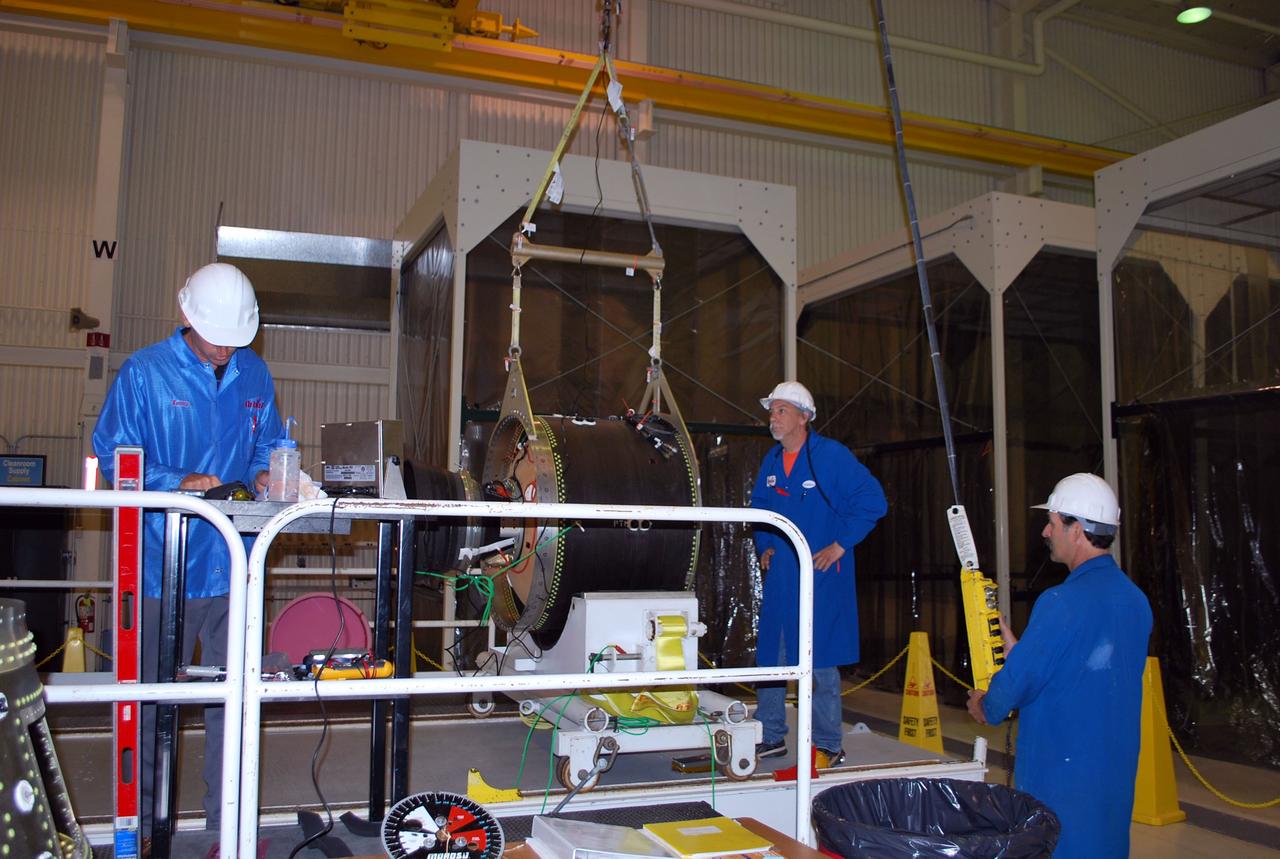
VANDENBERG AIR FORCE BASE, Calif. -- At Vandenberg Air Force Base in California, Orbital Sciences Corp. technicians weigh stage 3 of the Pegasus XL rocket motor that will launch the Nuclear Spectroscopic Telescope Array (NuSTAR) into space. After the rocket and spacecraft are processed at Vandenberg, they will be flown on the Orbital Sciences' L-1011 carrier aircraft to the Ronald Reagan Ballistic Missile Defense Test Site located at the Pacific Ocean’s Kwajalein Atoll for launch. The high-energy X-ray telescope will conduct a census for black holes, map radioactive material in young supernovae remnants, and study the origins of cosmic rays and the extreme physics around collapsed stars. Photo credit: NASA/Randy Beaudoin, VAFB
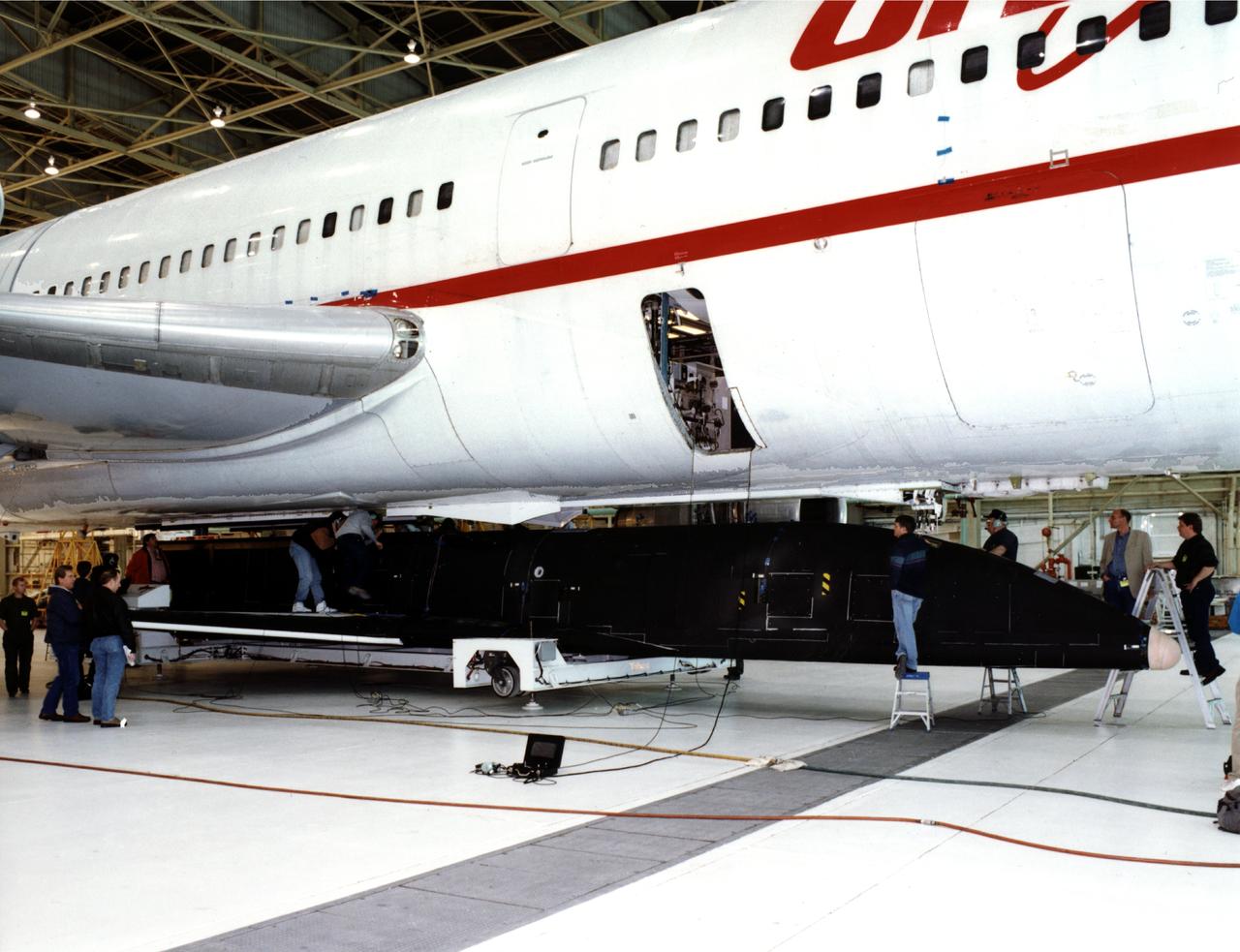
This is the X-34 Technology Testbed Demonstrator being mated with the L-1011 mothership. The X-34 will demonstrate key vehicle and operational technologies applicable to future low-cost resuable launch vehicles.
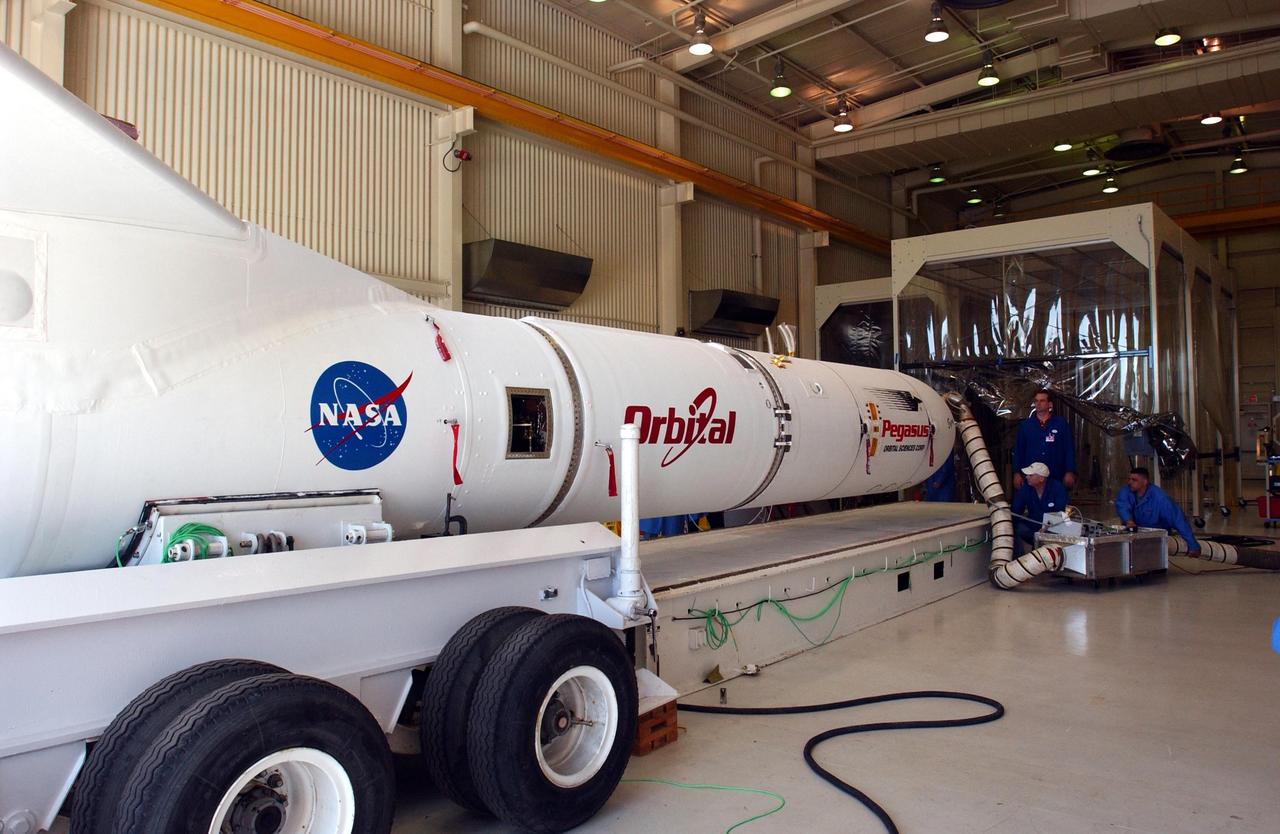
KENNEDY SPACE CENTER, FLA. -- The mated Pegasus XL rocket - AIM spacecraft is moved onto a transporter in Building 1655 at Vandenberg Air Force Base in California. The launch vehicle will be transferred to a waiting Orbital Sciences Stargazer L-1011 aircraft for launch. AIM, which stands for Aeronomy of Ice in the Mesosphere, is being prepared for integrated testing and a flight simulation. The AIM spacecraft will fly three instruments designed to study polar mesospheric clouds located at the edge of space, 50 miles above the Earth's surface in the coldest part of the planet's atmosphere. The mission's primary goal is to explain why these clouds form and what has caused them to become brighter and more numerous and appear at lower latitudes in recent years. AIM's results will provide the basis for the study of long-term variability in the mesospheric climate and its relationship to global climate change. Launch is scheduled for April 25.
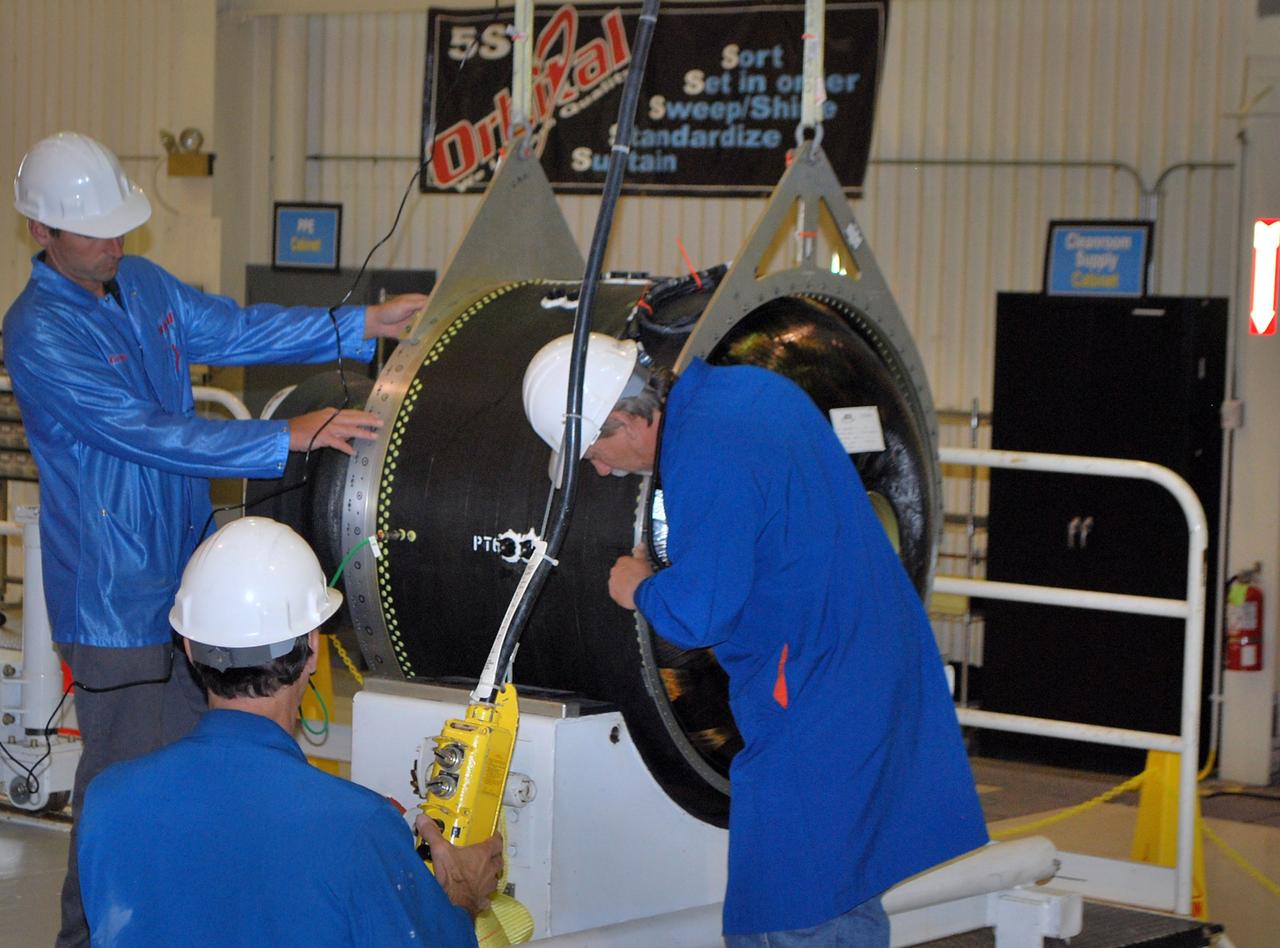
VANDENBERG AIR FORCE BASE, Calif. -- At Vandenberg Air Force Base in California, Orbital Sciences Corp. technicians prepare to weigh stage 3 of the Pegasus XL rocket motor that will launch the Nuclear Spectroscopic Telescope Array (NuSTAR) into space. After the rocket and spacecraft are processed at Vandenberg, they will be flown on the Orbital Sciences' L-1011 carrier aircraft to the Ronald Reagan Ballistic Missile Defense Test Site located at the Pacific Ocean’s Kwajalein Atoll for launch. The high-energy X-ray telescope will conduct a census for black holes, map radioactive material in young supernovae remnants, and study the origins of cosmic rays and the extreme physics around collapsed stars. Photo credit: NASA/Randy Beaudoin, VAFB
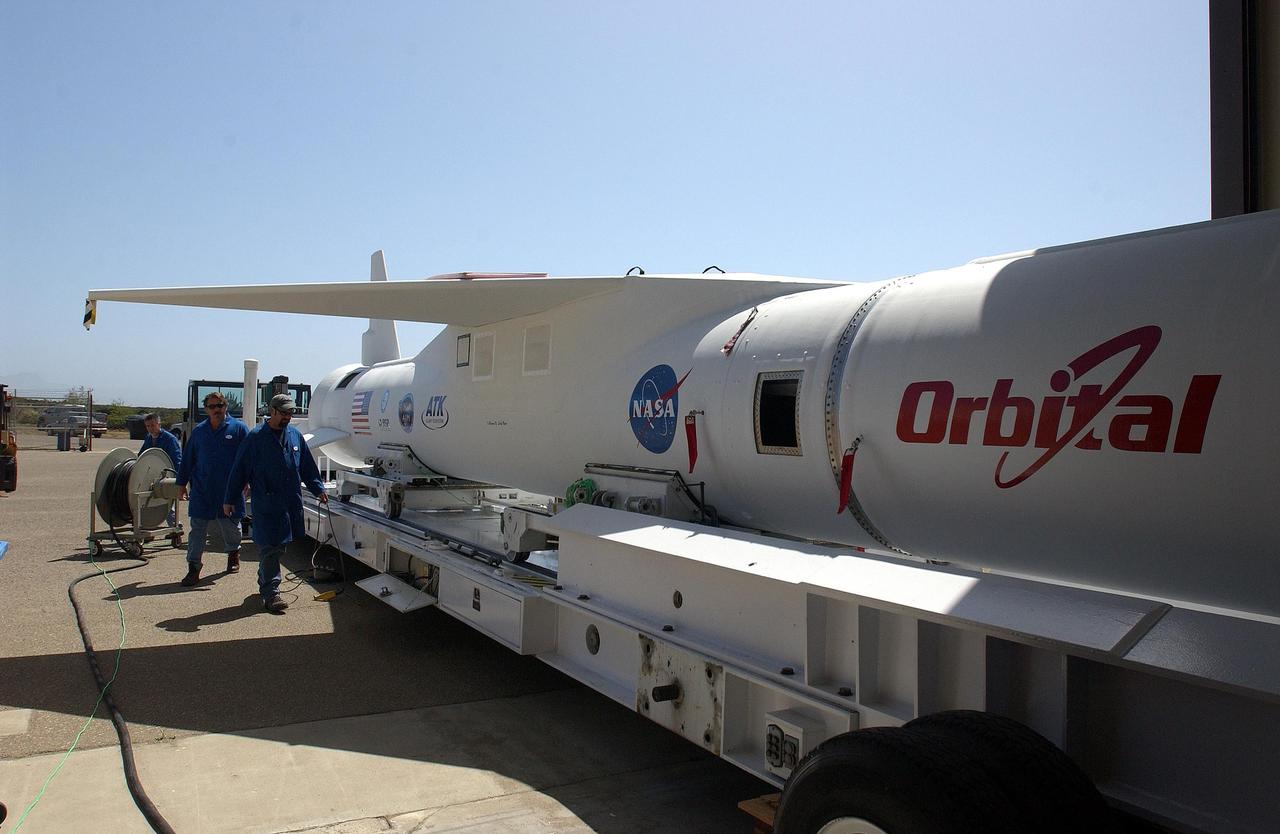
KENNEDY SPACE CENTER, FLA. -- The mated Pegasus XL rocket - AIM spacecraft is secured onto a transporter at Vandenberg Air Force Base in California. The rocket will be transferred to a waiting Orbital Sciences Stargazer L-1011 aircraft for launch. AIM, which stands for Aeronomy of Ice in the Mesosphere, is being prepared for integrated testing and a flight simulation. The AIM spacecraft will fly three instruments designed to study polar mesospheric clouds located at the edge of space, 50 miles above the Earth's surface in the coldest part of the planet's atmosphere. The mission's primary goal is to explain why these clouds form and what has caused them to become brighter and more numerous and appear at lower latitudes in recent years. AIM's results will provide the basis for the study of long-term variability in the mesospheric climate and its relationship to global climate change. Launch is scheduled for April 25.
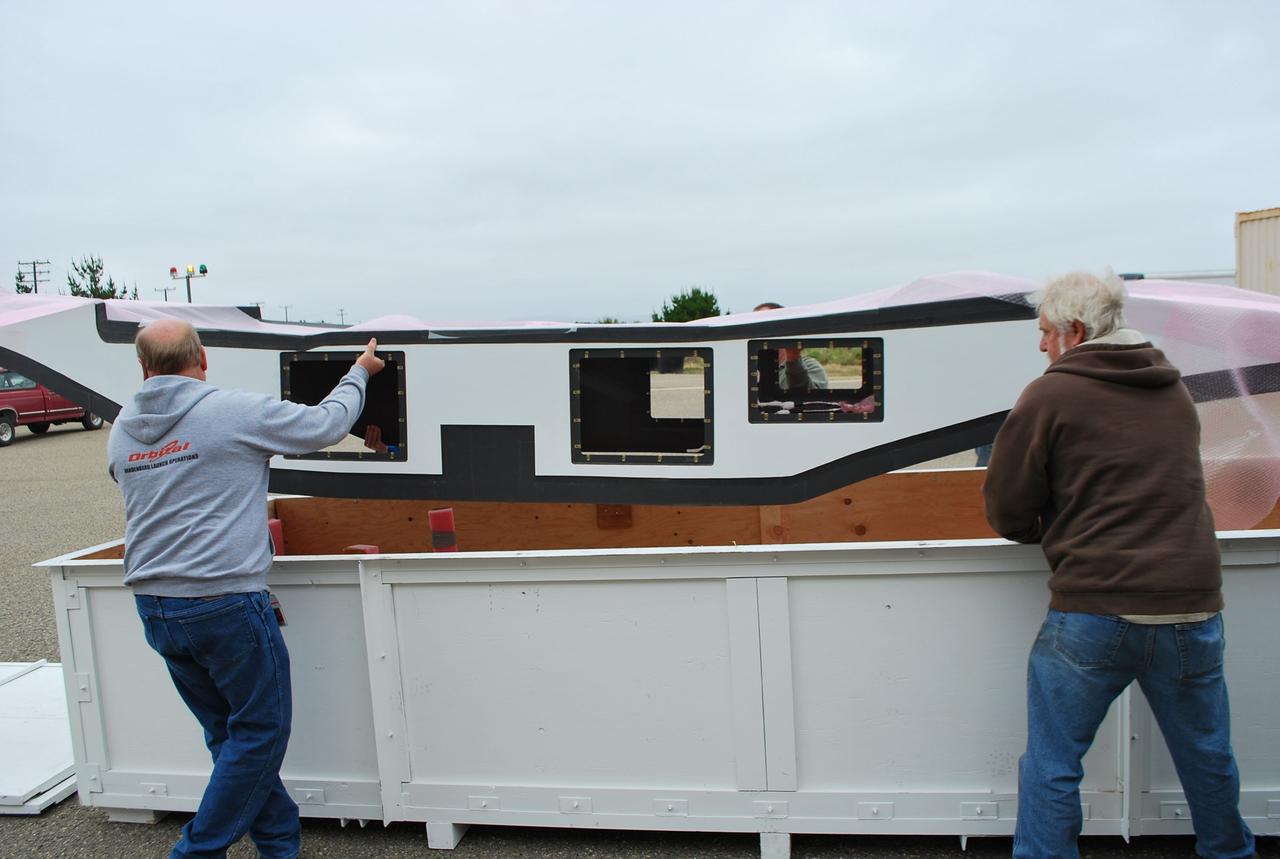
VANDENBERG AIR FORCE BASE, Calif. -- At Vandenberg Air Force Base in California, Orbital Sciences Corp. workers uncrate the fillet (the wings of the Pegasus XL launch vehicle) for inspection. The Pegasus rocket is being processed to launch the Nuclear Spectroscopic Telescope Array (NuSTAR) into space. After the rocket and spacecraft are processed at Vandenberg, they will be flown on the Orbital Sciences' L-1011 carrier aircraft to the Ronald Reagan Ballistic Missile Defense Test Site located at the Pacific Ocean’s Kwajalein Atoll for launch. The high-energy X-ray telescope will conduct a census for black holes, map radioactive material in young supernovae remnants, and study the origins of cosmic rays and the extreme physics around collapsed stars. Photo credit: NASA/Randy Beaudoin, VAFB
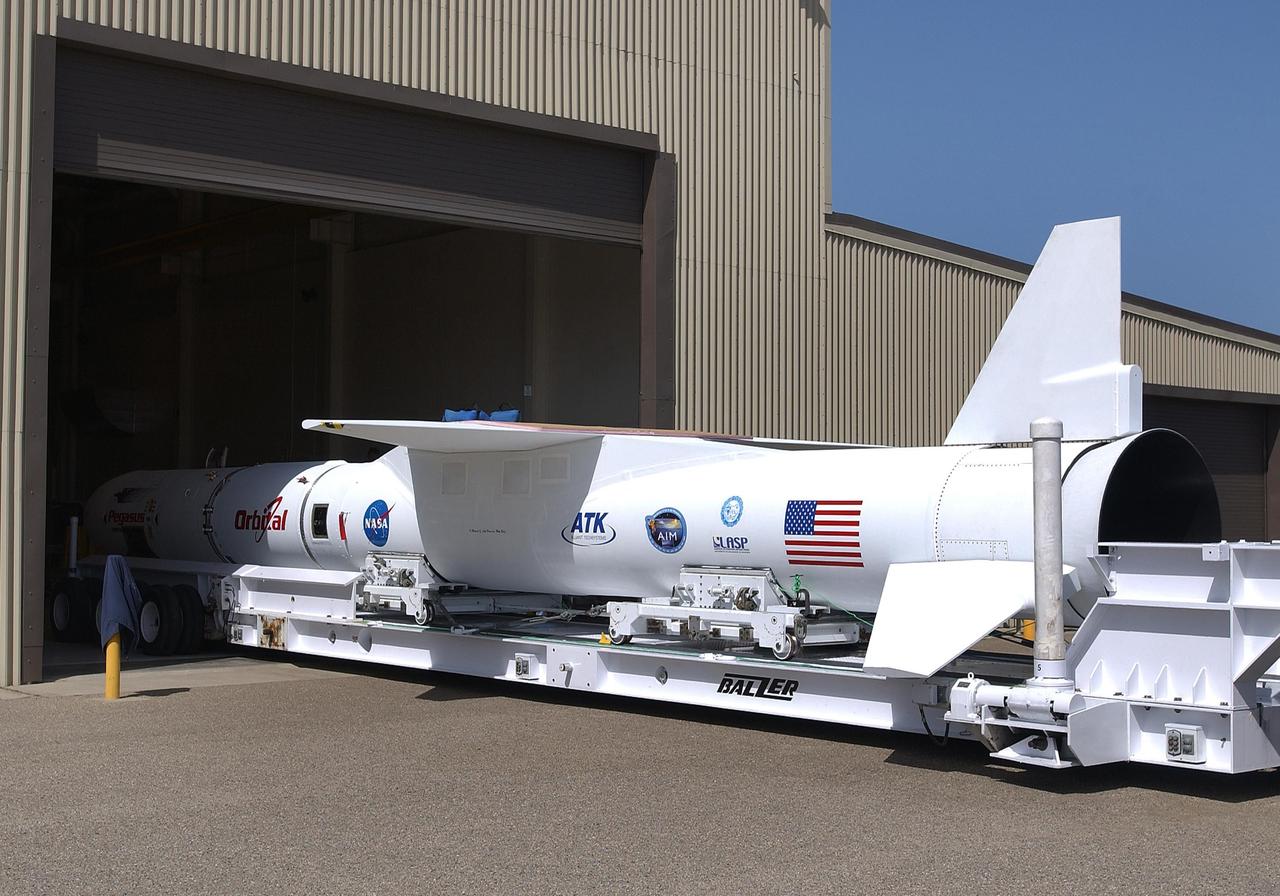
KENNEDY SPACE CENTER, FLA. -- The mated Pegasus XL rocket - AIM spacecraft leaves Building 1655 at Vandenberg Air Force Base in California. The rocket will be transferred to a waiting Orbital Sciences Stargazer L-1011 aircraft for launch. AIM, which stands for Aeronomy of Ice in the Mesosphere, is being prepared for integrated testing and a flight simulation. The AIM spacecraft will fly three instruments designed to study polar mesospheric clouds located at the edge of space, 50 miles above the Earth's surface in the coldest part of the planet's atmosphere. The mission's primary goal is to explain why these clouds form and what has caused them to become brighter and more numerous and appear at lower latitudes in recent years. AIM's results will provide the basis for the study of long-term variability in the mesospheric climate and its relationship to global climate change. Launch is scheduled for April 25.
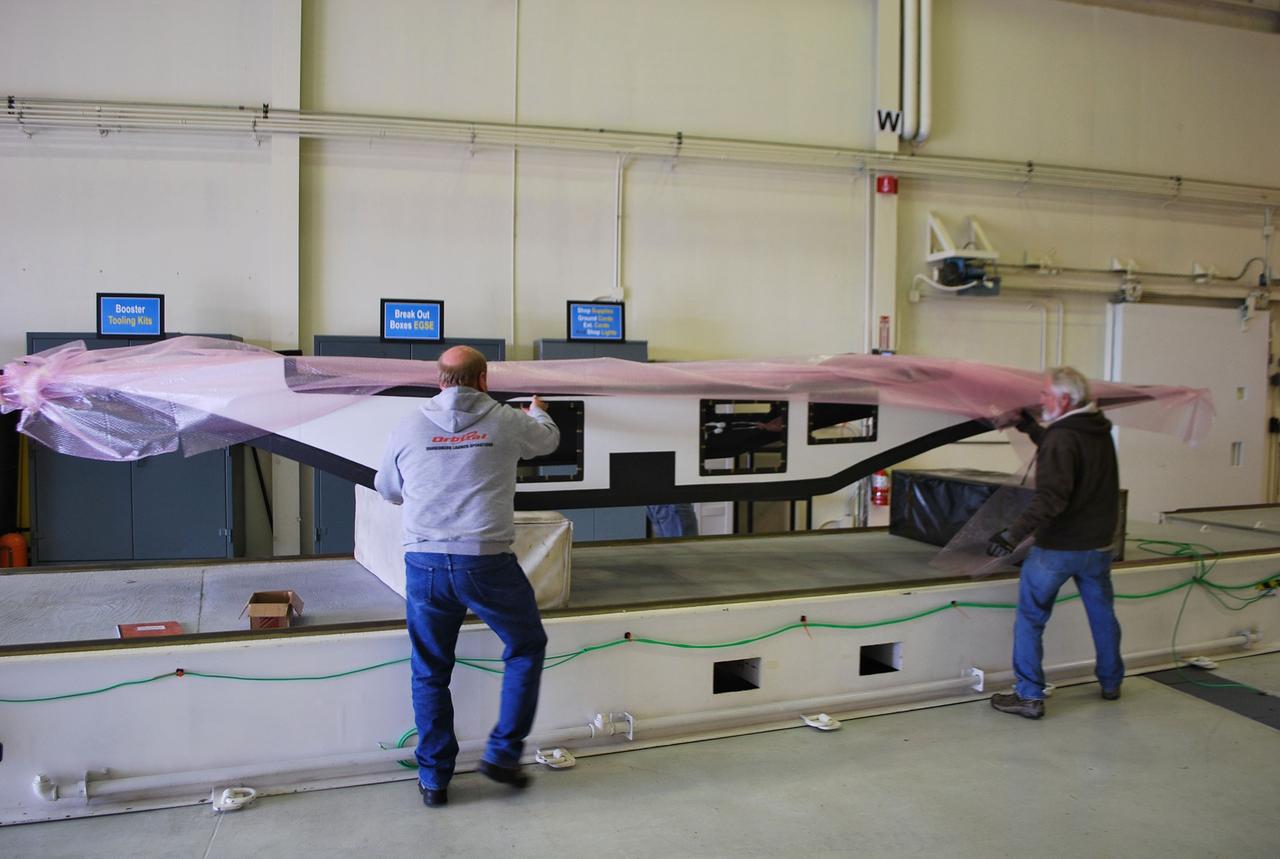
VANDENBERG AIR FORCE BASE, Calif. -- At Vandenberg Air Force Base in California, Orbital Sciences Corp. workers uncrate the fillet (the wings of the Pegasus XL launch vehicle) for inspection. The Pegasus rocket is being processed to launch the Nuclear Spectroscopic Telescope Array (NuSTAR) into space. After the rocket and spacecraft are processed at Vandenberg, they will be flown on the Orbital Sciences' L-1011 carrier aircraft to the Ronald Reagan Ballistic Missile Defense Test Site located at the Pacific Ocean’s Kwajalein Atoll for launch. The high-energy X-ray telescope will conduct a census for black holes, map radioactive material in young supernovae remnants, and study the origins of cosmic rays and the extreme physics around collapsed stars. Photo credit: NASA/Randy Beaudoin, VAFB
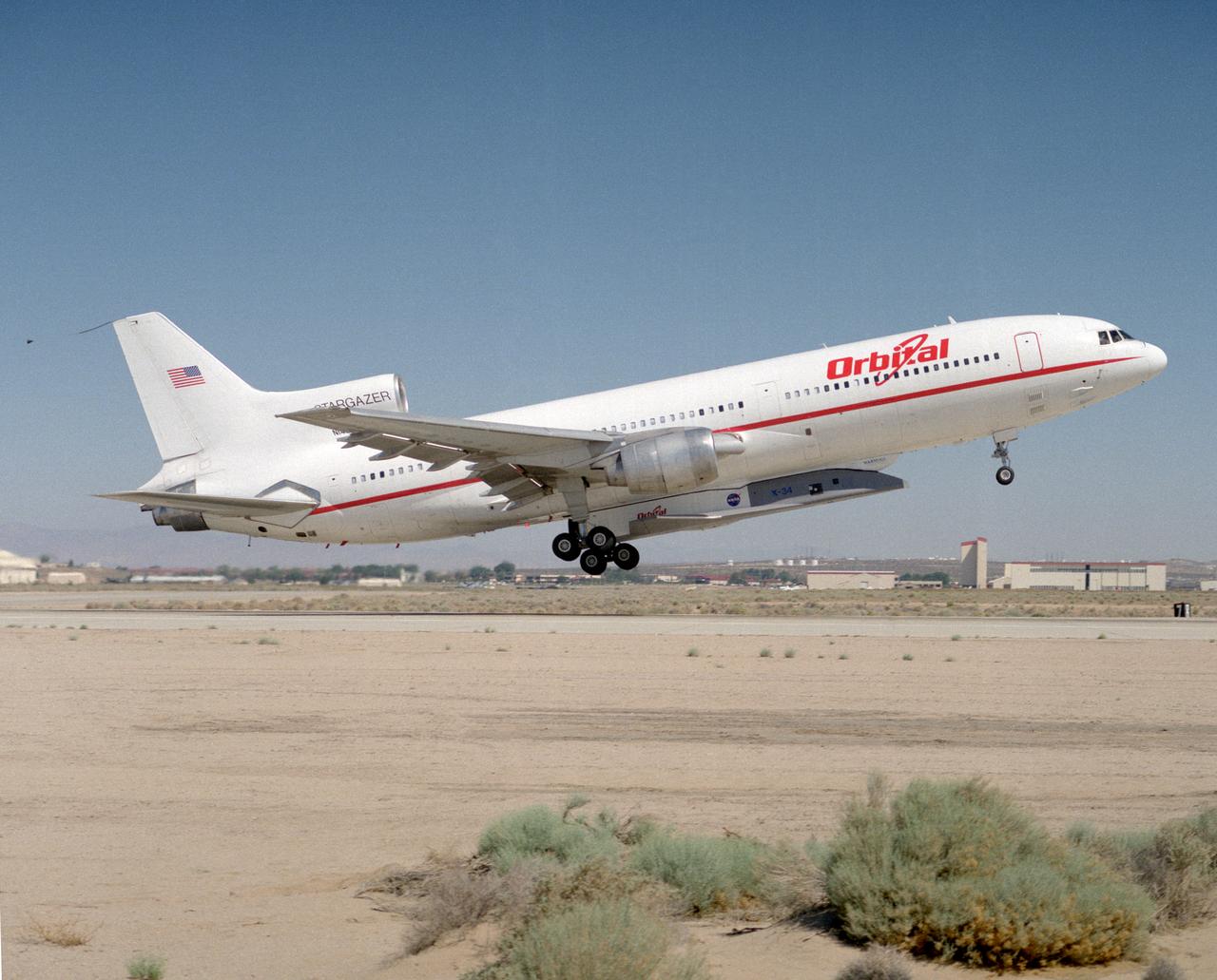
X-34 mated to modified L-1011 during takeoff on first captive carry flight

X-34 mated to modified L-1011 during takeoff on first captive carry flight
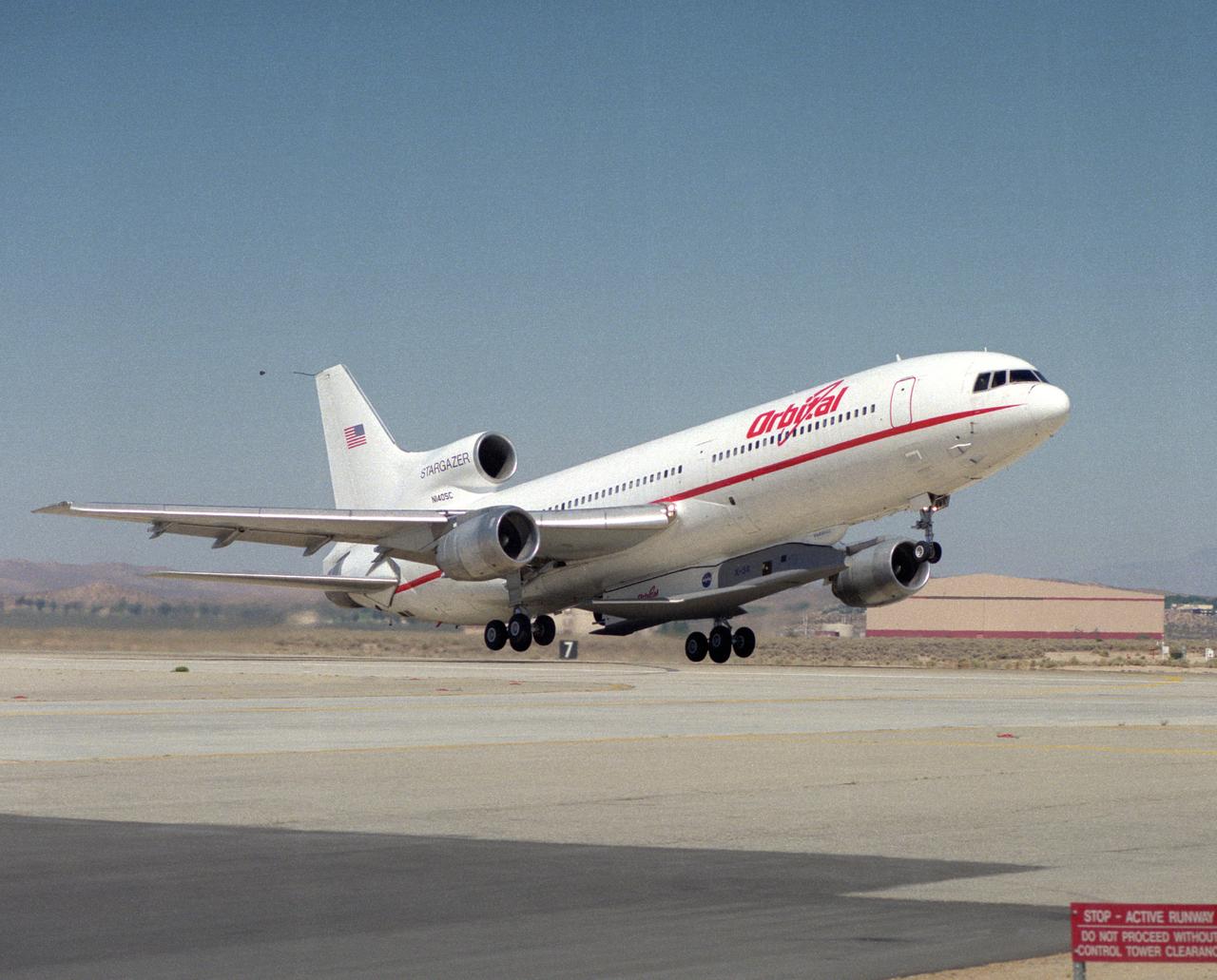
X-34 mated to modified L-1011 during takeoff on first captive carry flight
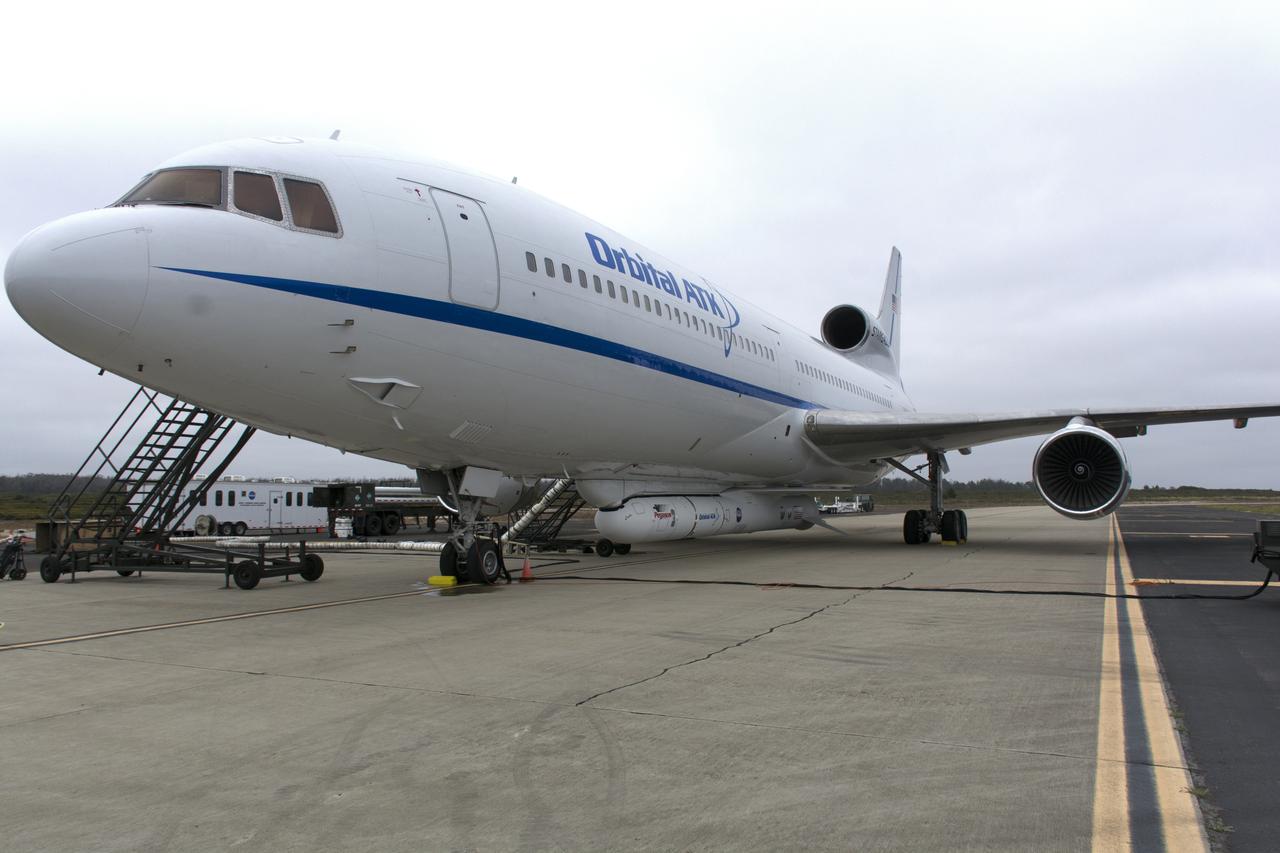
Northrop Grumman's L-1011 Stargazer is being readied for takeoff June 6, 2018, from the hot pad at Vandenberg Air Force Base in California. The company's Pegasus XL rocket, containing NASA's Ionospheric Connection Explorer (ICON), is attached beneath the aircraft. The explorer will launch on June 15, 2018, from Kwajalein Atoll in the Marshall Islands (June 14 in the continental United States). ICON will study the frontier of space - the dynamic zone high in Earth's atmosphere where terrestrial weather from below meets space weather above. The explorer will help determine the physics of Earth's space environment and pave the way for mitigating its effects on our technology, communications systems and society.
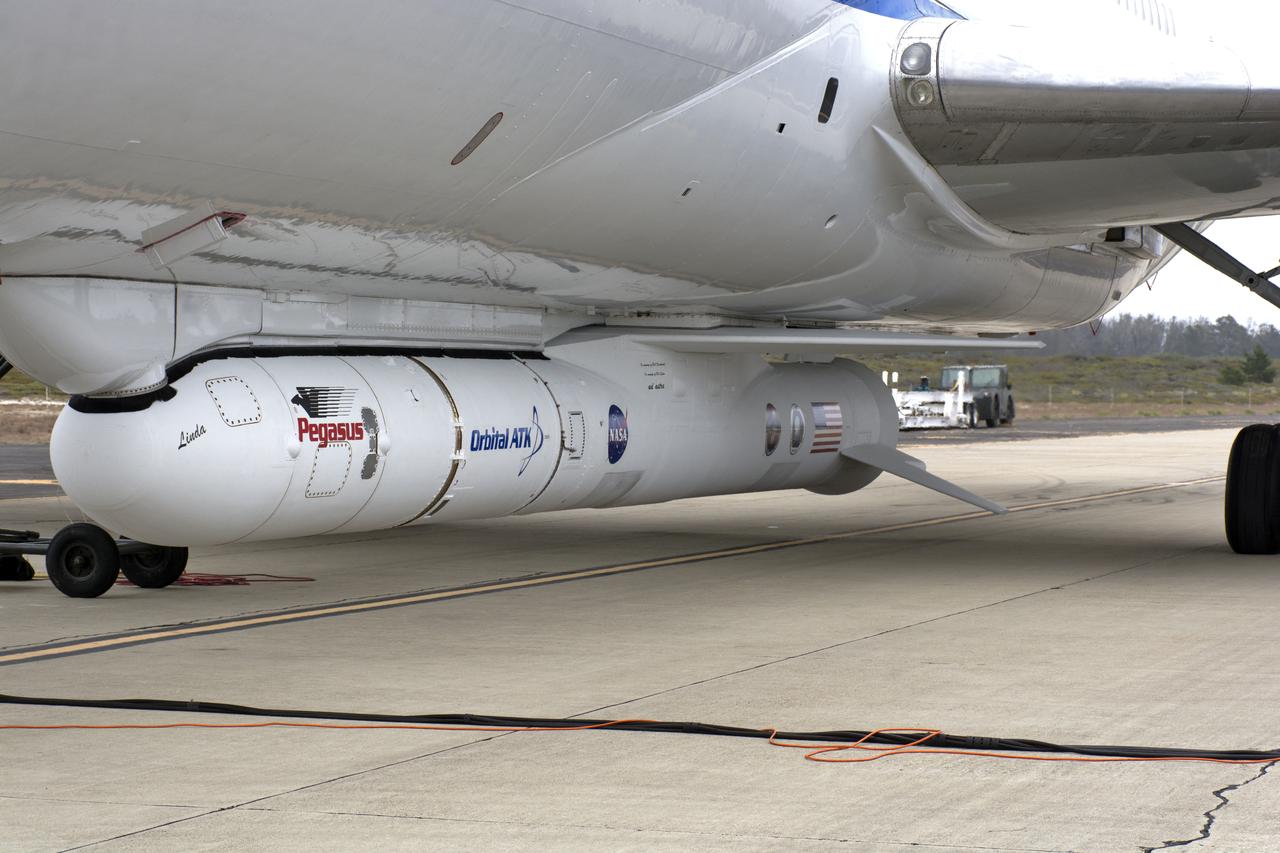
Northrop Grumman's L-1011 Stargazer is being readied for takeoff June 6, 2018, from the hot pad at Vandenberg Air Force Base in California. The company's Pegasus XL rocket, containing NASA's Ionospheric Connection Explorer (ICON), is attached beneath the aircraft. The explorer will launch on June 15, 2018, from Kwajalein Atoll in the Marshall Islands (June 14 in the continental United States). ICON will study the frontier of space - the dynamic zone high in Earth's atmosphere where terrestrial weather from below meets space weather above. The explorer will help determine the physics of Earth's space environment and pave the way for mitigating its effects on our technology, communications systems and society.
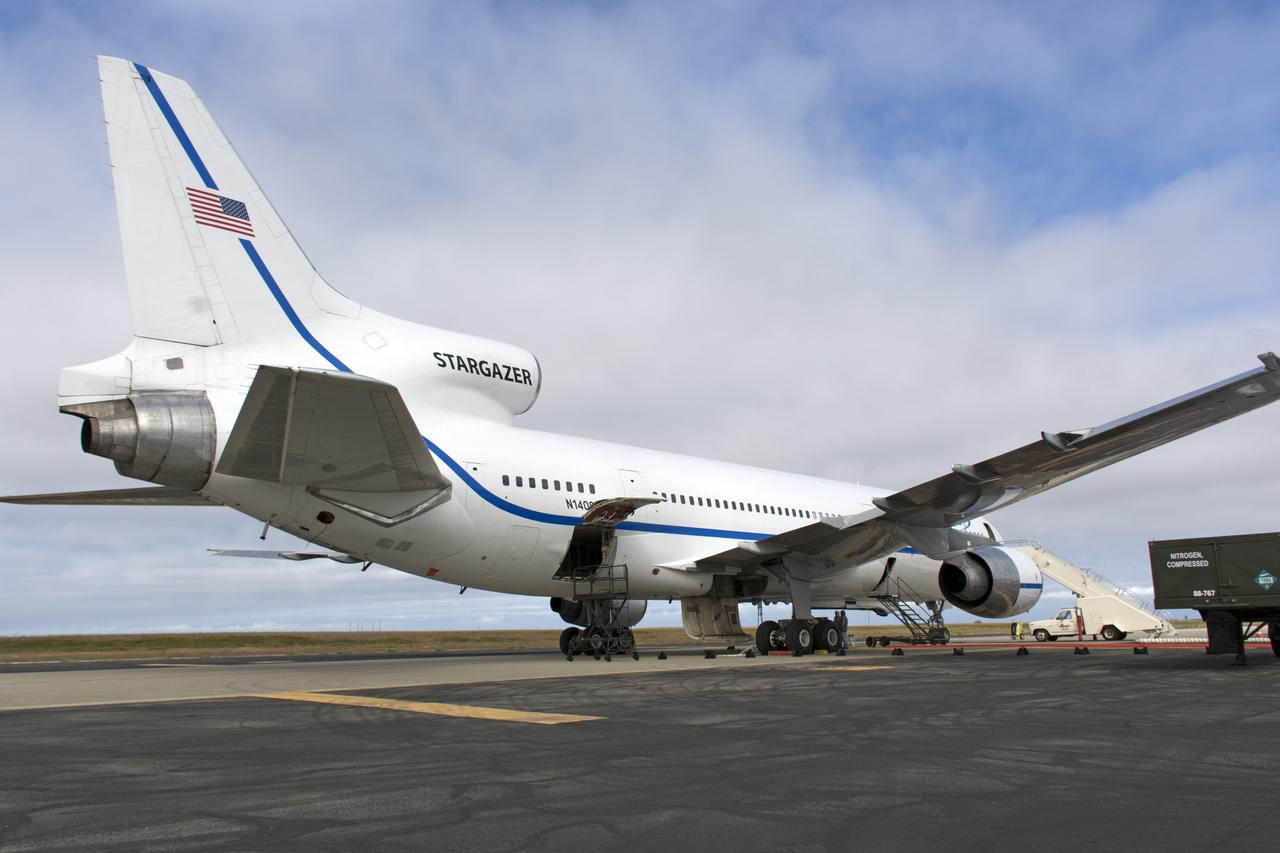
Northrop Grumman's L-1011 Stargazer aircraft is at the hot pad at Vandenberg Air Force Base in California on May 26, 2018. Preparations are underway to attach the company's Pegasus XL rocket, containing NASA's Ionospheric Connection Explorer (ICON), beneath the aircraft. The explorer will launch on June 15, 2018, from Kwajalein Atoll in the Marshall Islands (June 14 in the continental United States). ICON will study the frontier of space - the dynamic zone high in Earth's atmosphere where terrestrial weather from below meets space weather above. The explorer will help determine the physics of Earth's space environment and pave the way for mitigating its effects on our technology, communications systems and society.
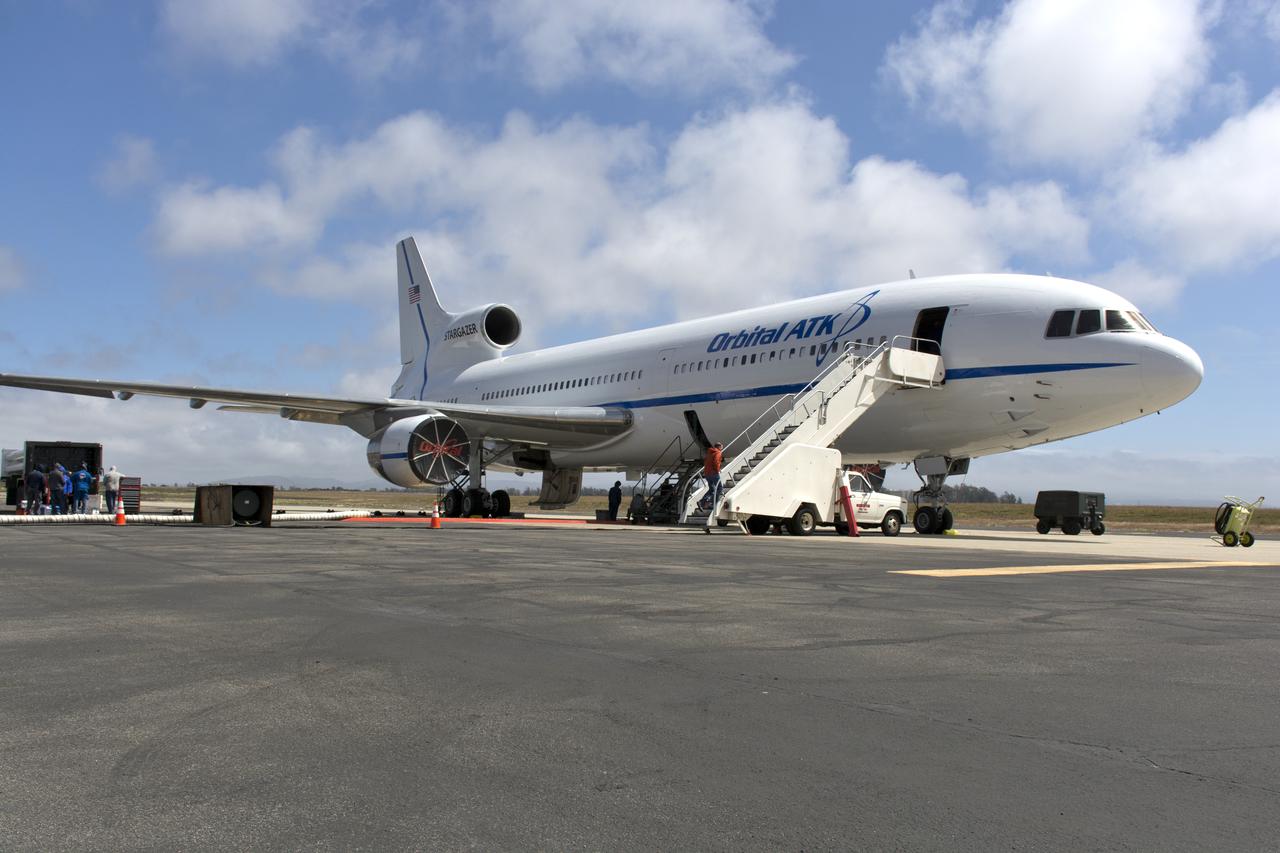
Northrop Grumman's L-1011 Stargazer aircraft is at the hot pad at Vandenberg Air Force Base in California on May 26, 2018. Preparations are underway to attach the company's Pegasus XL rocket, containing NASA's Ionospheric Connection Explorer (ICON), beneath the aircraft. The explorer will launch on June 15, 2018, from Kwajalein Atoll in the Marshall Islands (June 14 in the continental United States). ICON will study the frontier of space - the dynamic zone high in Earth's atmosphere where terrestrial weather from below meets space weather above. The explorer will help determine the physics of Earth's space environment and pave the way for mitigating its effects on our technology, communications systems and society.
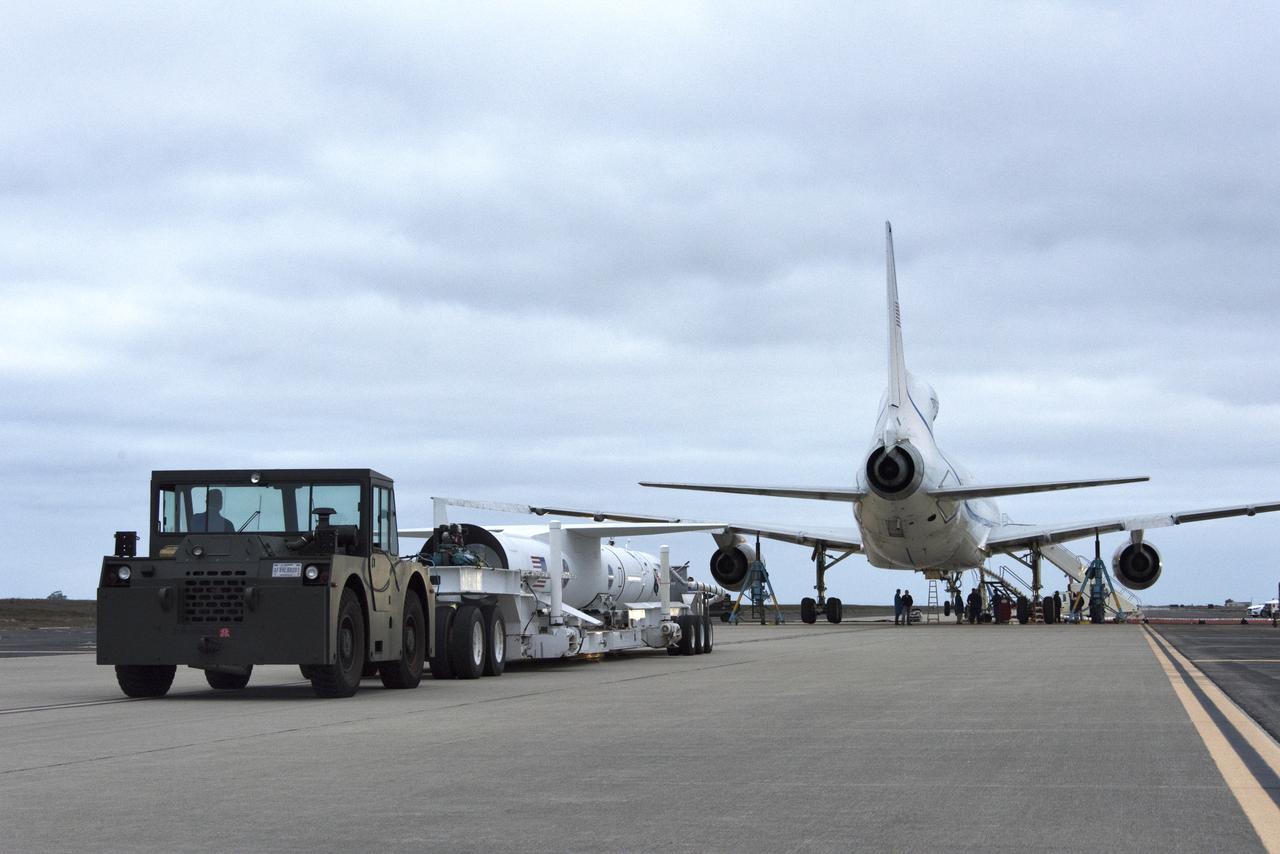
Northrop Grumman's Pegasus XL rocket, containing NASA's Ionospheric Connection Explorer (ICON), is transported to the hot pad at Vandenberg Air Force Base in California, on Oct. 14, 2018. Pegasus will be attached beneath the company's L-1011 Stargazer aircraft for the trip to Cape Canaveral Air Force Station in Florida. The Pegasus XL rocket will launch ICON from the Skid Strip at the Cape. ICON will study the frontier of space - the dynamic zone high in Earth's atmosphere where terrestrial weather from below meets space weather above. The explorer will help determine the physics of Earth's space environment and pave the way for mitigating its effects on our technology and communications systems.
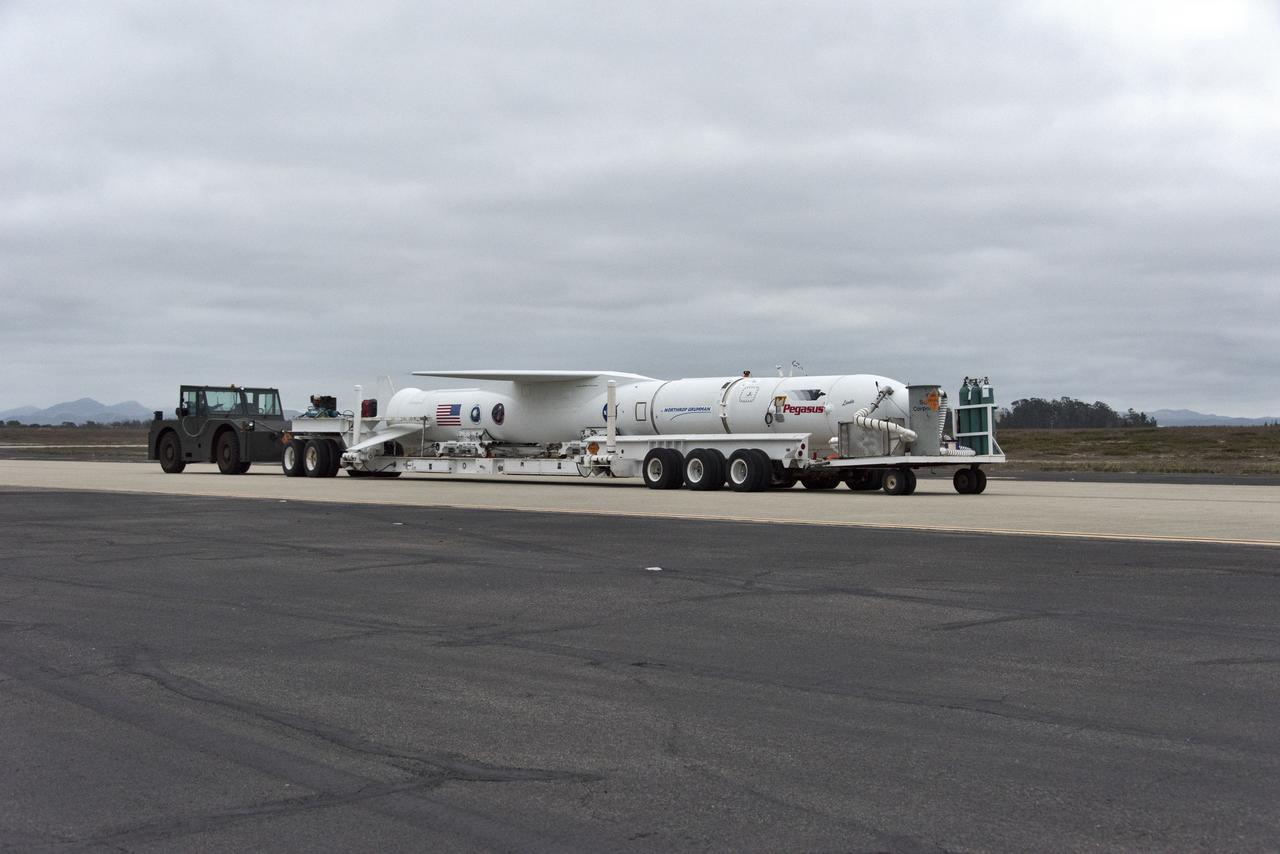
Northrop Grumman's Pegasus XL rocket, containing NASA's Ionospheric Connection Explorer (ICON), is transported to the hot pad at Vandenberg Air Force Base in California, on Oct. 14, 2018. Pegasus will be attached beneath the company's L-1011 Stargazer aircraft for the trip to Cape Canaveral Air Force Station in Florida. The Pegasus XL rocket will launch ICON from the Skid Strip at the Cape. ICON will study the frontier of space - the dynamic zone high in Earth's atmosphere where terrestrial weather from below meets space weather above. The explorer will help determine the physics of Earth's space environment and pave the way for mitigating its effects on our technology and communications systems.
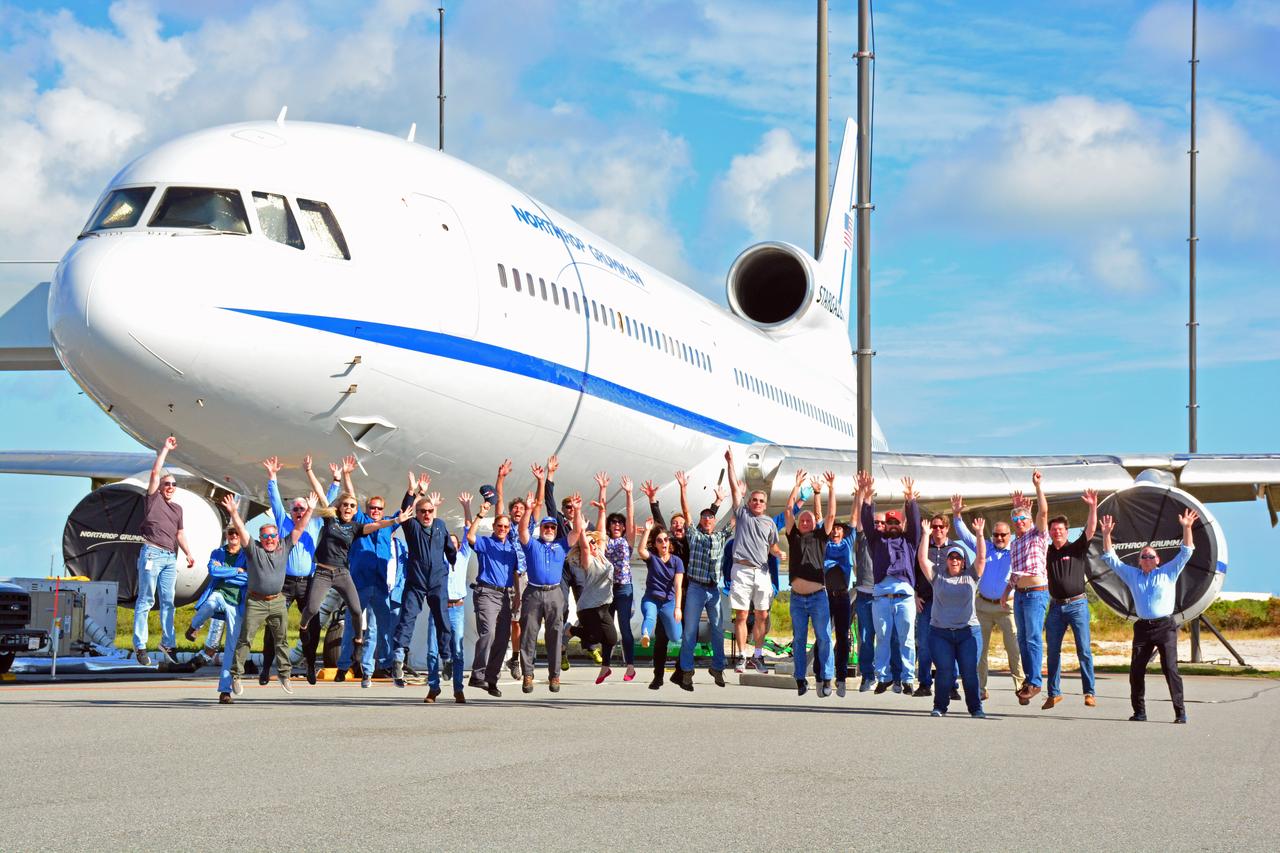
Members of the launch team for NASA’s Ionospheric Connection Explorer (ICON) gather for a joyous group photo in front of the Northrop Grumman L-1011 Stargazer aircraft carrying the Pegasus XL rocket at the Skid Strip at Florida’s Cape Canaveral Air Force Station, Nov. 10, 2019. Hours later, the rocket containing ICON air-launched from beneath the aircraft off the coast of Daytona Beach. ICON will study the frontier of space - the dynamic zone high in Earth's atmosphere where terrestrial weather from below meets space weather above. The explorer will help determine the physics of Earth's space environment and pave the way for mitigating its effects on our technology, communications systems and society.
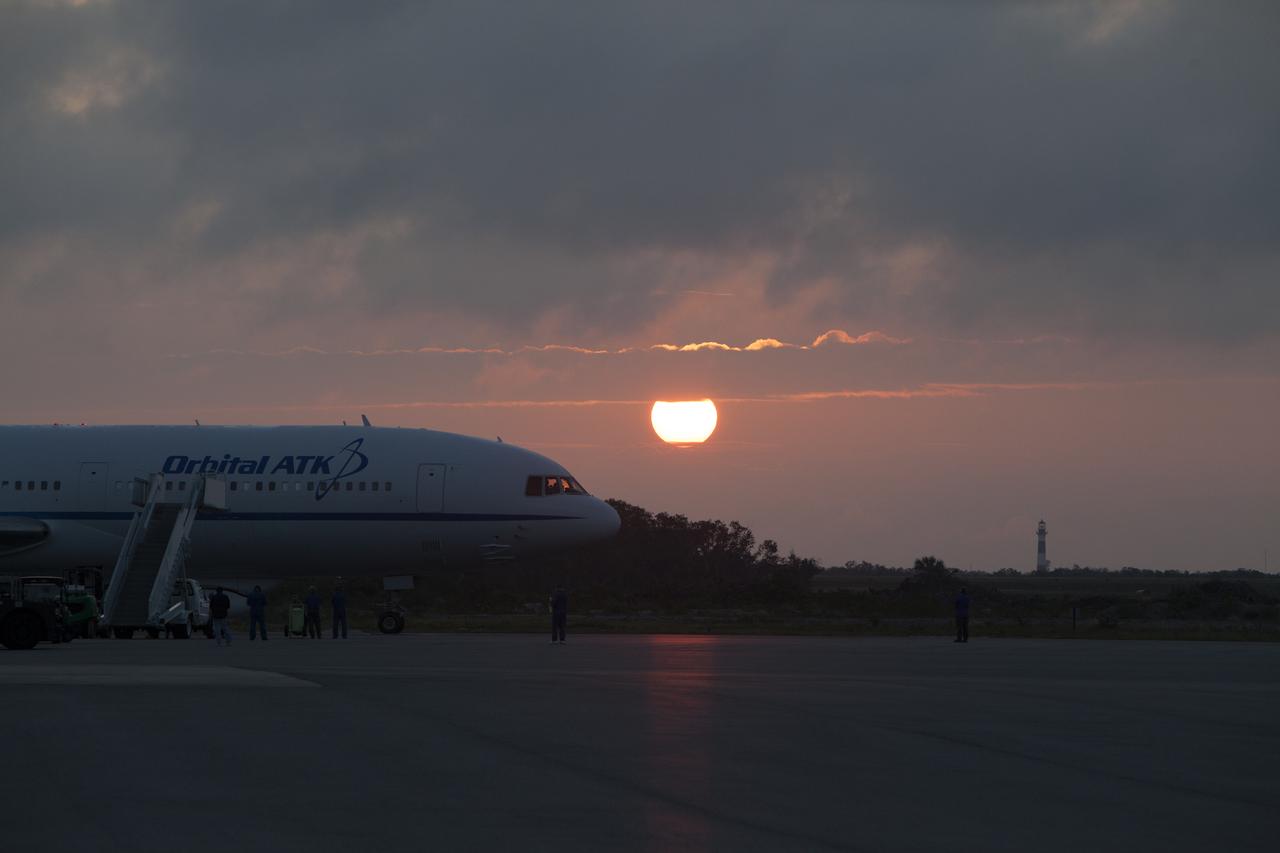
An Orbital ATK L-1011 Stargazer aircraft carrying a Pegasus XL Rocket with eight NASA Cyclone Global Navigation Satellite System, or CYGNSS, spacecraft is being readied for takeoff from the Skid Strip at Cape Canaveral Air Force Station, Florida. With the aircraft flying off shore, the Pegasus rocket will be released. Five seconds later, the solid propellant engine will ignite and boost the eight hurricane observatories to orbit. The eight CYGNSS satellites will make frequent and accurate measurements of ocean surface winds throughout the life cycle of tropical storms and hurricanes.
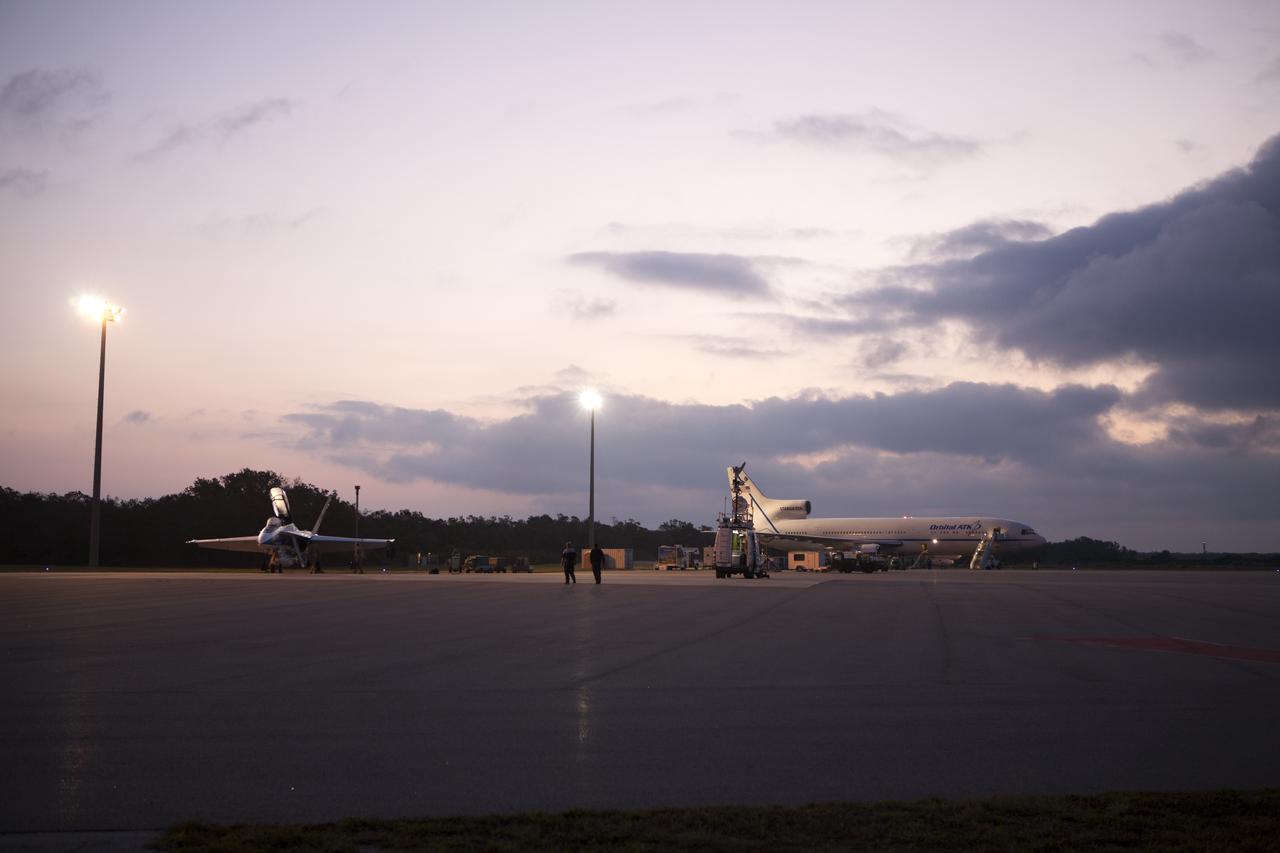
A pathfinder aircraft, at left, prepares for takeoff from the Skid Strip at Cape Canaveral Air Force Station in Florida. The airplane will provide photographic and video imagery of the Orbital ATK L-1011 Stargazer aircraft, in view at right, carrying a Pegasus XL Rocket with eight NASA Cyclone Global Navigation Satellite System, or CYGNSS, spacecraft. With the aircraft flying off shore, the Pegasus rocket will be released. Five seconds later, the solid propellant engine will ignite and boost the eight hurricane observatories to orbit. The eight CYGNSS satellites will make frequent and accurate measurements of ocean surface winds throughout the life cycle of tropical storms and hurricanes.
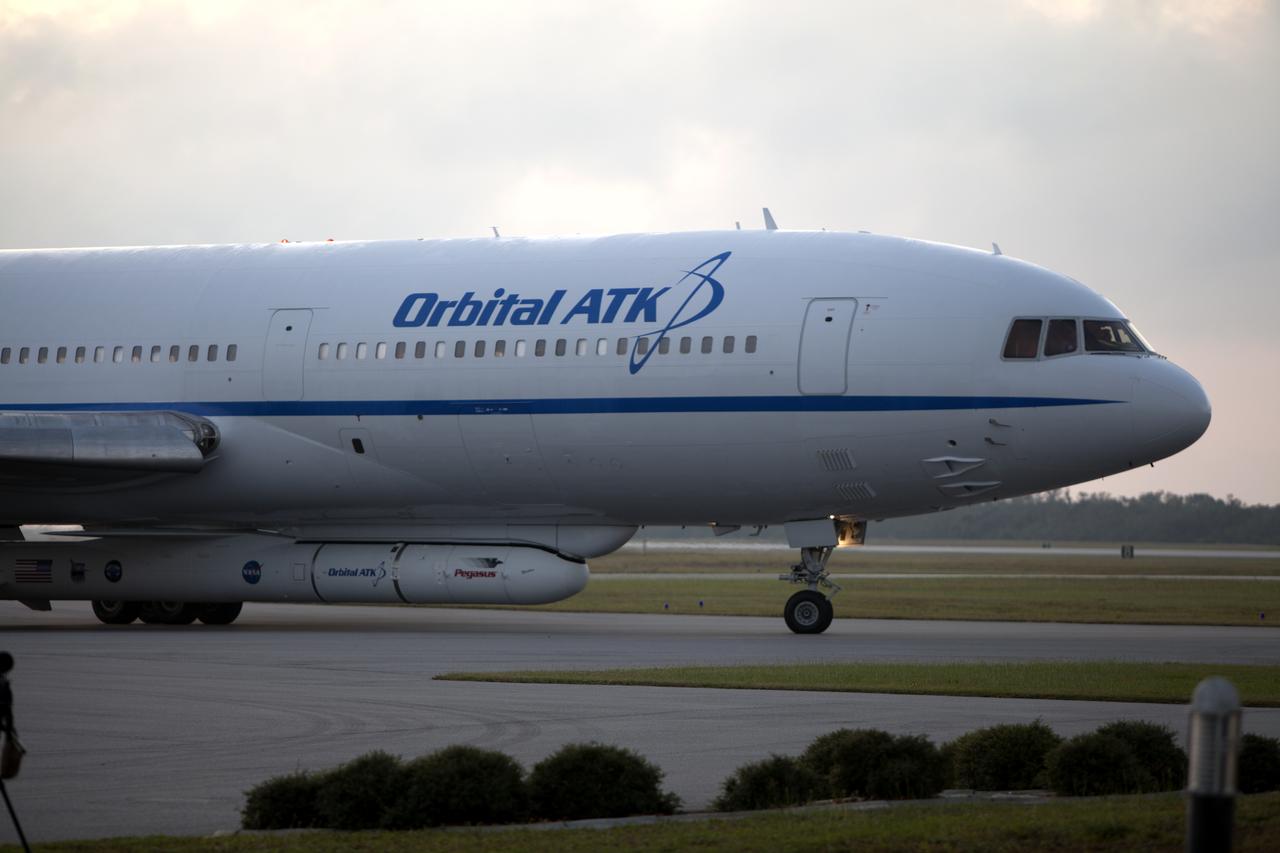
An Orbital ATK L-1011 Stargazer aircraft carrying a Pegasus XL Rocket with eight NASA Cyclone Global Navigation Satellite System, or CYGNSS, spacecraft is ready for takeoff from the Skid Strip at Cape Canaveral Air Force Station, Florida. With the aircraft flying off shore, the Pegasus rocket will be released. Five seconds later, the solid propellant engine will ignite and boost the eight hurricane observatories to orbit. The eight CYGNSS satellites will make frequent and accurate measurements of ocean surface winds throughout the life cycle of tropical storms and hurricanes.
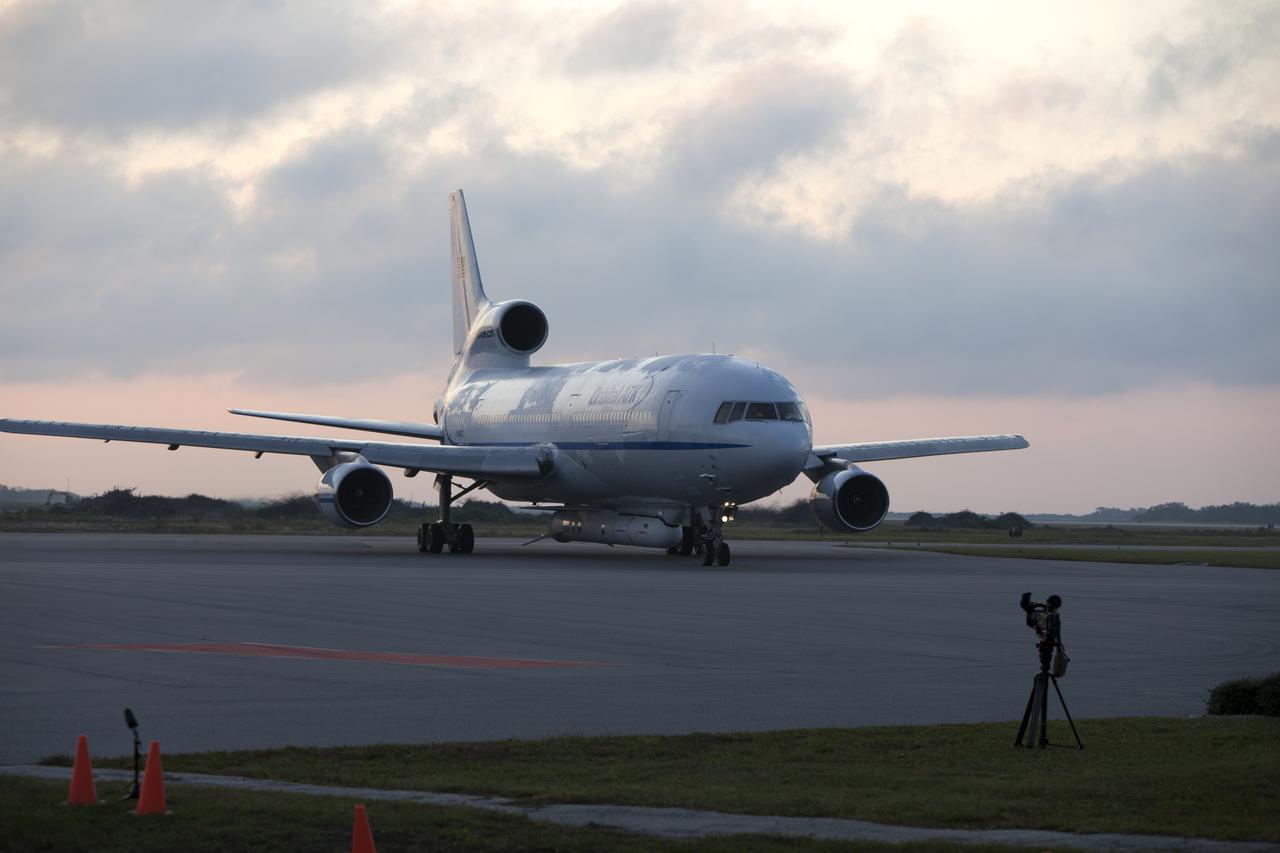
An Orbital ATK L-1011 Stargazer aircraft carrying a Pegasus XL Rocket with eight NASA Cyclone Global Navigation Satellite System, or CYGNSS, spacecraft is ready for takeoff from the Skid Strip at Cape Canaveral Air Force Station, Florida. With the aircraft flying off shore, the Pegasus rocket will be released. Five seconds later, the solid propellant engine will ignite and boost the eight hurricane observatories to orbit. The eight CYGNSS satellites will make frequent and accurate measurements of ocean surface winds throughout the life cycle of tropical storms and hurricanes.
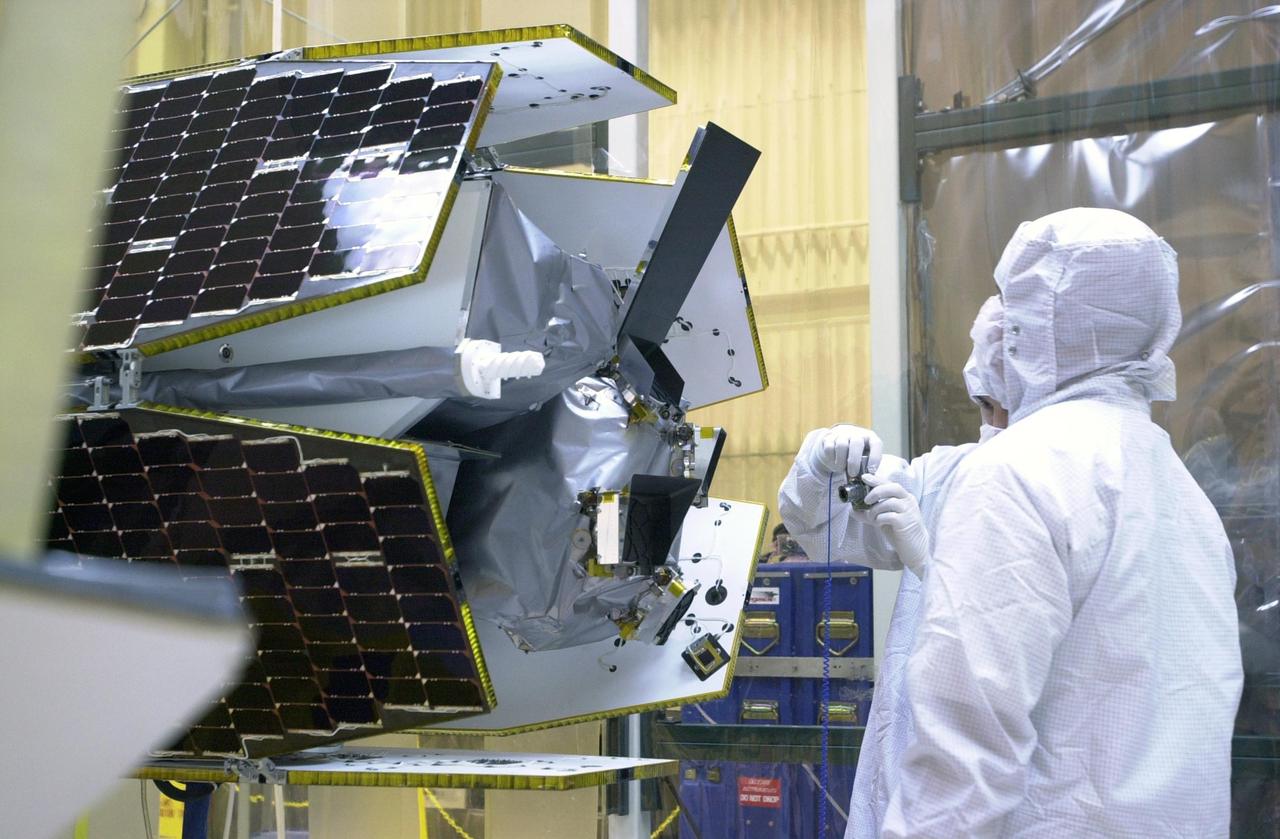
KENNEDY SPACE CENTER, FLA. -- At Vandenberg Air Force Base in California, technicians prepare the AIM spacecraft for fairing installation. The fairing is a molded structure that fits around the spacecraft and forms an aerodynamically smooth nose cone, protecting the spacecraft during launch. Launch will be from a Pegasus XL rocket, carried and released by Orbital Sciences L-1011 jet aircraft. AIM, which stands for Aeronomy of Ice in the Mesosphere, is being prepared for integrated testing and a flight simulation. The AIM spacecraft will fly three instruments designed to study polar mesospheric clouds located at the edge of space, 50 miles above the Earth's surface in the coldest part of the planet's atmosphere. The mission's primary goal is to explain why these clouds form and what has caused them to become brighter and more numerous and appear at lower latitudes in recent years. AIM's results will provide the basis for the study of long-term variability in the mesospheric climate and its relationship to global climate change. Launch is scheduled for April 25.
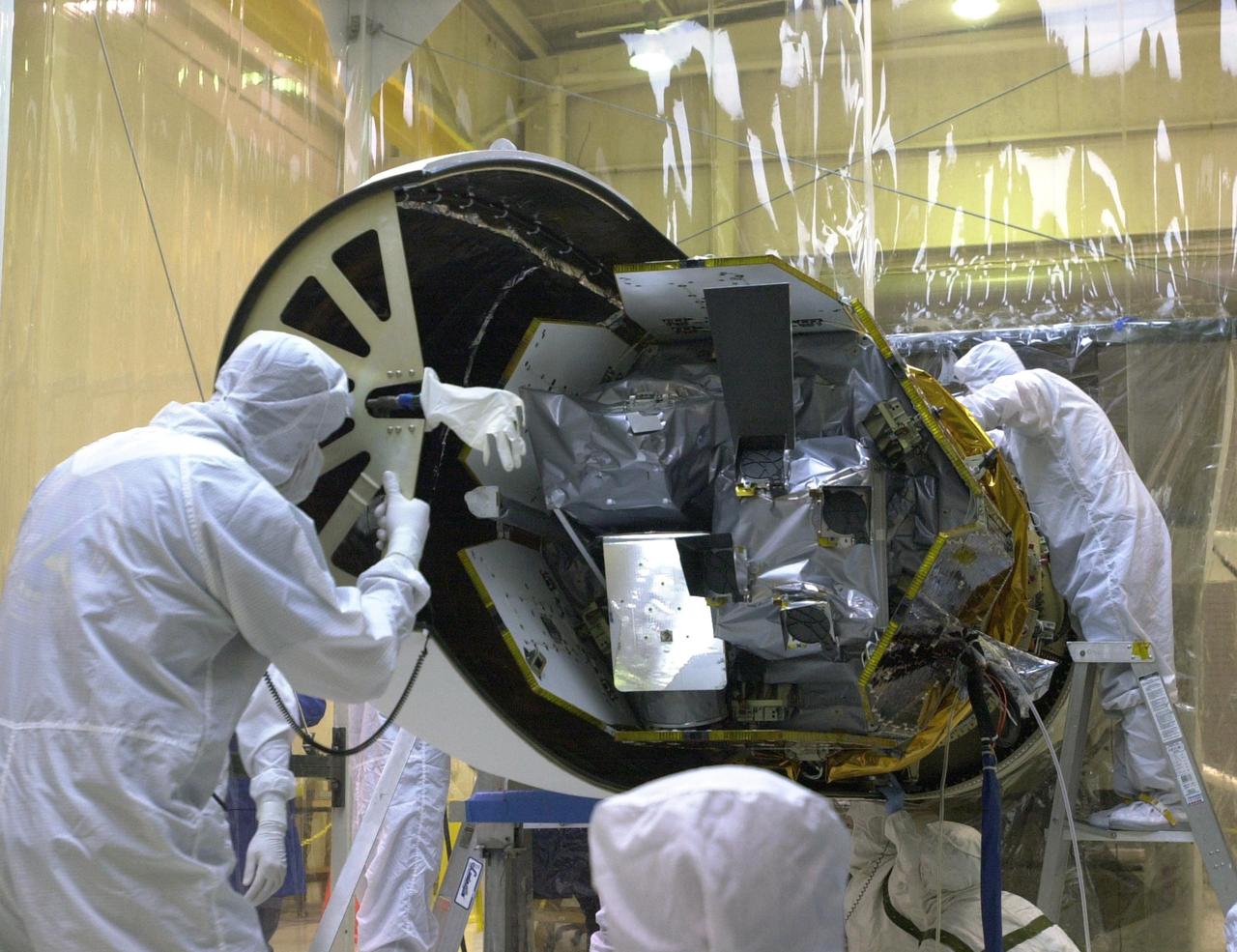
KENNEDY SPACE CENTER, FLA. -- At Vandenberg Air Force Base in California, technicians prepare the AIM spacecraft for fairing installation. The fairing is a molded structure that fits around the spacecraft and forms an aerodynamically smooth nose cone, protecting the spacecraft during launch. Launch will be from a Pegasus XL rocket, carried and released by Orbital Sciences L-1011 jet aircraft. AIM, which stands for Aeronomy of Ice in the Mesosphere, is being prepared for integrated testing and a flight simulation. The AIM spacecraft will fly three instruments designed to study polar mesospheric clouds located at the edge of space, 50 miles above the Earth's surface in the coldest part of the planet's atmosphere. The mission's primary goal is to explain why these clouds form and what has caused them to become brighter and more numerous and appear at lower latitudes in recent years. AIM's results will provide the basis for the study of long-term variability in the mesospheric climate and its relationship to global climate change. Launch is scheduled for April 25.
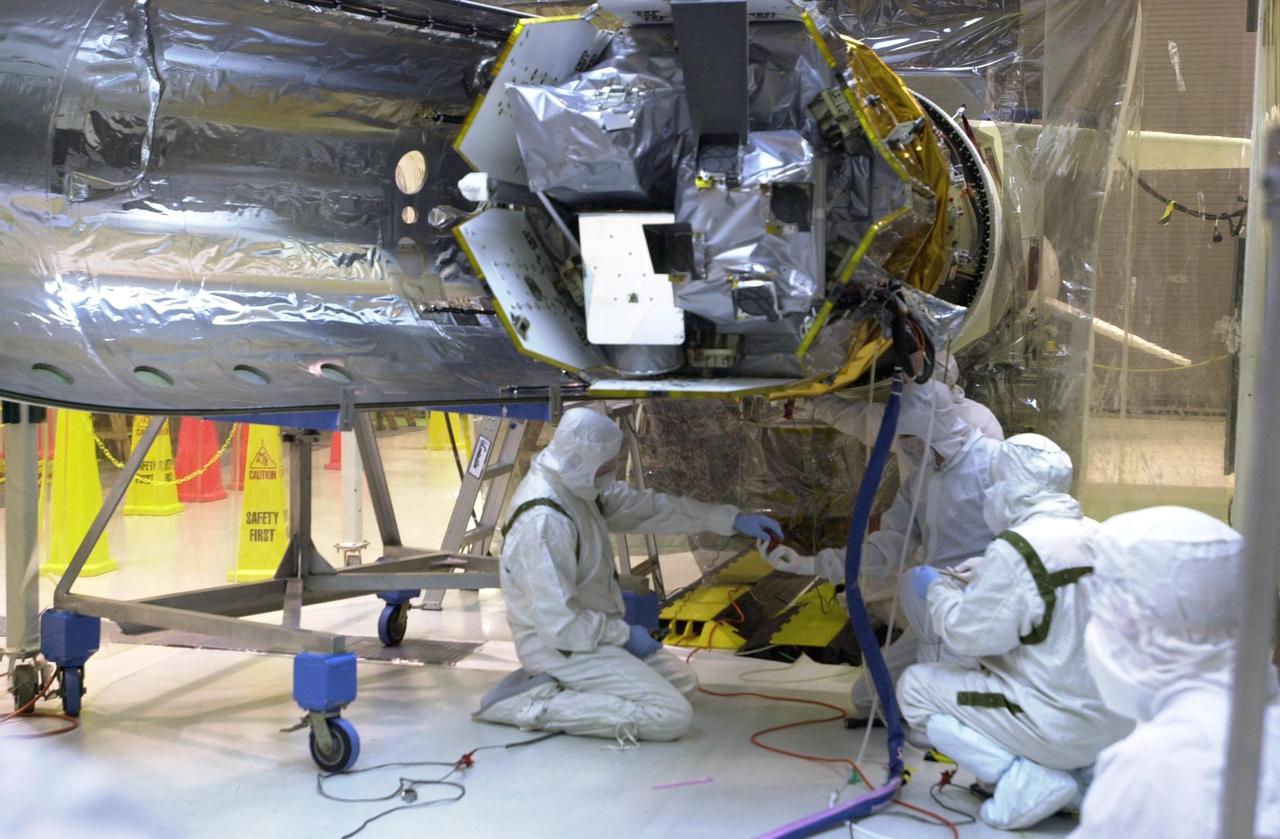
KENNEDY SPACE CENTER, FLA. -- At Vandenberg Air Force Base in California, technicians prepare the AIM spacecraft for fairing installation. The fairing is a molded structure that fits around the spacecraft and forms an aerodynamically smooth nose cone, protecting the spacecraft during launch. Launch will be from a Pegasus XL rocket, carried and released by Orbital Sciences L-1011 jet aircraft. AIM, which stands for Aeronomy of Ice in the Mesosphere, is being prepared for integrated testing and a flight simulation. The AIM spacecraft will fly three instruments designed to study polar mesospheric clouds located at the edge of space, 50 miles above the Earth's surface in the coldest part of the planet's atmosphere. The mission's primary goal is to explain why these clouds form and what has caused them to become brighter and more numerous and appear at lower latitudes in recent years. AIM's results will provide the basis for the study of long-term variability in the mesospheric climate and its relationship to global climate change. Launch is scheduled for April 25.
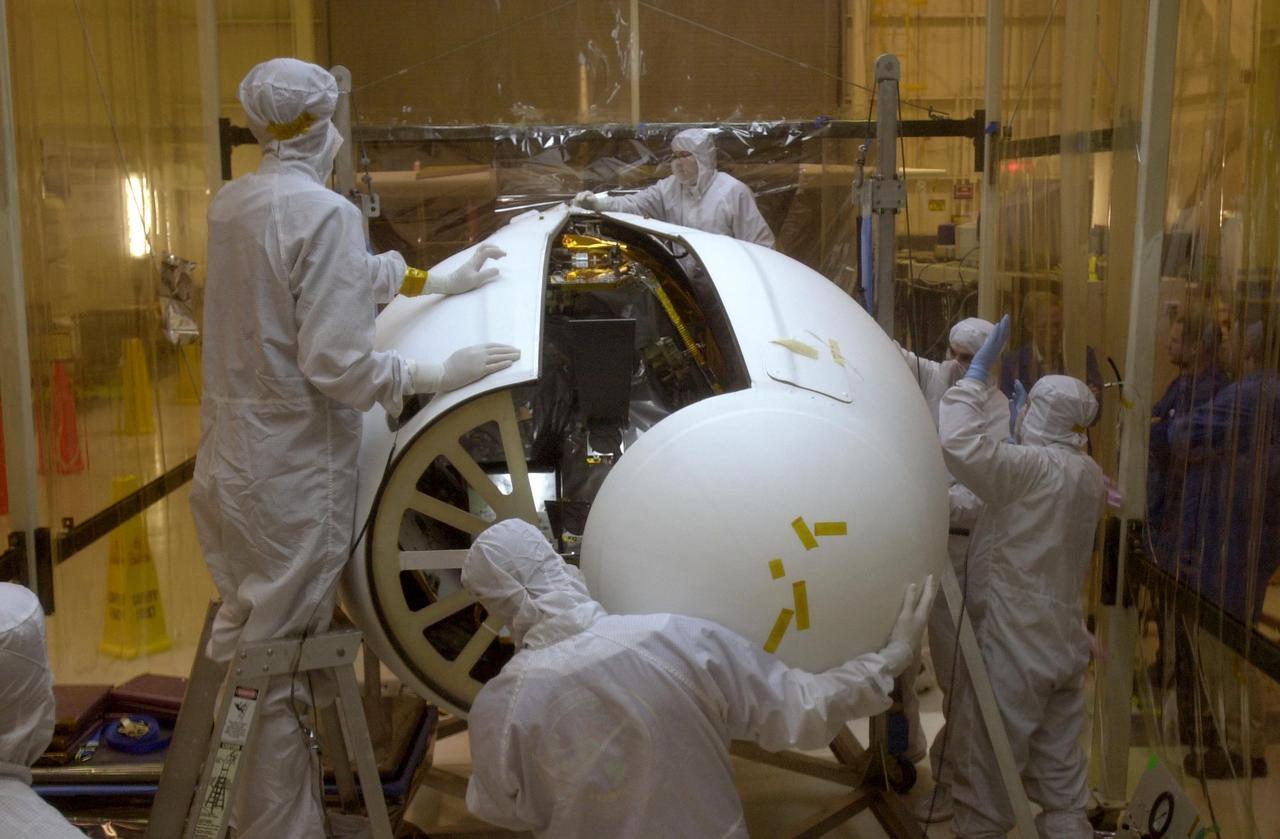
KENNEDY SPACE CENTER, FLA. -- At Vandenberg Air Force Base in California, under the protective clean tent, technicians move the second half of the fairing into place around the AIM spacecraft. The fairing is a molded structure that fits around the spacecraft and forms an aerodynamically smooth nose cone, protecting the spacecraft during launch. Launch will be from a Pegasus XL rocket, carried and released by Orbital Sciences L-1011 jet aircraft. AIM, which stands for Aeronomy of Ice in the Mesosphere, is being prepared for integrated testing and a flight simulation. The AIM spacecraft will fly three instruments designed to study polar mesospheric clouds located at the edge of space, 50 miles above the Earth's surface in the coldest part of the planet's atmosphere. The mission's primary goal is to explain why these clouds form and what has caused them to become brighter and more numerous and appear at lower latitudes in recent years. AIM's results will provide the basis for the study of long-term variability in the mesospheric climate and its relationship to global climate change. Launch is scheduled for April 25.

KENNEDY SPACE CENTER, FLA. -- At Vandenberg Air Force Base in California, under the protective clean tent, technicians maneuver the second half of the fairing into place around the AIM spacecraft. The fairing is a molded structure that fits around the spacecraft and forms an aerodynamically smooth nose cone, protecting the spacecraft during launch. Launch will be from a Pegasus XL rocket, carried and released by Orbital Sciences L-1011 jet aircraft. AIM, which stands for Aeronomy of Ice in the Mesosphere, is being prepared for integrated testing and a flight simulation. The AIM spacecraft will fly three instruments designed to study polar mesospheric clouds located at the edge of space, 50 miles above the Earth's surface in the coldest part of the planet's atmosphere. The mission's primary goal is to explain why these clouds form and what has caused them to become brighter and more numerous and appear at lower latitudes in recent years. AIM's results will provide the basis for the study of long-term variability in the mesospheric climate and its relationship to global climate change. Launch is scheduled for April 25.
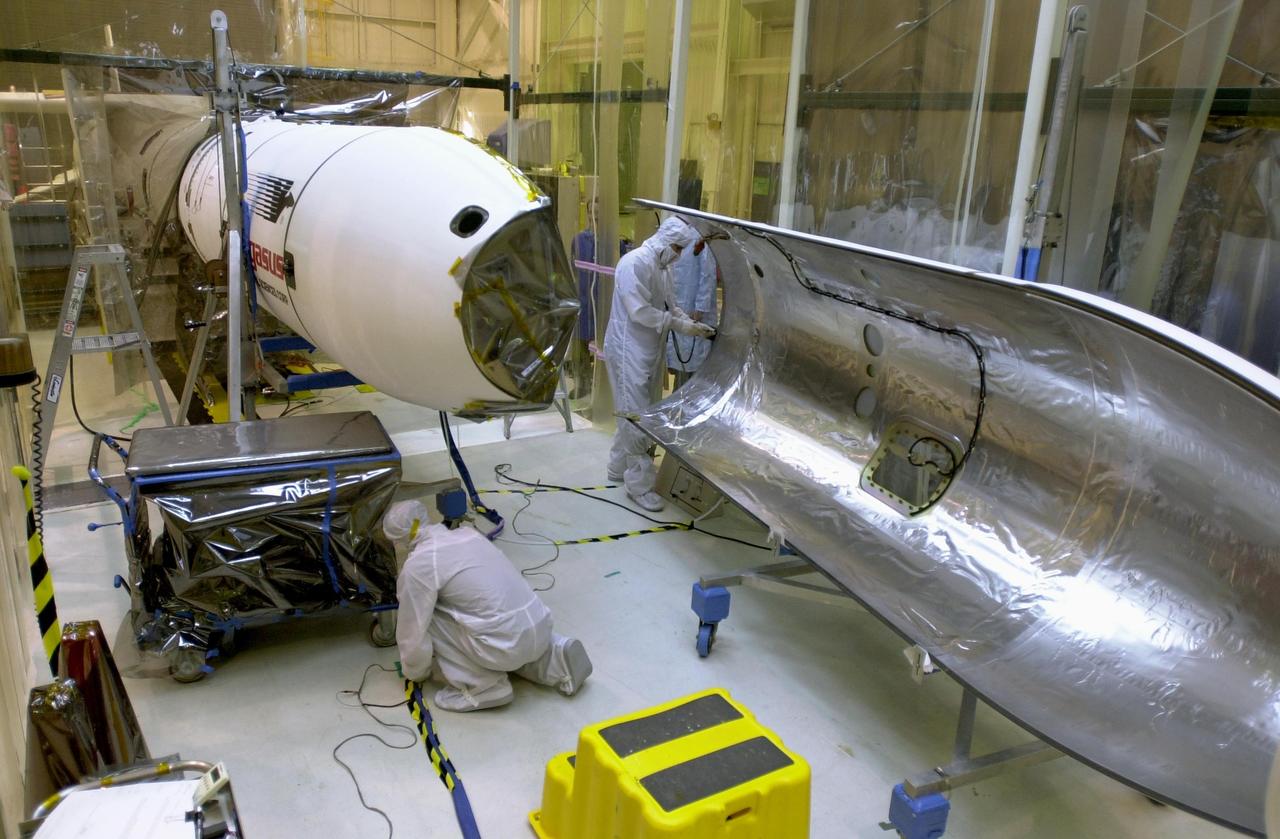
KENNEDY SPACE CENTER, FLA. -- At Vandenberg Air Force Base in California, under the protective clean tent, technicians work on the second half of the fairing to be installed around the AIM spacecraft. The fairing is a molded structure that fits around the spacecraft and forms an aerodynamically smooth nose cone, protecting the spacecraft during launch. Launch will be from a Pegasus XL rocket, carried and released by Orbital Sciences L-1011 jet aircraft. AIM, which stands for Aeronomy of Ice in the Mesosphere, is being prepared for integrated testing and a flight simulation. The AIM spacecraft will fly three instruments designed to study polar mesospheric clouds located at the edge of space, 50 miles above the Earth's surface in the coldest part of the planet's atmosphere. The mission's primary goal is to explain why these clouds form and what has caused them to become brighter and more numerous and appear at lower latitudes in recent years. AIM's results will provide the basis for the study of long-term variability in the mesospheric climate and its relationship to global climate change. Launch is scheduled for April 25.
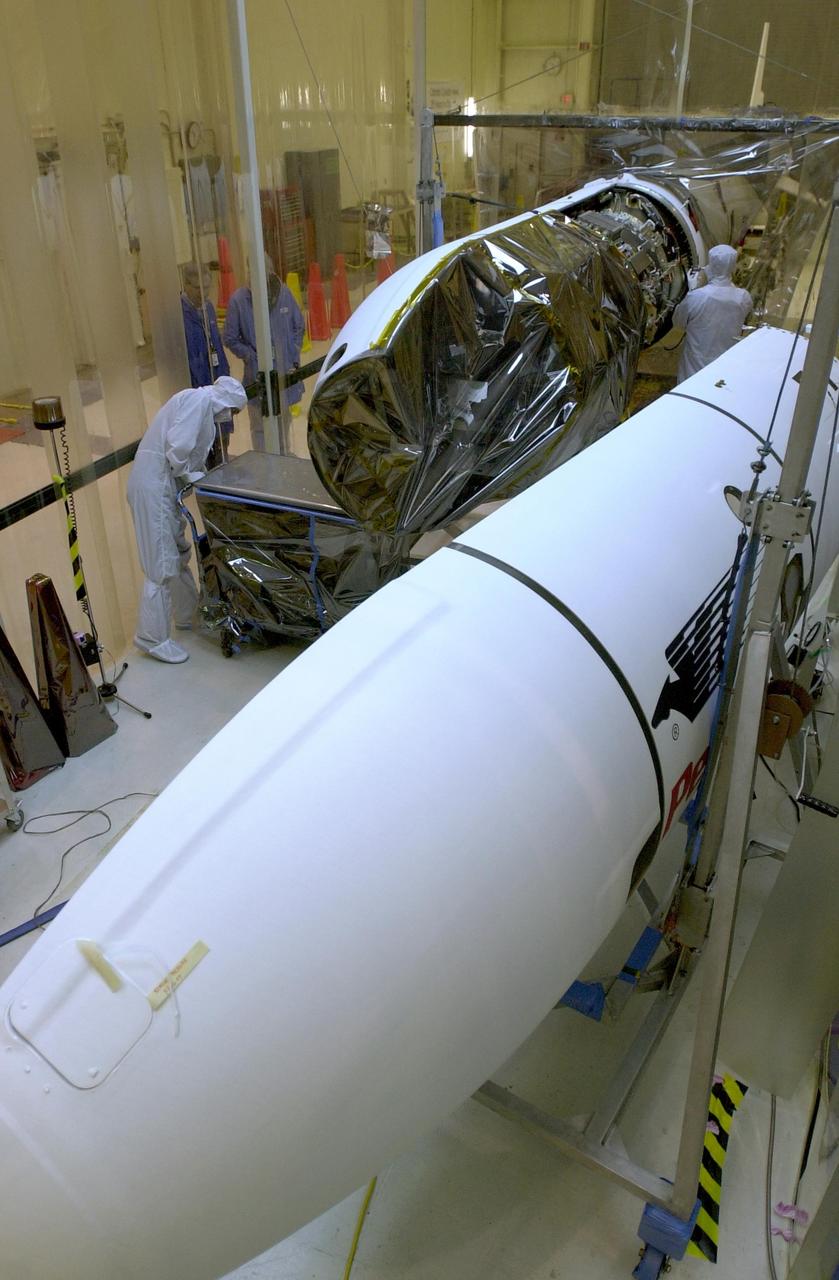
KENNEDY SPACE CENTER, FLA. -- At Vandenberg Air Force Base in California, under the protective clean tent, technicians begin installing the fairing around the AIM spacecraft. The fairing is a molded structure that fits around the spacecraft and forms an aerodynamically smooth nose cone, protecting the spacecraft during launch. Launch will be from a Pegasus XL rocket, carried and released by Orbital Sciences L-1011 jet aircraft. AIM, which stands for Aeronomy of Ice in the Mesosphere, is being prepared for integrated testing and a flight simulation. The AIM spacecraft will fly three instruments designed to study polar mesospheric clouds located at the edge of space, 50 miles above the Earth's surface in the coldest part of the planet's atmosphere. The mission's primary goal is to explain why these clouds form and what has caused them to become brighter and more numerous and appear at lower latitudes in recent years. AIM's results will provide the basis for the study of long-term variability in the mesospheric climate and its relationship to global climate change. Launch is scheduled for April 25.
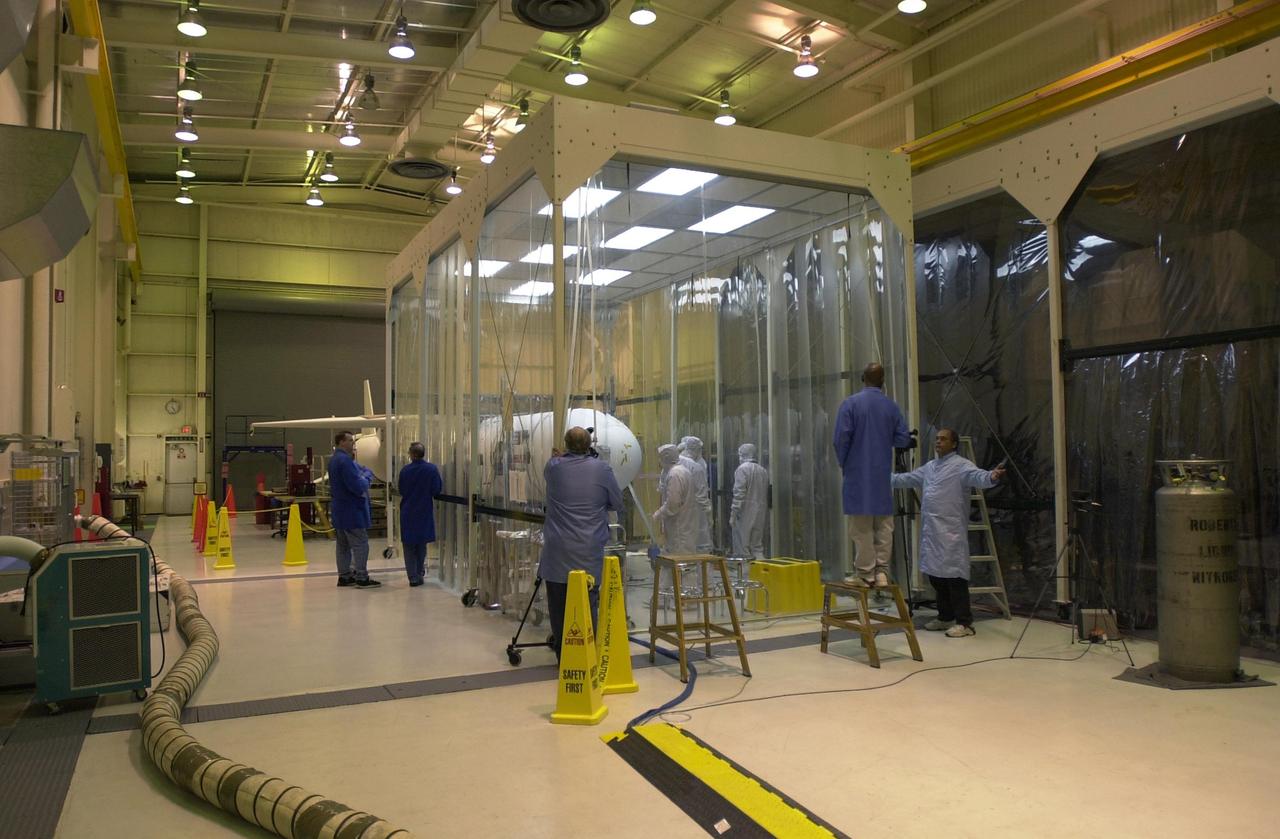
KENNEDY SPACE CENTER, FLA. -- At Vandenberg Air Force Base in California, under the protective clean tent, technicians examine the installation of the fairing around the AIM spacecraft. The fairing is a molded structure that fits around the spacecraft and forms an aerodynamically smooth nose cone, protecting the spacecraft during launch. Launch will be from a Pegasus XL rocket, carried and released by Orbital Sciences L-1011 jet aircraft. AIM, which stands for Aeronomy of Ice in the Mesosphere, is being prepared for integrated testing and a flight simulation. The AIM spacecraft will fly three instruments designed to study polar mesospheric clouds located at the edge of space, 50 miles above the Earth's surface in the coldest part of the planet's atmosphere. The mission's primary goal is to explain why these clouds form and what has caused them to become brighter and more numerous and appear at lower latitudes in recent years. AIM's results will provide the basis for the study of long-term variability in the mesospheric climate and its relationship to global climate change. Launch is scheduled for April 25.
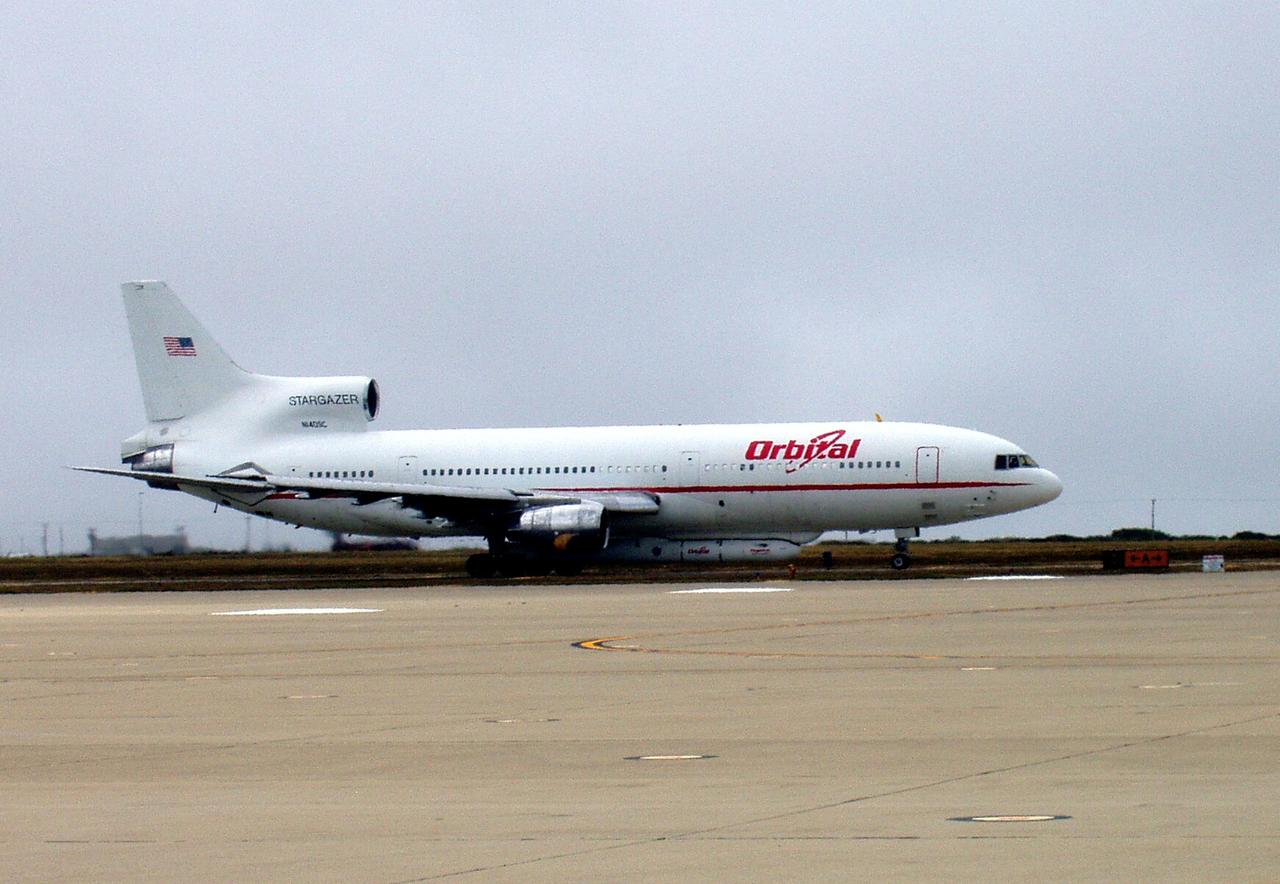
KENNEDY SPACE CENTER, FLA. -- On a runway at Vandenberg Air Force Base in California, the Orbital Sciences Stargazer L-1011 aircraft is ready for takeoff with its underbelly cargo of the Pegasus XL rocket-AIM spacecraft. The aircraft will release the Pegasus XL rocket at a drop point over the Pacific Ocean, 100 miles offshore west-southwest of Point Sur, Calif. AIM, which stands for Aeronomy of Ice in the Mesosphere, is being prepared for integrated testing and a flight simulation. The AIM spacecraft will fly three instruments designed to study polar mesospheric clouds located at the edge of space, 50 miles above the Earth's surface in the coldest part of the planet's atmosphere. The mission's primary goal is to explain why these clouds form and what has caused them to become brighter and more numerous and appear at lower latitudes in recent years. AIM's results will provide the basis for the study of long-term variability in the mesospheric climate and its relationship to global climate change. Launch is scheduled for April 25. Photo credit: NASA/Tim Gordon

KENNEDY SPACE CENTER, FLA. -- On a runway at Vandenberg Air Force Base in California, the Orbital Sciences Stargazer L-1011 aircraft takes off at 4:26 p.m. EDT with its underbelly cargo of the Pegasus XL rocket-AIM spacecraft. The aircraft will release the Pegasus XL rocket at a drop point over the Pacific Ocean, 100 miles offshore west-southwest of Point Sur, Calif. AIM, which stands for Aeronomy of Ice in the Mesosphere, is being prepared for integrated testing and a flight simulation. The AIM spacecraft will fly three instruments designed to study polar mesospheric clouds located at the edge of space, 50 miles above the Earth's surface in the coldest part of the planet's atmosphere. The mission's primary goal is to explain why these clouds form and what has caused them to become brighter and more numerous and appear at lower latitudes in recent years. AIM's results will provide the basis for the study of long-term variability in the mesospheric climate and its relationship to global climate change. Launch is scheduled for April 25. Photo credit: NASA/Tim Gordon
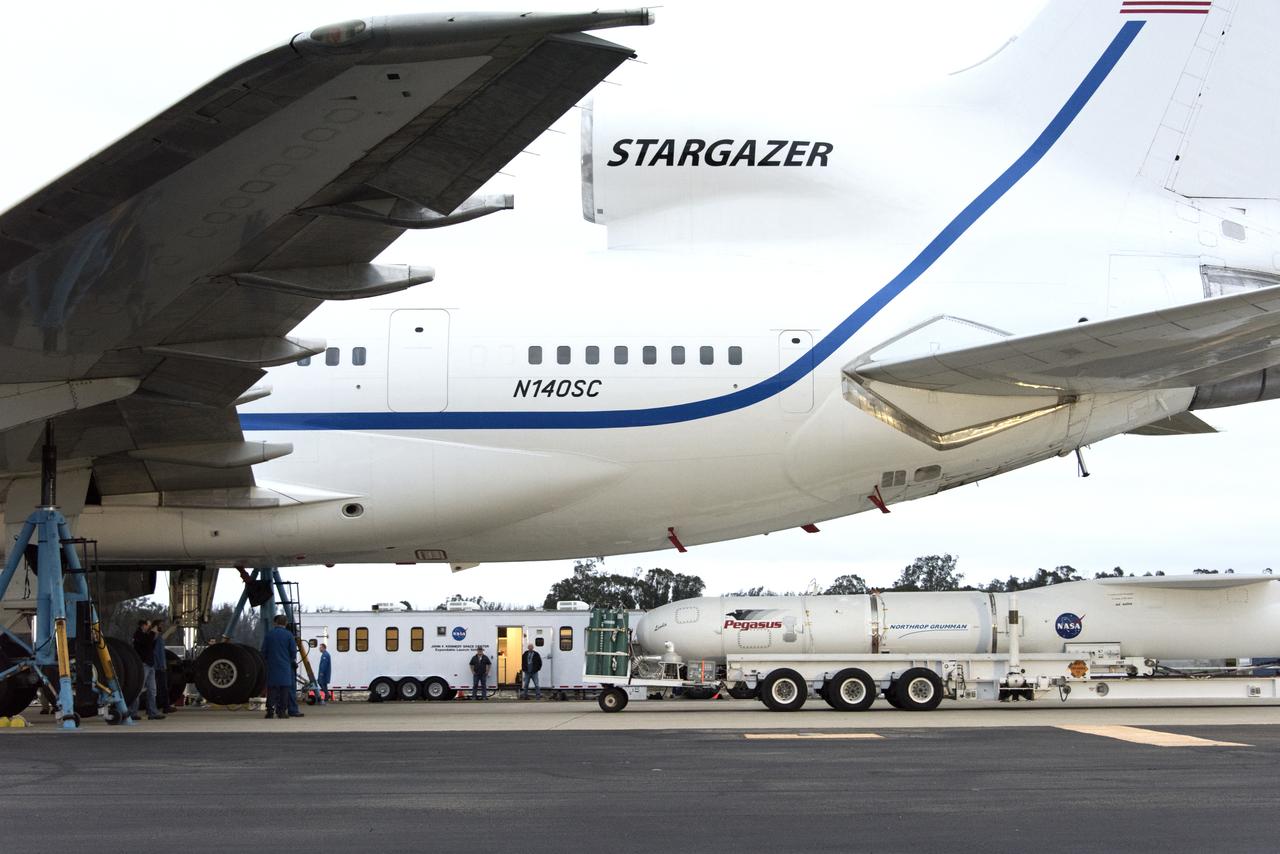
Preparations are underway to attach Northrop Grumman's Pegasus XL rocket, containing NASA's Ionospheric Connection Explorer (ICON), beneath the company's L-1011 Stargazer aircraft at the hot pad at Vandenberg Air Force Base in California, on Oct. 14, 2018. The Stargazer will take off from the hot pad and travel to Cape Canaveral Air Force Station in Florida. The Pegasus XL rocket will launch ICON from the Skid Strip at the Cape. ICON will study the frontier of space - the dynamic zone high in Earth's atmosphere where terrestrial weather from below meets space weather above. The explorer will help determine the physics of Earth's space environment and pave the way for mitigating its effects on our technology and communications systems.
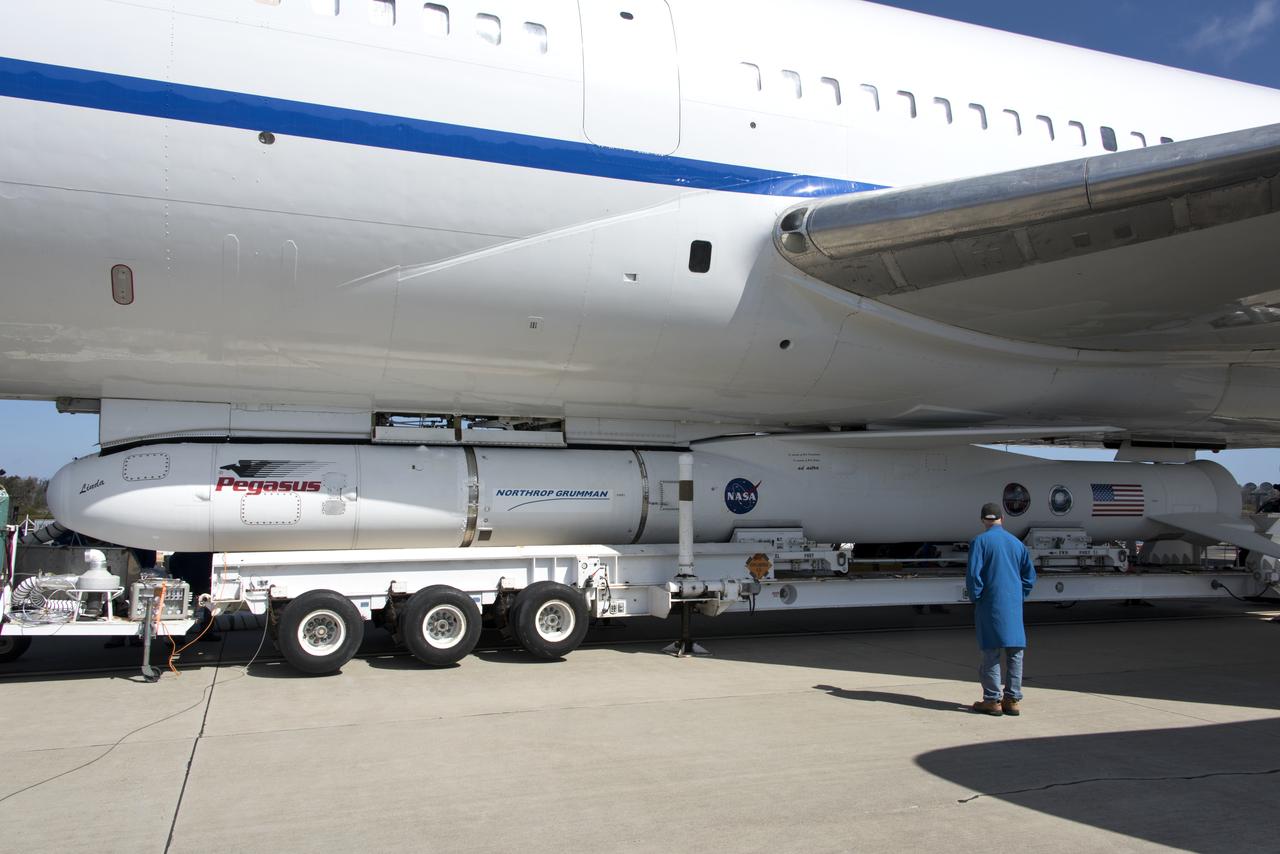
Northrop Grumman's Pegasus XL rocket, containing NASA's Ionospheric Connection Explorer (ICON), is attached beneath the company's L-1011 Stargazer aircraft at the hot pad at Vandenberg Air Force Base in California, on Oct. 14, 2018. The Stargazer will take off from the hot pad and travel to Cape Canaveral Air Force Station in Florida. The Pegasus XL rocket will launch ICON from the Skid Strip at the Cape. ICON will study the frontier of space - the dynamic zone high in Earth's atmosphere where terrestrial weather from below meets space weather above. The explorer will help determine the physics of Earth's space environment and pave the way for mitigating its effects on our technology and communications systems.
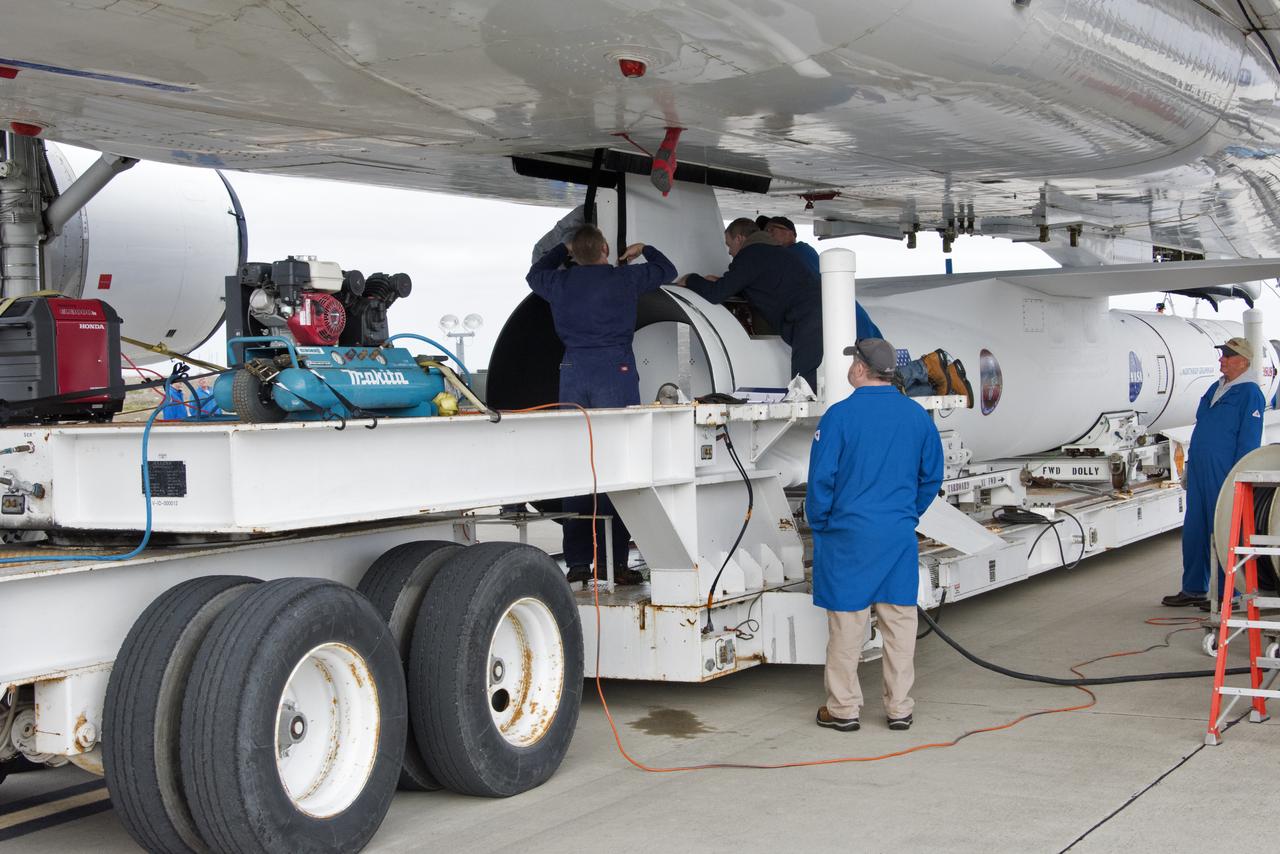
Technicians secure Northrop Grumman's Pegasus XL rocket, containing NASA's Ionospheric Connection Explorer (ICON), beneath the company's L-1011 Stargazer aircraft at the hot pad at Vandenberg Air Force Base in California, on Oct. 14, 2018. The Stargazer will take off from the hot pad and travel to Cape Canaveral Air Force Station in Florida. The Pegasus XL rocket will launch ICON from the Skid Strip at the Cape. ICON will study the frontier of space - the dynamic zone high in Earth's atmosphere where terrestrial weather from below meets space weather above. The explorer will help determine the physics of Earth's space environment and pave the way for mitigating its effects on our technology and communications systems.
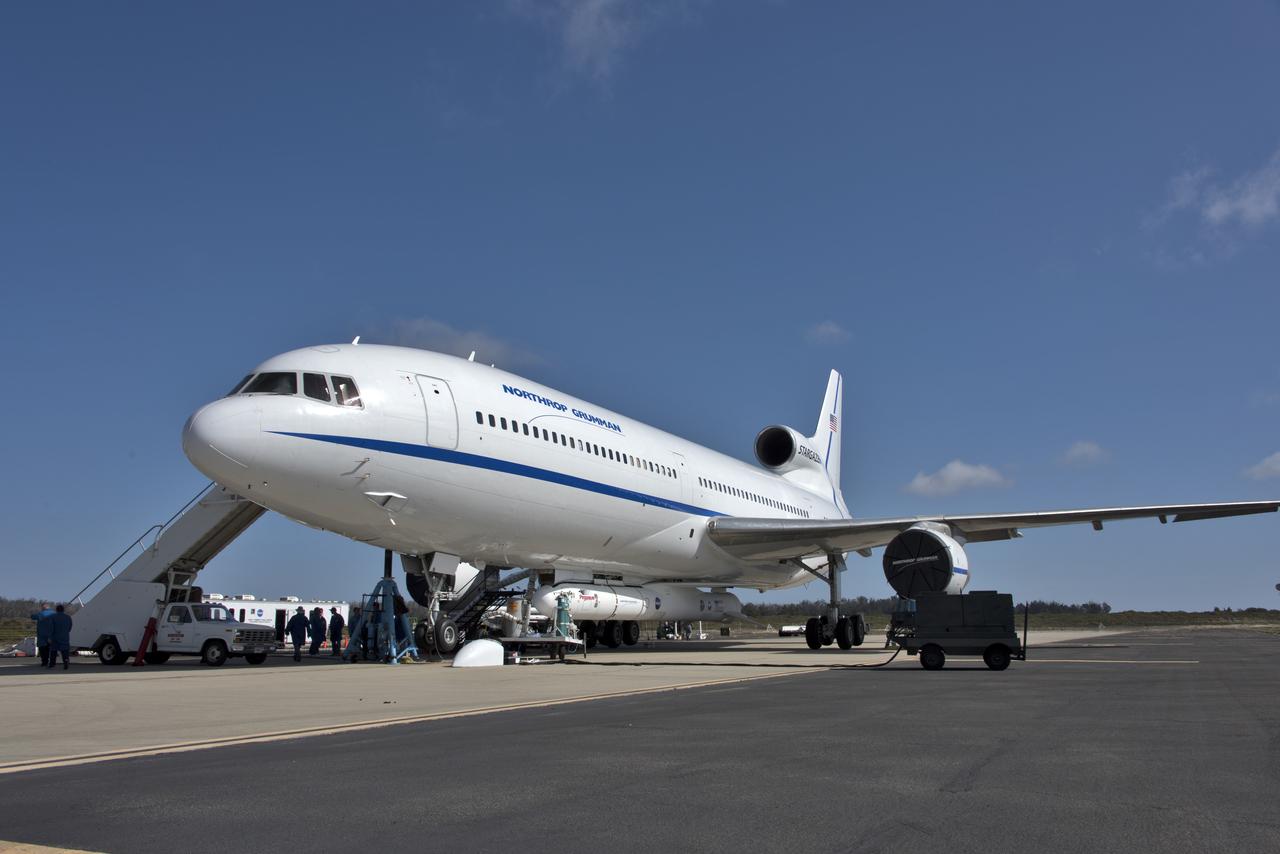
Northrop Grumman's Pegasus XL rocket, containing NASA's Ionospheric Connection Explorer (ICON), is attached beneath the company's L-1011 Stargazer aircraft at the hot pad at Vandenberg Air Force Base in California, on Oct. 14, 2018. The Stargazer will take off from the hot pad and travel to Cape Canaveral Air Force Station in Florida. The Pegasus XL rocket will launch ICON from the Skid Strip at the Cape. ICON will study the frontier of space - the dynamic zone high in Earth's atmosphere where terrestrial weather from below meets space weather above. The explorer will help determine the physics of Earth's space environment and pave the way for mitigating its effects on our technology and communications systems.
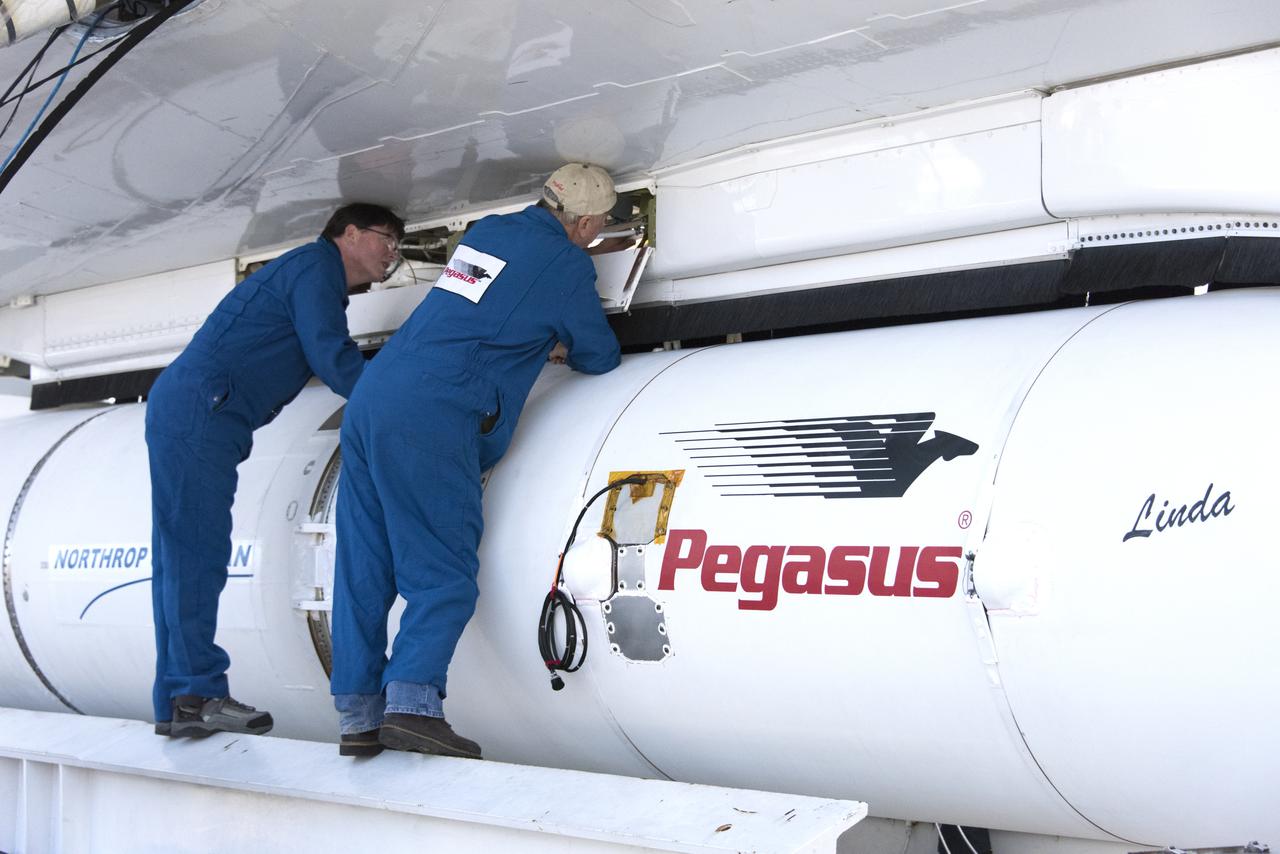
Technicians secure Northrop Grumman's Pegasus XL rocket, containing NASA's Ionospheric Connection Explorer (ICON), beneath the company's L-1011 Stargazer aircraft at the hot pad at Vandenberg Air Force Base in California, on Oct. 14, 2018. The Stargazer will take off from the hot pad and travel to Cape Canaveral Air Force Station in Florida. The Pegasus XL rocket will launch ICON from the Skid Strip at the Cape. ICON will study the frontier of space - the dynamic zone high in Earth's atmosphere where terrestrial weather from below meets space weather above. The explorer will help determine the physics of Earth's space environment and pave the way for mitigating its effects on our technology and communications systems.
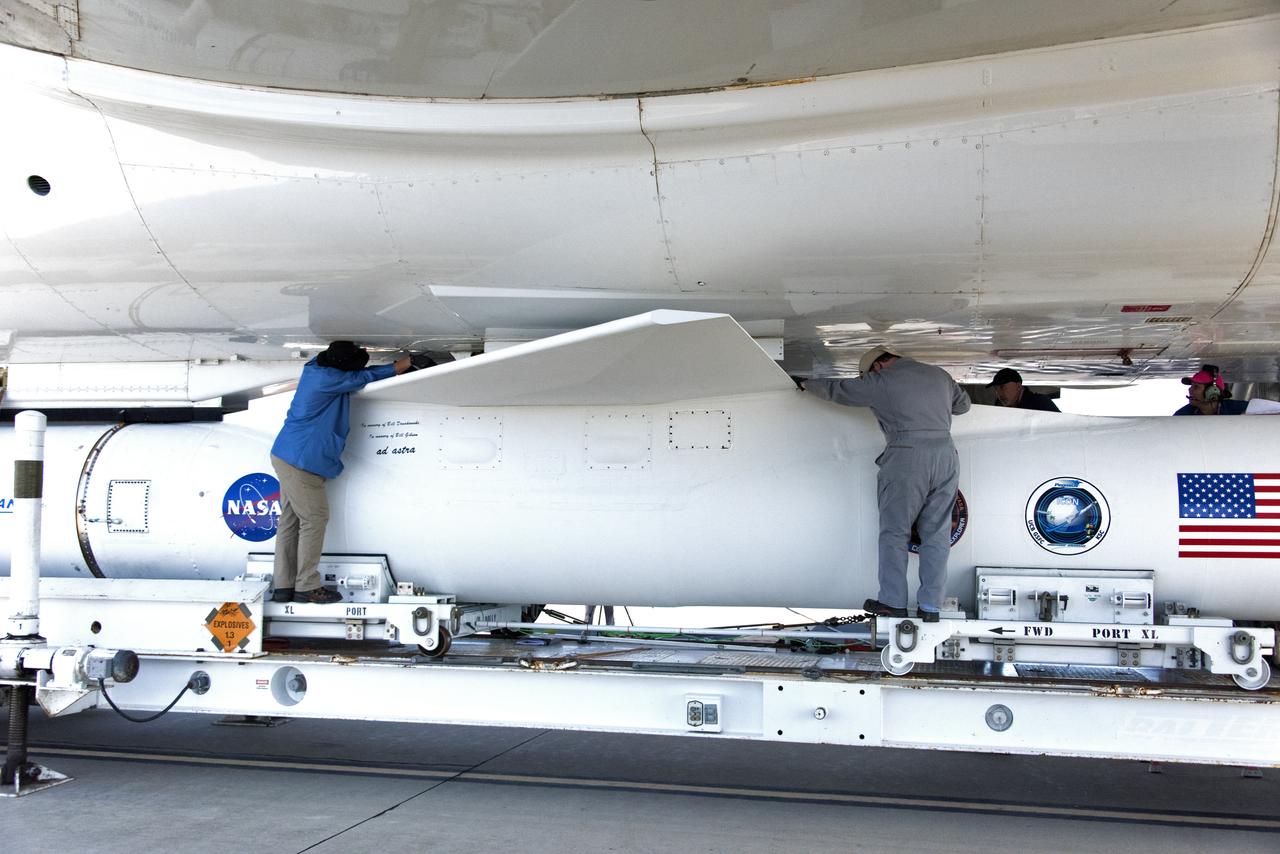
Technicians secure Northrop Grumman's Pegasus XL rocket, containing NASA's Ionospheric Connection Explorer (ICON), beneath the company's L-1011 Stargazer aircraft at the hot pad at Vandenberg Air Force Base in California, on Oct. 14, 2018. The Stargazer will take off from the hot pad and travel to Cape Canaveral Air Force Station in Florida. The Pegasus XL rocket will launch ICON from the Skid Strip at the Cape. ICON will study the frontier of space - the dynamic zone high in Earth's atmosphere where terrestrial weather from below meets space weather above. The explorer will help determine the physics of Earth's space environment and pave the way for mitigating its effects on our technology and communications systems.
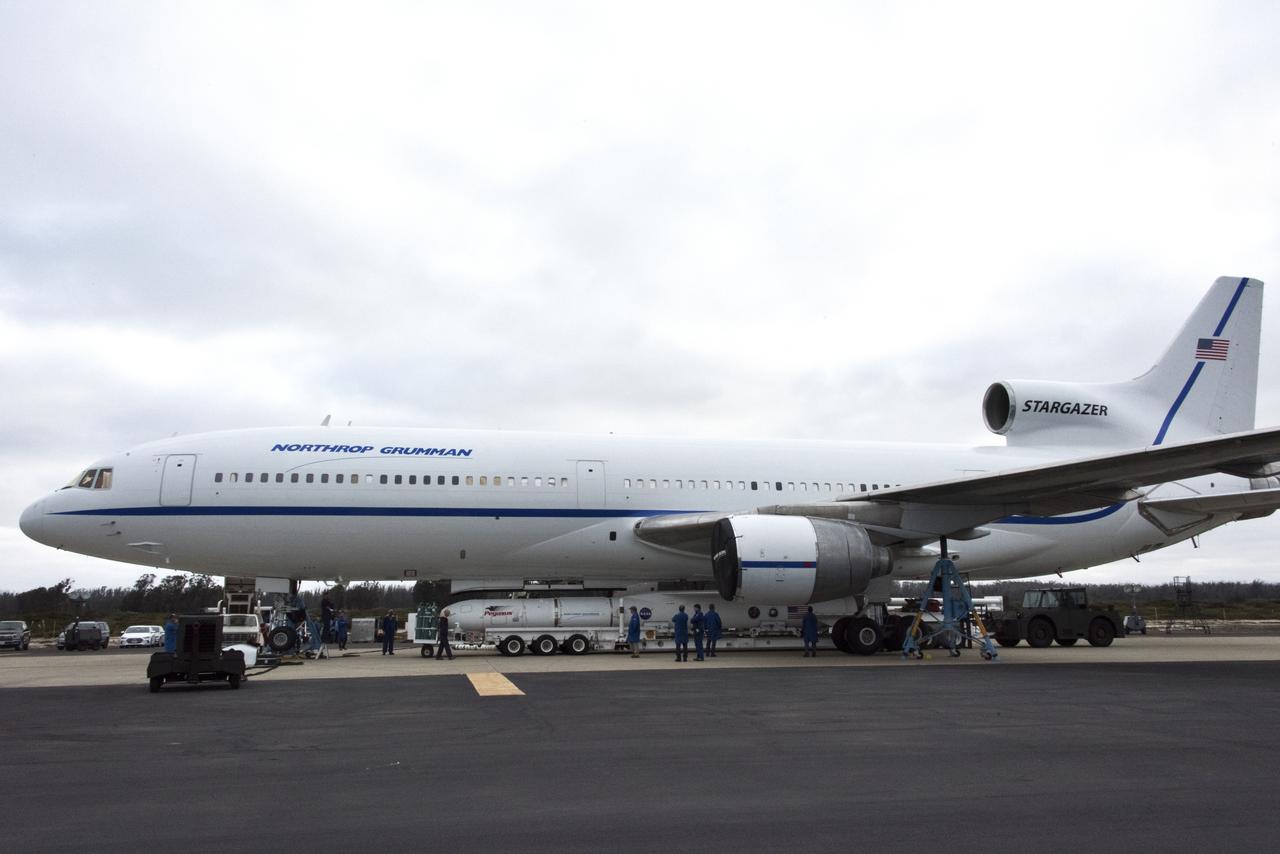
Northrop Grumman's Pegasus XL rocket, containing NASA's Ionospheric Connection Explorer (ICON), is attached beneath the company's L-1011 Stargazer aircraft at the hot pad at Vandenberg Air Force Base in California, on Oct. 14, 2018. The Stargazer will take off from the hot pad and travel to Cape Canaveral Air Force Station in Florida. The Pegasus XL rocket will launch ICON from the Skid Strip at the Cape. ICON will study the frontier of space - the dynamic zone high in Earth's atmosphere where terrestrial weather from below meets space weather above. The explorer will help determine the physics of Earth's space environment and pave the way for mitigating its effects on our technology and communications systems.
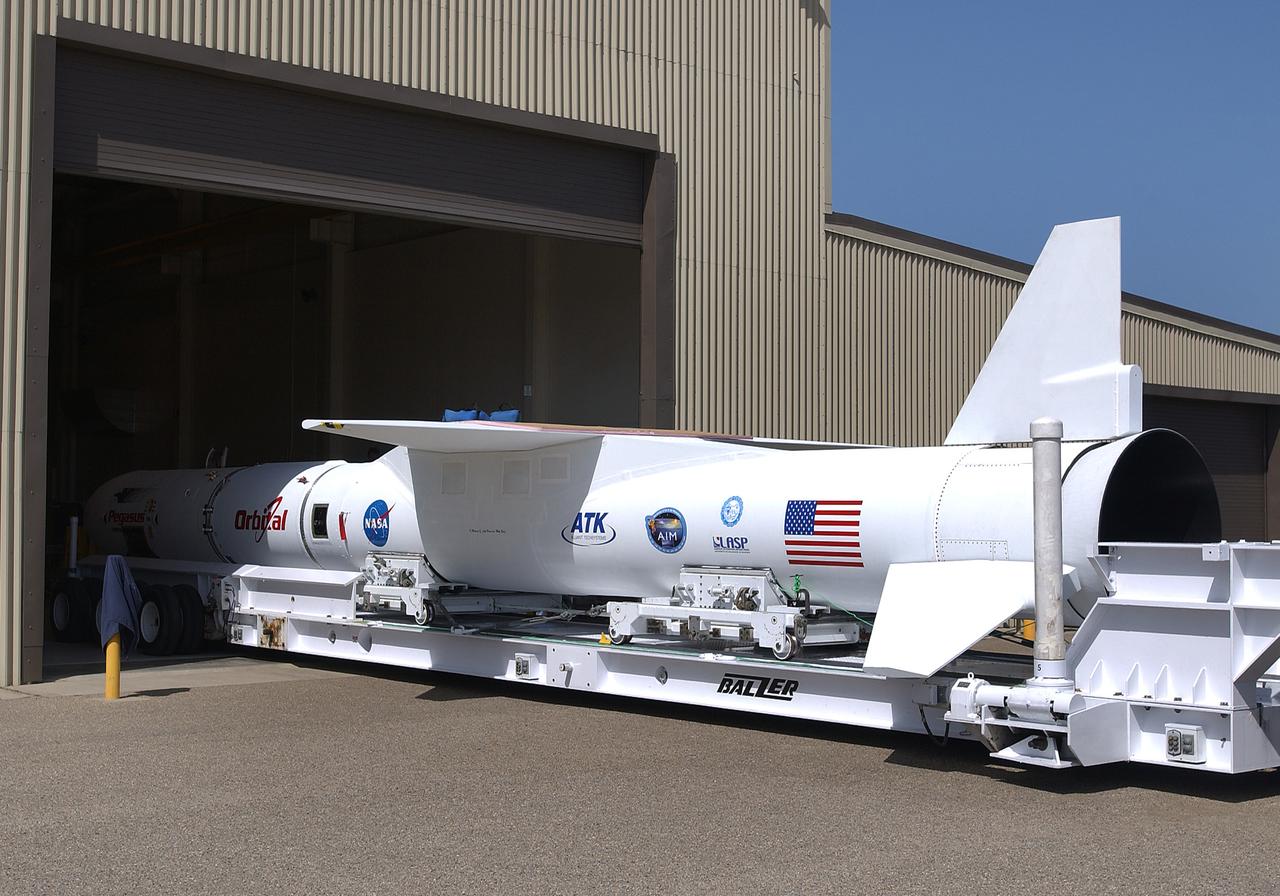
The mated Pegasus XL rocket - AIM spacecraft leaves Building 1655 at Vandenberg Air Force Base in California. The rocket will be transferred to a waiting Orbital Sciences Stargazer L-1011 aircraft for launch. AIM, which stands for Aeronomy of Ice in the Mesosphere, is being prepared for integrated testing and a flight simulation. The AIM spacecraft will fly three instruments designed to study polar mesospheric clouds located at the edge of space, 50 miles above the Earth's surface in the coldest part of the planet's atmosphere. The mission's primary goal is to explain why these clouds form and what has caused them to become brighter and more numerous and appear at lower latitudes in recent years. AIM's results will provide the basis for the study of long-term variability in the mesospheric climate and its relationship to global climate change. Launch is scheduled for April 25.
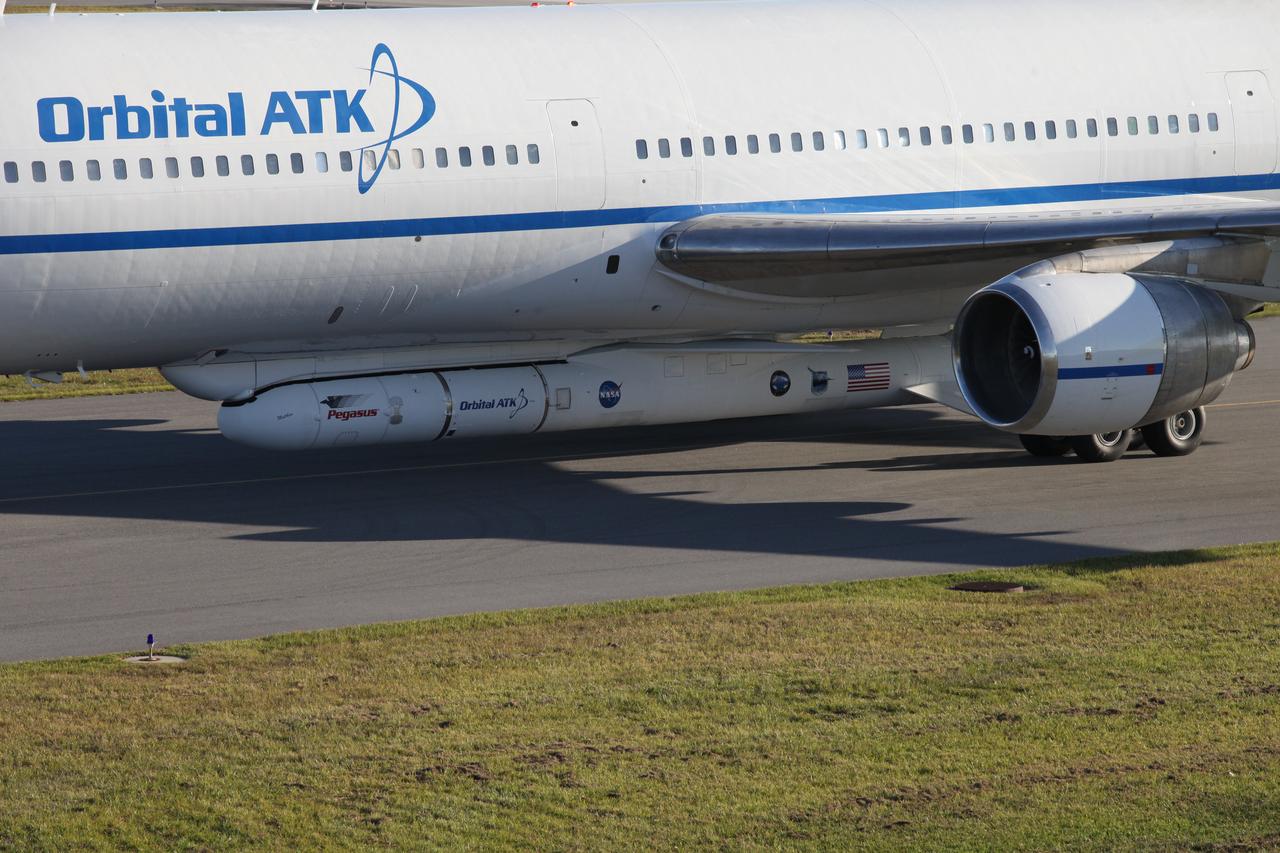
The Orbital ATK L-1011 Stargazer aircraft has arrived at the Skid Strip at Cape Canaveral Air Force Station in Florida. Attached beneath the Stargazer is the Orbital ATK Pegasus XL with NASA's Cyclone Global Navigation Satellite System (CYGNSS) on board. CYGNSS was processed and prepared for its mission at Vandenberg Air Force Base in California. CYGNSS is scheduled for its airborne launch aboard the Pegasus XL rocket from the Skid Strip on Dec. 12. CYGNSS will make frequent and accurate measurements of ocean surface winds throughout the life cycle of tropical storms and hurricanes. The data that CYGNSS provides will enable scientists to probe key air-sea interaction processes that take place near the core of storms, which are rapidly changing and play a critical role in the beginning and intensification of hurricanes.

The mated Pegasus XL rocket - AIM spacecraft is moved onto a transporter in Building 1655 at Vandenberg Air Force Base in California. The launch vehicle will be transferred to a waiting Orbital Sciences Stargazer L-1011 aircraft for launch. AIM, which stands for Aeronomy of Ice in the Mesosphere, is being prepared for integrated testing and a flight simulation. The AIM spacecraft will fly three instruments designed to study polar mesospheric clouds located at the edge of space, 50 miles above the Earth's surface in the coldest part of the planet's atmosphere. The mission's primary goal is to explain why these clouds form and what has caused them to become brighter and more numerous and appear at lower latitudes in recent years. AIM's results will provide the basis for the study of long-term variability in the mesospheric climate and its relationship to global climate change. Launch is scheduled for April 25.
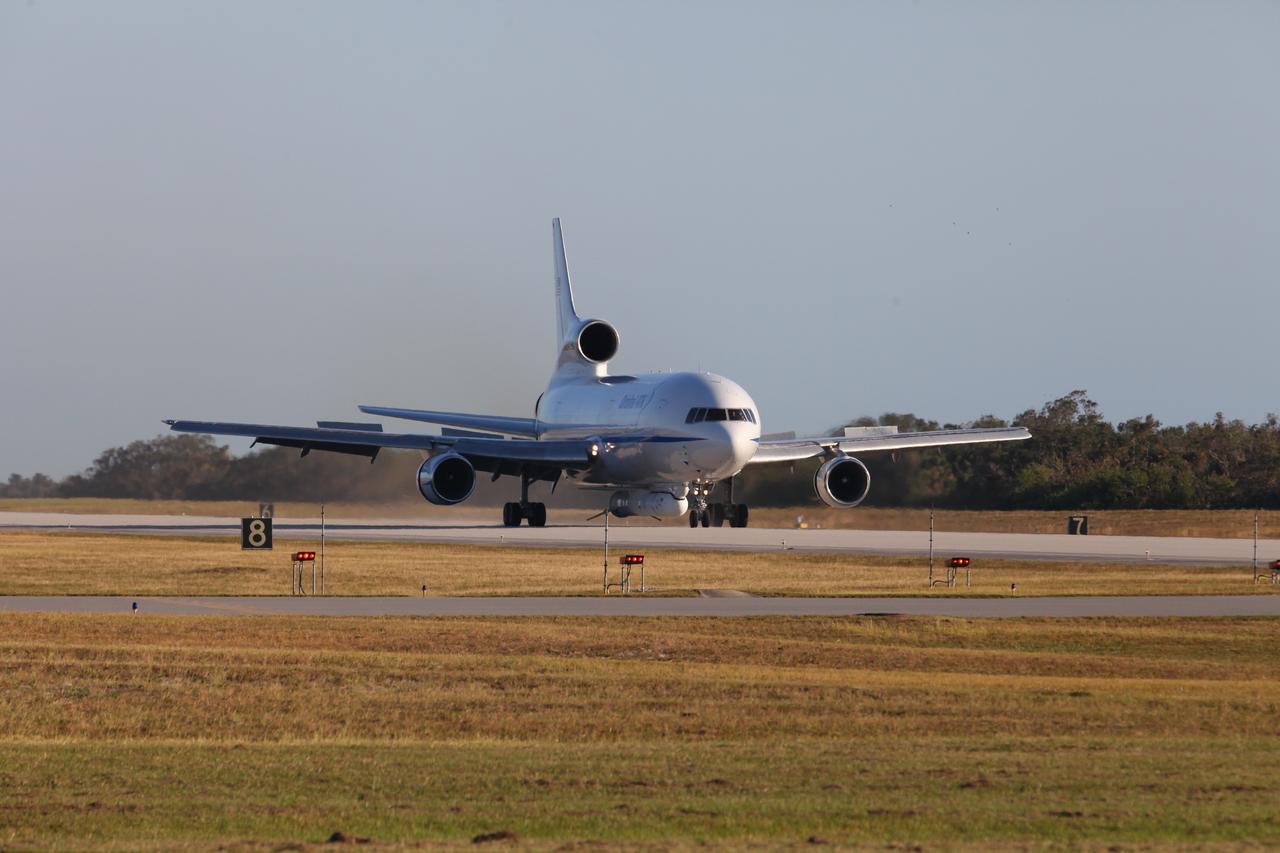
The Orbital ATK L-1011 Stargazer aircraft touches down at 3:57 p.m. EST at the Skid Strip at Cape Canaveral Air Force Station in Florida. Attached beneath the Stargazer is the Orbital ATK Pegasus XL with NASA's Cyclone Global Navigation Satellite System (CYGNSS) on board. CYGNSS was processed and prepared for its mission at Vandenberg Air Force Base in California. CYGNSS is scheduled for its airborne launch aboard the Pegasus XL rocket from the Skid Strip on Dec. 12. CYGNSS will make frequent and accurate measurements of ocean surface winds throughout the life cycle of tropical storms and hurricanes. The data that CYGNSS provides will enable scientists to probe key air-sea interaction processes that take place near the core of storms, which are rapidly changing and play a critical role in the beginning and intensification of hurricanes.
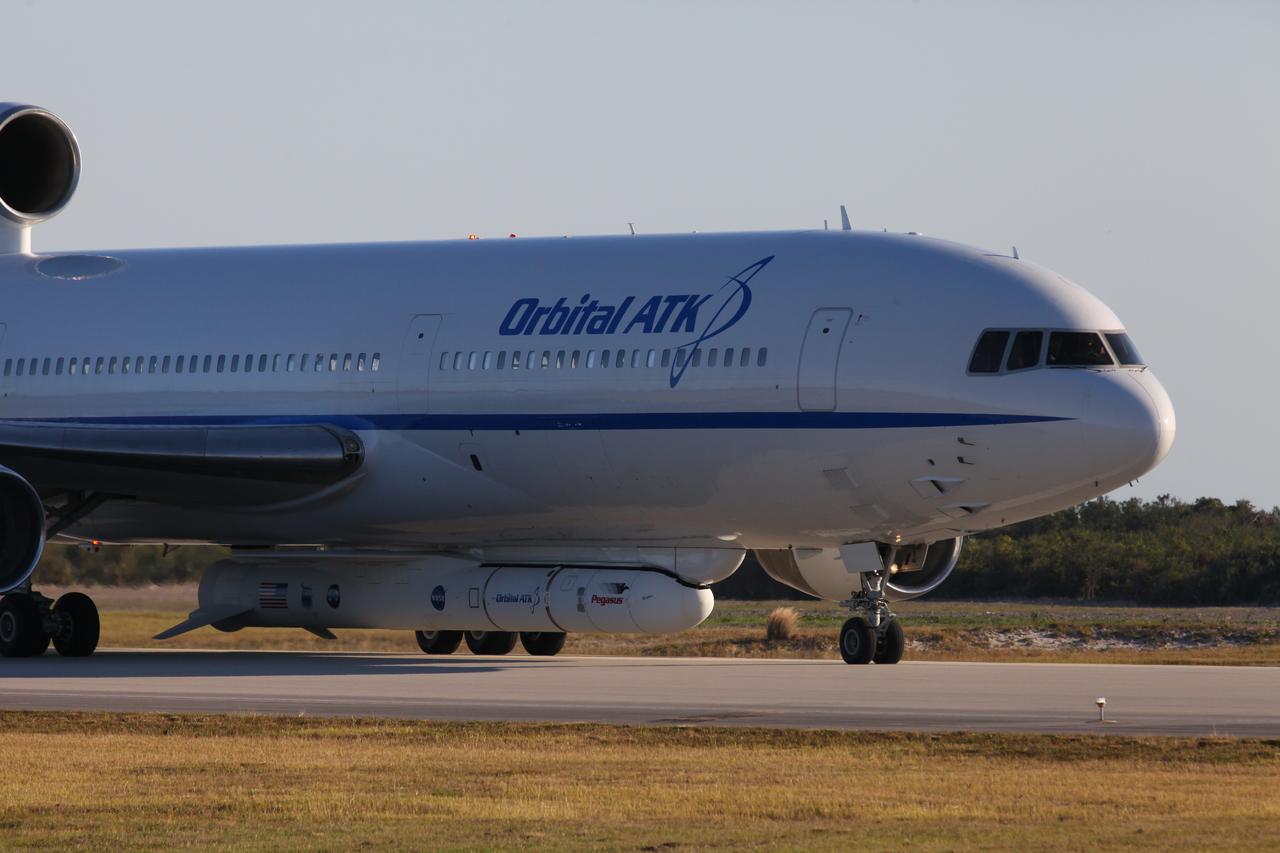
The Orbital ATK L-1011 Stargazer aircraft has arrived at the Skid Strip at Cape Canaveral Air Force Station in Florida. Attached beneath the Stargazer is the Orbital ATK Pegasus XL with NASA's Cyclone Global Navigation Satellite System (CYGNSS) on board. CYGNSS was processed and prepared for its mission at Vandenberg Air Force Base in California. CYGNSS is scheduled for its airborne launch aboard the Pegasus XL rocket from the Skid Strip on Dec. 12. CYGNSS will make frequent and accurate measurements of ocean surface winds throughout the life cycle of tropical storms and hurricanes. The data that CYGNSS provides will enable scientists to probe key air-sea interaction processes that take place near the core of storms, which are rapidly changing and play a critical role in the beginning and intensification of hurricanes.
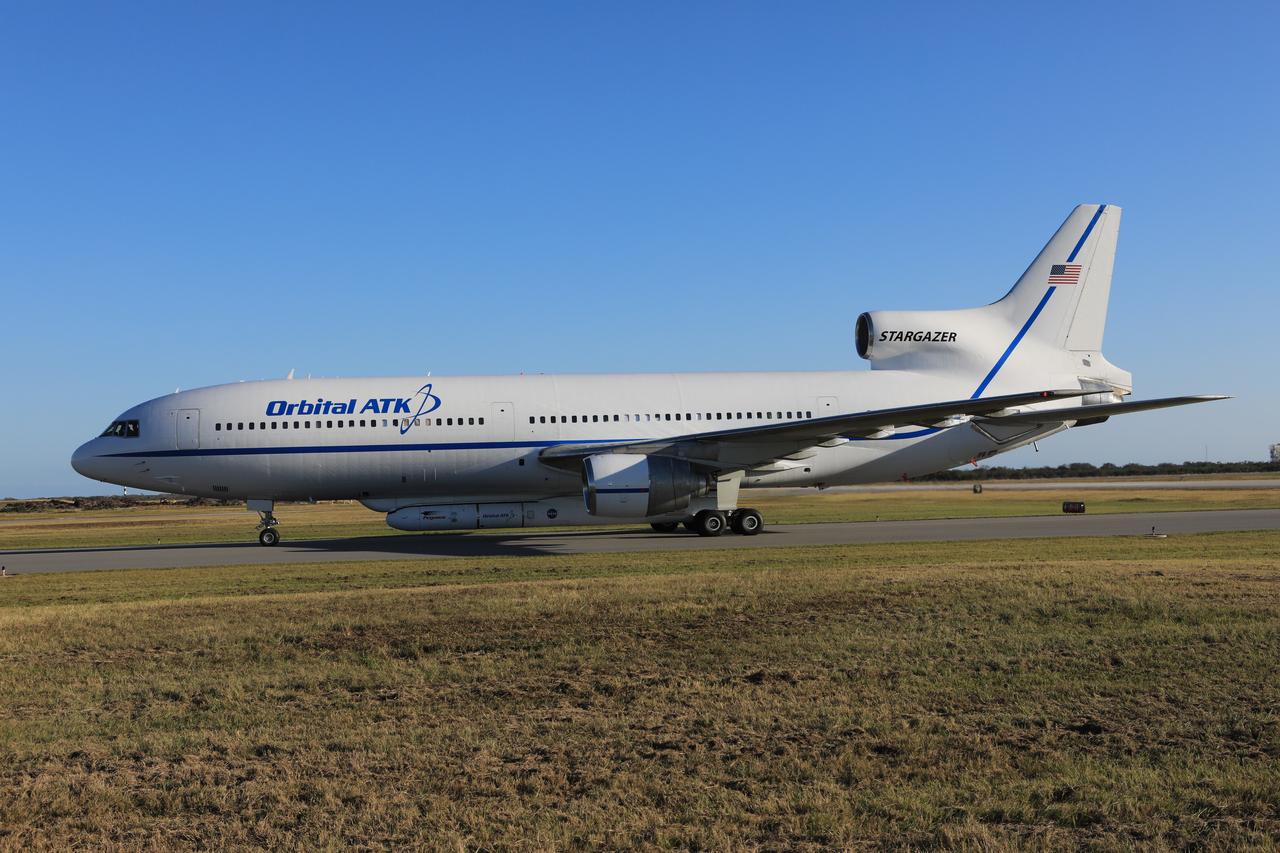
The Orbital ATK L-1011 Stargazer aircraft has arrived at the Skid Strip at Cape Canaveral Air Force Station in Florida. Attached beneath the Stargazer is the Orbital ATK Pegasus XL with NASA's Cyclone Global Navigation Satellite System (CYGNSS) on board. CYGNSS was processed and prepared for its mission at Vandenberg Air Force Base in California. CYGNSS is scheduled for its airborne launch aboard the Pegasus XL rocket from the Skid Strip on Dec. 12. CYGNSS will make frequent and accurate measurements of ocean surface winds throughout the life cycle of tropical storms and hurricanes. The data that CYGNSS provides will enable scientists to probe key air-sea interaction processes that take place near the core of storms, which are rapidly changing and play a critical role in the beginning and intensification of hurricanes.
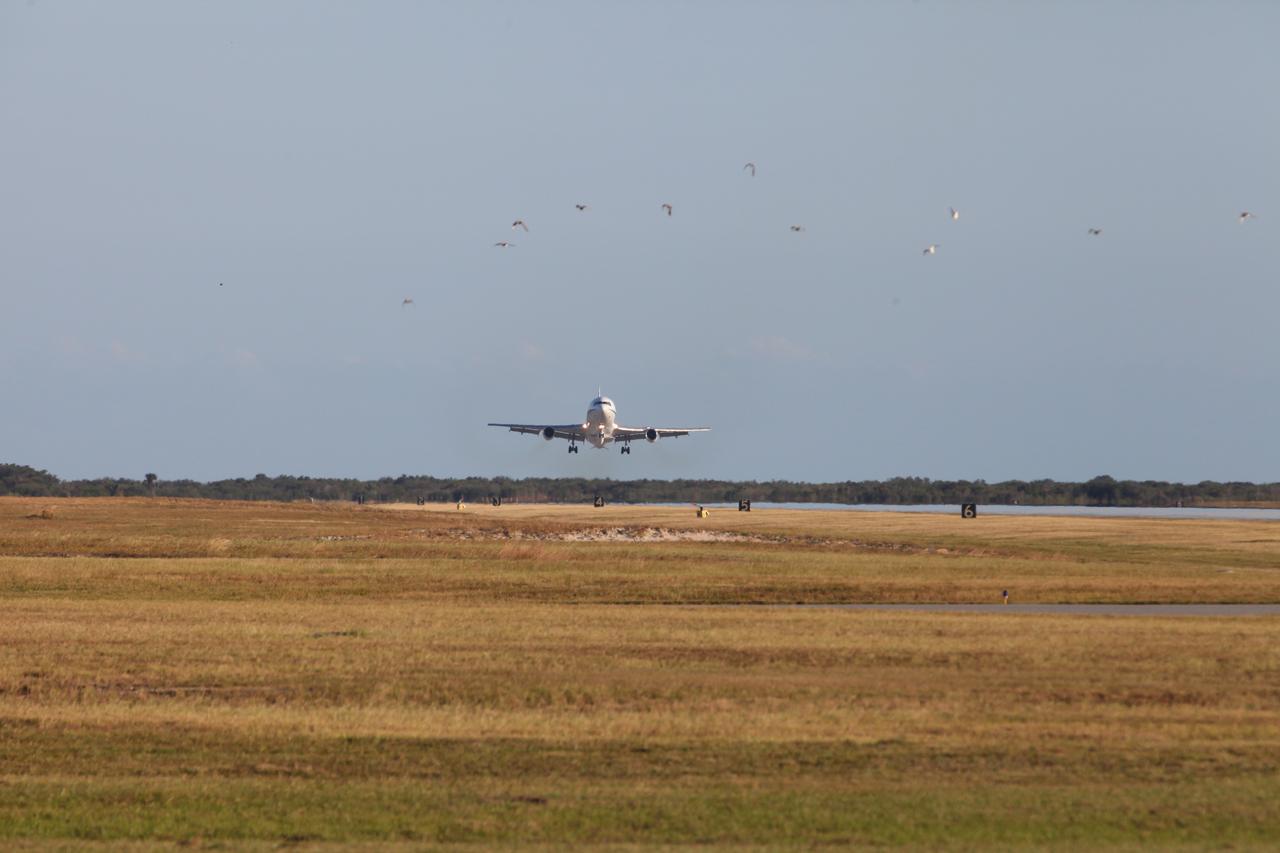
The Orbital ATK L-1011 Stargazer aircraft begins its descent to the Skid Strip at Cape Canaveral Air Force Station in Florida. Attached beneath the Stargazer is the Orbital ATK Pegasus XL with NASA's Cyclone Global Navigation Satellite System (CYGNSS) on board. CYGNSS was processed and prepared for its mission at Vandenberg Air Force Base in California. CYGNSS is scheduled for its airborne launch aboard the Pegasus XL rocket from the Skid Strip on Dec. 12. CYGNSS will make frequent and accurate measurements of ocean surface winds throughout the life cycle of tropical storms and hurricanes. The data that CYGNSS provides will enable scientists to probe key air-sea interaction processes that take place near the core of storms, which are rapidly changing and play a critical role in the beginning and intensification of hurricanes.

The Orbital ATK L-1011 Stargazer aircraft has arrived at the Skid Strip at Cape Canaveral Air Force Station in Florida. Attached beneath the Stargazer is the Orbital ATK Pegasus XL with NASA's Cyclone Global Navigation Satellite System (CYGNSS) on board. CYGNSS was processed and prepared for its mission at Vandenberg Air Force Base in California. CYGNSS is scheduled for its airborne launch aboard the Pegasus XL rocket from the Skid Strip on Dec. 12. CYGNSS will make frequent and accurate measurements of ocean surface winds throughout the life cycle of tropical storms and hurricanes. The data that CYGNSS provides will enable scientists to probe key air-sea interaction processes that take place near the core of storms, which are rapidly changing and play a critical role in the beginning and intensification of hurricanes.
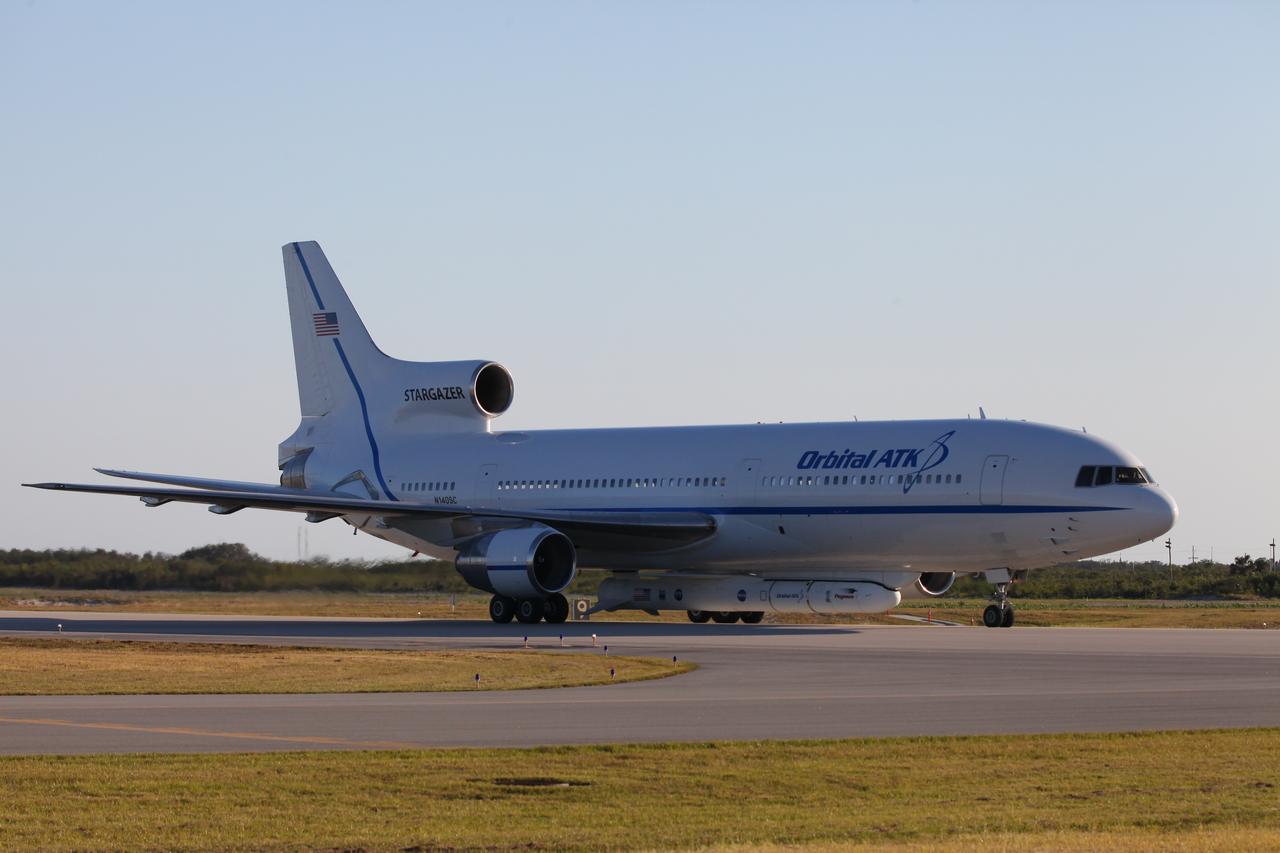
The Orbital ATK L-1011 Stargazer aircraft has arrived at the Skid Strip at Cape Canaveral Air Force Station in Florida. Attached beneath the Stargazer is the Orbital ATK Pegasus XL with NASA's Cyclone Global Navigation Satellite System (CYGNSS) on board. CYGNSS was processed and prepared for its mission at Vandenberg Air Force Base in California. CYGNSS is scheduled for its airborne launch aboard the Pegasus XL rocket from the Skid Strip on Dec. 12. CYGNSS will make frequent and accurate measurements of ocean surface winds throughout the life cycle of tropical storms and hurricanes. The data that CYGNSS provides will enable scientists to probe key air-sea interaction processes that take place near the core of storms, which are rapidly changing and play a critical role in the beginning and intensification of hurricanes.
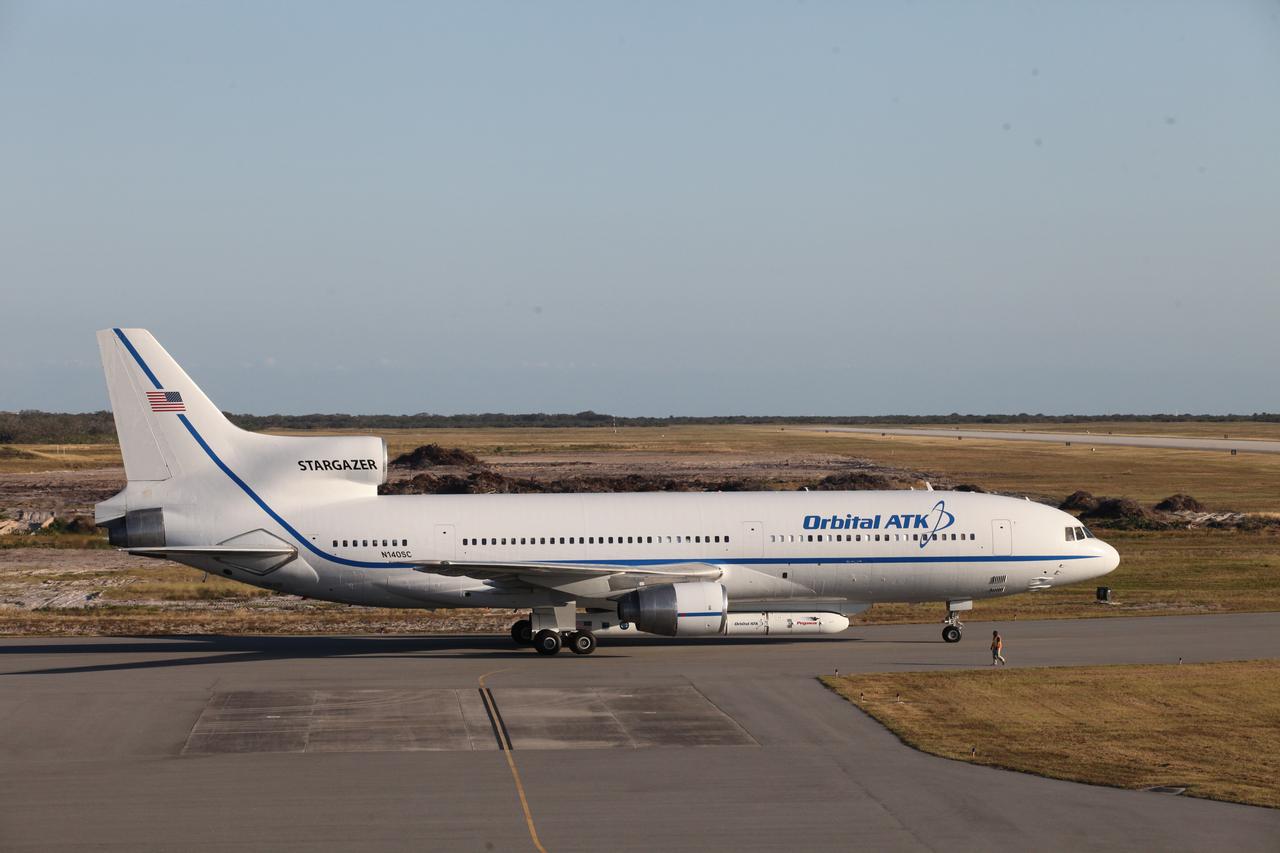
The Orbital ATK L-1011 Stargazer aircraft has arrived at the Skid Strip at Cape Canaveral Air Force Station in Florida. Attached beneath the Stargazer is the Orbital ATK Pegasus XL with NASA's Cyclone Global Navigation Satellite System (CYGNSS) on board. CYGNSS was processed and prepared for its mission at Vandenberg Air Force Base in California. CYGNSS is scheduled for its airborne launch aboard the Pegasus XL rocket from the Skid Strip on Dec. 12. CYGNSS will make frequent and accurate measurements of ocean surface winds throughout the life cycle of tropical storms and hurricanes. The data that CYGNSS provides will enable scientists to probe key air-sea interaction processes that take place near the core of storms, which are rapidly changing and play a critical role in the beginning and intensification of hurricanes.
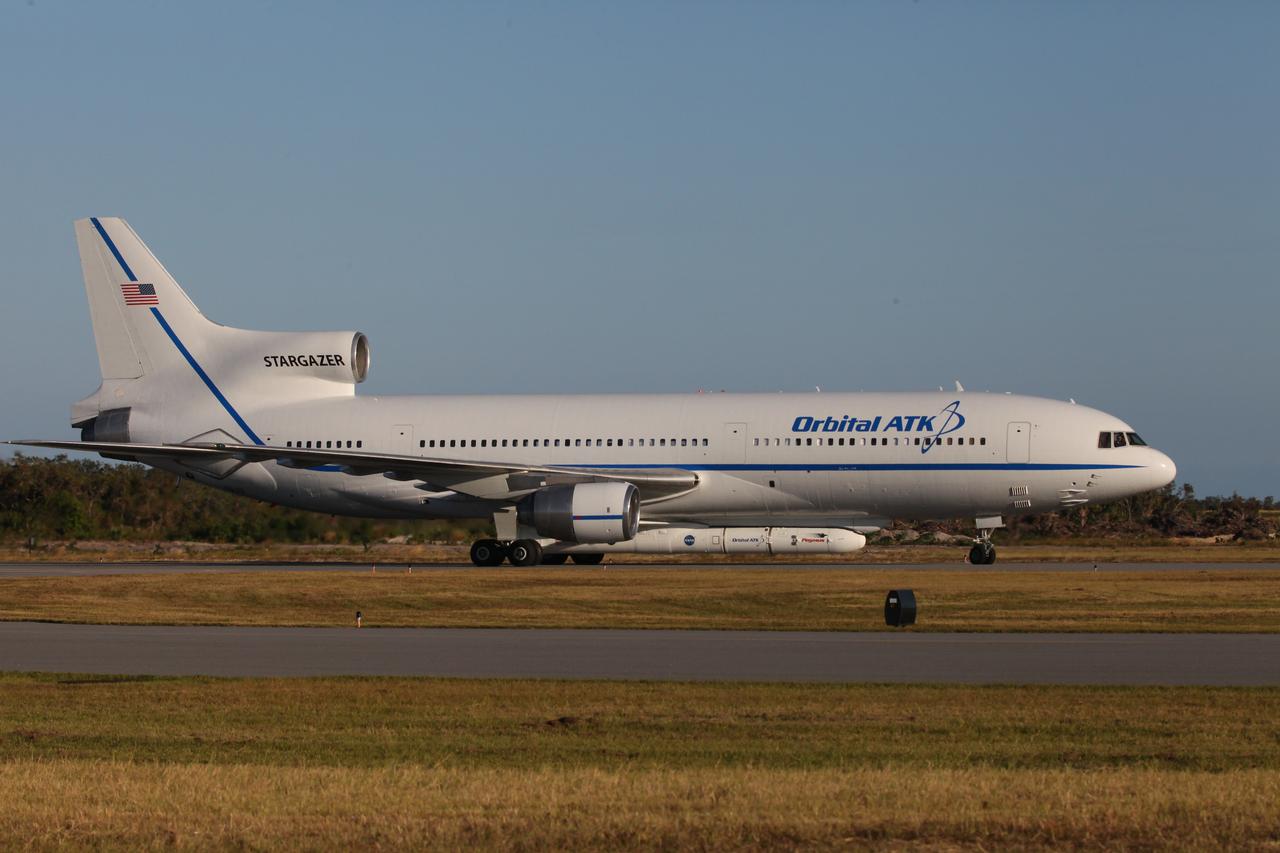
The Orbital ATK L-1011 Stargazer aircraft has arrived at the Skid Strip at Cape Canaveral Air Force Station in Florida. Attached beneath the Stargazer is the Orbital ATK Pegasus XL with NASA's Cyclone Global Navigation Satellite System (CYGNSS) on board. CYGNSS was processed and prepared for its mission at Vandenberg Air Force Base in California. CYGNSS is scheduled for its airborne launch aboard the Pegasus XL rocket from the Skid Strip on Dec. 12. CYGNSS will make frequent and accurate measurements of ocean surface winds throughout the life cycle of tropical storms and hurricanes. The data that CYGNSS provides will enable scientists to probe key air-sea interaction processes that take place near the core of storms, which are rapidly changing and play a critical role in the beginning and intensification of hurricanes.
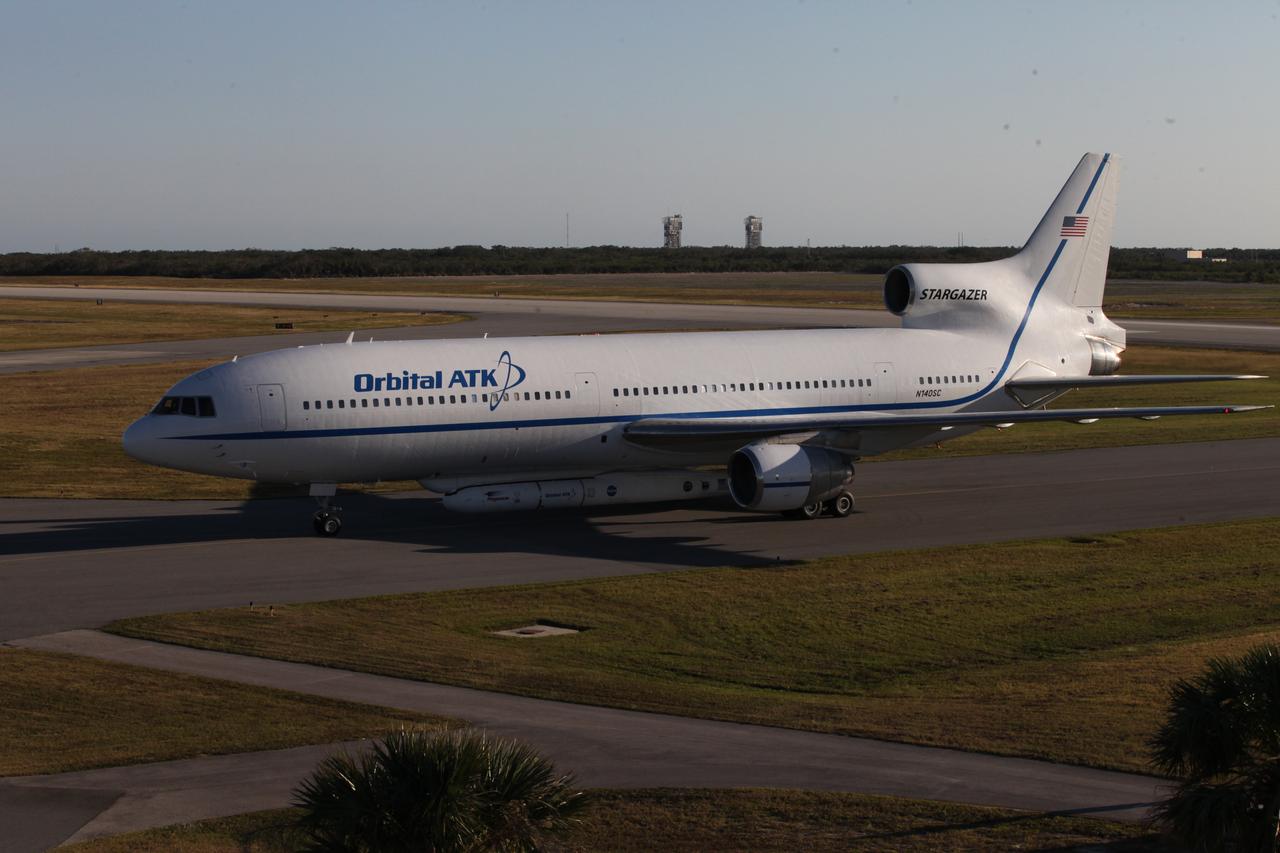
The Orbital ATK L-1011 Stargazer aircraft has arrived at the Skid Strip at Cape Canaveral Air Force Station in Florida. Attached beneath the Stargazer is the Orbital ATK Pegasus XL with NASA's Cyclone Global Navigation Satellite System (CYGNSS) on board. CYGNSS was processed and prepared for its mission at Vandenberg Air Force Base in California. CYGNSS is scheduled for its airborne launch aboard the Pegasus XL rocket from the Skid Strip on Dec. 12. CYGNSS will make frequent and accurate measurements of ocean surface winds throughout the life cycle of tropical storms and hurricanes. The data that CYGNSS provides will enable scientists to probe key air-sea interaction processes that take place near the core of storms, which are rapidly changing and play a critical role in the beginning and intensification of hurricanes.
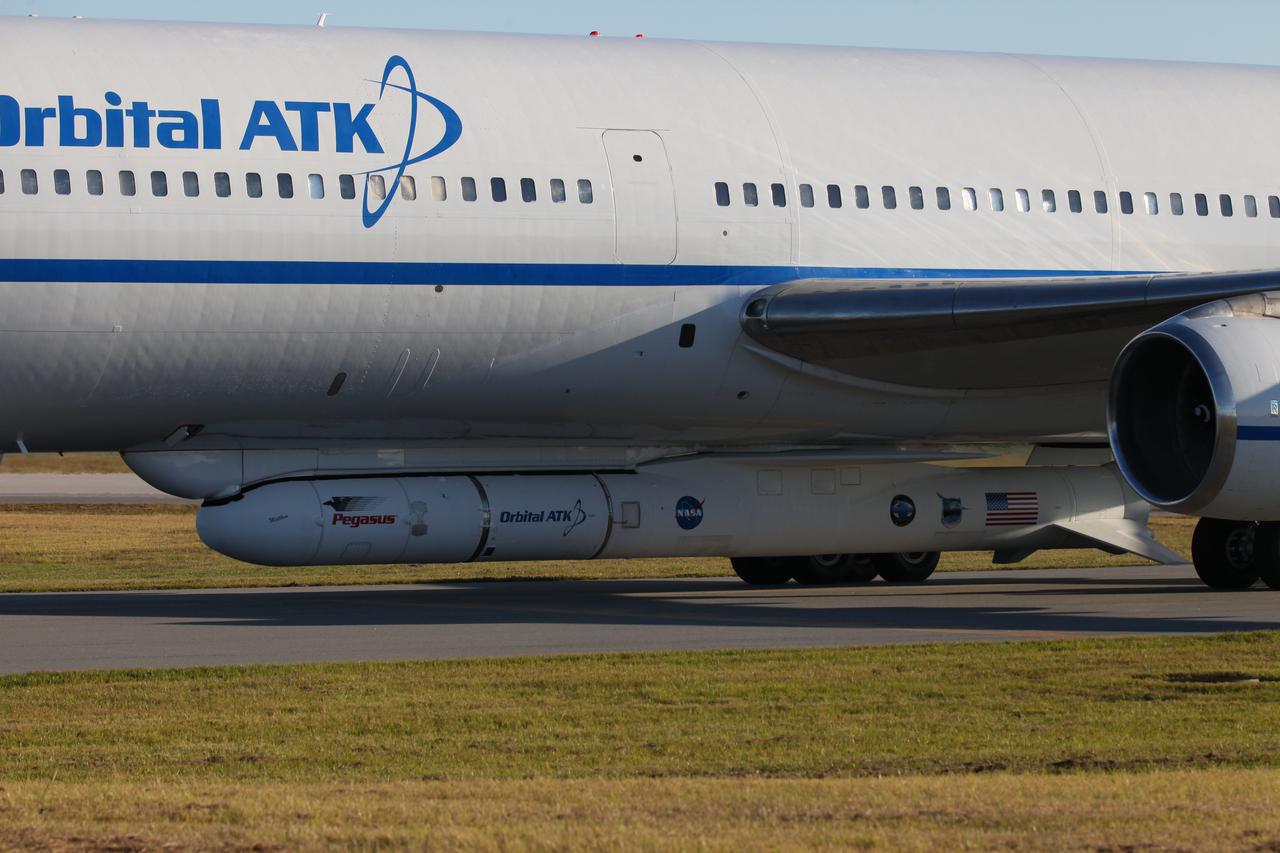
The Orbital ATK L-1011 Stargazer aircraft has arrived at the Skid Strip at Cape Canaveral Air Force Station in Florida. Attached beneath the Stargazer is the Orbital ATK Pegasus XL with NASA's Cyclone Global Navigation Satellite System (CYGNSS) on board. CYGNSS was processed and prepared for its mission at Vandenberg Air Force Base in California. CYGNSS is scheduled for its airborne launch aboard the Pegasus XL rocket from the Skid Strip on Dec. 12. CYGNSS will make frequent and accurate measurements of ocean surface winds throughout the life cycle of tropical storms and hurricanes. The data that CYGNSS provides will enable scientists to probe key air-sea interaction processes that take place near the core of storms, which are rapidly changing and play a critical role in the beginning and intensification of hurricanes.
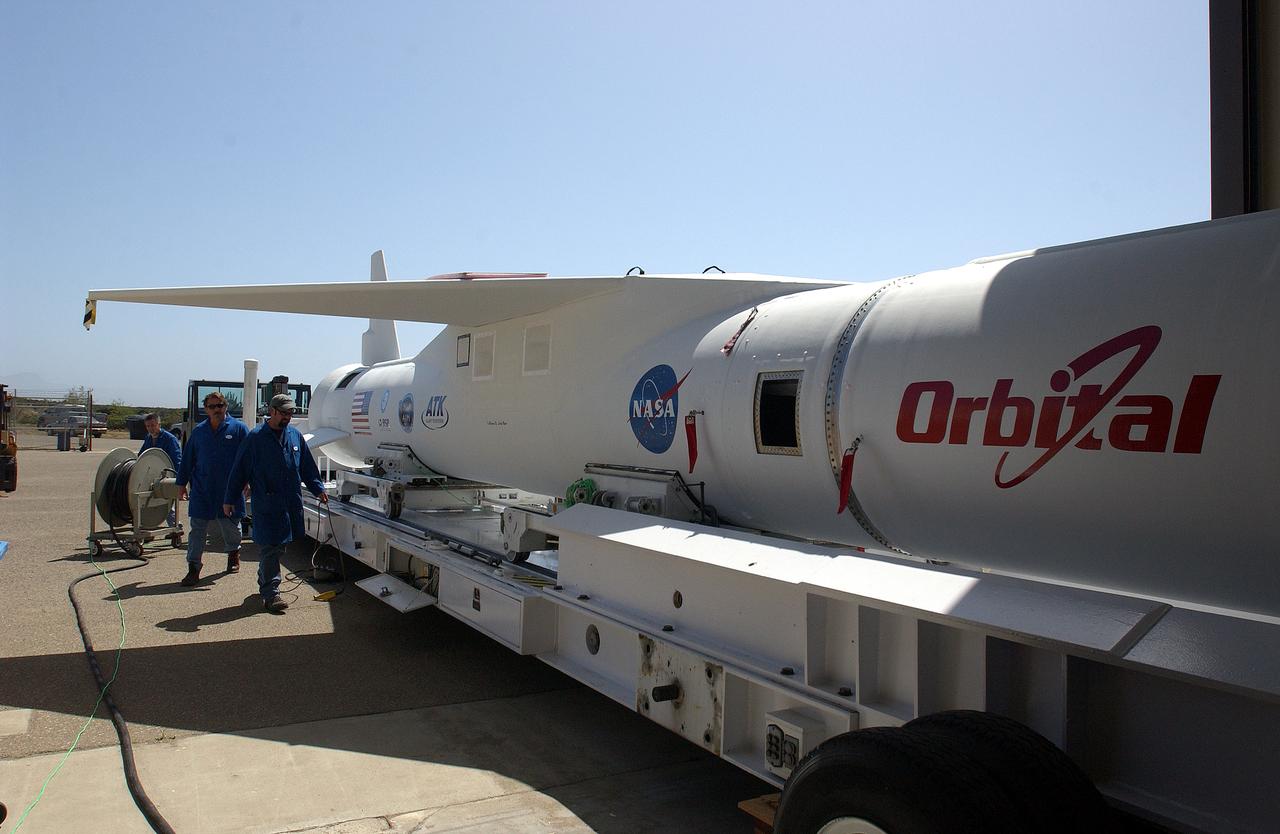
The mated Pegasus XL rocket - AIM spacecraft is secured onto a transporter at Vandenberg Air Force Base in California. The rocket will be transferred to a waiting Orbital Sciences Stargazer L-1011 aircraft for launch. AIM, which stands for Aeronomy of Ice in the Mesosphere, is being prepared for integrated testing and a flight simulation. The AIM spacecraft will fly three instruments designed to study polar mesospheric clouds located at the edge of space, 50 miles above the Earth's surface in the coldest part of the planet's atmosphere. The mission's primary goal is to explain why these clouds form and what has caused them to become brighter and more numerous and appear at lower latitudes in recent years. AIM's results will provide the basis for the study of long-term variability in the mesospheric climate and its relationship to global climate change. Launch is scheduled for April 25.
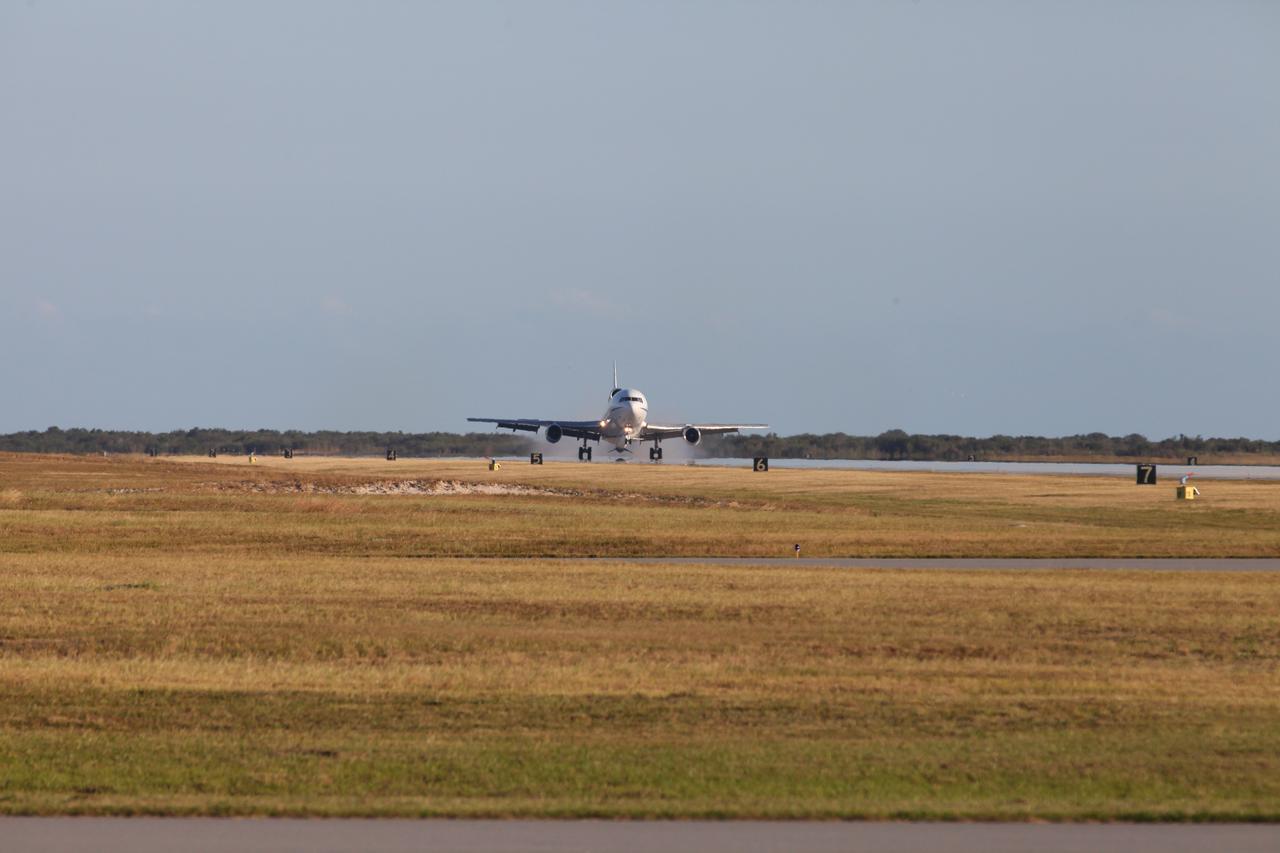
The Orbital ATK L-1011 Stargazer aircraft touches down at 3:57 p.m. EST at the Skid Strip at Cape Canaveral Air Force Station in Florida. Attached beneath the Stargazer is the Orbital ATK Pegasus XL with NASA's Cyclone Global Navigation Satellite System (CYGNSS) on board. CYGNSS was processed and prepared for its mission at Vandenberg Air Force Base in California. CYGNSS is scheduled for its airborne launch aboard the Pegasus XL rocket from the Skid Strip on Dec. 12. CYGNSS will make frequent and accurate measurements of ocean surface winds throughout the life cycle of tropical storms and hurricanes. The data that CYGNSS provides will enable scientists to probe key air-sea interaction processes that take place near the core of storms, which are rapidly changing and play a critical role in the beginning and intensification of hurricanes.
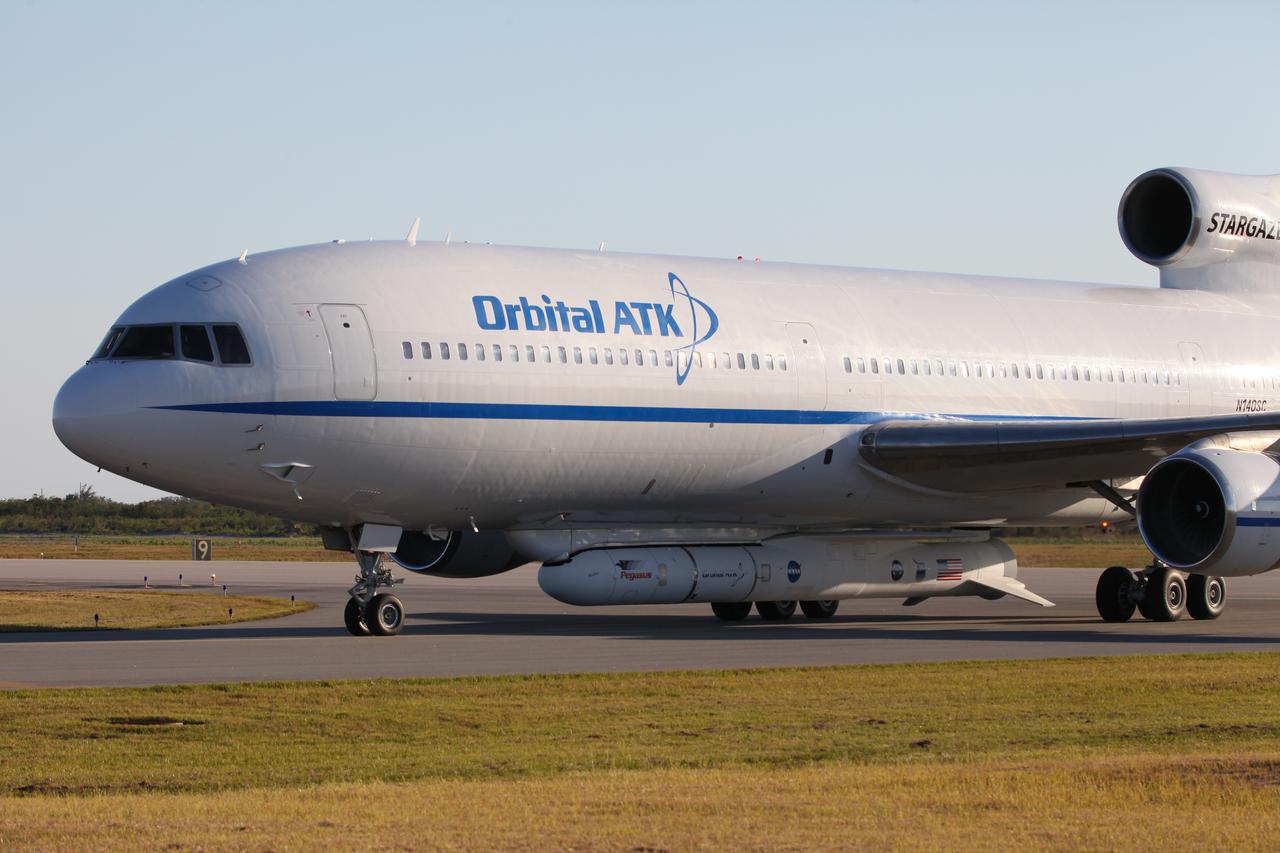
The Orbital ATK L-1011 Stargazer aircraft has arrived at the Skid Strip at Cape Canaveral Air Force Station in Florida. Attached beneath the Stargazer is the Orbital ATK Pegasus XL with NASA's Cyclone Global Navigation Satellite System (CYGNSS) on board. CYGNSS was processed and prepared for its mission at Vandenberg Air Force Base in California. CYGNSS is scheduled for its airborne launch aboard the Pegasus XL rocket from the Skid Strip on Dec. 12. CYGNSS will make frequent and accurate measurements of ocean surface winds throughout the life cycle of tropical storms and hurricanes. The data that CYGNSS provides will enable scientists to probe key air-sea interaction processes that take place near the core of storms, which are rapidly changing and play a critical role in the beginning and intensification of hurricanes.
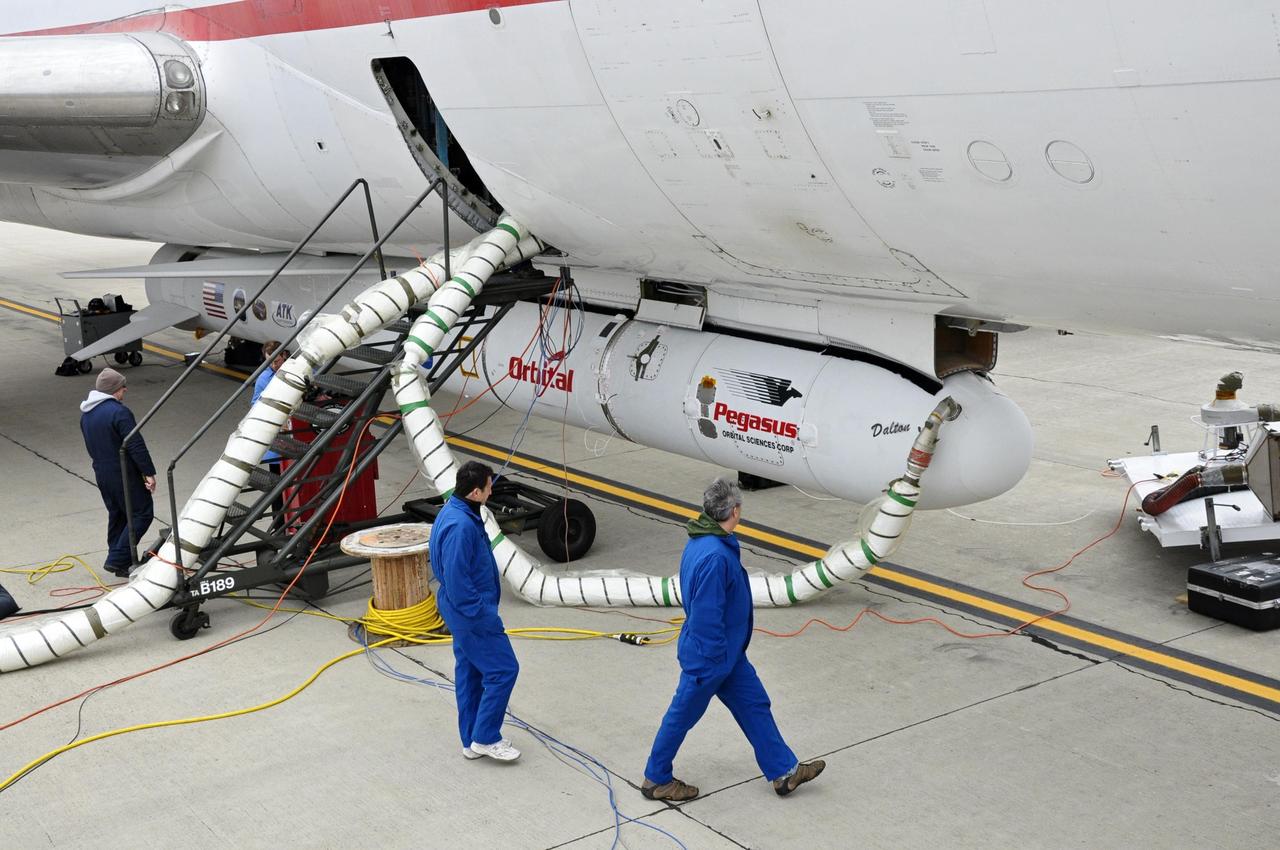
This photo shows the Orbital Sciences Corporation Pegasus XL rocket with NASA NuSTAR spacecraft after attachment to the L-1011 carrier aircraft known as Stargazer.
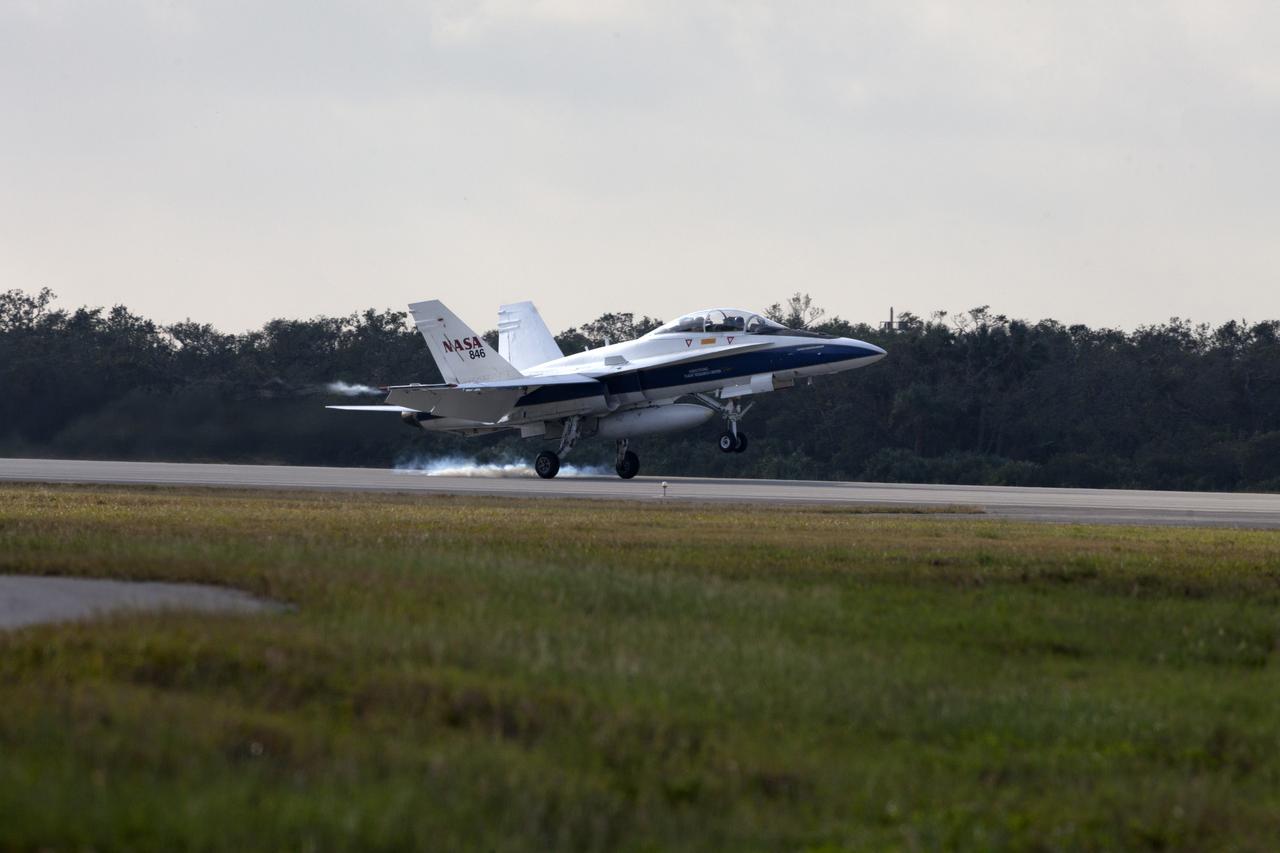
A pathfinder aircraft touches down at the Skid Strip at Cape Canaveral Air Force Station in Florida. The airplane provided photographic and video imagery of the Orbital ATK L-1011 Stargazer aircraft carrying a Pegasus XL Rocket with eight NASA Cyclone Global Navigation Satellite System, or CYGNSS, spacecraft. With the aircraft flying off shore, the Pegasus rocket was released at 8:37 a.m. EST. Five seconds later, the solid propellant engine ignited and boosted the eight hurricane observatories to orbit. The eight CYGNSS satellites will make frequent and accurate measurements of ocean surface winds throughout the life cycle of tropical storms and hurricanes.
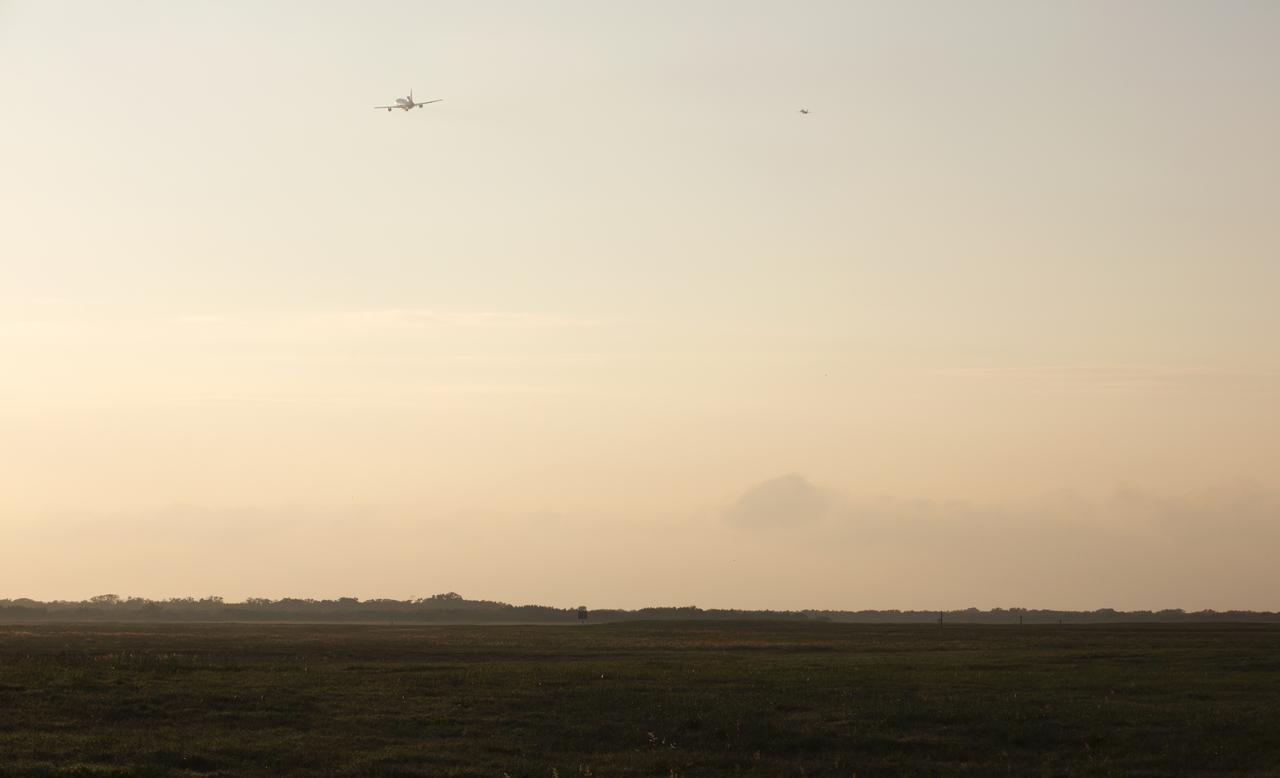
An Orbital ATK L-1011 Stargazer aircraft carrying a Pegasus XL Rocket with eight NASA Cyclone Global Navigation Satellite System, or CYGNSS, soars high after takeoff from the Skid Strip at Cape Canaveral Air Force Station, Florida. With the aircraft flying off shore, the Pegasus rocket will be released. Five seconds later, the solid propellant engine will ignite and boost the eight hurricane observatories to orbit. The eight CYGNSS satellites will make frequent and accurate measurements of ocean surface winds throughout the life cycle of tropical storms and hurricanes. Release of the Pegasus XL rocket is scheduled for 8:40 a.m. EST.
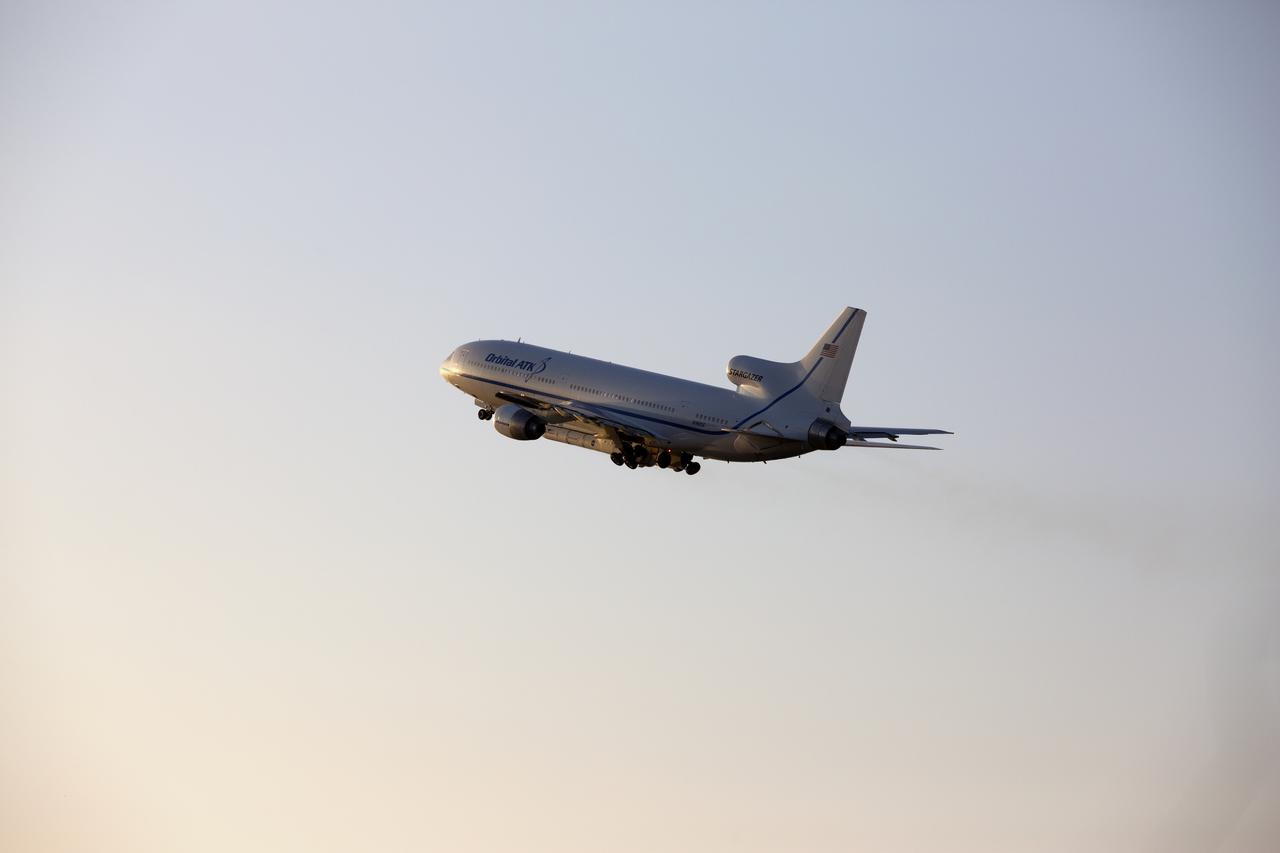
An Orbital ATK L-1011 Stargazer aircraft carrying a Pegasus XL Rocket with eight NASA Cyclone Global Navigation Satellite System, or CYGNSS, soars high after takeoff from the Skid Strip at Cape Canaveral Air Force Station, Florida. With the aircraft flying off shore, the Pegasus rocket will be released. Five seconds later, the solid propellant engine will ignite and boost the eight hurricane observatories to orbit. The eight CYGNSS satellites will make frequent and accurate measurements of ocean surface winds throughout the life cycle of tropical storms and hurricanes. Release of the Pegasus XL rocket is scheduled for 8:40 a.m. EST.
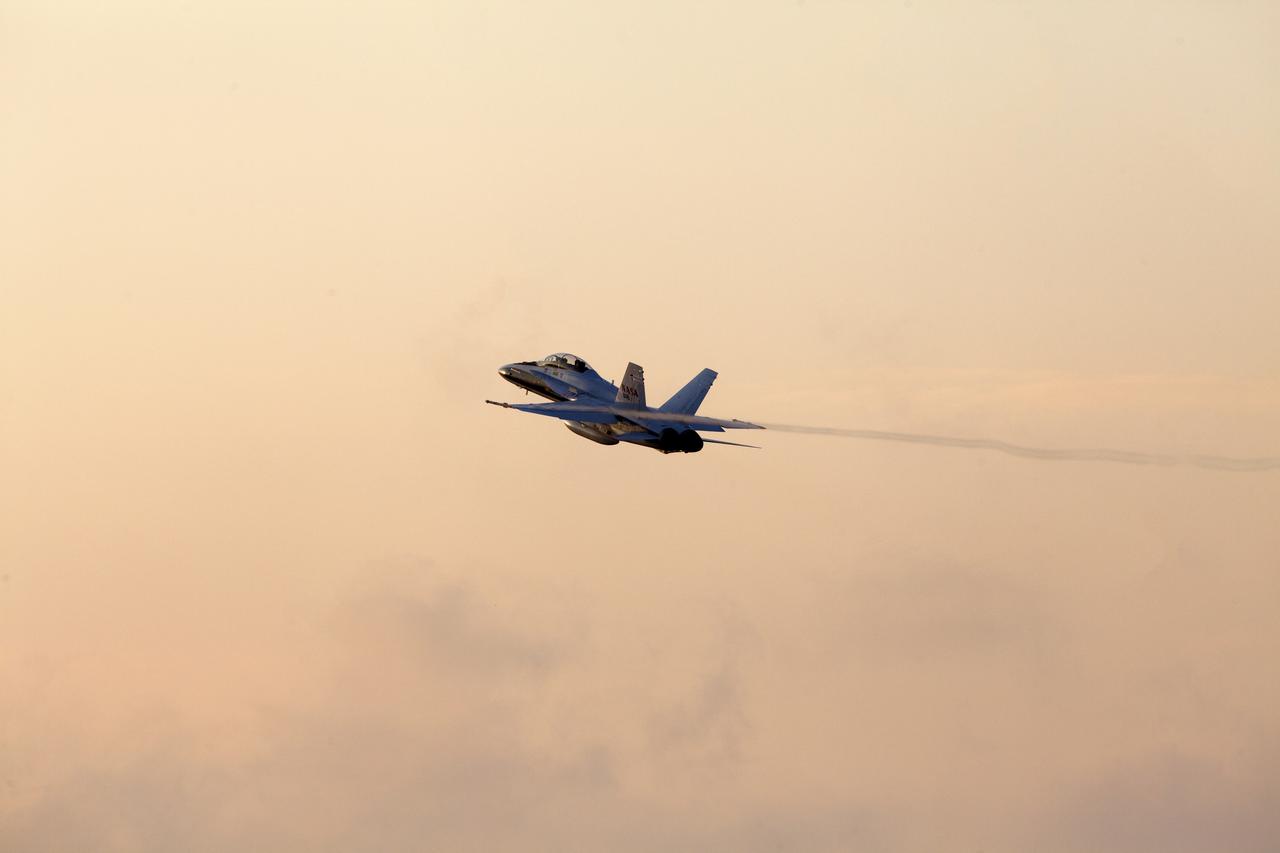
A pathfinder aircraft soars high after takeoff from the Skid Strip at Cape Canaveral Air Force Station in Florida. The airplane will provide photographic and video imagery of the Orbital ATK L-1011 Stargazer aircraft carrying a Pegasus XL Rocket with eight NASA Cyclone Global Navigation Satellite System, or CYGNSS, spacecraft. With the aircraft flying off shore, the Pegasus rocket will be released. Five seconds later, the solid propellant engine will ignite and boost the eight hurricane observatories to orbit. The eight CYGNSS satellites will make frequent and accurate measurements of ocean surface winds throughout the life cycle of tropical storms and hurricanes.
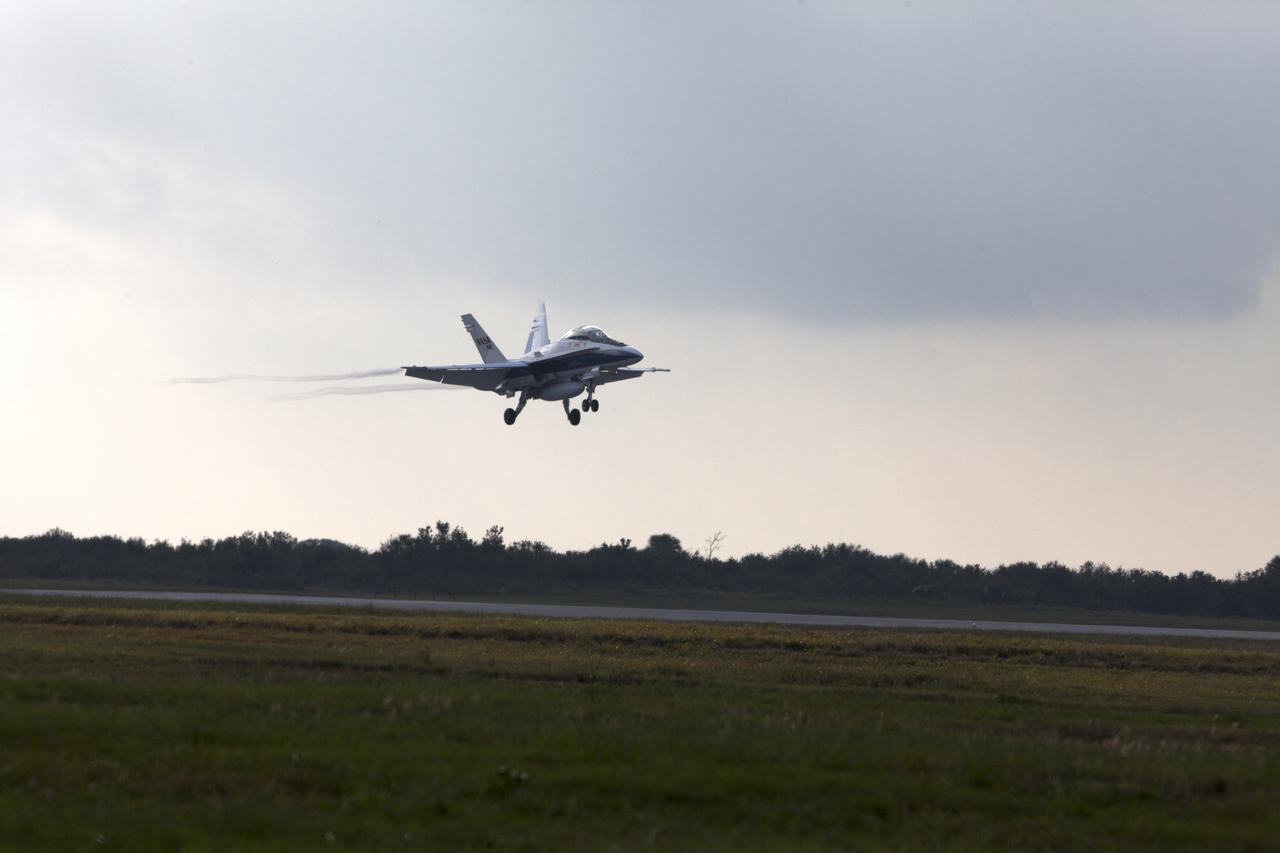
A pathfinder aircraft descends for touchdown at the Skid Strip at Cape Canaveral Air Force Station in Florida. The airplane provided photographic and video imagery of the Orbital ATK L-1011 Stargazer aircraft carrying a Pegasus XL Rocket with eight NASA Cyclone Global Navigation Satellite System, or CYGNSS, spacecraft. With the aircraft flying off shore, the Pegasus rocket was released at 8:37 a.m. EST. Five seconds later, the solid propellant engine ignited and boosted the eight hurricane observatories to orbit. The eight CYGNSS satellites will make frequent and accurate measurements of ocean surface winds throughout the life cycle of tropical storms and hurricanes.
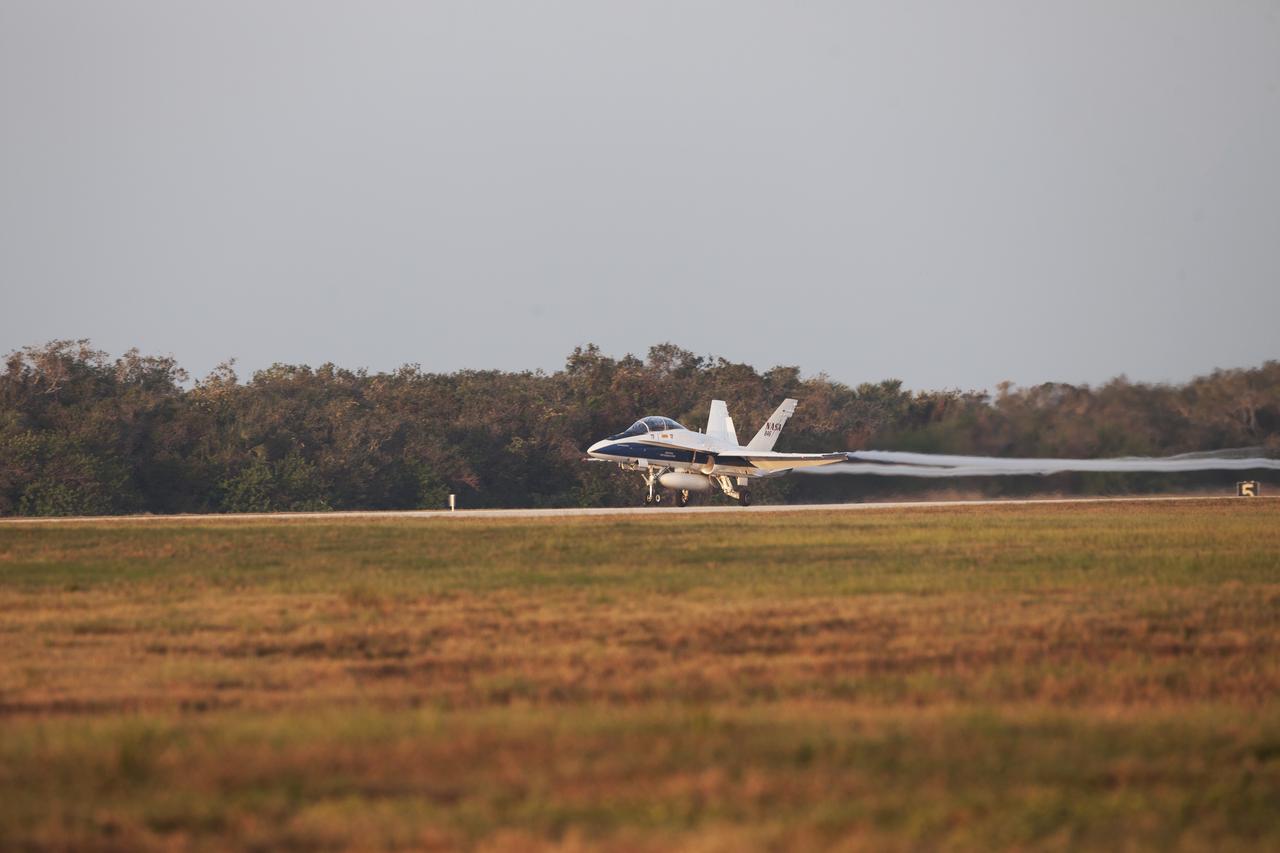
A pathfinder aircraft begins its takeoff from the Skid Strip at Cape Canaveral Air Force Station in Florida. The airplane will provide photographic and video imagery of the Orbital ATK L-1011 Stargazer aircraft carrying a Pegasus XL Rocket with eight NASA Cyclone Global Navigation Satellite System, or CYGNSS, spacecraft. With the aircraft flying off shore, the Pegasus rocket will be released. Five seconds later, the solid propellant engine will ignite and boost the eight hurricane observatories to orbit. The eight CYGNSS satellites will make frequent and accurate measurements of ocean surface winds throughout the life cycle of tropical storms and hurricanes.
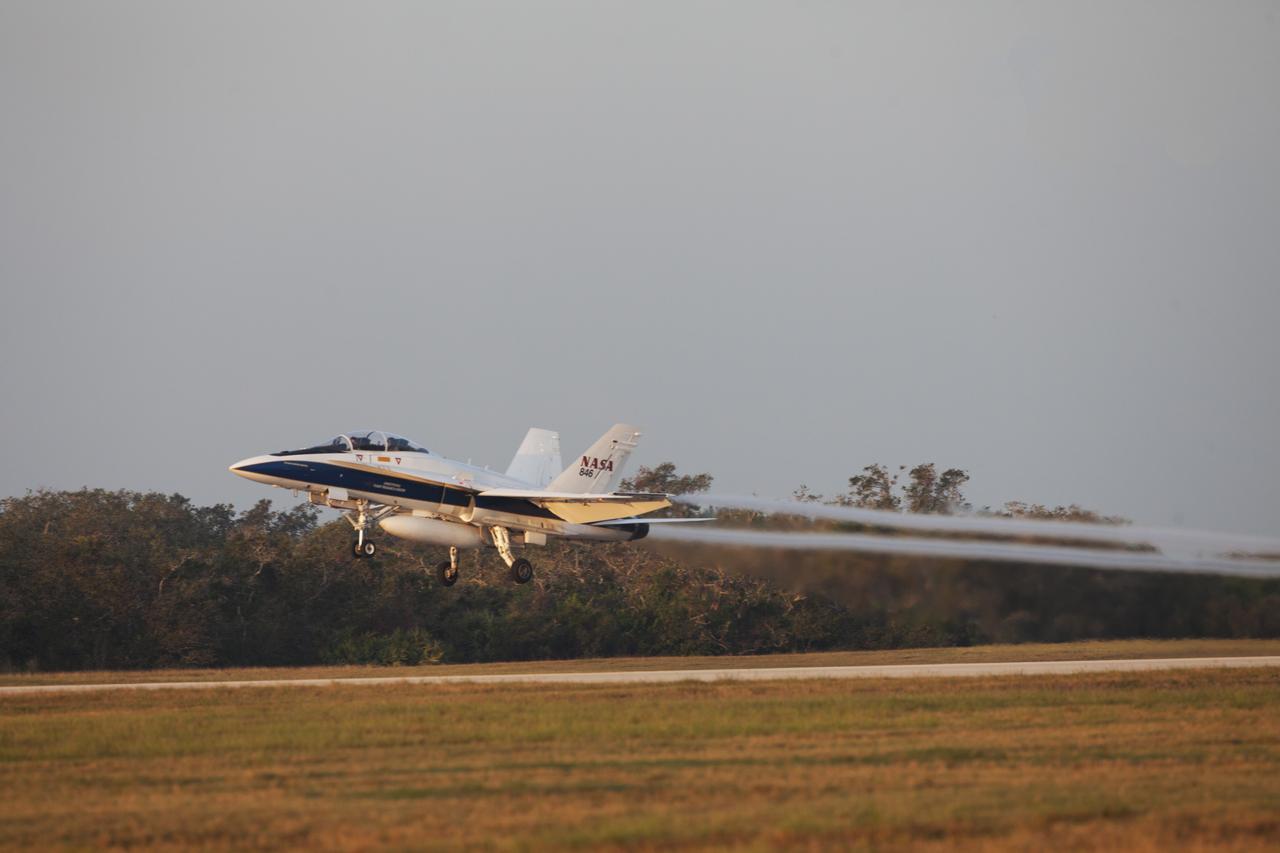
A pathfinder aircraft takes off from the Skid Strip at Cape Canaveral Air Force Station in Florida. The airplane will provide photographic and video imagery of the Orbital ATK L-1011 Stargazer aircraft carrying a Pegasus XL Rocket with eight NASA Cyclone Global Navigation Satellite System, or CYGNSS, spacecraft. With the aircraft flying off shore, the Pegasus rocket will be released. Five seconds later, the solid propellant engine will ignite and boost the eight hurricane observatories to orbit. The eight CYGNSS satellites will make frequent and accurate measurements of ocean surface winds throughout the life cycle of tropical storms and hurricanes.
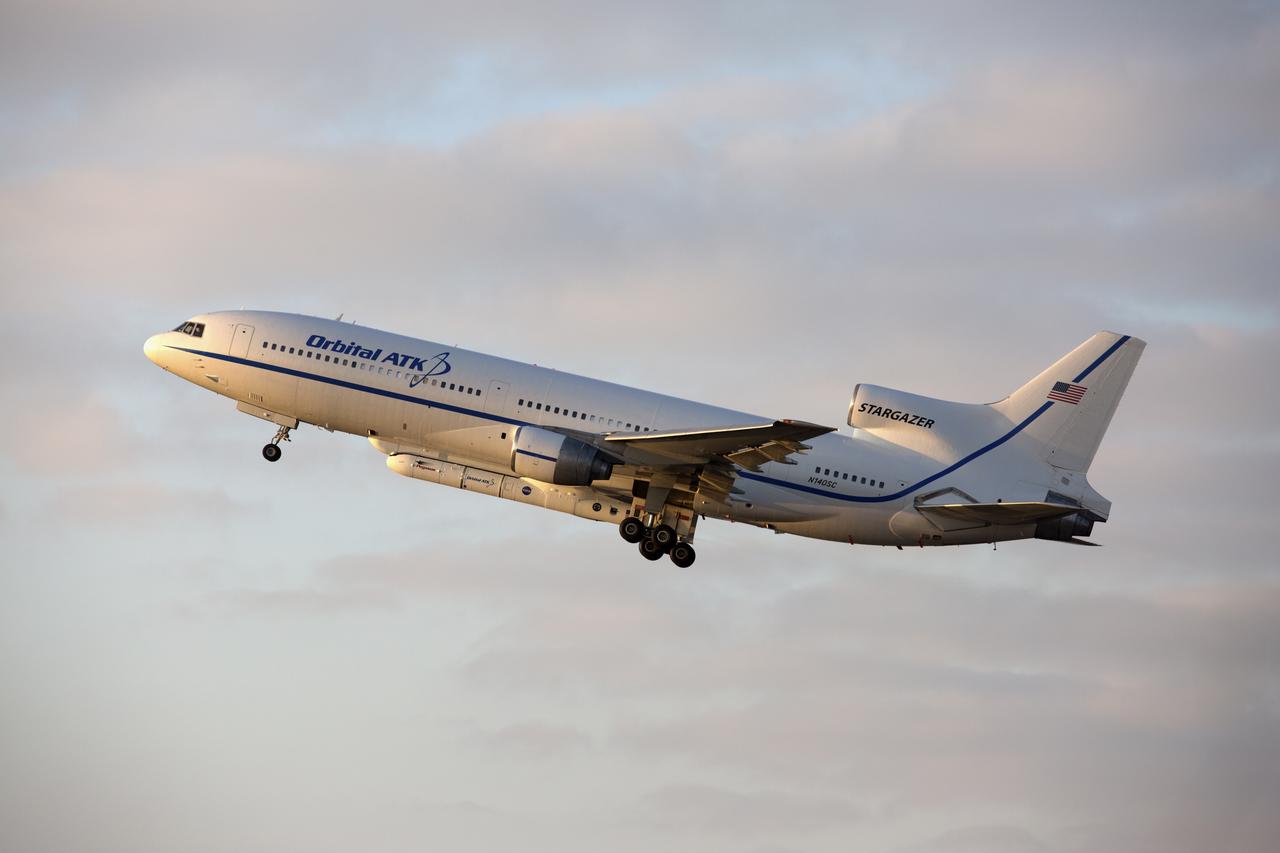
An Orbital ATK L-1011 Stargazer aircraft carrying a Pegasus XL Rocket with eight NASA Cyclone Global Navigation Satellite System, or CYGNSS, soars high after takeoff from the Skid Strip at Cape Canaveral Air Force Station, Florida. With the aircraft flying off shore, the Pegasus rocket will be released. Five seconds later, the solid propellant engine will ignite and boost the eight hurricane observatories to orbit. The eight CYGNSS satellites will make frequent and accurate measurements of ocean surface winds throughout the life cycle of tropical storms and hurricanes. Release of the Pegasus XL rocket is scheduled for 8:40 a.m. EST.
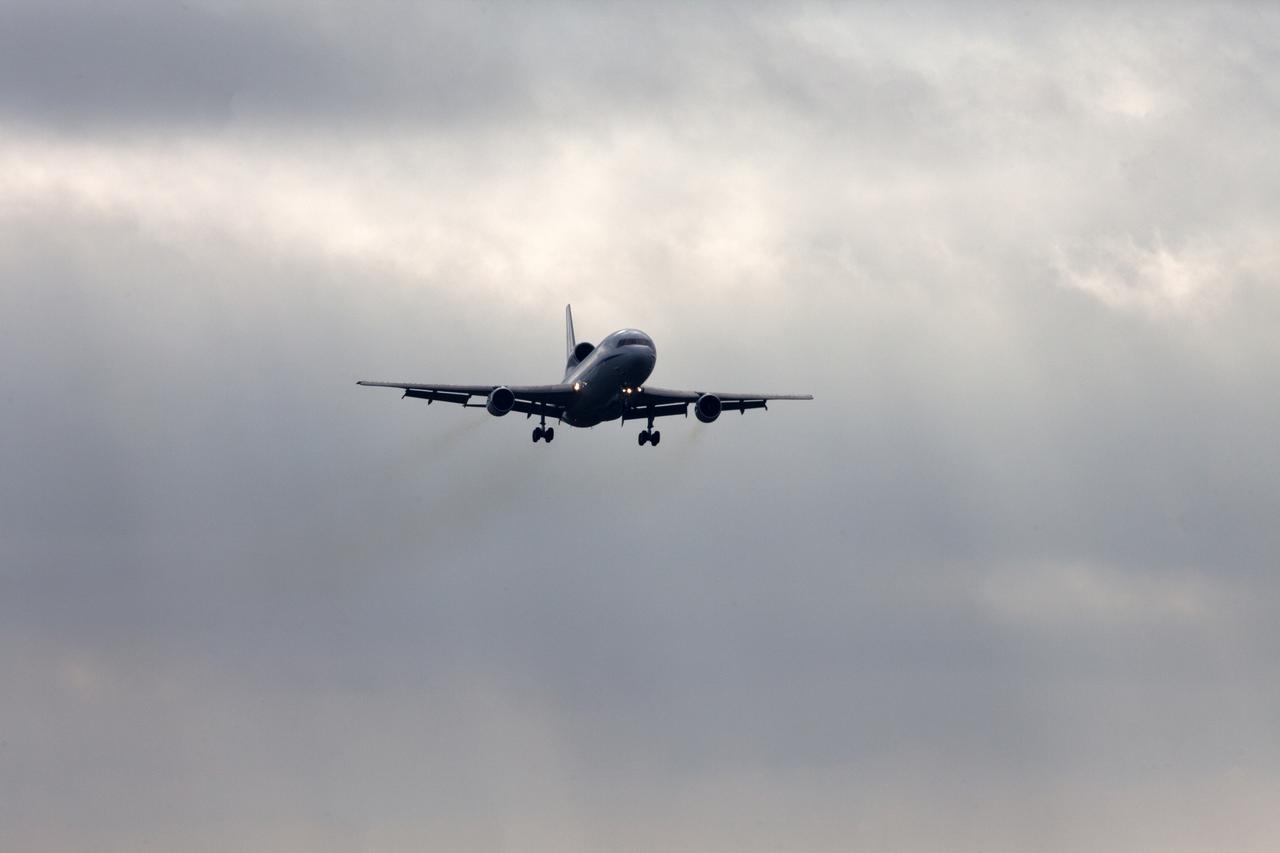
An Orbital ATK L-1011 Stargazer aircraft descends toward the Skid Strip at Cape Canaveral Air Force Station in Florida. The aircraft carried a Pegasus XL Rocket with eight NASA Cyclone Global Navigation Satellite System, or CYGNSS, for launch. With the aircraft flying off shore, the Pegasus rocket was released. Five seconds later, the solid propellant engine ignited and boosted the eight hurricane observatories to orbit. The eight CYGNSS satellites will make frequent and accurate measurements of ocean surface winds throughout the life cycle of tropical storms and hurricanes. Release of the Pegasus XL rocket occurred at 8:37 a.m. EST.
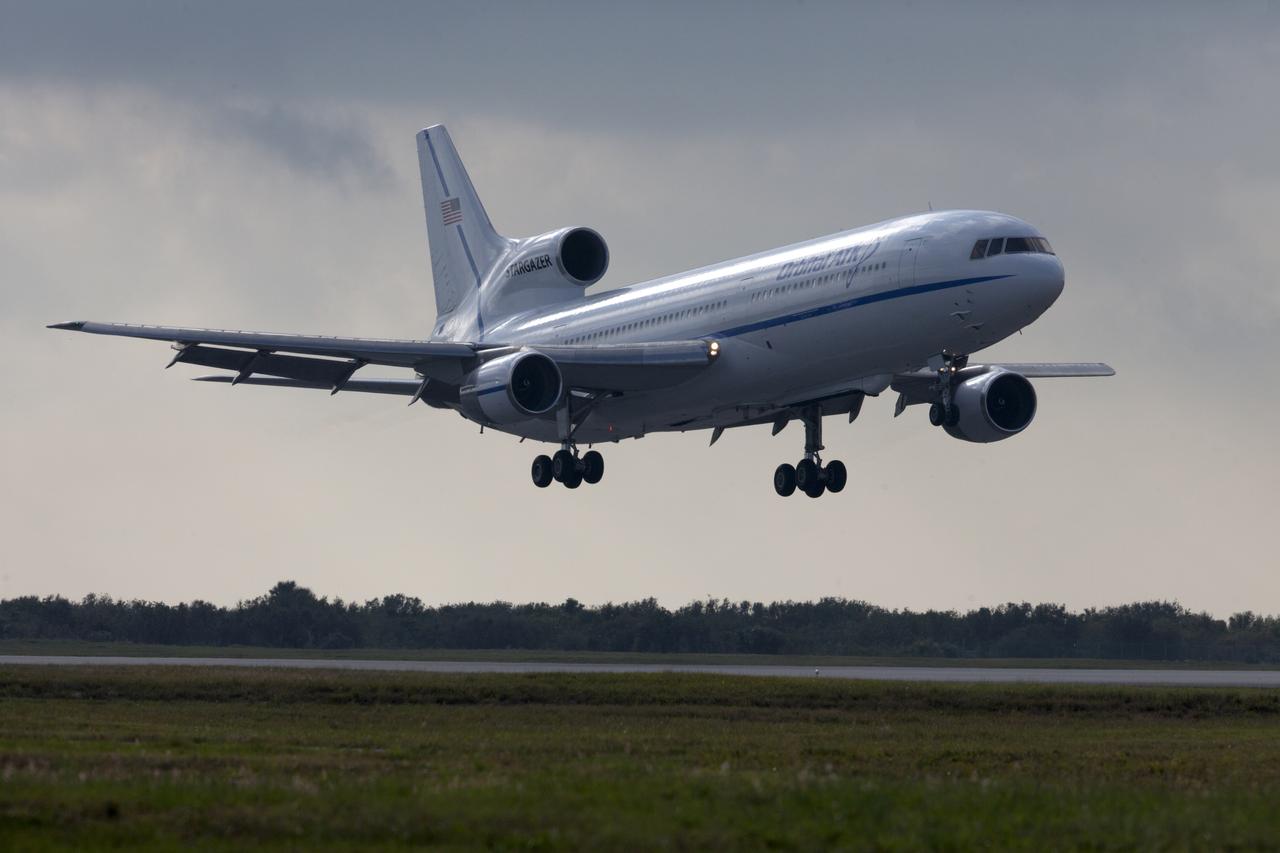
An Orbital ATK L-1011 Stargazer aircraft descends toward the Skid Strip at Cape Canaveral Air Force Station in Florida. The aircraft carried a Pegasus XL Rocket with eight NASA Cyclone Global Navigation Satellite System, or CYGNSS, for launch. With the aircraft flying off shore, the Pegasus rocket was released. Five seconds later, the solid propellant engine ignited and boosted the eight hurricane observatories to orbit. The eight CYGNSS satellites will make frequent and accurate measurements of ocean surface winds throughout the life cycle of tropical storms and hurricanes. Release of the Pegasus XL rocket occurred at 8:37 a.m. EST.
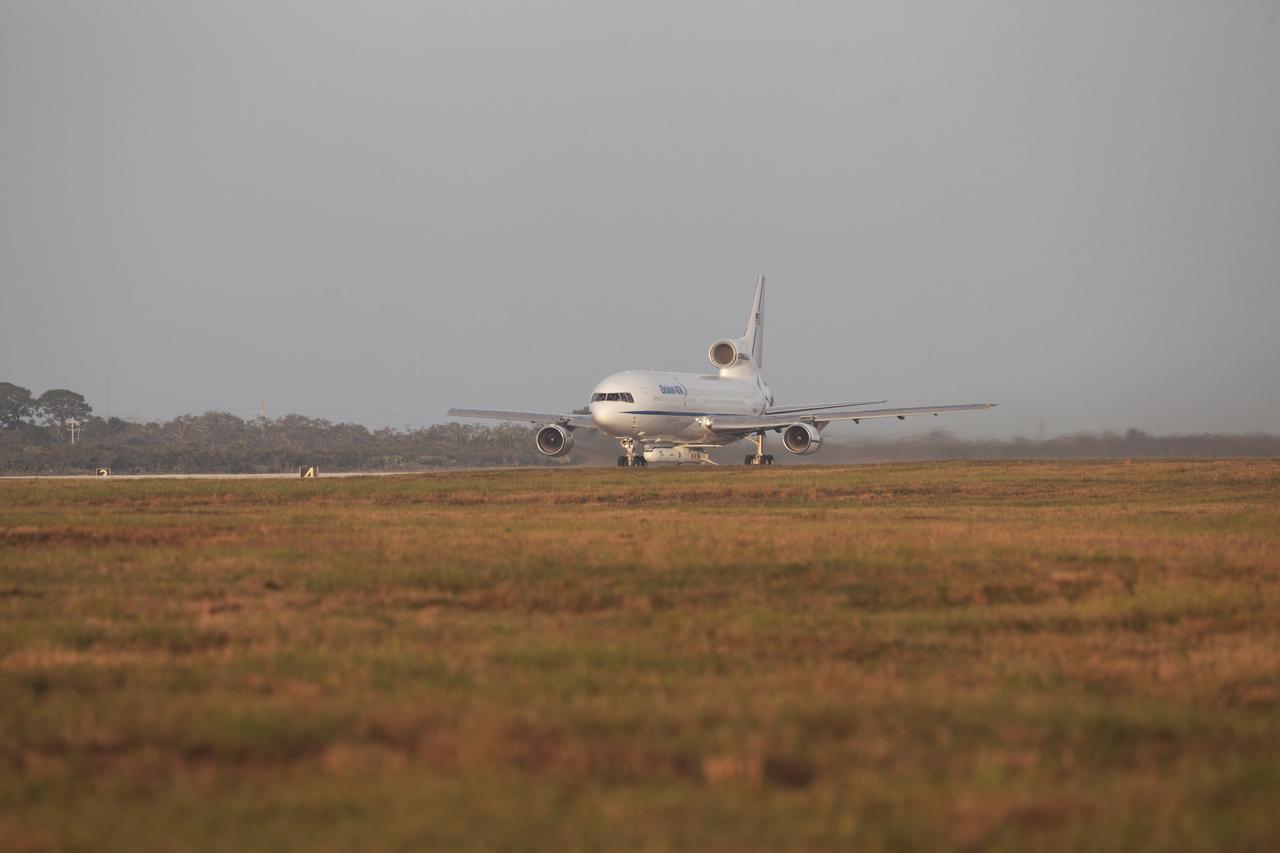
An Orbital ATK L-1011 Stargazer aircraft carrying a Pegasus XL Rocket with eight NASA Cyclone Global Navigation Satellite System, or CYGNSS, spacecraft is ready for takeoff from the Skid Strip at Cape Canaveral Air Force Station, Florida. With the aircraft flying off shore, the Pegasus rocket will be released. Five seconds later, the solid propellant engine will ignite and boost the eight hurricane observatories to orbit. The eight CYGNSS satellites will make frequent and accurate measurements of ocean surface winds throughout the life cycle of tropical storms and hurricanes.
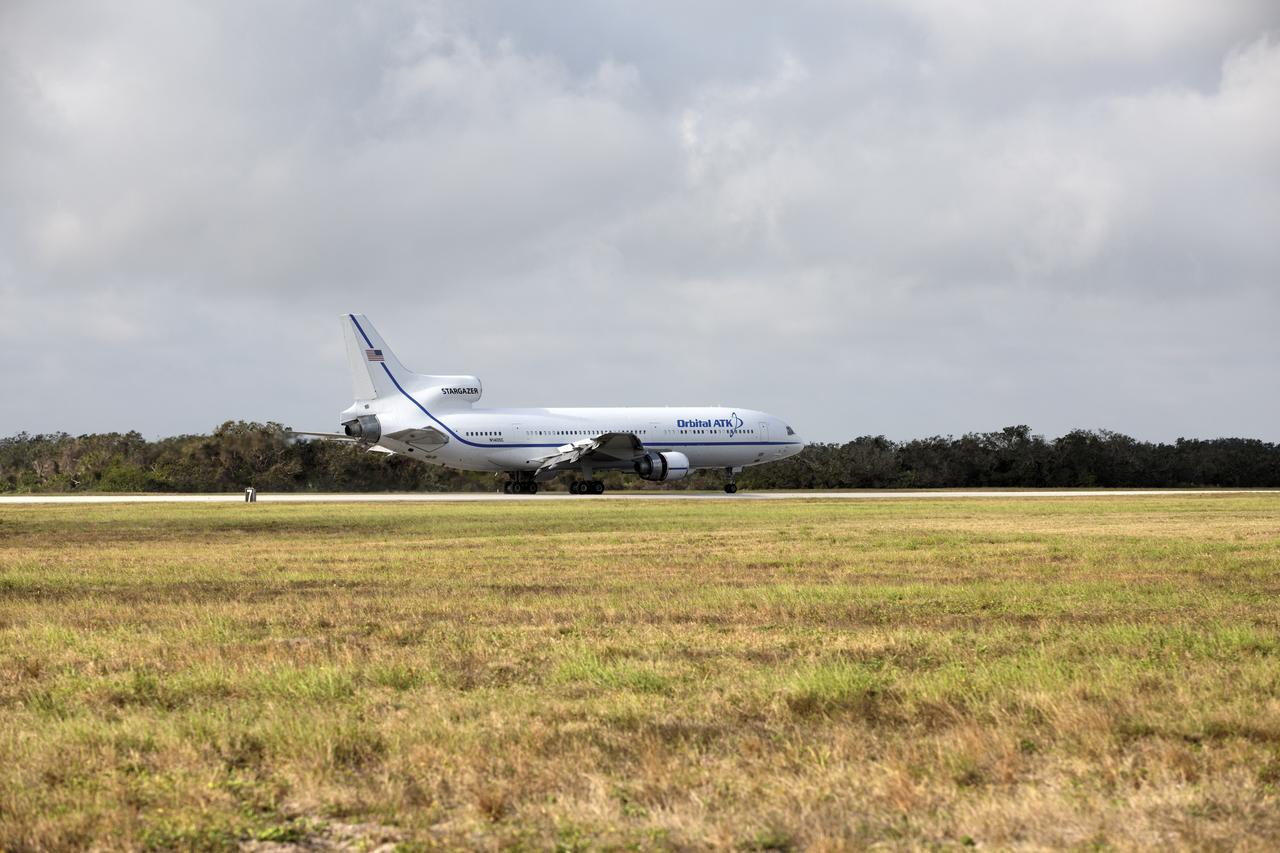
An Orbital ATK L-1011 Stargazer touches down at the Skid Strip at Cape Canaveral Air Force Station in Florida. The aircraft carried a Pegasus XL Rocket with eight NASA Cyclone Global Navigation Satellite System, or CYGNSS, for launch. With the aircraft flying off shore, the Pegasus rocket was released at 8:37 a.m. EST. Five seconds later, the solid propellant engine ignited and boosted the eight hurricane observatories to orbit. The eight CYGNSS satellites will make frequent and accurate measurements of ocean surface winds throughout the life cycle of tropical storms and hurricanes.
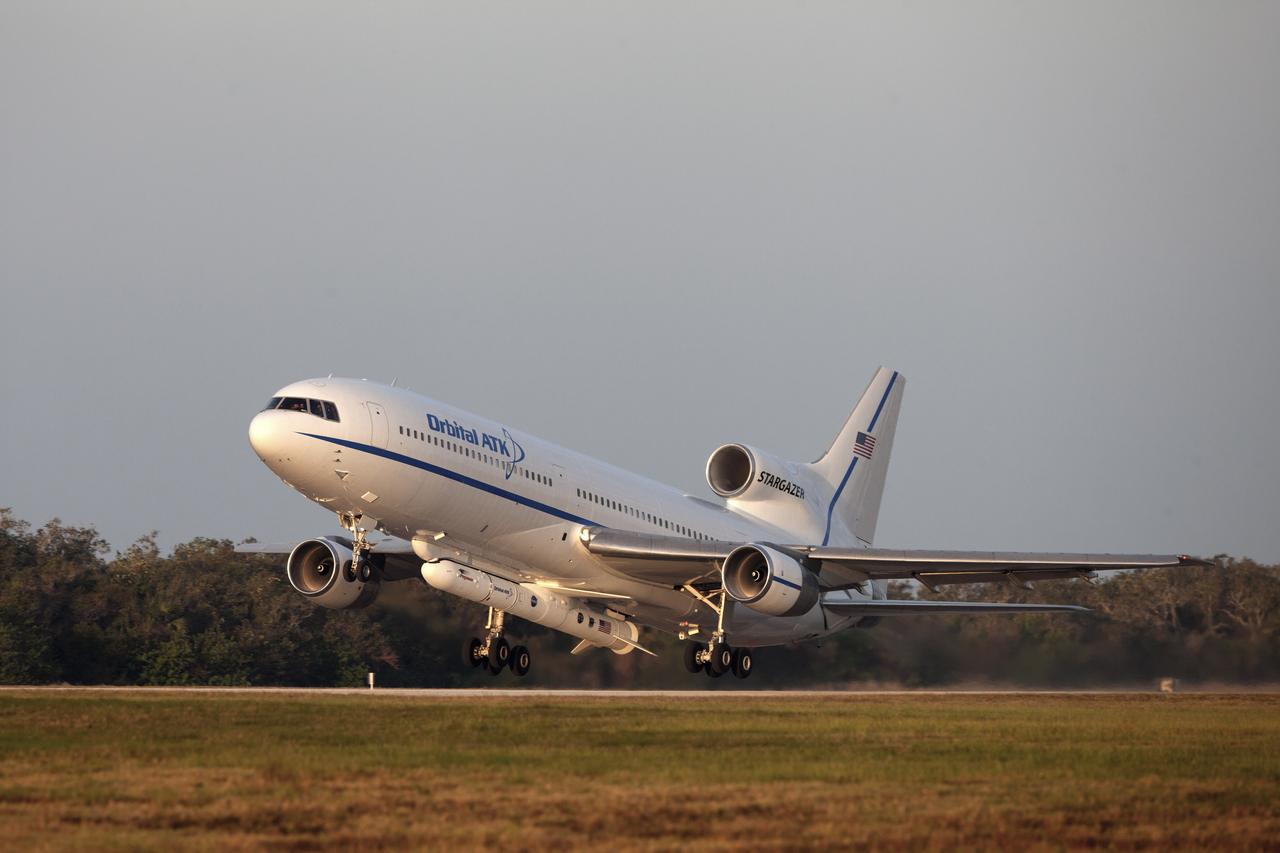
An Orbital ATK L-1011 Stargazer aircraft carrying a Pegasus XL Rocket with eight NASA Cyclone Global Navigation Satellite System, or CYGNSS, spacecraft takes off from the Skid Strip at Cape Canaveral Air Force Station, Florida. With the aircraft flying off shore, the Pegasus rocket will be released. Five seconds later, the solid propellant engine will ignite and boost the eight hurricane observatories to orbit. The eight CYGNSS satellites will make frequent and accurate measurements of ocean surface winds throughout the life cycle of tropical storms and hurricanes.
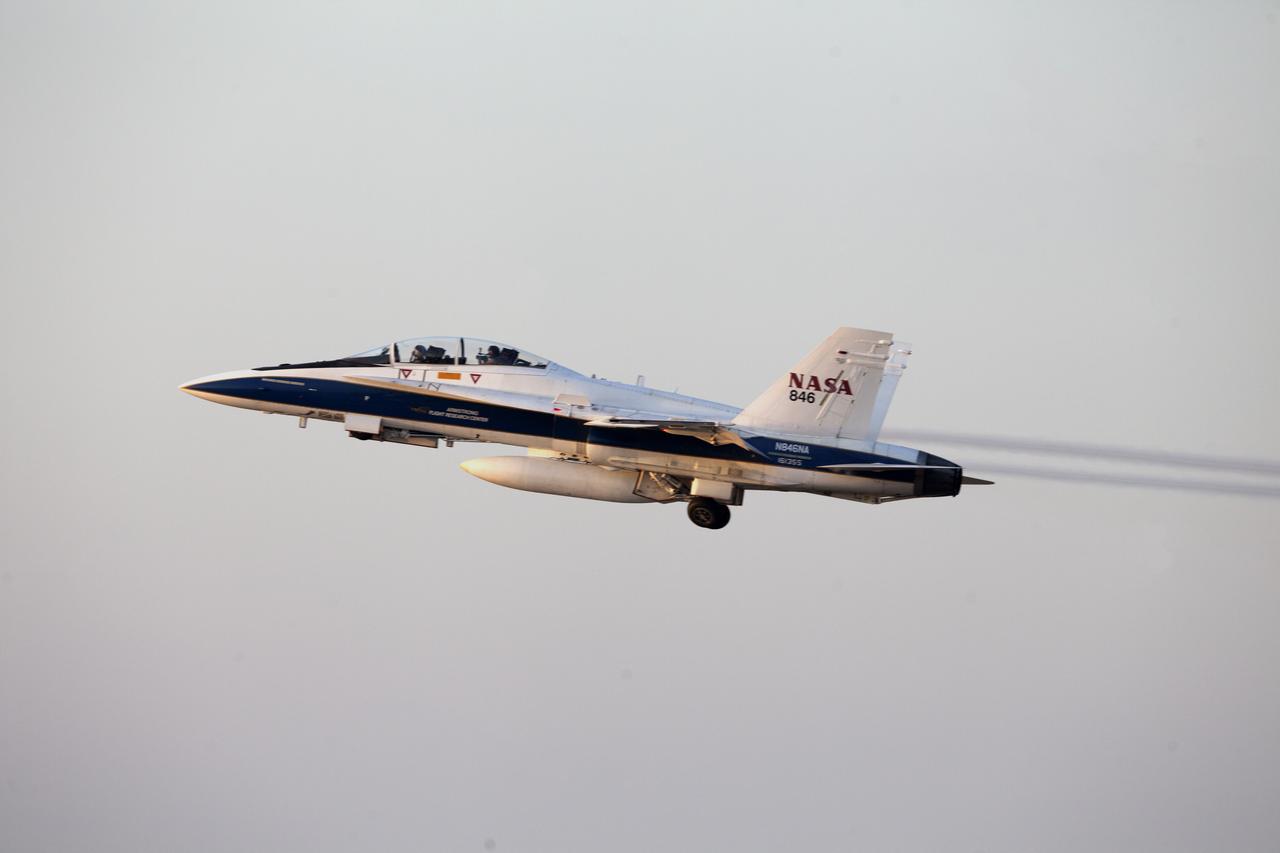
A pathfinder aircraft gains altitude after takeoff from the Skid Strip at Cape Canaveral Air Force Station in Florida. The airplane will provide photographic and video imagery of the Orbital ATK L-1011 Stargazer aircraft carrying a Pegasus XL Rocket with eight NASA Cyclone Global Navigation Satellite System, or CYGNSS, spacecraft. With the aircraft flying off shore, the Pegasus rocket will be released. Five seconds later, the solid propellant engine will ignite and boost the eight hurricane observatories to orbit. The eight CYGNSS satellites will make frequent and accurate measurements of ocean surface winds throughout the life cycle of tropical storms and hurricanes.
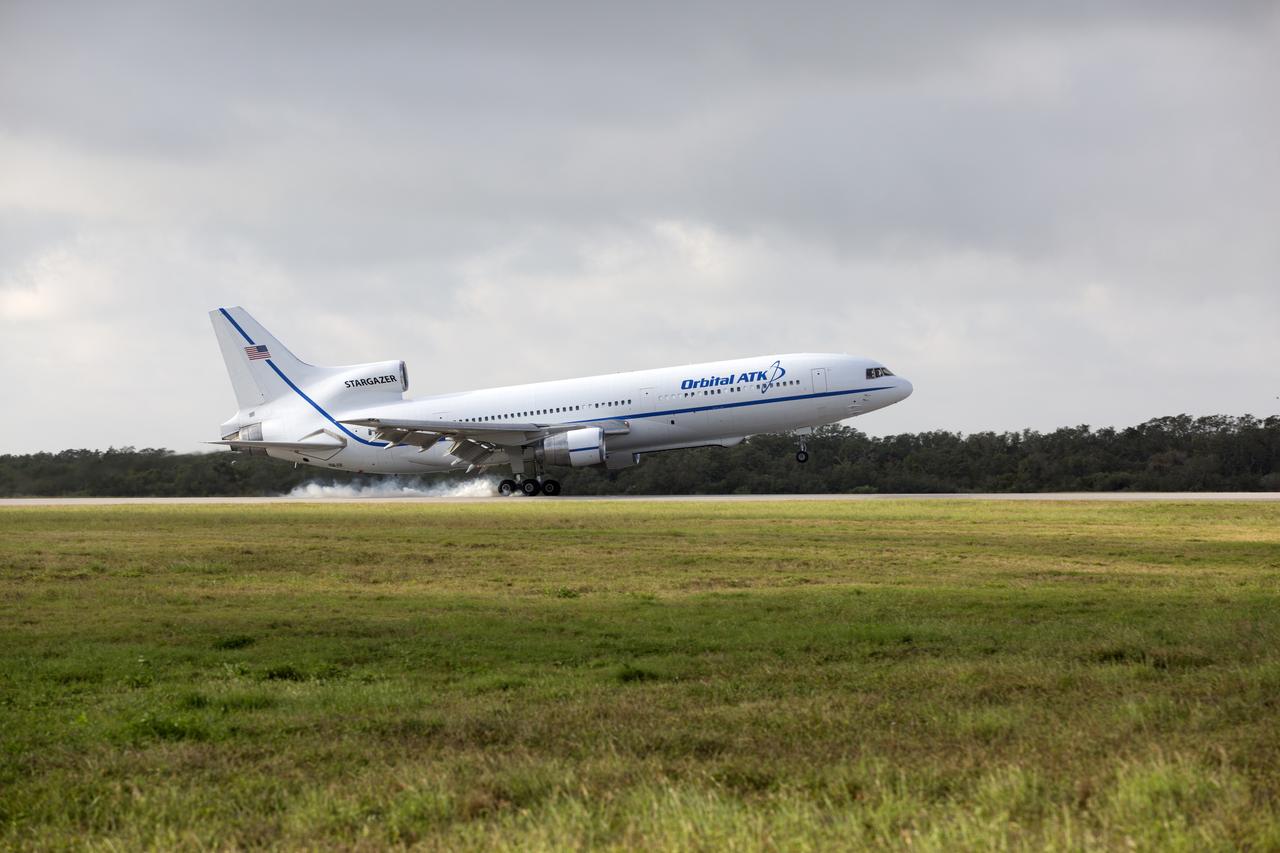
An Orbital ATK L-1011 Stargazer touches down at the Skid Strip at Cape Canaveral Air Force Station in Florida. The aircraft carried a Pegasus XL Rocket with eight NASA Cyclone Global Navigation Satellite System, or CYGNSS, for launch. With the aircraft flying off shore, the Pegasus rocket was released at 8:37 a.m. EST. Five seconds later, the solid propellant engine ignited and boosted the eight hurricane observatories to orbit. The eight CYGNSS satellites will make frequent and accurate measurements of ocean surface winds throughout the life cycle of tropical storms and hurricanes.
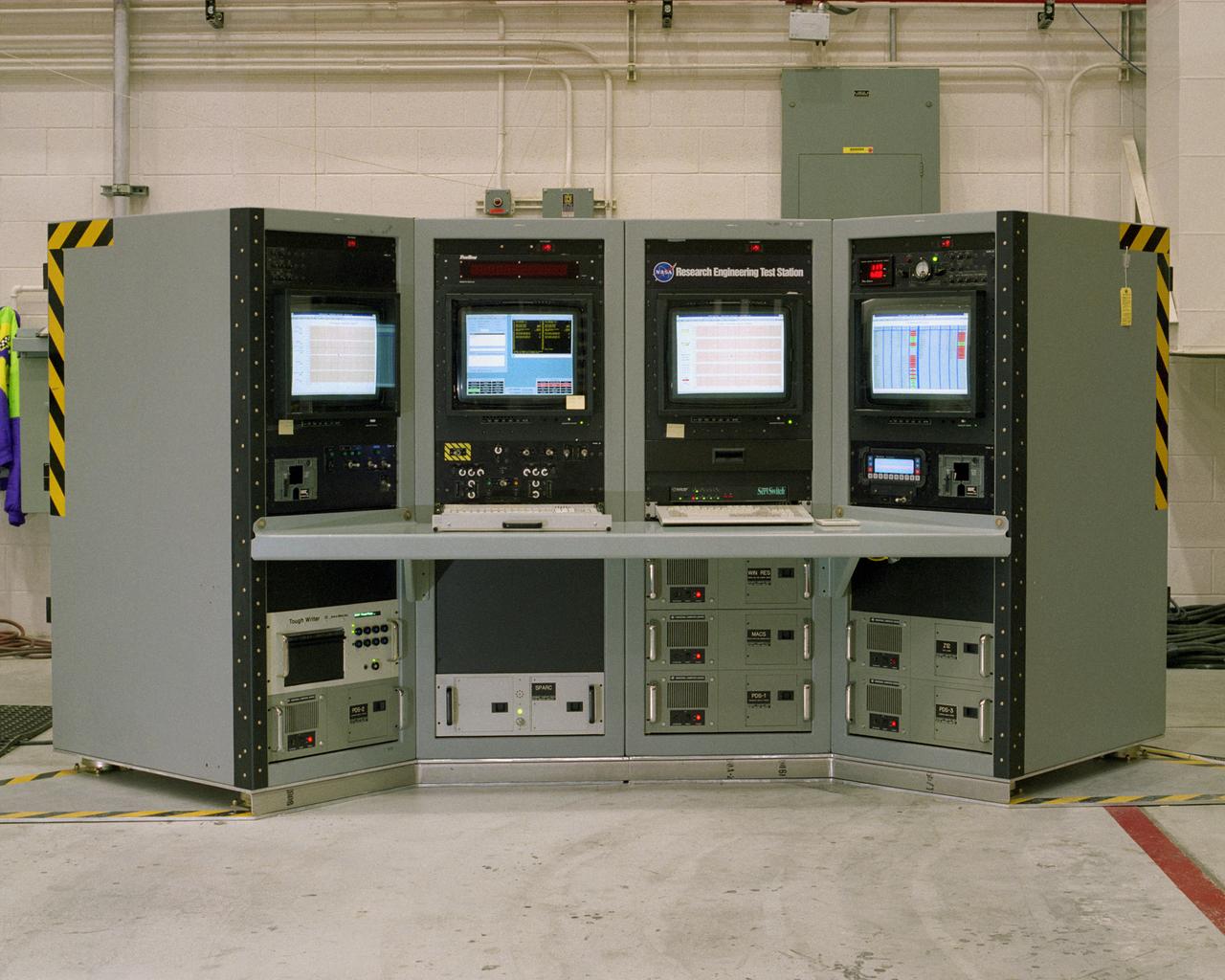
This console and its compliment of computers, monitors and commmunications equipment make up the Research Engineering Test Station, the nerve center for an aerodynamics experiment conducted by NASA's Dryden Flight Research Center, Edwards, California. The equipment was installed on a modified Lockheed L-1011 Tristar jetliner operated by Orbital Sciences Corp., of Dulles, Va., for Dryden's Adaptive Performance Optimization project. The experiment sought to improve the efficiency of long-range jetliners by using small movements of the ailerons to improve the aerodynamics of the wing at cruise conditions.
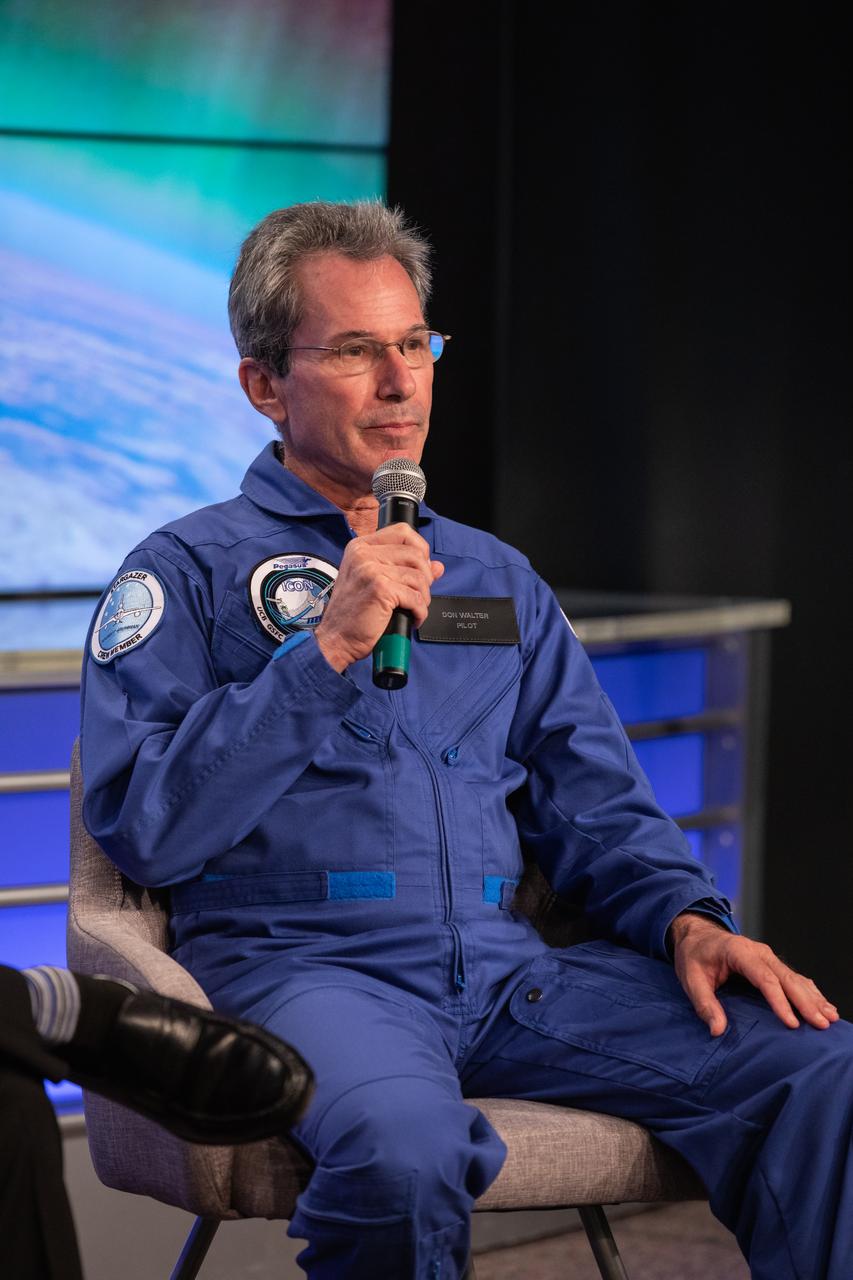
Don Walters, chief pilot of the L-1011 Stargazer aircraft for Northrop Grumman Innovation Systems, speaks to news media during a prelaunch mission briefing for NASA’s Ionospheric Connection Explorer (ICON), on Oct. 8, 2019, in the News Center auditorium at the agency’s Kennedy Space Center in Florida. ICON is targeted to launch from Cape Canaveral Air Force Station in Florida on Oct. 9, 2019, aboard a Northrop Grumman Pegasus XL rocket carried aloft by the company’s Stargazer L-1011 aircraft. The explorer will study the frontier of space - the dynamic zone high in Earth's atmosphere where terrestrial weather from below meets space weather above.
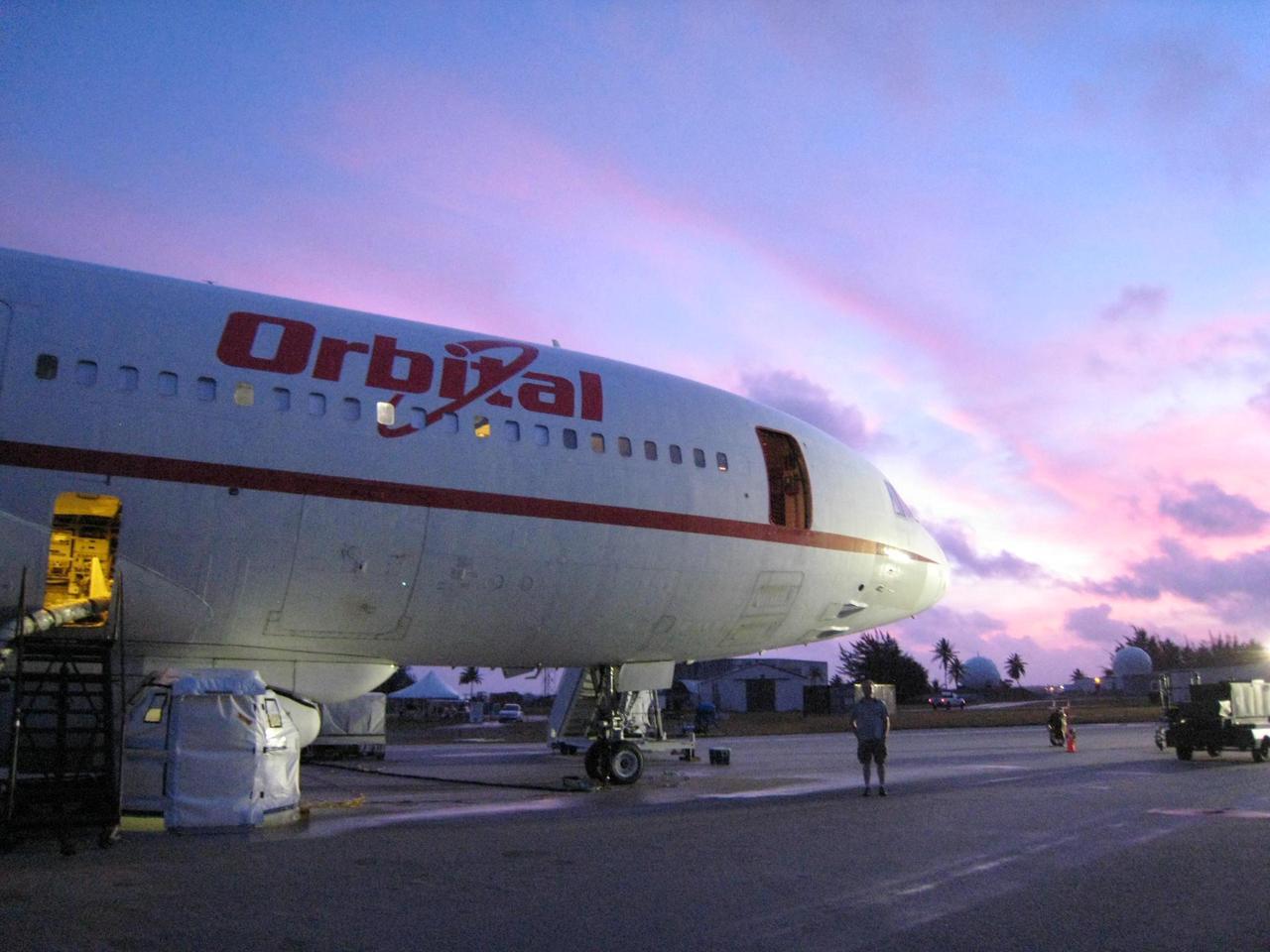
The carrier plane, L-1011 Stargazer, that will give NASA NuSTAR and its rocket a lift to their airborne launch site is seen here at sunrise on Kwajalein Atoll in the Pacific Ocean.
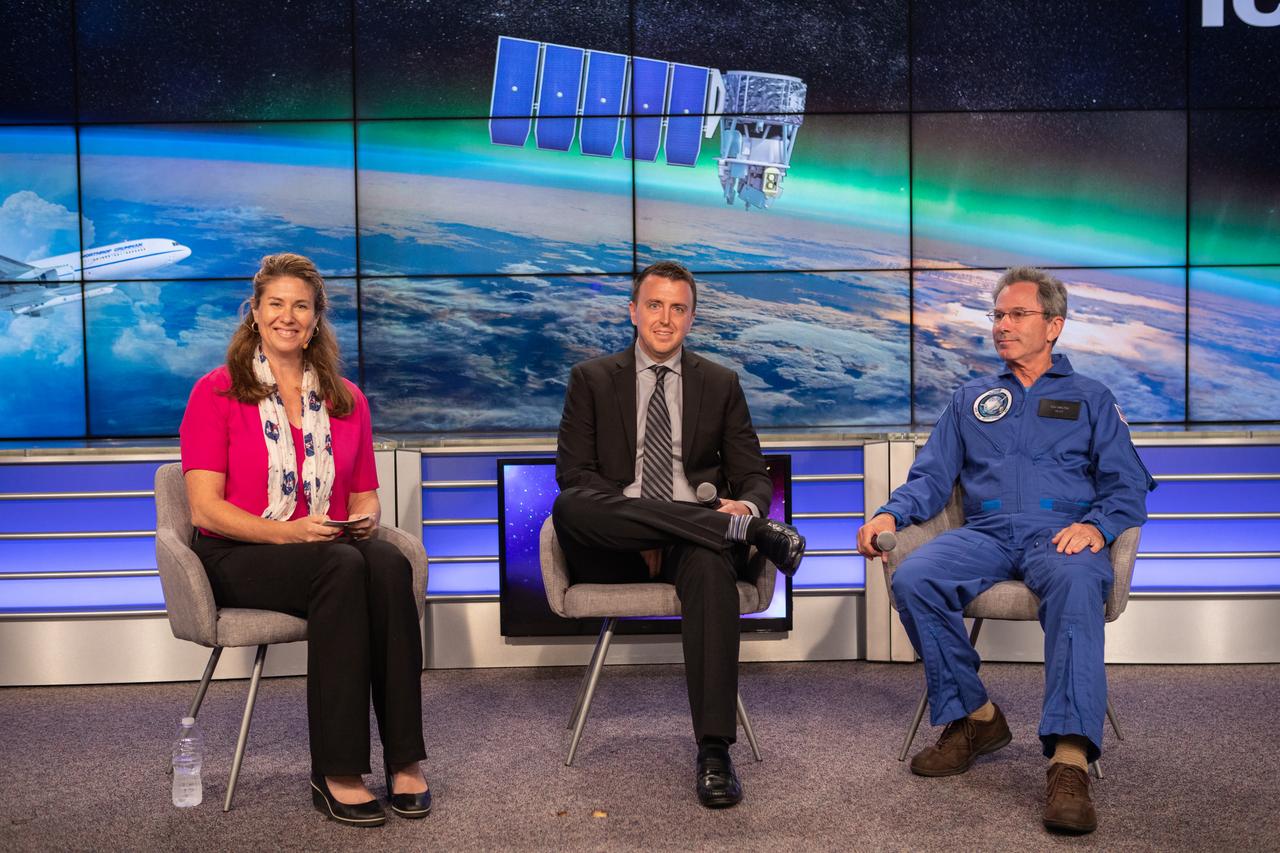
Launch and mission managers for NASA’s Ionospheric Connection Explorer (ICON) participate in a prelaunch mission briefing on Oct. 8, 2019, in the News Center auditorium at the agency’s Kennedy Space Center in Florida. From left to right are Karen Fox, NASA Communications; Will Ulrich, launch weather officer with the U.S. Air Force 45th Space Wing; and Don Walters, chief pilot of the L-1011 Stargazer aircraft. ICON is targeted to launch from Cape Canaveral Air Force Station in Florida on Oct. 9, 2019, aboard a Northrop Grumman Pegasus XL rocket carried aloft by the company’s Stargazer L-1011 aircraft. The explorer will study the frontier of space - the dynamic zone high in Earth's atmosphere where terrestrial weather from below meets space weather above.
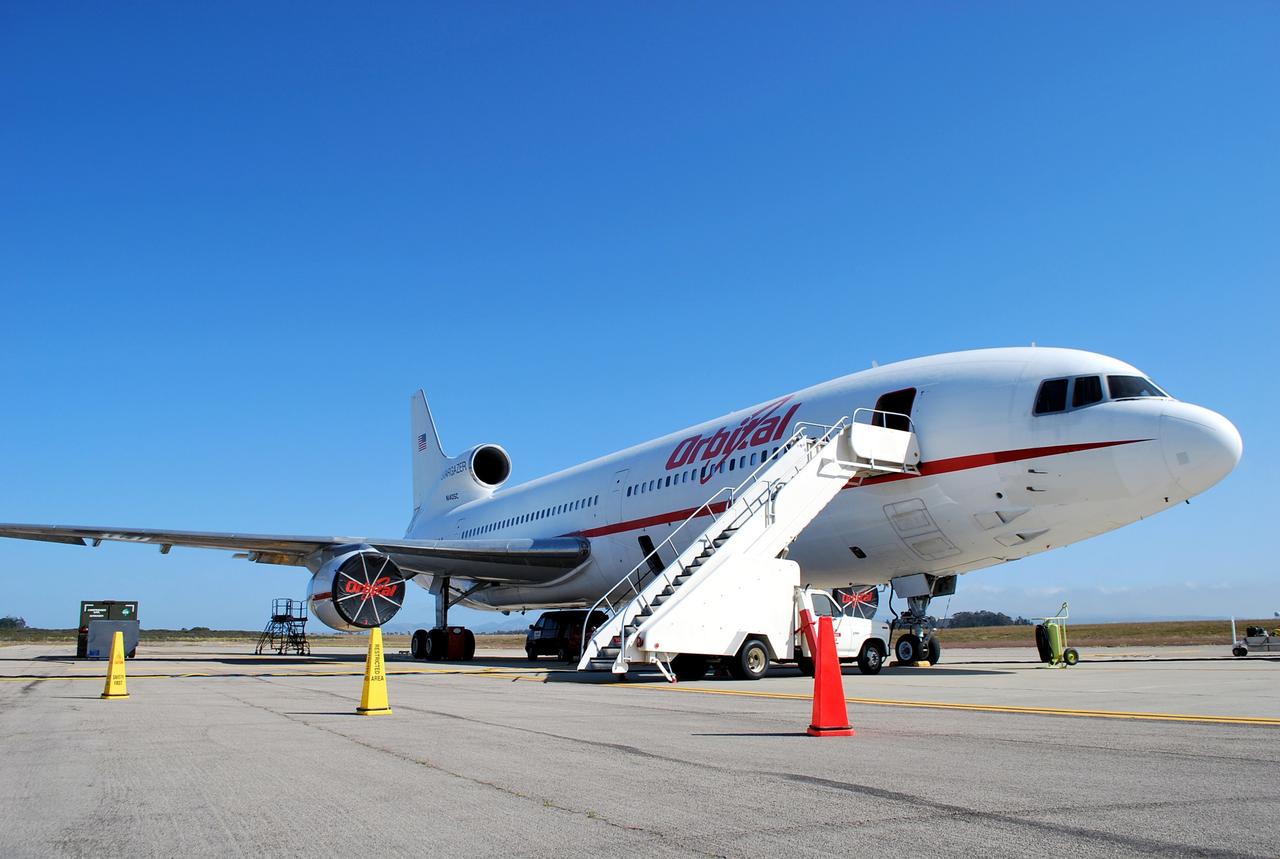
NUSTAR/Pegasus L-1011 and Miscellaneous Hot Fire Pad
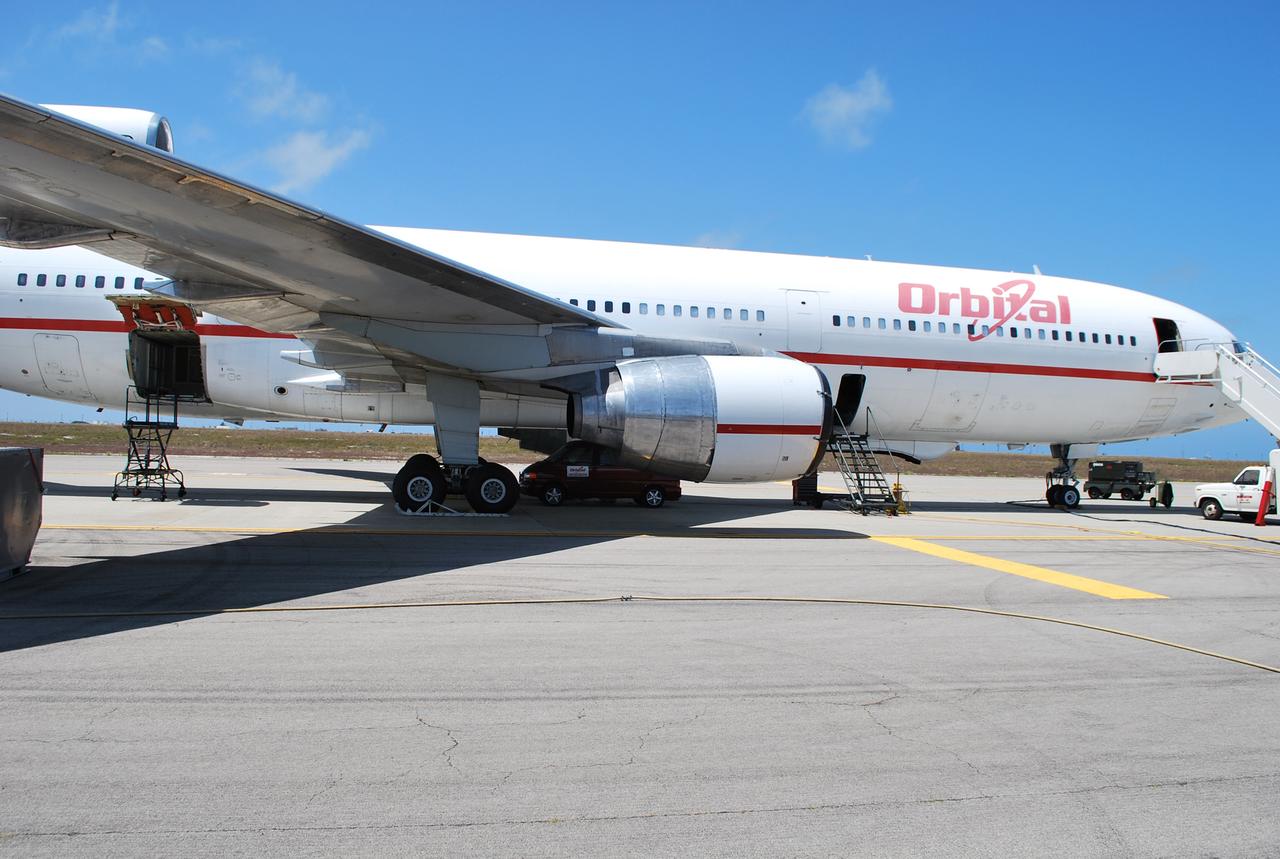
NUSTAR/Pegasus L-1011 and Miscellaneous Hot Fire Pad
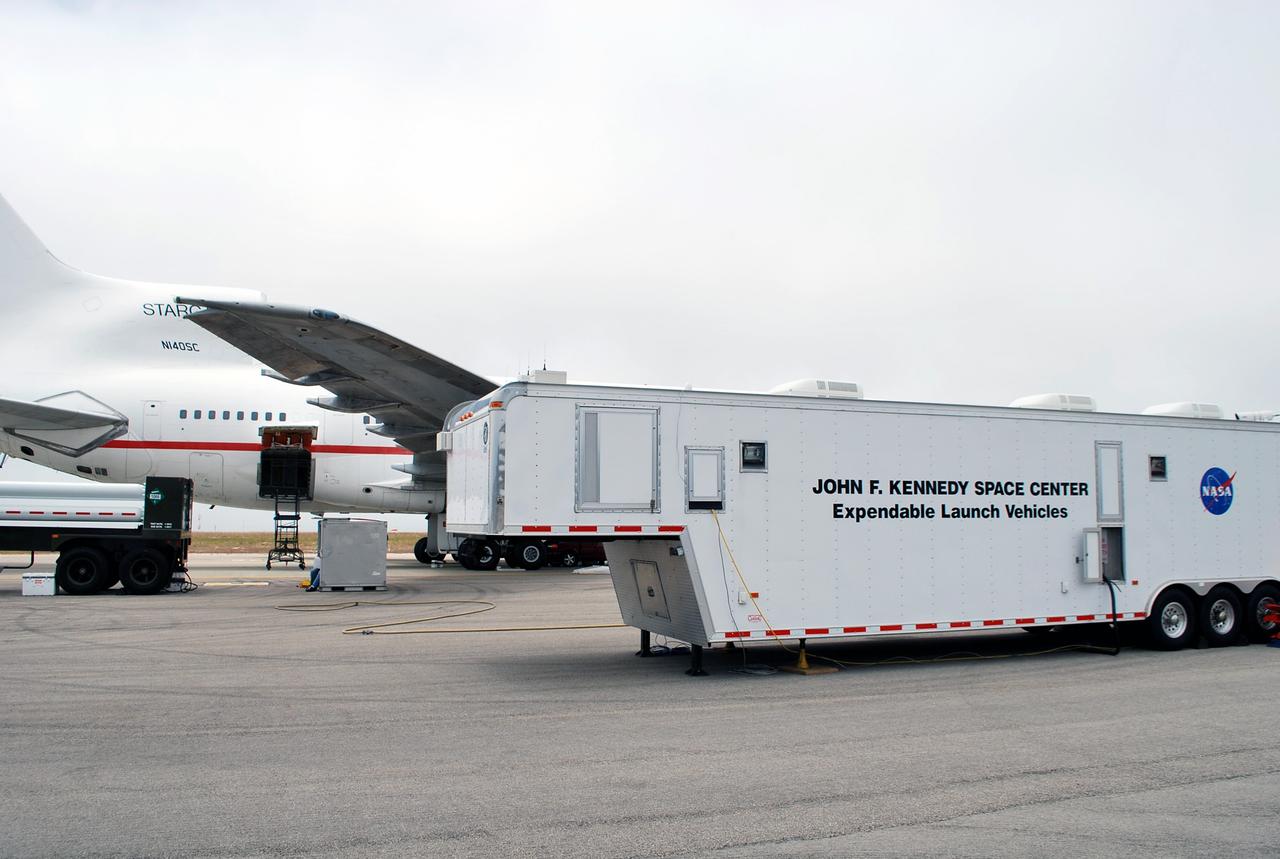
NUSTAR/Pegasus L-1011 and Miscellaneous Hot Fire Pad