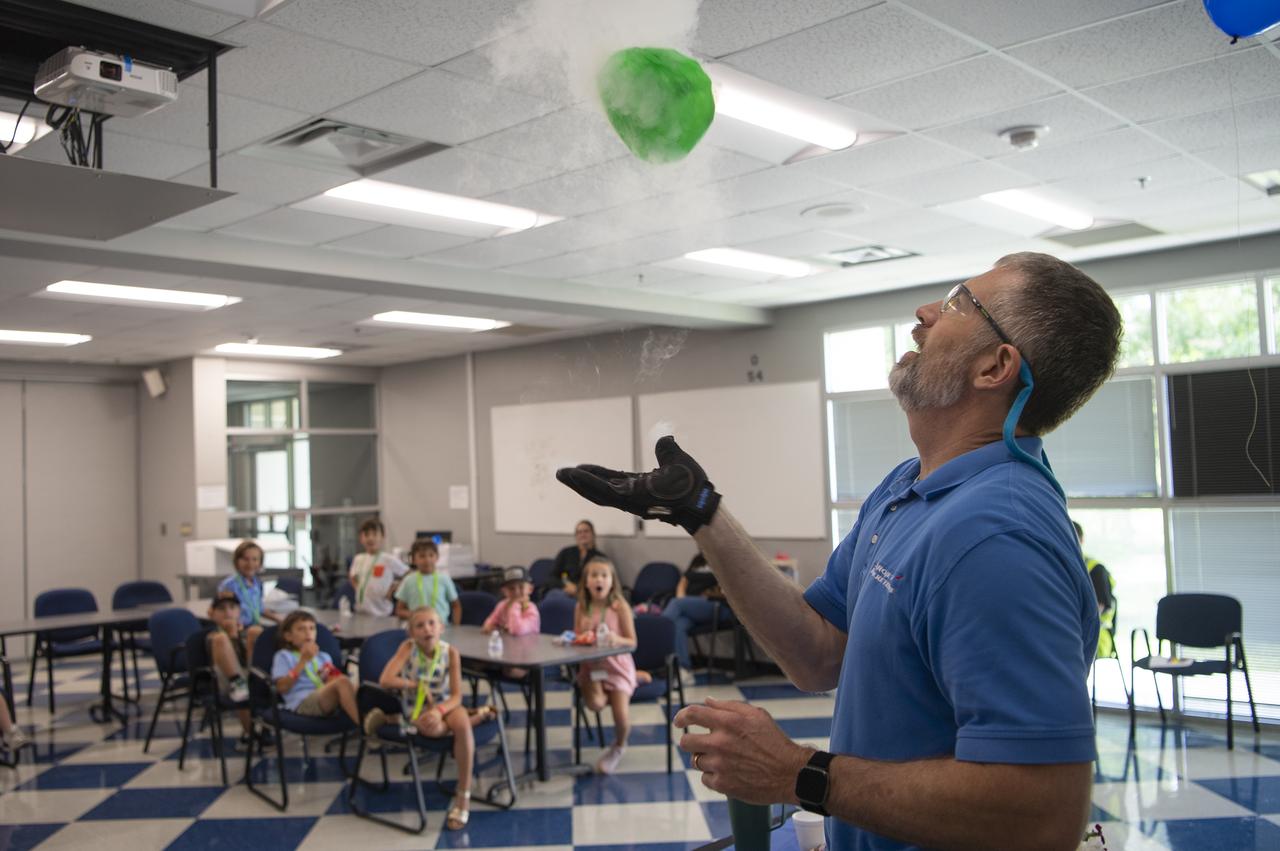
A group of Take Our Children Day participants watch a cryogenic demonstration led by Allen Forsman of Aerojet Rocketdyne, an L3Harris Technologies company, on June 27 at the Aerojet Rocketdyne Engine Assembly Facility at NASA Stennis.
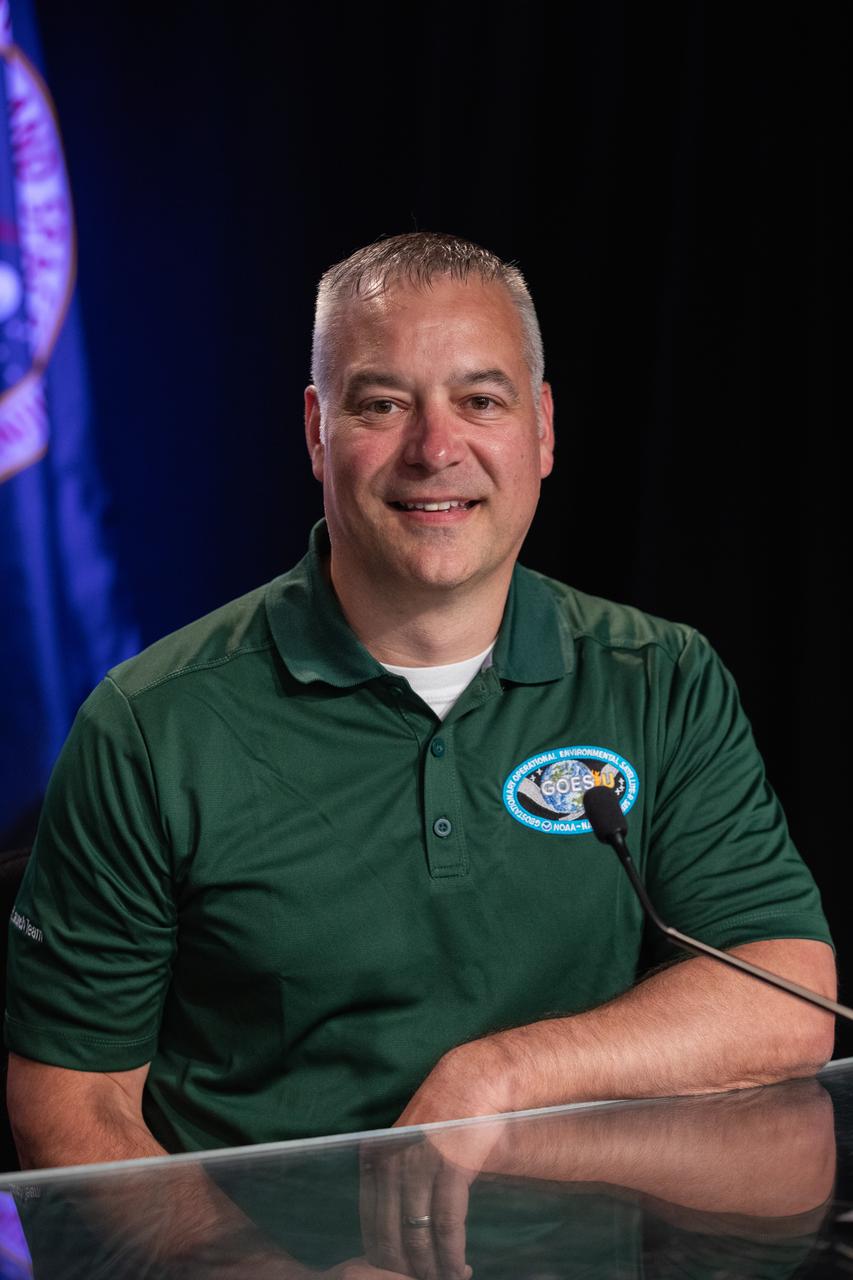
Chris Reith, program manager, Advanced Baseline Imager, L3Harris Technologies, participates in a social panel on Monday, June 24, 2024, at NASA’s Kennedy Space Center in Florida to discuss National Oceanic and Atmospheric Administration (NOAA) GOES-U (Geostationary Operational Environmental Satellite U) mission. The GOES-U satellite is the final addition to GOES-R series, which serves a critical role in providing continuous coverage of the Western Hemisphere, including monitoring tropical systems in the eastern Pacific and Atlantic oceans. The two-hour launch window opens at 5:16 p.m. EDT Tuesday, June 25, for the satellite’s launch on a SpaceX Falcon Heavy rocket from Launch Complex 39A at NASA’s Kennedy Space Center in Florida.
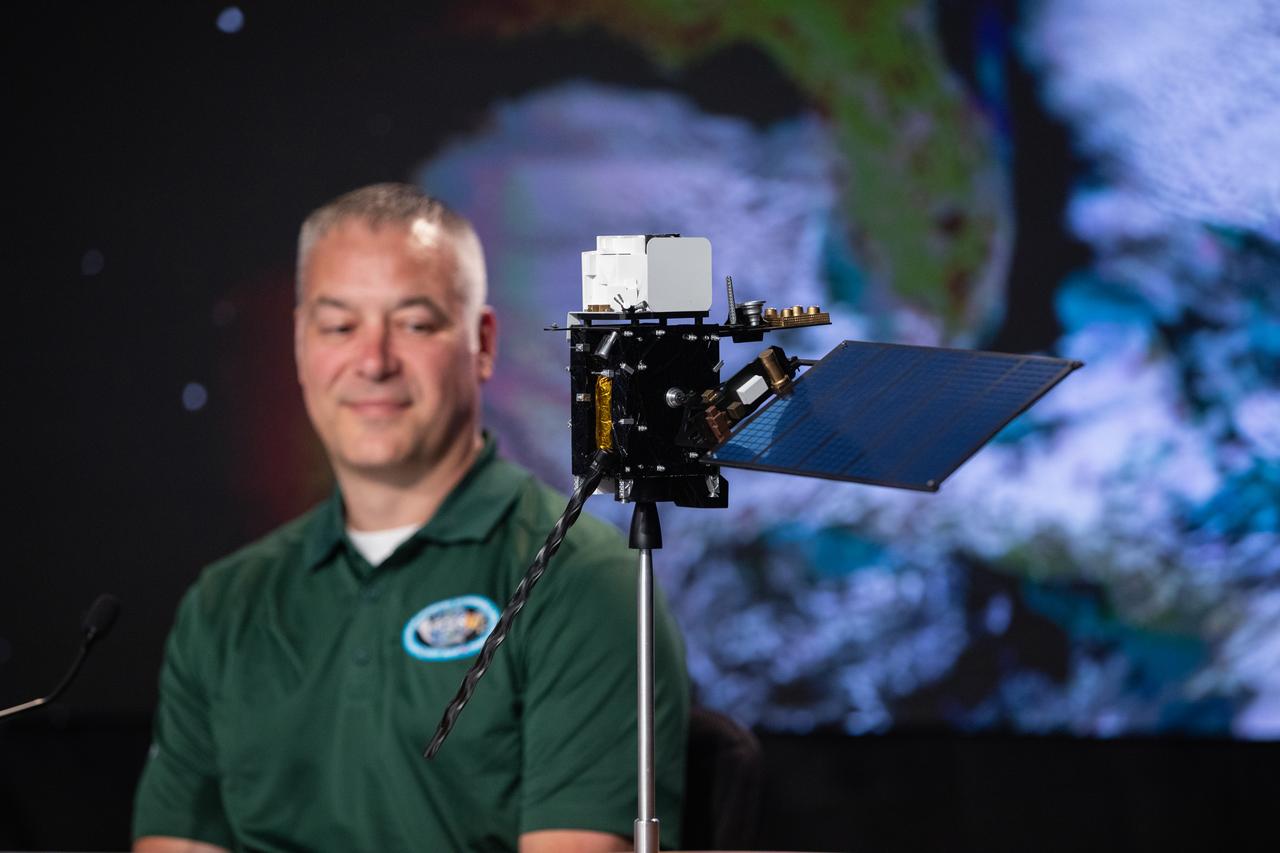
Chris Reith, program manager, Advanced Baseline Imager, L3Harris Technologies, participates in a social panel on Monday, June 24, 2024, at NASA’s Kennedy Space Center in Florida to discuss National Oceanic and Atmospheric Administration (NOAA) GOES-U (Geostationary Operational Environmental Satellite U) mission. The GOES-U satellite is the final addition to GOES-R series, which serves a critical role in providing continuous coverage of the Western Hemisphere, including monitoring tropical systems in the eastern Pacific and Atlantic oceans. The two-hour launch window opens at 5:16 p.m. EDT Tuesday, June 25, for the satellite’s launch on a SpaceX Falcon Heavy rocket from Launch Complex 39A at NASA’s Kennedy Space Center in Florida.
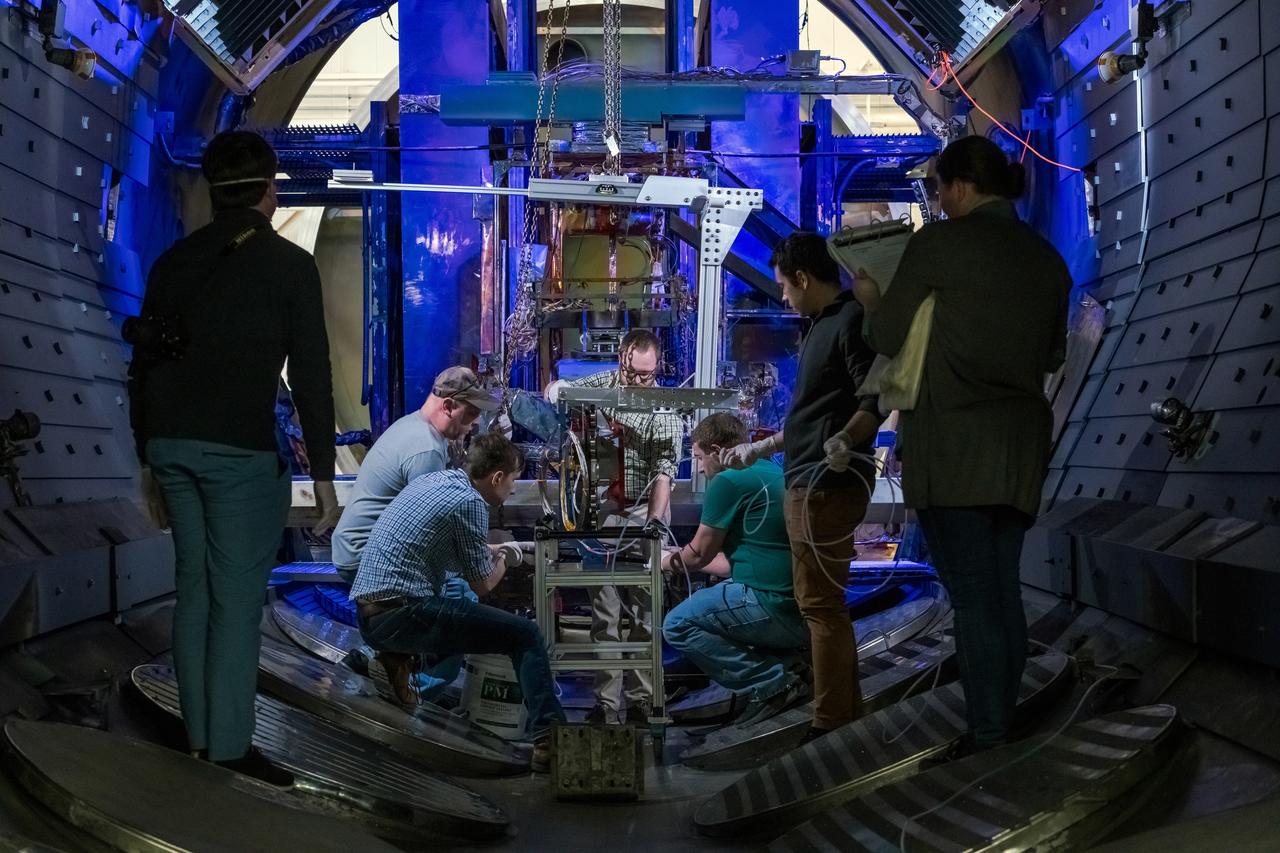
NASA Glenn Research Center has received the first of three Advanced Electric Propulsion System (AEPS) thrusters for the Gateway lunar space station. Built by L3Harris Technologies, the thruster will undergo testing before integration with Gateway’s Power and Propulsion Element, launching with the HALO module ahead of Artemis IV.

NASA Glenn Research Center has received the first of three Advanced Electric Propulsion System (AEPS) thrusters for the Gateway lunar space station. Built by L3Harris Technologies, the thruster will undergo testing before integration with Gateway’s Power and Propulsion Element, launching with the HALO module ahead of Artemis IV.
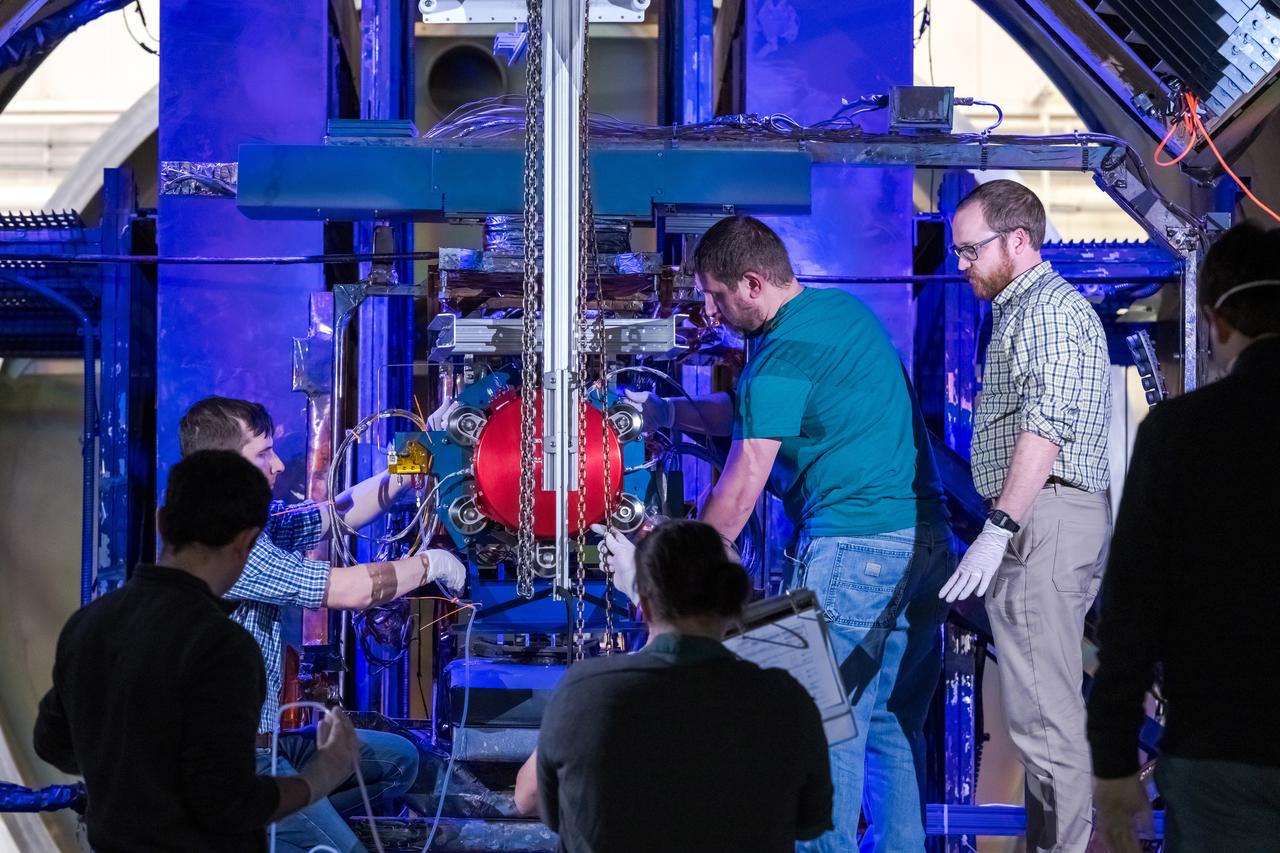
NASA Glenn Research Center has received the first of three Advanced Electric Propulsion System (AEPS) thrusters for the Gateway lunar space station. Built by L3Harris Technologies, the thruster will undergo testing before integration with Gateway’s Power and Propulsion Element, launching with the HALO module ahead of Artemis IV.
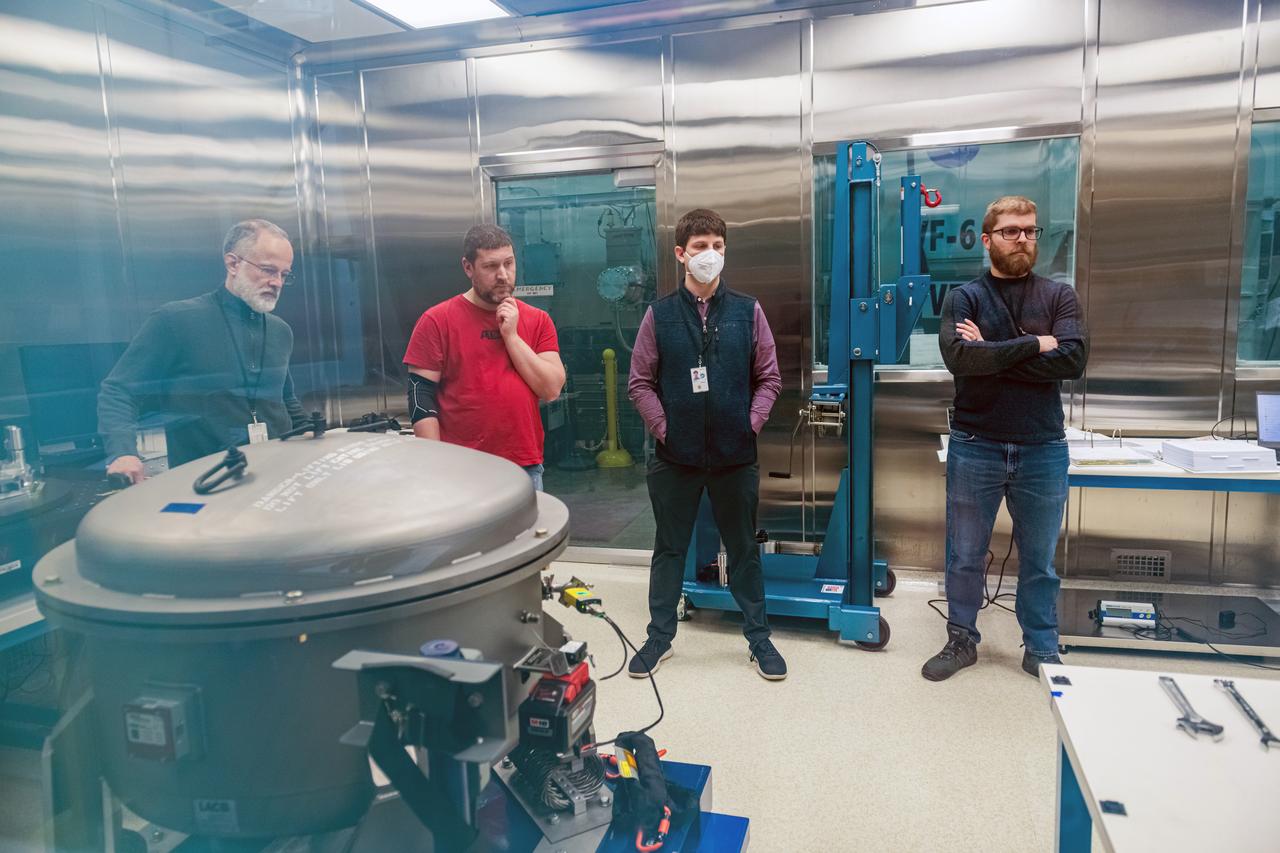
NASA Glenn Research Center has received the first of three Advanced Electric Propulsion System (AEPS) thrusters for the Gateway lunar space station. Built by L3Harris Technologies, the thruster will undergo testing before integration with Gateway’s Power and Propulsion Element, launching with the HALO module ahead of Artemis IV.
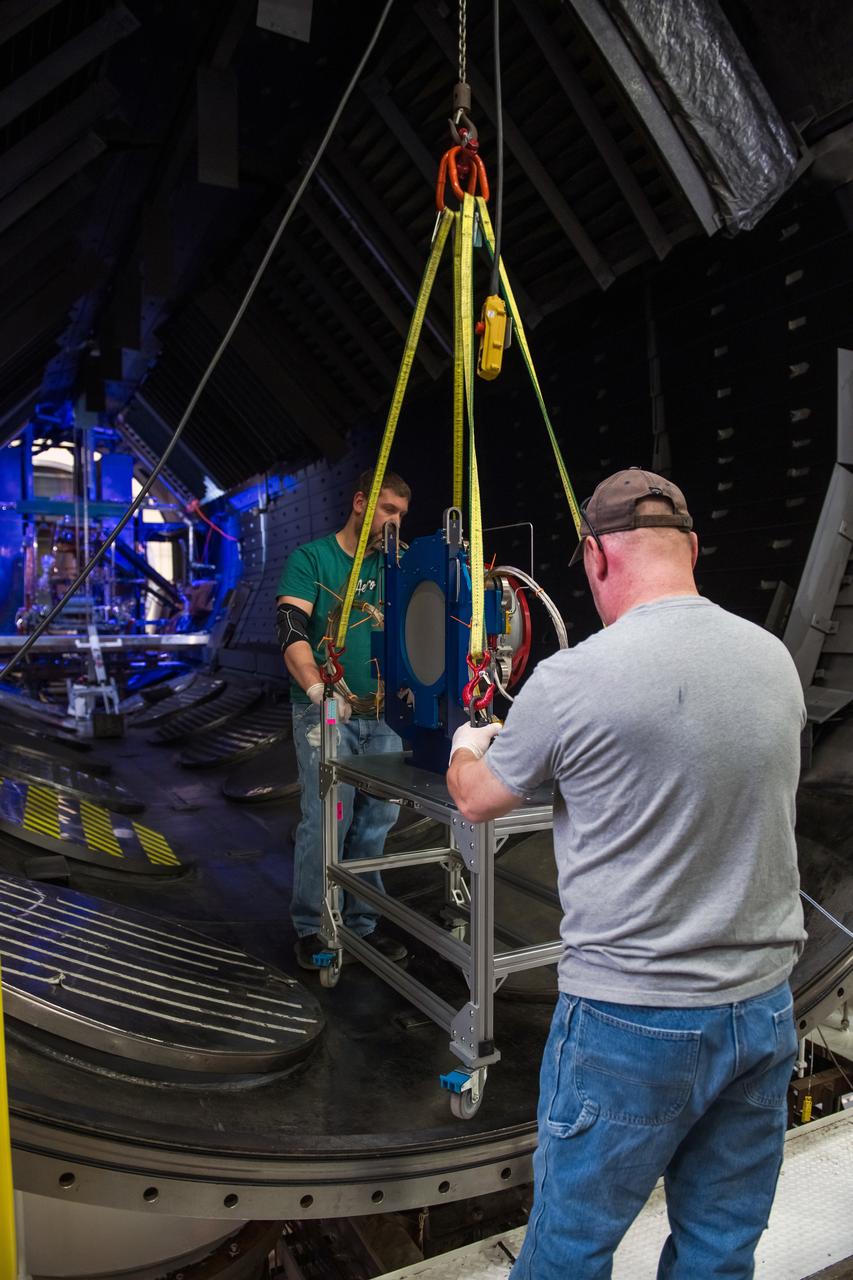
NASA Glenn Research Center has received the first of three Advanced Electric Propulsion System (AEPS) thrusters for the Gateway lunar space station. Built by L3Harris Technologies, the thruster will undergo testing before integration with Gateway’s Power and Propulsion Element, launching with the HALO module ahead of Artemis IV.
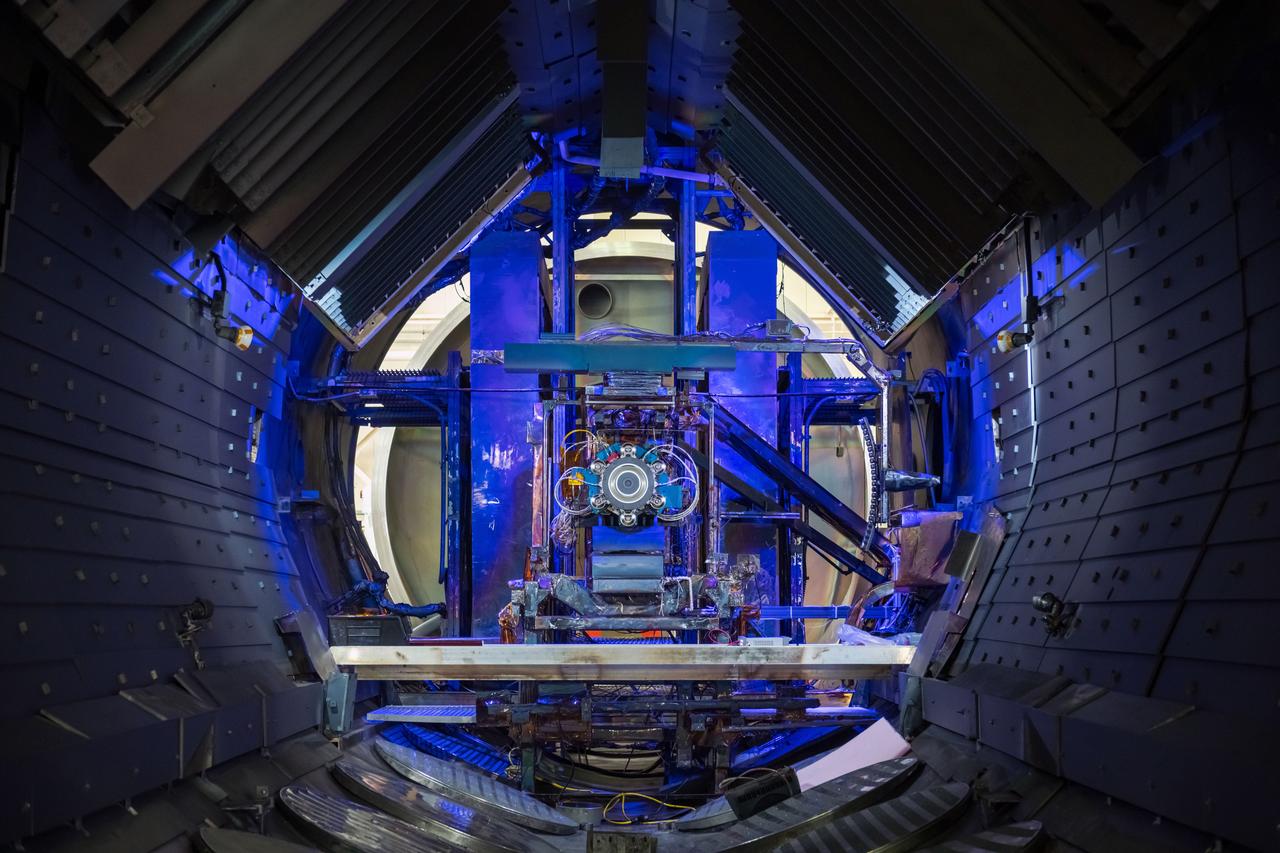
NASA Glenn Research Center has received the first of three Advanced Electric Propulsion System (AEPS) thrusters for the Gateway lunar space station. Built by L3Harris Technologies, the thruster will undergo testing before integration with Gateway’s Power and Propulsion Element, launching with the HALO module ahead of Artemis IV.

NASA Glenn Research Center has received the first of three Advanced Electric Propulsion System (AEPS) thrusters for the Gateway lunar space station. Built by L3Harris Technologies, the thruster will undergo testing before integration with Gateway’s Power and Propulsion Element, launching with the HALO module ahead of Artemis IV.
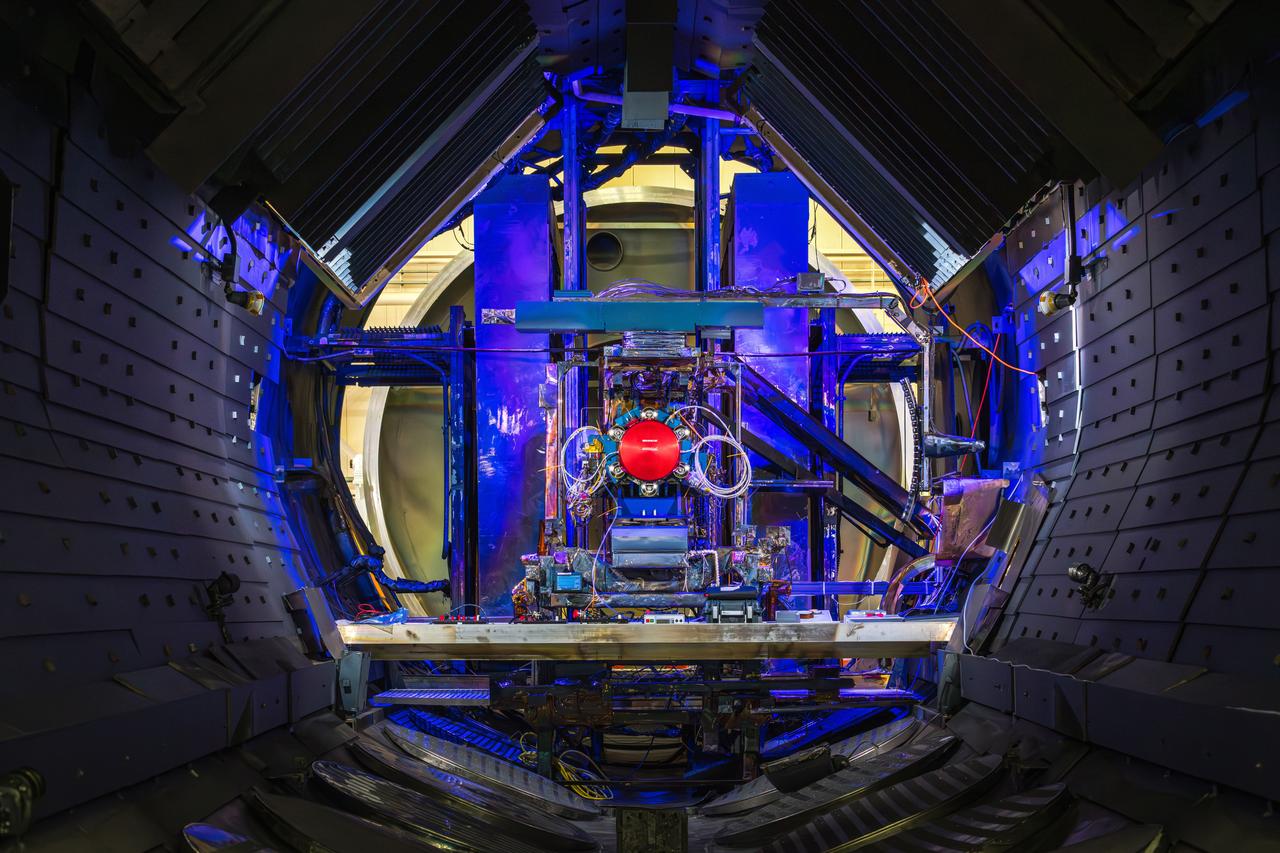
NASA Glenn Research Center has received the first of three Advanced Electric Propulsion System (AEPS) thrusters for the Gateway lunar space station. Built by L3Harris Technologies, the thruster will undergo testing before integration with Gateway’s Power and Propulsion Element, launching with the HALO module ahead of Artemis IV.
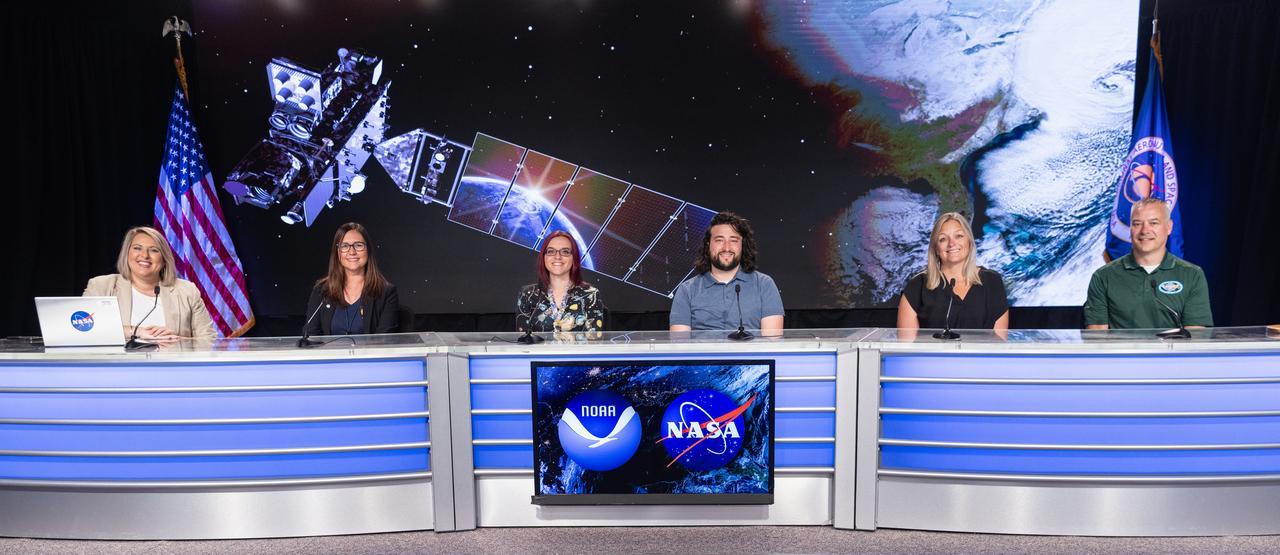
Officials from NASA, National Oceanic and Atmospheric Administration (NOAA), and other mission managers participate in a social panel on Monday, June 24, 2024, at NASA’s Kennedy Space Center in Florida for the launch of GOES-U (Geostationary Operational Environmental Satellite U) mission. From left to right, Leah Martin, NASA Communications; Ellen Ramirez, deputy division chief, Mission Operations Division, National Environmental Satellite, Data, and Information Service Office of Satellite and Product Operations, NOAA; Jade Zsiros, telemetry engineer, NASA’s Launch Services Program; Dakota Smith, satellite analyst and communicator, NOAA’s Cooperative Institute for Research in the Atmosphere; Allana Nepomuceno, senior manager, GOES-U Assembly, Test, and Launch Operations, Lockheed Martin; Chris Reith, program manager, Advanced Baseline Imager, L3Harris Technologies. The two-hour launch window opens at 5:16 p.m. EDT Tuesday, June 25, for the satellite’s launch on a SpaceX Falcon Heavy rocket from Launch Complex 39A at NASA’s Kennedy Space Center in Florida.
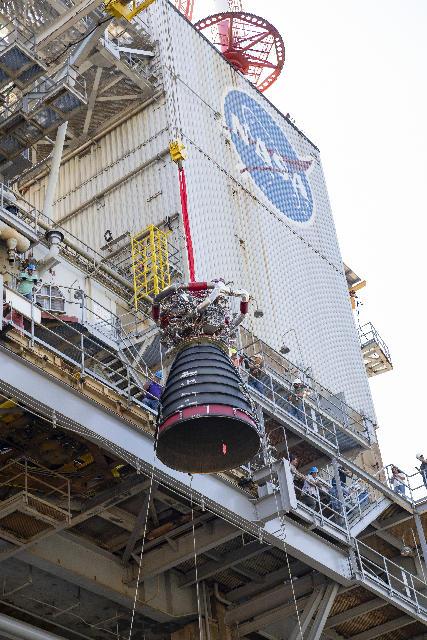
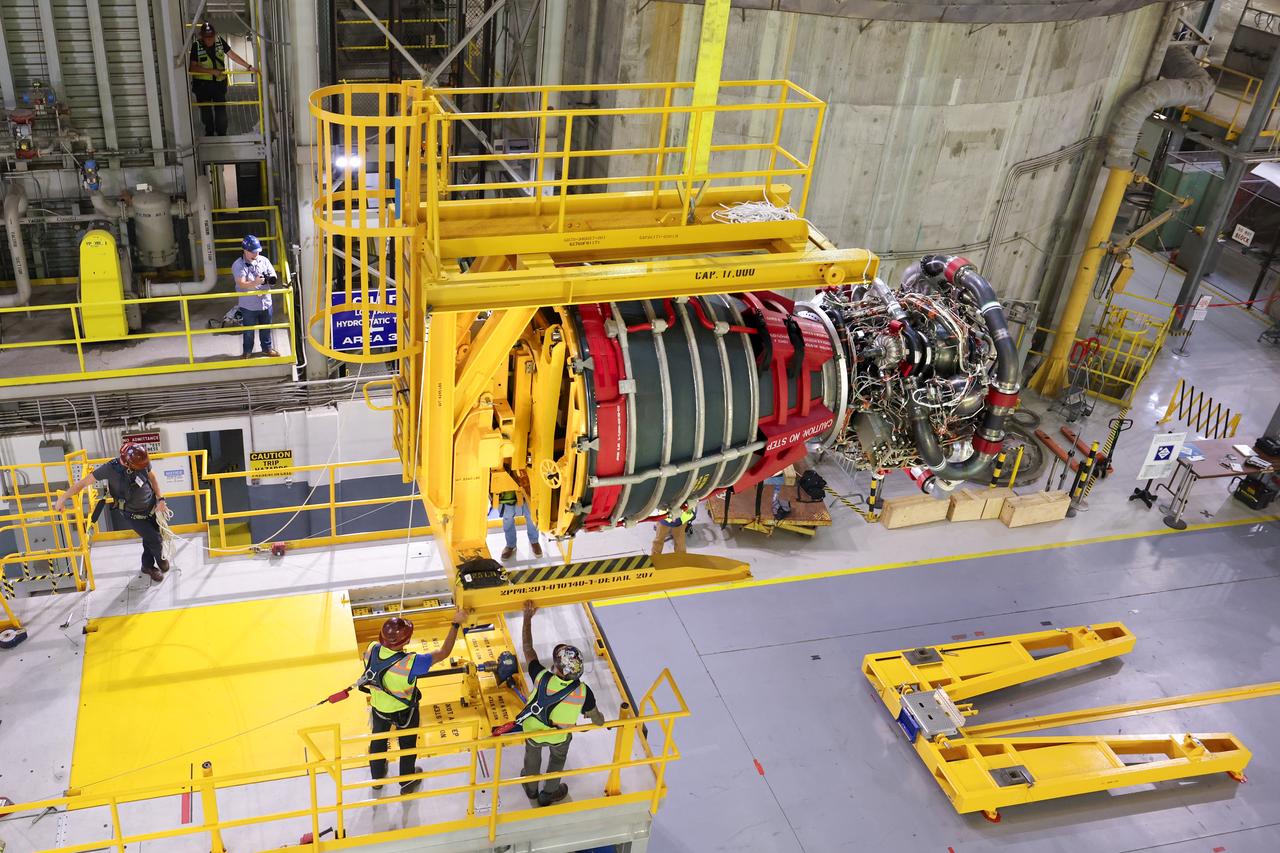
A crane lifts developmental engine E0525 on the west side of the Fred Haise Test Stand at NASA’s Stennis Space Center on Aug. 30 in preparation for a series of 12 tests that are a key step for lead SLS (Space Launch System) engines contractor Aerojet Rocketdyne, an L3Harris Technologies company, to produce engines that will help power the SLS rocket, beginning with Artemis V.
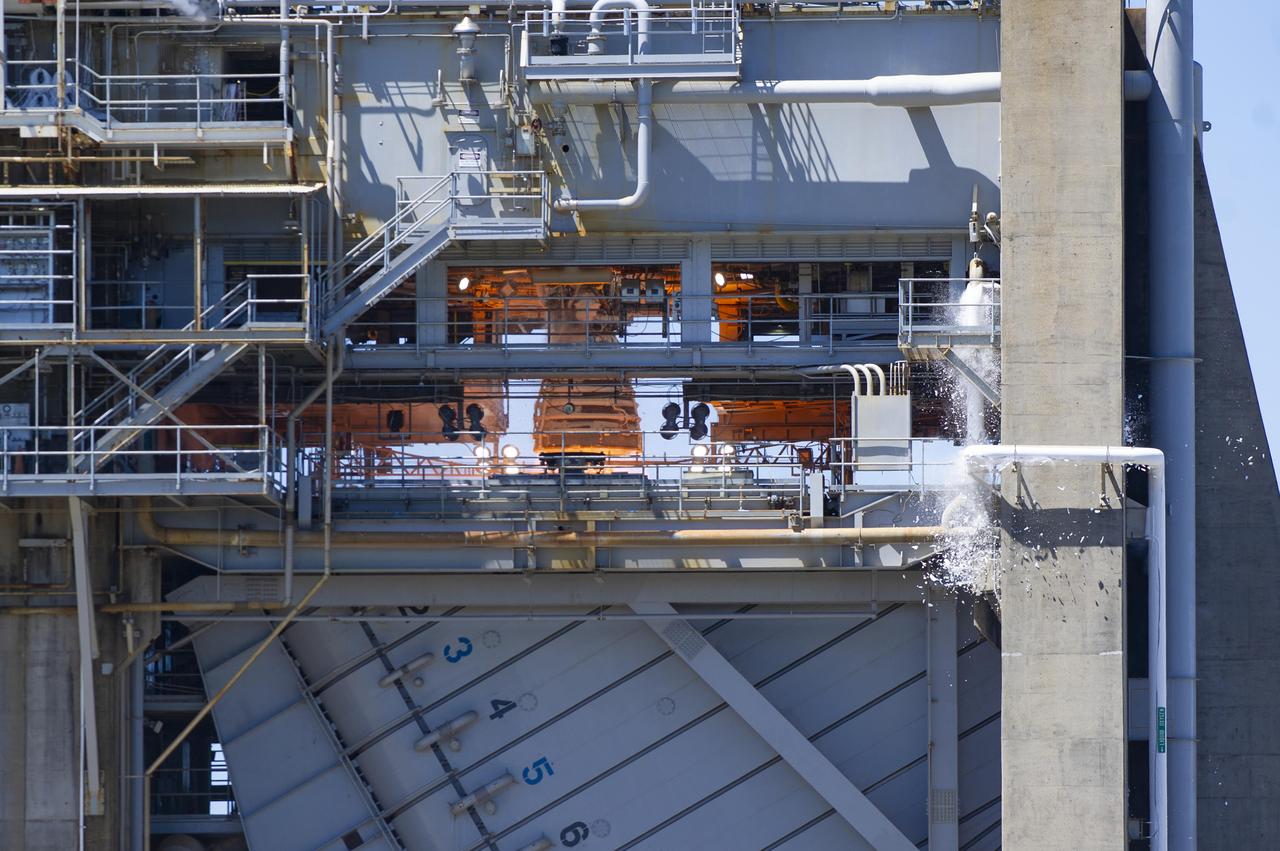
NASA conducted a full-duration RS-25 hot fire April 3 on the Fred Haise Test Stand at NASA’s Stennis Space Center near Bay St. Louis, Mississippi, achieving a major milestone for future Artemis flights of NASA’s SLS (Space Launch System) rocket. It marked the final test of a 12-test series to certify production of new RS-25 engines by lead contractor Aerojet Rocketdyne, an L3Harris Technologies company, to help power NASA’s SLS rocket on Artemis missions to the Moon and beyond, beginning with Artemis V.
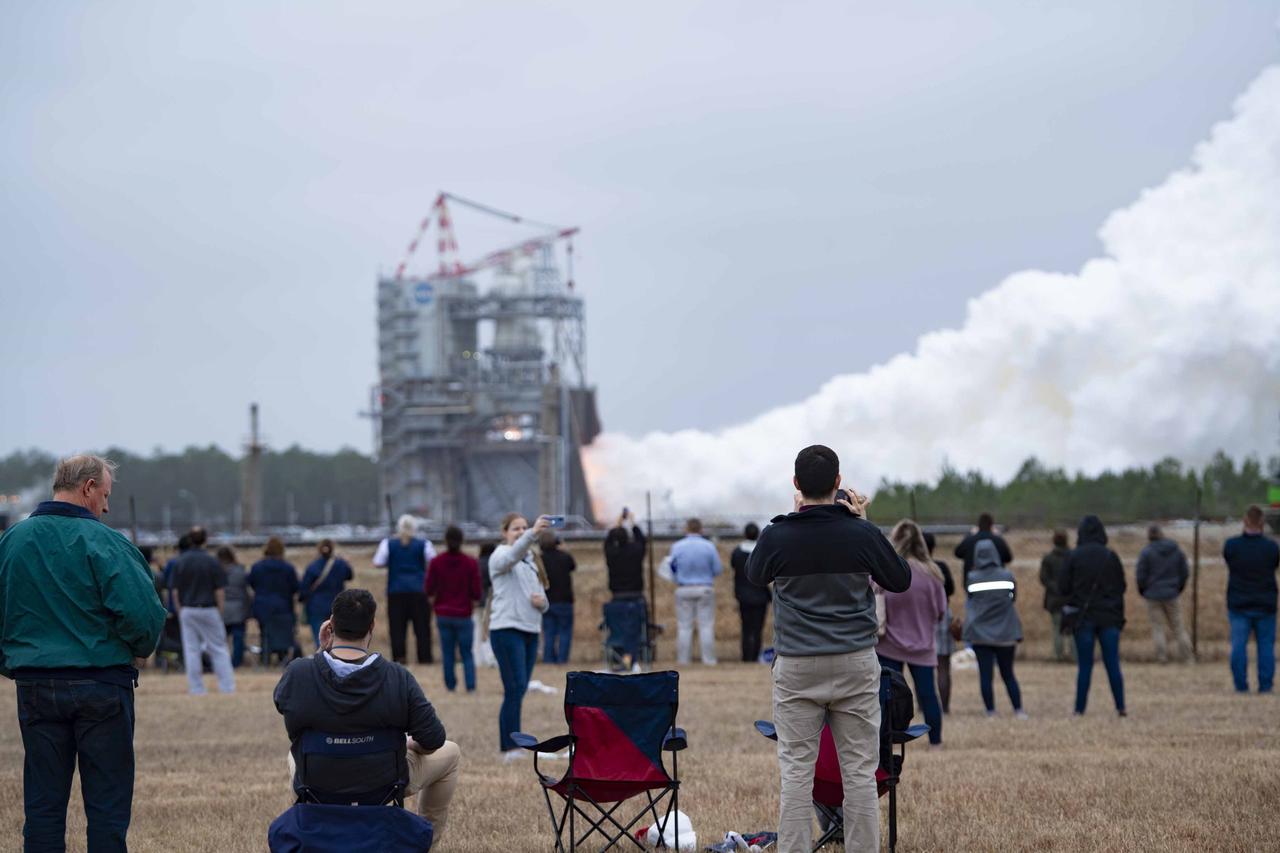
Sitewide employees at NASA’s Stennis Space Center watch the RS-25 test conducted on Jan. 23 as NASA continued a critical test series for future Artemis flights of NASA’s SLS (Space Launch System) rocket. The full-duration hot fire on the Fred Haise Test Stand is part of a 12-test series to certify production of new RS-25 engines by lead contractor Aerojet Rocketdyne, an L3Harris Technologies company. The new engines will help power SLS rocket on Artemis missions to the Moon and beyond, beginning with Artemis V.
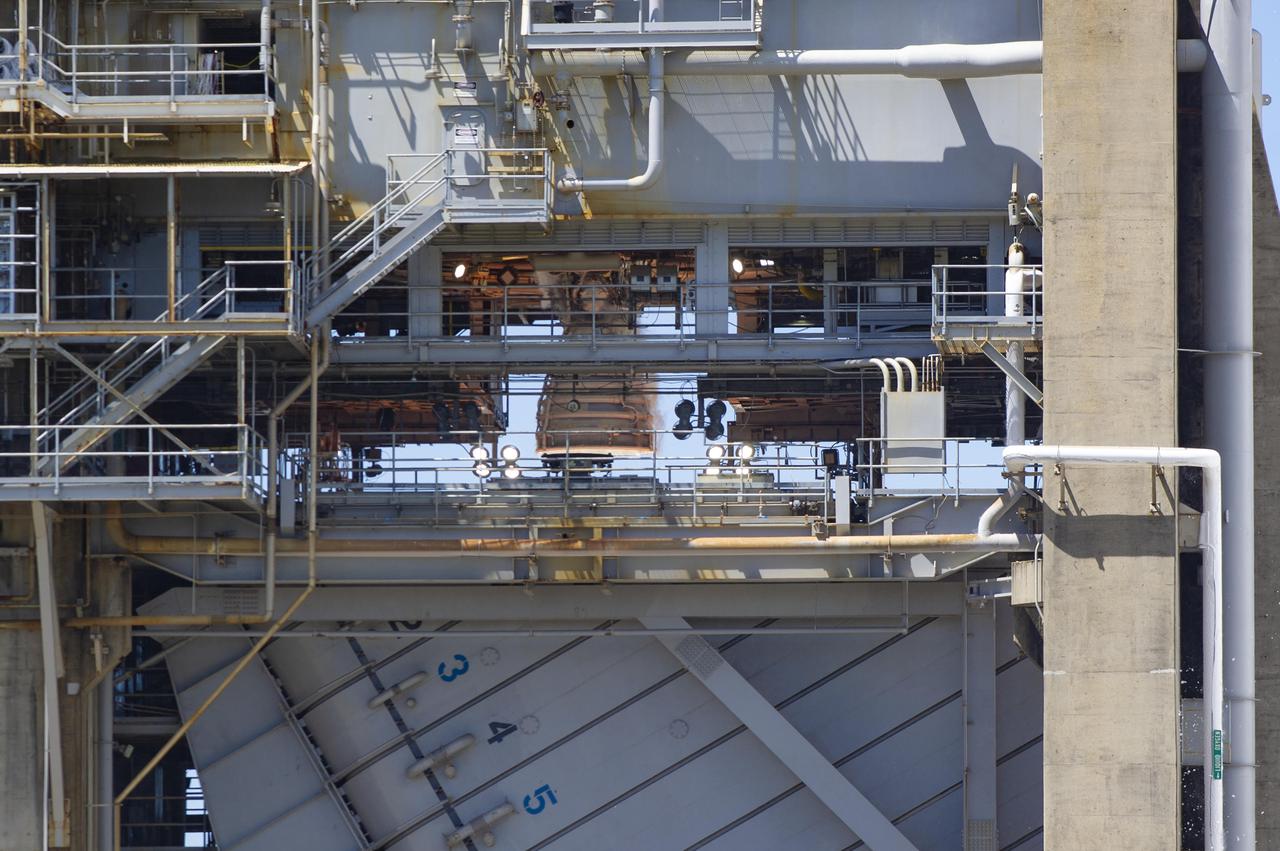
NASA conducted a full-duration RS-25 hot fire April 3 on the Fred Haise Test Stand at NASA’s Stennis Space Center near Bay St. Louis, Mississippi, achieving a major milestone for future Artemis flights of NASA’s SLS (Space Launch System) rocket. It marked the final test of a 12-test series to certify production of new RS-25 engines by lead contractor Aerojet Rocketdyne, an L3Harris Technologies company, to help power NASA’s SLS rocket on Artemis missions to the Moon and beyond, beginning with Artemis V.
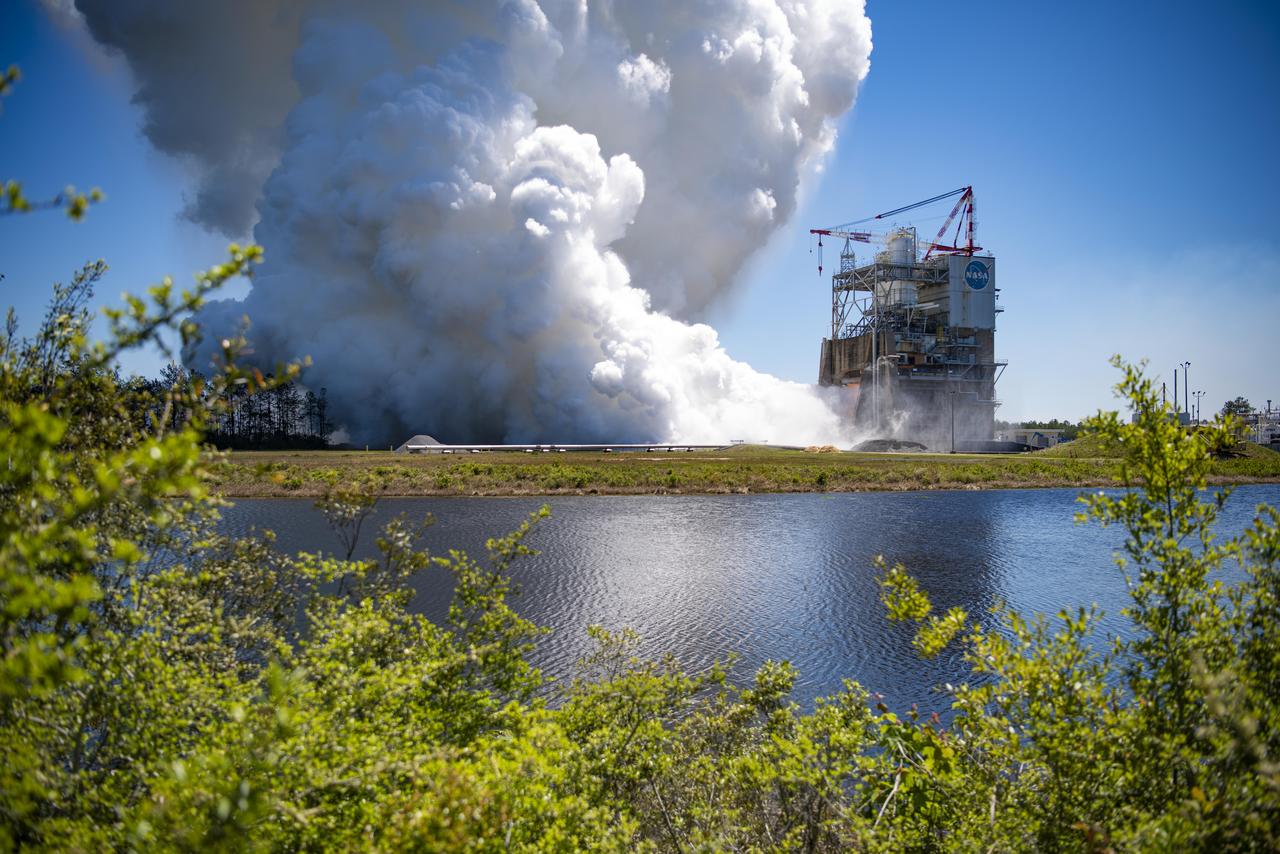
NASA conducted a full-duration RS-25 hot fire April 3 on the Fred Haise Test Stand at NASA’s Stennis Space Center near Bay St. Louis, Mississippi, achieving a major milestone for future Artemis flights of NASA’s SLS (Space Launch System) rocket. It marked the final test of a 12-test series to certify production of new RS-25 engines by lead contractor Aerojet Rocketdyne, an L3Harris Technologies company, to help power NASA’s SLS rocket on Artemis missions to the Moon and beyond, beginning with Artemis V.
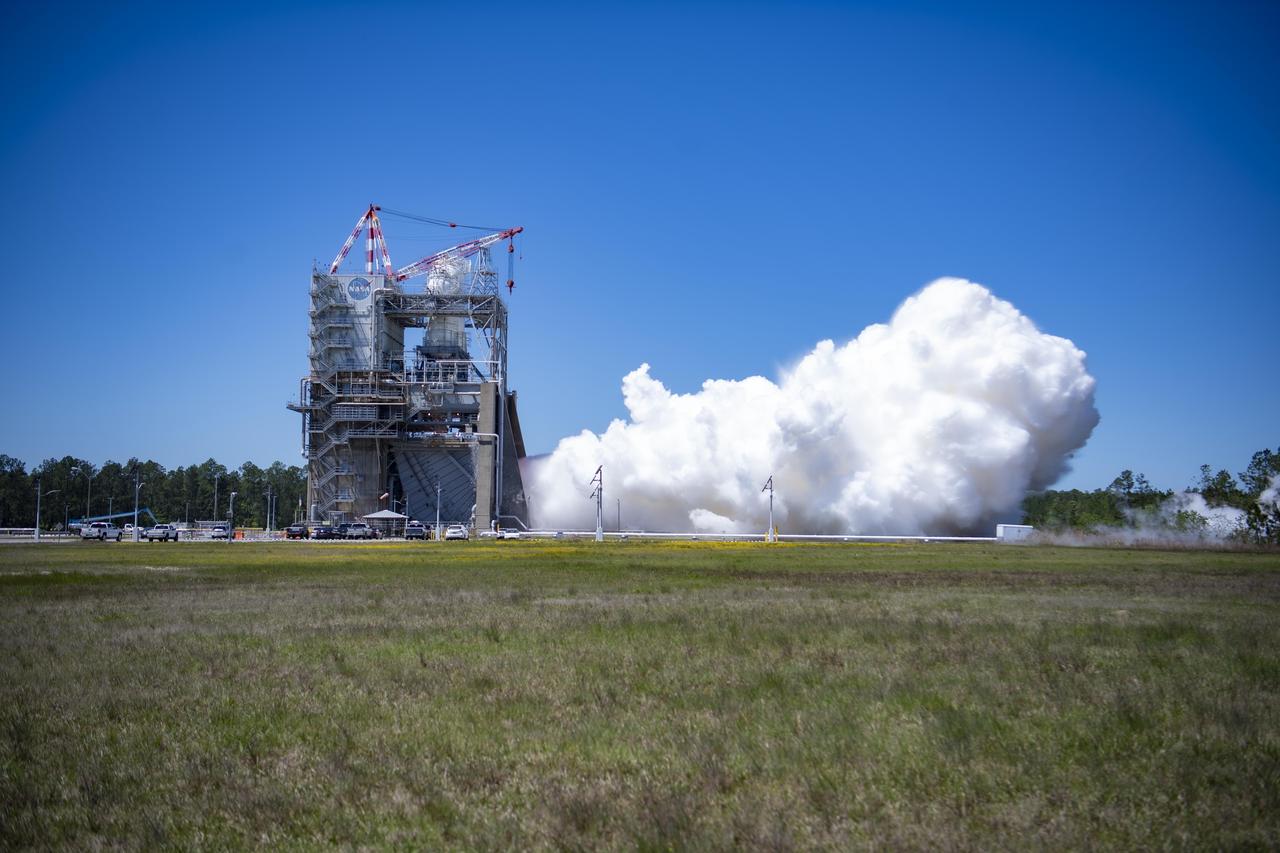
NASA conducted a full-duration RS-25 hot fire April 3 on the Fred Haise Test Stand at NASA’s Stennis Space Center near Bay St. Louis, Mississippi, achieving a major milestone for future Artemis flights of NASA’s SLS (Space Launch System) rocket. It marked the final test of a 12-test series to certify production of new RS-25 engines by lead contractor Aerojet Rocketdyne, an L3Harris Technologies company, to help power NASA’s SLS rocket on Artemis missions to the Moon and beyond, beginning with Artemis V.
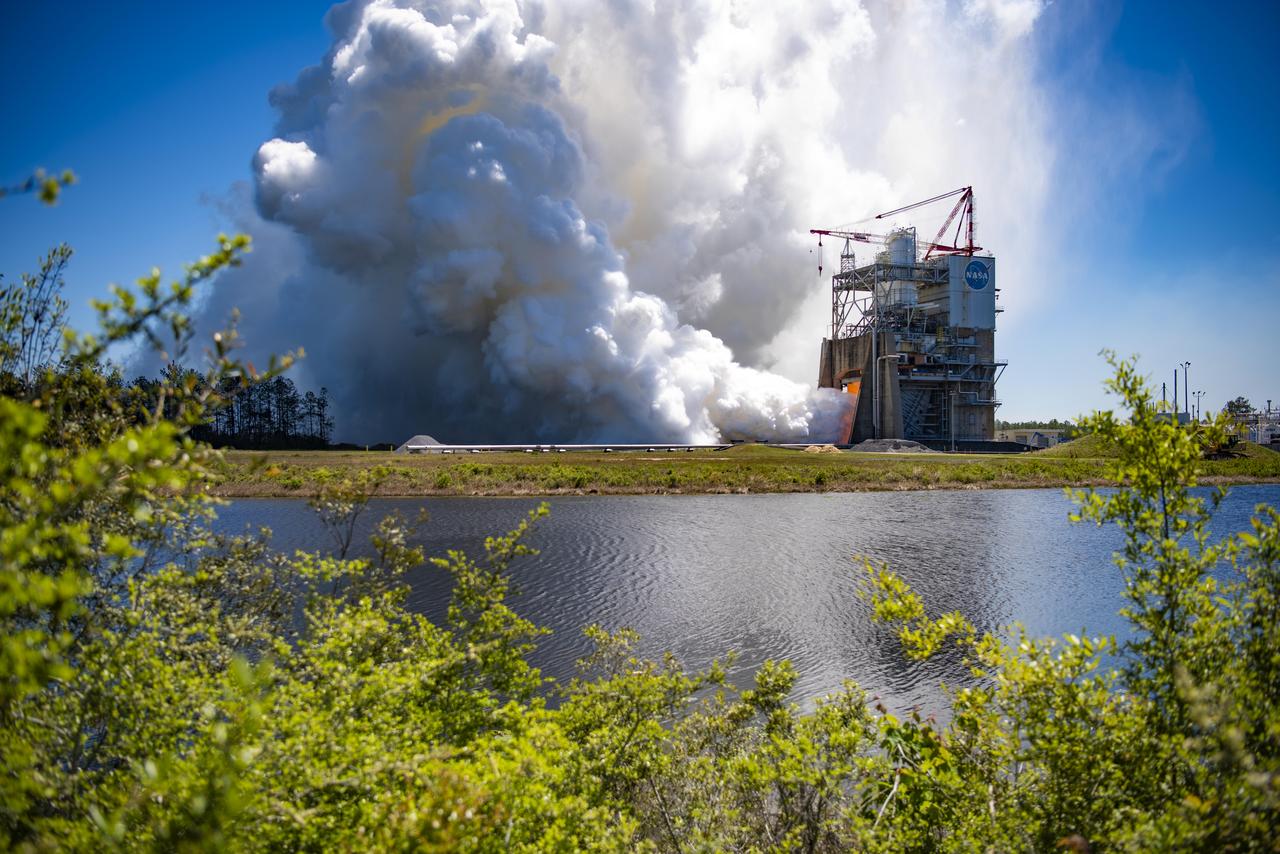
NASA conducted a full-duration RS-25 hot fire April 3 on the Fred Haise Test Stand at NASA’s Stennis Space Center near Bay St. Louis, Mississippi, achieving a major milestone for future Artemis flights of NASA’s SLS (Space Launch System) rocket. It marked the final test of a 12-test series to certify production of new RS-25 engines by lead contractor Aerojet Rocketdyne, an L3Harris Technologies company, to help power NASA’s SLS rocket on Artemis missions to the Moon and beyond, beginning with Artemis V.
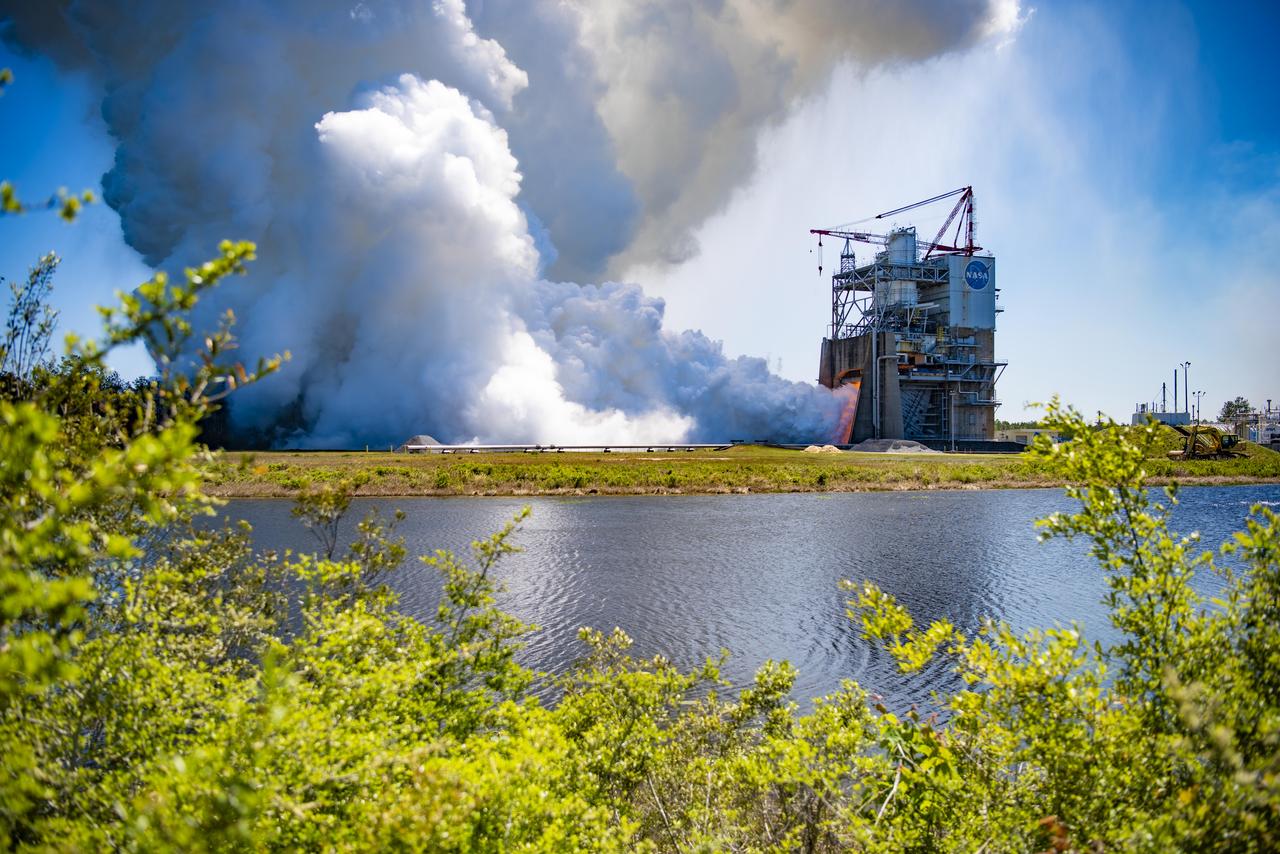
NASA conducted a full-duration RS-25 hot fire April 3 on the Fred Haise Test Stand at NASA’s Stennis Space Center near Bay St. Louis, Mississippi, achieving a major milestone for future Artemis flights of NASA’s SLS (Space Launch System) rocket. It marked the final test of a 12-test series to certify production of new RS-25 engines by lead contractor Aerojet Rocketdyne, an L3Harris Technologies company, to help power NASA’s SLS rocket on Artemis missions to the Moon and beyond, beginning with Artemis V.
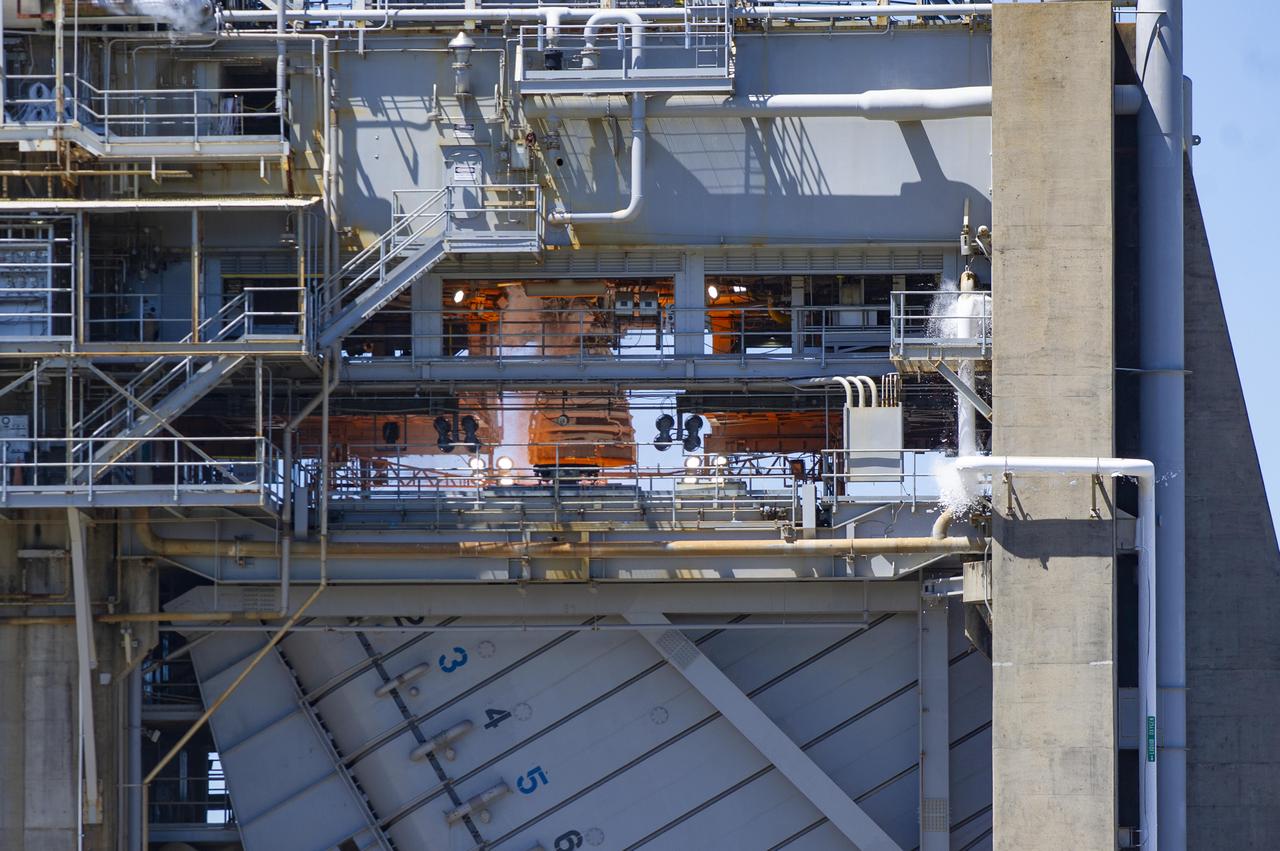
NASA conducted a full-duration RS-25 hot fire April 3 on the Fred Haise Test Stand at NASA’s Stennis Space Center near Bay St. Louis, Mississippi, achieving a major milestone for future Artemis flights of NASA’s SLS (Space Launch System) rocket. It marked the final test of a 12-test series to certify production of new RS-25 engines by lead contractor Aerojet Rocketdyne, an L3Harris Technologies company, to help power NASA’s SLS rocket on Artemis missions to the Moon and beyond, beginning with Artemis V.
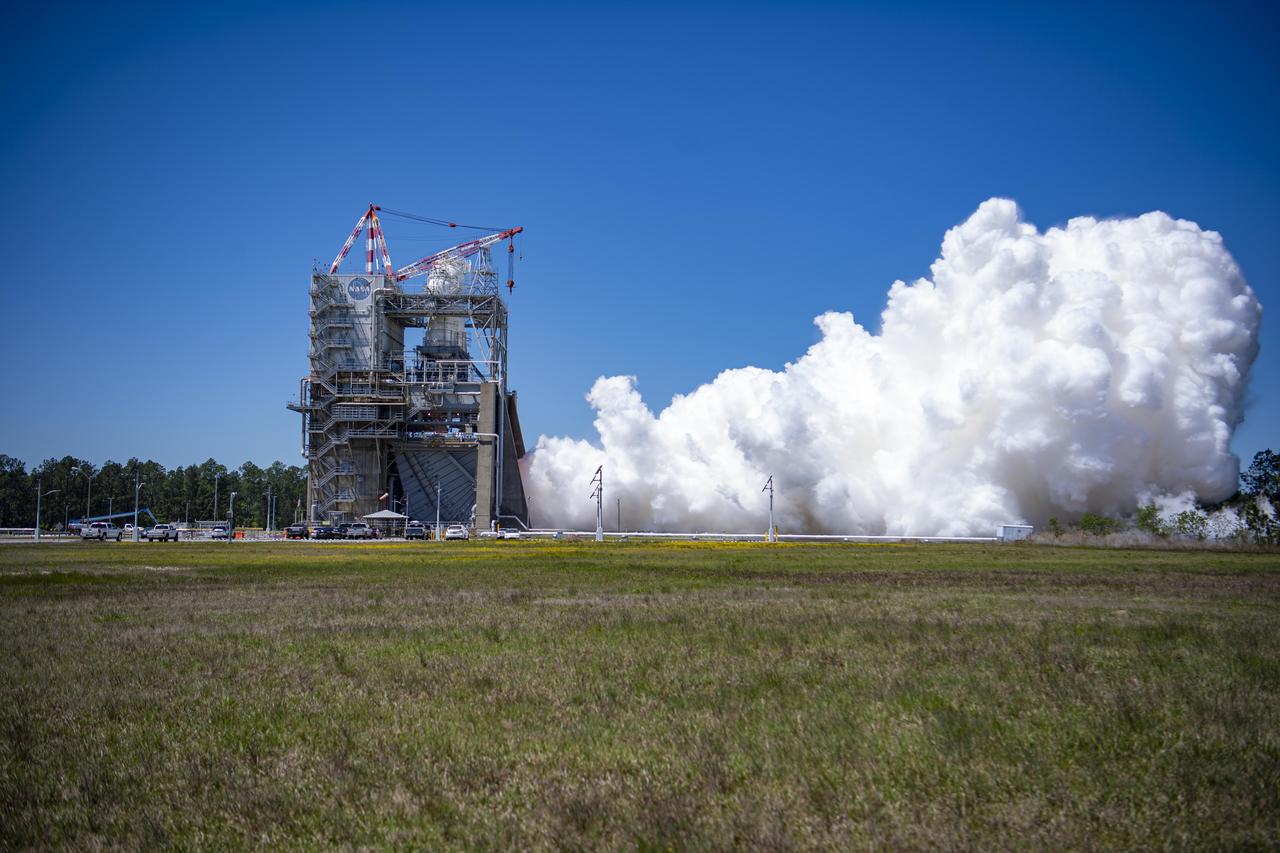
NASA conducted a full-duration RS-25 hot fire April 3 on the Fred Haise Test Stand at NASA’s Stennis Space Center near Bay St. Louis, Mississippi, achieving a major milestone for future Artemis flights of NASA’s SLS (Space Launch System) rocket. It marked the final test of a 12-test series to certify production of new RS-25 engines by lead contractor Aerojet Rocketdyne, an L3Harris Technologies company, to help power NASA’s SLS rocket on Artemis missions to the Moon and beyond, beginning with Artemis V.

NASA conducted a full-duration RS-25 hot fire April 3 on the Fred Haise Test Stand at NASA’s Stennis Space Center near Bay St. Louis, Mississippi, achieving a major milestone for future Artemis flights of NASA’s SLS (Space Launch System) rocket. It marked the final test of a 12-test series to certify production of new RS-25 engines by lead contractor Aerojet Rocketdyne, an L3Harris Technologies company, to help power NASA’s SLS rocket on Artemis missions to the Moon and beyond, beginning with Artemis V
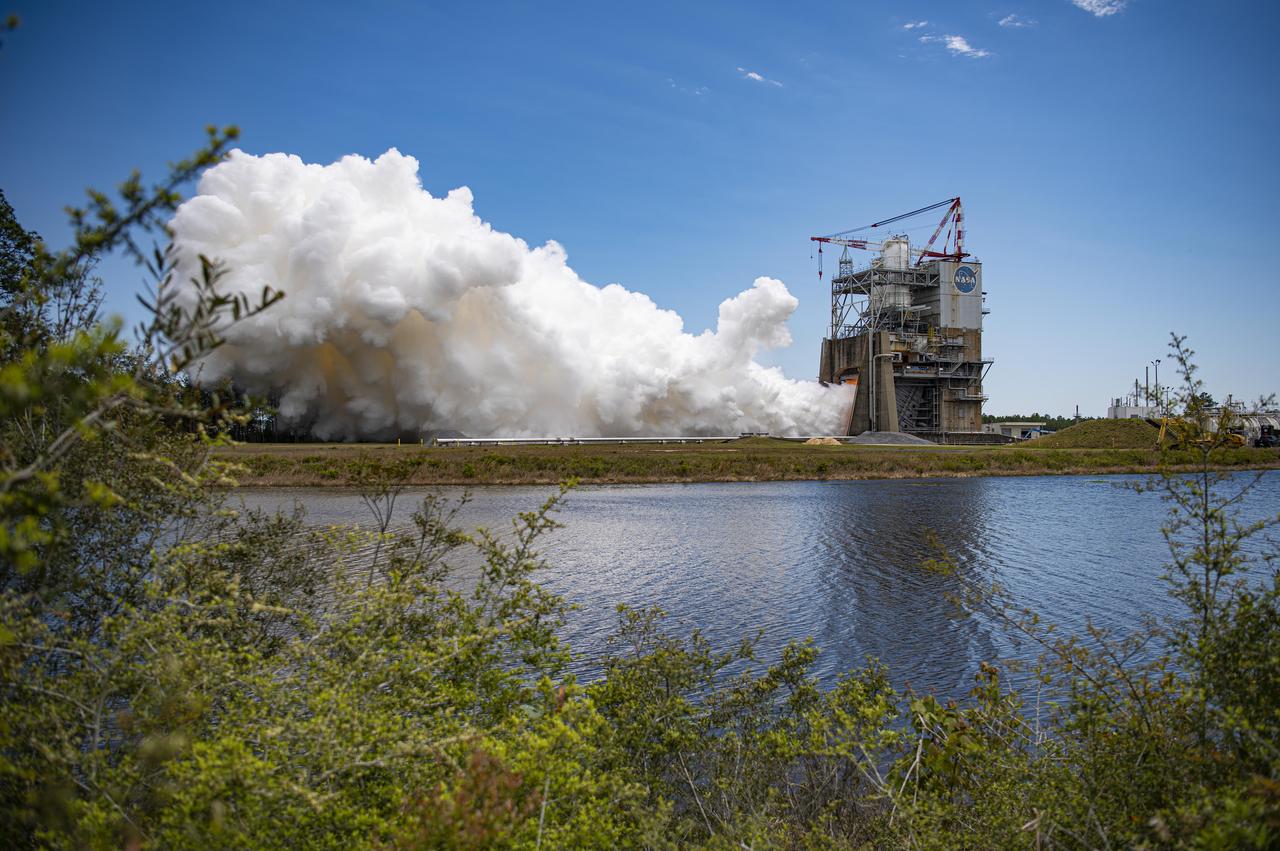
NASA conducted a full-duration RS-25 hot fire April 3 on the Fred Haise Test Stand at NASA’s Stennis Space Center near Bay St. Louis, Mississippi, achieving a major milestone for future Artemis flights of NASA’s SLS (Space Launch System) rocket. It marked the final test of a 12-test series to certify production of new RS-25 engines by lead contractor Aerojet Rocketdyne, an L3Harris Technologies company, to help power NASA’s SLS rocket on Artemis missions to the Moon and beyond, beginning with Artemis V.
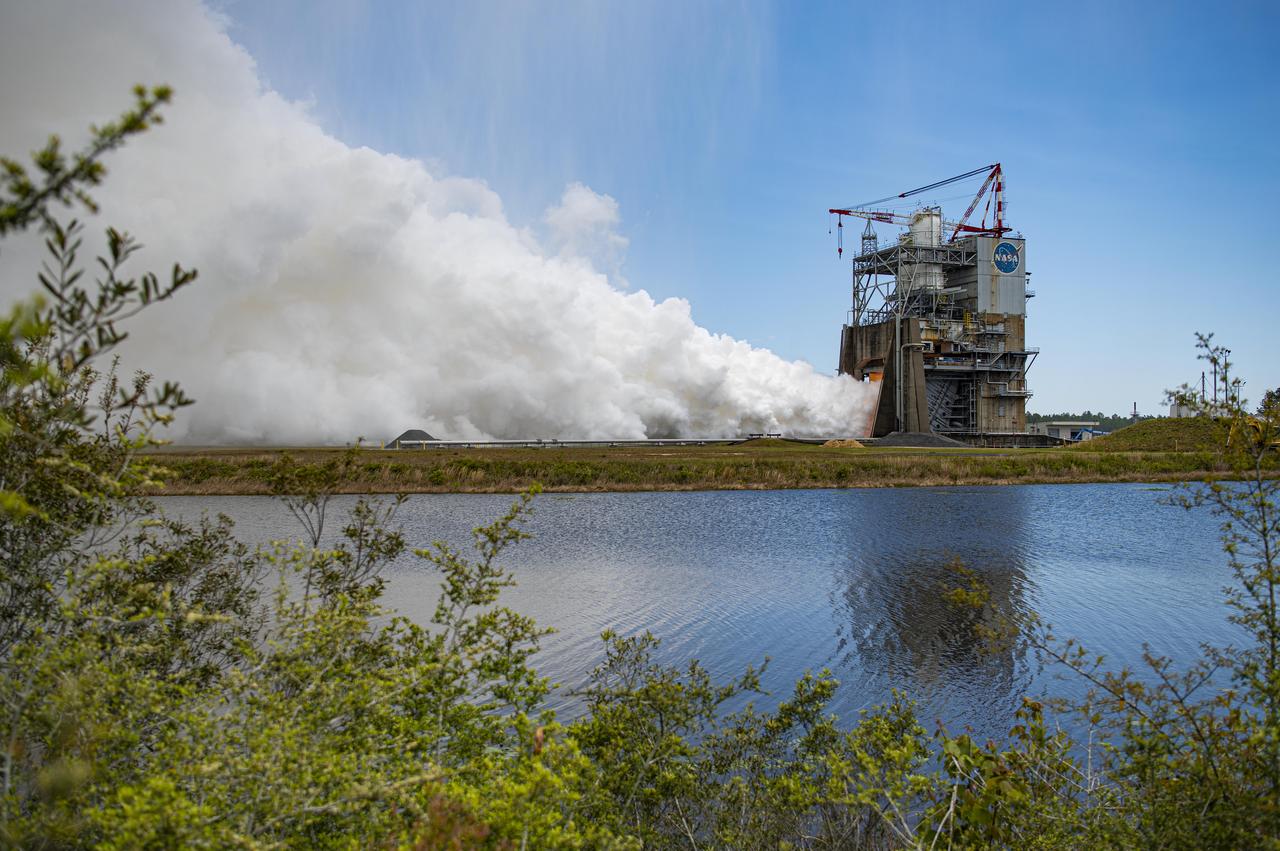
NASA conducted a full-duration RS-25 hot fire April 3 on the Fred Haise Test Stand at NASA’s Stennis Space Center near Bay St. Louis, Mississippi, achieving a major milestone for future Artemis flights of NASA’s SLS (Space Launch System) rocket. It marked the final test of a 12-test series to certify production of new RS-25 engines by lead contractor Aerojet Rocketdyne, an L3Harris Technologies company, to help power NASA’s SLS rocket on Artemis missions to the Moon and beyond, beginning with Artemis V.
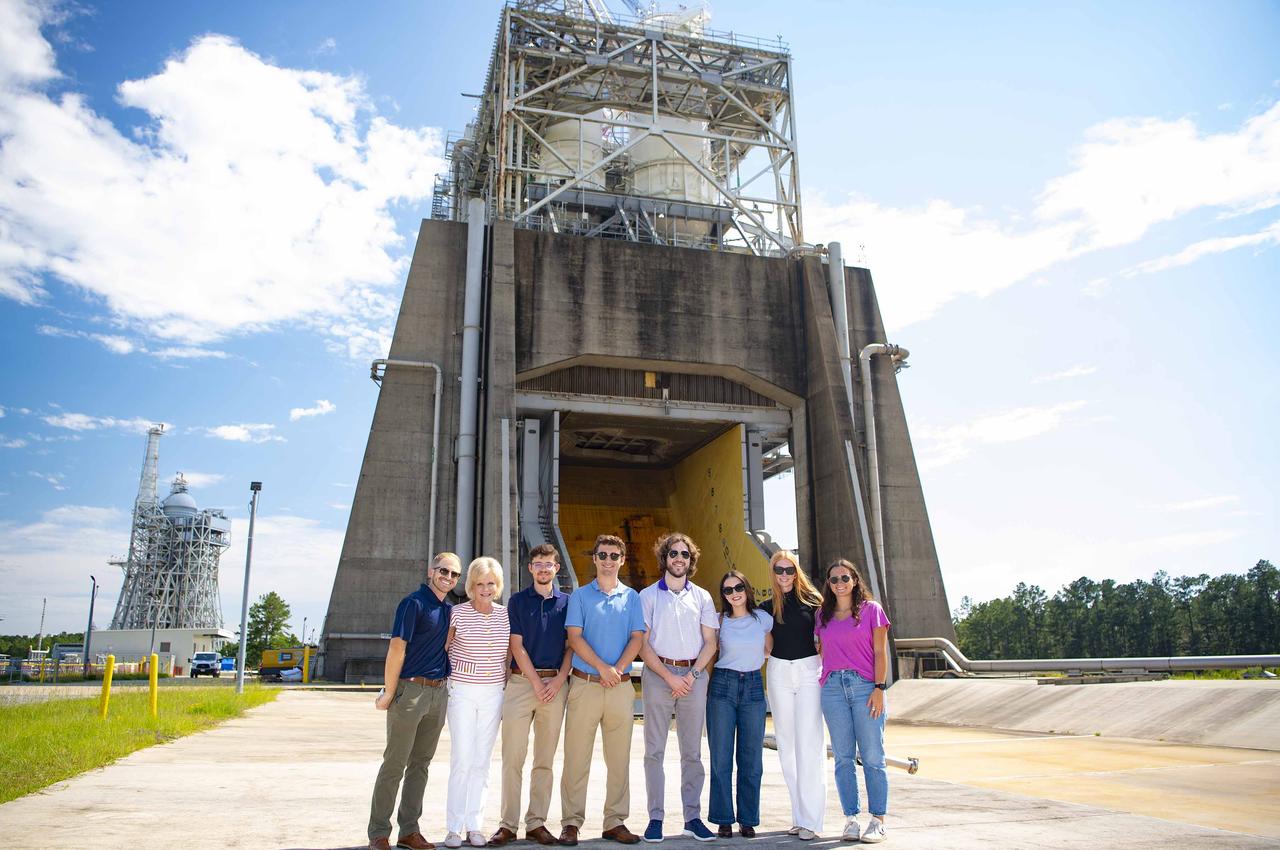
Legislative staff and interns from the office of U.S. Rep. Garrett Graves of Louisiana are pictured at the Fred Haise Test Stand at NASA Stennis on July 11. During the visit to the south Mississippi site, the group learned more about internship opportunities with NASA and NASA Stennis. In addition to touring the test complex where RS-25 engines are tested for future Artemis missions, the group visited the Aerojet Rocketdyne Engine Assembly Facility onsite. Aerojet Rocketdyne, an L3Harris Technologies company, manufactures RS-25 engines to help power NASA’s SLS (Space Launch System) rocket on Artemis missions to the Moon and beyond.
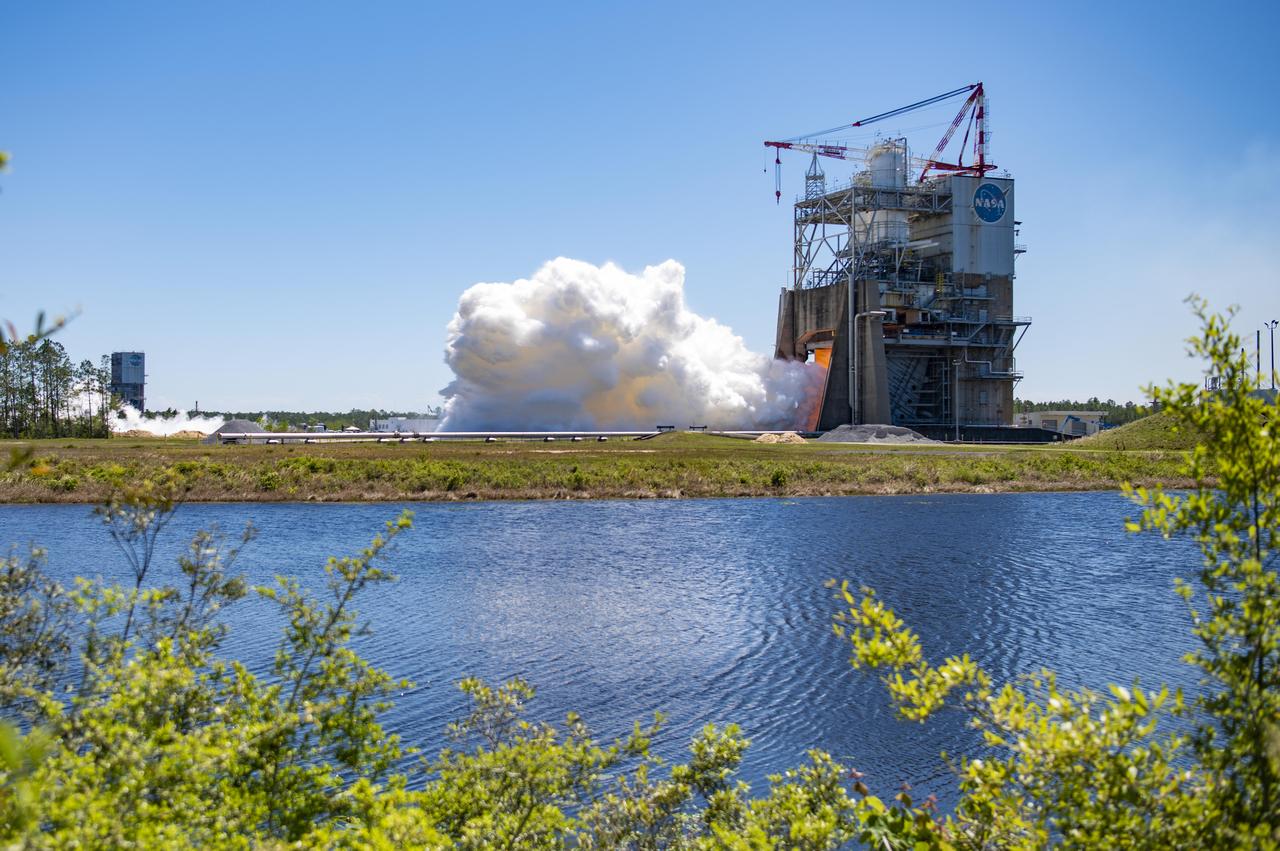
NASA conducted a full-duration RS-25 hot fire April 3 on the Fred Haise Test Stand at NASA’s Stennis Space Center near Bay St. Louis, Mississippi, achieving a major milestone for future Artemis flights of NASA’s SLS (Space Launch System) rocket. It marked the final test of a 12-test series to certify production of new RS-25 engines by lead contractor Aerojet Rocketdyne, an L3Harris Technologies company, to help power NASA’s SLS rocket on Artemis missions to the Moon and beyond, beginning with Artemis V.
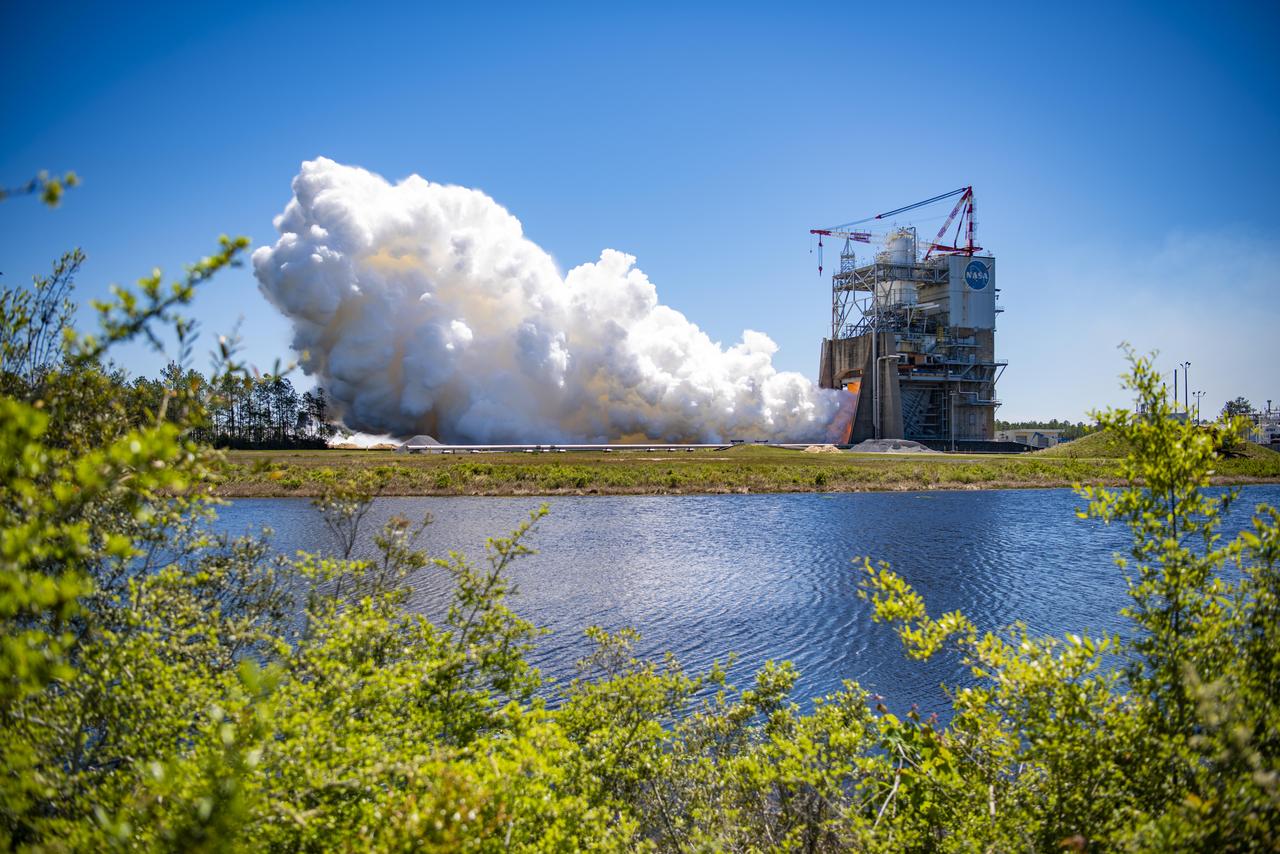
NASA conducted a full-duration RS-25 hot fire April 3 on the Fred Haise Test Stand at NASA’s Stennis Space Center near Bay St. Louis, Mississippi, achieving a major milestone for future Artemis flights of NASA’s SLS (Space Launch System) rocket. It marked the final test of a 12-test series to certify production of new RS-25 engines by lead contractor Aerojet Rocketdyne, an L3Harris Technologies company, to help power NASA’s SLS rocket on Artemis missions to the Moon and beyond, beginning with Artemis V.
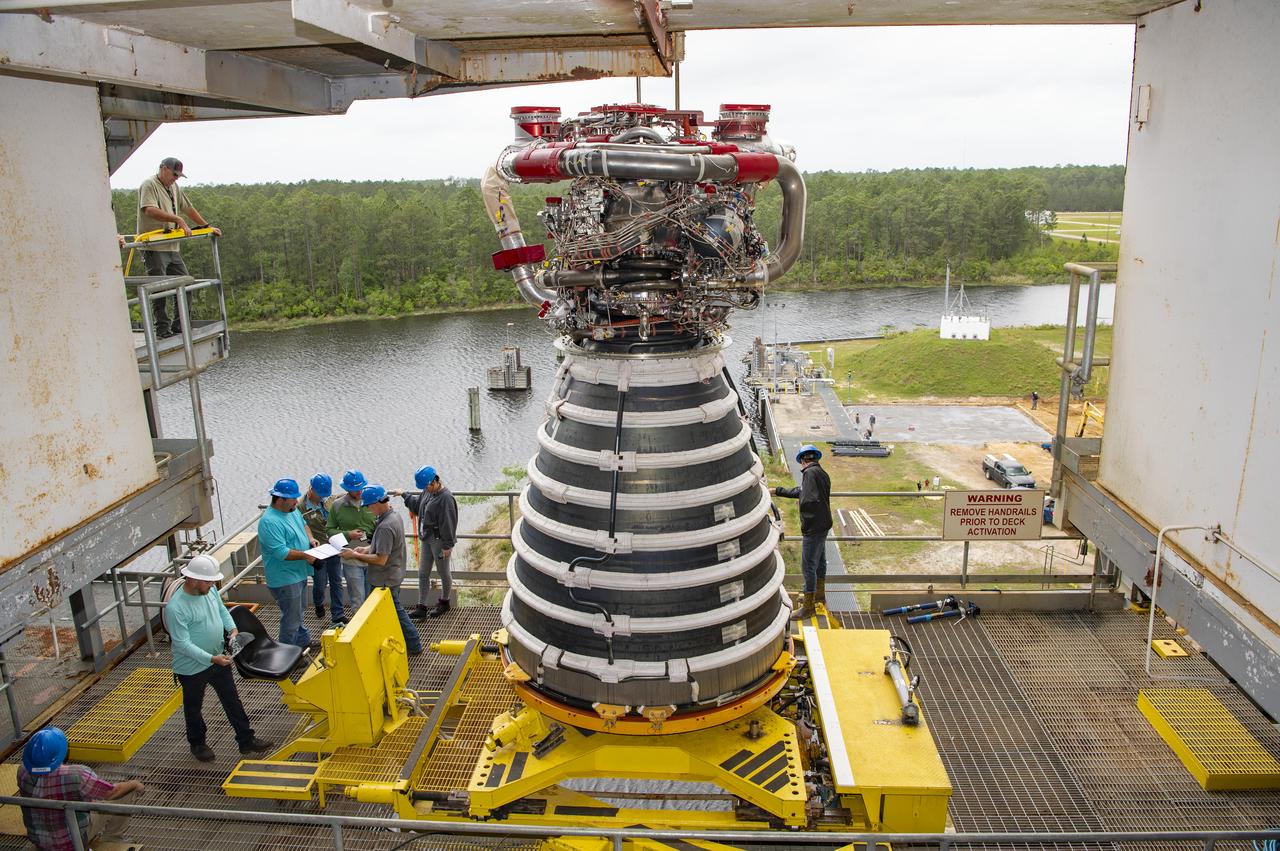
A work crew at NASA’s Stennis Space Center near Bay St. Louis, Mississippi removes RS-25 developmental engine E0525 from the Fred Haise Test Stand on April 9. Removal of the engine follows completion of the second and final 12-test series for lead engines contractor Aerojet Rocketdyne, an L3Harris Technologies company, to certify and build new RS-25 engines for NASA’s SLS (Space Launch System) rockets that will power future lunar missions, beginning with Artemis V. Through Artemis, NASA will establish the foundation for long-term scientific exploration at the Moon; land the first woman, first person of color, and first international partner astronaut on the lunar surface; and prepare for human expeditions to Mars for the benefit of all.
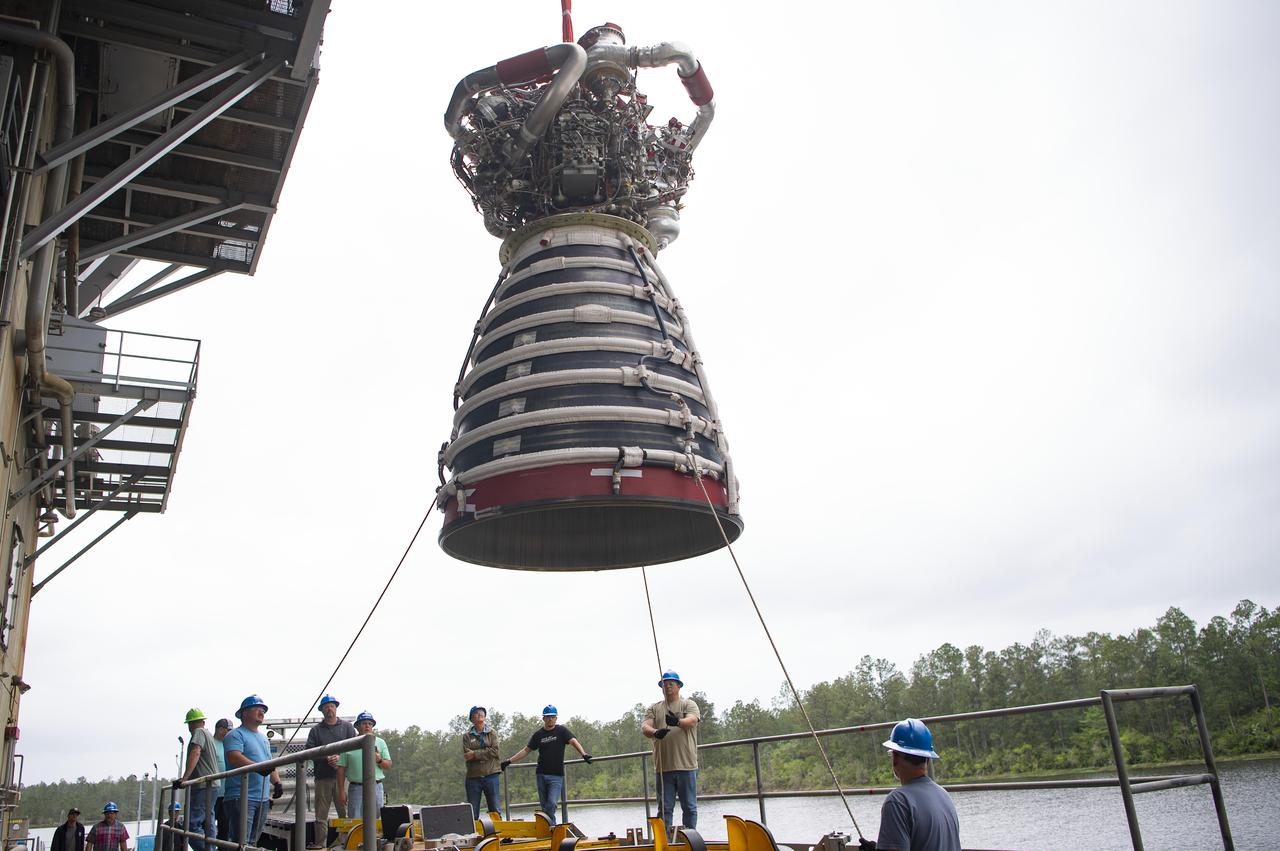
A work crew at NASA’s Stennis Space Center near Bay St. Louis, Mississippi removes RS-25 developmental engine E0525 from the Fred Haise Test Stand on April 9. Removal of the engine follows completion of the second and final 12-test series for lead engines contractor Aerojet Rocketdyne, an L3Harris Technologies company, to certify and build new RS-25 engines for NASA’s SLS (Space Launch System) rockets that will power future lunar missions, beginning with Artemis V. Through Artemis, NASA will establish the foundation for long-term scientific exploration at the Moon; land the first woman, first person of color, and first international partner astronaut on the lunar surface; and prepare for human expeditions to Mars for the benefit of all.
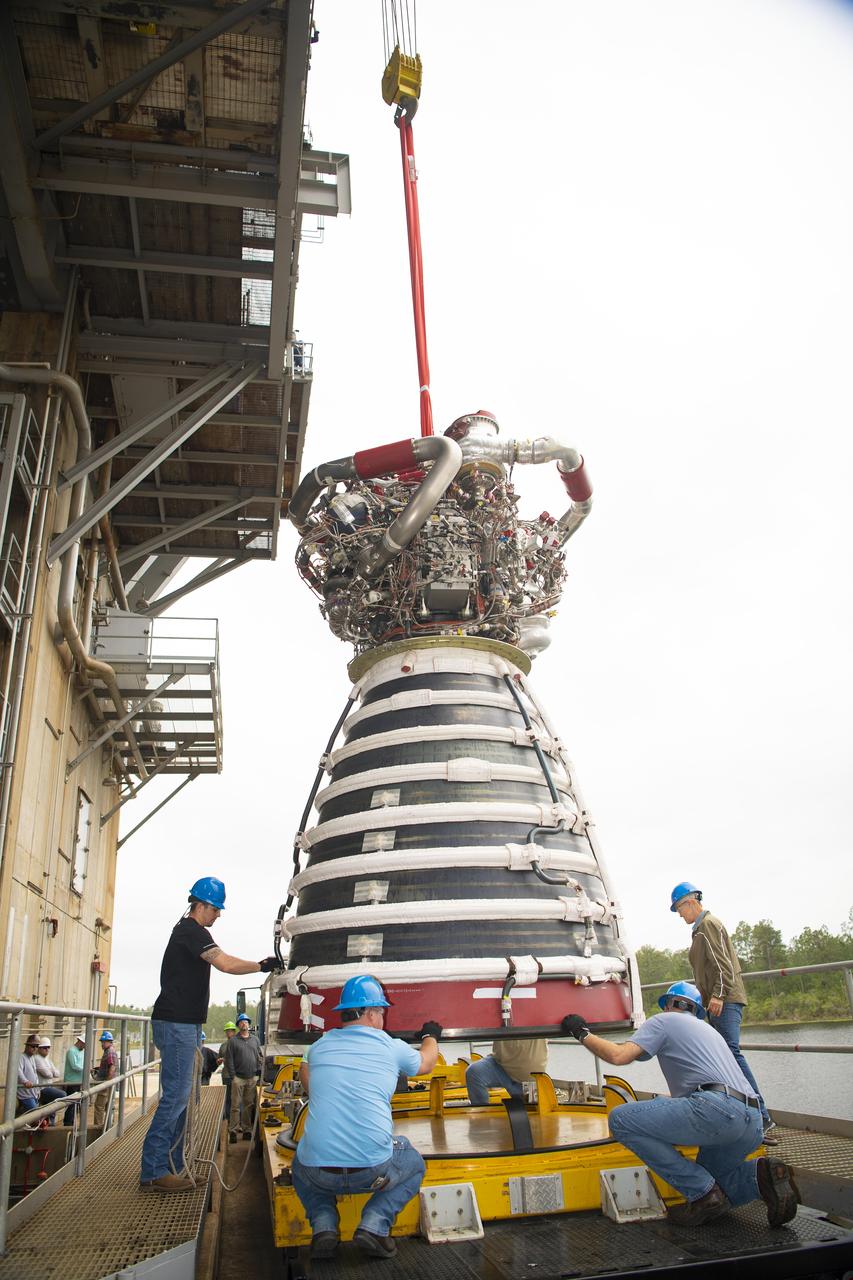
A work crew at NASA’s Stennis Space Center near Bay St. Louis, Mississippi removes RS-25 developmental engine E0525 from the Fred Haise Test Stand on April 9. Removal of the engine follows completion of the second and final 12-test series for lead engines contractor Aerojet Rocketdyne, an L3Harris Technologies company, to certify and build new RS-25 engines for NASA’s SLS (Space Launch System) rockets that will power future lunar missions, beginning with Artemis V. Through Artemis, NASA will establish the foundation for long-term scientific exploration at the Moon; land the first woman, first person of color, and first international partner astronaut on the lunar surface; and prepare for human expeditions to Mars for the benefit of all.
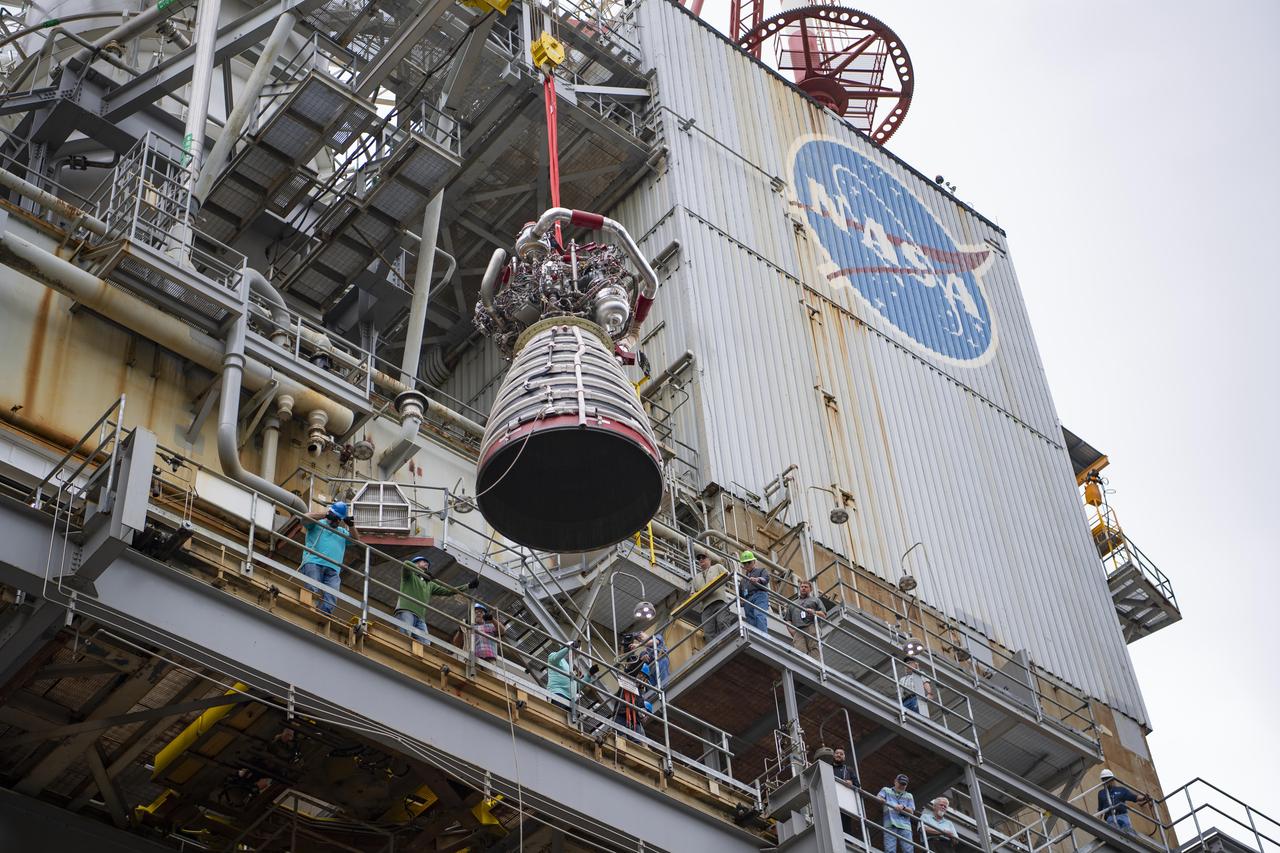
A work crew at NASA’s Stennis Space Center near Bay St. Louis, Mississippi removes RS-25 developmental engine E0525 from the Fred Haise Test Stand on April 9. Removal of the engine follows completion of the second and final 12-test series for lead engines contractor Aerojet Rocketdyne, an L3Harris Technologies company, to certify and build new RS-25 engines for NASA’s SLS (Space Launch System) rockets that will power future lunar missions, beginning with Artemis V. Through Artemis, NASA will establish the foundation for long-term scientific exploration at the Moon; land the first woman, first person of color, and first international partner astronaut on the lunar surface; and prepare for human expeditions to Mars for the benefit of all.

These photos and videos show how technicians at NASA’s Michoud Assembly Facility in New Orleans installed the third and fourth RS-25 engines onto the core stage for the agency’s SLS (Space Launch System) rocket that will help power NASA’s first crewed Artemis mission to the Moon. Technicians added the first engine to the SLS core stage Sept. 11. The second engine was installed onto the stage Sept. 15 with the third and fourth engines following Sept. 19 and Sept. 20. Engineers consider the engines to be “soft” mated to the rocket stage. Technicians with NASA, Aerojet Rocketdyne, an L3Harris Technologies company and the RS-25 engines lead contractor, along with Boeing, the core stage lead contractor, will now focus efforts on the complex tax of fully securing the engines to the stage and integrating the propulsion and electrical systems within the structure. NASA is working to land the first woman and first person of color on the Moon under Artemis. SLS is part of NASA’s backbone for deep space exploration, along with Orion and the Gateway in orbit around the Moon. SLS is the only rocket that can send Orion, astronauts, and supplies to the Moon in a single mission.

These photos and videos show how technicians at NASA’s Michoud Assembly Facility in New Orleans installed the second of four RS-25 engines onto the core stage for the agency’s SLS (Space Launch System) rocket that will help power NASA’s first crewed Artemis mission to the Moon. Crews added the second engine, with the serial number E2047 in position one, to the stage Sept. 15. The serial number for the engine installed Sept. 11 in position two on the core stage is E2059. Engineers consider the engines to be “soft” mated to the rocket stage. Following soft mate of all four engines, technicians with NASA, Aerojet Rocketdyne, an L3Harris Technologies company and the RS-25 engines lead contractor, along with Boeing, the core stage lead contractor, will fully secure the engines to the stage and integrate the propulsion and electrical systems within the structure. All four RS-25 engines are located at the base of the core stage within the engine section. NASA is working to land the first woman and first person of color on the Moon under Artemis. SLS is part of NASA’s backbone for deep space exploration, along with Orion and the Gateway in orbit around the Moon. SLS is the only rocket that can send Orion, astronauts, and supplies to the Moon in a single mission.

These photos and videos show how technicians at NASA’s Michoud Assembly Facility in New Orleans installed the third and fourth RS-25 engines onto the core stage for the agency’s SLS (Space Launch System) rocket that will help power NASA’s first crewed Artemis mission to the Moon. Technicians added the first engine to the SLS core stage Sept. 11. The second engine was installed onto the stage Sept. 15 with the third and fourth engines following Sept. 19 and Sept. 20. Engineers consider the engines to be “soft” mated to the rocket stage. Technicians with NASA, Aerojet Rocketdyne, an L3Harris Technologies company and the RS-25 engines lead contractor, along with Boeing, the core stage lead contractor, will now focus efforts on the complex tax of fully securing the engines to the stage and integrating the propulsion and electrical systems within the structure. NASA is working to land the first woman and first person of color on the Moon under Artemis. SLS is part of NASA’s backbone for deep space exploration, along with Orion and the Gateway in orbit around the Moon. SLS is the only rocket that can send Orion, astronauts, and supplies to the Moon in a single mission.

These photos and videos show how technicians at NASA’s Michoud Assembly Facility in New Orleans installed the third and fourth RS-25 engines onto the core stage for the agency’s SLS (Space Launch System) rocket that will help power NASA’s first crewed Artemis mission to the Moon. Technicians added the first engine to the SLS core stage Sept. 11. The second engine was installed onto the stage Sept. 15 with the third and fourth engines following Sept. 19 and Sept. 20. Engineers consider the engines to be “soft” mated to the rocket stage. Technicians with NASA, Aerojet Rocketdyne, an L3Harris Technologies company and the RS-25 engines lead contractor, along with Boeing, the core stage lead contractor, will now focus efforts on the complex tax of fully securing the engines to the stage and integrating the propulsion and electrical systems within the structure. NASA is working to land the first woman and first person of color on the Moon under Artemis. SLS is part of NASA’s backbone for deep space exploration, along with Orion and the Gateway in orbit around the Moon. SLS is the only rocket that can send Orion, astronauts, and supplies to the Moon in a single mission.
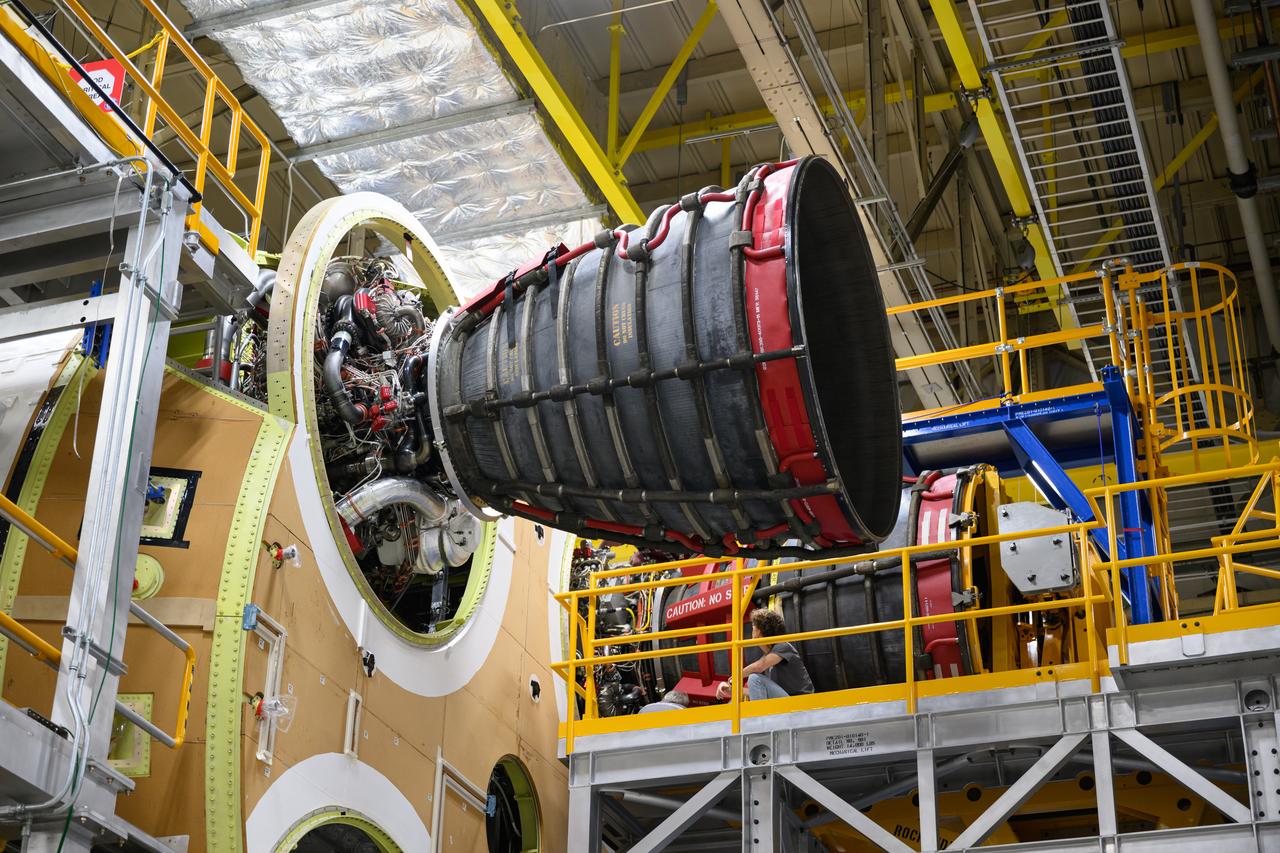
These photos and videos show how technicians at NASA’s Michoud Assembly Facility in New Orleans installed the second of four RS-25 engines onto the core stage for the agency’s SLS (Space Launch System) rocket that will help power NASA’s first crewed Artemis mission to the Moon. Crews added the second engine, with the serial number E2047 in position one, to the stage Sept. 15. The serial number for the engine installed Sept. 11 in position two on the core stage is E2059. Engineers consider the engines to be “soft” mated to the rocket stage. Following soft mate of all four engines, technicians with NASA, Aerojet Rocketdyne, an L3Harris Technologies company and the RS-25 engines lead contractor, along with Boeing, the core stage lead contractor, will fully secure the engines to the stage and integrate the propulsion and electrical systems within the structure. All four RS-25 engines are located at the base of the core stage within the engine section. NASA is working to land the first woman and first person of color on the Moon under Artemis. SLS is part of NASA’s backbone for deep space exploration, along with Orion and the Gateway in orbit around the Moon. SLS is the only rocket that can send Orion, astronauts, and supplies to the Moon in a single mission.

These photos and videos show how technicians at NASA’s Michoud Assembly Facility in New Orleans installed the third and fourth RS-25 engines onto the core stage for the agency’s SLS (Space Launch System) rocket that will help power NASA’s first crewed Artemis mission to the Moon. Technicians added the first engine to the SLS core stage Sept. 11. The second engine was installed onto the stage Sept. 15 with the third and fourth engines following Sept. 19 and Sept. 20. Engineers consider the engines to be “soft” mated to the rocket stage. Technicians with NASA, Aerojet Rocketdyne, an L3Harris Technologies company and the RS-25 engines lead contractor, along with Boeing, the core stage lead contractor, will now focus efforts on the complex tax of fully securing the engines to the stage and integrating the propulsion and electrical systems within the structure. NASA is working to land the first woman and first person of color on the Moon under Artemis. SLS is part of NASA’s backbone for deep space exploration, along with Orion and the Gateway in orbit around the Moon. SLS is the only rocket that can send Orion, astronauts, and supplies to the Moon in a single mission.
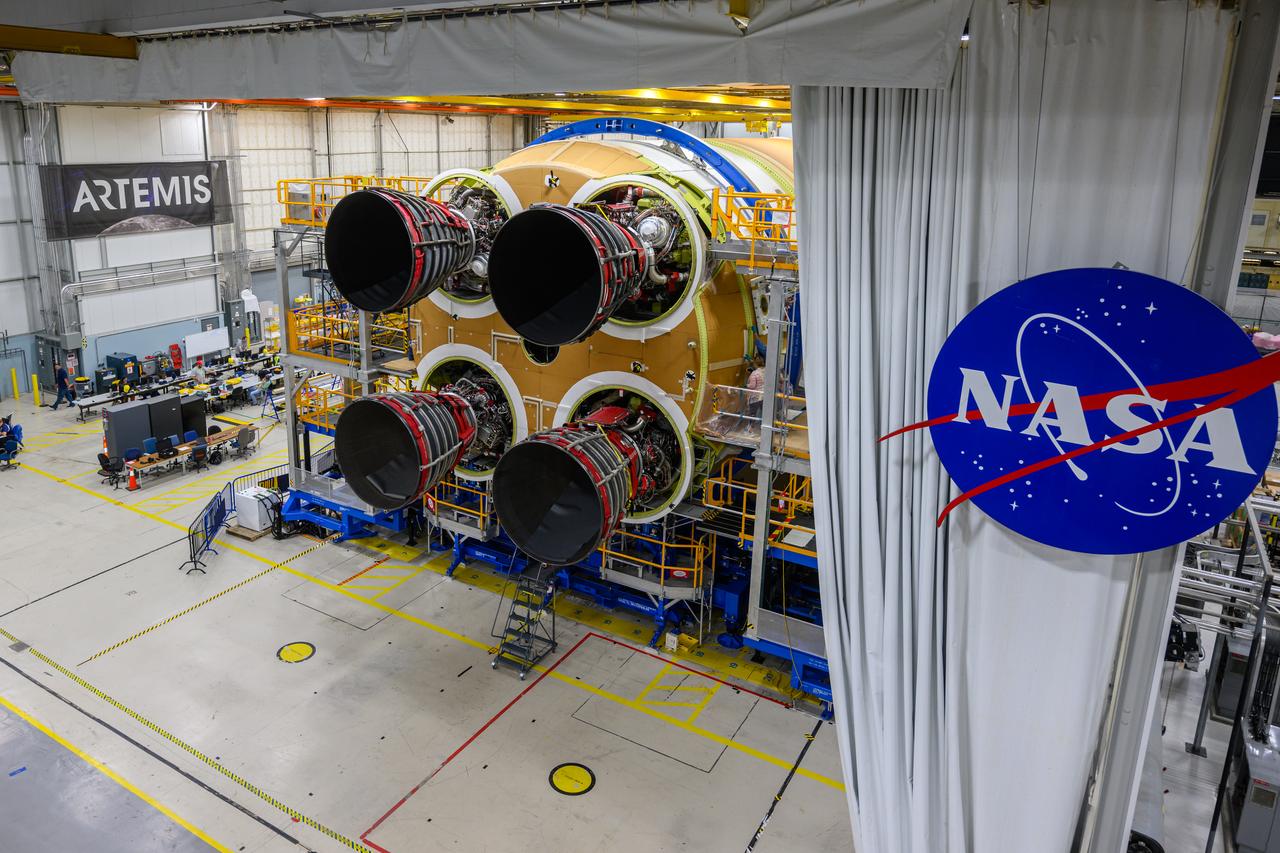
These photos and videos show how technicians at NASA’s Michoud Assembly Facility in New Orleans installed the third and fourth RS-25 engines onto the core stage for the agency’s SLS (Space Launch System) rocket that will help power NASA’s first crewed Artemis mission to the Moon. Technicians added the first engine to the SLS core stage Sept. 11. The second engine was installed onto the stage Sept. 15 with the third and fourth engines following Sept. 19 and Sept. 20. Engineers consider the engines to be “soft” mated to the rocket stage. Technicians with NASA, Aerojet Rocketdyne, an L3Harris Technologies company and the RS-25 engines lead contractor, along with Boeing, the core stage lead contractor, will now focus efforts on the complex tax of fully securing the engines to the stage and integrating the propulsion and electrical systems within the structure. NASA is working to land the first woman and first person of color on the Moon under Artemis. SLS is part of NASA’s backbone for deep space exploration, along with Orion and the Gateway in orbit around the Moon. SLS is the only rocket that can send Orion, astronauts, and supplies to the Moon in a single mission.

: These photos and videos show how technicians at NASA’s Michoud Assembly Facility in New Orleans installed the third and fourth RS-25 engines onto the core stage for the agency’s SLS (Space Launch System) rocket that will help power NASA’s first crewed Artemis mission to the Moon. Technicians added the first engine to the SLS core stage Sept. 11. The second engine was installed onto the stage Sept. 15 with the third and fourth engines following Sept. 19 and Sept. 20. Engineers consider the engines to be “soft” mated to the rocket stage. Technicians with NASA, Aerojet Rocketdyne, an L3Harris Technologies company and the RS-25 engines lead contractor, along with Boeing, the core stage lead contractor, will now focus efforts on the complex tax of fully securing the engines to the stage and integrating the propulsion and electrical systems within the structure. NASA is working to land the first woman and first person of color on the Moon under Artemis. SLS is part of NASA’s backbone for deep space exploration, along with Orion and the Gateway in orbit around the Moon. SLS is the only rocket that can send Orion, astronauts, and supplies to the Moon in a single mission.
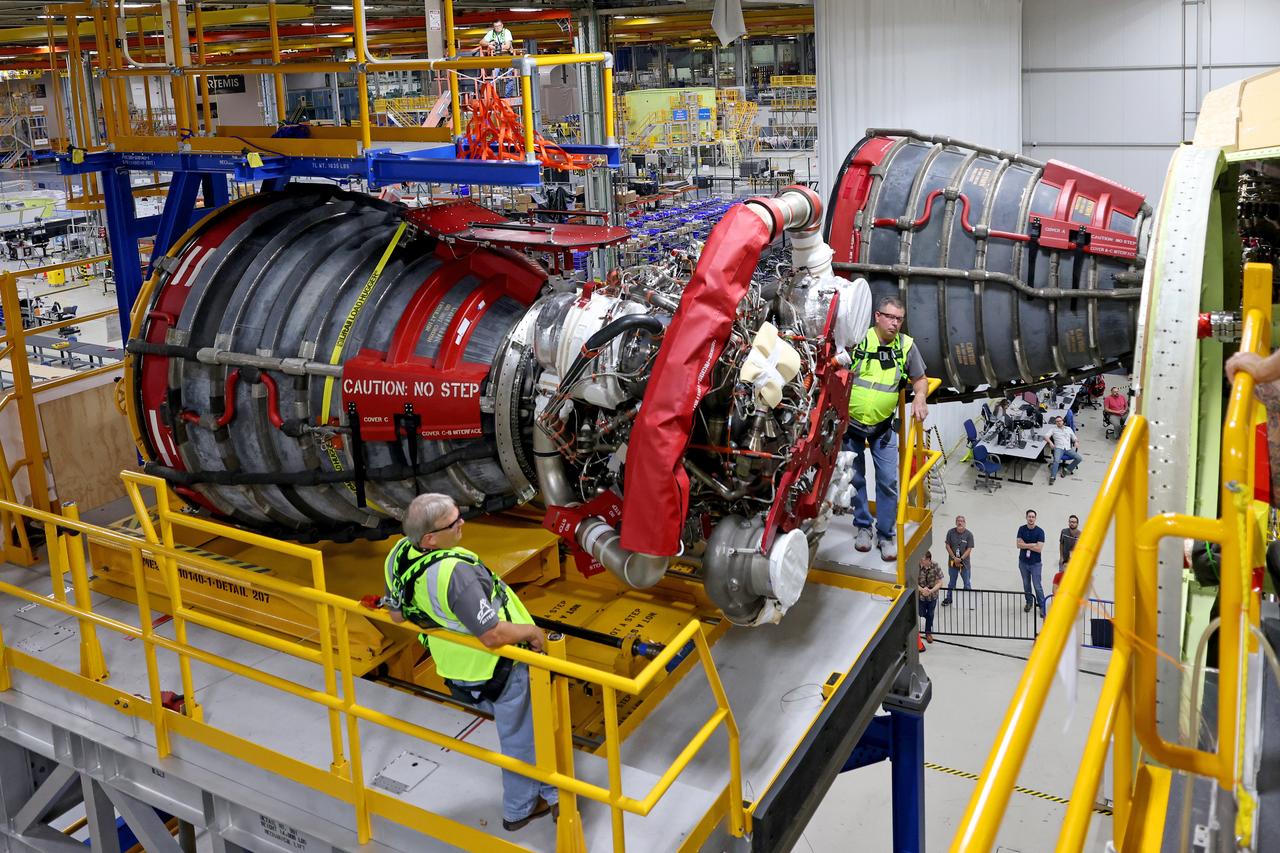
These photos and videos show how technicians at NASA’s Michoud Assembly Facility in New Orleans installed the second of four RS-25 engines onto the core stage for the agency’s SLS (Space Launch System) rocket that will help power NASA’s first crewed Artemis mission to the Moon. Crews added the second engine, with the serial number E2047 in position one, to the stage Sept. 15. The serial number for the engine installed Sept. 11 in position two on the core stage is E2059. Engineers consider the engines to be “soft” mated to the rocket stage. Following soft mate of all four engines, technicians with NASA, Aerojet Rocketdyne, an L3Harris Technologies company and the RS-25 engines lead contractor, along with Boeing, the core stage lead contractor, will fully secure the engines to the stage and integrate the propulsion and electrical systems within the structure. All four RS-25 engines are located at the base of the core stage within the engine section. NASA is working to land the first woman and first person of color on the Moon under Artemis. SLS is part of NASA’s backbone for deep space exploration, along with Orion and the Gateway in orbit around the Moon. SLS is the only rocket that can send Orion, astronauts, and supplies to the Moon in a single mission.
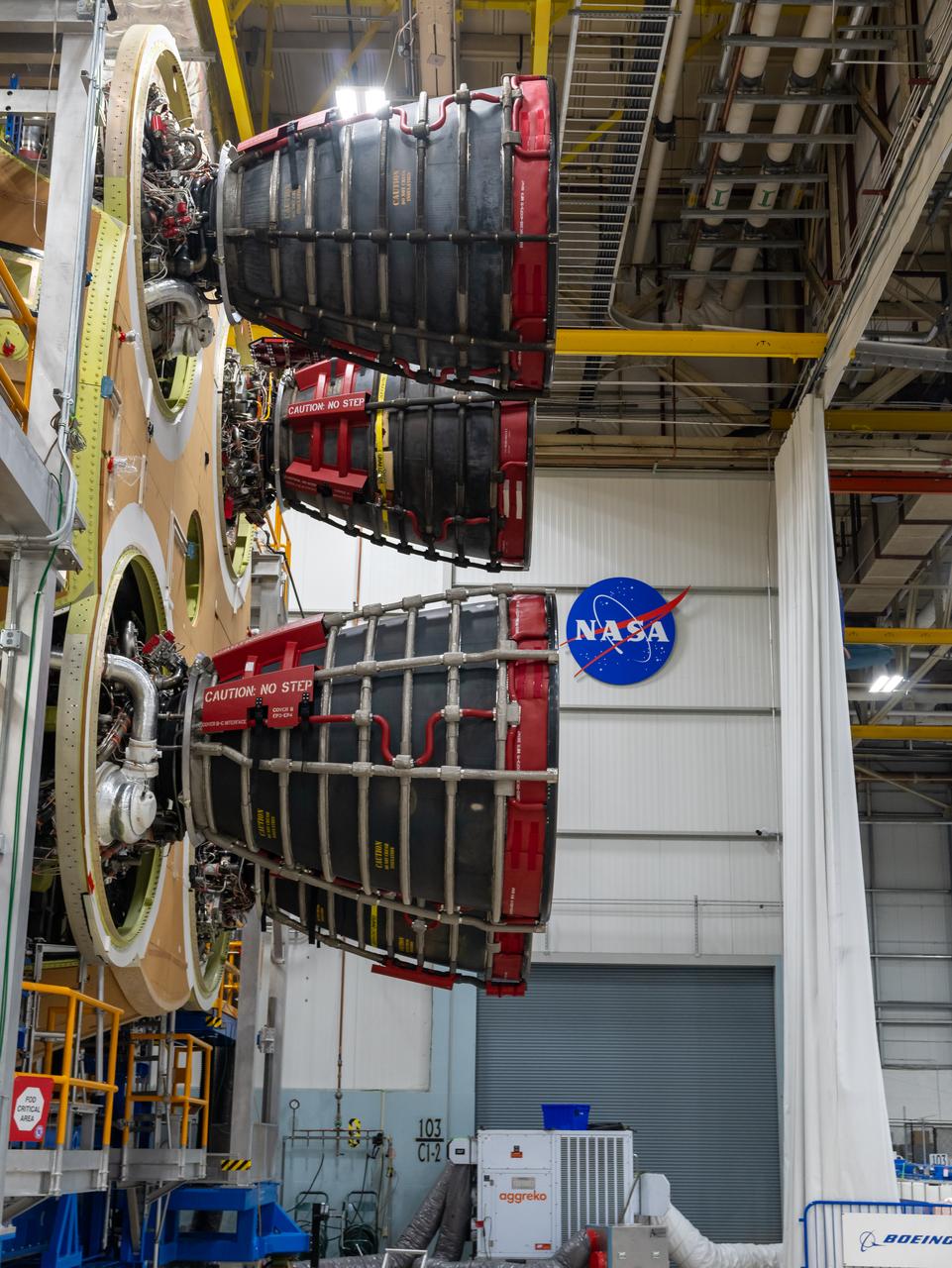
These photos and videos show how technicians at NASA’s Michoud Assembly Facility in New Orleans installed the third and fourth RS-25 engines onto the core stage for the agency’s SLS (Space Launch System) rocket that will help power NASA’s first crewed Artemis mission to the Moon. Technicians added the first engine to the SLS core stage Sept. 11. The second engine was installed onto the stage Sept. 15 with the third and fourth engines following Sept. 19 and Sept. 20. Engineers consider the engines to be “soft” mated to the rocket stage. Technicians with NASA, Aerojet Rocketdyne, an L3Harris Technologies company and the RS-25 engines lead contractor, along with Boeing, the core stage lead contractor, will now focus efforts on the complex tax of fully securing the engines to the stage and integrating the propulsion and electrical systems within the structure. NASA is working to land the first woman and first person of color on the Moon under Artemis. SLS is part of NASA’s backbone for deep space exploration, along with Orion and the Gateway in orbit around the Moon. SLS is the only rocket that can send Orion, astronauts, and supplies to the Moon in a single mission.

These photos and videos show how technicians at NASA’s Michoud Assembly Facility in New Orleans installed the third and fourth RS-25 engines onto the core stage for the agency’s SLS (Space Launch System) rocket that will help power NASA’s first crewed Artemis mission to the Moon. Technicians added the first engine to the SLS core stage Sept. 11. The second engine was installed onto the stage Sept. 15 with the third and fourth engines following Sept. 19 and Sept. 20. Engineers consider the engines to be “soft” mated to the rocket stage. Technicians with NASA, Aerojet Rocketdyne, an L3Harris Technologies company and the RS-25 engines lead contractor, along with Boeing, the core stage lead contractor, will now focus efforts on the complex tax of fully securing the engines to the stage and integrating the propulsion and electrical systems within the structure. NASA is working to land the first woman and first person of color on the Moon under Artemis. SLS is part of NASA’s backbone for deep space exploration, along with Orion and the Gateway in orbit around the Moon. SLS is the only rocket that can send Orion, astronauts, and supplies to the Moon in a single mission.
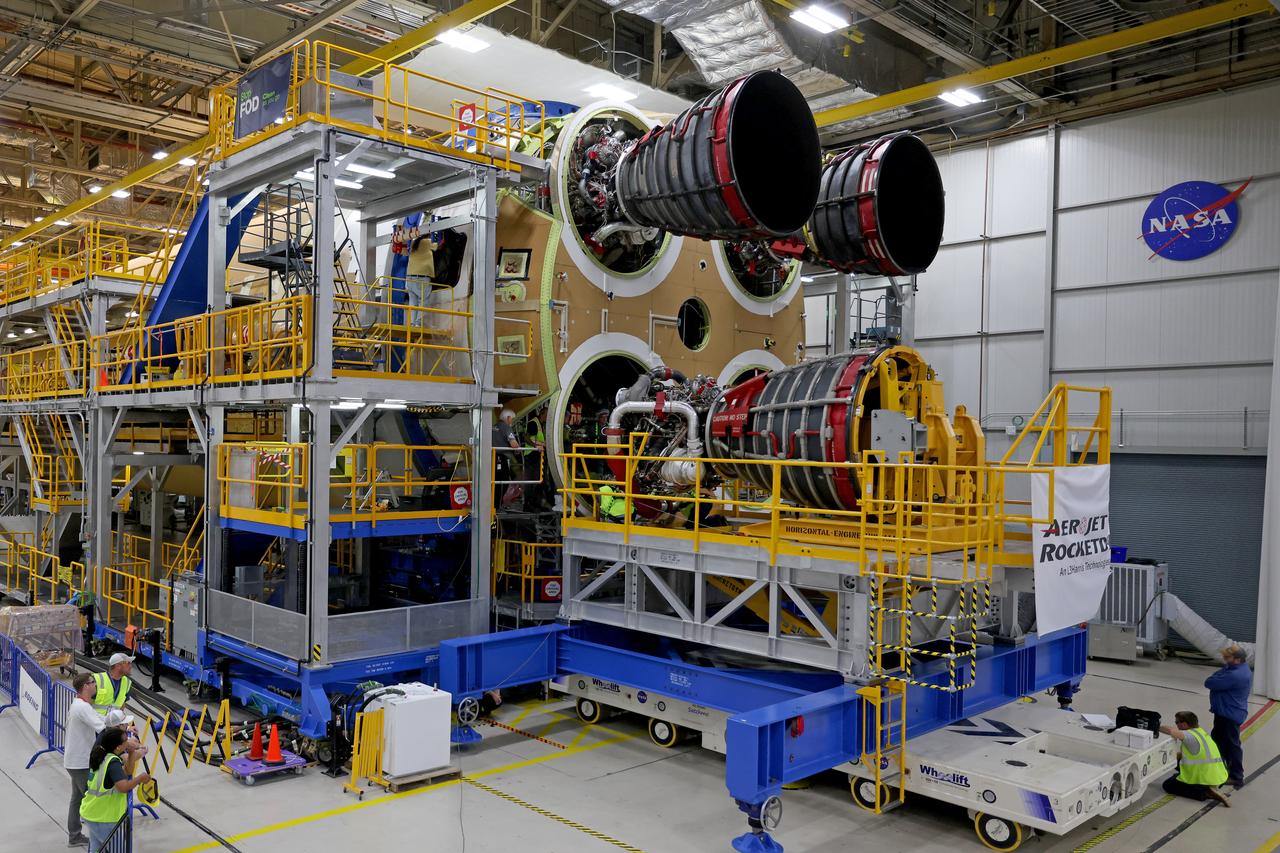
These photos and videos show how technicians at NASA’s Michoud Assembly Facility in New Orleans installed the third and fourth RS-25 engines onto the core stage for the agency’s SLS (Space Launch System) rocket that will help power NASA’s first crewed Artemis mission to the Moon. Technicians added the first engine to the SLS core stage Sept. 11. The second engine was installed onto the stage Sept. 15 with the third and fourth engines following Sept. 19 and Sept. 20. Engineers consider the engines to be “soft” mated to the rocket stage. Technicians with NASA, Aerojet Rocketdyne, an L3Harris Technologies company and the RS-25 engines lead contractor, along with Boeing, the core stage lead contractor, will now focus efforts on the complex tax of fully securing the engines to the stage and integrating the propulsion and electrical systems within the structure. NASA is working to land the first woman and first person of color on the Moon under Artemis. SLS is part of NASA’s backbone for deep space exploration, along with Orion and the Gateway in orbit around the Moon. SLS is the only rocket that can send Orion, astronauts, and supplies to the Moon in a single mission.
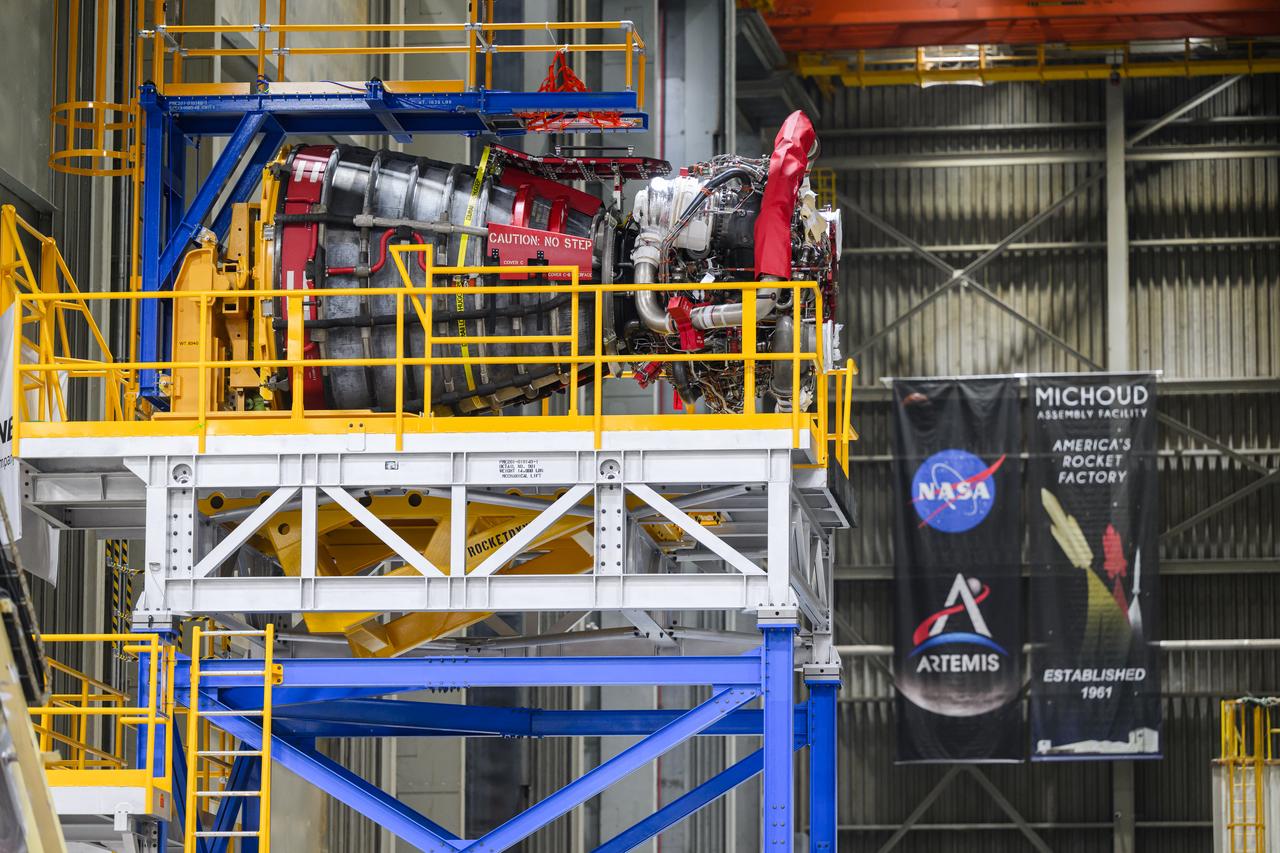
These photos and videos show how technicians at NASA’s Michoud Assembly Facility in New Orleans installed the second of four RS-25 engines onto the core stage for the agency’s SLS (Space Launch System) rocket that will help power NASA’s first crewed Artemis mission to the Moon. Crews added the second engine, with the serial number E2047 in position one, to the stage Sept. 15. The serial number for the engine installed Sept. 11 in position two on the core stage is E2059. Engineers consider the engines to be “soft” mated to the rocket stage. Following soft mate of all four engines, technicians with NASA, Aerojet Rocketdyne, an L3Harris Technologies company and the RS-25 engines lead contractor, along with Boeing, the core stage lead contractor, will fully secure the engines to the stage and integrate the propulsion and electrical systems within the structure. All four RS-25 engines are located at the base of the core stage within the engine section. NASA is working to land the first woman and first person of color on the Moon under Artemis. SLS is part of NASA’s backbone for deep space exploration, along with Orion and the Gateway in orbit around the Moon. SLS is the only rocket that can send Orion, astronauts, and supplies to the Moon in a single mission.

These photos and videos show how technicians at NASA’s Michoud Assembly Facility in New Orleans installed the third and fourth RS-25 engines onto the core stage for the agency’s SLS (Space Launch System) rocket that will help power NASA’s first crewed Artemis mission to the Moon. Technicians added the first engine to the SLS core stage Sept. 11. The second engine was installed onto the stage Sept. 15 with the third and fourth engines following Sept. 19 and Sept. 20. Engineers consider the engines to be “soft” mated to the rocket stage. Technicians with NASA, Aerojet Rocketdyne, an L3Harris Technologies company and the RS-25 engines lead contractor, along with Boeing, the core stage lead contractor, will now focus efforts on the complex tax of fully securing the engines to the stage and integrating the propulsion and electrical systems within the structure. NASA is working to land the first woman and first person of color on the Moon under Artemis. SLS is part of NASA’s backbone for deep space exploration, along with Orion and the Gateway in orbit around the Moon. SLS is the only rocket that can send Orion, astronauts, and supplies to the Moon in a single mission.
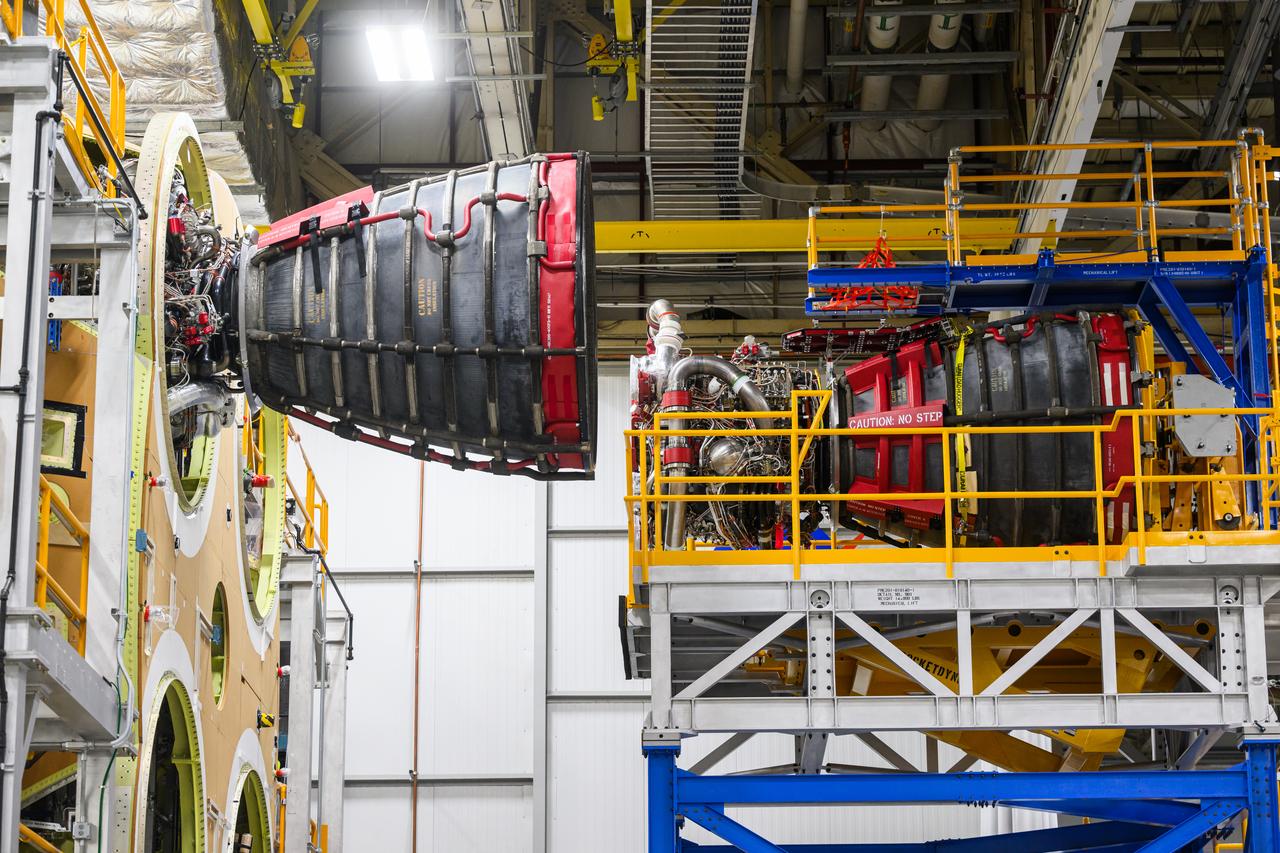
These photos and videos show how technicians at NASA’s Michoud Assembly Facility in New Orleans installed the second of four RS-25 engines onto the core stage for the agency’s SLS (Space Launch System) rocket that will help power NASA’s first crewed Artemis mission to the Moon. Crews added the second engine, with the serial number E2047 in position one, to the stage Sept. 15. The serial number for the engine installed Sept. 11 in position two on the core stage is E2059. Engineers consider the engines to be “soft” mated to the rocket stage. Following soft mate of all four engines, technicians with NASA, Aerojet Rocketdyne, an L3Harris Technologies company and the RS-25 engines lead contractor, along with Boeing, the core stage lead contractor, will fully secure the engines to the stage and integrate the propulsion and electrical systems within the structure. All four RS-25 engines are located at the base of the core stage within the engine section. NASA is working to land the first woman and first person of color on the Moon under Artemis. SLS is part of NASA’s backbone for deep space exploration, along with Orion and the Gateway in orbit around the Moon. SLS is the only rocket that can send Orion, astronauts, and supplies to the Moon in a single mission.
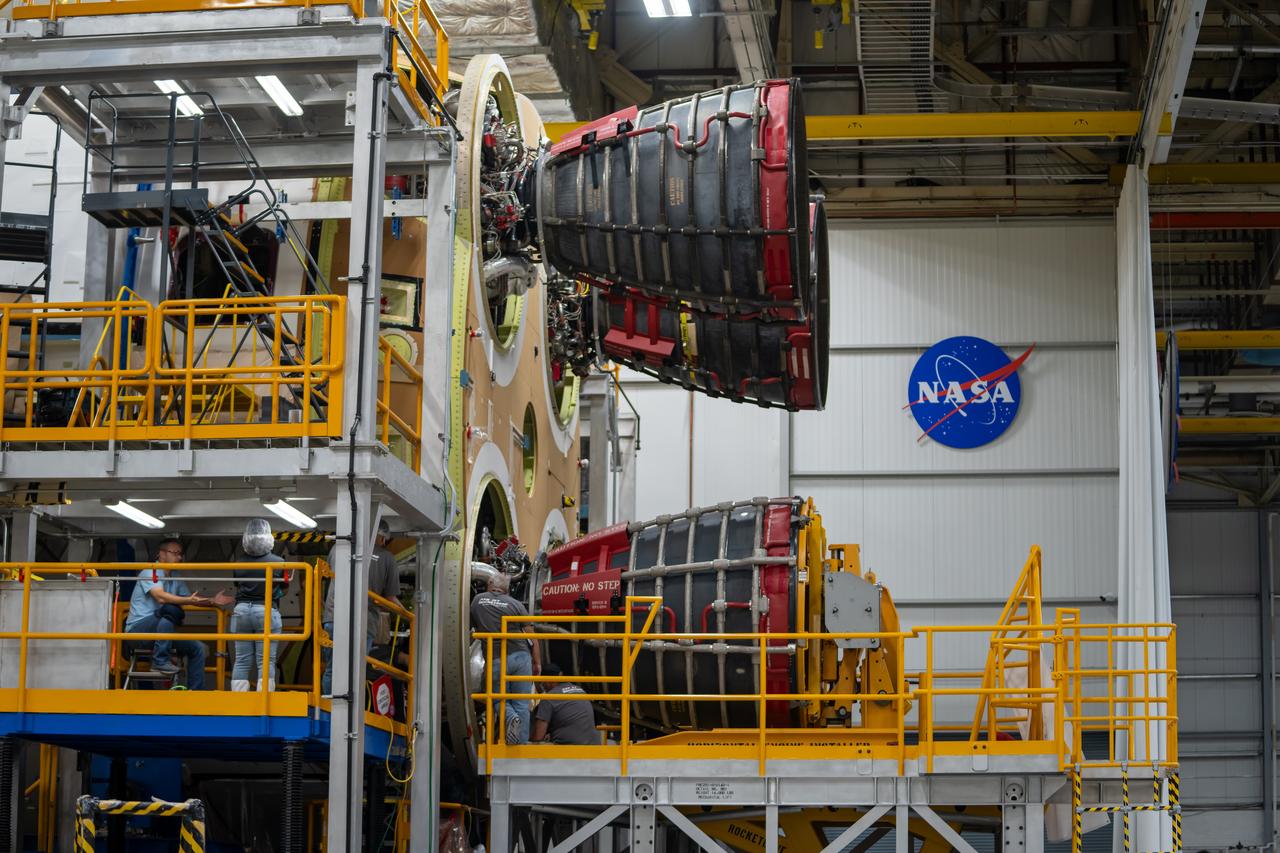
These photos and videos show how technicians at NASA’s Michoud Assembly Facility in New Orleans installed the third and fourth RS-25 engines onto the core stage for the agency’s SLS (Space Launch System) rocket that will help power NASA’s first crewed Artemis mission to the Moon. Technicians added the first engine to the SLS core stage Sept. 11. The second engine was installed onto the stage Sept. 15 with the third and fourth engines following Sept. 19 and Sept. 20. Engineers consider the engines to be “soft” mated to the rocket stage. Technicians with NASA, Aerojet Rocketdyne, an L3Harris Technologies company and the RS-25 engines lead contractor, along with Boeing, the core stage lead contractor, will now focus efforts on the complex tax of fully securing the engines to the stage and integrating the propulsion and electrical systems within the structure. NASA is working to land the first woman and first person of color on the Moon under Artemis. SLS is part of NASA’s backbone for deep space exploration, along with Orion and the Gateway in orbit around the Moon. SLS is the only rocket that can send Orion, astronauts, and supplies to the Moon in a single mission.

These photos show how technicians at NASA’s Michoud Assembly Facility in New Orleans installed the second of four RS-25 engines onto the core stage for the agency’s SLS (Space Launch System) rocket that will help power NASA’s first crewed Artemis mission to the Moon. Crews added the second engine, with the serial number E2047 in position one, to the stage Sept. 15. The serial number for the engine installed Sept. 11 in position two on the core stage is E2059. Engineers consider the engines to be “soft” mated to the rocket stage. Following soft mate of all four engines, technicians with NASA, Aerojet Rocketdyne, an L3Harris Technologies company and the RS-25 engines lead contractor, along with Boeing, the core stage lead contractor, will fully secure the engines to the stage and integrate the propulsion and electrical systems within the structure. All four RS-25 engines are located at the base of the core stage within the engine section. NASA is working to land the first woman and first person of color on the Moon under Artemis. SLS is part of NASA’s backbone for deep space exploration, along with Orion and the Gateway in orbit around the Moon. SLS is the only rocket that can send Orion, astronauts, and supplies to the Moon in a single mission.
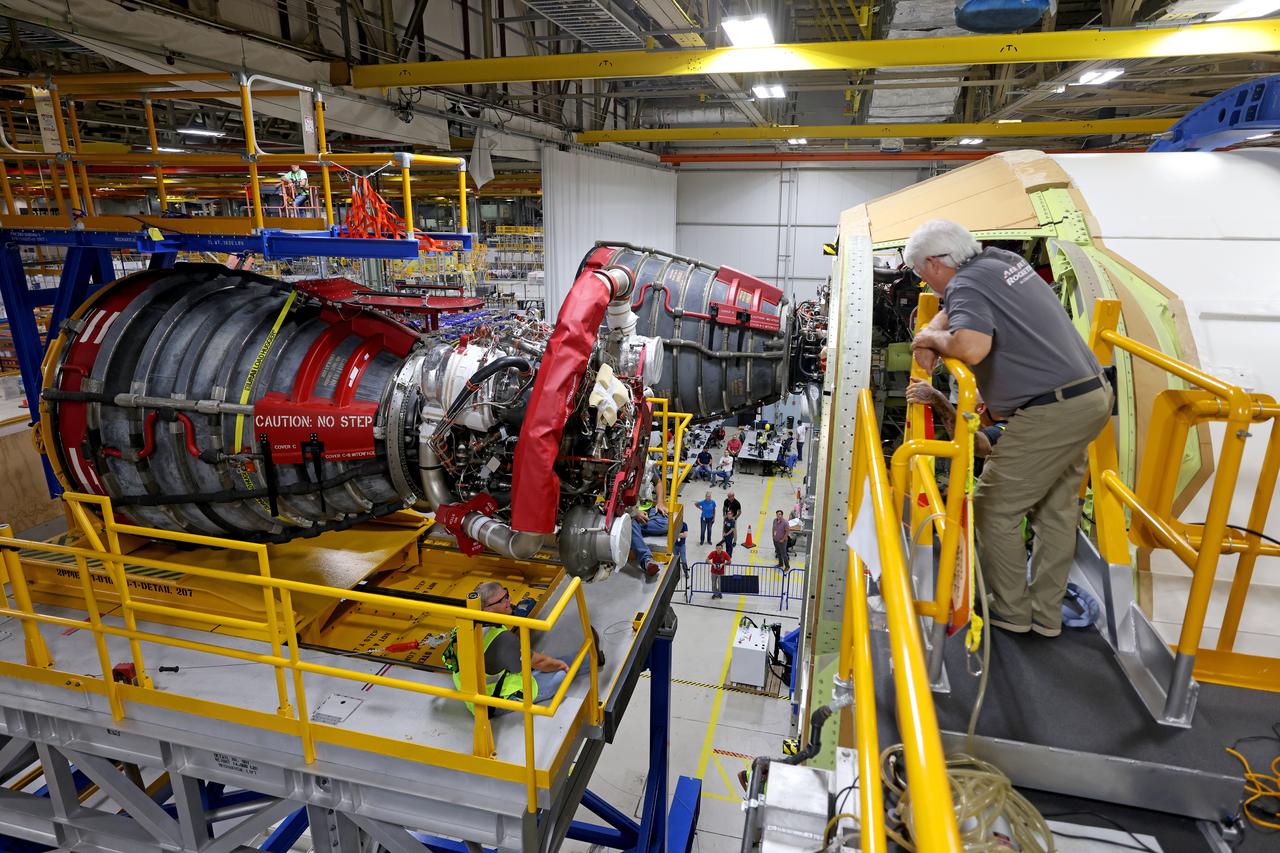
These photos and videos show how technicians at NASA’s Michoud Assembly Facility in New Orleans installed the second of four RS-25 engines onto the core stage for the agency’s SLS (Space Launch System) rocket that will help power NASA’s first crewed Artemis mission to the Moon. Crews added the second engine, with the serial number E2047 in position one, to the stage Sept. 15. The serial number for the engine installed Sept. 11 in position two on the core stage is E2059. Engineers consider the engines to be “soft” mated to the rocket stage. Following soft mate of all four engines, technicians with NASA, Aerojet Rocketdyne, an L3Harris Technologies company and the RS-25 engines lead contractor, along with Boeing, the core stage lead contractor, will fully secure the engines to the stage and integrate the propulsion and electrical systems within the structure. All four RS-25 engines are located at the base of the core stage within the engine section. NASA is working to land the first woman and first person of color on the Moon under Artemis. SLS is part of NASA’s backbone for deep space exploration, along with Orion and the Gateway in orbit around the Moon. SLS is the only rocket that can send Orion, astronauts, and supplies to the Moon in a single mission.
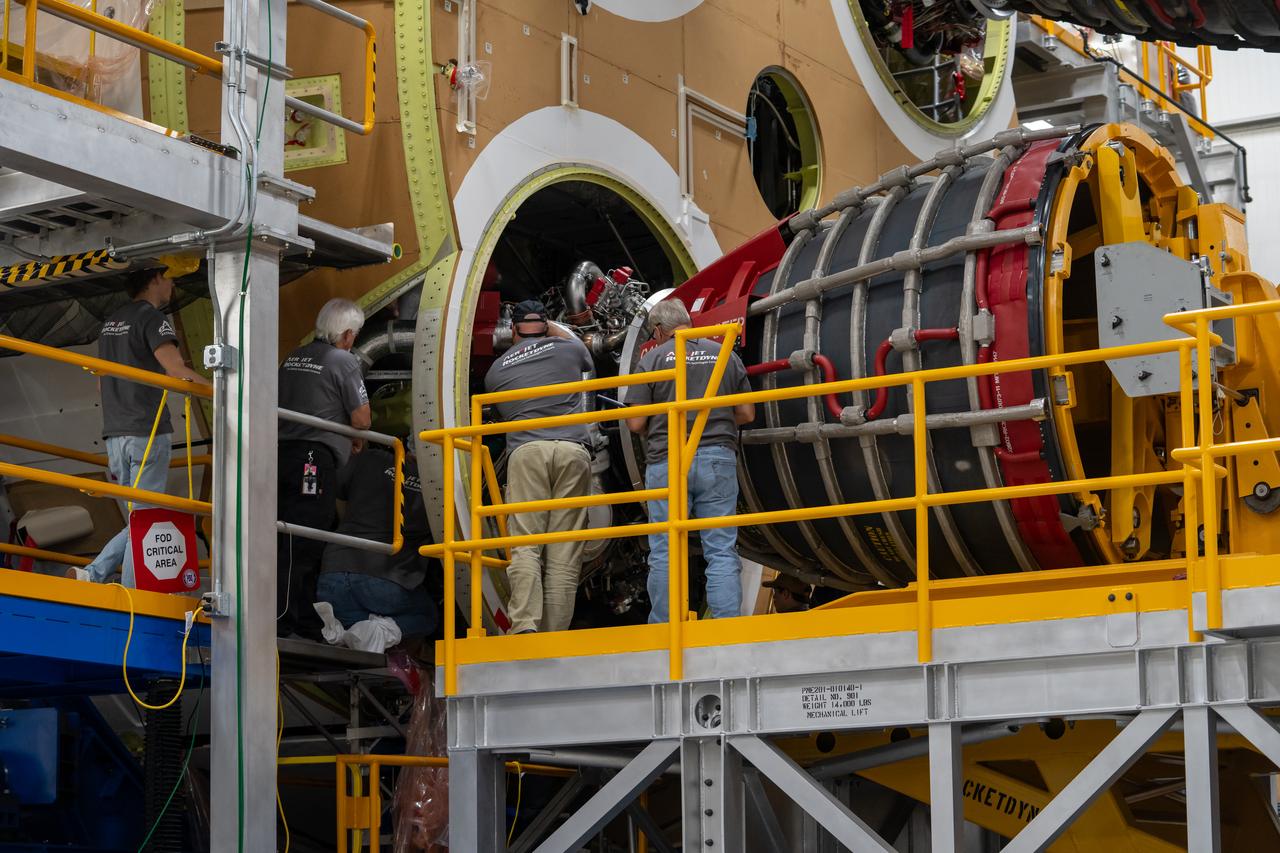
These photos and videos show how technicians at NASA’s Michoud Assembly Facility in New Orleans installed the third and fourth RS-25 engines onto the core stage for the agency’s SLS (Space Launch System) rocket that will help power NASA’s first crewed Artemis mission to the Moon. Technicians added the first engine to the SLS core stage Sept. 11. The second engine was installed onto the stage Sept. 15 with the third and fourth engines following Sept. 19 and Sept. 20. Engineers consider the engines to be “soft” mated to the rocket stage. Technicians with NASA, Aerojet Rocketdyne, an L3Harris Technologies company and the RS-25 engines lead contractor, along with Boeing, the core stage lead contractor, will now focus efforts on the complex tax of fully securing the engines to the stage and integrating the propulsion and electrical systems within the structure. NASA is working to land the first woman and first person of color on the Moon under Artemis. SLS is part of NASA’s backbone for deep space exploration, along with Orion and the Gateway in orbit around the Moon. SLS is the only rocket that can send Orion, astronauts, and supplies to the Moon in a single mission.
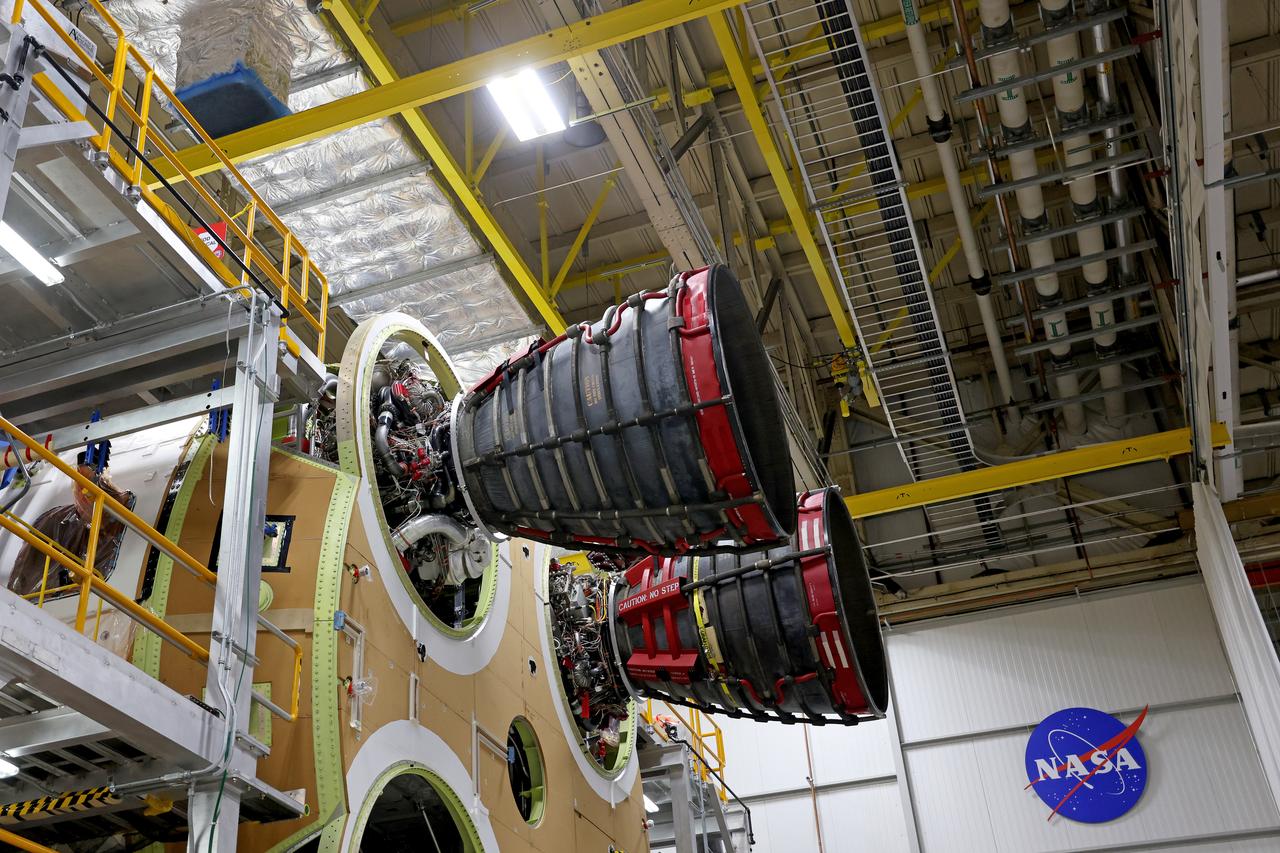
These photos and videos show how technicians at NASA’s Michoud Assembly Facility in New Orleans installed the second of four RS-25 engines onto the core stage for the agency’s SLS (Space Launch System) rocket that will help power NASA’s first crewed Artemis mission to the Moon. Crews added the second engine, with the serial number E2047 in position one, to the stage Sept. 15. The serial number for the engine installed Sept. 11 in position two on the core stage is E2059. Engineers consider the engines to be “soft” mated to the rocket stage. Following soft mate of all four engines, technicians with NASA, Aerojet Rocketdyne, an L3Harris Technologies company and the RS-25 engines lead contractor, along with Boeing, the core stage lead contractor, will fully secure the engines to the stage and integrate the propulsion and electrical systems within the structure. All four RS-25 engines are located at the base of the core stage within the engine section. NASA is working to land the first woman and first person of color on the Moon under Artemis. SLS is part of NASA’s backbone for deep space exploration, along with Orion and the Gateway in orbit around the Moon. SLS is the only rocket that can send Orion, astronauts, and supplies to the Moon in a single mission.
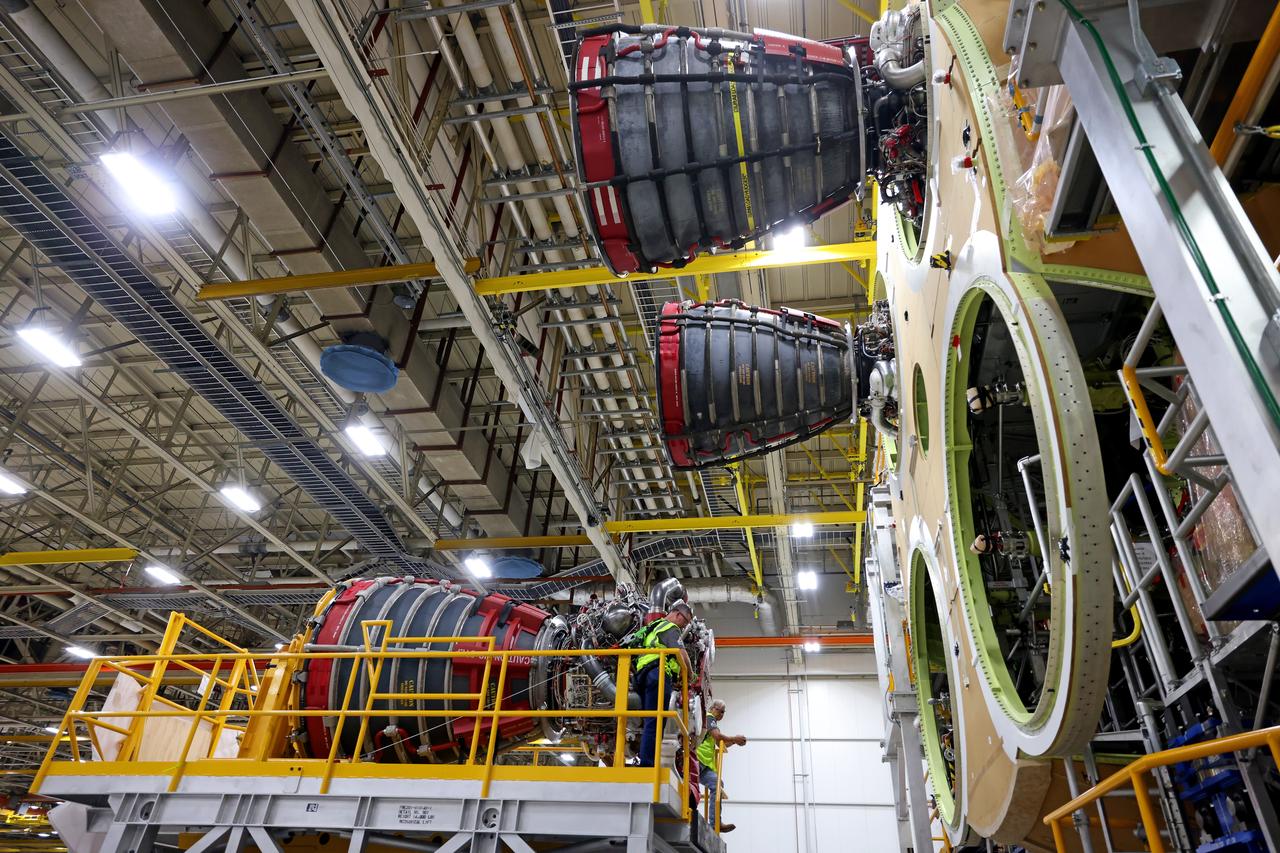
These photos and videos show how technicians at NASA’s Michoud Assembly Facility in New Orleans installed the third and fourth RS-25 engines onto the core stage for the agency’s SLS (Space Launch System) rocket that will help power NASA’s first crewed Artemis mission to the Moon. Technicians added the first engine to the SLS core stage Sept. 11. The second engine was installed onto the stage Sept. 15 with the third and fourth engines following Sept. 19 and Sept. 20. Engineers consider the engines to be “soft” mated to the rocket stage. Technicians with NASA, Aerojet Rocketdyne, an L3Harris Technologies company and the RS-25 engines lead contractor, along with Boeing, the core stage lead contractor, will now focus efforts on the complex tax of fully securing the engines to the stage and integrating the propulsion and electrical systems within the structure. NASA is working to land the first woman and first person of color on the Moon under Artemis. SLS is part of NASA’s backbone for deep space exploration, along with Orion and the Gateway in orbit around the Moon. SLS is the only rocket that can send Orion, astronauts, and supplies to the Moon in a single mission.
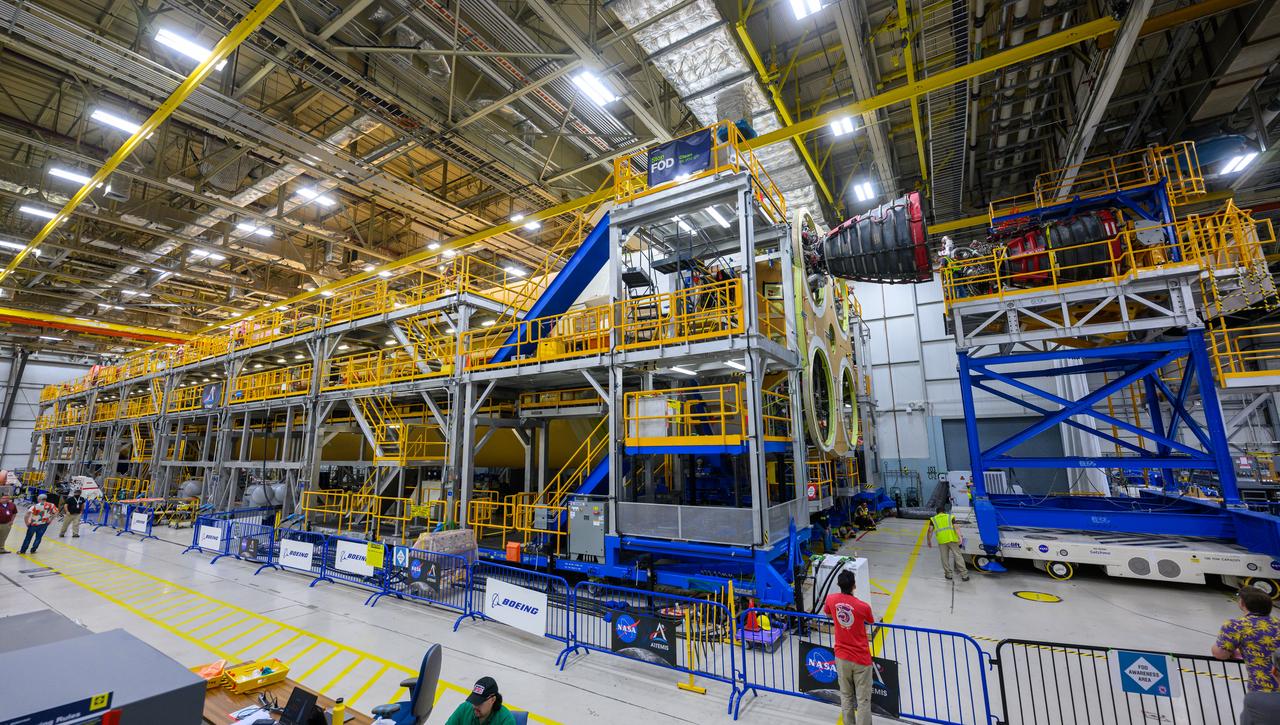
These photos and videos show how technicians at NASA’s Michoud Assembly Facility in New Orleans installed the second of four RS-25 engines onto the core stage for the agency’s SLS (Space Launch System) rocket that will help power NASA’s first crewed Artemis mission to the Moon. Crews added the second engine, with the serial number E2047 in position one, to the stage Sept. 15. The serial number for the engine installed Sept. 11 in position two on the core stage is E2059. Engineers consider the engines to be “soft” mated to the rocket stage. Following soft mate of all four engines, technicians with NASA, Aerojet Rocketdyne, an L3Harris Technologies company and the RS-25 engines lead contractor, along with Boeing, the core stage lead contractor, will fully secure the engines to the stage and integrate the propulsion and electrical systems within the structure. All four RS-25 engines are located at the base of the core stage within the engine section. NASA is working to land the first woman and first person of color on the Moon under Artemis. SLS is part of NASA’s backbone for deep space exploration, along with Orion and the Gateway in orbit around the Moon. SLS is the only rocket that can send Orion, astronauts, and supplies to the Moon in a single mission.
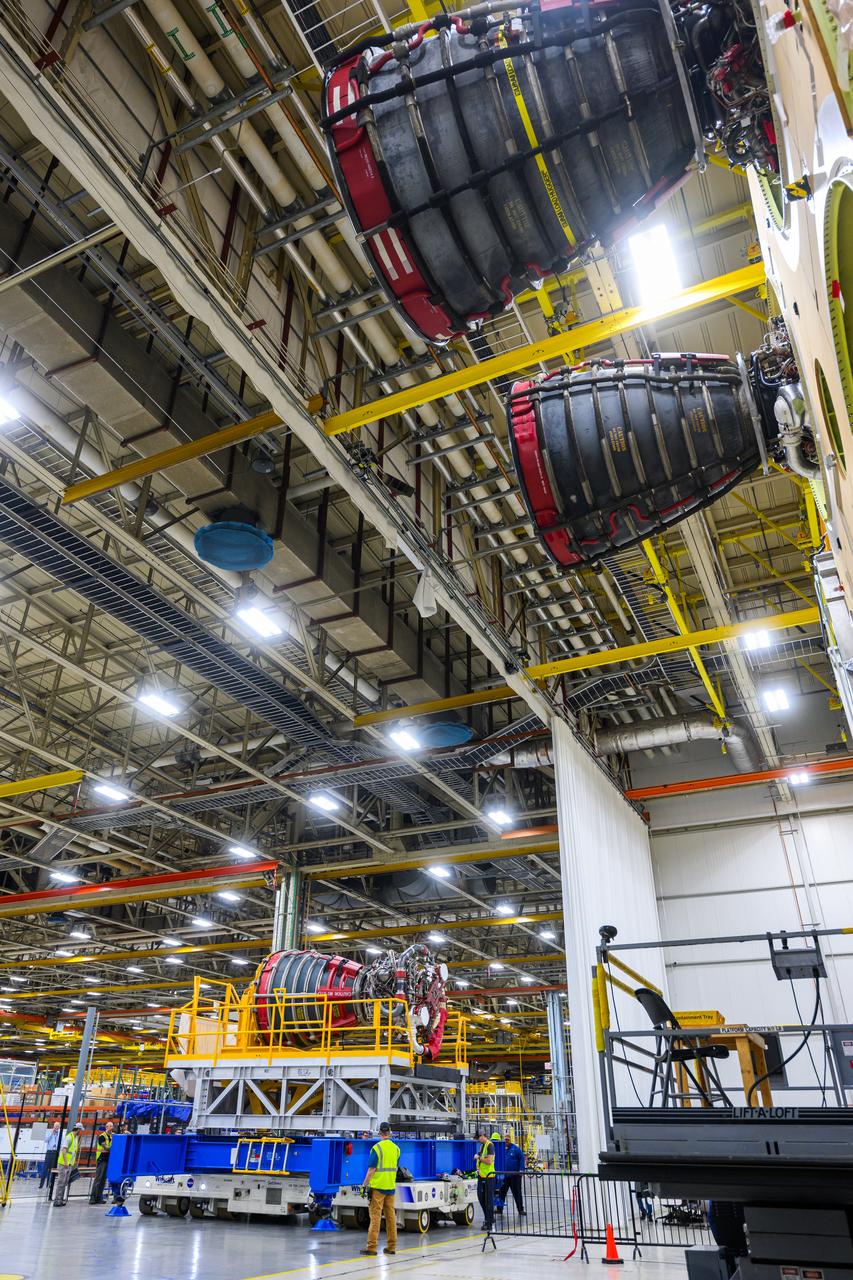
These photos and videos show how technicians at NASA’s Michoud Assembly Facility in New Orleans installed the third and fourth RS-25 engines onto the core stage for the agency’s SLS (Space Launch System) rocket that will help power NASA’s first crewed Artemis mission to the Moon. Technicians added the first engine to the SLS core stage Sept. 11. The second engine was installed onto the stage Sept. 15 with the third and fourth engines following Sept. 19 and Sept. 20. Engineers consider the engines to be “soft” mated to the rocket stage. Technicians with NASA, Aerojet Rocketdyne, an L3Harris Technologies company and the RS-25 engines lead contractor, along with Boeing, the core stage lead contractor, will now focus efforts on the complex tax of fully securing the engines to the stage and integrating the propulsion and electrical systems within the structure. NASA is working to land the first woman and first person of color on the Moon under Artemis. SLS is part of NASA’s backbone for deep space exploration, along with Orion and the Gateway in orbit around the Moon. SLS is the only rocket that can send Orion, astronauts, and supplies to the Moon in a single mission.
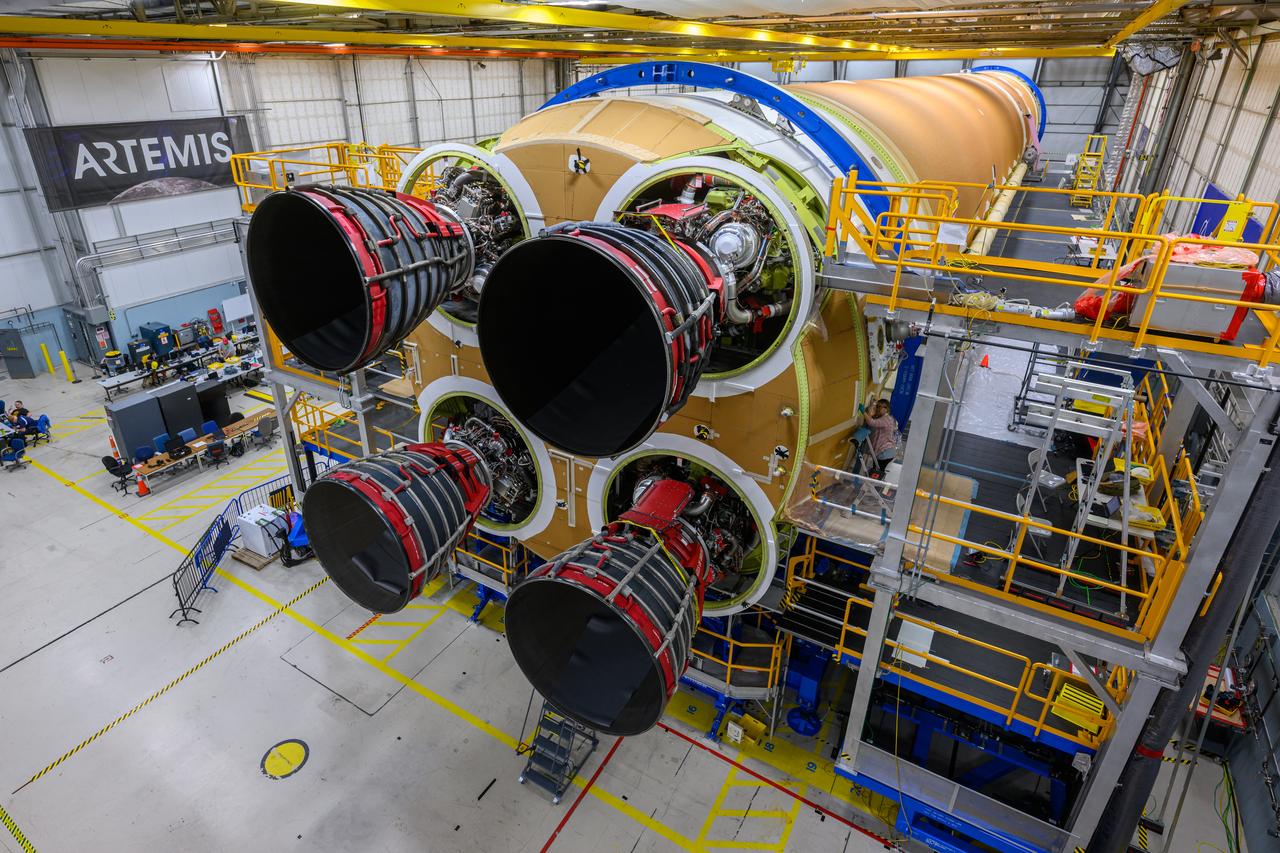
These photos and videos show how technicians at NASA’s Michoud Assembly Facility in New Orleans installed the third and fourth RS-25 engines onto the core stage for the agency’s SLS (Space Launch System) rocket that will help power NASA’s first crewed Artemis mission to the Moon. Technicians added the first engine to the SLS core stage Sept. 11. The second engine was installed onto the stage Sept. 15 with the third and fourth engines following Sept. 19 and Sept. 20. Engineers consider the engines to be “soft” mated to the rocket stage. Technicians with NASA, Aerojet Rocketdyne, an L3Harris Technologies company and the RS-25 engines lead contractor, along with Boeing, the core stage lead contractor, will now focus efforts on the complex tax of fully securing the engines to the stage and integrating the propulsion and electrical systems within the structure. NASA is working to land the first woman and first person of color on the Moon under Artemis. SLS is part of NASA’s backbone for deep space exploration, along with Orion and the Gateway in orbit around the Moon. SLS is the only rocket that can send Orion, astronauts, and supplies to the Moon in a single mission.
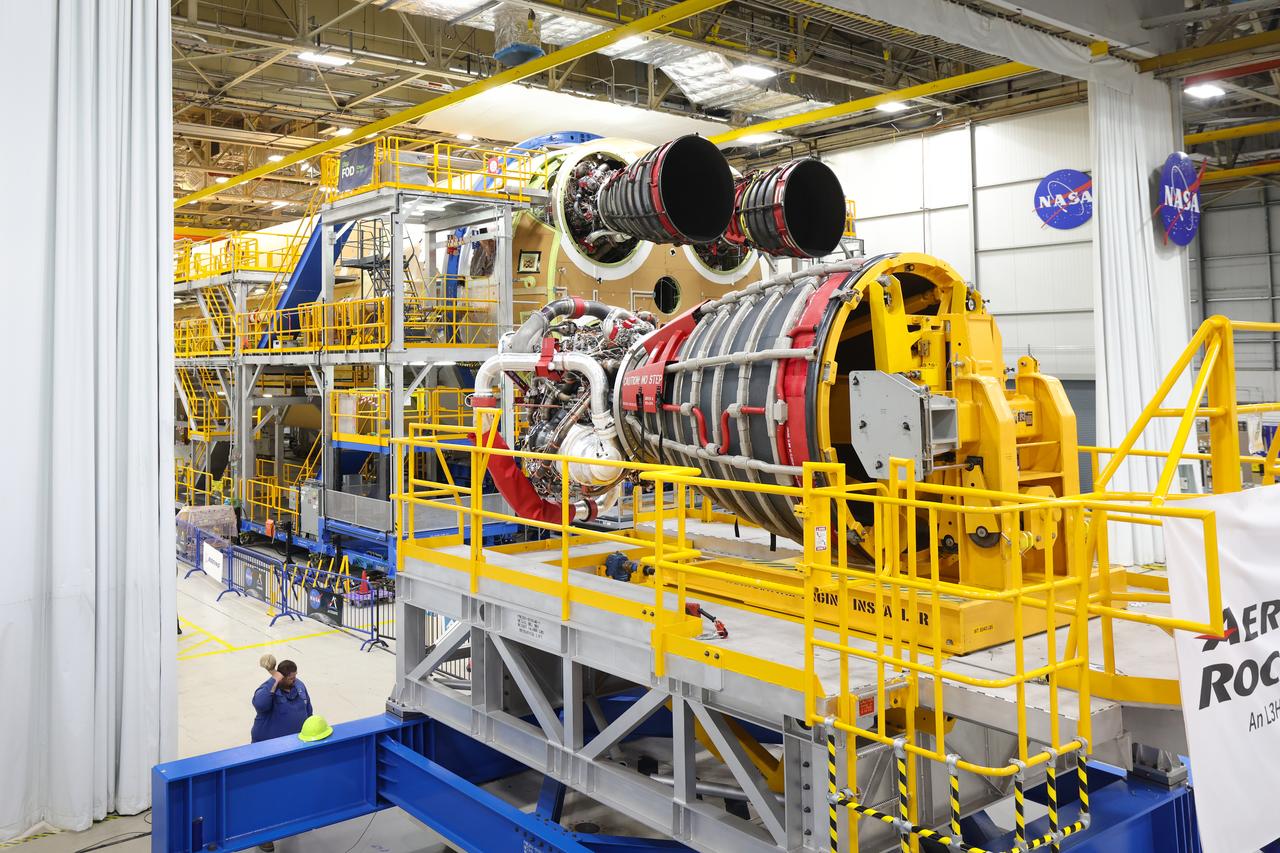
These photos and videos show how technicians at NASA’s Michoud Assembly Facility in New Orleans installed the third and fourth RS-25 engines onto the core stage for the agency’s SLS (Space Launch System) rocket that will help power NASA’s first crewed Artemis mission to the Moon. Technicians added the first engine to the SLS core stage Sept. 11. The second engine was installed onto the stage Sept. 15 with the third and fourth engines following Sept. 19 and Sept. 20. Engineers consider the engines to be “soft” mated to the rocket stage. Technicians with NASA, Aerojet Rocketdyne, an L3Harris Technologies company and the RS-25 engines lead contractor, along with Boeing, the core stage lead contractor, will now focus efforts on the complex tax of fully securing the engines to the stage and integrating the propulsion and electrical systems within the structure. NASA is working to land the first woman and first person of color on the Moon under Artemis. SLS is part of NASA’s backbone for deep space exploration, along with Orion and the Gateway in orbit around the Moon. SLS is the only rocket that can send Orion, astronauts, and supplies to the Moon in a single mission.
These photos and videos show how technicians at NASA’s Michoud Assembly Facility in New Orleans installed the third and fourth RS-25 engines onto the core stage for the agency’s SLS (Space Launch System) rocket that will help power NASA’s first crewed Artemis mission to the Moon. Technicians added the first engine to the SLS core stage Sept. 11. The second engine was installed onto the stage Sept. 15 with the third and fourth engines following Sept. 19 and Sept. 20. Engineers consider the engines to be “soft” mated to the rocket stage. Technicians with NASA, Aerojet Rocketdyne, an L3Harris Technologies company and the RS-25 engines lead contractor, along with Boeing, the core stage lead contractor, will now focus efforts on the complex tax of fully securing the engines to the stage and integrating the propulsion and electrical systems within the structure. NASA is working to land the first woman and first person of color on the Moon under Artemis. SLS is part of NASA’s backbone for deep space exploration, along with Orion and the Gateway in orbit around the Moon. SLS is the only rocket that can send Orion, astronauts, and supplies to the Moon in a single mission.

These photos and videos show how technicians at NASA’s Michoud Assembly Facility in New Orleans installed the third and fourth RS-25 engines onto the core stage for the agency’s SLS (Space Launch System) rocket that will help power NASA’s first crewed Artemis mission to the Moon. Technicians added the first engine to the SLS core stage Sept. 11. The second engine was installed onto the stage Sept. 15 with the third and fourth engines following Sept. 19 and Sept. 20. Engineers consider the engines to be “soft” mated to the rocket stage. Technicians with NASA, Aerojet Rocketdyne, an L3Harris Technologies company and the RS-25 engines lead contractor, along with Boeing, the core stage lead contractor, will now focus efforts on the complex tax of fully securing the engines to the stage and integrating the propulsion and electrical systems within the structure. NASA is working to land the first woman and first person of color on the Moon under Artemis. SLS is part of NASA’s backbone for deep space exploration, along with Orion and the Gateway in orbit around the Moon. SLS is the only rocket that can send Orion, astronauts, and supplies to the Moon in a single mission.
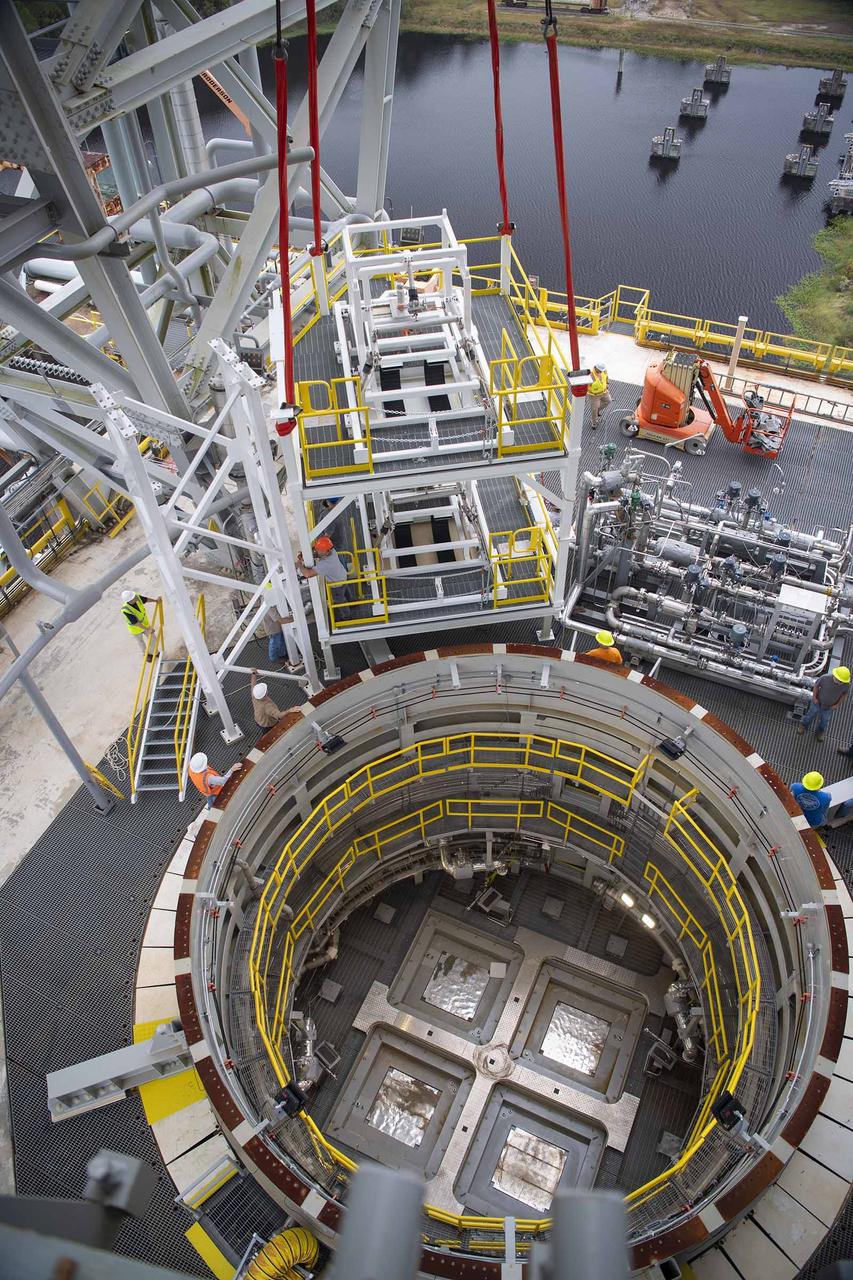
A pair of umbilical support structures needed for future testing of NASA’s exploration upper stage (EUS) were installed in the B-2 position of the Thad Cochran Test Stand on Oct. 30-31 at NASA’s Stennis Space Center. The support structures arrived from NASA’s Michoud Assembly Facility in New Orleans via the unique NASA Stennis seven-and-a-half-mile canal system in 2023. Since then, crews have prepared the structures that will align with the EUS unit for installation. In addition to helping secure the unit in place during hot fire testing, the umbilical support structures are where the command, control, and data electrical connections are mated to connect the ground systems to the vehicle systems, as well as most the commodity connections such as liquid hydrogen, liquid oxygen, hydrogen vent, helium bottle fill pressure, and purges. Prior to its initial flight, the EUS unit will undergo a series of so-called Green Run tests at NASA Stennis to ensure all systems are ready to go. The test series will culminate with a hot fire of the stage’s four RL10 engines, made by Aerojet Rocketdyne, an L3Harris Technologies company and lead SLS engines contractor. The new upper stage will enable NASA to carry larger payloads on Artemis missions to the Moon and beyond.
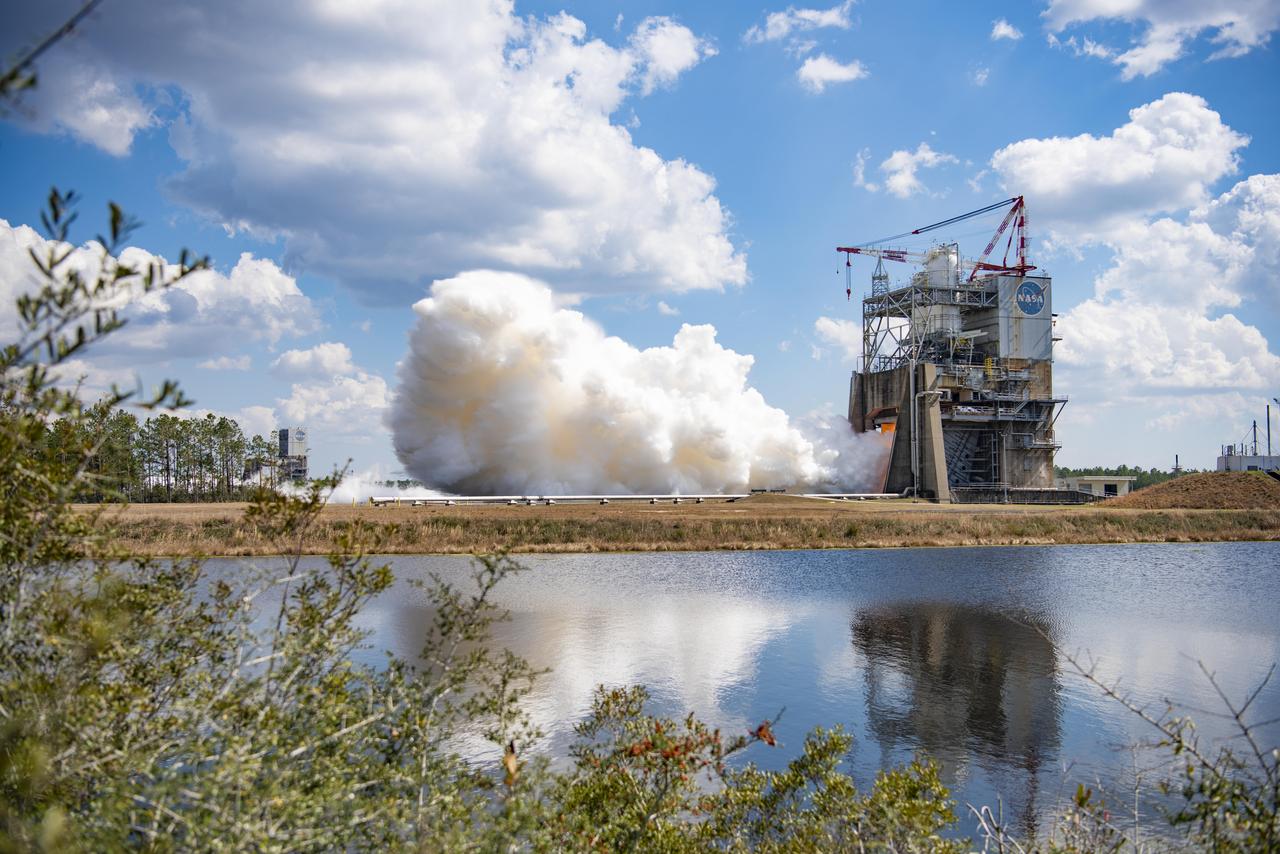
NASA conducts a full-duration RS-25 hot fire Feb. 23 on the Fred Haise Test Stand at NASA’s Stennis Space Center near Bay St. Louis, Mississippi, continuing a key test series for future Artemis flights of NASA’s SLS (Space Launch System) rocket. During the seventh test of the 12-test series, operators fired the certification engine for 550 seconds and up to a 113% power level. The hot fire followed installation of a second production engine nozzle that will provide additional performance data on the upgraded unit. The test series is the second, and final, series to certify restart production of the upgraded engines by lead contractor Aerojet Rocketdyne, an L3Harris Technologies company. New engines will help power NASA’s SLS rocket on Artemis missions to the Moon and beyond, beginning with Artemis V. NASA and Aerojet Rocketdyne modified 16 former space shuttle engines for use on Artemis missions I through IV. NASA completed an initial 12-test certification series with the upgraded components in June 2023. Four RS-25 engines fire simultaneously to help launch each SLS rocket, producing up to 2 million pounds of combined thrust.
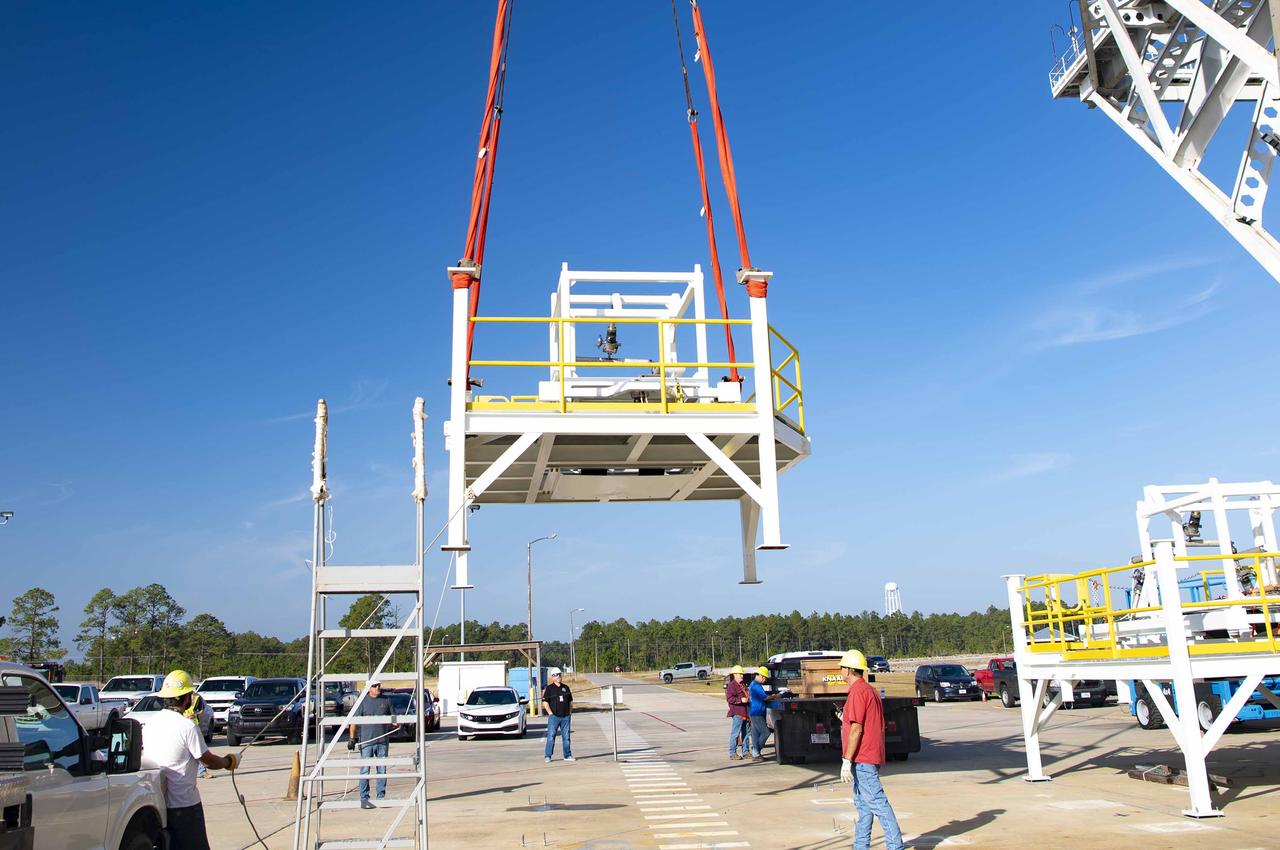
A pair of umbilical support structures needed for future testing of NASA’s exploration upper stage (EUS) were installed in the B-2 position of the Thad Cochran Test Stand on Oct. 30-31 at NASA’s Stennis Space Center. The support structures arrived from NASA’s Michoud Assembly Facility in New Orleans via the unique NASA Stennis seven-and-a-half-mile canal system in 2023. Since then, crews have prepared the structures that will align with the EUS unit for installation. In addition to helping secure the unit in place during hot fire testing, the umbilical support structures are where the command, control, and data electrical connections are mated to connect the ground systems to the vehicle systems, as well as most the commodity connections such as liquid hydrogen, liquid oxygen, hydrogen vent, helium bottle fill pressure, and purges. Prior to its initial flight, the EUS unit will undergo a series of so-called Green Run tests at NASA Stennis to ensure all systems are ready to go. The test series will culminate with a hot fire of the stage’s four RL10 engines, made by Aerojet Rocketdyne, an L3Harris Technologies company and lead SLS engines contractor. The new upper stage will enable NASA to carry larger payloads on Artemis missions to the Moon and beyond.
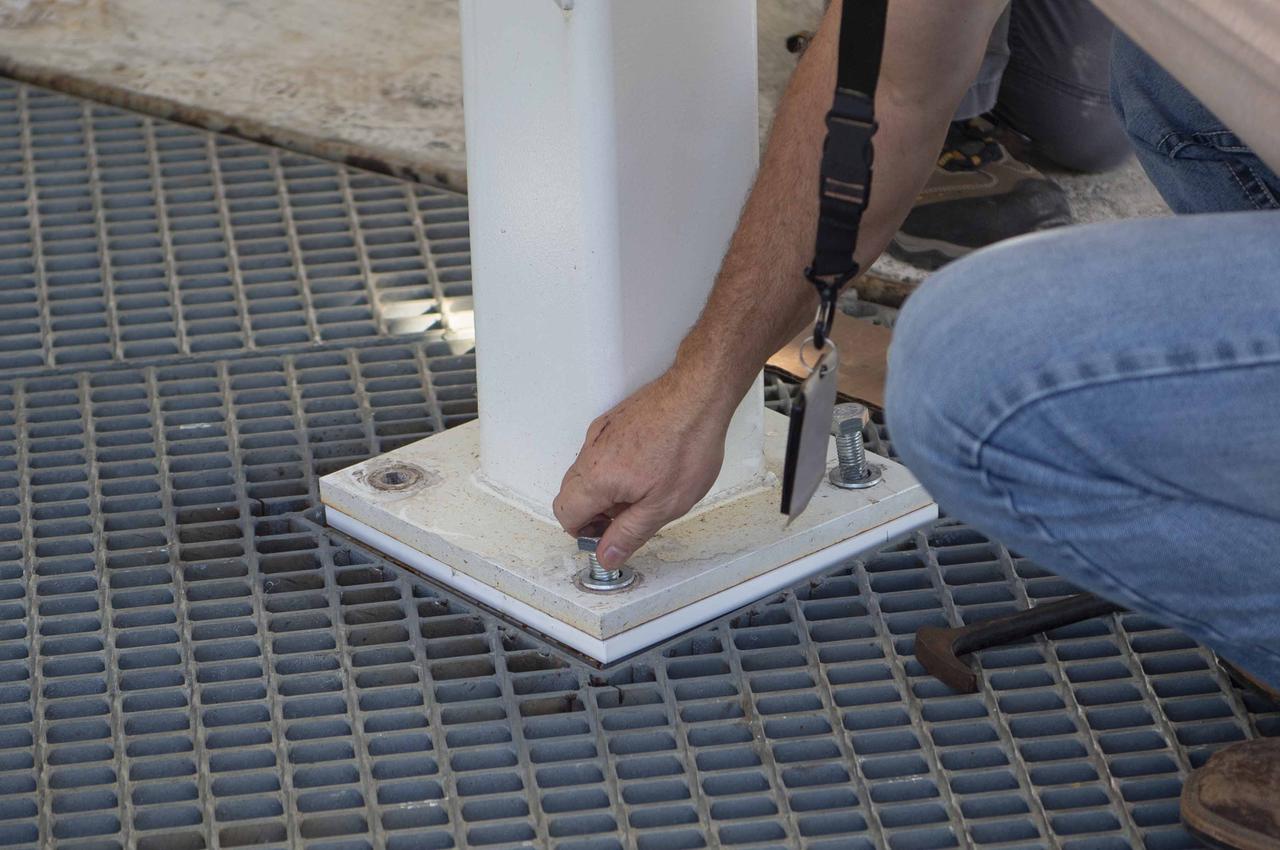
A pair of umbilical support structures needed for future testing of NASA’s exploration upper stage (EUS) were installed in the B-2 position of the Thad Cochran Test Stand on Oct. 30-31 at NASA’s Stennis Space Center. The support structures arrived from NASA’s Michoud Assembly Facility in New Orleans via the unique NASA Stennis seven-and-a-half-mile canal system in 2023. Since then, crews have prepared the structures that will align with the EUS unit for installation. In addition to helping secure the unit in place during hot fire testing, the umbilical support structures are where the command, control, and data electrical connections are mated to connect the ground systems to the vehicle systems, as well as most the commodity connections such as liquid hydrogen, liquid oxygen, hydrogen vent, helium bottle fill pressure, and purges. Prior to its initial flight, the EUS unit will undergo a series of so-called Green Run tests at NASA Stennis to ensure all systems are ready to go. The test series will culminate with a hot fire of the stage’s four RL10 engines, made by Aerojet Rocketdyne, an L3Harris Technologies company and lead SLS engines contractor. The new upper stage will enable NASA to carry larger payloads on Artemis missions to the Moon and beyond.
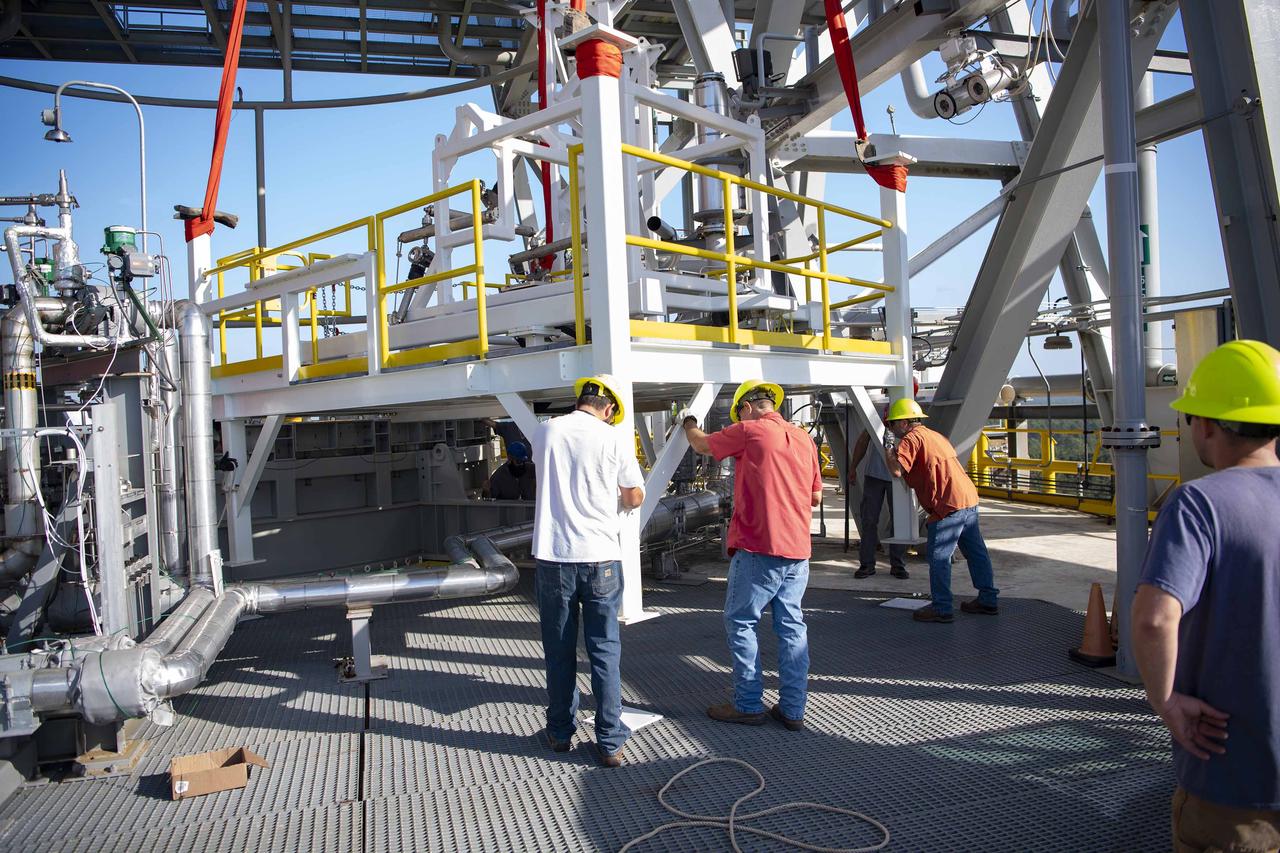
A pair of umbilical support structures needed for future testing of NASA’s exploration upper stage (EUS) were installed in the B-2 position of the Thad Cochran Test Stand on Oct. 30-31 at NASA’s Stennis Space Center. The support structures arrived from NASA’s Michoud Assembly Facility in New Orleans via the unique NASA Stennis seven-and-a-half-mile canal system in 2023. Since then, crews have prepared the structures that will align with the EUS unit for installation. In addition to helping secure the unit in place during hot fire testing, the umbilical support structures are where the command, control, and data electrical connections are mated to connect the ground systems to the vehicle systems, as well as most the commodity connections such as liquid hydrogen, liquid oxygen, hydrogen vent, helium bottle fill pressure, and purges. Prior to its initial flight, the EUS unit will undergo a series of so-called Green Run tests at NASA Stennis to ensure all systems are ready to go. The test series will culminate with a hot fire of the stage’s four RL10 engines, made by Aerojet Rocketdyne, an L3Harris Technologies company and lead SLS engines contractor. The new upper stage will enable NASA to carry larger payloads on Artemis missions to the Moon and beyond.
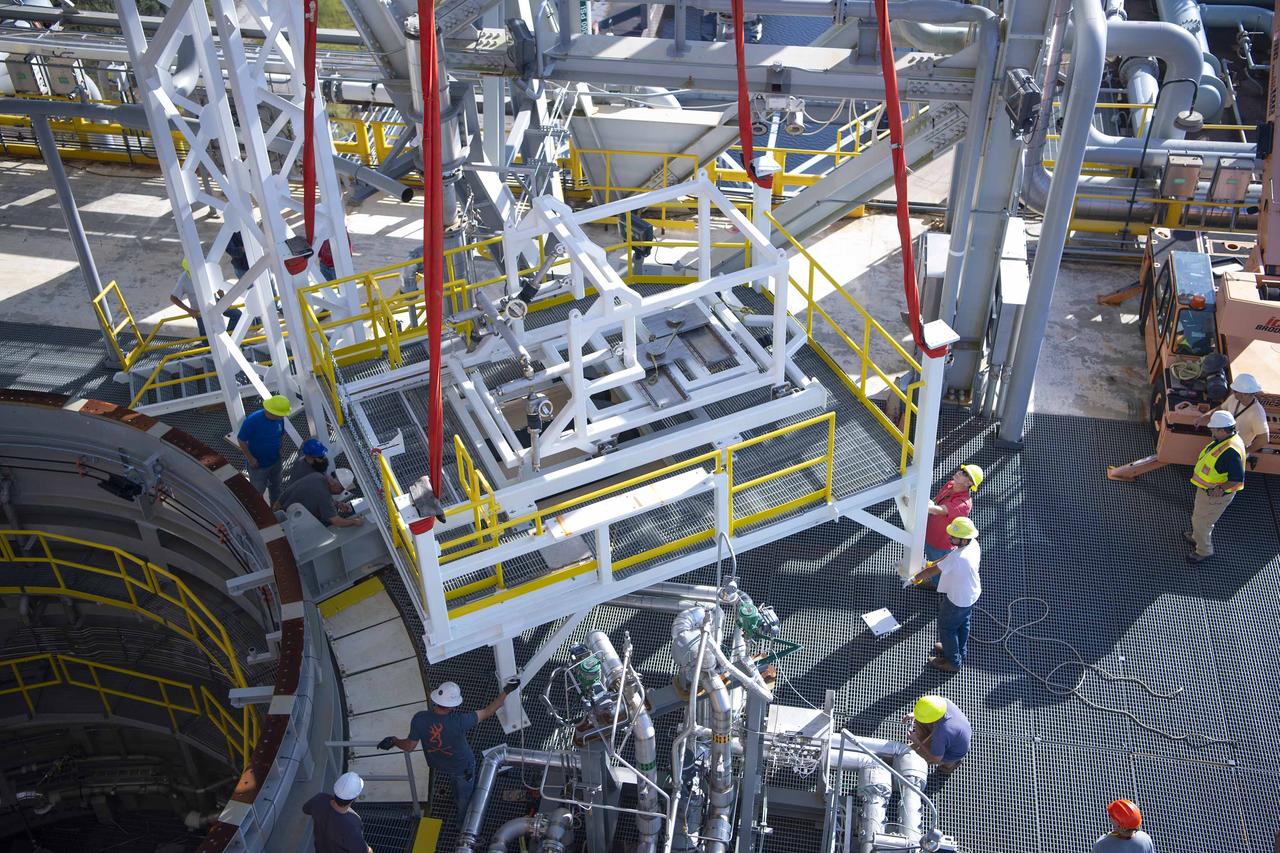
A pair of umbilical support structures needed for future testing of NASA’s exploration upper stage (EUS) were installed in the B-2 position of the Thad Cochran Test Stand on Oct. 30-31 at NASA’s Stennis Space Center. The support structures arrived from NASA’s Michoud Assembly Facility in New Orleans via the unique NASA Stennis seven-and-a-half-mile canal system in 2023. Since then, crews have prepared the structures that will align with the EUS unit for installation. In addition to helping secure the unit in place during hot fire testing, the umbilical support structures are where the command, control, and data electrical connections are mated to connect the ground systems to the vehicle systems, as well as most the commodity connections such as liquid hydrogen, liquid oxygen, hydrogen vent, helium bottle fill pressure, and purges. Prior to its initial flight, the EUS unit will undergo a series of so-called Green Run tests at NASA Stennis to ensure all systems are ready to go. The test series will culminate with a hot fire of the stage’s four RL10 engines, made by Aerojet Rocketdyne, an L3Harris Technologies company and lead SLS engines contractor. The new upper stage will enable NASA to carry larger payloads on Artemis missions to the Moon and beyond.
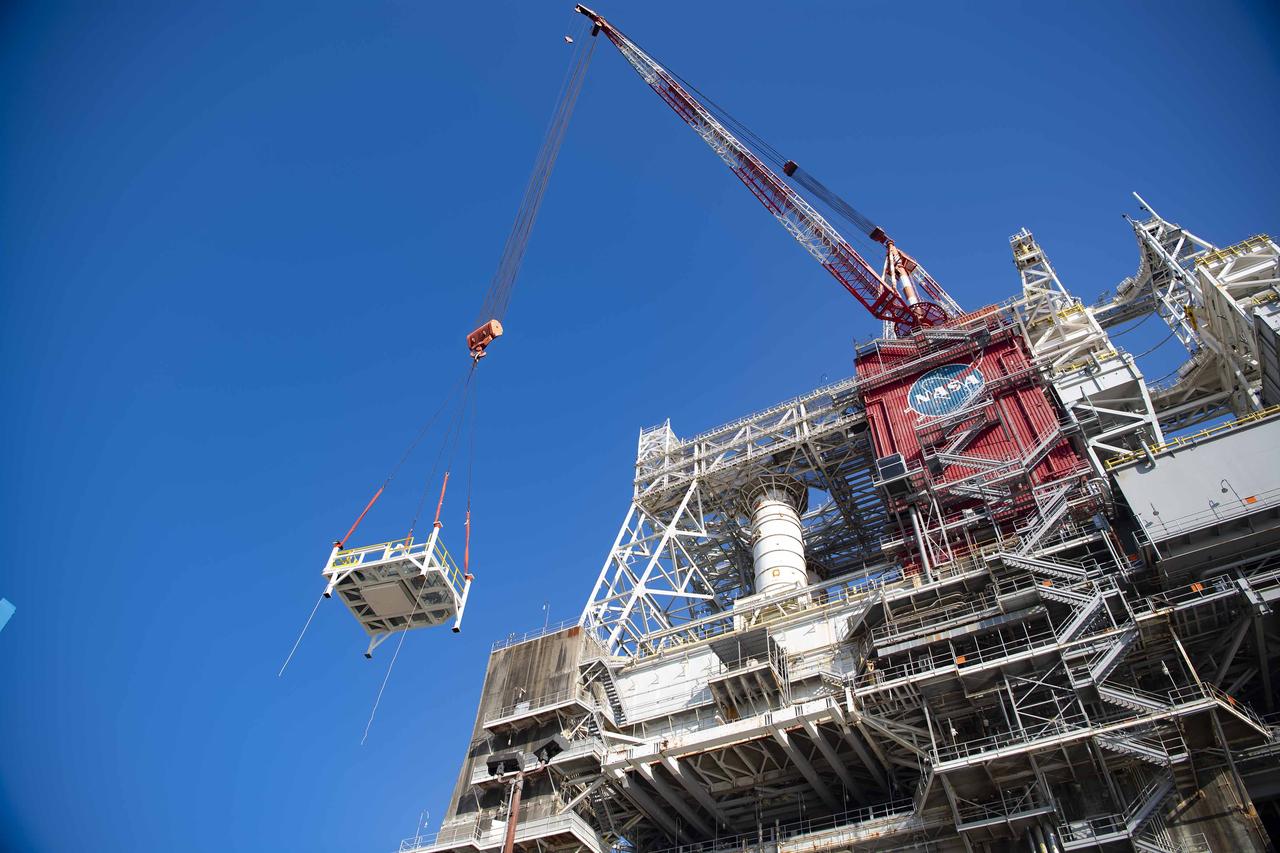
A pair of umbilical support structures needed for future testing of NASA’s exploration upper stage (EUS) were installed in the B-2 position of the Thad Cochran Test Stand on Oct. 30-31 at NASA’s Stennis Space Center. The support structures arrived from NASA’s Michoud Assembly Facility in New Orleans via the unique NASA Stennis seven-and-a-half-mile canal system in 2023. Since then, crews have prepared the structures that will align with the EUS unit for installation. In addition to helping secure the unit in place during hot fire testing, the umbilical support structures are where the command, control, and data electrical connections are mated to connect the ground systems to the vehicle systems, as well as most the commodity connections such as liquid hydrogen, liquid oxygen, hydrogen vent, helium bottle fill pressure, and purges. Prior to its initial flight, the EUS unit will undergo a series of so-called Green Run tests at NASA Stennis to ensure all systems are ready to go. The test series will culminate with a hot fire of the stage’s four RL10 engines, made by Aerojet Rocketdyne, an L3Harris Technologies company and lead SLS engines contractor. The new upper stage will enable NASA to carry larger payloads on Artemis missions to the Moon and beyond.
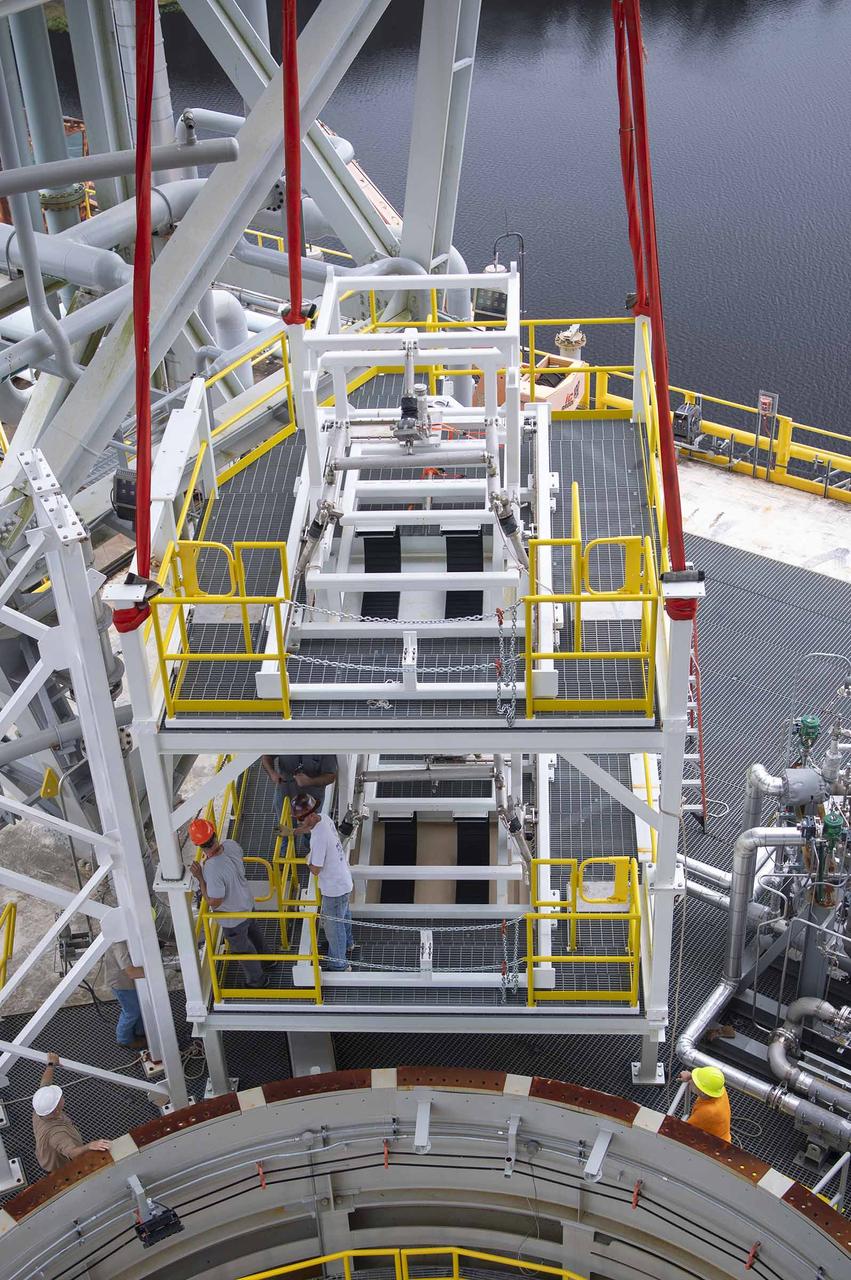
A pair of umbilical support structures needed for future testing of NASA’s exploration upper stage (EUS) were installed in the B-2 position of the Thad Cochran Test Stand on Oct. 30-31 at NASA’s Stennis Space Center. The support structures arrived from NASA’s Michoud Assembly Facility in New Orleans via the unique NASA Stennis seven-and-a-half-mile canal system in 2023. Since then, crews have prepared the structures that will align with the EUS unit for installation. In addition to helping secure the unit in place during hot fire testing, the umbilical support structures are where the command, control, and data electrical connections are mated to connect the ground systems to the vehicle systems, as well as most the commodity connections such as liquid hydrogen, liquid oxygen, hydrogen vent, helium bottle fill pressure, and purges. Prior to its initial flight, the EUS unit will undergo a series of so-called Green Run tests at NASA Stennis to ensure all systems are ready to go. The test series will culminate with a hot fire of the stage’s four RL10 engines, made by Aerojet Rocketdyne, an L3Harris Technologies company and lead SLS engines contractor. The new upper stage will enable NASA to carry larger payloads on Artemis missions to the Moon and beyond.
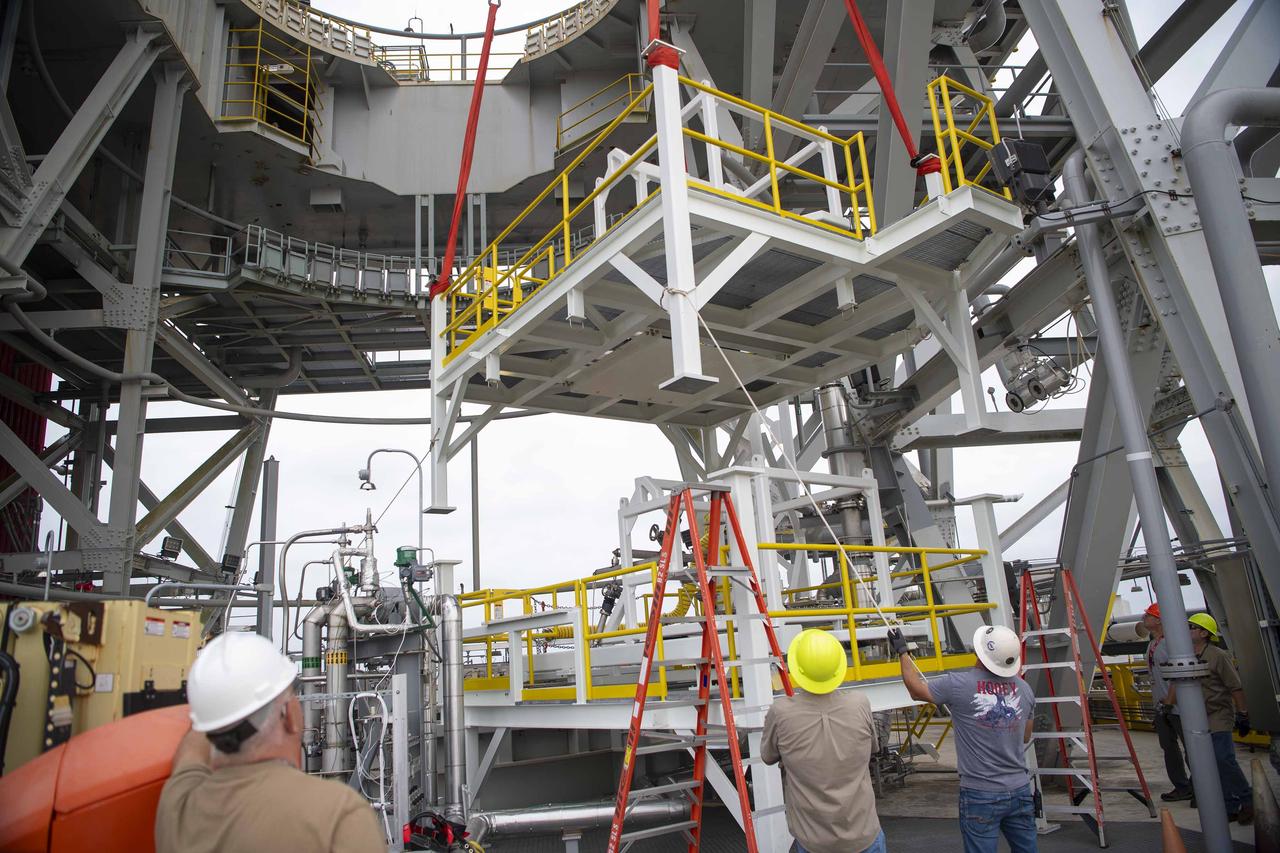
A pair of umbilical support structures needed for future testing of NASA’s exploration upper stage (EUS) were installed in the B-2 position of the Thad Cochran Test Stand on Oct. 30-31 at NASA’s Stennis Space Center. The support structures arrived from NASA’s Michoud Assembly Facility in New Orleans via the unique NASA Stennis seven-and-a-half-mile canal system in 2023. Since then, crews have prepared the structures that will align with the EUS unit for installation. In addition to helping secure the unit in place during hot fire testing, the umbilical support structures are where the command, control, and data electrical connections are mated to connect the ground systems to the vehicle systems, as well as most the commodity connections such as liquid hydrogen, liquid oxygen, hydrogen vent, helium bottle fill pressure, and purges. Prior to its initial flight, the EUS unit will undergo a series of so-called Green Run tests at NASA Stennis to ensure all systems are ready to go. The test series will culminate with a hot fire of the stage’s four RL10 engines, made by Aerojet Rocketdyne, an L3Harris Technologies company and lead SLS engines contractor. The new upper stage will enable NASA to carry larger payloads on Artemis missions to the Moon and beyond.
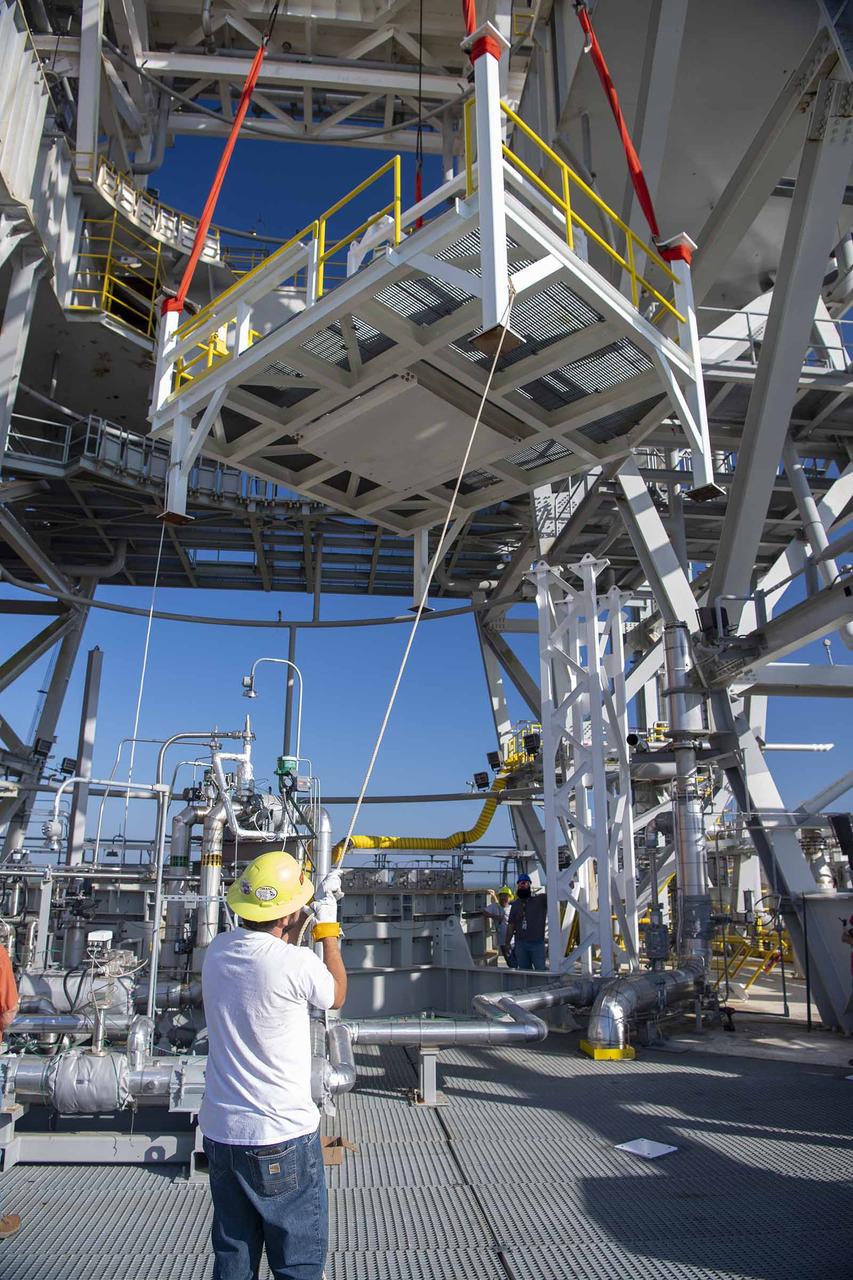
A pair of umbilical support structures needed for future testing of NASA’s exploration upper stage (EUS) were installed in the B-2 position of the Thad Cochran Test Stand on Oct. 30-31 at NASA’s Stennis Space Center. The support structures arrived from NASA’s Michoud Assembly Facility in New Orleans via the unique NASA Stennis seven-and-a-half-mile canal system in 2023. Since then, crews have prepared the structures that will align with the EUS unit for installation. In addition to helping secure the unit in place during hot fire testing, the umbilical support structures are where the command, control, and data electrical connections are mated to connect the ground systems to the vehicle systems, as well as most the commodity connections such as liquid hydrogen, liquid oxygen, hydrogen vent, helium bottle fill pressure, and purges. Prior to its initial flight, the EUS unit will undergo a series of so-called Green Run tests at NASA Stennis to ensure all systems are ready to go. The test series will culminate with a hot fire of the stage’s four RL10 engines, made by Aerojet Rocketdyne, an L3Harris Technologies company and lead SLS engines contractor. The new upper stage will enable NASA to carry larger payloads on Artemis missions to the Moon and beyond.
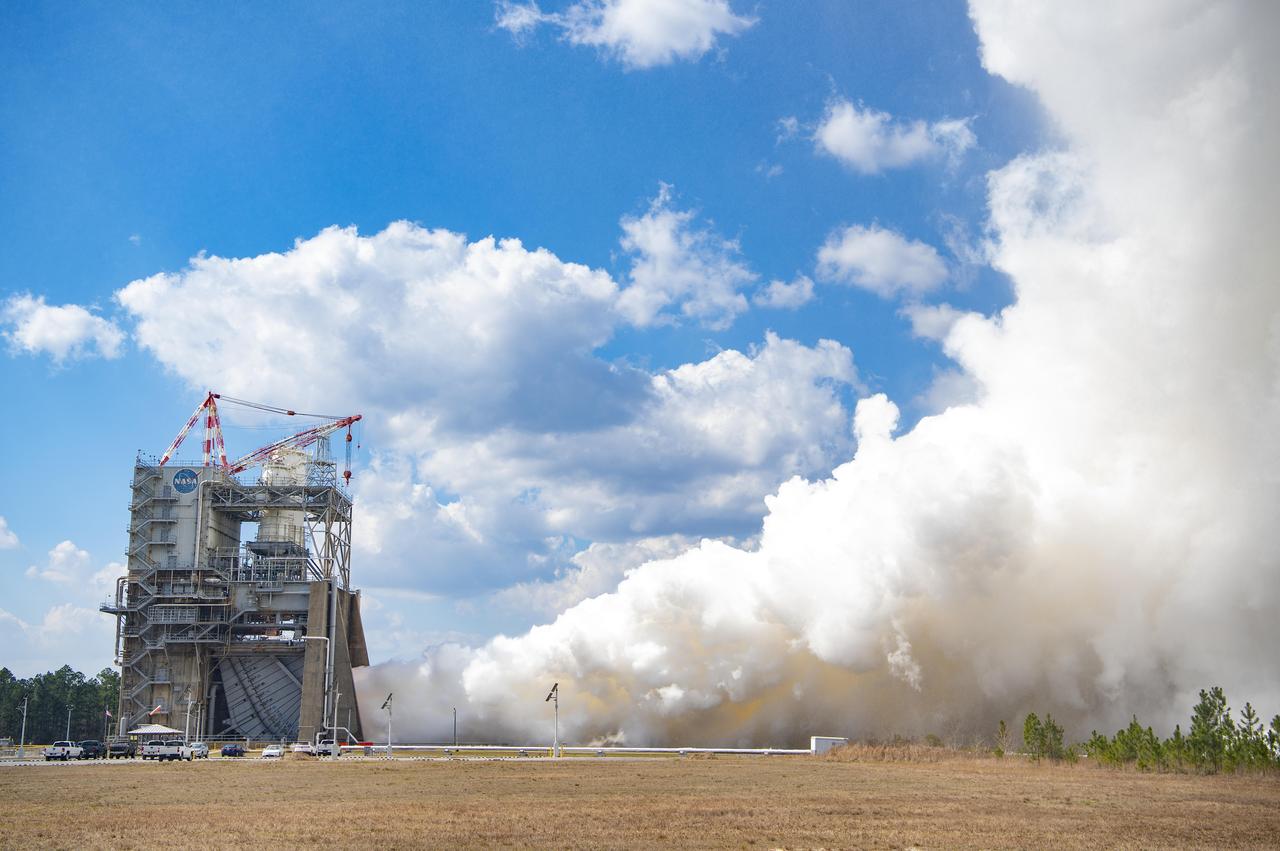
NASA conducts a full-duration RS-25 hot fire Feb. 23 on the Fred Haise Test Stand at NASA’s Stennis Space Center near Bay St. Louis, Mississippi, continuing a key test series for future Artemis flights of NASA’s SLS (Space Launch System) rocket. During the seventh test of the 12-test series, operators fired the certification engine for 550 seconds and up to a 113% power level. The hot fire followed installation of a second production engine nozzle that will provide additional performance data on the upgraded unit. The test series is the second, and final, series to certify restart production of the upgraded engines by lead contractor Aerojet Rocketdyne, an L3Harris Technologies company. New engines will help power NASA’s SLS rocket on Artemis missions to the Moon and beyond, beginning with Artemis V. NASA and Aerojet Rocketdyne modified 16 former space shuttle engines for use on Artemis missions I through IV. NASA completed an initial 12-test certification series with the upgraded components in June 2023. Four RS-25 engines fire simultaneously to help launch each SLS rocket, producing up to 2 million pounds of combined thrust.
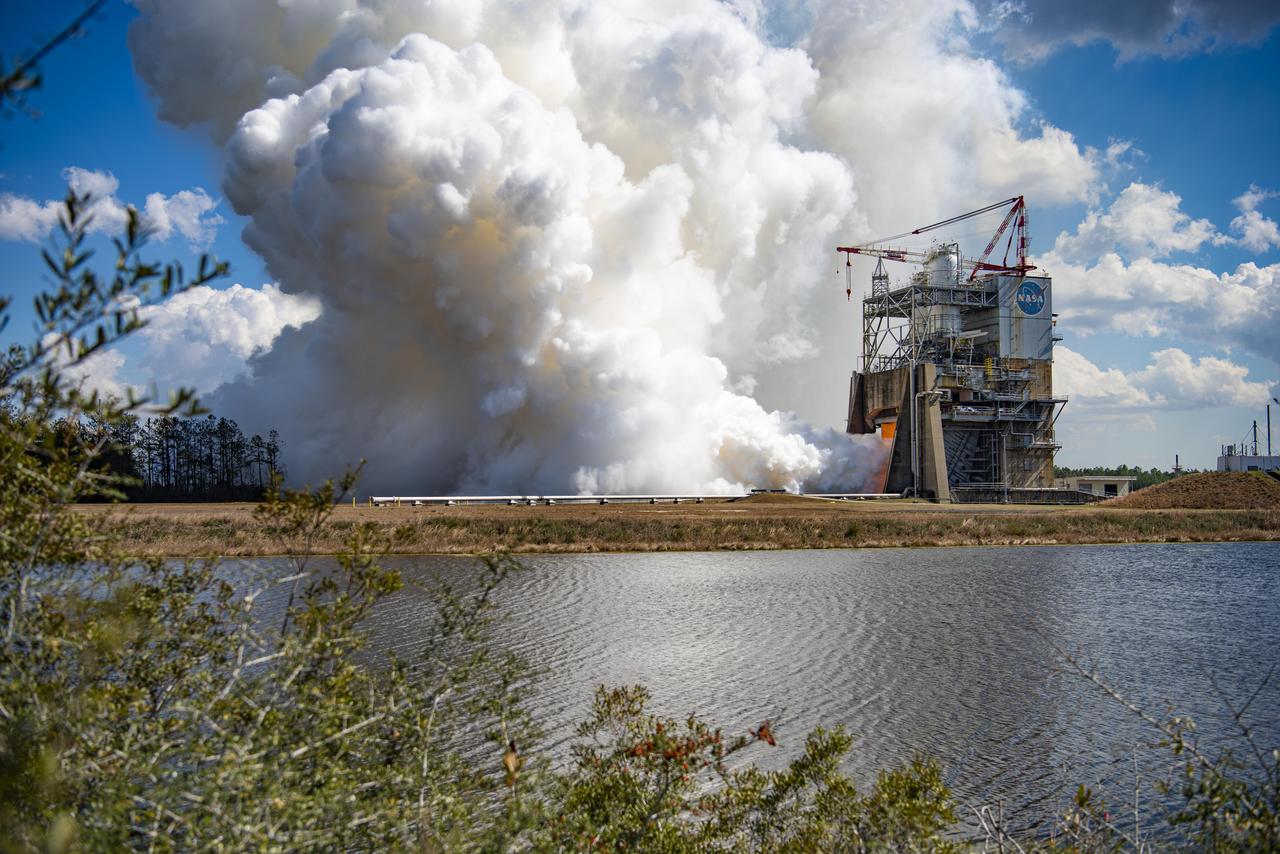
NASA conducts a full-duration RS-25 hot fire Feb. 23 on the Fred Haise Test Stand at NASA’s Stennis Space Center near Bay St. Louis, Mississippi, continuing a key test series for future Artemis flights of NASA’s SLS (Space Launch System) rocket. During the seventh test of the 12-test series, operators fired the certification engine for 550 seconds and up to a 113% power level. The hot fire followed installation of a second production engine nozzle that will provide additional performance data on the upgraded unit. The test series is the second, and final, series to certify restart production of the upgraded engines by lead contractor Aerojet Rocketdyne, an L3Harris Technologies company. New engines will help power NASA’s SLS rocket on Artemis missions to the Moon and beyond, beginning with Artemis V. NASA and Aerojet Rocketdyne modified 16 former space shuttle engines for use on Artemis missions I through IV. NASA completed an initial 12-test certification series with the upgraded components in June 2023. Four RS-25 engines fire simultaneously to help launch each SLS rocket, producing up to 2 million pounds of combined thrust.

NASA conducts a full-duration RS-25 hot fire Feb. 23 on the Fred Haise Test Stand at NASA’s Stennis Space Center near Bay St. Louis, Mississippi, continuing a key test series for future Artemis flights of NASA’s SLS (Space Launch System) rocket. During the seventh test of the 12-test series, operators fired the certification engine for 550 seconds and up to a 113% power level. The hot fire followed installation of a second production engine nozzle that will provide additional performance data on the upgraded unit. The test series is the second, and final, series to certify restart production of the upgraded engines by lead contractor Aerojet Rocketdyne, an L3Harris Technologies company. New engines will help power NASA’s SLS rocket on Artemis missions to the Moon and beyond, beginning with Artemis V. NASA and Aerojet Rocketdyne modified 16 former space shuttle engines for use on Artemis missions I through IV. NASA completed an initial 12-test certification series with the upgraded components in June 2023. Four RS-25 engines fire simultaneously to help launch each SLS rocket, producing up to 2 million pounds of combined thrust.

These photos show how technicians at NASA’s Michoud Assembly Facility in New Orleans installed the third and fourth RS-25 engines onto the core stage for the agency’s SLS (Space Launch System) rocket that will help power NASA’s first crewed Artemis mission to the Moon. Technicians added the first engine to the SLS core stage Sept. 11. The second engine was installed onto the stage Sept. 15 with the third and fourth engines following Sept. 19 and Sept. 20. Engineers consider the engines to be “soft” mated to the rocket stage. Technicians with NASA, Aerojet Rocketdyne, an L3Harris Technologies company and the RS-25 engines lead contractor, along with Boeing, the core stage lead contractor, will now focus efforts on the complex tax of fully securing the engines to the stage and integrating the propulsion and electrical systems within the structure. NASA is working to land the first woman and first person of color on the Moon under Artemis. SLS is part of NASA’s backbone for deep space exploration, along with Orion and the Gateway in orbit around the Moon. SLS is the only rocket that can send Orion, astronauts, and supplies to the Moon in a single mission.
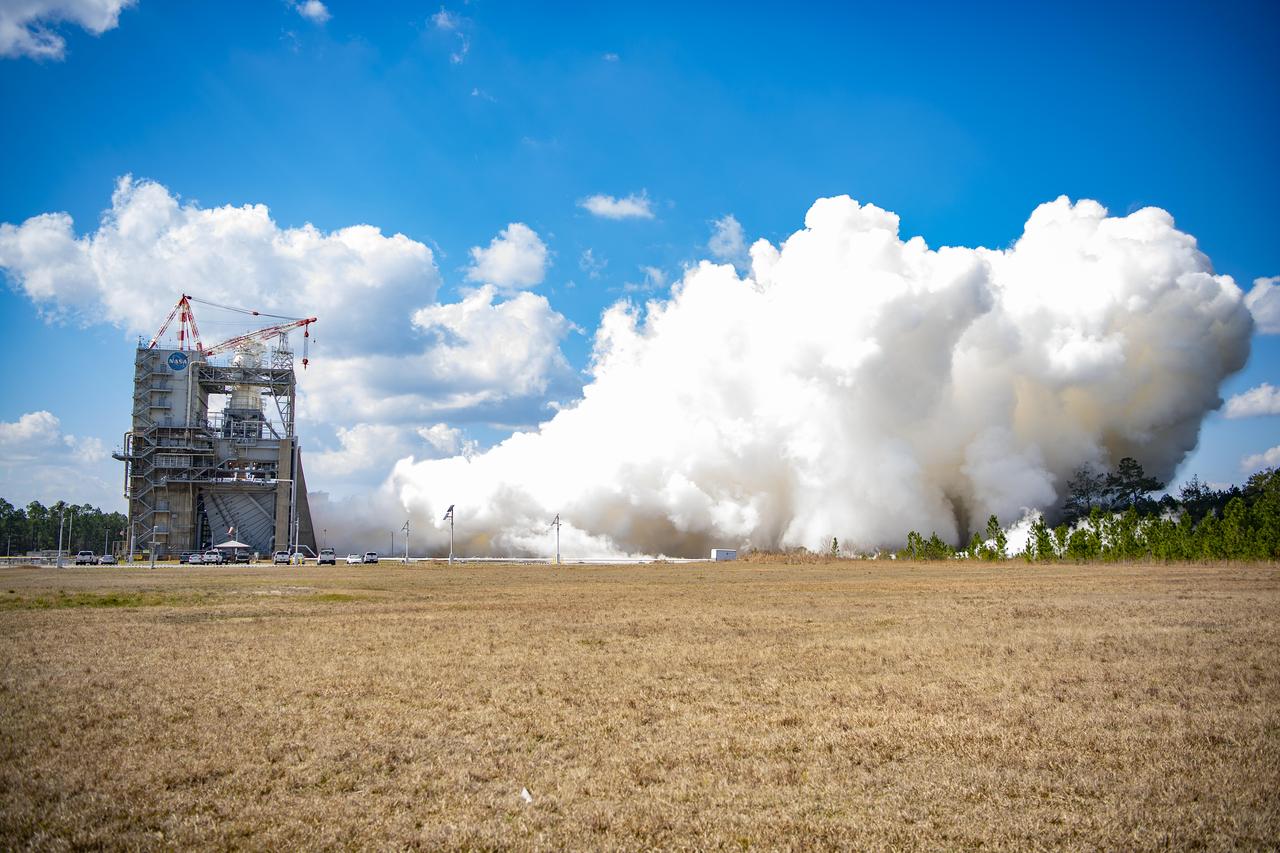
NASA conducts a full-duration RS-25 hot fire Feb. 23 on the Fred Haise Test Stand at NASA’s Stennis Space Center near Bay St. Louis, Mississippi, continuing a key test series for future Artemis flights of NASA’s SLS (Space Launch System) rocket. During the seventh test of the 12-test series, operators fired the certification engine for 550 seconds and up to a 113% power level. The hot fire followed installation of a second production engine nozzle that will provide additional performance data on the upgraded unit. The test series is the second, and final, series to certify restart production of the upgraded engines by lead contractor Aerojet Rocketdyne, an L3Harris Technologies company. New engines will help power NASA’s SLS rocket on Artemis missions to the Moon and beyond, beginning with Artemis V. NASA and Aerojet Rocketdyne modified 16 former space shuttle engines for use on Artemis missions I through IV. NASA completed an initial 12-test certification series with the upgraded components in June 2023. Four RS-25 engines fire simultaneously to help launch each SLS rocket, producing up to 2 million pounds of combined thrust.
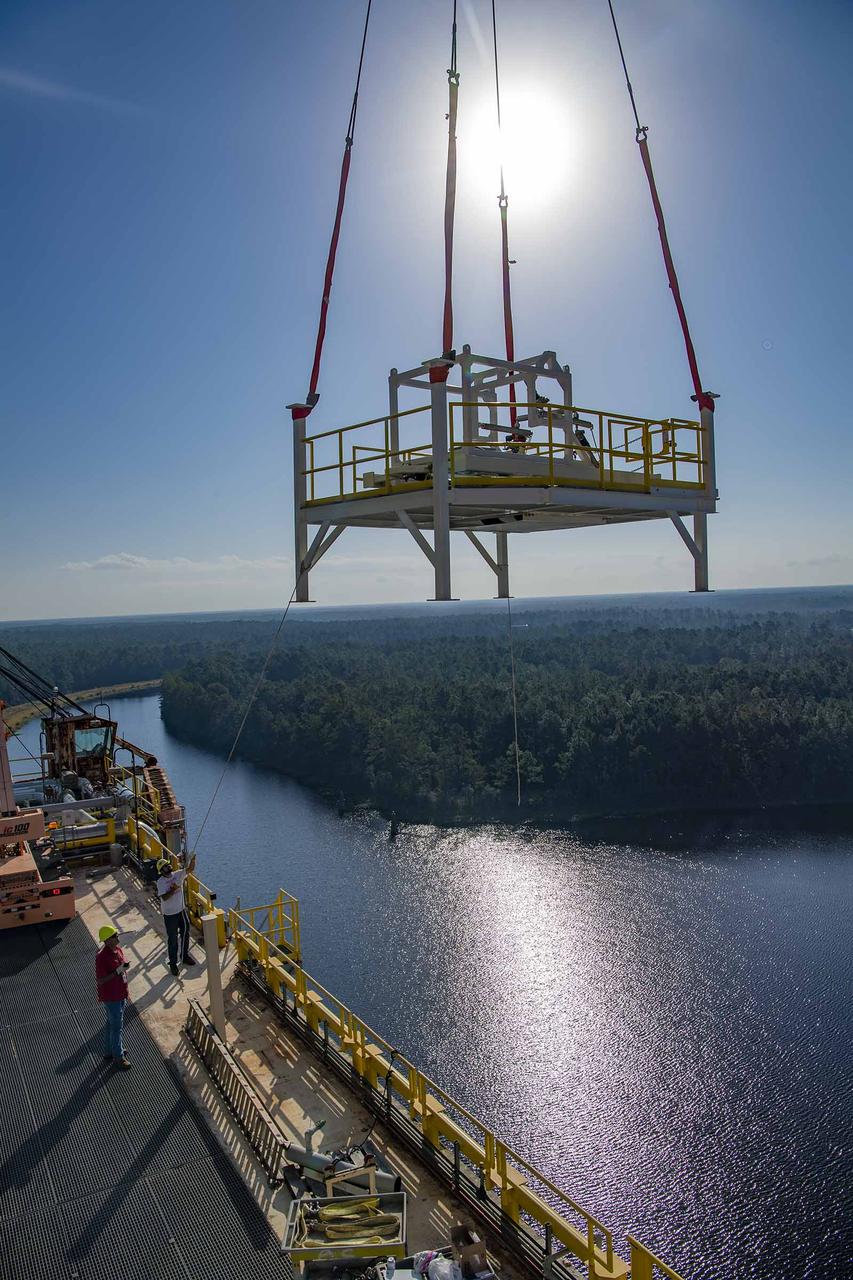
A pair of umbilical support structures needed for future testing of NASA’s exploration upper stage (EUS) were installed in the B-2 position of the Thad Cochran Test Stand on Oct. 30-31 at NASA’s Stennis Space Center. The support structures arrived from NASA’s Michoud Assembly Facility in New Orleans via the unique NASA Stennis seven-and-a-half-mile canal system in 2023. Since then, crews have prepared the structures that will align with the EUS unit for installation. In addition to helping secure the unit in place during hot fire testing, the umbilical support structures are where the command, control, and data electrical connections are mated to connect the ground systems to the vehicle systems, as well as most the commodity connections such as liquid hydrogen, liquid oxygen, hydrogen vent, helium bottle fill pressure, and purges. Prior to its initial flight, the EUS unit will undergo a series of so-called Green Run tests at NASA Stennis to ensure all systems are ready to go. The test series will culminate with a hot fire of the stage’s four RL10 engines, made by Aerojet Rocketdyne, an L3Harris Technologies company and lead SLS engines contractor. The new upper stage will enable NASA to carry larger payloads on Artemis missions to the Moon and beyond.
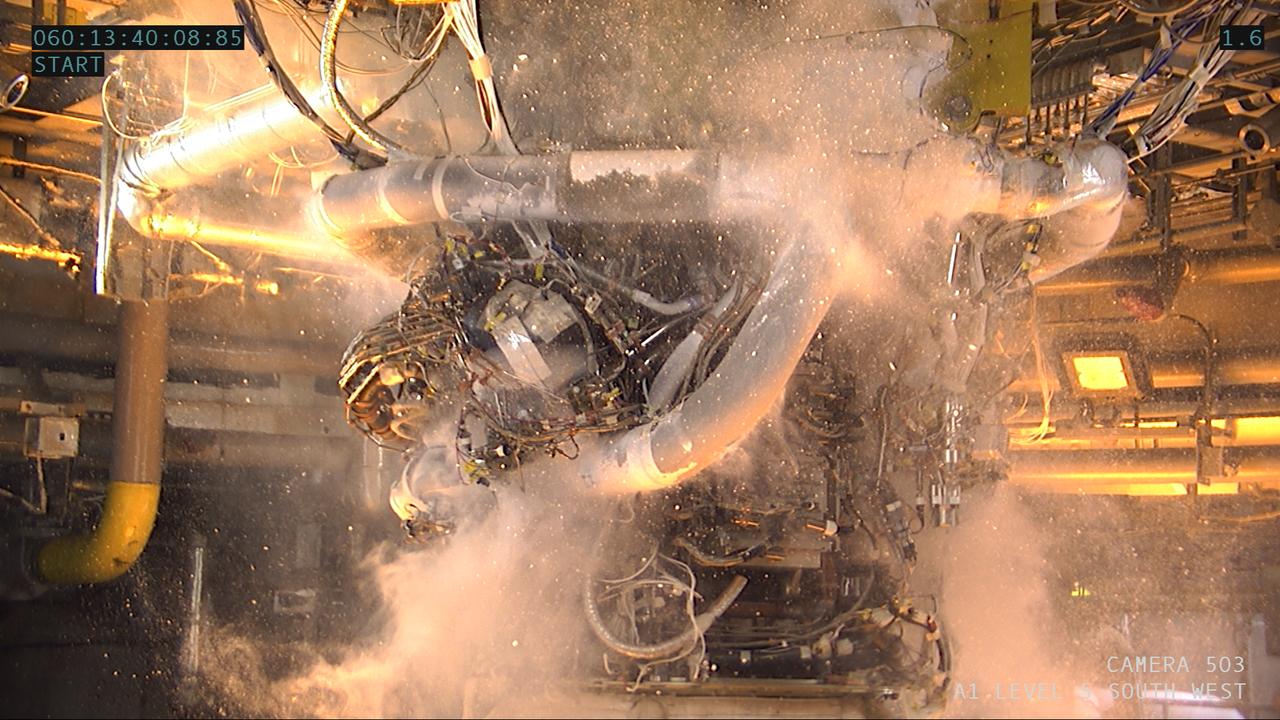
NASA conducted a full-duration RS-25 hot fire Feb. 29 on the Fred Haise Test Stand at NASA’s Stennis Space Center near Bay St. Louis, Mississippi, continuing a key test series for future Artemis flights of NASA’s SLS (Space Launch System) rocket. The hot fire to certify new production RS-25 engines for SLS marked only the second ever Leap Day engine test. Fourty-four years ago on Feb. 29, 1980, before the first space shuttle launch, a test-fire occurred for RS-25 engine #0009. Both tests were conducted on the Fred Haise Test, previously known as the A-1 Test Stand at NASA Stennis. The Feb. 29, 2024, hot fire is the second test following installation of a second production engine nozzle that will provide additional performance data on the upgraded unit. It also marked the eighth in a 12-test series to certify production of new RS-25 engines by lead contractor Aerojet Rocketdyne, an L3Harris Technologies company, to help power NASA’s SLS rocket on Artemis missions to the Moon and beyond, beginning with Artemis V. The current series is the second and final series to certify restart production of the upgraded engines. NASA completed an initial 12-test certification series with the upgraded components in June 2023. Four RS-25 engines fire simultaneously to help launch each SLS rocket, producing up to 2 million pounds of combined thrust.
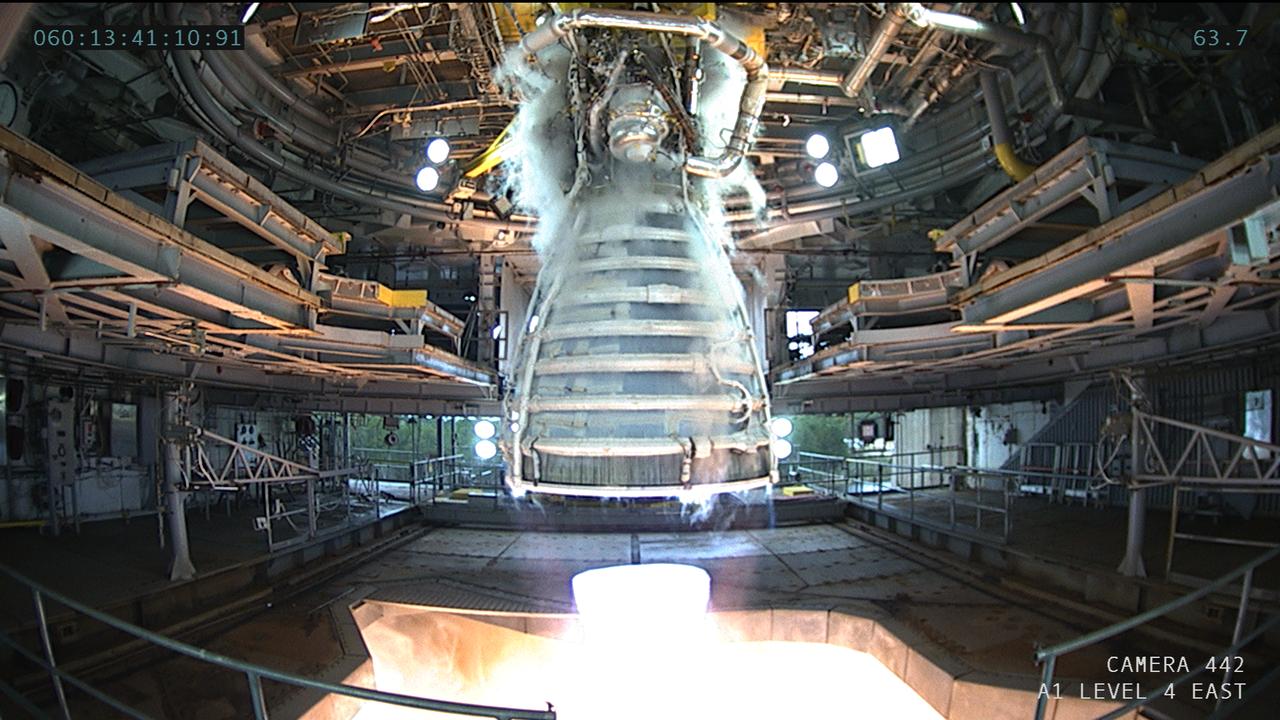
NASA conducted a full-duration RS-25 hot fire Feb. 29 on the Fred Haise Test Stand at NASA’s Stennis Space Center near Bay St. Louis, Mississippi, continuing a key test series for future Artemis flights of NASA’s SLS (Space Launch System) rocket. The hot fire to certify new production RS-25 engines for SLS marked only the second ever Leap Day engine test. Fourty-four years ago on Feb. 29, 1980, before the first space shuttle launch, a test-fire occurred for RS-25 engine #0009. Both tests were conducted on the Fred Haise Test, previously known as the A-1 Test Stand at NASA Stennis. The Feb. 29, 2024, hot fire is the second test following installation of a second production engine nozzle that will provide additional performance data on the upgraded unit. It also marked the eighth in a 12-test series to certify production of new RS-25 engines by lead contractor Aerojet Rocketdyne, an L3Harris Technologies company, to help power NASA’s SLS rocket on Artemis missions to the Moon and beyond, beginning with Artemis V. The current series is the second and final series to certify restart production of the upgraded engines. NASA completed an initial 12-test certification series with the upgraded components in June 2023. Four RS-25 engines fire simultaneously to help launch each SLS rocket, producing up to 2 million pounds of combined thrust.

Leah Martin, NASA Communications, participates in a social panel on Monday, June 24, 2024, at NASA’s Kennedy Space Center in Florida to discuss National Oceanic and Atmospheric Administration (NOAA) GOES-U (Geostationary Operational Environmental Satellite U) mission. The GOES-U satellite is the final addition to GOES-R series, which serves a critical role in providing continuous coverage of the Western Hemisphere, including monitoring tropical systems in the eastern Pacific and Atlantic oceans. The two-hour launch window opens at 5:16 p.m. EDT Tuesday, June 25, for the satellite’s launch on a SpaceX Falcon Heavy rocket from Launch Complex 39A at NASA’s Kennedy Space Center in Florida.

A SpaceX Falcon Heavy rocket carrying the National Oceanic and Atmospheric Administration (NOAA) GOES-U (Geostationary Operational Environmental Satellite U) lifts off from Launch Complex 39A at NASA’s Kennedy Space Center in Florida on Tuesday, June 25, 2024. The GOES-U satellite is the final satellite in the GOES-R series, which serves a critical role in providing continuous coverage of the Western Hemisphere, including monitoring tropical systems in the eastern Pacific and Atlantic oceans.
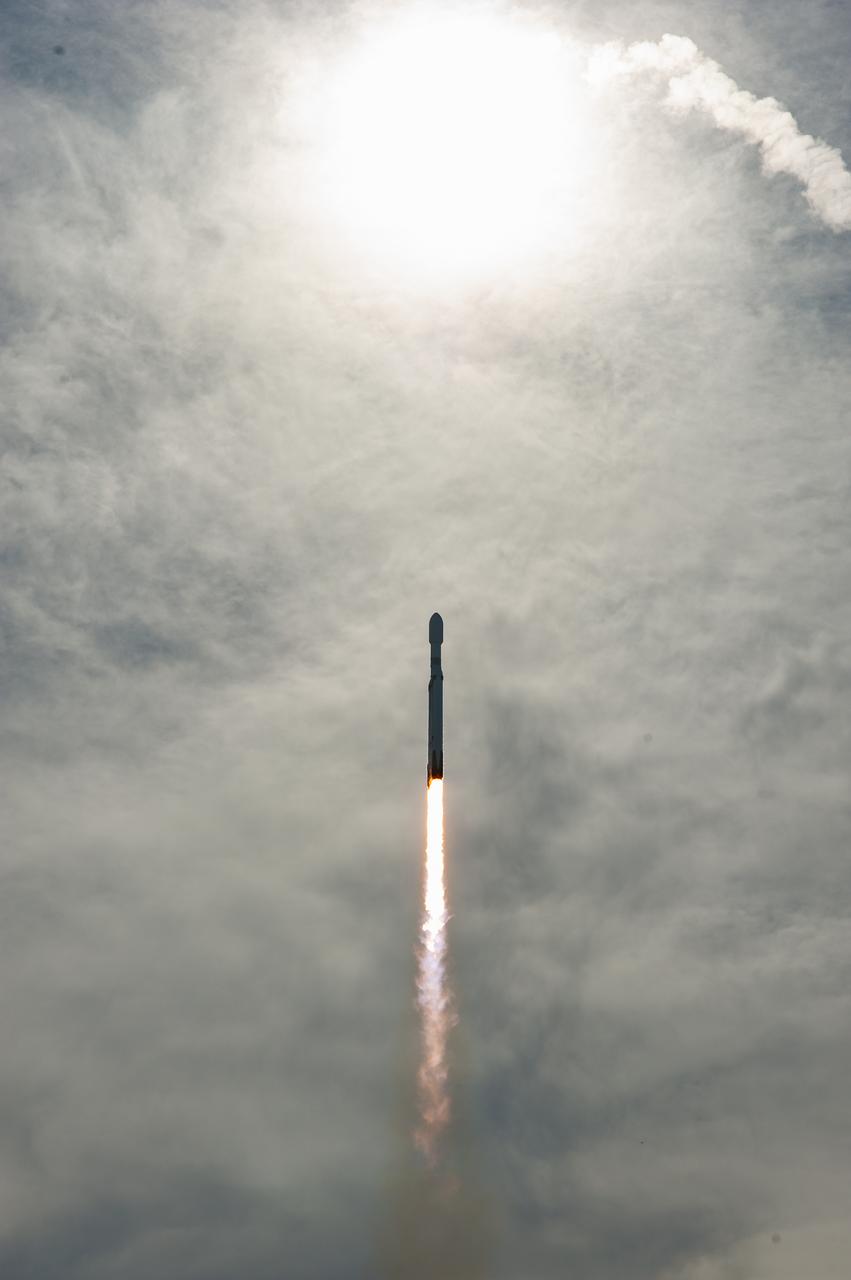
A SpaceX Falcon Heavy rocket carrying the National Oceanic and Atmospheric Administration (NOAA) GOES-U (Geostationary Operational Environmental Satellite U) lifts off from Launch Complex 39A at NASA’s Kennedy Space Center in Florida on Tuesday, June 25, 2024. The GOES-U satellite is the final satellite in the GOES-R series, which serves a critical role in providing continuous coverage of the Western Hemisphere, including monitoring tropical systems in the eastern Pacific and Atlantic oceans.
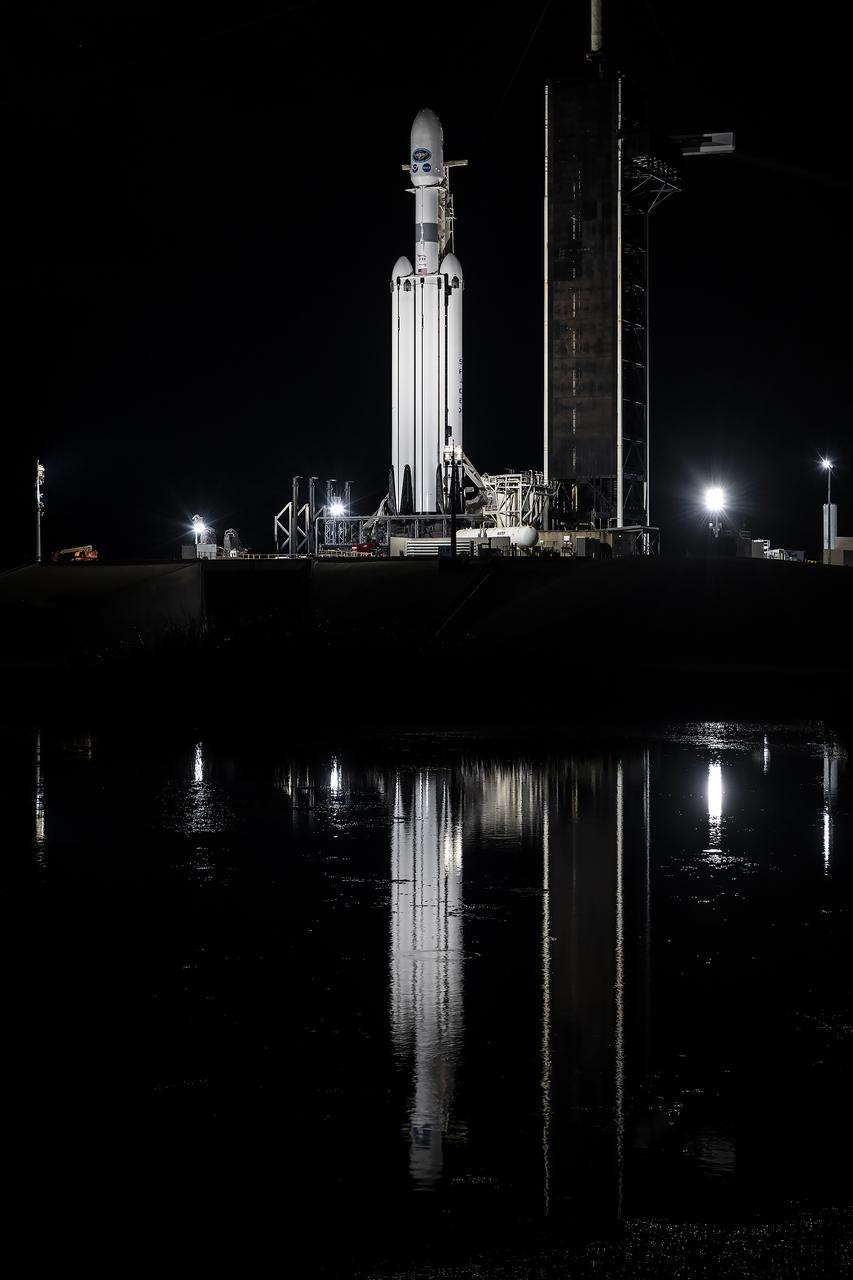
A SpaceX Falcon Heavy rocket carrying the National Oceanic and Atmospheric Administration (NOAA) GOES-U (Geostationary Operational Environmental Satellite U) stands vertical at Launch Complex 39A at NASA’s Kennedy Space Center in Florida on Monday, June 24, 2024. The GOES-U satellite is the final satellite in the GOES-R series, which serves a critical role in providing continuous coverage of the Western Hemisphere, including monitoring tropical systems in the eastern Pacific and Atlantic oceans. The two-hour launch window opens at 5:16 p.m. EDT. on Tuesday, June 25, 2024.
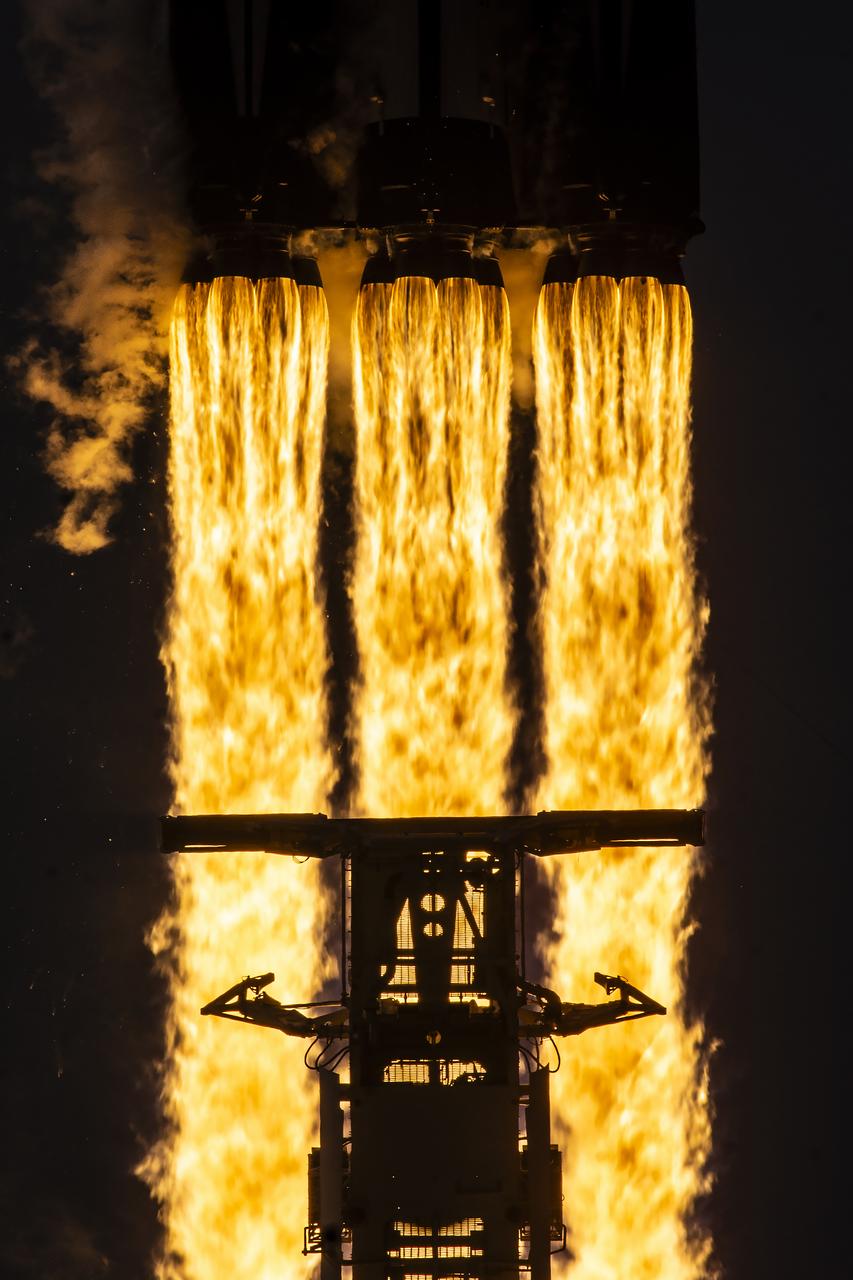
A SpaceX Falcon Heavy rocket carrying the National Oceanic and Atmospheric Administration (NOAA) GOES-U (Geostationary Operational Environmental Satellite U) lifts off from Launch Complex 39A at NASA’s Kennedy Space Center in Florida on Tuesday, June 25, 2024. The GOES-U satellite is the final satellite in the GOES-R series, which serves a critical role in providing continuous coverage of the Western Hemisphere, including monitoring tropical systems in the eastern Pacific and Atlantic oceans.
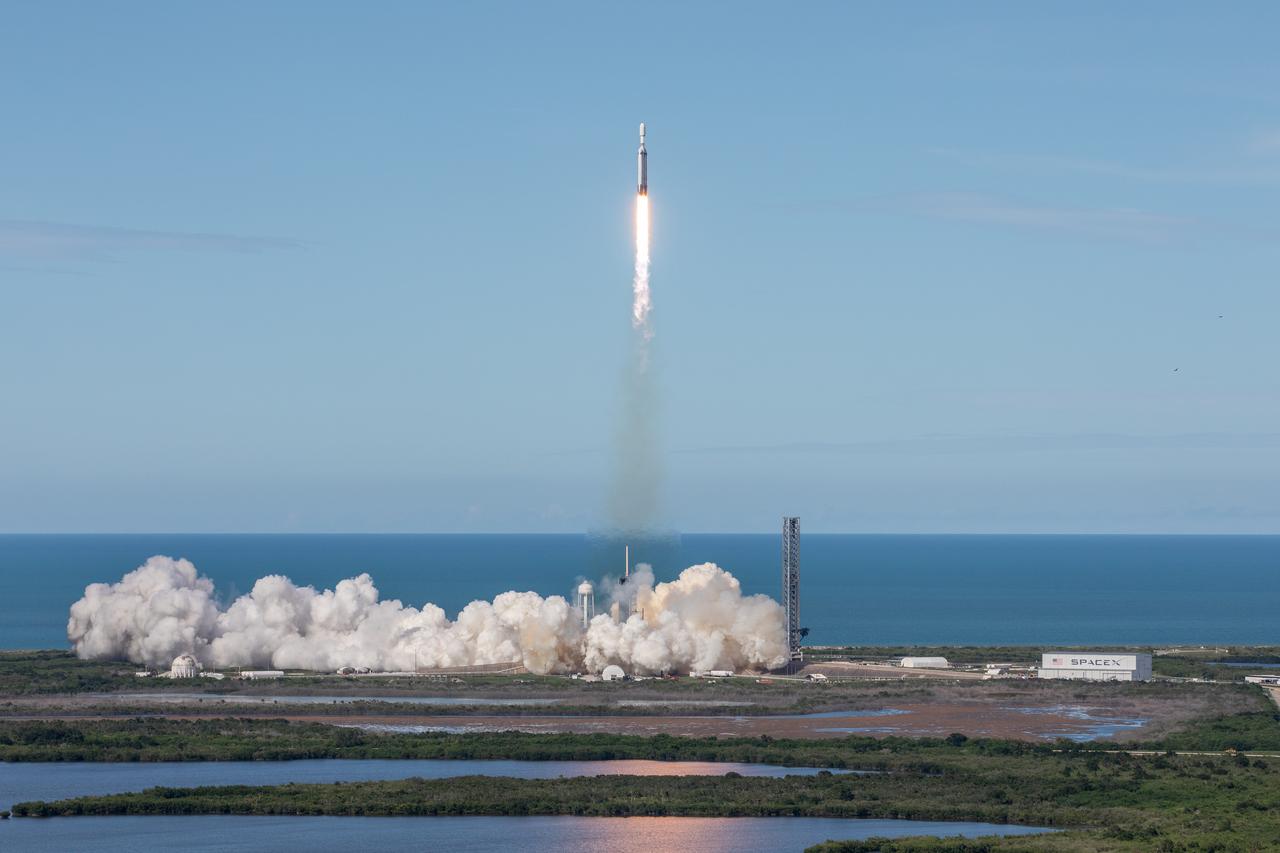
A SpaceX Falcon Heavy rocket carrying the National Oceanic and Atmospheric Administration (NOAA) GOES-U (Geostationary Operational Environmental Satellite U) lifts off from Launch Complex 39A at NASA’s Kennedy Space Center in Florida on Tuesday, June 25, 2024. The GOES-U satellite is the final satellite in the GOES-R series, which serves a critical role in providing continuous coverage of the Western Hemisphere, including monitoring tropical systems in the eastern Pacific and Atlantic oceans.

Allana Nepomuceno, senior manager, GOES-U Assembly, Test, and Launch Operations, Lockheed Martin, participates in a social panel on Monday, June 24, 2024, at NASA’s Kennedy Space Center in Florida to discuss National Oceanic and Atmospheric Administration (NOAA) GOES-U (Geostationary Operational Environmental Satellite U) mission. The GOES-U satellite is the final addition to GOES-R series, which serves a critical role in providing continuous coverage of the Western Hemisphere, including monitoring tropical systems in the eastern Pacific and Atlantic oceans. The two-hour launch window opens at 5:16 p.m. EDT Tuesday, June 25, for the satellite’s launch on a SpaceX Falcon Heavy rocket from Launch Complex 39A at NASA’s Kennedy Space Center in Florida.
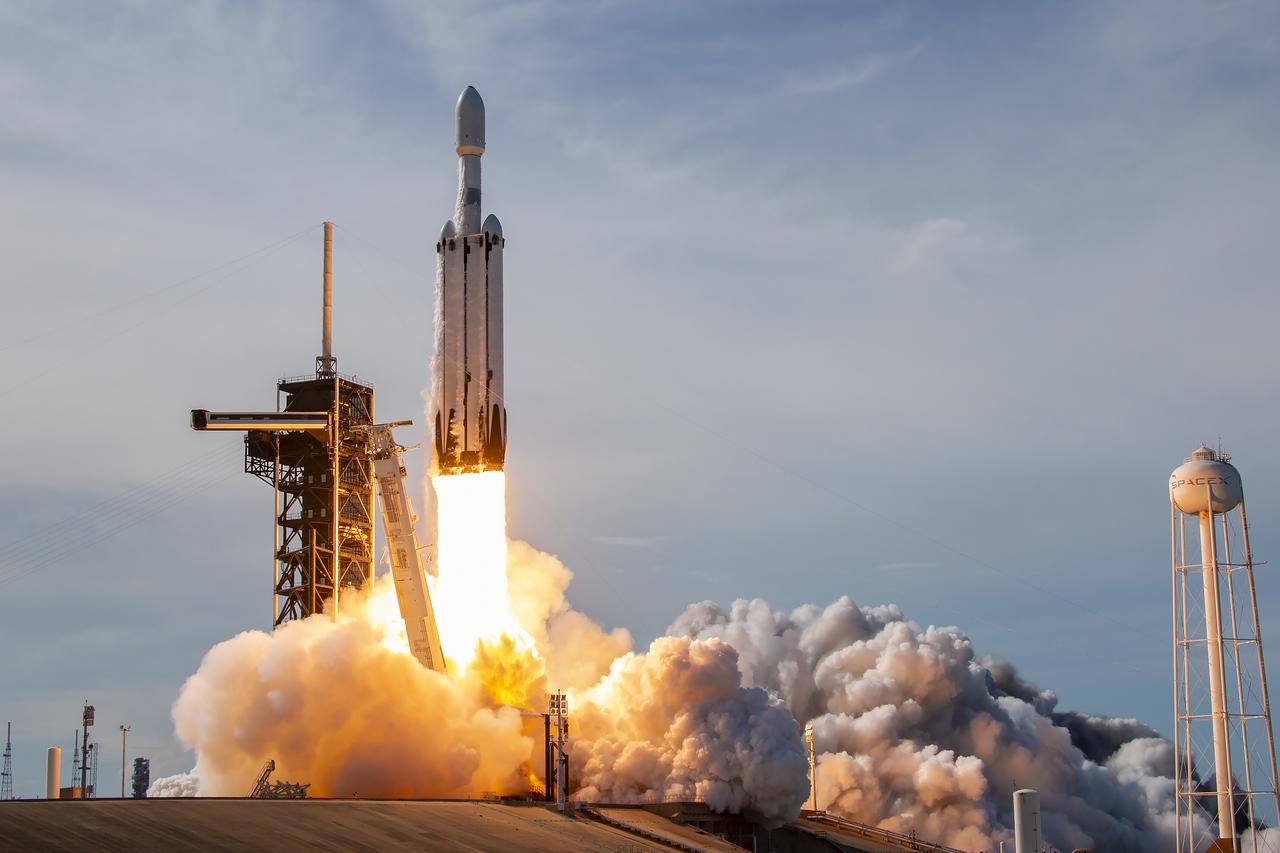
A SpaceX Falcon Heavy rocket carrying the National Oceanic and Atmospheric Administration (NOAA) GOES-U (Geostationary Operational Environmental Satellite U) lifts off from Launch Complex 39A at NASA’s Kennedy Space Center in Florida on Tuesday, June 25, 2024. The GOES-U satellite is the final satellite in the GOES-R series, which serves a critical role in providing continuous coverage of the Western Hemisphere, including monitoring tropical systems in the eastern Pacific and Atlantic oceans.
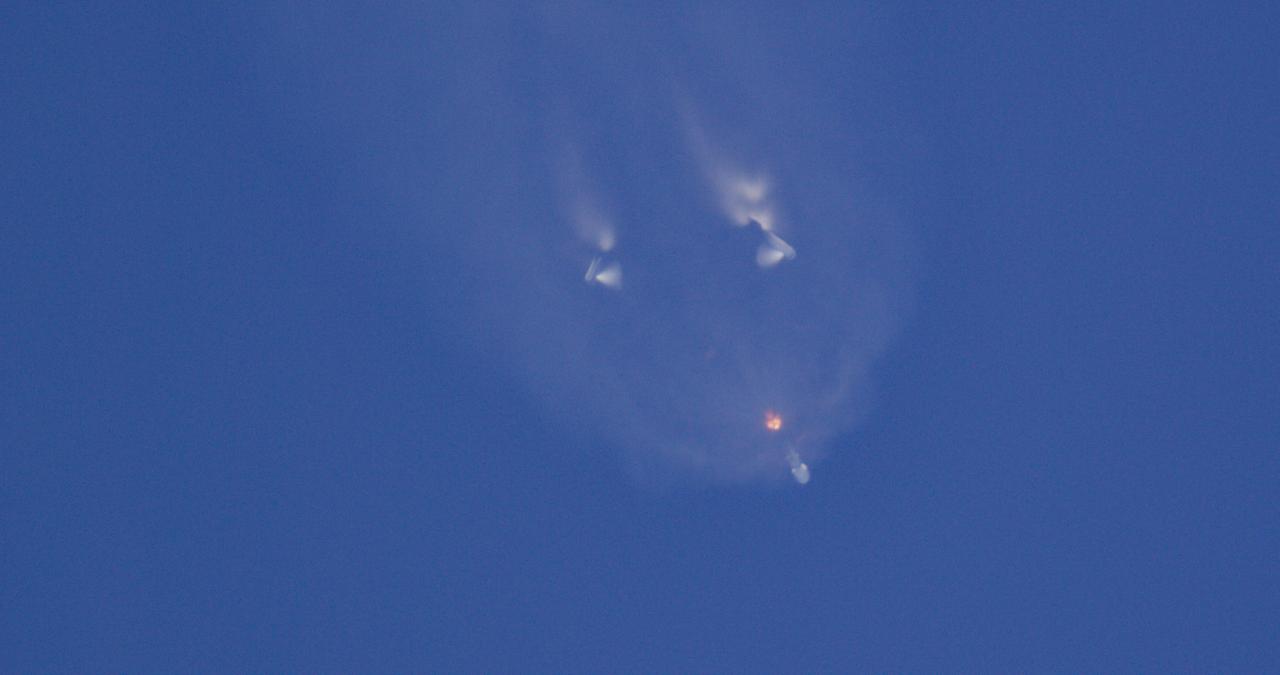
Side boosters separate from the center core on the SpaceX Falcon Heavy rocket carrying the National Oceanic and Atmospheric Administration (NOAA) GOES-U (Geostationary Operational Environmental Satellite U) after it lifts off from Launch Complex 39A at NASA’s Kennedy Space Center in Florida on Tuesday, June 25, 2024. The GOES-U satellite is the final satellite in the GOES-R series, which serves a critical role in providing continuous coverage of the Western Hemisphere, including monitoring tropical systems in the eastern Pacific and Atlantic oceans.
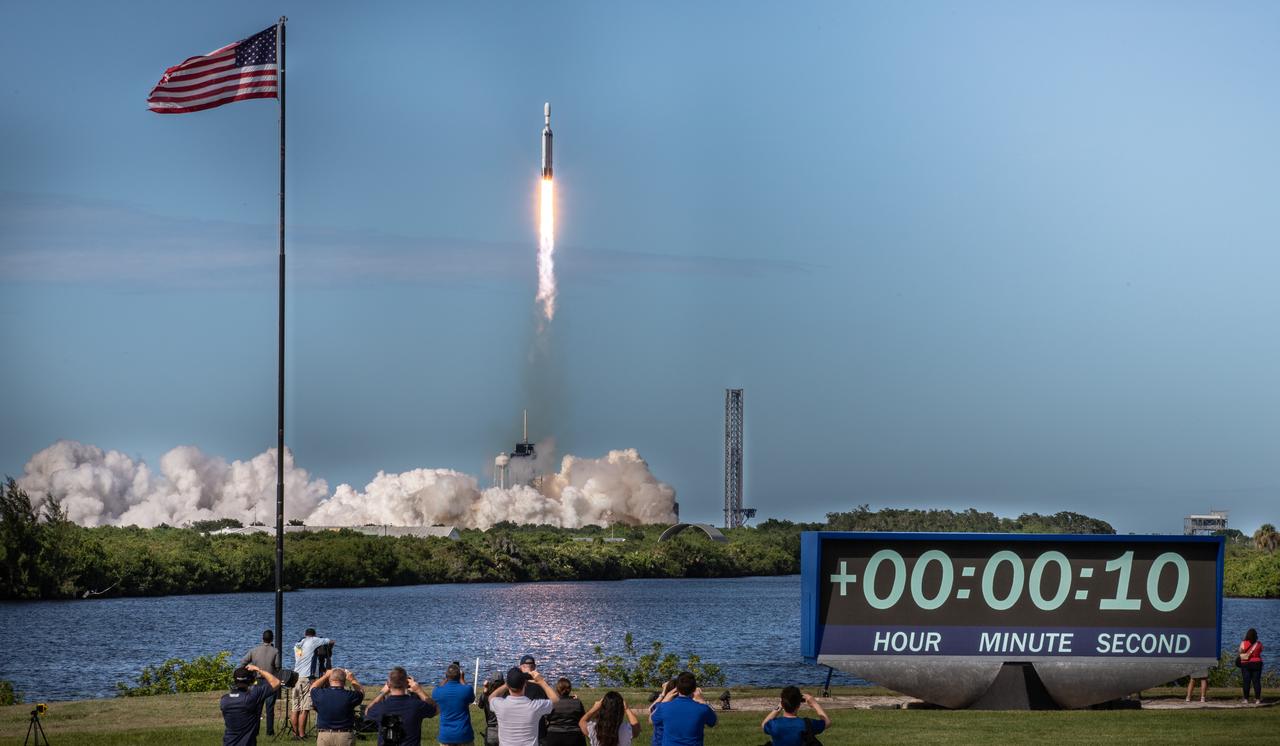
A SpaceX Falcon Heavy rocket carrying the National Oceanic and Atmospheric Administration (NOAA) GOES-U (Geostationary Operational Environmental Satellite U) lifts off from Launch Complex 39A at NASA’s Kennedy Space Center in Florida on Tuesday, June 25, 2024. The GOES-U satellite is the final satellite in the GOES-R series, which serves a critical role in providing continuous coverage of the Western Hemisphere, including monitoring tropical systems in the eastern Pacific and Atlantic oceans.
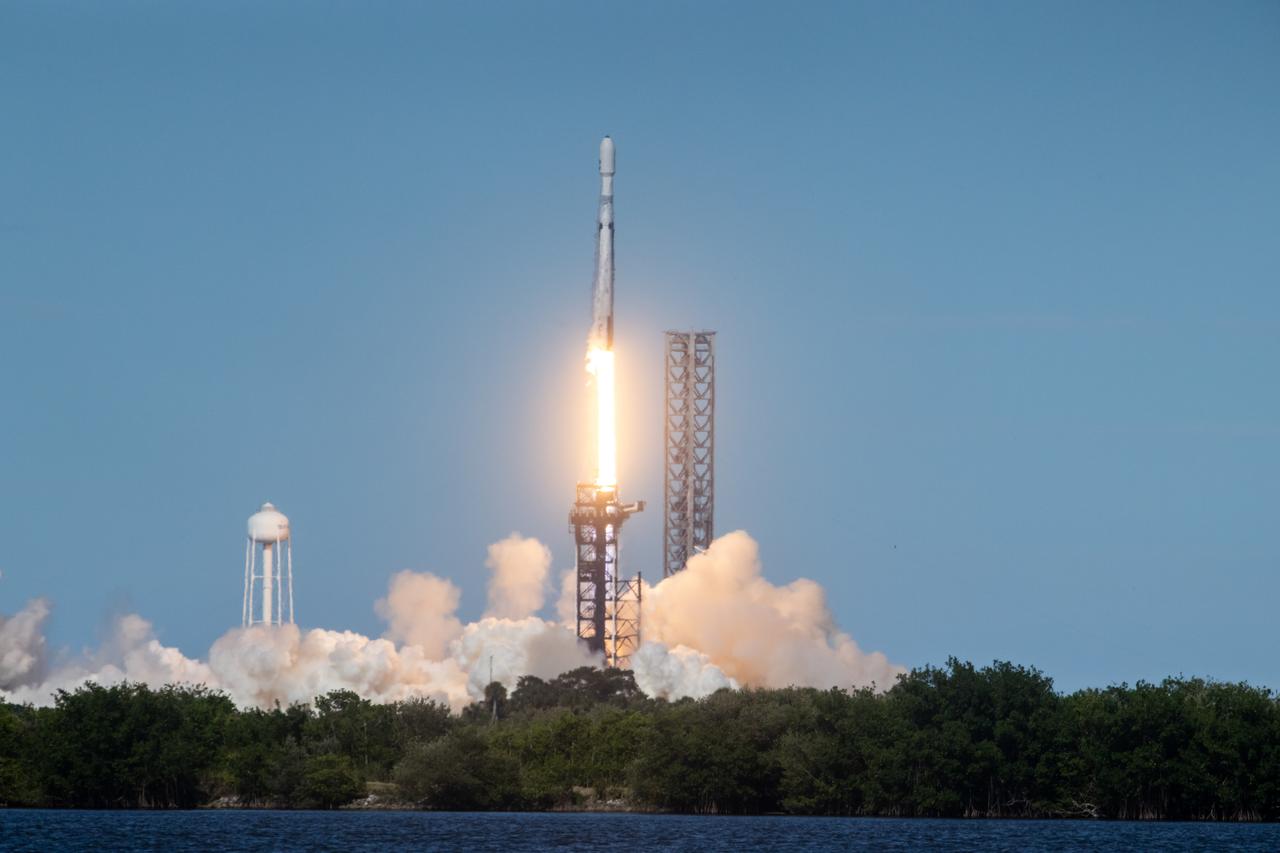
A SpaceX Falcon Heavy rocket carrying the National Oceanic and Atmospheric Administration (NOAA) GOES-U (Geostationary Operational Environmental Satellite U) lifts off from Launch Complex 39A at NASA’s Kennedy Space Center in Florida on Tuesday, June 25, 2024. The GOES-U satellite is the final satellite in the GOES-R series, which serves a critical role in providing continuous coverage of the Western Hemisphere, including monitoring tropical systems in the eastern Pacific and Atlantic oceans.

Brian Cizek, launch weather officer, 45th Weather Squadron, U.S. Space Force, participates in a prelaunch news conference on Monday, June 24, 2024, at NASA’s Kennedy Space Center in Florida to discuss National Oceanic and Atmospheric Administration (NOAA) GOES-U (Geostationary Operational Environmental Satellite U) mission. The GOES-U satellite is the final addition to GOES-R series, which serves a critical role in providing continuous coverage of the Western Hemisphere, including monitoring tropical systems in the eastern Pacific and Atlantic oceans. The two-hour launch window opens at 5:16 p.m. EDT Tuesday, June 25, for the satellite’s launch on a SpaceX Falcon Heavy rocket from Launch Complex 39A at NASA’s Kennedy Space Center in Florida.
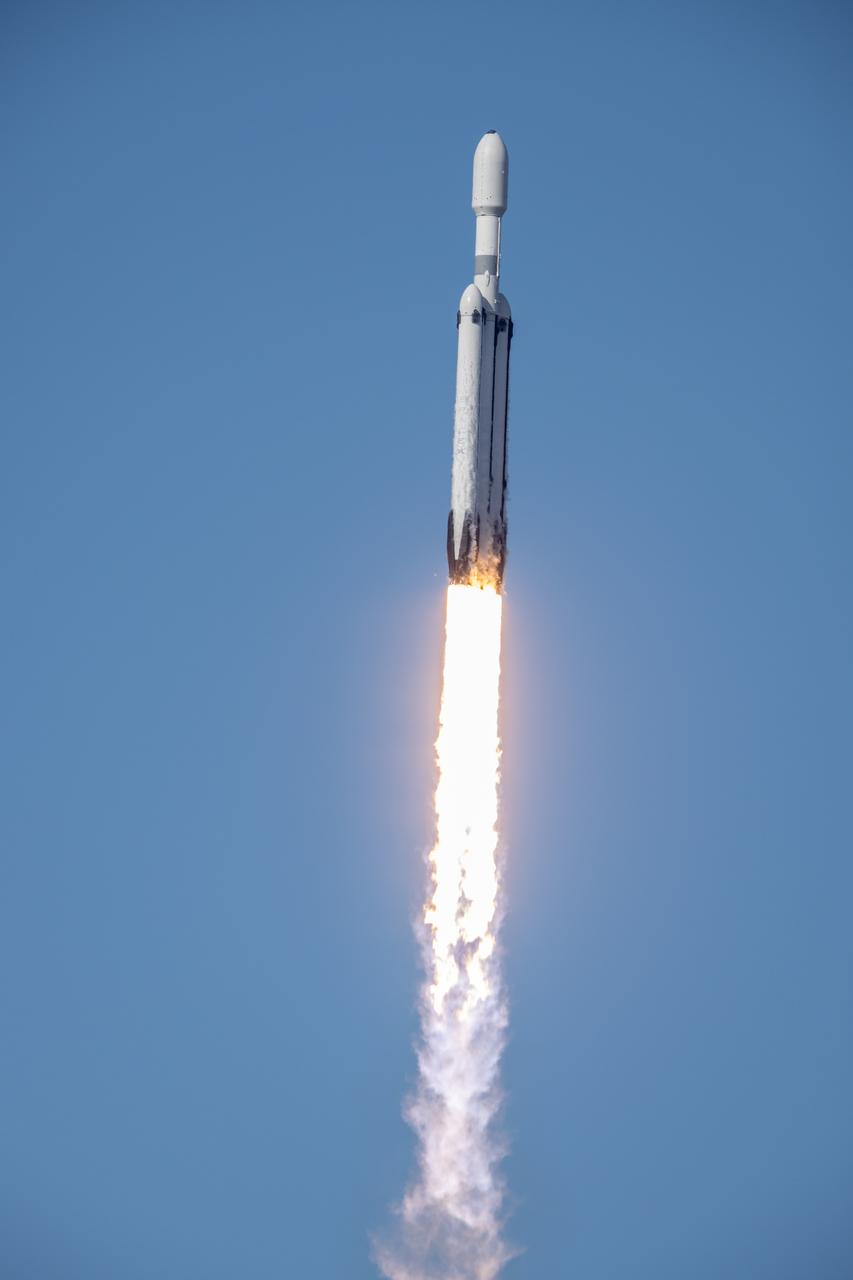
A SpaceX Falcon Heavy rocket carrying the National Oceanic and Atmospheric Administration (NOAA) GOES-U (Geostationary Operational Environmental Satellite U) lifts off from Launch Complex 39A at NASA’s Kennedy Space Center in Florida on Tuesday, June 25, 2024. The GOES-U satellite is the final satellite in the GOES-R series, which serves a critical role in providing continuous coverage of the Western Hemisphere, including monitoring tropical systems in the eastern Pacific and Atlantic oceans.
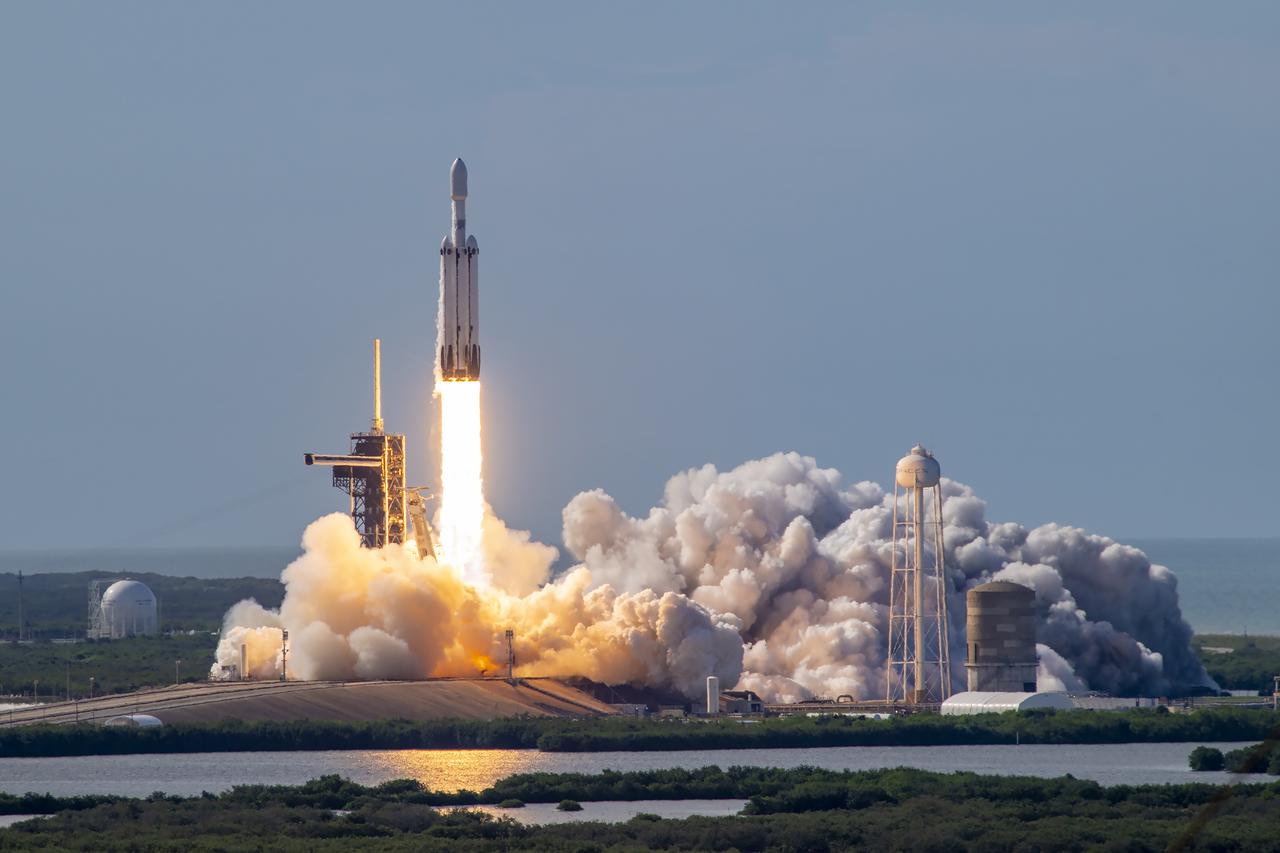
A SpaceX Falcon Heavy rocket carrying the National Oceanic and Atmospheric Administration (NOAA) GOES-U (Geostationary Operational Environmental Satellite U) lifts off from Launch Complex 39A at NASA’s Kennedy Space Center in Florida on Tuesday, June 25, 2024. The GOES-U satellite is the final satellite in the GOES-R series, which serves a critical role in providing continuous coverage of the Western Hemisphere, including monitoring tropical systems in the eastern Pacific and Atlantic oceans.
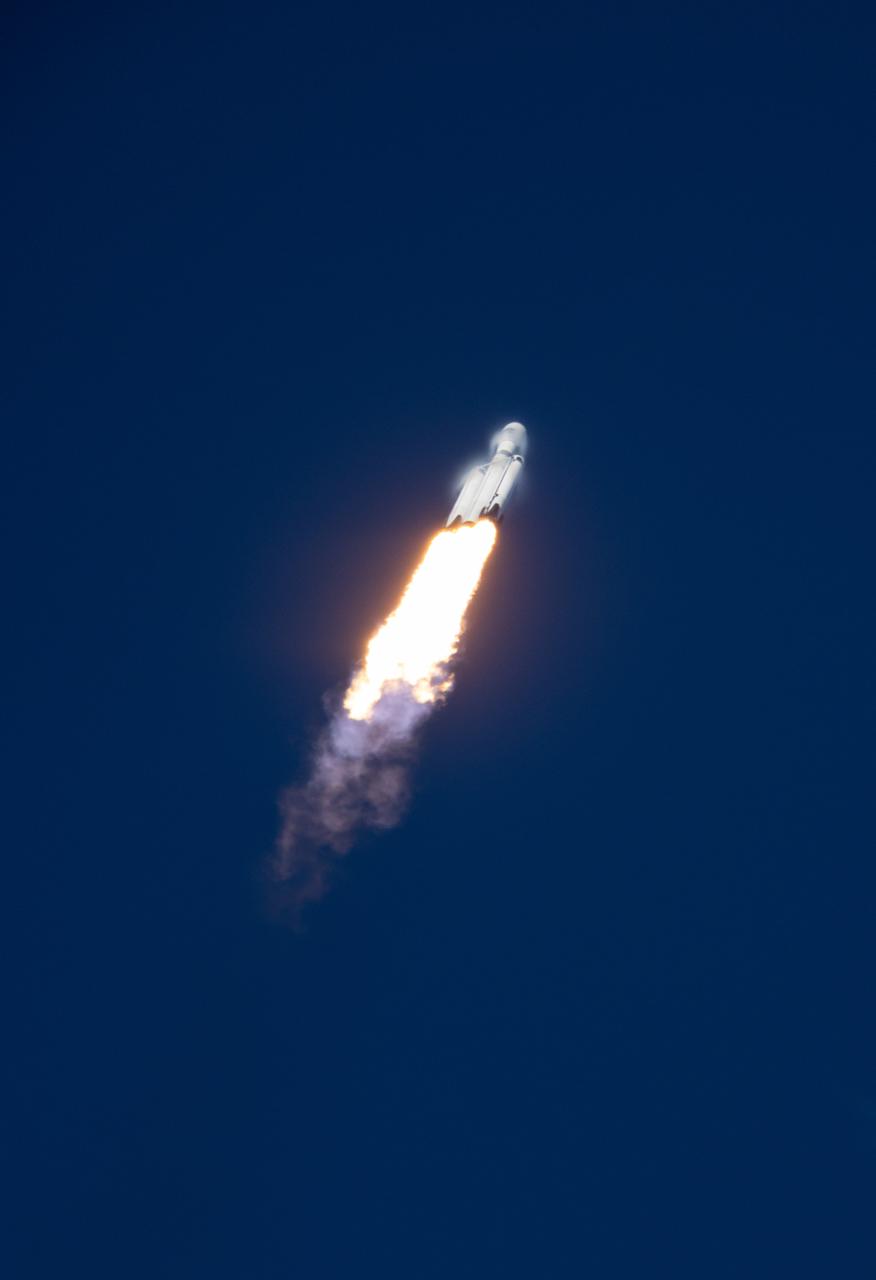
A SpaceX Falcon Heavy rocket carrying the National Oceanic and Atmospheric Administration (NOAA) GOES-U (Geostationary Operational Environmental Satellite U) launches from Launch Complex 39A at NASA’s Kennedy Space Center in Florida on Tuesday, June 25, 2024. The GOES-U satellite is the final satellite in the GOES-R series, which serves a critical role in providing continuous coverage of the Western Hemisphere, including monitoring tropical systems in the eastern Pacific and Atlantic oceans.

Steve Volz, assistant administrator, NOAA’s Satellite and Information Service, participates in a prelaunch news conference on Monday, June 24, 2024, at NASA’s Kennedy Space Center in Florida to discuss National Oceanic and Atmospheric Administration (NOAA) GOES-U (Geostationary Operational Environmental Satellite U) mission. The GOES-U satellite is the final addition to GOES-R series, which serves a critical role in providing continuous coverage of the Western Hemisphere, including monitoring tropical systems in the eastern Pacific and Atlantic oceans. The two-hour launch window opens at 5:16 p.m. EDT Tuesday, June 25, for the satellite’s launch on a SpaceX Falcon Heavy rocket from Launch Complex 39A at NASA’s Kennedy Space Center in Florida.
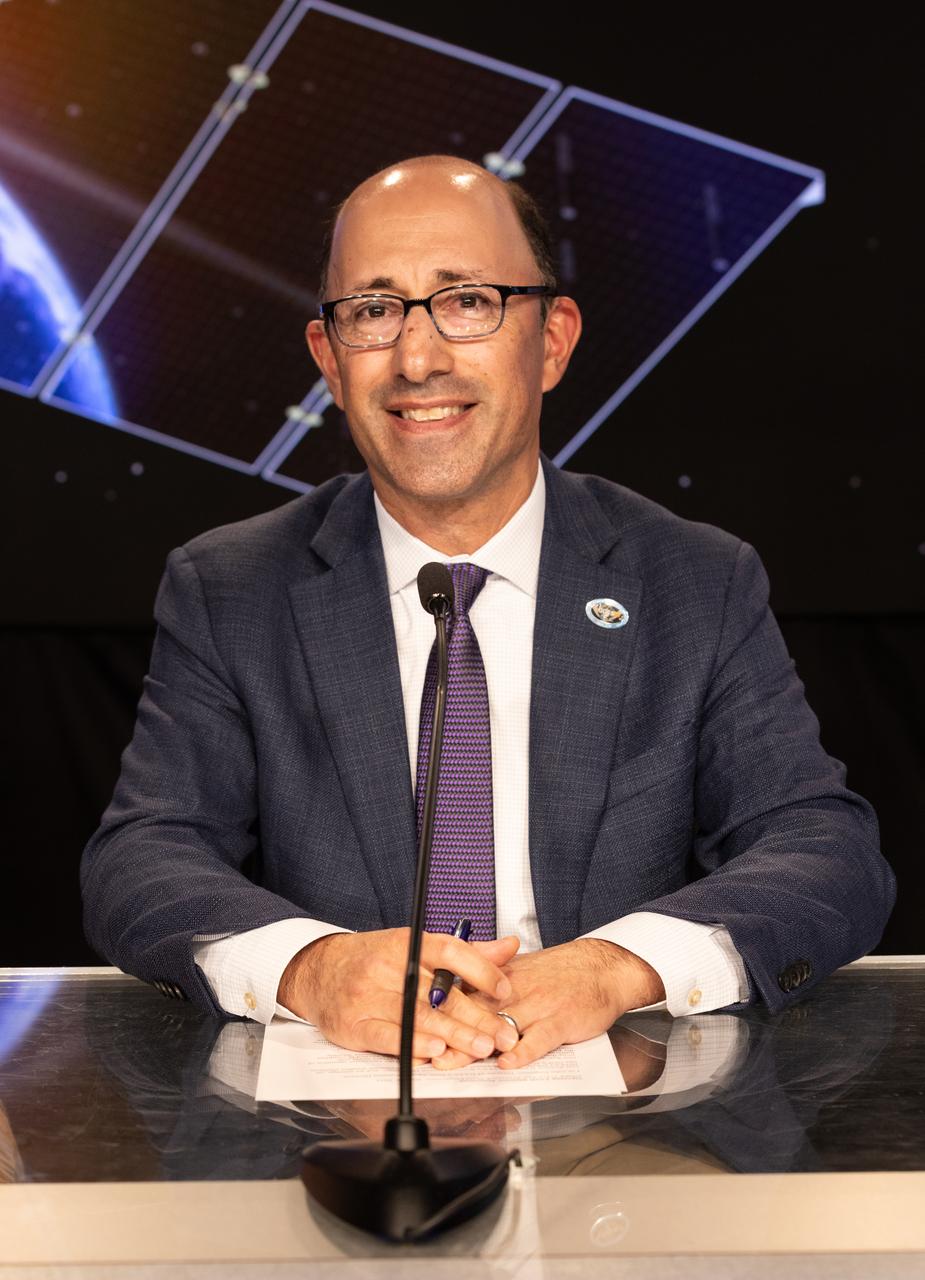
John Gagosian, director, Joint Agency Satellite Division, participates in a prelaunch news conference on Monday, June 24, 2024, at NASA’s Kennedy Space Center in Florida to discuss National Oceanic and Atmospheric Administration (NOAA) GOES-U (Geostationary Operational Environmental Satellite U) mission. The GOES-U satellite is the final addition to GOES-R series, which serves a critical role in providing continuous coverage of the Western Hemisphere, including monitoring tropical systems in the eastern Pacific and Atlantic oceans. The two-hour launch window opens at 5:16 p.m. EDT Tuesday, June 25, for the satellite’s launch on a SpaceX Falcon Heavy rocket from Launch Complex 39A at NASA’s Kennedy Space Center in Florida.
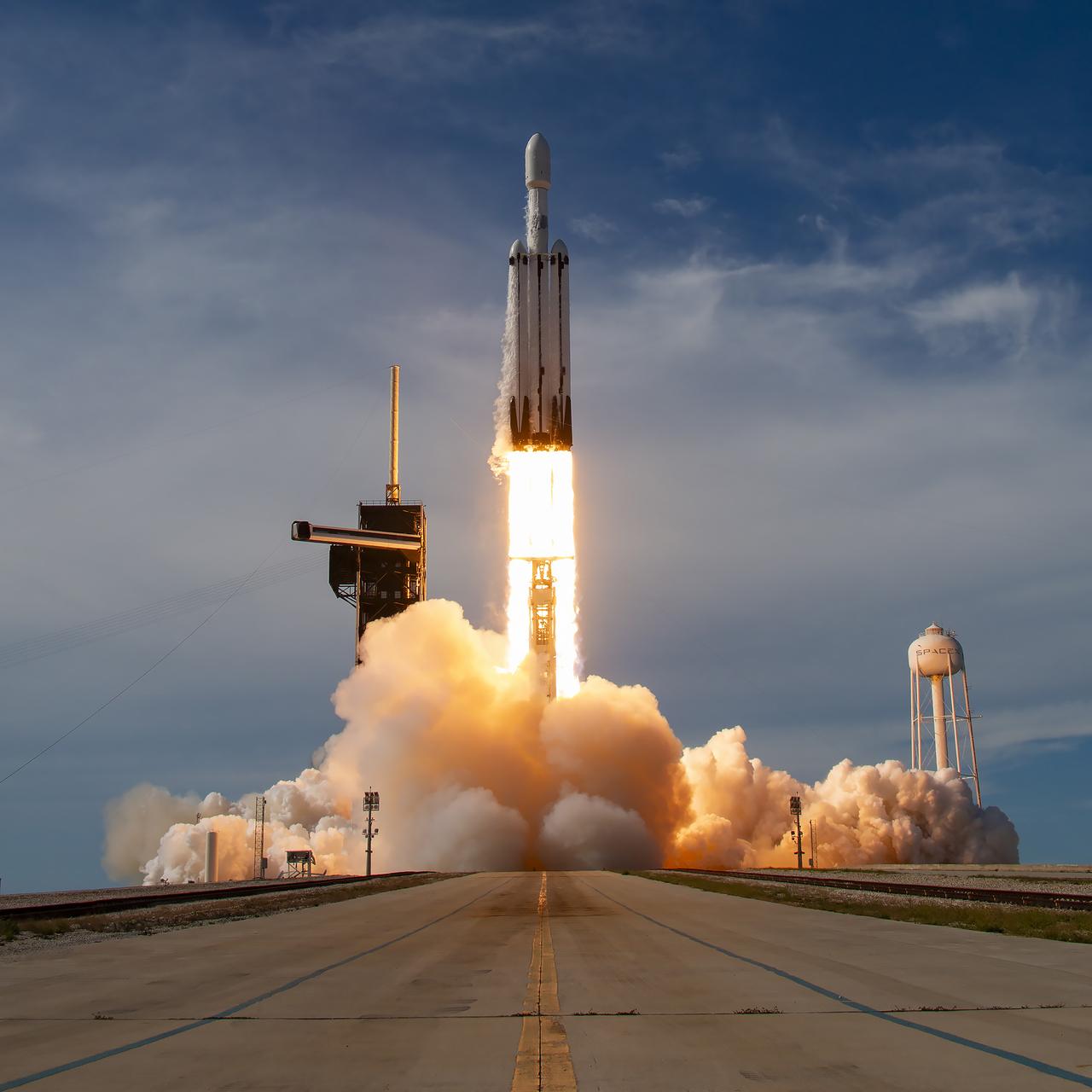
A SpaceX Falcon Heavy rocket carrying the National Oceanic and Atmospheric Administration (NOAA) GOES-U (Geostationary Operational Environmental Satellite U) lifts off from Launch Complex 39A at NASA’s Kennedy Space Center in Florida on Tuesday, June 25, 2024. The GOES-U satellite is the final satellite in the GOES-R series, which serves a critical role in providing continuous coverage of the Western Hemisphere, including monitoring tropical systems in the eastern Pacific and Atlantic oceans.

A SpaceX Falcon Heavy rocket carrying the National Oceanic and Atmospheric Administration (NOAA) GOES-U (Geostationary Operational Environmental Satellite U) lifts off from Launch Complex 39A at NASA’s Kennedy Space Center in Florida on Tuesday, June 25, 2024. The GOES-U satellite is the final satellite in the GOES-R series, which serves a critical role in providing continuous coverage of the Western Hemisphere, including monitoring tropical systems in the eastern Pacific and Atlantic oceans.
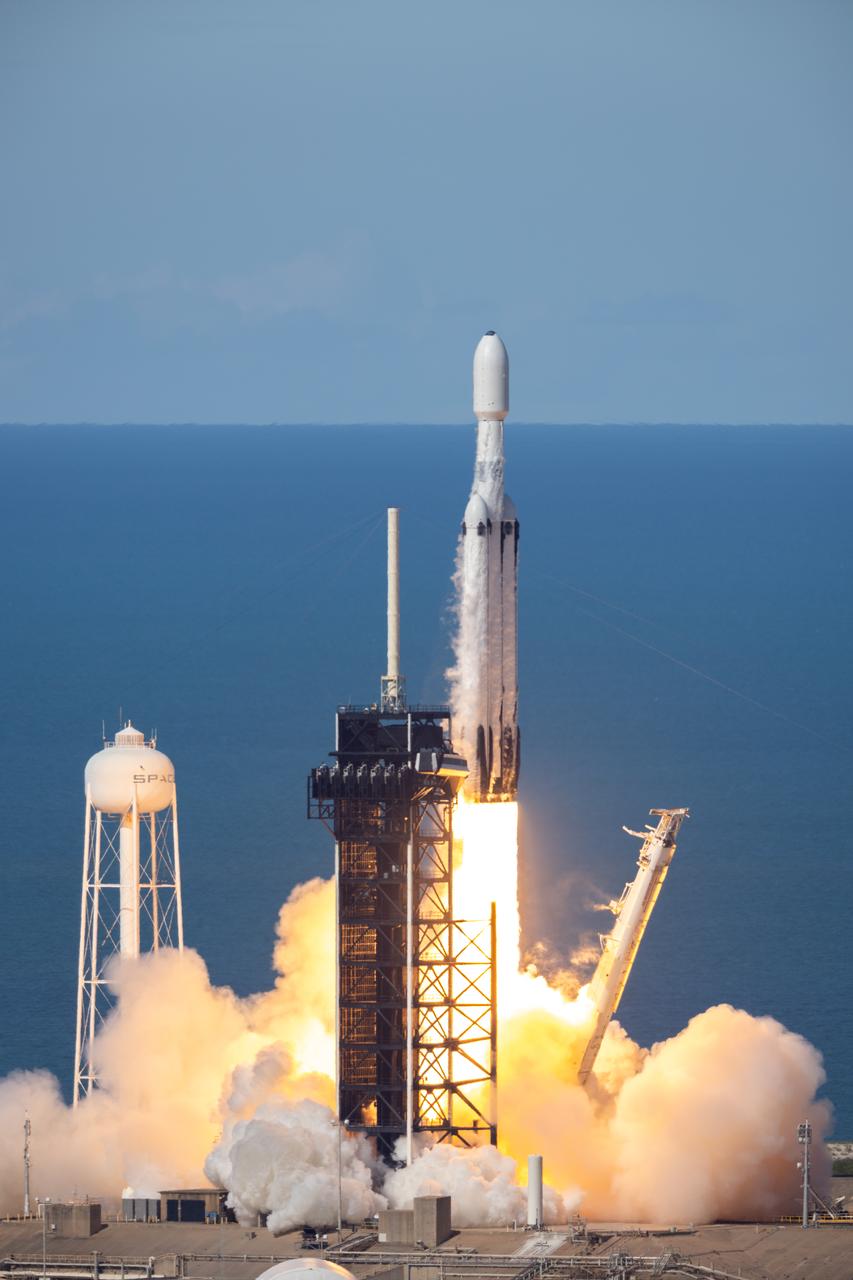
A SpaceX Falcon Heavy rocket carrying the National Oceanic and Atmospheric Administration (NOAA) GOES-U (Geostationary Operational Environmental Satellite U) lifts off from Launch Complex 39A at NASA’s Kennedy Space Center in Florida on Tuesday, June 25, 2024. The GOES-U satellite is the final satellite in the GOES-R series, which serves a critical role in providing continuous coverage of the Western Hemisphere, including monitoring tropical systems in the eastern Pacific and Atlantic oceans.
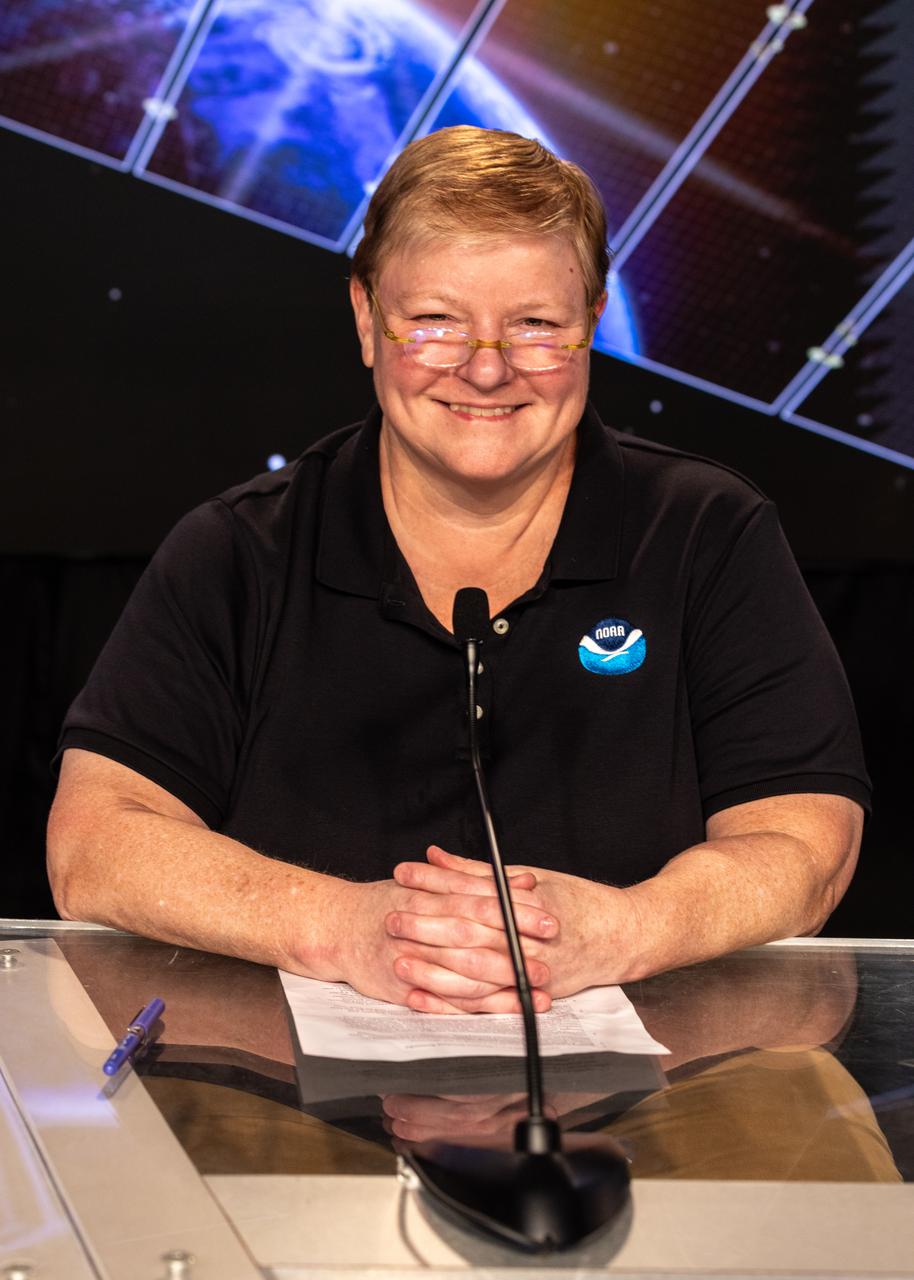
Pam Sullivan, director, GOES-R Program, NOAA, participates in a prelaunch news conference on Monday, June 24, 2024, at NASA’s Kennedy Space Center in Florida to discuss National Oceanic and Atmospheric Administration (NOAA) GOES-U (Geostationary Operational Environmental Satellite U) mission. The GOES-U satellite is the final addition to GOES-R series, which serves a critical role in providing continuous coverage of the Western Hemisphere, including monitoring tropical systems in the eastern Pacific and Atlantic oceans. The two-hour launch window opens at 5:16 p.m. EDT Tuesday, June 25, for the satellite’s launch on a SpaceX Falcon Heavy rocket from Launch Complex 39A at NASA’s Kennedy Space Center in Florida.
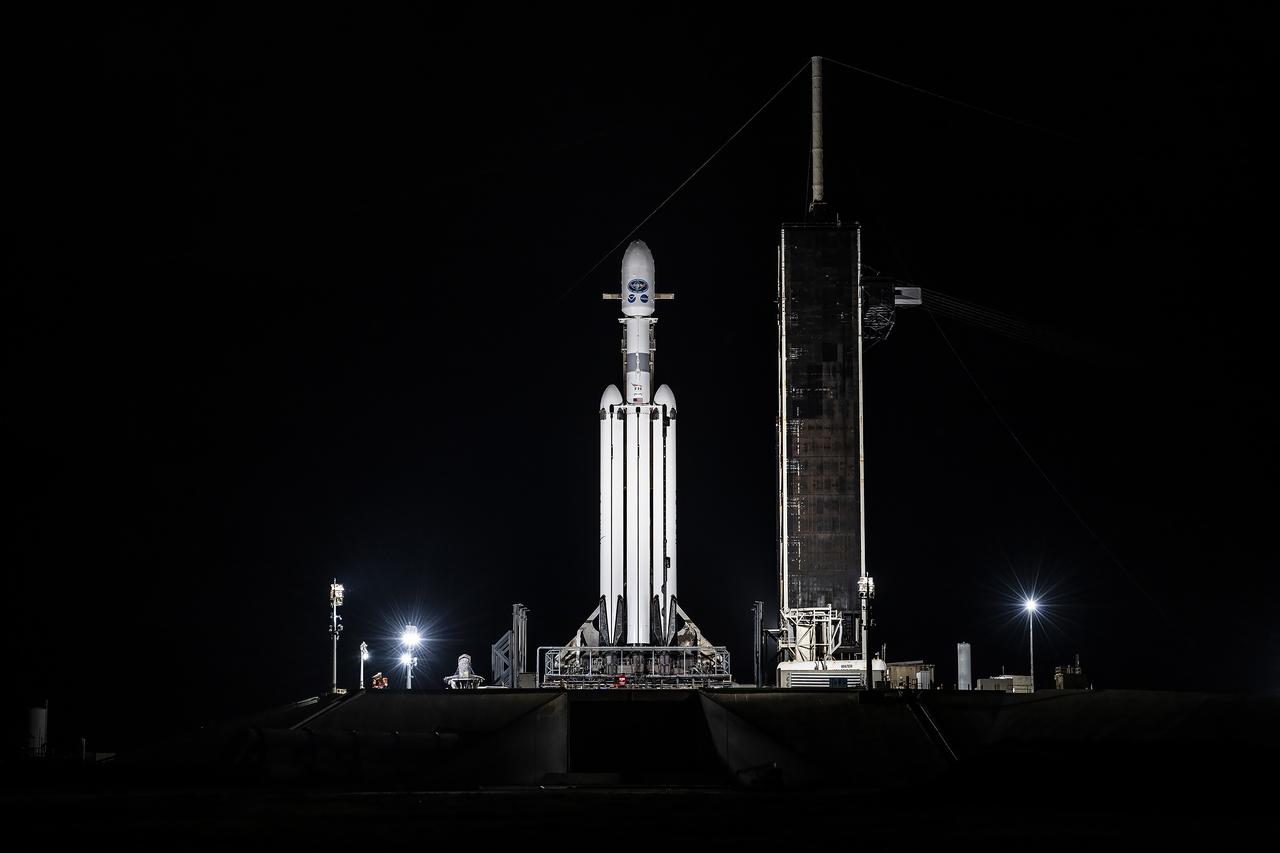
A SpaceX Falcon Heavy rocket carrying the National Oceanic and Atmospheric Administration (NOAA) GOES-U (Geostationary Operational Environmental Satellite U) stands vertical at Launch Complex 39A at NASA’s Kennedy Space Center in Florida on Monday, June 24, 2024. The GOES-U satellite is the final satellite in the GOES-R series, which serves a critical role in providing continuous coverage of the Western Hemisphere, including monitoring tropical systems in the eastern Pacific and Atlantic oceans. The two-hour launch window opens at 5:16 p.m. EDT. on Tuesday, June 25, 2024.
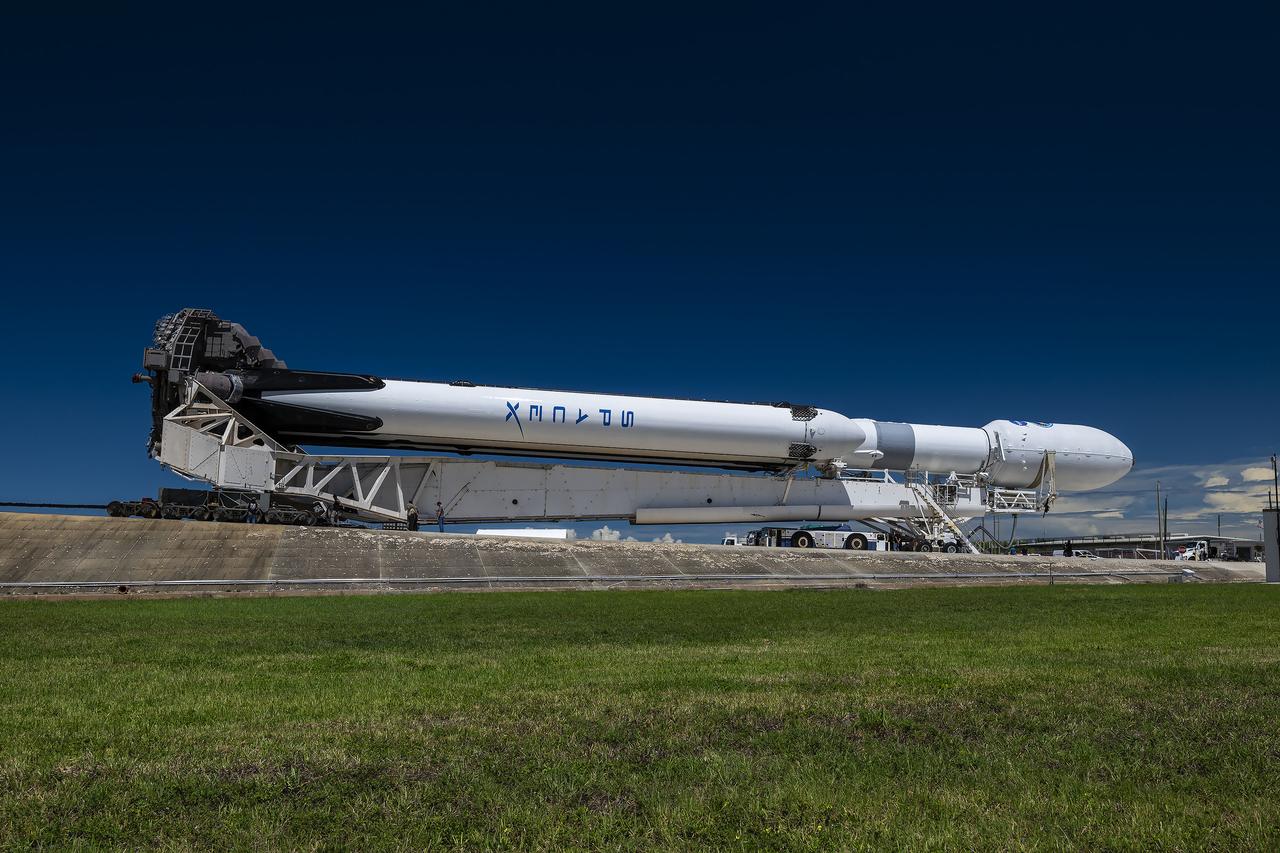
A SpaceX Falcon Heavy rocket carrying the National Oceanic and Atmospheric Administration (NOAA) GOES-U (Geostationary Operational Environmental Satellite U) moves from the hangar to the launch pad at Space Launch Complex 39A at NASA’s Kennedy Space Center in Florida on Monday, June 24, 2024. The GOES-U satellite is the final satellite in the GOES-R series, which serves a critical role in providing continuous coverage of the Western Hemisphere, including monitoring tropical systems in the eastern Pacific and Atlantic oceans. The two-hour launch window opens at 5:16 p.m. EDT Tuesday, June 25.