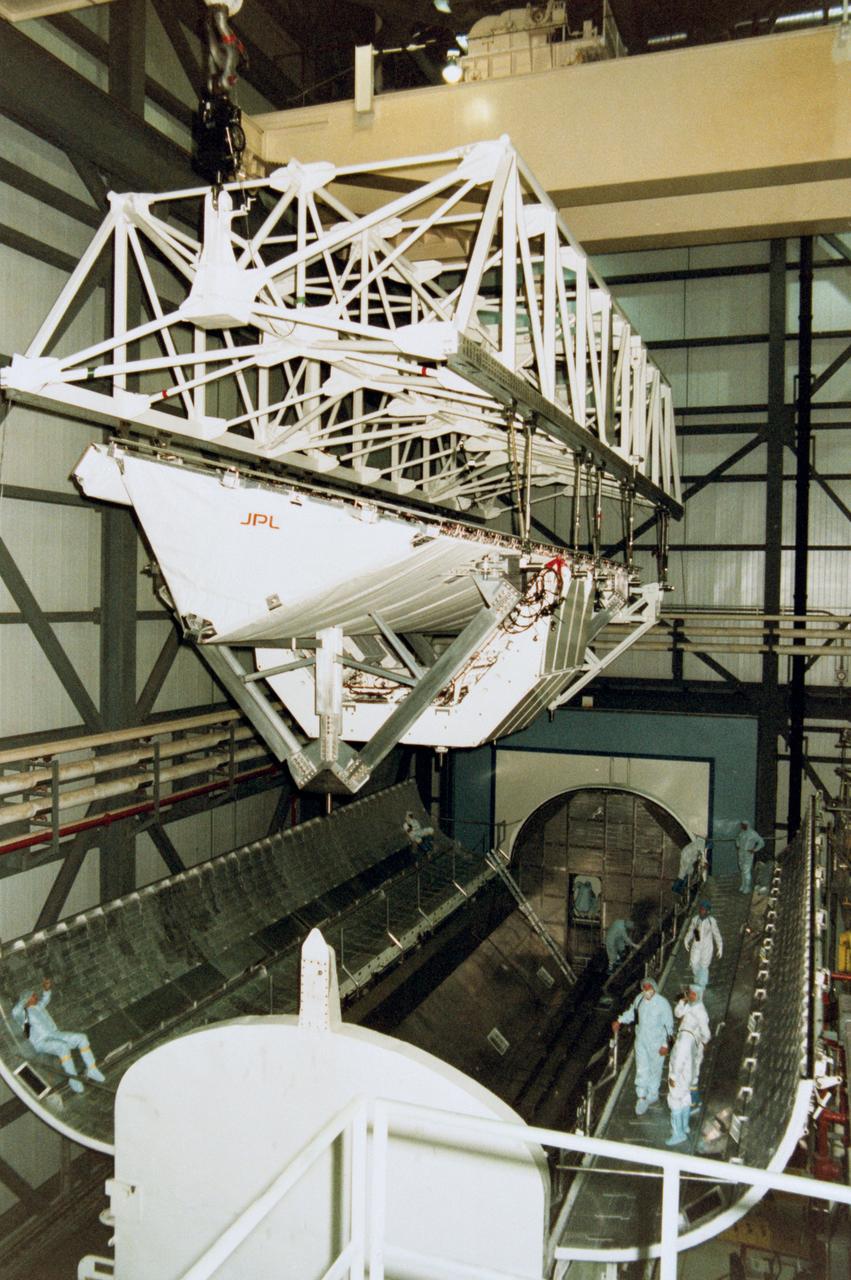
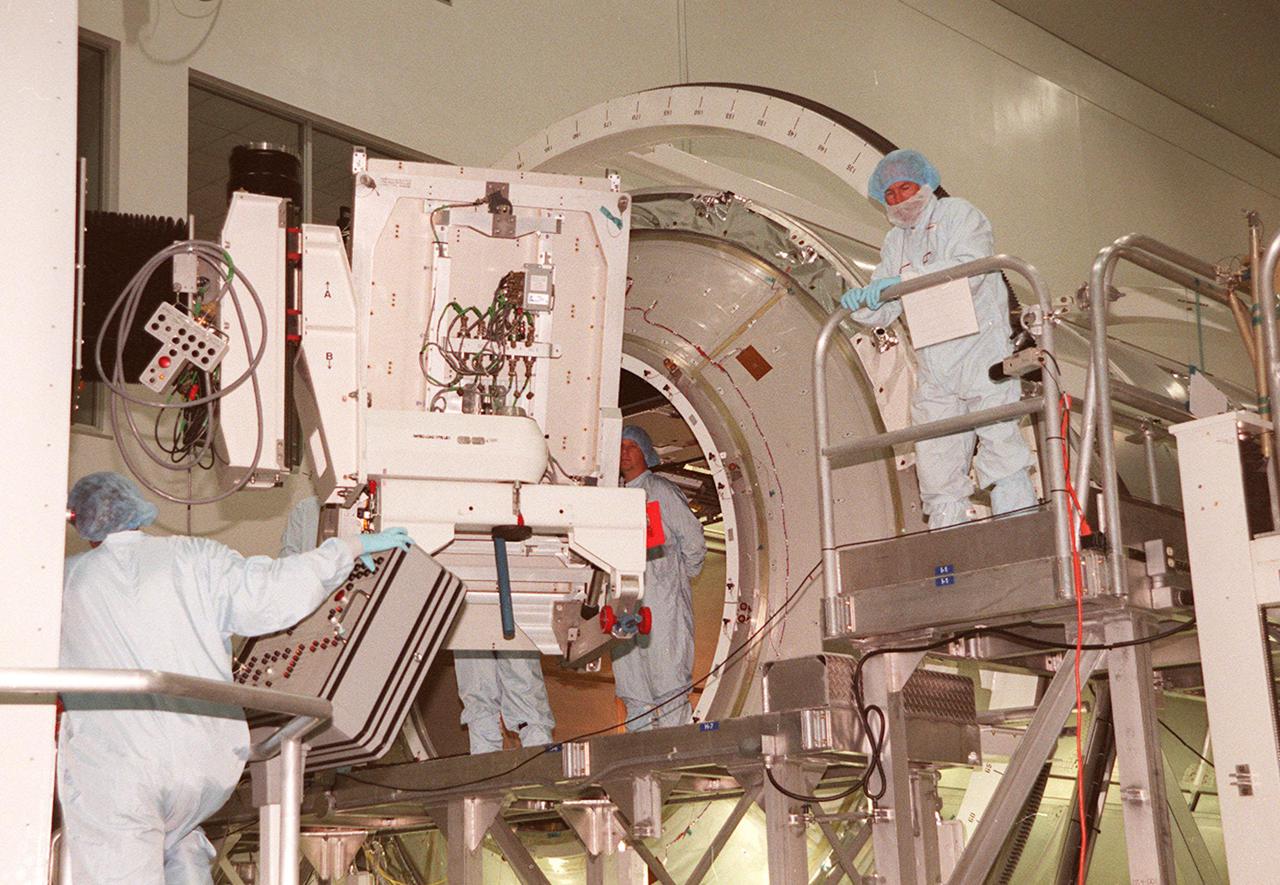
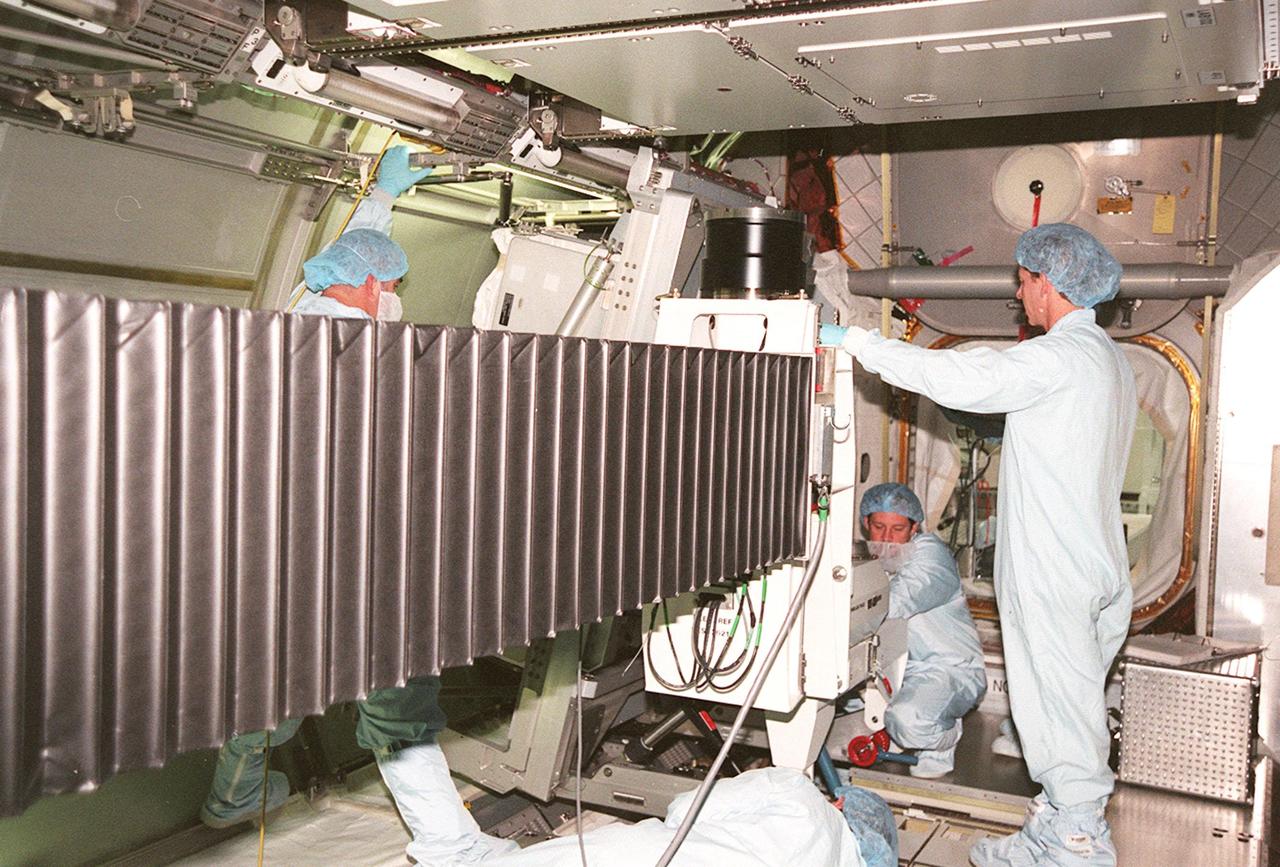
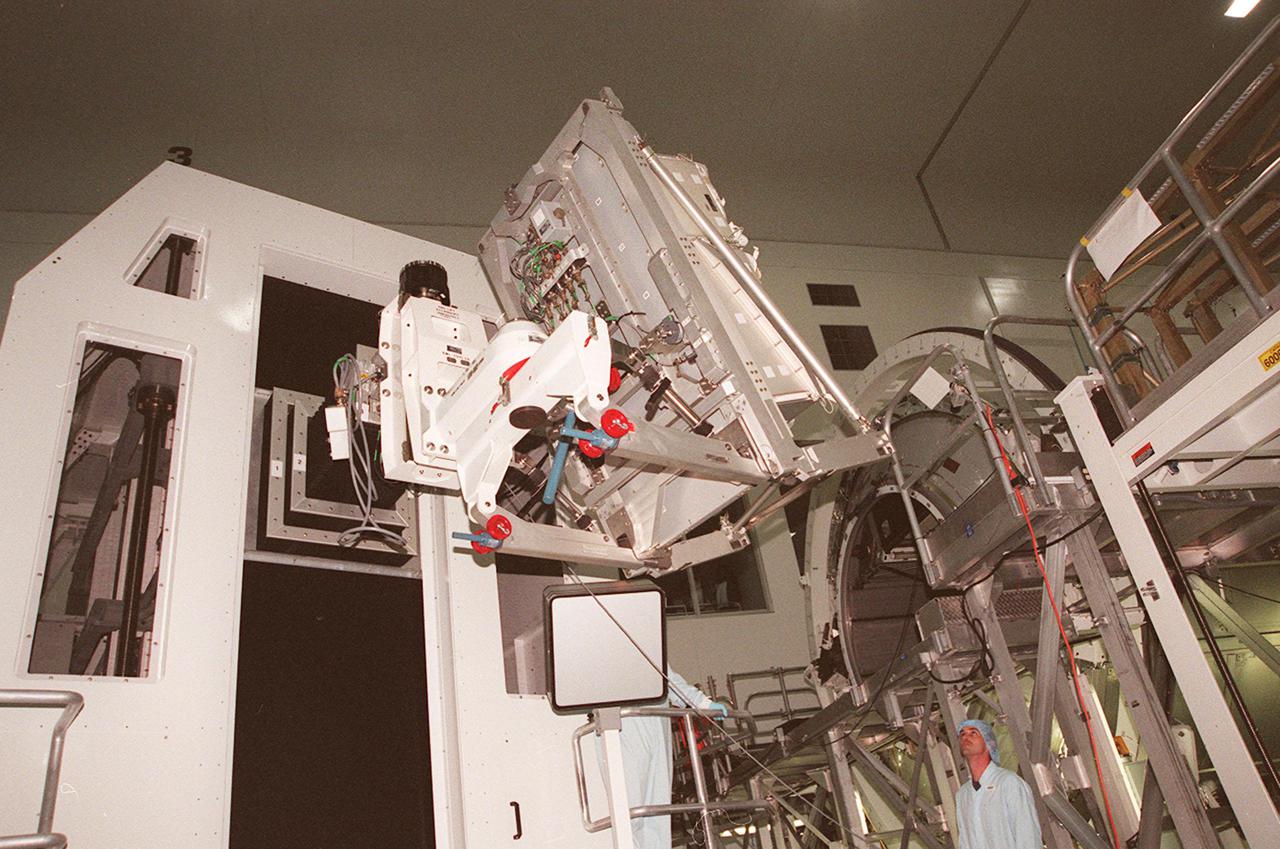
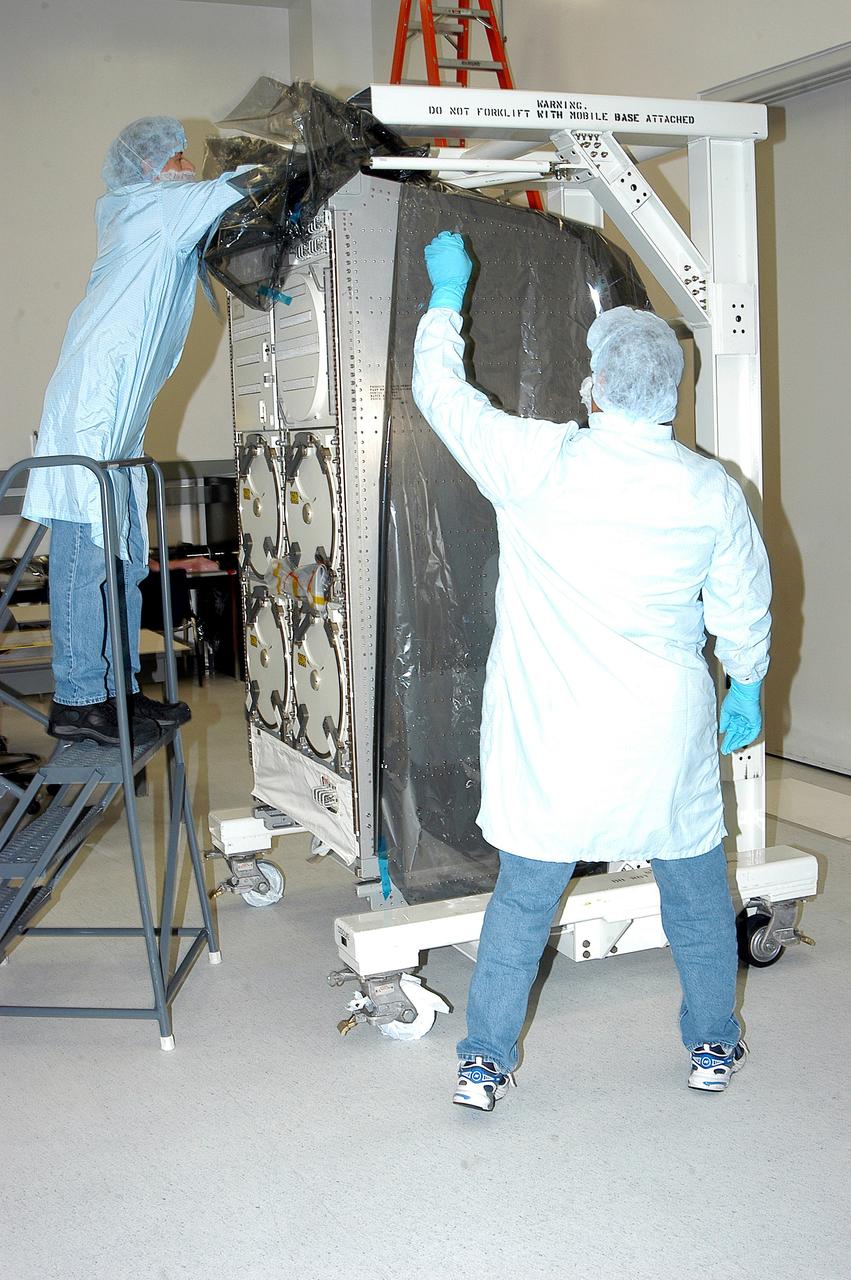
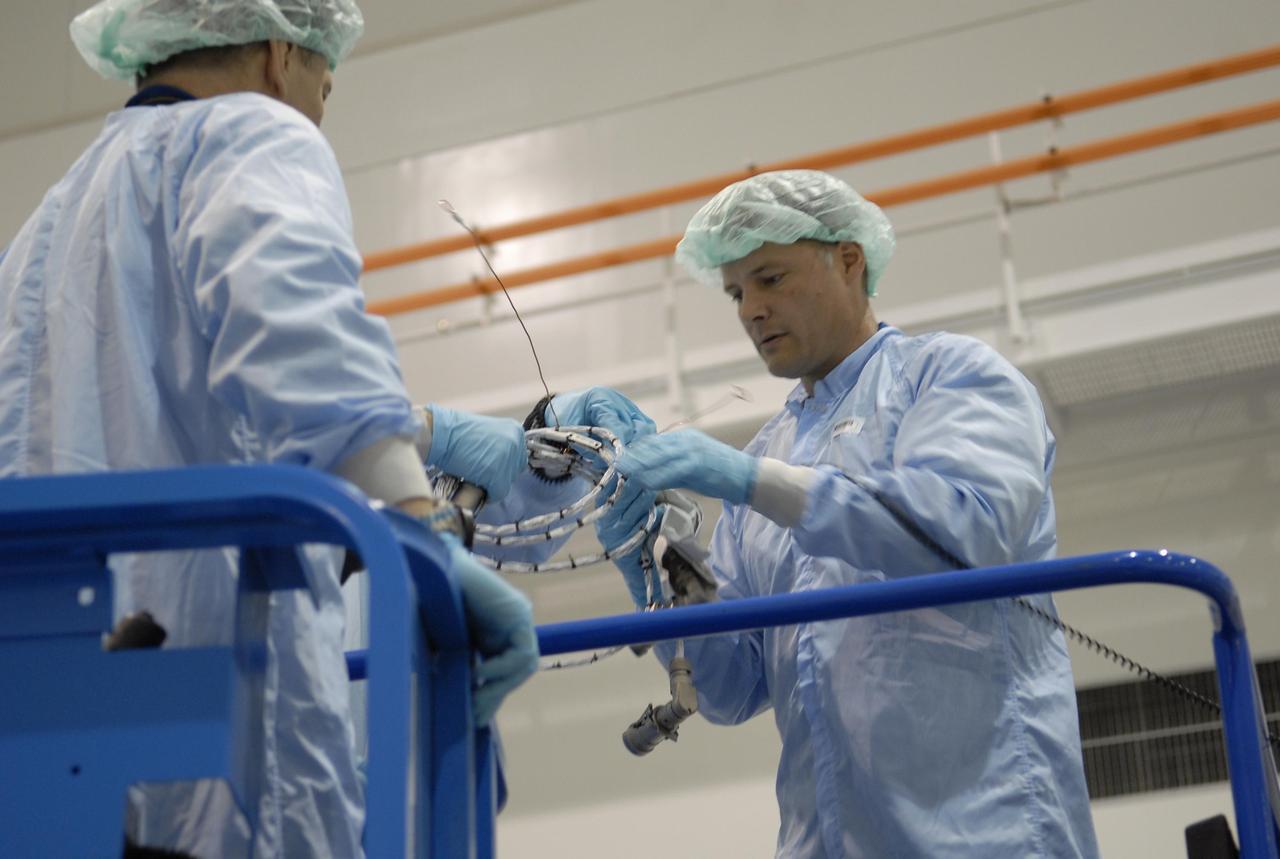
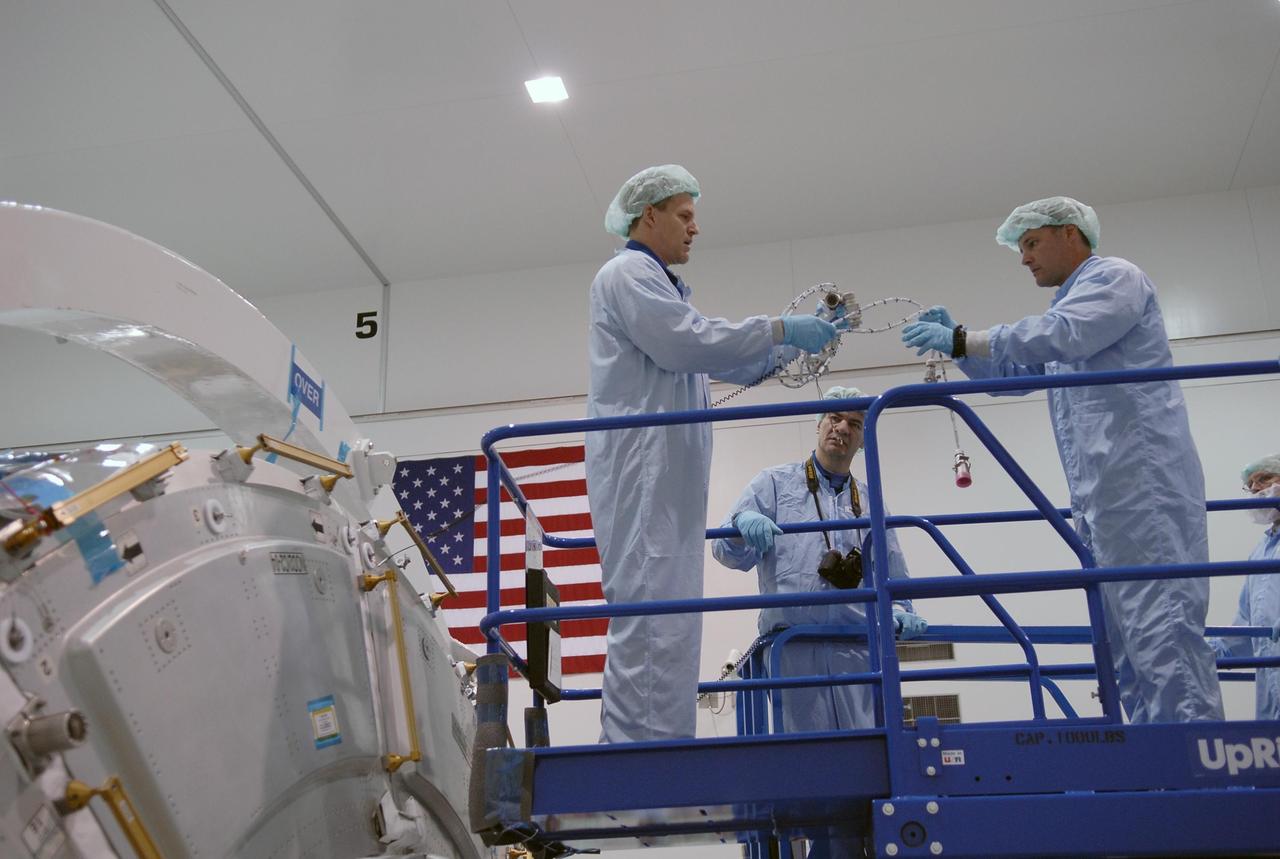
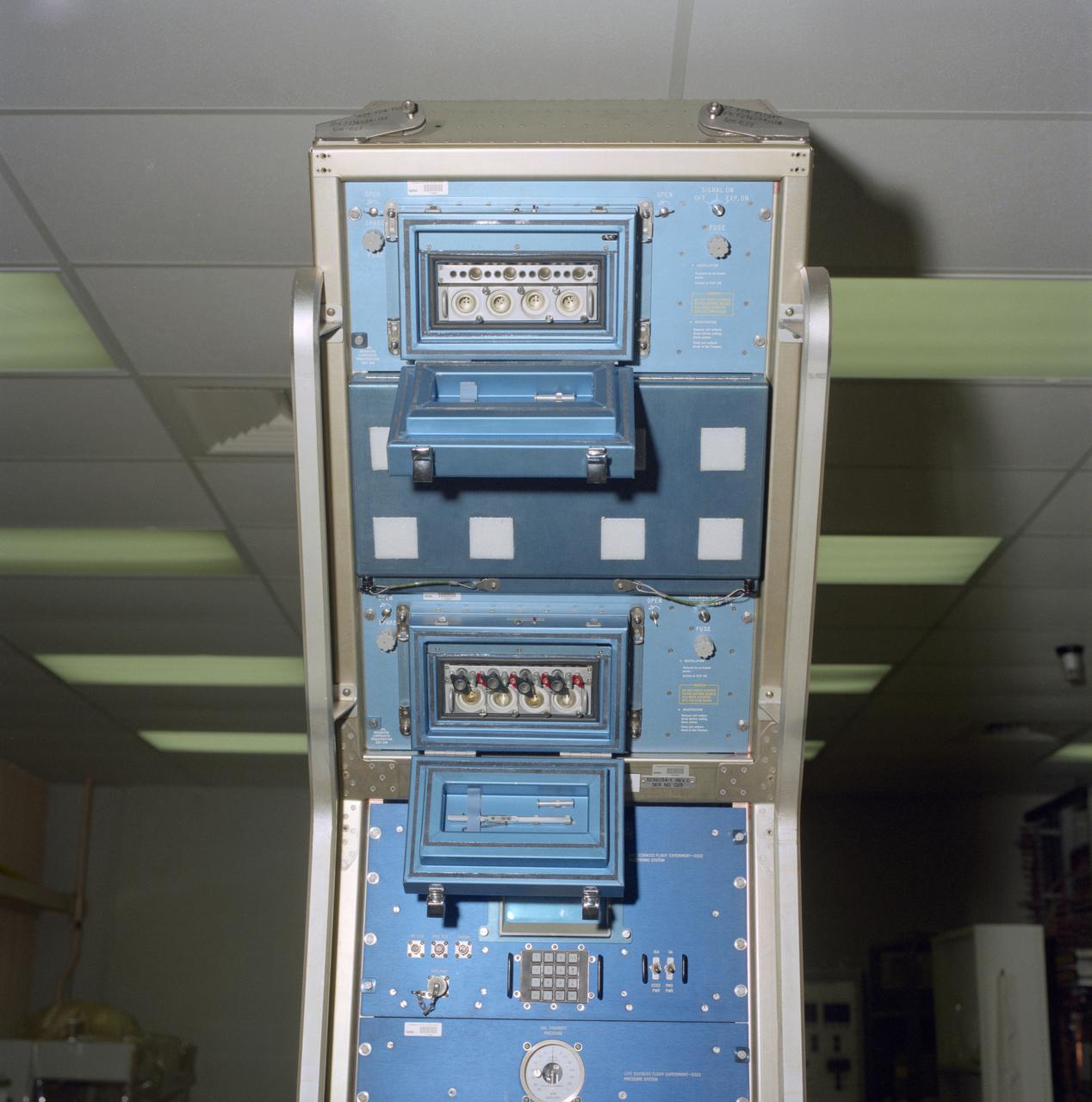
S84-43683 (26 Nov 1984) --- This vertically positioned rectangular piece of hardware, scheduled to fly on the science module of Spacelab Life Sciences-1, is important to the immunology investigation on the mission.  Called Lymphocyte Proliferation in Weightlessness (Experiment 240), the test was developed by Dr. Augosto Cogoli of the Institute of Biotechnology, Gruppe Weltraum Biologie, in Zurich, Switzerland.  It represents a continuation of previous Spacelab experiments by examining the effects of weightlessness on   lymphocyte activation.  Cultures will be grown in the microgravity incubators on the pictured hardware.
View of the Life Sciences Laboratory Equipment (LSLE) Incubator - Lymphocite Proliferation
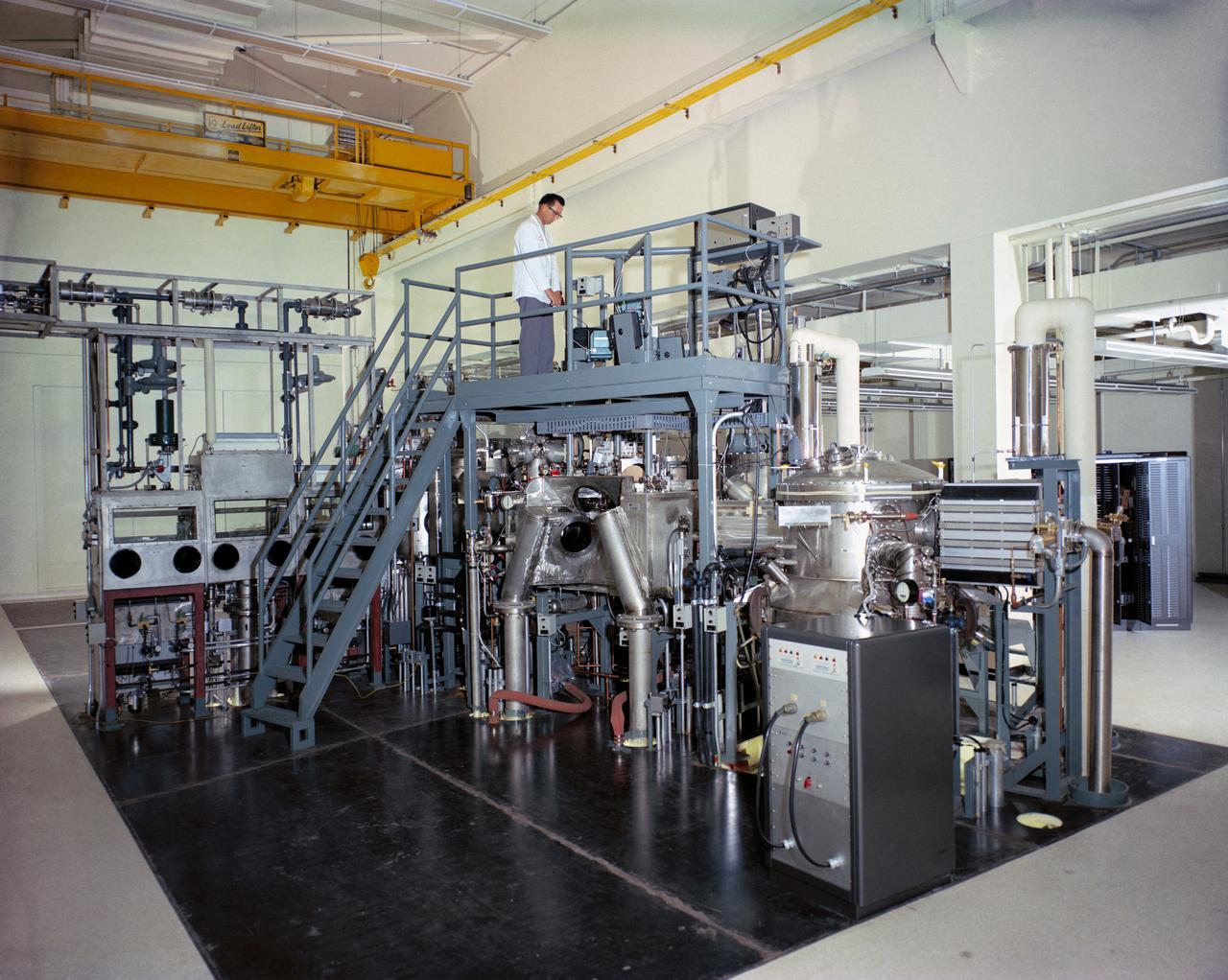
Overall view of the equipment in Room 2-203, Vacuum Laboratory, Sample Operations Area, Lunar Receiving Laboratory, Bldg 37.
View of equipment in Vacuum Laboratory, Sample Operations Area, LRL bldg 37
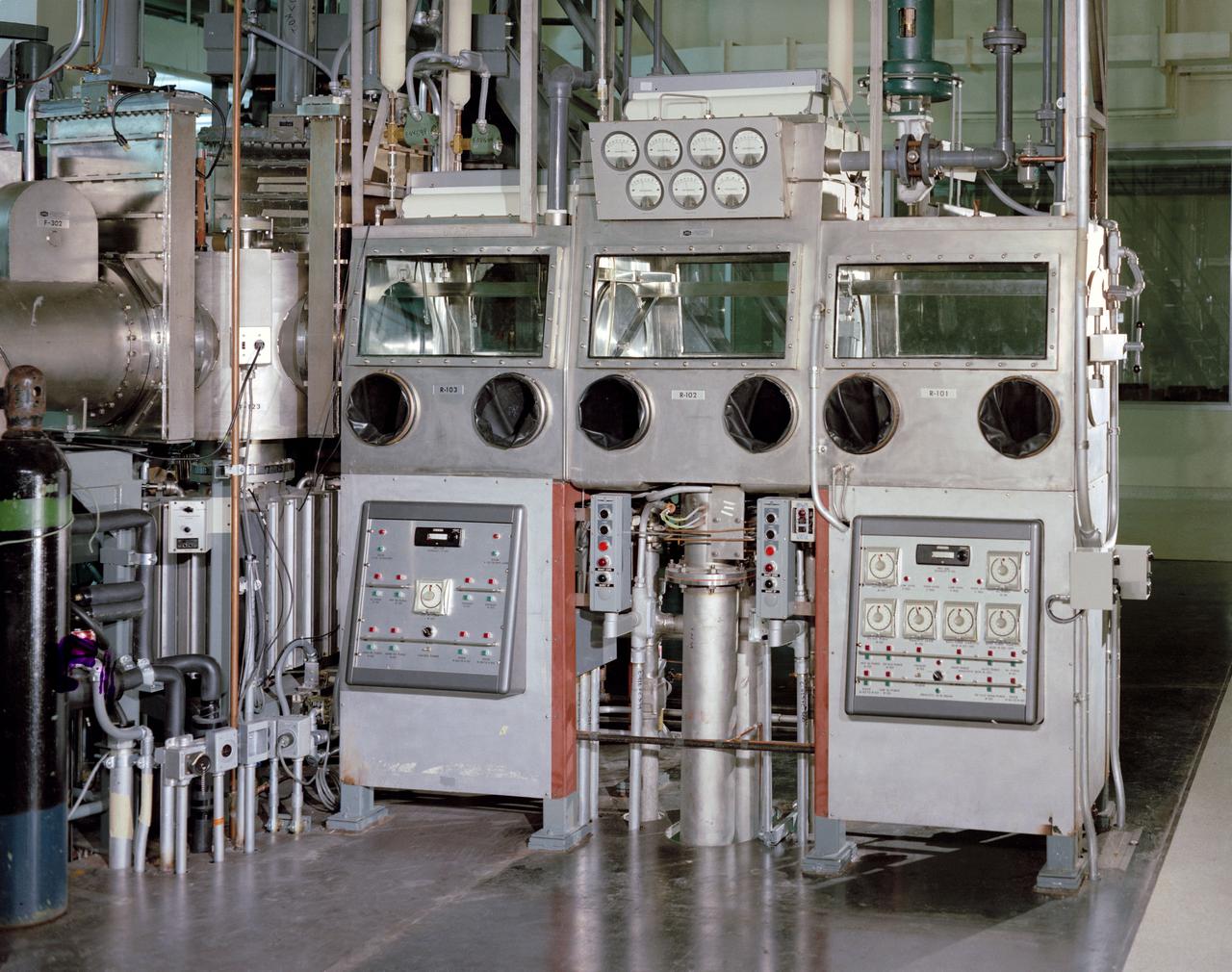
Atmospheric Decontamination System equipment in Room 2-203, Vacuum Laboratory, Sample Operations Area, Lunar Receiving Laboratory, Bldg 37.
View of equipment in Vacuum Laboratory, Sample Operations Area, LRL bldg 37
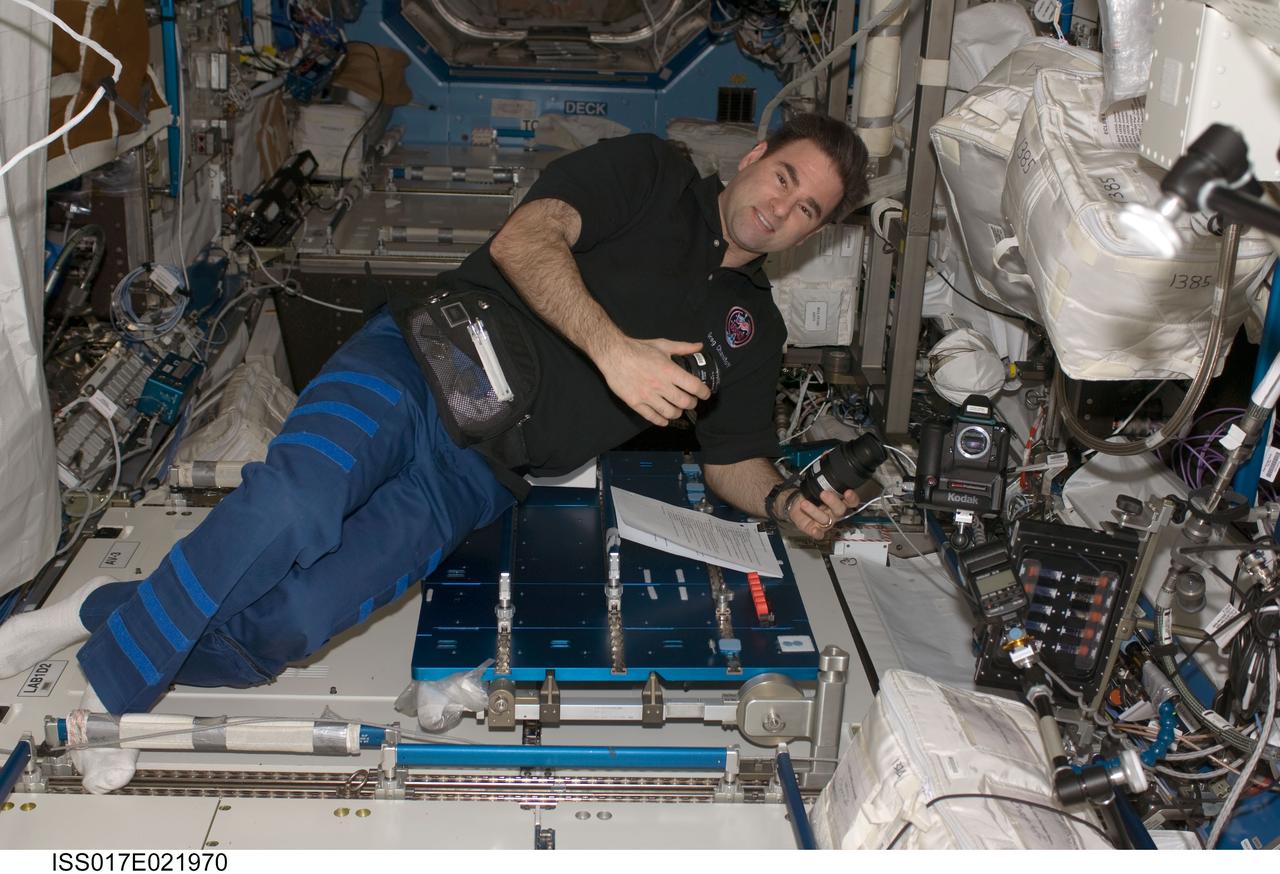
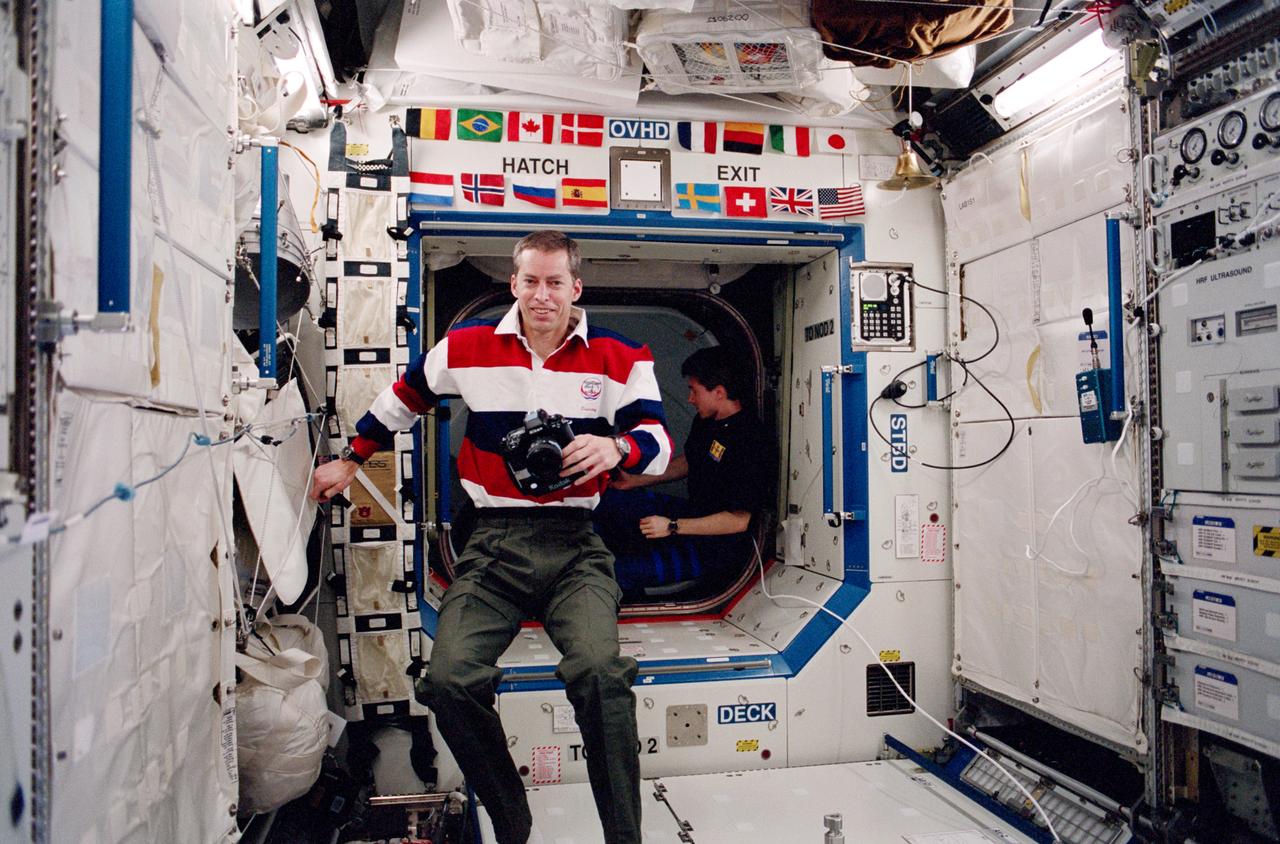
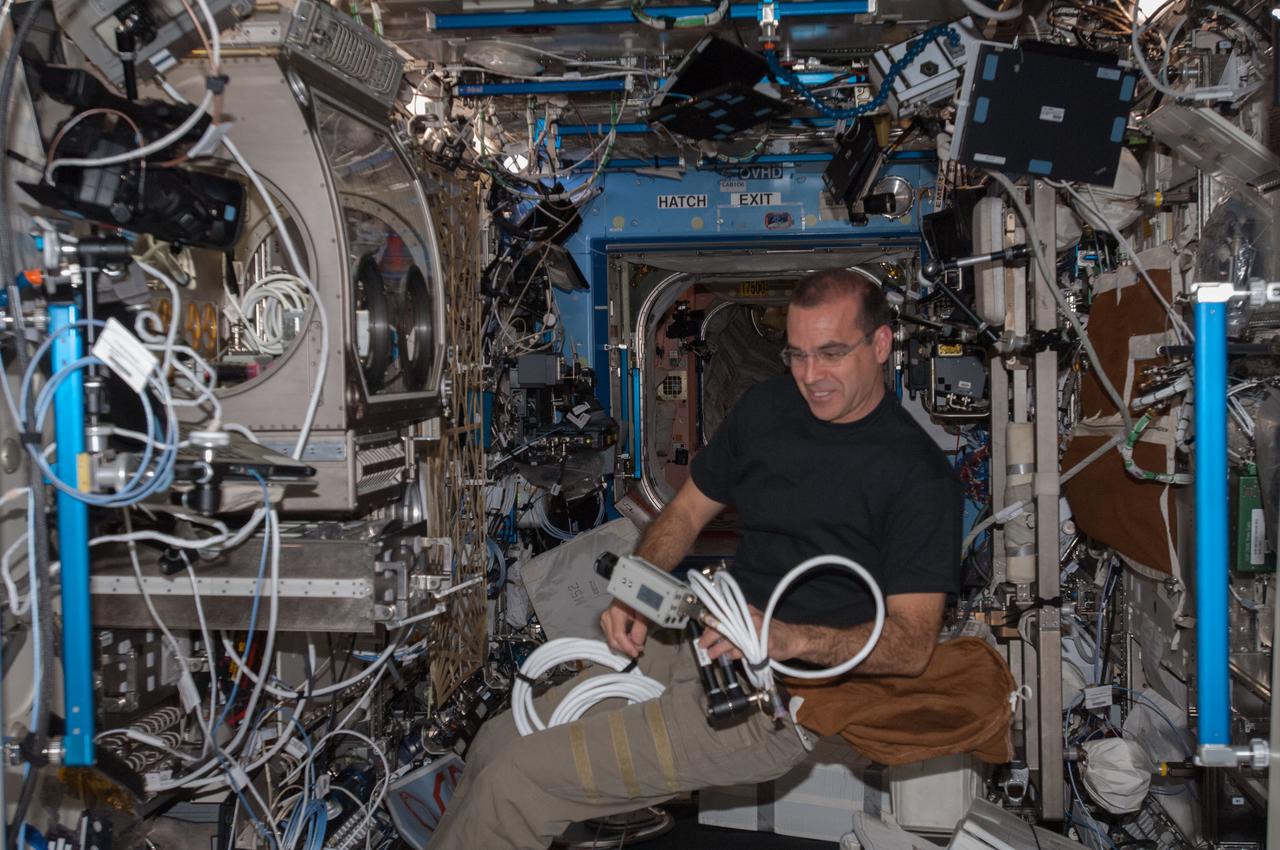
ISS017-E-021970 (23 Oct. 2008) --- Astronaut Greg Chamitoff, Expedition 18 flight engineer, takes a moment for a photo while working with camera equipment in the Destiny laboratory of the International Space Station.
Chamitoff works with camera equipment in the U.S. Laboratory during Expedition 18
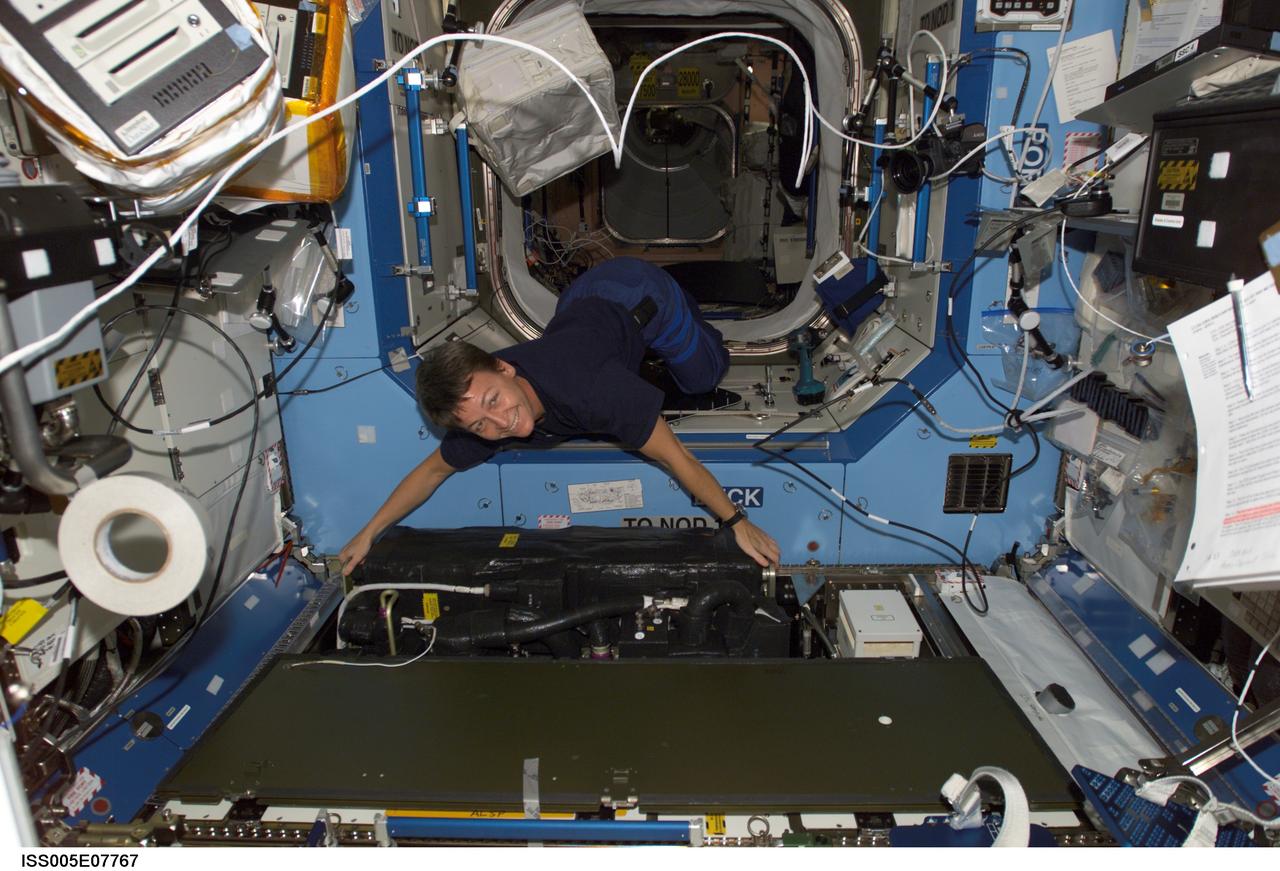
ISS005-E-07767 (15 July 2002) --- Astronaut Peggy A. Whitson, Expedition Five flight engineer, moves equipment in the Destiny laboratory on the International Space Station (ISS).
Whitson moves equipment in the U.S. Laboratory during Expedition Five on the ISS
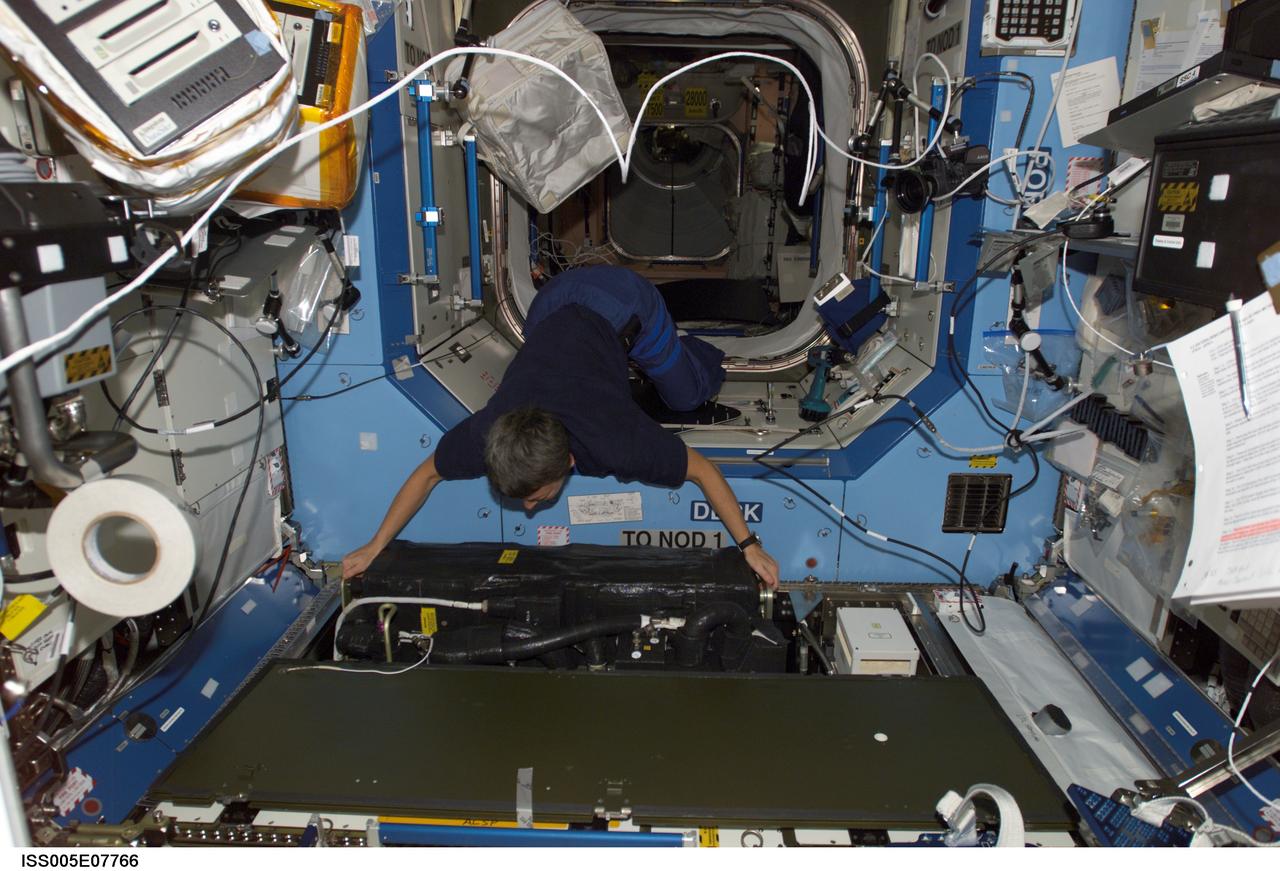
ISS005-E-07766 (15 July 2002) --- Astronaut Peggy A. Whitson, Expedition Five flight engineer, moves equipment in the Destiny laboratory on the International Space Station (ISS).
Whitson moves equipment in the U.S. Laboratory during Expedition Five on the ISS
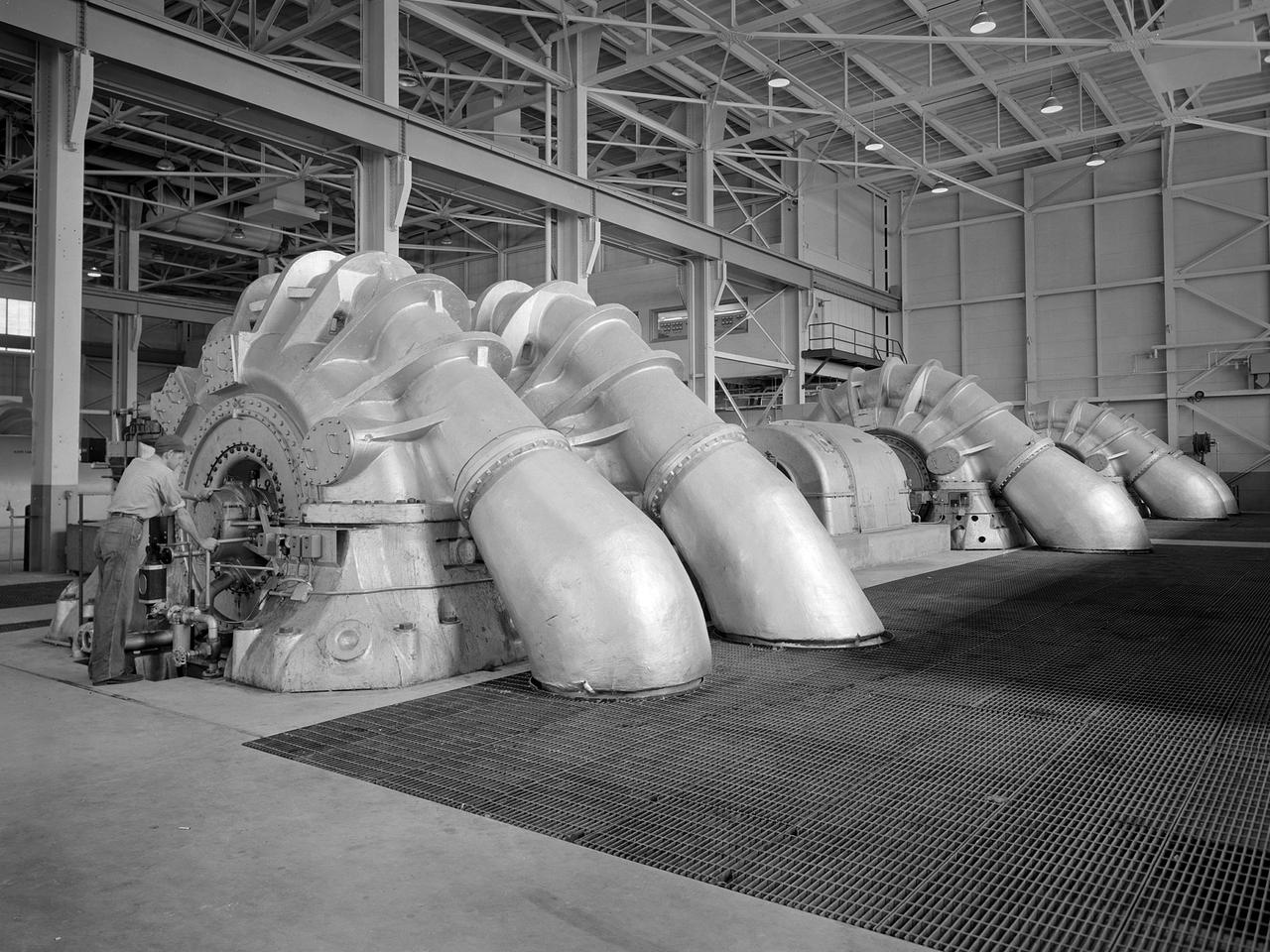
The Propulsion Systems Laboratory’s exhaust system was expanded in 1955 at the National Advisory Committee for Aeronautics (NACA) Lewis Flight Propulsion Laboratory. The facility contained two altitude chambers that were first used to study the increasingly-powerful jet engines of the early 1950s and the ramjets for missile programs such as Navaho and Bomarc. Later, the facility tested large rocket engines and a variety of turbofan engines.    The exhaust system served two roles: reducing the density of the air in the test chambers to simulate high altitudes and removing the hot gases exhausted by the engines being tested. These tasks were accomplished by large Roots-Connersville exhauster equipment in the Equipment Building.     The original configuration could exhaust the 3500° F gases at a rate of 100 pounds per second when the simulated altitude was 50,000 feet. In 1955, three years after operation started, a fourth line of exhausters was added. There were three centrifugal exhausters capable of supplying 166 pounds of air per second at the test chamber altitude of 50,000 feet or 384 pounds per second at 32,000 feet. These exhausters had two first-stage castings driven by a 10,000-horsepower motor; one second; one third; and one fourth-stage casting driven by a 16,500-horsepower motor. The total inlet volume of the exhausters is 1,650,000 cubic feet of gas per minute. The exhausters were continually improved and upgraded over the years.
New Exhauster Equipment at the Propulsion Systems Laboratory
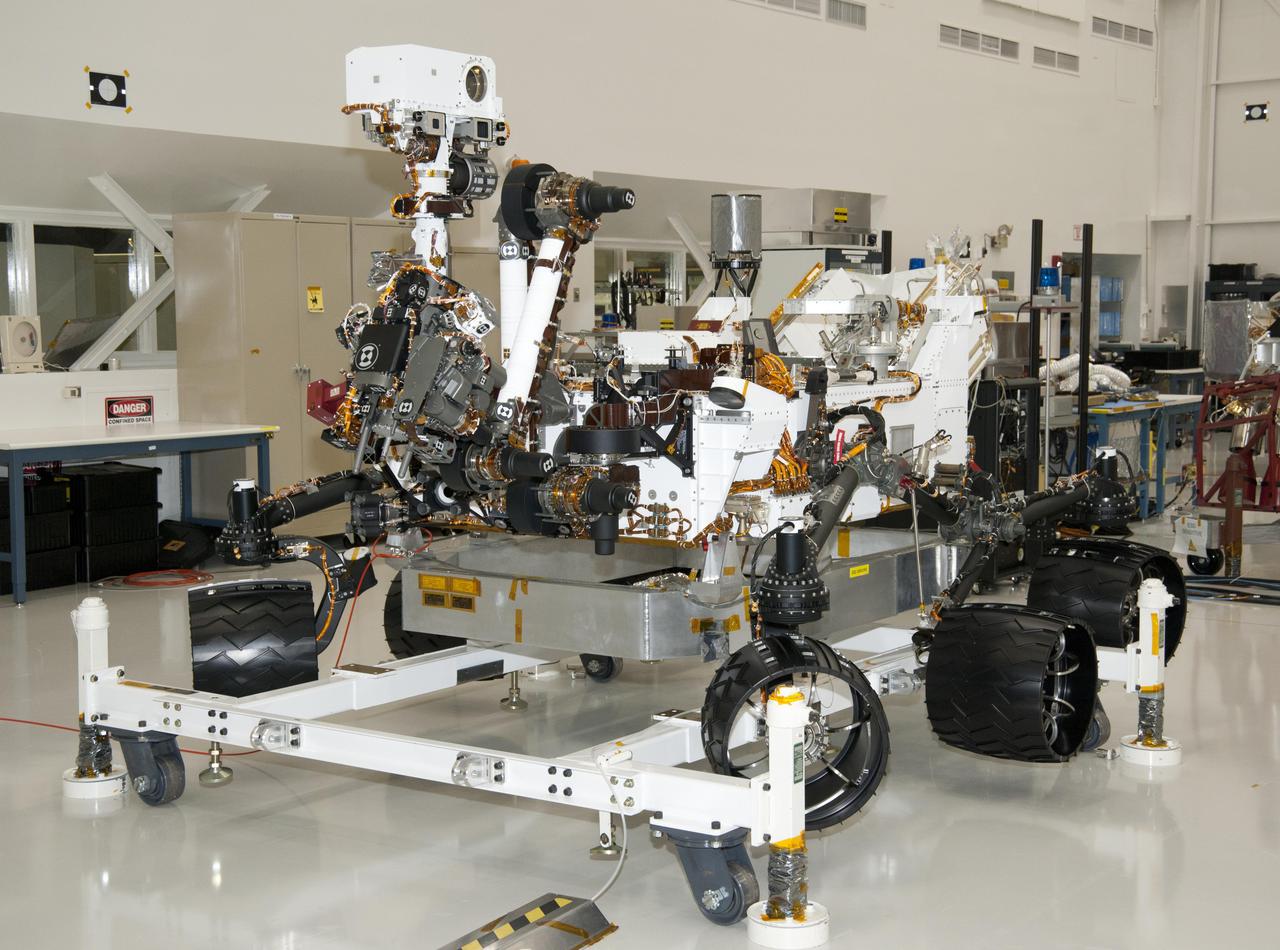
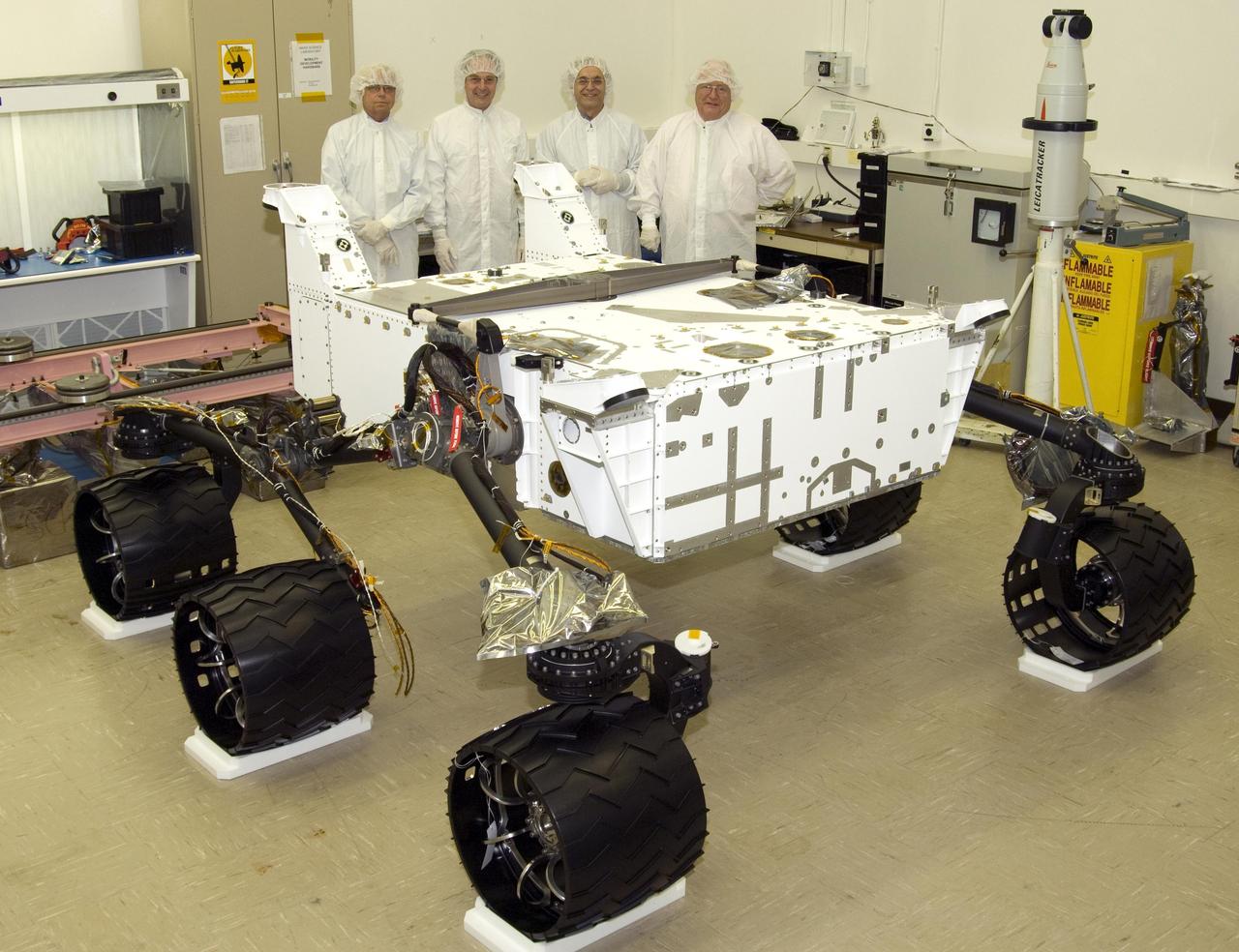
The rover for NASA Mars Science Laboratory mission, named Curiosity, is seen here inside the Spacecraft Assembly Facility at NASA Jet Propulsion Laboratory, Pasadena, Calif. Support equipment is holding the rover slightly off the floor.
NASA Mars Rover Curiosity at JPL, View from Front Left Corner
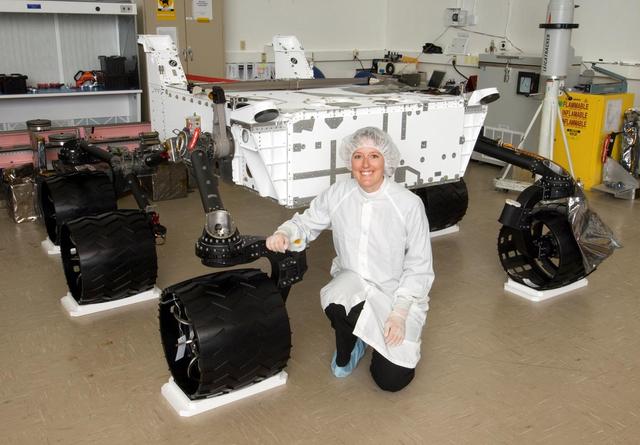
This image from August 2008 shows NASA Mars Science Laboratory rover in the course of its assembly, before additions of its arm, mast, laboratory instruments and other equipment.
Wheels and Suspension on Mars Science Laboratory Rover
In this Space Shuttle STS-102 mission image, the Payload Equipment Restraint System H-Strap is shown at the left side of the U.S. Laboratory hatch and behind Astronaut James D. Weatherbee, mission specialist. PERS is an integrated modular system of components designed to assist the crew of the International Space Station (ISS) in restraining and carrying necessary payload equipment and tools in a microgravity environment. The Operations Development Group, Flight Projects Directorate at the Marshall Space Flight Center (MSFC), while providing operation support to the ISS Materials Science Research Facility (MSRF), recognized the need for an on-orbit restraint system to facilitate control of lose objects, payloads, and tools. The PERS is the offspring of that need and it helps the ISS crew manage tools and rack components that would otherwise float away in the near-zero gravity environment aboard the Space Station. The system combines Kevlar straps, mesh pockets, Velcro and a variety of cornecting devices into a portable, adjustable system. The system includes the Single Strap, the H-Strap, the Belly Pack, the Laptop Restraint Belt, and the Tool Page Case. The Single Strap and the H-Strap were flown on this mission. The PERS concept was developed by industrial design students at Auburn University and the MSFC Flight Projects Directorate.
International Space Station (ISS)
 This image taken in August 2008 in a clean room at NASA JPL, Pasadena, Calif., shows NASA next Mars rover, the Mars Science Laboratory, in the course of its assembly, before additions of its arm, mast, laboratory instruments and other equipment.
Mars Science Laboratory Rover Taking Shape
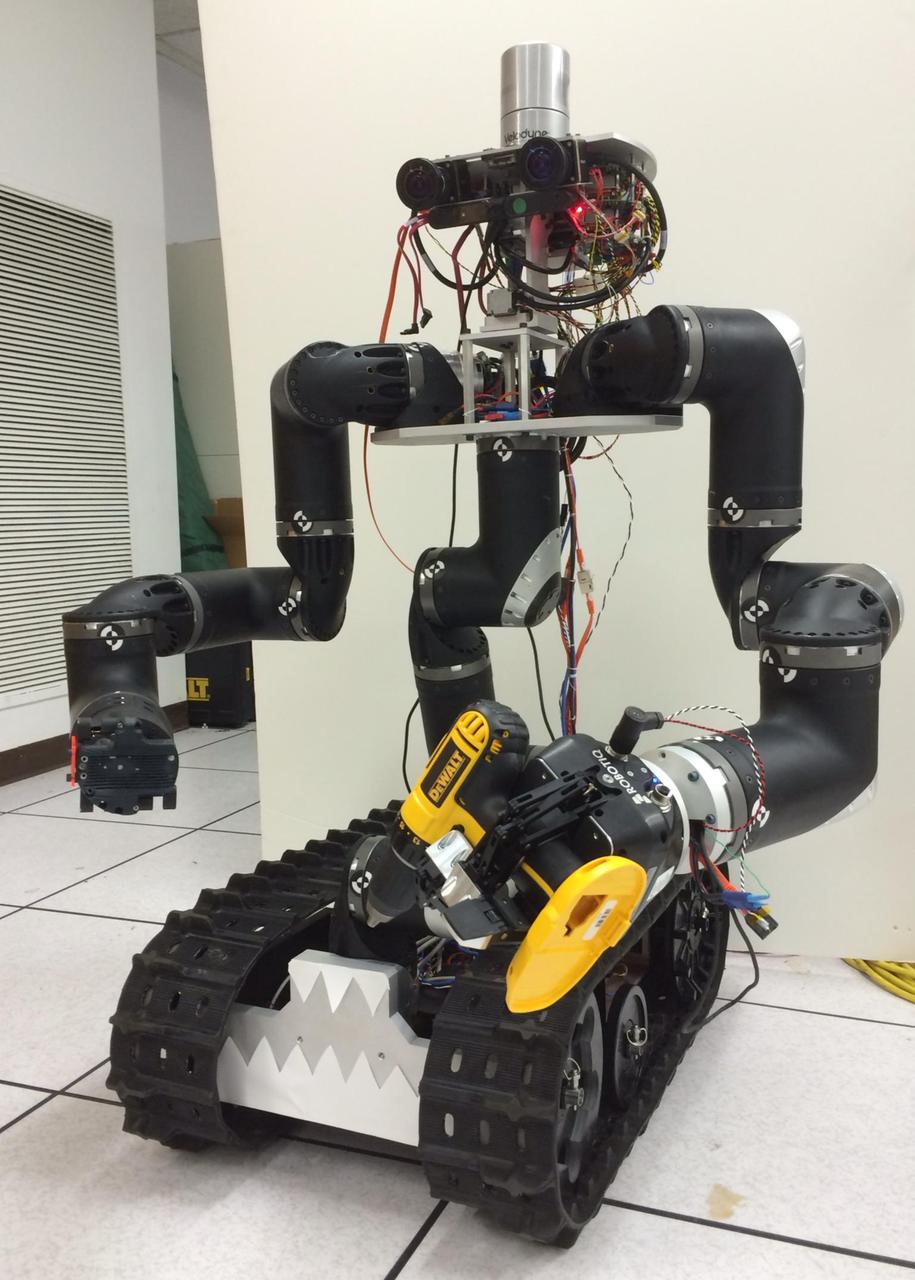
The Surrogate robot Surge, built at NASA Jet Propulsion Laboratory in Pasadena, CA., is being developed in order to extend humanity reach into hazardous environments to perform tasks such as using environmental test equipment.
Surrogate Robot
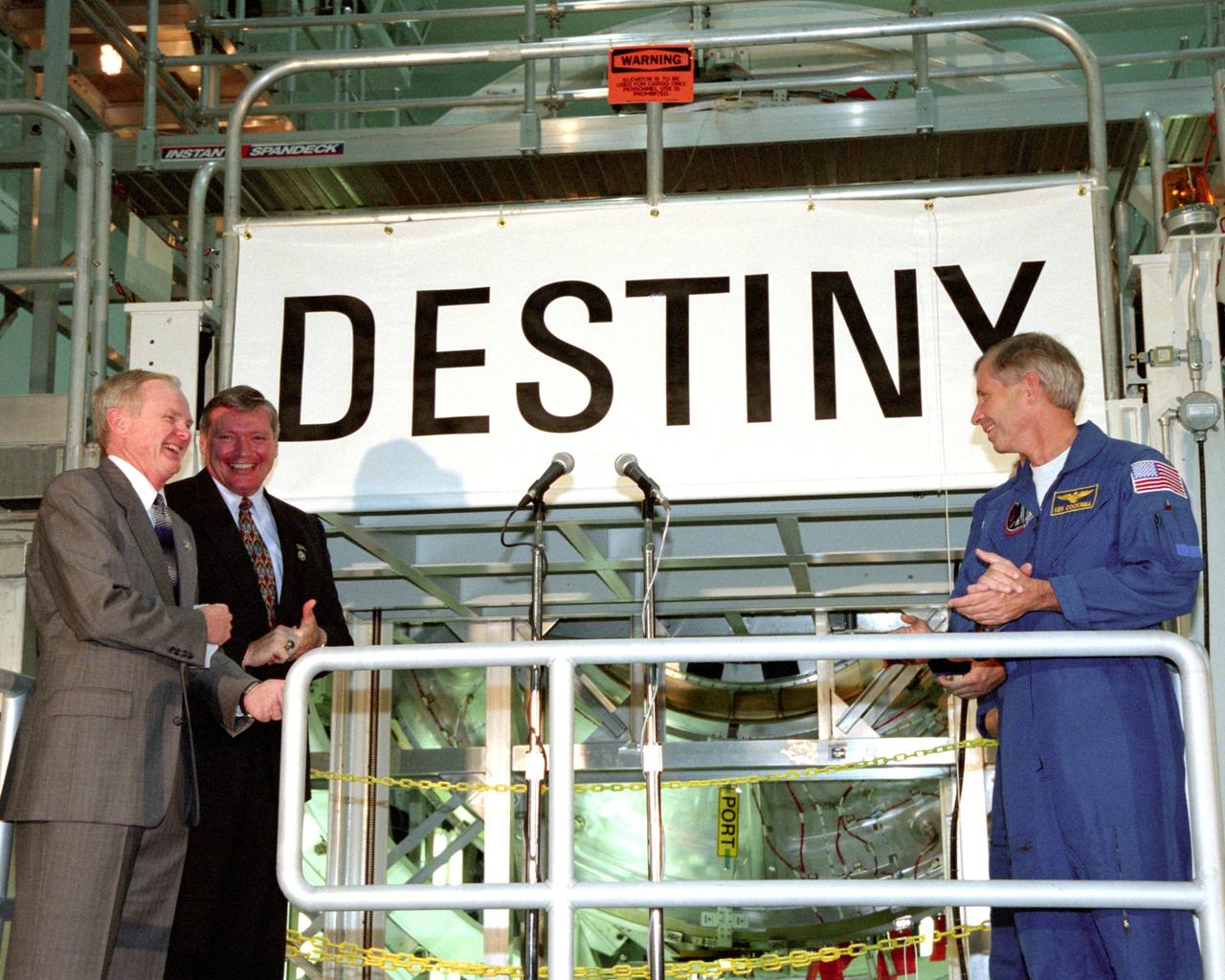
KENNEDY SPACE CENTER, FLA. -  In the Space Station Processing Facility, Center Director Roy Bridges (left), Program Manager of the International Space Station (ISS) Randy Brinkley (second from left) and STS-98 Commander Ken Cockrell (right) applaud the unveiling of the name "Destiny" for the U.S. Laboratory module.  The lab, which is behnd them on a workstand, is scheduled to be launched on STS-98 on Space Shuttle Endeavour in early 2000.  It will become the centerpiece of scientific research on the ISS.  The Shuttle will spend six days docked to the Station while the laboratory is attached and three spacewalks are conducted to compete its assembly.  The laboratory will be launched with five equipment racks aboard, which will provide essential functions for Station systems, including high data-rate communications, and maintain the Station's orientation using control gyroscopes launched earlier.  Additional equipment and research racks will be installed in the laboratory on subsequent Shuttle flights.
KENNEDY SPACE CENTER, FLA. - In the Space Station Processing Facility, Center Director Roy Bridges (left), Program Manager of the International Space Station (ISS) Randy Brinkley (second from left) and STS-98 Commander Ken Cockrell (right) applaud the unveiling of the name "Destiny" for the U.S. Laboratory module. The lab, which is behnd them on a workstand, is scheduled to be launched on STS-98 on Space Shuttle Endeavour in early 2000. It will become the centerpiece of scientific research on the ISS. The Shuttle will spend six days docked to the Station while the laboratory is attached and three spacewalks are conducted to compete its assembly. The laboratory will be launched with five equipment racks aboard, which will provide essential functions for Station systems, including high data-rate communications, and maintain the Station's orientation using control gyroscopes launched earlier. Additional equipment and research racks will be installed in the laboratory on subsequent Shuttle flights.
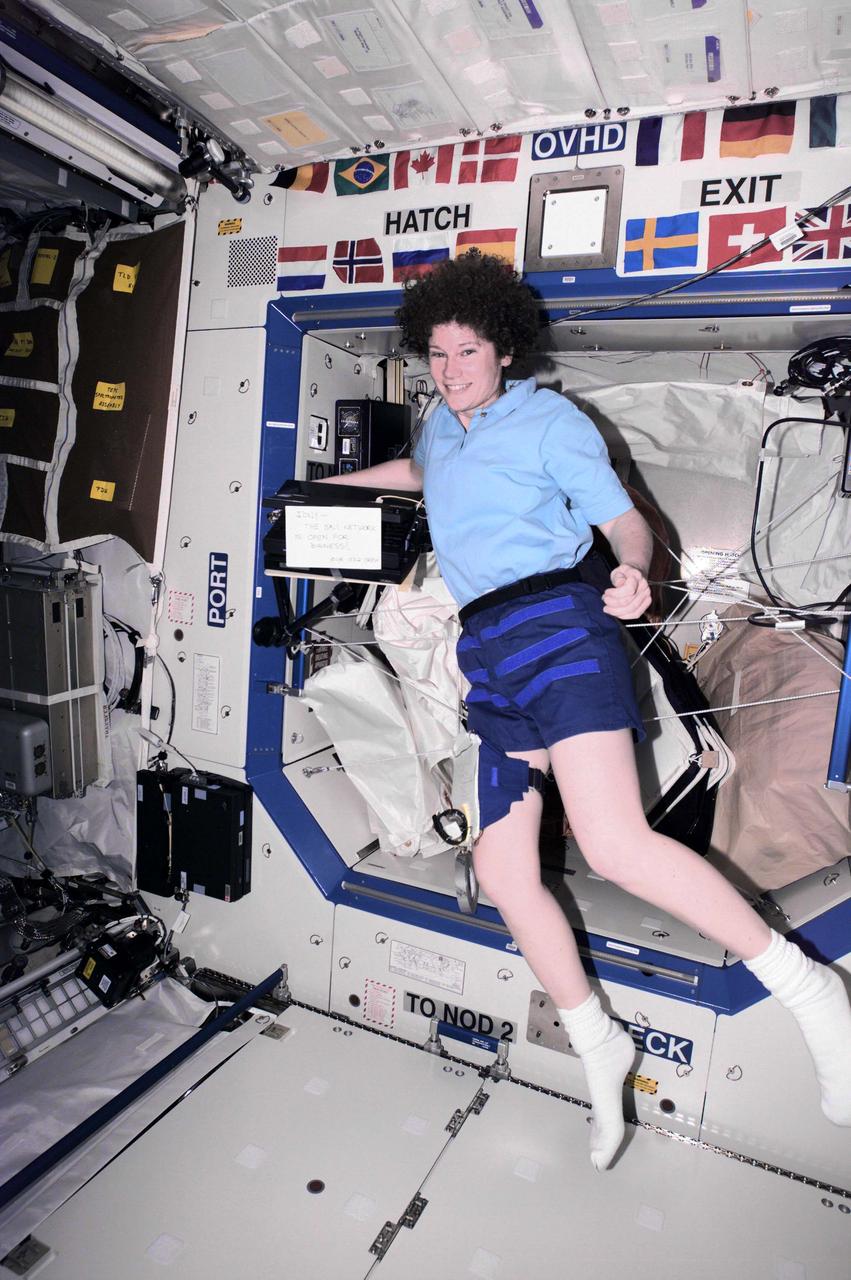
ISS002-E-5052 (March 2001) --- Astronaut Susan J. Helms, Expedition Two  flight engineer, totes computer hardware  on the Destiny laboratory.  Helms, along with cosmonaut Yury V. Usachev of Rosaviakosmos and astronaut James S. Voss, recently took over residency on the International Space Station (ISS)  from a three-member crew who had been on board since early November 2000.   The image was recorded with a digital still camera.
Helms with computer equipment in Destiny Laboratory module
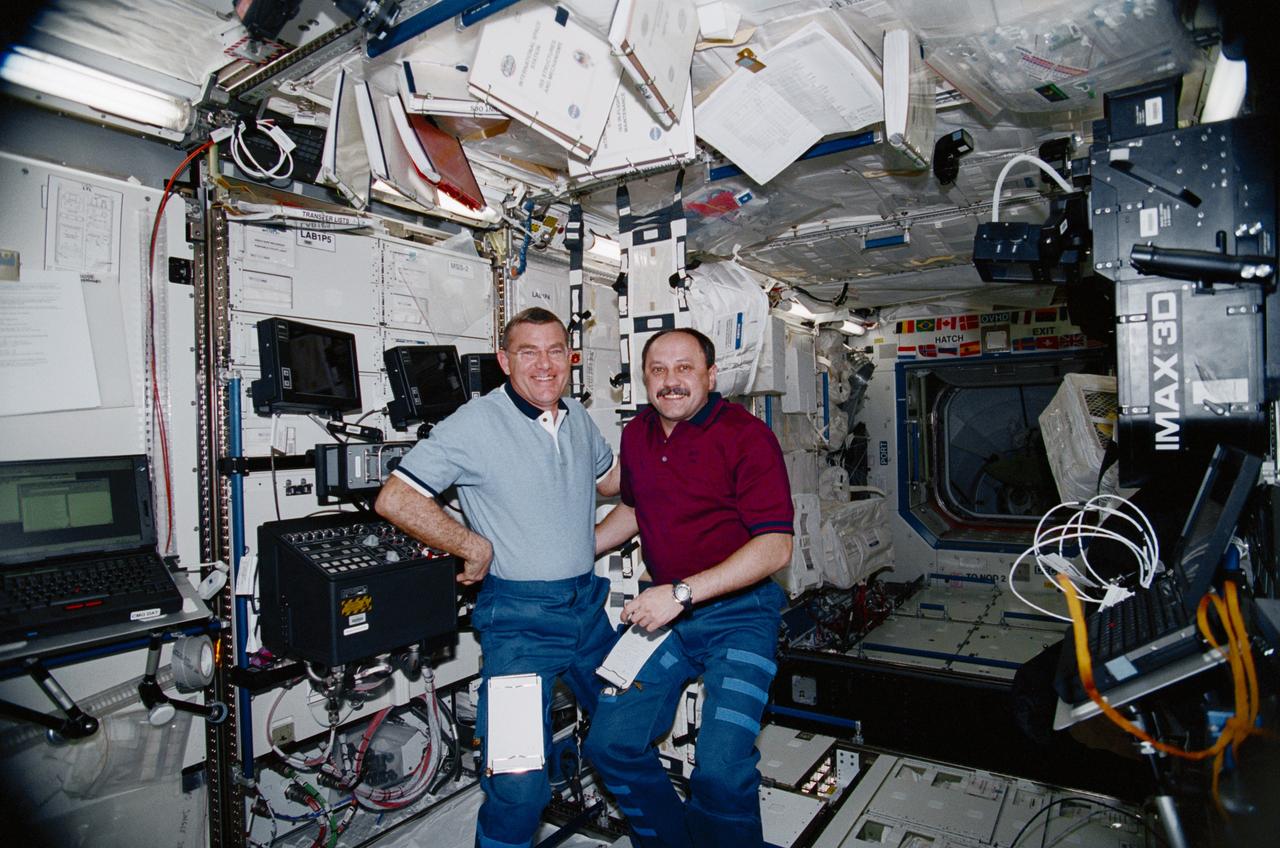
STS102-336-024 (8 - 21 March 2001) ---    Two-thirds of the Expedition Two crew  is represented in this scene in the  Destiny laboratory onboard the International Space Station (ISS).  Cosmonaut Yury V. Usachev (right) is mission commander and will be joined for several months aboard the outpost by  astronauts James S. Voss (left) and Susan J. Helms (out of frame), both flight engineers.
RWS equipment in the U.S. Laboratory with Voss and Usachev
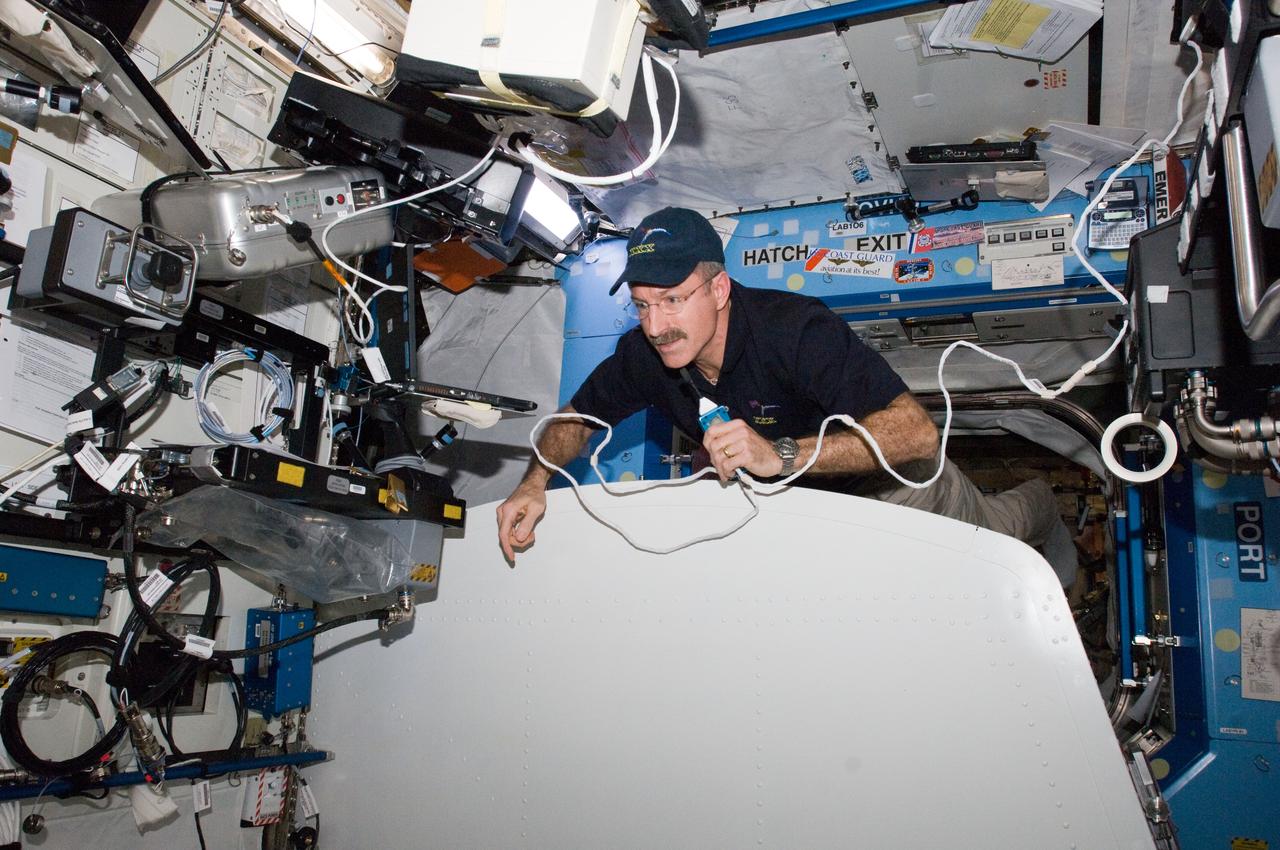
ISS030-E-060464 (2 Feb. 2012) --- NASA astronaut Dan Burbank, Expedition 30 commander, uses a communication system while working in the Destiny laboratory of the International Space Station.
Burbank uses communication equipment in the U.S. Laboratory
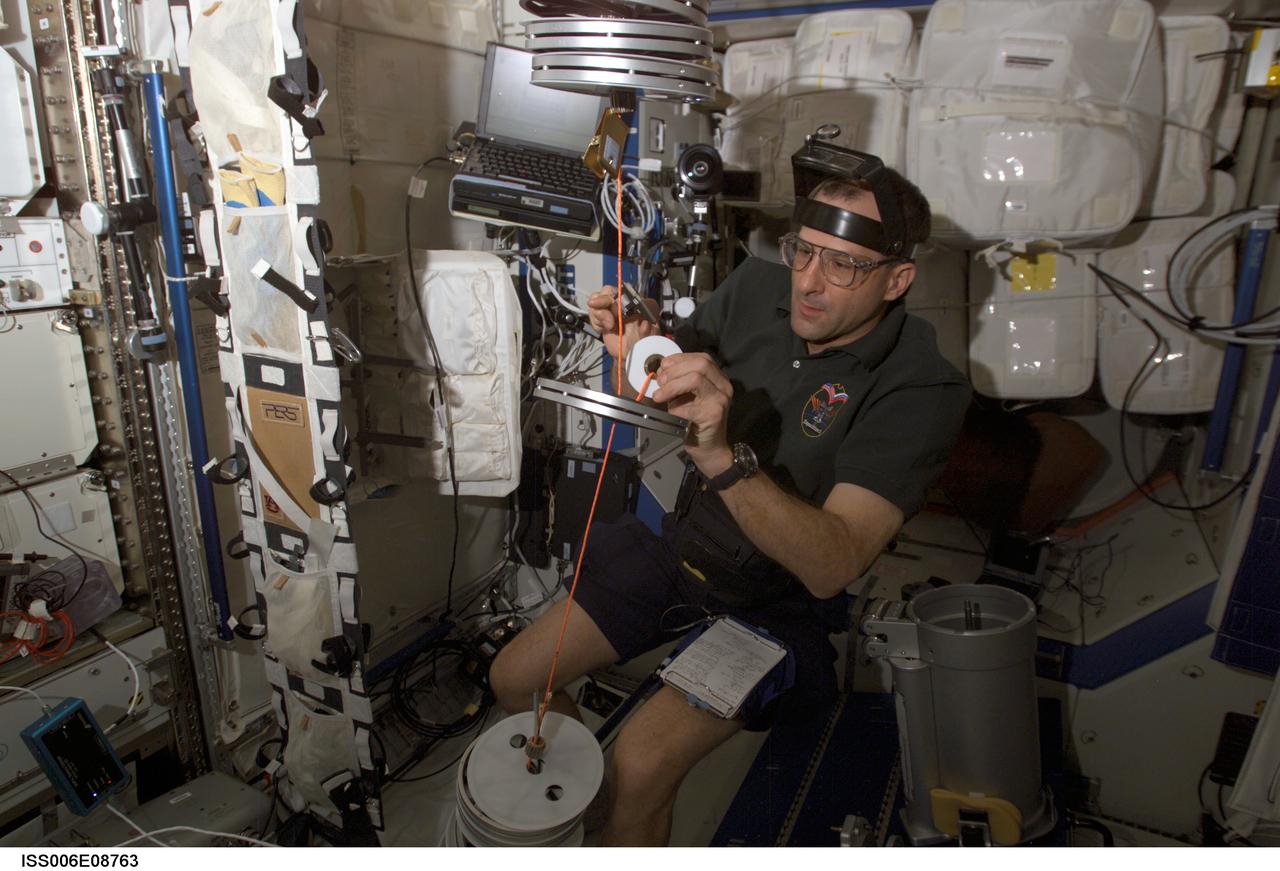
ISS006-E-08763 (13 December 2002) --- Astronaut Donald R. Pettit, Expedition Six NASA ISS science officer, performs scheduled in-flight maintenance (IFM) in the Destiny laboratory on the International Space Station (ISS).
Pettit conducts maintenance on the RED equipment in the U.S. Laboratory
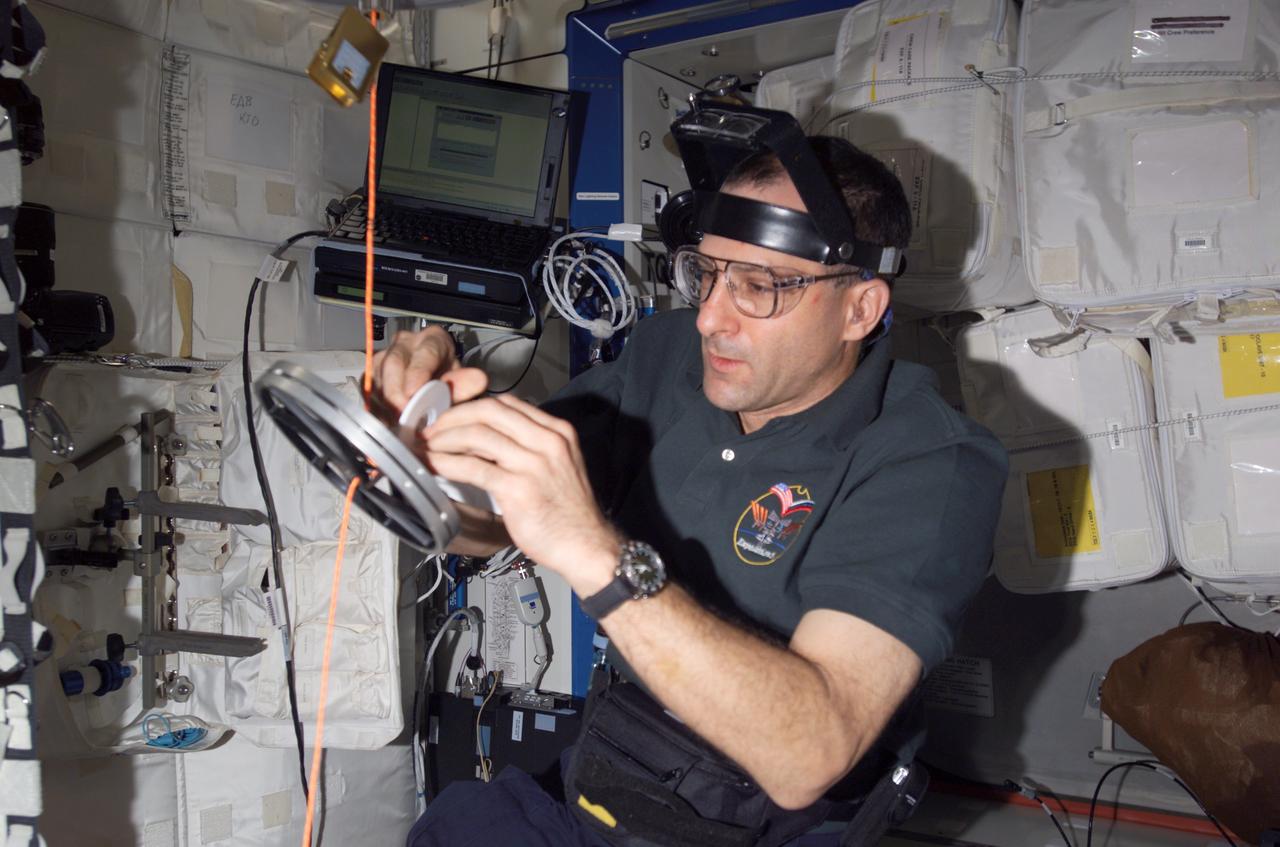
ISS006-E-08766 (13 December 2002) --- Astronaut Donald R. Pettit, Expedition 6 NASA ISS science officer, performs scheduled in-flight maintenance (IFM) in the Destiny laboratory on the International Space Station (ISS).
Pettit conducts maintenance on the RED equipment in the U.S. Laboratory
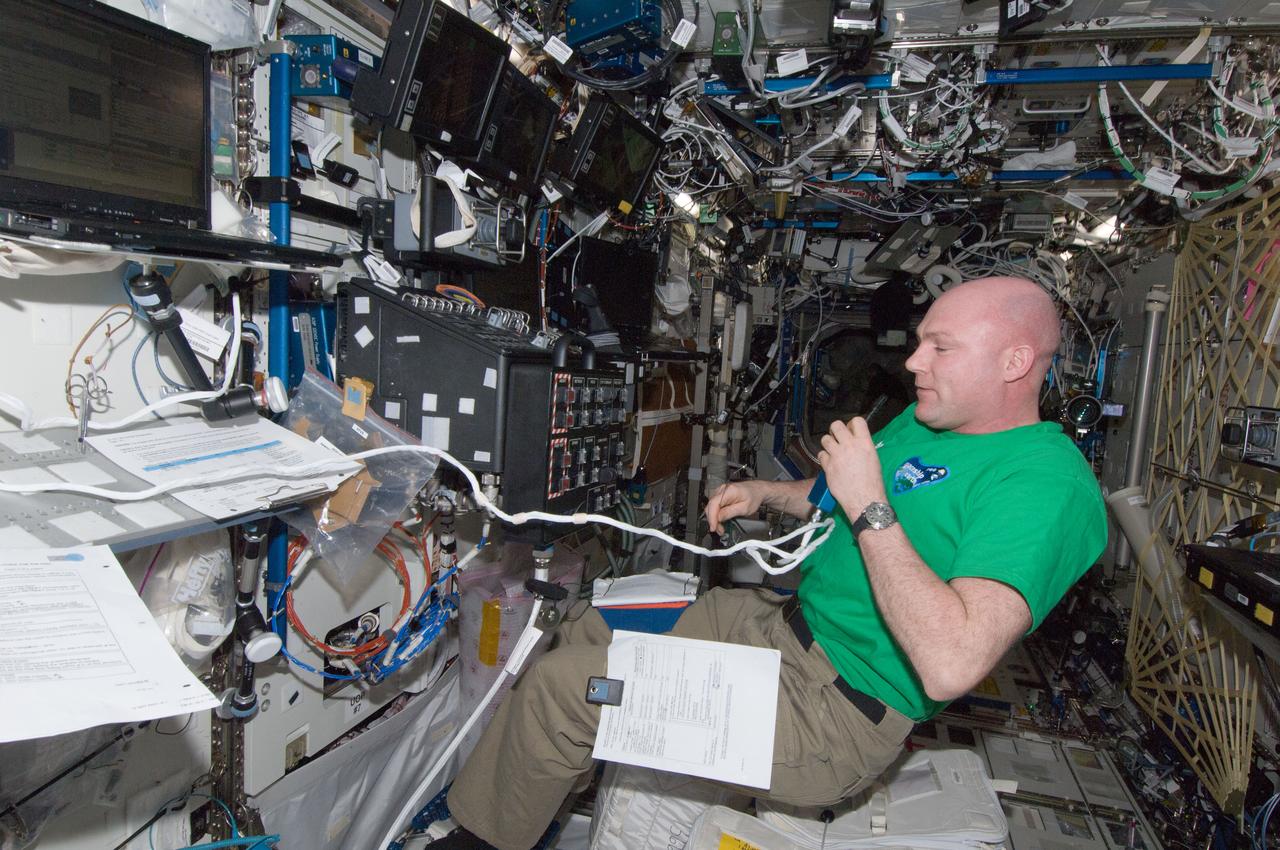
ISS030-E-250651 (24 April 2012) --- European Space Agency astronaut Andre Kuipers, Expedition 30 flight engineer, uses a communication system near a robotic workstation in the Destiny laboratory of the International Space Station.
Kuipers using communication equipment in the U.S. Laboratory
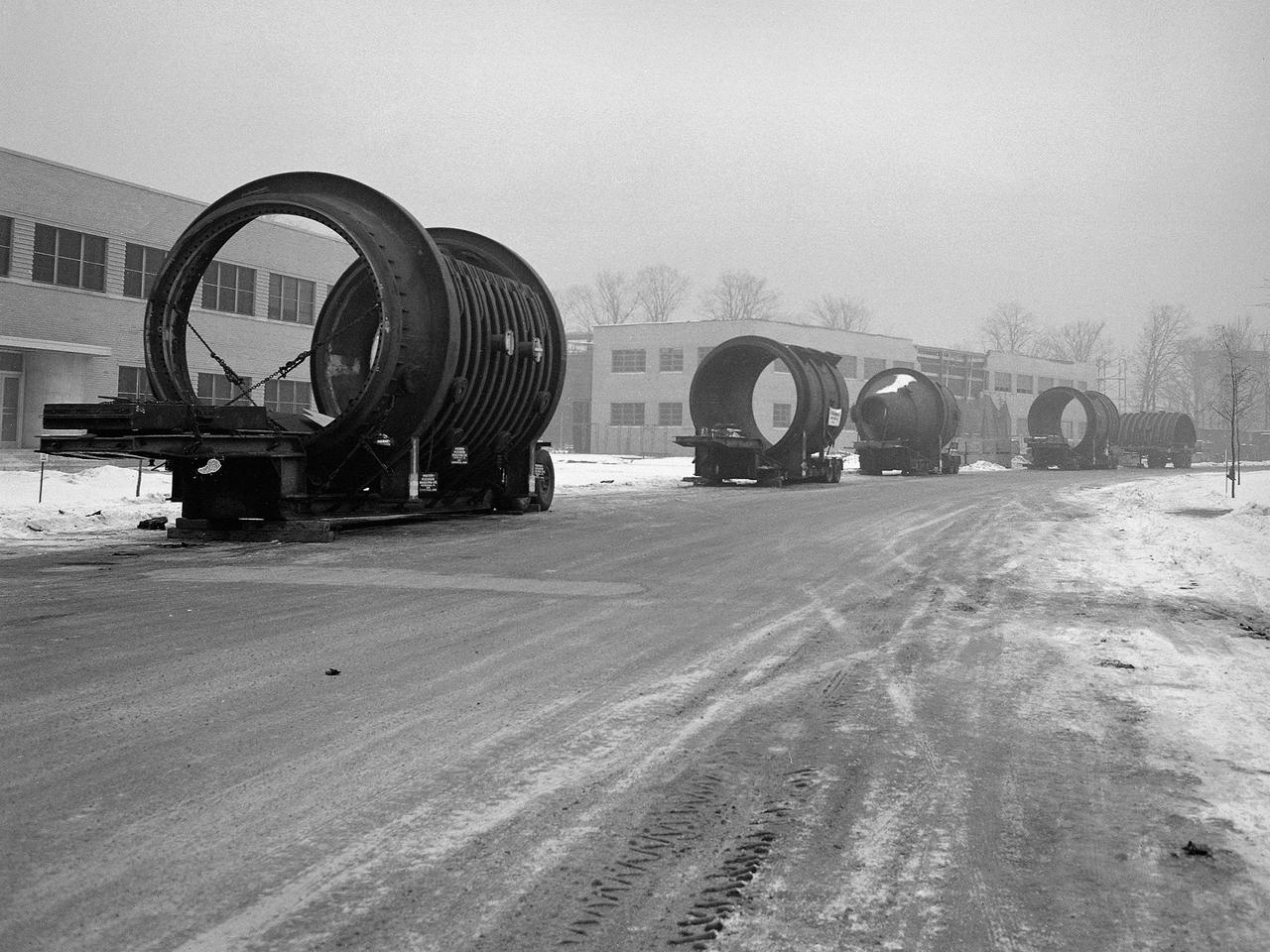
A caravan of large steel castings arrived at the National Advisory Committee for Aeronautics (NACA) Lewis Flight Propulsion Laboratory in January 1951. These pieces would serve as the two 14-foot diameter test chambers in the new Propulsion Systems Laboratory (PSL). NACA Lewis specialized in aircraft engines and offered many engine test facilities. In the late 1940s, however, the NACA realized a larger facility was required to test the newest jet engines. When completed in October 1952, PSL became the nation’s most powerful facility for testing full-scale engines at simulated flight altitudes.     NACA engineers began designing the PSL in 1947, and excavations commenced in September 1949. In the spring of 1950, the facility’s supports were erected, and the two large exhaust gas coolers were installed. Work on the Access Building began in early 1951 with the arrival of the large test section pieces, seen in this photograph. The massive pieces were delivered to the area from the Henry Pratt Company by rail and then loaded on a series of flatbed trucks that transported them to Lewis. The nearest vehicle has one of the clamshell access hatches.     PSL was initially used to study the jet engines of the early 1950s and ramjets for missile programs such as Navaho and Bomarc. With the advent of the space program in the late 1950s, the facility was used to investigate complex rocket engines, including the Pratt and Whitney RL-10.
Arrival of Equipment for the New Propulsion Systems Laboratory
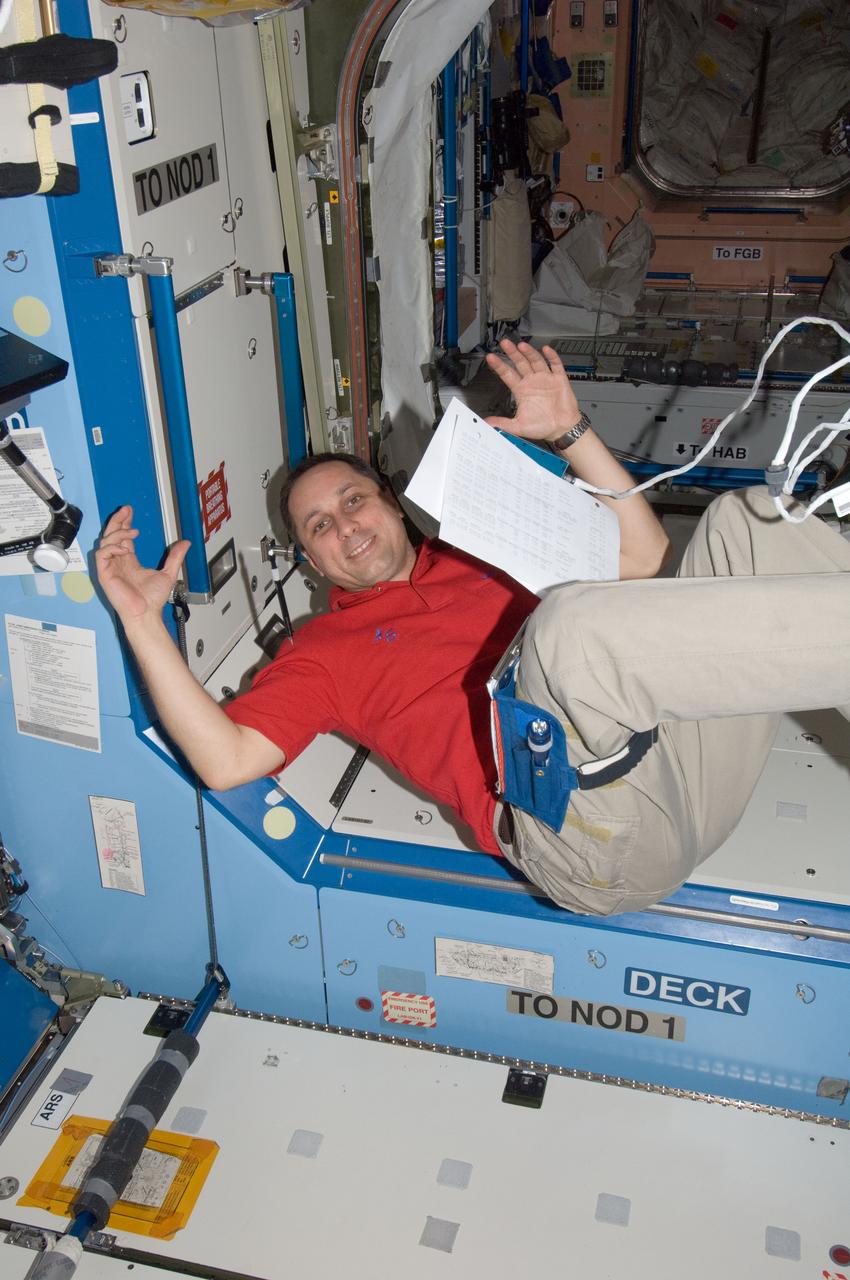
ISS030-E-007570 (3 Dec. 2011) --- Russian cosmonaut Anton Shkaplerov, Expedition 30 flight engineer, is pictured in the hatch between the Destiny laboratory and Unity node of the International Space Station.
Shkaplerov holds communication equipment in the U.S. Laboratory
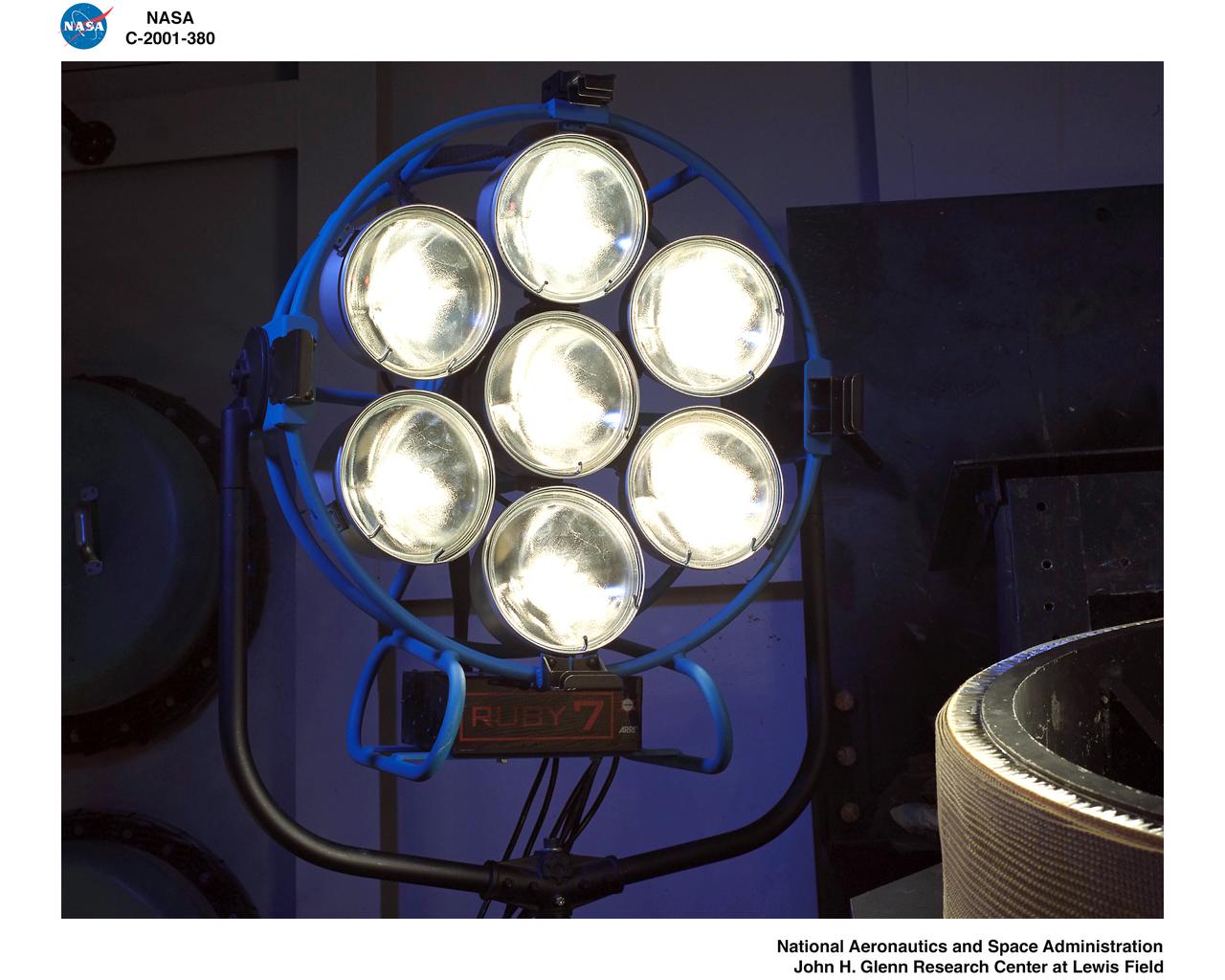
BALLISTIC LABORATORY PHOTOGRAPHIC EQUIPMENT
GRC-2001-C-00380
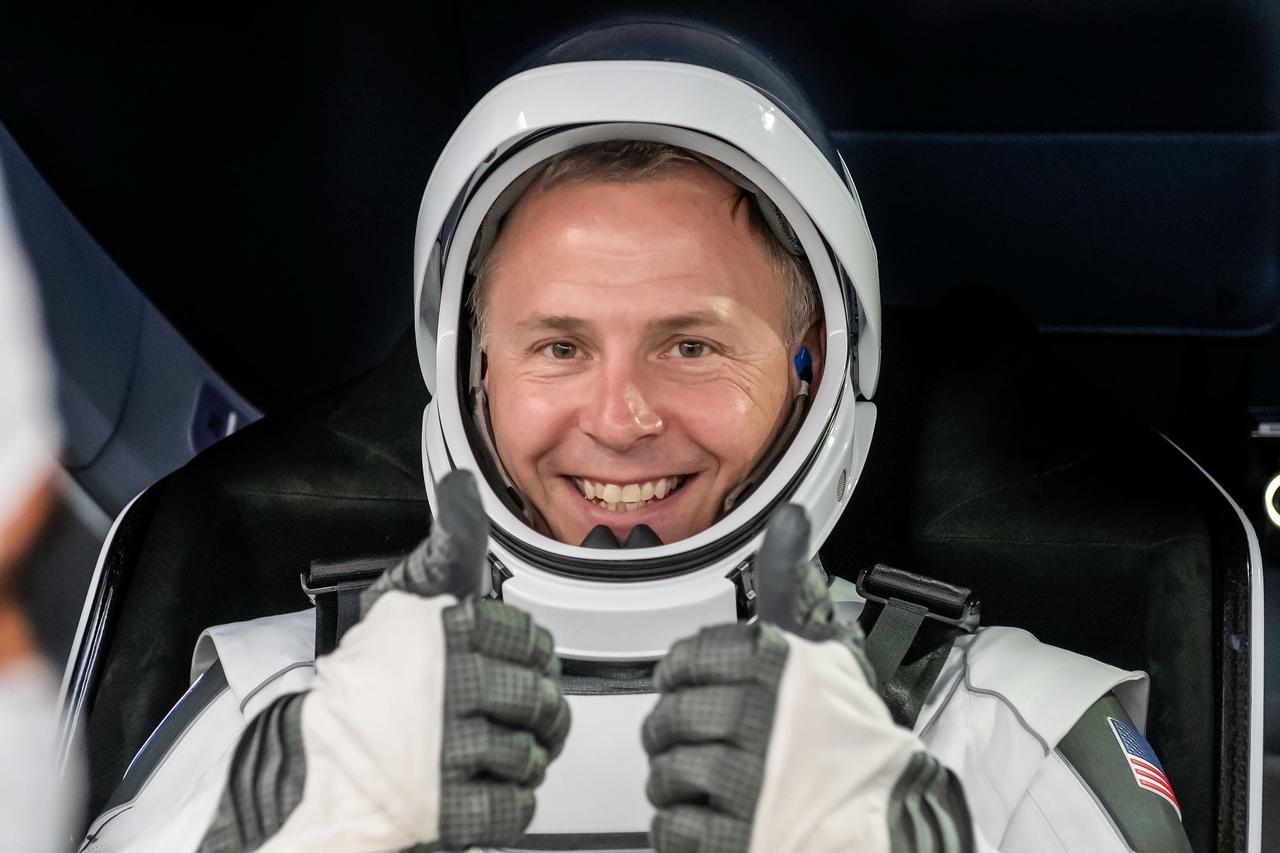
jsc2024e052329 (July 22, 2024) --- NASA’s SpaceX Crew-9 Pilot Nick Hague smiles and gives two thumbs up during the crew equipment interface test (CEIT) at SpaceX’s new Dragon refurbishing facility at Kennedy Space Center in Florida. This will be his second mission to the orbiting laboratory. Credit: SpaceX
SpaceX Crew-9 Pilot Nick Hague
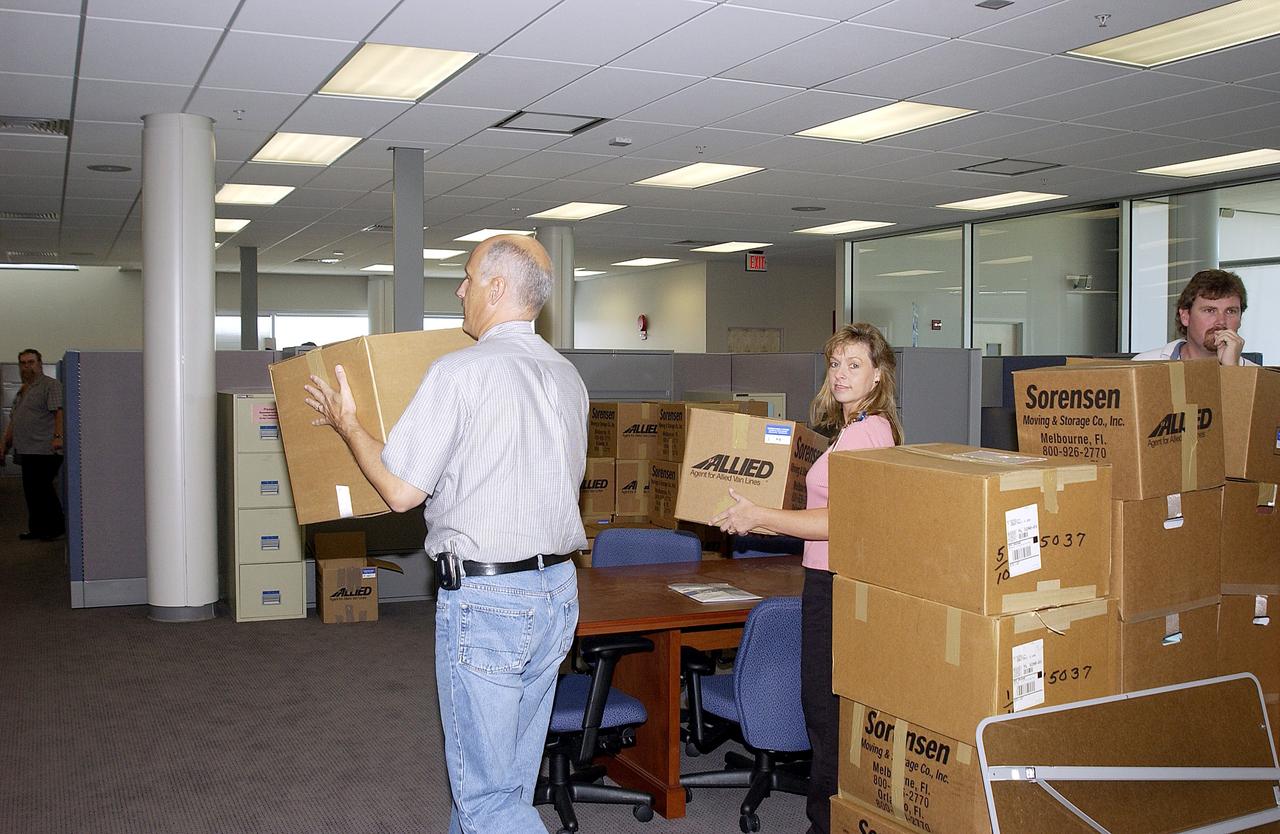
KENNEDY SPACE CENTER, FLA. -  Ivan Rodriguez, with Bionetics, and Michelle Crouch and Larry Burns, with Dynamac, carry boxes of equipment into the Space Life Sciences Lab (SLSL), formerly known as the Space Experiment Research and Processing Laboratory (SERPL).    They are transferring equipment from Hangar L. The new lab is a state-of-the-art facility being built for ISS biotechnology research. Developed as a partnership between NASA-KSC and the State of Florida, NASA’s life sciences contractor will be the primary tenant of the facility, leasing space to conduct flight experiment processing and NASA-sponsored research. About 20 percent of the facility will be available for use by Florida’s university researchers through the Florida Space Research Institute.
KENNEDY SPACE CENTER, FLA. - Ivan Rodriguez, with Bionetics, and Michelle Crouch and Larry Burns, with Dynamac, carry boxes of equipment into the Space Life Sciences Lab (SLSL), formerly known as the Space Experiment Research and Processing Laboratory (SERPL). They are transferring equipment from Hangar L. The new lab is a state-of-the-art facility being built for ISS biotechnology research. Developed as a partnership between NASA-KSC and the State of Florida, NASA’s life sciences contractor will be the primary tenant of the facility, leasing space to conduct flight experiment processing and NASA-sponsored research. About 20 percent of the facility will be available for use by Florida’s university researchers through the Florida Space Research Institute.
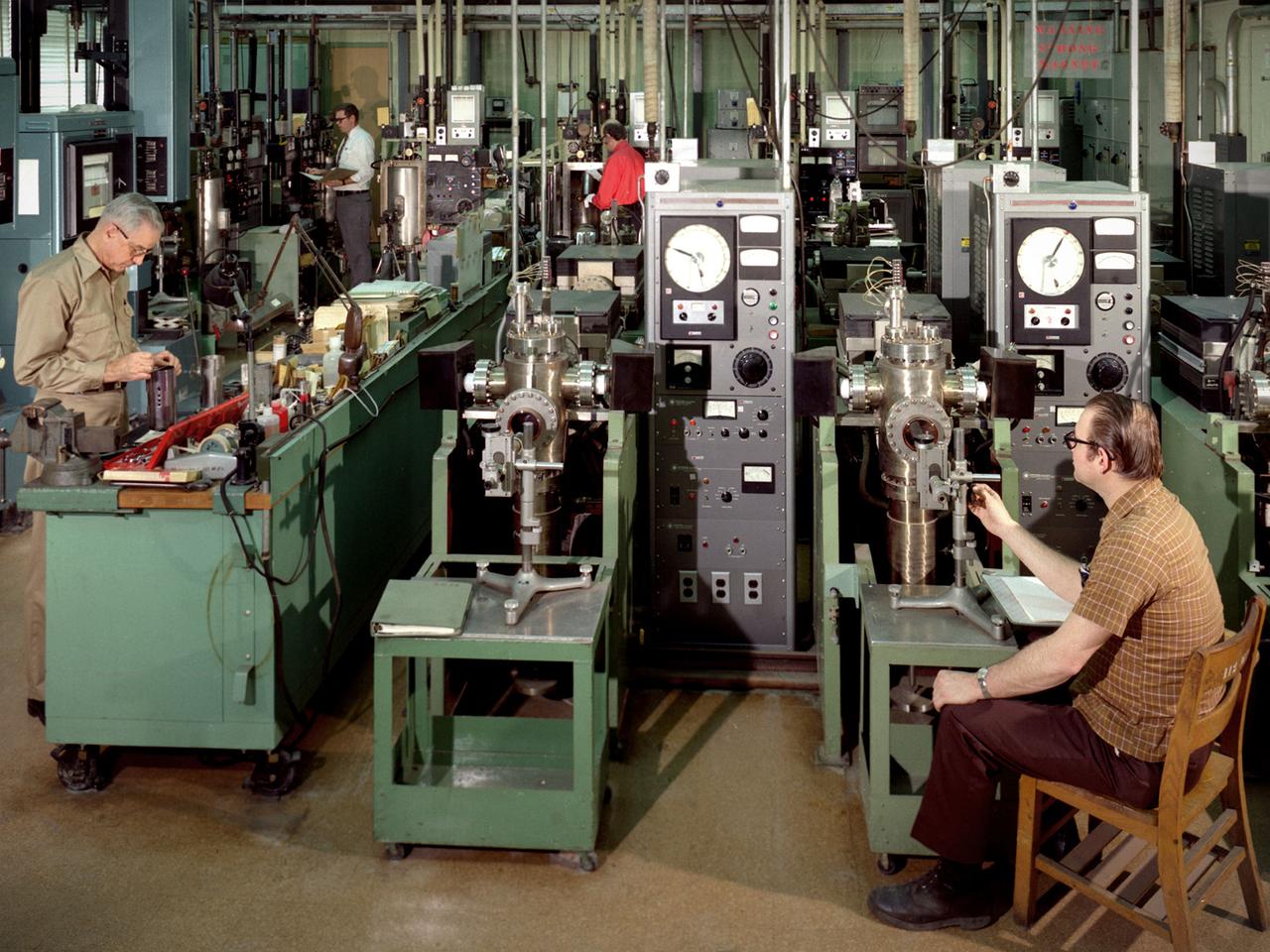
Technicians at work in the Materials Processing Laboratory’s Creep Facility at the National Aeronautics and Space Administration (NASA) Lewis Research Center. The technicians supported the engineers’ studies of refractory materials, metals, and advanced superalloys. The Materials Processing Laboratory contained laboratories and test areas equipped to prepare and develop these metals and materials. The ultra-high vacuum lab, seen in this photograph, contained creep and tensile test equipment.      Creep testing is used to study a material’s ability to withstand long durations under constant pressure and temperatures. The equipment measured the strain over a long period of time. Tensile test equipment subjects the test material to strain until the material fails. The two tests were used to determine the strength and durability of different materials.    The Materials Processing Laboratory also housed arc and electron beam melting furnaces, a hydraulic vertical extrusion press, compaction and forging equipment, and rolling mills and swagers. There were cryogenic and gas storage facilities and mechanical and oil diffusion vacuum pumps. The facility contained both instrumental and analytical chemistry laboratories for work on radioactive or toxic materials and the only shop to machine toxic materials in the Midwest.
High Vacuum Creep Facility in the Materials Processing Laboratory
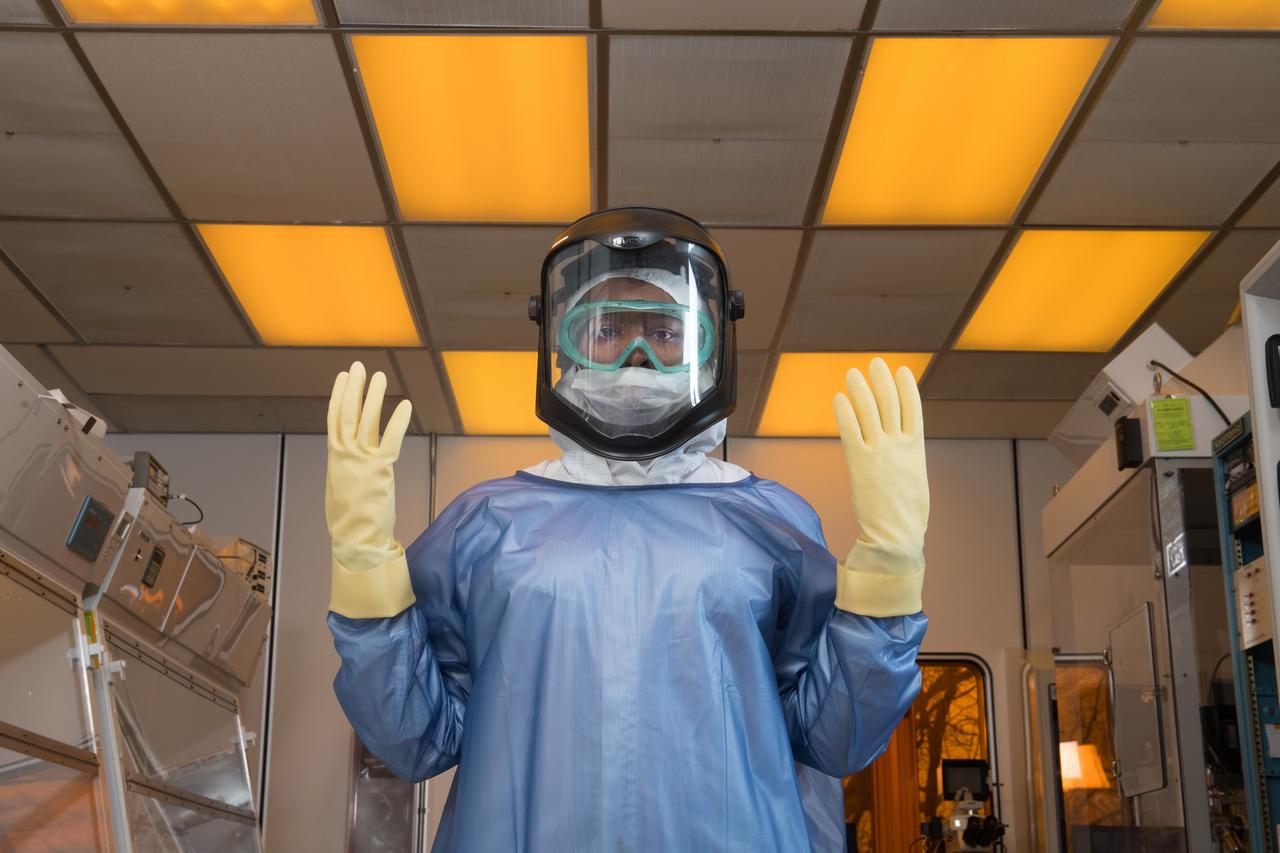
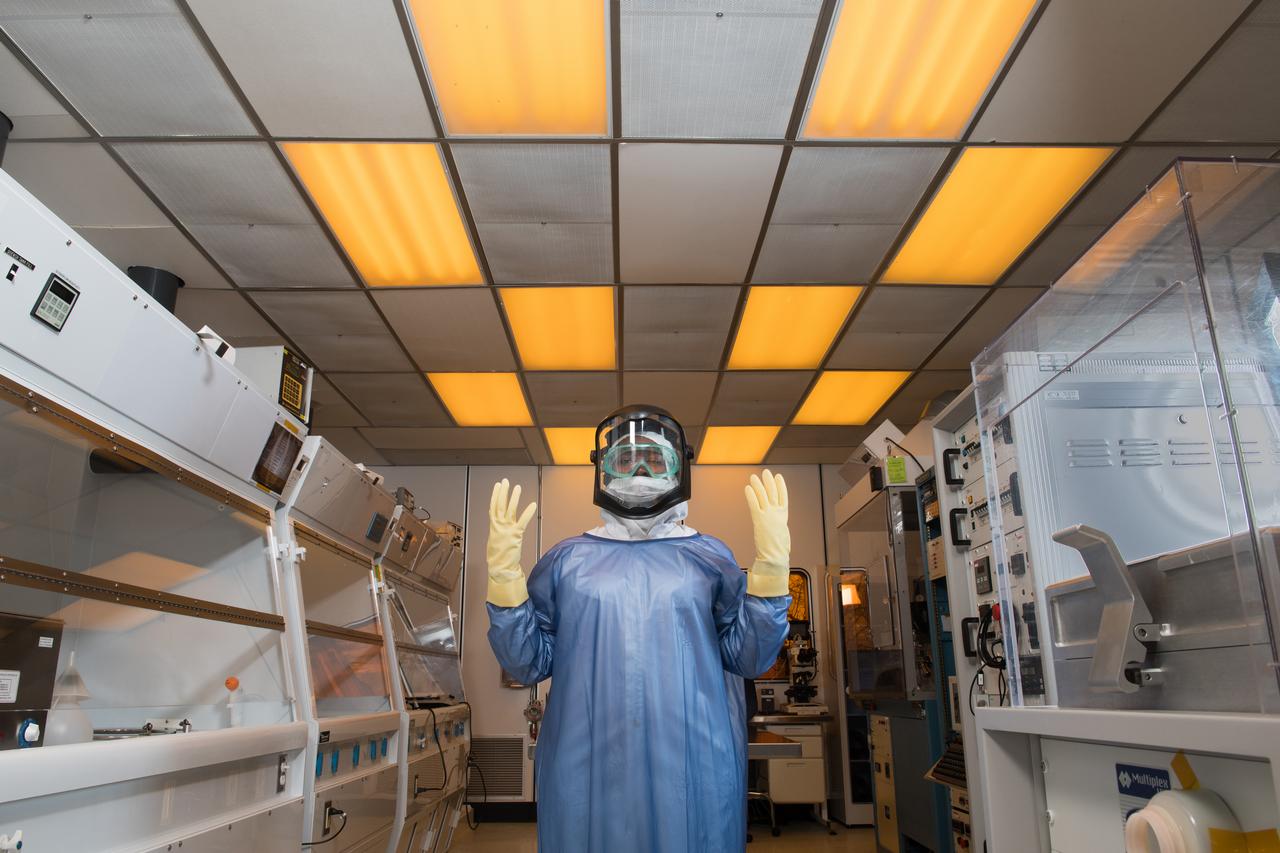
Laboratory Researcher suits up for work in a research clean room.  Personal Protective Equipment, PPE, Portait Series
engineers fabricate silicon carbide sensors
Laboratory researcher suits up for work in a research clean room. Personal Protective Equipment, PPE, Portait Series
Personal Protective Equipment, PPE, Portait Series
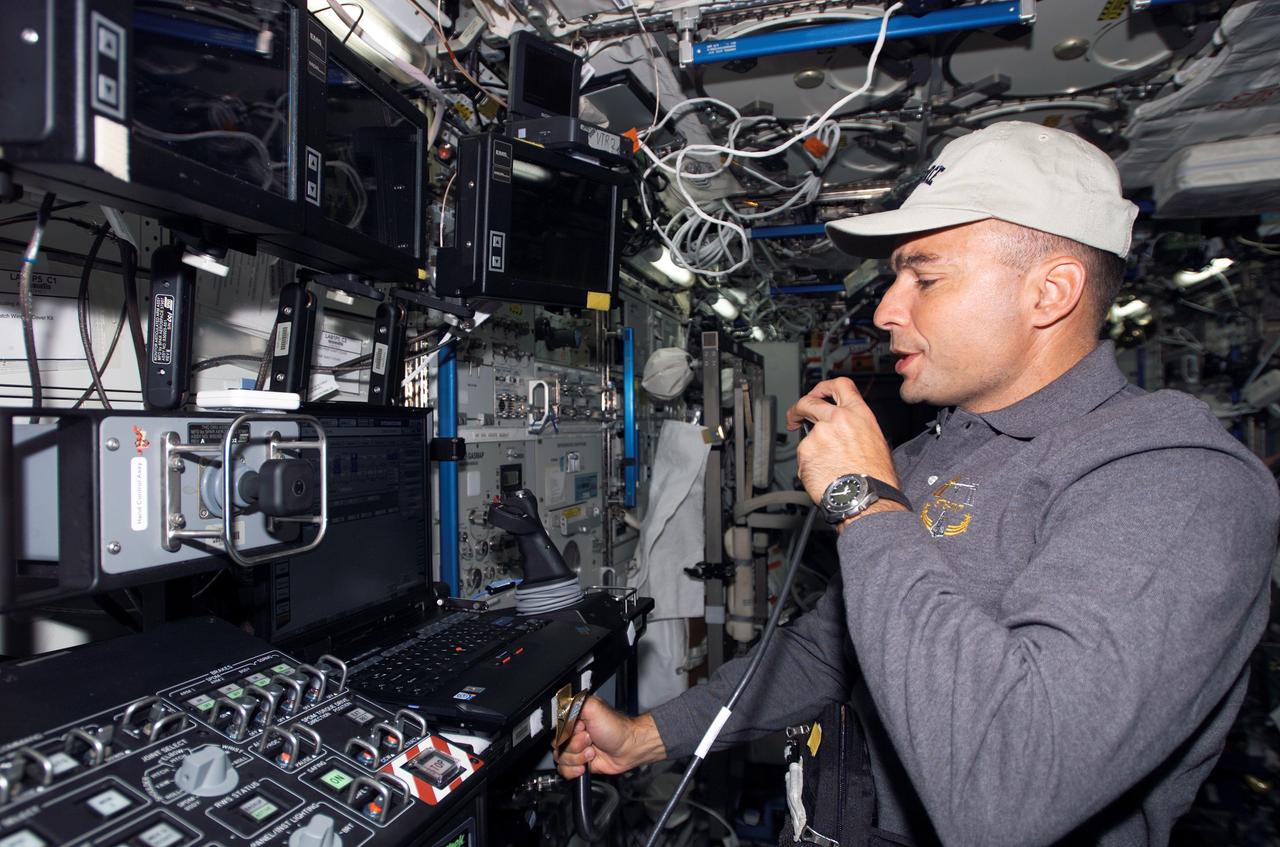
S117-E-07097 (12 June 2007) --- Astronaut Lee Archambault, STS-117 pilot, uses a communication system near the controls of the Space Station Remote Manipulator System (SSRMS) or Canadarm2 in the Destiny laboratory of the International Space Station during flight day five activities while Space Shuttle Atlantis was docked with the station.
Archambault uses communication equipment in the U.S. Laboratory during Joint Operations
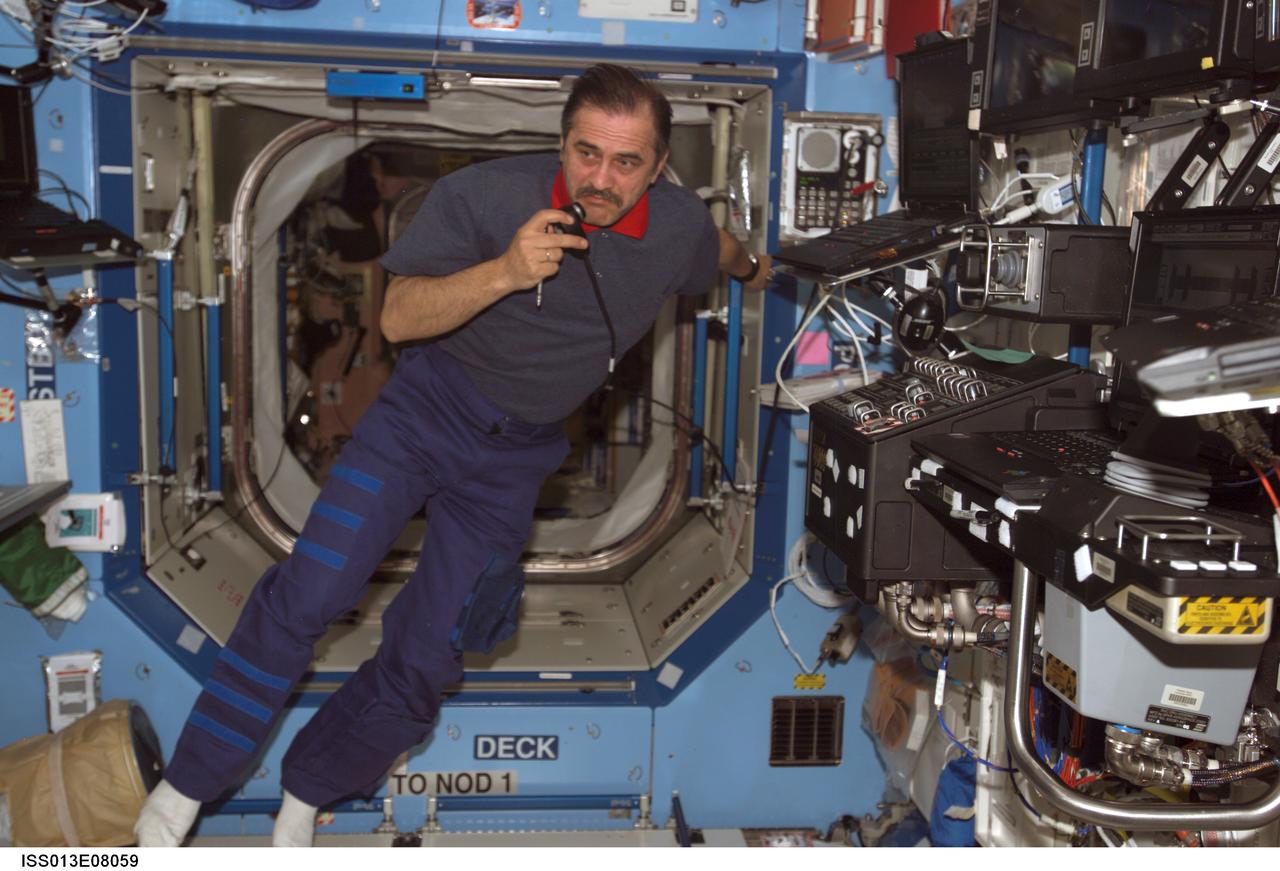
ISS013-E-08059 (18 April 2006) --- Cosmonaut Pavel V. Vinogradov, Expedition 13 commander representing Russia's Federal Space Agency, uses a communication system in the Destiny laboratory of the International Space Station.
Vinogradov uses communication equipment in the U.S. Laboratory during Expedition 13
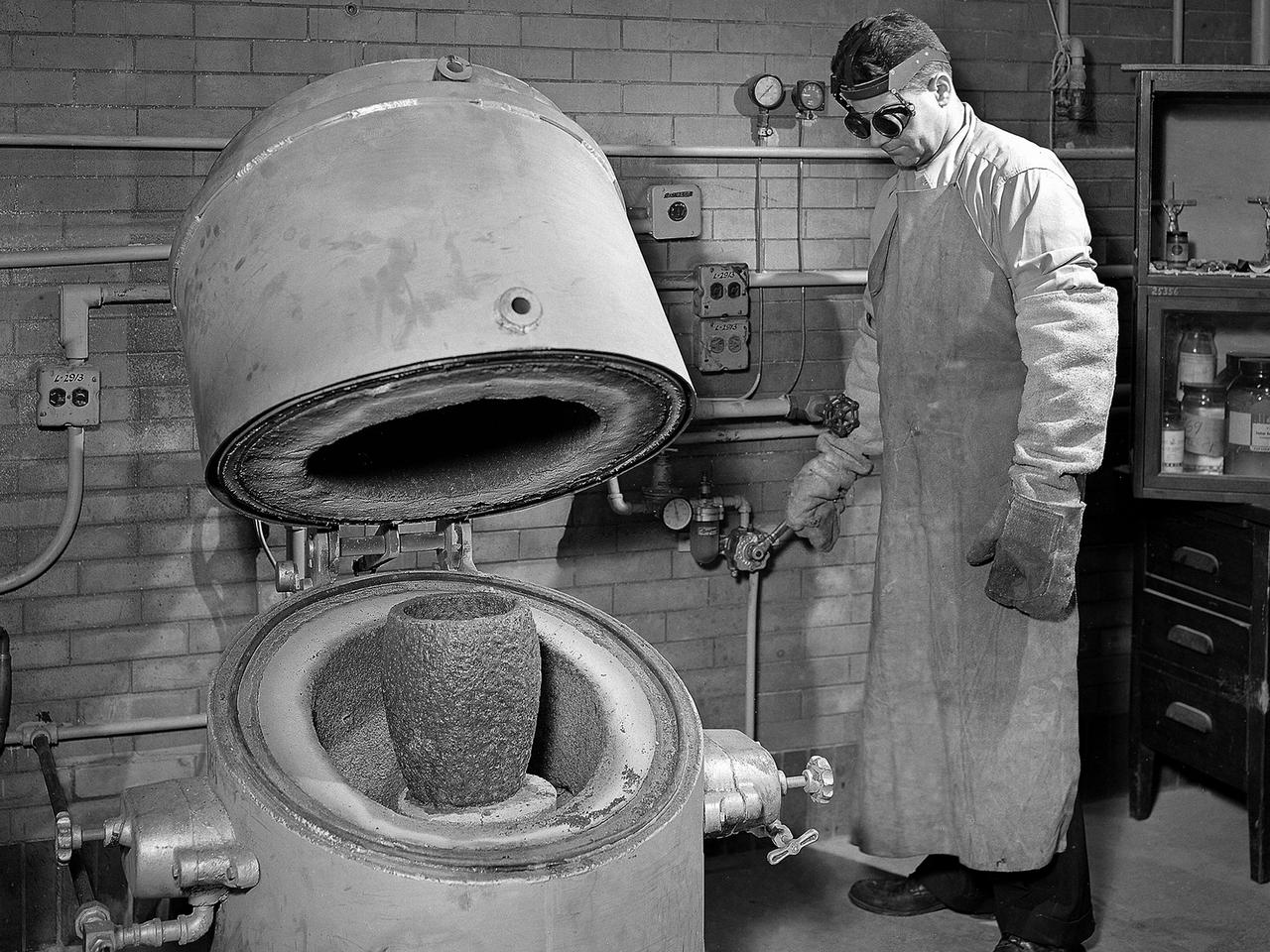
A technician prepares a metal component for a high-temperature bake in the Heat Treatment Shop at the National Advisory Committee for Aeronautics (NACA) Lewis Flight Propulsion Laboratory.  Fabrication Division under Dan White and John Dalgleish created almost all of the equipment and models used at the laboratory. The Technical Services Building, referred to as the Fab Shop, contained a number of specialized shops in the 1940s and 1950s. These included a Machine Shop, Sheet Metal Shop, Wood and Pattern Shop, Instrument Shop, Thermocouple Shop, Heat Treating Shop, Metallurgical Laboratory, and Fabrication Office.   The Metallurgical Laboratory contained a control lab for the Heat Treating Shop and a service lab for the NACA Lewis research divisions. This metallurgical group performed tensile and impact tests on metals to determine their suitability for specific research or equipment. The Heat Treating Shop heated metal parts to optimize their physical properties and contained a Precision Castings Foundry to manufacture equipment made of heat resisting alloys.
Heat Treat Shop in the Technical Services Building
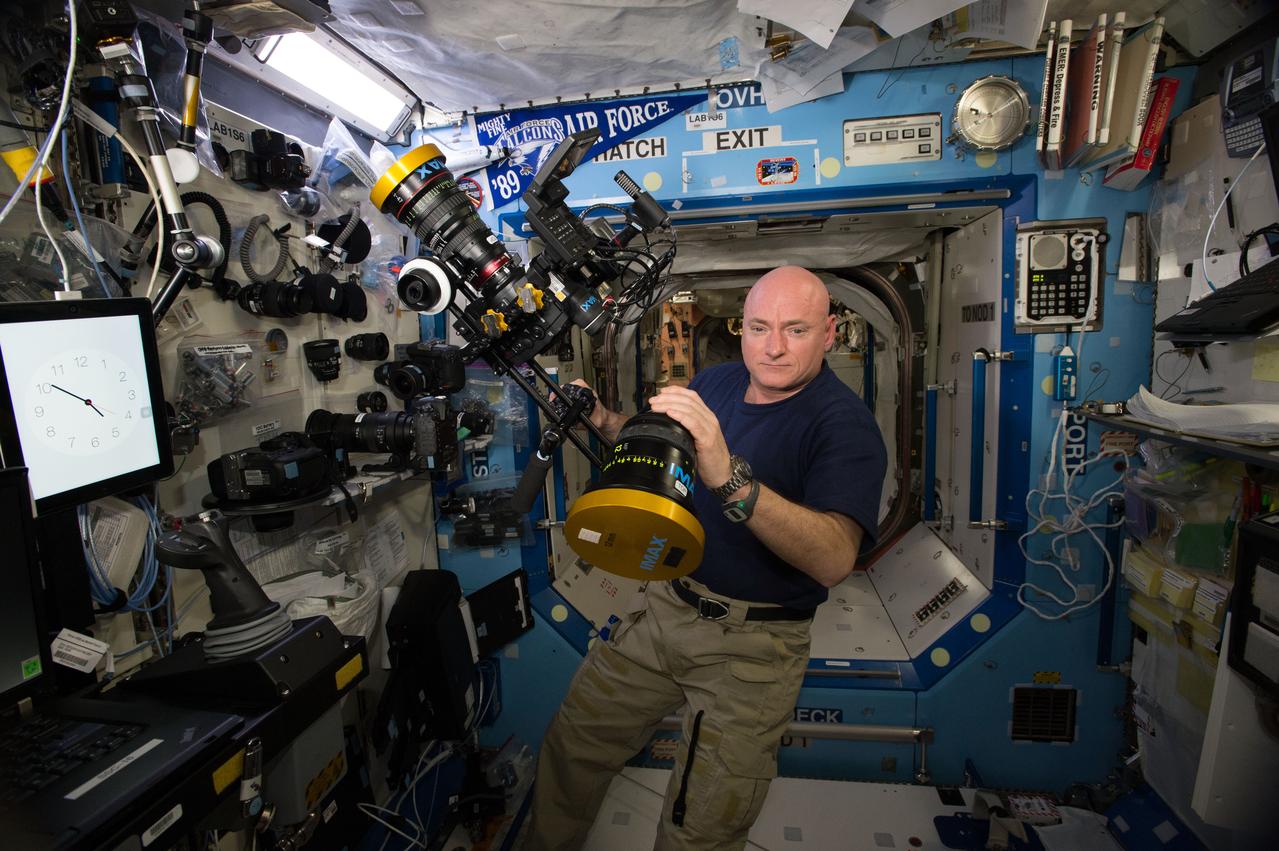
ISS043E276473 (05/31/2015) --- NASA astronaut Scott Kelly is seen here inside the station’s Destiny laboratory preparing camera equipment for an upcoming documentation session.
Kelly in U.S. Laboratory
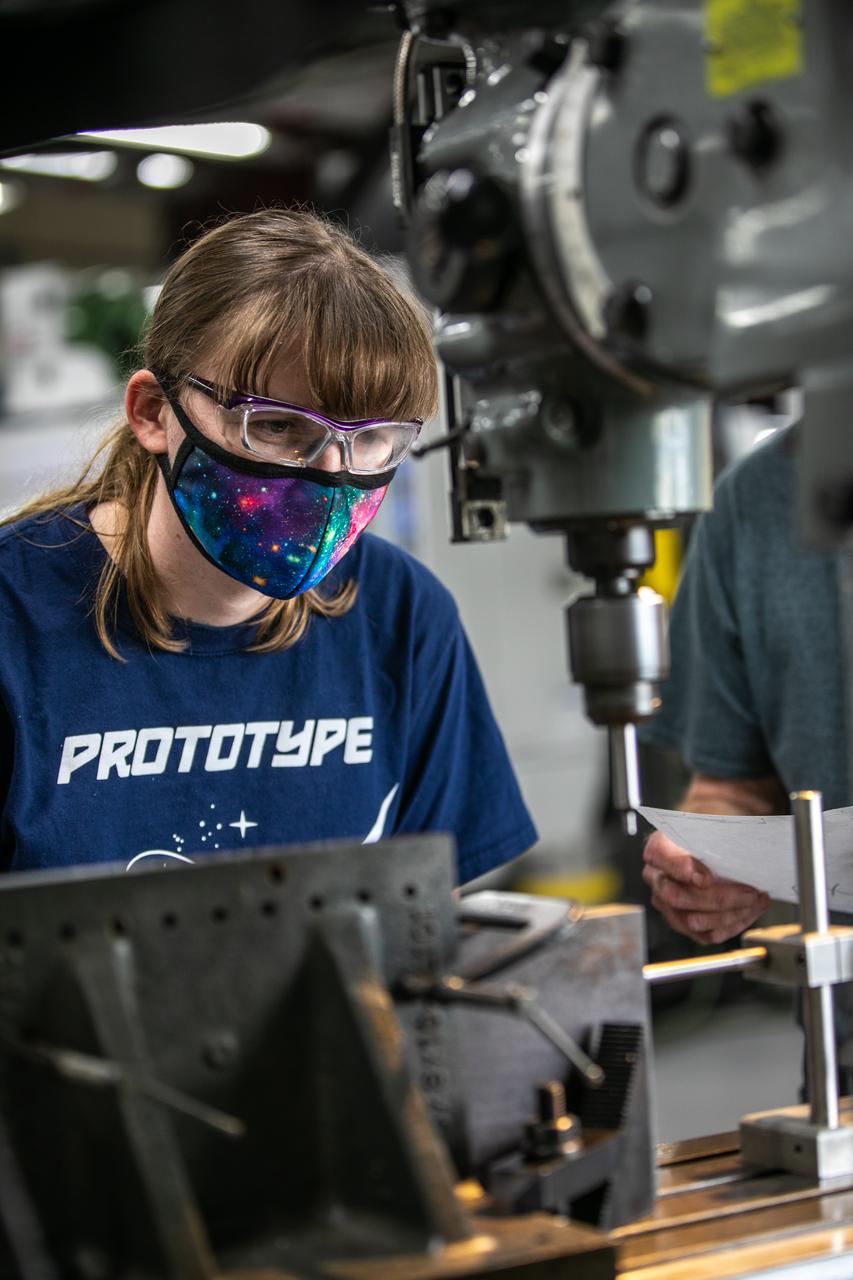
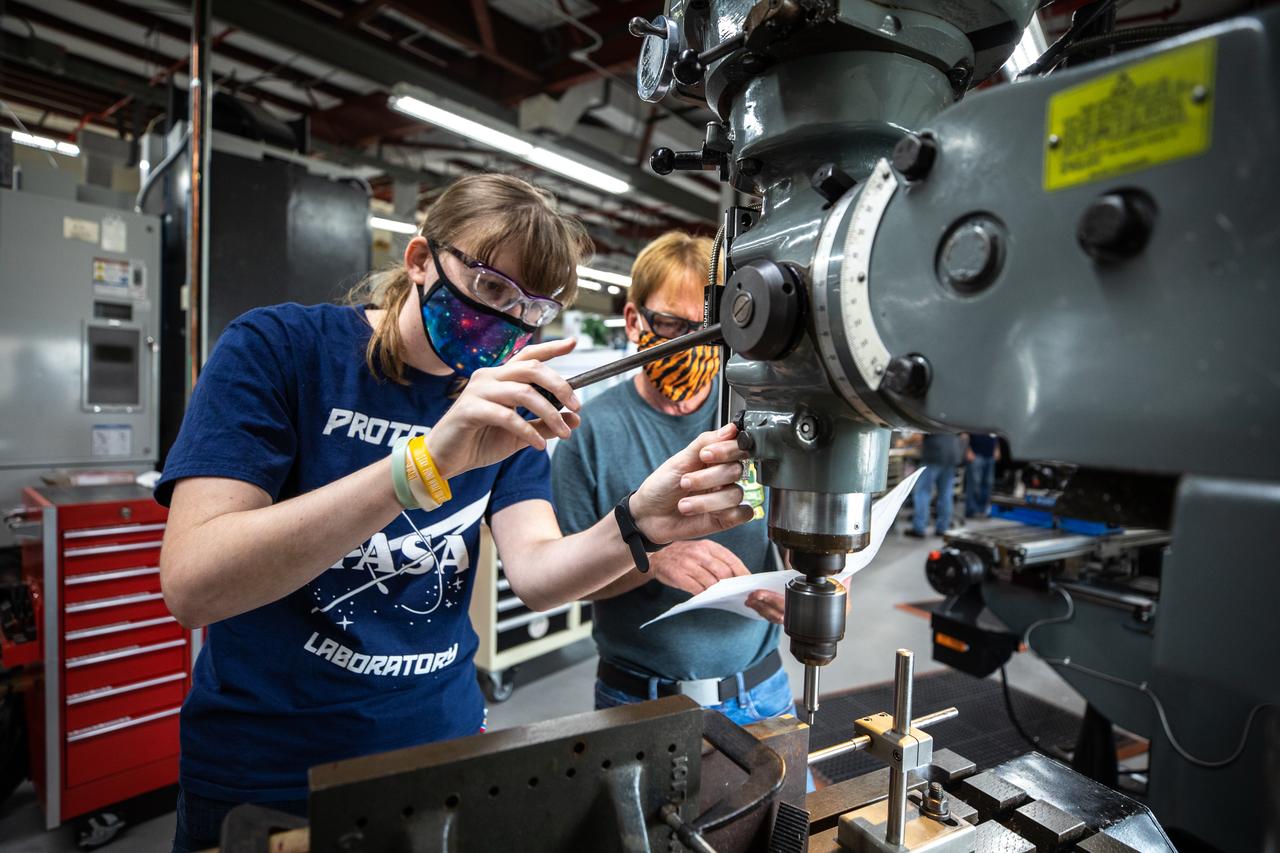
Katie Mortensen, a mechanical engineering technician, machines test article materials inside the Prototype Development Laboratory at NASA’s Kennedy Space Center in Florida on Oct. 21, 2020. The prototype laboratory designs, fabricates, and tests prototypes, test articles and test support equipment. It has a long history of providing fast solutions to complex operations problems. The lab’s teams of engineers use specialized equipment to produce exacting, one-of-a-kind items made from a range of materials depending on the design. The lab supports projects at Kennedy and at the agency level.
Engineering Labs: Prototype Development Laboratory (PDL)
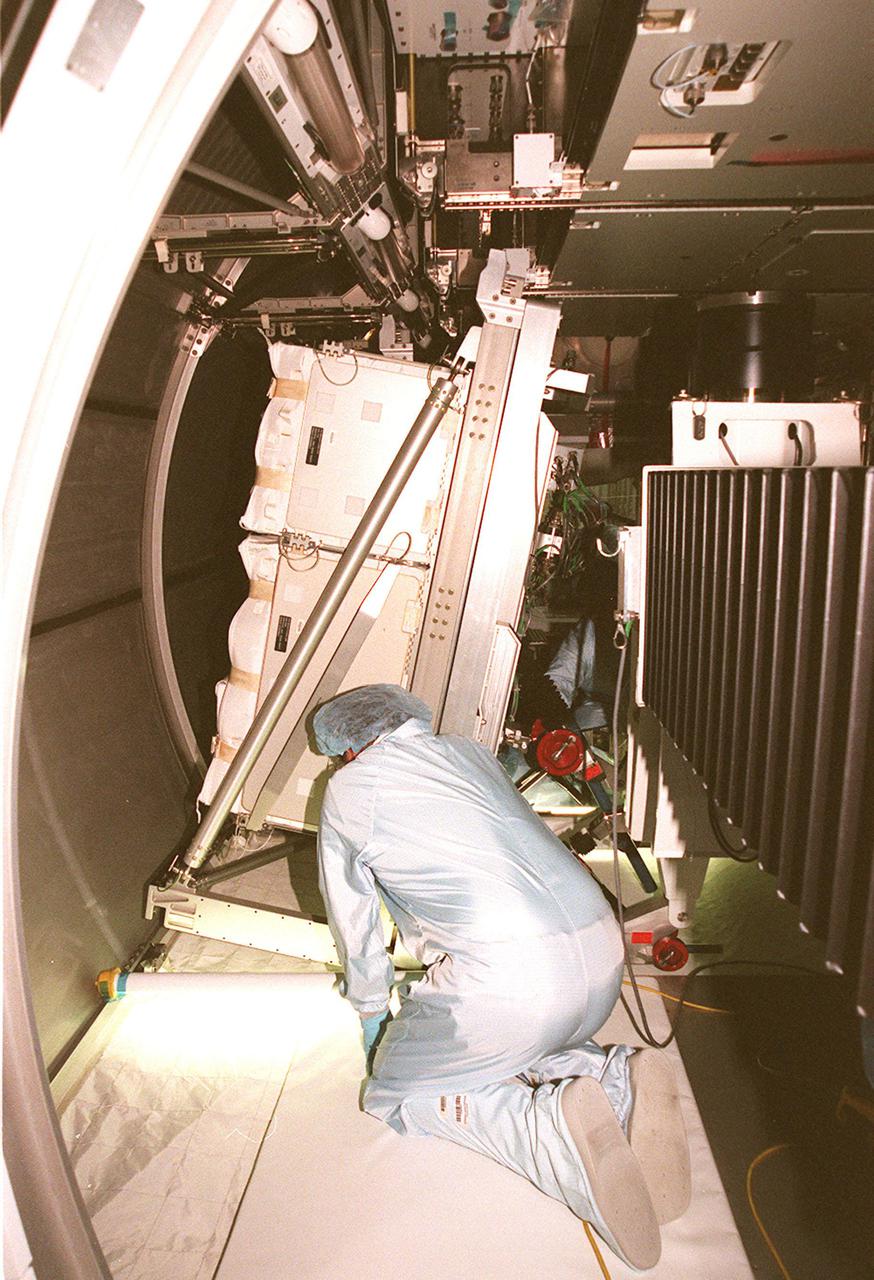
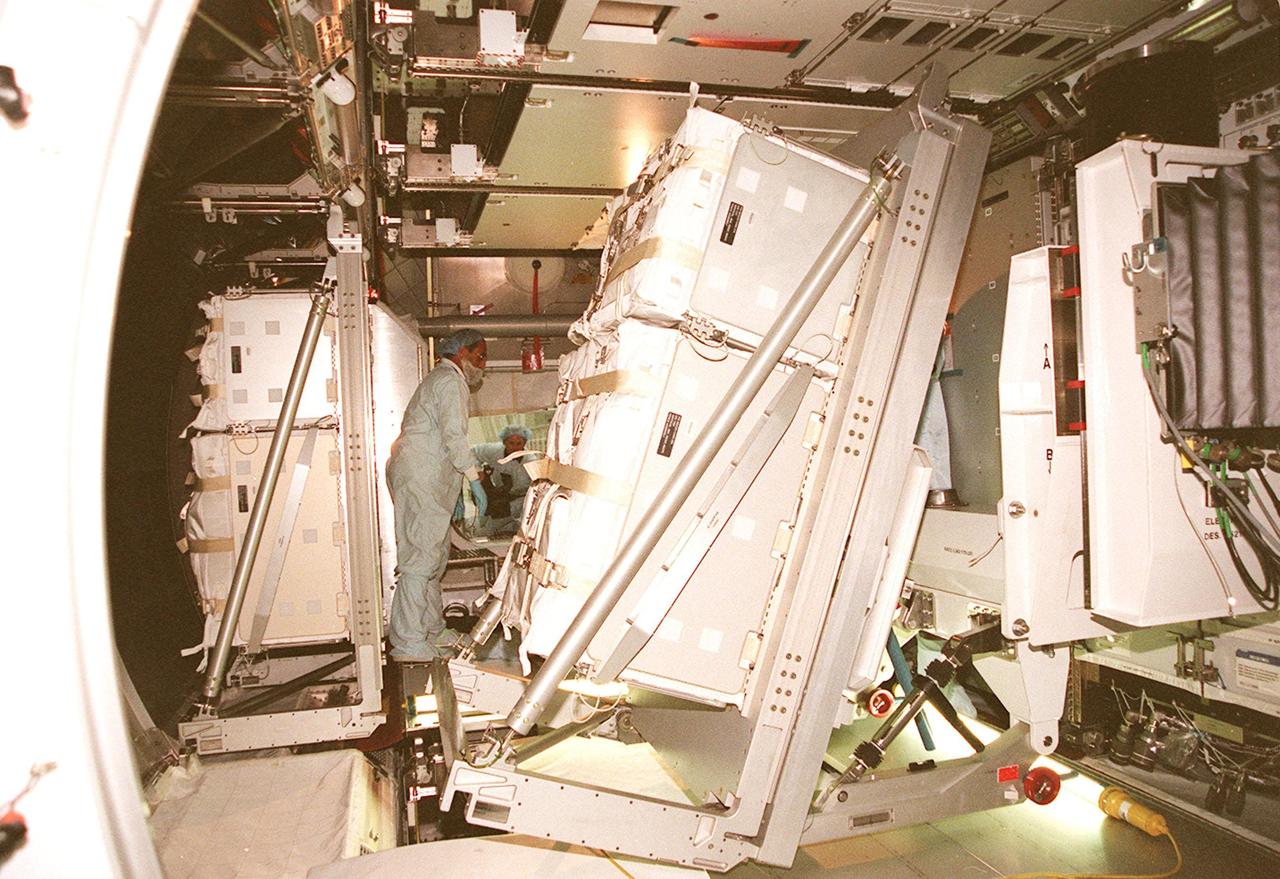
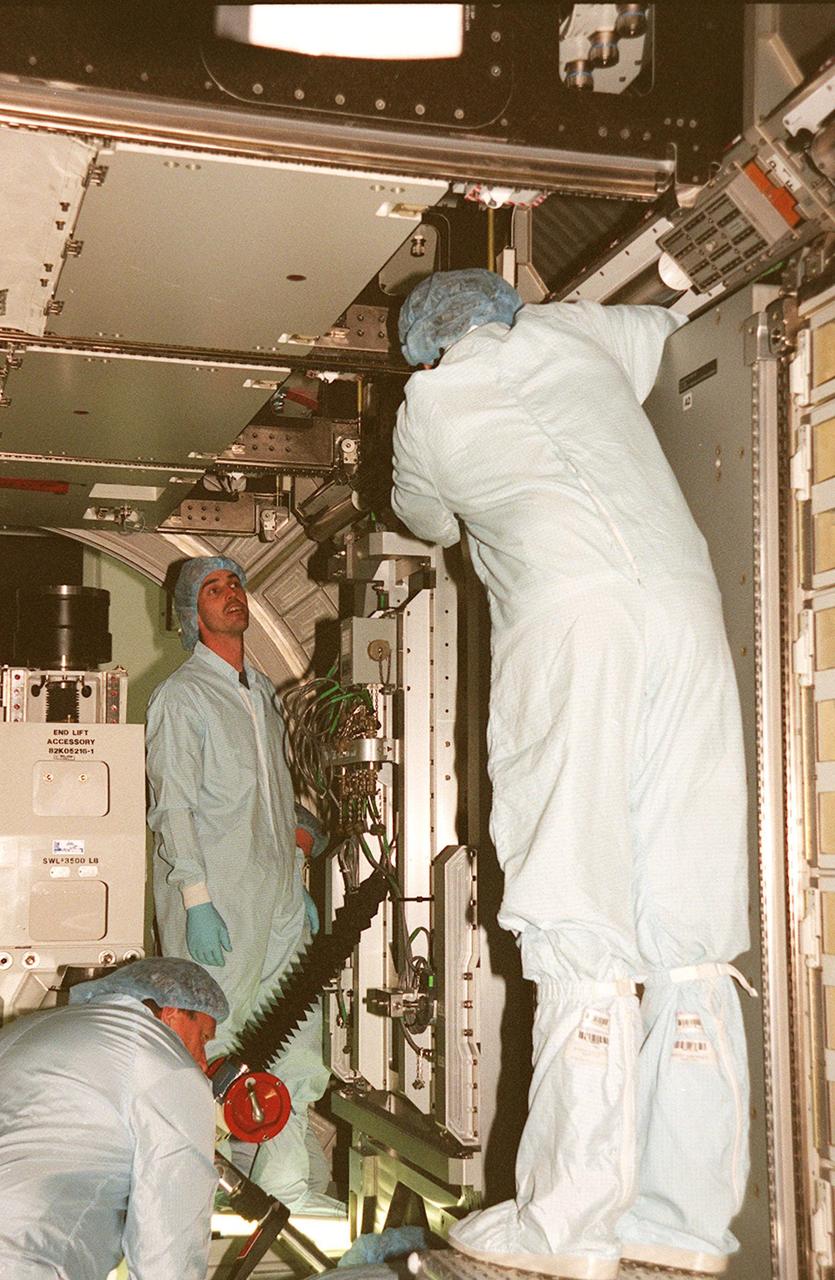
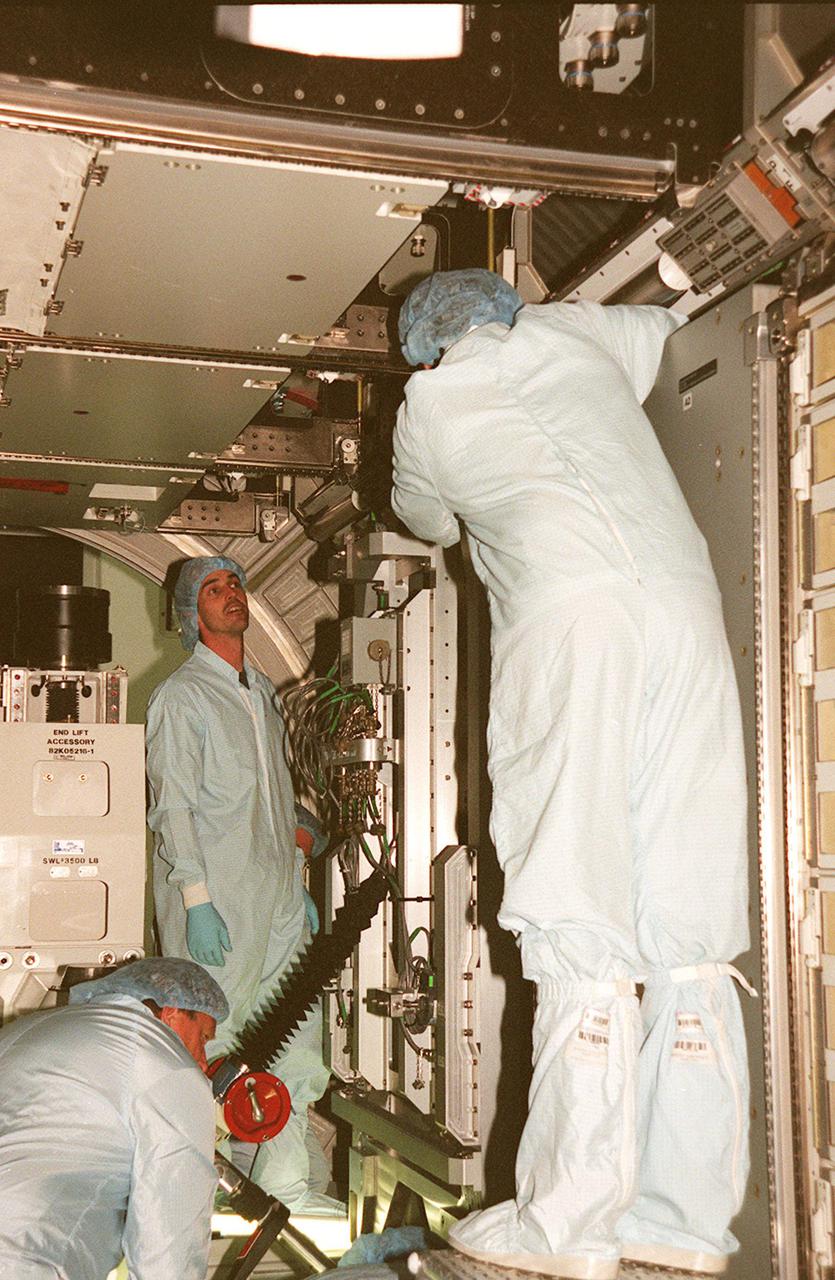
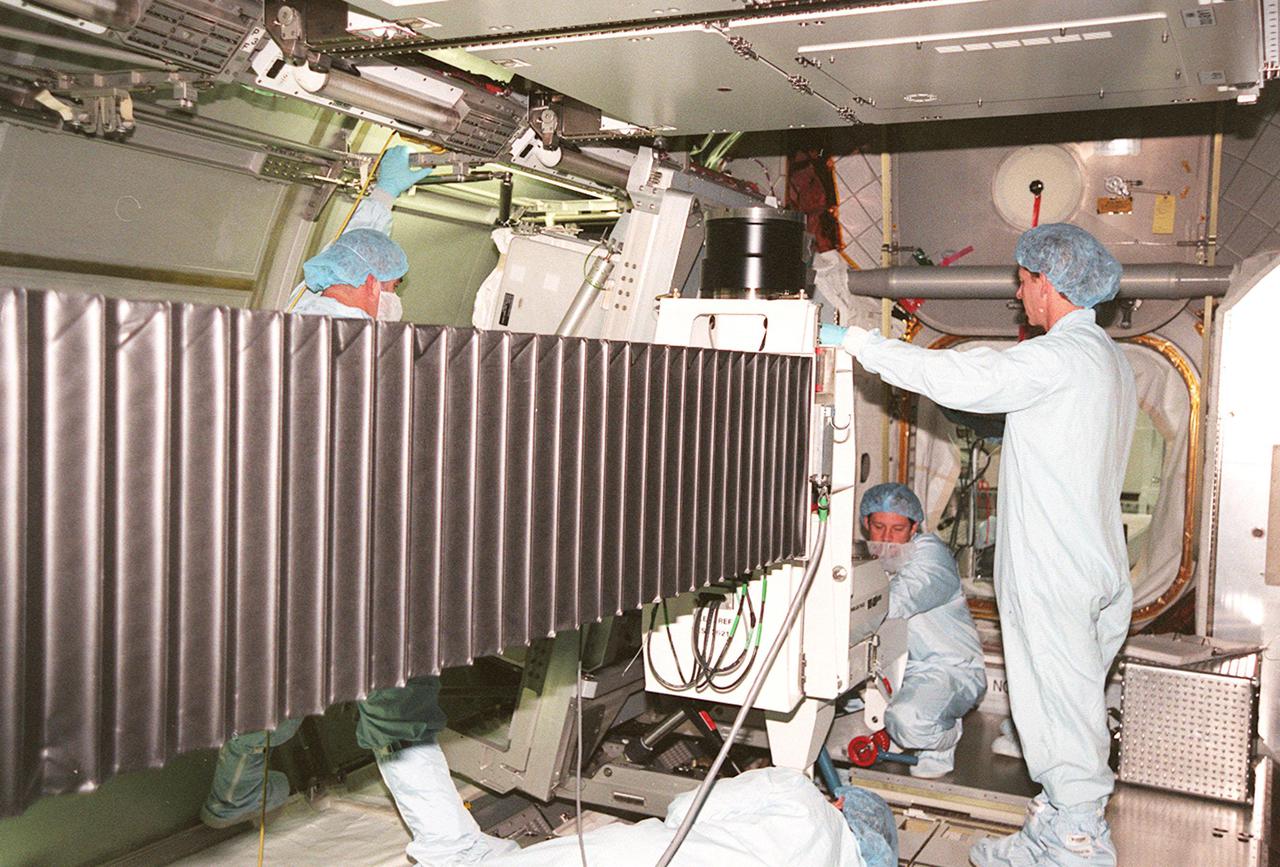
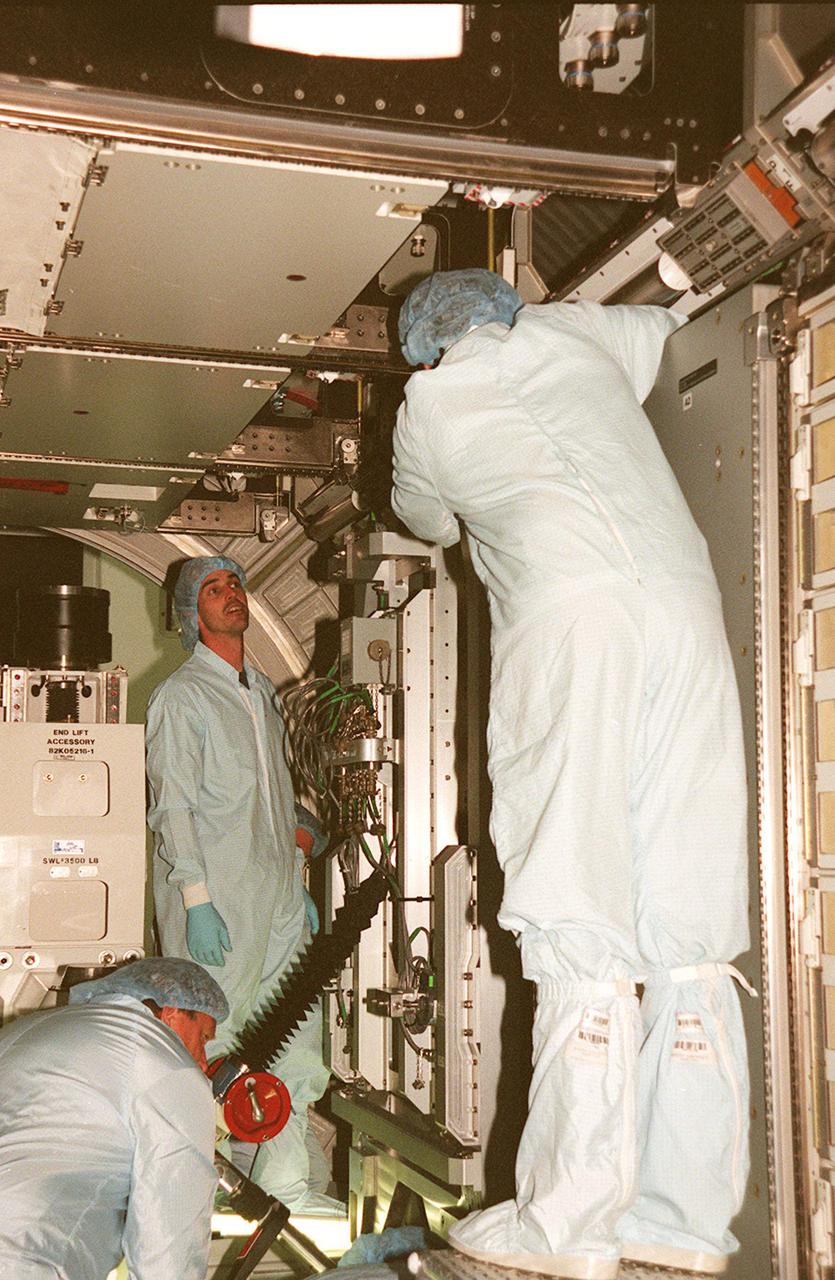
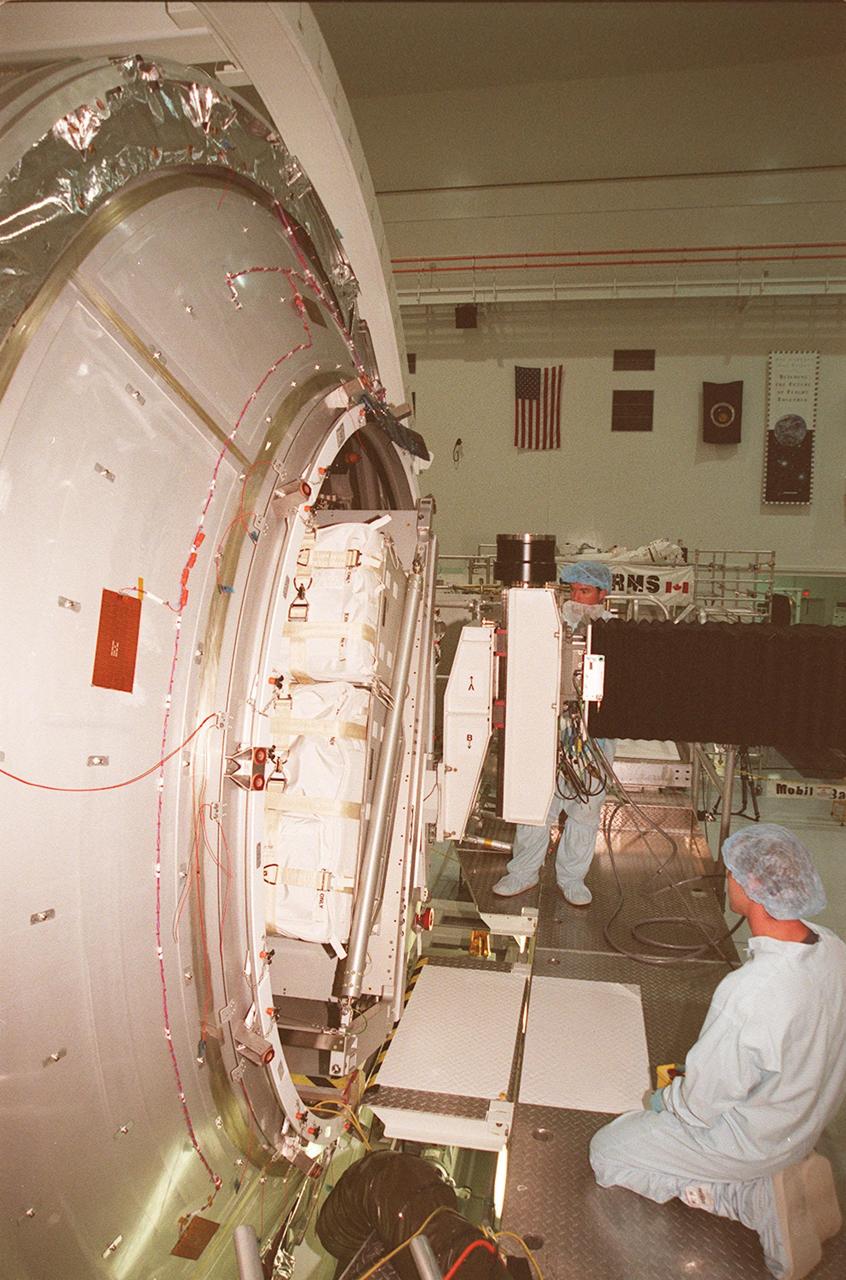
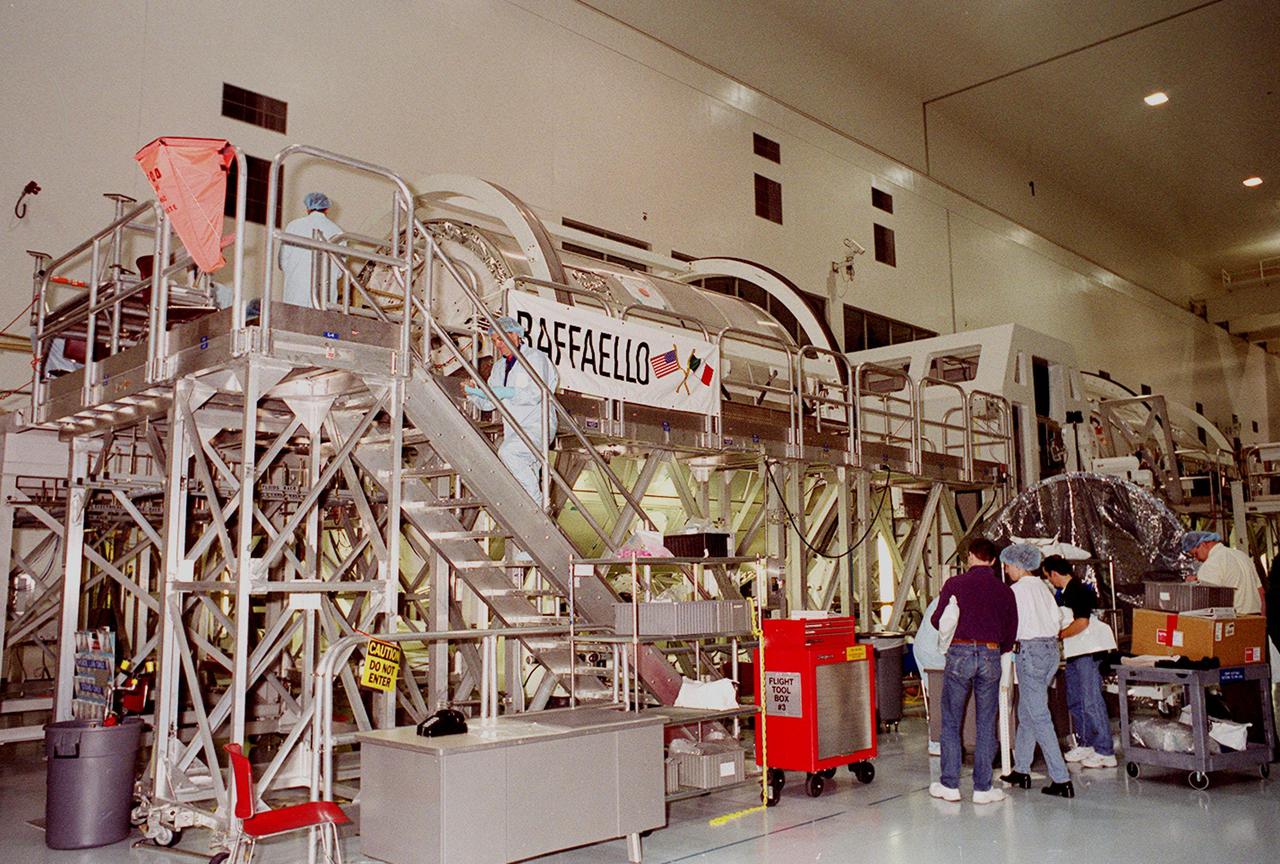
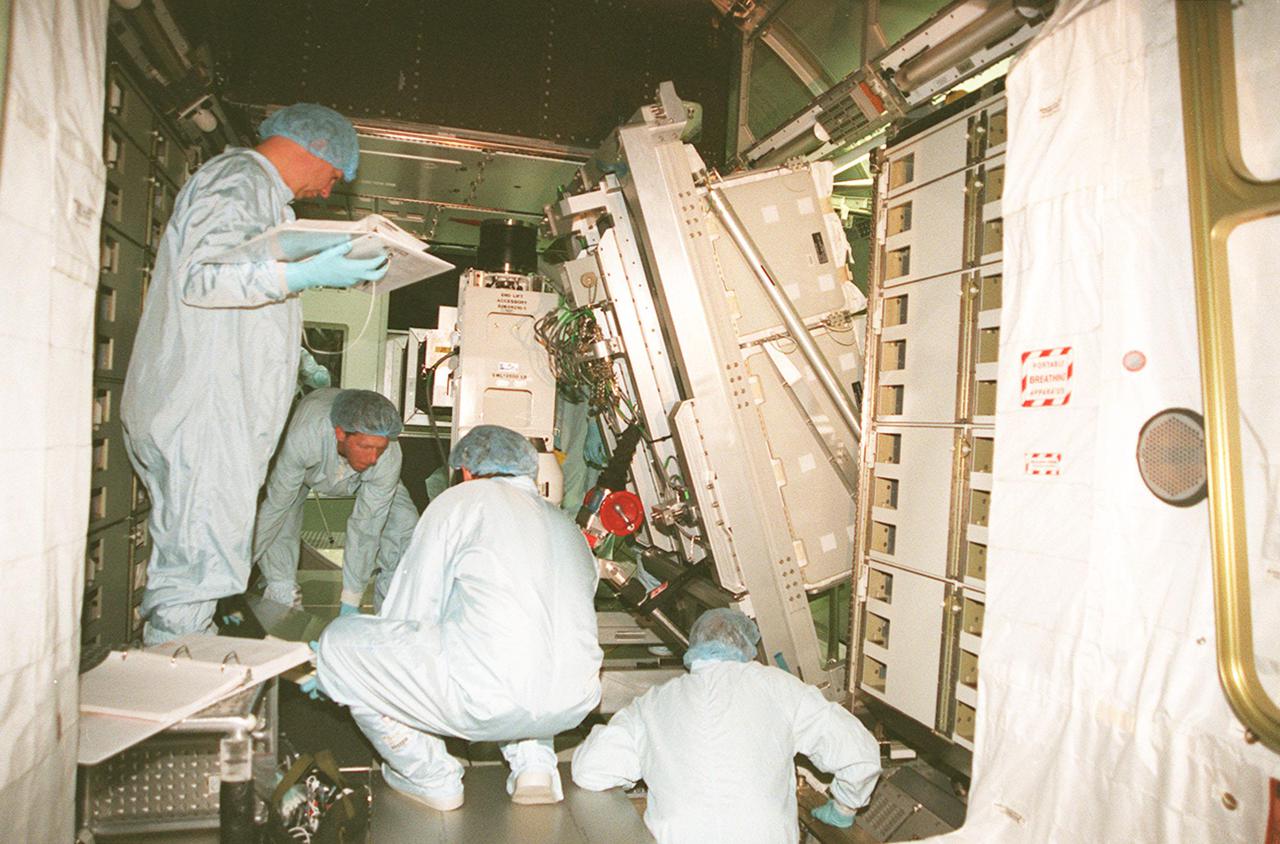
KENNEDY SPACE CENTER, FLA. -- Inside the Multi-Purpose Logistics Module Leonardo, a worker looks at the placement of a laboratory rack. The MPLM is the first of three such pressurized modules that will serve as the International Space Station’s “moving vans,” carrying laboratory racks filled with equipment, experiments and supplies to and from the Space Station aboard the Space Shuttle. Leonardo will be launched March 1, 2001, on Shuttle mission STS-102 On that flight, Leonardo will be filled with equipment and supplies to outfit the U.S. laboratory module, being carried to the ISS on the Jan. 19, 2001, launch of STS-98
KSC-00PP-1970
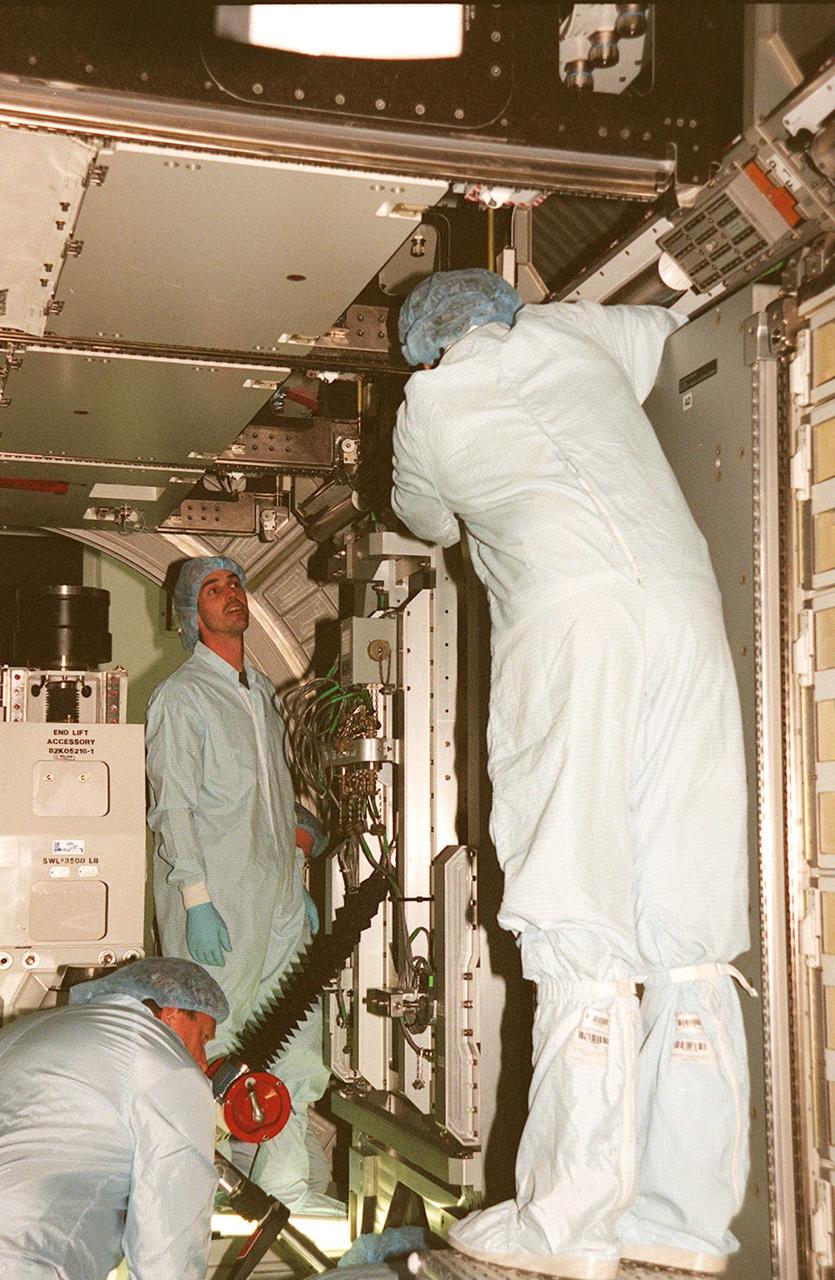
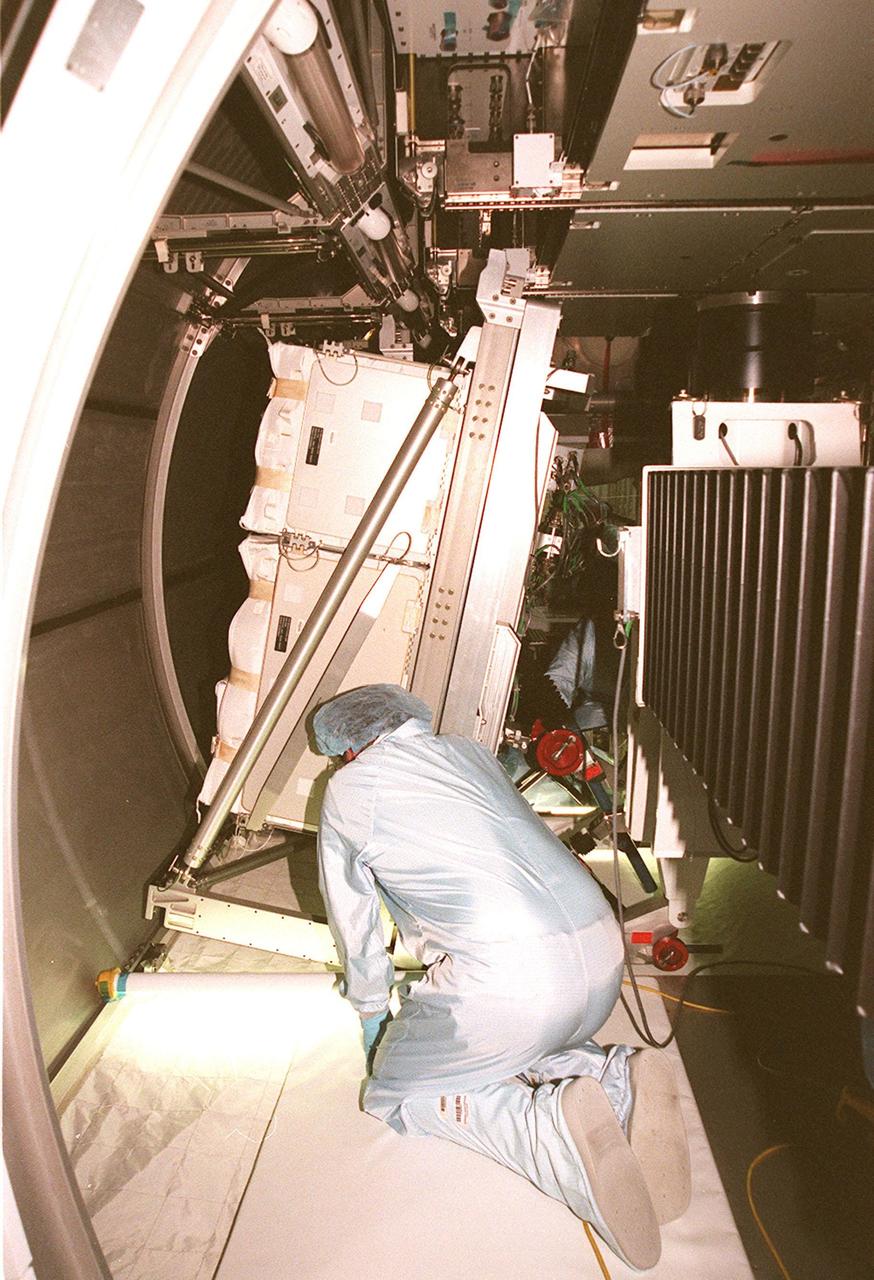
KENNEDY SPACE CENTER, FLA. -- Workers inside the Multi-Purpose Logistics Module Leonardo check connections while installing a laboratory rack. Leonardo is the first of three such pressurized modules that will serve as the International Space Station's “moving vans,” carrying laboratory racks filled with equipment, experiments and supplies to and from the Space Station aboard the Space Shuttle. Approximately 21 feet long and 15 feet in diameter, Leonardo will be launched on Shuttle mission STS-102 March 1, 2001. On that flight, Leonardo will be filled with equipment and supplies to outfit the U.S. laboratory module, being carried to the ISS on the Jan. 19, 2001, launch of STS-98
KSC00pp1963
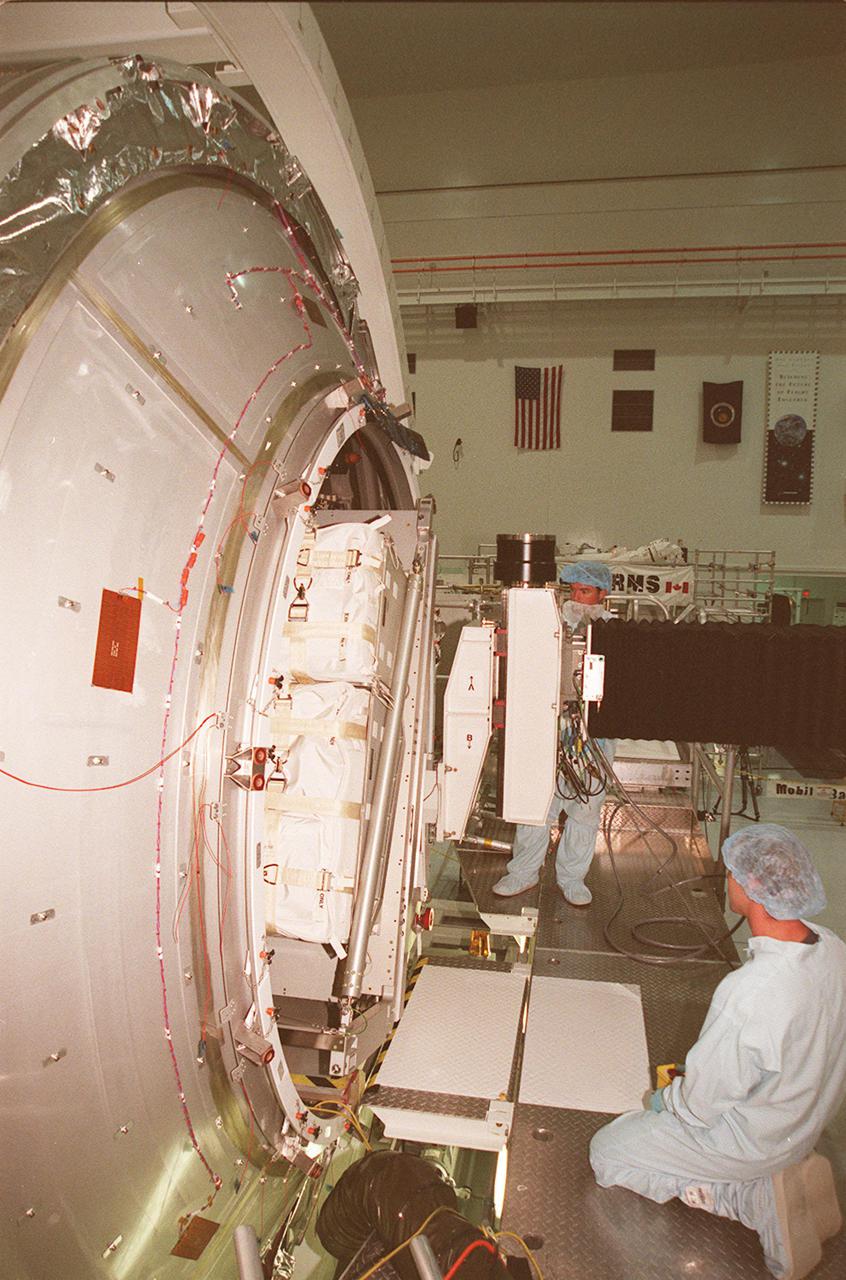
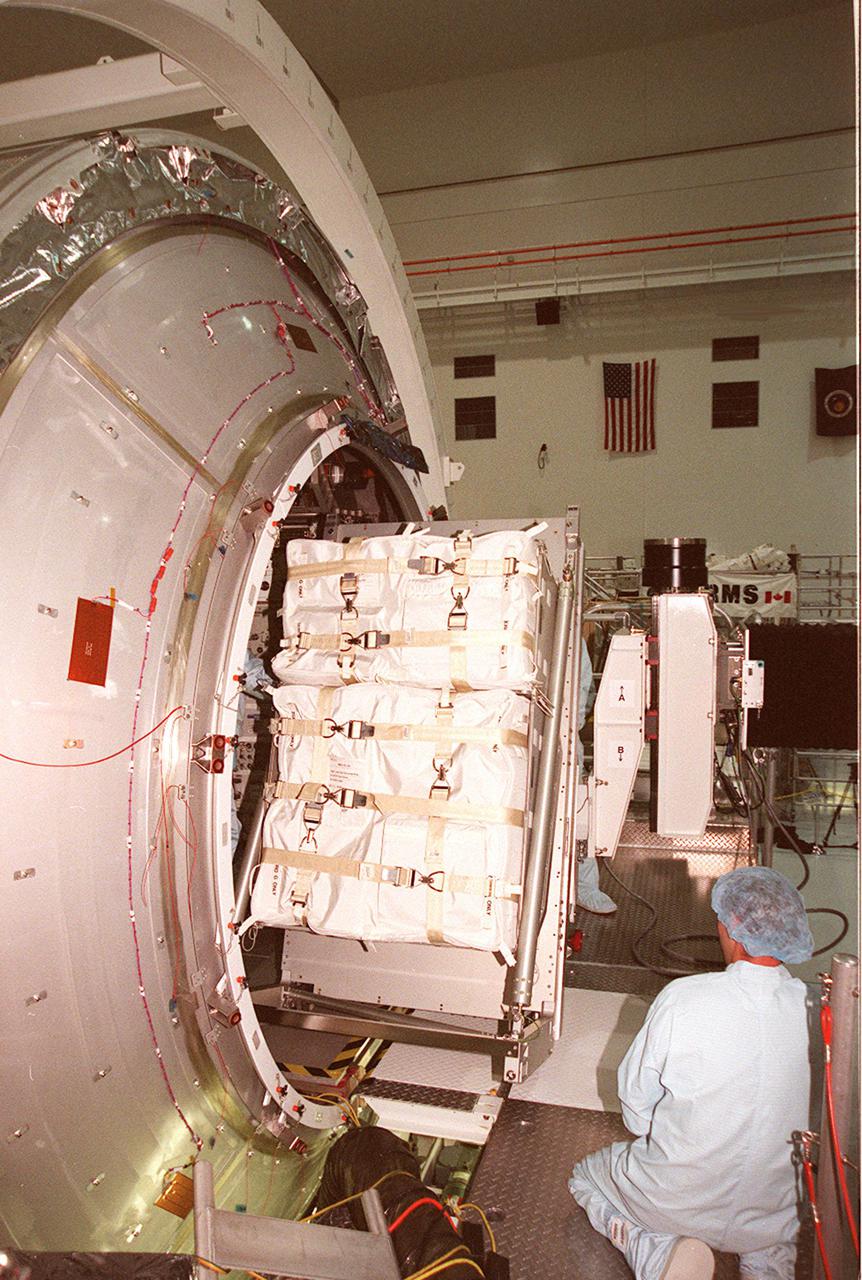
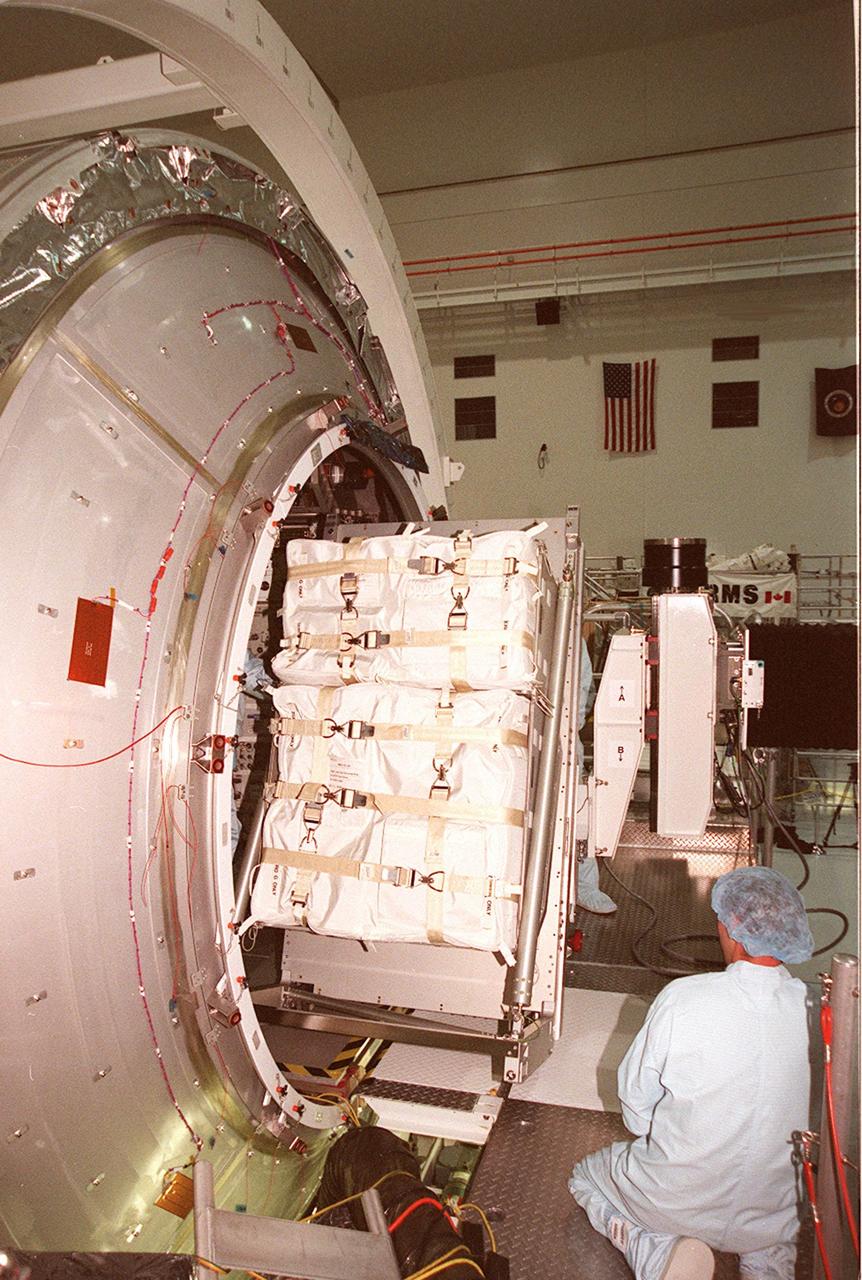
KENNEDY SPACE CENTER, FLA. -- A worker in the Space Station Processing Facility watches as a laboratory rack moves into the Multi-Purpose Logistics Module Leonardo. The MPLM is the first of three such pressurized modules that will serve as the International Space Station’s “moving vans,” carrying laboratory racks filled with equipment, experiments and supplies to and from the Space Station aboard the Space Shuttle. Leonardo will be launched March 1, 2001, on Shuttle mission STS-102 On that flight, Leonardo will be filled with equipment and supplies to outfit the U.S. laboratory module, being carried to the ISS on the Jan. 19, 2001, launch of STS-98
KSC00pp1967
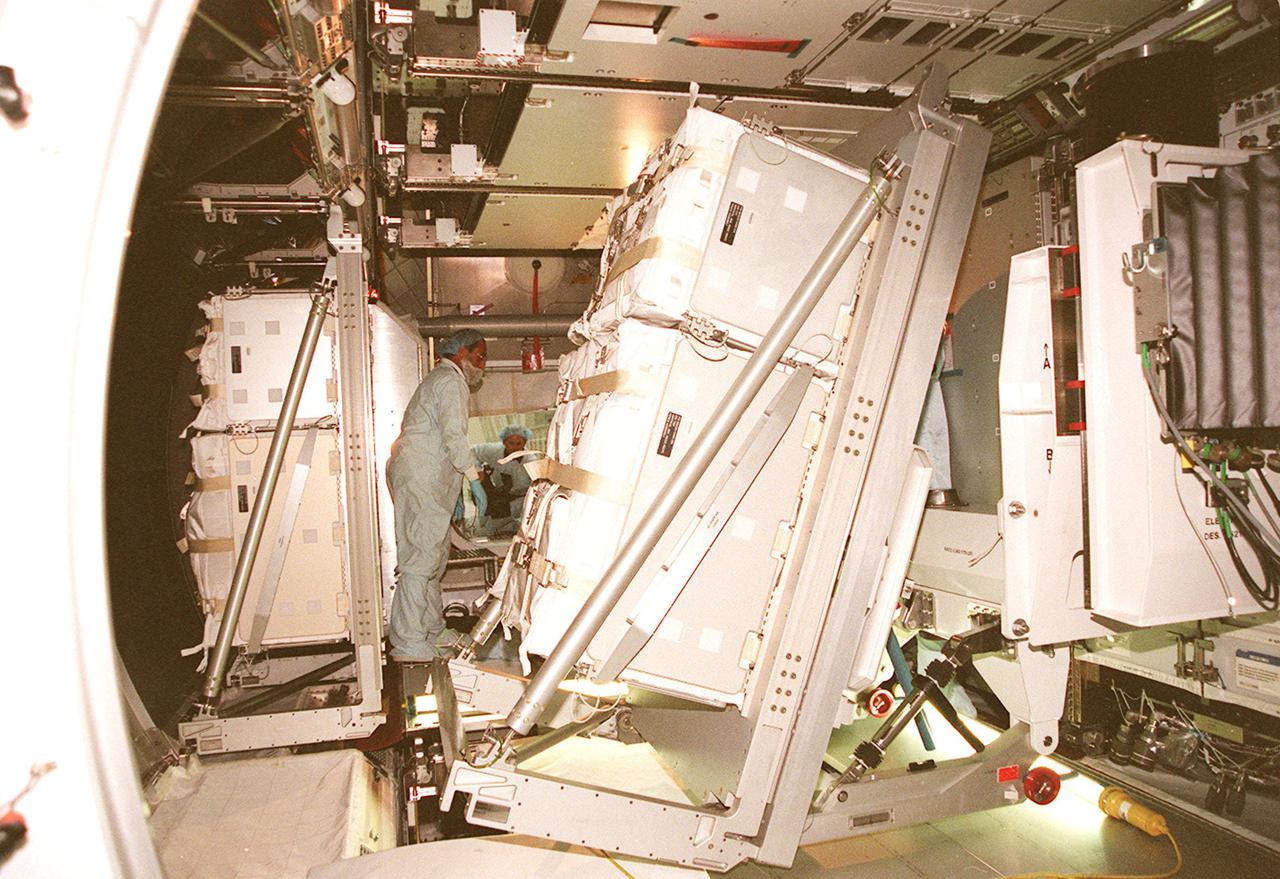
KENNEDY SPACE CENTER, FLA. -- Workers inside the Multi-Purpose Logistics Module Leonardo complete installation of a laboratory rack. The MPLM is the first of three such pressurized modules that will serve as the International Space Station’s “moving vans,” carrying laboratory racks filled with equipment, experiments and supplies to and from the Space Station aboard the Space Shuttle. Leonardo will be launched March 1, 2001, on Shuttle mission STS-102 On that flight, Leonardo will be filled with equipment and supplies to outfit the U.S. laboratory module, being carried to the ISS on the Jan. 19, 2001, launch of STS-98
KSC00pp1972
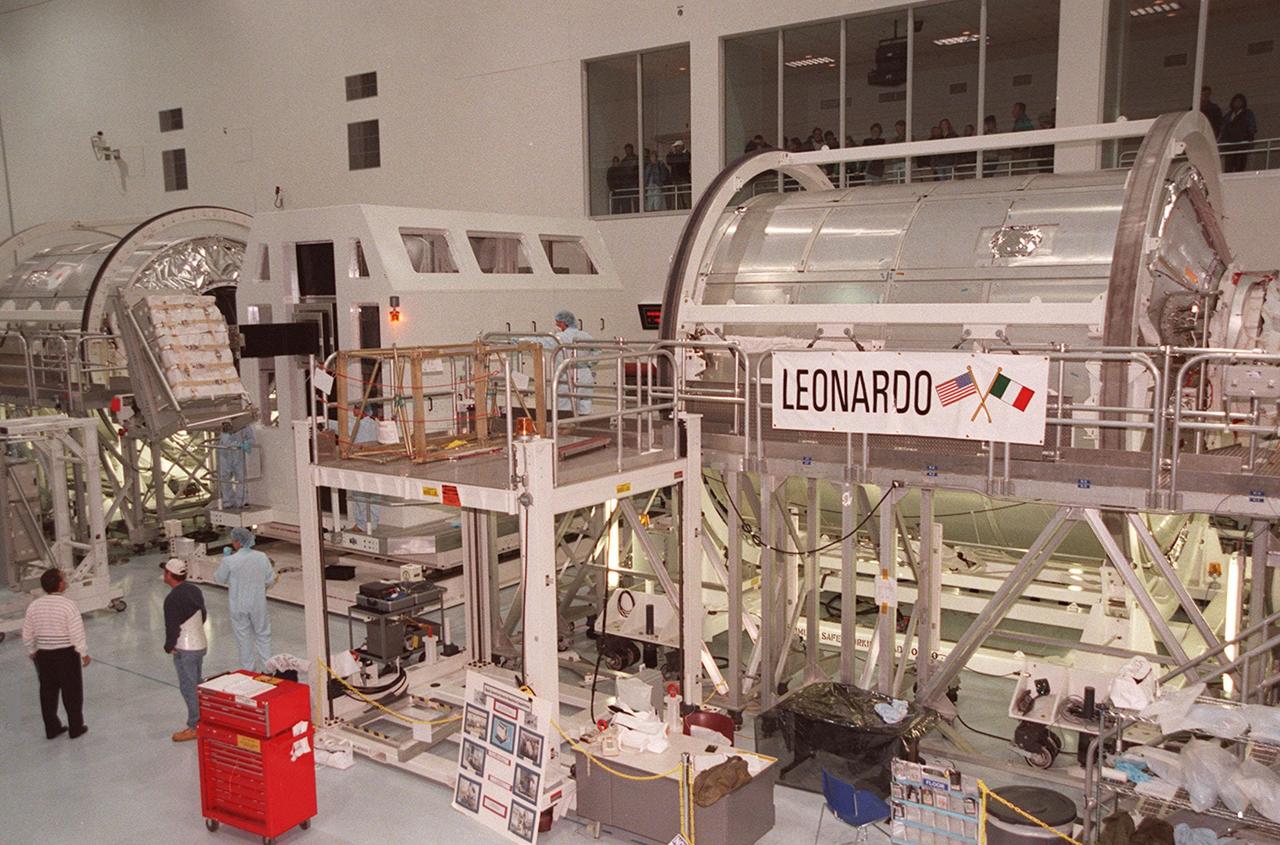
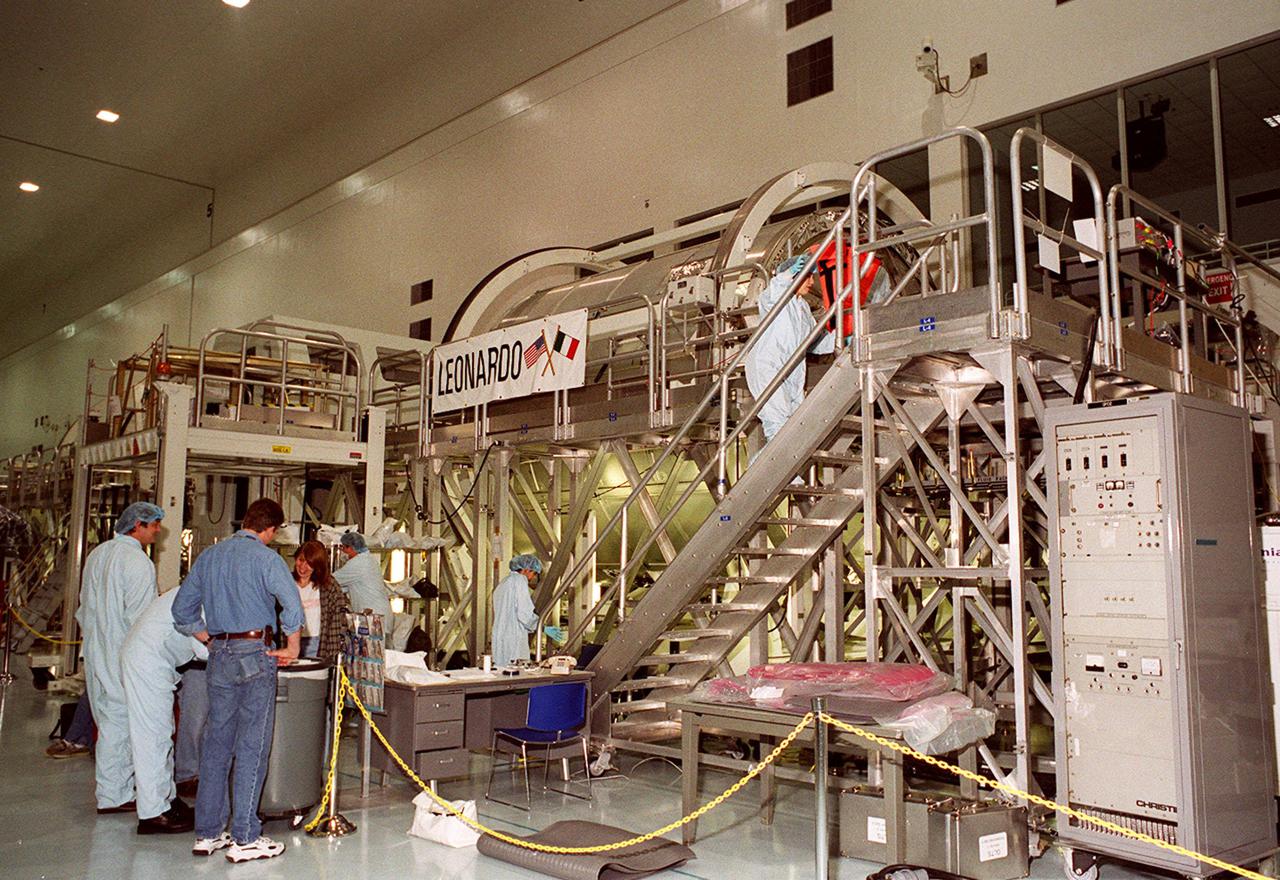
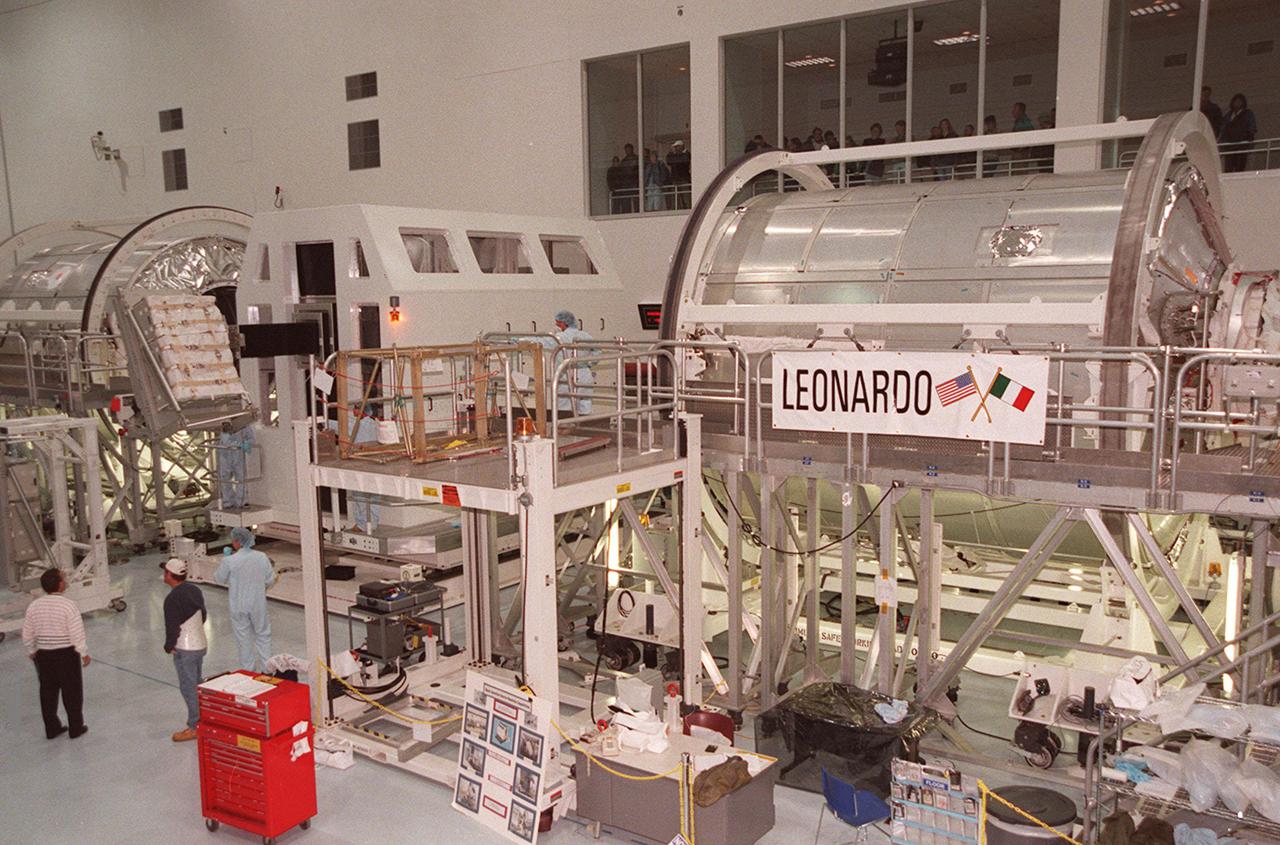
KENNEDY SPACE CENTER, FLA. -- In the Space Station Processing Facility, the Multi-Purpose Logistics Module Leonardo (right) is ready for installation of a laboratory rack (left center). Leonardo is the first of three such pressurized modules that will serve as the International Space Station's “moving vans,” carrying laboratory racks filled with equipment, experiments and supplies to and from the Space Station aboard the Space Shuttle. Approximately 21 feet long and 15 feet in diameter, Leonardo will be launched on Shuttle mission STS-102 March 1, 2001. On that flight, Leonardo will be filled with equipment and supplies to outfit the U.S. laboratory module, being carried to the ISS on the Jan. 19, 2001, launch of STS-98
KSC00pp1961
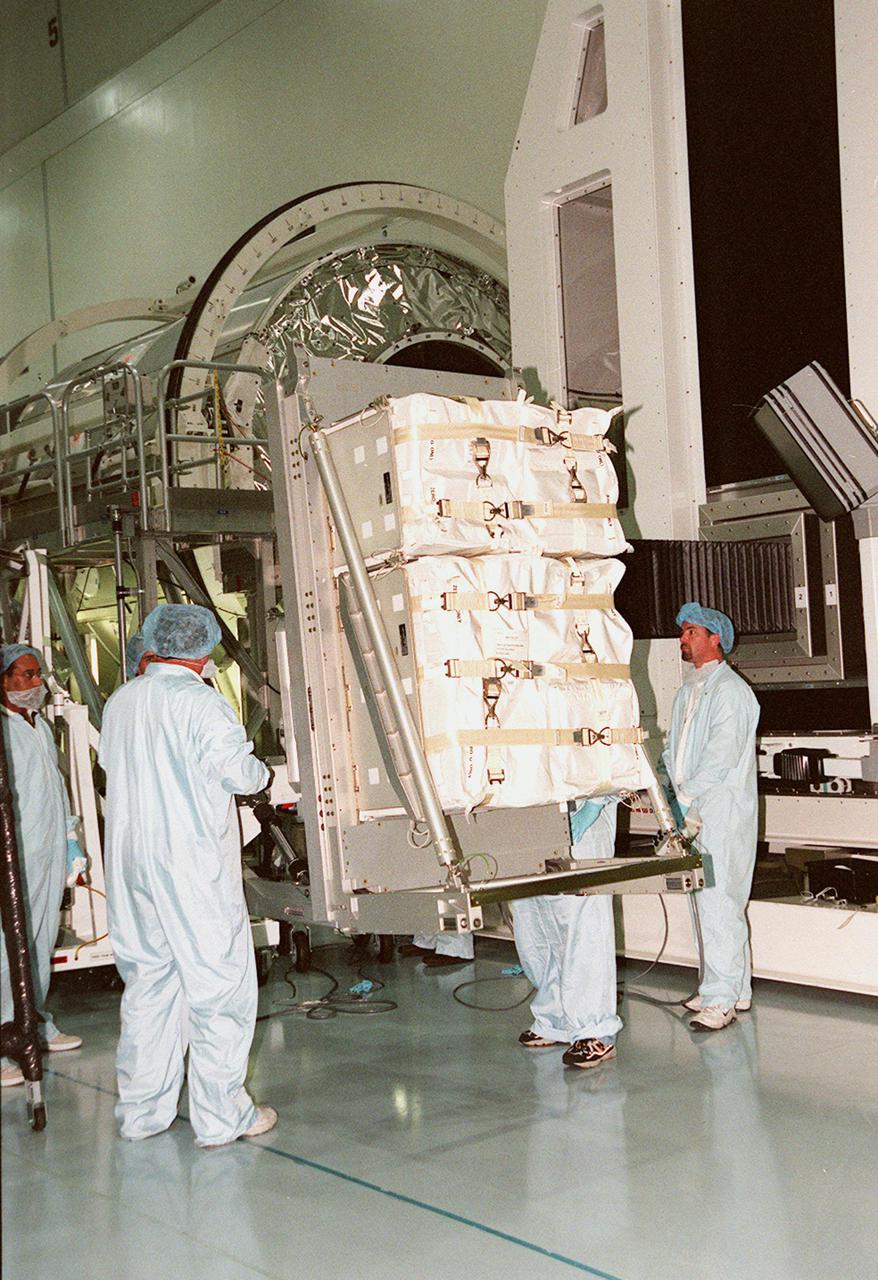
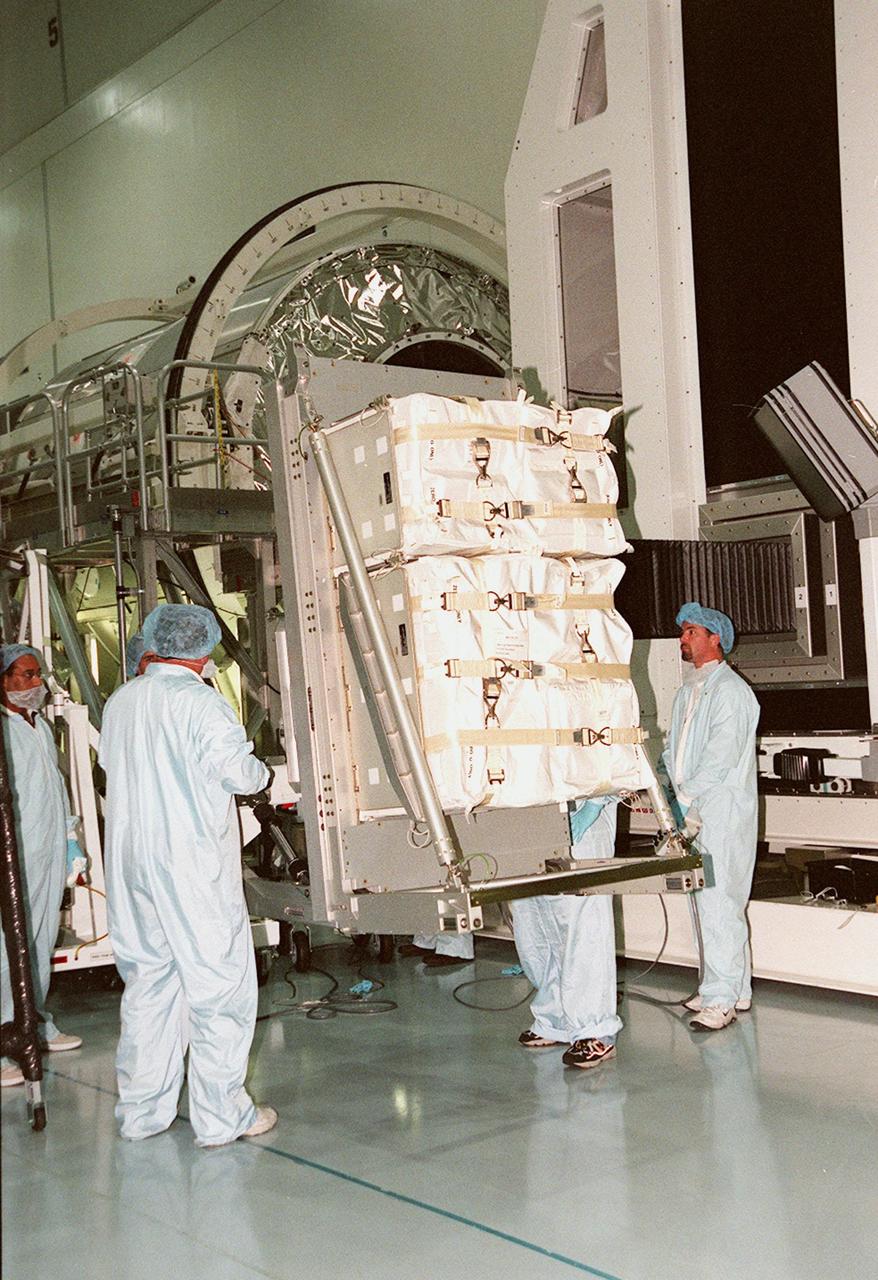
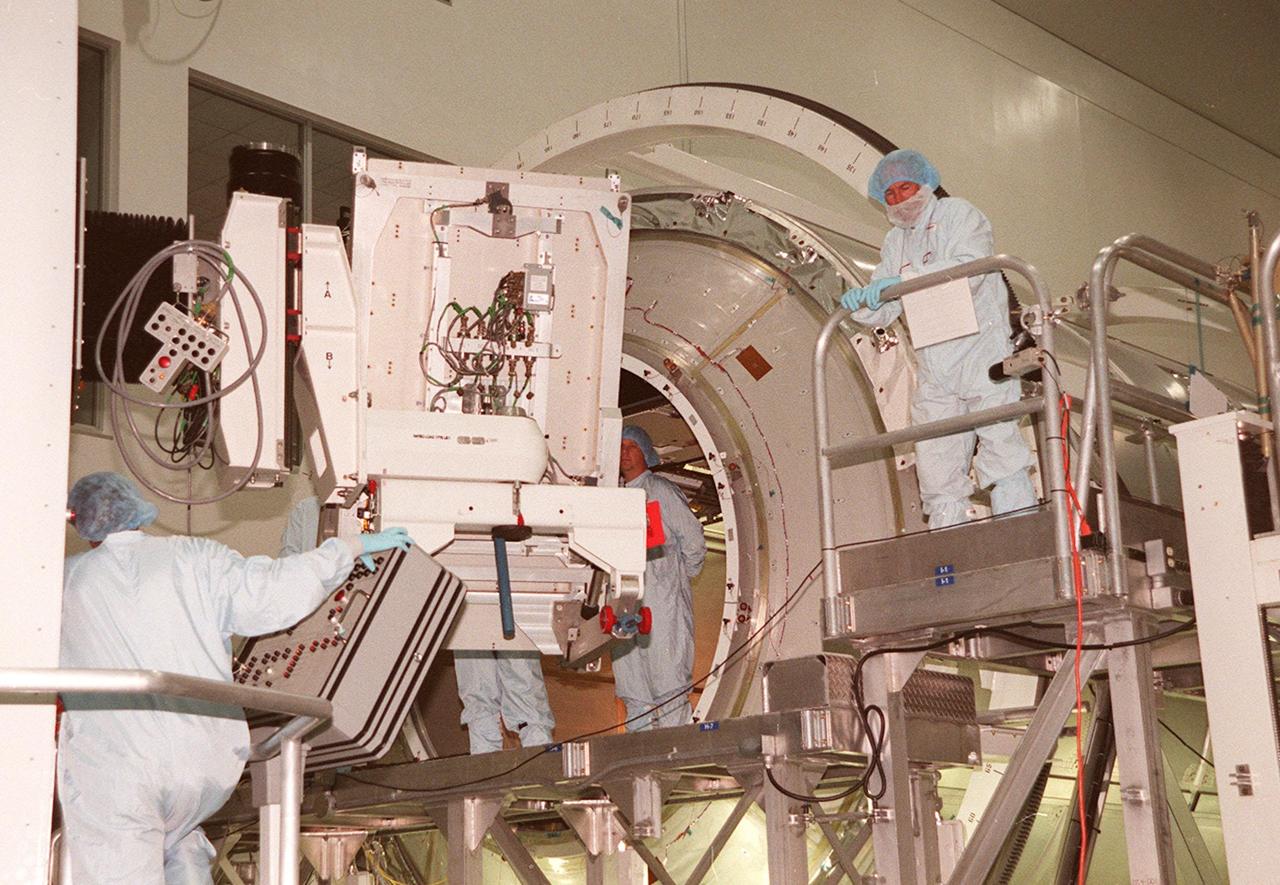
KENNEDY SPACE CENTER, FLA. -- In the Space Station Processing Facility, the Rack Insertion Unit lifts another laboratory rack to the Multi-Purpose Logistics Module Leonardo, in the background. The MPLM is the first of three such pressurized modules that will serve as the International Space Station’s “moving vans,” carrying laboratory racks filled with equipment, experiments and supplies to and from the International Space Station aboard the Space Shuttle. Leonardo will be launched for the first time March 1, 2001, on Shuttle mission STS-102. On that flight, Leonardo will be filled with equipment and supplies to outfit the U.S. laboratory module, being carried to the ISS on the Jan. 19, 2001, launch of STS-98
KSC00pp1966
KENNEDY SPACE CENTER, FLA. -- Workers inside the Multi-Purpose Logistics Module Leonardo check installation of a laboratory rack inside the Multi-Purpose Logistics Module Leonardo. The pressurized module is the first of three that will serve as the International Space Station's “moving vans,” carrying laboratory racks filled with equipment, experiments and supplies to and from the Space Station aboard the Space Shuttle. Approximately 21 feet long and 15 feet in diameter, Leonardo will be launched on Shuttle mission STS-102 March 1, 2001. On that flight, Leonardo will be filled with equipment and supplies to outfit the U.S. laboratory module, being carried to the ISS on the Jan. 19, 2001, launch of STS-98
KSC00pp1964
KENNEDY SPACE CENTER, FLA. -- In the Space Station Processing Facility, the Rack Insertion Unit lifts another laboratory rack to the Multi-Purpose Logistics Module Leonardo, in the background. The MPLM is the first of three such pressurized modules that will serve as the International Space Station’s “moving vans,” carrying laboratory racks filled with equipment, experiments and supplies to and from the International Space Station aboard the Space Shuttle. Leonardo will be launched for the first time March 1, 2001, on Shuttle mission STS-102. On that flight, Leonardo will be filled with equipment and supplies to outfit the U.S. laboratory module, being carried to the ISS on the Jan. 19, 2001, launch of STS-98
KSC-00PP-1966
KENNEDY SPACE CENTER, FLA. -- In the Space Station Processing Facility, another laboratory rack is placed on the arm of the Rack Insertion Unit to lift it to the workstand height of the Multi-Purpose Logistics Module Leonardo (not seen). The MPLM will transport laboratory racks filled with equipment, experiments and supplies to and from the International Space Station aboard the Space Shuttle. Leonardo will be launched for the first time March 1, 2001, on Shuttle mission STS-102. On that flight, Leonardo will be filled with equipment and supplies to outfit the U.S. laboratory module, being carried to the ISS on the Jan. 19, 2001, launch of STS-98
KSC-00PP-1965
KENNEDY SPACE CENTER, FLA. -- In the Space Station Processing Facility, the Multi-Purpose Logistics Module Leonardo (right) is ready for installation of a laboratory rack (left center). Leonardo is the first of three such pressurized modules that will serve as the International Space Station's “moving vans,” carrying laboratory racks filled with equipment, experiments and supplies to and from the Space Station aboard the Space Shuttle. Approximately 21 feet long and 15 feet in diameter, Leonardo will be launched on Shuttle mission STS-102 March 1, 2001. On that flight, Leonardo will be filled with equipment and supplies to outfit the U.S. laboratory module, being carried to the ISS on the Jan. 19, 2001, launch of STS-98
KSC-00PP-1961
KENNEDY SPACE CENTER, FLA. -- Workers (right, left and center) in the Space Station Processing Facility wait to install a laboratory rack in the Multi-Purpose Logistics Module Leonardo (background). Leonardo is the first of three such pressurized modules that will serve as the International Space Station's “moving vans,” carrying laboratory racks filled with equipment, experiments and supplies to and from the Space Station aboard the Space Shuttle. Approximately 21 feet long and 15 feet in diameter, Leonardo will be launched on Shuttle mission STS-102 March 1, 2001. On that flight, Leonardo will be filled with equipment and supplies to outfit the U.S. laboratory module, being carried to the ISS on the Jan. 19, 2001, launch of STS-98
KSC-00PP-1962
KENNEDY SPACE CENTER, FLA. -- Workers in the Space Station Processing Facility watch as a laboratory rack moves into the Multi-Purpose Logistics Module Leonardo. The MPLM is the first of three such pressurized modules that will serve as the International Space Station’s “moving vans,” carrying laboratory racks filled with equipment, experiments and supplies to and from the Space Station aboard the Space Shuttle. Leonardo will be launched March 1, 2001, on Shuttle mission STS-102 On that flight, Leonardo will be filled with equipment and supplies to outfit the U.S. laboratory module, being carried to the ISS on the Jan. 19, 2001, launch of STS-98
KSC-00PP-1968
KENNEDY SPACE CENTER, FLA. -- Workers inside the Multi-Purpose Logistics Module Leonardo oversee installation of a laboratory rack. The MPLM is the first of three such pressurized modules that will serve as the International Space Station’s “moving vans,” carrying laboratory racks filled with equipment, experiments and supplies to and from the Space Station aboard the Space Shuttle. Leonardo will be launched March 1, 2001, on Shuttle mission STS-102 On that flight, Leonardo will be filled with equipment and supplies to outfit the U.S. laboratory module, being carried to the ISS on the Jan. 19, 2001, launch of STS-98
KSC-00PP-1969
KENNEDY SPACE CENTER, FLA. -- A worker in the Space Station Processing Facility watches as a laboratory rack moves into the Multi-Purpose Logistics Module Leonardo. The MPLM is the first of three such pressurized modules that will serve as the International Space Station’s “moving vans,” carrying laboratory racks filled with equipment, experiments and supplies to and from the Space Station aboard the Space Shuttle. Leonardo will be launched March 1, 2001, on Shuttle mission STS-102 On that flight, Leonardo will be filled with equipment and supplies to outfit the U.S. laboratory module, being carried to the ISS on the Jan. 19, 2001, launch of STS-98
KSC-00PP-1967
KENNEDY SPACE CENTER, FLA. -- Workers inside the Multi-Purpose Logistics Module Leonardo complete installation of a laboratory rack. The MPLM is the first of three such pressurized modules that will serve as the International Space Station’s “moving vans,” carrying laboratory racks filled with equipment, experiments and supplies to and from the Space Station aboard the Space Shuttle. Leonardo will be launched March 1, 2001, on Shuttle mission STS-102 On that flight, Leonardo will be filled with equipment and supplies to outfit the U.S. laboratory module, being carried to the ISS on the Jan. 19, 2001, launch of STS-98
KSC-00PP-1971
KENNEDY SPACE CENTER, FLA. -- Inside the Multi-Purpose Logistics Module Leonardo, a worker looks at the placement of a laboratory rack. The MPLM is the first of three such pressurized modules that will serve as the International Space Station’s “moving vans,” carrying laboratory racks filled with equipment, experiments and supplies to and from the Space Station aboard the Space Shuttle. Leonardo will be launched March 1, 2001, on Shuttle mission STS-102 On that flight, Leonardo will be filled with equipment and supplies to outfit the U.S. laboratory module, being carried to the ISS on the Jan. 19, 2001, launch of STS-98
KSC00pp1970
KENNEDY SPACE CENTER, FLA. -- Workers inside the Multi-Purpose Logistics Module Leonardo oversee installation of a laboratory rack. The MPLM is the first of three such pressurized modules that will serve as the International Space Station’s “moving vans,” carrying laboratory racks filled with equipment, experiments and supplies to and from the Space Station aboard the Space Shuttle. Leonardo will be launched March 1, 2001, on Shuttle mission STS-102 On that flight, Leonardo will be filled with equipment and supplies to outfit the U.S. laboratory module, being carried to the ISS on the Jan. 19, 2001, launch of STS-98
KSC00pp1969
KENNEDY SPACE CENTER, FLA. -- Workers (right, left and center) in the Space Station Processing Facility wait to install a laboratory rack in the Multi-Purpose Logistics Module Leonardo (background). Leonardo is the first of three such pressurized modules that will serve as the International Space Station's “moving vans,” carrying laboratory racks filled with equipment, experiments and supplies to and from the Space Station aboard the Space Shuttle. Approximately 21 feet long and 15 feet in diameter, Leonardo will be launched on Shuttle mission STS-102 March 1, 2001. On that flight, Leonardo will be filled with equipment and supplies to outfit the U.S. laboratory module, being carried to the ISS on the Jan. 19, 2001, launch of STS-98
KSC00pp1962
KENNEDY SPACE CENTER, FLA. -- Workers in the Space Station Processing Facility watch as a laboratory rack moves into the Multi-Purpose Logistics Module Leonardo. The MPLM is the first of three such pressurized modules that will serve as the International Space Station’s “moving vans,” carrying laboratory racks filled with equipment, experiments and supplies to and from the Space Station aboard the Space Shuttle. Leonardo will be launched March 1, 2001, on Shuttle mission STS-102 On that flight, Leonardo will be filled with equipment and supplies to outfit the U.S. laboratory module, being carried to the ISS on the Jan. 19, 2001, launch of STS-98
KSC00pp1968
KENNEDY SPACE CENTER, FLA. -- Workers inside the Multi-Purpose Logistics Module Leonardo complete installation of a laboratory rack. The MPLM is the first of three such pressurized modules that will serve as the International Space Station’s “moving vans,” carrying laboratory racks filled with equipment, experiments and supplies to and from the Space Station aboard the Space Shuttle. Leonardo will be launched March 1, 2001, on Shuttle mission STS-102 On that flight, Leonardo will be filled with equipment and supplies to outfit the U.S. laboratory module, being carried to the ISS on the Jan. 19, 2001, launch of STS-98
KSC00pp1971
KENNEDY SPACE CENTER, FLA. -- Workers inside the Multi-Purpose Logistics Module Leonardo check installation of a laboratory rack inside the Multi-Purpose Logistics Module Leonardo. The pressurized module is the first of three that will serve as the International Space Station's “moving vans,” carrying laboratory racks filled with equipment, experiments and supplies to and from the Space Station aboard the Space Shuttle. Approximately 21 feet long and 15 feet in diameter, Leonardo will be launched on Shuttle mission STS-102 March 1, 2001. On that flight, Leonardo will be filled with equipment and supplies to outfit the U.S. laboratory module, being carried to the ISS on the Jan. 19, 2001, launch of STS-98
KSC-00PP-1964
KENNEDY SPACE CENTER, FLA. -- Workers inside the Multi-Purpose Logistics Module Leonardo complete installation of a laboratory rack. The MPLM is the first of three such pressurized modules that will serve as the International Space Station’s “moving vans,” carrying laboratory racks filled with equipment, experiments and supplies to and from the Space Station aboard the Space Shuttle. Leonardo will be launched March 1, 2001, on Shuttle mission STS-102 On that flight, Leonardo will be filled with equipment and supplies to outfit the U.S. laboratory module, being carried to the ISS on the Jan. 19, 2001, launch of STS-98
KSC-00PP-1972
KENNEDY SPACE CENTER, FLA. -- Workers inside the Multi-Purpose Logistics Module Leonardo check connections while installing a laboratory rack. Leonardo is the first of three such pressurized modules that will serve as the International Space Station's “moving vans,” carrying laboratory racks filled with equipment, experiments and supplies to and from the Space Station aboard the Space Shuttle. Approximately 21 feet long and 15 feet in diameter, Leonardo will be launched on Shuttle mission STS-102 March 1, 2001. On that flight, Leonardo will be filled with equipment and supplies to outfit the U.S. laboratory module, being carried to the ISS on the Jan. 19, 2001, launch of STS-98
KSC-00PP-1963
KENNEDY SPACE CENTER, FLA. -- In the Space Station Processing Facility, another laboratory rack is placed on the arm of the Rack Insertion Unit to lift it to the workstand height of the Multi-Purpose Logistics Module Leonardo (not seen). The MPLM will transport laboratory racks filled with equipment, experiments and supplies to and from the International Space Station aboard the Space Shuttle. Leonardo will be launched for the first time March 1, 2001, on Shuttle mission STS-102. On that flight, Leonardo will be filled with equipment and supplies to outfit the U.S. laboratory module, being carried to the ISS on the Jan. 19, 2001, launch of STS-98
KSC00pp1965
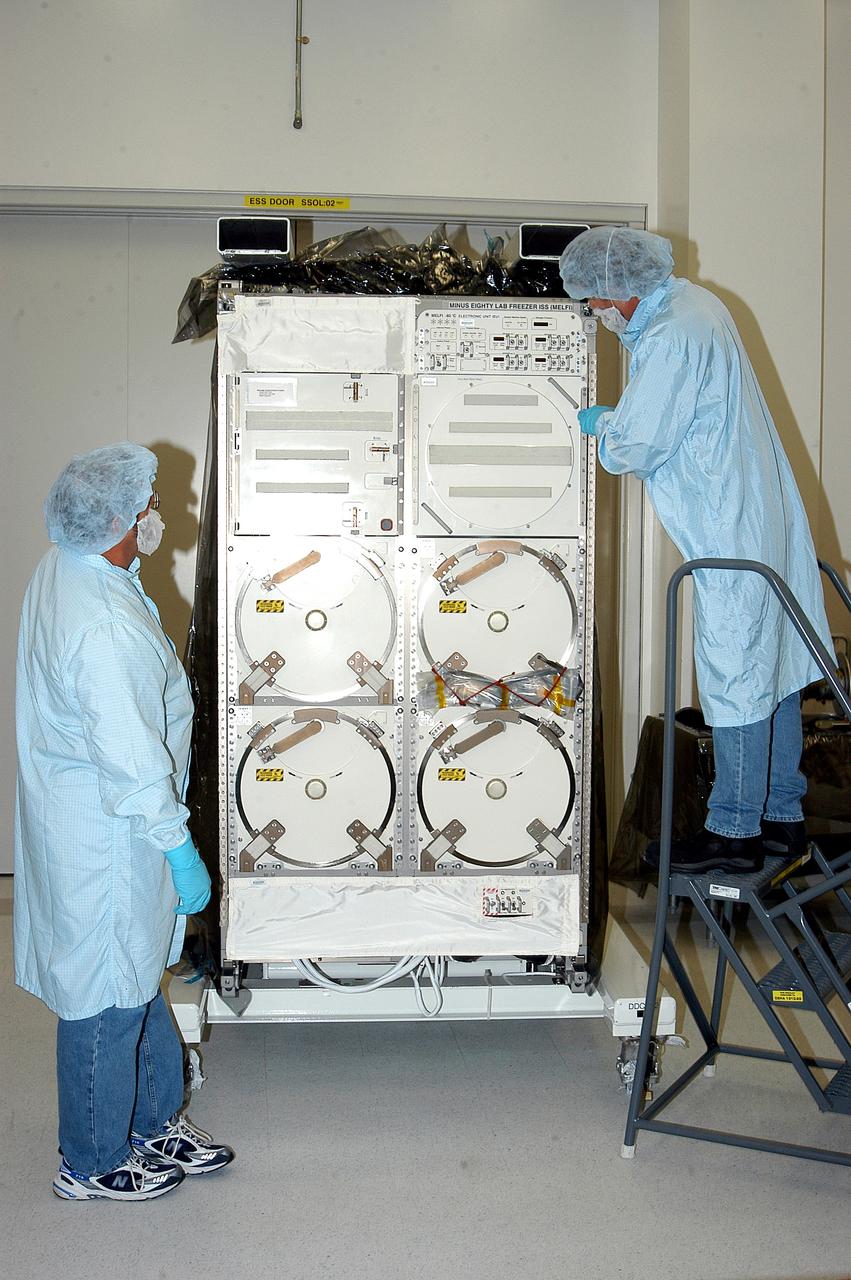
KENNEDY SPACE CENTER, FLA. -  After removing its cover, technicians look over the Minus Eighty Lab Freezer for ISS (MELFI),  provided as Laboratory Support Equipment by the European Space Agency for the International Space Station.  The lab will provide cooling and storage for reagents, samples and perishable materials in four insulated containers called dewars with independently selectable temperatures of -80°C, -26°C, and +4°C. It also will be used to transport samples to and from the station.   The MELFI is planned for launch on the ULF-1 mission.
KENNEDY SPACE CENTER, FLA. - After removing its cover, technicians look over the Minus Eighty Lab Freezer for ISS (MELFI), provided as Laboratory Support Equipment by the European Space Agency for the International Space Station. The lab will provide cooling and storage for reagents, samples and perishable materials in four insulated containers called dewars with independently selectable temperatures of -80°C, -26°C, and +4°C. It also will be used to transport samples to and from the station. The MELFI is planned for launch on the ULF-1 mission.
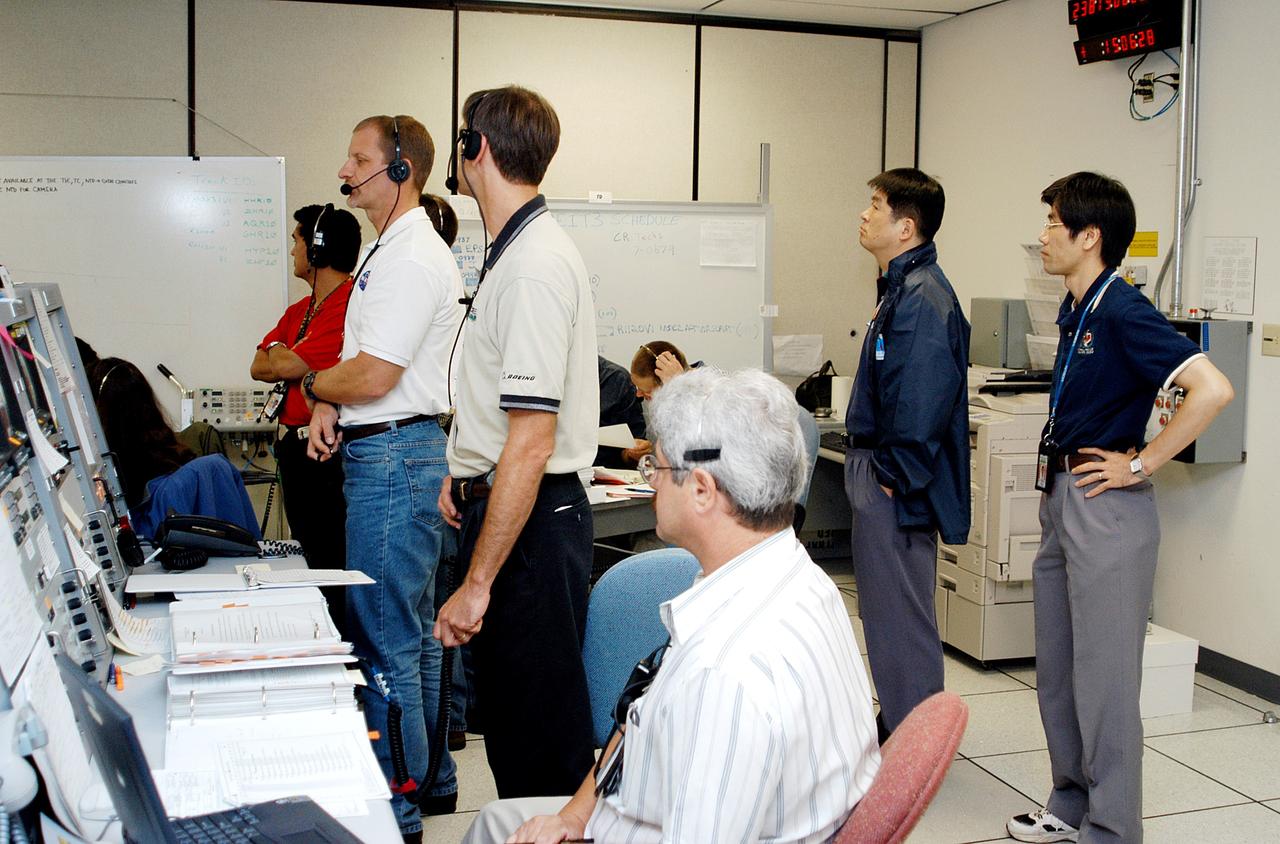
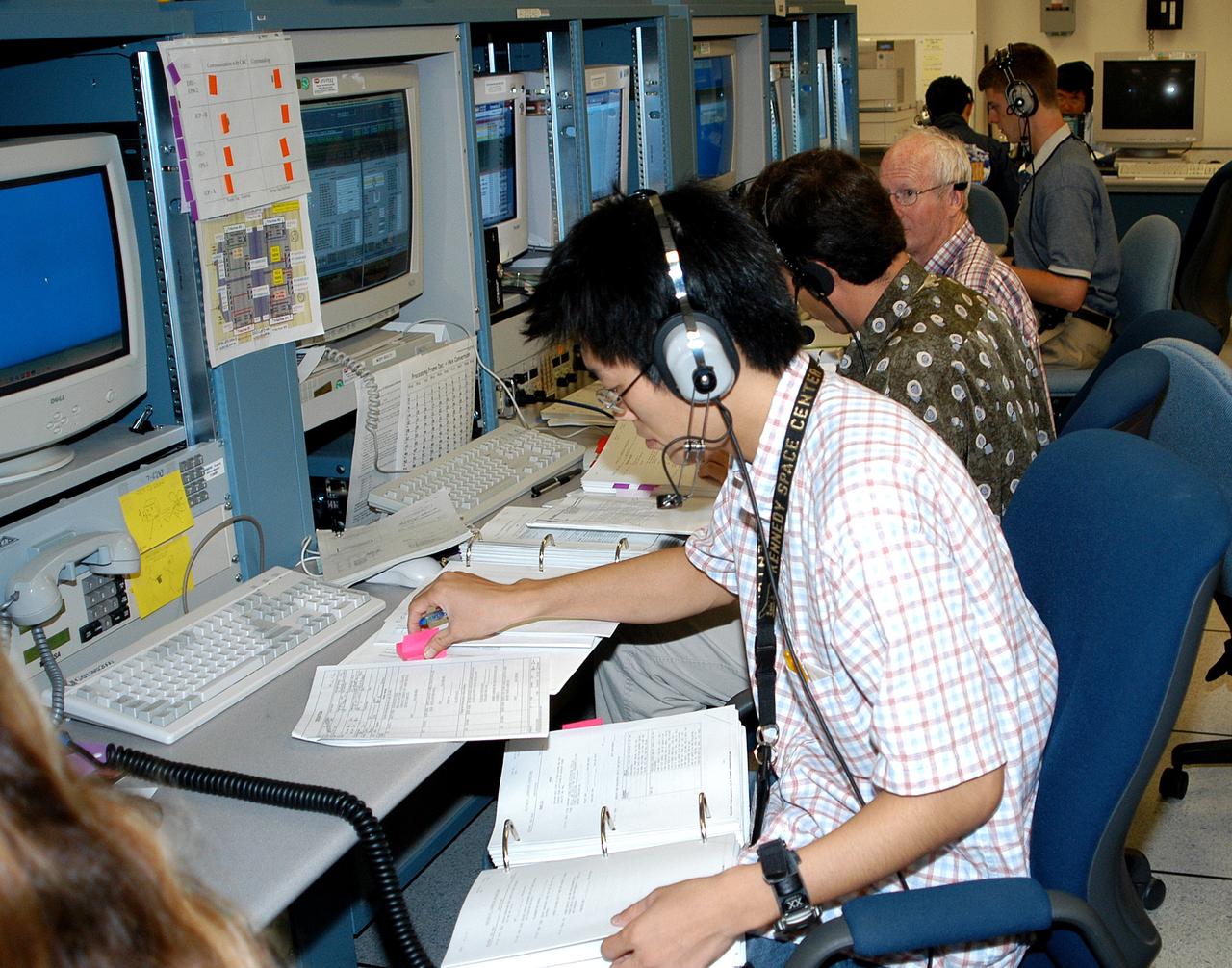
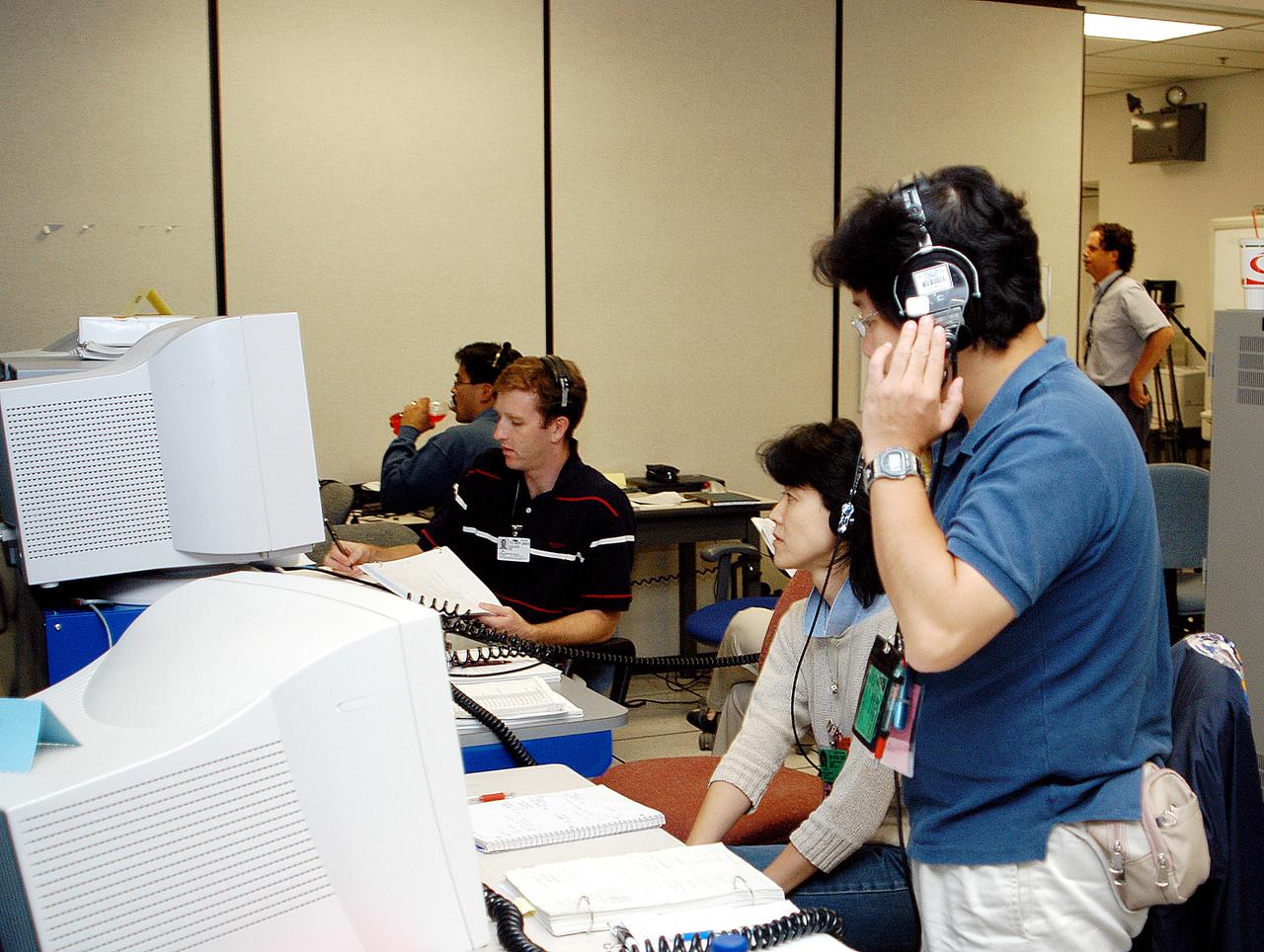
KENNEDY SPACE CENTER, FLA. -  In the Space Station Processing Facility, personnel observe sensors during a Multi-Equipment Interface Test (MEIT) on the Japanese Experiment Module (JEM).  The National Space Development Agency of Japan (NASDA) developed the laboratory at the Tsukuba Space Center near Tokyo. It is the first element, named "Kibo" (Hope), to be delivered to KSC. The JEM is Japan's primary contribution to the Station. It will enhance the unique research capabilities of the orbiting complex by providing an additional environment for astronauts to conduct science experiments.
KENNEDY SPACE CENTER, FLA. - In the Space Station Processing Facility, personnel observe sensors during a Multi-Equipment Interface Test (MEIT) on the Japanese Experiment Module (JEM). The National Space Development Agency of Japan (NASDA) developed the laboratory at the Tsukuba Space Center near Tokyo. It is the first element, named "Kibo" (Hope), to be delivered to KSC. The JEM is Japan's primary contribution to the Station. It will enhance the unique research capabilities of the orbiting complex by providing an additional environment for astronauts to conduct science experiments.
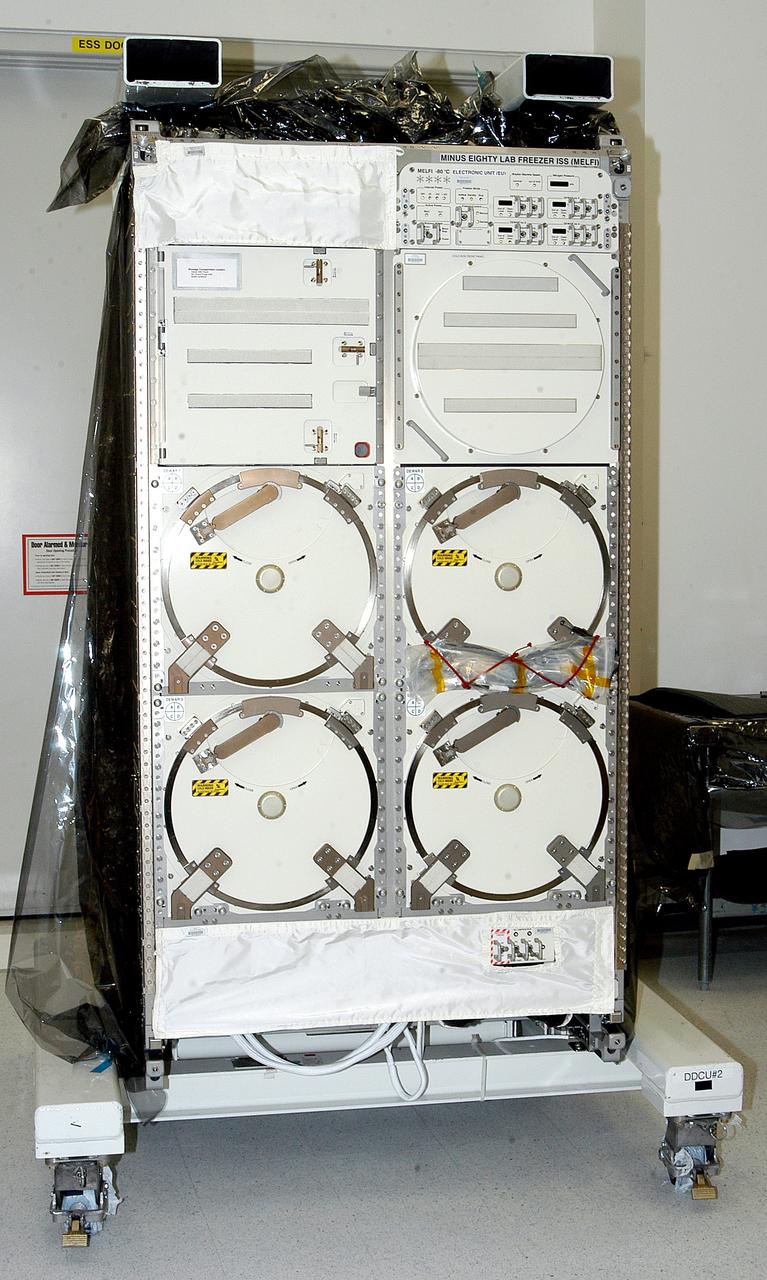
KENNEDY SPACE CENTER, FLA. -  The Minus Eighty Lab Freezer for ISS (MELFI), provided as Laboratory Support Equipment by the European Space Agency for the International Space Station, is seen in the Space Station Processing Facility.  The lab will provide cooling and storage for reagents, samples and perishable materials in four insulated containers called dewars with independently selectable temperatures of -80°C, -26°C, and +4°C. It also will be used to transport samples to and from the station.   The MELFI is planned for launch on the ULF-1 mission.
KENNEDY SPACE CENTER, FLA. - The Minus Eighty Lab Freezer for ISS (MELFI), provided as Laboratory Support Equipment by the European Space Agency for the International Space Station, is seen in the Space Station Processing Facility. The lab will provide cooling and storage for reagents, samples and perishable materials in four insulated containers called dewars with independently selectable temperatures of -80°C, -26°C, and +4°C. It also will be used to transport samples to and from the station. The MELFI is planned for launch on the ULF-1 mission.
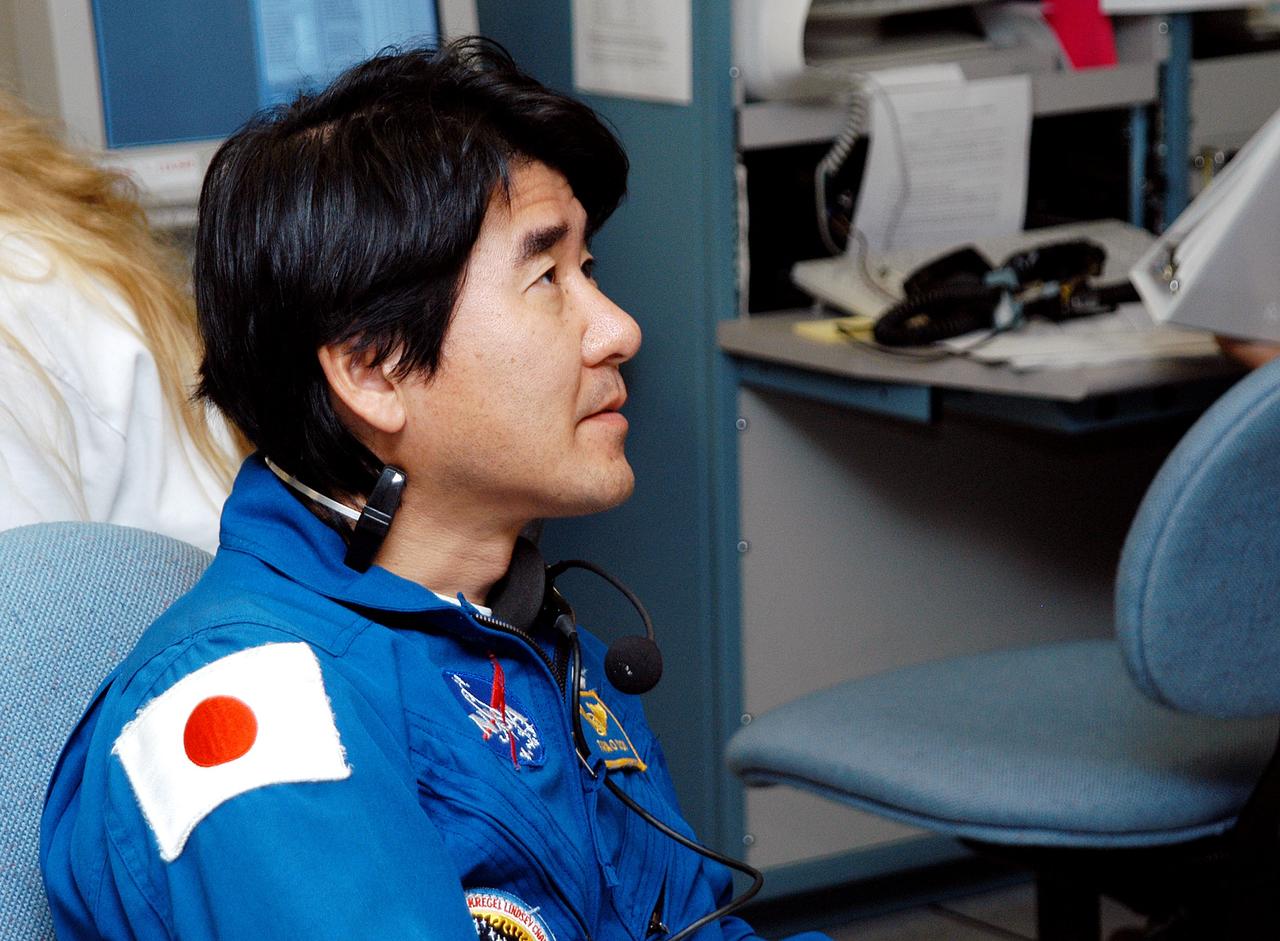
KENNEDY SPACE CENTER, FLA. -  Takao Doi, an astronaut with the National Space Development Agency of Japan (NASDA), watches the sensors  during a Multi-Equipment Interface Test (MEIT) on the Japanese Experiment Module (JEM).  NASDA  developed the laboratory at the Tsukuba Space Center near Tokyo. It is the first element, named "Kibo" (Hope), to be delivered to KSC. The JEM is Japan's primary contribution to the Station. It will enhance the unique research capabilities of the orbiting complex by providing an additional environment for astronauts to conduct science experiments.
KENNEDY SPACE CENTER, FLA. - Takao Doi, an astronaut with the National Space Development Agency of Japan (NASDA), watches the sensors during a Multi-Equipment Interface Test (MEIT) on the Japanese Experiment Module (JEM). NASDA developed the laboratory at the Tsukuba Space Center near Tokyo. It is the first element, named "Kibo" (Hope), to be delivered to KSC. The JEM is Japan's primary contribution to the Station. It will enhance the unique research capabilities of the orbiting complex by providing an additional environment for astronauts to conduct science experiments.
KENNEDY SPACE CENTER, FLA. -  In the Space Station Processing Facility, technicians remove the cover from the Minus Eighty Lab Freezer for ISS(MELFI) provided as Laboratory Support Equipment by the European Space Agency for the International Space Station.  The lab will provide cooling and storage for reagents, samples and perishable materials in four insulated containers called dewars with independently selectable temperatures of -80°C, -26°C, and +4°C. It also will be used to transport samples to and from the station.   The MELFI is planned for launch on the ULF-1 mission.
KENNEDY SPACE CENTER, FLA. - In the Space Station Processing Facility, technicians remove the cover from the Minus Eighty Lab Freezer for ISS(MELFI) provided as Laboratory Support Equipment by the European Space Agency for the International Space Station. The lab will provide cooling and storage for reagents, samples and perishable materials in four insulated containers called dewars with independently selectable temperatures of -80°C, -26°C, and +4°C. It also will be used to transport samples to and from the station. The MELFI is planned for launch on the ULF-1 mission.
KENNEDY SPACE CENTER, FLA. - In the Space Station Processing Facility, Japanaese astronauts and personnel observe sensors during a Multi-Equipment Interface Test (MEIT) on the Japanese Experiment Module (JEM).  The National Space Development Agency of Japan (NASDA) developed the laboratory at the Tsukuba Space Center near Tokyo. It is the first element, named "Kibo" (Hope), to be delivered to KSC. The JEM is Japan's primary contribution to the Station. It will enhance the unique research capabilities of the orbiting complex by providing an additional environment for astronauts to conduct science experiments.
KENNEDY SPACE CENTER, FLA. - In the Space Station Processing Facility, Japanaese astronauts and personnel observe sensors during a Multi-Equipment Interface Test (MEIT) on the Japanese Experiment Module (JEM). The National Space Development Agency of Japan (NASDA) developed the laboratory at the Tsukuba Space Center near Tokyo. It is the first element, named "Kibo" (Hope), to be delivered to KSC. The JEM is Japan's primary contribution to the Station. It will enhance the unique research capabilities of the orbiting complex by providing an additional environment for astronauts to conduct science experiments.
KENNEDY SPACE CENTER, FLA. -  Japanese astronauts and other personnel in the Space Station Processing Facility observe sensors during a Multi-Equipment Interface Test (MEIT) on the Japanese Experiment Module (JEM).  The National Space Development Agency of Japan (NASDA) developed the laboratory at the Tsukuba Space Center near Tokyo. It is the first element, named "Kibo" (Hope), to be delivered to KSC. The JEM is Japan's primary contribution to the Station. It will enhance the unique research capabilities of the orbiting complex by providing an additional environment for astronauts to conduct science experiments.
KENNEDY SPACE CENTER, FLA. - Japanese astronauts and other personnel in the Space Station Processing Facility observe sensors during a Multi-Equipment Interface Test (MEIT) on the Japanese Experiment Module (JEM). The National Space Development Agency of Japan (NASDA) developed the laboratory at the Tsukuba Space Center near Tokyo. It is the first element, named "Kibo" (Hope), to be delivered to KSC. The JEM is Japan's primary contribution to the Station. It will enhance the unique research capabilities of the orbiting complex by providing an additional environment for astronauts to conduct science experiments.
S94-30392 (16 Feb 1994) --- The Space Radar Laboratory-1 (SRL-1) is being transferred from the payload canister transporter into the payload bay of the Space Shuttle Endeavour.  SRL-1 will be launched on STS-59 in April of this year.
Space Radar Laboratory photos taken at Kennedy Space Center
A mechanic and apprentice work on a wooden impeller in the Fabrication Shop at the NACA Lewis Flight Propulsion Laboratory. The 260-person Fabrication Division created almost all of the equipment and models used at the laboratory. The Technical Services Building, referred to as the “Fab Shop”, contained a number of specialized shops in the 1940s and 1950s. These included a Machine Shop, Sheet Metal Shop, Wood and Pattern Shop, Instrument Shop, Thermocouple Shop, Heat Treating Shop, Metallurgical Laboratory, and Fabrication Office.  The Machine Shop fabricated research equipment not commercially available. During World War II these technicians produced high-speed cameras for combustion research, impellers and other supercharger components, and key equipment for the lab’s first supersonic wind tunnel. The Wood and Pattern Shop created everything from control panels and cabinets to aircraft model molds for sheet metal work. The Sheet Metal Shop had the ability to work with 0.01 to 4-inches thick steel plates. The Instrument Shop specialized in miniature parts and instrumentation, while the Thermocouple Shop standardized the installation of pitot tubes and thermocouples.    The Metallurgical Laboratory contained a control lab for the Heat Treating Shop and a service lab for the NACA Lewis research divisions. The Heat Treating Shop heated metal parts to optimize their physical properties and contained a Precision Castings Foundry to manufacture equipment made of heat resisting alloys.
Impeller Creation at the Fabrication Shop
A technician operates articulating equipment to rotate the Near-Earth Object Surveyor (NEO Surveyor) mission's aluminum optical bench – part of the spacecraft's telescope – in a clean room at NASA's Jet Propulsion Laboratory in Southern California on July 17, 2024.  NEO Surveyor's sole instrument is a "three-mirror anastigmat telescope," which will rely on a set of curved mirrors to focus light onto its infrared detectors in such a way that minimizes optical aberrations. When complete, the telescope will be housed inside an instrument enclosure – being built in a different JPL clean room – that is fabricated from dark composite material that allows heat to escape, helping to keep the telescope cool and prevent its own heat from obscuring observations.  https://photojournal.jpl.nasa.gov/catalog/PIA26387
NEO Surveyor's Telescope Optical Bench Under Construction at JPL
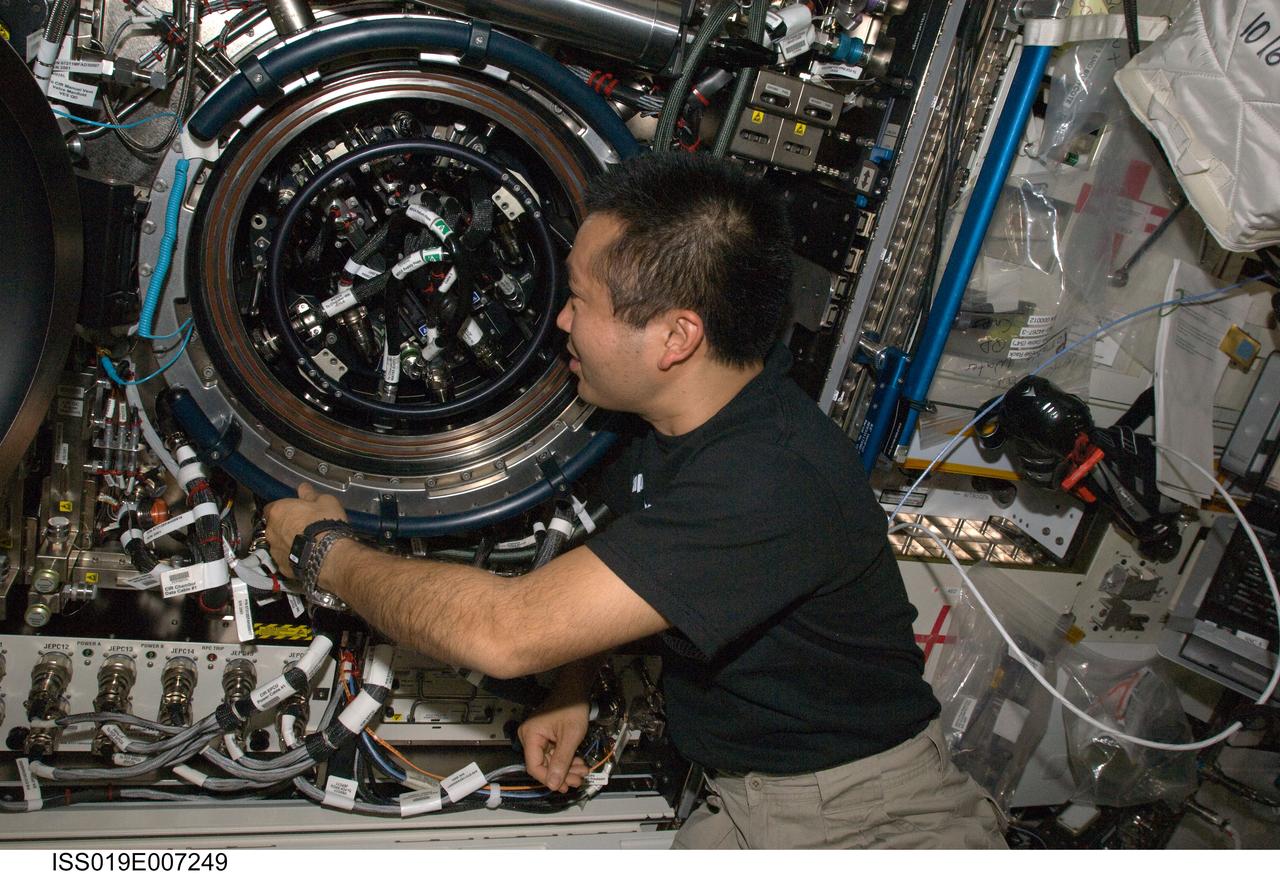
ISS019-E-007249 (16 April 2009) --- Japan Aerospace Exploration Agency (JAXA) astronaut Koichi Wakata, Expedition 19/20 flight engineer, performs in-flight maintenance on equipment in the Kibo laboratory of the International Space Station.
Wakata with MDCA during: Fuel Reservoir Replacement
ISS038-E-000714 (13 Nov. 2013) --- NASA astronaut Rick Mastracchio, Expedition 38 flight engineer, works with equipment in the Destiny laboratory of the International Space Station.
Mastracchio during U.S. Segment handover in the U.S. Laboratory
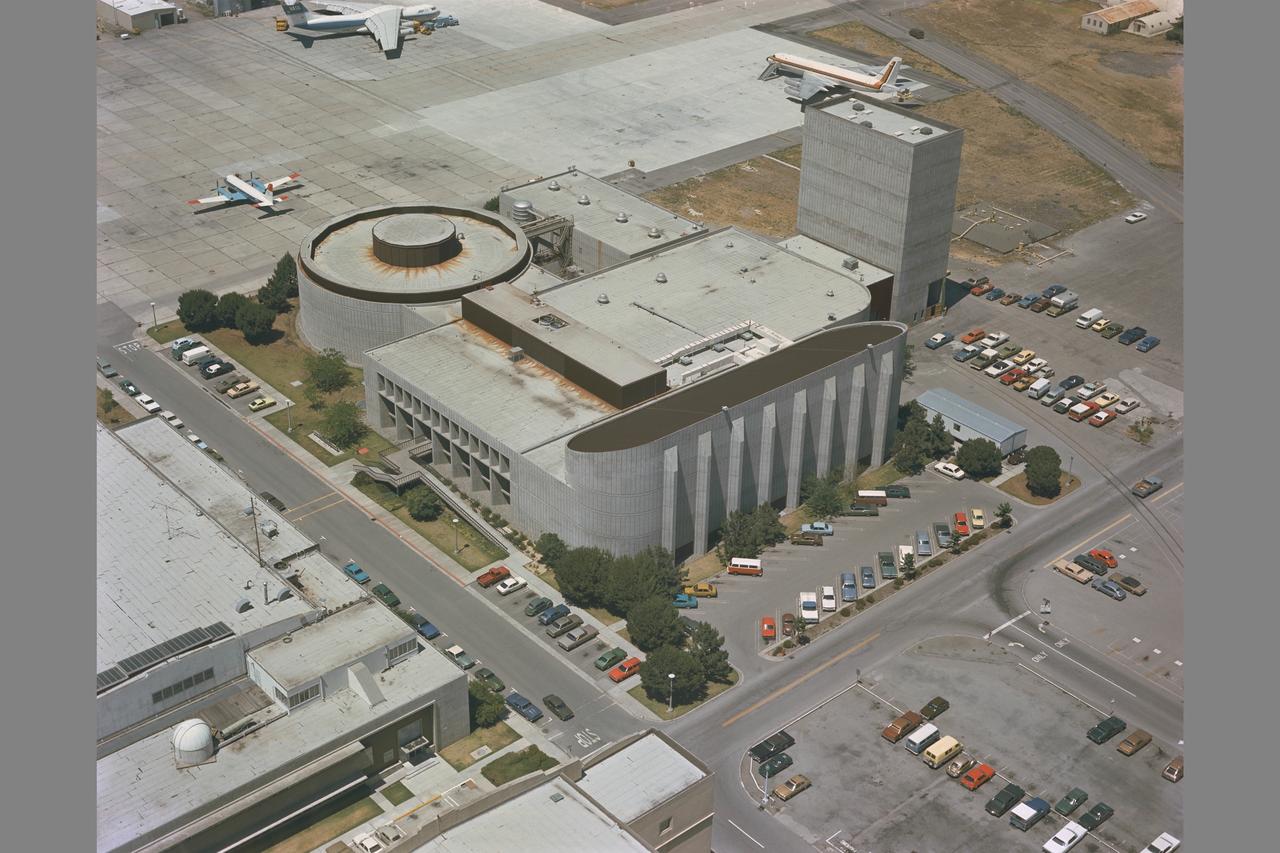
Aerial of Ames: N-243 (Flight and Guidance Simulation Laboratory) and N-243A (Simulation Equipment) houses the Vertical Motion Simulator (VMS) and the Crew Station Research Development Facility (CSRDF)
ARC-1977-AC77-0846-40
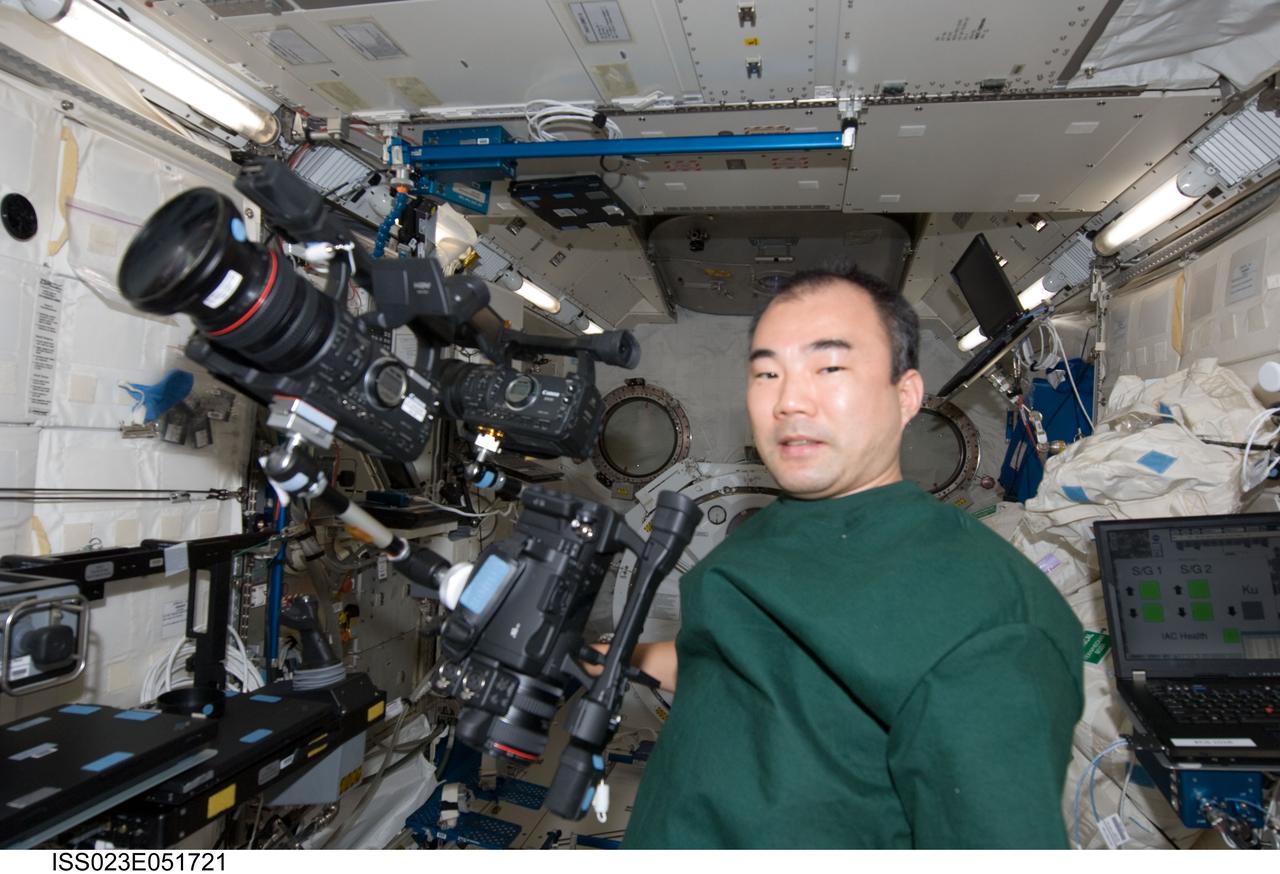
ISS023-E-051721 (25 May 2010) --- Japan Aerospace Exploration Agency (JAXA) astronaut Soichi Noguchi, Expedition 23 flight engineer, is pictured near camera equipment in the Kibo laboratory of the International Space Station.
Noguchi in Kibo
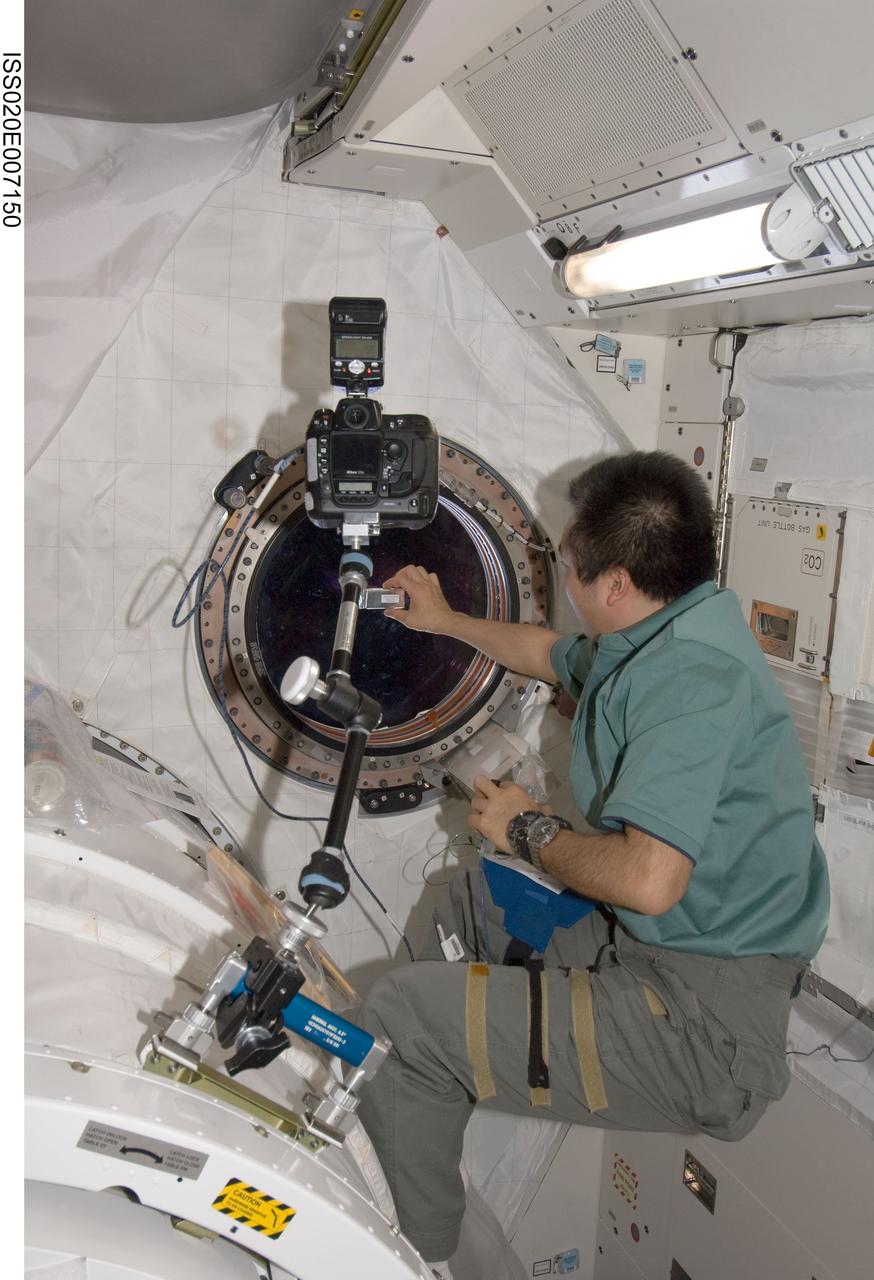
ISS020-E-007150 (7 June 2009) --- Japan Aerospace Exploration Agency (JAXA) astronaut Koichi Wakata, Expedition 20 flight engineer, sets up camera equipment at a window in the Kibo laboratory of the International Space Station.
Wakata in JPM
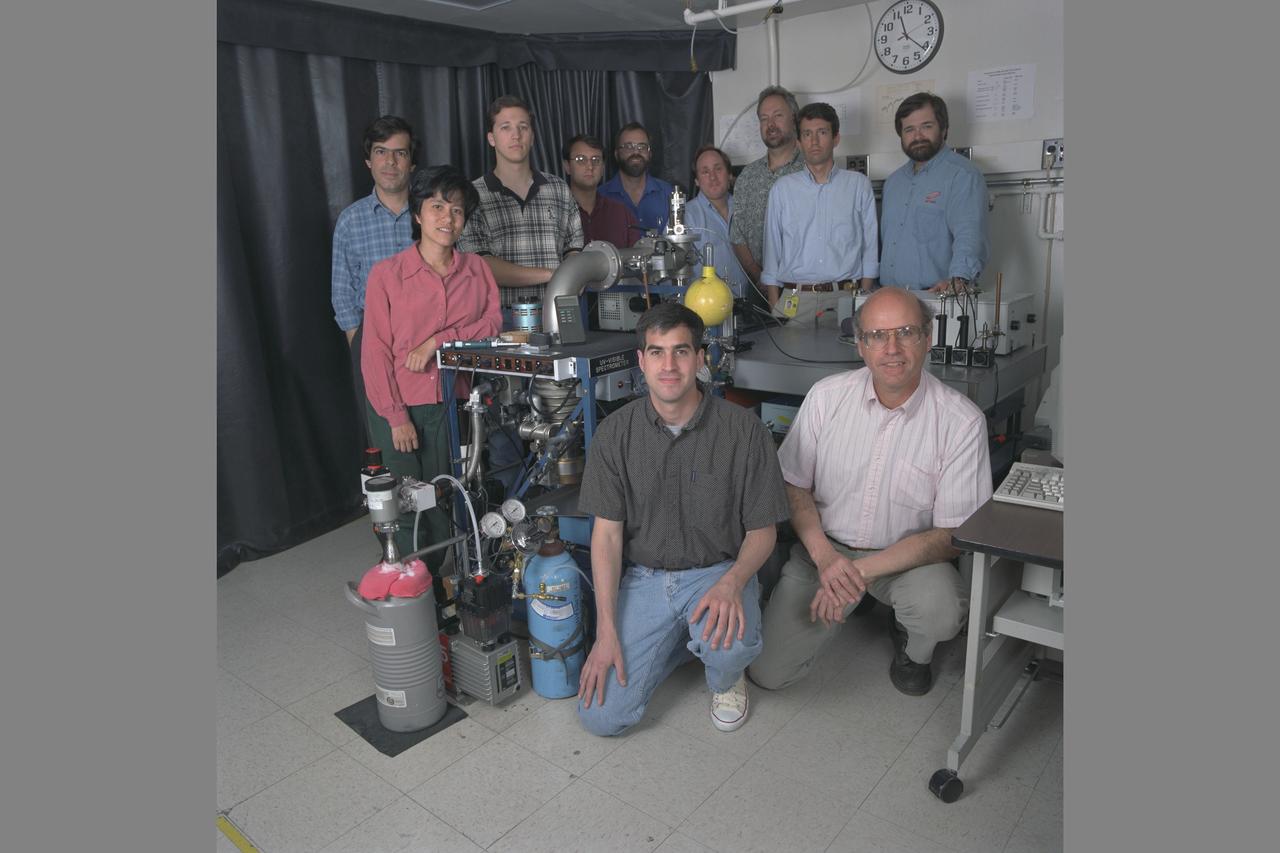
Astrochemistry Laboratory Equipment and Staff. Tom Halasinski, Lou Allamandola, Farid Salama, Bin Chen, Rob Gentner, Jason Dworkin, Scott Sandford, Max Bernstein, Brad Stone, Chavier Chillier, Doug Hudgins.
ARC-1998-AC98-0121-21
ISS020-E-016128 (30 June 2009) --- European Space Agency astronaut Frank De Winne, Expedition 20 flight engineer, photographs equipment in the Destiny laboratory of the International Space Station.
InSPACE Experiment
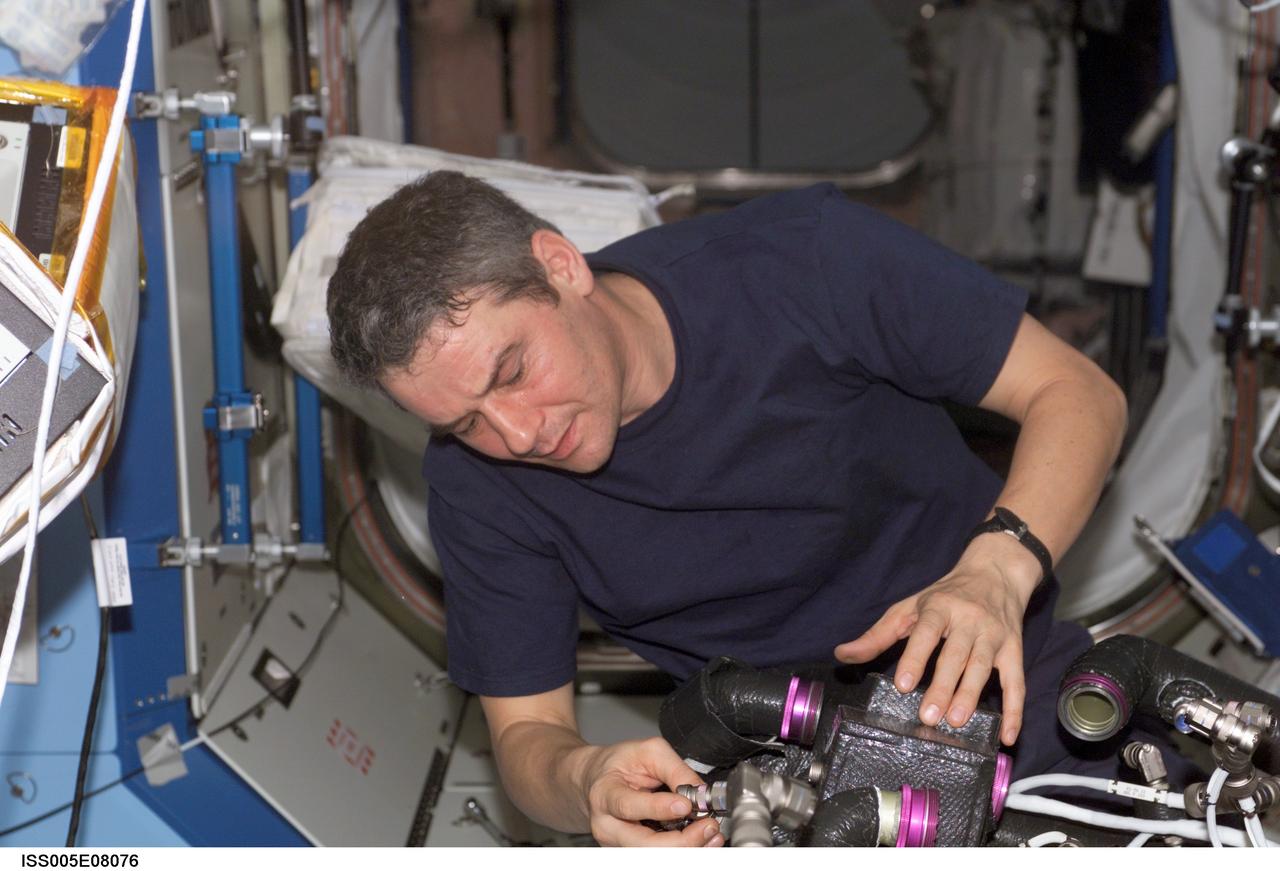
ISS005-E-08076 (July 2002) --- Cosmonaut Valery G. Korzun, Expedition Five mission commander representing Rosaviakosmos, works on equipment in the Destiny laboratory on the International Space Station (ISS).
Korzun working on TCS in the U.S. Laboratory during Expedition Five on the ISS
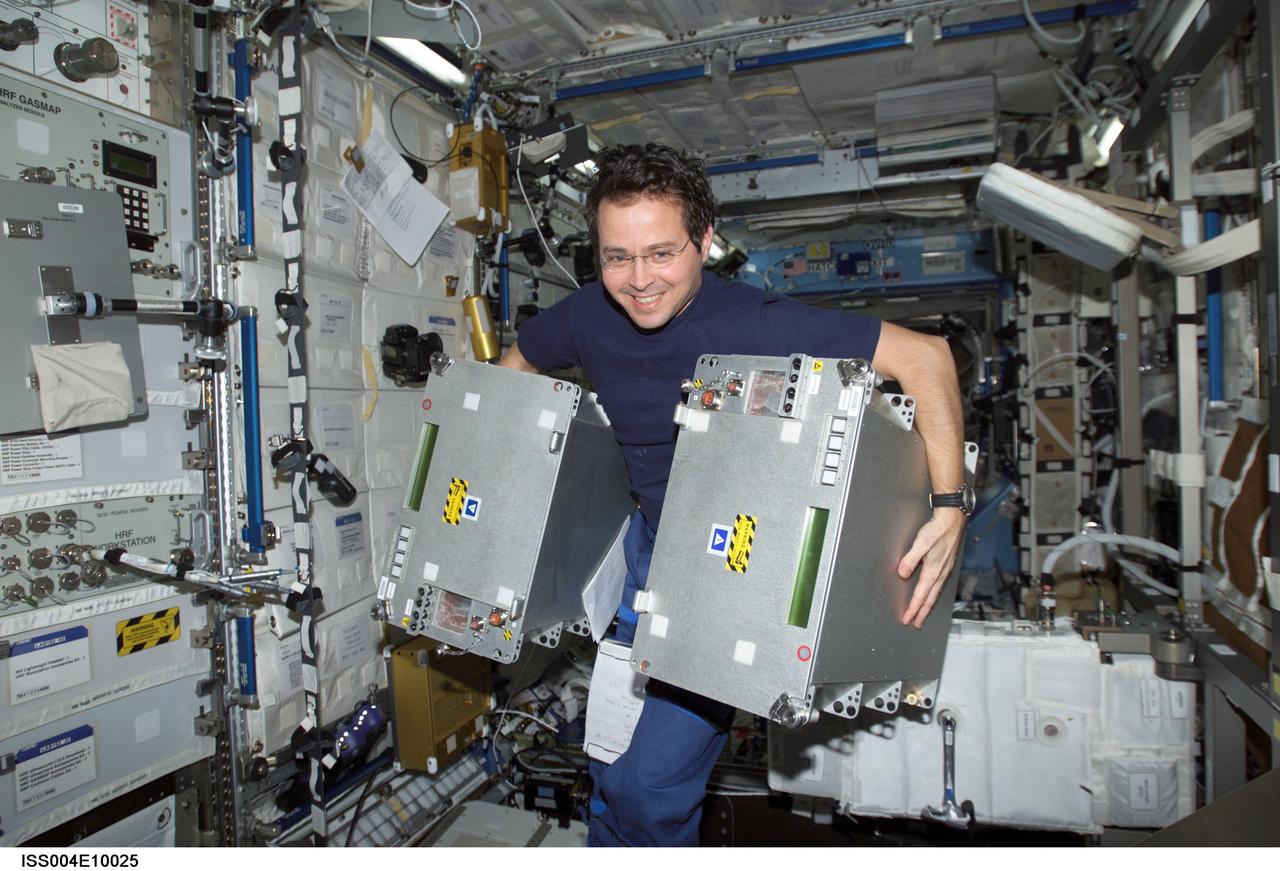
ISS004-E-10025 (12 April 2002) --- Astronaut Daniel W. Bursch, Expedition Four flight engineer, moves equipment in the Destiny laboratory on the International Space Station (ISS).
Bursch performs transfer OPS in the U.S. Lab during STS-110, Expedition Four joint OPS
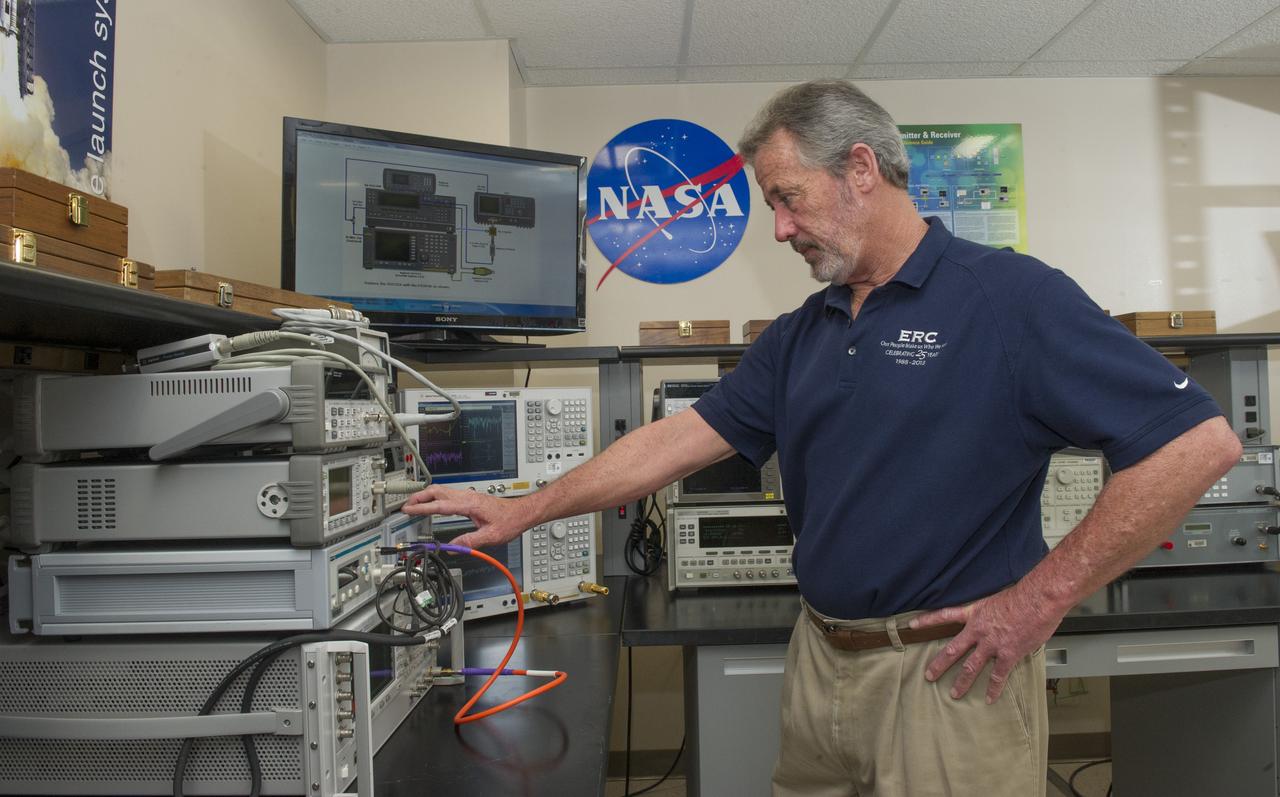
JEFF CHEATHAM, SENIOR METROLOGIST AT THE MARSHALL METROLOGY AND CALIBRATION LABORATORY, SPENT 12 YEARS DEVELOPING 2400  AUTOMATED SOFTWARE PROCEDURES USED FOR CALIBRATION AND TESTING SPACE VEHICLES AND EQUIPMENT
Jeff Cheatham, senior metrologist
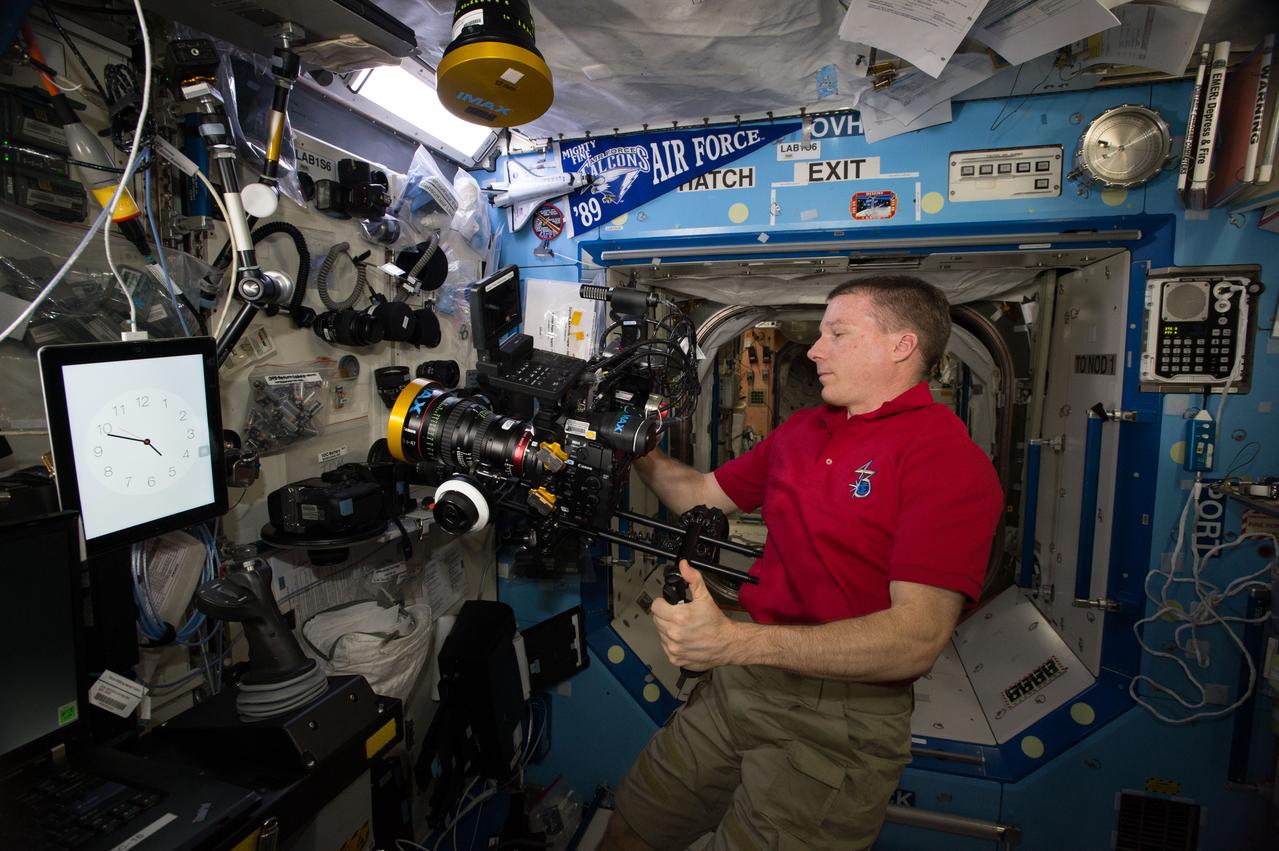
ISS043E276456 (05/31/2015) --- Expedition 43 Commander and NASA astronaut Terry Virts is seen here inside the station’s Destiny laboratory preparing camera equipment for an upcoming documentation session.
Virts in U.S. Laboratory
iss070e090105 (Feb. 8, 2024) --- NASA astronaut and Expedition 70 Flight Engineer Loral O'Hara wears personal protective equipment during scieintific maintenance duties aboard the International Space Station's Destiny laboratory module.
iss070e090105
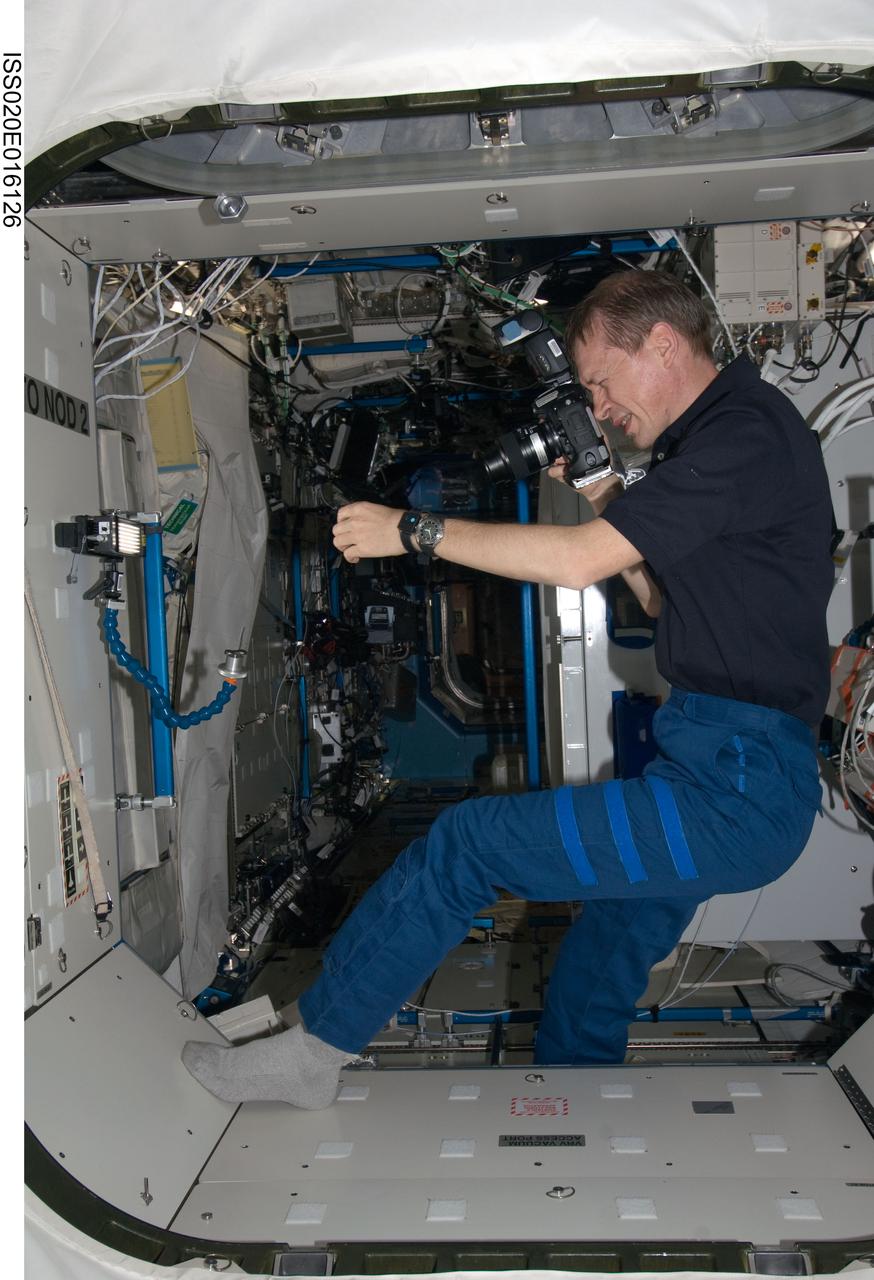
ISS020-E-016126 (30 June 2009) --- European Space Agency astronaut Frank De Winne, Expedition 20 flight engineer, photographs equipment in the Destiny laboratory of the International Space Station.
InSPACE Experiment
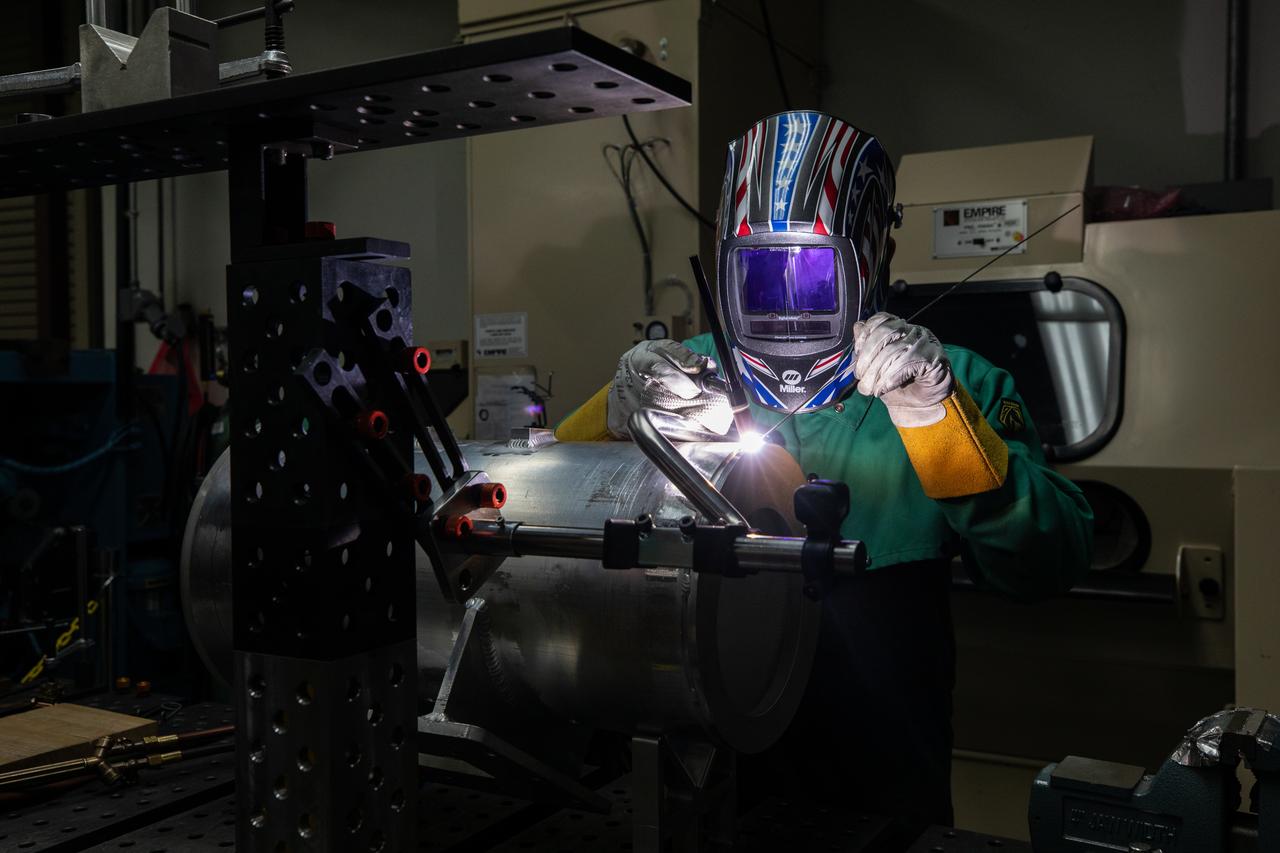
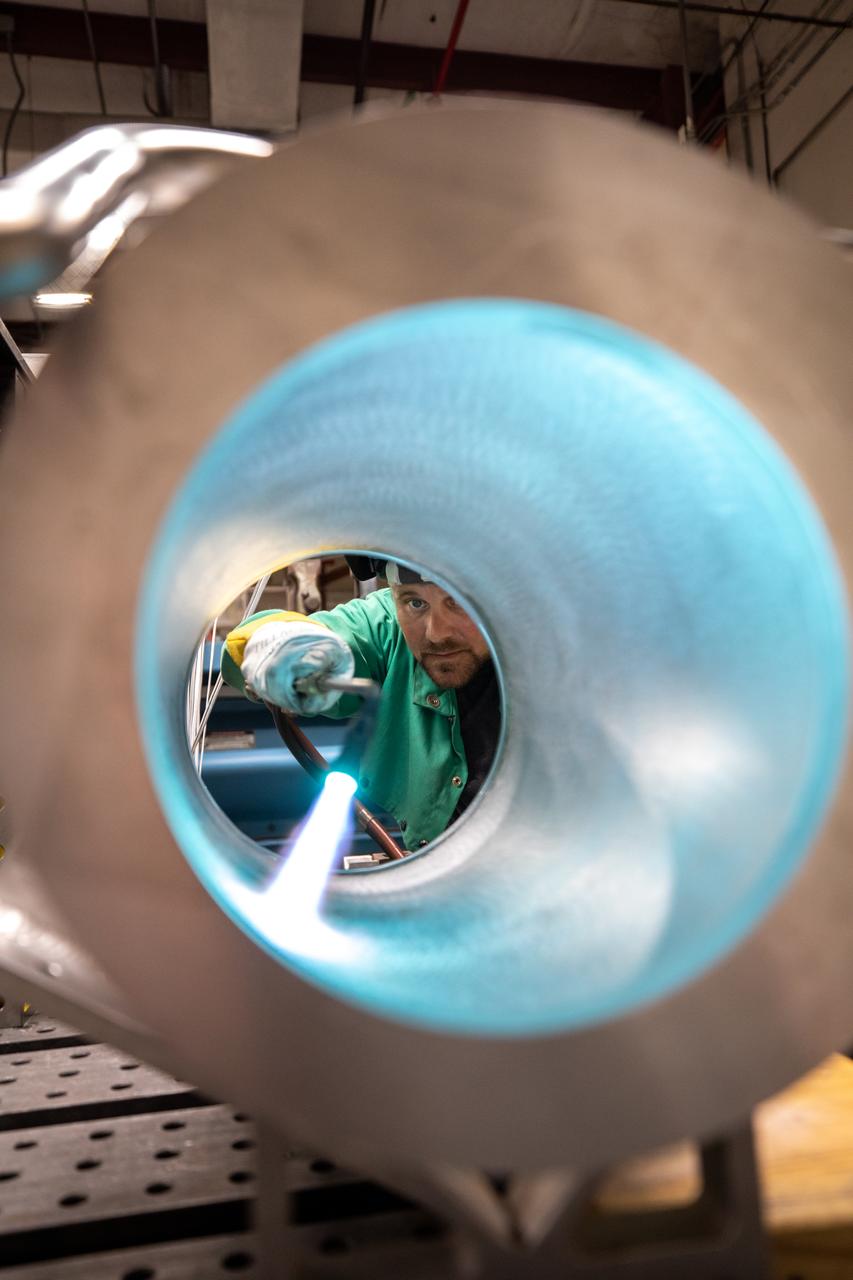
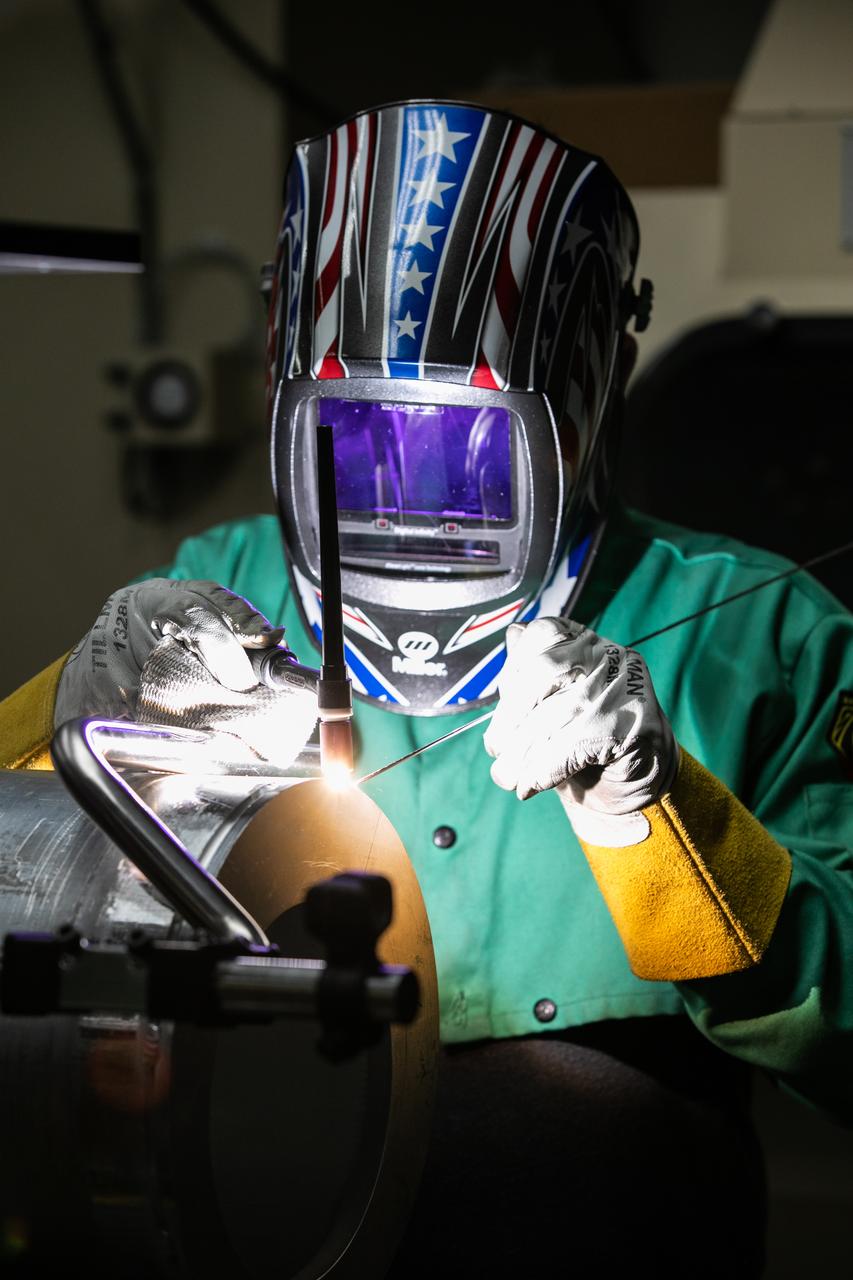
Spencer Wells, a mechanical engineering technician, welds a part of a camera enclosure which will be used at Launch Complex 39B inside the Prototype Development Laboratory at NASA’s Kennedy Space Center in Florida on Oct. 21, 2020. The prototype laboratory designs, fabricates, and tests prototypes, test articles and test support equipment. It has a long history of providing fast solutions to complex operations problems. The lab’s teams of engineers use specialized equipment to produce exacting, one-of-a-kind items made from a range of materials depending on the design. The lab supports projects at Kennedy and at the agency level.
Engineering Labs: Prototype Development Laboratory (PDL)
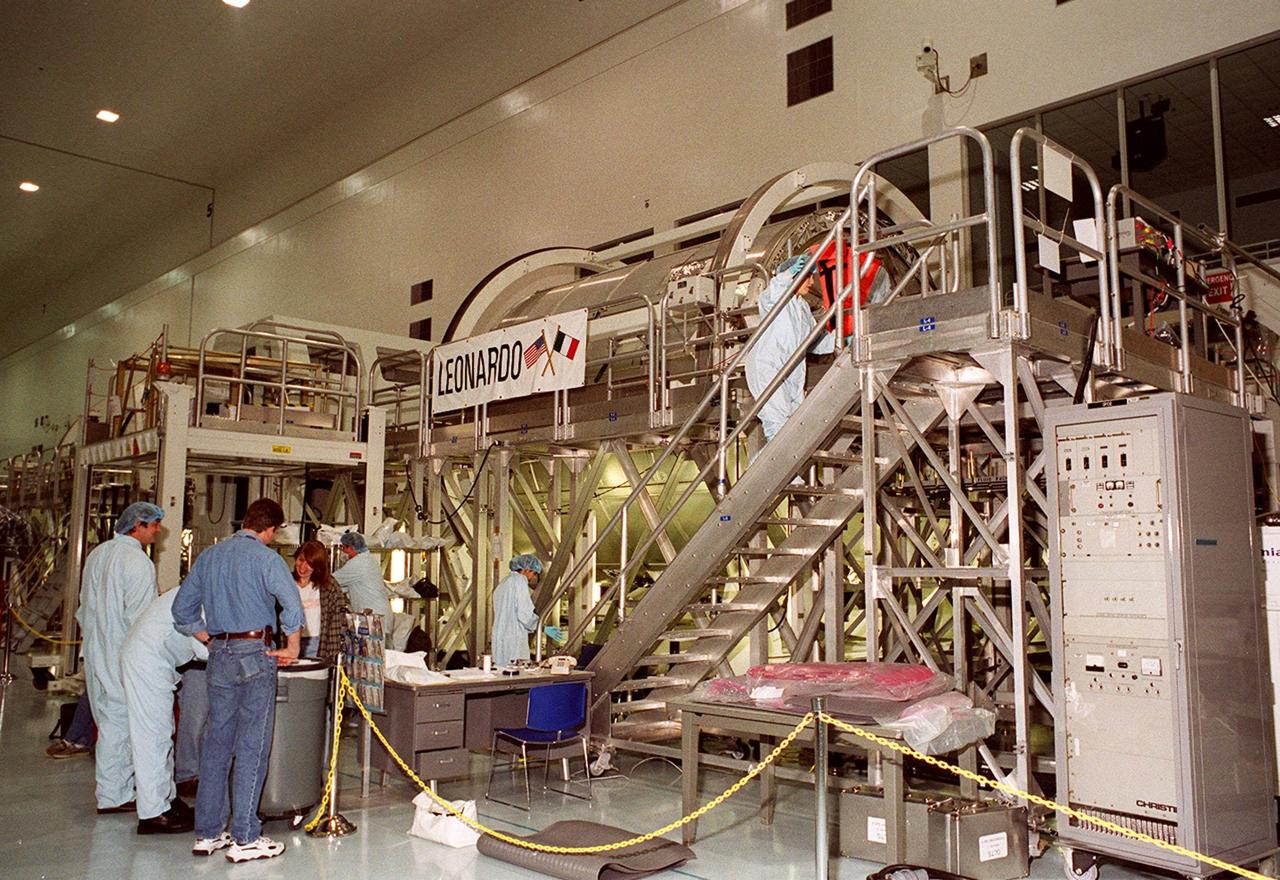
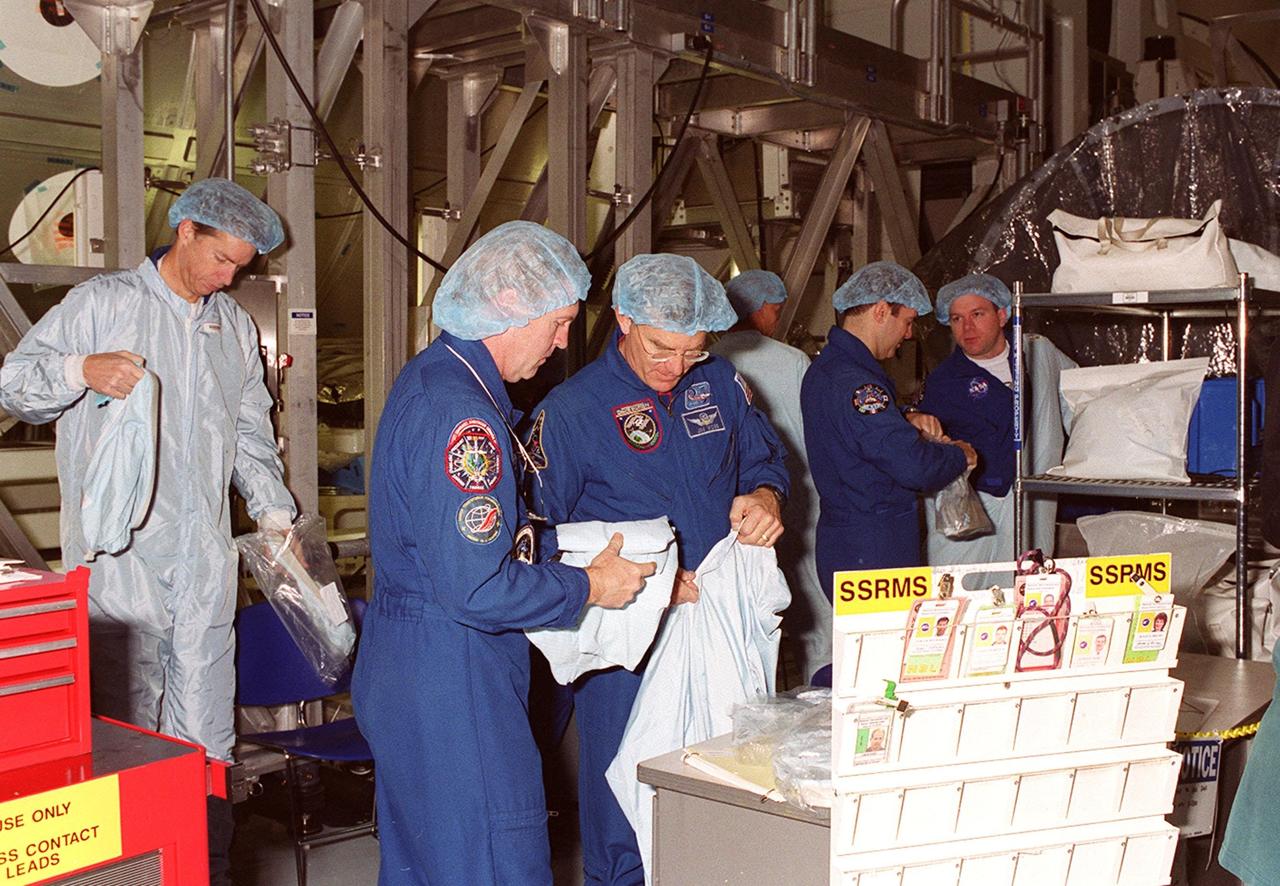
KENNEDY SPACE CENTER, FLA. -- In the Space Station Processing Facility, Multi-Purpose Logistics Module Leonardo has the attention of workers and some of the STS-102 crew. The MPLM, part of the payload on the STS-102 mission, is the first of three pressurized modules that will serve as the International Space Station’s “moving vans,” carrying laboratory racks filled with equipment, experiments and supplies to and from the Space Station aboard the Space Shuttle. Leonardo is scheduled to be launched in early March. On that flight, Leonardo will be filled with equipment and supplies to outfit the U.S. laboratory module Destiny. The mission will also be carrying the Expedition Two crew to the Space Station, replacing the Expedition One crew who will return on Shuttle Discovery
KSC-01PP-0117
Spencer Wells, a mechanical engineering technician, welds a part of a camera enclosure which will be used at Launch Complex 39B inside the Prototype Development Laboratory at NASA’s Kennedy Space Center in Florida on Oct. 21, 2020. The prototype laboratory designs, fabricates, and tests prototypes, test articles and test support equipment. It has a long history of providing fast solutions to complex operations problems. The lab’s teams of engineers use specialized equipment to produce exacting, one-of-a-kind items made from a range of materials depending on the design. The lab supports projects at Kennedy and at the agency level.
Engineering Labs: Prototype Development Laboratory (PDL)
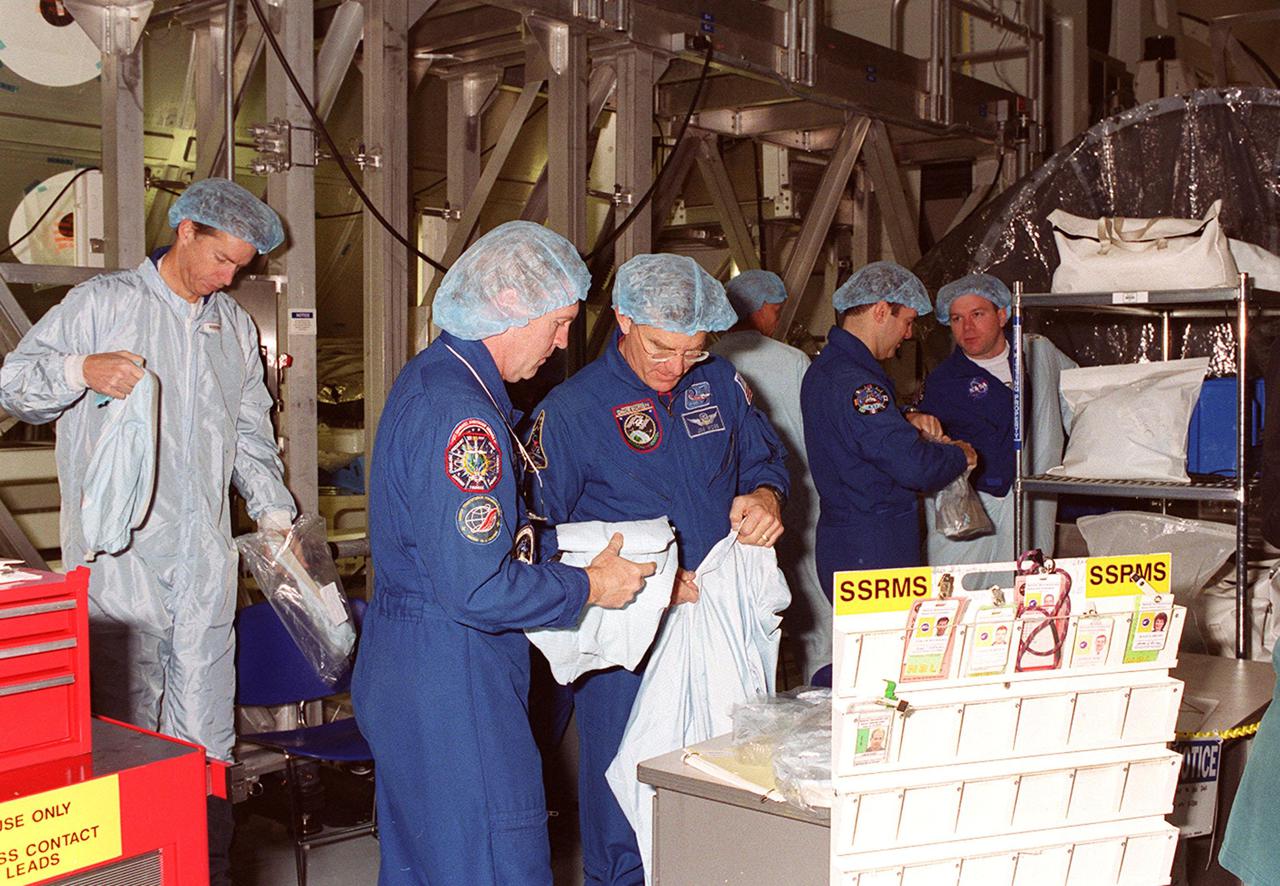
KENNEDY SPACE CENTER, FLA.  --  In the Space Station Processing Facility, STS-120 Mission Specialists Scott Parazynski (left), Paolo Angelo Nespoli (center) and Douglas H. Wheelock practice using some of the equipment for the Node 2, another element to be added to the International Space Station.  They and other crew members are at KSC for equipment familiarization.  Node 2 will provide a passageway between three station science experiment facilities: the U.S. Destiny Laboratory, the Kibo Japanese Experiment Module, and the European Columbus Laboratory.  STS-120 is targeted for launch on October 20.   Photo credit: NASA/Kim Shiflett
KSC-07pd0937
KENNEDY SPACE CENTER, FLA. -- In the Space Station Processing Facility, Multi-Purpose Logistics Module Leonardo has the attention of workers and some of the STS-102 crew. The MPLM, part of the payload on the STS-102 mission, is the first of three pressurized modules that will serve as the International Space Station’s “moving vans,” carrying laboratory racks filled with equipment, experiments and supplies to and from the Space Station aboard the Space Shuttle. Leonardo is scheduled to be launched in early March. On that flight, Leonardo will be filled with equipment and supplies to outfit the U.S. laboratory module Destiny. The mission will also be carrying the Expedition Two crew to the Space Station, replacing the Expedition One crew who will return on Shuttle Discovery
KSC-01PP-0115
From left, mechanical engineering technicians Katie Mortensen and Jim Niehoff machine test article material inside the Prototype Development Laboratory at NASA’s Kennedy Space Center in Florida on Oct. 21, 2020. The prototype laboratory designs, fabricates, and tests prototypes, test articles and test support equipment. It has a long history of providing fast solutions to complex operations problems. The lab’s teams of engineers use specialized equipment to produce exacting, one-of-a-kind items made from a range of materials depending on the design. The lab supports projects at Kennedy and at the agency level.
Engineering Labs: Prototype Development Laboratory (PDL)
Spencer Wells, a mechanical engineering technician, examines the interior of a camera enclosure for Launch Complex 39B inside the Prototype Development Laboratory at NASA’s Kennedy Space Center in Florida on Oct. 21, 2020. The prototype laboratory designs, fabricates, and tests prototypes, test articles and test support equipment. It has a long history of providing fast solutions to complex operations problems. The lab’s teams of engineers use specialized equipment to produce exacting, one-of-a-kind items made from a range of materials depending on the design. The lab supports projects at Kennedy and at the agency level.
Engineering Labs: Prototype Development Laboratory (PDL)
KENNEDY SPACE CENTER, FLA. -- In the Space Station Processing Facility, Multi-Purpose Logistics Module Leonardo has the attention of workers and some of the STS-102 crew. The MPLM, part of the payload on the STS-102 mission, is the first of three pressurized modules that will serve as the International Space Station’s “moving vans,” carrying laboratory racks filled with equipment, experiments and supplies to and from the Space Station aboard the Space Shuttle. Leonardo is scheduled to be launched in early March. On that flight, Leonardo will be filled with equipment and supplies to outfit the U.S. laboratory module Destiny. The mission will also be carrying the Expedition Two crew to the Space Station, replacing the Expedition One crew who will return on Shuttle Discovery
KSC01pp0117
KENNEDY SPACE CENTER, FLA.  --  In the Space Station Processing Facility, STS-120 Mission Specialists Paolo Angelo Nespoli (left) and Douglas H. Wheelock practice using some of the equipment for the Node 2, another element to be added to the International Space Station.  They and other crew members are at KSC for equipment familiarization.  Node 2 will provide a passageway between three station science experiment facilities: the U.S. Destiny Laboratory, the Kibo Japanese Experiment Module, and the European Columbus Laboratory.  STS-120 is targeted for launch on October 20.   Photo credit: NASA/Kim Shiflett
KSC-07pd0933
KENNEDY SPACE CENTER, FLA. -- In the Space Station Processing Facility, Multi-Purpose Logistics Module Leonardo has the attention of workers and some of the STS-102 crew. The MPLM, part of the payload on the STS-102 mission, is the first of three pressurized modules that will serve as the International Space Station’s “moving vans,” carrying laboratory racks filled with equipment, experiments and supplies to and from the Space Station aboard the Space Shuttle. Leonardo is scheduled to be launched in early March. On that flight, Leonardo will be filled with equipment and supplies to outfit the U.S. laboratory module Destiny. The mission will also be carrying the Expedition Two crew to the Space Station, replacing the Expedition One crew who will return on Shuttle Discovery
KSC01pp0115
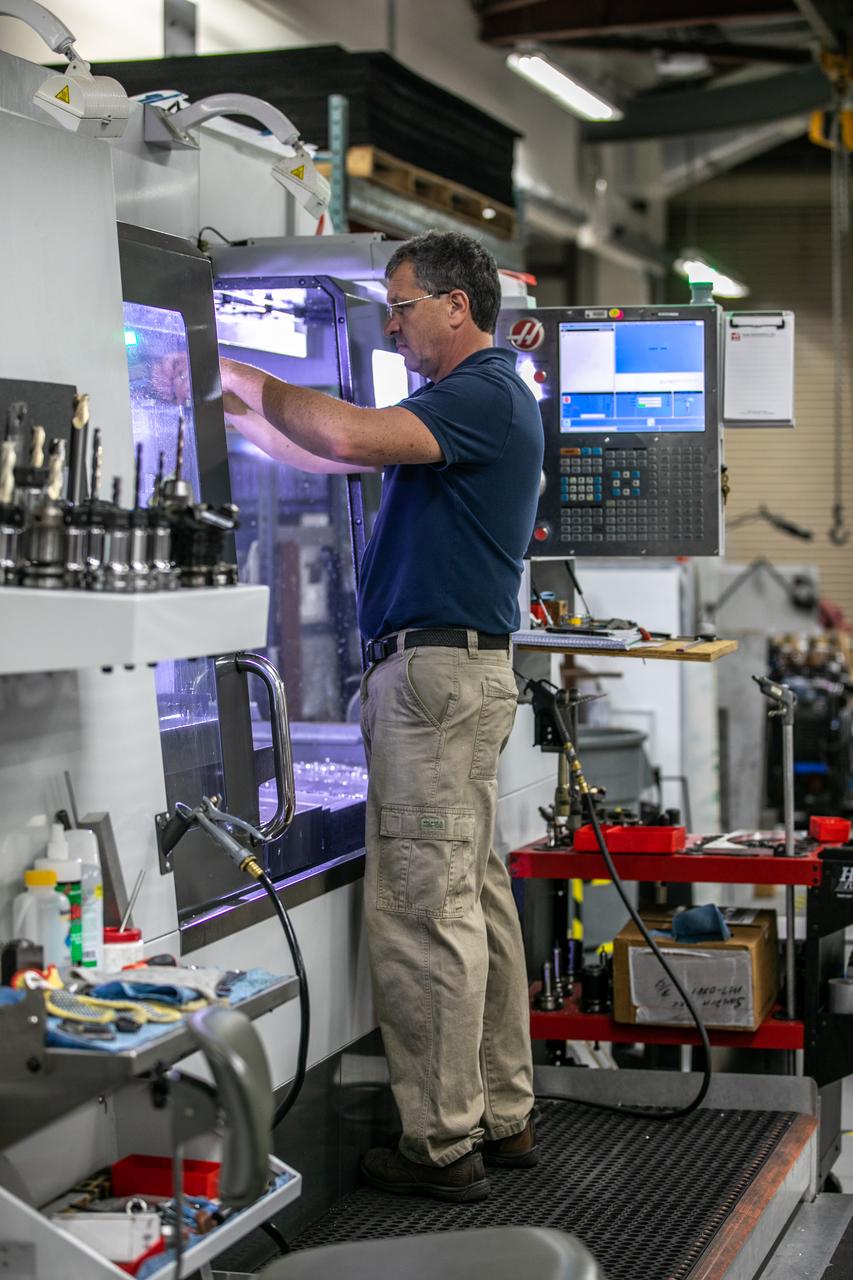
Tim Evans, a mechanical engineering technician, uses a computer numerical control (CNC) machine to machine a part for a Launch Pad 39B camera enclosure inside the Prototype Development Laboratory at NASA’s Kennedy Space Center in Florida on Oct. 21, 2020. The prototype laboratory designs, fabricates, and tests prototypes, test articles and test support equipment. It has a long history of providing fast solutions to complex operations problems. The lab’s teams of engineers use specialized equipment to produce exacting, one-of-a-kind items made from a range of materials depending on the design. The lab supports projects at Kennedy and at the agency level.
Engineering Labs: Prototype Development Laboratory (PDL)
KENNEDY SPACE CENTER, FLA. -- In the Space Station Processing Facility, Multi-Purpose Logistics Module Leonardo has the attention of workers and some of the STS-102 crew. The MPLM, part of the payload on the STS-102 mission, is the first of three pressurized modules that will serve as the International Space Station’s “moving vans,” carrying laboratory racks filled with equipment, experiments and supplies to and from the Space Station aboard the Space Shuttle. Leonardo is scheduled to be launched in early March. On that flight, Leonardo will be filled with equipment and supplies to outfit the U.S. laboratory module Destiny. The mission will also be carrying the Expedition Two crew to the Space Station, replacing the Expedition One crew who will return on Shuttle Discovery
KSC01pp0118
KENNEDY SPACE CENTER, FLA. -- In the Space Station Processing Facility, Multi-Purpose Logistics Module Leonardo has the attention of workers and some of the STS-102 crew. The MPLM, part of the payload on the STS-102 mission, is the first of three pressurized modules that will serve as the International Space Station’s “moving vans,” carrying laboratory racks filled with equipment, experiments and supplies to and from the Space Station aboard the Space Shuttle. Leonardo is scheduled to be launched in early March. On that flight, Leonardo will be filled with equipment and supplies to outfit the U.S. laboratory module Destiny. The mission will also be carrying the Expedition Two crew to the Space Station, replacing the Expedition One crew who will return on Shuttle Discovery
KSC-01PP-0118
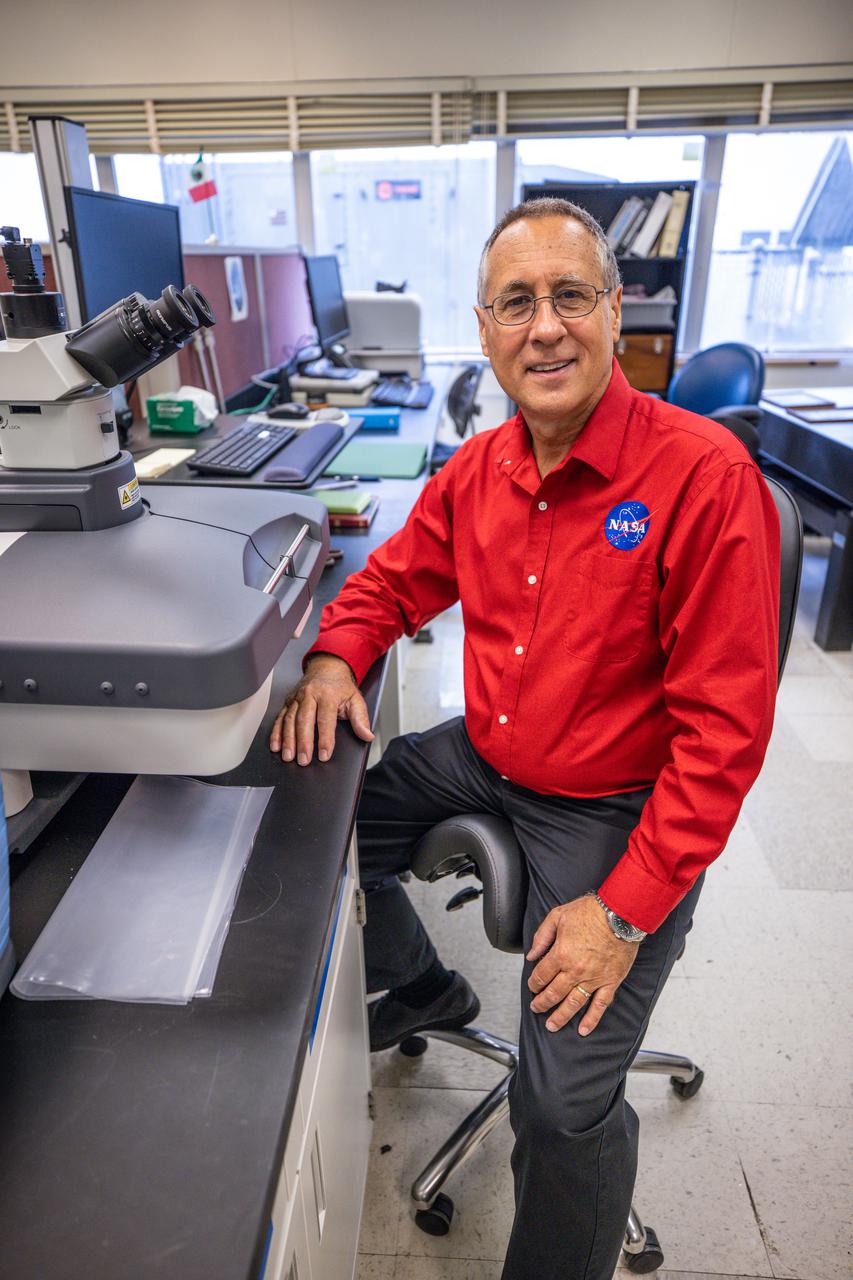
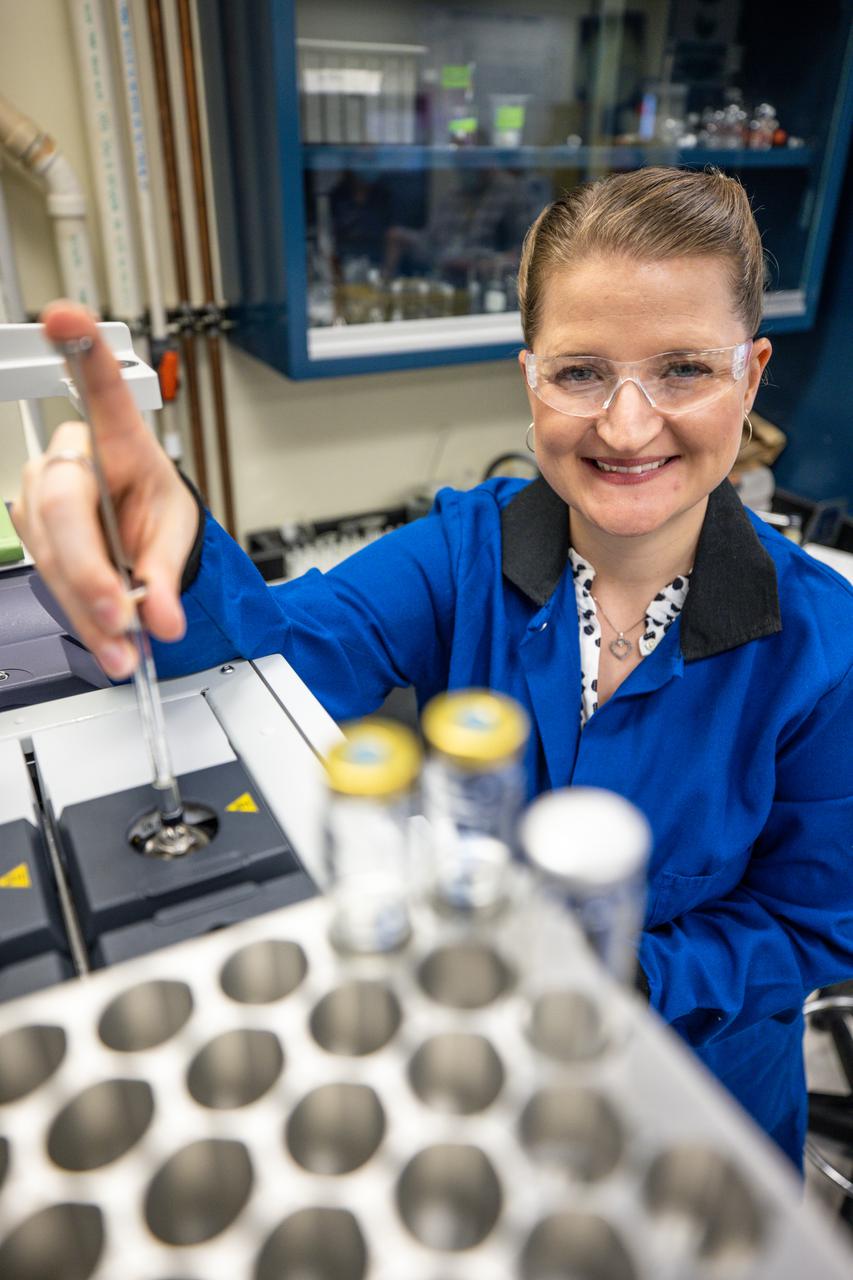
Lead chemist Philip Howard poses for a photo inside NASA Engineering’s Analytical Laboratories at Kennedy Space Center in Florida on July 7, 2021. One of seven branches in the NASA Laboratories, Development, and Testing Division, the Analytical Laboratories branch provides microscopic imagery and analysis through the use of a wide variety of microscopic techniques to identify contaminants and other urgent problems associated with aerospace flight hardware, ground support equipment, and related facilities.
CSI: Chemistry Space Investigation
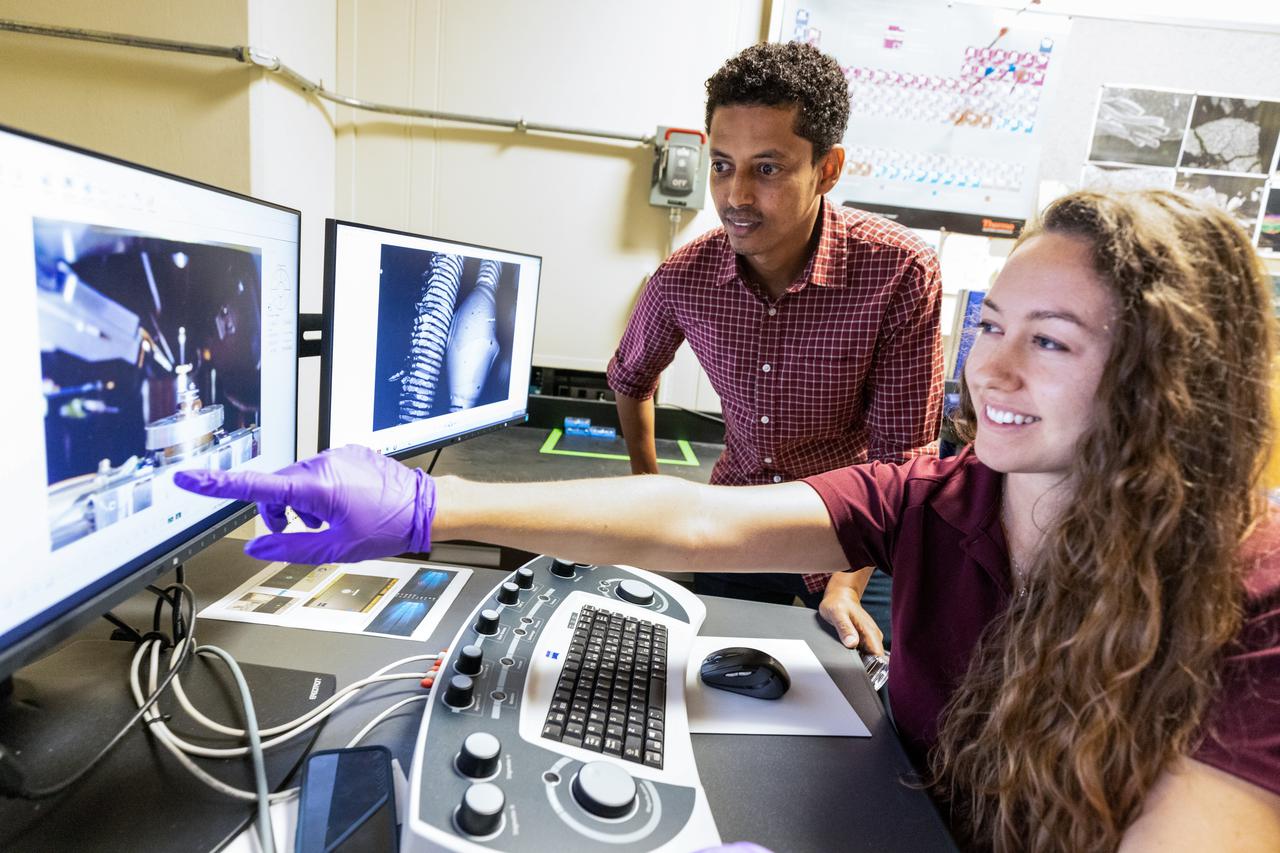
Chemists Misle Tessema (left) and Macy Mullen (right) discuss scanning electron microscope operations inside NASA Engineering’s Analytical Laboratories at Kennedy Space Center in Florida on July 7, 2021. One of seven branches in the NASA Laboratories, Development, and Testing Division, the Analytical Laboratories branch provides microscopic imagery and analysis through the use of a wide variety of microscopic techniques to identify contaminants and other urgent problems associated with aerospace flight hardware, ground support equipment, and related facilities.
CSI: Chemistry Space Investigation
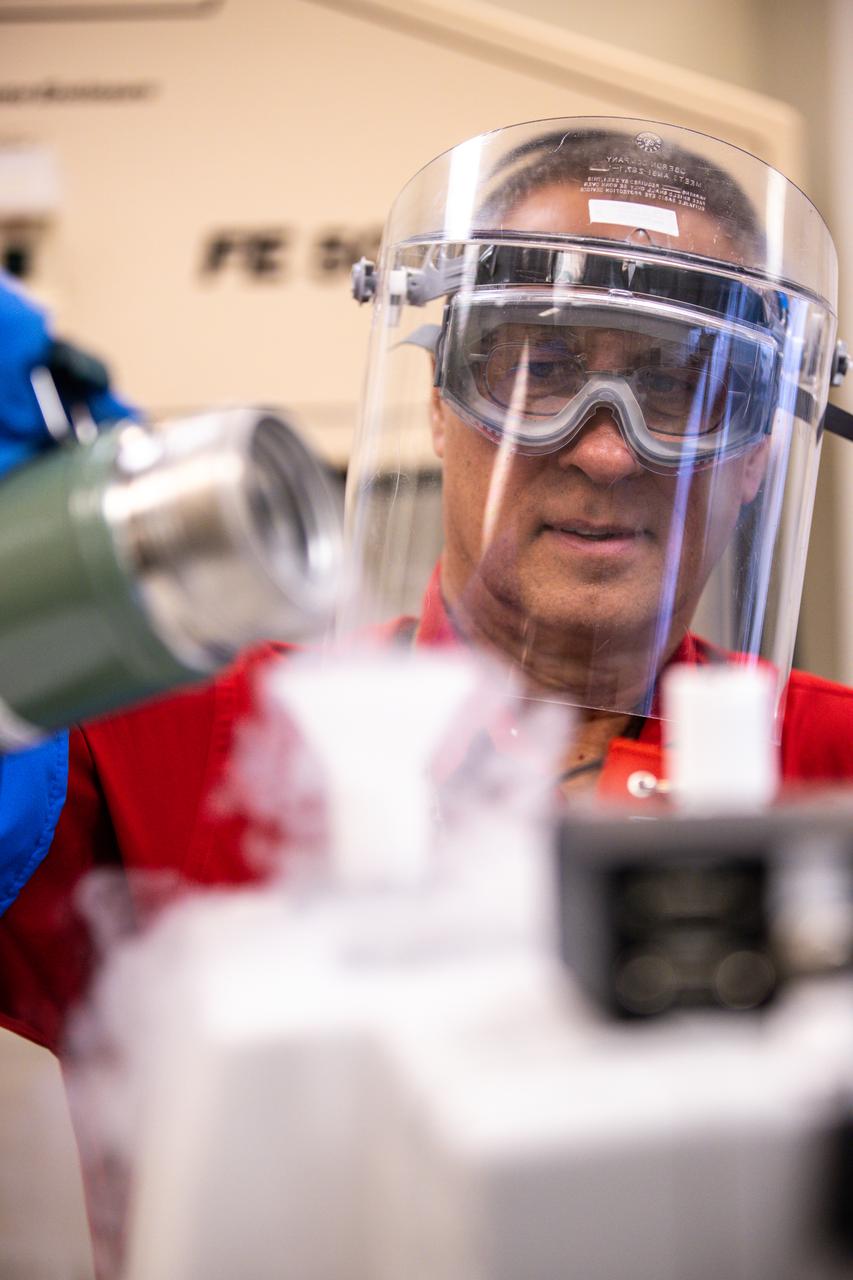
Lead chemist Philip Howard pours liquid nitrogen into the Fourier-transform infrared spectrometer to cool the detector in NASA Engineering’s Analytical Laboratories at Kennedy Space Center in Florida on July 7, 2021. One of seven branches in the NASA Laboratories, Development, and Testing Division, the Analytical Laboratories branch provides microscopic imagery and analysis through the use of a wide variety of microscopic techniques to identify contaminants and other urgent problems associated with aerospace flight hardware, ground support equipment, and related facilities.
CSI: Chemistry Space Investigation
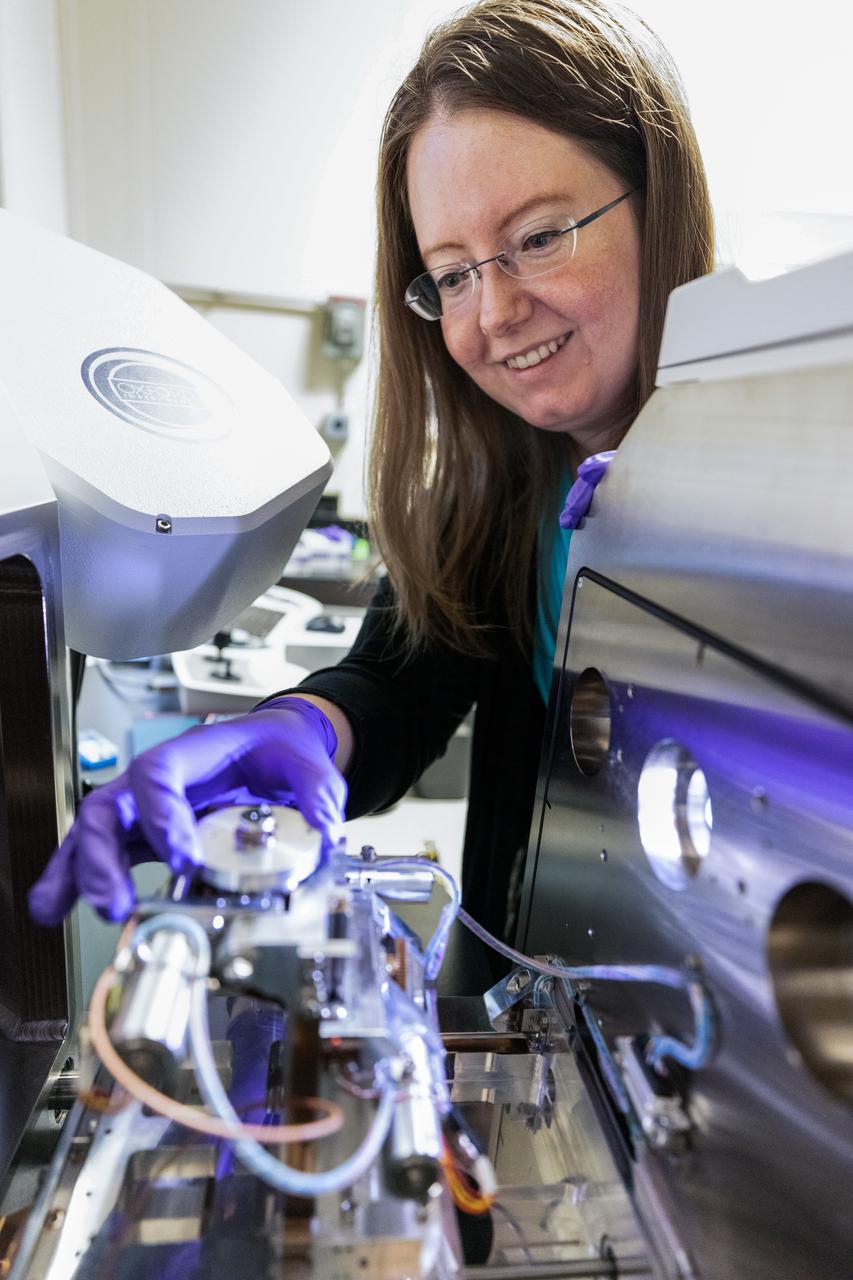
Chemist Athela Frandsen from NASA Engineering’s Analytical Laboratories at Kennedy Space Center in Florida loads a sample into a scanning electron microscope on July 7, 2021. One of seven branches in the NASA Laboratories, Development, and Testing Division, the Analytical Laboratories branch provides microscopic imagery and analysis through the use of a wide variety of microscopic techniques to identify contaminants and other urgent problems associated with aerospace flight hardware, ground support equipment, and related facilities.
CSI: Chemistry Space Investigation
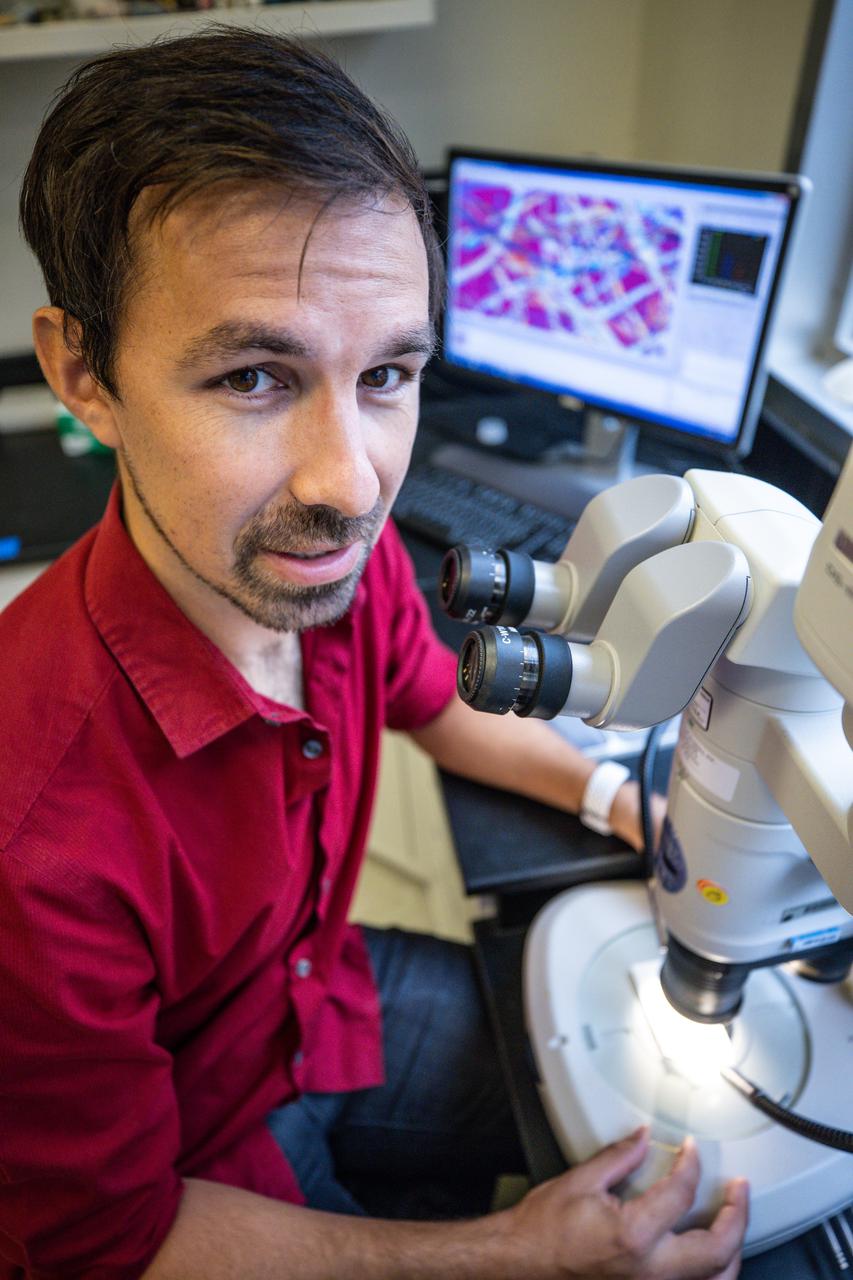
Chemist David Rinderknecht analyzes a sample on the stereomicroscope inside NASA Engineering’s Analytical Laboratories at Kennedy Space Center in Florida on July 7, 2021. One of seven branches in the NASA Laboratories, Development, and Testing Division, the Analytical Laboratories branch provides microscopic imagery and analysis through the use of a wide variety of microscopic techniques to identify contaminants and other urgent problems associated with aerospace flight hardware, ground support equipment, and related facilities.
CSI: Chemistry Space Investigation
Senior analytical chemist Janelle Coutts injects a sample for gas chromatography-mass spectrometry analysis inside NASA Engineering’s Analytical Laboratories at Kennedy Space Center in Florida on July 7, 2021. One of seven branches in the NASA Laboratories, Development, and Testing Division, the Analytical Laboratories branch provides microscopic imagery and analysis through the use of a wide variety of microscopic techniques to identify contaminants and other urgent problems associated with aerospace flight hardware, ground support equipment, and related facilities.
CSI: Chemistry Space Investigation
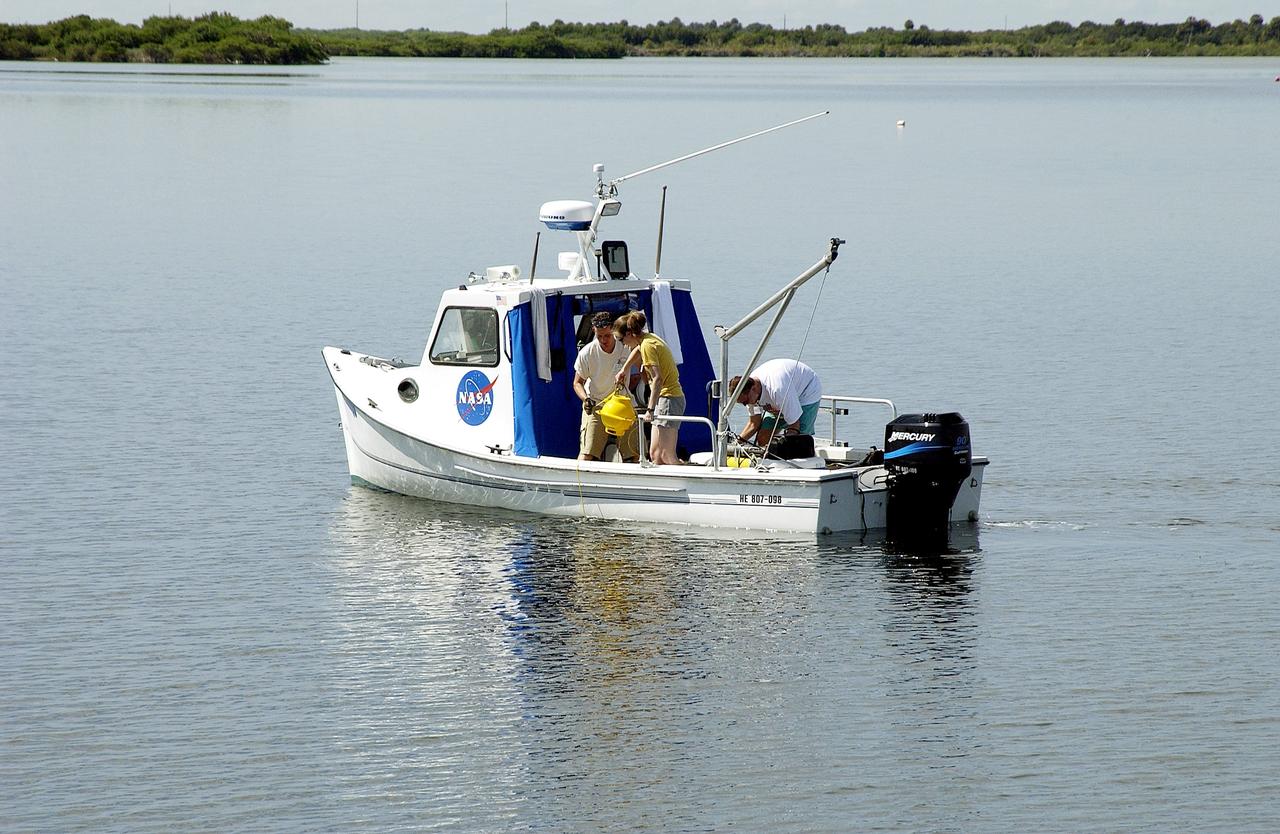
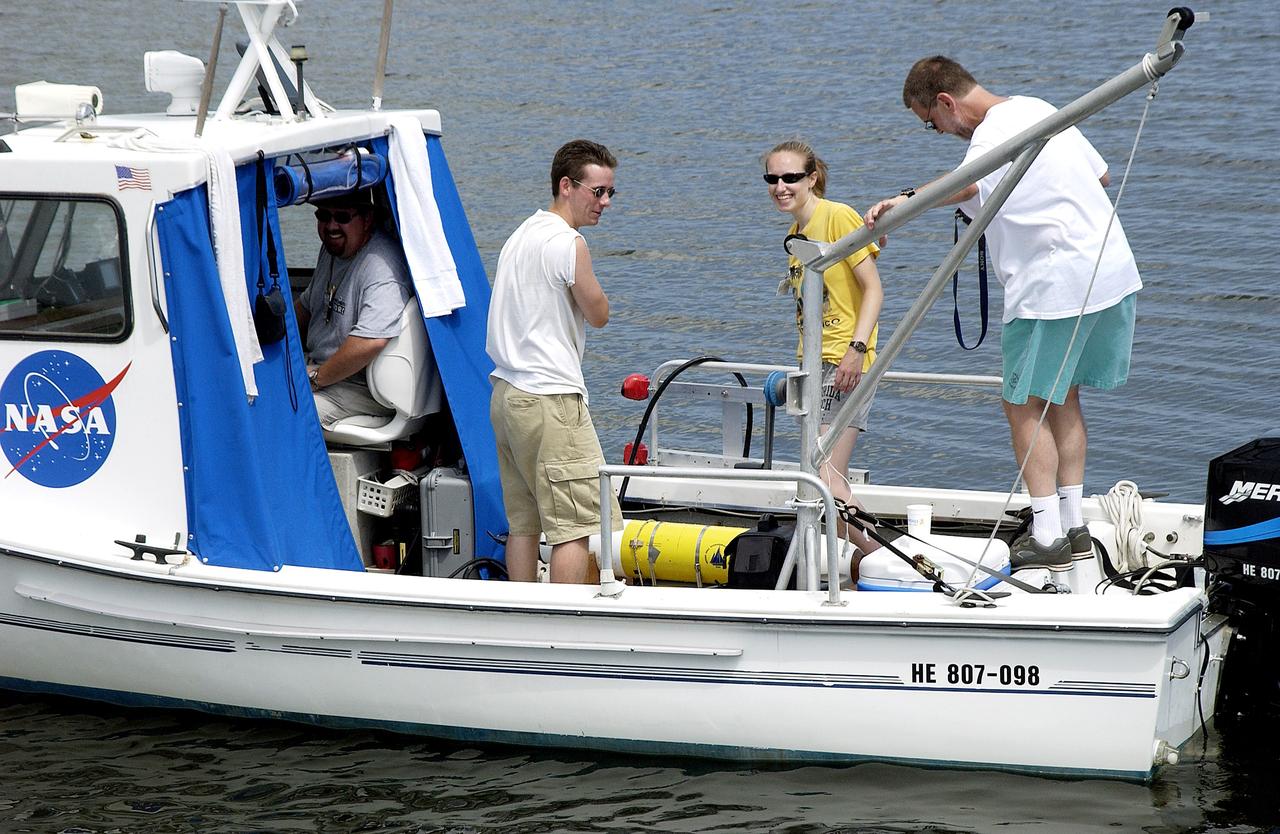
KENNEDY SPACE CENTER, FLA.  -  A research team member aboard one of the watercraft being utilized to conduct underwater acoustic research in the Launch Complex 39 turn basin releases some of the project's equipment into the water.  Several government agencies, including NASA, NOAA, the Navy, the Coast Guard, and the Florida Fish and Wildlife Commission are involved in the testing. The research involves demonstrations of passive and active sensor technologies, with applications in fields ranging from marine biological research to homeland security. The work is also serving as a pilot project to assess the cooperation between the agencies involved. Equipment under development includes a passive acoustic monitor developed by NASA’s Jet Propulsion Laboratory, and mobile robotic sensors from the Navy’s Mobile Diving and Salvage Unit.
KENNEDY SPACE CENTER, FLA. - A research team member aboard one of the watercraft being utilized to conduct underwater acoustic research in the Launch Complex 39 turn basin releases some of the project's equipment into the water. Several government agencies, including NASA, NOAA, the Navy, the Coast Guard, and the Florida Fish and Wildlife Commission are involved in the testing. The research involves demonstrations of passive and active sensor technologies, with applications in fields ranging from marine biological research to homeland security. The work is also serving as a pilot project to assess the cooperation between the agencies involved. Equipment under development includes a passive acoustic monitor developed by NASA’s Jet Propulsion Laboratory, and mobile robotic sensors from the Navy’s Mobile Diving and Salvage Unit.
KENNEDY SPACE CENTER, FLA.  -  Research team members aboard one of the watercraft being utilized to conduct underwater acoustic research in the Launch Complex 39 turn basin secure some of the project's equipment back into the vessel.  Several government agencies, including NASA, NOAA, the Navy, the Coast Guard, and the Florida Fish and Wildlife Commission are involved in the testing. The research involves demonstrations of passive and active sensor technologies, with applications in fields ranging from marine biological research to homeland security. The work is also serving as a pilot project to assess the cooperation between the agencies involved. Equipment under development includes a passive acoustic monitor developed by NASA’s Jet Propulsion Laboratory, and mobile robotic sensors from the Navy’s Mobile Diving and Salvage Unit.
KENNEDY SPACE CENTER, FLA. - Research team members aboard one of the watercraft being utilized to conduct underwater acoustic research in the Launch Complex 39 turn basin secure some of the project's equipment back into the vessel. Several government agencies, including NASA, NOAA, the Navy, the Coast Guard, and the Florida Fish and Wildlife Commission are involved in the testing. The research involves demonstrations of passive and active sensor technologies, with applications in fields ranging from marine biological research to homeland security. The work is also serving as a pilot project to assess the cooperation between the agencies involved. Equipment under development includes a passive acoustic monitor developed by NASA’s Jet Propulsion Laboratory, and mobile robotic sensors from the Navy’s Mobile Diving and Salvage Unit.