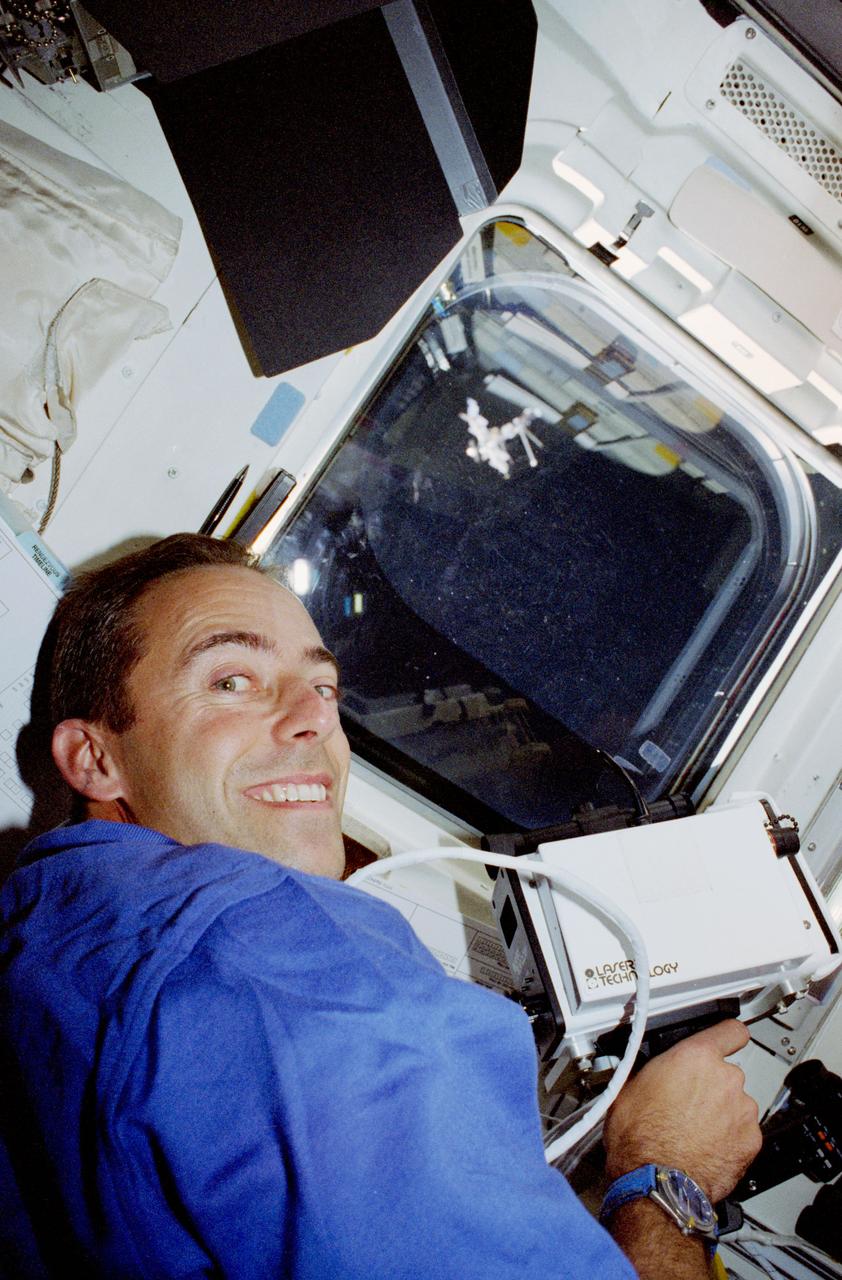
STS084-357-009 (15-24 May 1997) --- Astronaut Jean-Fran?ois Clervoy, STS-84 payload commander, uses a hand held laser range finder during rendezvous operations with Russia's Mir Space Station (seen just above center through the Space Shuttle Atlantis' overhead window).
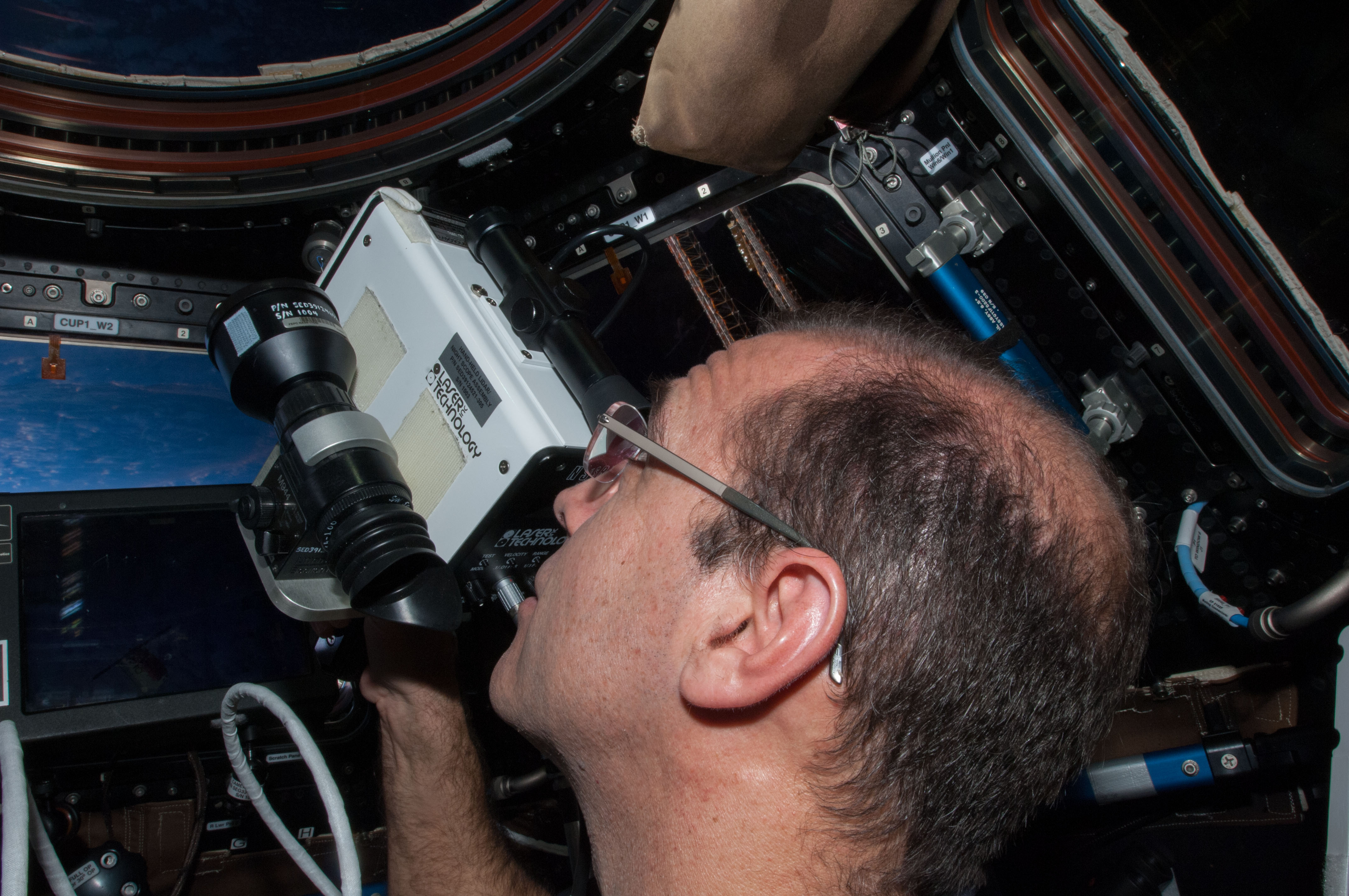
ISS038-E-031969 (12 Jan. 2014) --- At the windows in the International Space Station's Cupola, NASA astronaut Rick Mastracchio, Expedition 38 flight engineer, uses a laser range finder during rendezvous, capture and berthing operations with the Orbital Sciences Corp. Cygnus commercial cargo craft.
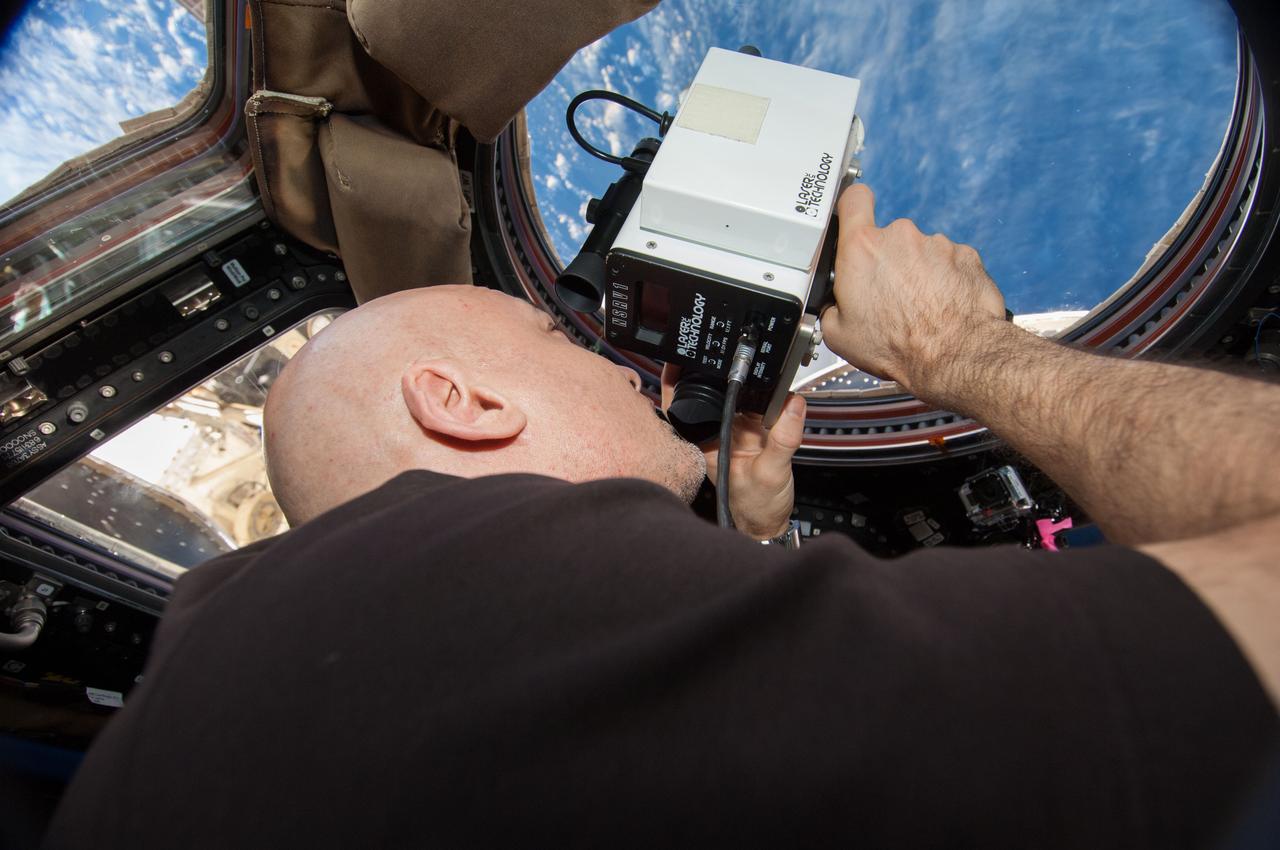
ISS037-E-003918 (29 Sept. 2013) --- At the windows in the International Space Station?s Cupola, European Space Agency astronaut Luca Parmitano, Expedition 37 flight engineer, uses a laser range finder during rendezvous, capture and docking operations with the first Cygnus commercial cargo spacecraft (out of frame) built by Orbital Sciences Corp. The two spacecraft converged at 7:01 a.m. EDT on Sept. 29, 2013.
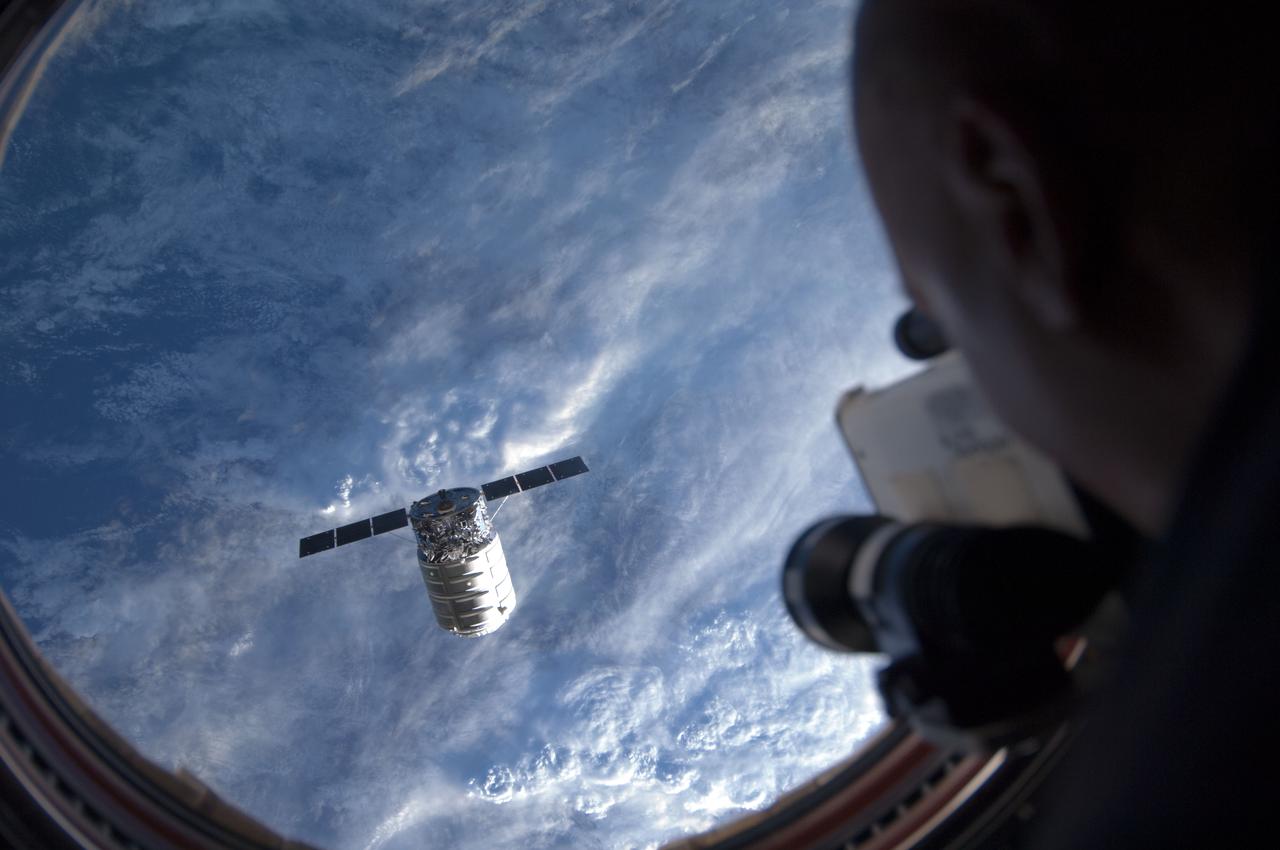
ISS037-E-003937 (29 Sept. 2013) --- At the windows in the International Space Station?s Cupola, European Space Agency astronaut Luca Parmitano, Expedition 37 flight engineer, uses a laser range finder during rendezvous, capture and docking operations with the first Cygnus commercial cargo spacecraft built by Orbital Sciences Corp. The two spacecraft converged at 7:01 a.m. EDT on Sept. 29, 2013.
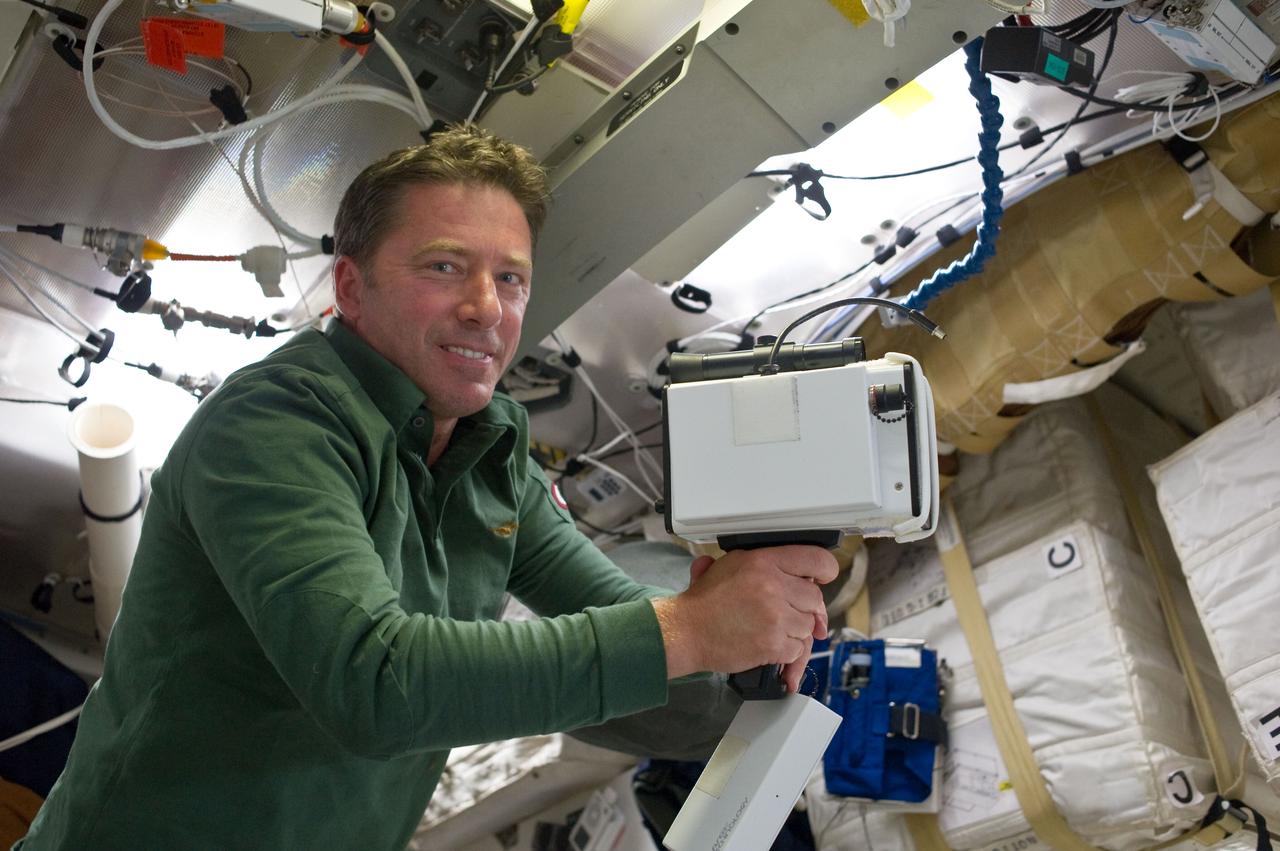
S134-E-006397 (17 May 2011) --- On Endeavour's middeck, European Space Agency astronaut Roberto Vittori, STS-134 mission specialist, unpacks the laser range finder, which will come in handy in 24 hours on the shuttle's flight deck when the spacecraft and the International Space Station approach each other for docking. Photo credit: NASA
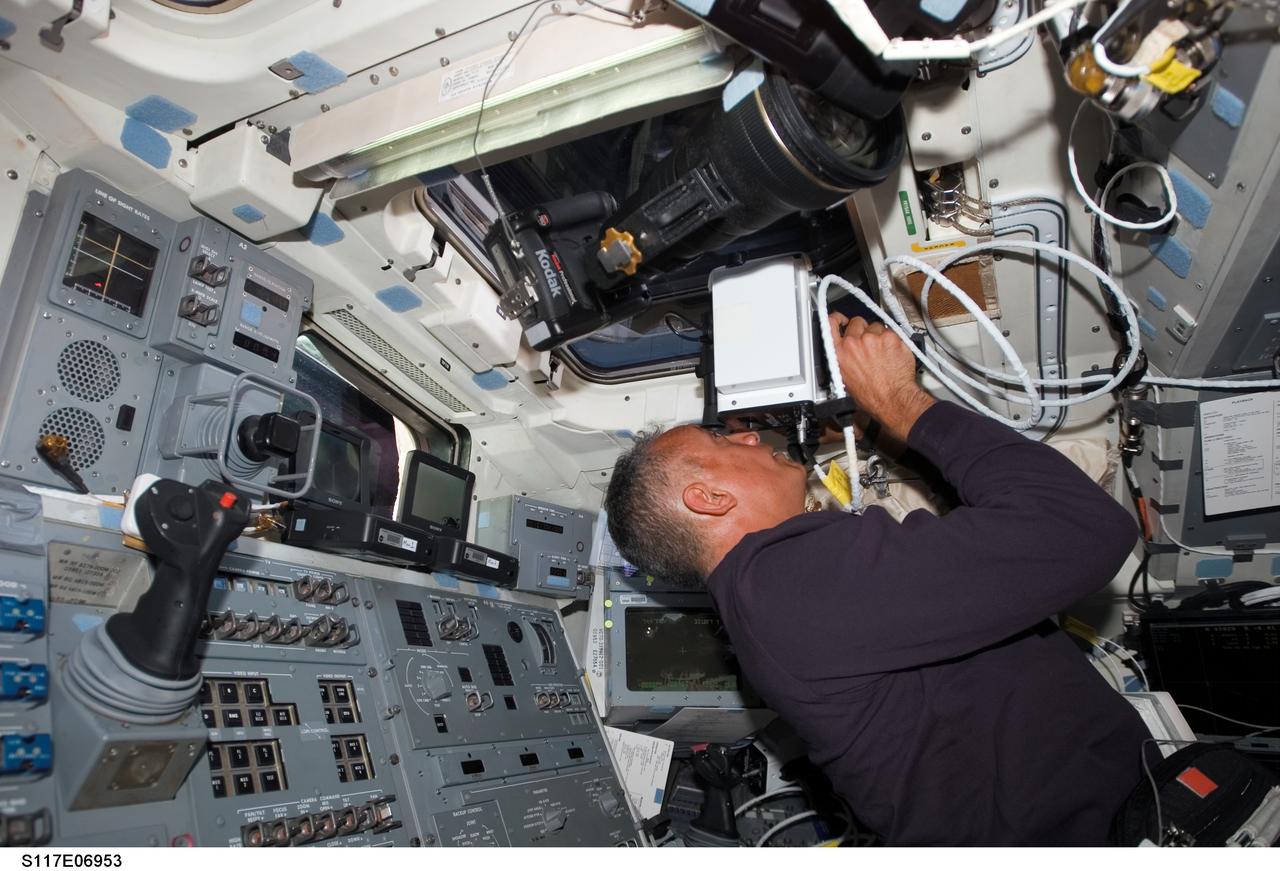
S117-E-06953 (10 June 2007) --- Astronaut John "Danny" Olivas, STS-117 mission specialist, aims a laser range finder through one of the overhead windows on the aft flight deck of the Space Shuttle Atlantis at it approaches the International Space Station. This instrument is a regularly called-on tool during rendezvous operations with the station. The subsequent docking will allow the STS-117 astronauts and the Expedition 15 crew to team up for several days of key tasks in space.
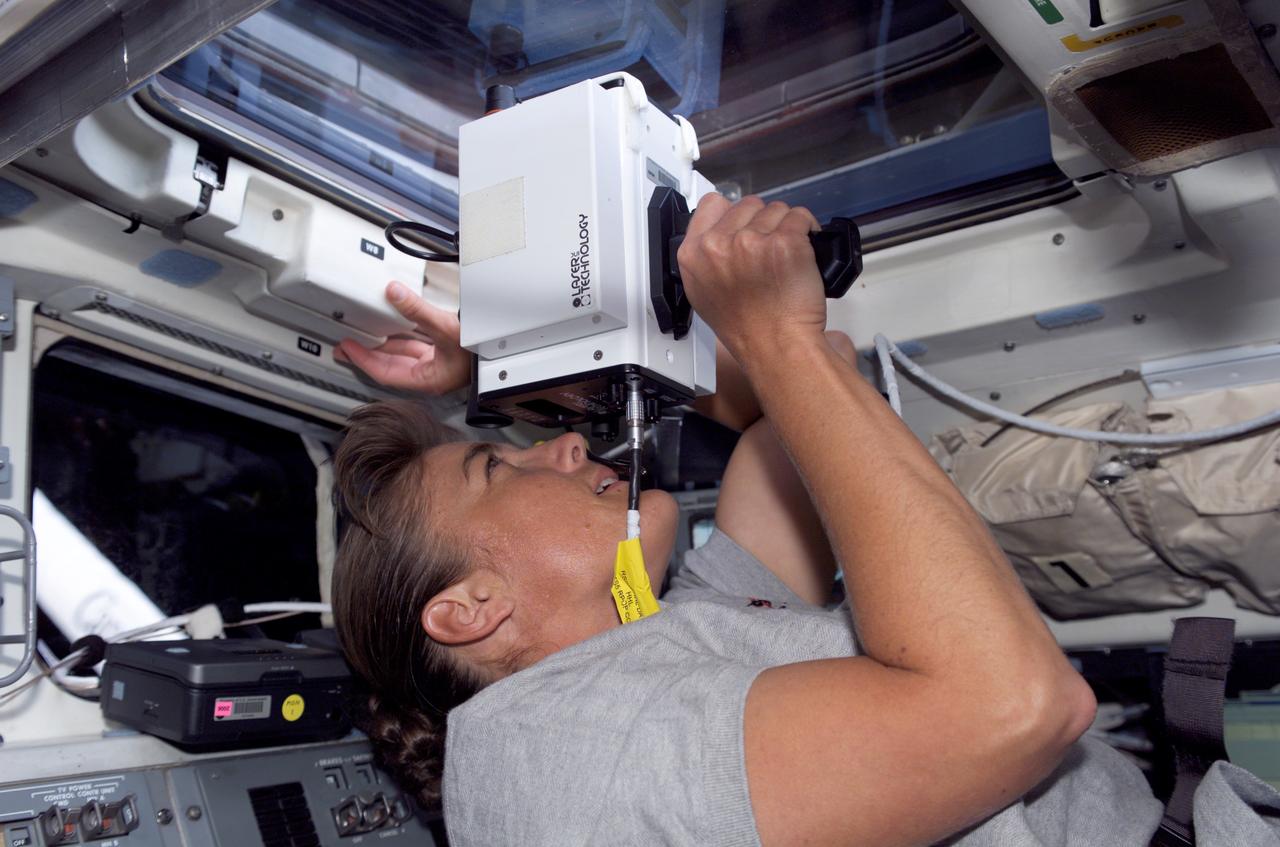
S115-E-05356 (11 Sept. 2006) --- Astronaut Heidemarie M. Stefanyshyn-Piper, STS-115 mission specialist, aims a laser range finder through one of the overhead windows on the flight deck of the Space Shuttle Atlantis at it approaches the International Space Station. The subsequent docking will allow the STS-115 astronauts and the Expedition 13 crew to team up for several days of key tasks in space.
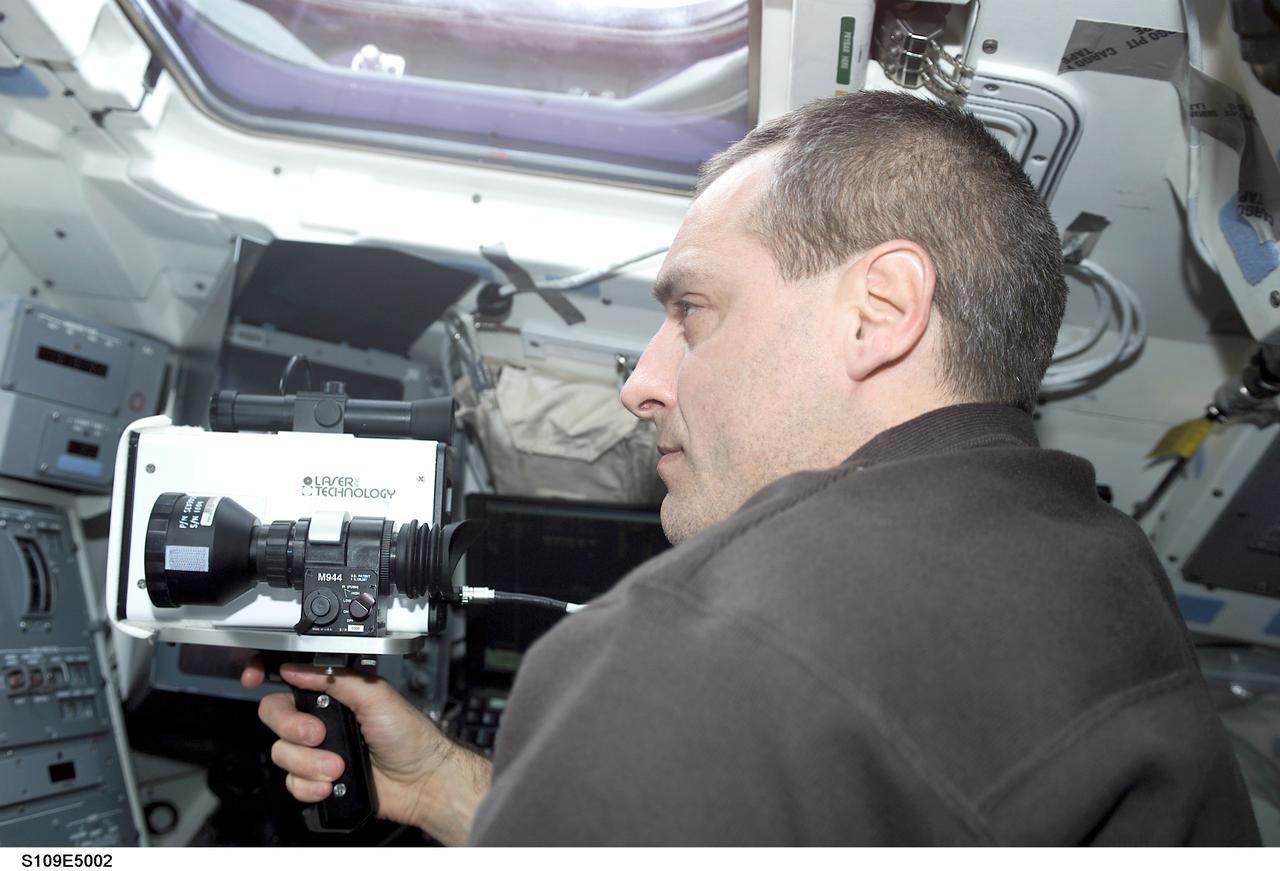
STS109-E-5002 (3 March 2002) --- Astronaut Richard M. Linnehan, mission specialist, uses a laser ranging device designed to measure the range between two spacecraft. Linnehan positioned himself on the cabin's aft flight deck as the Space Shuttle Columbia approached the Hubble Space Telescope. A short time later, the STS-109 crew captured and latched down the giant telescope in the vehicle's cargo bay for several days of work on the Hubble. The image was recorded with a digital still camera.
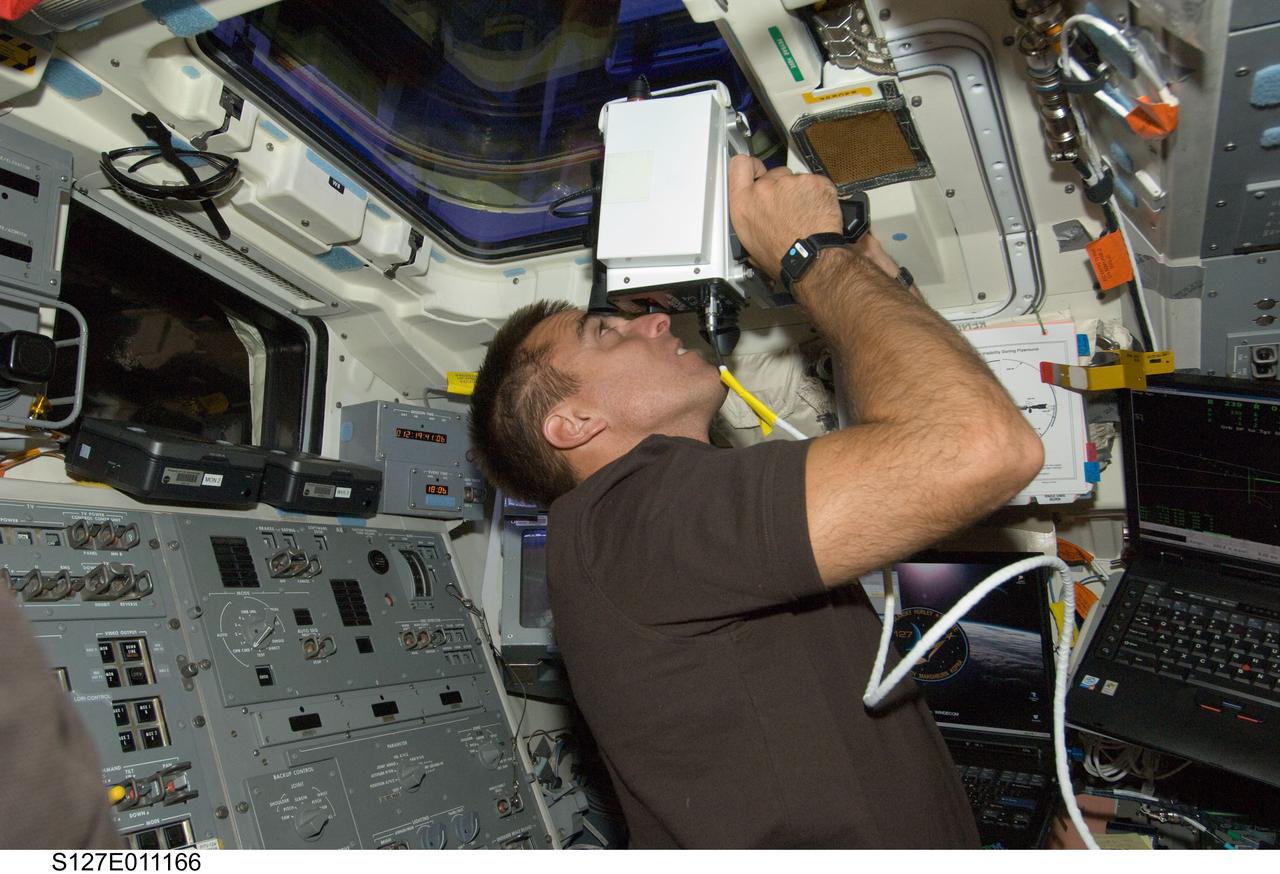
S127-E-011166 (28 July 2009) --- Astronaut Christopher Cassidy, STS-127 mission specialist, uses a handheld laser ranging device -- designed to measure the range between two spacecraft -- through one of the overhead windows on the aft flight deck of Space Shuttle Endeavour after undocking from the International Space Station.
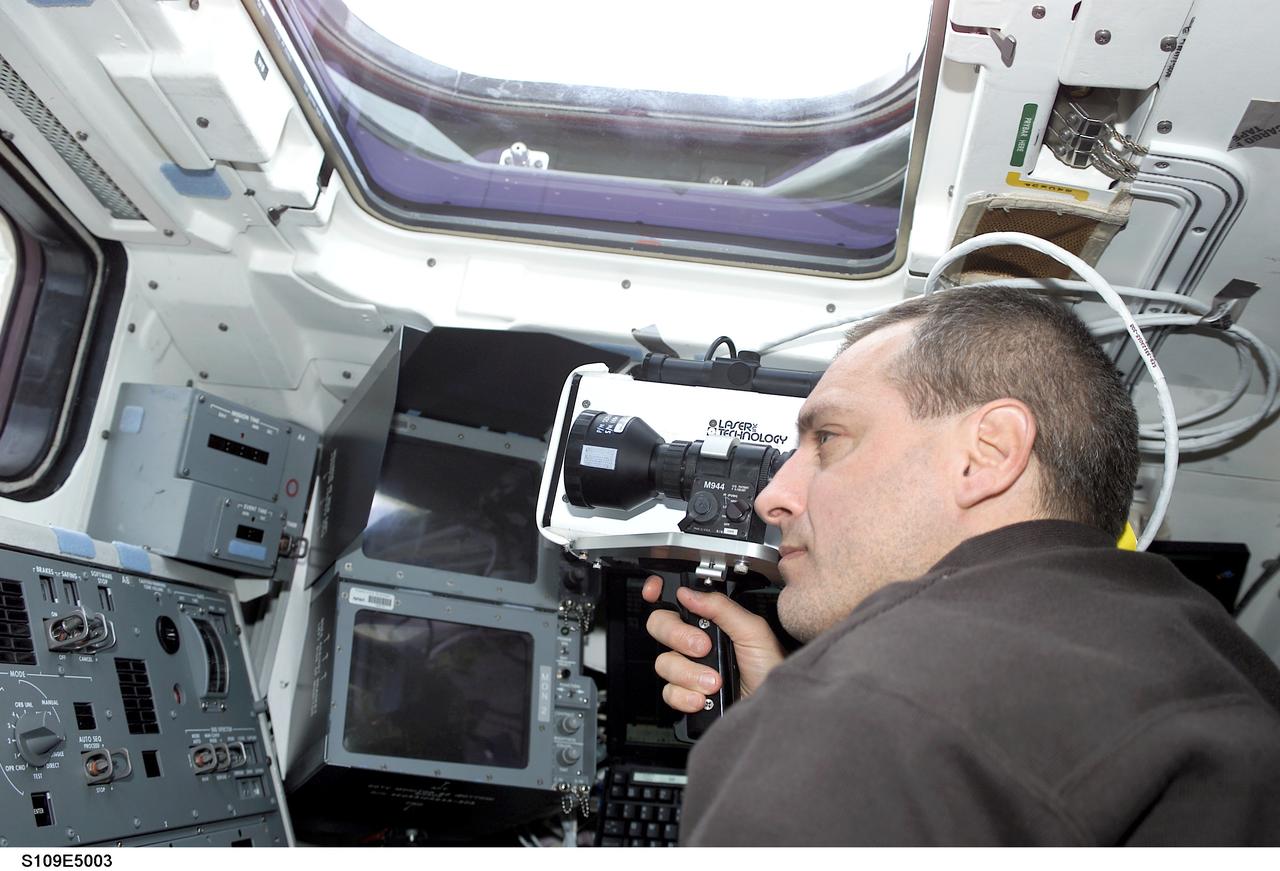
STS109-E-5003 (3 March 2002) --- Astronaut Richard M. Linnehan, mission specialist, uses a laser ranging device designed to measure the range between two spacecraft. Linnehan positioned himself on the cabin's aft flight deck as the Space Shuttle Columbia approached the Hubble Space Telescope. A short time later, the STS-109 crew captured and latched down the giant telescope in the vehicle's cargo bay for several days of work on the Hubble. The image was recorded with a digital still camera.
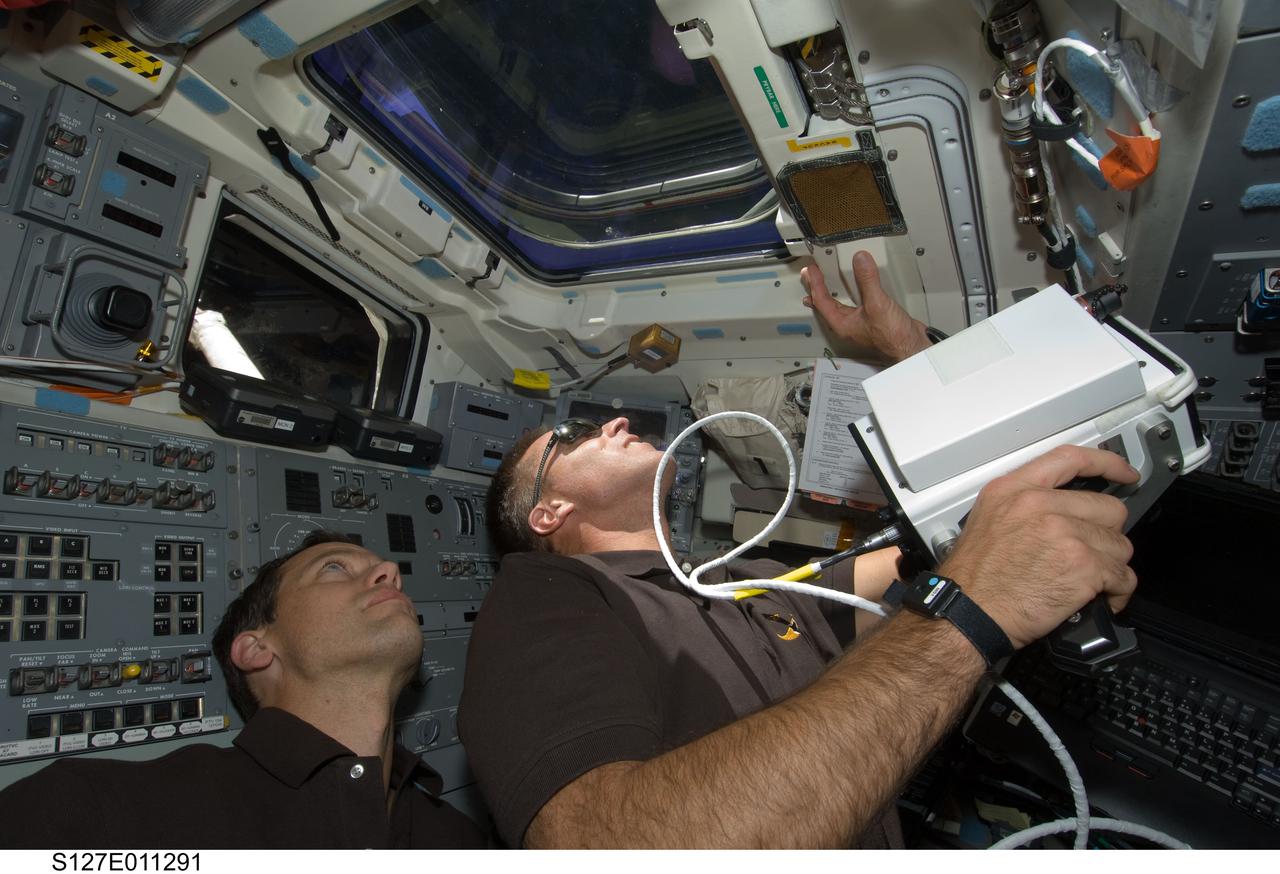
S127-E-011291 (28 July 2009) --- Astronauts Tom Marshburn (left) and Christopher Cassidy, both STS-127 mission specialists, look through an overhead window on the aft flight deck of Space Shuttle Endeavour during flight day 14 activities. Cassidy is holding a handheld laser ranging device -- designed to measure the range between two spacecraft.
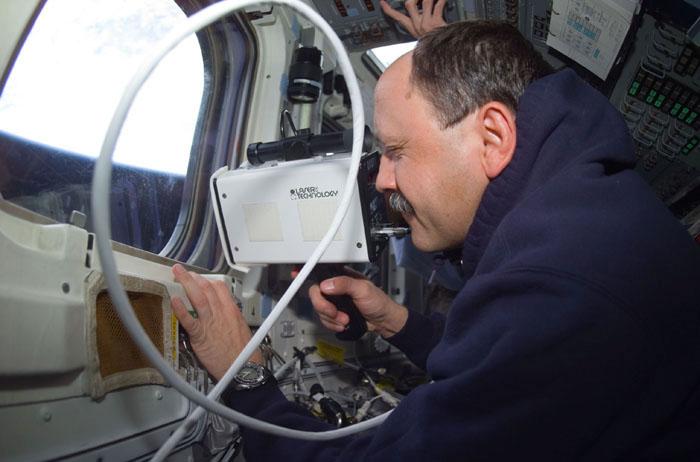
STS102-E-5085 (10 March 2001) --- Cosmonaut Yury V. Usachev, STS-102 mission specialist, uses a laser ranging device on Discovery's aft flight deck during rendezvous operations. The photograph was recorded with a digital still camera.
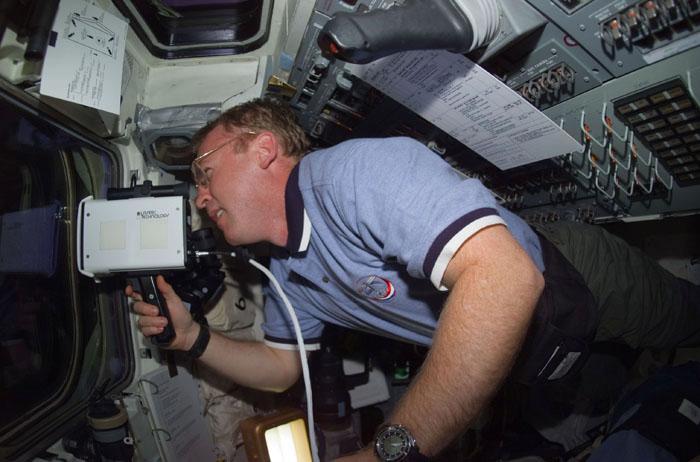
STS102-E-5064 (10 March 2001) --- Astronaut Andrew S.W. Thomas, STS-102 mission specialist, uses a laser ranging device on aft flight deck of the Space Shuttle Discovery. This instrument is a regularly called-on tool during rendezvous operations with the International Space Station (ISS). The photograph was recorded with a digital still camera.
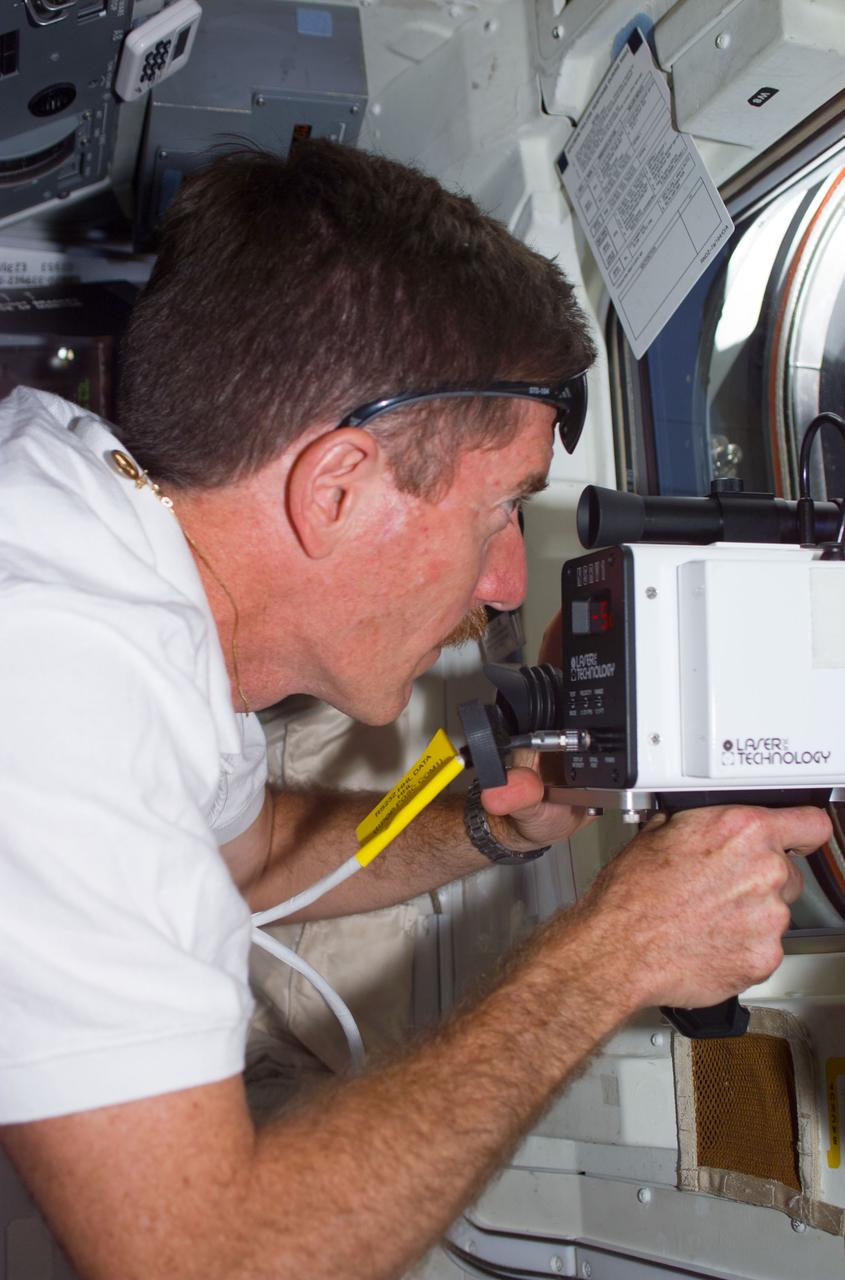
STS104-E-5026 (14 July 2001) --- Positioned near a window on the aft flight deck of the Space Shuttle Atlantis, astronaut James F. Reilly, STS-104 mission specialist, uses a laser ranging device to hone in on the International Space Station (ISS) during pre-docking operations about 237 miles above Earth.
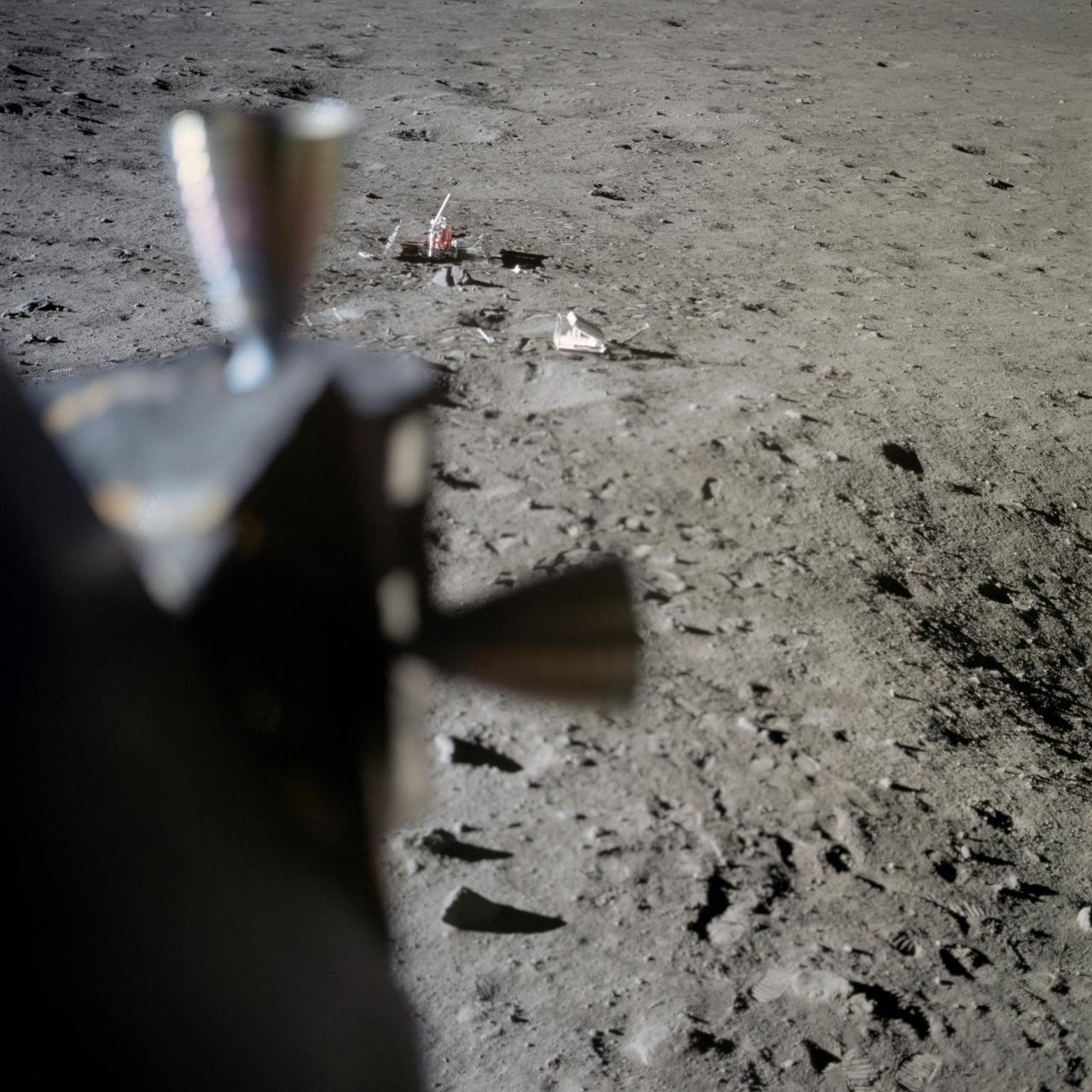
AS11-37-5551 (20 July 1969) --- Two components of the Early Apollo Scientific Experiments Package (EASEP) are seen deployed on the lunar surface in this view photographed from inside the Lunar Module (LM). In the far background is the Passive Seismic Experiment Package (PSEP); and to the right and closer to the camera is the Laser Ranging Retro-Reflector (LR-3). The footprints of Apollo 11 astronauts Neil A. Armstrong and Edwin E. Aldrin Jr. are very distinct in the lunar soil.
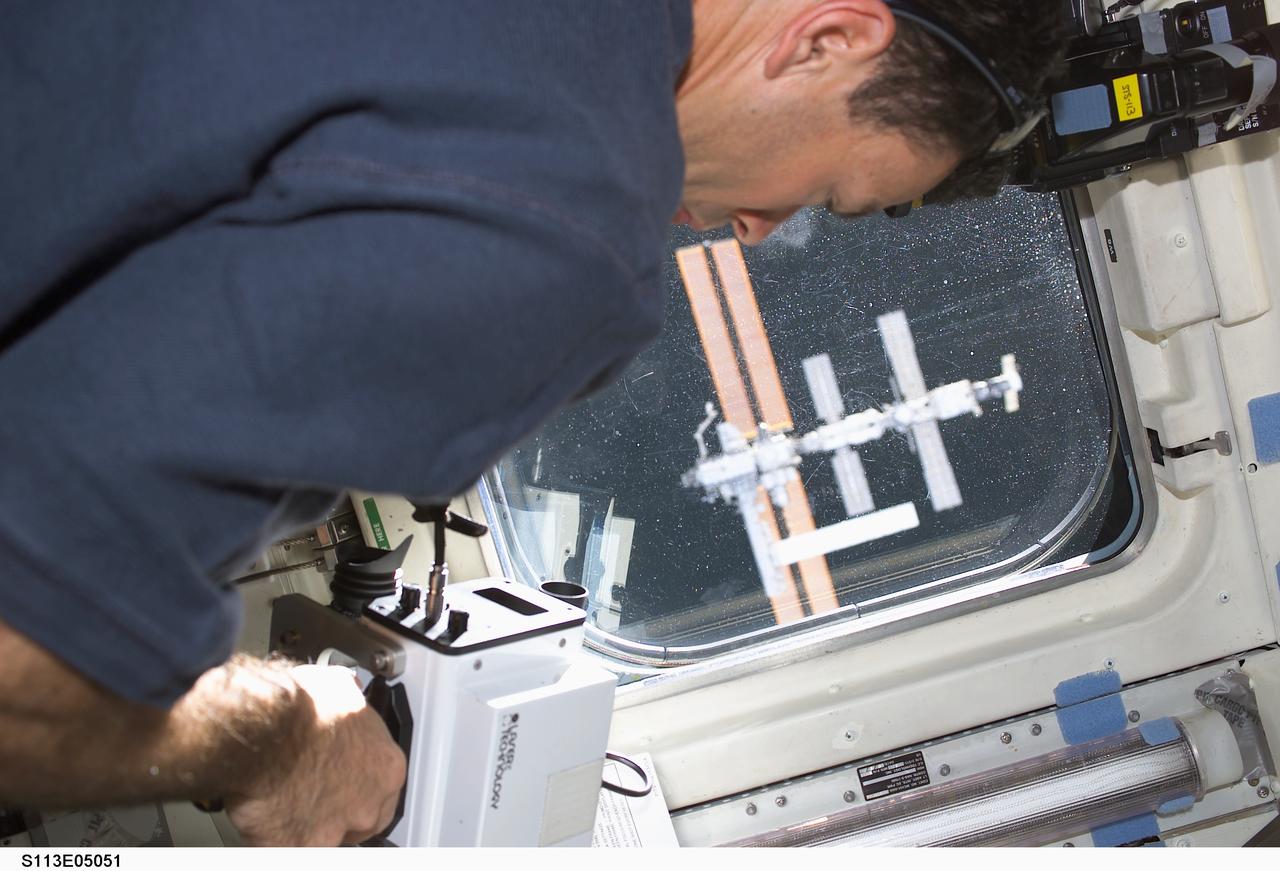
STS113-E-05051 (25 November 2002) --- Astronaut Michael E. Lopez-Alegria, STS-113 mission specialist, uses a laser ranging device on the aft flight deck of the Space Shuttle Endeavour. This instrument is a regularly called-on tool during rendezvous operations with the International Space Station (ISS). The station is visible through an overhead window. Endeavour docked with the station at 3:59 p.m. (CST) on November 25, 2002.
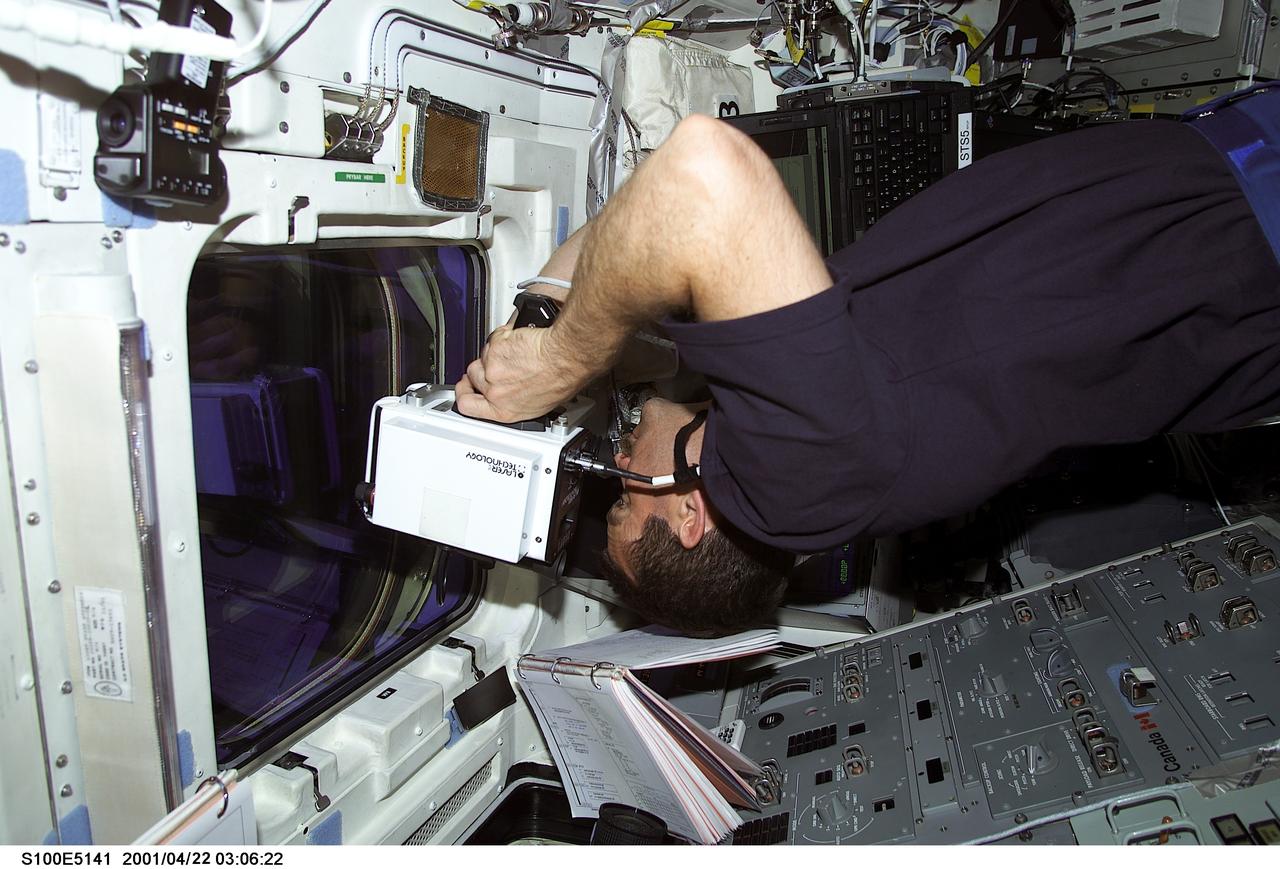
S100-E-5141 (21 April 2001) --- Astronaut Chris A. Hadfield of the Canadian Space Agency (CSA) uses a laser ranging device to keep up with the precise location of the International Space Station (ISS) from his post on the aft flight deck of the Space Shuttle Endeavour. The image was recorded with a digital still camera.

AS11-40-5948 (20 July 1969) --- Astronaut Edwin E. Aldrin Jr., lunar module pilot, is photographed during the Apollo 11 extravehicular activity (EVA) on the moon. He has just deployed the Early Apollo Scientific Experiments Package (EASEP). This is a good view of the deployed equipment. In the foreground is the Passive Seismic Experiment Package (PSEP); beyond it is the Laser Ranging Retro-Reflector (LR-3); in the center background is the United States flag; in the left background is the black and white lunar surface television camera; in the far right background is the Lunar Module (LM). Astronaut Neil A. Armstrong, commander, took this picture with a 70mm lunar surface camera. While astronauts Armstrong and Aldrin descended in the Lunar Module (LM) "Eagle" to explore the Sea of Tranquility region of the moon, astronaut Michael Collins, command module pilot, remained with the Command and Service Modules (CSM) "Columbia" in lunar orbit.