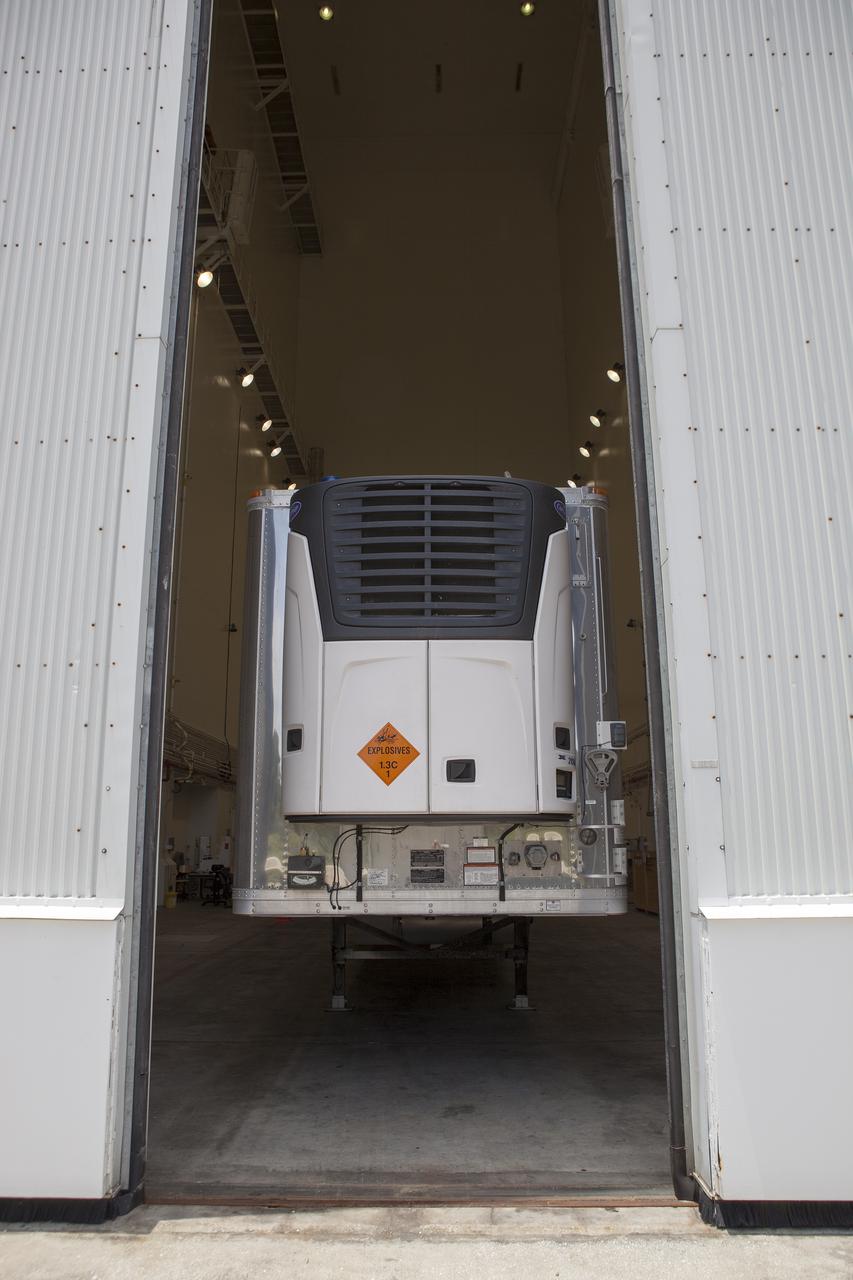
CAPE CANAVERAL, Fla. – At NASA’s Kennedy Space Center in Florida, a truck arrives at the Launch Abort System Facility with the jettison motor from Aerojet in Redmond, Wash. The motor is part of the Launch Abort System, or LAS, for Exploration Flight Test 1, or EFT-1, of the agency’s Orion Multi-Purpose Crew Vehicle. The motor will jettison the LAS away from the Orion crew capsule during the flight test’s early ascent phase. Orion’s Launch Abort System is designed to safely pull the Orion crew module away from the launch vehicle in the event of an emergency on the launch pad or during the initial ascent of NASA’s Space Launch System, or SLS, rocket. Orion is the exploration spacecraft designed to carry crews to space beyond low Earth orbit. It will provide emergency abort capability, sustain the crew during the space travel and provide safe re-entry from deep space return velocities. Orion’s first unpiloted test flight is scheduled to launch in 2014 atop a Delta IV rocket. A second uncrewed flight test is scheduled for 2017 on the SLS rocket. For more information, visit http:__www.nasa.gov_orion. Photo credit: NASA_Dimitri Gerondidakis
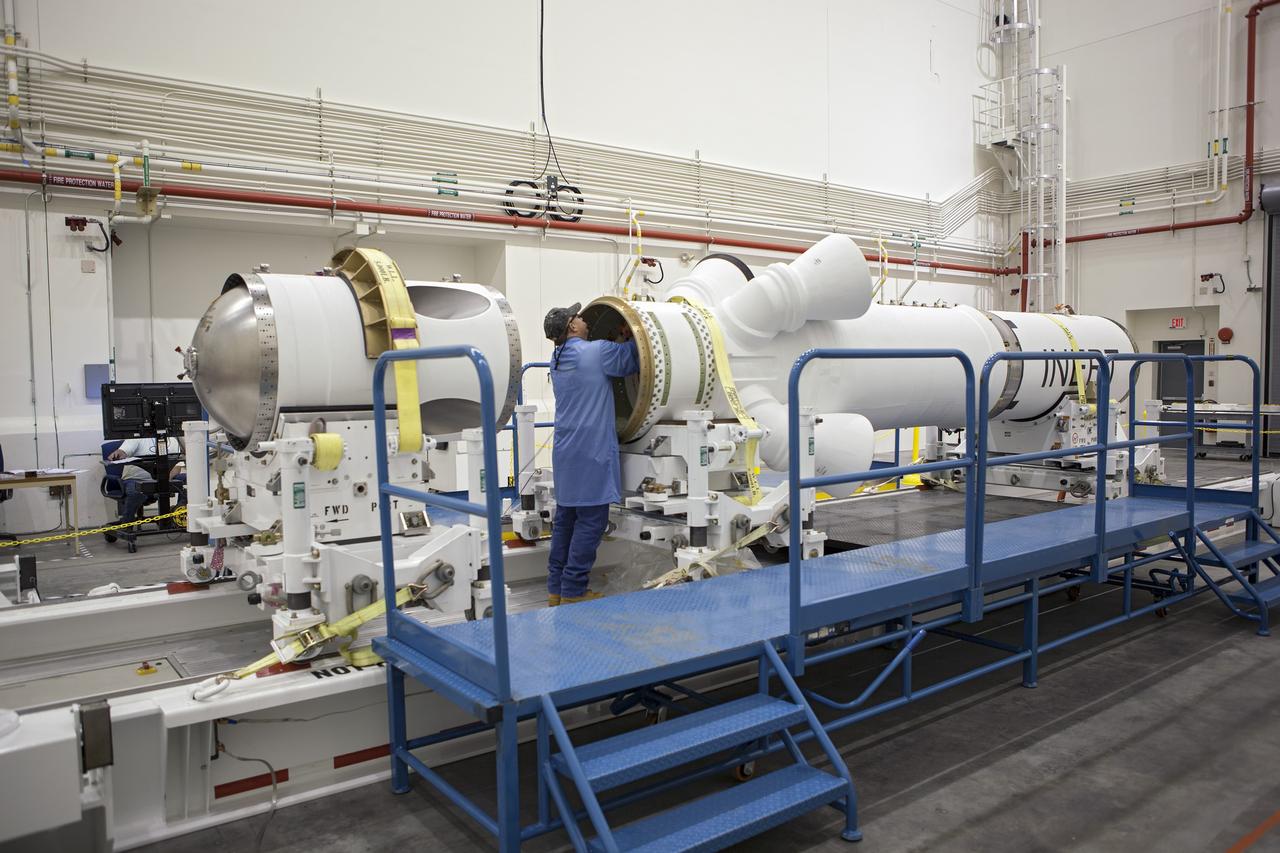
CAPE CANAVERAL, Fla. -- Inside the Launch Abort System Facility at NASA’s Kennedy Space Center in Florida, a technician prepares the launch abort motor for connection to the attitude control motor. Both are segments of Orion’s Launch Abort System, which is designed to safely pull the Orion crew module away from the launch vehicle in the event of an emergency on the launch pad or during the initial ascent of NASA’s Space Launch System, or SLS, rocket. Orion is the exploration spacecraft designed to carry crews to space beyond low Earth orbit. It will provide emergency abort capability, sustain the crew during the space travel and provide safe re-entry from deep space return velocities. Orion’s first unpiloted test flight is scheduled to launch in 2014 atop a Delta IV rocket. A second uncrewed flight test is scheduled for 2017 on the SLS rocket. For more information, visit http://www.nasa.gov/orion. Photo credit: NASA/Dimitri Gerondidakis
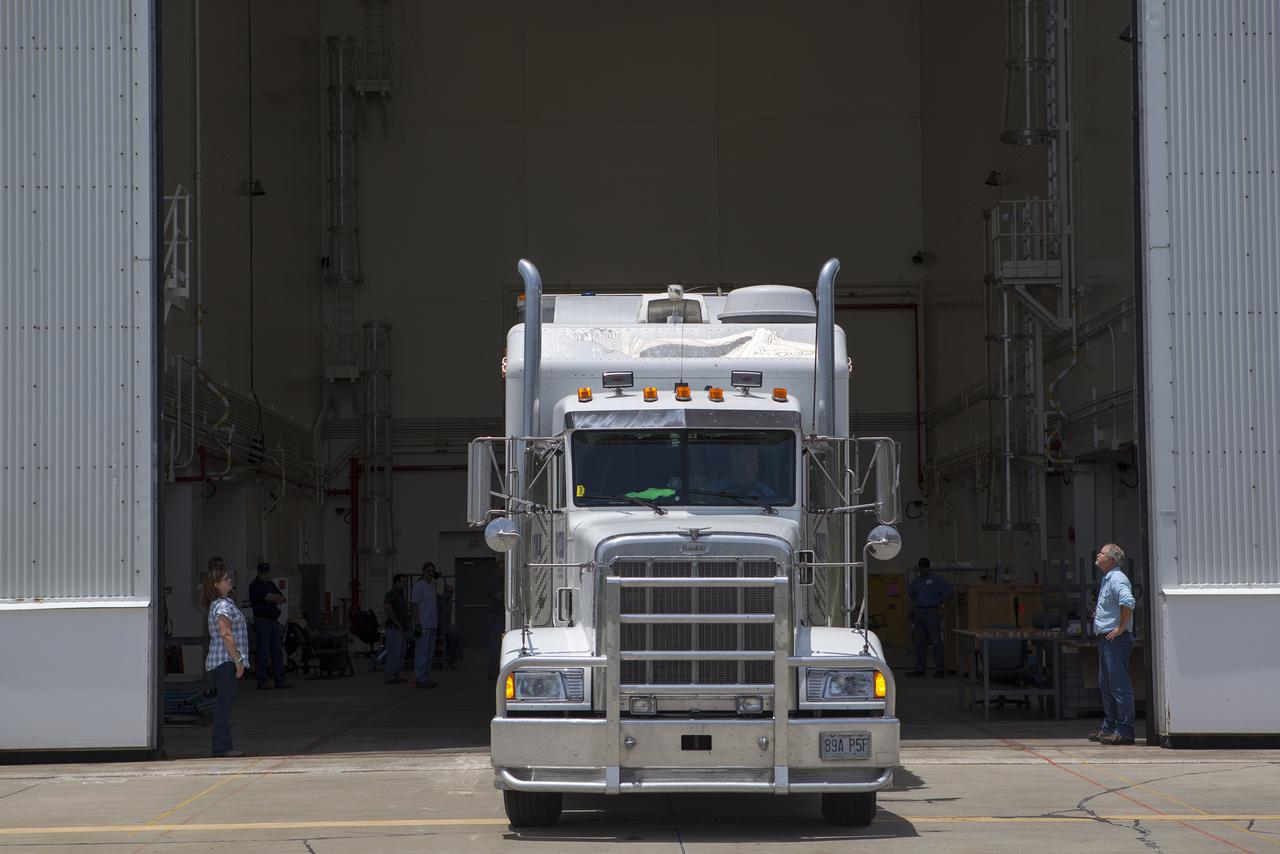
CAPE CANAVERAL, Fla. – At NASA’s Kennedy Space Center in Florida, a truck arrives at the Launch Abort System Facility with the jettison motor from Aerojet in Redmond, Wash. The motor is part of the Launch Abort System, or LAS, for Exploration Flight Test 1, or EFT-1, of the agency’s Orion Multi-Purpose Crew Vehicle. The motor will jettison the LAS away from the Orion crew capsule during the flight test’s early ascent phase. Orion’s Launch Abort System is designed to safely pull the Orion crew module away from the launch vehicle in the event of an emergency on the launch pad or during the initial ascent of NASA’s Space Launch System, or SLS, rocket. Orion is the exploration spacecraft designed to carry crews to space beyond low Earth orbit. It will provide emergency abort capability, sustain the crew during the space travel and provide safe re-entry from deep space return velocities. Orion’s first unpiloted test flight is scheduled to launch in 2014 atop a Delta IV rocket. A second uncrewed flight test is scheduled for 2017 on the SLS rocket. For more information, visit http:__www.nasa.gov_orion. Photo credit: NASA_Dimitri Gerondidakis
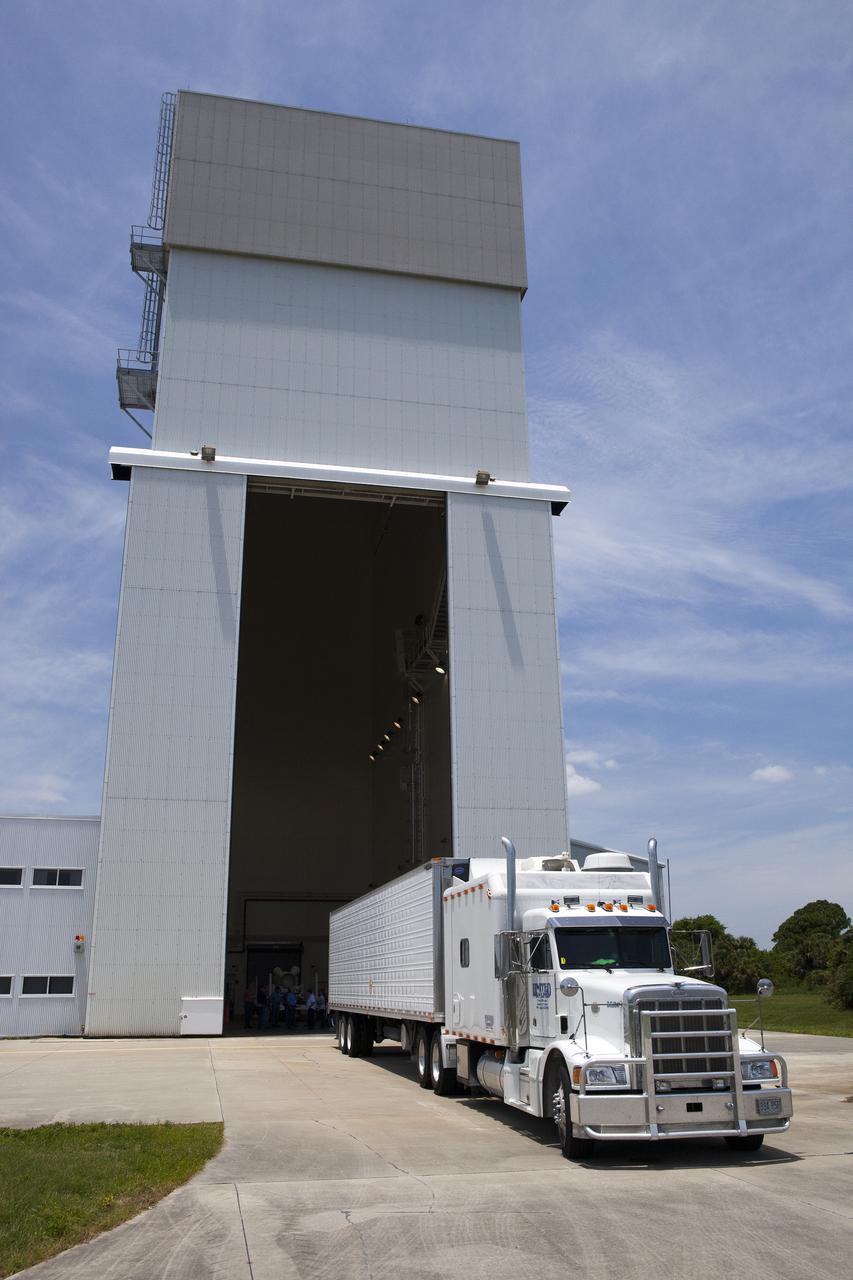
CAPE CANAVERAL, Fla. – At NASA’s Kennedy Space Center in Florida, a truck arrives at the Launch Abort System Facility with the jettison motor from Aerojet in Redmond, Wash. The motor is part of the Launch Abort System, or LAS, for Exploration Flight Test 1, or EFT-1, of the agency’s Orion Multi-Purpose Crew Vehicle. The motor will jettison the LAS away from the Orion crew capsule during the flight test’s early ascent phase. Orion’s Launch Abort System is designed to safely pull the Orion crew module away from the launch vehicle in the event of an emergency on the launch pad or during the initial ascent of NASA’s Space Launch System, or SLS, rocket. Orion is the exploration spacecraft designed to carry crews to space beyond low Earth orbit. It will provide emergency abort capability, sustain the crew during the space travel and provide safe re-entry from deep space return velocities. Orion’s first unpiloted test flight is scheduled to launch in 2014 atop a Delta IV rocket. A second uncrewed flight test is scheduled for 2017 on the SLS rocket. For more information, visit http:__www.nasa.gov_orion. Photo credit: NASA_Dimitri Gerondidakis
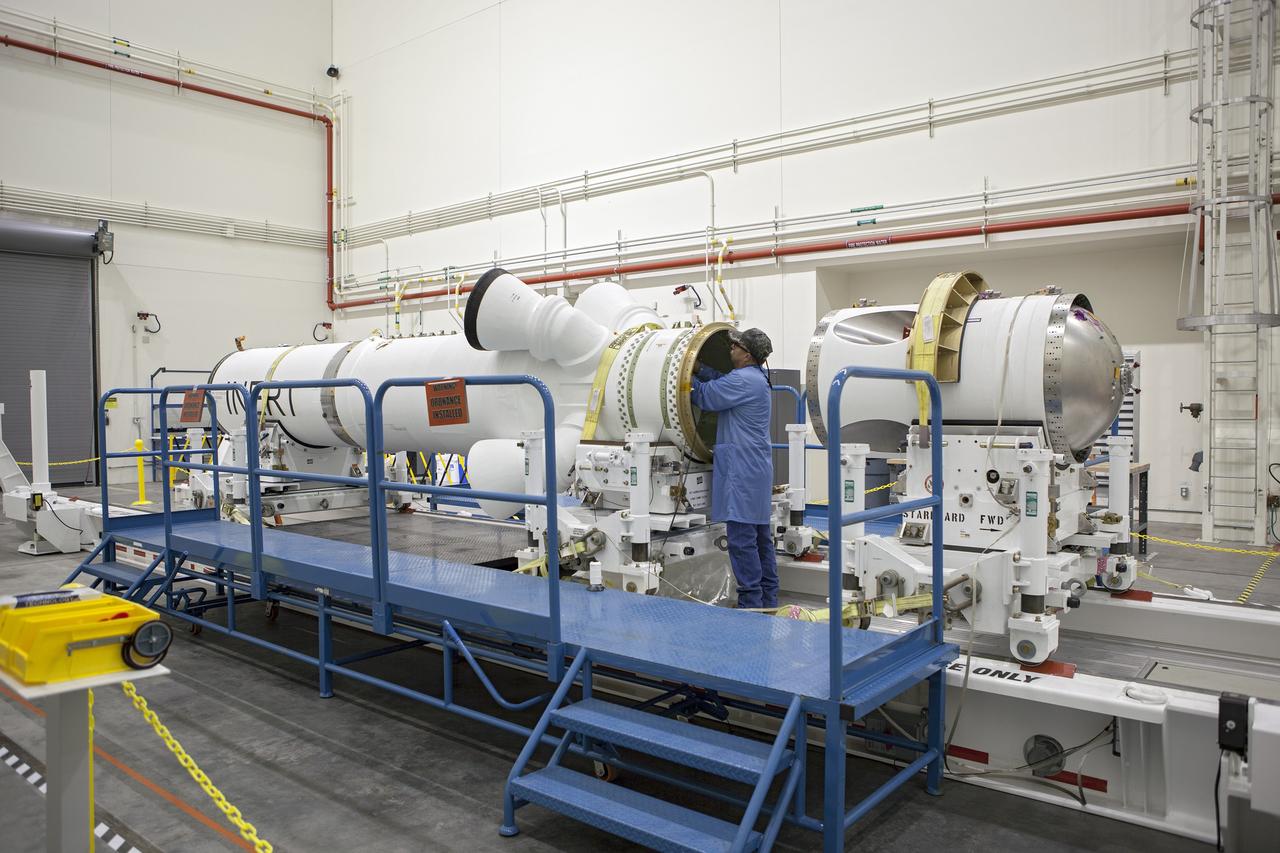
CAPE CANAVERAL, Fla. -- Inside the Launch Abort System Facility at NASA’s Kennedy Space Center in Florida, a technician prepares the launch abort motor for connection to the attitude control motor. Both are segments of Orion’s Launch Abort System, which is designed to safely pull the Orion crew module away from the launch vehicle in the event of an emergency on the launch pad or during the initial ascent of NASA’s Space Launch System, or SLS, rocket. Orion is the exploration spacecraft designed to carry crews to space beyond low Earth orbit. It will provide emergency abort capability, sustain the crew during the space travel and provide safe re-entry from deep space return velocities. Orion’s first unpiloted test flight is scheduled to launch in 2014 atop a Delta IV rocket. A second uncrewed flight test is scheduled for 2017 on the SLS rocket. For more information, visit http://www.nasa.gov/orion. Photo credit: NASA/Dimitri Gerondidakis
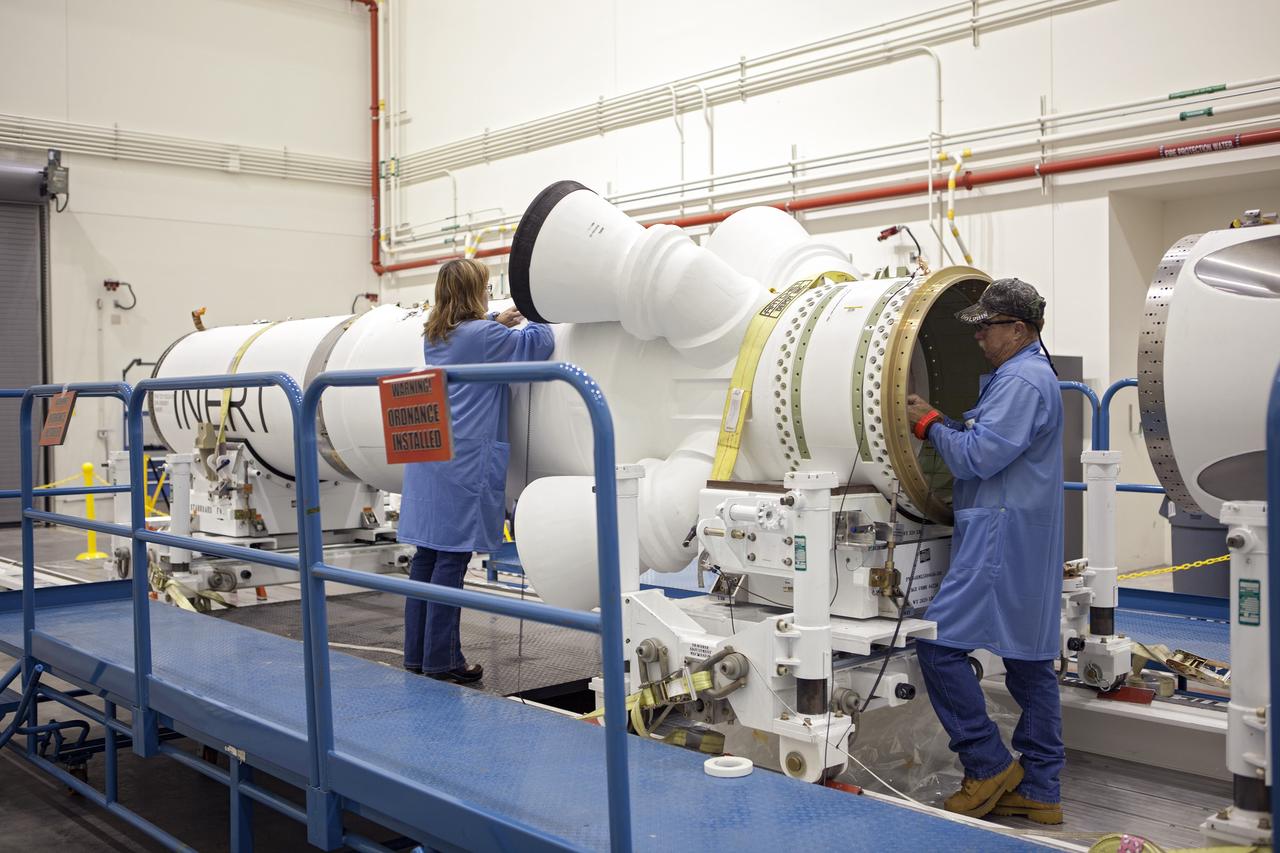
CAPE CANAVERAL, Fla. -- Inside the Launch Abort System Facility at NASA’s Kennedy Space Center in Florida, technicians prepare the launch abort motor for connection to the attitude control motor. Both are segments of Orion’s Launch Abort System, which is designed to safely pull the Orion crew module away from the launch vehicle in the event of an emergency on the launch pad or during the initial ascent of NASA’s Space Launch System, or SLS, rocket. Orion is the exploration spacecraft designed to carry crews to space beyond low Earth orbit. It will provide emergency abort capability, sustain the crew during the space travel and provide safe re-entry from deep space return velocities. Orion’s first unpiloted test flight is scheduled to launch in 2014 atop a Delta IV rocket. A second uncrewed flight test is scheduled for 2017 on the SLS rocket. For more information, visit http://www.nasa.gov/orion. Photo credit: NASA/Dimitri Gerondidakis
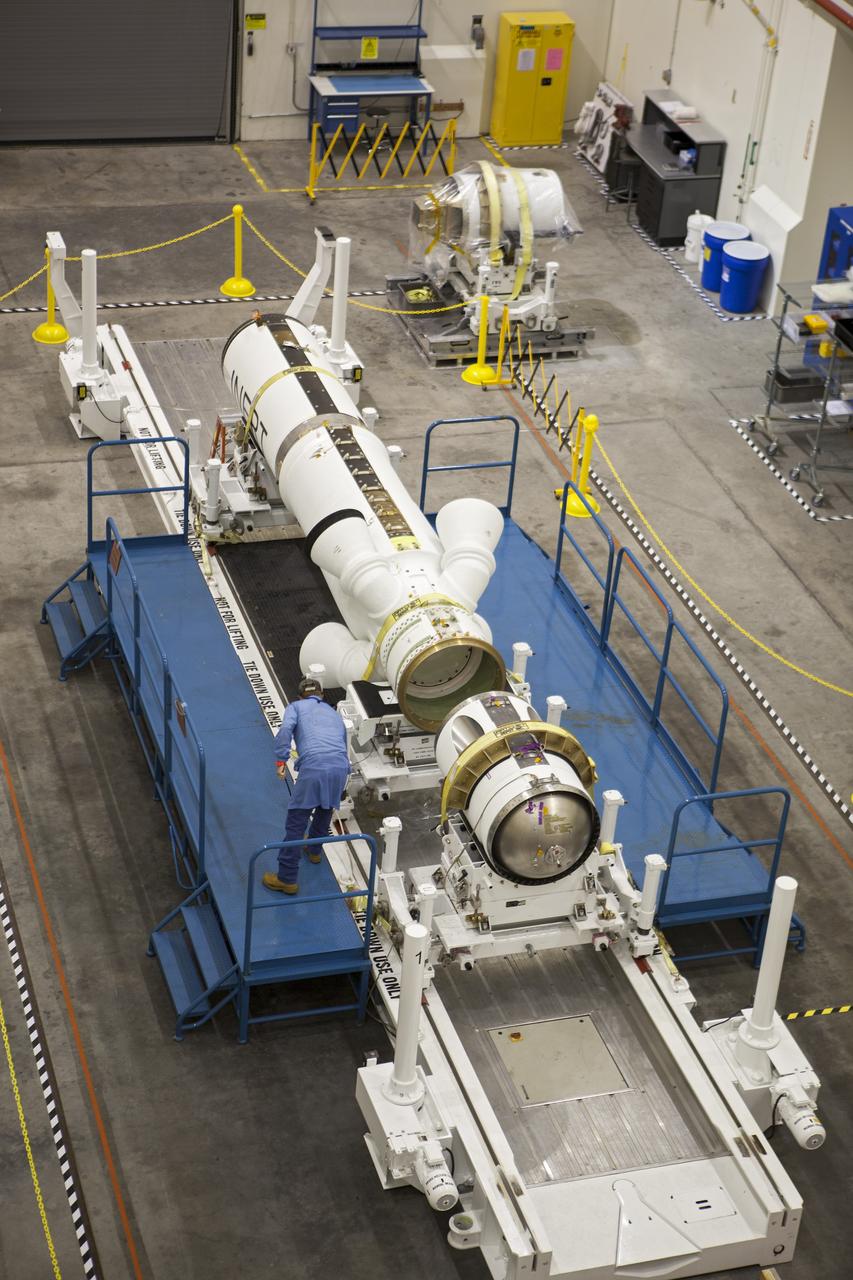
CAPE CANAVERAL, Fla. -- Inside the Launch Abort System Facility at NASA’s Kennedy Space Center in Florida, a technician prepares the launch abort motor for connection to the attitude control motor. Both are segments of Orion’s Launch Abort System, which is designed to safely pull the Orion crew module away from the launch vehicle in the event of an emergency on the launch pad or during the initial ascent of NASA’s Space Launch System, or SLS, rocket. Orion is the exploration spacecraft designed to carry crews to space beyond low Earth orbit. It will provide emergency abort capability, sustain the crew during the space travel and provide safe re-entry from deep space return velocities. Orion’s first unpiloted test flight is scheduled to launch in 2014 atop a Delta IV rocket. A second uncrewed flight test is scheduled for 2017 on the SLS rocket. For more information, visit http://www.nasa.gov/orion. Photo credit: NASA/Dimitri Gerondidakis
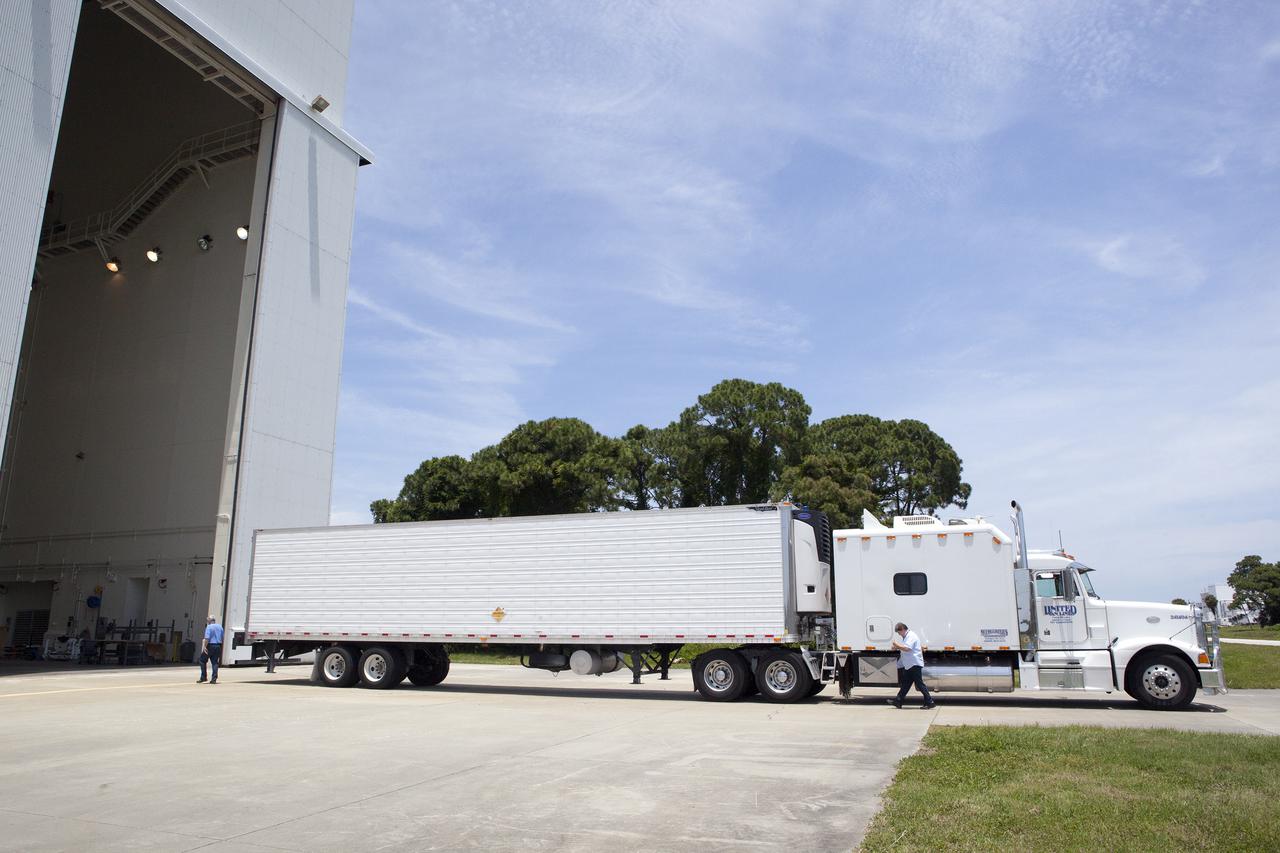
CAPE CANAVERAL, Fla. – At NASA’s Kennedy Space Center in Florida, a truck arrives at the Launch Abort System Facility with the jettison motor from Aerojet in Redmond, Wash. The motor is part of the Launch Abort System, or LAS, for Exploration Flight Test 1, or EFT-1, of the agency’s Orion Multi-Purpose Crew Vehicle. The motor will jettison the LAS away from the Orion crew capsule during the flight test’s early ascent phase. Orion’s Launch Abort System is designed to safely pull the Orion crew module away from the launch vehicle in the event of an emergency on the launch pad or during the initial ascent of NASA’s Space Launch System, or SLS, rocket. Orion is the exploration spacecraft designed to carry crews to space beyond low Earth orbit. It will provide emergency abort capability, sustain the crew during the space travel and provide safe re-entry from deep space return velocities. Orion’s first unpiloted test flight is scheduled to launch in 2014 atop a Delta IV rocket. A second uncrewed flight test is scheduled for 2017 on the SLS rocket. For more information, visit http:__www.nasa.gov_orion. Photo credit: NASA_Dimitri Gerondidakis
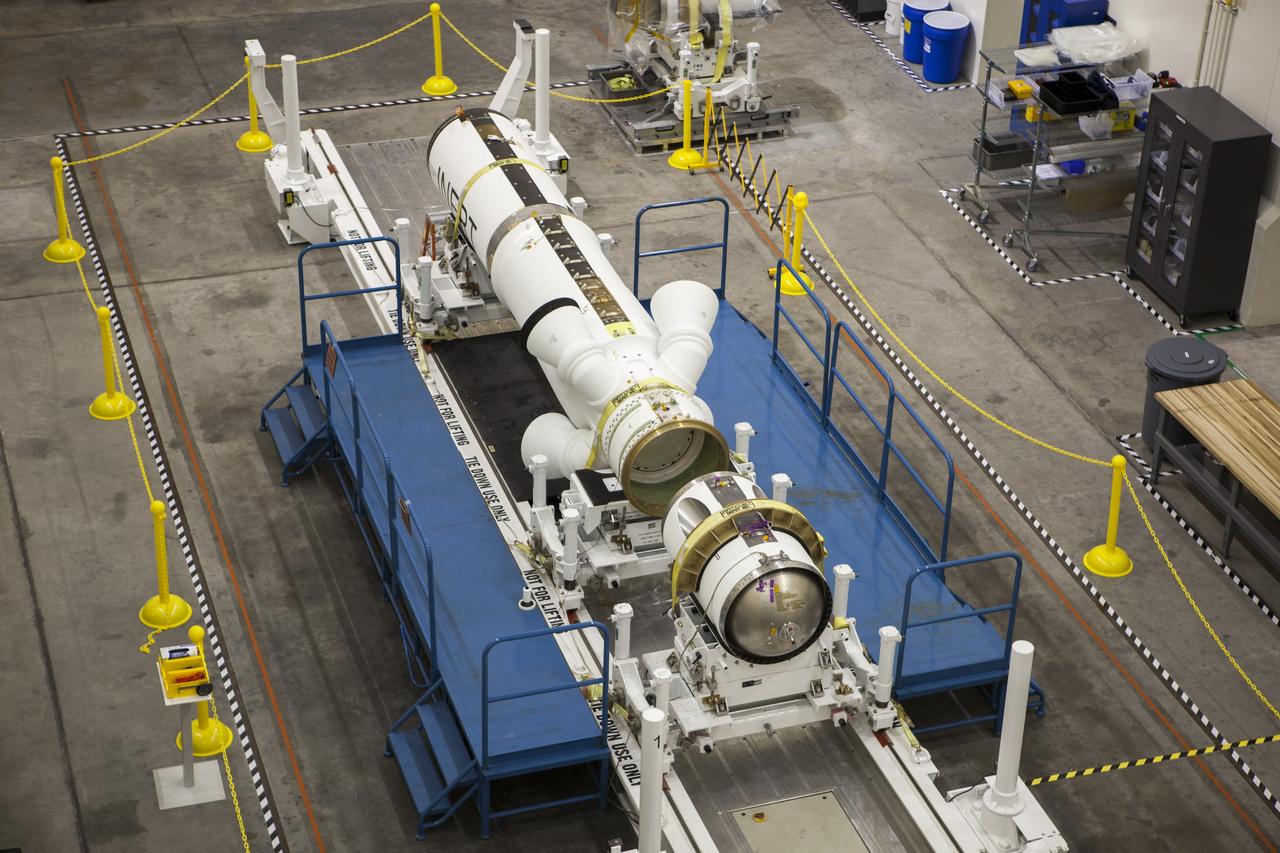
CAPE CANAVERAL, Fla. -- Inside the Launch Abort System Facility at NASA’s Kennedy Space Center in Florida, the launch abort motor has been prepared for connection to the attitude control motor. Both are segments of Orion’s Launch Abort System, which is designed to safely pull the Orion crew module away from the launch vehicle in the event of an emergency on the launch pad or during the initial ascent of NASA’s Space Launch System, or SLS, rocket. Orion is the exploration spacecraft designed to carry crews to space beyond low Earth orbit. It will provide emergency abort capability, sustain the crew during the space travel and provide safe re-entry from deep space return velocities. Orion’s first unpiloted test flight is scheduled to launch in 2014 atop a Delta IV rocket. A second uncrewed flight test is scheduled for 2017 on the SLS rocket. For more information, visit http://www.nasa.gov/orion. Photo credit: NASA/Dimitri Gerondidakis
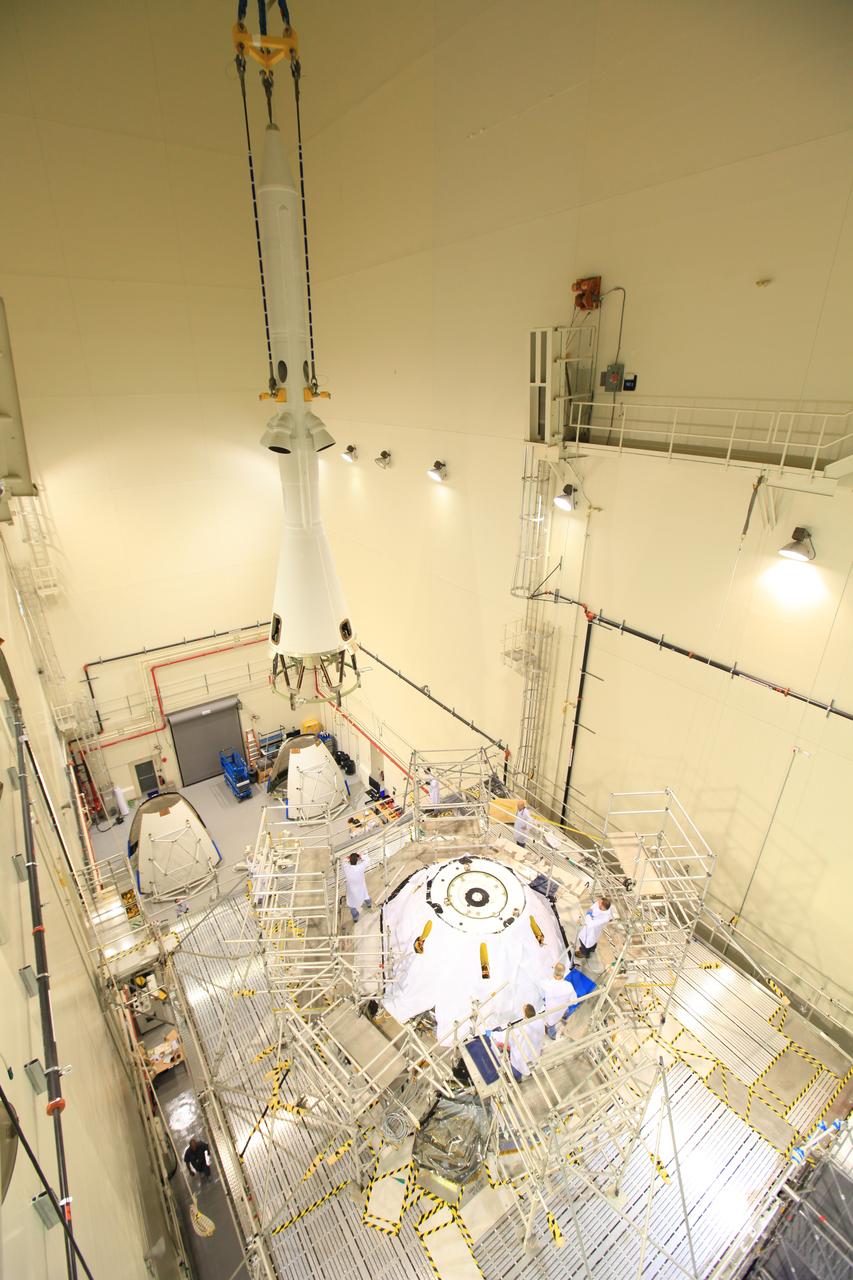
Exploration Flight Test-1 (EFT-1) Orion's launch abort system, or LAS, is positioned atop the crew and service module in the Launch Abort System Facility (LASF) at Kennedy Space Center on Oct. 3, 2014, in preparation for rollout to mate with the Delta IV Heavy launch vehicle. The LAS is designed to activate within milliseconds to pull the crew module to safety in case of an emergency. Exploration Flight Test-1 (EFT-1) verified the function of the jettison motor to separate the LAS from the crew module to ensure a safe, successful mission. Part of Batch image transfer from Flickr.
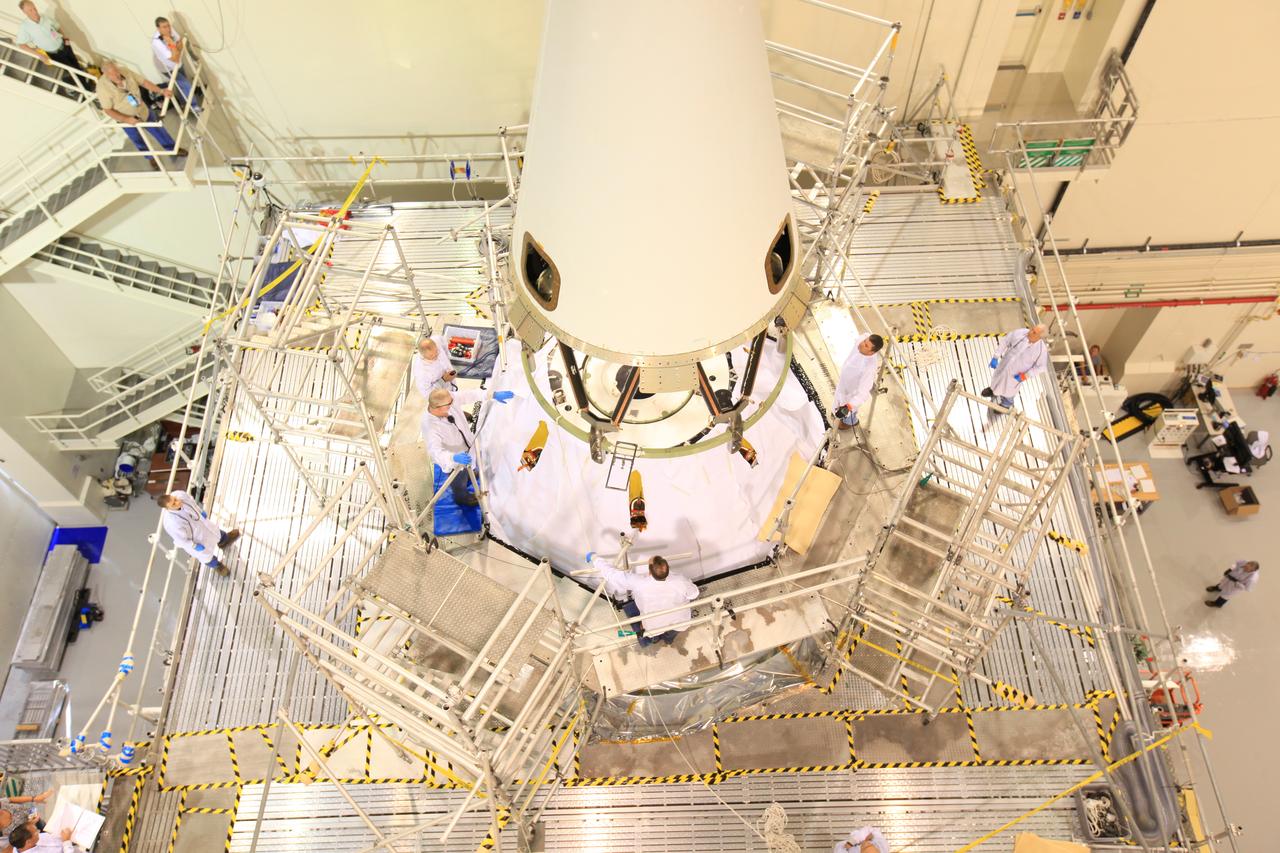
Exploration Flight Test-1 (EFT-1) Orion's launch abort system, or LAS, is positioned atop the crew and service module in the Launch Abort System Facility (LASF) at Kennedy Space Center on Oct. 3, 2014, in preparation for rollout to mate with the Delta IV Heavy launch vehicle. The LAS is designed to activate within milliseconds to pull the crew module to safety in case of an emergency. Exploration Flight Test-1 (EFT-1) verified the function of the jettison motor to separate the LAS from the crew module to ensure a safe, successful mission. Part of Batch image transfer from Flickr.
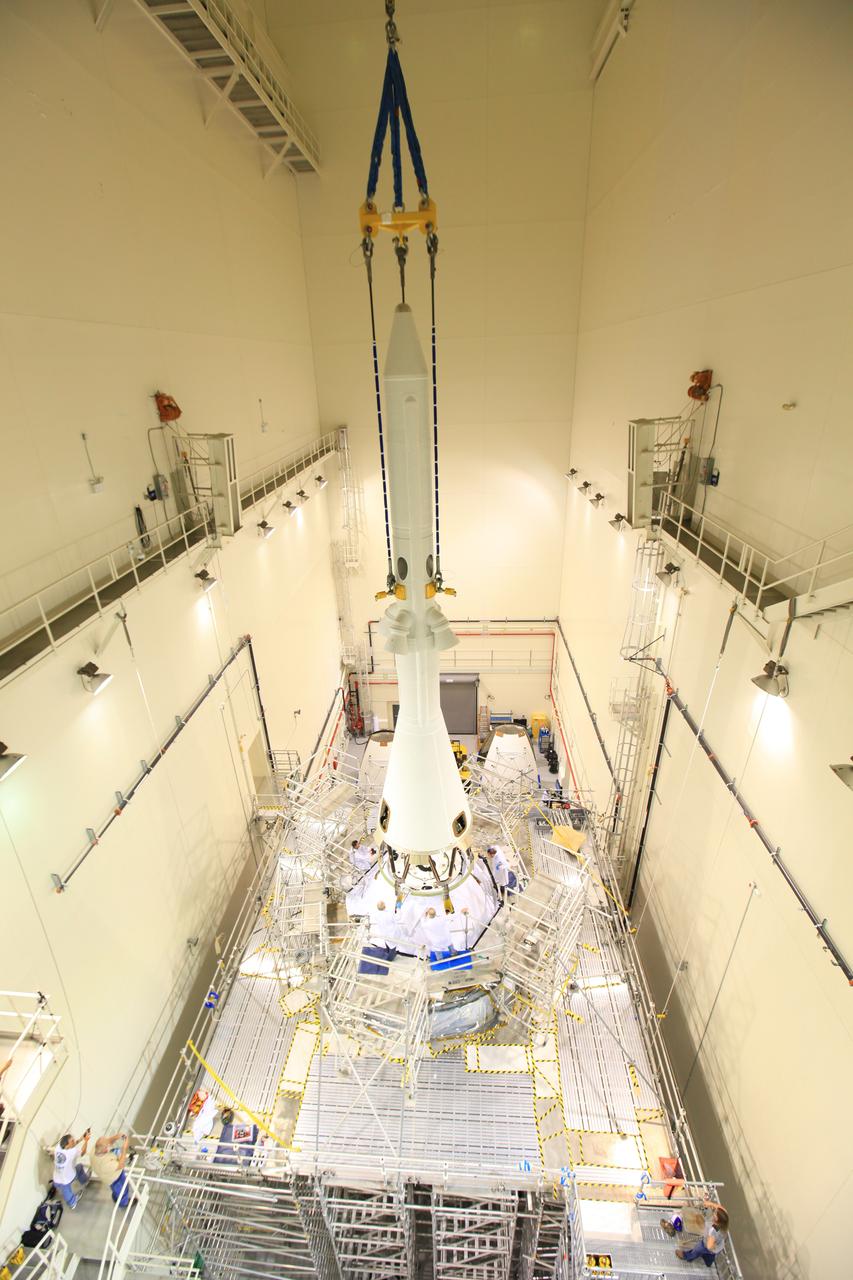
Exploration Flight Test-1 (EFT-1) Orion's launch abort system, or LAS, is positioned atop the crew and service module in the Launch Abort System Facility (LASF) at Kennedy Space Center on Oct. 3, 2014, in preparation for rollout to mate with the Delta IV Heavy launch vehicle. The LAS is designed to activate within milliseconds to pull the crew module to safety in case of an emergency. Exploration Flight Test-1 (EFT-1) verified the function of the jettison motor to separate the LAS from the crew module to ensure a safe, successful mission. Part of Batch image transfer from Flickr.
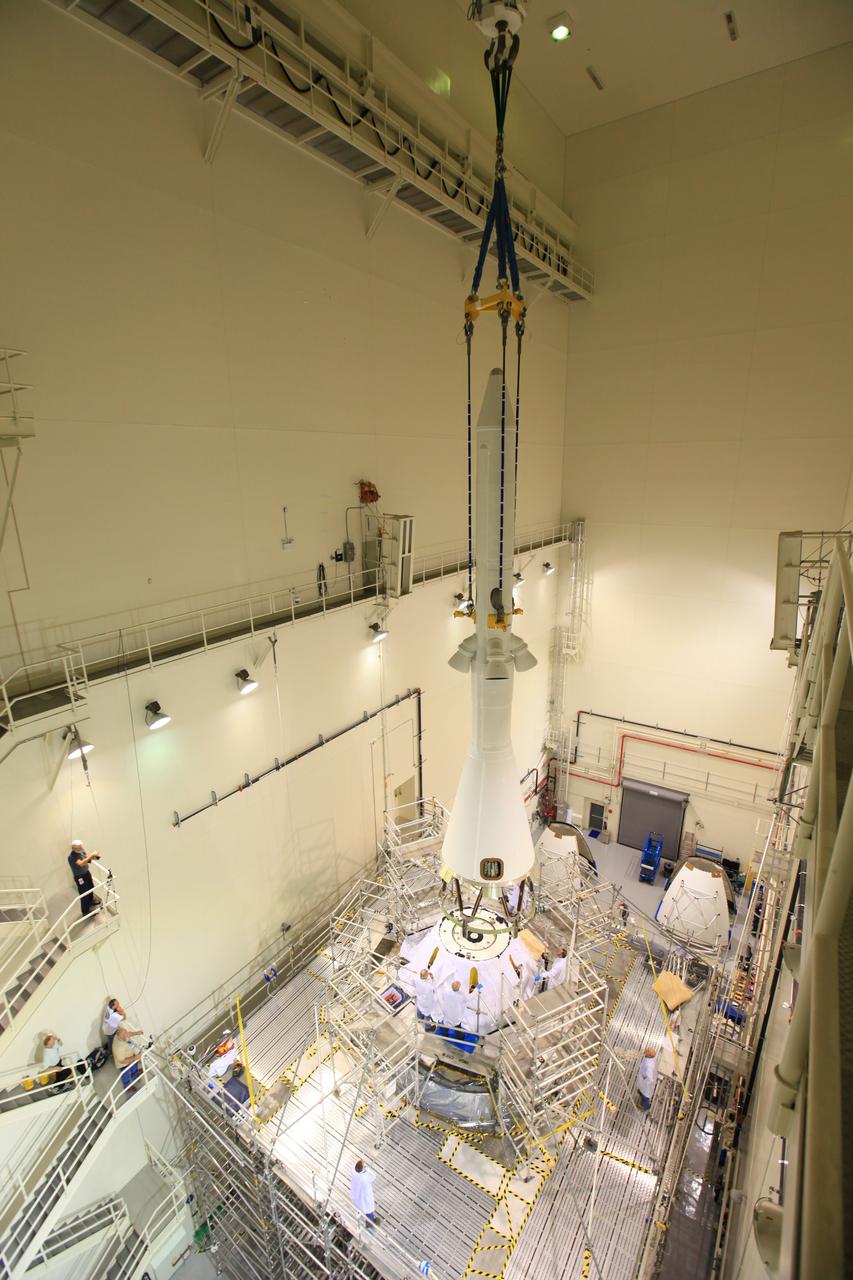
Exploration Flight Test-1 (EFT-1) Orion's launch abort system, or LAS, is positioned atop the crew and service module in the Launch Abort System Facility (LASF) at Kennedy Space Center on Oct. 3, 2014, in preparation for rollout to mate with the Delta IV Heavy launch vehicle. The LAS is designed to activate within milliseconds to pull the crew module to safety in case of an emergency. Exploration Flight Test-1 (EFT-1) verified the function of the jettison motor to separate the LAS from the crew module to ensure a safe, successful mission. Part of Batch image transfer from Flickr.
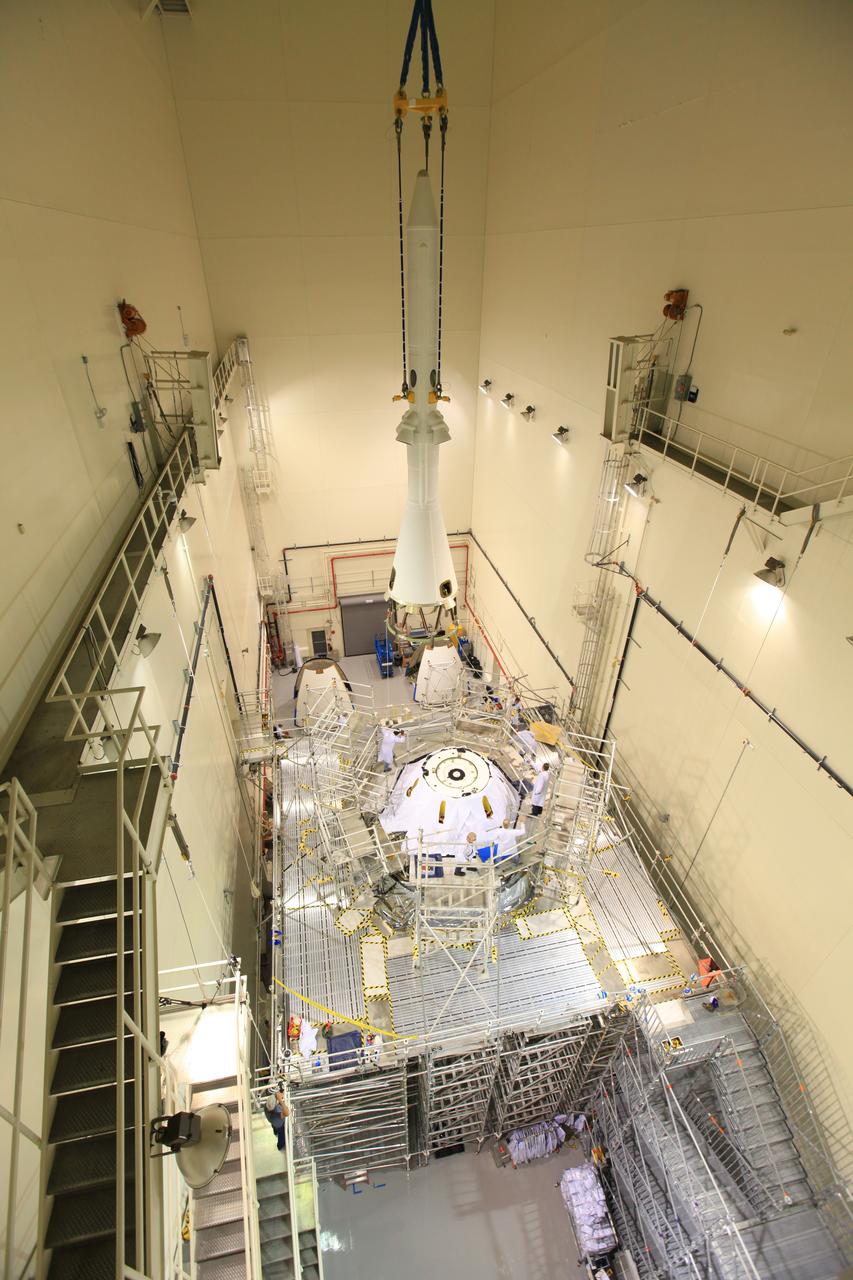
Exploration Flight Test-1 (EFT-1) Orion's launch abort system, or LAS, is positioned atop the crew and service module in the Launch Abort System Facility (LASF) at Kennedy Space Center on Oct. 3, 2014, in preparation for rollout to mate with the Delta IV Heavy launch vehicle. The LAS is designed to activate within milliseconds to pull the crew module to safety in case of an emergency. Exploration Flight Test-1 (EFT-1) verified the function of the jettison motor to separate the LAS from the crew module to ensure a safe, successful mission. Part of Batch image transfer from Flickr.