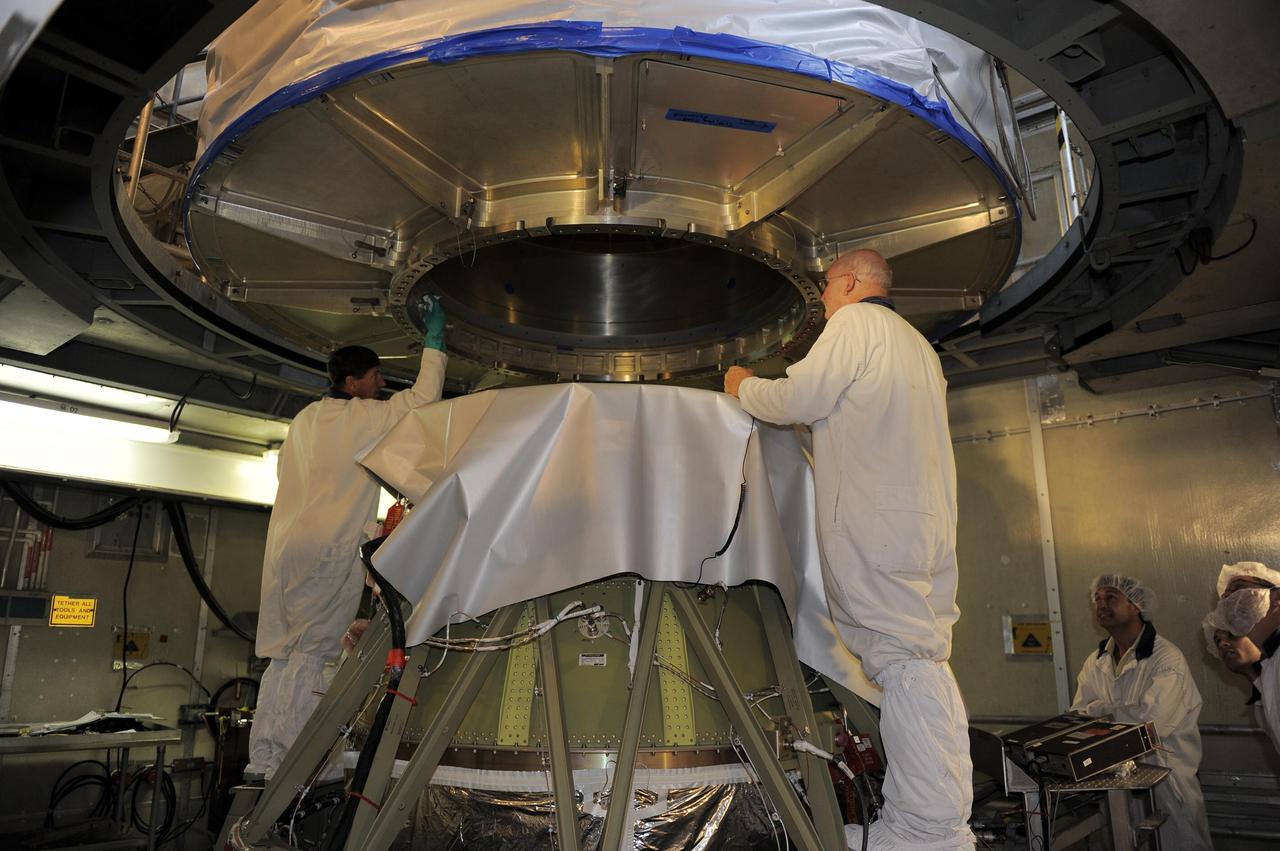
NASA twin Gravity Recovery and Interior Laboratory GRAIL spacecraft are lowered onto the second stage of their Delta II launch vehicle. At top is the spacecraft adapter ring which holds the two lunar probes in their side-by-side launch configuration.
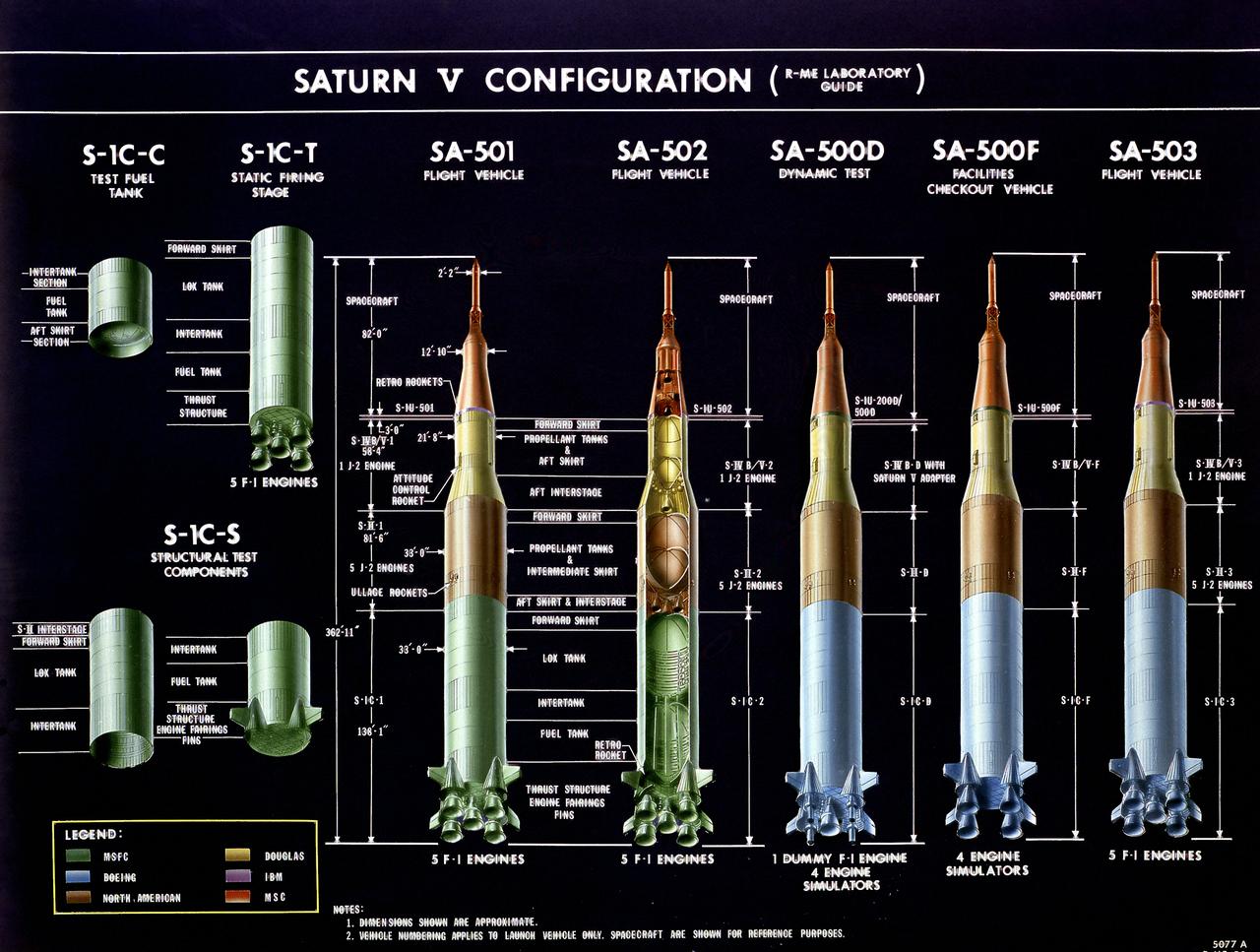
This chart illustrates the testing vehicle and flight vehicle configurations, in addition to the approximate dimensions of the stages of the Saturn V launch vehicle.
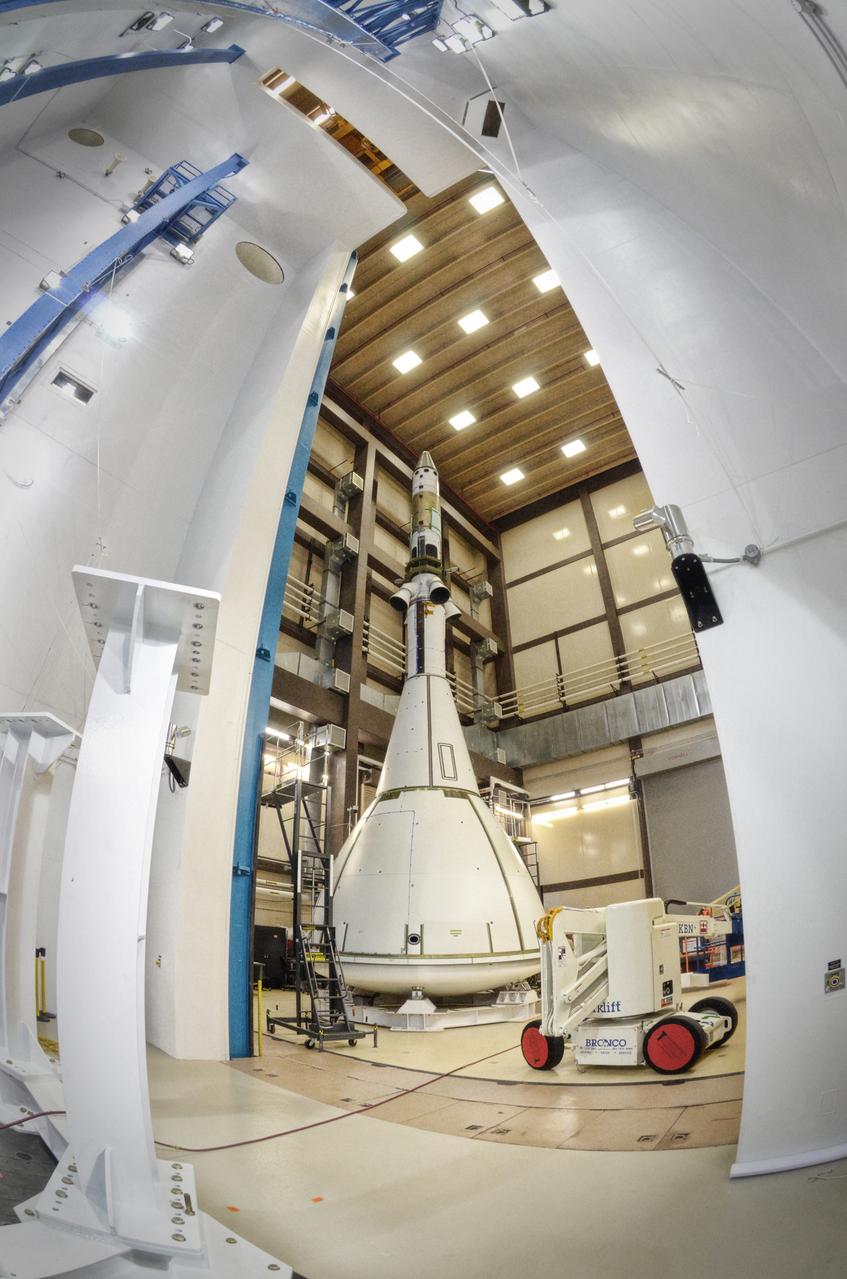
The Orion ground test vehicle is prepared for the Launch Abort Vehicle Configuration Test at Lockheed Martin's facilities in Denver on Sept. 15, 2011. For this test, the vehicle was covered with fillets and ogive panels that resemble the vehicle's launch configuration. The spacecraft underwent testing at sound pressure levels that emulate those experienced at launch and in the event an abort is needed to carry the crew to safety away from a potential problem on the launch pad or during ascent. Part of Batch image transfer from Flickr.
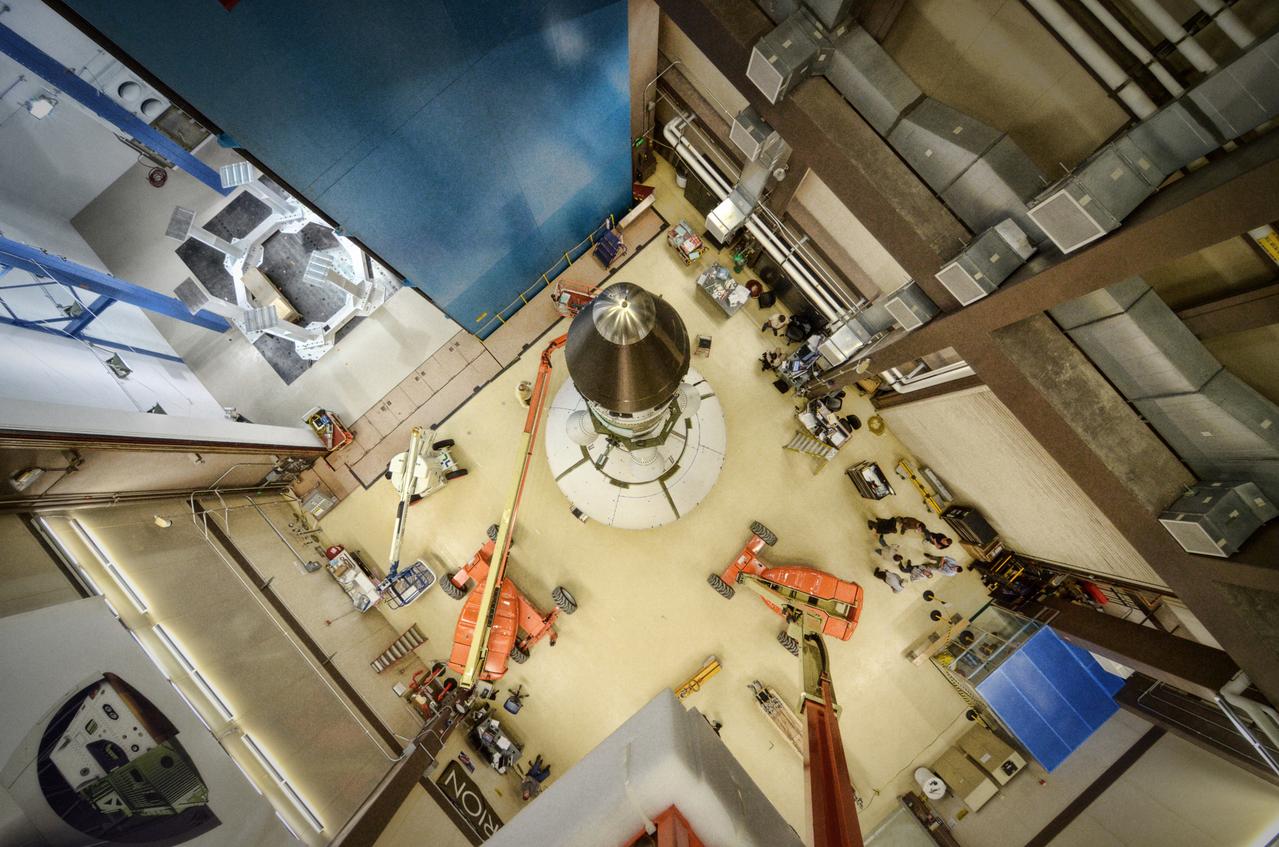
The Orion ground test vehicle is prepared for the Launch Abort Vehicle Configuration Test at Lockheed Martin's facilities in Denver on Sept. 15, 2011. For this test, the vehicle was covered with fillets and ogive panels that resemble the vehicle's launch configuration. The spacecraft underwent testing at sound pressure levels that emulate those experienced at launch and in the event an abort is needed to carry the crew to safety away from a potential problem on the launch pad or during ascent. Part of Batch image transfer from Flickr.
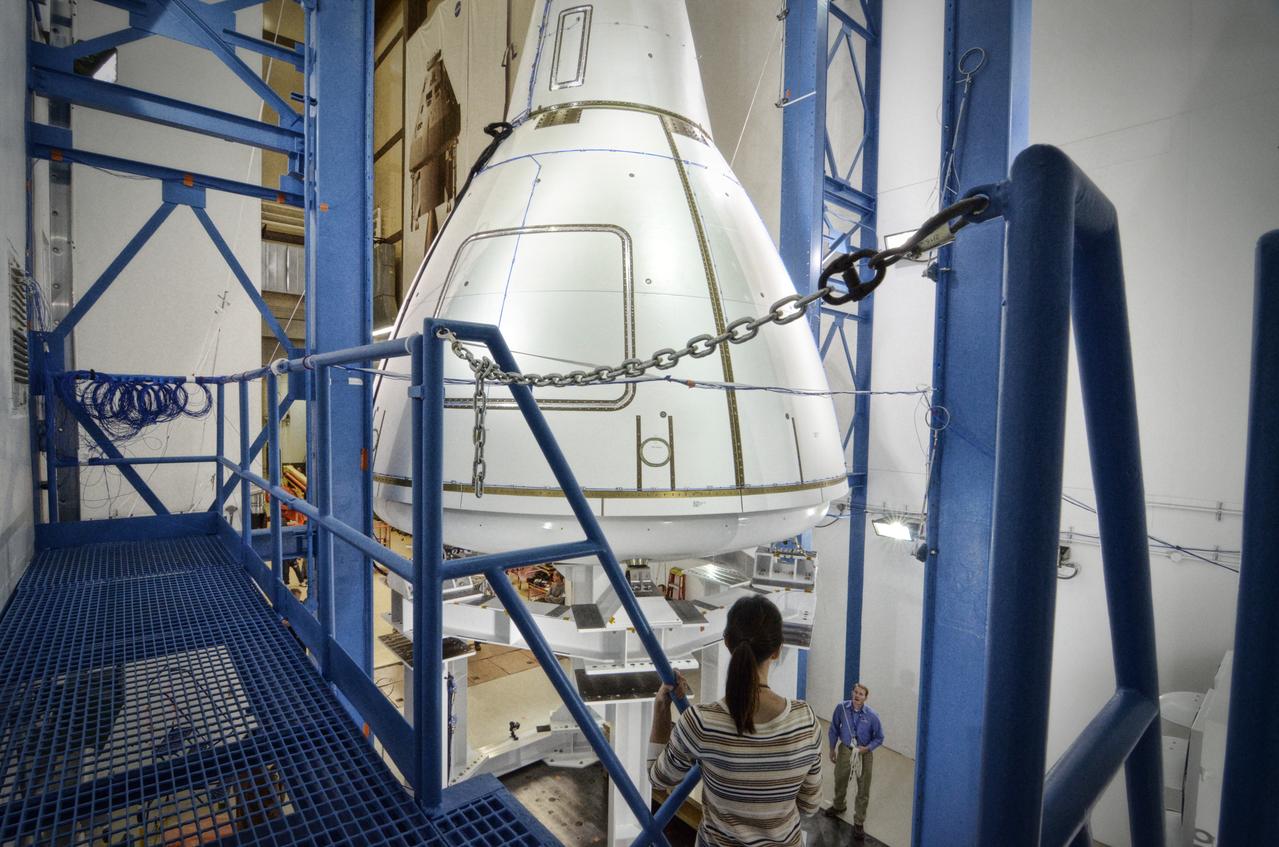
The Orion ground test vehicle is prepared for the Launch Abort Vehicle Configuration Test at Lockheed Martin's facilities in Denver on Sept. 15, 2011. For this test, the vehicle was covered with fillets and ogive panels that resemble the vehicle's launch configuration. The spacecraft underwent testing at sound pressure levels that emulate those experienced at launch and in the event an abort is needed to carry the crew to safety away from a potential problem on the launch pad or during ascent. Part of Batch image transfer from Flickr.

The Orion ground test vehicle is prepared for the Launch Abort Vehicle Configuration Test at Lockheed Martin's facilities in Denver on Sept. 15, 2011. For this test, the vehicle was covered with fillets and ogive panels that resemble the vehicle's launch configuration. The spacecraft underwent testing at sound pressure levels that emulate those experienced at launch and in the event an abort is needed to carry the crew to safety away from a potential problem on the launch pad or during ascent. Part of Batch image transfer from Flickr.

The Orion ground test vehicle is prepared for the Launch Abort Vehicle Configuration Test at Lockheed Martin's facilities in Denver on Sept. 15, 2011. For this test, the vehicle was covered with fillets and ogive panels that resemble the vehicle's launch configuration. The spacecraft underwent testing at sound pressure levels that emulate those experienced at launch and in the event an abort is needed to carry the crew to safety away from a potential problem on the launch pad or during ascent. Part of Batch image transfer from Flickr.
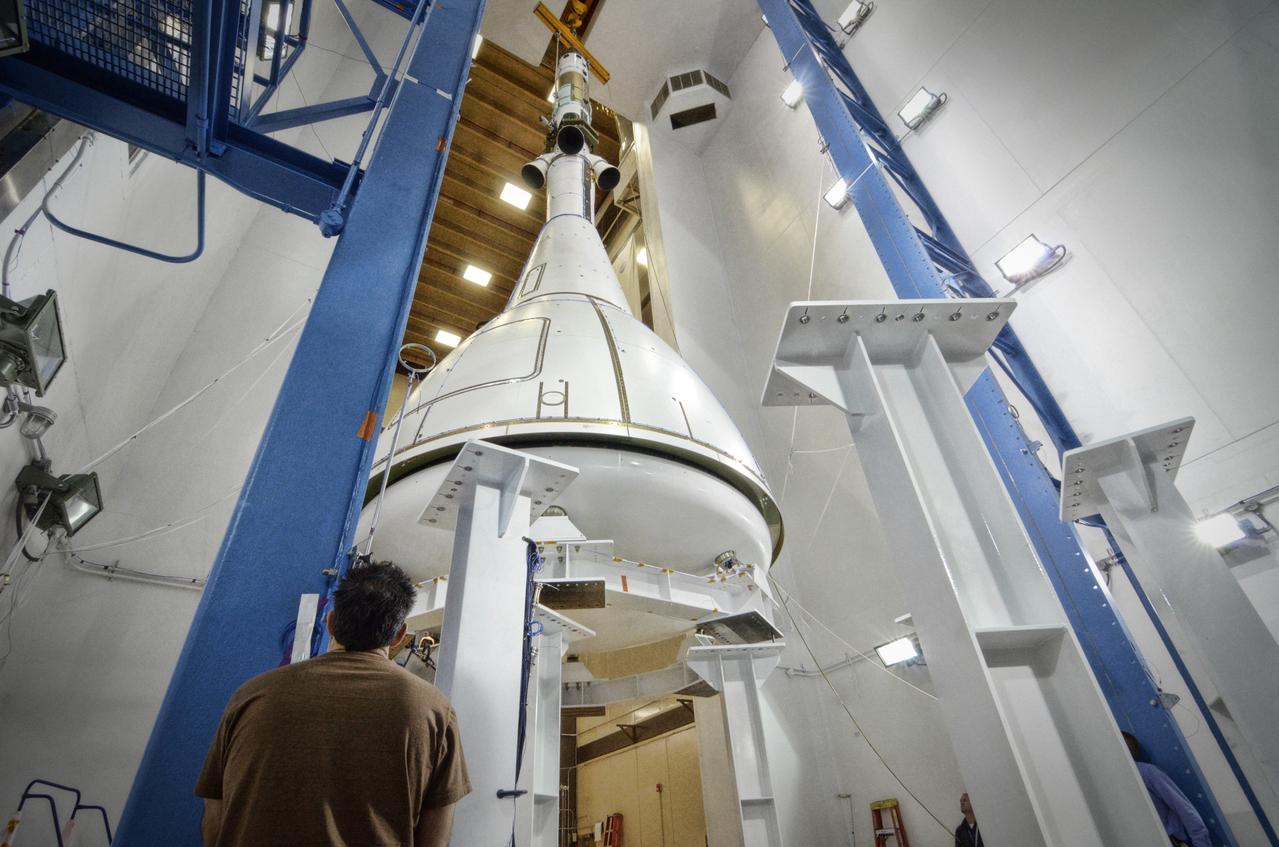
The Orion ground test vehicle is prepared for the Launch Abort Vehicle Configuration Test at Lockheed Martin's facilities in Denver on Sept. 15, 2011. For this test, the vehicle was covered with fillets and ogive panels that resemble the vehicle's launch configuration. The spacecraft underwent testing at sound pressure levels that emulate those experienced at launch and in the event an abort is needed to carry the crew to safety away from a potential problem on the launch pad or during ascent. Part of Batch image transfer from Flickr.
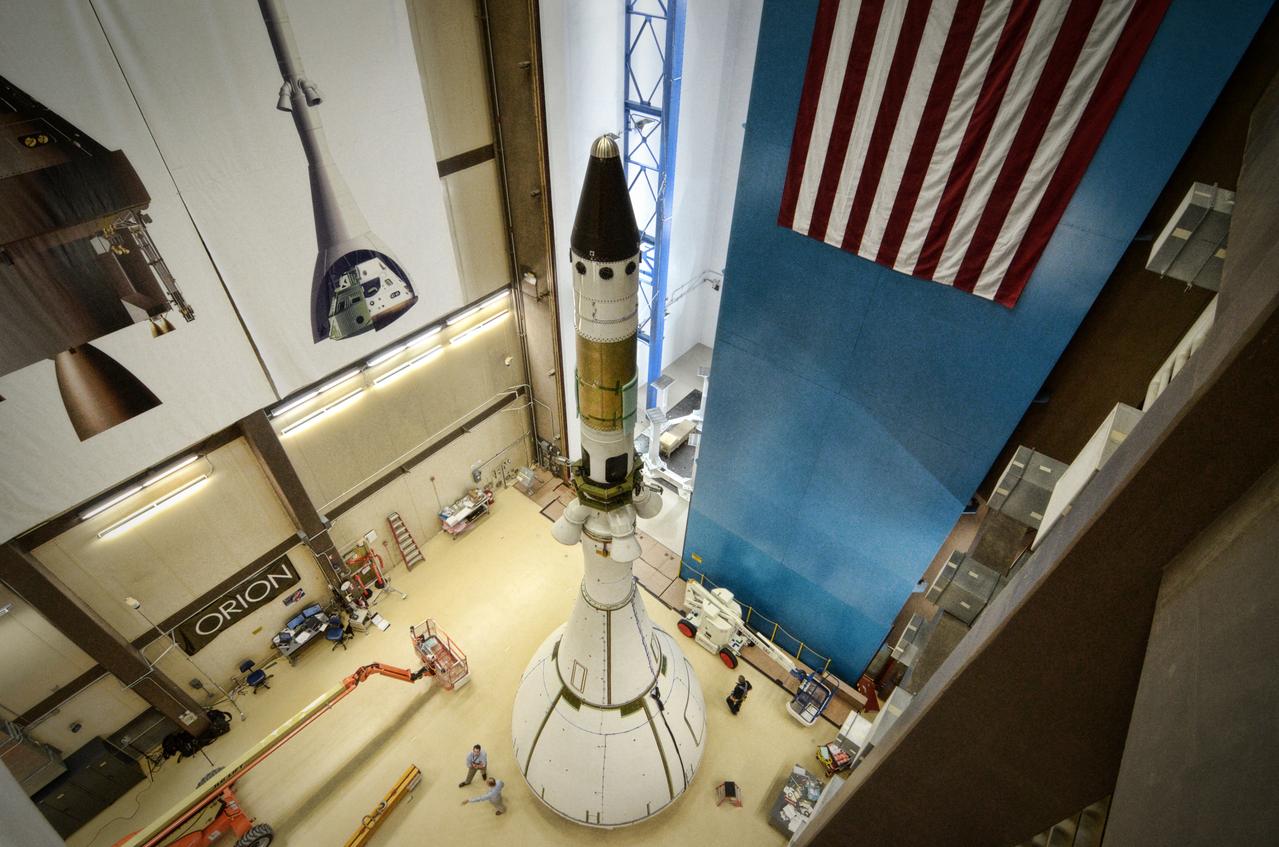
The Orion ground test vehicle is prepared for the Launch Abort Vehicle Configuration Test at Lockheed Martin's facilities in Denver on Sept. 15, 2011. For this test, the vehicle was covered with fillets and ogive panels that resemble the vehicle's launch configuration. The spacecraft underwent testing at sound pressure levels that emulate those experienced at launch and in the event an abort is needed to carry the crew to safety away from a potential problem on the launch pad or during ascent. Part of Batch image transfer from Flickr.

The Orion ground test vehicle is prepared for the Launch Abort Vehicle Configuration Test at Lockheed Martin's facilities in Denver on Sept. 15, 2011. For this test, the vehicle was covered with fillets and ogive panels that resemble the vehicle's launch configuration. The spacecraft underwent testing at sound pressure levels that emulate those experienced at launch and in the event an abort is needed to carry the crew to safety away from a potential problem on the launch pad or during ascent. Part of Batch image transfer from Flickr.
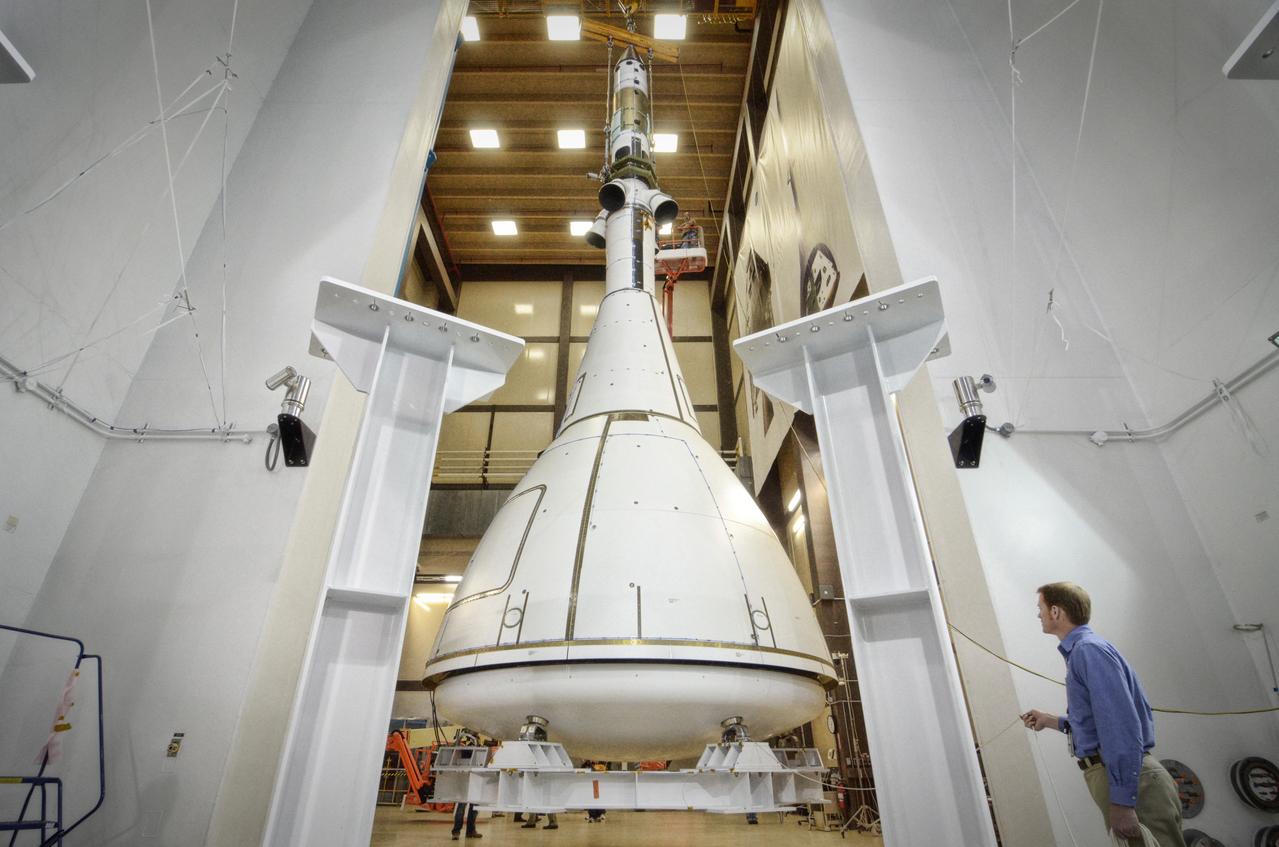
The Orion ground test vehicle is prepared for the Launch Abort Vehicle Configuration Test at Lockheed Martin's facilities in Denver on Sept. 15, 2011. For this test, the vehicle was covered with fillets and ogive panels that resemble the vehicle's launch configuration. The spacecraft underwent testing at sound pressure levels that emulate those experienced at launch and in the event an abort is needed to carry the crew to safety away from a potential problem on the launch pad or during ascent. Part of Batch image transfer from Flickr.
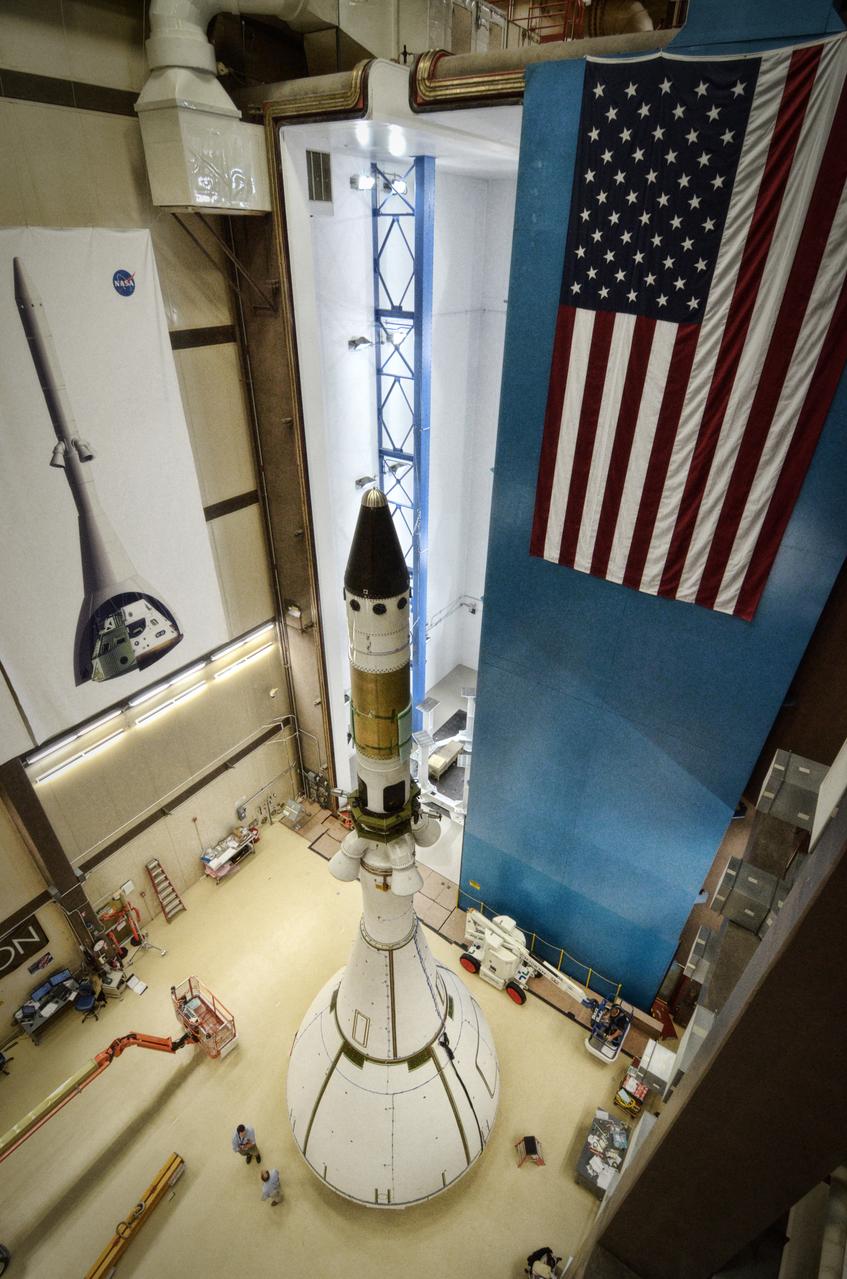
The Orion ground test vehicle is prepared for the Launch Abort Vehicle Configuration Test at Lockheed Martin's facilities in Denver on Sept. 15, 2011. For this test, the vehicle was covered with fillets and ogive panels that resemble the vehicle's launch configuration. The spacecraft underwent testing at sound pressure levels that emulate those experienced at launch and in the event an abort is needed to carry the crew to safety away from a potential problem on the launch pad or during ascent. Part of Batch image transfer from Flickr.
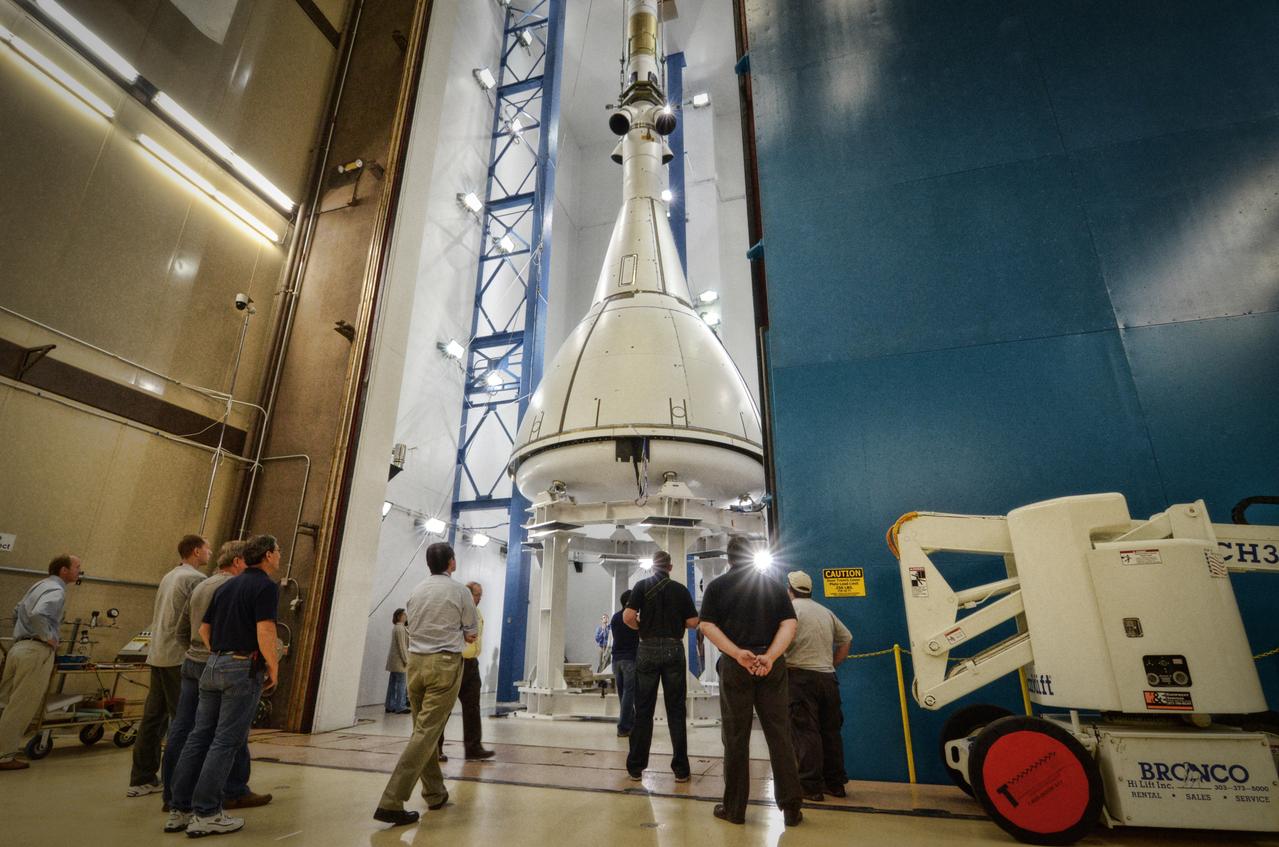
The Orion ground test vehicle is prepared for the Launch Abort Vehicle Configuration Test at Lockheed Martin's facilities in Denver on Sept. 15, 2011. For this test, the vehicle was covered with fillets and ogive panels that resemble the vehicle's launch configuration. The spacecraft underwent testing at sound pressure levels that emulate those experienced at launch and in the event an abort is needed to carry the crew to safety away from a potential problem on the launch pad or during ascent. Part of Batch image transfer from Flickr.
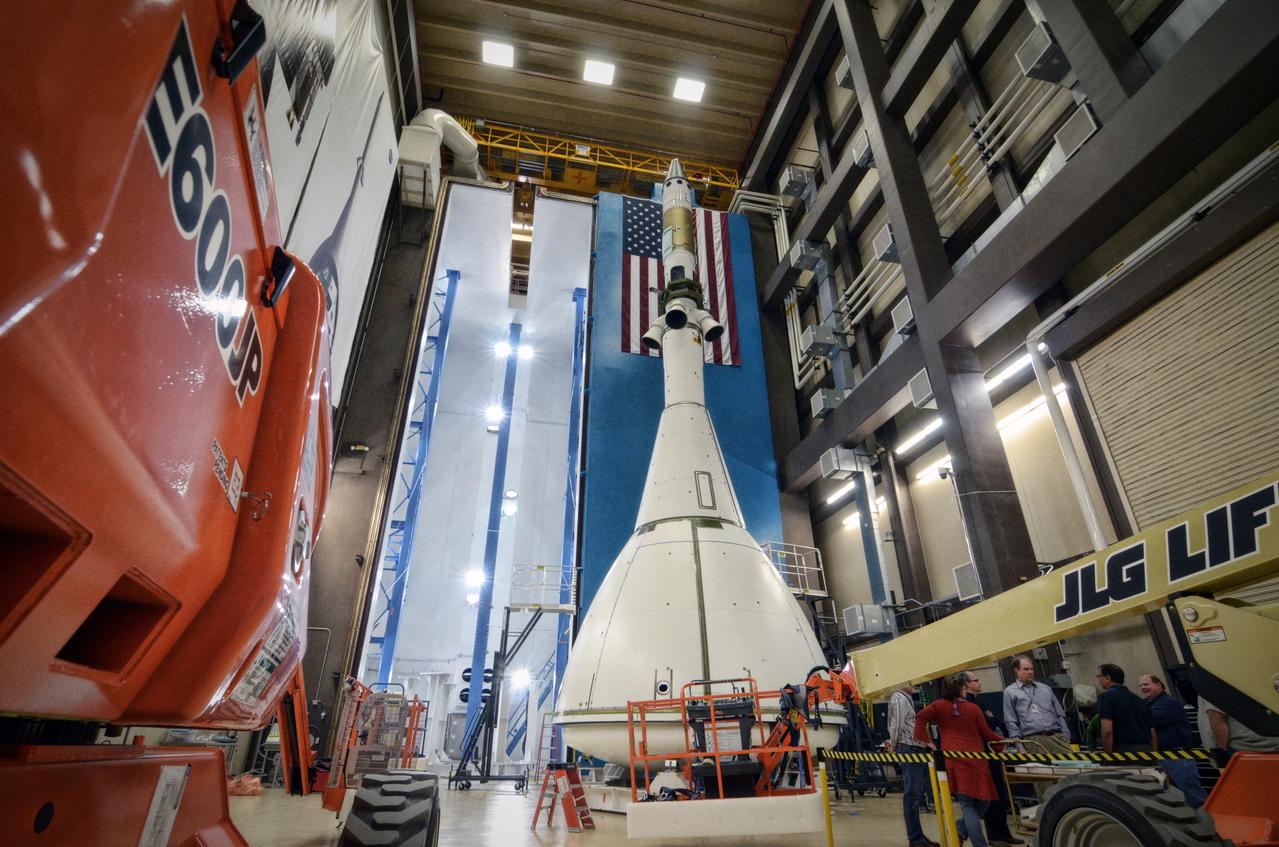
The Orion ground test vehicle is prepared for the Launch Abort Vehicle Configuration Test at Lockheed Martin's facilities in Denver on Sept. 14, 2011. For this test, the vehicle was covered with fillets and ogive panels that resemble the vehicle's launch configuration. The spacecraft underwent testing at sound pressure levels that emulate those experienced at launch and in the event an abort is needed to carry the crew to safety away from a potential problem on the launch pad or during ascent. Part of Batch image transfer from Flickr.
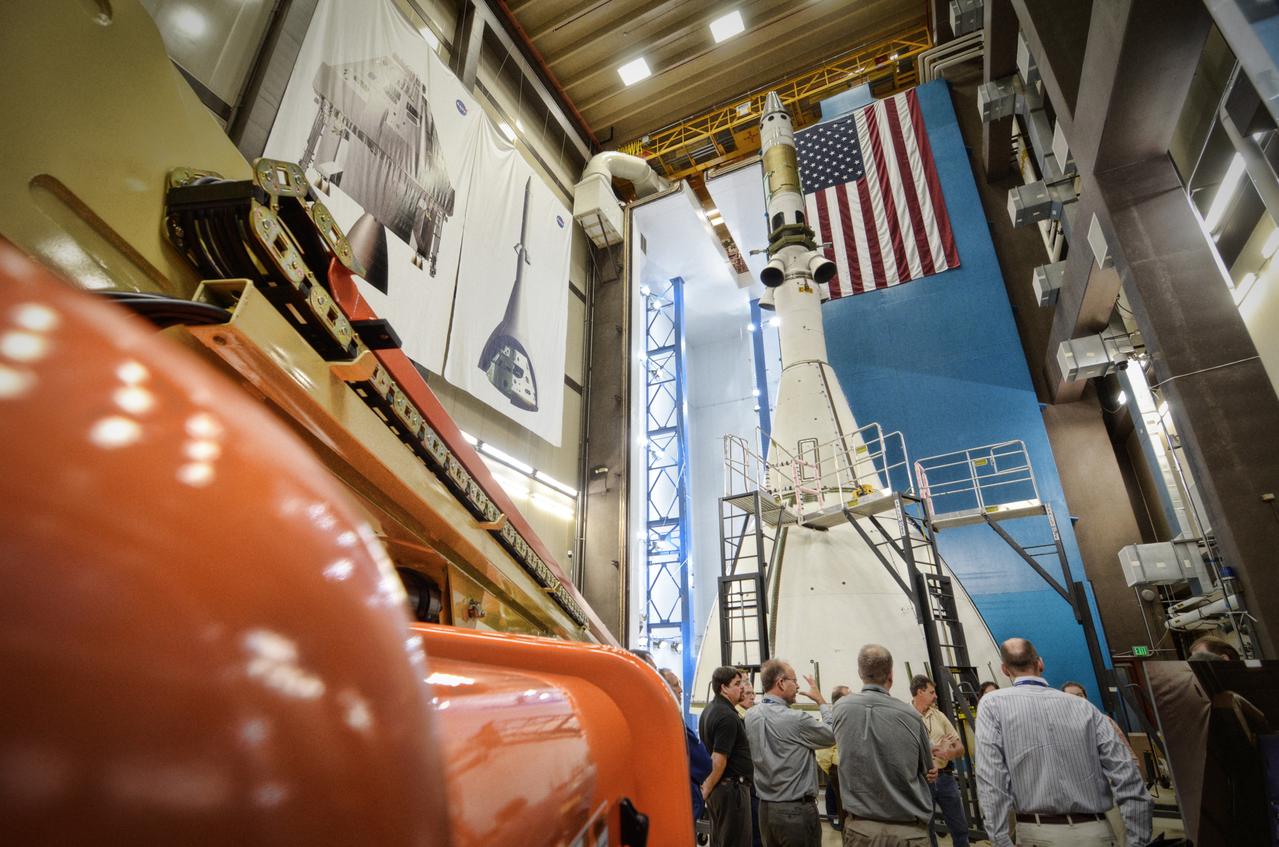
The Orion ground test vehicle is prepared for the Launch Abort Vehicle Configuration Test at Lockheed Martin's facilities in Denver on Sept. 15, 2011. For this test, the vehicle was covered with fillets and ogive panels that resemble the vehicle's launch configuration. The spacecraft underwent testing at sound pressure levels that emulate those experienced at launch and in the event an abort is needed to carry the crew to safety away from a potential problem on the launch pad or during ascent. Part of Batch image transfer from Flickr.
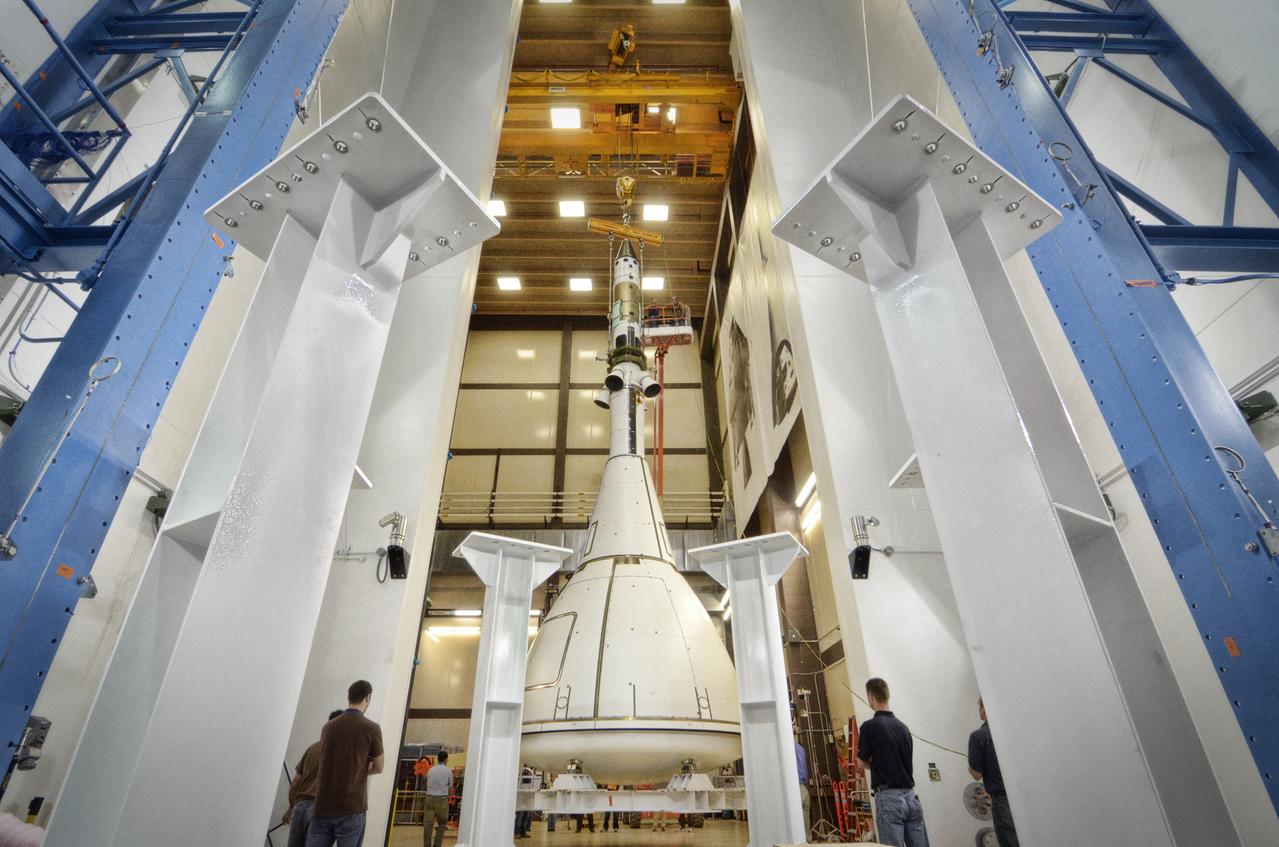
The Orion ground test vehicle is prepared for the Launch Abort Vehicle Configuration Test at Lockheed Martin's facilities in Denver on Sept. 15, 2011. For this test, the vehicle was covered with fillets and ogive panels that resemble the vehicle's launch configuration. The spacecraft underwent testing at sound pressure levels that emulate those experienced at launch and in the event an abort is needed to carry the crew to safety away from a potential problem on the launch pad or during ascent. Part of Batch image transfer from Flickr.

The Orion ground test vehicle is prepared for the Launch Abort Vehicle Configuration Test at Lockheed Martin's facilities in Denver on Sept. 15, 2011. For this test, the vehicle was covered with fillets and ogive panels that resemble the vehicle's launch configuration. The spacecraft underwent testing at sound pressure levels that emulate those experienced at launch and in the event an abort is needed to carry the crew to safety away from a potential problem on the launch pad or during ascent. Part of Batch image transfer from Flickr.

The Orion ground test vehicle is prepared for the Launch Abort Vehicle Configuration Test at Lockheed Martin's facilities in Denver on Sept. 14, 2011. For this test, the vehicle was covered with fillets and ogive panels that resemble the vehicle's launch configuration. The spacecraft underwent testing at sound pressure levels that emulate those experienced at launch and in the event an abort is needed to carry the crew to safety away from a potential problem on the launch pad or during ascent. Part of Batch image transfer from Flickr.
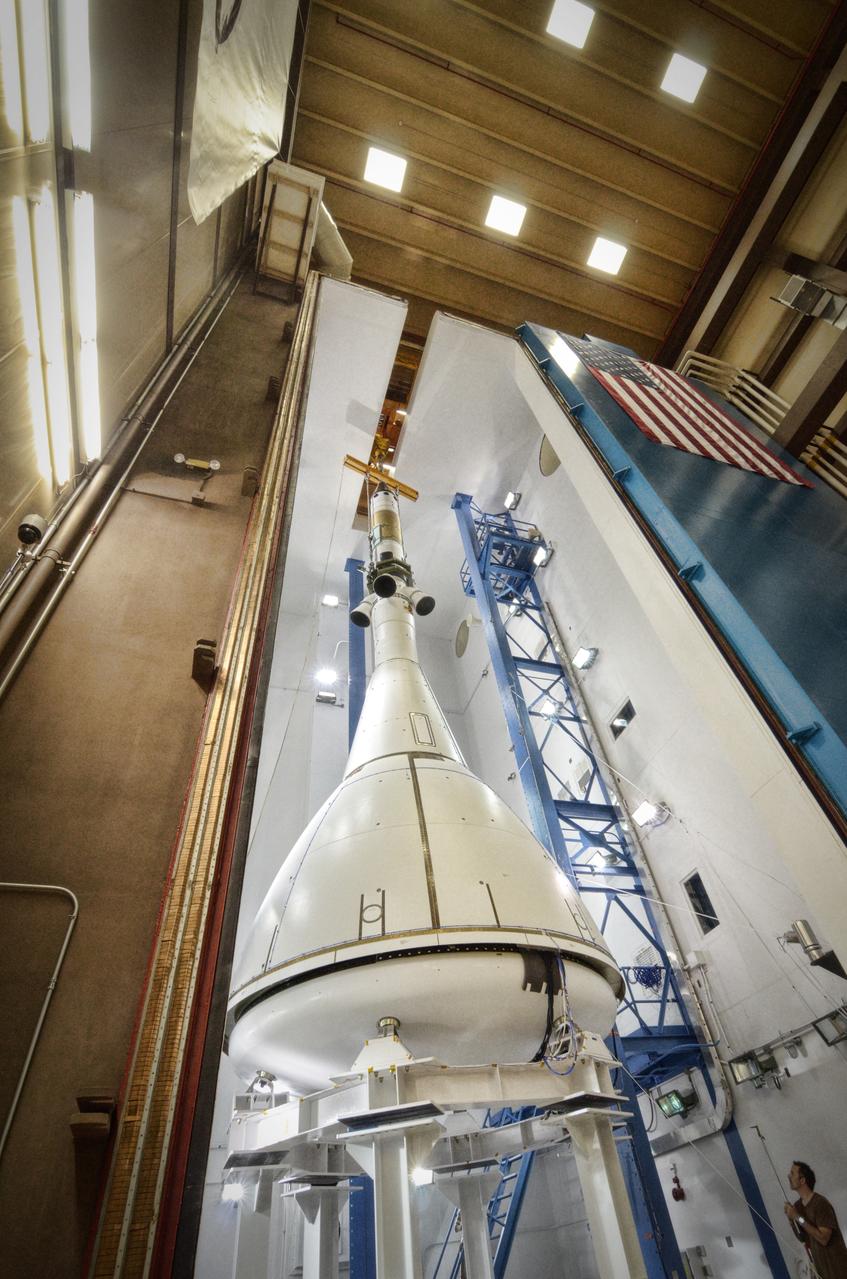
The Orion ground test vehicle is prepared for the Launch Abort Vehicle Configuration Test at Lockheed Martin's facilities in Denver on Sept. 15, 2011. For this test, the vehicle was covered with fillets and ogive panels that resemble the vehicle's launch configuration. The spacecraft underwent testing at sound pressure levels that emulate those experienced at launch and in the event an abort is needed to carry the crew to safety away from a potential problem on the launch pad or during ascent. Part of Batch image transfer from Flickr.
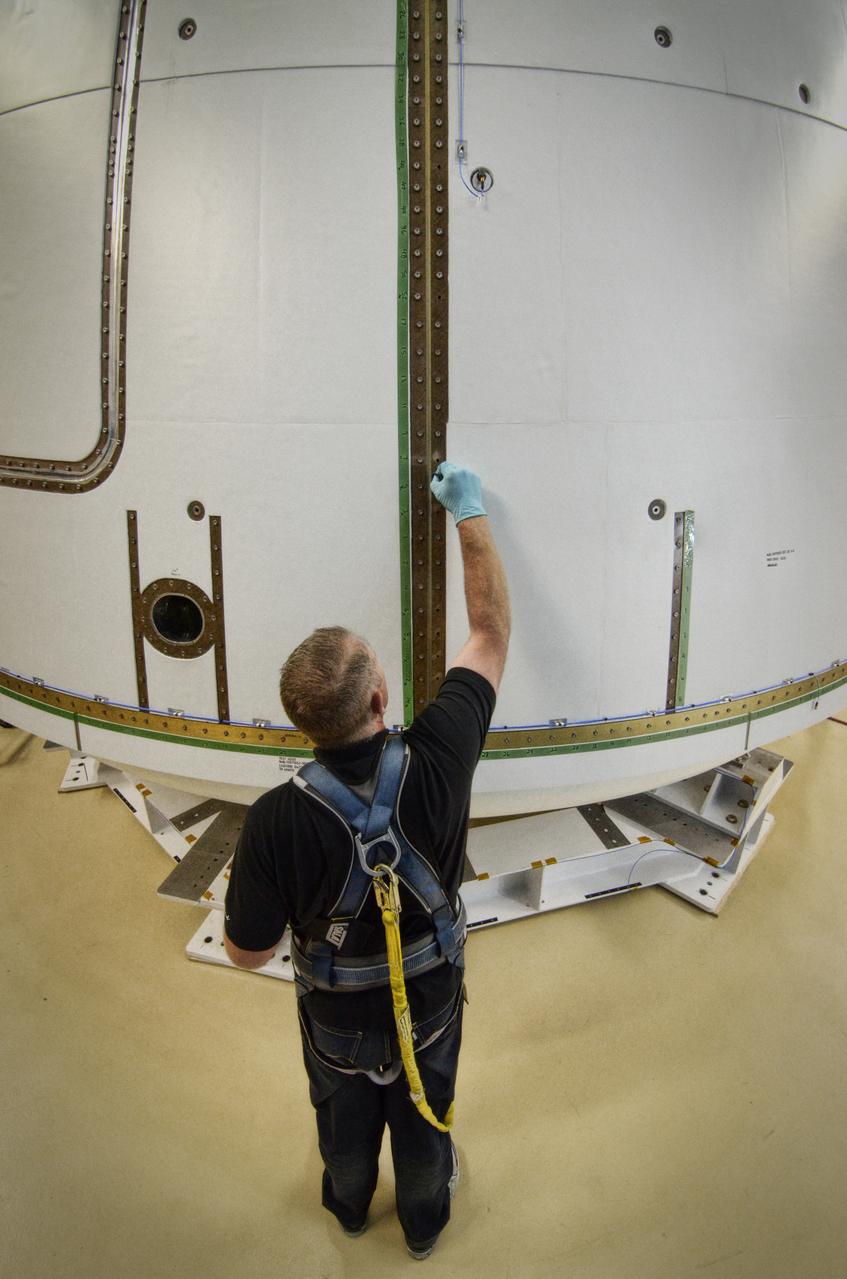
The Orion ground test vehicle is prepared for the Launch Abort Vehicle Configuration Test at Lockheed Martin's facilities in Denver on Sept. 15, 2011. For this test, the vehicle was covered with fillets and ogive panels that resemble the vehicle's launch configuration. The spacecraft underwent testing at sound pressure levels that emulate those experienced at launch and in the event an abort is needed to carry the crew to safety away from a potential problem on the launch pad or during ascent. Part of Batch image transfer from Flickr.

The Orion ground test vehicle is prepared for the Launch Abort Vehicle Configuration Test at Lockheed Martin's facilities in Denver on Sept. 15, 2011. For this test, the vehicle was covered with fillets and ogive panels that resemble the vehicle's launch configuration. The spacecraft underwent testing at sound pressure levels that emulate those experienced at launch and in the event an abort is needed to carry the crew to safety away from a potential problem on the launch pad or during ascent. Part of Batch image transfer from Flickr.
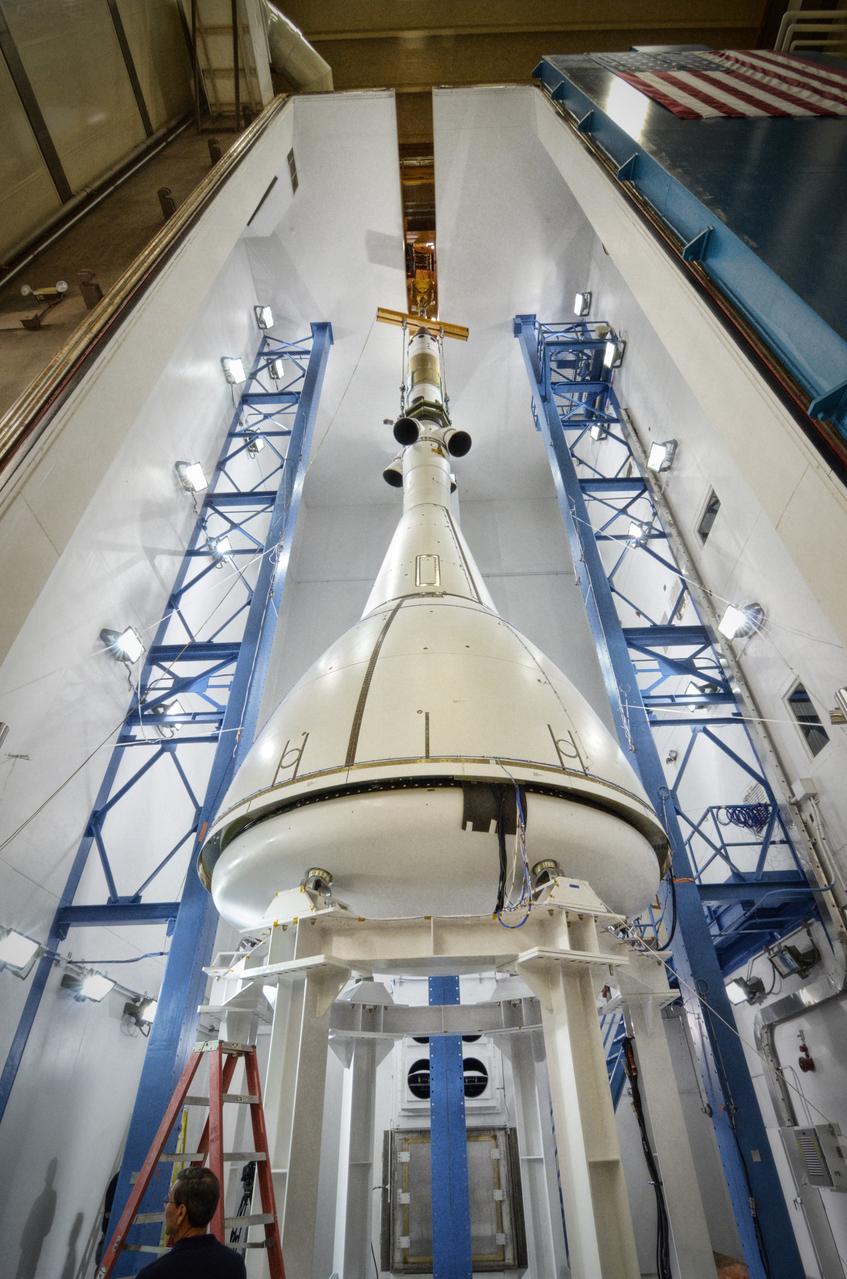
The Orion ground test vehicle is prepared for the Launch Abort Vehicle Configuration Test at Lockheed Martin's facilities in Denver on Sept. 15, 2011. For this test, the vehicle was covered with fillets and ogive panels that resemble the vehicle's launch configuration. The spacecraft underwent testing at sound pressure levels that emulate those experienced at launch and in the event an abort is needed to carry the crew to safety away from a potential problem on the launch pad or during ascent. Part of Batch image transfer from Flickr.
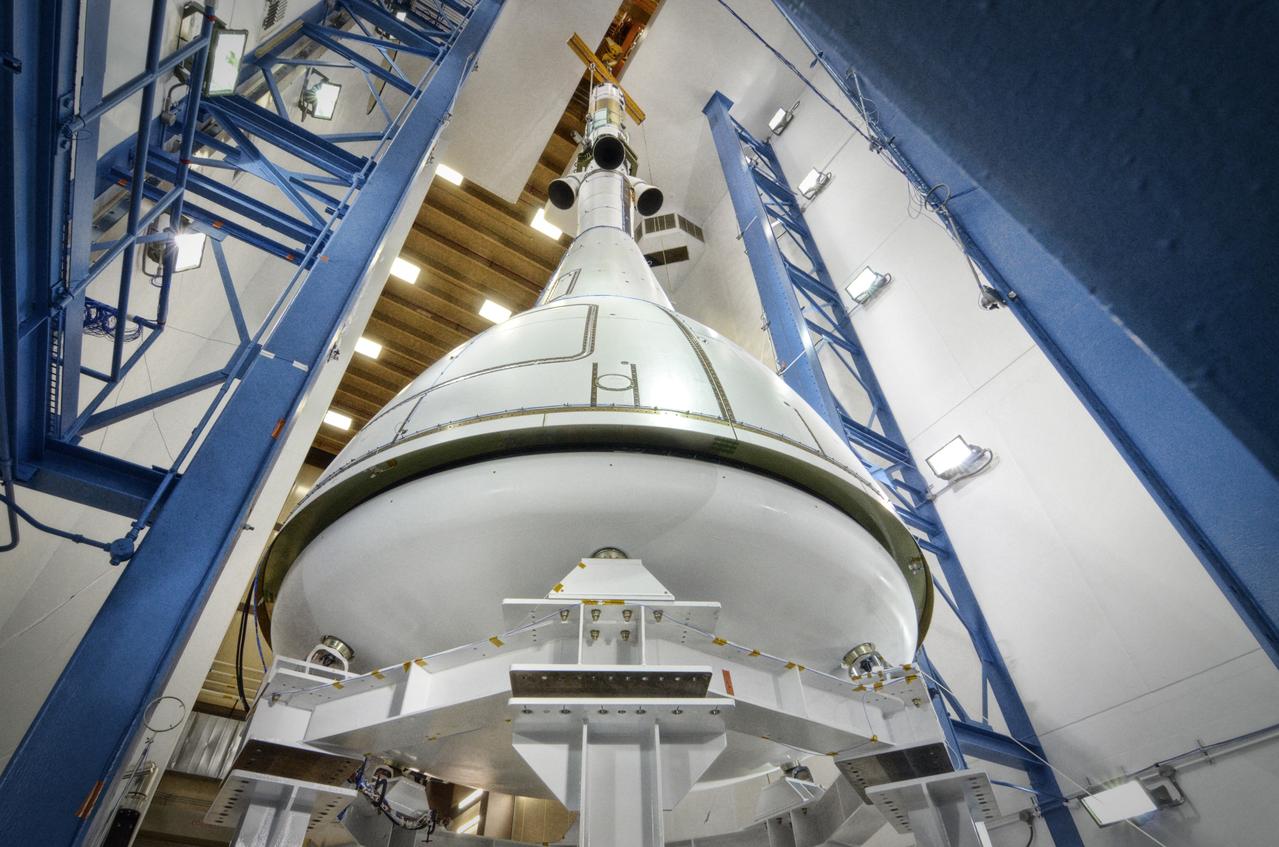
The Orion ground test vehicle is prepared for the Launch Abort Vehicle Configuration Test at Lockheed Martin's facilities in Denver on Sept. 15, 2011. For this test, the vehicle was covered with fillets and ogive panels that resemble the vehicle's launch configuration. The spacecraft underwent testing at sound pressure levels that emulate those experienced at launch and in the event an abort is needed to carry the crew to safety away from a potential problem on the launch pad or during ascent. Part of Batch image transfer from Flickr.
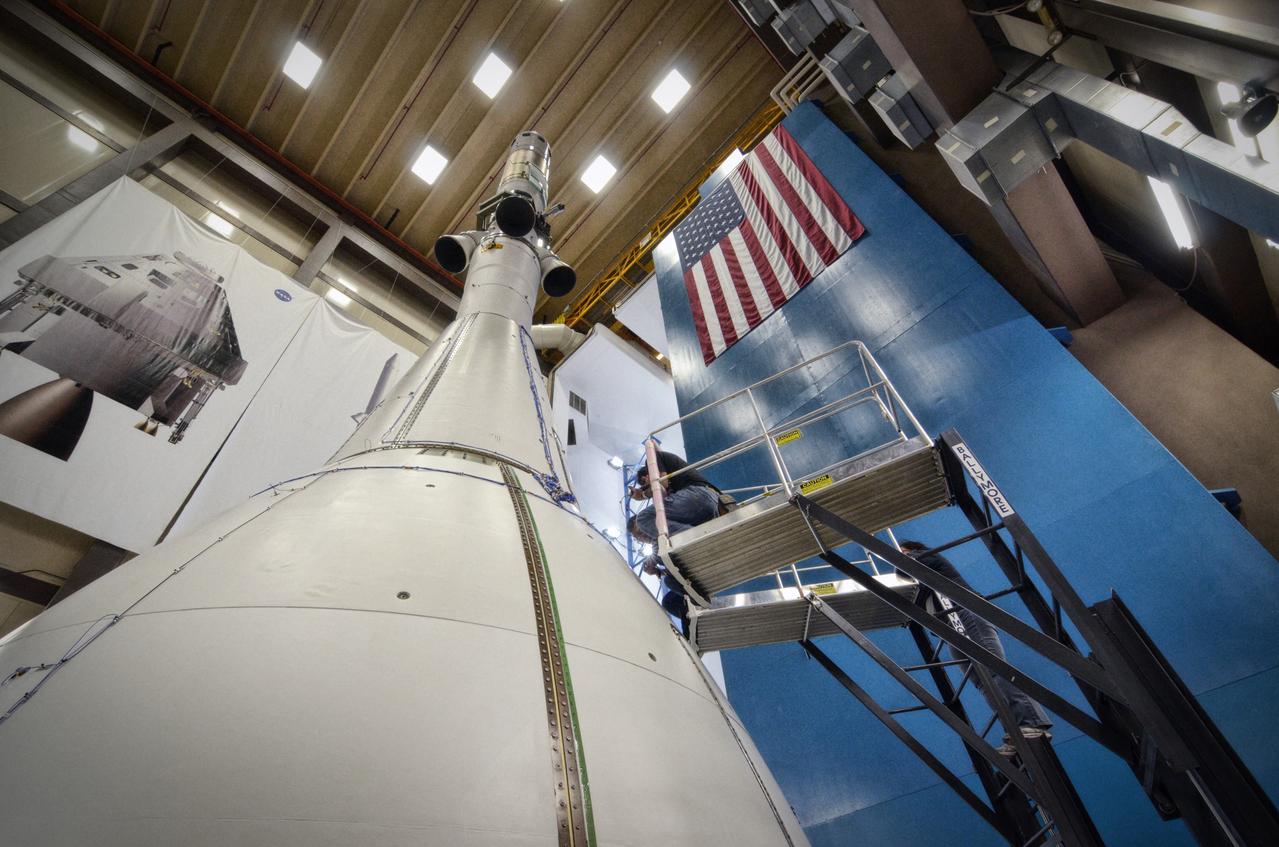
The Orion ground test vehicle is prepared for the Launch Abort Vehicle Configuration Test at Lockheed Martin's facilities in Denver on Sept. 14, 2011. For this test, the vehicle was covered with fillets and ogive panels that resemble the vehicle's launch configuration. The spacecraft underwent testing at sound pressure levels that emulate those experienced at launch and in the event an abort is needed to carry the crew to safety away from a potential problem on the launch pad or during ascent. Part of Batch image transfer from Flickr.
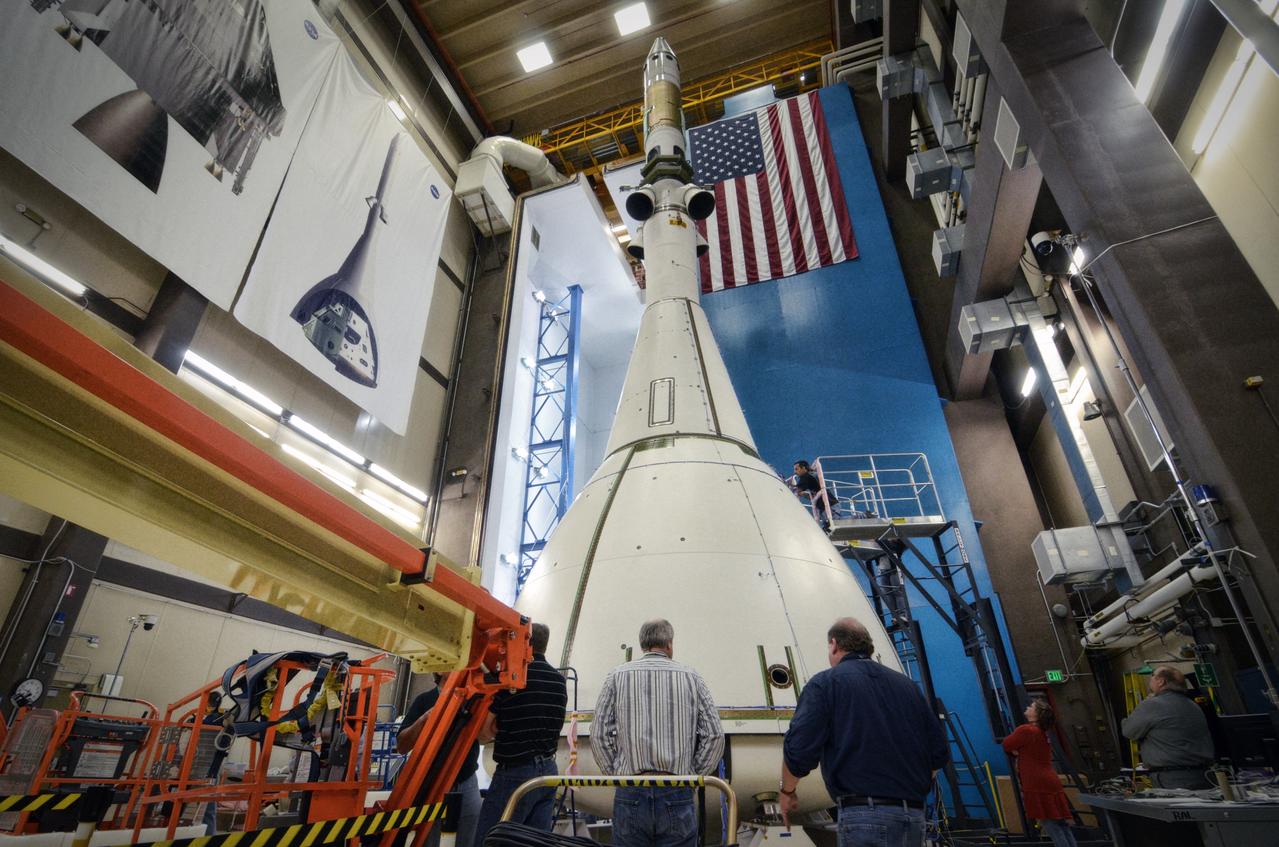
The Orion ground test vehicle is prepared for the Launch Abort Vehicle Configuration Test at Lockheed Martin's facilities in Denver on Sept. 14, 2011. For this test, the vehicle was covered with fillets and ogive panels that resemble the vehicle's launch configuration. The spacecraft underwent testing at sound pressure levels that emulate those experienced at launch and in the event an abort is needed to carry the crew to safety away from a potential problem on the launch pad or during ascent. Part of Batch image transfer from Flickr.
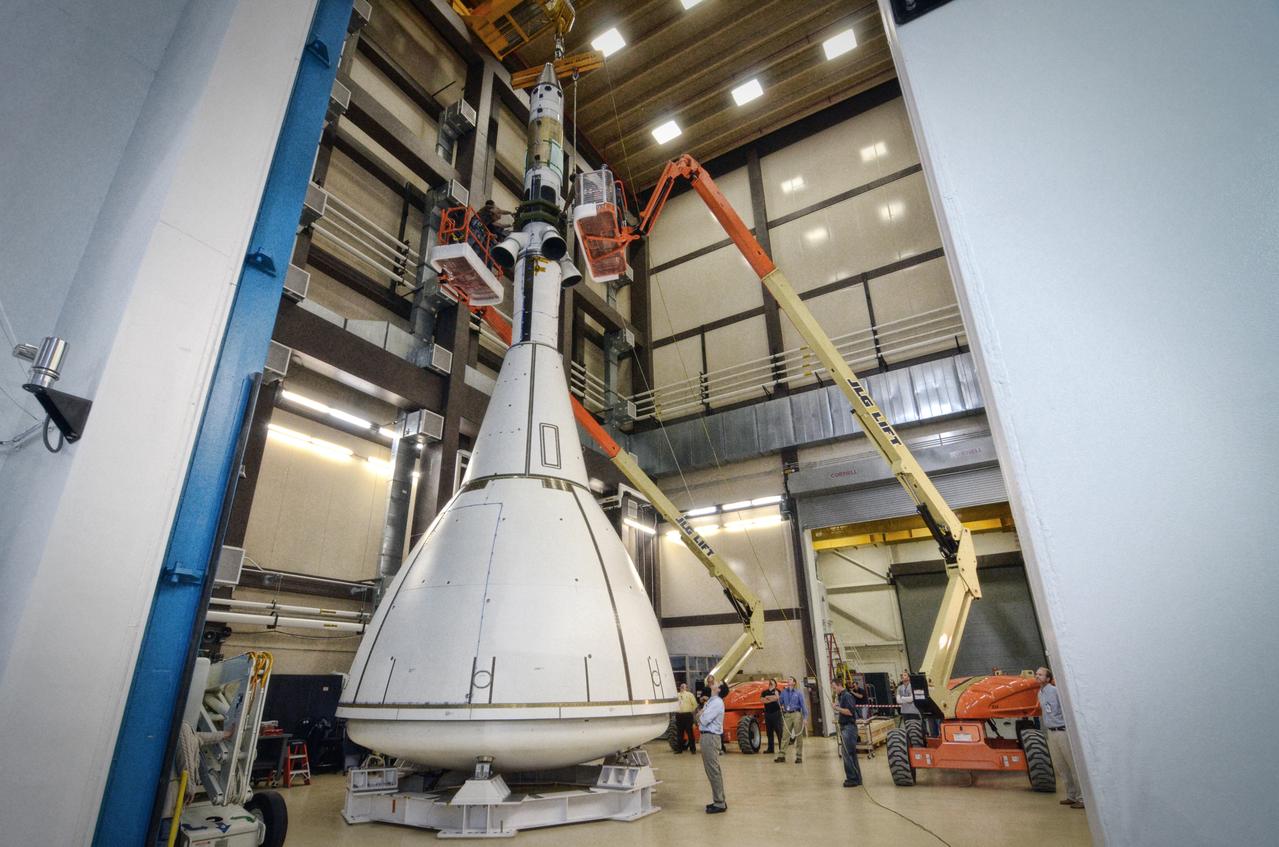
The Orion ground test vehicle is prepared for the Launch Abort Vehicle Configuration Test at Lockheed Martin's facilities in Denver on Sept. 15, 2011. For this test, the vehicle was covered with fillets and ogive panels that resemble the vehicle's launch configuration. The spacecraft underwent testing at sound pressure levels that emulate those experienced at launch and in the event an abort is needed to carry the crew to safety away from a potential problem on the launch pad or during ascent. Part of Batch image transfer from Flickr.
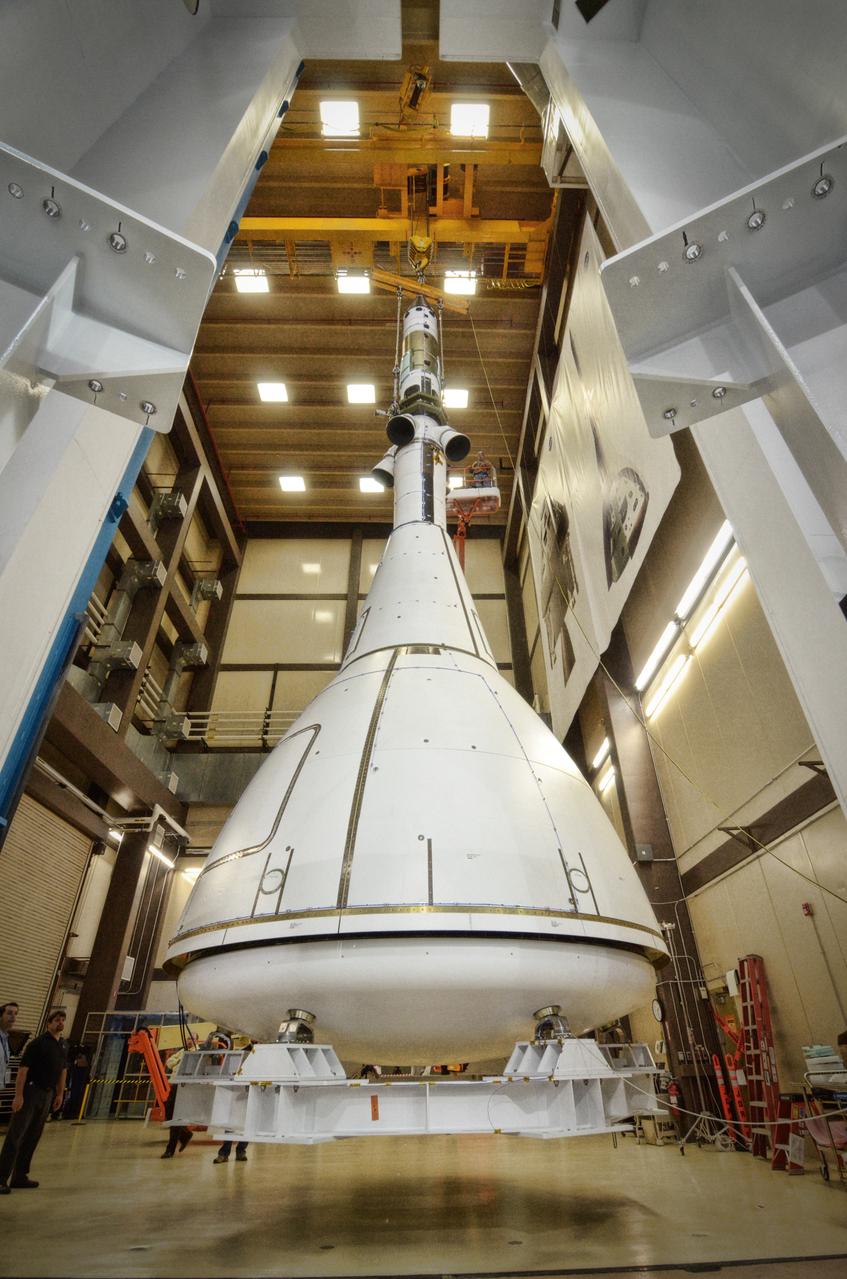
The Orion ground test vehicle is prepared for the Launch Abort Vehicle Configuration Test at Lockheed Martin's facilities in Denver on Sept. 15, 2011. For this test, the vehicle was covered with fillets and ogive panels that resemble the vehicle's launch configuration. The spacecraft underwent testing at sound pressure levels that emulate those experienced at launch and in the event an abort is needed to carry the crew to safety away from a potential problem on the launch pad or during ascent. Part of Batch image transfer from Flickr.
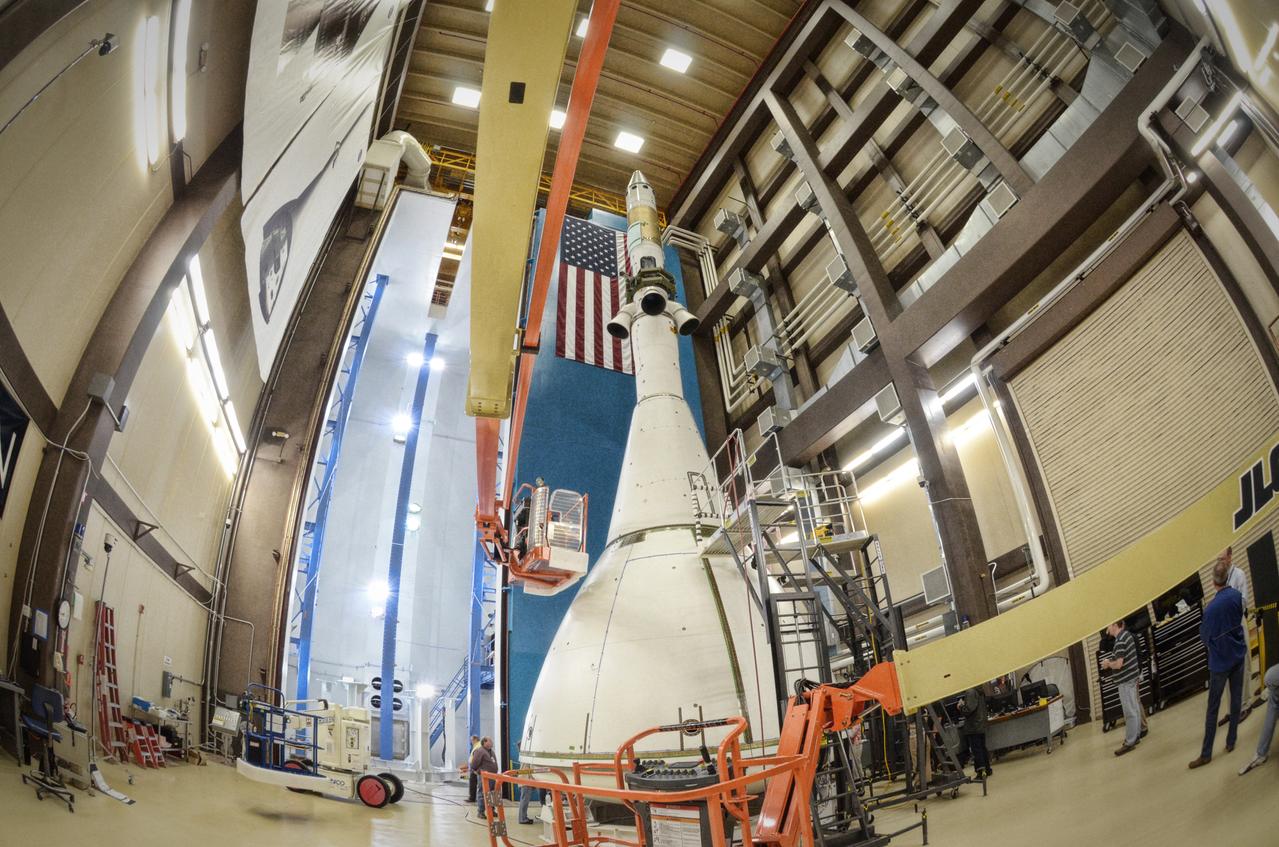
The Orion ground test vehicle is prepared for the Launch Abort Vehicle Configuration Test at Lockheed Martin's facilities in Denver on Sept. 15, 2011. For this test, the vehicle was covered with fillets and ogive panels that resemble the vehicle's launch configuration. The spacecraft underwent testing at sound pressure levels that emulate those experienced at launch and in the event an abort is needed to carry the crew to safety away from a potential problem on the launch pad or during ascent. Part of Batch image transfer from Flickr.

The Orion ground test vehicle is prepared for the Launch Abort Vehicle Configuration Test at Lockheed Martin's facilities in Denver on Sept. 15, 2011. For this test, the vehicle was covered with fillets and ogive panels that resemble the vehicle's launch configuration. The spacecraft underwent testing at sound pressure levels that emulate those experienced at launch and in the event an abort is needed to carry the crew to safety away from a potential problem on the launch pad or during ascent. Part of Batch image transfer from Flickr.
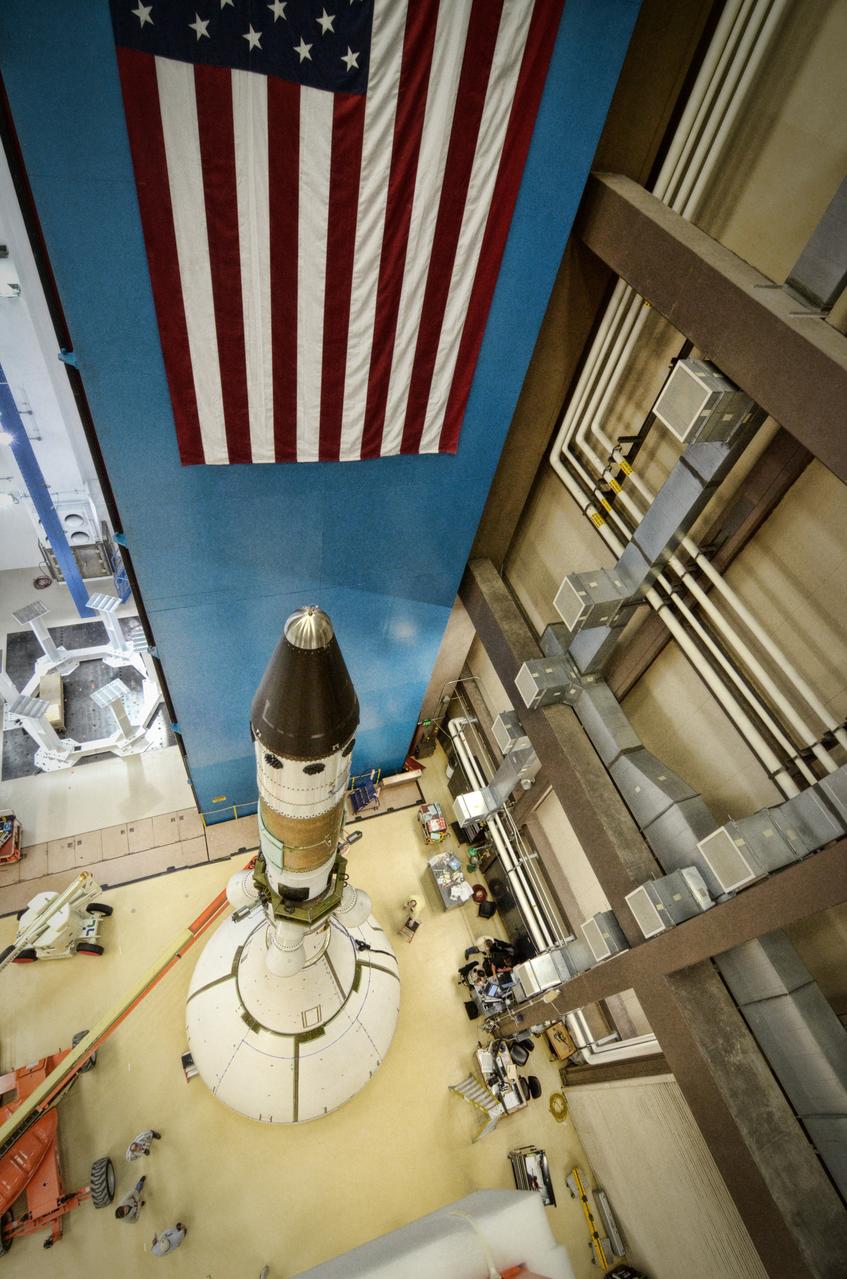
The Orion ground test vehicle is prepared for the Launch Abort Vehicle Configuration Test at Lockheed Martin's facilities in Denver on Sept. 15, 2011. For this test, the vehicle was covered with fillets and ogive panels that resemble the vehicle's launch configuration. The spacecraft underwent testing at sound pressure levels that emulate those experienced at launch and in the event an abort is needed to carry the crew to safety away from a potential problem on the launch pad or during ascent. Part of Batch image transfer from Flickr.
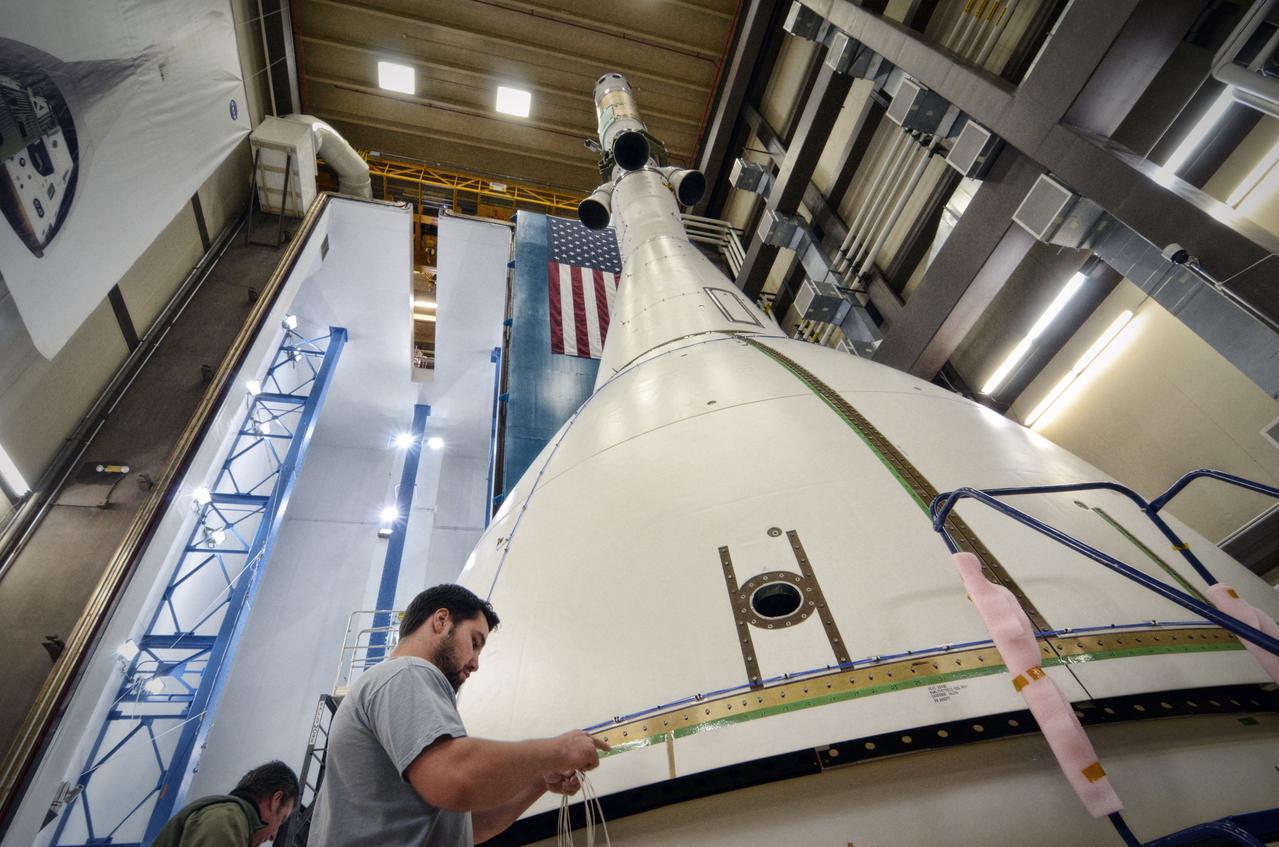
The Orion ground test vehicle is prepared for the Launch Abort Vehicle Configuration Test at Lockheed Martin's facilities in Denver on Sept. 14, 2011. For this test, the vehicle was covered with fillets and ogive panels that resemble the vehicle's launch configuration. The spacecraft underwent testing at sound pressure levels that emulate those experienced at launch and in the event an abort is needed to carry the crew to safety away from a potential problem on the launch pad or during ascent. Part of Batch image transfer from Flickr.

The Orion ground test vehicle is prepared for the Launch Abort Vehicle Configuration Test at Lockheed Martin's facilities in Denver on Sept. 15, 2011. For this test, the vehicle was covered with fillets and ogive panels that resemble the vehicle's launch configuration. The spacecraft underwent testing at sound pressure levels that emulate those experienced at launch and in the event an abort is needed to carry the crew to safety away from a potential problem on the launch pad or during ascent. Part of Batch image transfer from Flickr.
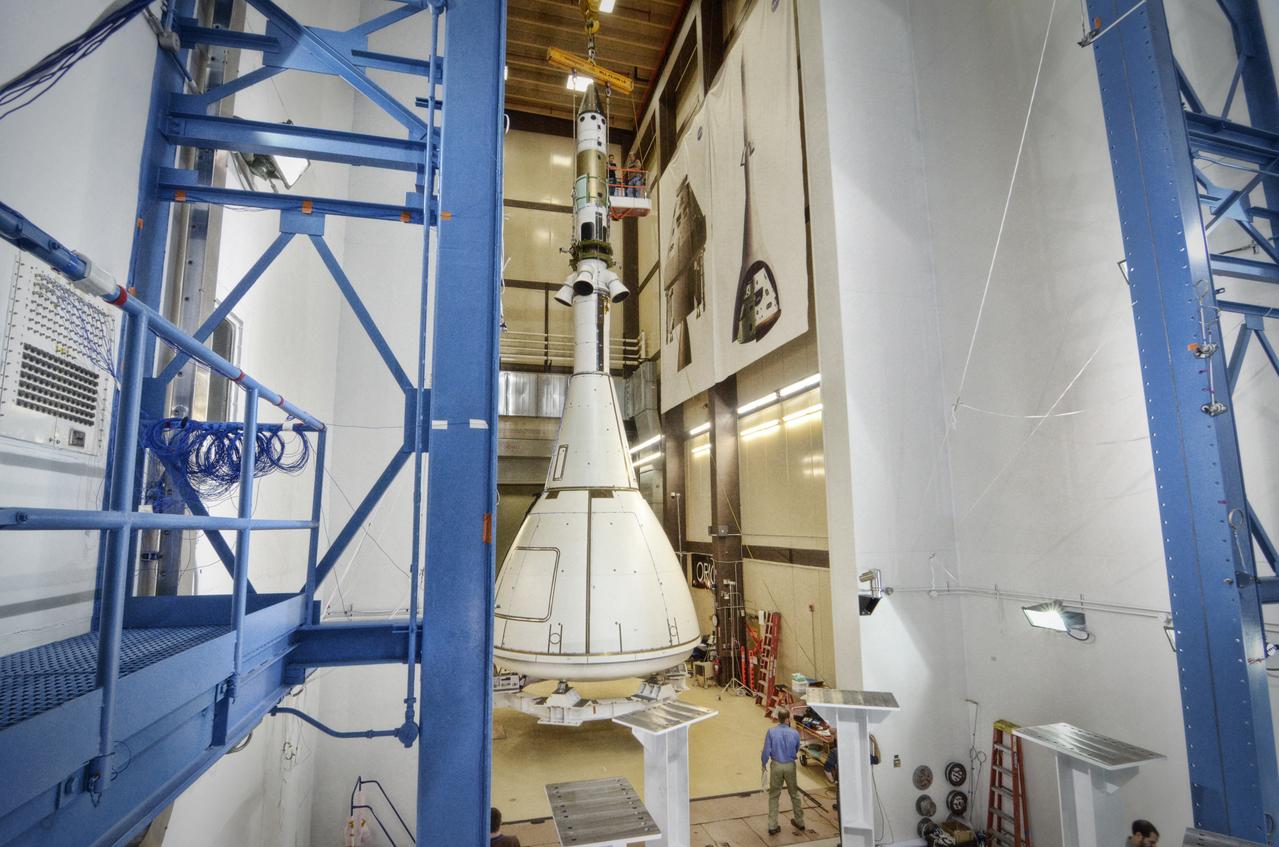
The Orion ground test vehicle is prepared for the Launch Abort Vehicle Configuration Test at Lockheed Martin's facilities in Denver on Sept. 15, 2011. For this test, the vehicle was covered with fillets and ogive panels that resemble the vehicle's launch configuration. The spacecraft underwent testing at sound pressure levels that emulate those experienced at launch and in the event an abort is needed to carry the crew to safety away from a potential problem on the launch pad or during ascent. Part of Batch image transfer from Flickr.
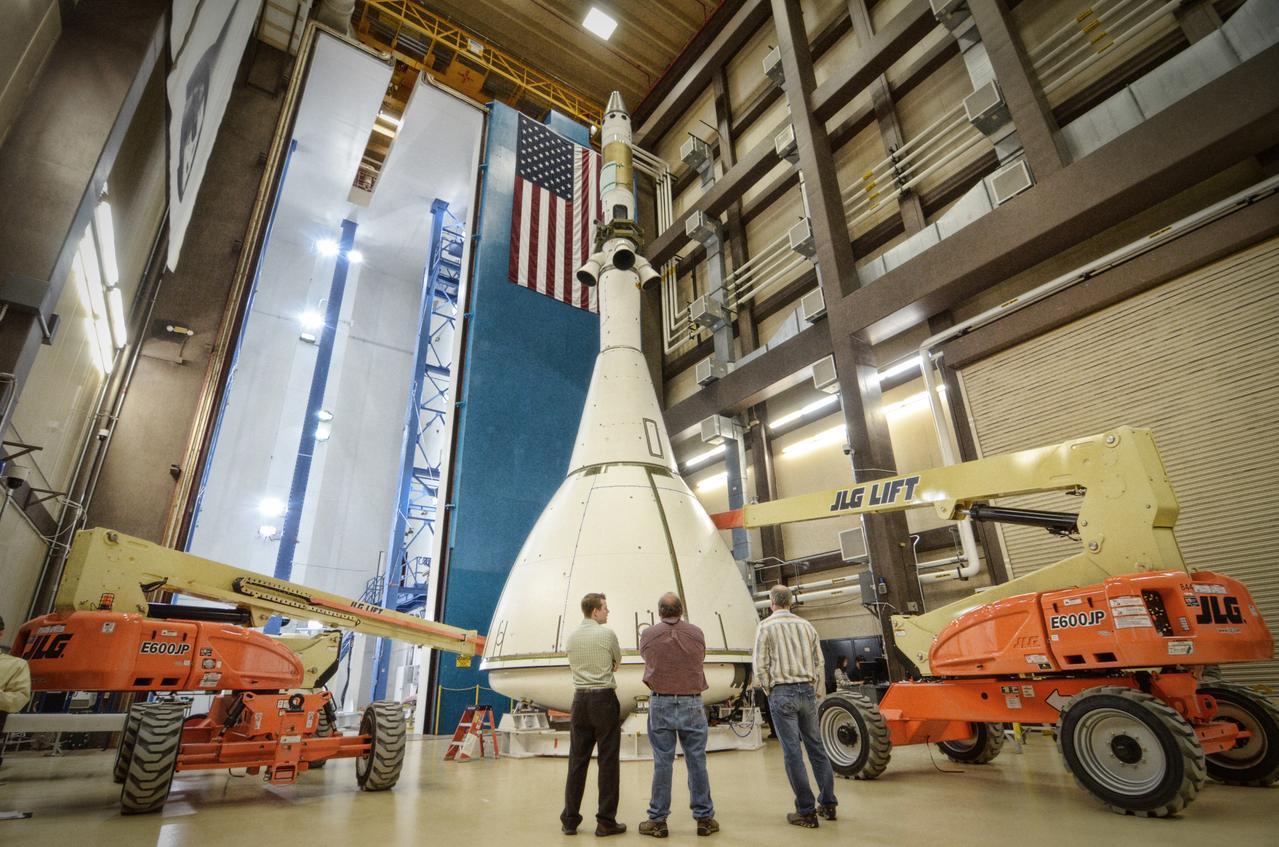
The Orion ground test vehicle is prepared for the Launch Abort Vehicle Configuration Test at Lockheed Martin's facilities in Denver on Sept. 15, 2011. For this test, the vehicle was covered with fillets and ogive panels that resemble the vehicle's launch configuration. The spacecraft underwent testing at sound pressure levels that emulate those experienced at launch and in the event an abort is needed to carry the crew to safety away from a potential problem on the launch pad or during ascent. Part of Batch image transfer from Flickr.
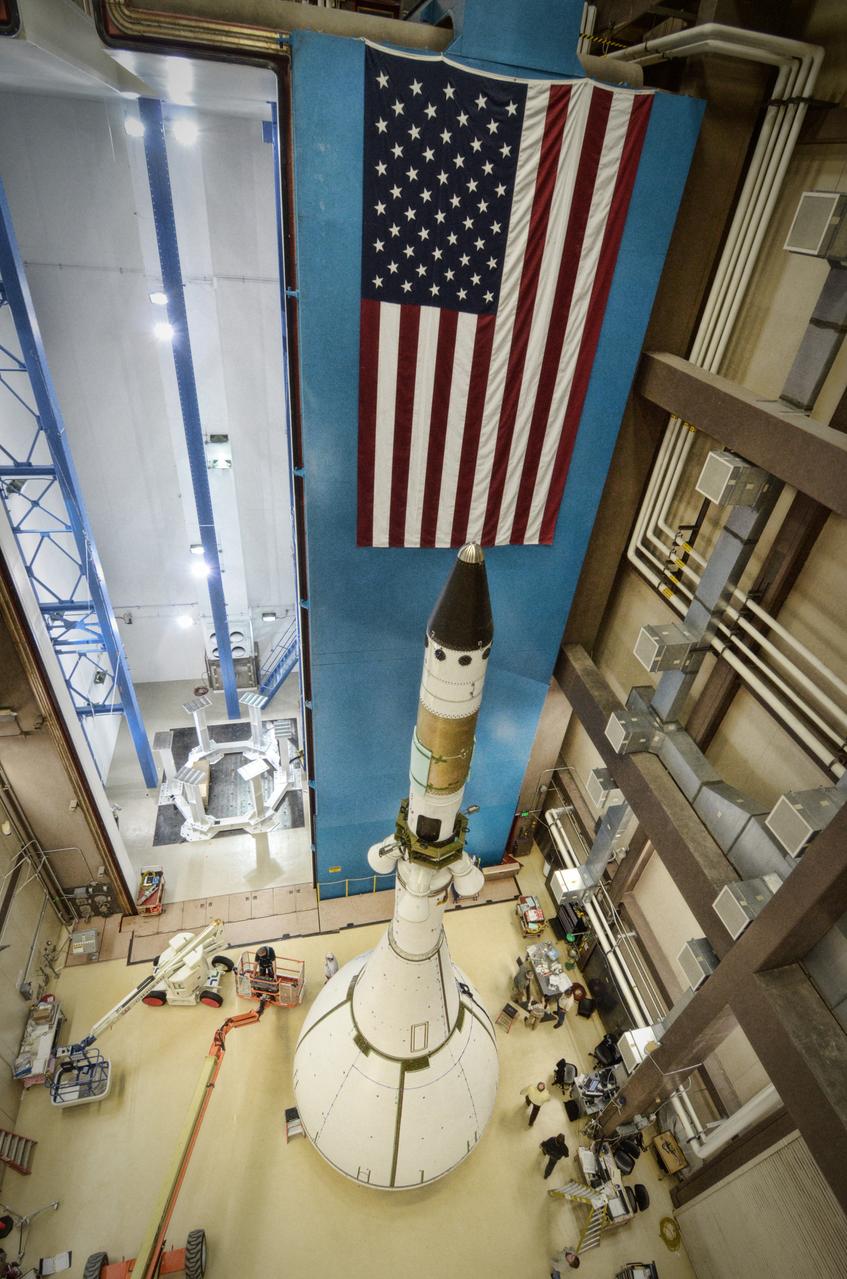
The Orion ground test vehicle is prepared for the Launch Abort Vehicle Configuration Test at Lockheed Martin's facilities in Denver on Sept. 15, 2011. For this test, the vehicle was covered with fillets and ogive panels that resemble the vehicle's launch configuration. The spacecraft underwent testing at sound pressure levels that emulate those experienced at launch and in the event an abort is needed to carry the crew to safety away from a potential problem on the launch pad or during ascent. Part of Batch image transfer from Flickr.
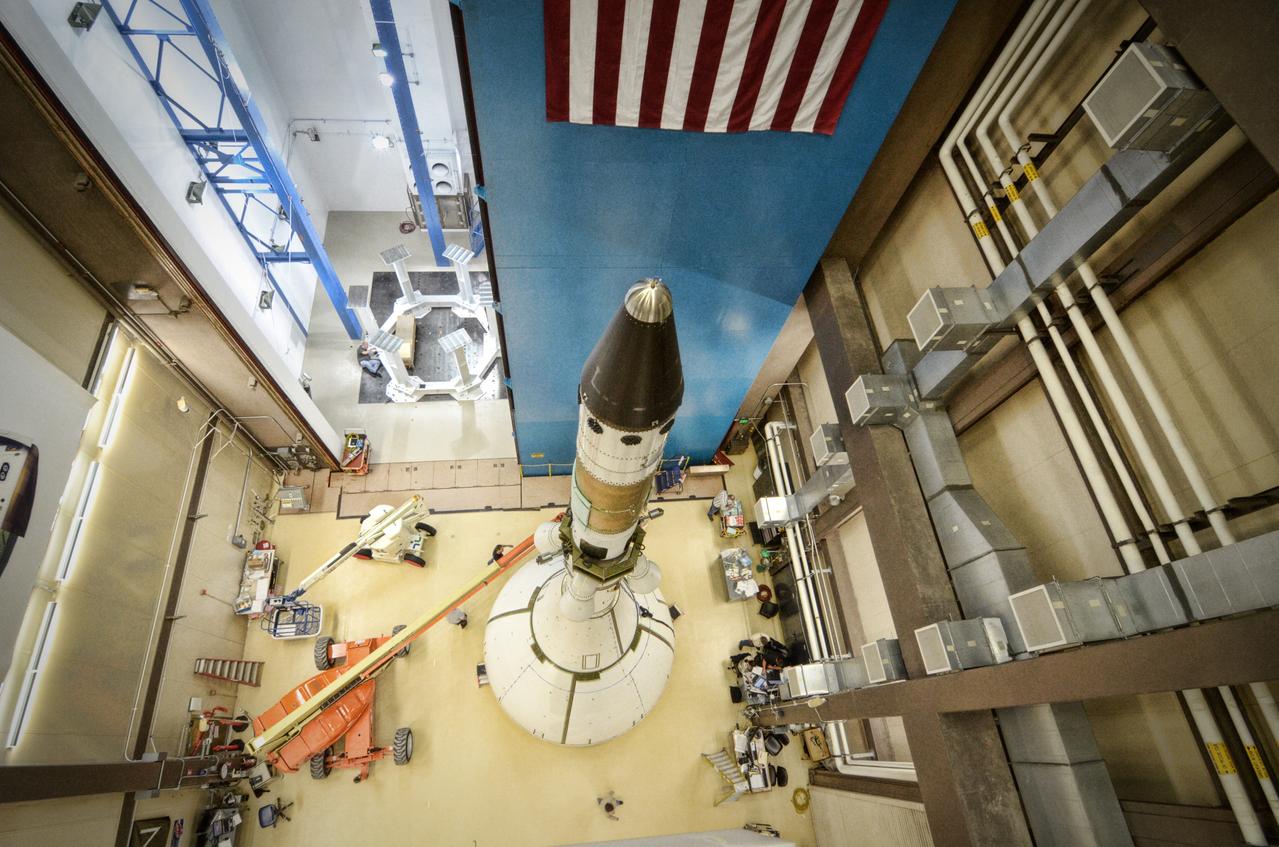
The Orion ground test vehicle is prepared for the Launch Abort Vehicle Configuration Test at Lockheed Martin's facilities in Denver on Sept. 15, 2011. For this test, the vehicle was covered with fillets and ogive panels that resemble the vehicle's launch configuration. The spacecraft underwent testing at sound pressure levels that emulate those experienced at launch and in the event an abort is needed to carry the crew to safety away from a potential problem on the launch pad or during ascent. Part of Batch image transfer from Flickr.
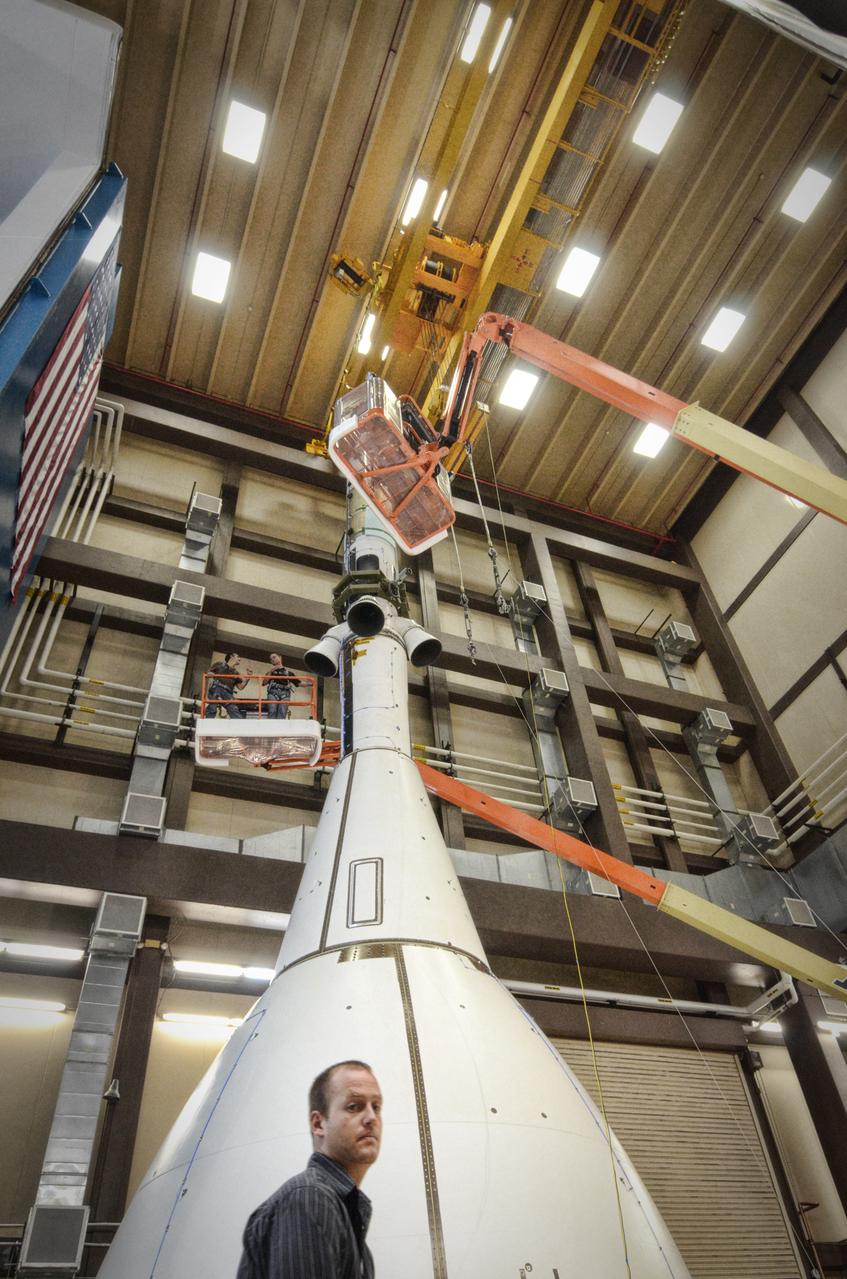
The Orion ground test vehicle is prepared for the Launch Abort Vehicle Configuration Test at Lockheed Martin's facilities in Denver on Sept. 15, 2011. For this test, the vehicle was covered with fillets and ogive panels that resemble the vehicle's launch configuration. The spacecraft underwent testing at sound pressure levels that emulate those experienced at launch and in the event an abort is needed to carry the crew to safety away from a potential problem on the launch pad or during ascent. Part of Batch image transfer from Flickr.

The Orion ground test vehicle is prepared for the Launch Abort Vehicle Configuration Test at Lockheed Martin's facilities in Denver on Sept. 15, 2011. For this test, the vehicle was covered with fillets and ogive panels that resemble the vehicle's launch configuration. The spacecraft underwent testing at sound pressure levels that emulate those experienced at launch and in the event an abort is needed to carry the crew to safety away from a potential problem on the launch pad or during ascent. Part of Batch image transfer from Flickr.
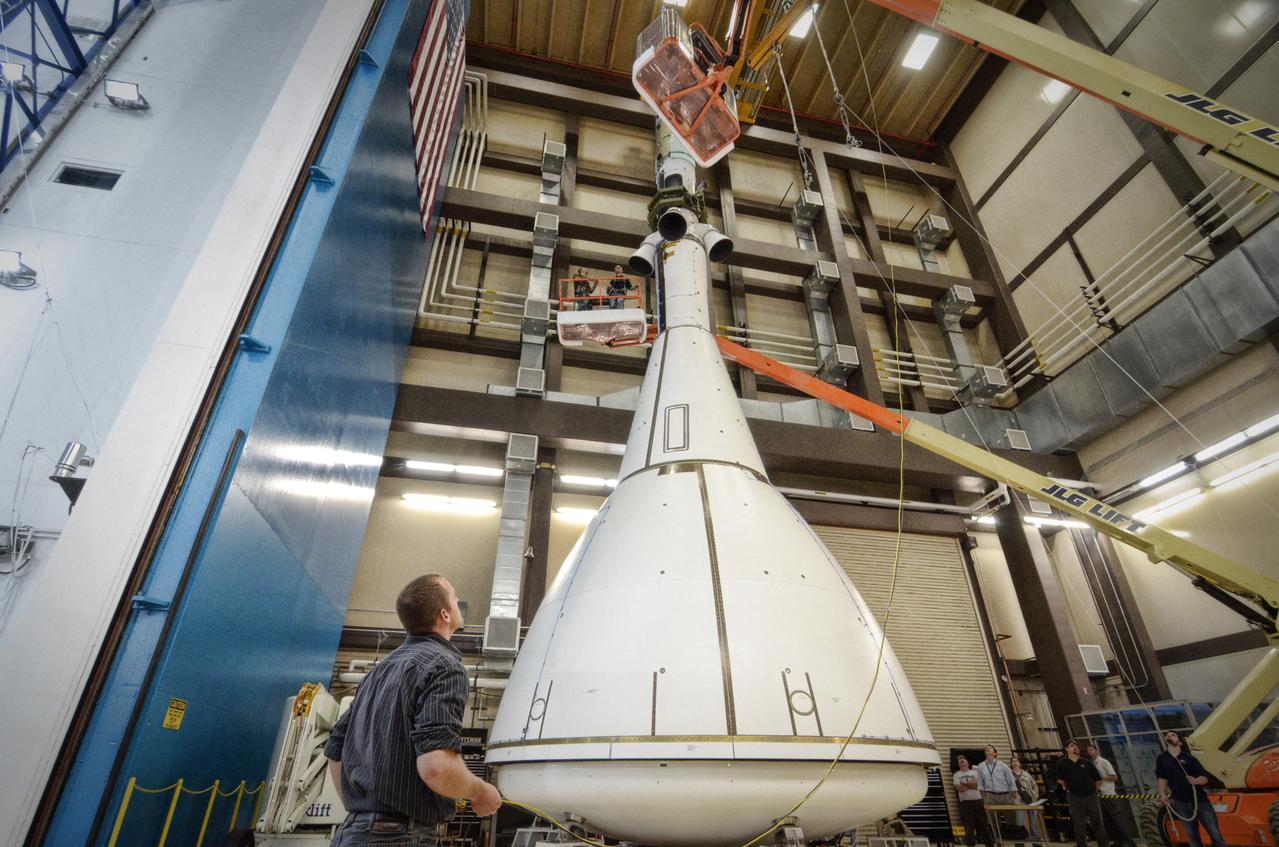
The Orion ground test vehicle is prepared for the Launch Abort Vehicle Configuration Test at Lockheed Martin's facilities in Denver on Sept. 15, 2011. For this test, the vehicle was covered with fillets and ogive panels that resemble the vehicle's launch configuration. The spacecraft underwent testing at sound pressure levels that emulate those experienced at launch and in the event an abort is needed to carry the crew to safety away from a potential problem on the launch pad or during ascent. Part of Batch image transfer from Flickr.
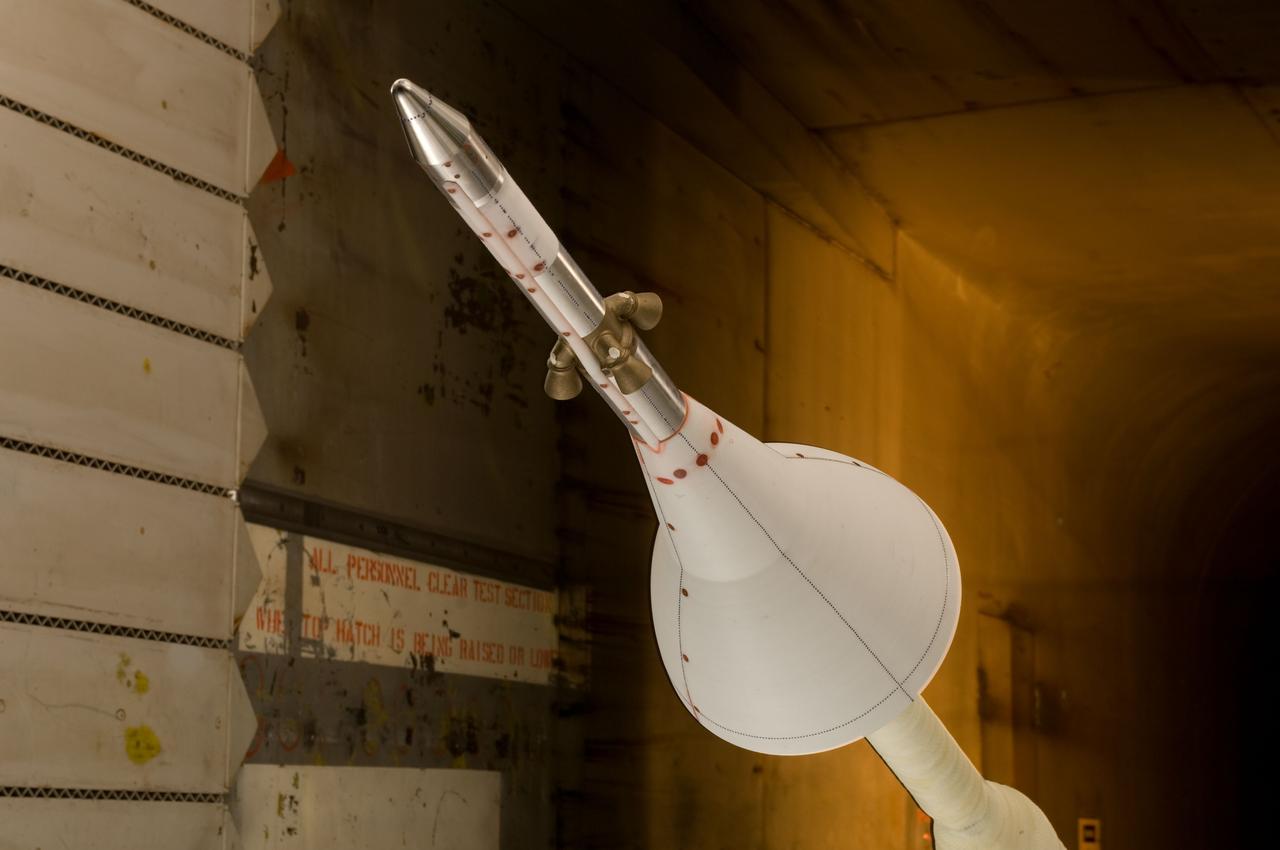
CEV (Crew Escape Vehicle) Alternaive Launch Abort System (ALAS) configuration test in the Ames 11ft wind tunnel. Test-11-0172
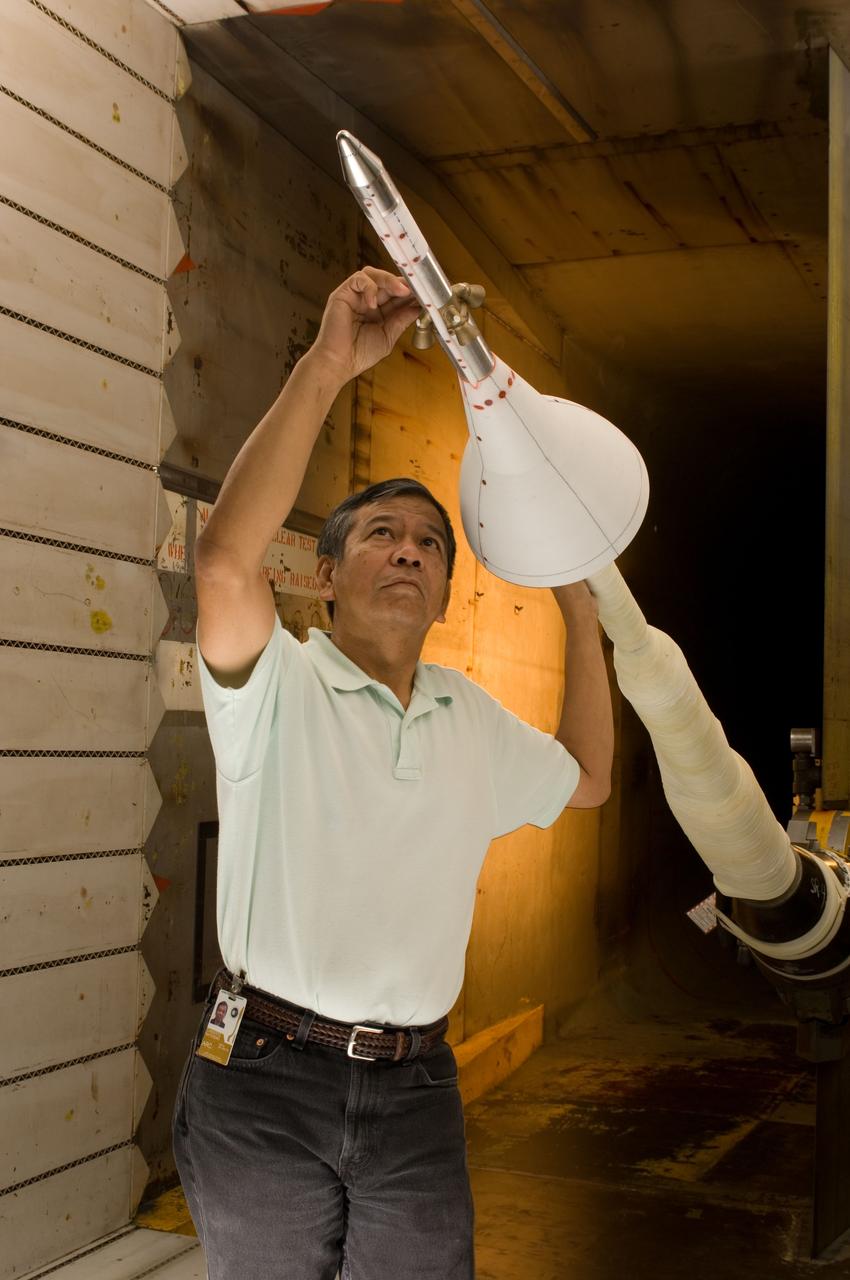
CEV (Crew Escape Vehicle) Alternative Launch Abort System (ALAS) configuration test in the Ames 11ft wind tunnel. Test-11-0172 with Paul Espinosa
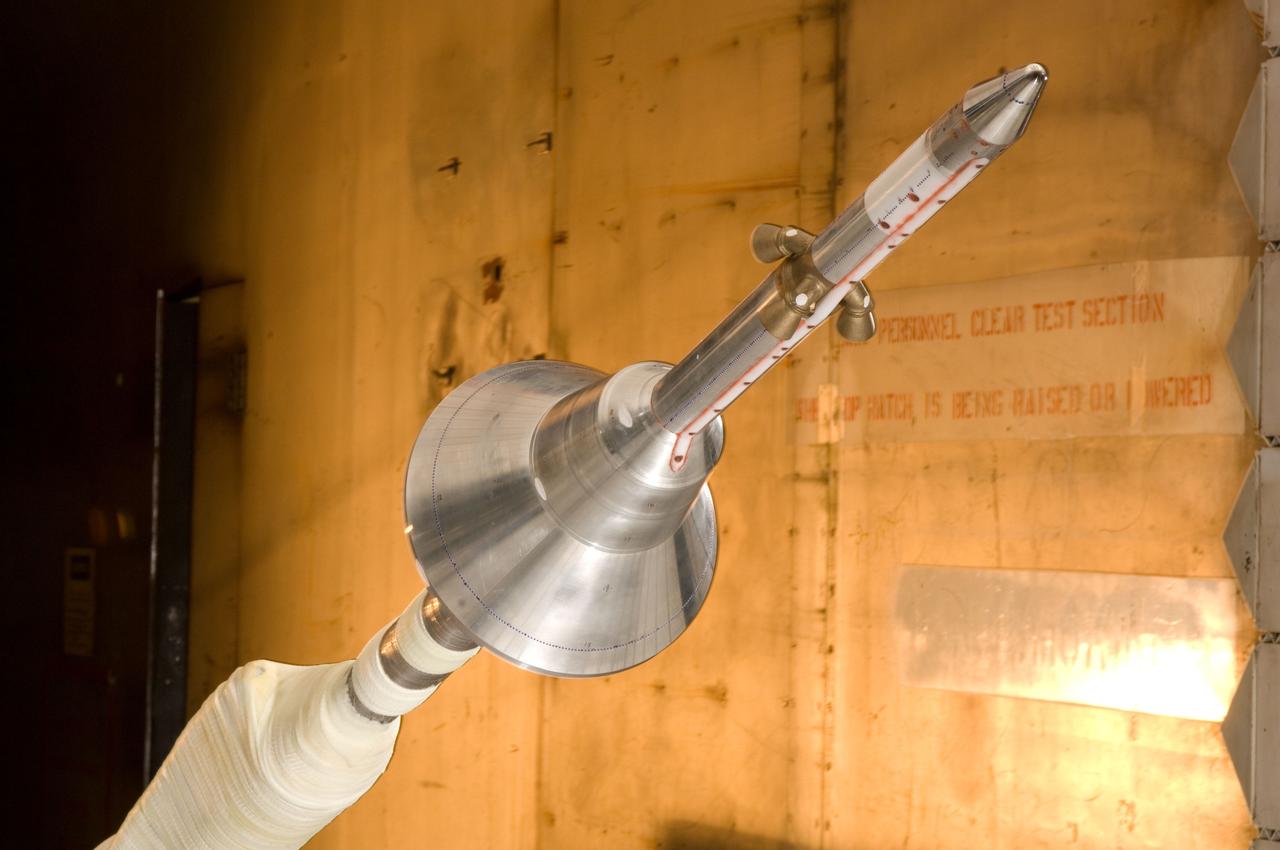
CEV (Crew Escape Vehicle) Alternative Launch Abort System (ALAS) configuration test in the Ames 11ft wind tunnel. Test-11-0172
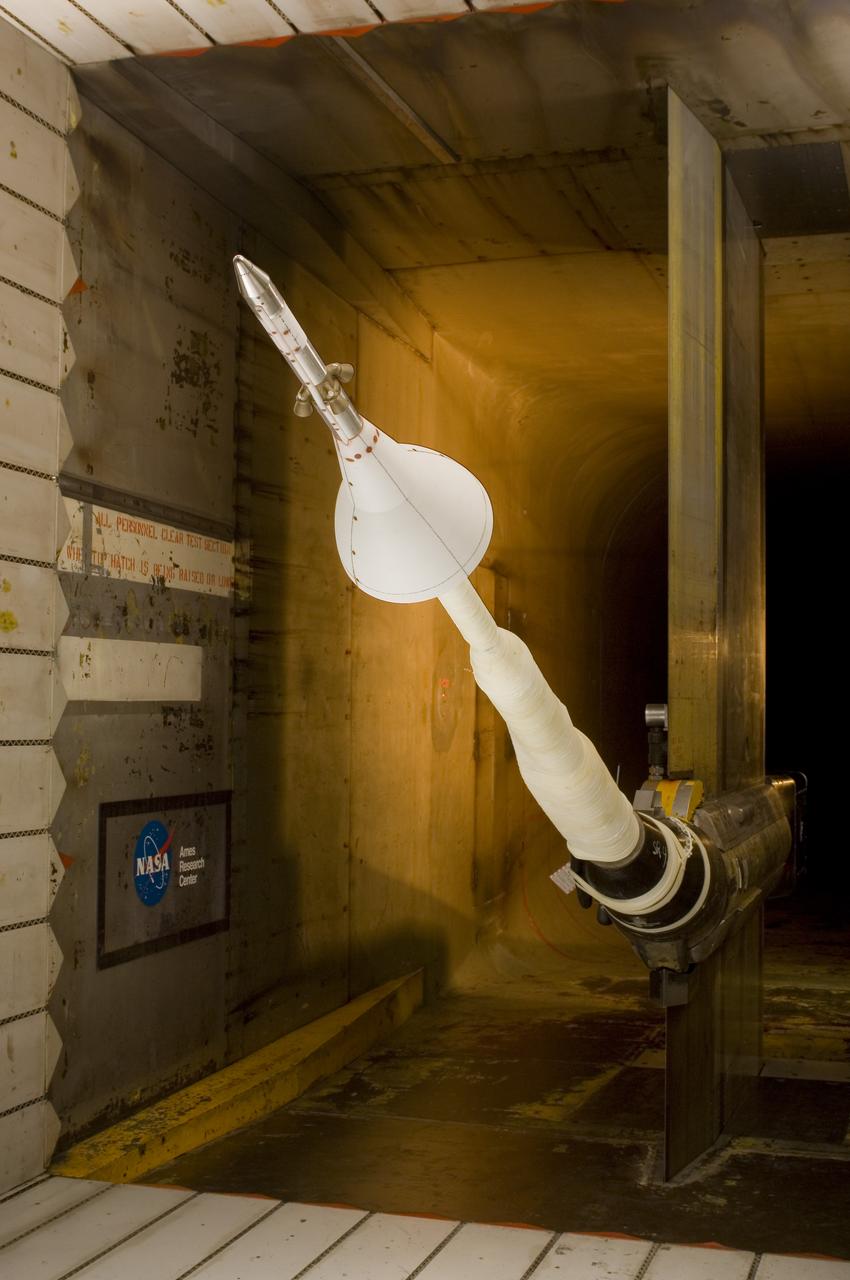
CEV (Crew Escape Vehicle) Alternative Launch Abort System (ALAS) configuration test in the Ames 11ft wind tunnel. Test-11-0172
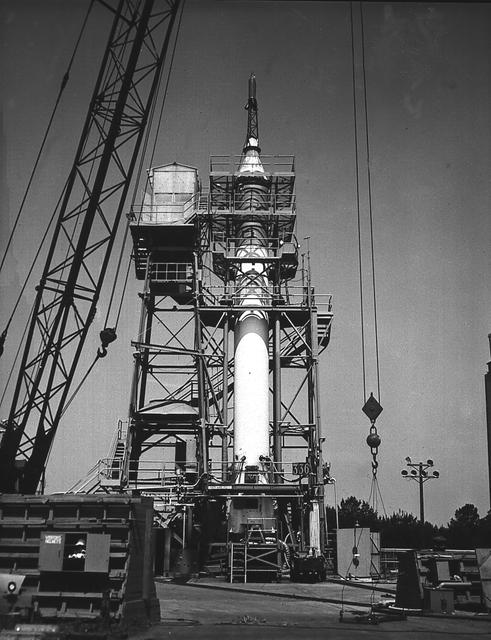
A Mercury-Redstone launch vehicle awaits test-firing in the Redstone Test Stand during the late 1950s. Between 1953 and 1960, the rocket team at Redstone Arsenal in Huntsville, Alabama performed hundreds of test firings on the Redstone rocket, over 200 on the Mercury-Redstone vehicle configuration alone. It was this configuration which launched America's first two marned space missions, Freedom 7 and Liberty Bell 7,in 1961.
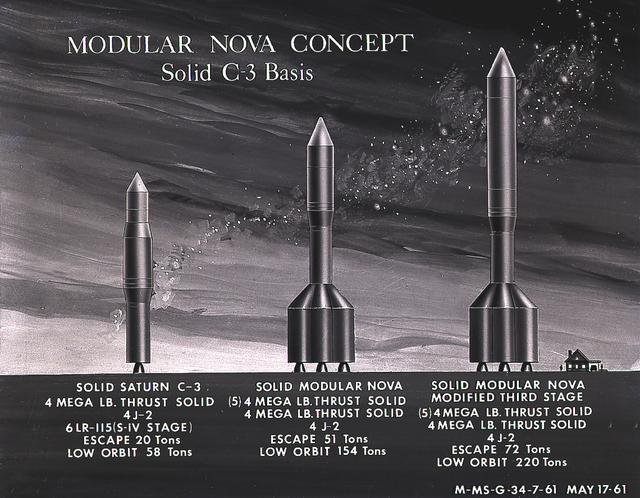
This artist's concept illustrates the Module Nova concept - Solid C-3 Basis. From 1960 to 1962, the Marshall Space Flight Center considered the Nova launch vehicle as a means to achieve a marned lunar landing with a direct flight to the Moon. Various configurations of the vehicle were examined. The latest configuration was a five-stage vehicle using eight F-1 engines in the first stage. Although the program was canceled after NASA planners selected the lunar/orbital rendezvous mode, the proposed F-1 engine would eventually be used in the Apollo Program to propel the first stage of the Saturn V launch vehicle.
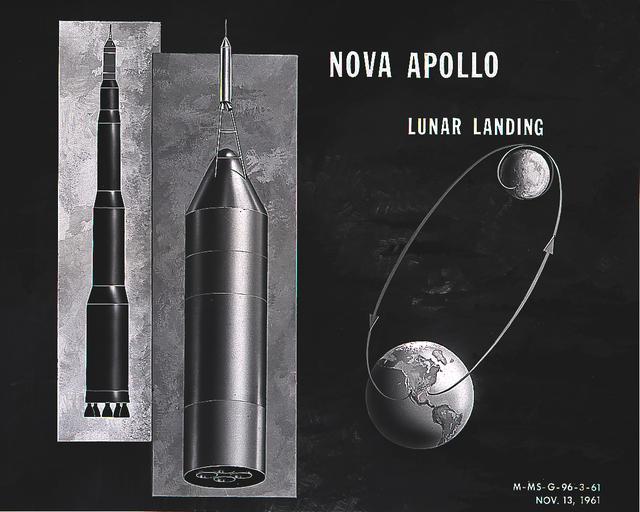
This artist's concept illustrates the Module Nova concept - Solid C-3 Basis. From 1960 to 1962, the Marshall Space Flight Center considered the Nova launch vehicle as a means to achieve a marned lunar landing with a direct flight to the Moon. Various configurations of the vehicle were examined. The latest configuration was a five-stage vehicle using eight F-1 engines in the first stage. Although the program was canceled after NASA planners selected the lunar/orbital rendezvous mode, the proposed F-1 engine would eventually be used in the Apollo Program to propel the first stage of the Saturn V launch vehicle.
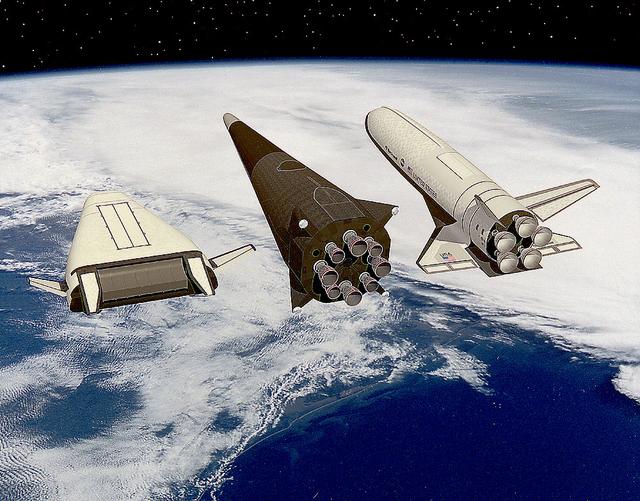
Artist John Frassanito's concept of three Single-Stage-to-Orbit (SSTO) Reusable Launch Vehicles (RLV's). Depicted from the left are: The Lockheed-Martin lifting body configuration that uses an integrated linear aerospike main engine; the McDornell Douglas vertical landing configuration; and the Rockwell wing body configuration that uses liquid oxygen and hydrogen bell engines.
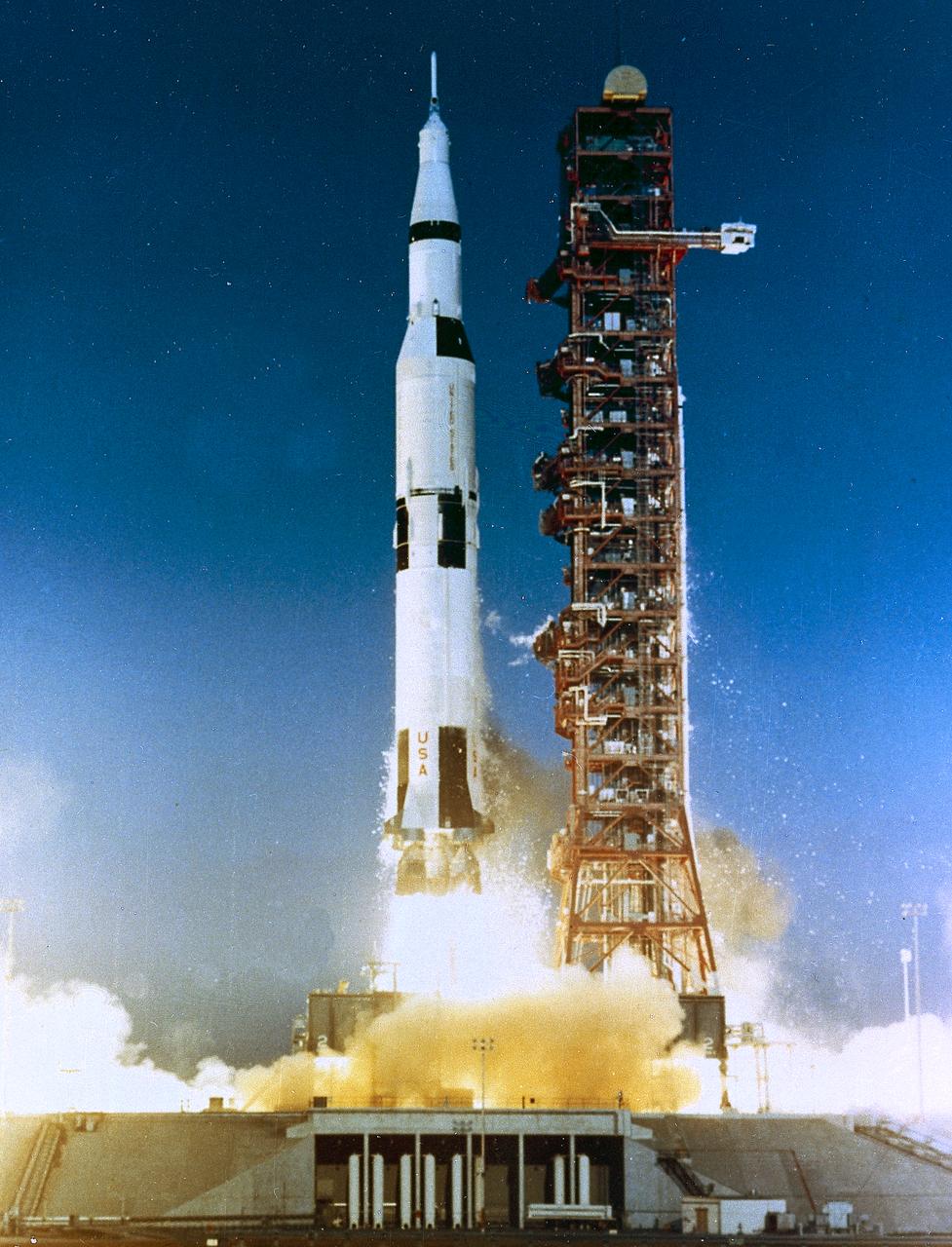
The second Saturn V launch vehicle (SA-502) for the Apollo 6 mission lifted off from the Kennedy Space Center launch complex on April 4, 1968. This unmanned Saturn V launch vehicle tested the emergency detection system in closed loop configuration.
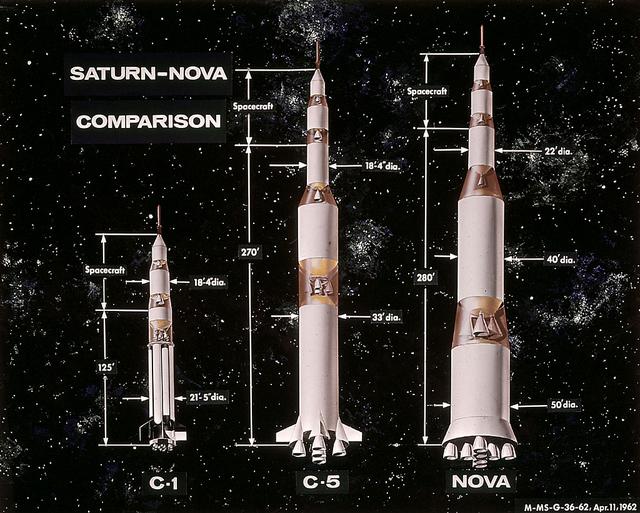
In this 1962 artist's concept , a proposed Nova rocket, shown at right, is compared to a Saturn C-1, left, and a Saturn C-5, center. The Marshall Space Flight Center directed studies of Nova configuration from 1960 to 1962 as a means of achieving a marned lunar landing with a direct flight to the Moon. Various configurations of the vehicle were examined, the largest being a five-stage vehicle using eight F-1 engines in the first stage. Although the program was effectively cancelled in 1962 when NASA planners selected the lunar-orbital rendezvous mode, the proposed F-1 engine was eventually used to propel the first stage of the Saturn V launch vehicle in the Apollo Program.
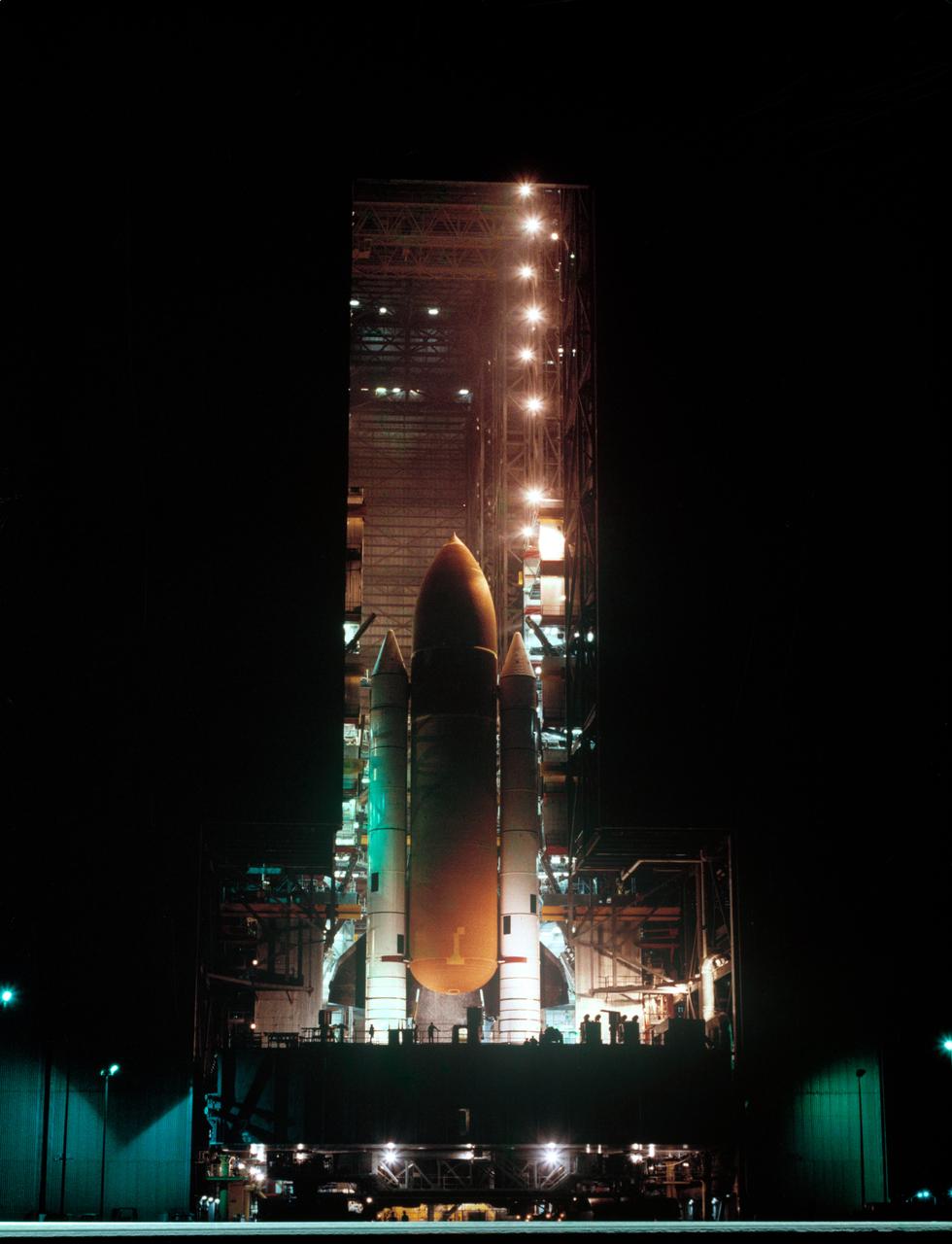
S83-39238 (1 Aug. 1983) --- The giant cluster of spaceflight hardware for NASA's eighth Space Transportation System (STS) mission begins its slow move to the launch pad at launch complex 39 at NASA's Kennedy Space Center (KSC). Following its mating to the two solid rocket boosters (SRB) and the external fuel tank (ET) in the huge vehicle assembly building (VAB), the space shuttle Challenger is slowly moved to the launch pad atop the mobile launch platform. Photo credit: NASA
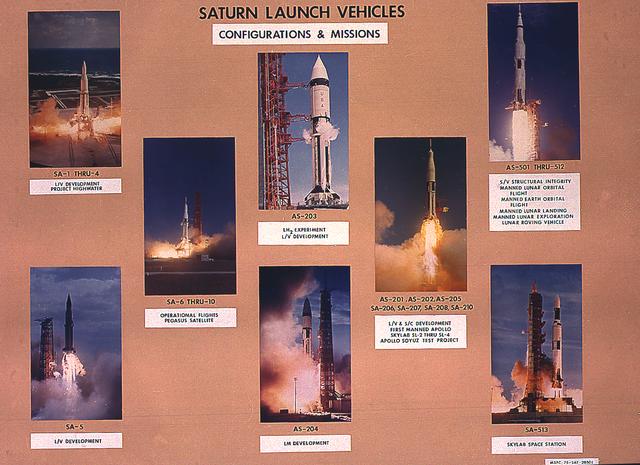
This montage illustrates the various configurations and missions of the three classes of the Saturn vehicles developed by the Marshall Space Flight Center. The missions for the Saturn I included atmospheric science investigations and the deployment of the Pegasus meteroid-detection satellite as well as launch vehicle development. The Saturn IB vehicle tested the Apollo spacecraft and launched the three marned Skylab missions as well as the Apollo Soyuz test project. The Saturn V vehicle launched the manned lunar orbital/landing missions, and the Skylab Orbital Workshop in 1973.
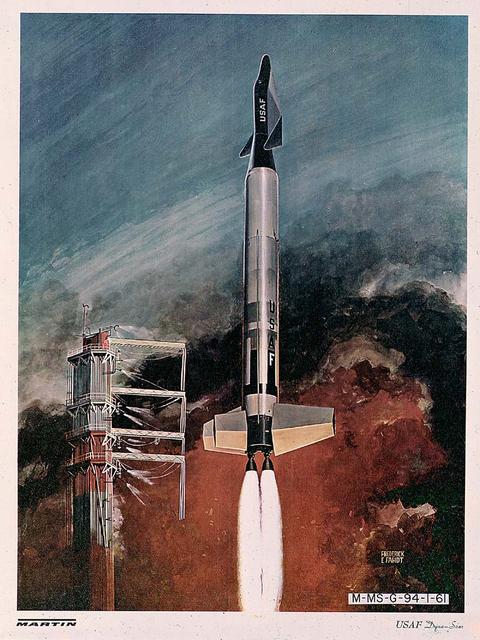
A Dyna-Soar (Dynamic Soaring) vehicle clears the launch tower atop an Air Force Titan II launch vehicle in this 1961 artist's concept. Originally conceived by the U.S. Air Force in 1957 as a marned, rocket-propelled glider in a delta-winged configuration, the Dyna-Soar was considered by Marshall Space Flight Center planners as an upper stage for the Saturn C-2 launch vehicle.
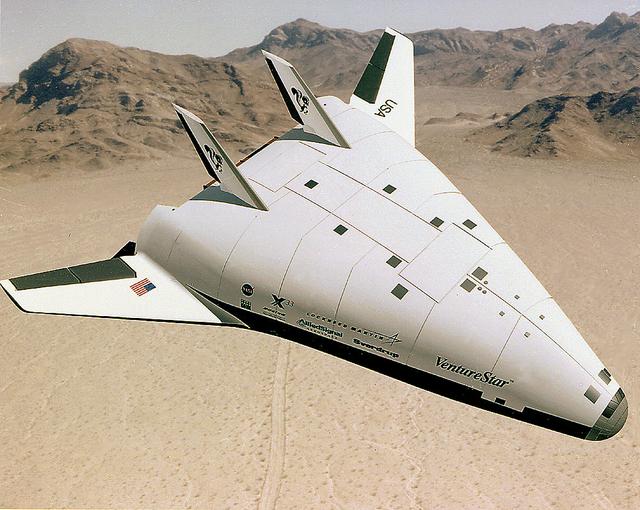
This is an artist's concept of an X-33 Advanced Technology Demonstrator, a subscale protoptye launch vehicle being developed by NASA Lockheed Martin Skunk Works. (Vehicle configuration current as of 10/97) The X-33 is a subscale prototype of a Reusable Launch Vehicle (RLV) Lockheed Martin has labeled "Venture Star TM." The X-33 program was cancelled in 2001.
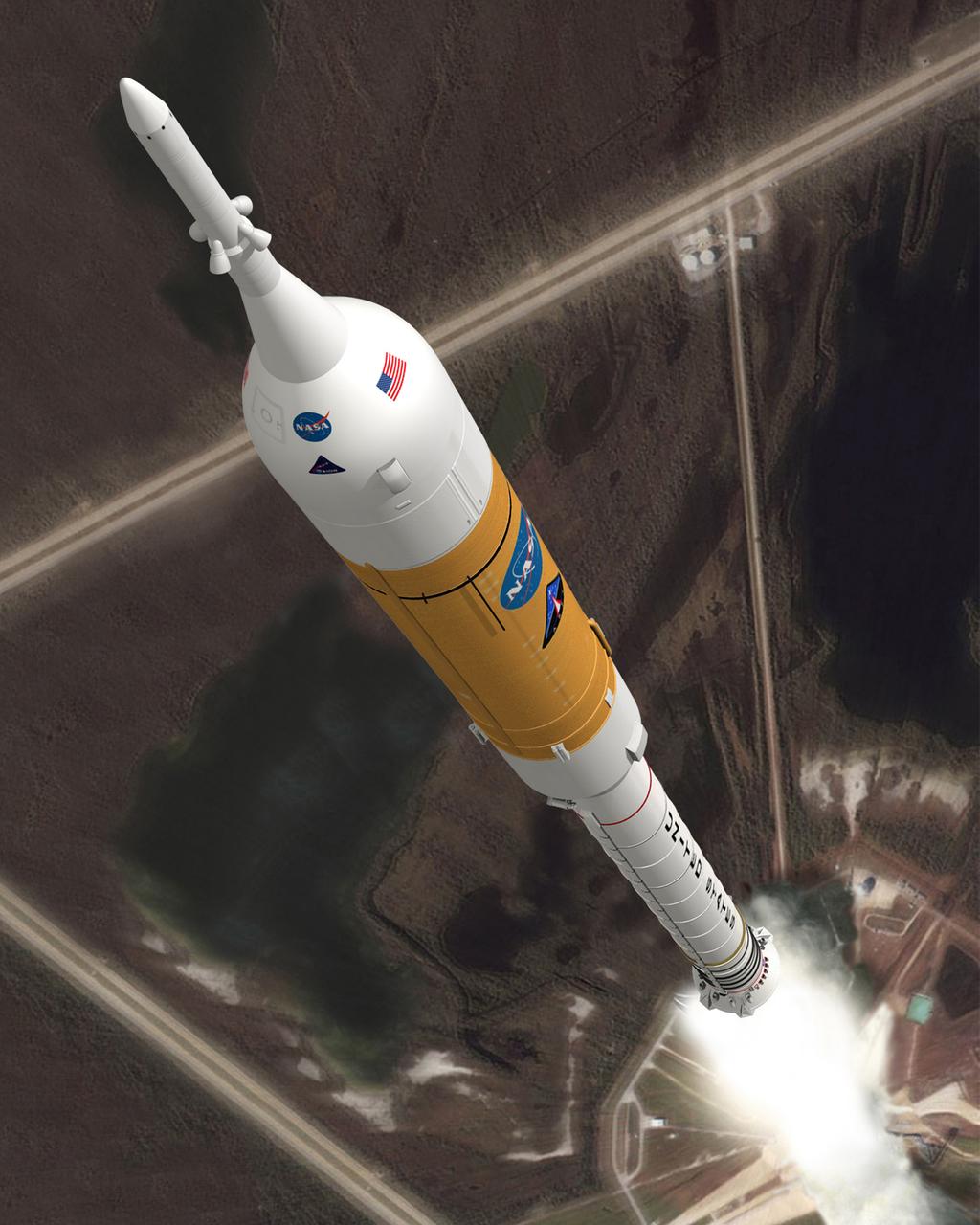
A CONCEPT IMAGE SHOWS THE ARES I CREW LAUNCH VEHICLE DURING ASCENT. ARES I IS AN IN-LINE, TWO-STAGE ROCKET CONFIGURATION TOPED BY THE ORION CREW EXPLORATION VEHICLE AND LAUNCH ABORT SYSTEM. THE ARES I FIRST STAGE IS A SINGLE, FIVE-SEGMENT REUSABLE SOLID ROCKET BOOSTER, DERIVED FROM THE SPACE SHUTTLE. ITS UPPER STAGE IS POWERED BY A J-2X ENGINE. ARES I WILL CARRY THE ORION WITH ITS CRW OF UP TO SIX ASTRONAUTS TO EARTH ORBIT.
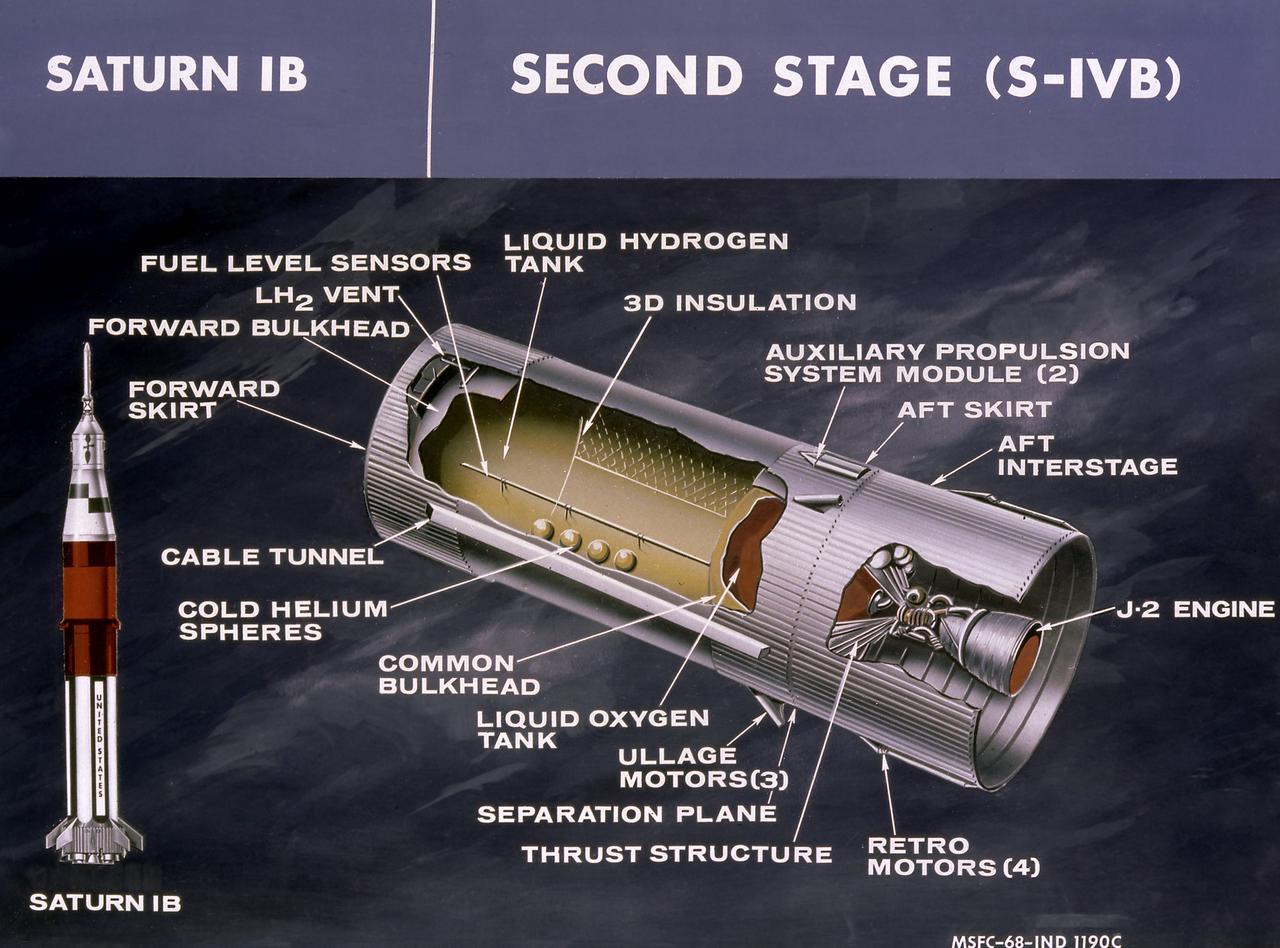
This cutaway drawing shows the S-IVB stage in its Saturn IB configuration. As a part of the Marshall Space Flight Center's (MSFC) "building block" approach to the Saturn development, the S-IVB stage was utilized in the Saturn IB launch vehicle as a second stage and, later, the Saturn V launch vehicle as a third stage. The stage was powered by a single J-2 engine, initially capable of 200,000 pounds of thrust.
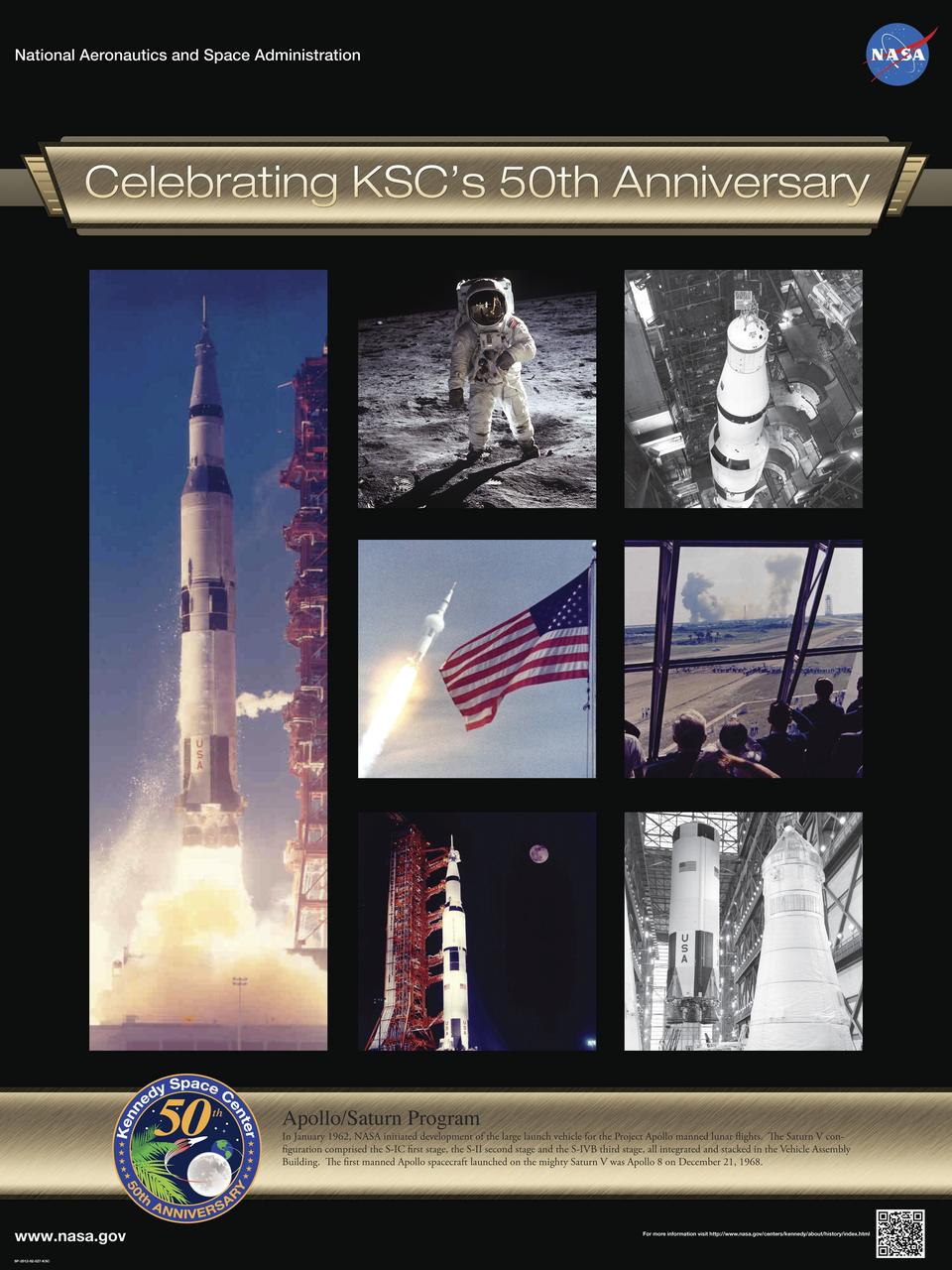
Apollo/Saturn Program: In January 1962, NASA initiated development of the large launch vehicle for the Project Apollo manned lunar flights. The Saturn V configuration comprised the S-IC first stage, the S-II second stage and the S-IVB third stage, all integrated and stacked in the Vehicle Assembly Building. The first manned Apollo spacecraft launched on the mighty Saturn V was Apollo 8 on December 21, 1968. Poster designed by Kennedy Space Center Graphics Department/Greg Lee. Credit: NASA
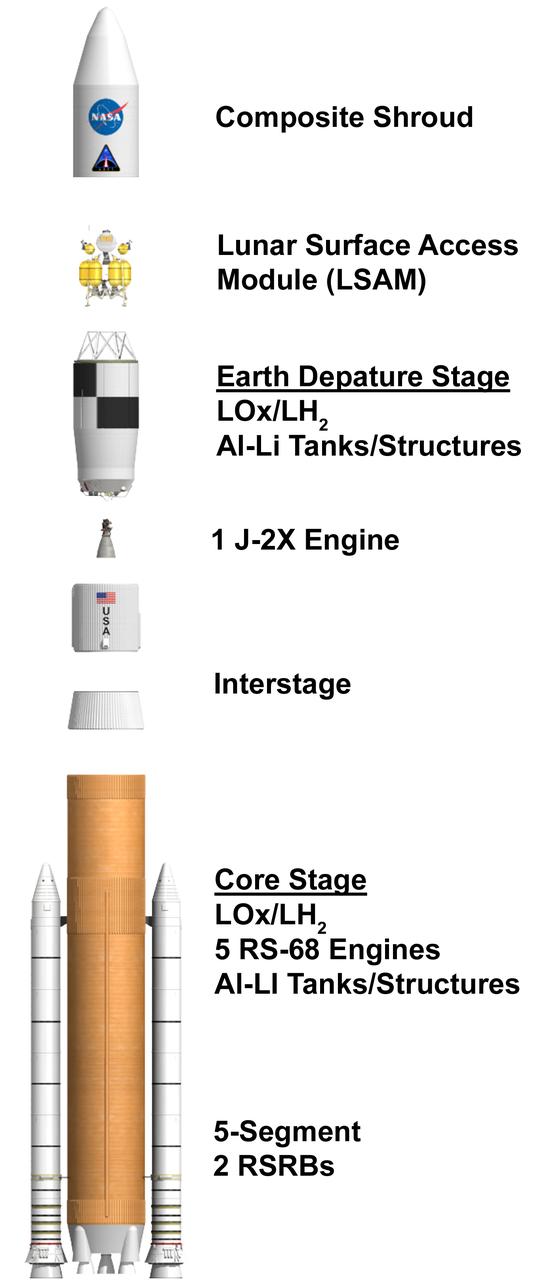
The NASA developed Ares rockets, named for the Greek god associated with Mars, will return humans to the moon and later take them to Mars and other destinations. This is an illustration of the Ares V with call outs. The Ares V is a heavy lift launch vehicle that will use five RS-68 liquid oxygen/liquid hydrogen engines mounted below a larger version of the space shuttle external tank, and two five-segment solid propellant rocket boosters for the first stage. The upper stage will use the same J-2X engine as the Ares I and past Apollo vehicles. The Ares V can lift more than 286,000 pounds to low Earth orbit and stands approximately 360 feet tall. This versatile system will be used to carry cargo and the components into orbit needed to go to the moon and later to Mars. Ares V is subject to configuration changes before it is actually launched. This illustration reflects the latest configuration as of January 2007.
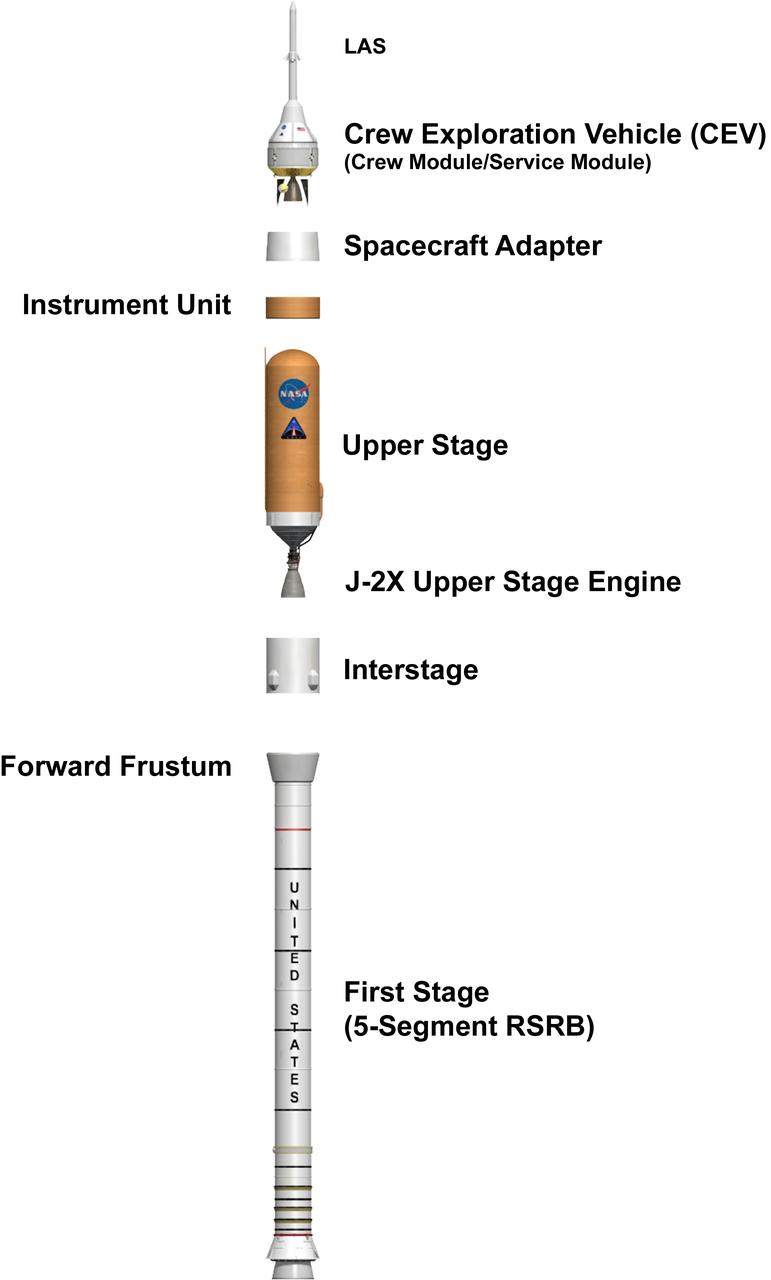
Named for the Greek god associated with Mars, the NASA developed Ares launch vehicles will return humans to the moon and later take them to Mars and other destinations. This is an illustration of the Ares I with call outs. Ares I is an inline, two-stage rocket configuration topped by the Orion crew vehicle and its launch abort system. In addition to the primary mission of carrying crews of four to six astronauts to Earth orbit, Ares I may also use its 25-ton payload capacity to deliver resources and supplies to the International Space Station, or to "park" payloads in orbit for retrieval by other spacecraft bound for the moon or other destinations. Ares I employs a single five-segment solid rocket booster, a derivative of the space shuttle solid rocket booster, for the first stage. A liquid oxygen/liquid hydrogen J-2X engine derived from the J-2 engine used on the Apollo second stage will power the Ares I second stage. The Ares I can lift more than 55,000 pounds to low Earth orbit. Ares I is subject to configuration changes before it is actually launched. This illustration reflects the latest configuration as of January 2007.
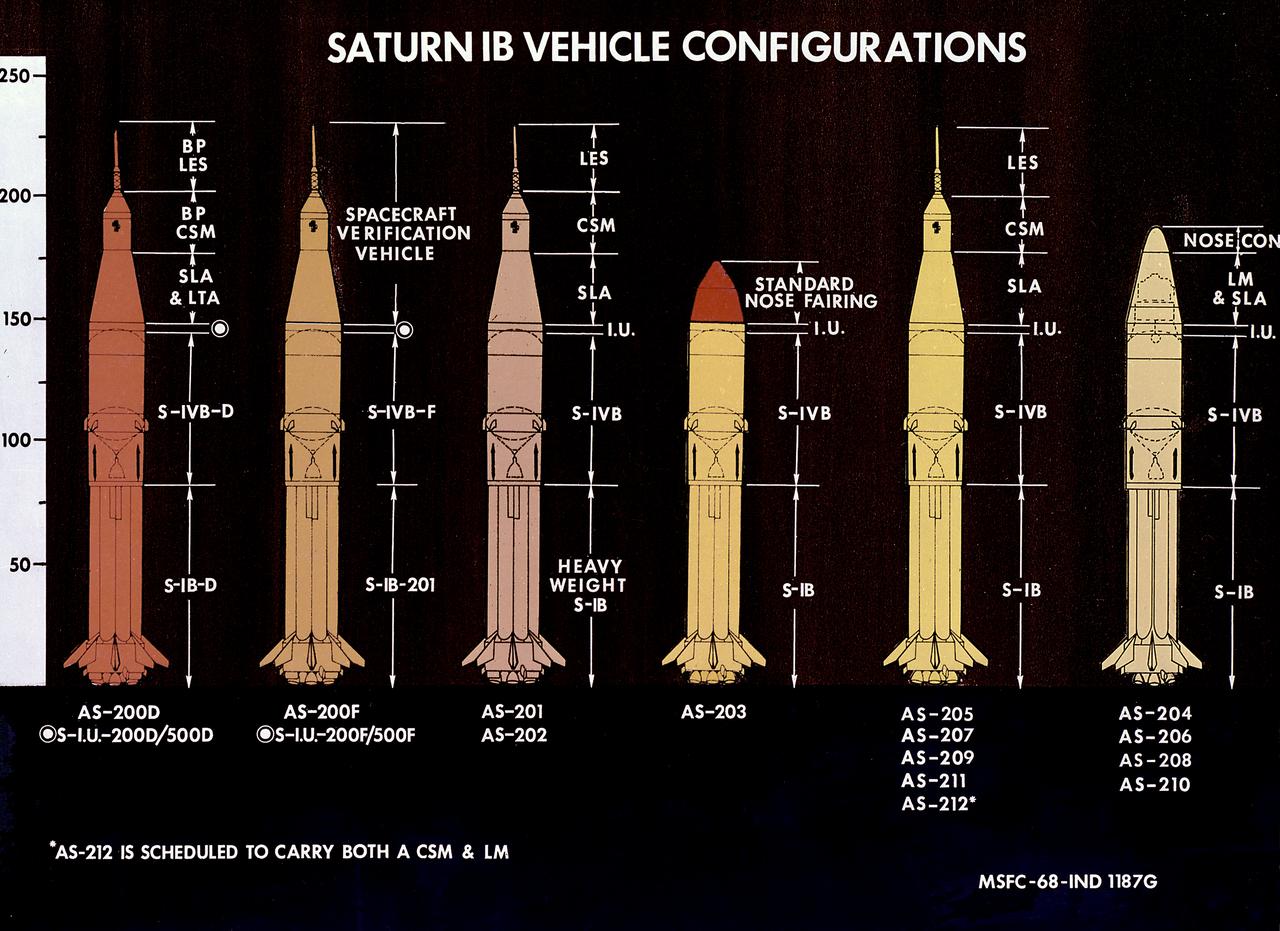
This 1968 chart depicts the various mission configurations for the Saturn IB launch vehicle. Developed by the Marshall Space Flight Center (MSFC) as an interim vehicle in MSFC's "building block" approach to the Saturn rocket development, the Saturn IB utilized Saturn I technology to further develop and refine the larger boosters and the Apollo spacecraft capabilities required for the marned lunar missions.
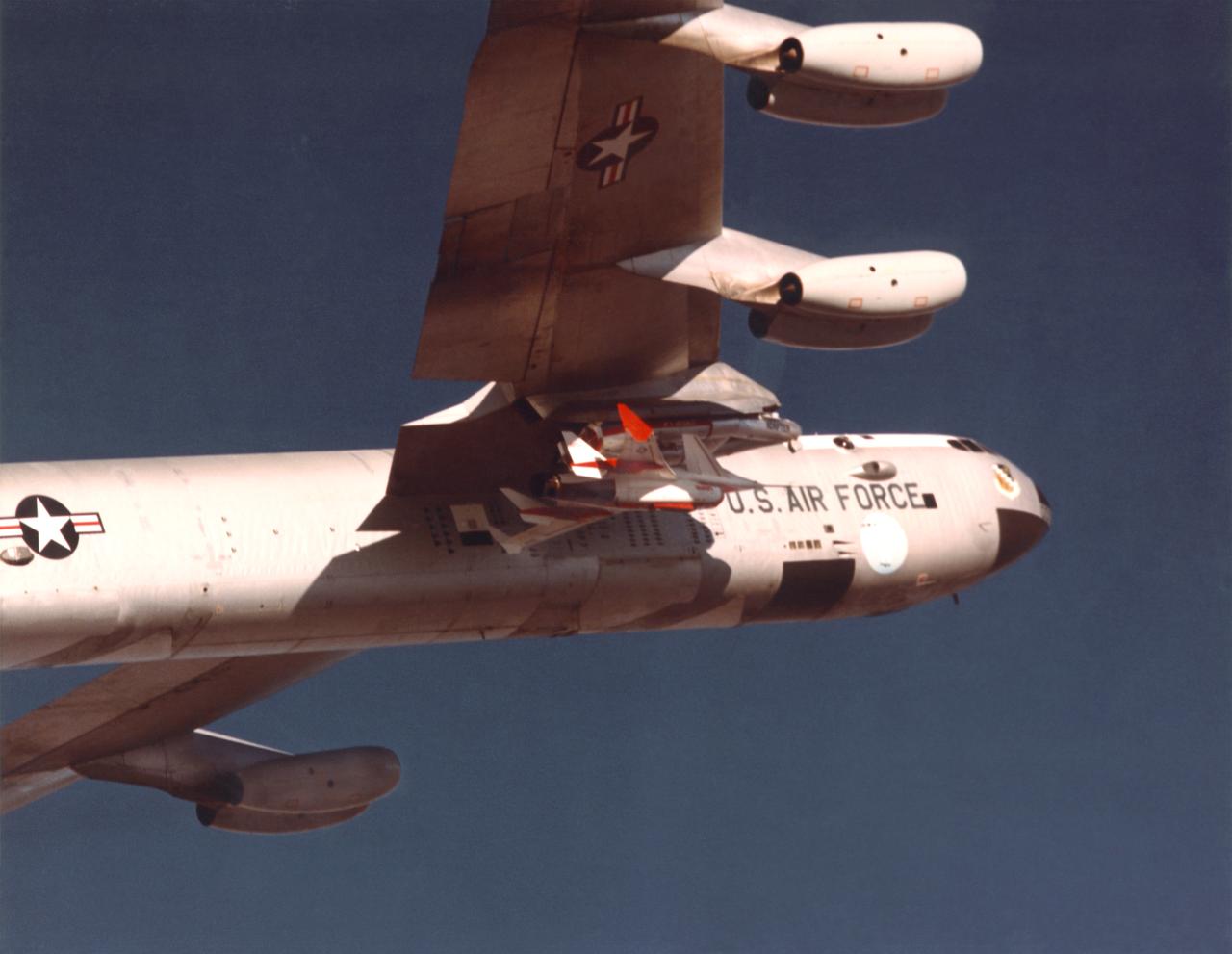
The Highly Maneuverable Aircraft Technology (HiMAT) research vehicle is shown here mated to a wing pylon on NASA’s B-52 mothership aircraft. The HiMAT was a technology demonstrator to test structures and configurations for advanced fighter concepts. Over the course of more than 40 years, the B-52 proved a valuable workhorse for NASA’s Dryden Flight Research Center (under various names), launching a wide variety of vehicles and conducting numerous other research flights.
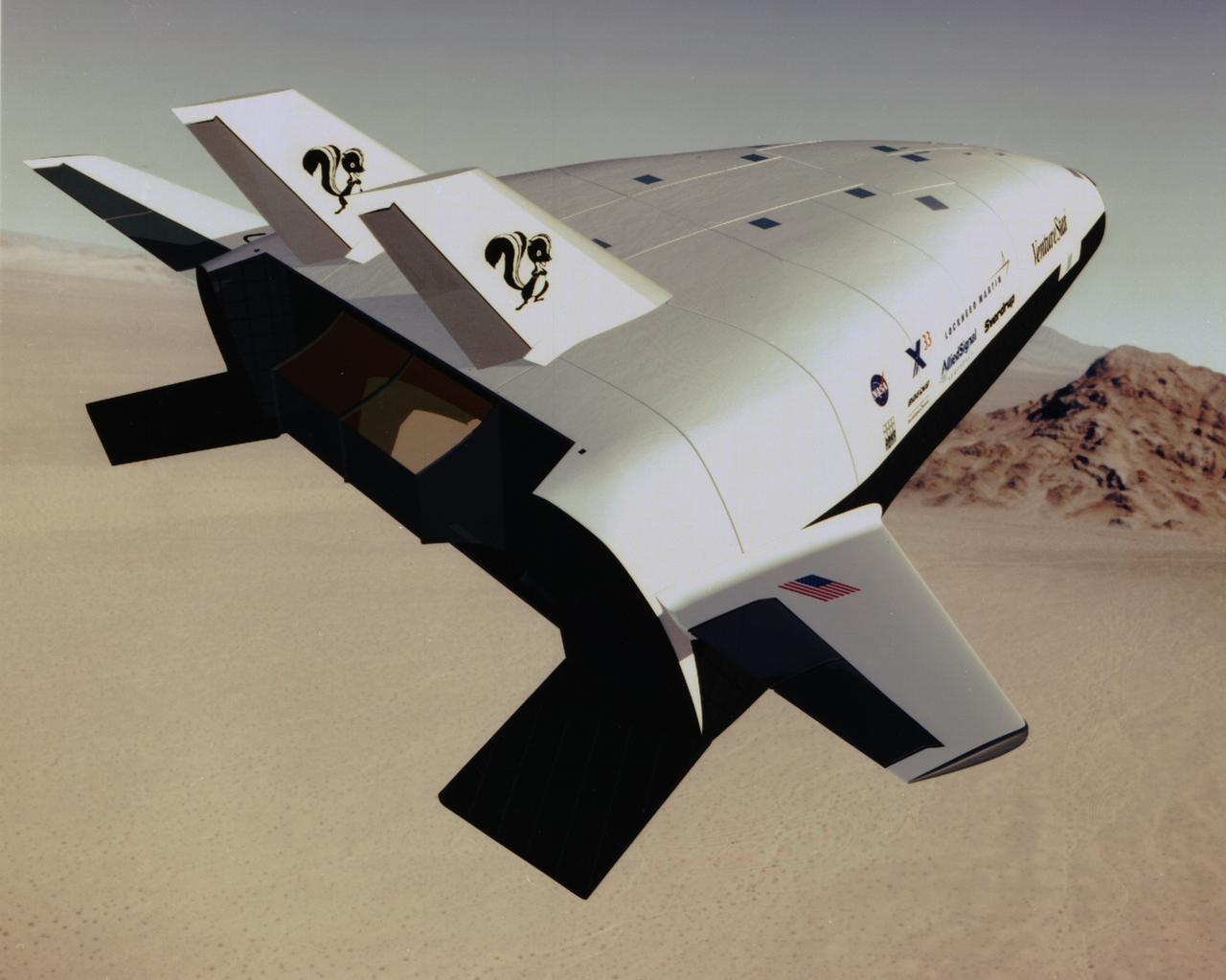
This artist’s concept is of the X-33 Advanced Technology Demonstrator, a subscale prototype Reusable Launch Vehicle (RLV), in its 1997 configuration. Named the Venture Star, this vehicle manufactured by Lockheed Martin Skunk Works, is shown in orbit with a deployed payload. The Venture Star was one of the earliest versions of the RLV’s developed in attempt to replace the aging shuttle fleet. The X-33 program has been discontinued.
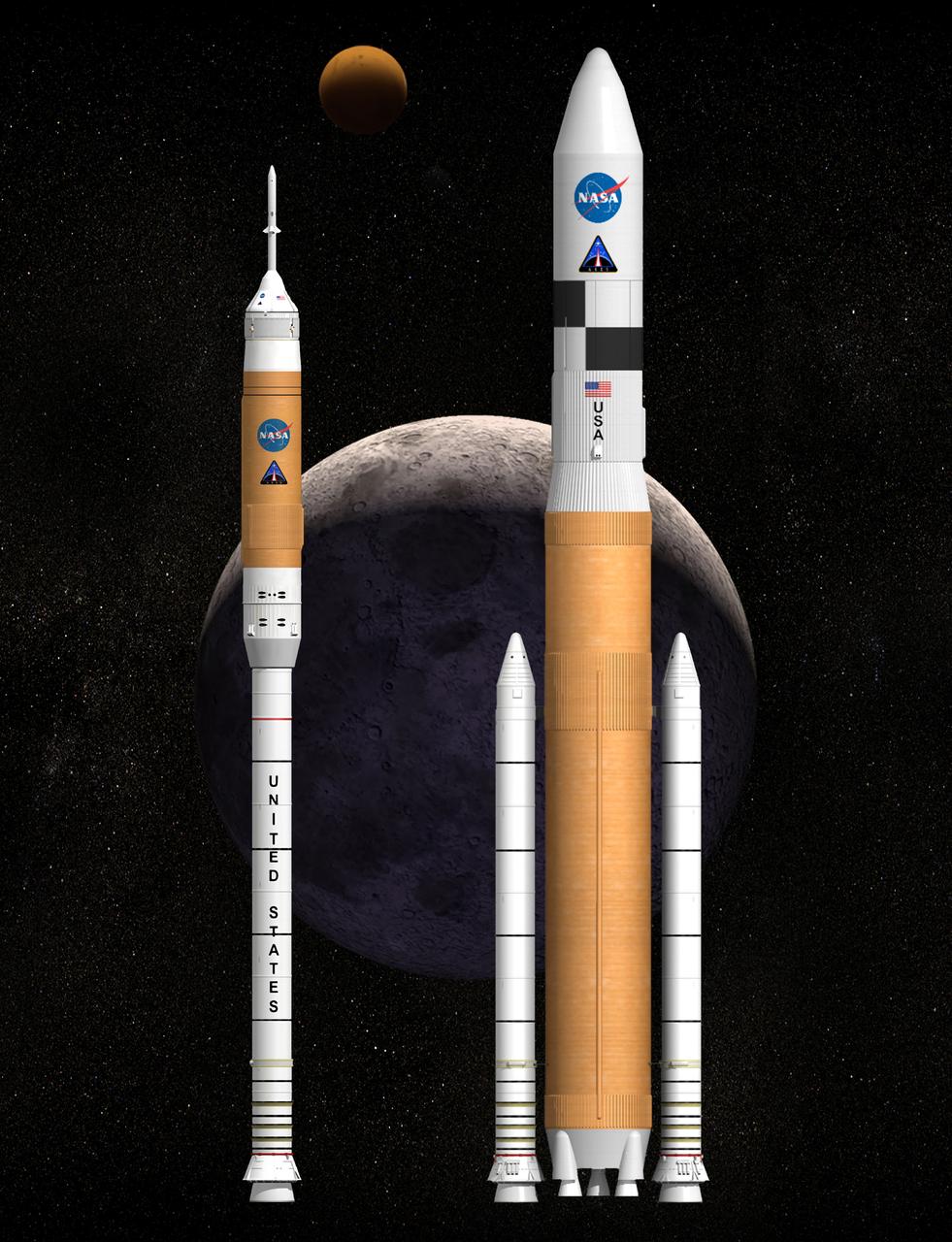
Named for the Greek god associated with Mars, the NASA developed Ares launch vehicles will return humans to the moon and later take them to Mars and other destinations. In this early illustration, the vehicle depicted on the left is the Ares I. Ares I is an inline, two-stage rocket configuration topped by the Orion crew vehicle and its launch abort system. In addition to its primary mission of carrying four to six member crews to Earth orbit, Ares I may also use its 25-ton payload capacity to deliver resources and supplies to the International Space Station (ISS), or to "park" payloads in orbit for retrieval by other spacecraft bound for the moon or other destinations. The Ares I employs a single five-segment solid rocket booster, a derivative of the space shuttle solid rocket booster, for the first stage. A liquid oxygen/liquid hydrogen J-2X engine derived from the J-2 engine used on the second stage of the Apollo vehicle will power the Ares V second stage. The Ares I can lift more than 55,000 pounds to low Earth orbit. The vehicle illustrated on the right is the Ares V, a heavy lift launch vehicle that will use five RS-68 liquid oxygen/liquid hydrogen engines mounted below a larger version of the space shuttle external tank, and two five-segment solid propellant rocket boosters for the first stage. The upper stage will use the same J-2X engine as the Ares I. The Ares V can lift more than 286,000 pounds to low Earth orbit and stands approximately 360 feet tall. This versatile system will be used to carry cargo and the components into orbit needed to go to the moon and later to Mars. Both vehicles are subject to configuration changes before they are actually launched. This illustration reflects the latest configuration as of September 2006.
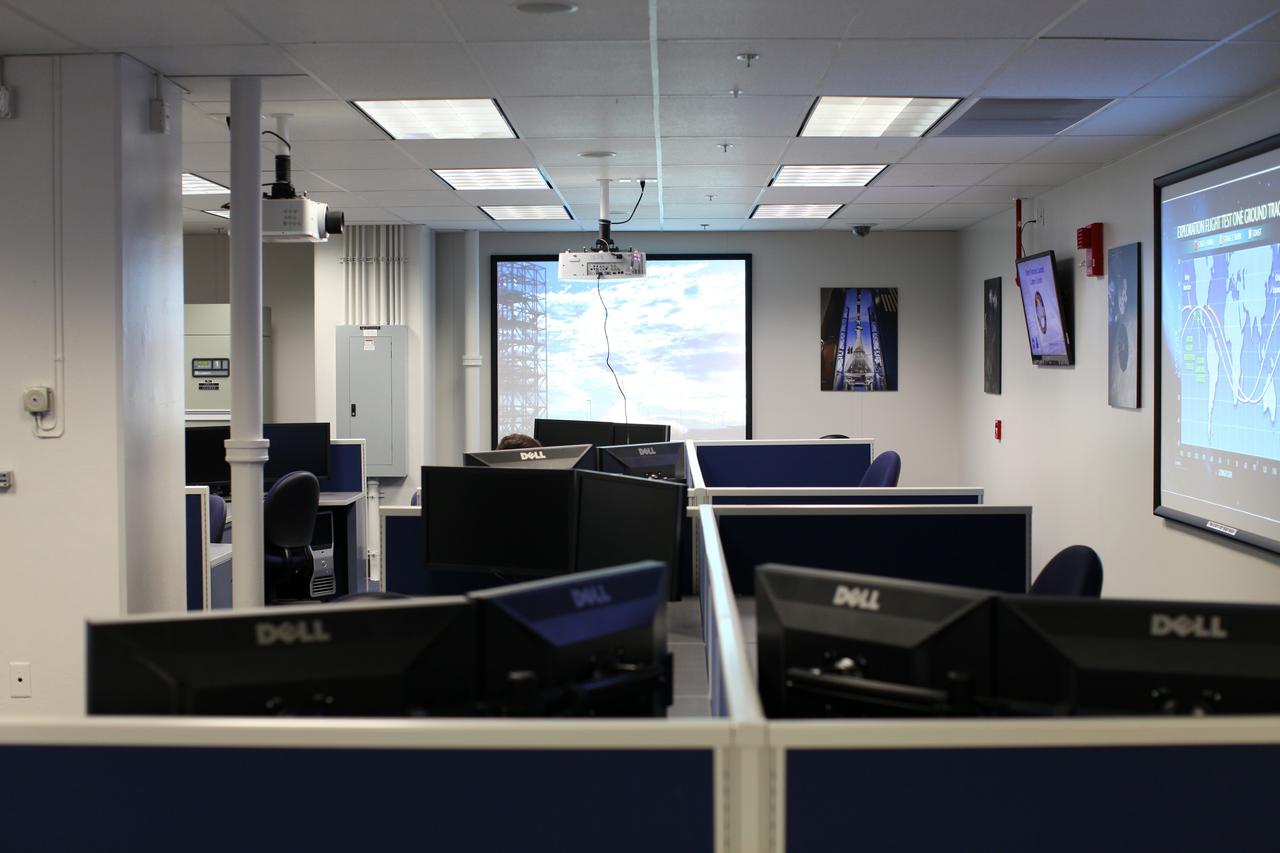
CAPE CANAVERAL, Fla. – Inside the Operations and Checkout Building at NASA’s Kennedy Space Center in Florida, media tour the new Orion Test and Launch Control Center. During a tour of the facility, media representatives viewed Orion, several processing stations, and the Orion Test and Launch Control Center. The ground test vehicle will remain at Kennedy for acoustic and modal testing. The heat shield on the bottom of the module will be removed and replaced with a more flight-like heat shield that was built by Lockheed Martin in Denver and will be shipped to Kennedy for installation. The test vehicle will then be in its vehicle configuration for the splashdown test at Langley as NASA prepares for Exploration Flight Test-1. Photo credit: NASA/Frankie Martin
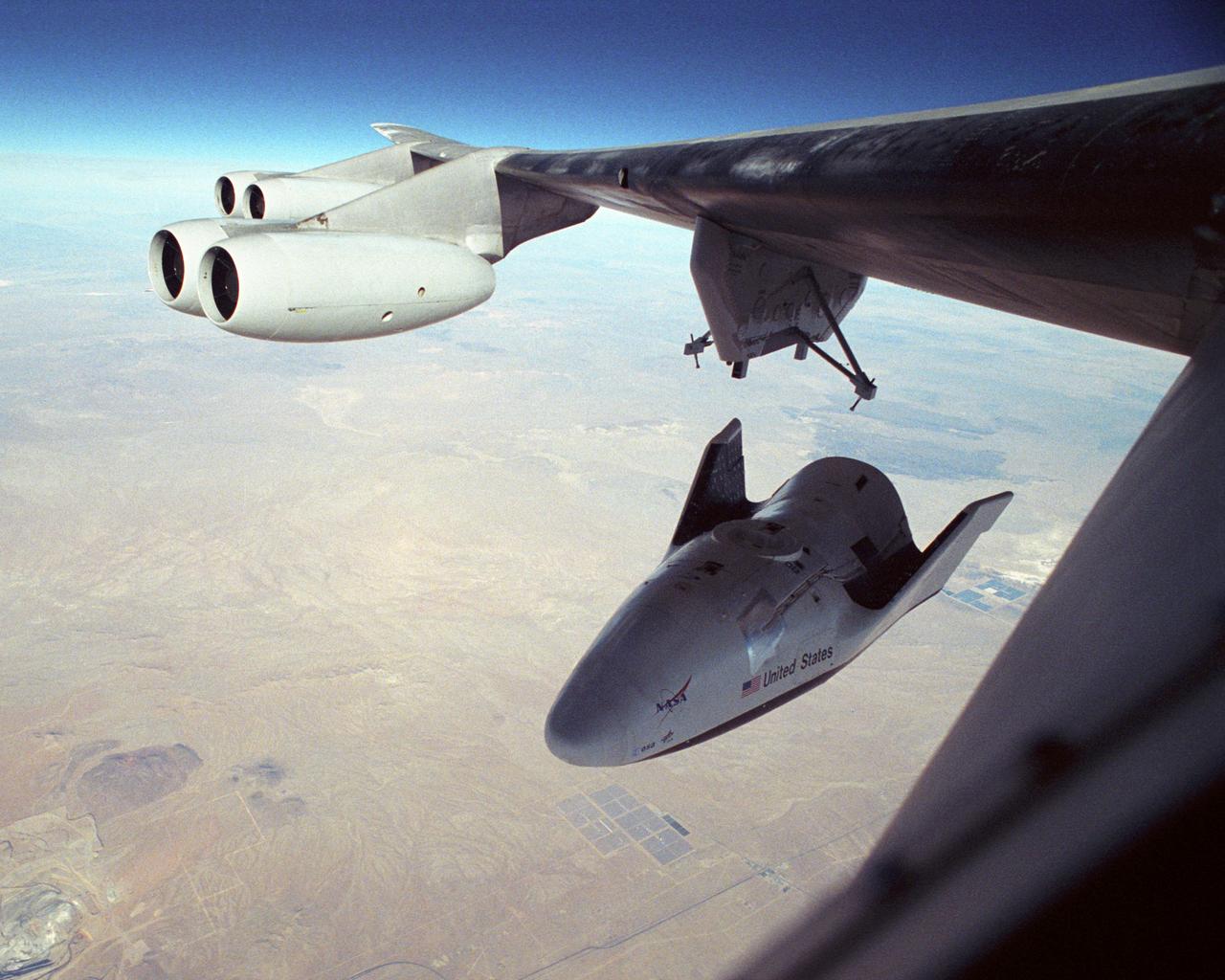
The X-38 prototype of the Crew Return Vehicle for the International Space Station drops away from its launch pylon on the wing of NASA's NB-52B mothership as it begins its eighth free flight on Thursday, Dec. 13, 2001. The 13-minute test flight of X-38 vehicle 131R was the longest and fastest and was launched from the highest altitude to date in the X-38's atmospheric flight test program. A portion of the descent was flown under remote control by a NASA astronaut from a ground vehicle configured like the CRV's interior before the X-38 made an autonomous landing on Rogers Dry Lake.
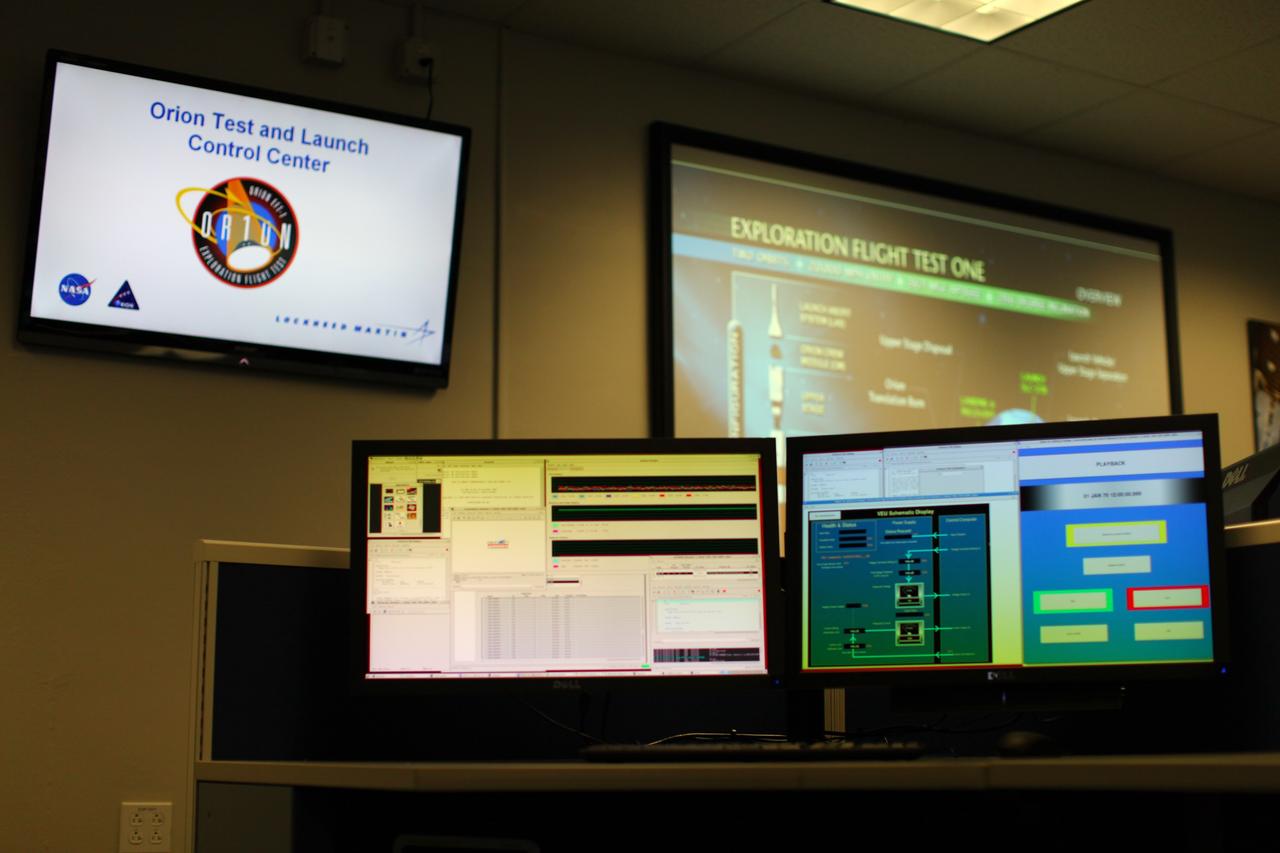
CAPE CANAVERAL, Fla. – Inside the Operations and Checkout Building at NASA’s Kennedy Space Center in Florida, media tour the new Orion Test and Launch Control Center. During a tour of the facility, media representatives viewed Orion, several processing stations, and the Orion Test and Launch Control Center. The ground test vehicle will remain at Kennedy for acoustic and modal testing. The heat shield on the bottom of the module will be removed and replaced with a more flight-like heat shield that was built by Lockheed Martin in Denver and will be shipped to Kennedy for installation. The test vehicle will then be in its vehicle configuration for the splashdown test at Langley as NASA prepares for Exploration Flight Test-1. Photo credit: NASA/Frankie Martin
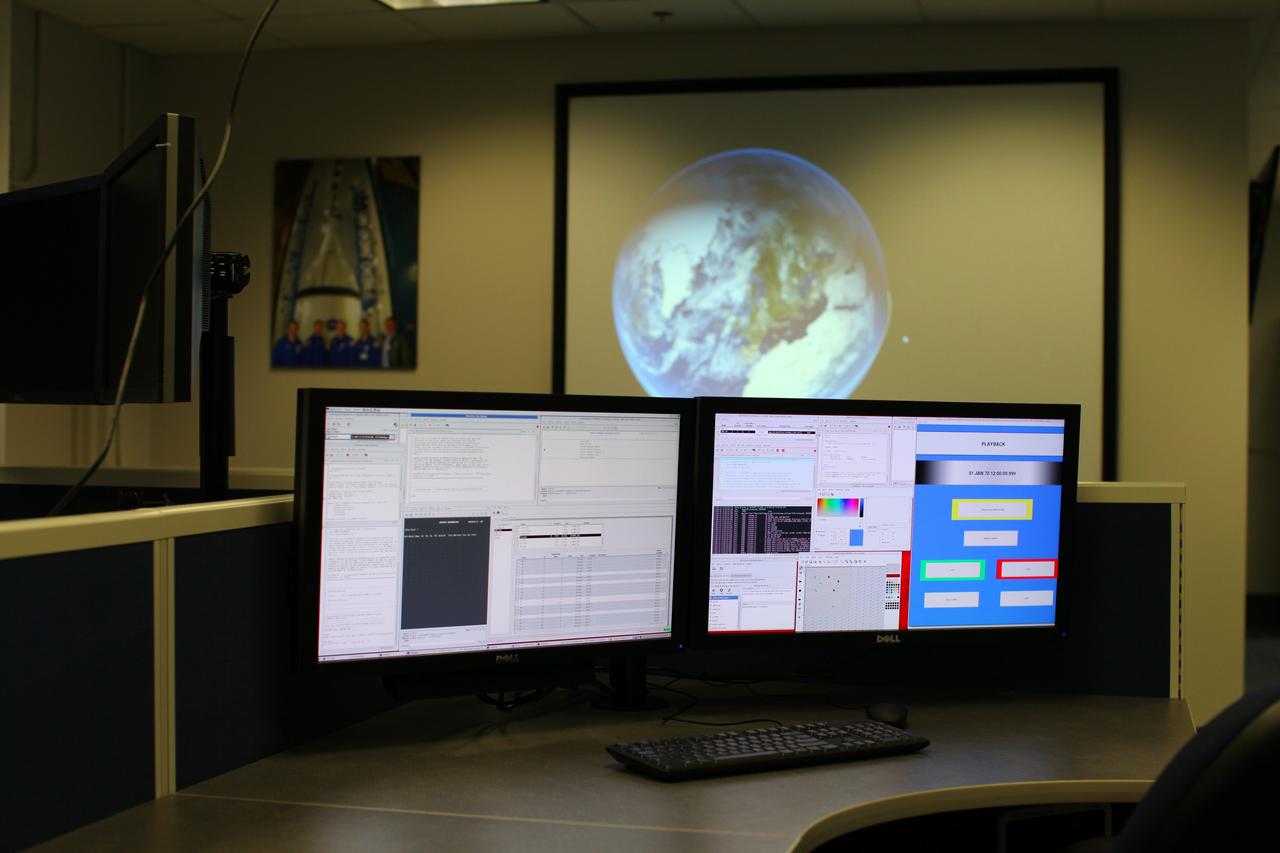
CAPE CANAVERAL, Fla. – Inside the Operations and Checkout Building at NASA’s Kennedy Space Center in Florida, media tour the new Orion Test and Launch Control Center. During a tour of the facility, media representatives viewed Orion, several processing stations, and the Orion Test and Launch Control Center. The ground test vehicle will remain at Kennedy for acoustic and modal testing. The heat shield on the bottom of the module will be removed and replaced with a more flight-like heat shield that was built by Lockheed Martin in Denver and will be shipped to Kennedy for installation. The test vehicle will then be in its vehicle configuration for the splashdown test at Langley as NASA prepares for Exploration Flight Test-1. Photo credit: NASA/Frankie Martin
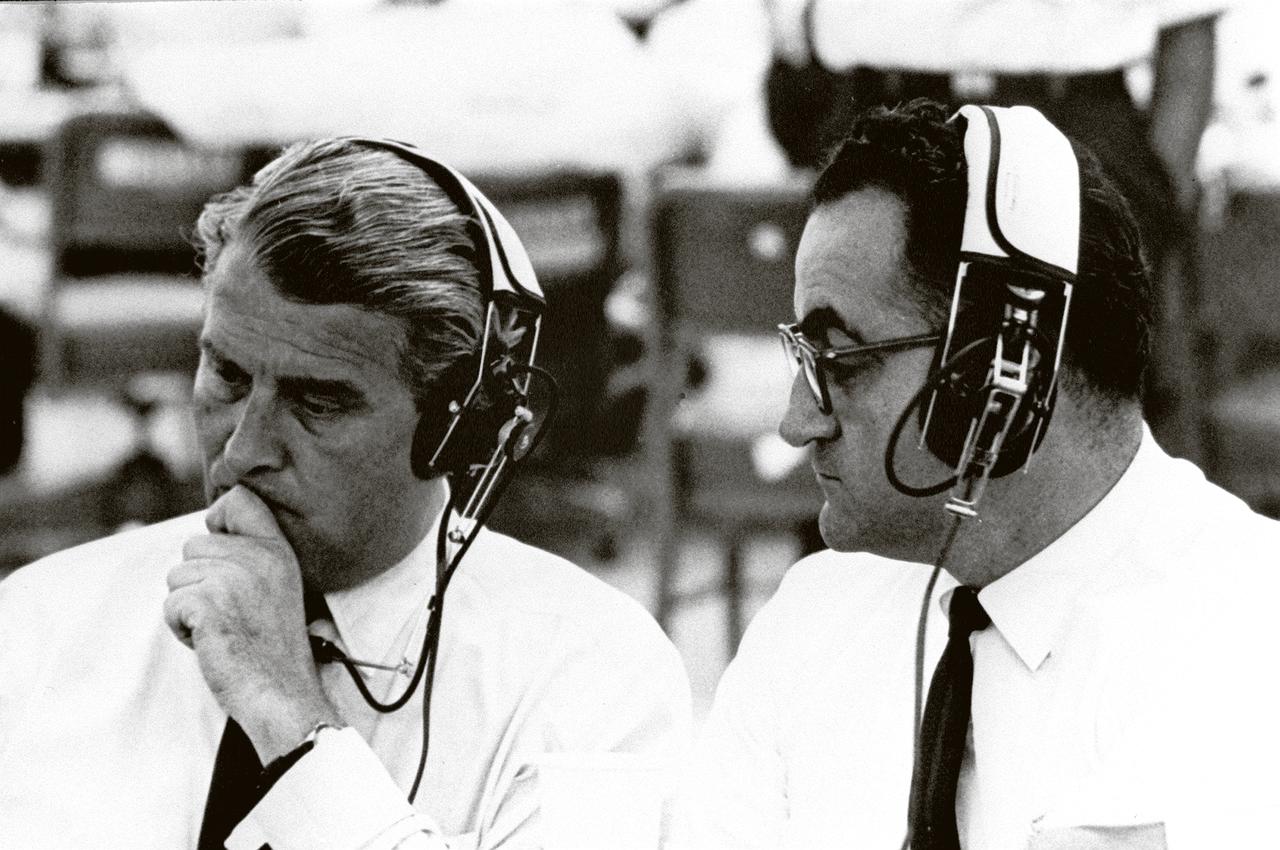
Marshall Space Flight Center (MSFC) Director Dr. Wernher von Braun (left) with Kennedy Space Center (KSC) Rocco Petrone prior to the January 29, 1964 launch of SA-5, the first Block II configuration of the Saturn I launch vehicle. Petrone played key roles at KSC in the development of Saturn launch facilities before becoming director of launch operations in 1966.
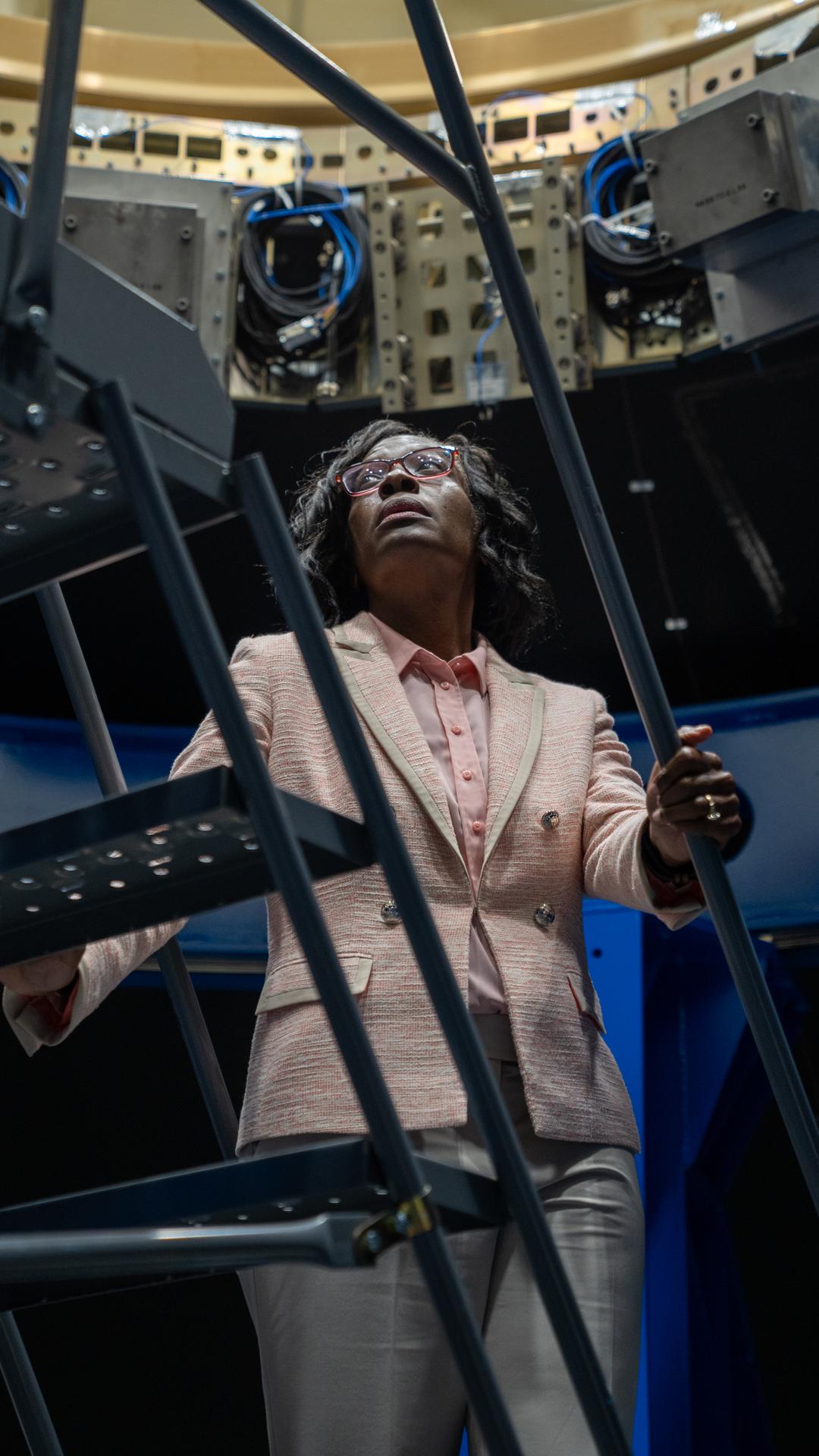
Lakiesha Hawkins, Assistant Deputy Associate Administrator for the Moon to Mars (M2M) Program within the Exploration Systems Development Mission Directorate (ESDMD), takes a peek at the Payload Adapter test article at Marshall Space Flight Center. The adapter, which will debut on NASA’s Artemis IV mission, is an evolution from the Orion stage adapter used in the Block 1 configuration of the rocket for the first three Artemis missions. It will be housed inside the universal stage adapter atop the rocket’s more powerful in-space stage, called the exploration upper stage. The payload adapter, like the launch vehicle stage adapter and the Orion stage adapter, is fully manufactured and tested at Marshall, which manages the SLS Program.
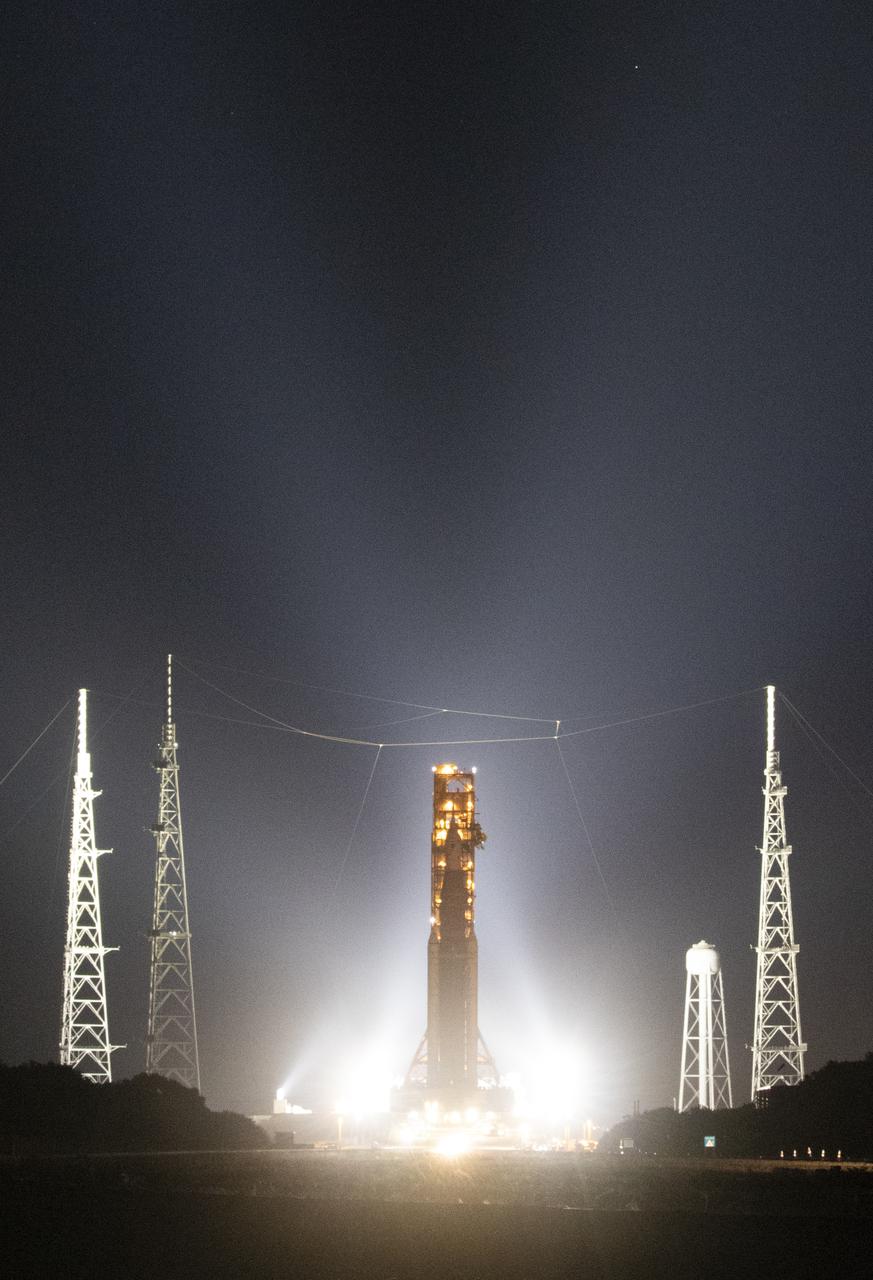
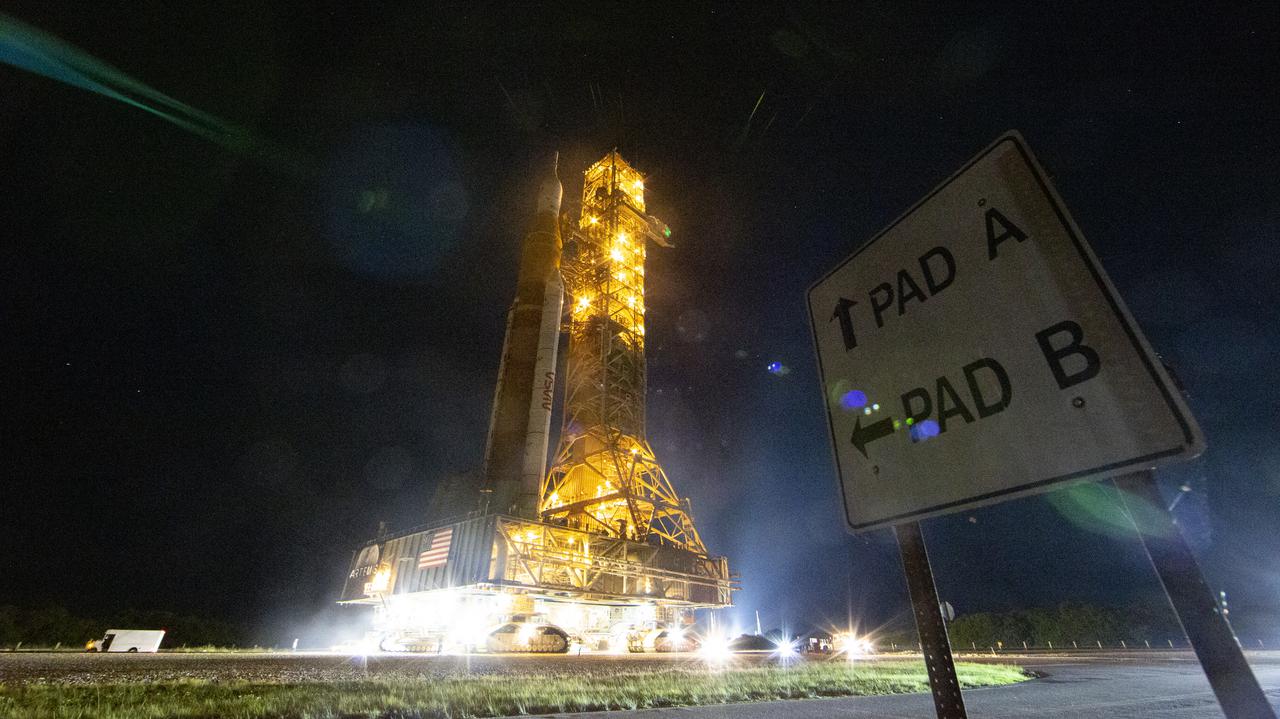
NASA’s Space Launch System (SLS) rocket with the Orion spacecraft aboard is seen atop a mobile launcher as it rolls back to the Vehicle Assembly Building, Monday, April 25, 2022, at NASA’s Kennedy Space Center in Florida. Once inside the Vehicle Assembly Building, teams will work on replacing a faulty upper stage check valve and a small leak within the tail service mast umbilical ground plate housing on the mobile launcher while the supplier for the gaseous nitrogen makes upgrades to their pipeline configuration to support Artemis I testing and launch. Following completion, teams will return to the launch pad to complete the next wet dress rehearsal attempt. Photo Credit: (NASA/Joel Kowsky)
NASA’s Space Launch System (SLS) rocket with the Orion spacecraft aboard is seen atop a mobile launcher as it rolls back to the Vehicle Assembly Building, Tuesday, April 26, 2022, at NASA’s Kennedy Space Center in Florida. Once inside the Vehicle Assembly Building, teams will work on replacing a faulty upper stage check valve and a small leak within the tail service mast umbilical ground plate housing on the mobile launcher while the supplier for the gaseous nitrogen makes upgrades to their pipeline configuration to support Artemis I testing and launch. Following completion, teams will return to the launch pad to complete the next wet dress rehearsal attempt. Photo Credit: (NASA/Aubrey Gemignani)
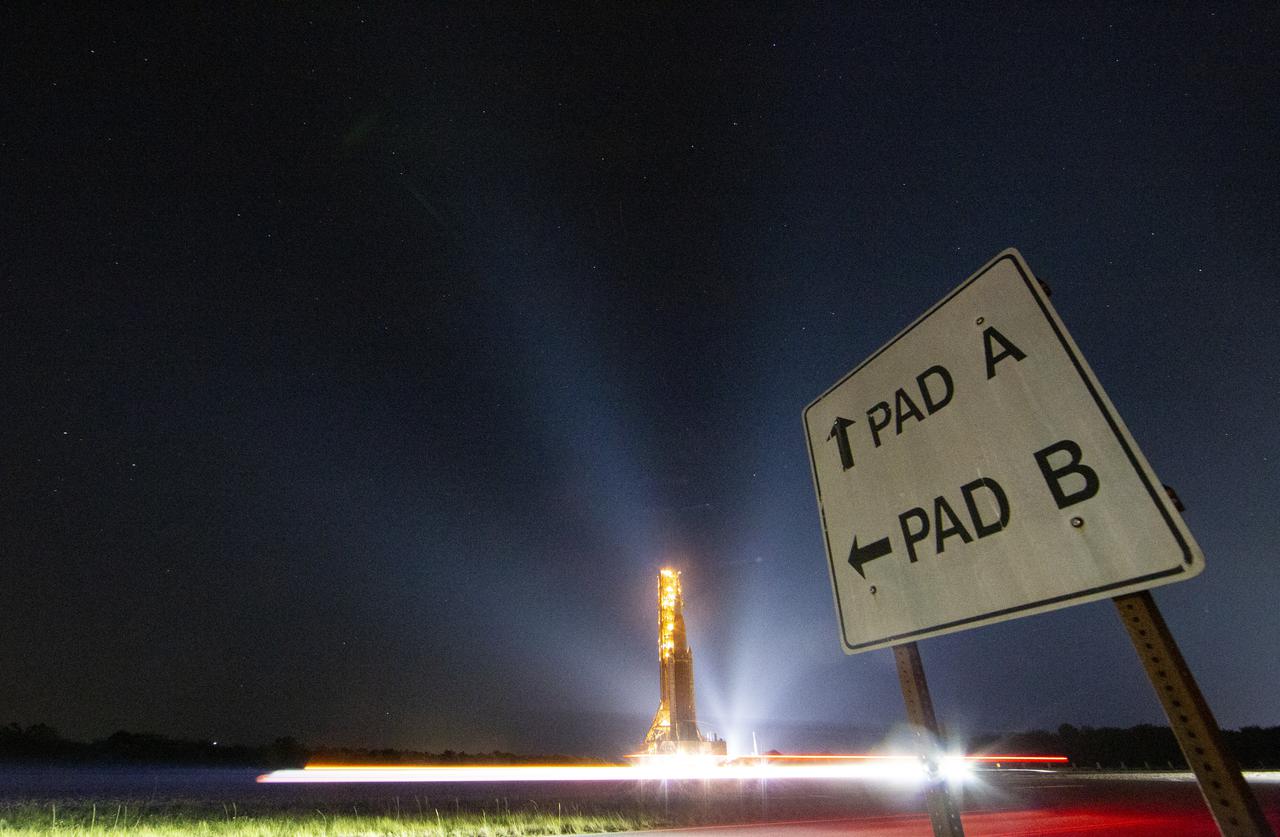
NASA’s Space Launch System (SLS) rocket with the Orion spacecraft aboard is seen atop a mobile launcher as it rolls back to the Vehicle Assembly Building, Tuesday, April 26, 2022, at NASA’s Kennedy Space Center in Florida. Once inside the Vehicle Assembly Building, teams will work on replacing a faulty upper stage check valve and a small leak within the tail service mast umbilical ground plate housing on the mobile launcher while the supplier for the gaseous nitrogen makes upgrades to their pipeline configuration to support Artemis I testing and launch. Following completion, teams will return to the launch pad to complete the next wet dress rehearsal attempt. Photo Credit: (NASA/Aubrey Gemignani)
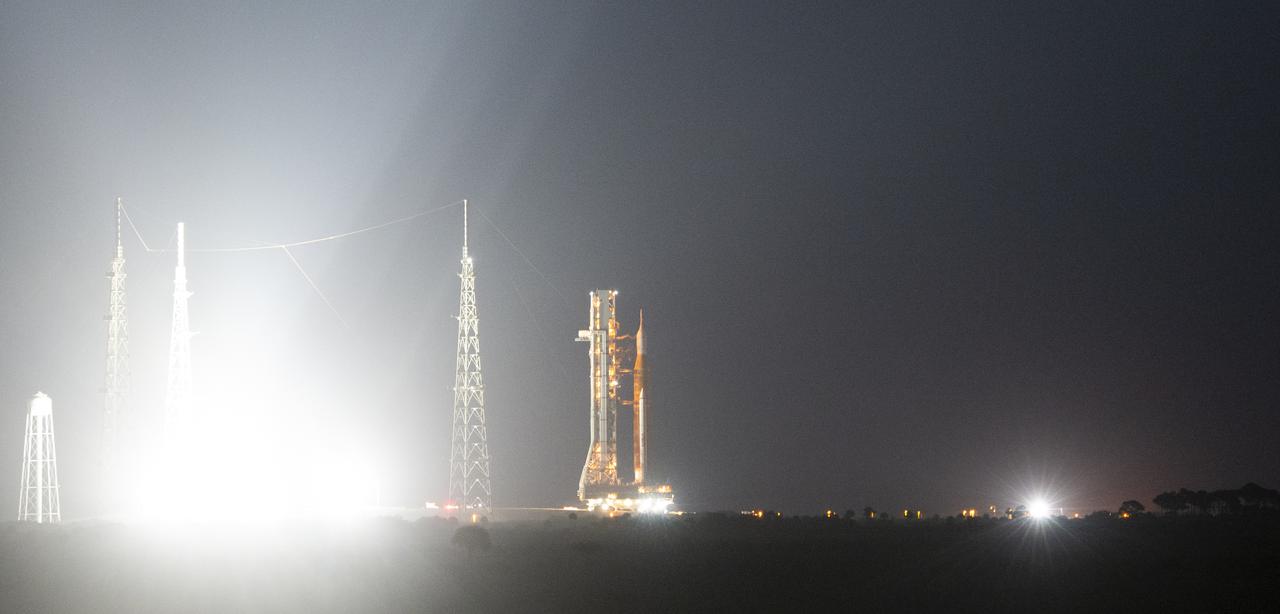
NASA’s Space Launch System (SLS) rocket with the Orion spacecraft aboard is seen atop a mobile launcher as it rolls back to the Vehicle Assembly Building, Monday, April 25, 2022, at NASA’s Kennedy Space Center in Florida. Once inside the Vehicle Assembly Building, teams will work on replacing a faulty upper stage check valve and a small leak within the tail service mast umbilical ground plate housing on the mobile launcher while the supplier for the gaseous nitrogen makes upgrades to their pipeline configuration to support Artemis I testing and launch. Following completion, teams will return to the launch pad to complete the next wet dress rehearsal attempt. Photo Credit: (NASA/Joel Kowsky)
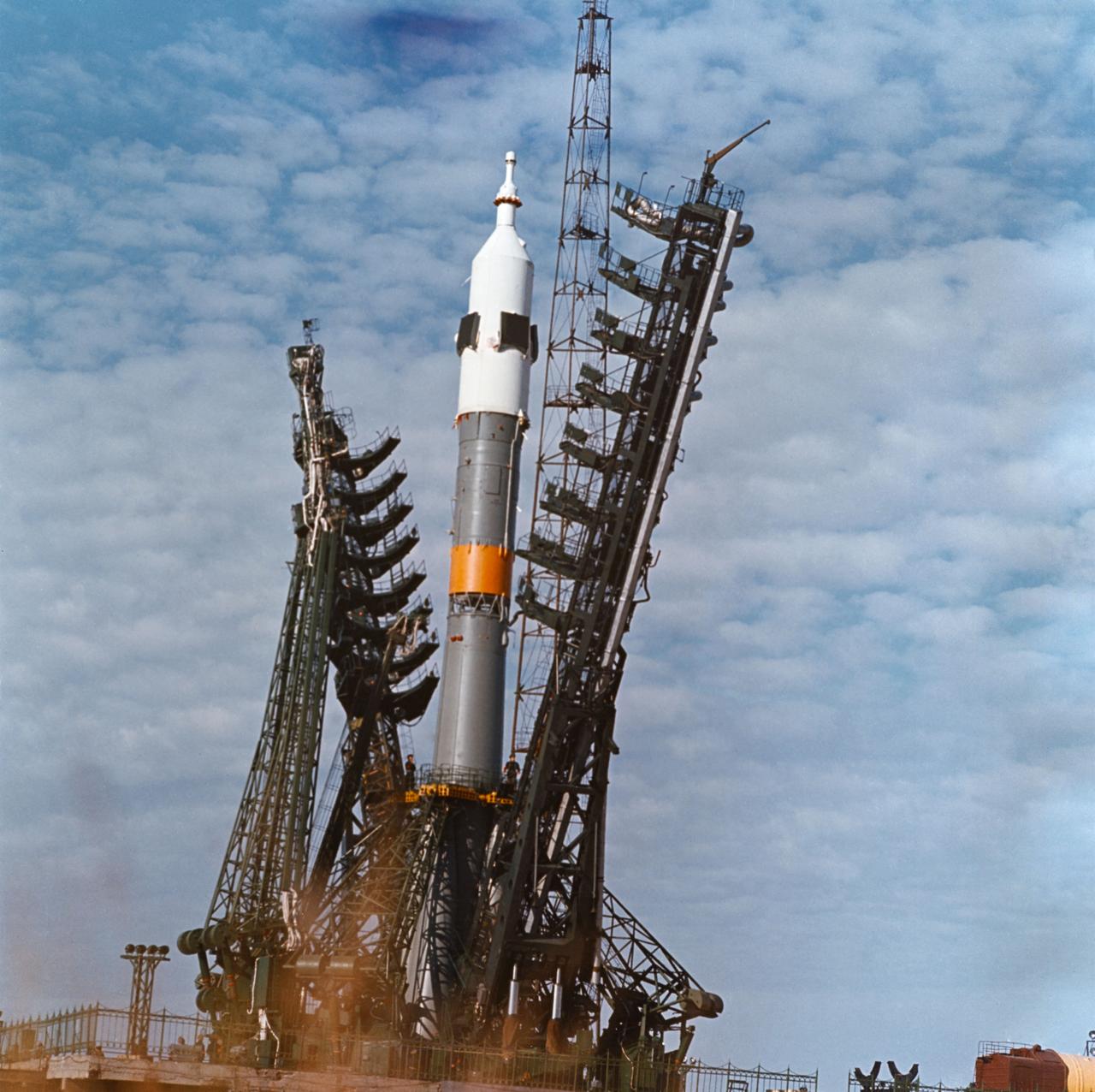
S75-32339 (28 Jan. 1974) --- A low-angle view of a launch pad at the Baikonur Cosmodrome in Kazakhstan showing the installation of a Soyuz spacecraft and its launch vehicle. The 49.3-meter-high (162 feet) space vehicle is composed of the three-stage booster, a three-module, two-man Soyuz spacecraft and a launch escape system. The weight of the space vehicle at launch is approximately 300,000 kilograms. The first stage vacuum thrust is about 1,000,400 newtons, the second stage is 956,500 newtons, and the third stage is 299,000 newtons. This earlier Soyuz mission illustrates the approximate launch configuration of the Soviet Union?s Apollo-Soyuz Test Project (ASTP) Soyuz space vehicle. PHOTO COURTESY: USSR ACADEMY OF SCIENCES
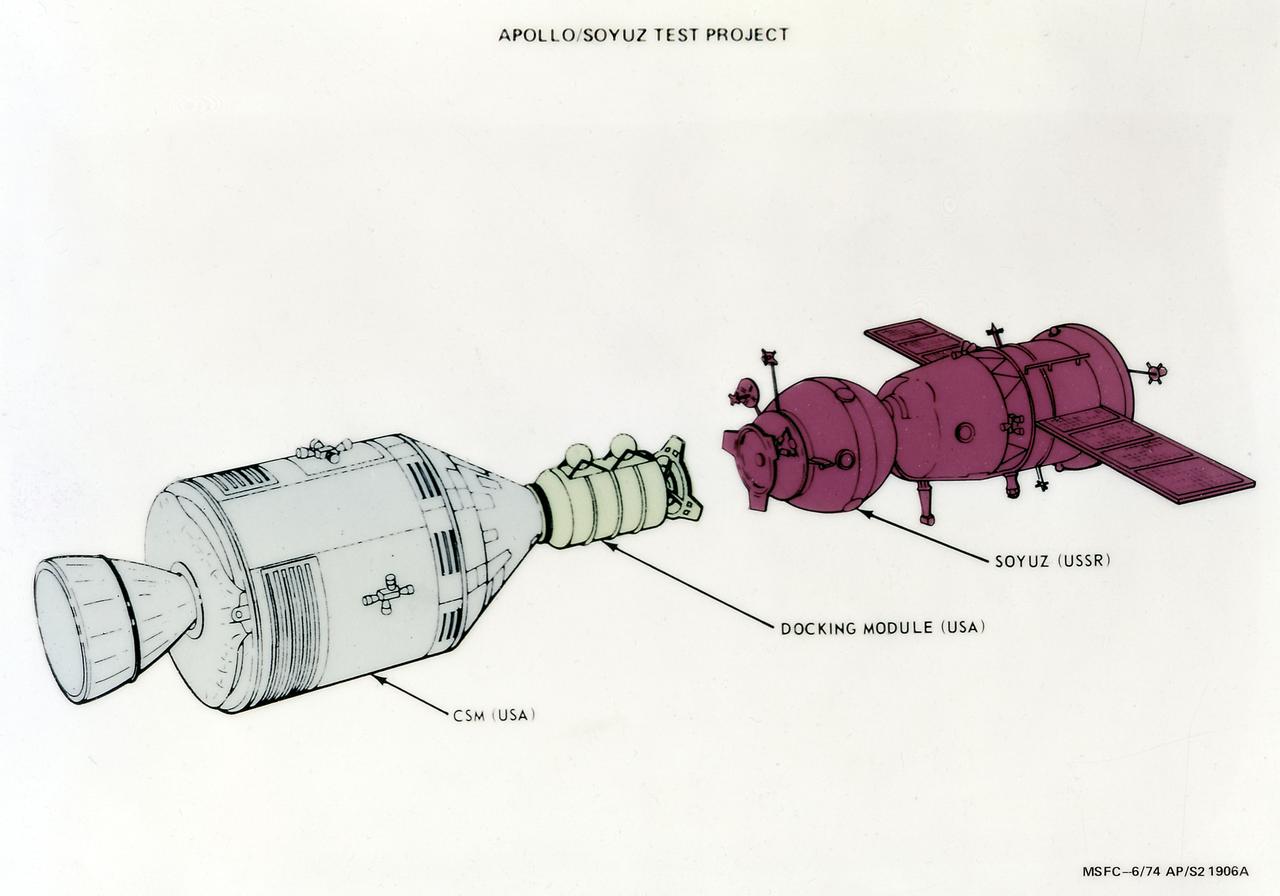
This illustration shows the docking configuration of the Apollo-Soyuz Test Project (ASTP). The ASTP was the first international docking of the U.S.'s Apollo spacecraft and the U.S.S.R.'s Soyuz spacecraft in space. A joint engineering team from the two countries met to develop a docking system that permitted the two spacecraft to link in space and allowed the two crews to travel from one spacecraft to the other. This system entailed developing a large habitable Docking Module (DM) to be carried on the Apollo spacecraft to facilitate the joining of two dissimilar spacecraft. The Marshall Space Flight Center was responsible for development and sustaining engineering of the Saturn IB launch vehicle during the mission. The ASTP marked the last use of the Saturn Launch Vehicle.
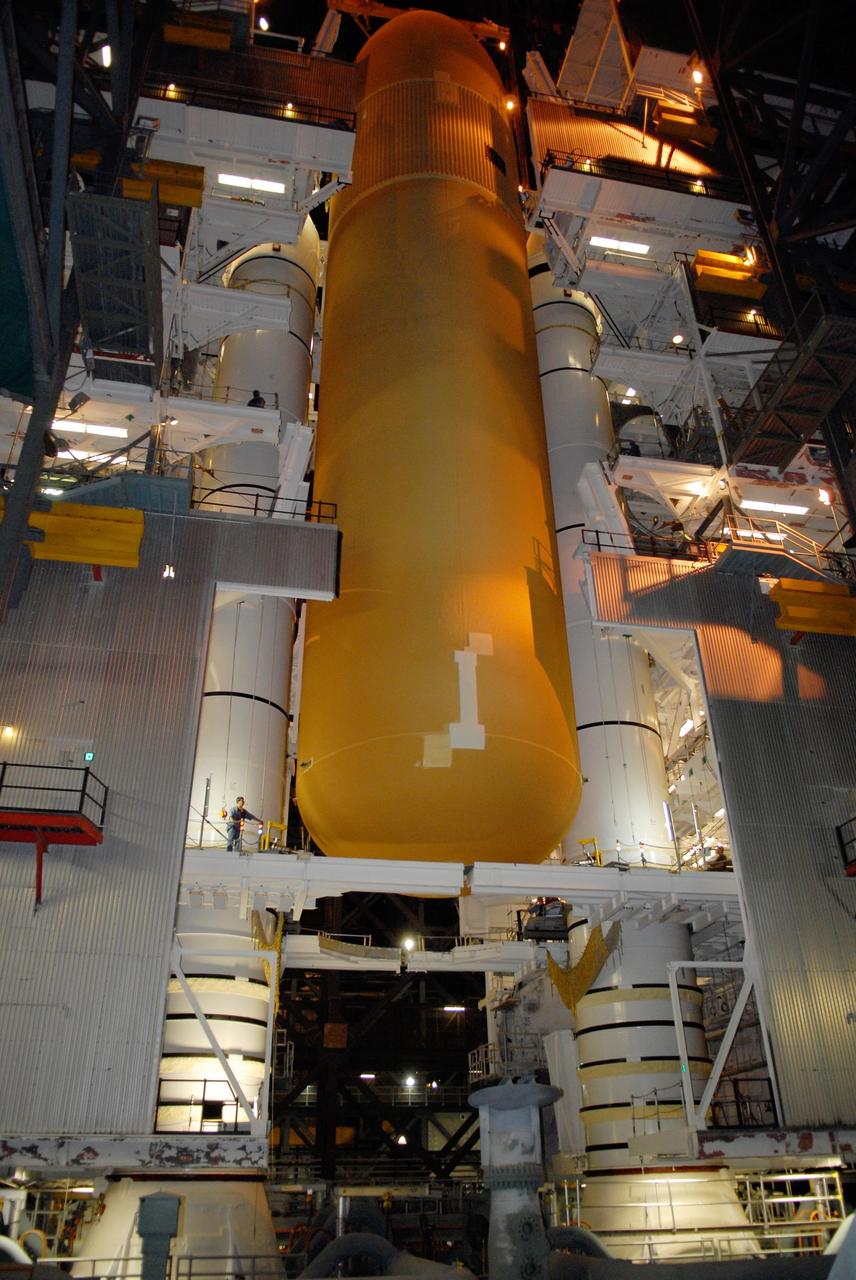
KENNEDY SPACE CENTER, FLA. -- In the Vehicle Assembly Building at NASA's Kennedy Space Center, the external tank is lowered between the solid rocket boosters on the mobile launcher platform below. After mating, the boosters-tank configuration will be used on space shuttle Atlantis for mission STS-122, which is targeted for launch on Dec. 6. Photo credit: Kim Shiflett
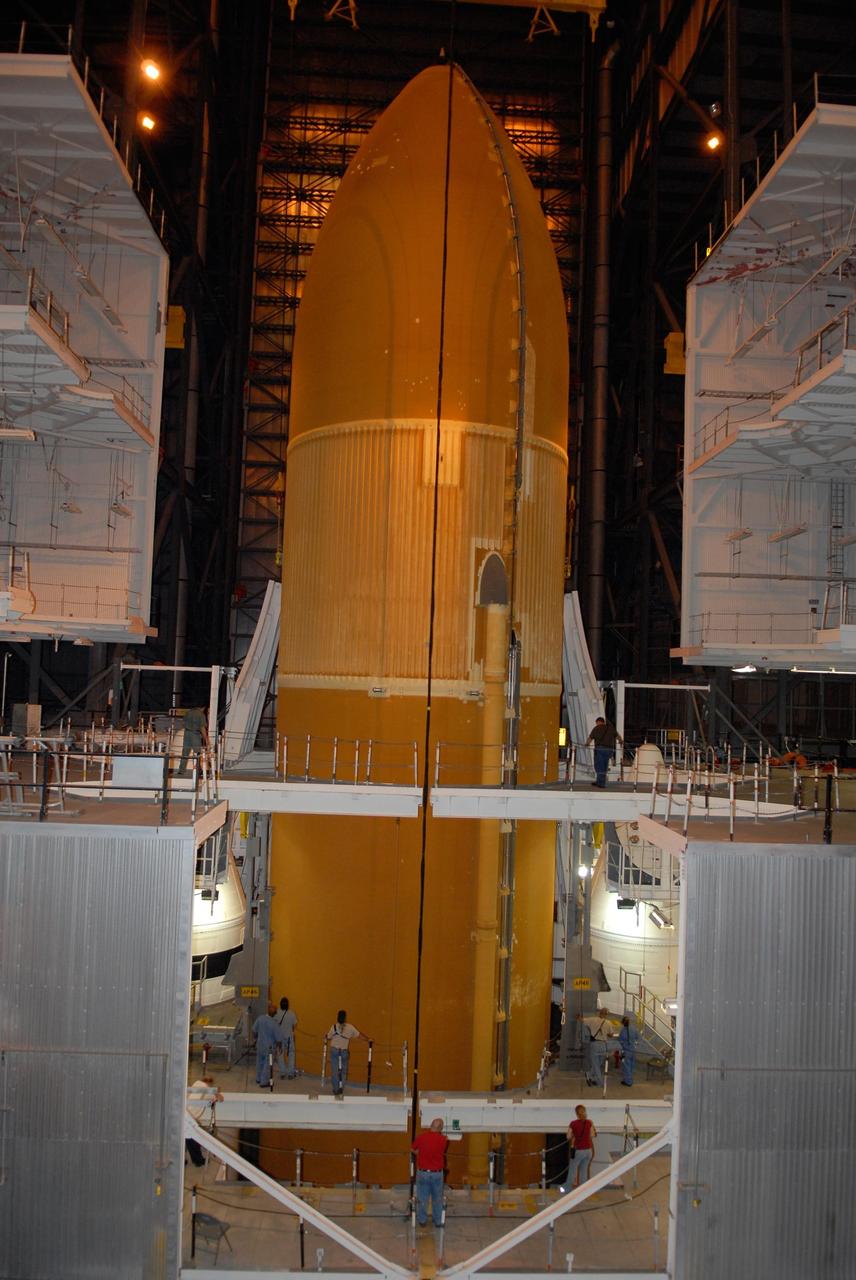
KENNEDY SPACE CENTER, FLA. -- In the Vehicle Assembly Building at NASA's Kennedy Space Center, the external tank is lowered between the solid rocket boosters on the mobile launcher platform below. After mating, the boosters-tank configuration will be used on space shuttle Atlantis for mission STS-122, which is targeted for launch on Dec. 6. Photo credit: Kim Shiflett
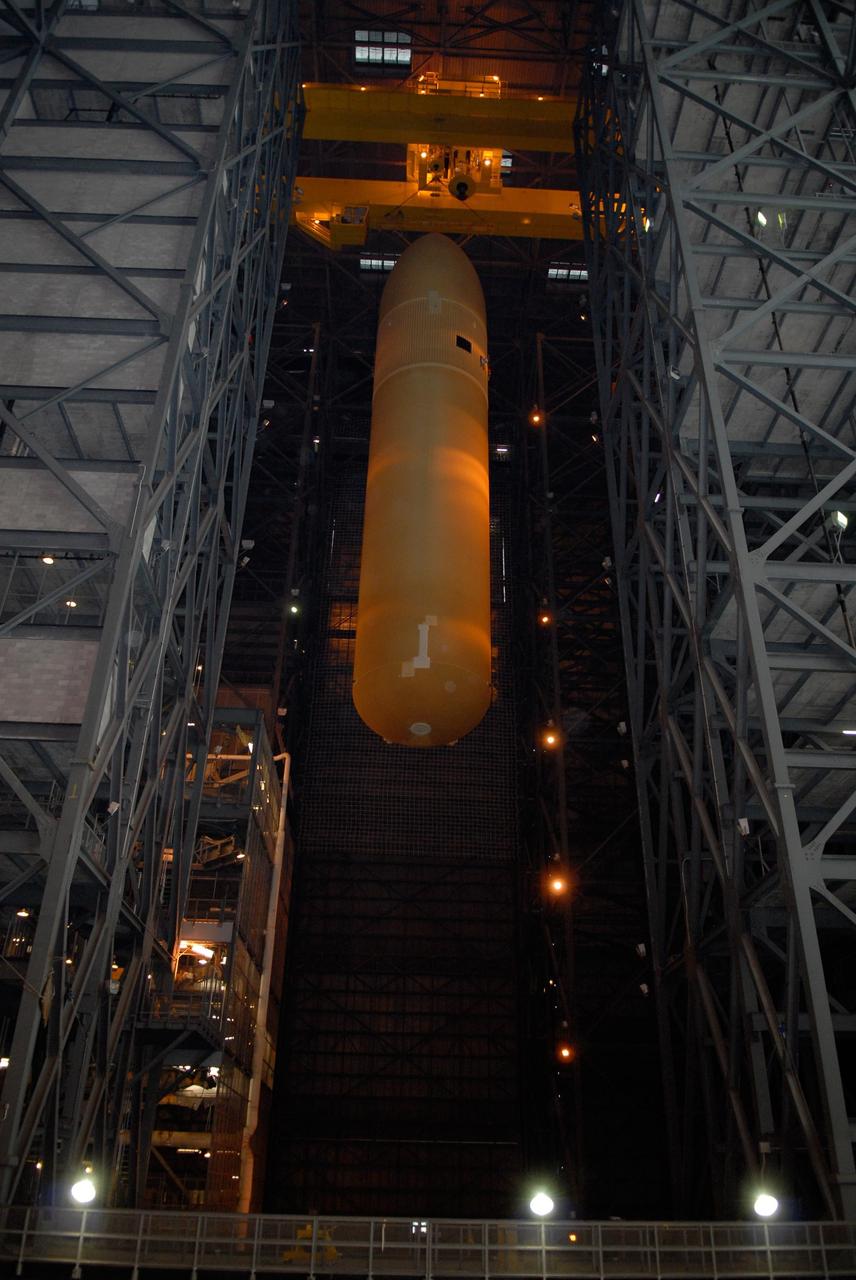
KENNEDY SPACE CENTER, FLA. -- In the Vehicle Assembly Building at NASA's Kennedy Space Center, the external tank is lowered toward the solid rocket boosters on the mobile launcher platform below. After mating, the boosters-tank configuration will be used on space shuttle Atlantis for mission STS-122, which is targeted for launch on Dec. 6. Photo credit: Kim Shiflett

KENNEDY SPACE CENTER, FLA. --In the Vehicle Assembly Building at NASA's Kennedy Space Center, the external tank is lowered toward the solid rocket boosters on the mobile launcher platform below. After mating, the boosters-tank configuration will be used on space shuttle Atlantis for mission STS-122, which is targeted for launch on Dec. 6. Photo credit: Kim Shiflett
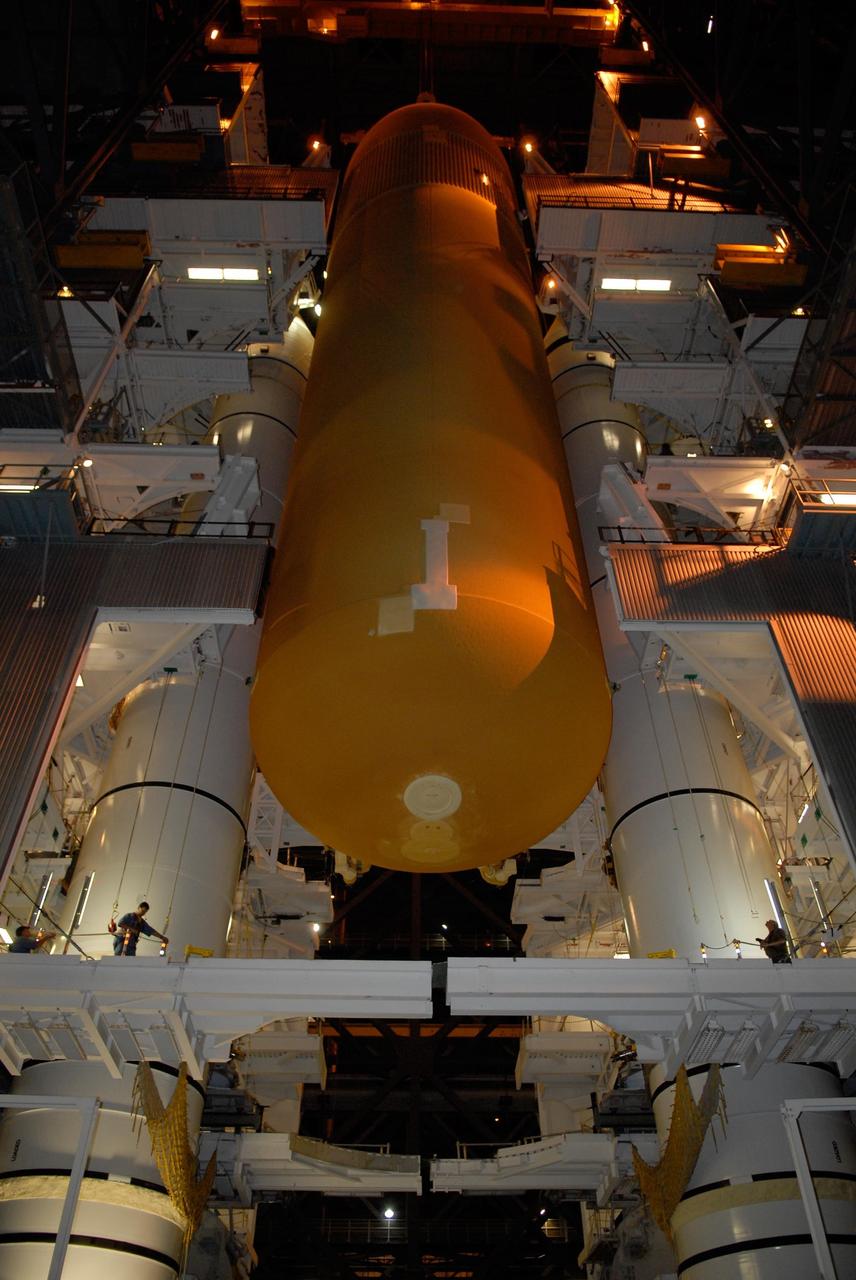
KENNEDY SPACE CENTER, FLA. -- In the Vehicle Assembly Building at NASA's Kennedy Space Center, the external tank is lowered between the solid rocket boosters on the mobile launcher platform below. After mating, the boosters-tank configuration will be used on space shuttle Atlantis for mission STS-122, which is targeted for launch on Dec. 6. Photo credit: Kim Shiflett
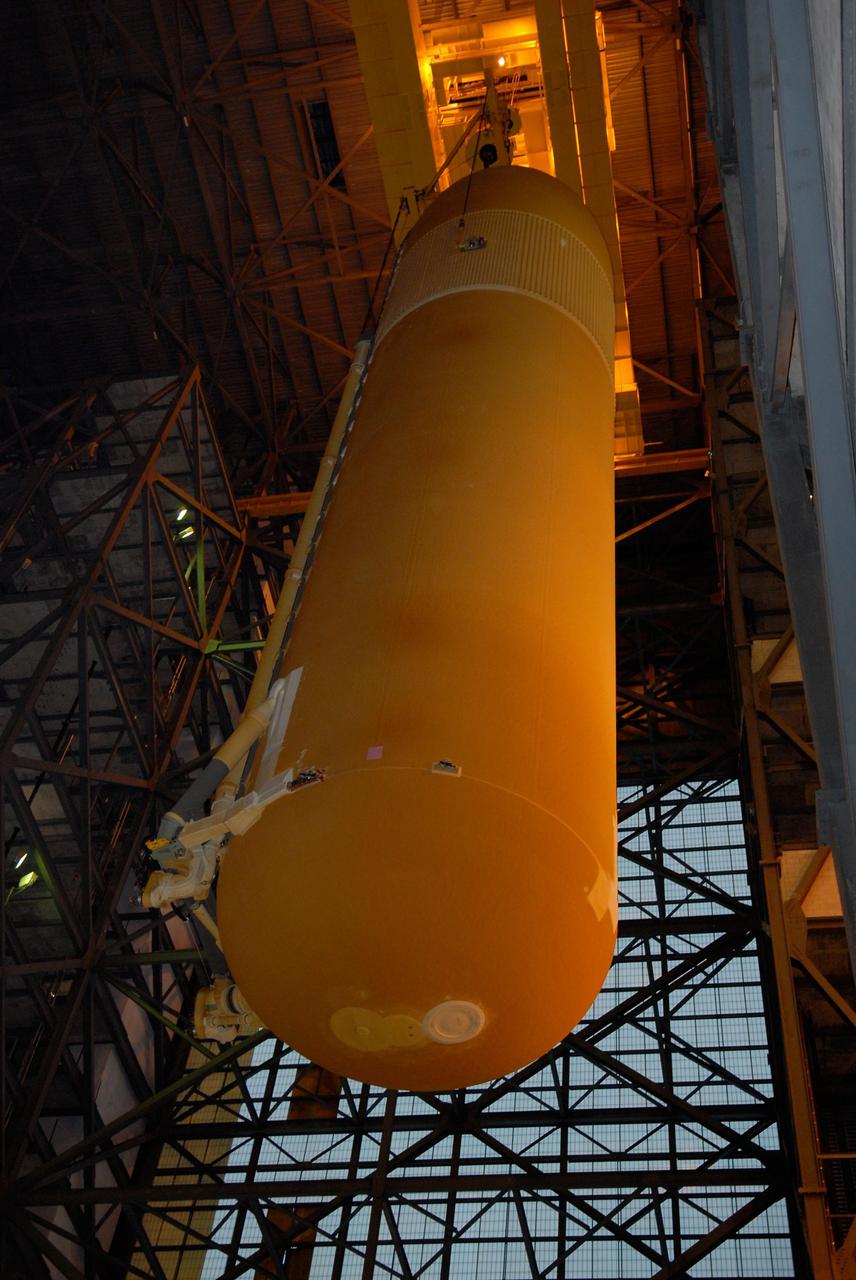
KENNEDY SPACE CENTER, FLA. -- In the Vehicle Assembly Building at NASA's Kennedy Space Center, the external tank is lowered toward the solid rocket boosters on the mobile launcher platform below. Visible on the bottom is an orbiter aft attachment. After mating, the boosters-tank configuration will be used on space shuttle Atlantis for mission STS-122, which is targeted for launch on Dec. 6. Photo credit: Kim Shiflett

KENNEDY SPACE CENTER, FLA. -- In the Vehicle Assembly Building at NASA's Kennedy Space Center, the external tank is lowered between the solid rocket boosters on the mobile launcher platform below. After mating, the boosters-tank configuration will be used on space shuttle Atlantis for mission STS-122, which is targeted for launch on Dec. 6. Photo credit: Kim Shiflett
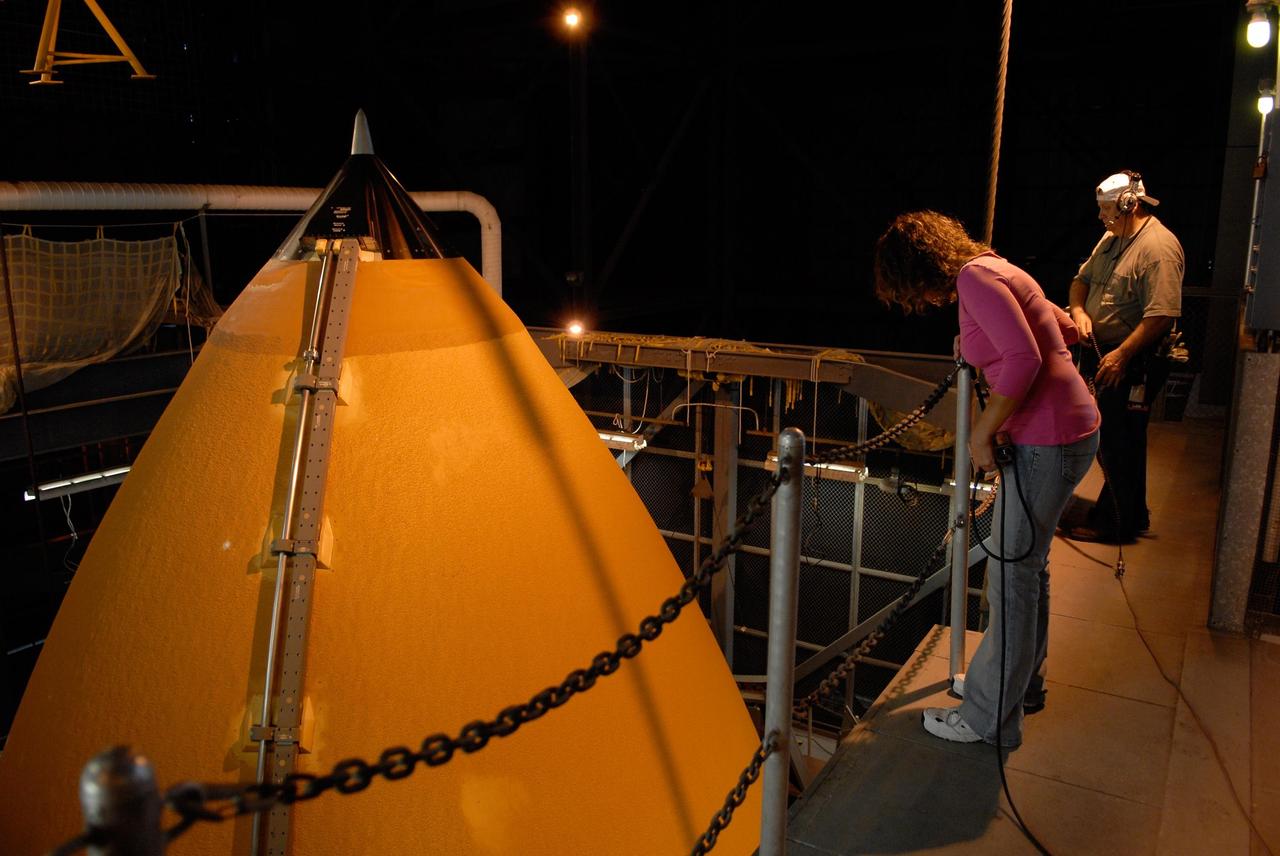
KENNEDY SPACE CENTER, FLA. -- In the Vehicle Assembly Building at NASA's Kennedy Space Center, United Space Alliance technicians get ready to lower the external tank to be mated with the solid rocket boosters on the mobile launcher platform. The boosters-tank configuration will be used on space shuttle Atlantis for mission STS-122, which is targeted for launch on Dec. 6. Photo credit: Kim Shiflett
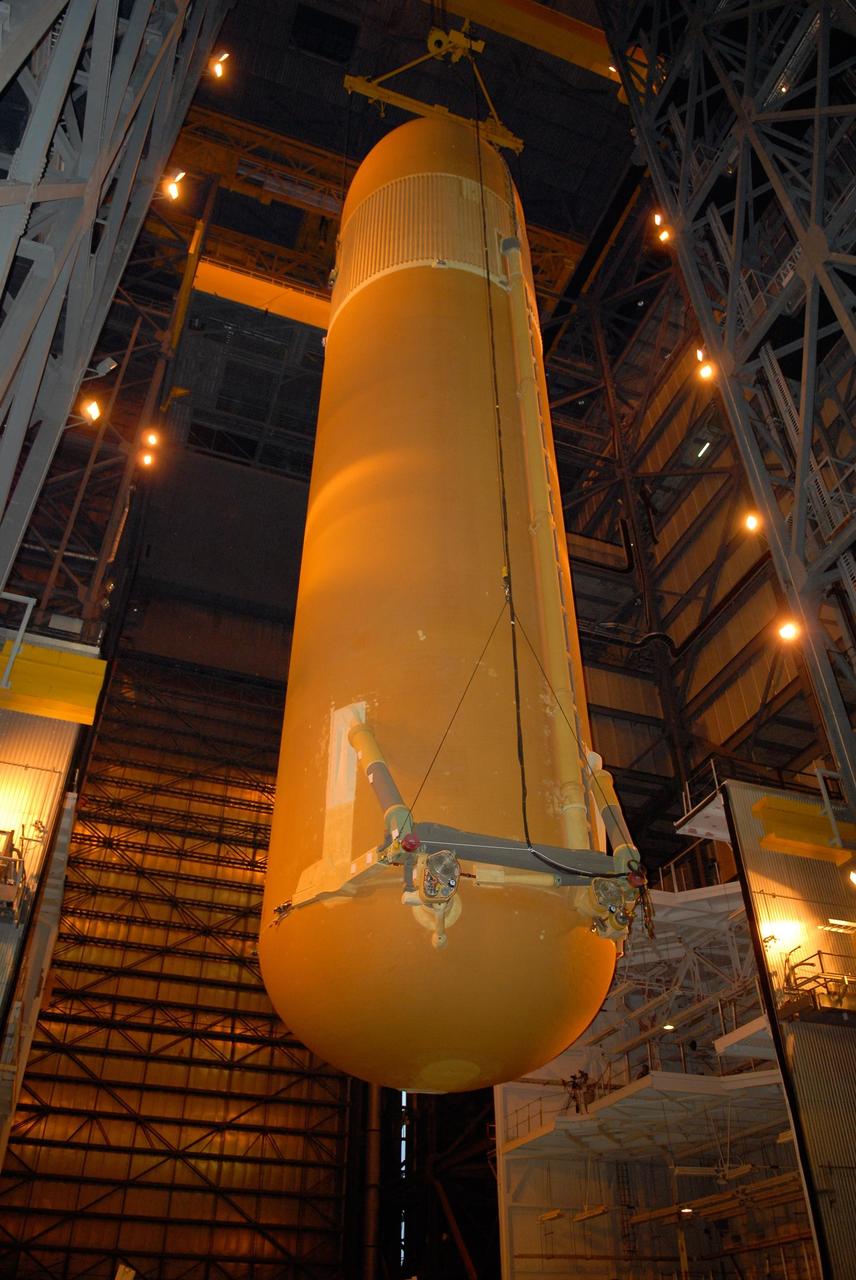
KENNEDY SPACE CENTER, FLA. -- In the Vehicle Assembly Building at NASA's Kennedy Space Center, the external tank is lowered toward the solid rocket boosters on the mobile launcher platform below. Visible on the bottom are the orbiter aft attachments. After mating, the boosters-tank configuration will be used on space shuttle Atlantis for mission STS-122, which is targeted for launch on Dec. 6. Photo credit: Kim Shiflett
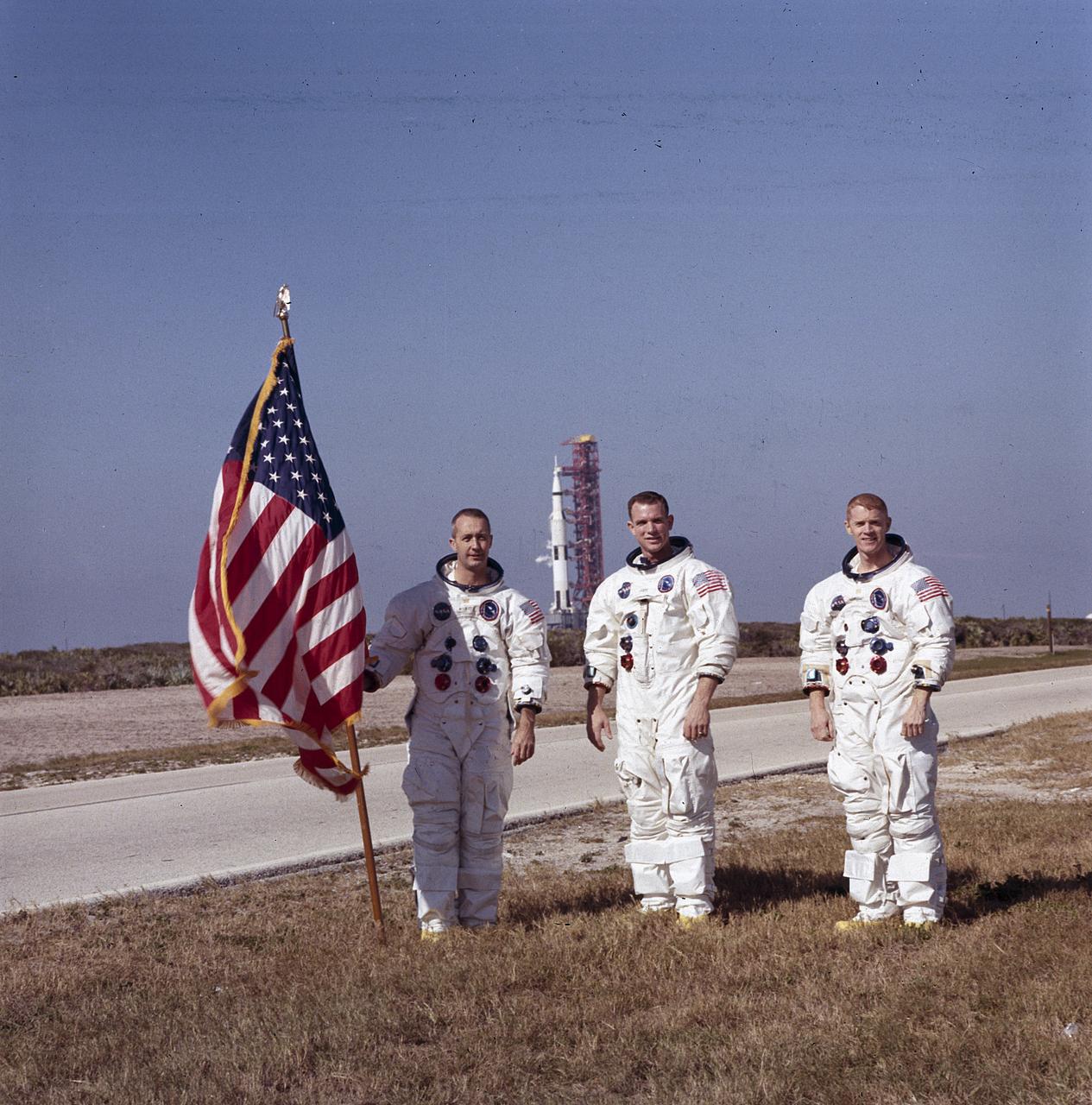
Pictured from left to right, the Apollo 9 astronauts, James A. McDivitt, David R. Scott, and Russell L. Schweickart, pause in front of the Apollo/Saturn V space vehicle that would launch the Apollo 8 crew. The launch of the Apollo 9 (Saturn V launch vehicle, SA-504) took place on March 3, 1968. The Apollo 9 spacecraft, in the lunar mission configuration, was tested in Earth orbit. The mission was designed to rehearse all the steps and reproduce all the events of the Apollo 11 mission with the exception of the lunar touchdown, stay, and liftoff. The command and service modules, and the lunar module were used in flight procedures identical to those that would later take similar vehicles to the Moon, and a landing. The flight mechanics, mission support systems, communications, and recording of data were tested in a final round of verification. Astronauts Scott and Schweickart conducted Extravehicular Activity during this mission.
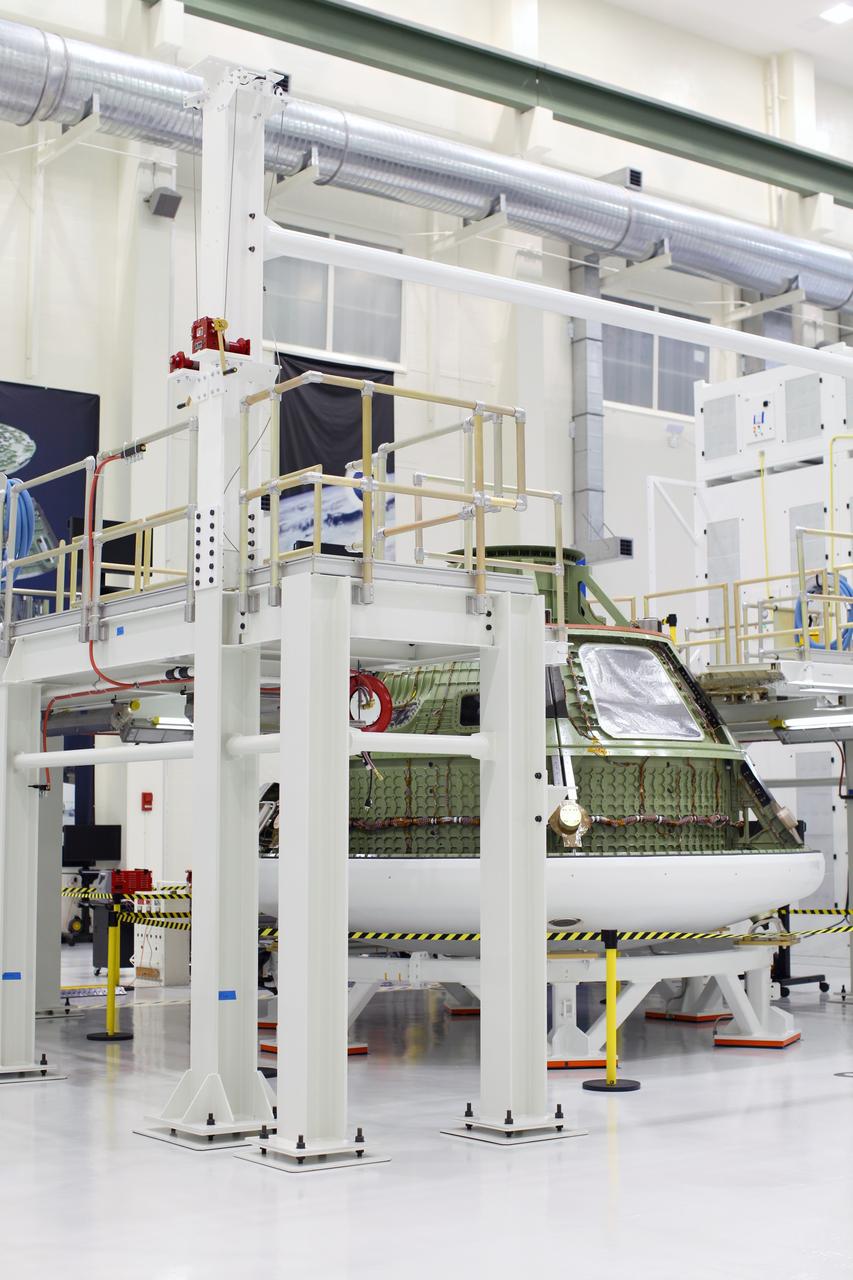
CAPE CANAVERAL, Fla. – Inside the Operations and Checkout Building high bay at NASA’s Kennedy Space Center in Florida, the Orion ground test vehicle sits in a work stand. The heat panels have been removed. During a tour of the facility, media representatives viewed Orion, several processing stations, and the Orion Test and Launch Control Center. The ground test vehicle will remain at Kennedy for acoustic and modal testing. The heat shield on the bottom of the module will be removed and replaced with a more flight-like heat shield that was built by Lockheed Martin in Denver and will be shipped to Kennedy for installation. The test vehicle will then be in its vehicle configuration for the splashdown test at Langley as NASA prepares for Exploration Flight Test-1. Photo credit: NASA/Frankie Martin

CAPE CANAVERAL, Fla. – Inside the Operations and Checkout Building high bay at NASA’s Kennedy Space Center in Florida, the Orion ground test vehicle sits in a work stand. The heat panels have been removed. During a tour of the facility, media representatives viewed Orion, several processing stations, and the Orion Test and Launch Control Center. The ground test vehicle will remain at Kennedy for acoustic and modal testing. The heat shield on the bottom of the module will be removed and replaced with a more flight-like heat shield that was built by Lockheed Martin in Denver and will be shipped to Kennedy for installation. The test vehicle will then be in its vehicle configuration for the splashdown test at Langley as NASA prepares for Exploration Flight Test-1. Photo credit: NASA/Frankie Martin
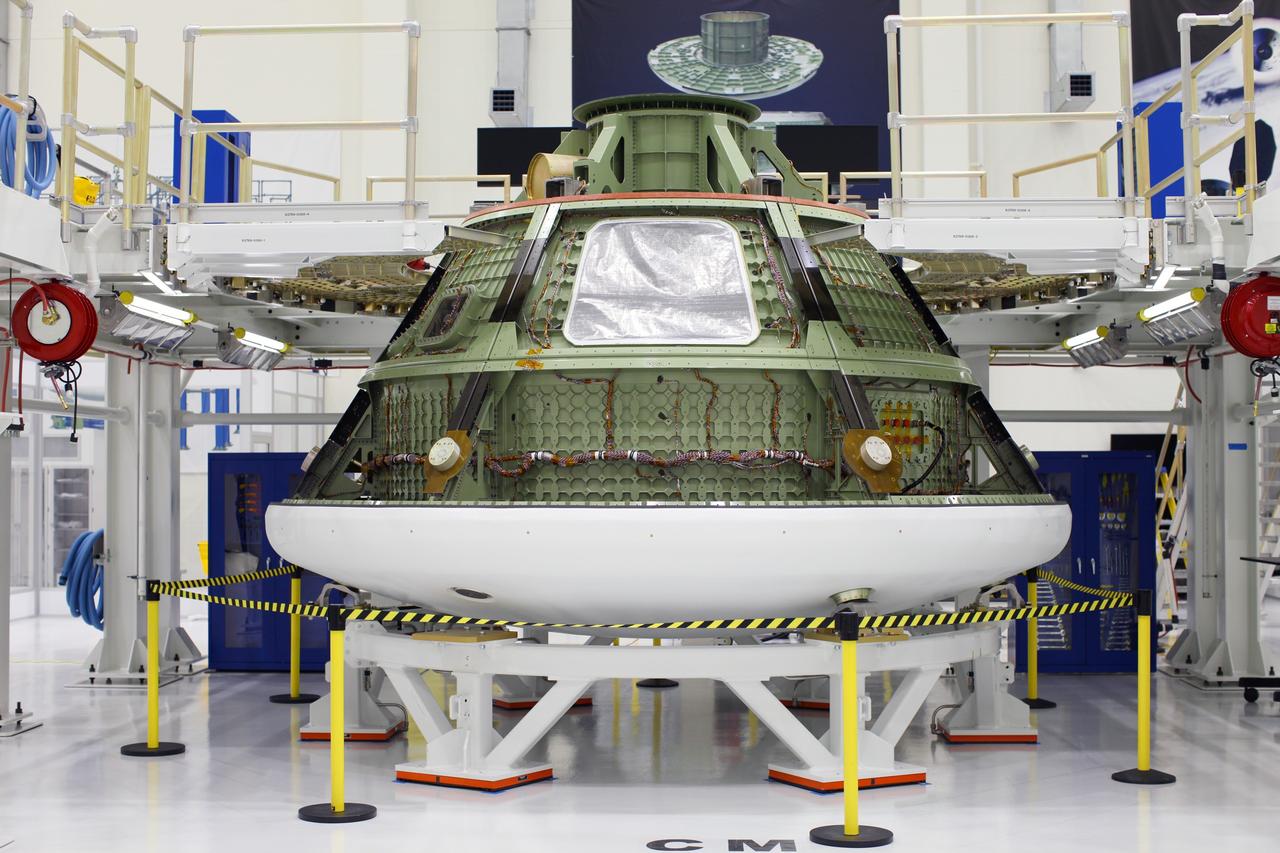
CAPE CANAVERAL, Fla. – Inside the Operations and Checkout Building high bay at NASA’s Kennedy Space Center in Florida, the Orion ground test vehicle sits in a work stand. The heat panels have been removed. During a tour of the facility, media representatives viewed Orion, several processing stations, and the Orion Test and Launch Control Center. The ground test vehicle will remain at Kennedy for acoustic and modal testing. The heat shield on the bottom of the module will be removed and replaced with a more flight-like heat shield that was built by Lockheed Martin in Denver and will be shipped to Kennedy for installation. The test vehicle will then be in its vehicle configuration for the splashdown test at Langley as NASA prepares for Exploration Flight Test-1. Photo credit: NASA/Frankie Martin
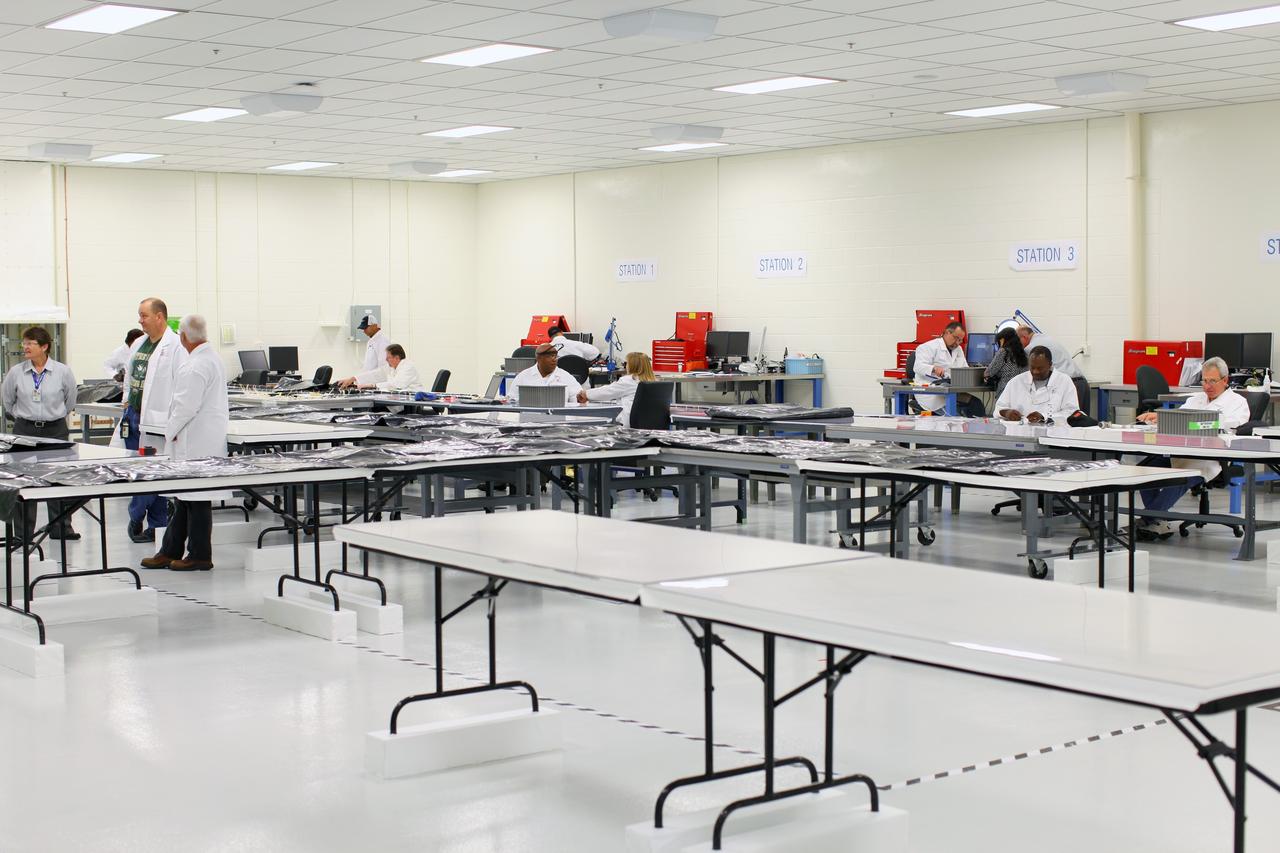
CAPE CANAVERAL, Fla. – Inside the Operations and Checkout Building high bay at NASA’s Kennedy Space Center in Florida, United Space Alliance workers are manufacturing harnesses which will be used on NASA’s Orion multi-purpose crew vehicle, or MPCV. During a tour of the facility, media representatives viewed Orion, several processing stations, and the Orion Test and Launch Control Center. The ground test vehicle will remain at Kennedy for acoustic and modal testing. The heat shield on the bottom of the module will be removed and replaced with a more flight-like heat shield that was built by Lockheed Martin in Denver and will be shipped to Kennedy for installation. The test vehicle will then be in its vehicle configuration for the splashdown test at Langley as NASA prepares for Exploration Flight Test-1. Photo credit: NASA/Frankie Martin
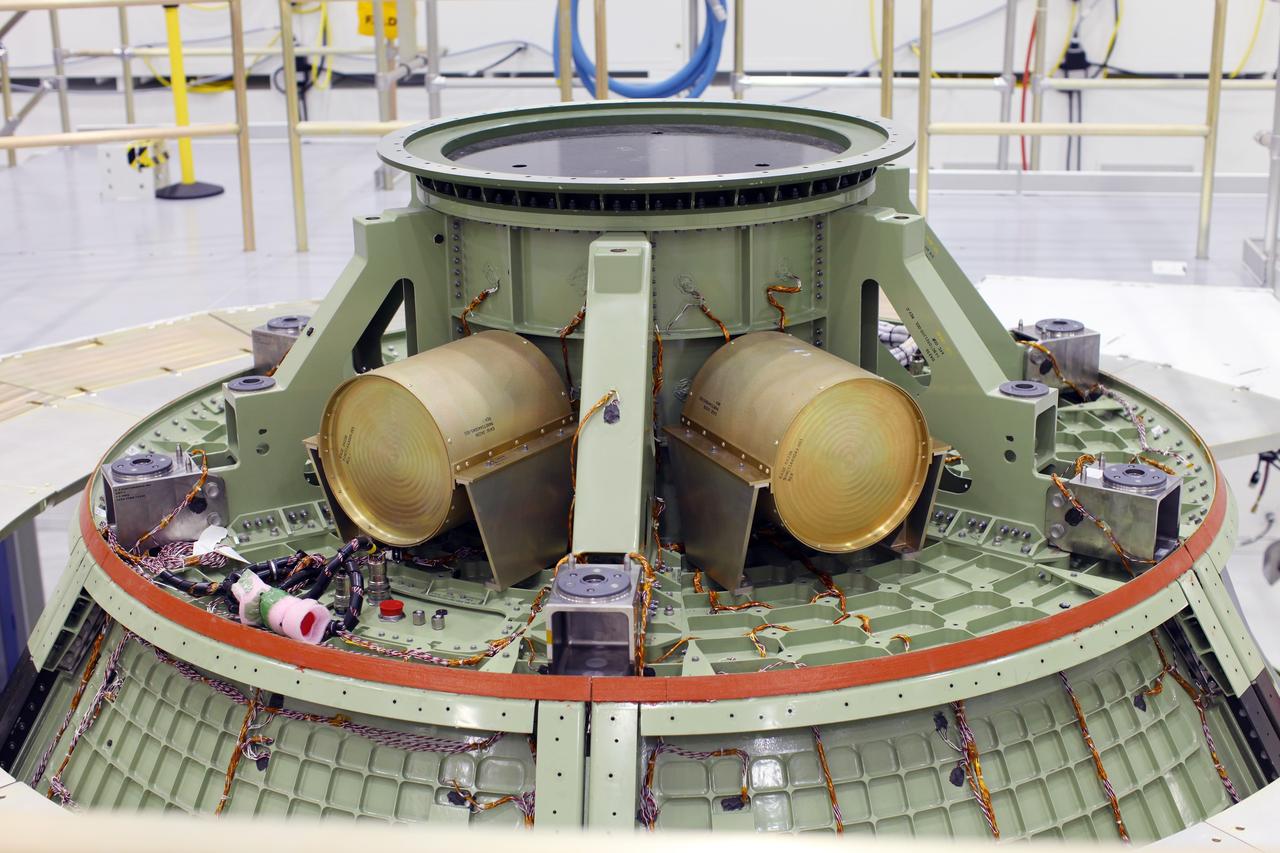
CAPE CANAVERAL, Fla. – Inside the Operations and Checkout Building high bay at NASA’s Kennedy Space Center in Florida, the Orion ground test vehicle sits in a work stand. The heat panels have been removed. During a tour of the facility, media representatives viewed Orion, several processing stations, and the Orion Test and Launch Control Center. The ground test vehicle will remain at Kennedy for acoustic and modal testing. The heat shield on the bottom of the module will be removed and replaced with a more flight-like heat shield that was built by Lockheed Martin in Denver and will be shipped to Kennedy for installation. The test vehicle will then be in its vehicle configuration for the splashdown test at Langley as NASA prepares for Exploration Flight Test-1. Photo credit: NASA/Frankie Martin
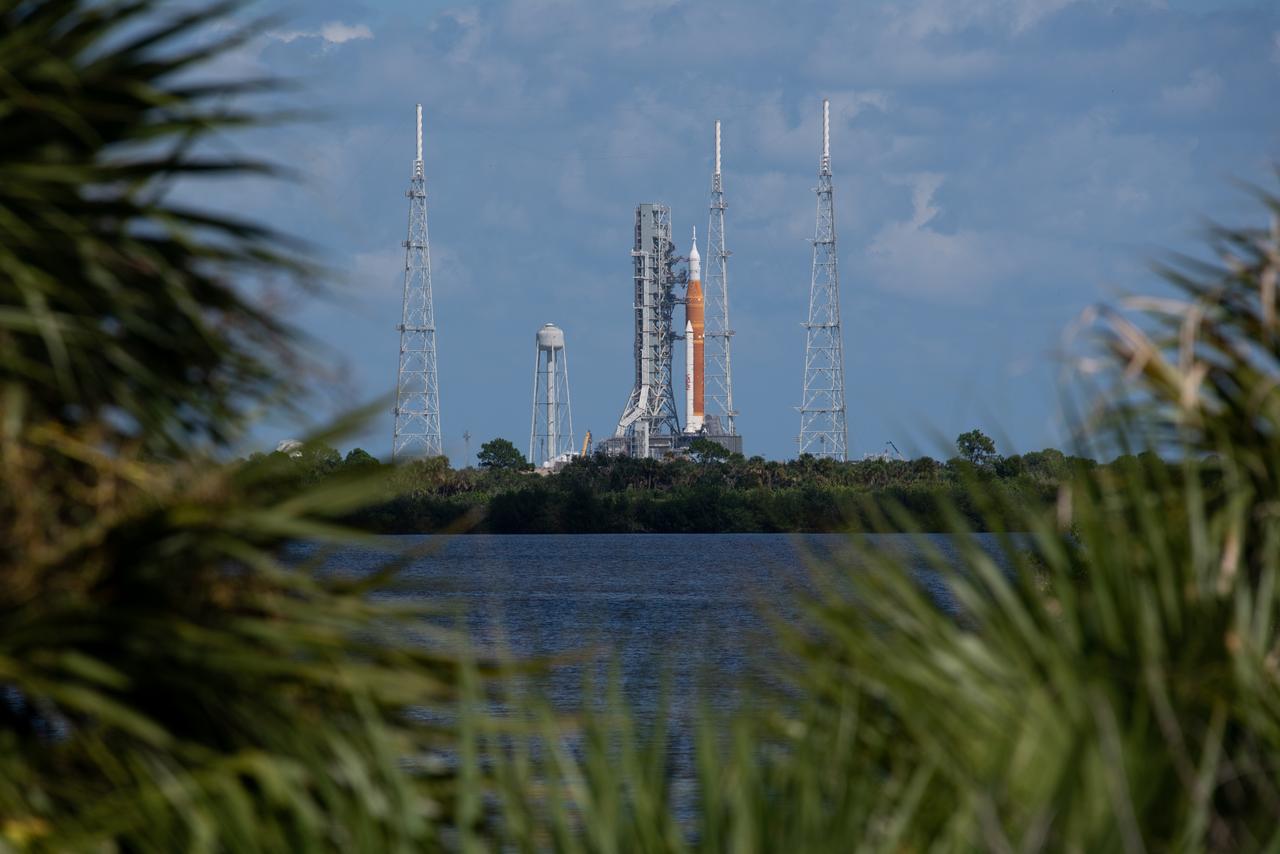
NASA’s Space Launch System (SLS) rocket with the Orion spacecraft aboard is seen atop the mobile launcher at Launch Pad 39B as teams configure systems for rolling back to the Vehicle Assembly Building, Saturday, Sept. 24, 2022, at NASA’s Kennedy Space Center in Florida. NASA is foregoing a launch opportunity on Tues. Sept. 27 and continues to watch the weather forecast associated with Tropical Storm Ian. The NASA’s Artemis I flight test is the first integrated test of the agency’s deep space exploration systems: the Orion spacecraft, SLS rocket, and supporting ground systems. Photo Credit: (NASA/Joel Kowsky)

NASA’s Space Launch System (SLS) rocket with the Orion spacecraft aboard is seen atop the mobile launcher at Launch Pad 39B as teams configure systems for rolling back to the Vehicle Assembly Building, Saturday, Sept. 24, 2022, at NASA’s Kennedy Space Center in Florida. NASA is foregoing a launch opportunity on Tues. Sept. 27 and continues to watch the weather forecast associated with Tropical Storm Ian. The NASA’s Artemis I flight test is the first integrated test of the agency’s deep space exploration systems: the Orion spacecraft, SLS rocket, and supporting ground systems. Photo Credit: (NASA/Joel Kowsky)

NASA’s Space Launch System (SLS) rocket with the Orion spacecraft aboard is seen atop the mobile launcher at Launch Pad 39B as teams configure systems for rolling back to the Vehicle Assembly Building, Saturday, Sept. 24, 2022, at NASA’s Kennedy Space Center in Florida. NASA is foregoing a launch opportunity on Tues. Sept. 27 and continues to watch the weather forecast associated with Tropical Storm Ian. The NASA’s Artemis I flight test is the first integrated test of the agency’s deep space exploration systems: the Orion spacecraft, SLS rocket, and supporting ground systems. Photo Credit: (NASA/Joel Kowsky)
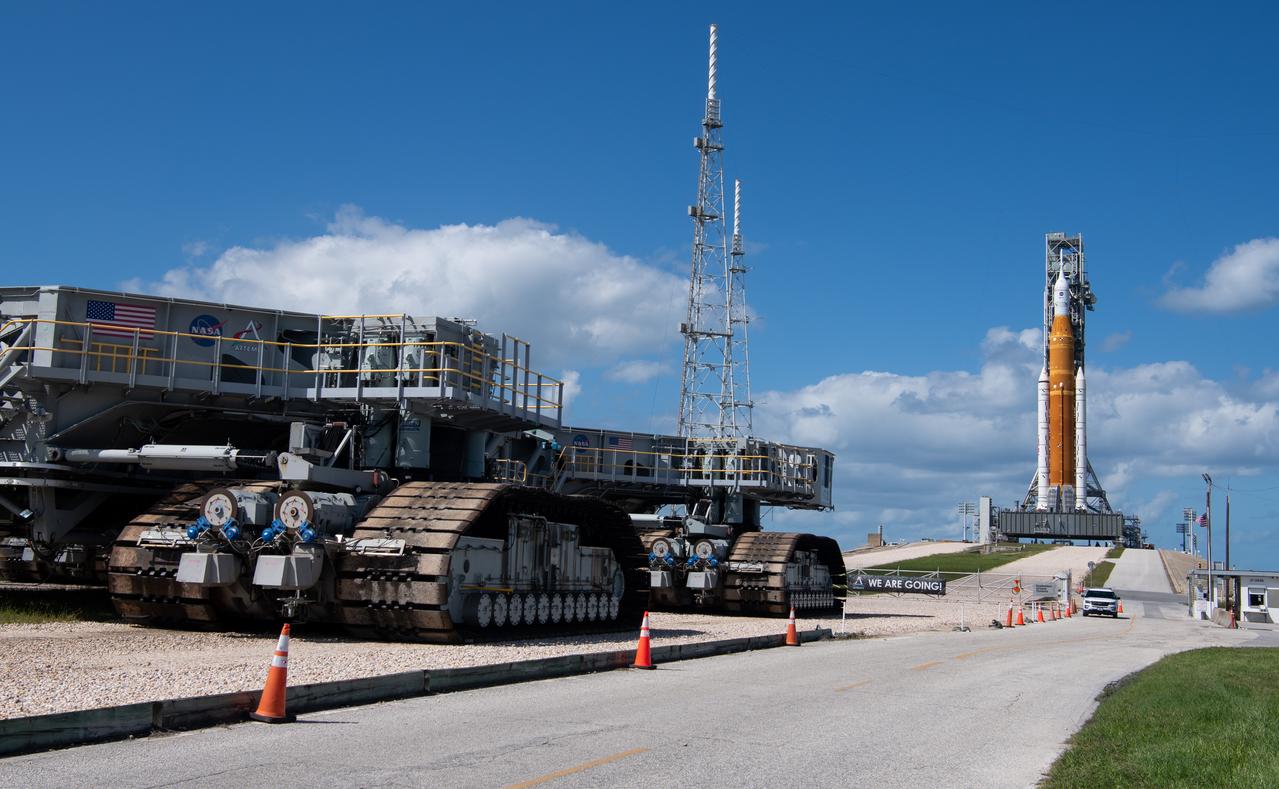
Crawler Transporter-2 (CT-2) is seen outside the gates at Launch Pad 39B as teams configure systems for rolling NASA’s Space Launch System (SLS) rocket and Orion spacecraft back to the Vehicle Assembly Building, Saturday, Sept. 24, 2022, at NASA’s Kennedy Space Center in Florida. NASA is foregoing a launch opportunity on Tues. Sept. 27 and continues to watch the weather forecast associated with Tropical Storm Ian. The NASA’s Artemis I flight test is the first integrated test of the agency’s deep space exploration systems: the Orion spacecraft, SLS rocket, and supporting ground systems. Photo Credit: (NASA/Joel Kowsky)
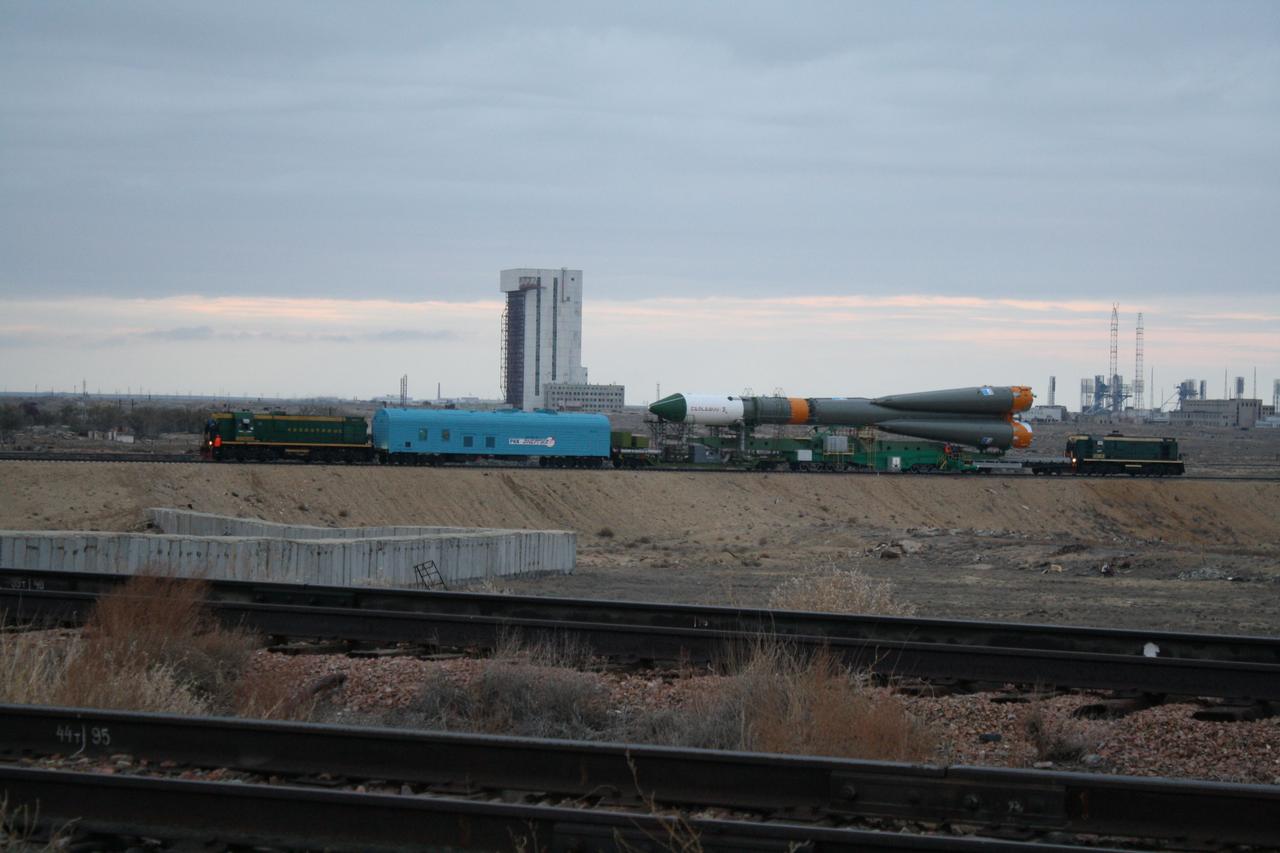
At the Baikonur Cosmodrome in Kazakhstan, the Soyuz booster and its ISS Progress 45 cargo craft rolled to the launch pad in bone-chilling weather on October 28, 2011 in preparation for launch October 31 to send the unmanned Russian resupply vehicle to the International Space Station. The launch will be the first for this configuration of the Soyuz booster rocket since a third-stage engine failure in flight August 24 that resulted in the loss of the previous Progress cargo craft, the ISS Progress 44. ISS Progress 45 is loaded with almost three tons of food, fuel and supplies for the residents of the orbital laboratory. Credit: NASA
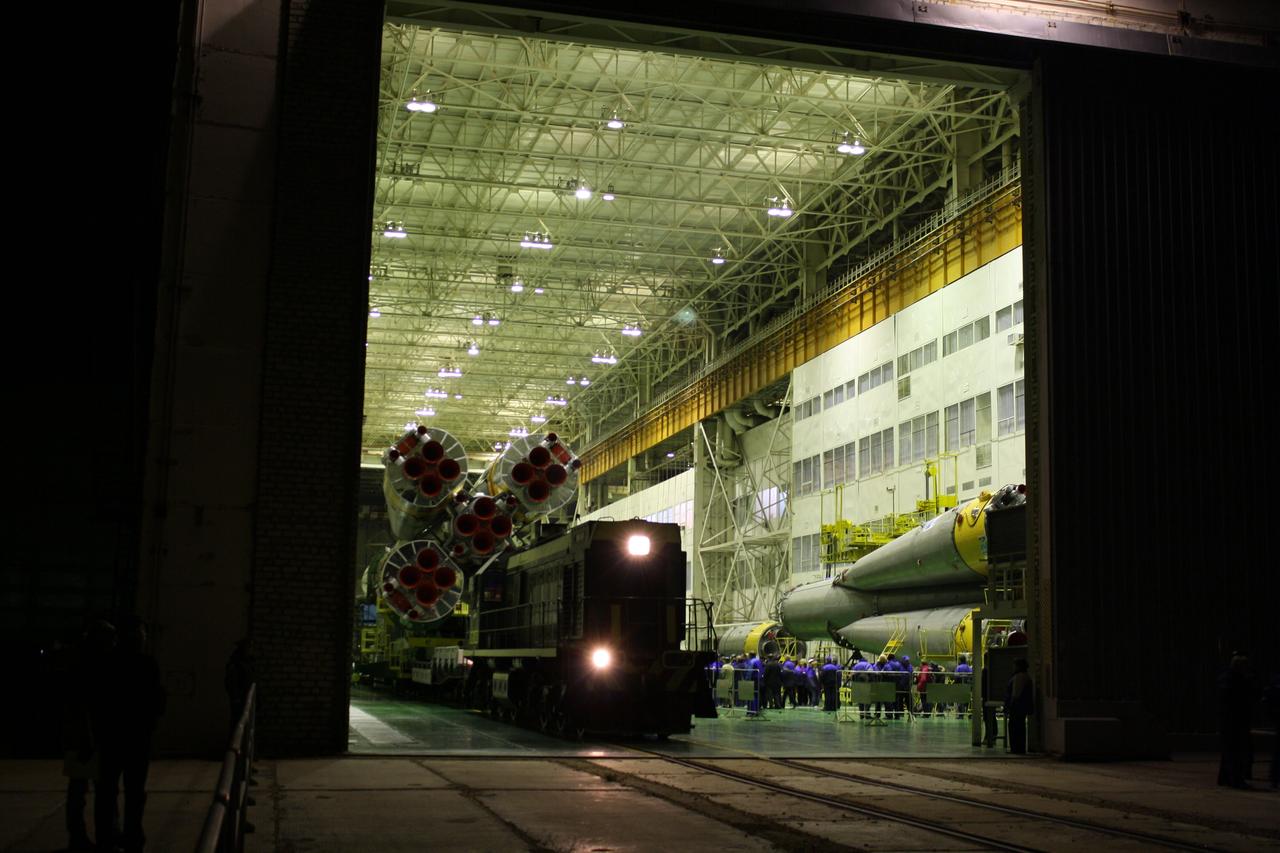
At the Baikonur Cosmodrome in Kazakhstan, the Soyuz booster and its ISS Progress 45 cargo craft rolled to the launch pad in bone-chilling weather on October 28, 2011 in preparation for launch October 31 to send the unmanned Russian resupply vehicle to the International Space Station. The launch will be the first for this configuration of the Soyuz booster rocket since a third-stage engine failure in flight August 24 that resulted in the loss of the previous Progress cargo craft, the ISS Progress 44. ISS Progress 45 is loaded with almost three tons of food, fuel and supplies for the residents of the orbital laboratory. Credit: NASA
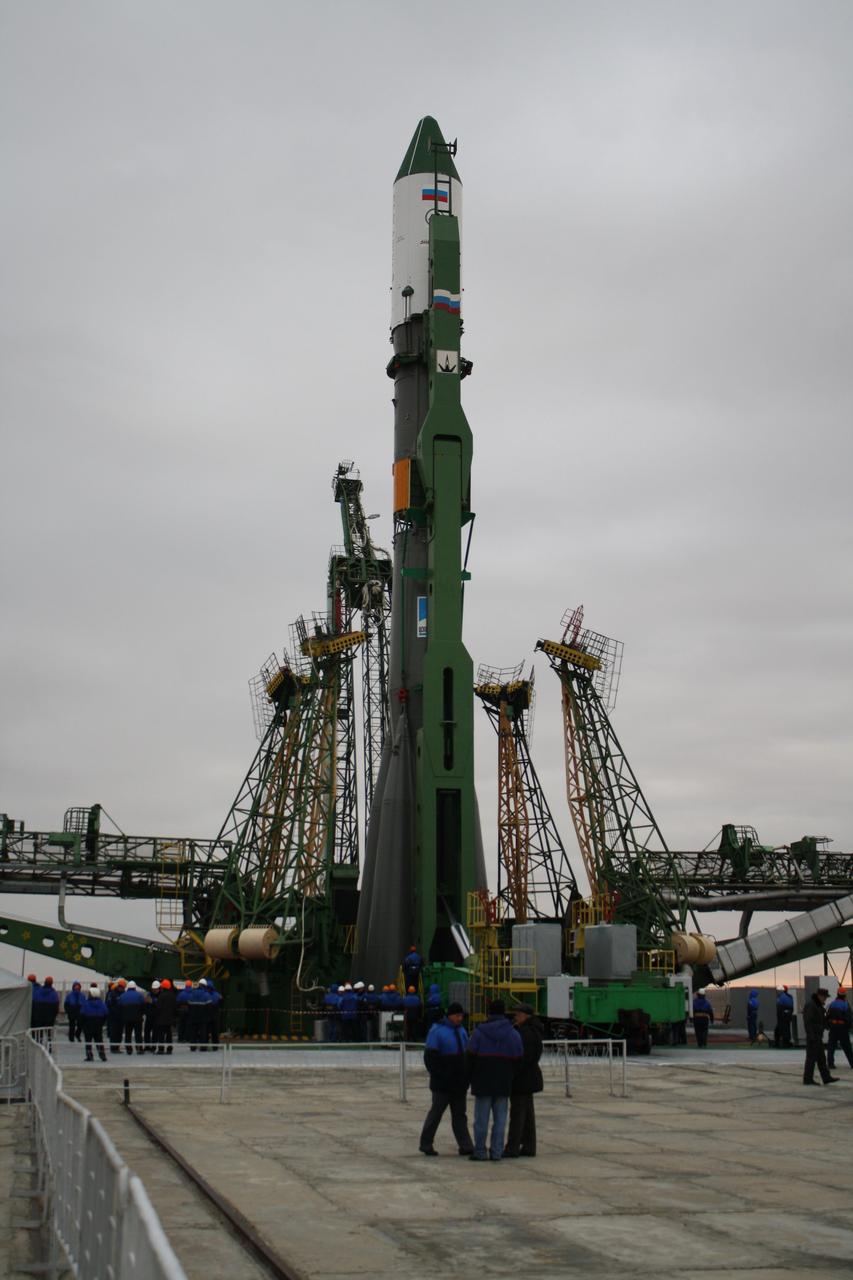
At the Baikonur Cosmodrome in Kazakhstan, the Soyuz booster and its ISS Progress 45 cargo craft rolled to the launch pad in bone-chilling weather on October 28, 2011 in preparation for launch October 31 to send the unmanned Russian resupply vehicle to the International Space Station. The launch will be the first for this configuration of the Soyuz booster rocket since a third-stage engine failure in flight August 24 that resulted in the loss of the previous Progress cargo craft, the ISS Progress 44. ISS Progress 45 is loaded with almost three tons of food, fuel and supplies for the residents of the orbital laboratory. Credit: NASA
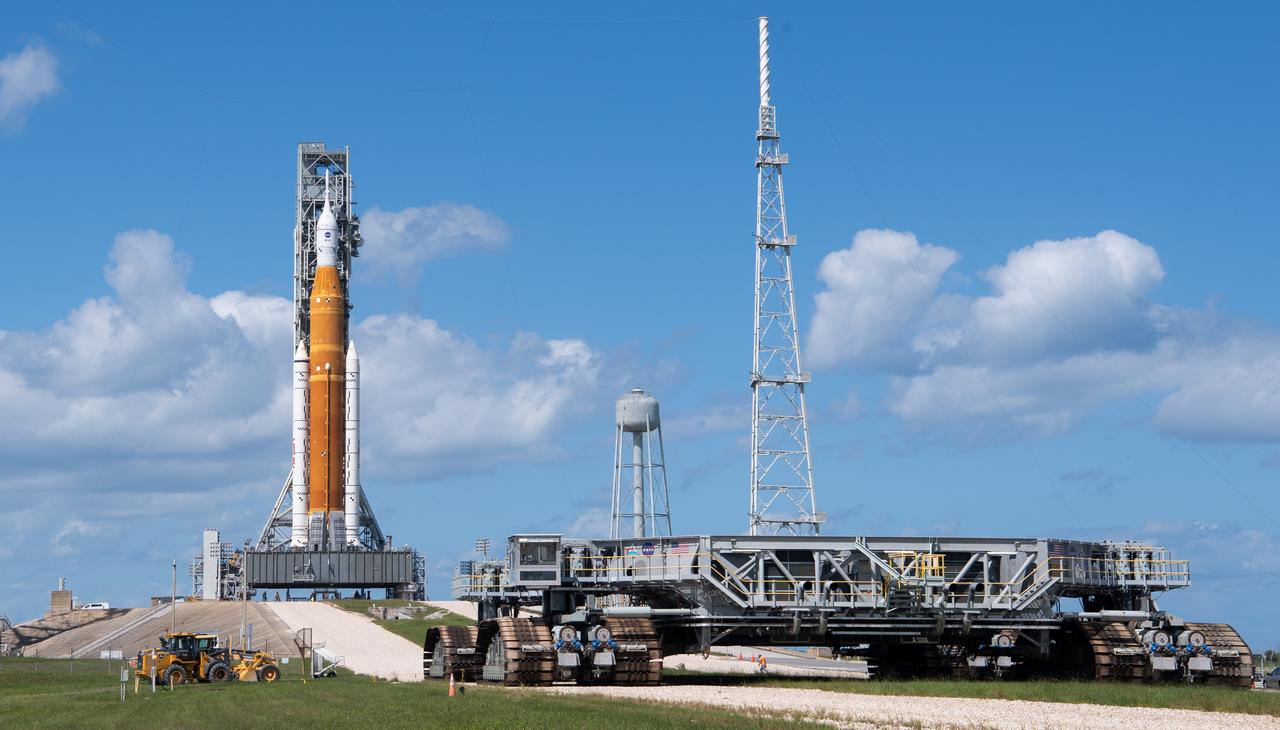
Crawler Transporter-2 (CT-2) is seen outside the gates at Launch Pad 39B as teams configure systems for rolling NASA’s Space Launch System (SLS) rocket and Orion spacecraft back to the Vehicle Assembly Building, Saturday, Sept. 24, 2022, at NASA’s Kennedy Space Center in Florida. NASA is foregoing a launch opportunity on Tues. Sept. 27 and continues to watch the weather forecast associated with Tropical Storm Ian. The NASA’s Artemis I flight test is the first integrated test of the agency’s deep space exploration systems: the Orion spacecraft, SLS rocket, and supporting ground systems. Photo Credit: (NASA/Joel Kowsky)

Teams load a weather cover for the Artemis III SLS (Space Launch System) rocket core stage on Monday, June 22, 2026, from NASA’s Pegasus barge at the Launch Complex 39 turn basin to transport the hardware to the spaceport’s Vehicle Assembly Building at the agency’s Kennedy Space Center in Florida. The cover will protect the stage’s thermal systems while SLS sits atop the mobile launcher at Launch Pad 39B in its short stack configuration. NASA will send four Artemis astronauts on increasingly difficult missions to explore more of the Moon for scientific discovery, economic benefits, establish an enduring human presence on the lunar surface, and to build on our foundation for the first crewed missions to Mars.
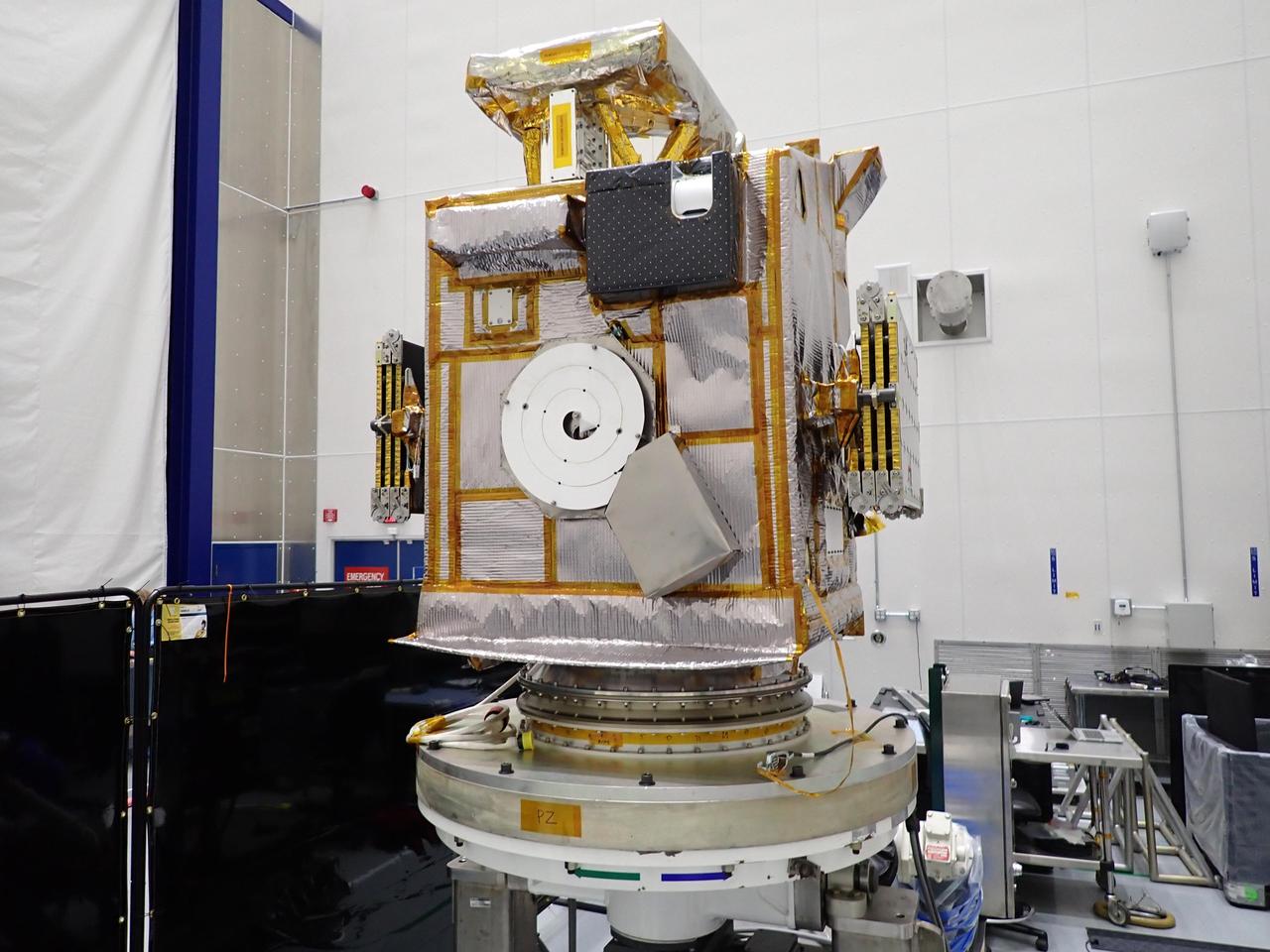
NASA's Lunar Trailblazer sits on its rotation fixture after being fueled and prior to being installed to the EELV Secondary Payload Adapter (ESPA) ring at SpaceX's payload processing facility in NASA's Kennedy Space Center in Florida in early February 2025. The ESPA ring is an adaptor used for launching secondary payloads on launch vehicles. Figure A shows the spacecraft mounted horizontally, in its launch configuration, to the ESPA ring. The mission's two science instruments are visible. The High-resolution Volatiles and Minerals Moon Mapper (HVM³) is the angular structure atop the spacecraft; the Lunar Thermal Mapper (LTM) is the black square on the upper right of the front facing panel. https://photojournal.jpl.nasa.gov/catalog/PIA26460
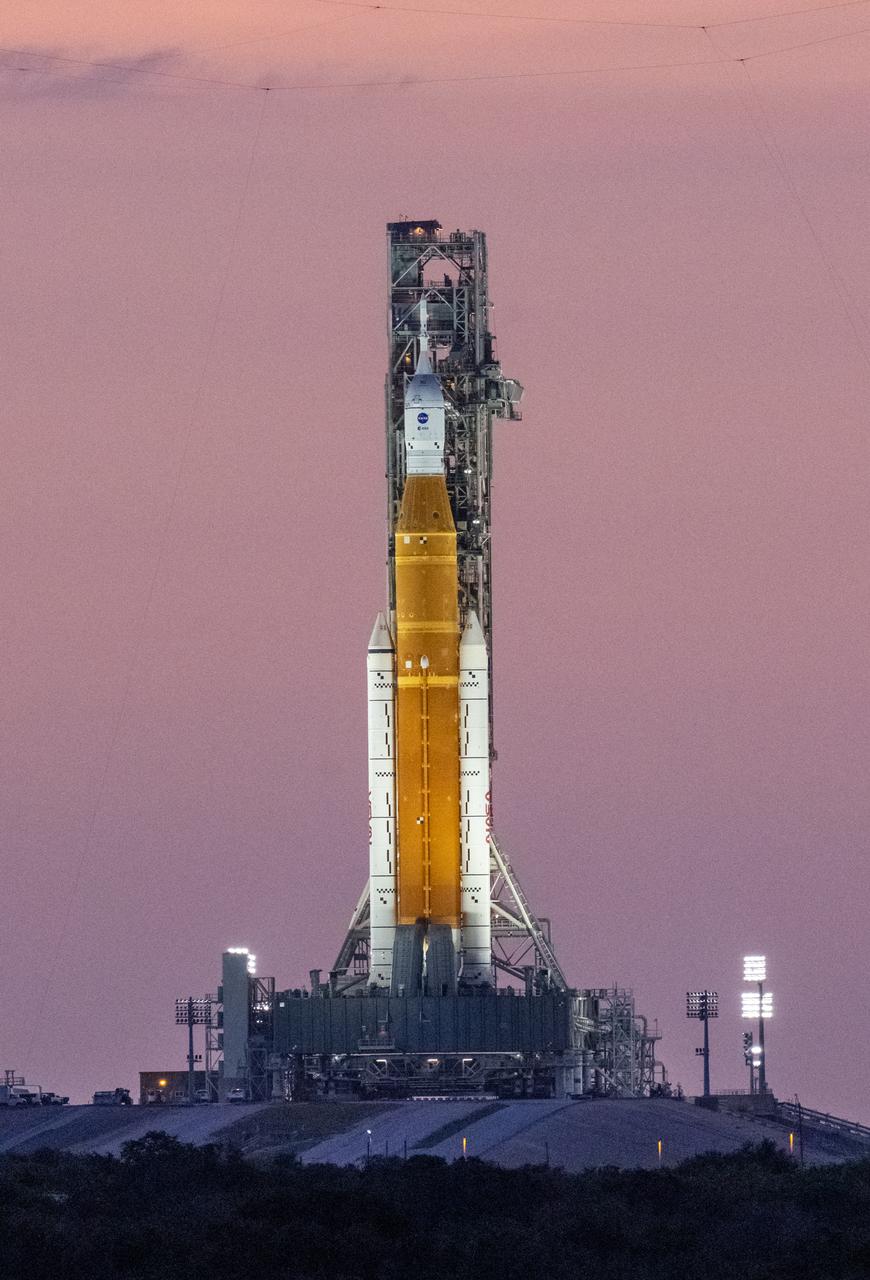
NASA’s Space Launch System (SLS) rocket with the Orion spacecraft aboard is seen atop the mobile launcher at Launch Pad 39B as teams configure systems for rolling back to the Vehicle Assembly Building, Monday, Sept. 26, 2022, at NASA’s Kennedy Space Center in Florida. NASA made the decision to rollback based on the latest weather predictions associated with Hurricane Ian. NASA’s Artemis I flight test is the first integrated test of the agency’s deep space exploration systems: the Orion spacecraft, SLS rocket, and supporting ground systems. Photo Credit: (NASA/Keegan Barber)