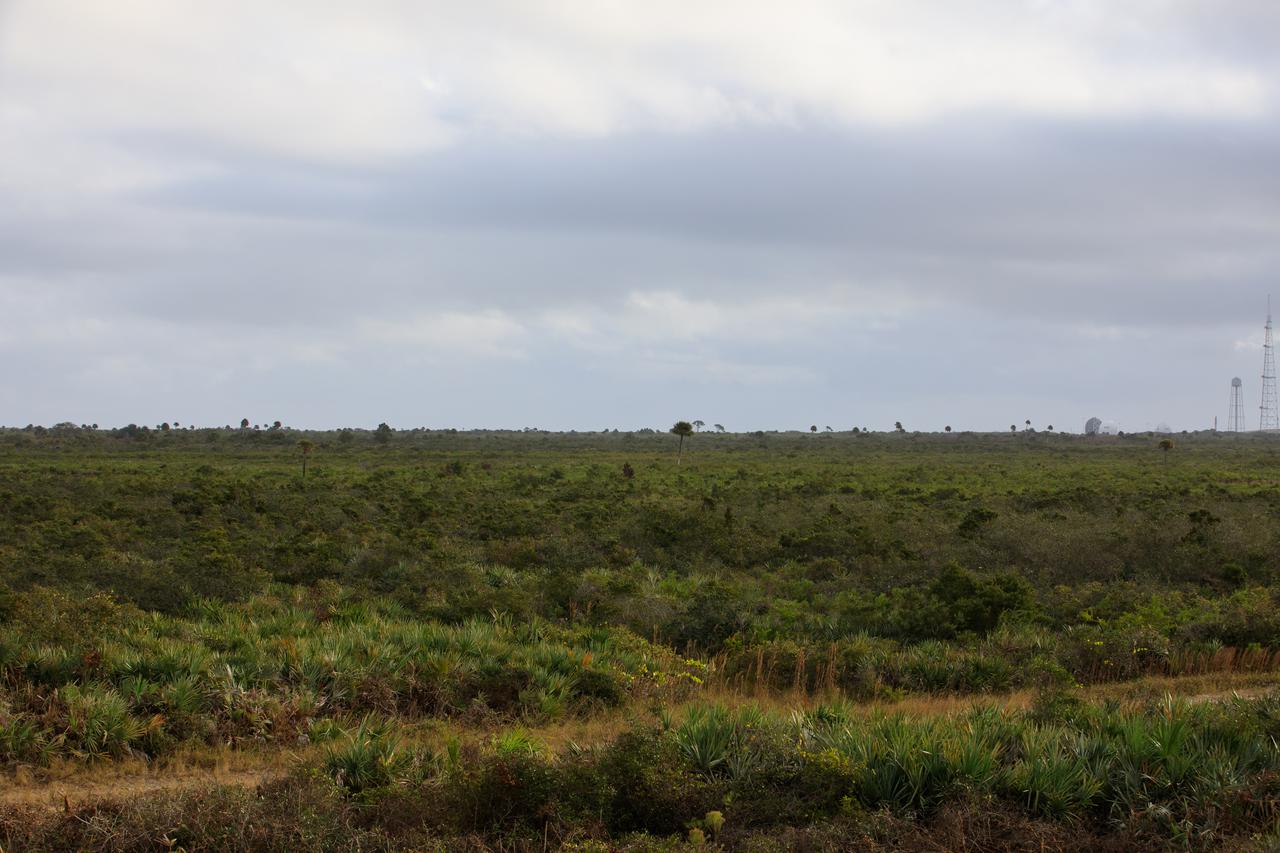
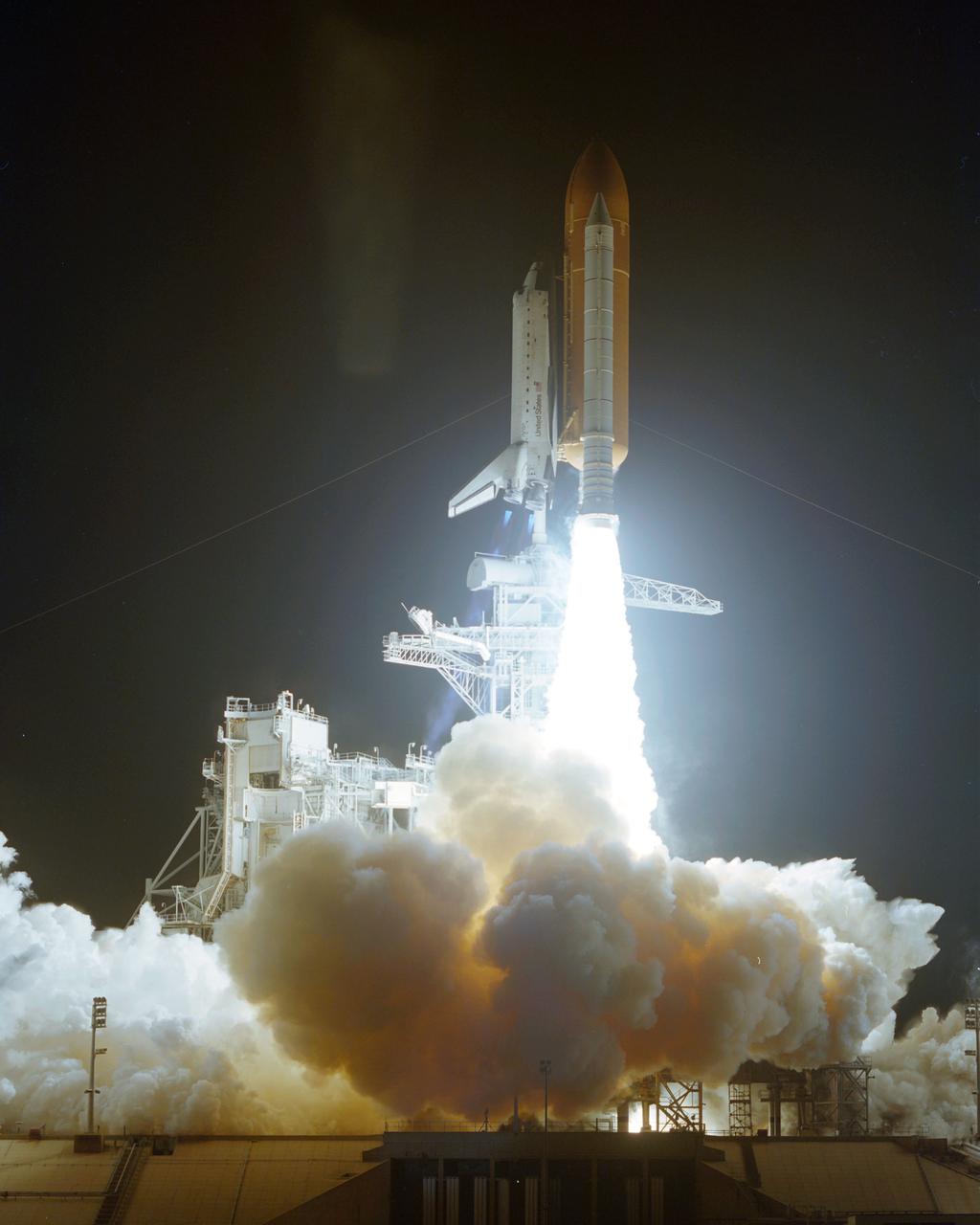
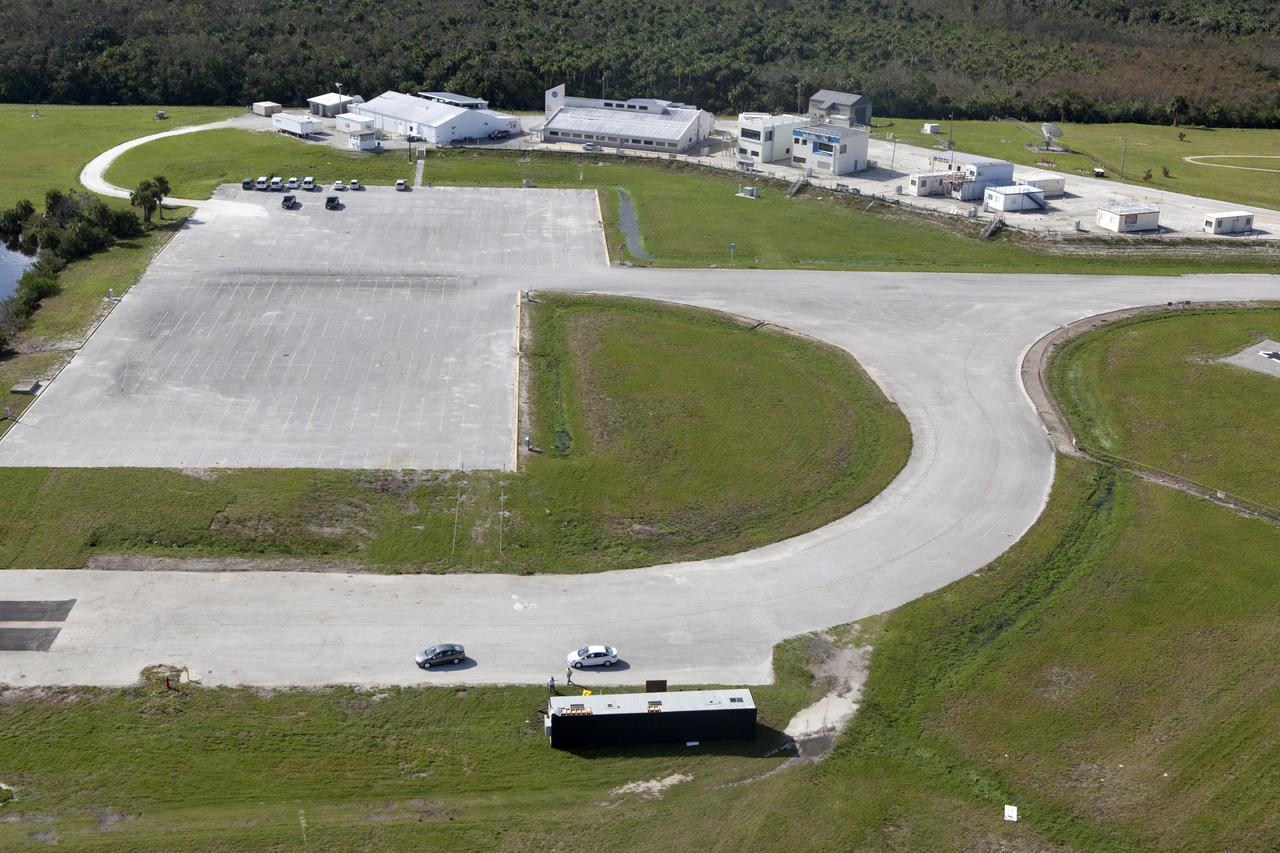
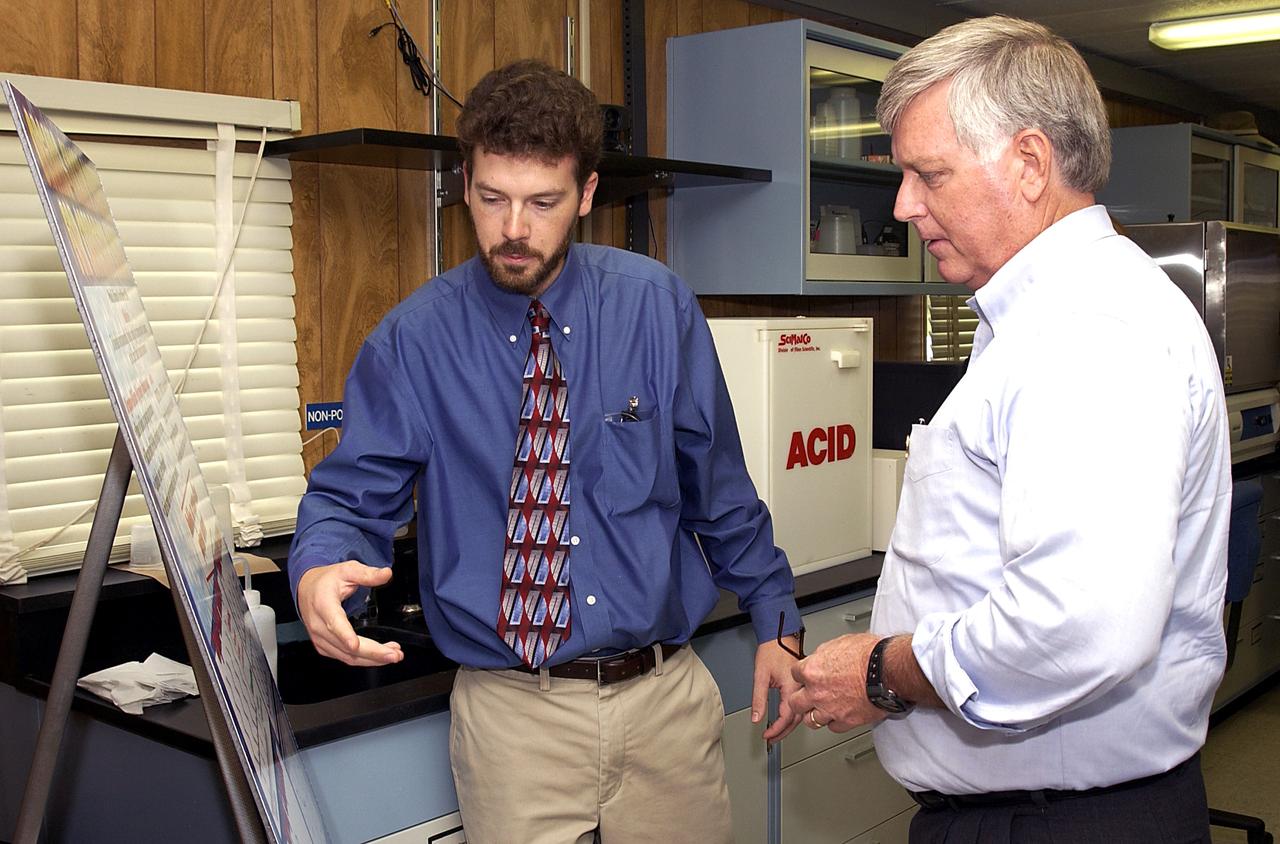
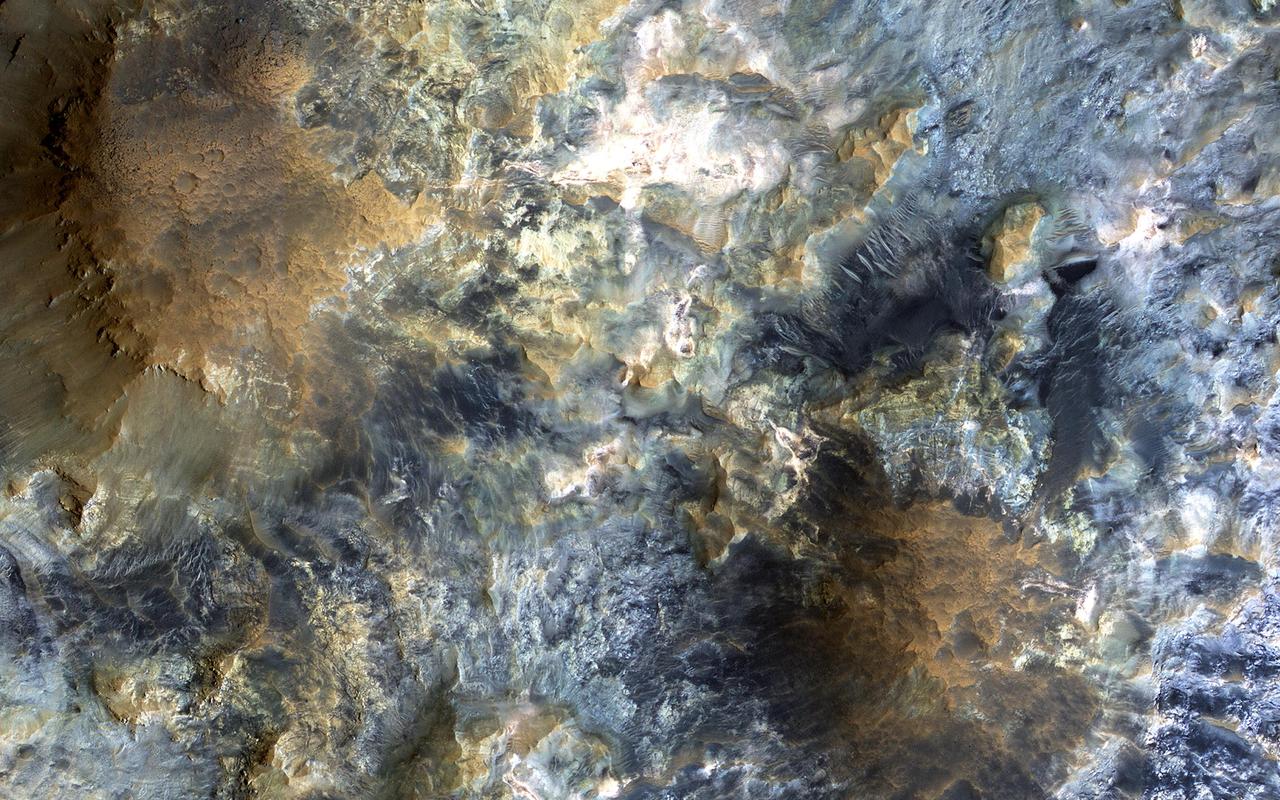
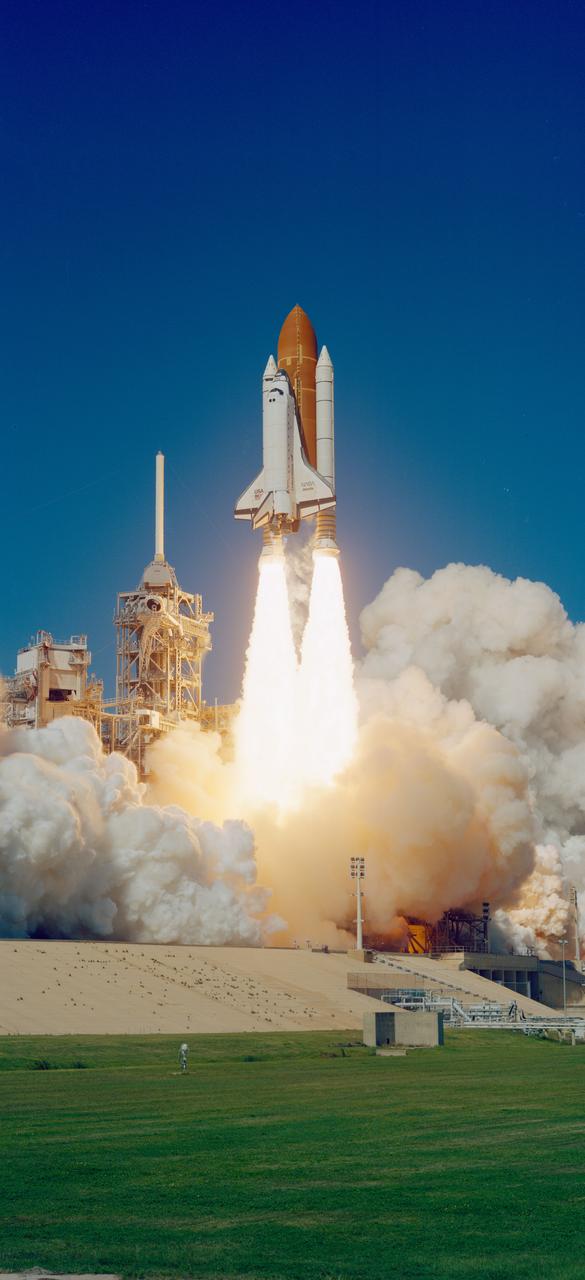
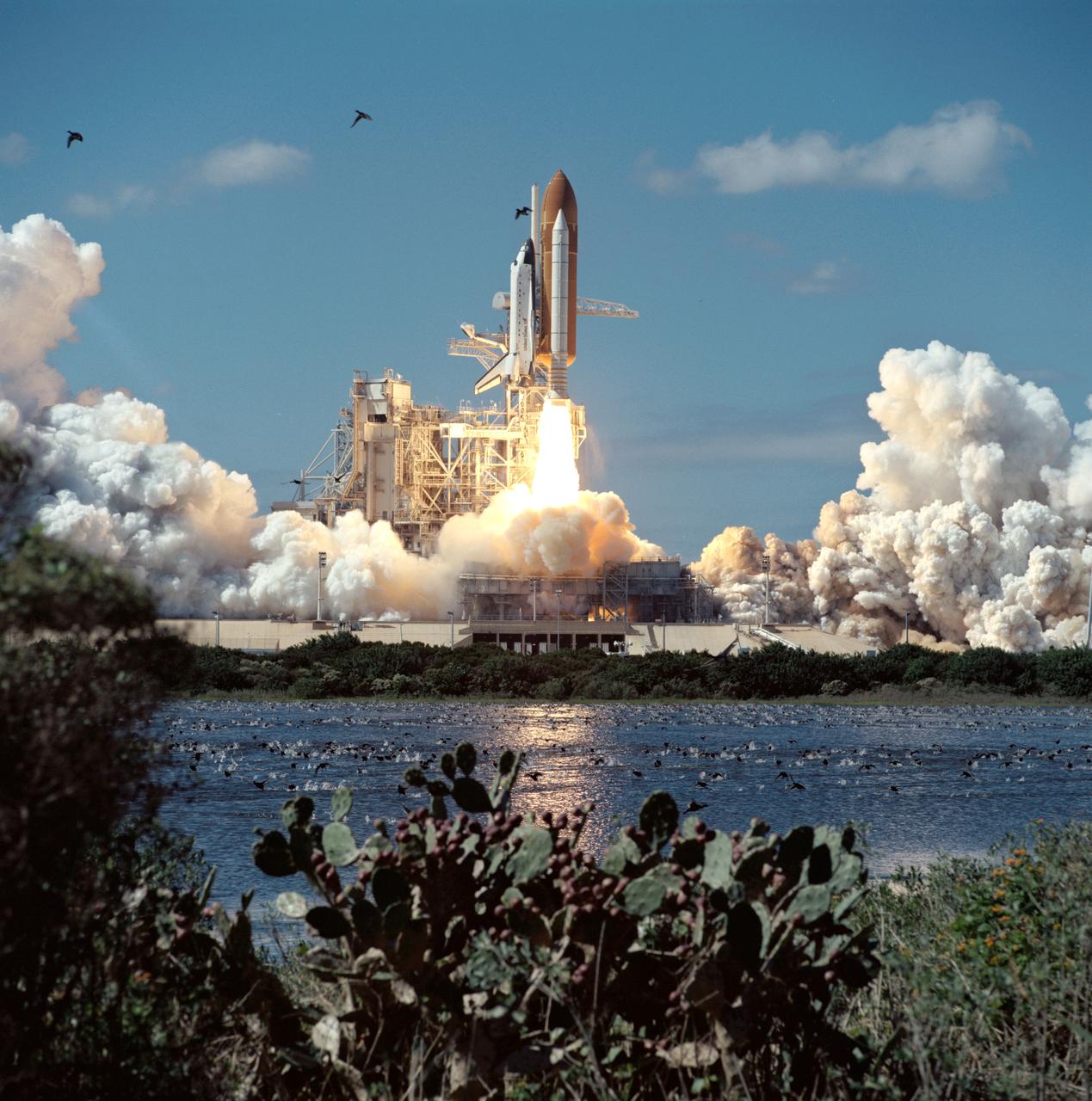
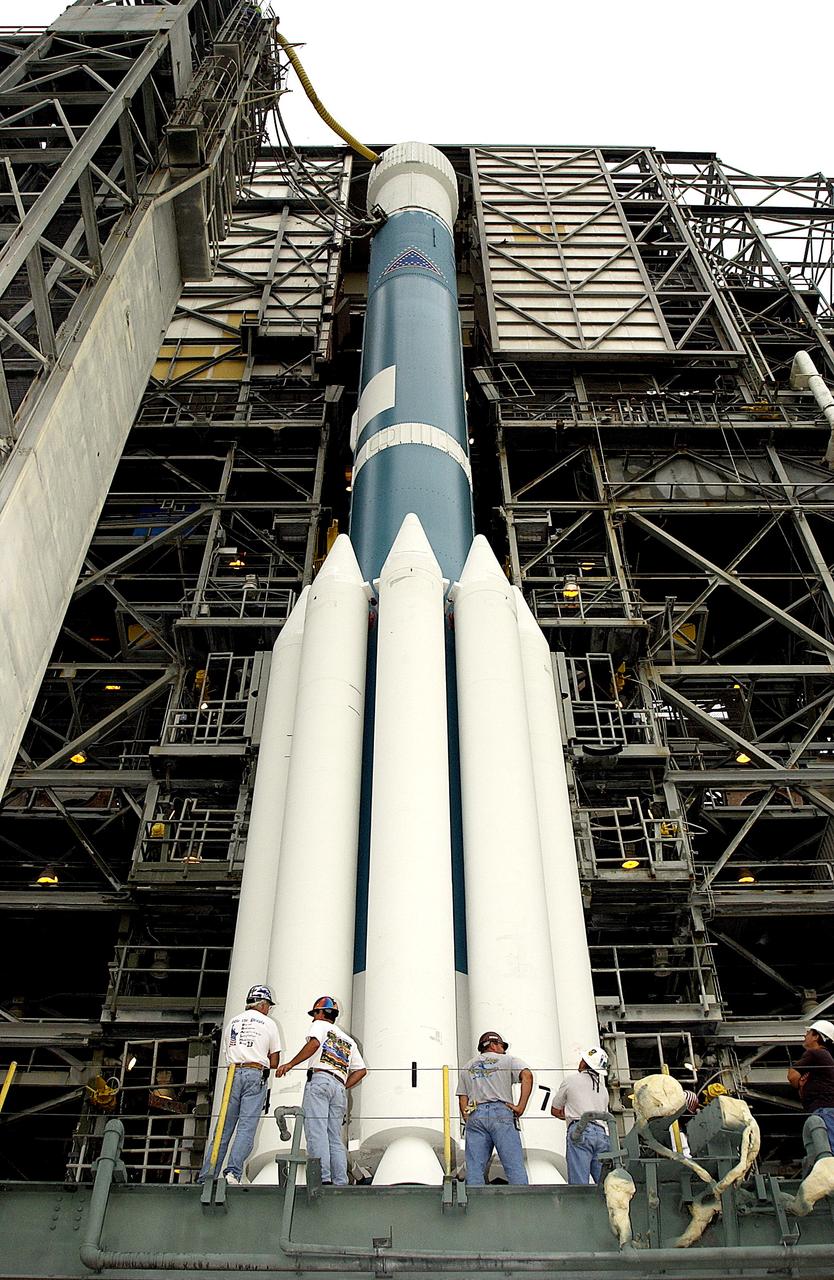
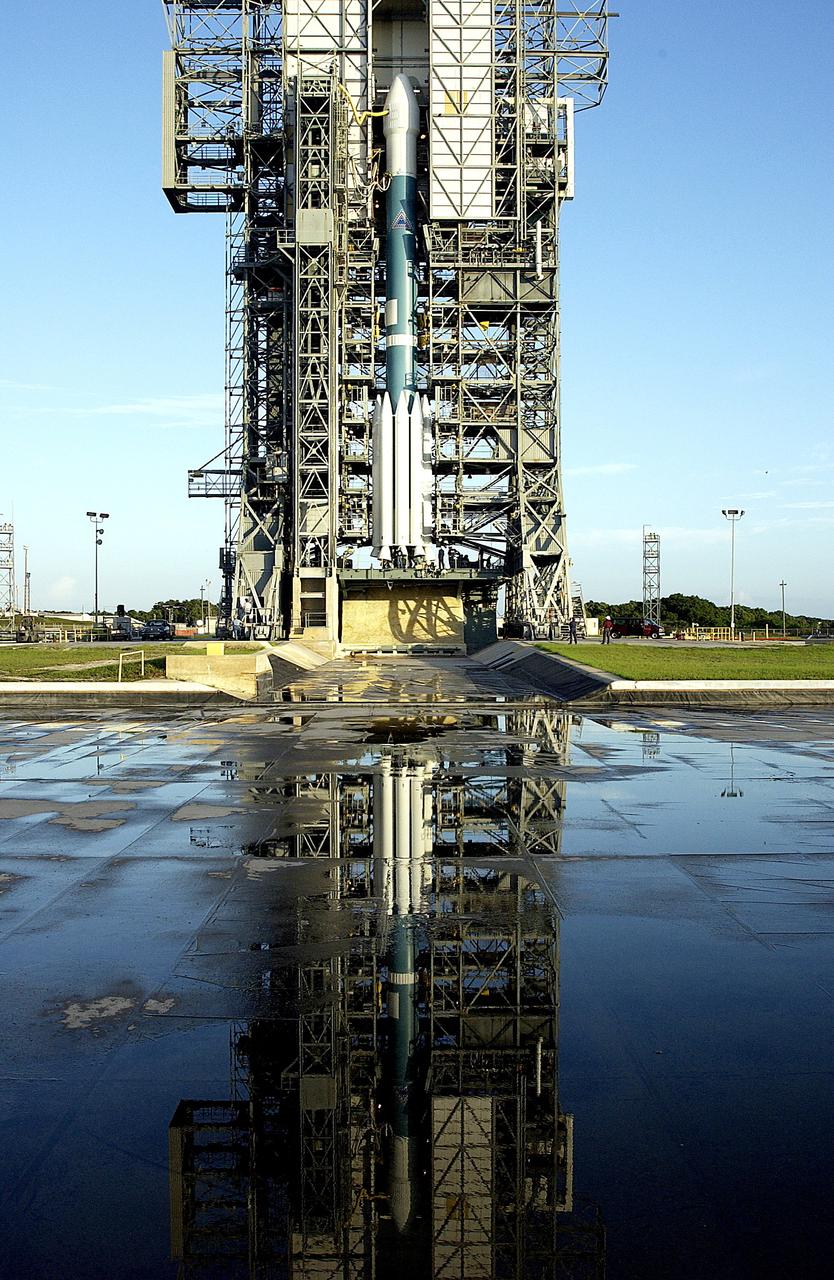
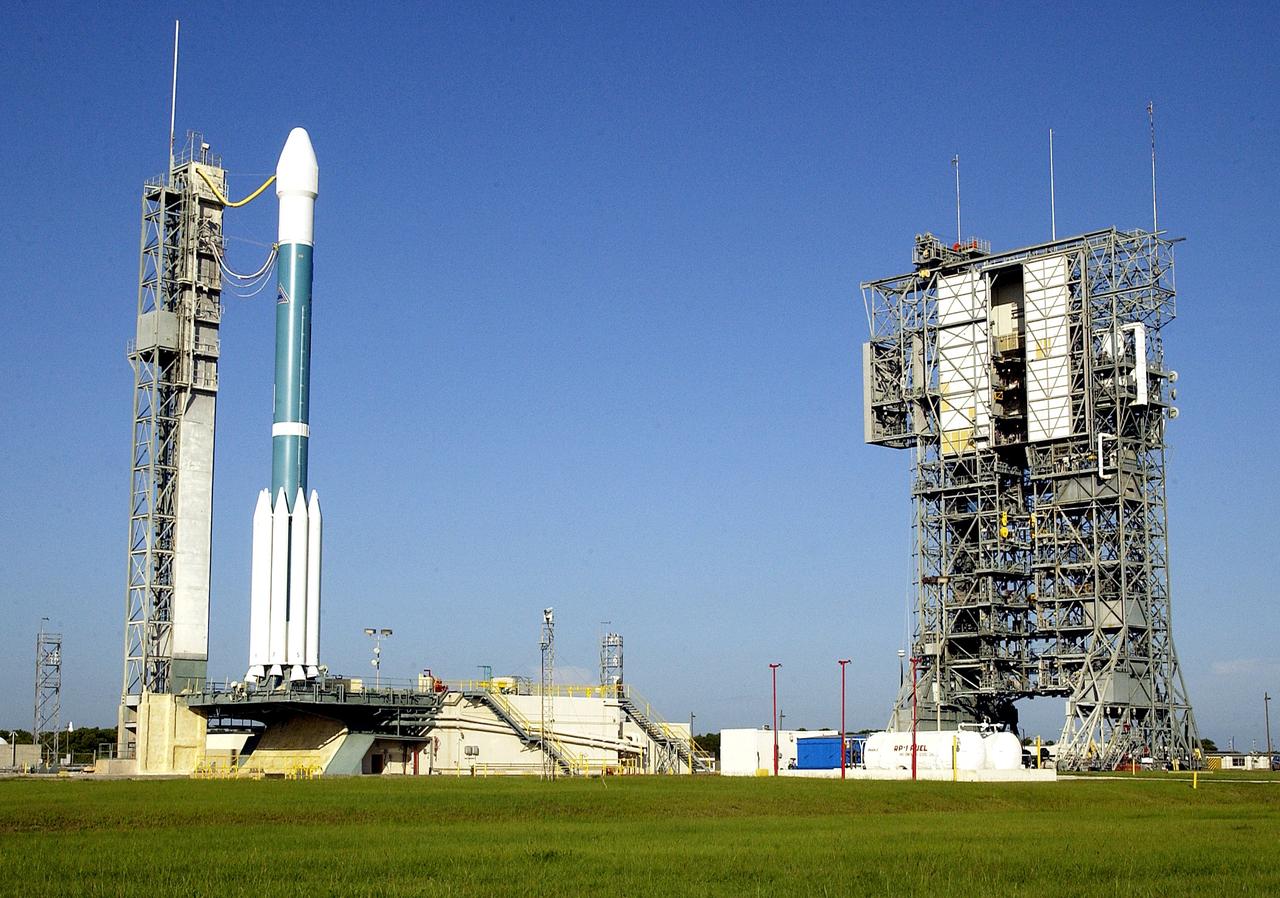
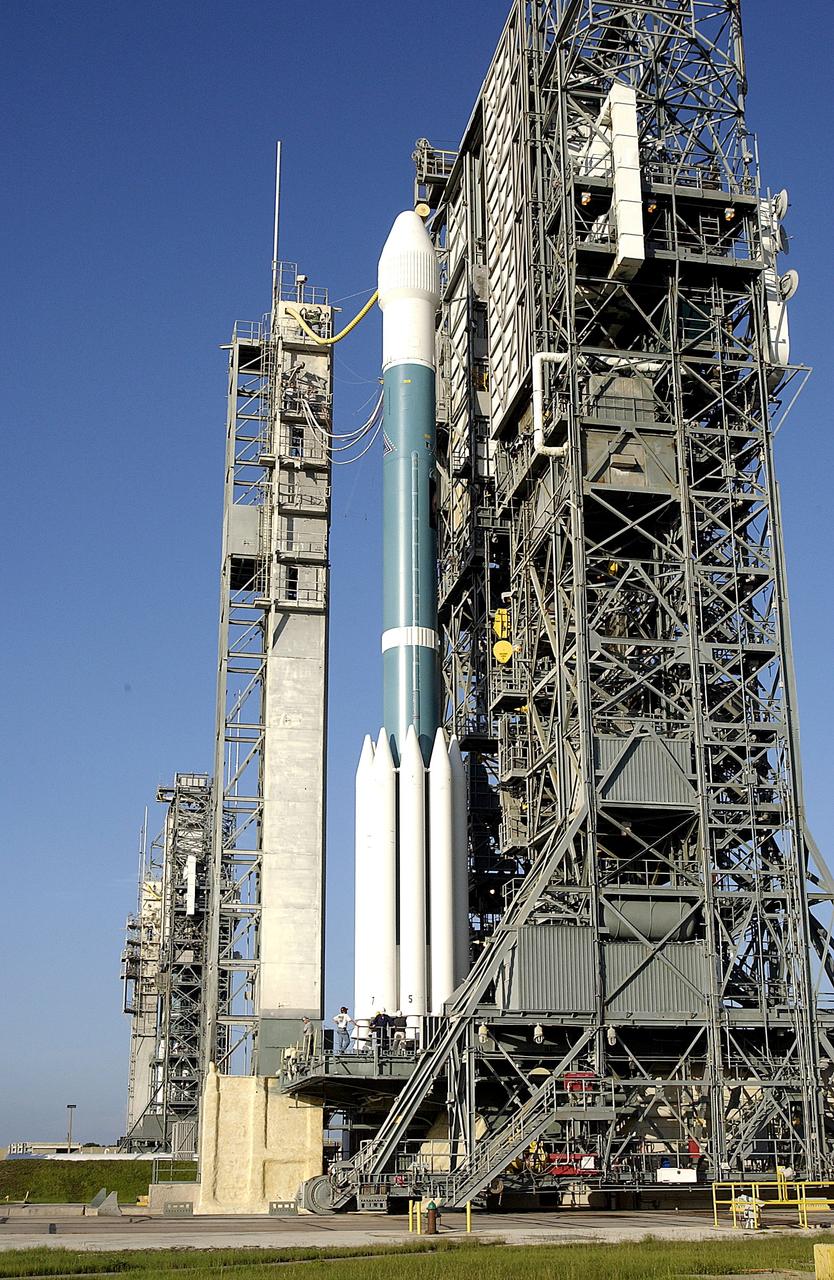
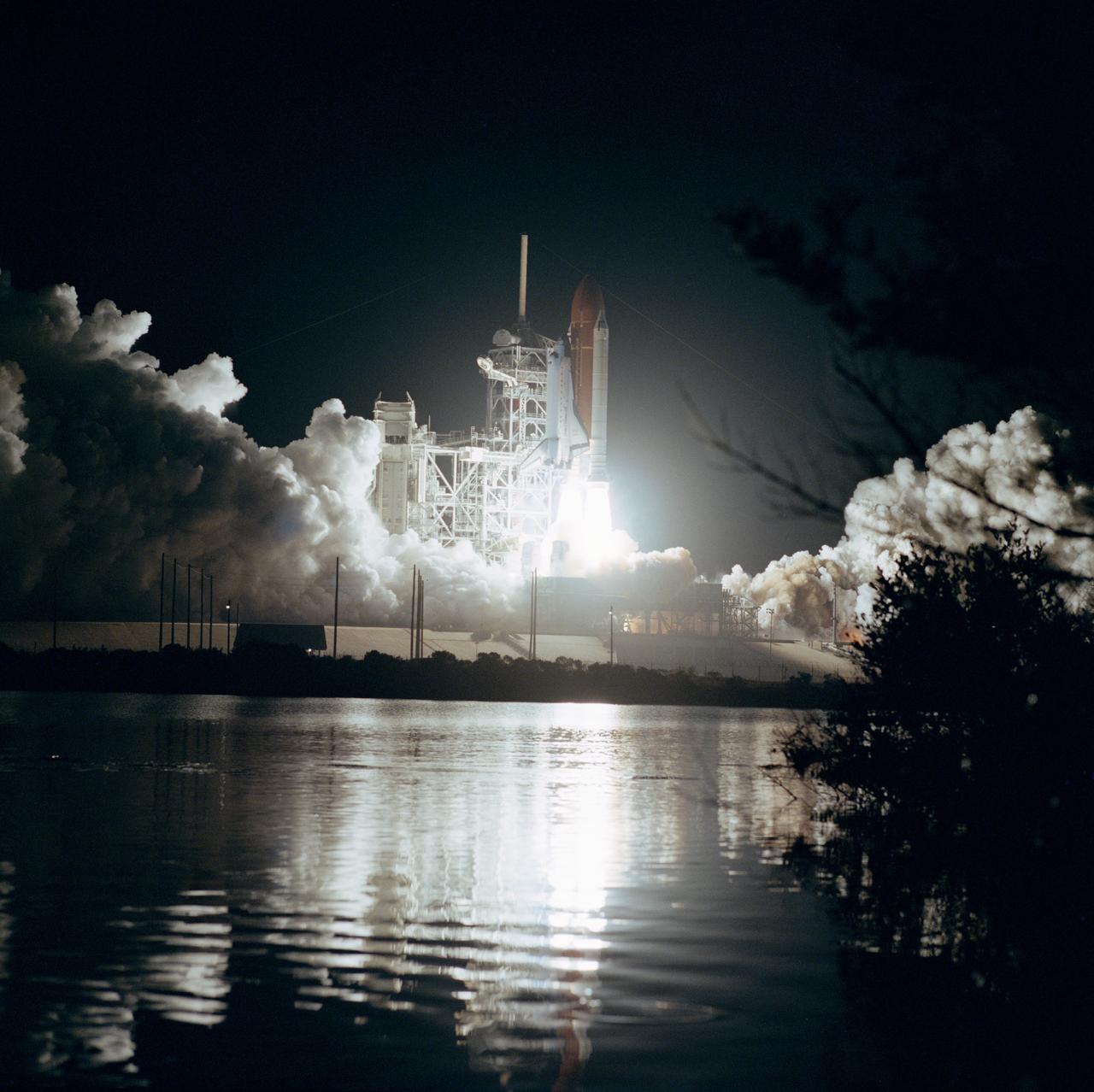
A view of a proposed new launch site, Launch Complex 49, on Dec. 20, 2021, at NASA’s Kennedy Space Center in Florida. In response to an inquiry from SpaceX, NASA is preparing to conduct environmental assessments to develop the proposed launch site. The 175-acre site, located north of Launch Complex 39B within the center’s security perimeter, would support the launch and landing of SpaceX’s Starship and Super Heavy launch vehicle. NASA and SpaceX are moving forward with the initial environmental assessment before concluding a potential agreement to develop the property.
Launch Complex 49 Site
A view of a proposed new launch site, Launch Complex 49, on Dec. 20, 2021, at NASA’s Kennedy Space Center in Florida. In response to an inquiry from SpaceX, NASA is preparing to conduct environmental assessments to develop the proposed launch site. The 175-acre site, located north of Launch Complex 39B within the center’s security perimeter, would support the launch and landing of SpaceX’s Starship and Super Heavy launch vehicle. NASA and SpaceX are moving forward with the initial environmental assessment before concluding a potential agreement to develop the property.
Launch Complex 49 Site
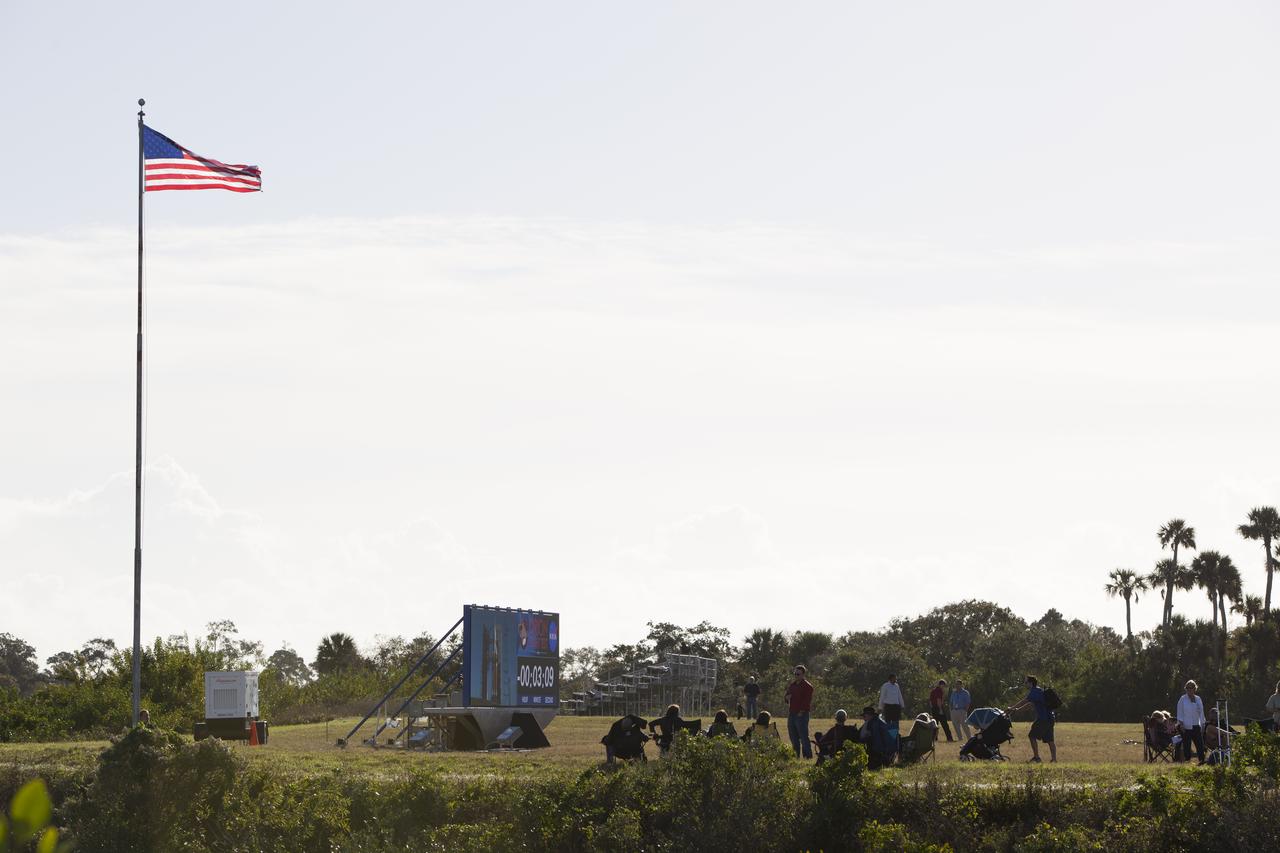
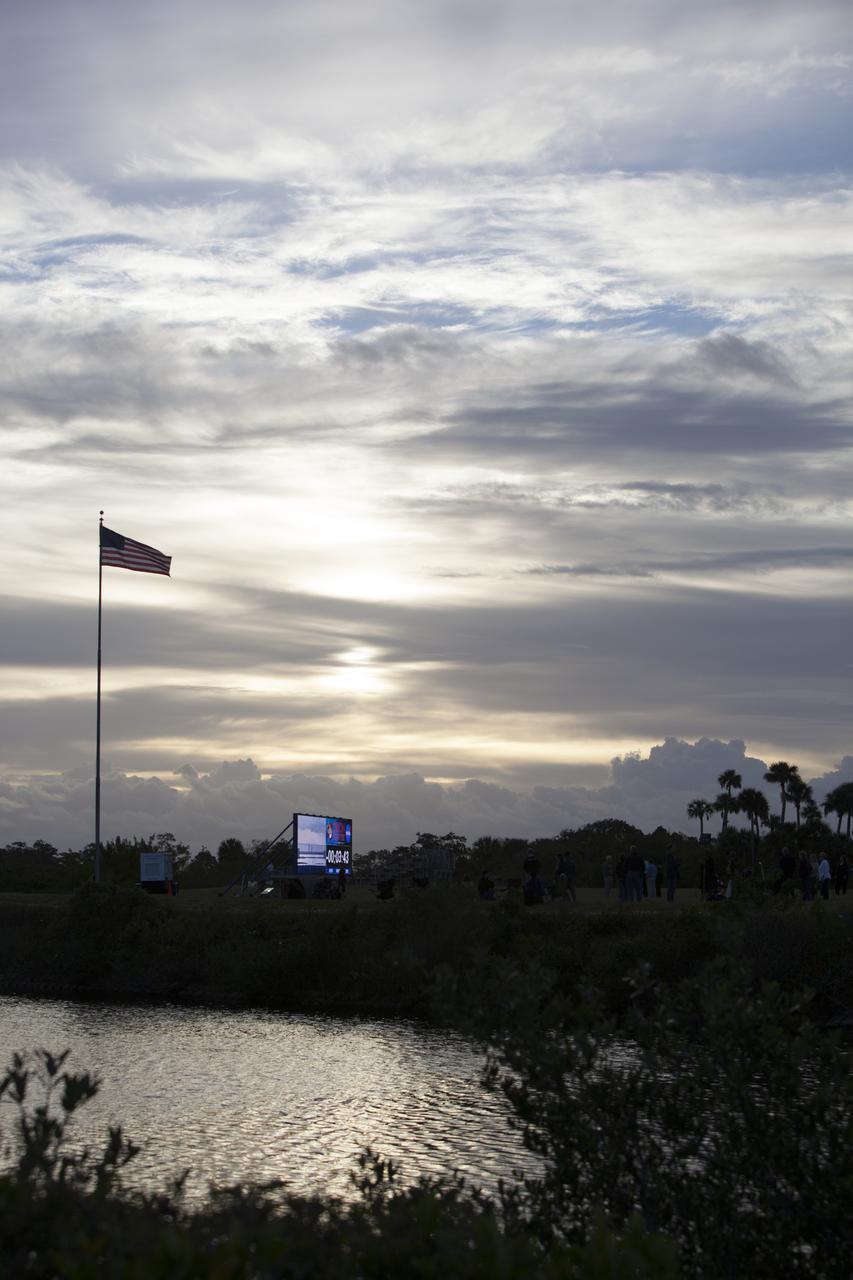
At NASA's Kennedy Space Center in Florida, the new countdown clock at the spaceport's Press Site is used for the first time as preparations were underway for the Orion Flight Test. News media representatives gather in anticipation of the launch of NASA's Orion spacecraft atop a United Launch Alliance Delta IV Heavy rocket.
Media at the Press Site for the Orion Launch
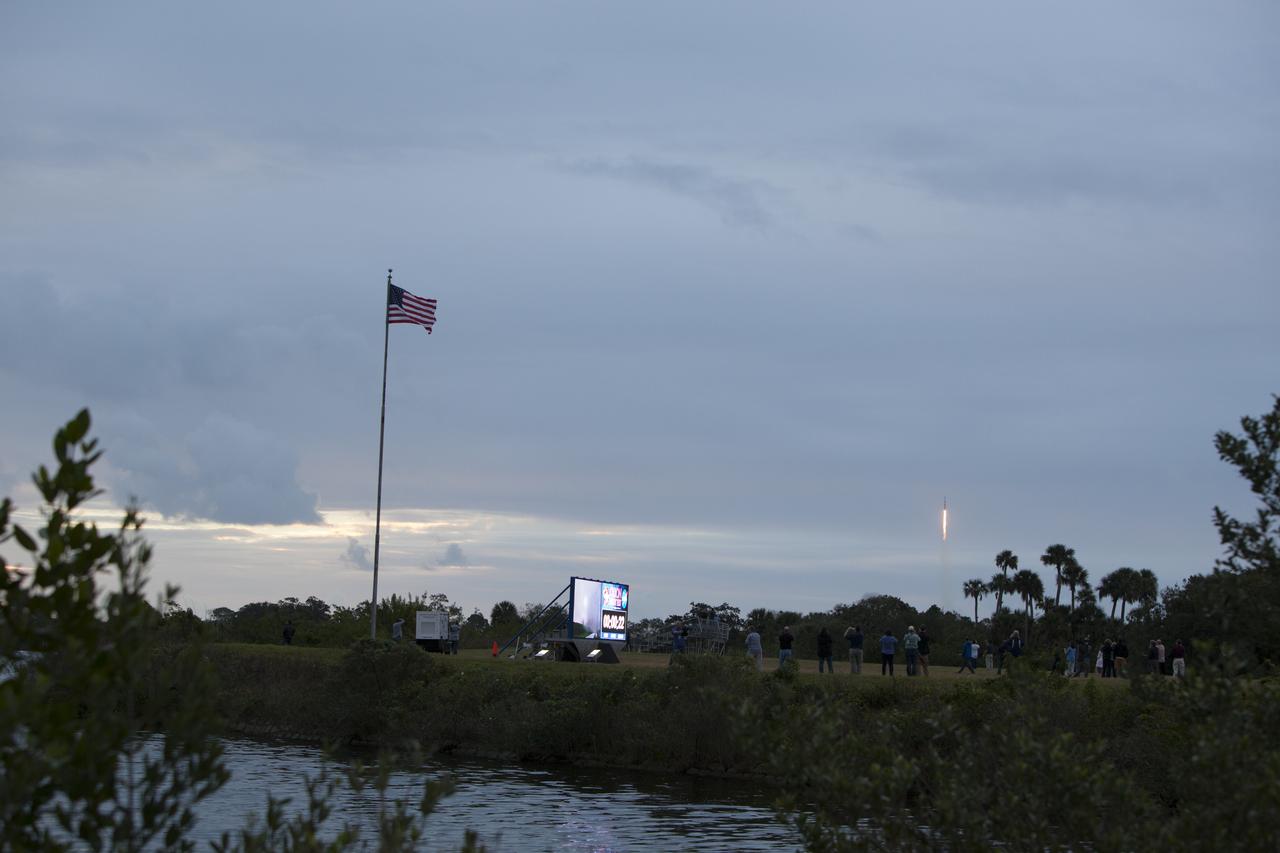
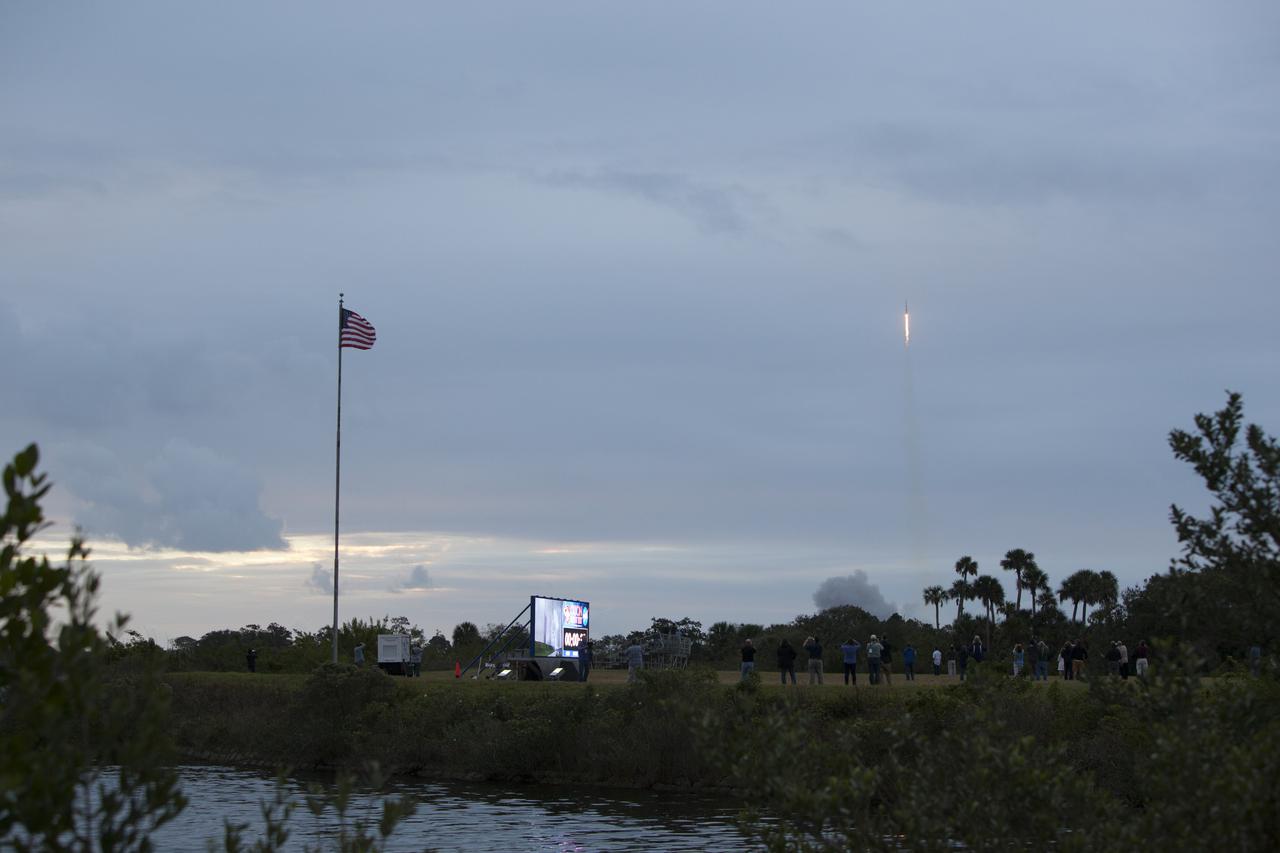
A Delta IV Heavy rocket lifts off from Space Launch Complex 37 at Cape Canaveral Air Force Station in Florida carrying NASA's Orion spacecraft on an unpiloted flight test to Earth orbit. In the foreground is the newly upgraded countdown clock at the spaceport's Press Site. Liftoff was at 7:05 a.m. EST. During the two-orbit, four-and-a-half hour mission, engineers will evaluate the systems critical to crew safety, the launch abort system, the heat shield and the parachute system.
Orion EFT-1 Launch from Press Site Countdown Clock
A Delta IV Heavy rocket lifts off from Space Launch Complex 37 at Cape Canaveral Air Force Station in Florida carrying NASA's Orion spacecraft on an unpiloted flight test to Earth orbit. In the foreground is the newly upgraded countdown clock at the spaceport's Press Site. Liftoff was at 7:05 a.m. EST. During the two-orbit, four-and-a-half hour mission, engineers will evaluate the systems critical to crew safety, the launch abort system, the heat shield and the parachute system.
Orion EFT-1 Launch from Press Site Countdown Clock
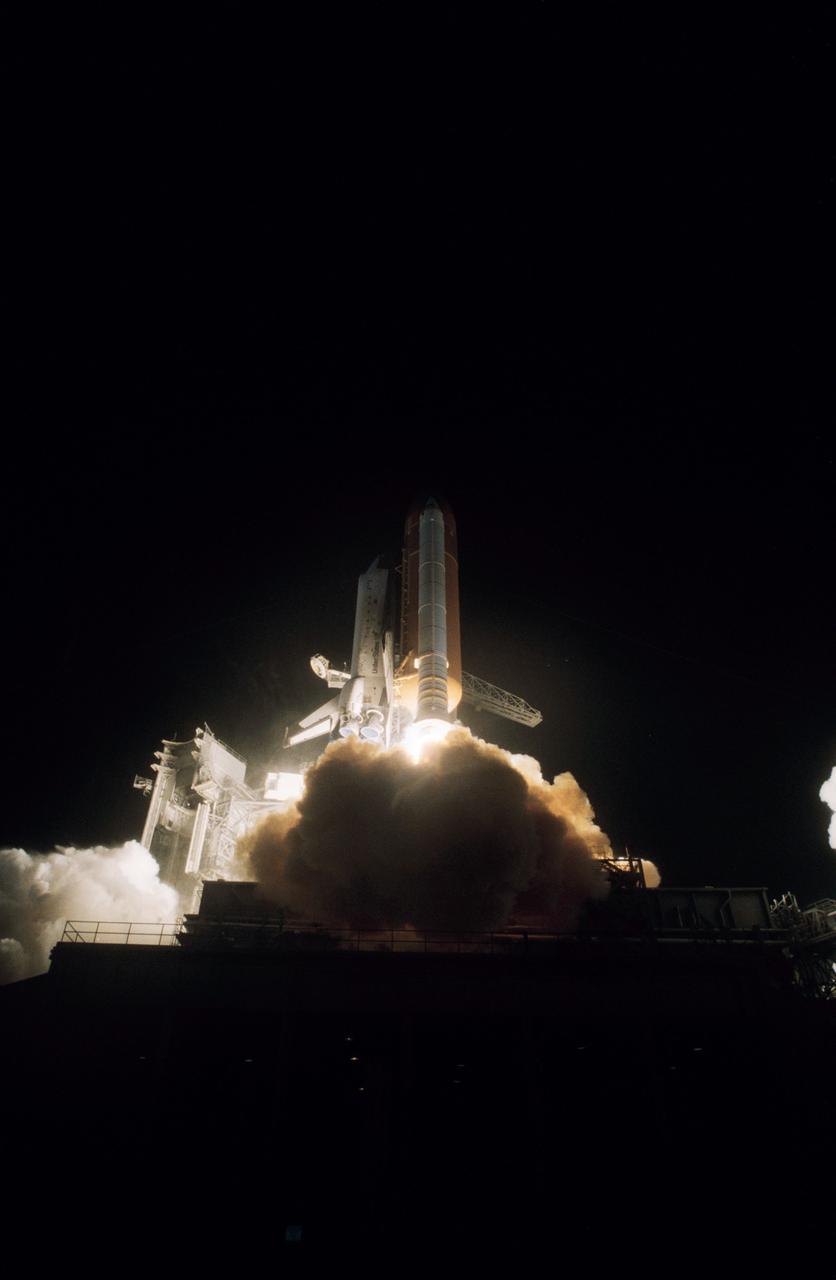
STS063-S-007 (3 Feb 1995) --- The race to catch up with the Russia's Mir gets underway as the Space Shuttle Discovery launches from Pad 39B, Kennedy Space Center (KSC) at 12:22:04 (EST), February 3, 1995.  Discovery is the first in the current fleet of four Space Shuttle vehicles to make 20 launches.  Onboard for the 67th (STS-63 is out of sequence) Shuttle flight are astronauts James D. Wetherbee, mission commander; Eileen M. Collins, pilot; Bernard A. Harris Jr., payload commander; mission specialists Janice Voss and C. Michael Foale; along with Russian cosmonaut Vladimir G. Titov.
Launch of STS-63 Discovery
The Launch Complex 39 Press Site is seen during an aerial survey of NASA's Kennedy Space Center in Florida on September 12, 2017. The survey was performed to identify structures and facilities that may have sustained damage from Hurricane Irma as the storm passed Kennedy on September 10, 2017. NASA closed the center ahead of the storm's onset and only a small team of specialists known as the Rideout Team was on the center as the storm approached and passed.
Hurricane Irma Damage Assessment
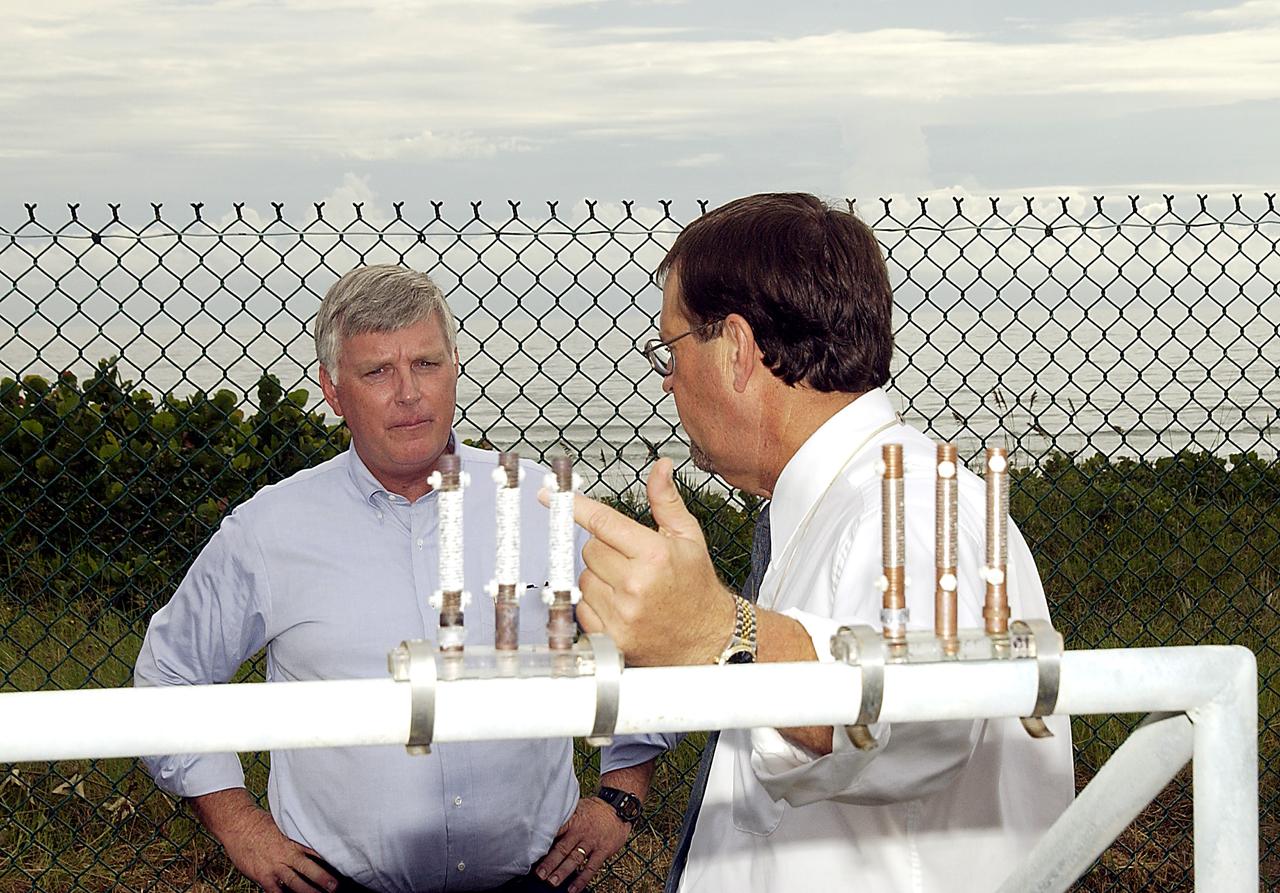
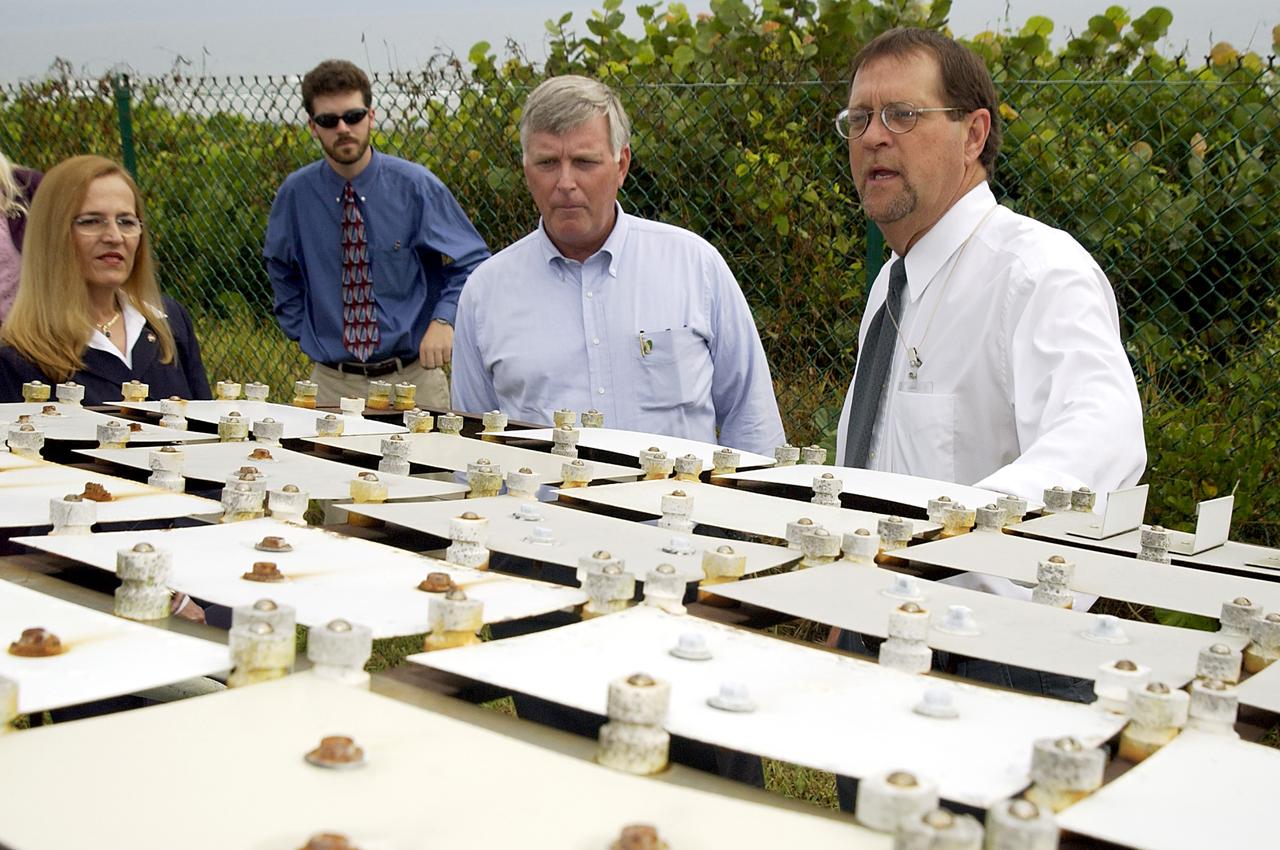
KENNEDY SPACE CENTER, FLA. -   Dr. Paul Hintze (left) explains to Center Director Jim Kennedy a project he is working at the KSC Beach Corrosion Test Site. Hitze is doing post-graduate work for the National Research Council.  The test facility site was established in the 1960s and has provided more than 30 years of historical information on the long-term performance of many materials in use at KSC and other locations around the world. Located 100 feet from the Atlantic Ocean approximately 1 mile south of the Space Shuttle launch sites, the test facility includes an atmospheric exposure site, a flowing seawater exposure site, and an on-site electrochemistry laboratory and monitoring station. The beach laboratory is used to conduct real-time corrosion experiments and provides for the remote monitoring of surrounding weather conditions. The newly added flowing seawater immersion facility provides for the immersion testing of materials and devices under controlled conditions.
KENNEDY SPACE CENTER, FLA. - Dr. Paul Hintze (left) explains to Center Director Jim Kennedy a project he is working at the KSC Beach Corrosion Test Site. Hitze is doing post-graduate work for the National Research Council. The test facility site was established in the 1960s and has provided more than 30 years of historical information on the long-term performance of many materials in use at KSC and other locations around the world. Located 100 feet from the Atlantic Ocean approximately 1 mile south of the Space Shuttle launch sites, the test facility includes an atmospheric exposure site, a flowing seawater exposure site, and an on-site electrochemistry laboratory and monitoring station. The beach laboratory is used to conduct real-time corrosion experiments and provides for the remote monitoring of surrounding weather conditions. The newly added flowing seawater immersion facility provides for the immersion testing of materials and devices under controlled conditions.
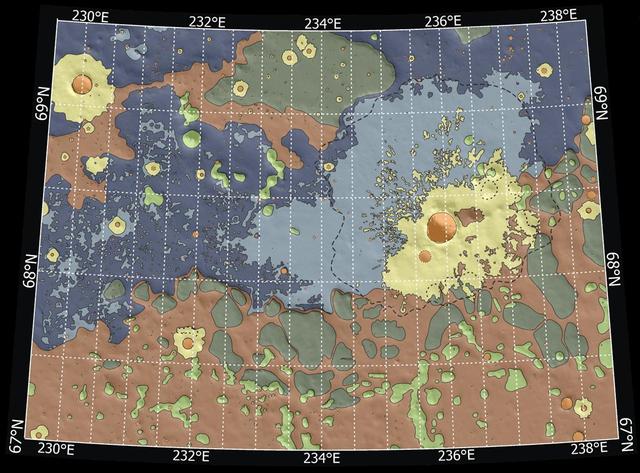
There is a candidate landing site in the Mawrth Vallis region for the European Space Agency's ExoMars rover, planned to launch in 2020. This is one of the HiRISE images acquired to evaluate this site.  Mawrth Vallis has some of the most spectacular color variations seen anywhere on Mars. This color variability is due to a range of hydrated minerals -- water caused alteration of these ancient deposits -- which is why this site is of interest to study the past habitability of Mars.  http://photojournal.jpl.nasa.gov/catalog/PIA21029
The Color Wonderland of Mawrth Vallis
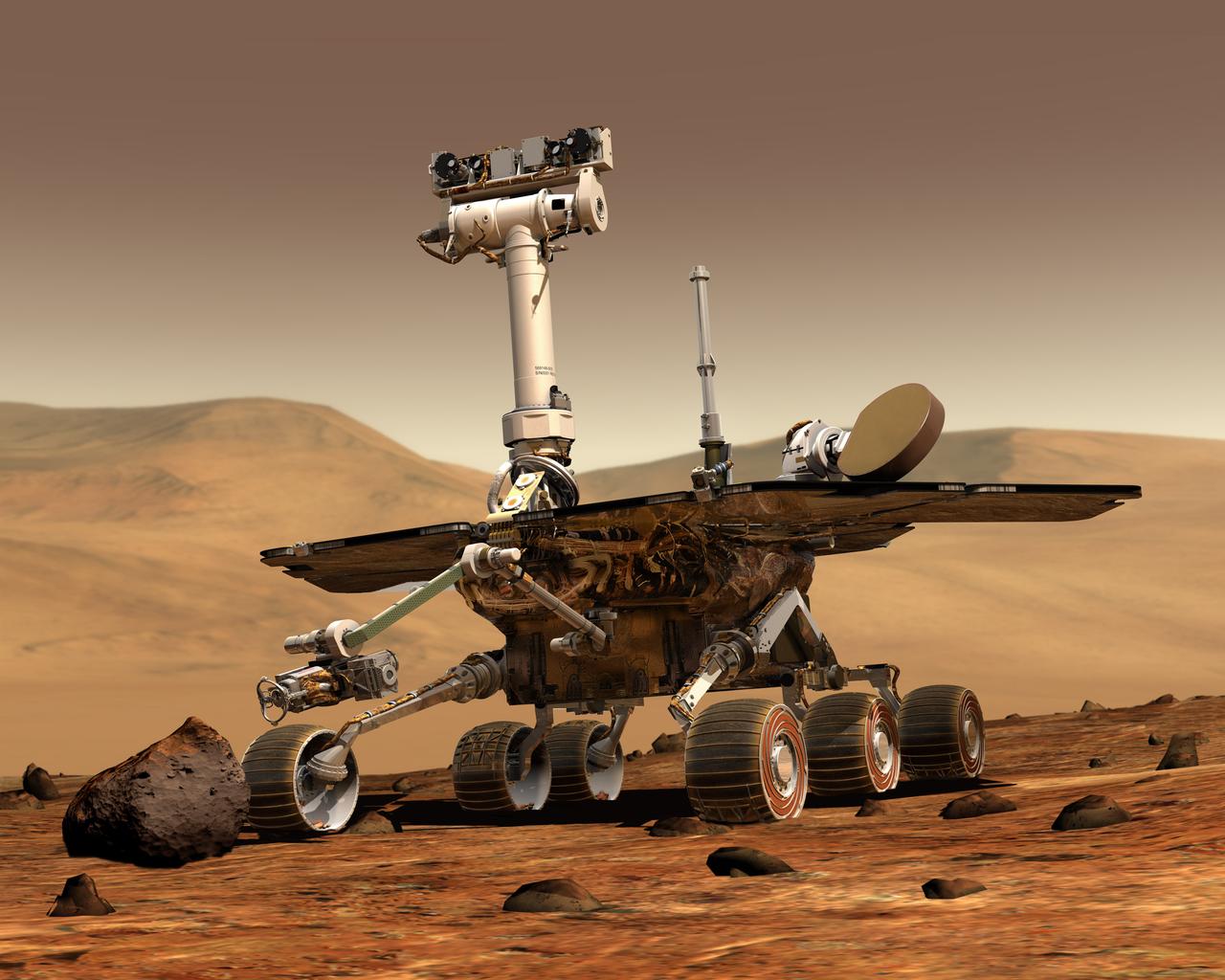
An artist concept portrays a NASA Mars Exploration Rover on the surface of Mars. Two rovers were launched in 2003 and arrived at sites on Mars in January 2004.
Artist Concept of Rover on Mars
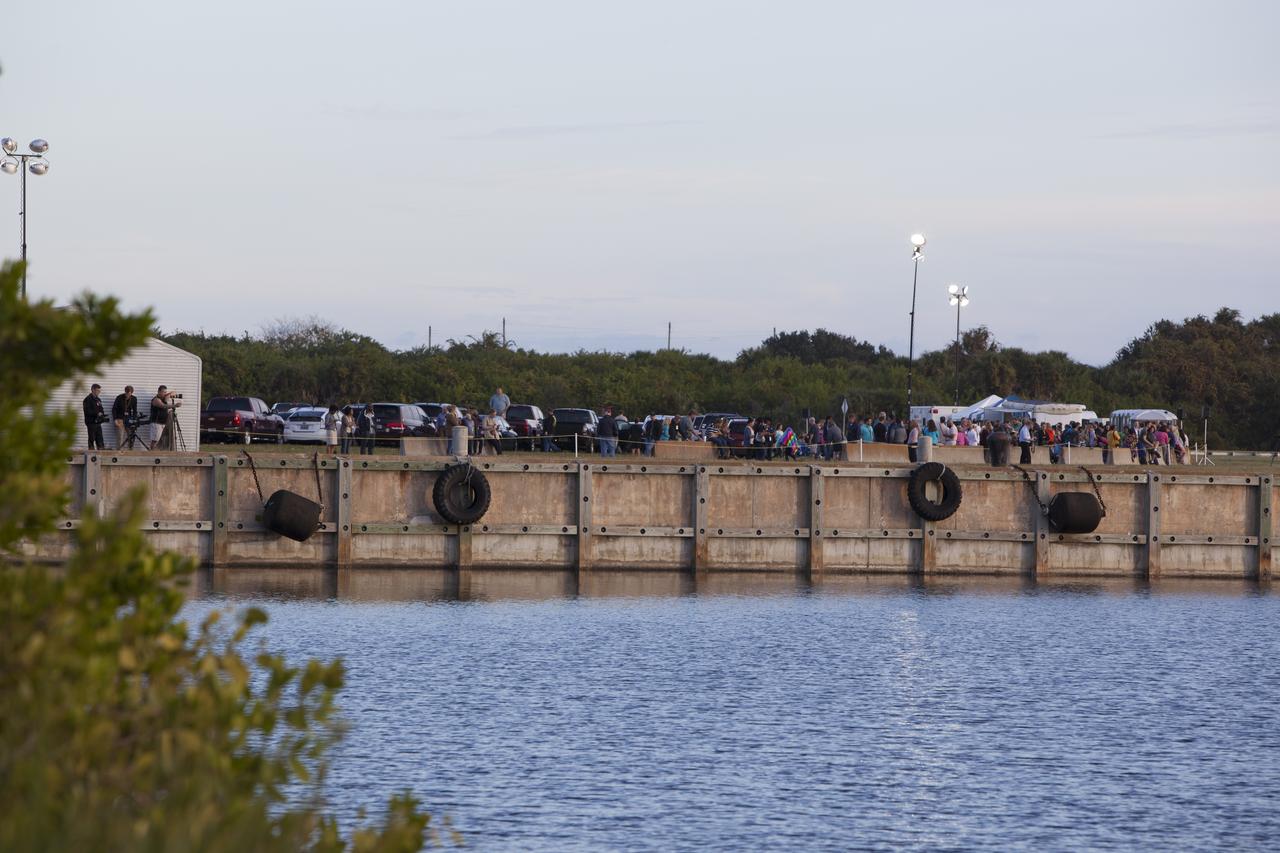
At NASA's Kennedy Space Center in Florida, news media and other guests gather in anticipation of the launch of NASA's Orion spacecraft atop a United Launch Alliance Delta IV Heavy rocket.
Media at the Press Site for the Orion Launch
At NASA's Kennedy Space Center in Florida, the new countdown clock at the spaceport's Press Site is used for the first time as preparations were underway for the Orion Flight Test. The modern, multimedia display is similar to the screens seen at sporting venues. The new screen is nearly 26 feet wide by 7 feet high, a foot taller than the original clock.
Media at the Press Site for the Orion Launch
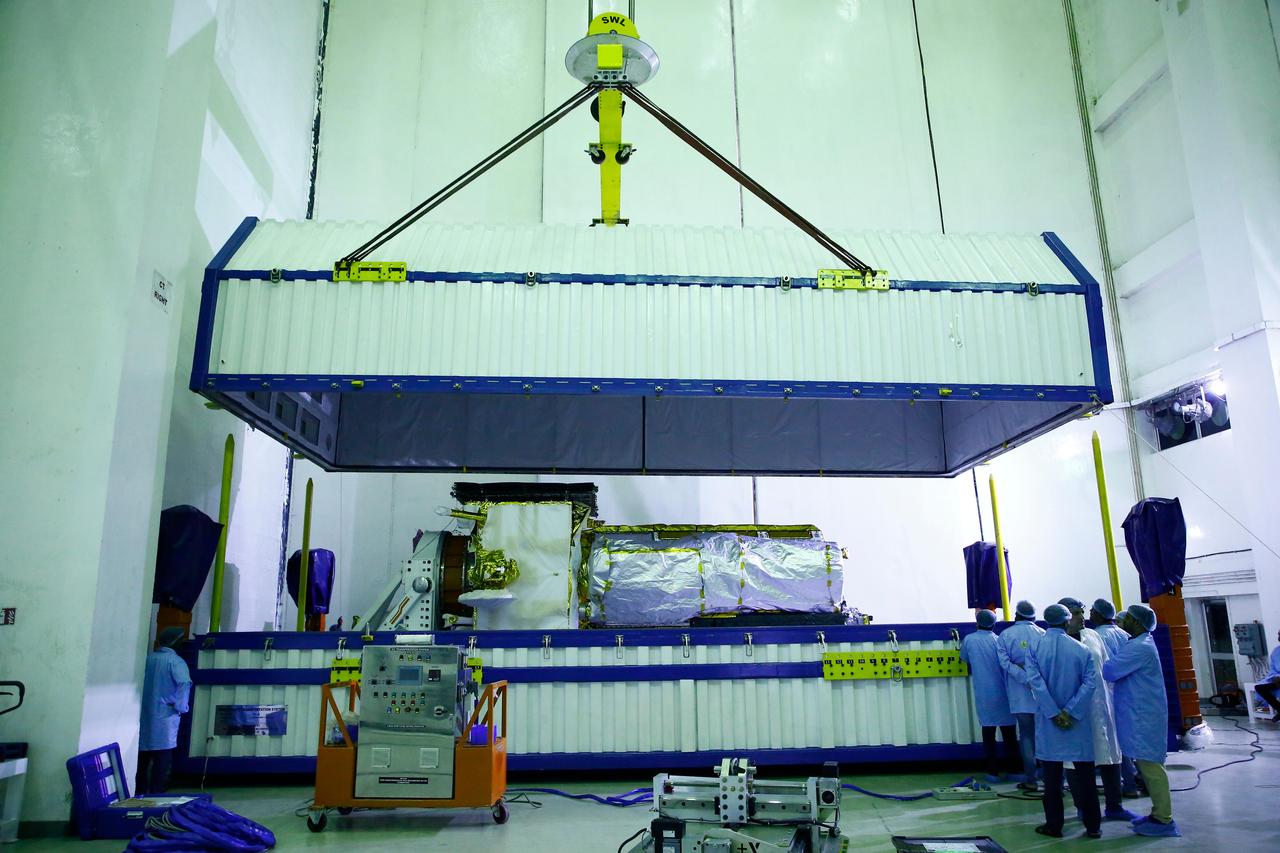
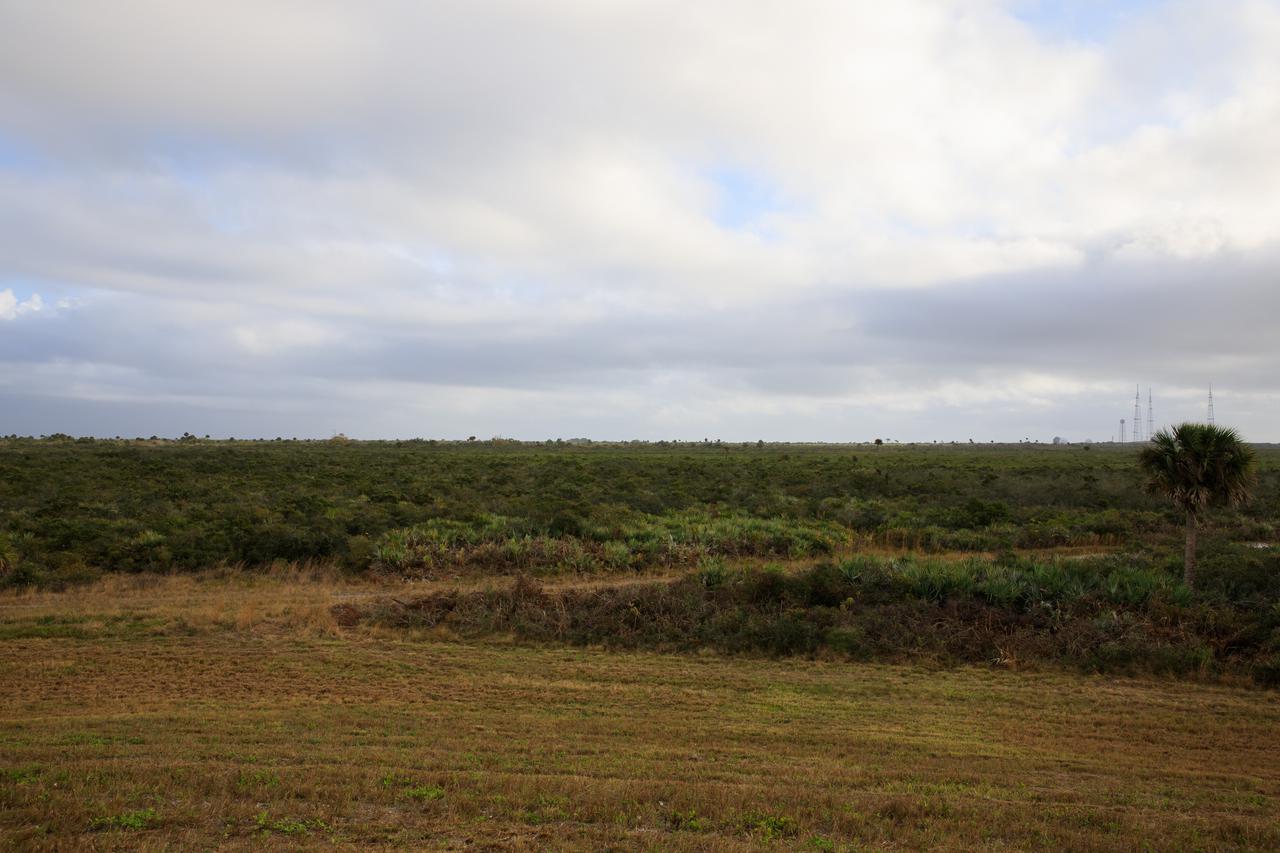
The lid of a specialized container is lifted to reveal NISAR, the Earth-observing radar satellite jointly developed by NASA and the Indian Space Research Organisation (ISRO), shortly after the spacecraft's arrival at ISRO's Satish Dhawan Space Centre in Sriharikota on India's southeastern coast on May 16, 2025.  The NISAR (NASA-ISRO Synthetic Aperture Radar) satellite had departed about two days earlier from the ISRO Satellite Integration and Test Establishment (ISITE) in Bengaluru. At ISITE, engineers from the Indian space agency and NASA's Jet Propulsion Laboratory in Southern California, which manages the mission for NASA, had worked together since March 2023 to bring together components and assemble the satellite. They also tested the spacecraft to ensure it can withstand the rigors of launch and function properly in orbit.  In the early morning of May 14, crews placed the satellite in the specialized container and transported it about 220 miles (360 kilometers) by truck to the space center. Prior to launch the satellite will be encapsulated in its payload fairing and mounted atop an ISRO Geosynchronous Launch Vehicle Mark II rocket.  In orbit, NISAR will collect an unprecedented amount of information about change on our home planet. It will scan nearly all of Earth's land and ice surfaces twice every 12 days, providing insights into the growth and retreat of ice sheets, sea ice, and glaciers, the deformation of the planet's crust due to natural hazards, as well as natural and human-caused changes to its terrestrial ecosystems, including forests and wetlands.  https://photojournal.jpl.nasa.gov/catalog/PIA26500
NISAR Arrives at Indian Launch Site
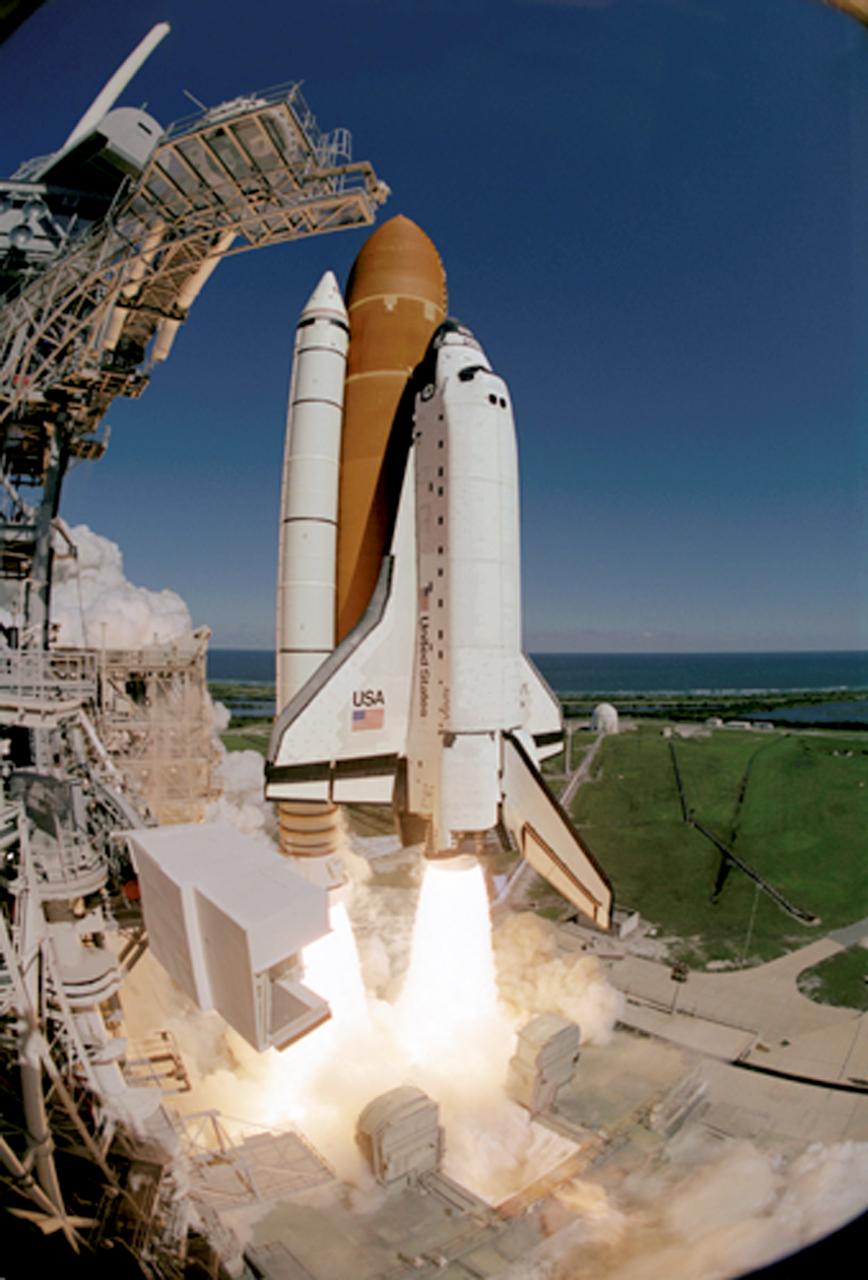
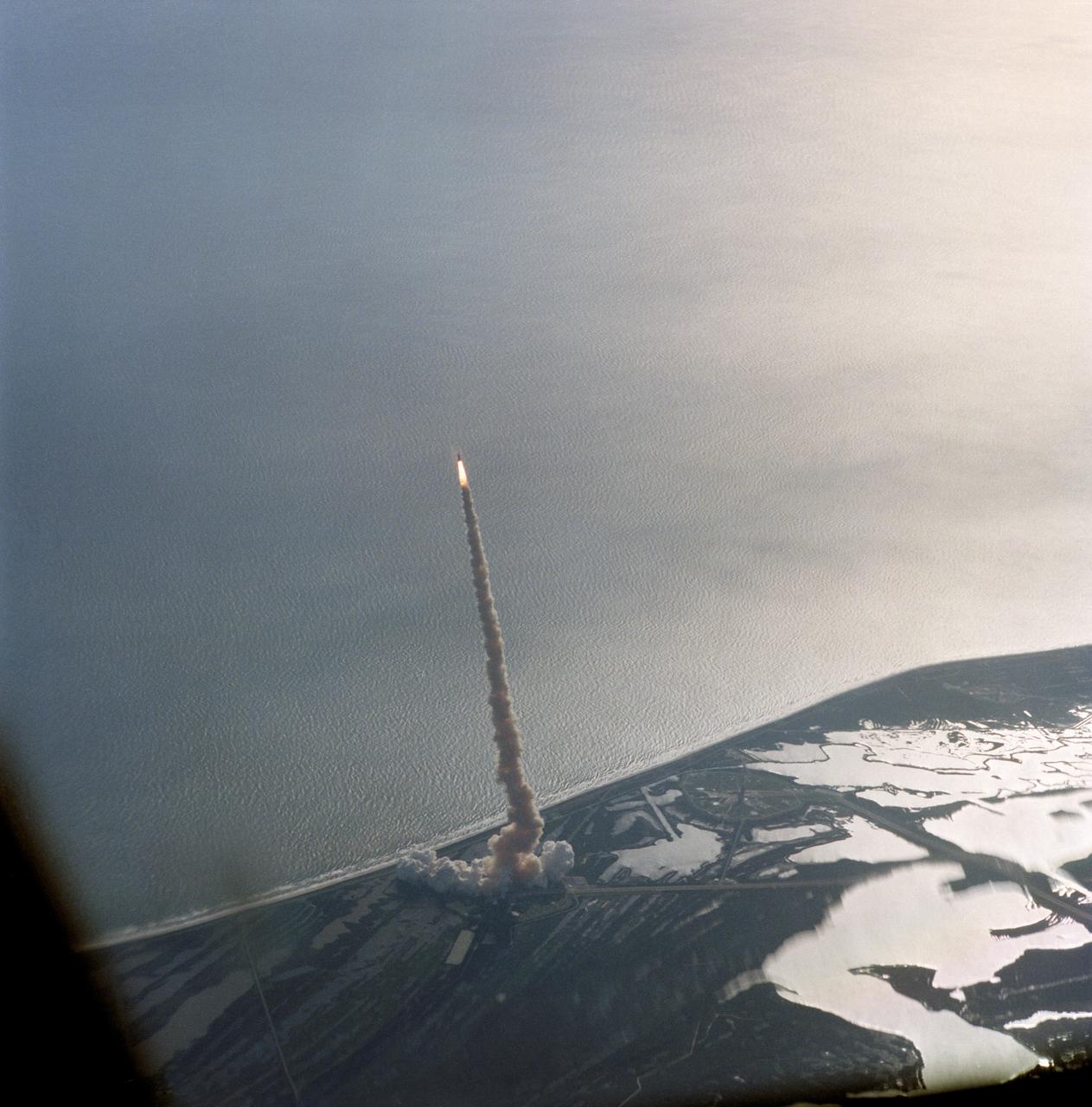
STS066-S-009 (3 Nov. 1994) --- The Space Shuttle Atlantis returns to work after a refurbishing and a two-year layoff, as liftoff for the mission occurs at noon (EDT), November 3, 1994. Five NASA astronauts and a European mission specialist are onboard for the Atmospheric Laboratory for Applications and Science (ATLAS-3) mission. A "fish-eye" lens was used to record the image. Onboard were astronauts Donald R. McMonagle, mission commander; Curtis L. Brown, Jr., pilot; Ellen Ochoa, payload commander; and Scott E. Parazynski, Joseph R. Tanner and Jean-François-Clervoy, all mission specialists. Clervoy represents the European Space Agency (ESA).
Launch of STS-66 Space Shuttle Atlantis
STS066-S-011 (3 November 1994) --- The Space Shuttle Atlantis returns to work after a refurbishing and a two-year layoff, as liftoff for the mission occurs at noon (EDT), November 3, 1994.  Five NASA astronauts and a European mission specialist are onboard for the Atmospheric Laboratory for Applications and Science (ATLAS-3) mission.  A 70mm camera was used to record this image.  Onboard were astronauts Donald R. McMonagle, mission commander; Curtis L. Brown, Jr., pilot; Ellen S. Ochoa, payload commander; and Scott E. Parazynski, Joseph R. Tanner and Jean-Francois-Clervoy, all mission specialists.  Clervoy represents the European Space Agency (ESA).
Launch of STS-66 Space Shuttle Atlantis
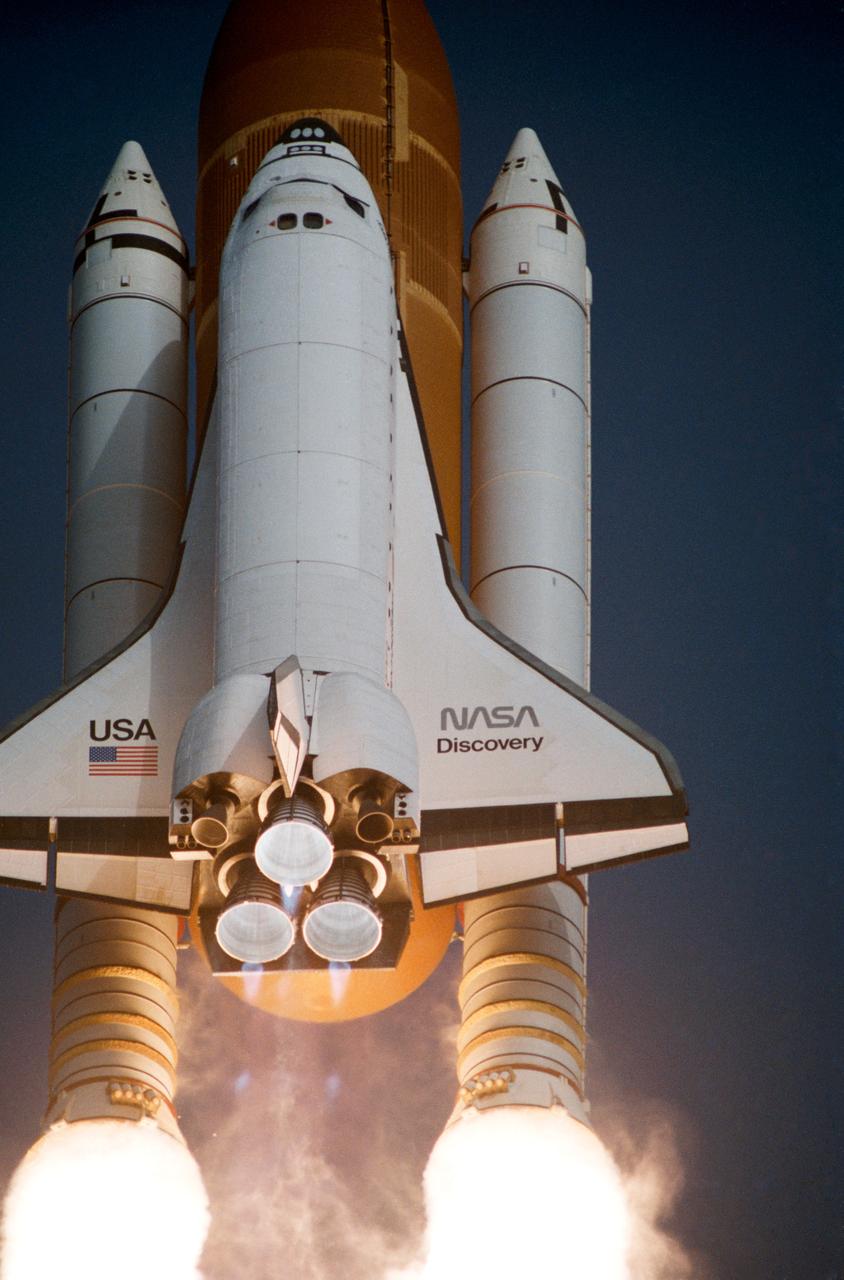
STS051-S-108 (12 Sept. 1993) --- The Space Shuttle Discovery soars toward a nine-day stay in Earth-orbit to support the mission.  Launch occurred at 7:45 a.m. (EDT) September 12, 1993. Note the diamond shock effect coming from the thrust of the three main engines. Onboard the shuttle were astronauts Frank L. Culbertson, Jr., William F. Readdy, Daniel W. Bursch, James H. Newman and Carl E. Walz, along with a number of payloads. The payloads included the Advanced Communications Technology Satellite (ACTS) with its Transfer Orbit Stage (TOS), the Orbiting Retrievable Far and Extreme Ultraviolet Spectrometer (ORFEUS) and its Shuttle Pallet Satellite (SPAS) carrier. This photograph was taken with a 35mm camera.
STS-51 Discovery launch
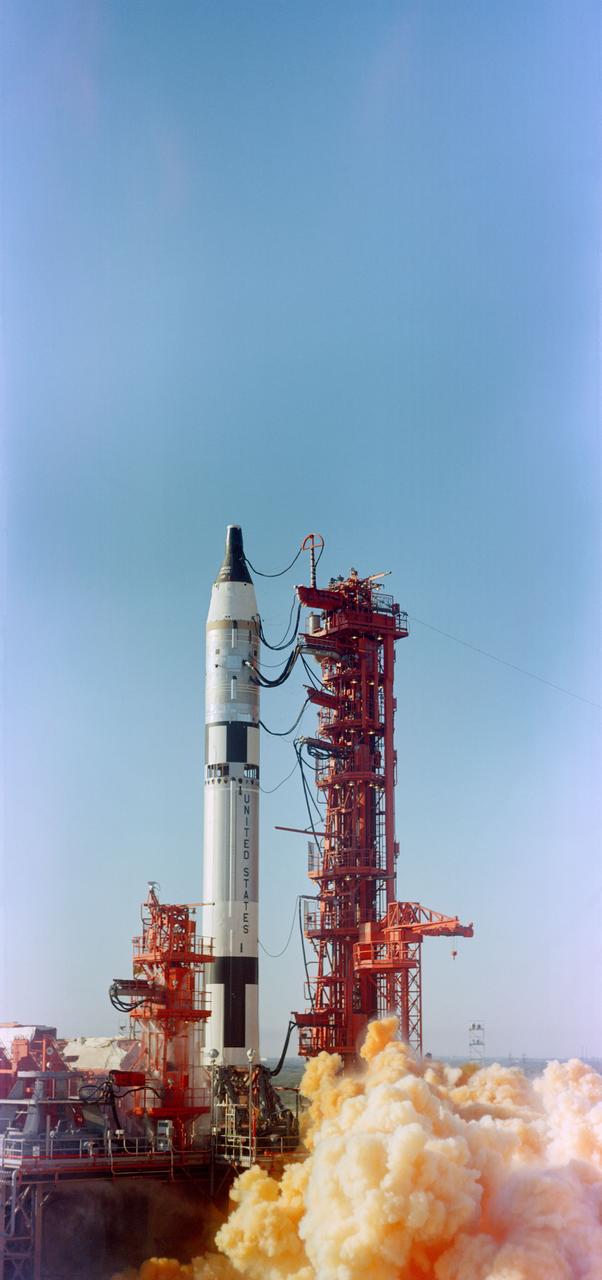
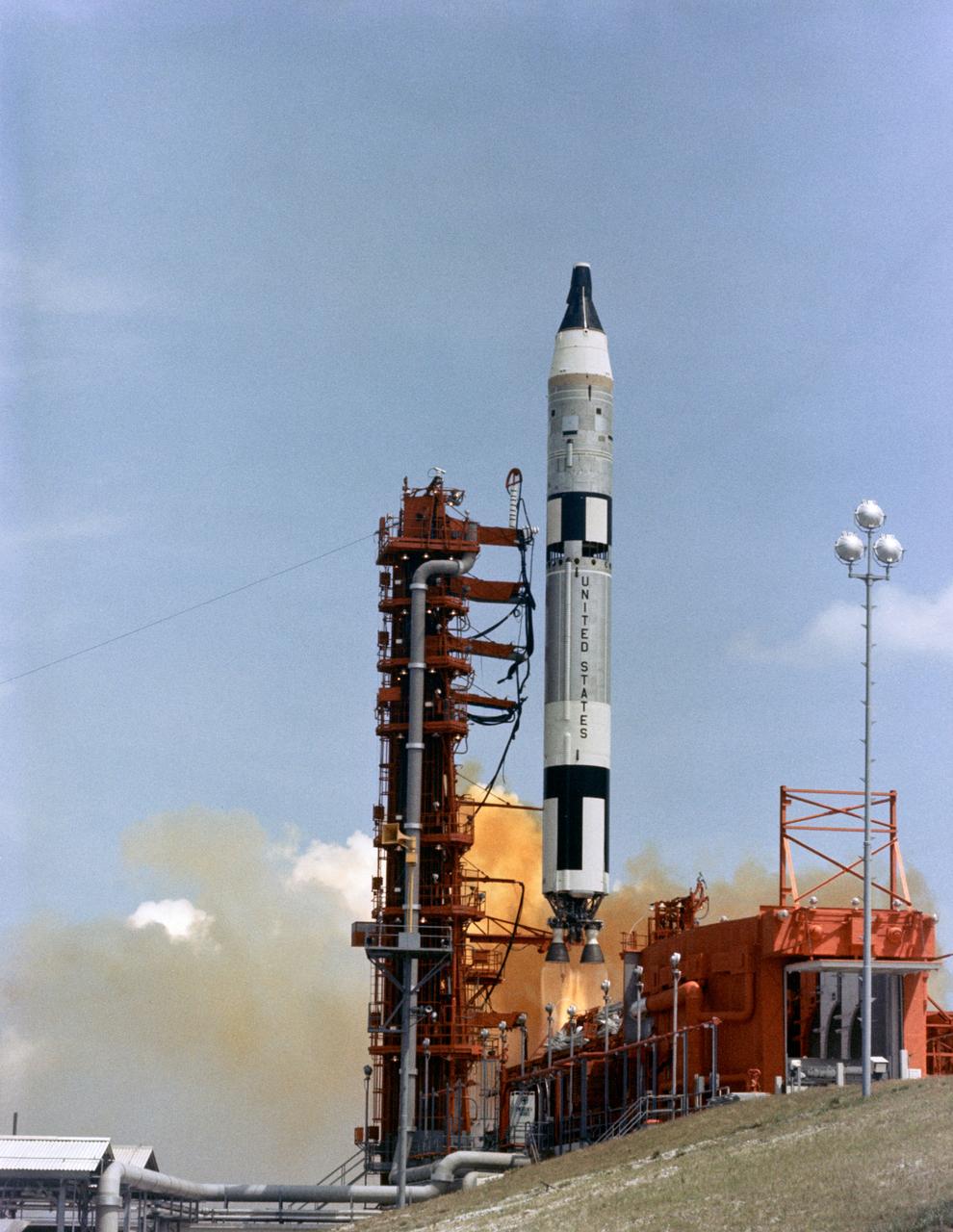
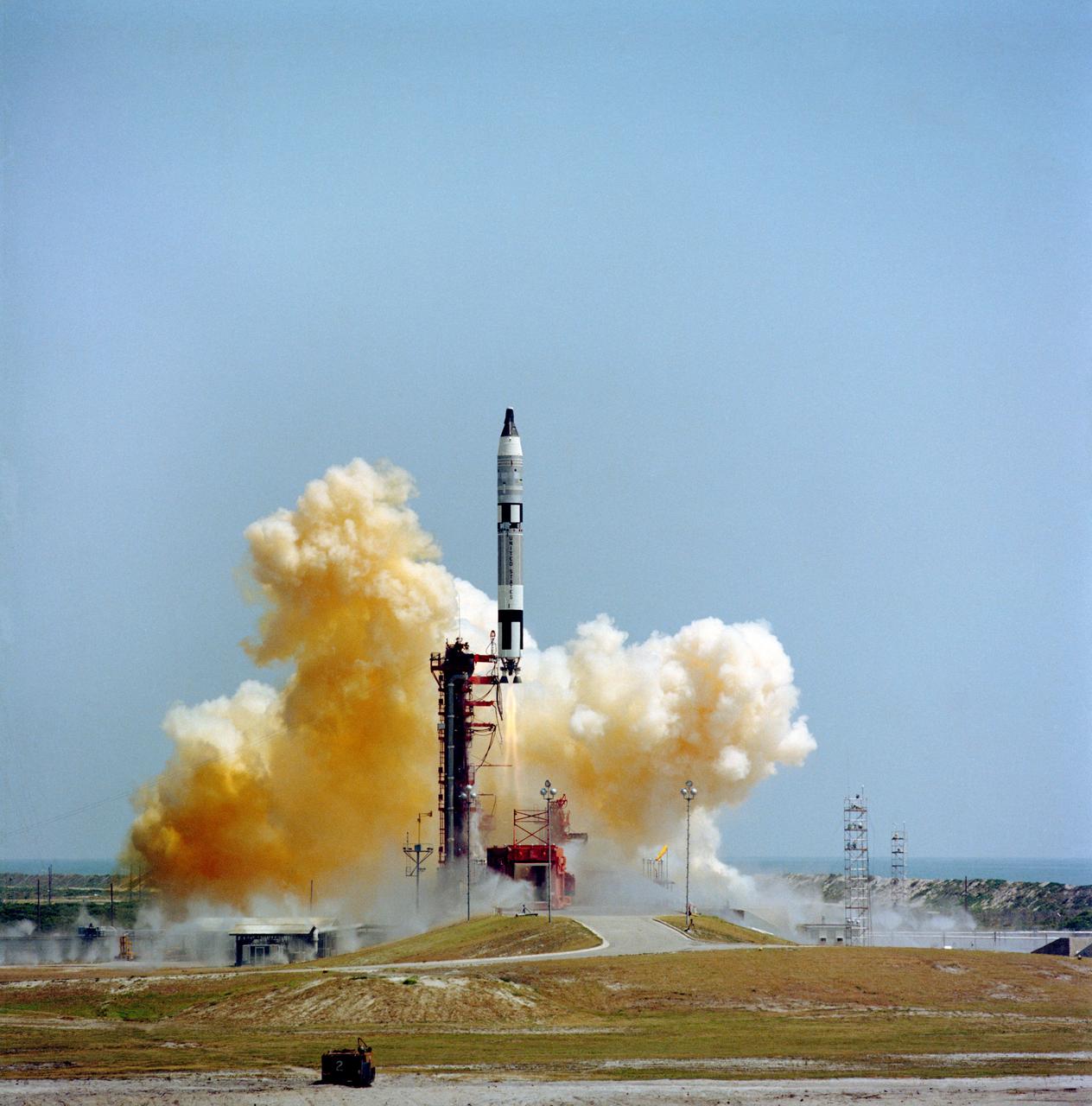
S65-14150 (19 January 1965) --- Launching of the unmanned Gemini 2 flight. The second Titan II Gemini Launch Vehicle (GLV-2) carried the unmanned, instrumented Gemini spacecraft (GT-2) for a suborbital shot preliminary to the first U.S. two-man Gemini mission.
Liftoff of Gemini 2
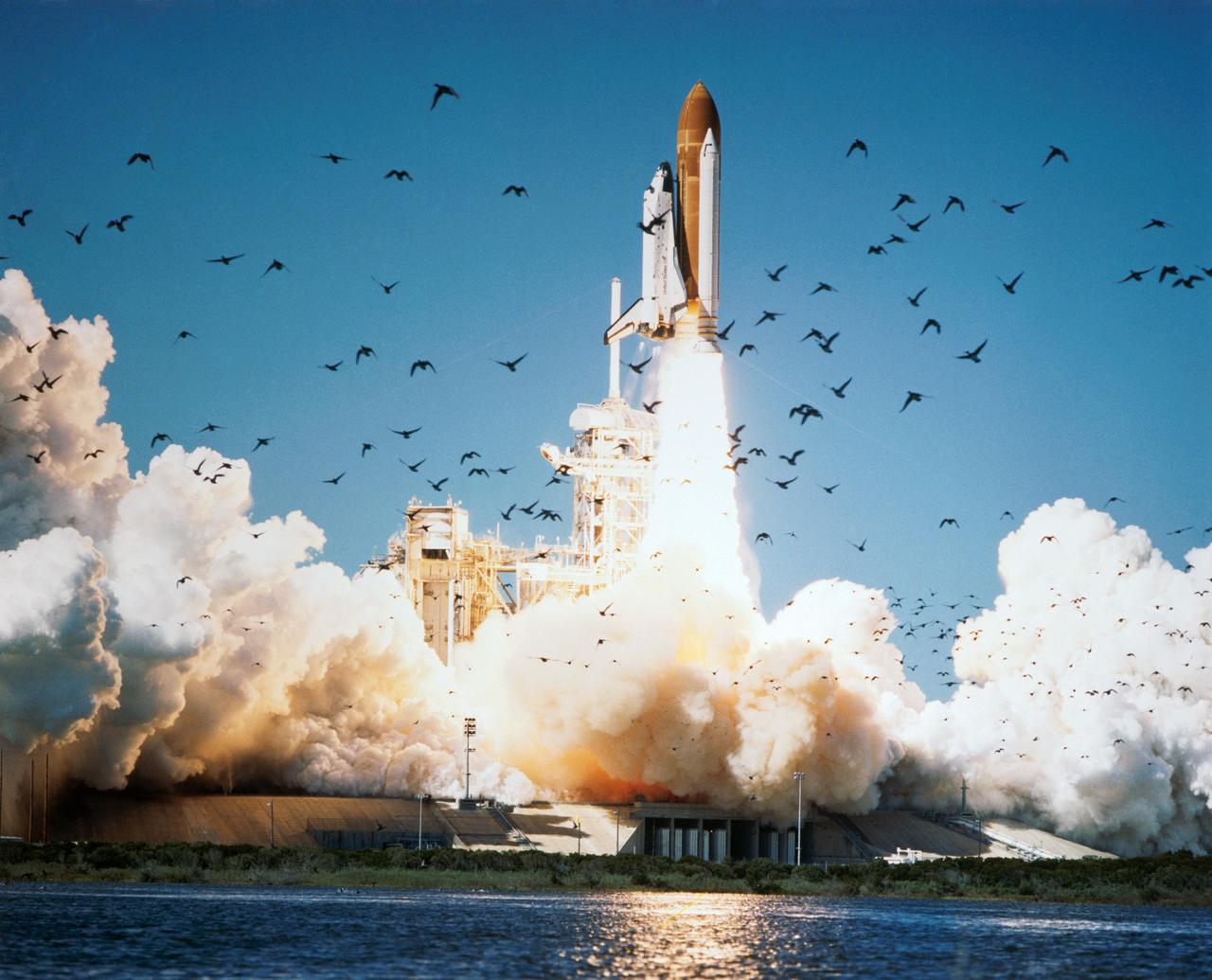
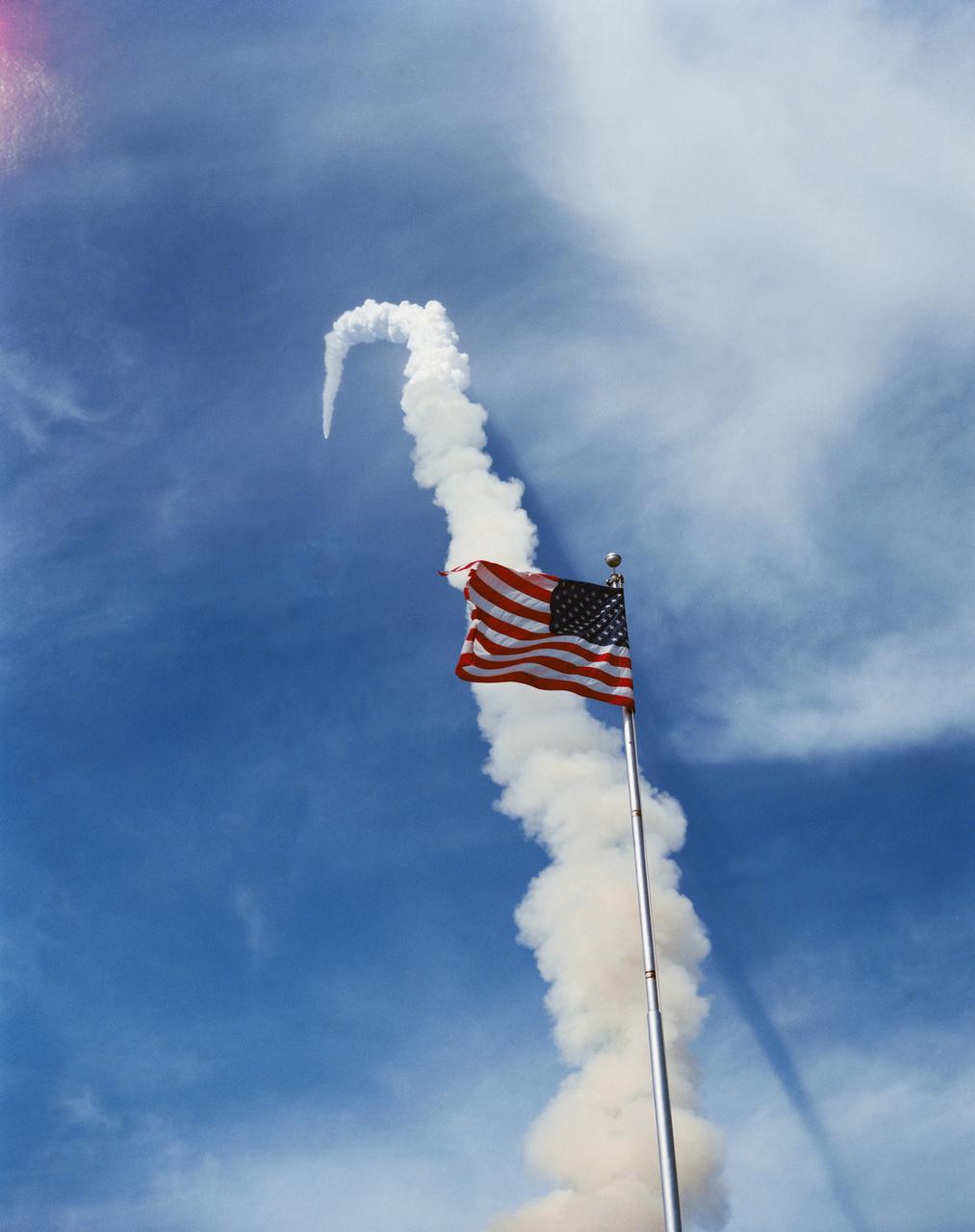
51L-S-156 (28 Jan. 1986) --- The space shuttle Challenger lifted off from Pad 39B Jan. 28, 1986 at 11:38 a.m. (EST) with a crew of seven astronauts and the Tracking and Data Relay Satellite (TDRS). An accident 73 seconds after liftoff claimed both crew and vehicle. Photo credit: NASA
Liftoff of Shuttle Challenger for STS 51-L mission
STS066-S-013 (3 November 1994) --- The Space Shuttle Atlantis returns to work after a refurbishing and a two-year layoff, as liftoff for the mission occurs at noon (EDT), November 3, 1994.  Five NASA astronauts and a European mission specialist are onboard for the Atmospheric Laboratory for Applications and Science (ATLAS-3) mission.  A 35mm camera was used to record the image.  Onboard were astronauts Donald R. McMonagle, mission commander; Curtis L. Brown, Jr., pilot; Ellen Ochoa, payload commander; and Scott E. Parazynski, Joseph R. Tanner and Jean-Francois-Clervoy, all mission specialists.  Clervoy represents the European Space Agency (ESA).
Launch of STS-66 Space Shuttle Atlantis
KENNEDY SPACE CENTER, FLA. -    Louis MacDowell (right), Testbed manager, explains to Center Director Jim Kennedy the use of astmospheric calibration specimens.  Placed at various locations, they can rank the corrosivity of the given environment.  The KSC Beach Corrosion Test Site was established in the 1960s and has provided more than 30 years of historical information on the long-term performance of many materials in use at KSC and other locations around the world. Located 100 feet from the Atlantic Ocean approximately 1 mile south of the Space Shuttle launch sites, the test facility includes an atmospheric exposure site, a flowing seawater exposure site, and an on-site electrochemistry laboratory and monitoring station. The beach laboratory is used to conduct real-time corrosion experiments and provides for the remote monitoring of surrounding weather conditions. The newly added flowing seawater immersion facility provides for the immersion testing of materials and devices under controlled conditions.
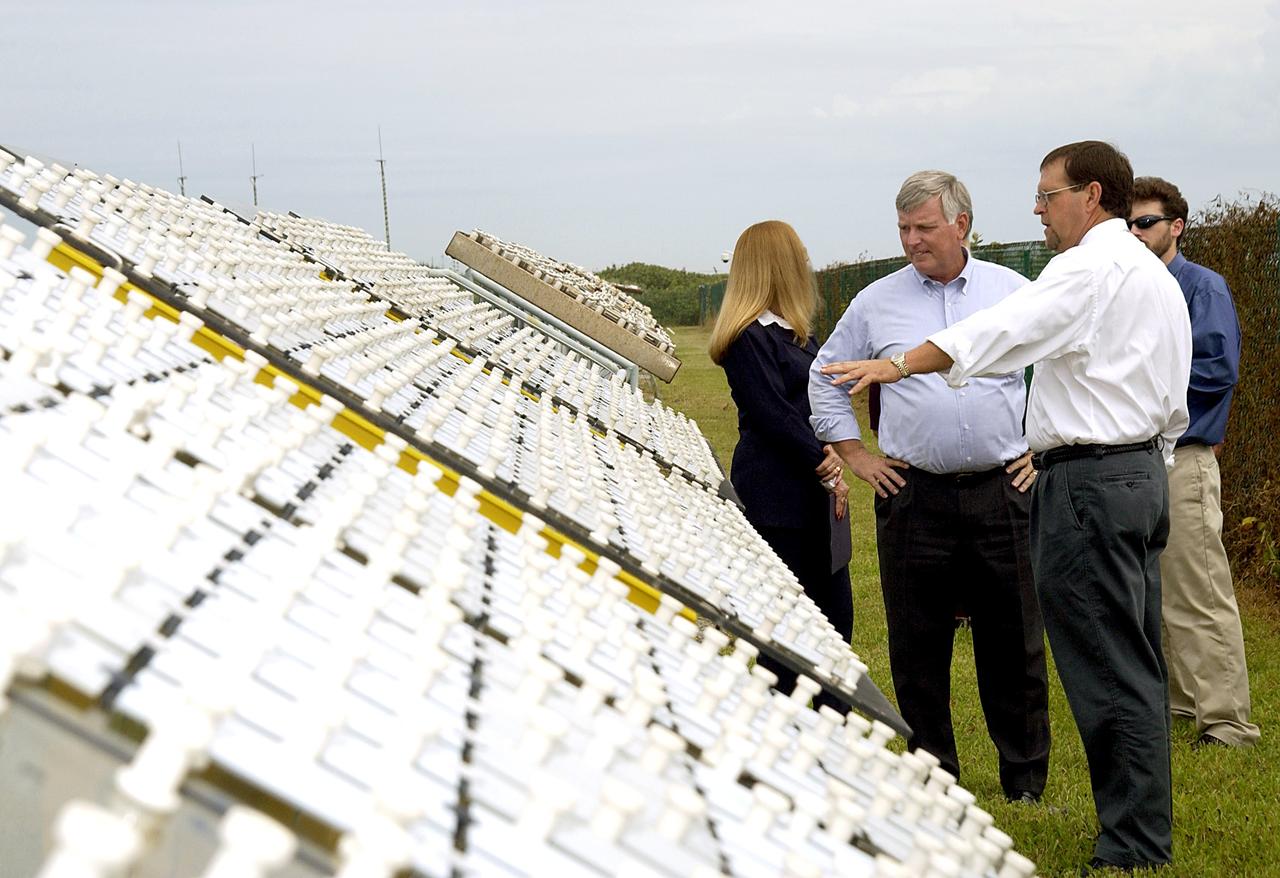
KENNEDY SPACE CENTER, FLA. - Louis MacDowell (right), Testbed manager, explains to Center Director Jim Kennedy the use of astmospheric calibration specimens. Placed at various locations, they can rank the corrosivity of the given environment. The KSC Beach Corrosion Test Site was established in the 1960s and has provided more than 30 years of historical information on the long-term performance of many materials in use at KSC and other locations around the world. Located 100 feet from the Atlantic Ocean approximately 1 mile south of the Space Shuttle launch sites, the test facility includes an atmospheric exposure site, a flowing seawater exposure site, and an on-site electrochemistry laboratory and monitoring station. The beach laboratory is used to conduct real-time corrosion experiments and provides for the remote monitoring of surrounding weather conditions. The newly added flowing seawater immersion facility provides for the immersion testing of materials and devices under controlled conditions.
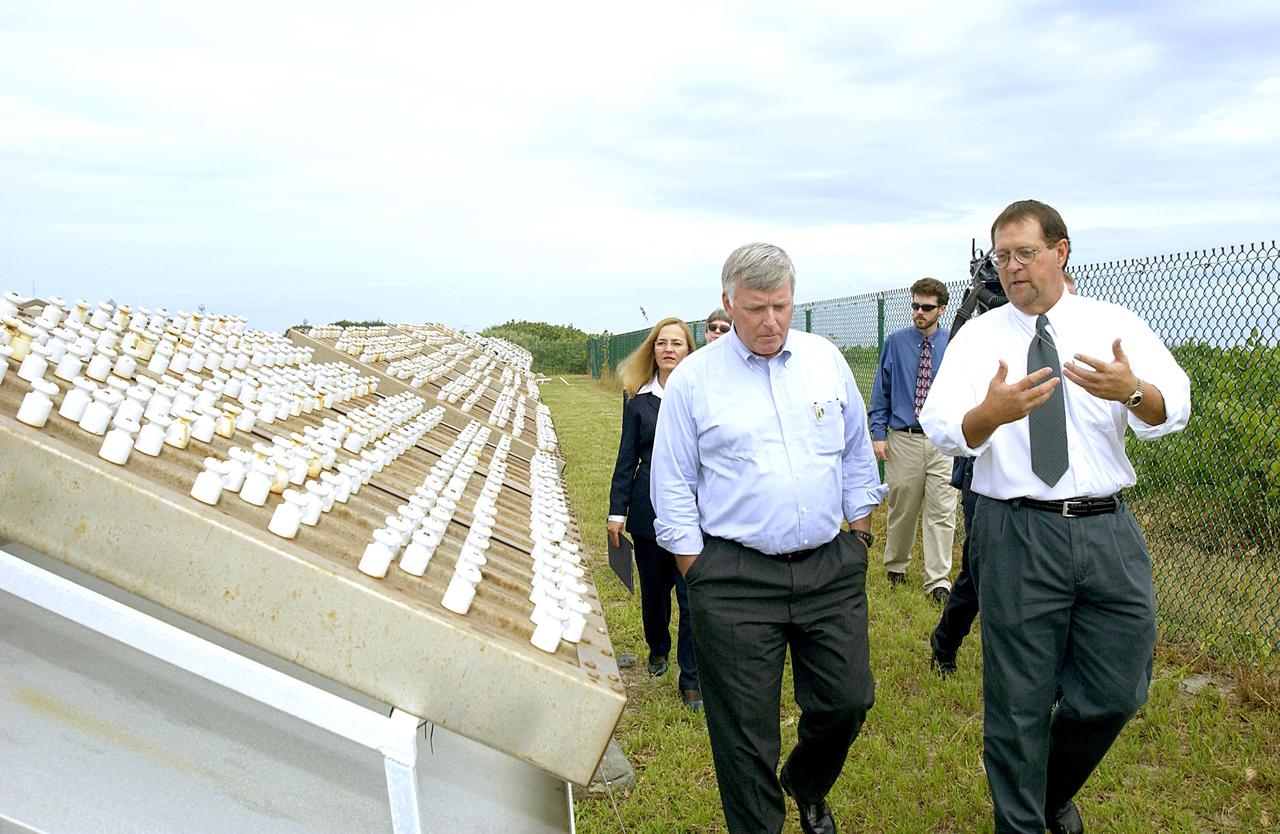
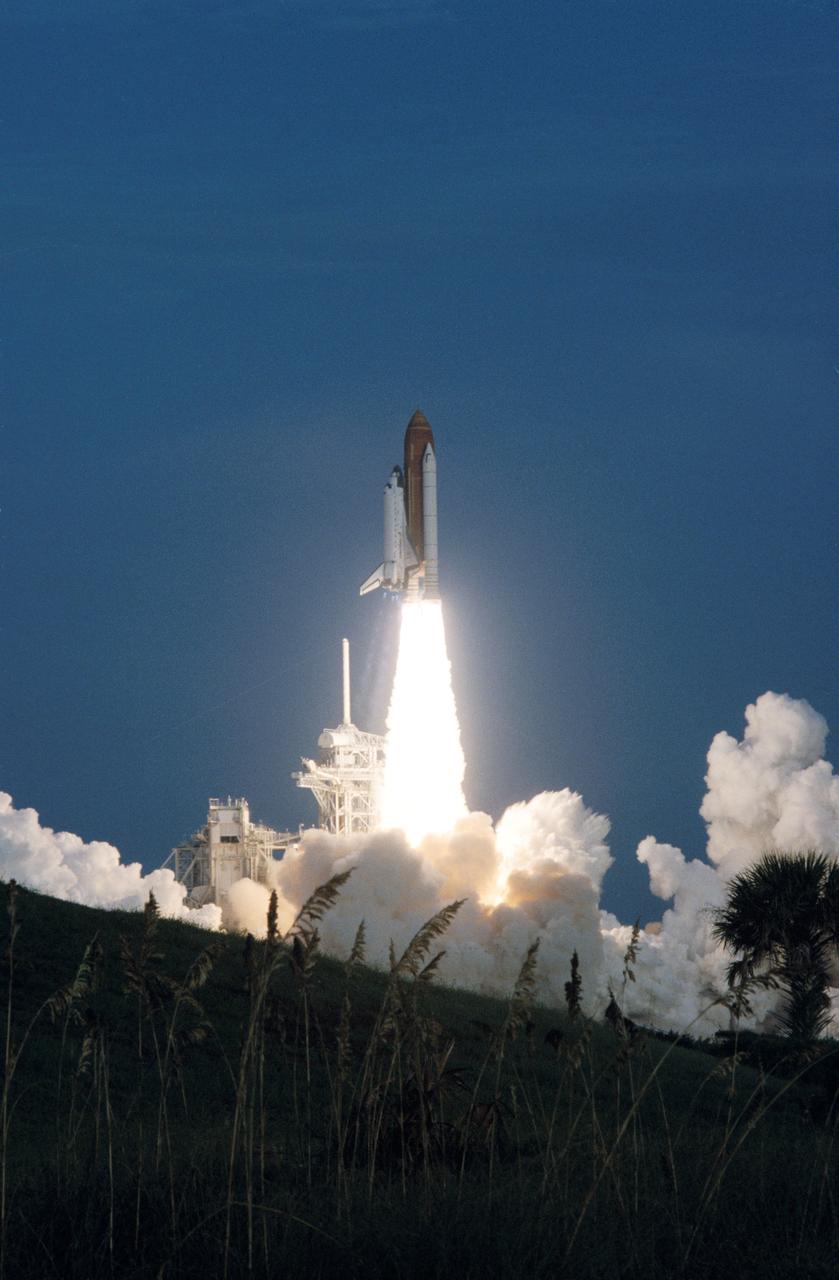
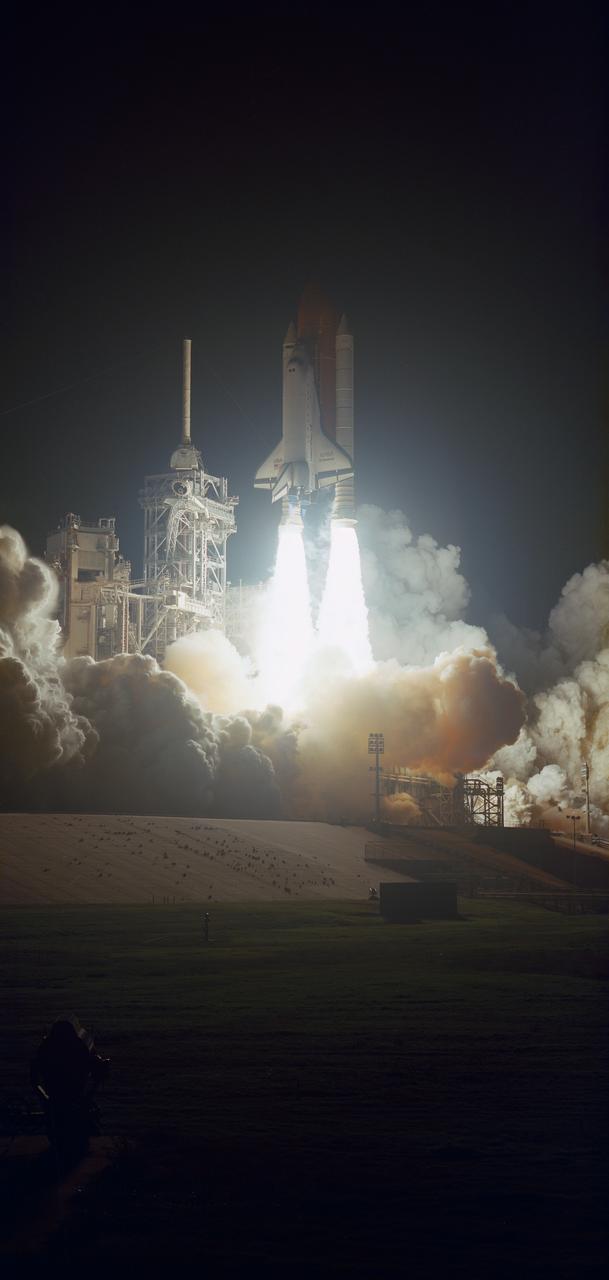
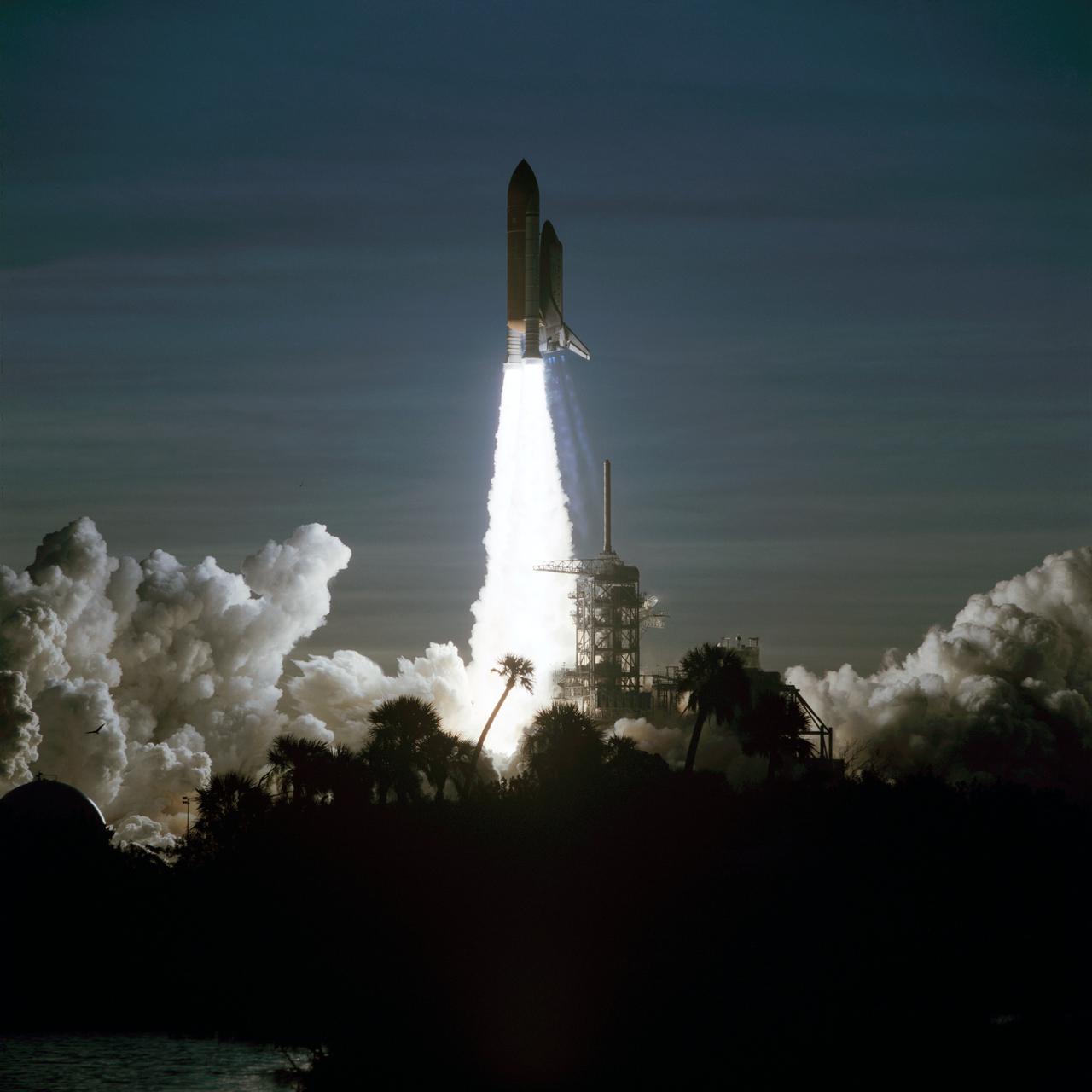
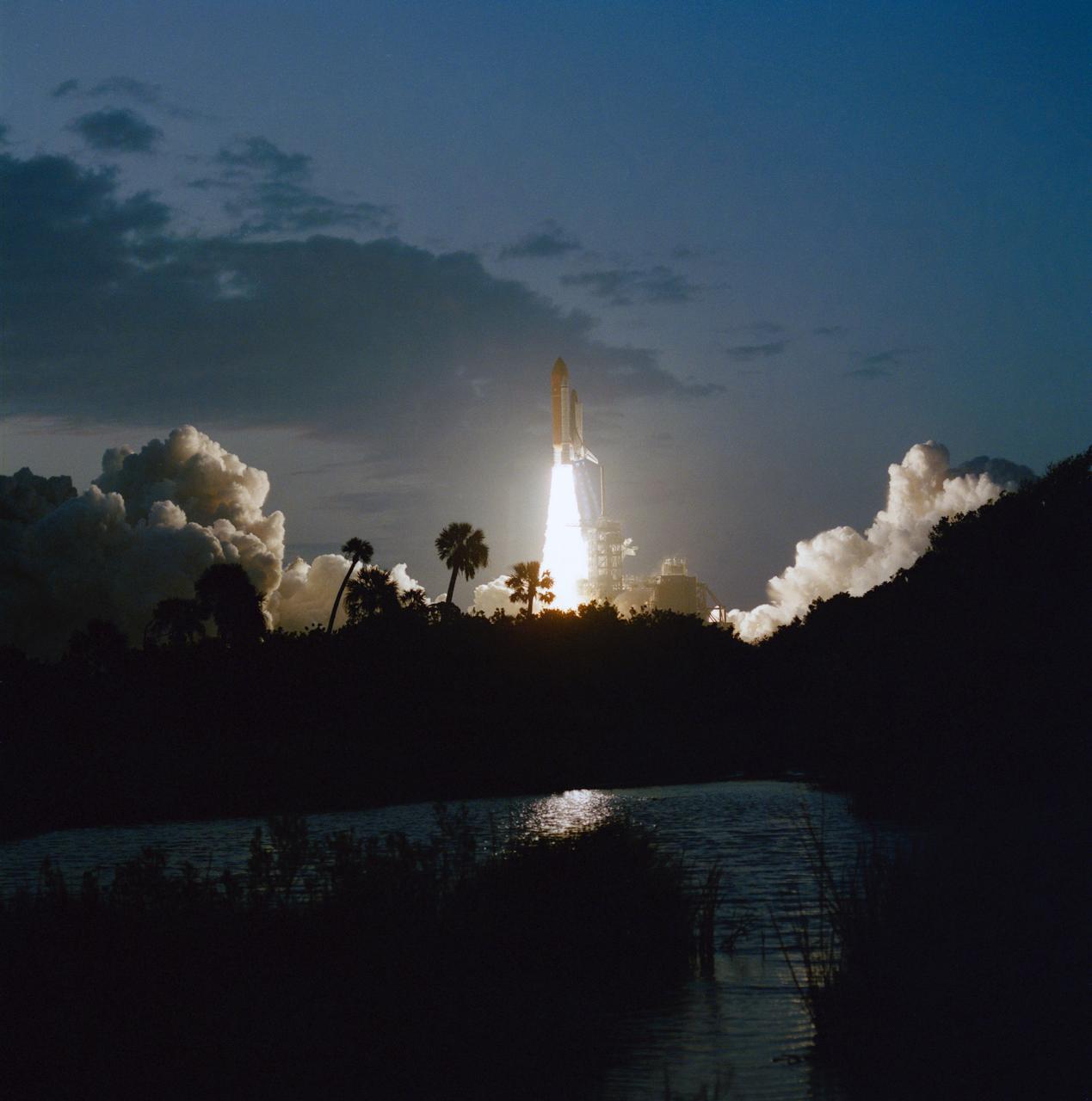
STS060-S-106 (3 Feb 1994) --- Palm trees are silhouetted in the foreground of this 70mm image as the Space Shuttle Discovery heads toward an eight-day mission in Earth orbit.  Liftoff occurred as scheduled at 7:10 a.m. (EST), February 3, 1994.  Aboard the spacecraft were astronauts Charles F. Bolden Jr., commander; Kenneth S. Reightler Jr., pilot; Franklin R. Chang-Diaz, payload commander; and N. Jan Davis and Ronald M. Sega, mission specialists, along with Russian cosmonaut Sergei K. Krikalev, also a mission specialist.
Launch of STS-60 Shuttle Discovery
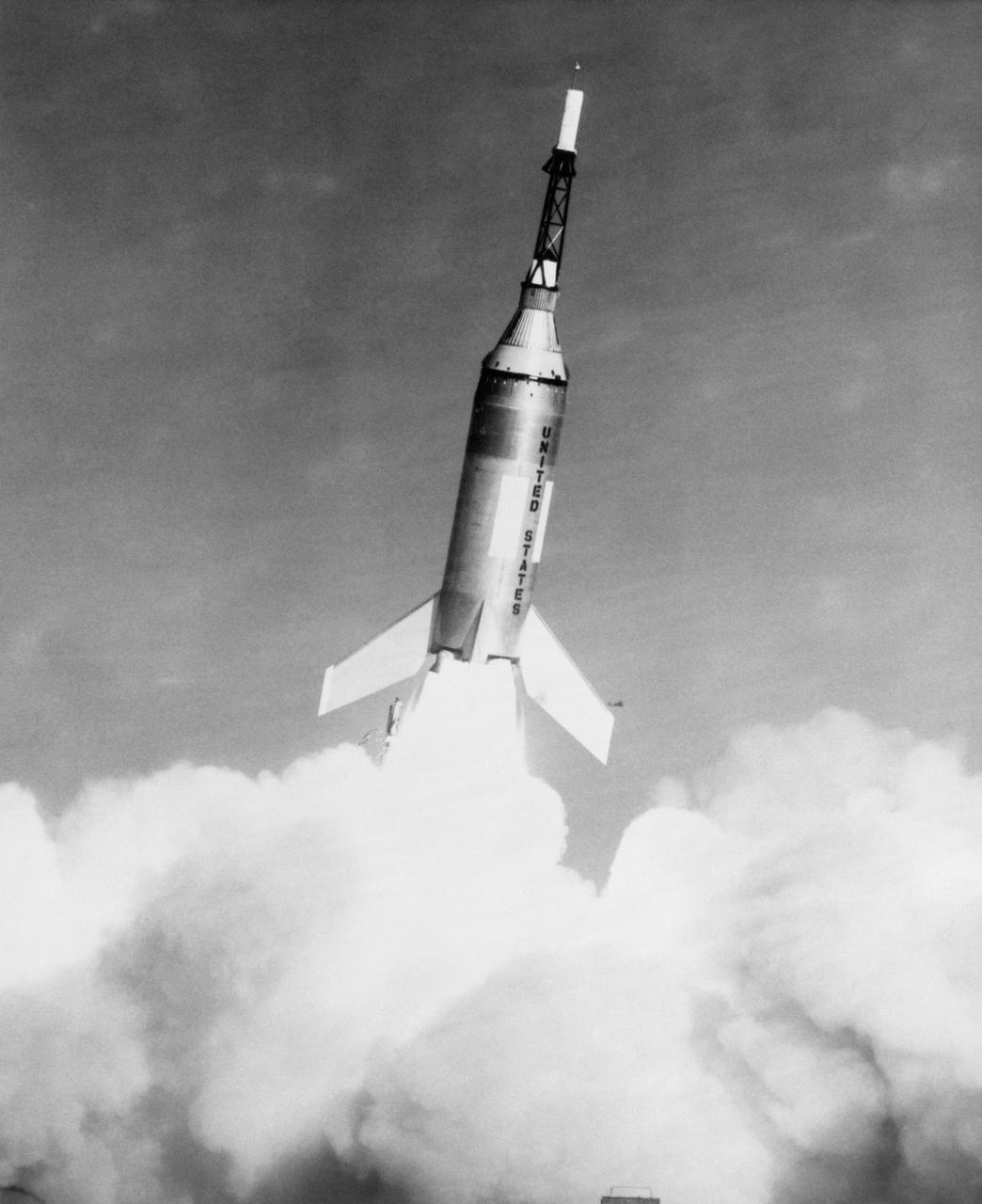
G61-00030 (4 Nov. 1959) --- Launch of Little Joe-2 from Wallops Island carrying Mercury spacecraft test article. The suborbital test flight of the Mercury capsule was to test the escape system. Vehicle functioned perfectly, but escape rocket ignited several seconds too late. Photo credit: NASA
LITTLE JOE 2 - LAUNCH VEHICLES - VA
S73-32568 (20 July 1973) --- Floodlights illuminate this nighttime view of the Skylab 3/Saturn 1B space vehicle at Pad B, Launch Complex 39, Kennedy Space Center, Florida, during prelaunch preparations. The reflection is the water adds to the scene. In addition to the Command/Service Module and its launch escapte system, the Skylab 3 space vehicle consists of the Saturn 1B first (S-1B) stage and the Saturn 1B second (S-IVB) stage. The crew for the scheduled 59-day Skylab 3 mission in Earth orbit will be astronauts Alan L. Bean, Owen K. Garriott and Jack R. Lousma.  Skylab 3 was launched on July 28, 1973. Photo credit: NASA
Floodlights illuminate view of Skylab 3 vehicle at Pad B, Launch Complex 39
STS061-S-088 (2 Dec 1993) --- The Space Shuttle Endeavour lifts off from Launch Pad 39B with a crew of six NASA astronauts, a Swiss mission specialist and a variety of special tools aboard.  Launch occurred at 4:27:00 a.m. (EST), December 2, 1993.  The seven member crew will team to perform a variety of service tasks on the Hubble Space Telescope (HST).  Four of the group will break into pairs on alternating sessions to carry out a total of five days Extravehicular Activity (EVA).  Onboard are astronauts Richard O. Covey, Kenneth D. Bowersox, F. Story Musgrave, Kathy C. Thornton, Jeffrey A. Hoffman and Thomas D. Akers, along with Swiss scientist Claude Nicollier.
Launch of Space Shuttle Endeavour on mission STS-61
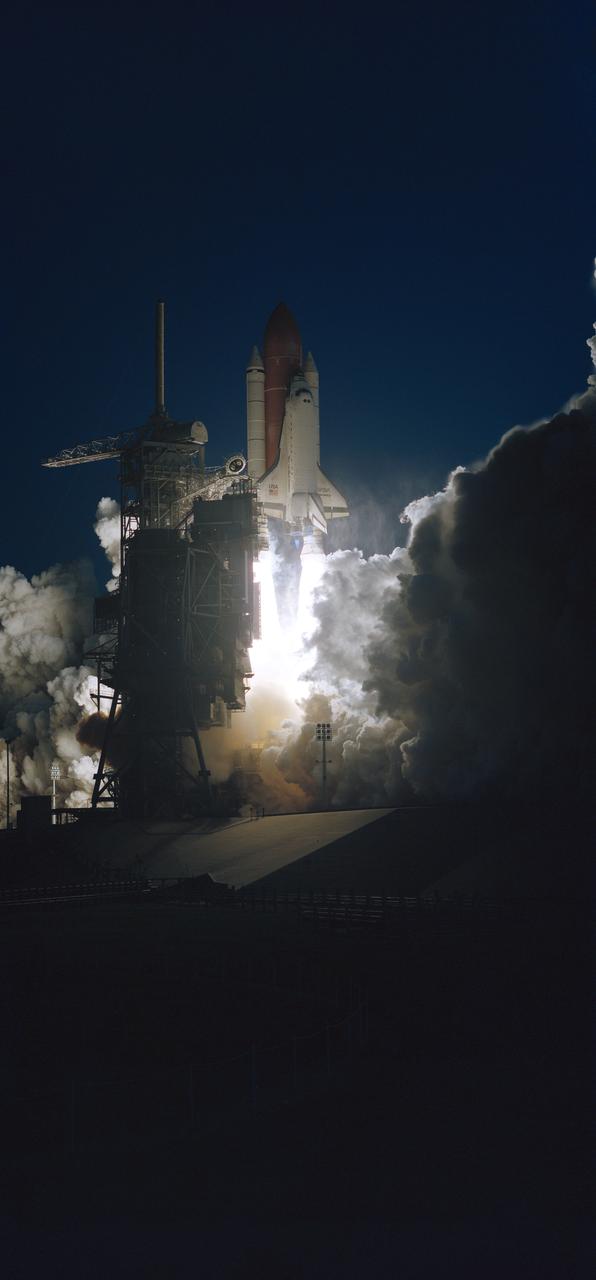
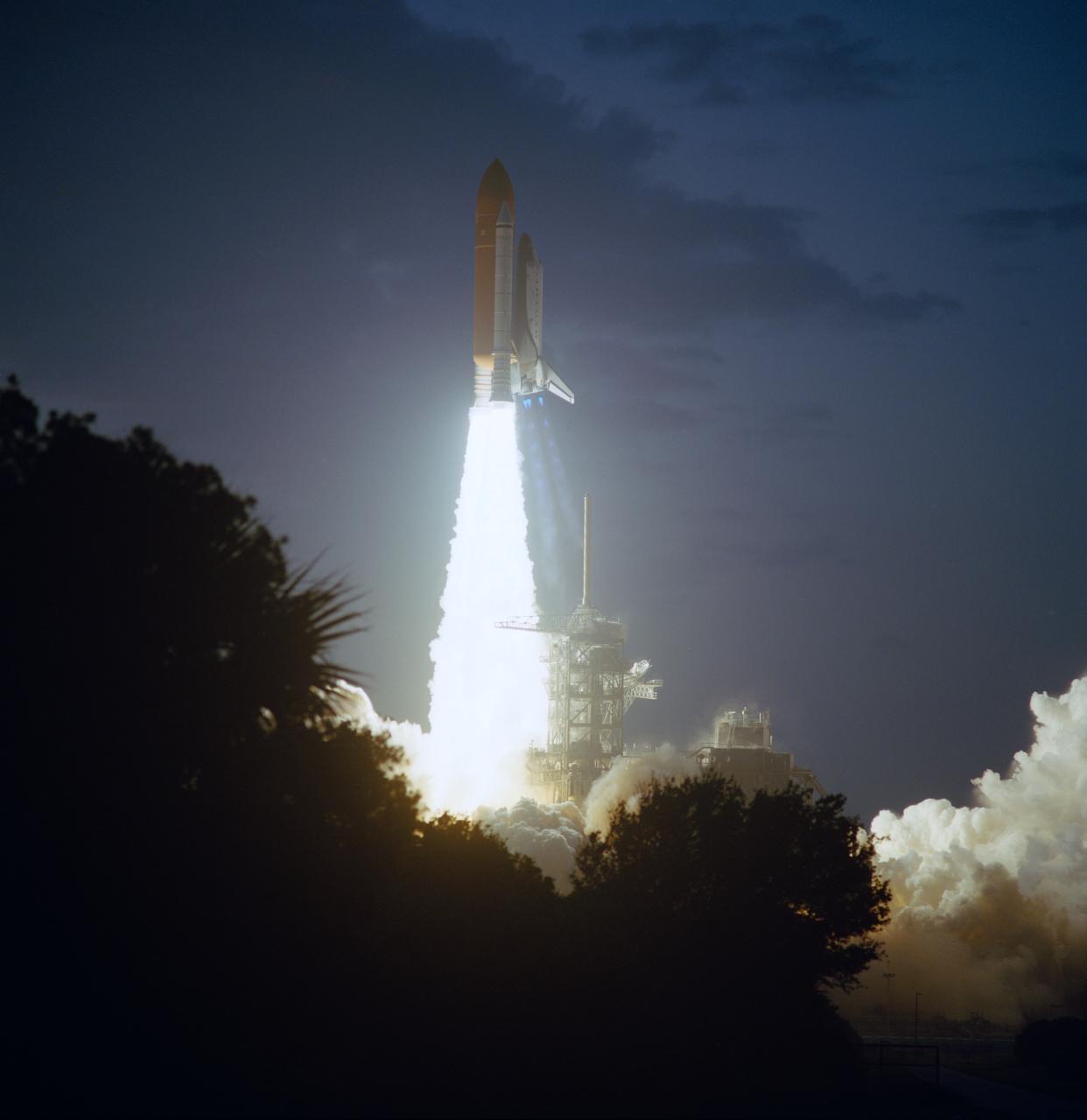
Launch Complex 39 is in partial darkness as the Space Shuttle Discovery heads toward an eight-day mission in Earth orbit. Liftoff occurred as scheduled at 7:10 a.m., February 3, 1994.
Launch of STS-60 Shuttle Discovery
STS061-S-089 (2 Dec 1993) --- The Space Shuttle Endeavour lifts off from Launch Pad 39B with a crew of six NASA astronauts, a Swiss mission specialist and a variety of special tools aboard.  Launch occurred at 4:27:00 a.m. (EST), December 2, 1993.  The seven member crew will team to perform a variety of service tasks on the Hubble Space Telescope (HST).  Four of the group will break into pairs on alternating sessions to carry out a total of five days Extravehicular Activity (EVA).  Onboard are astronauts Richard O. Covey, Kenneth D. Bowersox, F. Story Musgrave, Kathy C. Thornton, Jeffrey A. Hoffman and Thomas D. Akers, along with Swiss scientist Claude Nicollier.
Launch of Space Shuttle Endeavour on mission STS-61
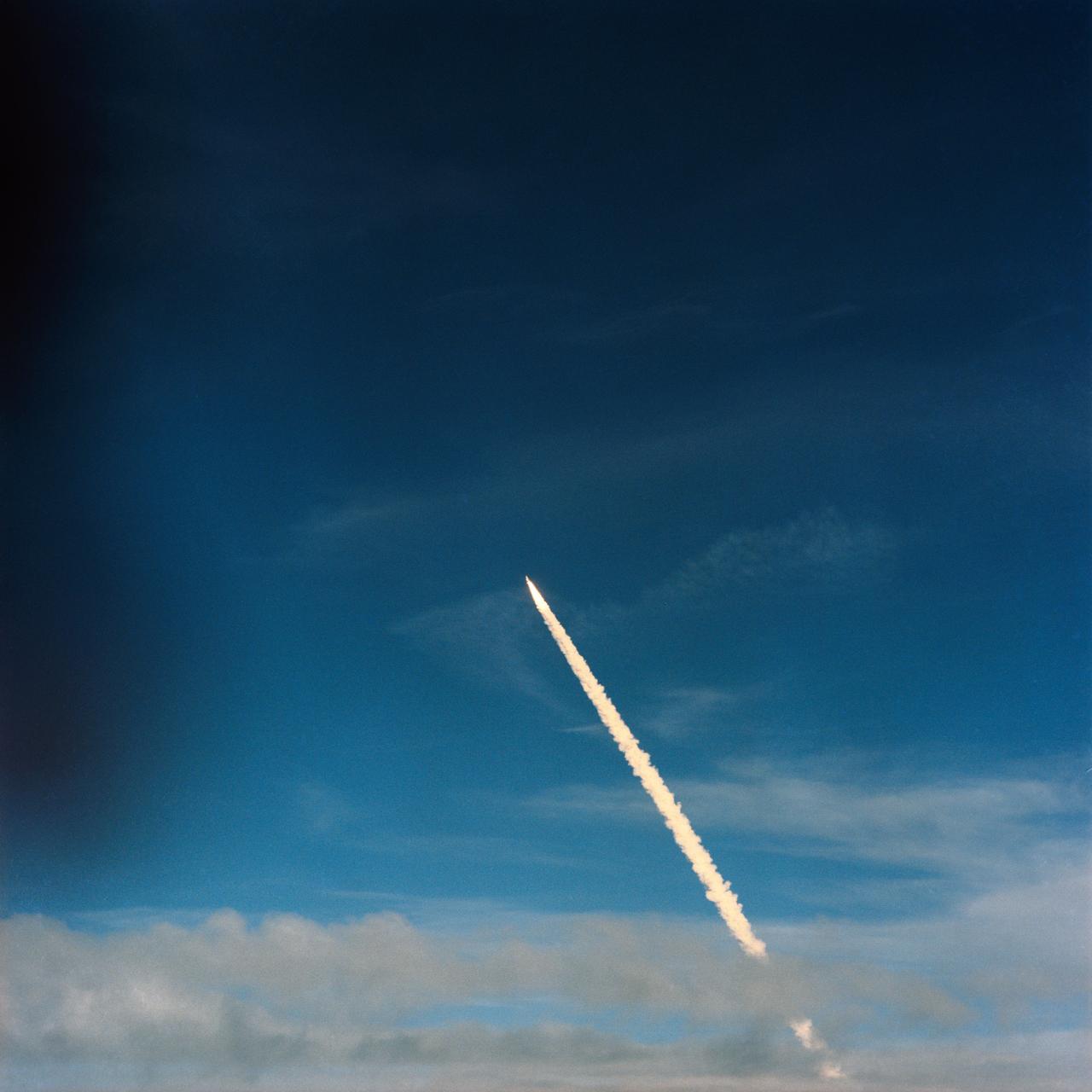
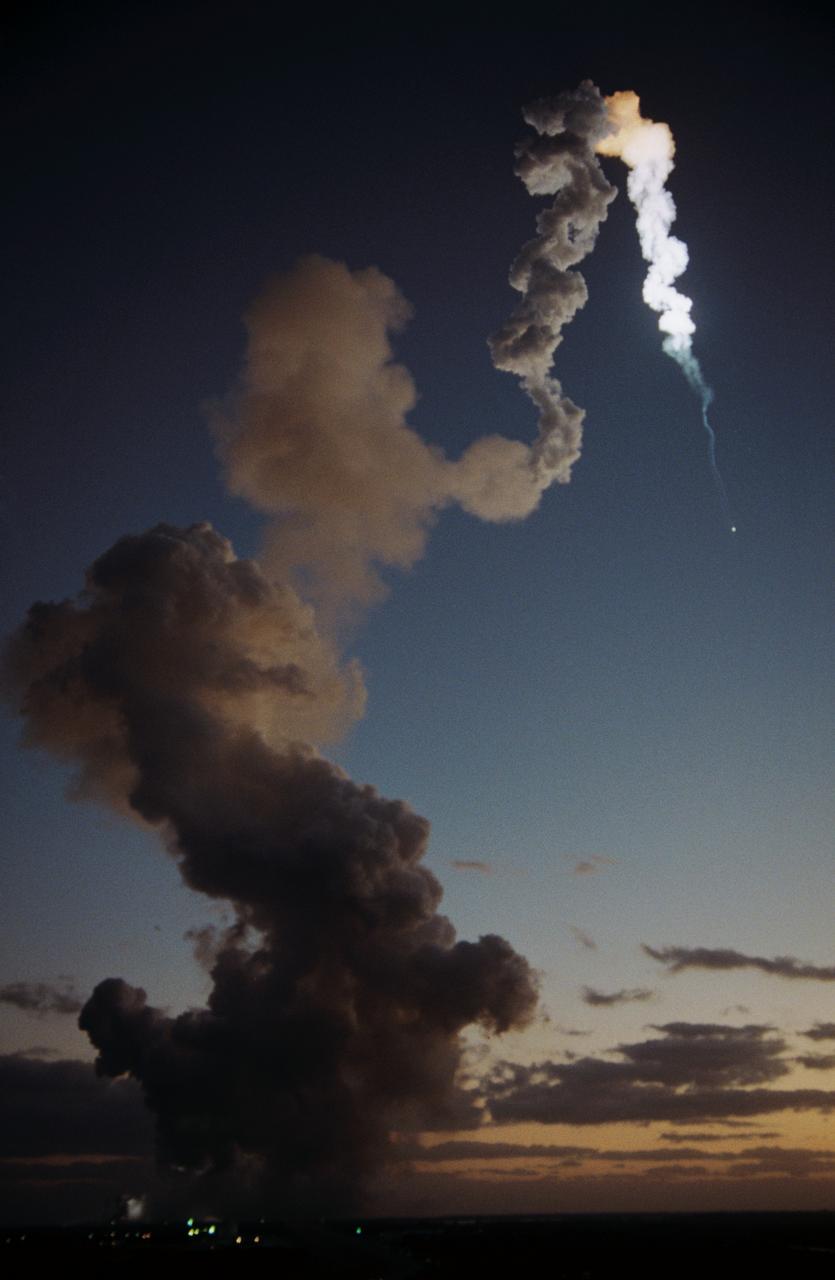
STS064-S-044 (9 Sept. 1994) --- Passing through some of the trailer clouds of an overcast sky which temporarily postponed its launch, the space shuttle Discovery heads for its 19th Earth-orbital flight. Several kilometers away, astronaut John H. Casper Jr., who took this picture, was piloting the Shuttle Training Aircraft (STA) from which the launch and landing area weather was being monitored.  Onboard Discovery were astronauts Richard N. Richards, L. Blaine Hammond Jr., Mark C. Lee, Carl J. Meade, Susan J. Helms and Jerry M. Linenger. Photo credit: NASA or National Aeronautics and Space Administration
STS-64 launch view
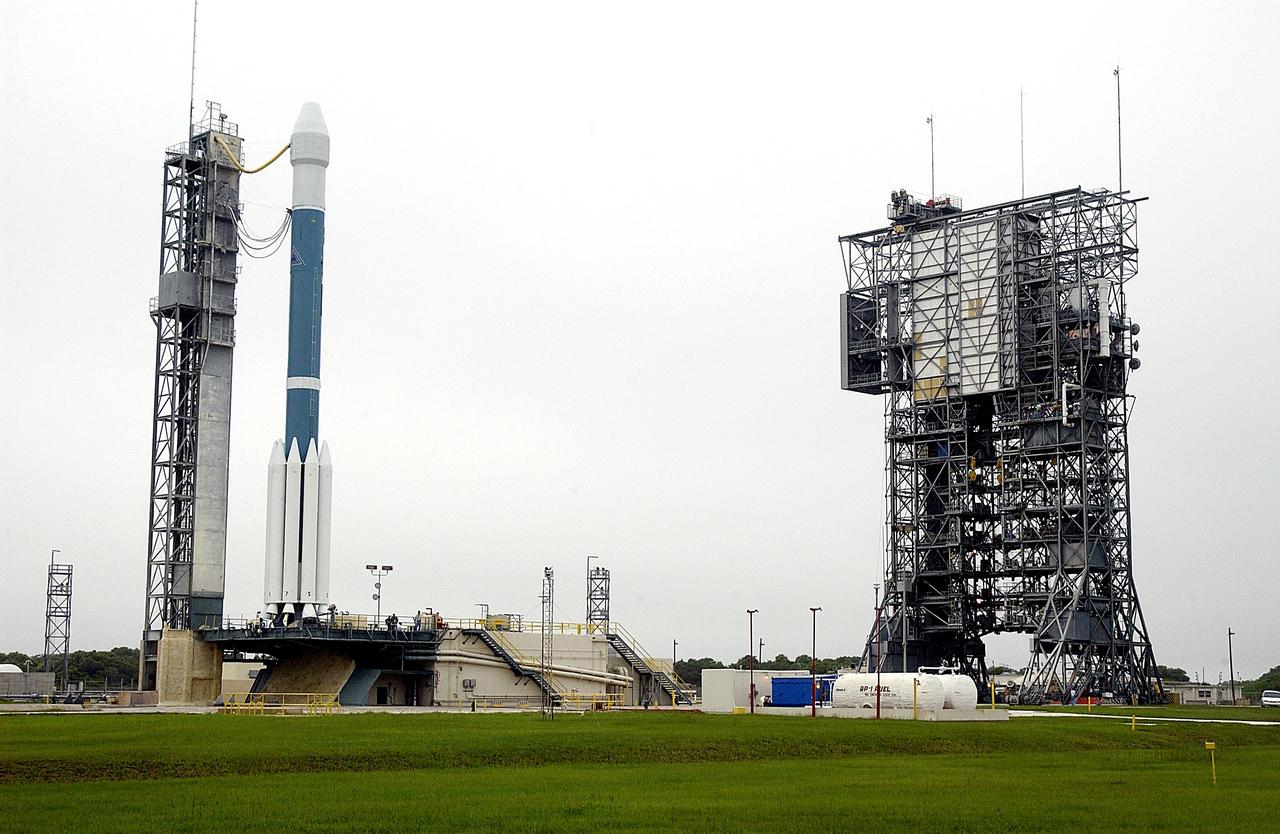
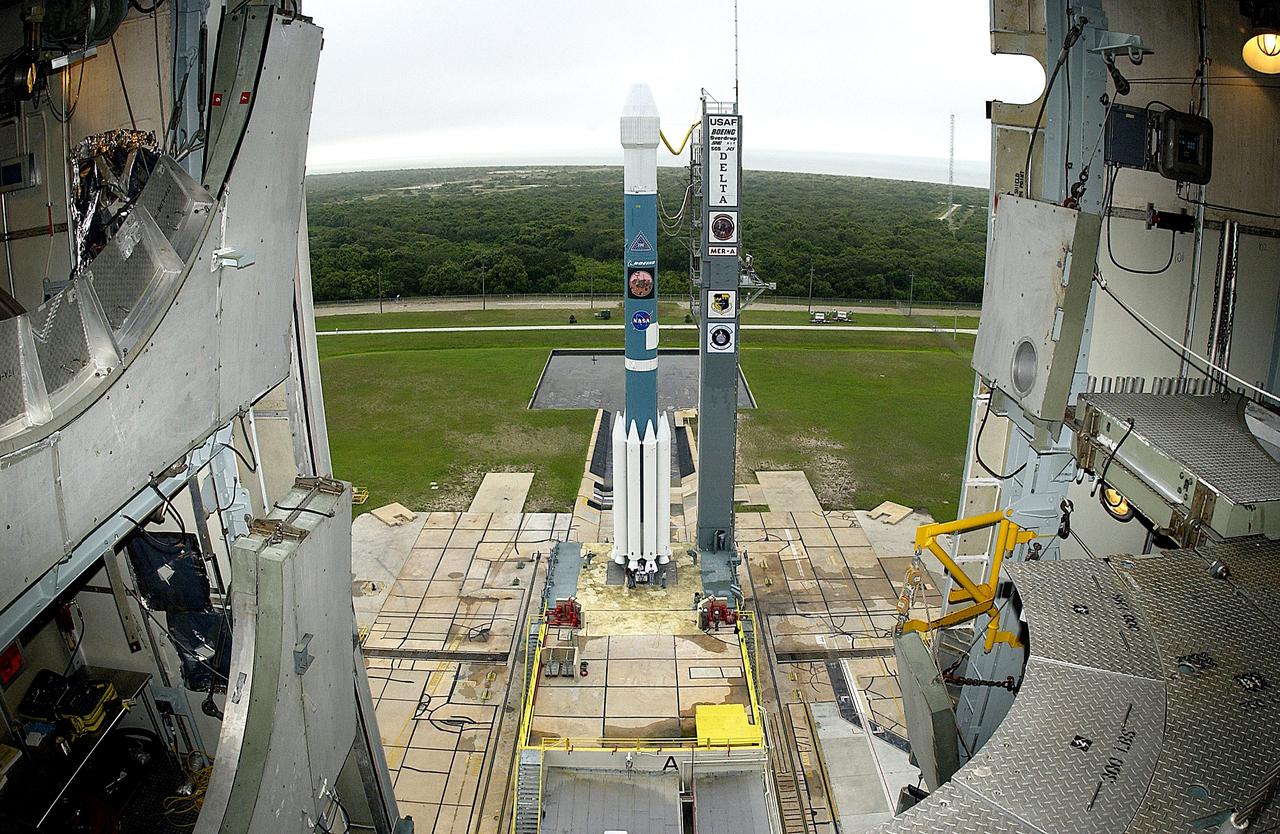
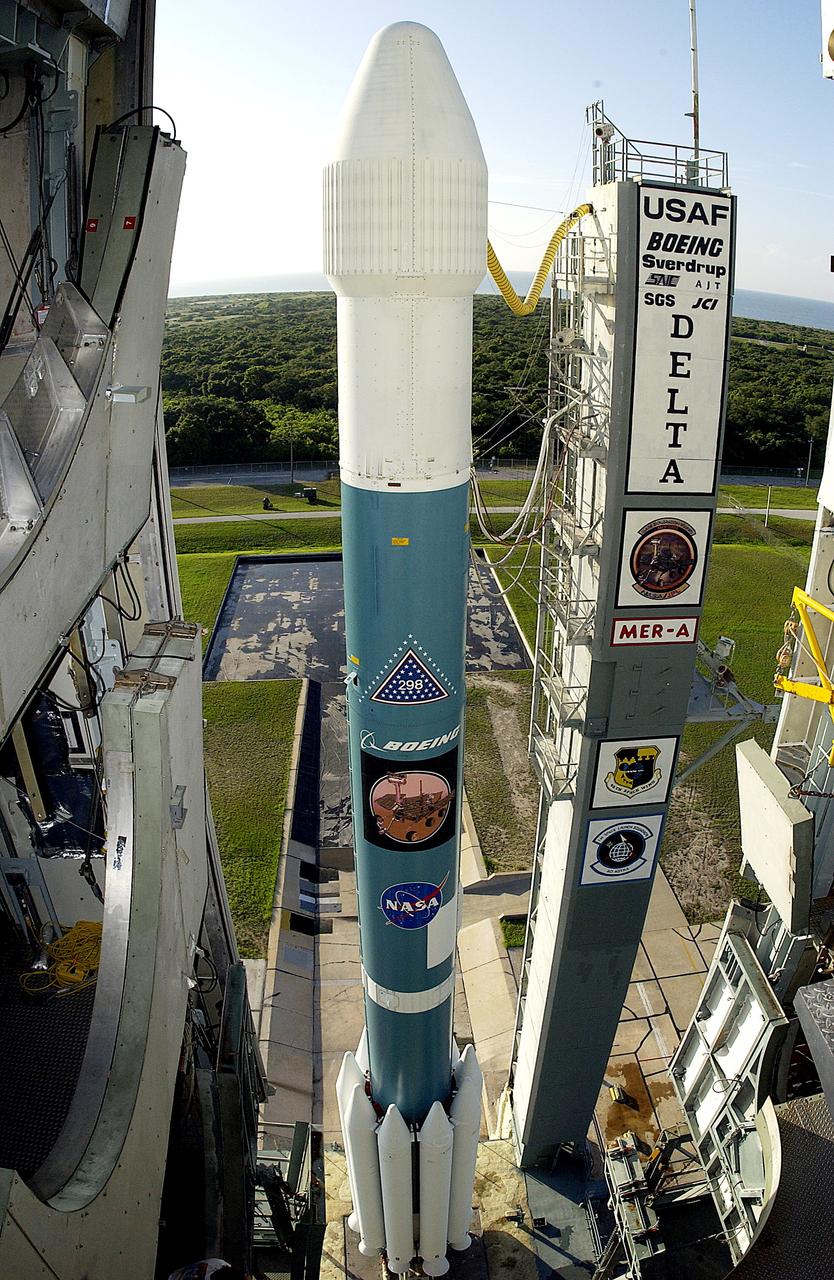
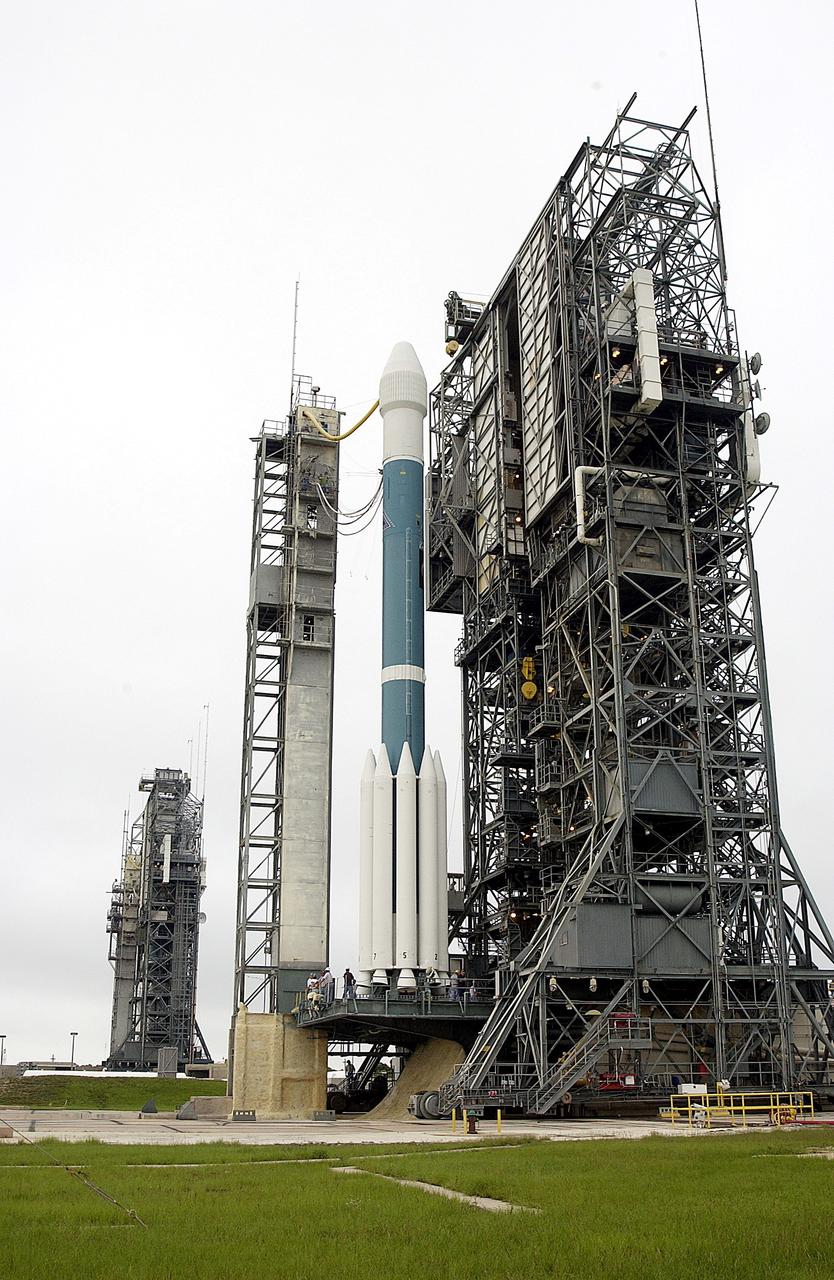
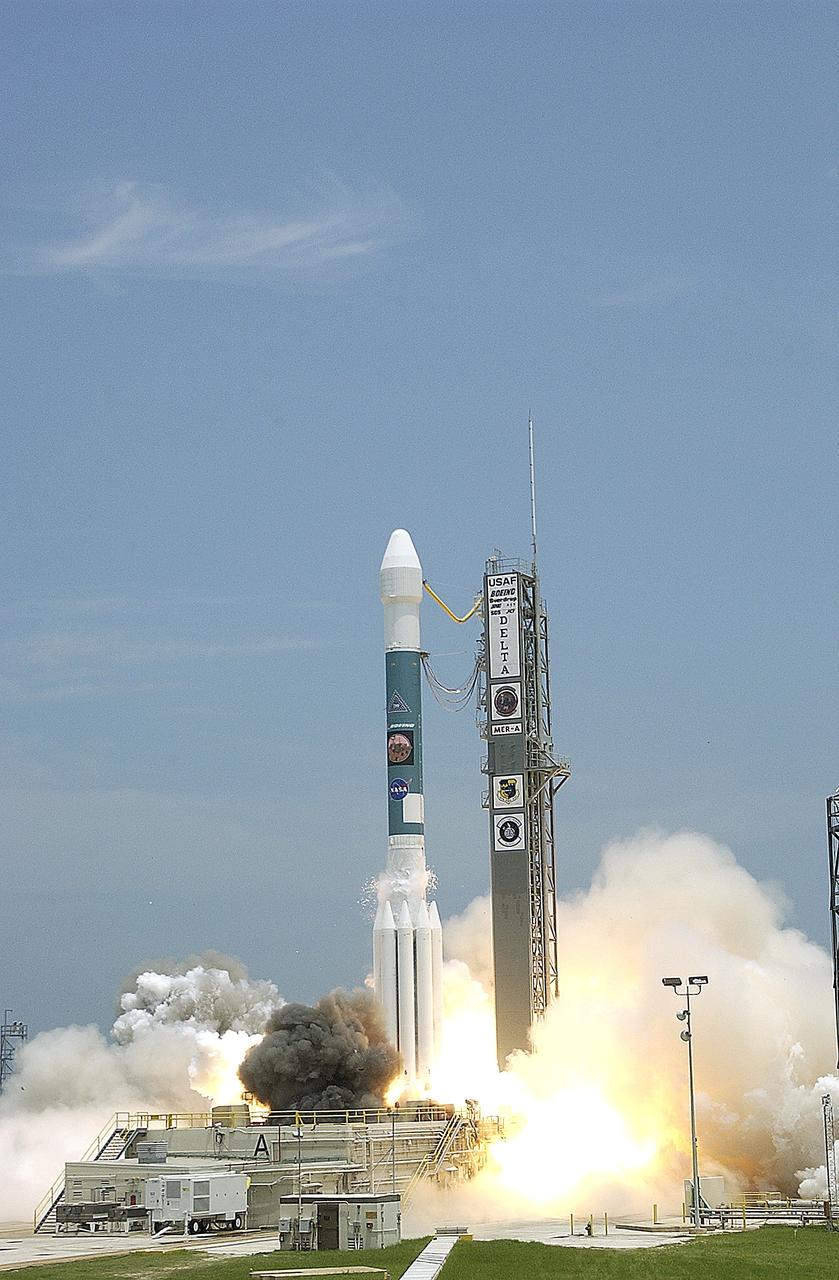
KENNEDY SPACE CENTER, FLA. -  On Launch Complex 17-A, Cape Canaveral Air Force Station, the Boeing Delta II rocket and its Mars Exploration Rover (MER-A) payload are free of the tower  and ready for launch.  This will be the third launch attempt in as many days after weather concerns postponed the launches June 8 and June 9.  MER-A is the first of two rovers being launched to Mars.  When the two rovers arrive at Mars in 2004, they will bounce to airbag-cushioned landings at sites offering a balance of favorable conditions for safe landings and interesting science. The rovers see sharper images, can explore farther and examine rocks better than anything that has ever landed on Mars.  The designated site for MER-A mission is Gusev Crater, which appears to have been a crater lake.  The second rover, MER-B, is scheduled to launch June 25.
KENNEDY SPACE CENTER, FLA. - On Launch Complex 17-A, Cape Canaveral Air Force Station, the Boeing Delta II rocket and its Mars Exploration Rover (MER-A) payload are free of the tower and ready for launch. This will be the third launch attempt in as many days after weather concerns postponed the launches June 8 and June 9. MER-A is the first of two rovers being launched to Mars. When the two rovers arrive at Mars in 2004, they will bounce to airbag-cushioned landings at sites offering a balance of favorable conditions for safe landings and interesting science. The rovers see sharper images, can explore farther and examine rocks better than anything that has ever landed on Mars. The designated site for MER-A mission is Gusev Crater, which appears to have been a crater lake. The second rover, MER-B, is scheduled to launch June 25.
KENNEDY SPACE CENTER, FLA. -  On Launch Complex 17-A, Cape Canaveral Air Force Station, the Boeing Delta II rocket and its Mars Exploration Rover (MER-A) payload are free of the tower  and ready for launch.  This will be the third launch attempt in as many days after weather concerns postponed the launches June 8 and June 9.  MER-A is the first of two rovers being launched to Mars.  When the two rovers arrive at the red planet in 2004, they will bounce to airbag-cushioned landings at sites offering a balance of favorable conditions for safe landings and interesting science. The rovers see sharper images, can explore farther and examine rocks better than anything that has ever landed on Mars.  The designated site for MER-A mission is Gusev Crater, which appears to have been a crater lake.  The second rover, MER-B, is scheduled to launch June 25.
KENNEDY SPACE CENTER, FLA. - On Launch Complex 17-A, Cape Canaveral Air Force Station, the Boeing Delta II rocket and its Mars Exploration Rover (MER-A) payload are free of the tower and ready for launch. This will be the third launch attempt in as many days after weather concerns postponed the launches June 8 and June 9. MER-A is the first of two rovers being launched to Mars. When the two rovers arrive at the red planet in 2004, they will bounce to airbag-cushioned landings at sites offering a balance of favorable conditions for safe landings and interesting science. The rovers see sharper images, can explore farther and examine rocks better than anything that has ever landed on Mars. The designated site for MER-A mission is Gusev Crater, which appears to have been a crater lake. The second rover, MER-B, is scheduled to launch June 25.
KENNEDY SPACE CENTER, FLA. -  On Launch Complex 17-A, Cape Canaveral Air Force Station, the Boeing Delta II rocket and its Mars Exploration Rover (MER-A) payload are free of the tower (right) and ready for launch.  This will be the third launch attempt in as many days after weather concerns postponed the launches June 8 and June 9.  MER-A is the first of two rovers being launched to Mars.  When the two rovers arrive at Mars in 2004, they will bounce to airbag-cushioned landings at sites offering a balance of favorable conditions for safe landings and interesting science. The rovers see sharper images, can explore farther and examine rocks better than anything that has ever landed on Mars.  The designated site for MER-A mission is Gusev Crater, which appears to have been a crater lake.  The second rover, MER-B, is scheduled to launch June 25.
KENNEDY SPACE CENTER, FLA. - On Launch Complex 17-A, Cape Canaveral Air Force Station, the Boeing Delta II rocket and its Mars Exploration Rover (MER-A) payload are free of the tower (right) and ready for launch. This will be the third launch attempt in as many days after weather concerns postponed the launches June 8 and June 9. MER-A is the first of two rovers being launched to Mars. When the two rovers arrive at Mars in 2004, they will bounce to airbag-cushioned landings at sites offering a balance of favorable conditions for safe landings and interesting science. The rovers see sharper images, can explore farther and examine rocks better than anything that has ever landed on Mars. The designated site for MER-A mission is Gusev Crater, which appears to have been a crater lake. The second rover, MER-B, is scheduled to launch June 25.
KENNEDY SPACE CENTER, FLA. -   On Launch Complex 17-A, Cape Canaveral Air Force Station, the Boeing Delta II rocket and its Mars Exploration Rover (MER-A) payload are viewed as the launch tower overhead rolls back.   This will be the third launch attempt in as many days after weather concerns postponed the launches June 8 and June 9.  MER-A is the first of two rovers being launched to Mars.  When the two rovers arrive at Mars in 2004, they will bounce to airbag-cushioned landings at sites offering a balance of favorable conditions for safe landings and interesting science. The rovers see sharper images, can explore farther and examine rocks better than anything that has ever landed on Mars.  The designated site for MER-A mission is Gusev Crater, which appears to have been a crater lake.  The second rover, MER-B, is scheduled to launch June 25.
KENNEDY SPACE CENTER, FLA. - On Launch Complex 17-A, Cape Canaveral Air Force Station, the Boeing Delta II rocket and its Mars Exploration Rover (MER-A) payload are viewed as the launch tower overhead rolls back. This will be the third launch attempt in as many days after weather concerns postponed the launches June 8 and June 9. MER-A is the first of two rovers being launched to Mars. When the two rovers arrive at Mars in 2004, they will bounce to airbag-cushioned landings at sites offering a balance of favorable conditions for safe landings and interesting science. The rovers see sharper images, can explore farther and examine rocks better than anything that has ever landed on Mars. The designated site for MER-A mission is Gusev Crater, which appears to have been a crater lake. The second rover, MER-B, is scheduled to launch June 25.
KENNEDY SPACE CENTER, FLA. -  On Launch Complex 17-A, Cape Canaveral Air Force Station, the Boeing Delta II rocket and its Mars Exploration Rover (MER-A) payload are free of the tower  and ready for launch.  This will be the third launch attempt in as many days after weather concerns postponed the launches June 8 and June 9.  MER-A is the first of two rovers being launched to Mars.  When the two rovers arrive at Mars in 2004, they will bounce to airbag-cushioned landings at sites offering a balance of favorable conditions for safe landings and interesting science. The rovers see sharper images, can explore farther and examine rocks better than anything that has ever landed on Mars.  The designated site for MER-A mission is Gusev Crater, which appears to have been a crater lake.  The second rover, MER-B, is scheduled to launch June 25.
KENNEDY SPACE CENTER, FLA. - On Launch Complex 17-A, Cape Canaveral Air Force Station, the Boeing Delta II rocket and its Mars Exploration Rover (MER-A) payload are free of the tower and ready for launch. This will be the third launch attempt in as many days after weather concerns postponed the launches June 8 and June 9. MER-A is the first of two rovers being launched to Mars. When the two rovers arrive at Mars in 2004, they will bounce to airbag-cushioned landings at sites offering a balance of favorable conditions for safe landings and interesting science. The rovers see sharper images, can explore farther and examine rocks better than anything that has ever landed on Mars. The designated site for MER-A mission is Gusev Crater, which appears to have been a crater lake. The second rover, MER-B, is scheduled to launch June 25.
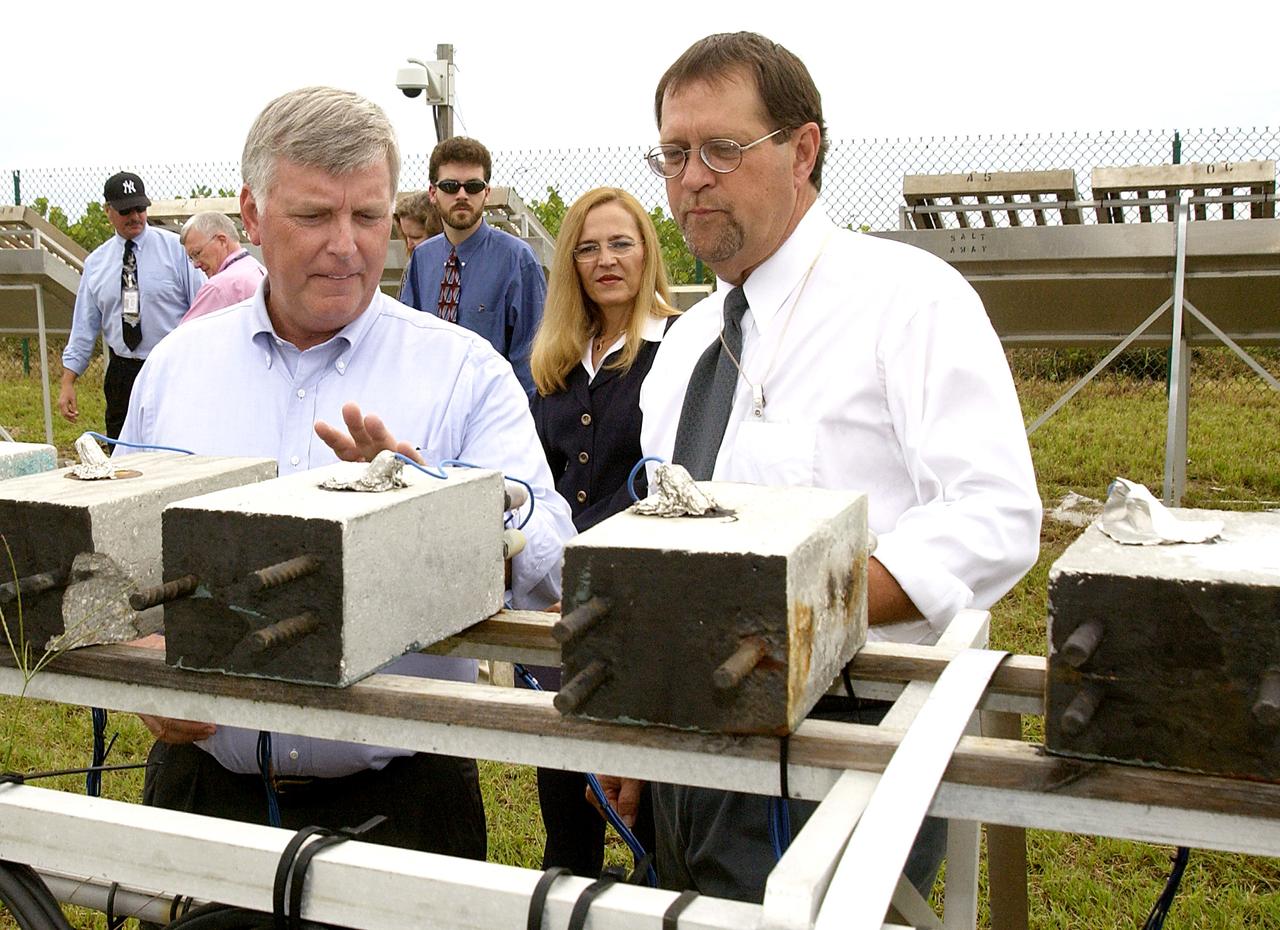
KENNEDY SPACE CENTER, FLA. -   On a tour of the KSC Beach Corrosion Test Site, Testbed Manager Louis MacDowell (right) explains to Center Director Jim Kennedy about the test blocks being used to test a newly developed coating to protect steel inside concrete.  Between MacDowell and Kennedy are Dr. Paul Hintze and Lead Scientist Dr. Luz Marina Calle.  The KSC Beach Corrosion Test Site was established in the 1960s and has provided more than 30 years of historical information on the long-term performance of many materials in use at KSC and other locations around the world. Located 100 feet from the Atlantic Ocean approximately 1 mile south of the Space Shuttle launch sites, the test facility includes an atmospheric exposure site, a flowing seawater exposure site, and an on-site electrochemistry laboratory and monitoring station. The beach laboratory is used to conduct real-time corrosion experiments and provides for the remote monitoring of surrounding weather conditions. The newly added flowing seawater immersion facility provides for the immersion testing of materials and devices under controlled conditions.
KENNEDY SPACE CENTER, FLA. - On a tour of the KSC Beach Corrosion Test Site, Testbed Manager Louis MacDowell (right) explains to Center Director Jim Kennedy about the test blocks being used to test a newly developed coating to protect steel inside concrete. Between MacDowell and Kennedy are Dr. Paul Hintze and Lead Scientist Dr. Luz Marina Calle. The KSC Beach Corrosion Test Site was established in the 1960s and has provided more than 30 years of historical information on the long-term performance of many materials in use at KSC and other locations around the world. Located 100 feet from the Atlantic Ocean approximately 1 mile south of the Space Shuttle launch sites, the test facility includes an atmospheric exposure site, a flowing seawater exposure site, and an on-site electrochemistry laboratory and monitoring station. The beach laboratory is used to conduct real-time corrosion experiments and provides for the remote monitoring of surrounding weather conditions. The newly added flowing seawater immersion facility provides for the immersion testing of materials and devices under controlled conditions.
KENNEDY SPACE CENTER, FLA. -   On a tour of the KSC Beach Corrosion Test Site, Center Director Jim Kennedy (second from right) learns from Testbed Manager Louis MacDowell (right) about a project being undertaken for the U.S. Navy.  Being studied are nonchrome primers for aircraft.  At left are Lead Scientist Dr. Luz Marina Calle and  Dr. Paul Hintze, who is working on a graduate project for the National Research Council.  The KSC Beach Corrosion Test Site was established in the 1960s and has provided more than 30 years of historical information on the long-term performance of many materials in use at KSC and other locations around the world. Located 100 feet from the Atlantic Ocean approximately 1 mile south of the Space Shuttle launch sites, the test facility includes an atmospheric exposure site, a flowing seawater exposure site, and an on-site electrochemistry laboratory and monitoring station. The beach laboratory is used to conduct real-time corrosion experiments and provides for the remote monitoring of surrounding weather conditions. The newly added flowing seawater immersion facility provides for the immersion testing of materials and devices under controlled conditions.
KENNEDY SPACE CENTER, FLA. - On a tour of the KSC Beach Corrosion Test Site, Center Director Jim Kennedy (second from right) learns from Testbed Manager Louis MacDowell (right) about a project being undertaken for the U.S. Navy. Being studied are nonchrome primers for aircraft. At left are Lead Scientist Dr. Luz Marina Calle and Dr. Paul Hintze, who is working on a graduate project for the National Research Council. The KSC Beach Corrosion Test Site was established in the 1960s and has provided more than 30 years of historical information on the long-term performance of many materials in use at KSC and other locations around the world. Located 100 feet from the Atlantic Ocean approximately 1 mile south of the Space Shuttle launch sites, the test facility includes an atmospheric exposure site, a flowing seawater exposure site, and an on-site electrochemistry laboratory and monitoring station. The beach laboratory is used to conduct real-time corrosion experiments and provides for the remote monitoring of surrounding weather conditions. The newly added flowing seawater immersion facility provides for the immersion testing of materials and devices under controlled conditions.
KENNEDY SPACE CENTER, FLA. -   On a tour of the KSC Beach Corrosion Test Site, Testbed Manager Louis MacDowell (foreground) explains to Center Director Jim Kennedy (third from right) about a study being undertaken for the U.S. Navy: nonchrome primers for aircraft. At left is Lead Scientist Dr. Luz Marina Calle and behind MacDowell is Dr. Paul Hintze, who is working on a graduate project for the National Research Council.  The KSC Beach Corrosion Test Site was established in the 1960s and has provided more than 30 years of historical information on the long-term performance of many materials in use at KSC and other locations around the world. Located 100 feet from the Atlantic Ocean approximately 1 mile south of the Space Shuttle launch sites, the test facility includes an atmospheric exposure site, a flowing seawater exposure site, and an on-site electrochemistry laboratory and monitoring station. The beach laboratory is used to conduct real-time corrosion experiments and provides for the remote monitoring of surrounding weather conditions. The newly added flowing seawater immersion facility provides for the immersion testing of materials and devices under controlled conditions.
KENNEDY SPACE CENTER, FLA. - On a tour of the KSC Beach Corrosion Test Site, Testbed Manager Louis MacDowell (foreground) explains to Center Director Jim Kennedy (third from right) about a study being undertaken for the U.S. Navy: nonchrome primers for aircraft. At left is Lead Scientist Dr. Luz Marina Calle and behind MacDowell is Dr. Paul Hintze, who is working on a graduate project for the National Research Council. The KSC Beach Corrosion Test Site was established in the 1960s and has provided more than 30 years of historical information on the long-term performance of many materials in use at KSC and other locations around the world. Located 100 feet from the Atlantic Ocean approximately 1 mile south of the Space Shuttle launch sites, the test facility includes an atmospheric exposure site, a flowing seawater exposure site, and an on-site electrochemistry laboratory and monitoring station. The beach laboratory is used to conduct real-time corrosion experiments and provides for the remote monitoring of surrounding weather conditions. The newly added flowing seawater immersion facility provides for the immersion testing of materials and devices under controlled conditions.
KENNEDY SPACE CENTER, FLA. -   On a tour of the KSC Beach Corrosion Test Site, Louis MacDowell (right), Testbed manager, explains to Center Director Jim Kennedy a project being undertaken for the U.S. Navy.  At left are nonchrome primers for aircraft being studied.  Behind Kennedy is Lead Scientist Dr. Luz Marina Calle.  Behind MacDowell is Dr. Paul Hintze, who is working on a graduate project for the National Research Council.  The KSC Beach Corrosion Test Site was established in the 1960s and has provided more than 30 years of historical information on the long-term performance of many materials in use at KSC and other locations around the world. Located 100 feet from the Atlantic Ocean approximately 1 mile south of the Space Shuttle launch sites, the test facility includes an atmospheric exposure site, a flowing seawater exposure site, and an on-site electrochemistry laboratory and monitoring station. The beach laboratory is used to conduct real-time corrosion experiments and provides for the remote monitoring of surrounding weather conditions. The newly added flowing seawater immersion facility provides for the immersion testing of materials and devices under controlled conditions.
KENNEDY SPACE CENTER, FLA. - On a tour of the KSC Beach Corrosion Test Site, Louis MacDowell (right), Testbed manager, explains to Center Director Jim Kennedy a project being undertaken for the U.S. Navy. At left are nonchrome primers for aircraft being studied. Behind Kennedy is Lead Scientist Dr. Luz Marina Calle. Behind MacDowell is Dr. Paul Hintze, who is working on a graduate project for the National Research Council. The KSC Beach Corrosion Test Site was established in the 1960s and has provided more than 30 years of historical information on the long-term performance of many materials in use at KSC and other locations around the world. Located 100 feet from the Atlantic Ocean approximately 1 mile south of the Space Shuttle launch sites, the test facility includes an atmospheric exposure site, a flowing seawater exposure site, and an on-site electrochemistry laboratory and monitoring station. The beach laboratory is used to conduct real-time corrosion experiments and provides for the remote monitoring of surrounding weather conditions. The newly added flowing seawater immersion facility provides for the immersion testing of materials and devices under controlled conditions.
Launch date makes a difference in the orientation of ellipses marking where NASA Phoenix Mars Lander would have a high probability of landing, given the planned targeting for the spring 2008 landing site.
Possible Landing Ellipses for Phoenix
A camera view zooms in from NASA Phoenix Mars Lander launch site all the way to Phoenix Microscopy and Electrochemistry and Conductivity Analyzer MECA aboard the spacecraft on the Martian surface.
Animated Optical Microscope Zoom in from Phoenix Launch to Martian Surface
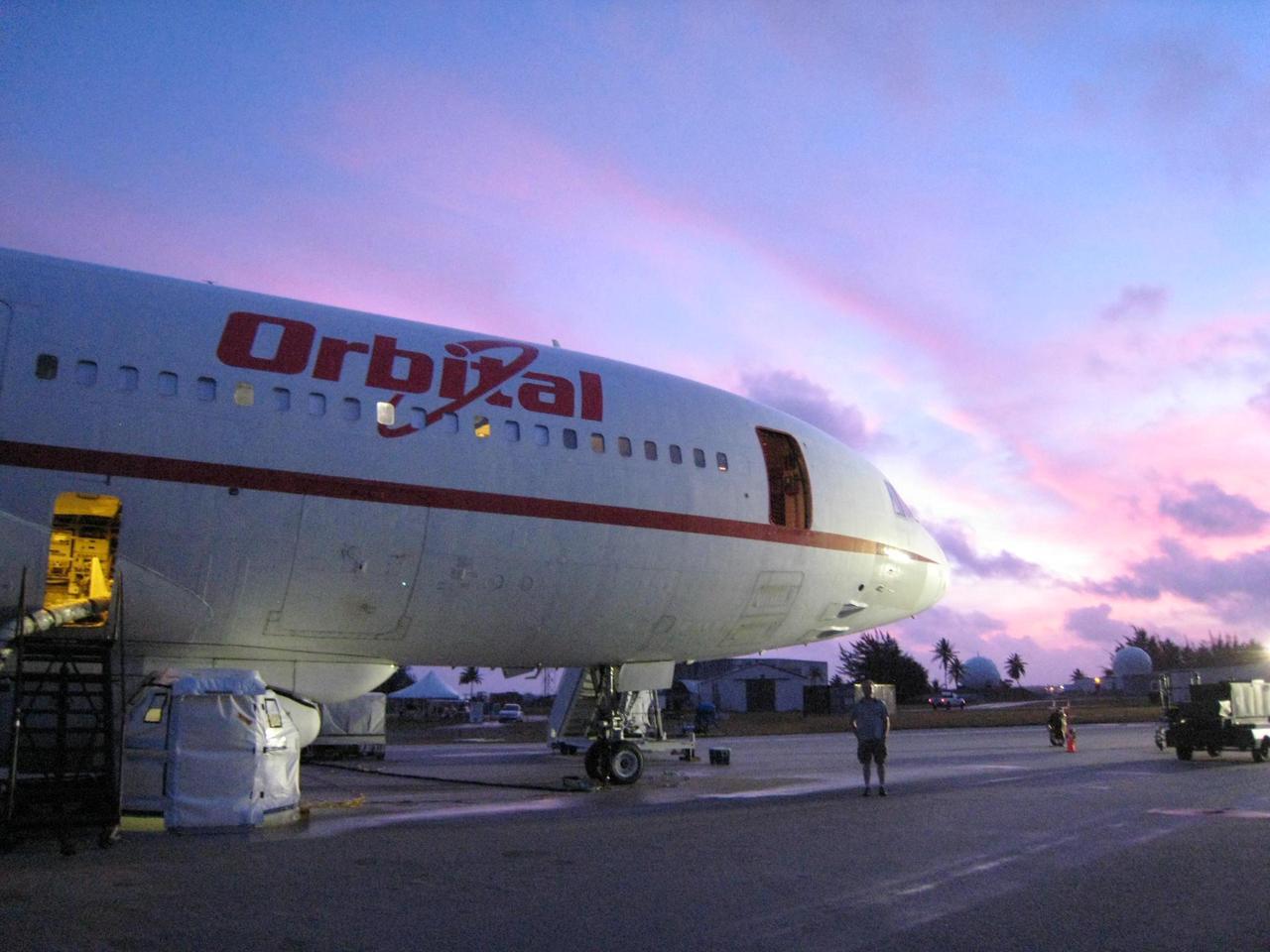
The carrier plane, L-1011 Stargazer, that will give NASA NuSTAR and its rocket a lift to their airborne launch site is seen here at sunrise on Kwajalein Atoll in the Pacific Ocean.
NuSTAR on Coral Island of Kwajalein
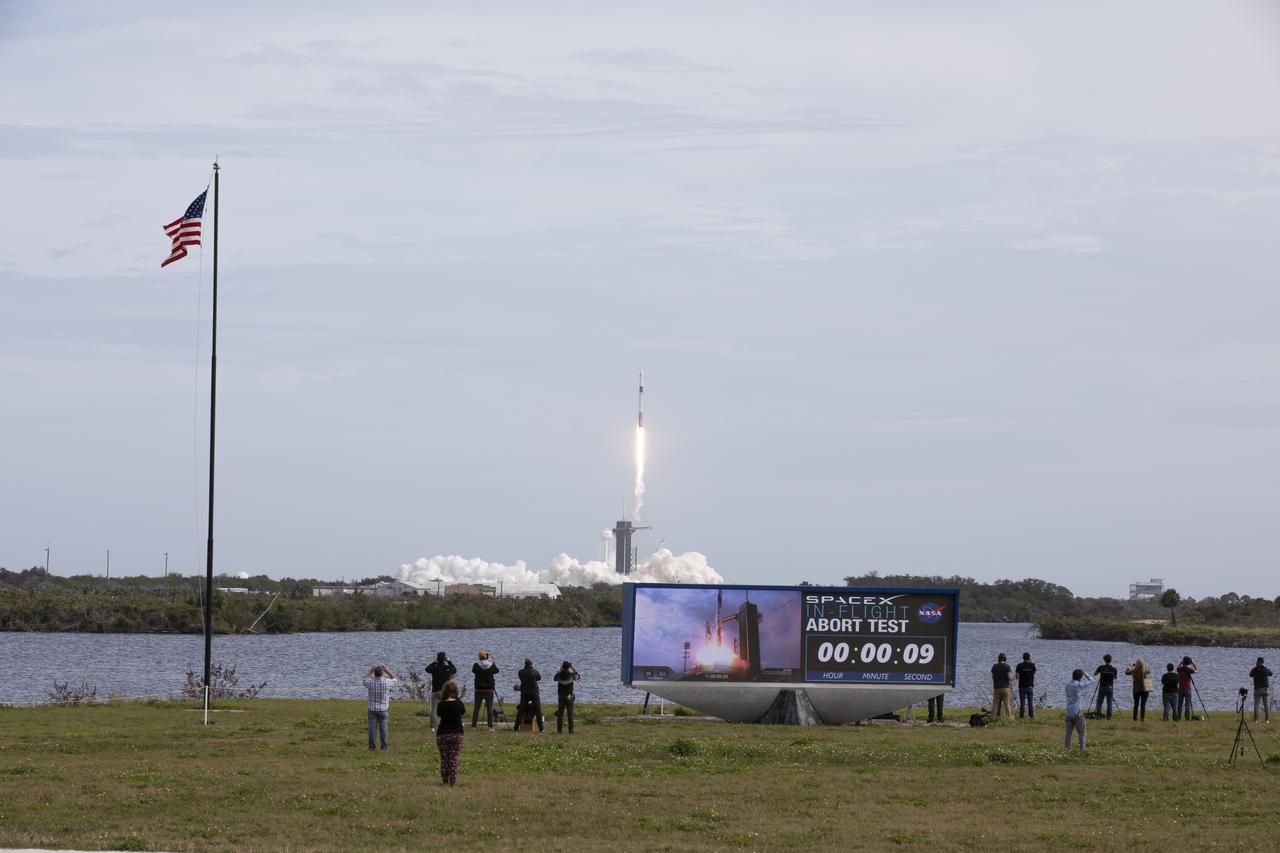
The countdown clock at NASA’s Kennedy Space Center in Florida shows an elapsed time of nine seconds as the SpaceX Falcon 9 rocket lifts off from Launch Complex 39A on the uncrewed In-Flight Abort Test, Jan. 19, 2020. The rocket carried the company’s Crew Dragon on a flight test that demonstrated the spacecraft’s escape capabilities in preparation for crewed flights to the International Space Station as part of the agency’s Commercial Crew Program.
SpaceX In-Flight Abort Test - Launch, Press Site
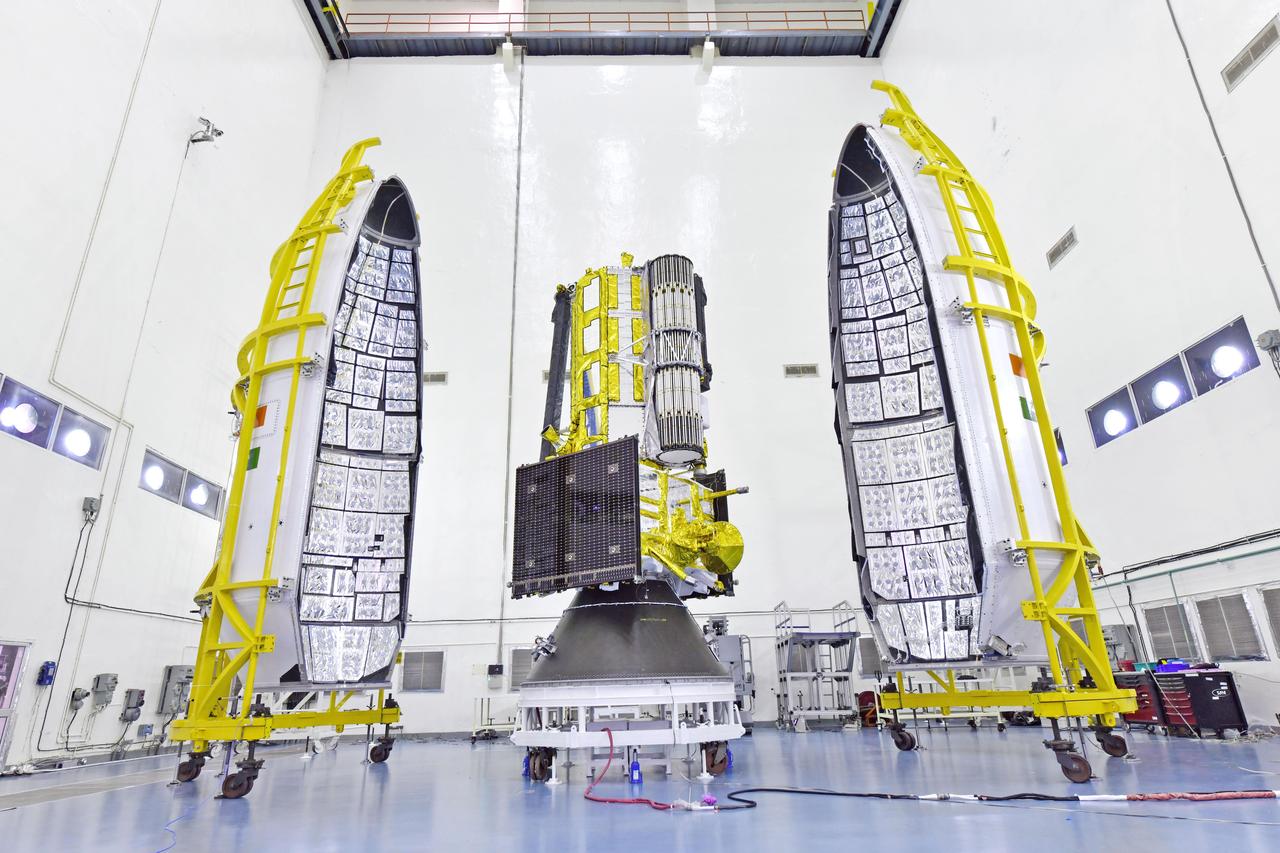
The NISAR (NASA-ISRO Synthetic Aperture Radar) satellite was encapsulated in its payload fairing at ISRO's Satish Dhawan Space Centre on July 18 in preparation for launch on the Geosynchronous Launch Vehicle no earlier than July 30. The fairing protects the satellite from pressure and heat during ascent.  After the rocket escapes the Earth's atmosphere, the fairing splits into two halves that are jettisoned back to Earth. The NISAR satellite arrived at the Indian launch facility in May after having been at the ISRO Satellite Integration and Test Establishment (ISITE) in Bengaluru.  In orbit, NISAR will collect an unprecedented amount of information about change on our home planet. It will scan nearly all of Earth's land and ice surfaces twice every 12 days, providing insights into the growth and retreat of ice sheets, sea ice, and glaciers, the deformation of the planet's crust due to natural hazards, as well as natural and human-caused changes to its terrestrial ecosystems, including forests and wetlands.  https://photojournal.jpl.nasa.gov/catalog/PIA26611
NISAR Encapsulated in Payload Fairing at ISRO Launch Site
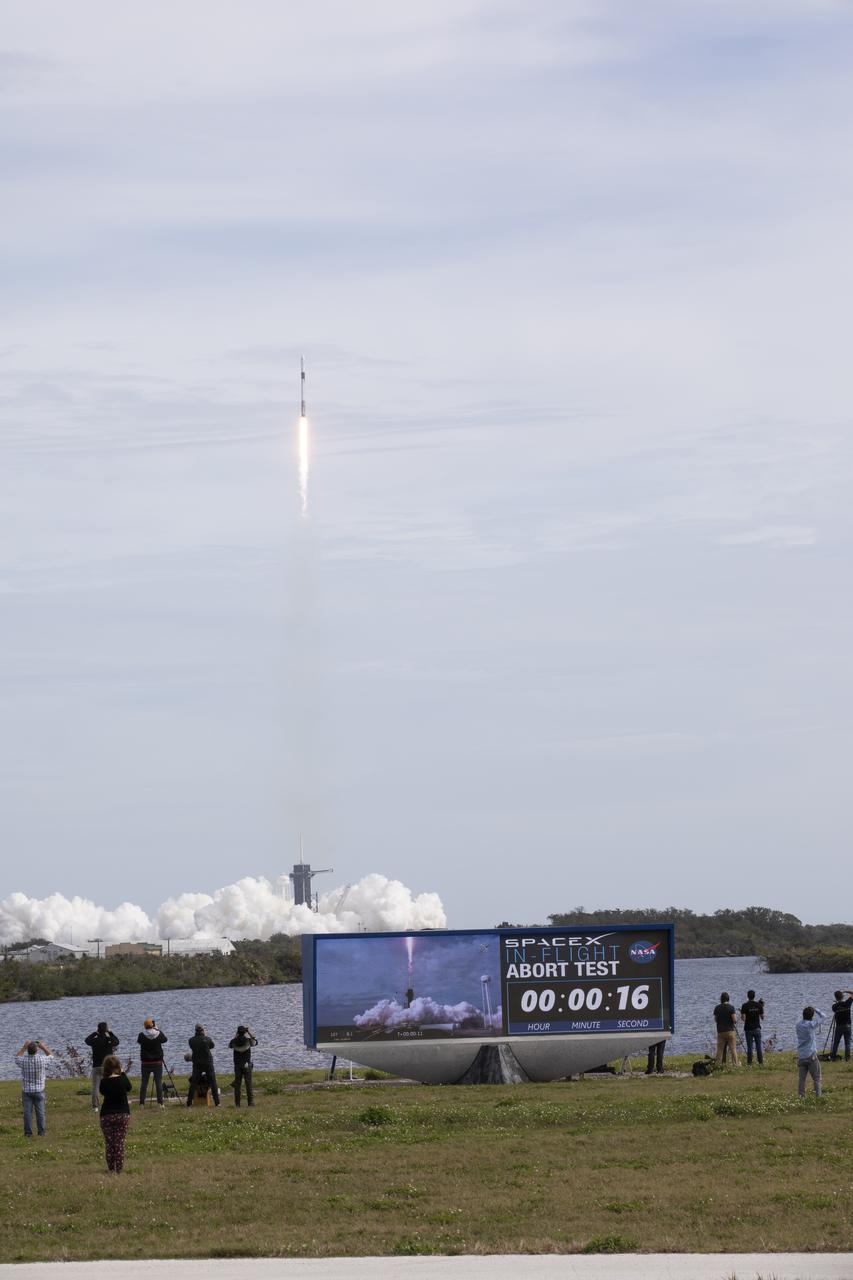
The countdown clock at NASA’s Kennedy Space Center in Florida shows an elapsed time of 16 seconds as the SpaceX Falcon 9 rocket lifts off from Launch Complex 39A on the uncrewed In-Flight Abort Test, Jan. 19, 2020. The rocket carried the company’s Crew Dragon on a flight test that demonstrated the spacecraft’s escape capabilities in preparation for crewed flights to the International Space Station as part of the agency’s Commercial Crew Program.
SpaceX In-Flight Abort Test - Launch, Press Site
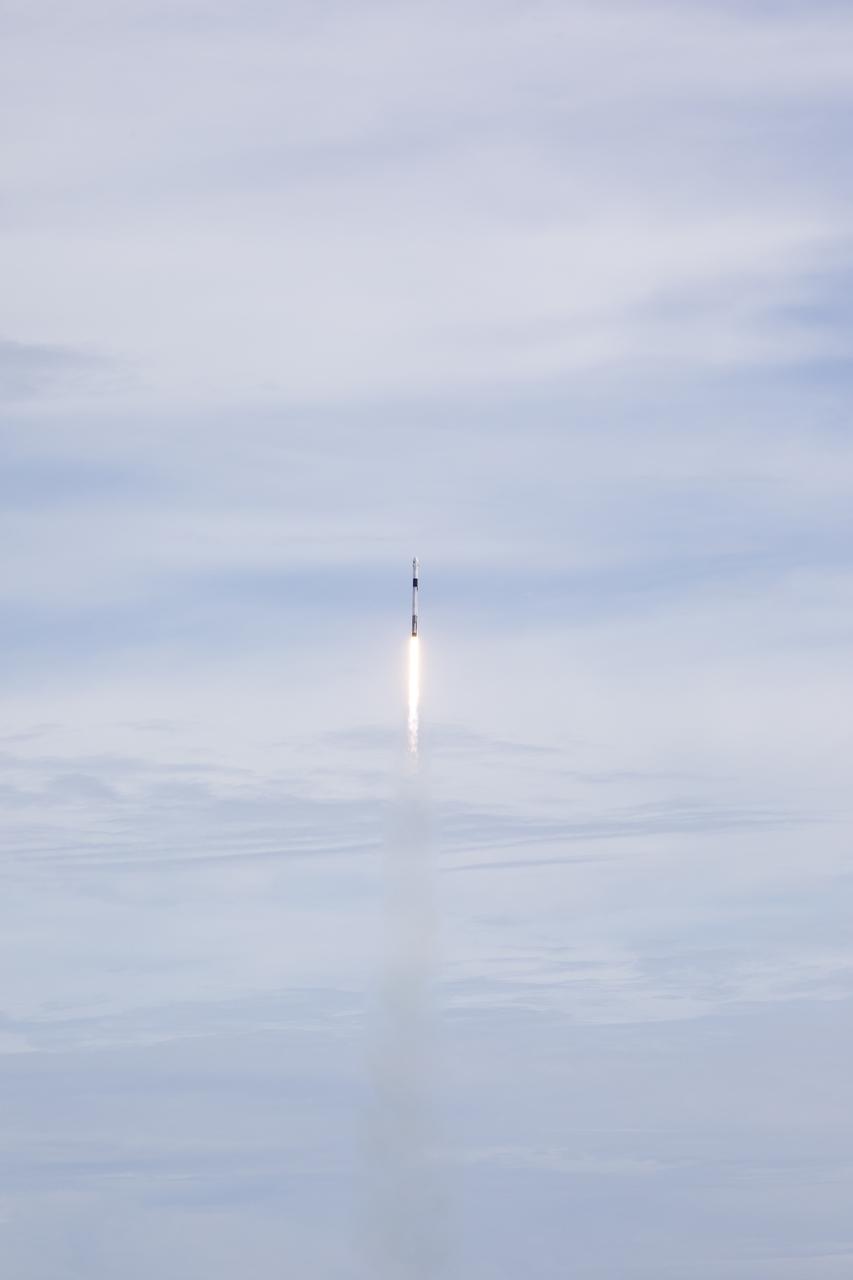
A SpaceX Falcon 9 rocket lifts off from Launch Complex 39A at NASA’s Kennedy Space Center in Florida on Jan. 19, 2020, carrying the Crew Dragon spacecraft on the company’s uncrewed In-Flight Abort Test. The flight test demonstrated the spacecraft’s escape capabilities in preparation for crewed flights to the International Space Station as part of the agency’s Commercial Crew Program.
SpaceX In-Flight Abort Test - Launch, Press Site
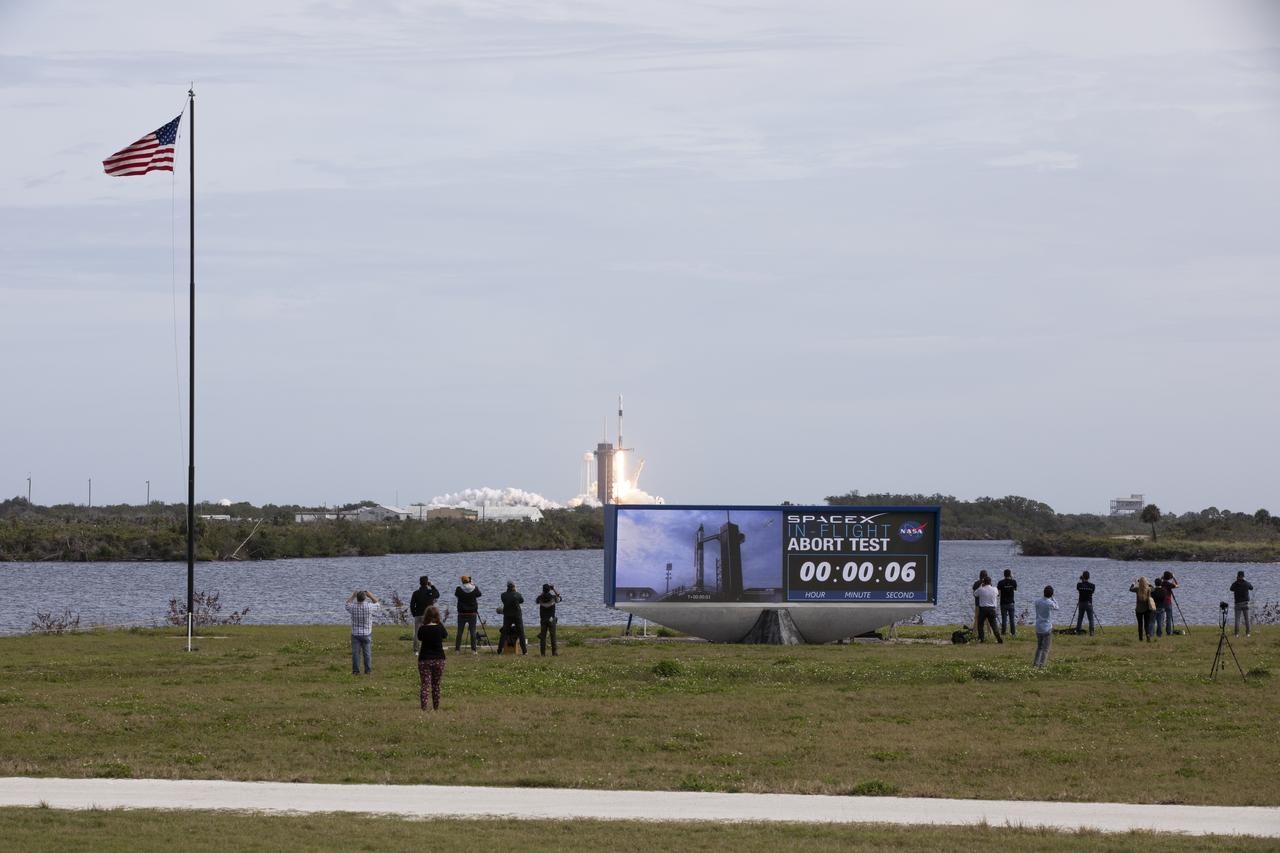
The countdown clock at NASA’s Kennedy Space Center in Florida shows an elapsed time of six seconds as the SpaceX Falcon 9 rocket lifts off from Launch Complex 39A on the uncrewed In-Flight Abort Test, Jan. 19, 2020. The rocket carried the company’s Crew Dragon on a flight test that demonstrated the spacecraft’s escape capabilities in preparation for crewed flights to the International Space Station as part of the agency’s Commercial Crew Program.
SpaceX In-Flight Abort Test - Launch, Press Site
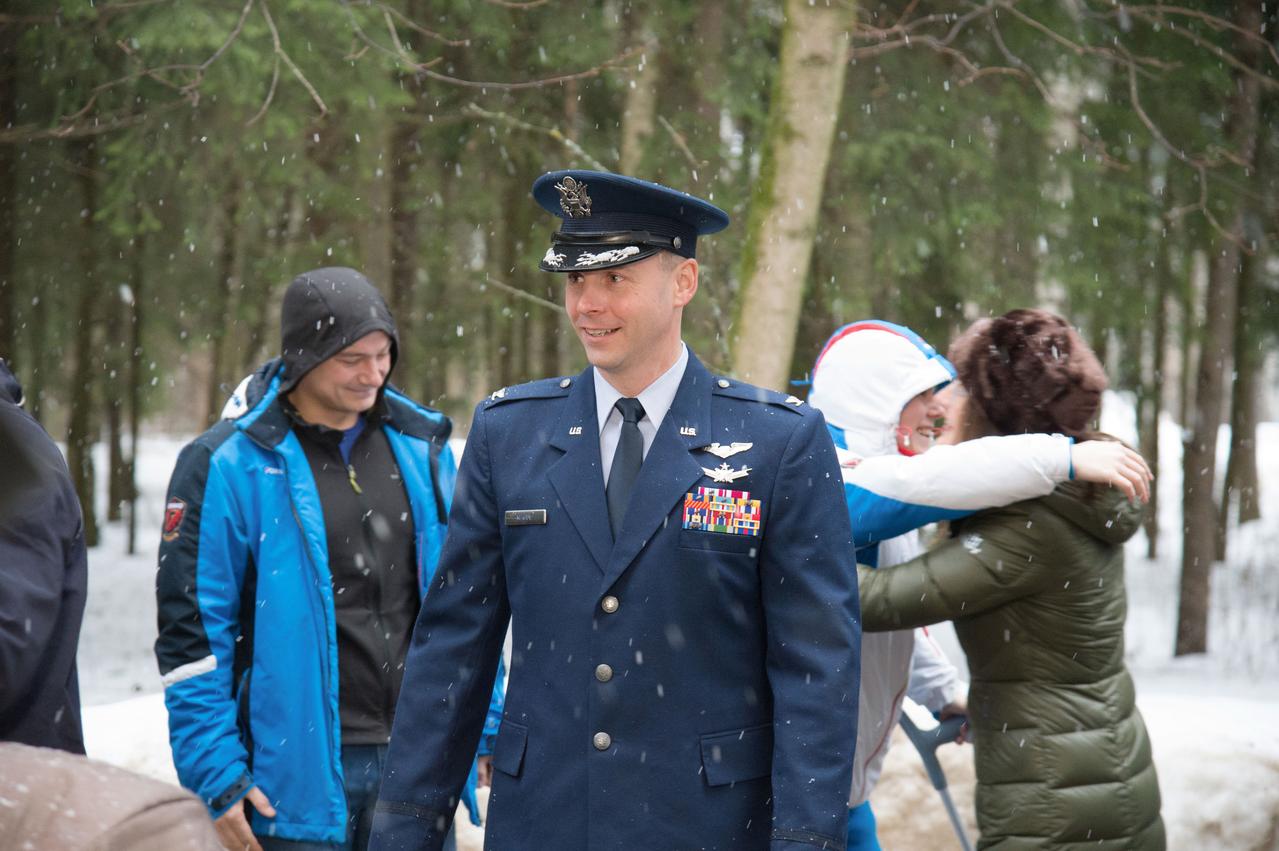
At the Gagarin Cosmonaut Training Center in Star City, Russia, Expedition 59 crewmember Nick Hague of NASA prepares to depart Feb. 26 for his launch site at the Baikonur Cosmodrome in Kazakhstan for final pre-launch training. Hague, Christina Koch of NASA and Alexey Ovchinin of Roscosmos will launch on March 14, U.S. time, on the Soyuz MS-12 spacecraft from the Baikonur Cosmodrome in Kazakhstan for a six-and-a-half month mission on the International Space Station.  NASA/Beth Weissinger
At the Gagarin Cosmonaut Training Center in Star City, Russia, Expedition 59 crewmember Nick Hague of NASA prepares to depart Feb. 26 for his launch site at the Baikonur Cosmodrome in Kazakhstan for final pre-launch training. Hague, Christina Koch of NASA
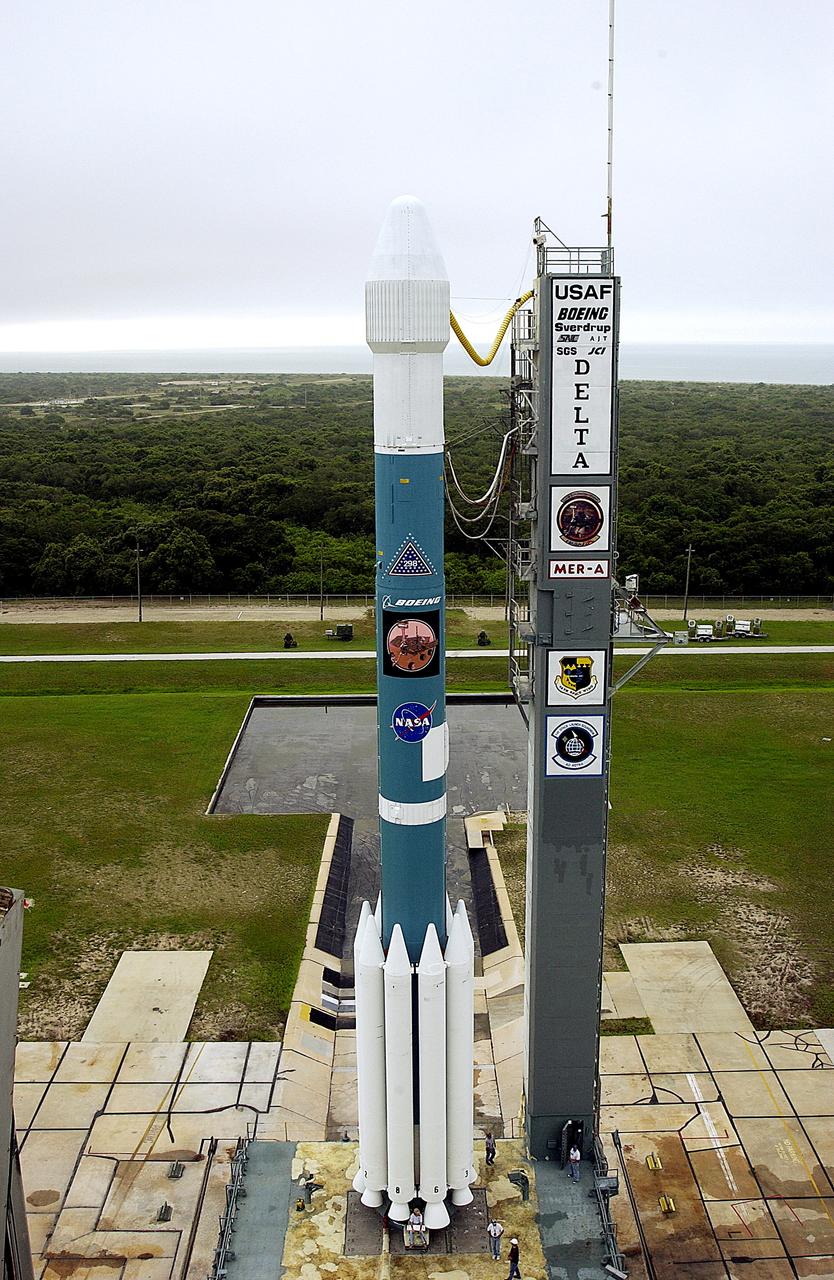
KENNEDY SPACE CENTER, FLA. -    The launch tower on Launch Complex 17-A, Cape Canaveral Air Force Station, clears the Boeing Delta II rocket and its Mars Exploration Rover (MER-A) payload in preparation for a second attempt at launch.  The first attempt on June 8, 2003, was scrubbed due to bad weather in the vicinity.  MER-A is the first of two rovers being launched to Mars.  When the two rovers arrive at Mars in 2004, they will bounce to airbag-cushioned landings at sites offering a balance of favorable conditions for safe landings and interesting science. The rovers see sharper images, can explore farther and examine rocks better than anything that has ever landed on Mars.  The designated site for MER-A mission is Gusev Crater, which appears to have been a crater lake.  The second rover, MER-B, is scheduled to launch June 25.
KENNEDY SPACE CENTER, FLA. - The launch tower on Launch Complex 17-A, Cape Canaveral Air Force Station, clears the Boeing Delta II rocket and its Mars Exploration Rover (MER-A) payload in preparation for a second attempt at launch. The first attempt on June 8, 2003, was scrubbed due to bad weather in the vicinity. MER-A is the first of two rovers being launched to Mars. When the two rovers arrive at Mars in 2004, they will bounce to airbag-cushioned landings at sites offering a balance of favorable conditions for safe landings and interesting science. The rovers see sharper images, can explore farther and examine rocks better than anything that has ever landed on Mars. The designated site for MER-A mission is Gusev Crater, which appears to have been a crater lake. The second rover, MER-B, is scheduled to launch June 25.
KENNEDY SPACE CENTER, FLA. -    The launch tower (right) on Launch Complex 17-A, Cape Canaveral Air Force Station, has been rolled back from the Boeing Delta II rocket and its Mars Exploration Rover (MER-A) payload (left) in preparation for a second attempt at launch.  The first attempt on June 8, 2003, was scrubbed due to bad weather in the vicinity.  MER-A is the first of two rovers being launched to Mars.  When the two rovers arrive at Mars in 2004, they will bounce to airbag-cushioned landings at sites offering a balance of favorable conditions for safe landings and interesting science. The rovers see sharper images, can explore farther and examine rocks better than anything that has ever landed on Mars.  The designated site for MER-A mission is Gusev Crater, which appears to have been a crater lake.  The second rover, MER-B, is scheduled to launch June 25.
KENNEDY SPACE CENTER, FLA. - The launch tower (right) on Launch Complex 17-A, Cape Canaveral Air Force Station, has been rolled back from the Boeing Delta II rocket and its Mars Exploration Rover (MER-A) payload (left) in preparation for a second attempt at launch. The first attempt on June 8, 2003, was scrubbed due to bad weather in the vicinity. MER-A is the first of two rovers being launched to Mars. When the two rovers arrive at Mars in 2004, they will bounce to airbag-cushioned landings at sites offering a balance of favorable conditions for safe landings and interesting science. The rovers see sharper images, can explore farther and examine rocks better than anything that has ever landed on Mars. The designated site for MER-A mission is Gusev Crater, which appears to have been a crater lake. The second rover, MER-B, is scheduled to launch June 25.
KENNEDY SPACE CENTER, FLA. - On Launch Complex 17-A, Cape Canaveral Air Force Station, the launch tower begins to roll back from the Boeing Delta II rocket and its Mars Exploration Rover (MER-A) payload in preparation for a second attempt at launch.  The first attempt on June 8, 2003, was scrubbed due to bad weather in the vicinity.  MER-A is the first of two rovers being launched to Mars.  When the two rovers arrive at Mars in 2004, they will bounce to airbag-cushioned landings at sites offering a balance of favorable conditions for safe landings and interesting science. The rovers see sharper images, can explore farther and examine rocks better than anything that has ever landed on Mars.  The designated site for MER-A mission is Gusev Crater, which appears to have been a crater lake.  The second rover, MER-B, is scheduled to launch June 25.
KENNEDY SPACE CENTER, FLA. - On Launch Complex 17-A, Cape Canaveral Air Force Station, the launch tower begins to roll back from the Boeing Delta II rocket and its Mars Exploration Rover (MER-A) payload in preparation for a second attempt at launch. The first attempt on June 8, 2003, was scrubbed due to bad weather in the vicinity. MER-A is the first of two rovers being launched to Mars. When the two rovers arrive at Mars in 2004, they will bounce to airbag-cushioned landings at sites offering a balance of favorable conditions for safe landings and interesting science. The rovers see sharper images, can explore farther and examine rocks better than anything that has ever landed on Mars. The designated site for MER-A mission is Gusev Crater, which appears to have been a crater lake. The second rover, MER-B, is scheduled to launch June 25.
KENNEDY SPACE CENTER, FLA. -   On Launch Complex 17-A, Cape Canaveral Air Force Station, the launch tower begins to roll back from the Boeing Delta II rocket and its Mars Exploration Rover (MER-A) payload in preparation for another launch attempt.  The first two attempts were postponed due to weather concerns.  MER-A is the first of two rovers being launched to Mars.  When the two rovers arrive at Mars in 2004, they will bounce to airbag-cushioned landings at sites offering a balance of favorable conditions for safe landings and interesting science. The rovers see sharper images, can explore farther and examine rocks better than anything that has ever landed on Mars.  The designated site for MER-A mission is Gusev Crater, which appears to have been a crater lake.  The second rover, MER-B, is scheduled to launch June 25.
KENNEDY SPACE CENTER, FLA. - On Launch Complex 17-A, Cape Canaveral Air Force Station, the launch tower begins to roll back from the Boeing Delta II rocket and its Mars Exploration Rover (MER-A) payload in preparation for another launch attempt. The first two attempts were postponed due to weather concerns. MER-A is the first of two rovers being launched to Mars. When the two rovers arrive at Mars in 2004, they will bounce to airbag-cushioned landings at sites offering a balance of favorable conditions for safe landings and interesting science. The rovers see sharper images, can explore farther and examine rocks better than anything that has ever landed on Mars. The designated site for MER-A mission is Gusev Crater, which appears to have been a crater lake. The second rover, MER-B, is scheduled to launch June 25.
KENNEDY SPACE CENTER, FLA. -   On Launch Complex 17-A, Cape Canaveral Air Force Station, the launch tower rolls back from the Boeing Delta II rocket and its Mars Exploration Rover (MER-A) payload in preparation for another launch attempt.  The first two attempts, June 8 and June 9, were postponed due to weather concerns.  MER-A is the first of two rovers being launched to Mars.  When the two rovers arrive at Mars in 2004, they will bounce to airbag-cushioned landings at sites offering a balance of favorable conditions for safe landings and interesting science. The rovers see sharper images, can explore farther and examine rocks better than anything that has ever landed on Mars.  The designated site for MER-A mission is Gusev Crater, which appears to have been a crater lake.  The second rover, MER-B, is scheduled to launch June 25.
KENNEDY SPACE CENTER, FLA. - On Launch Complex 17-A, Cape Canaveral Air Force Station, the launch tower rolls back from the Boeing Delta II rocket and its Mars Exploration Rover (MER-A) payload in preparation for another launch attempt. The first two attempts, June 8 and June 9, were postponed due to weather concerns. MER-A is the first of two rovers being launched to Mars. When the two rovers arrive at Mars in 2004, they will bounce to airbag-cushioned landings at sites offering a balance of favorable conditions for safe landings and interesting science. The rovers see sharper images, can explore farther and examine rocks better than anything that has ever landed on Mars. The designated site for MER-A mission is Gusev Crater, which appears to have been a crater lake. The second rover, MER-B, is scheduled to launch June 25.
KENNEDY SPACE CENTER, FLA. -  On Launch Complex 17-A, Cape Canaveral Air Force Station, the launch tower begins to roll back from the Boeing Delta II rocket and its Mars Exploration Rover (MER-A) payload in preparation for a second attempt at launch.  The first attempt on June 8, 2003, was scrubbed due to bad weather in the vicinity.  MER-A is the first of two rovers being launched to Mars.  When the two rovers arrive at Mars in 2004, they will bounce to airbag-cushioned landings at sites offering a balance of favorable conditions for safe landings and interesting science. The rovers see sharper images, can explore farther and examine rocks better than anything that has ever landed on Mars.  The designated site for MER-A mission is Gusev Crater, which appears to have been a crater lake.  The second rover, MER-B, is scheduled to launch June 25.
KENNEDY SPACE CENTER, FLA. - On Launch Complex 17-A, Cape Canaveral Air Force Station, the launch tower begins to roll back from the Boeing Delta II rocket and its Mars Exploration Rover (MER-A) payload in preparation for a second attempt at launch. The first attempt on June 8, 2003, was scrubbed due to bad weather in the vicinity. MER-A is the first of two rovers being launched to Mars. When the two rovers arrive at Mars in 2004, they will bounce to airbag-cushioned landings at sites offering a balance of favorable conditions for safe landings and interesting science. The rovers see sharper images, can explore farther and examine rocks better than anything that has ever landed on Mars. The designated site for MER-A mission is Gusev Crater, which appears to have been a crater lake. The second rover, MER-B, is scheduled to launch June 25.
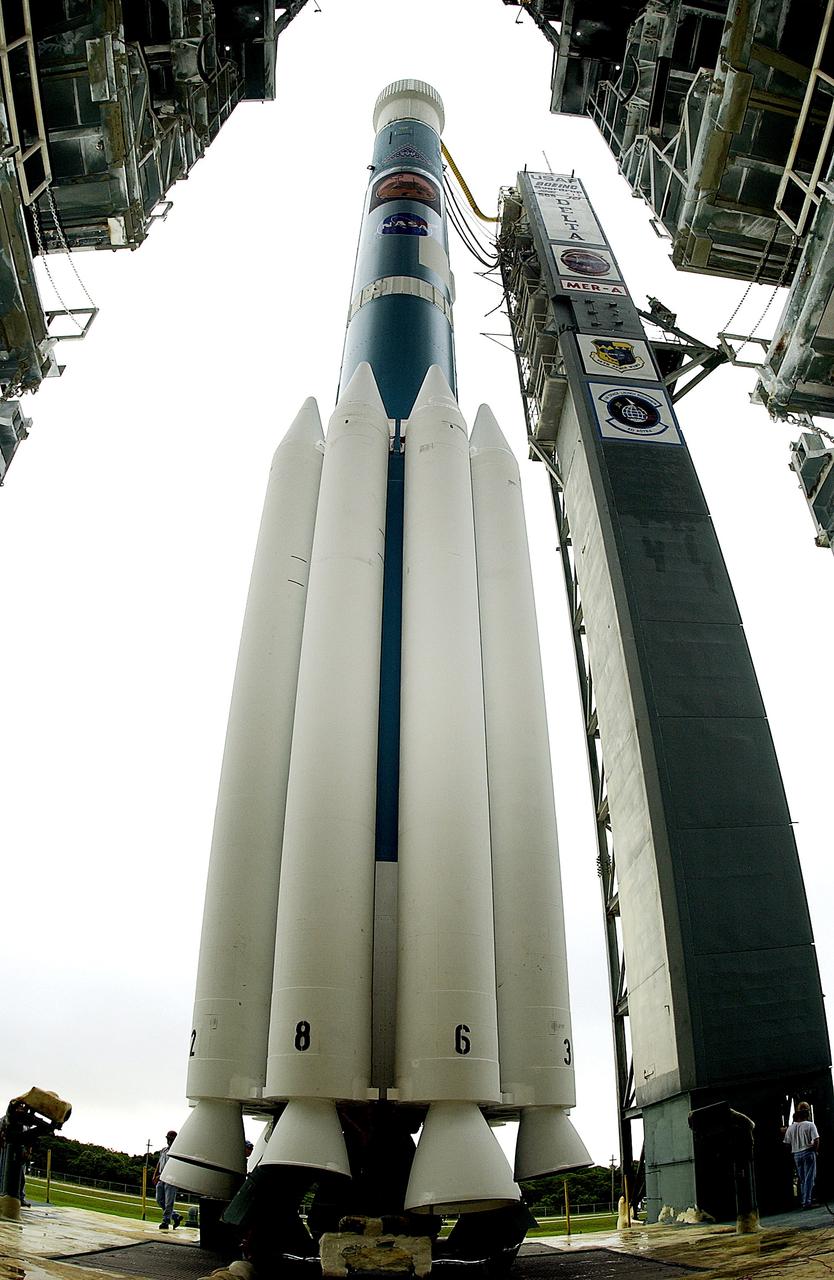
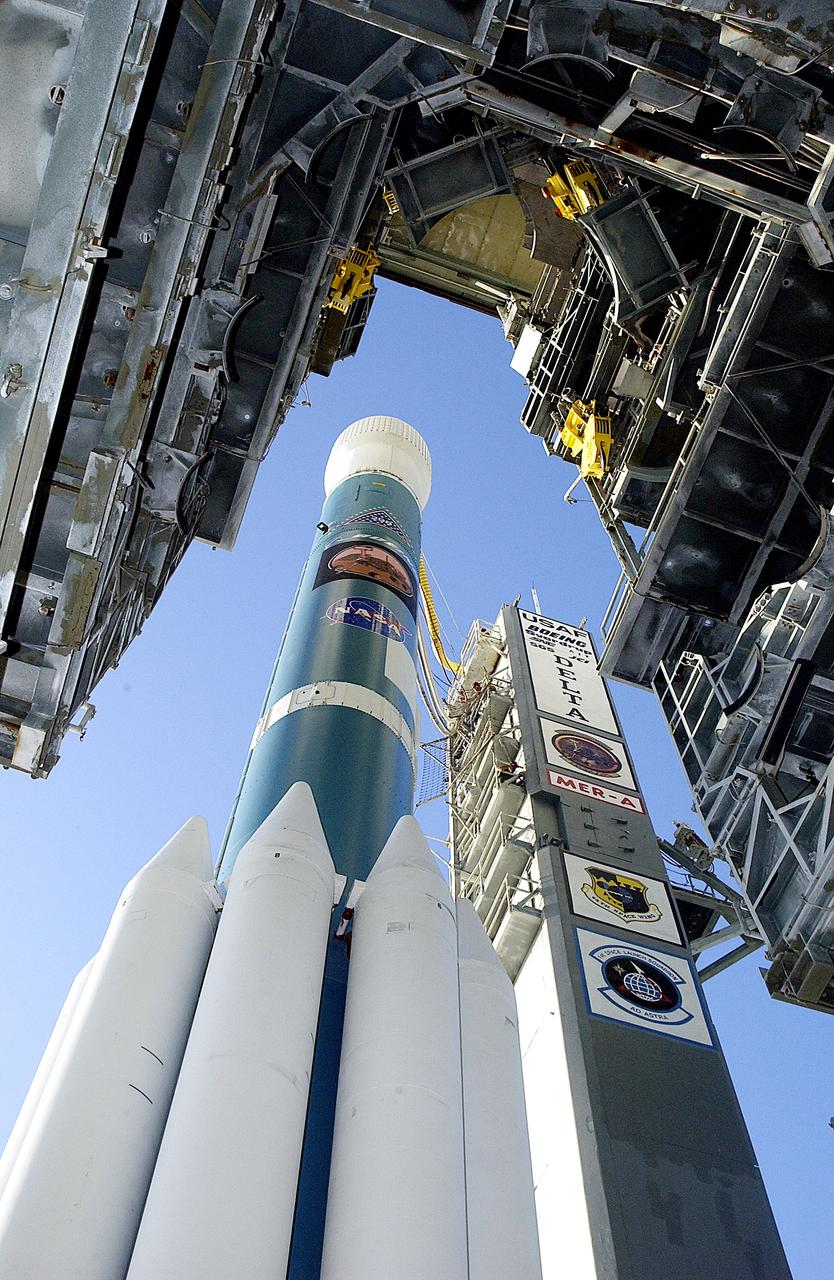
KENNEDY SPACE CENTER, FLA. -   The Boeing Delta II rocket and its Mars Exploration Rover (MER-A) payload is viewed from under the launch tower as it moves away on Launch Complex 17-A, Cape Canaveral Air Force Station.  This will be a second attempt at launch.  The first attempt on June 8, 2003, was scrubbed due to bad weather in the vicinity.  MER-A is the first of two rovers being launched to Mars.  When the two rovers arrive at Mars in 2004, they will bounce to airbag-cushioned landings at sites offering a balance of favorable conditions for safe landings and interesting science. The rovers see sharper images, can explore farther and examine rocks better than anything that has ever landed on Mars.  The designated site for MER-A mission is Gusev Crater, which appears to have been a crater lake.  The second rover, MER-B, is scheduled to launch June 25.
KENNEDY SPACE CENTER, FLA. - The Boeing Delta II rocket and its Mars Exploration Rover (MER-A) payload is viewed from under the launch tower as it moves away on Launch Complex 17-A, Cape Canaveral Air Force Station. This will be a second attempt at launch. The first attempt on June 8, 2003, was scrubbed due to bad weather in the vicinity. MER-A is the first of two rovers being launched to Mars. When the two rovers arrive at Mars in 2004, they will bounce to airbag-cushioned landings at sites offering a balance of favorable conditions for safe landings and interesting science. The rovers see sharper images, can explore farther and examine rocks better than anything that has ever landed on Mars. The designated site for MER-A mission is Gusev Crater, which appears to have been a crater lake. The second rover, MER-B, is scheduled to launch June 25.
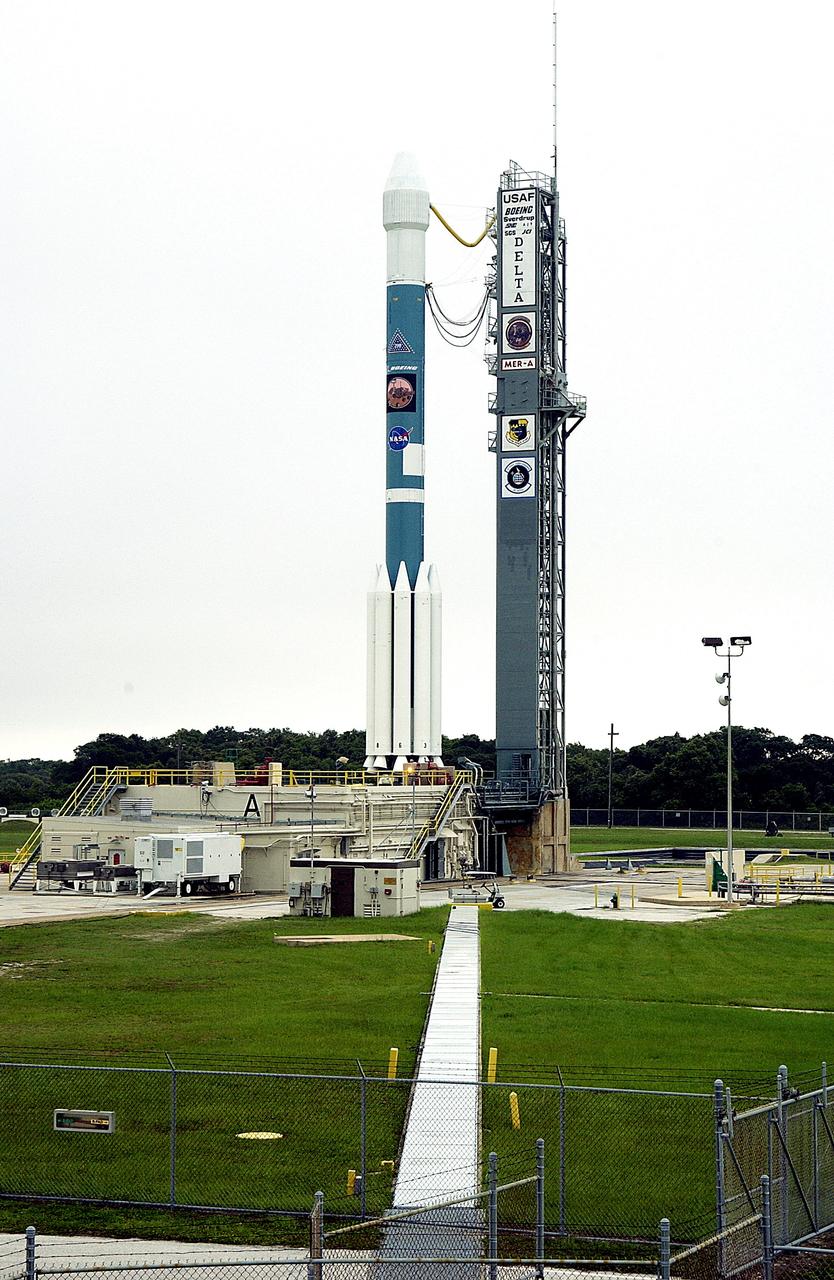
KENNEDY SPACE CENTER, FLA. -  On Launch Complex 17-A, Cape Canaveral Air Force Station, the Boeing Delta II rocket and its Mars Exploration Rover (MER-A) payload waits for rollback of the launch tower in preparation for a second attempt at launch.  The first attempt on June 8, 2003, was scrubbed due to bad weather in the vicinity.  MER-A is the first of two rovers being launched to Mars.  When the two rovers arrive at Mars in 2004, they will bounce to airbag-cushioned landings at sites offering a balance of favorable conditions for safe landings and interesting science. The rovers see sharper images, can explore farther and examine rocks better than anything that has ever landed on Mars.  The designated site for MER-A mission is Gusev Crater, which appears to have been a crater lake.  The second rover, MER-B, is scheduled to launch June 25.
KENNEDY SPACE CENTER, FLA. - On Launch Complex 17-A, Cape Canaveral Air Force Station, the Boeing Delta II rocket and its Mars Exploration Rover (MER-A) payload waits for rollback of the launch tower in preparation for a second attempt at launch. The first attempt on June 8, 2003, was scrubbed due to bad weather in the vicinity. MER-A is the first of two rovers being launched to Mars. When the two rovers arrive at Mars in 2004, they will bounce to airbag-cushioned landings at sites offering a balance of favorable conditions for safe landings and interesting science. The rovers see sharper images, can explore farther and examine rocks better than anything that has ever landed on Mars. The designated site for MER-A mission is Gusev Crater, which appears to have been a crater lake. The second rover, MER-B, is scheduled to launch June 25.
jsc2018e097270 - At the Gagarin Cosmonaut Training Center in Star City, Russia, Expedition 58 crewmember Oleg Kononenko of Roscosmos walks to a waiting bus Nov. 19 that will take him and his crewmates to a nearby airfield for a flight to their launch site in Baikonur, Kazakhstan. Kononenko, Anne McClain of NASA and David Saint-Jacques of the Canadian Space Agency will launch Dec. 3 on the Soyuz MS-11 spacecraft from the Baikonur Cosmodrome in Kazakhstan for a six-and-a-half month mission on the International Space Station.  NASA/Sarah Volkman
jsc2018e097270 - At the Gagarin Cosmonaut Training Center in Star City, Russia, Expedition 58 crewmember Oleg Kononenko of Roscosmos walks to a waiting bus Nov. 19 that will take him and his crewmates to a nearby airfield for a flight to their launch site
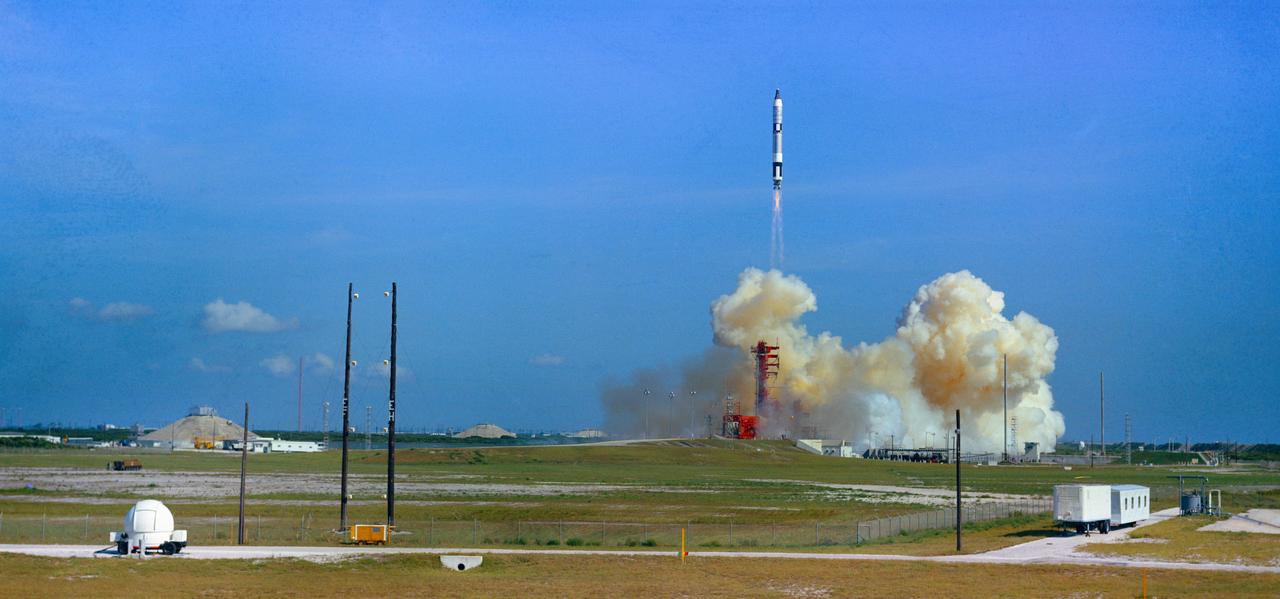
S64-21560 (8 April 1964) --- Gemini/Titan-II launch vehicle #1 liftoff at Cape Kennedy, Florida.
Gemini/Titan-II launch vehicle #1 liftoff at Cape Kennedy, Florida.
STS058-S-090 (18 Oct 1993) --- Creating large clouds of smoke the Space Shuttle Columbia lifts off from Launch Complex 39 at Kennedy Space Center (KSC).  Liftoff occurred at 10:53 a.m. (EDT), October 18, 1993.  Along with its Spacelab Life Sciences-2 payload, Columbia carries astronauts John E. Blaha, Richard A. Searfoss, Rhea Seddon, Shannon W. Lucid, David A. Wolf and William S. McArthur along with payload specialist Martin J. Fettman.
Launch of STS-58 Space Shuttle Columbia
S65-29639 (3 June 1965) --- The Gemini-Titan 4 (GT-4) spaceflight launches from Cape Kennedy's Pad 19 at 10:16 a.m. (EST) on June 3, 1965. The GT-4 spacecraft carried astronauts James A. McDivitt, command pilot, and Edward H. White II, pilot, on a four-day, 62-revolution mission.
View of the Gemini-Titan 4 spacecraft launch
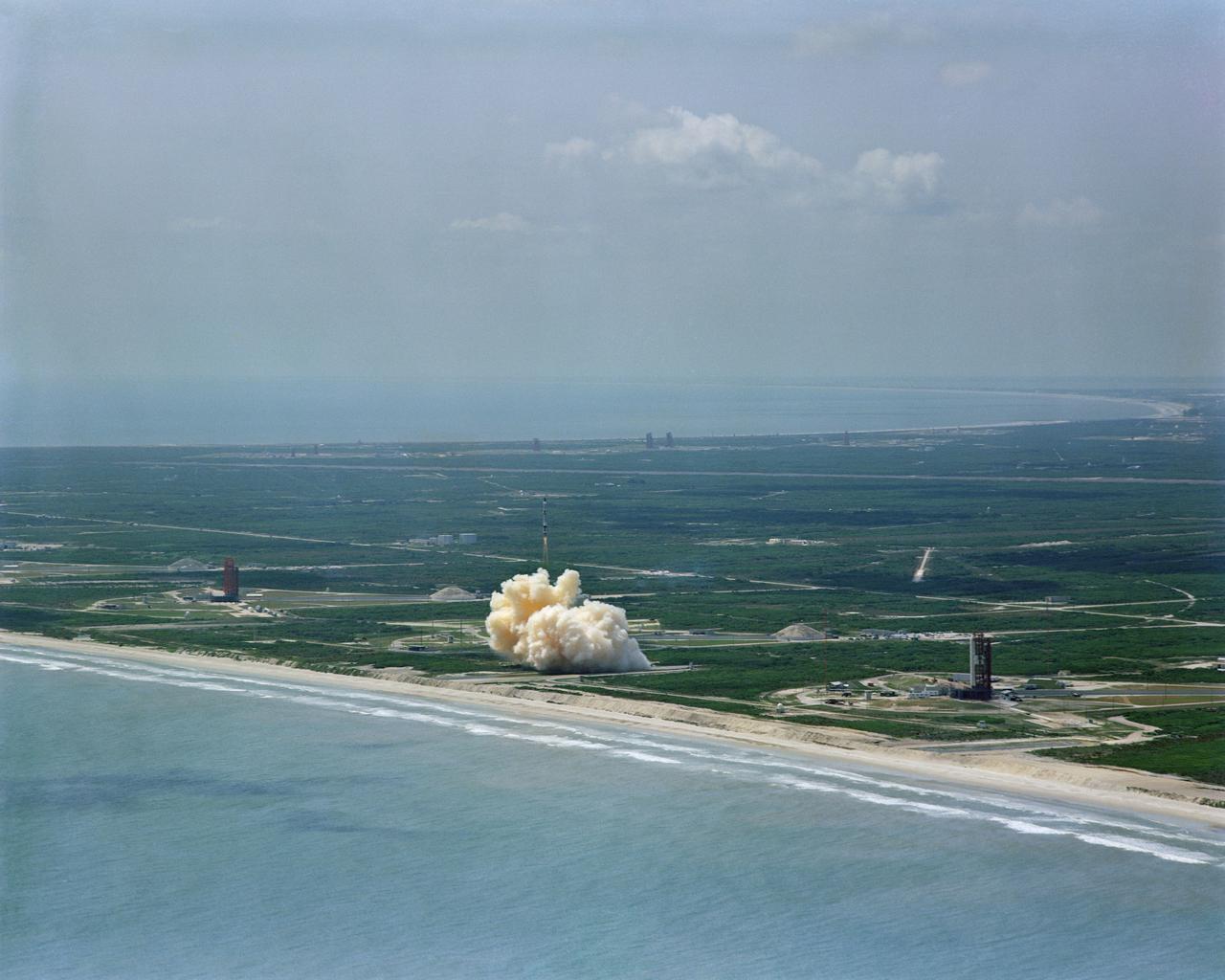
S64-22412 (8 April 1964) --- Aerial view of the Gemini/Titan-II launch vehicle #1 liftoff at Cape Kennedy, Florida.
Aerial view Gemini/Titan-II launch vehicle #1 liftoff at Cape Kennedy
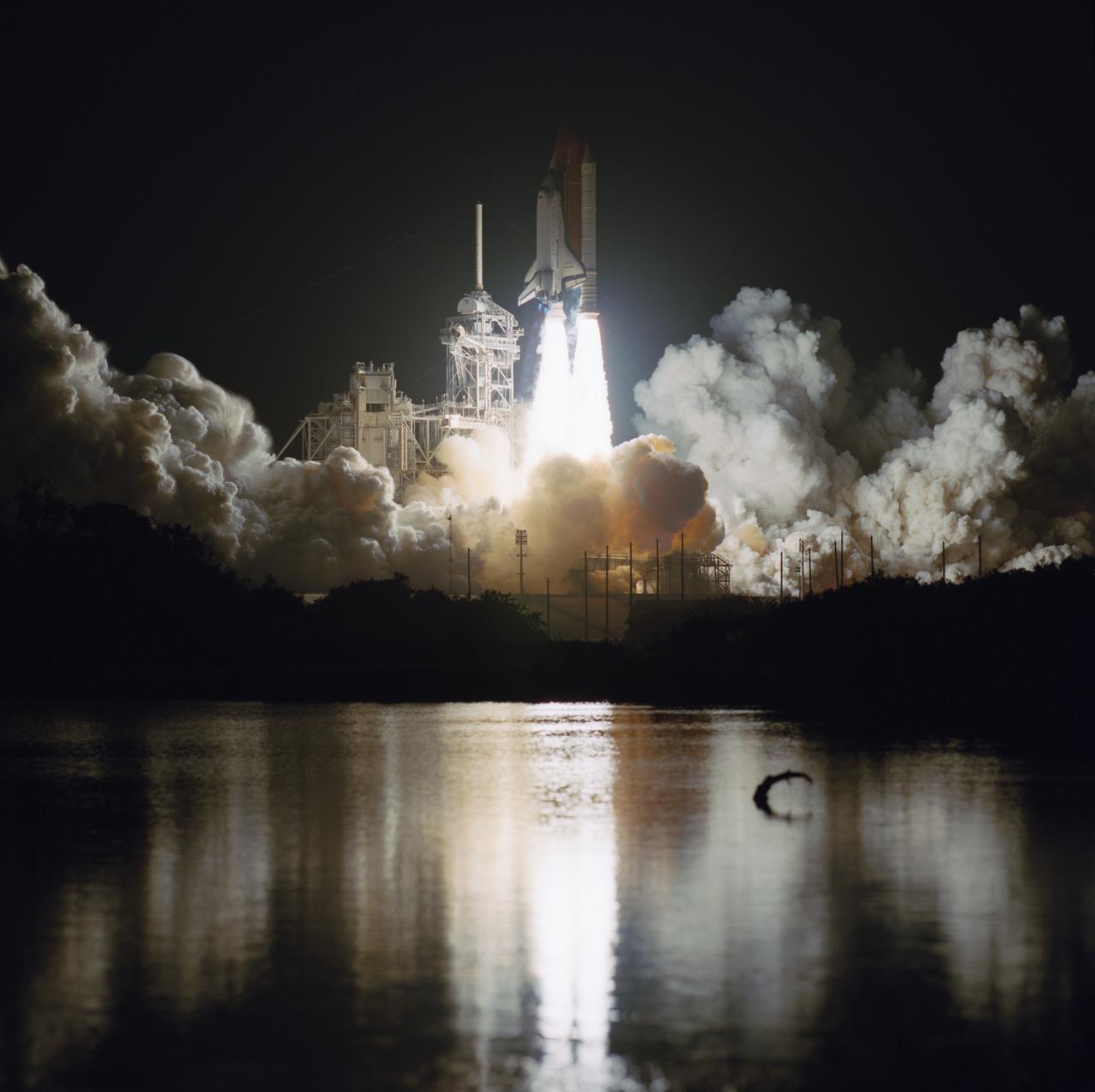
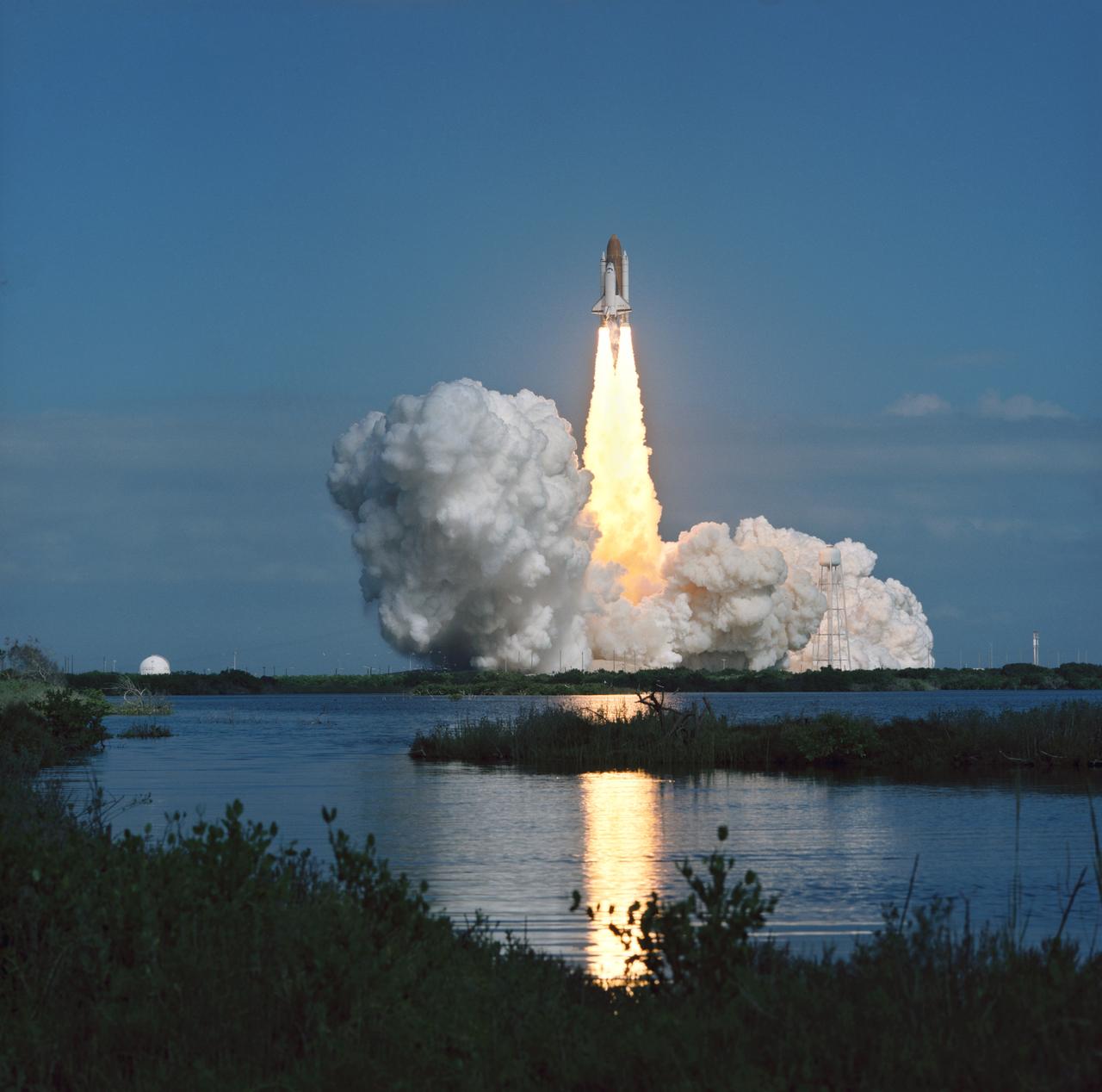
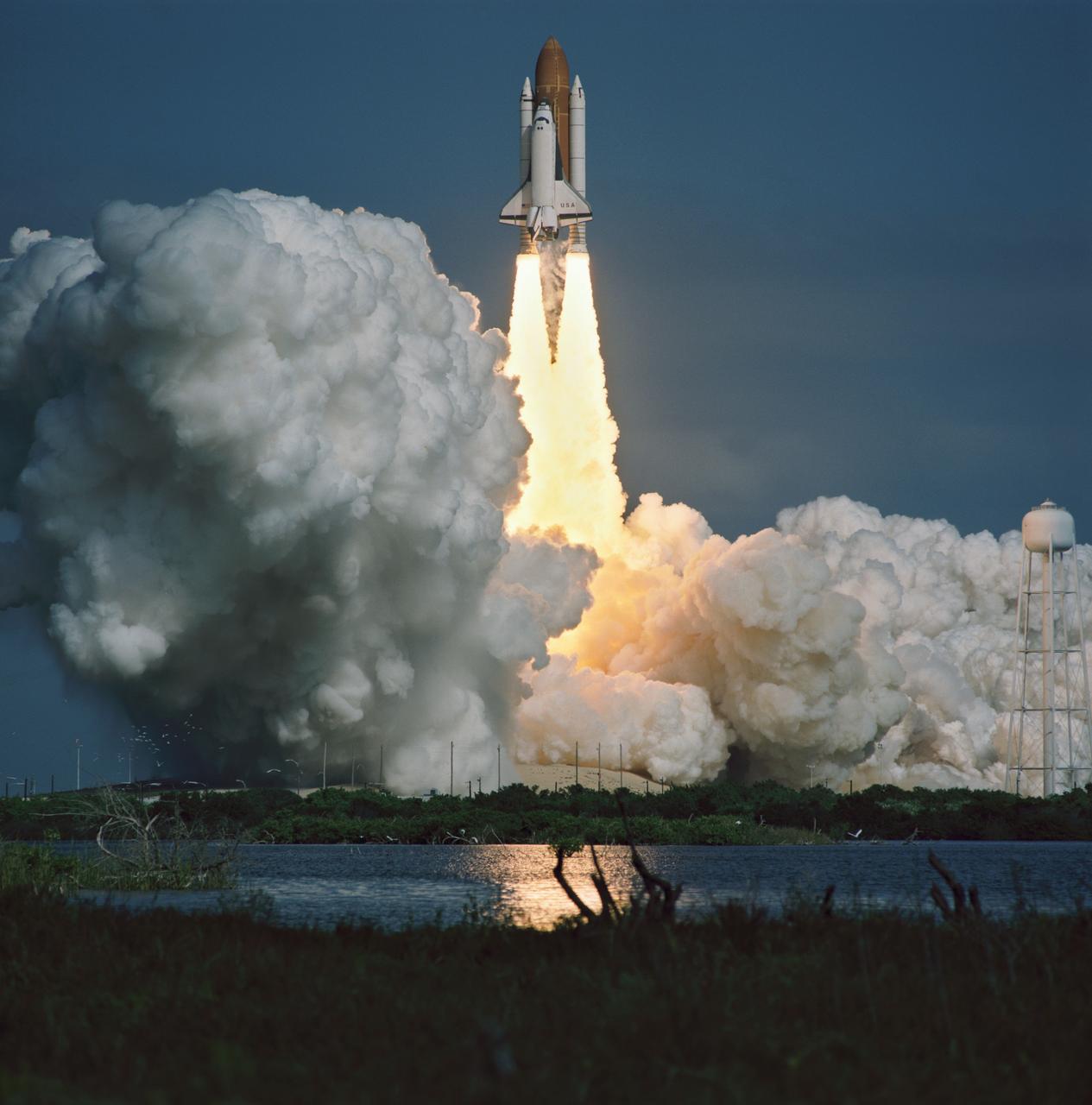
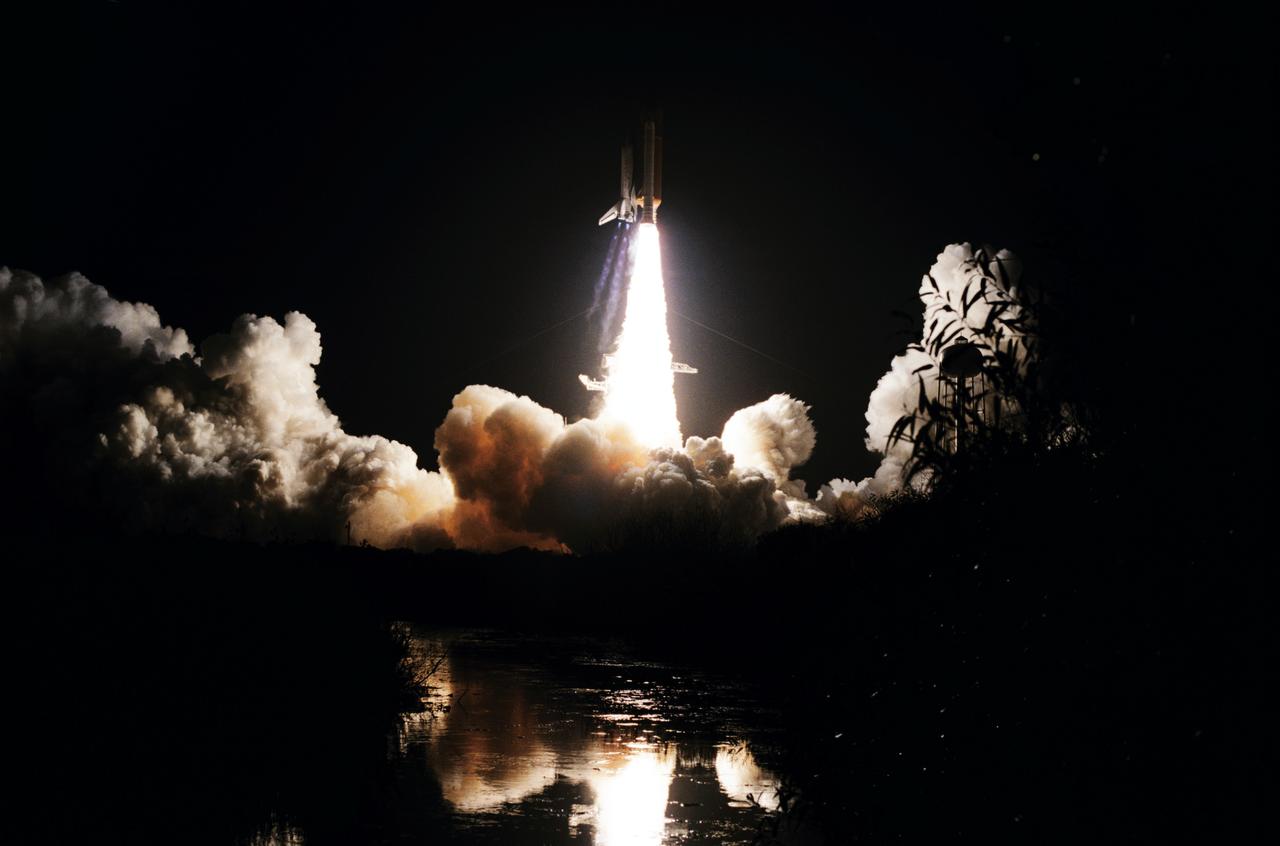
STS058-S-092 (18 Oct 1993) --- The Space Shuttle Columbia, with a crew of seven and a science module aboard, lifts off from Launch Complex 39 at Kennedy Space Center (KSC), leaving its reflection in nearby marsh.  Launch occurred at 10:53 a.m. (EDT), October 18, 1993.  Onboard were astronauts John E. Blaha, Richard A. Searfoss, Rhea Seddon, Shannon W. Lucid, David A. Wolf and William S. McArthur along with payload specialist Martin J. Fettman.
Launch of STS-58 Space Shuttle Columbia
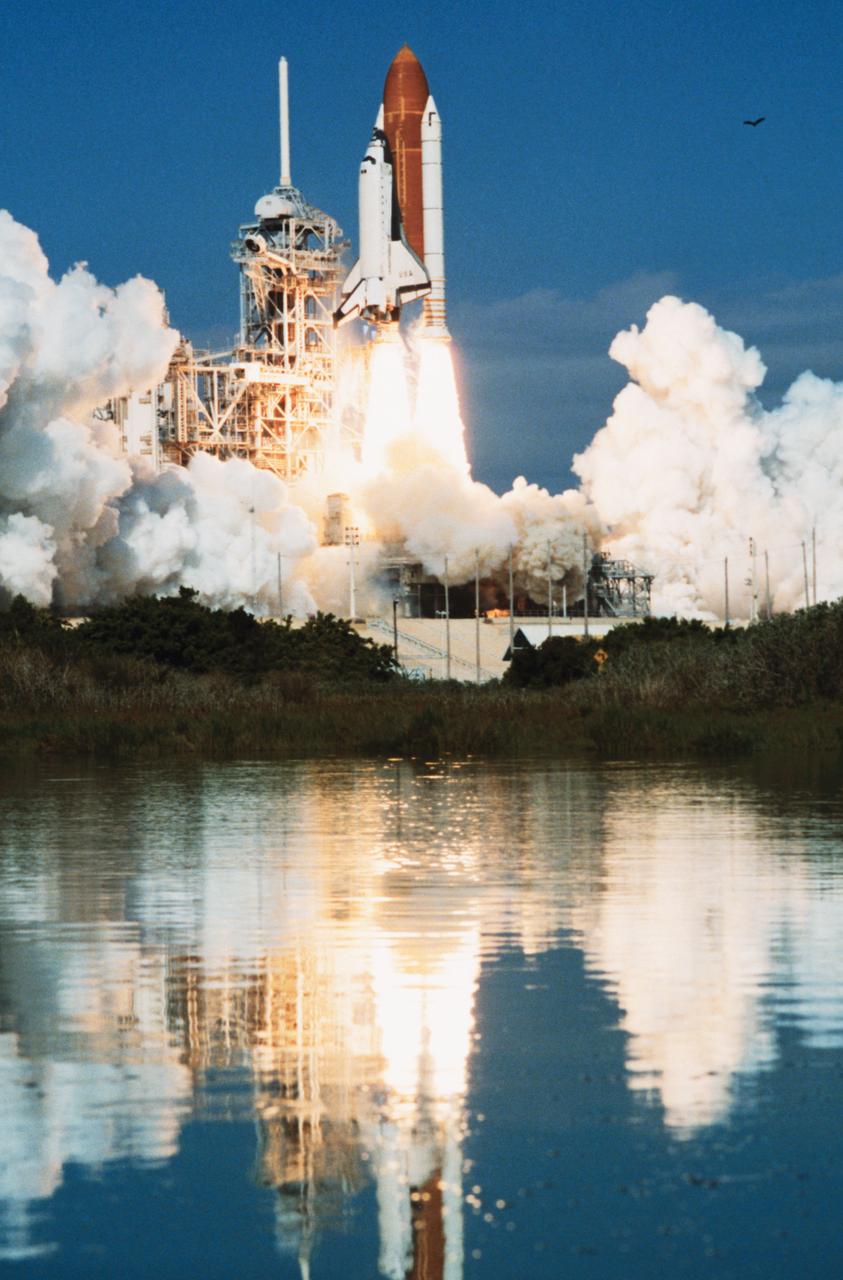
STS058-S-091 (18 Oct 1993) --- A distant shot shows the Space Shuttle Columbia, lifting off from Launch Complex 39 at Kennedy Space Center (KSC), reflecting its image in nearby marsh waters.  Launch occurred at 10:53 a.m. (EDT), October 18, 1993.  Along with six NASA astronauts and a veterinarian from the private sector, the Spacelab Life Sciences-2 (SLS-2) science module was aboard.  Onboard were astronauts John E. Blaha, Richard A. Searfoss, Rhea Seddon, Shannon W. Lucid, David A. Wolf and William S. McArthur along with payload specialist Martin J. Fettman.
Launch of STS-58 Space Shuttle Columbia
S65-50774 (21 Aug. 1965) --- The National Aeronautics and Space Administration launched the Gemini-5 spacecraft from Pad 19 at 9 a.m. (EST) Aug. 21, 1965, on a planned eight-day orbital mission. Astronaut L. Gordon Cooper Jr. was the command pilot; and astronaut Charles Conrad Jr. was the pilot. A full duration mission will achieve the longest manned spaceflight to date.
Launch of the Gemini 5 spacecraft from Pad 19 at 9 a.m. Aug. 21, 1965.
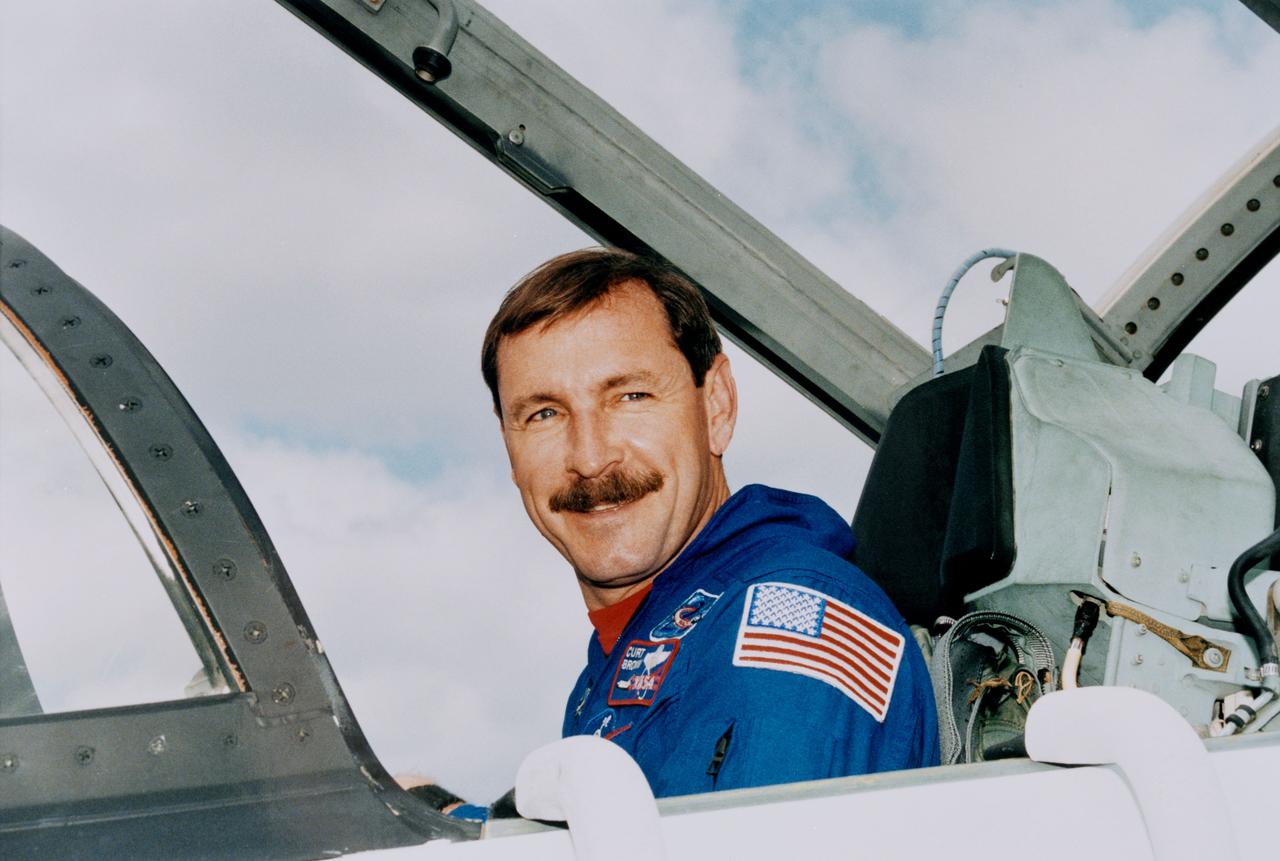
S96-08025 (22 April 1996) --- The STS-77 crew arrives at the Kennedy Space Center's (KSC) Shuttle Landing Facility (SLF) for the Terminal Countdown Demonstration Test (TCDT), a dress rehearsal for launch.  Shown here is Curtis L. Brown, Jr., pilot, who will be embarking on his third spaceflight when the Space Shuttle Endeavour lifts off on the STS-77 mission in mid-May.  Over the next several days, the six-member crew will participate in emergency egress training at the pad and a simulated launch countdown that includes the entire launch team.
STS-77 crew at KSC for TCDT
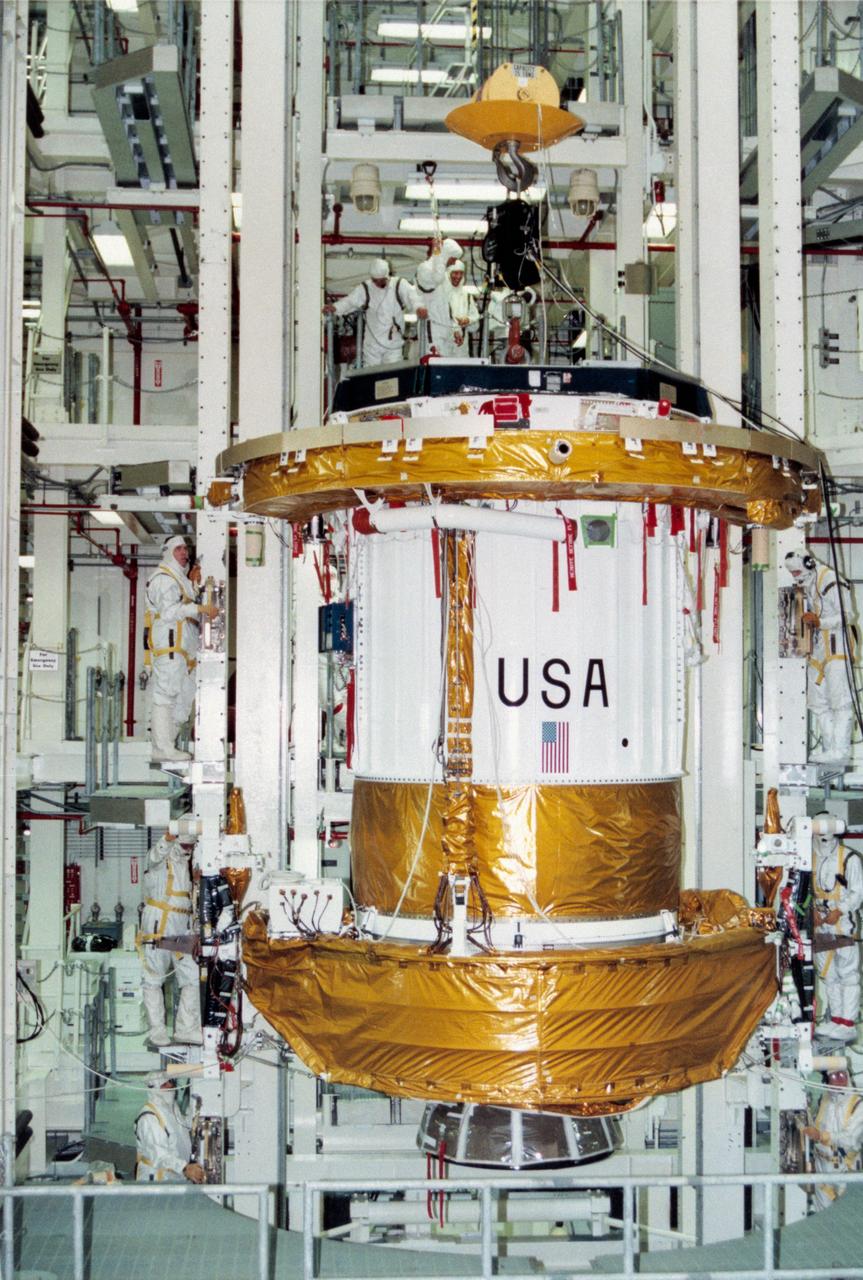
S95-08961  (4 APRIL 1995) --- Workers in the Vertical Processing Facility (VPF) oversee and control the lowering of the Inertial Upper Stage (IUS) booster into a work stand for preflight processing.  The IUS will be attached to the Tracking and Data Relay Satellite (TDRS-G), which will be deployed by the Space Shuttle Discovery on the STS-70 mission.  The IUS is scheduled to be mated to the TDRS satellite later in April.  Liftoff of STS-70 is slated for no earlier than June 8, 1995.
STS-70 payload preparation
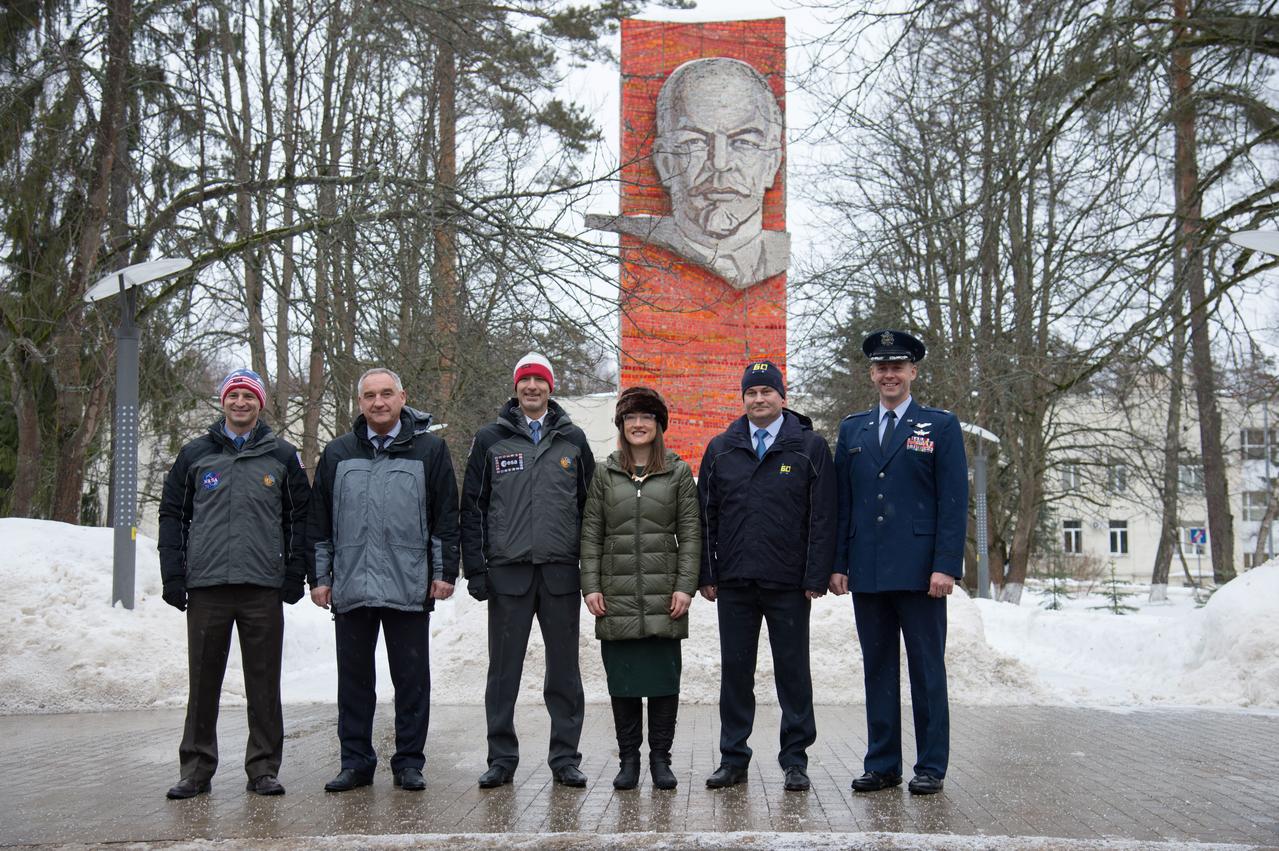
At the Gagarin Cosmonaut Training Center in Star City, Russia, the Expedition 59 prime and backup crewmembers pose for pictures Feb. 26 in front of the statue of Vladimir Lenin as they prepared to depart for their launch site at the Baikonur Cosmodrome in Kazakhstan for final pre-launch training. From left to right are the backup crew, Drew Morgan of NASA, Alexander Skvortsov of Roscosmos and Luca Parmitano of the European Space Agency, and the prime crew, Christina Koch of NASA, Alexey Ovchinin of Roscosmos and Nick Hague of NASA, who will launch on March 14, U.S. time, on the Soyuz MS-12 spacecraft from the Baikonur Cosmodrome in Kazakhstan for a six-and-a-half month mission on the International Space Station.  NASA/Beth Weissinger
At the Gagarin Cosmonaut Training Center in Star City, Russia, the Expedition 59 prime and backup crewmembers pose for pictures Feb. 26 in front of the statue of Vladimir Lenin as they prepared to depart for their launch site at the Baikonur Cosmodrome in
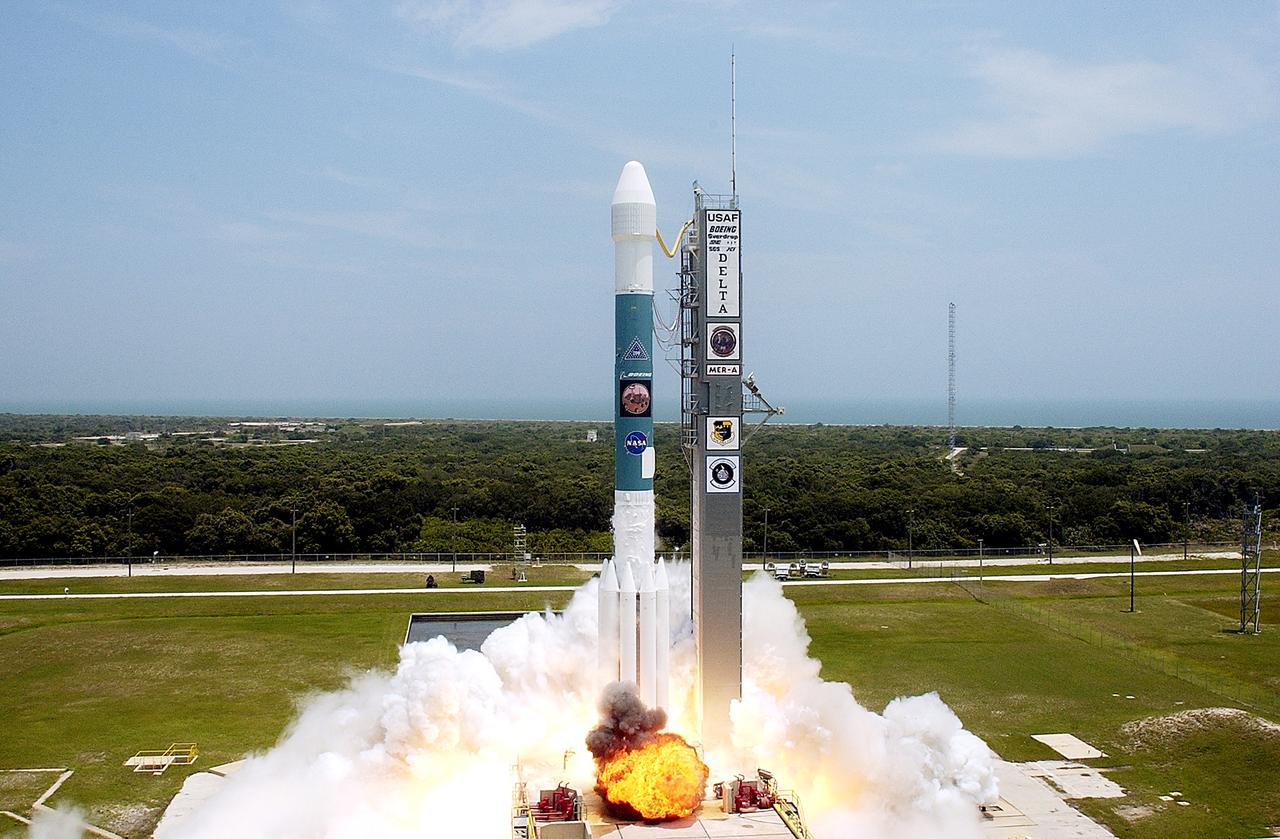
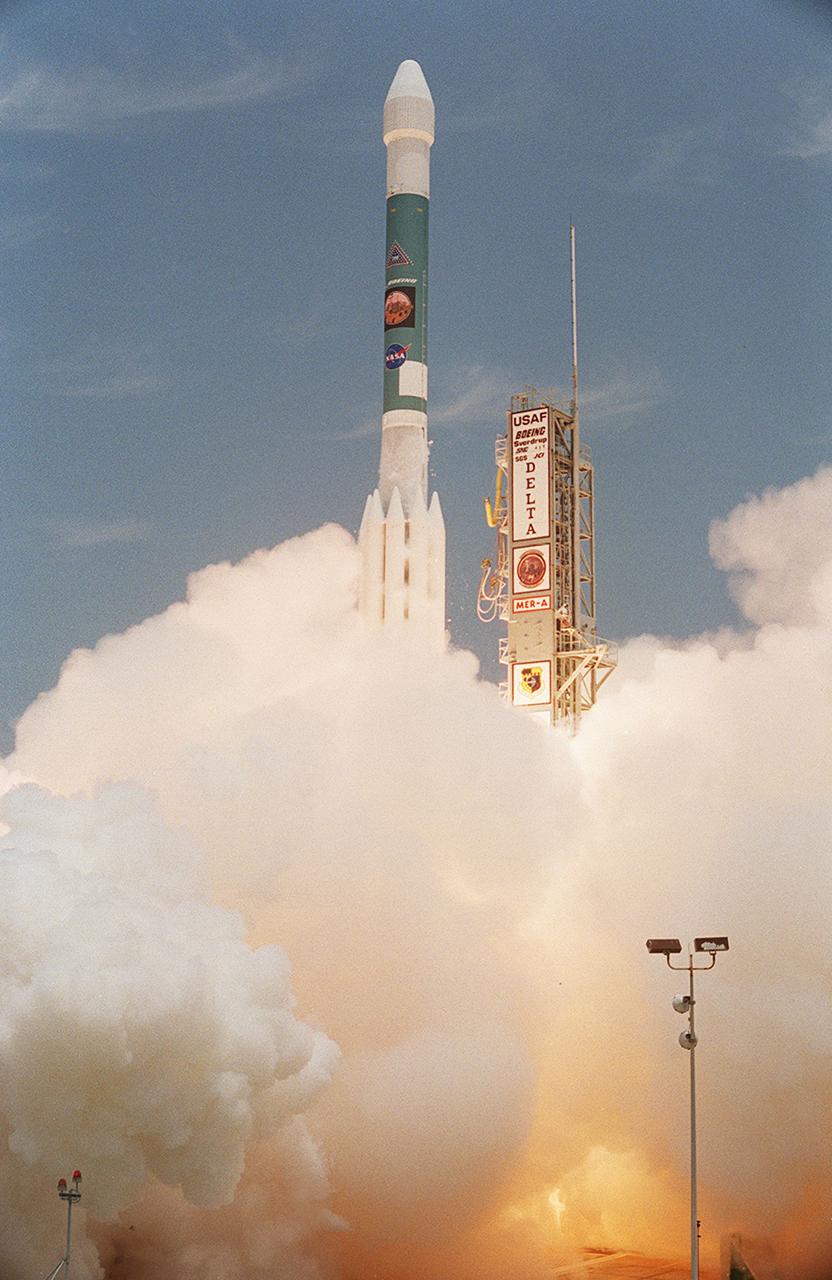
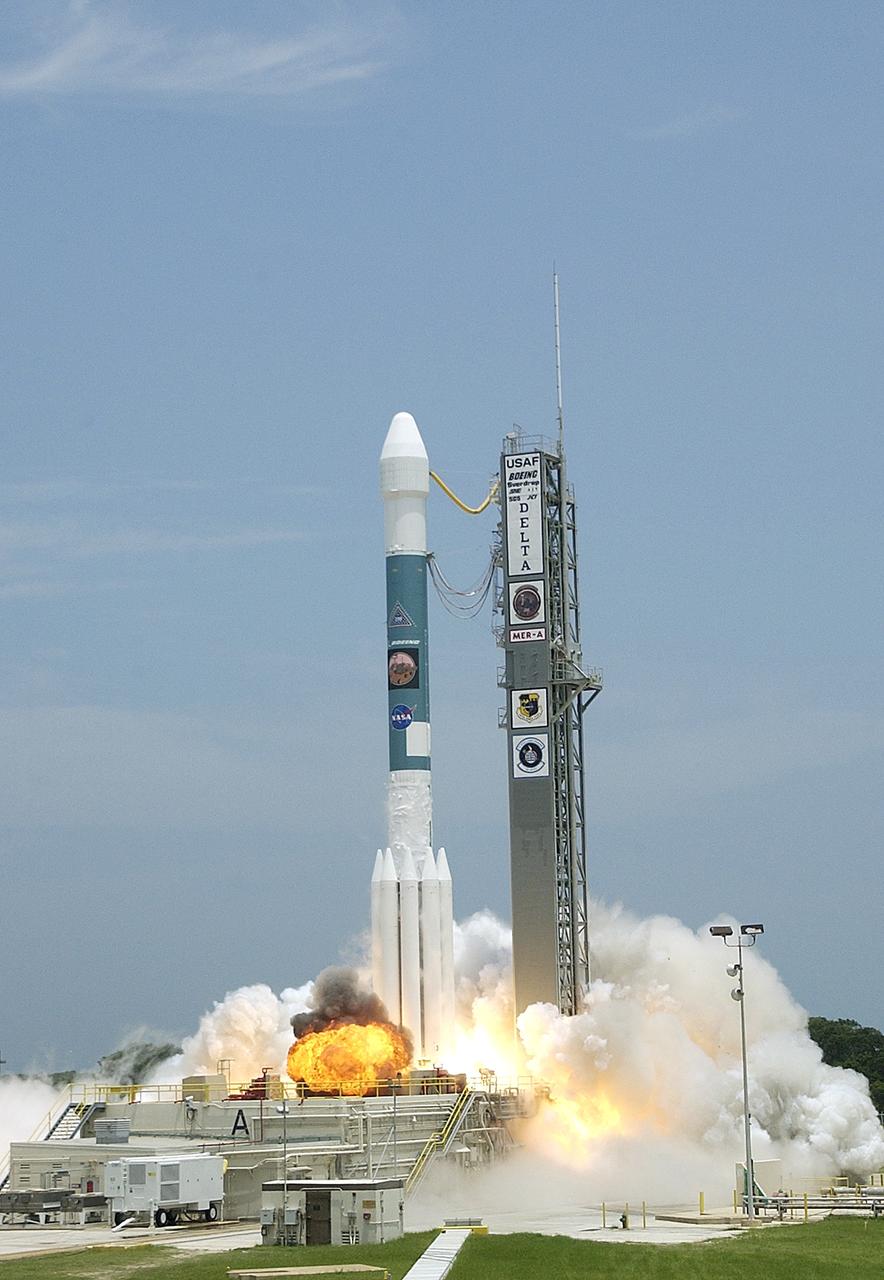
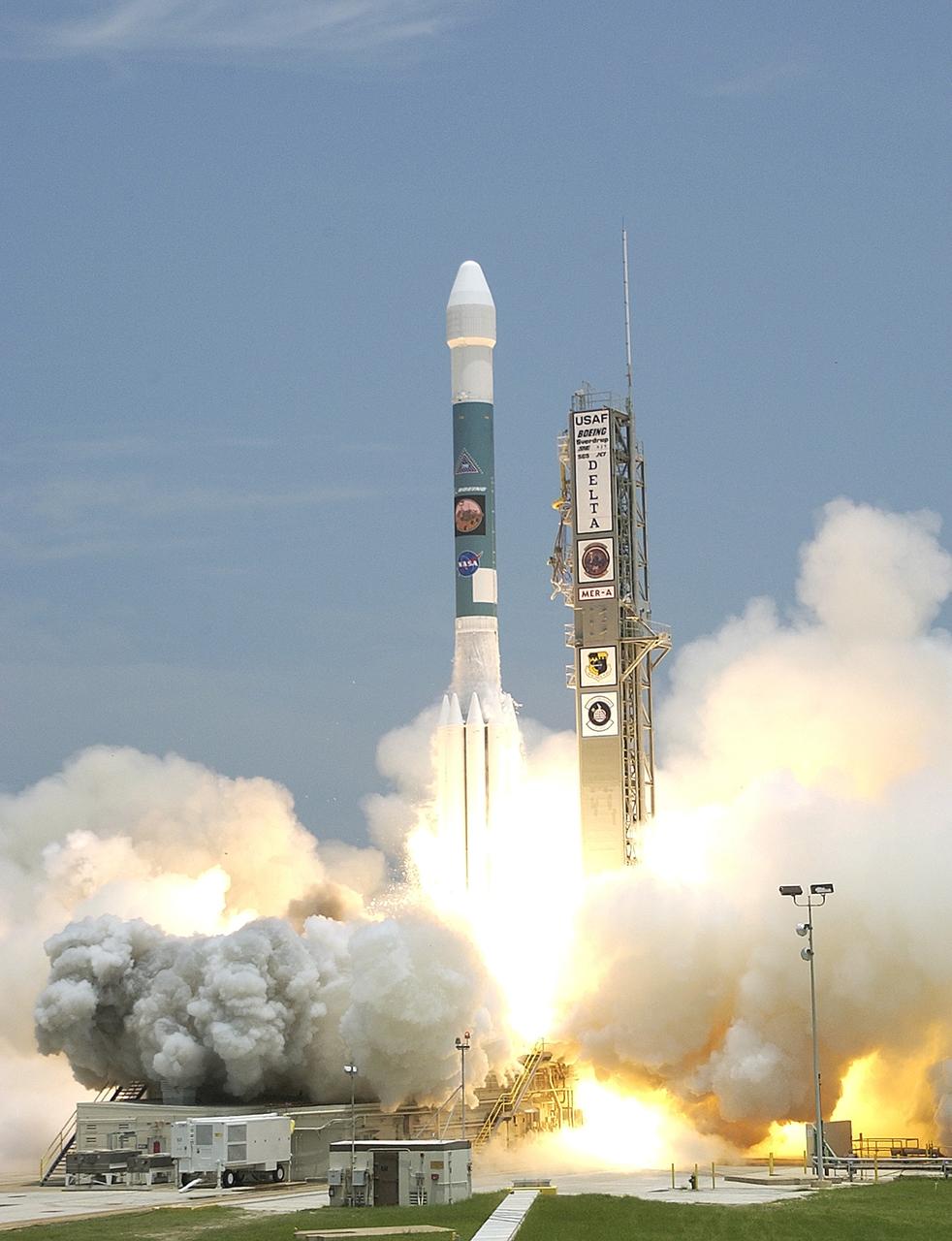
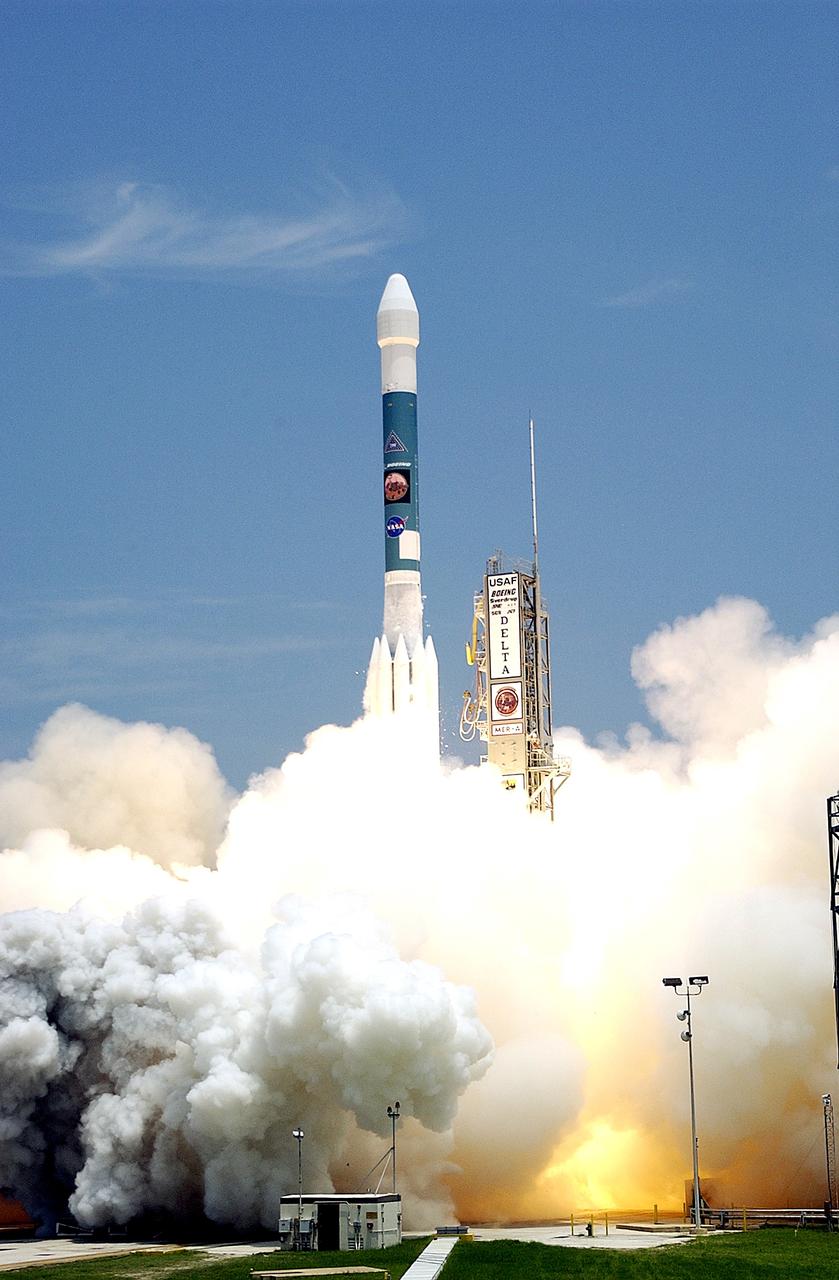
KENNEDY SPACE CENTER, FLA. -  The Delta II rocket with its Mars Exploration Rover (MER-A) payload leaps off the launch pad into the blue sky to begin its journey to Mars.  Liftoff occurred on time at 1:58 p.m. EDT from Launch Complex 17-A, Cape Canaveral Air Force Station.  MER-A, known as "Spirit," is the first of two rovers being launched to Mars. When the two rovers arrive at the red planet in 2004, they will bounce to airbag-cushioned landings at sites offering a balance of favorable conditions for safe landings and interesting science. The rovers see sharper images, can explore farther and examine rocks better than anything that has ever landed on Mars. The designated site for the MER-A mission is Gusev Crater, which appears to have been a crater lake. The second rover, MER-B, is scheduled to launch June 25.
KENNEDY SPACE CENTER, FLA. - The Delta II rocket with its Mars Exploration Rover (MER-A) payload leaps off the launch pad into the blue sky to begin its journey to Mars. Liftoff occurred on time at 1:58 p.m. EDT from Launch Complex 17-A, Cape Canaveral Air Force Station. MER-A, known as "Spirit," is the first of two rovers being launched to Mars. When the two rovers arrive at the red planet in 2004, they will bounce to airbag-cushioned landings at sites offering a balance of favorable conditions for safe landings and interesting science. The rovers see sharper images, can explore farther and examine rocks better than anything that has ever landed on Mars. The designated site for the MER-A mission is Gusev Crater, which appears to have been a crater lake. The second rover, MER-B, is scheduled to launch June 25.
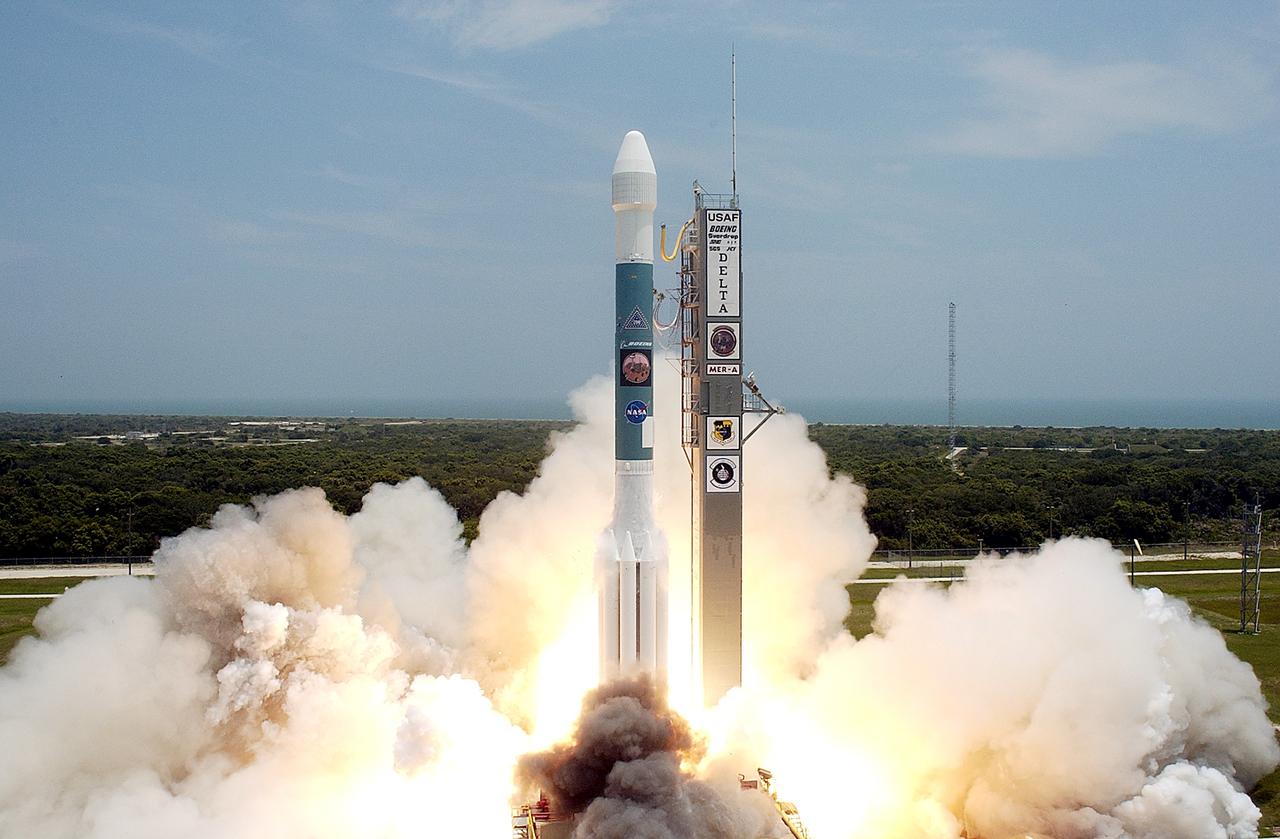
KENNEDY SPACE CENTER, FLA. -  With a glimpse of the Atlantic Ocean over the horizon, the Delta II rocket with its Mars Exploration Rover (MER-A) payload leaps off the launch pad into the blue sky to begin its journey to Mars.  Liftoff occurred on time at 1:58 p.m. EDT from Launch Complex 17-A, Cape Canaveral Air Force Station.  MER-A, known as "Spirit," is the first of two rovers being launched to Mars. When the two rovers arrive at the red planet in 2004, they will bounce to airbag-cushioned landings at sites offering a balance of favorable conditions for safe landings and interesting science. The rovers see sharper images, can explore farther and examine rocks better than anything that has ever landed on Mars. The designated site for the MER-A mission is Gusev Crater, which appears to have been a crater lake. The second rover, MER-B, is scheduled to launch June 25.
KENNEDY SPACE CENTER, FLA. - With a glimpse of the Atlantic Ocean over the horizon, the Delta II rocket with its Mars Exploration Rover (MER-A) payload leaps off the launch pad into the blue sky to begin its journey to Mars. Liftoff occurred on time at 1:58 p.m. EDT from Launch Complex 17-A, Cape Canaveral Air Force Station. MER-A, known as "Spirit," is the first of two rovers being launched to Mars. When the two rovers arrive at the red planet in 2004, they will bounce to airbag-cushioned landings at sites offering a balance of favorable conditions for safe landings and interesting science. The rovers see sharper images, can explore farther and examine rocks better than anything that has ever landed on Mars. The designated site for the MER-A mission is Gusev Crater, which appears to have been a crater lake. The second rover, MER-B, is scheduled to launch June 25.
KENNEDY SPACE CENTER, FLA. - Blue sky and sun give a dramatic backdrop for the launch of  the Delta II rocket with its Mars Exploration Rover (MER-A) payload.  Liftoff occurred on time at 1:58 p.m. EDT from Launch Complex 17-A, Cape Canaveral Air Force Station. MER-A, known as "Spirit," is the first of two rovers being launched to Mars. When the two rovers arrive at the red planet in 2004, they will bounce to airbag-cushioned landings at sites offering a balance of favorable conditions for safe landings and interesting science. The rovers see sharper images, can explore farther and examine rocks better than anything that has ever landed on Mars. The designated site for the MER-A mission is Gusev Crater, which appears to have been a crater lake. The second rover, MER-B, is scheduled to launch June 25.
KENNEDY SPACE CENTER, FLA. - Blue sky and sun give a dramatic backdrop for the launch of the Delta II rocket with its Mars Exploration Rover (MER-A) payload. Liftoff occurred on time at 1:58 p.m. EDT from Launch Complex 17-A, Cape Canaveral Air Force Station. MER-A, known as "Spirit," is the first of two rovers being launched to Mars. When the two rovers arrive at the red planet in 2004, they will bounce to airbag-cushioned landings at sites offering a balance of favorable conditions for safe landings and interesting science. The rovers see sharper images, can explore farther and examine rocks better than anything that has ever landed on Mars. The designated site for the MER-A mission is Gusev Crater, which appears to have been a crater lake. The second rover, MER-B, is scheduled to launch June 25.
KENNEDY SPACE CENTER, FLA. -    With smoke and steam billowing beneath, the Delta II rocket with its Mars Exploration Rover (MER-A) payload leaps off the launch pad into the blue sky to begin its journey to Mars.  Liftoff occurred on time at 1:58 p.m. EDT from Launch Complex 17-A, Cape Canaveral Air Force Station.  MER-A, known as "Spirit," is the first of two rovers being launched to Mars. When the two rovers arrive at the red planet in 2004, they will bounce to airbag-cushioned landings at sites offering a balance of favorable conditions for safe landings and interesting science. The rovers see sharper images, can explore farther and examine rocks better than anything that has ever landed on Mars. The designated site for the MER-A mission is Gusev Crater, which appears to have been a crater lake. The second rover, MER-B, is scheduled to launch June 25.
KENNEDY SPACE CENTER, FLA. - With smoke and steam billowing beneath, the Delta II rocket with its Mars Exploration Rover (MER-A) payload leaps off the launch pad into the blue sky to begin its journey to Mars. Liftoff occurred on time at 1:58 p.m. EDT from Launch Complex 17-A, Cape Canaveral Air Force Station. MER-A, known as "Spirit," is the first of two rovers being launched to Mars. When the two rovers arrive at the red planet in 2004, they will bounce to airbag-cushioned landings at sites offering a balance of favorable conditions for safe landings and interesting science. The rovers see sharper images, can explore farther and examine rocks better than anything that has ever landed on Mars. The designated site for the MER-A mission is Gusev Crater, which appears to have been a crater lake. The second rover, MER-B, is scheduled to launch June 25.
KENNEDY SPACE CENTER, FLA. -    On Launch Complex 17-A, Cape Canaveral Air Force Station, the Boeing Delta II rocket and its Mars Exploration Rover (MER-A) payload are in the clear after tower rollback in preparation for a second attempt at launch.  The first attempt on June 8, 2003, was scrubbed due to bad weather in the vicinity.  MER-A is the first of two rovers being launched to Mars.  When the two rovers arrive at Mars in 2004, they will bounce to airbag-cushioned landings at sites offering a balance of favorable conditions for safe landings and interesting science. The rovers see sharper images, can explore farther and examine rocks better than anything that has ever landed on Mars.  The designated site for MER-A mission is Gusev Crater, which appears to have been a crater lake.  The second rover, MER-B, is scheduled to launch June 25.
KENNEDY SPACE CENTER, FLA. - On Launch Complex 17-A, Cape Canaveral Air Force Station, the Boeing Delta II rocket and its Mars Exploration Rover (MER-A) payload are in the clear after tower rollback in preparation for a second attempt at launch. The first attempt on June 8, 2003, was scrubbed due to bad weather in the vicinity. MER-A is the first of two rovers being launched to Mars. When the two rovers arrive at Mars in 2004, they will bounce to airbag-cushioned landings at sites offering a balance of favorable conditions for safe landings and interesting science. The rovers see sharper images, can explore farther and examine rocks better than anything that has ever landed on Mars. The designated site for MER-A mission is Gusev Crater, which appears to have been a crater lake. The second rover, MER-B, is scheduled to launch June 25.
KENNEDY SPACE CENTER, FLA. -  With smoke and steam billowing beneath, the Delta II rocket with its Mars Exploration Rover (MER-A) payload leaps off the launch pad into the blue sky to begin its journey to Mars.  Liftoff occurred on time at 1:58 p.m. EDT from Launch Complex 17-A, Cape Canaveral Air Force Station.  MER-A, known as "Spirit," is the first of two rovers being launched to Mars. When the two rovers arrive at the red planet in 2004, they will bounce to airbag-cushioned landings at sites offering a balance of favorable conditions for safe landings and interesting science. The rovers see sharper images, can explore farther and examine rocks better than anything that has ever landed on Mars. The designated site for the MER-A mission is Gusev Crater, which appears to have been a crater lake. The second rover, MER-B, is scheduled to launch June 25.
KENNEDY SPACE CENTER, FLA. - With smoke and steam billowing beneath, the Delta II rocket with its Mars Exploration Rover (MER-A) payload leaps off the launch pad into the blue sky to begin its journey to Mars. Liftoff occurred on time at 1:58 p.m. EDT from Launch Complex 17-A, Cape Canaveral Air Force Station. MER-A, known as "Spirit," is the first of two rovers being launched to Mars. When the two rovers arrive at the red planet in 2004, they will bounce to airbag-cushioned landings at sites offering a balance of favorable conditions for safe landings and interesting science. The rovers see sharper images, can explore farther and examine rocks better than anything that has ever landed on Mars. The designated site for the MER-A mission is Gusev Crater, which appears to have been a crater lake. The second rover, MER-B, is scheduled to launch June 25.
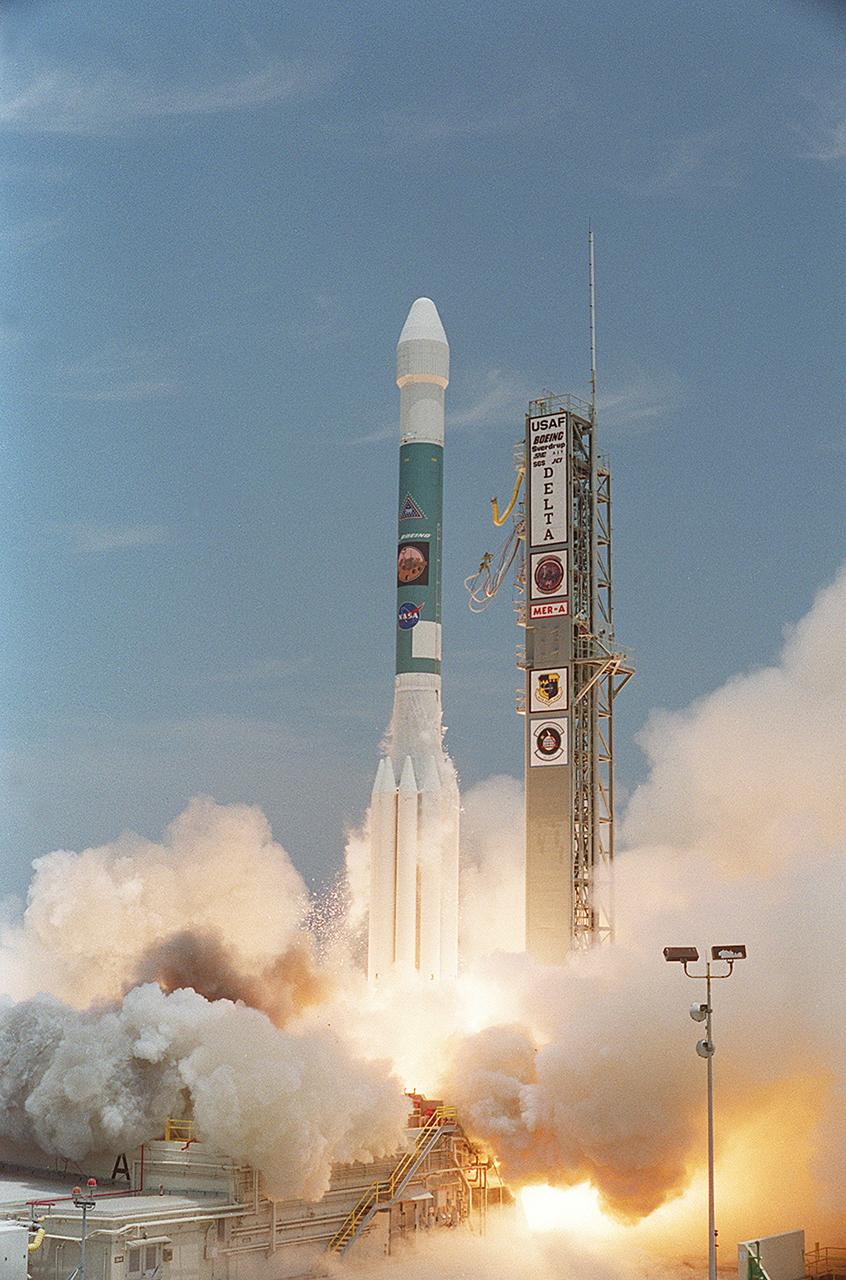
KENNEDY SPACE CENTER, FLA. -  The Delta II rocket with its Mars Exploration Rover (MER-A) payload leaps off the launch pad into the blue sky to begin its journey to Mars.  Liftoff occurred on time at 1:58 p.m. EDT from Launch Complex 17-A, Cape Canaveral Air Force Station.  MER-A, known as "Spirit," is the first of two rovers being launched to Mars. When the two rovers arrive at the red planet in 2004, they will bounce to airbag-cushioned landings at sites offering a balance of favorable conditions for safe landings and interesting science. The rovers see sharper images, can explore farther and examine rocks better than anything that has ever landed on Mars. The designated site for the MER-A mission is Gusev Crater, which appears to have been a crater lake. The second rover, MER-B, is scheduled to launch June 25.
KENNEDY SPACE CENTER, FLA. - The Delta II rocket with its Mars Exploration Rover (MER-A) payload leaps off the launch pad into the blue sky to begin its journey to Mars. Liftoff occurred on time at 1:58 p.m. EDT from Launch Complex 17-A, Cape Canaveral Air Force Station. MER-A, known as "Spirit," is the first of two rovers being launched to Mars. When the two rovers arrive at the red planet in 2004, they will bounce to airbag-cushioned landings at sites offering a balance of favorable conditions for safe landings and interesting science. The rovers see sharper images, can explore farther and examine rocks better than anything that has ever landed on Mars. The designated site for the MER-A mission is Gusev Crater, which appears to have been a crater lake. The second rover, MER-B, is scheduled to launch June 25.
KENNEDY SPACE CENTER, FLA. -   With smoke and steam billowing beneath, the Delta II rocket with its Mars Exploration Rover (MER-A) payload leaps off the launch pad into the blue sky to begin its journey to Mars.  Liftoff occurred on time at 1:58 p.m. EDT from Launch Complex 17-A, Cape Canaveral Air Force Station.  MER-A, known as "Spirit," is the first of two rovers being launched to Mars. When the two rovers arrive at the red planet in 2004, they will bounce to airbag-cushioned landings at sites offering a balance of favorable conditions for safe landings and interesting science. The rovers see sharper images, can explore farther and examine rocks better than anything that has ever landed on Mars. The designated site for the MER-A mission is Gusev Crater, which appears to have been a crater lake. The second rover, MER-B, is scheduled to launch June 25.
KENNEDY SPACE CENTER, FLA. - With smoke and steam billowing beneath, the Delta II rocket with its Mars Exploration Rover (MER-A) payload leaps off the launch pad into the blue sky to begin its journey to Mars. Liftoff occurred on time at 1:58 p.m. EDT from Launch Complex 17-A, Cape Canaveral Air Force Station. MER-A, known as "Spirit," is the first of two rovers being launched to Mars. When the two rovers arrive at the red planet in 2004, they will bounce to airbag-cushioned landings at sites offering a balance of favorable conditions for safe landings and interesting science. The rovers see sharper images, can explore farther and examine rocks better than anything that has ever landed on Mars. The designated site for the MER-A mission is Gusev Crater, which appears to have been a crater lake. The second rover, MER-B, is scheduled to launch June 25.
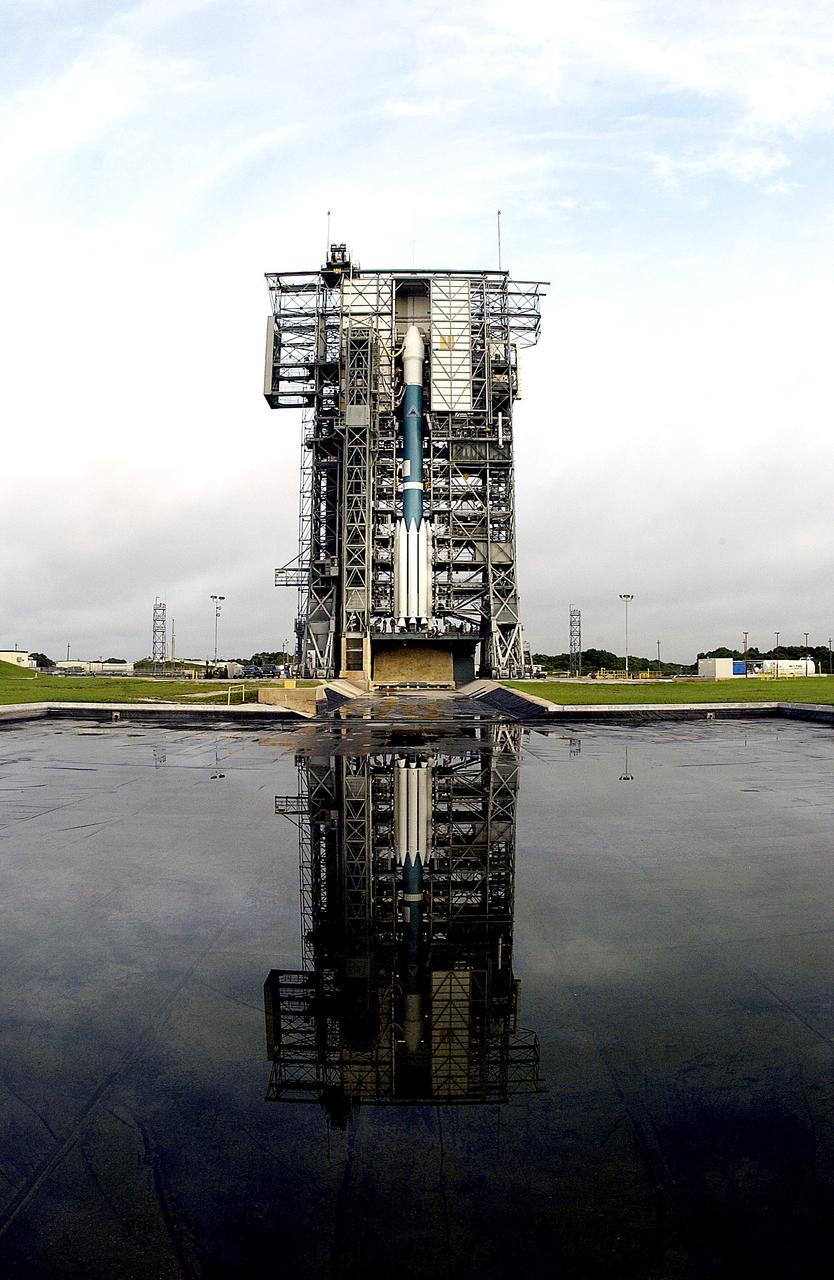
KENNEDY SPACE CENTER, FLA. -  On Launch Complex 17-A, Cape Canaveral Air Force Station, the Boeing Delta II rocket and Mars Exploration Rover 2 (MER-A) are ready for the third launch attempt after weather concerns postponed earlier attempts.   MER-A is the first of two rovers being launched to Mars.  When the two rovers arrive at Mars in 2004, they will bounce to airbag-cushioned landings at sites offering a balance of favorable conditions for safe landings and interesting science. The rovers see sharper images, can explore farther and examine rocks better than anything that has ever landed on Mars.  The designated site for MER-A mission is Gusev Crater, which appears to have been a crater lake.  The second rover, MER-B, is scheduled to launch June 25.
KENNEDY SPACE CENTER, FLA. - On Launch Complex 17-A, Cape Canaveral Air Force Station, the Boeing Delta II rocket and Mars Exploration Rover 2 (MER-A) are ready for the third launch attempt after weather concerns postponed earlier attempts. MER-A is the first of two rovers being launched to Mars. When the two rovers arrive at Mars in 2004, they will bounce to airbag-cushioned landings at sites offering a balance of favorable conditions for safe landings and interesting science. The rovers see sharper images, can explore farther and examine rocks better than anything that has ever landed on Mars. The designated site for MER-A mission is Gusev Crater, which appears to have been a crater lake. The second rover, MER-B, is scheduled to launch June 25.
KENNEDY SPACE CENTER, FLA. -   With a glimpse of the Atlantic Ocean over the horizon, the Delta II rocket with its Mars Exploration Rover (MER-A) payload leaps off the launch pad into the blue sky to begin its journey to Mars.  Liftoff occurred on time at 1:58 p.m. EDT from Launch Complex 17-A, Cape Canaveral Air Force Station.  MER-A, known as "Spirit," is the first of two rovers being launched to Mars. When the two rovers arrive at the red planet in 2004, they will bounce to airbag-cushioned landings at sites offering a balance of favorable conditions for safe landings and interesting science. The rovers see sharper images, can explore farther and examine rocks better than anything that has ever landed on Mars. The designated site for the MER-A mission is Gusev Crater, which appears to have been a crater lake. The second rover, MER-B, is scheduled to launch June 25
KENNEDY SPACE CENTER, FLA. - With a glimpse of the Atlantic Ocean over the horizon, the Delta II rocket with its Mars Exploration Rover (MER-A) payload leaps off the launch pad into the blue sky to begin its journey to Mars. Liftoff occurred on time at 1:58 p.m. EDT from Launch Complex 17-A, Cape Canaveral Air Force Station. MER-A, known as "Spirit," is the first of two rovers being launched to Mars. When the two rovers arrive at the red planet in 2004, they will bounce to airbag-cushioned landings at sites offering a balance of favorable conditions for safe landings and interesting science. The rovers see sharper images, can explore farther and examine rocks better than anything that has ever landed on Mars. The designated site for the MER-A mission is Gusev Crater, which appears to have been a crater lake. The second rover, MER-B, is scheduled to launch June 25
51G-S-100 (17 June 1985) --- A low-angle 35mm tracking view of the Space Shuttle Discovery, its external tank and two solid rocket boosters speeding from the KSC launch facility to begin NASA STS 51-G.  The camera has captured the diamond shock effect associated with the launch phase or orbiter vehicles.  Inside the Discovery are seven crewmembers and a variety of payloads representing international interests.  Liftoff for 51-G occurred at 7:33:043 a.m. (EDT), June 17, 1985.
Launching of the Shuttle Discovery and the STS 51-G mission
S73-25140 (16 April 1973) --- A ground-level view of Pad A, Launch Complex 39, Kennedy Space Center, Florida, showing the 341-feet tall Skylab 1/Saturn V space vehicle on the pad soon after being rolled out from the Vehicle Assembly Building (VAB). The vehicle is composed of the Saturn V first (S-1C) stage, the Apollo Telescope Mount (ATM), the Multiple Docking Adapter (MDA), the Airlock Module (AM), and the Orbital Workshop (OWS). Photo credit: NASA
VIEW - PAD "A" - LAUNCH COMPLEX (LC)-39 - SKYLAB (SL) VEHICLE 1 - ON PAD - KSC
STS059-S-036 (9 April 1994) --- The liftoff of the Space Shuttle Endeavour is backdropped against a dawn sky at the Kennedy Space Center (KSC) as six NASA astronauts head for a week and a half in Earth orbit.  The morning sky allows for a contrasting backdrop for the diamond shock effect of the thrust from Endeavour's main engines.  Liftoff occurred at 7:05 a.m. (EDT), April 9, 1994.  Onboard for the Space Radar Laboratory (SRL-1) mission were astronauts Sidney M. Gutierrez, Kevin P. Chilton, Jerome (Jay) Apt, Linda M. Godwin, Michael R. U. (Rich) Clifford and Thomas D. Jones.
Liftoff of STS-59 Shuttle Endeavour
An Apollo/Saturn V facilities Test Vehicle and Launch Umbilical Tower (LUT) atop a crawler-transporter move from the Vehicle Assembly Building (VAB) on the way to Pad A. This test vehicle, designated the Apollo/Saturn 500-F, is being used to verify launch facilities, train launch crews, and develop test and checkout procedures.
Apollo/Saturn V facilities Test Vehicle and Launch Umbilical Tower
STS064-S-051 (9 Sept. 1994) --- With a crew of six NASA astronauts aboard, the space shuttle Discovery heads for its nineteenth Earth-orbital mission. Launch was delayed because of weather, but all systems were "go," and the spacecraft left the launch pad at 6:23 p.m. (EDT) on Sept. 9, 1994. Onboard were astronauts Richard N. Richards, L. Blaine Hammond, Carl J. Meade, Mark C. Lee, Susan J. Helms and Jerry M. Linenger. Photo credit: NASA or National Aeronautics and Space Administration
STS-64 launch view
S75-28550 (15 July 1975) --- The Apollo-Soyuz Test Project's (ASTP) NASA Apollo/Saturn 1B space vehicle is launched from Pad B, Launch Complex 39, Kennedy Space Center (KSC), Florida, at 3:50 p.m. (EDT), July 15, 1975, to begin Apollo's catch-up journey toward the already Earth-orbiting Soviet Soyuz spacecraft.  Aboard the Apollo spacecraft were astronauts Thomas P. Stafford, Vance D. Brand and Donald K. (Deke) Slayton.
Launch of the Apollo spacecraft to begin ASTP mission
STS61C-S-047 (12 Jan. 1986) --- A remote camera records the early morning launch at Florida?s Kennedy Space Center of the space shuttle Columbia and the STS-61C crew on Jan. 12, 1986. Onboard were the following crew members -- Mission Commander Robert L. Gibson and Pilot Charles F. Bolden, along with Mission Specialists Franklin R. Chang-Diaz, Steven A. Hawley and George D. Nelson and Payload Specialists Robert J. Cenker of RCA and U.S. Rep. Bill Nelson. Photo credit: NASA
Launch of the Shuttle Columbia and begining of STS 61-C mission
51F-S-068 (29 July 1985) --- The Space Shuttle Challenger heads toward Earth-orbit with the Spacelab-2 experiment pallet and a team of astronauts and scientists onboard.  This photograph was taken by Otis Imboden of the National Geographic Society for NASA from the press site at Kennedy Space Center (KSC).
Launch of the STS 51-F Challenger
STS062-S-051 (4 March 1994) --- Five veteran astronauts and the United States Microgravity Payload (USMP) are ushered into space via the sixteenth launch of Space Shuttle Columbia.  Launch occurred at 8:53 a.m. (EST), March 4, 1994.  Onboard were astronauts John H. Casper, Andrew M. Allen, Marsha S. Ivins, Charles D. (Sam) Gemar and Pierre J. Thuot.
Liftoff of STS-62 Space Shuttle Columbia
STS059-S-034 (9 April 1994) --- The liftoff of the Space Shuttle Endeavour is backdropped against a dawn sky at the Kennedy Space Center (KSC) as six NASA astronauts head for a week and a half in Earth orbit.  Liftoff occurred at 7:05 a.m. (EDT), April 9, 1994.  Onboard for the Space Radar Laboratory (SRL-1) mission were astronauts Sidney M. Gutierrez, Kevin P. Chilton, Jerome (Jay) Apt, Linda M. Godwin, Michael R. U. (Rich) Clifford and Thomas D. Jones.
Liftoff of STS-59 Shuttle Endeavour
61B-S-067 (26 Nov 1985) --- Space Shuttle Atlantis ascends into the night sky at 7:29 p.m. (EST), November 26, with a seven member crew and three communications satellites aboard.  The STS 61-B crewmembers are Brewster Shaw Jr., Bryan D. O?Connor, Mary L. Cleave, Sherwood C. Spring, Jerry L. Ross and Payload Specialists Rodolfo Neri of Mexico (Morelos) and Charles D. Walker of McDonnell Douglas.
Launch of the Shuttle Atlantis and begining of STS 61-B mission
51I-S-223 (27 August 1985) --- Launch of the Space Shuttle Discovery and beginning of STS-51I mission. View of the pre-dawn launch shows a reflection of the ignition in the river across from the launch complex.
Launch of the Shuttle Discovery and begining of STS 51-I mission
STS059-S-037 (9 April 1994) --- The liftoff of the Space Shuttle Endeavour is backdropped against a dawn sky at the Kennedy Space Center (KSC) as six NASA astronauts head for a week and a half in Earth orbit.  Liftoff occurred at 7:05 a.m. (EDT), April 9, 1994.  Onboard for the Space Radar Laboratory (SRL-1) mission were astronauts Sidney M. Gutierrez, Kevin P. Chilton, Jerome (Jay) Apt, Linda M. Godwin, Michael R.U. (Rich) Clifford and Thomas D. Jones.
Liftoff of STS-59 Shuttle Endeavour
STS062-S-061 (4 March 1994) --- An aerial view of early stages of the sixteenth launch of Space Shuttle Columbia was provided by a 70mm camera aboard the Shuttle Training Aircraft (STA). Launch occurred at 8:53 a.m. (EST), March 4, 1994. Onboard were astronauts John H. Casper, Andrew M. Allen, Marsha S. Ivins, Charles D. (Sam) Gemar and Pierre J. Thuot.
Liftoff of STS-62 Space Shuttle Columbia as seen from STA
S73-25696 (15 May 1973) --- An overall view of Pad B, Launch Complex 39, Kennedy Space Center, Florida, showing the Skylab 2/Saturn 1B space vehicle during a Countdown Demonstration Test (CDDT). This is the launch vehicle for the first manned Skylab mission. The vapor being emitted from the vehicle is the venting of cryogenic propellants. Photo credit: NASA
SKYLAB (SL)-2 - COUNTDOWN DEMONSTRATION TEST (CDDT) - KSC
STS062-S-053 (4 March 1994) --- Carrying a crew of five veteran NASA astronauts and the United States Microgravity Payload (USMP), the Space Shuttle Columbia heads toward its sixteenth mission in Earth-orbit.  Launch occurred at 8:53 a.m. (EST), March 4, 1994. Onboard were astronauts John H. Casper, Andrew M. Allen, Marsha S. Ivins, Charles D. (Sam) Gemar and Pierre J. Thuot.
Liftoff of STS-62 Space Shuttle Columbia
STS61C-S-046 (12 Jan. 1986) --- Although many miles away from the launch pad, the space shuttle Columbia can still be seen in this distant scene.  The scene was recorded around 7 a.m. (EST), Jan. 12, 1986. Photo credit: NASA
Launch of the Shuttle Columbia and begining of STS 61-C mission
51J-S-001 (3 Oct 1985) --- This 35mm frame was taken moments after the Space Shuttle Atlantis cleared the launch tower to begin its first mission in space.  Onboard, ready to carry out STS-51J mission were astronauts Karol J. Bobko, commander; Ronald J. Grabe, pilot; Robert L. Stewart and David C. Hilmers, mission specialist; and United States Air Force Major William A. Pailes, payload specialist.
Liftoff of first flight of Atlantis and the STS 51-J mission
KENNEDY SPACE CENTER, FLA. - Newly appointed KSC Director James W. Kennedy (second from left) and NASA Administrator Sean O'Keefe (right) talk to the media following the launch of the Mars Exploration Rover "Opportunity" at the Trident Basin berm press site at Cape Canaveral Air Force Station.
KENNEDY SPACE CENTER, FLA. - Newly appointed KSC Director James W. Kennedy (left) and NASA Administrator Sean O'Keefe (center) talk to the media following the launch of the Mars Exploration Rover "Opportunity" at the Trident Basin berm press site at Cape Canaveral Air Force Station.
KENNEDY SPACE CENTER, FLA. - Newly appointed KSC Director James W. Kennedy (left) and NASA Administrator Sean O'Keefe (right) talk to the media following the launch of the Mars Exploration Rover "Opportunity" at the Trident Basin berm press site at Cape Canaveral Air Force Station.
jsc2017e136100 - At the Gagarin Cosmonaut Training Center in Star City, Russia, Expedition 54-55 backup and prime crewmembers pose for pictures Dec. 4 prior to their departure for their launch site at the Baikonur Cosmodrome in Kazakhstan. From left to right are backup crewmembers Alexander Gerst of the European Space Agency, Jeanette Epps of NASA and Sergey Prokopyev of the Russian Federal Space Agency (Roscosmos) and prime crewmembers Norishige Kanai of the Japan Aerospace Agency (JAXA), Anton Shkaplerov of Roscosmos and Scott Tingle of NASA. Kanai, Shkaplerov and Tingle are scheduled to launch Dec. 17 on the Soyuz MS-07 spacecraft for a five-month mission on the International Space Station...Andrey Shelepin/Gagarin Cosmonaut Training Center.
jsc2017e136100 - At the Gagarin Cosmonaut Training Center in Star City, Russia, Expedition 54-55 backup and prime crewmembers pose for pictures Dec. 4 prior to their departure for their launch site at the Baikonur Cosmodrome in Kazakhstan. From left to ri
jsc2017e136096 - Expedition 54-55 backup crewmembers Jeanette Epps of NASA (left), Sergey Prokopyev of the Russian Federal Space Agency (Roscosmos, center) and Alexander Gerst of the European Space Agency (right) arrive at the launch site at the Baikonur Cosmodrome in Kazakhstan Dec. 4 following a flight from their training base in Star City, Russia. They are serving as backups to the prime crew, Scott Tingle of NASA, Anton Shkaplerov of the Russian Federal Space Agency (Roscosmos) and Norishige Kanai of the Japan Aerospace Exploration Agency (JAXA), who will launch Dec. 17 on the Soyuz MS-07 spacecraft for a five-month mission on the International Space Station...Andrey Shelepin/Gagarin Cosmonaut Training Center.
jsc2017e136096 - Expedition 54-55 backup crewmembers Jeanette Epps of NASA (left), Sergey Prokopyev of the Russian Federal Space Agency (Roscosmos, center) and Alexander Gerst of the European Space Agency (right) arrive at the launch site at the Baikonur
jsc2017e136094 - Aboard a Gagarin Cosmonaut Training Center aircraft en route to the launch site at the Baikonur Cosmodrome in Kazakhstan, Expedition 54-55 crewmember Anton Shkaplerov of the Russian Federal Space Agency (Roscosmos, left) affixes a sticker bearing the Expedition 55 crew insignia to the wall of the plane Dec. 4 as crewmates Norishige Kanai of the Japan Aerospace Exploration Agency (JAXA, center) and Scott Tingle of NASA (right) look on. They will launch Dec. 17 on the Soyuz MS-07 spacecraft for a five-month mission on the International Space Station...Andrey Shelepin/Gagarin Cosmonaut Training Center.
jsc2017e136094 - Aboard a Gagarin Cosmonaut Training Center aircraft en route to the launch site at the Baikonur Cosmodrome in Kazakhstan, Expedition 54-55 crewmember Anton Shkaplerov of the Russian Federal Space Agency (Roscosmos, left) affixes a sticker
ISS Expedition 48-49 crewmember Takuya Onishi of the Japan Aerospace Exploration Agency departs the Gagarin Cosmonaut Training Center in Star City, Russia June 24 for his launch site at the Baikonur Cosmodrome in Kazakhstan and final pre-launch training. In the background on the right is crewmate Kate Rubins of NASA. Rubins, Anatoly Ivanishin of Roscosmos and Onishi will launch July 7 from the Baikonur Cosmodrome in Kazakhstan on the Soyuz MS-01 spacecraft for a planned four-month mission on the International Space Station.  NASA/Stephanie Stoll
ISS Expedition 48-49 crewmember Takuya Onishi of the Japan Aerospace Exploration Agency departs the Gagarin Cosmonaut Training Center in Star City, Russia June 24 for his launch site at the Baikonur Cosmodrome in Kazakhstan and final pre-launch training. In the background on the right is crewmate Kate Rubins of NASA. Rubins, Anatoly Ivanishin of Roscosmos and Onishi will launch July 7 from the Baikonur Cosmodrome in Kazakhstan on the Soyuz MS-01 spacecraft for a planned four-month mission on the International Space Station...NASA/Stephanie Stoll.
At the Gagarin Cosmonaut Training Center in Star City, Russia, Expedition 59 crewmembers Christina Koch of NASA (left) and Nick Hague of NASA (right) share a moment Feb. 26 before departing for their launch site at the Baikonur Cosmodrome in Kazakhstan for final pre-launch training. Hague, Koch and Alexey Ovchinin of Roscosmos will launch on March 14, U.S. time, on the Soyuz MS-12 spacecraft from the Baikonur Cosmodrome in Kazakhstan for a six-and-a-half month mission on the International Space Station.  NASA/Beth Weissinger
At the Gagarin Cosmonaut Training Center in Star City, Russia, Expedition 59 crewmembers Christina Koch of NASA (left) and Nick Hague of NASA (right) share a moment Feb. 26 before departing for their launch site at the Baikonur Cosmodrome in Kazakhstan fo