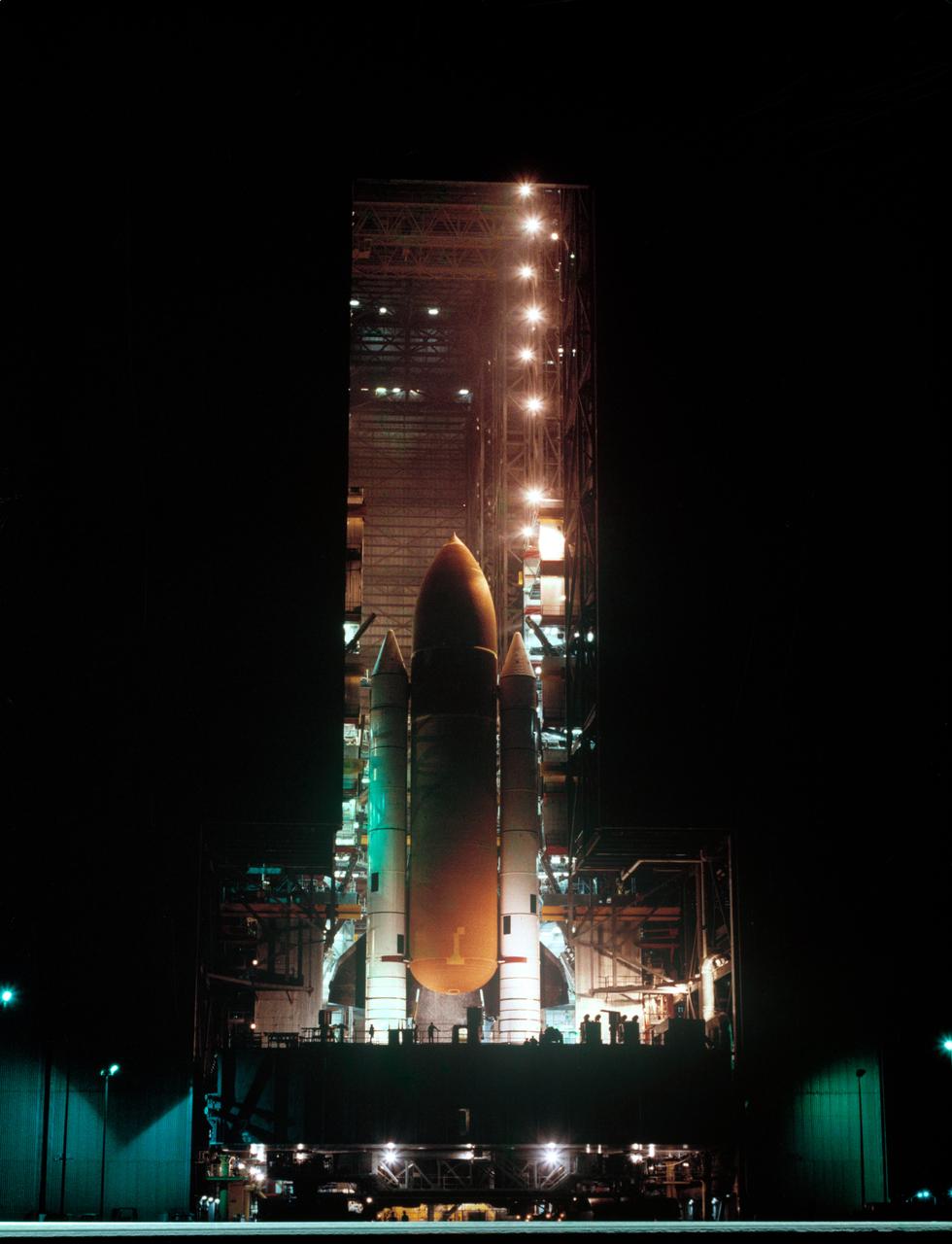
S83-39238 (1 Aug. 1983) --- The giant cluster of spaceflight hardware for NASA's eighth Space Transportation System (STS) mission begins its slow move to the launch pad at launch complex 39 at NASA's Kennedy Space Center (KSC). Following its mating to the two solid rocket boosters (SRB) and the external fuel tank (ET) in the huge vehicle assembly building (VAB), the space shuttle Challenger is slowly moved to the launch pad atop the mobile launch platform. Photo credit: NASA

SPACE SHUTTLE ORBITER ENTERPRISE MATED TO AN EXTERNAL FUEL TANK AND TWO SOLID ROCKET BOOSTERS ON TOP OF A MOBIL LAUNCHER PLATFORM, UNDERGOES FIT AND FUNCTION CHECKS AT THE LAUNCH SITE FOR THE FIRST SPACE SHUTTLE AT LAUNCH COMPLEX 39'S PAD A. THE DUMMY SPACE SHUTTLE WAS ASSEMBLED IN THE VEHICLE ASSEMBLY BUILDING AND ROLLED OUT TO THE LAUNCH SITE ON MAY 1 AS PART OF AN EXERCISE TO MAKE CERTAIN SHUTTLE ELEMENTS ARE COMPATIBLE WITH THE SPACEPORT'S ASSEMBLY AND LAUNCH FACILITIES AND GROUND SUPPORT EQUIPMENT, AND HELP CLEAR THE WAY FOR THE LAUNCH OF THE SPACE SHUTTLE ORBITER COLUMBIA.
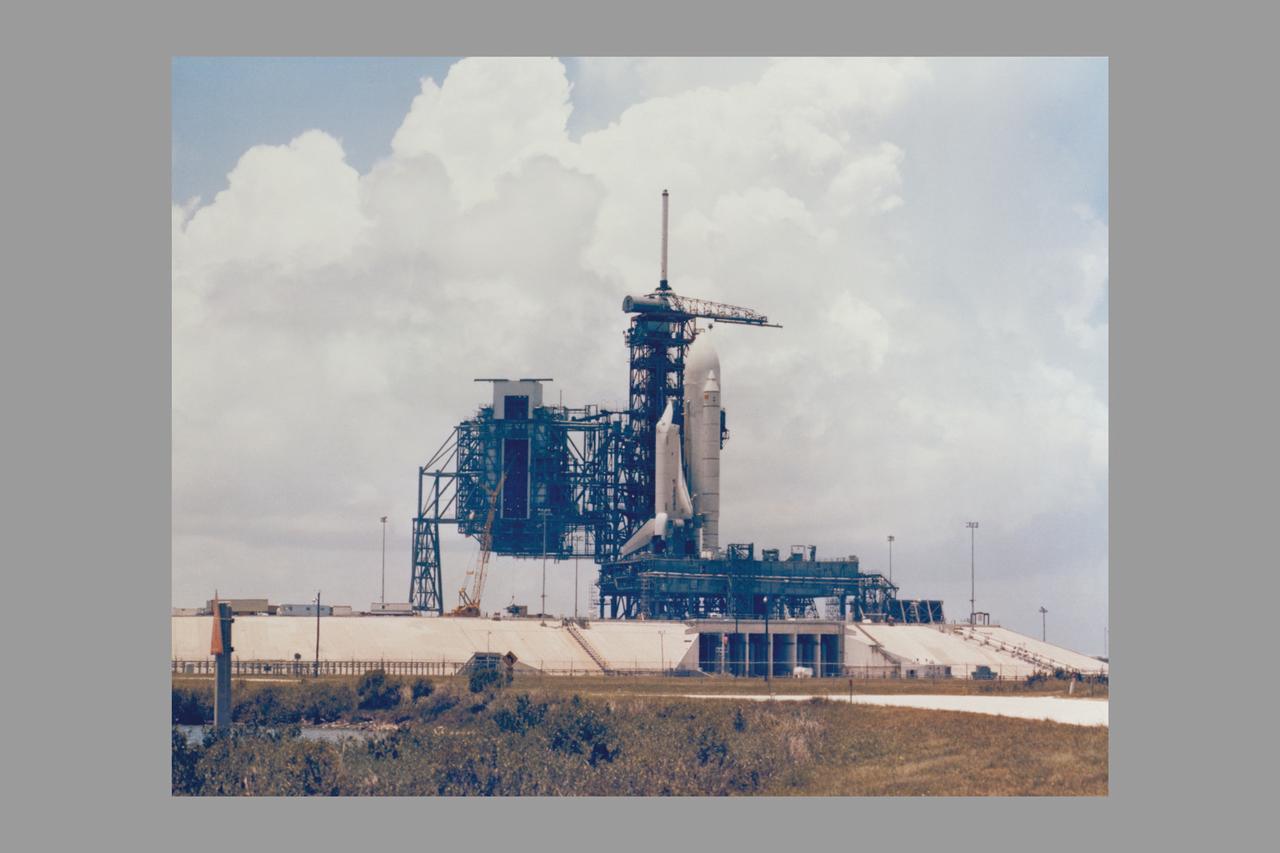
SPACE SHUTTLE ORBITER ENTERPRISE MATED TO AN EXTERNAL FUEL TANK AND TWO SOLID ROCKET BOOSTERS ON TOP OF A MOBIL LAUNCHER PLATFORM, UNDERGOES FIT AND FUNCTION CHECKS AT THE LAUNCH SITE FOR THE FIRST SPACE SHUTTLE AT LAUNCH COMPLEX 39'S PAD A. THE DUMMY SPACE SHUTTLE WAS ASSEMBLED IN THE VEHICLE ASSEMBLY BUILDING AND ROLLED OUT TO THE LAUNCH SITE ON MAY 1 AS PART OF AN EXERCISE TO MAKE CERTAIN SHUTTLE ELEMENTS ARE COMPATIBLE WITH THE SPACEPORT'S ASSEMBLY AND LAUNCH FACILITIES AND GROUND SUPPORT EQUIPMENT, AND HELP CLEAR THE WAY FOR THE LAUNCH OF THE SPACE SHUTTLE ORBITER COLUMBIA.
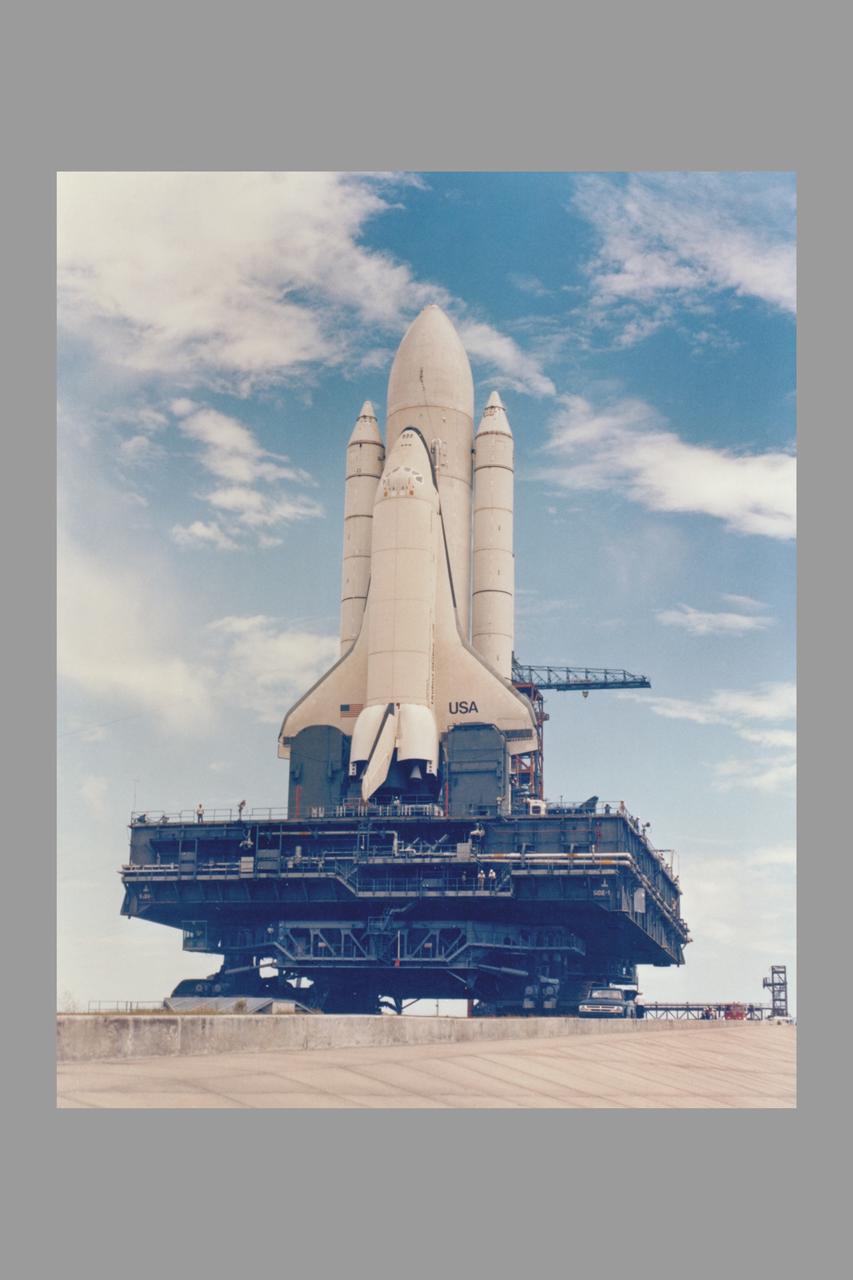
Space Shuttle Orbiter Enterprise mated to an external fuel tank and two solid rocket boosters on top of a Mobil Launcher Platform, undergoes fit and function checks at the launch site for the first Space Shuttle at Launch Complex 39's Pad A. The dummy Space Shuttle was assembled in the Vehicle Assembly Building and rolled out to the launch site on May 1 as part of an exercise to make certain shuttle elements are compatible with the Spaceport's assembly and launch facilities and ground support equipment, and help clear the way for the launch of the Space Shuttle Orbiter Columbia.

This is a computer generated image of a Shuttle launch utilizing 2nd generation Reusable Launch Vehicle (RLV) flyback boosters, a futuristic concept that is currently undergoing study by NASA's Space Launch Initiative (SLI) Propulsion Office, managed by the Marshall Space Fight Center in Huntsville, Alabama, working in conjunction with the Agency's Glenn Research Center in Cleveland, Ohio. Currently, after providing thrust to the Space Shuttle, the solid rocket boosters are parachuted into the sea and are retrieved for reuse. The SLI is considering vehicle concepts that would fly first-stage boosters back to a designated landing site after separation from the orbital vehicle. These flyback boosters would be powered by several jet engines integrated into the booster capable of providing over 100,000 pounds of thrust. The study will determine the requirements for the engines, identify risk mitigation activities, and identify costs associated with risk mitigation and jet engine development and production, as well as determine candidate jet engine options to pursue for the flyback booster.

KENNEDY SPACE CENTER, FLA. -- A train carrying space shuttle reusable solid rocket motor segments from the ATK Launch Systems manufacturing site in Brigham City,Utah, to NASA’s Kennedy Space Center in Florida was derailed May 2. At the site of the train mishap involving eight NASA solid rocket booster segment cars, a handling fixture has been attached to a box car being used as a spacer between the segment cars so that it can be removed from the rails. The solid rocket booster cars can be seen behind it. The train was traveling over the Meridian & Bigbee railroad near Pennington, Ala., at the time of the mishap.. The hardware was intended for use on shuttle Discovery's STS-120 mission in October and shuttle Atlantis's STS-122 mission in December. These segments are interchangeable, and ATK Launch Systems has replacement units that could be used for the shuttle flights, if necessary.
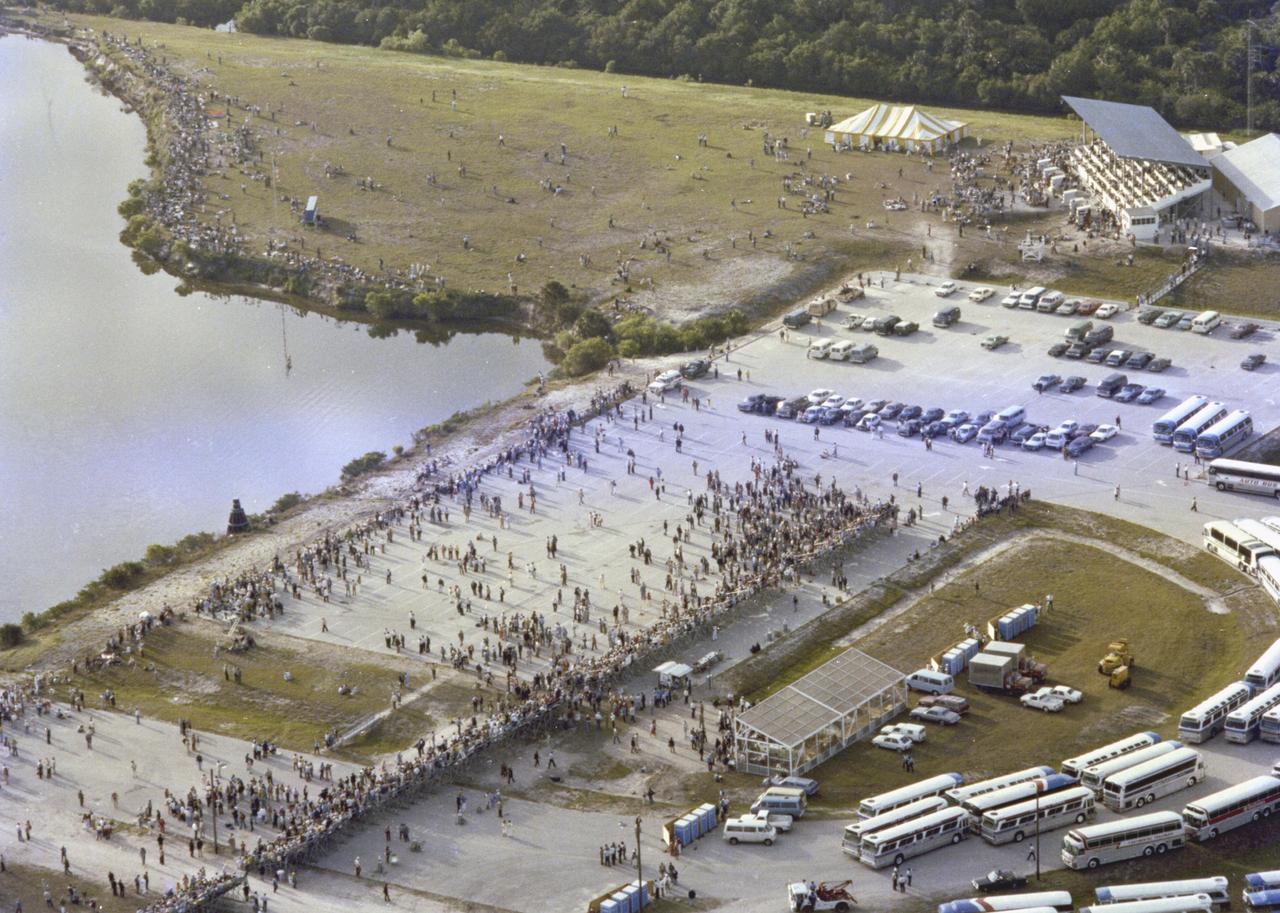
KENNEDY SPACE CENTER, FLA. - Viewed from the top of the Vehicle Assembly Building, crowds wait in vain for the launch of the maiden flight of the Space Shuttle, “scrubbed” on April 10. Visible at center is the “V.I.P.” site, with waiting buses parked at lower right. Above are the NASA Complex 39 Press Site and viewing stands, and major news media facilities. The STS-1 mission, known as a shuttle systems test flight, will seek to demonstrate safe launch into orbit and safe return of the orbiter and crew and verify the combined performance of the entire shuttle vehicle -- orbiter, solid rocket boosters and external tank.
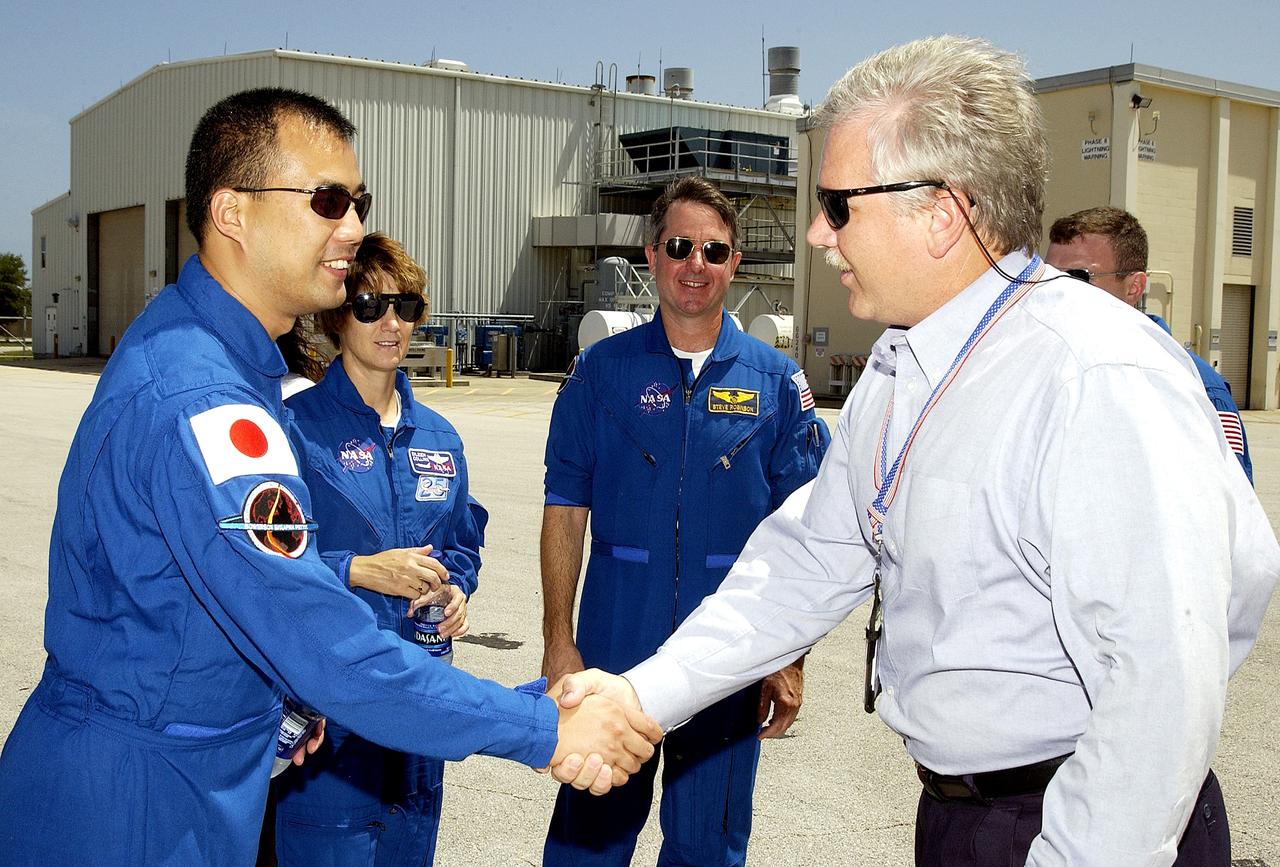
KENNEDY SPACE CENTER, FLA. - The STS-114 crew is welcomed to Hangar AF, Cape Canaveral Air Force Station, by Joseph Chaput, with United Space Alliance. The crew, from left, are Mission Specialist Soichi Noguchi, Commander Eileen Collins, Mission Specialist Stephen Robinson and (partially hidden) Pilot James Kelly. Noguchi is with the Japanese space agency NASDA. On the mission, the crew will carry the MultiPurpose Logistics Module (MPLM) Raffaello and External Stowage Platform 2 to the International Space Station. The MPLM will contain supplies and equipment. Another goal of the mission is to remove and replace a Control Moment Gyro. Launch date for mission STS-114 is under review. Hangar AF is the site where SRB Retrieval Ships return the spent solid rocket boosters after a Shuttle launch. The SRBs are lifted from the water and placed on rail cars to begin the disassembly and refurbishment process.
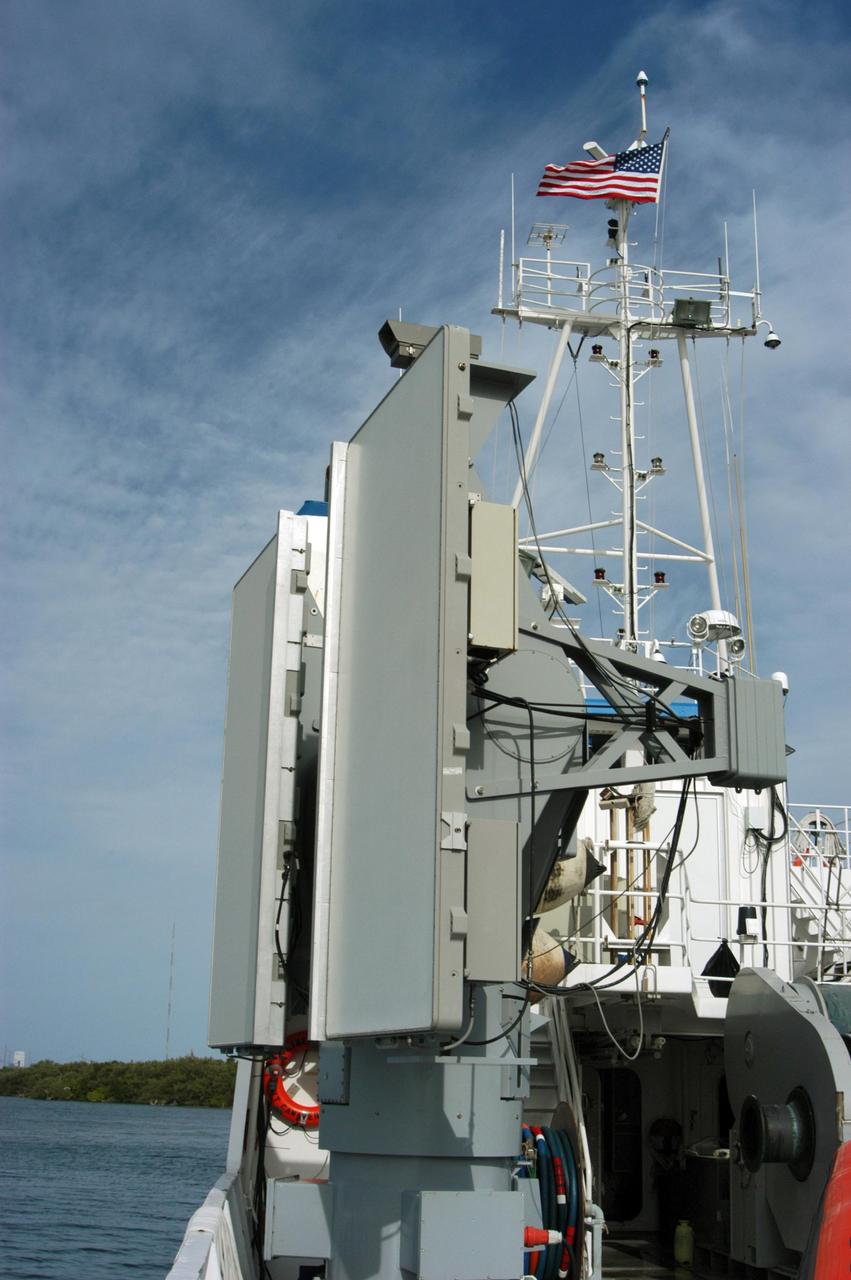
KENNEDY SPACE CENTER, FLA. -- The X-band radar array is installed on the solid rocket booster retrieval ship Liberty before launch of Space Shuttle Discovery. It is one of two Weibel Continuous Pulse Doppler X-band radars located on each of the two SRB retrieval ships. This one will be located downrange of the launch site. Working with the land-based C-band radar, the X-band radars provide velocity and differential shuttle/debris motion information during launch. The radar data will be sent from the ships via satellite link and analyzed at the C-band radar site located on north Kennedy Space Center. Photo credit: NASA/George Shelton
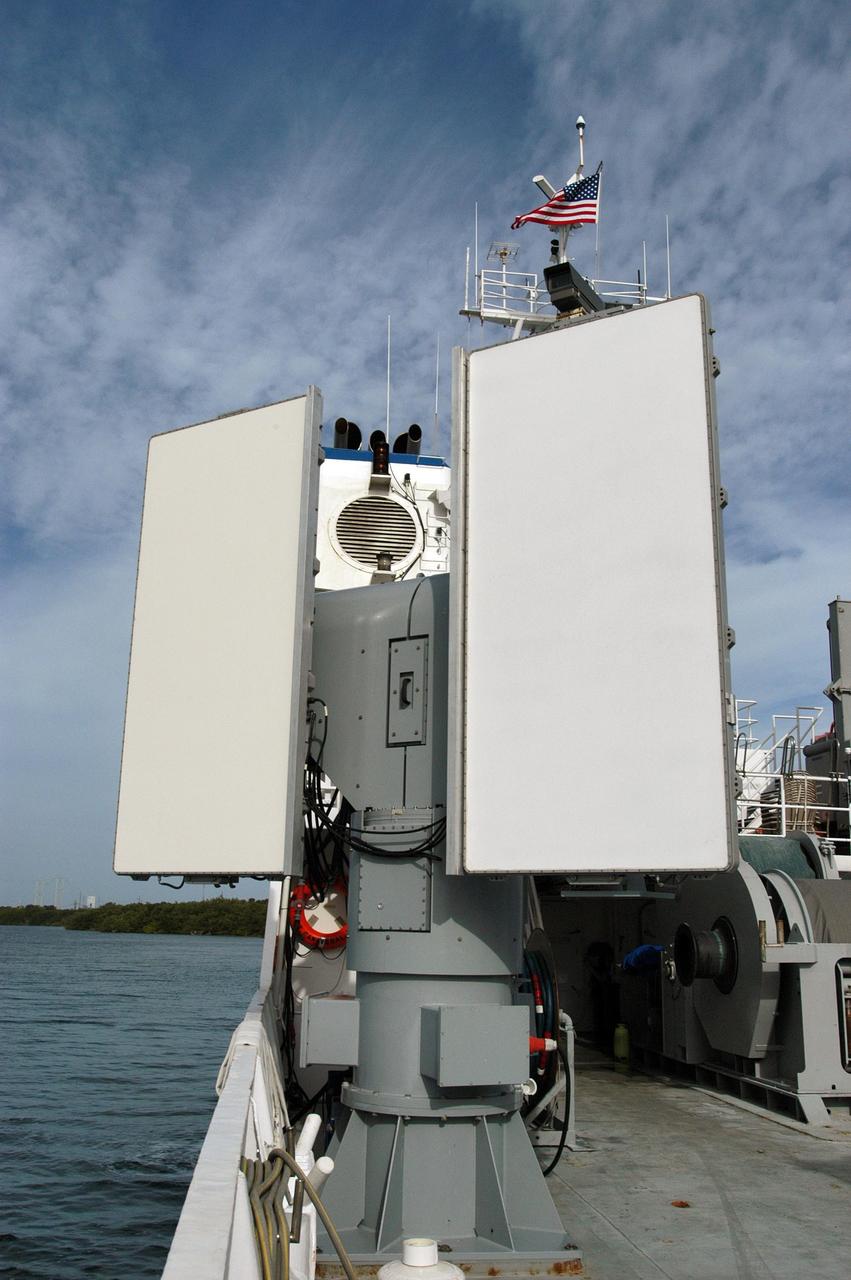
KENNEDY SPACE CENTER, FLA. -- The X-band radar array is installed on the solid rocket booster retrieval ship Liberty before launch of Space Shuttle Discovery. It is one of two Weibel Continuous Pulse Doppler X-band radars located on each of the two SRB retrieval ships. This one will be located downrange of the launch site. Working with the land-based C-band radar, the X-band radars provide velocity and differential shuttle/debris motion information during launch. The radar data will be sent from the ships via satellite link and analyzed at the C-band radar site located on north Kennedy Space Center. Photo credit: NASA/George Shelton
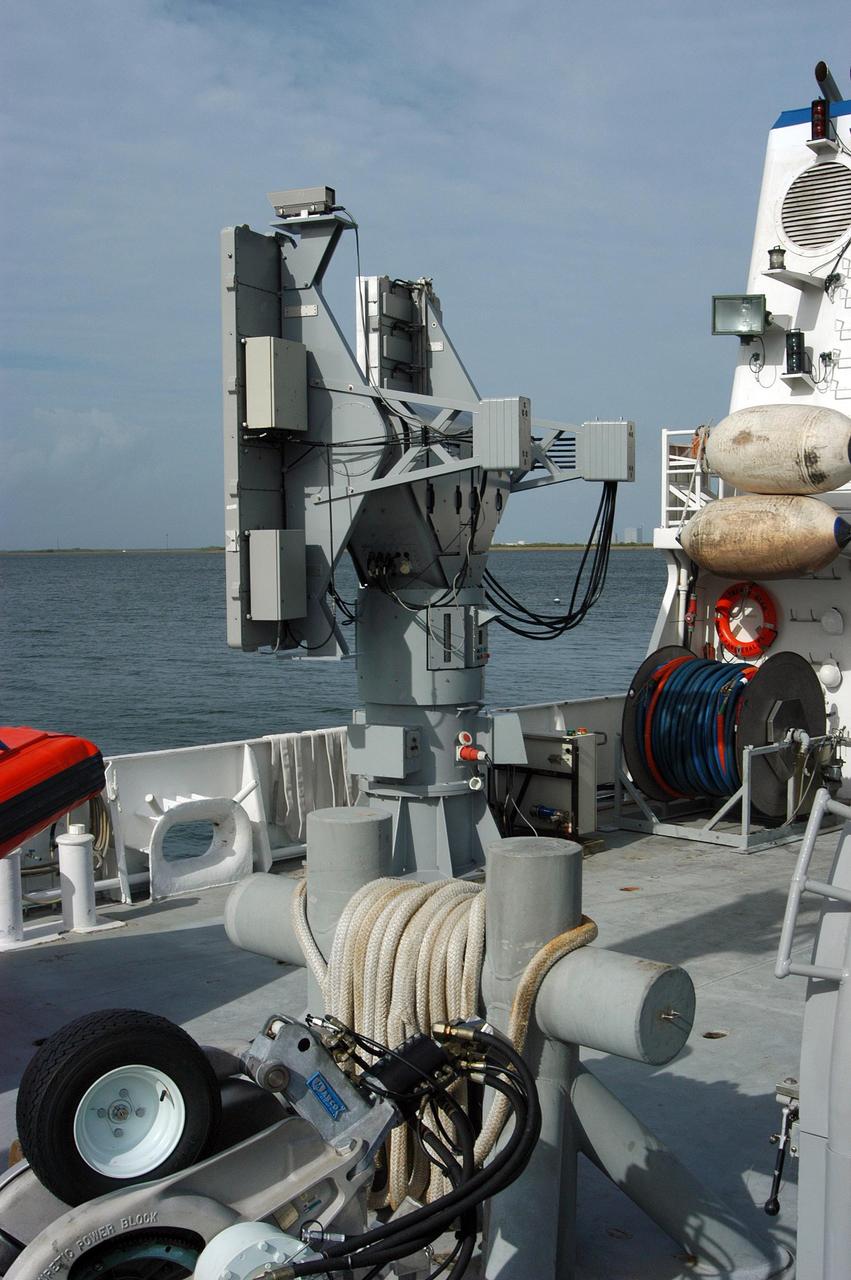
KENNEDY SPACE CENTER, FLA. -- The X-band radar array is installed on the solid rocket booster retrieval ship Liberty before launch of Space Shuttle Discovery. It is one of two Weibel Continuous Pulse Doppler X-band radars located on each of the two SRB retrieval ships. This one will be located downrange of the launch site. Working with the land-based C-band radar, the X-band radars provide velocity and differential shuttle/debris motion information during launch. The radar data will be sent from the ships via satellite link and analyzed at the C-band radar site located on north Kennedy Space Center. Photo credit: NASA/George Shelton
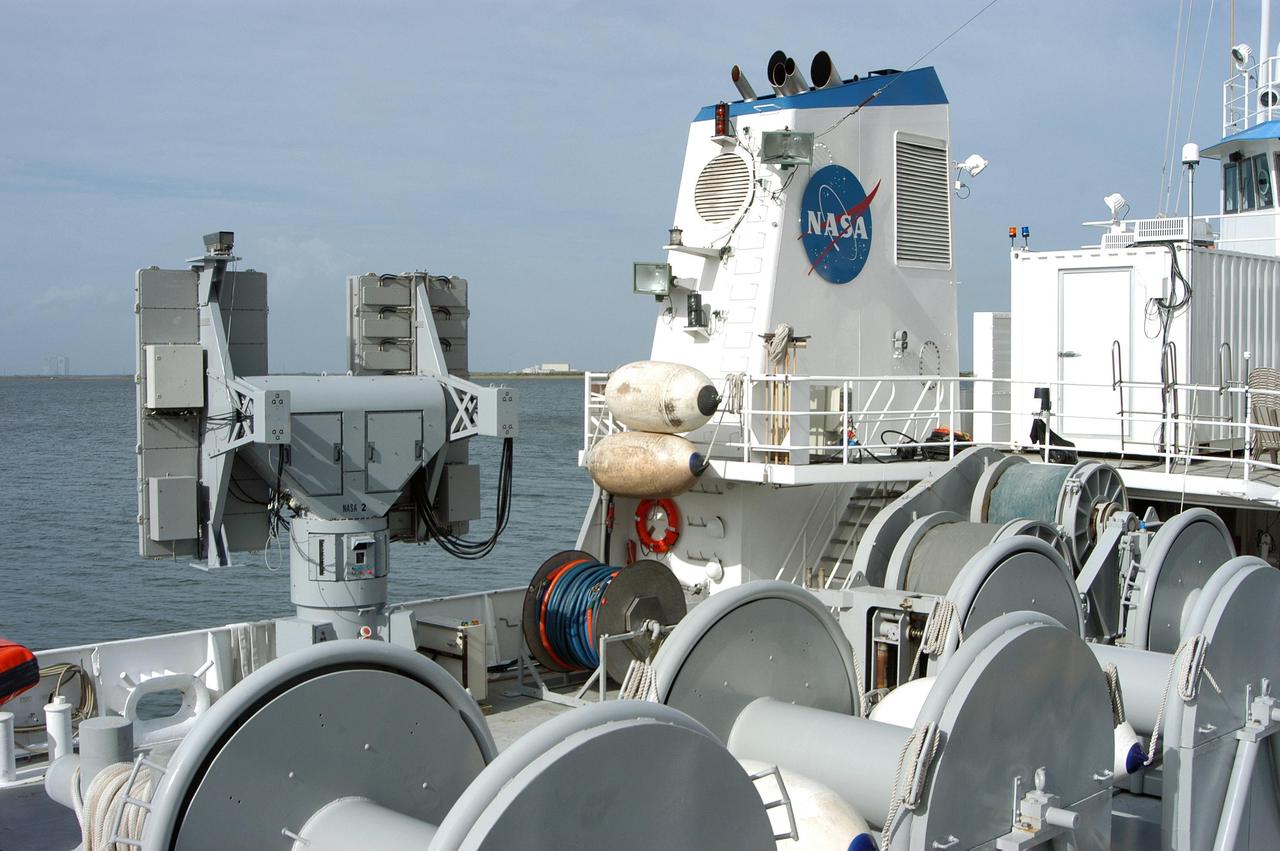
KENNEDY SPACE CENTER, FLA. -- The X-band radar array is being installed on the solid rocket booster retrieval ship Liberty before launch of Space Shuttle Discovery. It is one of two Weibel Continuous Pulse Doppler X-band radars located on each of the two SRB retrieval ships. This one will be located downrange of the launch site. Working with the land-based C-band radar, the X-band radars provide velocity and differential shuttle/debris mo¬tion information during launch. The radar data will be sent from the ships via satellite link and analyzed at the C-band radar site located on north Kennedy Space Center. Photo credit: NASA/George Shelton
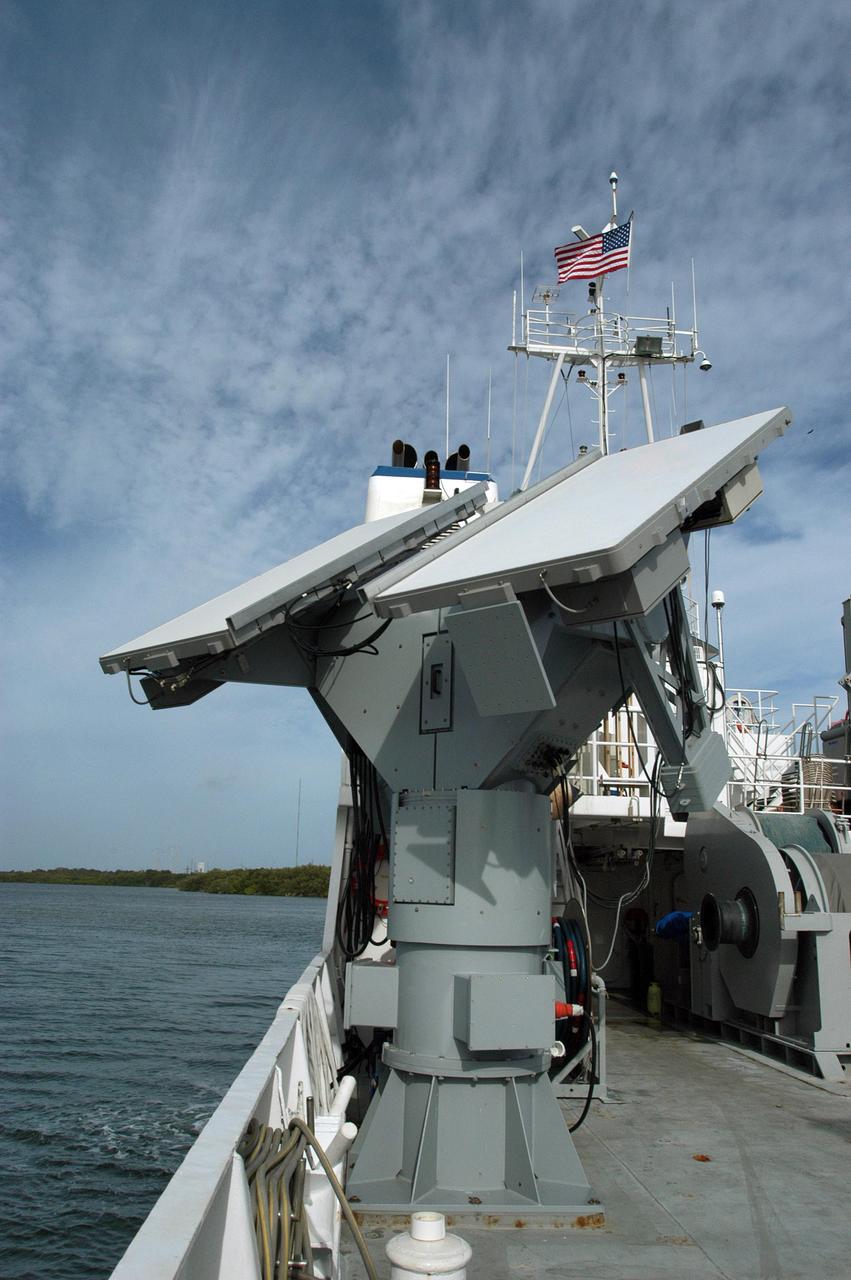
KENNEDY SPACE CENTER, FLA. -- The X-band radar array is installed on the solid rocket booster retrieval ship Liberty before launch of Space Shuttle Discovery. It is one of two Weibel Continuous Pulse Doppler X-band radars located on each of the two SRB retrieval ships. This one will be located downrange of the launch site. Working with the land-based C-band radar, the X-band radars provide velocity and differential shuttle/debris motion information during launch. The radar data will be sent from the ships via satellite link and analyzed at the C-band radar site located on north Kennedy Space Center. Photo credit: NASA/George Shelton
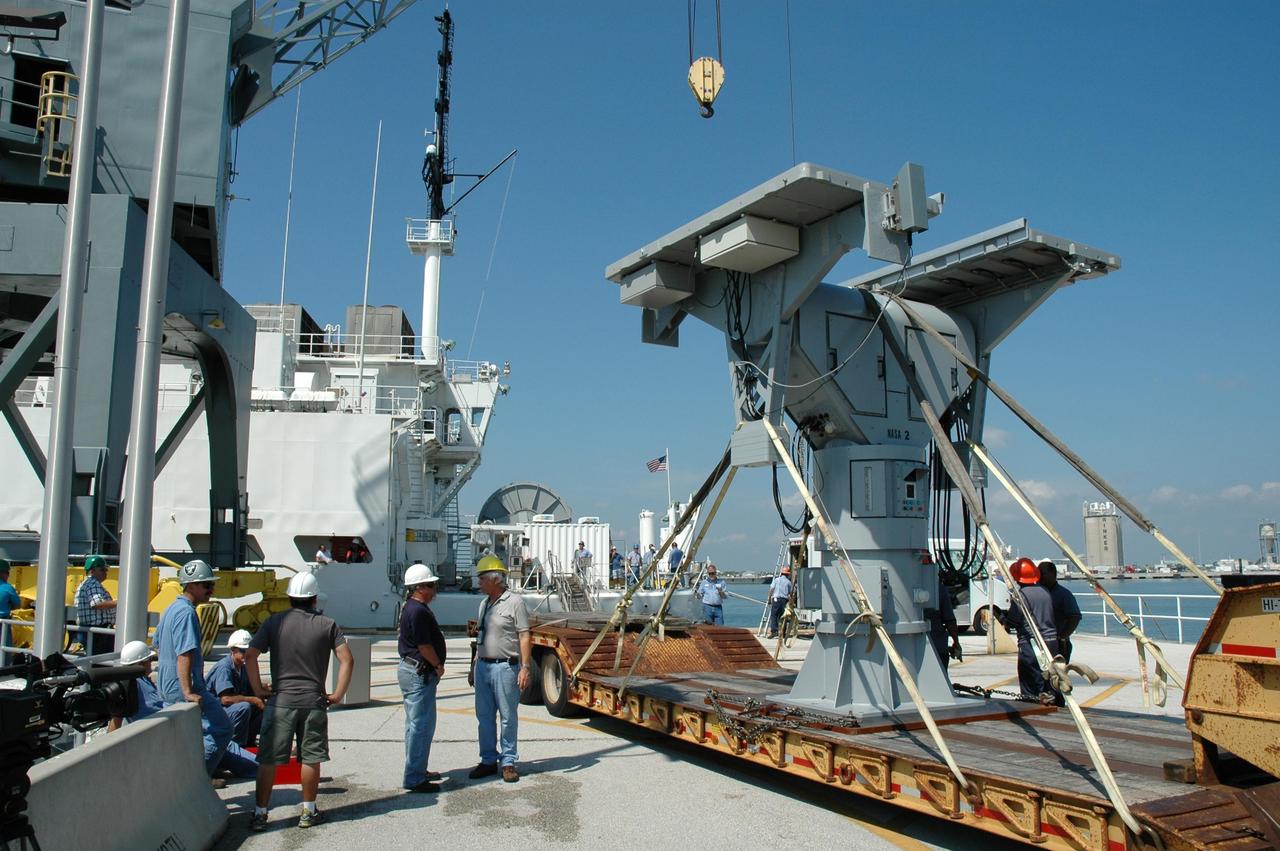
KENNEDY SPACE CENTER, FLA. - An X-band radar is ready to be loaded on the U.S. Naval Ship Hayes at Port Canaveral in Florida to support the July 1 launch of Space Shuttle Discovery on mission STS-121. There are two Continuous Pulse Doppler X-band radars located on ships for the STS-121 launch. The other one is mounted on a booster recovery ship downrange of the launch site. The two radars provide velocity and differential Shuttle/debris motion information. Combined with the C-band radar located at the Haulover Canal near the launch site, they provide high definition images of any debris that might fall from the external tank/shuttle. The X-band data (screen captures) will be sent from the ships via satellite link to the National Center for Atmospheric Research site. Photo credit: NASA/Jim Grossmann

KENNEDY SPACE CENTER, FLA. - On the dock at Port Canaveral in Florida, a worker secures a crane hook on an X-band radar to be transferred to and installed on the U.S. Naval Ship Hayes. The radar will support the July 1 launch of Space Shuttle Discovery on mission STS-121. There are two Continuous Pulse Doppler X-band radars located on ships for the STS-121 launch. The other one is mounted on a booster recovery ship downrange of the launch site. The two radars provide velocity and differential Shuttle/debris motion information. Combined with the C-band radar located at the Haulover Canal near the launch site, they provide high definition images of any debris that might fall from the external tank/shuttle. The X-band data (screen captures) will be sent from the ships via satellite link to the National Center for Atmospheric Research site. Photo credit: NASA/Jim Grossmann
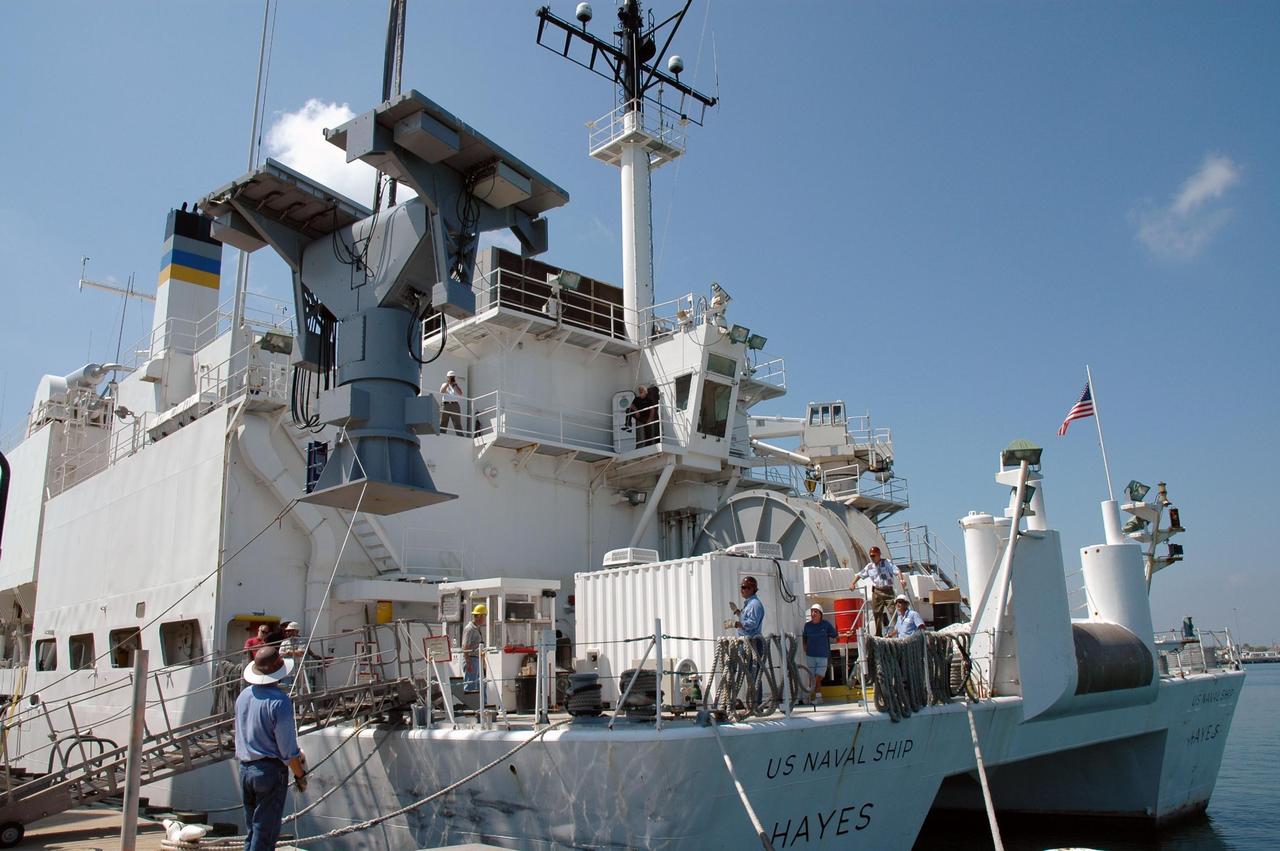
KENNEDY SPACE CENTER, FLA. - An X-band radar is transferred onto the U.S. Naval Ship Hayes at Port Canaveral in Florida to support the July 1 launch of Space Shuttle Discovery on mission STS-121. There are two Continuous Pulse Doppler X-band radars located on ships for the STS-121 launch. The other one is mounted on a booster recovery ship downrange of the launch site. The two radars provide velocity and differential Shuttle/debris motion information. Combined with the C-band radar located at the Haulover Canal near the launch site, they provide high definition images of any debris that might fall from the external tank/shuttle. The X-band data (screen captures) will be sent from the ships via satellite link to the National Center for Atmospheric Research site. Photo credit: NASA/Jim Grossmann
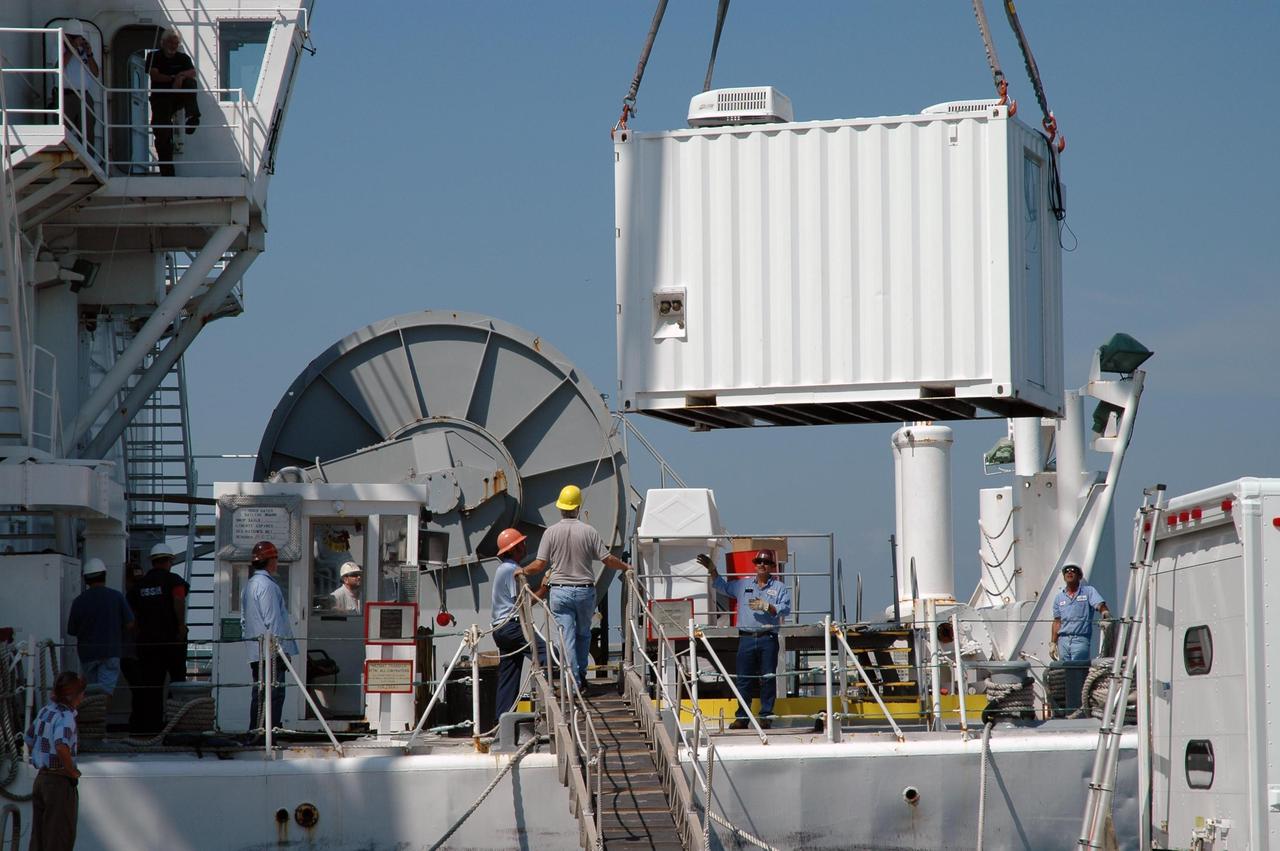
KENNEDY SPACE CENTER, FLA. - A support equipment module for an X-band radar is being loaded on the U.S. Naval Ship Hayes at Port Canaveral in Florida to support the July 1 launch of Space Shuttle Discovery on mission STS-121. There are two Continuous Pulse Doppler X-band radars located on ships for the STS-121 launch. The other one is mounted on a booster recovery ship downrange of the launch site. The two radars provide velocity and differential Shuttle/debris motion information. Combined with the C-band radar located at the Haulover Canal near the launch site, they provide high definition images of any debris that might fall from the external tank/shuttle. The X-band data (screen captures) will be sent from the ships via satellite link to the National Center for Atmospheric Research site. Photo credit: NASA/Jim Grossmann
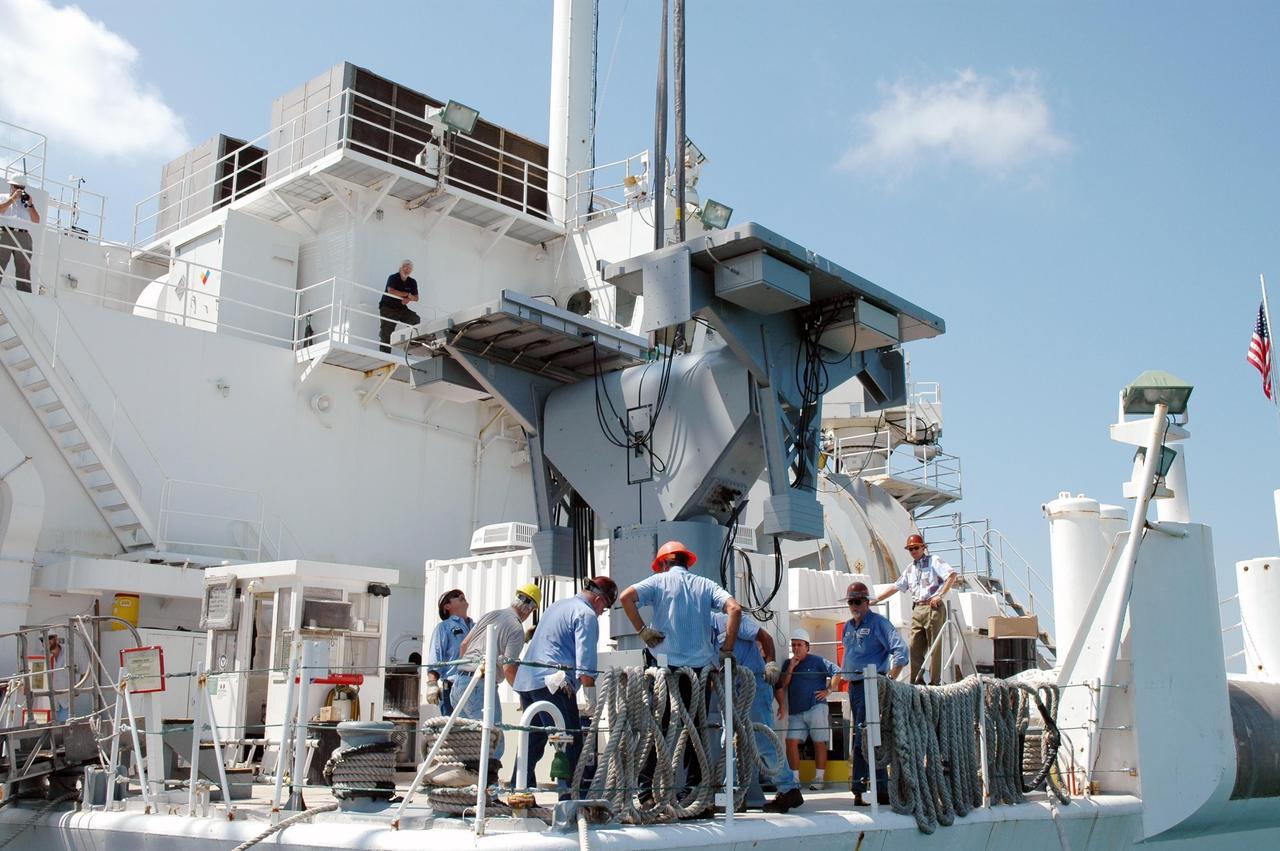
KENNEDY SPACE CENTER, FLA. - An X-band radar is installed on the U.S. Naval Ship Hayes at Port Canaveral in Florida to support the July 1 launch of Space Shuttle Discovery on mission STS-121. There are two Continuous Pulse Doppler X-band radars located on ships for the STS-121 launch. The other one is mounted on a booster recovery ship downrange of the launch site. The two radars provide velocity and differential Shuttle/debris motion information. Combined with the C-band radar located at the Haulover Canal near the launch site, they provide high definition images of any debris that might fall from the external tank/shuttle. The X-band data (screen captures) will be sent from the ships via satellite link to the National Center for Atmospheric Research site. Photo credit: NASA/Jim Grossmann
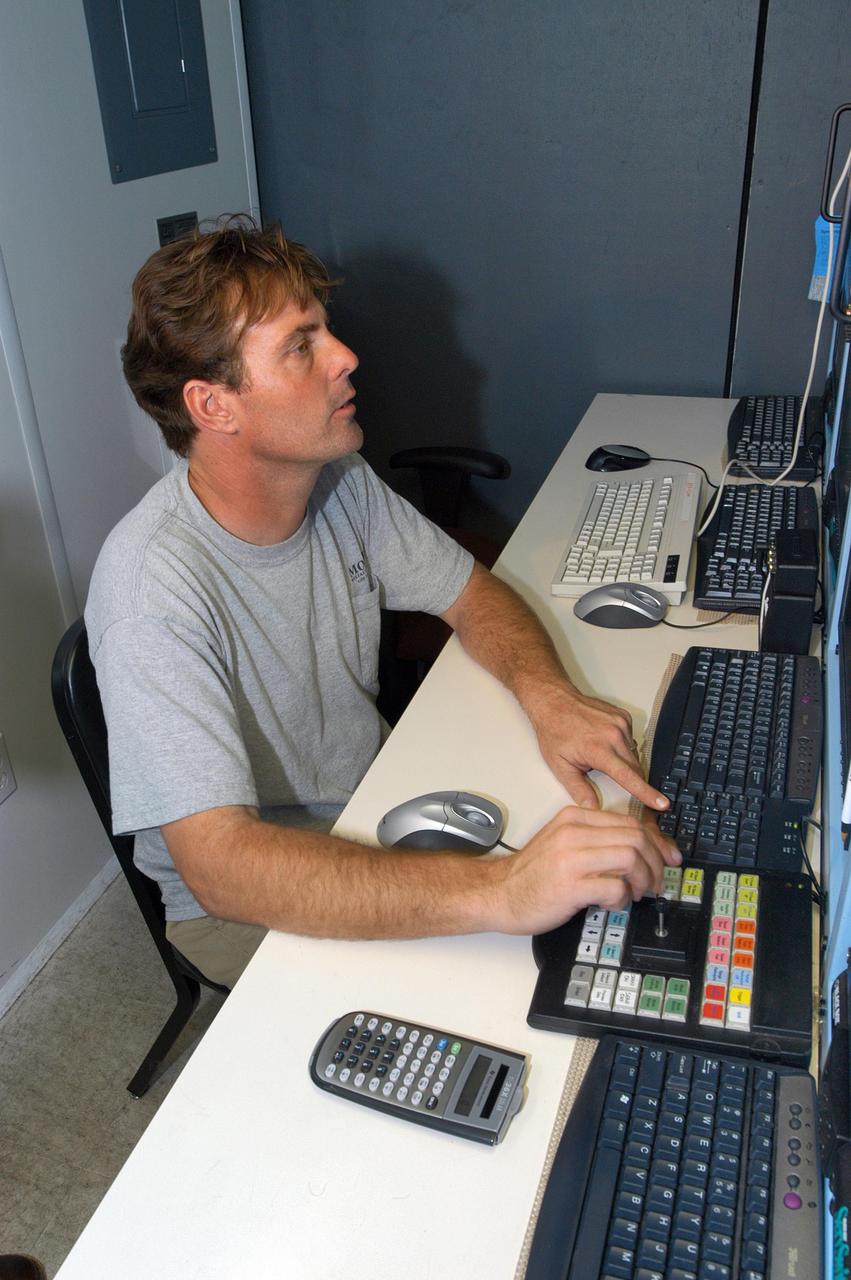
KENNEDY SPACE CENTER, FLA. -- Radar operator Scott Peabody tests the X-band radar array installed on the solid rocket booster retrieval ship Liberty before launch of Space Shuttle Discovery. It is one of two Weibel Continuous Pulse Doppler X-band radars located on each of the two SRB retrieval ships. This one will be located downrange of the launch site. It is one of two Weibel Continuous Pulse Doppler X-band radars located on each of the two SRB retrieval ships. This one will be located downrange of the launch site. Working with the land-based C-band radar, the X-band radars provide velocity and differential shuttle/debris motion information during launch. The radar data will be sent from the ships via satellite link and analyzed at the C-band radar site located on north Kennedy Space Center. Photo credit: NASA/George Shelton
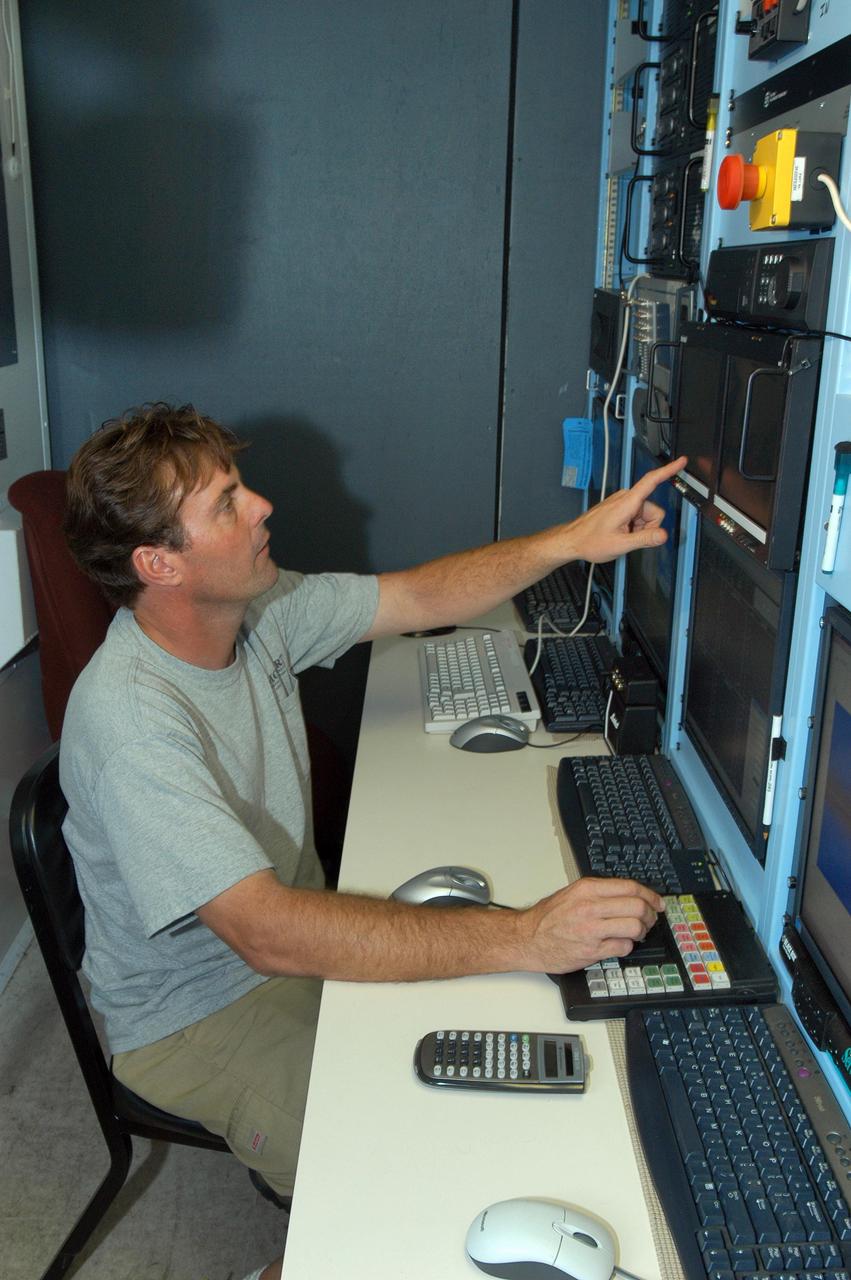
KENNEDY SPACE CENTER, FLA. -- Radar operator Scott Peabody tests the X-band radar array installed on the solid rocket booster retrieval ship Liberty before launch of Space Shuttle Discovery. It is one of two Weibel Continuous Pulse Doppler X-band radars located on each of the two SRB retrieval ships. This one will be located downrange of the launch site. It is one of two Weibel Continuous Pulse Doppler X-band radars located on each of the two SRB retrieval ships. This one will be located downrange of the launch site. Working with the land-based C-band radar, the X-band radars provide velocity and differential shuttle/debris motion information during launch. The radar data will be sent from the ships via satellite link and analyzed at the C-band radar site located on north Kennedy Space Center. Photo credit: NASA/George Shelton
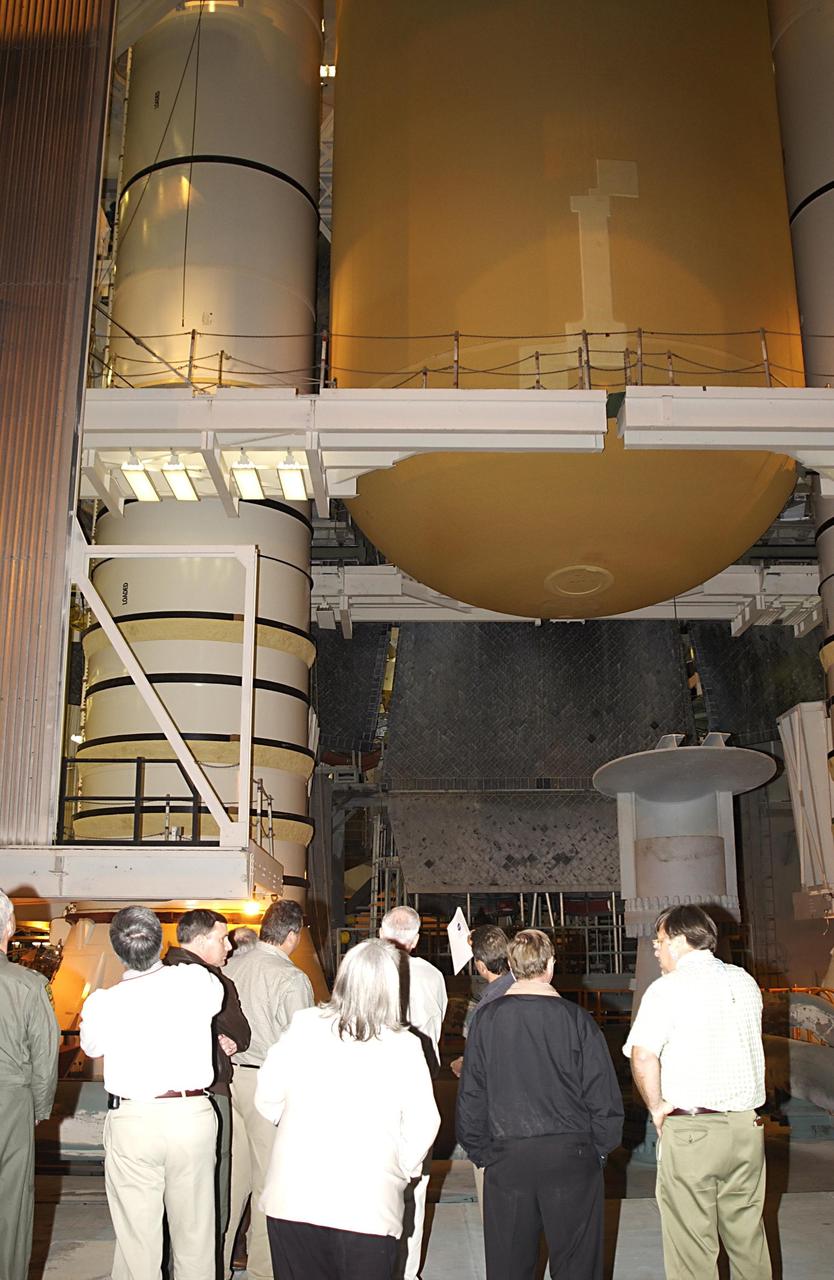
KENNEDY SPACE CENTER, FLA. -- In the Vehicle Assembly Building, the Columbia Accident Investigation Board looks at the solid rocket booster and external tank mated with Space Shuttle Atlantis. The board is visiting sites at KSC to become familiar with the Shuttle launch process and elements. The independent board is charged with determining what caused the destruction of the Space Shuttle Columbia and the loss of its seven-member crew on Feb. 1 during reentry.
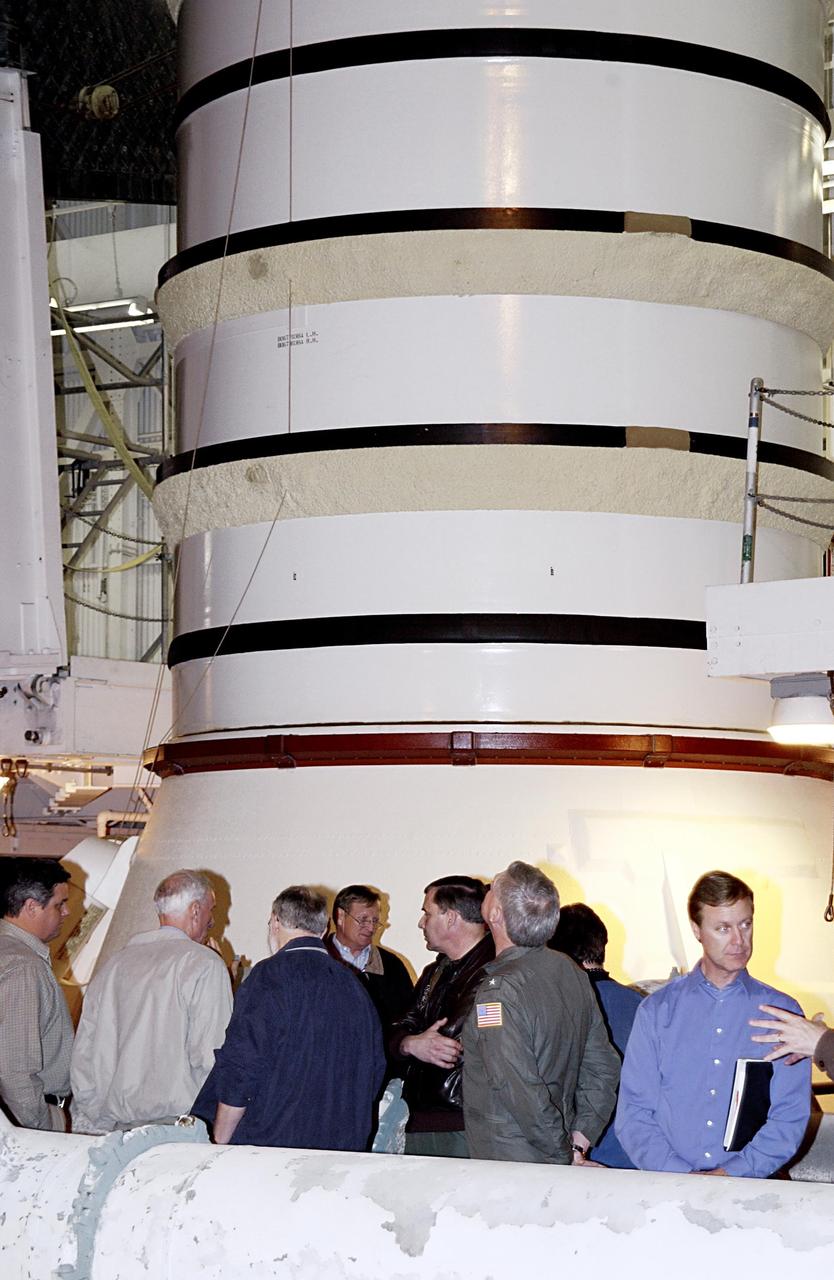
KENNEDY SPACE CENTER, FLA. -- Members of the Columbia Accident Investigation Board look at one of the solid rocket boosters on Space Shuttle Atlantis in the Vehicle Assembly Building. The board is visiting sites at KSC to become familiar with the Shuttle launch process and elements. The independent board is charged with determining what caused the destruction of the Space Shuttle Columbia and the loss of its seven-member crew on Feb. 1 during reentry.
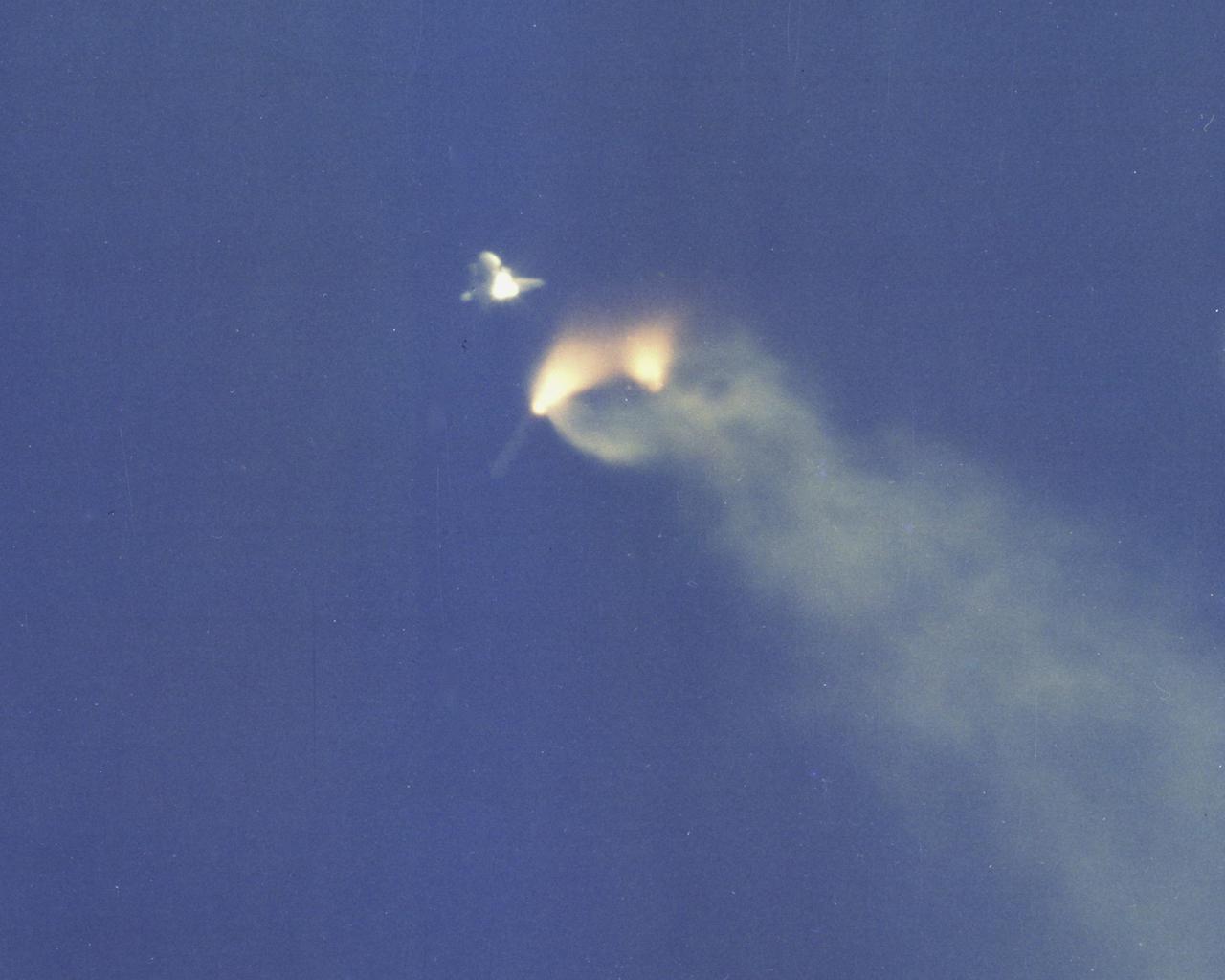
KENNEDY SPACE CENTER, FLA. - Separation of the Space Shuttle’s solid rocket boosters (SRB’s) occurs at two minutes, 11 seconds after launch from Pad A, Launch Complex 39. This sequence, showing initiation of separations, and falling away of the two booster casings, still spewing sparks from their white-hot linings, was taken by a 70mm radar-tracked Photosonic motion picture camera with a 360-inch focal lens, from Universal Camera Site 10, located on KSC approximately eight miles north of the launch pad. The three frames were taken from a 1,000 foot run of EF film exposed at a rate of 40 frames per second.
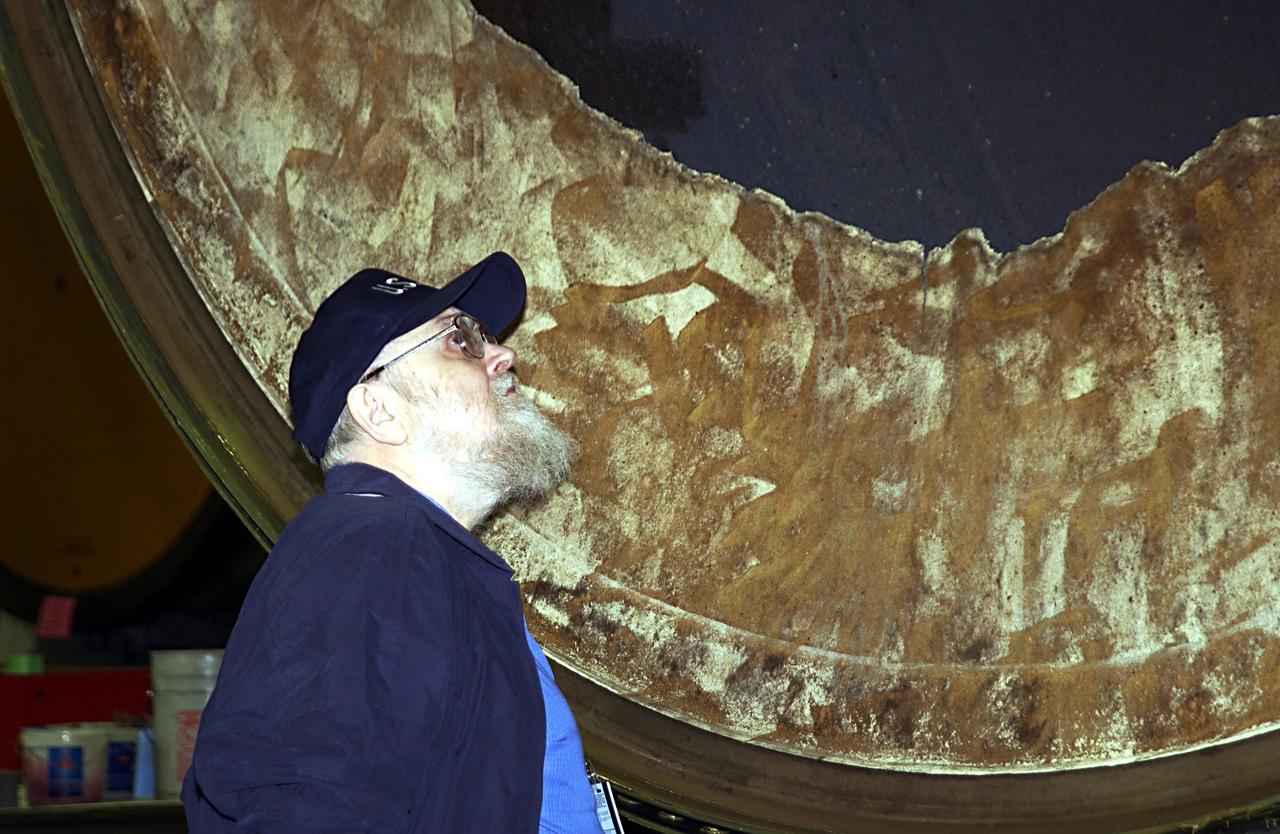
KENNEDY SPACE CENTER, FLA. -- Dr. James Hallock looks over a portion of a solid rocket booster in the Hangar AF (the SRB Disassembly Facility). He is a member of the Columbia Accident Investigation Board that is visiting sites at KSC to become familiar with the Shuttle launch process and elements. The independent board is charged with determining what caused the destruction of the Space Shuttle Columbia and the loss of its seven-member crew on Feb. 1 during reentry.
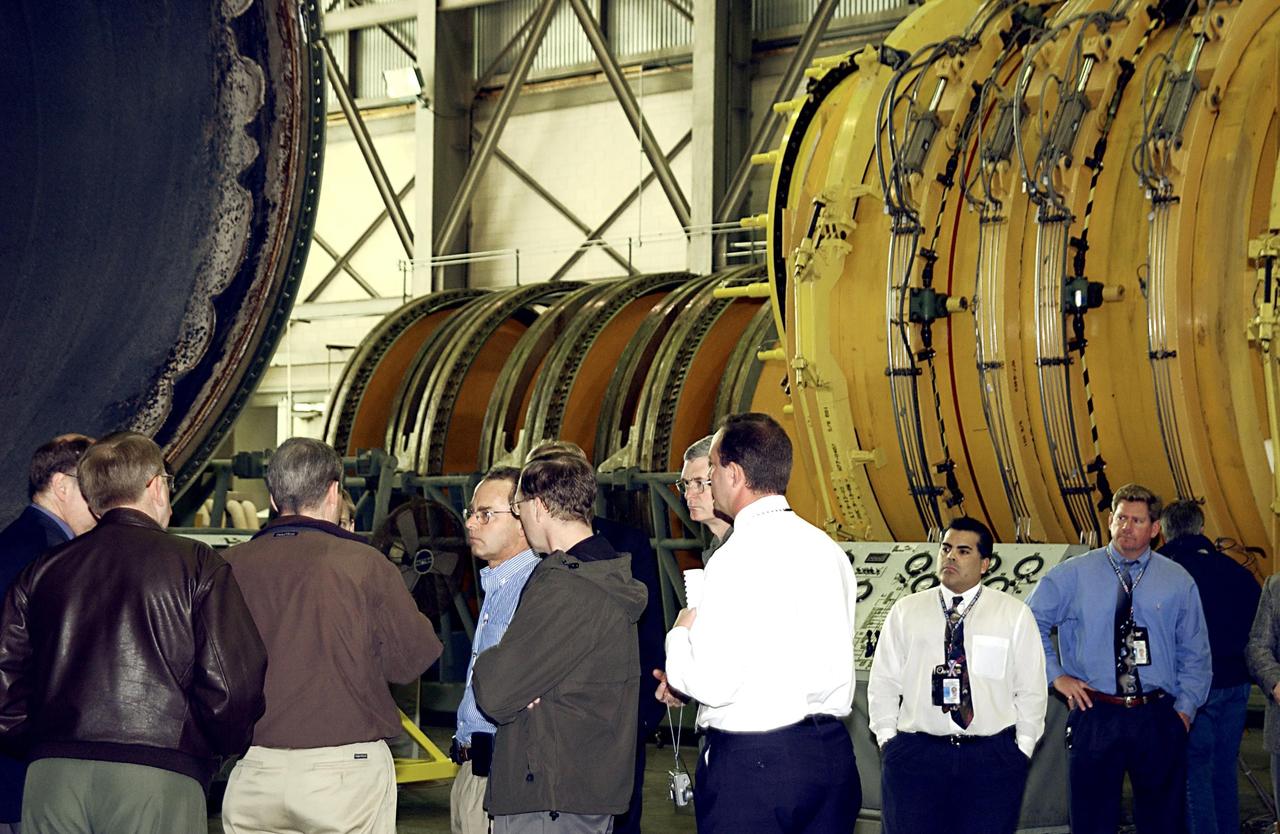
KENNEDY SPACE CENTER, FLA. -- Members of the Columbia Accident Investigation Board learn about the work done in Hangar AF (the SRB Disassembly Facility). Sections of solid rocket boosters surround them. The board is visiting sites at KSC to become familiar with the Shuttle launch process and elements. The independent board is charged with determining what caused the destruction of the Space Shuttle Columbia and the loss of its seven-member crew on Feb. 1 during reentry.
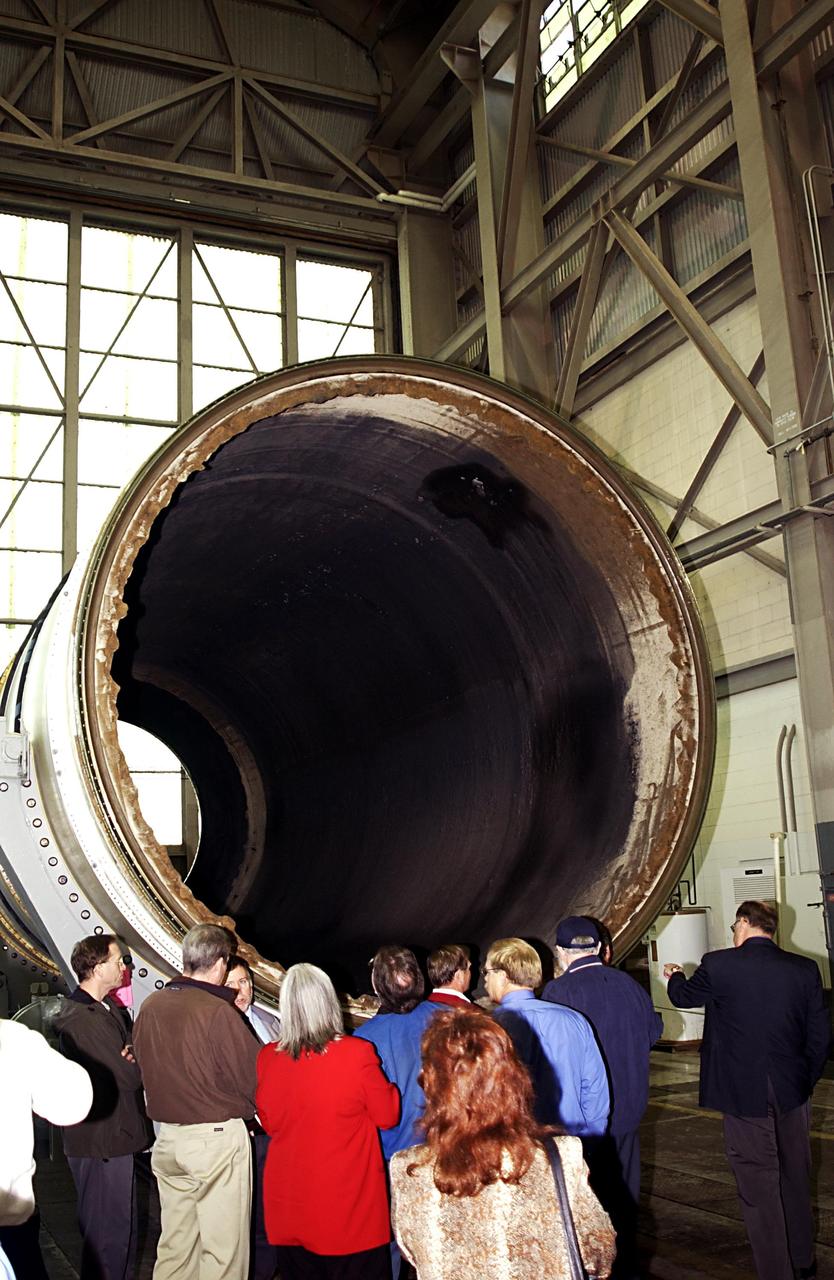
KENNEDY SPACE CENTER, FLA. - Members of the Columbia Accident Investigation Board look at a segment of a solid rocket booster in Hangar AF (the SRB Disassembly Facility). The board is visiting sites at KSC to become familiar with the Shuttle launch process and elements. The independent board is charged with determining what caused the destruction of the Space Shuttle Columbia and the loss of its seven-member crew on Feb. 1 during reentry.
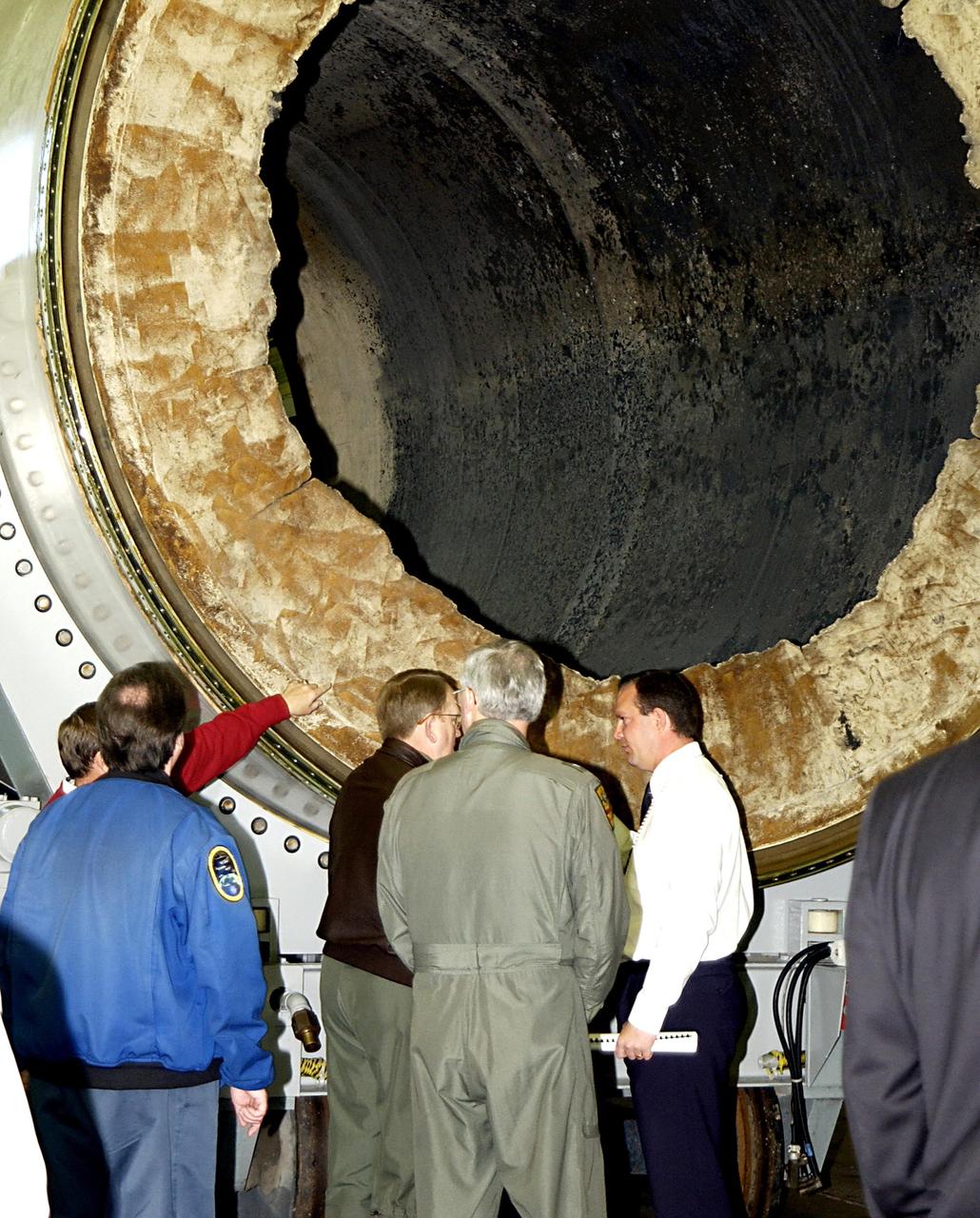
KENNEDY SPACE CENTER, FLA. -- Members of the Columbia Accident Investigation Board look at a segment of a solid rocket booster in Hangar AF (the SRB Disassembly Facility). The board is visiting sites at KSC to become familiar with the Shuttle launch process and elements. The independent board is charged with determining what caused the destruction of the Space Shuttle Columbia and the loss of its seven-member crew on Feb. 1 during reentry.
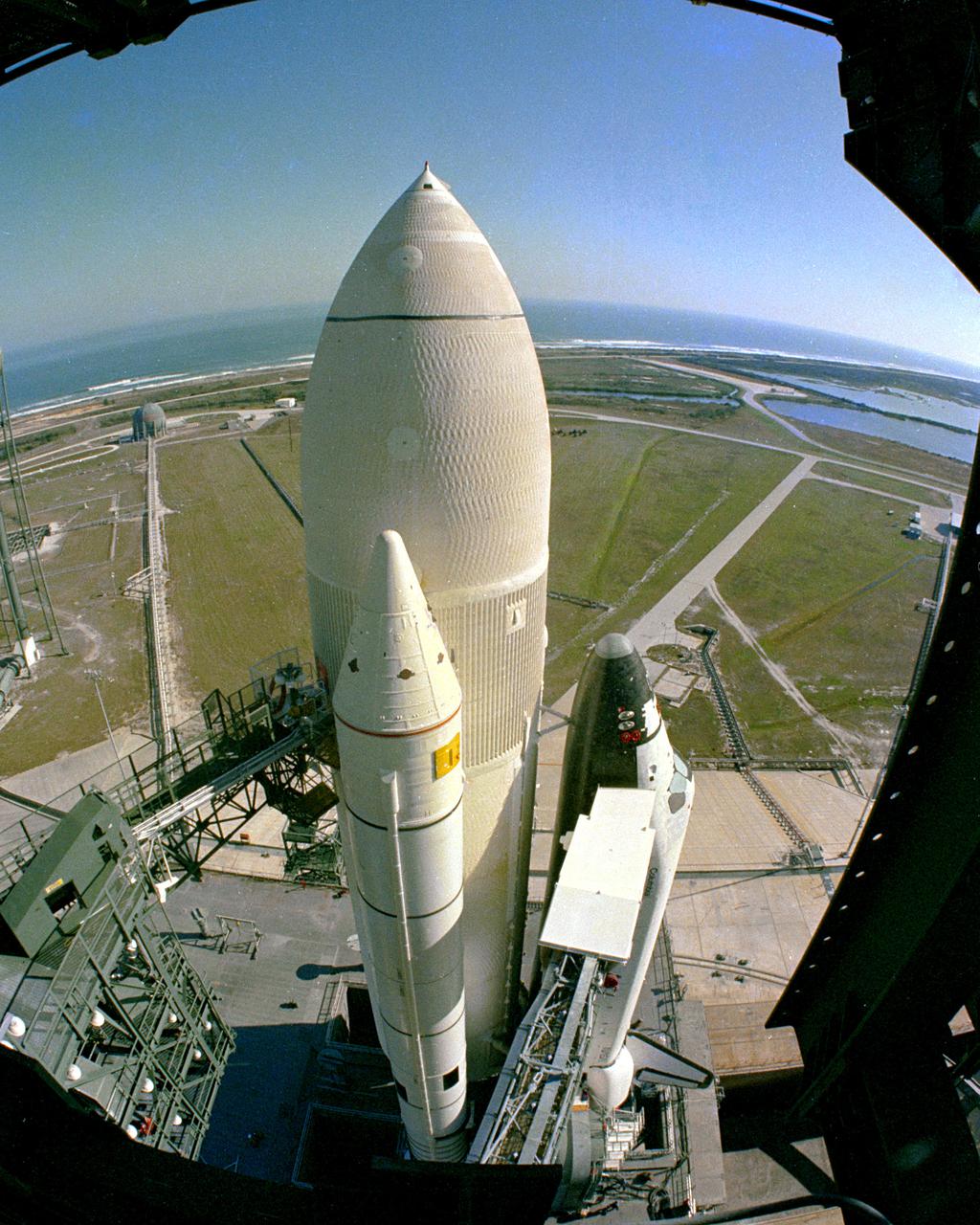
KENNEDY SPACE CENTER, FLA. - The first Space Shuttle vehicle destined to fly in space arrives at its launch site, Pad A at Complex 39, following a 3.5-mile move from the Vehicle Assembly Building where the vehicle was assembled. The rollout of the STS-1 vehicle - consisting of America's first reusable spaceship, Columbia, the external propellant tank and twin solid rocket boosters - from the VAB to the launch pad is a major milestone in the series of events that will lead to its scheduled liftoff in March 1981.
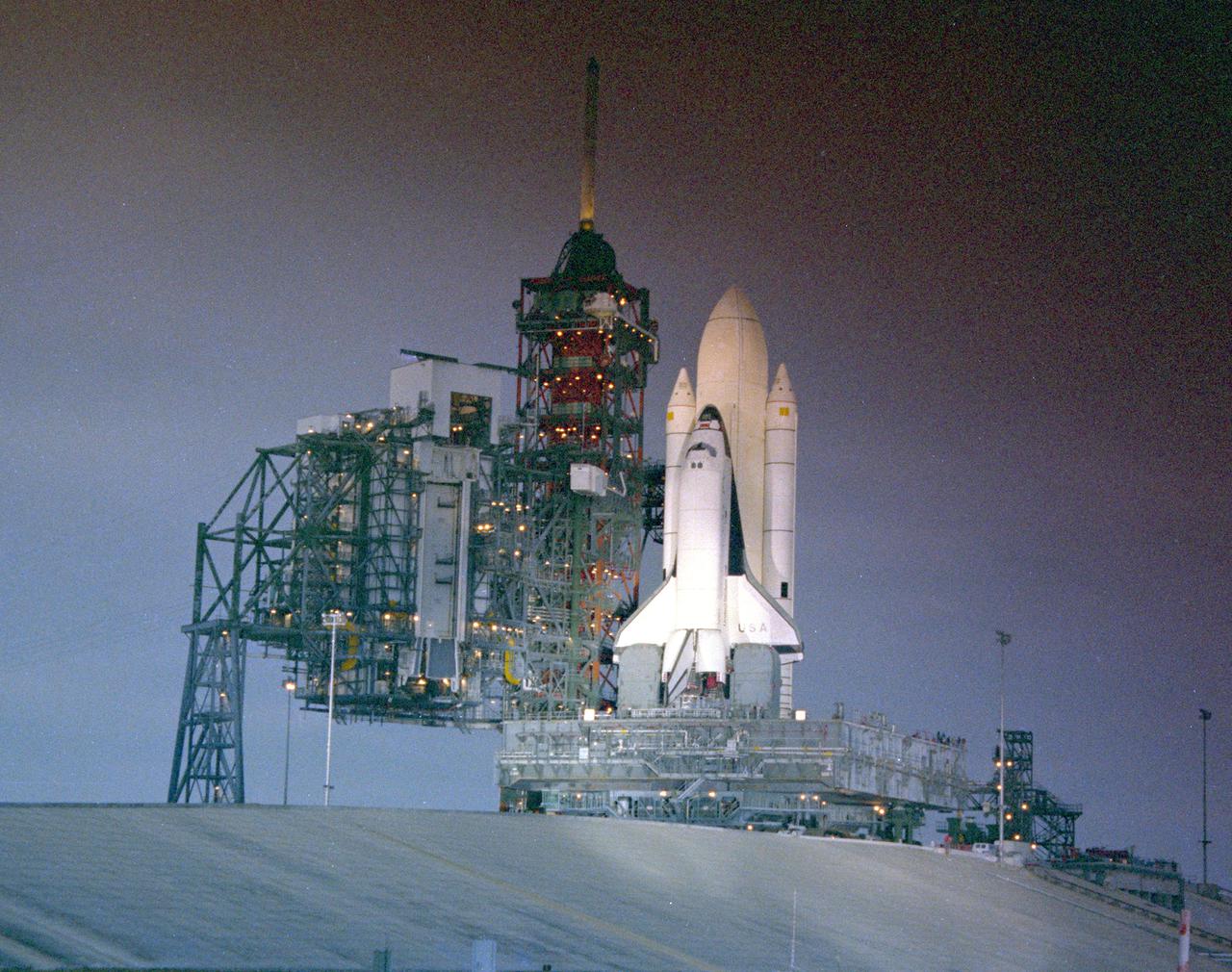
KENNEDY SPACE CENTER, FLA. - The first Space Shuttle vehicle destined to fly in space arrives at its launch site, Pad A at Complex 39, following a 3.5-mile move from the Vehicle Assembly Building where the vehicle was assembled. The rollout of the STS-1 vehicle - consisting of America's first reusable spaceship, Columbia, the external propellant tank and twin solid rocket boosters - from the VAB to the launch pad is a major milestone in the series of events that will lead to its scheduled liftoff in March 1981.
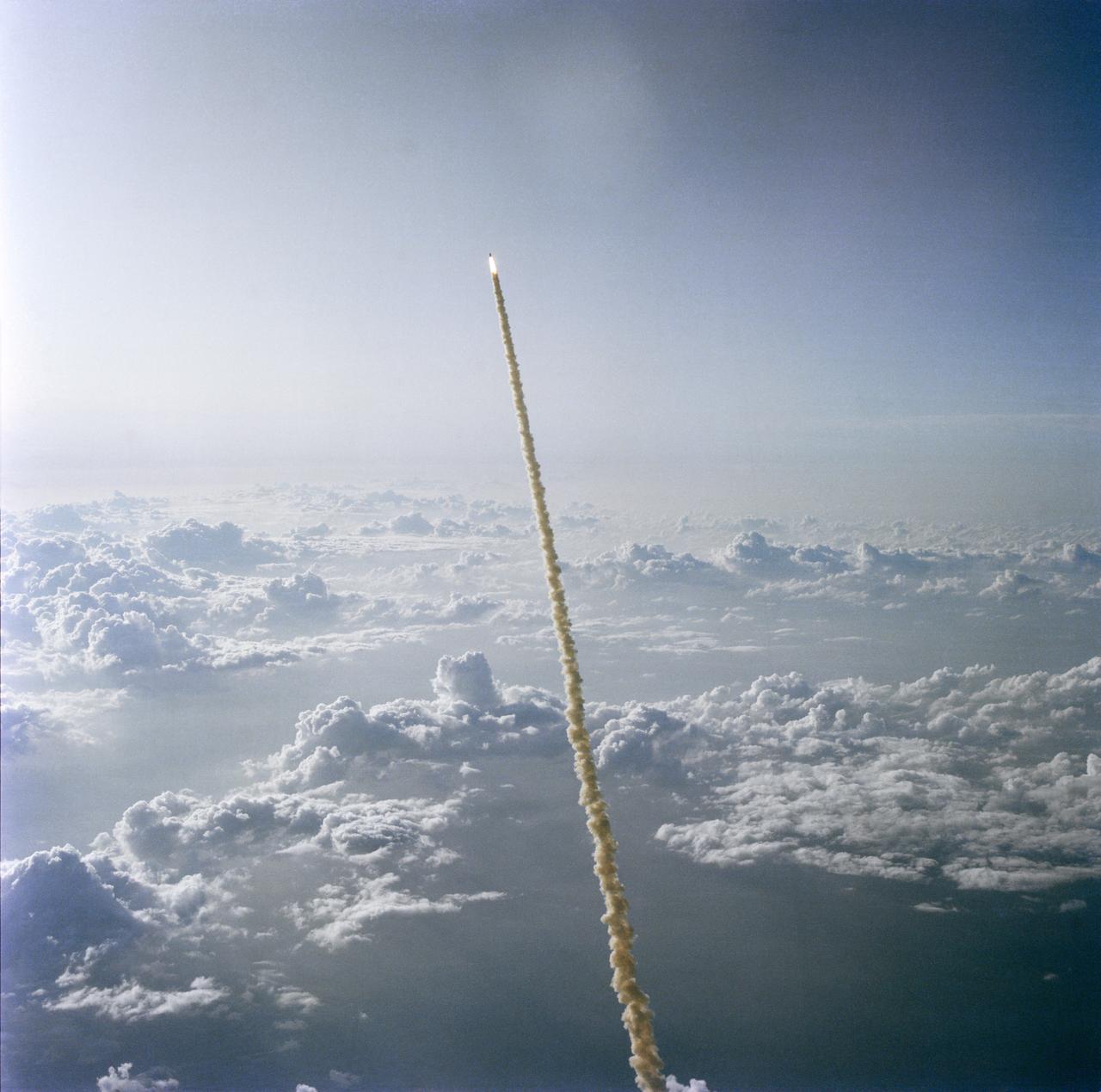
S83-35620 (18 June 1983) --- The space shuttle Challenger, its two solid rocket boosters and an external fuel tank carry the five-member STS-7 astronaut crew toward a six-day mission in Earth orbit. This high-angle view of the liftoff, a lengthy stretch of Florida Atlantic coastline and a number of large cumulus clouds was photographed with a handheld 70mm camera by astronaut John W. Young. Young usually pilots the Shuttle Training Aircraft (STA) for weather monitoring at launch and landing sites for STS missions. The Challenger?s second launch occurred at 7:33 a.m. (EDT) on 18 June 1983. Photo credit: NASA
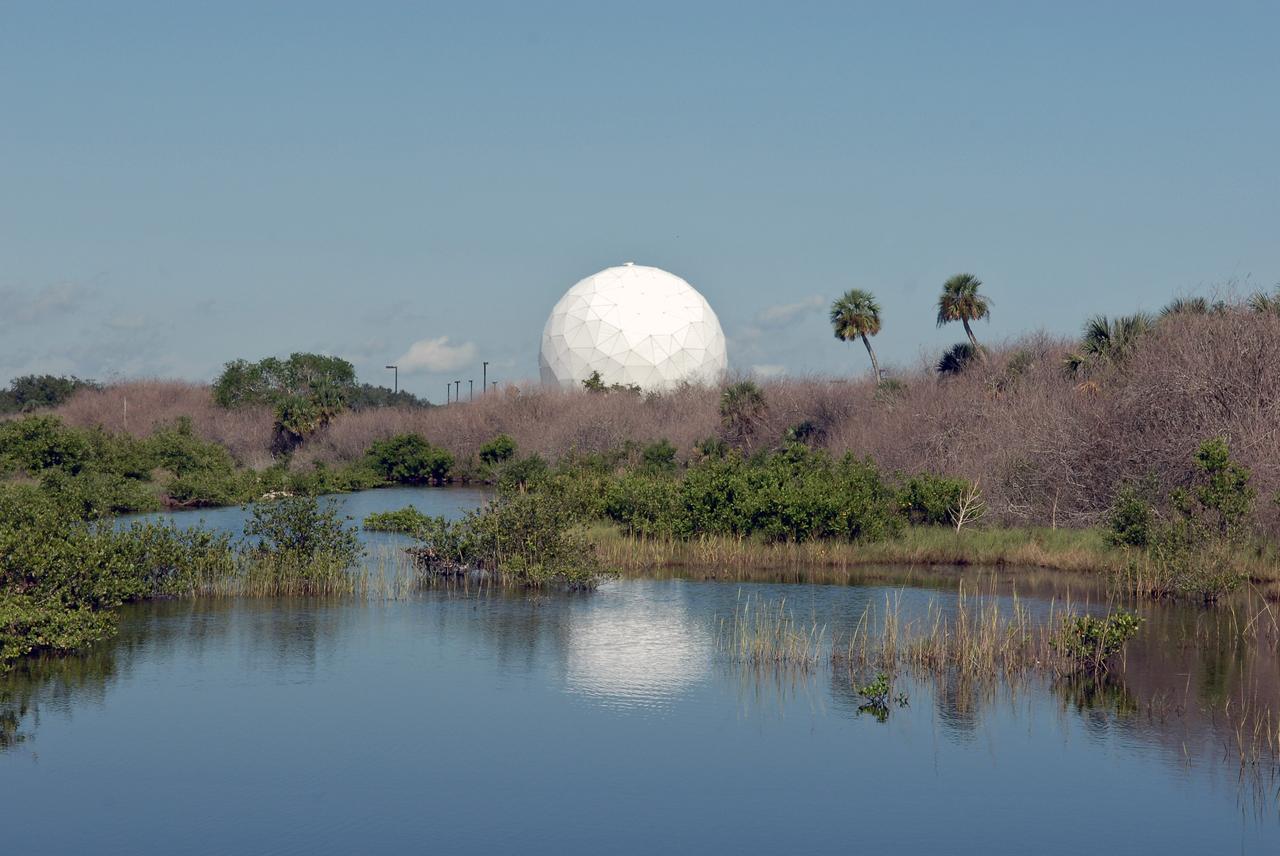
CAPE CANAVERAL, Fla. – This is the radome beneath which is the NASA Debris Radar. It is located at a remote site on North Merritt Island in Florida. One of the largest of its kind in the world, the C-band radar provided critical support to pinpoint debris during the launch of space shuttle Atlantis on the STS-125 mission. The need for this radar was identified after the Columbia tragedy. It worked together with smaller X-band radars placed on the solid rocket booster ship Liberty Star and the U.S. Army landing craft utility ship Brandy Station. Together they provided extremely high resolution images of any debris that created by Atlantis during launch. Photo credit: NASA/Troy Cryder
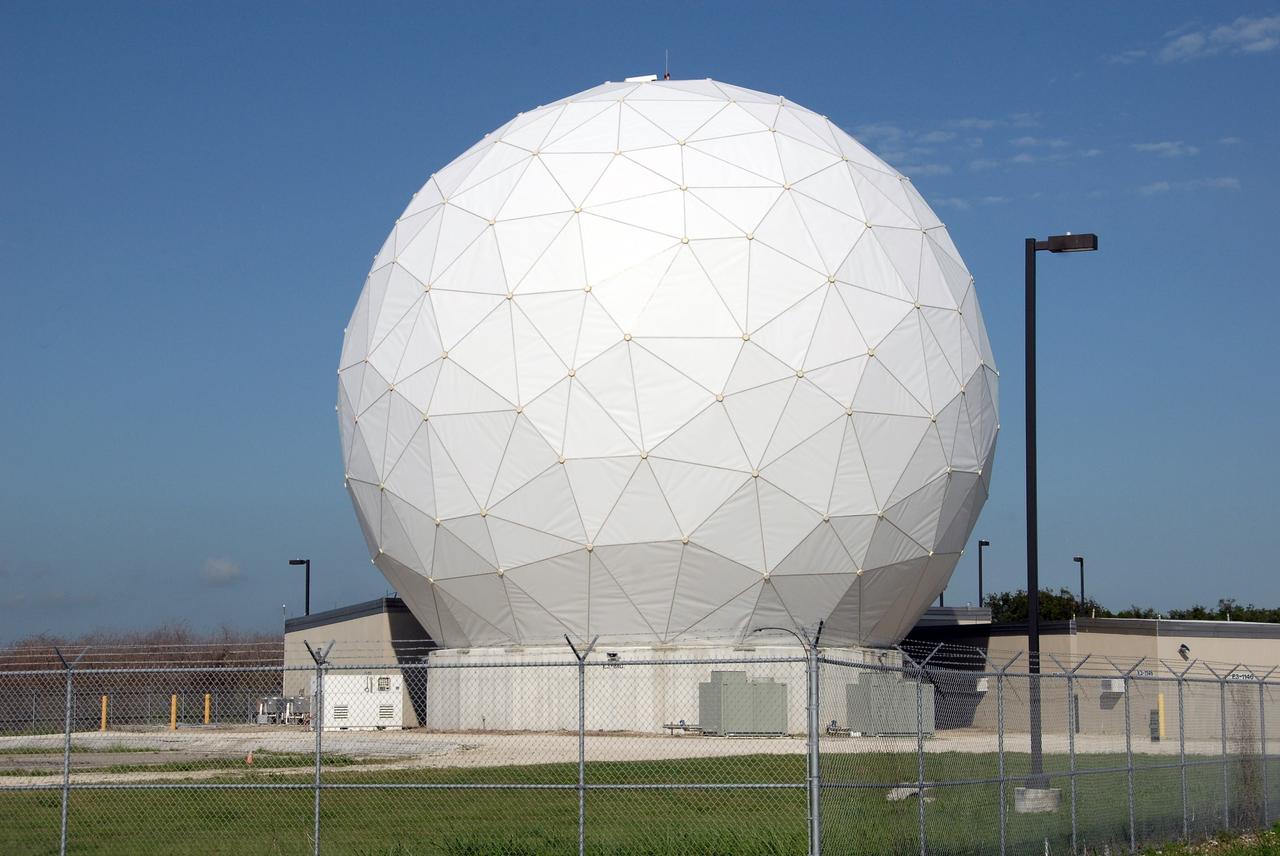
CAPE CANAVERAL, Fla. – This is the radome beneath which is the NASA Debris Radar. It is located at a remote site on North Merritt Island in Florida. One of the largest of its kind in the world, the C-band radar provided critical support to pinpoint debris during the launch of space shuttle Atlantis on the STS-125 mission. The need for this radar was identified after the Columbia tragedy. It worked together with smaller X-band radars placed on the solid rocket booster ship Liberty Star and the U.S. Army landing craft utility ship Brandy Station. Together they provided extremely high resolution images of any debris that created by Atlantis during launch. Photo credit: NASA/Troy Cryder
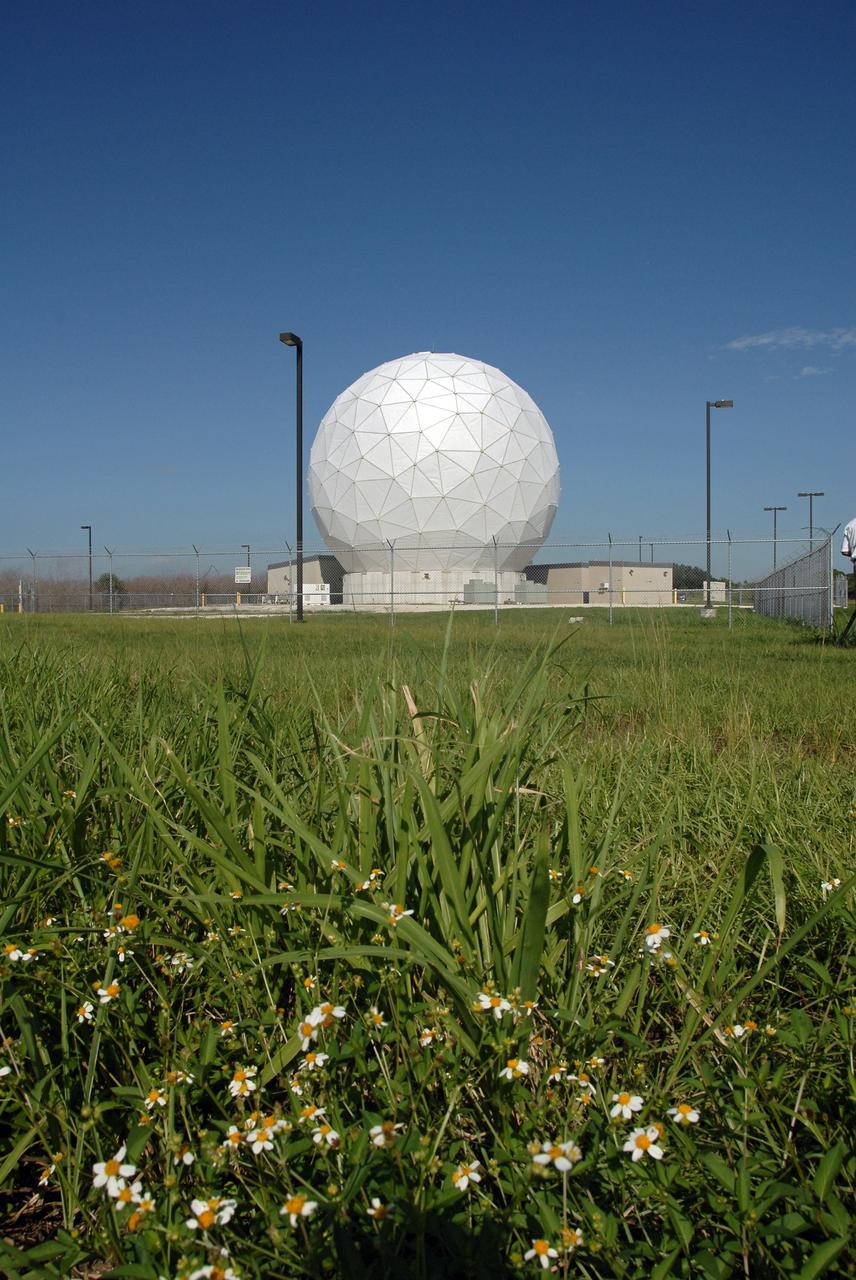
CAPE CANAVERAL, Fla. – This is the radome beneath which is the NASA Debris Radar. It is located at a remote site on North Merritt Island in Florida. One of the largest of its kind in the world, the C-band radar provided critical support to pinpoint debris during the launch of space shuttle Atlantis on the STS-125 mission. The need for this radar was identified after the Columbia tragedy. It worked together with smaller X-band radars placed on the solid rocket booster ship Liberty Star and the U.S. Army landing craft utility ship Brandy Station. Together they provided extremely high resolution images of any debris that created by Atlantis during launch. Photo credit: NASA/Troy Cryder
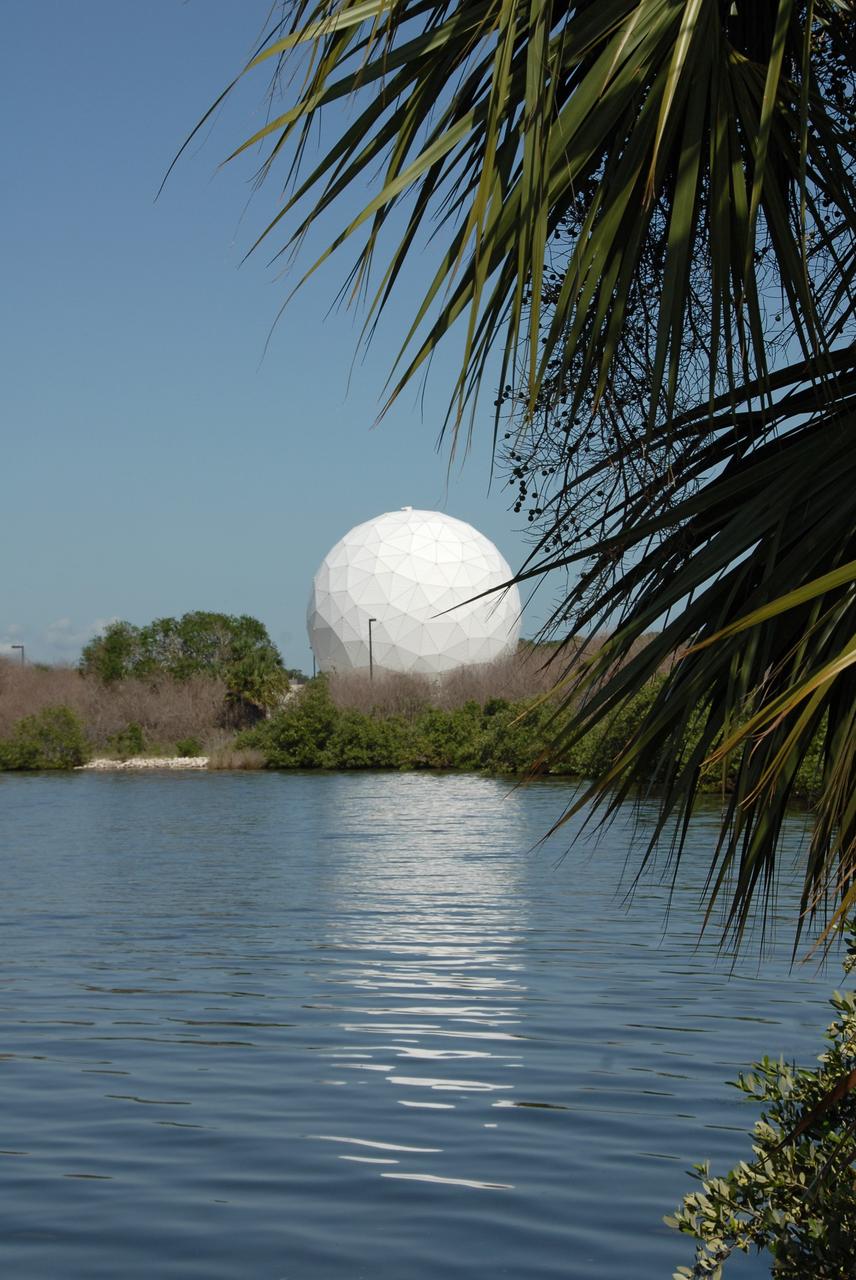
CAPE CANAVERAL, Fla. – This is the radome beneath which is the NASA Debris Radar. It is located at a remote site on North Merritt Island in Florida. One of the largest of its kind in the world, the C-band radar provided critical support to pinpoint debris during the launch of space shuttle Atlantis on the STS-125 mission. The need for this radar was identified after the Columbia tragedy. It worked together with smaller X-band radars placed on the solid rocket booster ship Liberty Star and the U.S. Army landing craft utility ship Brandy Station. Together they provided extremely high resolution images of any debris that created by Atlantis during launch. Photo credit: NASA/Troy Cryder
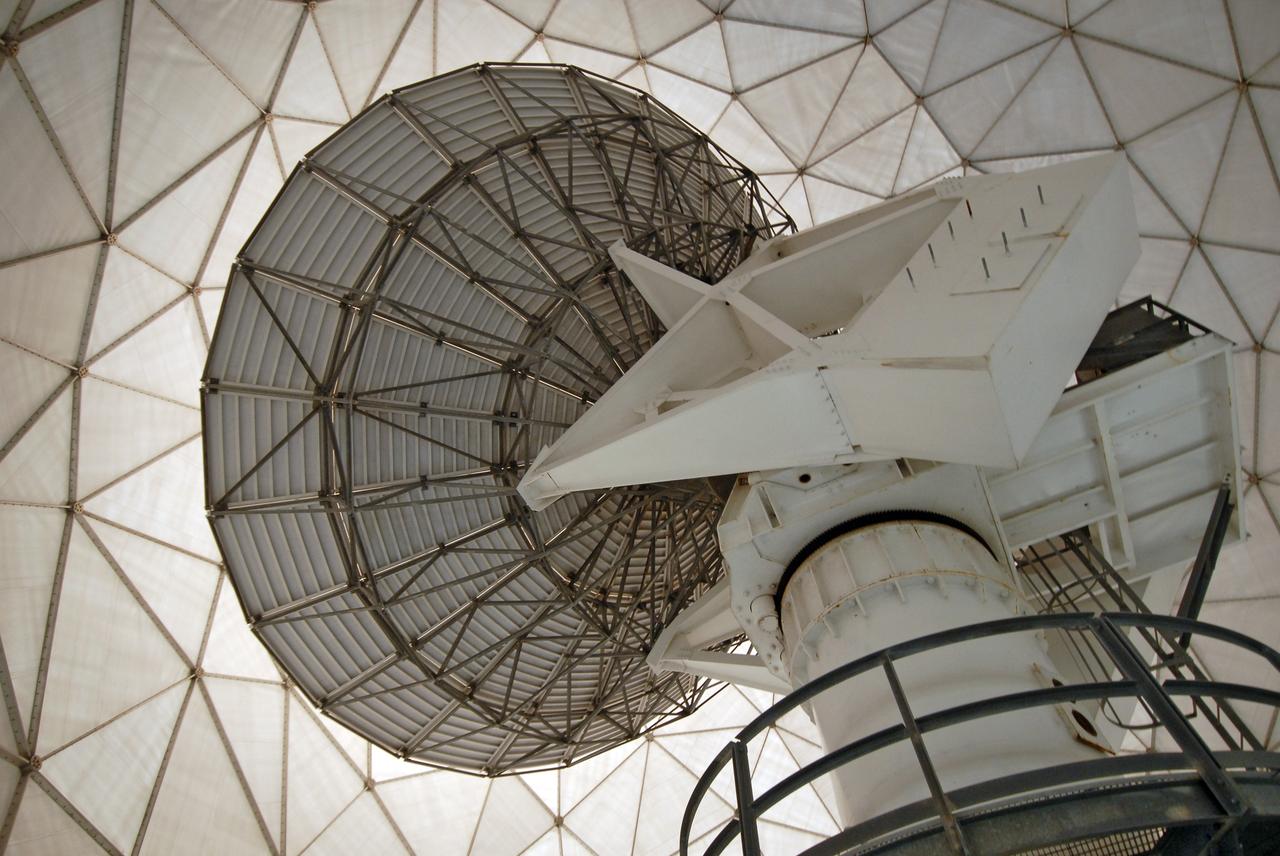
CAPE CANAVERAL, Fla. – This view is NASA's C-band, Debris Radar antenna inside the radome at a site on North Merritt Island in Florida. One of the largest of its kind in the world, the C-band radar provided critical support to pinpoint debris during the launch of space shuttle Atlantis on the STS-125 mission. The need for this radar was identified after the Columbia tragedy. It worked together with smaller X-band radars placed on the solid rocket booster ship Liberty Star and the U.S. Army landing craft utility ship Brandy Station. Together they provided extremely high resolution images of any debris that created by Atlantis during launch. Photo credit: NASA/Troy Cryder
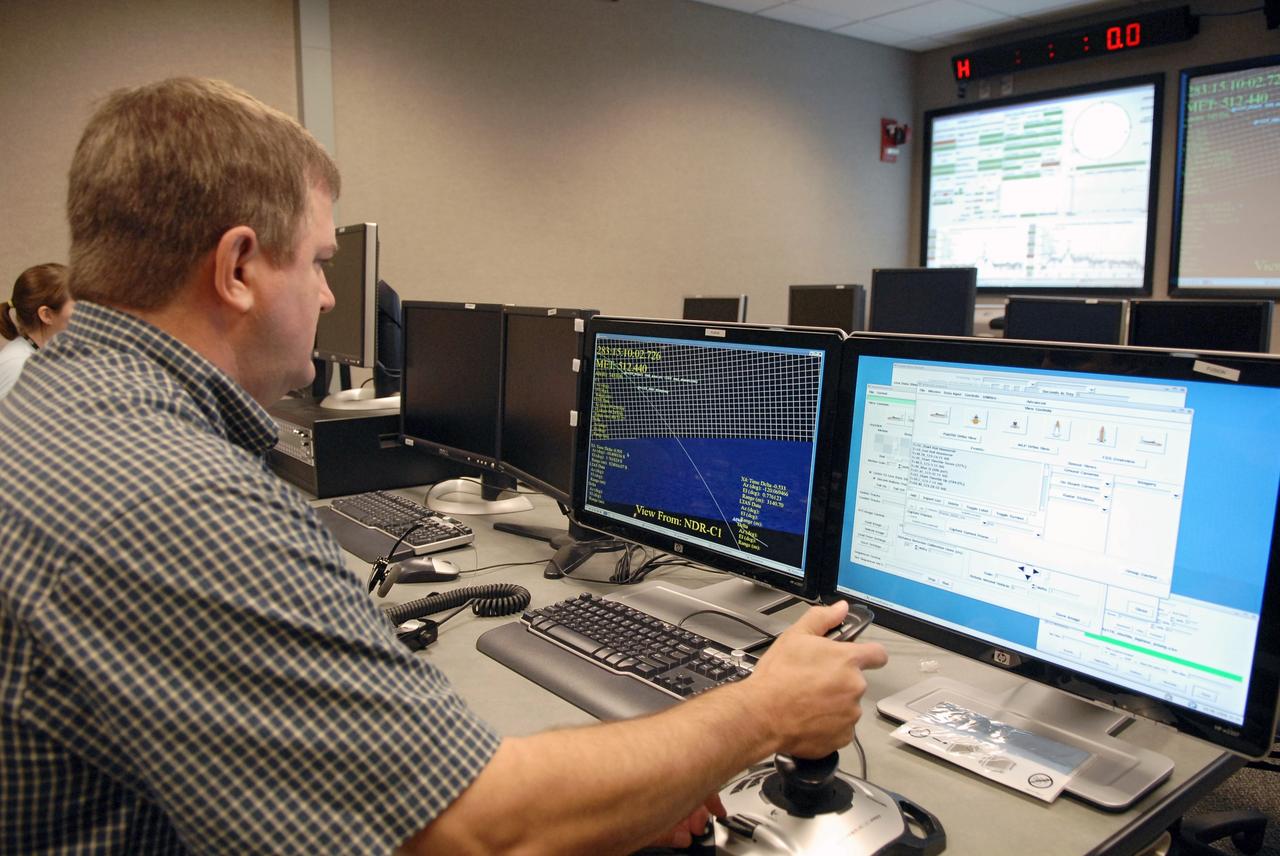
CAPE CANAVERAL, Fla. – An engineer analyzes data from NASA's C-band Debris Radar antenna at a site on North Merritt Island in Florida. One of the largest of its kind in the world, the C-band radar provided critical support to pinpoint debris during the launch of space shuttle Atlantis on the STS-125 mission. The need for this radar was identified after the Columbia tragedy. It worked together with smaller X-band radars placed on the solid rocket booster ship Liberty Star and the U.S. Army landing craft utility ship Brandy Station. Together they provided extremely high resolution images of any debris that created by Atlantis during launch. Photo credit: NASA/Troy Cryder
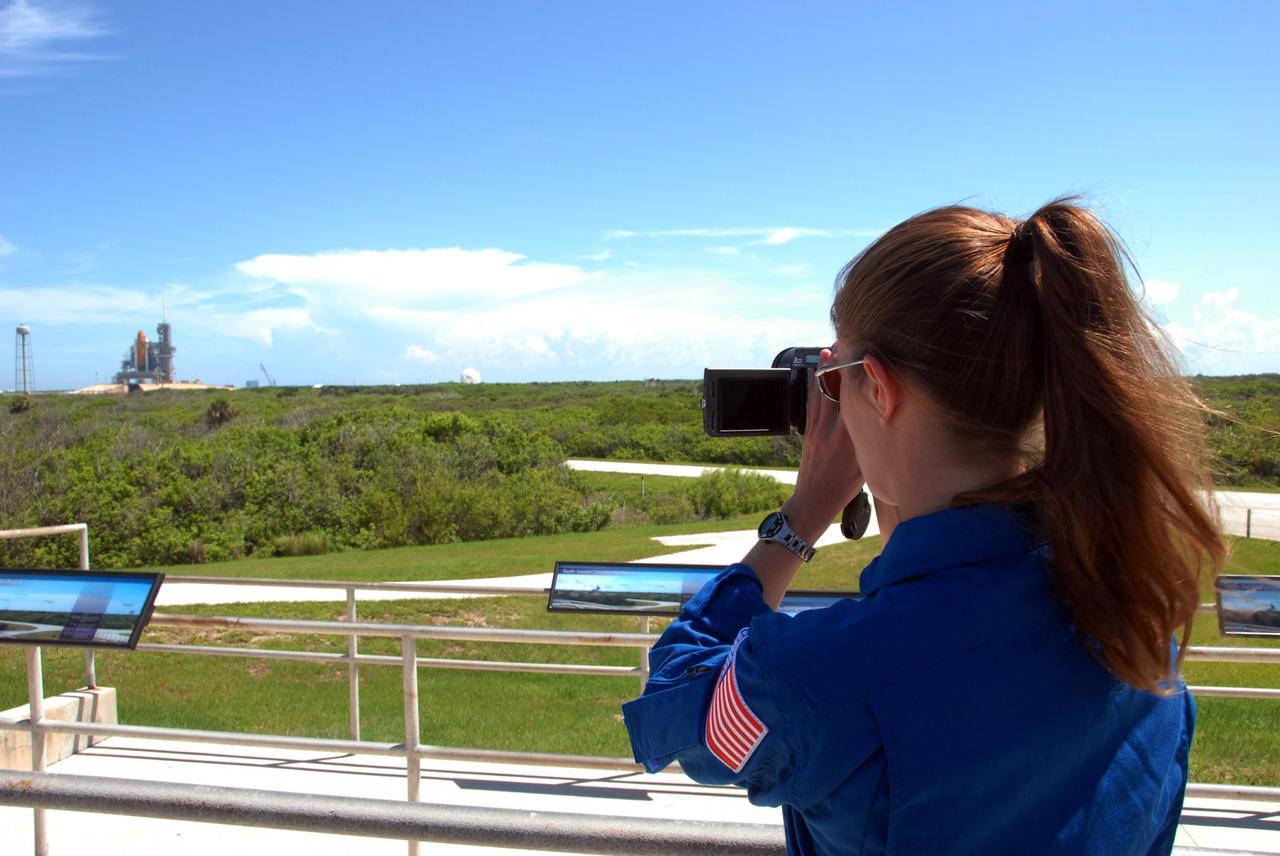
KENNEDY SPACE CENTER, Fla. -- From the viewing site near Launch Pad 39A, STS-118 Mission Specialist Tracy Caldwell practices using a video camera to film the external tank/solid rocket booster stack on Space Shuttle Endeavour. Caldwell will capture the separation of the tank from Endeavour after launch. The STS-118 crew is at Kennedy to take part in Terminal Countdown Demonstration Test activities, including M-113 training, payload familiarization, emergency egress training at the pad and a simulated launch countdown. The payload aboard Space Shuttle Endeavour includes the S5 truss, a SPACEHAB module and external stowage platform 3. The STS-118 mission is the 22nd flight to the International Space Station and is targeted for launch on Aug. 7. NASA/George Shelton
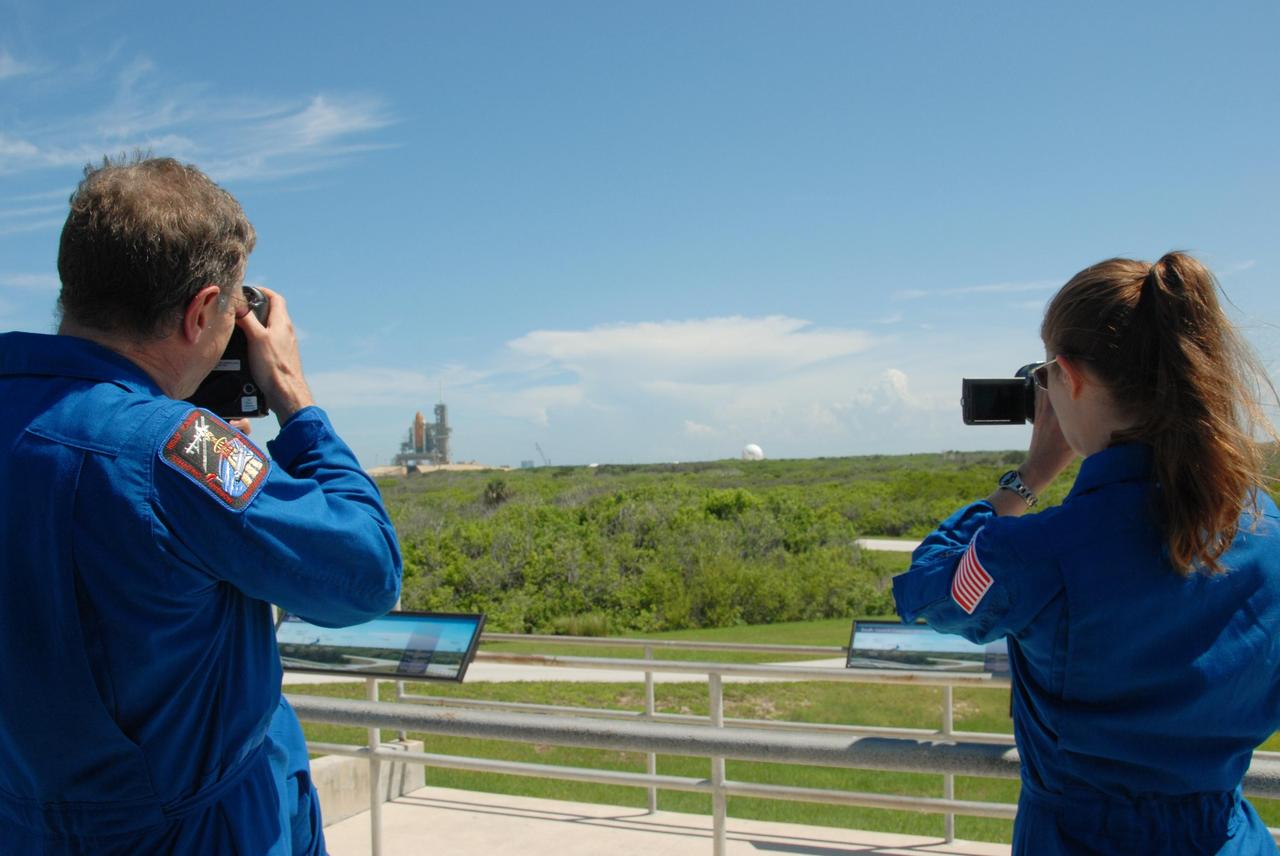
KENNEDY SPACE CENTER, Fla. -- From the viewing site near Launch Pad 39A, STS-118 Mission Specialists Dave Williams and Tracy Caldwell practice using their respective cameras to capture images of the external tank/solid rocket booster stack on Space Shuttle Endeavour. They will capture the separation of the tank from Endeavour after launch. The STS-118 crew is at Kennedy to take part in Terminal Countdown Demonstration Test activities, including M-113 training, payload familiarization, emergency egress training at the pad and a simulated launch countdown. The payload aboard Space Shuttle Endeavour includes the S5 truss, a SPACEHAB module and external stowage platform 3. The STS-118 mission is the 22nd flight to the International Space Station and is targeted for launch on Aug. 7. NASA/George Shelton
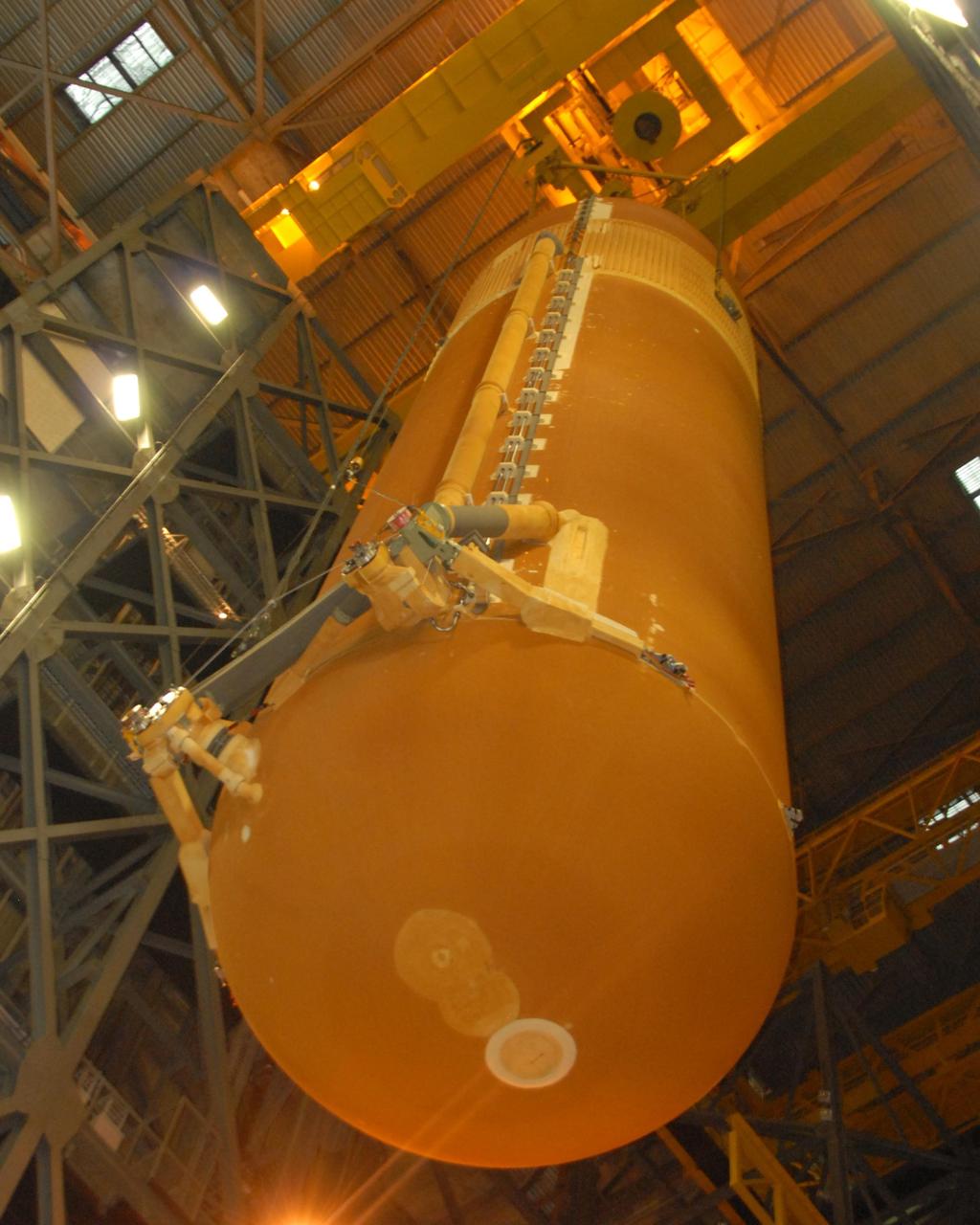
KENNEDY SPACE CENTER, FLA. -- In the Vehicle Assembly Building at NASA's Kennedy Space Center, external tank No. 120 is lowered into high bay 1 where it will be mated with the solid rocket boosters. Seen on the tank are the sites of modification to the foam where BX265 foam insulation and super lightweight ablator, cork insulation was removed and the BX265 foam insulation alone reapplied. The external tank-SRB stack is being prepared for the orbiter Discovery, which will be mated to the stack in the VAB in two weeks. Space Shuttle Discovery is targeted to launch Oct. 23 on mission STS-120 to the International Space Station. Photo credit: NASA/George Shelton
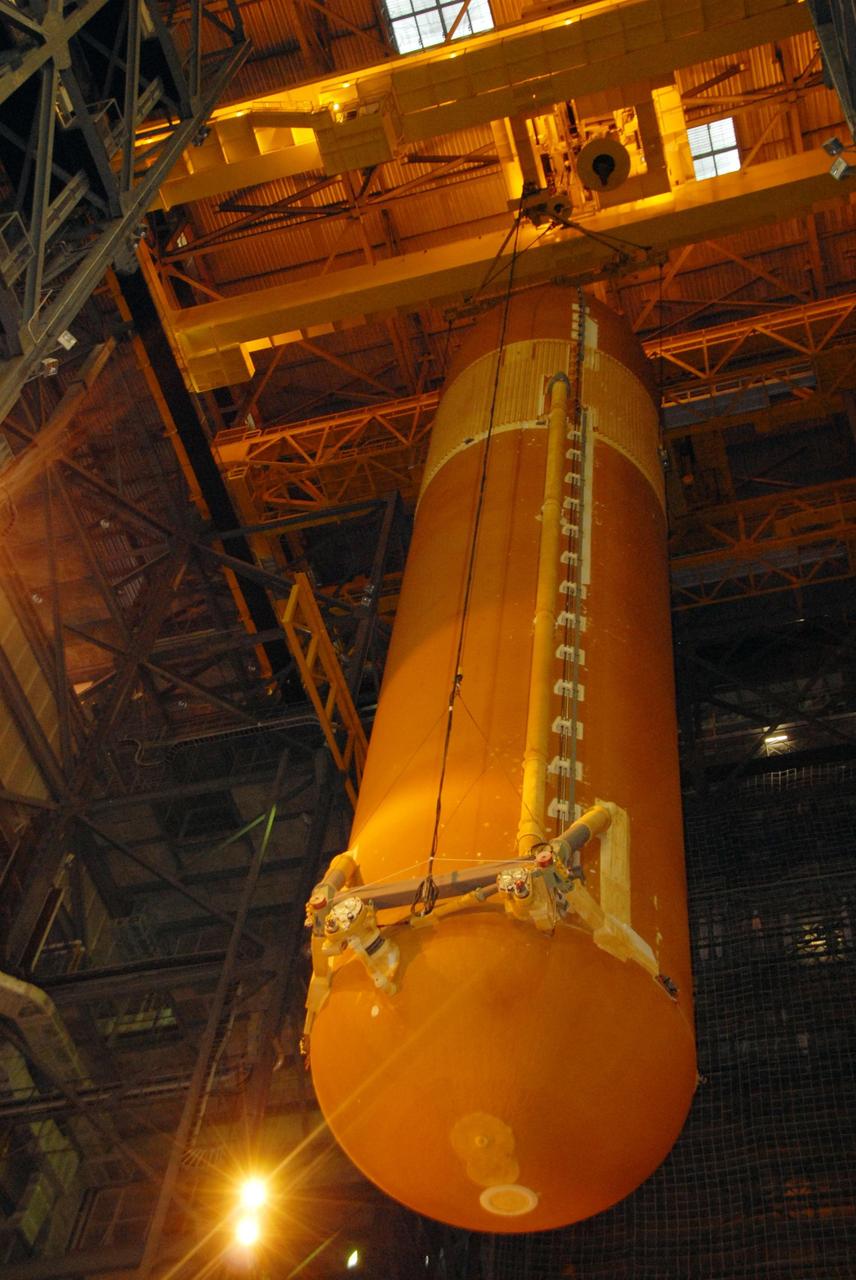
KENNEDY SPACE CENTER, FLA. -- In the Vehicle Assembly Building at NASA's Kennedy Space Center, external tank No. 120 is lowered into high bay 1 where it will be mated with the solid rocket boosters. Seen on the tank are the sites of modification to the foam where BX265 foam insulation and super lightweight ablator, cork insulation was removed and the BX265 foam insulation alone reapplied. The external tank-SRB stack is being prepared for the orbiter Discovery, which will be mated to the stack in the VAB in two weeks. Space Shuttle Discovery is targeted to launch Oct. 23 on mission STS-120 to the International Space Station. Photo credit: NASA/George Shelton
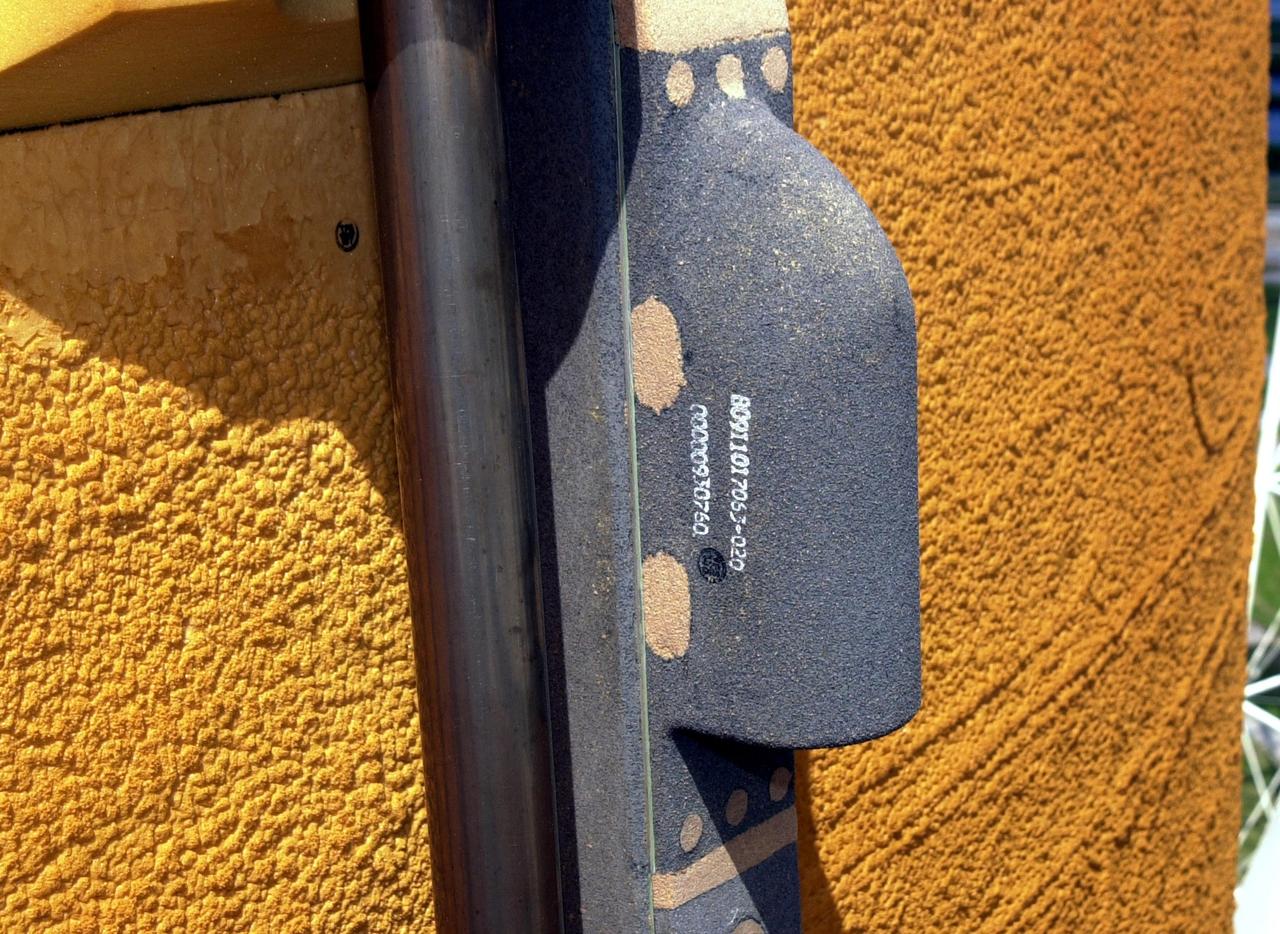
KENNEDY SPACE CENTER, FLA. - A closeup view of the camera mounted on the external tank of Space Shuttle Atlantis. The color video camera mounted to the top of Atlantis' external tank will provide a view of the front and belly of the orbiter and a portion of the solid rocket boosters (SRBs) and external tank during the launch of Atlantis on mission STS-112. It will offer the STS-112 team an opportunity to monitor the shuttle's performance from a new angle. The camera will be turned on fifteen minutes prior to launch and will show the orbiter and solid rocket boosters on the launch pad. The video will be downlinked from the external tank during flight to several NASA data-receiving sites and then relayed to the live television broadcast. The camera is expected to operate for about 15 minutes following liftoff. At liftoff, viewers will see the shuttle clearing the launch tower and, at two minutes after liftoff, see the right SRB separate from the external tank. When the external tank separates from Atlantis about eight minutes into the flight, the camera is expected to continue its live feed for about six more minutes although NASA may be unable to pick up the camera's signal because the tank may have moved out of range.
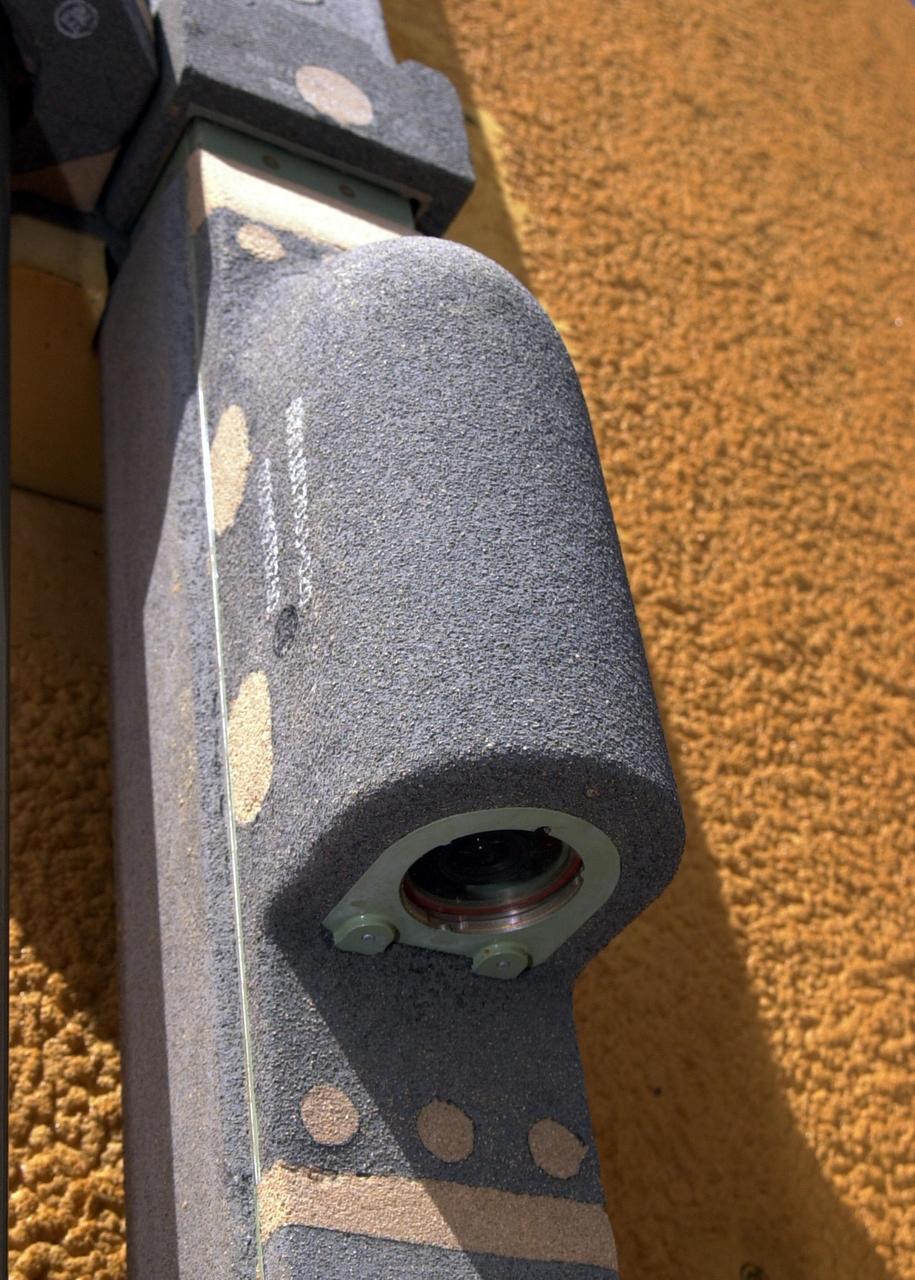
KENNEDY SPACE CENTER, FLA. - A closeup view of the camera mounted on the external tank of Space Shuttle Atlantis. The color video camera mounted to the top of Atlantis' external tank will provide a view of the front and belly of the orbiter and a portion of the solid rocket boosters (SRBs) and external tank during the launch of Atlantis on mission STS-112. It will offer the STS-112 team an opportunity to monitor the shuttle's performance from a new angle. The camera will be turned on fifteen minutes prior to launch and will show the orbiter and solid rocket boosters on the launch pad. The video will be downlinked from the external tank during flight to several NASA data-receiving sites and then relayed to the live television broadcast. The camera is expected to operate for about 15 minutes following liftoff. At liftoff, viewers will see the shuttle clearing the launch tower and, at two minutes after liftoff, see the right SRB separate from the external tank. When the external tank separates from Atlantis about eight minutes into the flight, the camera is expected to continue its live feed for about six more minutes although NASA may be unable to pick up the camera's signal because the tank may have moved out of range.
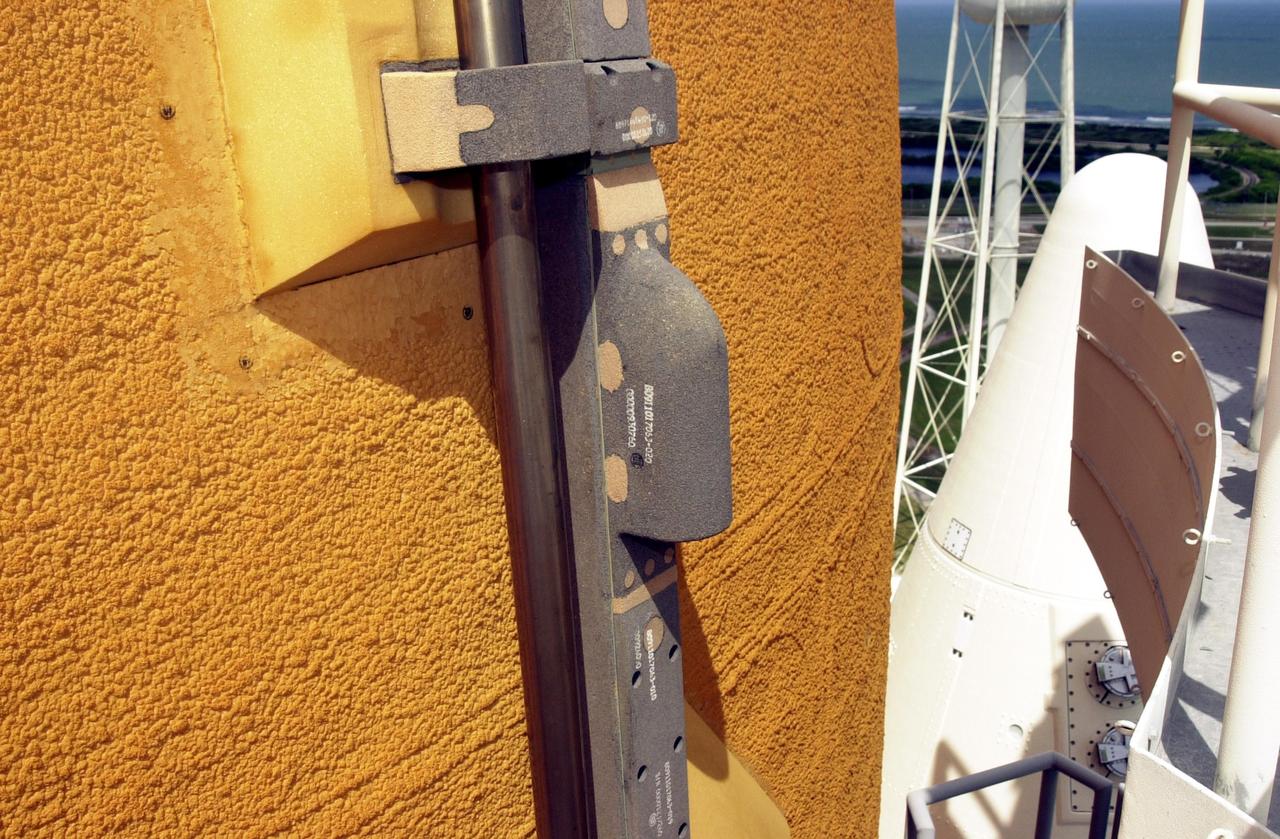
KENNEDY SPACE CENTER, FLA. - A view of the camera mounted on the external tank of Space Shuttle Atlantis. The color video camera mounted to the top of Atlantis' external tank will provide a view of the front and belly of the orbiter and a portion of the solid rocket boosters (SRBs) and external tank during the launch of Atlantis on mission STS-112. It will offer the STS-112 team an opportunity to monitor the shuttle's performance from a new angle. The camera will be turned on fifteen minutes prior to launch and will show the orbiter and solid rocket boosters on the launch pad. The video will be downlinked from the external tank during flight to several NASA data-receiving sites and then relayed to the live television broadcast. The camera is expected to operate for about 15 minutes following liftoff. At liftoff, viewers will see the shuttle clearing the launch tower and, at two minutes after liftoff, see the right SRB separate from the external tank. When the external tank separates from Atlantis about eight minutes into the flight, the camera is expected to continue its live feed for about six more minutes although NASA may be unable to pick up the camera's signal because the tank may have moved out of range.
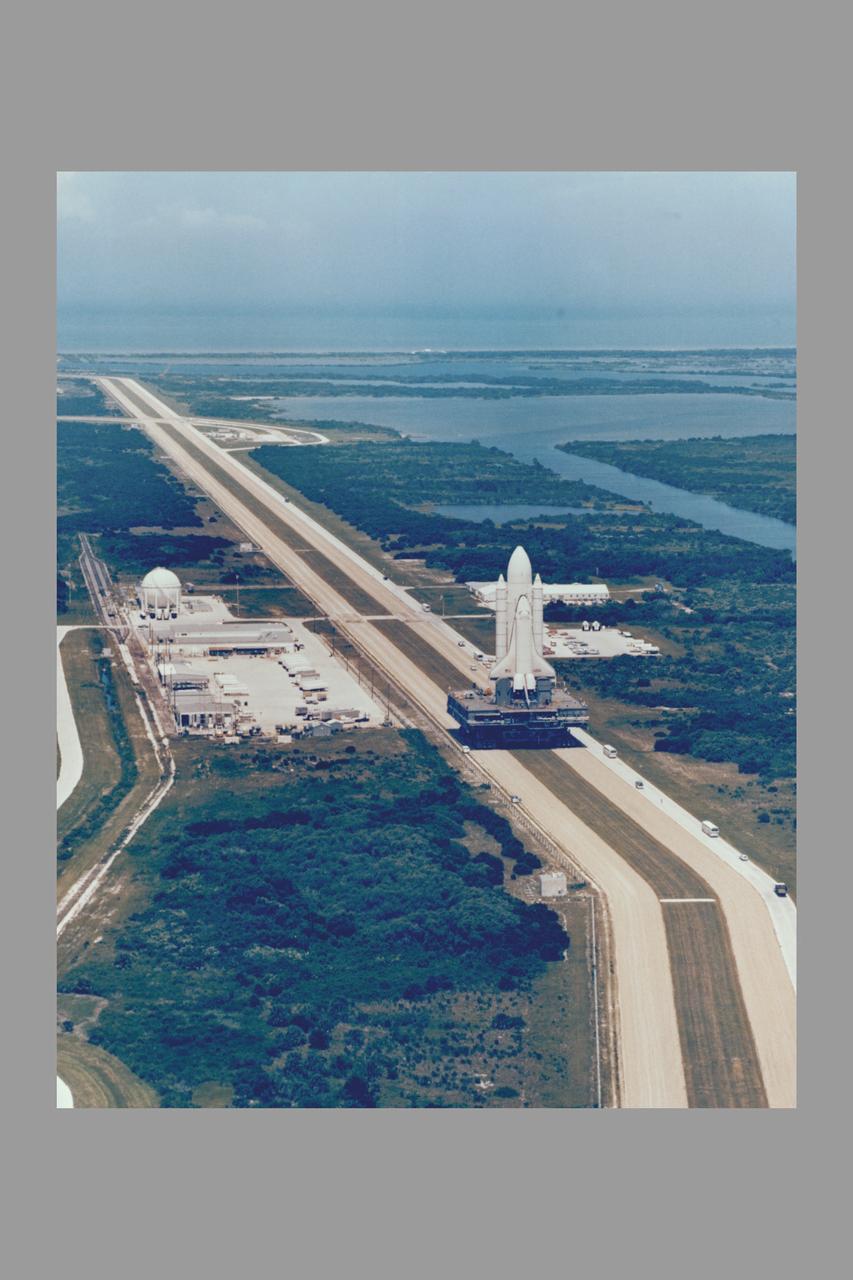
Space Shuttle Orbiter Enterprise, mated to a 15-story-tall external propellant tank and twin inert solid rocket boosters on top of a Mobile Launcher Platform, is rolled back to the Vehicle Assembly Building from Lauch Complex 39's Pad A July 23 at the completion of nearly three months of fit and function checks at the shuttle launch site as part of the exercise designed to help clear the way for the liftoff of its sister ship Columbia. The massive Crawler Transporter began moving its 11 million pound load the 3.5 miles from pad A to the VAB at 10:23 a.m. and reached the doorway to High Bay 1 at 3:48p.m. following serveral days of fit checks of modified extermiable platforms in the assembly bay, the nonlaunchable shuttle will be destacked. Enterprise will be returned to Rockwell International and stripped of parts for integration into orbiter destined for space, while the external tank and solid booster will be returned to their respective prime contractors and refurbished for use on a later shuttle mission.
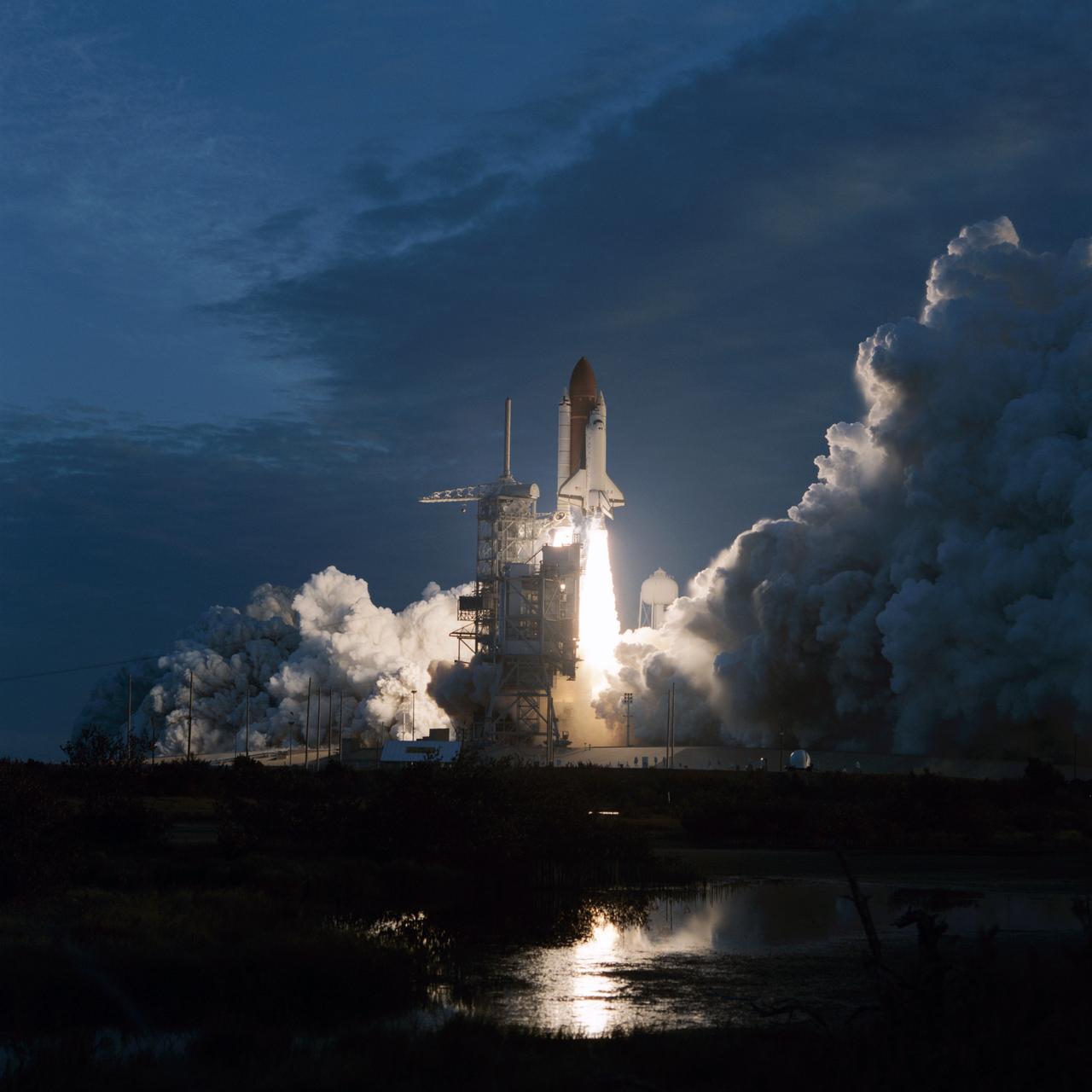
STS-32 Columbia, Orbiter Vehicle (OV) 102, its external tank (ET), and solid rocket boosters (SRBs) rise above the mobile launcher platform and begin to clear fixed service structure (FSS) tower (with rotating service structure (RSS) retracted) at Kennedy Space Center (KSC) Launch Complex (LC) Pad 39A. Liftoff occurred at 7:34:59:98 am Eastern Standard Time (EST) some 24 hours after dubious weather at the return-to-landing site (RTLS) had cancelled a scheduled launch. An exhaust cloud covers the launch pad. The firing SRBs and space shuttle main engines (SSMEs) are reflected in a nearby waterway. OV-102's launch is highlighted against the early morning darkness.

In this aerial view looking south can be seen Launch Complex (LC) 39 area, where assembly, checkout and launch of the Space Shuttle Orbiter and its External Tank and twin Solid Rocket Boosters take place. Central to the complex is the tallest building at the center, the Vehicle Assembly Building (VAB). To the immediate left, from top to bottom, are the Orbiter Processing Facility (OPF) High Bay 3 and new engine shop (north side), OPF Modular Office Building, Thermal Protection System Facility, and a crawler-transporter (to its left). In front of the VAB are OPF 1 and OPF 2. At right is the Processing Control Center. West of OPF 3 is the Mobile Launch Platform. In the upper left corner is Launch Pad B; at the far right is the turn basin, with the Press Site located just below it to the right.
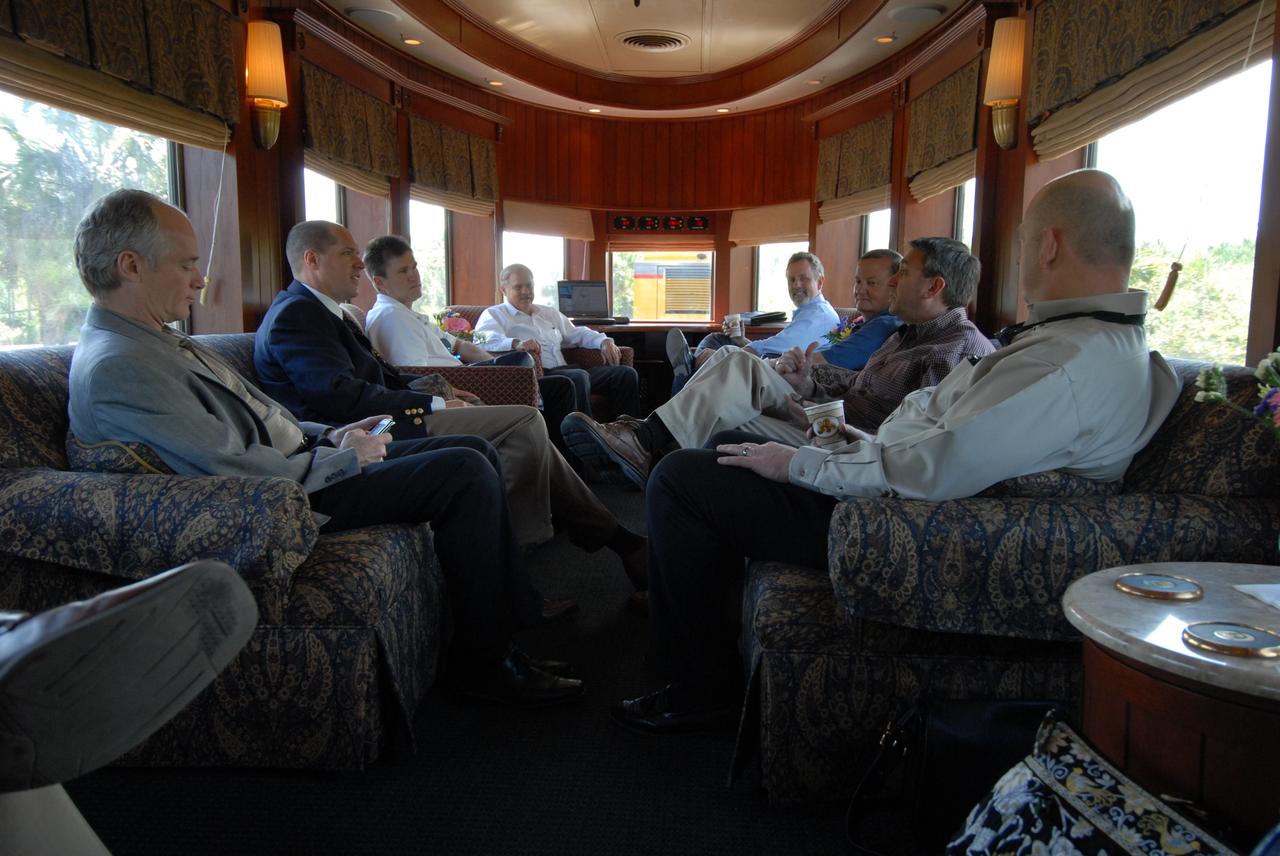
CAPE CANAVERAL, Fla. – ATK and NASA officials accompanied the Florida East Coast Railroad train carrying the booster segments for the Ares I-X test rocket on its route to NASA's Kennedy Space Center in Florida from Jacksonville, Fla. Seen here in the passenger car are, from left, ATK Vice President Space Launch Systems Charlie Precourt, a Florida East Coast Railroad representative, ATK Deputy Site Director in Florida Ted Shaffner, ATK Vice President Of Space Launch Propulsion Cary Ralston, NASA KSC Shuttle Launch Director Mike Leinbach, a Florida East Coast Railroad representative and ATK Ares I First Stage program Director Fred Brasfield. The four reusable motor segments and the nozzle exit cone, manufactured by the Ares I first-stage prime contractor Alliant Techsystems Inc., or ATK, departed Utah March 12 on the seven-day, cross-country trip to Florida. The segments will be delivered to the Rotation, Processing and Surge Facility for final processing and integration. The booster used for the Ares I-X launch is being modified by adding new forward structures and a fifth segment simulator. The motor is the final hardware needed for the rocket's upcoming test flight this summer. The stacking operations are scheduled to begin in the Vehicle Assembly Building in April. Photo credit: NASA/Kim Shiflett
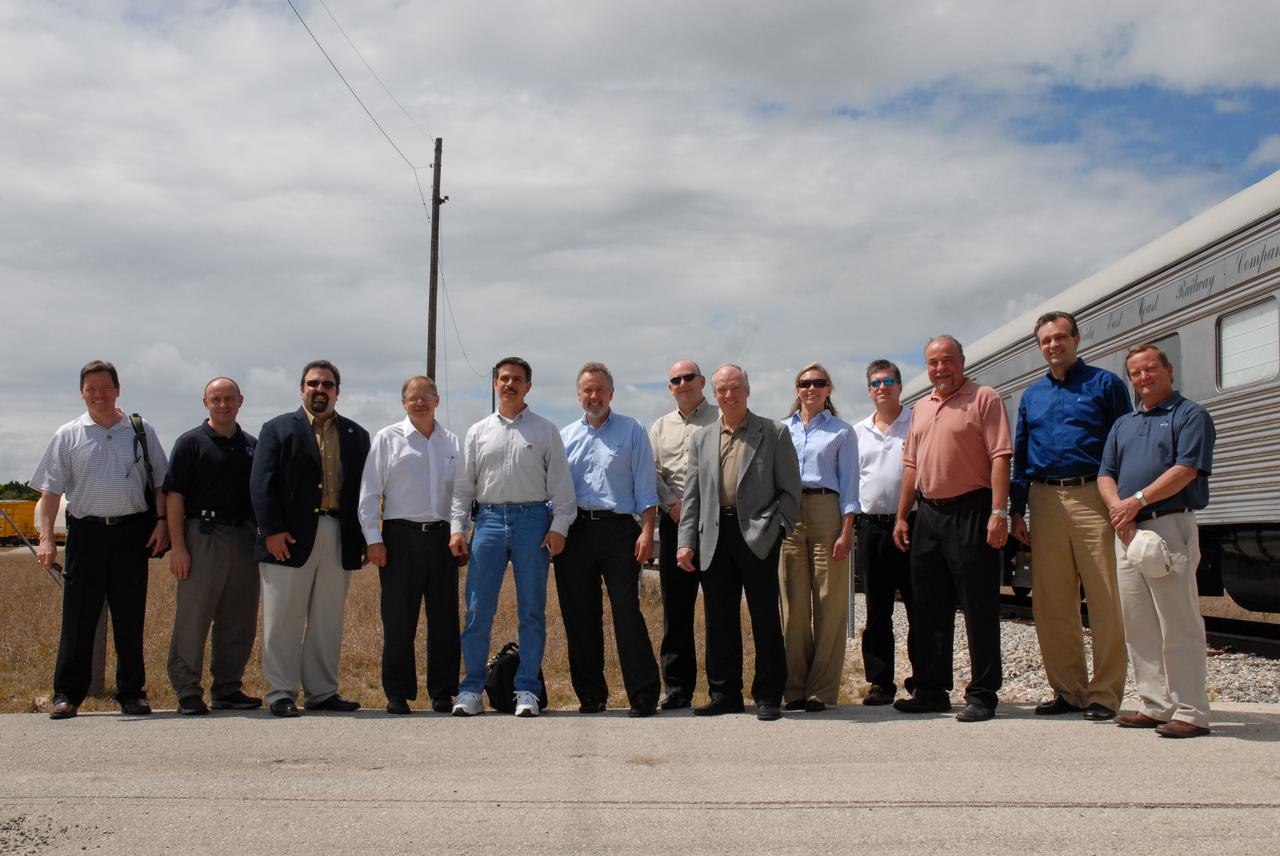
CAPE CANAVERAL, Fla. – The booster segments for the Ares I-X test rocket were delivered to NASA's Kennedy Space Center in Florida by the Florida East Coast Railroad and the NASA Railroad. Accompanying the train on its route from Jacksonville, Fla., were NASA and ATK officials. Standing here, from left, are ATK Ares I Flight Tests Program Director Joe Oliva, ATK Ares I-X Florida Program Manager Russ Page, NASA Ares Program Manager Steve Cook, ATK Deputy Site Director in Florida Ted Shaffner, NASA KSC Ares I-X Deputy Mission Manager Jon Cowart, ATK Vice President of Space Launch Propulson Cary Ralston, ATK Ares I First Stage program Director Fred Brasfield, ATK Vice President Space Launch Systems Charlie Precourt, ATK Ares I Flight Tests Deputy Program Director Kathy Philpot, NASA Marshall Space Flight Center Reusable Solid Rocket Booster Integration Lead Roy Worthy, ATK Florida Site Director Bob Herman, NASA Res First Stage Project Manager Alex Priskos and NASA KSC Shuttle Launch Director Mike Leinbach. The four reusable motor segments and the nozzle exit cone, manufactured by the Ares I first-stage prime contractor Alliant Techsystems Inc., or ATK, departed Utah March 12 on the seven-day, cross-country trip to Florida. The segments will be delivered to the Rotation, Processing and Surge Facility for final processing and integration. The booster used for the Ares I-X launch is being modified by adding new forward structures and a fifth segment simulator. The motor is the final hardware needed for the rocket's upcoming test flight this summer. The stacking operations are scheduled to begin in the Vehicle Assembly Building in April. Photo credit: NASA/Kim Shiflett
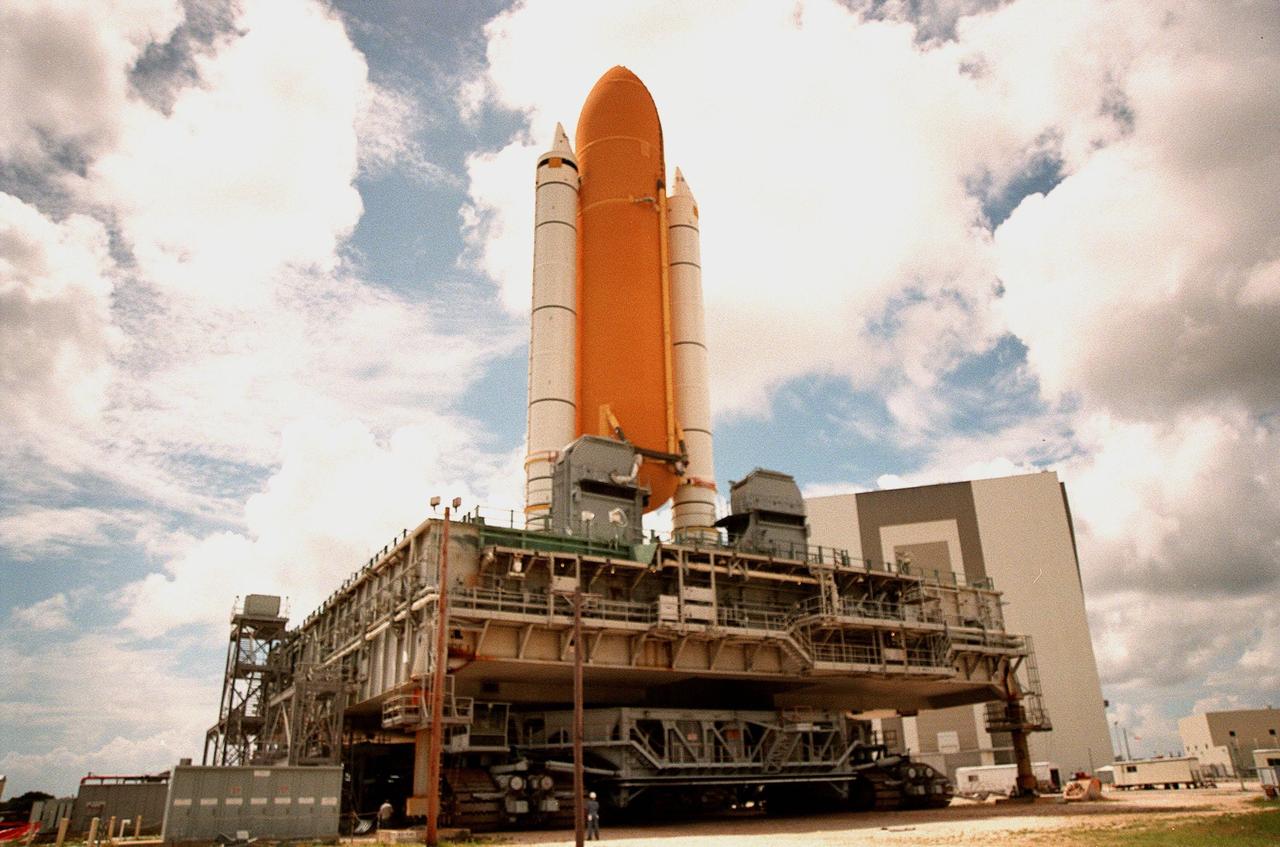
KENNEDY SPACE CENTER, FLA. -- The STS-93 stack of solid rocket boosters and external tank sits at the Mobile Launcher Platform park site waiting for lightning shield wires to be installed on the Vehicle Assembly Building (VAB) in the background. The stack is being temporarily stored outside the VAB while Space Shuttle Discovery undergoes repair to hail damage in High Bay 1. Discovery was rolled back from Pad 39B to the VAB for repairs because access to all of the damaged areas was not possible at the pad. The STS-93 stack will be moved under the wires at the VAB for protection until Discovery returns to the pad, later this week. The scheduled date for launch of mission STS-96 is no earlier than May 27. STS-93 is targeted for launch on July 22, carrying the Chandra X-ray Observatory
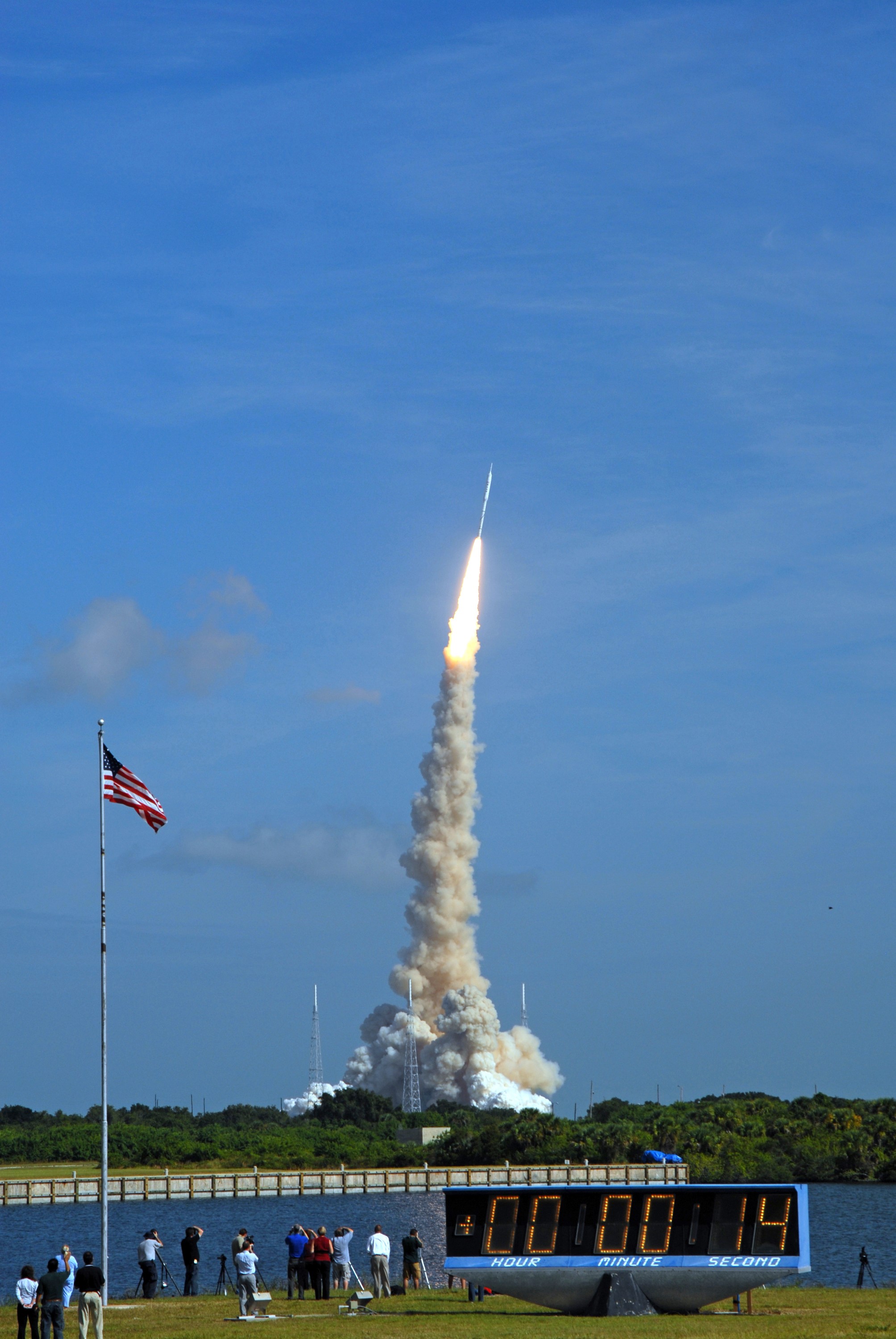
CAPE CANAVERAL, Fla. - At NASA's Kennedy Space Center in Florida, the Press Site countdown clock, so long a familiar a backdrop for space shuttle launches, counts off the seconds since liftoff from Launch Complex 39B of a new vehicle, the Constellation Program's Ares I-X test rocket. The rocket produces 2.96 million pounds of thrust at liftoff and reaches a speed of 100 mph in eight seconds. Liftoff of the 6-minute flight test was at 11:30 a.m. EDT Oct. 28. This was the first launch from Kennedy's pads of a vehicle other than the space shuttle since the Apollo Program's Saturn rockets were retired. The parts used to make the Ares I-X booster flew on 30 different shuttle missions ranging from STS-29 in 1989 to STS-106 in 2000. The data returned from more than 700 sensors throughout the rocket will be used to refine the design of future launch vehicles and bring NASA one step closer to reaching its exploration goals. For information on the Ares I-X vehicle and flight test, visit http://www.nasa.gov/aresIX. Photo credit: NASA/Jim Grossmann
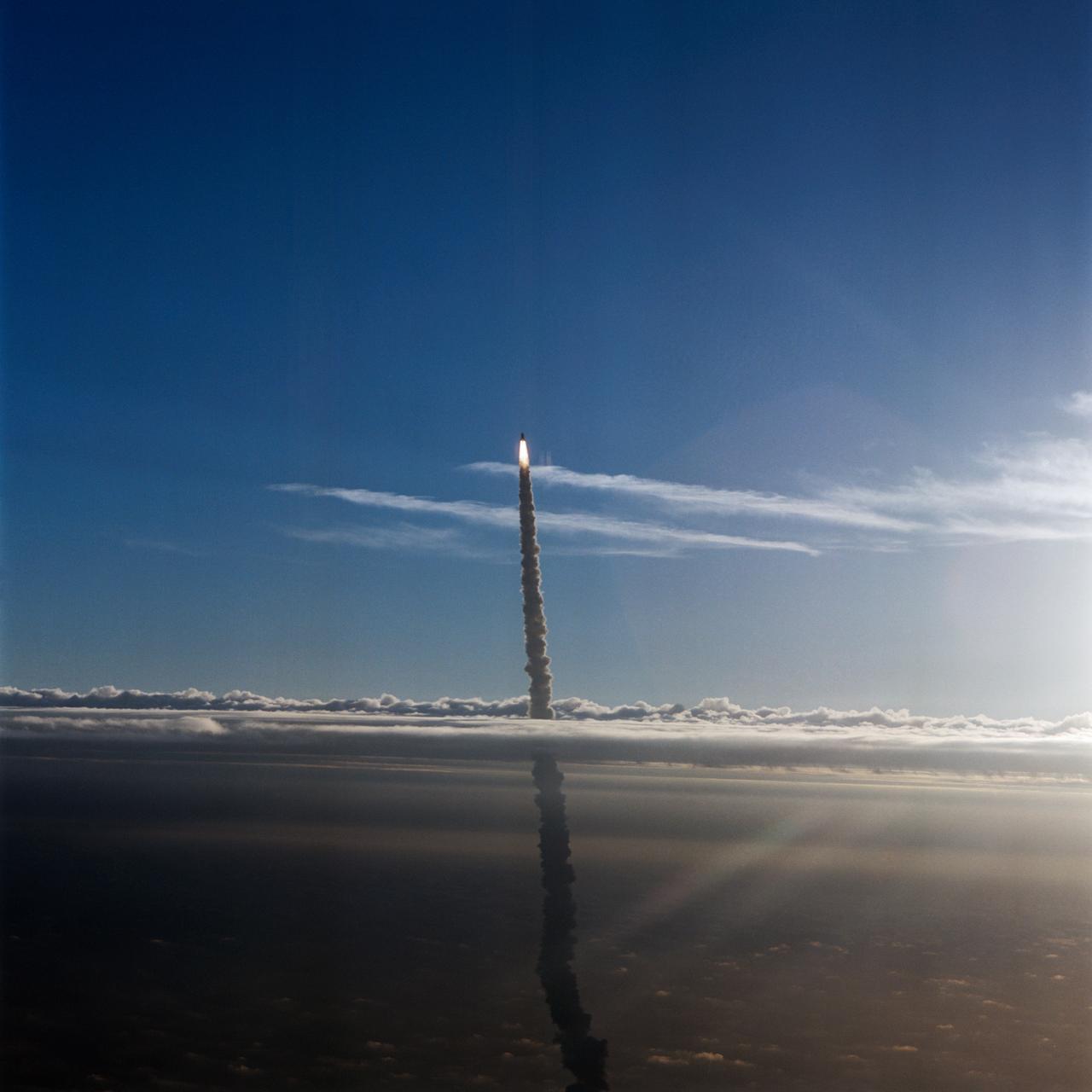
STS-32 Columbia, Orbiter Vehicle (OV) 102, pierces a layer of low lying clouds as it makes its ascent to Earth orbit for a 10-day mission. In this air-to-air view, OV-102 rides atop the external tank (ET) with flames created by solid rocket boosters (SRBs) appearing directly underneath it and a long plume of exhaust smoke trailing behind it and extending to Kennedy Space Center (KSC) Launch Complex (LC) Pad 39A below. OV-102 left KSC LC Pad 39A at 7:34:59:98 am Eastern Standard Time (EST) some 24 hours after dubious weather at the return-to-landing site (RTLS) had cancelled a scheduled launch. The photo was taken by astronaut Michael L. Coats, acting chief of the Astronaut Office, from the Shuttle Training Aircraft (STA).
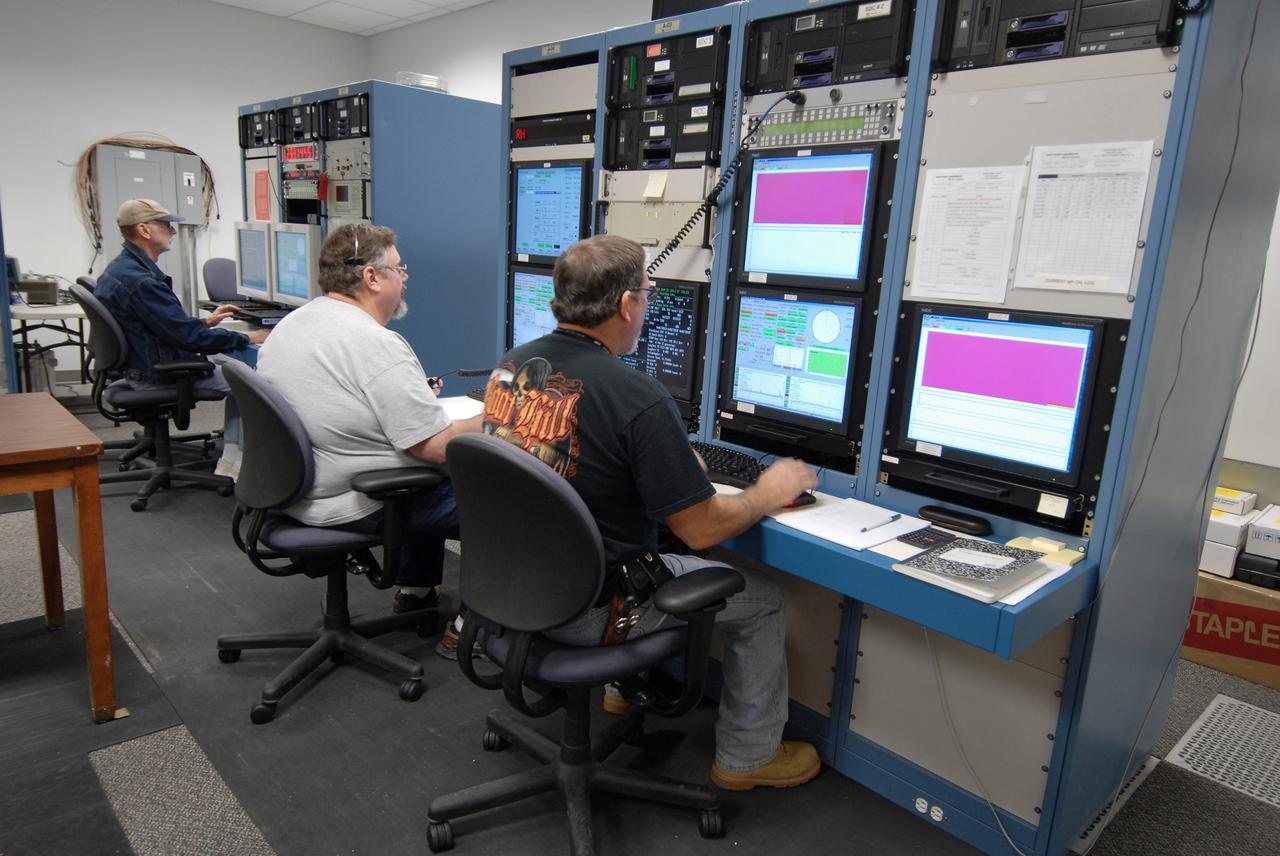
CAPE CANAVERAL, Fla. – Technicians work the console collecting data from NASA's C-band Debris Radar antenna at a site on North Merritt Island in Florida. One of the largest of its kind in the world, the C-band radar provided critical support to pinpoint debris during the launch of space shuttle Atlantis on the STS-125 mission. The need for this radar was identified after the Columbia tragedy. It worked together with smaller X-band radars placed on the solid rocket booster ship Liberty Star and the U.S. Army landing craft utility ship Brandy Station. Together they provided extremely high resolution images of any debris that created by Atlantis during launch. Photo credit: NASA/Troy Cryder
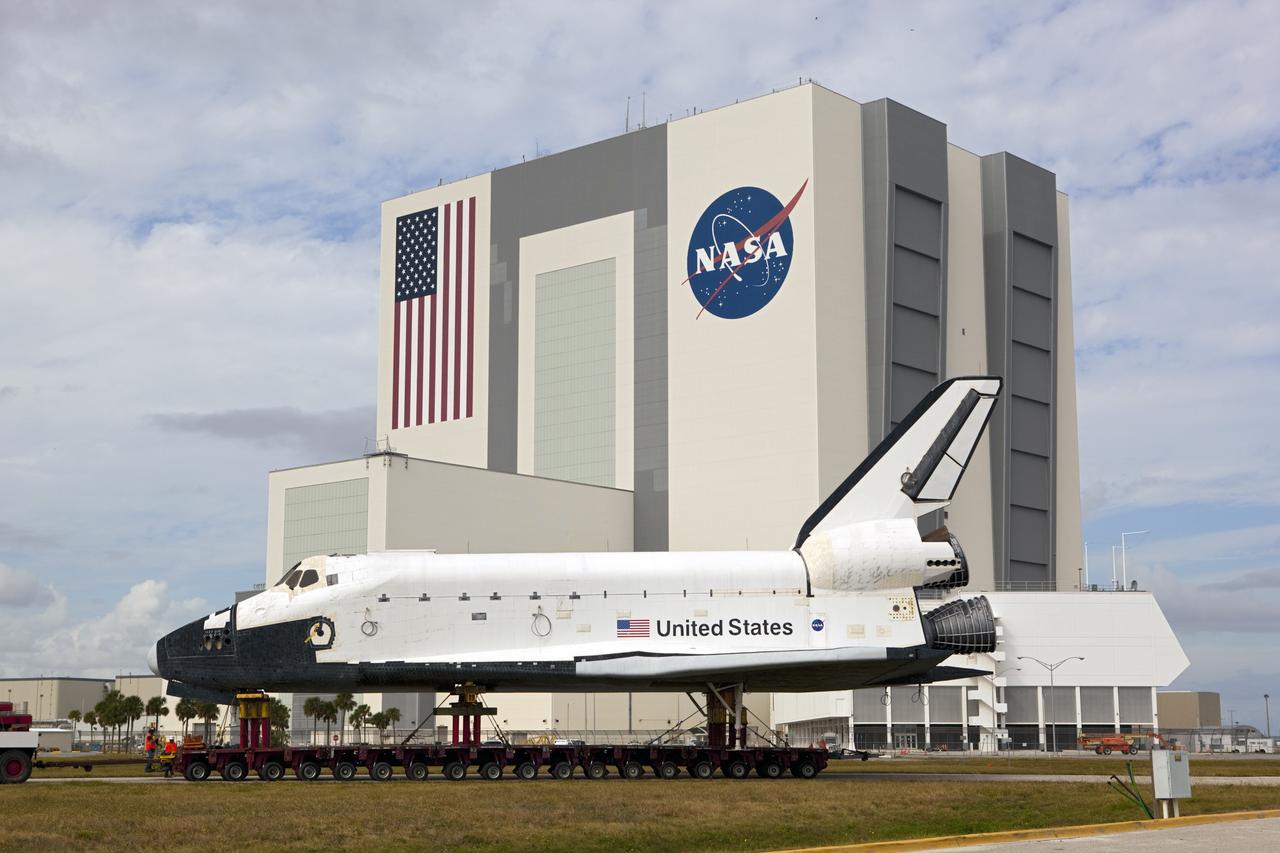
CAPE CANAVERAL, Fla. – The high-fidelity space shuttle model which was on display at the NASA Kennedy Space Center Visitor Complex in Florida backs through the Press Site parking lot toward Kennedy's Launch Complex 39 turn basin. Behind it, the Vehicle Assembly Building towers 525 feet into the sky. The shuttle was part of a display at the visitor complex that also included an external tank and two solid rocket boosters that were used to show visitors the size of actual space shuttle components. The full-scale shuttle model is being transferred from Kennedy to Space Center Houston, NASA Johnson Space Center's visitor center. The model will stay at the turn basin for a few months until it is ready to be transported to Texas via barge. The move also helps clear the way for the Kennedy Space Center Visitor Complex to begin construction of a new facility next year to display space shuttle Atlantis in 2013. For more information about Space Center Houston, visit http://www.spacecenter.org. Photo credit: NASA/Dimitri Gerondidakis
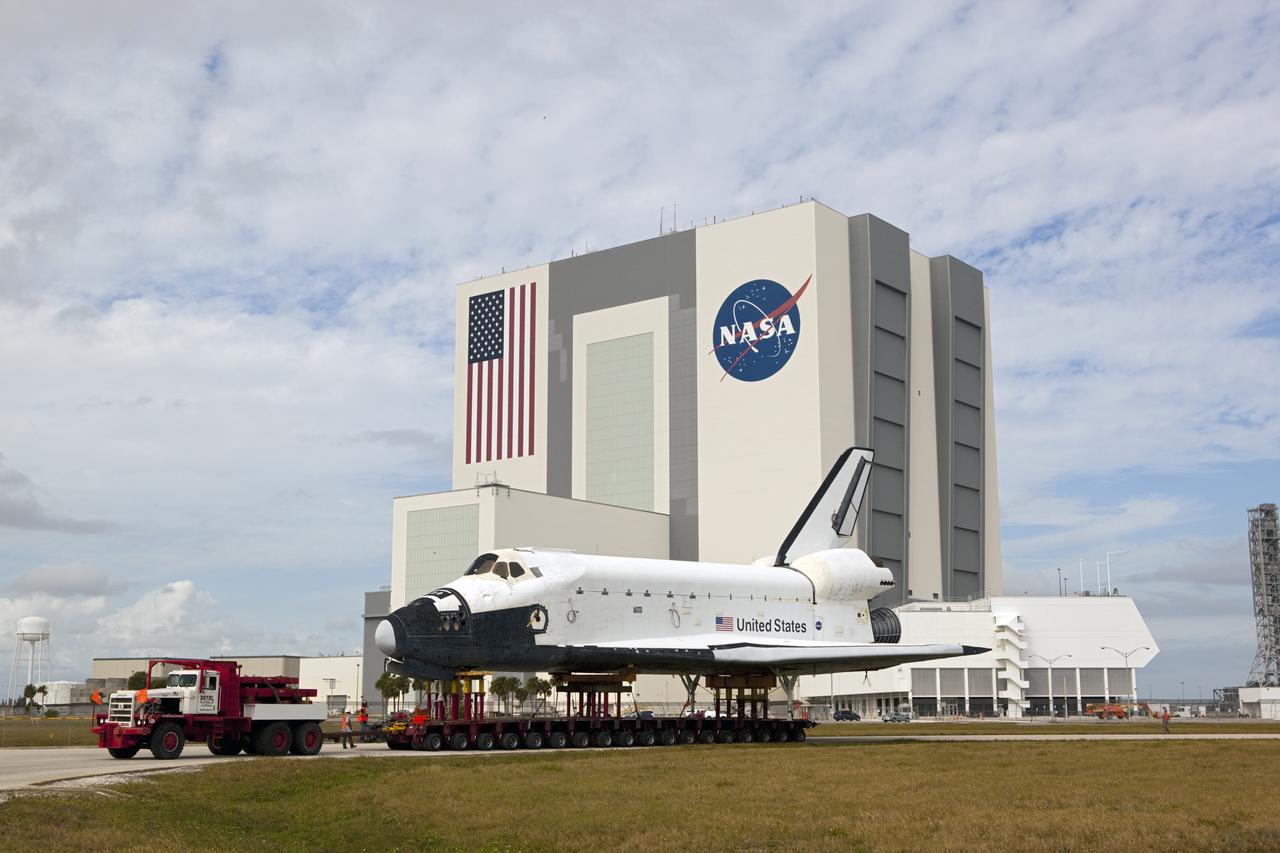
CAPE CANAVERAL, Fla. – The high-fidelity space shuttle model which was on display at the NASA Kennedy Space Center Visitor Complex in Florida rolls through the Press Site parking lot toward Kennedy's Launch Complex 39 turn basin. Behind it, the Vehicle Assembly Building towers 525 feet in the air. The shuttle was part of a display at the visitor complex that also included an external tank and two solid rocket boosters that were used to show visitors the size of actual space shuttle components. The full-scale shuttle model is being transferred from Kennedy to Space Center Houston, NASA Johnson Space Center's visitor center. The model will stay at the turn basin for a few months until it is ready to be transported to Texas via barge. The move also helps clear the way for the Kennedy Space Center Visitor Complex to begin construction of a new facility next year to display space shuttle Atlantis in 2013. For more information about Space Center Houston, visit http://www.spacecenter.org. Photo credit: NASA/Dimitri Gerondidakis
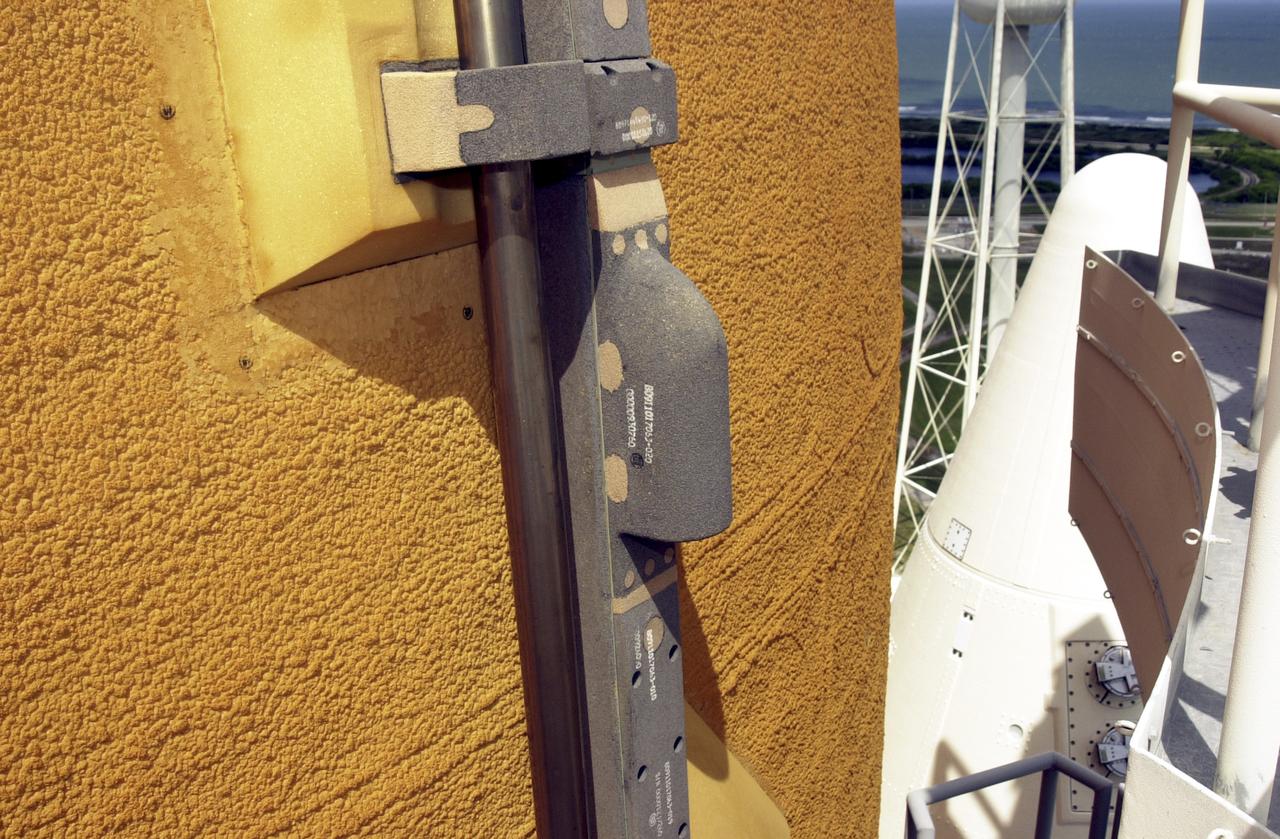
This is a view of the video camera mounted on the External Tank (ET) of the Space Shuttle Orbiter Atlantis (STS-112). The camera provided a view of the front and belly of the orbiter, a portion of the Solid Rocket Boosters (SRBs), and ET during the launch. Located high on the ET liquid oxygen tank cable tray, the camera, 6 inches long and resembling a short thin flashlight, is inside an aluminum fairing covered in protective insulating foam. The battery pack and transmitter are contained in an electronics box and mounted in the intertank crossbeam inside the ET. The camera turned on 15 minutes prior to launch and operated for about 15 minutes following liftoff. At liftoff, viewers saw the Shuttle clearing the launch tower and, at 2 minutes after liftoff, saw the right SRB separate from the ET, and ET separation about 8 minutes into the flight. The video was downlinked from the ET during flight to several NASA data-receiving sites and then relayed to the live television broadcast. It provided the STS-112 team an opportunity to monitor the Shuttle's performance from a new angle. Launched on October 7, 2002, Atlantis carried its primary payload, the S1 Truss for the International Space Station.