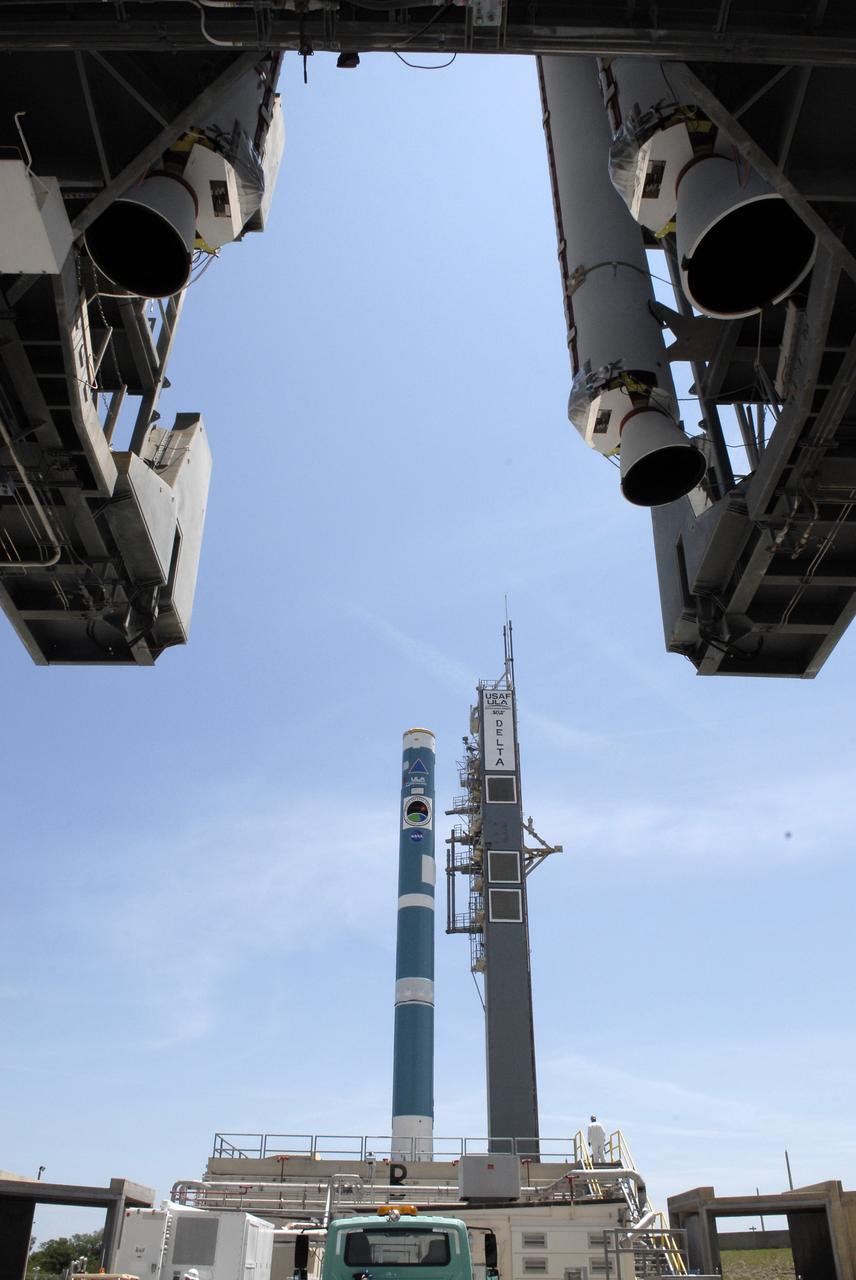
CAPE CANAVERAL, Fla. – On Launch Complex 17-B at Cape Canaveral Air Force Station, the first stage of the Delta II rocket in the background waits for the mobile service tower and the solid rocket boosters (top foreground) that will be attached. The Delta II is the launch vehicle for the STSS Demonstrator spacecraft. The STSS Demonstrators is a midcourse tracking technology demonstrator and is part of an evolving ballistic missile defense system. STSS is capable of tracking objects after boost phase and provides trajectory information to other sensors. It will be launched by NASA for the Missile Defense Agency on July 29. Photo credit: NASA/Kim Shiflett
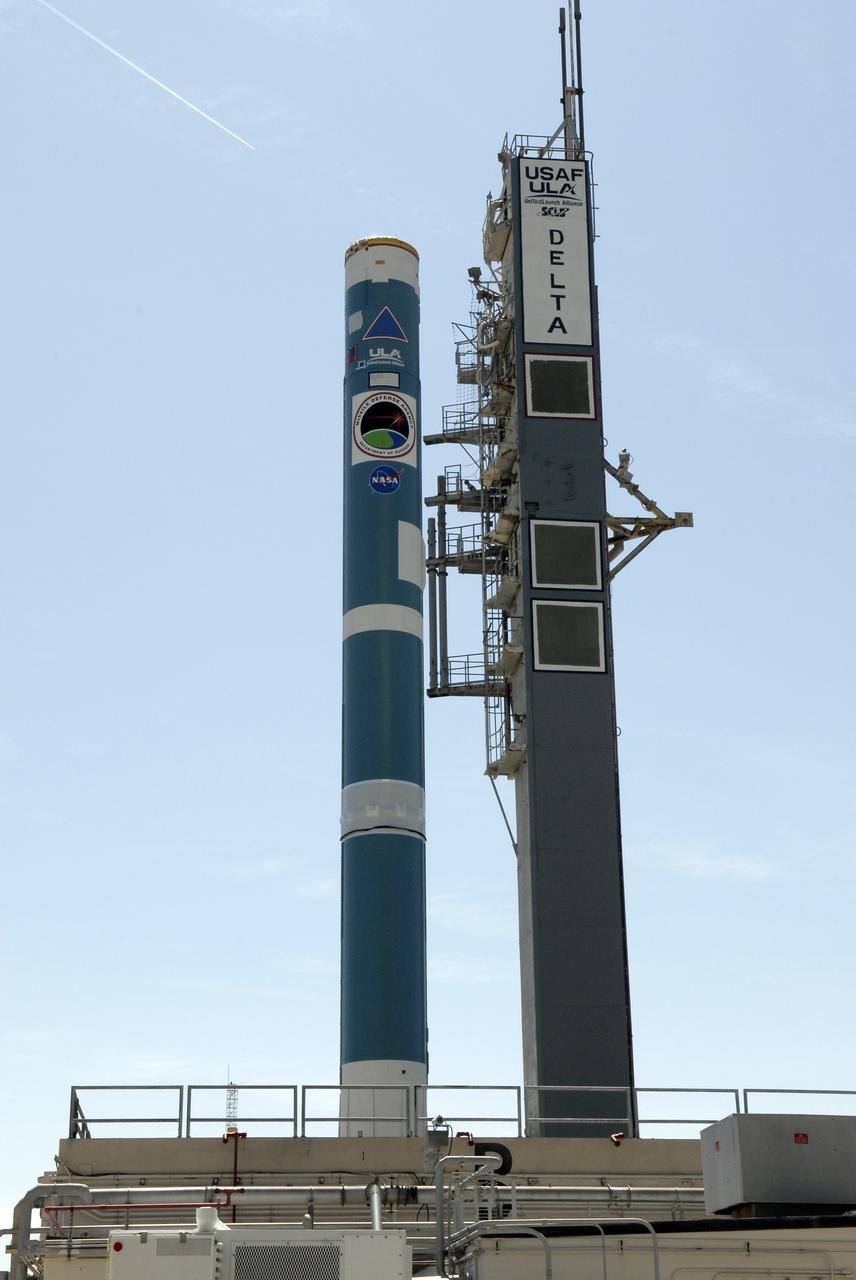
CAPE CANAVERAL, Fla. – On Launch Complex 17-B at Cape Canaveral Air Force Station, the first stage of the Delta II rocket waits on the gantry for the solid rocket boosters. The STSS Demonstrators is a midcourse tracking technology demonstrator and is part of an evolving ballistic missile defense system. STSS is capable of tracking objects after boost phase and provides trajectory information to other sensors. It will be launched by NASA for the Missile Defense Agency on July 29. Photo credit: NASA/Kim Shiflett
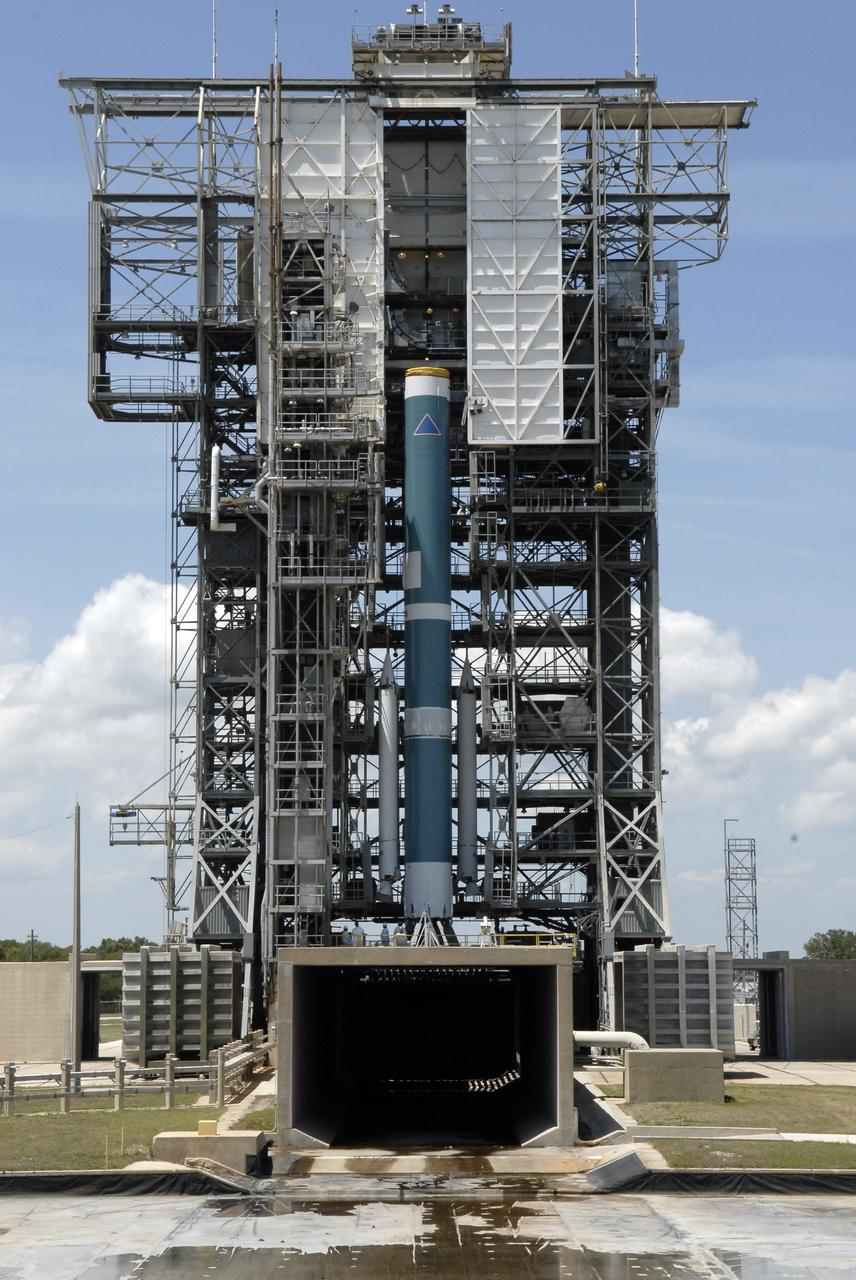
CAPE CANAVERAL, Fla. – On Launch Complex 17-B at Cape Canaveral Air Force Station, the mobile service tower encloses the first stage of the Delta II rocket. The boosters in the tower will be attached to the rocket for launch of the STSS Demonstrator spacecraft. The STSS Demonstrators is a midcourse tracking technology demonstrator and is part of an evolving ballistic missile defense system. STSS is capable of tracking objects after boost phase and provides trajectory information to other sensors. It will be launched by NASA for the Missile Defense Agency on July 29. Photo credit: NASA/Kim Shiflett
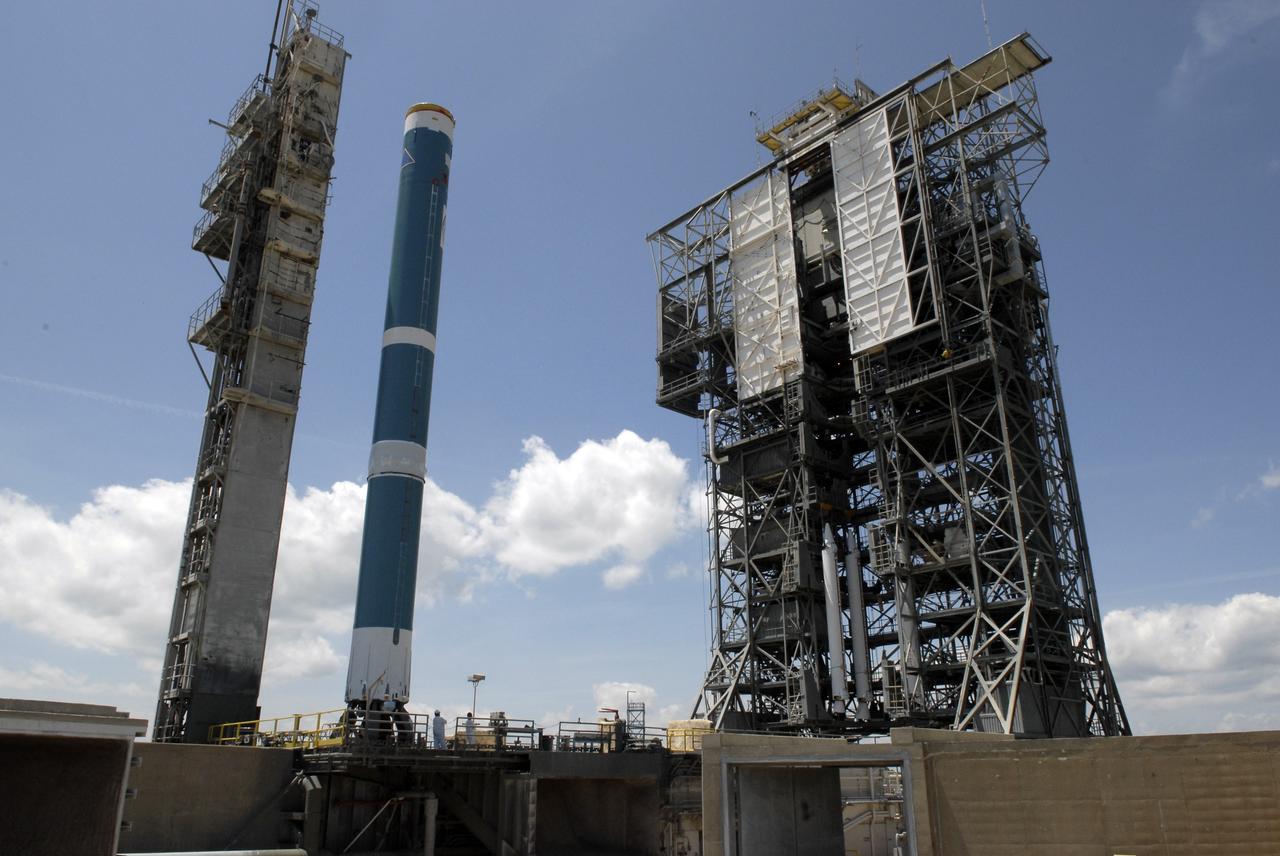
CAPE CANAVERAL, Fla. – On Launch Complex 17-B at Cape Canaveral Air Force Station, the mobile service tower at right moves toward the first stage of the Delta II rocket. The boosters in the tower will be attached to the rocket for launch of the STSS Demonstrator spacecraft. The STSS Demonstrators is a midcourse tracking technology demonstrator and is part of an evolving ballistic missile defense system. STSS is capable of tracking objects after boost phase and provides trajectory information to other sensors. It will be launched by NASA for the Missile Defense Agency on July 29. Photo credit: NASA/Kim Shiflett
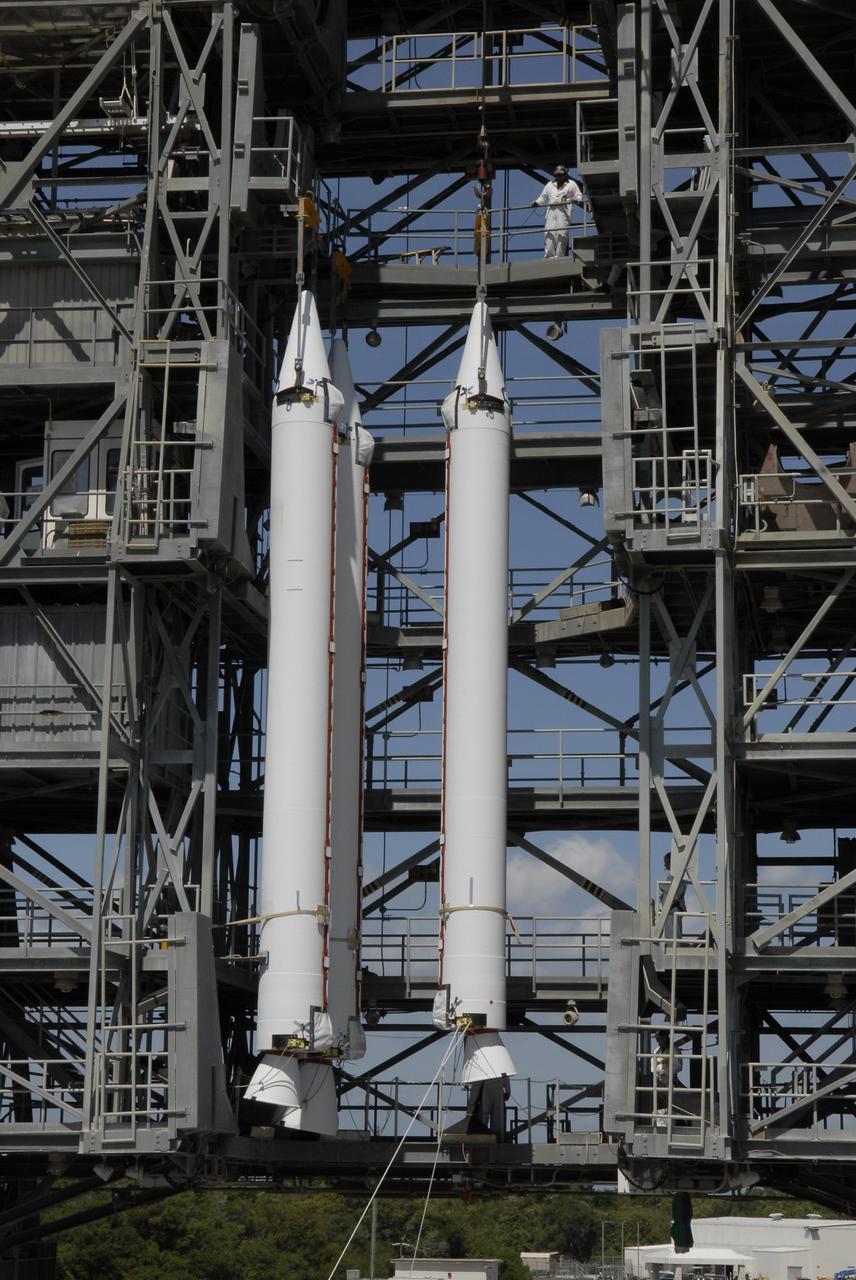
CAPE CANAVERAL, Fla. – On Launch Complex 17-B at Cape Canaveral Air Force Station, a third solid rocket booster is lifted into the mobile service tower next to the other two. The boosters will be attached to the Delta II rocket that will launch the STSS Demonstrator spacecraft. The STSS Demonstrators is a midcourse tracking technology demonstrator and is part of an evolving ballistic missile defense system. STSS is capable of tracking objects after boost phase and provides trajectory information to other sensors. It will be launched by NASA for the Missile Defense Agency on July 29. Photo credit: NASA/Kim Shiflett
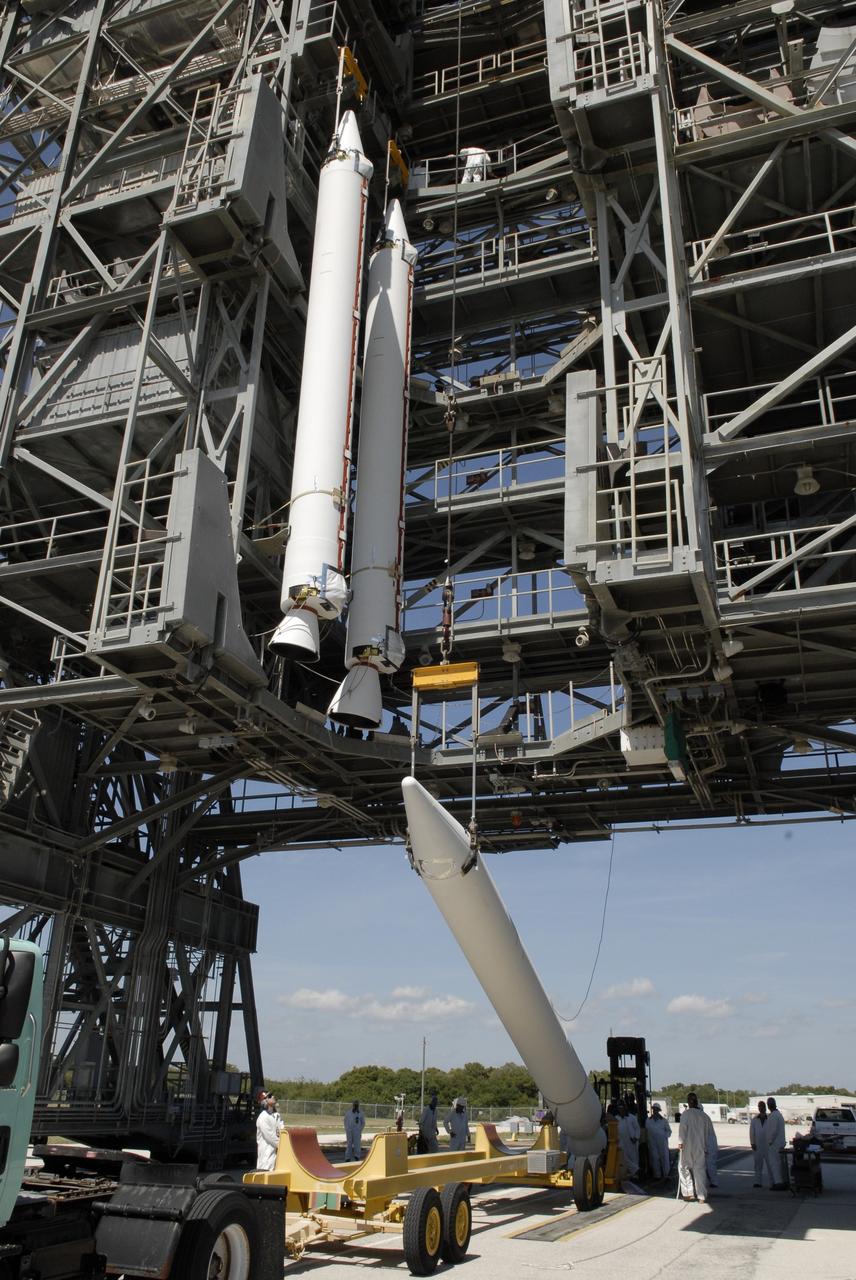
CAPE CANAVERAL, Fla. – On Launch Complex 17-B at Cape Canaveral Air Force Station, a third solid rocket booster is raised from the transporter. It will join the others in the mobile service tower for attachment to the Delta II rocket that will launch the STSS Demonstrator spacecraft. The STSS Demonstrators is a midcourse tracking technology demonstrator and is part of an evolving ballistic missile defense system. STSS is capable of tracking objects after boost phase and provides trajectory information to other sensors. It will be launched by NASA for the Missile Defense Agency on July 29. Photo credit: NASA/Kim Shiflett
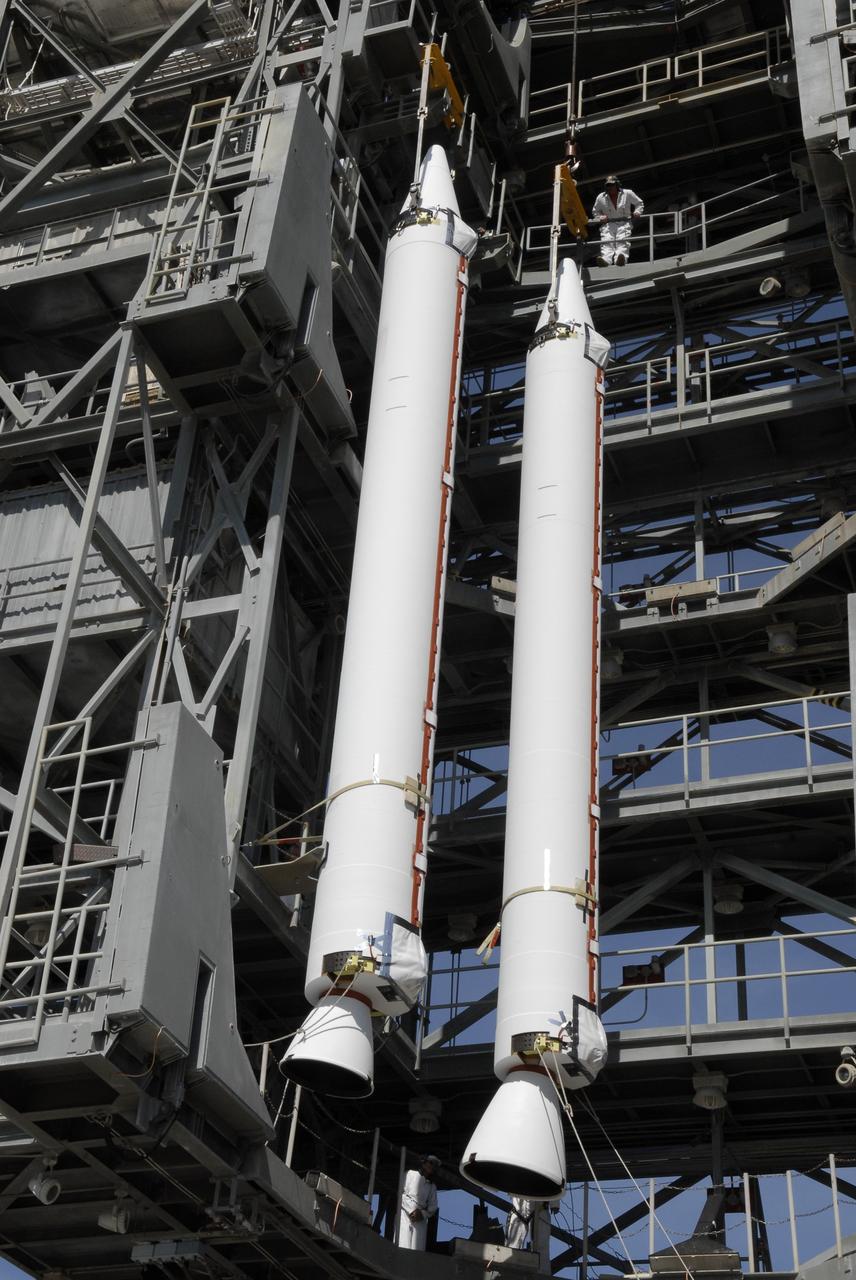
CAPE CANAVERAL, Fla. – On Launch Complex 17-B at Cape Canaveral Air Force Station, solid rocket boosters are lifted into the mobile service tower. The boosters will be attached to the Delta II rocket that will launch the STSS Demonstrator spacecraft. The STSS Demonstrators is a midcourse tracking technology demonstrator and is part of an evolving ballistic missile defense system. STSS is capable of tracking objects after boost phase and provides trajectory information to other sensors. It will be launched by NASA for the Missile Defense Agency on July 29. Photo credit: NASA/Kim Shiflett
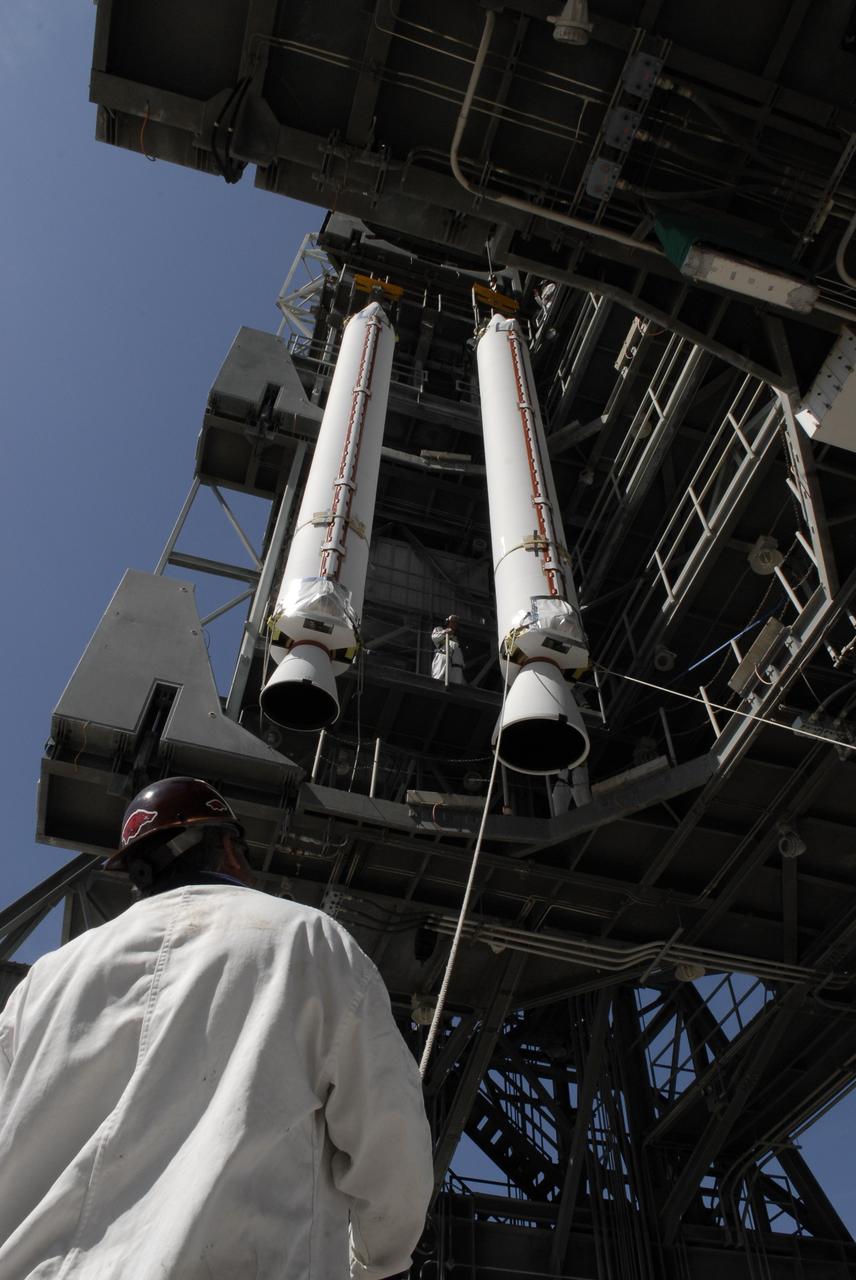
CAPE CANAVERAL, Fla. – On Launch Complex 17-B at Cape Canaveral Air Force Station, solid rocket boosters are lifted into the mobile service tower. The boosters will be attached to the Delta II rocket that will launch the STSS Demonstrator spacecraft. The STSS Demonstrators is a midcourse tracking technology demonstrator and is part of an evolving ballistic missile defense system. STSS is capable of tracking objects after boost phase and provides trajectory information to other sensors. It will be launched by NASA for the Missile Defense Agency on July 29. Photo credit: NASA/Kim Shiflett
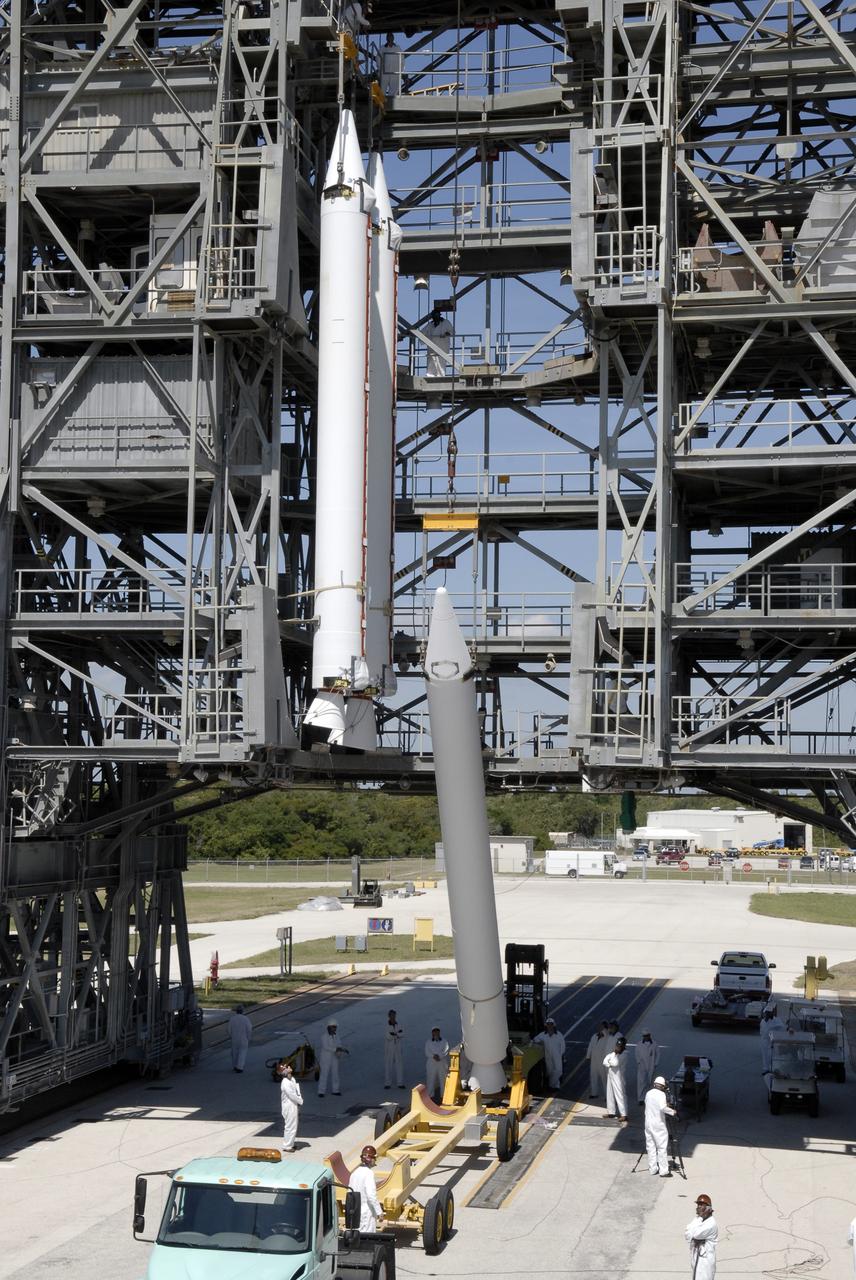
CAPE CANAVERAL, Fla. – On Launch Complex 17-B at Cape Canaveral Air Force Station, a third solid rocket booster is raised from the transporter. It will join the others in the mobile service tower for attachment to the Delta II rocket that will launch the STSS Demonstrator spacecraft. The STSS Demonstrators is a midcourse tracking technology demonstrator and is part of an evolving ballistic missile defense system. STSS is capable of tracking objects after boost phase and provides trajectory information to other sensors. It will be launched by NASA for the Missile Defense Agency on July 29. Photo credit: NASA/Kim Shiflett

CAPE CANAVERAL, Fla. – On Launch Complex 17-B at Cape Canaveral Air Force Station, the mobile service tower at right moves closer to the first stage of the Delta II rocket. The boosters in the tower will be attached to the rocket for launch of the STSS Demonstrator spacecraft. The STSS Demonstrators is a midcourse tracking technology demonstrator and is part of an evolving ballistic missile defense system. STSS is capable of tracking objects after boost phase and provides trajectory information to other sensors. It will be launched by NASA for the Missile Defense Agency on July 29. Photo credit: NASA/Kim Shiflett