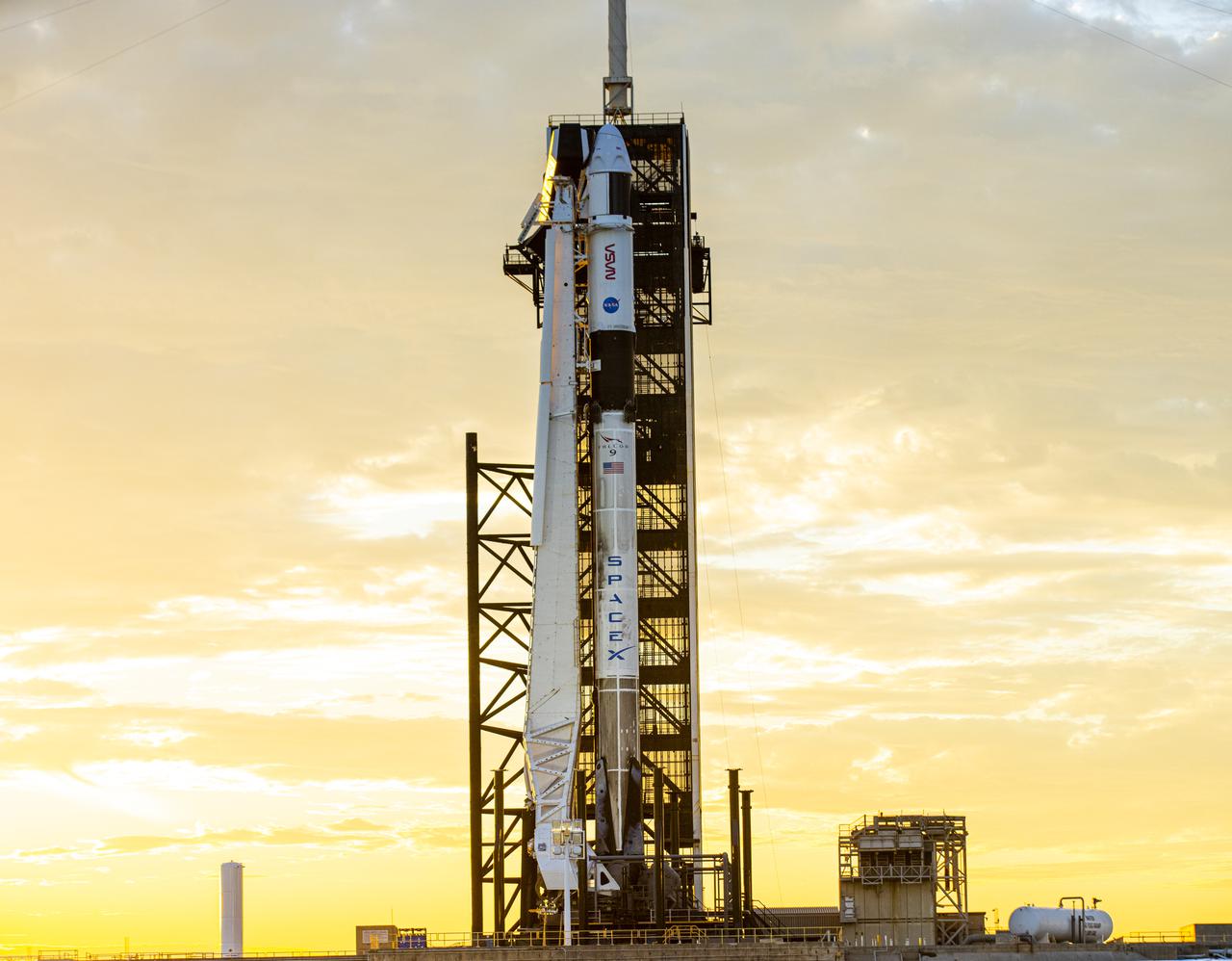
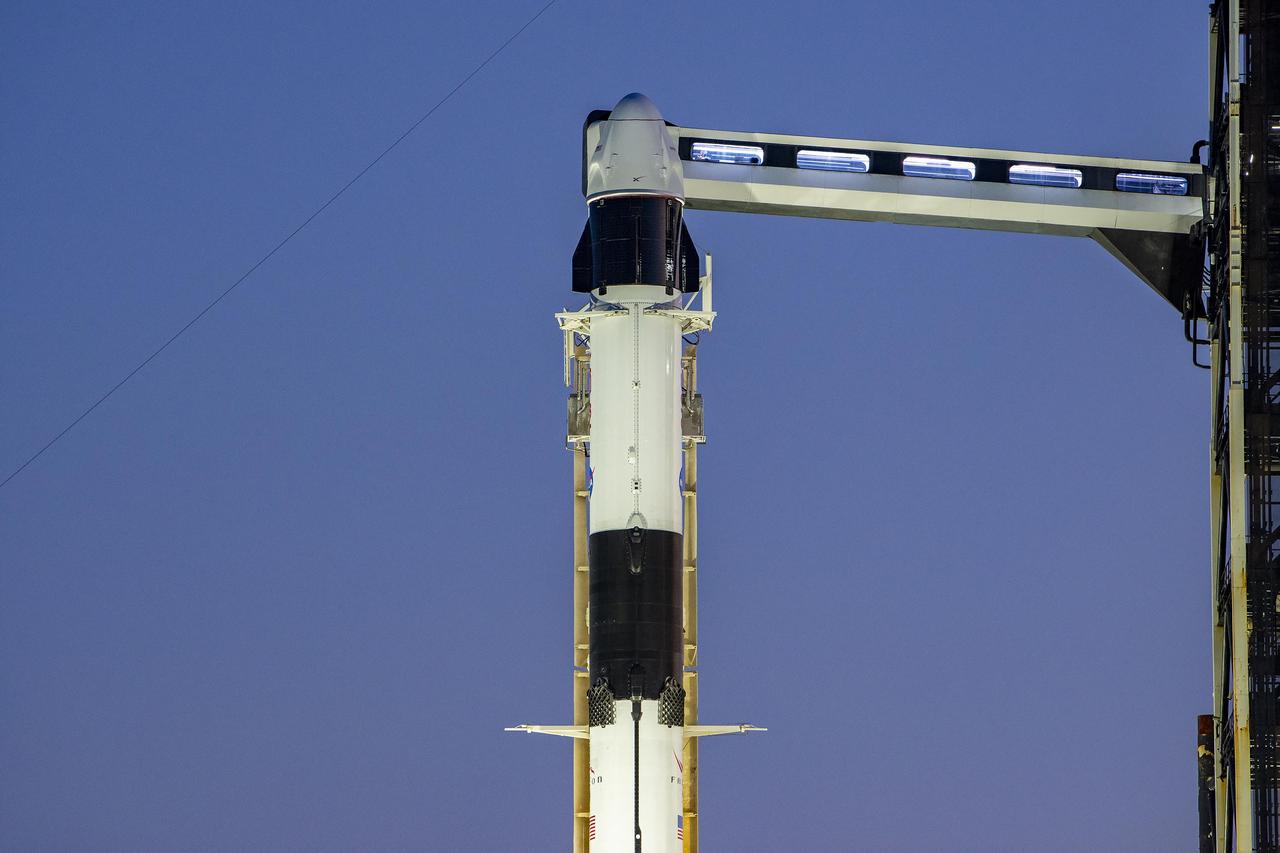
The SpaceX Falcon 9 rocket is vertical with the Crew Dragon atop for the Crew-3 mission at Launch Pad 39A at NASA’s Kennedy Space Center in Florida in this sunset view on Oct. 27, 2021. A four-person crew will launch aboard the Crew Dragon atop the Falcon 9 on Oct. 31 to the International Space Station. Launch is targeted for 2:21 a.m. EDT from Pad 39A. Crew 3 is the third crew rotation flight to the space station for NASA’s Commercial Crew Program, and the first flight of a new Crew Dragon spacecraft.
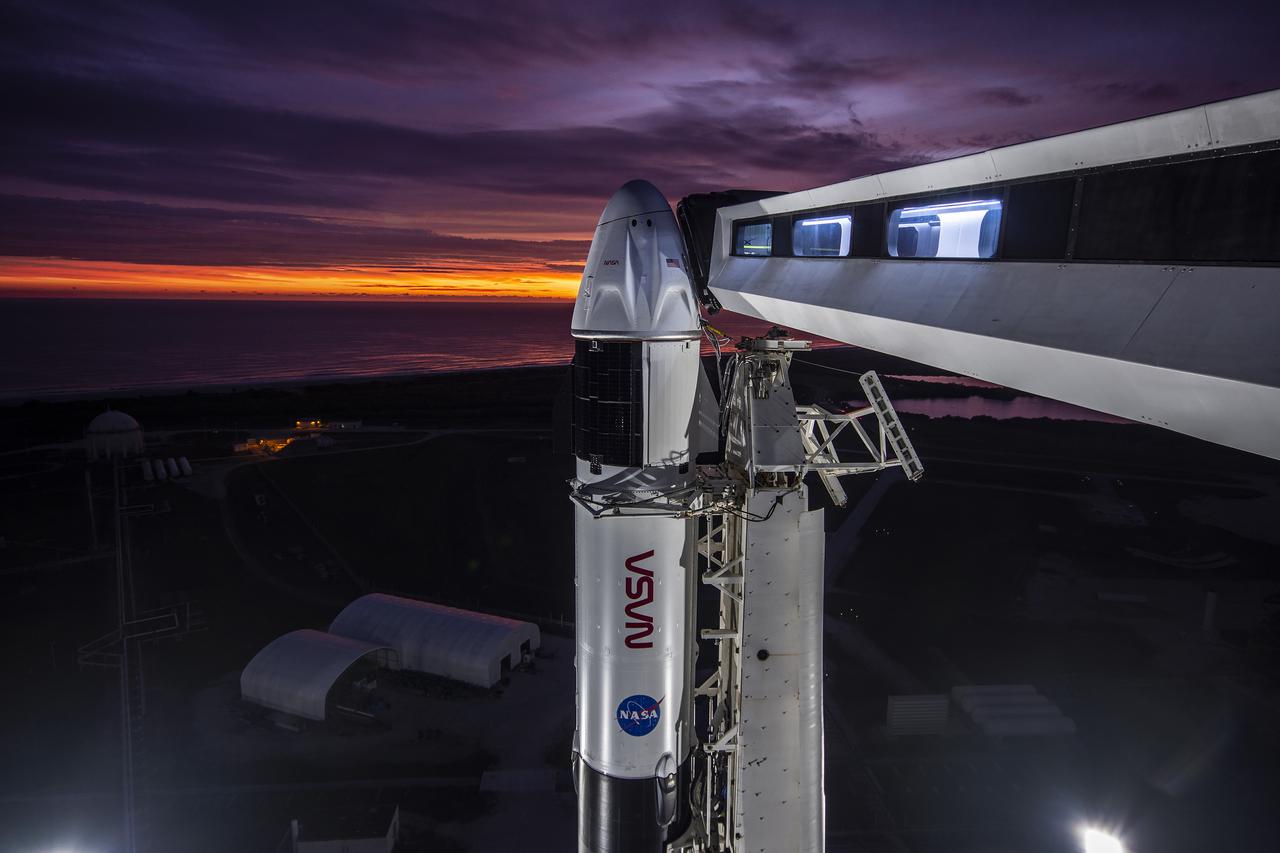
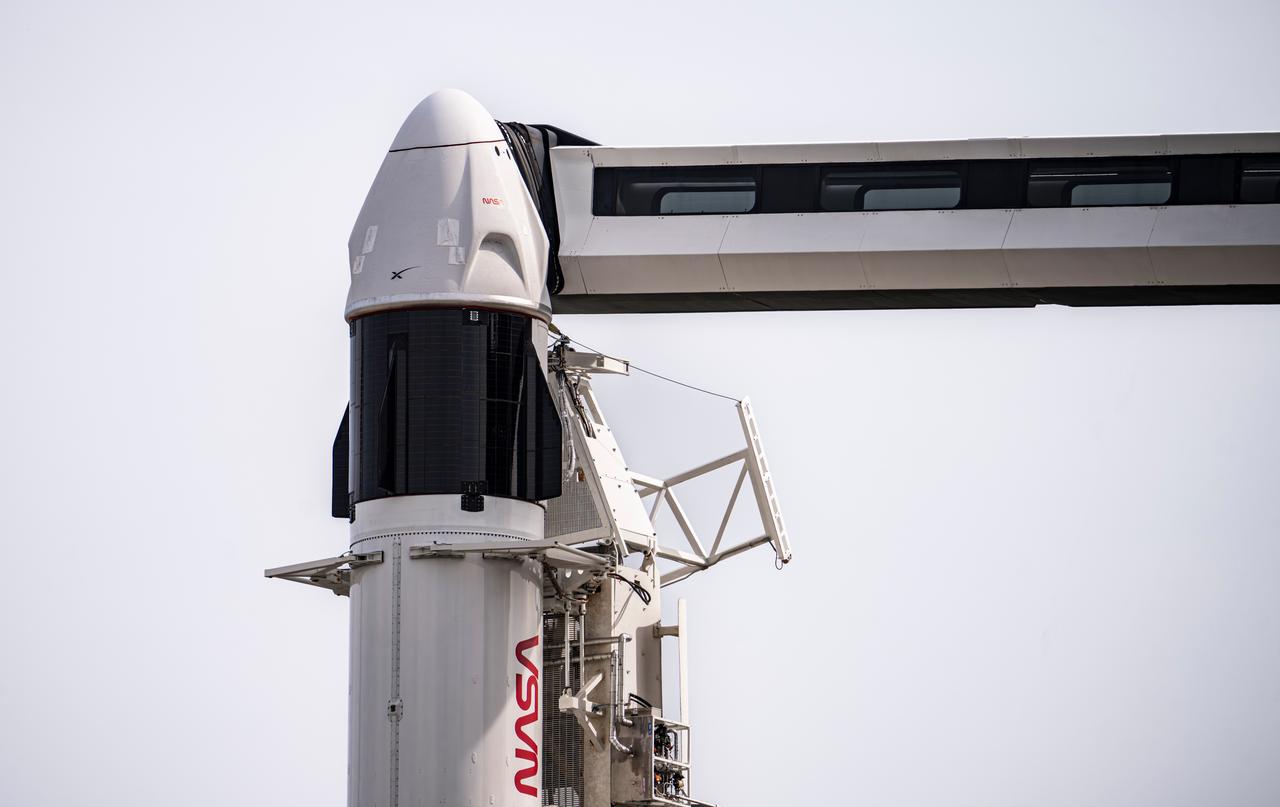
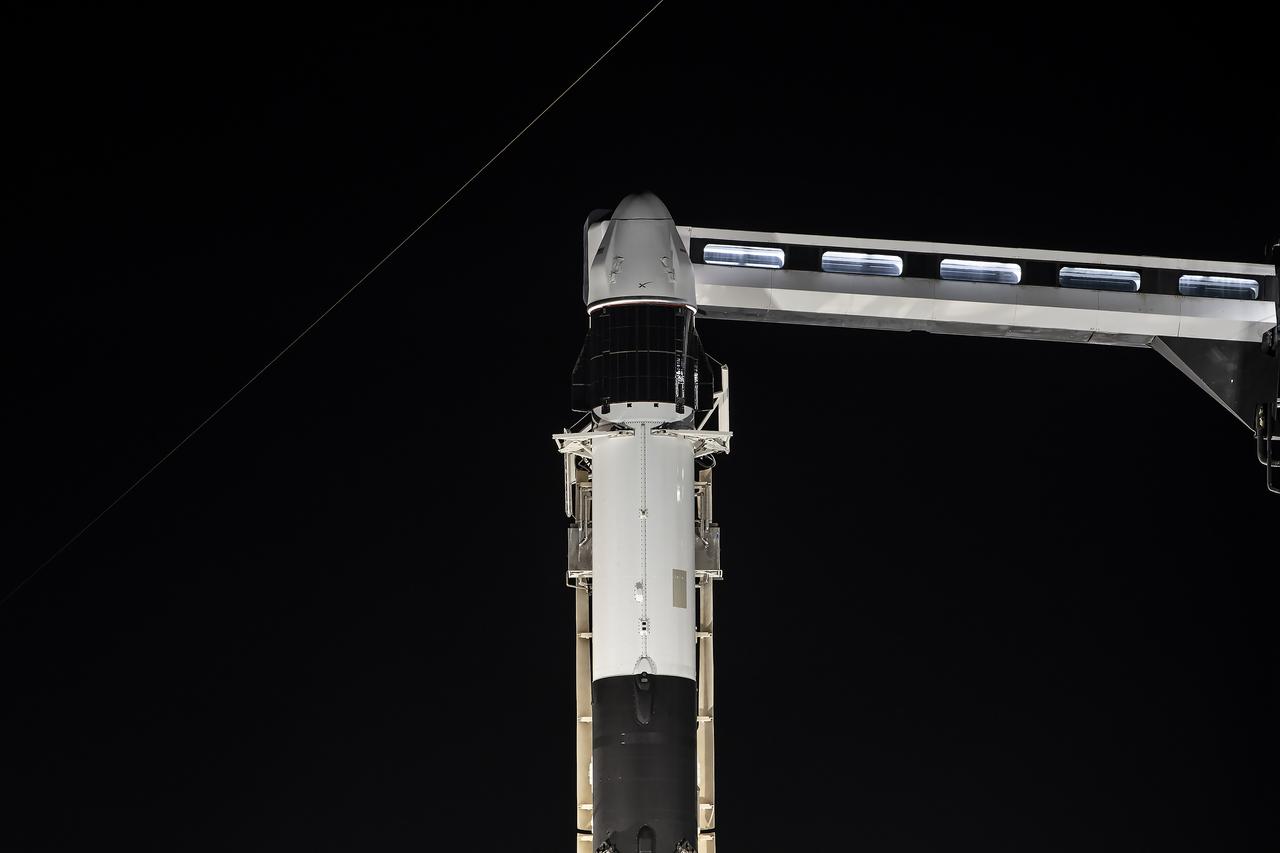
A close-up view of the SpaceX Falcon 9 rocket vertical with the Crew Dragon atop for the Crew-3 mission at Launch Pad 39A at NASA’s Kennedy Space Center in Florida during sunrise on Oct. 28, 2021. Also in view is the crew access arm. A four-person crew will launch aboard the Crew Dragon atop the Falcon 9 on Oct. 31 to the International Space Station. Launch is targeted for 2:21 a.m. EDT from Pad 39A. Crew 3 is the third crew rotation flight to the space station for NASA’s Commercial Crew Program, and the first flight of a new Crew Dragon spacecraft.

The SpaceX Falcon 9 rocket is vertical with the Crew Dragon atop for the Crew-3 mission at Launch Pad 39A at NASA’s Kennedy Space Center in Florida in this sunset view on Oct. 27, 2021. A four-person crew will launch aboard the Crew Dragon atop the Falcon 9 on Oct. 31 to the International Space Station. Launch is targeted for 2:21 a.m. EDT from Pad 39A. Crew 3 is the third crew rotation flight to the space station for NASA’s Commercial Crew Program, and the first flight of a new Crew Dragon spacecraft.
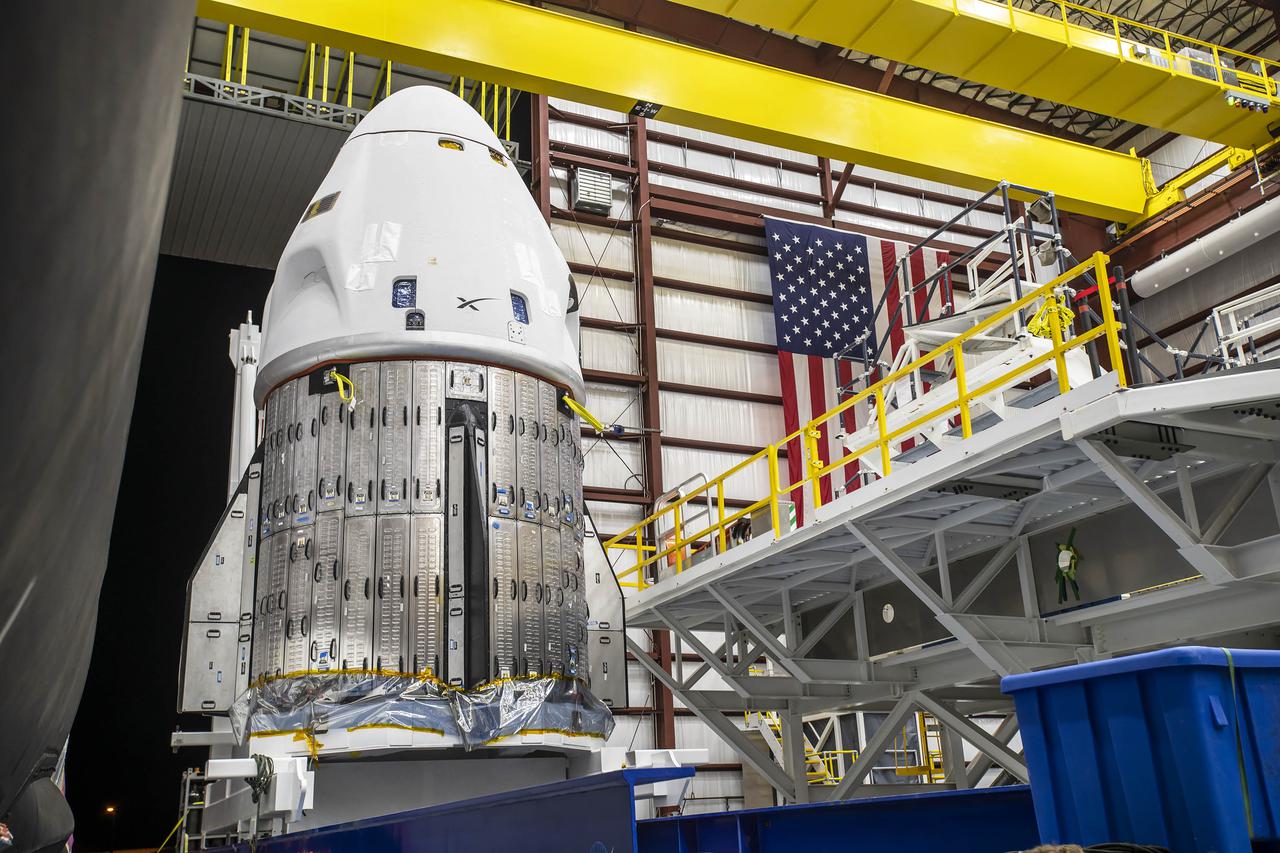
The Crew Dragon spacecraft for NASA’s SpaceX Crew-3 mission arrives at the hangar at Kennedy Space Center’s Launch Complex 39A in Florida on Oct. 24, 2021. The capsule, named Endurance by the crew, arrived at the launch complex after making the short journey from its nearby processing facility at Cape Canaveral Space Force Station. NASA astronauts Raja Chari, Tom Marshburn, and Kayla Barron, along with ESA (European Space Agency) astronaut Matthias Maurer are scheduled to launch to the International Space Station on Oct. 31. Liftoff of SpaceX’s Crew Dragon Endurance and Falcon 9 rocket is scheduled for 2:21 a.m. EDT.
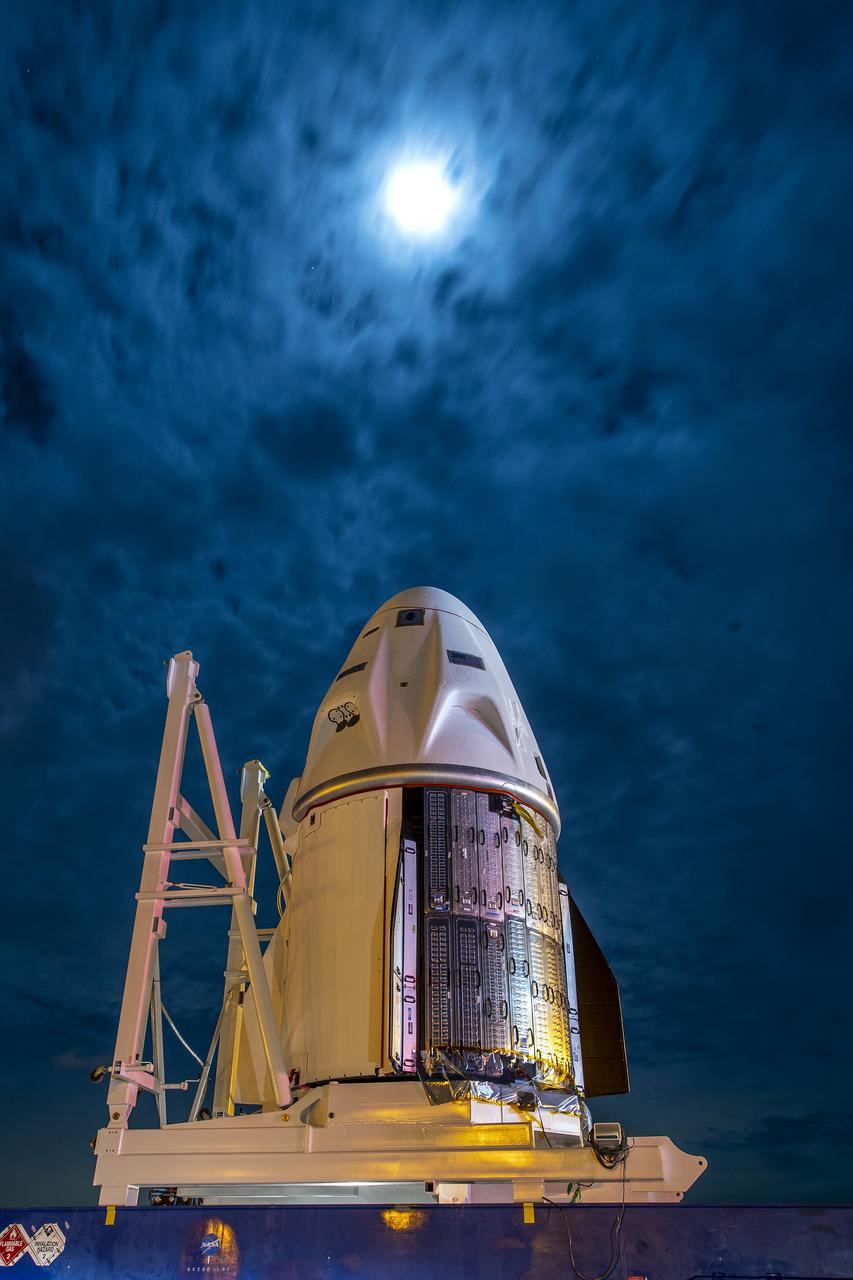
The Crew Dragon spacecraft for NASA’s SpaceX Crew-3 mission arrives at the hangar at Kennedy Space Center’s Launch Complex 39A in Florida on Oct. 24, 2021. The capsule, named Endurance by the crew, arrived at the launch complex after making the short journey from its nearby processing facility at Cape Canaveral Space Force Station. NASA astronauts Raja Chari, Tom Marshburn, and Kayla Barron, along with ESA (European Space Agency) astronaut Matthias Maurer are scheduled to launch to the International Space Station on Oct. 31. Liftoff of SpaceX’s Crew Dragon Endurance and Falcon 9 rocket is scheduled for 2:21 a.m. EDT.
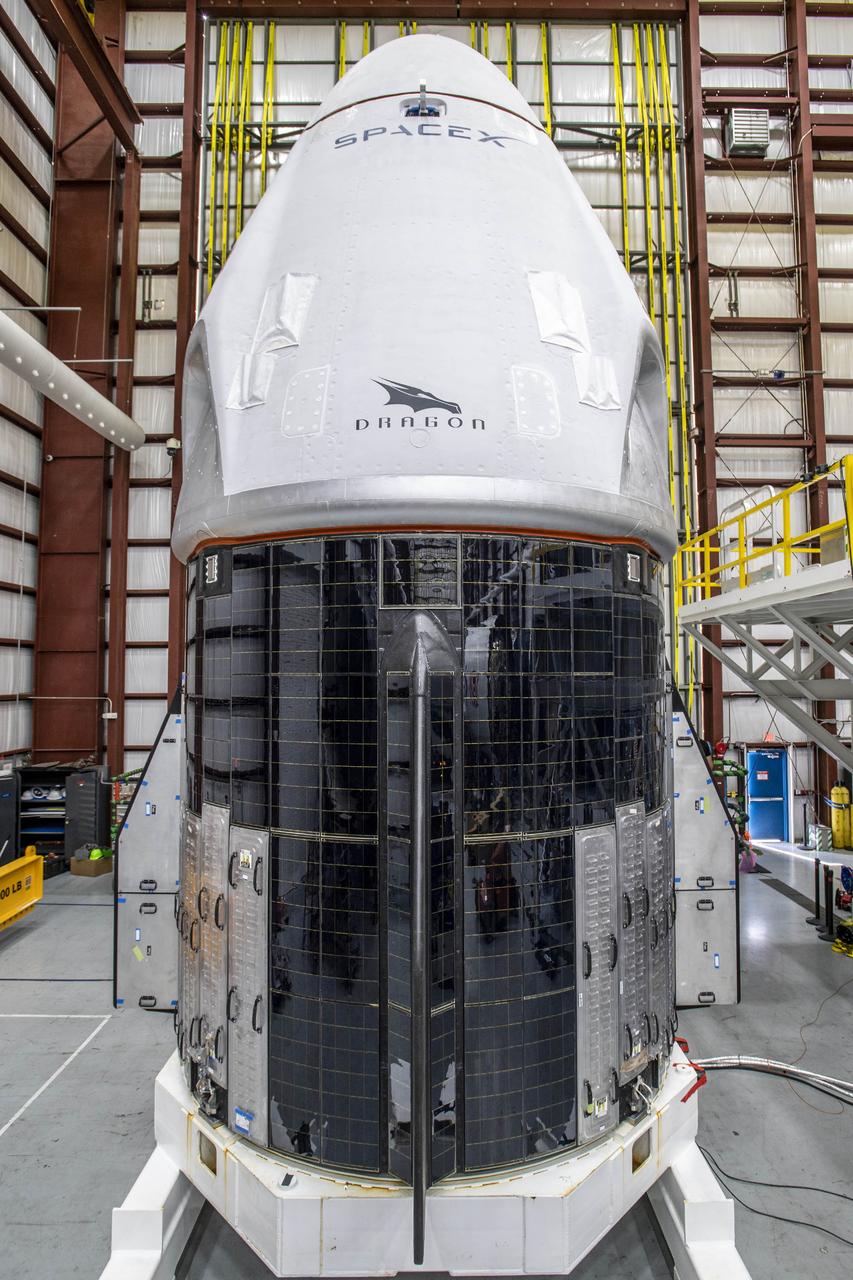
The SpaceX Crew Dragon spacecraft for NASA’s SpaceX Crew-1 mission arrived at Kennedy Space Center’s Launch Complex 39A on Thursday, Nov. 5, after making the trek from its processing facility at nearby Cape Canaveral Air Force Station in Florida. Crew Dragon will launch atop a SpaceX Falcon 9 rocket. The Crew-1 flight will carry Crew Dragon Commander Michael Hopkins, Pilot Victor Glover, and Mission Specialist Shannon Walker, all of NASA, along with Japan Aerospace Exploration Agency (JAXA) Mission Specialist Soichi Noguchi to the space station for a six-month science mission.
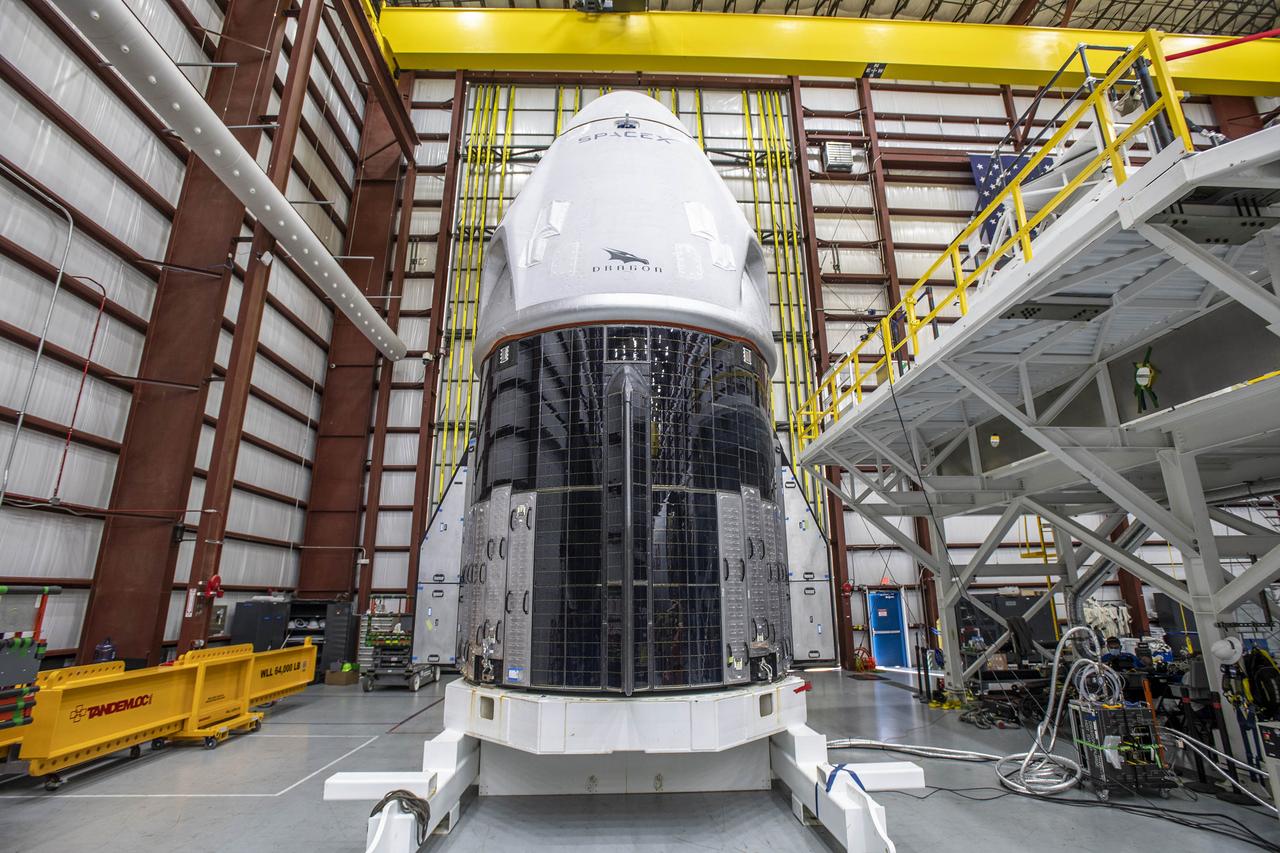
The SpaceX Crew Dragon spacecraft for NASA’s SpaceX Crew-1 mission arrived at Kennedy Space Center’s Launch Complex 39A on Thursday, Nov. 5, after making the trek from its processing facility at nearby Cape Canaveral Air Force Station in Florida. Crew Dragon will launch atop a SpaceX Falcon 9 rocket. The Crew-1 flight will carry Crew Dragon Commander Michael Hopkins, Pilot Victor Glover, and Mission Specialist Shannon Walker, all of NASA, along with Japan Aerospace Exploration Agency (JAXA) Mission Specialist Soichi Noguchi to the space station for a six-month science mission.
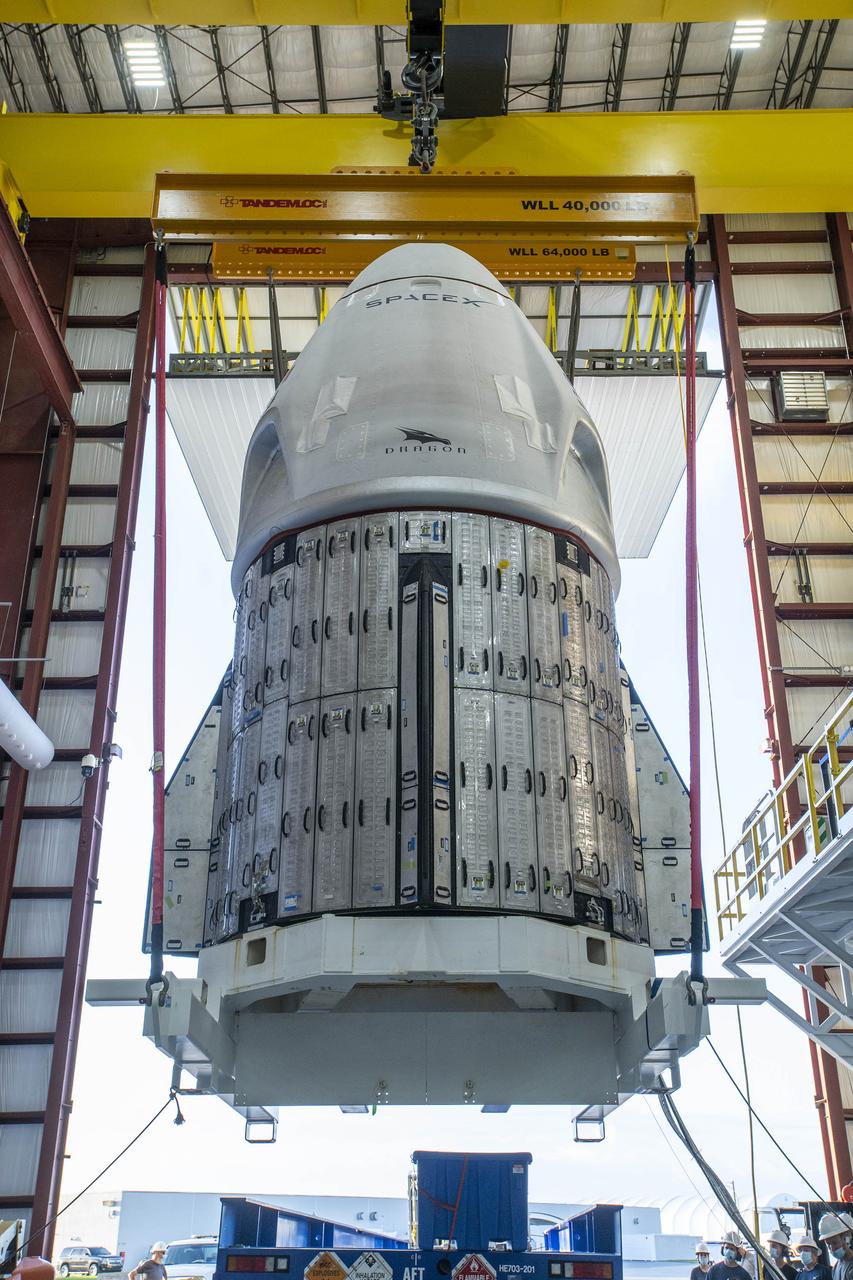
The SpaceX Crew Dragon spacecraft for NASA’s SpaceX Crew-1 mission arrived at Kennedy Space Center’s Launch Complex 39A on Thursday, Nov. 5, after making the trek from its processing facility at nearby Cape Canaveral Air Force Station in Florida. Crew Dragon will launch atop a SpaceX Falcon 9 rocket. The Crew-1 flight will carry Crew Dragon Commander Michael Hopkins, Pilot Victor Glover, and Mission Specialist Shannon Walker, all of NASA, along with Japan Aerospace Exploration Agency (JAXA) Mission Specialist Soichi Noguchi to the space station for a six-month science mission.
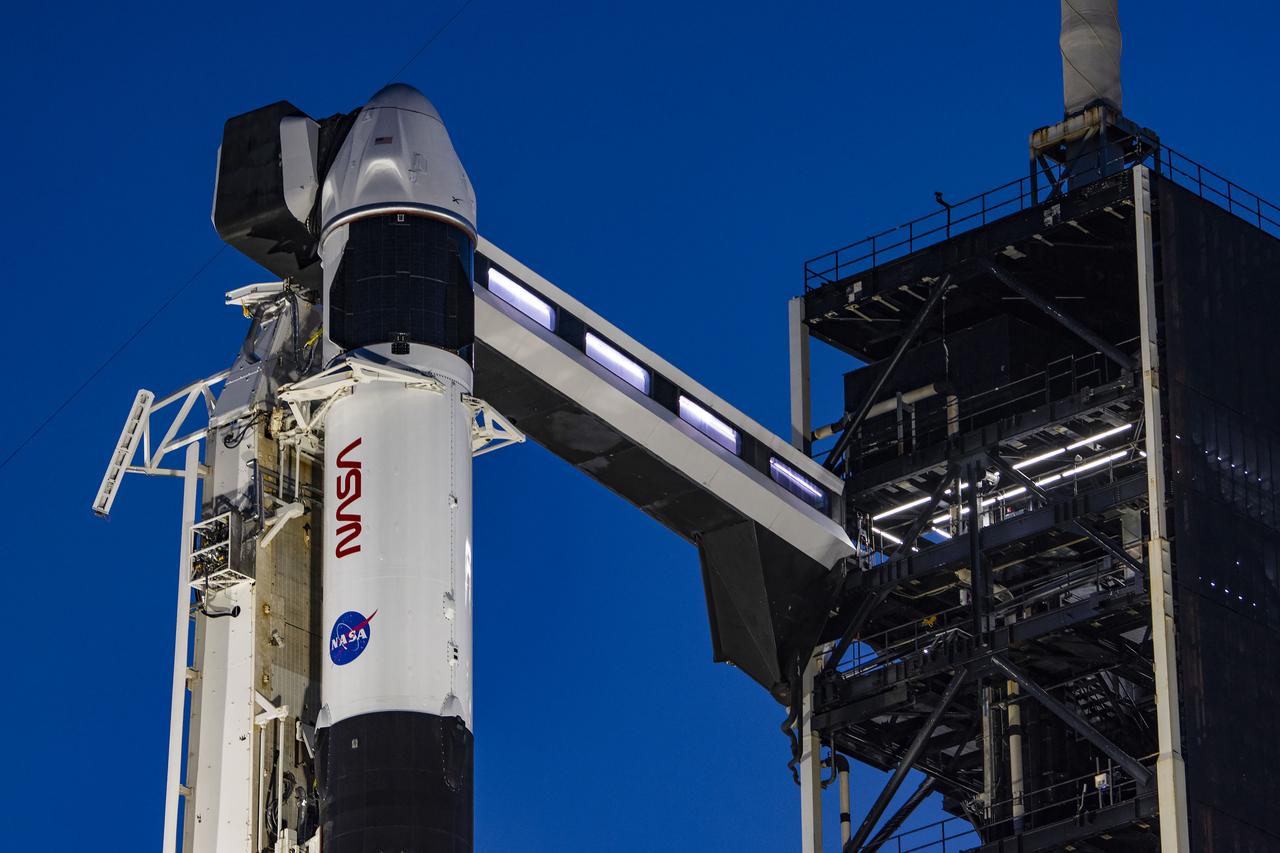
A SpaceX Falcon 9 rocket with the company's Dragon spacecraft on top is seen at sunset on the launch pad at Launch Complex 39A on Wednesday, Feb. 28, 2024, as preparations continue for NASA’s SpaceX Crew-8 mission at NASA’s Kennedy Space Center in Florida. The eighth crew rotation mission with SpaceX and the ninth flight of Dragon with people as part of the agency’s Commercial Crew Program is slated to carry NASA astronauts Matthew Dominick, Michael Barratt, and Jeanette Epps, and Roscosmos cosmonaut Alexander Grebenkin to the International Space Station from Launch Complex 39A at 11:16 p.m. EST on Saturday, March 2.
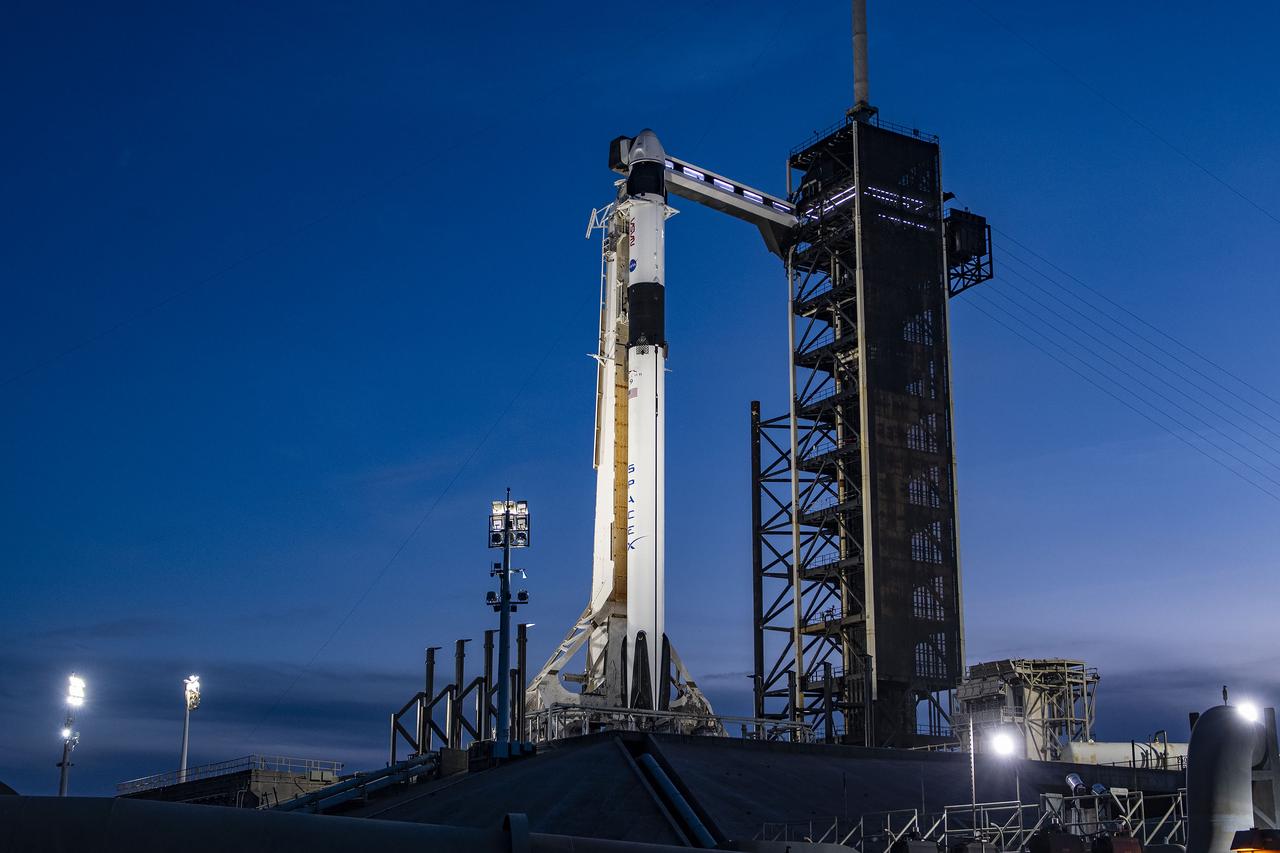
A SpaceX Falcon 9 rocket with the company's Dragon spacecraft on top is seen at sunset on the launch pad at Launch Complex 39A on Wednesday, Feb. 28, 2024, as preparations continue for NASA’s SpaceX Crew-8 mission at NASA’s Kennedy Space Center in Florida. The eighth crew rotation mission with SpaceX and the ninth flight of Dragon with people as part of the agency’s Commercial Crew Program is slated to carry NASA astronauts Matthew Dominick, Michael Barratt, and Jeanette Epps, and Roscosmos cosmonaut Alexander Grebenkin to the International Space Station from Launch Complex 39A at 11:16 p.m. EST on Saturday, March 2.
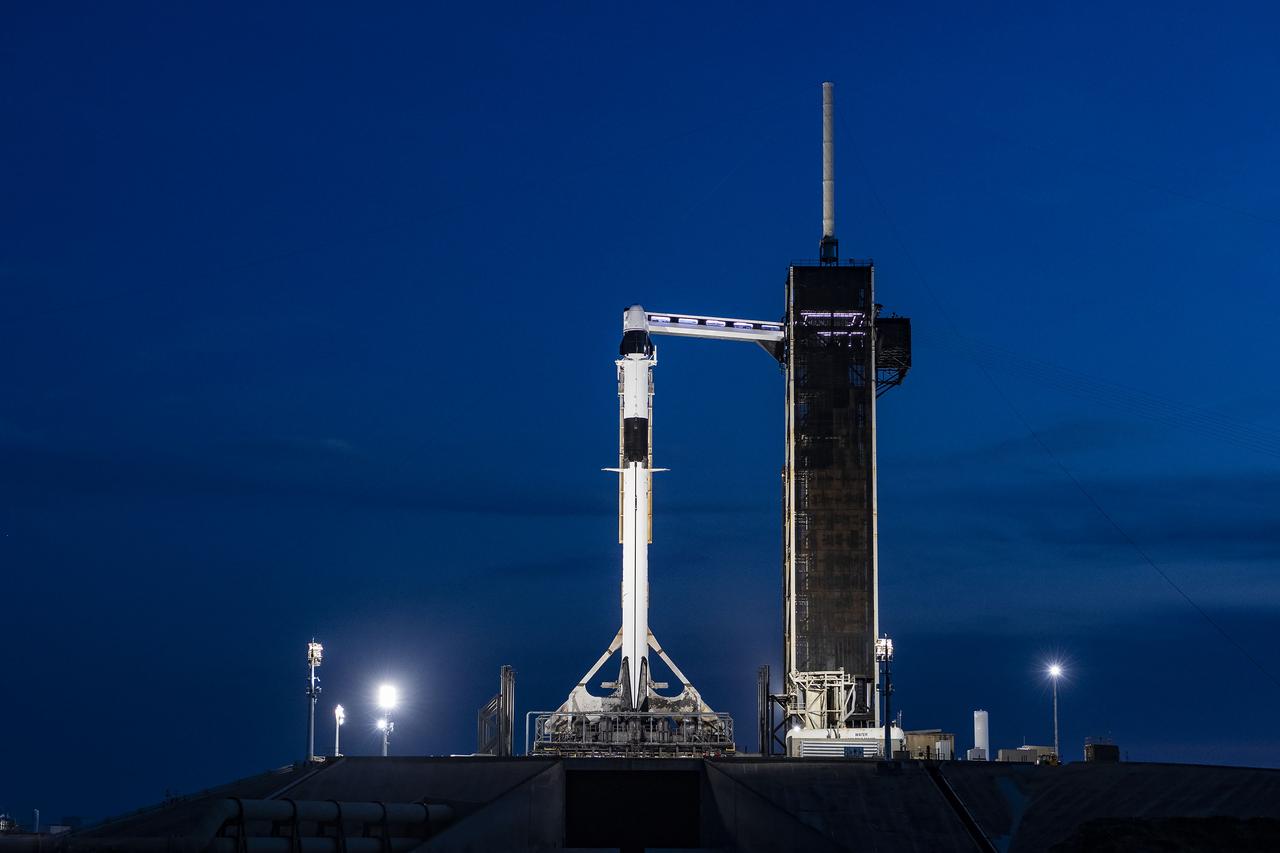
SpaceX’s Falcon 9 rocket, with the Dragon spacecraft atop, is vertical at NASA’s Kennedy Space Center Launch Complex 39A in Florida on Saturday, March 2, 2024, ahead of NASA’s SpaceX Crew-8 launch to the International Space Station. The eighth crew rotation mission with SpaceX and the ninth flight of Dragon with people as part of the agency’s Commercial Crew Program is slated to carry NASA astronauts Matthew Dominick, Michael Barratt, and Jeanette Epps, and Roscosmos cosmonaut Alexander Grebenkin to the station from Launch Complex 39A no earlier than 11:16 p.m. EST on Saturday, March 2, 2024.
A SpaceX Falcon 9 rocket with the company's Dragon spacecraft on top is seen at sunset on the launch pad at Launch Complex 39A on Wednesday, Feb. 28, 2024, as preparations continue for NASA’s SpaceX Crew-8 mission at NASA’s Kennedy Space Center in Florida. The eighth crew rotation mission with SpaceX and the ninth flight of Dragon with people as part of the agency’s Commercial Crew Program is slated to carry NASA astronauts Matthew Dominick, Michael Barratt, and Jeanette Epps, and Roscosmos cosmonaut Alexander Grebenkin to the International Space Station from Launch Complex 39A at 11:16 p.m. EST on Saturday, March 2.
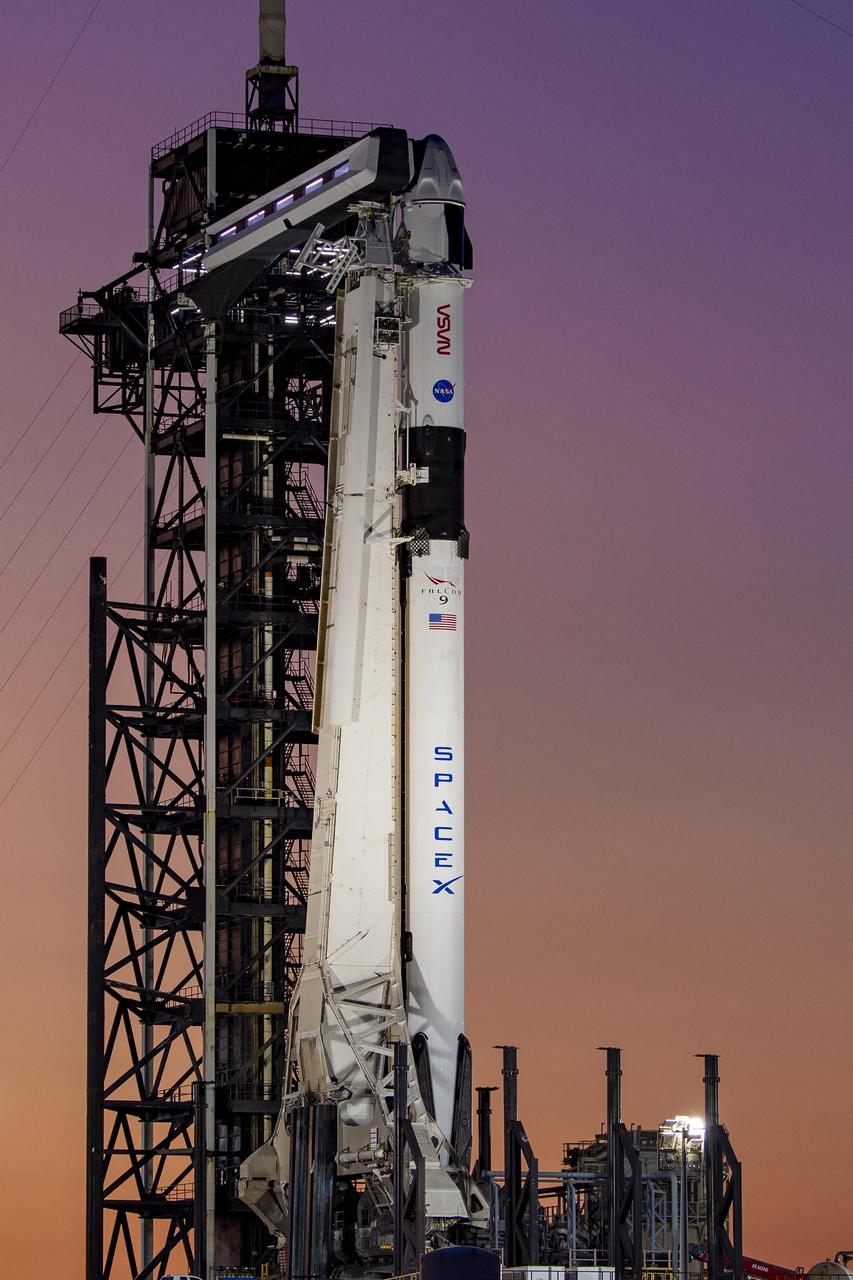
A colorful sunset serves as the backdrop for SpaceX’s Falcon 9 rocket and Dragon spacecraft on the pad at Launch Complex 39A at Kennedy Space Center in Florida on Monday, Feb. 26, 2024, ahead of NASA’s SpaceX Crew-8 mission. The crew members of NASA’s SpaceX Crew-8 mission, NASA astronauts Matthew Dominick, Michael Barratt, and Jeanette Epps, and Roscosmos cosmonaut Alexander Grebenkin, are slated to launch to the International Space Station no earlier than 12:04 a.m. EST on Friday, March 1, from Launch Complex 39A.
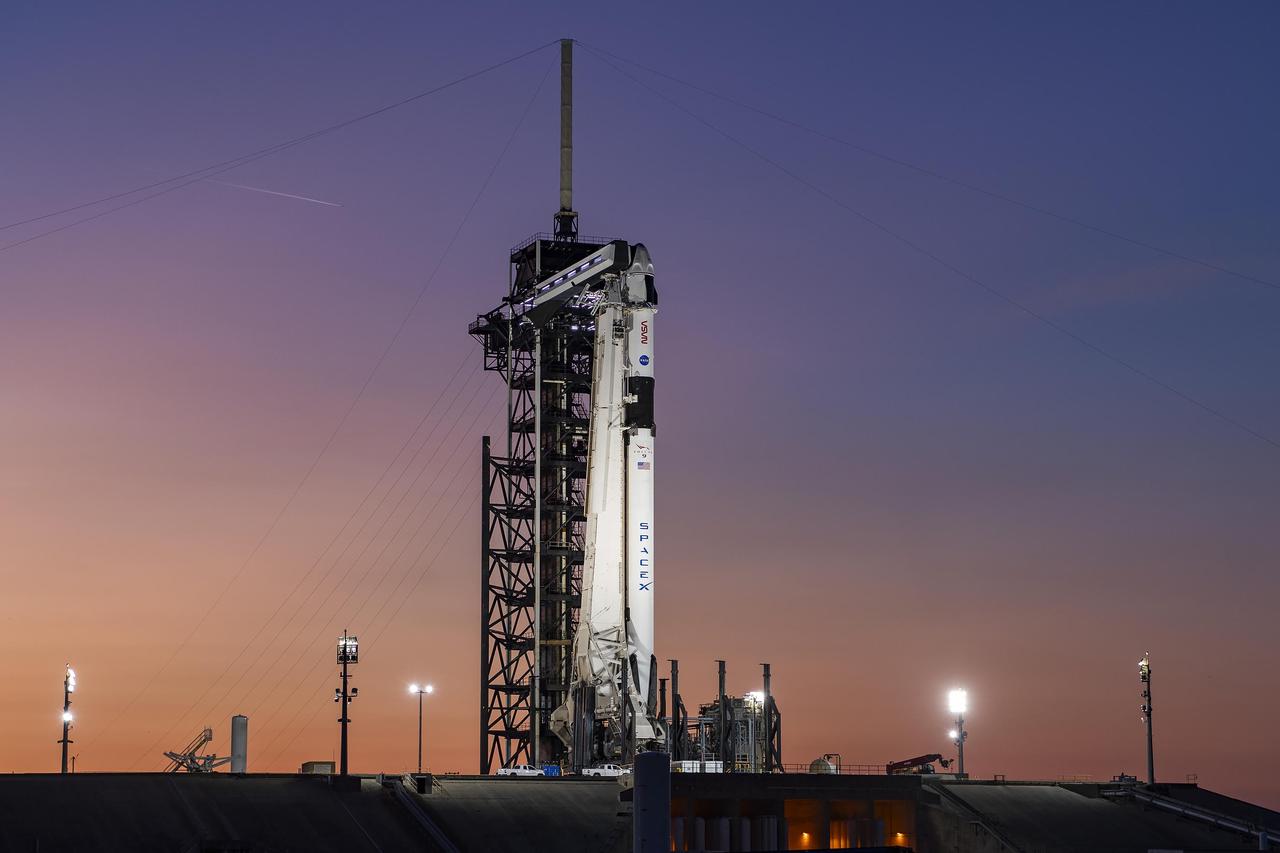
A colorful sunset serves as the backdrop for SpaceX’s Falcon 9 rocket and Dragon spacecraft on the pad at Launch Complex 39A at Kennedy Space Center in Florida on Monday, Feb. 26, 2024, ahead of NASA’s SpaceX Crew-8 mission. The crew members of NASA’s SpaceX Crew-8 mission, NASA astronauts Matthew Dominick, Michael Barratt, and Jeanette Epps, and Roscosmos cosmonaut Alexander Grebenkin, are slated to launch to the International Space Station no earlier than 12:04 a.m. EST on Friday, March 1, from Launch Complex 39A.
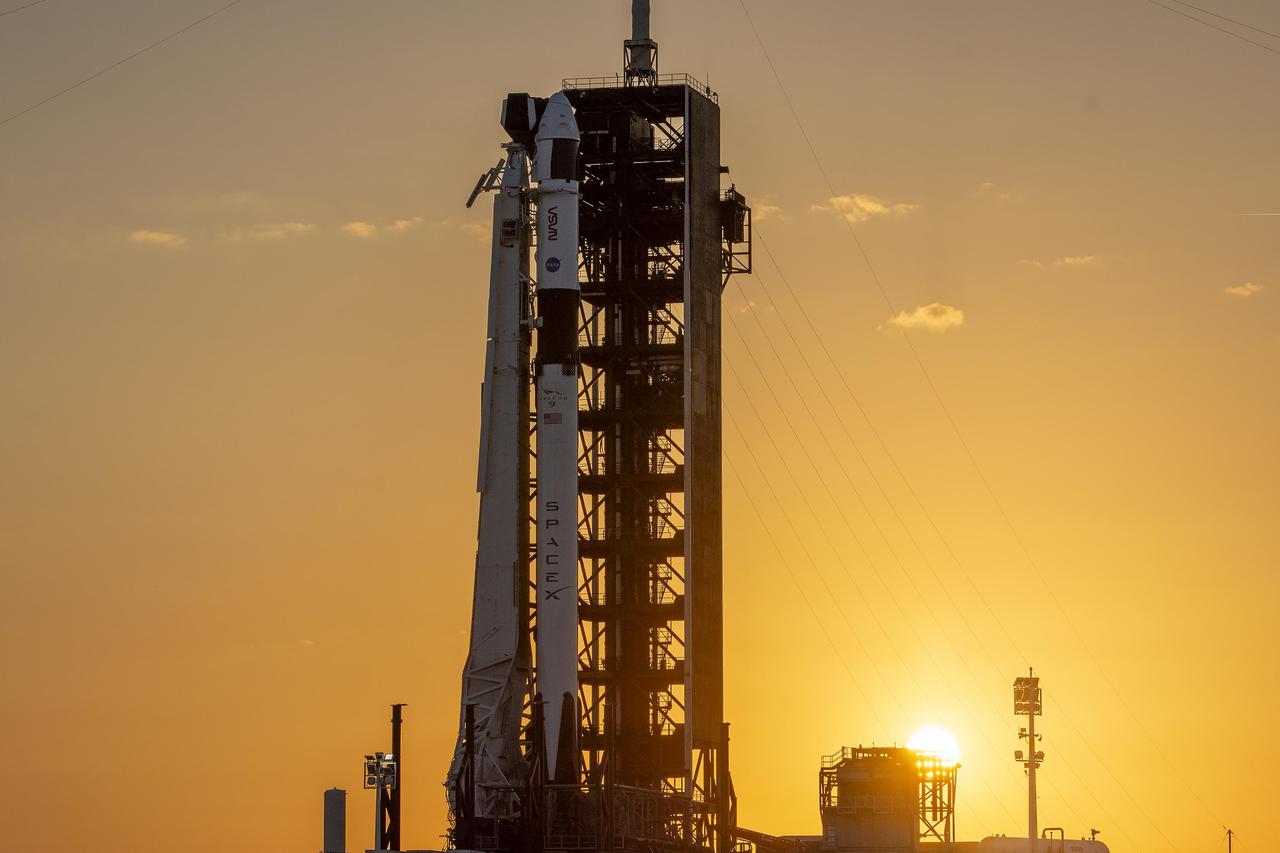
A colorful sunset serves as the backdrop for SpaceX’s Falcon 9 rocket and Dragon spacecraft on the pad at Launch Complex 39A at Kennedy Space Center in Florida on Monday, Feb. 26, 2024, ahead of NASA’s SpaceX Crew-8 mission. The crew members of NASA’s SpaceX Crew-8 mission, NASA astronauts Matthew Dominick, Michael Barratt, and Jeanette Epps, and Roscosmos cosmonaut Alexander Grebenkin, are slated to launch to the International Space Station no earlier than 12:04 a.m. EST on Friday, March 1, from Launch Complex 39A.
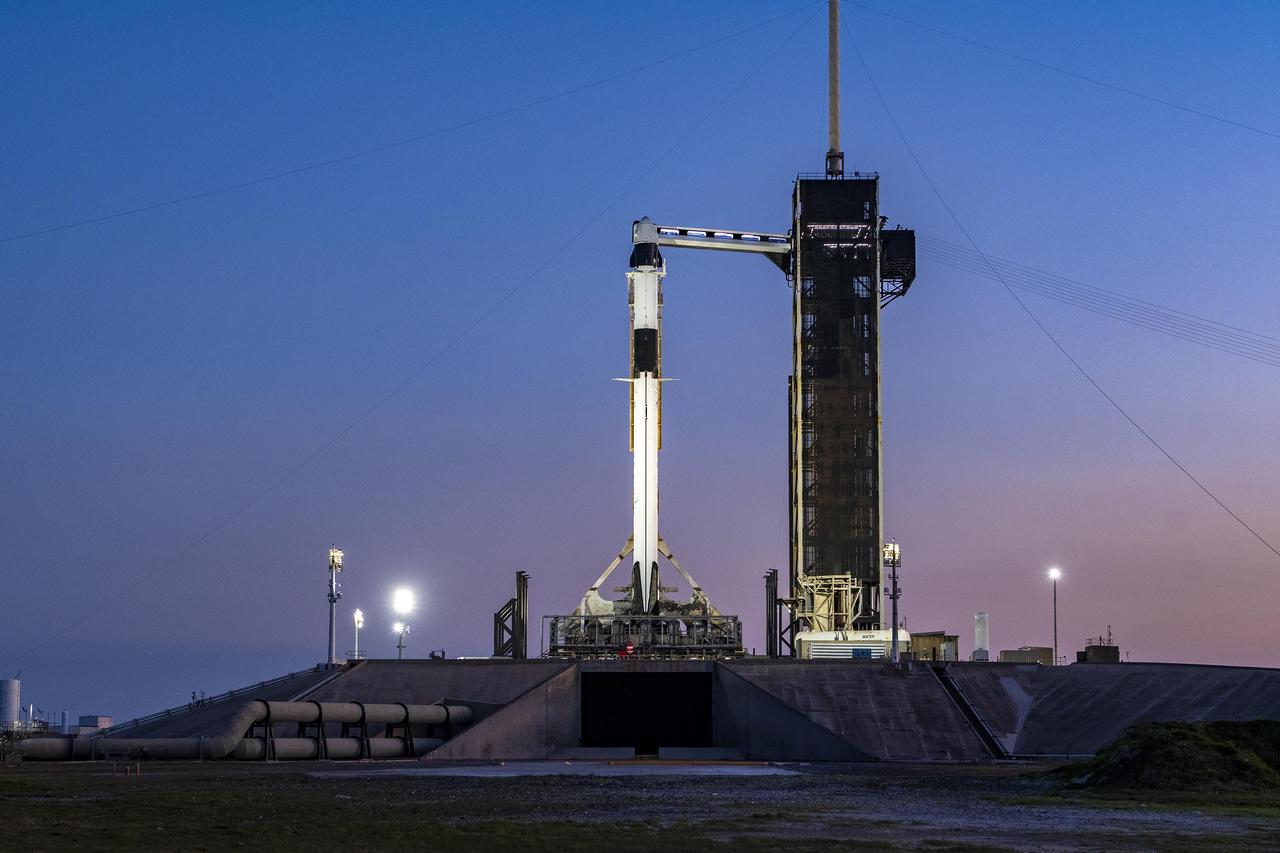
A SpaceX Falcon 9 rocket with the company's Dragon spacecraft on top is seen at sunset on the launch pad at Launch Complex 39A on Monday, Feb. 26, 2024, as preparations continue for NASA’s SpaceX Crew-8 mission at NASA’s Kennedy Space Center in Florida. The eighth crew rotation mission with SpaceX and the ninth flight of Dragon with people as part of the agency’s Commercial Crew Program is slated to carry NASA astronauts Matthew Dominick, Michael Barratt, and Jeanette Epps, and Roscosmos cosmonaut Alexander Grebenkin to the International Space Station from Launch Complex 39A no earlier than 12:04 a.m. EST on Friday, March 1.
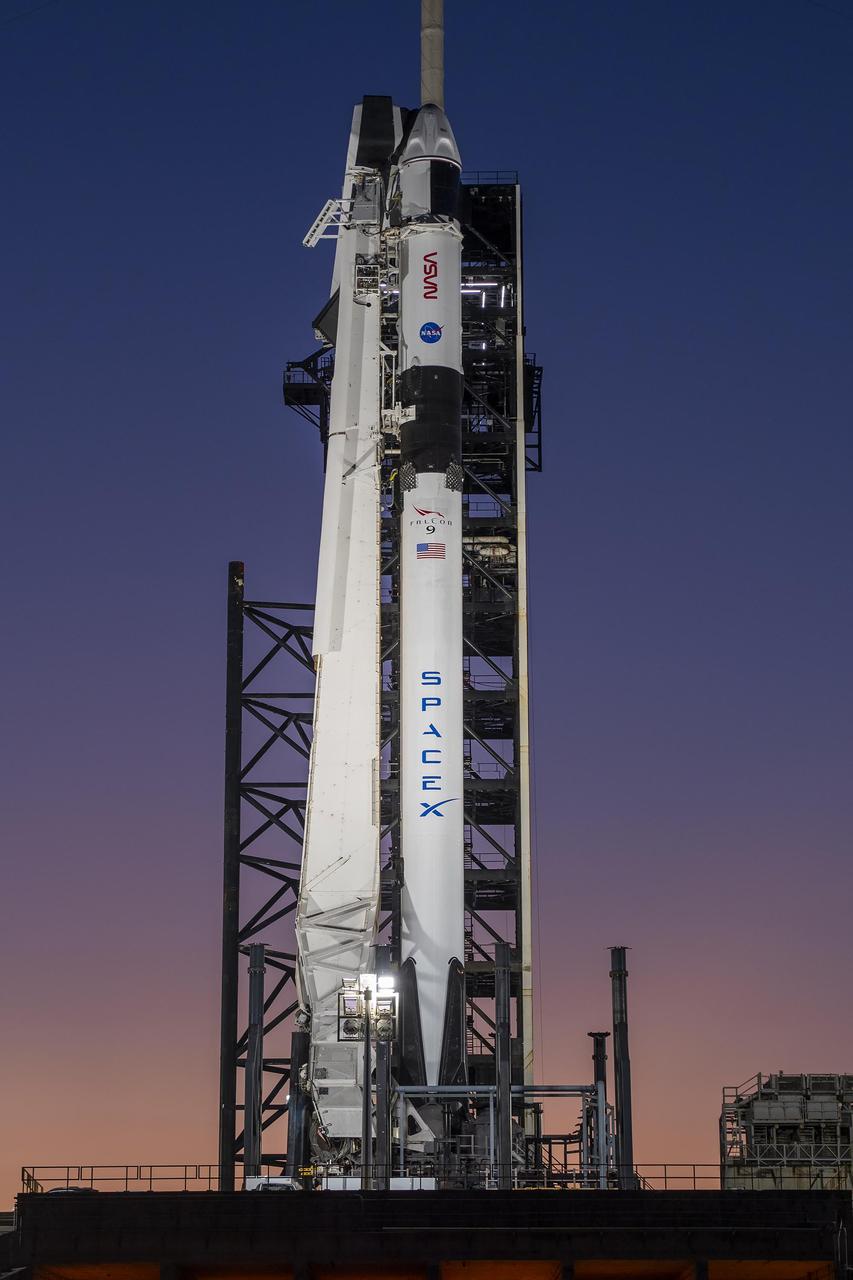
A colorful sunset serves as the backdrop for SpaceX’s Falcon 9 rocket and Dragon spacecraft on the pad at Launch Complex 39A at Kennedy Space Center in Florida on Monday, Feb. 26, 2024, ahead of NASA’s SpaceX Crew-8 mission. The crew members of NASA’s SpaceX Crew-8 mission, NASA astronauts Matthew Dominick, Michael Barratt, and Jeanette Epps, and Roscosmos cosmonaut Alexander Grebenkin, are slated to launch to the International Space Station no earlier than 12:04 a.m. EST on Friday, March 1, from Launch Complex 39A.
A SpaceX Falcon 9 rocket with the company's Dragon spacecraft on top is seen at sunset on the launch pad at Launch Complex 39A on Monday, Feb. 26, 2024, as preparations continue for NASA’s SpaceX Crew-8 mission at NASA’s Kennedy Space Center in Florida. The eighth crew rotation mission with SpaceX and the ninth flight of Dragon with people as part of the agency’s Commercial Crew Program is slated to carry NASA astronauts Matthew Dominick, Michael Barratt, and Jeanette Epps, and Roscosmos cosmonaut Alexander Grebenkin to the International Space Station from Launch Complex 39A no earlier than 12:04 a.m. EST on Friday, March 1.
A SpaceX Falcon 9 rocket, with the company’s Dragon cargo spacecraft atop, is raised to a vertical position at NASA Kennedy Space Center’s Launch Complex 39A on Nov. 21, 2022, in preparation for the 26th commercial resupply services launch to the International Space Station. The mission will deliver new science investigations, supplies, and equipment to the crew aboard the space station, including the next pair of ISS Roll Out Solar Arrays (iROSAs). Liftoff is scheduled for 3:54 p.m. EST on Monday, Nov. 22, from Kennedy’s Launch Complex 39A.
A SpaceX Falcon 9 rocket, with the company’s Dragon cargo spacecraft atop, is raised to a vertical position at NASA Kennedy Space Center’s Launch Complex 39A on Nov. 21, 2022, in preparation for the 26th commercial resupply services launch to the International Space Station. The mission will deliver new science investigations, supplies, and equipment to the crew aboard the space station, including the next pair of ISS Roll Out Solar Arrays (iROSAs). Liftoff is scheduled for 3:54 p.m. EST on Monday, Nov. 22, from Kennedy’s Launch Complex 39A.
Seen here is the SpaceX Dragon cargo spacecraft atop the company’s Falcon 9 rocket after being raised to a vertical position at NASA’s Kennedy Space Center in Florida on Nov. 21, 2022, in preparation for the 26th commercial resupply services launch to the International Space Station. The mission will deliver new science investigations, supplies, and equipment to the crew aboard the space station, including the next pair of ISS Roll Out Solar Arrays (iROSAs). Liftoff is scheduled for 3:54 p.m. EST on Monday, Nov. 22, from Kennedy’s Launch Complex 39A.
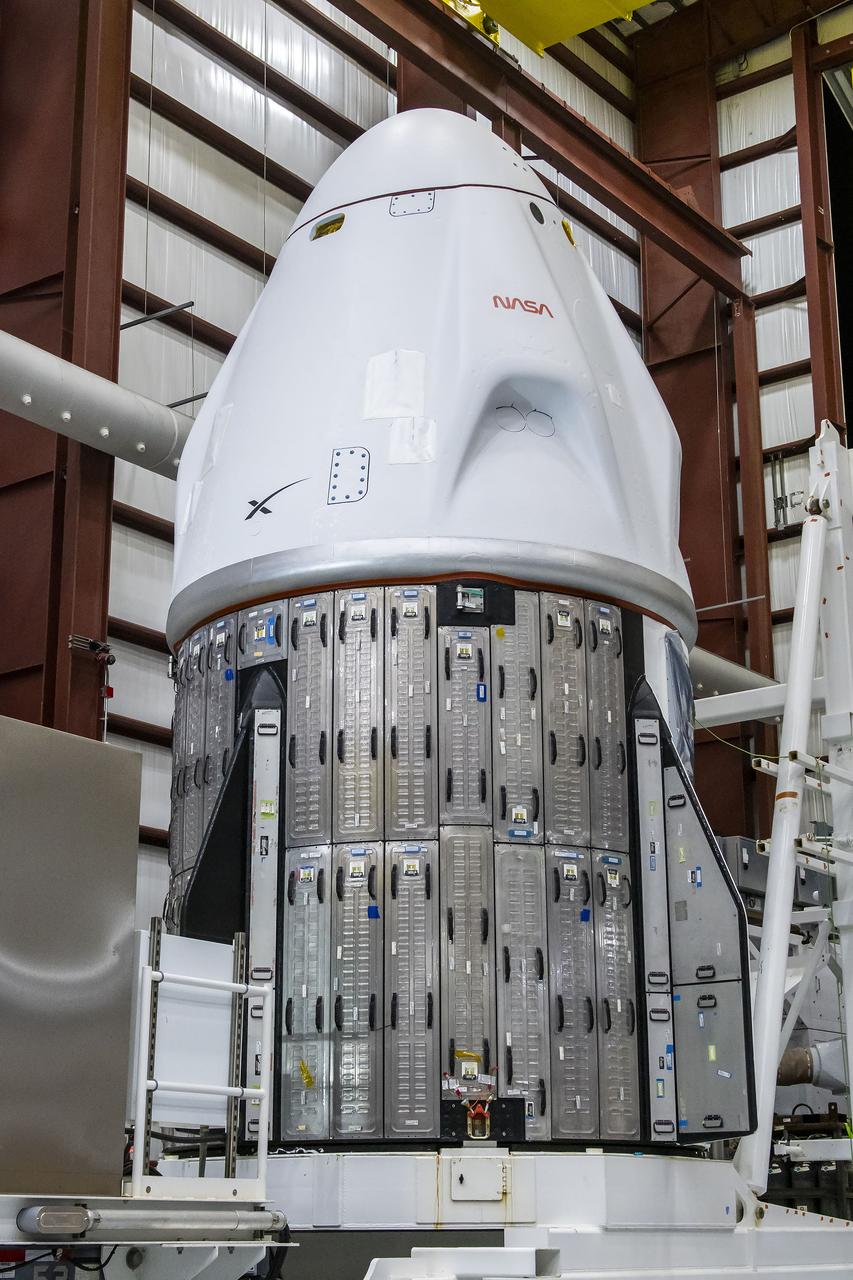
SpaceX’s Dragon spacecraft for NASA’s SpaceX Crew-10 mission arrives at the company’s hangar at Kennedy Space Center’s Launch Complex 39A in Florida on Tuesday, March 4, after a short journey from a nearby processing facility at Cape Canaveral Space Force Station. NASA astronauts Anne McClain and Nichole Ayers, along with JAXA (Japan Aerospace Exploration Agency) astronaut Takuya Onishi and Roscosmos cosmonaut Kirill Peskov are slated to launch to the International Space Station aboard SpaceX’s Dragon spacecraft, powered by the company’s Falcon 9 rocket no earlier than 7:48 p.m. EDT on Wednesday, March 12, 2025.
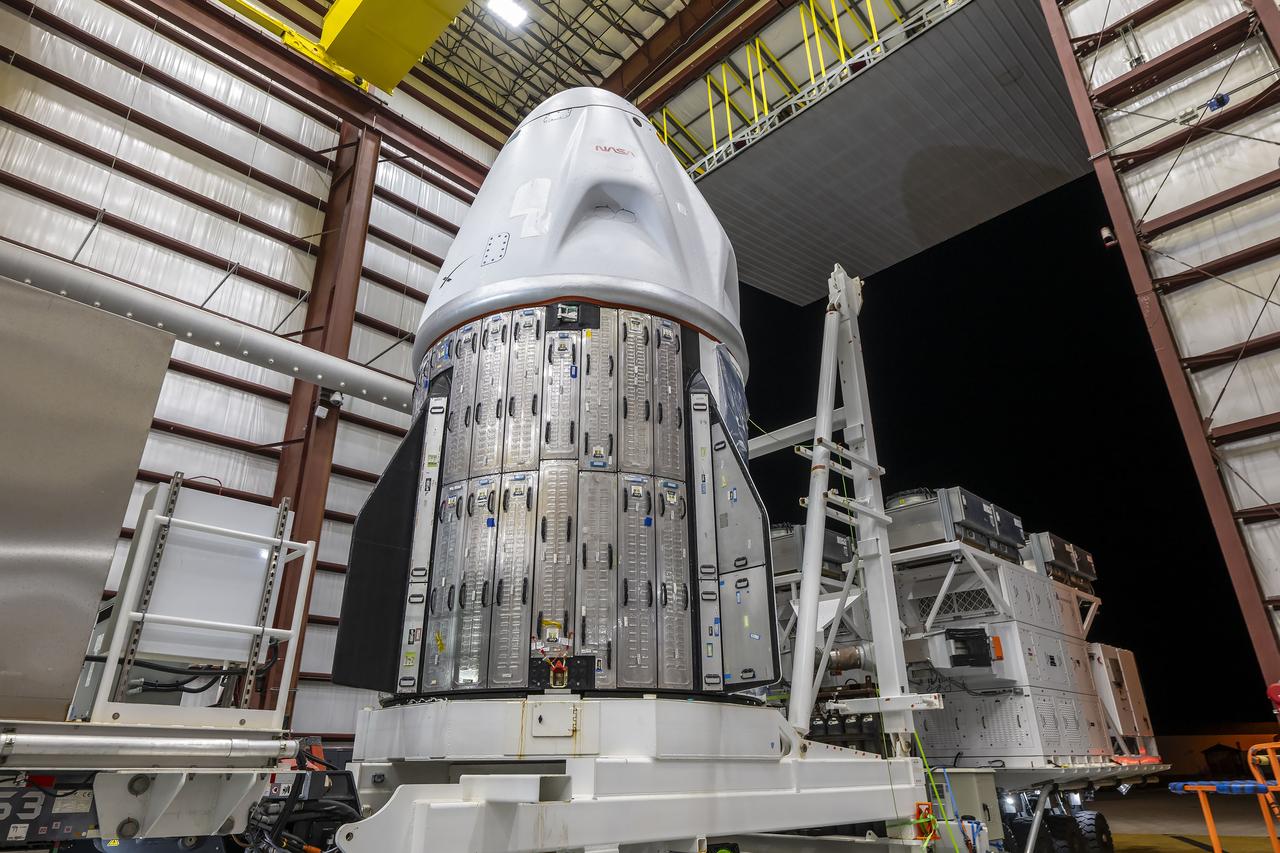
SpaceX’s Dragon spacecraft for NASA’s SpaceX Crew-10 mission arrives at the company’s hangar at Kennedy Space Center’s Launch Complex 39A in Florida on Tuesday, March 4, after a short journey from a nearby processing facility at Cape Canaveral Space Force Station. NASA astronauts Anne McClain and Nichole Ayers, along with JAXA (Japan Aerospace Exploration Agency) astronaut Takuya Onishi and Roscosmos cosmonaut Kirill Peskov are slated to launch to the International Space Station aboard SpaceX’s Dragon spacecraft, powered by the company’s Falcon 9 rocket no earlier than 7:48 p.m. EDT on Wednesday, March 12, 2025.
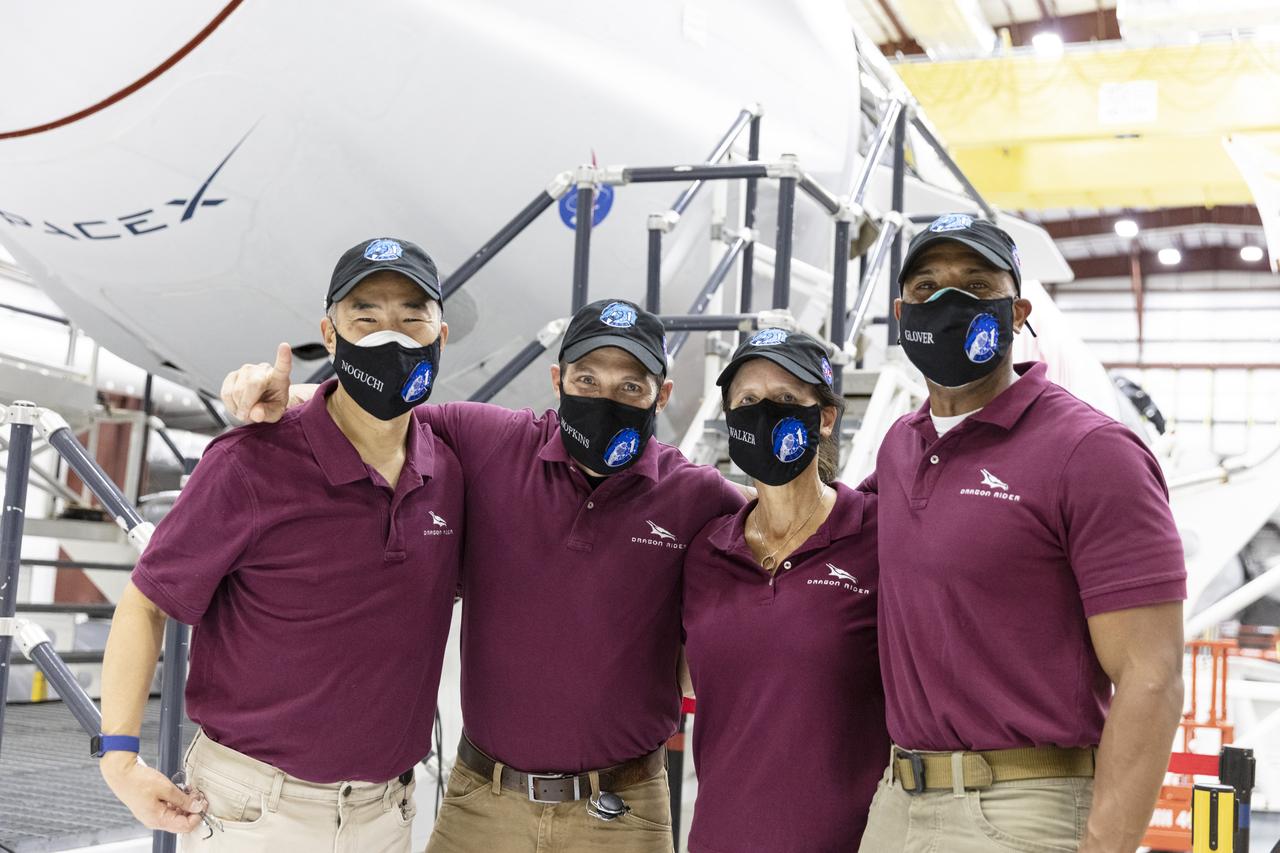
The astronauts for NASA’s SpaceX Crew-1 mission pose for a photo in front of the Crew Dragon spacecraft, named Resilience by the crew, inside the SpaceX hangar at Launch Complex 39A on Nov. 8, 2020. From left, JAXA astronaut Soichi Noguchi, mission specialist; NASA astronaut Michael Hopkins, spacecraft commander; NASA astronaut Shannon Walker, mission specialist; and NASA astronaut Victor Glover, pilot. Crew-1 is the first crew rotation mission of a U.S. commercial spacecraft with astronauts to the International Space Station as part of NASA’s Commercial Crew Program.
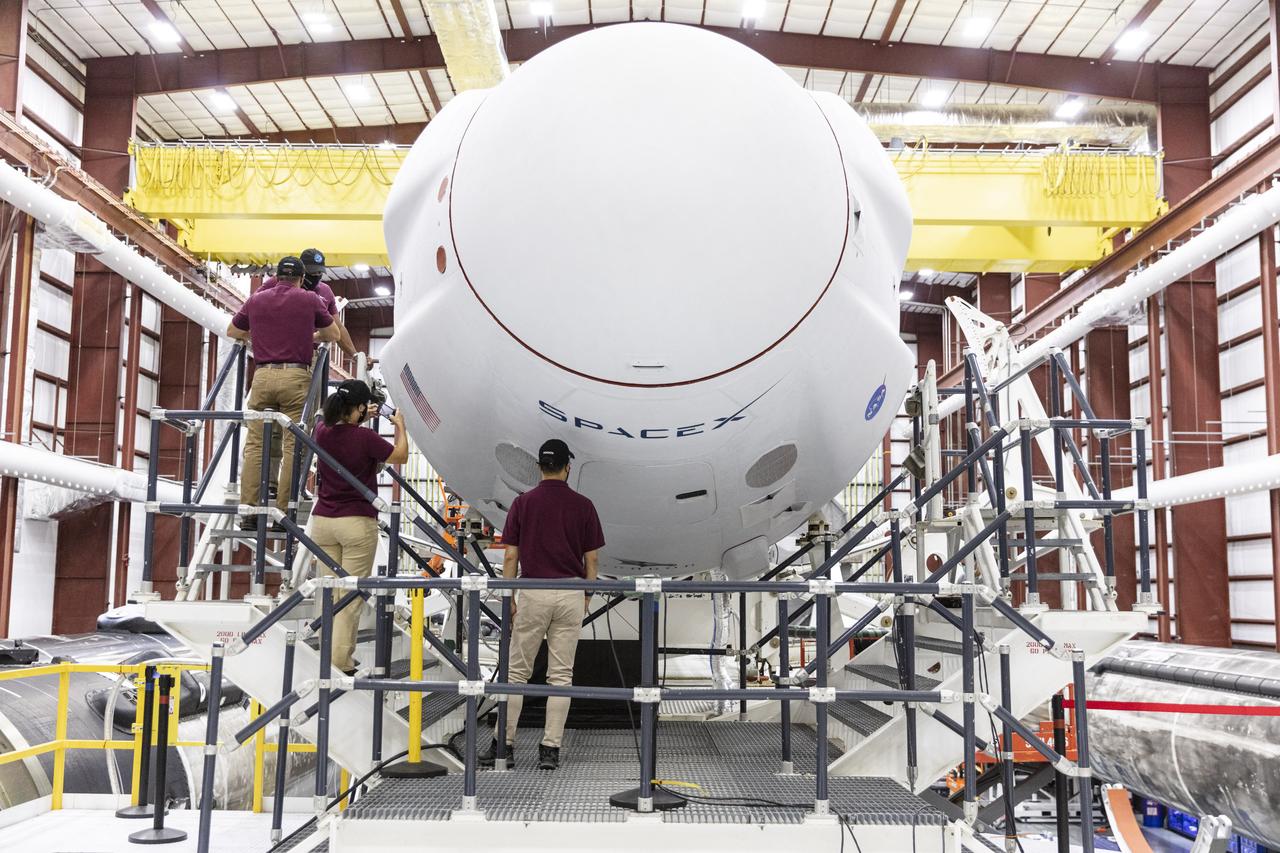
The astronauts for NASA’s SpaceX Crew-1 mission visit the Crew Dragon spacecraft, named Resilience by the crew, inside the SpaceX hangar at Launch Complex 39A on Nov. 8, 2020. NASA astronauts Michael Hopkins, Victor Glover, and Shannon Walker, along with Soichi Noguchi of the Japan Aerospace Exploration Agency (JAXA), will launch on SpaceX’s Falcon 9 rocket and Crew Dragon on the first crew rotation mission to the International Space Station as part of NASA’s Commercial Crew Program.
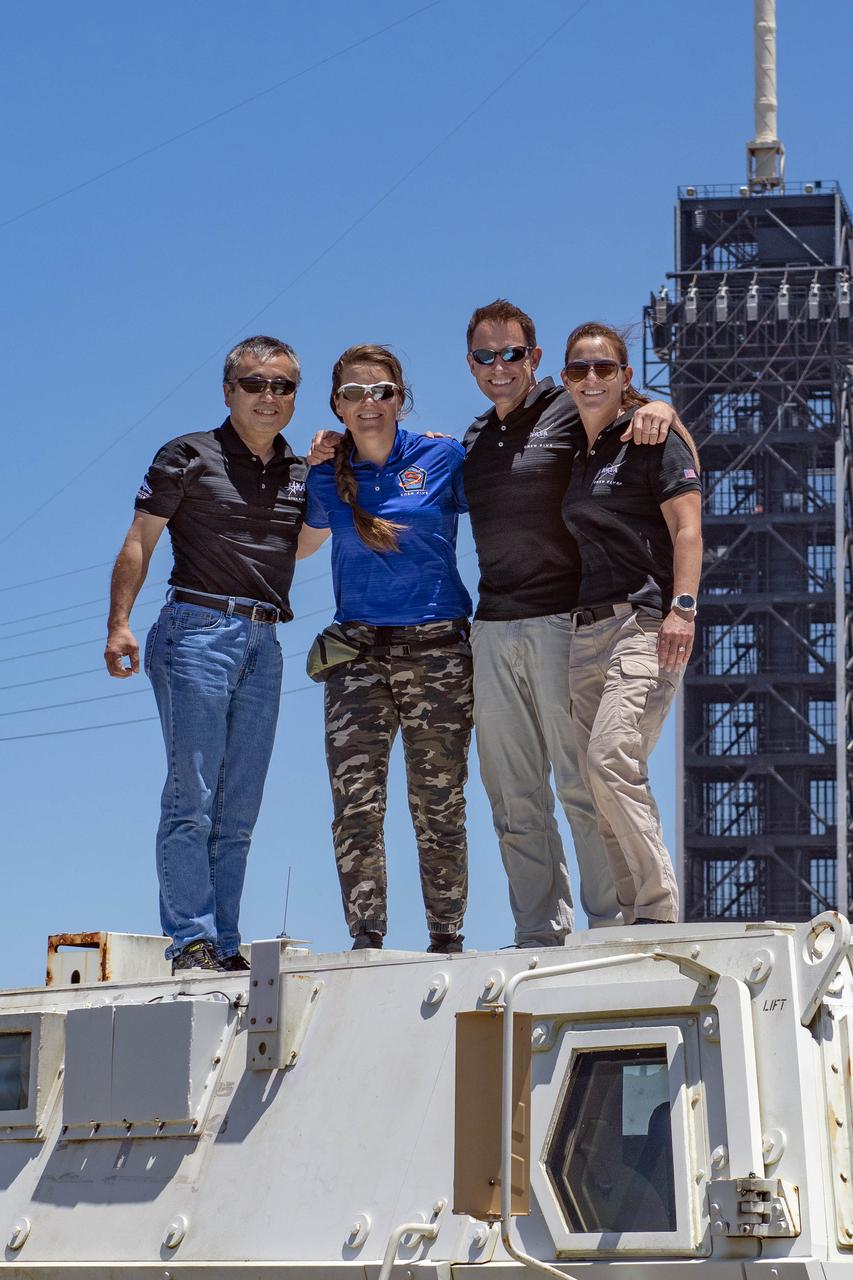
The crew members who will fly on NASA’s SpaceX Crew-5 mission to the International Space Station are photographed at Launch Complex 39A during a visit to the agency’s Kennedy Space Center in Florida on May 10, 2022. From left are JAXA (Japan Aerospace Exploration Agency) astronaut Koichi Wakata, mission specialist; Roscosmos cosmonaut Anna Kikina, mission specialist; NASA astronaut Josh Cassada, pilot; and NASA astronaut Nicole Mann, mission commander. SpaceX’s Falcon 9 rocket and Crew Dragon spacecraft are scheduled to lift off from Kennedy’s Launch Complex 39A on Oct. 3, 2022. This will be the fifth crew rotation mission of SpaceX’s human transportation system and its sixth flight with astronauts to the space station for NASA’s Commercial Crew Program.
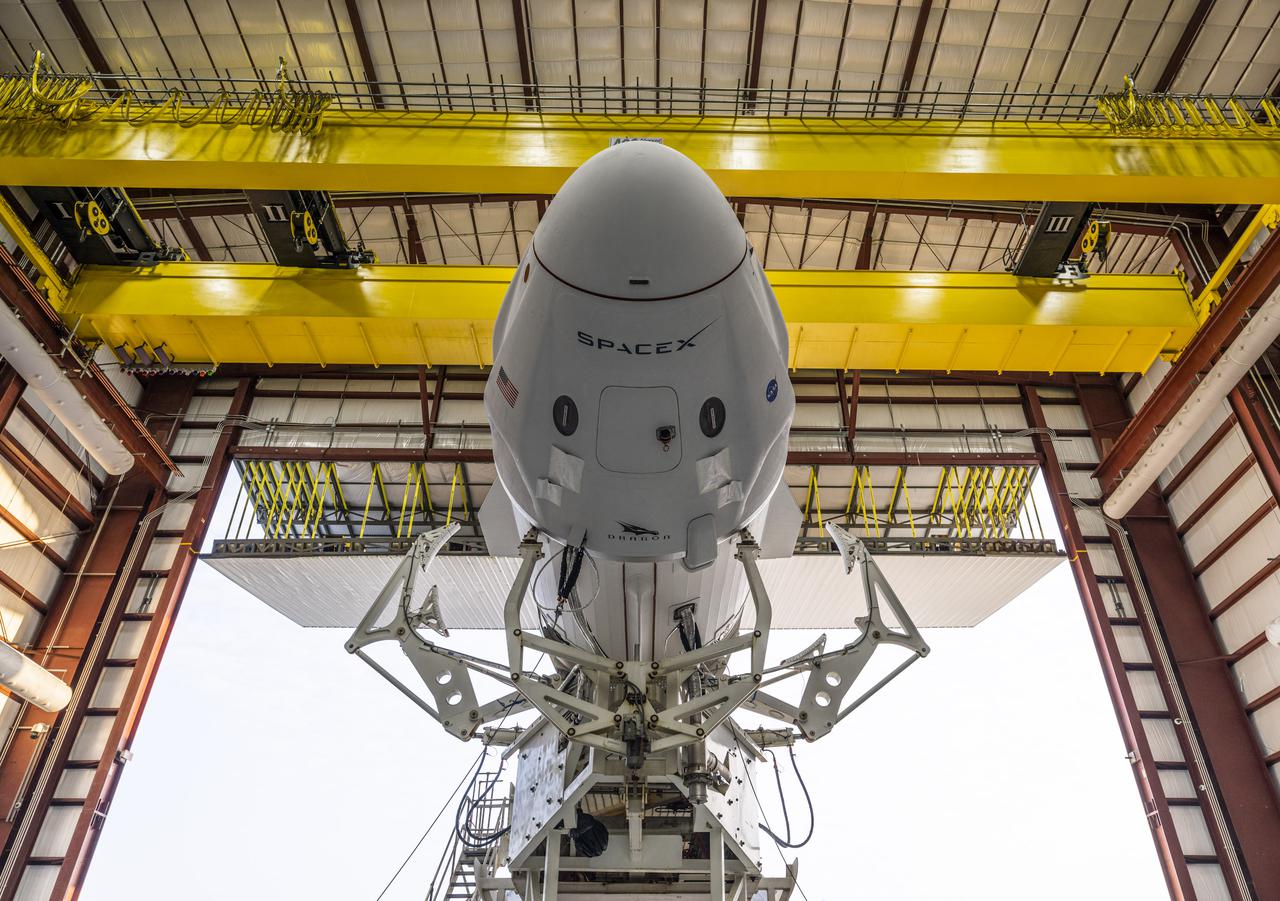
SpaceX’s Crew Dragon “Endeavour,” atop the company’s Falcon 9 rocket, leaves the SpaceX integration hangar adjacent to NASA Kennedy Space Center’s Launch Complex 39A for rollout to the launch pad on April 16, 2021. NASA astronauts Shane Kimbrough and Megan McArthur, JAXA astronaut Akihiko Hoshide, and ESA astronaut Thomas Pesquet, who arrived at Kennedy on April 16, will fly to the International Space Station on NASA’s SpaceX Crew-2 mission. Liftoff is targeted for Thursday, April 22, at 6:11 a.m. EDT.
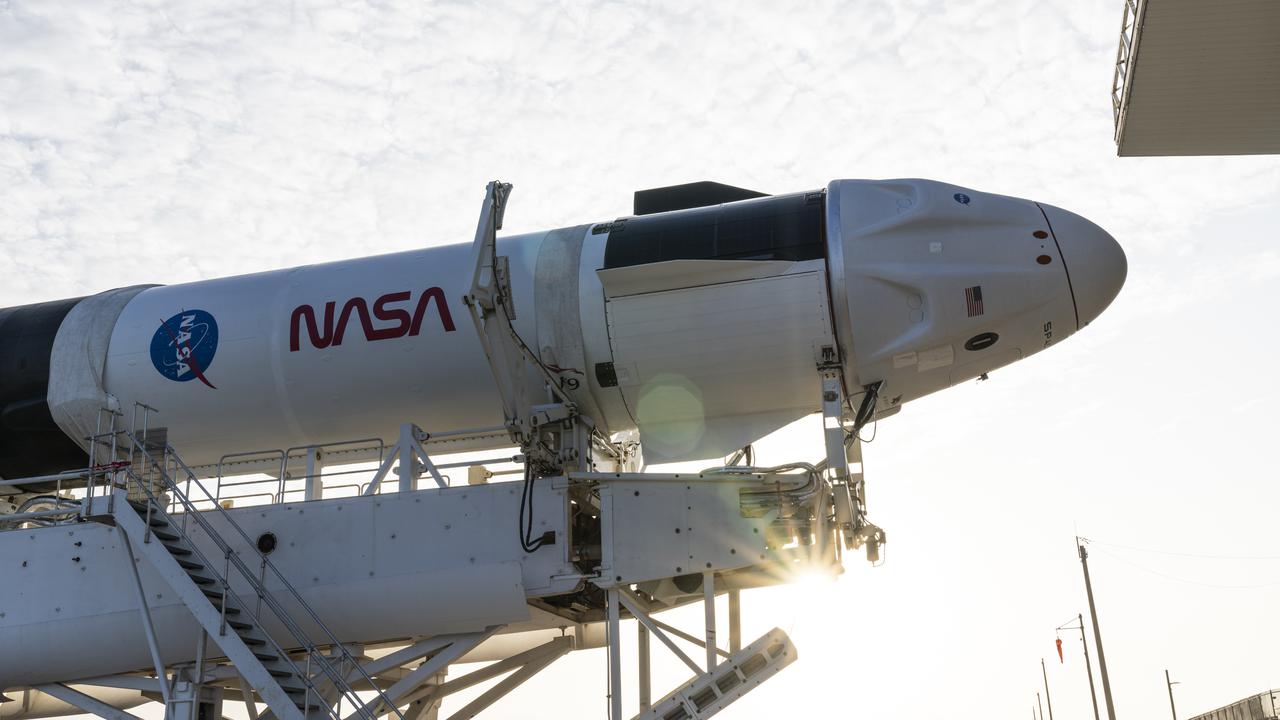
SpaceX’s Crew Dragon “Endeavour,” atop the company’s Falcon 9 rocket, rolls out to Launch Complex 39A at NASA’s Kennedy Space Center on April 16, 2021. NASA astronauts Shane Kimbrough and Megan McArthur, JAXA astronaut Akihiko Hoshide, and ESA astronaut Thomas Pesquet, who arrived at Kennedy on April 16, will fly to the International Space Station on NASA’s SpaceX Crew-2 mission. Liftoff is targeted for Thursday, April 22, at 6:11 a.m. EDT.
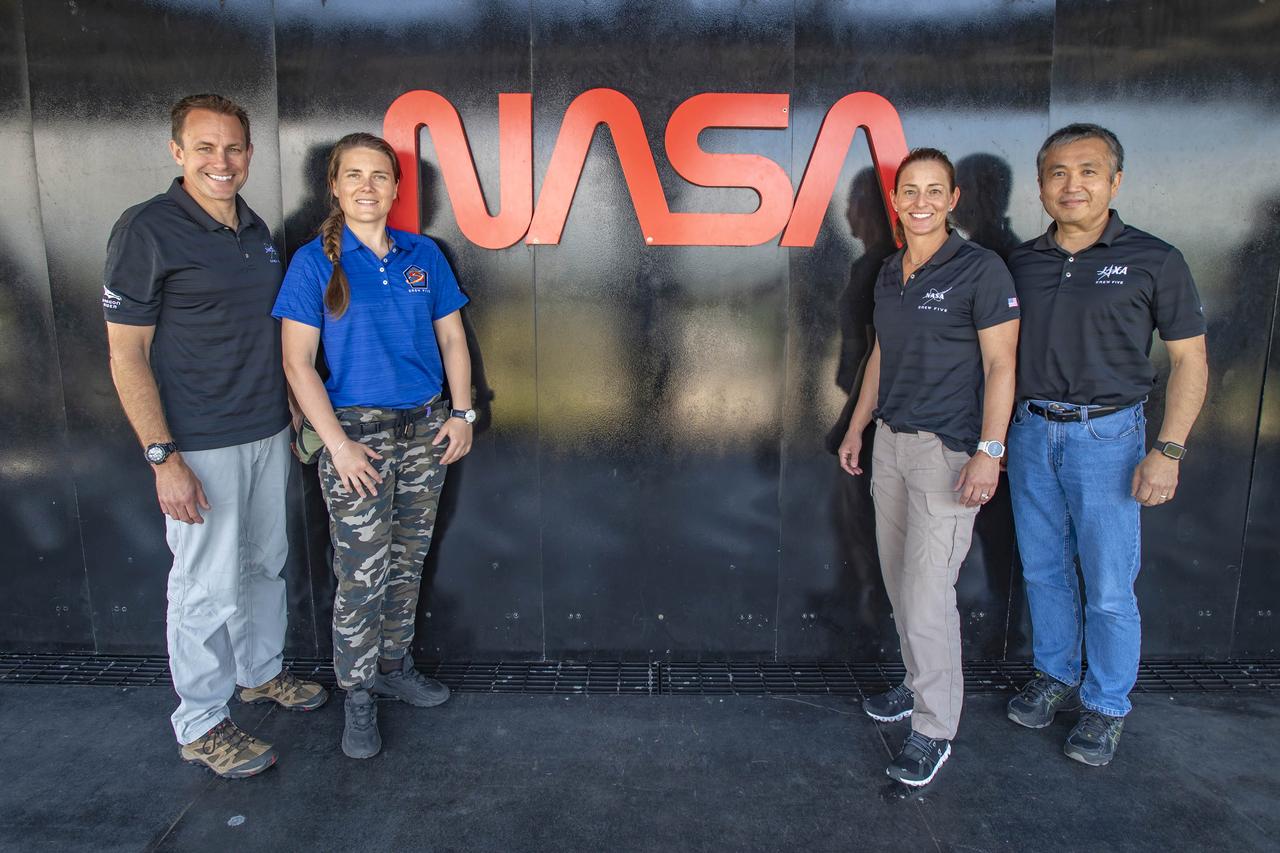
The crew members who will fly on NASA’s SpaceX Crew-5 mission to the International Space Station are photographed in front of the agency’s iconic “worm” logo at Launch Complex 39A during a visit to NASA’s Kennedy Space Center in Florida on May 10, 2022. From left are NASA astronaut Josh Cassada, pilot; Roscosmos cosmonaut Anna Kikina, mission specialist; NASA astronaut Nicole Mann, mission commander; and JAXA (Japan Aerospace Exploration Agency) astronaut Koichi Wakata, mission specialist. SpaceX’s Falcon 9 rocket and Crew Dragon spacecraft are scheduled to lift off from Kennedy’s Launch Complex 39A on Oct. 3, 2022. This will be the fifth crew rotation mission of SpaceX’s human transportation system and its sixth flight with astronauts to the space station for NASA’s Commercial Crew Program.
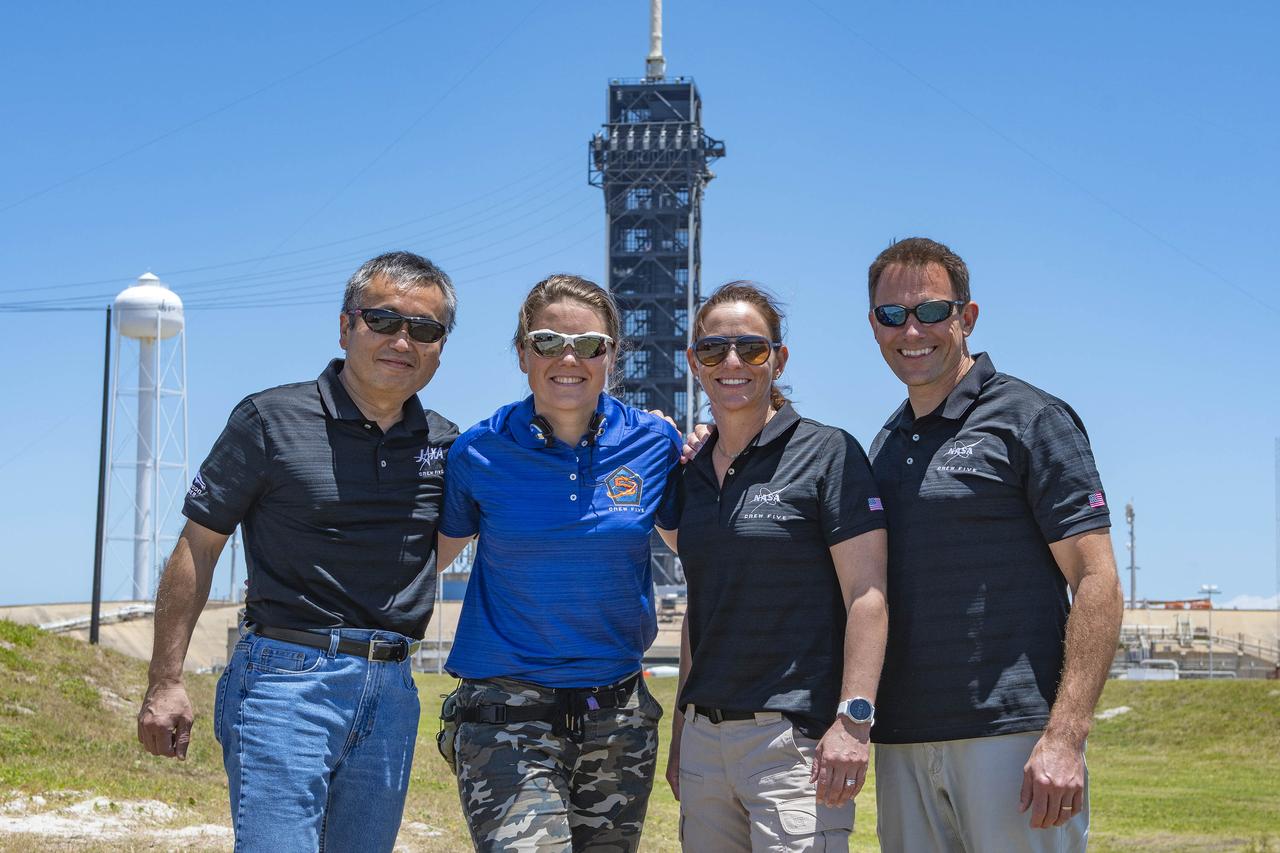
The crew members who will fly on NASA’s SpaceX Crew-5 mission to the International Space Station are photographed at Launch Complex 39A during a visit to the agency’s Kennedy Space Center in Florida on May 10, 2022. From left are JAXA (Japan Aerospace Exploration Agency) astronaut Koichi Wakata, mission specialist; Roscosmos cosmonaut Anna Kikina, mission specialist; NASA astronaut Nicole Mann, mission commander; and NASA astronaut Josh Cassada, pilot. SpaceX’s Falcon 9 rocket and Crew Dragon spacecraft are scheduled to lift off from Kennedy’s Launch Complex 39A on Oct. 3, 2022. This will be the fifth crew rotation mission of SpaceX’s human transportation system and its sixth flight with astronauts to the space station for NASA’s Commercial Crew Program.
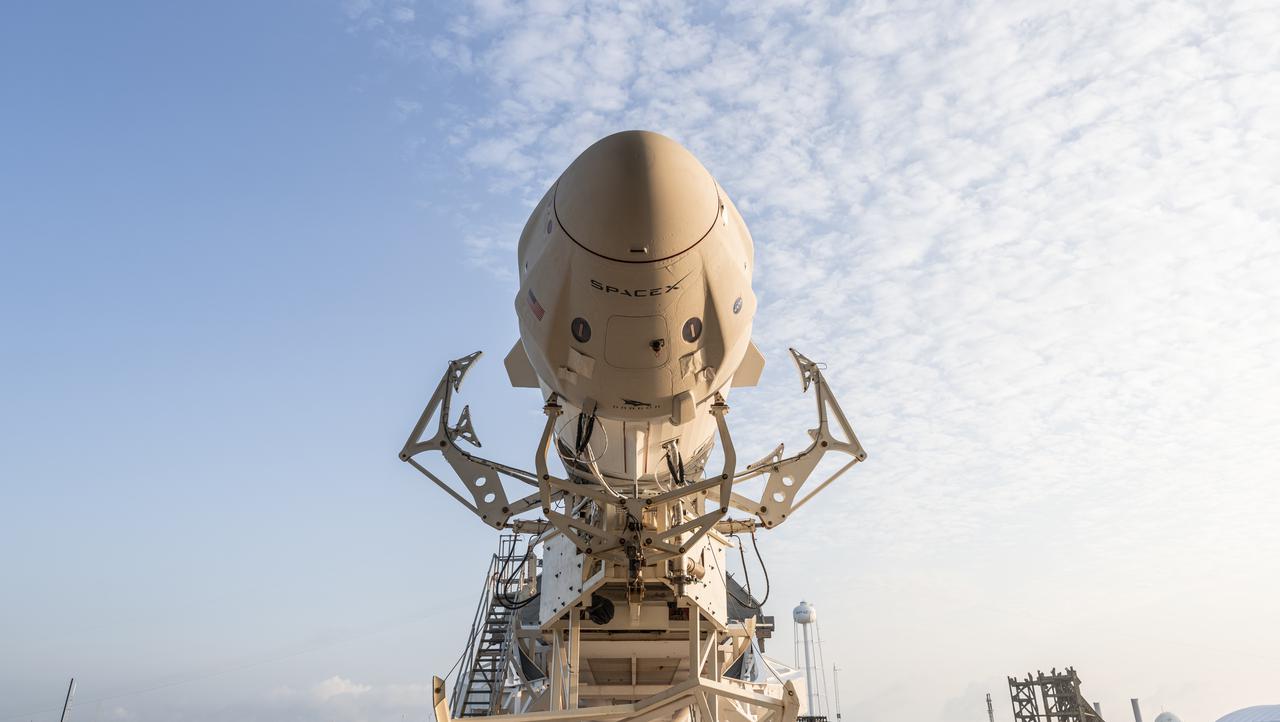
SpaceX’s Crew Dragon “Endeavour,” atop the company’s Falcon 9 rocket, rolls out to Launch Complex 39A at NASA’s Kennedy Space Center on April 16, 2021. NASA astronauts Shane Kimbrough and Megan McArthur, JAXA astronaut Akihiko Hoshide, and ESA astronaut Thomas Pesquet, who arrived at Kennedy on April 16, will fly to the International Space Station on NASA’s SpaceX Crew-2 mission. Liftoff is targeted for Thursday, April 22, at 6:11 a.m. EDT.

SpaceX’s Crew Dragon “Endeavour,” atop the company’s Falcon 9 rocket, leaves the SpaceX integration hangar adjacent to NASA Kennedy Space Center’s Launch Complex 39A for rollout to the launch pad on April 16, 2021. NASA astronauts Shane Kimbrough and Megan McArthur, JAXA astronaut Akihiko Hoshide, and ESA astronaut Thomas Pesquet, who arrived at Kennedy on April 16, will fly to the International Space Station on NASA’s SpaceX Crew-2 mission. Liftoff is targeted for Thursday, April 22, at 6:11 a.m. EDT.
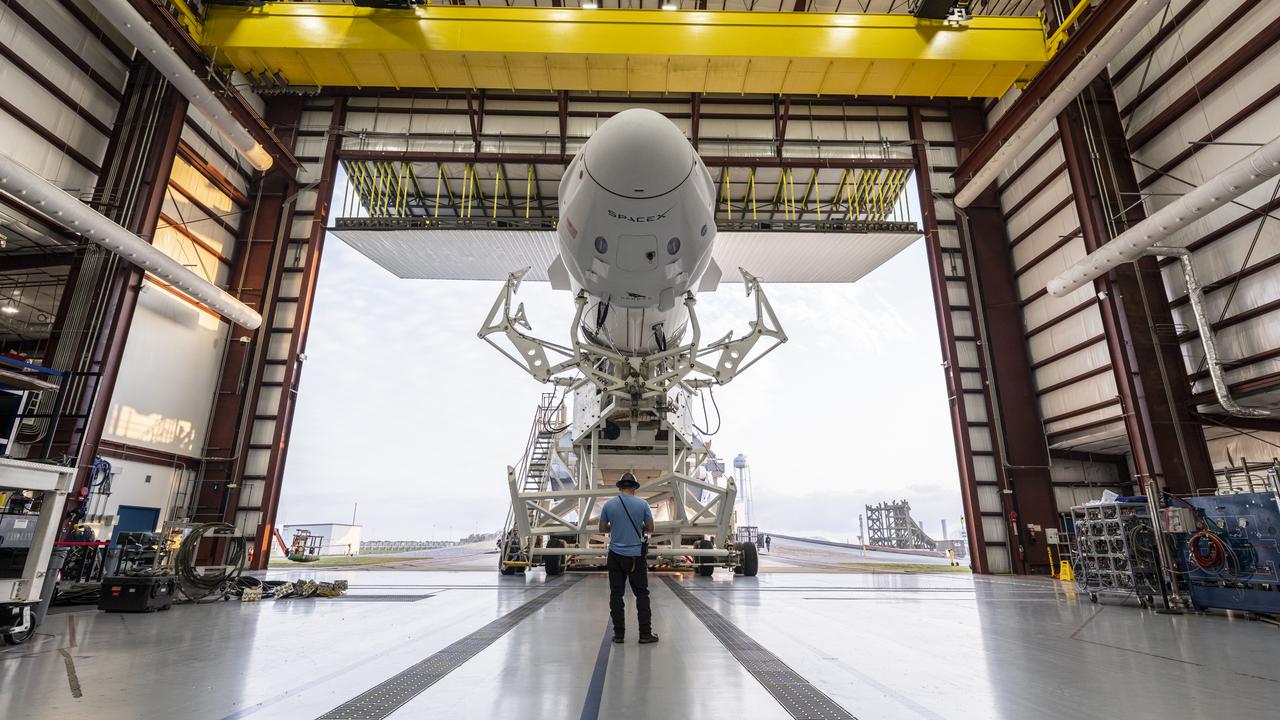
SpaceX’s Crew Dragon “Endeavour,” atop the company’s Falcon 9 rocket, leaves the SpaceX integration hangar adjacent to NASA Kennedy Space Center’s Launch Complex 39A for rollout to the launch pad on April 16, 2021. NASA astronauts Shane Kimbrough and Megan McArthur, JAXA astronaut Akihiko Hoshide, and ESA astronaut Thomas Pesquet, who arrived at Kennedy on April 16, will fly to the International Space Station on NASA’s SpaceX Crew-2 mission. Liftoff is targeted for Thursday, April 22, at 6:11 a.m. EDT.
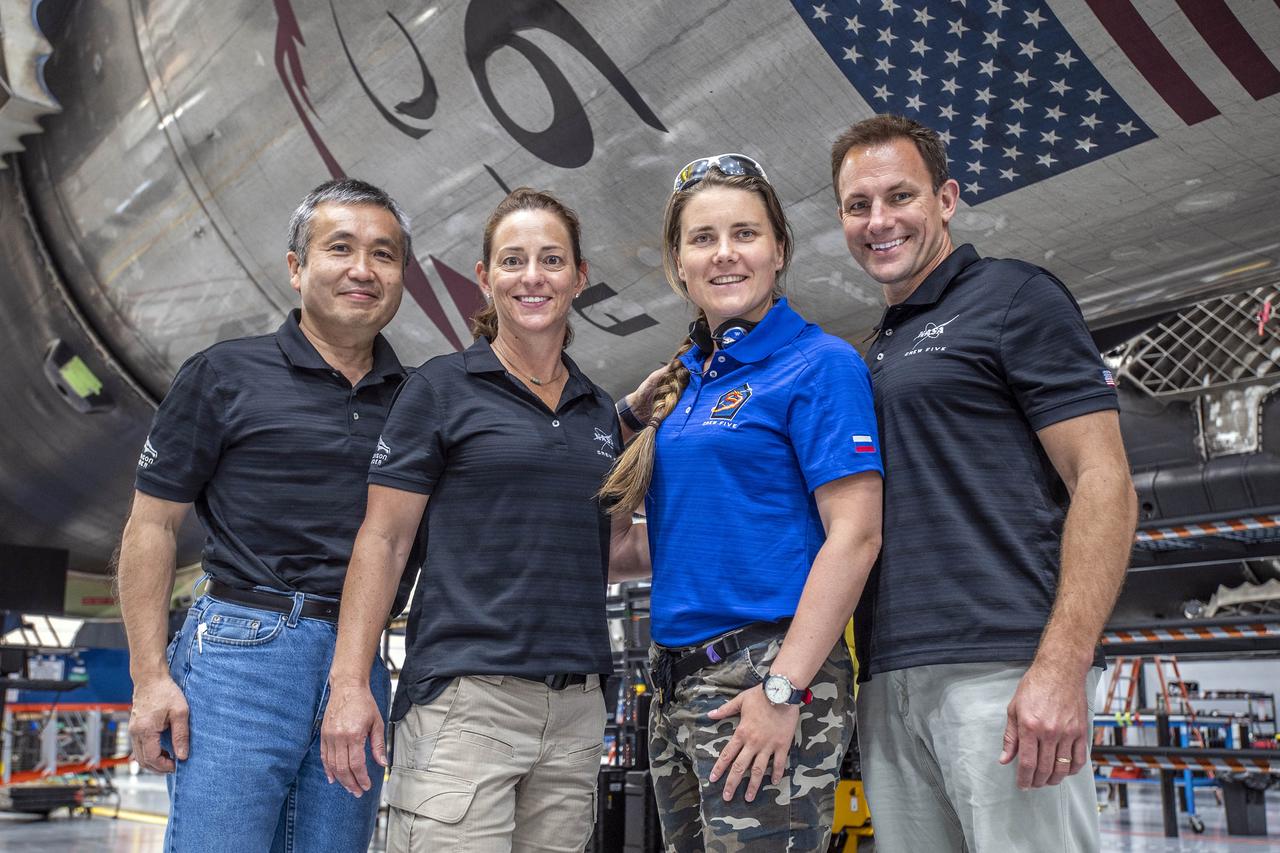
The crew members who will fly on NASA’s SpaceX Crew-5 mission to the International Space Station pause for a photograph during a visit to the agency’s Kennedy Space Center in Florida on May 10, 2022. From left are JAXA (Japan Aerospace Exploration Agency) astronaut Koichi Wakata, mission specialist; NASA astronaut Nicole Mann, mission commander; Roscosmos cosmonaut Anna Kikina, mission specialist; and NASA astronaut Josh Cassada, pilot. SpaceX’s Falcon 9 rocket and Crew Dragon spacecraft are scheduled to lift off from Kennedy’s Launch Complex 39A on Oct. 3, 2022. This will be the fifth crew rotation mission of SpaceX’s human transportation system and its sixth flight with astronauts to the space station for NASA’s Commercial Crew Program.
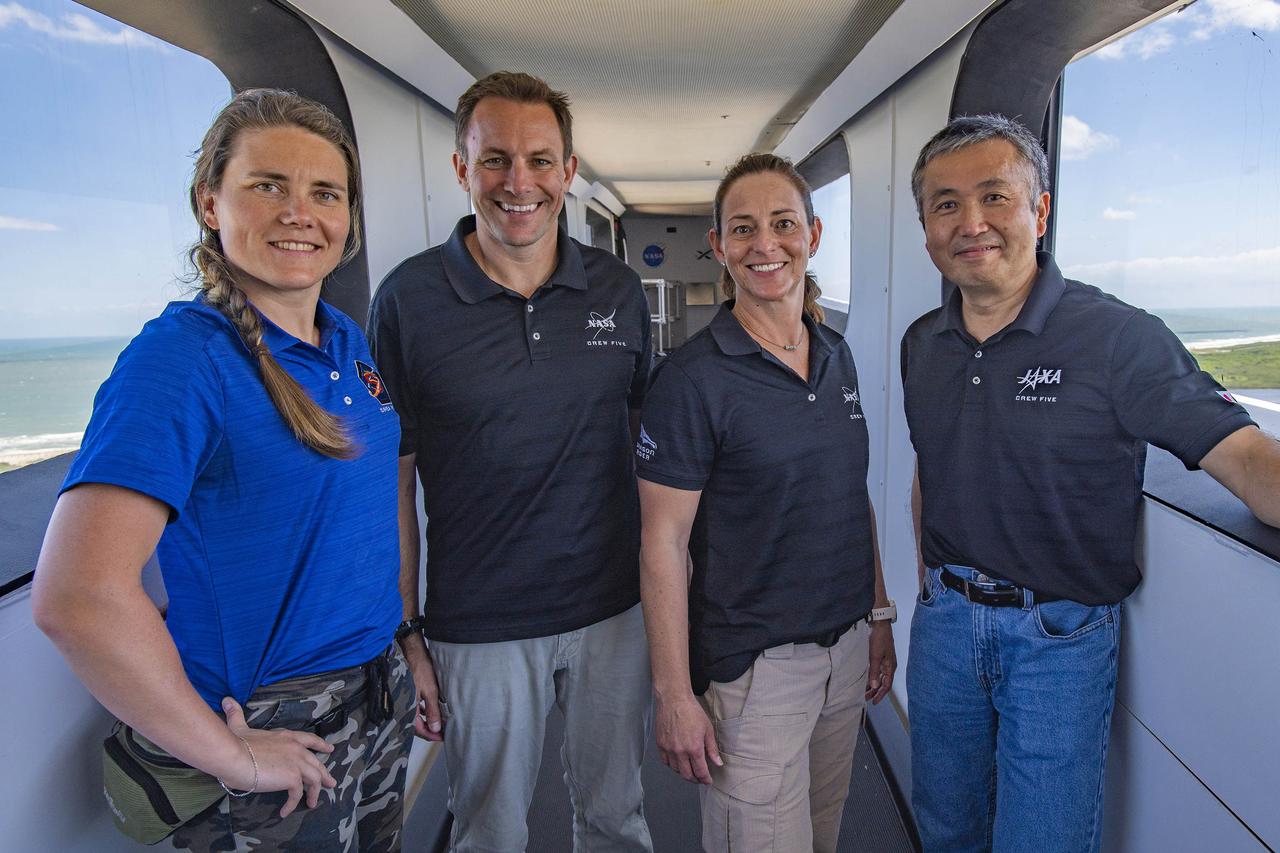
The crew members who will fly on NASA’s SpaceX Crew-5 mission to the International Space Station are photographed inside the crew access arm at Launch Complex 39A during a visit to the agency’s Kennedy Space Center in Florida on May 10, 2022. From left are Roscosmos cosmonaut Anna Kikina, mission specialist; NASA astronaut Josh Cassada, pilot; NASA astronaut Nicole Mann, mission commander; and JAXA (Japan Aerospace Exploration Agency) astronaut Koichi Wakata, mission specialist. SpaceX’s Falcon 9 rocket and Crew Dragon spacecraft are scheduled to lift off from Kennedy’s Launch Complex 39A on Oct. 3, 2022. This will be the fifth crew rotation mission of SpaceX’s human transportation system and its sixth flight with astronauts to the space station for NASA’s Commercial Crew Program.

NASA astronauts Nicole Mann (left) and Josh Cassada are photographed inside the crew access arm at Launch Complex 39A during a visit to the agency’s Kennedy Space Center in Florida on May 10, 2022. Mann and Cassada, along with JAXA (Japan Aerospace Exploration Agency) astronaut Koichi Wakata and Roscosmos cosmonaut Anna Kikina, will launch to the International Space Station on NASA’s SpaceX Crew-5 mission for the agency’s Commercial Crew Program. Liftoff of SpaceX’s Falcon 9 rocket and Crew Dragon spacecraft is scheduled for Oct. 3, 2022, from Kennedy’s Launch Complex 39A.
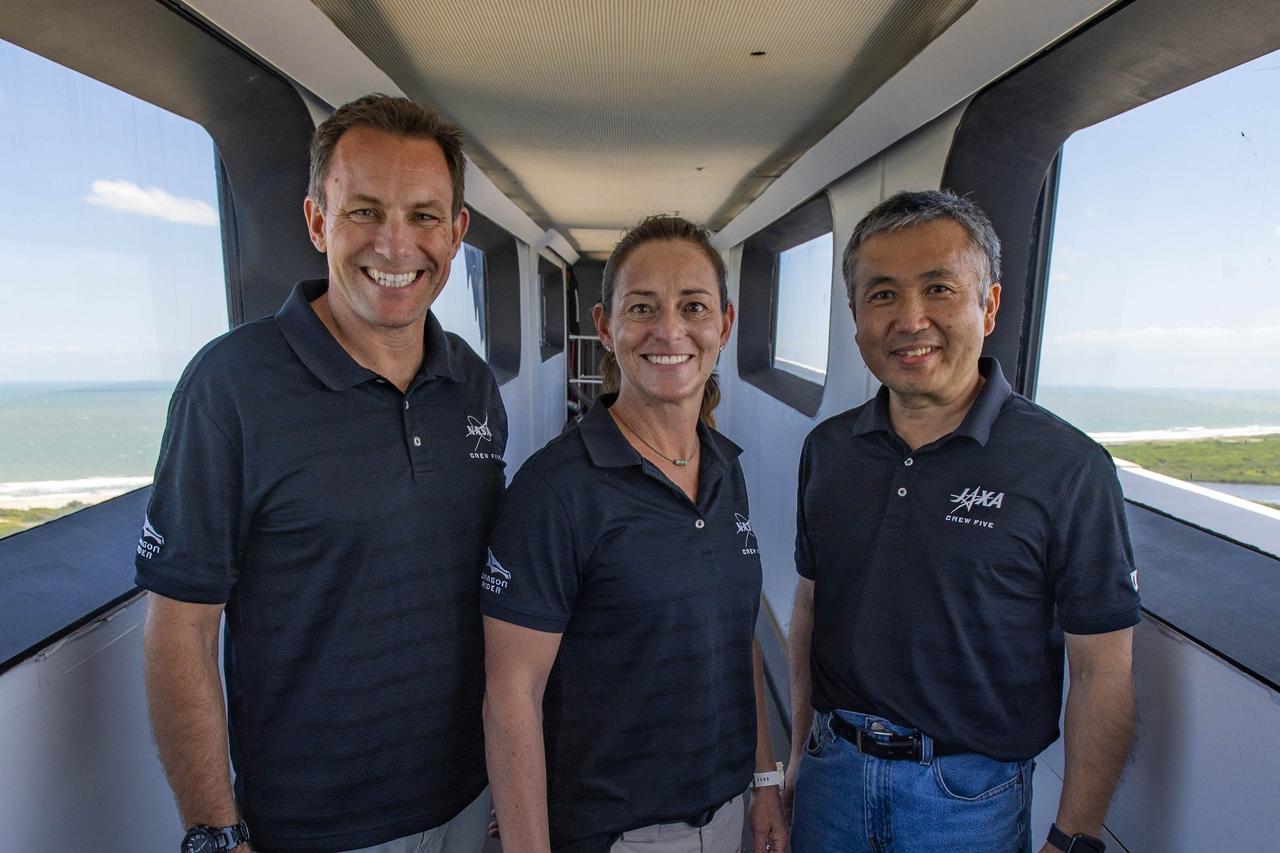
From left, NASA astronauts Josh Cassada and Nicole Mann, and JAXA (Japan Aerospace Exploration Agency) astronaut Koichi Wakata, are photographed inside the crew access arm at Launch Complex 39A during a visit to the agency’s Kennedy Space Center in Florida on May 10, 2022. Cassada, Mann, and Wakata, along with Roscosmos cosmonaut Anna Kikina, will launch to the International Space Station on NASA’s SpaceX Crew-5 mission for the agency’s Commercial Crew Program. Liftoff of SpaceX’s Falcon 9 rocket and Crew Dragon spacecraft is scheduled for Oct. 3, 2022, from Kennedy’s Launch Complex 39A.

SpaceX’s Crew Dragon “Endeavour,” atop the company’s Falcon 9 rocket, is shown inside the SpaceX integration hangar adjacent to NASA Kennedy Space Center’s Launch Complex 39A on April 16, 2021, just before rollout to the launch pad. NASA astronauts Shane Kimbrough and Megan McArthur, JAXA astronaut Akihiko Hoshide, and ESA astronaut Thomas Pesquet, who arrived at Kennedy on April 16, will fly to the International Space Station on NASA’s SpaceX Crew-2 mission. Liftoff is targeted for Thursday, April 22, at 6:11 a.m. EDT.
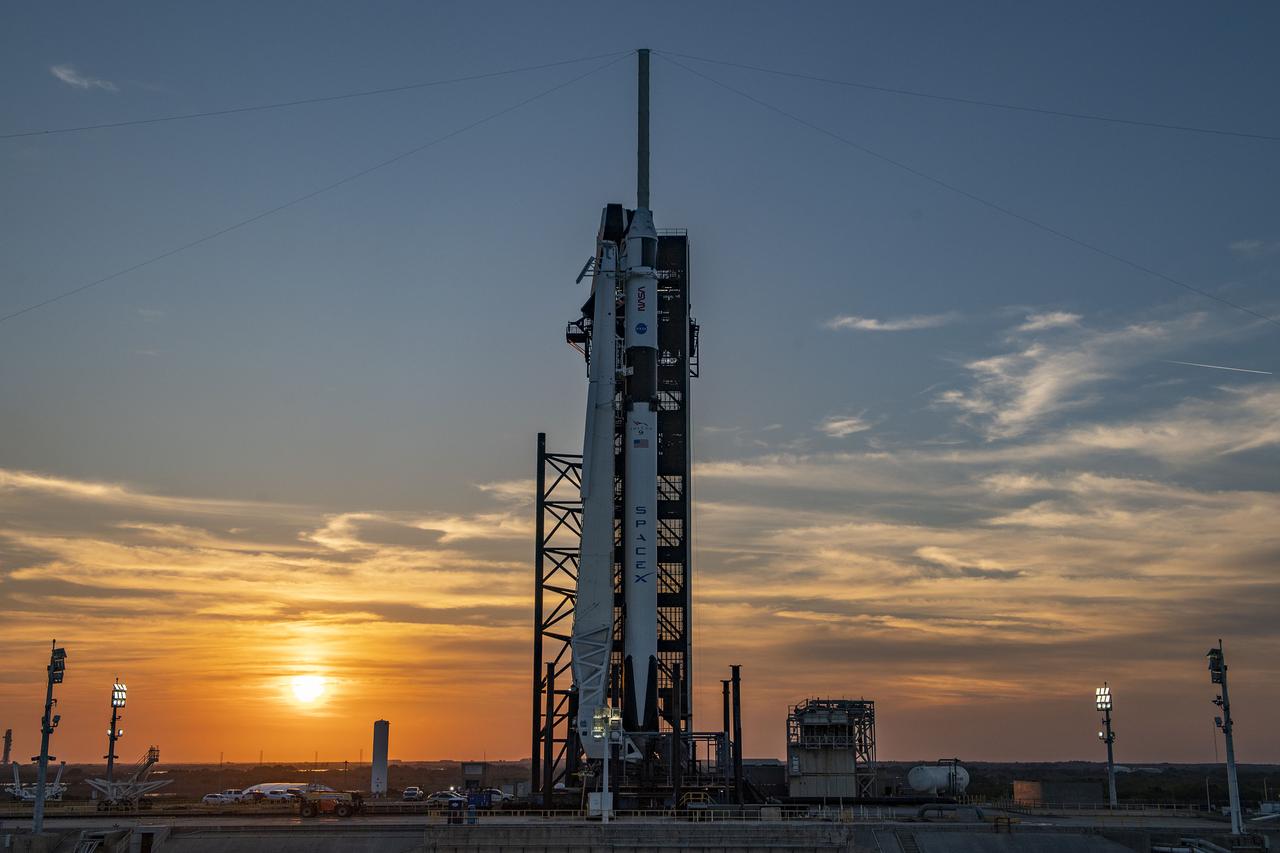
A colorful sunset serves as the backdrop for SpaceX’s Falcon 9 rocket and Dragon spacecraft Endeavour on the pad at Launch Complex 39A at Kennedy Space Center in Florida on Feb. 23, 2023, for NASA’s SpaceX Crew-6 mission. NASA astronauts Stephen Bowen, spacecraft commander, and Warren “Woody” Hoburg, pilot, along with mission specialists Sultan Alneyadi, UAE (United Arab Emirates) astronaut, and Andrey Fedyaev, Roscosmos cosmonaut, are slated to launch to the International Space Station at 1:45 a.m. EST on Feb. 27 from Launch Complex 39A. Crew-6 is the sixth crew rotation mission with SpaceX to the station, and the seventh flight of Dragon with people as part of the agency’s Commercial Crew Program.
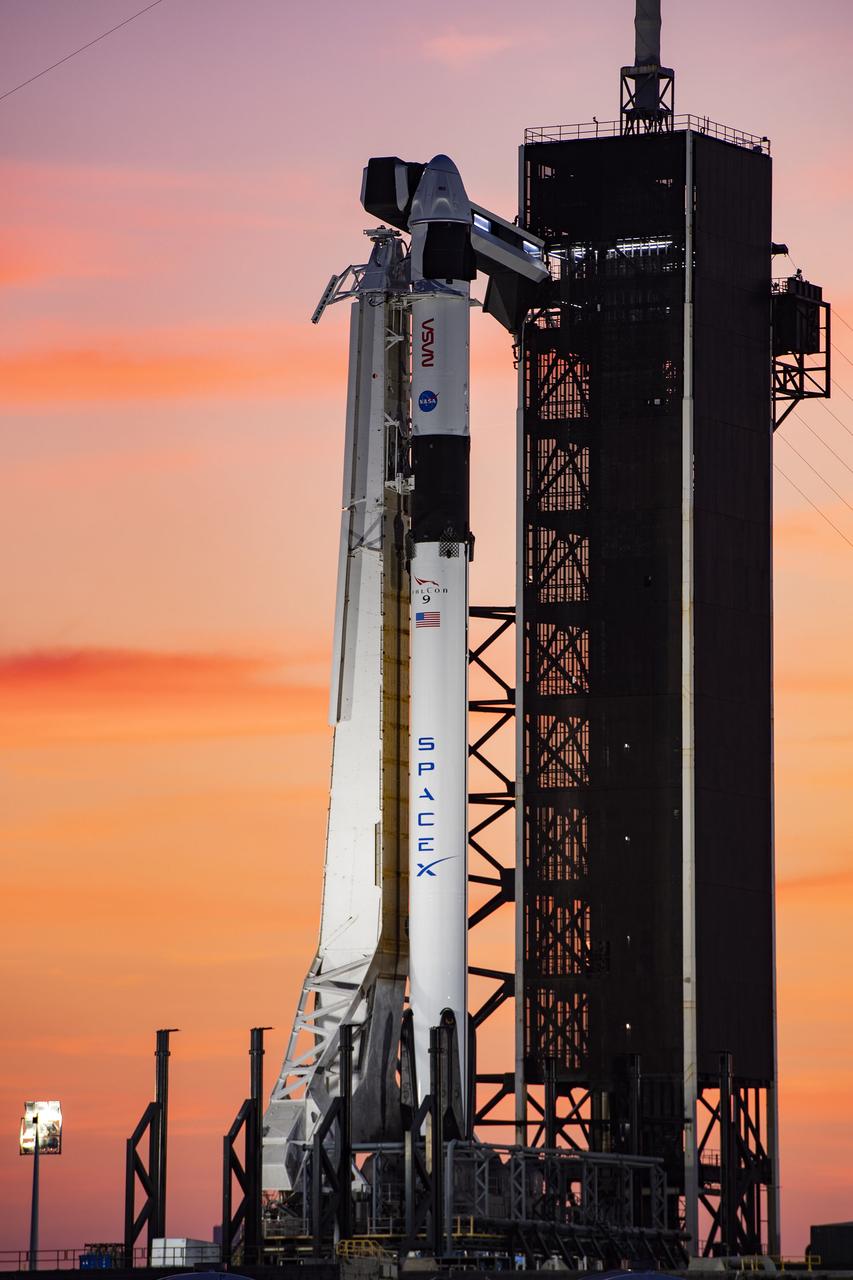
A colorful sunset serves as the backdrop for SpaceX’s Falcon 9 rocket and Dragon spacecraft Endeavour on the pad at Launch Complex 39A at Kennedy Space Center in Florida on Feb. 23, 2023, for NASA’s SpaceX Crew-6 mission. The crew access arm has been moved into position at the Dragon spacecraft. NASA astronauts Stephen Bowen, spacecraft commander, and Warren “Woody” Hoburg, pilot, along with mission specialists Sultan Alneyadi, UAE (United Arab Emirates) astronaut, and Andrey Fedyaev, Roscosmos cosmonaut, are slated to launch to the International Space Station at 1:45 a.m. EST on Feb. 27 from Launch Complex 39A. Crew-6 is the sixth crew rotation mission with SpaceX to the station, and the seventh flight of Dragon with people as part of the agency’s Commercial Crew Program.
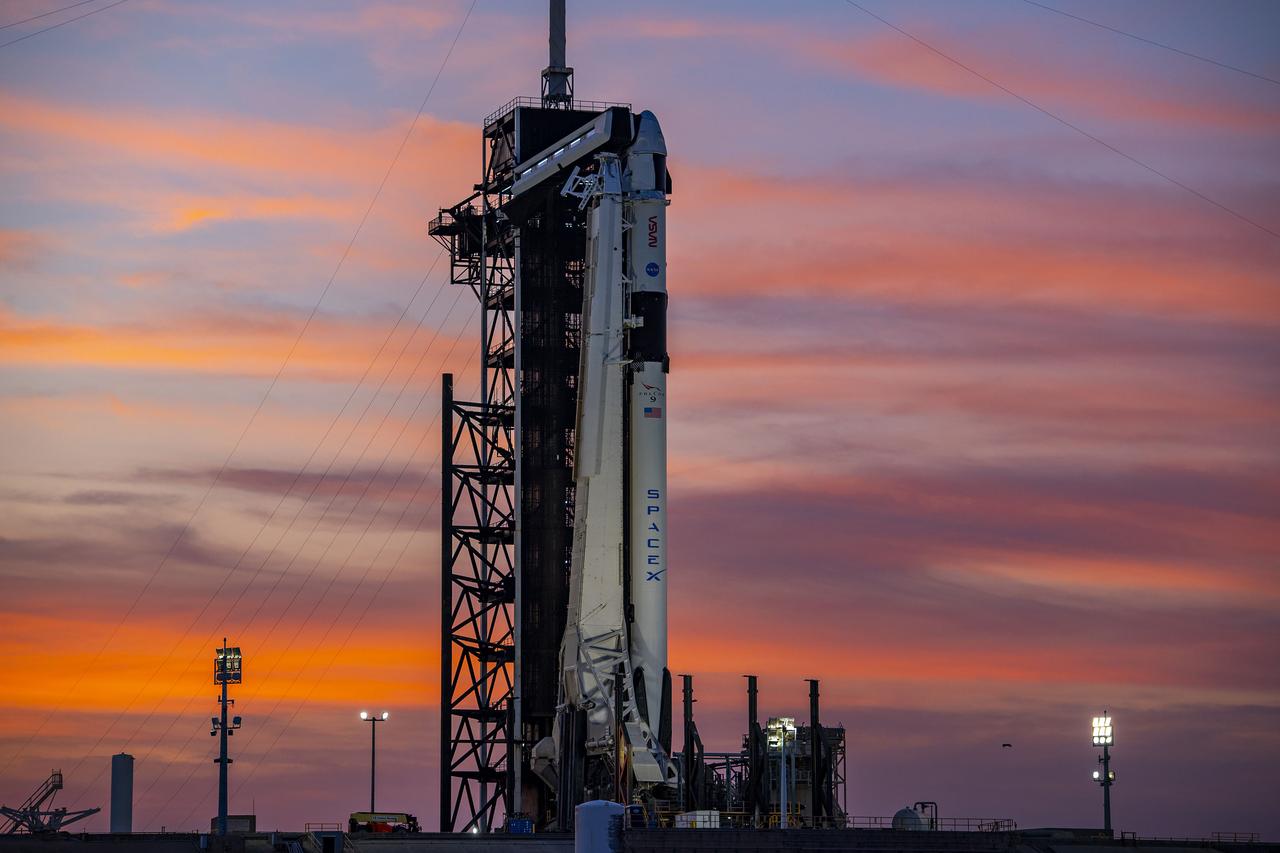
A colorful sunset serves as the backdrop for SpaceX’s Falcon 9 rocket and Dragon spacecraft Endeavour on the pad at Launch Complex 39A at Kennedy Space Center in Florida on Feb. 23, 2023, for NASA’s SpaceX Crew-6 mission. The crew access arm has been moved into position at the Dragon spacecraft. NASA astronauts Stephen Bowen, spacecraft commander, and Warren “Woody” Hoburg, pilot, along with mission specialists Sultan Alneyadi, UAE (United Arab Emirates) astronaut, and Andrey Fedyaev, Roscosmos cosmonaut, are slated to launch to the International Space Station at 1:45 a.m. EST on Feb. 27 from Launch Complex 39A. Crew-6 is the sixth crew rotation mission with SpaceX to the station, and the seventh flight of Dragon with people as part of the agency’s Commercial Crew Program.
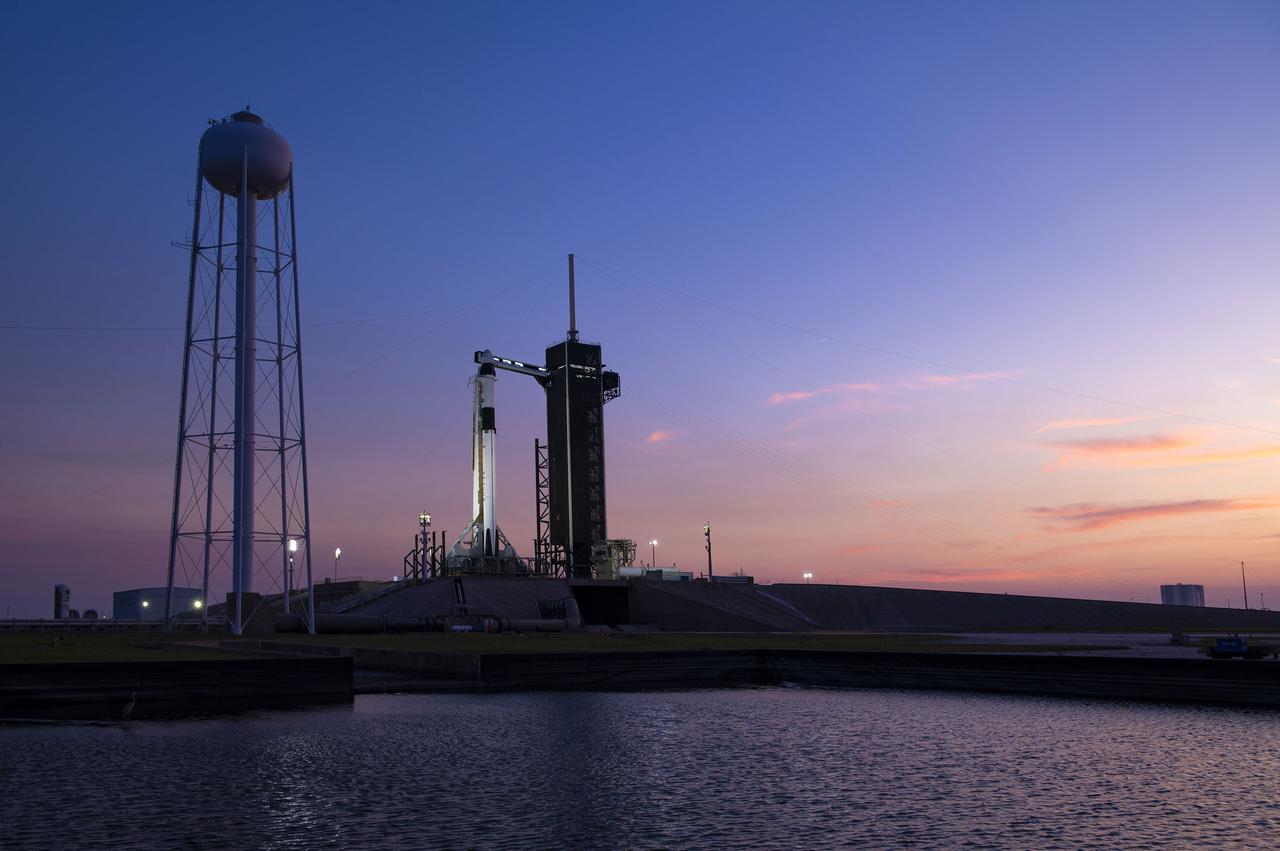
A colorful sunset serves as the backdrop for SpaceX’s Falcon 9 rocket and Dragon spacecraft Endeavour on the pad at Launch Complex 39A at Kennedy Space Center in Florida on Feb. 23, 2023, for NASA’s SpaceX Crew-6 mission. The crew access arm has been moved into position at the Dragon spacecraft. NASA astronauts Stephen Bowen, spacecraft commander, and Warren “Woody” Hoburg, pilot, along with mission specialists Sultan Alneyadi, UAE (United Arab Emirates) astronaut, and Andrey Fedyaev, Roscosmos cosmonaut, are slated to launch to the International Space Station at 1:45 a.m. EST on Feb. 27 from Launch Complex 39A. Crew-6 is the sixth crew rotation mission with SpaceX to the station, and the seventh flight of Dragon with people as part of the agency’s Commercial Crew Program.
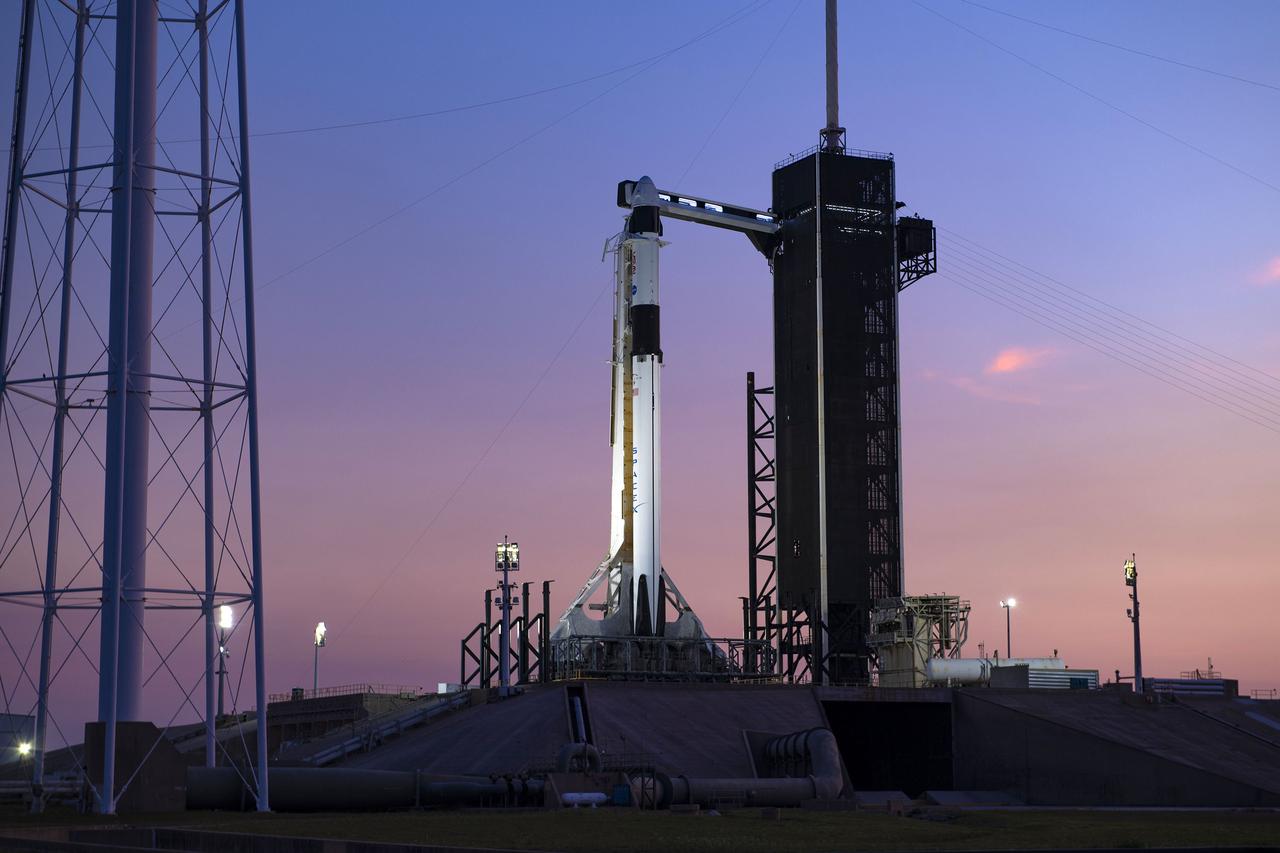
A colorful sunset serves as the backdrop for SpaceX’s Falcon 9 rocket and Dragon spacecraft Endeavour on the pad at Launch Complex 39A at Kennedy Space Center in Florida on Feb. 23, 2023, for NASA’s SpaceX Crew-6 mission. The crew access arm has been moved into position at the Dragon spacecraft. NASA astronauts Stephen Bowen, spacecraft commander, and Warren “Woody” Hoburg, pilot, along with mission specialists Sultan Alneyadi, UAE (United Arab Emirates) astronaut, and Andrey Fedyaev, Roscosmos cosmonaut, are slated to launch to the International Space Station at 1:45 a.m. EST on Feb. 27 from Launch Complex 39A. Crew-6 is the sixth crew rotation mission with SpaceX to the station, and the seventh flight of Dragon with people as part of the agency’s Commercial Crew Program.
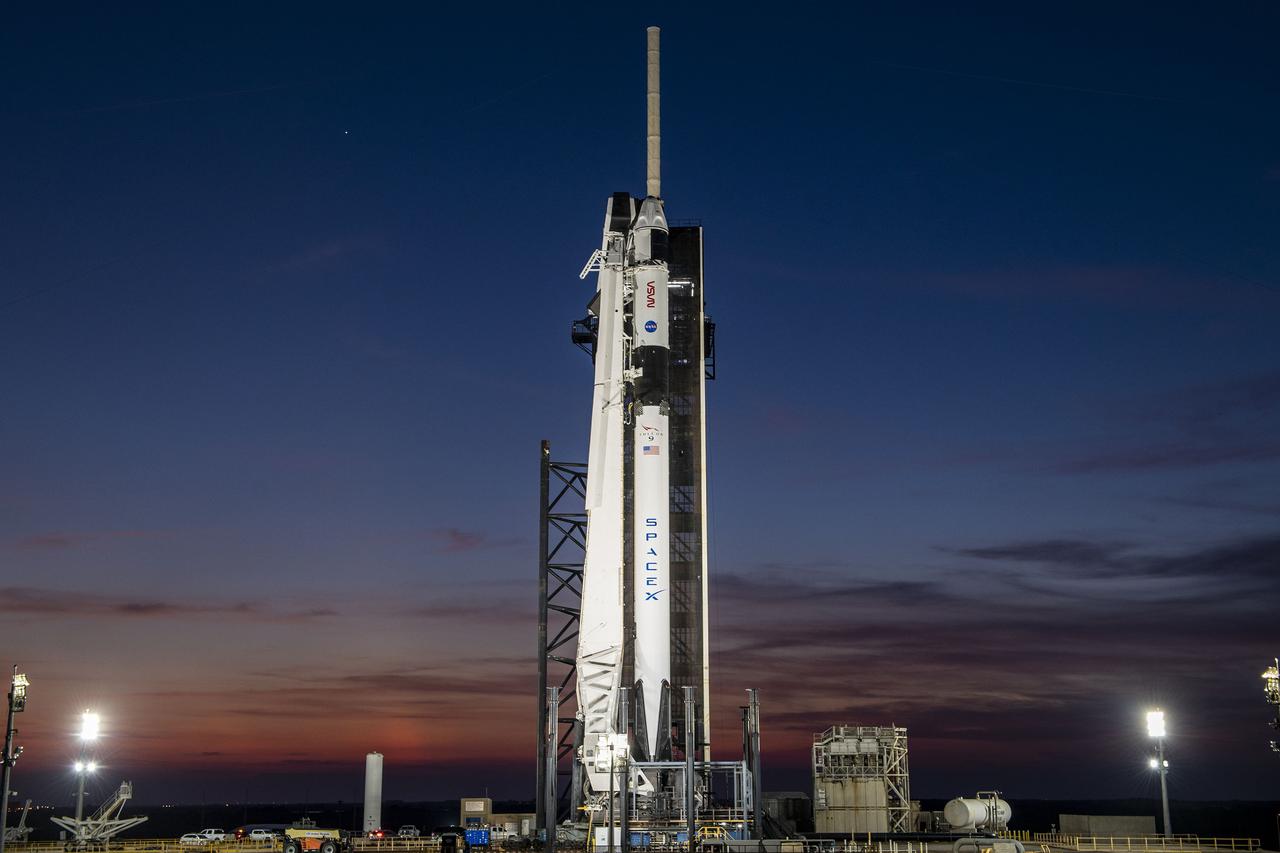
A colorful sunset serves as the backdrop for SpaceX’s Falcon 9 rocket and Dragon spacecraft Endeavour on the pad at Launch Complex 39A at Kennedy Space Center in Florida on Feb. 23, 2023, for NASA’s SpaceX Crew-6 mission. The crew access arm has been moved into position at the Dragon spacecraft. NASA astronauts Stephen Bowen, spacecraft commander, and Warren “Woody” Hoburg, pilot, along with mission specialists Sultan Alneyadi, UAE (United Arab Emirates) astronaut, and Andrey Fedyaev, Roscosmos cosmonaut, are slated to launch to the International Space Station at 1:45 a.m. EST on Feb. 27 from Launch Complex 39A. Crew-6 is the sixth crew rotation mission with SpaceX to the station, and the seventh flight of Dragon with people as part of the agency’s Commercial Crew Program.
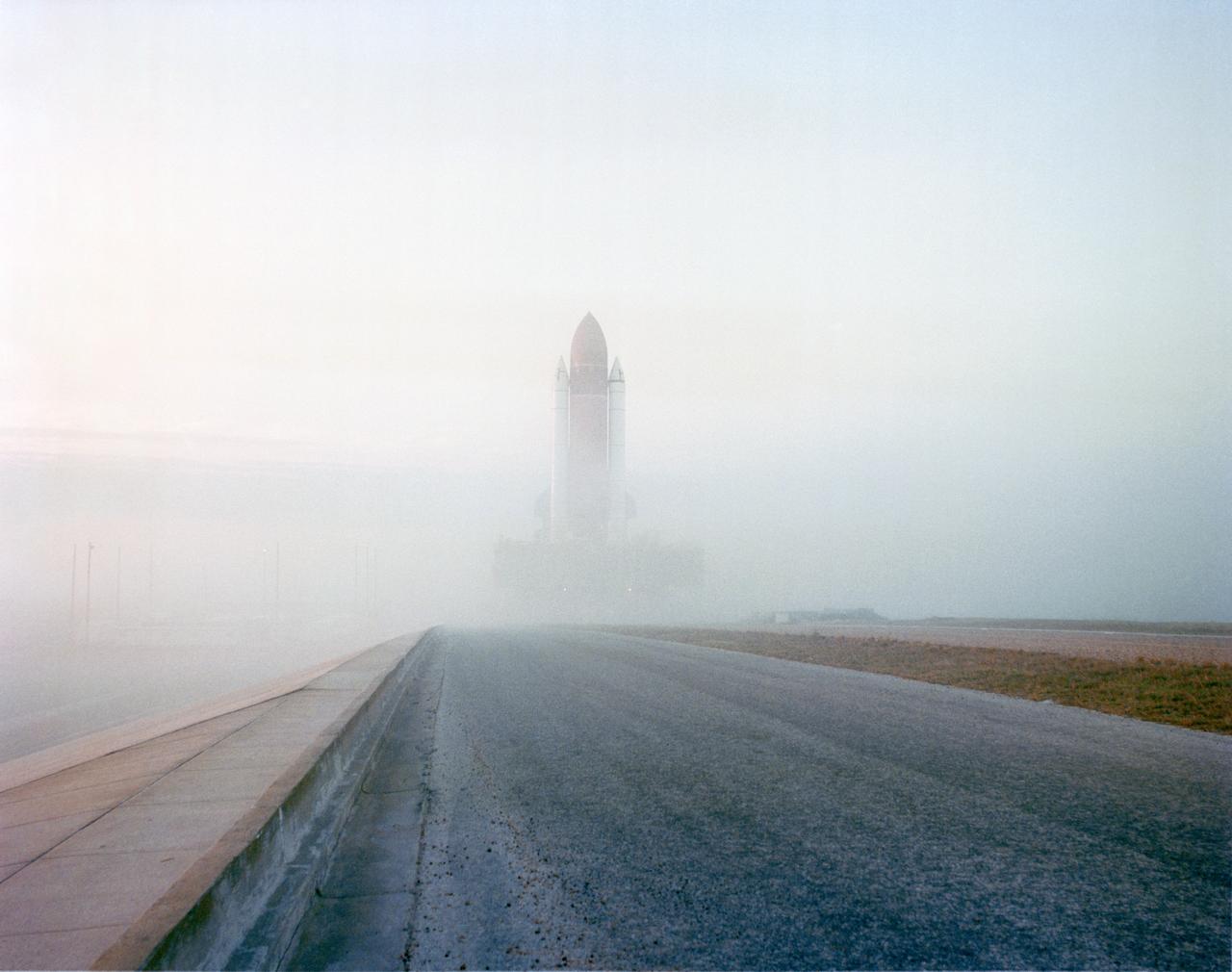
STS-32 Columbia, Orbiter Vehicle (OV) 102, rolls through the morning's foggy mist atop the mobile launcher platform and crawler transporter to Kennedy Space Center (KSC) Launch Complex (LC) Pad 39A. OV-102's wings appear on either side of the two solid rocket boosters (SRBs) and external tank (ET). Rollout from the Vehicle Assembly Building (VAB) began at 2:32 am Eastern Standard Time (EST), and OV-102 was on the pad pedestals about 8 hours later. This marks the first time a Space Shuttle has been at LC Pad 39A since 01-12-85 when OV-102 was launched on mission 61C. View provided by KSC with alternate number KSC-89PC-1259.
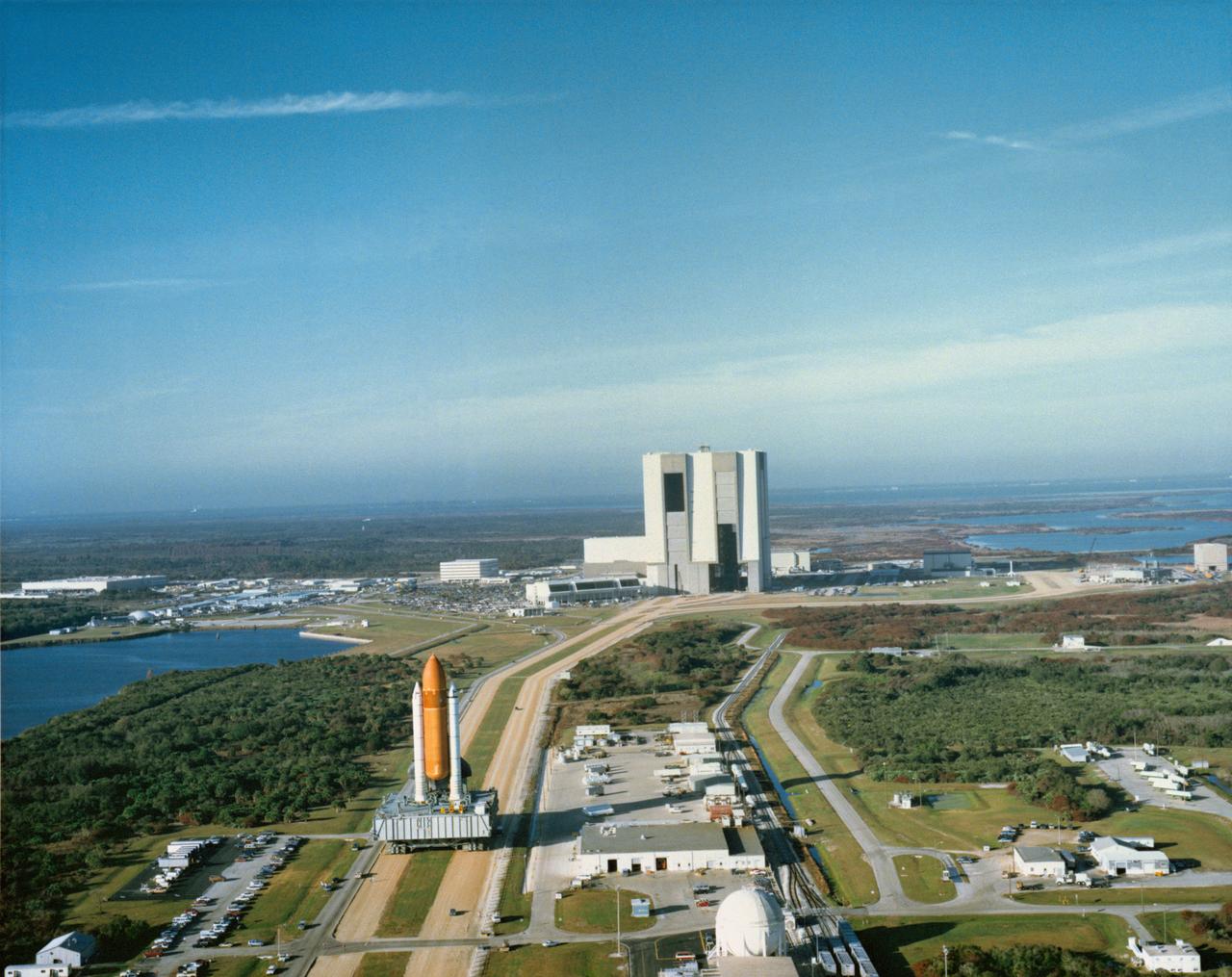
Atlantis, Orbiter Vehicle (OV) 104, is blocked by its large orange external tank (ET) as it leaves Vehicle Assembly Building (VAB) during its rollout to Kennedy Space Center (KSC) Launch Complex (LC) Pad 39A. The crawler transporter heads along the specially designed roadway with OV-104, the ET, and two solid rocket boosters mounted on top of a mobile launcher platform. KSC facilities including the VAB and Launch Control Center (LCC) are visible in the background. OV-104 heads to LC Pad 39A after the shortest stay in the VAB since return-to-flight. OV-104 is being prepared for launch on STS-36, a Department of Defense (DOD) dedicated mission. View provided by KSC with alternate KSC number KSC-90PC-134.
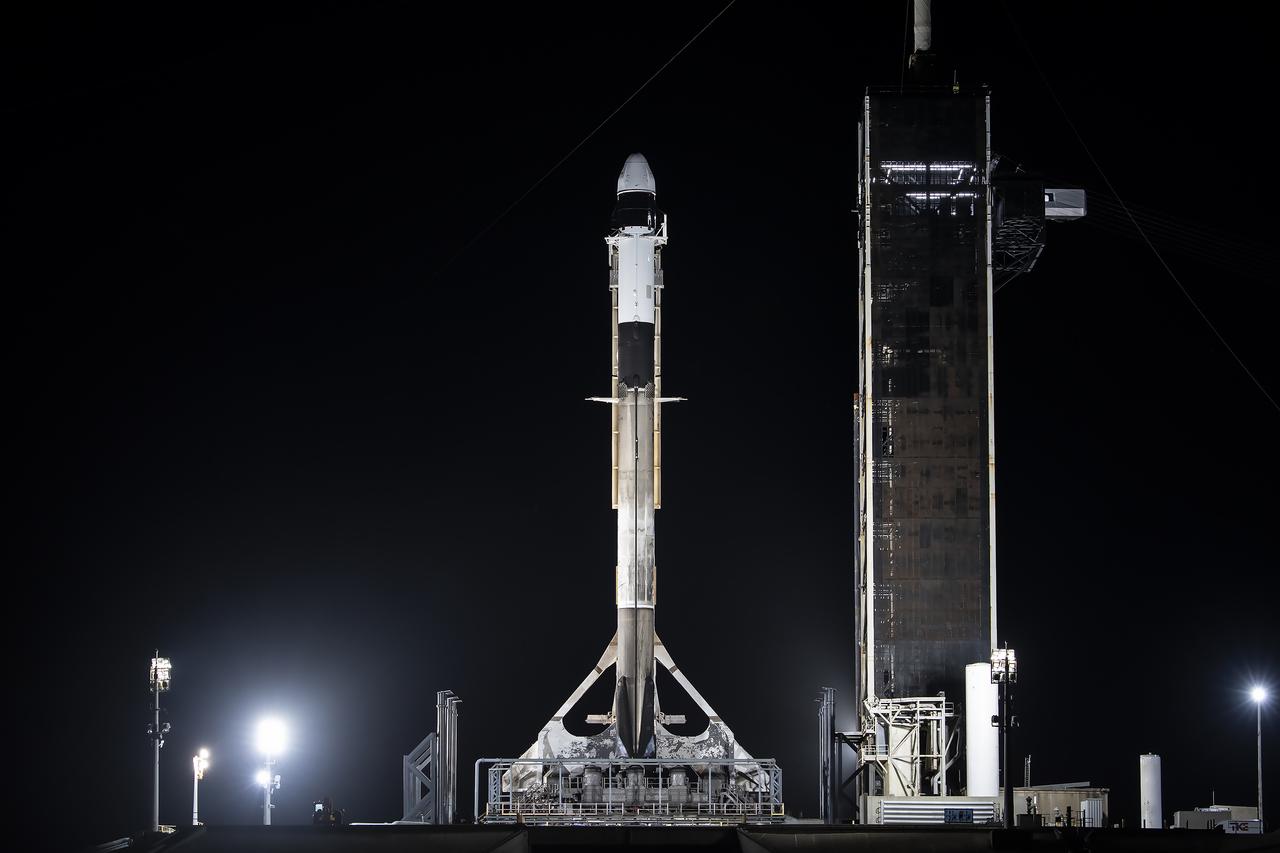
A SpaceX Falcon 9 rocket, with the company’s Dragon spacecraft atop, stands in a vertical position at Launch Complex 39A at NASA’s Kennedy Space Center in Florida on Monday, Nov. 4, 2024, in preparation for the 31st commercial resupply services launch to the International Space Station. Dragon will deliver several new experiments, including the Coronal Diagnostic Experiment, to examine solar wind and how it forms. Dragon also delivers Antarctic moss to observe the combined effects of cosmic radiation and microgravity on plants. Other investigations aboard include a device to test cold welding of metals in microgravity, and an investigation that studies how space impacts different materials. Liftoff is scheduled for 9:29 p.m. EST on Monday, Nov. 4.
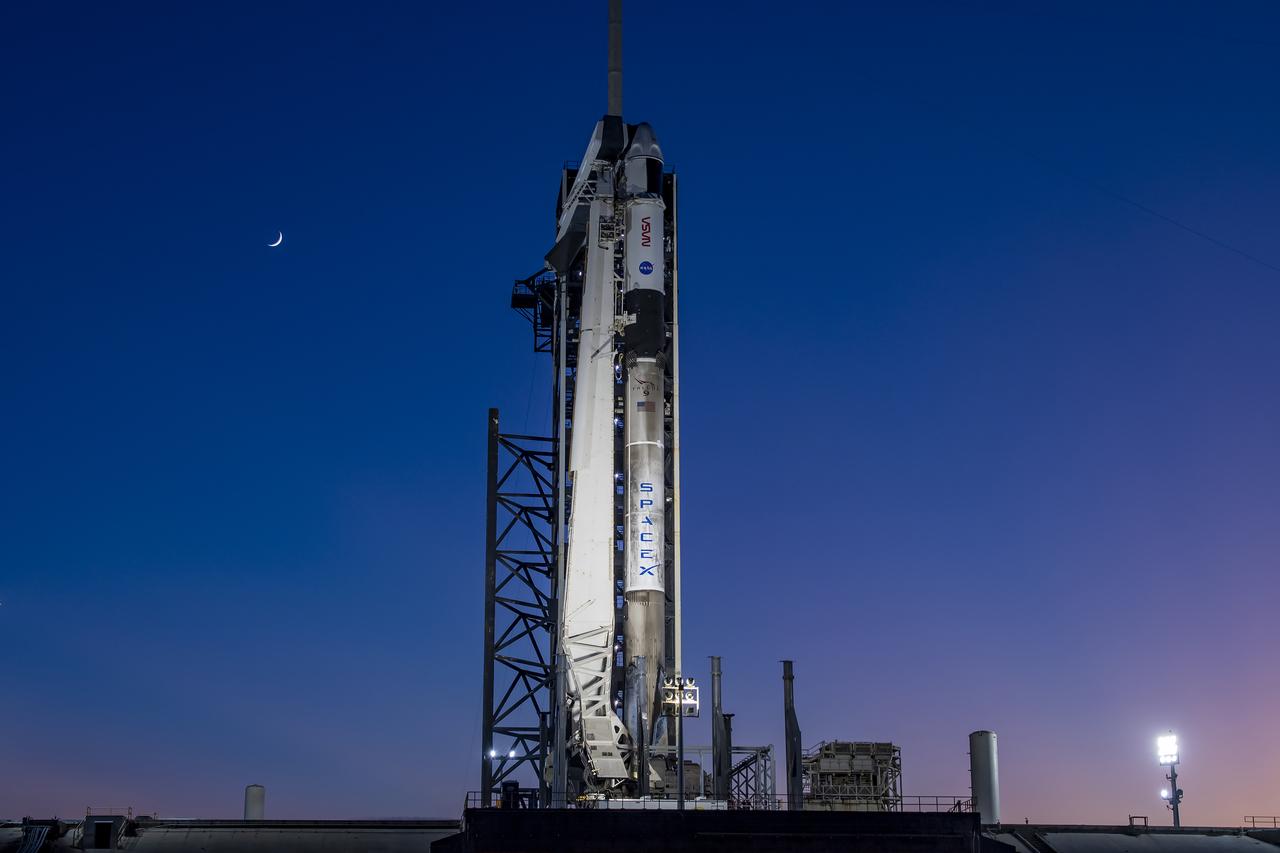
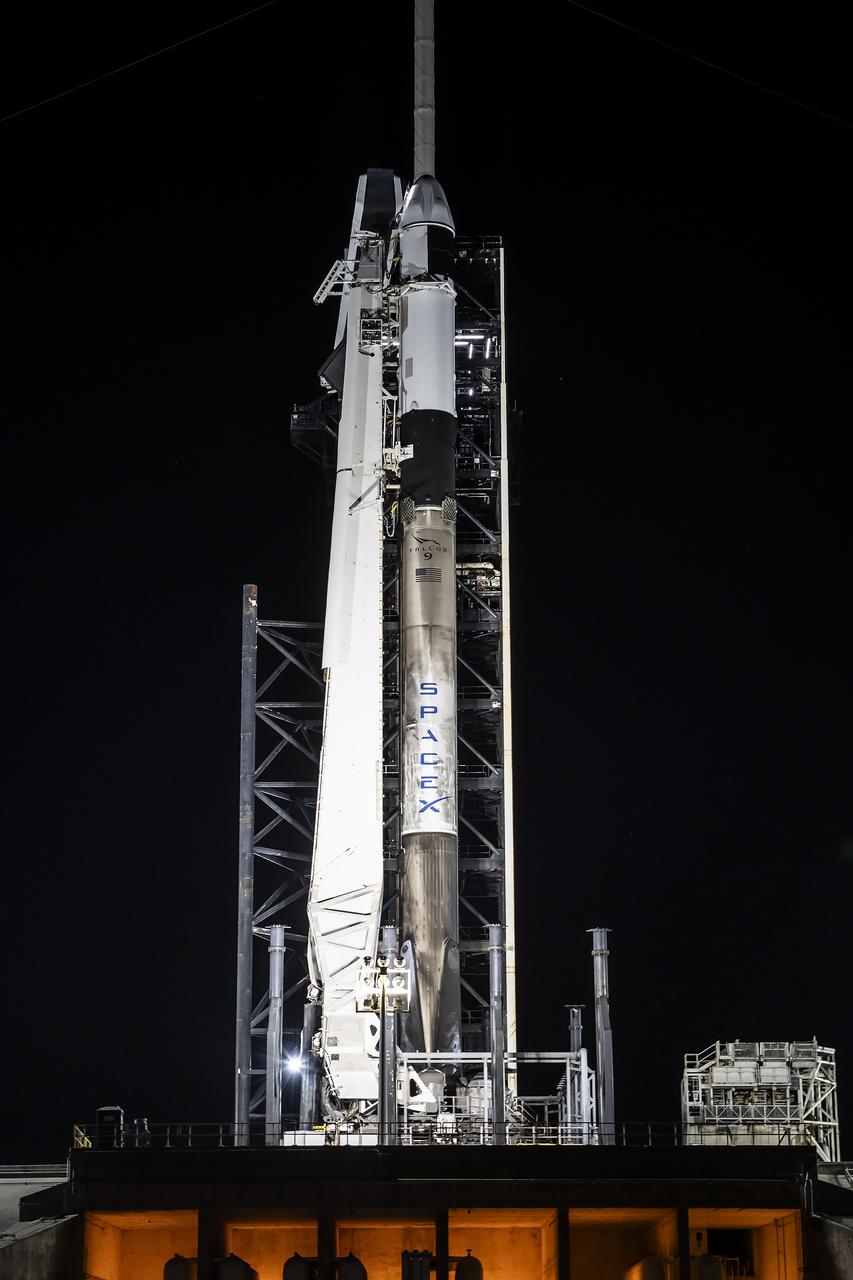
A SpaceX Falcon 9 rocket with the company's Dragon spacecraft on top stands vertical on the launch pad at Launch Complex 39A at Kennedy Space Center in Florida on Sunday, July 27, 2025, ahead of NASA’s SpaceX Crew-11 launch. The Crew-11 mission will send NASA astronauts Zena Cardman and Mike Fincke, along with JAXA (Japan Aerospace Exploration Agency) astronaut Kimiya Yui and Roscosmos cosmonaut Oleg Platonov, to the International Space Station aboard SpaceX’s Dragon spacecraft and Falcon 9 at 12:09 p.m. EDT on Thursday, July 31, 2025, from NASA Kennedy’s Launch Complex 39A.
A SpaceX Falcon 9 rocket with the company's Dragon spacecraft on top stands vertical on the launch pad at Launch Complex 39A at Kennedy Space Center in Florida on Sunday, July 27, 2025, ahead of NASA’s SpaceX Crew-11 launch. The Crew-11 mission will send NASA astronauts Zena Cardman and Mike Fincke, along with JAXA (Japan Aerospace Exploration Agency) astronaut Kimiya Yui and Roscosmos cosmonaut Oleg Platonov, to the International Space Station aboard SpaceX’s Dragon spacecraft and Falcon 9 at 12:09 p.m. EDT on Thursday, July 31, 2025, from NASA Kennedy’s Launch Complex 39A.
A SpaceX Falcon 9 rocket, with the company’s Dragon spacecraft atop, stands in a vertical position at Launch Complex 39A at NASA’s Kennedy Space Center in Florida on Monday, Nov. 4, 2024, in preparation for the 31st commercial resupply services launch to the International Space Station. Dragon will deliver several new experiments, including the Coronal Diagnostic Experiment, to examine solar wind and how it forms. Dragon also delivers Antarctic moss to observe the combined effects of cosmic radiation and microgravity on plants. Other investigations aboard include a device to test cold welding of metals in microgravity, and an investigation that studies how space impacts different materials. Liftoff is scheduled for 9:29 p.m. EST on Monday, Nov. 4.
A SpaceX Falcon 9 rocket, with the company’s Dragon spacecraft atop, stands in a vertical position at Launch Complex 39A at NASA’s Kennedy Space Center in Florida on Monday, Nov. 4, 2024, in preparation for the 31st commercial resupply services launch to the International Space Station. Dragon will deliver several new experiments, including the Coronal Diagnostic Experiment, to examine solar wind and how it forms. Dragon also delivers Antarctic moss to observe the combined effects of cosmic radiation and microgravity on plants. Other investigations aboard include a device to test cold welding of metals in microgravity, and an investigation that studies how space impacts different materials. Liftoff is scheduled for 9:29 p.m. EST on Monday, Nov. 4.
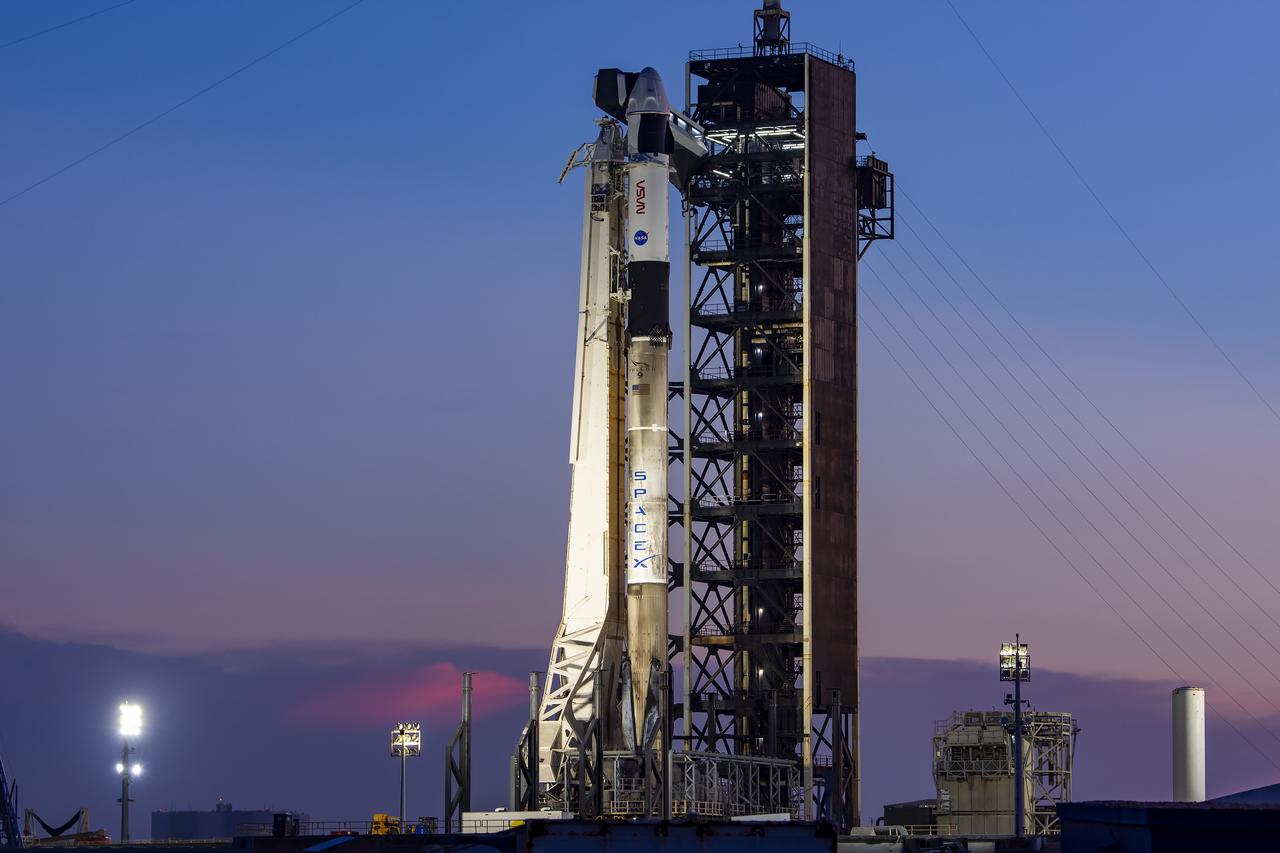
A SpaceX Falcon 9 rocket with the company's Dragon spacecraft on top stands vertical on the launch pad at Launch Complex 39A at Kennedy Space Center in Florida on Sunday, July 27, 2025, ahead of NASA’s SpaceX Crew-11 launch. The Crew-11 mission will send NASA astronauts Zena Cardman and Mike Fincke, along with JAXA (Japan Aerospace Exploration Agency) astronaut Kimiya Yui and Roscosmos cosmonaut Oleg Platonov, to the International Space Station aboard SpaceX’s Dragon spacecraft and Falcon 9 at 12:09 p.m. EDT on Thursday, July 31, 2025, from NASA Kennedy’s Launch Complex 39A.
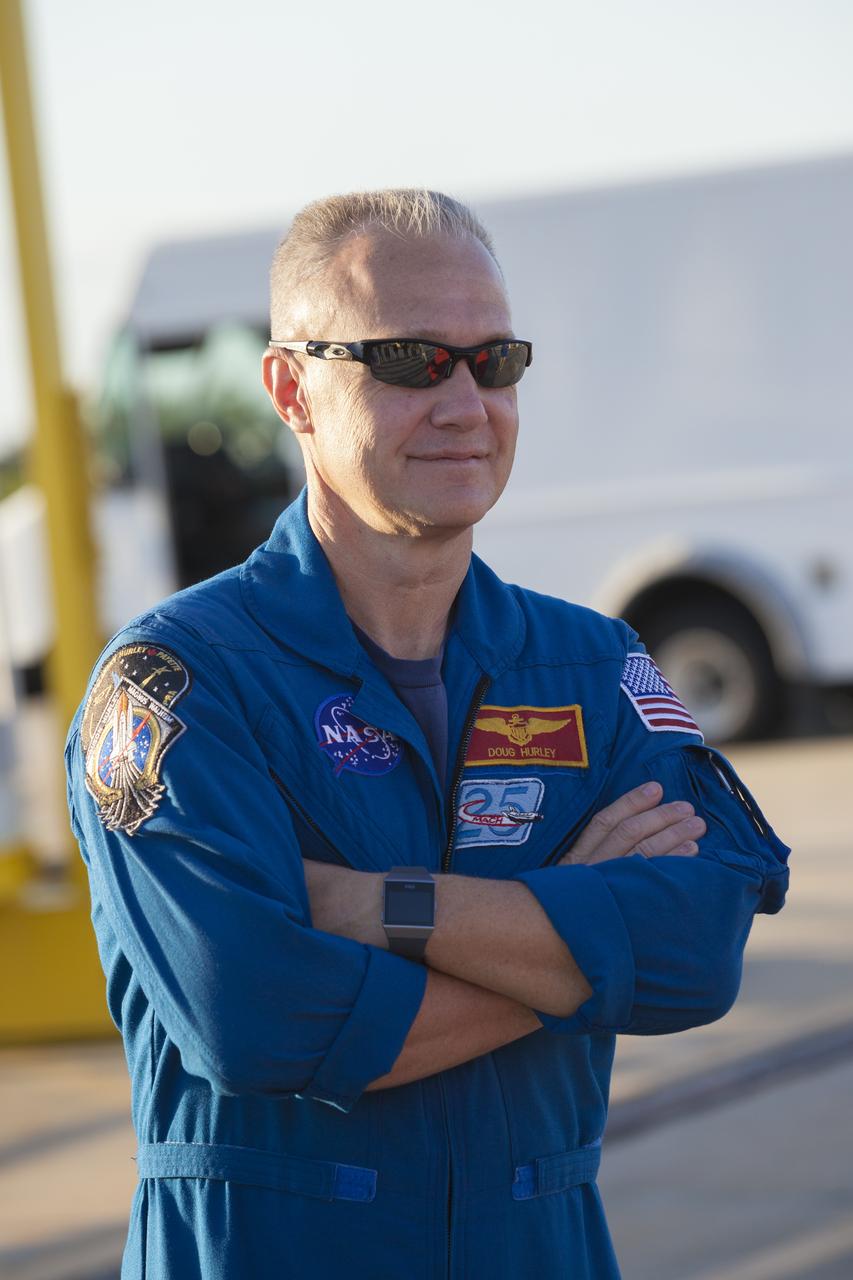
At Cape Canaveral Air Force Station's Naval Ordnance Test Unit basin in Florida, Commercial Crew Program astronaut Doug Hurley observes operation of the SpaceX recovery ship. During a recent visit to the Kennedy Space Center, the crew members were given an up-close look at preparations for the SpaceX Crew Dragon flight tests.
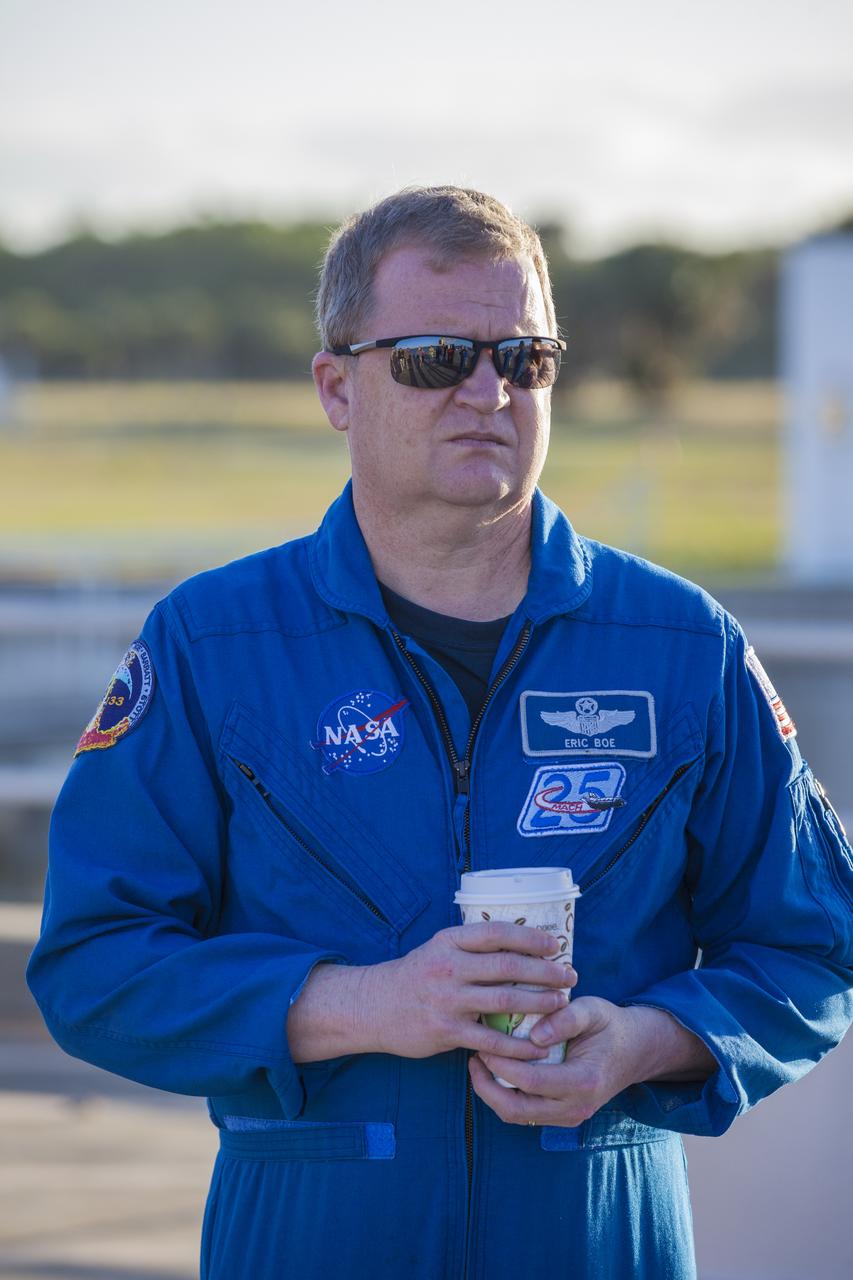
At Cape Canaveral Air Force Station's Naval Ordnance Test Unit basin in Florida, Commercial Crew Program astronaut Eric Boe observes operation of the SpaceX recovery ship. During a recent visit to the Kennedy Space Center, the crew members were given an up-close look at preparations for the SpaceX Crew Dragon flight tests.
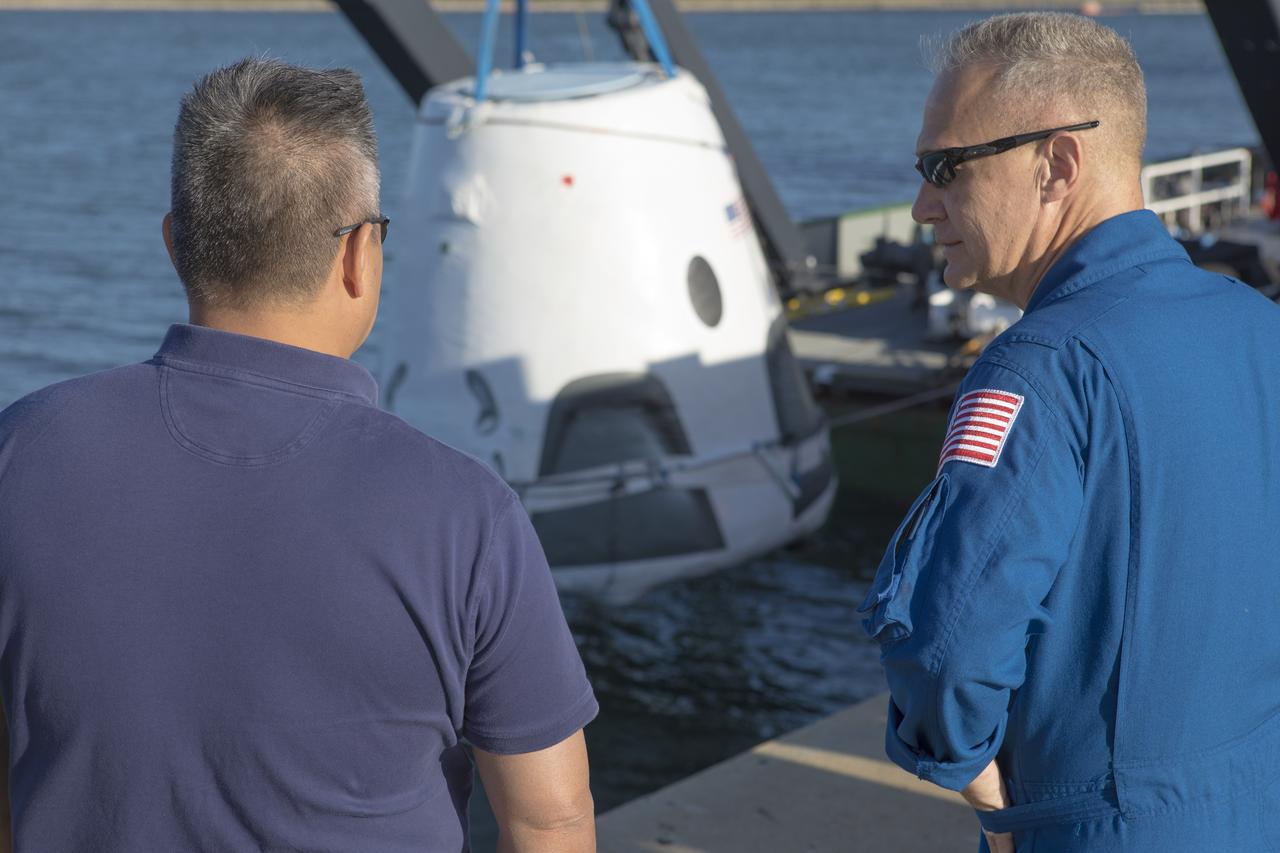
At Cape Canaveral Air Force Station's Naval Ordnance Test Unit basin in Florida, Commercial Crew Program astronaut Doug Hurley, right, observes operation of the SpaceX recovery ship. During a recent visit to the Kennedy Space Center, the crew members were given an up-close look at preparations for the SpaceX Crew Dragon flight tests.
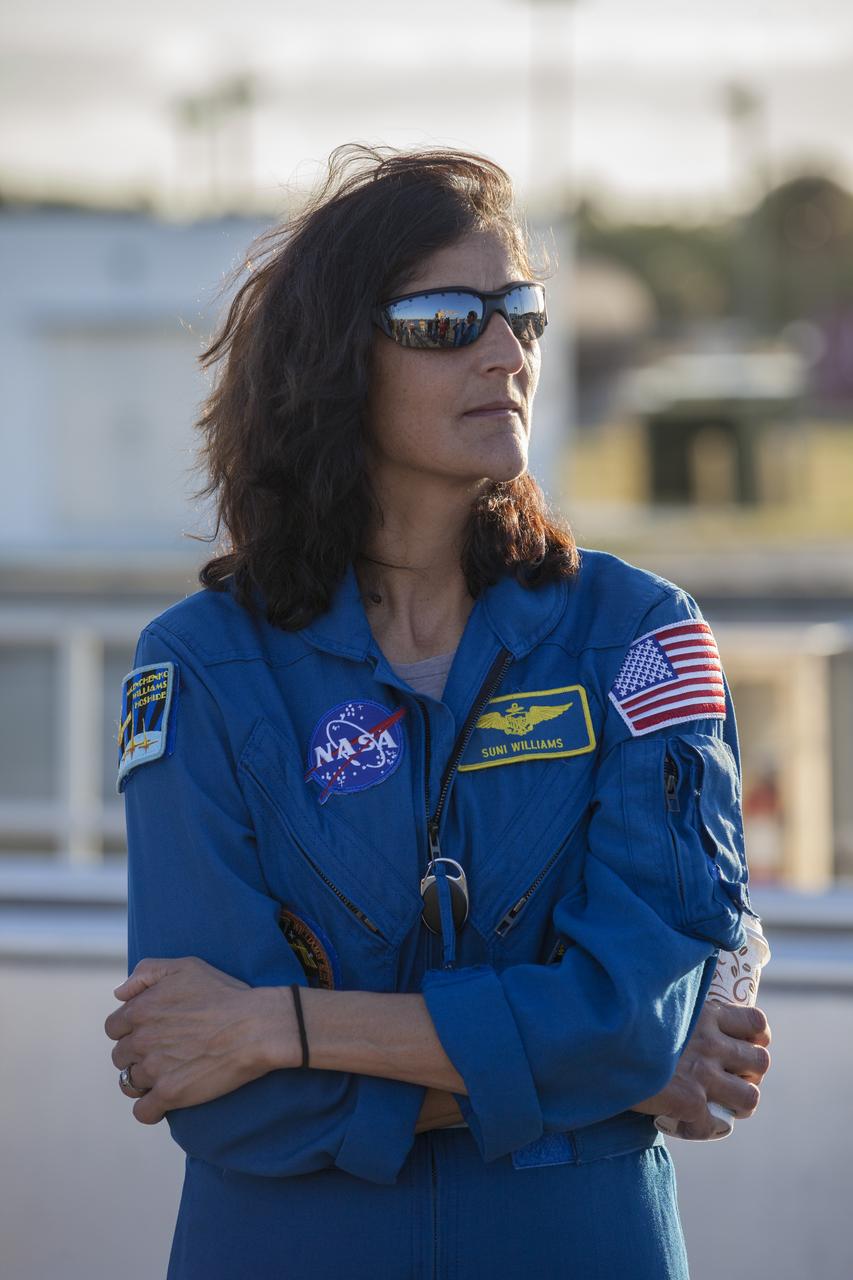
At Cape Canaveral Air Force Station's Naval Ordnance Test Unit basin in Florida, Commercial Crew Program astronaut Suni Williams observes operation of the SpaceX recovery ship. During a recent visit to the Kennedy Space Center, the crew members were given an up-close look at preparations for the SpaceX Crew Dragon flight tests.
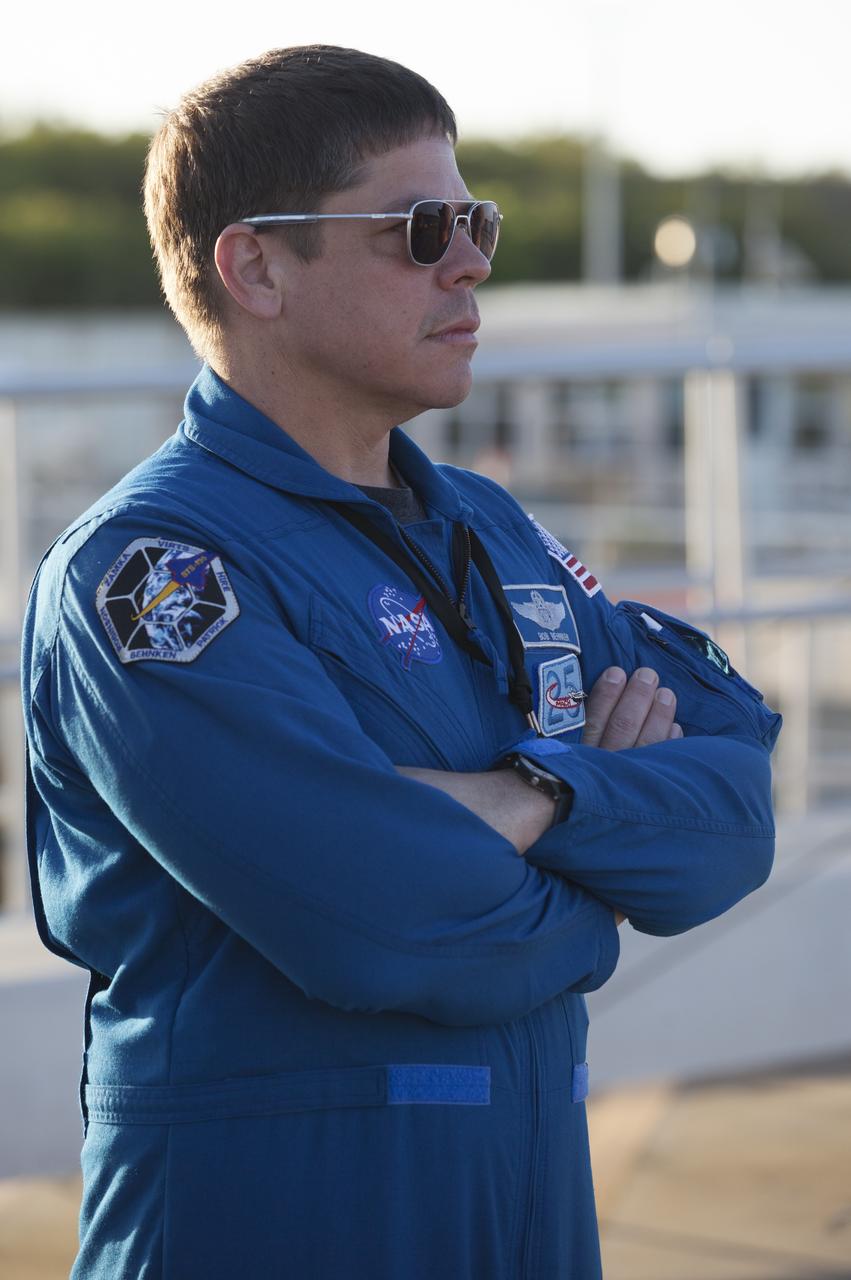
At Cape Canaveral Air Force Station's Naval Ordnance Test Unit basin in Florida, Commercial Crew Program astronaut Bob Behnken observes operation of the SpaceX recovery ship. During a recent visit to the Kennedy Space Center, the crew members were given an up-close look at preparations for the SpaceX Crew Dragon flight tests.
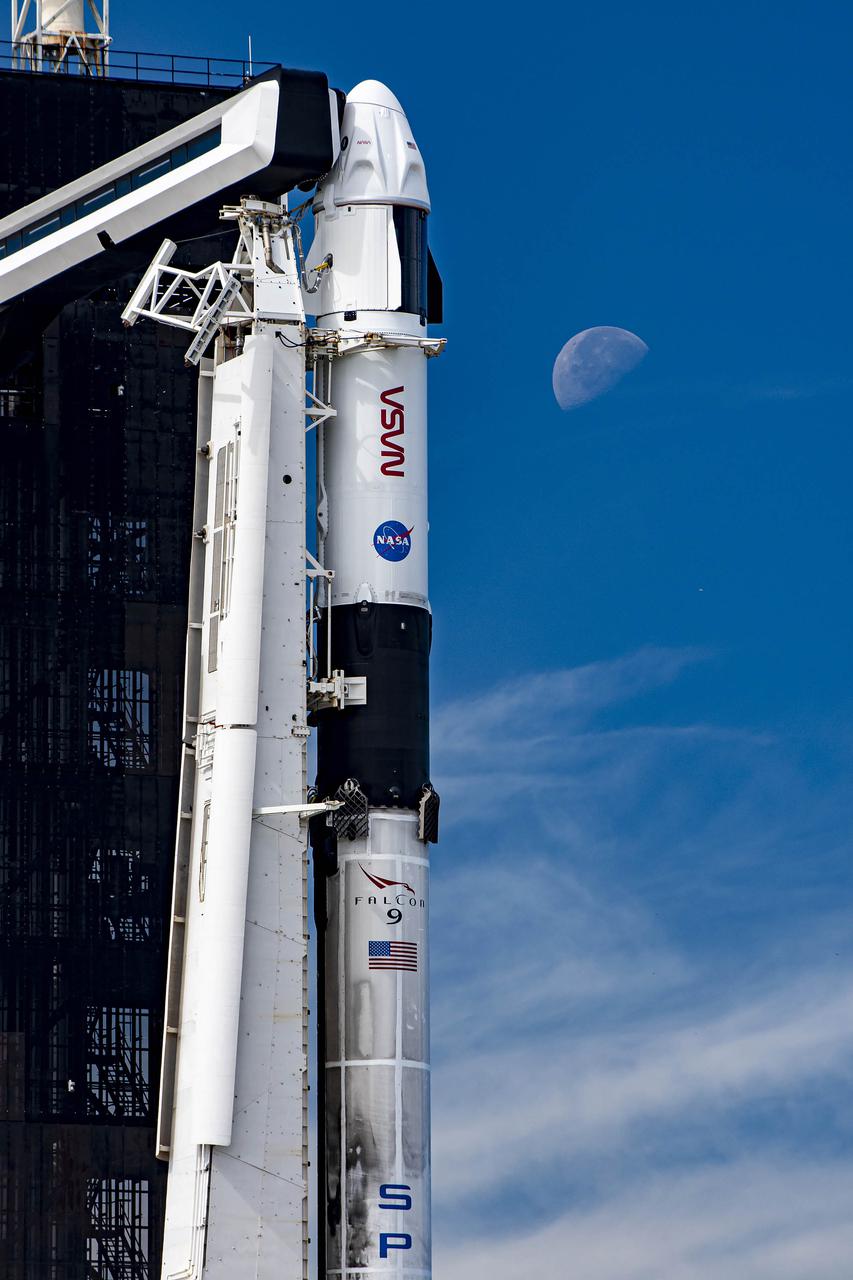
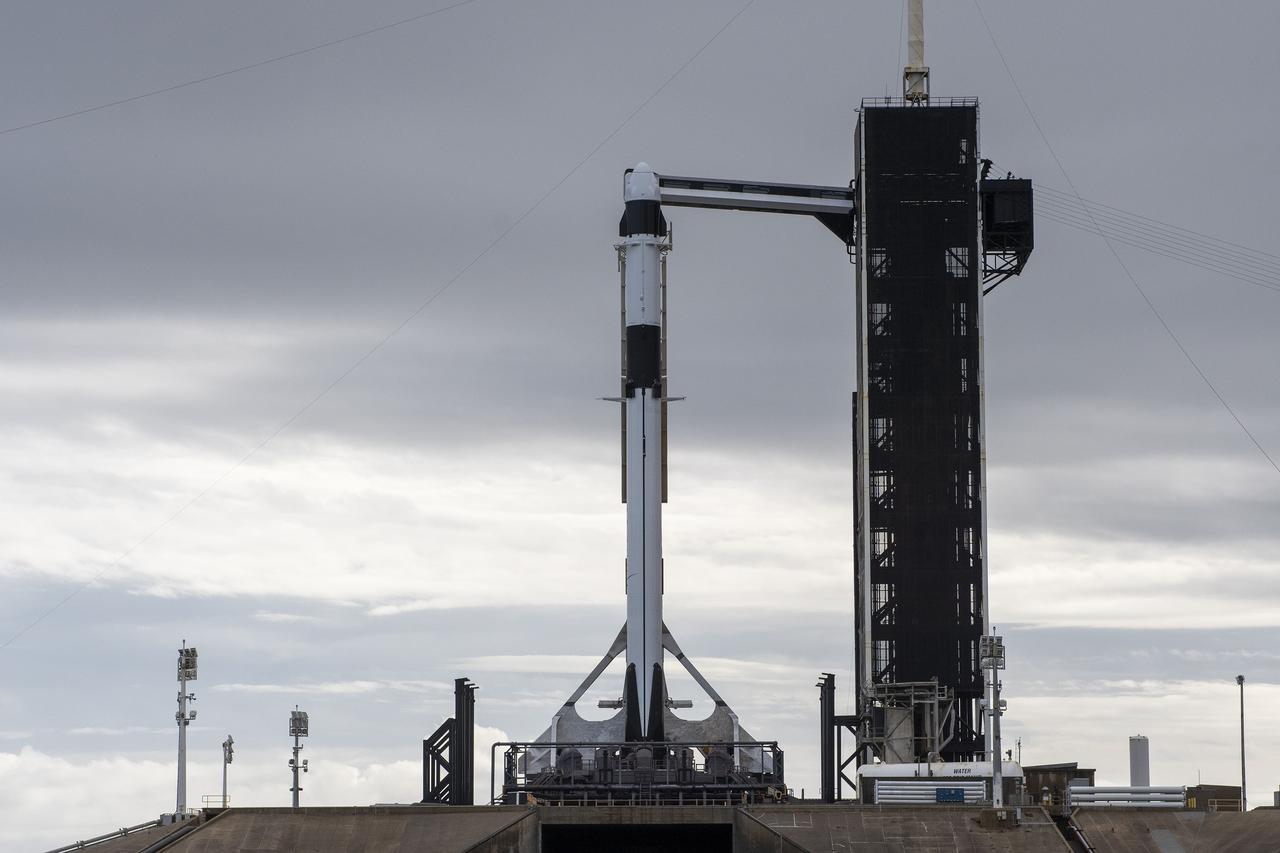
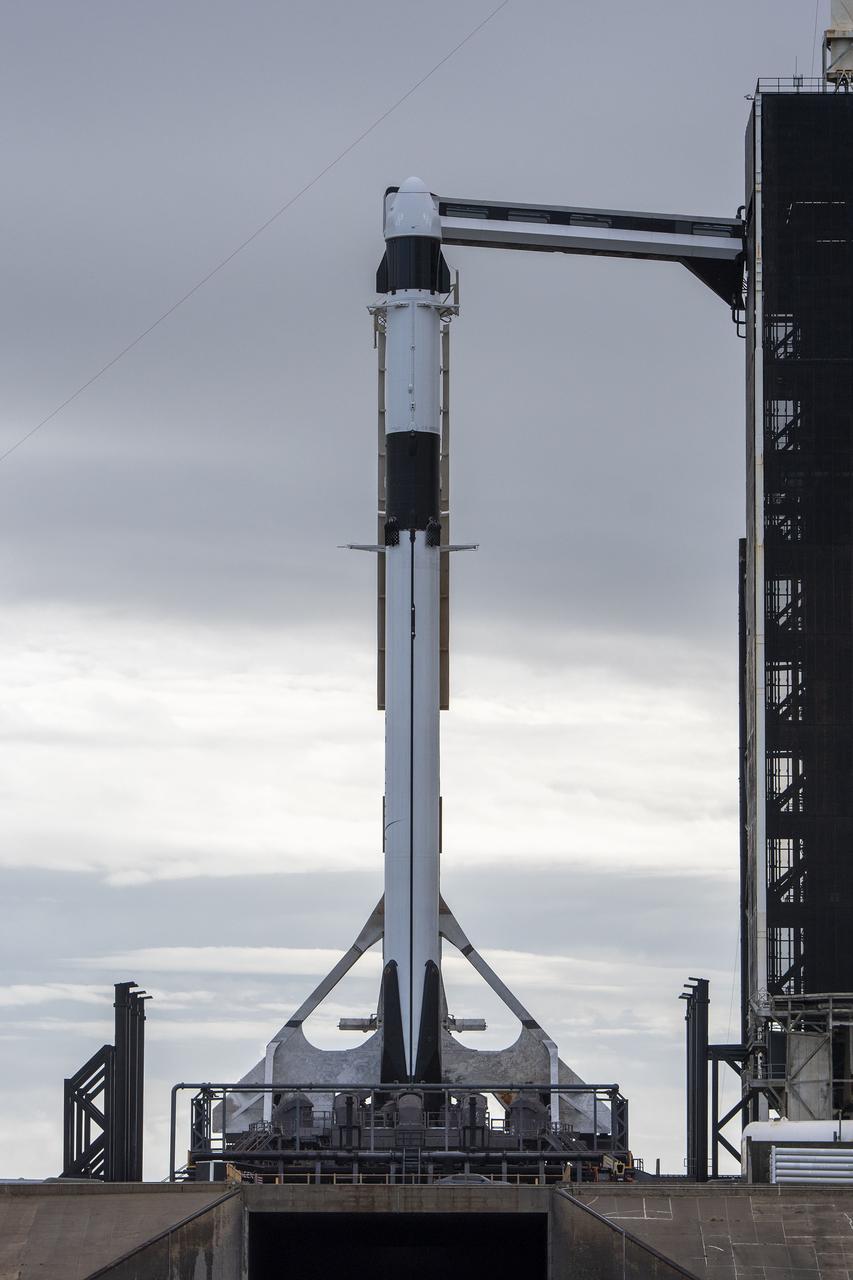
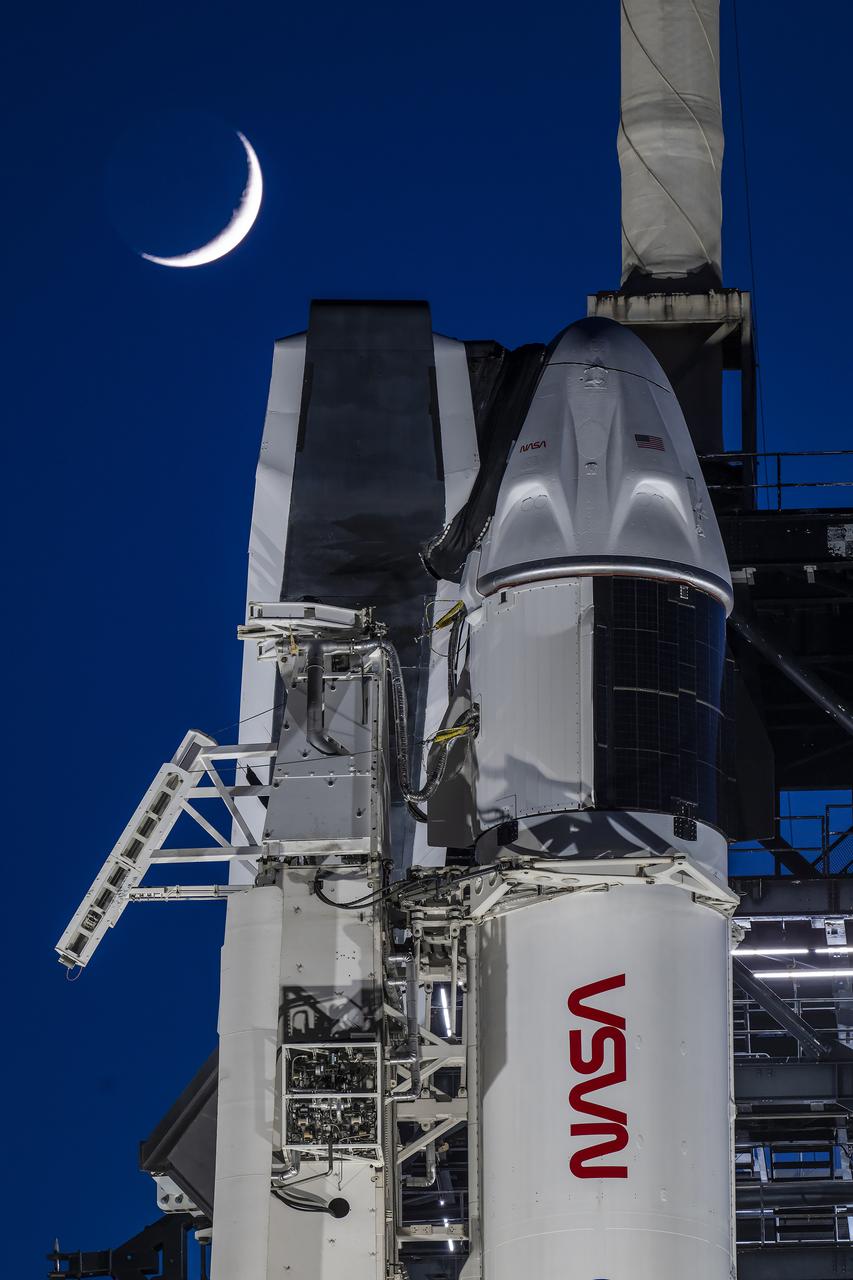
The SpaceX Falcon 9 rocket is vertical with the Crew Dragon atop for the Crew-3 mission at Launch Pad 39A at NASA’s Kennedy Space Center in Florida on Oct. 27, 2021. In view is the crew access arm. A four-person crew will launch aboard the Crew Dragon atop the Falcon 9 on Oct. 31 to the International Space Station. Launch is targeted for 2:21 a.m. EDT from Pad 39A. Crew 3 is the third crew rotation flight to the space station for NASA’s Commercial Crew Program, and the first flight of a new Crew Dragon spacecraft.
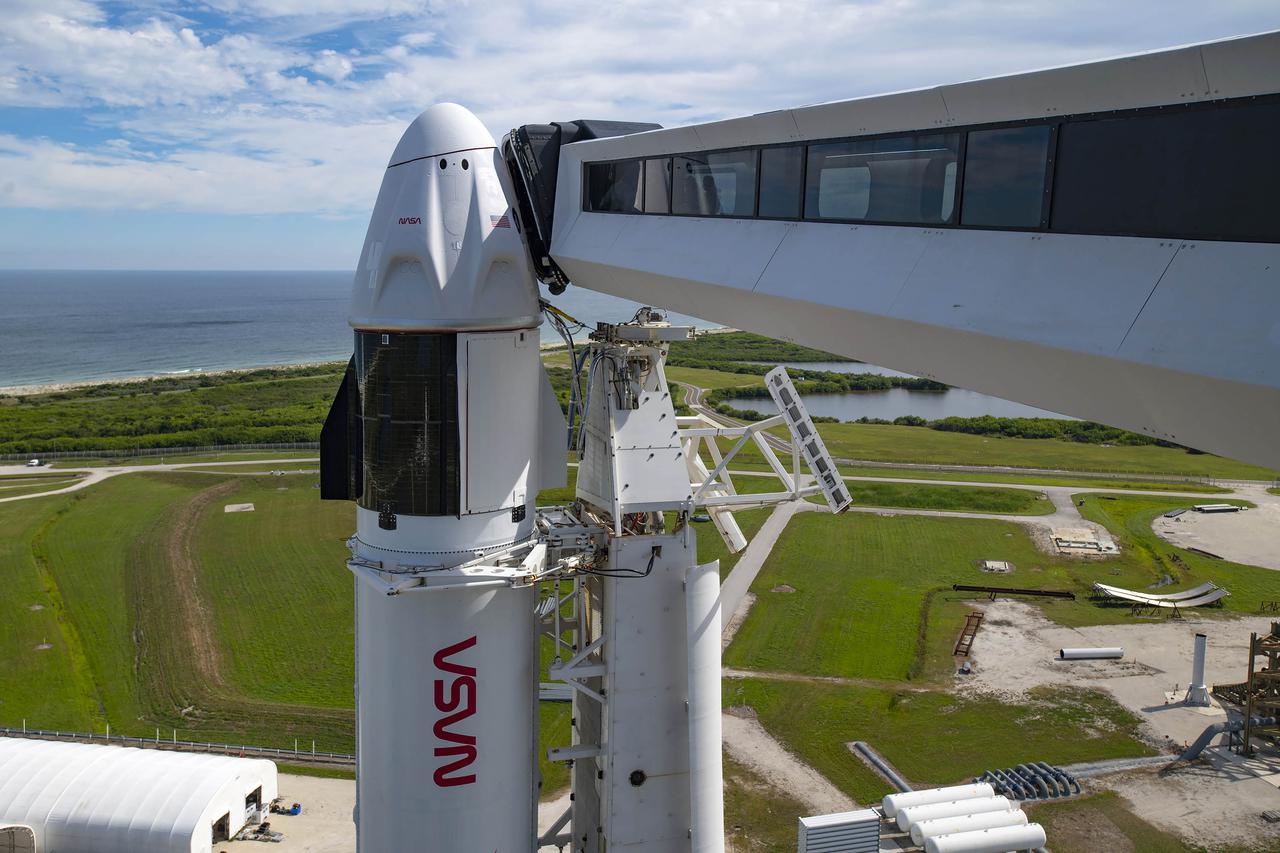
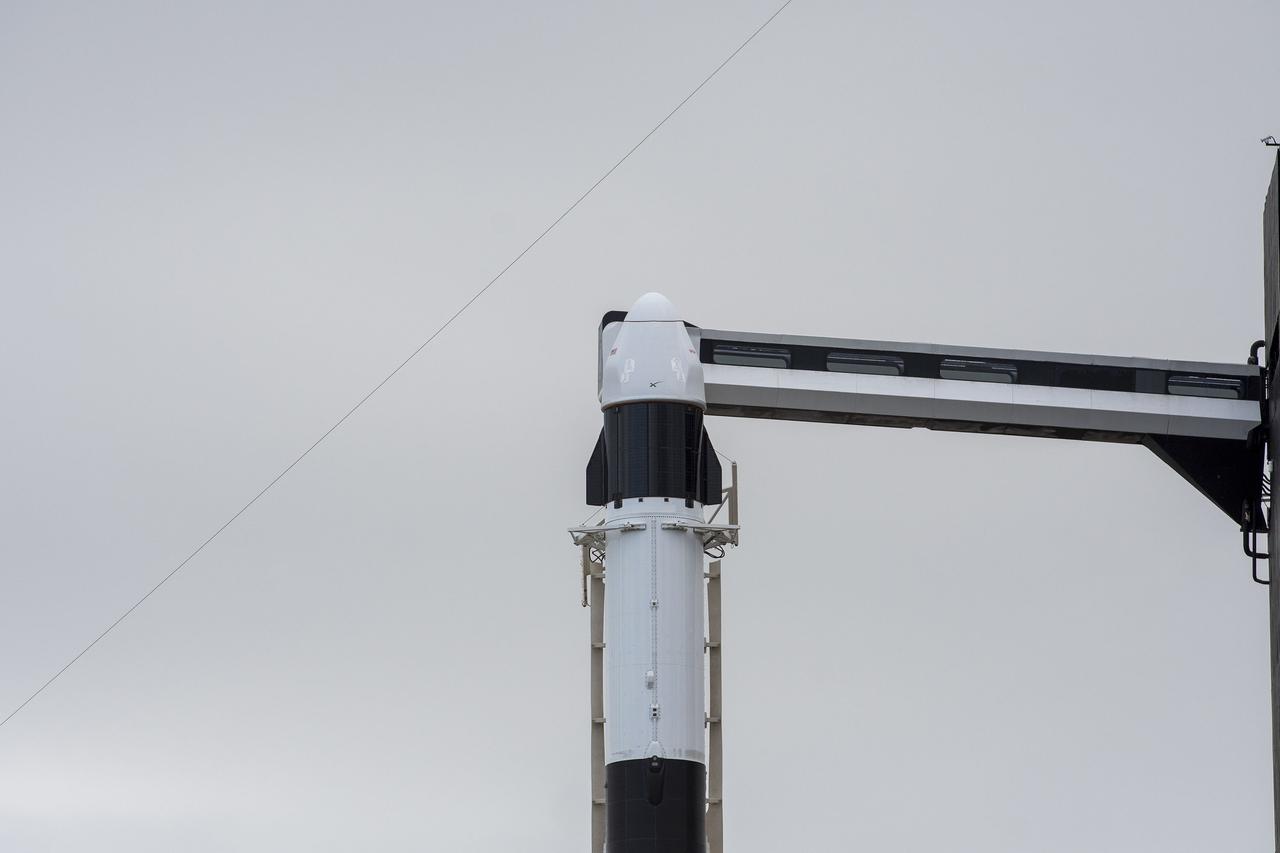
A close-up view of the SpaceX Falcon 9 rocket vertical with the Crew Dragon for the Crew-3 mission at Launch Pad 39A at NASA’s Kennedy Space Center in Florida on Oct. 27, 2021. Also in view is the crew access arm. A four-person crew will launch aboard the Crew Dragon atop the Falcon 9 on Oct. 31 to the International Space Station. Launch is targeted for 2:21 a.m. EDT from Pad 39A. Crew 3 is the third crew rotation flight to the space station for NASA’s Commercial Crew Program, and the first flight of a new Crew Dragon spacecraft.
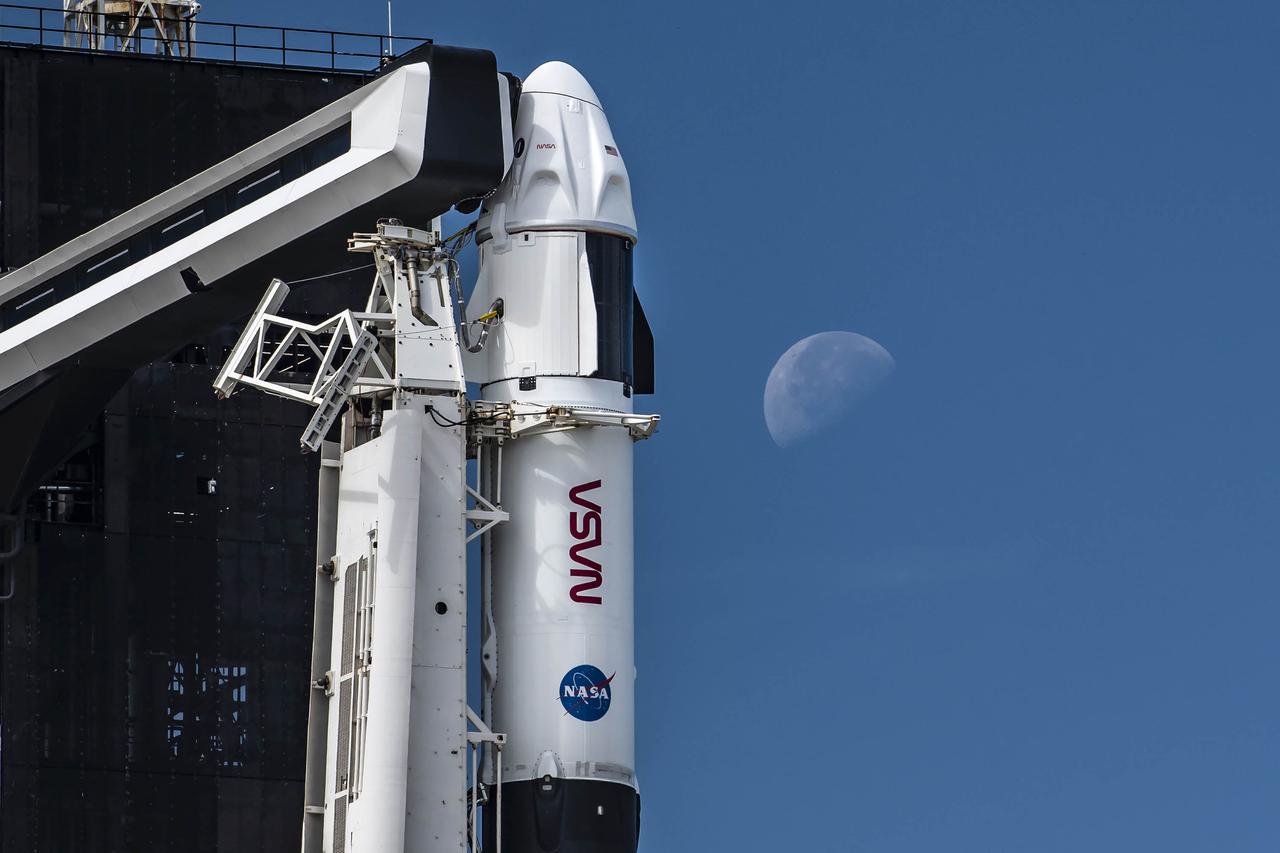
The SpaceX Falcon 9 rocket is vertical with the Crew Dragon atop for the Crew-3 mission at Launch Pad 39A at NASA’s Kennedy Space Center in Florida on Oct. 27, 2021. In view is the crew access arm. A four-person crew will launch aboard the Crew Dragon atop the Falcon 9 on Oct. 31 to the International Space Station. Launch is targeted for 2:21 a.m. EDT from Pad 39A. Crew 3 is the third crew rotation flight to the space station for NASA’s Commercial Crew Program, and the first flight of a new Crew Dragon spacecraft.
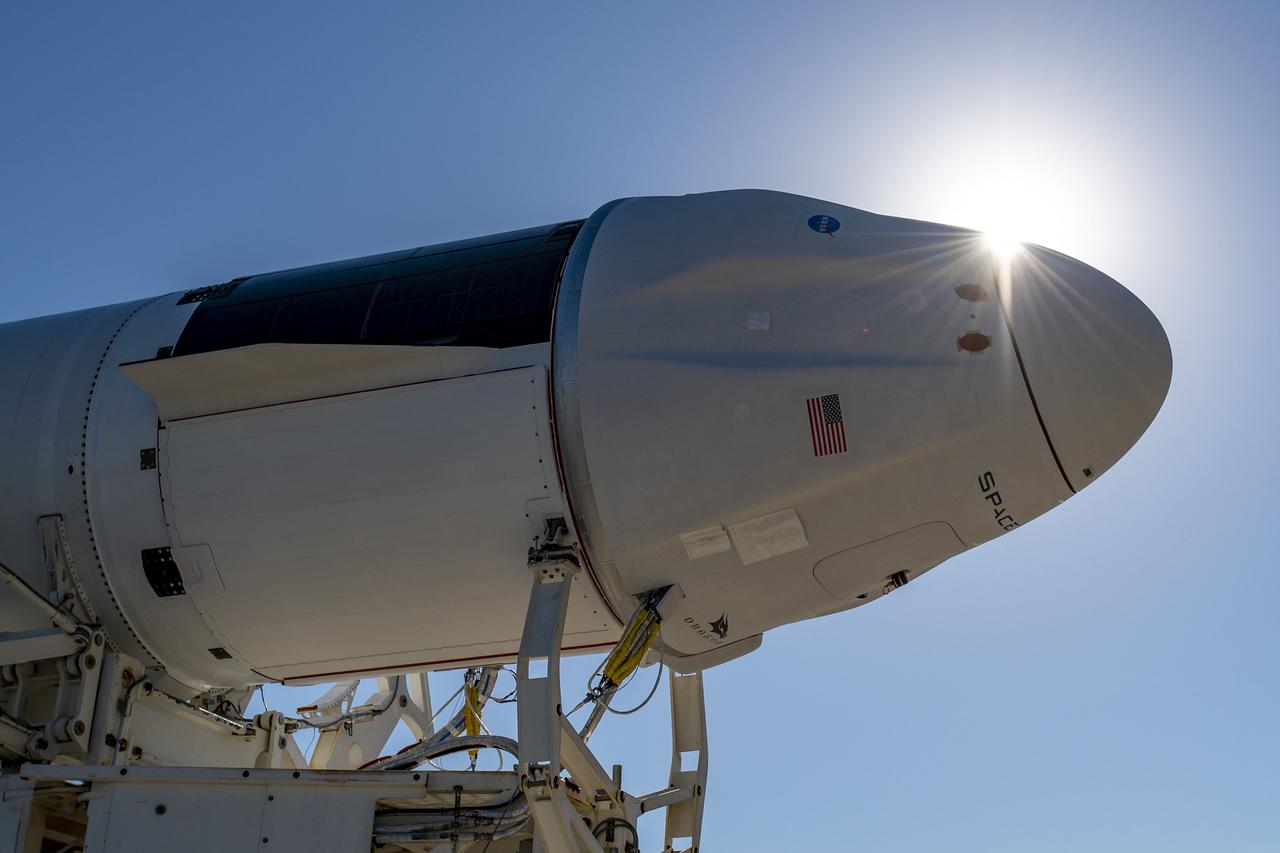
The SpaceX Dragon spacecraft that will fly on the company’s 22nd commercial resupply services to the International Space Station is now ready for its journey to space. On June 1, SpaceX rolled its Falcon 9 rocket with Dragon attached to Launch Complex 39A at NASA’s Kennedy Space Center in Florida. Liftoff is scheduled for 1:29 p.m. EDT on Thursday, June 3.
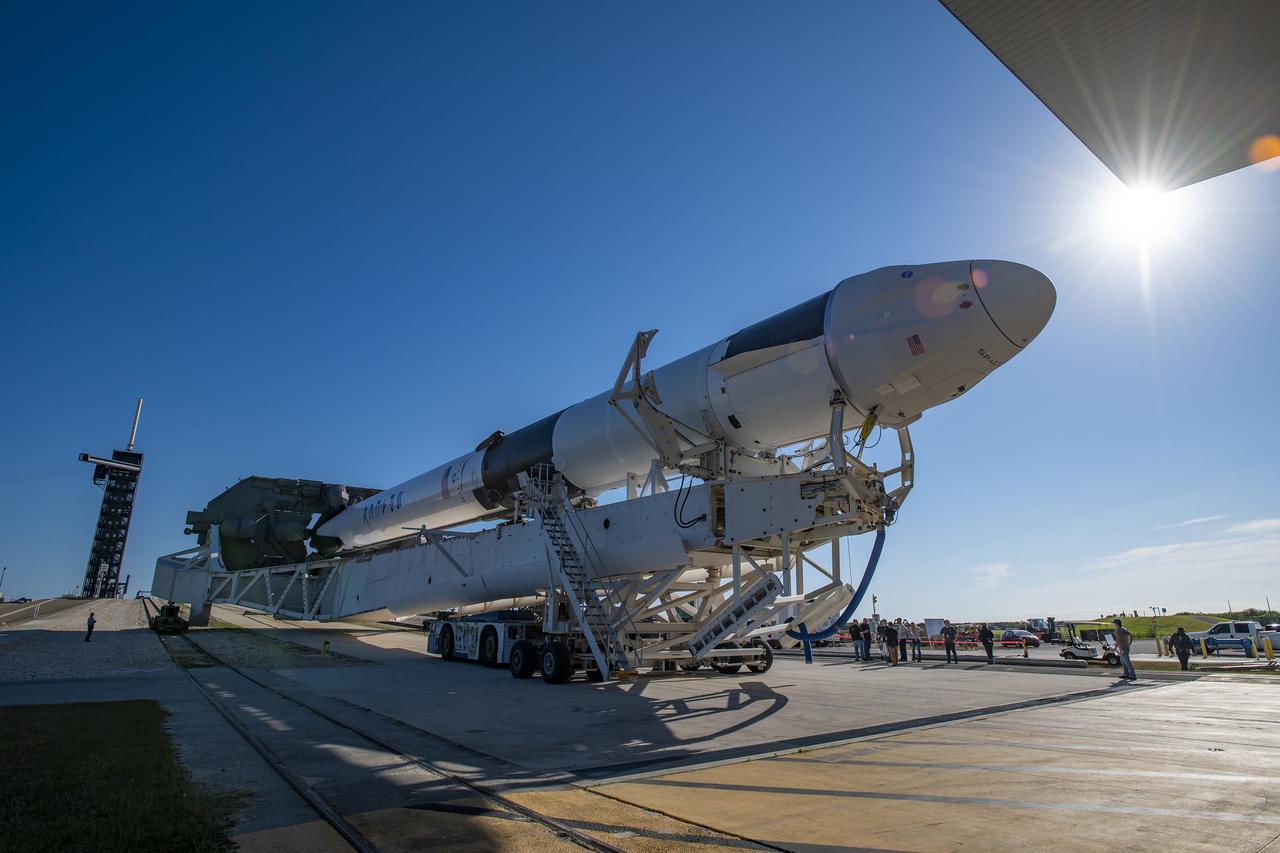
The SpaceX Dragon spacecraft that will fly on the company’s 22nd commercial resupply services to the International Space Station is now ready for its journey to space. On June 1, SpaceX rolled its Falcon 9 rocket with Dragon attached to Launch Complex 39A at NASA’s Kennedy Space Center in Florida. Liftoff is scheduled for 1:29 p.m. EDT on Thursday, June 3.
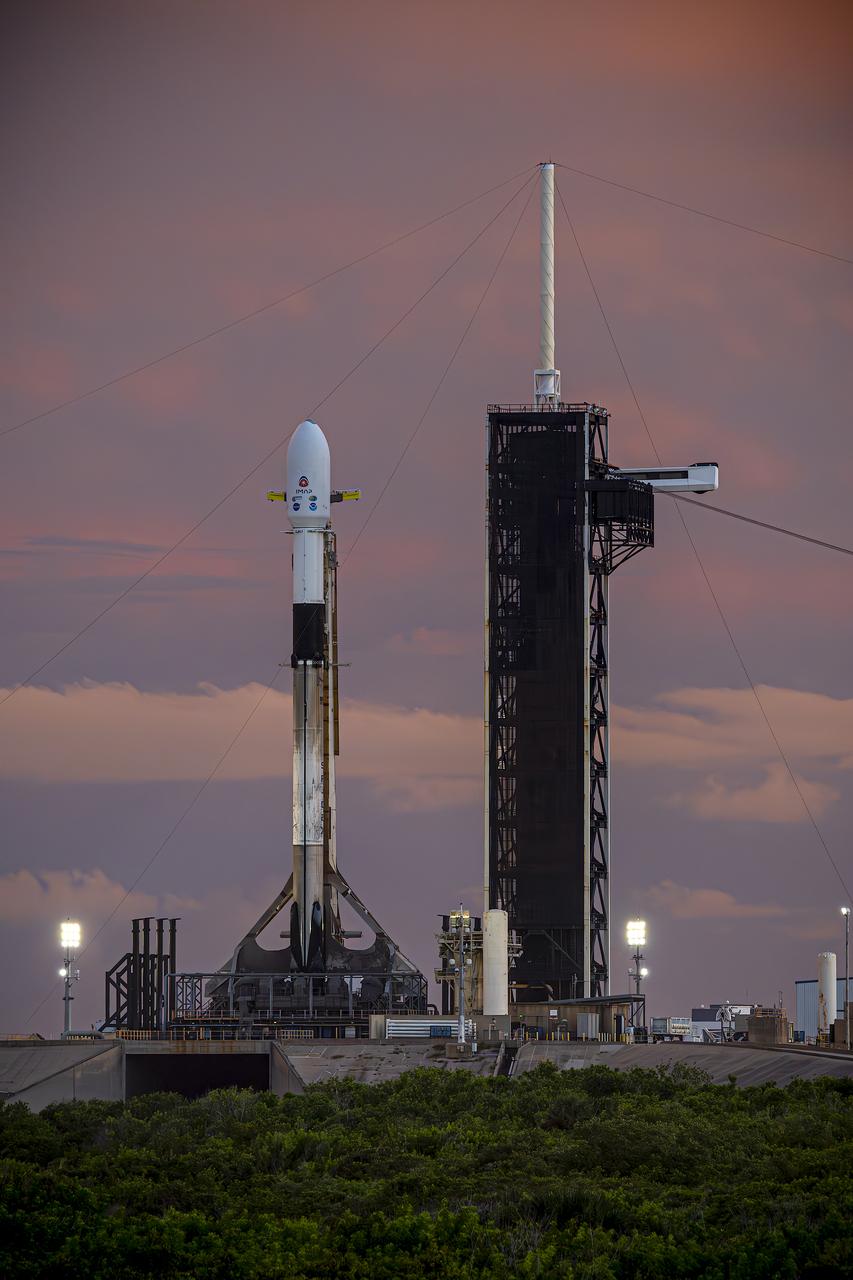
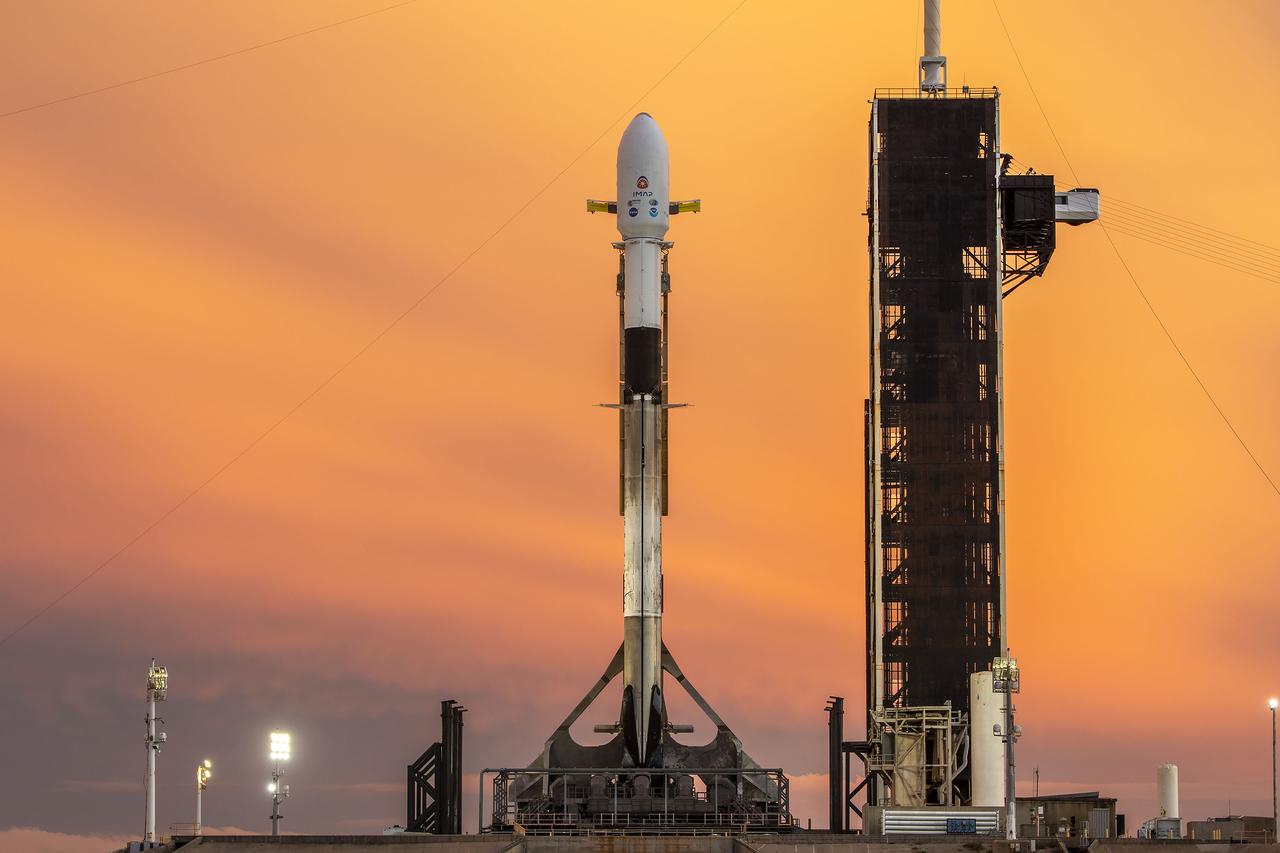
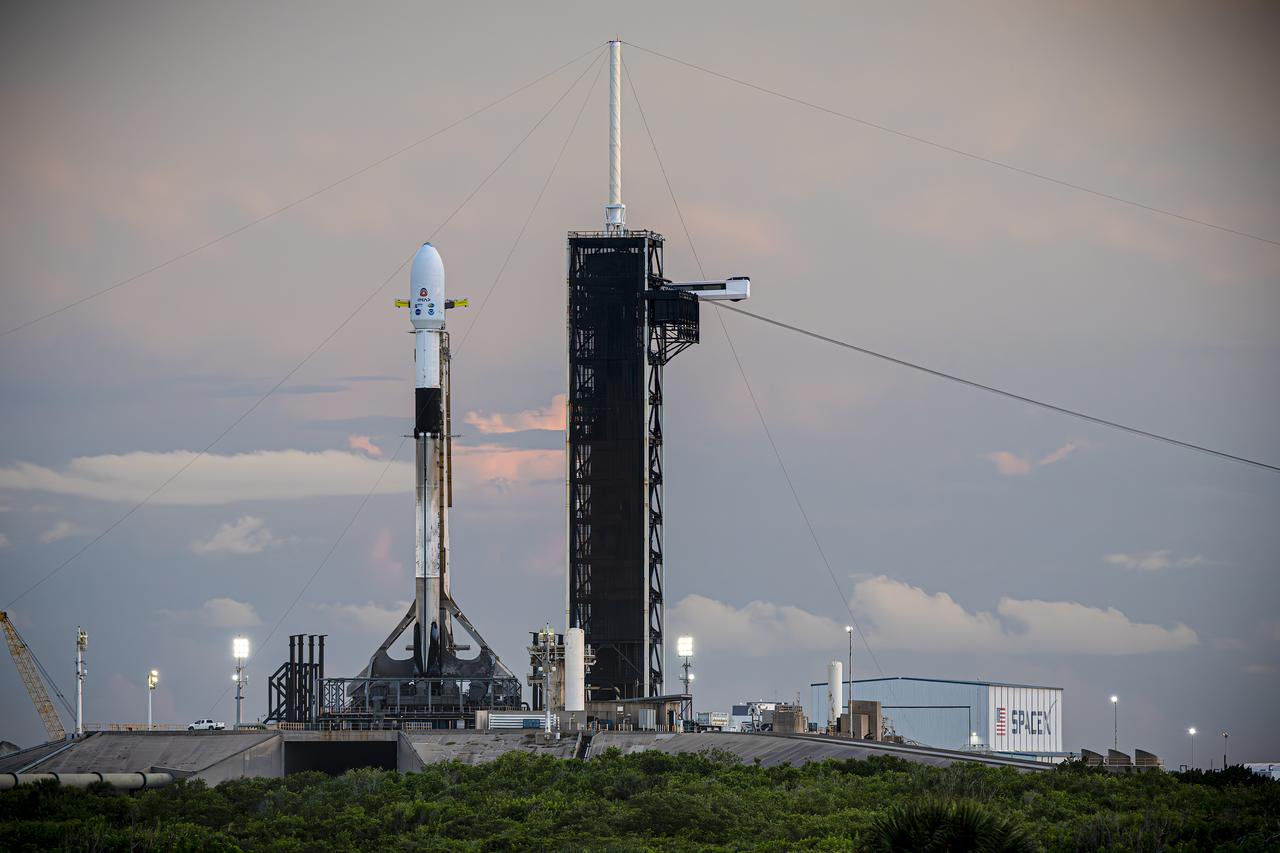
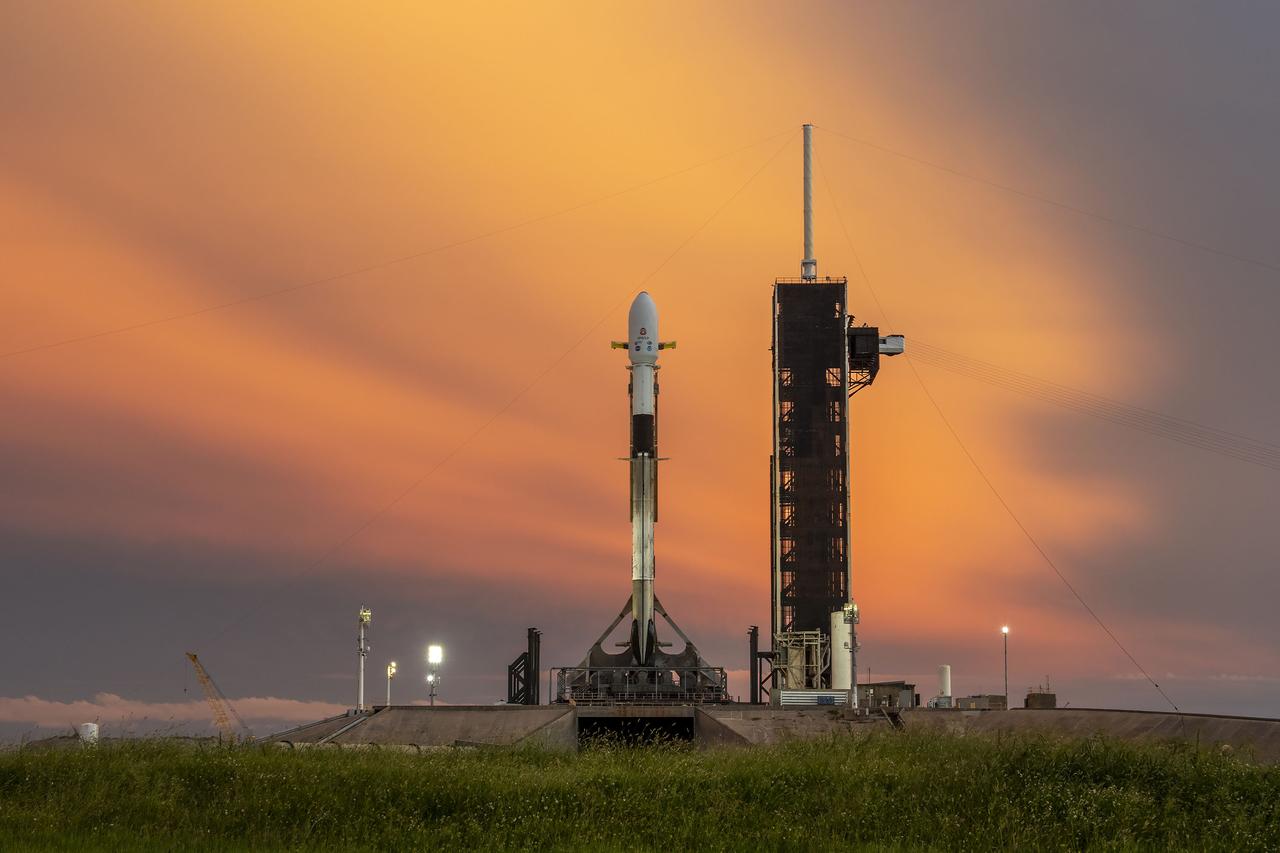
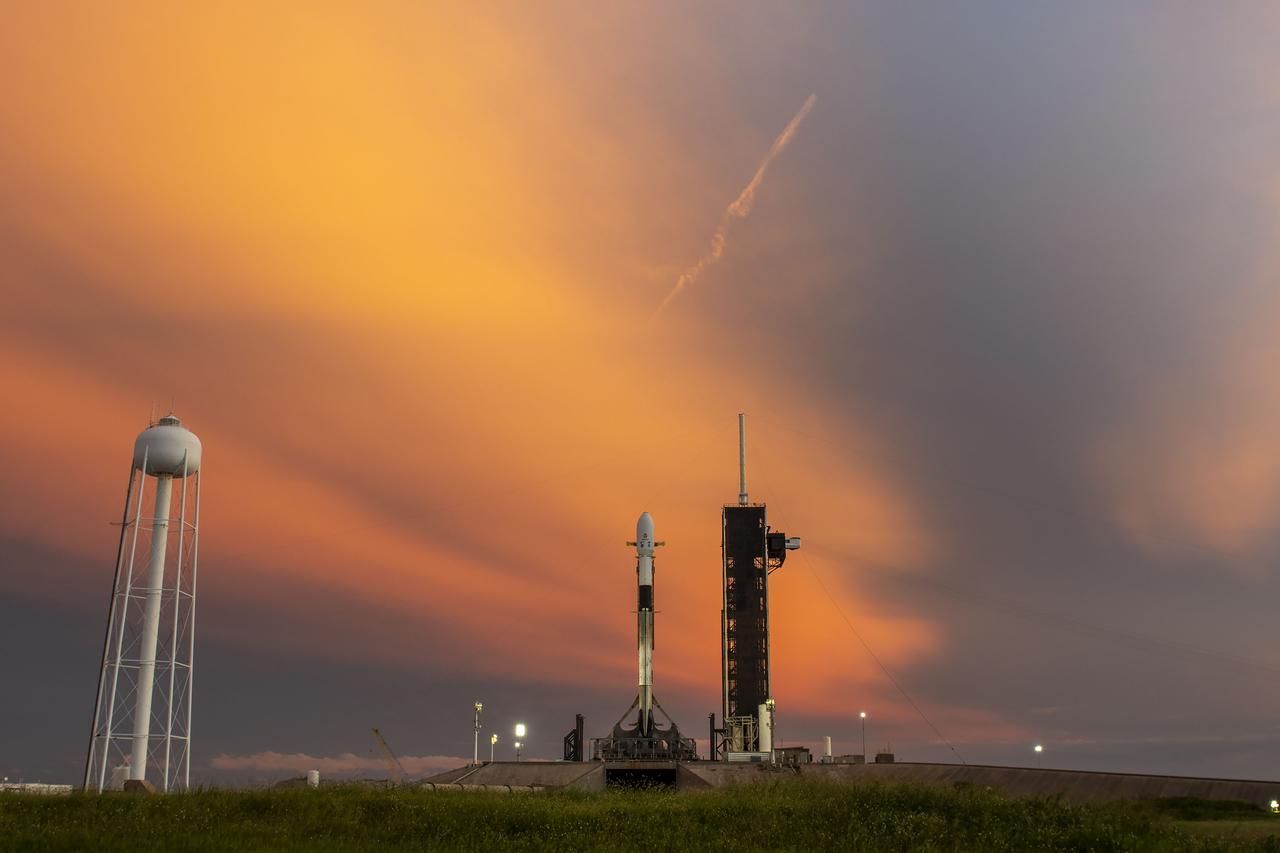
A SpaceX Falcon 9 rocket with NASA’s IMAP (Interstellar Mapping and Acceleration Probe), the agency’s Carruthers Geocorona Observatory, and National Oceanic and Atmospheric Administration’s (NOAA) Space Weather Follow On–Lagrange 1 (SWFO-L1) spacecraft atop stands vertical at Launch Complex 39A as the sun sets on Monday, Sept. 22, 2025, at the agency’s Kennedy Space Center in Florida. The missions will each focus on different effects of the solar wind — the continuous stream of particles emitted by the Sun — and space weather — the changing conditions in space driven by the Sun — from their origins at the Sun to their farthest reaches billions of miles away at the edge of our solar system.
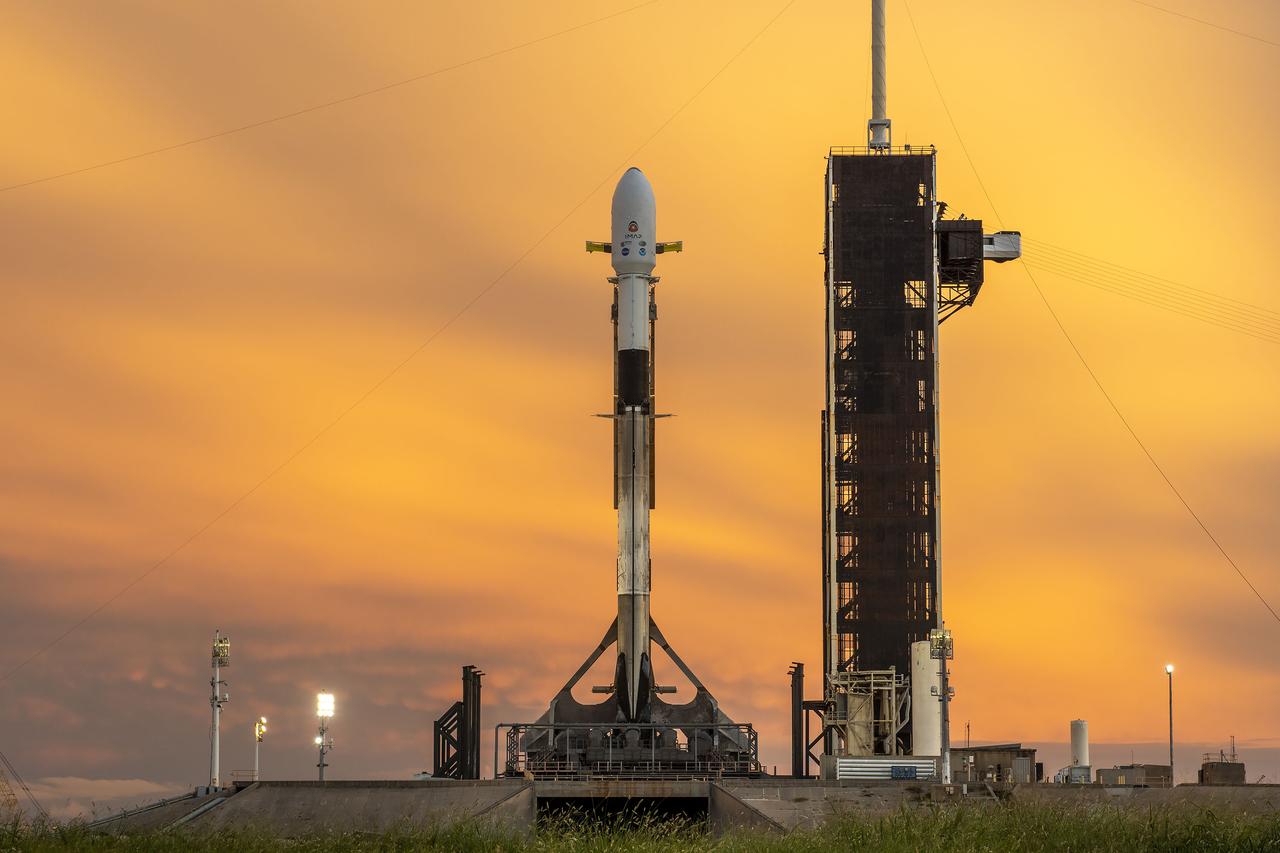
A SpaceX Falcon 9 rocket with NASA’s IMAP (Interstellar Mapping and Acceleration Probe), the agency’s Carruthers Geocorona Observatory, and National Oceanic and Atmospheric Administration’s (NOAA) Space Weather Follow On–Lagrange 1 (SWFO-L1) spacecraft atop stands vertical at Launch Complex 39A as the sun sets on Monday, Sept. 22, 2025, at the agency’s Kennedy Space Center in Florida. The missions will each focus on different effects of the solar wind — the continuous stream of particles emitted by the Sun — and space weather — the changing conditions in space driven by the Sun — from their origins at the Sun to their farthest reaches billions of miles away at the edge of our solar system.
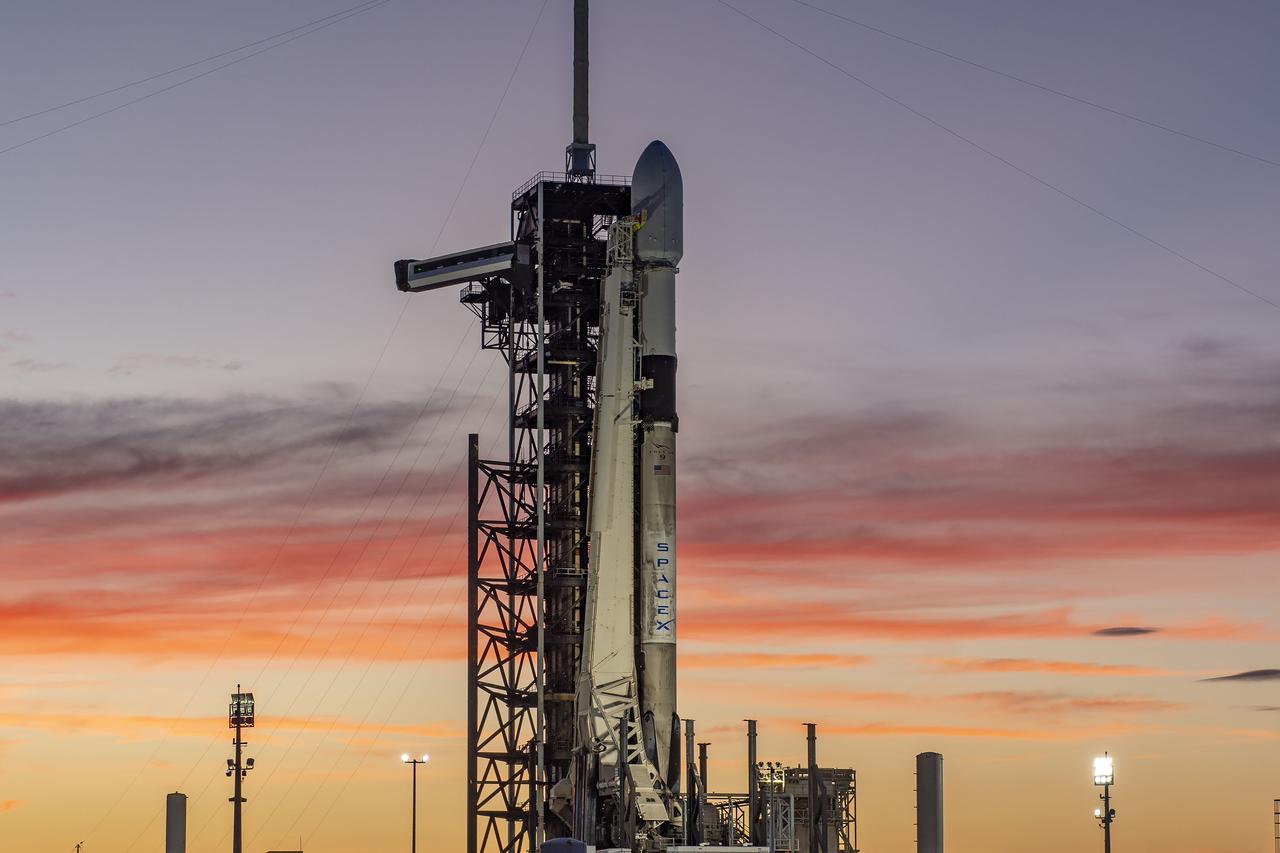
A SpaceX Falcon 9 rocket with NASA’s IMAP (Interstellar Mapping and Acceleration Probe), the agency’s Carruthers Geocorona Observatory, and National Oceanic and Atmospheric Administration’s (NOAA) Space Weather Follow On–Lagrange 1 (SWFO-L1) spacecraft atop stands vertical at Launch Complex 39A as the sun sets on Monday, Sept. 22, 2025, at the agency’s Kennedy Space Center in Florida. The missions will each focus on different effects of the solar wind — the continuous stream of particles emitted by the Sun — and space weather — the changing conditions in space driven by the Sun — from their origins at the Sun to their farthest reaches billions of miles away at the edge of our solar system.
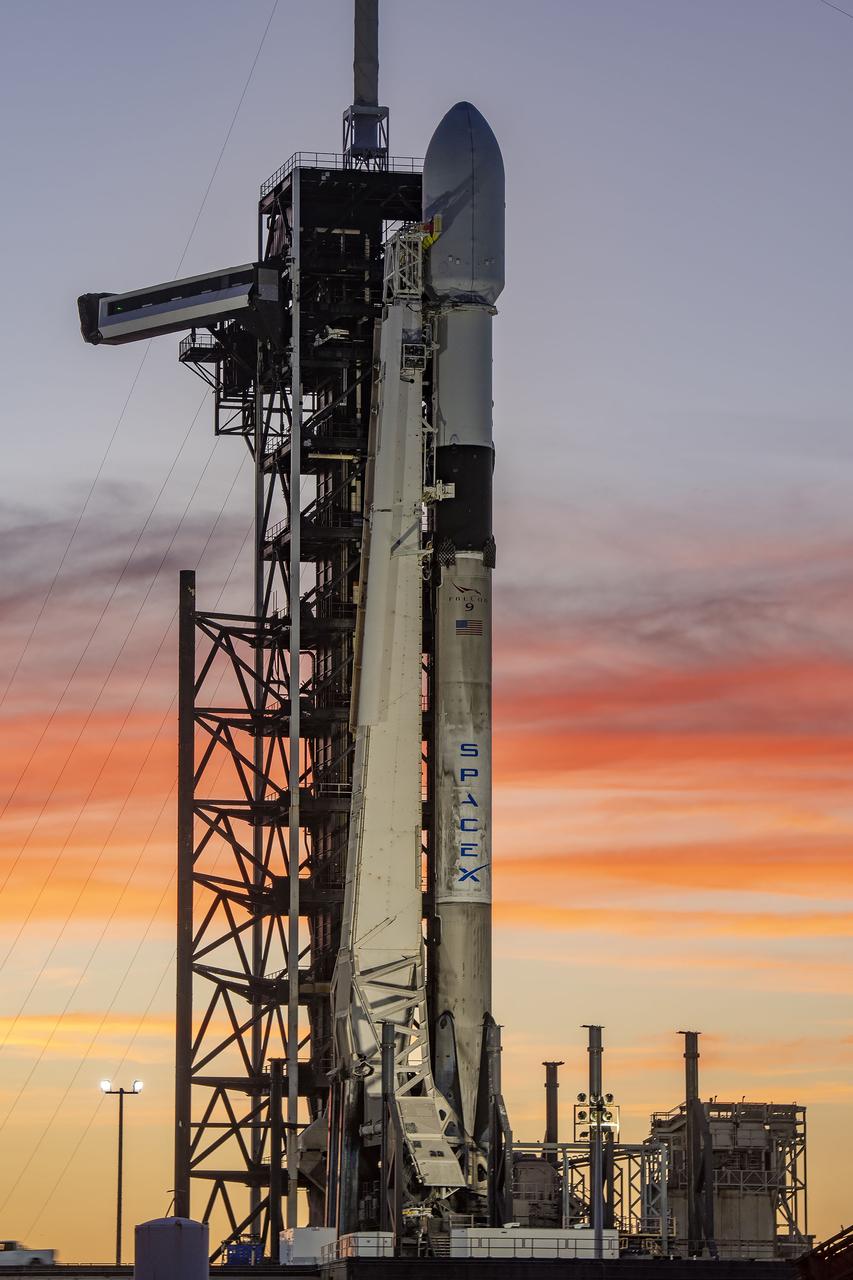
A SpaceX Falcon 9 rocket with NASA’s IMAP (Interstellar Mapping and Acceleration Probe), the agency’s Carruthers Geocorona Observatory, and National Oceanic and Atmospheric Administration’s (NOAA) Space Weather Follow On–Lagrange 1 (SWFO-L1) spacecraft atop stands vertical at Launch Complex 39A as the sun sets on Monday, Sept. 22, 2025, at the agency’s Kennedy Space Center in Florida. The missions will each focus on different effects of the solar wind — the continuous stream of particles emitted by the Sun — and space weather — the changing conditions in space driven by the Sun — from their origins at the Sun to their farthest reaches billions of miles away at the edge of our solar system.
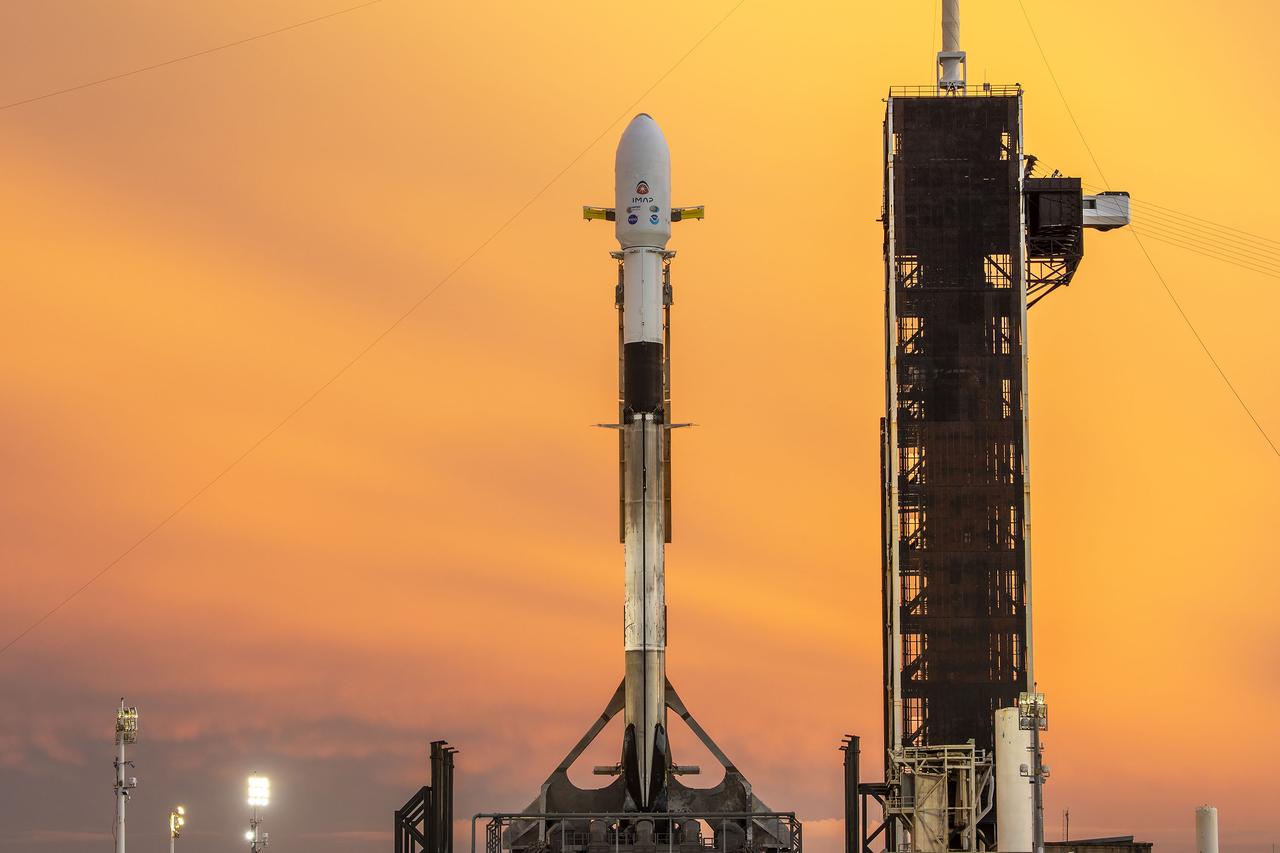
A SpaceX Falcon 9 rocket with NASA’s IMAP (Interstellar Mapping and Acceleration Probe), the agency’s Carruthers Geocorona Observatory, and National Oceanic and Atmospheric Administration’s (NOAA) Space Weather Follow On–Lagrange 1 (SWFO-L1) spacecraft atop stands vertical at Launch Complex 39A as the sun sets on Monday, Sept. 22, 2025, at the agency’s Kennedy Space Center in Florida. The missions will each focus on different effects of the solar wind — the continuous stream of particles emitted by the Sun — and space weather — the changing conditions in space driven by the Sun — from their origins at the Sun to their farthest reaches billions of miles away at the edge of our solar system.
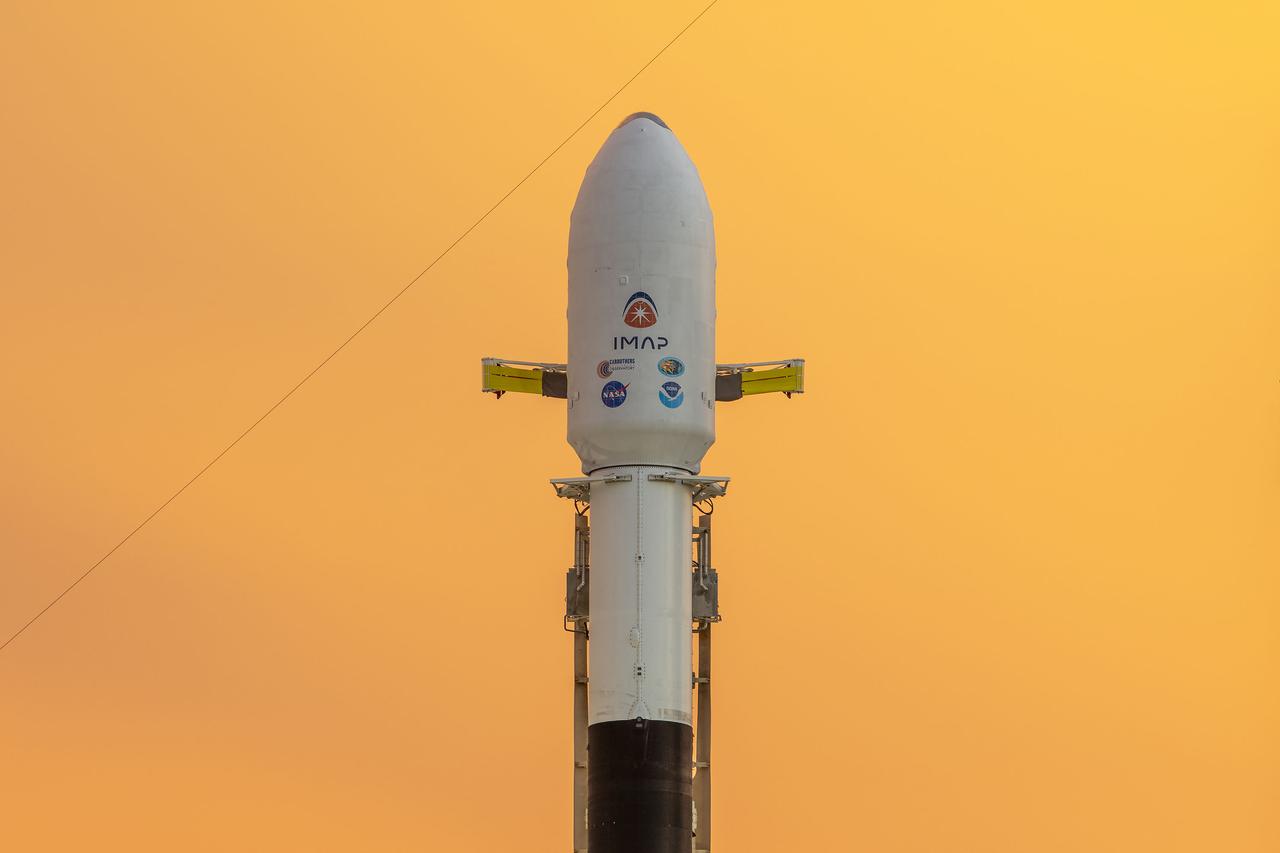
A SpaceX Falcon 9 rocket with NASA’s IMAP (Interstellar Mapping and Acceleration Probe), the agency’s Carruthers Geocorona Observatory, and National Oceanic and Atmospheric Administration’s (NOAA) Space Weather Follow On–Lagrange 1 (SWFO-L1) spacecraft atop stands vertical at Launch Complex 39A as the sun sets on Monday, Sept. 22, 2025, at the agency’s Kennedy Space Center in Florida. The missions will each focus on different effects of the solar wind — the continuous stream of particles emitted by the Sun — and space weather — the changing conditions in space driven by the Sun — from their origins at the Sun to their farthest reaches billions of miles away at the edge of our solar system.
A SpaceX Falcon 9 rocket with NASA’s IMAP (Interstellar Mapping and Acceleration Probe), the agency’s Carruthers Geocorona Observatory, and National Oceanic and Atmospheric Administration’s (NOAA) Space Weather Follow On–Lagrange 1 (SWFO-L1) spacecraft atop stands vertical at Launch Complex 39A as the sun sets on Monday, Sept. 22, 2025, at the agency’s Kennedy Space Center in Florida. The missions will each focus on different effects of the solar wind — the continuous stream of particles emitted by the Sun — and space weather — the changing conditions in space driven by the Sun — from their origins at the Sun to their farthest reaches billions of miles away at the edge of our solar system.
A SpaceX Falcon 9 rocket with NASA’s IMAP (Interstellar Mapping and Acceleration Probe), the agency’s Carruthers Geocorona Observatory, and National Oceanic and Atmospheric Administration’s (NOAA) Space Weather Follow On–Lagrange 1 (SWFO-L1) spacecraft atop stands vertical at Launch Complex 39A as the sun sets on Monday, Sept. 22, 2025, at the agency’s Kennedy Space Center in Florida. The missions will each focus on different effects of the solar wind — the continuous stream of particles emitted by the Sun — and space weather — the changing conditions in space driven by the Sun — from their origins at the Sun to their farthest reaches billions of miles away at the edge of our solar system.
A SpaceX Falcon 9 rocket with NASA’s IMAP (Interstellar Mapping and Acceleration Probe), the agency’s Carruthers Geocorona Observatory, and National Oceanic and Atmospheric Administration’s (NOAA) Space Weather Follow On–Lagrange 1 (SWFO-L1) spacecraft atop stands vertical at Launch Complex 39A as the sun sets on Monday, Sept. 22, 2025, at the agency’s Kennedy Space Center in Florida. The missions will each focus on different effects of the solar wind — the continuous stream of particles emitted by the Sun — and space weather — the changing conditions in space driven by the Sun — from their origins at the Sun to their farthest reaches billions of miles away at the edge of our solar system.
A SpaceX Falcon 9 rocket with NASA’s IMAP (Interstellar Mapping and Acceleration Probe), the agency’s Carruthers Geocorona Observatory, and National Oceanic and Atmospheric Administration’s (NOAA) Space Weather Follow On–Lagrange 1 (SWFO-L1) spacecraft atop stands vertical at Launch Complex 39A as the sun sets on Monday, Sept. 22, 2025, at the agency’s Kennedy Space Center in Florida. The missions will each focus on different effects of the solar wind — the continuous stream of particles emitted by the Sun — and space weather — the changing conditions in space driven by the Sun — from their origins at the Sun to their farthest reaches billions of miles away at the edge of our solar system.
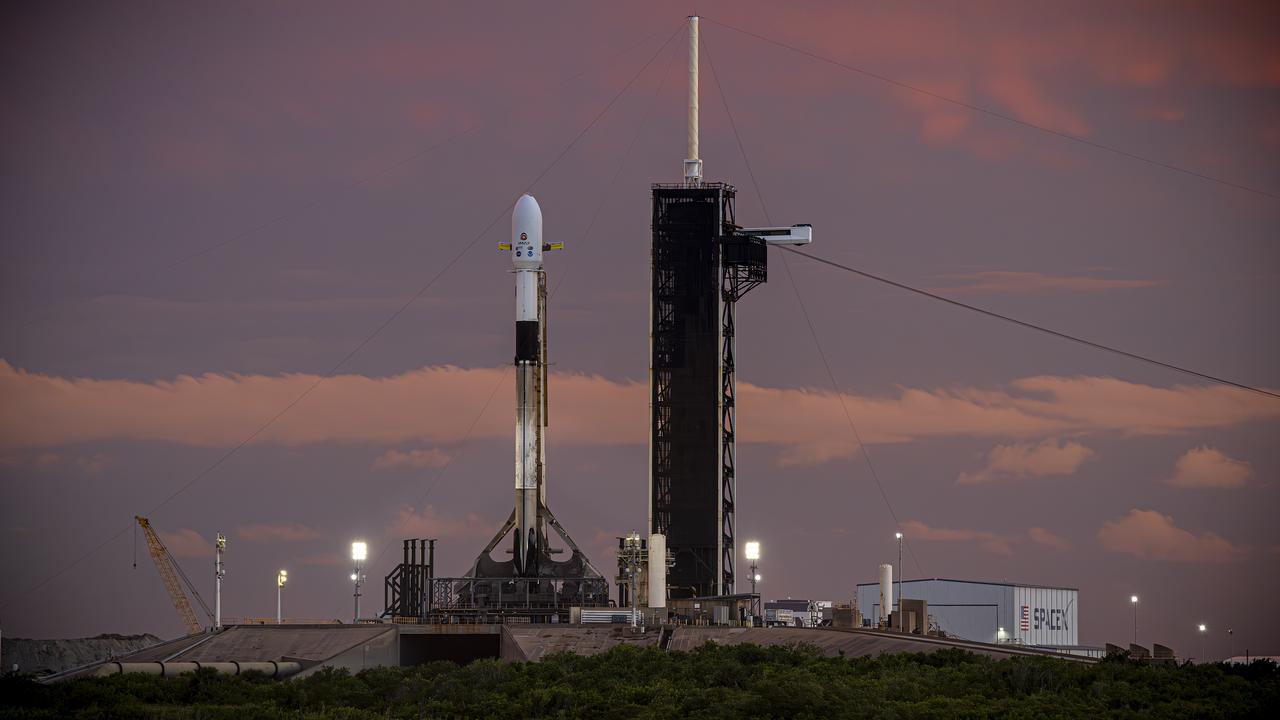
A SpaceX Falcon 9 rocket with NASA’s IMAP (Interstellar Mapping and Acceleration Probe), the agency’s Carruthers Geocorona Observatory, and National Oceanic and Atmospheric Administration’s (NOAA) Space Weather Follow On–Lagrange 1 (SWFO-L1) spacecraft atop stands vertical at Launch Complex 39A as the sun sets on Monday, Sept. 22, 2025, at the agency’s Kennedy Space Center in Florida. The missions will each focus on different effects of the solar wind — the continuous stream of particles emitted by the Sun — and space weather — the changing conditions in space driven by the Sun — from their origins at the Sun to their farthest reaches billions of miles away at the edge of our solar system.
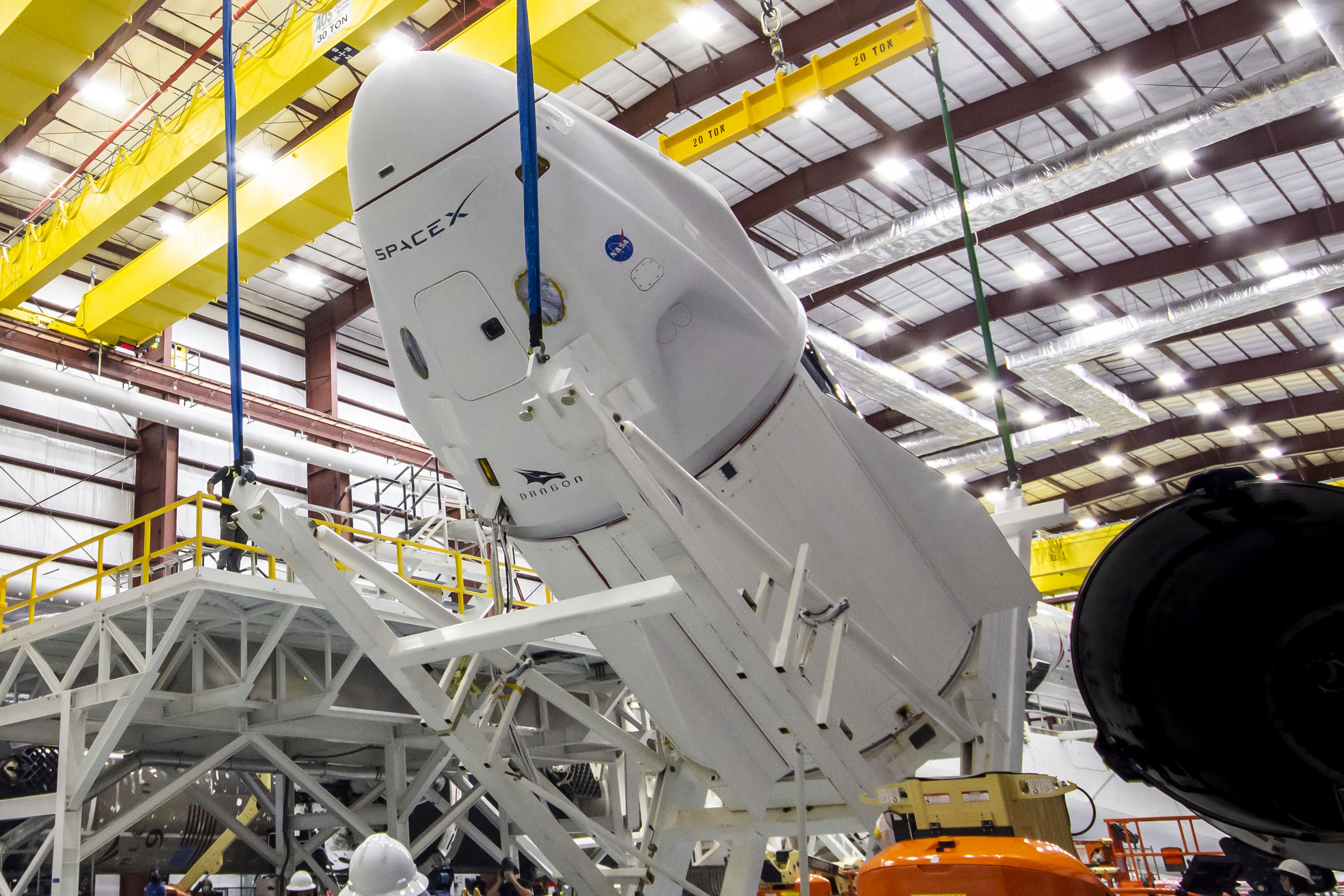
SpaceX’s Crew Dragon, named Endeavour, is lifted and mated to the SpaceX Falcon 9 rocket at NASA Kennedy Space Center’s Launch Complex 39A beginning April 13, 2021. Endeavour was transported to the Launch Complex 39A integration hangar on April 12, after making the trek from its processing facility at nearby Cape Canaveral Space Force Station. NASA astronauts Shane Kimbrough and Megan McArthur, JAXA astronaut Akihiko Hoshide, and ESA astronaut Thomas Pesquet will fly to the International Space Station on NASA’s SpaceX Crew-2 mission. Liftoff is set for Thursday, April 22, at 6:11 a.m. EDT.
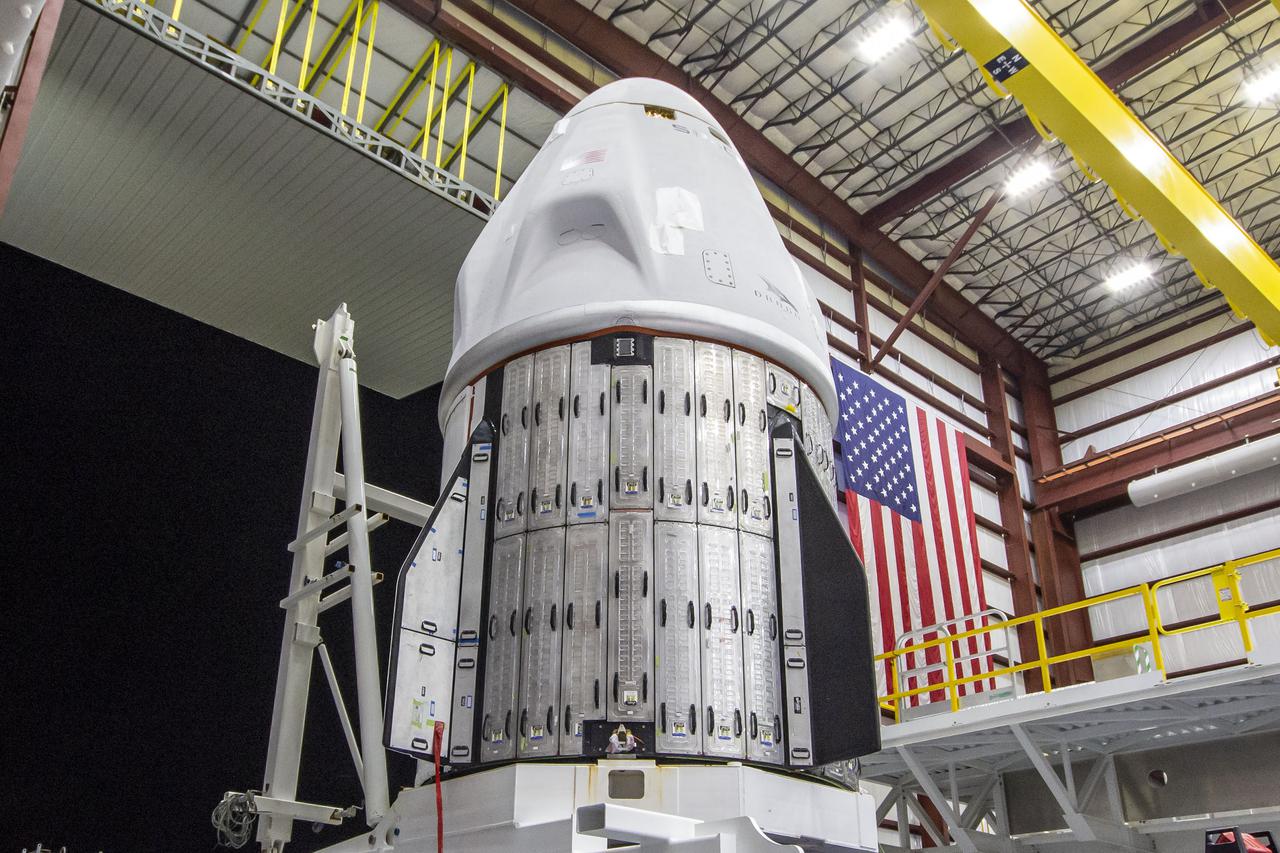
SpaceX’s Crew Dragon, named Endeavour, is lifted and mated to the SpaceX Falcon 9 rocket at NASA Kennedy Space Center’s Launch Complex 39A beginning April 13, 2021. Endeavour was transported to the Launch Complex 39A integration hangar on April 12, after making the trek from its processing facility at nearby Cape Canaveral Space Force Station. NASA astronauts Shane Kimbrough and Megan McArthur, JAXA astronaut Akihiko Hoshide, and ESA astronaut Thomas Pesquet will fly to the International Space Station on NASA’s SpaceX Crew-2 mission. Liftoff is set for Thursday, April 22, at 6:11 a.m. EDT.
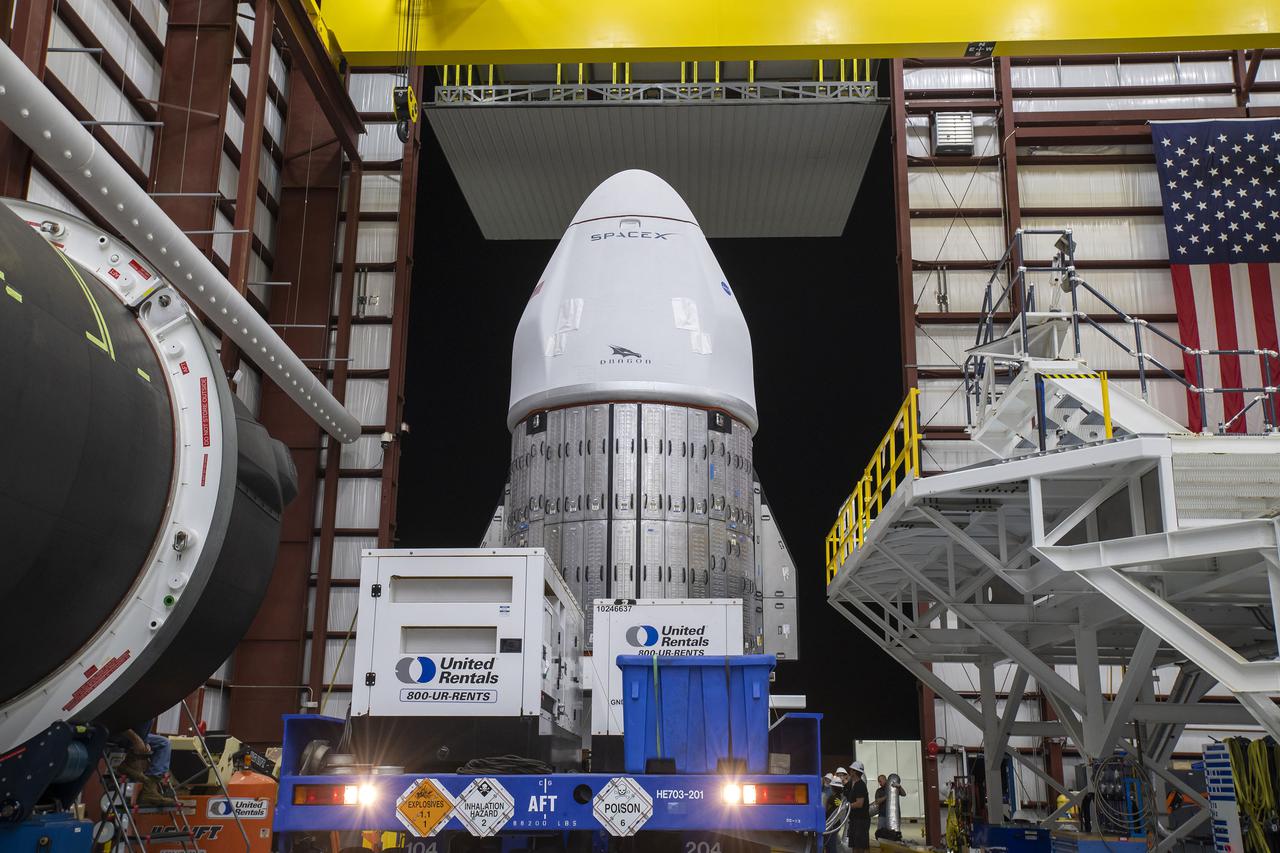
The SpaceX Dragon spacecraft that will fly on the company’s 22nd commercial resupply services mission to the International Space Station is now ready for its journey to space. On Thursday, May 27, teams transported the spacecraft from SpaceX’s processing facility at Cape Canaveral Space Force Station into the hangar at nearby Kennedy Space Center’s Launch Complex 39A, where it was attached to the Falcon 9 rocket. Liftoff of the Falcon 9 is scheduled for 1:29 p.m. EDT on Thursday, June 3.
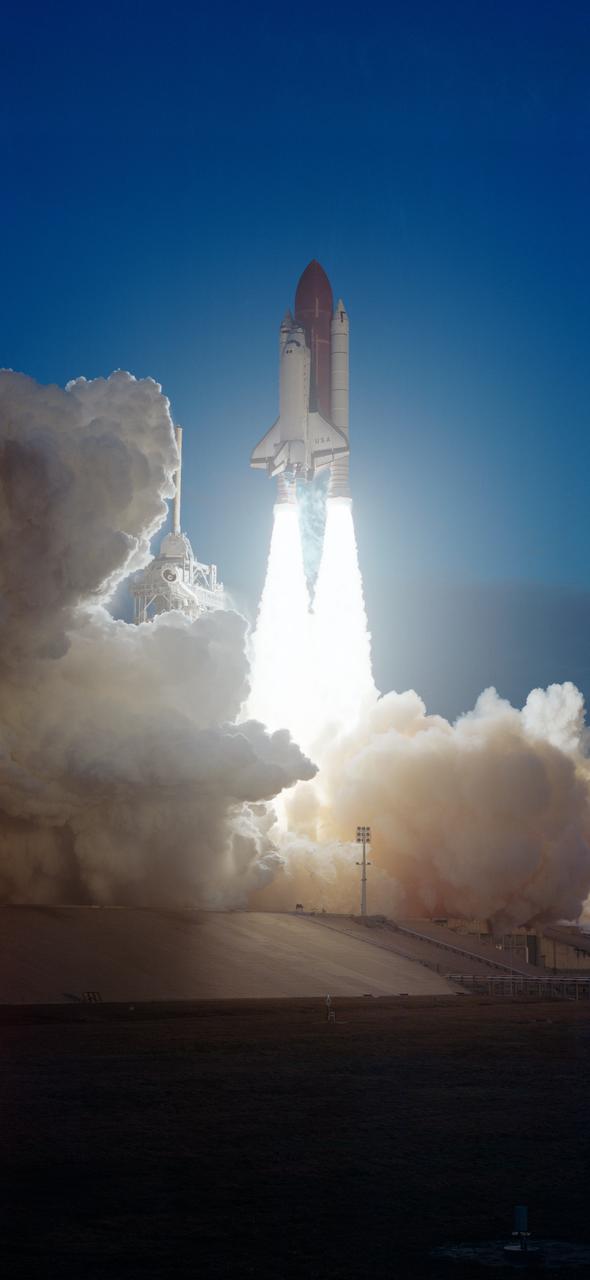
STS-32 Columbia, Orbiter Vehicle (OV) 102, atop the external tank (ET) and flanked by two solid rocket boosters (SRBs) rises above the mobile launcher platform and is nearly clear of the fixed service structure (FSS) tower at Kennedy Space Center (KSC) Launch Complex (LC) Pad 39A. Plumes of smoke billow from the SRBs and cover the launch pad in a cloud. Liftoff occurred at 7:34:59:98 am Eastern Standard Time (EST) some 24 hours after dubious weather at the return-to-landing site (RTLS) had cancelled a scheduled launch. OV-102's launch is highlighted against the early morning darkness.
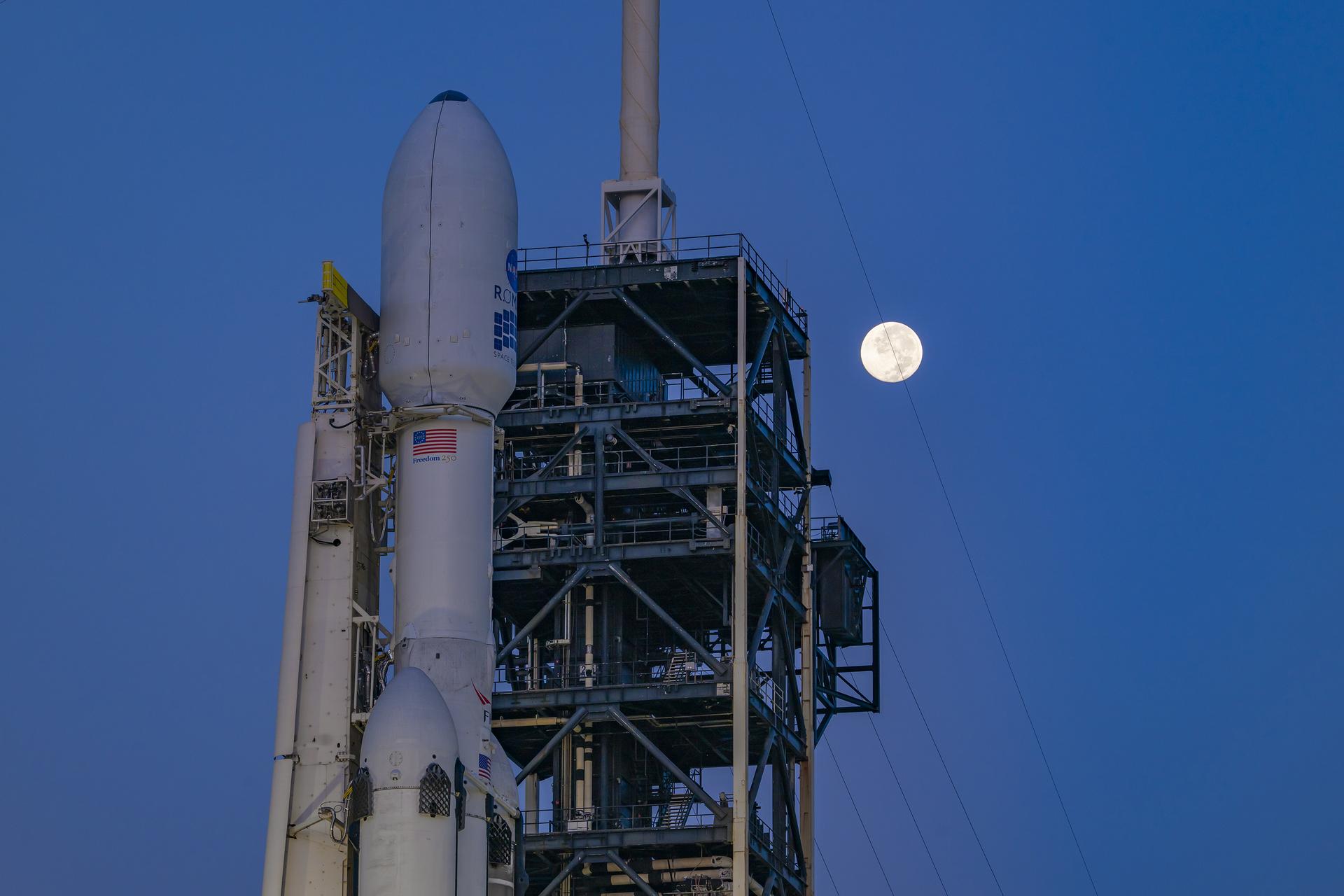
NASA’s Nancy Grace Roman Space Telescope, encapsulated in the SpaceX Falcon Heavy rocket’s fairing, stands vertical on the pad at Launch Complex 39A at NASA’s Kennedy Space Center on Saturday, Aug. 29, 2026. Roman will investigate dark energy and dark matter, conduct a statistical census of planetary systems, and enable a broad range of additional astrophysics research. Liftoff from NASA Kennedy is targeted for 7:26 a.m. EDT Sunday, Aug. 30, 2026.
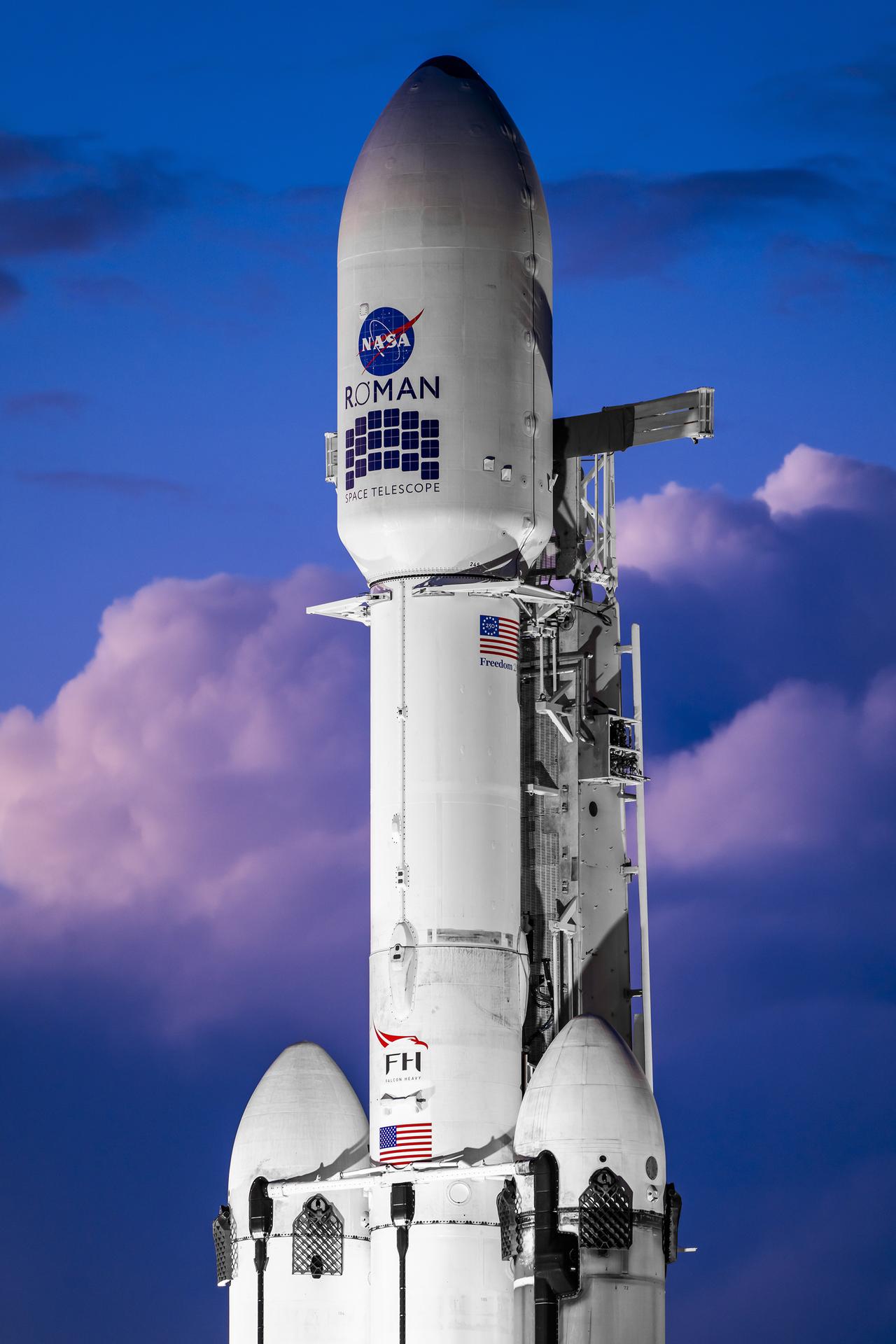
NASA’s Nancy Grace Roman Space Telescope, encapsulated in the SpaceX Falcon Heavy rocket’s fairing, stands vertical on the pad at Launch Complex 39A at NASA’s Kennedy Space Center on Saturday, Aug. 29, 2026. Roman will investigate dark energy and dark matter, conduct a statistical census of planetary systems, and enable a broad range of additional astrophysics research. Liftoff from NASA Kennedy is targeted for 7:26 a.m. EDT Sunday, Aug. 30, 2026.
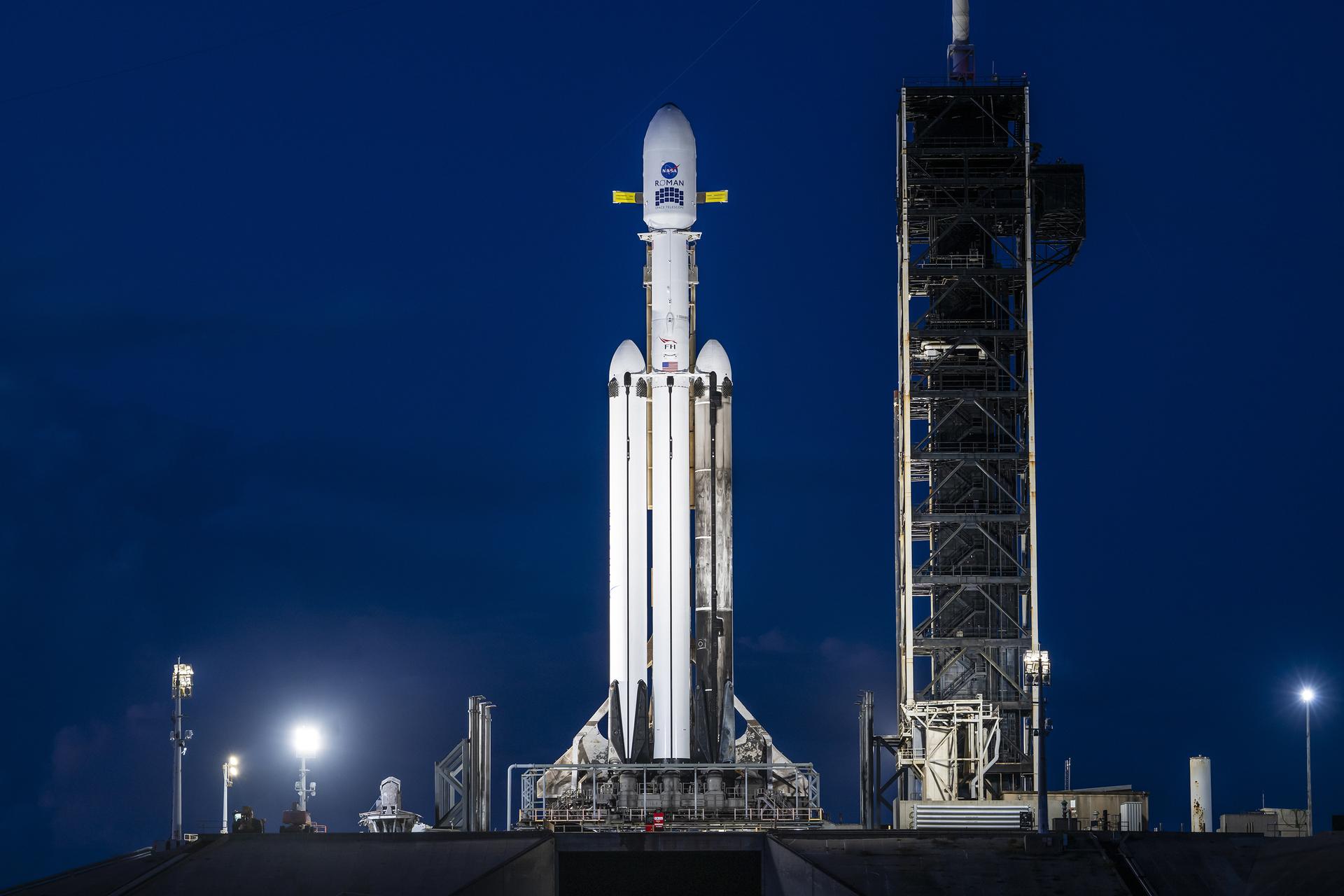
NASA’s Nancy Grace Roman Space Telescope, encapsulated in the SpaceX Falcon Heavy rocket’s fairing, stands vertical on the pad at Launch Complex 39A at NASA’s Kennedy Space Center on Saturday, Aug. 29, 2026. Roman will investigate dark energy and dark matter, conduct a statistical census of planetary systems, and enable a broad range of additional astrophysics research. Liftoff from NASA Kennedy is targeted for 7:26 a.m. EDT Sunday, Aug. 30, 2026.
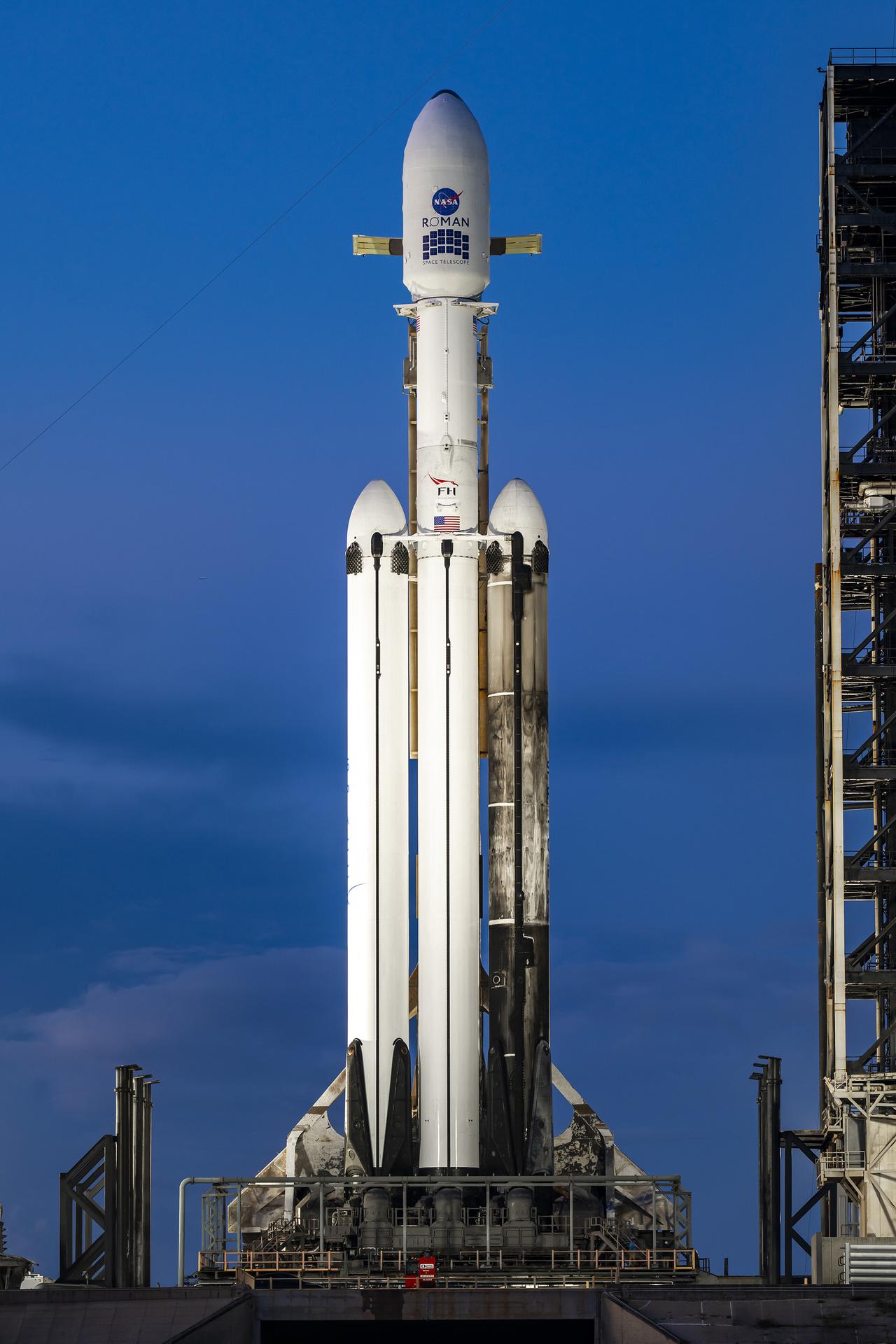
NASA’s Nancy Grace Roman Space Telescope, encapsulated in the SpaceX Falcon Heavy rocket’s fairing, stands vertical on the pad at Launch Complex 39A at NASA’s Kennedy Space Center on Saturday, Aug. 29, 2026. Roman will investigate dark energy and dark matter, conduct a statistical census of planetary systems, and enable a broad range of additional astrophysics research. Liftoff from NASA Kennedy is targeted for 7:26 a.m. EDT Sunday, Aug. 30, 2026.
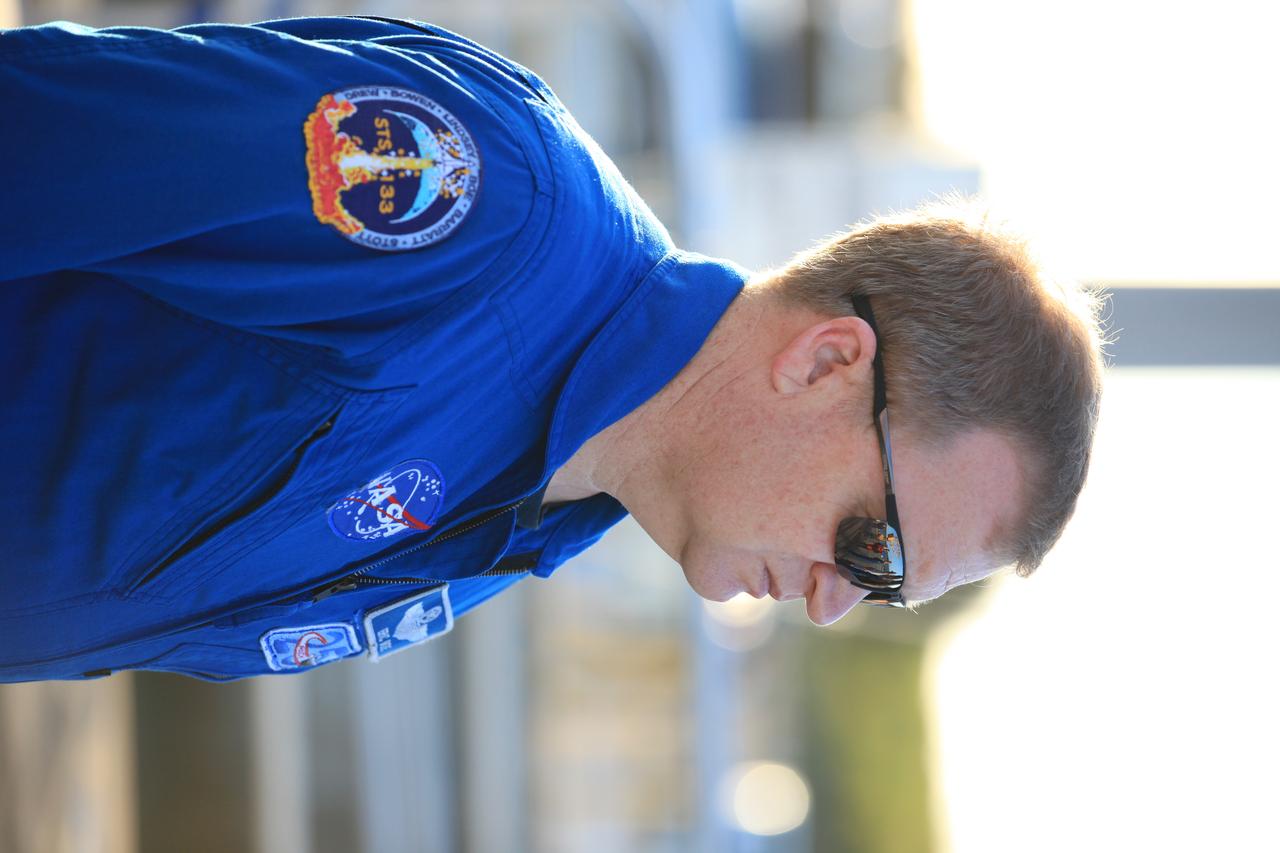
Commercial Crew Astronauts Bob Behnken , Eric Boe, Doug Hurley, and Suni Williams survey SpaceX's progress at Launch Complex 39 A. The survey helped ensure the was familiar with the launch complex and recovery ship prior to missions to station.
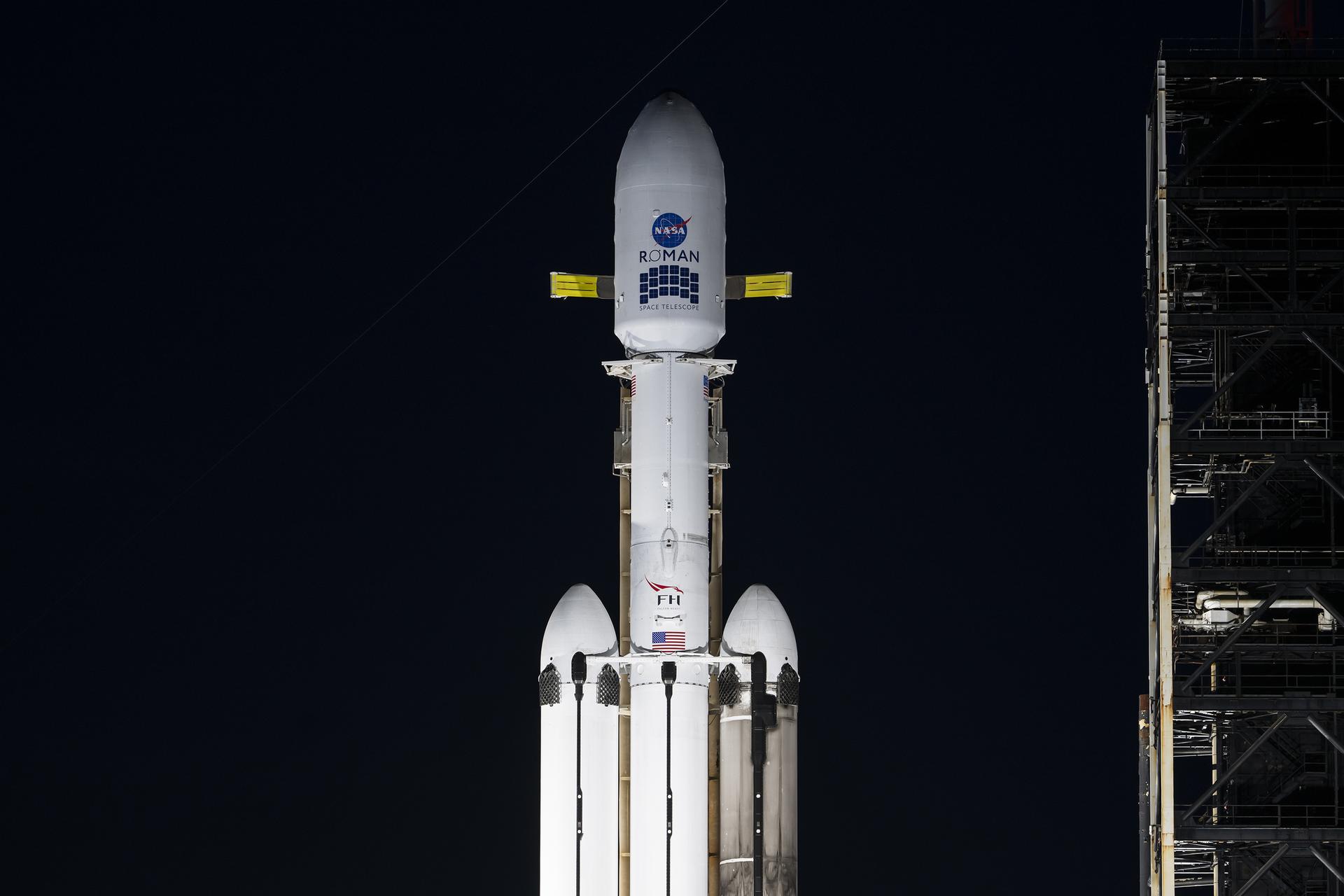
NASA’s Nancy Grace Roman Space Telescope, encapsulated in the SpaceX Falcon Heavy rocket’s fairing, stands vertical on the pad at Launch Complex 39A at NASA’s Kennedy Space Center on Saturday, Aug. 29, 2026. Roman will investigate dark energy and dark matter, conduct a statistical census of planetary systems, and enable a broad range of additional astrophysics research. Liftoff from NASA Kennedy is targeted for 7:26 a.m. EDT Sunday, Aug. 30, 2026.
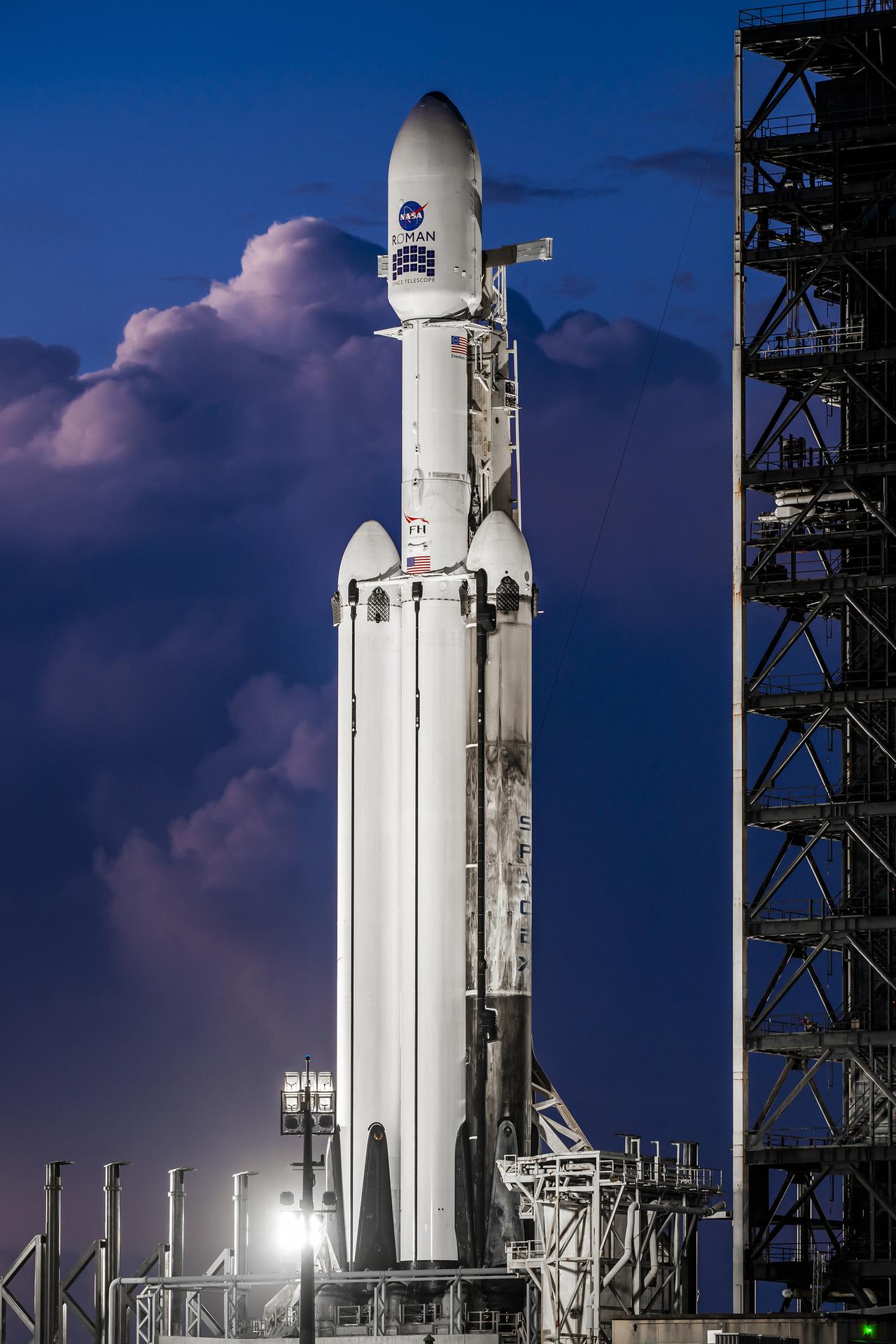
NASA’s Nancy Grace Roman Space Telescope, encapsulated in the SpaceX Falcon Heavy rocket’s fairing, stands vertical on the pad at Launch Complex 39A at NASA’s Kennedy Space Center on Saturday, Aug. 29, 2026. Roman will investigate dark energy and dark matter, conduct a statistical census of planetary systems, and enable a broad range of additional astrophysics research. Liftoff from NASA Kennedy is targeted for 7:26 a.m. EDT Sunday, Aug. 30, 2026.
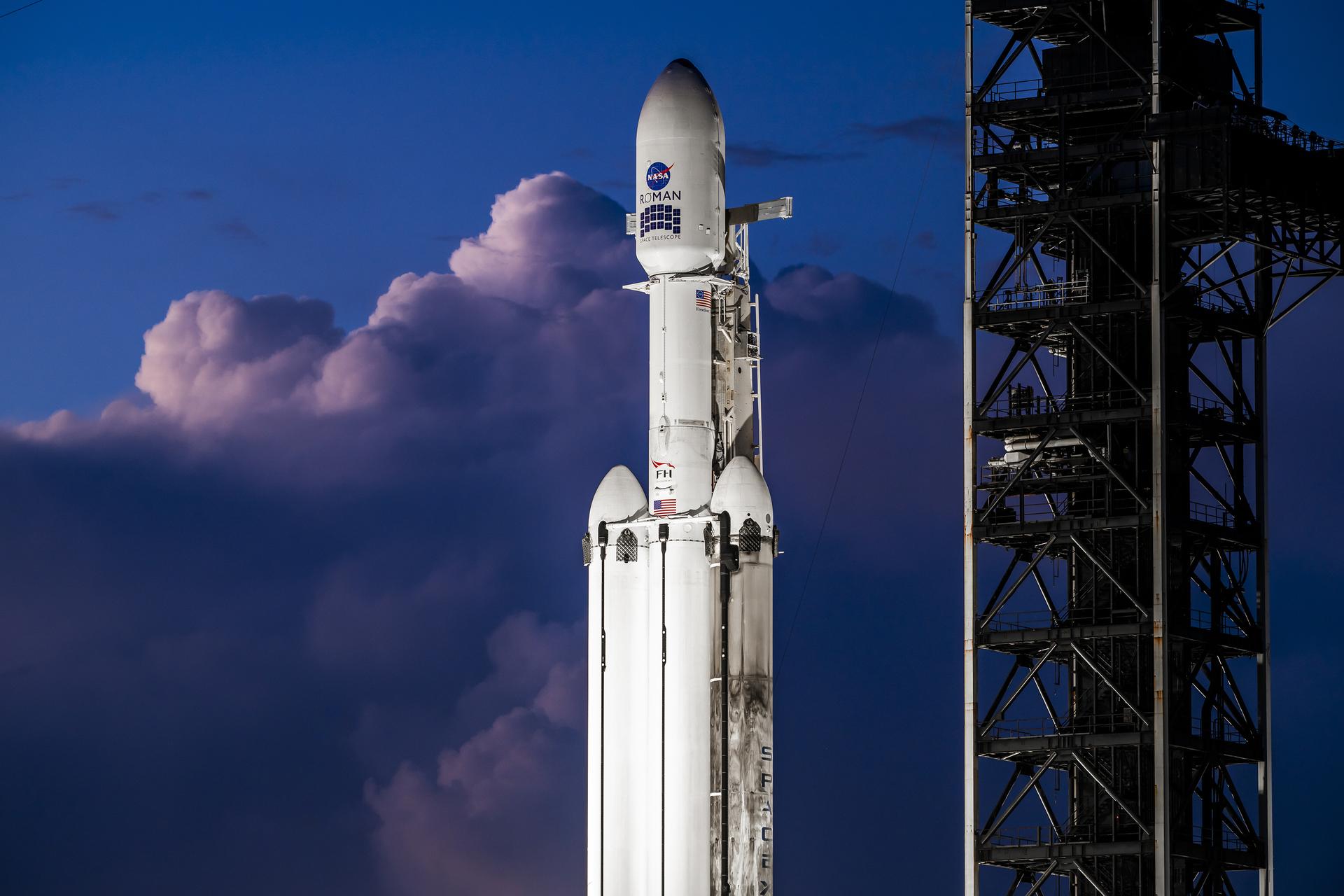
NASA’s Nancy Grace Roman Space Telescope, encapsulated in the SpaceX Falcon Heavy rocket’s fairing, stands vertical on the pad at Launch Complex 39A at NASA’s Kennedy Space Center on Saturday, Aug. 29, 2026. Roman will investigate dark energy and dark matter, conduct a statistical census of planetary systems, and enable a broad range of additional astrophysics research. Liftoff from NASA Kennedy is targeted for 7:26 a.m. EDT Sunday, Aug. 30, 2026.
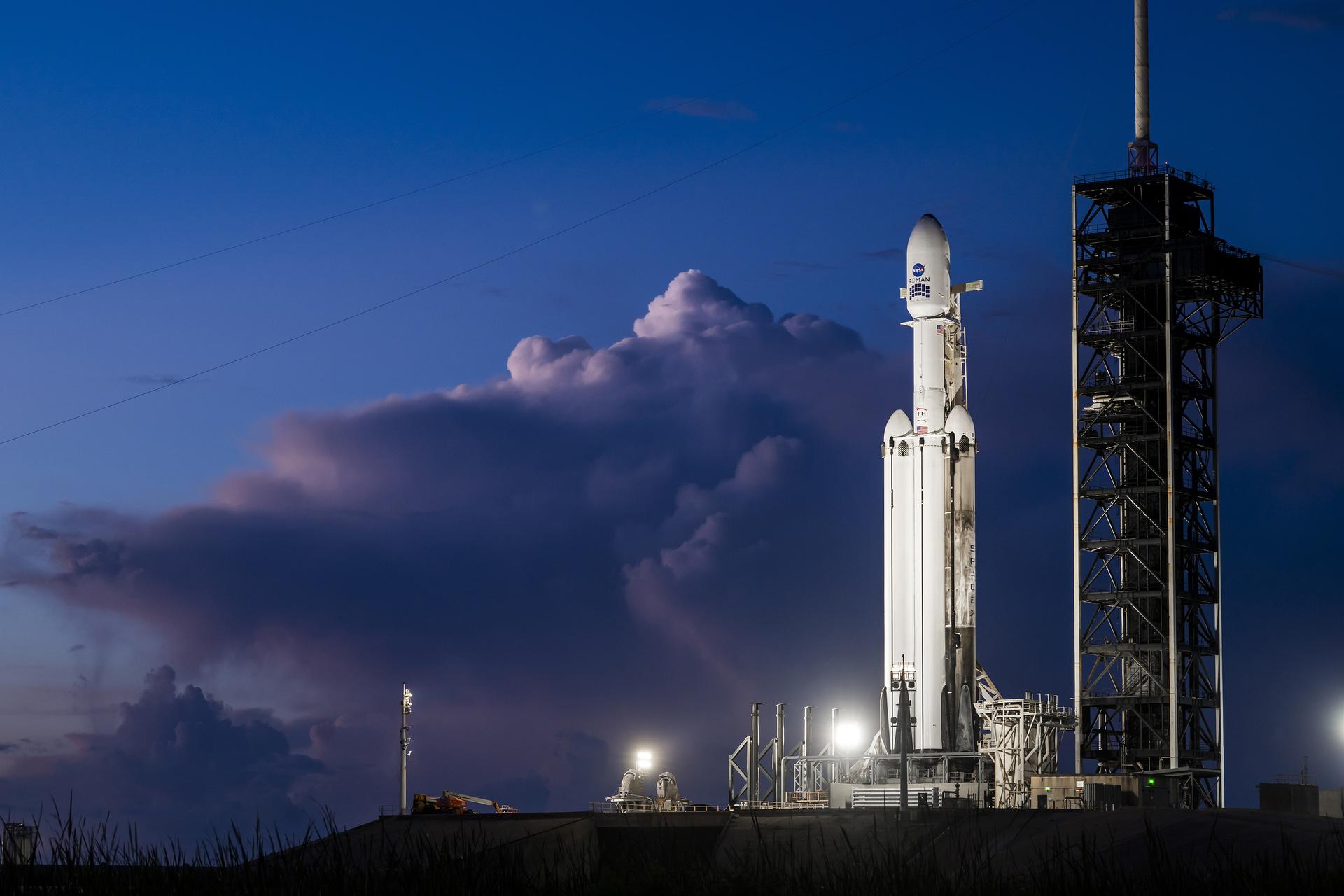
NASA’s Nancy Grace Roman Space Telescope, encapsulated in the SpaceX Falcon Heavy rocket’s fairing, stands vertical on the pad at Launch Complex 39A at NASA’s Kennedy Space Center on Saturday, Aug. 29, 2026. Roman will investigate dark energy and dark matter, conduct a statistical census of planetary systems, and enable a broad range of additional astrophysics research. Liftoff from NASA Kennedy is targeted for 7:26 a.m. EDT Sunday, Aug. 30, 2026.
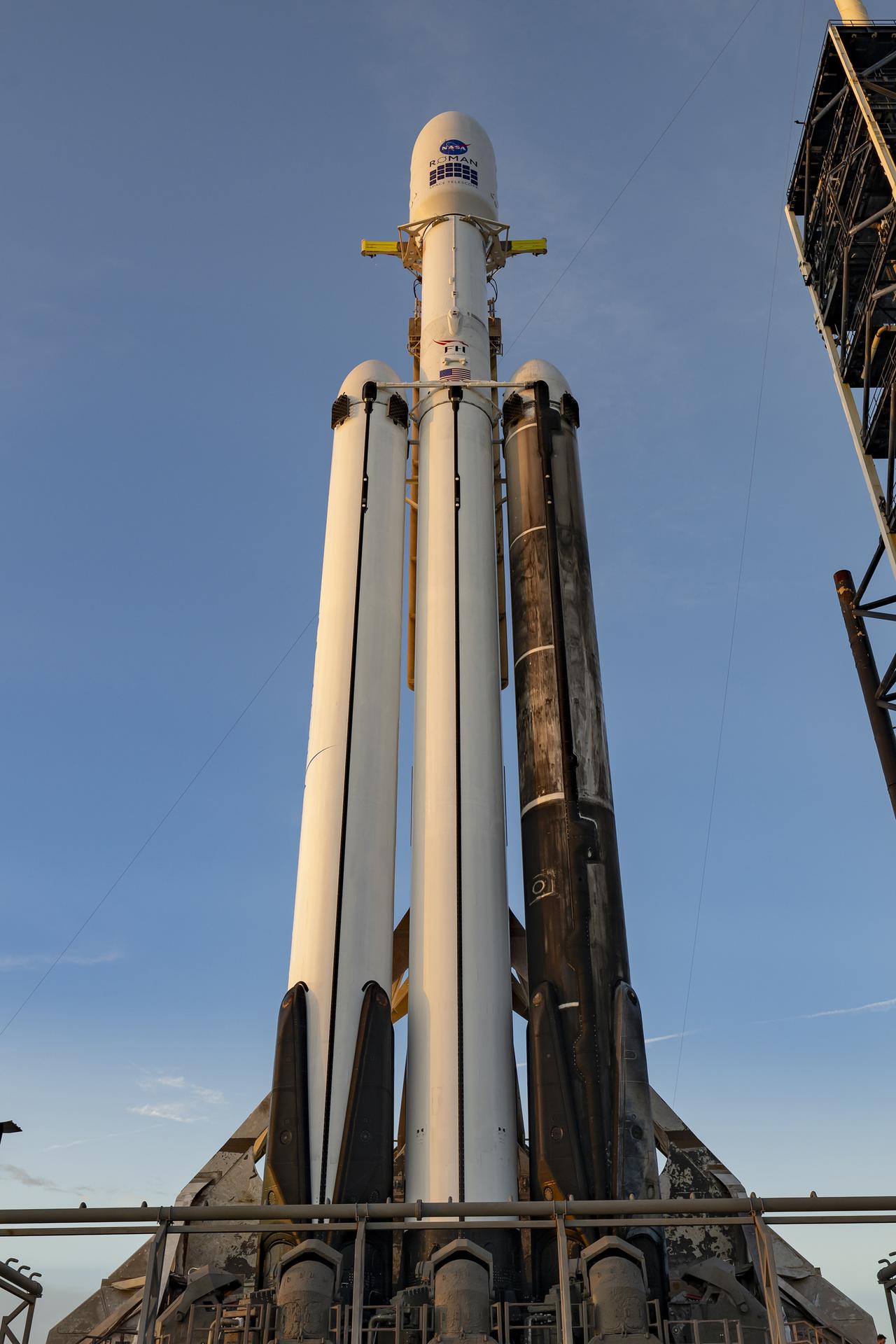
NASA’s Nancy Grace Roman Space Telescope, encapsulated in the SpaceX Falcon Heavy rocket’s fairing, stands vertical on the pad at Launch Complex 39A at NASA’s Kennedy Space Center on Saturday, Aug. 29, 2026. Roman will investigate dark energy and dark matter, conduct a statistical census of planetary systems, and enable a broad range of additional astrophysics research. Liftoff from NASA Kennedy is targeted for 7:26 a.m. EDT Sunday, Aug. 30, 2026.
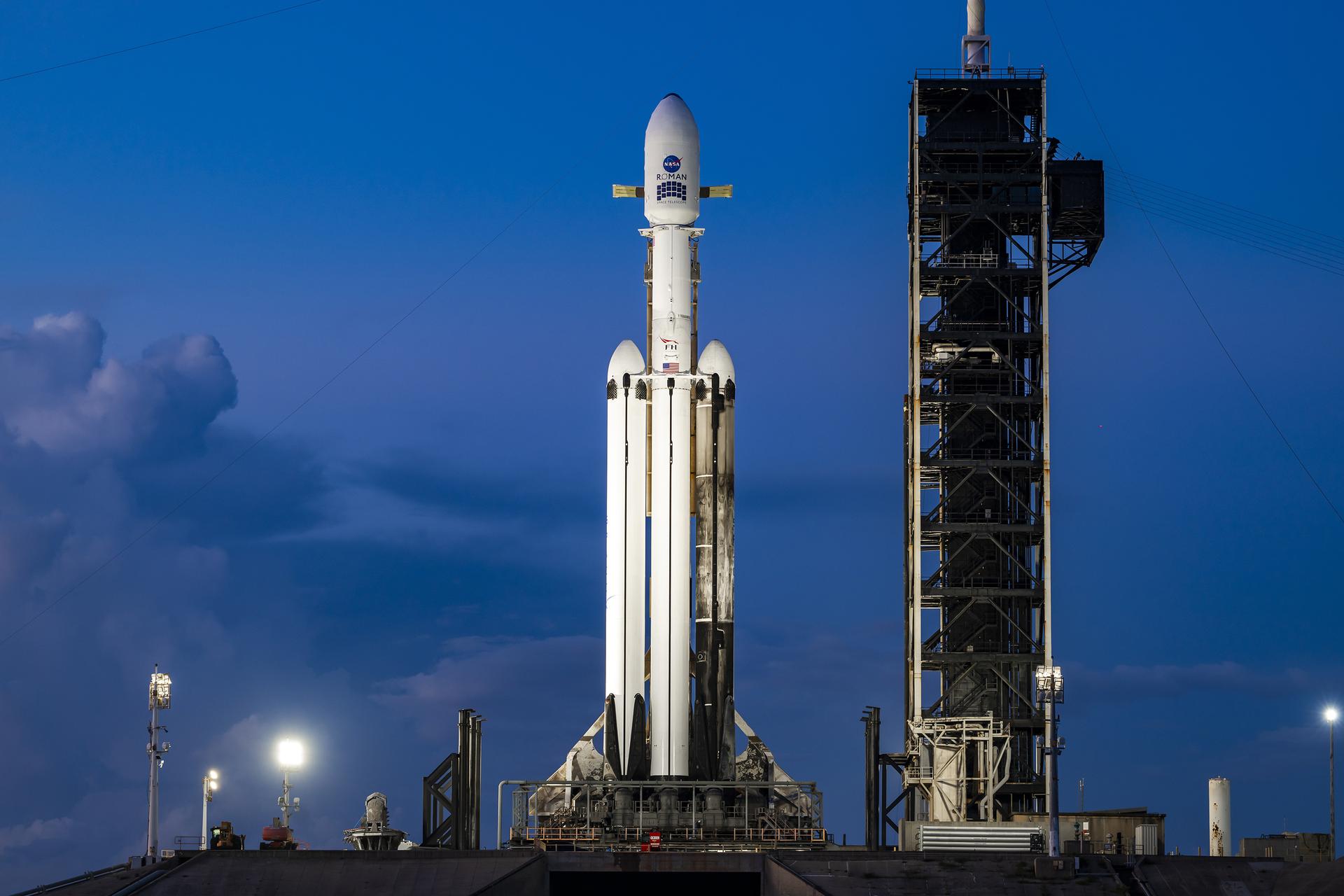
NASA’s Nancy Grace Roman Space Telescope, encapsulated in the SpaceX Falcon Heavy rocket’s fairing, stands vertical on the pad at Launch Complex 39A at NASA’s Kennedy Space Center on Saturday, Aug. 29, 2026. Roman will investigate dark energy and dark matter, conduct a statistical census of planetary systems, and enable a broad range of additional astrophysics research. Liftoff from NASA Kennedy is targeted for 7:26 a.m. EDT Sunday, Aug. 30, 2026.
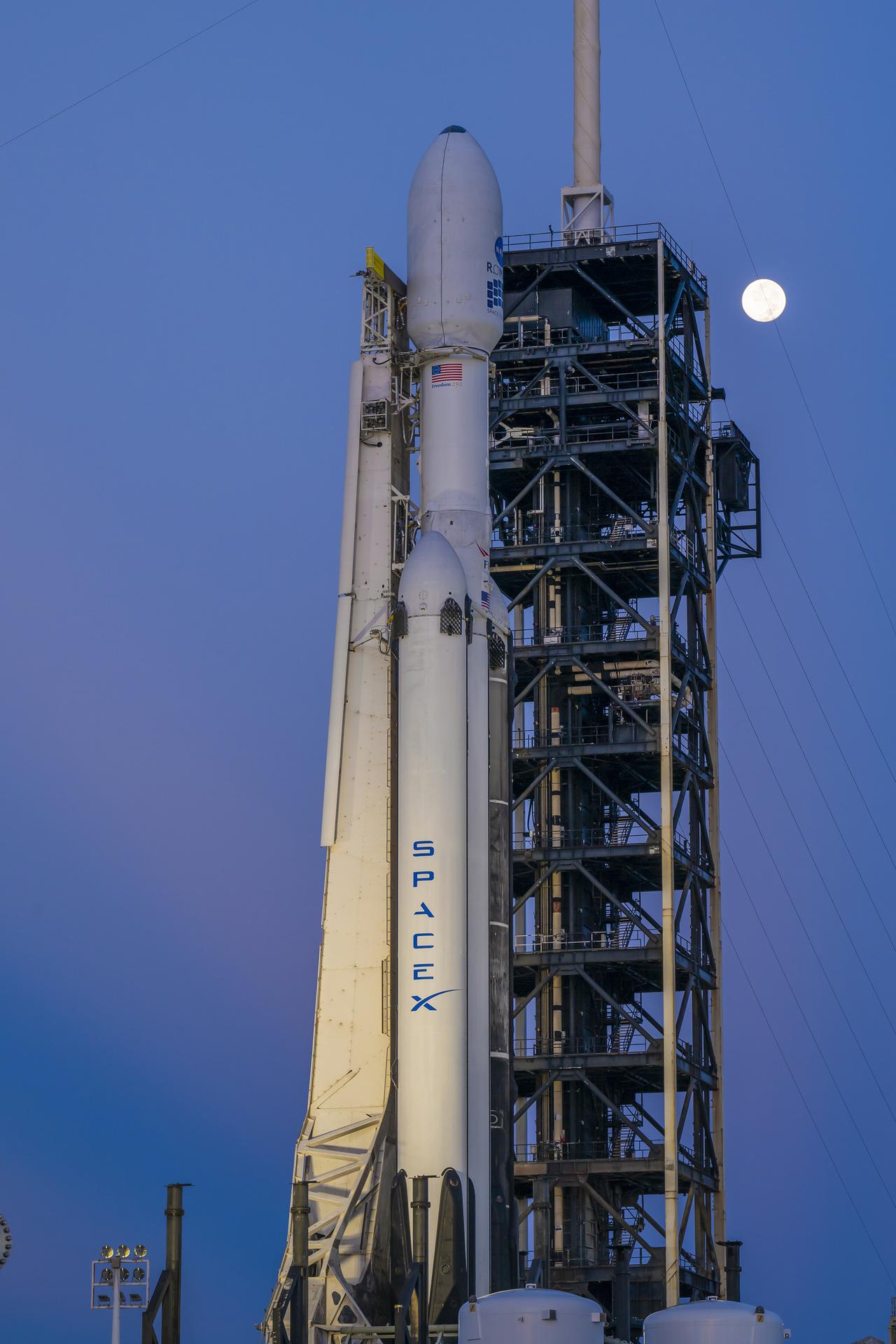
NASA’s Nancy Grace Roman Space Telescope, encapsulated in the SpaceX Falcon Heavy rocket’s fairing, stands vertical on the pad at Launch Complex 39A at NASA’s Kennedy Space Center on Saturday, Aug. 29, 2026. Roman will investigate dark energy and dark matter, conduct a statistical census of planetary systems, and enable a broad range of additional astrophysics research. Liftoff from NASA Kennedy is targeted for 7:26 a.m. EDT Sunday, Aug. 30, 2026.
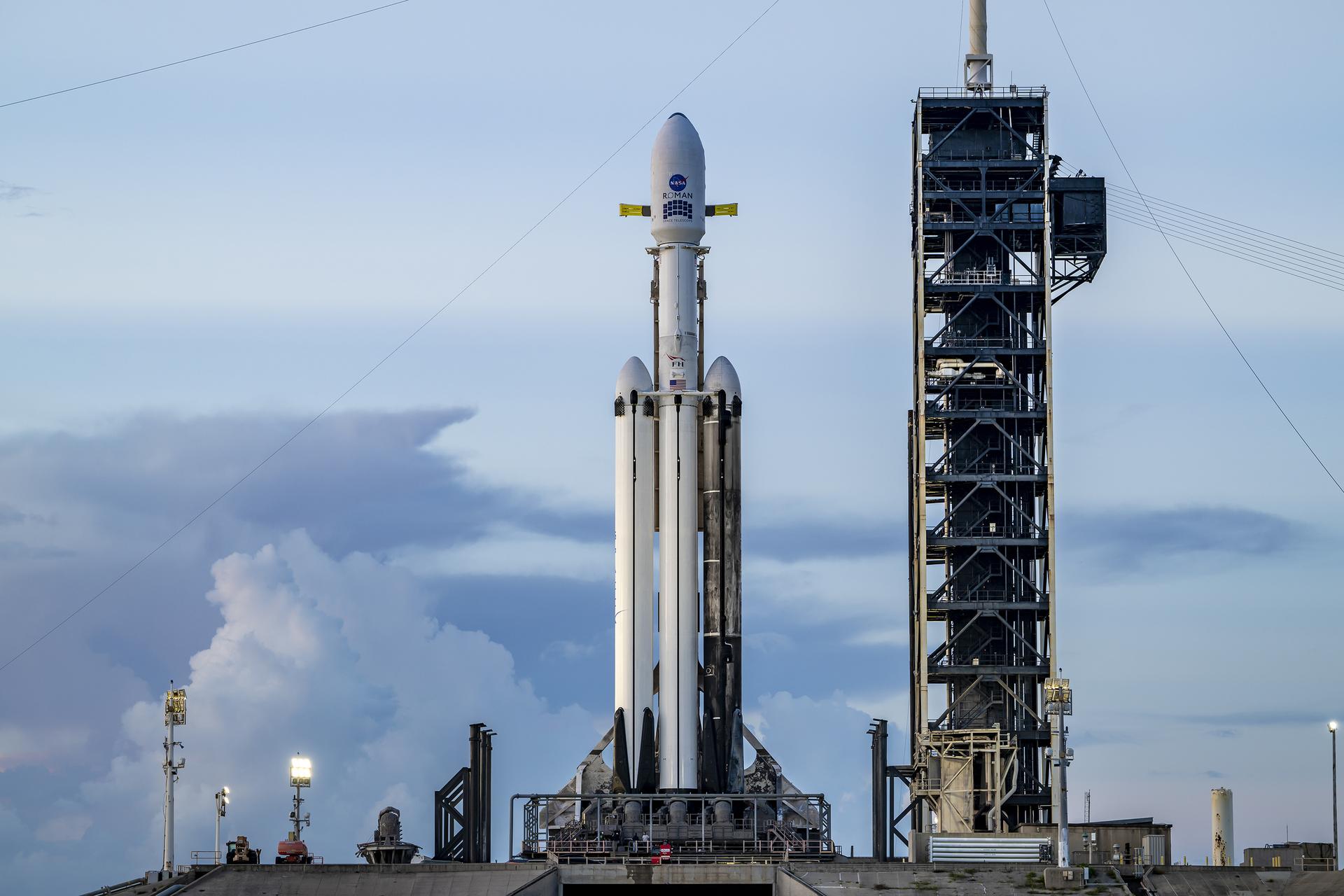
NASA’s Nancy Grace Roman Space Telescope, encapsulated in the SpaceX Falcon Heavy rocket’s fairing, stands vertical on the pad at Launch Complex 39A at NASA’s Kennedy Space Center on Saturday, Aug. 29, 2026. Roman will investigate dark energy and dark matter, conduct a statistical census of planetary systems, and enable a broad range of additional astrophysics research. Liftoff from NASA Kennedy is targeted for 7:26 a.m. EDT Sunday, Aug. 30, 2026.
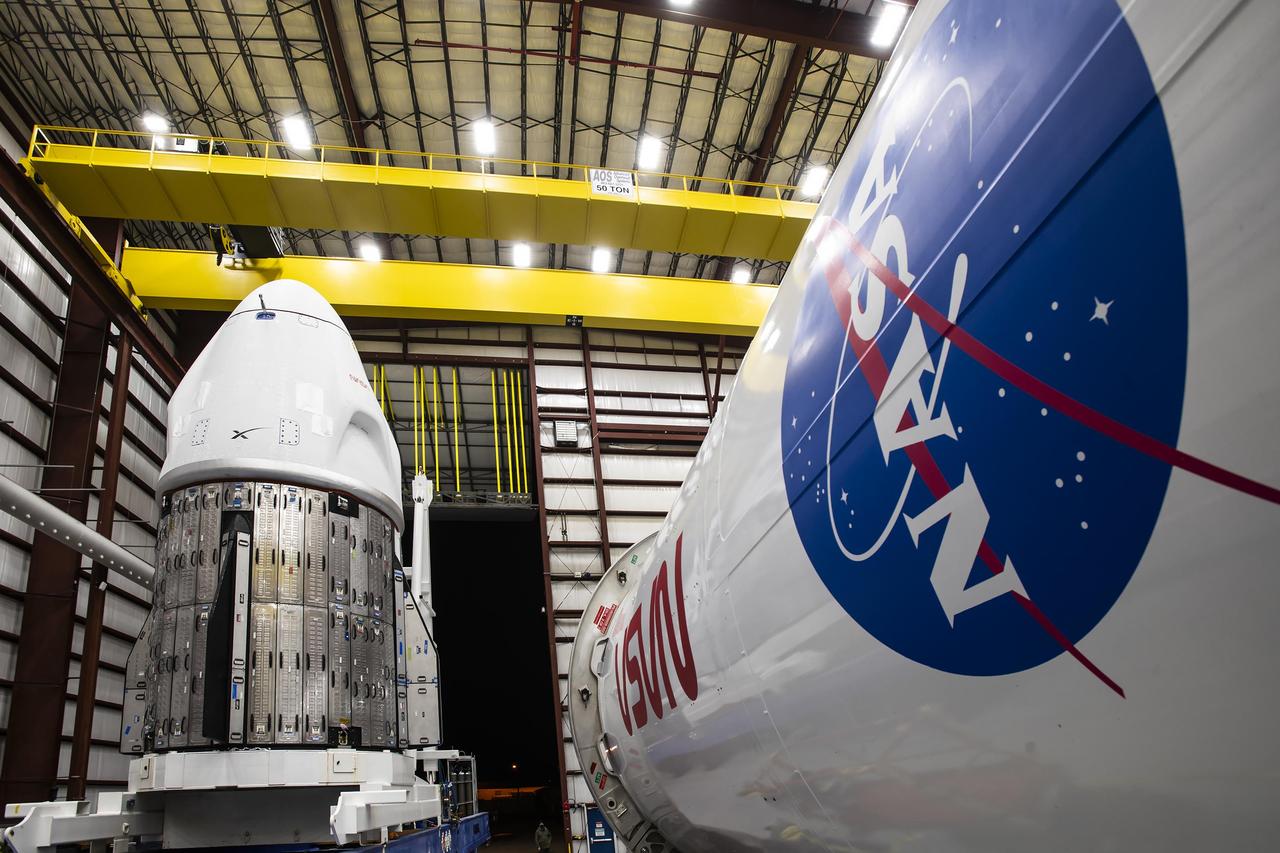
Inside the SpaceX horizontal processing facility at Launch Complex 39A at NASA’s Kennedy Space Center in Florida, the company's Dragon spacecraft is pictured next to a Falcon 9 rocket on Monday, Feb. 19, 2024, prior to integration for NASA’s SpaceX Crew-8 mission to the International Space Station. Liftoff of the eighth crew rotation mission with SpaceX to the station, and the ninth flight of Dragon with people as part of the agency’s Commercial Crew Program is slated for no earlier than 12:04 a.m. EST on Friday, March 1.
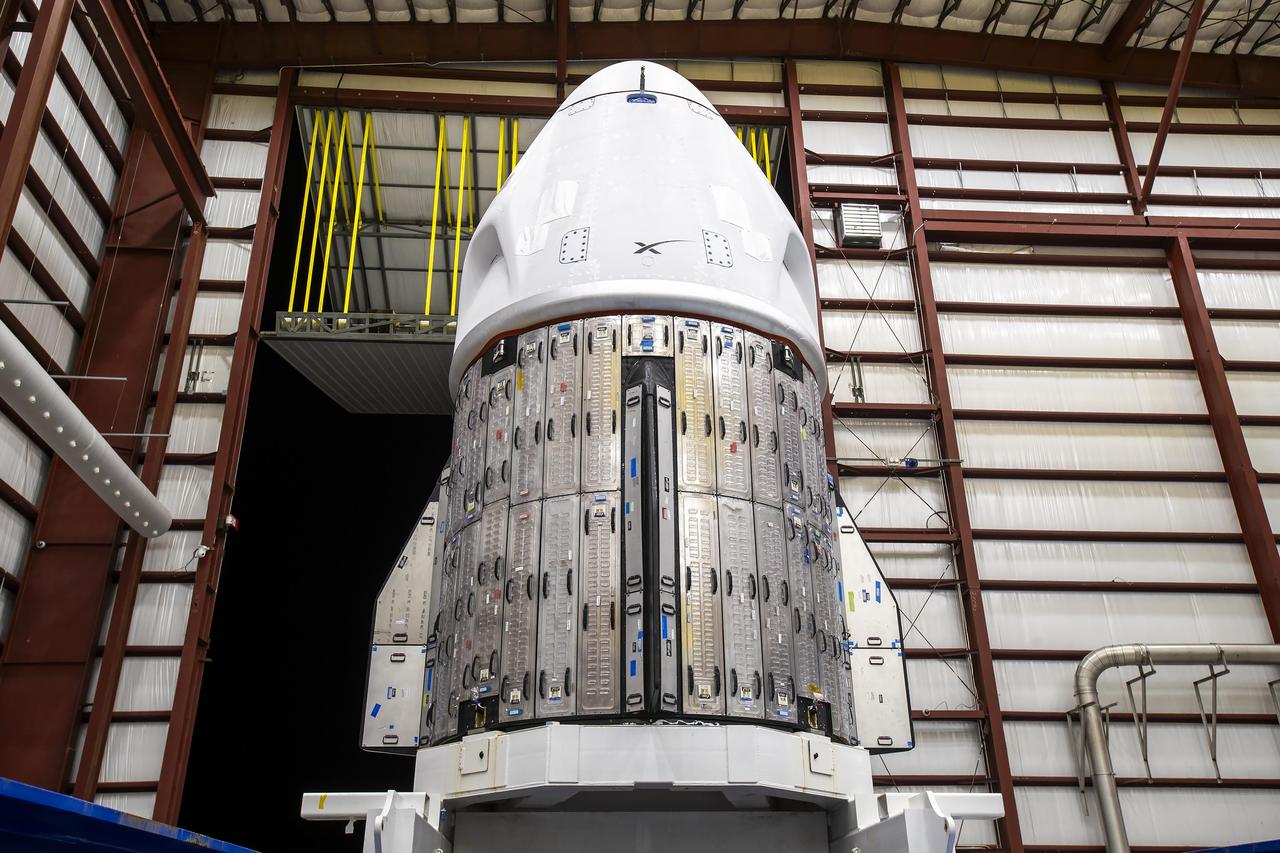
SpaceX’s Dragon spacecraft for NASA’s SpaceX Crew-8 mission arrives at SpaceX’s hangar at Kennedy Space Center’s Launch Complex 39A in Florida on Monday, Feb. 19, 2024, after a short journey from a nearby processing facility at Cape Canaveral Space Force Station. NASA astronauts Matthew Dominick, Michael Barratt, and Jeanette Epps, and Roscosmos cosmonaut Alexander Grebenkin are slated to launch to the International Space Station aboard SpaceX’s Dragon spacecraft, powered by the company’s Falcon 9 rocket from Launch Complex 39A no earlier than 12:04 a.m. EST on Friday, March 1.
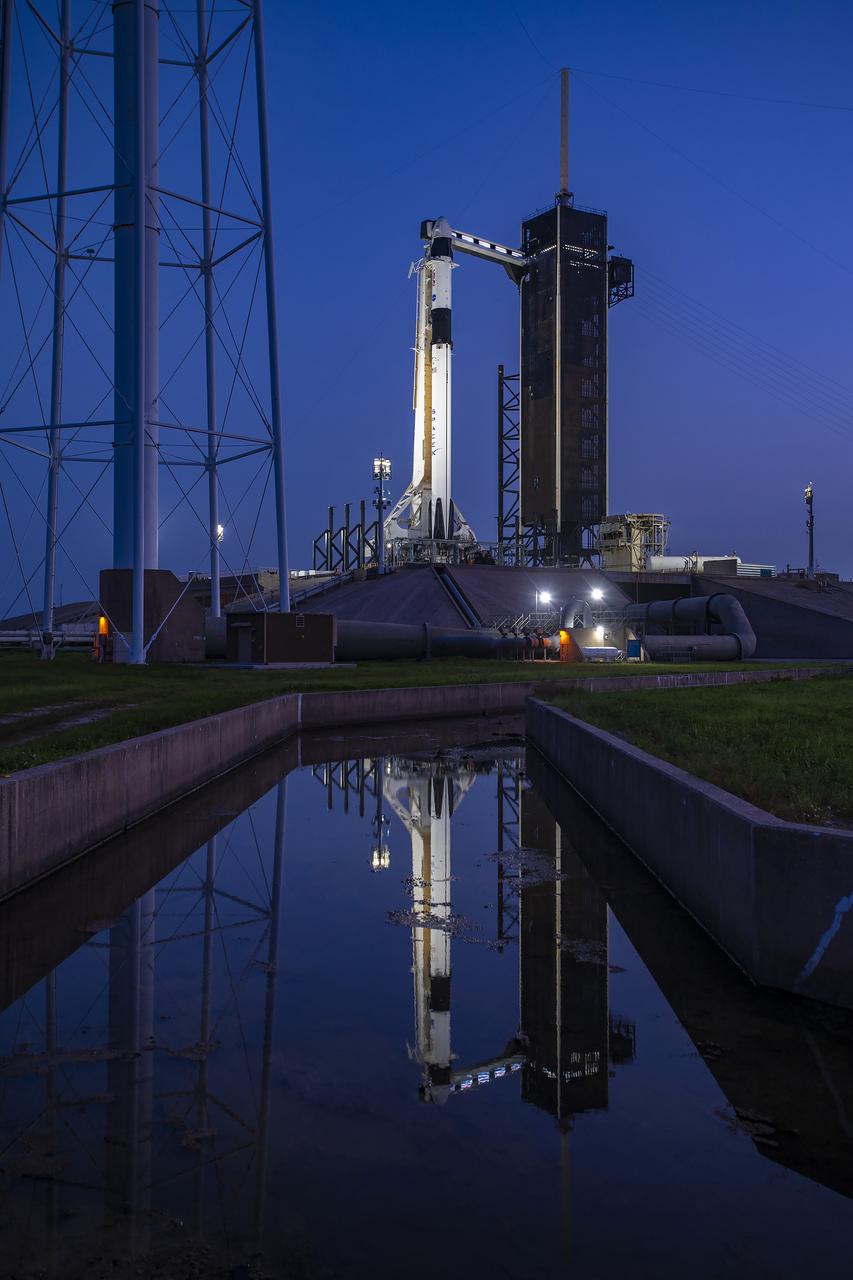
SpaceX’s Dragon spacecraft, named Endurance, atop the company’s Falcon 9 rocket, stands tall at the pad at Launch Complex 39A at NASA’s Kennedy Space Center in Florida on Monday, Aug. 21, 2023. NASA astronaut Jasmin Moghbeli, ESA (European Space Agency) astronaut Andreas Mogensen, JAXA (Japan Aerospace Exploration Agency) astronaut Satoshi Furukawa, and Roscosmos cosmonaut Konstantin Borisov, who arrived at Kennedy on Sunday, Aug. 20, 2023, will fly to the International Space Station on NASA’s SpaceX Crew-7 mission. Liftoff is targeted for 3:50 a.m. EDT Friday, Aug. 25, 2023.
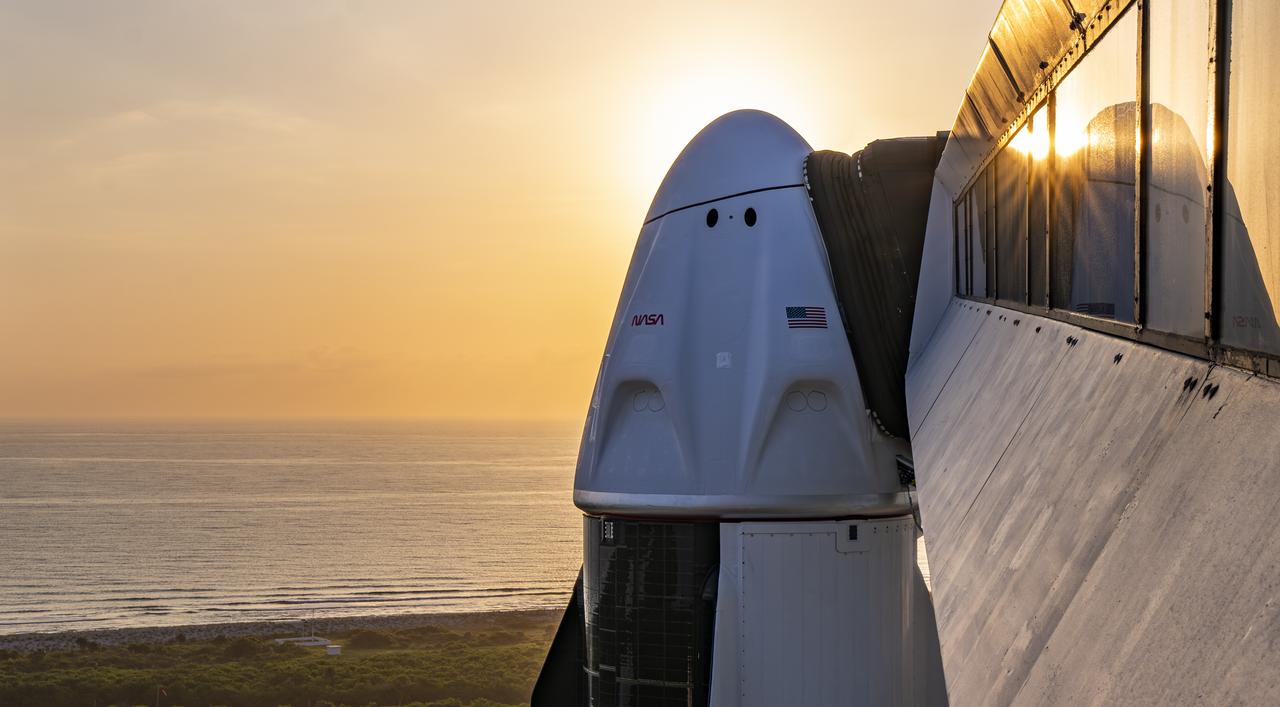
SpaceX’s Dragon spacecraft, atop the company’s Falcon 9 rocket, stands tall at the pad at Launch Complex 39A as the sun rises at NASA’s Kennedy Space Center in Florida on Wednesday, Aug. 23, 2023. NASA astronaut Jasmin Moghbeli, ESA (European Space Agency) astronaut Andreas Mogensen, JAXA (Japan Aerospace Exploration Agency) astronaut Satoshi Furukawa, and Roscosmos cosmonaut Konstantin Borisov, who arrived at Kennedy on Sunday, Aug. 20, 2023, will fly to the International Space Station on NASA’s SpaceX Crew-7 mission. Liftoff is targeted for 3:50 a.m. EDT Friday, Aug. 25, 2023.
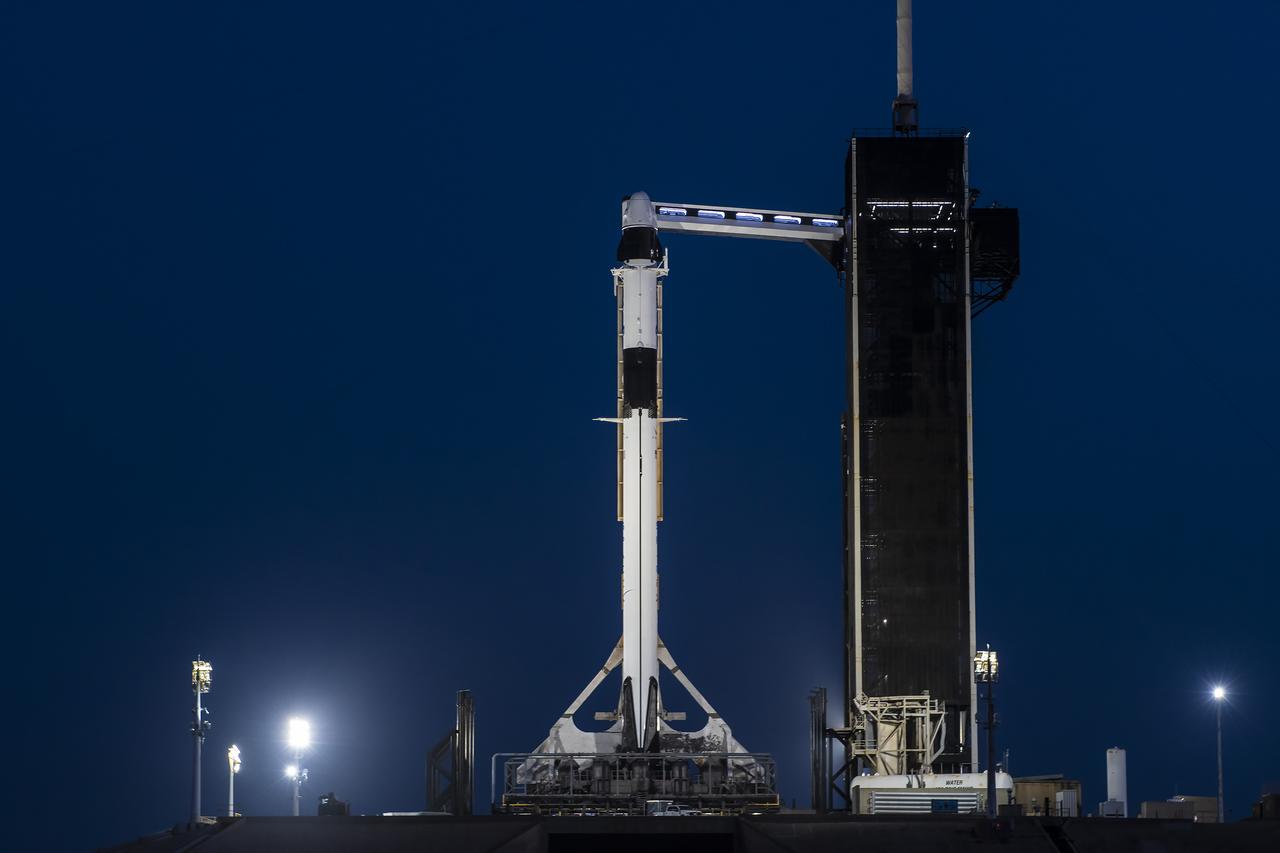
SpaceX’s Dragon spacecraft, named Endurance, atop the company’s Falcon 9 rocket, stands tall at the pad at Launch Complex 39A at NASA’s Kennedy Space Center in Florida on Monday, Aug. 21, 2023. NASA astronaut Jasmin Moghbeli, ESA (European Space Agency) astronaut Andreas Mogensen, JAXA (Japan Aerospace Exploration Agency) astronaut Satoshi Furukawa, and Roscosmos cosmonaut Konstantin Borisov, who arrived at Kennedy on Sunday, Aug. 20, 2023, will fly to the International Space Station on NASA’s SpaceX Crew-7 mission. Liftoff is targeted for 3:50 a.m. EDT Friday, Aug. 25, 2023.
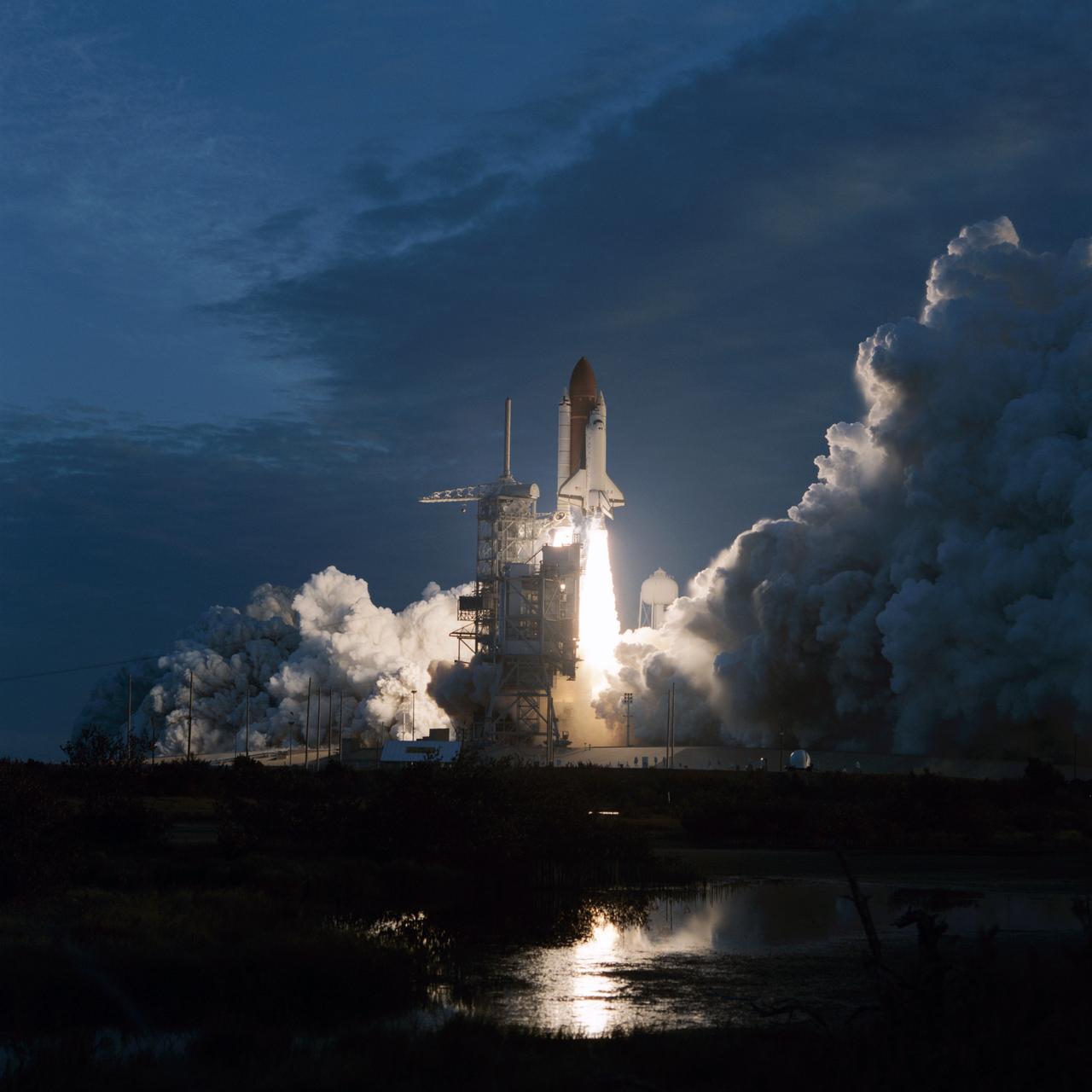
STS-32 Columbia, Orbiter Vehicle (OV) 102, its external tank (ET), and solid rocket boosters (SRBs) rise above the mobile launcher platform and begin to clear fixed service structure (FSS) tower (with rotating service structure (RSS) retracted) at Kennedy Space Center (KSC) Launch Complex (LC) Pad 39A. Liftoff occurred at 7:34:59:98 am Eastern Standard Time (EST) some 24 hours after dubious weather at the return-to-landing site (RTLS) had cancelled a scheduled launch. An exhaust cloud covers the launch pad. The firing SRBs and space shuttle main engines (SSMEs) are reflected in a nearby waterway. OV-102's launch is highlighted against the early morning darkness.
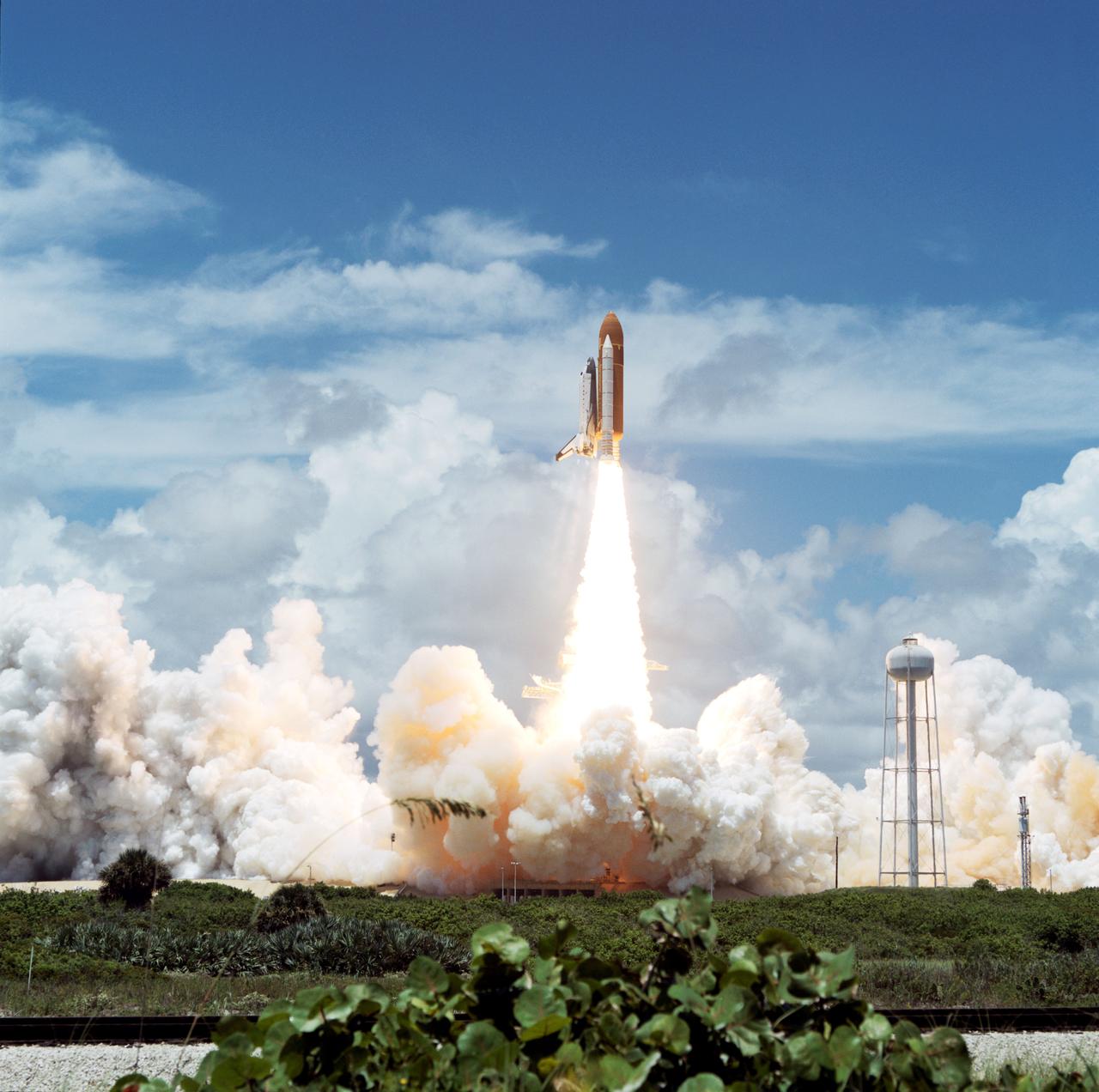
Columbia, Orbiter Vehicle (OV) 102, heads skyward after clearing the fixed service structure (FSS) tower at Kennedy Space Center (KSC) Launch Complex (LC) Pad 39A. Florida plant life appears in the foreground. The exhaust cloud produced by OV-102's solid rocket boosters (SRBs) covers the launch pad area with the exception of the sound suppression water system tower. OV-102's starboard side and the right SRB are visible from this angle. Launch occurred at 12:43 pm Eastern Daylight Time (EDT). Once in Earth orbit, STS-65's six NASA astronauts and a Japanese Payload Specialist aboard OV-102 will begin two weeks of experimentation in support of the second International Microgravity Laboratory (IML-2).
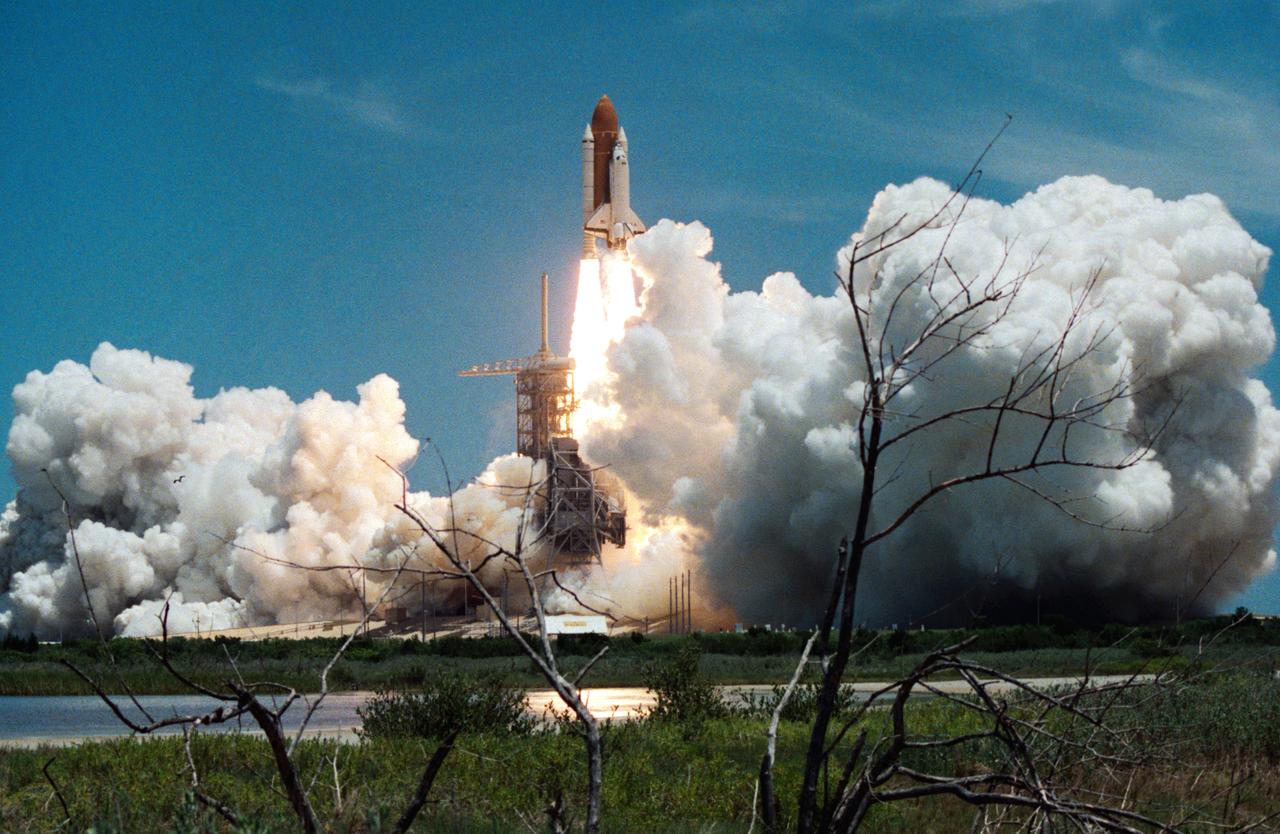
Columbia, Orbiter Vehicle (OV) 102, begins its roll maneuver after clearing the fixed service structure (FSS) tower as it rises above Kennedy Space Center (KSC) Launch Complex (LC) Pad 39A. In the foreground of this horizontal scene is Florida brush and a waterway. Beyond the brush, the shuttle's exhaust cloud envelops the immediate launch pad area. Launch occurred at 12:43 pm Eastern Daylight Time (EDT). The glow of the space shuttle main engine (SSME) and solid rocket booster (SRB) firings is reflected in the nearby waterway. Once in Earth orbit, STS-65's six NASA astronauts and a Japanese Payload Specialist aboard OV-102 will begin two weeks of experimentation in support of the second International Microgravity Laboratory (IML-2).
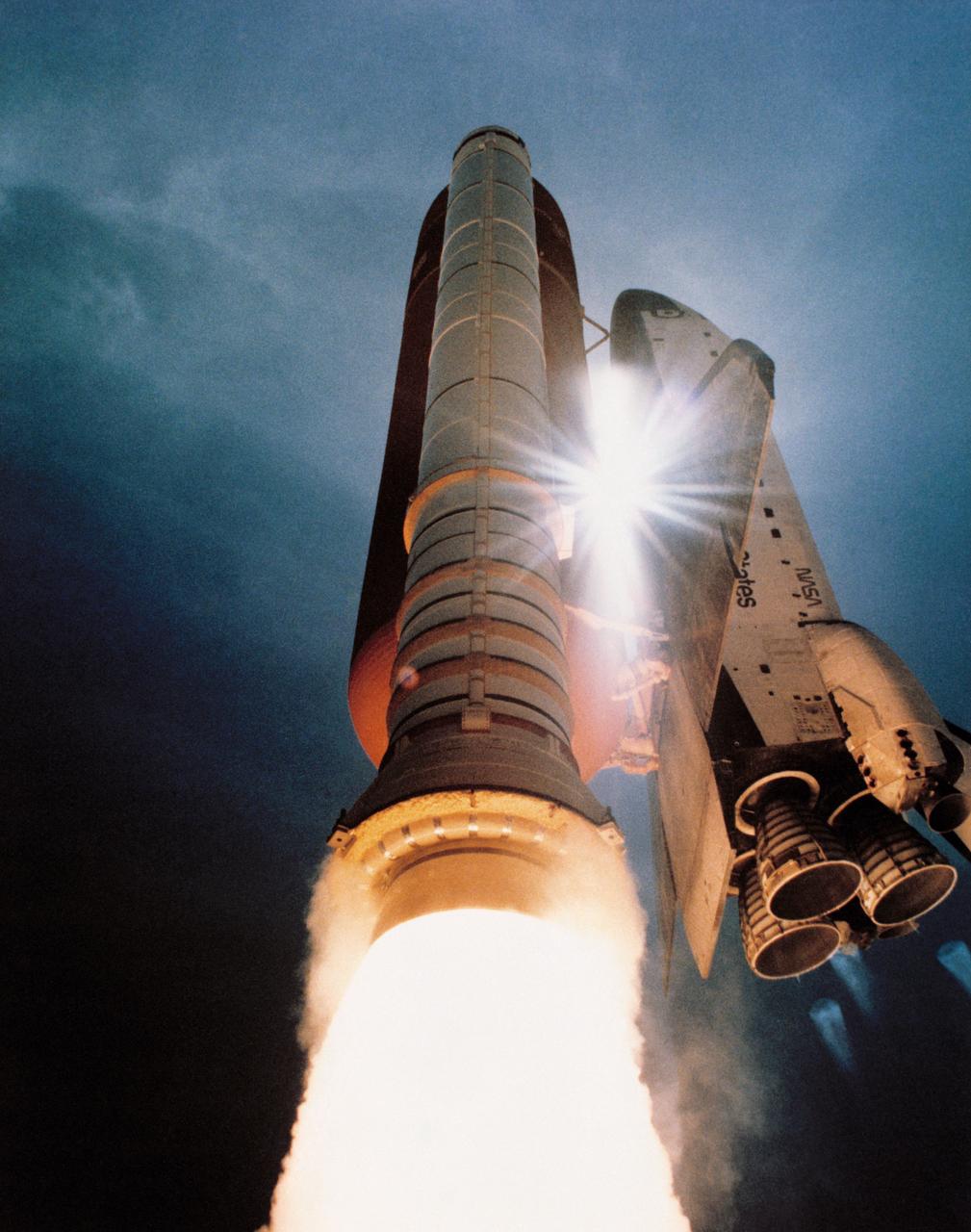
STS-43 Atlantis, Orbiter Vehicle (OV) 104, soars toward space after liftoff from Kennedy Space Center (KSC) Launch Complex (LC) Pad 39A at 11:02: 00 am (Eastern Daylight Time (EDT)). This low angle view captures OV-104 as it begins its roll maneuver. A burst of sunlight shines through the mated hardware elements supporting the Space Shuttle Atlantis for the STS-43 mission's launch phase. Exhaust plumes billow from the solid rocket booster (SRB) skirts. All three space shuttle main engines (SSMEs) glow as they power OV-104 into orbit. The bottom of external tank (ET) is highlighted by the SRB/SSME firings. This image was selected by the Public Affairs Office (PAO) for public release.
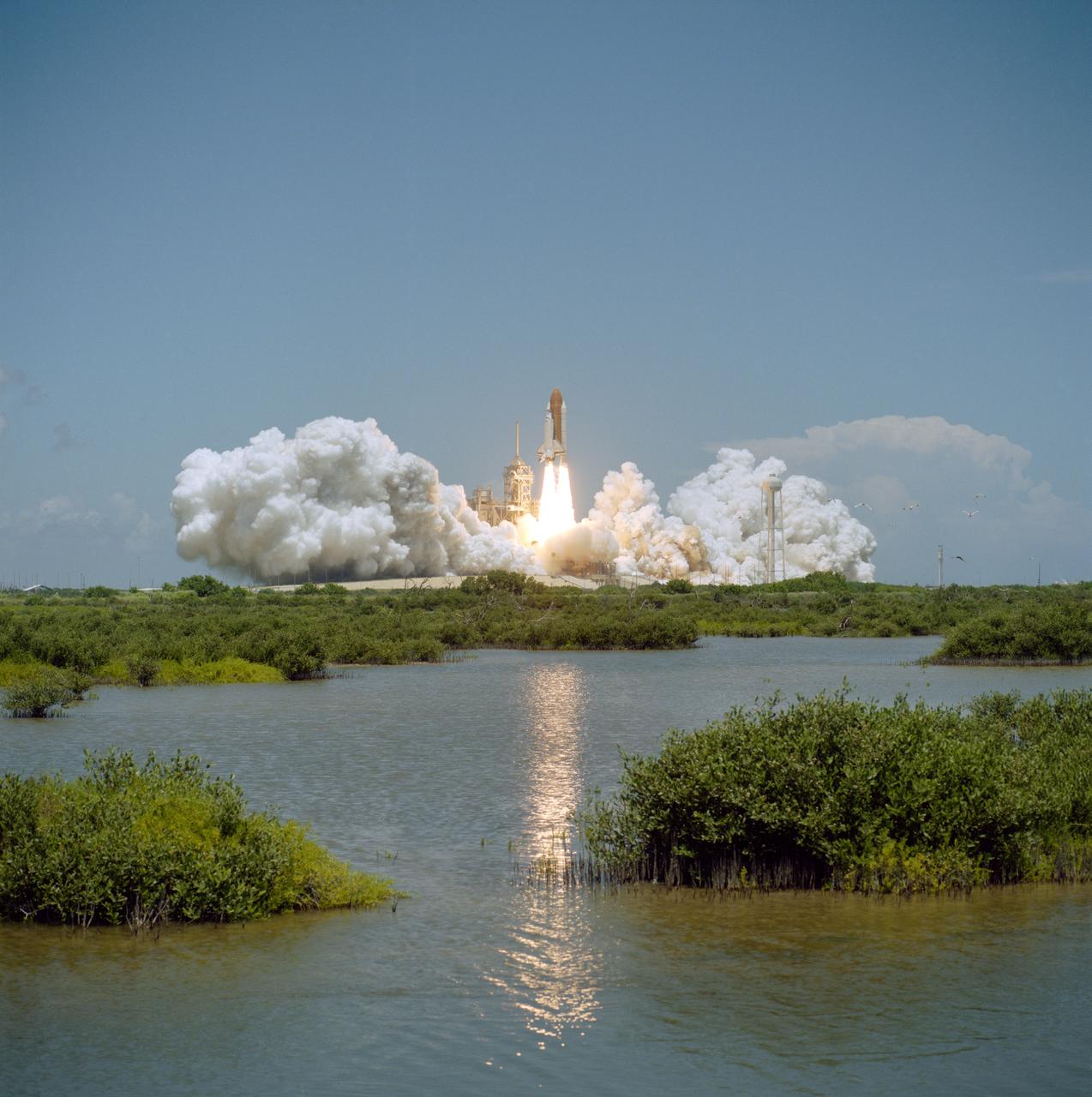
Columbia, Orbiter Vehicle (OV) 102, rises above Kennedy Space Center (KSC) Launch Complex (LC) Pad 39A after liftoff at 12:43 pm Eastern Daylight Time (EDT). An exhaust cloud covers the launch pad area and the glow of the space shuttle main engine (SSME) and solid rocket booster (SRB) firings is reflected in a nearby marsh as OV-102 atop its external tank (ET) heads toward Earth orbit. A small flock of birds is visible at the right. Once in Earth's orbit, STS-65's six NASA astronauts and a Japanese Payload Specialist aboard OV-102 will begin two weeks of experimentation in support of the second International Microgravity Laboratory (IML-2) mission.