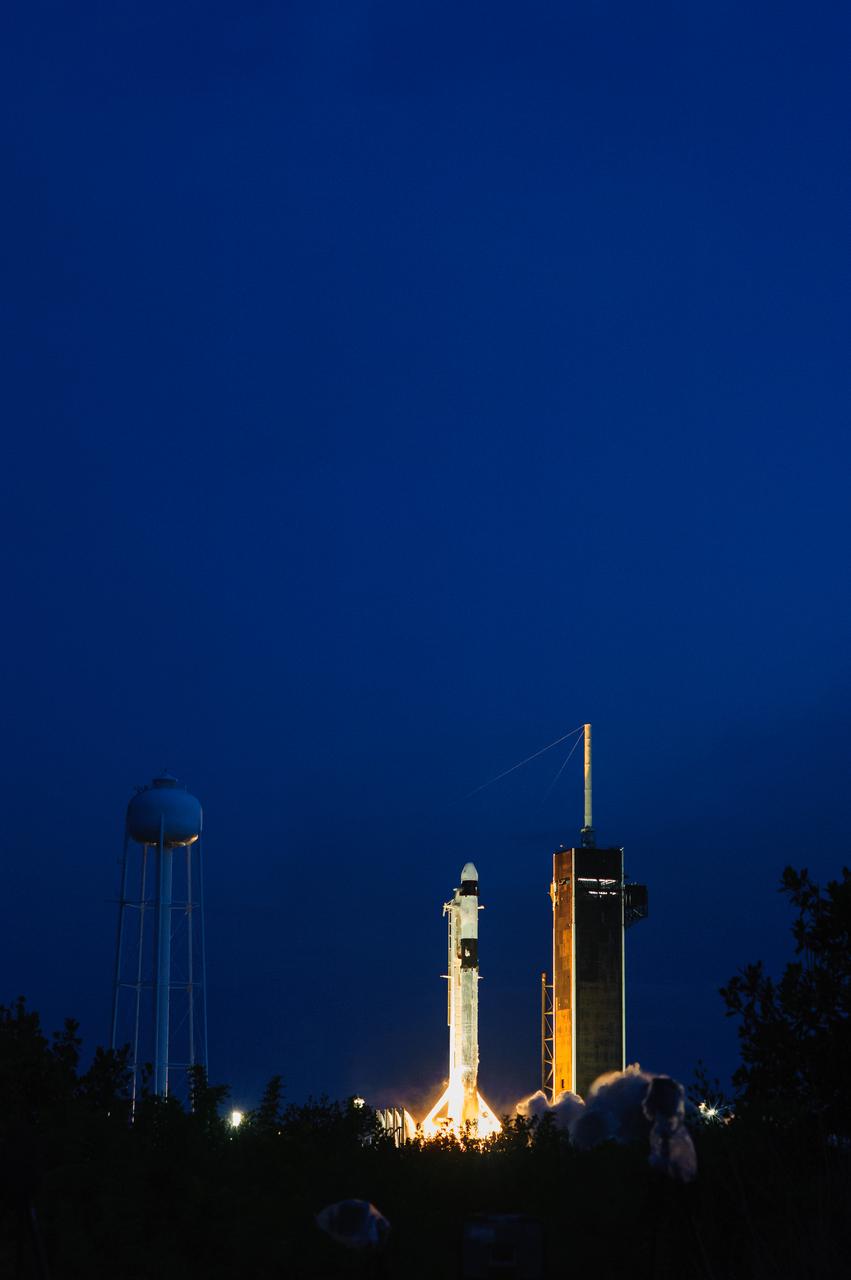
The SpaceX Falcon 9 rocket carrying the Dragon capsule lifts off from Launch Complex 39A at NASA’s Kennedy Space Center in Florida on July 14, 2022, on the company’s 25th Commercial Resupply Services mission for the agency to the International Space Station. Liftoff was at 8:44 p.m. EDT. Dragon will deliver more than 5,800 pounds of cargo, including a variety of NASA investigations, to the space station. The spacecraft is expected to spend about a month attached to the orbiting outpost before it returns to Earth with research and return cargo, splashing down off the coast of Florida.
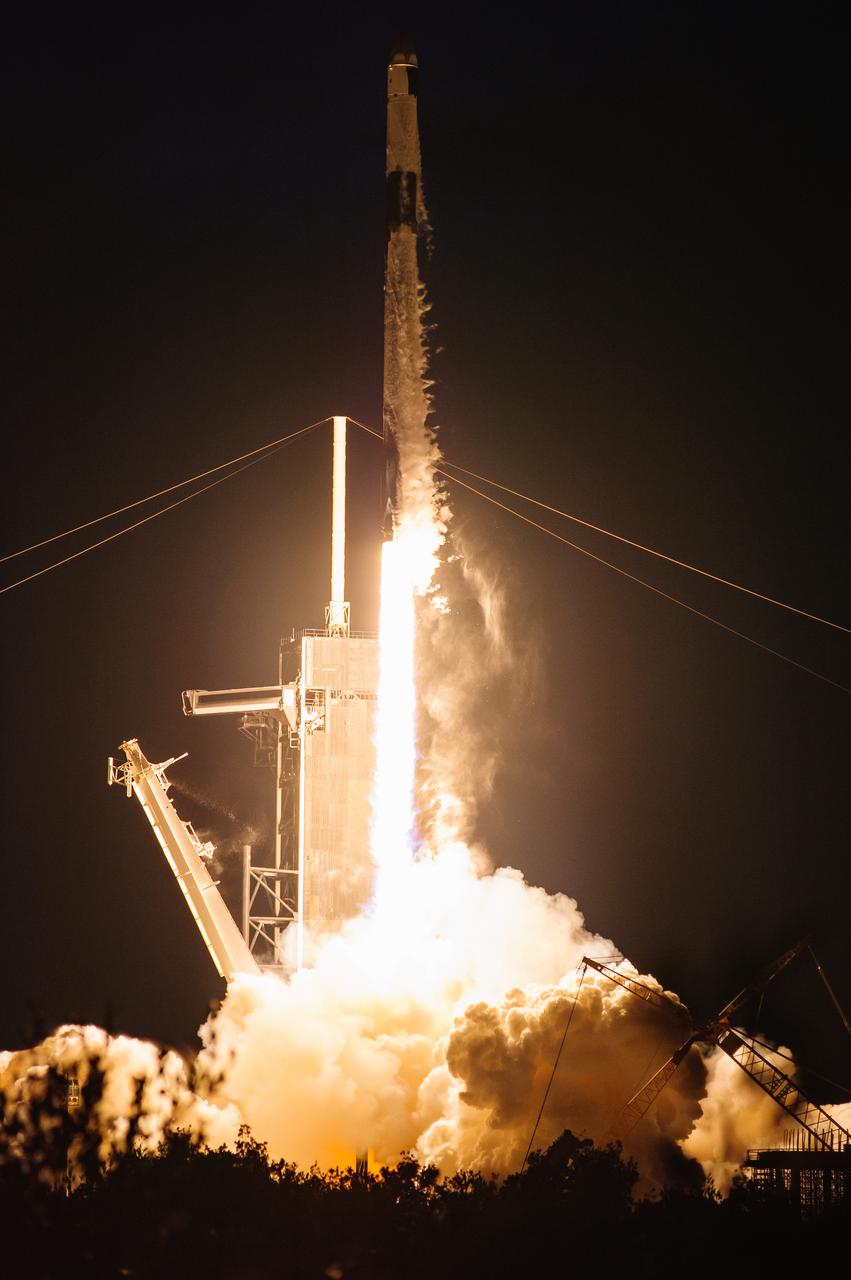
The SpaceX Falcon 9 rocket carrying the Dragon capsule soars upward after lifting off from Launch Complex 39A at NASA’s Kennedy Space Center in Florida on July 14, 2022, on the company’s 25th Commercial Resupply Services mission for the agency to the International Space Station. Liftoff was at 8:44 p.m. EDT. Dragon will deliver more than 5,800 pounds of cargo, including a variety of NASA investigations, to the space station. The spacecraft is expected to spend about a month attached to the orbiting outpost before it returns to Earth with research and return cargo, splashing down off the coast of Florida.
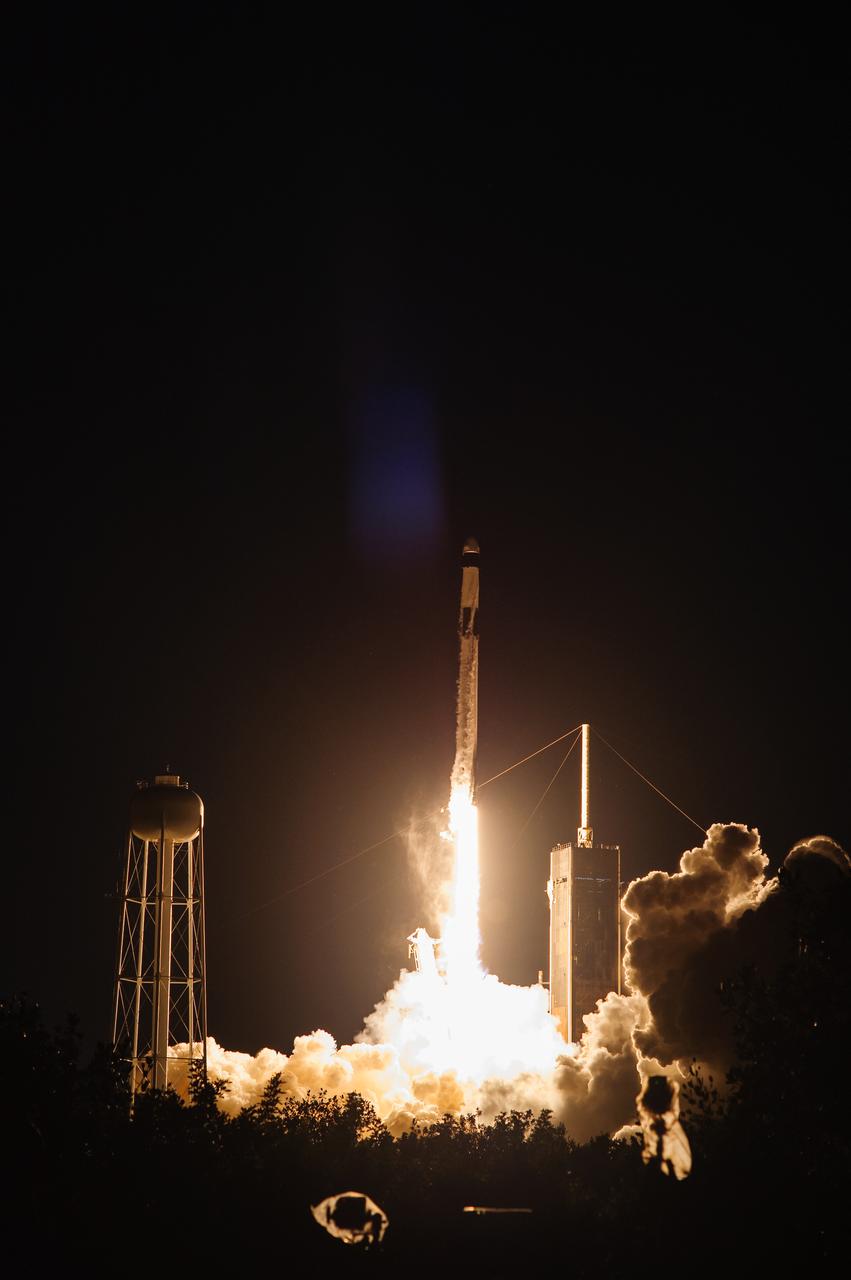
The SpaceX Falcon 9 rocket carrying the Dragon capsule lifts off from Launch Complex 39A at NASA’s Kennedy Space Center in Florida on July 14, 2022, on the company’s 25th Commercial Resupply Services mission for the agency to the International Space Station. Liftoff was at 8:44 p.m. EDT. Dragon will deliver more than 5,800 pounds of cargo, including a variety of NASA investigations, to the space station. The spacecraft is expected to spend about a month attached to the orbiting outpost before it returns to Earth with research and return cargo, splashing down off the coast of Florida.
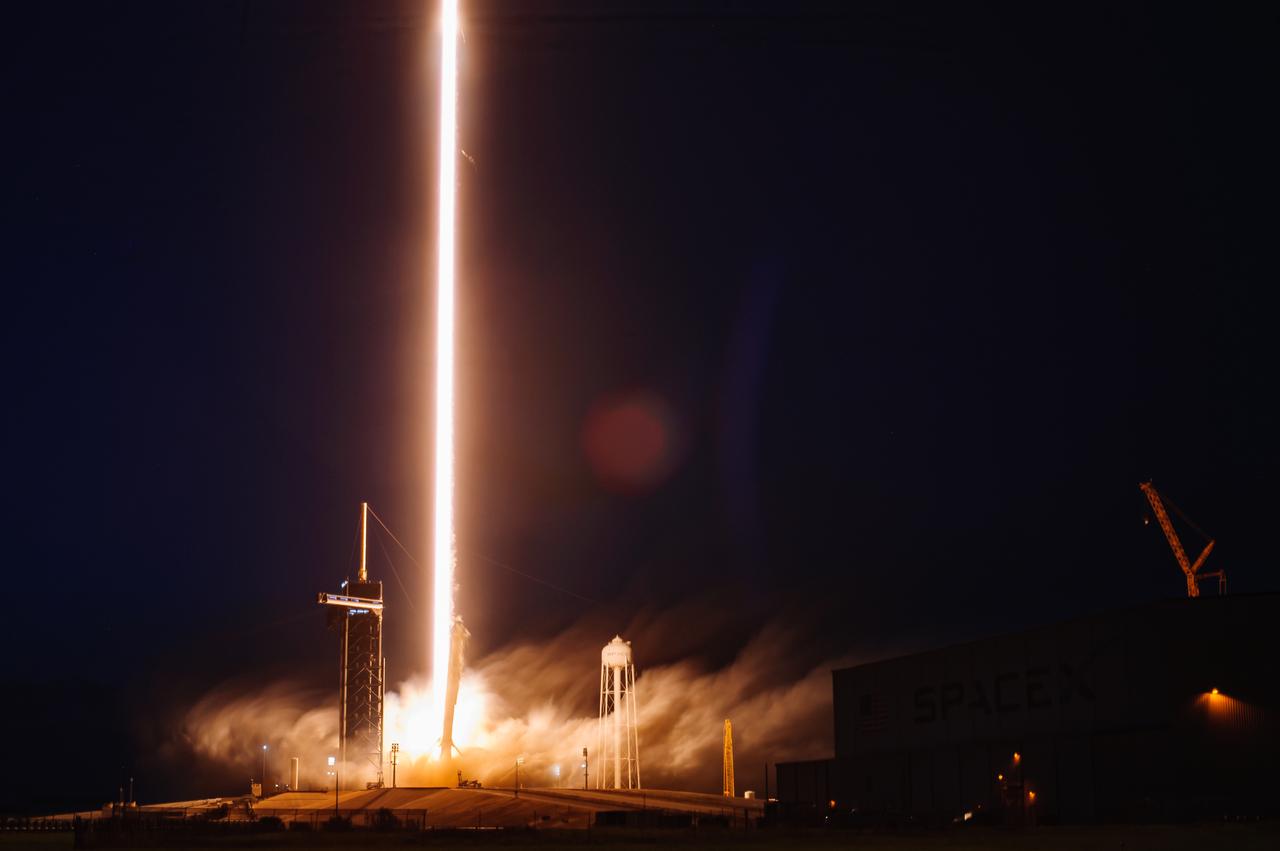
A bright white trail is in view after the SpaceX Falcon 9 rocket carrying the Dragon capsule lifts off from Launch Complex 39A at NASA’s Kennedy Space Center in Florida on July 14, 2022, on the company’s 25th Commercial Resupply Services mission for the agency to the International Space Station. Liftoff was at 8:44 p.m. EDT. Dragon will deliver more than 5,800 pounds of cargo, including a variety of NASA investigations, to the space station. The spacecraft is expected to spend about a month attached to the orbiting outpost before it returns to Earth with research and return cargo, splashing down off the coast of Florida.
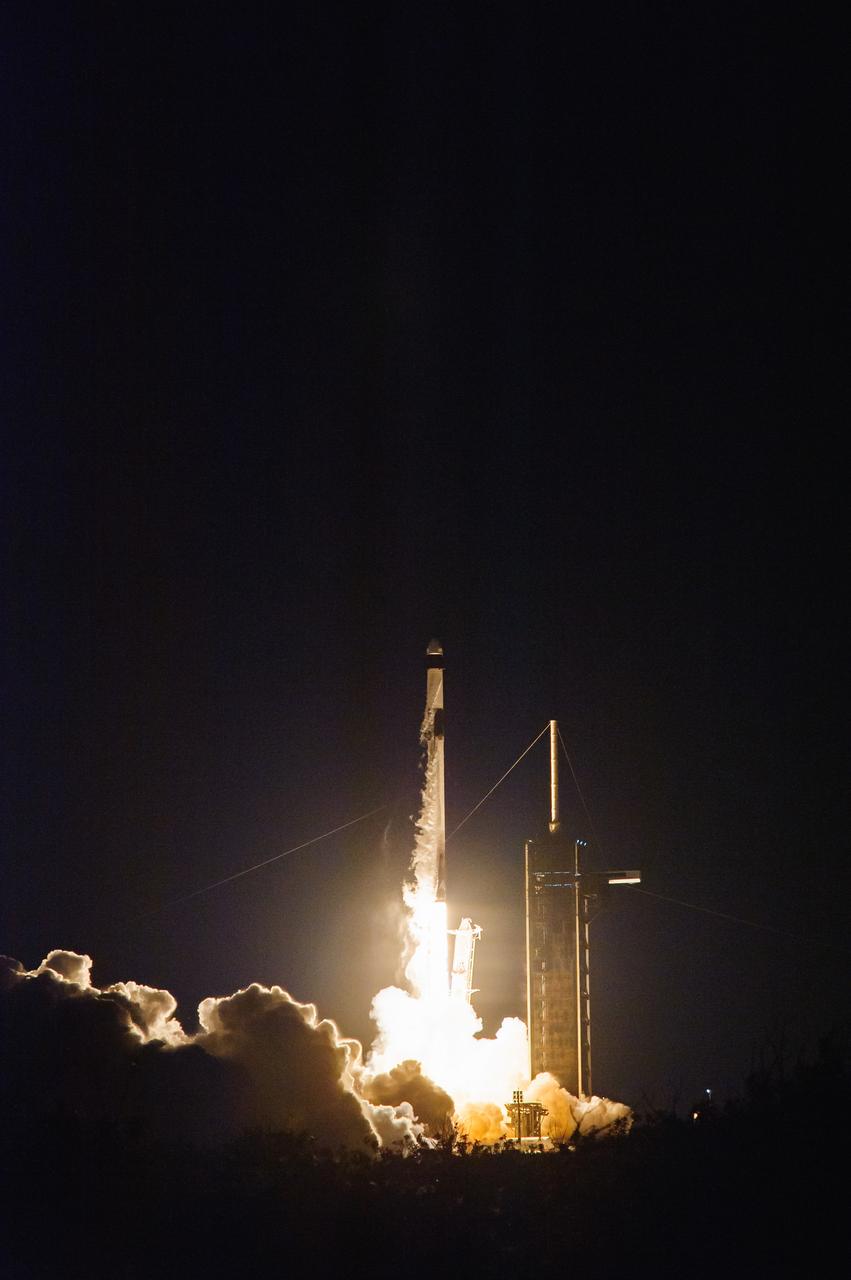
The SpaceX Falcon 9 rocket carrying the Dragon capsule lifts off from Launch Complex 39A at NASA’s Kennedy Space Center in Florida on July 14, 2022, on the company’s 25th Commercial Resupply Services mission for the agency to the International Space Station. Liftoff was at 8:44 p.m. EDT. Dragon will deliver more than 5,800 pounds of cargo, including a variety of NASA investigations, to the space station. The spacecraft is expected to spend about a month attached to the orbiting outpost before it returns to Earth with research and return cargo, splashing down off the coast of Florida.
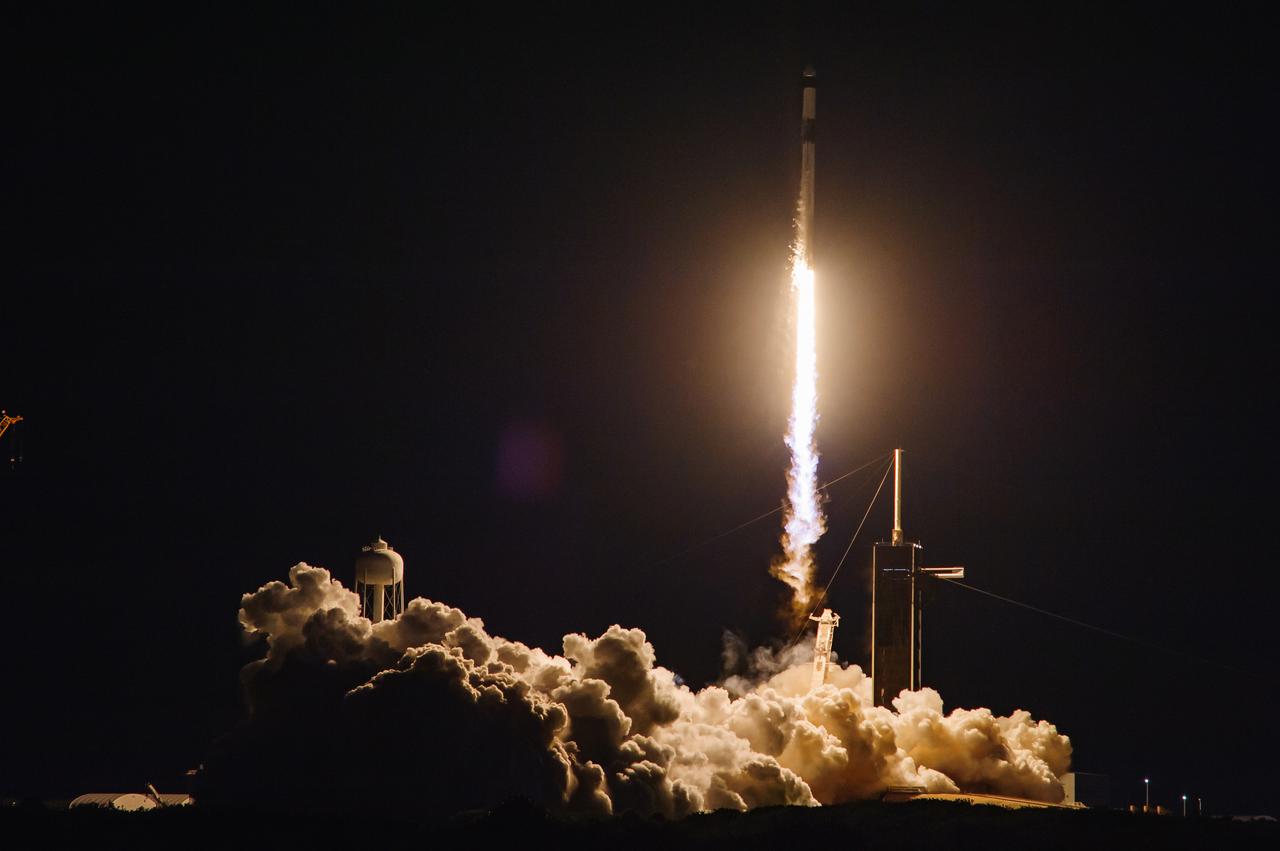
The SpaceX Falcon 9 rocket carrying the Dragon capsule soars upward after lifting off from Launch Complex 39A at NASA’s Kennedy Space Center in Florida on July 14, 2022, on the company’s 25th Commercial Resupply Services mission for the agency to the International Space Station. Liftoff was at 8:44 p.m. EDT. Dragon will deliver more than 5,800 pounds of cargo, including a variety of NASA investigations, to the space station. The spacecraft is expected to spend about a month attached to the orbiting outpost before it returns to Earth with research and return cargo, splashing down off the coast of Florida.
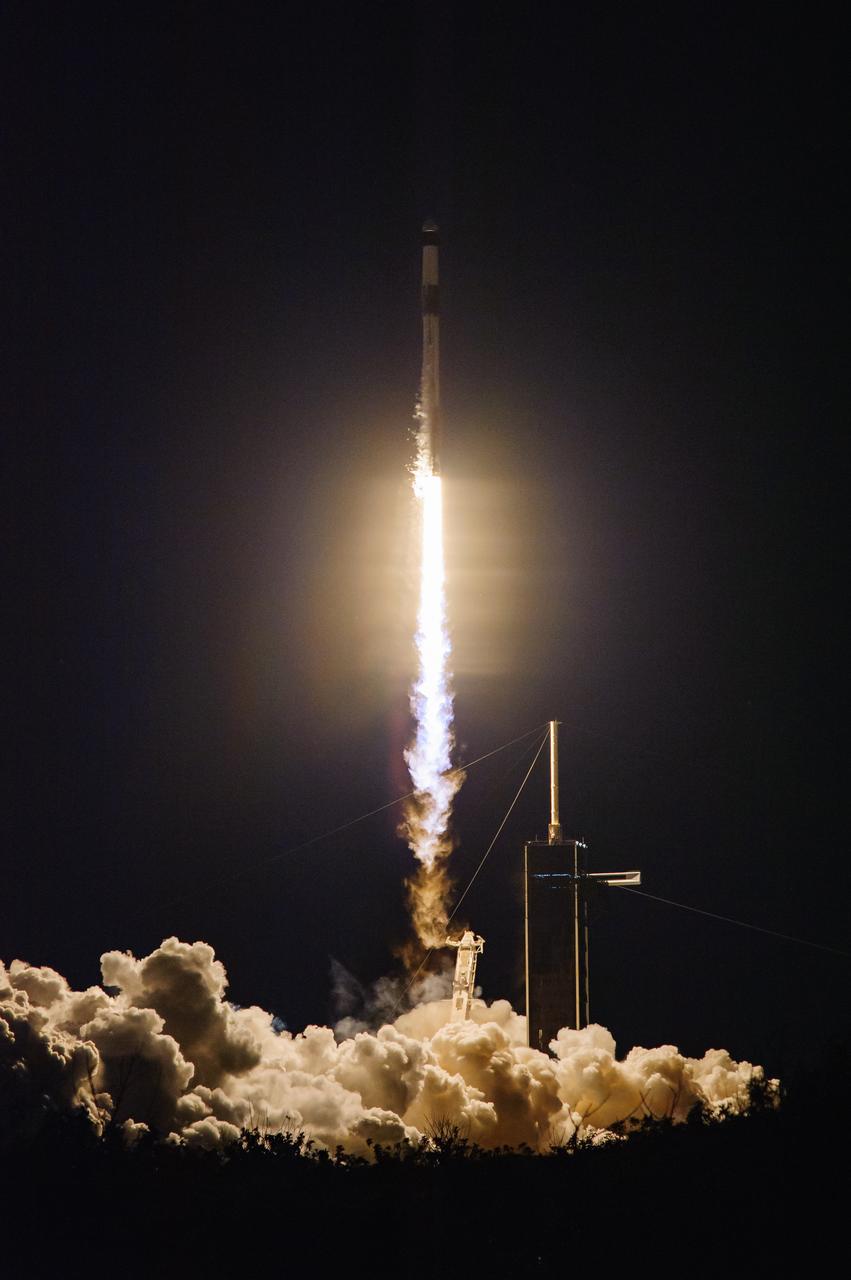
The SpaceX Falcon 9 rocket carrying the Dragon capsule soars upward after lifting off from Launch Complex 39A at NASA’s Kennedy Space Center in Florida on July 14, 2022, on the company’s 25th Commercial Resupply Services mission for the agency to the International Space Station. Liftoff was at 8:44 p.m. EDT. Dragon will deliver more than 5,800 pounds of cargo, including a variety of NASA investigations, to the space station. The spacecraft is expected to spend about a month attached to the orbiting outpost before it returns to Earth with research and return cargo, splashing down off the coast of Florida.
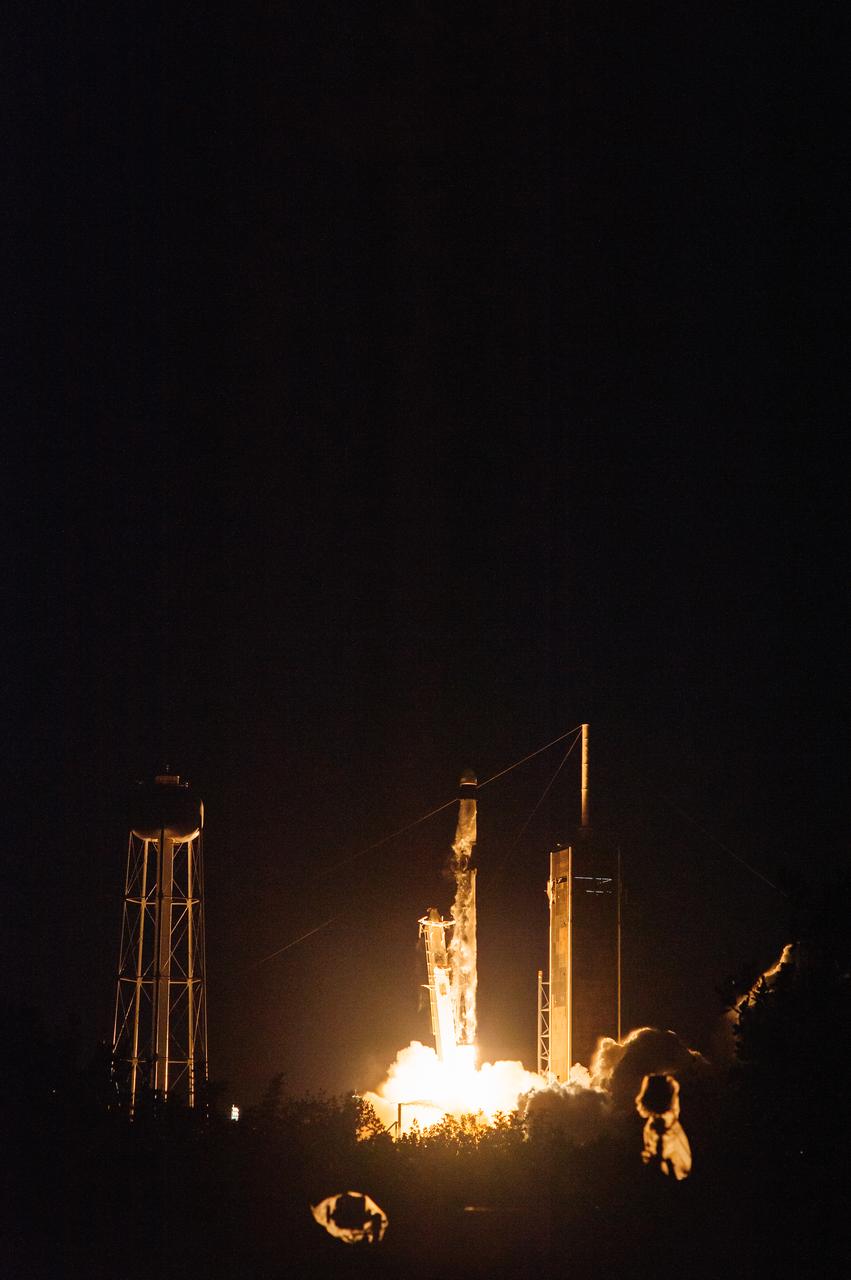
The SpaceX Falcon 9 rocket carrying the Dragon capsule lifts off from Launch Complex 39A at NASA’s Kennedy Space Center in Florida on July 14, 2022, on the company’s 25th Commercial Resupply Services mission for the agency to the International Space Station. Liftoff was at 8:44 p.m. EDT. Dragon will deliver more than 5,800 pounds of cargo, including a variety of NASA investigations, to the space station. The spacecraft is expected to spend about a month attached to the orbiting outpost before it returns to Earth with research and return cargo, splashing down off the coast of Florida.
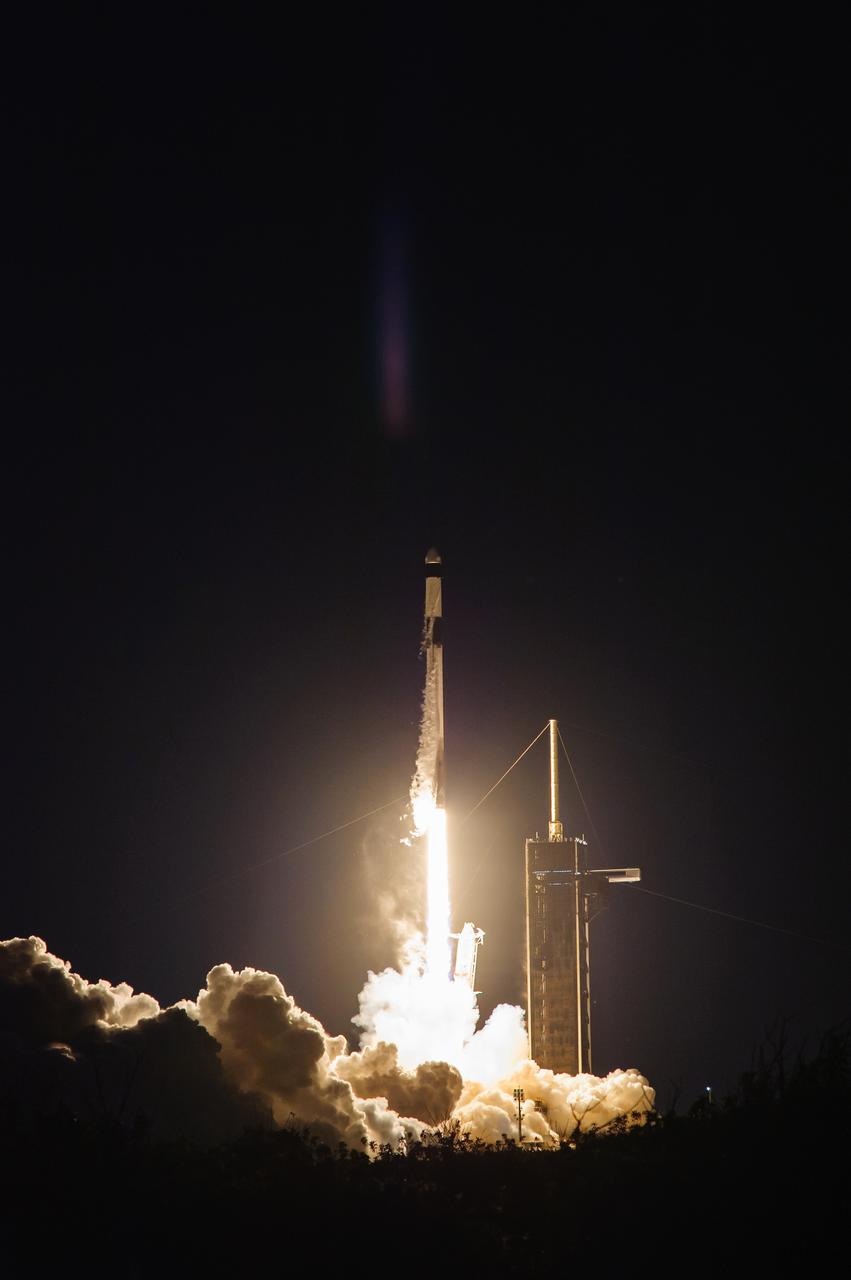
The SpaceX Falcon 9 rocket carrying the Dragon capsule soars upward after lifting off from Launch Complex 39A at NASA’s Kennedy Space Center in Florida on July 14, 2022, on the company’s 25th Commercial Resupply Services mission for the agency to the International Space Station. Liftoff was at 8:44 p.m. EDT. Dragon will deliver more than 5,800 pounds of cargo, including a variety of NASA investigations, to the space station. The spacecraft is expected to spend about a month attached to the orbiting outpost before it returns to Earth with research and return cargo, splashing down off the coast of Florida.
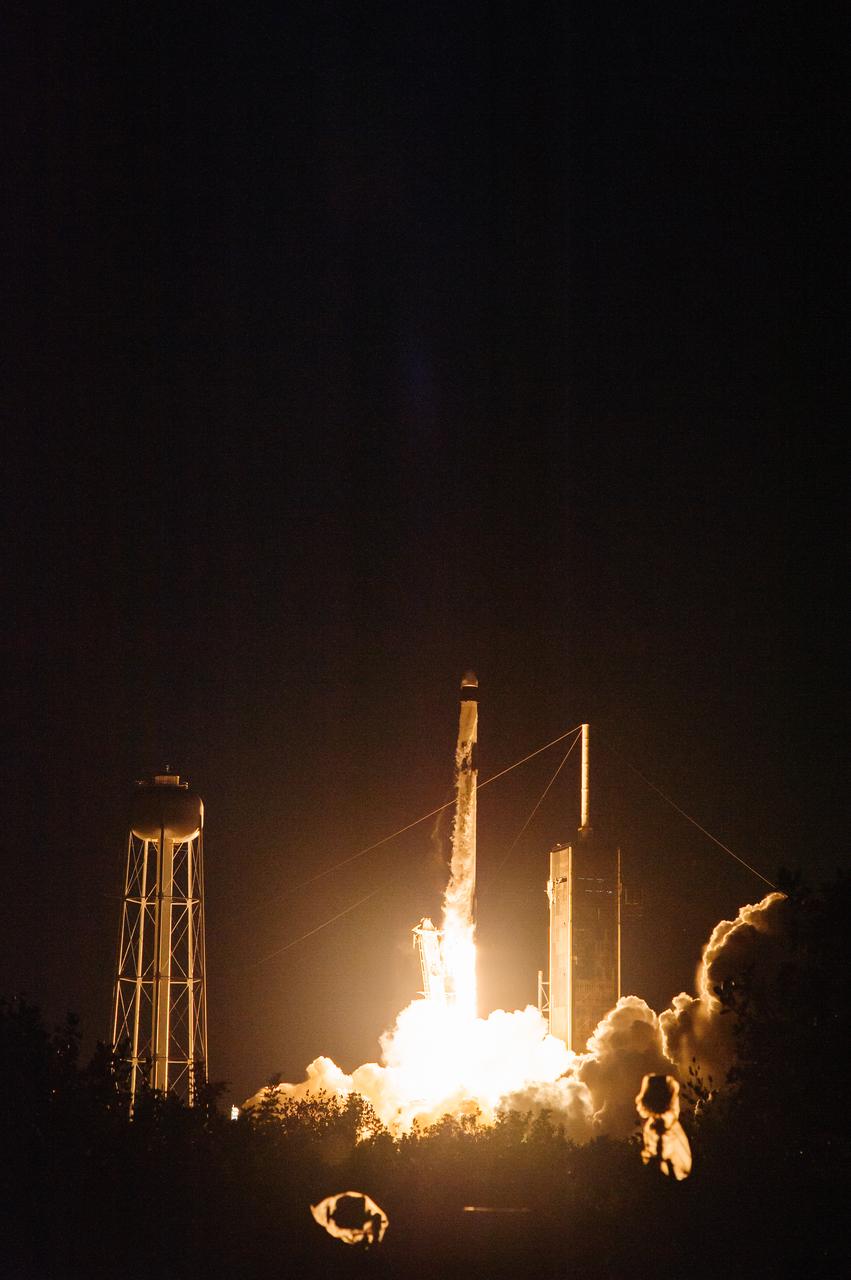
The SpaceX Falcon 9 rocket carrying the Dragon capsule lifts off from Launch Complex 39A at NASA’s Kennedy Space Center in Florida on July 14, 2022, on the company’s 25th Commercial Resupply Services mission for the agency to the International Space Station. Liftoff was at 8:44 p.m. EDT. Dragon will deliver more than 5,800 pounds of cargo, including a variety of NASA investigations, to the space station. The spacecraft is expected to spend about a month attached to the orbiting outpost before it returns to Earth with research and return cargo, splashing down off the coast of Florida.
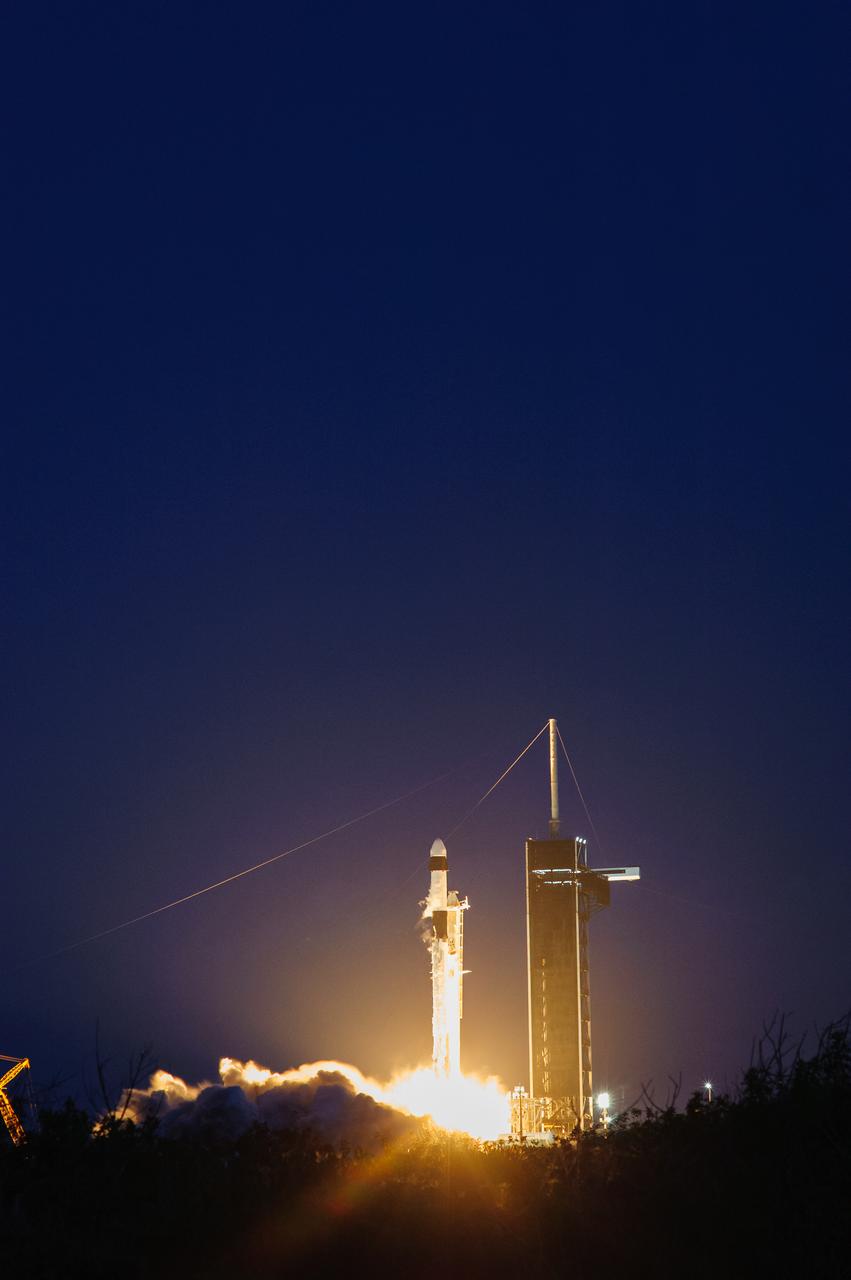
The SpaceX Falcon 9 rocket carrying the Dragon capsule lifts off from Launch Complex 39A at NASA’s Kennedy Space Center in Florida on July 14, 2022, on the company’s 25th Commercial Resupply Services mission for the agency to the International Space Station. Liftoff was at 8:44 p.m. EDT. Dragon will deliver more than 5,800 pounds of cargo, including a variety of NASA investigations, to the space station. The spacecraft is expected to spend about a month attached to the orbiting outpost before it returns to Earth with research and return cargo, splashing down off the coast of Florida.
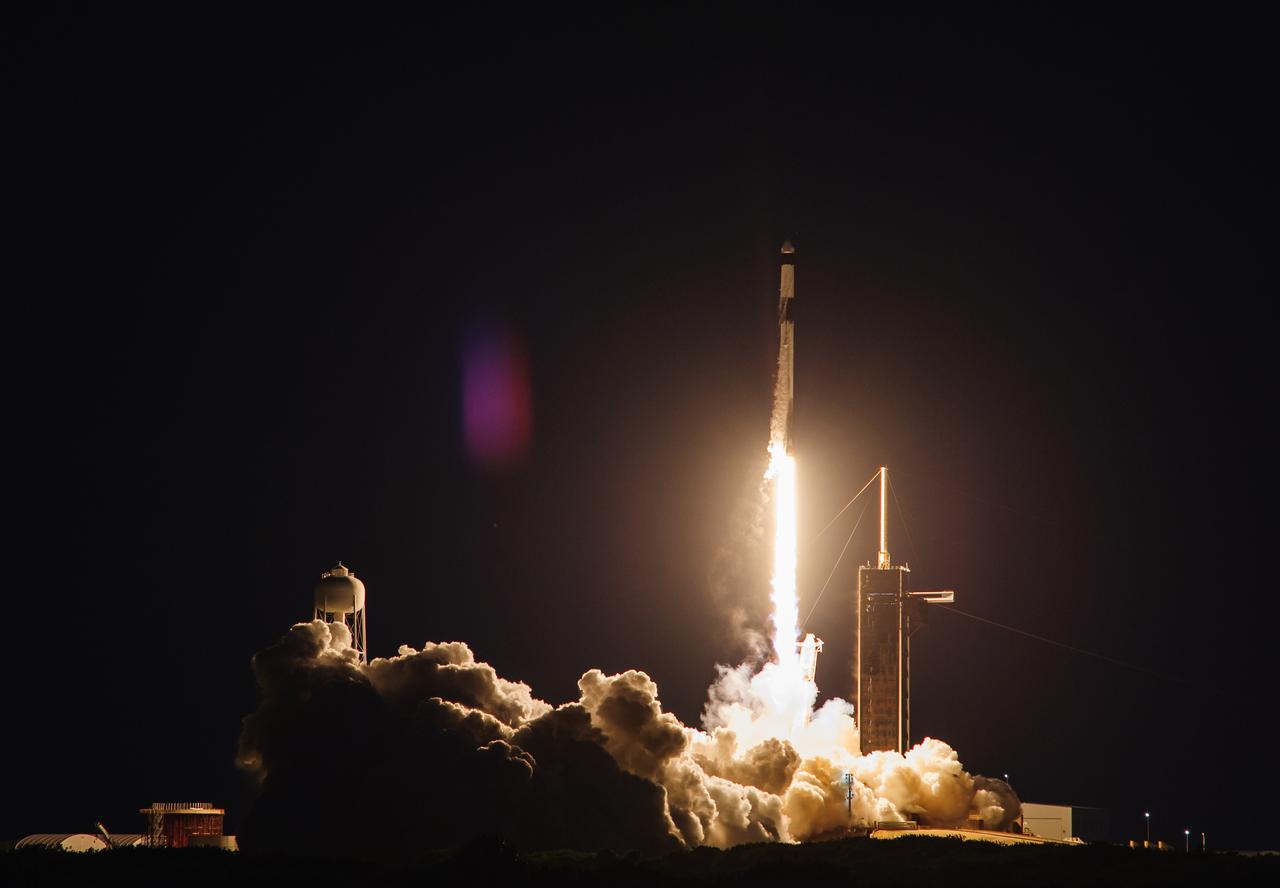
The SpaceX Falcon 9 rocket carrying the Dragon capsule soars upward after lifting off from Launch Complex 39A at NASA’s Kennedy Space Center in Florida on July 14, 2022, on the company’s 25th Commercial Resupply Services mission for the agency to the International Space Station. Liftoff was at 8:44 p.m. EDT. Dragon will deliver more than 5,800 pounds of cargo, including a variety of NASA investigations, to the space station. The spacecraft is expected to spend about a month attached to the orbiting outpost before it returns to Earth with research and return cargo, splashing down off the coast of Florida.
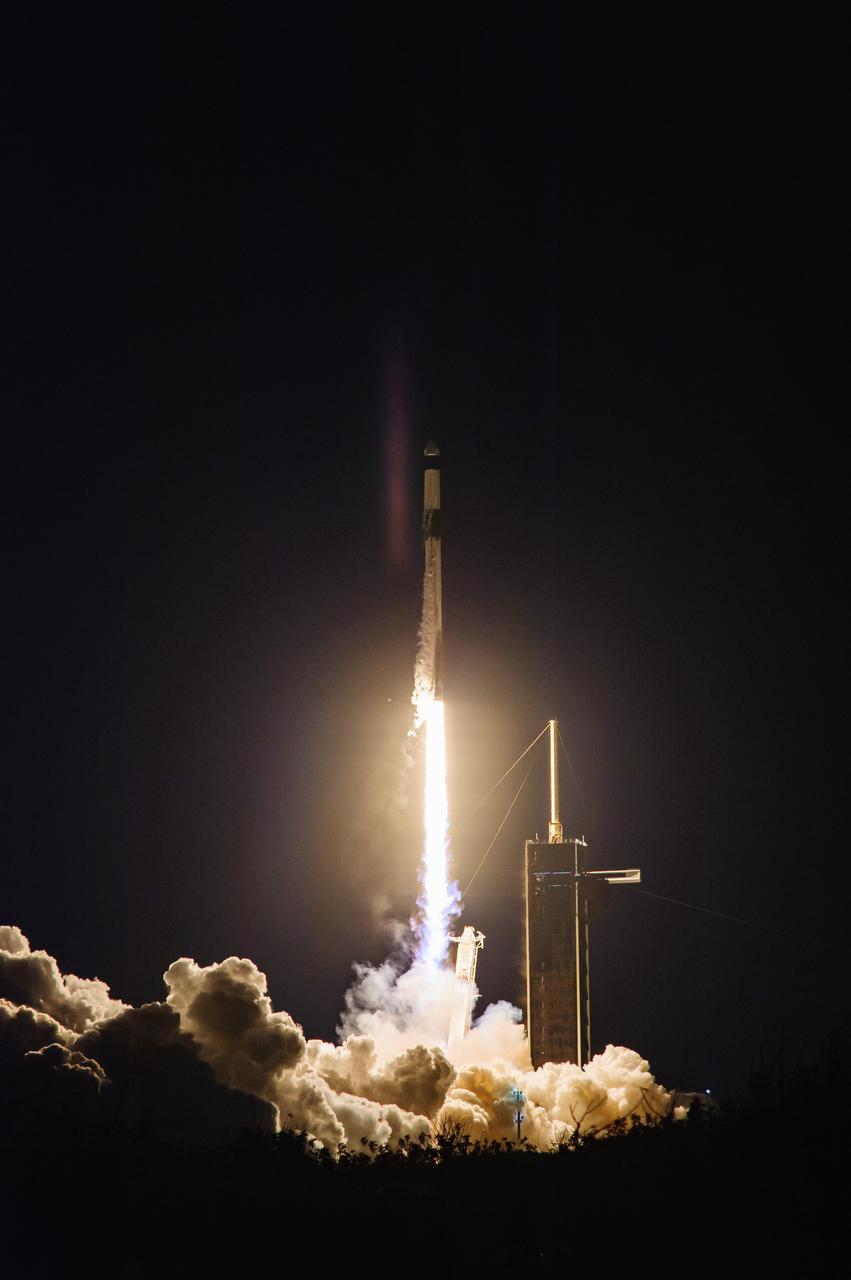
The SpaceX Falcon 9 rocket carrying the Dragon capsule soars upward after lifting off from Launch Complex 39A at NASA’s Kennedy Space Center in Florida on July 14, 2022, on the company’s 25th Commercial Resupply Services mission for the agency to the International Space Station. Liftoff was at 8:44 p.m. EDT. Dragon will deliver more than 5,800 pounds of cargo, including a variety of NASA investigations, to the space station. The spacecraft is expected to spend about a month attached to the orbiting outpost before it returns to Earth with research and return cargo, splashing down off the coast of Florida.
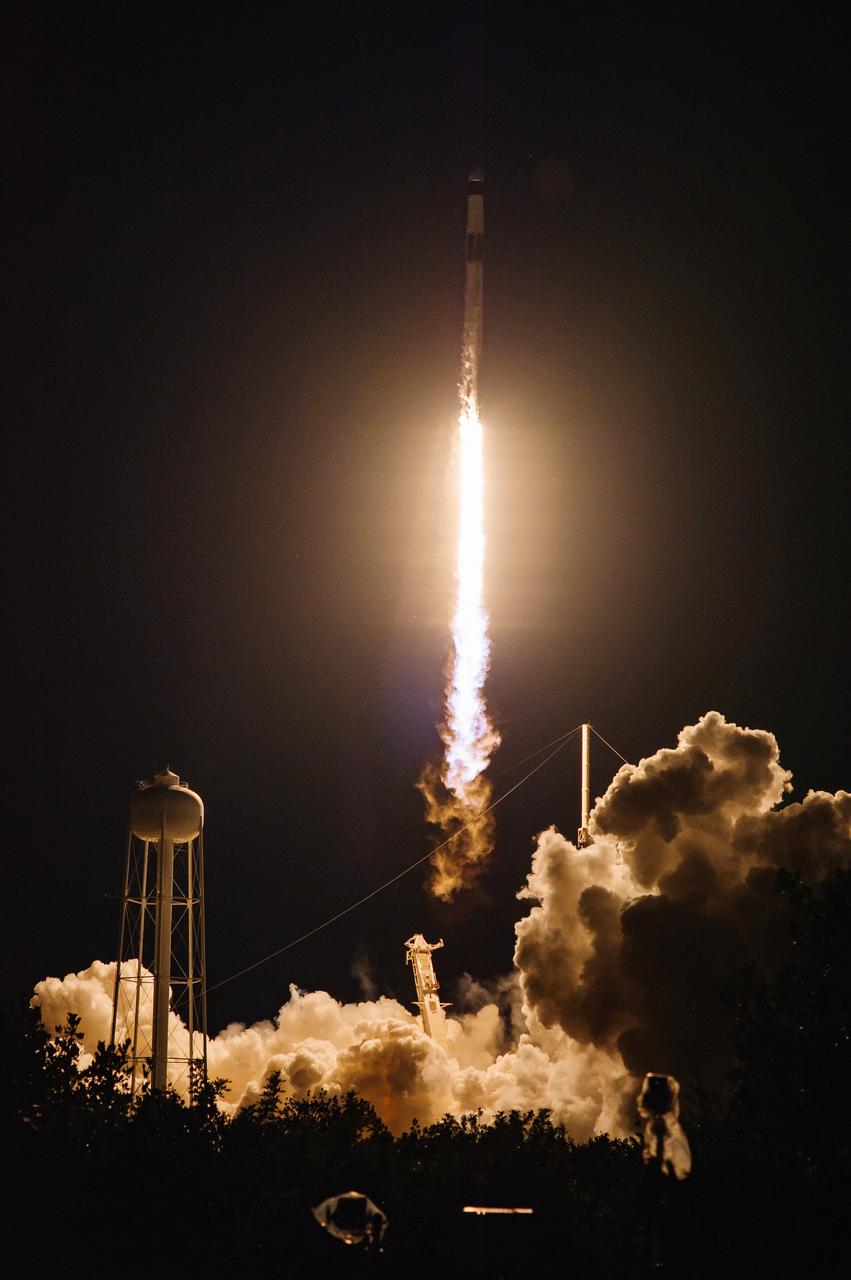
The SpaceX Falcon 9 rocket carrying the Dragon capsule soars upward after lifting off from Launch Complex 39A at NASA’s Kennedy Space Center in Florida on July 14, 2022, on the company’s 25th Commercial Resupply Services mission for the agency to the International Space Station. Liftoff was at 8:44 p.m. EDT. Dragon will deliver more than 5,800 pounds of cargo, including a variety of NASA investigations, to the space station. The spacecraft is expected to spend about a month attached to the orbiting outpost before it returns to Earth with research and return cargo, splashing down off the coast of Florida.
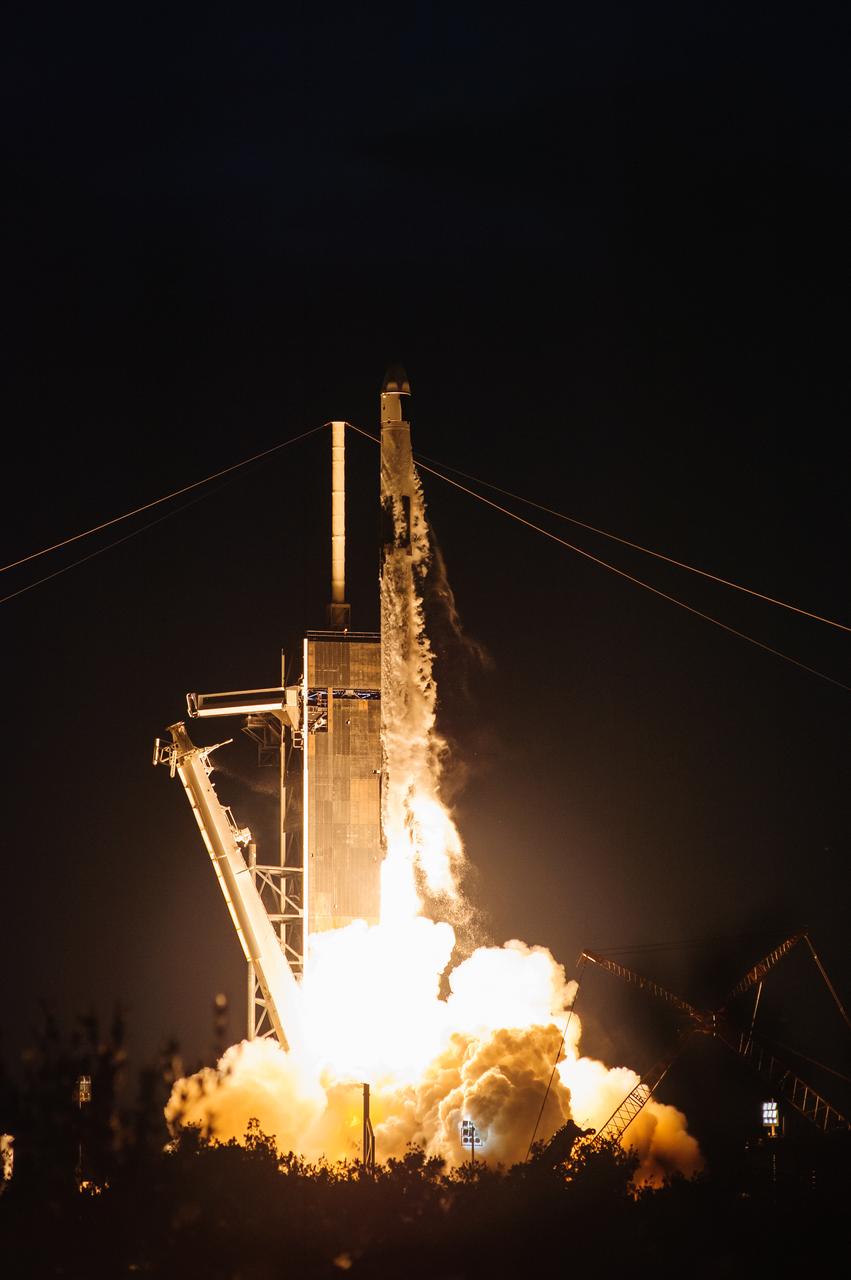
The SpaceX Falcon 9 rocket carrying the Dragon capsule lifts off from Launch Complex 39A at NASA’s Kennedy Space Center in Florida on July 14, 2022, on the company’s 25th Commercial Resupply Services mission for the agency to the International Space Station. Liftoff was at 8:44 p.m. EDT. Dragon will deliver more than 5,800 pounds of cargo, including a variety of NASA investigations, to the space station. The spacecraft is expected to spend about a month attached to the orbiting outpost before it returns to Earth with research and return cargo, splashing down off the coast of Florida.
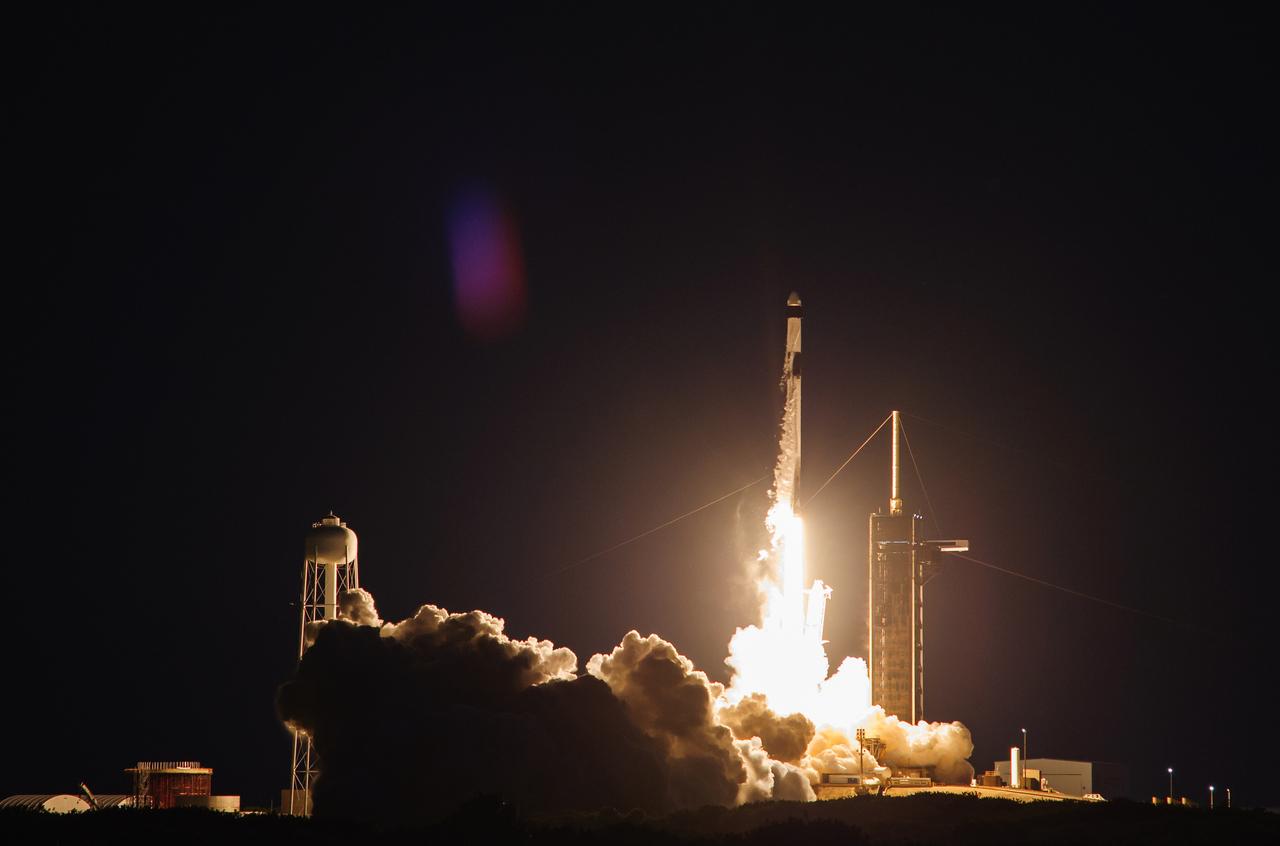
The SpaceX Falcon 9 rocket carrying the Dragon capsule lifts off from Launch Complex 39A at NASA’s Kennedy Space Center in Florida on July 14, 2022, on the company’s 25th Commercial Resupply Services mission for the agency to the International Space Station. Liftoff was at 8:44 p.m. EDT. Dragon will deliver more than 5,800 pounds of cargo, including a variety of NASA investigations, to the space station. The spacecraft is expected to spend about a month attached to the orbiting outpost before it returns to Earth with research and return cargo, splashing down off the coast of Florida.
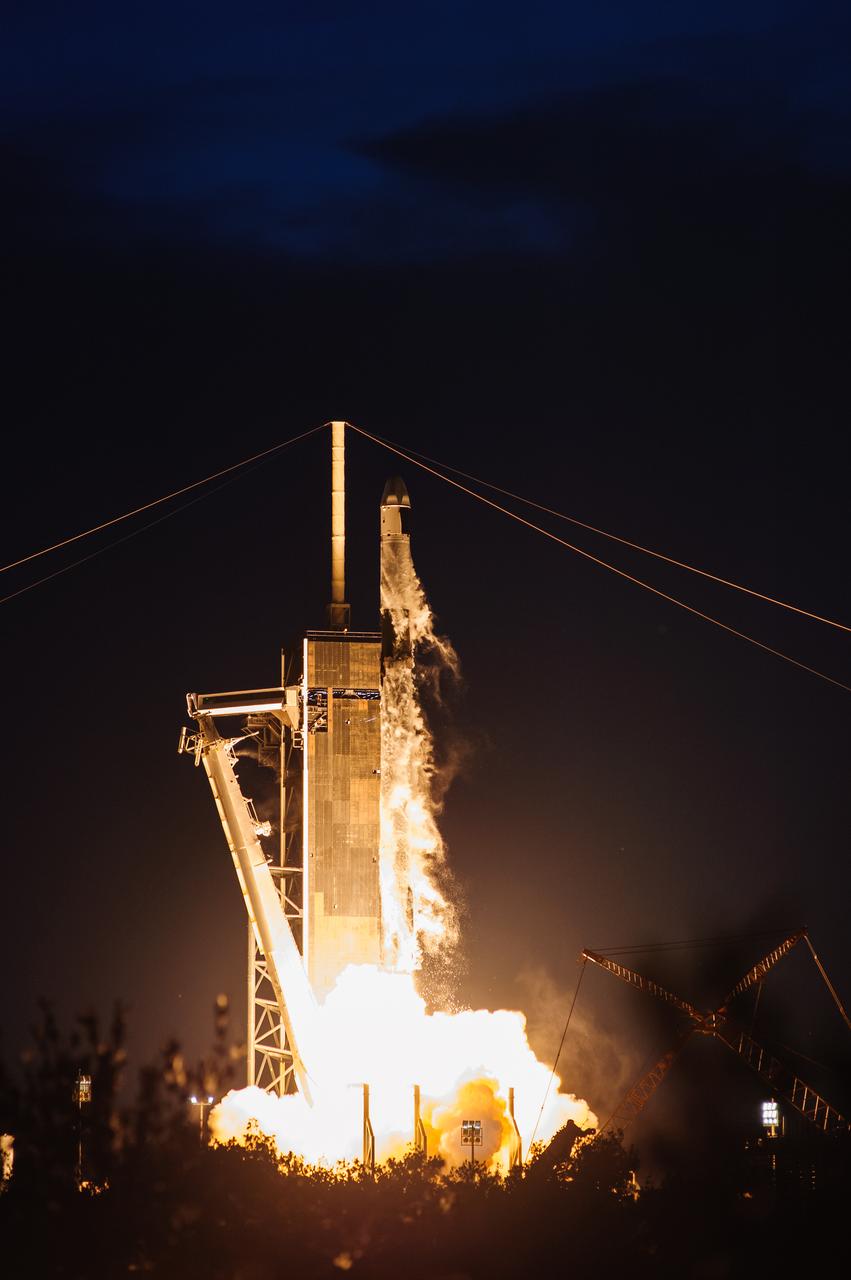
The SpaceX Falcon 9 rocket carrying the Dragon capsule lifts off from Launch Complex 39A at NASA’s Kennedy Space Center in Florida on July 14, 2022, on the company’s 25th Commercial Resupply Services mission for the agency to the International Space Station. Liftoff was at 8:44 p.m. EDT. Dragon will deliver more than 5,800 pounds of cargo, including a variety of NASA investigations, to the space station. The spacecraft is expected to spend about a month attached to the orbiting outpost before it returns to Earth with research and return cargo, splashing down off the coast of Florida.
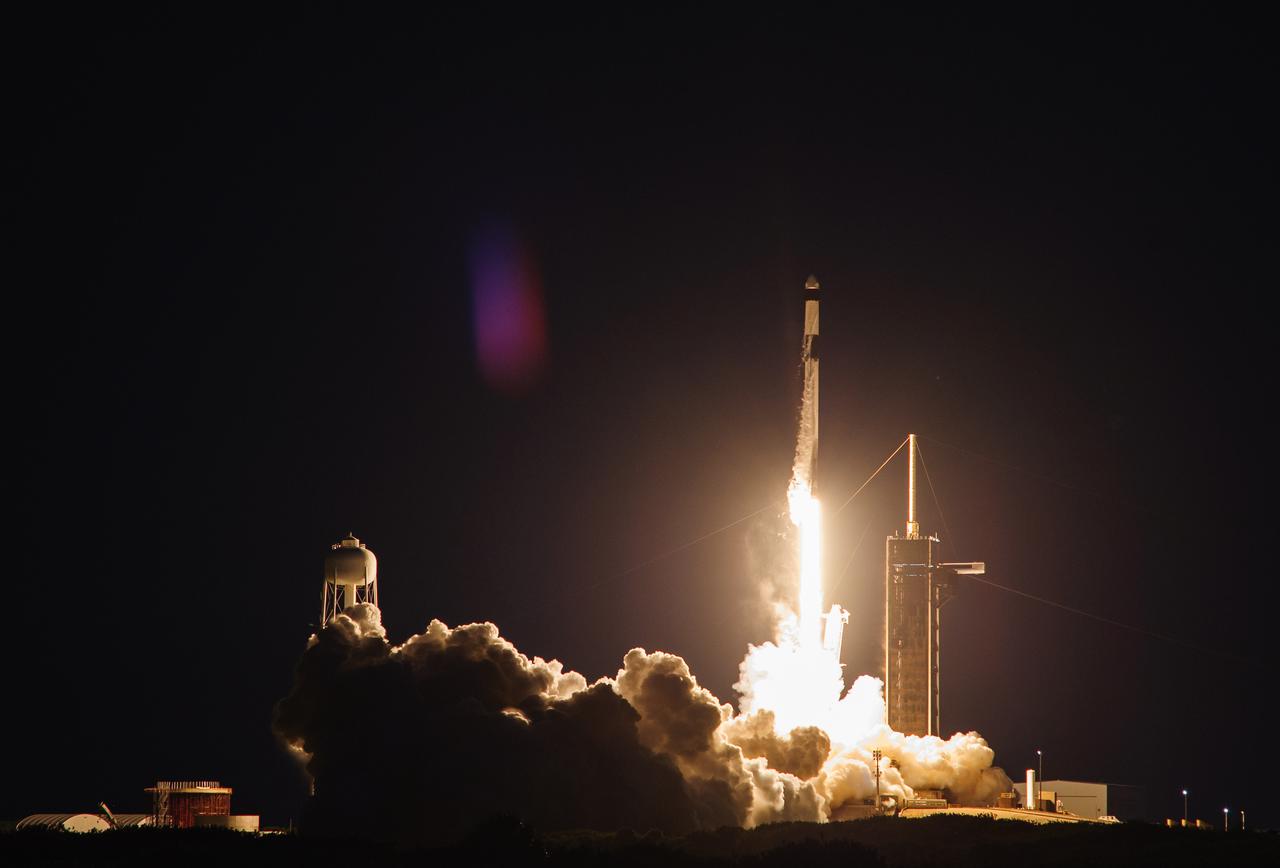
The SpaceX Falcon 9 rocket carrying the Dragon capsule lifts off from Launch Complex 39A at NASA’s Kennedy Space Center in Florida on July 14, 2022, on the company’s 25th Commercial Resupply Services mission for the agency to the International Space Station. Liftoff was at 8:44 p.m. EDT. Dragon will deliver more than 5,800 pounds of cargo, including a variety of NASA investigations, to the space station. The spacecraft is expected to spend about a month attached to the orbiting outpost before it returns to Earth with research and return cargo, splashing down off the coast of Florida.
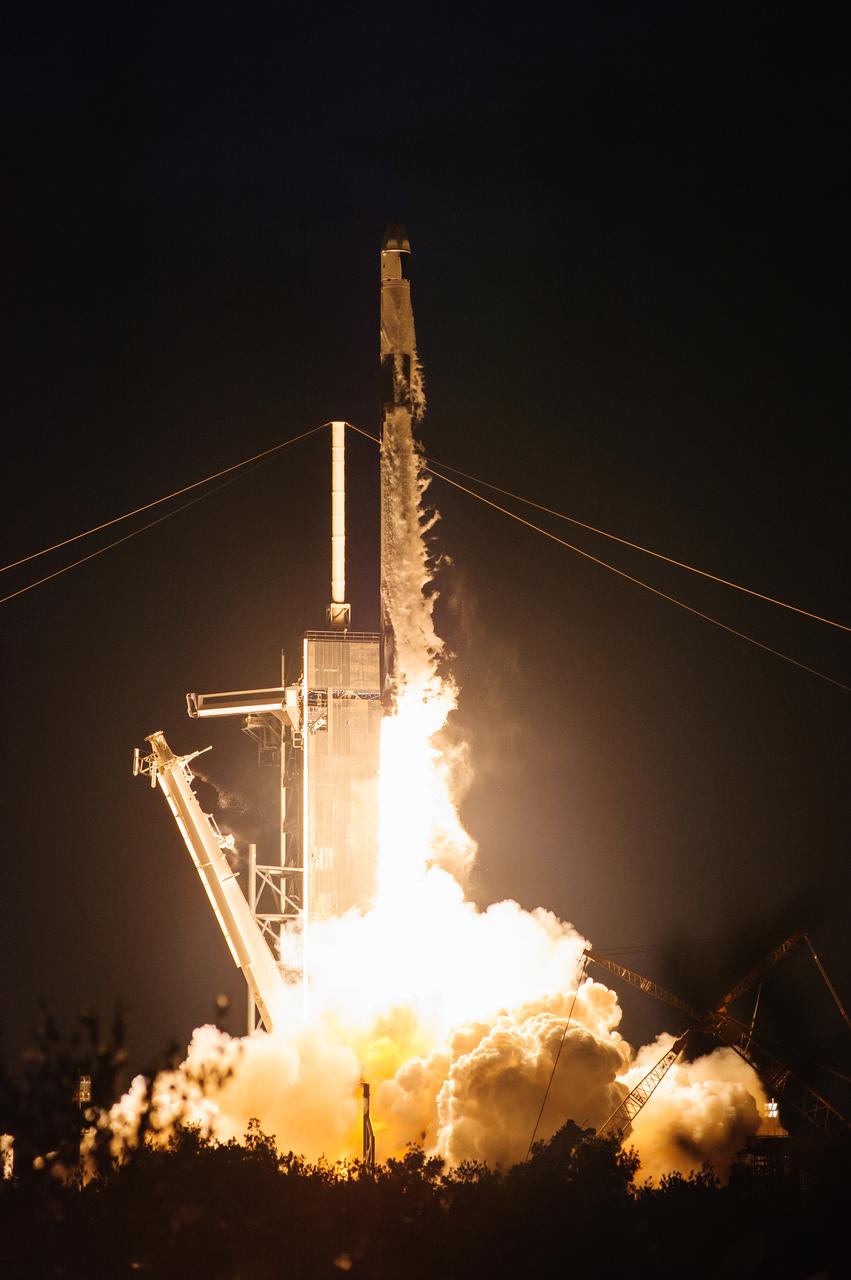
The SpaceX Falcon 9 rocket carrying the Dragon capsule lifts off from Launch Complex 39A at NASA’s Kennedy Space Center in Florida on July 14, 2022, on the company’s 25th Commercial Resupply Services mission for the agency to the International Space Station. Liftoff was at 8:44 p.m. EDT. Dragon will deliver more than 5,800 pounds of cargo, including a variety of NASA investigations, to the space station. The spacecraft is expected to spend about a month attached to the orbiting outpost before it returns to Earth with research and return cargo, splashing down off the coast of Florida.
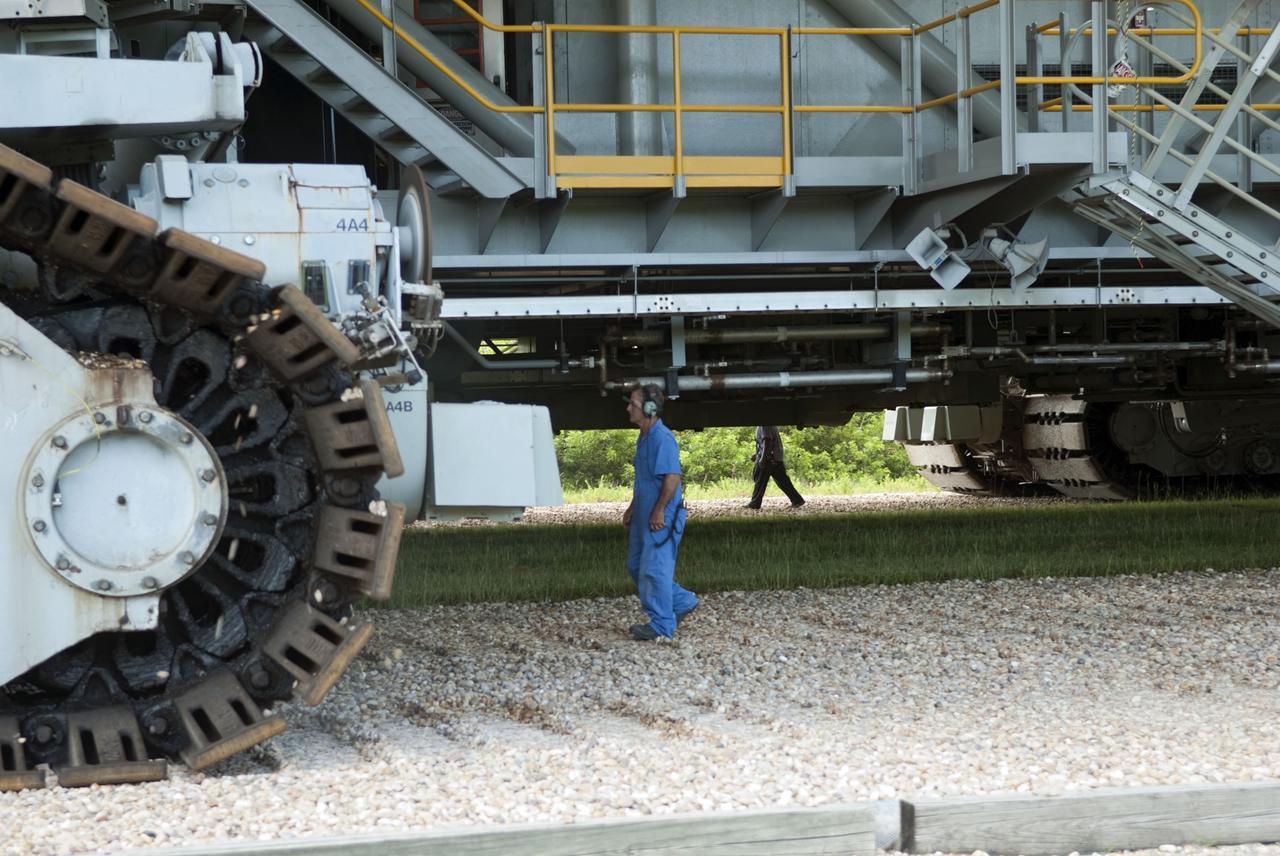
CAPE CANAVERAL, Fla. -- At NASA's Kennedy Space Center in Florida, workers accompany Mobile Launcher Platform-3 (MLP), which supported space shuttle Atlantis for its final flight to the International Space Station on the STS-135 mission, while making its last journey from Launch Pad 39A back to the Vehicle Assembly Building (VAB) atop a massive crawler-transporter. For more than 40 years, the MLPs have traveled between the VAB to both launch pads at Launch Complex 39, and then returned to the VAB for future use. MLP-3 was first used to launch Columbia on the STS-32 mission on Jan. 9, 1990. Photo credit: NASA/Jim Grossmann
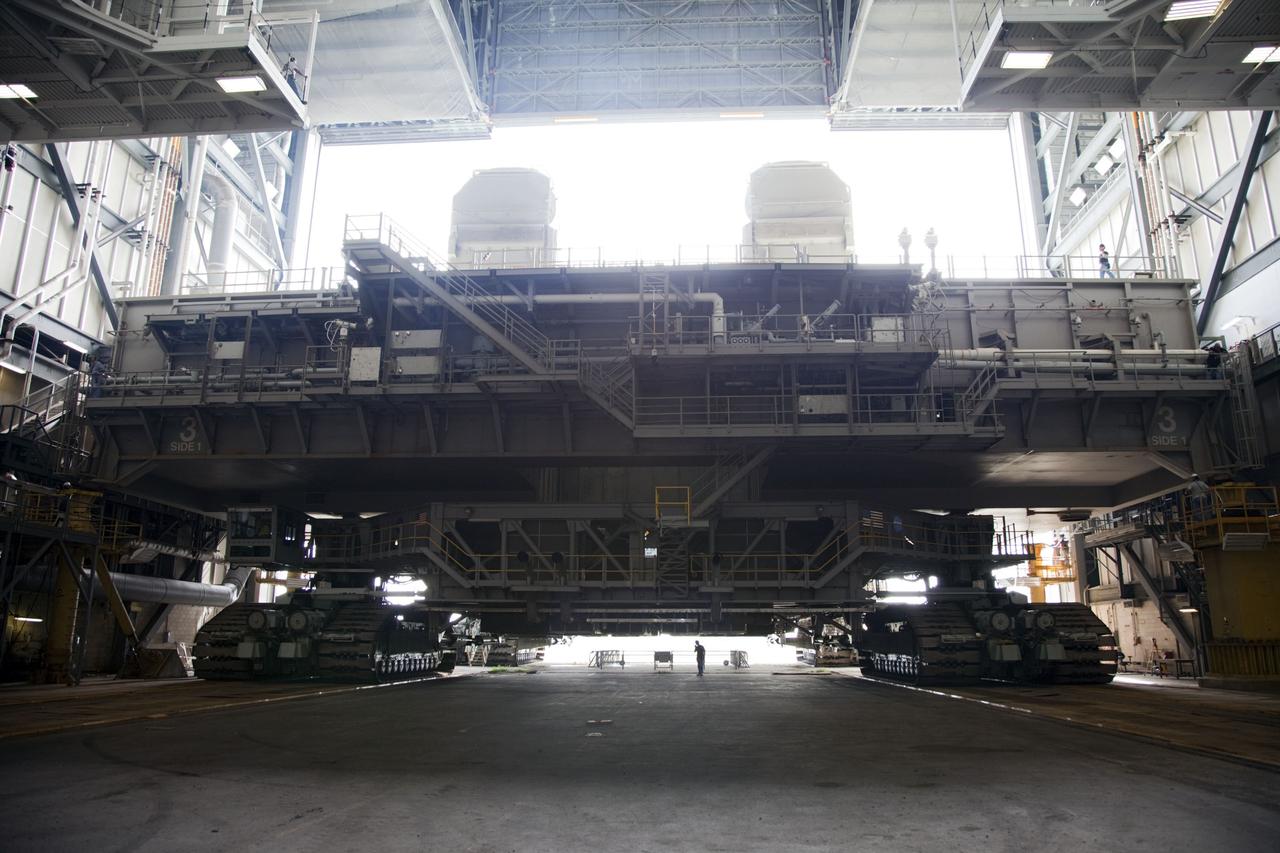
CAPE CANAVERAL, Fla. -- At NASA's Kennedy Space Center in Florida, Mobile Launcher Platform-3 (MLP), which supported space shuttle Atlantis for its final flight to the International Space Station on the STS-135 mission, has been delivered to the Vehicle Assembly Building (VAB) atop a crawler-transporter. For more than 40 years, the MLPs have traveled between the massive VAB to both launch pads at Launch Complex 39, and then returned to the VAB for future use. MLP-3 was first used to launch Columbia on the STS-32 mission on Jan. 9, 1990. Photo credit: NASA/Frankie Martin
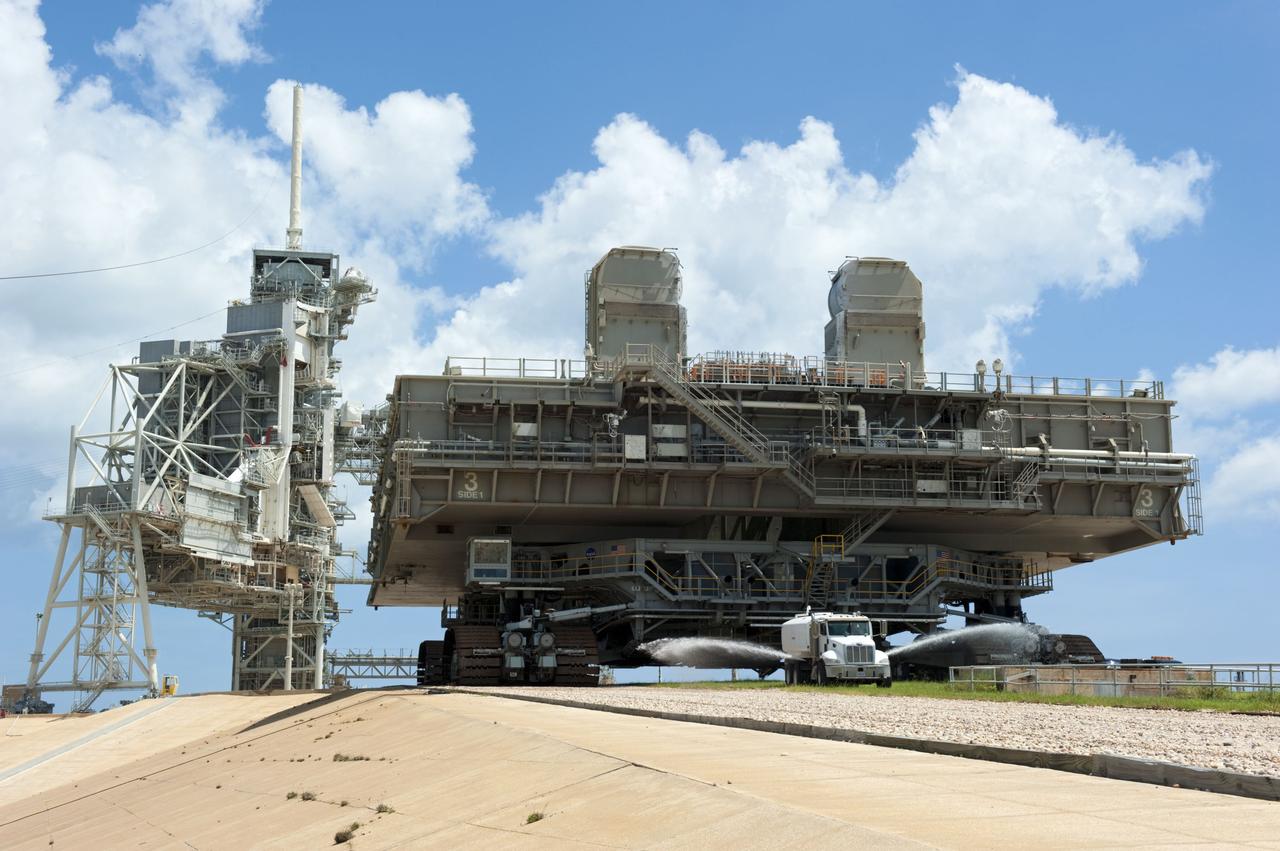
CAPE CANAVERAL, Fla. -- At NASA's Kennedy Space Center in Florida, Mobile Launcher Platform-3 (MLP), which supported space shuttle Atlantis for its final flight to the International Space Station on the STS-135 mission, is taking its last journey from Launch Pad 39A to the Vehicle Assembly Building (VAB). A massive crawler-transporter positioned under the MLP -- the last mobile launcher platform to launch a shuttle, begins the trek back to the VAB. A water truck leads the way spraying water on the dry crawlerway to reduce dust particles in the air. For more than 40 years, the MLPs have traveled between the massive VAB to both launch pads at Launch Complex 39, and then returned to the VAB for future use. MLP-3 was first used to launch Columbia on the STS-32 mission on Jan. 9, 1990. Photo credit: NASA/Kim Shiflett
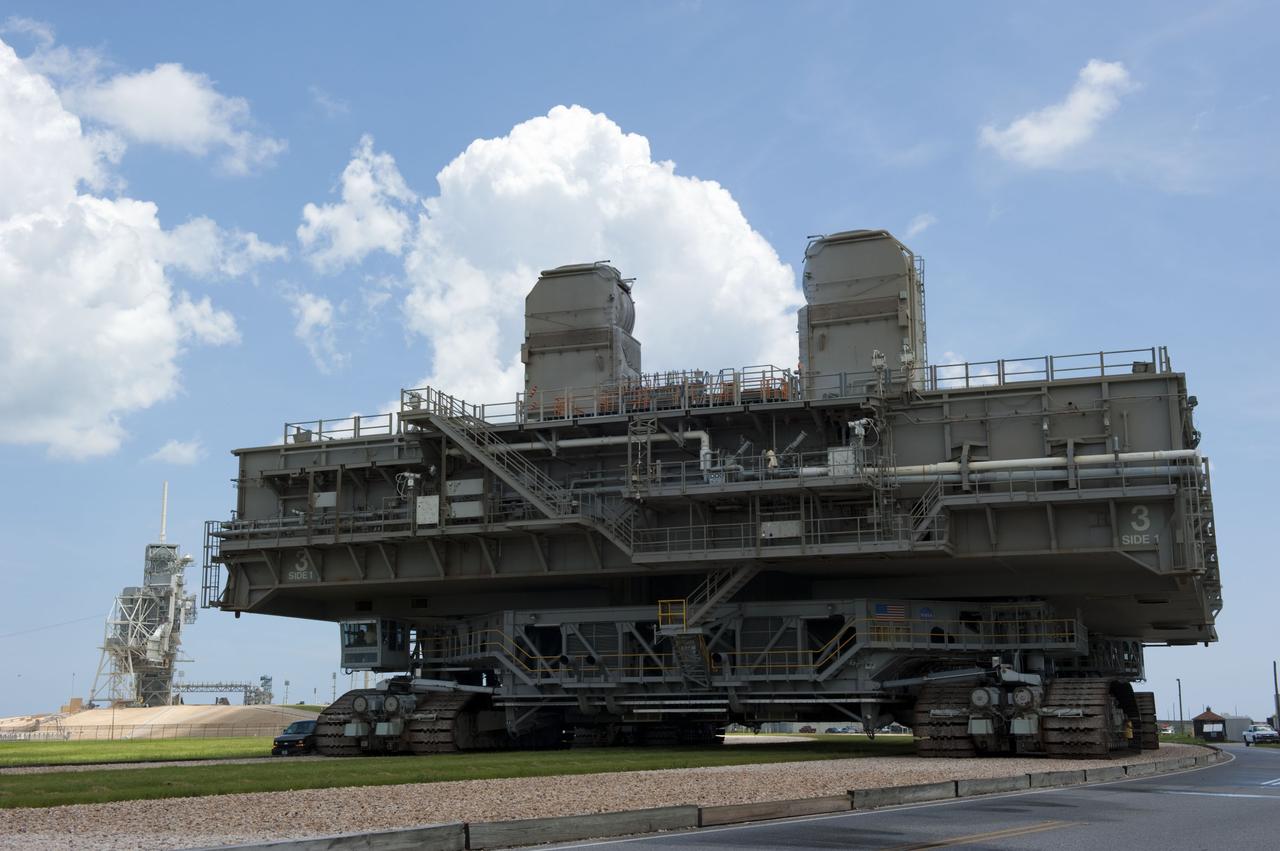
CAPE CANAVERAL, Fla. -- At NASA's Kennedy Space Center in Florida, Mobile Launcher Platform-3 (MLP), which supported space shuttle Atlantis for its final flight to the International Space Station on the STS-135 mission, is taking its last journey from Launch Pad 39A to the Vehicle Assembly Building (VAB). A massive crawler-transporter positioned under the MLP -- the last mobile launcher platform to launch a shuttle, begins the trek back to the VAB. For more than 40 years, the MLPs have traveled between the massive VAB to both launch pads at Launch Complex 39, and then returned to the VAB for future use. MLP-3 was first used to launch Columbia on the STS-32 mission on Jan. 9, 1990. Photo credit: NASA/Kim Shiflett

CAPE CANAVERAL, Fla. -- At NASA's Kennedy Space Center in Florida, Mobile Launcher Platform-3 (MLP), which supported space shuttle Atlantis for its final flight to the International Space Station on the STS-135 mission, is taking its last journey from Launch Pad 39A to the Vehicle Assembly Building (VAB). A massive crawler-transporter positioned under the MLP -- the last mobile launcher platform to launch a shuttle, begins the trek back to the VAB. For more than 40 years, the MLPs have traveled between the massive VAB to both launch pads at Launch Complex 39, and then returned to the VAB for future use. MLP-3 was first used to launch Columbia on the STS-32 mission on Jan. 9, 1990. Photo credit: NASA/Kim Shiflett
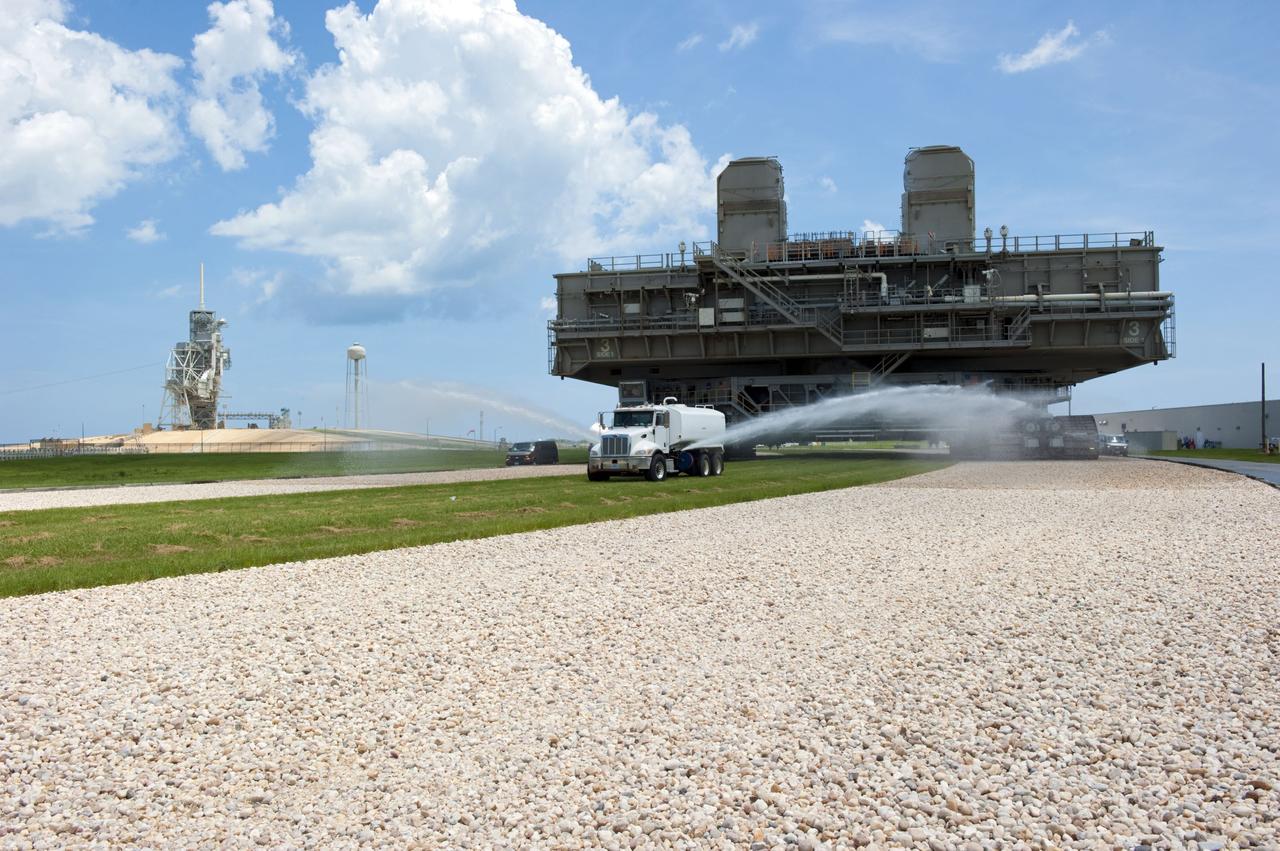
CAPE CANAVERAL, Fla. -- At NASA's Kennedy Space Center in Florida, Mobile Launcher Platform-3 (MLP), which supported space shuttle Atlantis for its final flight to the International Space Station on the STS-135 mission, is taking its last journey from Launch Pad 39A to the Vehicle Assembly Building (VAB). A massive crawler-transporter positioned under the MLP -- the last mobile launcher platform to launch a shuttle, begins the trek back to the VAB. A water truck leads the way spraying water on the dry crawlerway to reduce dust particles in the air. For more than 40 years, the MLPs have traveled between the massive VAB to both launch pads at Launch Complex 39, and then returned to the VAB for future use. MLP-3 was first used to launch Columbia on the STS-32 mission on Jan. 9, 1990. Photo credit: NASA/Kim Shiflett
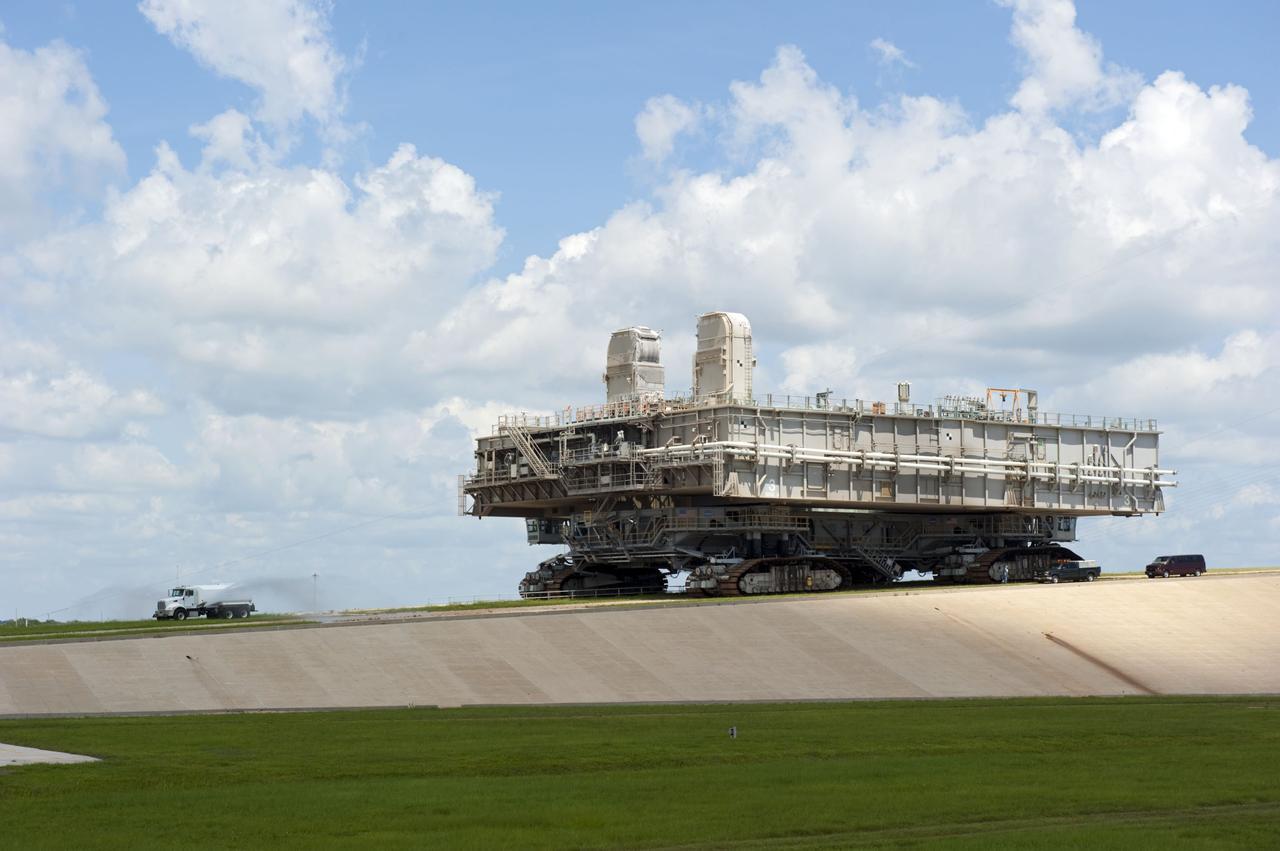
CAPE CANAVERAL, Fla. -- At NASA's Kennedy Space Center in Florida, Mobile Launcher Platform-3 (MLP), which supported space shuttle Atlantis for its final flight to the International Space Station on the STS-135 mission, is taking its last journey from Launch Pad 39A to the Vehicle Assembly Building (VAB). A massive crawler-transporter positioned under the MLP -- the last mobile launcher platform to launch a shuttle, begins the trek back to the VAB. A water truck leads the way spraying water on the dry crawlerway to reduce dust particles in the air. For more than 40 years, the MLPs have traveled between the massive VAB to both launch pads at Launch Complex 39, and then returned to the VAB for future use. MLP-3 was first used to launch Columbia on the STS-32 mission on Jan. 9, 1990. Photo credit: NASA/Kim Shiflett
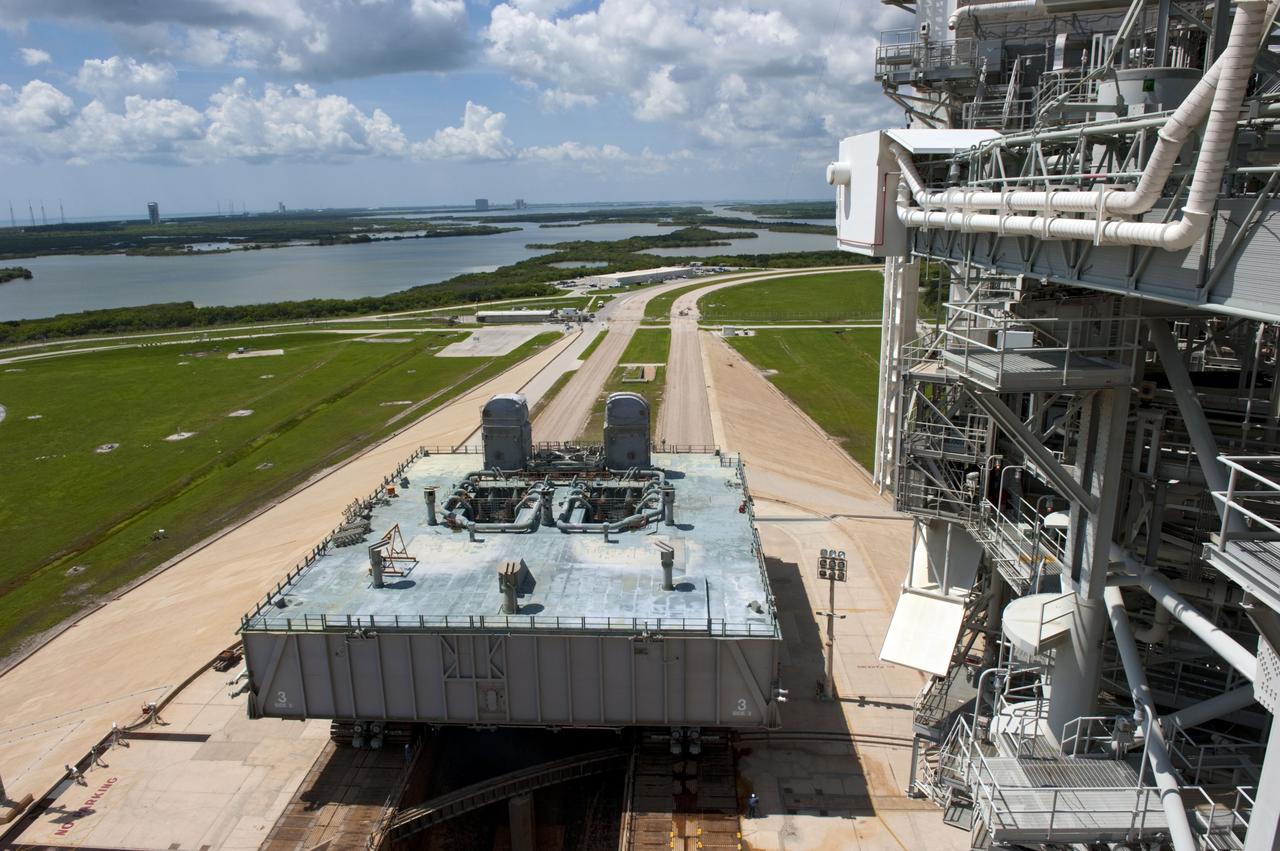
CAPE CANAVERAL, Fla. -- At NASA's Kennedy Space Center in Florida, Mobile Launcher Platform-3 (MLP), which supported space shuttle Atlantis for its final flight to the International Space Station on the STS-135 mission, is taking its last journey from Launch Pad 39A to the Vehicle Assembly Building (VAB). A massive crawler-transporter positioned under the MLP -- the last mobile launcher platform to launch a shuttle, begins the trek back to the VAB. For more than 40 years, the MLPs have traveled between the massive VAB to both launch pads at Launch Complex 39, and then returned to the VAB for future use. MLP-3 was first used to launch Columbia on the STS-32 mission on Jan. 9, 1990. Photo credit: NASA/Kim Shiflett

CAPE CANAVERAL, Fla. -- At NASA's Kennedy Space Center in Florida, Mobile Launcher Platform-3 (MLP), which supported space shuttle Atlantis for its final flight to the International Space Station on the STS-135 mission, is taking its last journey from Launch Pad 39A to the Vehicle Assembly Building (VAB). A massive crawler-transporter positioned under the MLP -- the last mobile launcher platform to launch a shuttle, begins the trek back to the VAB. For more than 40 years, the MLPs have traveled between the massive VAB to both launch pads at Launch Complex 39, and then returned to the VAB for future use. MLP-3 was first used to launch Columbia on the STS-32 mission on Jan. 9, 1990. Photo credit: NASA/Kim Shiflett
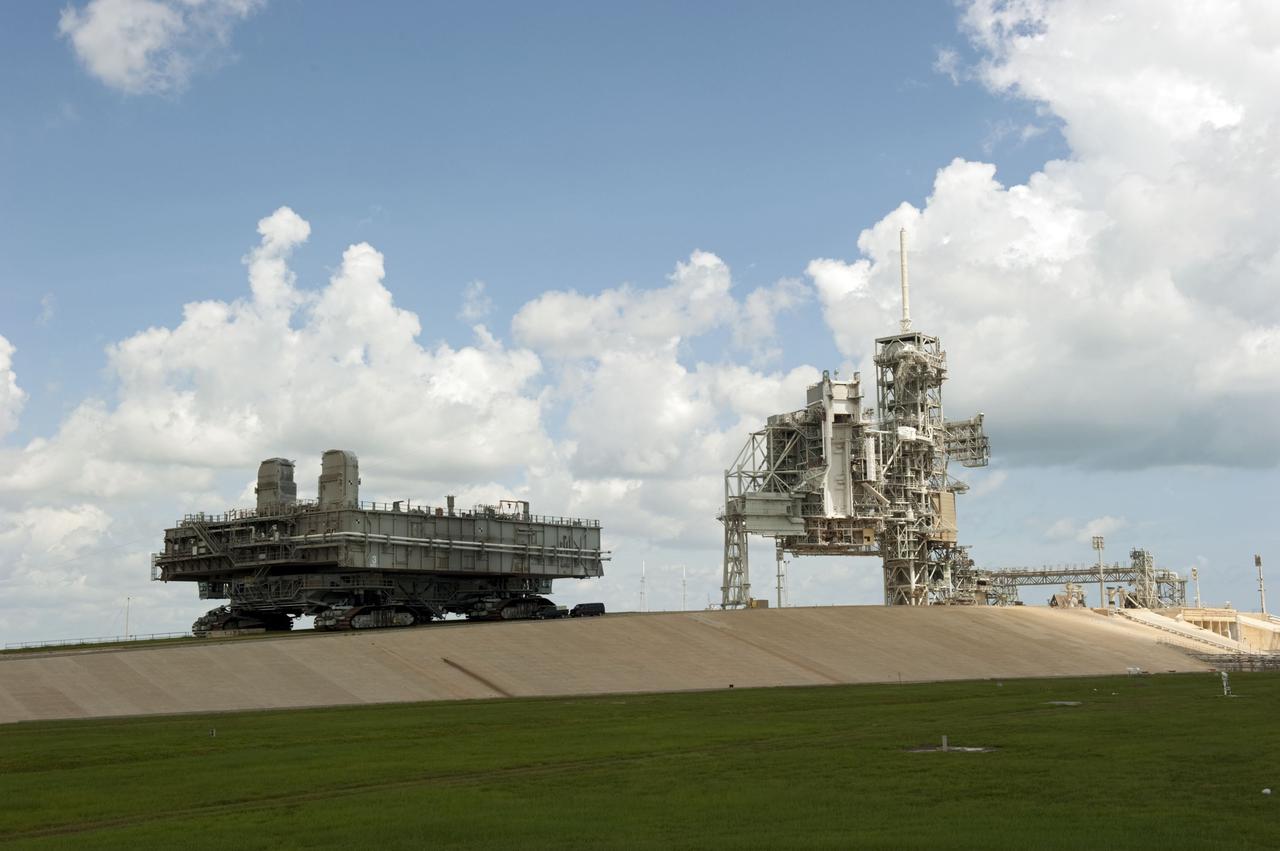
CAPE CANAVERAL, Fla. -- At NASA's Kennedy Space Center in Florida, Mobile Launcher Platform-3 (MLP), which supported space shuttle Atlantis for its final flight to the International Space Station on the STS-135 mission, is taking its last journey from Launch Pad 39A to the Vehicle Assembly Building (VAB). A massive crawler-transporter positioned under the MLP -- the last mobile launcher platform to launch a shuttle, begins the trek back to the VAB. For more than 40 years, the MLPs have traveled between the massive VAB to both launch pads at Launch Complex 39, and then returned to the VAB for future use. MLP-3 was first used to launch Columbia on the STS-32 mission on Jan. 9, 1990. Photo credit: NASA/Kim Shiflett
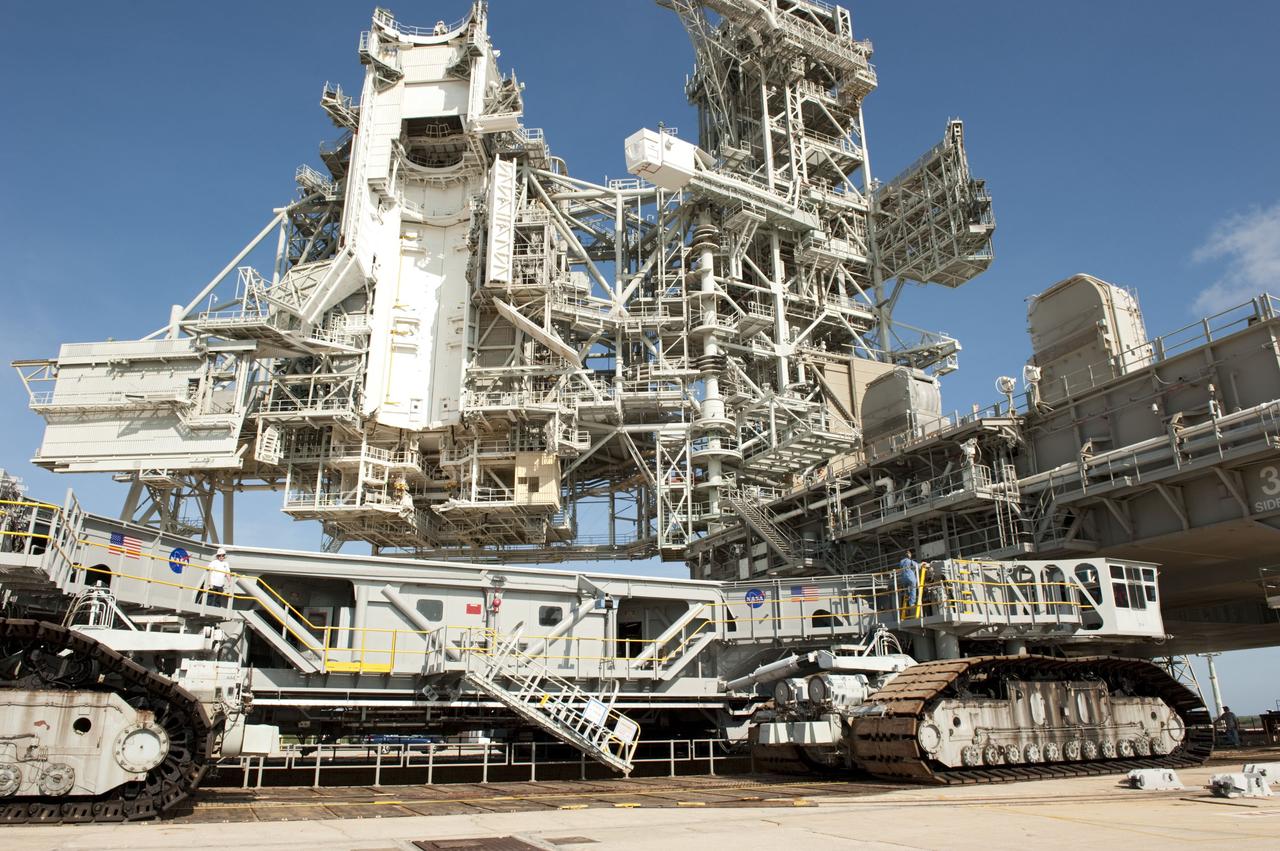
CAPE CANAVERAL, Fla. -- At NASA's Kennedy Space Center in Florida, Mobile Launcher Platform-3 (MLP), which supported space shuttle Atlantis for its final flight to the International Space Station on the STS-135 mission, is being prepared for its last journey from Launch Pad 39A to the Vehicle Assembly Building (VAB). Here, workers are moving a massive crawler-transporter under the MLP -- the last mobile launcher platform to launch a shuttle. For more than 40 years, the MLPs have traveled between the massive VAB to both launch pads at Launch Complex 39, and then returned to the VAB for future use. MLP-3 was first used to launch Columbia on the STS-32 mission on Jan. 9, 1990. Photo credit: NASA/Kim Shiflett
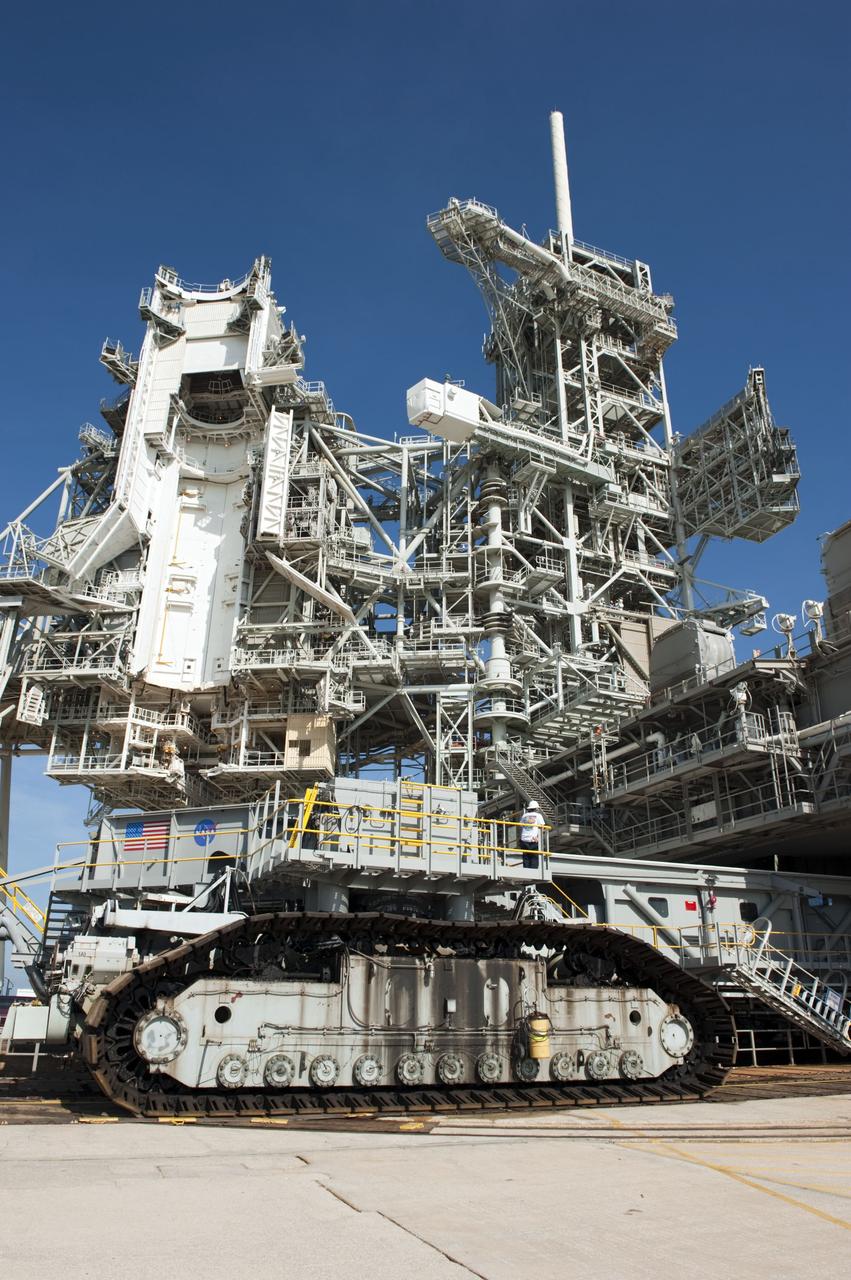
CAPE CANAVERAL, Fla. -- At NASA's Kennedy Space Center in Florida, Mobile Launcher Platform-3 (MLP), which supported space shuttle Atlantis for its final flight to the International Space Station on the STS-135 mission, is being prepared for its last journey from Launch Pad 39A to the Vehicle Assembly Building (VAB). Here, workers are moving a massive crawler-transporter under the MLP -- the last mobile launcher platform to launch a shuttle. For more than 40 years, the MLPs have traveled between the massive VAB to both launch pads at Launch Complex 39, and then returned to the VAB for future use. MLP-3 was first used to launch Columbia on the STS-32 mission on Jan. 9, 1990. Photo credit: NASA/Kim Shiflett
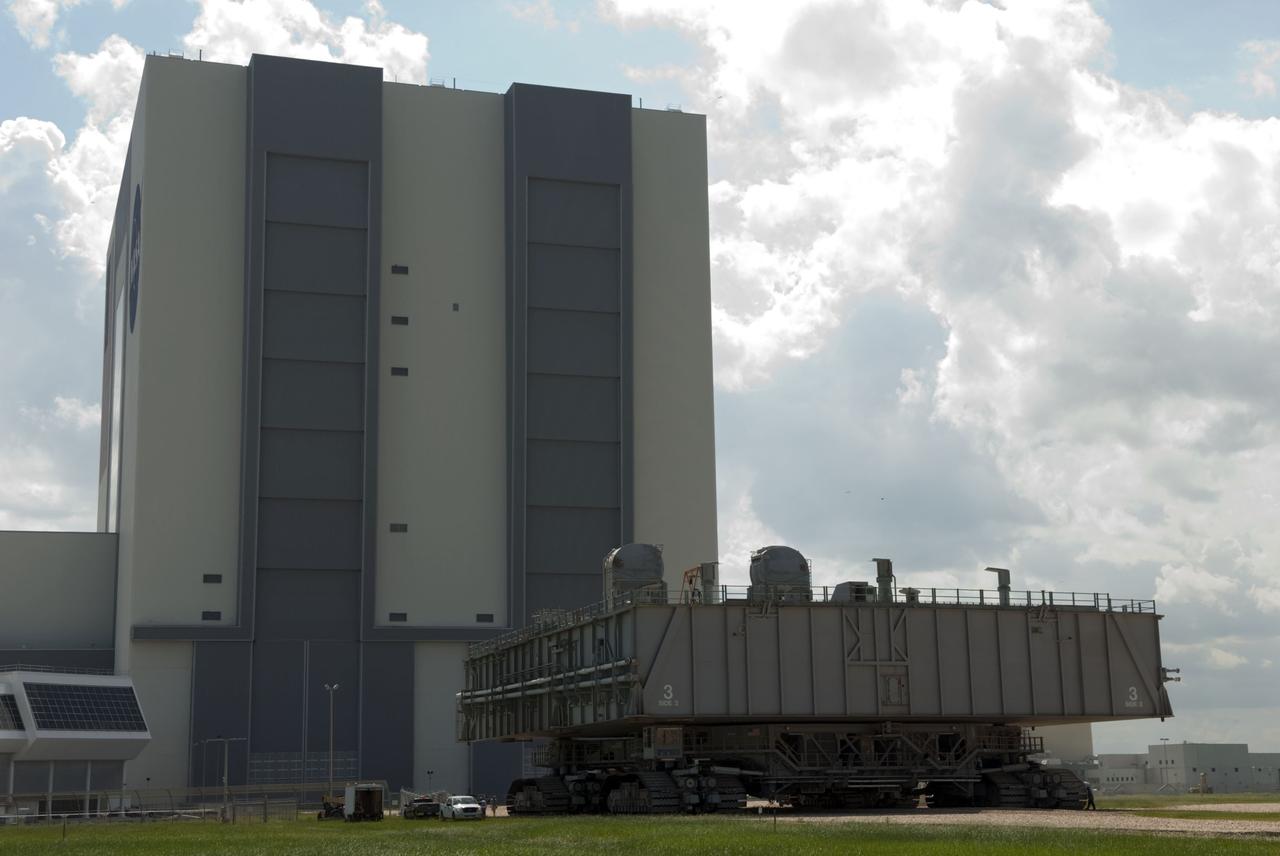
CAPE CANAVERAL, Fla. -- At NASA's Kennedy Space Center in Florida, Mobile Launcher Platform-3 (MLP), which supported space shuttle Atlantis for its final flight to the International Space Station on the STS-135 mission, is making its last journey from Launch Pad 39A into the Vehicle Assembly Building (VAB) atop a massive crawler-transporter. For more than 40 years, the MLPs have traveled between the VAB to both launch pads at Launch Complex 39, and then returned to the VAB for future use. MLP-3 was first used to launch Columbia on the STS-32 mission on Jan. 9, 1990. Photo credit: NASA/Jim Grossmann
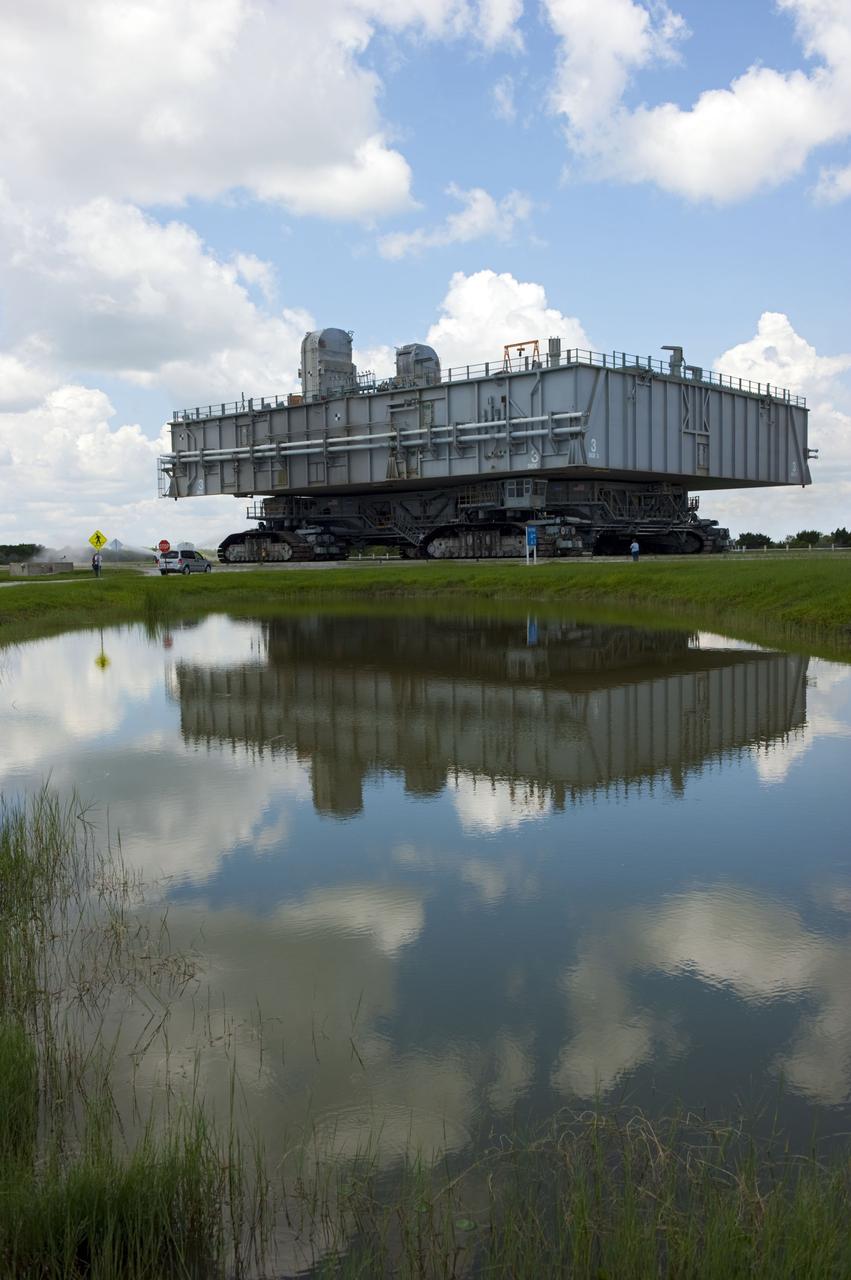
CAPE CANAVERAL, Fla. -- At NASA's Kennedy Space Center in Florida, Mobile Launcher Platform-3 (MLP), which supported space shuttle Atlantis for its final flight to the International Space Station on the STS-135 mission, is taking its last journey from Launch Pad 39A to the Vehicle Assembly Building (VAB). A massive crawler-transporter positioned under the MLP -- the last mobile launcher platform to launch a shuttle, begins the trek back to the VAB. For more than 40 years, the MLPs have traveled between the massive VAB to both launch pads at Launch Complex 39, and then returned to the VAB for future use. MLP-3 was first used to launch Columbia on the STS-32 mission on Jan. 9, 1990. Photo credit: NASA/Kim Shiflett
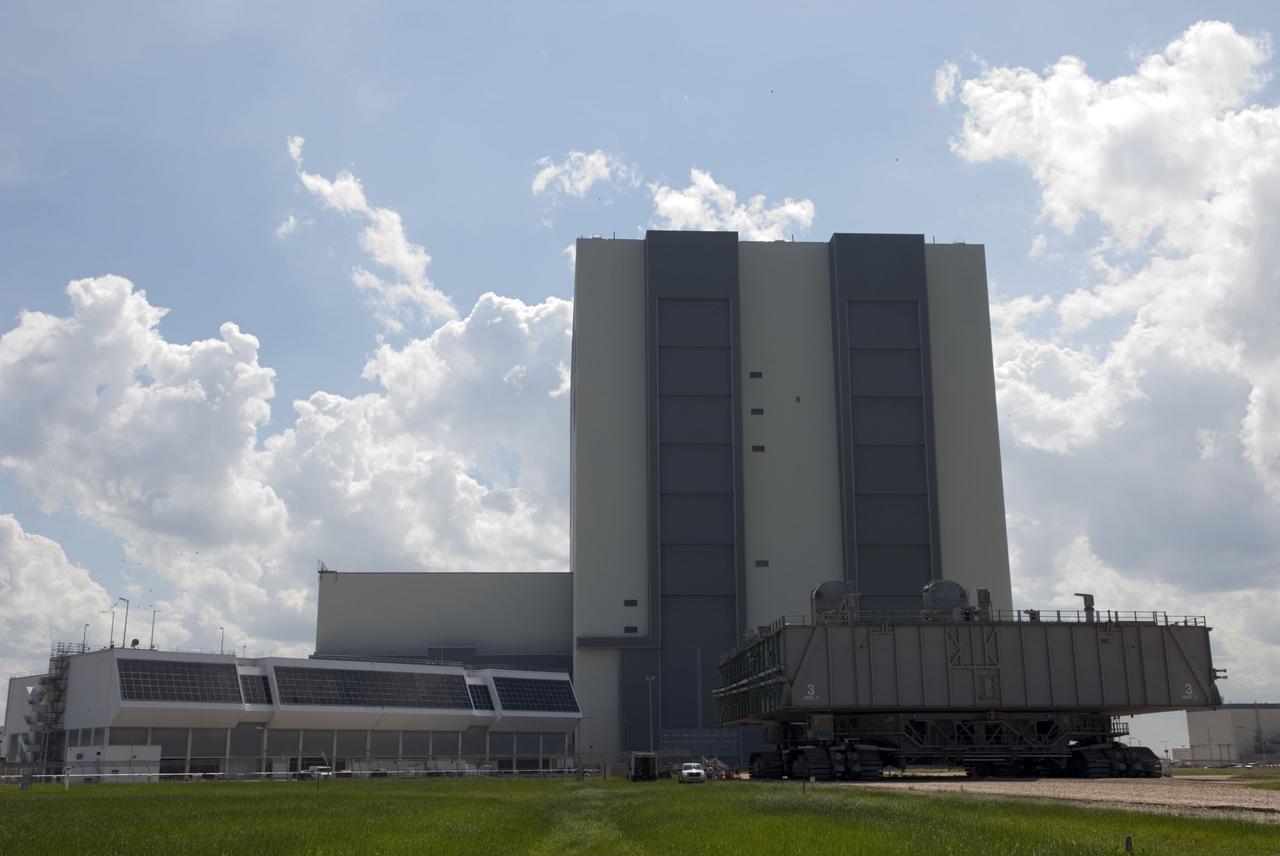
CAPE CANAVERAL, Fla. -- At NASA's Kennedy Space Center in Florida, Mobile Launcher Platform-3 (MLP), which supported space shuttle Atlantis for its final flight to the International Space Station on the STS-135 mission, is making its last journey from Launch Pad 39A into the Vehicle Assembly Building (VAB) atop a massive crawler-transporter. Seen also is the Space Shuttle Program's Launch Control Center (left). For more than 40 years, the MLPs have traveled between the VAB to both launch pads at Launch Complex 39, and then returned to the VAB for future use. MLP-3 was first used to launch Columbia on the STS-32 mission on Jan. 9, 1990. Photo credit: NASA/Jim Grossmann
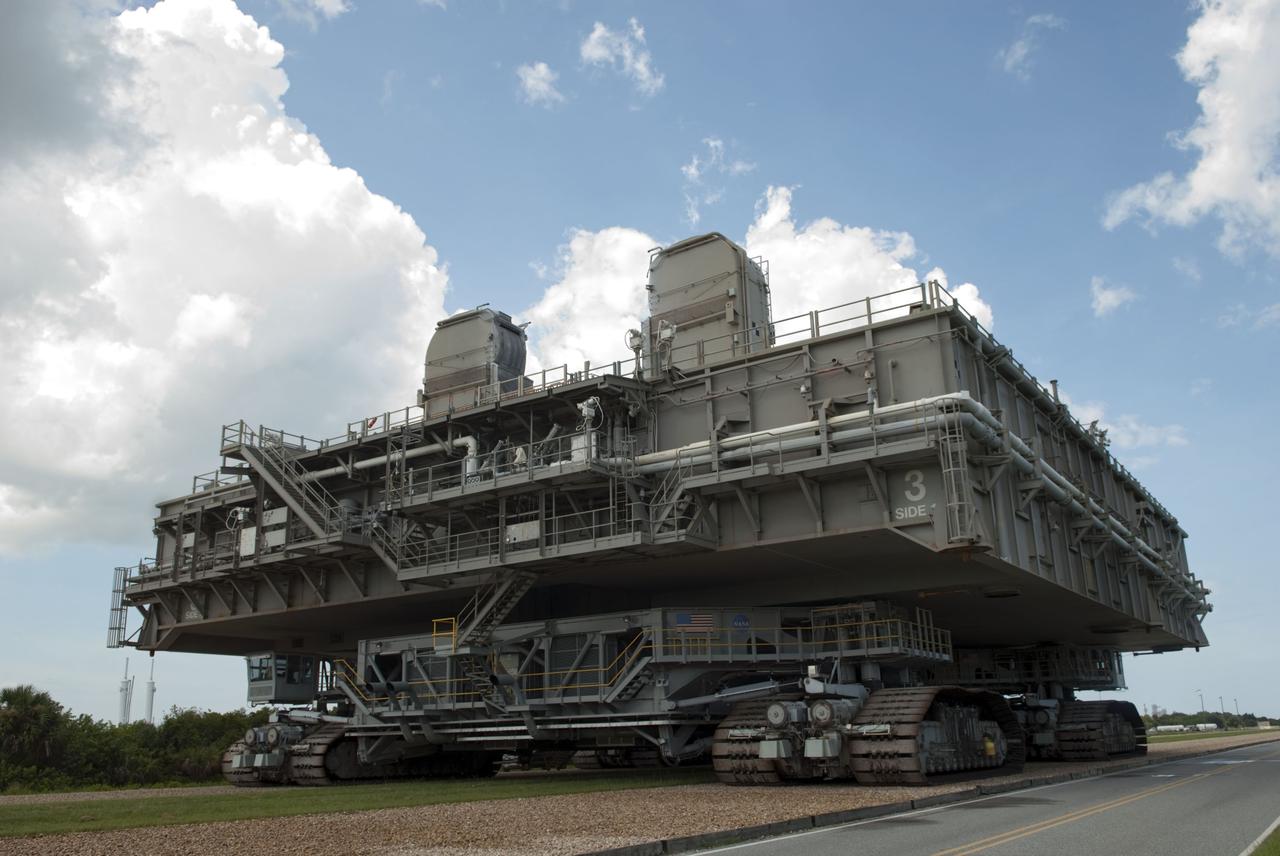
CAPE CANAVERAL, Fla. -- At NASA's Kennedy Space Center in Florida, Mobile Launcher Platform-3 (MLP), which supported space shuttle Atlantis for its final flight to the International Space Station on the STS-135 mission, is making its last journey from Launch Pad 39A back to the Vehicle Assembly Building (VAB) atop a massive crawler-transporter. For more than 40 years, the MLPs have traveled between the VAB to both launch pads at Launch Complex 39, and then returned to the VAB for future use. MLP-3 was first used to launch Columbia on the STS-32 mission on Jan. 9, 1990. Photo credit: NASA/Jim Grossmann
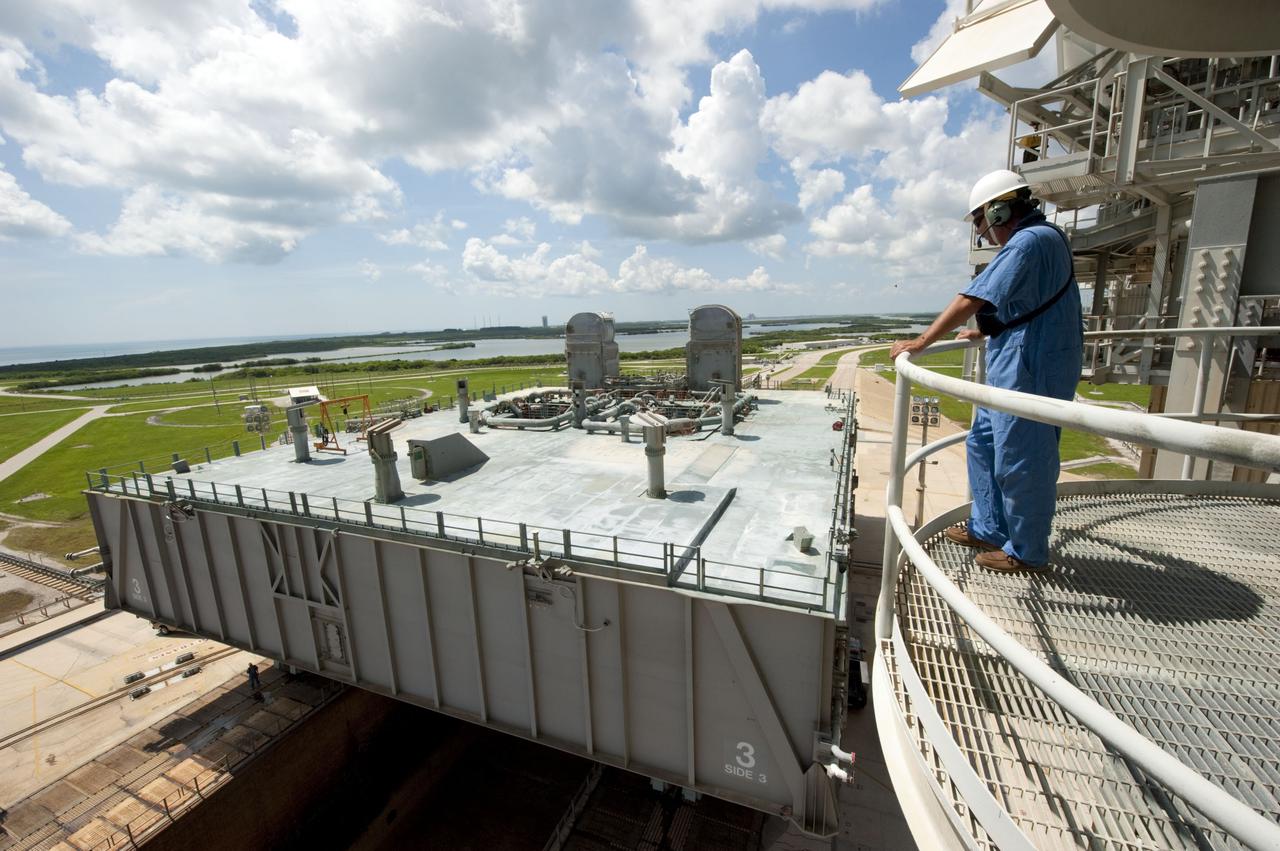
CAPE CANAVERAL, Fla. -- At NASA's Kennedy Space Center in Florida, Mobile Launcher Platform-3 (MLP), which supported space shuttle Atlantis for its final flight to the International Space Station on the STS-135 mission, is taking its last journey from Launch Pad 39A to the Vehicle Assembly Building (VAB). Here, workers monitor the process as a massive crawler-transporter positioned under the MLP, the last mobile launcher platform to launch a shuttle, begins its trek back to the VAB. For more than 40 years, the MLPs have traveled between the massive VAB to both launch pads at Launch Complex 39, and then returned to the VAB for future use. MLP-3 was first used to launch Columbia on the STS-32 mission on Jan. 9, 1990. Photo credit: NASA/Kim Shiflett
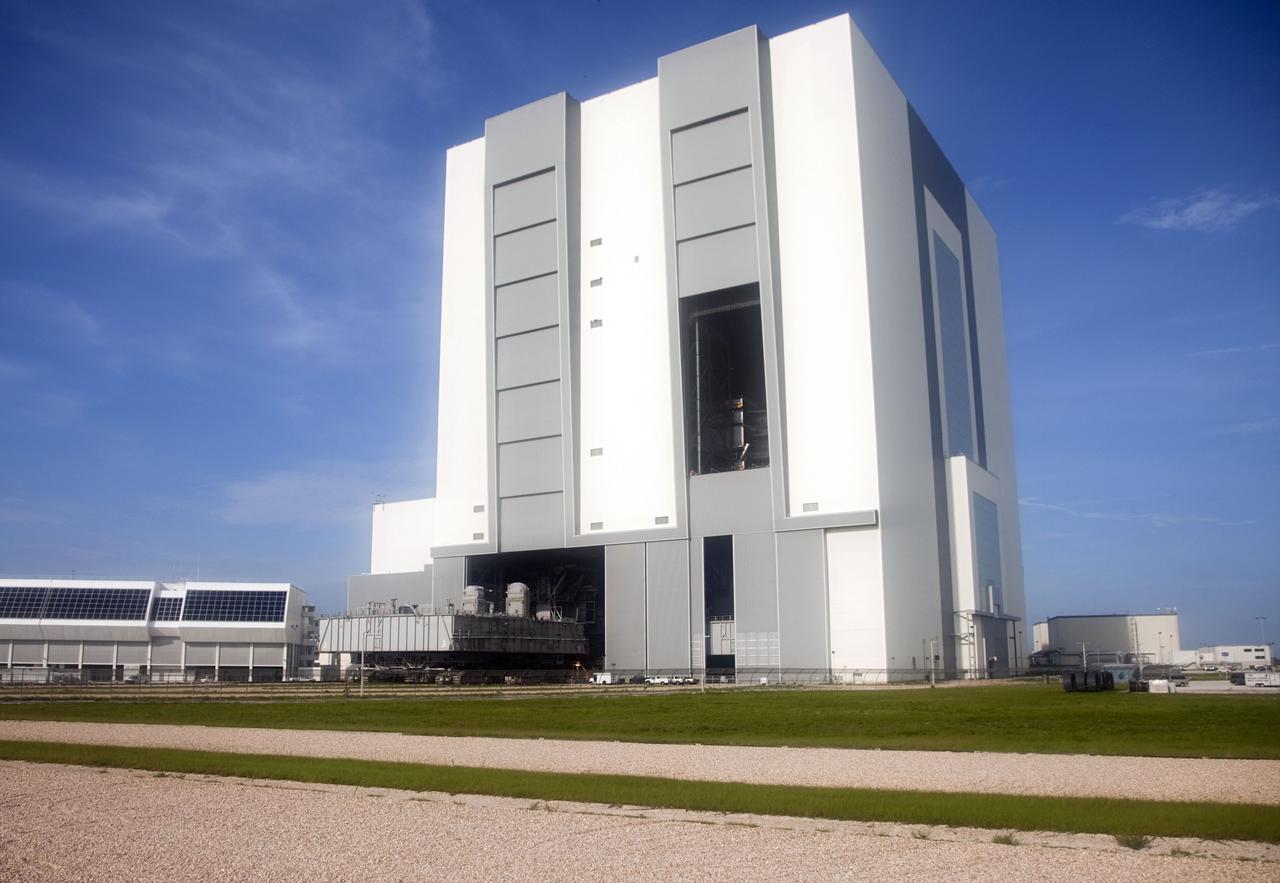
CAPE CANAVERAL, Fla. -- At NASA's Kennedy Space Center in Florida, Mobile Launcher Platform-3 (MLP), which supported space shuttle Atlantis for its final flight to the International Space Station on the STS-135 mission, has been delivered to the Vehicle Assembly Building (VAB) atop a crawler-transporter. Seen also is the Space Shuttle Program's Launch Control Center (left). For more than 40 years, the MLPs have traveled between the massive VAB to both launch pads at Launch Complex 39, and then returned to the VAB for future use. MLP-3 was first used to launch Columbia on the STS-32 mission on Jan. 9, 1990. Photo credit: NASA/Frankie Martin
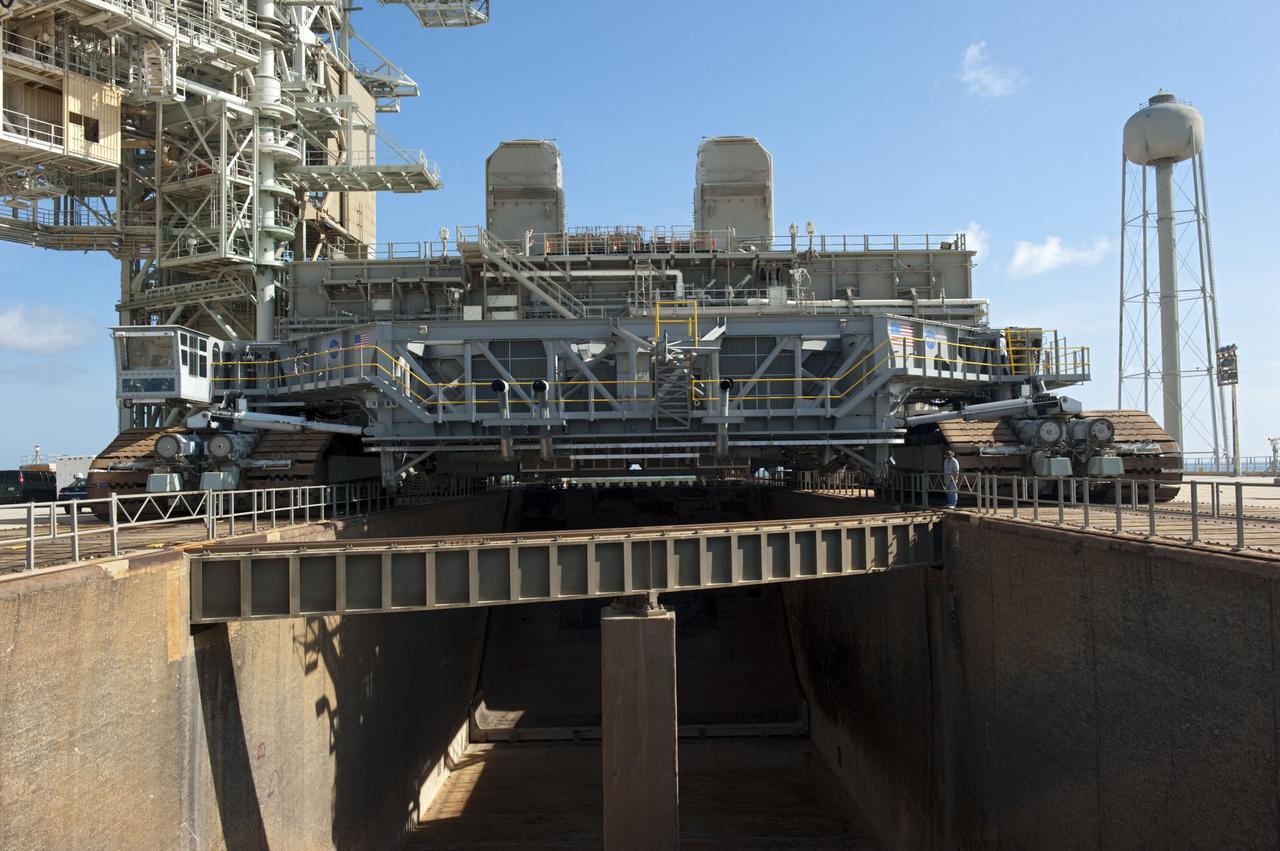
CAPE CANAVERAL, Fla. -- At NASA's Kennedy Space Center in Florida, Mobile Launcher Platform-3 (MLP), which supported space shuttle Atlantis for its final flight to the International Space Station on the STS-135 mission, is being prepared for its last journey from Launch Pad 39A to the Vehicle Assembly Building (VAB). Here, workers are moving a massive crawler-transporter under the MLP -- the last mobile launcher platform to launch a shuttle. For more than 40 years, the MLPs have traveled between the massive VAB to both launch pads at Launch Complex 39, and then returned to the VAB for future use. MLP-3 was first used to launch Columbia on the STS-32 mission on Jan. 9, 1990. Photo credit: NASA/Kim Shiflett
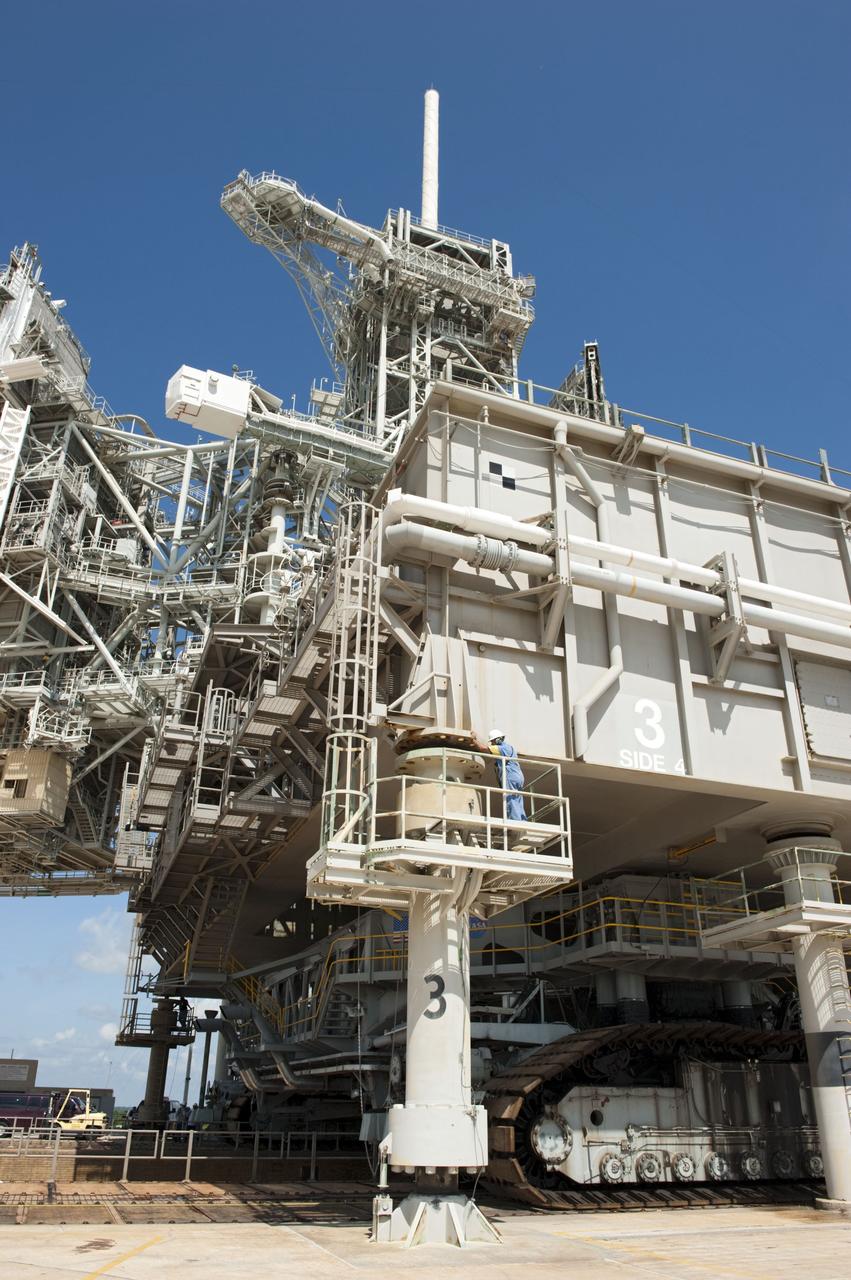
CAPE CANAVERAL, Fla. -- At NASA's Kennedy Space Center in Florida, Mobile Launcher Platform-3 (MLP), which supported space shuttle Atlantis for its final flight to the International Space Station on the STS-135 mission, is being prepared for its last journey from Launch Pad 39A to the Vehicle Assembly Building (VAB). Here, workers have moved a massive crawler-transporter under the MLP -- the last mobile launcher platform to launch a shuttle. For more than 40 years, the MLPs have traveled between the massive VAB to both launch pads at Launch Complex 39, and then returned to the VAB for future use. MLP-3 was first used to launch Columbia on the STS-32 mission on Jan. 9, 1990. Photo credit: NASA/Kim Shiflett
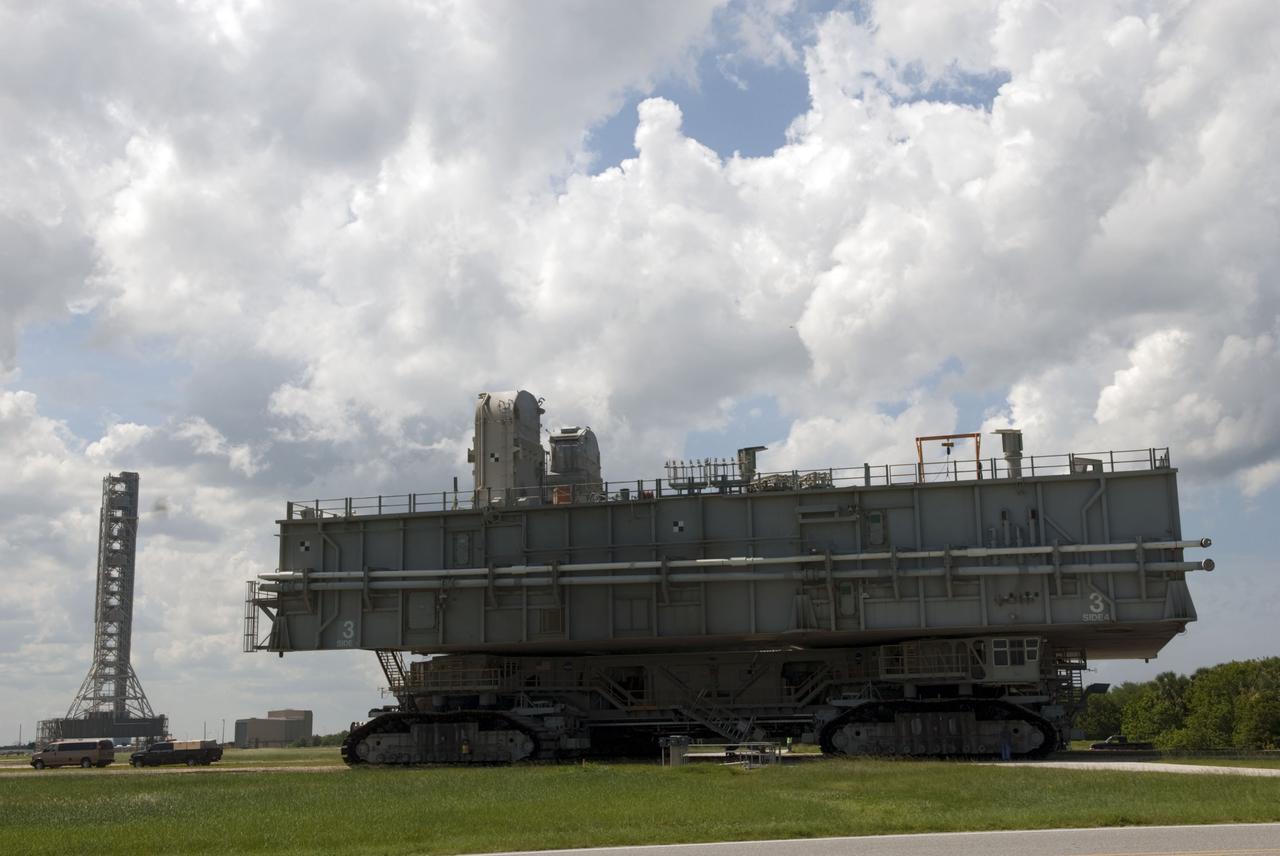
CAPE CANAVERAL, Fla. -- At NASA's Kennedy Space Center in Florida, Mobile Launcher Platform-3 (MLP), which supported space shuttle Atlantis for its final flight to the International Space Station on the STS-135 mission, is making its last journey atop a massive crawler-transporter from Launch Pad 39A into the Vehicle Assembly Building (VAB). For more than 40 years, the MLPs have traveled between the VAB to both launch pads at Launch Complex 39, and then returned to the VAB for future use. MLP-3 was first used to launch Columbia on the STS-32 mission on Jan. 9, 1990. Photo credit: NASA/Jim Grossmann
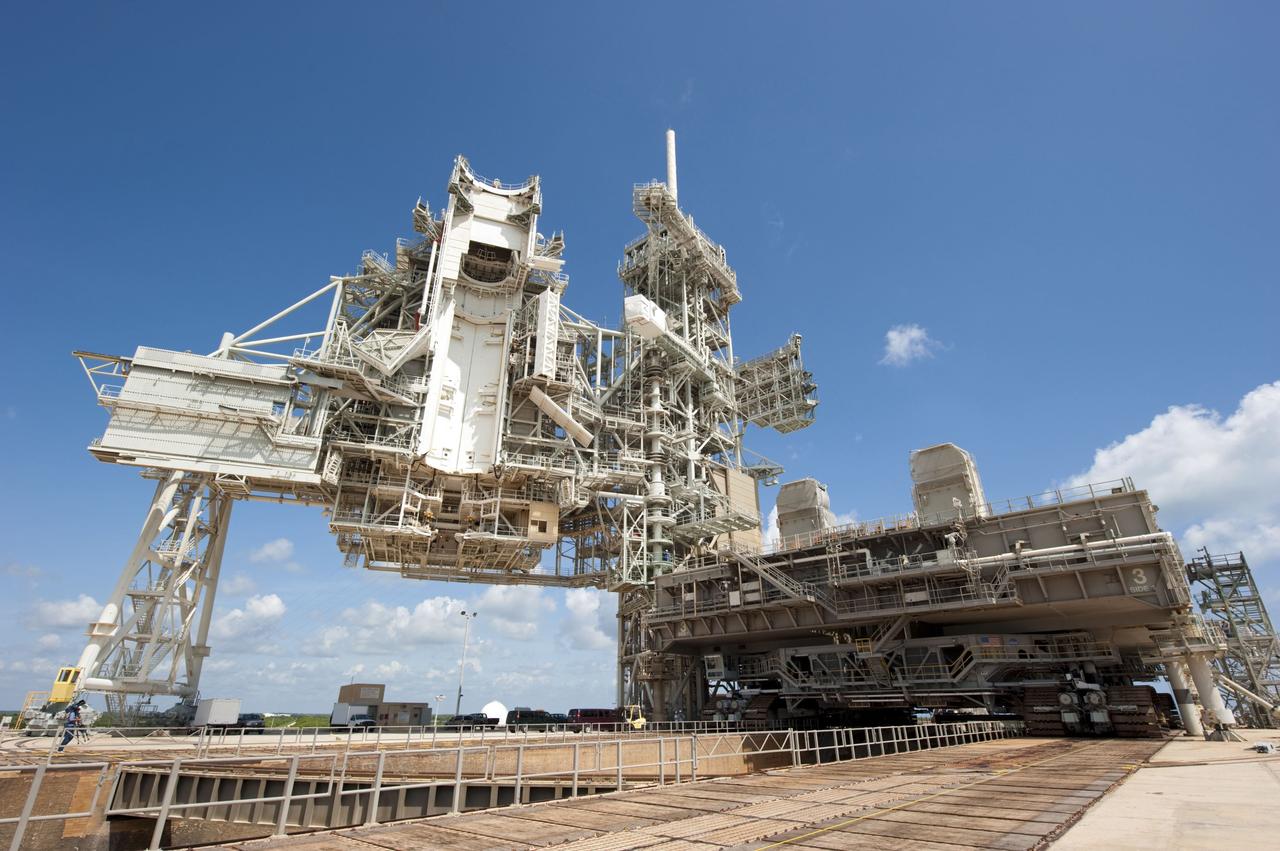
CAPE CANAVERAL, Fla. -- At NASA's Kennedy Space Center in Florida, Mobile Launcher Platform-3 (MLP), which supported space shuttle Atlantis for its final flight to the International Space Station on the STS-135 mission, is being prepared for its last journey from Launch Pad 39A to the Vehicle Assembly Building (VAB). Here, workers have moved a massive crawler-transporter under the MLP -- the last mobile launcher platform to launch a shuttle. For more than 40 years, the MLPs have traveled between the massive VAB to both launch pads at Launch Complex 39, and then returned to the VAB for future use. MLP-3 was first used to launch Columbia on the STS-32 mission on Jan. 9, 1990. Photo credit: NASA/Kim Shiflett
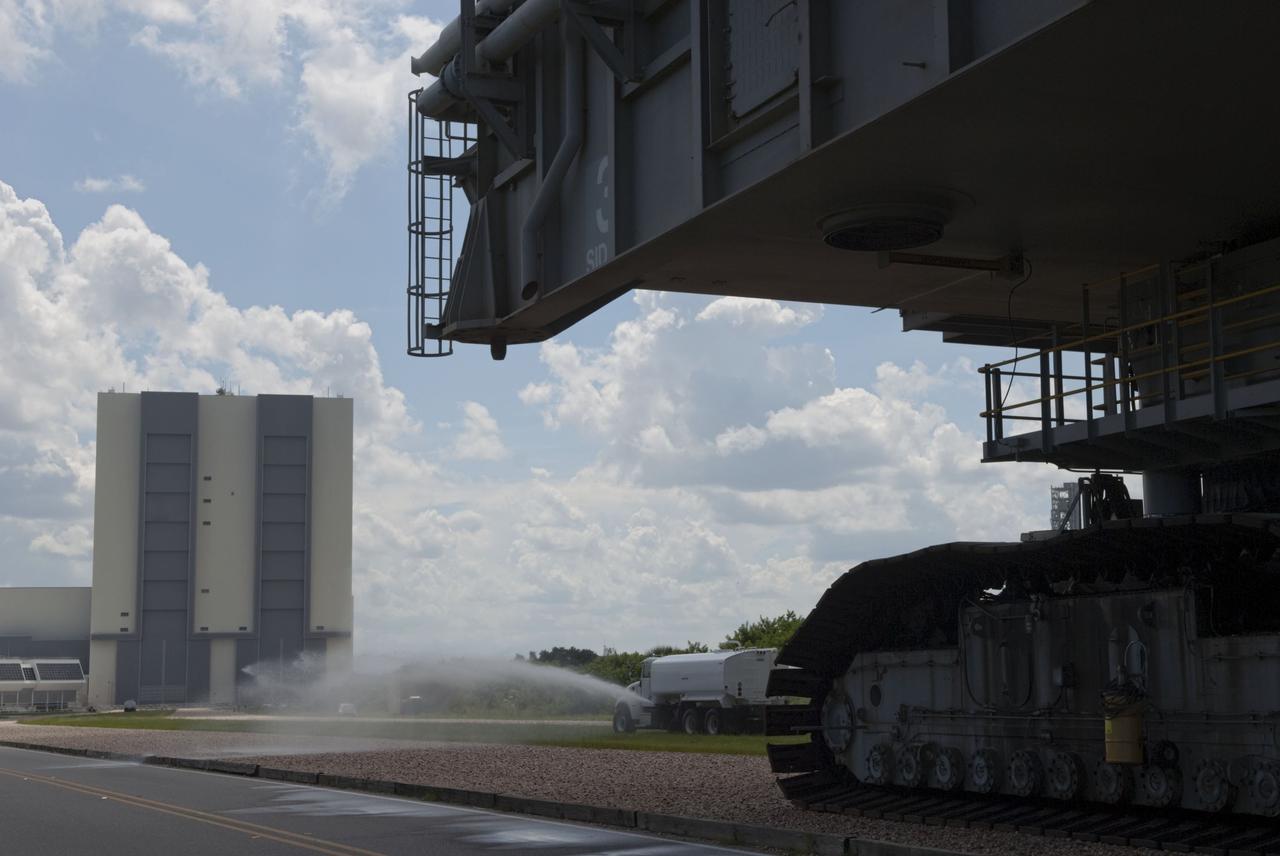
CAPE CANAVERAL, Fla. -- At NASA's Kennedy Space Center in Florida, Mobile Launcher Platform-3 (MLP), which supported space shuttle Atlantis for its final flight to the International Space Station on the STS-135 mission, is making its last journey from Launch Pad 39A back to the Vehicle Assembly Building (VAB) atop a massive crawler-transporter. A water truck leads the way spraying water on the dry crawlerway to reduce dust particles in the air. For more than 40 years, the MLPs have traveled between the VAB to both launch pads at Launch Complex 39, and then returned to the VAB for future use. MLP-3 was first used to launch Columbia on the STS-32 mission on Jan. 9, 1990. Photo credit: NASA/Jim Grossmann
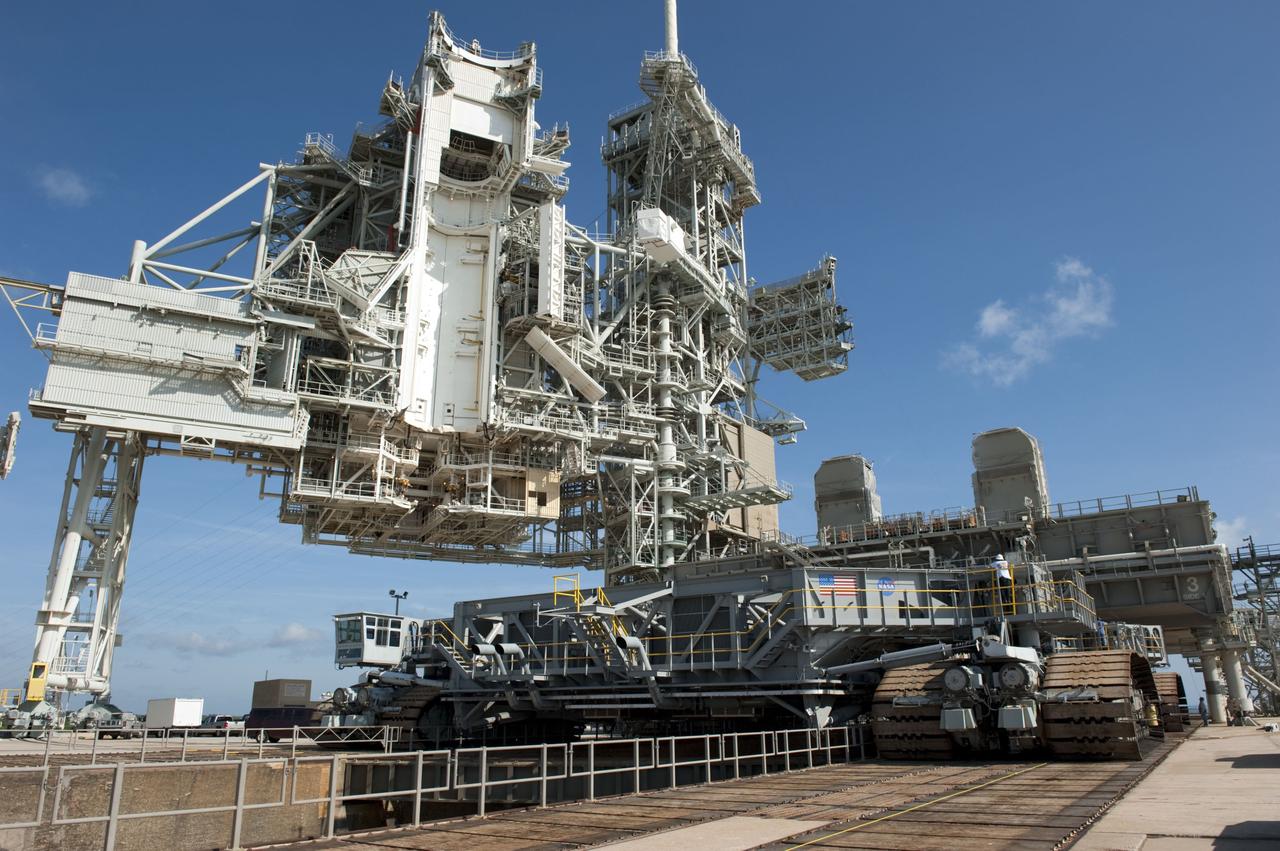
CAPE CANAVERAL, Fla. -- At NASA's Kennedy Space Center in Florida, Mobile Launcher Platform-3 (MLP), which supported space shuttle Atlantis for its final flight to the International Space Station on the STS-135 mission, is being prepared for its last journey from Launch Pad 39A to the Vehicle Assembly Building (VAB). Here, workers are moving a massive crawler-transporter under the MLP -- the last mobile launcher platform to launch a shuttle. For more than 40 years, the MLPs have traveled between the massive VAB to both launch pads at Launch Complex 39, and then returned to the VAB for future use. MLP-3 was first used to launch Columbia on the STS-32 mission on Jan. 9, 1990. Photo credit: NASA/Kim Shiflett
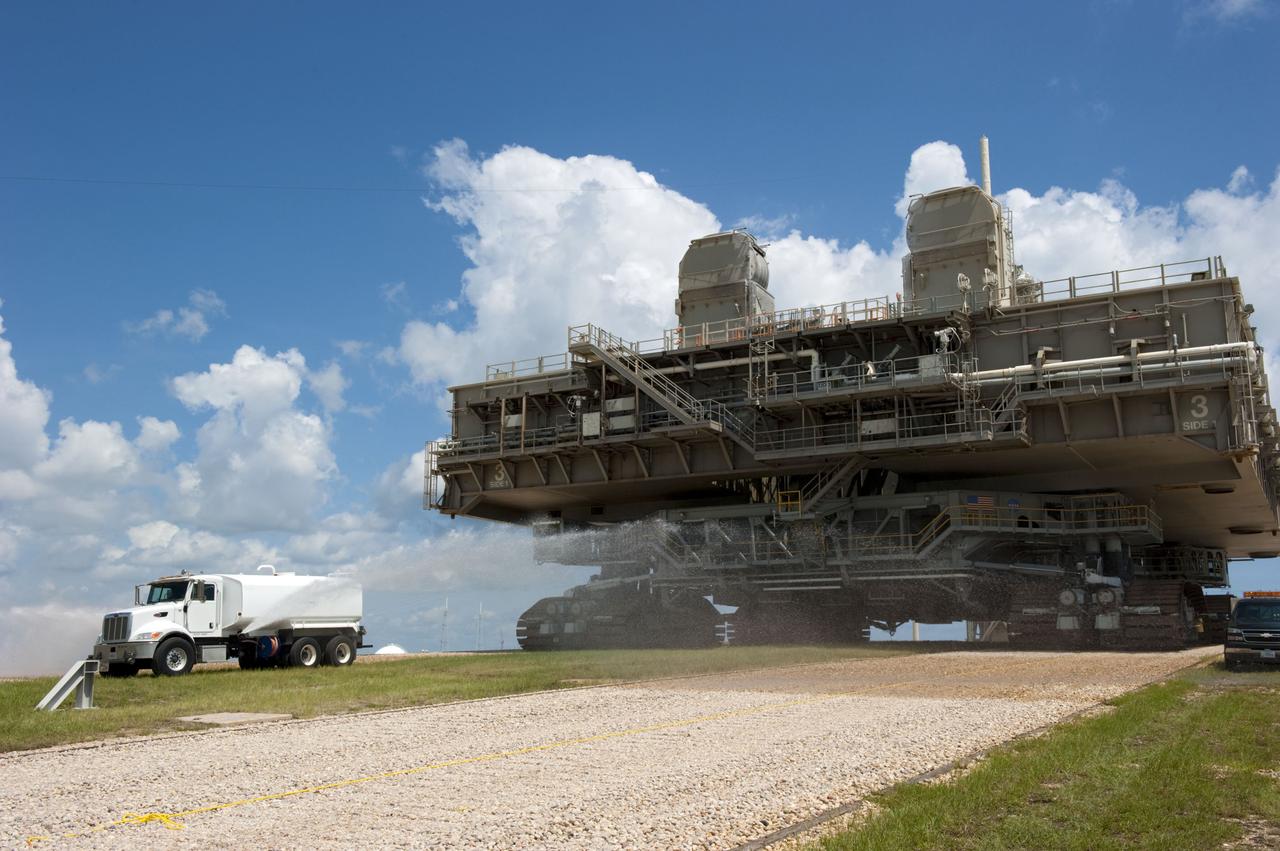
CAPE CANAVERAL, Fla. -- At NASA's Kennedy Space Center in Florida, Mobile Launcher Platform-3 (MLP), which supported space shuttle Atlantis for its final flight to the International Space Station on the STS-135 mission, is taking its last journey from Launch Pad 39A to the Vehicle Assembly Building (VAB). A massive crawler-transporter positioned under the MLP -- the last mobile launcher platform to launch a shuttle, begins the trek back to the VAB. A water truck leads the way spraying water on the dry crawlerway to reduce dust particles in the air. For more than 40 years, the MLPs have traveled between the massive VAB to both launch pads at Launch Complex 39, and then returned to the VAB for future use. MLP-3 was first used to launch Columbia on the STS-32 mission on Jan. 9, 1990. Photo credit: NASA/Kim Shiflett
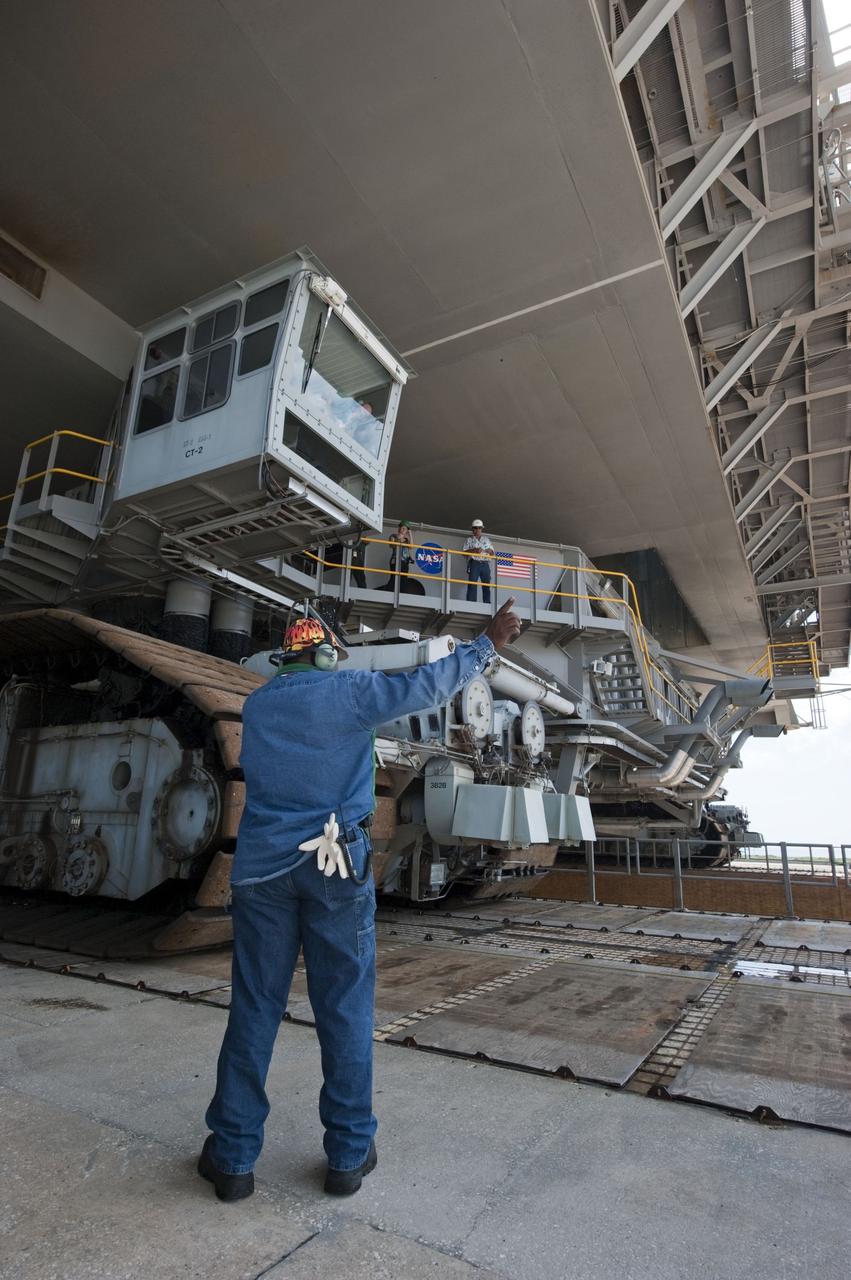
CAPE CANAVERAL, Fla. -- At NASA's Kennedy Space Center in Florida, Mobile Launcher Platform-3 (MLP), which supported space shuttle Atlantis for its final flight to the International Space Station on the STS-135 mission, is being prepared for its last journey from Launch Pad 39A to the Vehicle Assembly Building (VAB). Here, workers check the position of the massive crawler-transporter positioned under the MLP -- the last mobile launcher platform to launch a shuttle. For more than 40 years, the MLPs have traveled between the massive VAB to both launch pads at Launch Complex 39, and then returned to the VAB for future use. MLP-3 was first used to launch Columbia on the STS-32 mission on Jan. 9, 1990. Photo credit: NASA/Kim Shiflett
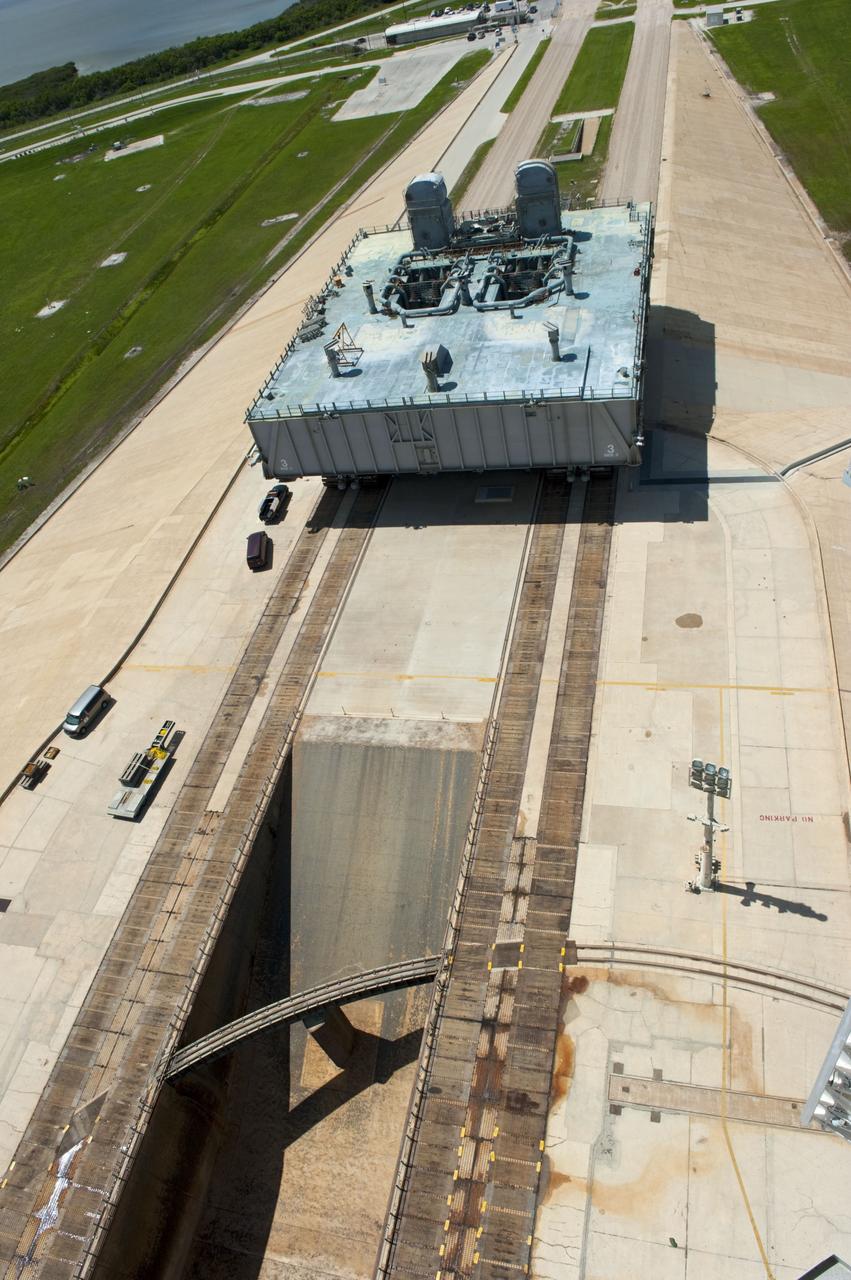
CAPE CANAVERAL, Fla. -- At NASA's Kennedy Space Center in Florida, Mobile Launcher Platform-3 (MLP), which supported space shuttle Atlantis for its final flight to the International Space Station on the STS-135 mission, is taking its last journey from Launch Pad 39A to the Vehicle Assembly Building (VAB). A massive crawler-transporter positioned under the MLP -- the last mobile launcher platform to launch a shuttle, begins the trek back to the VAB. For more than 40 years, the MLPs have traveled between the massive VAB to both launch pads at Launch Complex 39, and then returned to the VAB for future use. MLP-3 was first used to launch Columbia on the STS-32 mission on Jan. 9, 1990. Photo credit: NASA/Kim Shiflett
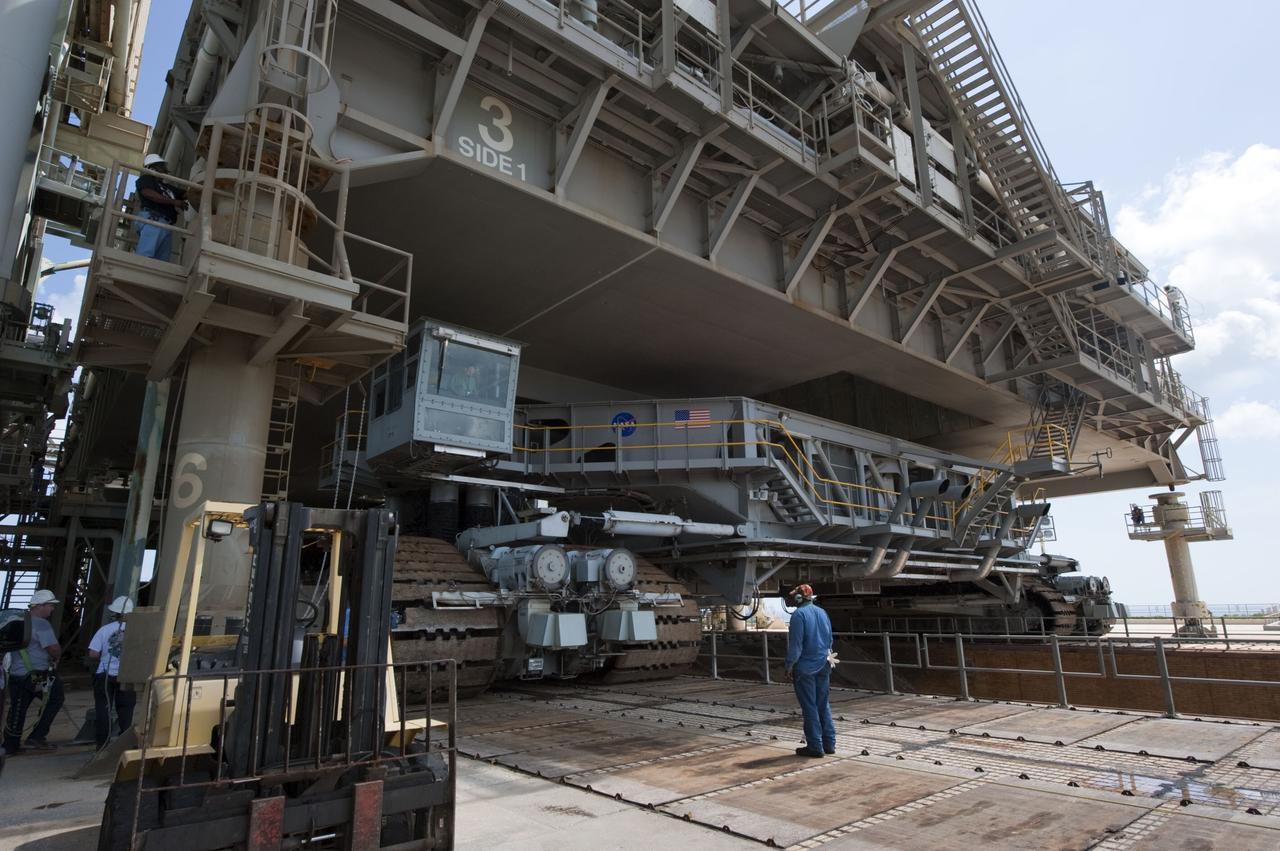
CAPE CANAVERAL, Fla. -- At NASA's Kennedy Space Center in Florida, Mobile Launcher Platform-3 (MLP), which supported space shuttle Atlantis for its final flight to the International Space Station on the STS-135 mission, is being prepared for its last journey from Launch Pad 39A to the Vehicle Assembly Building (VAB). Here, workers check the position of the massive crawler-transporter positioned under the MLP -- the last mobile launcher platform to launch a shuttle. For more than 40 years, the MLPs have traveled between the massive VAB to both launch pads at Launch Complex 39, and then returned to the VAB for future use. MLP-3 was first used to launch Columbia on the STS-32 mission on Jan. 9, 1990. Photo credit: NASA/Kim Shiflett
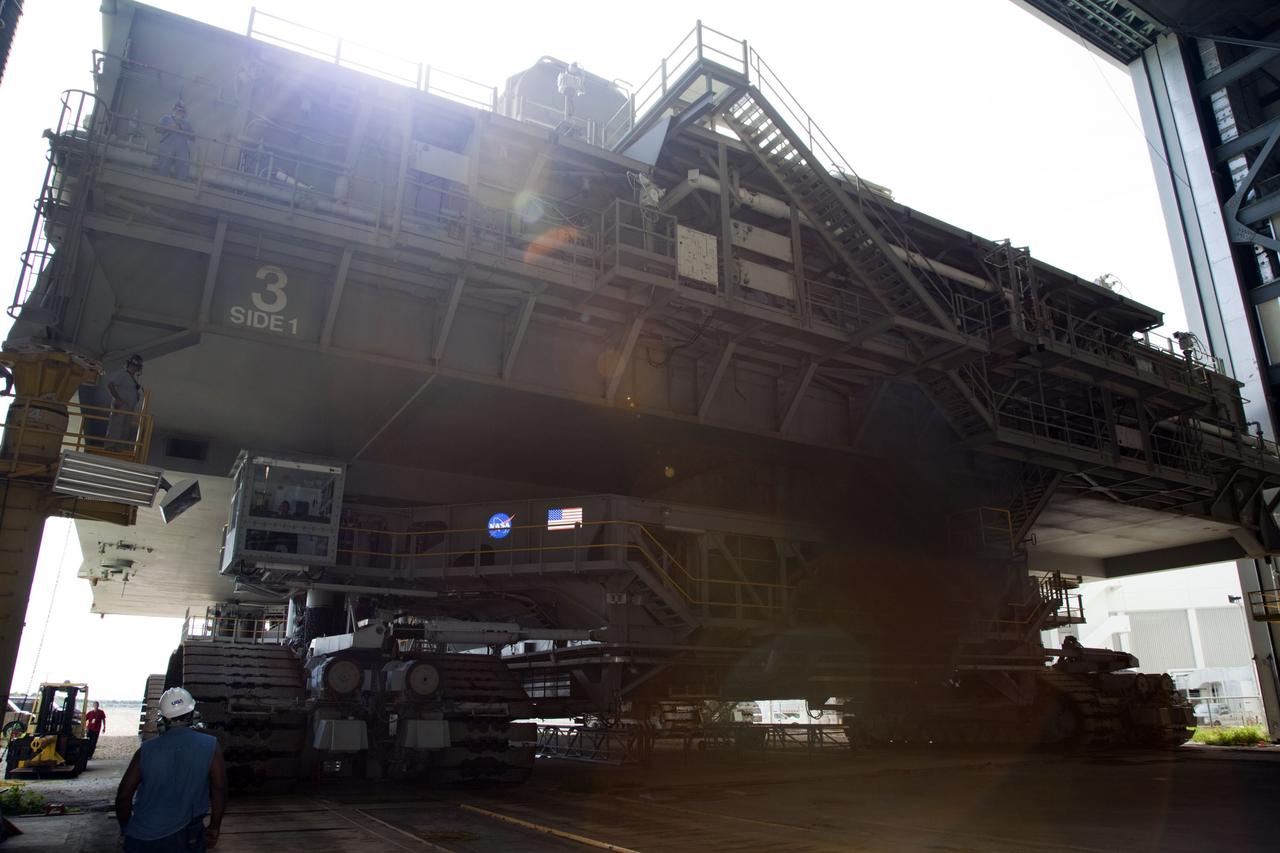
CAPE CANAVERAL, Fla. -- At NASA's Kennedy Space Center in Florida, Mobile Launcher Platform-3 (MLP), which supported space shuttle Atlantis for its final flight to the International Space Station on the STS-135 mission, has been delivered to the Vehicle Assembly Building (VAB) atop a crawler-transporter. For more than 40 years, the MLPs have traveled between the massive VAB to both launch pads at Launch Complex 39, and then returned to the VAB for future use. MLP-3 was first used to launch Columbia on the STS-32 mission on Jan. 9, 1990. Photo credit: NASA/Frankie Martin
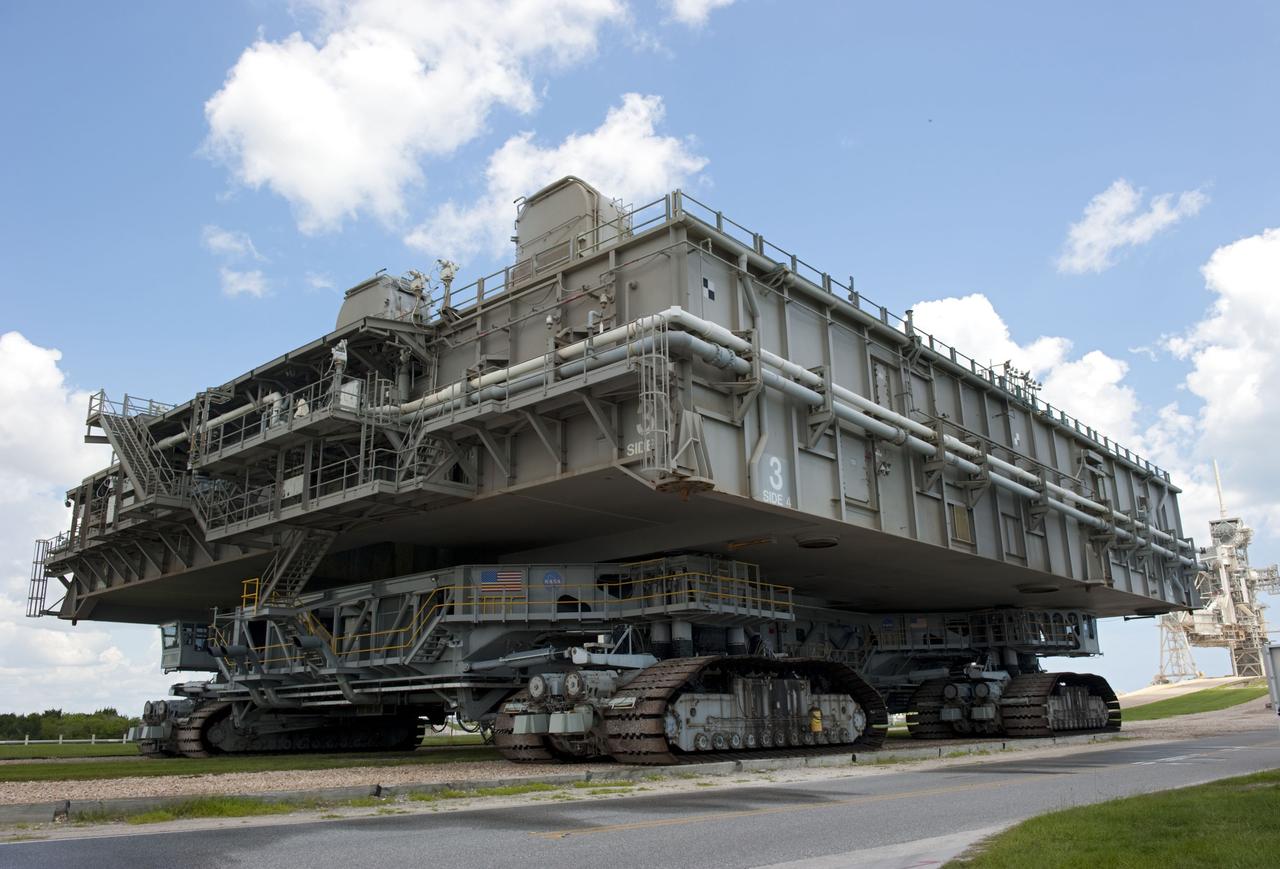
CAPE CANAVERAL, Fla. -- At NASA's Kennedy Space Center in Florida, Mobile Launcher Platform-3 (MLP), which supported space shuttle Atlantis for its final flight to the International Space Station on the STS-135 mission, is taking its last journey from Launch Pad 39A to the Vehicle Assembly Building (VAB). A massive crawler-transporter positioned under the MLP -- the last mobile launcher platform to launch a shuttle, begins the trek back to the VAB. For more than 40 years, the MLPs have traveled between the massive VAB to both launch pads at Launch Complex 39, and then returned to the VAB for future use. MLP-3 was first used to launch Columbia on the STS-32 mission on Jan. 9, 1990. Photo credit: NASA/Kim Shiflett
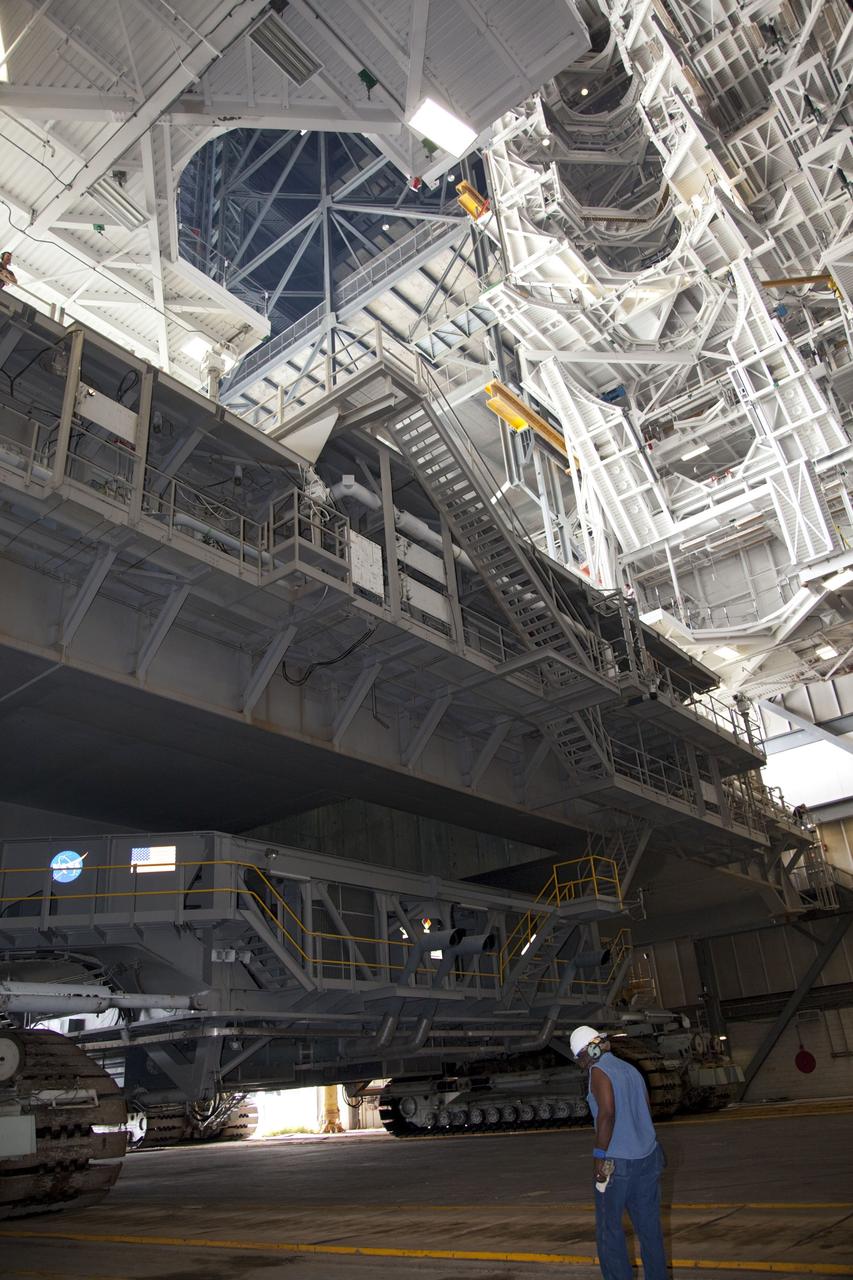
CAPE CANAVERAL, Fla. -- At NASA's Kennedy Space Center in Florida, Mobile Launcher Platform-3 (MLP), which supported space shuttle Atlantis for its final flight to the International Space Station on the STS-135 mission, has been delivered to the Vehicle Assembly Building (VAB) atop a crawler-transporter. For more than 40 years, the MLPs have traveled between the massive VAB to both launch pads at Launch Complex 39, and then returned to the VAB for future use. MLP-3 was first used to launch Columbia on the STS-32 mission on Jan. 9, 1990. Photo credit: NASA/Frankie Martin

CAPE CANAVERAL, Fla. -- Xenon lights illuminate space shuttle Discovery and create a mirror image in the Turn Basin at NASA's Kennedy Space Center in Florida as the space vehicle rolls out to Launch Pad 39A from the Vehicle Assembly Building. It will take the shuttle, attached to its external fuel tank, twin solid rocket boosters and mobile launcher platform, about seven hours to complete the move atop a crawler-transporter. This is the second time Discovery has rolled out to the pad for the STS-133 mission, and comes after a thorough check and modifications to the shuttle's external tank. Targeted to liftoff Feb. 24, Discovery will take the Permanent Multipurpose Module (PMM) packed with supplies and critical spare parts, as well as Robonaut 2 (R2) to the International Space Station. For more information on STS-133, visit www.nasa.gov/mission_pages/shuttle/shuttlemissions/sts133/. Photo credit: NASA/Kim Shiflett
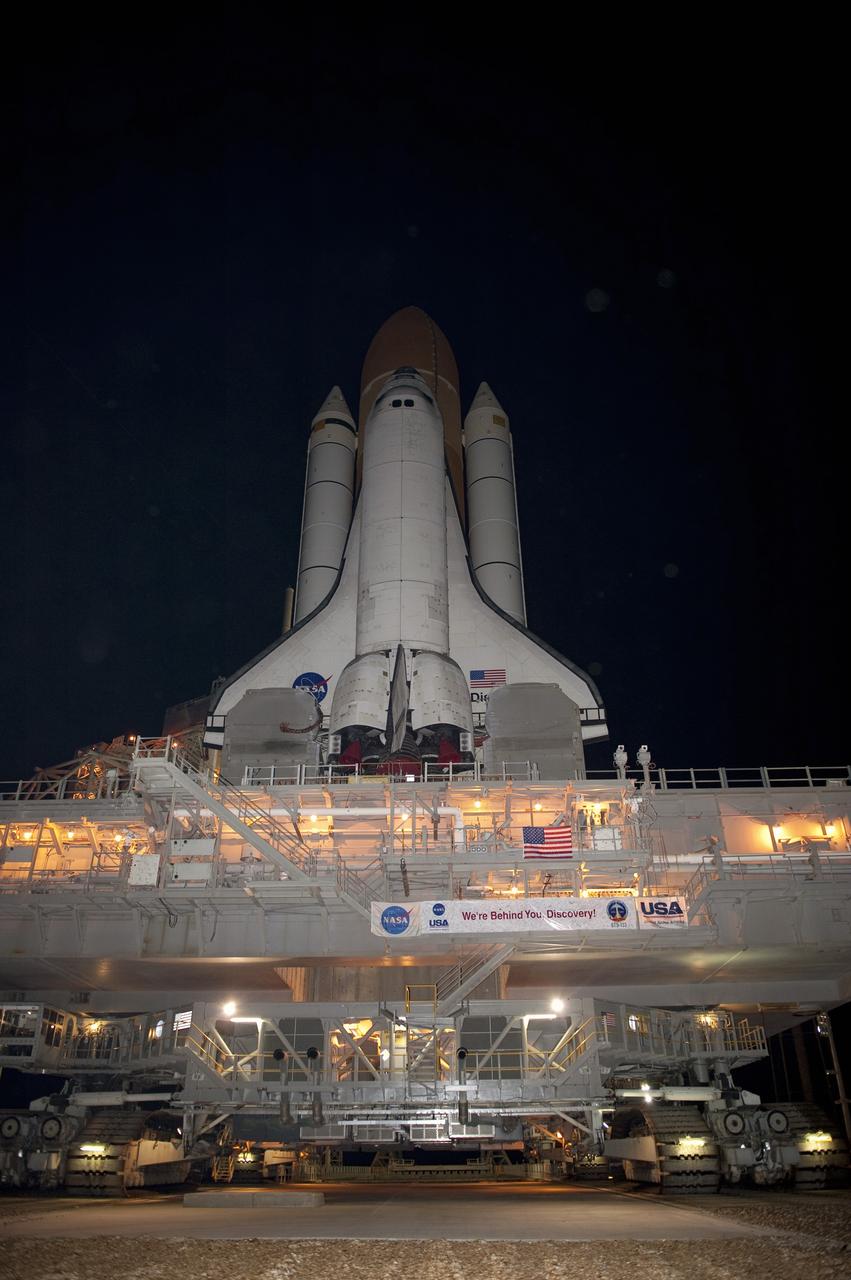
CAPE CANAVERAL, Fla. -- Space shuttle Discovery arrives at Launch Pad 39A from the Vehicle Assembly Building at NASA's Kennedy Space Center in Florida. It took the shuttle, attached to its external fuel tank, twin solid rocket boosters and mobile launcher platform, about seven hours to complete the move atop a crawler-transporter. This is the second time Discovery has rolled out to the pad for the STS-133 mission, and comes after a thorough check and modifications to the shuttle's external tank. Targeted to liftoff Feb. 24, Discovery will take the Permanent Multipurpose Module (PMM) packed with supplies and critical spare parts, as well as Robonaut 2 (R2) to the International Space Station. For more information on STS-133, visit www.nasa.gov/mission_pages/shuttle/shuttlemissions/sts133/. Photo credit: NASA/Kim Shiflett
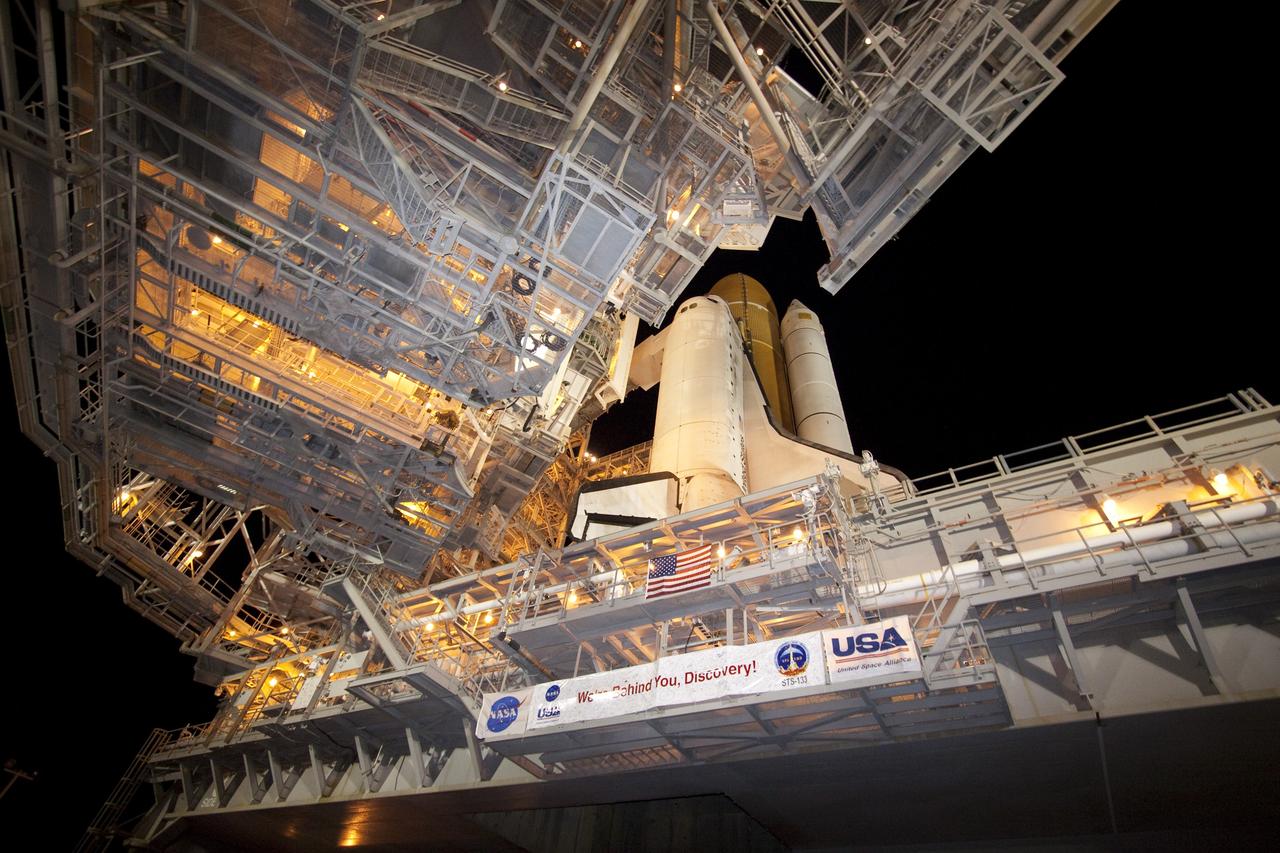
CAPE CANAVERAL, Fla. -- The rotating service structure (RSS), which provides weather protection and access to the shuttle, moves into place around space shuttle Discovery on Launch Pad 39A at NASA's Kennedy Space Center in Florida. This comes after Discovery, attached to its external fuel tank, twin solid rocket boosters and mobile launcher platform, rolled out to the pad from the Vehicle Assembly Building during the overnight hours. Rollout to the pad is a significant shuttle processing milestone for the upcoming STS-133 mission, and comes after a thorough check and modifications to the shuttle's external fuel tank. Targeted to liftoff Feb. 24, Discovery will take the Permanent Multipurpose Module (PMM) packed with supplies and critical spare parts, as well as Robonaut 2 (R2) to the International Space Station. For more information on STS-133, visit www.nasa.gov/mission_pages/shuttle/shuttlemissions/sts133/. Photo credit: NASA/Jack Pfaller
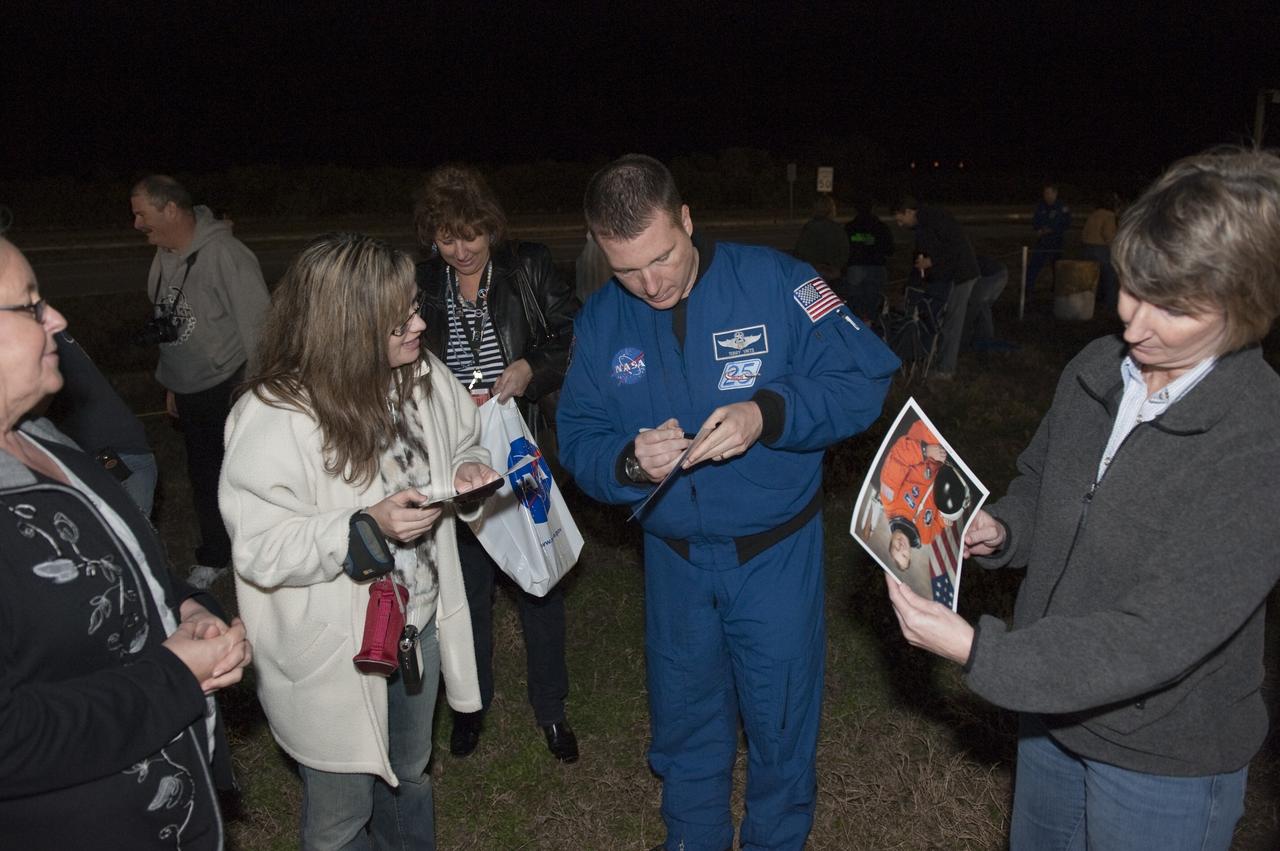
CAPE CANAVERAL, Fla. -- NASA astronaut Terry Virts signs autographs outside the Vehicle Assembly Building at NASA's Kennedy Space Center in Florida while space shuttle Discovery rolls out to Launch Pad 39A. It will take the shuttle, attached to its external fuel tank, twin solid rocket boosters and mobile launcher platform, about seven hours to complete the move atop a crawler-transporter. This is the second time Discovery has rolled out to the pad for the STS-133 mission, and comes after a thorough check and modifications to the shuttle's external tank. Virts was pilot on the STS-130 mission that took the seven-windowed cupola to the International Space Station in 2010. Targeted to liftoff Feb. 24, Discovery will take the Permanent Multipurpose Module (PMM) packed with supplies and critical spare parts, as well as Robonaut 2 (R2) to the International Space Station. For more information on STS-133, visit www.nasa.gov/mission_pages/shuttle/shuttlemissions/sts133/. Photo credit: NASA/Kim Shiflett
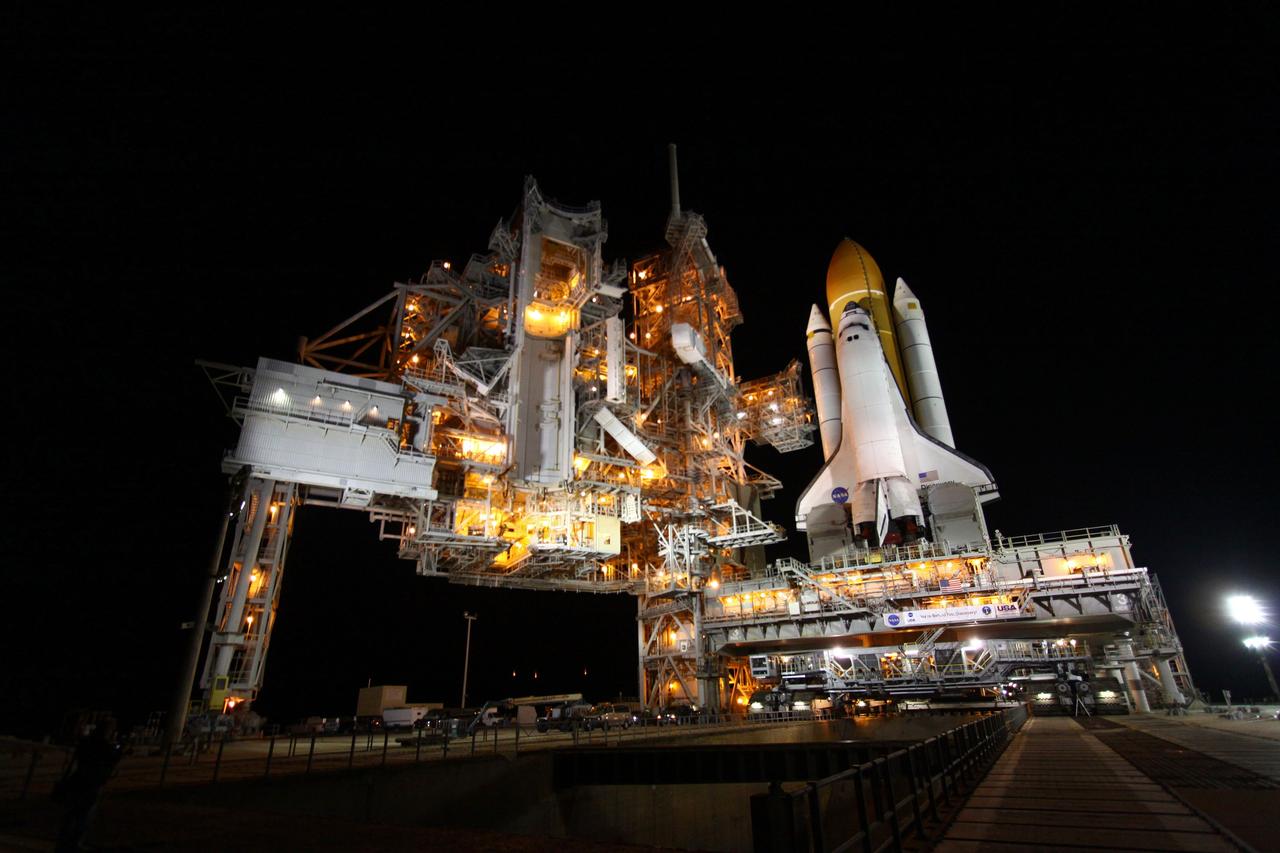
CAPE CANAVERAL, Fla. -- Space shuttle Discovery arrives at Launch Pad 39A from the Vehicle Assembly Building at NASA's Kennedy Space Center in Florida. It took the shuttle, attached to its external fuel tank, twin solid rocket boosters and mobile launcher platform, about seven hours to complete the move atop a crawler-transporter. This is the second time Discovery has rolled out to the pad for the STS-133 mission, and comes after a thorough check and modifications to the shuttle's external tank. Targeted to liftoff Feb. 24, Discovery will take the Permanent Multipurpose Module (PMM) packed with supplies and critical spare parts, as well as Robonaut 2 (R2) to the International Space Station. For more information on STS-133, visit www.nasa.gov/mission_pages/shuttle/shuttlemissions/sts133/. Photo credit: NASA/Jack Pfaller
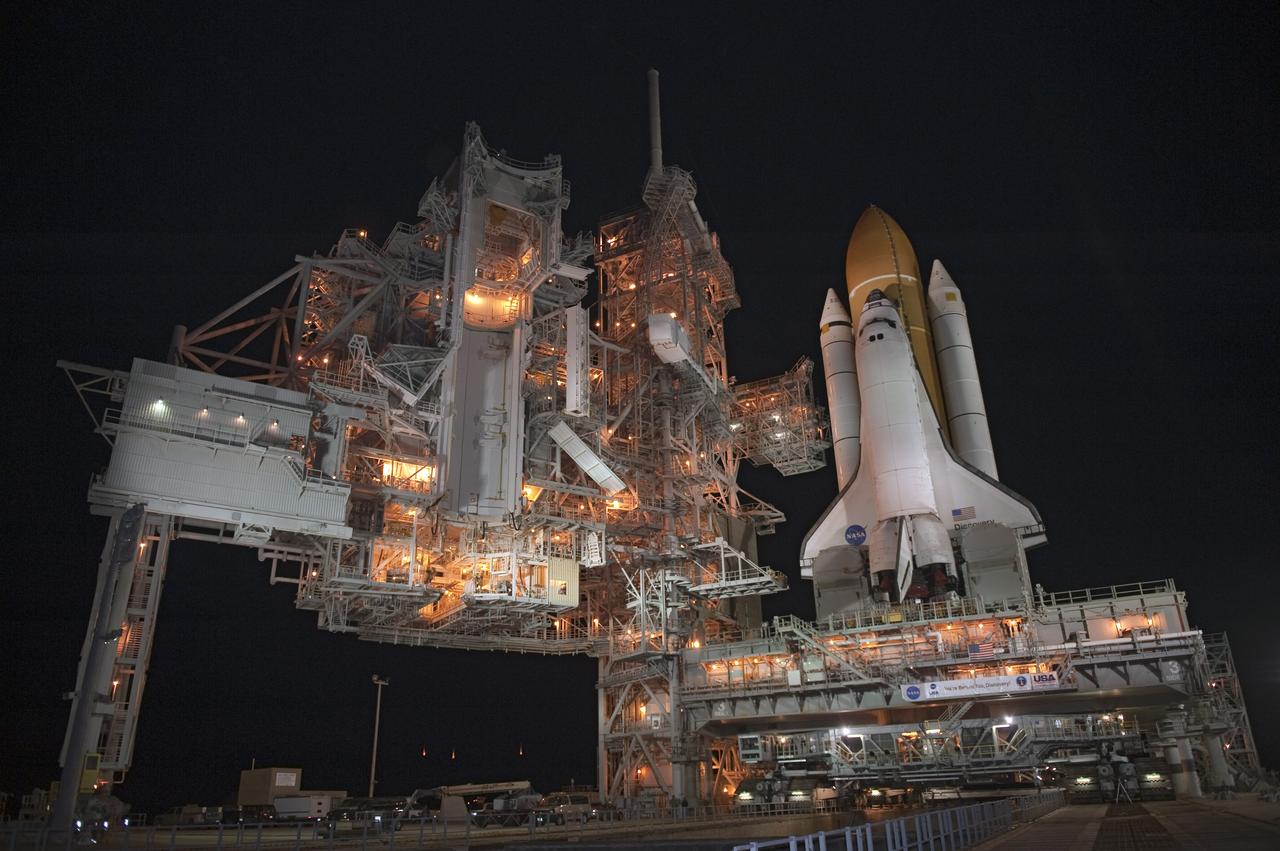
CAPE CANAVERAL, Fla. -- Space shuttle Discovery arrives at Launch Pad 39A from the Vehicle Assembly Building at NASA's Kennedy Space Center in Florida. It took the shuttle, attached to its external fuel tank, twin solid rocket boosters and mobile launcher platform, about seven hours to complete the move atop a crawler-transporter. This is the second time Discovery has rolled out to the pad for the STS-133 mission, and comes after a thorough check and modifications to the shuttle's external tank. Targeted to liftoff Feb. 24, Discovery will take the Permanent Multipurpose Module (PMM) packed with supplies and critical spare parts, as well as Robonaut 2 (R2) to the International Space Station. For more information on STS-133, visit www.nasa.gov/mission_pages/shuttle/shuttlemissions/sts133/. Photo credit: NASA/Kim Shiflett
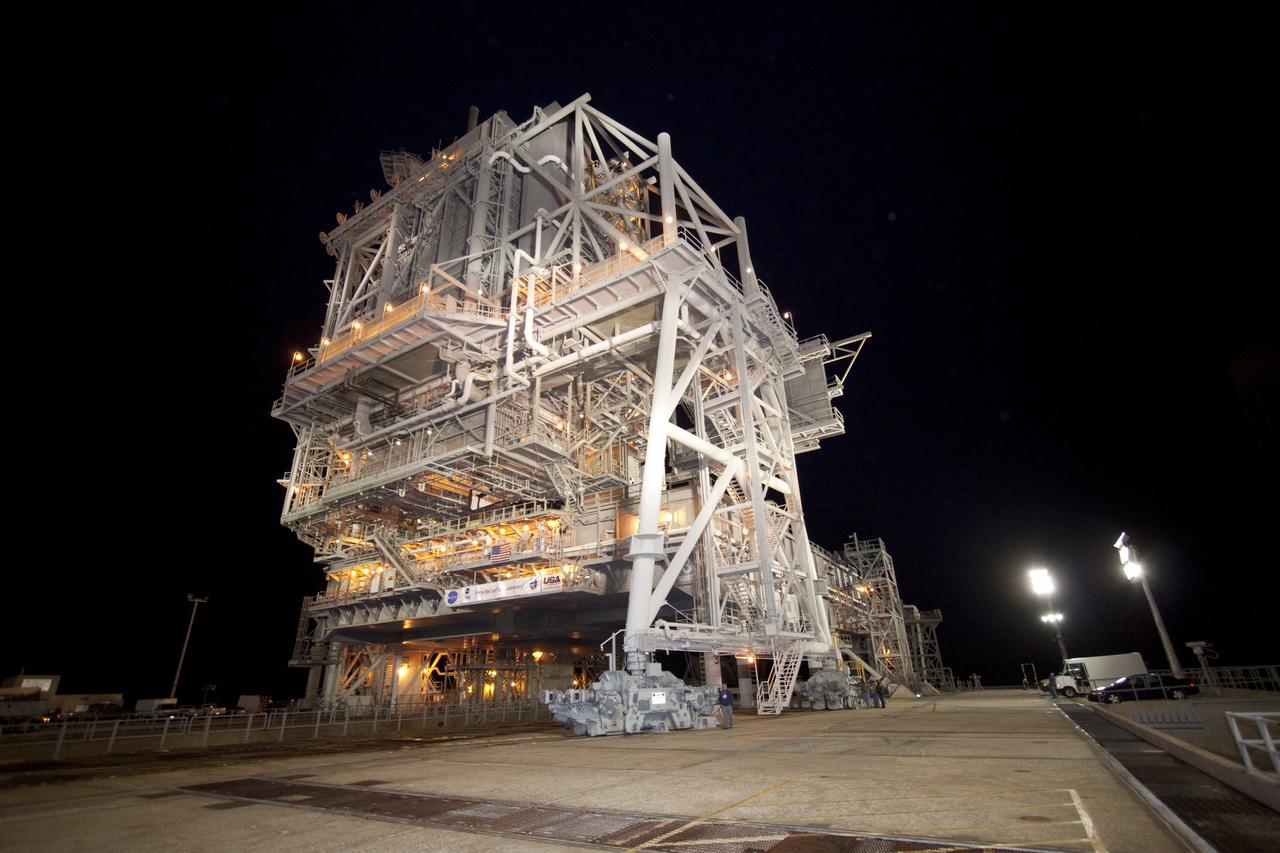
CAPE CANAVERAL, Fla. -- The rotating service structure (RSS), which provides weather protection and access to the shuttle, surrounds space shuttle Discovery on Launch Pad 39A at NASA's Kennedy Space Center in Florida. This comes after Discovery, attached to its external fuel tank, twin solid rocket boosters and mobile launcher platform, rolled out to the pad from the Vehicle Assembly Building during the overnight hours. Rollout to the pad is a significant shuttle processing milestone for the upcoming STS-133 mission, and comes after a thorough check and modifications to the shuttle's external fuel tank. Targeted to liftoff Feb. 24, Discovery will take the Permanent Multipurpose Module (PMM) packed with supplies and critical spare parts, as well as Robonaut 2 (R2) to the International Space Station. For more information on STS-133, visit www.nasa.gov/mission_pages/shuttle/shuttlemissions/sts133/. Photo credit: NASA/Jack Pfaller
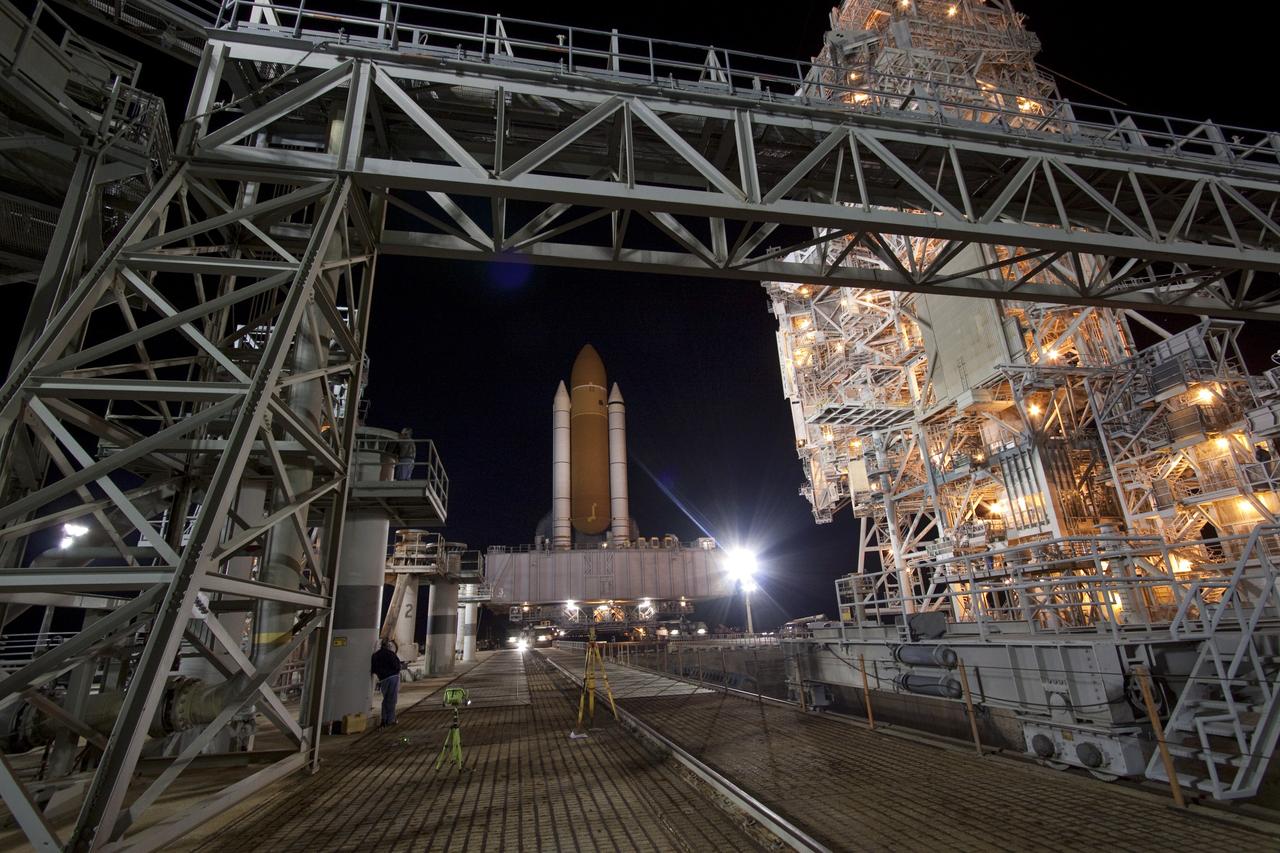
CAPE CANAVERAL, Fla. -- A worker monitors space shuttle Discovery as it arrives at Launch Pad 39A from the Vehicle Assembly Building at NASA's Kennedy Space Center in Florida. It took the shuttle, attached to its external fuel tank, twin solid rocket boosters and mobile launcher platform, about seven hours to complete the move atop a crawler-transporter. This is the second time Discovery has rolled out to the pad for the STS-133 mission, and comes after a thorough check and modifications to the shuttle's external tank. Targeted to liftoff Feb. 24, Discovery will take the Permanent Multipurpose Module (PMM) packed with supplies and critical spare parts, as well as Robonaut 2 (R2) to the International Space Station. For more information on STS-133, visit www.nasa.gov/mission_pages/shuttle/shuttlemissions/sts133/. Photo credit: NASA/Jack Pfaller
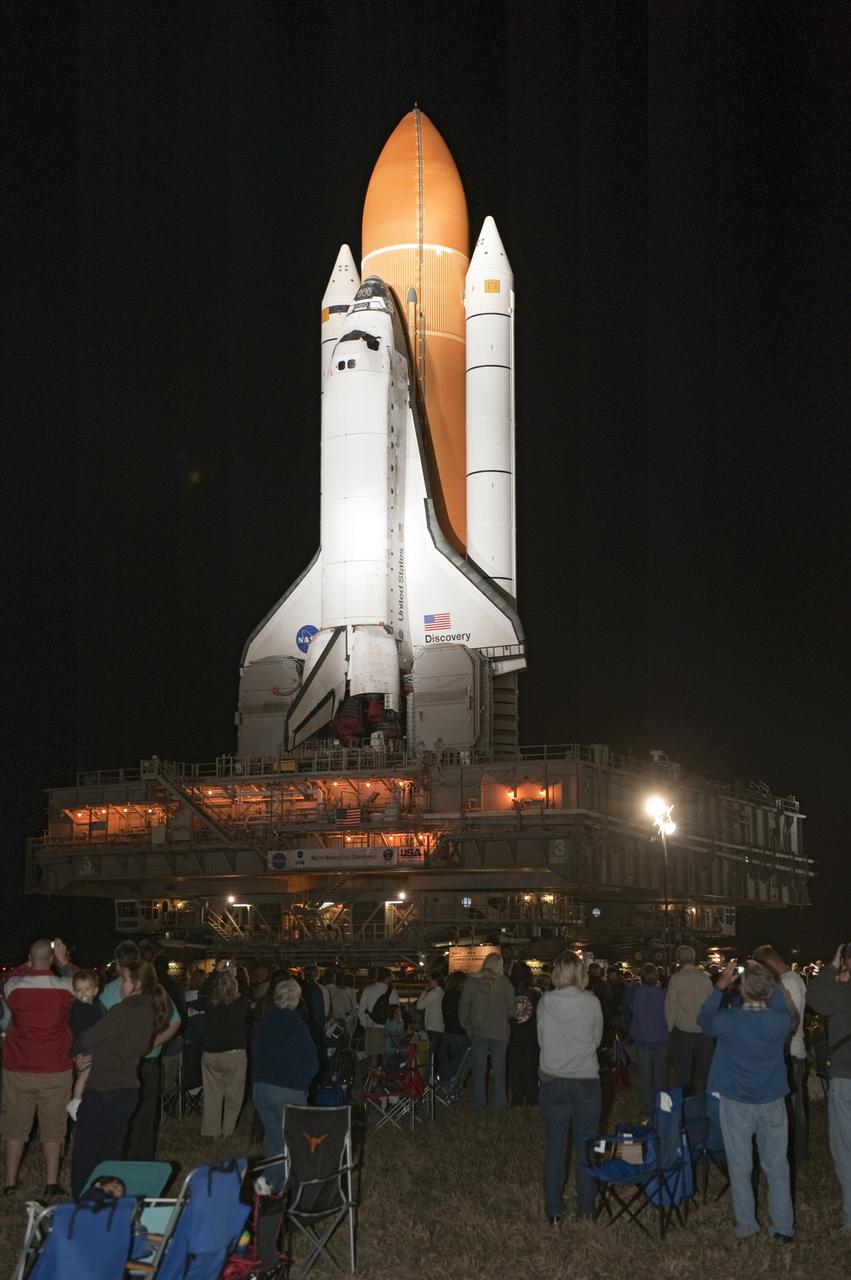
CAPE CANAVERAL, Fla. -- Outside the Vehicle Assembly Building at NASA's Kennedy Space Center in Florida, Kennedy employees, and their families and friends, are on hand to watch space shuttle Discovery roll out to Launch Pad 39A. It will take the shuttle, attached to its external fuel tank, twin solid rocket boosters and mobile launcher platform, about seven hours to complete the move atop a crawler-transporter. This is the second time Discovery has rolled out to the pad for the STS-133 mission, and comes after a thorough check and modifications to the shuttle's external tank. Targeted to liftoff Feb. 24, Discovery will take the Permanent Multipurpose Module (PMM) packed with supplies and critical spare parts, as well as Robonaut 2 (R2) to the International Space Station. For more information on STS-133, visit www.nasa.gov/mission_pages/shuttle/shuttlemissions/sts133/. Photo credit: NASA/Kim Shiflett
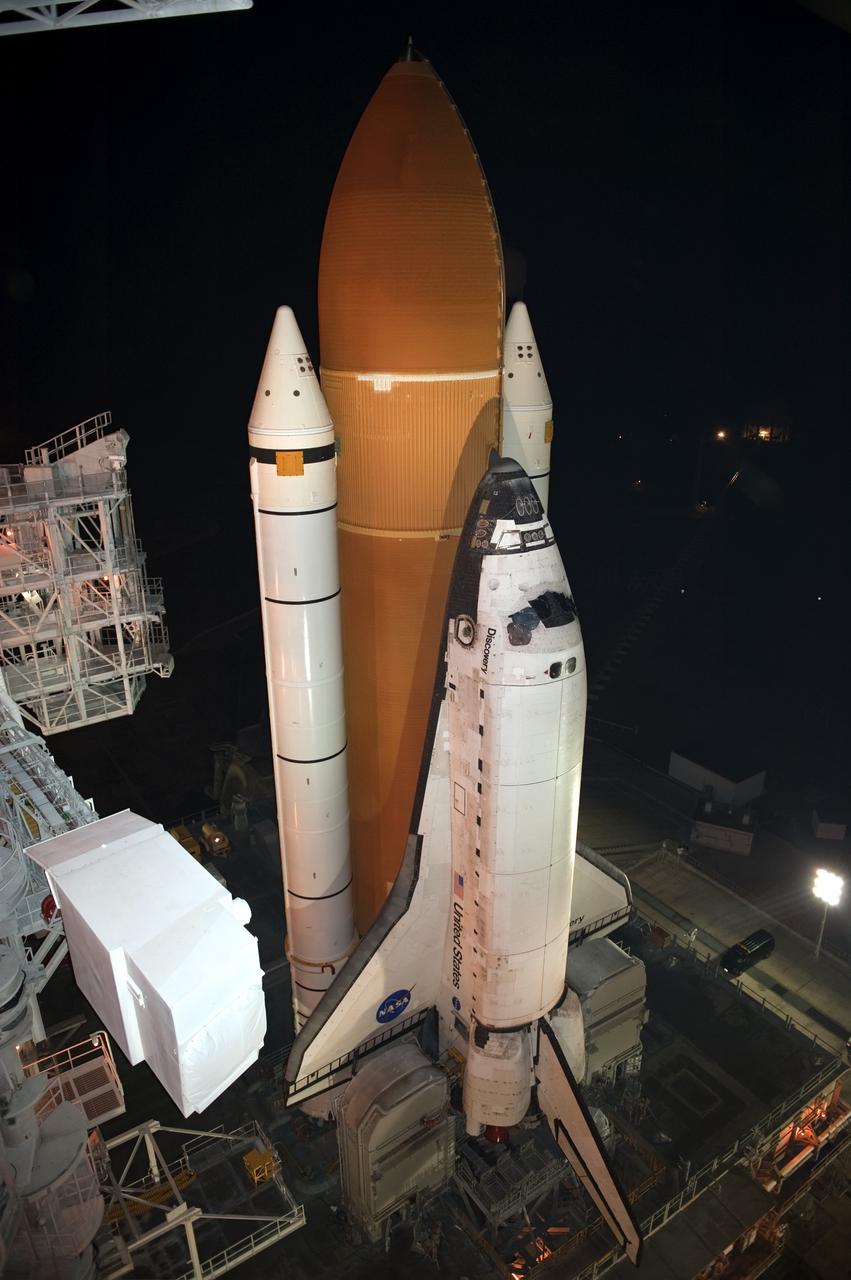
CAPE CANAVERAL, Fla. -- Space shuttle Discovery arrives at Launch Pad 39A from the Vehicle Assembly Building at NASA's Kennedy Space Center in Florida. It took the shuttle, attached to its external fuel tank, twin solid rocket boosters and mobile launcher platform, about seven hours to complete the move atop a crawler-transporter. This is the second time Discovery has rolled out to the pad for the STS-133 mission, and comes after a thorough check and modifications to the shuttle's external tank. Targeted to liftoff Feb. 24, Discovery will take the Permanent Multipurpose Module (PMM) packed with supplies and critical spare parts, as well as Robonaut 2 (R2) to the International Space Station. For more information on STS-133, visit www.nasa.gov/mission_pages/shuttle/shuttlemissions/sts133/. Photo credit: NASA/Kim Shiflett
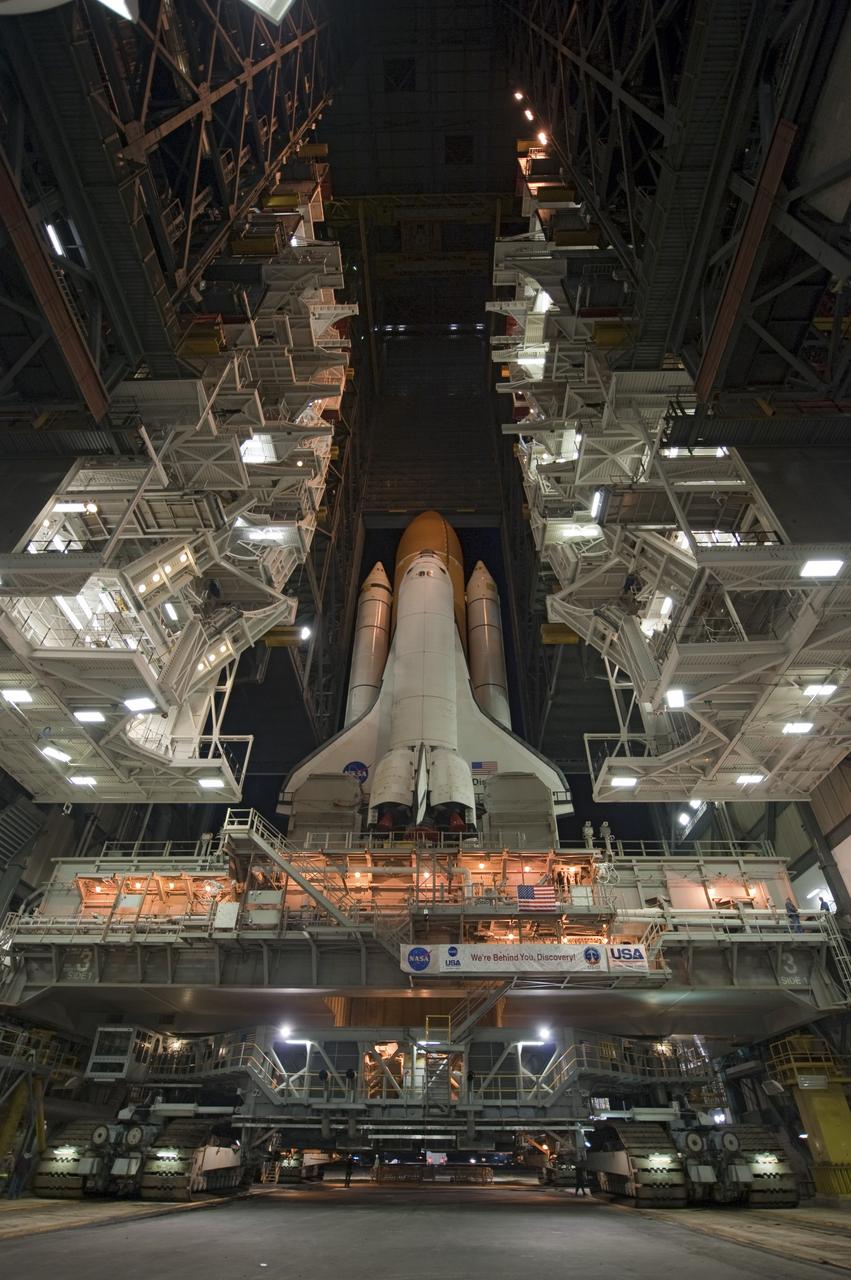
CAPE CANAVERAL, Fla. -- At NASA's Kennedy Space Center in Florida, space shuttle Discovery begins its nighttime trek, known as "rollout," from the Vehicle Assembly Building to Launch Pad 39A. It will take the shuttle, attached to its external fuel tank, twin solid rocket boosters and mobile launcher platform, about seven hours to complete the move atop a crawler-transporter. This is the second time Discovery has rolled out to the pad for the STS-133 mission, and comes after a thorough check and modifications to the shuttle's external tank. Targeted to liftoff Feb. 24, Discovery will take the Permanent Multipurpose Module (PMM) packed with supplies and critical spare parts, as well as Robonaut 2 (R2) to the International Space Station. For more information on STS-133, visit www.nasa.gov/mission_pages/shuttle/shuttlemissions/sts133/. Photo credit: NASA/Kim Shiflett
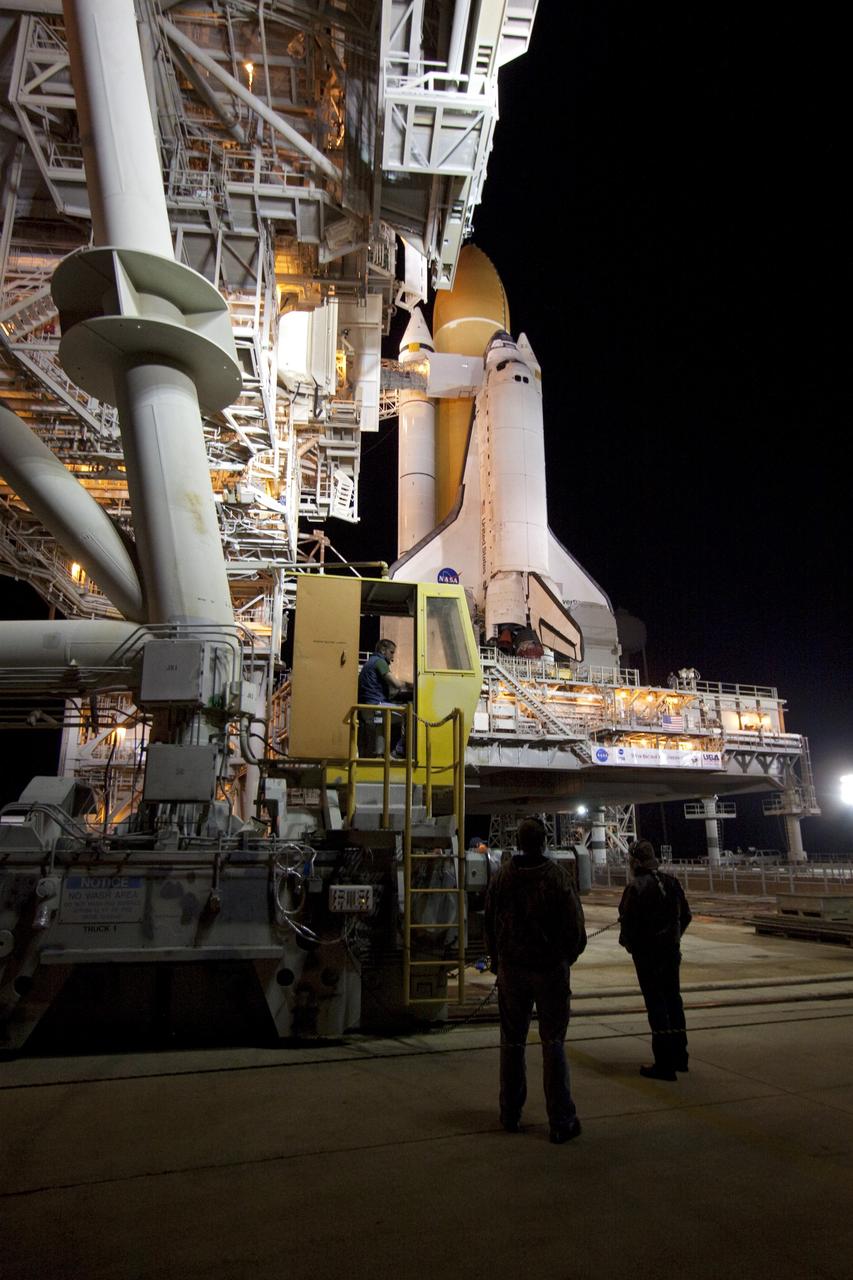
CAPE CANAVERAL, Fla. -- The rotating service structure (RSS), which provides weather protection and access to the shuttle, begins to move into place around space shuttle Discovery on Launch Pad 39A at NASA's Kennedy Space Center in Florida. This comes after Discovery, attached to its external fuel tank, twin solid rocket boosters and mobile launcher platform, rolled out to the pad from the Vehicle Assembly Building during the overnight hours. Rollout to the pad is a significant shuttle processing milestone for the upcoming STS-133 mission, and comes after a thorough check and modifications to the shuttle's external fuel tank. Targeted to liftoff Feb. 24, Discovery will take the Permanent Multipurpose Module (PMM) packed with supplies and critical spare parts, as well as Robonaut 2 (R2) to the International Space Station. For more information on STS-133, visit www.nasa.gov/mission_pages/shuttle/shuttlemissions/sts133/. Photo credit: NASA/Jack Pfaller
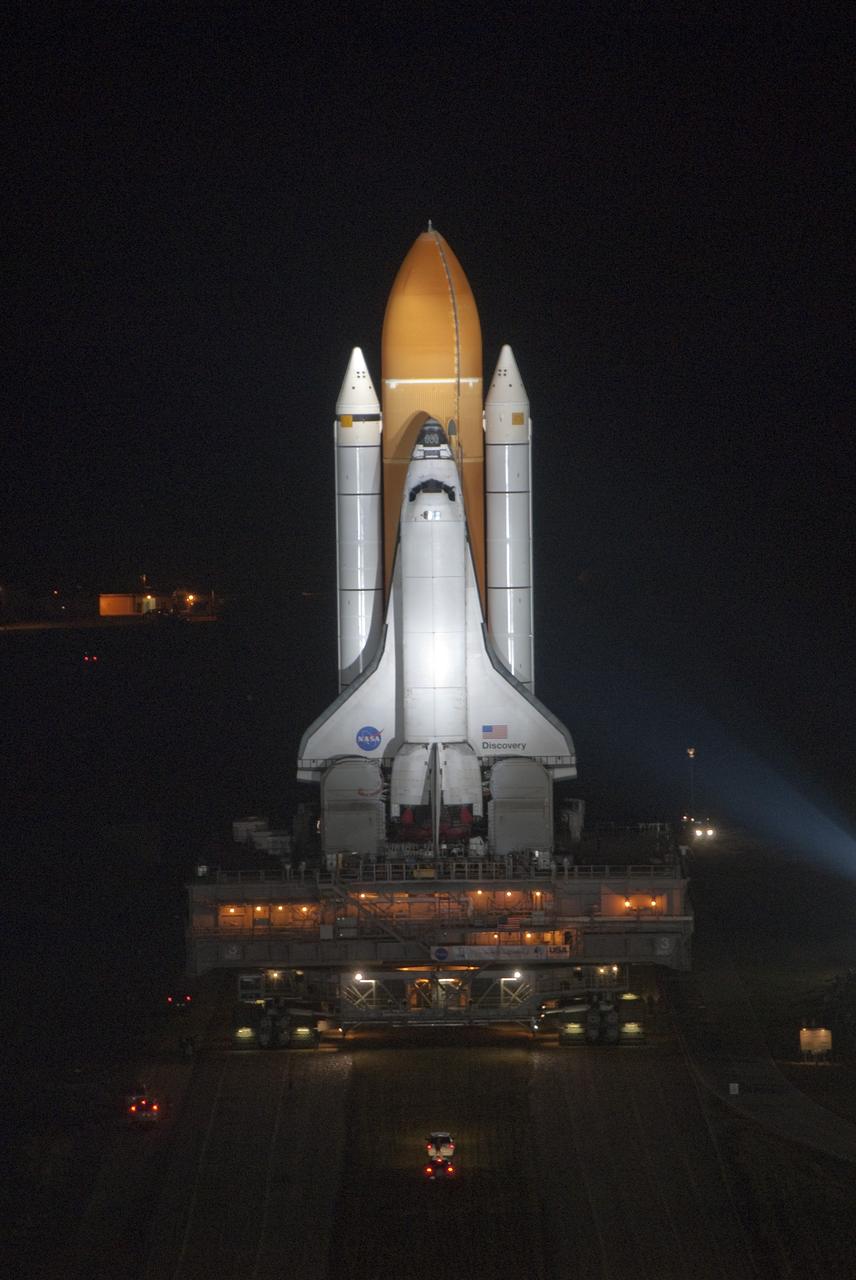
CAPE CANAVERAL, Fla. -- Xenon lights illuminate space shuttle Discovery as it makes its nighttime trek, known as "rollout," from the Vehicle Assembly Building to Launch Pad 39A at NASA's Kennedy Space Center in Florida. It will take the shuttle, attached to its external fuel tank, twin solid rocket boosters and mobile launcher platform, about seven hours to complete the move atop a crawler-transporter. This is the second time Discovery has rolled out to the pad for the STS-133 mission, and comes after a thorough check and modifications to the shuttle's external tank. Targeted to liftoff Feb. 24, Discovery will take the Permanent Multipurpose Module (PMM) packed with supplies and critical spare parts, as well as Robonaut 2 (R2) to the International Space Station. For more information on STS-133, visit www.nasa.gov/mission_pages/shuttle/shuttlemissions/sts133/. Photo credit: NASA/Jim Grossmann

CAPE CANAVERAL, Fla. -- Space shuttle Discovery arrives at the foot of Launch Pad 39A from the Vehicle Assembly Building at NASA's Kennedy Space Center in Florida. It took the shuttle, attached to its external fuel tank, twin solid rocket boosters and mobile launcher platform, about seven hours to complete the move atop a crawler-transporter. This is the second time Discovery has rolled out to the pad for the STS-133 mission, and comes after a thorough check and modifications to the shuttle's external tank. Targeted to liftoff Feb. 24, Discovery will take the Permanent Multipurpose Module (PMM) packed with supplies and critical spare parts, as well as Robonaut 2 (R2) to the International Space Station. For more information on STS-133, visit www.nasa.gov/mission_pages/shuttle/shuttlemissions/sts133/. Photo credit: NASA/Jack Pfaller
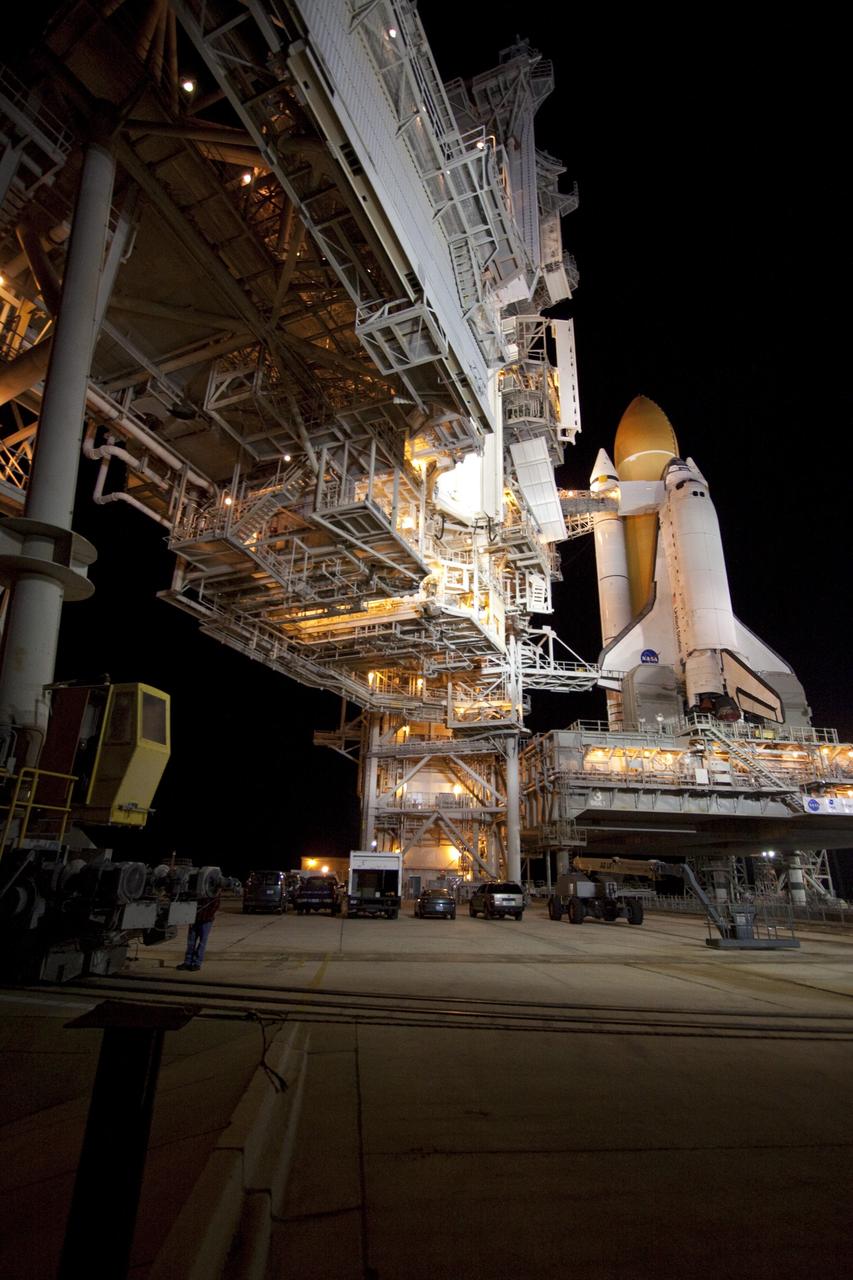
CAPE CANAVERAL, Fla. -- The rotating service structure (RSS), which provides weather protection and access to the shuttle, begins to move into place around space shuttle Discovery on Launch Pad 39A at NASA's Kennedy Space Center in Florida. This comes after Discovery, attached to its external fuel tank, twin solid rocket boosters and mobile launcher platform, rolled out to the pad from the Vehicle Assembly Building during the overnight hours. Rollout to the pad is a significant shuttle processing milestone for the upcoming STS-133 mission, and comes after a thorough check and modifications to the shuttle's external fuel tank. Targeted to liftoff Feb. 24, Discovery will take the Permanent Multipurpose Module (PMM) packed with supplies and critical spare parts, as well as Robonaut 2 (R2) to the International Space Station. For more information on STS-133, visit www.nasa.gov/mission_pages/shuttle/shuttlemissions/sts133/. Photo credit: NASA/Jack Pfaller
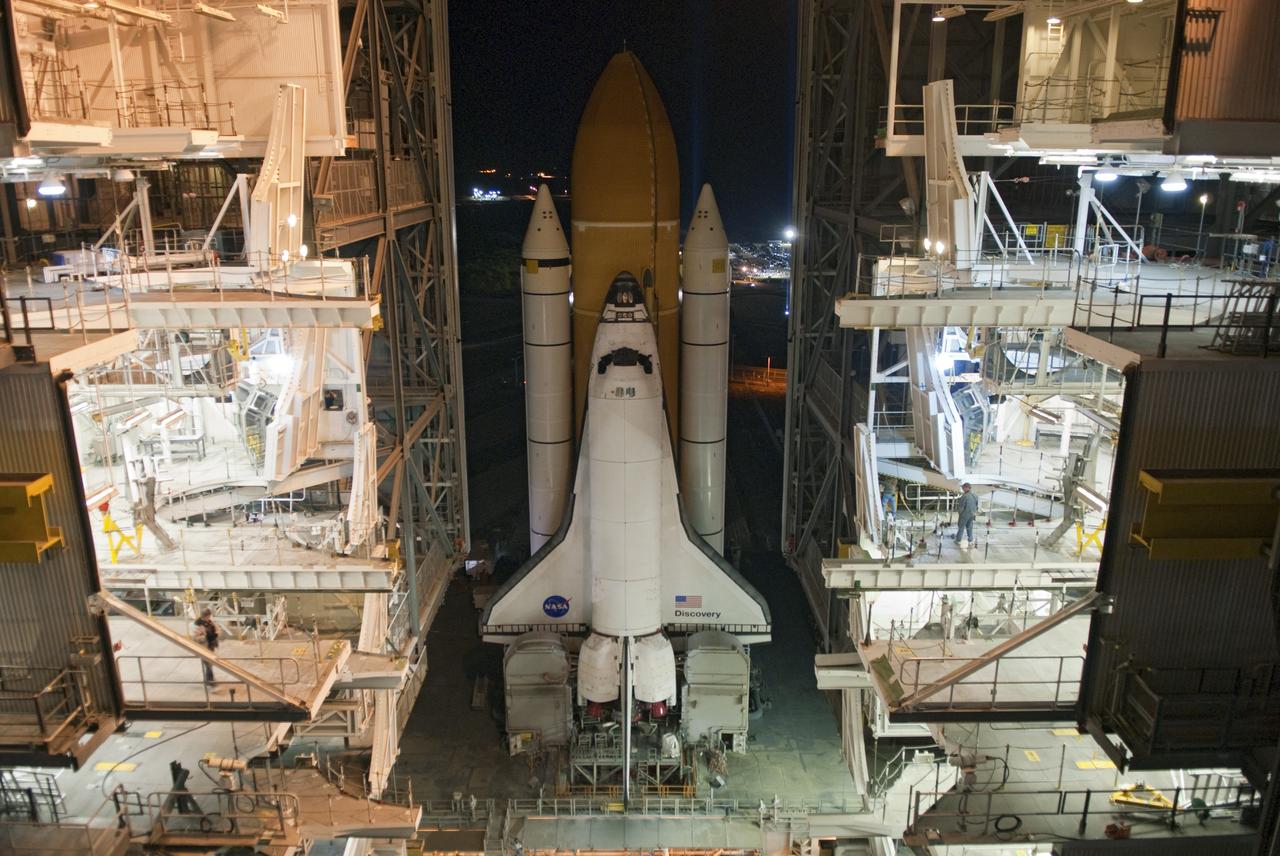
CAPE CANAVERAL, Fla. -- Space shuttle Discovery slowly rolls out of the Vehicle Assembly Building and heads toward Launch Pad 39A at NASA's Kennedy Space Center in Florida. The slow trek, known as "rollout," will take the shuttle, attached to its external fuel tank, twin solid rocket boosters and mobile launcher platform atop a crawler-transporter, about seven hours to complete. This is the second time Discovery has rolled out to the pad for the STS-133 mission, and comes after a thorough check and modifications to the shuttle's external tank. Targeted to liftoff Feb. 24, Discovery will take the Permanent Multipurpose Module (PMM) packed with supplies and critical spare parts, as well as Robonaut 2 (R2) to the International Space Station. For more information on STS-133, visit www.nasa.gov/mission_pages/shuttle/shuttlemissions/sts133/. Photo credit: NASA/Jim Grossmann
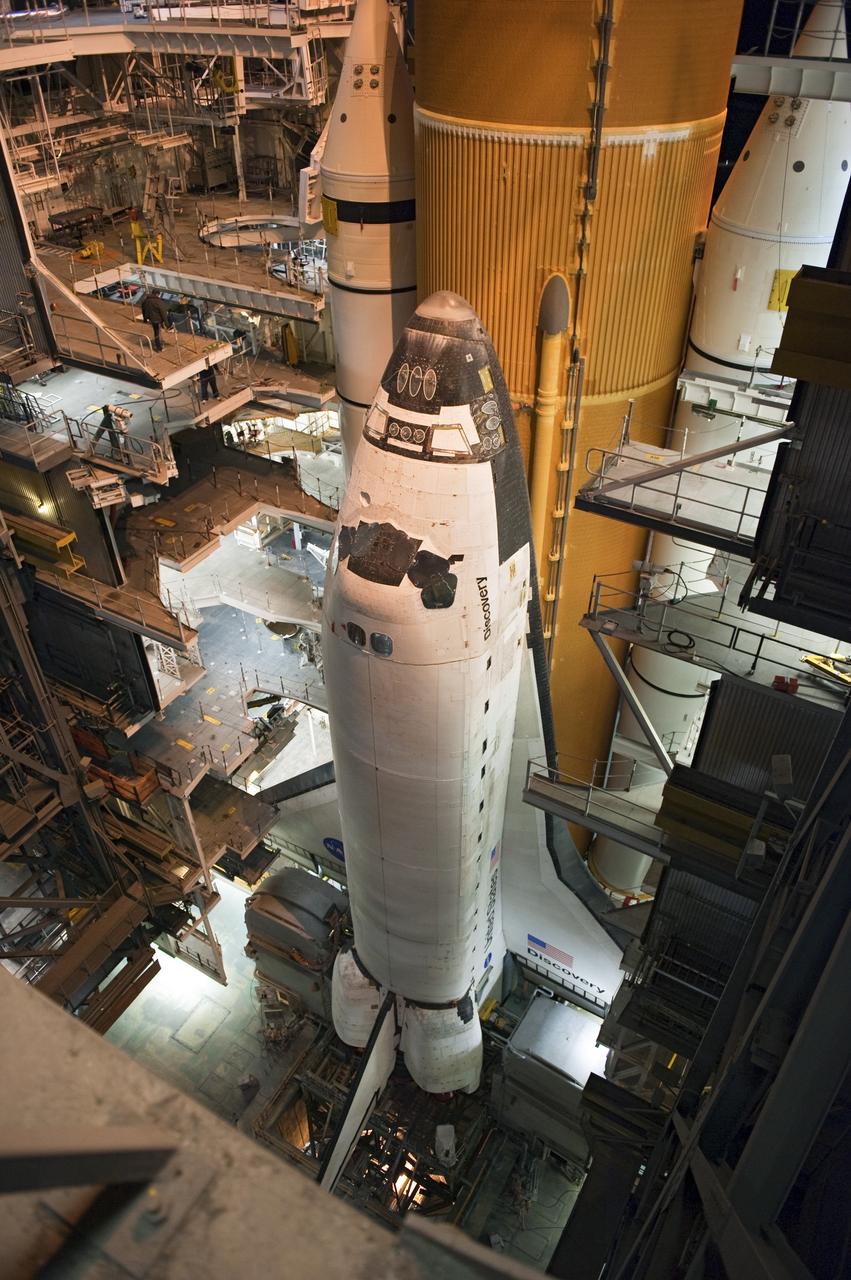
CAPE CANAVERAL, Fla. -- At NASA's Kennedy Space Center in Florida, space shuttle Discovery begins its nighttime trek, known as "rollout," from the Vehicle Assembly Building to Launch Pad 39A. It will take the shuttle, attached to its external fuel tank, twin solid rocket boosters and mobile launcher platform, about seven hours to complete the move atop a crawler-transporter. This is the second time Discovery has rolled out to the pad for the STS-133 mission, and comes after a thorough check and modifications to the shuttle's external tank. Targeted to liftoff Feb. 24, Discovery will take the Permanent Multipurpose Module (PMM) packed with supplies and critical spare parts, as well as Robonaut 2 (R2) to the International Space Station. For more information on STS-133, visit www.nasa.gov/mission_pages/shuttle/shuttlemissions/sts133/. Photo credit: NASA/Kim Shiflett
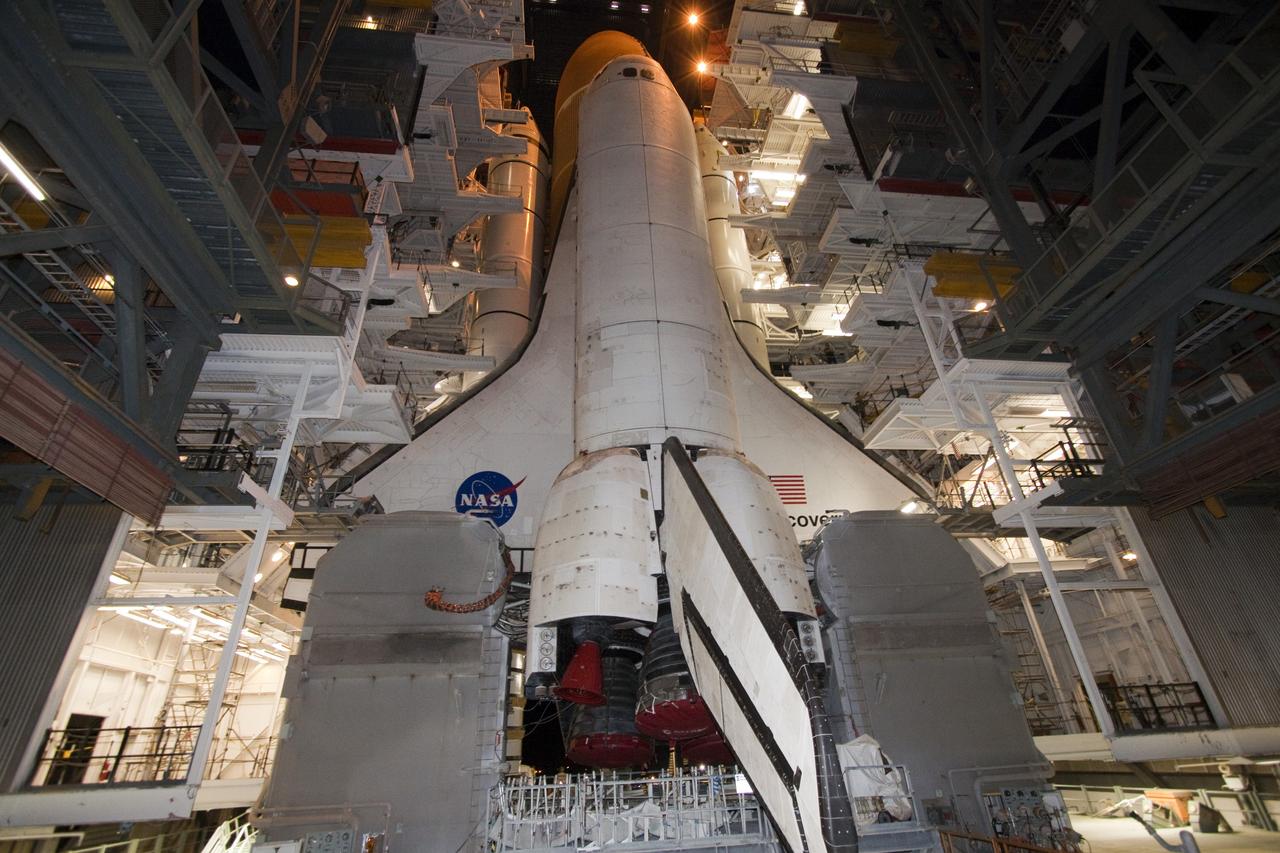
CAPE CANAVERAL, Fla. -- At NASA's Kennedy Space Center in Florida, space shuttle Discovery begins its nighttime trek, known as "rollout," from the Vehicle Assembly Building to Launch Pad 39A. It will take the shuttle, attached to its external fuel tank, twin solid rocket boosters and mobile launcher platform, about seven hours to complete the move atop a crawler-transporter. This is the second time Discovery has rolled out to the pad for the STS-133 mission, and comes after a thorough check and modifications to the shuttle's external tank. Targeted to liftoff Feb. 24, Discovery will take the Permanent Multipurpose Module (PMM) packed with supplies and critical spare parts, as well as Robonaut 2 (R2) to the International Space Station. For more information on STS-133, visit www.nasa.gov/mission_pages/shuttle/shuttlemissions/sts133/. Photo credit: NASA/Jack Pfaller
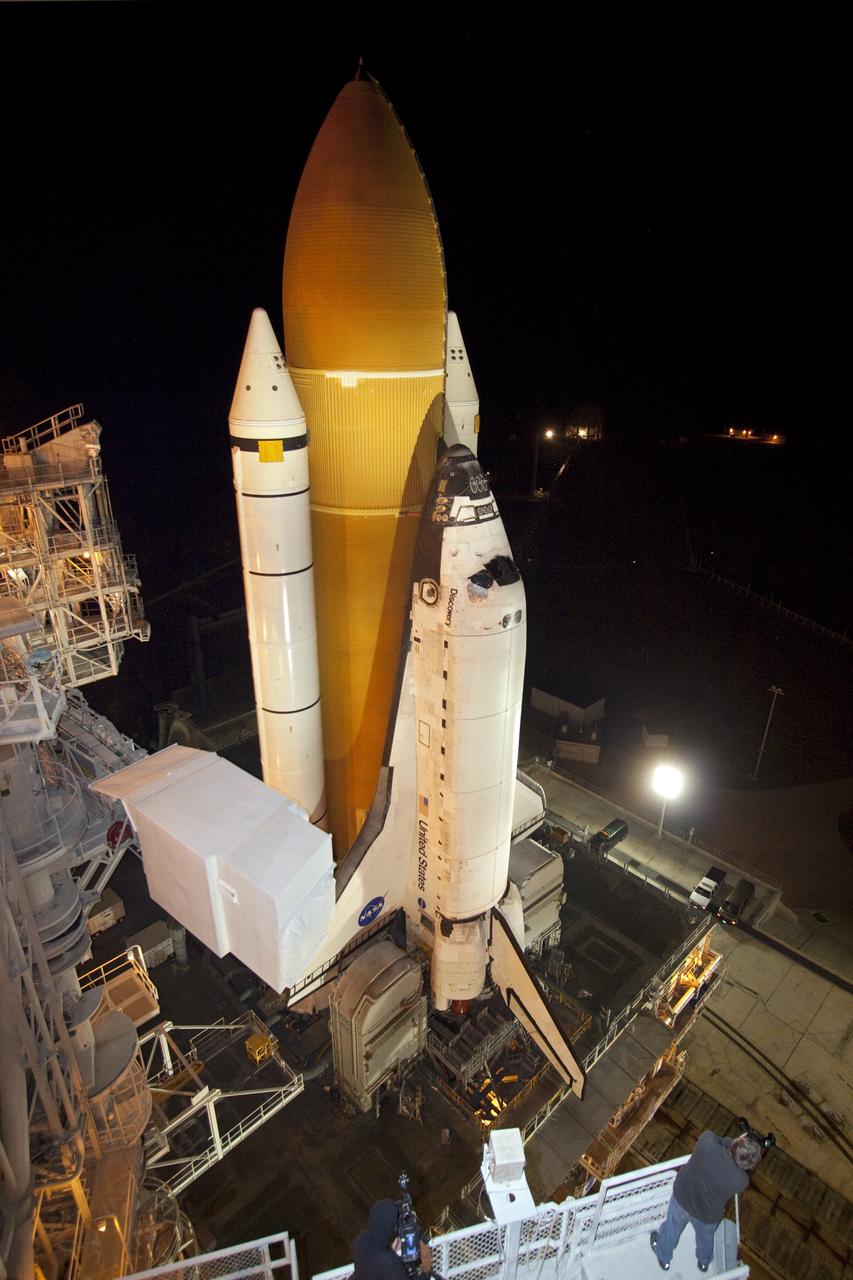
CAPE CANAVERAL, Fla. -- Space shuttle Discovery arrives at Launch Pad 39A from the Vehicle Assembly Building at NASA's Kennedy Space Center in Florida. It took the shuttle, attached to its external fuel tank, twin solid rocket boosters and mobile launcher platform, about seven hours to complete the move atop a crawler-transporter. This is the second time Discovery has rolled out to the pad for the STS-133 mission, and comes after a thorough check and modifications to the shuttle's external tank. Targeted to liftoff Feb. 24, Discovery will take the Permanent Multipurpose Module (PMM) packed with supplies and critical spare parts, as well as Robonaut 2 (R2) to the International Space Station. For more information on STS-133, visit www.nasa.gov/mission_pages/shuttle/shuttlemissions/sts133/. Photo credit: NASA/Jack Pfaller
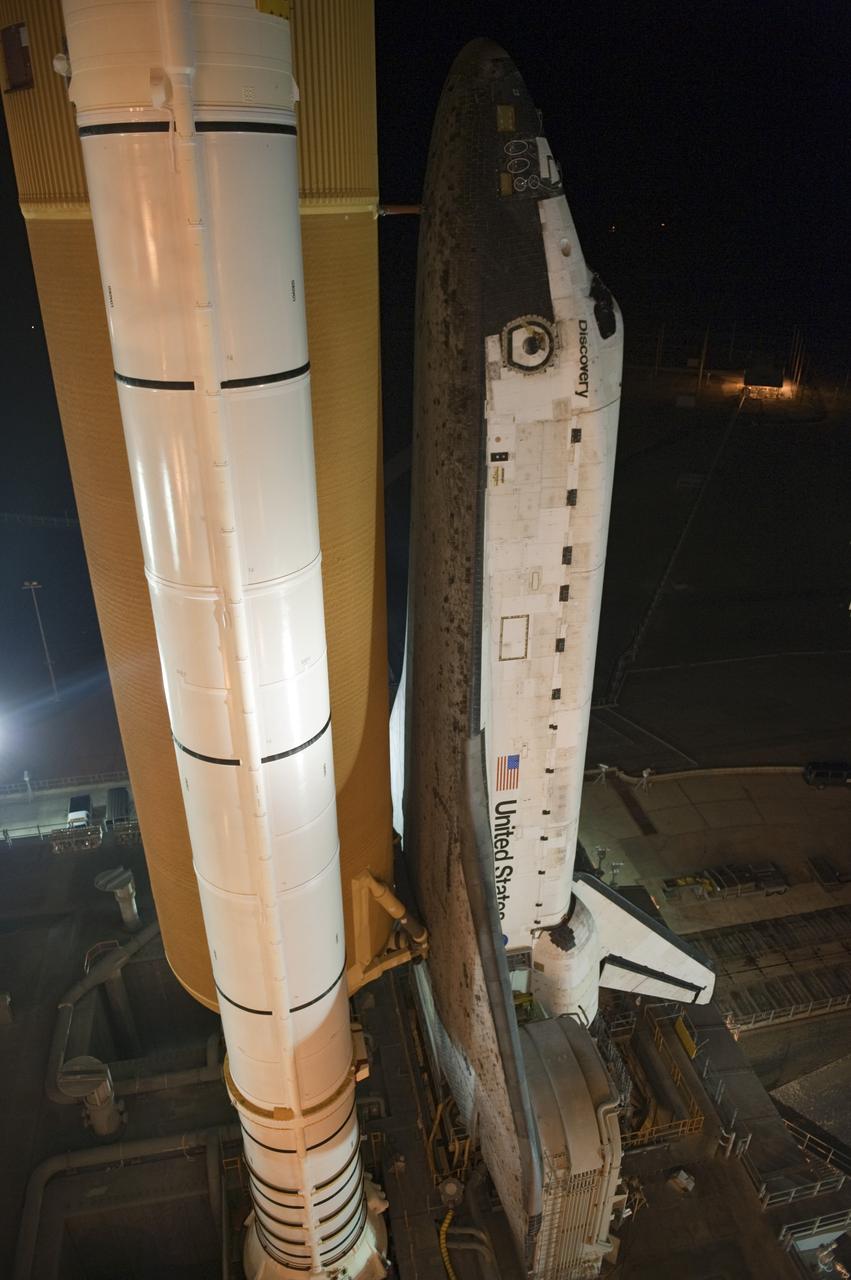
CAPE CANAVERAL, Fla. -- Space shuttle Discovery arrives at Launch Pad 39A from the Vehicle Assembly Building at NASA's Kennedy Space Center in Florida. It took the shuttle, attached to its external fuel tank, twin solid rocket boosters and mobile launcher platform, about seven hours to complete the move atop a crawler-transporter. This is the second time Discovery has rolled out to the pad for the STS-133 mission, and comes after a thorough check and modifications to the shuttle's external tank. Targeted to liftoff Feb. 24, Discovery will take the Permanent Multipurpose Module (PMM) packed with supplies and critical spare parts, as well as Robonaut 2 (R2) to the International Space Station. For more information on STS-133, visit www.nasa.gov/mission_pages/shuttle/shuttlemissions/sts133/. Photo credit: NASA/Kim Shiflett
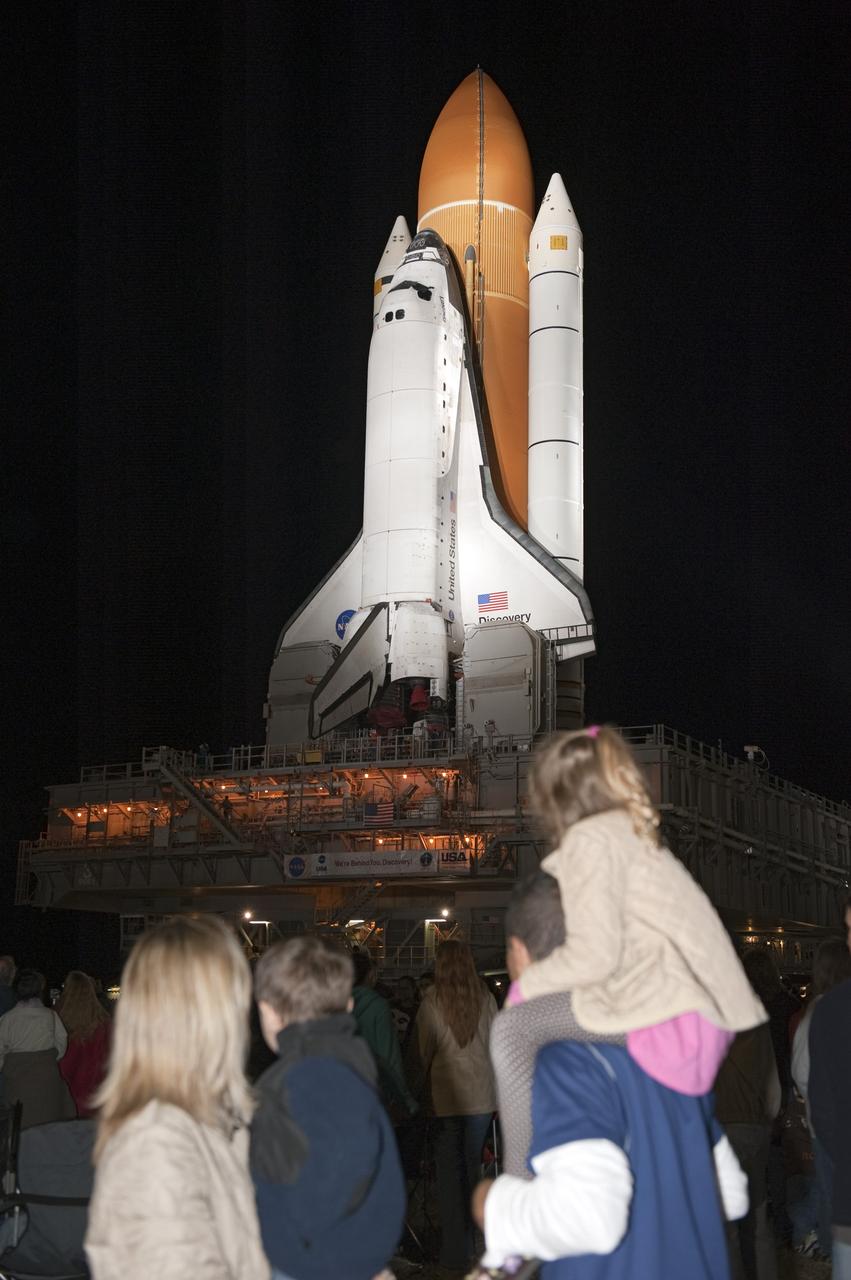
CAPE CANAVERAL, Fla. -- Outside the Vehicle Assembly Building at NASA's Kennedy Space Center in Florida, Kennedy employees, and their families and friends, are on hand to watch space shuttle Discovery roll out to Launch Pad 39A. It will take the shuttle, attached to its external fuel tank, twin solid rocket boosters and mobile launcher platform, about seven hours to complete the move atop a crawler-transporter. This is the second time Discovery has rolled out to the pad for the STS-133 mission, and comes after a thorough check and modifications to the shuttle's external tank. Targeted to liftoff Feb. 24, Discovery will take the Permanent Multipurpose Module (PMM) packed with supplies and critical spare parts, as well as Robonaut 2 (R2) to the International Space Station. For more information on STS-133, visit www.nasa.gov/mission_pages/shuttle/shuttlemissions/sts133/. Photo credit: NASA/Kim Shiflett
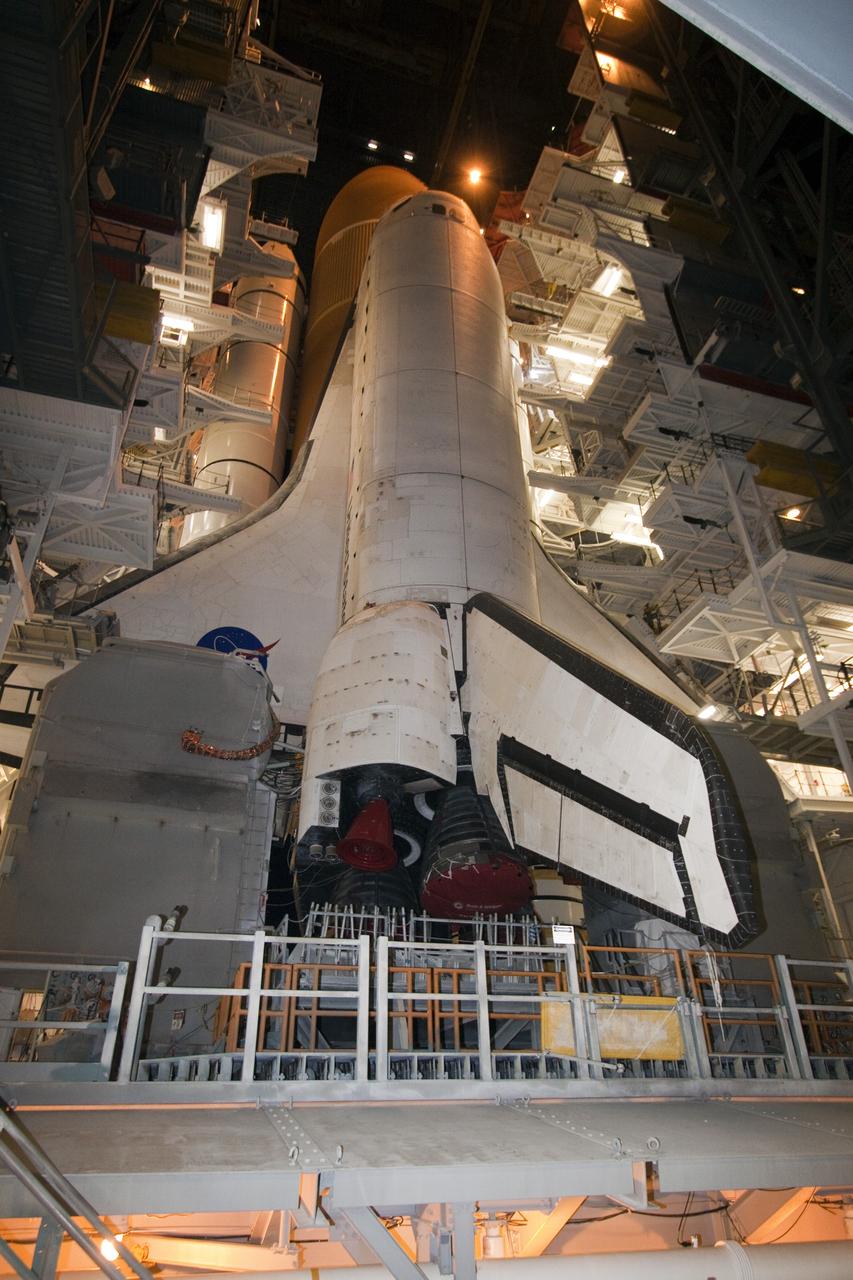
CAPE CANAVERAL, Fla. -- At NASA's Kennedy Space Center in Florida, space shuttle Discovery begins its nighttime trek, known as "rollout," from the Vehicle Assembly Building to Launch Pad 39A. It will take the shuttle, attached to its external fuel tank, twin solid rocket boosters and mobile launcher platform, about seven hours to complete the move atop a crawler-transporter. This is the second time Discovery has rolled out to the pad for the STS-133 mission, and comes after a thorough check and modifications to the shuttle's external tank. Targeted to liftoff Feb. 24, Discovery will take the Permanent Multipurpose Module (PMM) packed with supplies and critical spare parts, as well as Robonaut 2 (R2) to the International Space Station. For more information on STS-133, visit www.nasa.gov/mission_pages/shuttle/shuttlemissions/sts133/. Photo credit: NASA/Jack Pfaller
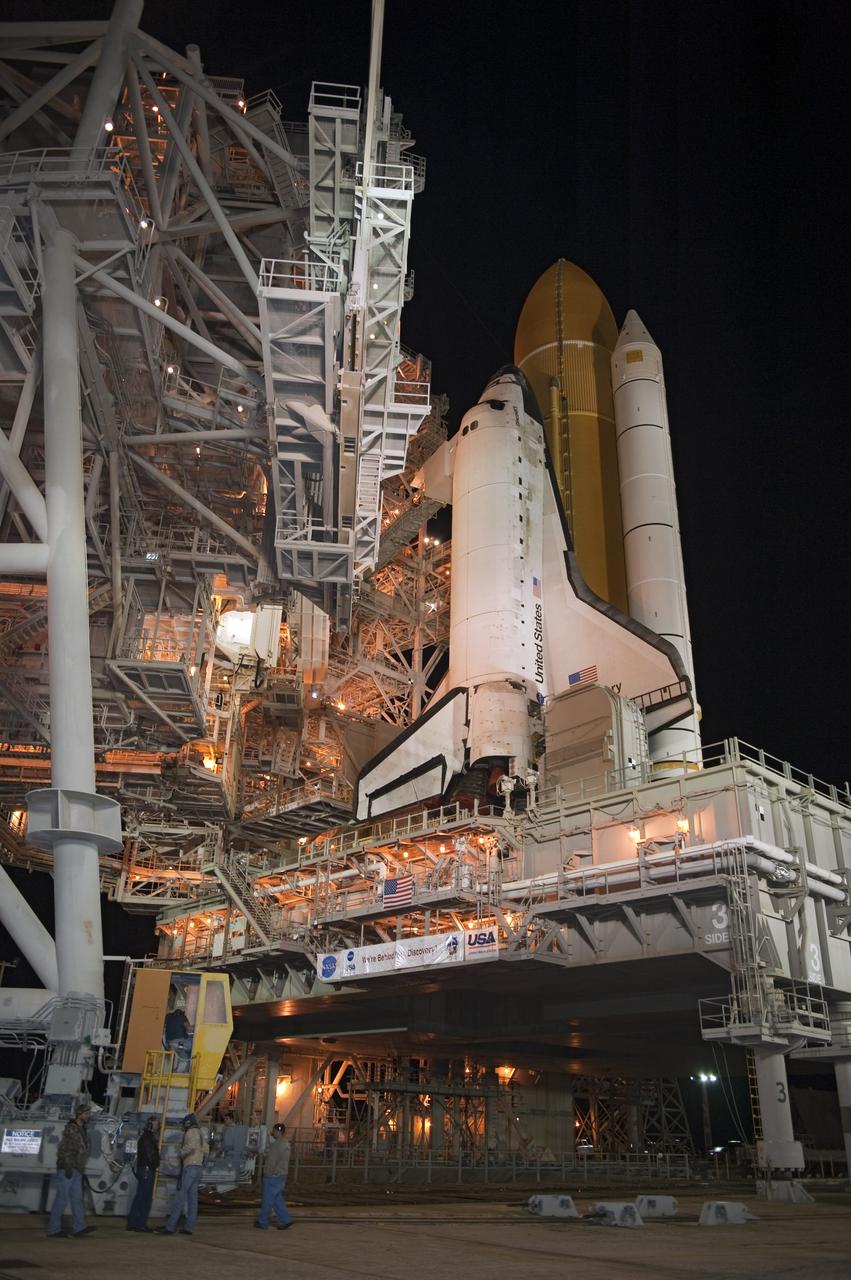
CAPE CANAVERAL, Fla. -- Space shuttle Discovery arrives at Launch Pad 39A from the Vehicle Assembly Building at NASA's Kennedy Space Center in Florida. It took the shuttle, attached to its external fuel tank, twin solid rocket boosters and mobile launcher platform, about seven hours to complete the move atop a crawler-transporter. This is the second time Discovery has rolled out to the pad for the STS-133 mission, and comes after a thorough check and modifications to the shuttle's external tank. Targeted to liftoff Feb. 24, Discovery will take the Permanent Multipurpose Module (PMM) packed with supplies and critical spare parts, as well as Robonaut 2 (R2) to the International Space Station. For more information on STS-133, visit www.nasa.gov/mission_pages/shuttle/shuttlemissions/sts133/. Photo credit: NASA/Kim Shiflett
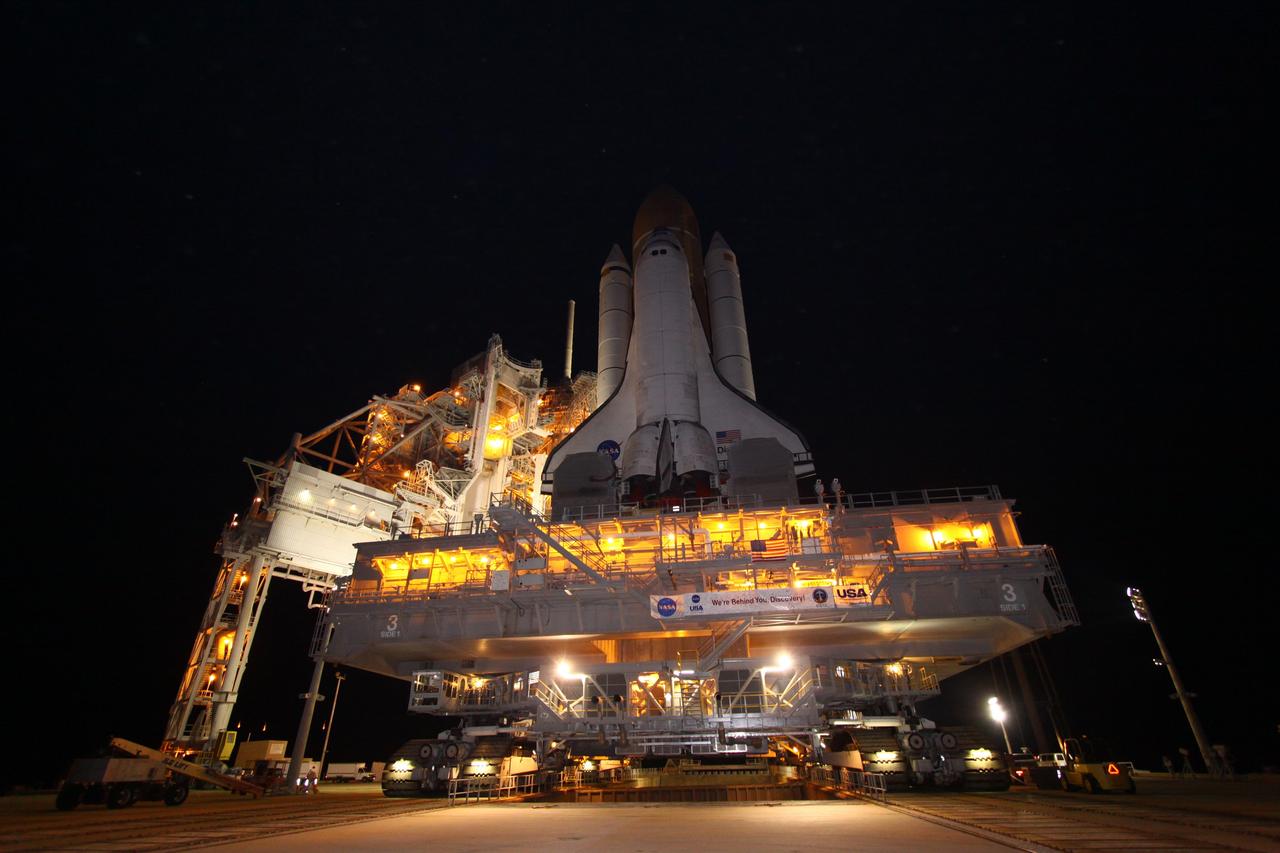
CAPE CANAVERAL, Fla. -- Space shuttle Discovery arrives at Launch Pad 39A from the Vehicle Assembly Building at NASA's Kennedy Space Center in Florida. It took the shuttle, attached to its external fuel tank, twin solid rocket boosters and mobile launcher platform, about seven hours to complete the move atop a crawler-transporter. This is the second time Discovery has rolled out to the pad for the STS-133 mission, and comes after a thorough check and modifications to the shuttle's external tank. Targeted to liftoff Feb. 24, Discovery will take the Permanent Multipurpose Module (PMM) packed with supplies and critical spare parts, as well as Robonaut 2 (R2) to the International Space Station. For more information on STS-133, visit www.nasa.gov/mission_pages/shuttle/shuttlemissions/sts133/. Photo credit: NASA/Jack Pfaller

CAPE CANAVERAL, Fla. -- The rotating service structure (RSS), which provides weather protection and access to the shuttle, moves into place around space shuttle Discovery on Launch Pad 39A at NASA's Kennedy Space Center in Florida. This comes after Discovery, attached to its external fuel tank, twin solid rocket boosters and mobile launcher platform, rolled out to the pad from the Vehicle Assembly Building during the overnight hours. Rollout to the pad is a significant shuttle processing milestone for the upcoming STS-133 mission, and comes after a thorough check and modifications to the shuttle's external fuel tank. Targeted to liftoff Feb. 24, Discovery will take the Permanent Multipurpose Module (PMM) packed with supplies and critical spare parts, as well as Robonaut 2 (R2) to the International Space Station. For more information on STS-133, visit www.nasa.gov/mission_pages/shuttle/shuttlemissions/sts133/. Photo credit: NASA/Jack Pfaller
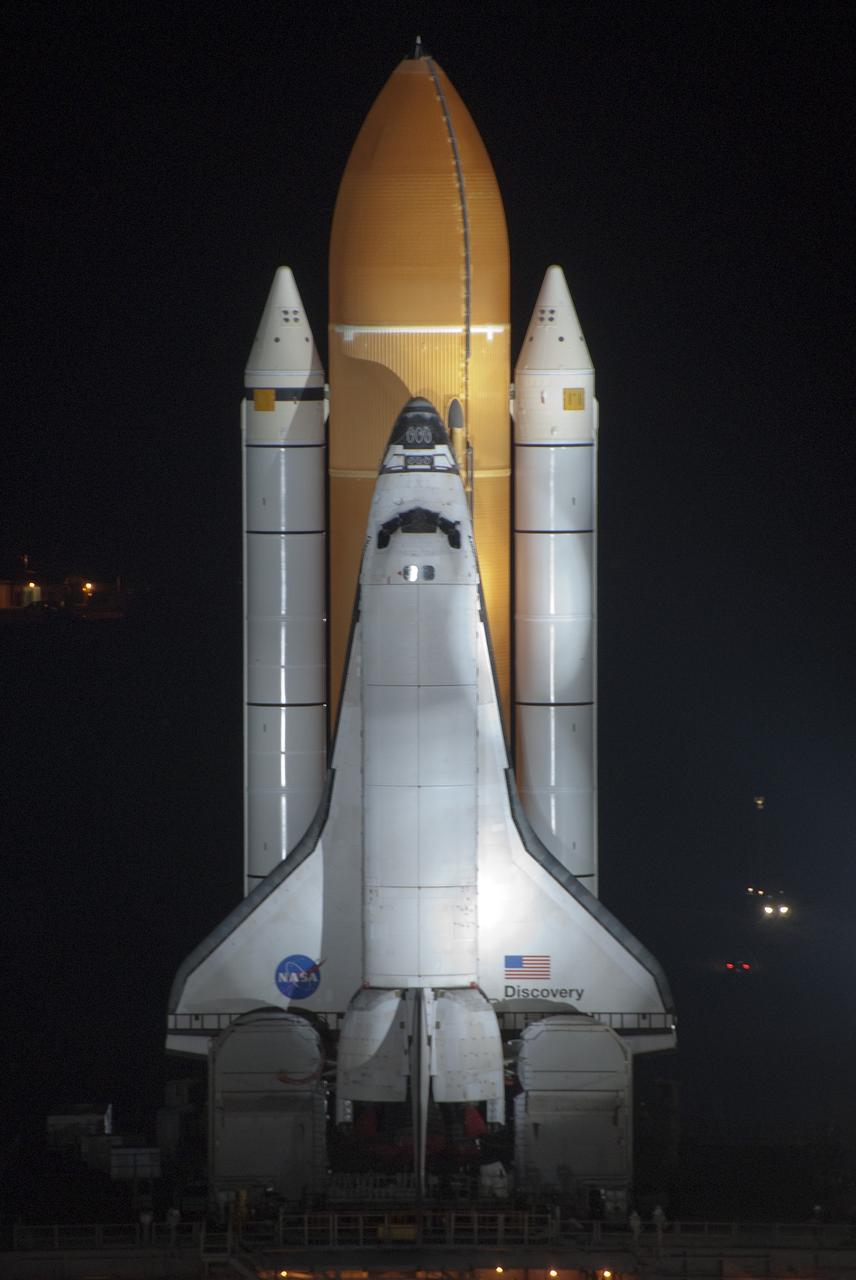
CAPE CANAVERAL, Fla. -- Xenon lights illuminate space shuttle Discovery as it makes its nighttime trek, known as "rollout," from the Vehicle Assembly Building to Launch Pad 39A at NASA's Kennedy Space Center in Florida. It will take the shuttle, attached to its external fuel tank, twin solid rocket boosters and mobile launcher platform, about seven hours to complete the move atop a crawler-transporter. This is the second time Discovery has rolled out to the pad for the STS-133 mission, and comes after a thorough check and modifications to the shuttle's external tank. Targeted to liftoff Feb. 24, Discovery will take the Permanent Multipurpose Module (PMM) packed with supplies and critical spare parts, as well as Robonaut 2 (R2) to the International Space Station. For more information on STS-133, visit www.nasa.gov/mission_pages/shuttle/shuttlemissions/sts133/. Photo credit: NASA/Jim Grossmann
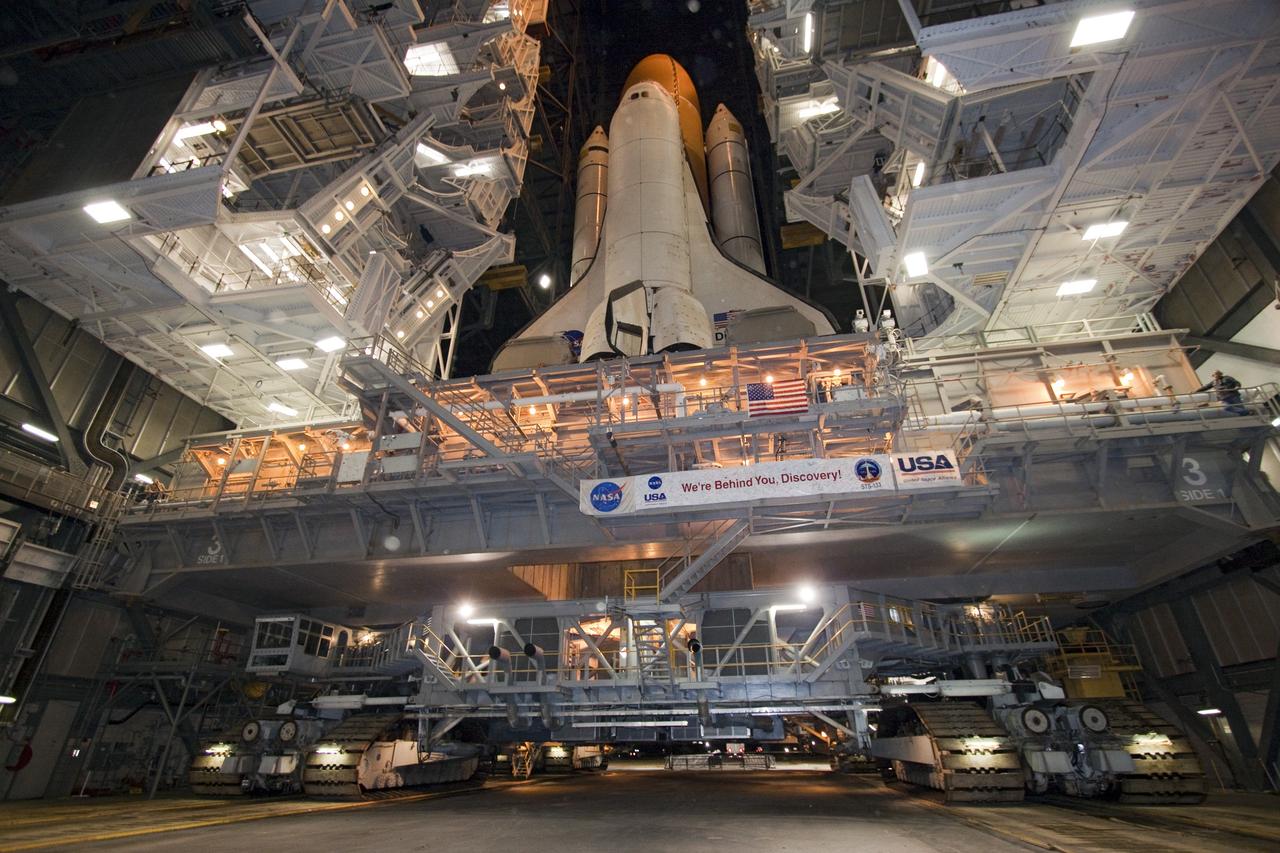
CAPE CANAVERAL, Fla. -- At NASA's Kennedy Space Center in Florida, space shuttle Discovery begins its nighttime trek, known as "rollout," from the Vehicle Assembly Building to Launch Pad 39A. It will take the shuttle, attached to its external fuel tank, twin solid rocket boosters and mobile launcher platform, about seven hours to complete the move atop a crawler-transporter. This is the second time Discovery has rolled out to the pad for the STS-133 mission, and comes after a thorough check and modifications to the shuttle's external tank. Targeted to liftoff Feb. 24, Discovery will take the Permanent Multipurpose Module (PMM) packed with supplies and critical spare parts, as well as Robonaut 2 (R2) to the International Space Station. For more information on STS-133, visit www.nasa.gov/mission_pages/shuttle/shuttlemissions/sts133/. Photo credit: NASA/Jack Pfaller
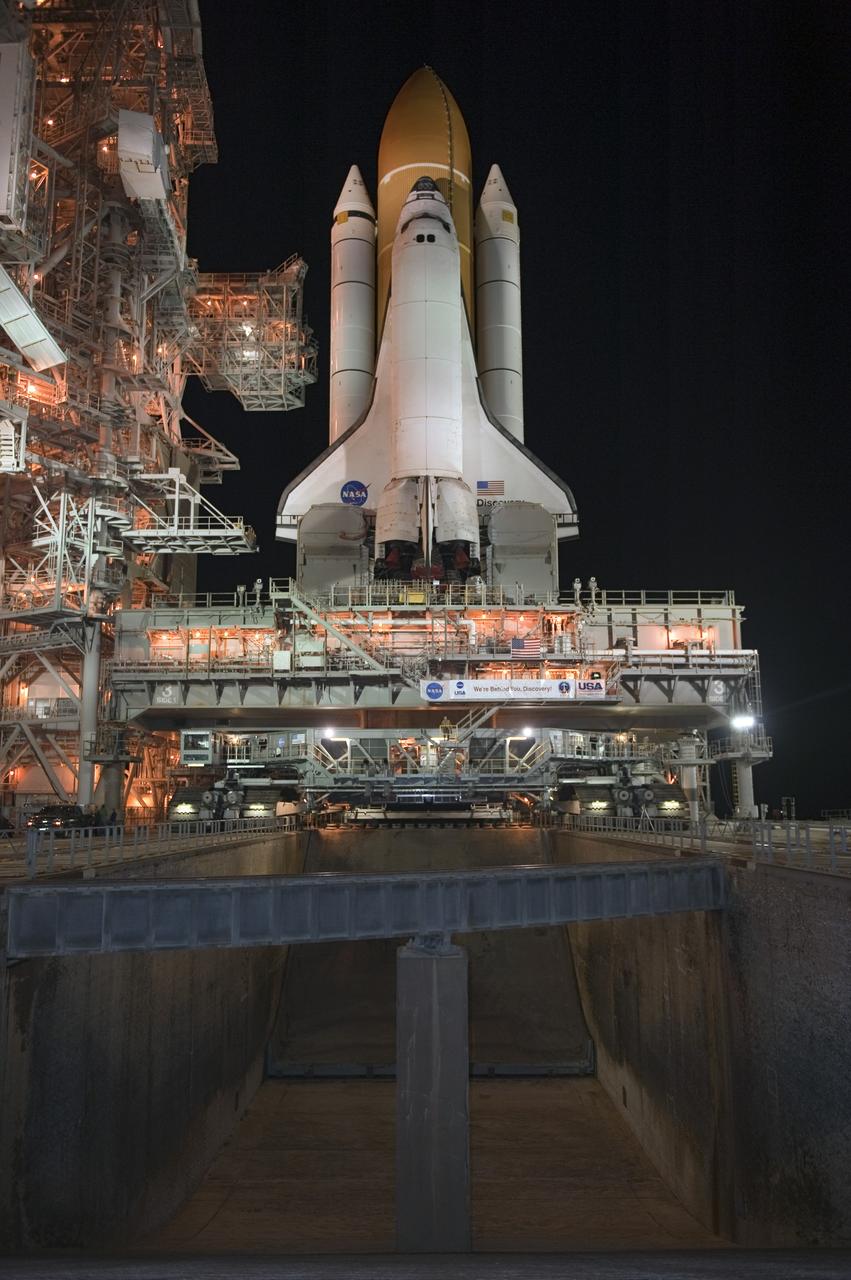
CAPE CANAVERAL, Fla. -- Space shuttle Discovery arrives at Launch Pad 39A from the Vehicle Assembly Building at NASA's Kennedy Space Center in Florida. It took the shuttle, attached to its external fuel tank, twin solid rocket boosters and mobile launcher platform, about seven hours to complete the move atop a crawler-transporter. This is the second time Discovery has rolled out to the pad for the STS-133 mission, and comes after a thorough check and modifications to the shuttle's external tank. Targeted to liftoff Feb. 24, Discovery will take the Permanent Multipurpose Module (PMM) packed with supplies and critical spare parts, as well as Robonaut 2 (R2) to the International Space Station. For more information on STS-133, visit www.nasa.gov/mission_pages/shuttle/shuttlemissions/sts133/. Photo credit: NASA/Kim Shiflett

CAPE CANAVERAL, Fla. -- At NASA's Kennedy Space Center in Florida, space shuttle Discovery begins its nighttime trek, known as "rollout," from the Vehicle Assembly Building to Launch Pad 39A. It will take the shuttle, attached to its external fuel tank, twin solid rocket boosters and mobile launcher platform, about seven hours to complete the move atop a crawler-transporter. This is the second time Discovery has rolled out to the pad for the STS-133 mission, and comes after a thorough check and modifications to the shuttle's external tank. Targeted to liftoff Feb. 24, Discovery will take the Permanent Multipurpose Module (PMM) packed with supplies and critical spare parts, as well as Robonaut 2 (R2) to the International Space Station. For more information on STS-133, visit www.nasa.gov/mission_pages/shuttle/shuttlemissions/sts133/. Photo credit: NASA/Kim Shiflett
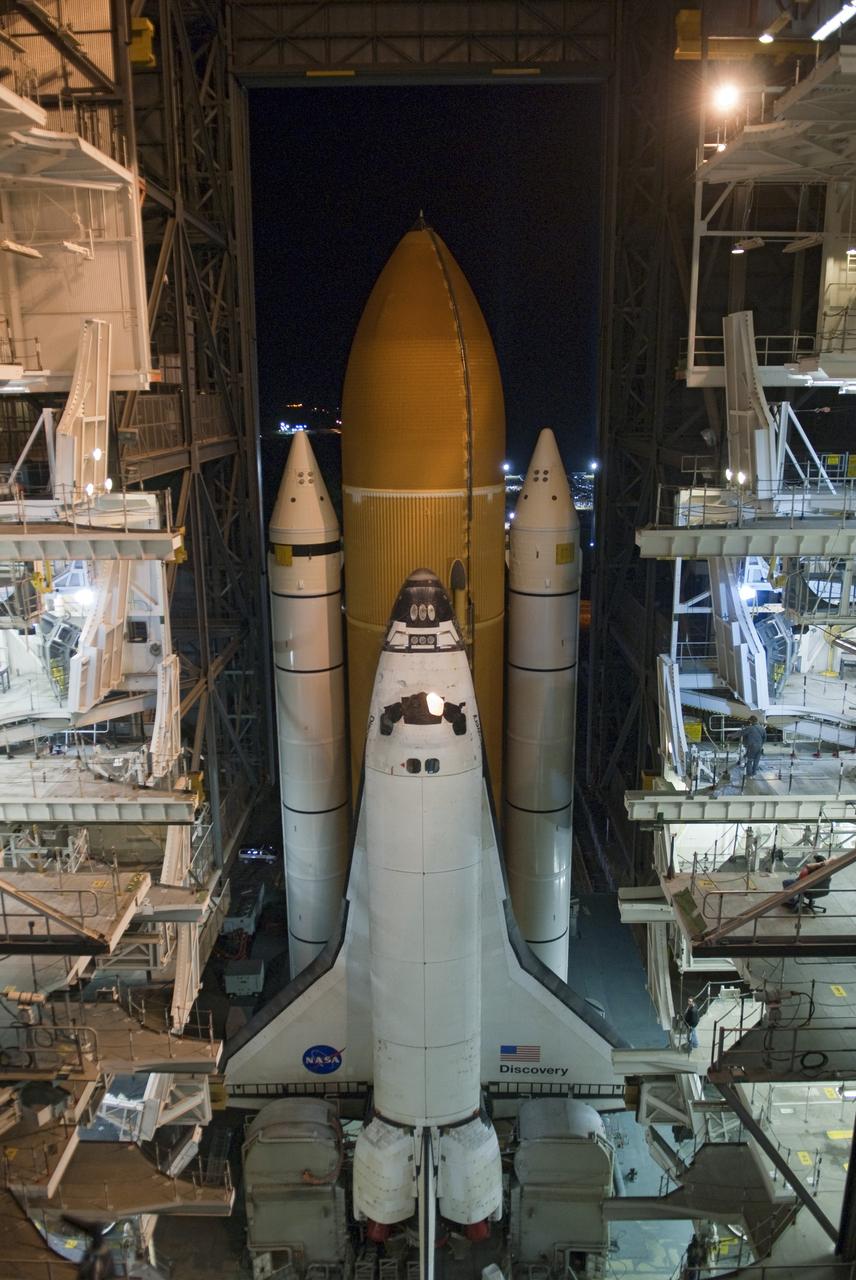
CAPE CANAVERAL, Fla. -- At NASA's Kennedy Space Center in Florida, space shuttle Discovery begins its nighttime trek, known as "rollout," from the Vehicle Assembly Building to Launch Pad 39A. It will take the shuttle, attached to its external fuel tank, twin solid rocket boosters and mobile launcher platform, about seven hours to complete the move atop a crawler-transporter. This is the second time Discovery has rolled out to the pad for the STS-133 mission, and comes after a thorough check and modifications to the shuttle's external tank. Targeted to liftoff Feb. 24, Discovery will take the Permanent Multipurpose Module (PMM) packed with supplies and critical spare parts, as well as Robonaut 2 (R2) to the International Space Station. For more information on STS-133, visit www.nasa.gov/mission_pages/shuttle/shuttlemissions/sts133/. Photo credit: NASA/Jim Grossmann
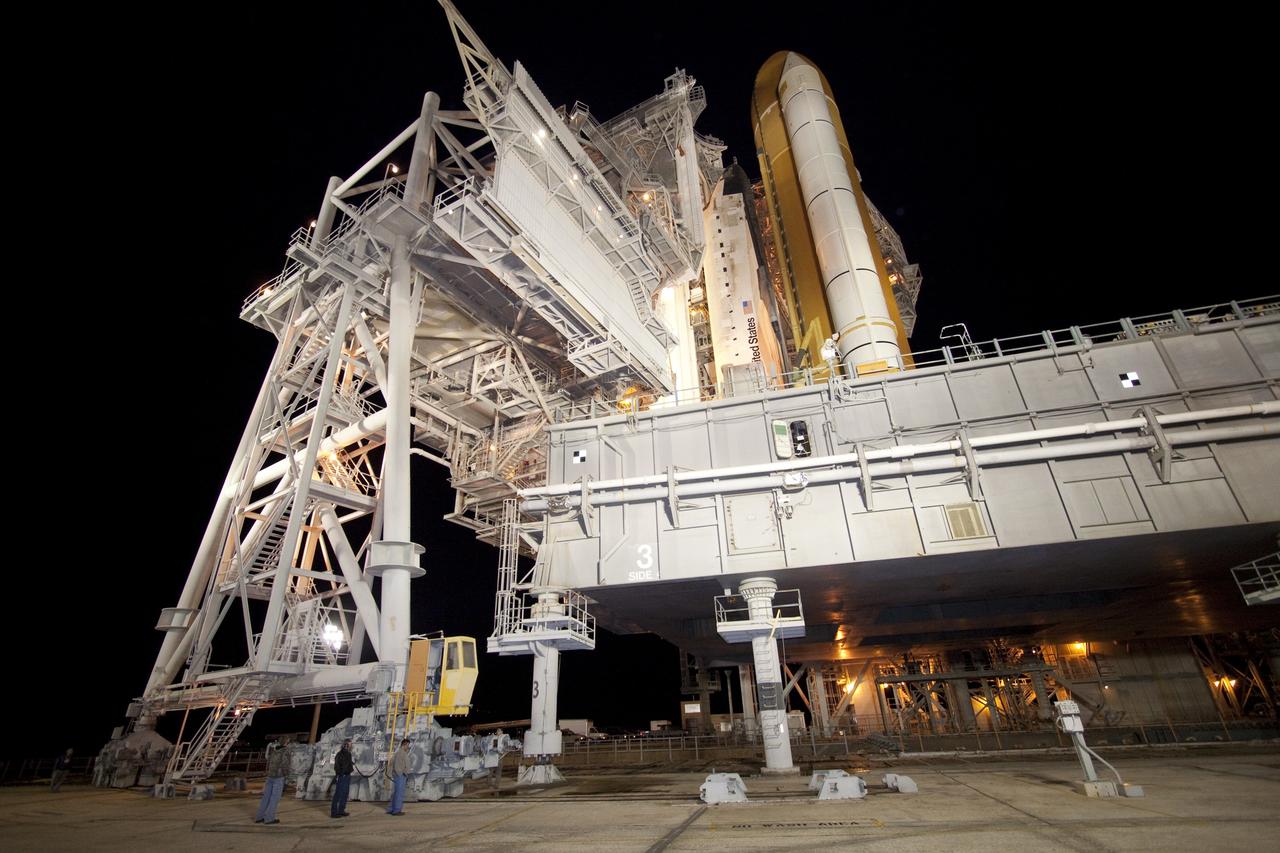
CAPE CANAVERAL, Fla. -- The rotating service structure (RSS), which provides weather protection and access to the shuttle, moves into place around space shuttle Discovery on Launch Pad 39A at NASA's Kennedy Space Center in Florida. This comes after Discovery, attached to its external fuel tank, twin solid rocket boosters and mobile launcher platform, rolled out to the pad from the Vehicle Assembly Building during the overnight hours. Rollout to the pad is a significant shuttle processing milestone for the upcoming STS-133 mission, and comes after a thorough check and modifications to the shuttle's external fuel tank. Targeted to liftoff Feb. 24, Discovery will take the Permanent Multipurpose Module (PMM) packed with supplies and critical spare parts, as well as Robonaut 2 (R2) to the International Space Station. For more information on STS-133, visit www.nasa.gov/mission_pages/shuttle/shuttlemissions/sts133/. Photo credit: NASA/Jack Pfaller
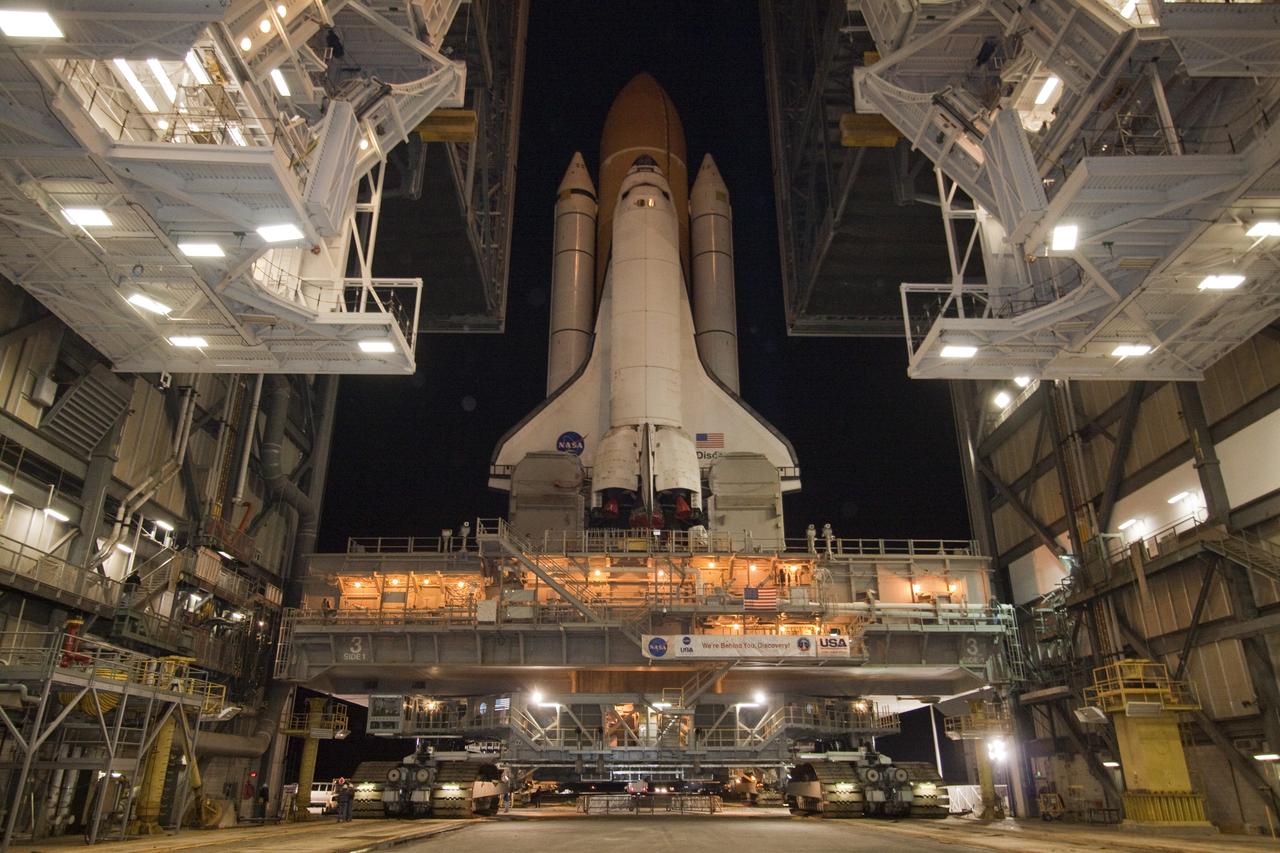
CAPE CANAVERAL, Fla. -- At NASA's Kennedy Space Center in Florida, space shuttle Discovery begins its nighttime trek, known as "rollout," from the Vehicle Assembly Building to Launch Pad 39A. It will take the shuttle, attached to its external fuel tank, twin solid rocket boosters and mobile launcher platform, about seven hours to complete the move atop a crawler-transporter. This is the second time Discovery has rolled out to the pad for the STS-133 mission, and comes after a thorough check and modifications to the shuttle's external tank. Targeted to liftoff Feb. 24, Discovery will take the Permanent Multipurpose Module (PMM) packed with supplies and critical spare parts, as well as Robonaut 2 (R2) to the International Space Station. For more information on STS-133, visit www.nasa.gov/mission_pages/shuttle/shuttlemissions/sts133/. Photo credit: NASA/Jack Pfaller
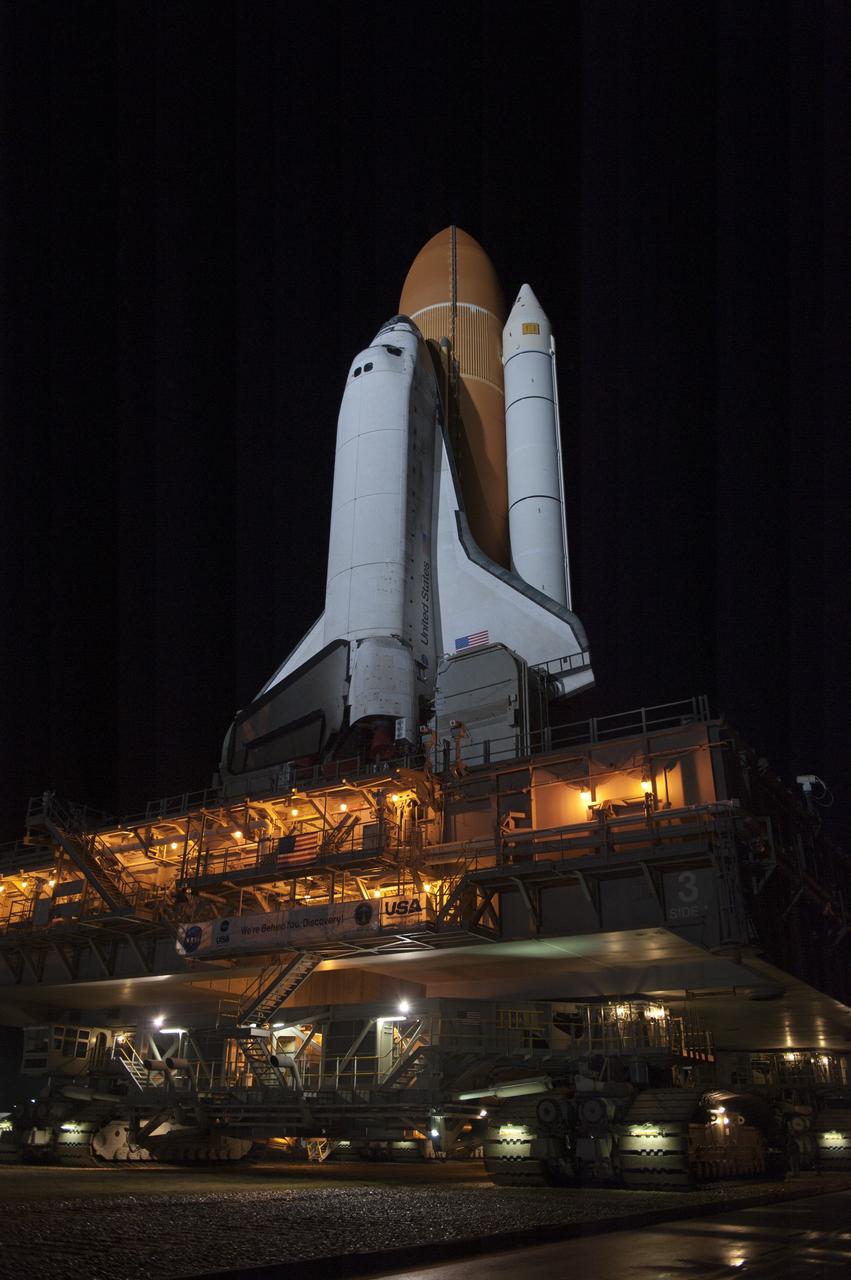
CAPE CANAVERAL, Fla. -- Xenon lights illuminate space shuttle Discovery as it makes its nighttime trek, known as "rollout," from the Vehicle Assembly Building to Launch Pad 39A at NASA's Kennedy Space Center in Florida. It will take the shuttle, attached to its external fuel tank, twin solid rocket boosters and mobile launcher platform, about seven hours to complete the move atop a crawler-transporter. This is the second time Discovery has rolled out to the pad for the STS-133 mission, and comes after a thorough check and modifications to the shuttle's external tank. Targeted to liftoff Feb. 24, Discovery will take the Permanent Multipurpose Module (PMM) packed with supplies and critical spare parts, as well as Robonaut 2 (R2) to the International Space Station. For more information on STS-133, visit www.nasa.gov/mission_pages/shuttle/shuttlemissions/sts133/. Photo credit: NASA/Kim Shiflett
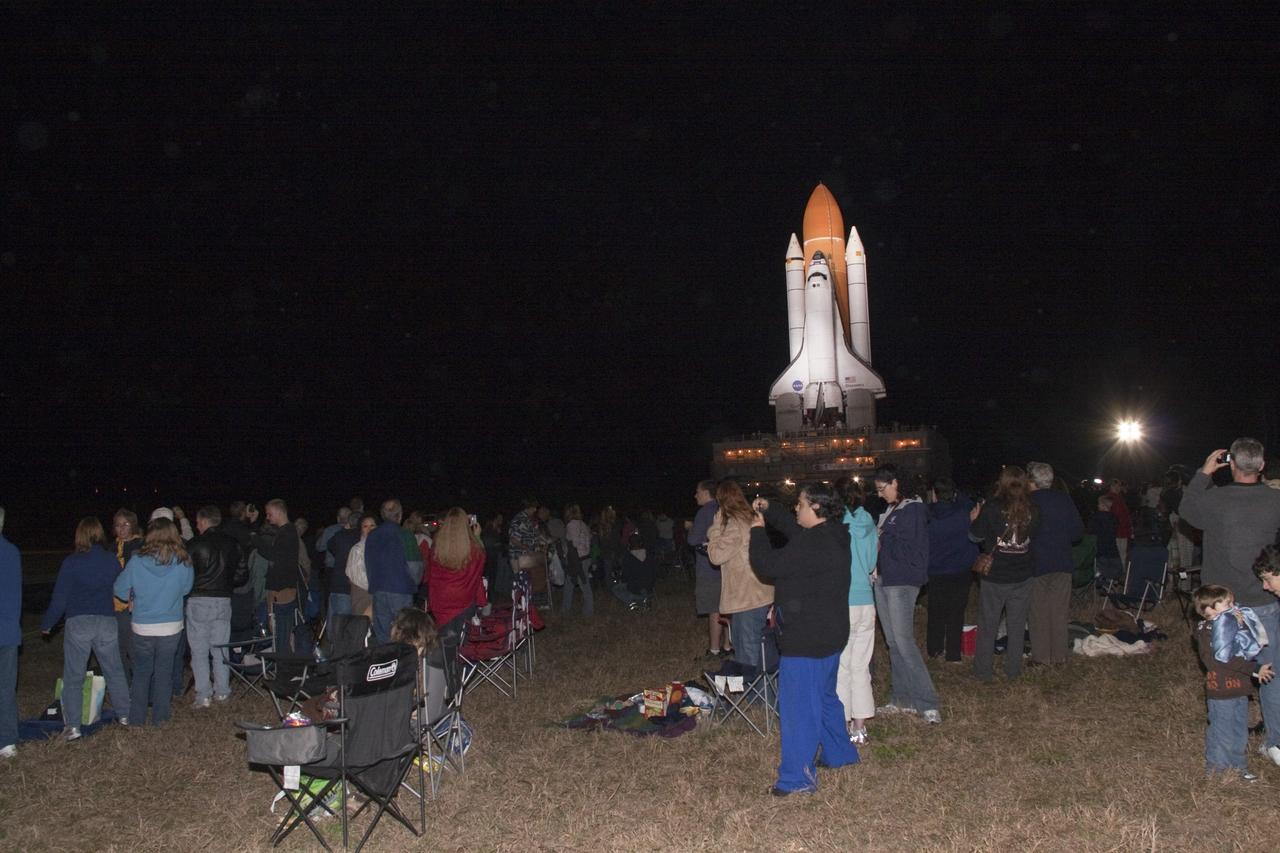
CAPE CANAVERAL, Fla. -- Outside the Vehicle Assembly Building at NASA's Kennedy Space Center in Florida, Kennedy employees, and their families and friends, are on hand to watch space shuttle Discovery roll out to Launch Pad 39A. It will take the shuttle, attached to its external fuel tank, twin solid rocket boosters and mobile launcher platform, about seven hours to complete the move atop a crawler-transporter. This is the second time Discovery has rolled out to the pad for the STS-133 mission, and comes after a thorough check and modifications to the shuttle's external tank. Targeted to liftoff Feb. 24, Discovery will take the Permanent Multipurpose Module (PMM) packed with supplies and critical spare parts, as well as Robonaut 2 (R2) to the International Space Station. For more information on STS-133, visit www.nasa.gov/mission_pages/shuttle/shuttlemissions/sts133/. Photo credit: NASA/Jack Pfaller
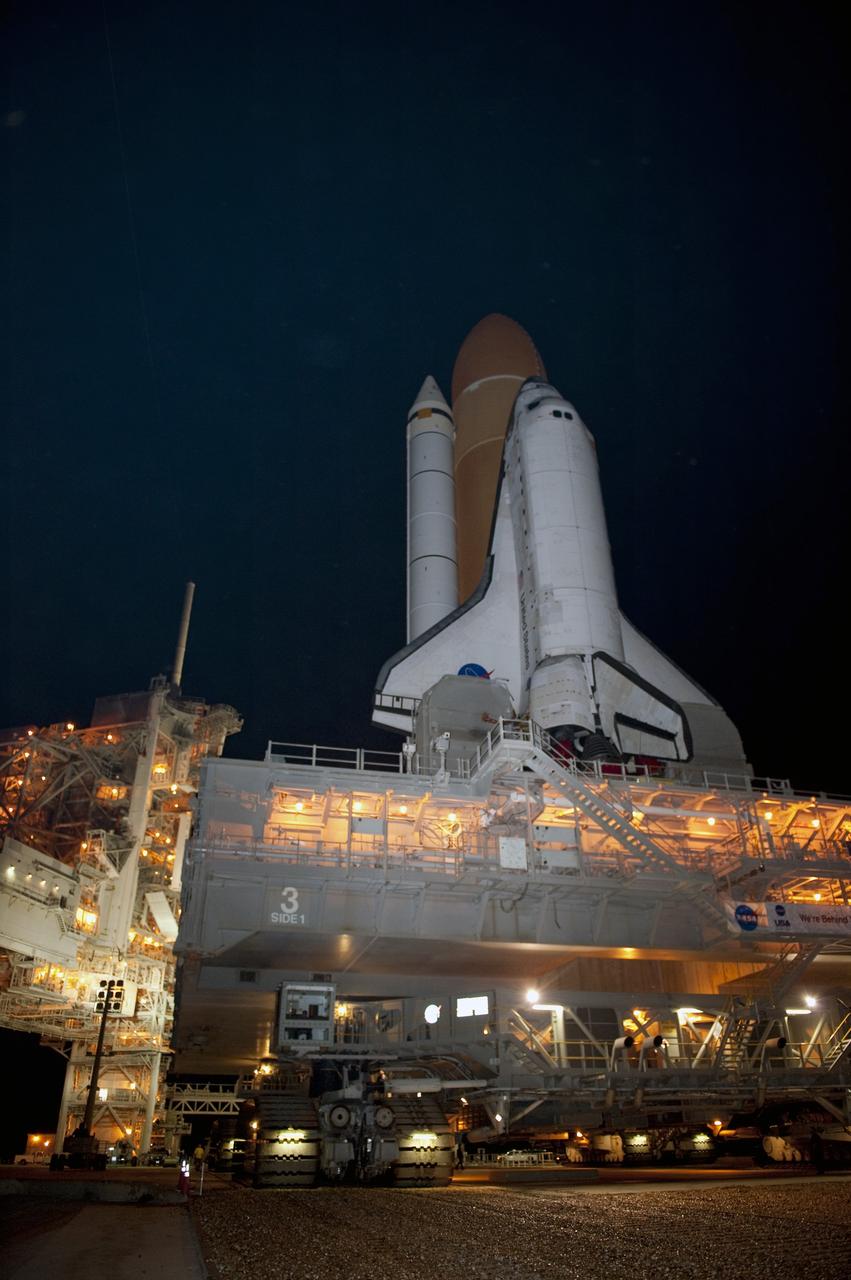
CAPE CANAVERAL, Fla. -- Space shuttle Discovery arrives at Launch Pad 39A from the Vehicle Assembly Building at NASA's Kennedy Space Center in Florida. It took the shuttle, attached to its external fuel tank, twin solid rocket boosters and mobile launcher platform, about seven hours to complete the move atop a crawler-transporter. This is the second time Discovery has rolled out to the pad for the STS-133 mission, and comes after a thorough check and modifications to the shuttle's external tank. Targeted to liftoff Feb. 24, Discovery will take the Permanent Multipurpose Module (PMM) packed with supplies and critical spare parts, as well as Robonaut 2 (R2) to the International Space Station. For more information on STS-133, visit www.nasa.gov/mission_pages/shuttle/shuttlemissions/sts133/. Photo credit: NASA/Kim Shiflett
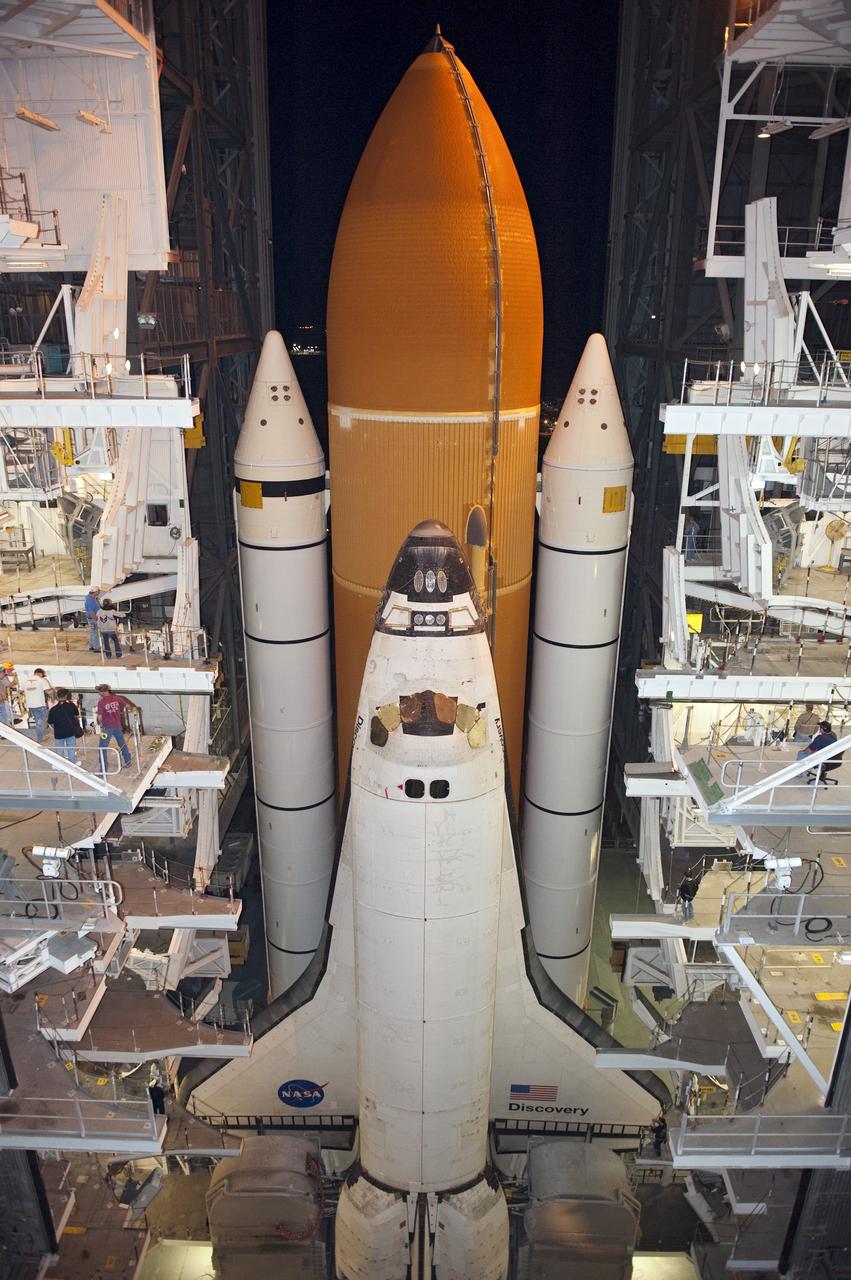
CAPE CANAVERAL, Fla. -- At NASA's Kennedy Space Center in Florida, space shuttle Discovery begins its nighttime trek, known as "rollout," from the Vehicle Assembly Building to Launch Pad 39A. It will take the shuttle, attached to its external fuel tank, twin solid rocket boosters and mobile launcher platform, about seven hours to complete the move atop a crawler-transporter. This is the second time Discovery has rolled out to the pad for the STS-133 mission, and comes after a thorough check and modifications to the shuttle's external tank. Targeted to liftoff Feb. 24, Discovery will take the Permanent Multipurpose Module (PMM) packed with supplies and critical spare parts, as well as Robonaut 2 (R2) to the International Space Station. For more information on STS-133, visit www.nasa.gov/mission_pages/shuttle/shuttlemissions/sts133/. Photo credit: NASA/Kim Shiflett
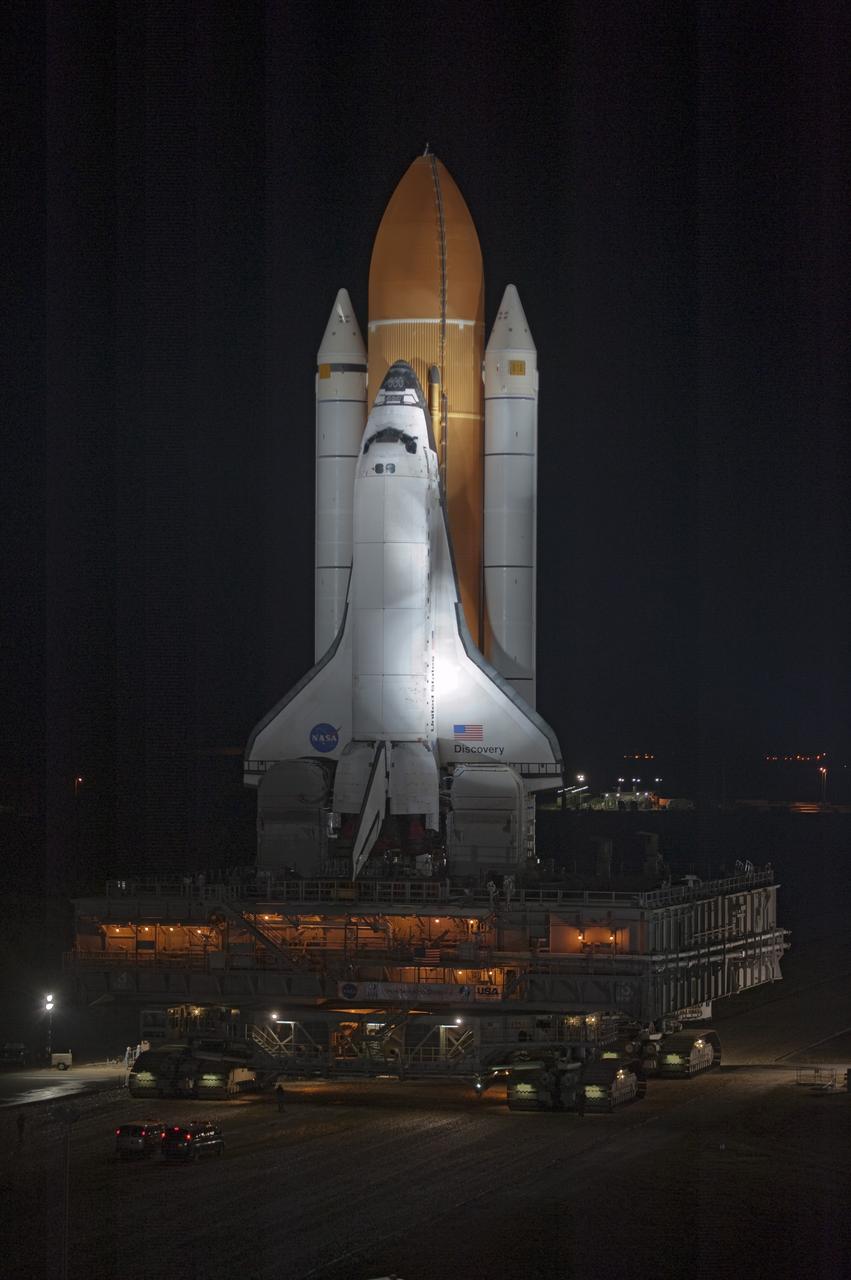
CAPE CANAVERAL, Fla. -- Xenon lights illuminate space shuttle Discovery as it makes its nighttime trek, known as "rollout," from the Vehicle Assembly Building to Launch Pad 39A at NASA's Kennedy Space Center in Florida. It will take the shuttle, attached to its external fuel tank, twin solid rocket boosters and mobile launcher platform, about seven hours to complete the move atop a crawler-transporter. This is the second time Discovery has rolled out to the pad for the STS-133 mission, and comes after a thorough check and modifications to the shuttle's external tank. Targeted to liftoff Feb. 24, Discovery will take the Permanent Multipurpose Module (PMM) packed with supplies and critical spare parts, as well as Robonaut 2 (R2) to the International Space Station. For more information on STS-133, visit www.nasa.gov/mission_pages/shuttle/shuttlemissions/sts133/. Photo credit: NASA/Kim Shiflett
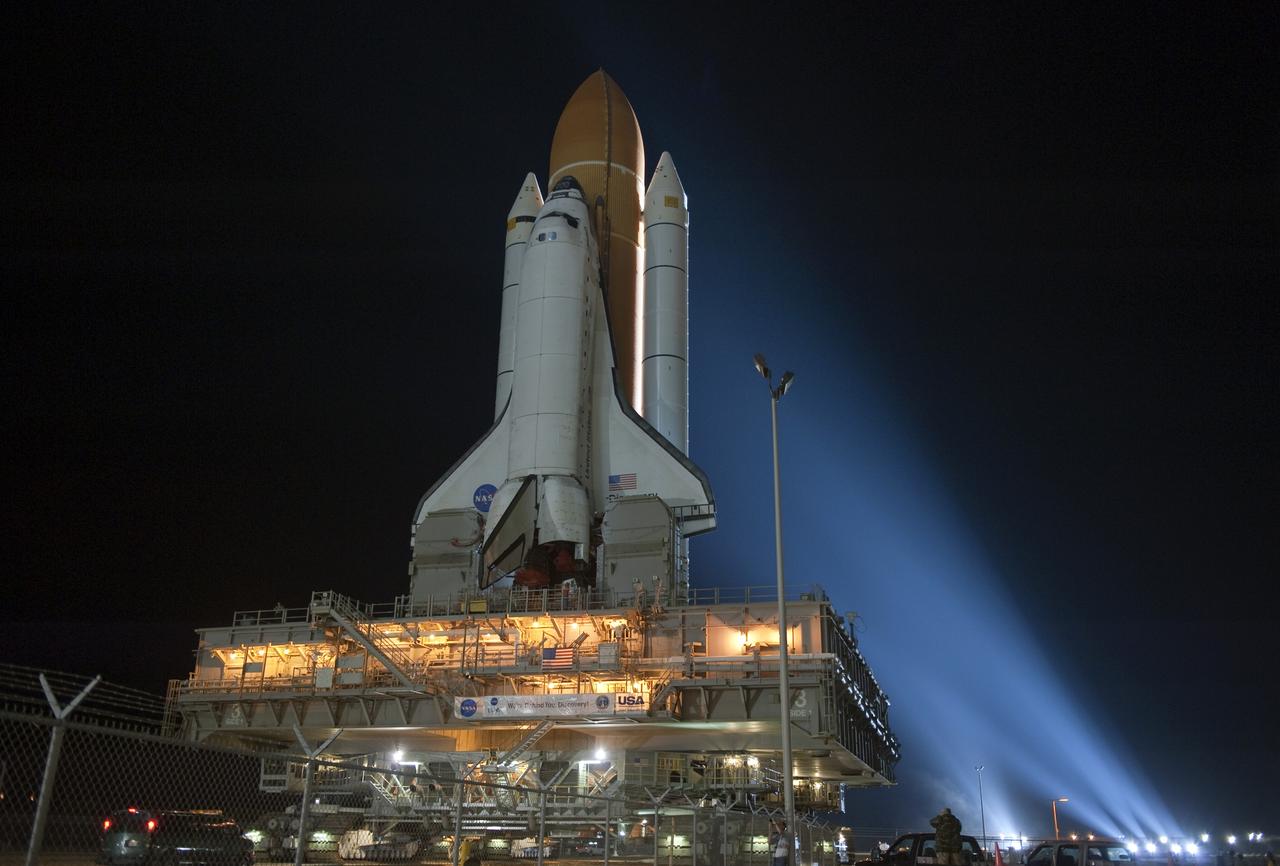
CAPE CANAVERAL, Fla. -- Xenon lights illuminate space shuttle Discovery as it makes its nighttime trek, known as "rollout," from the Vehicle Assembly Building to Launch Pad 39A at NASA's Kennedy Space Center in Florida. It will take the shuttle, attached to its external fuel tank, twin solid rocket boosters and mobile launcher platform, about seven hours to complete the move atop a crawler-transporter. This is the second time Discovery has rolled out to the pad for the STS-133 mission, and comes after a thorough check and modifications to the shuttle's external tank. Targeted to liftoff Feb. 24, Discovery will take the Permanent Multipurpose Module (PMM) packed with supplies and critical spare parts, as well as Robonaut 2 (R2) to the International Space Station. For more information on STS-133, visit www.nasa.gov/mission_pages/shuttle/shuttlemissions/sts133/. Photo credit: NASA/Kim Shiflett
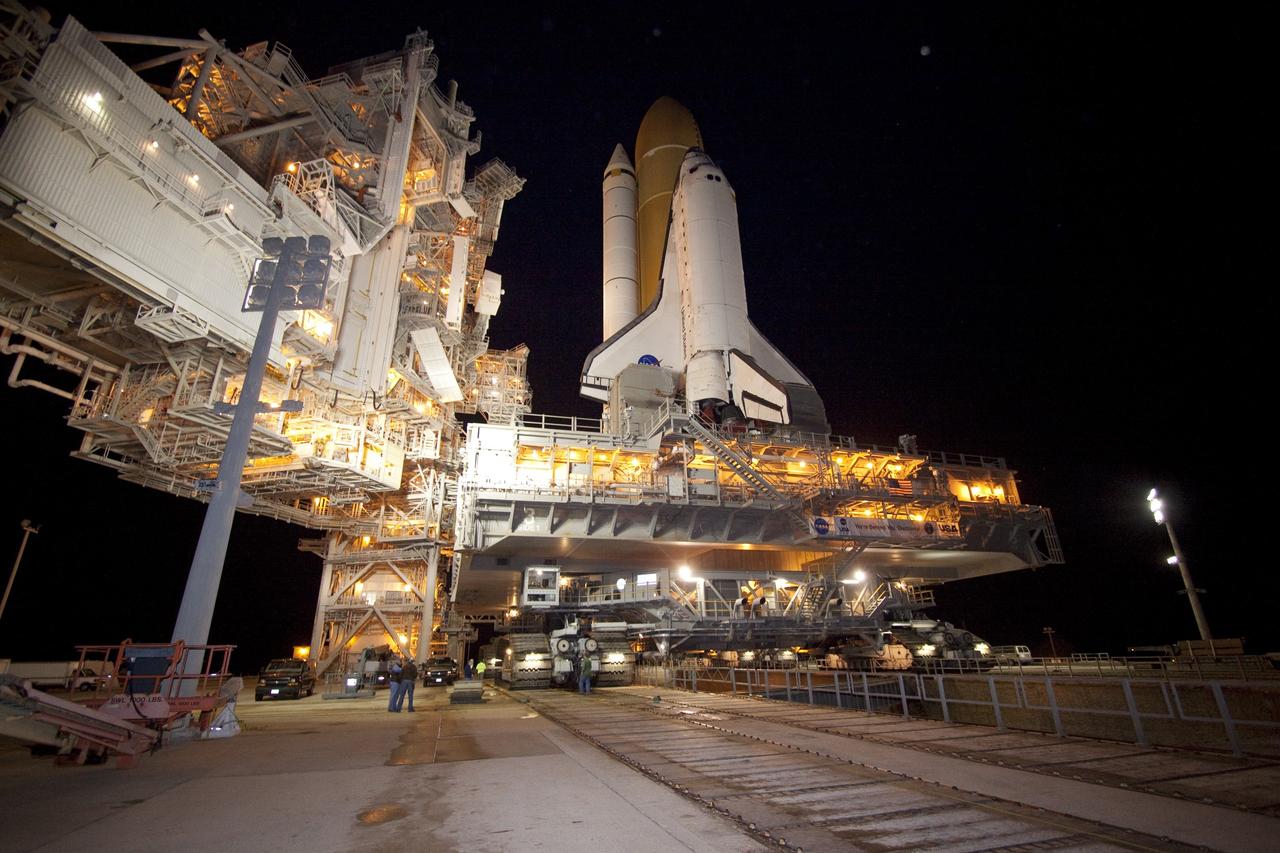
CAPE CANAVERAL, Fla. -- Space shuttle Discovery arrives at Launch Pad 39A from the Vehicle Assembly Building at NASA's Kennedy Space Center in Florida. It took the shuttle, attached to its external fuel tank, twin solid rocket boosters and mobile launcher platform, about seven hours to complete the move atop a crawler-transporter. This is the second time Discovery has rolled out to the pad for the STS-133 mission, and comes after a thorough check and modifications to the shuttle's external tank. Targeted to liftoff Feb. 24, Discovery will take the Permanent Multipurpose Module (PMM) packed with supplies and critical spare parts, as well as Robonaut 2 (R2) to the International Space Station. For more information on STS-133, visit www.nasa.gov/mission_pages/shuttle/shuttlemissions/sts133/. Photo credit: NASA/Jack Pfaller
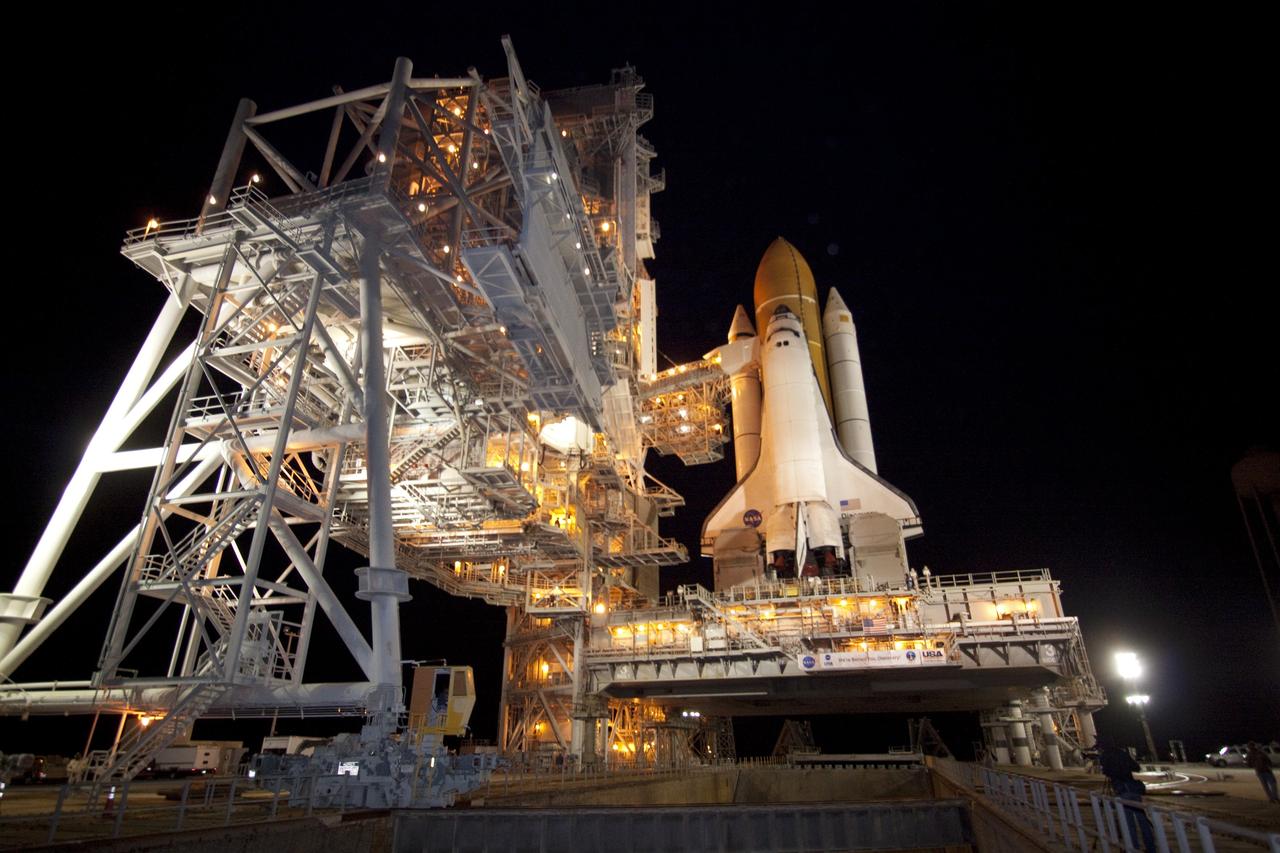
CAPE CANAVERAL, Fla. -- The rotating service structure (RSS), which provides weather protection and access to the shuttle, begins to move into place around space shuttle Discovery on Launch Pad 39A at NASA's Kennedy Space Center in Florida. This comes after Discovery, attached to its external fuel tank, twin solid rocket boosters and mobile launcher platform, rolled out to the pad from the Vehicle Assembly Building during the overnight hours. Rollout to the pad is a significant shuttle processing milestone for the upcoming STS-133 mission, and comes after a thorough check and modifications to the shuttle's external fuel tank. Targeted to liftoff Feb. 24, Discovery will take the Permanent Multipurpose Module (PMM) packed with supplies and critical spare parts, as well as Robonaut 2 (R2) to the International Space Station. For more information on STS-133, visit www.nasa.gov/mission_pages/shuttle/shuttlemissions/sts133/. Photo credit: NASA/Jack Pfaller
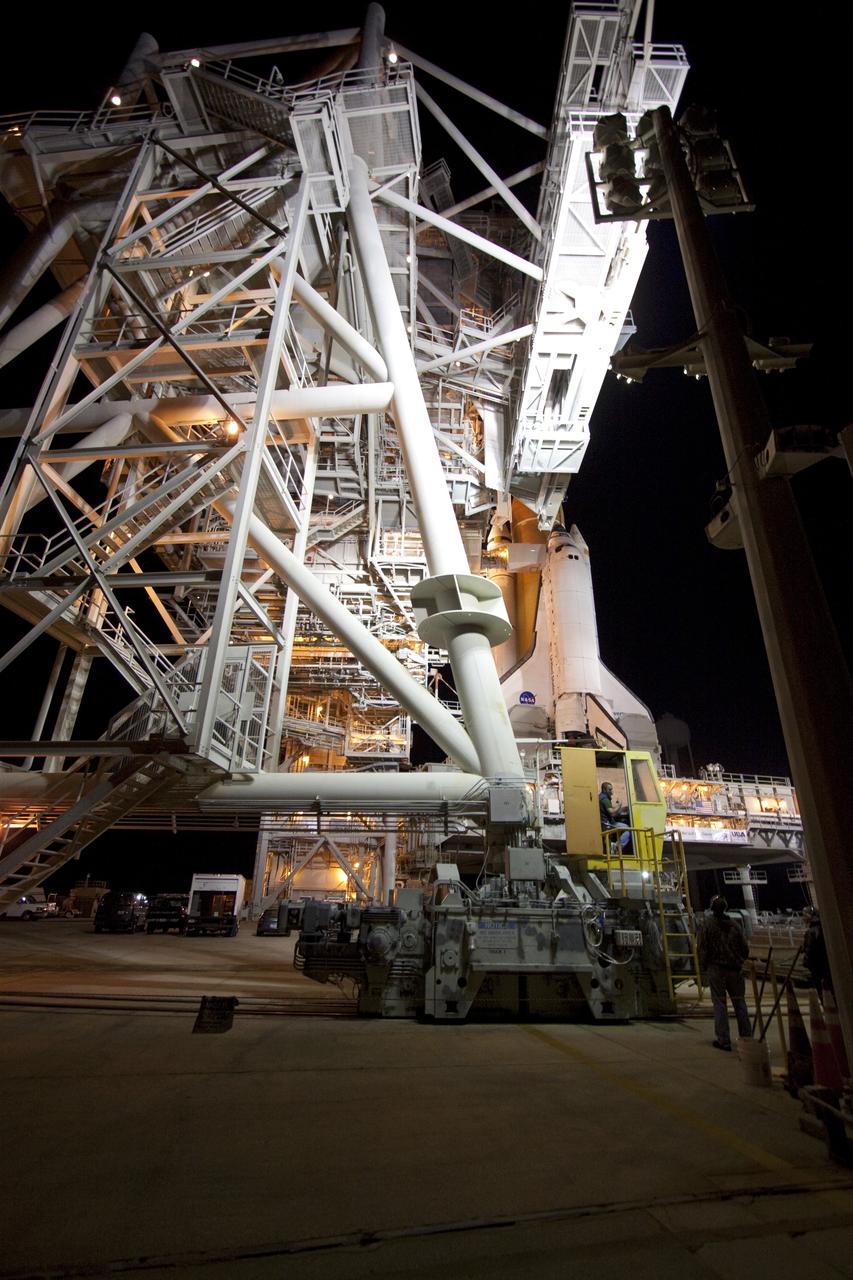
CAPE CANAVERAL, Fla. -- The rotating service structure (RSS), which provides weather protection and access to the shuttle, begins to move into place around space shuttle Discovery on Launch Pad 39A at NASA's Kennedy Space Center in Florida. This comes after Discovery, attached to its external fuel tank, twin solid rocket boosters and mobile launcher platform, rolled out to the pad from the Vehicle Assembly Building during the overnight hours. Rollout to the pad is a significant shuttle processing milestone for the upcoming STS-133 mission, and comes after a thorough check and modifications to the shuttle's external fuel tank. Targeted to liftoff Feb. 24, Discovery will take the Permanent Multipurpose Module (PMM) packed with supplies and critical spare parts, as well as Robonaut 2 (R2) to the International Space Station. For more information on STS-133, visit www.nasa.gov/mission_pages/shuttle/shuttlemissions/sts133/. Photo credit: NASA/Jack Pfaller

CAPE CANAVERAL, Fla. -- Workers monitor space shuttle Discovery as it arrives at Launch Pad 39A from the Vehicle Assembly Building at NASA's Kennedy Space Center in Florida. It took the shuttle, attached to its external fuel tank, twin solid rocket boosters and mobile launcher platform, about seven hours to complete the move atop a crawler-transporter. This is the second time Discovery has rolled out to the pad for the STS-133 mission, and comes after a thorough check and modifications to the shuttle's external tank. Targeted to liftoff Feb. 24, Discovery will take the Permanent Multipurpose Module (PMM) packed with supplies and critical spare parts, as well as Robonaut 2 (R2) to the International Space Station. For more information on STS-133, visit www.nasa.gov/mission_pages/shuttle/shuttlemissions/sts133/. Photo credit: NASA/Kim Shiflett
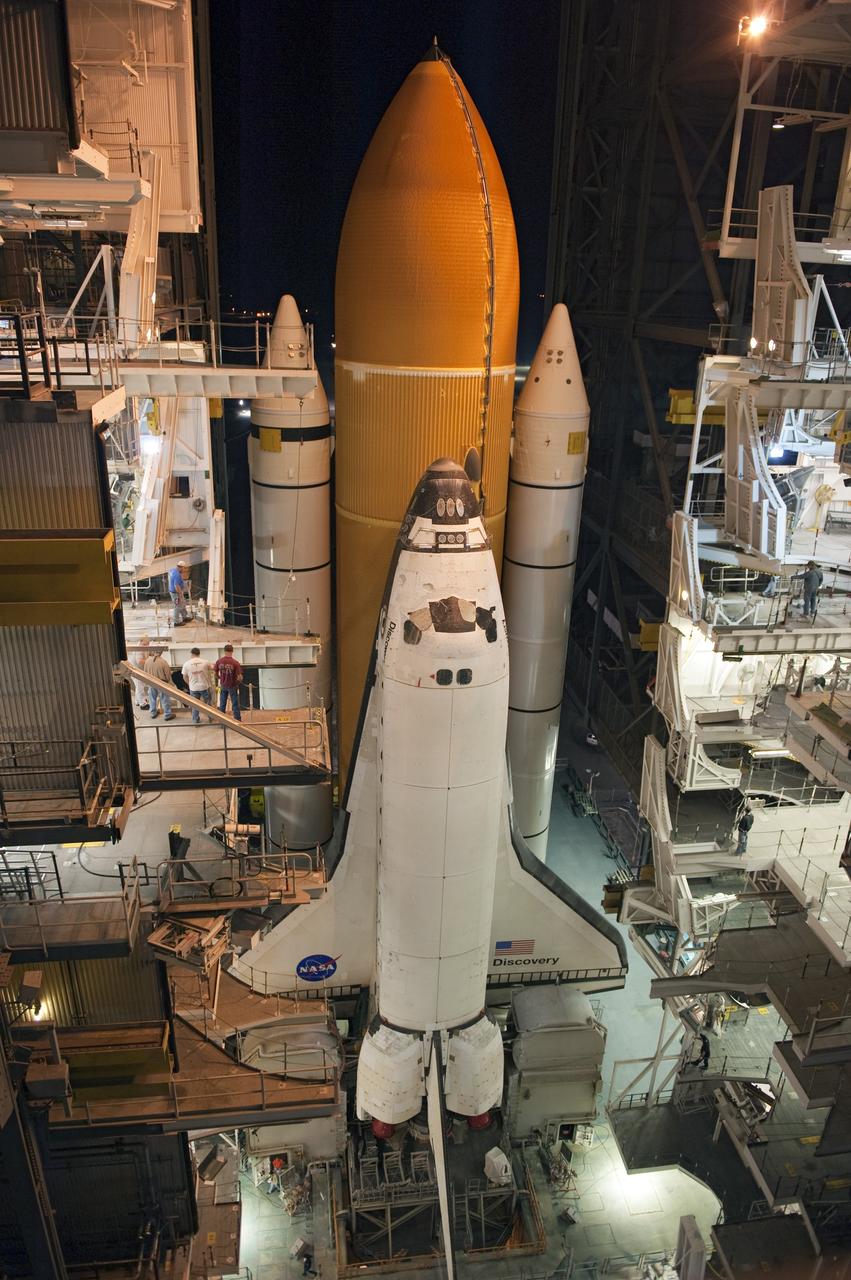
CAPE CANAVERAL, Fla. -- At NASA's Kennedy Space Center in Florida, space shuttle Discovery begins its nighttime trek, known as "rollout," from the Vehicle Assembly Building to Launch Pad 39A. It will take the shuttle, attached to its external fuel tank, twin solid rocket boosters and mobile launcher platform, about seven hours to complete the move atop a crawler-transporter. This is the second time Discovery has rolled out to the pad for the STS-133 mission, and comes after a thorough check and modifications to the shuttle's external tank. Targeted to liftoff Feb. 24, Discovery will take the Permanent Multipurpose Module (PMM) packed with supplies and critical spare parts, as well as Robonaut 2 (R2) to the International Space Station. For more information on STS-133, visit www.nasa.gov/mission_pages/shuttle/shuttlemissions/sts133/. Photo credit: NASA/Kim Shiflett
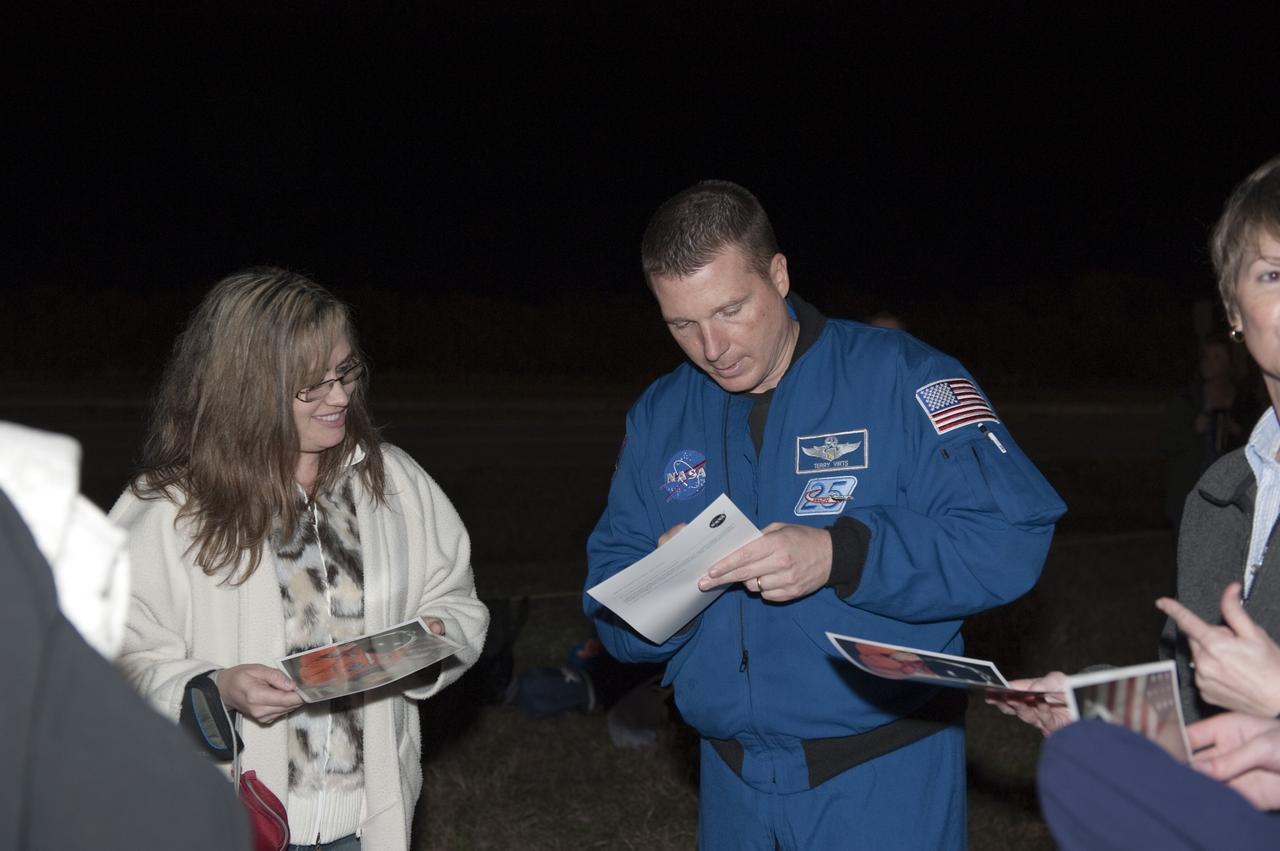
CAPE CANAVERAL, Fla. -- NASA astronaut Terry Virts signs autographs outside the Vehicle Assembly Building at NASA's Kennedy Space Center in Florida while space shuttle Discovery rolls out to Launch Pad 39A. It will take the shuttle, attached to its external fuel tank, twin solid rocket boosters and mobile launcher platform, about seven hours to complete the move atop a crawler-transporter. This is the second time Discovery has rolled out to the pad for the STS-133 mission, and comes after a thorough check and modifications to the shuttle's external tank. Virts was pilot on the STS-130 mission that took the seven-windowed cupola to the International Space Station in 2010. Targeted to liftoff Feb. 24, Discovery will take the Permanent Multipurpose Module (PMM) packed with supplies and critical spare parts, as well as Robonaut 2 (R2) to the International Space Station. For more information on STS-133, visit www.nasa.gov/mission_pages/shuttle/shuttlemissions/sts133/. Photo credit: NASA/Kim Shiflett
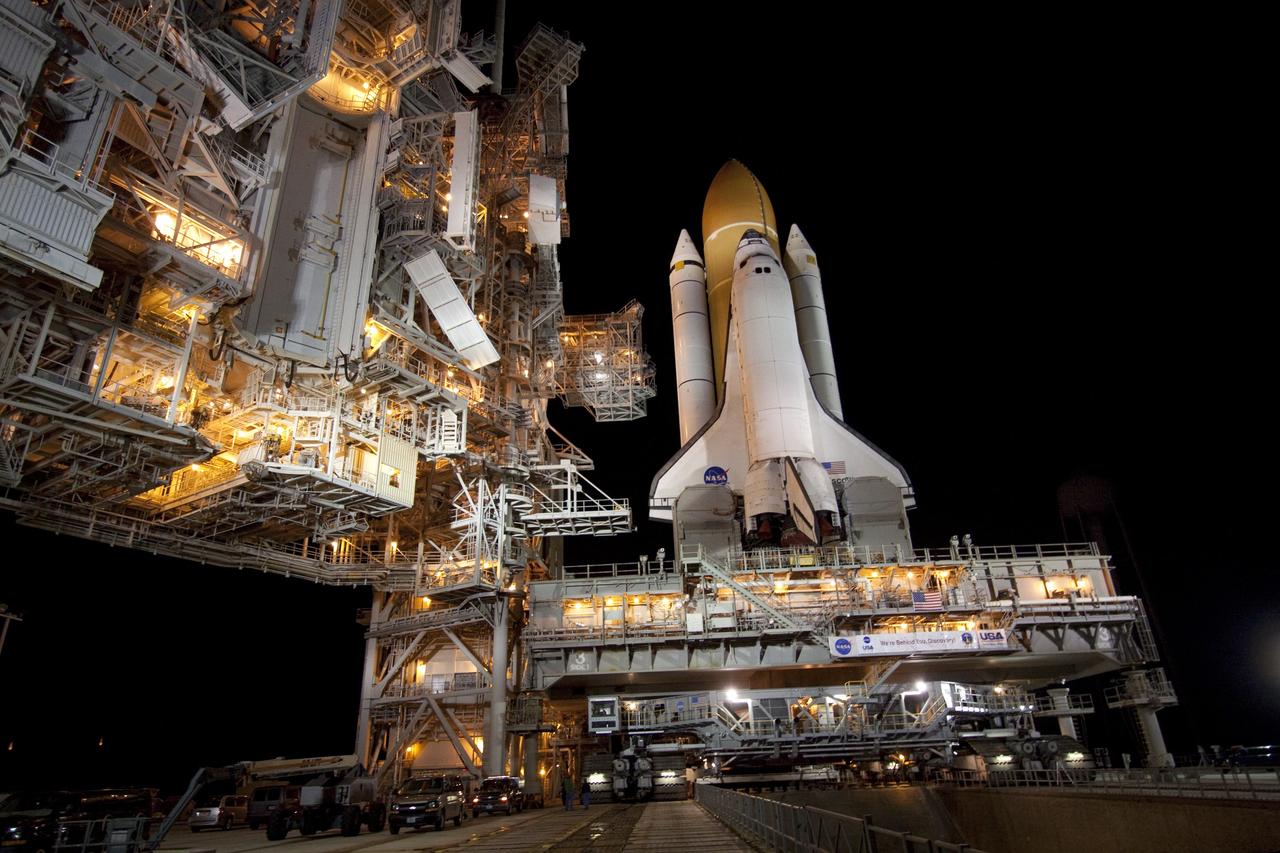
CAPE CANAVERAL, Fla. -- Space shuttle Discovery arrives at Launch Pad 39A from the Vehicle Assembly Building at NASA's Kennedy Space Center in Florida. It took the shuttle, attached to its external fuel tank, twin solid rocket boosters and mobile launcher platform, about seven hours to complete the move atop a crawler-transporter. This is the second time Discovery has rolled out to the pad for the STS-133 mission, and comes after a thorough check and modifications to the shuttle's external tank. Targeted to liftoff Feb. 24, Discovery will take the Permanent Multipurpose Module (PMM) packed with supplies and critical spare parts, as well as Robonaut 2 (R2) to the International Space Station. For more information on STS-133, visit www.nasa.gov/mission_pages/shuttle/shuttlemissions/sts133/. Photo credit: NASA/Jack Pfaller
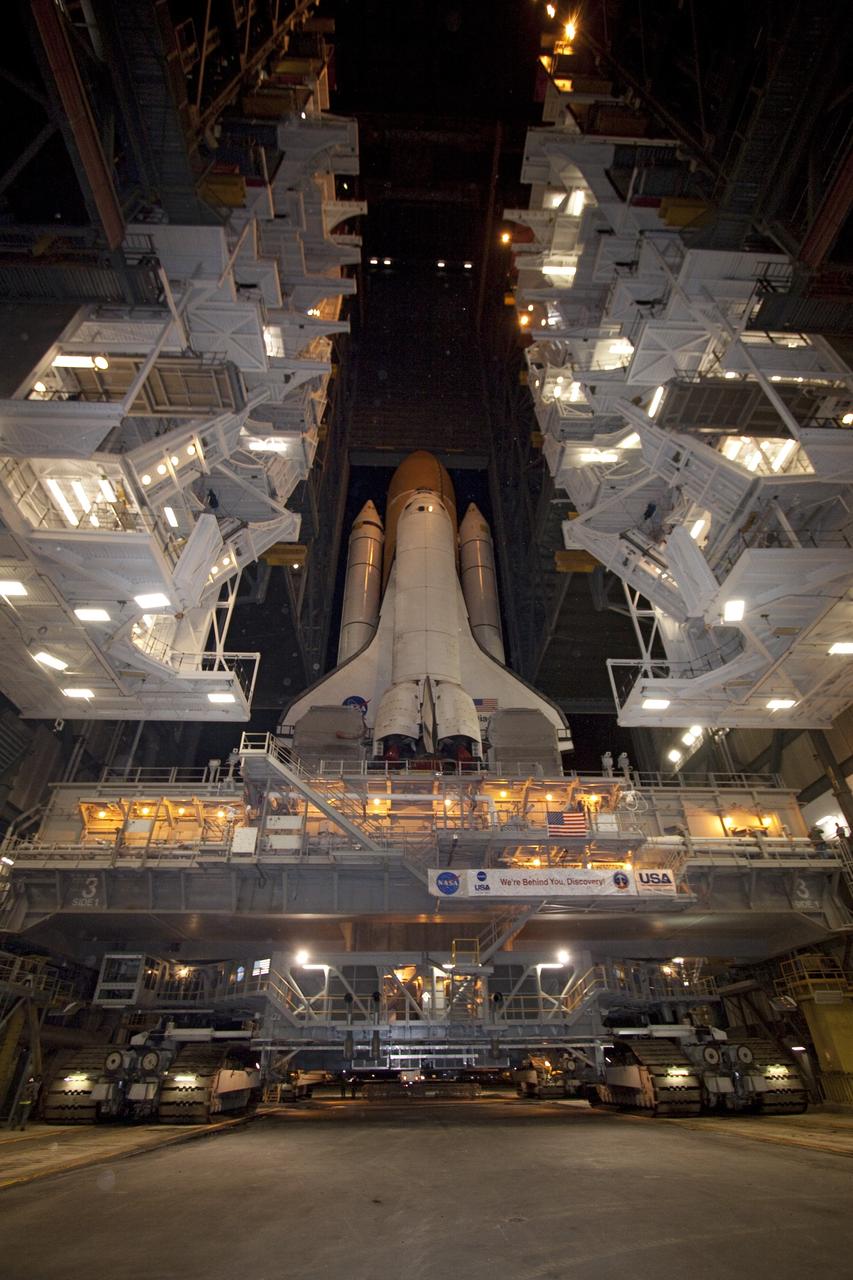
CAPE CANAVERAL, Fla. -- At NASA's Kennedy Space Center in Florida, space shuttle Discovery begins its nighttime trek, known as "rollout," from the Vehicle Assembly Building to Launch Pad 39A. It will take the shuttle, attached to its external fuel tank, twin solid rocket boosters and mobile launcher platform, about seven hours to complete the move atop a crawler-transporter. This is the second time Discovery has rolled out to the pad for the STS-133 mission, and comes after a thorough check and modifications to the shuttle's external tank. Targeted to liftoff Feb. 24, Discovery will take the Permanent Multipurpose Module (PMM) packed with supplies and critical spare parts, as well as Robonaut 2 (R2) to the International Space Station. For more information on STS-133, visit www.nasa.gov/mission_pages/shuttle/shuttlemissions/sts133/. Photo credit: NASA/Jack Pfaller
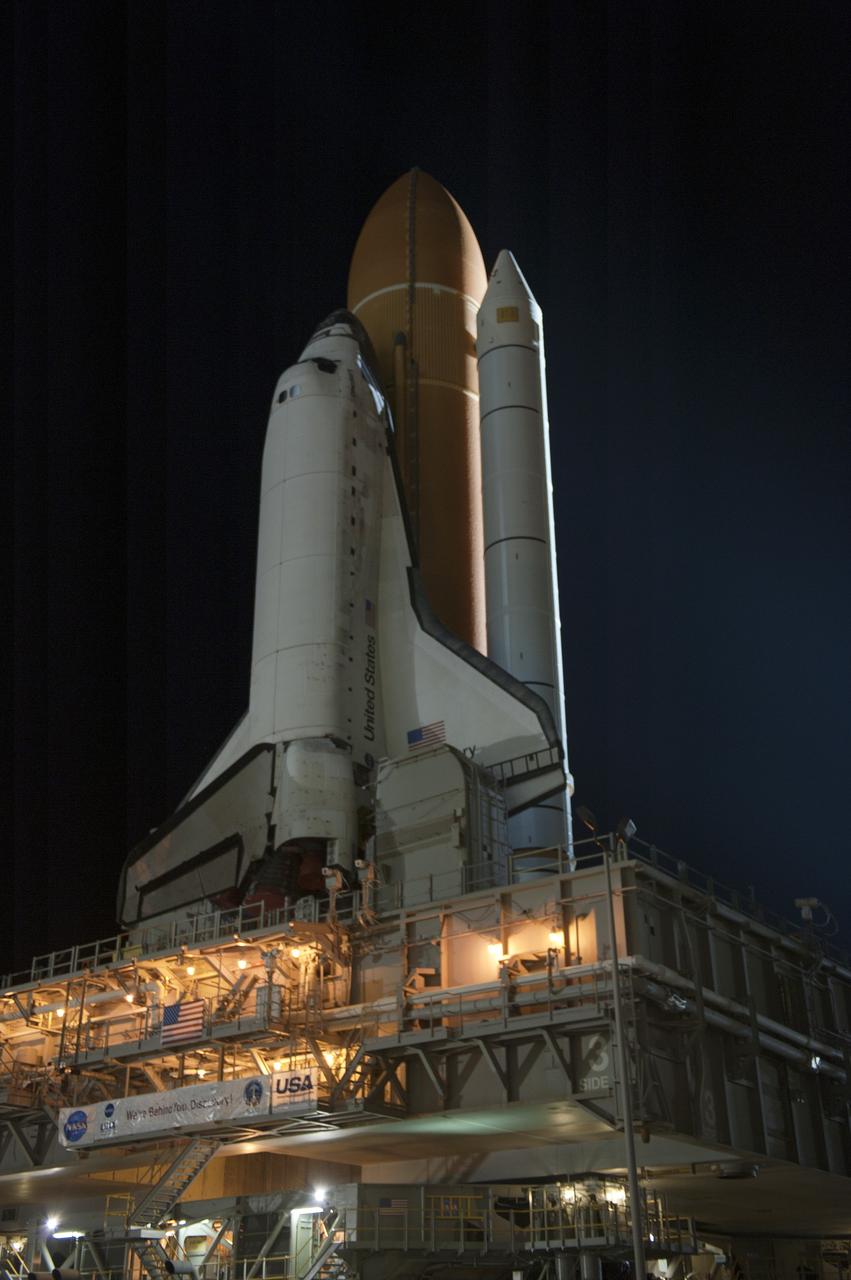
CAPE CANAVERAL, Fla. -- Xenon lights illuminate space shuttle Discovery as it makes its nighttime trek, known as "rollout," from the Vehicle Assembly Building to Launch Pad 39A at NASA's Kennedy Space Center in Florida. It will take the shuttle, attached to its external fuel tank, twin solid rocket boosters and mobile launcher platform, about seven hours to complete the move atop a crawler-transporter. This is the second time Discovery has rolled out to the pad for the STS-133 mission, and comes after a thorough check and modifications to the shuttle's external tank. Targeted to liftoff Feb. 24, Discovery will take the Permanent Multipurpose Module (PMM) packed with supplies and critical spare parts, as well as Robonaut 2 (R2) to the International Space Station. For more information on STS-133, visit www.nasa.gov/mission_pages/shuttle/shuttlemissions/sts133/. Photo credit: NASA/Kim Shiflett
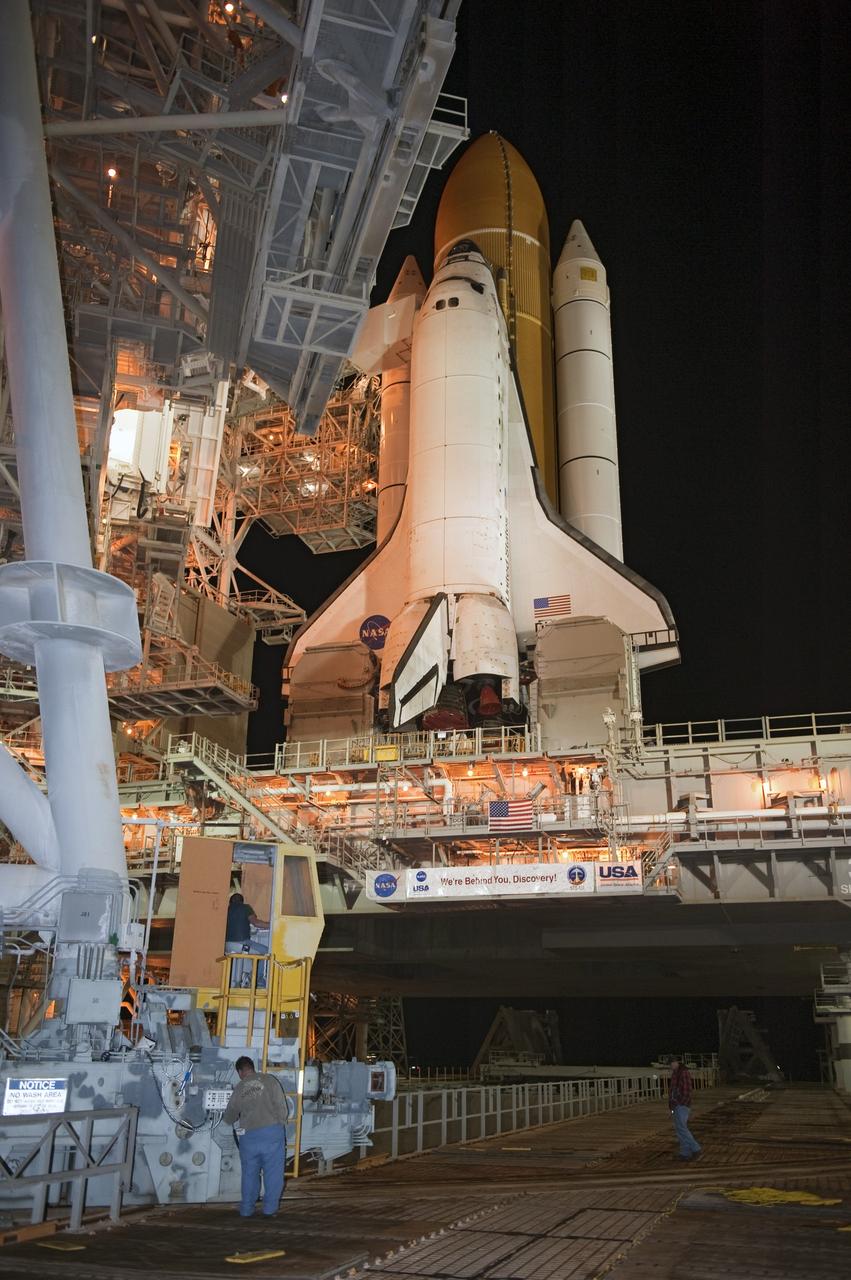
CAPE CANAVERAL, Fla. -- Space shuttle Discovery arrives at Launch Pad 39A from the Vehicle Assembly Building at NASA's Kennedy Space Center in Florida. It took the shuttle, attached to its external fuel tank, twin solid rocket boosters and mobile launcher platform, about seven hours to complete the move atop a crawler-transporter. This is the second time Discovery has rolled out to the pad for the STS-133 mission, and comes after a thorough check and modifications to the shuttle's external tank. Targeted to liftoff Feb. 24, Discovery will take the Permanent Multipurpose Module (PMM) packed with supplies and critical spare parts, as well as Robonaut 2 (R2) to the International Space Station. For more information on STS-133, visit www.nasa.gov/mission_pages/shuttle/shuttlemissions/sts133/. Photo credit: NASA/Kim Shiflett

CAPE CANAVERAL, Fla. -- Xenon lights illuminate space shuttle Discovery as it makes its nighttime trek, known as "rollout," from the Vehicle Assembly Building to Launch Pad 39A at NASA's Kennedy Space Center in Florida. It will take the shuttle, attached to its external fuel tank, twin solid rocket boosters and mobile launcher platform, about seven hours to complete the move atop a crawler-transporter. This is the second time Discovery has rolled out to the pad for the STS-133 mission, and comes after a thorough check and modifications to the shuttle's external tank. Targeted to liftoff Feb. 24, Discovery will take the Permanent Multipurpose Module (PMM) packed with supplies and critical spare parts, as well as Robonaut 2 (R2) to the International Space Station. For more information on STS-133, visit www.nasa.gov/mission_pages/shuttle/shuttlemissions/sts133/. Photo credit: NASA/Kim Shiflett
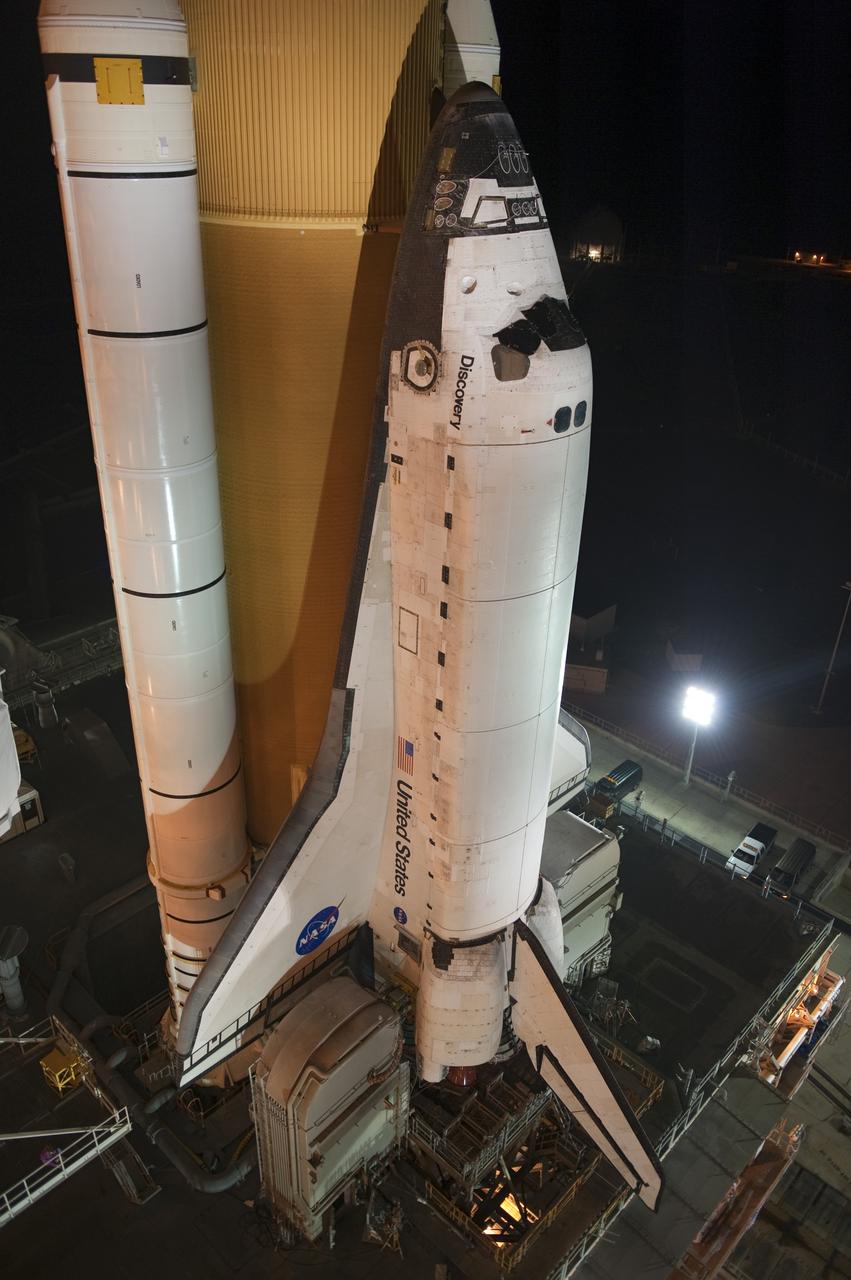
CAPE CANAVERAL, Fla. -- Space shuttle Discovery arrives at Launch Pad 39A from the Vehicle Assembly Building at NASA's Kennedy Space Center in Florida. It took the shuttle, attached to its external fuel tank, twin solid rocket boosters and mobile launcher platform, about seven hours to complete the move atop a crawler-transporter. This is the second time Discovery has rolled out to the pad for the STS-133 mission, and comes after a thorough check and modifications to the shuttle's external tank. Targeted to liftoff Feb. 24, Discovery will take the Permanent Multipurpose Module (PMM) packed with supplies and critical spare parts, as well as Robonaut 2 (R2) to the International Space Station. For more information on STS-133, visit www.nasa.gov/mission_pages/shuttle/shuttlemissions/sts133/. Photo credit: NASA/Kim Shiflett