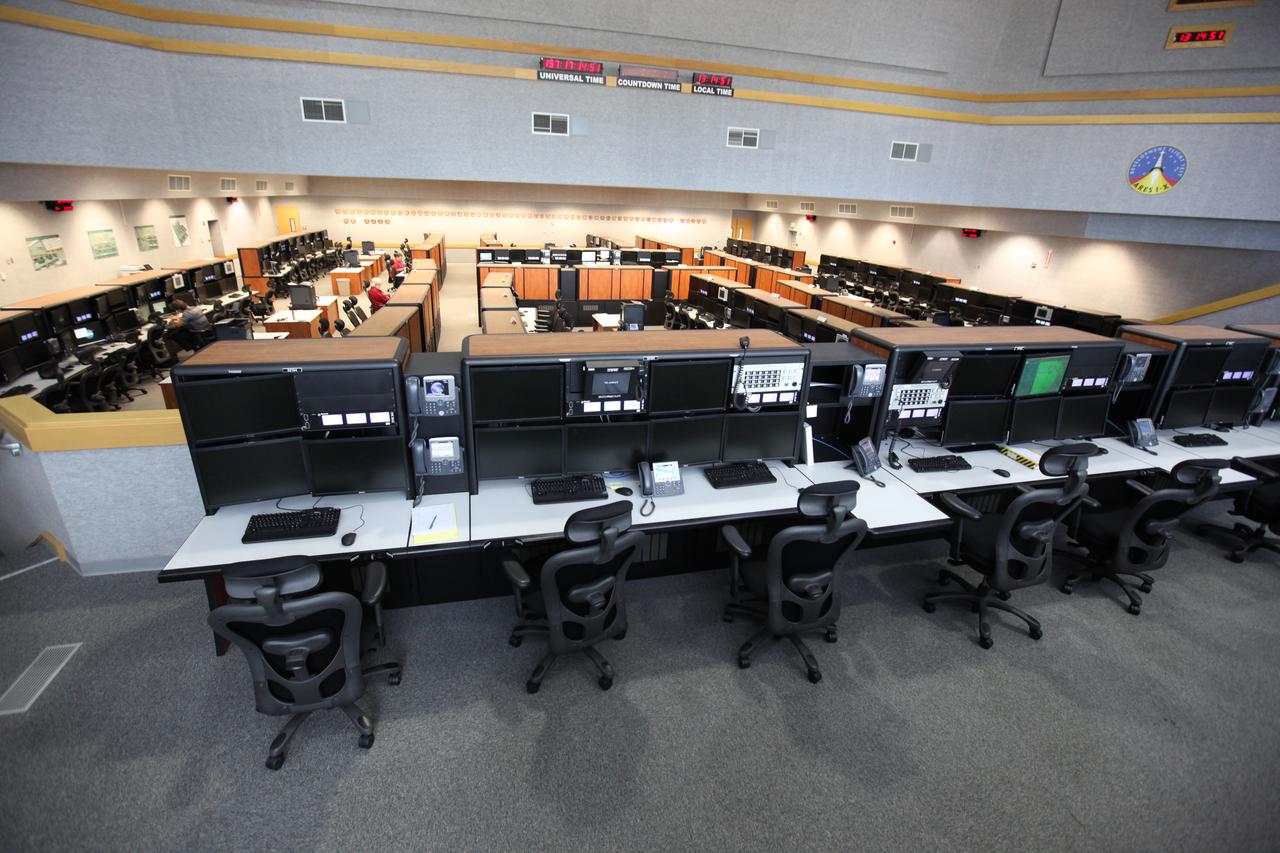
Photos of Firing Room 1 inside the Launch Control Center (LCC) at Kennedy Space Center.
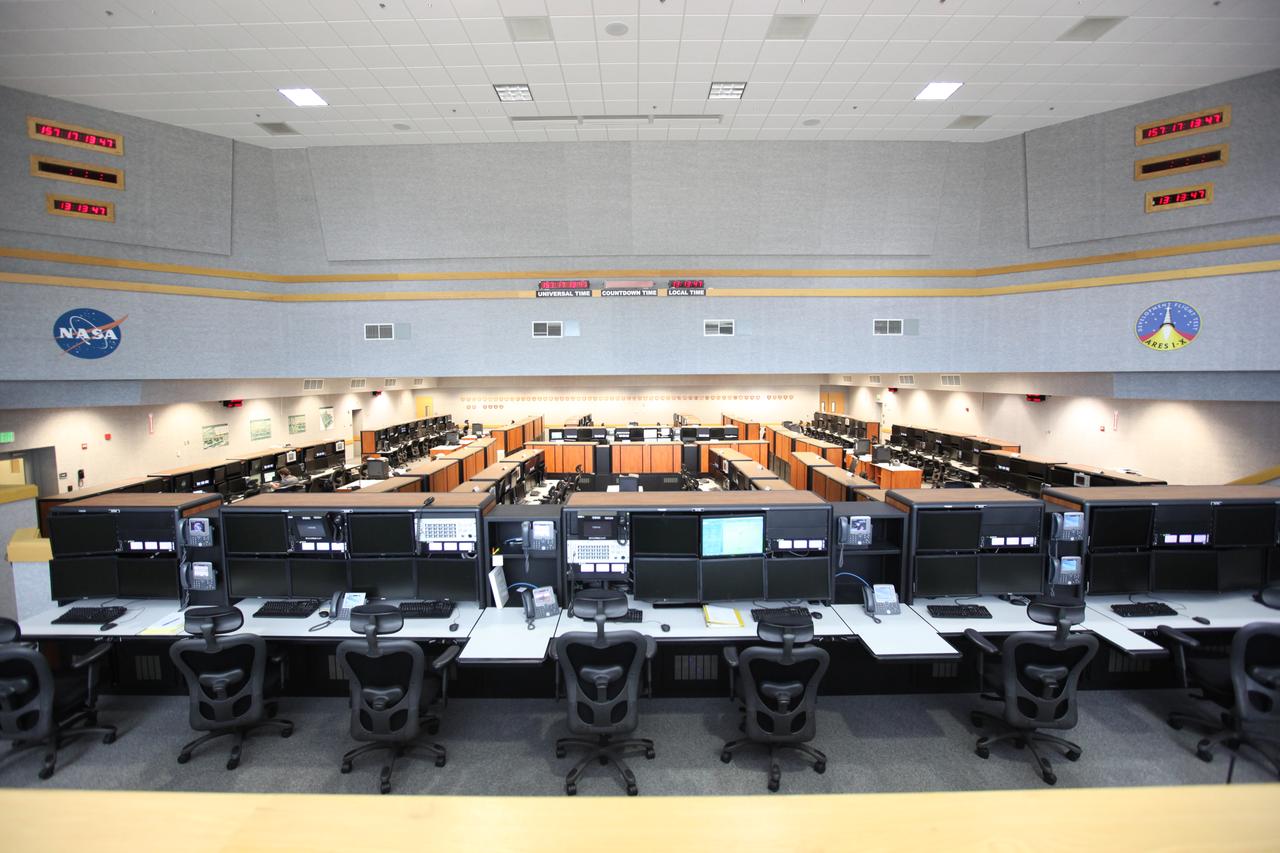
Photos of Firing Room 1 inside the Launch Control Center (LCC) at Kennedy Space Center.
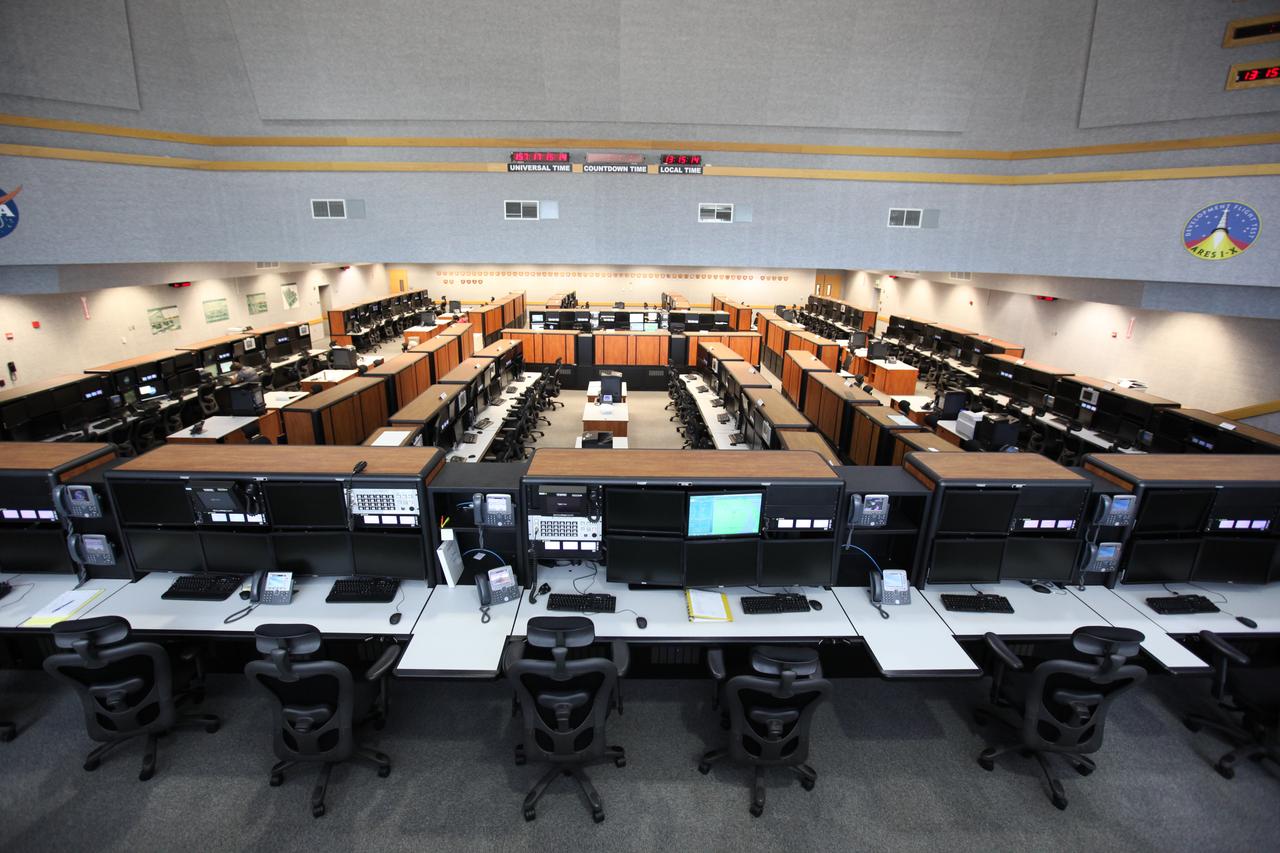
Photos of Firing Room 1 inside the Launch Control Center (LCC) at Kennedy Space Center.
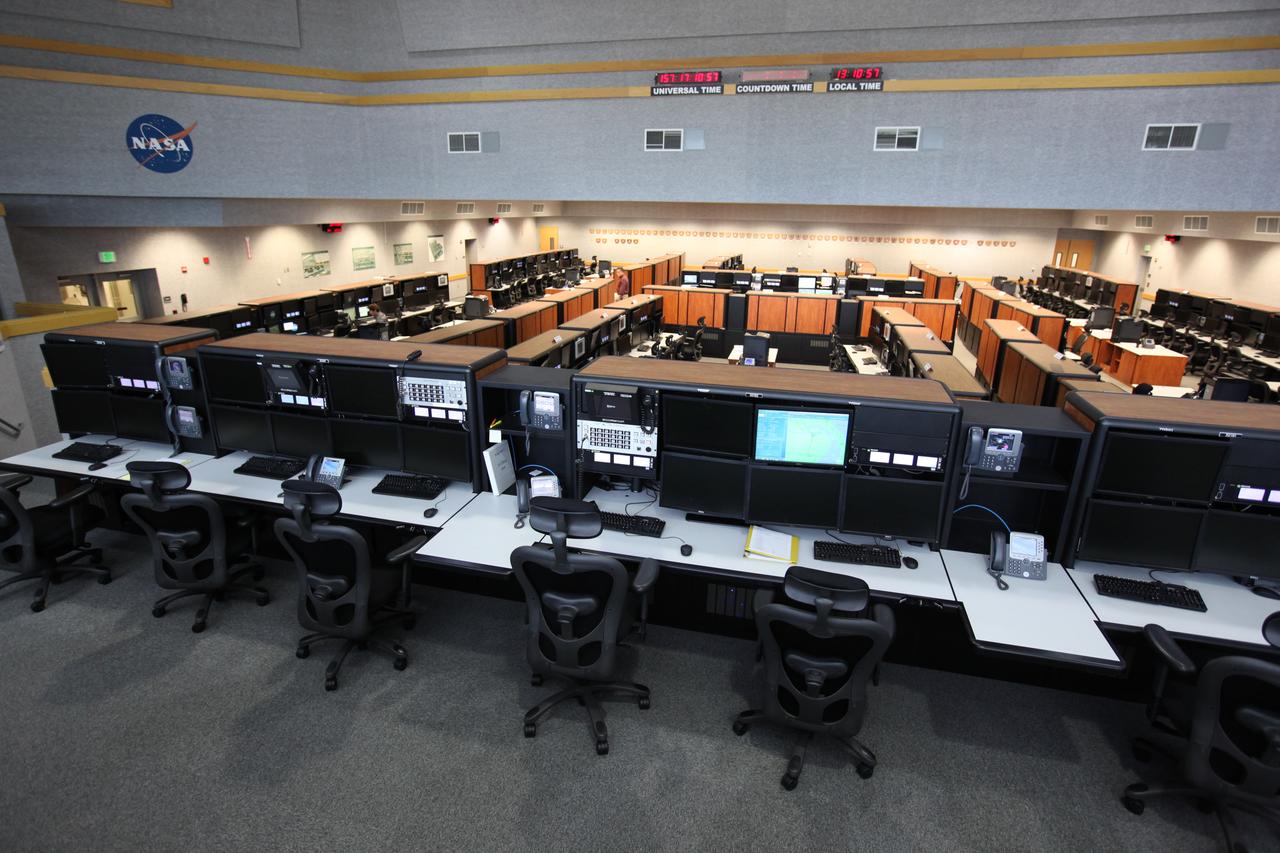
Photos of Firing Room 1 inside the Launch Control Center (LCC) at Kennedy Space Center.
Following a ceremony at NASA’s Kennedy Space Center, the Florida spaceport’s launch control center was officially renamed the Rocco A. Petrone Launch Control Center. The facility serves as a nerve center where engineers and the launch director will monitor their flight consoles and give the “go” for the upcoming launch of Artemis I and later missions that will establish a sustainable presence on the Moon to prepare for missions to Mars. Petrone, who was instrumental in America’s first voyages to the Moon and headed the Apollo program, died in 2006 at the age of 80.
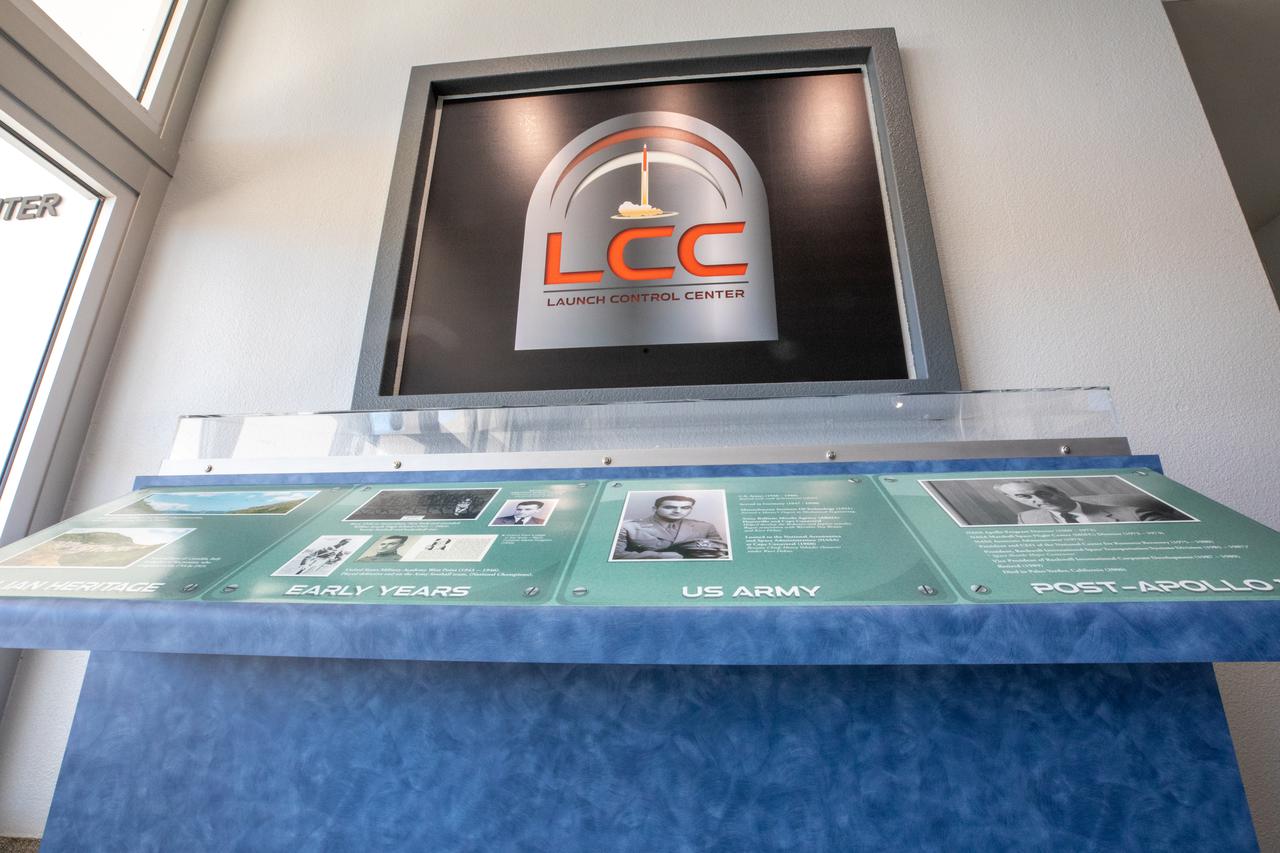
Following a ceremony at NASA’s Kennedy Space Center, the Florida spaceport’s launch control center was officially renamed the Rocco A. Petrone Launch Control Center. The facility serves as a nerve center where engineers and the launch director will monitor their flight consoles and give the “go” for the upcoming launch of Artemis I and later missions that will establish a sustainable presence on the Moon to prepare for missions to Mars. Petrone, who was instrumental in America’s first voyages to the Moon and headed the Apollo program, died in 2006 at the age of 80.
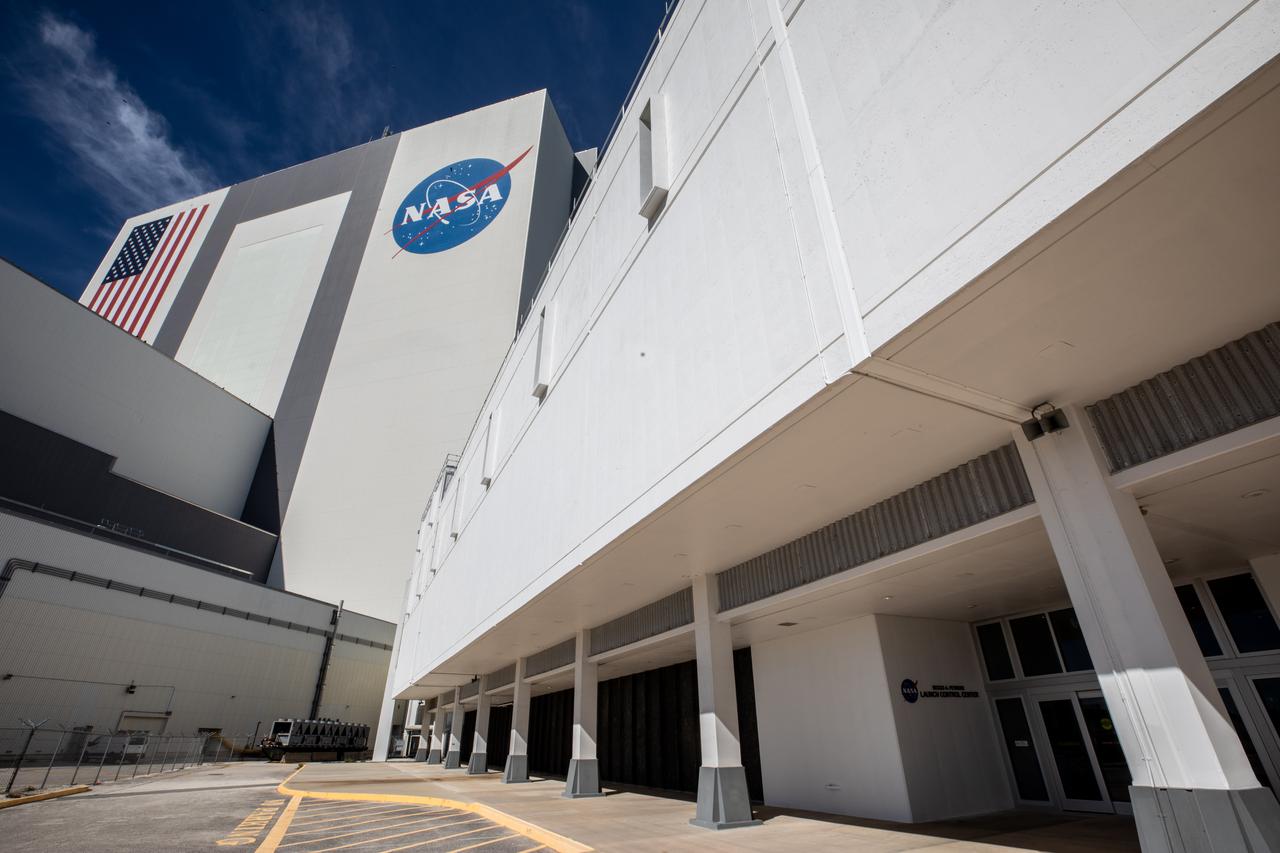
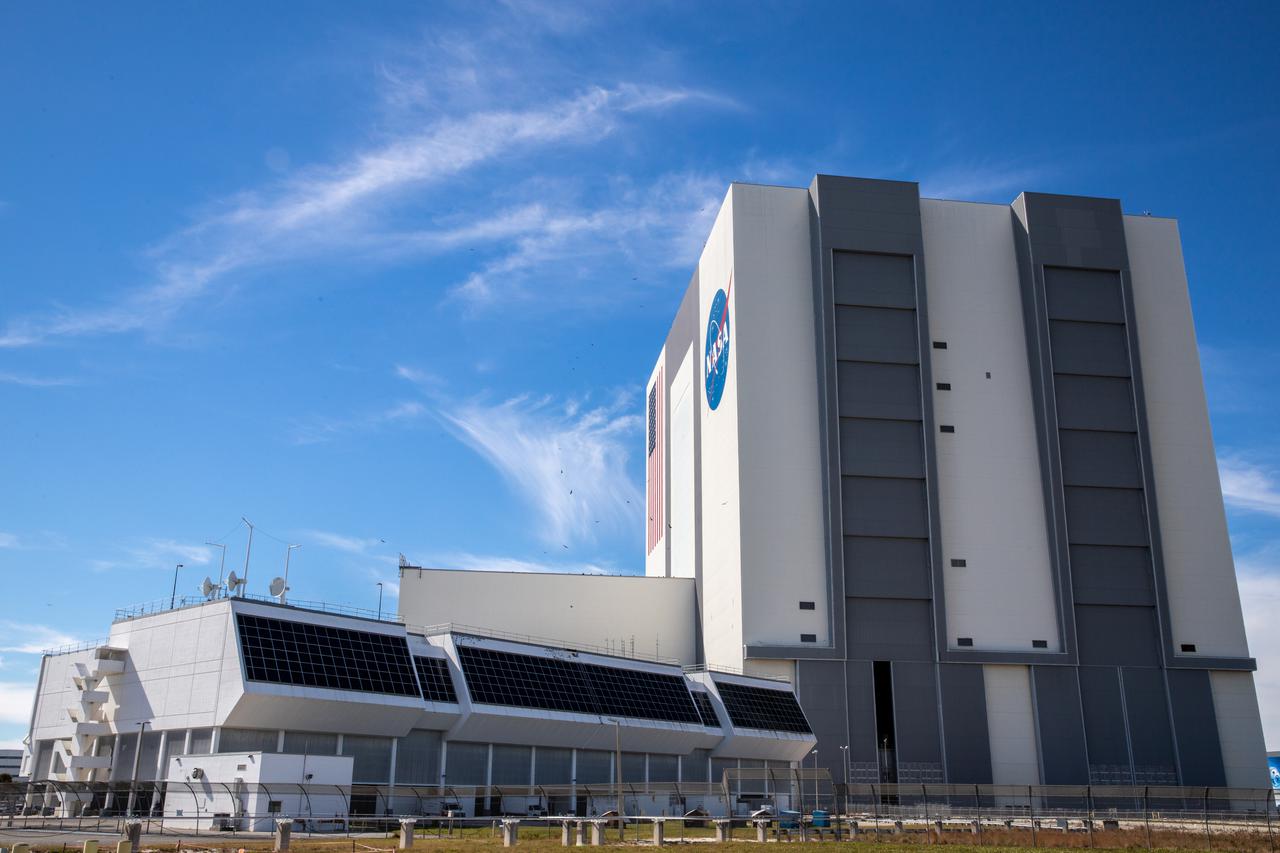
Following a ceremony at NASA’s Kennedy Space Center, the Florida spaceport’s launch control center (foreground) was officially renamed the Rocco A. Petrone Launch Control Center. In the background is Kennedy’s historic Vehicle Assembly Building. The newly named facility serves as a nerve center where engineers and the launch director will monitor their flight consoles and give the “go” for the upcoming launch of Artemis I and later missions that will establish a sustainable presence on the Moon to prepare for missions to Mars. Petrone, who was instrumental in America’s first voyages to the Moon and headed the Apollo program, died in 2006 at the age of 80.
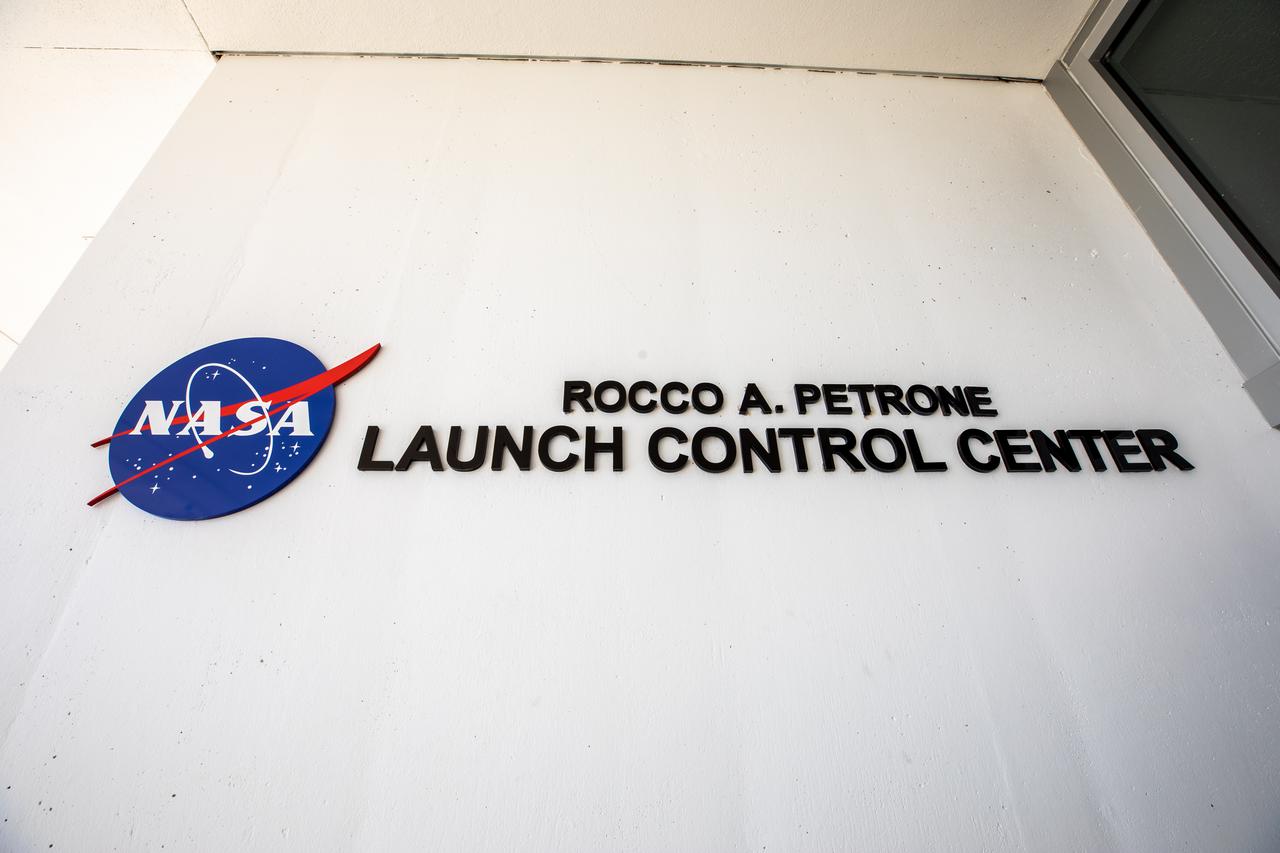
Following a ceremony at NASA’s Kennedy Space Center, the Florida spaceport’s launch control center was officially renamed the Rocco A. Petrone Launch Control Center. The facility serves as a nerve center where engineers and the launch director will monitor their flight consoles and give the “go” for the upcoming launch of Artemis I and later missions that will establish a sustainable presence on the Moon to prepare for missions to Mars. Petrone, who was instrumental in America’s first voyages to the Moon and headed the Apollo program, died in 2006 at the age of 80.
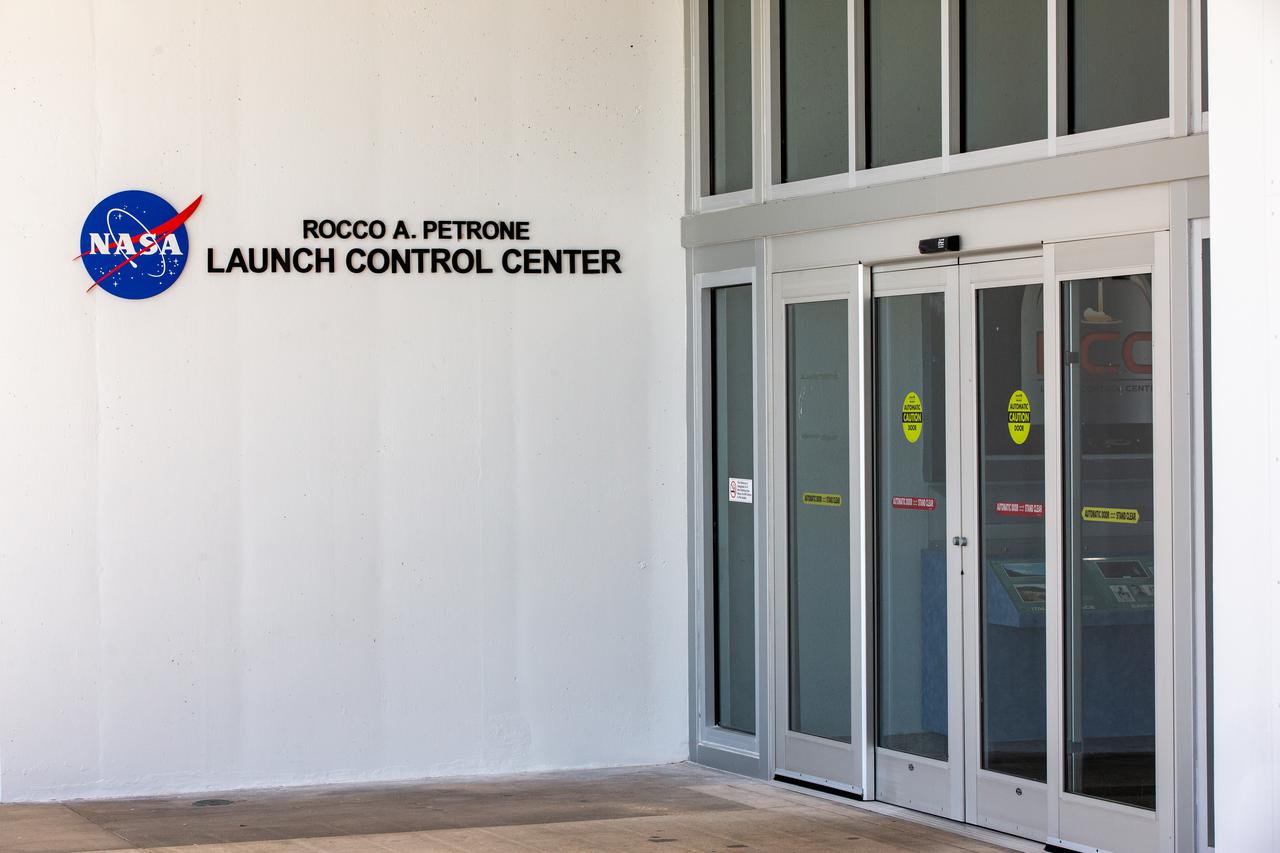
Following a ceremony at NASA’s Kennedy Space Center, the Florida spaceport’s launch control center was officially renamed the Rocco A. Petrone Launch Control Center. The facility serves as a nerve center where engineers and the launch director will monitor their flight consoles and give the “go” for the upcoming launch of Artemis I and later missions that will establish a sustainable presence on the Moon to prepare for missions to Mars. Petrone, who was instrumental in America’s first voyages to the Moon and headed the Apollo program, died in 2006 at the age of 80.
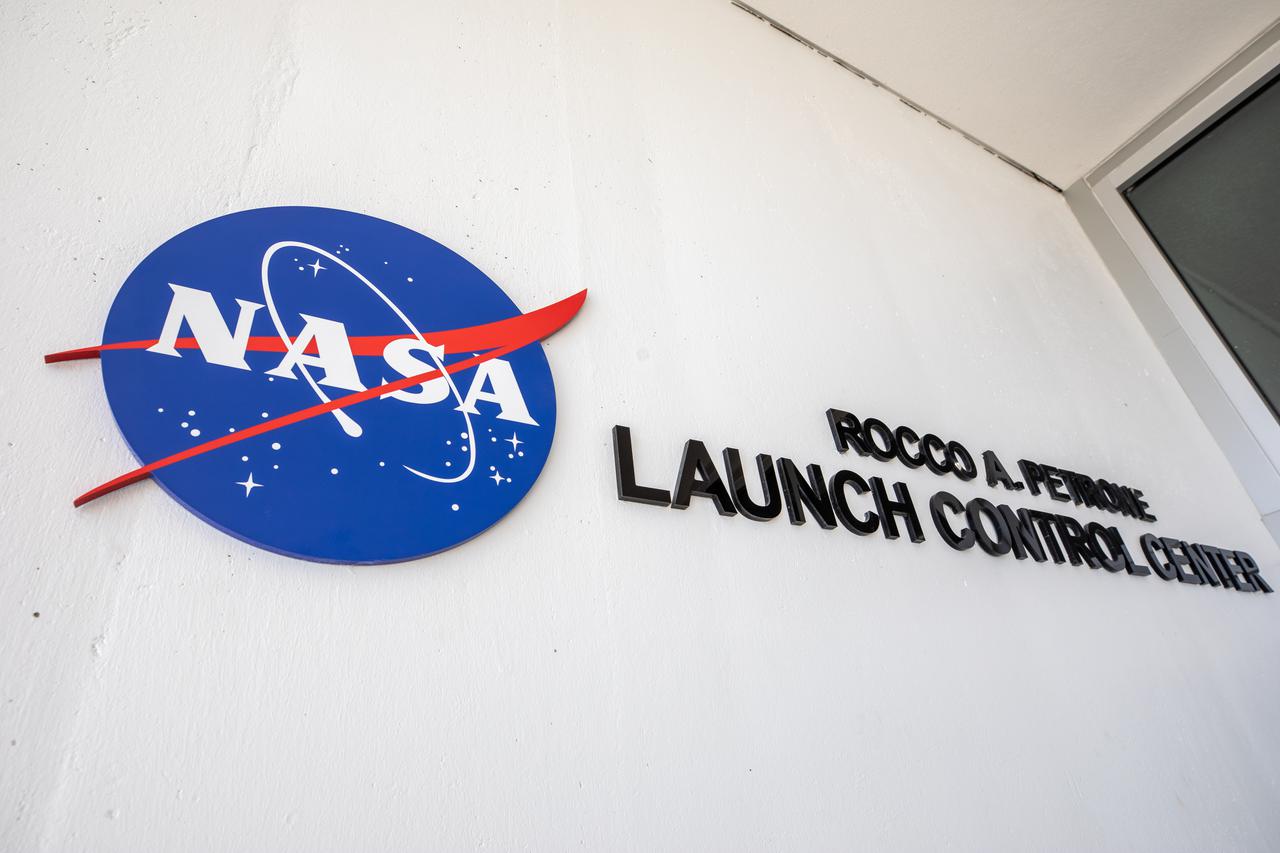
Following a ceremony at NASA’s Kennedy Space Center, the Florida spaceport’s launch control center was officially renamed the Rocco A. Petrone Launch Control Center. The facility serves as a nerve center where engineers and the launch director will monitor their flight consoles and give the “go” for the upcoming launch of Artemis I and later missions that will establish a sustainable presence on the Moon to prepare for missions to Mars. Petrone, who was instrumental in America’s first voyages to the Moon and headed the Apollo program, died in 2006 at the age of 80.
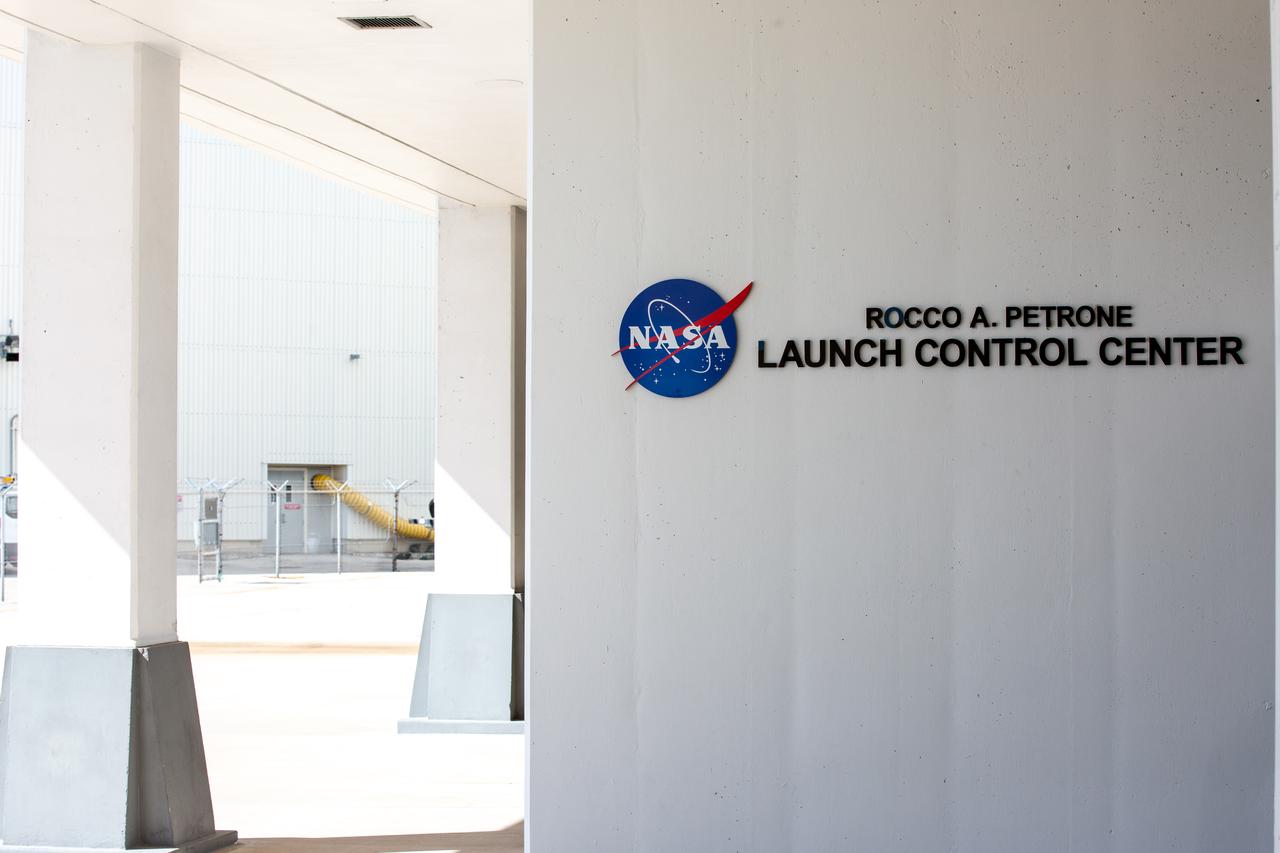
Following a ceremony at NASA’s Kennedy Space Center, the Florida spaceport’s launch control center was officially renamed the Rocco A. Petrone Launch Control Center. The facility serves as a nerve center where engineers and the launch director will monitor their flight consoles and give the “go” for the upcoming launch of Artemis I and later missions that will establish a sustainable presence on the Moon to prepare for missions to Mars. Petrone, who was instrumental in America’s first voyages to the Moon and headed the Apollo program, died in 2006 at the age of 80.
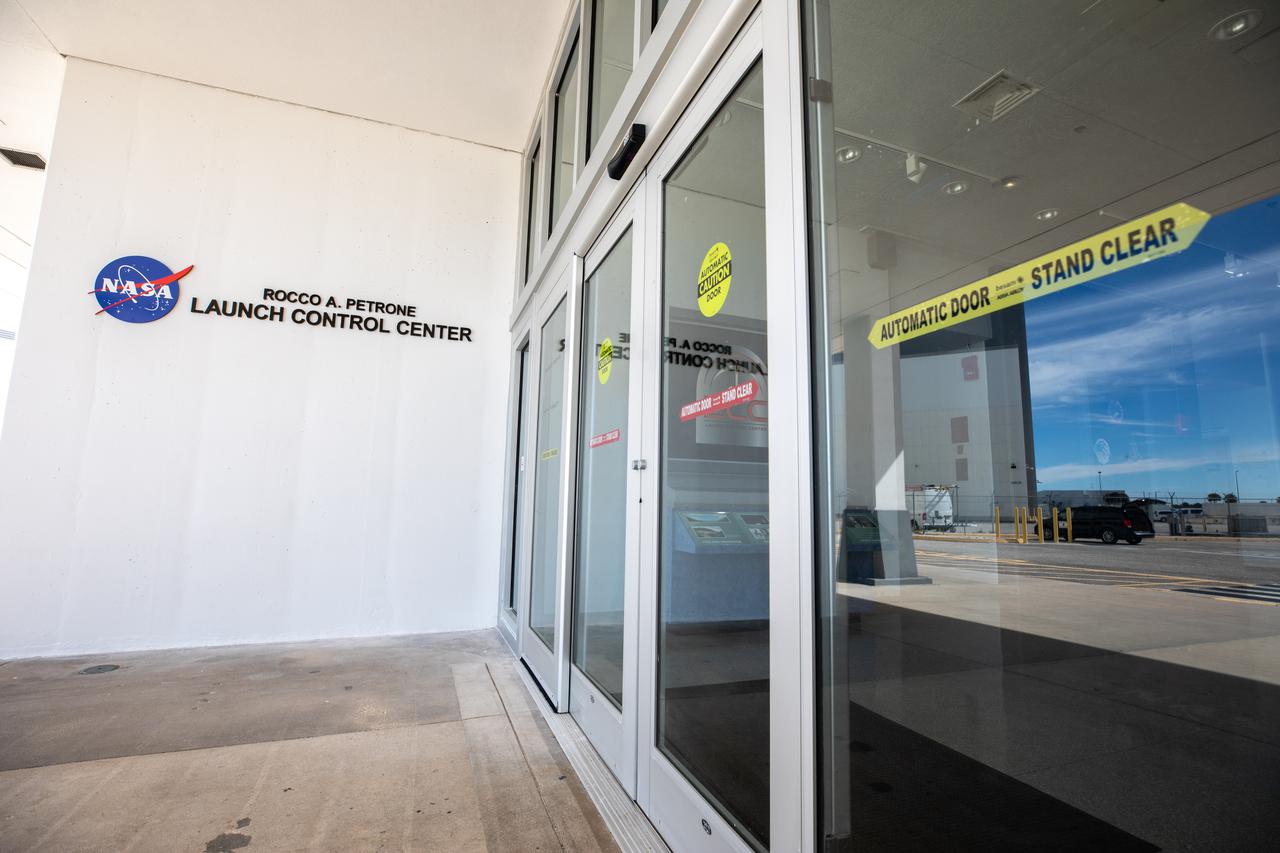
Following a ceremony at NASA’s Kennedy Space Center, the Florida spaceport’s launch control center was officially renamed the Rocco A. Petrone Launch Control Center. The facility serves as a nerve center where engineers and the launch director will monitor their flight consoles and give the “go” for the upcoming launch of Artemis I and later missions that will establish a sustainable presence on the Moon to prepare for missions to Mars. Petrone, who was instrumental in America’s first voyages to the Moon and headed the Apollo program, died in 2006 at the age of 80.
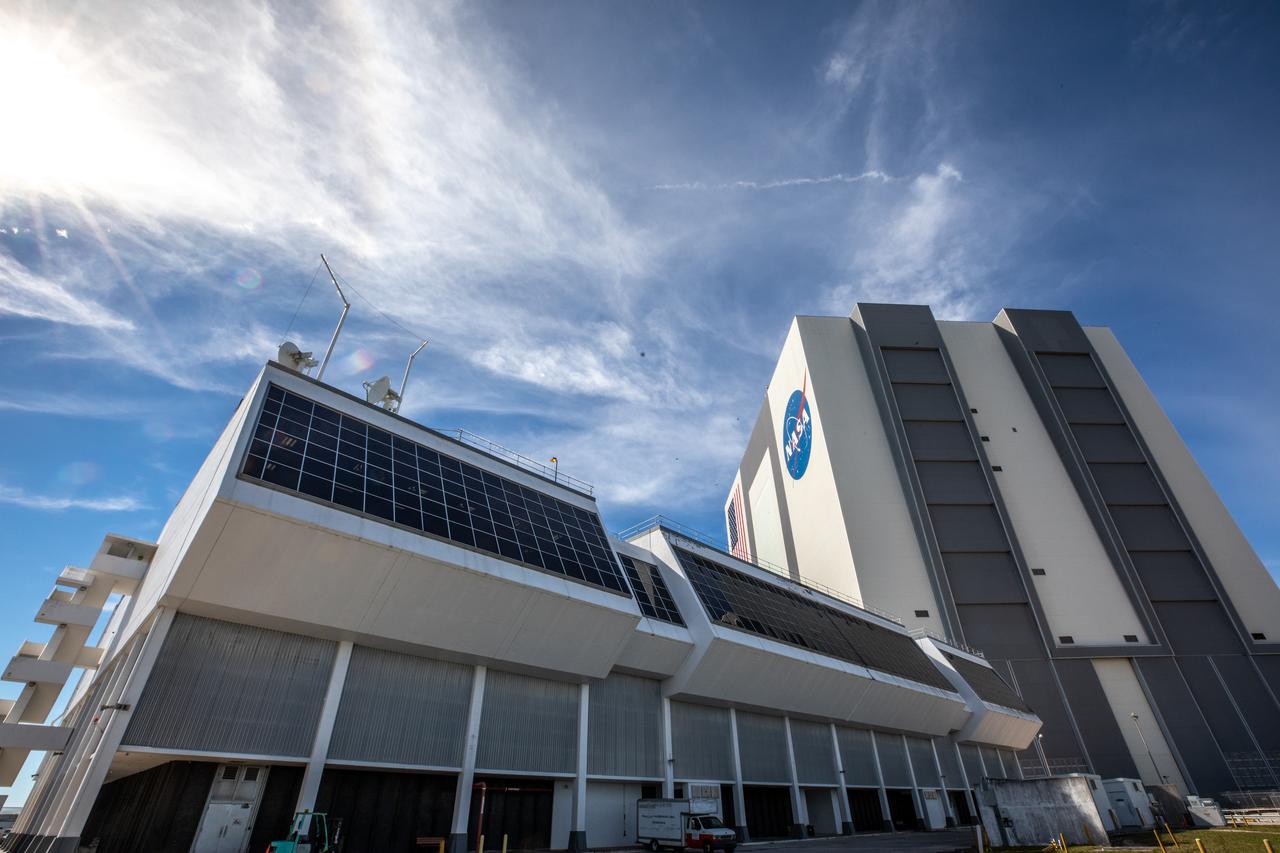
Following a ceremony at NASA’s Kennedy Space Center, the Florida spaceport’s launch control center (foreground) was officially renamed the Rocco A. Petrone Launch Control Center. In the background is Kennedy’s historic Vehicle Assembly Building. The newly named facility serves as a nerve center where engineers and the launch director will monitor their flight consoles and give the “go” for the upcoming launch of Artemis I and later missions that will establish a sustainable presence on the Moon to prepare for missions to Mars. Petrone, who was instrumental in America’s first voyages to the Moon and headed the Apollo program, died in 2006 at the age of 80.
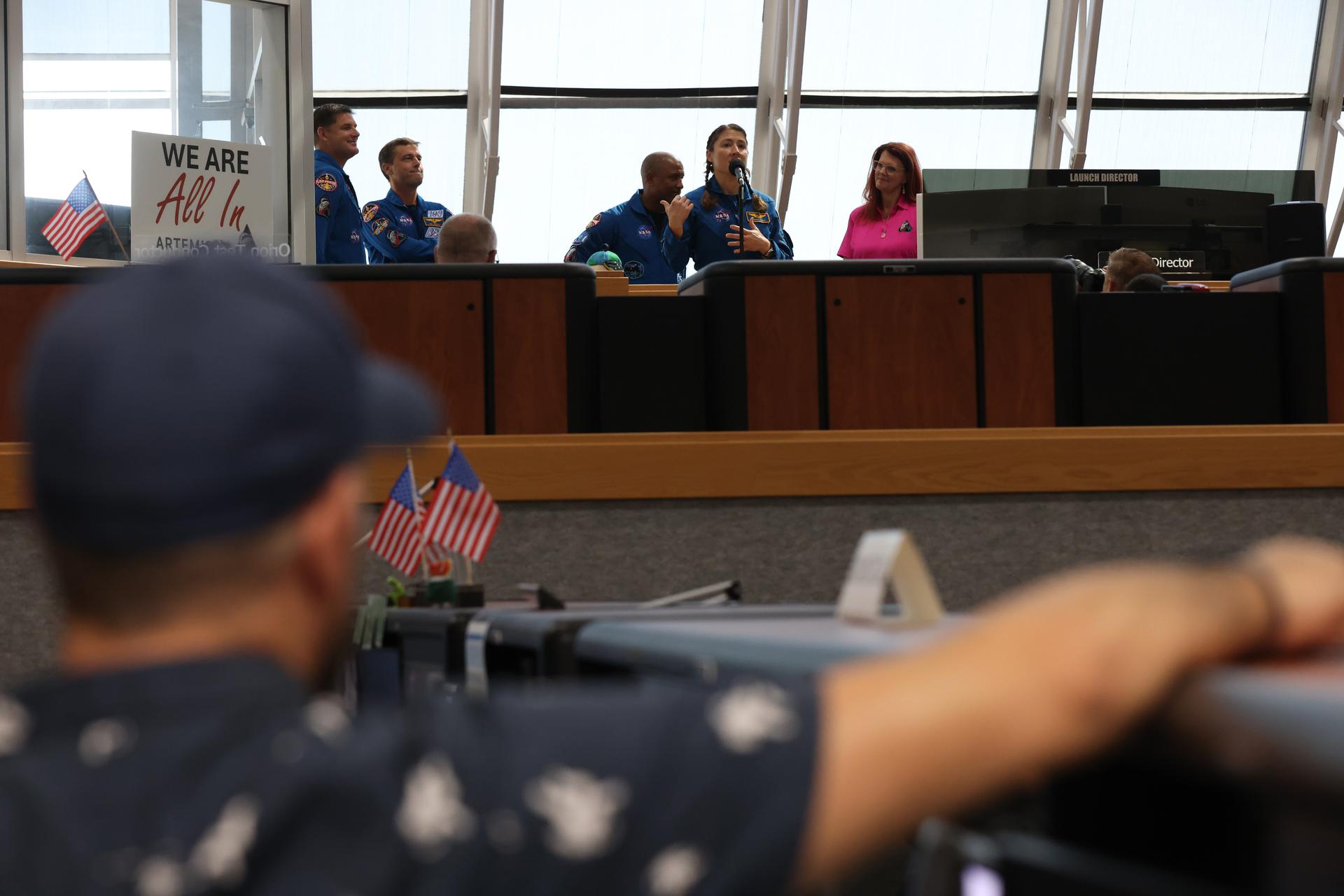
Artemis II NASA astronaut Christina Koch speaks to agency employees inside the Rocco A. Petrone Launch Control Center at NASA’s Kennedy Space Center in Florida on Tuesday, July 7, 2026, joined by Artemis II NASA astronauts Reid Wiseman and Victor Glover, and CSA (Canadian Space Agency) astronaut Jeremy Hansen, as well as Charlie Blackwell-Thompson, Artemis II launch director. The crew returned to NASA Kennedy for their first official visit since launch of Artemis II on Wednesday, April 1, 2026, to visit with the center’s workforce and tour facilities to view progress on Artemis III prelaunch processing.
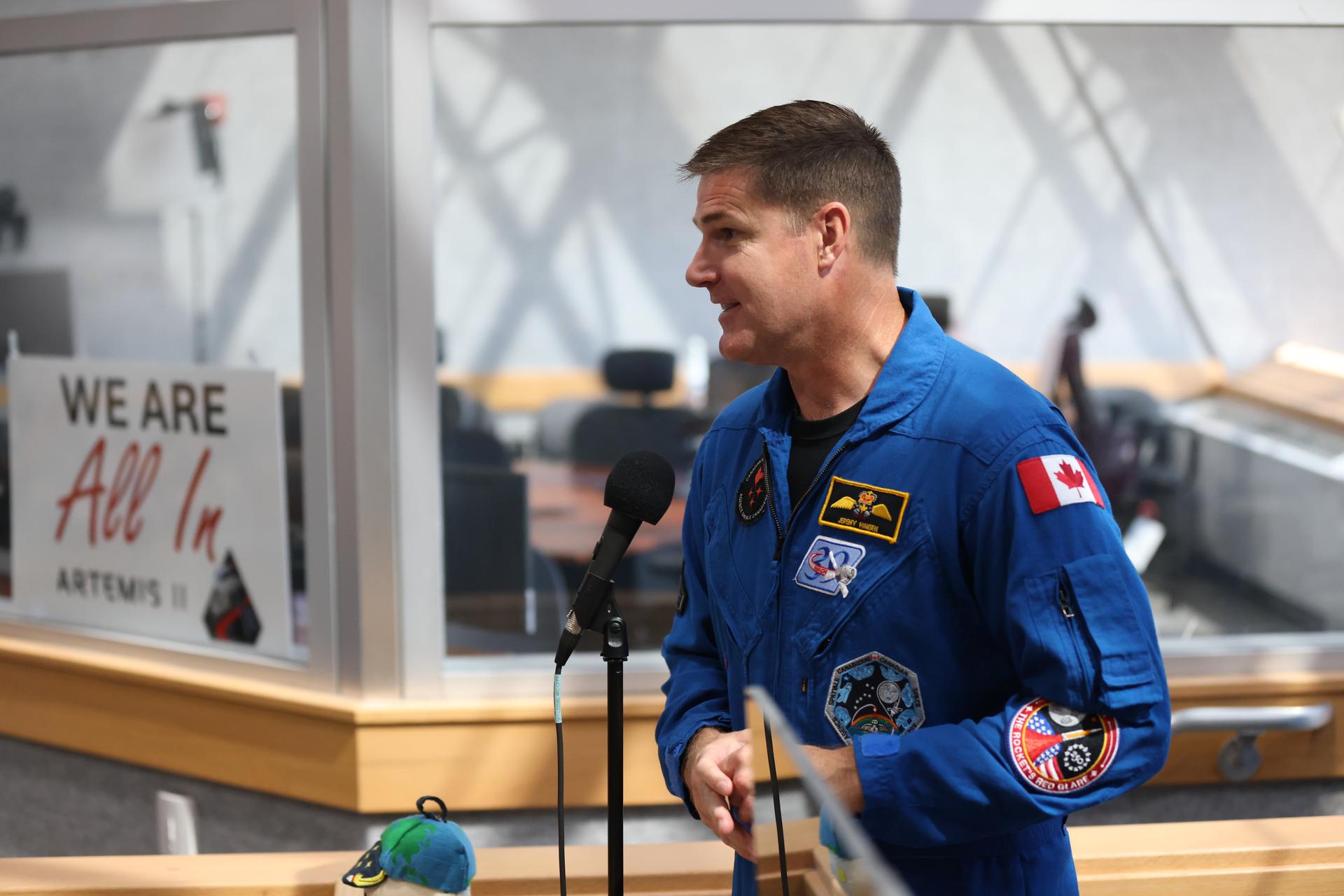
Artemis II CSA (Canadian Space Agency) astronaut Jeremy Hansen speaks to agency employees inside the Rocco A. Petrone Launch Control Center at NASA’s Kennedy Space Center in Florida on Tuesday, July 7, 2026. The Artemis II crew, Hansen, along with NASA astronauts Reid Wiseman, Victor Glover, and Christina Koch, returned to NASA Kennedy for their first official visit since launch of Artemis II on Wednesday, April 1, 2026, to visit with the center’s workforce and tour facilities to view progress on Artemis III prelaunch processing.
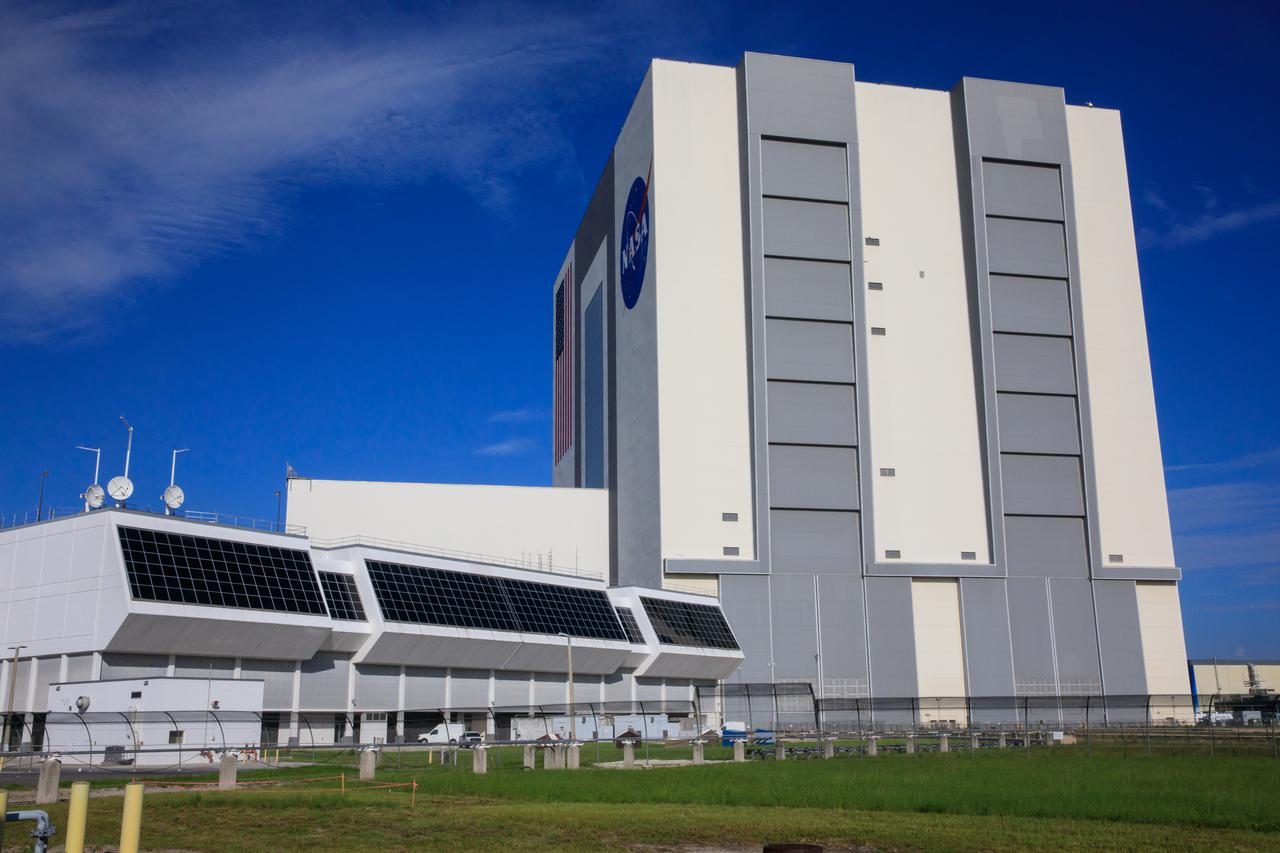
Seen here is an exterior view of the Launch Control Center (LCC) at NASA’s Kennedy Space Center in Florida, located next to the iconic Vehicle Assembly Building, on July 8, 2021. The LCC will house the team of engineers responsible for launching the Space Launch System (SLS) rocket and Orion spacecraft for the Artemis I mission. On July 8, teams from Kennedy, Marshall Space Flight Center in Alabama, and Johnson Space Center in Houston came together to perform the first joint integrated launch countdown simulation for Artemis I. The training exercise involved rehearsing all aspects of the launch countdown, from cryogenic loading – filling tanks in the Space Launch System (SLS) rocket’s core stage with liquid hydrogen and liquid oxygen – to liftoff. These simulations will help certify that the launch team is ready for Artemis I – the first test flight of SLS and Orion as an integrated system prior to crewed flights to the Moon.
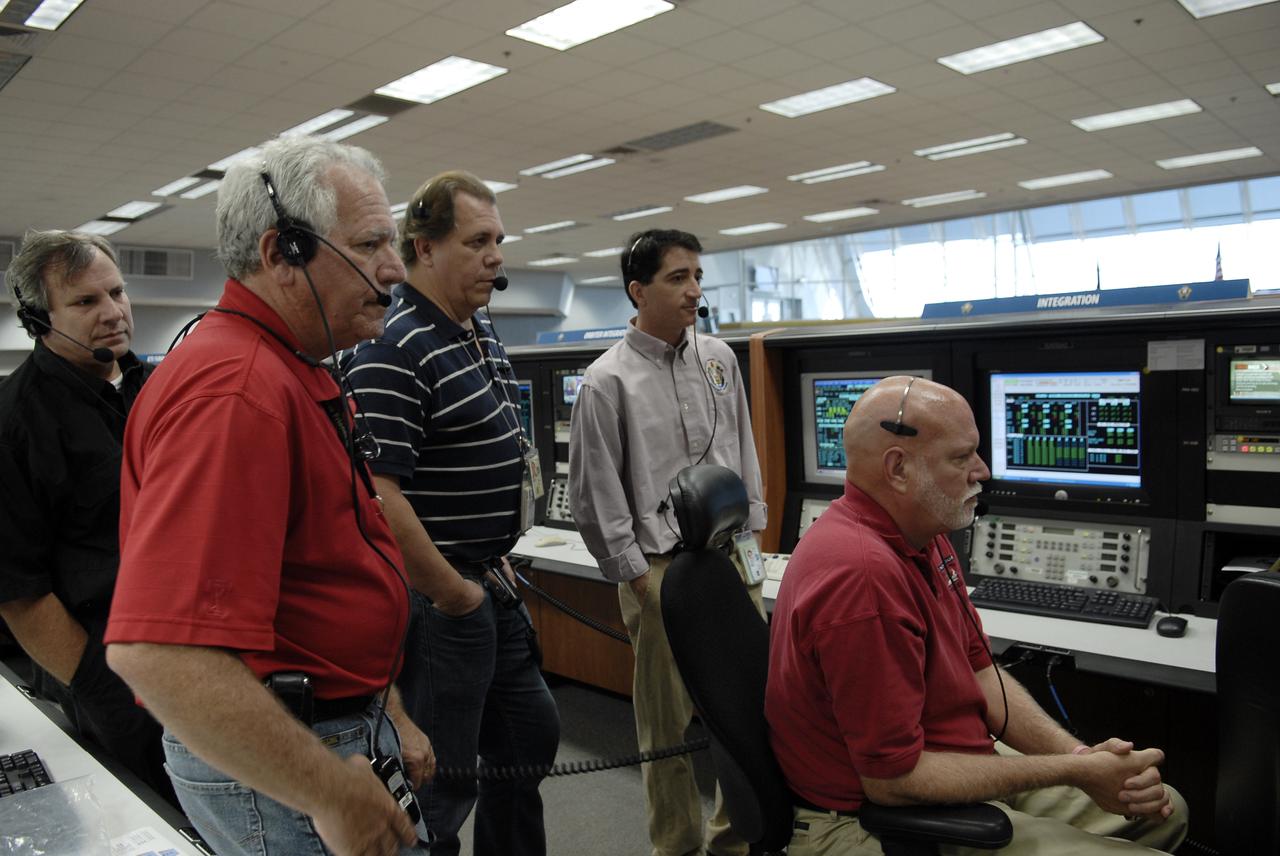
T&R Endeavour, LCC Events during Endeavours Final Power Down
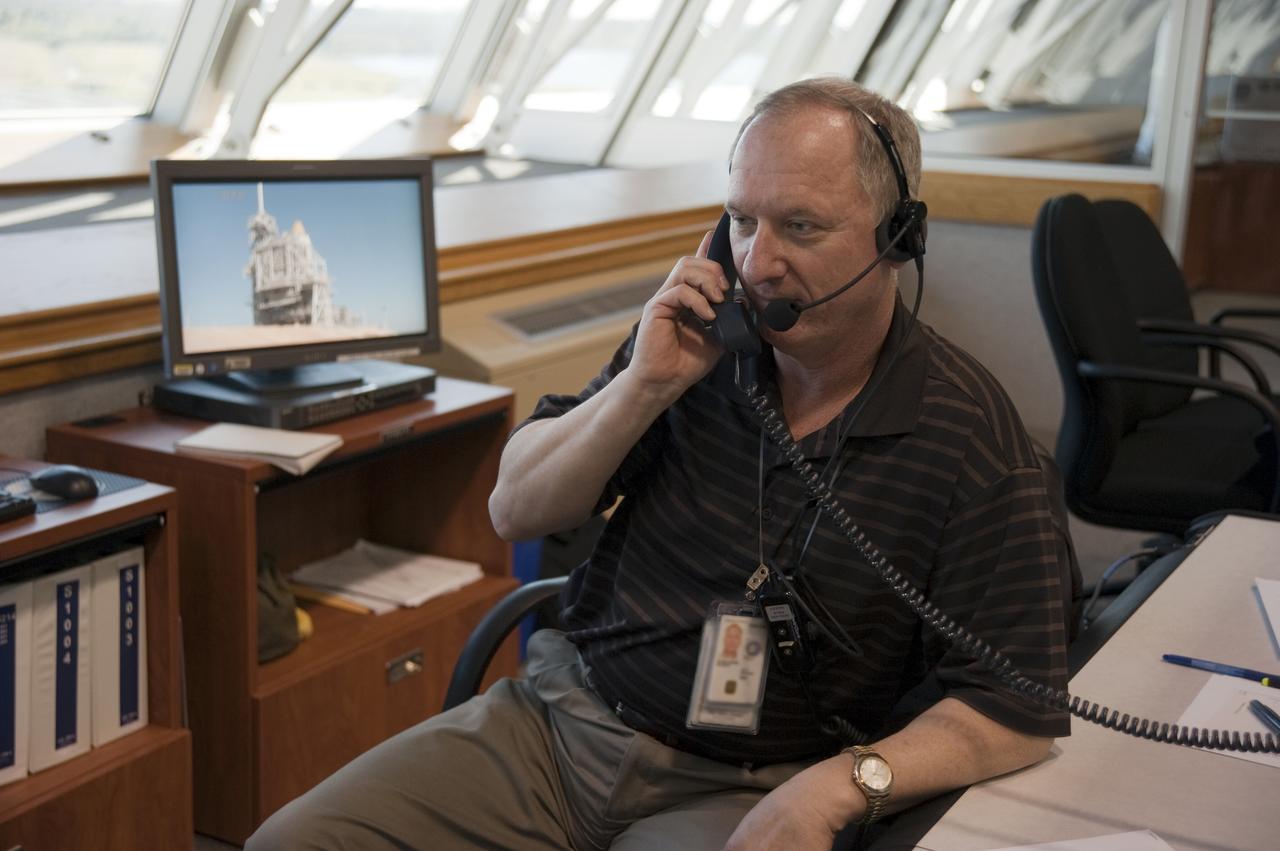
STS-131 TCDT - T-0 LCC FIRING ROOM 4 ACTIVITIES
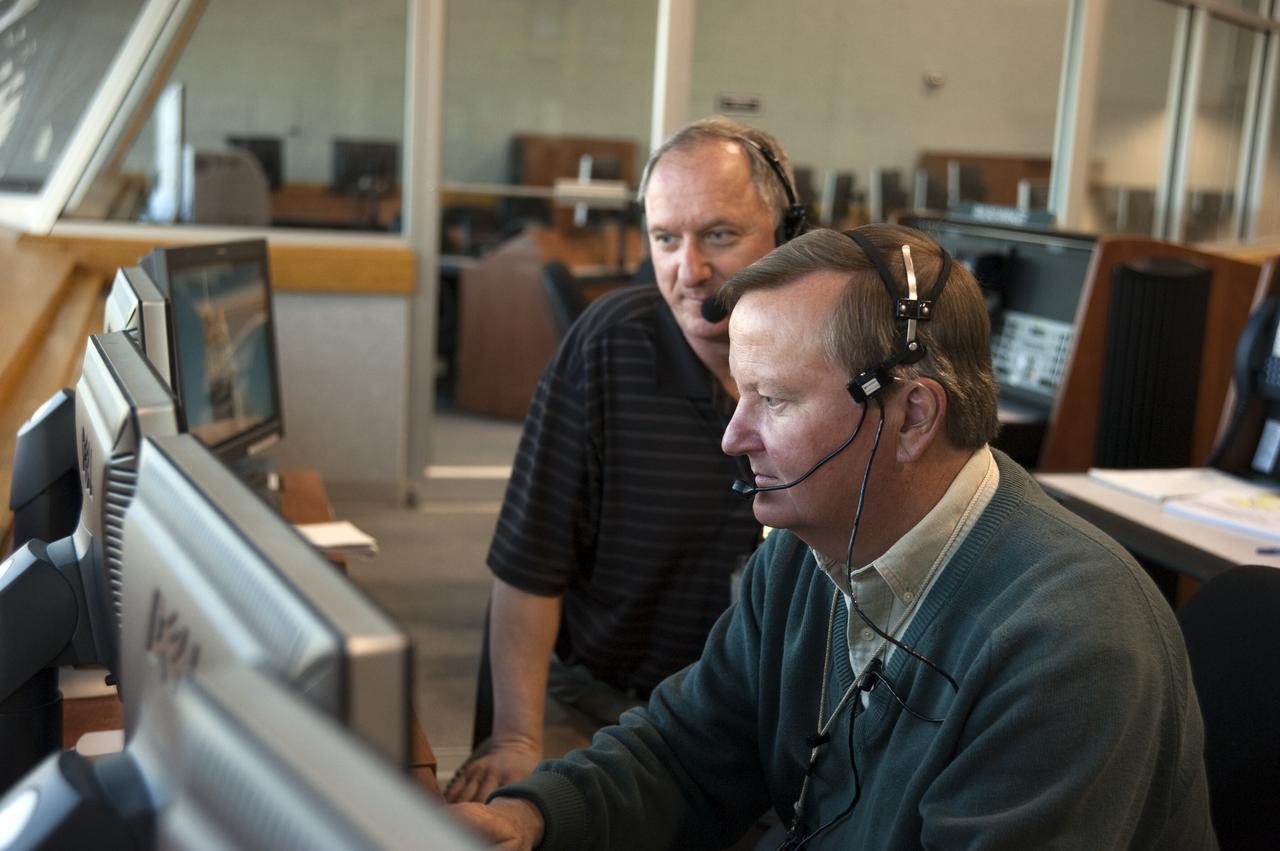
STS-131 TCDT - T-0 LCC FIRING ROOM 4 ACTIVITIES
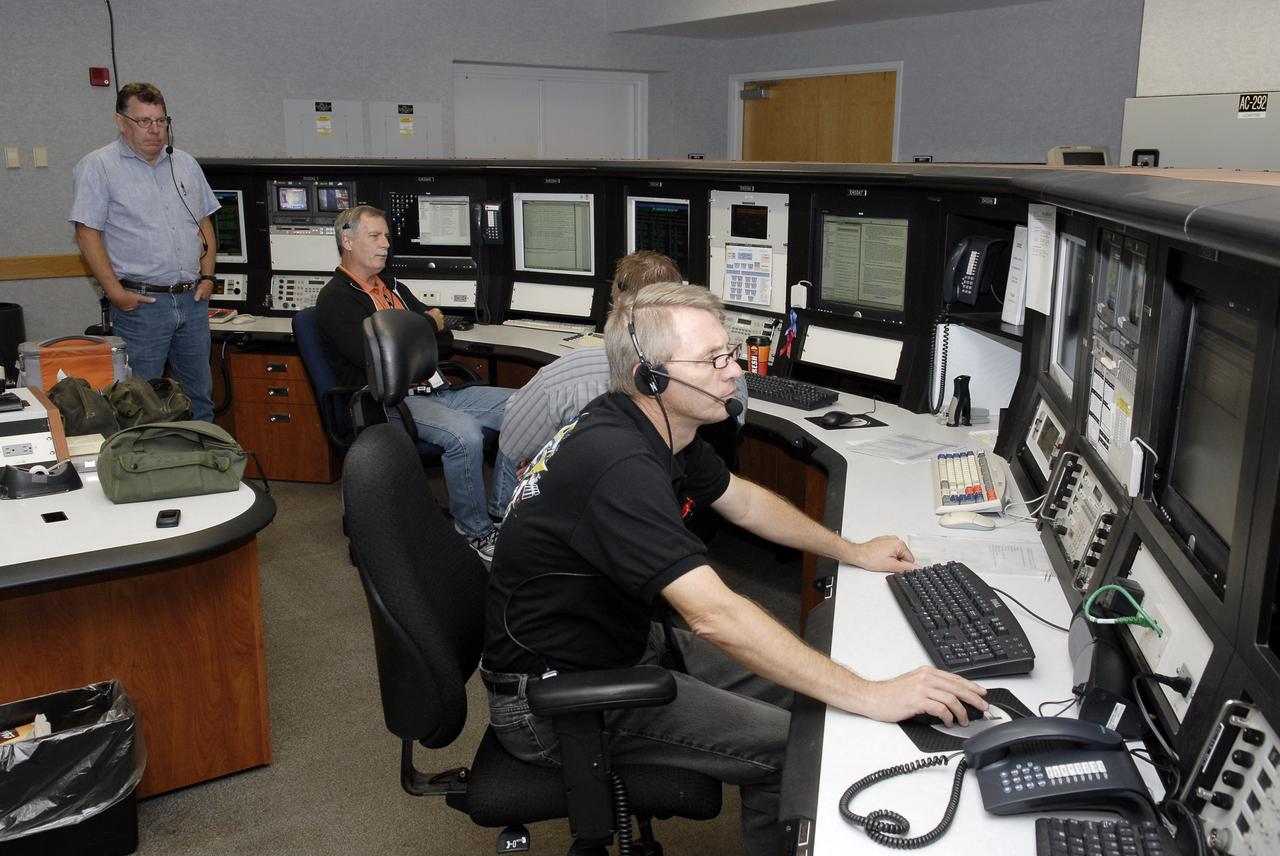
T&R Endeavour, LCC Events during Endeavours Final Power Down
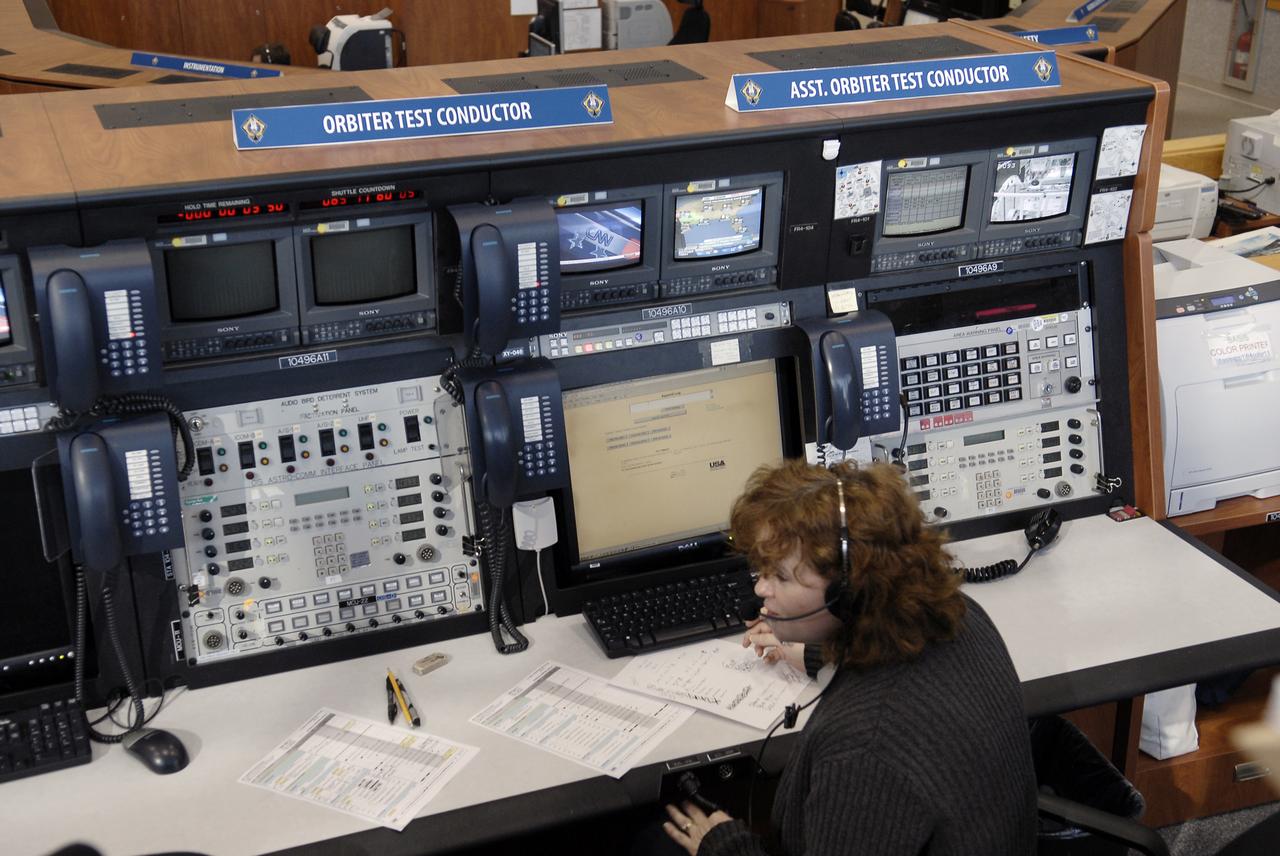
T&R Endeavour, LCC Events during Endeavours Final Power Down
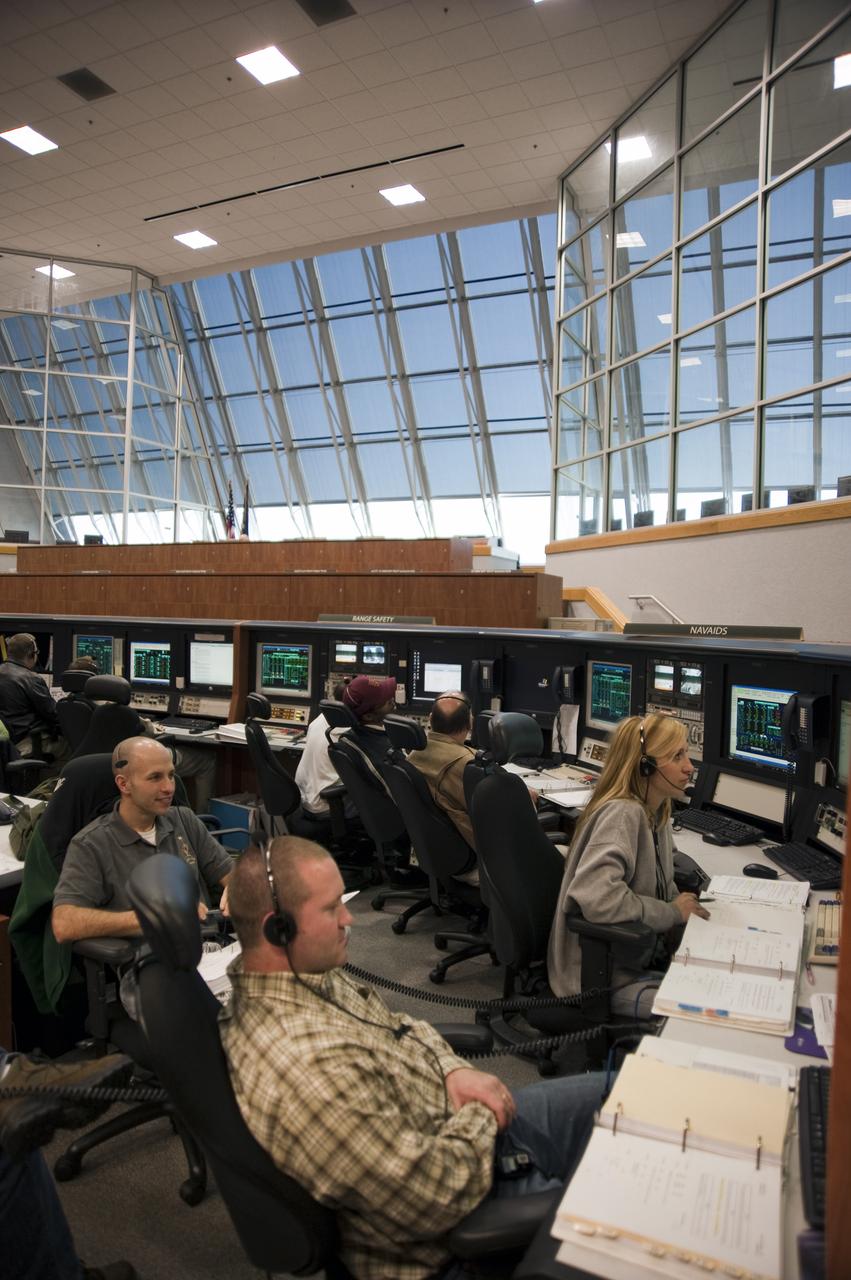
STS-131 TCDT - T-0 LCC FIRING ROOM 4 ACTIVITIES
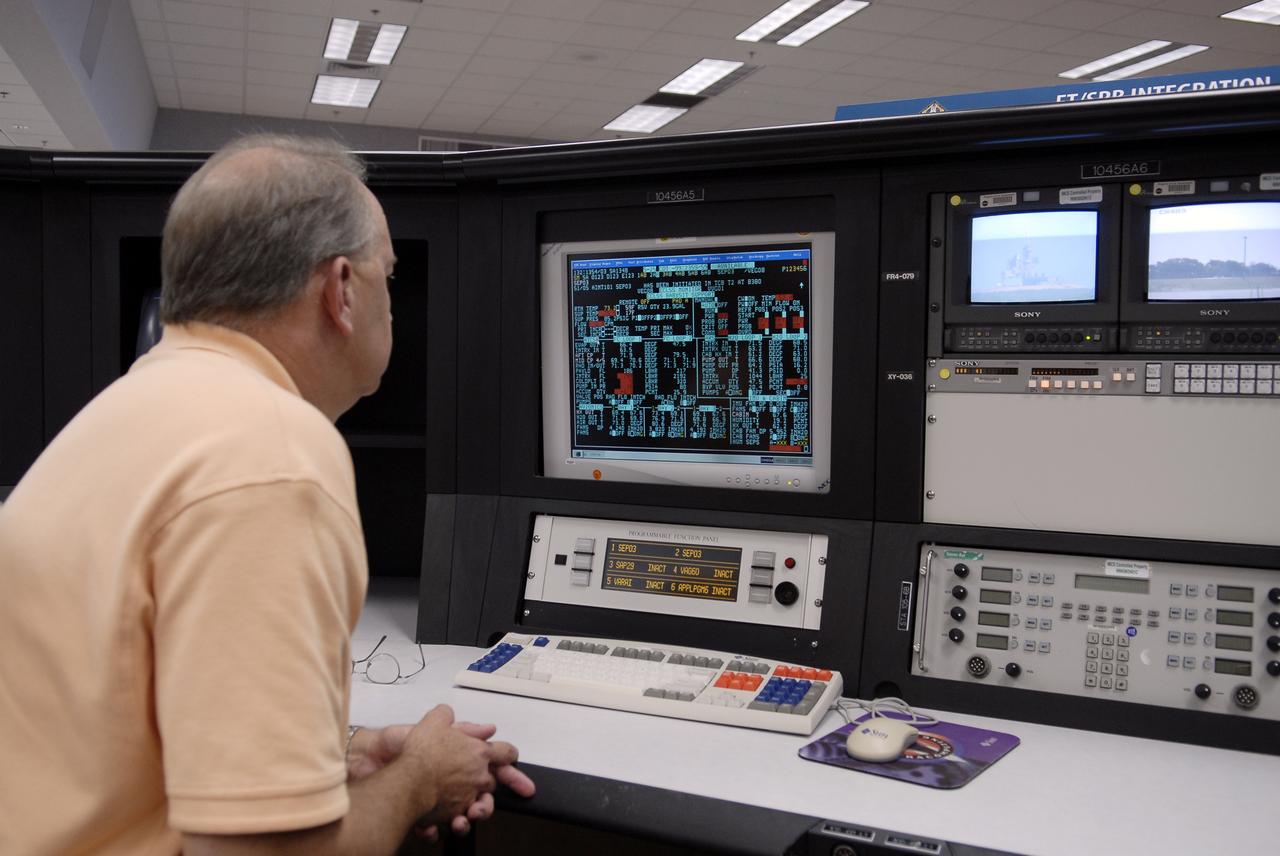
T&R Endeavour, LCC Events during Endeavours Final Power Down
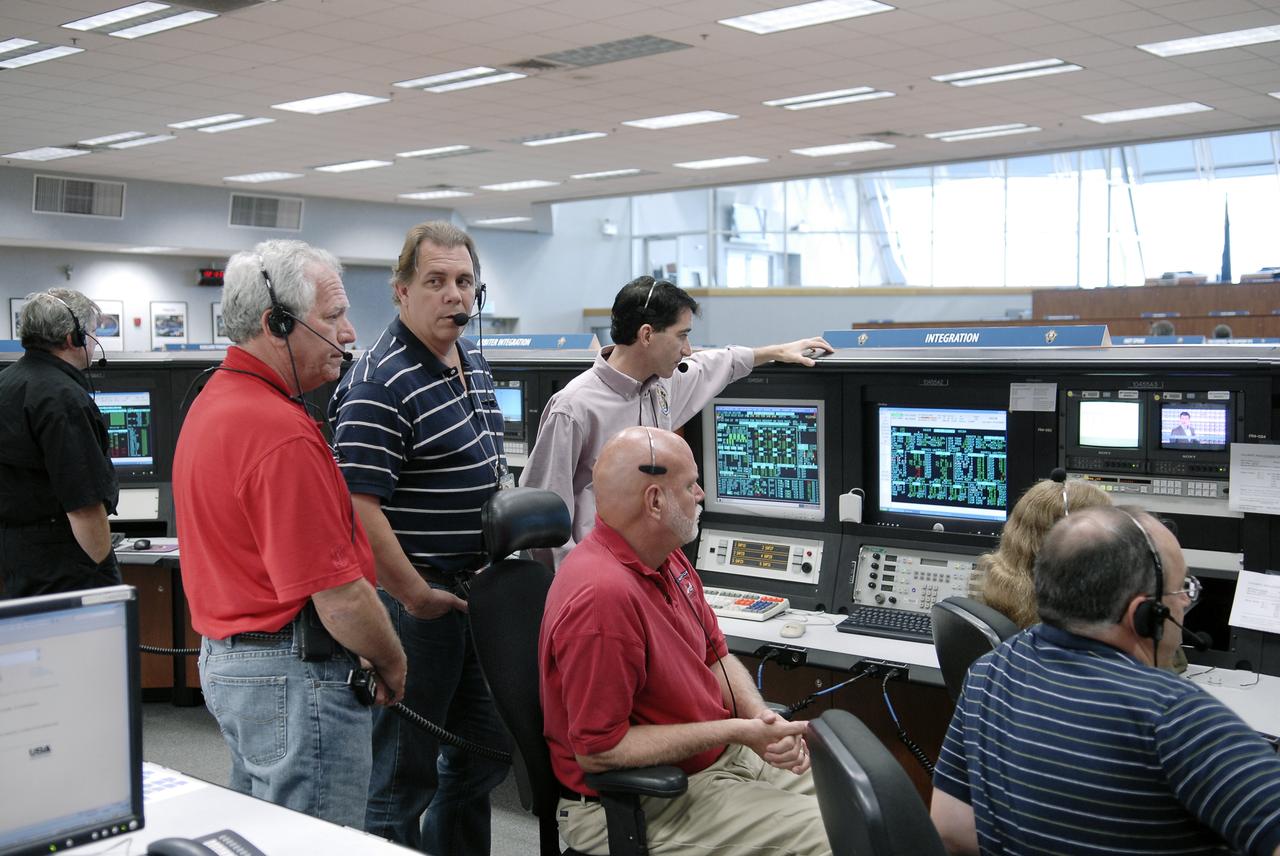
T&R Endeavour, LCC Events during Endeavours Final Power Down
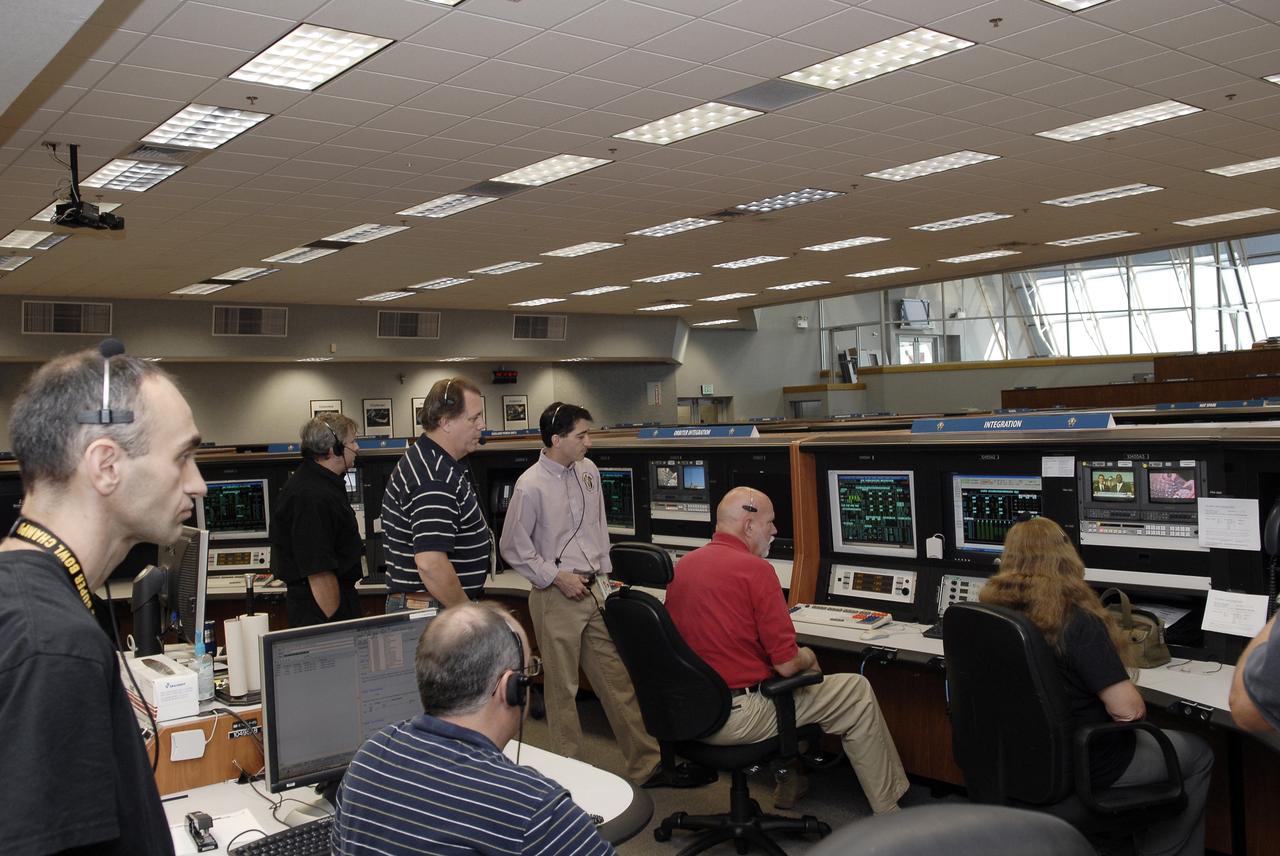
T&R Endeavour, LCC Events during Endeavours Final Power Down
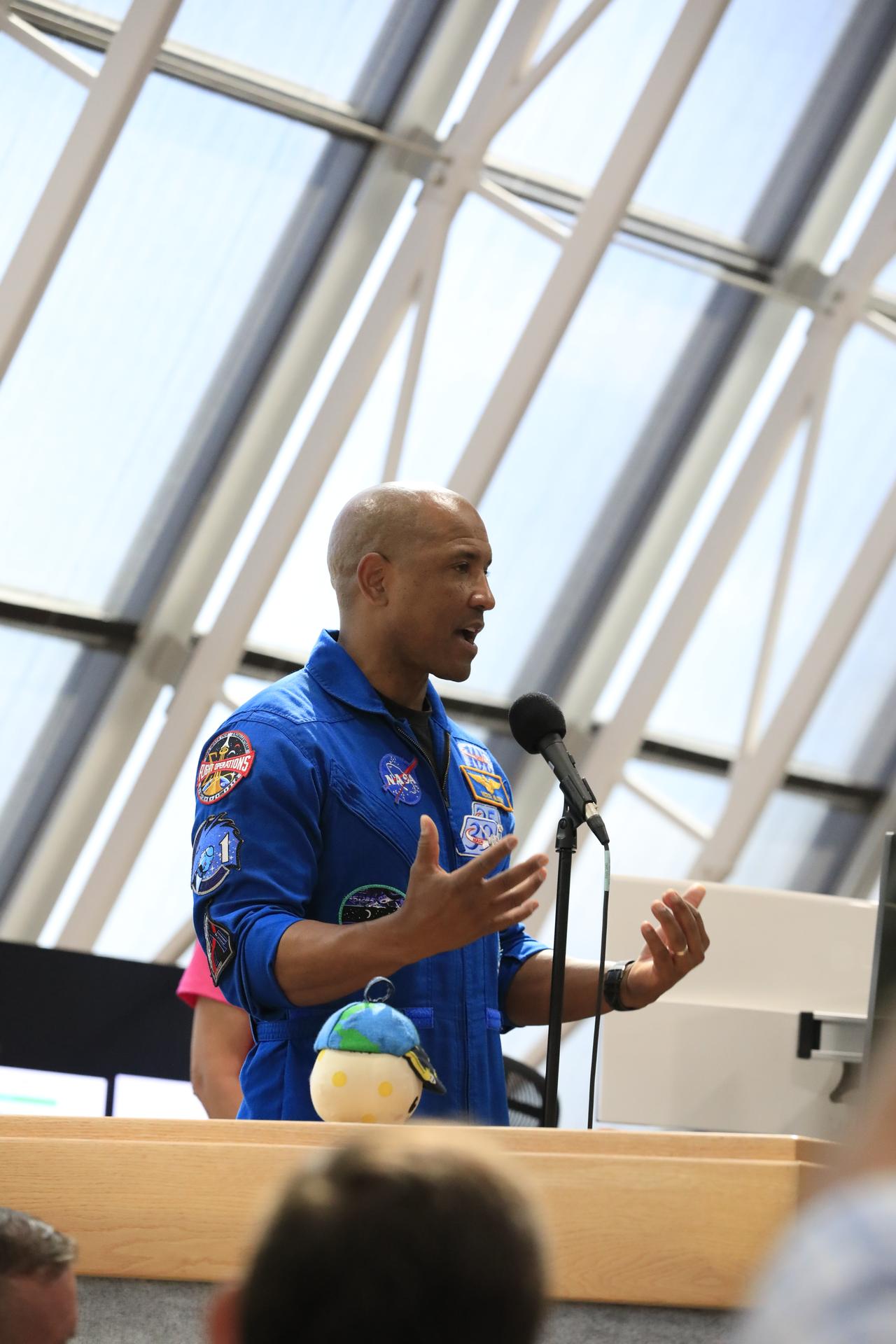
Artemis II NASA astronaut Victor Glover speaks to agency employees inside the Rocco A. Petrone Launch Control Center at NASA’s Kennedy Space Center in Florida on Tuesday, July 7, 2026. The Artemis II crew, Glover, fellow NASA astronauts Reid Wiseman and Christina Koch, and CSA (Canadian Space Agency) astronaut Jeremy Hansen, returned to NASA Kennedy for their first official visit since launch of Artemis II on Wednesday, April 1, 2026, to visit with the center’s workforce and tour facilities to view progress on Artemis III prelaunch processing.
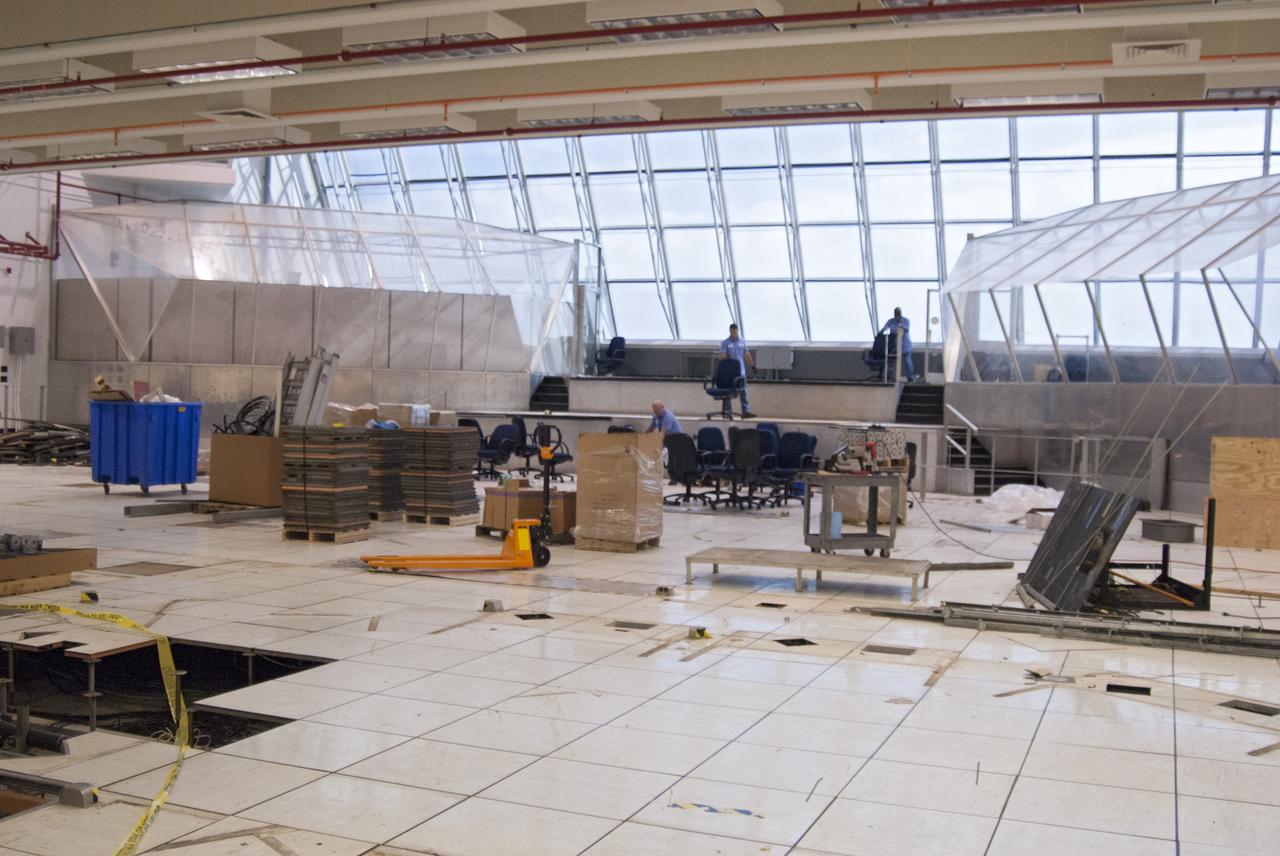
CAPE CANAVERAL, Fla. – At NASA’s Kennedy Space Center in Florida, work continues in Firing Room 2 in the Launch Control Center, or LCC. The legacy flooring is being removed and wiring and conduits below the floor will be upgraded. The mission director’s room to the left and another viewing room to the right also will be upgraded. Firing Rooms inside the LCC are being upgraded by the Ground System Development and Operations Program at Kennedy to support the processing and launch of multiple types of rockets and spacecraft, whether they are government or commercial models. Kennedy’s Launch Complex 39 is transitioning to support multiple users with the Firing Rooms being modified to be more generic in nature for upcoming programs. Photo credit: NASA_Gary Thompson
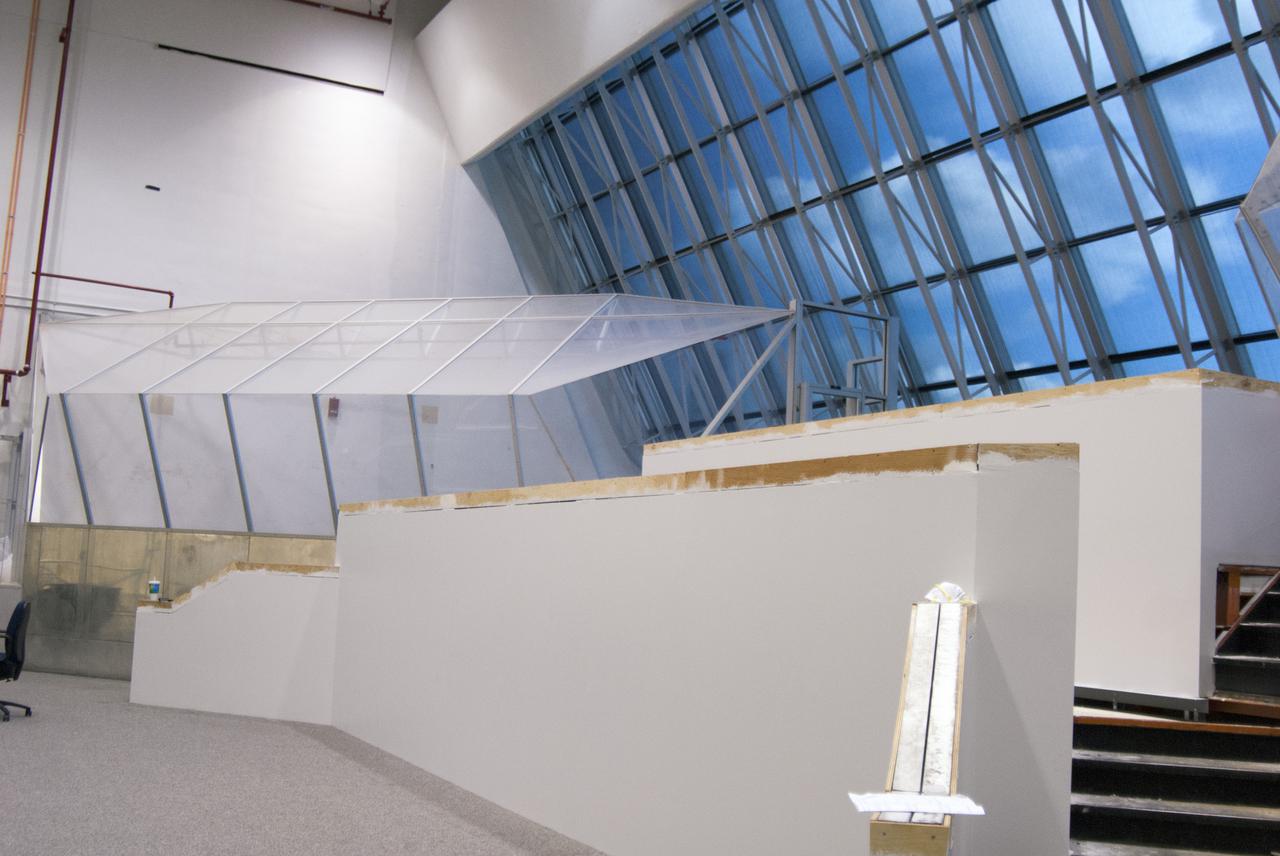
CAPE CANAVERAL, Fla. – At NASA’s Kennedy Space Center in Florida, modifications continue to Firing Room 3 in the Launch Control Center, or LCC. Wiring and conduits below the floor have been upgraded and new flooring has been installed. Walls have been repaired and are in the process of being painted. Firing Rooms inside the LCC are being upgraded by the Ground System Development and Operations Program at Kennedy to support the processing and launch of multiple types of rockets and spacecraft, whether they are government or commercial models. Kennedy’s Launch Complex 39 is transitioning to support multiple users with the Firing Rooms being modified to be more generic in nature for upcoming programs. Photo credit: NASA_Gary Thompson
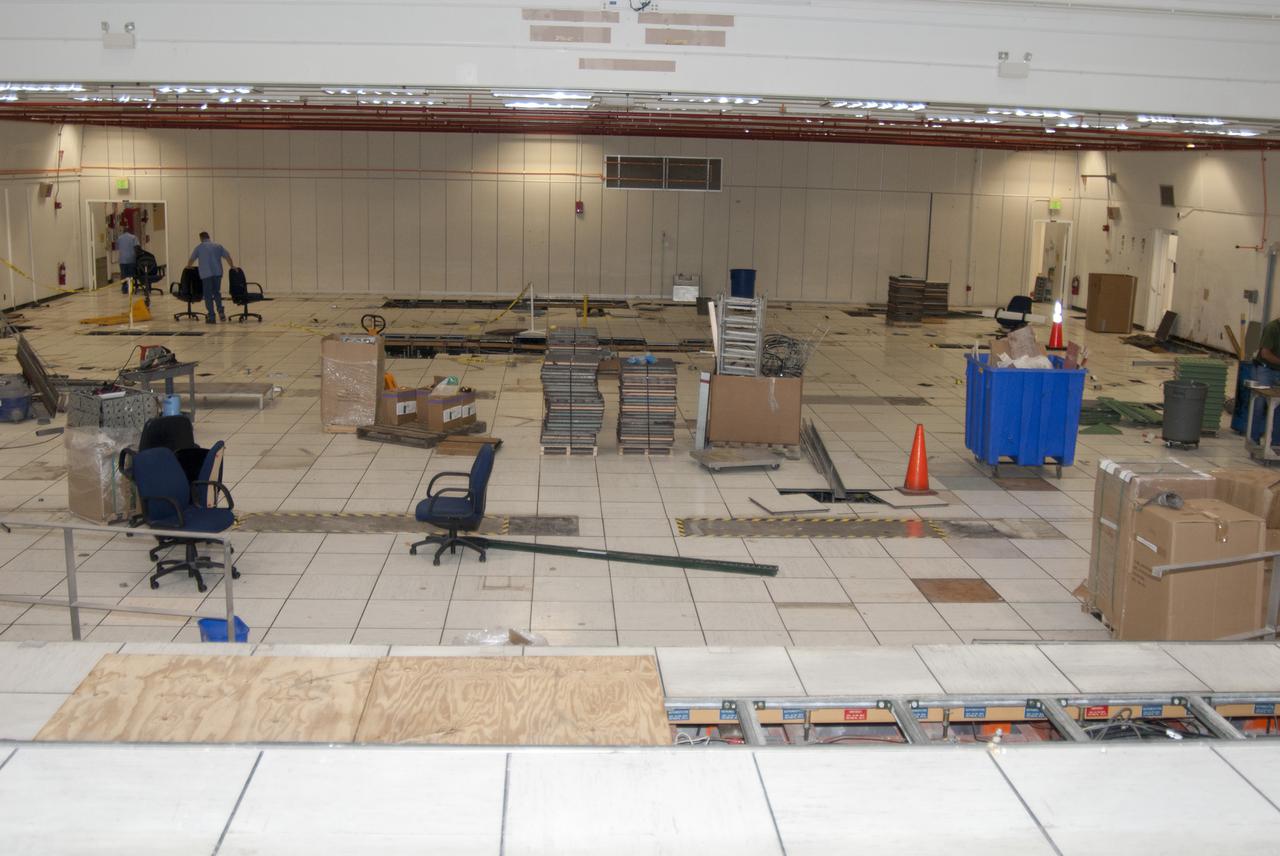
CAPE CANAVERAL, Fla. – At NASA’s Kennedy Space Center in Florida, work continues in Firing Room 2 in the Launch Control Center, or LCC. The legacy flooring is being removed and wiring and conduits below the floor will be upgraded. Firing Rooms inside the LCC are being upgraded by the Ground System Development and Operations Program at Kennedy to support the processing and launch of multiple types of rockets and spacecraft, whether they are government or commercial models. Kennedy’s Launch Complex 39 is transitioning to support multiple users with the Firing Rooms being modified to be more generic in nature for upcoming programs. Photo credit: NASA_Gary Thompson
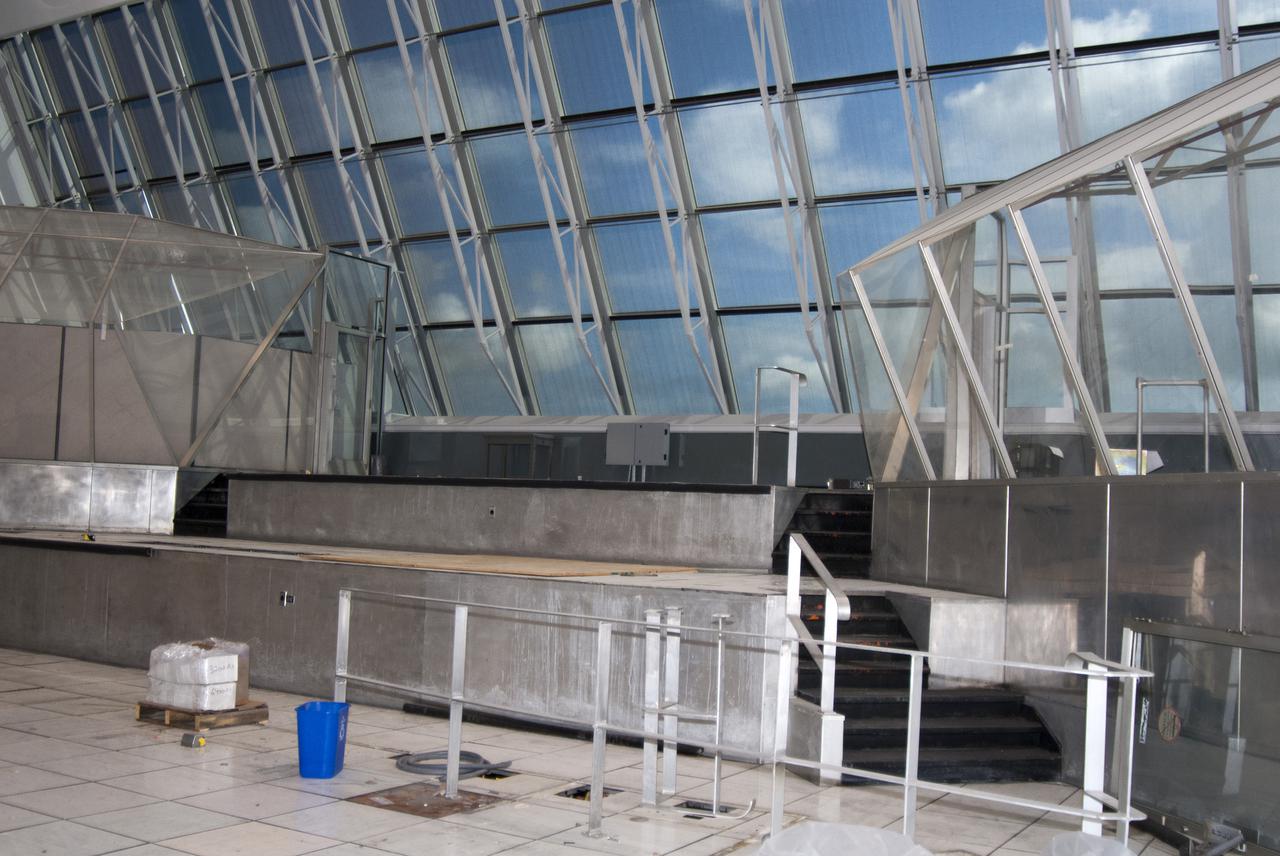
CAPE CANAVERAL, Fla. – At NASA’s Kennedy Space Center in Florida, work continues in Firing Room 2 in the Launch Control Center, or LCC. The legacy flooring is being removed and wiring and conduits below the floor will be upgraded. The mission director’s room to the left and another viewing room to the right also will be upgraded. Firing Rooms inside the LCC are being upgraded by the Ground System Development and Operations Program at Kennedy to support the processing and launch of multiple types of rockets and spacecraft, whether they are government or commercial models. Kennedy’s Launch Complex 39 is transitioning to support multiple users with the Firing Rooms being modified to be more generic in nature for upcoming programs. Photo credit: NASA_Gary Thompson
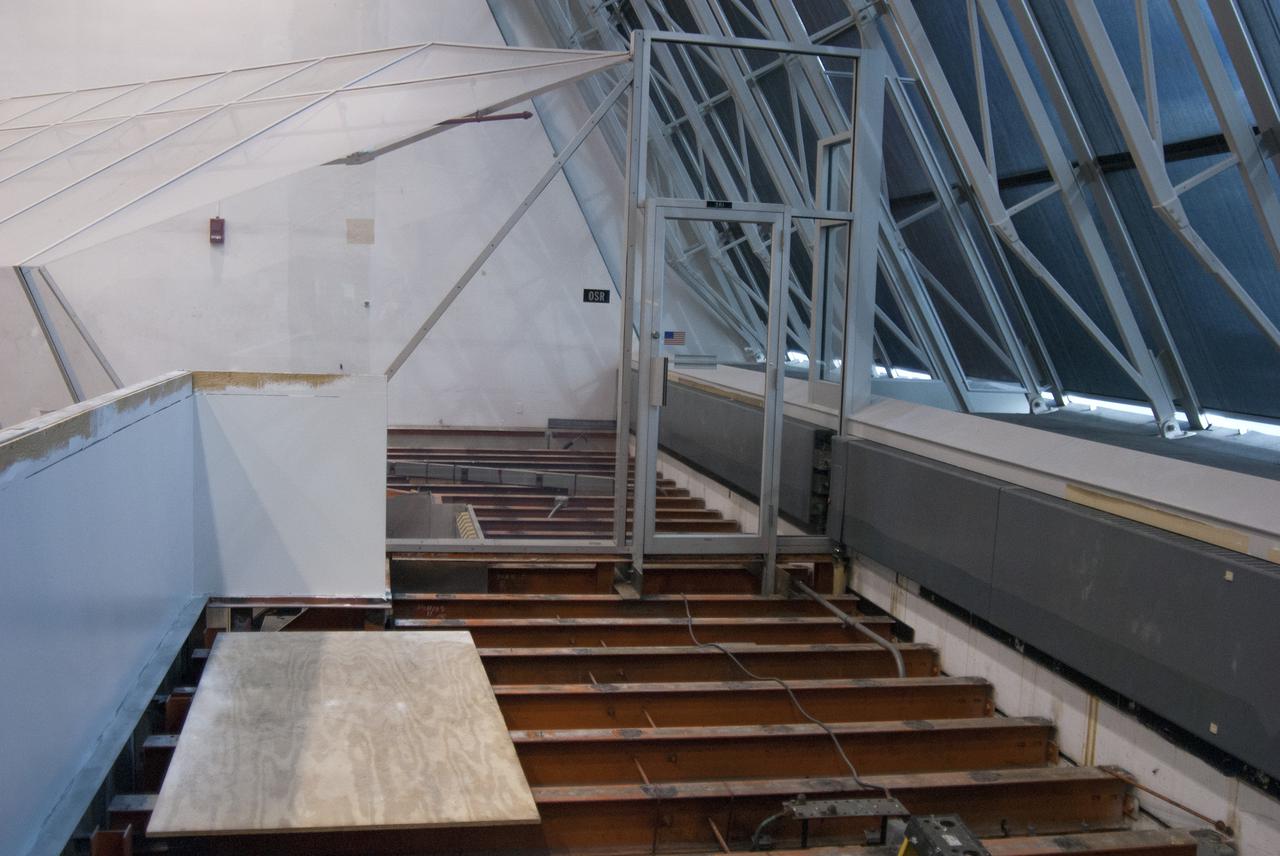
CAPE CANAVERAL, Fla. – At NASA’s Kennedy Space Center in Florida, modifications continue to Firing Room 3 in the Launch Control Center, or LCC. Wiring and conduits below the floor have been upgraded. The legacy flooring leading to and inside a viewing room has been removed and the area is being prepared for new flooring to be installed. Firing Rooms inside the LCC are being upgraded by the Ground System Development and Operations Program at Kennedy to support the processing and launch of multiple types of rockets and spacecraft, whether they are government or commercial models. Kennedy’s Launch Complex 39 is transitioning to support multiple users with the Firing Rooms being modified to be more generic in nature for upcoming programs. Photo credit: NASA_Gary Thompson
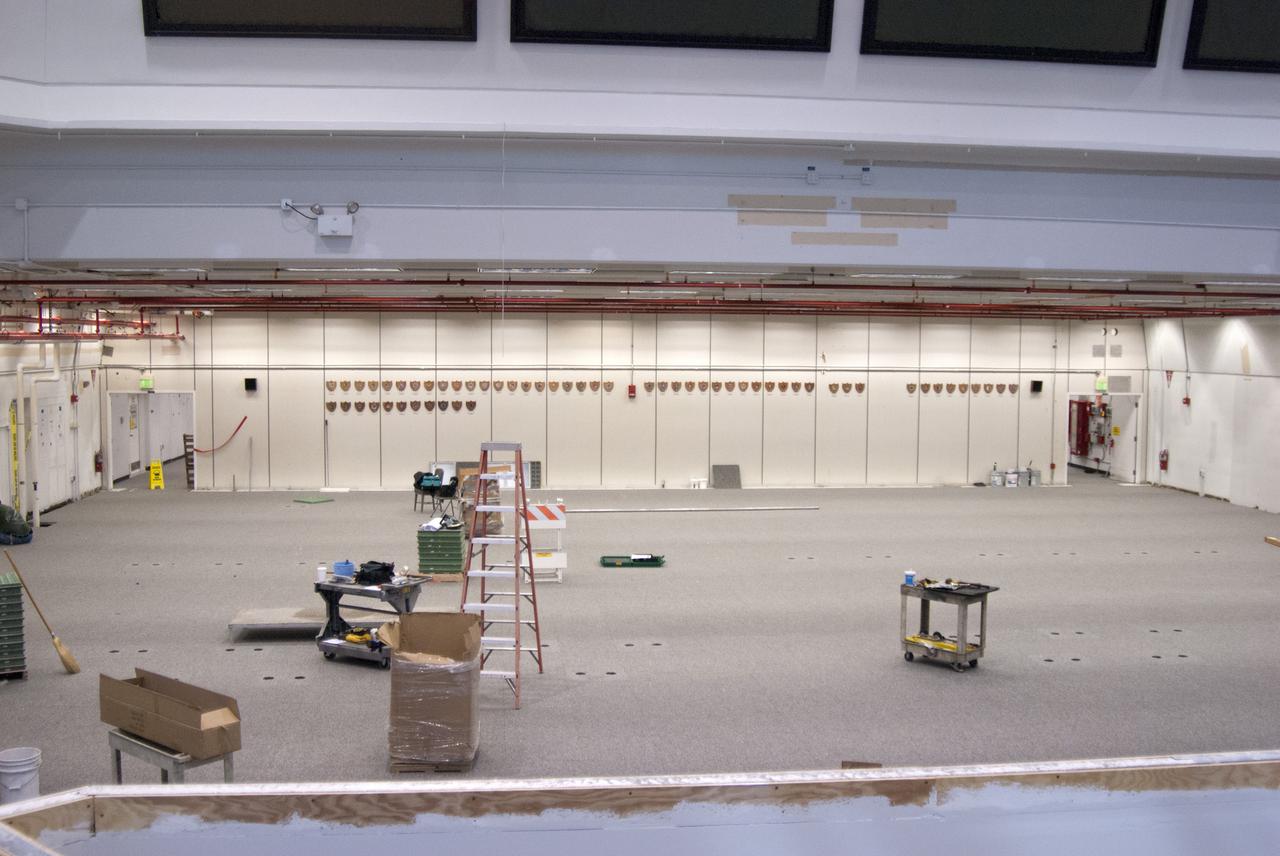
CAPE CANAVERAL, Fla. – At NASA’s Kennedy Space Center in Florida, modifications continue to Firing Room 3 in the Launch Control Center, or LCC. Wiring and conduits below the floor have been upgraded and new flooring is being installed. Firing Rooms inside the LCC are being upgraded by the Ground System Development and Operations Program at Kennedy to support the processing and launch of multiple types of rockets and spacecraft, whether they are government or commercial models. Kennedy’s Launch Complex 39 is transitioning to support multiple users with the Firing Rooms being modified to be more generic in nature for upcoming programs. Photo credit: NASA_Gary Thompson
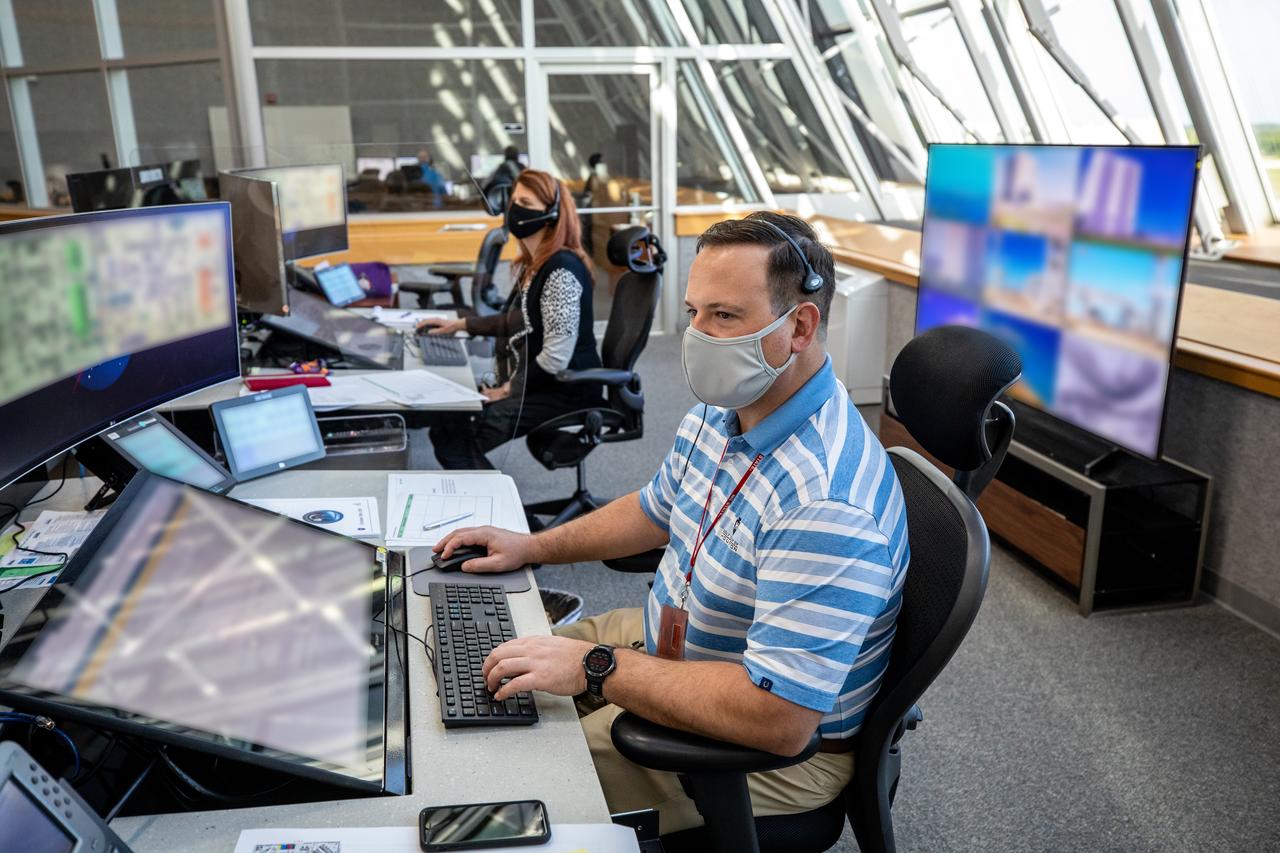
Charlie Blackwell-Thompson, at left, NASA Artemis launch director; and Wes Mosedale, technical assistant to the launch director, monitor a cryogenic propellant loading simulation inside Firing Room 1 in the Launch Control Center on Nov. 2, 2020, at NASA’s Kennedy Space Center in Florida. A team of engineers with Exploration Ground Systems and Jacobs, members of the cryogenics launch team, are rehearsing the steps to load the super-cooled liquid hydrogen and liquid oxygen into the Space Launch System’s (SLS) core and second stages to prepare for Artemis I. The first in a series of increasingly complex missions, Artemis I will test the Orion spacecraft and Space Launch System as an integrated system ahead of crewed flights to the Moon. NASA will land the first woman and the next man on the Moon in 2024.
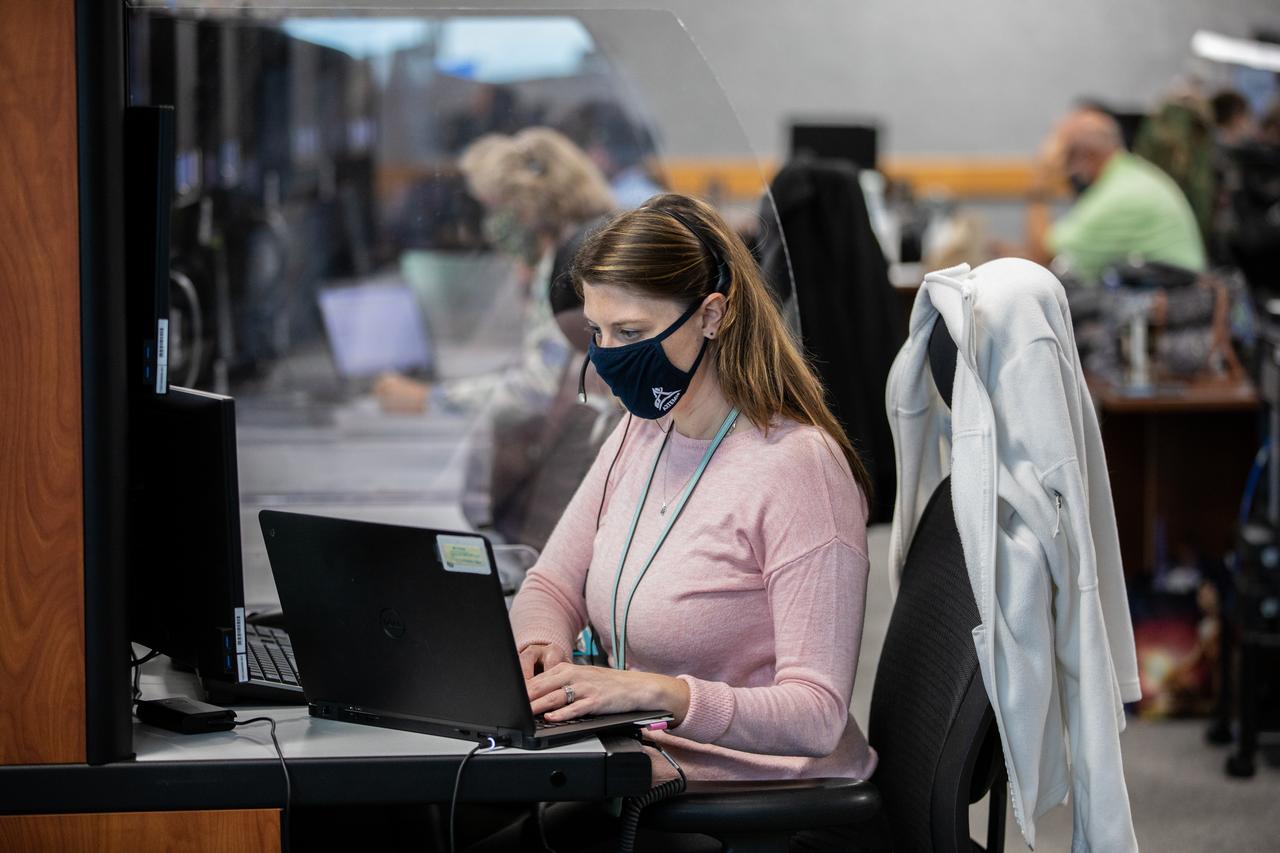
Amanda Arrieta, a members of the cryogenics launch team, participates in a cryogenic propellant loading simulation inside Firing Room 1 in the Launch Control Center on Nov. 2, 2020, at NASA’s Kennedy Space Center in Florida. A team of engineers with Exploration Ground Systems and Jacobs are rehearsing the steps to load the super-cooled liquid hydrogen and liquid oxygen into the Space Launch System’s (SLS) core and second stages to prepare for Artemis I. The first in a series of increasingly complex missions, Artemis I will test the Orion spacecraft and Space Launch System as an integrated system ahead of crewed flights to the Moon. NASA will land the first woman and the next man on the Moon in 2024.
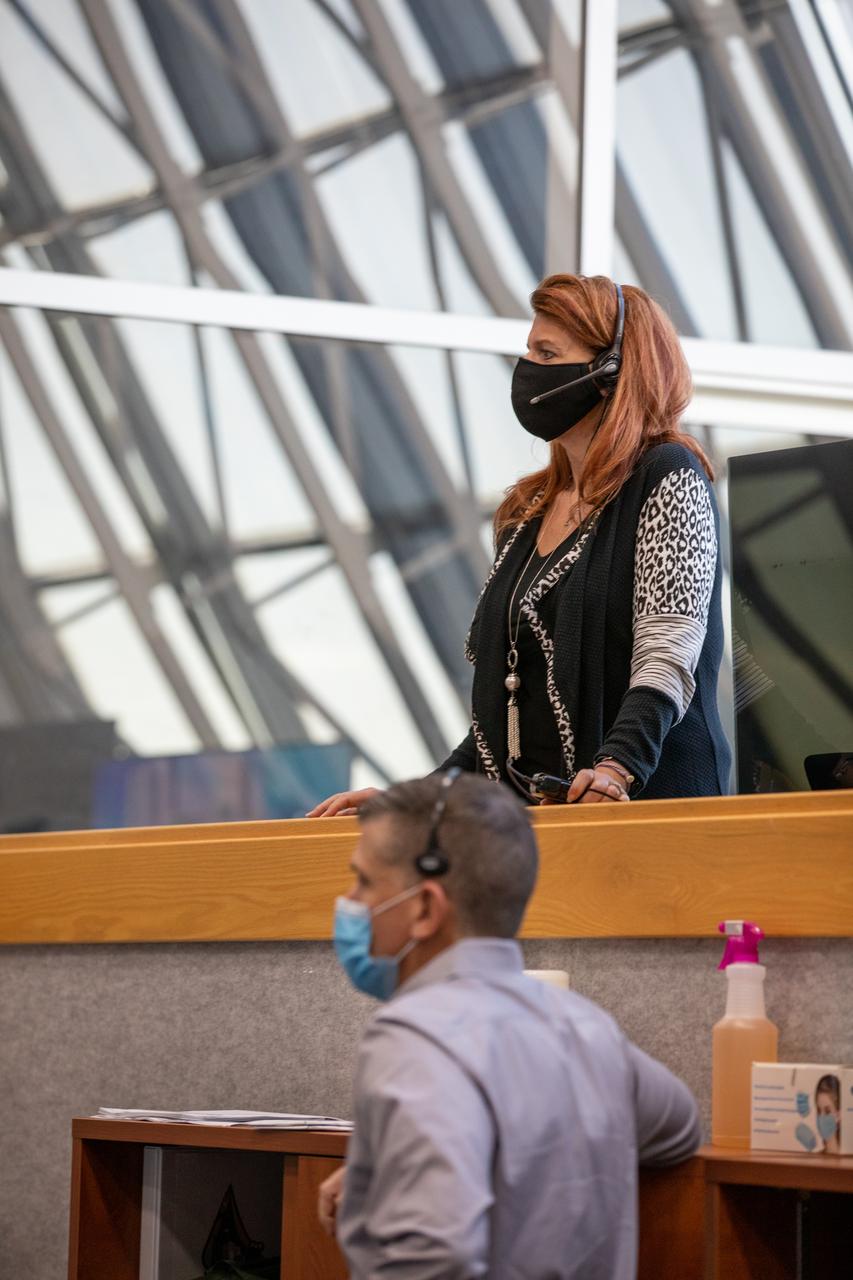
Charlie Blackwell-Thompson, standing, NASA Artemis launch director; and Jeremy Graeber, chief of the Test, Launch and Recovery Operations Branch within Exploration Ground Systems (EGS), monitor a cryogenic propellant loading simulation inside Firing Room 1 in the Launch Control Center on Nov. 2, 2020, at NASA’s Kennedy Space Center in Florida. A team of engineers with EGS and Jacobs, members of the cryogenics launch team, are rehearsing the steps to load the super-cooled liquid hydrogen and liquid oxygen into the Space Launch System’s (SLS) core and second stages to prepare for Artemis I. The first in a series of increasingly complex missions, Artemis I will test the Orion spacecraft and Space Launch System as an integrated system ahead of crewed flights to the Moon. NASA will land the first woman and the next man on the Moon in 2024.
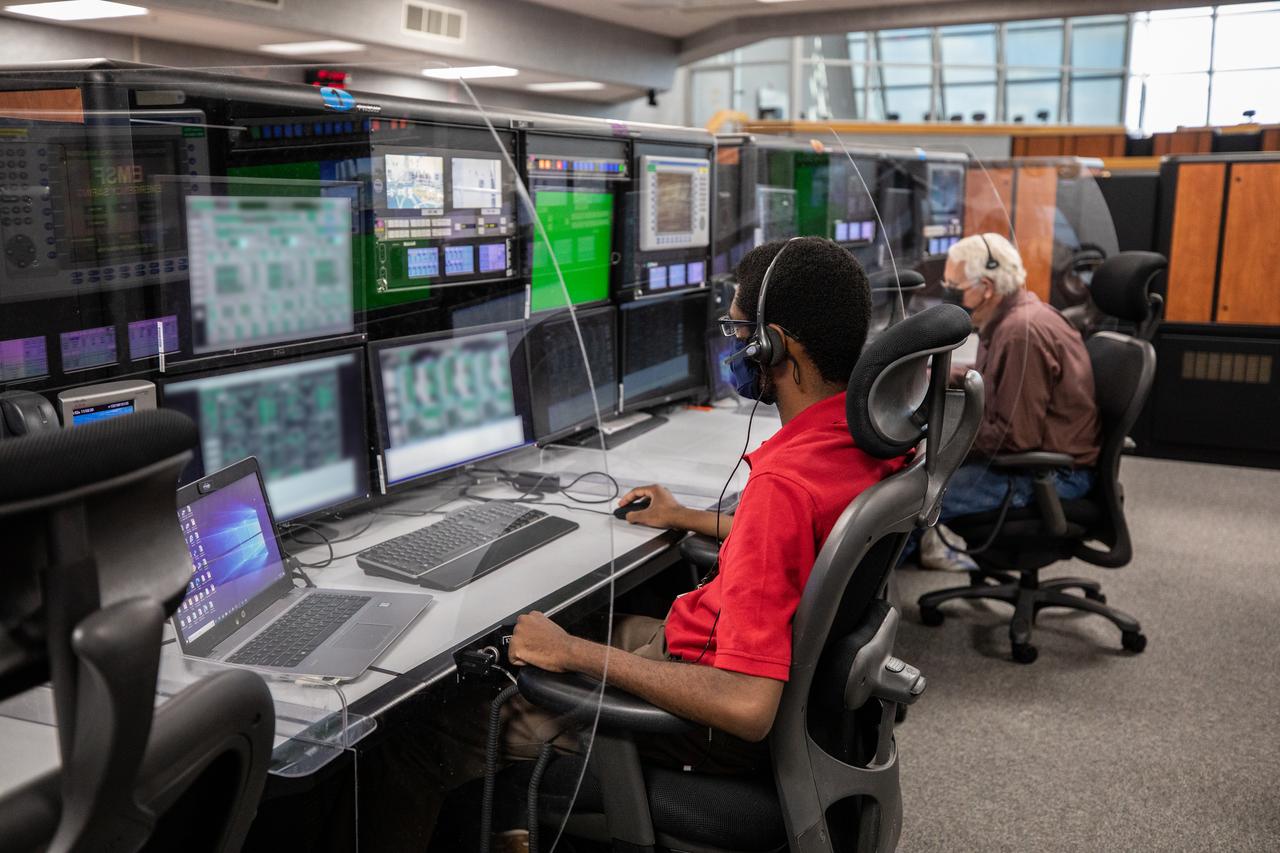
Theo Henderson, left, and Phillip Youmans, members of the cryogenics launch team, participate in a cryogenic propellant loading simulation inside Firing Room 1 in the Launch Control Center on Nov. 2, 2020, at NASA’s Kennedy Space Center in Florida. A team of engineers with Exploration Ground Systems and Jacobs are rehearsing the steps to load the super-cooled liquid hydrogen and liquid oxygen into the Space Launch System’s (SLS) core and second stages to prepare for Artemis I. The first in a series of increasingly complex missions, Artemis I will test the Orion spacecraft and Space Launch System as an integrated system ahead of crewed flights to the Moon. NASA will land the first woman and the next man on the Moon in 2024.
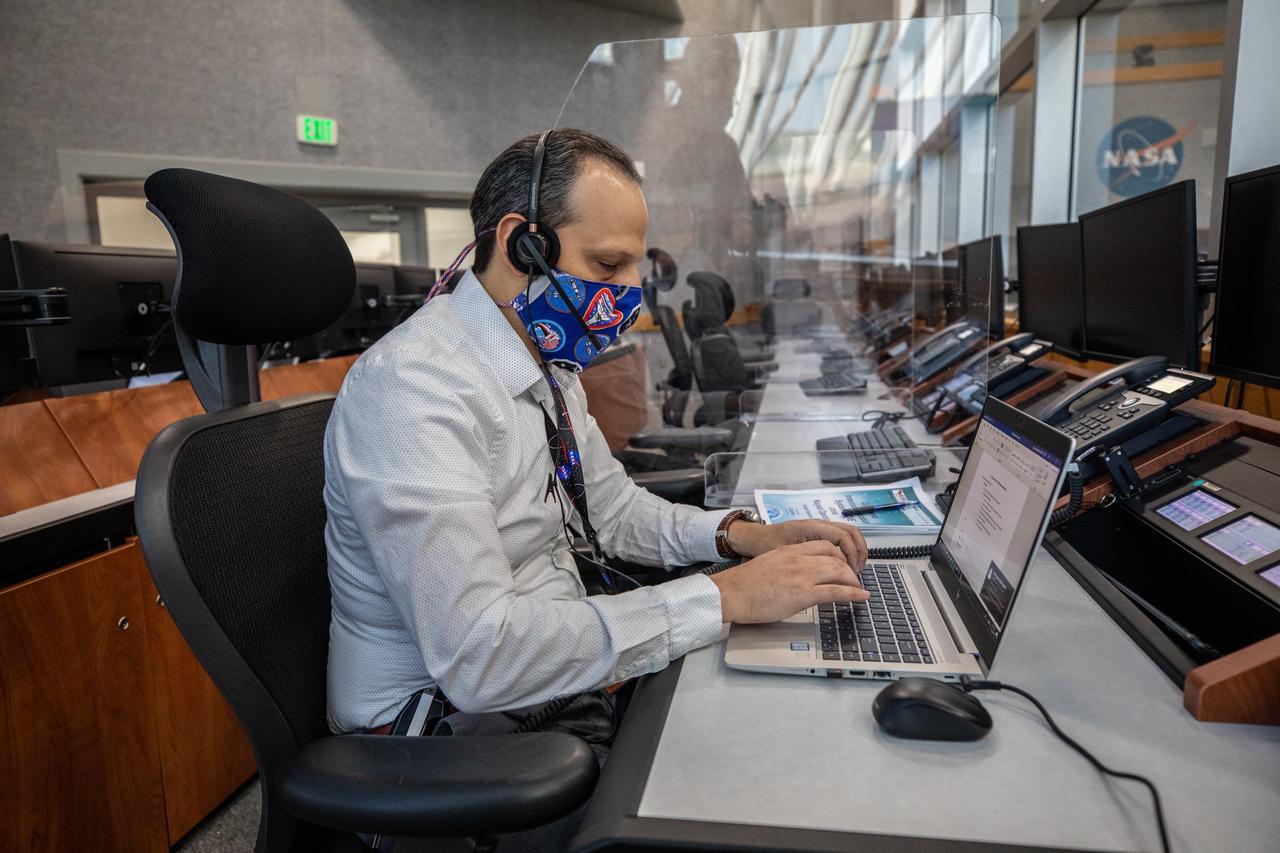
Pete Dizuzio, a system safety engineer, participates in a cryogenic propellant loading simulation inside Firing Room 1 in the Launch Control Center on Nov. 2, 2020, at NASA’s Kennedy Space Center in Florida. A team of engineers with Exploration Ground Systems and Jacobs, members of the cryogenics launch team, are rehearsing the steps to load the super-cooled liquid hydrogen and liquid oxygen into the Space Launch System’s (SLS) core and second stages to prepare for Artemis I. The first in a series of increasingly complex missions, Artemis I will test the Orion spacecraft and Space Launch System as an integrated system ahead of crewed flights to the Moon. NASA will land the first woman and the next man on the Moon in 2024.
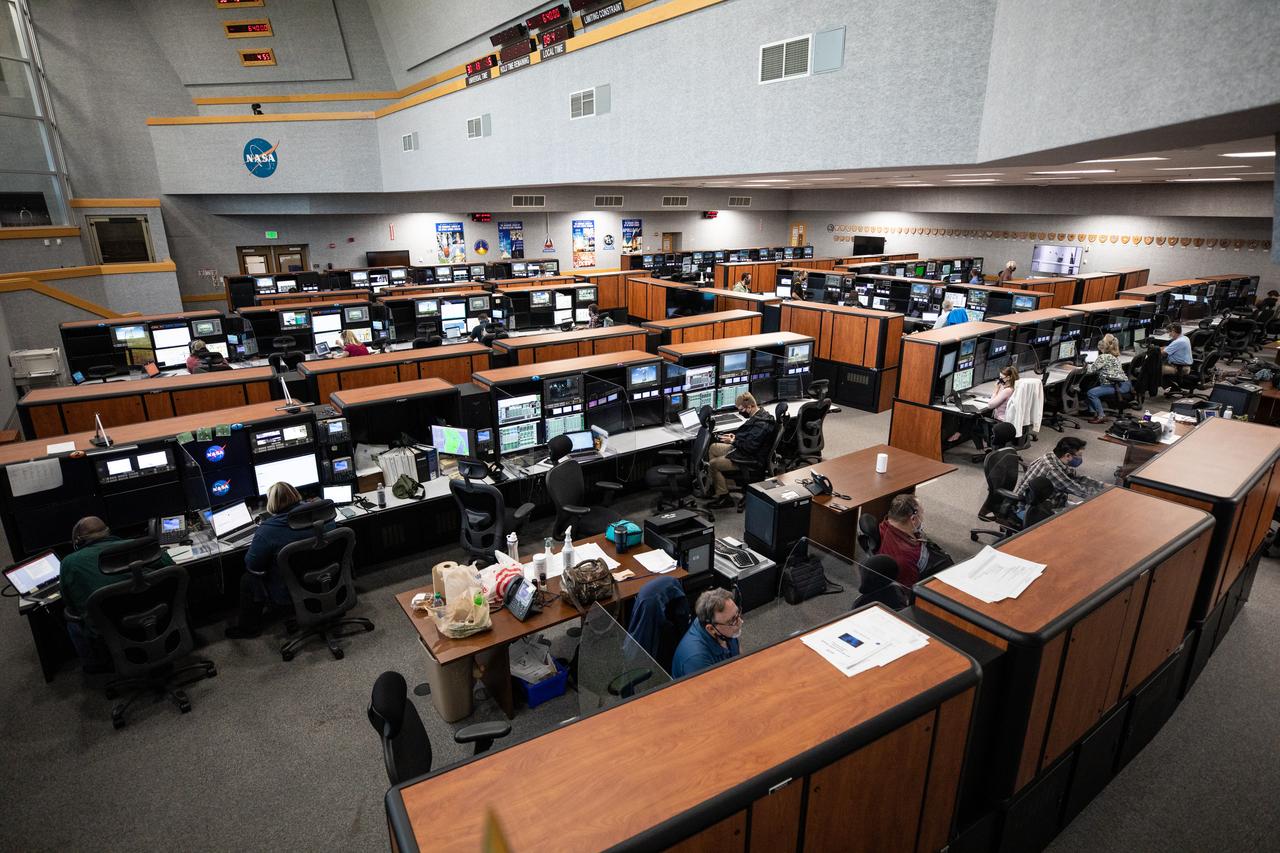
Members of the cryogenics launch team with Exploration Ground Systems and Jacobs participate in a cryogenic propellant loading simulation inside Firing Room 1 in the Launch Control Center on Nov. 2, 2020, at NASA’s Kennedy Space Center in Florida. A team of engineers with Exploration Ground Systems and Jacobs, members of the cryogenics launch team, are rehearsing the steps to load the super-cooled liquid hydrogen and liquid oxygen into the Space Launch System’s (SLS) core and second stages to prepare for Artemis I. The first in a series of increasingly complex missions, Artemis I will test the Orion spacecraft and Space Launch System as an integrated system ahead of crewed flights to the Moon. NASA will land the first woman and the next man on the Moon in 2024.
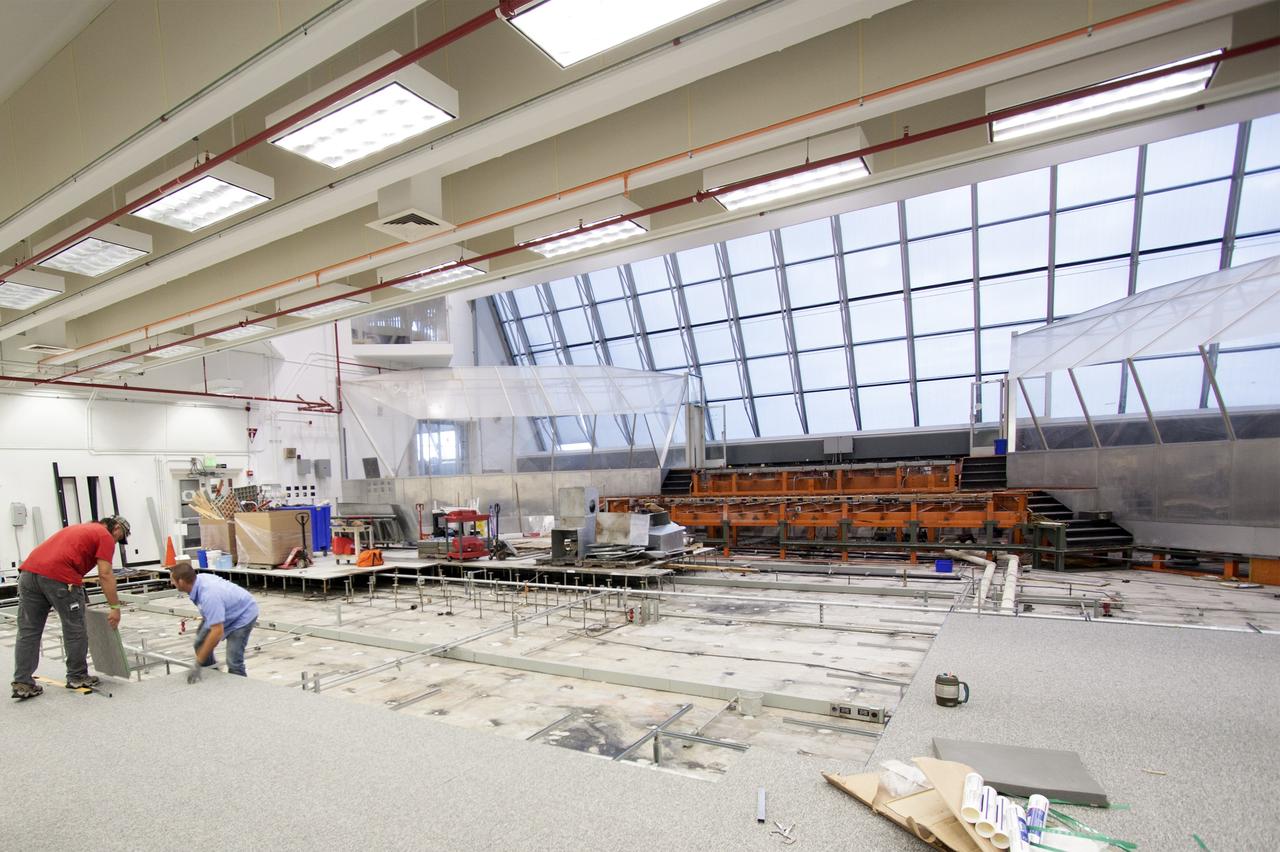
CAPE CANAVERAL, Fla. – At NASA’s Kennedy Space Center in Florida, modifications to Firing Room 2 in the Launch Control Center, or LCC, continue. Wiring and conduits below the floor have been upgraded. The legacy flooring was removed and new flooring is being installed. Firing Rooms inside the LCC are being upgraded by the Ground System Development and Operations Program at Kennedy to support the processing and launch of multiple types of rockets and spacecraft, whether they are government or commercial models. Kennedy’s Launch Complex 39 is transitioning to support multiple users with the Firing Rooms being modified to be more generic in nature for upcoming programs. Photo credit: NASA/Jim Grossmann
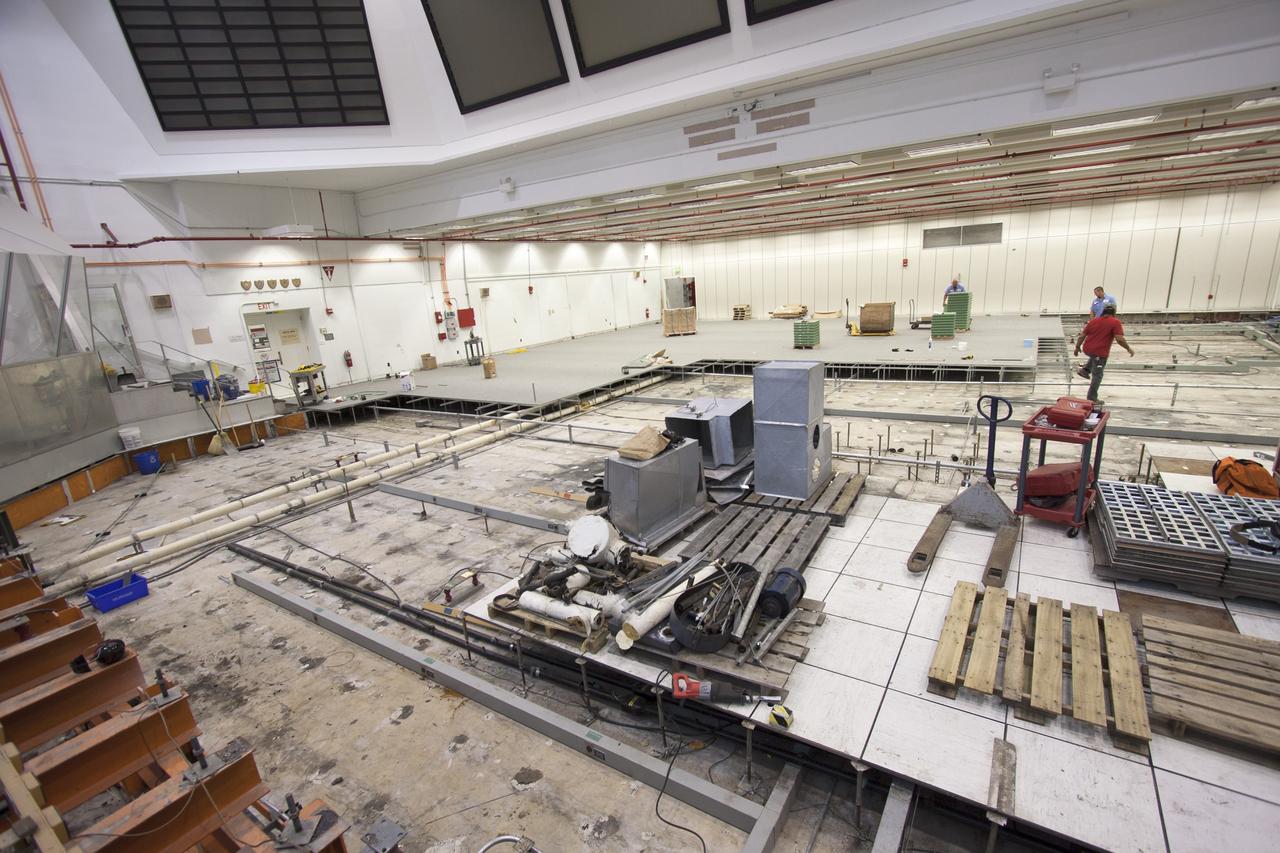
CAPE CANAVERAL, Fla. – At NASA’s Kennedy Space Center in Florida, modifications to Firing Room 2 in the Launch Control Center, or LCC, continue. Old flooring has been removed and wiring and conduits below the floor are being upgraded. New flooring will be installed. Firing Rooms inside the LCC are being upgraded by the Ground System Development and Operations Program at Kennedy to support the processing and launch of multiple types of rockets and spacecraft, whether they are government or commercial models. Kennedy’s Launch Complex 39 is transitioning to support multiple users with the Firing Rooms being modified to be more generic in nature for upcoming programs. Photo credit: NASA/Jim Grossmann
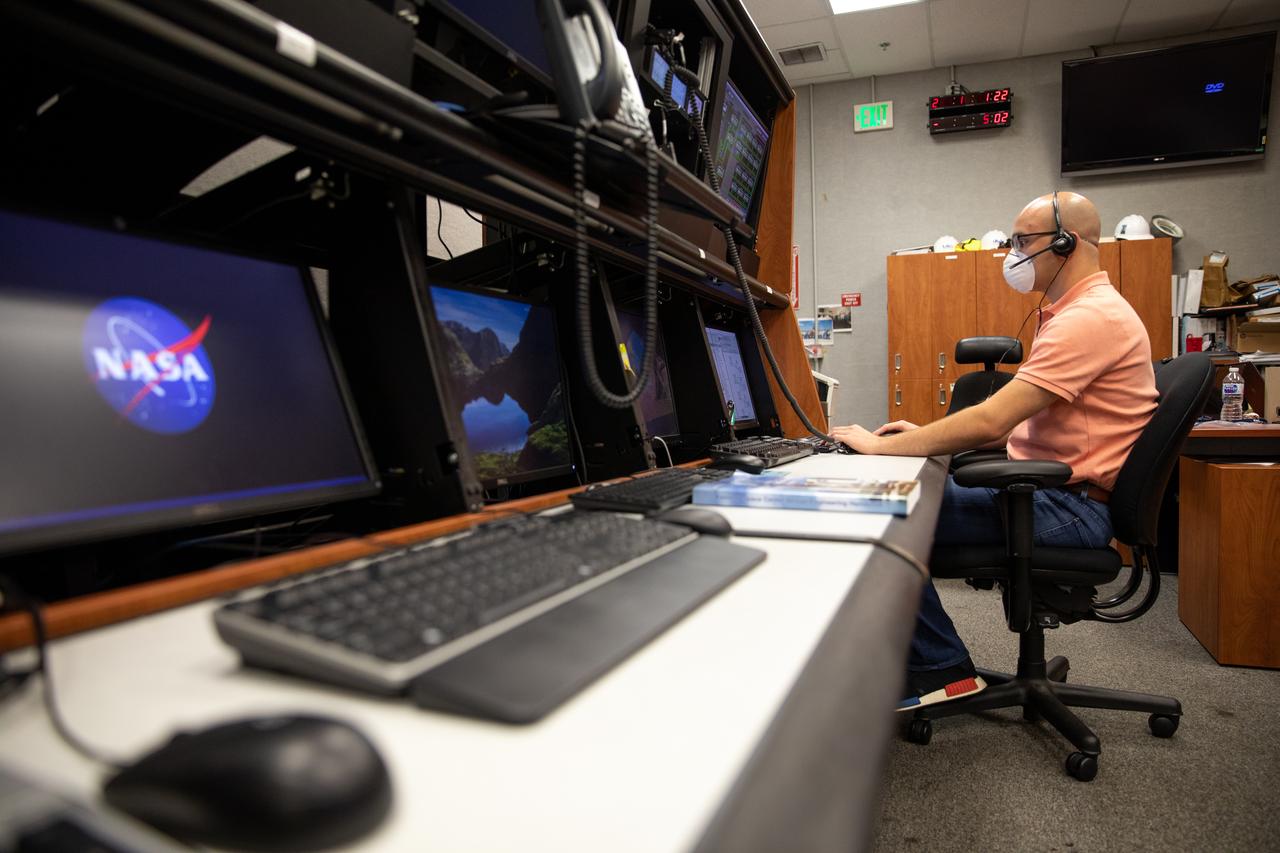
Inside the Launch Control Center at Kennedy Space Center on Sept. 29, 2020, engineer Danny Zaatari, with Exploration Ground Systems, works on software for the launch of Artemis I. Engineers at the Florida spaceport are staying focused on the “Path to the Pad.” Artemis I is the first in a series of increasingly complex missions that will enable human exploration to the Moon and Mars.

Engineers with Exploration Ground Systems at NASA’s Kennedy Space Center in Florida work on software for the launch of Artemis I. Reggie Martin (standing) and Danny Zaatari stay focused on the “Path to the Pad” inside the Launch Control Center on Sept 29, 2020. Artemis I is the first in a series of increasingly complex missions that will enable human exploration to the Moon and Mars.
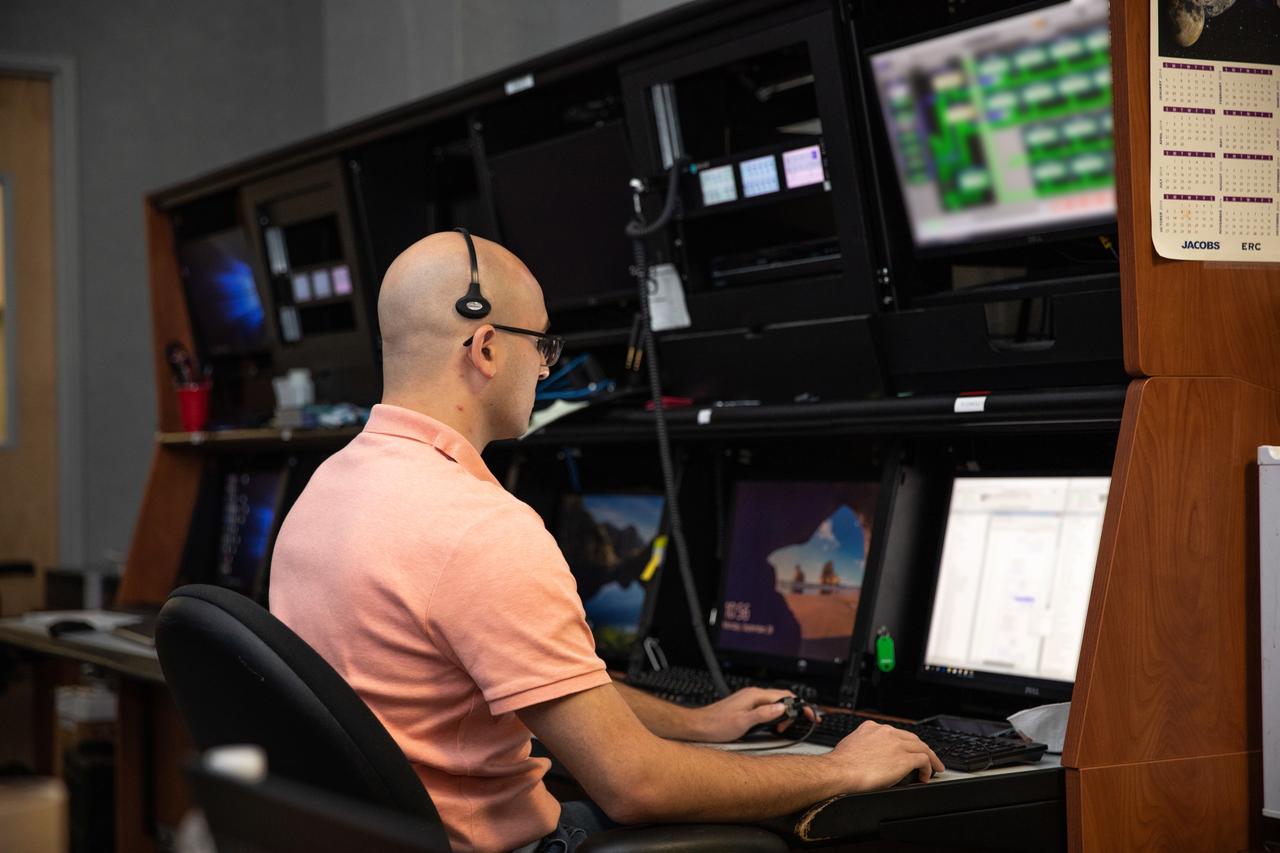
Inside the Launch Control Center at Kennedy Space Center on Sept. 29, 2020, engineer Danny Zaatari, with Exploration Ground Systems, works on software for the launch of Artemis I. Engineers at the Florida spaceport are staying focused on the “Path to the Pad.” Artemis I is the first in a series of increasingly complex missions that will enable human exploration to the Moon and Mars.
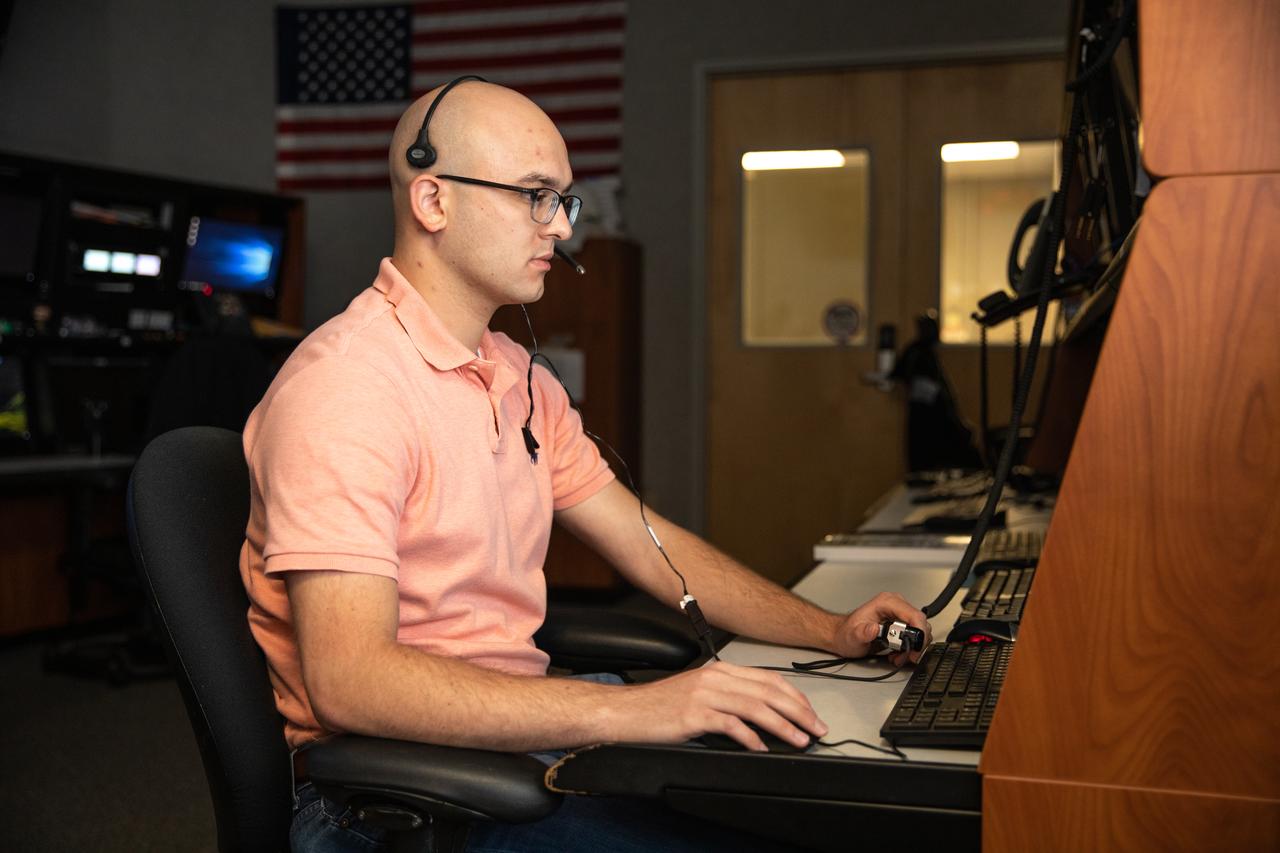
Inside the Launch Control Center at Kennedy Space Center on Sept. 29, 2020, engineer Danny Zaatari, with Exploration Ground Systems, works on software for the launch of Artemis I. Engineers at the Florida spaceport are staying focused on the “Path to the Pad.” Artemis I is the first in a series of increasingly complex missions that will enable human exploration to the Moon and Mars.
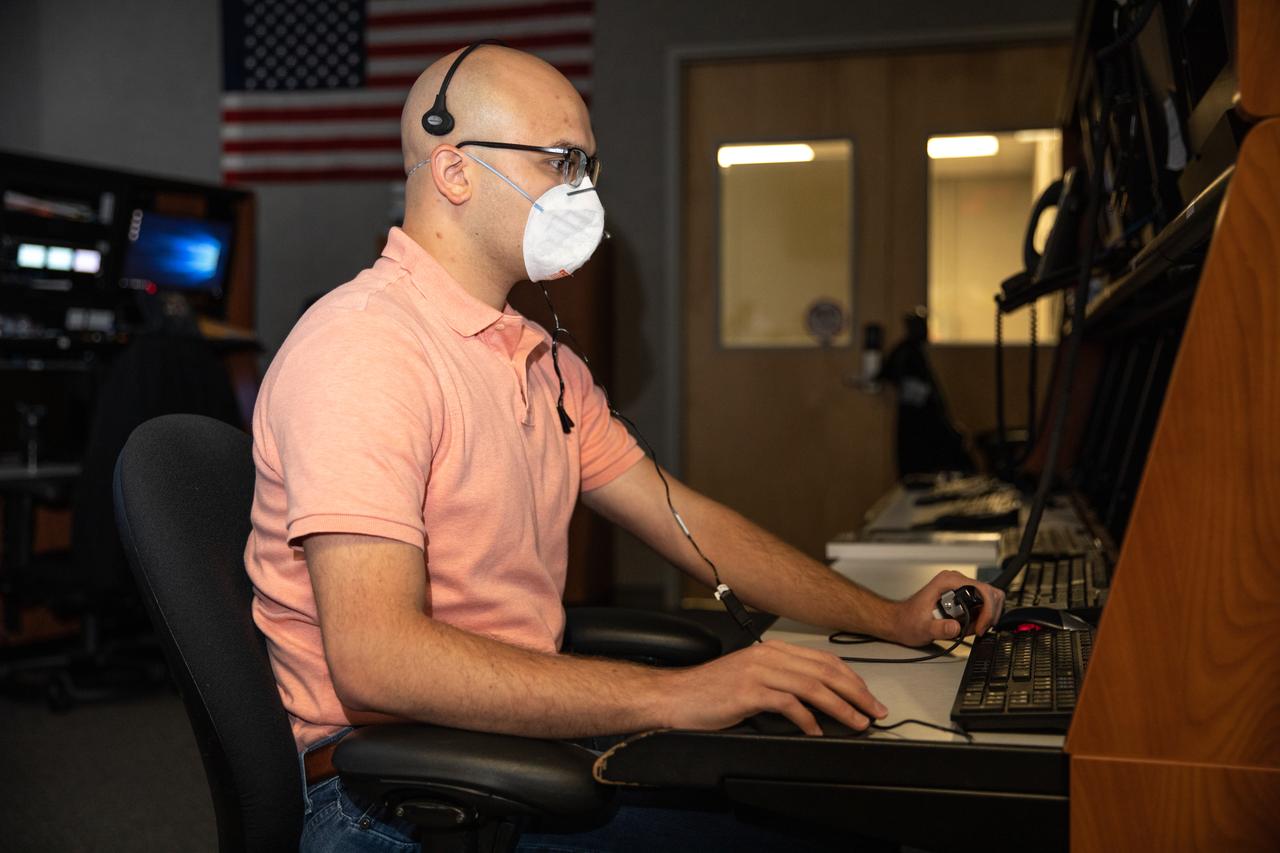
Inside the Launch Control Center at Kennedy Space Center on Sept. 29, 2020, engineer Danny Zaatari, with Exploration Ground Systems, works on software for the launch of Artemis I. Engineers at the Florida spaceport are staying focused on the “Path to the Pad.” Artemis I is the first in a series of increasingly complex missions that will enable human exploration to the Moon and Mars.
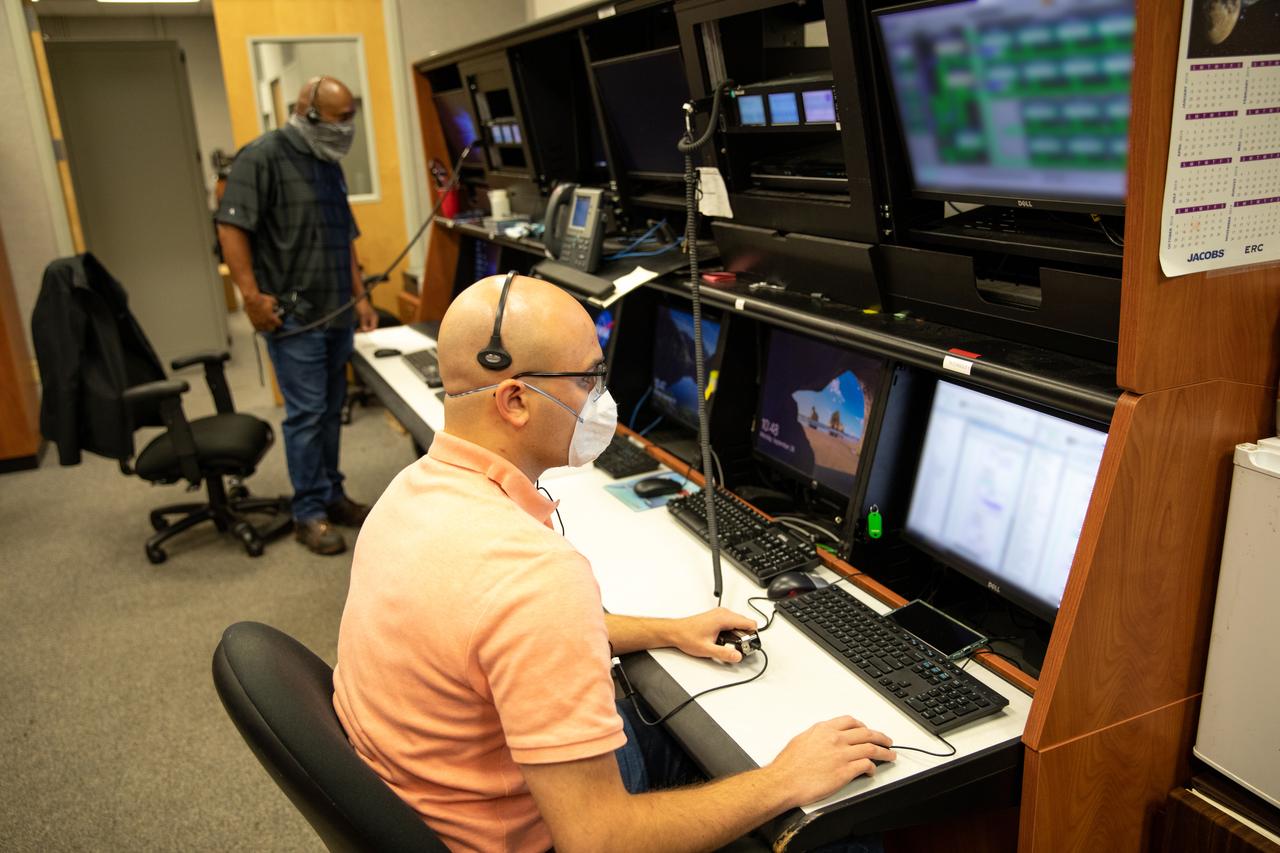
Engineers with Exploration Ground Systems at NASA’s Kennedy Space Center in Florida work on software for the launch of Artemis I. Reggie Martin (standing) and Danny Zaatari stay focused on the “Path to the Pad” inside the Launch Control Center on Sept 29, 2020. Artemis I is the first in a series of increasingly complex missions that will enable human exploration to the Moon and Mars.
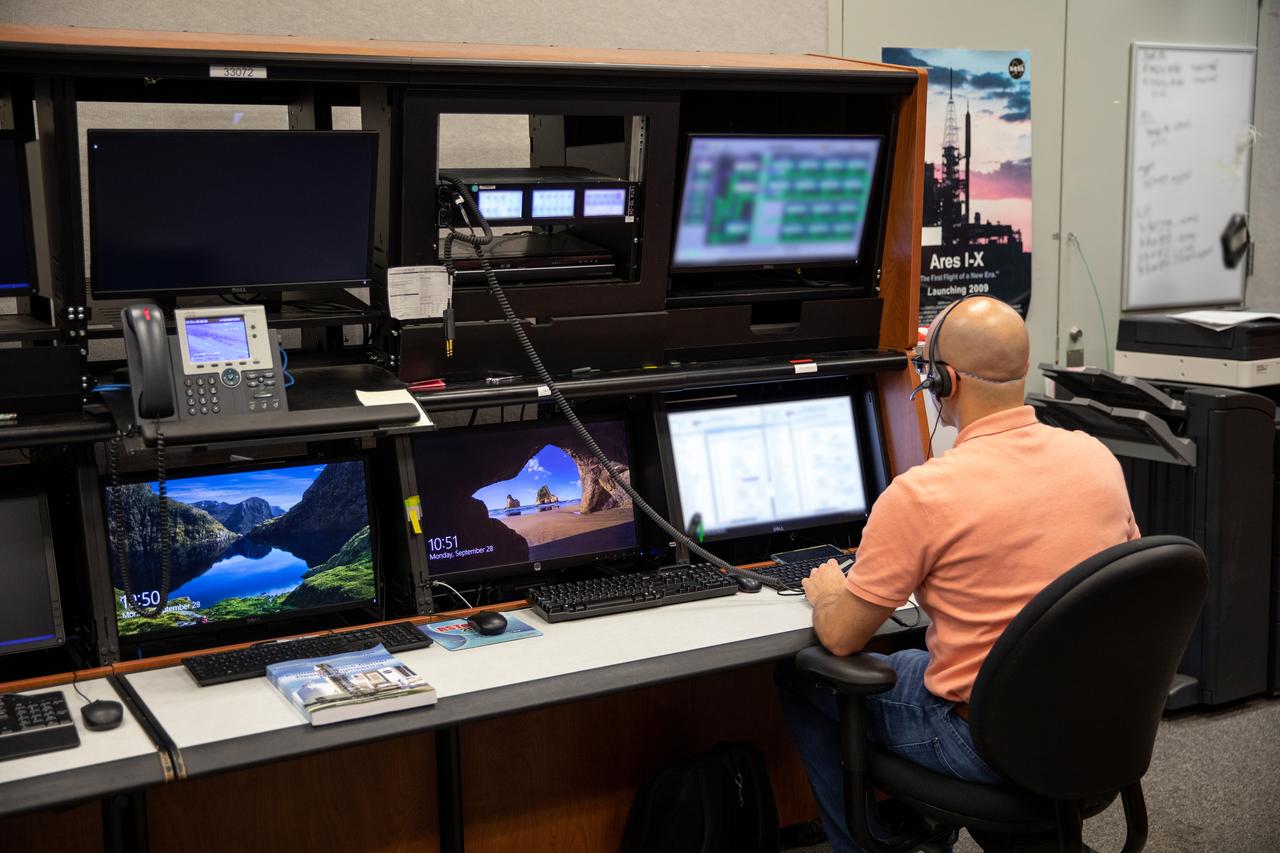
Inside the Launch Control Center at Kennedy Space Center on Sept. 29, 2020, engineer Danny Zaatari, with Exploration Ground Systems, works on software for the launch of Artemis I. Engineers at the Florida spaceport are staying focused on the “Path to the Pad.” Artemis I is the first in a series of increasingly complex missions that will enable human exploration to the Moon and Mars.

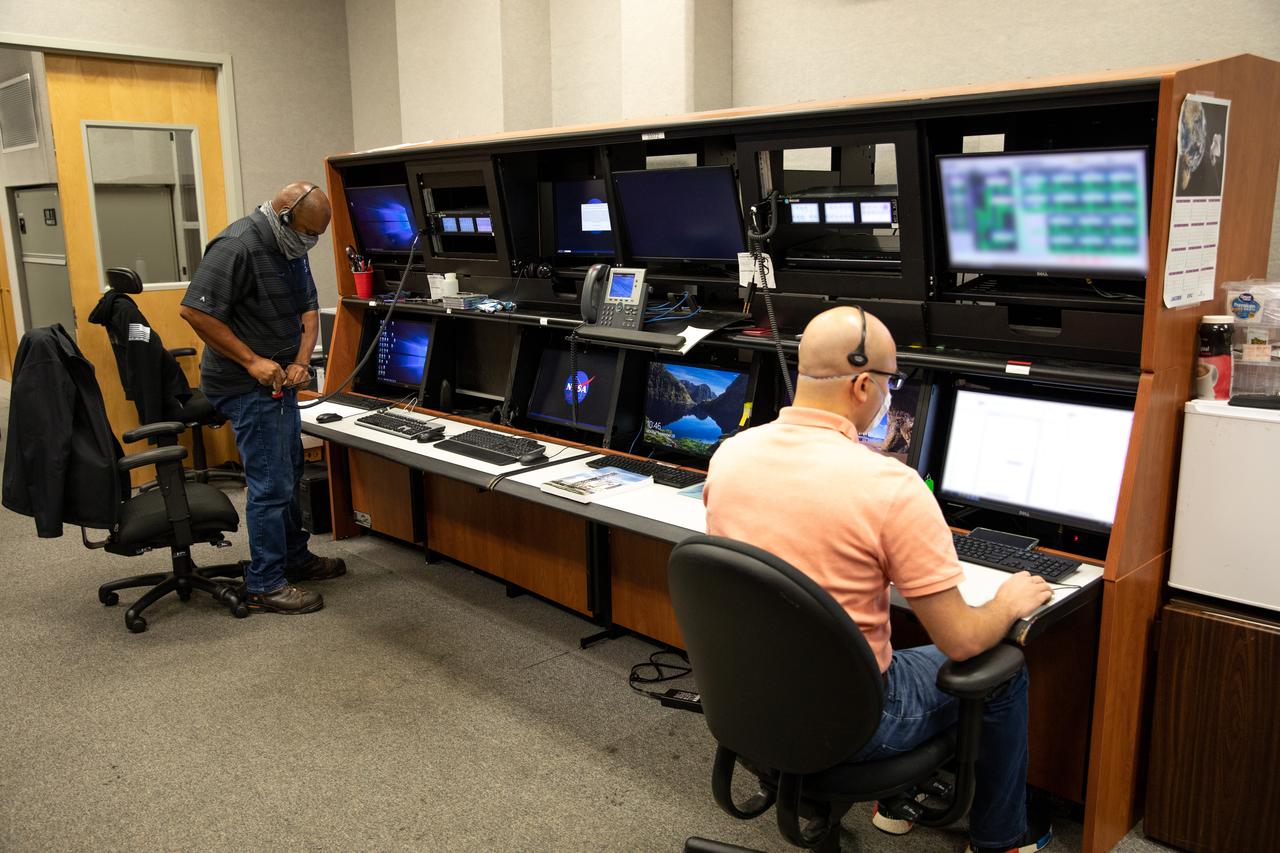
Engineers with Exploration Ground Systems at NASA’s Kennedy Space Center in Florida work on software for the launch of Artemis I. Danny Zaatari (foreground) and Reggie Martin stay focused on the “Path to the Pad” inside the Launch Control Center on Sept 29, 2020. Artemis I is the first in a series of increasingly complex missions that will enable human exploration to the Moon and Mars.
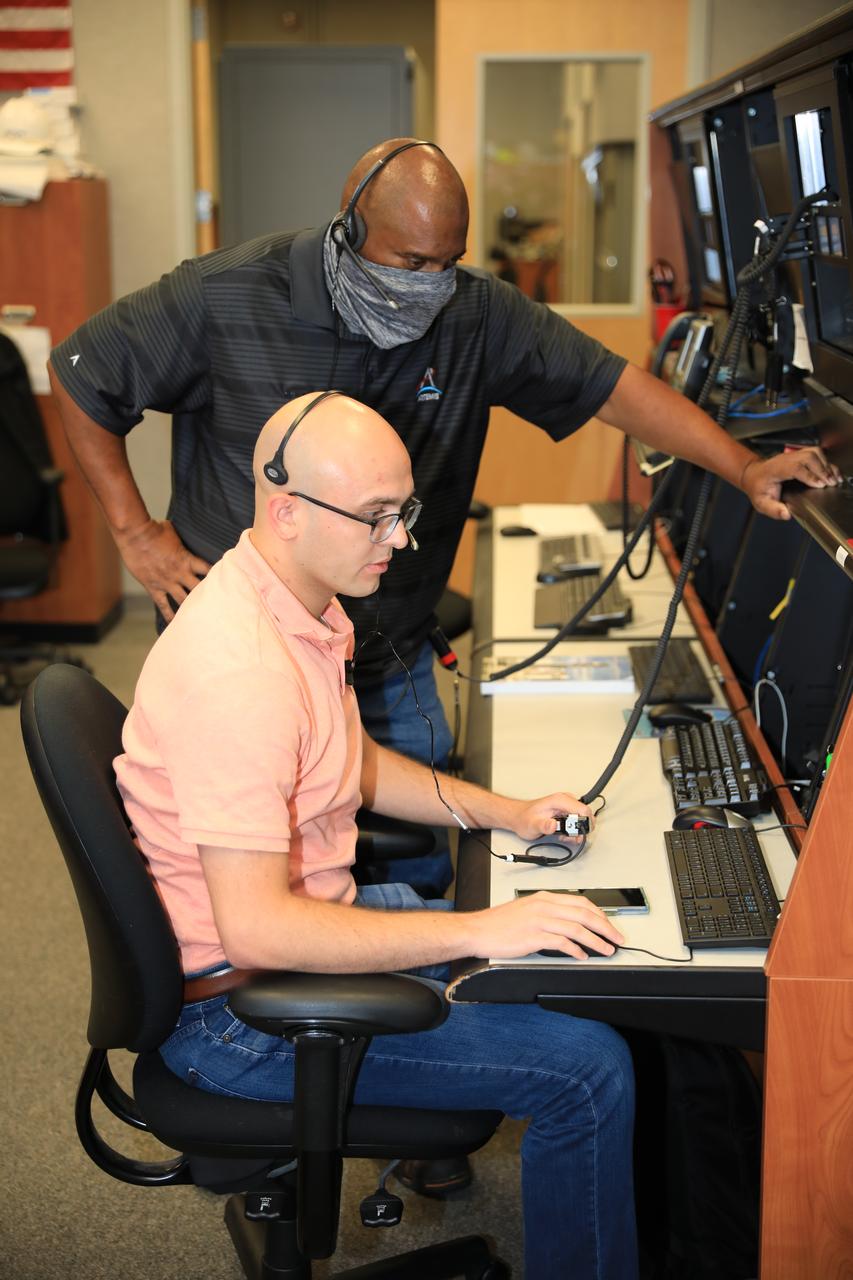
Engineers with Exploration Ground Systems at NASA’s Kennedy Space Center in Florida work on software for the launch of Artemis I. Reggie Martin (standing) and Danny Zaatari stay focused on the “Path to the Pad” inside the Launch Control Center on Sept 29, 2020. Artemis I is the first in a series of increasingly complex missions that will enable human exploration to the Moon and Mars.
Engineers with Exploration Ground Systems at NASA’s Kennedy Space Center in Florida work on software for the launch of Artemis I. Reggie Martin, left, and Danny Zaatari stay focused on the “Path to the Pad” inside the Launch Control Center on Sept 29, 2020. Artemis I is the first in a series of increasingly complex missions that will enable human exploration to the Moon and Mars.
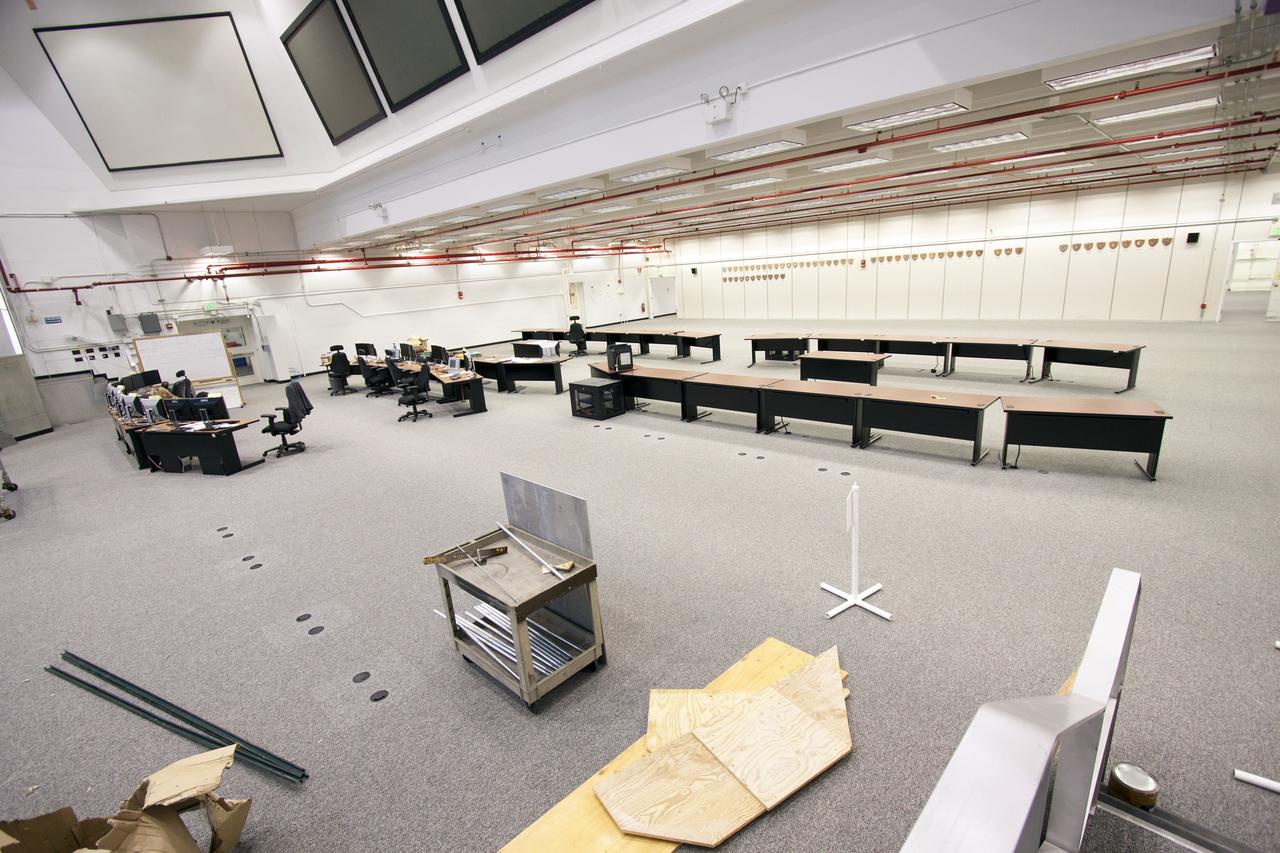
CAPE CANAVERAL, Fla. – At NASA’s Kennedy Space Center in Florida, modifications to Firing Room 3 in the Launch Control Center, or LCC, continue. Wiring and conduits below the floor have been upgraded. The legacy flooring was removed and new flooring has been installed. Some of the new launch control work stations are being positioned for installation in the room. Firing Rooms inside the LCC are being upgraded by the Ground System Development and Operations Program at Kennedy to support the processing and launch of multiple types of rockets and spacecraft, whether they are government or commercial models. Kennedy’s Launch Complex 39 is transitioning to support multiple users with the Firing Rooms being modified to be more generic in nature for upcoming programs. Photo credit: NASA/Jim Grossmann
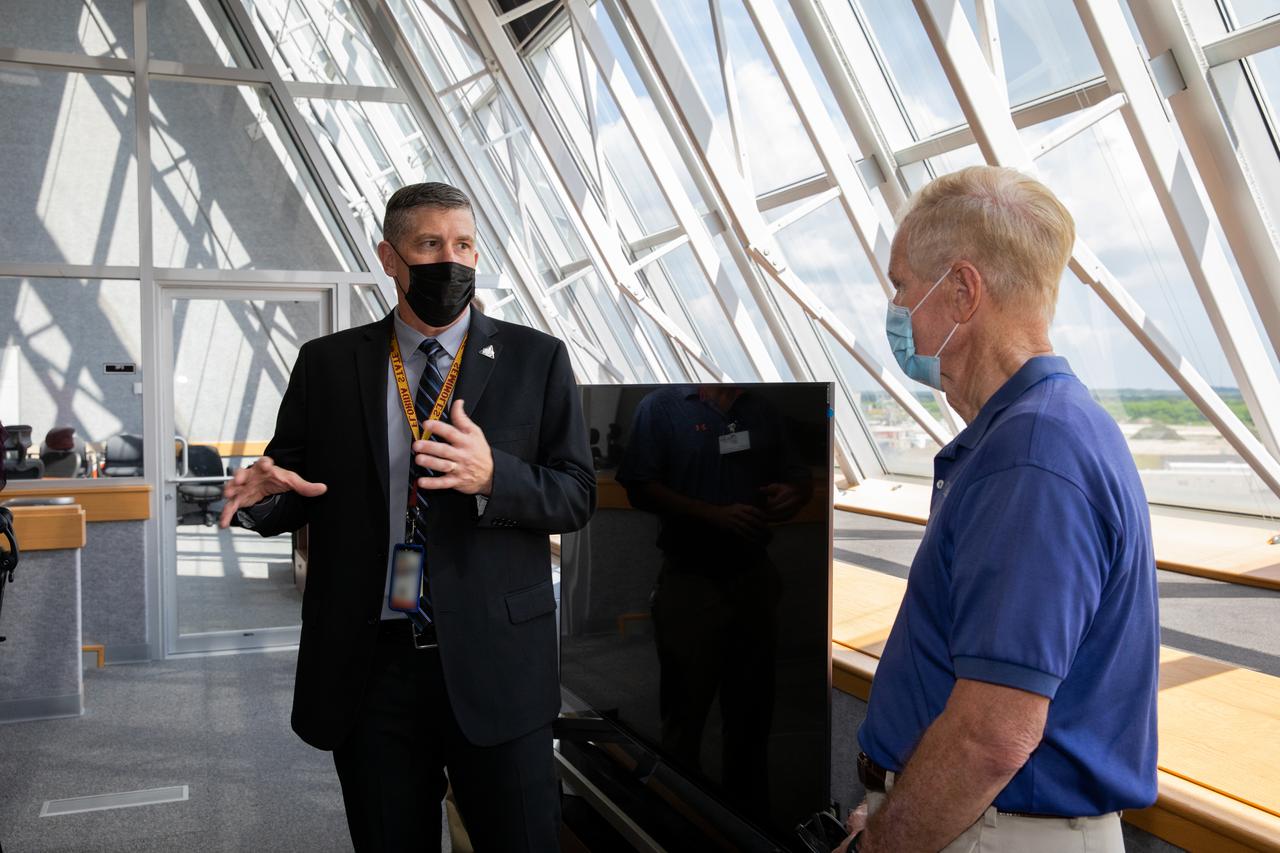
Jeremy Graeber, left, chief of the Test, Launch, and Recovery Operations Branch within the agency’s Exploration Ground Systems Program, speaks with NASA Administrator Bill Nelson inside the Launch Control Center (LCC) at the agency’s Kennedy Space Center in Florida on July 28, 2021. During Nelson’s visit to Kennedy, he had the opportunity to tour the LCC and learn about the launch team as preparations for Artemis I continue. The first in an increasingly complex set of missions, Artemis I will test SLS and Orion as an integrated system prior to crewed flights to the Moon. Through Artemis, NASA will land the first woman and first person of color on the lunar surface, as well as establish a sustainable presence on and around the Moon.
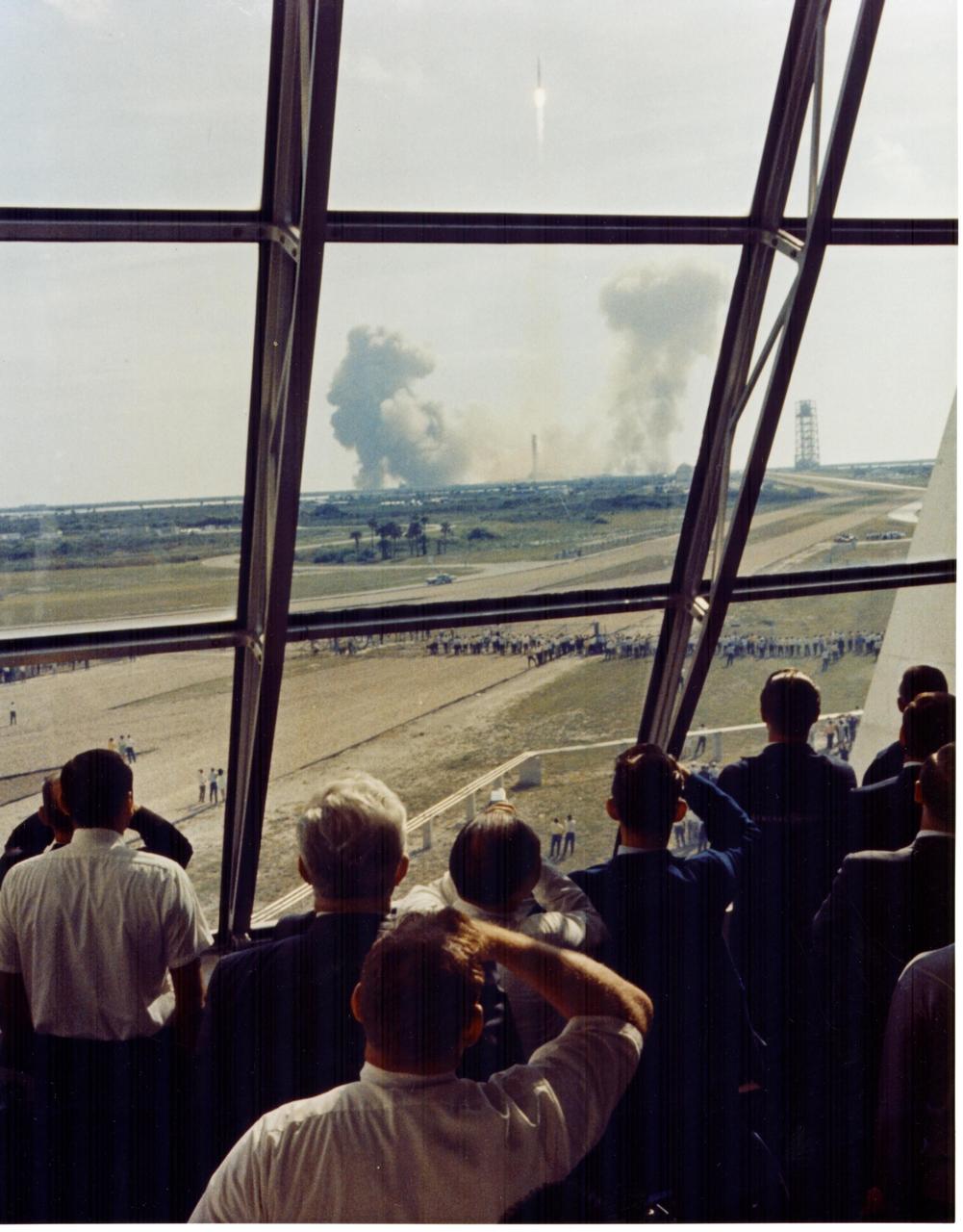
KENNEDY SPACE CENTER, FLA. - Personnel within the Launch Control Center watch the Apollo 11 liftoff from Launch Complex 39A today at the start of the historic lunar landing mission. The LCC is located three-and-one-half miles from the launch pad.
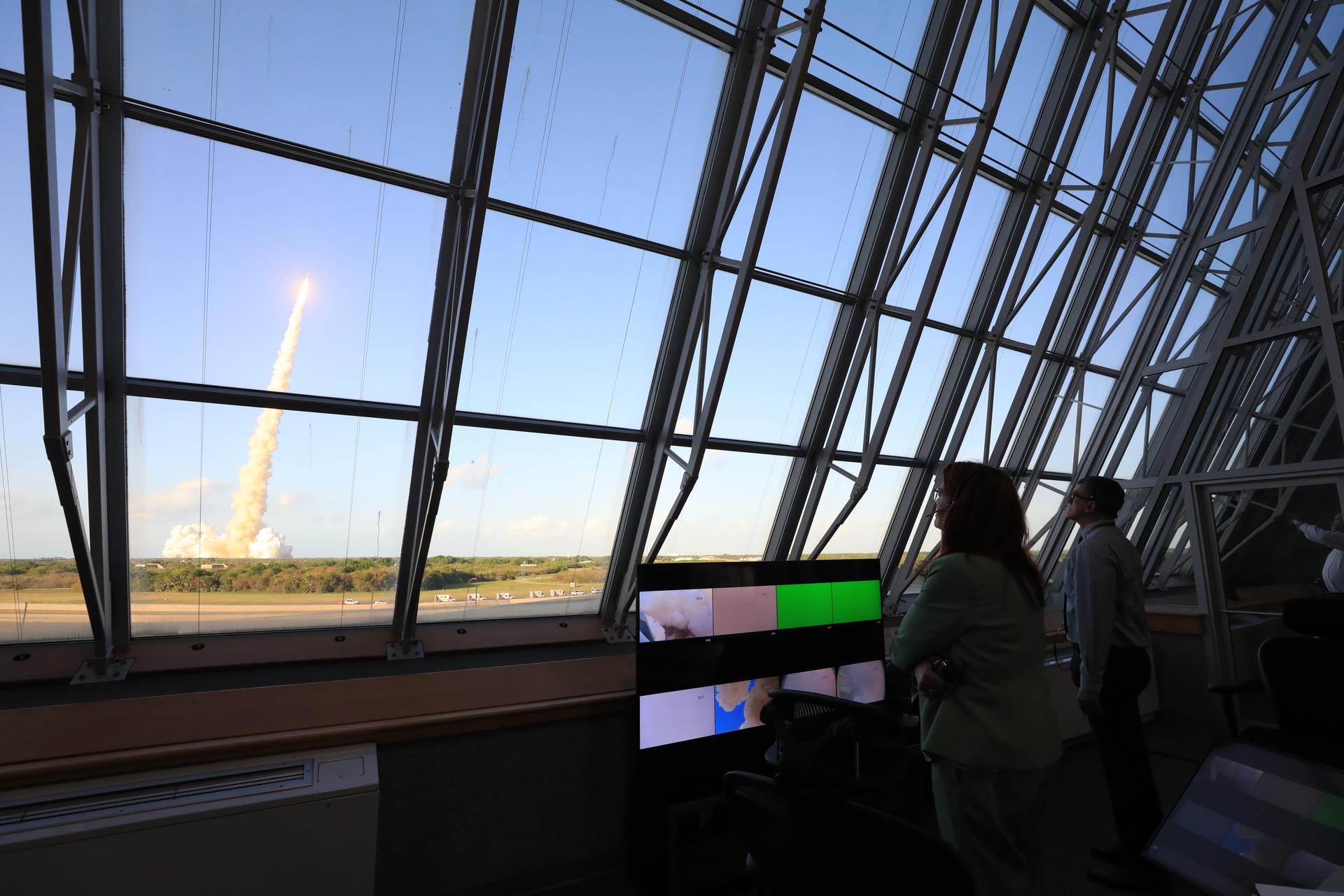
Charlie Blackwell-Thompson, Artemis launch director, and Jeremy Graeber, assistant launch director, each from NASA’s Exploration Ground Systems Program, watch the launch of NASA’s Artemis II test flight launch inside Firing Room 1 of the Rocco Petrone Launch Control Center on Wednesday, April 1, 2026. The Artemis II mission launched Commander Reid Wiseman, Pilot Victor Glover, and Mission Specialist Christina Koch from NASA, and Mission Specialist Jeremy Hansen from the CSA (Canadian Space Agency), aboard NASA’s SLS (Space Launch System) rocket and Orion spacecraft to journey for 10 days around the Moon and back to Earth.
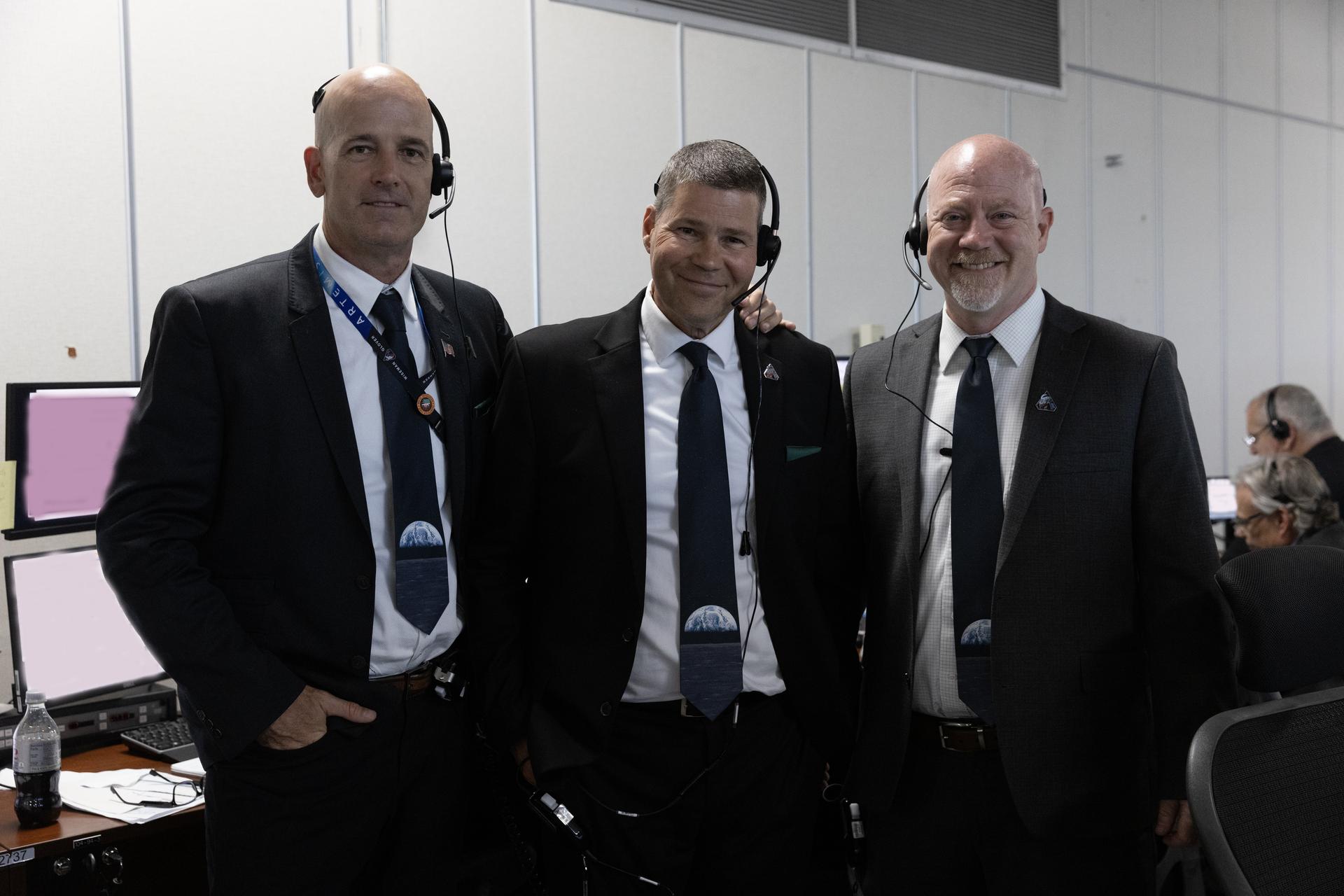
From left to right, Eric Gore, chief engineer; John Blevins, Space Launch System chief engineer; and Ronald Baccus, Orion chief engineer, each from NASA’s Exploration Ground Systems Program, pose for a photograph inside Firing Room 1 of the Rocco Petrone Launch Control Center following the launch of the Artemis II test flight on Wednesday, April 1, 2026. The tie-cutting is a NASA tradition those who have a new role launch. The Artemis II mission launched Commander Reid Wiseman, Pilot Victor Glover, and Mission Specialist Christina Koch from NASA, and Mission Specialist Jeremy Hansen from the CSA (Canadian Space Agency), aboard NASA’s SLS (Space Launch System) rocket and Orion spacecraft to journey for 10 days around the Moon and back to Earth.
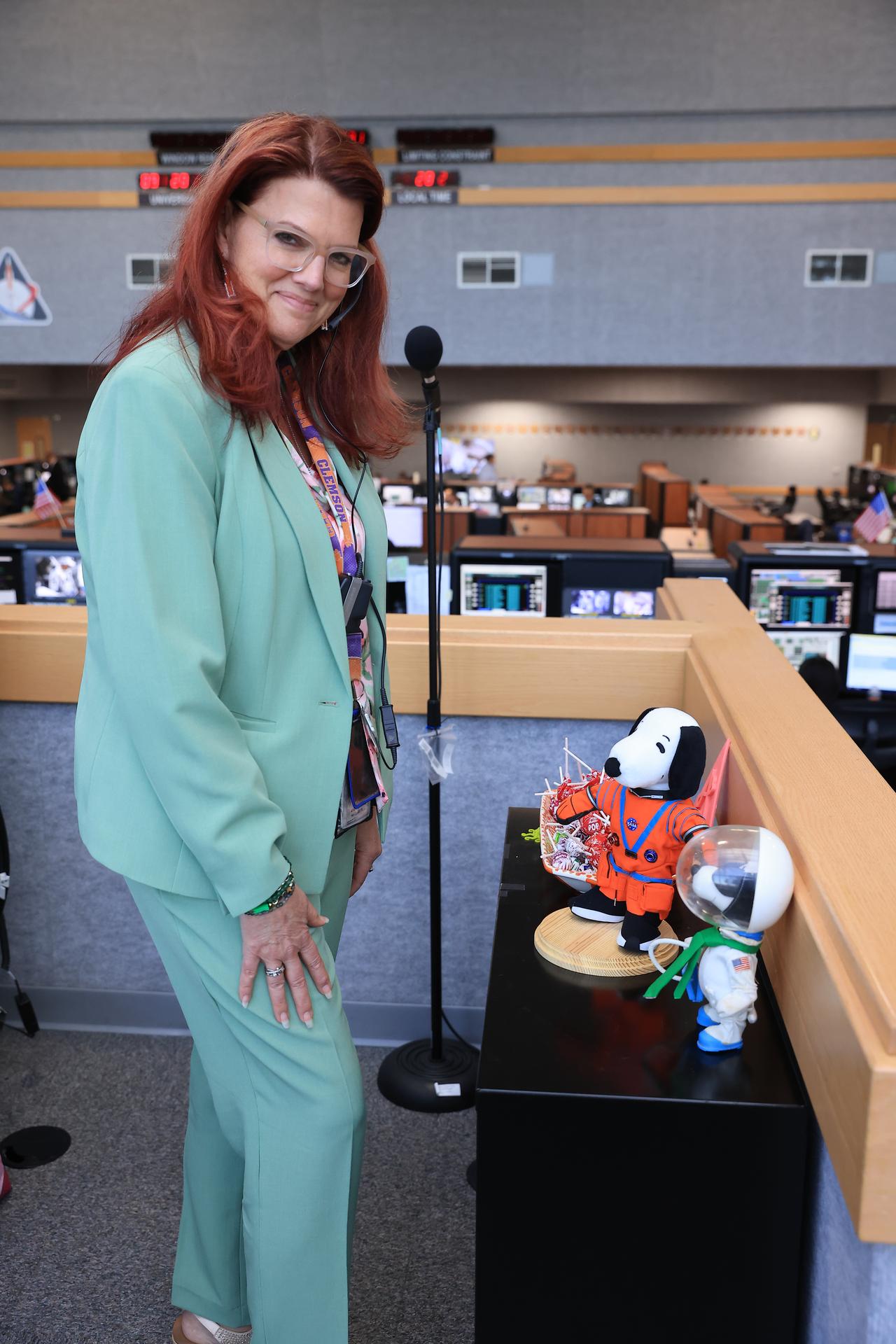
Charlie Blackwell-Thompson, Artemis launch director, NASA’s Exploration Ground Systems Program poses with an Astronaut Snoopy plush toy and her childhood Astronaut Snoopy inside Firing Room 1 of the Rocco Petrone Launch Control Center following the launch of the Artemis II test flight on Wednesday, April 1, 2026. Snoopy has been an official NASA mascot for over 50 years. The Artemis II mission launched Commander Reid Wiseman, Pilot Victor Glover, and Mission Specialist Christina Koch from NASA, and Mission Specialist Jeremy Hansen from the CSA (Canadian Space Agency), aboard NASA’s SLS (Space Launch System) rocket and Orion spacecraft to journey for 10 days around the Moon and back to Earth.
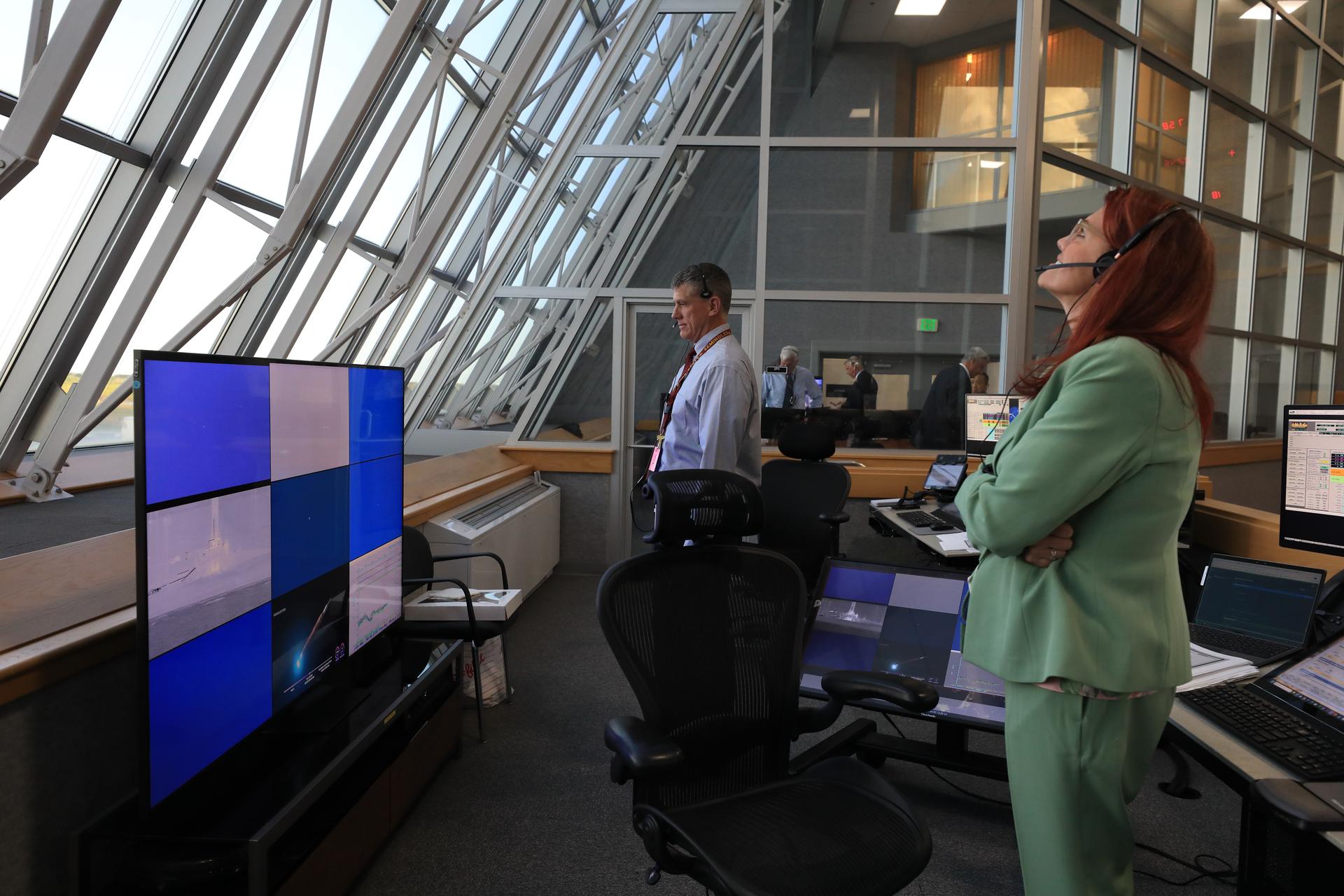
Charlie Blackwell-Thompson, Artemis launch director, and Jeremy Graeber, assistant launch director, each from NASA’s Exploration Ground Systems Program, watch the launch of NASA’s Artemis II test flight launch inside Firing Room 1 of the Rocco Petrone Launch Control Center on Wednesday, April 1, 2026. The Artemis II mission launched Commander Reid Wiseman, Pilot Victor Glover, and Mission Specialist Christina Koch from NASA, and Mission Specialist Jeremy Hansen from the CSA (Canadian Space Agency), aboard NASA’s SLS (Space Launch System) rocket and Orion spacecraft to journey for 10 days around the Moon and back to Earth.
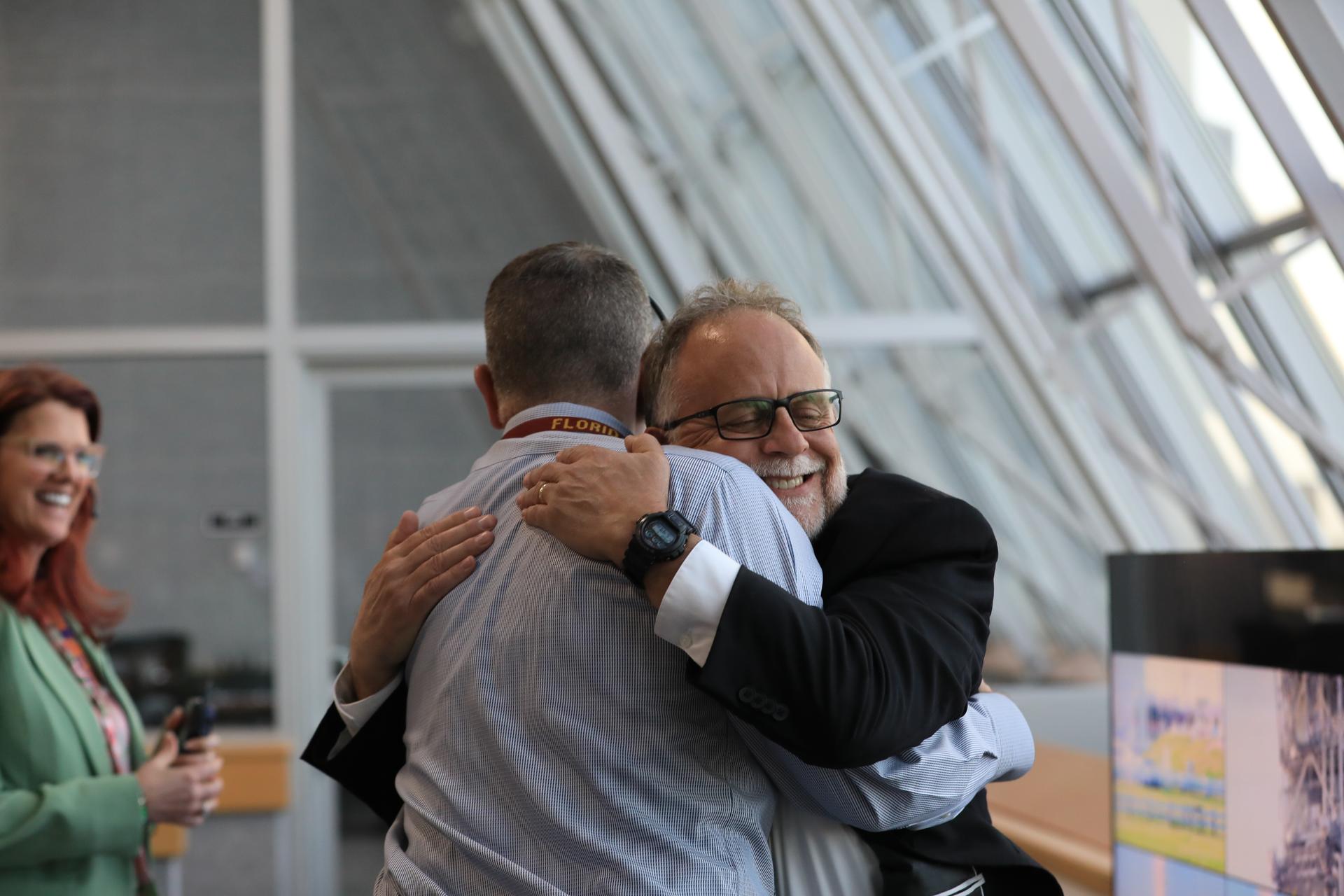
From left, Jeremy Graeber, assistant launch director, and Shawn Quinn, manager, each from NASA’s Exploration Ground Systems Program, smile and hug inside Firing Room 1 of the Rocco A. Petrone Launch Control Center following the launch of the Artemis II test flight on Wednesday, April 1, 2026. The Artemis II mission launched Commander Reid Wiseman, Pilot Victor Glover, and Mission Specialist Christina Koch from NASA, and Mission Specialist Jeremy Hansen from the CSA (Canadian Space Agency), aboard NASA’s SLS (Space Launch System) rocket and Orion spacecraft to journey for 10 days around the Moon and back to Earth.
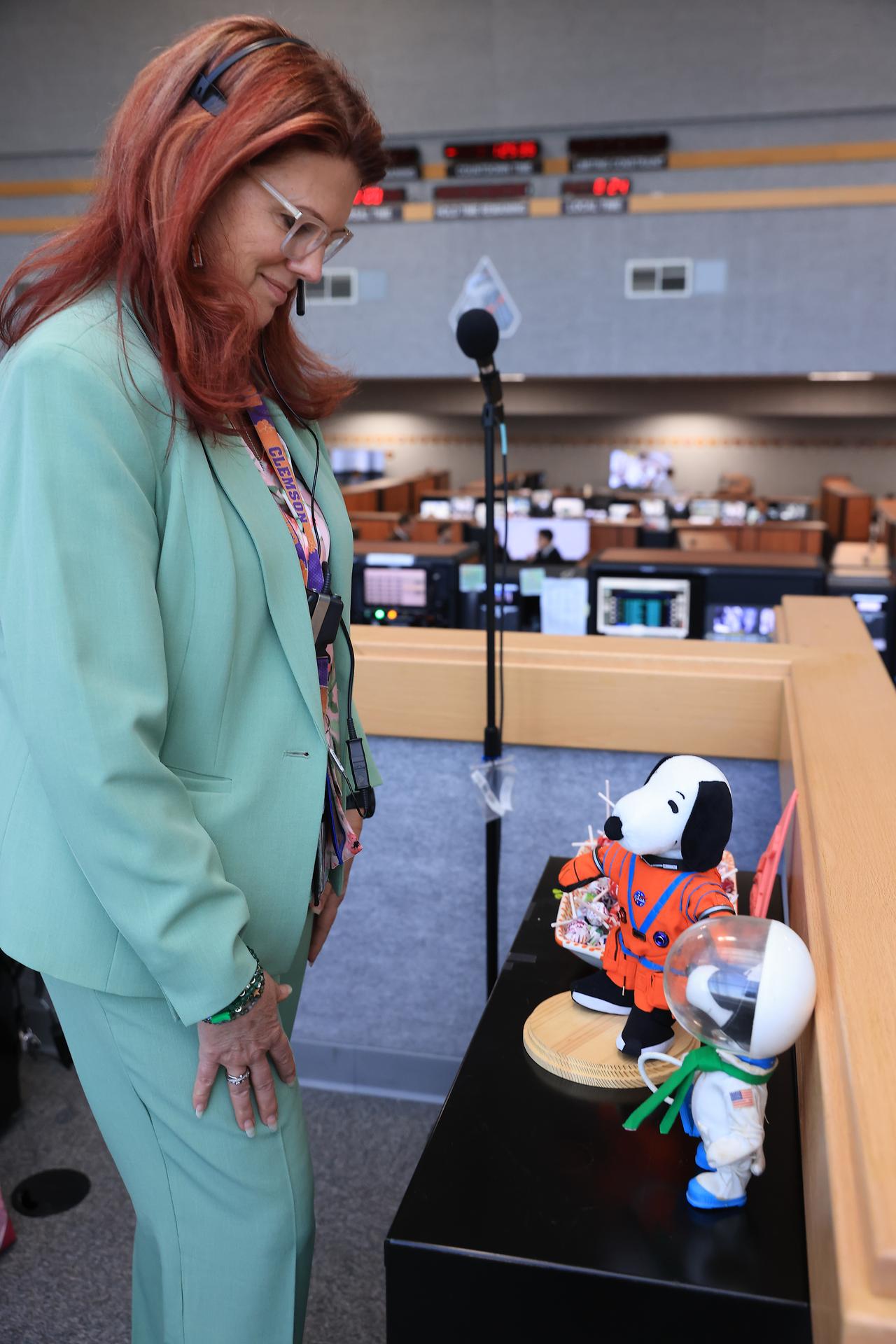
Charlie Blackwell-Thompson, Artemis launch director, NASA’s Exploration Ground Systems Program poses with an Astronaut Snoopy plush toy and her childhood Astronaut Snoopy inside Firing Room 1 of the Rocco Petrone Launch Control Center following the launch of the Artemis II test flight on Wednesday, April 1, 2026. Snoopy has been an official NASA mascot for over 50 years. The Artemis II mission launched Commander Reid Wiseman, Pilot Victor Glover, and Mission Specialist Christina Koch from NASA, and Mission Specialist Jeremy Hansen from the CSA (Canadian Space Agency), aboard NASA’s SLS (Space Launch System) rocket and Orion spacecraft to journey for 10 days around the Moon and back to Earth.
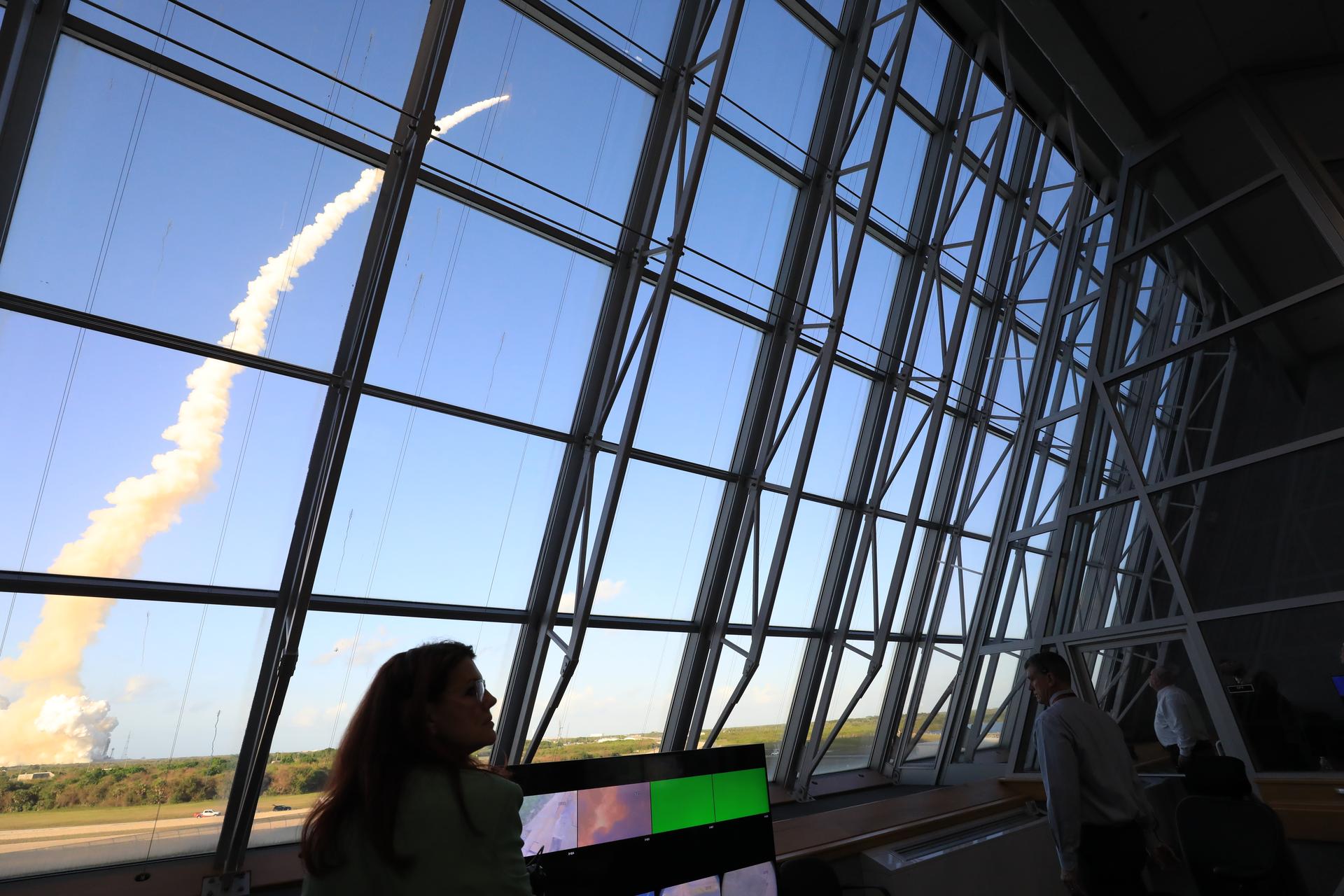
Charlie Blackwell-Thompson, Artemis launch director, and Jeremy Graeber, assistant launch director, each from NASA’s Exploration Ground Systems Program, watch the launch of NASA’s Artemis II test flight launch inside Firing Room 1 of the Rocco Petrone Launch Control Center on Wednesday, April 1, 2026. The Artemis II mission launched Commander Reid Wiseman, Pilot Victor Glover, and Mission Specialist Christina Koch from NASA, and Mission Specialist Jeremy Hansen from the CSA (Canadian Space Agency), aboard NASA’s SLS (Space Launch System) rocket and Orion spacecraft to journey for 10 days around the Moon and back to Earth.
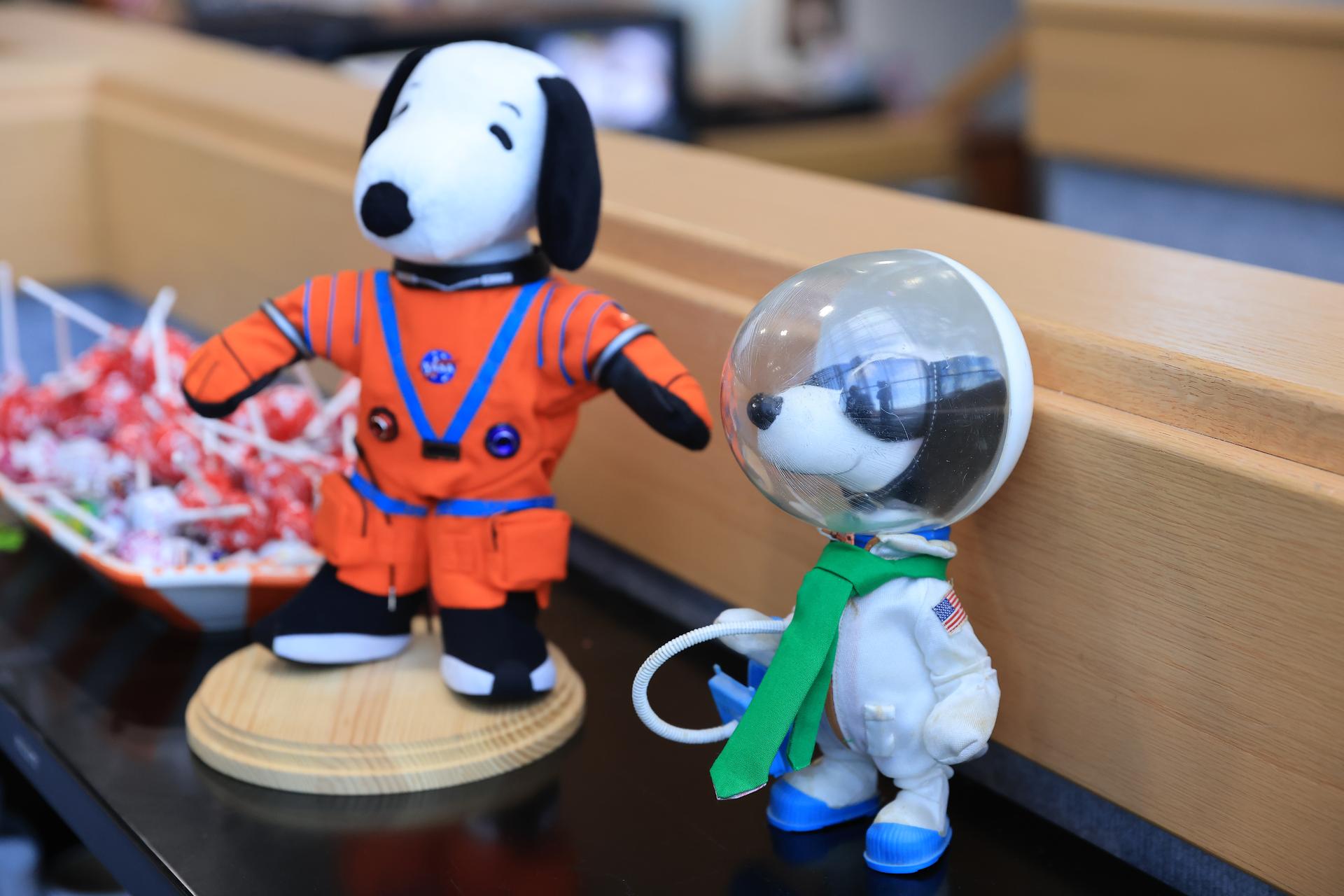
Astronaut Snoopy wearing its own Orion crew survival suit plush toy is on display inside Firing Room 1 of the Rocco Petrone Launch Control Center following the launch of the Artemis II test flight on Wednesday, April 1, 2026. Snoopy has been an official NASA mascot for over 50 years. The Artemis II mission launched Commander Reid Wiseman, Pilot Victor Glover, and Mission Specialist Christina Koch from NASA, and Mission Specialist Jeremy Hansen from the CSA (Canadian Space Agency), aboard NASA’s SLS (Space Launch System) rocket and Orion spacecraft to journey for 10 days around the Moon and back to Earth.
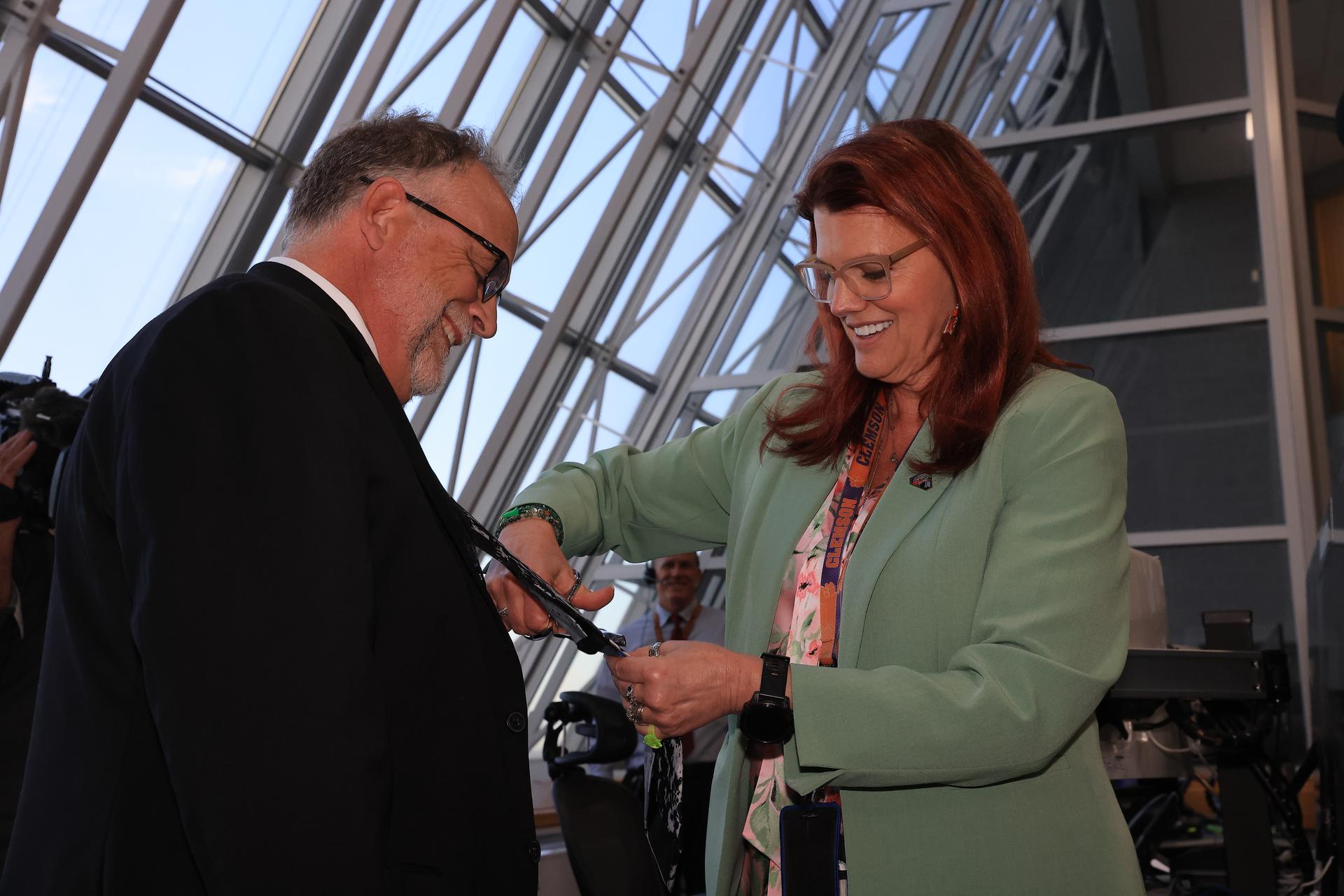
Charlie Blackwell-Thompson, Artemis launch director, cuts the tie of Shawn Quinn, manager, each from NASA’s Exploration Ground Systems Program, inside Firing Room 1 of the Rocco Petrone Launch Control Center following the launch of the Artemis II test flight on Wednesday, April 1, 2026. The tie-cutting is a NASA tradition those who have a new role launch. The Artemis II mission launched Commander Reid Wiseman, Pilot Victor Glover, and Mission Specialist Christina Koch from NASA, and Mission Specialist Jeremy Hansen from the CSA (Canadian Space Agency), aboard NASA’s SLS (Space Launch System) rocket and Orion spacecraft to journey for 10 days around the Moon and back to Earth.
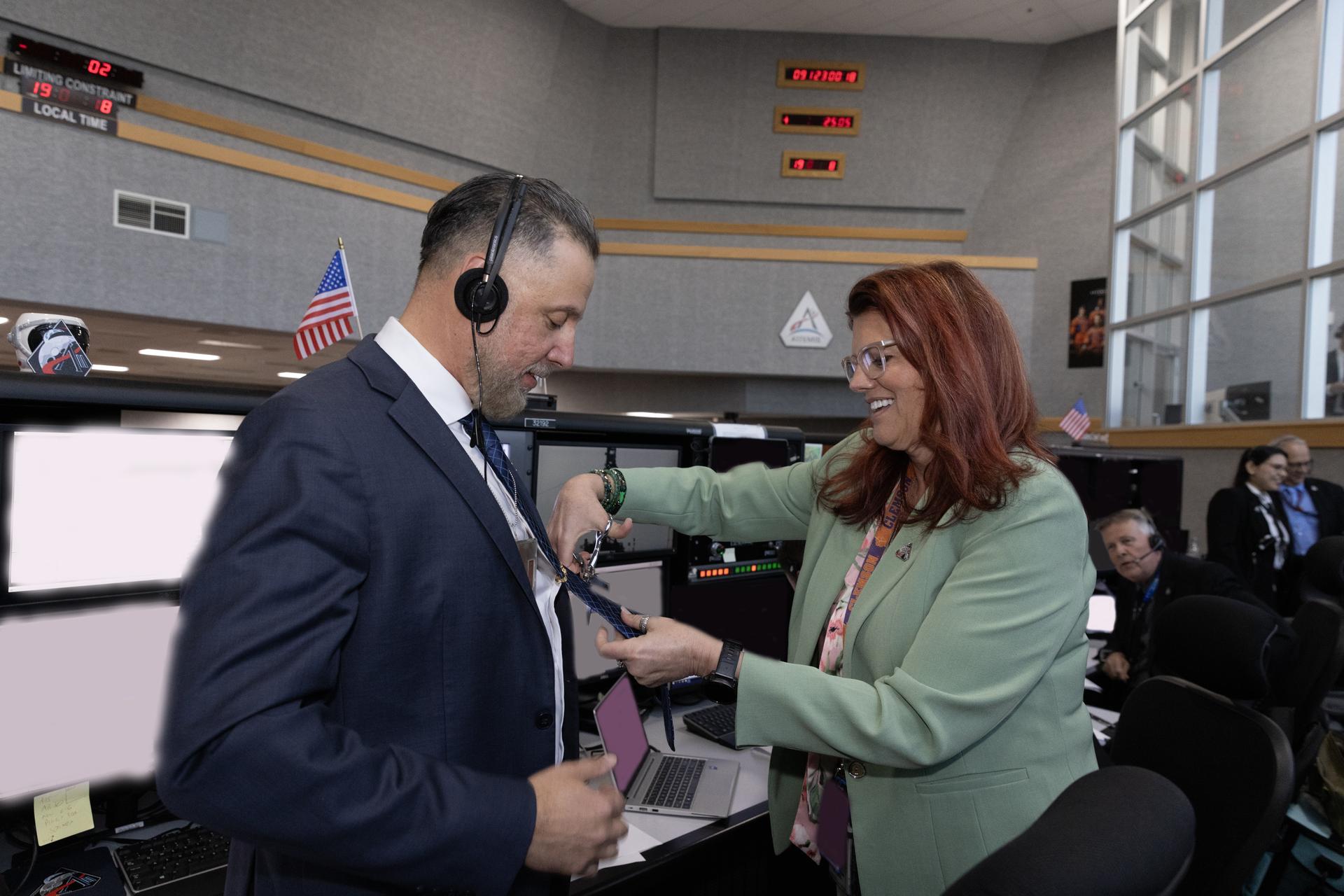
Charlie Blackwell-Thompson, Artemis launch director, cuts the tie of Carlos Monge, branch chief of the Test, Launch, and Recovery Operations, each from NASA’s Exploration Ground Systems Program, inside Firing Room 1 of the Rocco Petrone Launch Control Center following the launch of the Artemis II test flight on Wednesday, April 1, 2026. The tie-cutting is a NASA tradition those who have a new role launch. The Artemis II mission launched Commander Reid Wiseman, Pilot Victor Glover, and Mission Specialist Christina Koch from NASA, and Mission Specialist Jeremy Hansen from the CSA (Canadian Space Agency), aboard NASA’s SLS (Space Launch System) rocket and Orion spacecraft to journey for 10 days around the Moon and back to Earth.
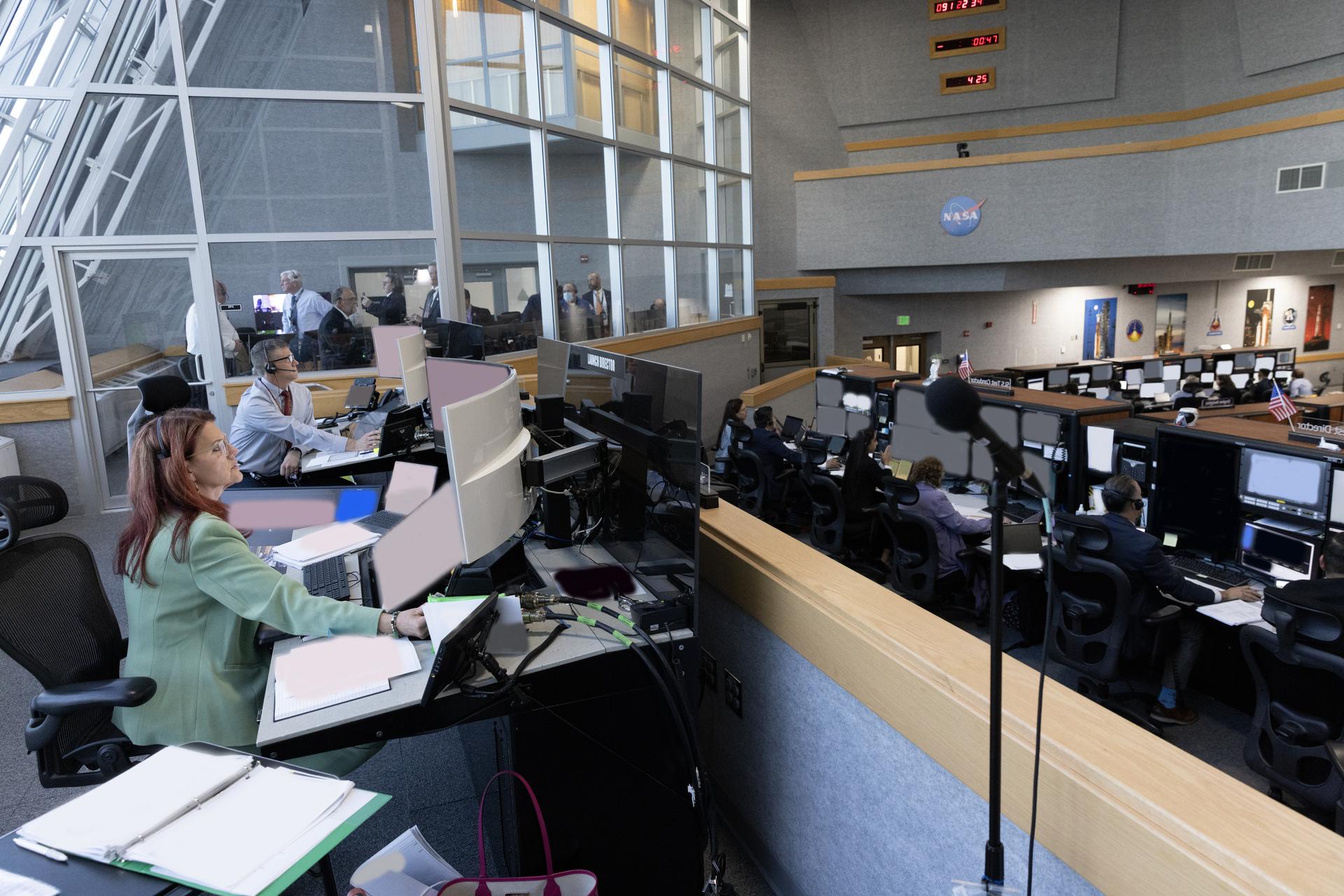
From left, Jeremy Graeber, assistant launch director, and Charlie Blackwell-Thompson, Artemis launch director, each from NASA’s Exploration Ground Systems Program, are seen inside Firing Room 1 of the Rocco Petrone Launch Control Center ahead of launch of the Artemis II test flight on Wednesday, April 1, 2026. The Artemis II mission launched Commander Reid Wiseman, Pilot Victor Glover, and Mission Specialist Christina Koch from NASA, and Mission Specialist Jeremy Hansen from the CSA (Canadian Space Agency), aboard NASA’s SLS (Space Launch System) rocket and Orion spacecraft to journey for 10 days around the Moon and back to Earth.
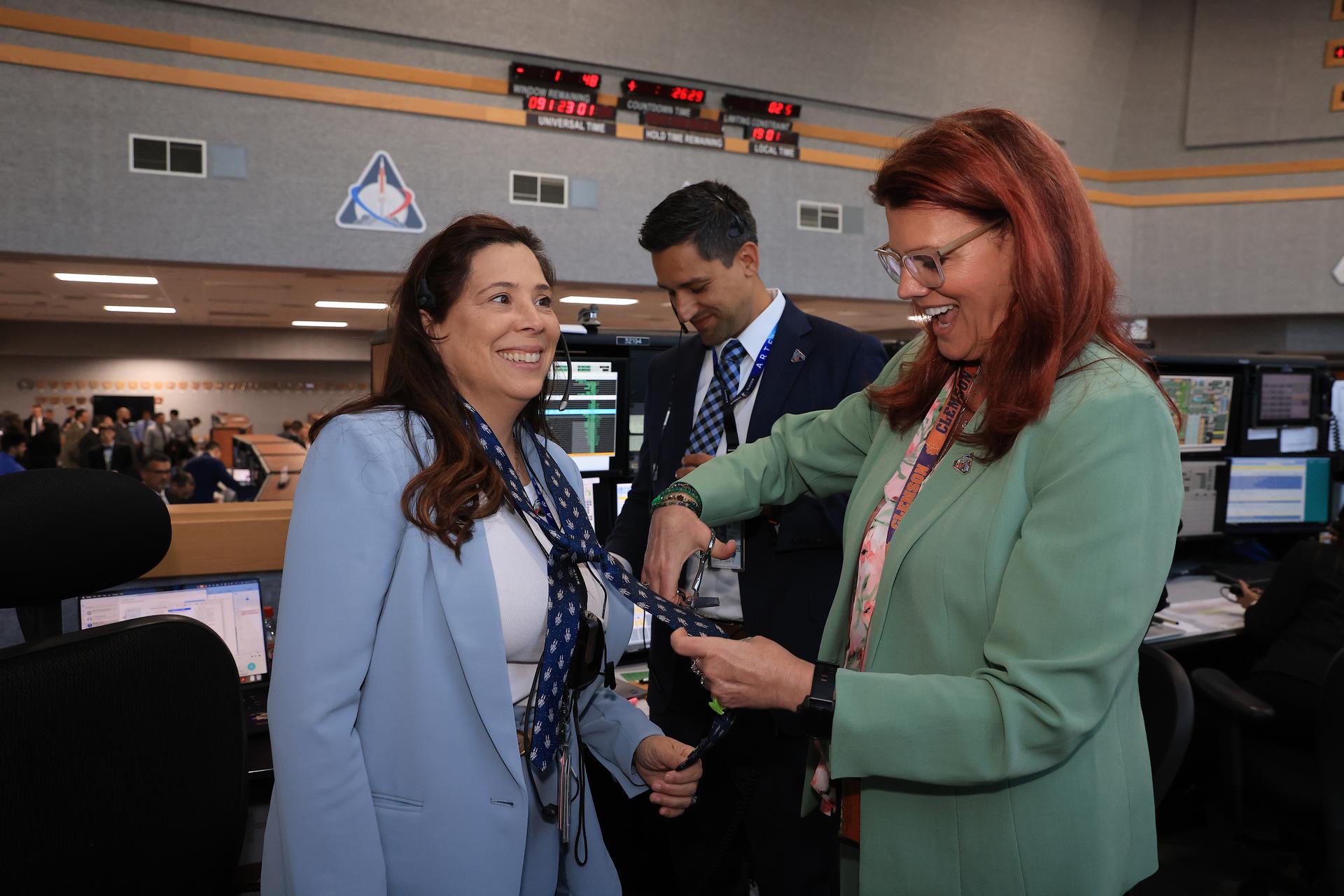
Charlie Blackwell-Thompson, Artemis launch director, cuts the tie of Liliana Villarreal, Artemis landing and recovery director, each from NASA’s Exploration Ground Systems Program, inside Firing Room 1 of the Rocco Petrone Launch Control Center following the launch of the Artemis II test flight on Wednesday, April 1, 2026. The tie-cutting is a NASA tradition for those who have a new role launch. The Artemis II mission launched Commander Reid Wiseman, Pilot Victor Glover, and Mission Specialist Christina Koch from NASA, and Mission Specialist Jeremy Hansen from the CSA (Canadian Space Agency), aboard NASA’s SLS (Space Launch System) rocket and Orion spacecraft to journey for 10 days around the Moon and back to Earth.
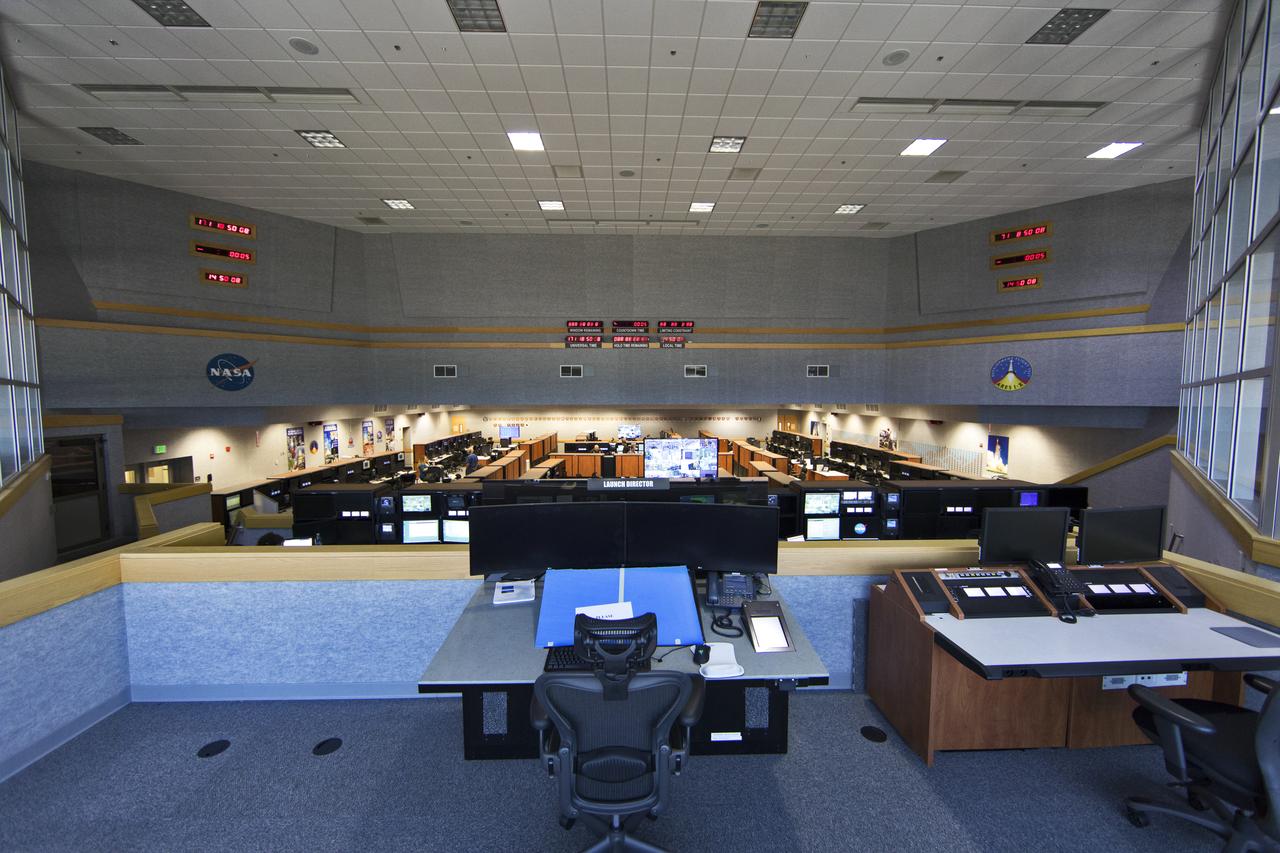
A view of Firing Room 1 in the Launch Control Center (LCC) at NASA's Kennedy Space Center in Florida. The Apollo and shuttle-era firing rooms in the LCC have been upgraded. The upper deck includes a work station in development for the EM-1 launch director. Exploration Ground Systems upgraded Firing Room 1 to support the launch of NASA's Space Launch System rocket and Orion spacecraft on Exploration Mission-1 and deep space missions.

A blue sky and fluffy clouds serve as the backdrop in this view of the exterior of the Launch Control Center (LCC) at NASA's Kennedy Space Center in Florida. The Apollo and shuttle-era firing rooms in the LCC have been upgraded. Exploration Ground Systems upgraded Firing Room 1 to support the launch of NASA's Space Launch System rocket and Orion spacecraft on Exploration Mission-1 and deep space missions.
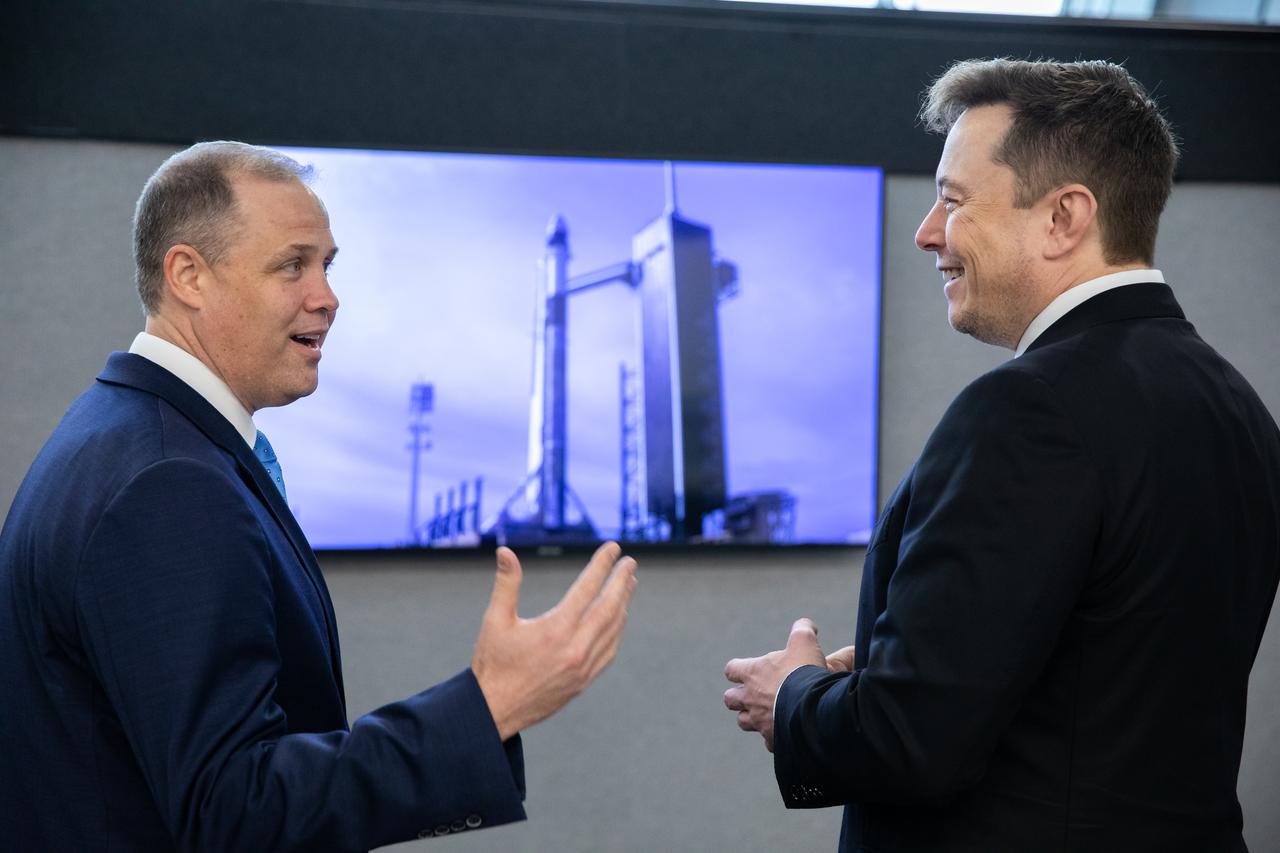
NASA Administrator Jim Bridenstine, left, and SpaceX Chief Engineer Elon Musk converse inside Firing Room 4 in Kennedy Space Center’s Launch Control Center while awaiting the liftoff of a SpaceX Falcon 9 rocket and Crew Dragon spacecraft on the uncrewed In-Flight Abort Test, Jan. 19, 2020. The test demonstrated the spacecraft’s escape capabilities in preparation for crewed flights to the International Space Station as part of the agency’s Commercial Crew Program.
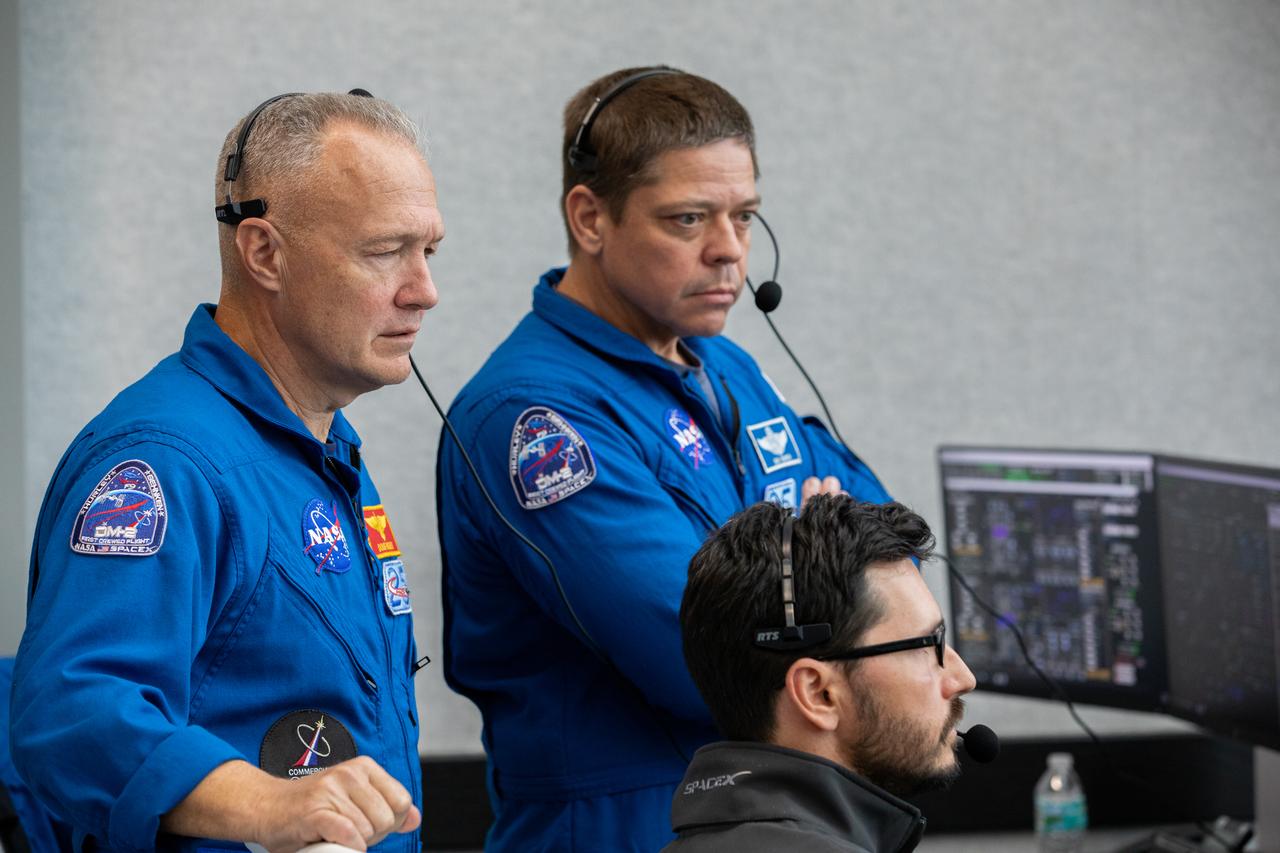
NASA astronauts Doug Hurley, left, and Bob Behnken watch the liftoff of a SpaceX Falcon 9 rocket and Crew Dragon spacecraft on the uncrewed In-Flight Abort Test, Jan. 19, 2020, inside Firing Room 4 in Kennedy Space Center’s Launch Control Center. The test demonstrated the spacecraft’s escape capabilities in preparation for crewed flights to the International Space Station as part of the agency’s Commercial Crew Program.
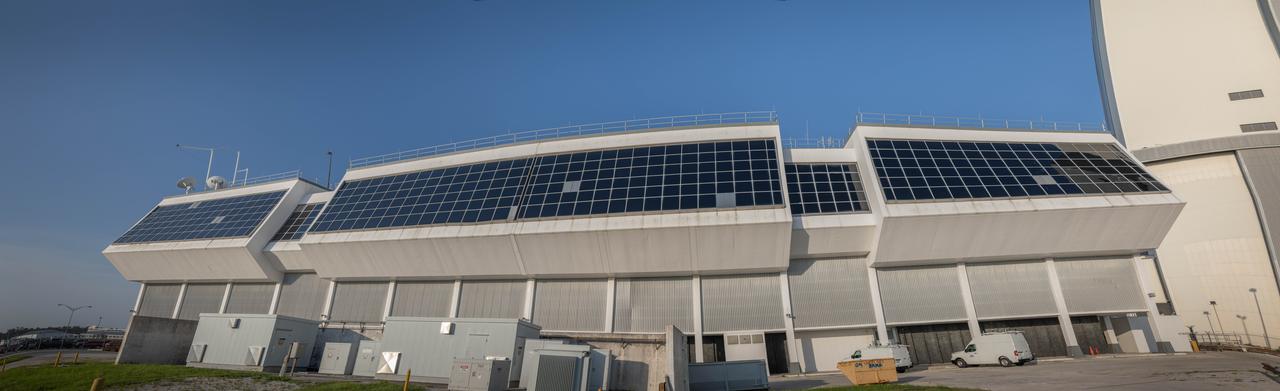
A brilliant blue sky forms the backdrop for a fish-eye panoramic view of the south side of the Launch Control Center (LCC) at NASA's Kennedy Space Center in Florida. Firing Room 1 inside the LCC has been completely upgraded and modernized to support the testing, processing, countdown and launch of NASA's Space Launch System (SLS) rocket and Orion spacecraft on Exploration Mission-1 and deep space mission. Exploration Ground Systems oversaw the upgrades.
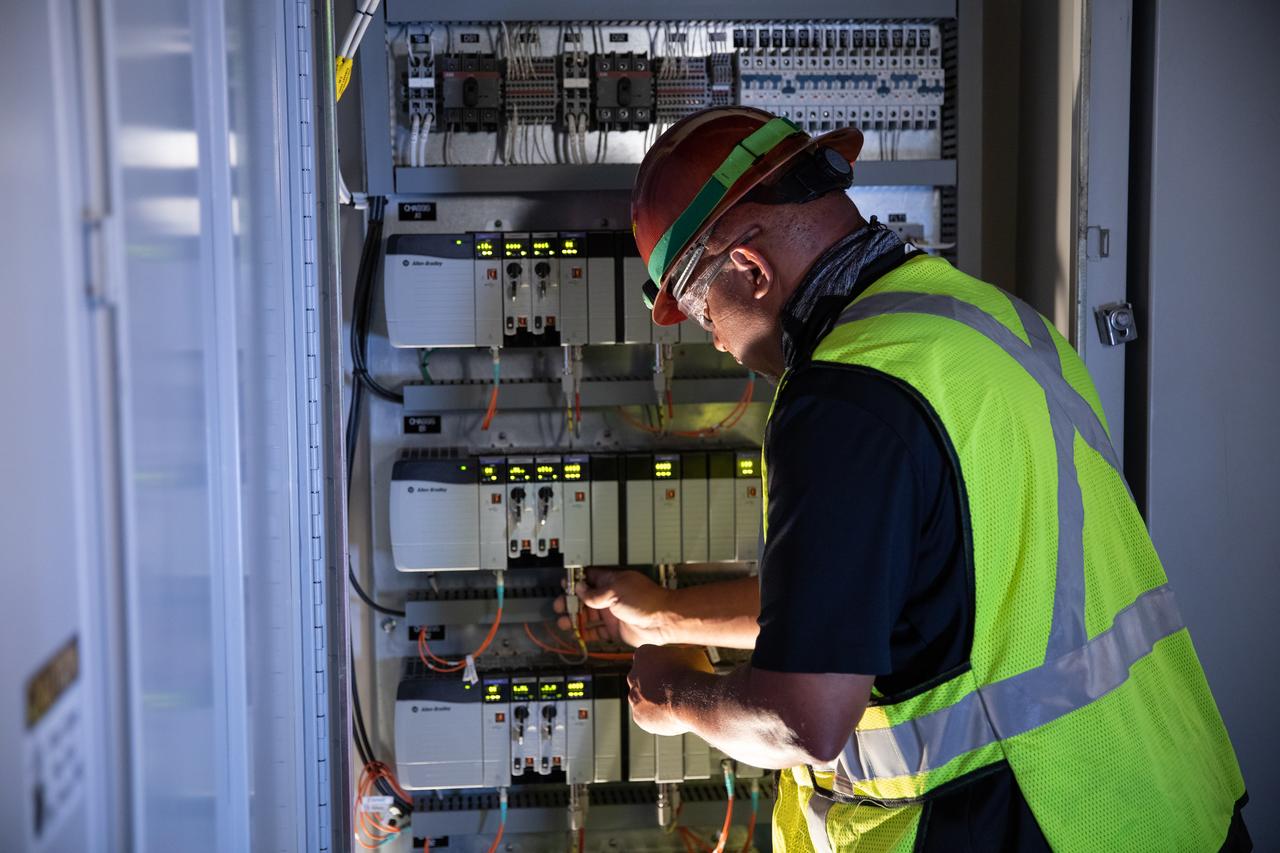
Launch Software Team in Launch Control Center.
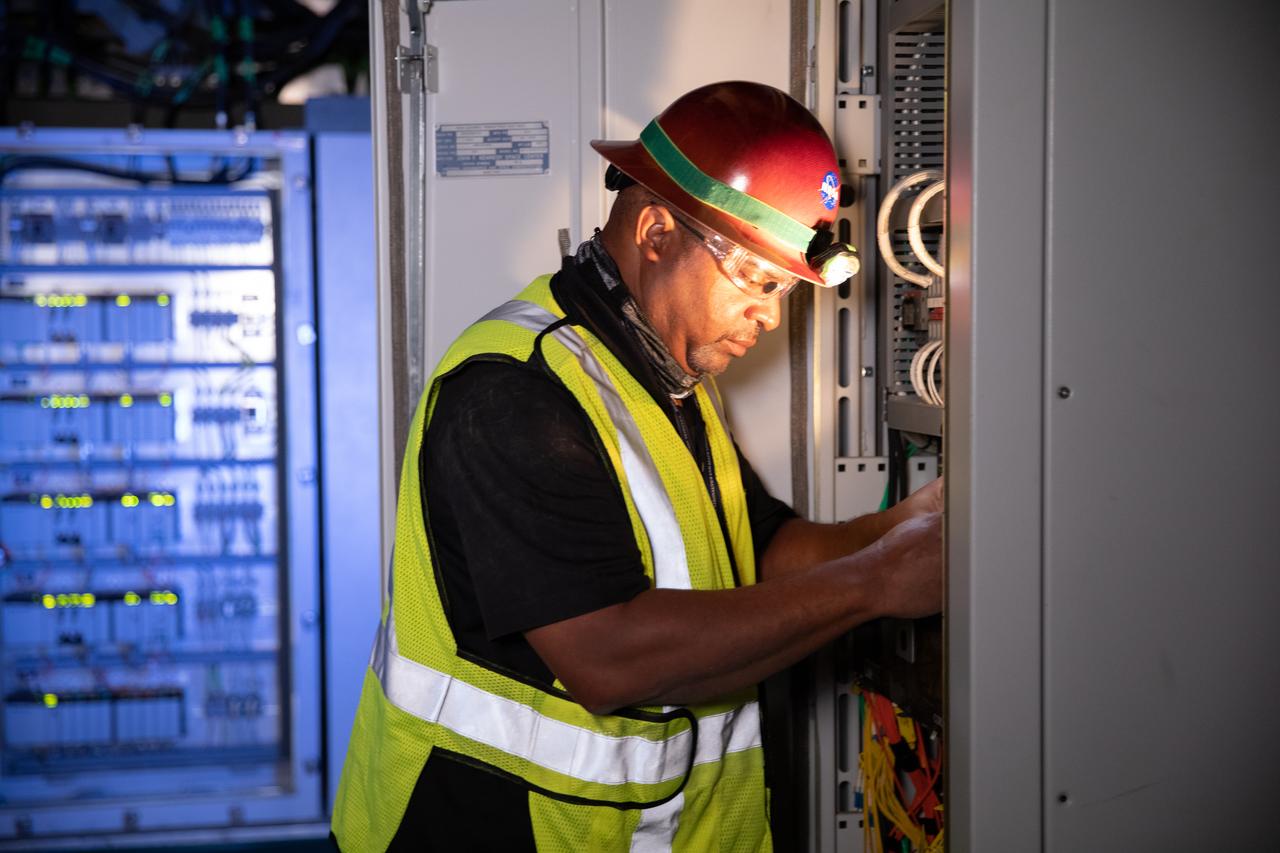
Reggie Martin, an engineer with Exploration Ground Systems, works on racks inside the mobile launcher at NASA’s Kennedy Space Center in Florida on Oct. 2, 2020. Software engineers are writing and testing new software for launch of the Space Launch System and Orion spacecraft for Artemis I.
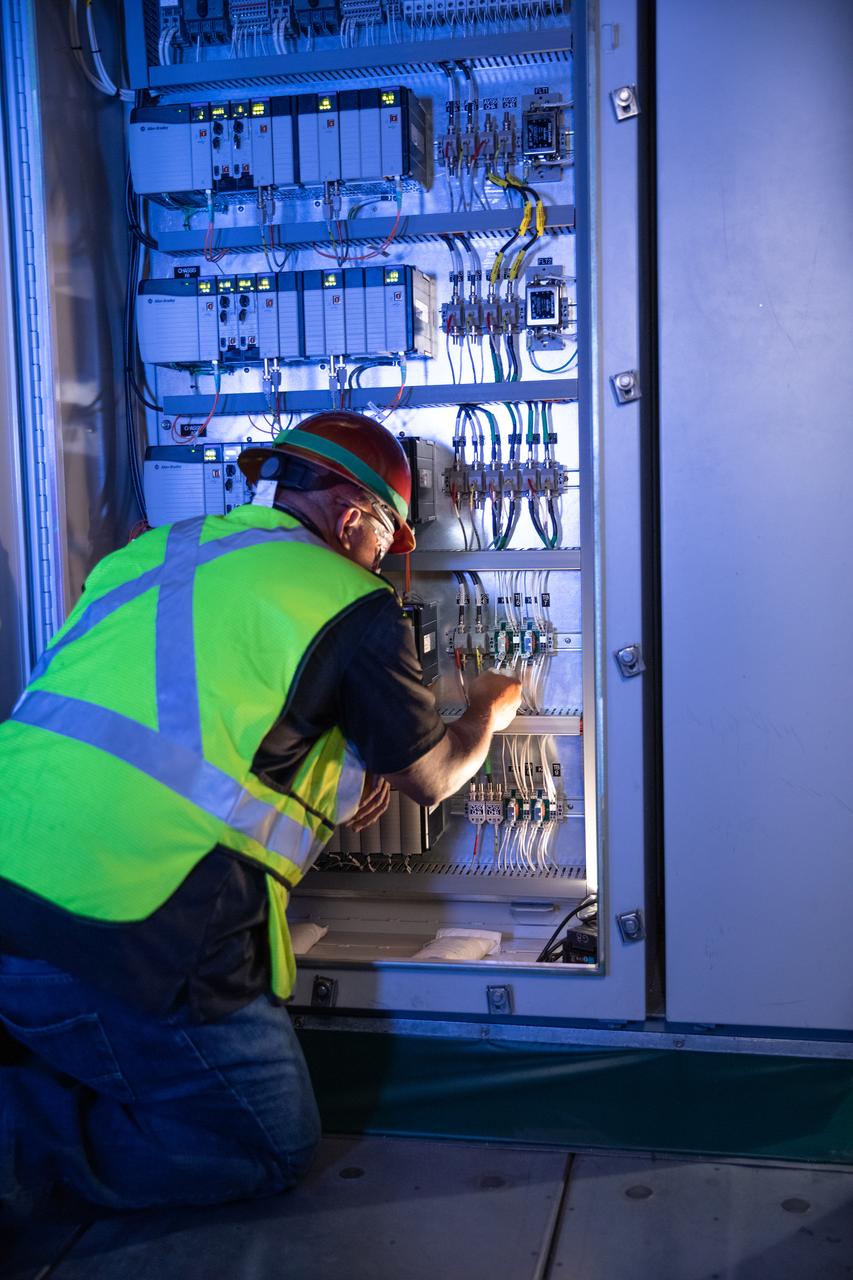
Reggie Martin, an engineer with Exploration Ground Systems, works on racks inside the mobile launcher at NASA’s Kennedy Space Center in Florida on Oct. 2, 2020. Software engineers are writing and testing new software for launch of the Space Launch System and Orion spacecraft for Artemis I.
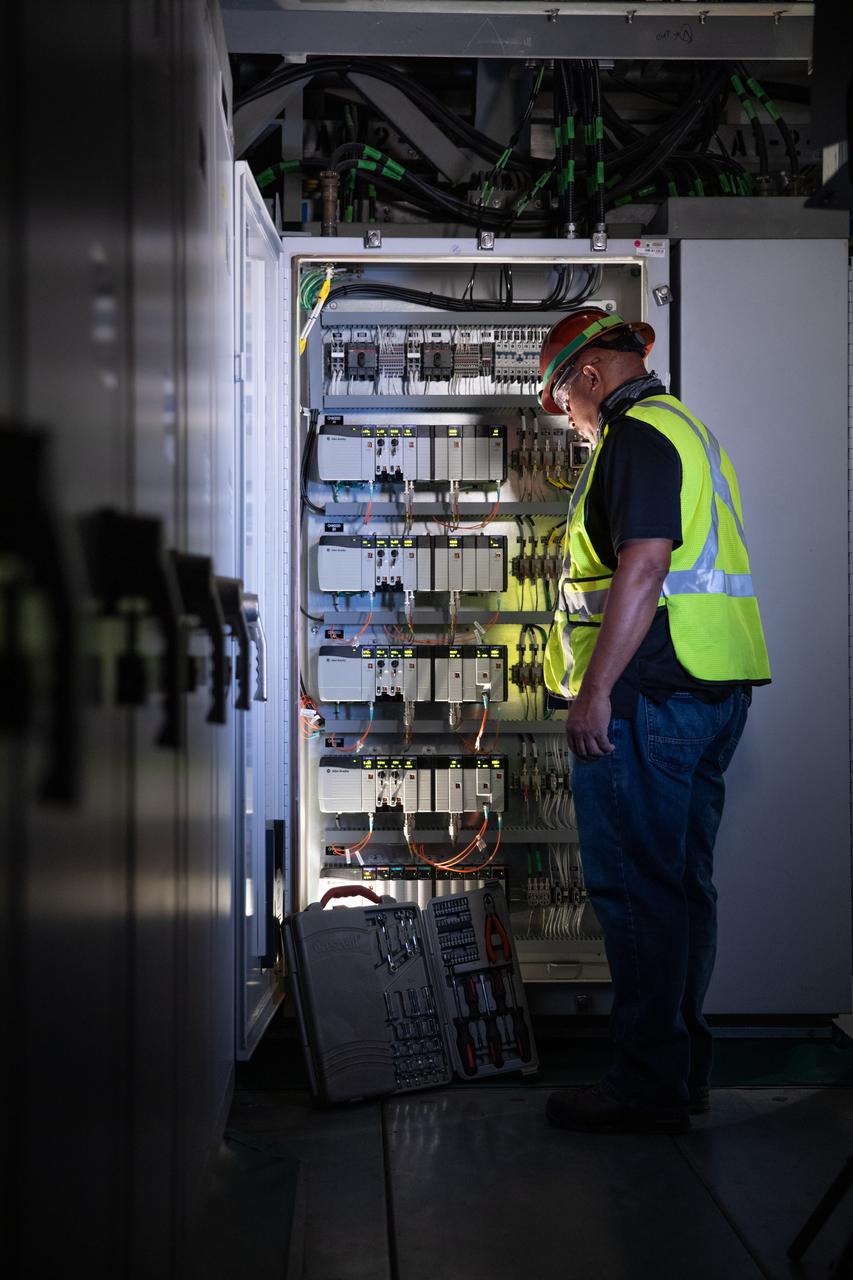
Reggie Martin, an engineer with Exploration Ground Systems, works on racks inside the mobile launcher at NASA’s Kennedy Space Center in Florida on Oct. 2, 2020. Software engineers are writing and testing new software for launch of the Space Launch System and Orion spacecraft for Artemis I.

Reggie Martin, an engineer with Exploration Ground Systems, works on racks inside the mobile launcher at NASA’s Kennedy Space Center in Florida on Oct. 2, 2020. Software engineers are writing and testing new software for launch of the Space Launch System and Orion spacecraft for Artemis I.
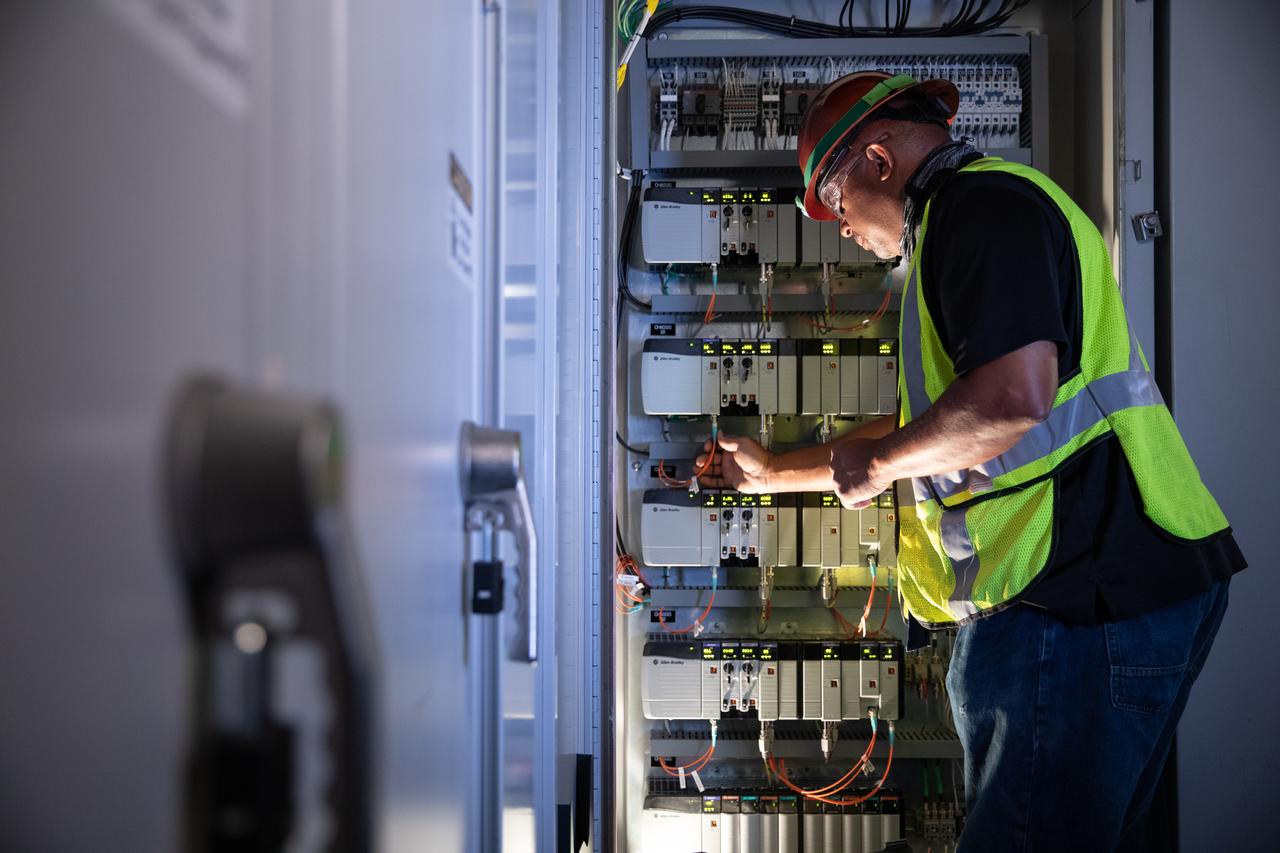
Reggie Martin, an engineer with Exploration Ground Systems, works on racks inside the mobile launcher at NASA’s Kennedy Space Center in Florida on Oct. 2, 2020. Software engineers are writing and testing new software for launch of the Space Launch System and Orion spacecraft for Artemis I.
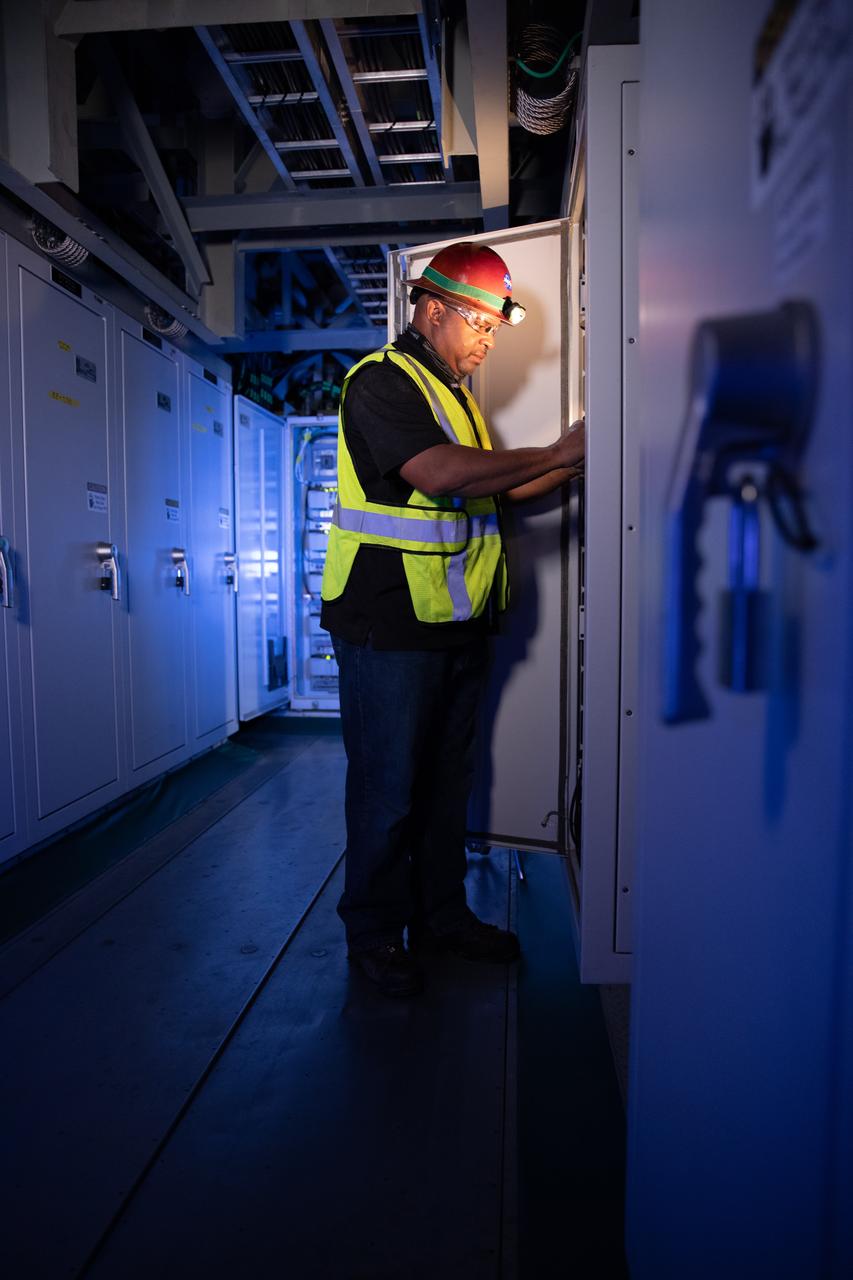
Reggie Martin, an engineer with Exploration Ground Systems, works on racks inside the mobile launcher at NASA’s Kennedy Space Center in Florida on Oct. 2, 2020. Software engineers are writing and testing new software for launch of the Space Launch System and Orion spacecraft for Artemis I.
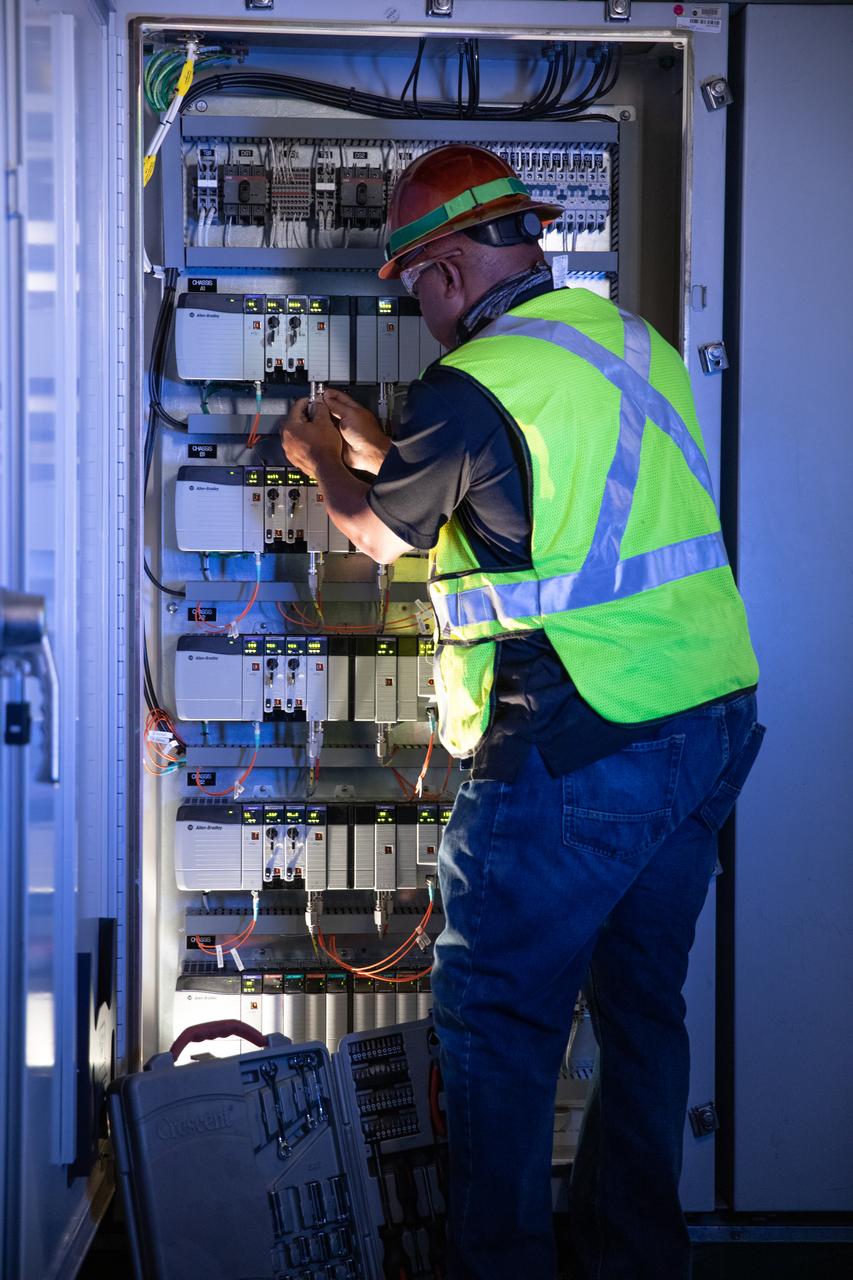
Reggie Martin, an engineer with Exploration Ground Systems, works on racks inside the mobile launcher at NASA’s Kennedy Space Center in Florida on Oct. 2, 2020. Software engineers are writing and testing new software for launch of the Space Launch System and Orion spacecraft for Artemis I.
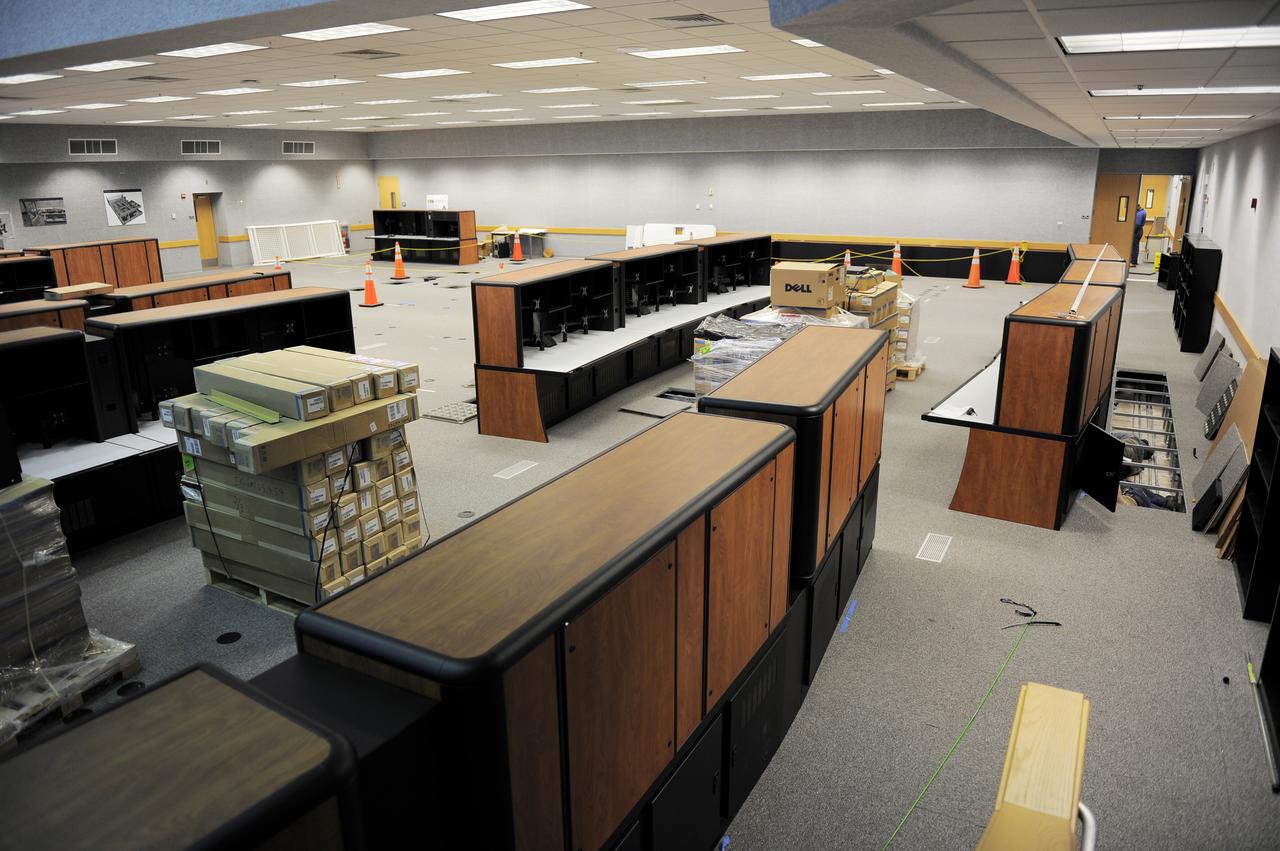
LCC FIRING ROOM-1 REMODELING PROGRESS
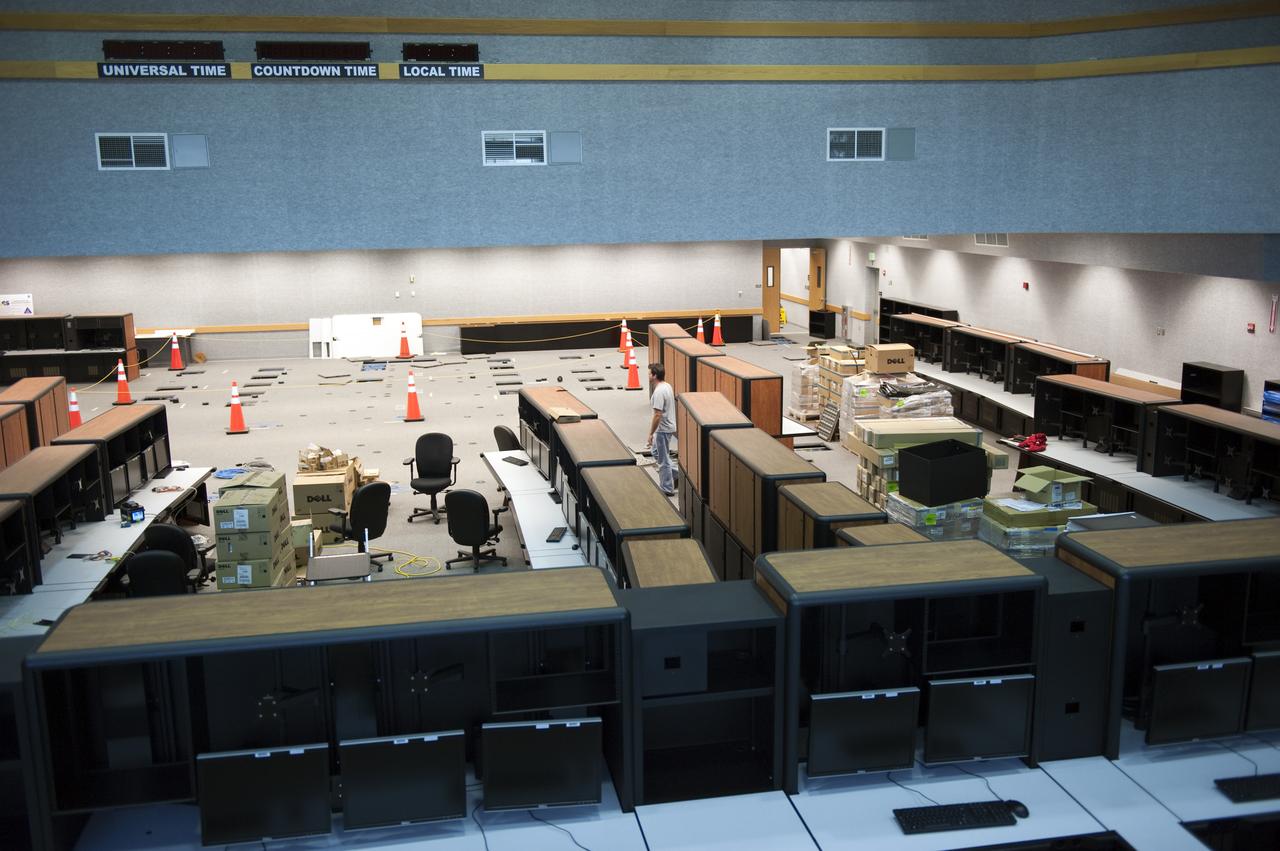
LCC FIRING ROOM-1 REMODELING PROGRESS
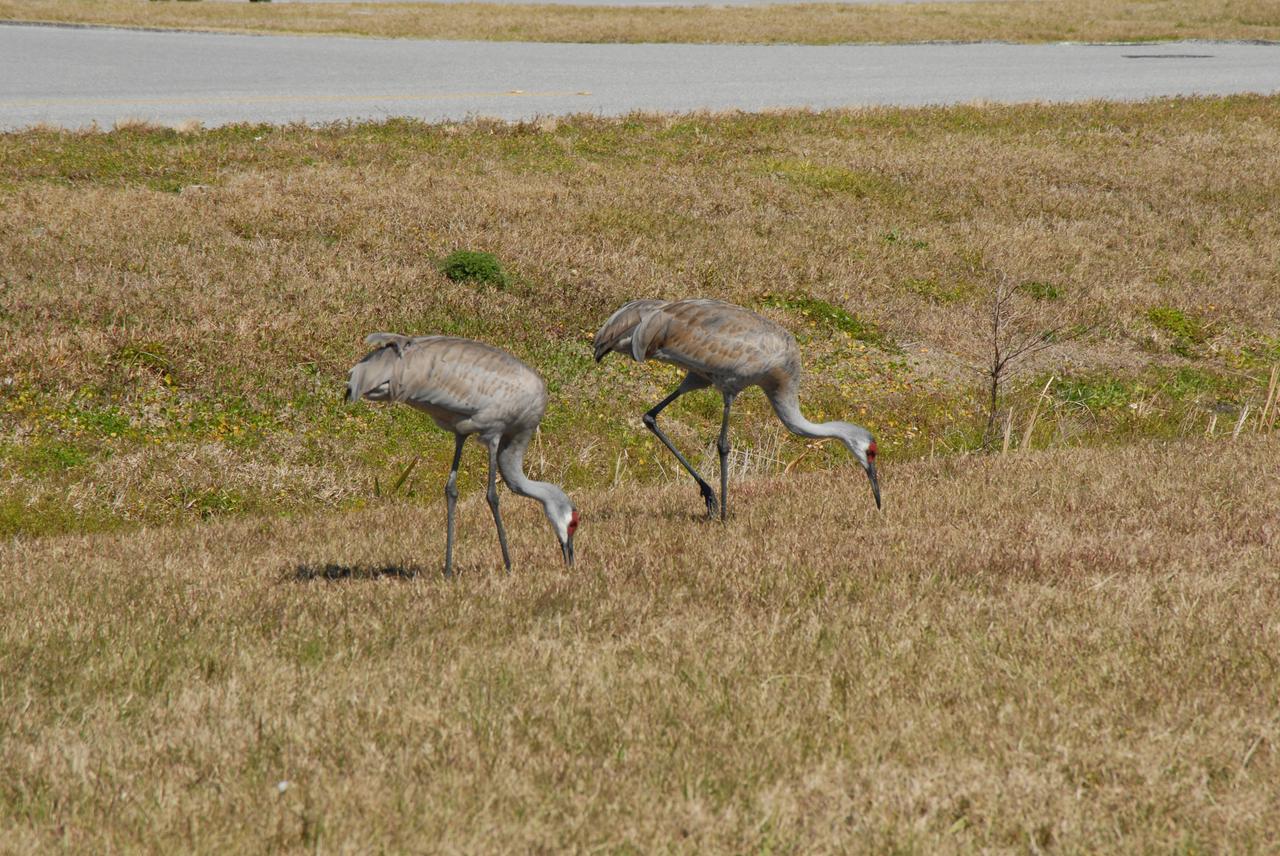
Sand Hill Cranes with VAB and LCC in Background
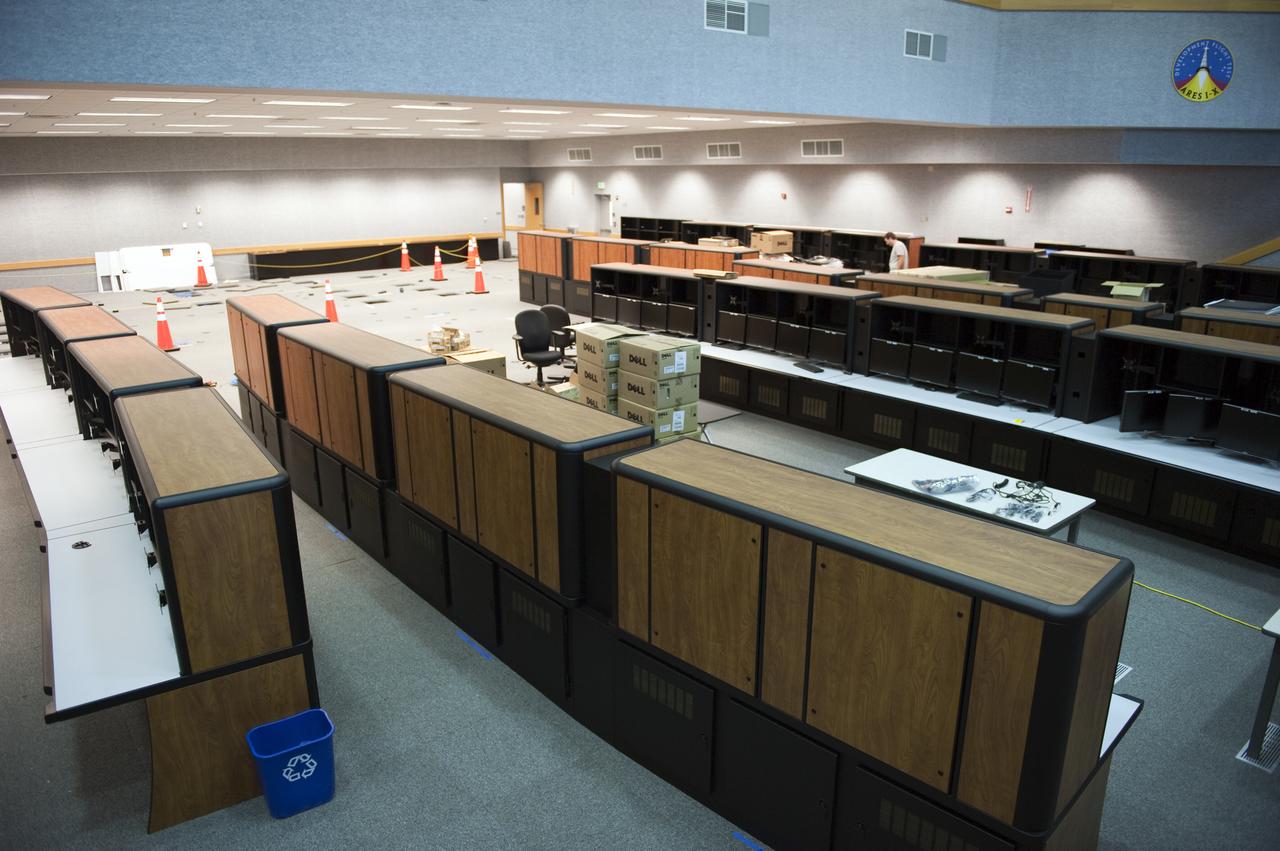
LCC FIRING ROOM-1 REMODELING PROGRESS
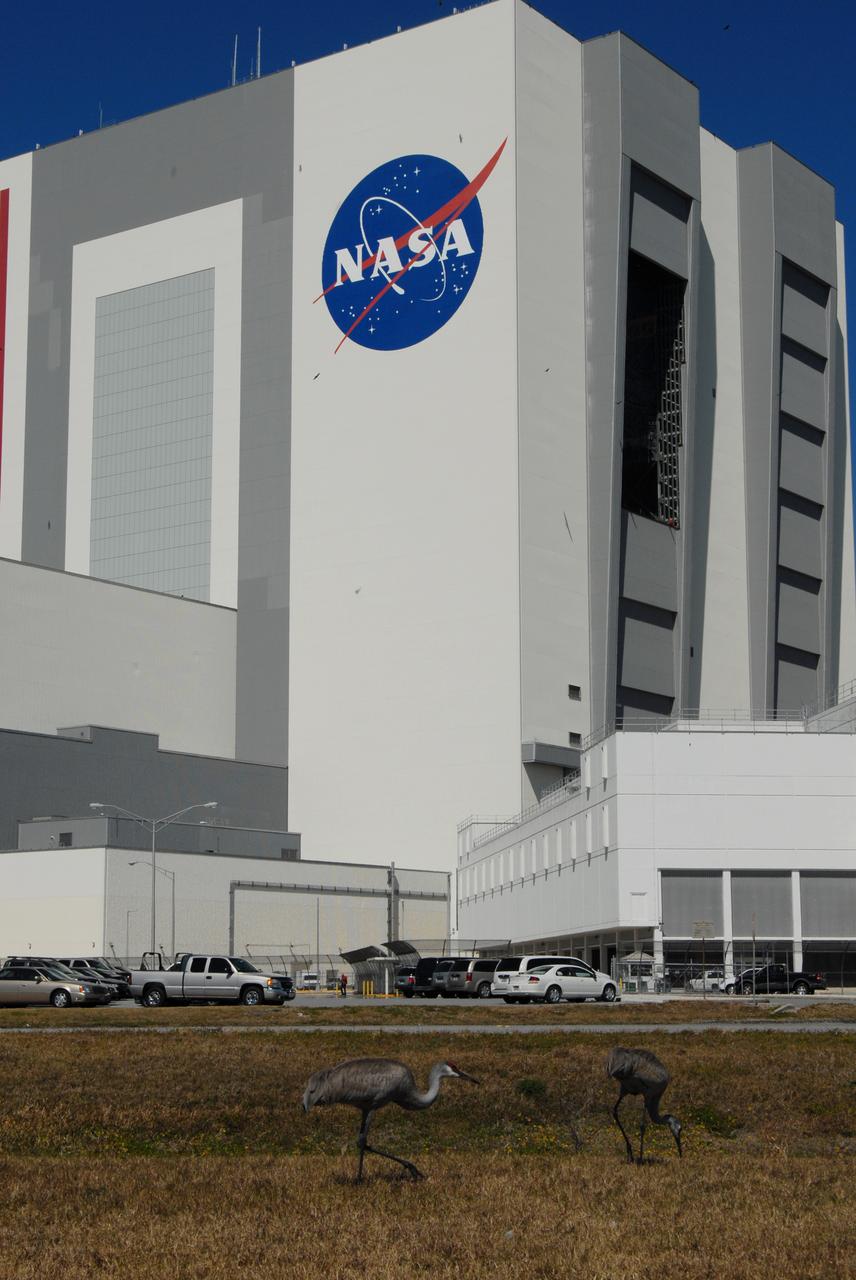
Sand Hill Cranes with VAB and LCC in Background
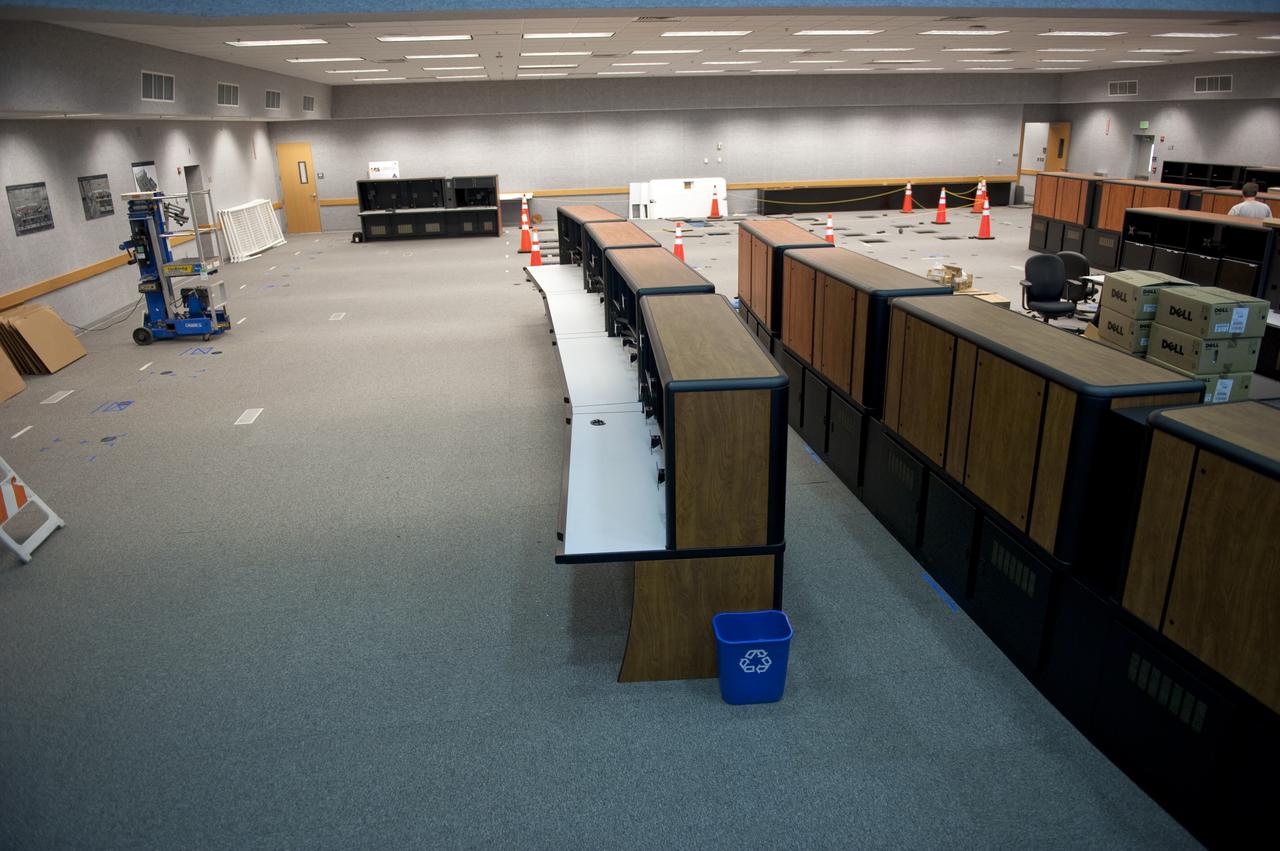
LCC FIRING ROOM-1 REMODELING PROGRESS
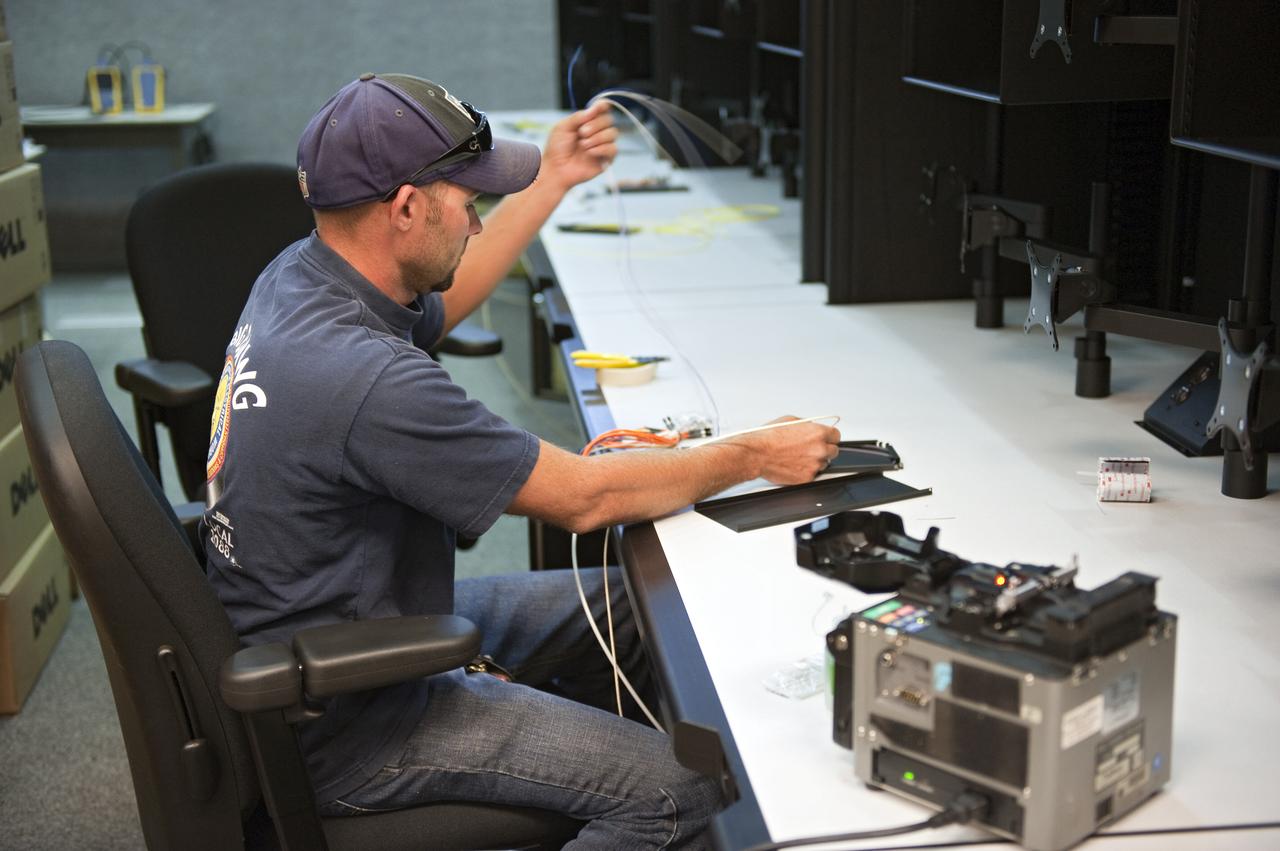
LCC FIRING ROOM-1 REMODELING PROGRESS
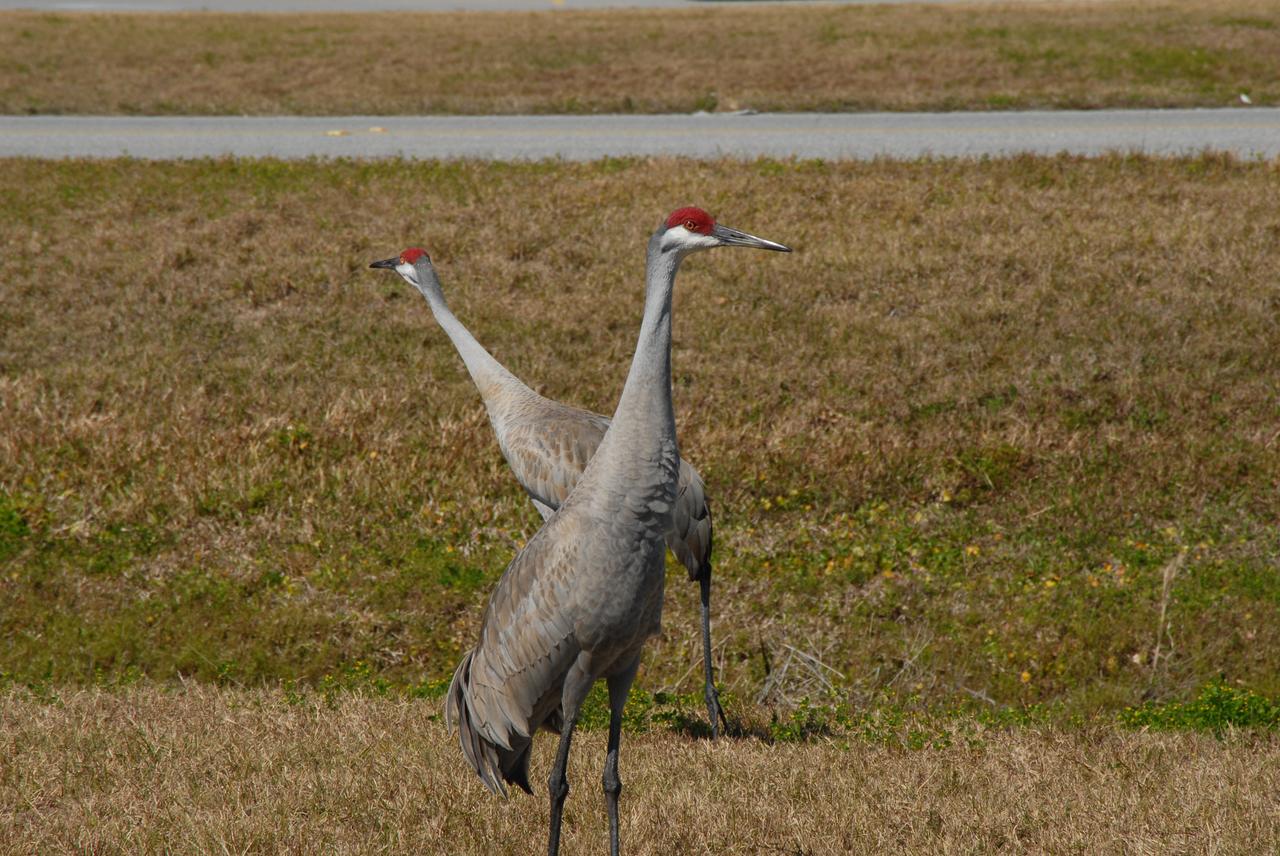
Sand Hill Cranes with VAB and LCC in Background
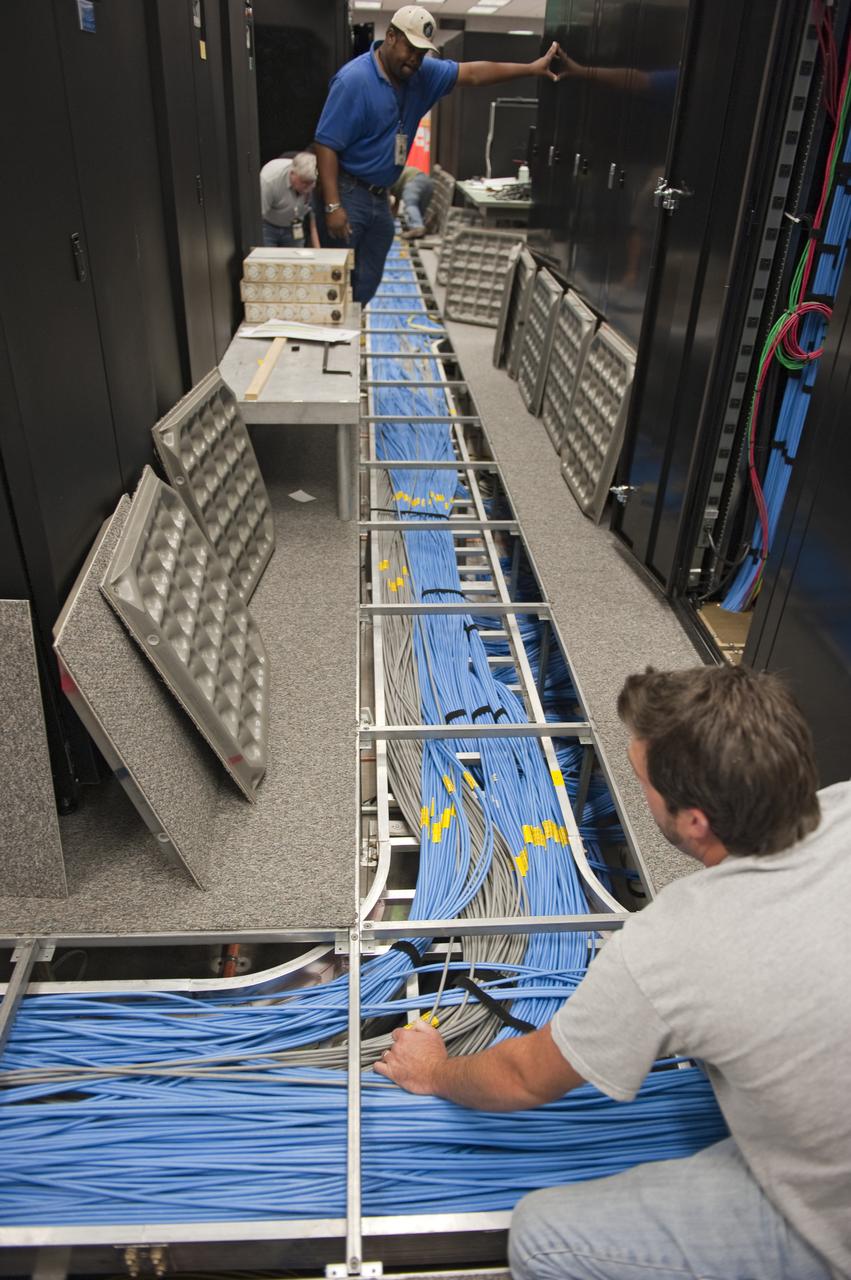
LCC FIRING ROOM-1 REMODELING PROGRESS
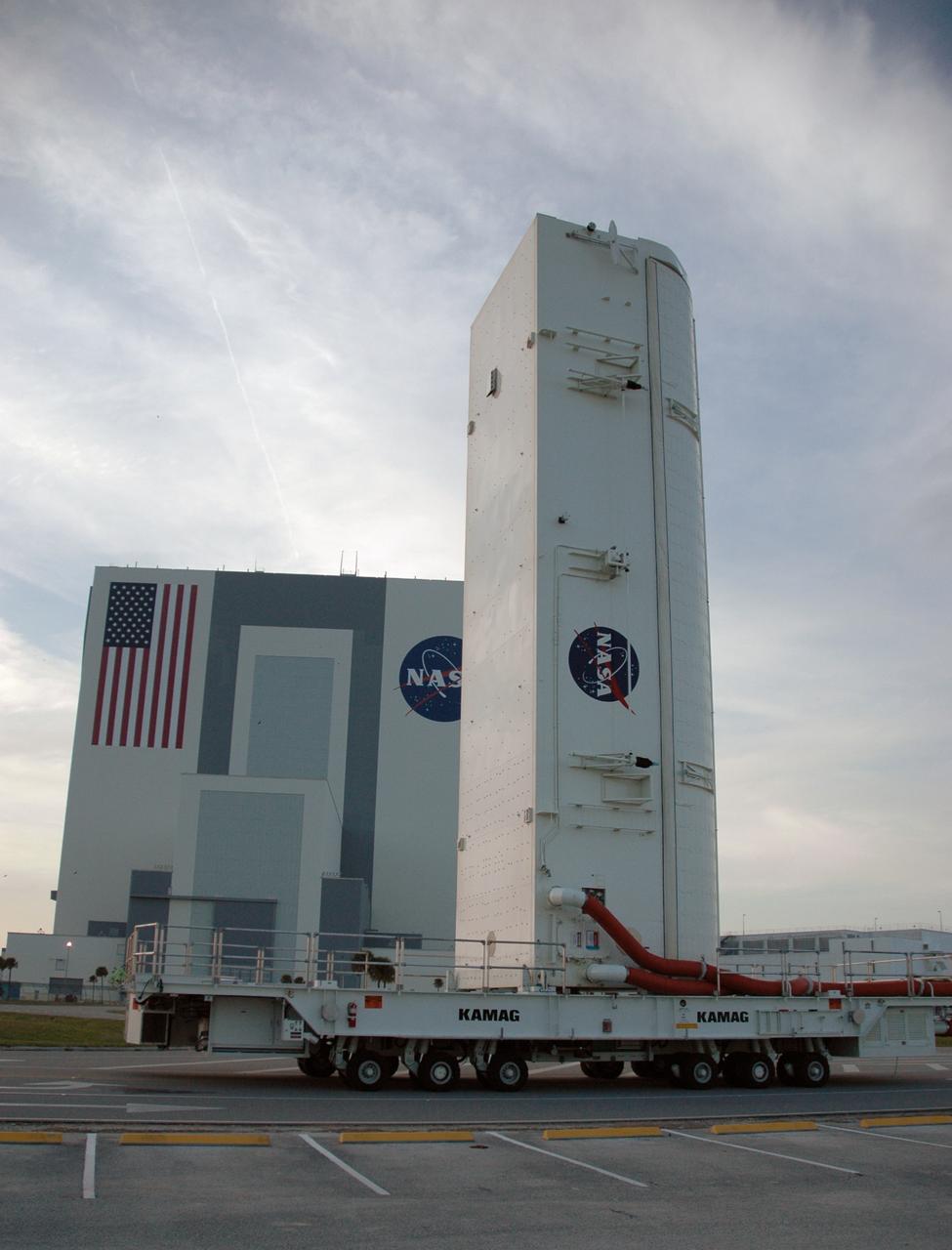
STS-132 PAYLOAD CANISTER PASSES VAB-LCC ENROUTE TO PAD 39A
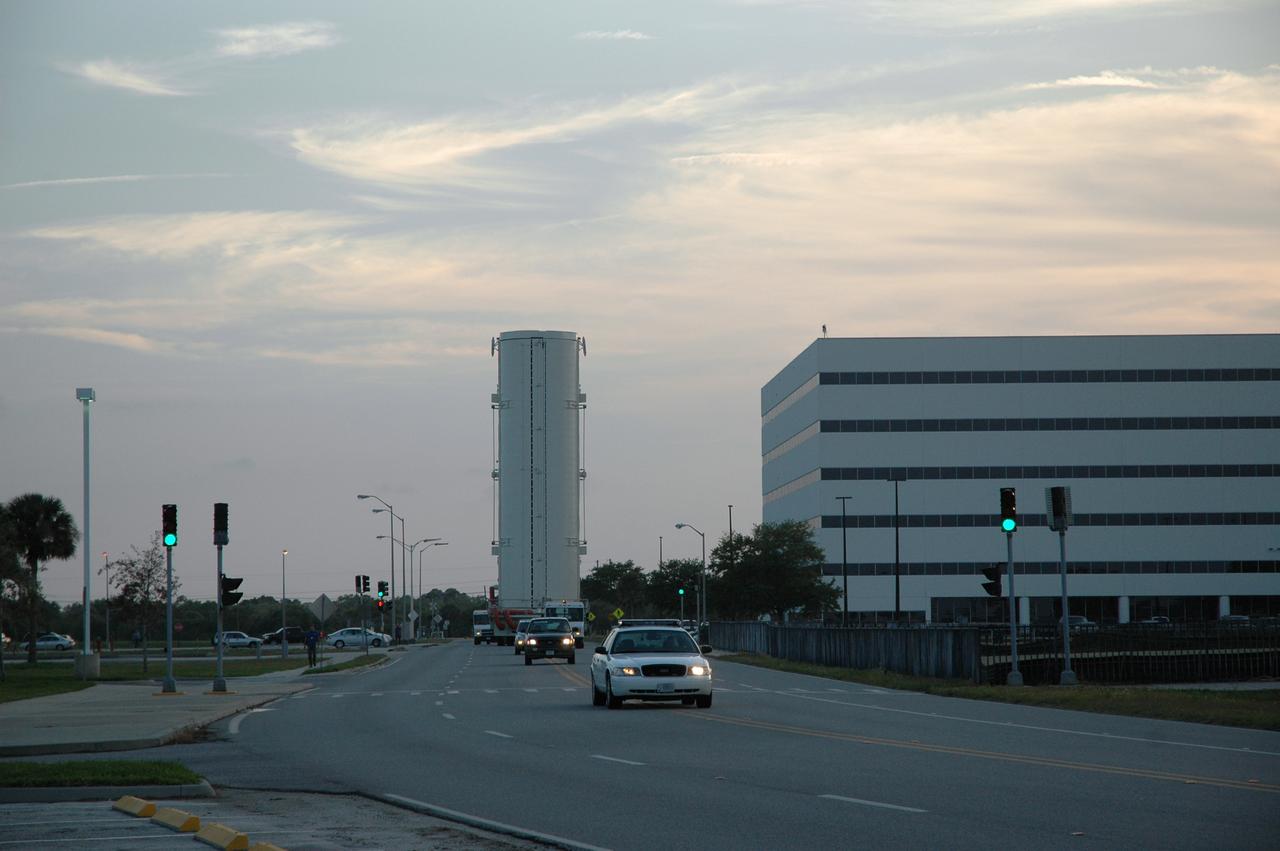
STS-132 PAYLOAD CANISTER PASSES VAB-LCC ENROUTE TO PAD 39A
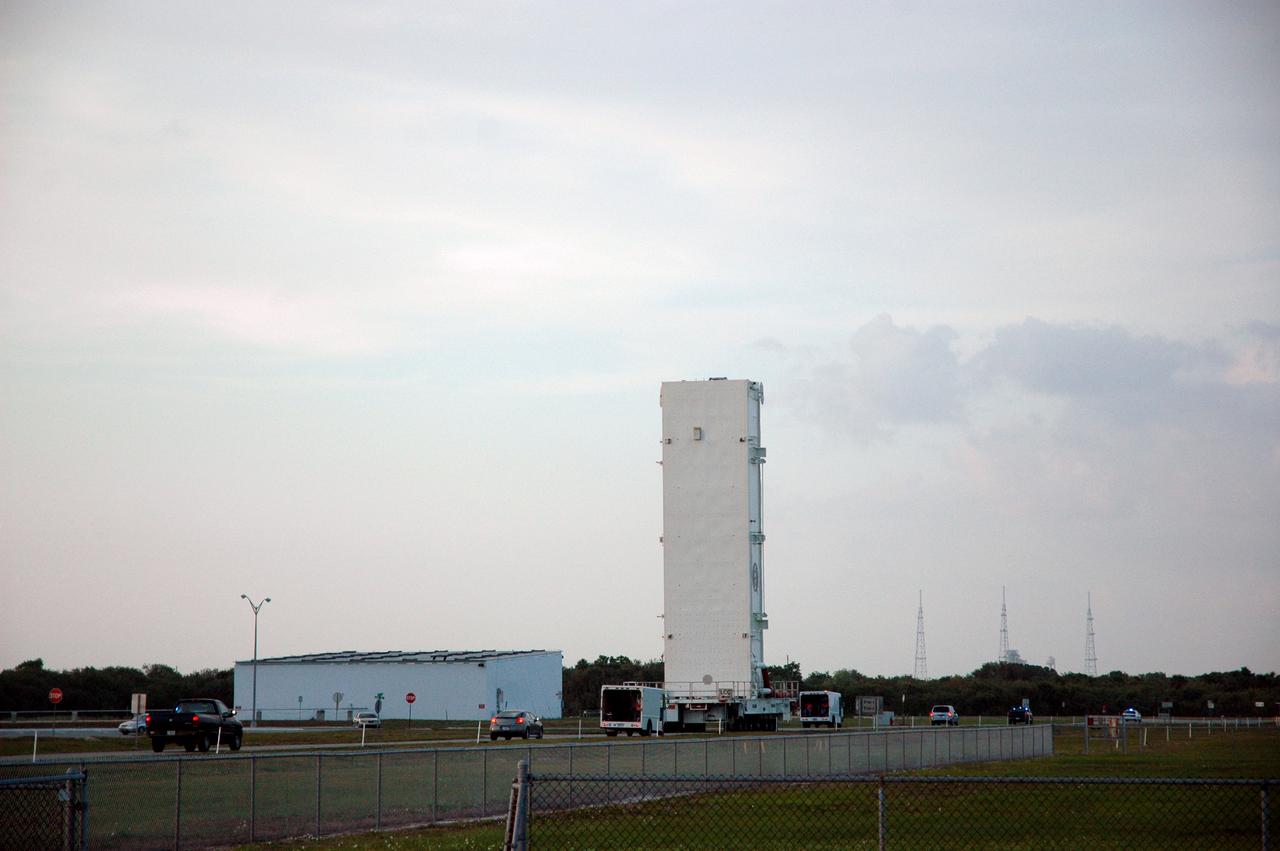
STS-132 PAYLOAD CANISTER PASSES VAB-LCC ENROUTE TO PAD 39A
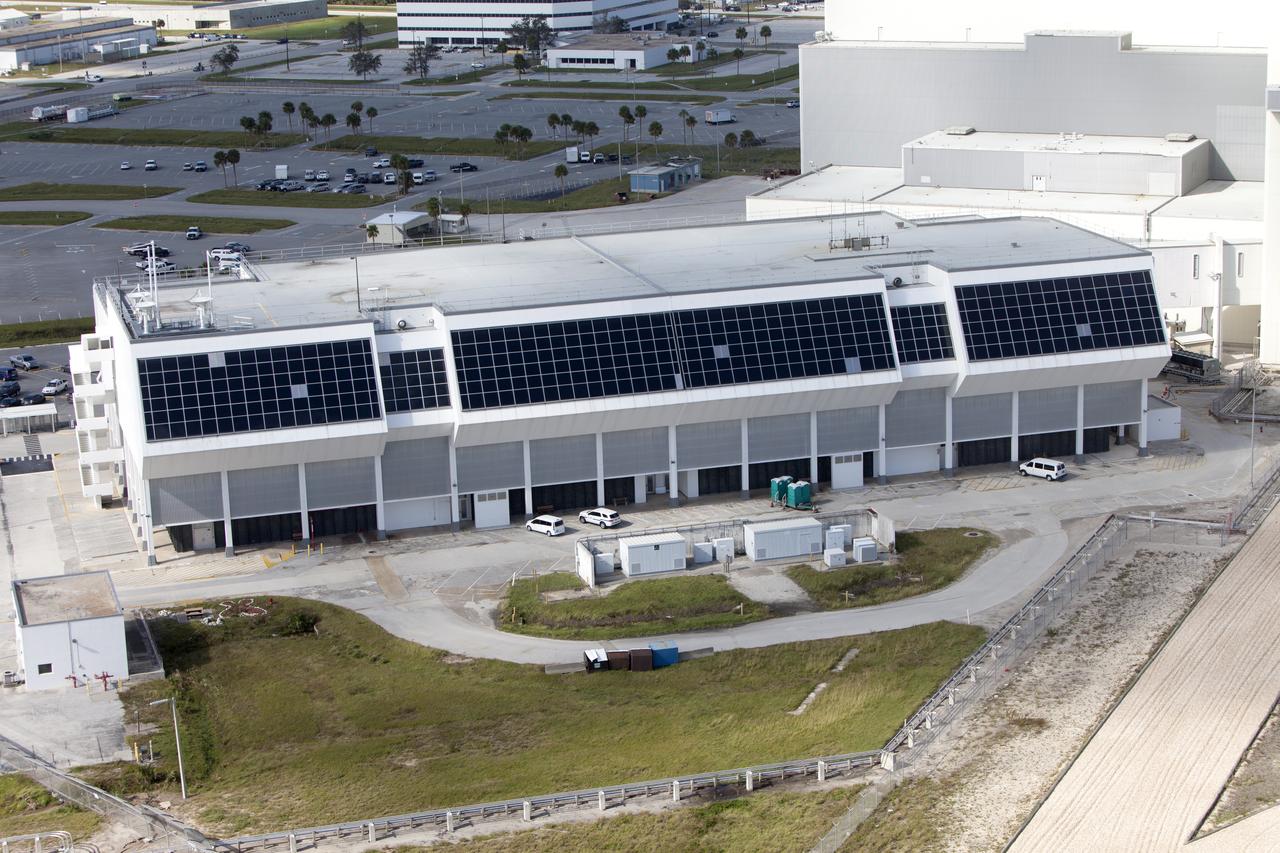
The Launch Control Center (LCC) is seen during an aerial survey of NASA's Kennedy Space Center in Florida on September 12, 2017. The survey was performed to identify structures and facilities that may have sustained damage from Hurricane Irma as the storm passed Kennedy on September 10, 2017. NASA closed the center ahead of the storm's onset and only a small team of specialists known as the Rideout Team was on the center as the storm approached and passed.
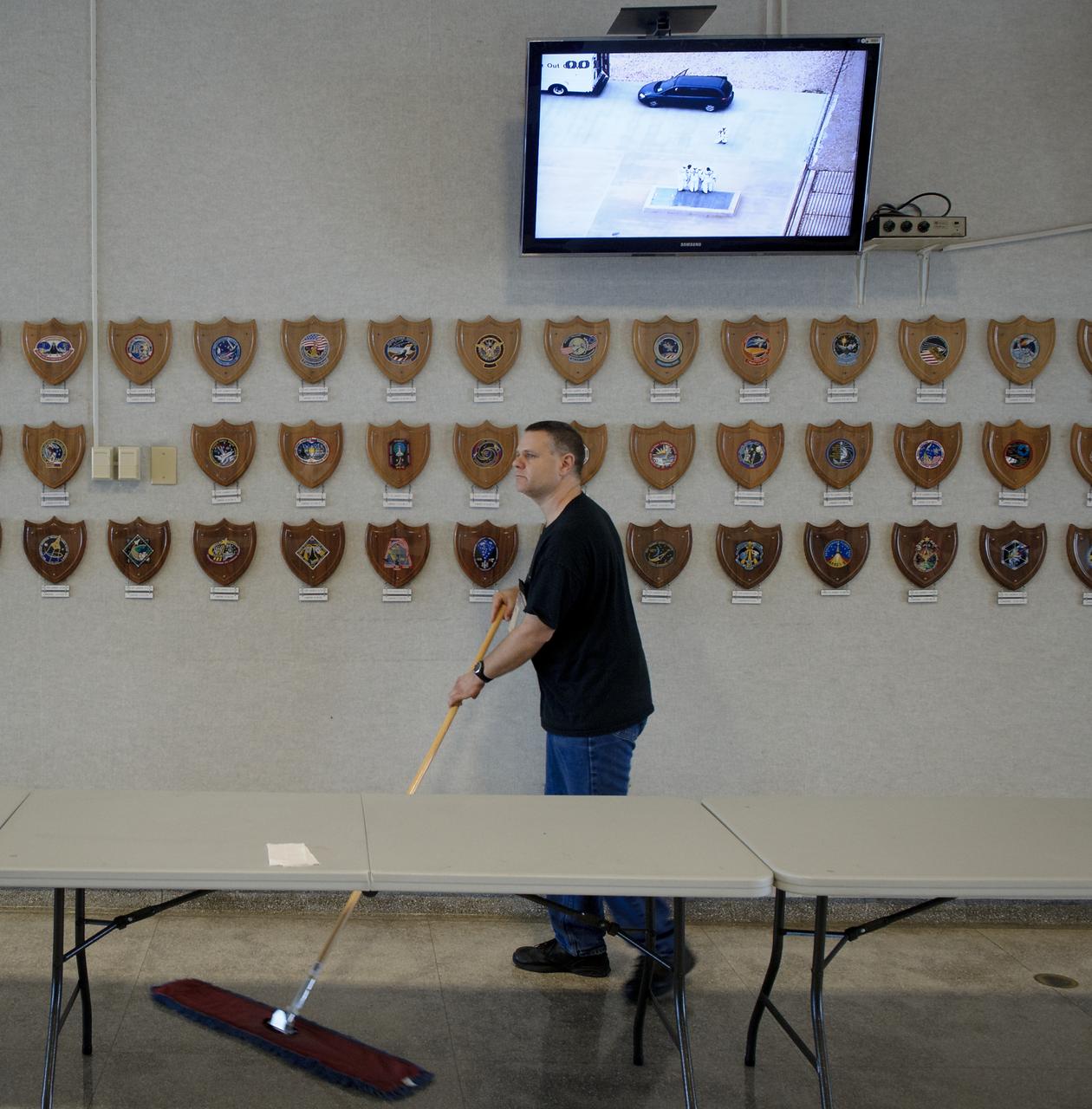
NASA Kennedy Space Center worker Dwayne Hutcheson sweeps the Launch Control Center (LCC) lobby floor in preparation for the post launch tradition of corn bread and beans after a successful launch of the space shuttle Atlantis from pad 39A on Friday, July 8, 2011, in Cape Canaveral, Fla. The launch of Atlantis, STS-135, is the final flight of the shuttle program, a 12-day mission to the International Space Station. Photo Credit: (NASA/Bill Ingalls)
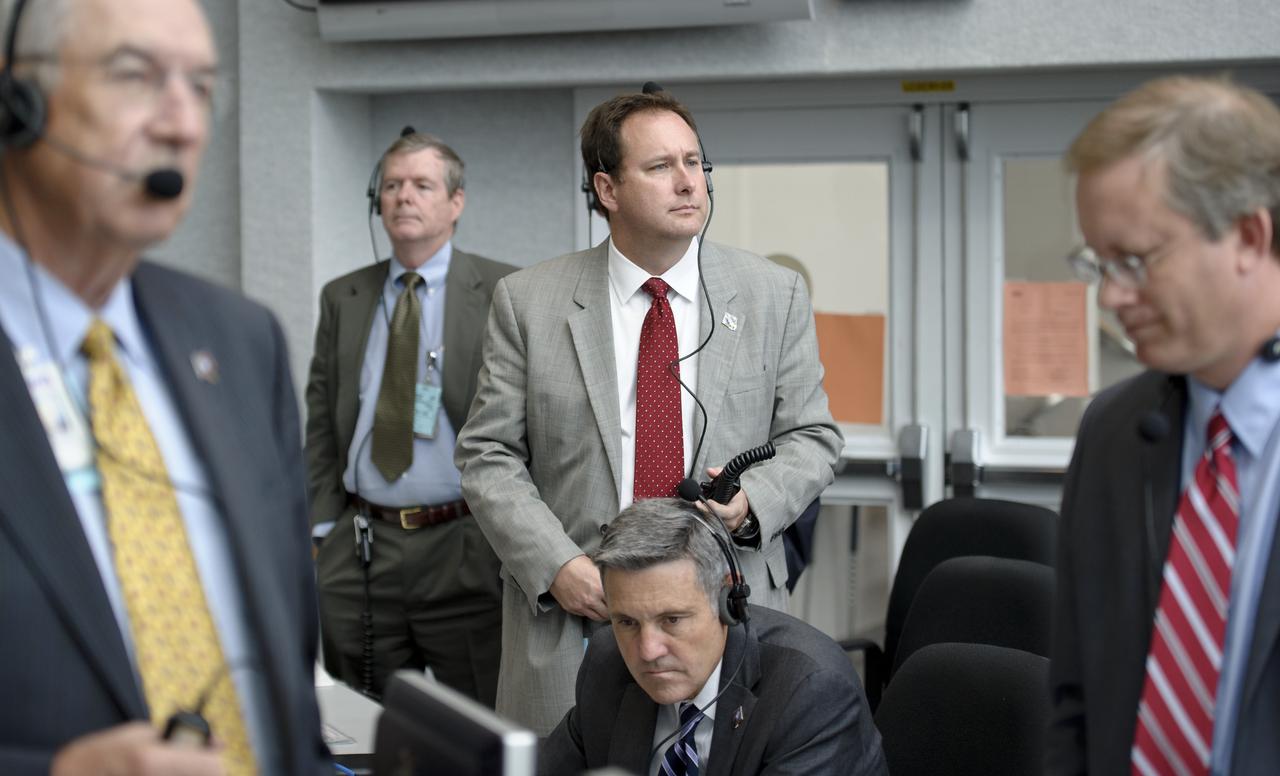
NASA Marshall Space Flight Center Director Robert Lightfoot Jr., standing center, and other management looks on from Firing Room Four of the NASA Kennedy Space Center Launch Control Center (LCC) as he and the launch team monitor the weather and countdown to the launch of the space shuttle Atlantis on Friday, July 8, 2011, in Cape Canaveral, Fla. The launch of Atlantis, STS-135, is the final flight of the shuttle program, a 12-day mission to the International Space Station. Photo Credit: (NASA/Bill Ingalls)
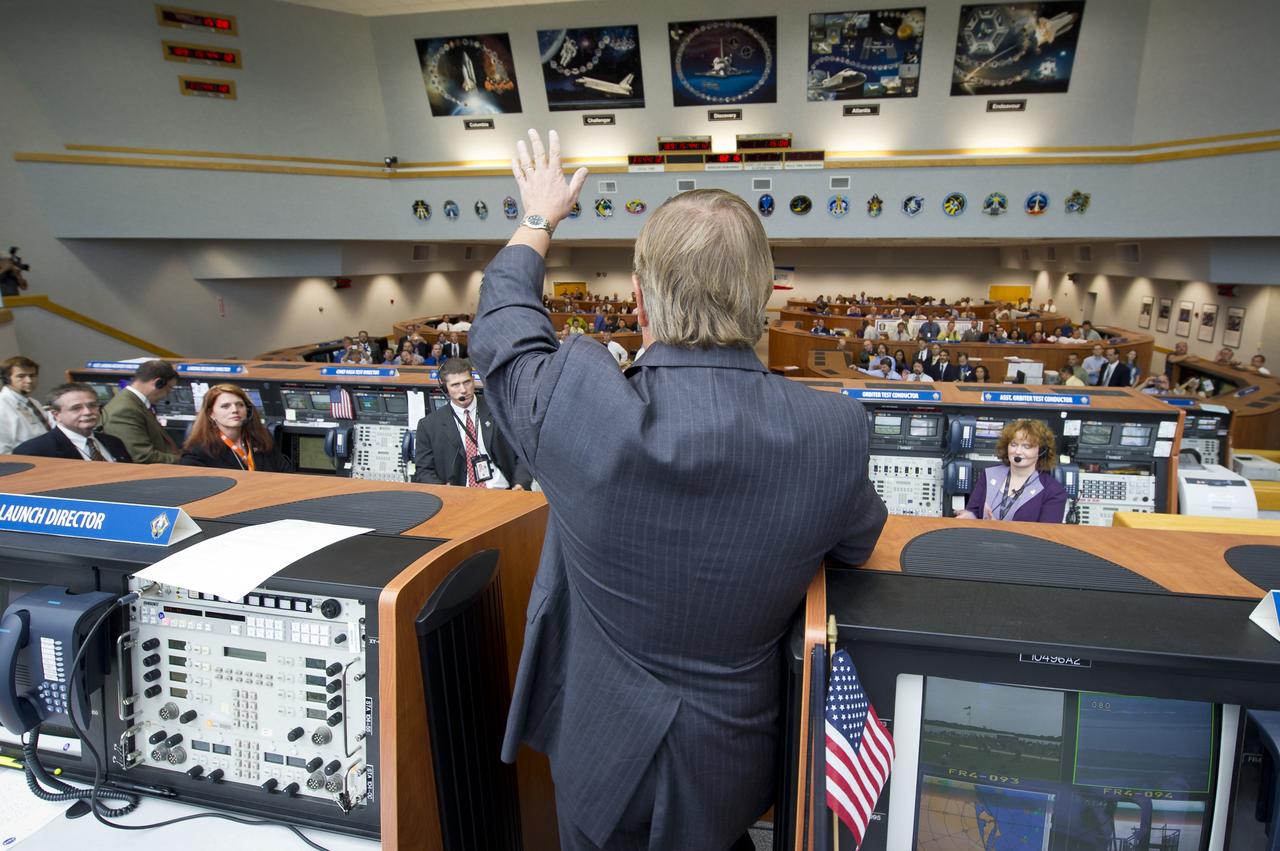
NASA Launch Director Michael Leinbach congratulates the launch team in the NASA Kennedy Space Center Firing Room Four of the Launch Control Center (LCC) shortly after the space shuttle Atlantis, STS-135, launched on Friday, July 8, 2011, in Cape Canaveral, Fla. The launch of Atlantis, STS-135, is the final flight of the shuttle program, a 12-day mission to the International Space Station. Photo Credit: (NASA/Bill Ingalls)
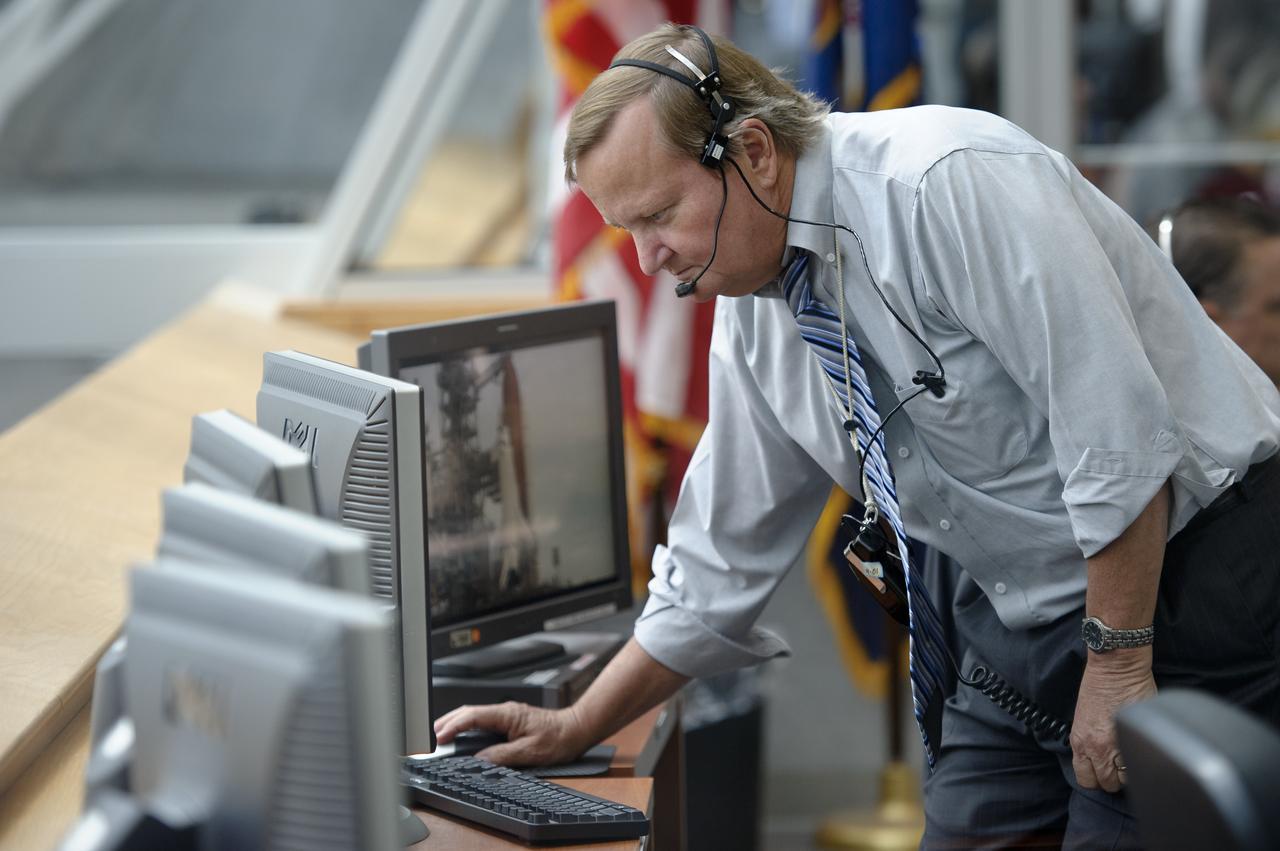
NASA Shuttle Launch Director Michael Leinbach monitors the launch countdown from Firing Room Four of the Launch Control Center (LCC) at NASA's Kennedy Space Center on Friday, July 8, 2011, in Cape Canaveral, Fla. The launch of Atlantis, STS-135, is the final flight of the shuttle program, a 12-day mission to the International Space Station. Photo Credit: (NASA/Bill Ingalls)
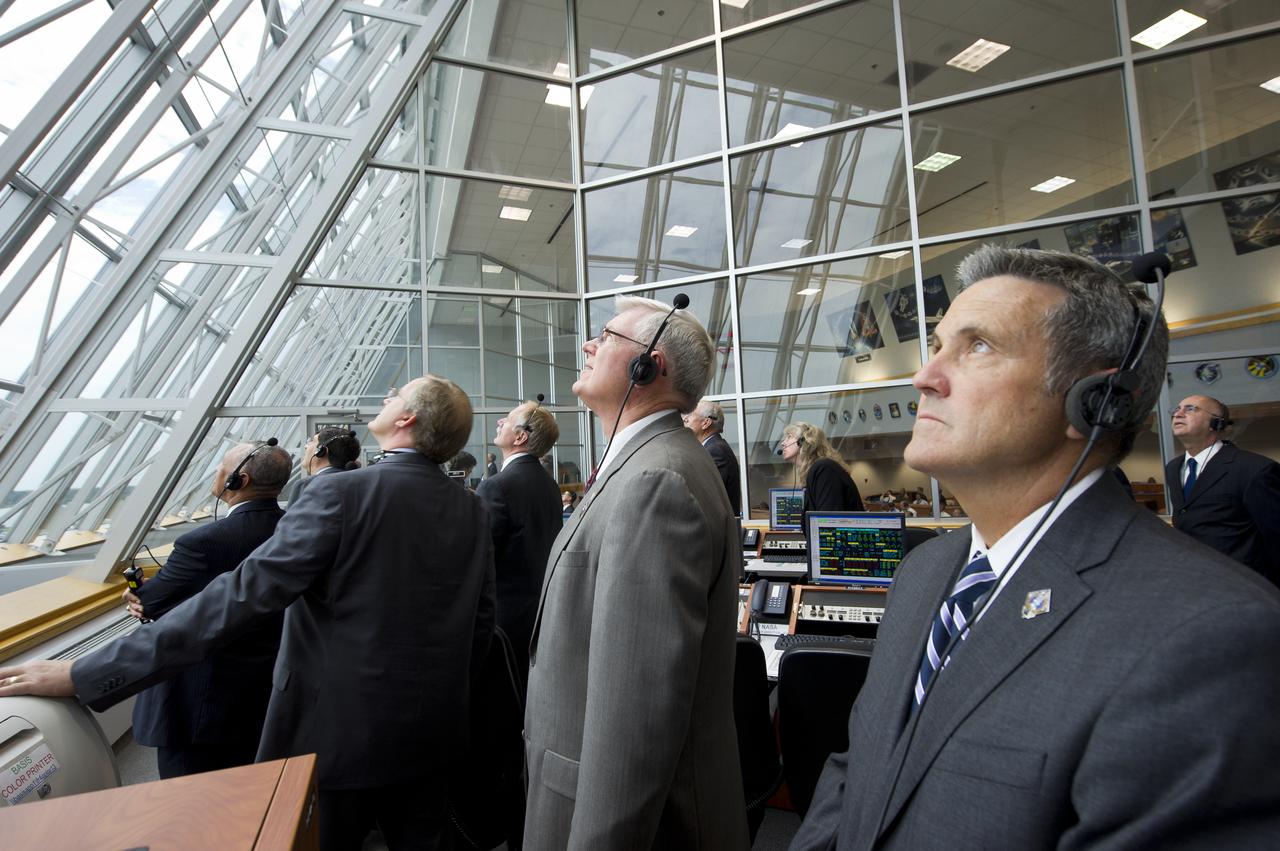
NASA Kennedy Space Center Director Bob Cabana, right, and other management look on from Firing Room Four of the Launch Control Center (LCC) as space shuttle Atlantis launches from pad 39A on Friday, July 8, 2011, in Cape Canaveral, Fla. The launch of Atlantis, STS-135, is the final flight of the shuttle program, a 12-day mission to the International Space Station. Photo Credit: (NASA/Bill Ingalls)
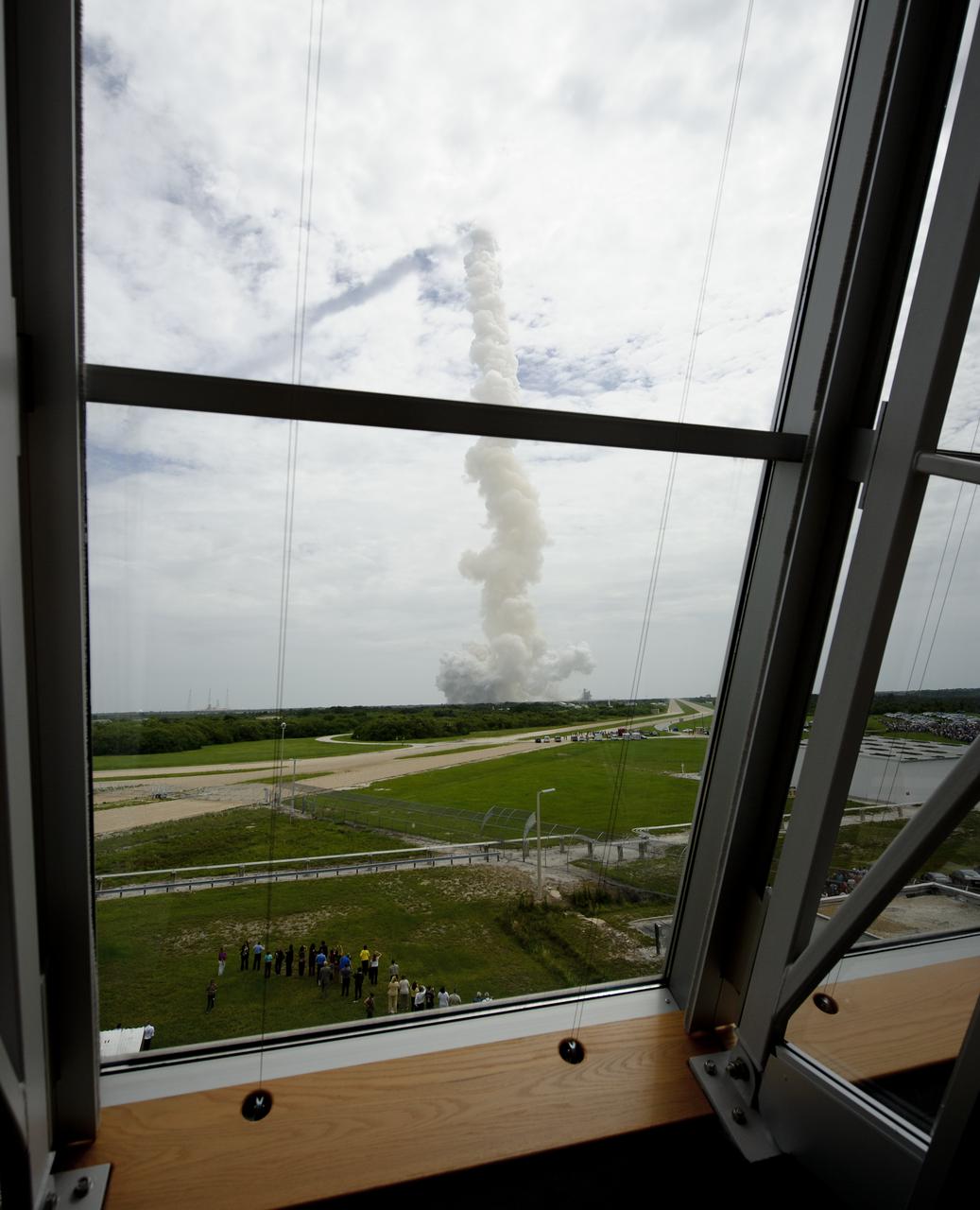
The exhaust plume from space shuttle Atlantis is seen from Firing Room Four of the Launch Control Center (LCC) as space shuttle Atlantis launches from pad 39A on Friday, July 8, 2011, in Cape Canaveral, Fla. The launch of Atlantis, STS-135, is the final flight of the shuttle program, a 12-day mission to the International Space Station. Photo Credit: (NASA/Bill Ingalls)
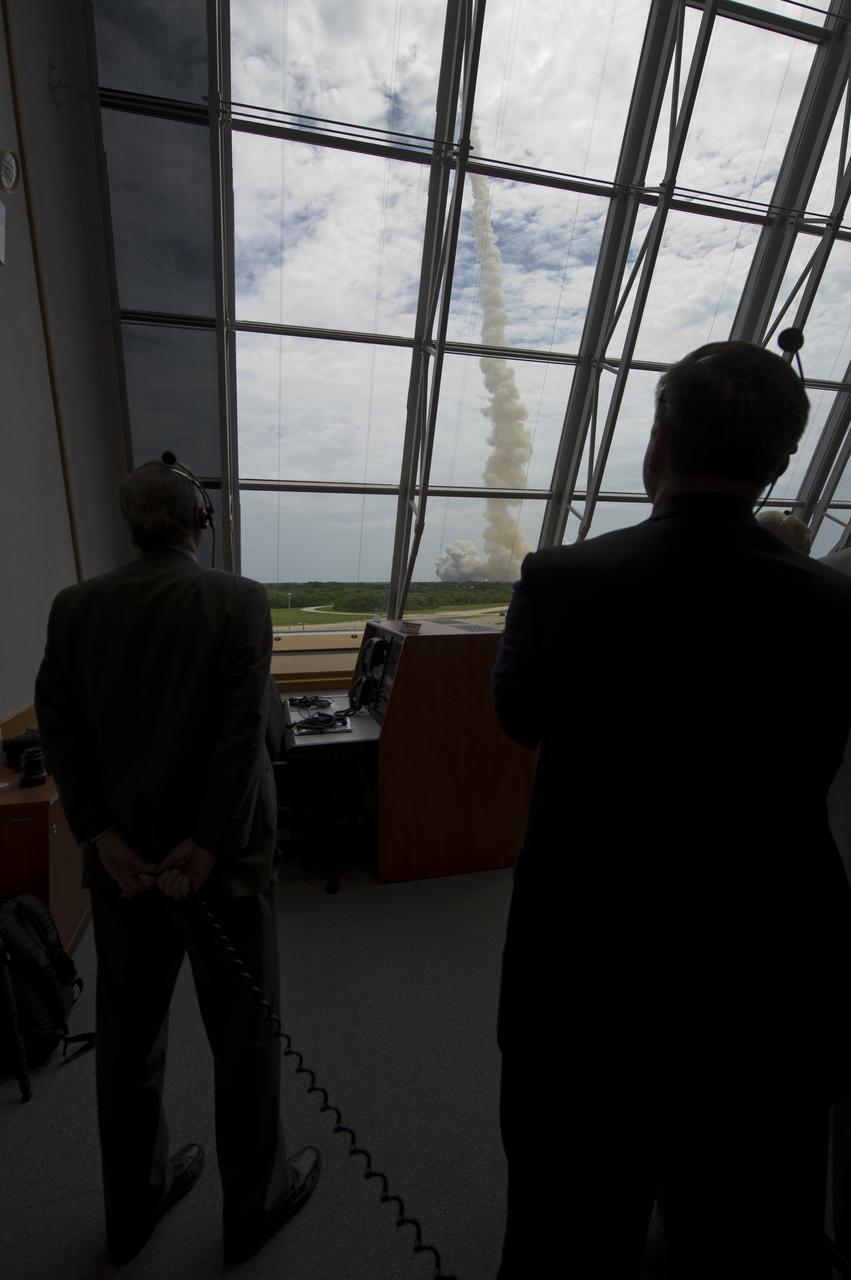
NASA management look on from Firing Room Four of the Launch Control Center (LCC) as space shuttle Atlantis launches from pad 39A on Friday, July 8, 2011, in Cape Canaveral, Fla. The launch of Atlantis, STS-135, is the final flight of the shuttle program, a 12-day mission to the International Space Station. Photo Credit: (NASA/Bill Ingalls)
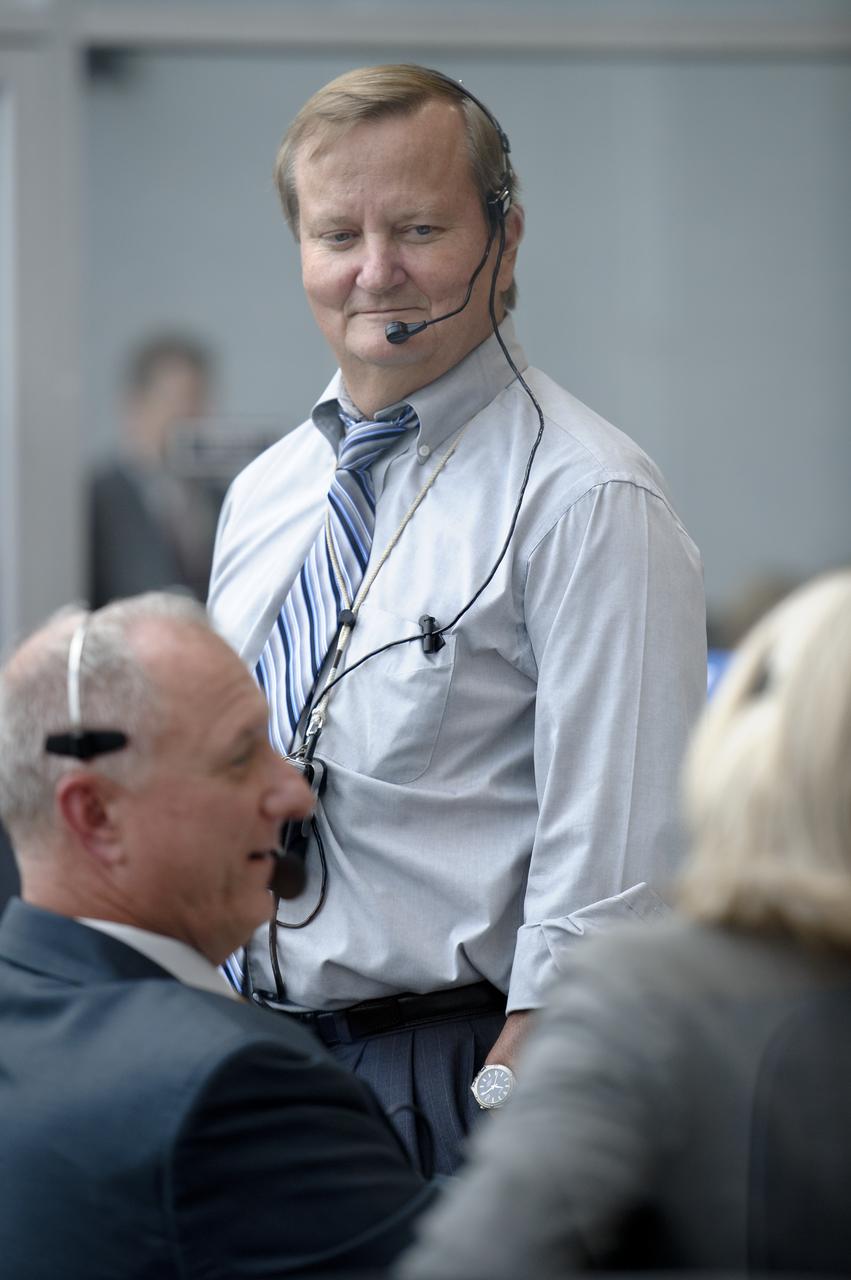
NASA Shuttle Launch Director Michael Leinbach talks with other members of teh launch team as they monitor the launch countdown from Firing Room Four of the Launch Control Center (LCC) at NASA's Kennedy Space Center on Friday, July 8, 2011, in Cape Canaveral, Fla. The launch of Atlantis, STS-135, is the final flight of the shuttle program, a 12-day mission to the International Space Station. Photo Credit: (NASA/Bill Ingalls)
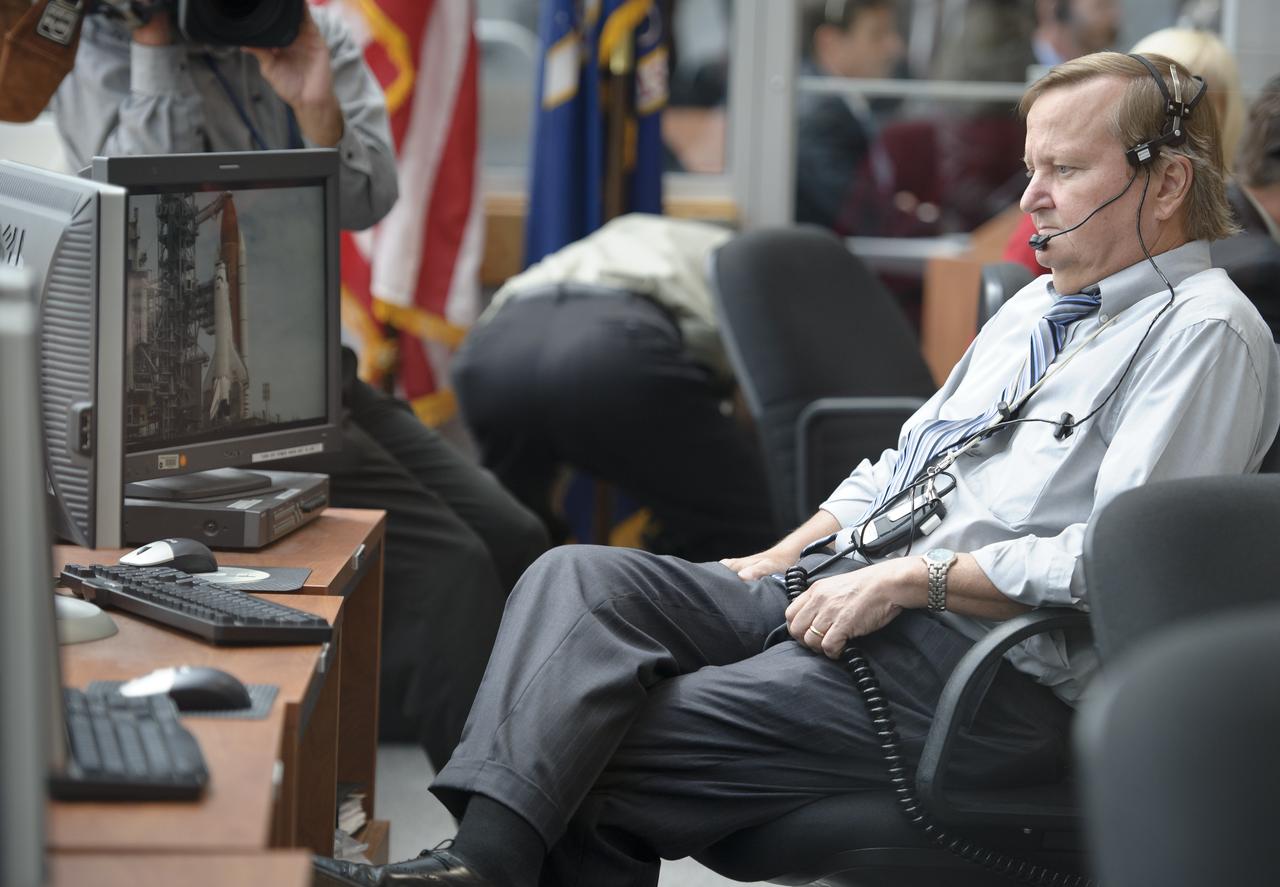
NASA Shuttle Launch Director Michael Leinbach monitors the launch countdown from Firing Room Four of the Launch Control Center (LCC) at NASA's Kennedy Space Center on Friday, July 8, 2011, in Cape Canaveral, Fla. The launch of Atlantis, STS-135, is the final flight of the shuttle program, a 12-day mission to the International Space Station. Photo Credit: (NASA/Bill Ingalls)