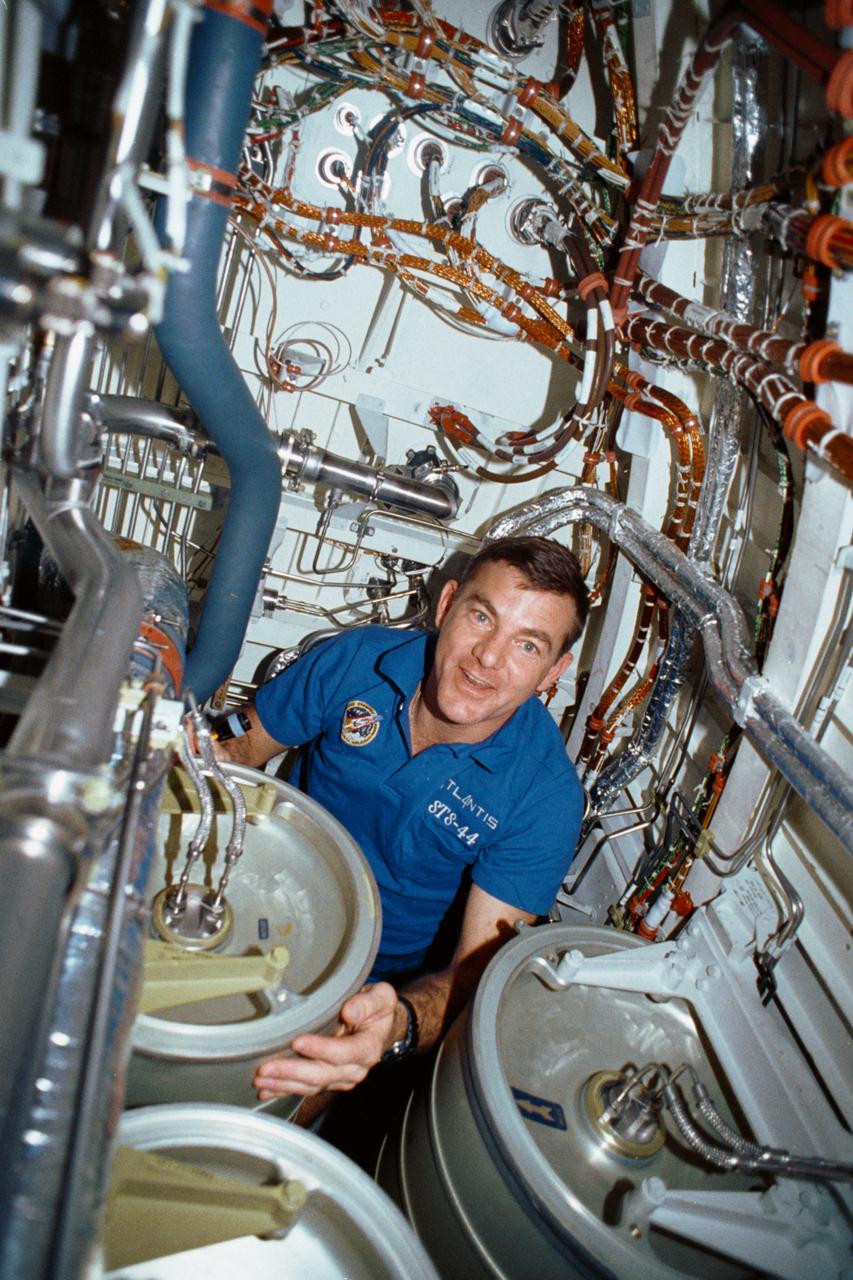
STS-44 Mission Specialist (MS) James S. Voss works under the middeck subfloor of Atlantis, Orbiter Vehicle (OV) 104, to repair humidity separator leakage problems. Voss is surrounded by several water tanks and a maze of shuttle wiring and plumbing. Voss earned the nickname of "Bilge Man" because of his time spent on the lower deck tending to the leakage problem. This is the first photo released of a crewmember in this area of the shuttle.
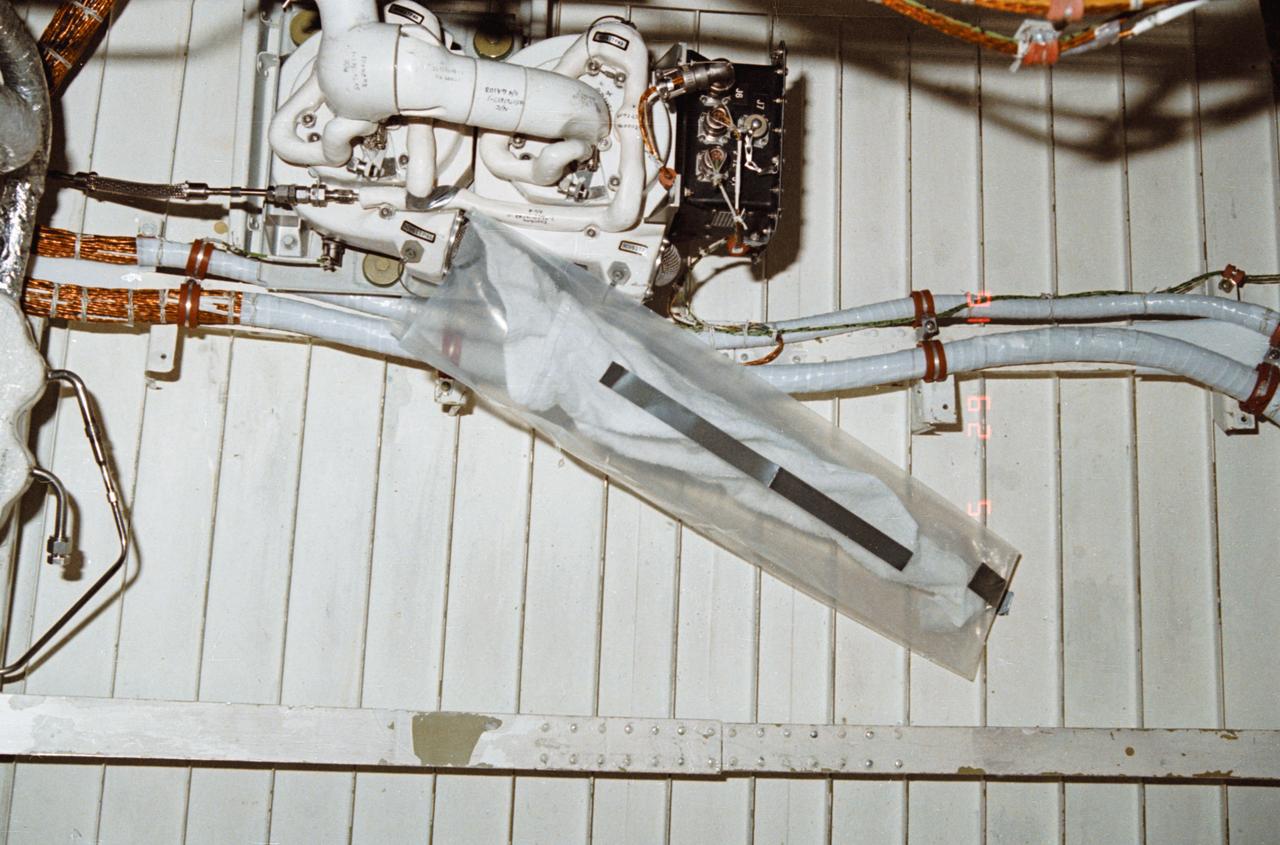
During STS-32, onboard Columbia, Orbiter Vehicle (OV) 102, a leakage problem at environmental control and life support system (ECLSS) air revitalization system (ARS) humidity separator A below the middeck is solved with a plastic bag and a towel. The towel inserted inside a plastic bag absorbed the water that had collected at the separator inlet.
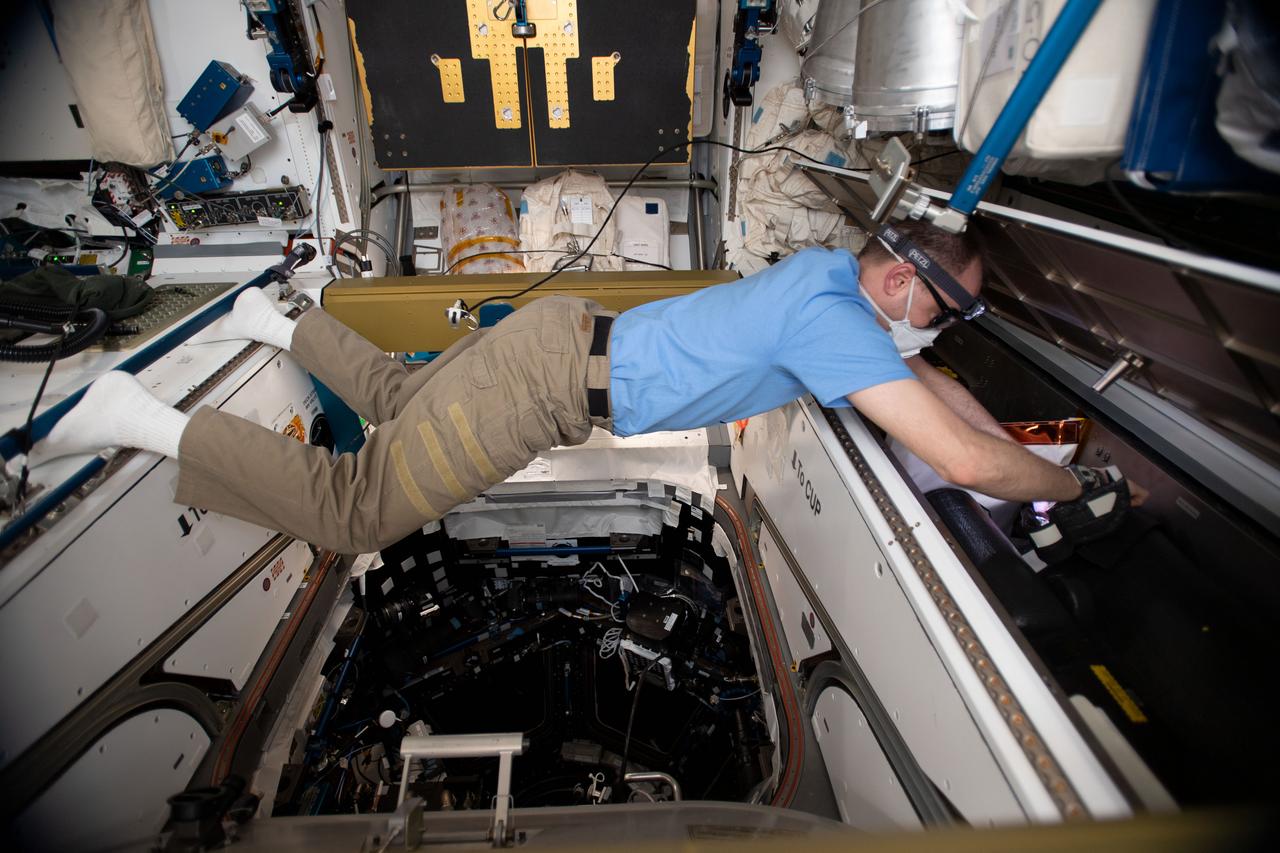
iss059e061760 (May 15, 2019) --- NASA astronaut Nick Hague of Expedition 59 installs gas trap plugs inside the Harmony module's Moderate Temperature Loop Pump Package Assembly. The gas trap plugs would slow an ammonia release through the gas trap vent hole in the event of an Interface Heat Exchanger breach and reduce coolant leakage during vacuum conditions at the International Space Station.
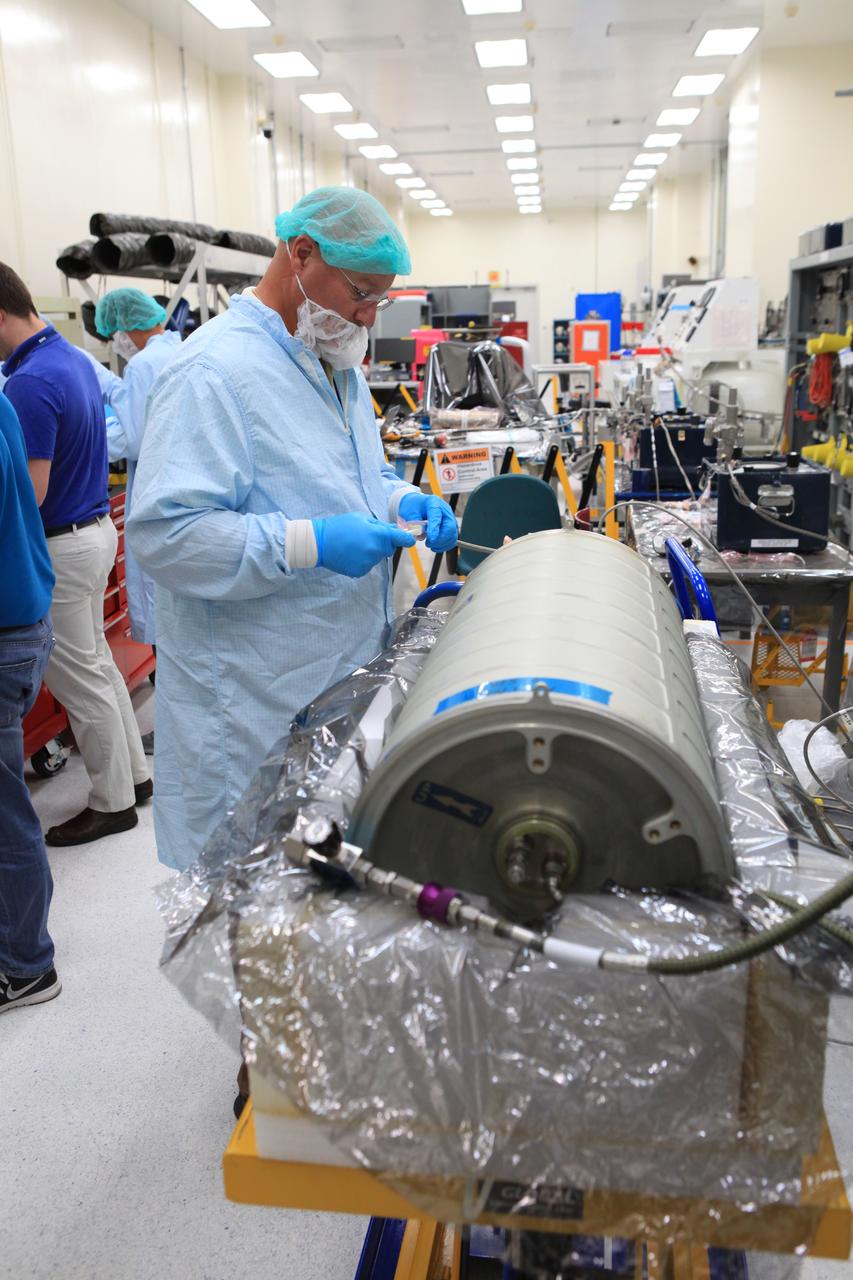
Inside the Space Station Processing Facility high bay at NASA's Kennedy Space Center in Florida, a technician works on the pump package assembly (PPA) on Aug. 30, 2018. The payload will be carried to the International Space Station on SpaceX's 16th Commercial Resupply Services mission. The PPA will be used to continuously drive the cooling water in the space station's thermal control system. The assembly includes a centrifuge pump, a fine filter and gas trap for pump protection, a coarse outlet filter, sensors, and an accumulator. The PPA also will provide a reservoir used for makeup of coolant if leakage occurred. CRS-16 is scheduled to launch to the space station later this year.
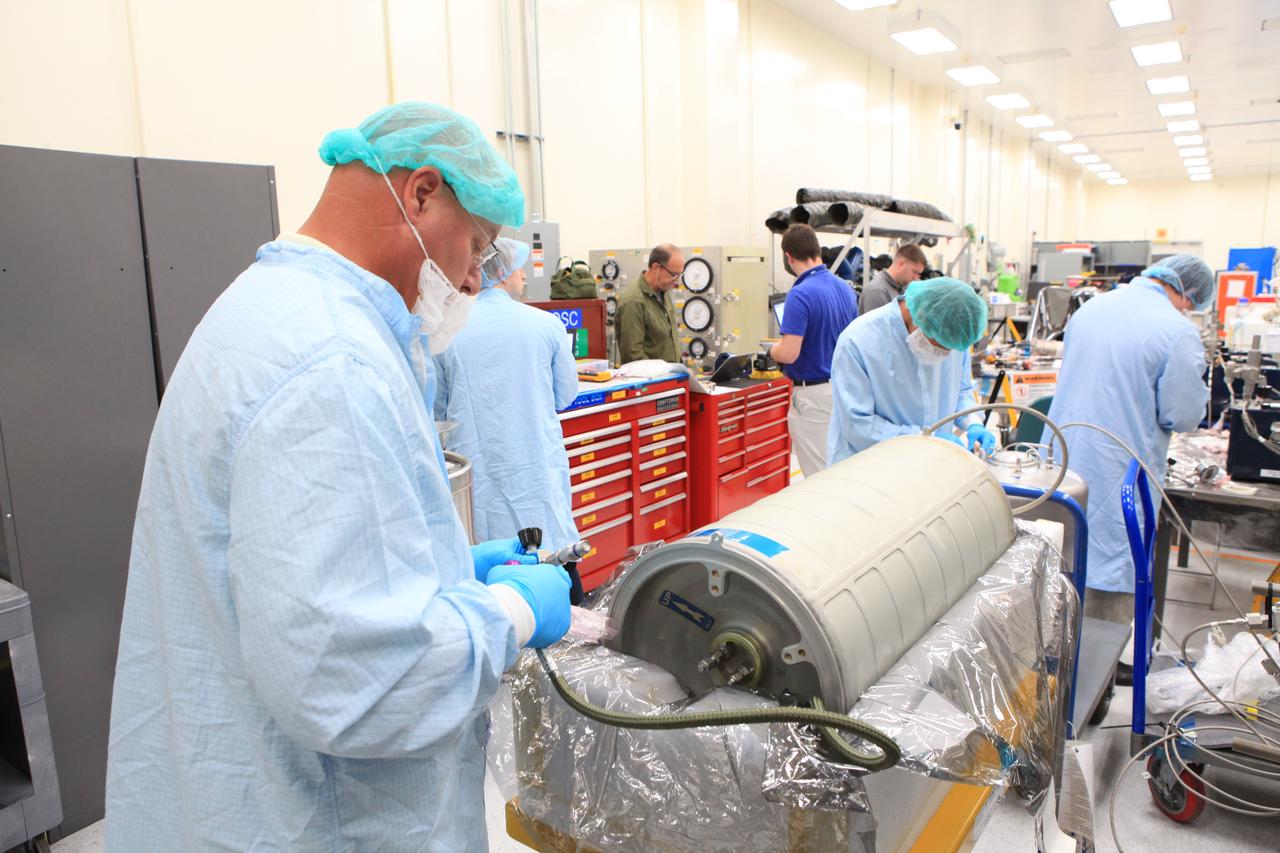
Inside the Space Station Processing Facility high bay at NASA's Kennedy Space Center in Florida, technicians work on the pump package assembly (PPA) on Aug. 30, 2018. The payload will be carried to the International Space Station on SpaceX's 16th Commercial Resupply Services mission. The PPA will be used to continuously drive the cooling water in the space station's thermal control system. The assembly includes a centrifuge pump, a fine filter and gas trap for pump protection, a coarse outlet filter, sensors, and an accumulator. The PPA also will provide a reservoir used for makeup of coolant if leakage occurred. CRS-16 is scheduled to launch to the space station later this year.
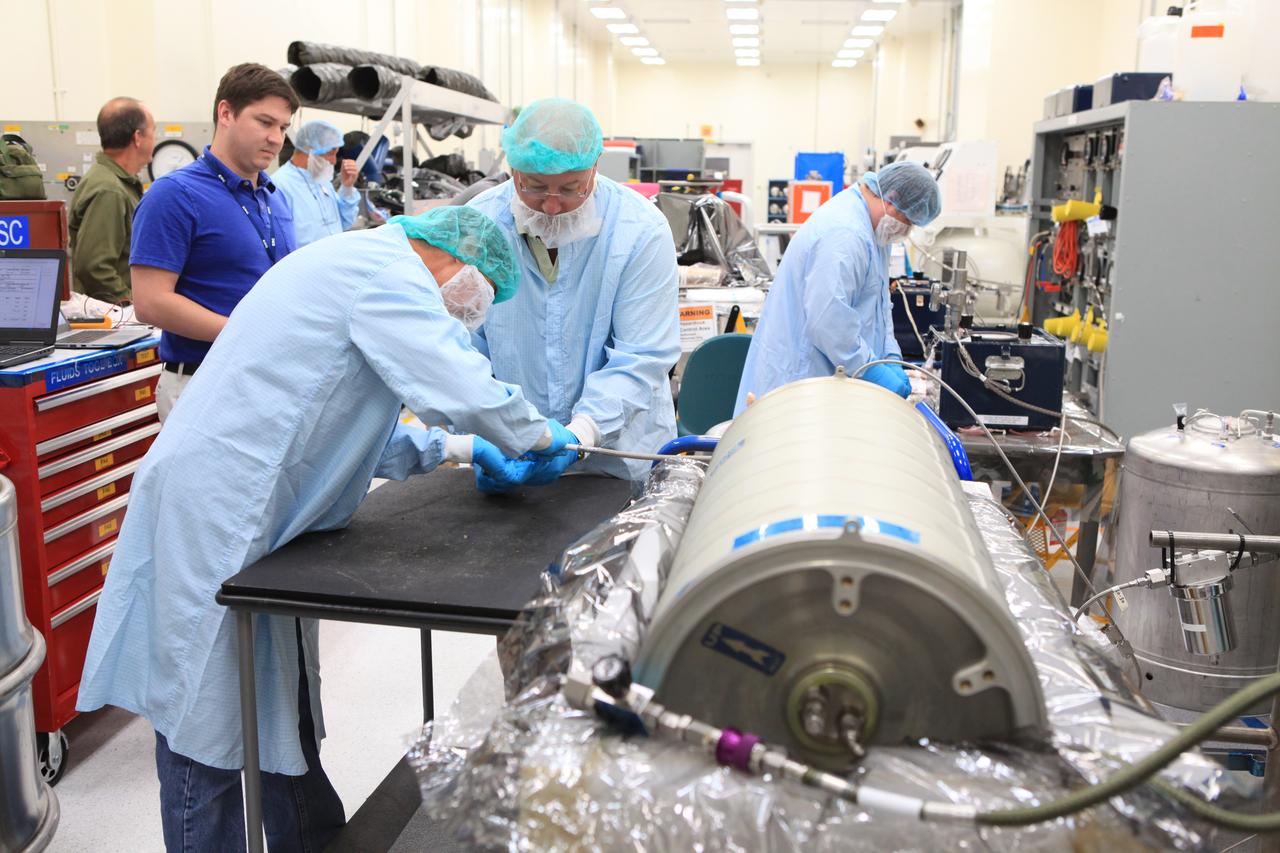
Inside the Space Station Processing Facility high bay at NASA's Kennedy Space Center in Florida, technicians work on the pump package assembly (PPA) on Aug. 30, 2018. The payload will be carried to the International Space Station on SpaceX's 16th Commercial Resupply Services mission. The PPA will be used to continuously drive the cooling water in the space station's thermal control system. The assembly includes a centrifuge pump, a fine filter and gas trap for pump protection, a coarse outlet filter, sensors, and an accumulator. The PPA also will provide a reservoir used for makeup of coolant if leakage occurred. CRS-16 is scheduled to launch to the space station later this year.
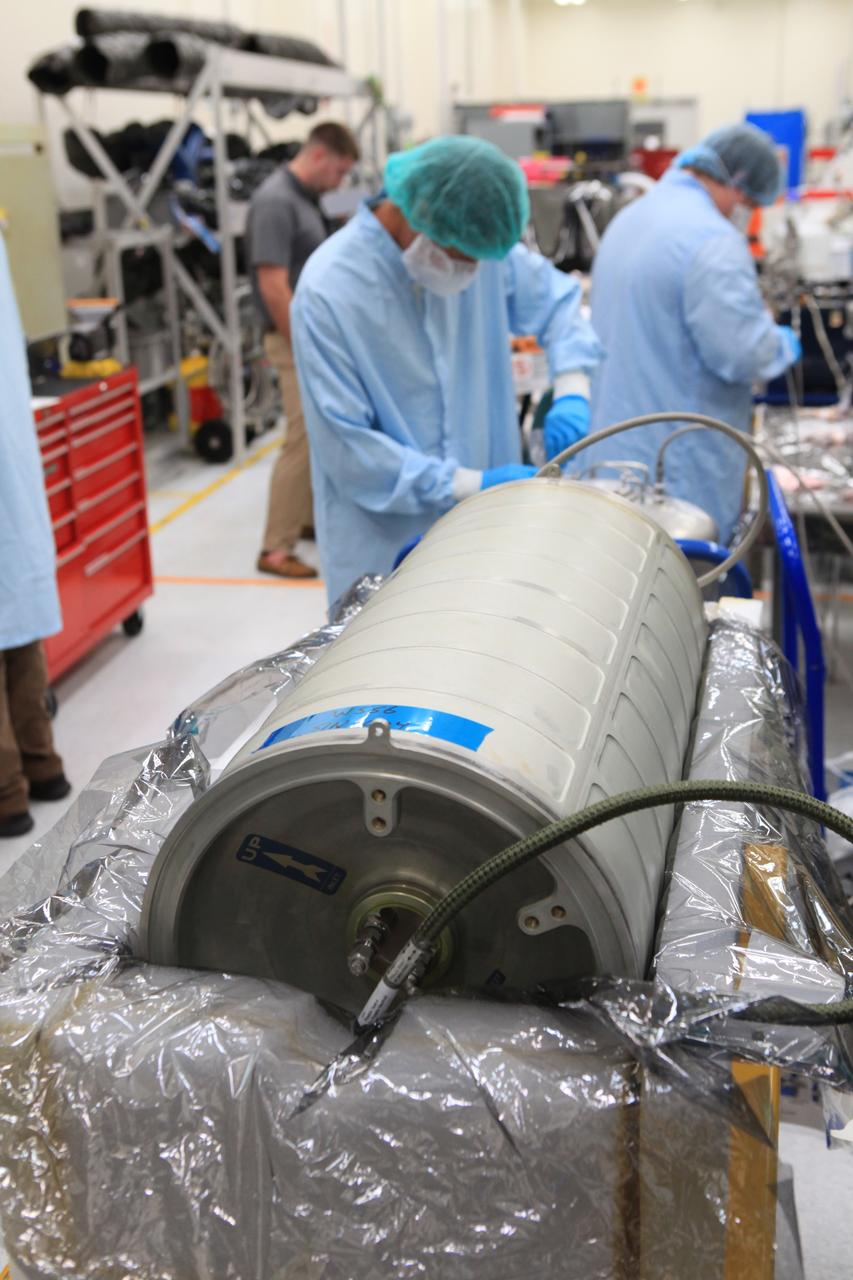
Inside the Space Station Processing Facility high bay at NASA's Kennedy Space Center in Florida, technicians work on the pump package assembly (PPA) on Aug. 30, 2018. The payload will be carried to the International Space Station on SpaceX's 16th Commercial Resupply Services mission. The PPA will be used to continuously drive the cooling water in the space station's thermal control system. The assembly includes a centrifuge pump, a fine filter and gas trap for pump protection, a coarse outlet filter, sensors, and an accumulator. The PPA also will provide a reservoir used for makeup of coolant if leakage occurred. CRS-16 is scheduled to launch to the space station later this year.
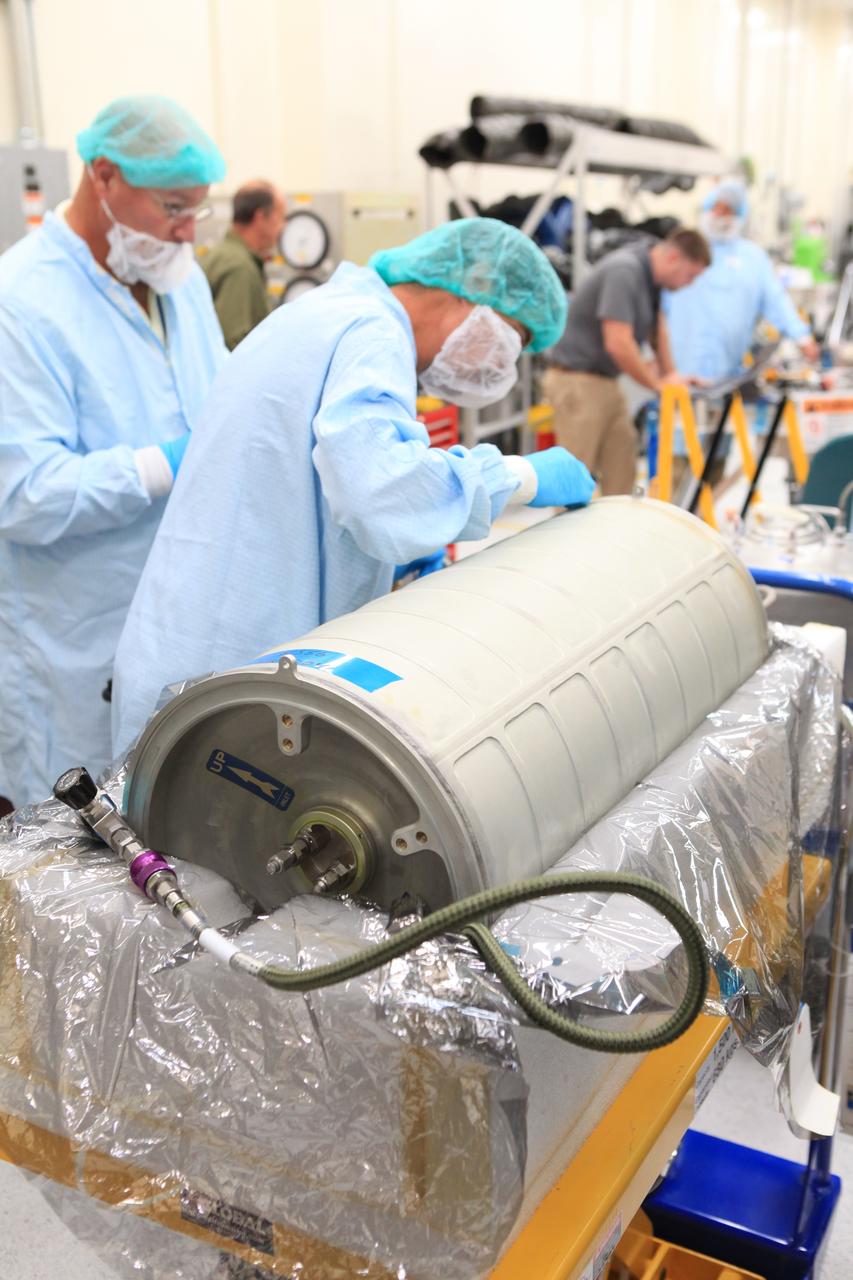
Inside the Space Station Processing Facility high bay at NASA's Kennedy Space Center in Florida, technicians work on the pump package assembly (PPA) on Aug. 30, 2018. The payload will be carried to the International Space Station on SpaceX's 16th Commercial Resupply Services mission. The PPA will be used to continuously drive the cooling water in the space station's thermal control system. The assembly includes a centrifuge pump, a fine filter and gas trap for pump protection, a coarse outlet filter, sensors, and an accumulator. The PPA also will provide a reservoir used for makeup of coolant if leakage occurred. CRS-16 is scheduled to launch to the space station later this year.
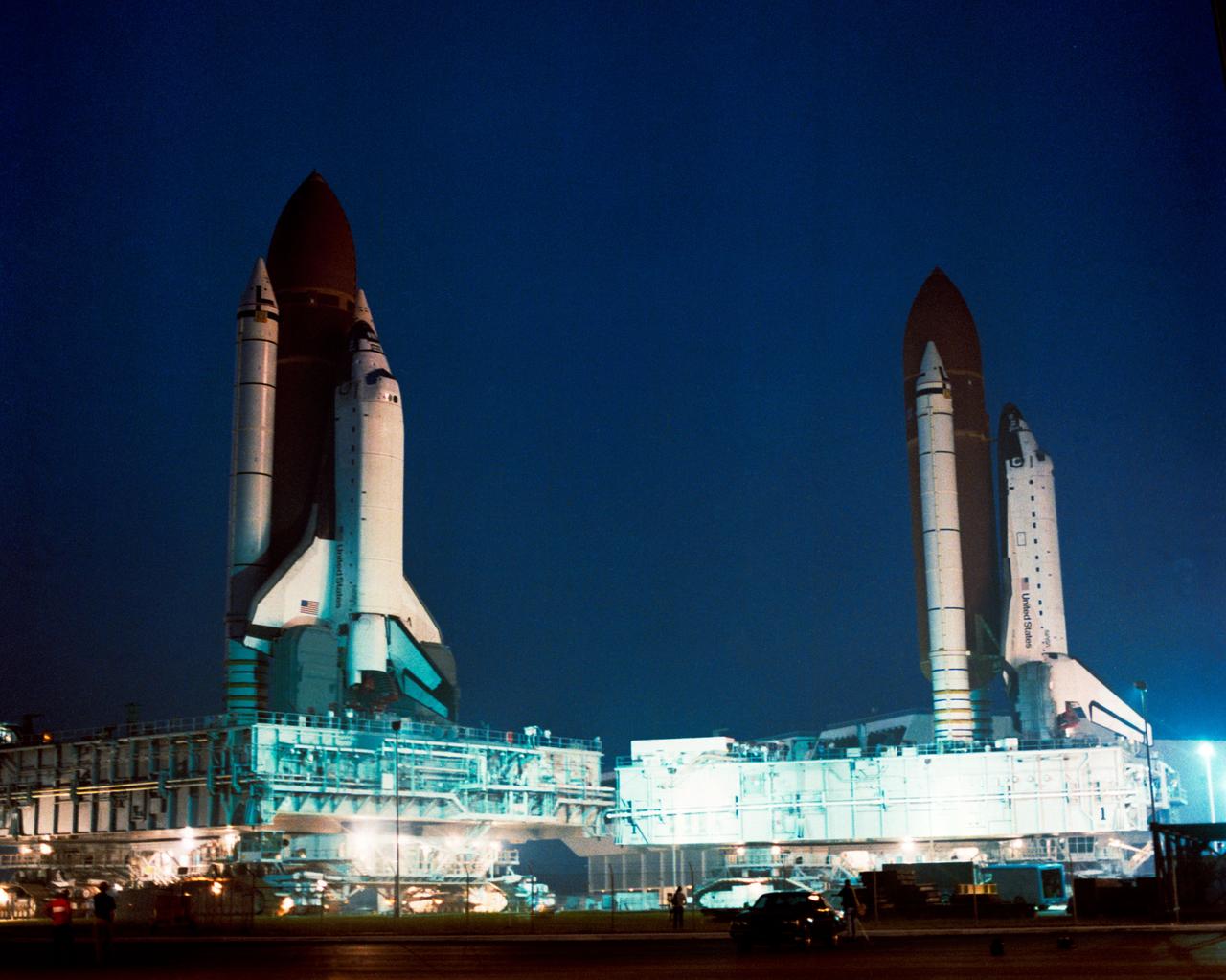
Columbia, Orbiter Vehicle (OV) 102, slated for mission STS-35, left, rolls past Atlantis, OV-104, on its way to Kennedy Space Center (KSC) launch pad 39A. OV-104, being readied for STS-38, is parked in front of the Vehicle Assembly Building (VAB) following its rollback from the pad for liquid hydrogen (LH2) line repairs. View provided by KSC with alternate number KSC-90PC-1152.
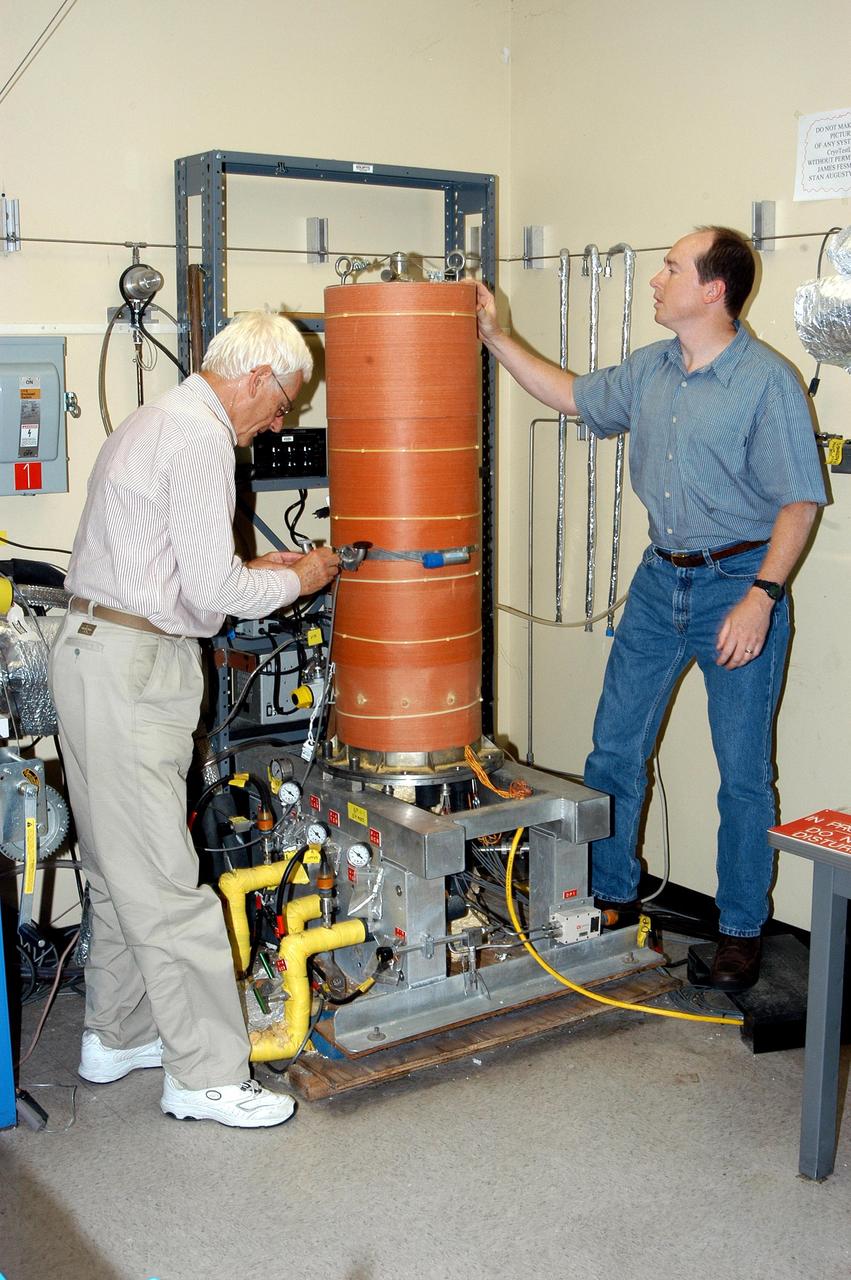
KENNEDY SPACE CENTER, FLA. - James E. Fesmire (right), NASA lead engineer for the KSC Cryogenics Testbed, works on Cryostat-1, the Methods of Testing Thermal Insulation and Association Test Apparatus, which he developed. At left is co-inventor Dr. Stan Augustynowicz, chief scientist with Sierra Lobo Inc. in Milan, Ohio. Cryostat-1 provides absolute thermal performance values of cryogenic insulation systems under real-world conditions. Cryogenic liquid is supplied to a test chamber and two guard chambers, and temperatures are sensed within the vacuum chamber to test aerogels, foams or other materials. The Cryostat-1 machine can detect the absolute heat leakage rates through materials under the full range of vacuum conditions. Fesmire recently acquired three patents for testing thermal insulation materials for cryogenic systems. The research team of the Cryogenics Testbed offers testing and support for a number of programs and initiatives for NASA and commercial customers.
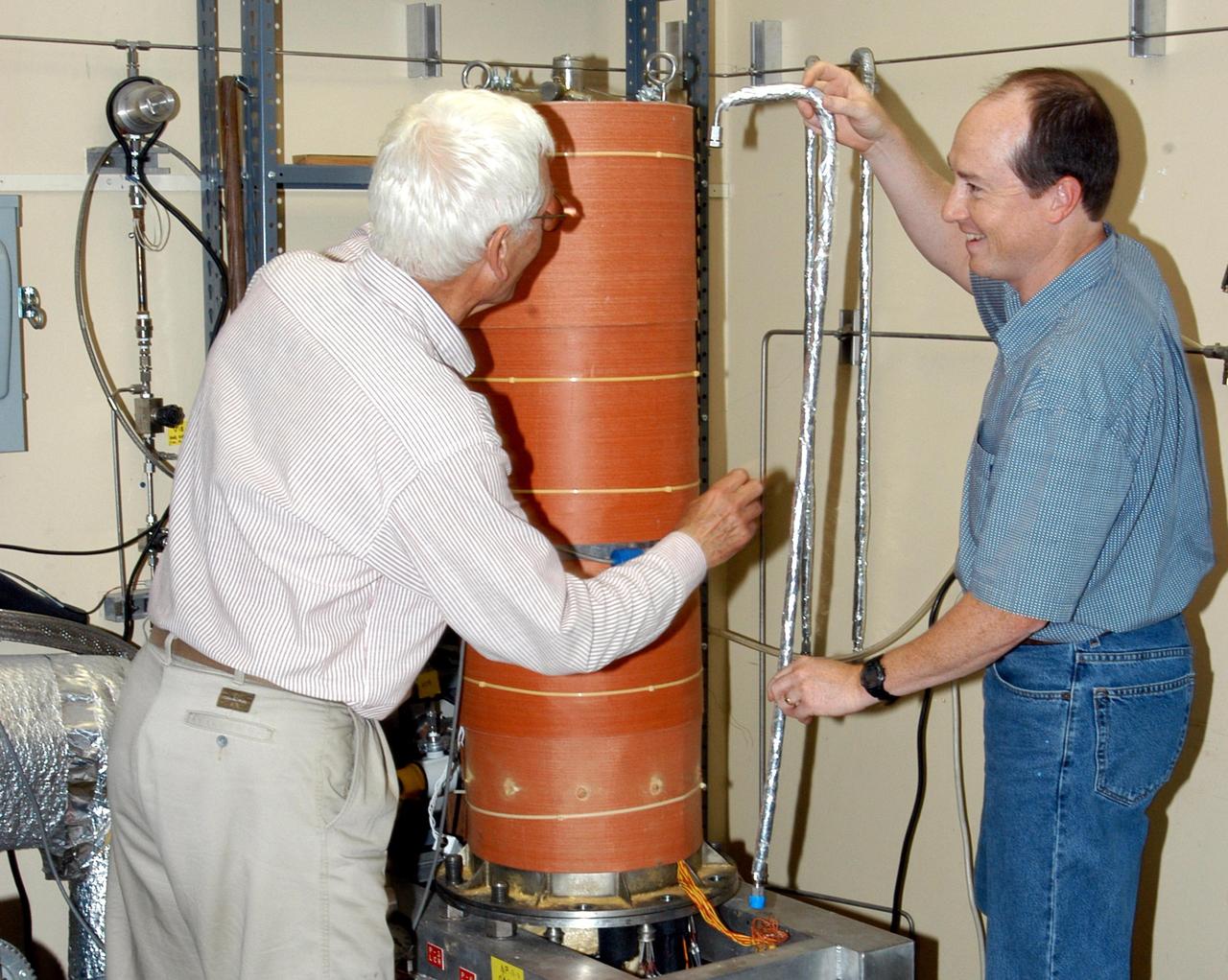
KENNEDY SPACE CENTER, FLA. - James E. Fesmire (right), NASA lead engineer for the KSC Cryogenics Testbed, works on Cryostat-1, the Methods of Testing Thermal Insulation and Association Test Apparatus, which he developed. At left is co-inventor Dr. Stan Augustynowicz, chief scientist with Sierra Lobo Inc. in Milan, Ohio. Cryostat-1 provides absolute thermal performance values of cryogenic insulation systems under real-world conditions. Cryogenic liquid is supplied to a test chamber and two guard chambers, and temperatures are sensed within the vacuum chamber to test aerogels, foams or other materials. The Cryostat-1 machine can detect the absolute heat leakage rates through materials under the full range of vacuum conditions. Fesmire recently acquired three patents for testing thermal insulation materials for cryogenic systems. The research team of the Cryogenics Testbed offers testing and support for a number of programs and initiatives for NASA and commercial customers.
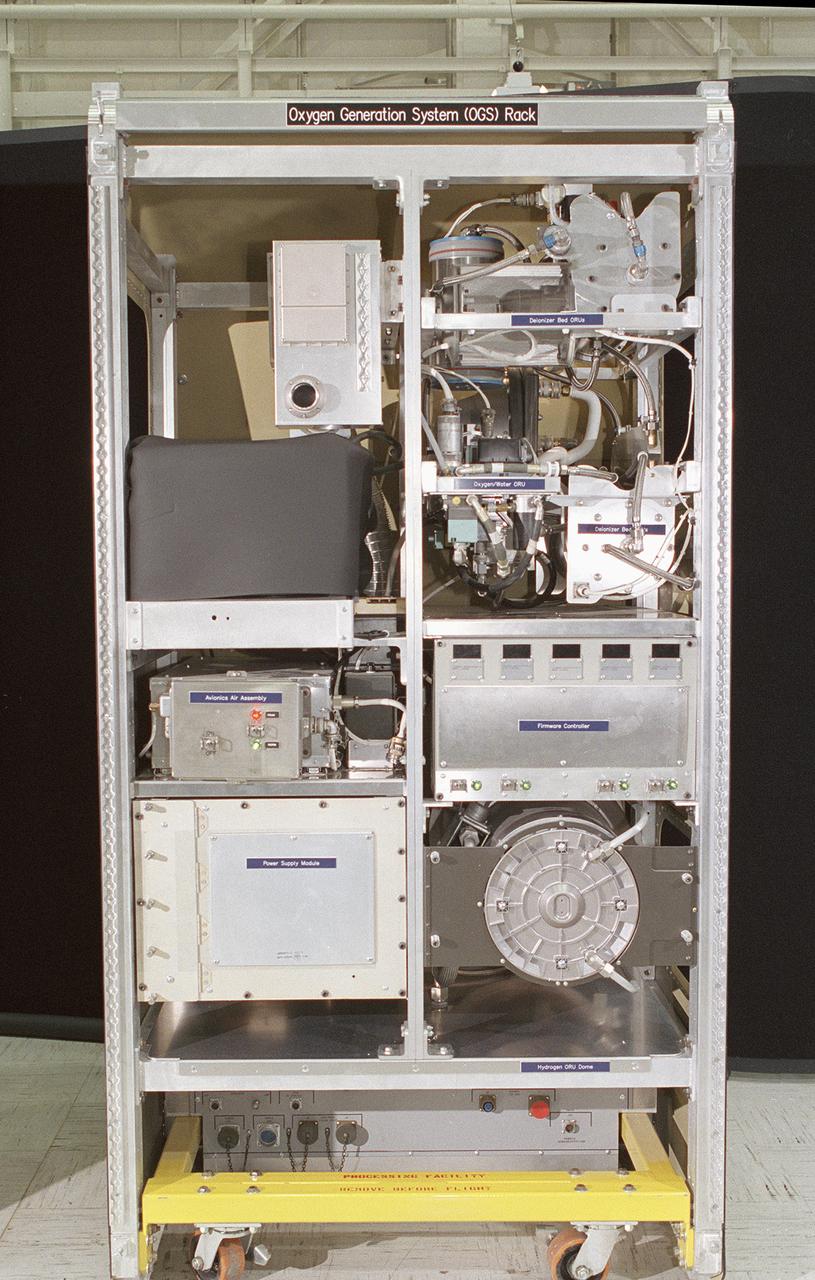
The Environmental Control and Life Support System (ECLSS) Group of the Flight Projects Directorate at the Marshall Space Flight Center (MSFC) in Huntsville, Alabama, is responsible for designing and building the life support systems that will provide the crew of the International Space Station (ISS) a comfortable environment in which to live and work. This is a close-up view of ECLSS Oxygen Generation System (OGS) rack. The ECLSS Group at the MSFC oversees the development of the OGS, which produces oxygen for breathing air for the crew and laboratory animals, as well as for replacing oxygen lost due to experiment use, airlock depressurization, module leakage, and carbon dioxide venting. The OGS consists primarily of the Oxygen Generator Assembly (OGA), provided by the prime contractor, the Hamilton Sundstrand Space Systems, International (HSSSI) in Windsor Locks, Cornecticut and a Power Supply Module (PSM), supplied by the MSFC. The OGA is comprised of a cell stack that electrolyzes (breaks apart the hydrogen and oxygen molecules) some of the clean water provided by the Water Recovery System and the separators that remove the gases from water after electrolysis. The PSM provides the high power to the OGA needed to electrolyze the water.

Technicians complete foaming around the area of Atlantis, Orbiter Vehicle (OV) 104, 17 inch diameter external tank (ET) feed line in preparation for the second liquid hydrogen tanking test at the Kennedy Space Center (KSC). An elaborate network of sensors, leak detectors, and baggies were set up on OV-104 by technicians. Engineers hope this extra instrumentation will help pinpoint the exact location of the leak. OV-104 is scheduled to be launched for the STS-38 mission, a classified Department of Defense (DOD) flight. View provided by KSC with alternate number KSC-90PC-988.
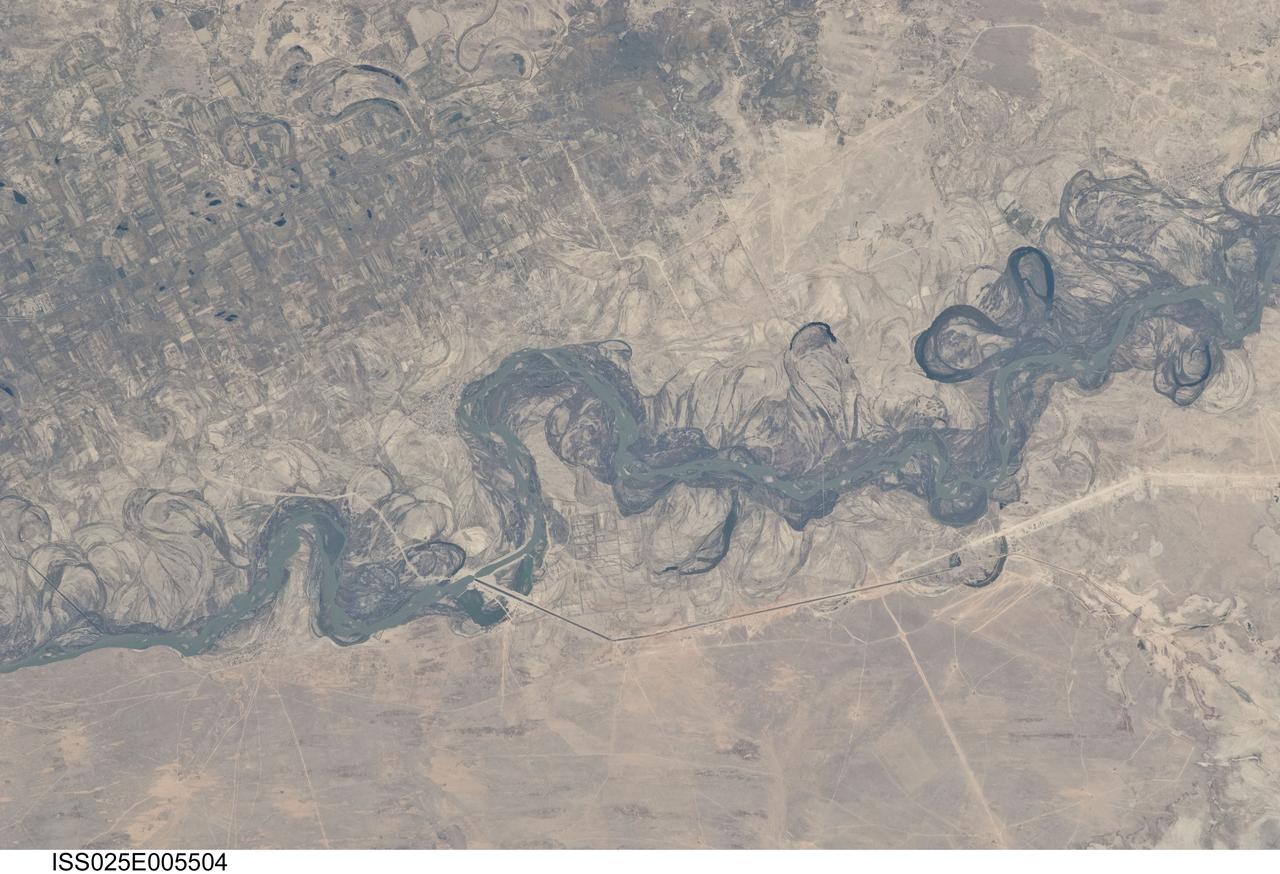
ISS025-E-005504 (30 Sept. 2010) --- Syr Dar’ya River floodplain in Kazakhstan, central Asia is featured in this image photographed by an Expedition 25 crew member on the International Space Station. Central Asia’s most important cotton-growing region is concentrated in the floodplain of the Syr Dar’ya, and is irrigated by water from the river. The floodplain is shown here as a tangle of twisting meanders and loops (center). The darkest areas are brushy vegetation along the present course (filled with blue-green water); wisps of vegetation are also visible along flanking swampy depressions, or sloughs. An older floodplain appears as an area of more diffuse dark vegetation (upper left), where a pattern of relict meander bends is overlain by a rectangular pattern of cotton fields. The straight channel of a new diversion canal—one of sixteen from this point downstream—can be seen along the east bank of the river. The older floodplain area is fed from the Chardara Reservoir immediately upstream (not shown). Half the river flow is controlled from reservoirs, and half from direct water take-off from canals. By contrast with the intensive agricultural use of water shown here, upstream water control in the mountain valleys is oriented more toward power generation. The river flows for a total distance of 2,200 kilometers from the Tien Shan Mountains westward and northwestward to the Aral Sea—the dying waterbody at the low point of the basin far to the northwest. Withdrawals of water from the river for agriculture have continued for many decades. Although the Syr Dar’ya is the second largest river flowing into the sea, its discharge is not very large. As such, it has been easily depleted, with none of its water today reaching the Aral Sea. Control of the river is vested in the Syr Dar’ya Basin Water Organization run by nations with territory in the Syr Dar’ya basin. Some of the organization’s main efforts are accurate gauging of water use along the river course, and repair of canals to reduce widespread water loss by leakage.
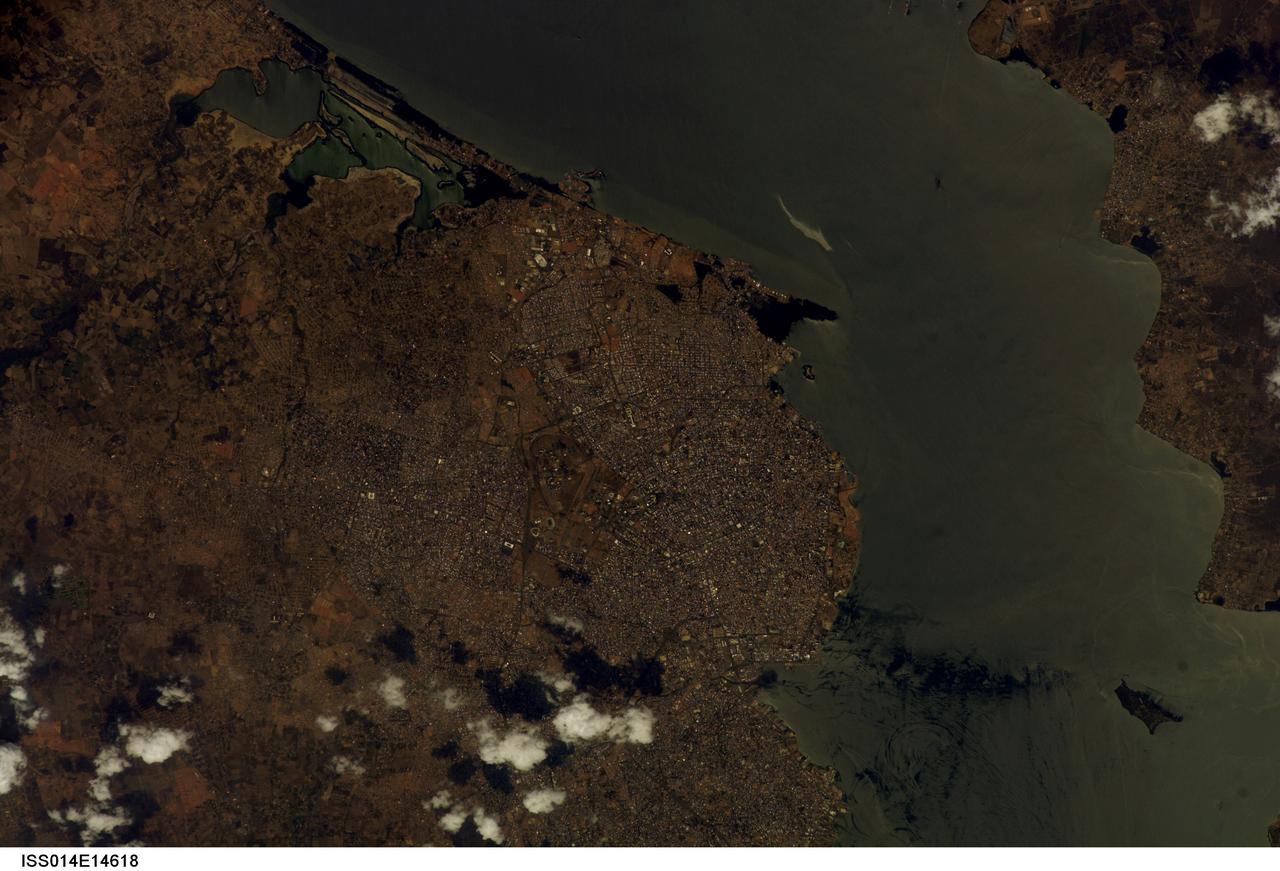
ISS014-E-14618 (23 Feb. 2007) --- Maracaibo City and Oil Slick, Venezuela are featured in this image photographed by an Expedition 14 crewmember on the International Space Station. This view depicts the narrow (6 kilometers) strait between Lake Maracaibo to the south and the Gulf of Venezuela to the north. This brackish lake in northern Venezuela is the largest in South America. The lake and its small basin are situated atop a vast reservoir of buried oil deposits, first tapped in 1914. Venezuela is now the world's fifth largest oil producer. The narrow strait is deepened to allow access by ocean-going vessels, dozens of which now daily transport approximately 80 per cent of Venezuela's oil to world markets. Shipping is one of the main polluters of the lake, caused by the dumping of ballast and other waste. An oil slick, likely related to bilge pumping, can be seen as a bright streak northeast of El Triunfo. Other sources of pollution to the lake include underwater oil pipeline leakage, untreated municipal and industrial waste from coastal cities, and runoff of chemicals from surrounding farm land. Deepening the narrow channel for shipping has also allowed saltwater intrusion into the lake, leading to adverse effects to Lake Biota. Since the discovery of oil, cities like Maracaibo have sprung up along the northwestern coastline of the lake. With satellite cities such as San Luis and El Triunfo, greater Maracaibo has a population of approximately 2.5 million. Just outside the lower margin of the picture a major bridge spans the narrows pictured here, connecting cities such as Altagracia (top right) to Maracaibo.