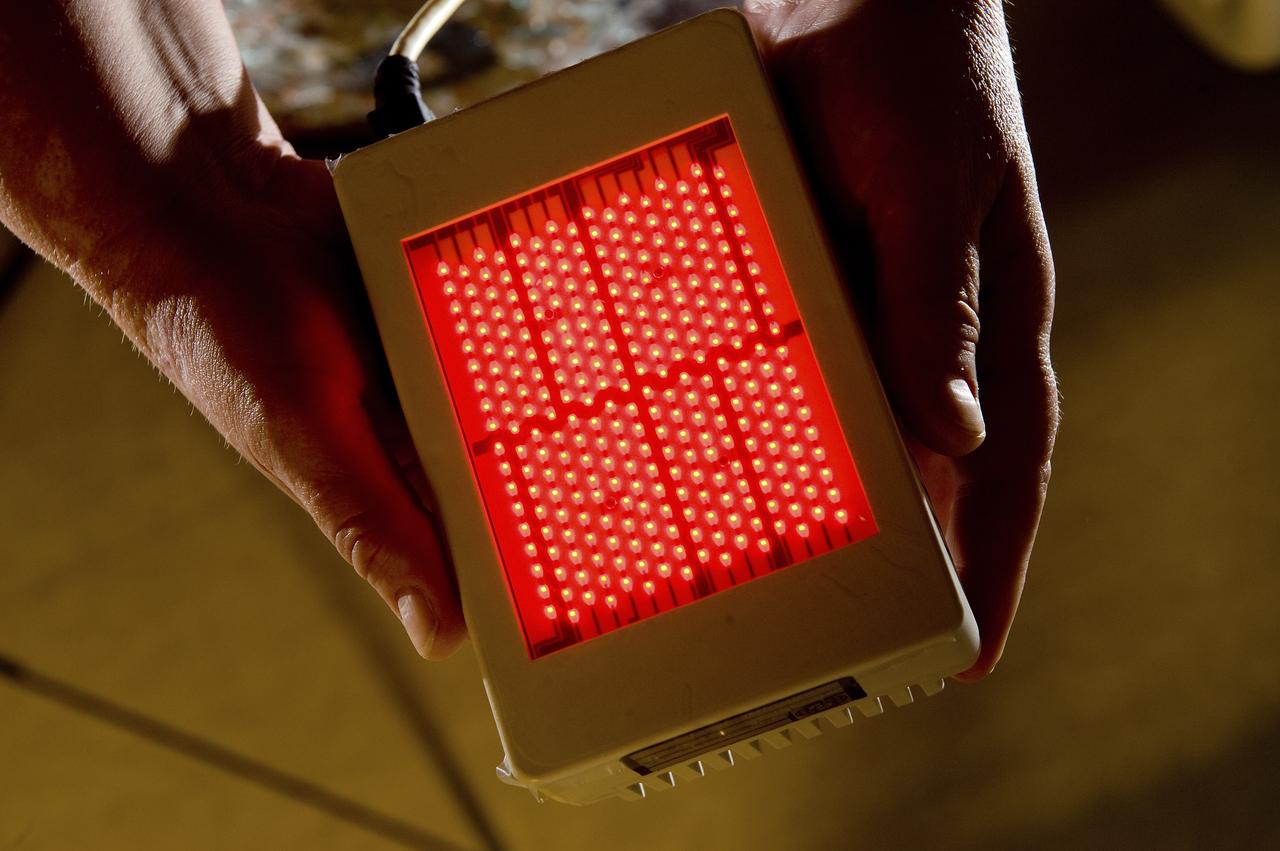
THE HAND HELD DEVICE USED FOR OF LED TREATMENT TO HELP REDUCE RECOVERY TIME FROM CANCER TREATMENT RELATED ORAL SORES
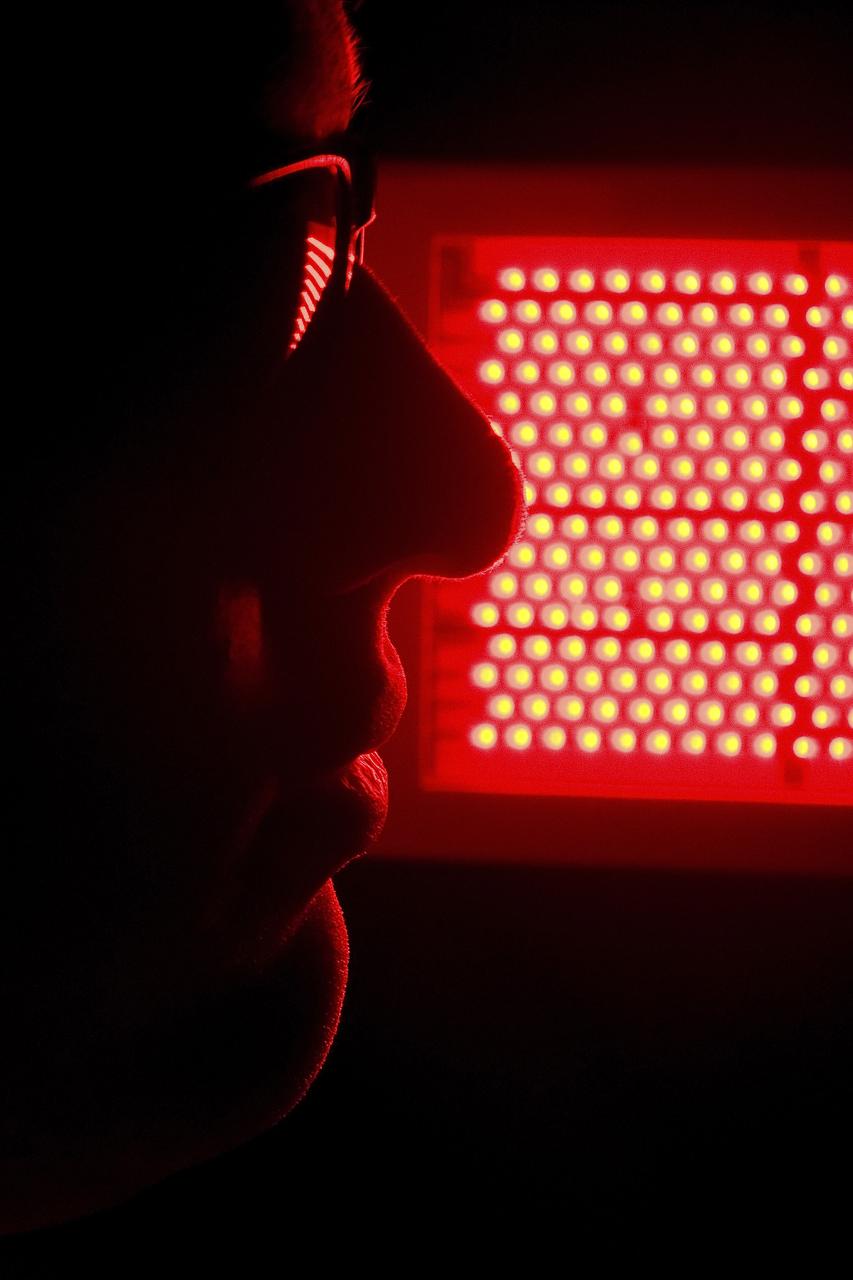
A DEMONSTRATION OF HOW LED TREATMENT CAN HELP REDUCE RECOVERY TIME FROM CANCER TREATMENT RELATED ORAL SORES
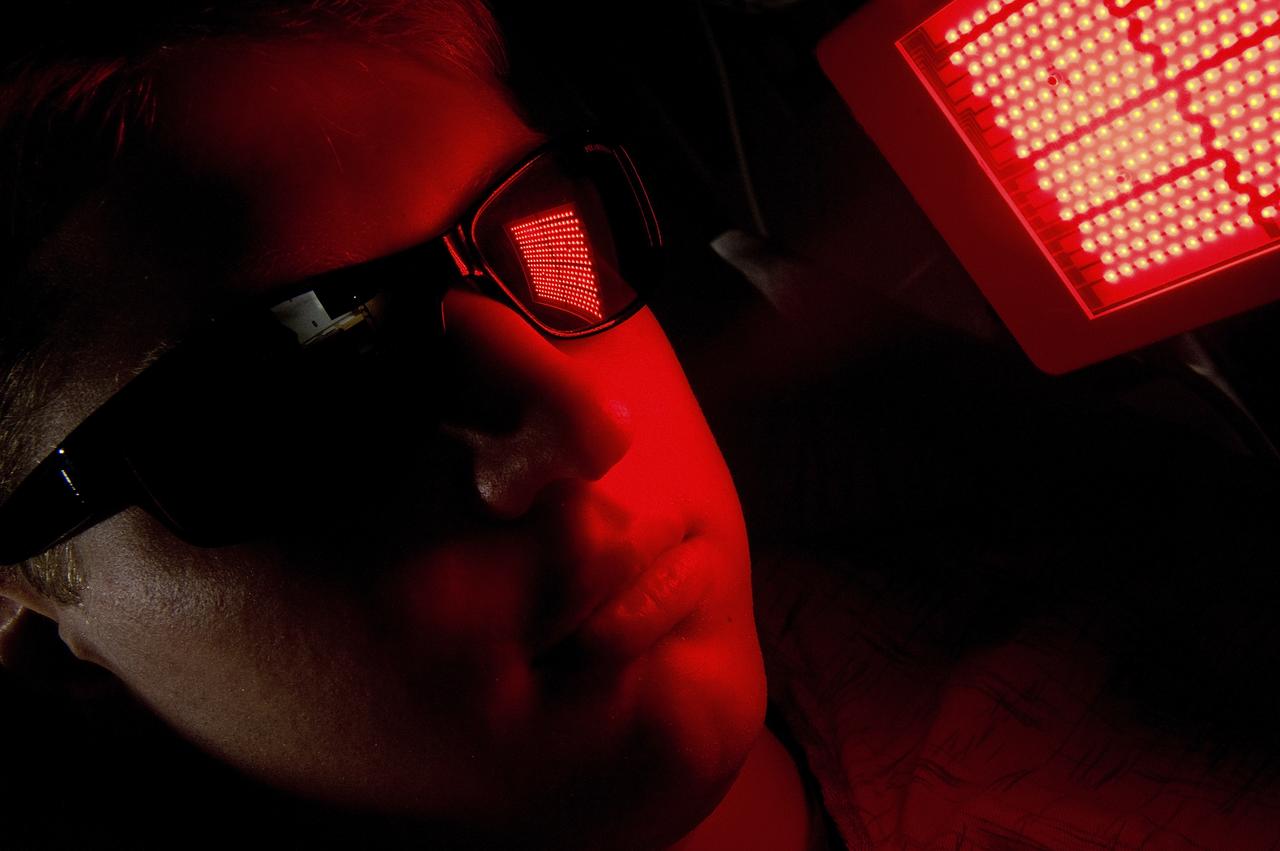
A DEMONSTRATION OF HOW LED TREATMENT CAN HELP REDUCE RECOVERY TIME FROM CANCER TREATMENT RELATED ORAL SORES
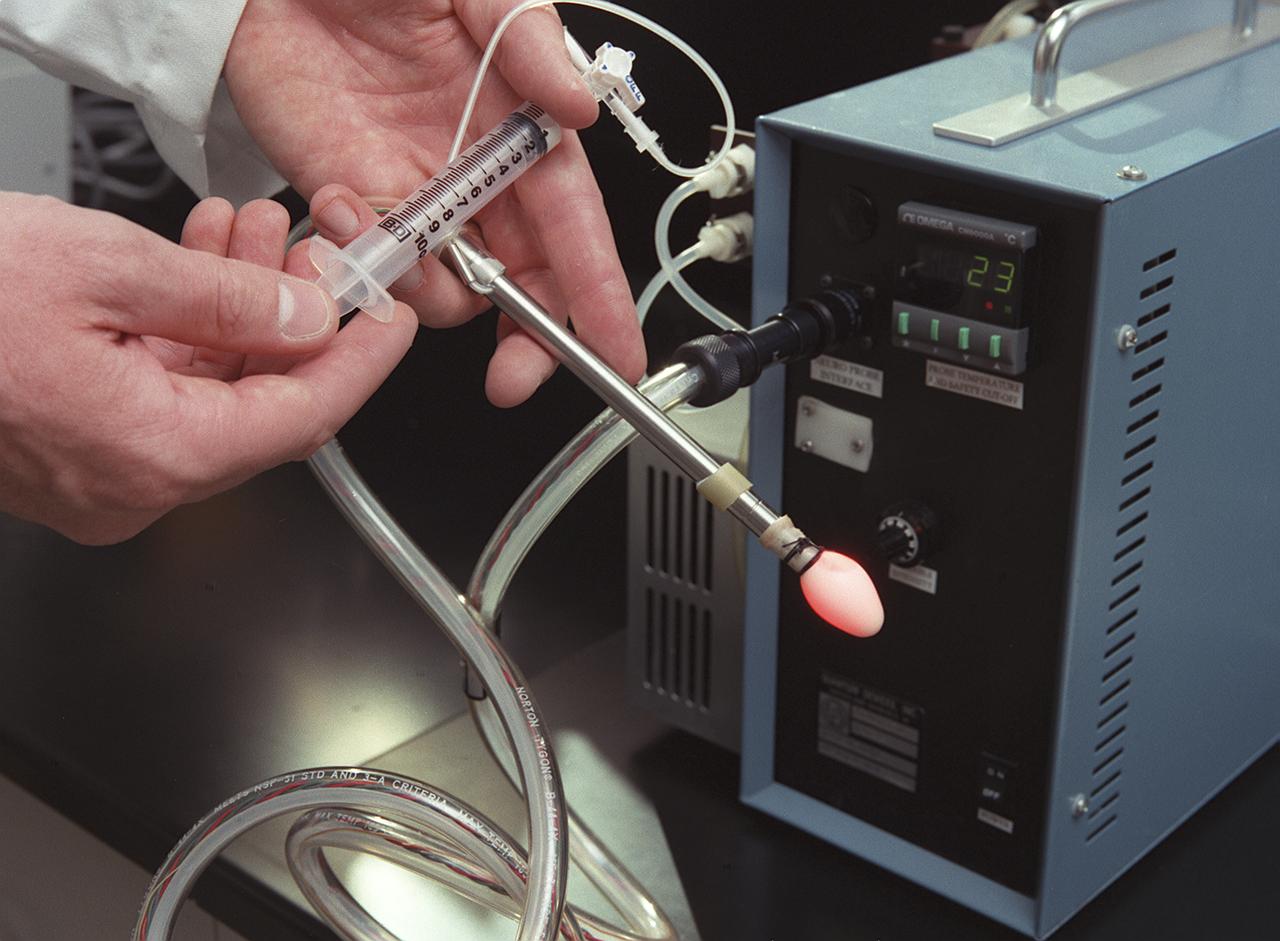
A special lighting technology was developed for space-based commercial plant growth research on NASA's Space Shuttle. Surgeons have used this technology to treat brain cancer on Earth, in two successful operations. The treatment technique called photodynamic therapy, requires the surgeon to use tiny pinhead-size Light Emitting Diodes (LEDs) (a source releasing long wavelengths of light) to activate light-sensitive, tumor-treating drugs. Laser light has been used for this type of surgery in the past, but the LED light illuminates through all nearby tissues, reaching parts of a tumor that shorter wavelengths of laser light carnot. The new probe is safer because the longer wavelengths of light are cooler than the shorter wavelengths of laser light, making the LED less likely to injure normal brain tissue near the tumor. It can also be used for hours at a time while still remaining cool to the touch. The LED probe consists of 144 tiny pinhead-size diodes, is 9-inches long, and about one-half-inch in diameter. The small balloon aids in even distribution of the light source. The LED light source is compact, about the size of a briefcase, and can be purchased for a fraction of the cost of a laser. The probe was developed for photodynamic cancer therapy by the Marshall Space Flight Center under a NASA Small Business Innovative Research program grant.
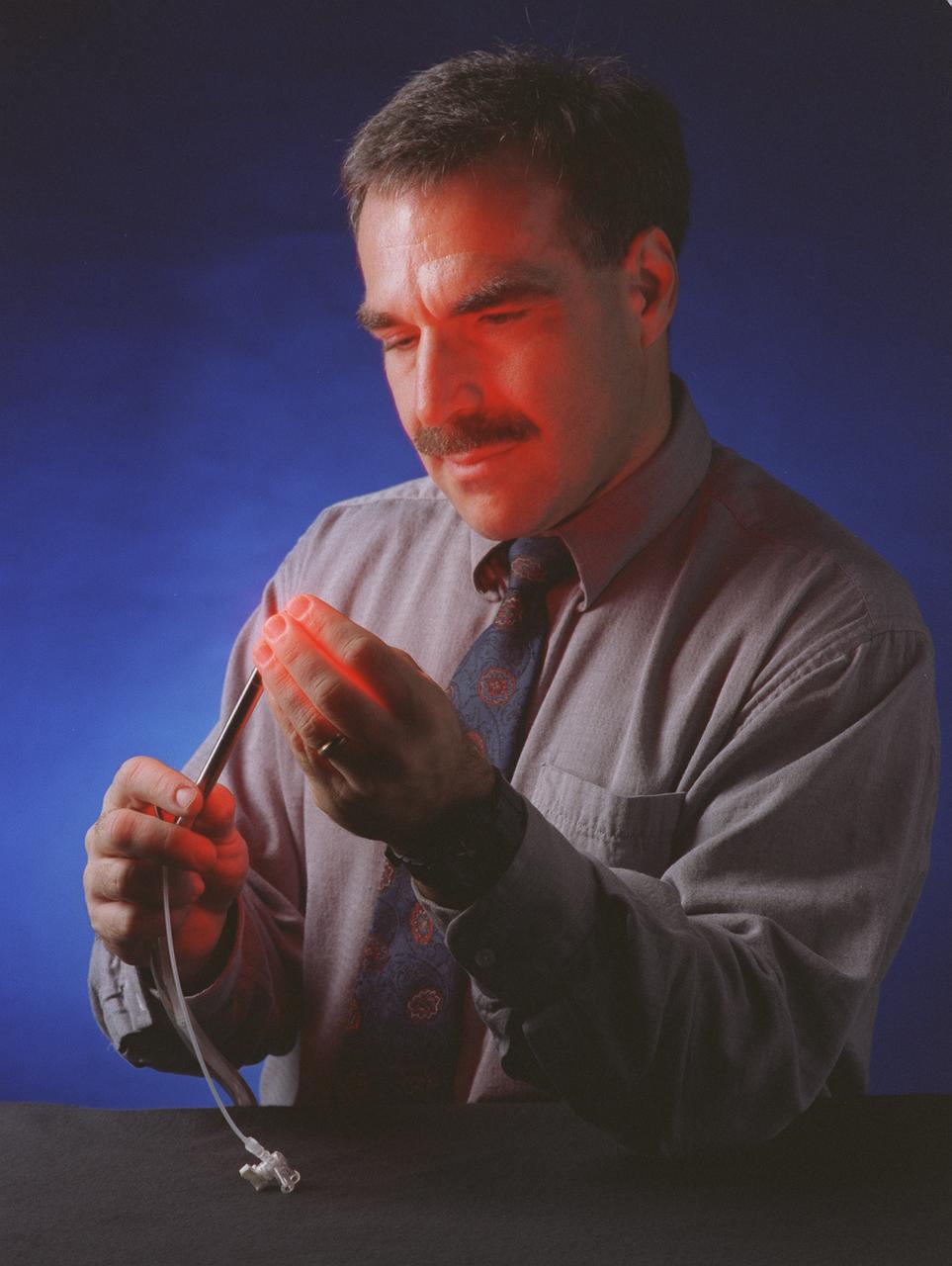
The red light from the Light Emitting Diode (LED) probe shines through the fingers of Dr. Harry Whelan, a pediatric neurologist at the Children's Hospital of Wisconsin in Milwaukee. Dr. Whelan uses the long waves of light from the LED surgical probe to activate special drugs that kill brain tumors. Laser light previously has been used for this type of surgery, but the LED light illuminates through all nearby tissues, reaching parts of tumors that shorter wavelengths of laser light carnot. The new probe is safer because the longer wavelengths of light are cooler than the shorter wavelengths of laser light, making the LED less likely to injure normal brain tissue near the tumor. Also, it can be used for hours at a time while still remaining cool to the touch. The probe was developed for photodynamic cancer therapy under a NASA Small Business Innovative Research Program grant. The program is part of NASA's Technology Transfer Department at the Marshall Space Flight Center.
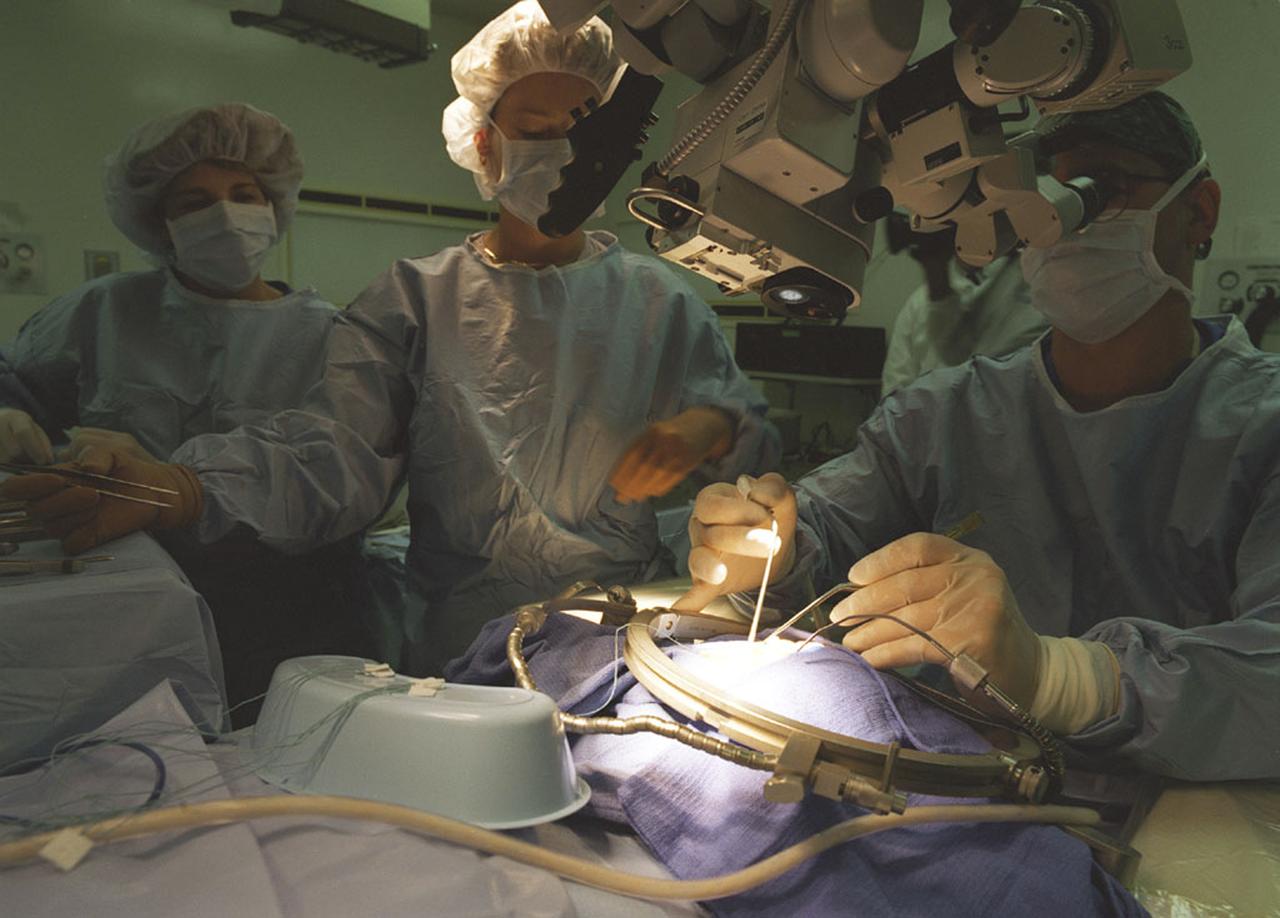
A special lighting technology was developed for space-based commercial plant growth research on NASA's Space Shuttle. Surgeons have used this technology to treat brain cancer on Earth, in two successful operations. The treatment technique, called Photodynamic Therapy, requires the surgeon to use tiny, pinhead-size Light Emitting Diodes (LEDs) (a source that releases long wavelengths of light ) to activate light-sensitive, tumor-treating drugs. "A young woman operated on in May 1999 has fully recovered with no complications and no evidence of the tumor coming back," said Dr. Harry Whelan, a pediatric neurologist at the Medical Hospital of Wisconsin in Milwaukee. Laser light has been used for this type of surgery in the past, but the LED light illuminates through all nearby tissues, reaching parts of a tumor that shorter wavelengths of laser light carnot. The new probe is safer because the longer wavelengths of light are cooler than the shorter wavelengths of laser light, making the LED less likely to injure normal brain tissue near the tumor. It can be used for hours at a time while still remaining cool to the touch. The LED light source is compact, about the size of a briefcase, and can be purchased for a fraction of the cost of a laser. The LEDs, developed and managed by NASA's Marshall Space Flight Center, have been used on seven Space Shuttle flights inside the Microgravity Astroculture Facility. This technology has also been successfully used to further commercial research in crop growth.
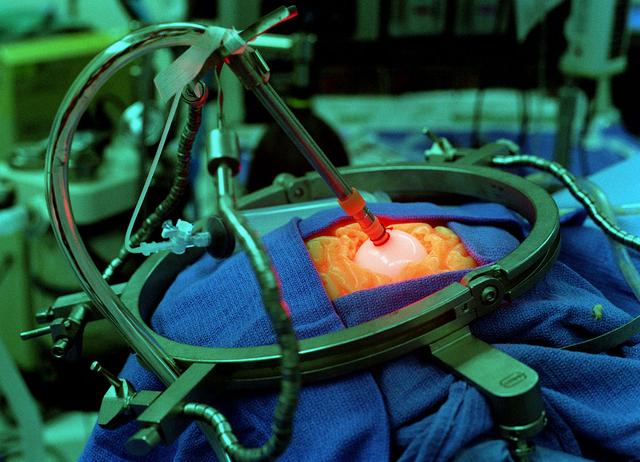
What started out as an attempt to develop a light which would allow for the growth of plants in space led to a remarkable discovery: The Light Emitting Diode (LED). This device through extensive study and experimentation has developed into a tool used by surgeons in the fight against brain cancer in children. Pictured is a mock-up of brain surgery being performed. By encapsulating the end of the LED with a balloon, light is diffused over a larger area of the brain allowing the surgeon a better view. This is one of many programs that begin as research for the space program, and through extensive study end up benefitting all of mankind.
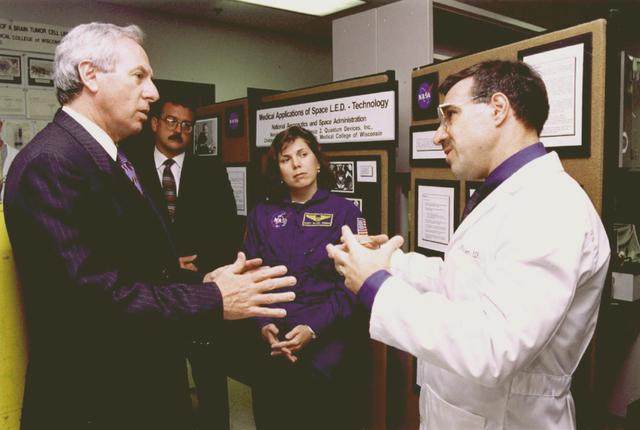
NASA Administrator Dan Goldin (left), during a visit at Children's Hospital of Wisconsin in Milwaukee, Wisconsin, discussed how NASA's special lighting technology may soon treat cancer. Goldin talked with Dr.Harry Whelan (right) and Dr. Kerneth Reichert (center left), both pediatric neurologists with the Hospital and professors at the Medical College of Wisconsin in Milwaukee. Accompanied by Astronaut Mary Ellen Weber, Goldin was shown this innovative treatment, called Photodynamic Therapy, a method used to destroy the tumor without damaging the delicate brain tissue around it. The treatment uses tiny pinhead-size Light Emitting Diodes (LEDs) developed for Space Product Development plant growth experiments.