
CAPE CANAVERAL, Fla. -- At NASA's Kennedy Space Center in Florida, the 600-Ton Test Fixture outside the Launch Equipment Test Facility conducts a 500,000-pound pull test of a bridge crane lifting element, which is used to lift space shuttles in the Vehicle Assembly Building. The fixture proofload tests, in tension and compression, a variety of ground support equipment, including slings, lifting beams and other critical lifting hardware that require periodic proofloading. Since 1977, the facility has supported NASA’s Launch Services, shuttle, International Space Station, and Constellation programs, as well as commercial providers. The facility recently underwent a major upgrade to support even more programs, projects and customers. It houses a 6,000-square-foot high bay, cable fabrication and molding shop, pneumatics shop, machine and weld shop and full-scale control room. Outside, the facility features a water flow test loop, vehicle motion simulator, launch simulation towers and a cryogenic system. Photo credit: NASA/Jim Grossmann
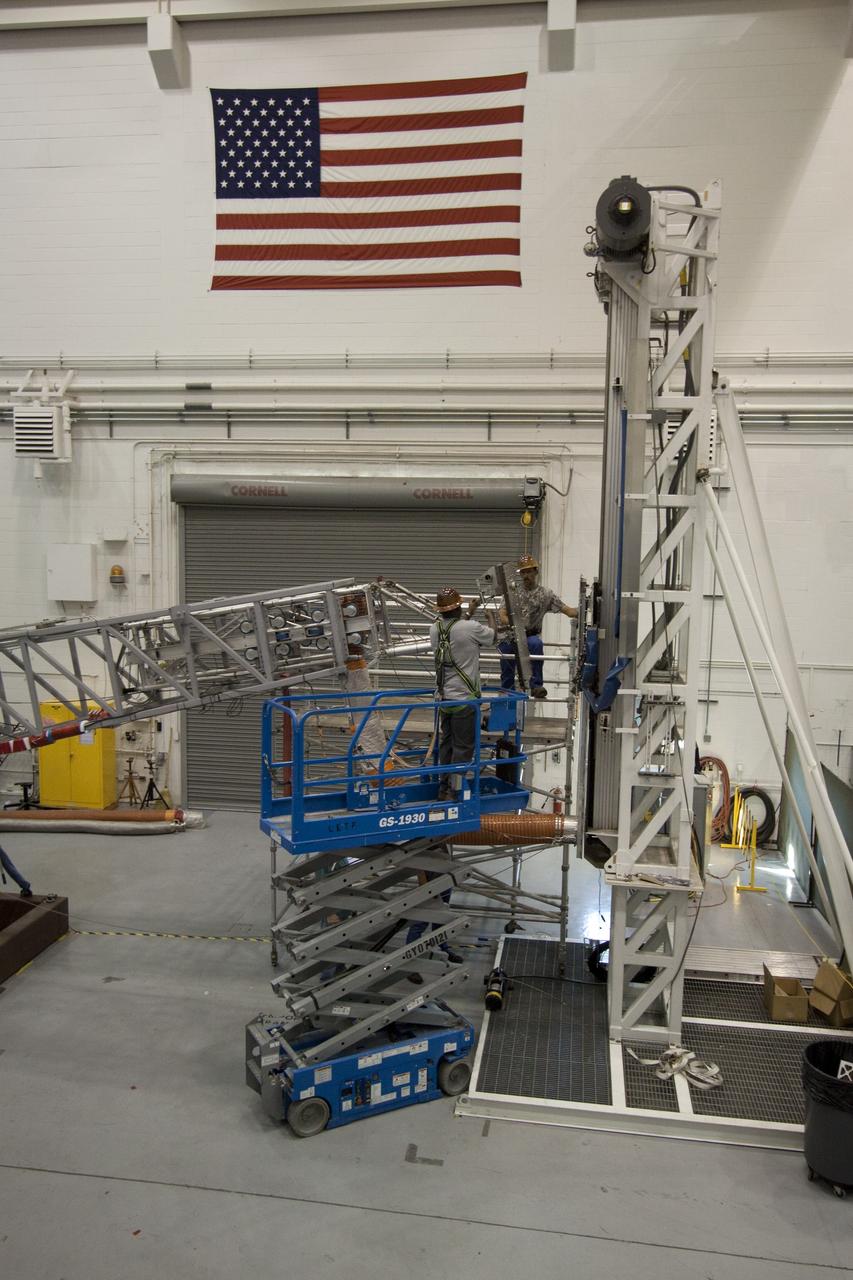
CAPE CANAVERAL, Fla. -- At NASA's Kennedy Space Center in Florida, testing of the Tilt-Up Umbilical Arm (TUUA) prototype's Environmental Control System Quick Disconnect takes place in the Launch Equipment Test Facility's 6,000-square-foot high bay. The prototype is used to demonstrate the safe disconnect and retraction of ground umbilical plates and associated hardware of a launch vehicle's upper stage and service module. The Environmental Control System consists of regulated air, which would be used to purge an inner tank and crew module. Since 1977, the facility has supported NASA’s Launch Services, shuttle, International Space Station, and Constellation programs, as well as commercial providers. The facility recently underwent a major upgrade to support even more programs, projects and customers. It houses a cable fabrication and molding shop, pneumatics shop, machine and weld shop and full-scale control room. Outside, the facility features a water flow test loop, vehicle motion simulator, 600-ton test fixture, launch simulation towers and a cryogenic system. Photo credit: NASA/Jack Pfaller
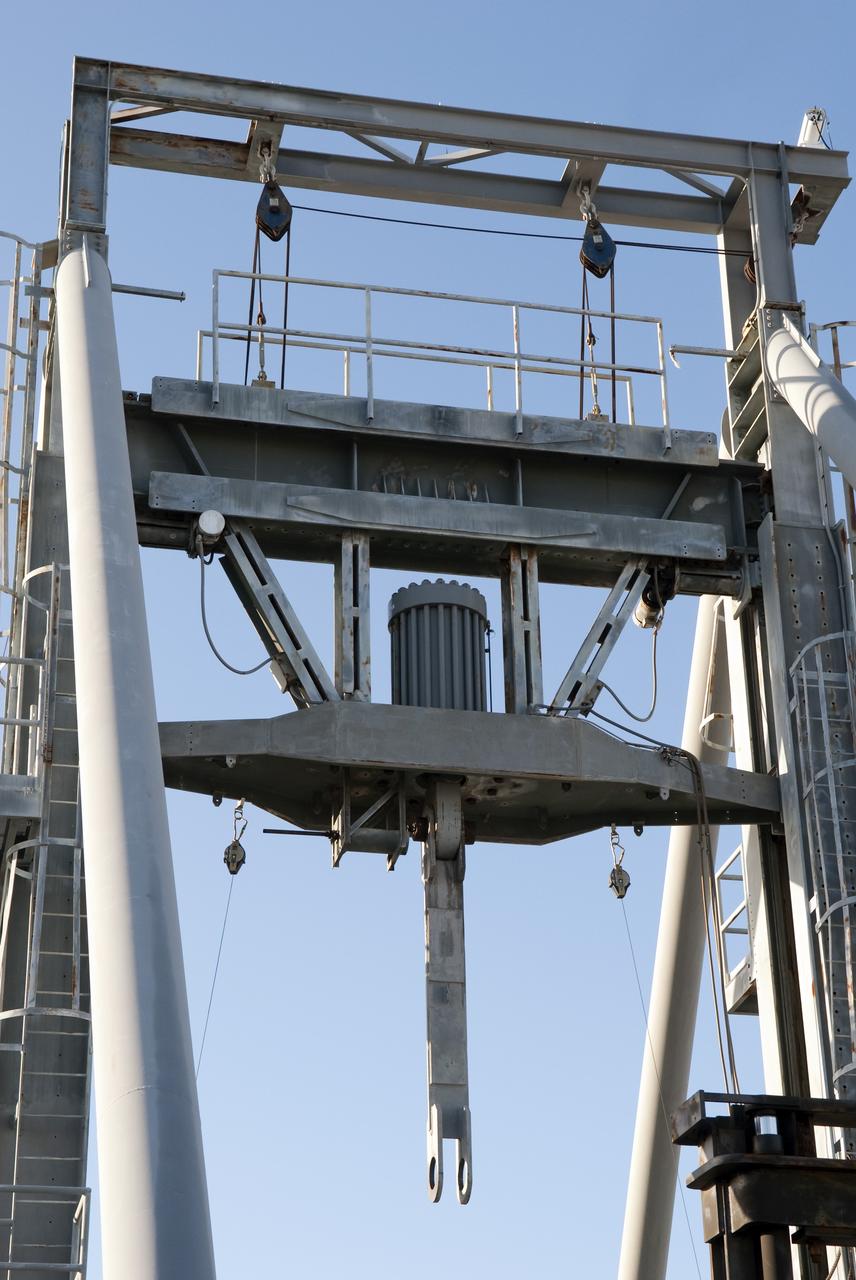
CAPE CANAVERAL, Fla. -- At NASA's Kennedy Space Center in Florida, the 600-Ton Test Fixture outside the Launch Equipment Test Facility is prepared to conduct a 500,000-pound pull test of a bridge crane lifting element, which is used to lift space shuttles in the Vehicle Assembly Building. The fixture proofload tests, in tension and compression, a variety of ground support equipment, including slings, lifting beams and other critical lifting hardware that require periodic proofloading. Since 1977, the facility has supported NASA’s Launch Services, shuttle, International Space Station, and Constellation programs, as well as commercial providers. The facility recently underwent a major upgrade to support even more programs, projects and customers. It houses a 6,000-square-foot high bay, cable fabrication and molding shop, pneumatics shop, machine and weld shop and full-scale control room. Outside, the facility features a water flow test loop, vehicle motion simulator, launch simulation towers and a cryogenic system. Photo credit: NASA/Jim Grossmann
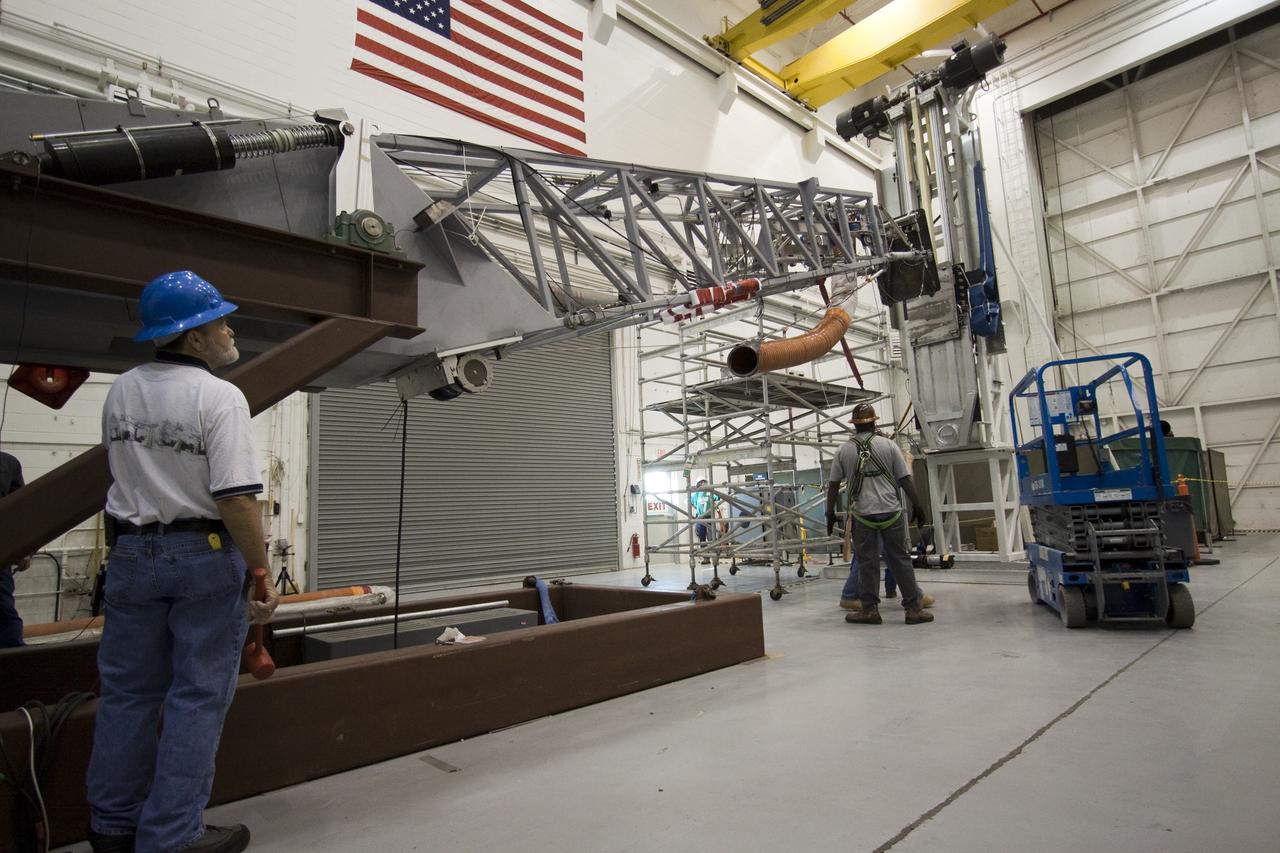
CAPE CANAVERAL, Fla. -- At NASA's Kennedy Space Center in Florida, testing of the Tilt-Up Umbilical Arm (TUUA) prototype's Environmental Control System Quick Disconnect takes place in the Launch Equipment Test Facility's 6,000-square-foot high bay. The prototype is used to demonstrate the safe disconnect and retraction of ground umbilical plates and associated hardware of a launch vehicle's upper stage and service module. The Environmental Control System consists of regulated air, which would be used to purge an inner tank and crew module. Since 1977, the facility has supported NASA’s Launch Services, shuttle, International Space Station, and Constellation programs, as well as commercial providers. The facility recently underwent a major upgrade to support even more programs, projects and customers. It houses a cable fabrication and molding shop, pneumatics shop, machine and weld shop and full-scale control room. Outside, the facility features a water flow test loop, vehicle motion simulator, 600-ton test fixture, launch simulation towers and a cryogenic system. Photo credit: NASA/Jack Pfaller
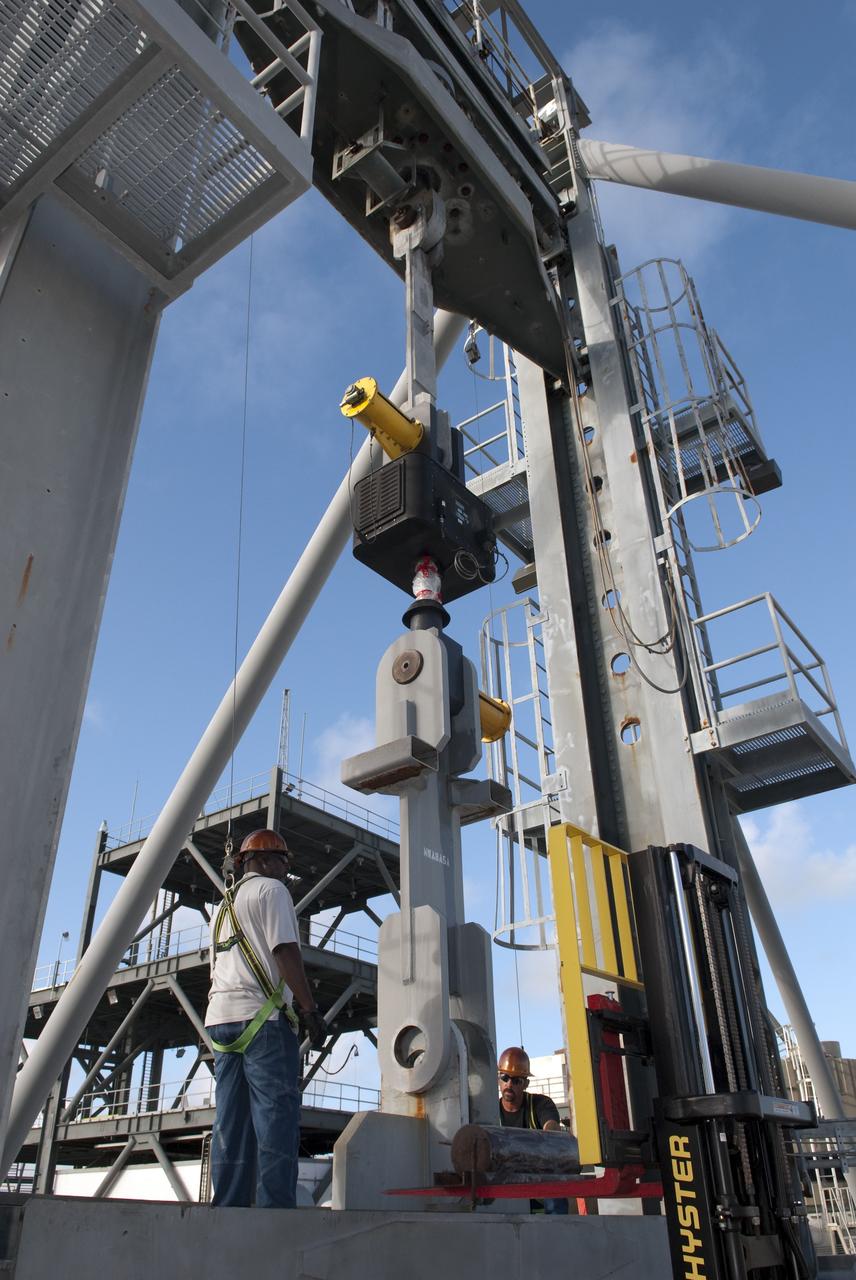
CAPE CANAVERAL, Fla. -- At NASA's Kennedy Space Center in Florida, the 600-Ton Test Fixture outside the Launch Equipment Test Facility conducts a 500,000-pound pull test of a bridge crane lifting element, which is used to lift space shuttles in the Vehicle Assembly Building. The fixture proofload tests, in tension and compression, a variety of ground support equipment, including slings, lifting beams and other critical lifting hardware that require periodic proofloading. Since 1977, the facility has supported NASA’s Launch Services, shuttle, International Space Station, and Constellation programs, as well as commercial providers. The facility recently underwent a major upgrade to support even more programs, projects and customers. It houses a 6,000-square-foot high bay, cable fabrication and molding shop, pneumatics shop, machine and weld shop and full-scale control room. Outside, the facility features a water flow test loop, vehicle motion simulator, launch simulation towers and a cryogenic system. Photo credit: NASA/Jim Grossmann

CAPE CANAVERAL, Fla. -- At NASA's Kennedy Space Center in Florida, the 600-Ton Test Fixture outside the Launch Equipment Test Facility conducts a 500,000-pound pull test of a bridge crane lifting element, which is used to lift space shuttles in the Vehicle Assembly Building. The fixture proofload tests, in tension and compression, a variety of ground support equipment, including slings, lifting beams and other critical lifting hardware that require periodic proofloading. Since 1977, the facility has supported NASA’s Launch Services, shuttle, International Space Station, and Constellation programs, as well as commercial providers. The facility recently underwent a major upgrade to support even more programs, projects and customers. It houses a 6,000-square-foot high bay, cable fabrication and molding shop, pneumatics shop, machine and weld shop and full-scale control room. Outside, the facility features a water flow test loop, vehicle motion simulator, launch simulation towers and a cryogenic system. Photo credit: NASA/Jim Grossmann
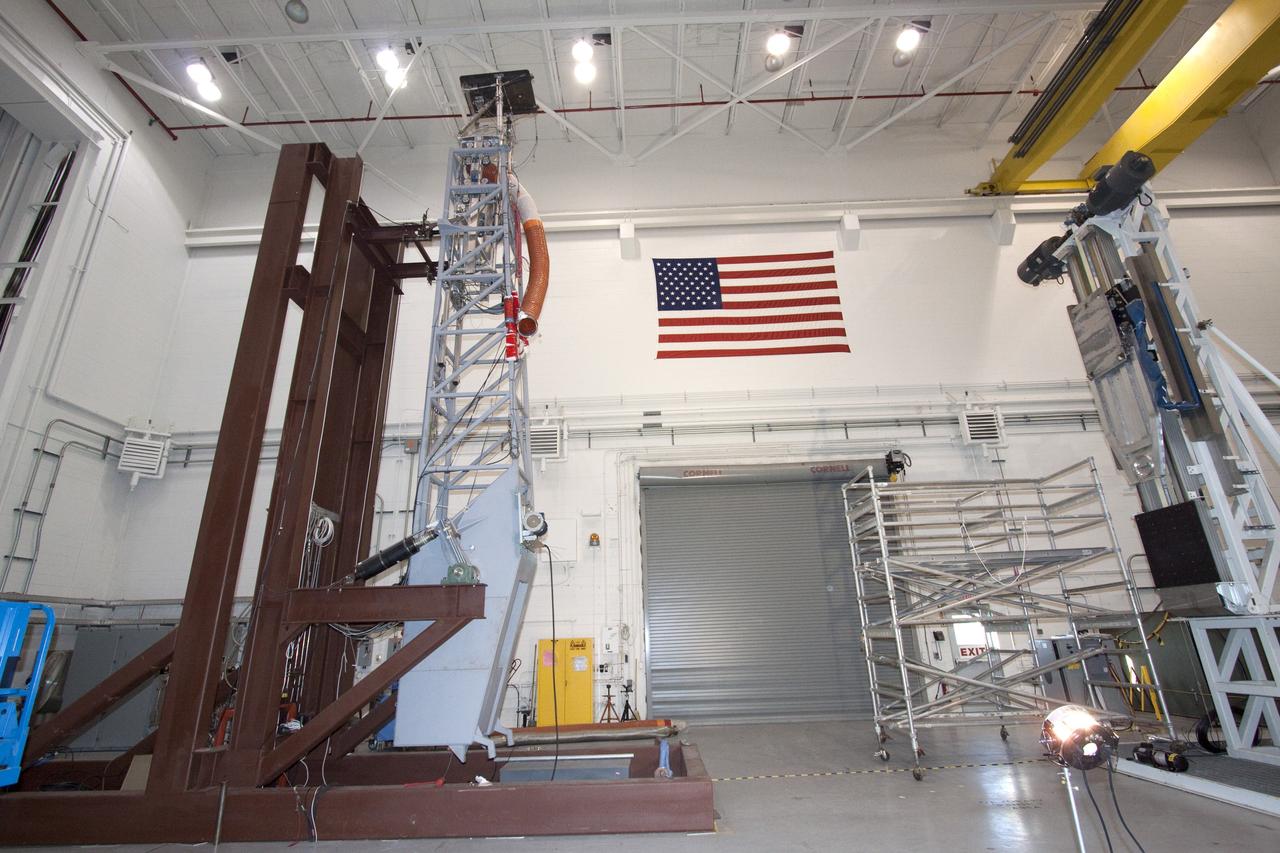
CAPE CANAVERAL, Fla. -- At NASA's Kennedy Space Center in Florida, testing of the Tilt-Up Umbilical Arm (TUUA) prototype's Environmental Control System Quick Disconnect takes place in the Launch Equipment Test Facility's 6,000-square-foot high bay. The prototype is used to demonstrate the safe disconnect and retraction of ground umbilical plates and associated hardware of a launch vehicle's upper stage and service module. The Environmental Control System consists of regulated air, which would be used to purge an inner tank and crew module. Since 1977, the facility has supported NASA’s Launch Services, shuttle, International Space Station, and Constellation programs, as well as commercial providers. The facility recently underwent a major upgrade to support even more programs, projects and customers. It houses a cable fabrication and molding shop, pneumatics shop, machine and weld shop and full-scale control room. Outside, the facility features a water flow test loop, vehicle motion simulator, 600-ton test fixture, launch simulation towers and a cryogenic system. Photo credit: NASA/Jack Pfaller