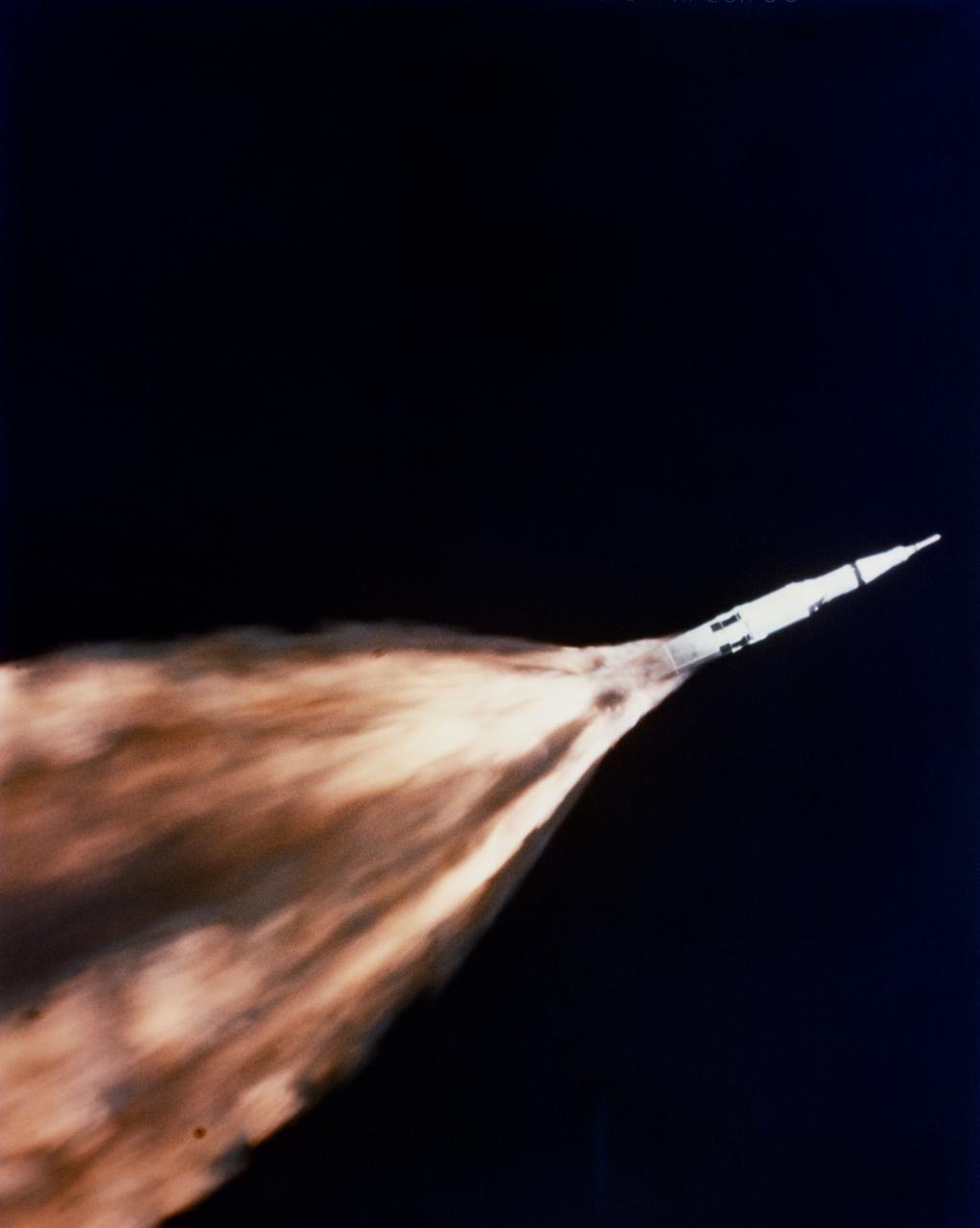
S68-27365 (4 April 1968) --- The five F-1 engines of the huge Apollo/Saturn V space vehicle's first (S-IC) stage leave a gigantic trail of flame in the sky above the Kennedy Space Center seconds after liftoff. The launch of the Apollo 6 (Spacecraft 020/Saturn 502) unmanned space mission occurred at 07:00:01.5 (EST), April 4, 1968. This view of the Apollo 6 launch was taken from a chase plane.

S68-27364 (4 April 1968) --- The Apollo 6 (Spacecraft 020/Saturn 502) unmanned space mission was launched from Pad A, Launch Complex 39, Kennedy Space Center (KSC), Florida. The liftoff of the huge Apollo/Saturn V space vehicle occurred at 7:00:01.5 a.m. (EST), April 4, 1968.
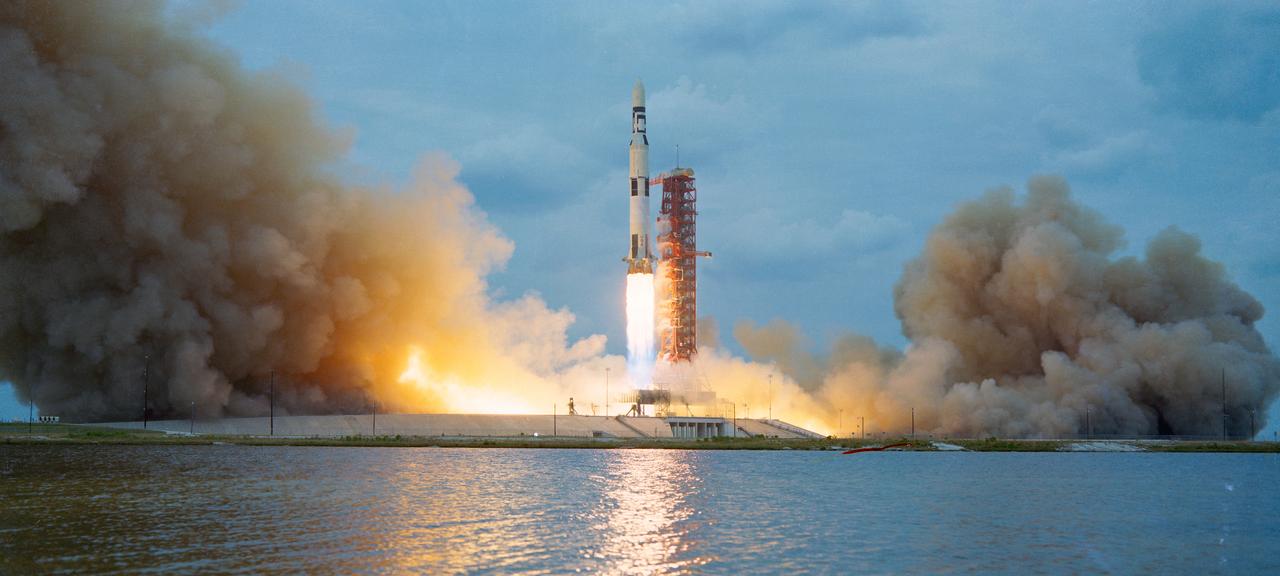
S73-26912 (14 May 1973) --- The unmanned Skylab 1/Saturn V space vehicle is launched from Pad A, Launch Complex 39, Kennedy Space Center, Florida, at 12:00 noon (EDT), May 14, 1973, to place the Skylab space station cluster in Earth orbit. The Skylab 1 payload included four of the five major components of the space station Orbital Workshop, Apollo Telescope Mount, Multiple Docking Adapter, and Airlock Module. In addition to the payload, the Skylab 1/Saturn V second (S-11) stage. The fifth major component of the space station, the Command Service Module with the Skylab 2 crew aboard, was launched at a later date by a Saturn 1B from Pad B. Photo credit: NASA
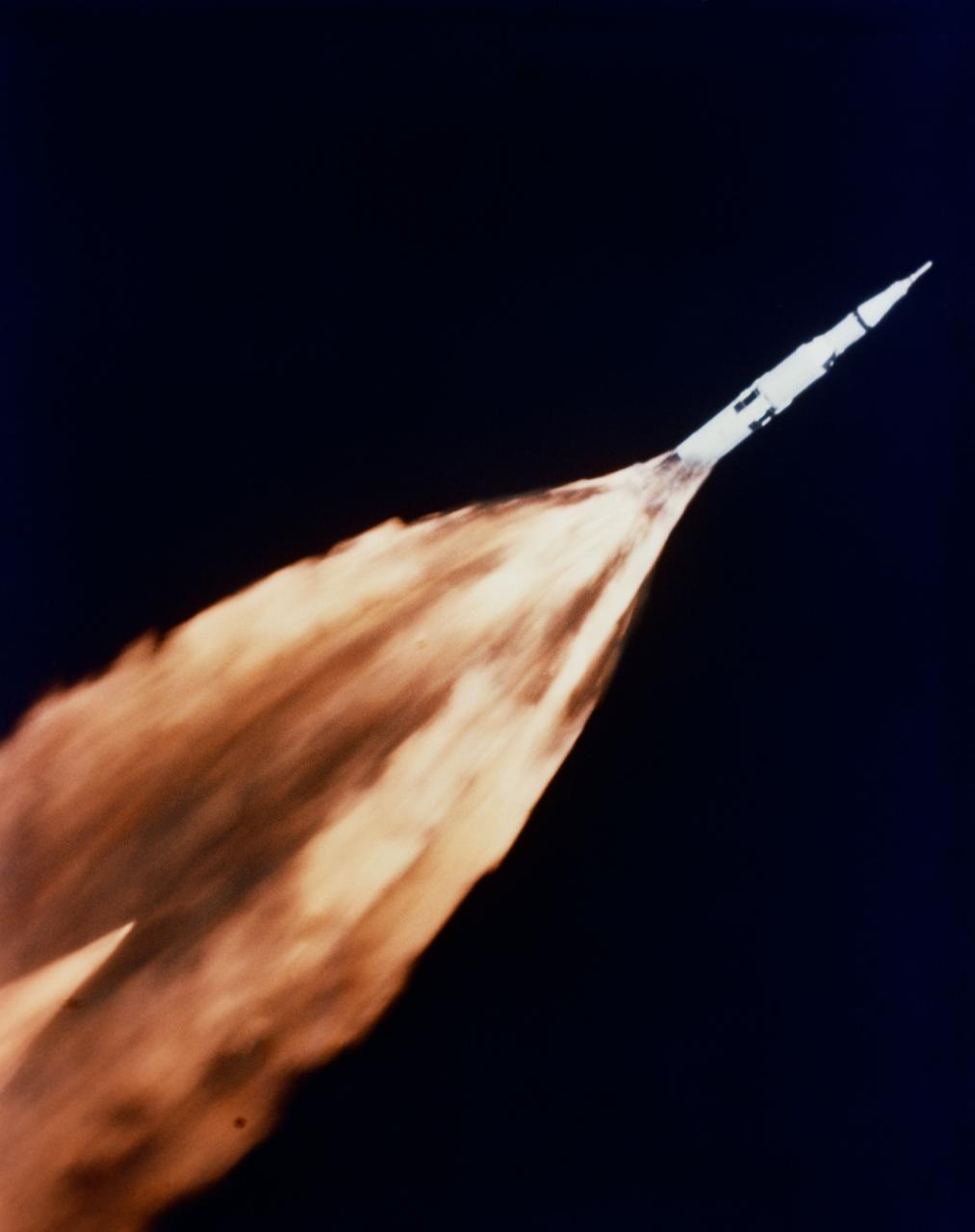
S68-27366 (4 April 1968) --- The five F-1 engines of the huge Apollo/Saturn V space vehicle's first (S-IC) stage leave a gigantic trail of flame in the sky above the Kennedy Space Center seconds after liftoff. The launch of the Apollo 6 (Spacecraft 020/Saturn 502) unmanned space mission occurred at 07:00:01.5 (EST), April 4, 1968. This view of the Apollo 6 launch was taken from a chase plane.
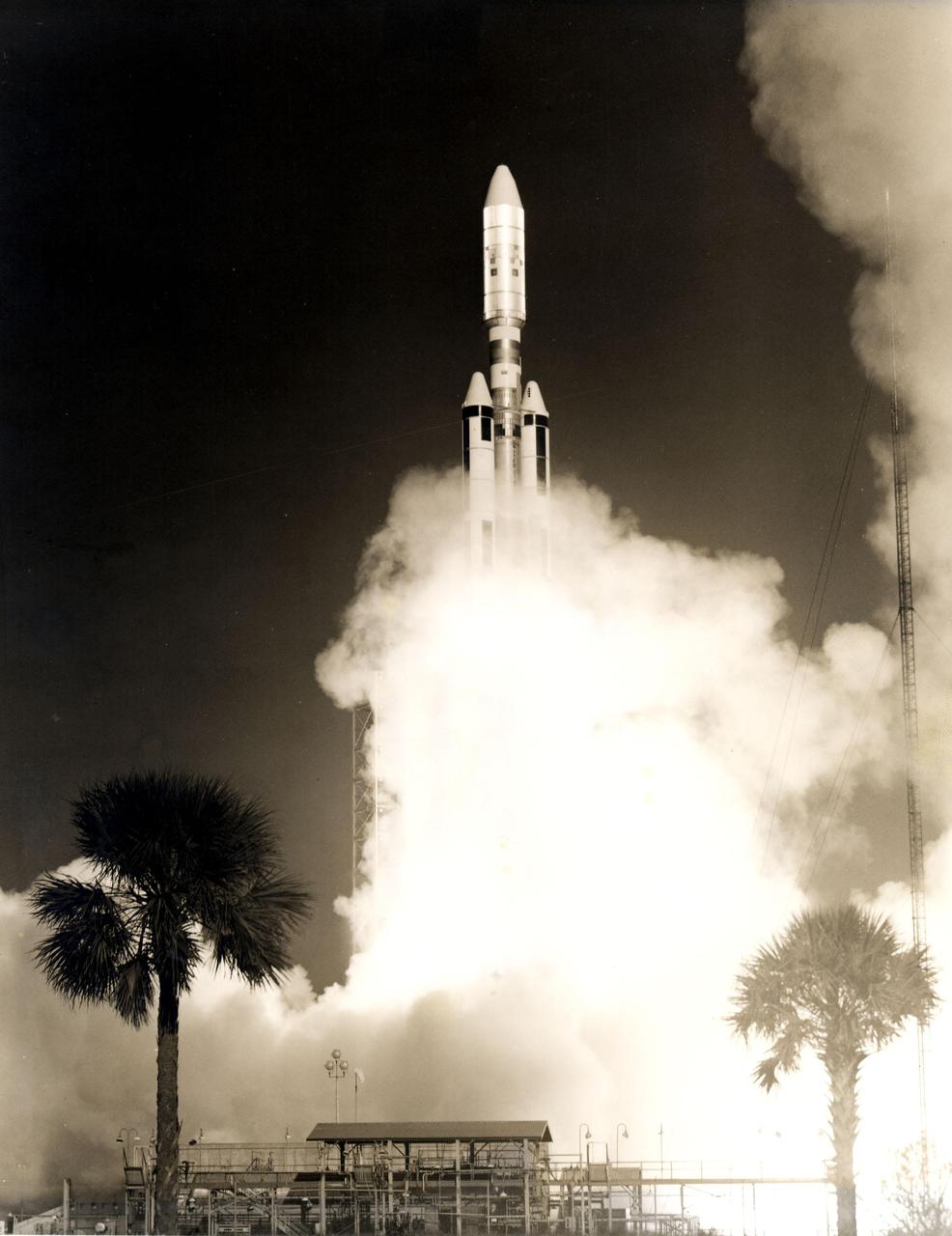
The first Titan_Centaur lifted off from Complex 41 at Cape Kennedy Air Force Station at 9:48 a.m. EDT today. The Titan stages burned as programmed, but when the Centaur stage failed to ignite, it was destroyed by the Range Safety Officer. The new NASA rocket was launched on a proof flight designed to prepare it for twin Viking launches to Mars in 1975 and other missions involving heavy unmanned payloads. The 160-foot-tall rocket combines the Air Force Titan III with the NASA high-energy Centaur final stage. The twin solid rocket boosters have a combined liftoff thrust of 2.4 million pounds. Aboard Titan_Centaur on its proof flight were a dynamic simulator of the Viking spacecraft and a small scientific satellite (SPHYNX) designed to determine how high voltage solar cells, insulators and conductors are affected by the charged particles in space. Launch was conducted by KSC's Unmanned Launch Operations Directorate.
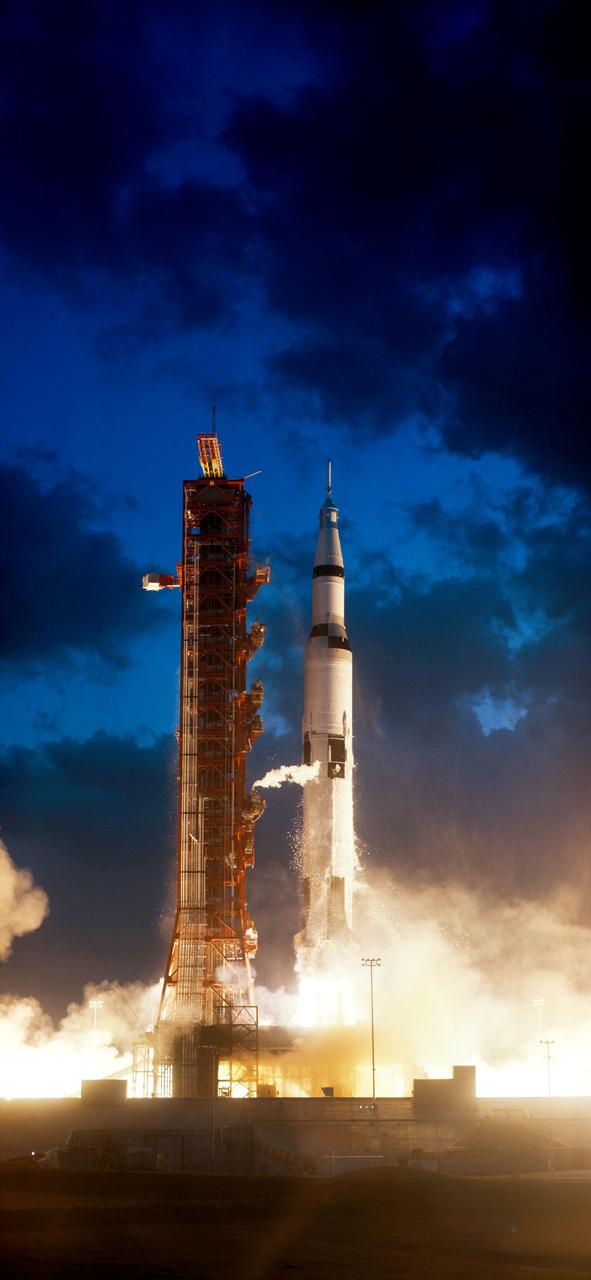
S67-50903 (9 Nov. 1967) --- The Apollo 4 (Spacecraft 017/Saturn 501) space mission was launched from Pad A, Launch Complex 39, Kennedy Space Center, Florida. The liftoff of the huge 363-feet tall Apollo/Saturn V space vehicle was at 7:00:01 a.m. (EST), Nov. 9, 1967. The successful objectives of the Apollo 4 Earth-orbital unmanned space mission obtained included (1) flight information on launch vehicle and spacecraft structural integrity and compatibility, flight loads, stage separation, subsystem operation, emergency detection subsystem, and (2) evaluation of the Apollo Command Module heat shield under conditions encountered on return from a moon mission.

S67-49969 (9 Nov. 1967) --- The Apollo 4 (Spacecraft 017/Saturn 501) space mission was launched from Pad A, Launch Complex 39, Kennedy Space Center, Florida. The liftoff of the huge 363-feet tall Apollo/Saturn V space vehicle was at 7:00:01 a.m. (EST), Nov. 9, 1967. The successful objectives of the Apollo 4 Earth-orbital unmanned space mission obtained included (1) flight information on launch vehicle and spacecraft structural integrity and compatibility, flight loads, stage separation, subsystem operation, emergency detection subsystem operation, and (2) evaluation of the Apollo Command Module heat shield under conditions encountered on return from a moon mission.