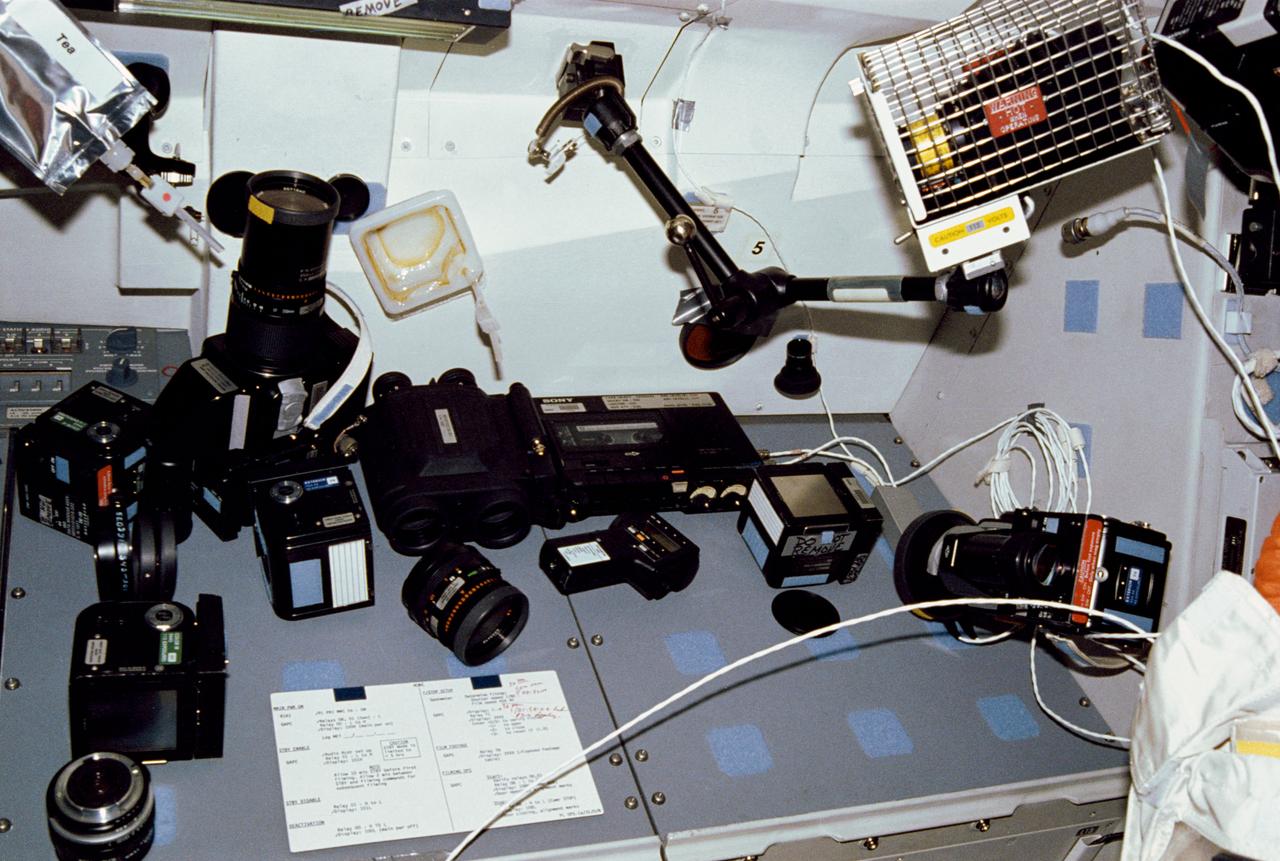
This array of photographic equipment, displayed on the aft flight deck payload station, represents just a part of the imaging and recording hardware which was carried aboard Discovery, Orbiter Vehicle (OV) 103, for STS-31's five day mission. Lenses, film magazines, cassettes, recorders, camera chassis, a pair of binoculars, spot meter, tape recorder, and a bracket-mounted light fixture are included among the array.
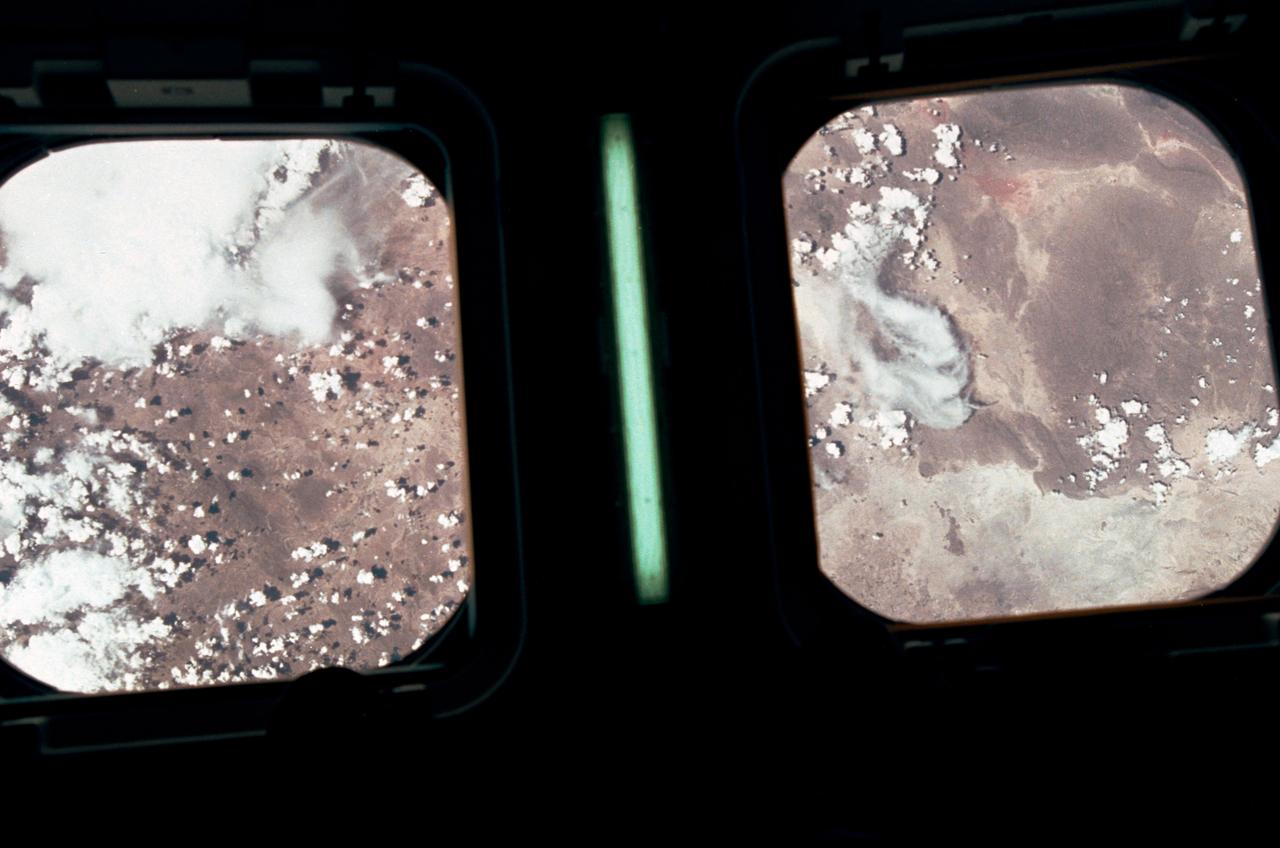
STS030-08-006 (4-8 May 1989) --- Though this scene first appears to be a stereographic picture, it's twin-panel effect is actually due to the framing by Atlantis' overhead cabin windows. The 35mm scene is over Africa and shows the border area of Zambia and Angola. The frame is one of twenty released by NASA following the successful four-day STS-30 mission.
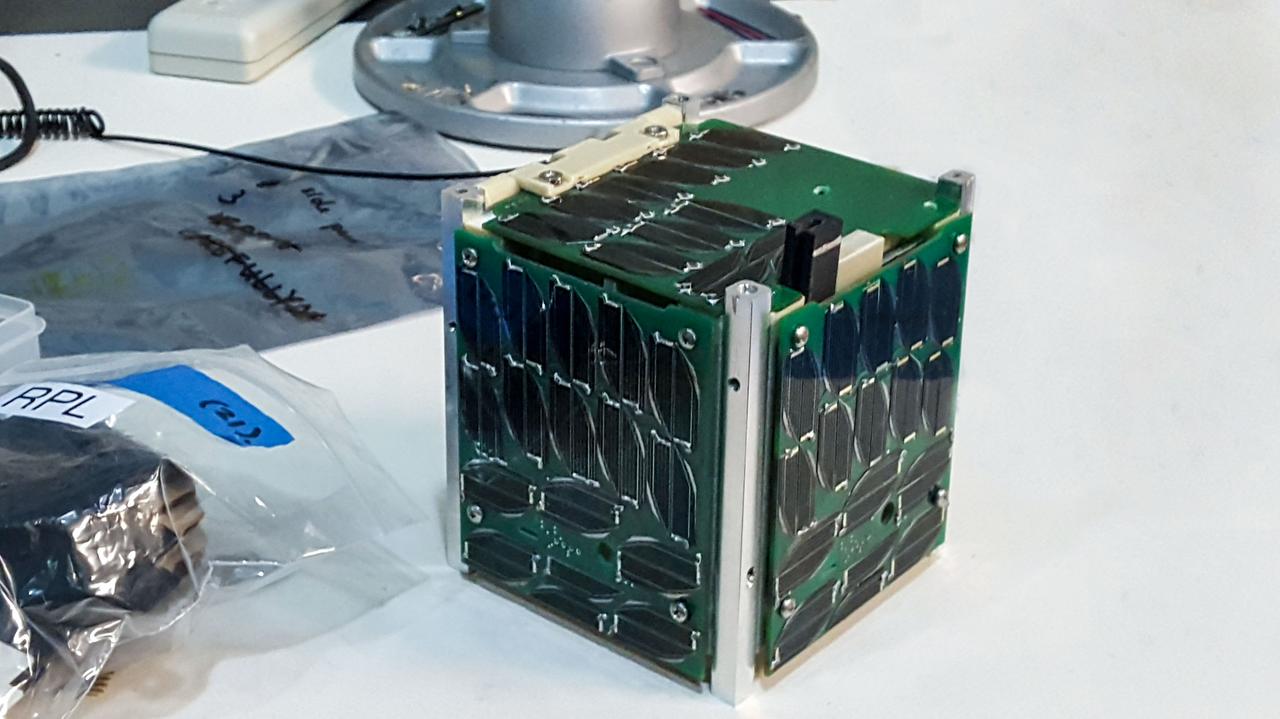
jsc2020e016860 (8/5/2016) --- A view of the fully assembled prototype of Alpha CubeSat. Alpha comprises a 1U CubeSat capable of deploying a free-flying 1m x 1m light sail equipped with 4 chip satellites (ChipSats). The overall goal of the Alpha mission is to serve as a technical demonstration of a light sail in orbit, verifying the properties of a highly retroreflective material for laser propulsion. Image courtesy of Cornell SSDS.
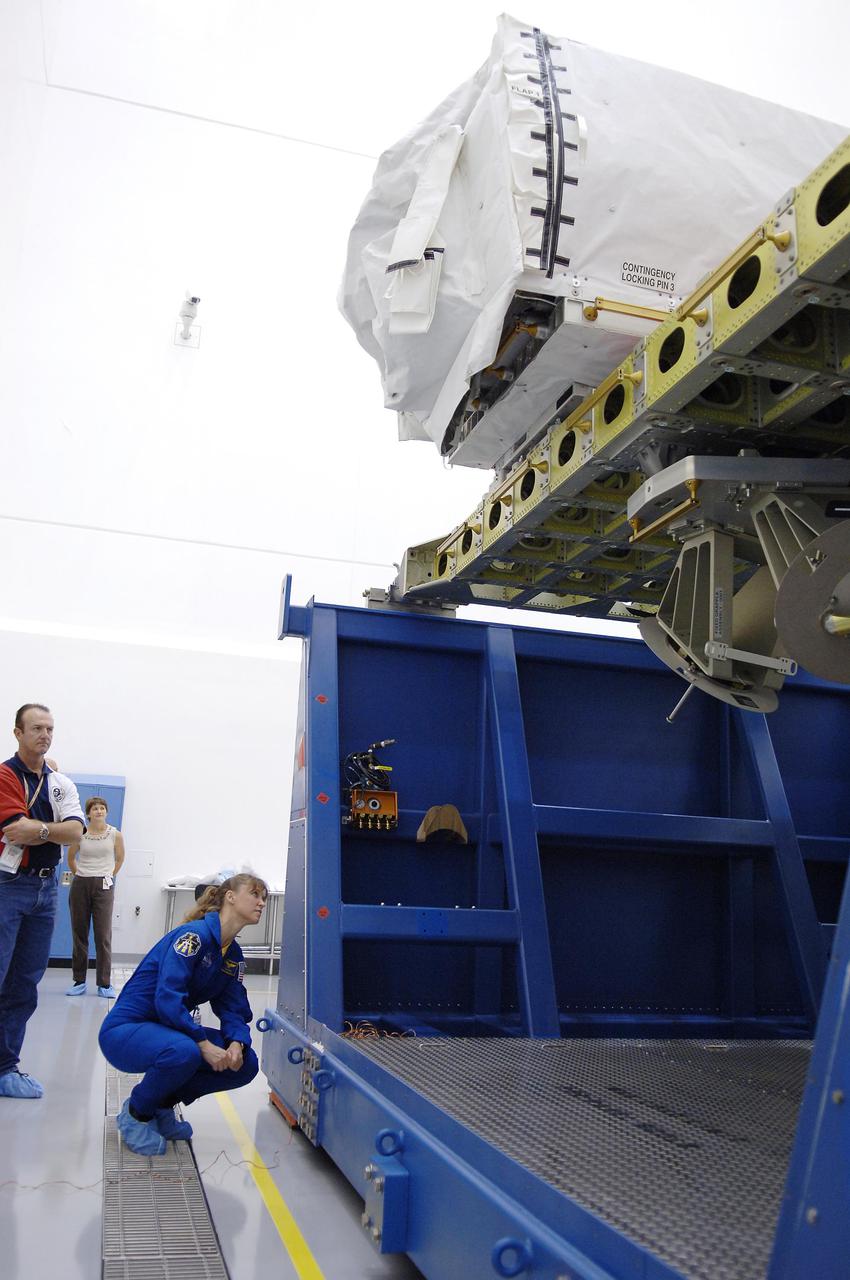
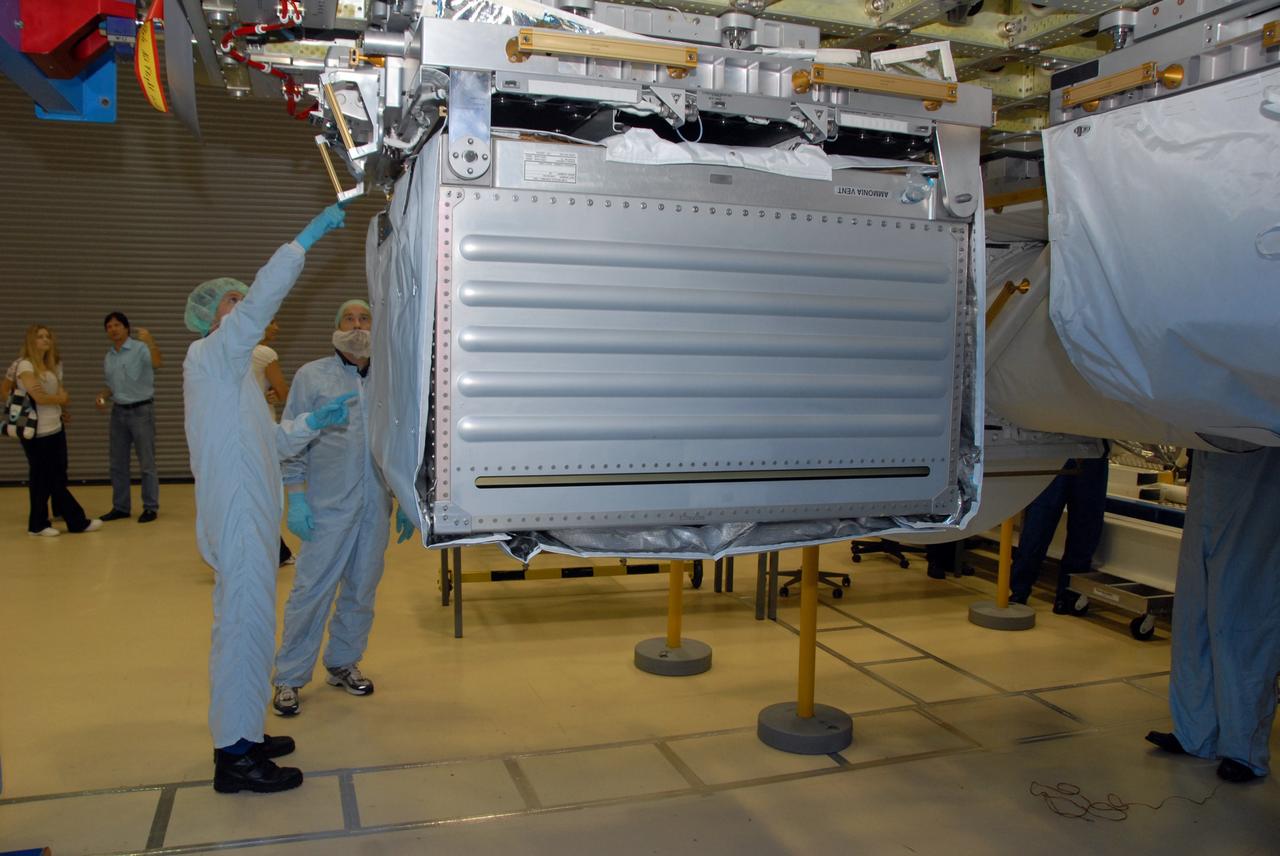
KENNEDY SPACE CENTER, FLA. - At Astrotech Space Operations in Titusville, Fla., STS-121 Mission Specialist Lisa Nowak looks at an orbital replacement unit sitting on the Integrated Cargo Carrier. She and other crew members are at KSC to take part in Crew Equipment Interface Test activities, which provide hands-on experience with equipment they will use on-orbit. STS-121, the second Return to Flight mission, is targeted for launch in a lighted planning window of Sept. 9 to Sept. 25.
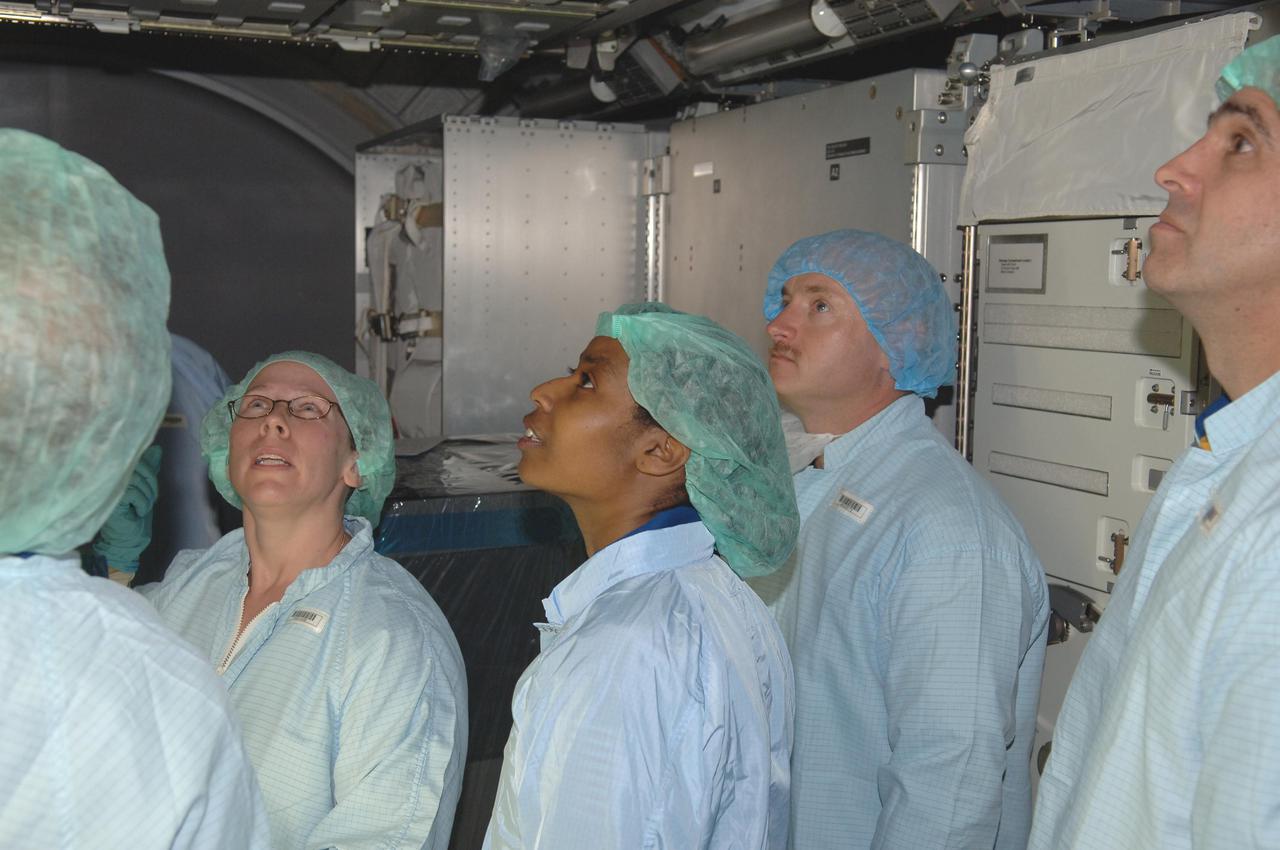
KENNEDY SPACE CENTER, FLA. - In the Space Station Processing Facility at NASA Kennedy Space Center, members of the STS-121 crew look at elements inside the Multi-Purpose Logistics Module Leonardo, which is part of the payload on the mission. The crew is at KSC to take part in Crew Equipment Interface Test activities, which provide hands-on experience with equipment they will use on-orbit. STS-121, the second Return to Flight mission, is targeted for launch in a lighted planning window of Sept. 9 to Sept. 25.
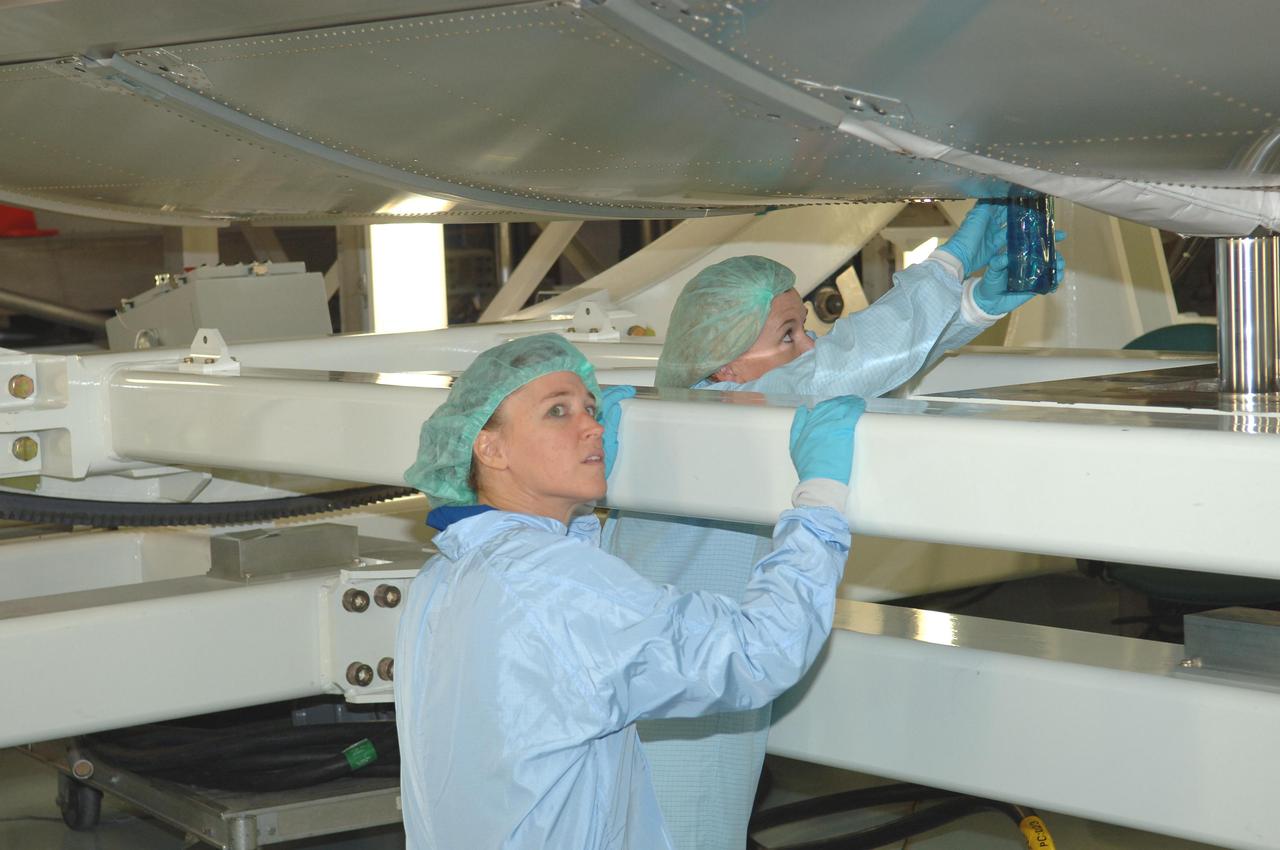
KENNEDY SPACE CENTER, FLA. - In the Space Station Processing Facility at NASA Kennedy Space Center, members of the STS-121 crew look at the underside of the Multi-Purpose Logistics Module Leonardo, which is part of the payload on the mission. The crew is at KSC to take part in Crew Equipment Interface Test activities, which provide hands-on experience with equipment they will use on-orbit. STS-121, the second Return to Flight mission, is targeted for launch in a lighted planning window of Sept. 9 to Sept. 25.
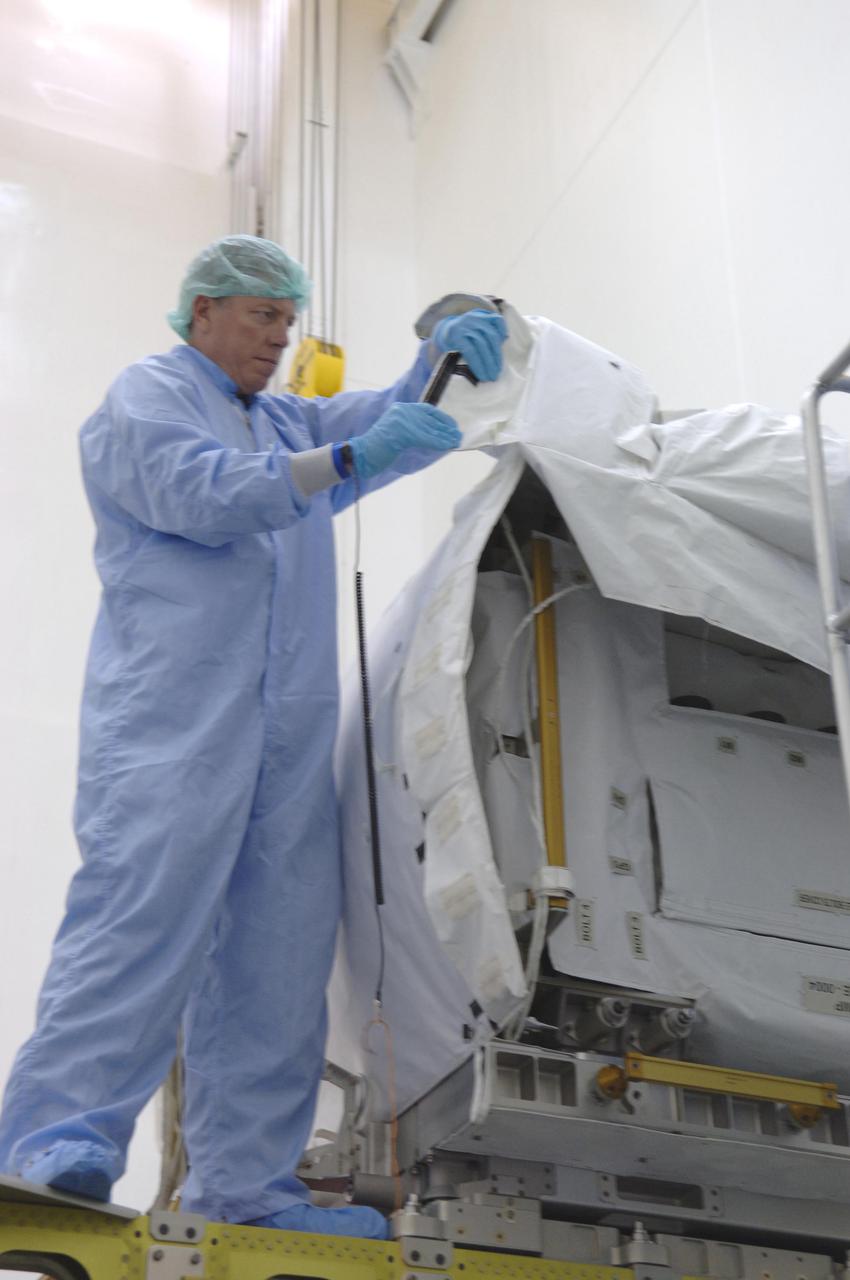
KENNEDY SPACE CENTER, FLA. - At Astrotech Space Operations in Titusville, Fla., STS-121 Mission Commander takes a look at a pump module. The STS-121 crew is at KSC to take part in Crew Equipment Interface Test activities, which provide hands-on experience with equipment they will use on-orbit. STS-121, the second Return to Flight mission, is targeted for launch in a lighted planning window of Sept. 9 to Sept. 25.
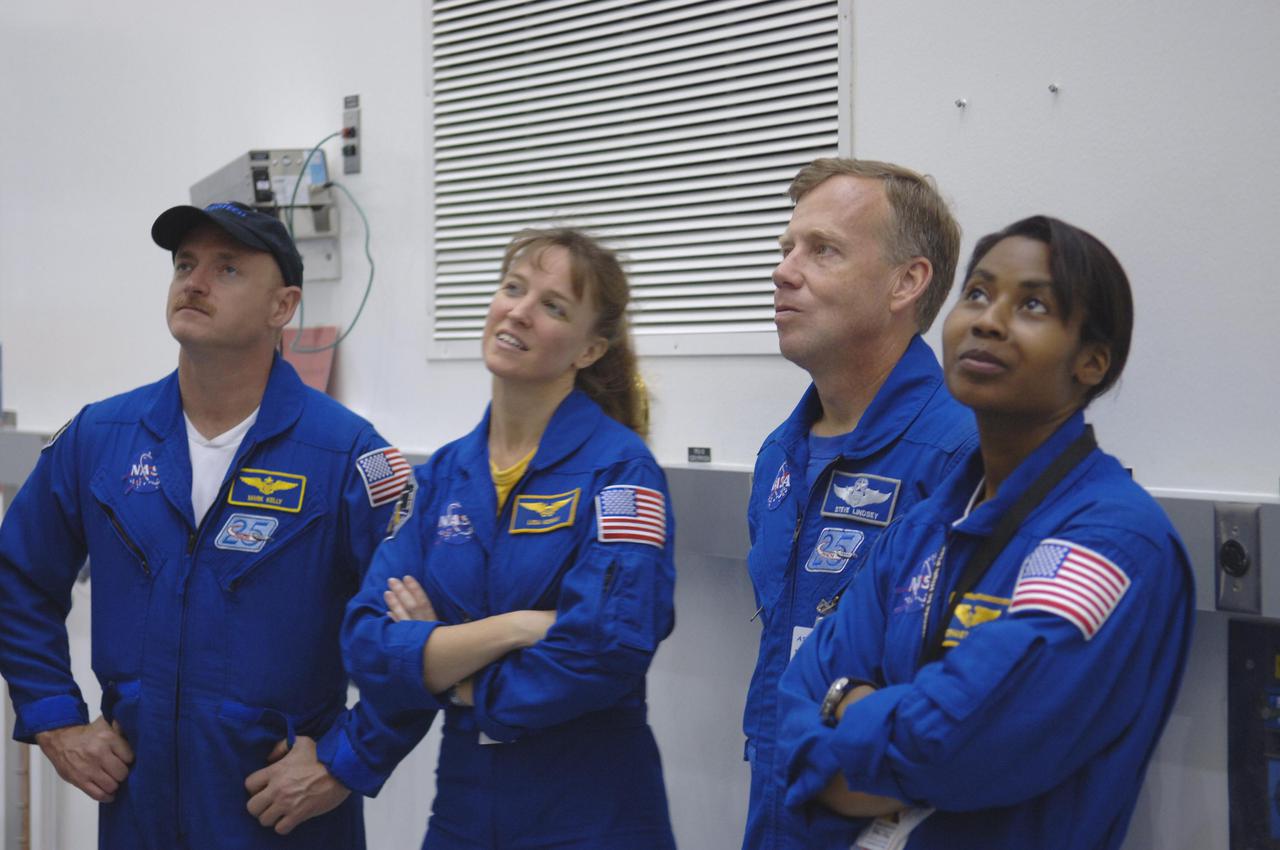
KENNEDY SPACE CENTER, FLA. - At Astrotech Space Operations in Titusville, Fla., STS-121 crew members look at equipment. From left are Pilot Mark Kelly, Mission Specialist Lisa Nowak, Mission Commander Steven Lindsey and Mission Specialist Stephanie Wilson. The STS-121 crew is at KSC to take part in Crew Equipment Interface Test activities, which provide hands-on experience with equipment they will use on-orbit. STS-121, the second Return to Flight mission, is targeted for launch in a lighted planning window of Sept. 9 to Sept. 25.
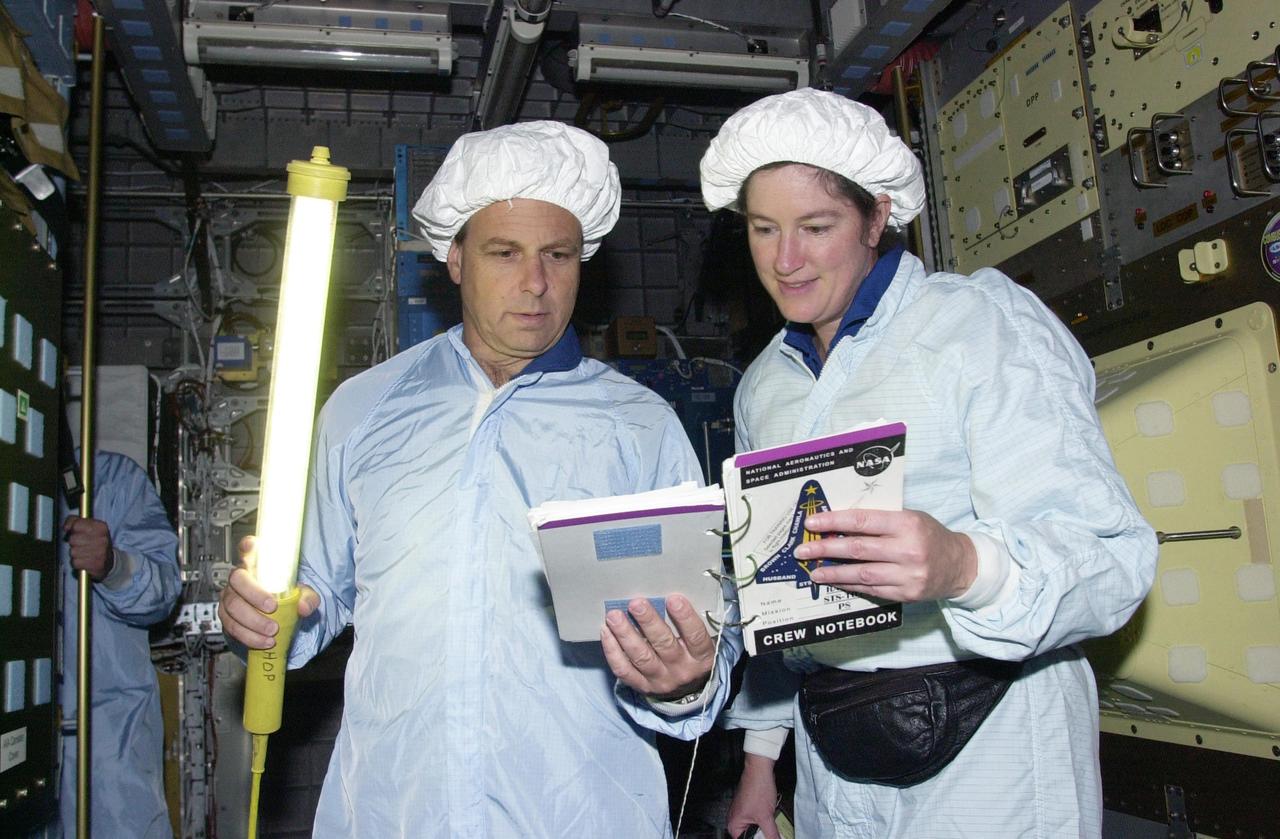
KENNEDY SPACE CENTER, FLA. -- STS-107 Mission Specialists Ilan Ramon, with the Israeli Space Agency, holds a light wand while he and Laurel Clark check out data for equipment in the SHI Research Double Module (SHI/RDM), part of the payload on the mission. They are taking part in Crew Equipment Interface Test activities, which include equipment and payload familiarization. A research mission, STS-107 also will carry the Fast Reaction Experiments Enabling Science, Technology, Applications and Research (FREESTAR) that incorporates eight high priority secondary attached shuttle experiments. STS-107 is scheduled to launch July 19, 2002
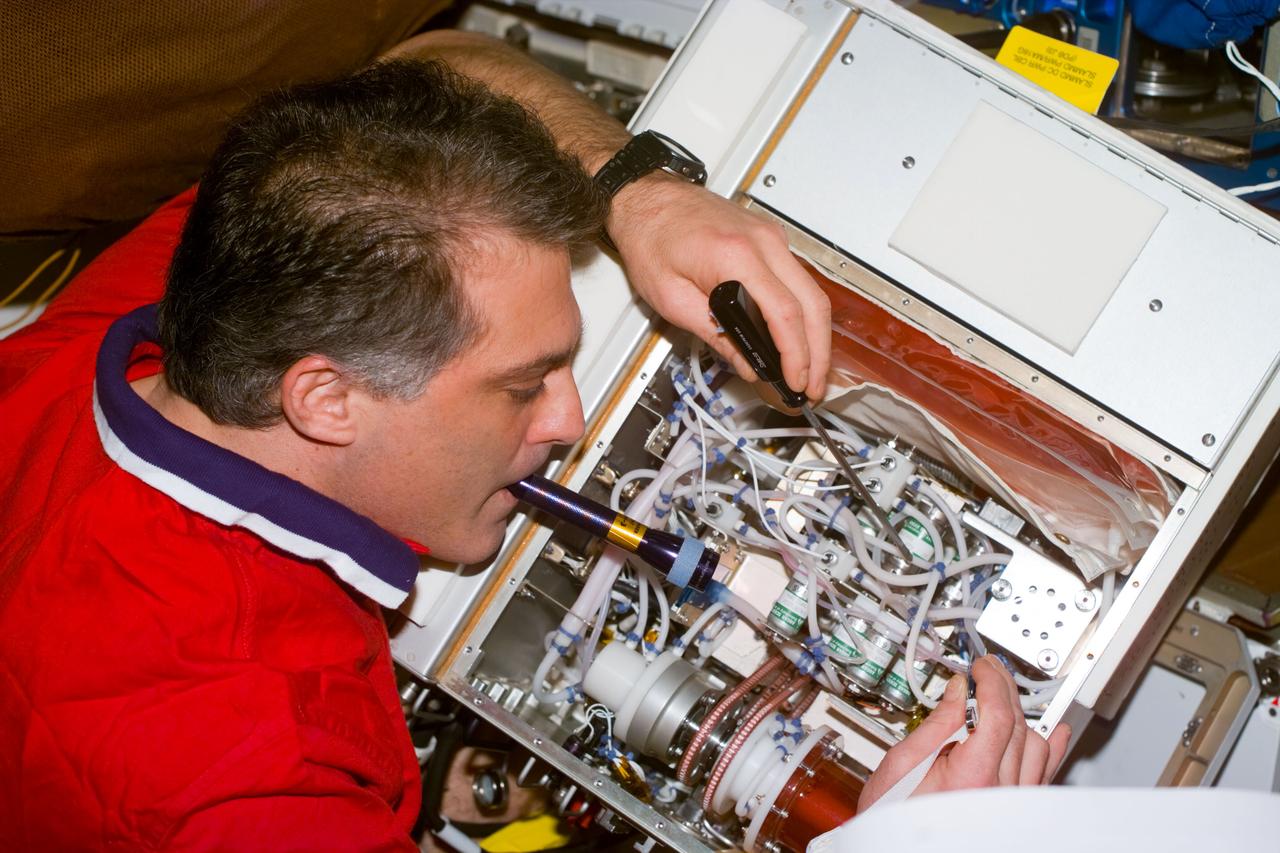
S89-E-5274 (26 Jan 1998) --- This Electronic Still Camera (ESC) image shows astronaut David A. Wolf, mission specialist and cosmonaut guest researcher, holding a pen light in his teeth to get better lighting in this piece of equipment, he is working on onboard the Space Shuttle Endeavour. Wolf is being replaced by astronaut Andrew S. W. Thomas as the cosmonaut guest researcher onboard Russia's Mir Space Station. Thomas will be the last American astronaut to serve onboard the Mir. This ESC view was taken on January 26, 1998, at 14:28:06 GMT.

Thermal blanket technicians, Aldine Joseph-pierre and Paula Cain, adjust blankets on the Ocean Color Instrument (OCI) in preparation for metrology on the Ground Support Equipment Application for Tilt or Rotation (GATOR). OCI is a highly advanced optical spectrometer that will be used to measure properties of light over portions of the electromagnetic spectrum. It will enable continuous measurement of light at finer wavelength resolution than previous NASA satellite sensors, extending key system ocean color data records for climate studies. OCI is PACE's (Plankton, Aerosol, Cloud, ocean Ecosystem) primary sensor built at Goddard Space Flight Center in Greenbelt, MD.
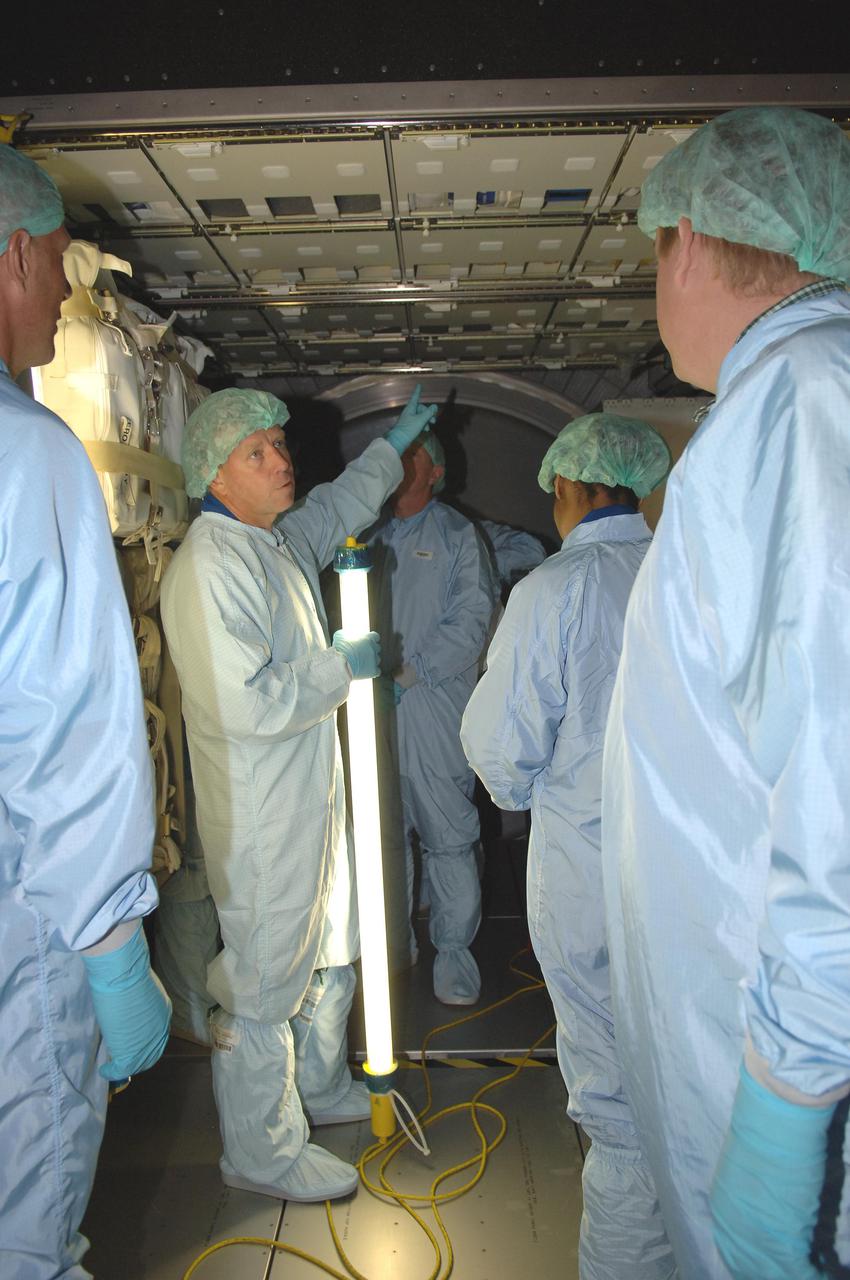
KENNEDY SPACE CENTER, FLA. - In the Space Station Processing Facility at NASA Kennedy Space Center, members of the STS-121 crew look at elements inside the Multi-Purpose Logistics Module Leonardo, which is part of the payload on the mission. The crew is at KSC to take part in Crew Equipment Interface Test activities, which provide hands-on experience with equipment they will use on-orbit. Seen pointing is Mission Commander Steven Lindsey. STS-121, the second Return to Flight mission, is targeted for launch in a lighted planning window of Sept. 9 to Sept. 25.
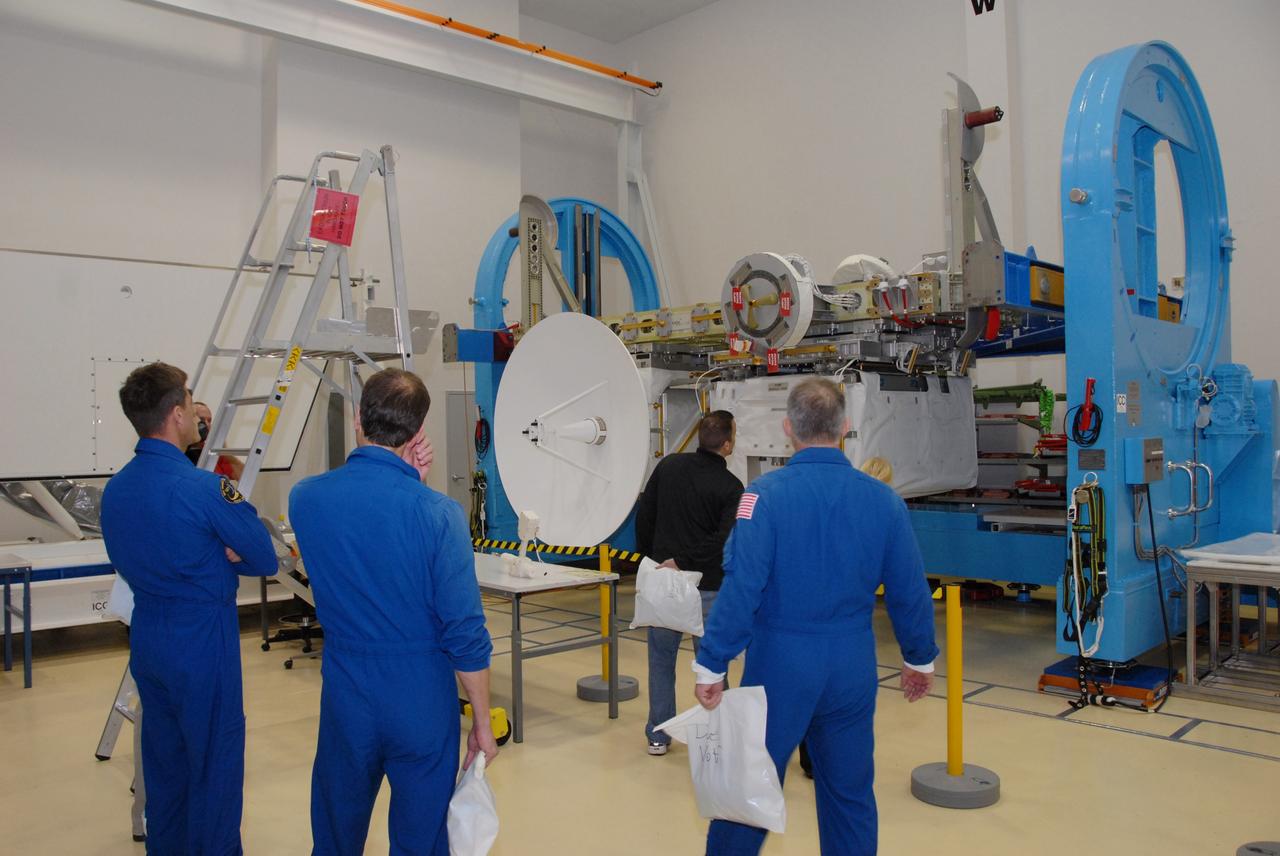
CAPE CANAVERAL, Fla. -- At SPACEHAB in Titusville, Fla., STS-127 crew members look at the SGANT (Space to Ground Antenna) at left and the pump module assembly at right, all attached to the Integrated Cargo Carrier-VLD (Vertical Light Deployment), part of the payload for the mission. The crew members are at Kennedy for a crew equipment interface test, or CEIT, which provides experience handling tools, equipment and hardware they will use on the mission. The payload will be launched to the International Space Station aboard space shuttle Endeavour on the STS-127 mission, targeted for launch on May 15, 2009. Photo credit: NASA/Dimitrios Gerondidakis
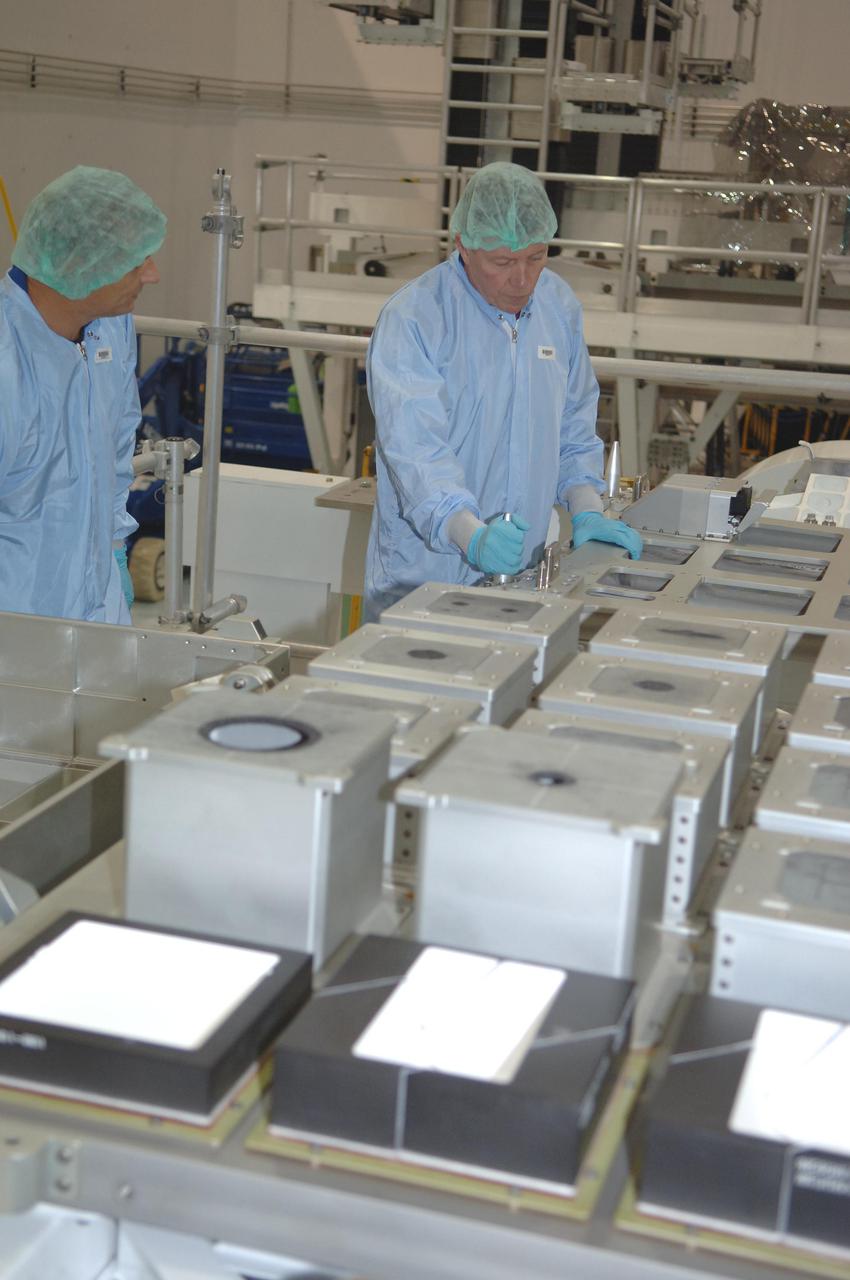
KENNEDY SPACE CENTER, FLA. - In the Space Station Processing Facility at NASA Kennedy Space Center, STS-121 Mission Specialist Michael Fossum works with the Detailed Test Objective (DTO) tile sample repair kit situated on the Lightweight Multi-Purpose Experiment Support Structure Carrier (LMC). The crew is at KSC to take part in Crew Equipment Interface Test activities, which provide hands-on experience with equipment they will use on-orbit. STS-121, the second Return to Flight mission, is targeted for launch in a lighted planning window of Sept. 9 to Sept. 25.
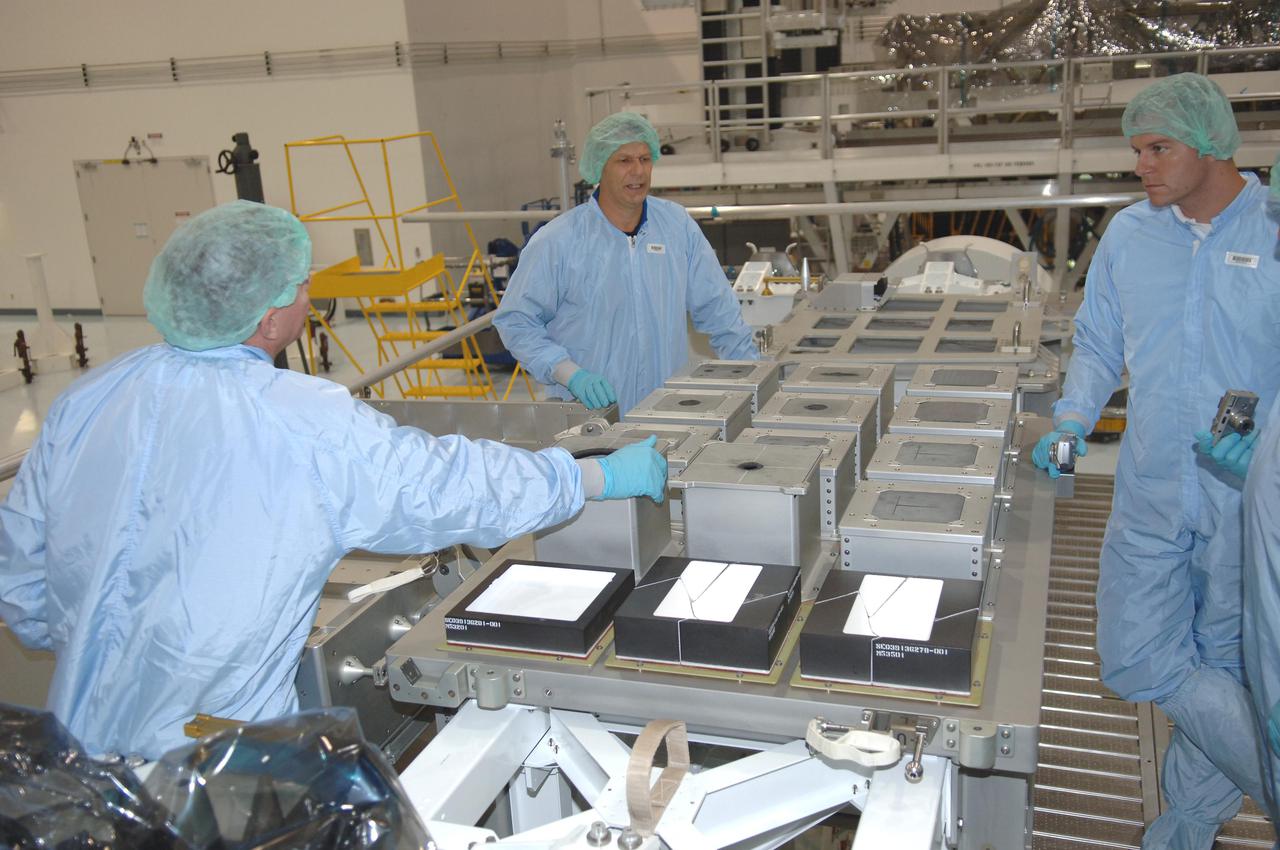
KENNEDY SPACE CENTER, FLA. - In the Space Station Processing Facility at NASA Kennedy Space Center, STS-121 Mission Specialist Piers Sellers (center) works with the Detailed Test Objective (DTO) tile sample repair kit situated on the Lightweight Multi-Purpose Experiment Support Structure Carrier (LMC). The STS-121 crew is at KSC to take part in Crew Equipment Interface Test activities, which provide hands-on experience with equipment they will use on-orbit. STS-121, the second Return to Flight mission, is targeted for launch in a lighted planning window of Sept. 9 to Sept. 25.
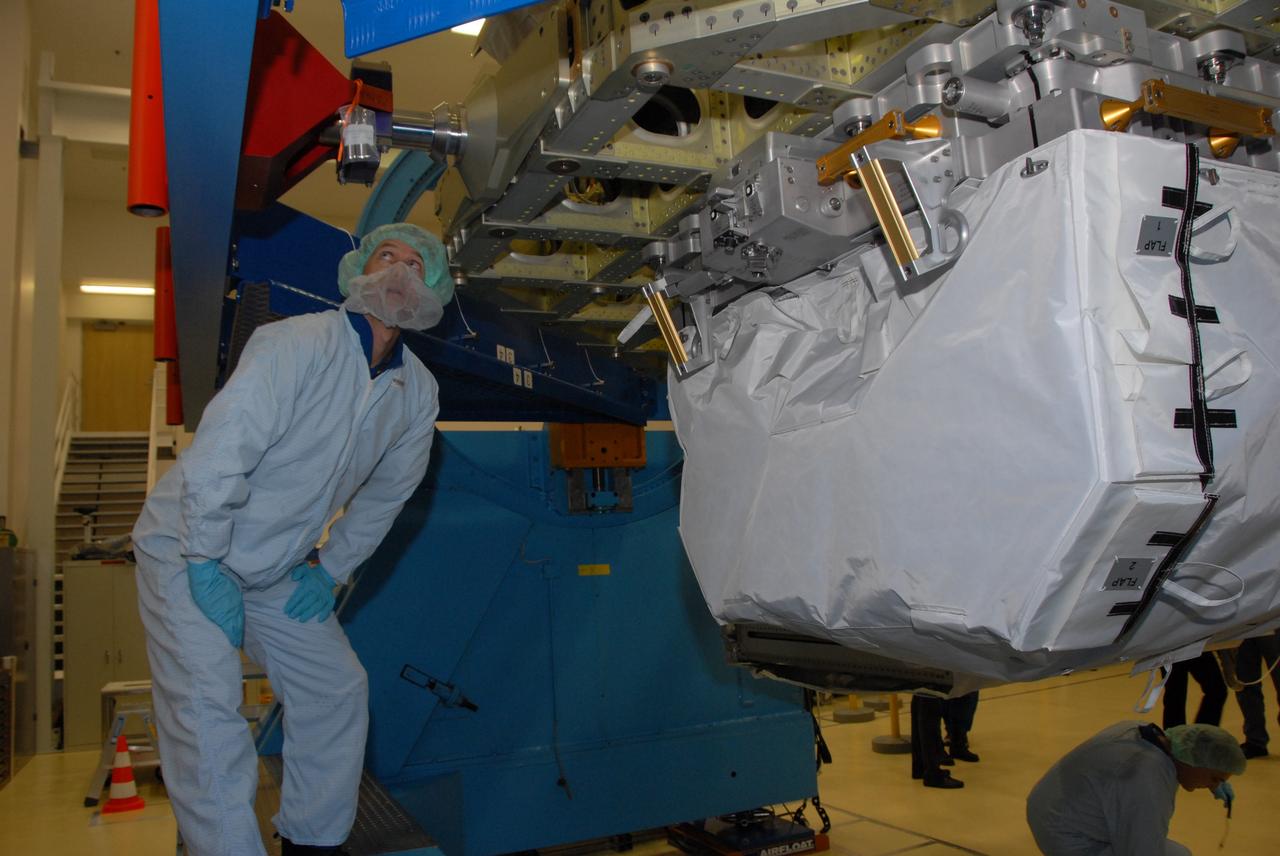
CAPE CANAVERAL, Fla. -- At SPACEHAB in Titusville, Fla., a STS-127 crew member looks at the Integrated Cargo Carrier-VLD (Vertical Light Deployment) with the LDU (Linear Drive Unit) at right, part of the payload for the mission. The crew members are at Kennedy for a crew equipment interface test, or CEIT, which provides experience handling tools, equipment and hardware they will use on the mission. The payload will be launched to the International Space Station aboard space shuttle Endeavour on the STS-127 mission, targeted for launch on May 15, 2009. Photo credit: NASA/Dimitrios Gerondidakis
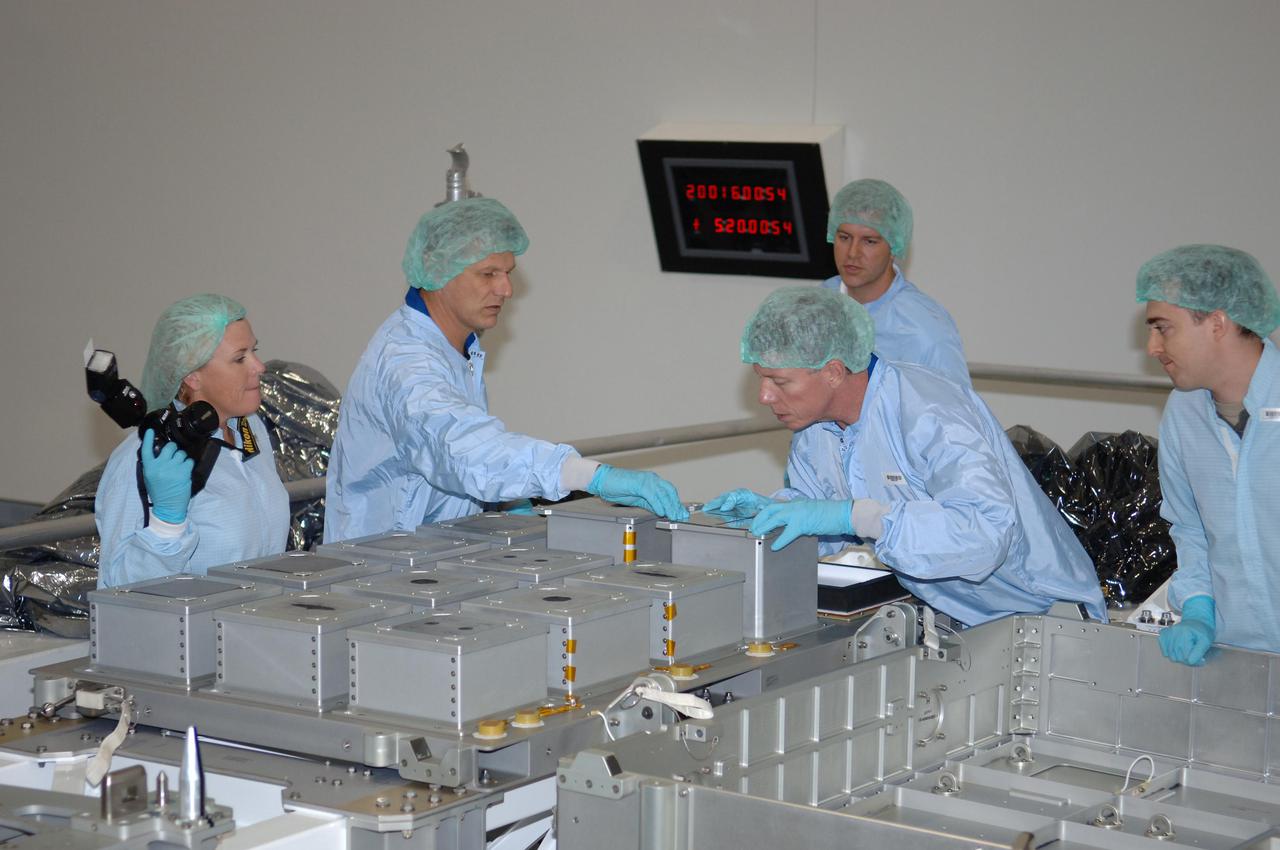
KENNEDY SPACE CENTER, FLA. - In the Space Station Processing Facility at NASA Kennedy Space Center, members of the STS-121 crew look at the Detailed Test Objective (DTO) tile sample repair kit situated on the Lightweight Multi-Purpose Experiment Support Structure Carrier (LMC). The crew is at KSC to take part in Crew Equipment Interface Test activities, which provide hands-on experience with equipment they will use on-orbit. STS-121, the second Return to Flight mission, is targeted for launch in a lighted planning window of Sept. 9 to Sept. 25.
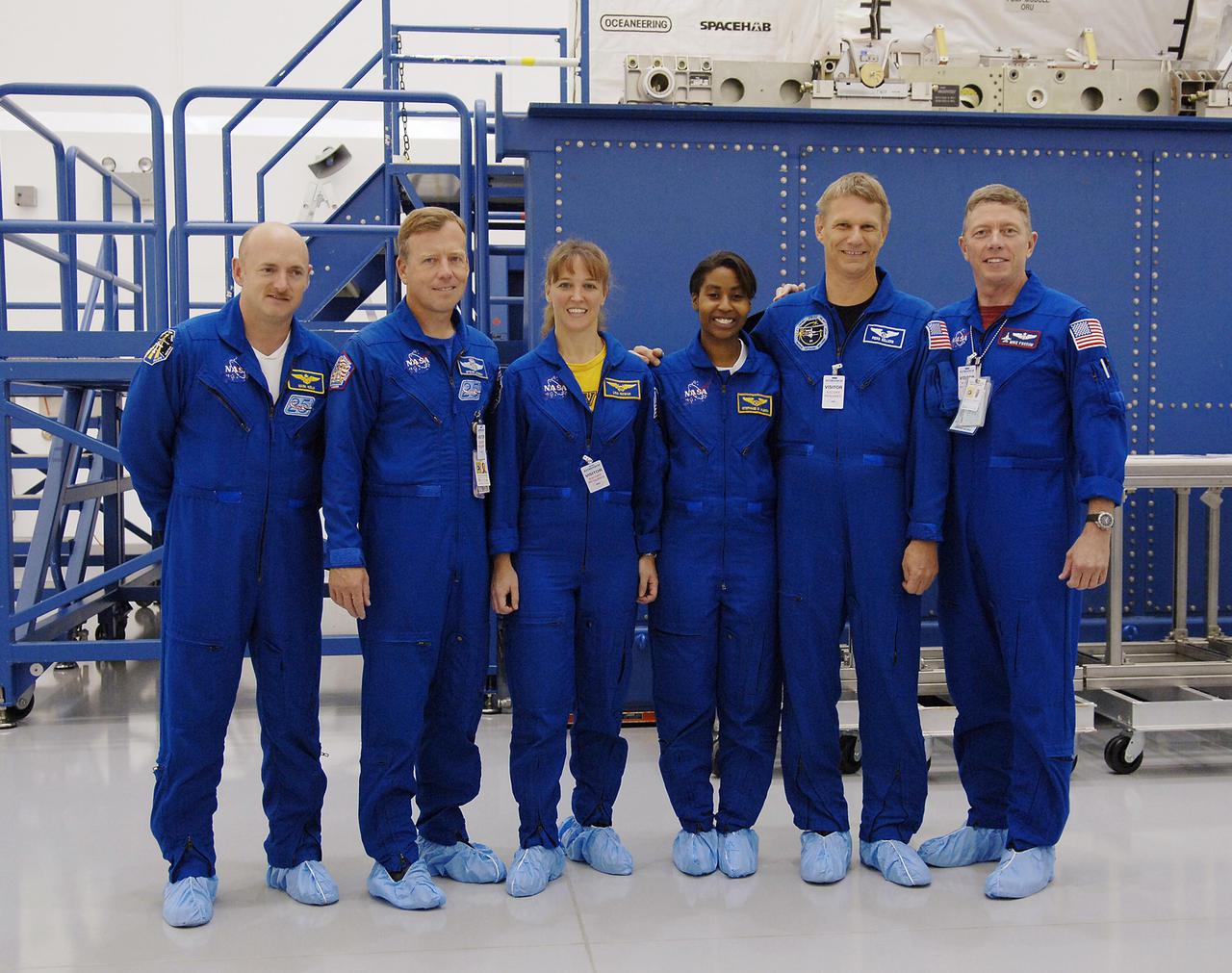
KENNEDY SPACE CENTER, FLA. - At Astrotech Space Operations in Titusville, Fla., the STS-121 crew poses for a photo. From left are Pilot Mark Kelly, Mission Commander Steven Lindsey, and Mission Specialists Lisa Nowak, Stephanie Wilson, Piers Sellers and Michael Fossum. The STS-121 crew is at KSC to take part in Crew Equipment Interface Test activities, which provide hands-on experience with equipment they will use on-orbit. STS-121, the second Return to Flight mission, is targeted for launch in a lighted planning window of Sept. 9 to Sept. 25.
CAPE CANAVERAL, Fla. -- At SPACEHAB in Titusville, Fla., STS-127 crew members look at the Pump Module Assembly on the Integrated Cargo Carrier-VLD (Vertical Light Deployment), part of the payload for the mission. At right is the LDU (Linear Drive Unit). The crew members are at Kennedy for a crew equipment interface test, or CEIT, which provides experience handling tools, equipment and hardware they will use on the mission. The payload will be launched to the International Space Station aboard space shuttle Endeavour on the STS-127 mission, targeted for launch on May 15, 2009. Photo credit: NASA/Dimitrios Gerondidakis
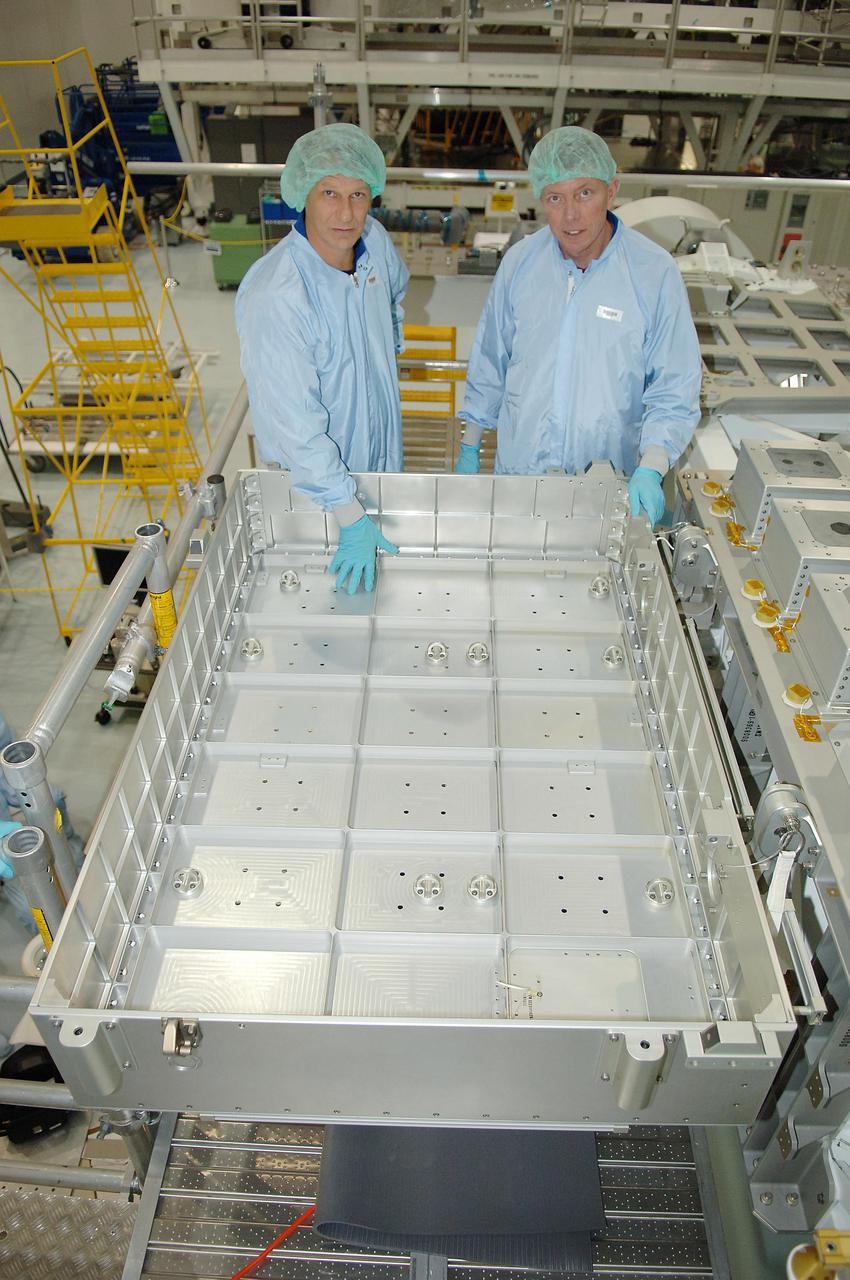
KENNEDY SPACE CENTER, FLA. - In the Space Station Processing Facility at NASA Kennedy Space Center, STS-121 Mission Specialists Piers Sellers (left) and Michael Fossum look at the Detailed Test Objective (DTO) tile sample repair kit situated on the Lightweight Multi-Purpose Experiment Support Structure Carrier (LMC). The STS-121 crew is at KSC to take part in Crew Equipment Interface Test activities, which provide hands-on experience with equipment they will use on-orbit. STS-121, the second Return to Flight mission, is targeted for launch in a lighted planning window of Sept. 9 to Sept. 25.

This animation shows the events that serve as the basis of an astrophysics technique called "echo mapping," also known as reverberation mapping. At center is a supermassive black hole surrounded by a disk of material called an accretion disk. As the disk gets brighter it sometimes even releases short flares of visible light. Blue arrows show the light from this flash traveling away from the black hole, both toward an observer on Earth and toward an enormous, doughnut-shaped structure (called a torus) made of dust. The light gets absorbed, causing the dust to heat up and release infrared light. This brightening of the dust is a direct response to — or, one might, say an "echo" — of the changes happening in the disk. Red arrows show this light traveling away from the galaxy, in the same direction as the initial flash of visible light. Thus an observer would see the visible light first, and (with the right equipment) the infrared light later. Astronomers have previously proposed using echo mapping as a means of measuring distances to cosmic objects. If scientists can observe both the initial flare of visible light and the subsequent infrared brightening in the dust, they could in theory use that information to measure the disk's luminosity, which could then be used to measure the distance to that galaxy by comparing it to the galaxy's brightness as seen from Earth. The temperature in the part of the disk closest to the black hole can reach tens of thousands of degrees but decreases with distance. When it reaches about 2,200 degrees Fahrenheit (1,200 Celsius), it is cool enough for dust to form. The more luminous the disk, the farther away from it the dust forms and the longer it takes light from the disk to reach the dust and produce the "echo." The distance from the accretion disk to the inside of the dust doughnut can be billions or trillions of miles. Even light, traveling at 186,000 miles (300,000 kilometers) per second, can take months or years to cross it. NASA's Near Earth Object Wide Field Infrared Survey Explorer (NEOWISE), previously named WISE, surveys the entire sky about once every six months and is on track to complete 16 such surveys by the end of 2020, providing astronomers with repeated opportunities to observe galaxies and look for signs of those light echoes. A study using data from WISE measured the luminosity of over 500 black hole accretion disks using echo mapping, but the subsequent distance measurements lacked precision compared to other distance measuring techniques. Additional data and an improved understanding of dust torus dynamics could improve those measurements. Movie available at https://photojournal.jpl.nasa.gov/catalog/PIA23866
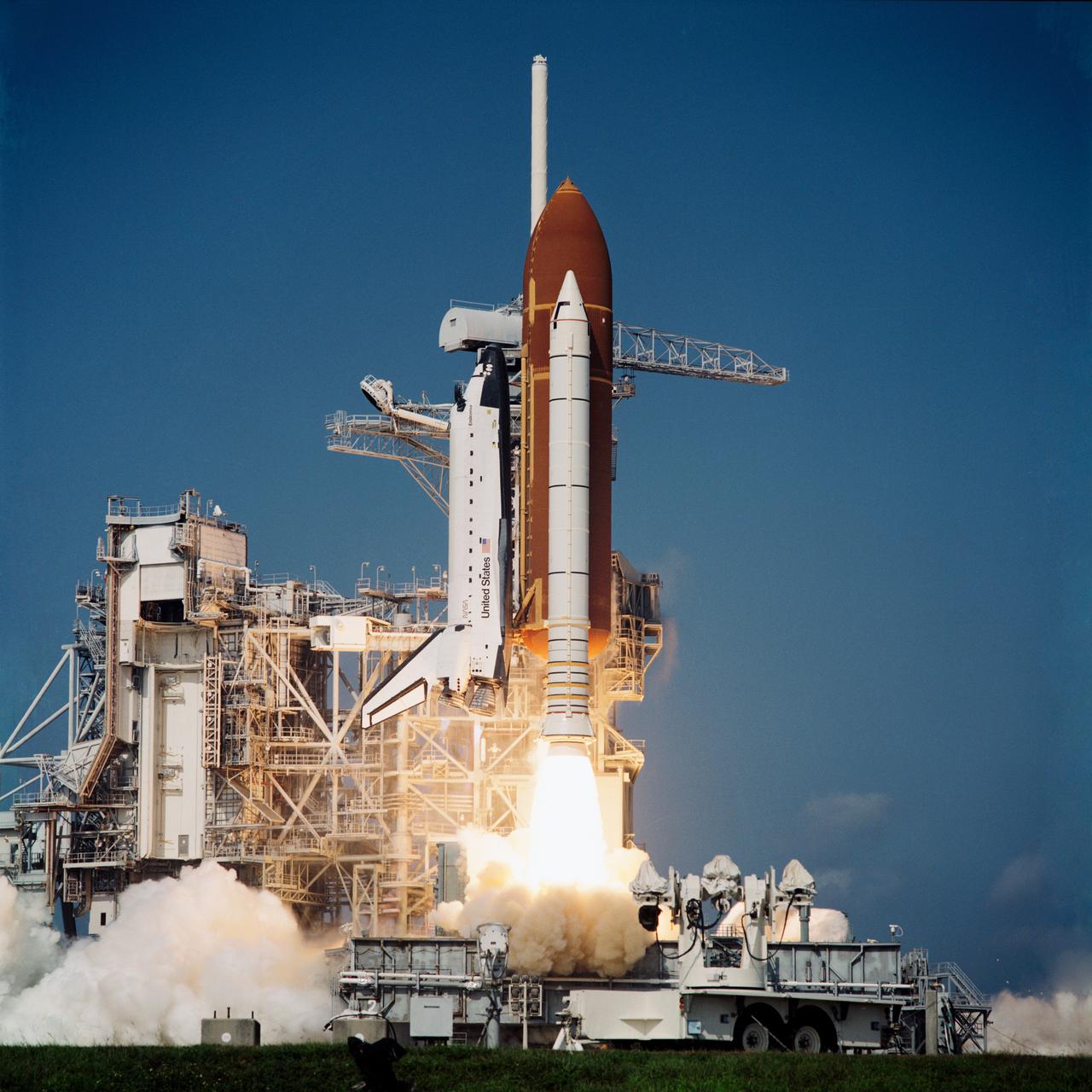
STS047-S-019 (12 Sept 1992) --- With a crew of six NASA astronauts and a Japanese payload specialist onboard, the Space Shuttle Endeavour heads for its second trip into space. This trip will be devoted to support of the Spacelab-J mission, a joint effort between Japan and the United States. Launch occurred at 10:23:00:0680 a.m. (EDT), September 12, 1992. Onboard were astronauts Robert L. Gibson, mission commander; Curtis L. Brown Jr., pilot; Mark C. Lee, payload commander; and Jerome (Jay) Apt, Mae C. Jemison and N. Jan Davis, mission specialists; along with payload specialist Mamoru Mohri, representing the National Space Development Agency of Japan.
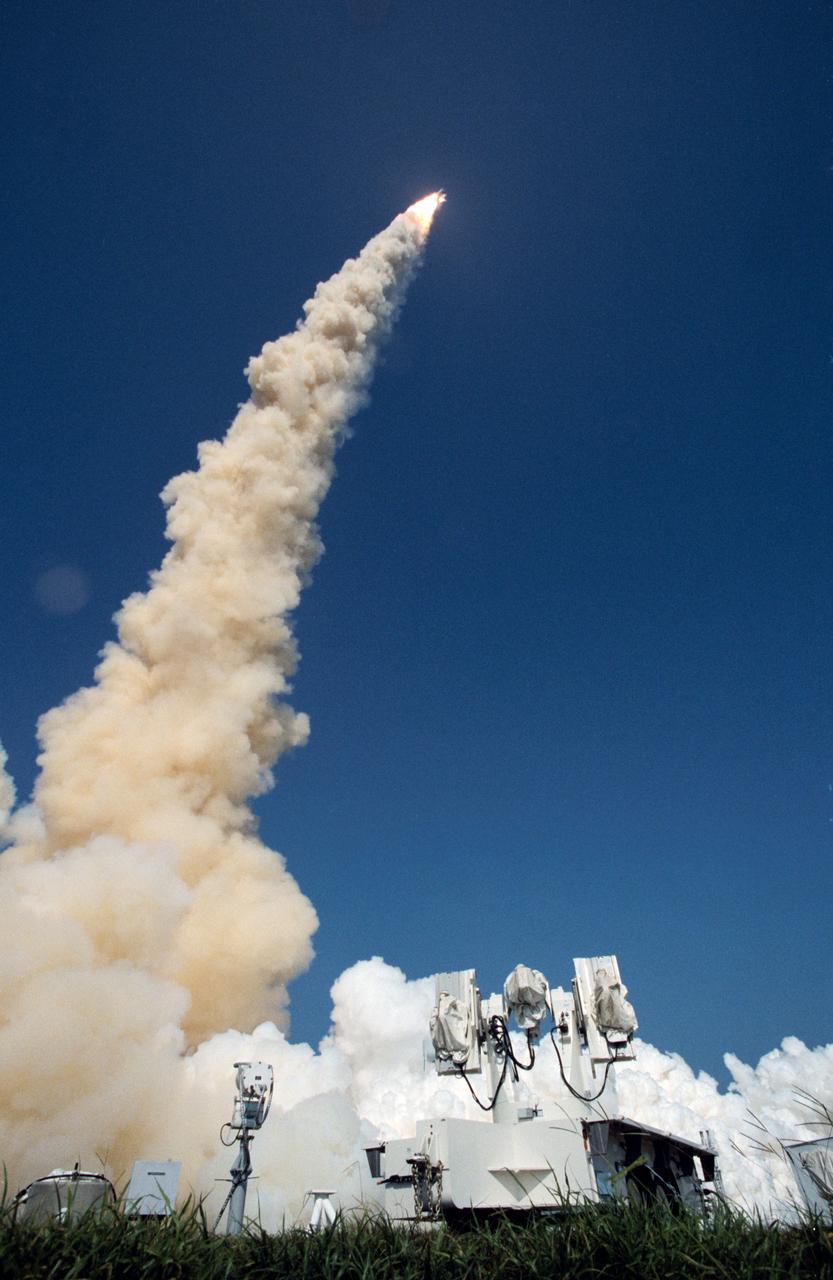
STS047-S-040 (12 Sept 1992) --- A 35mm camera was used to record this distant, low-angle view of the STS-47 launch. With a crew of six NASA astronauts and a Japanese payload specialist onboard, the Space Shuttle Endeavour was heading for its second trip into space. This mission is devoted to support of the Spacelab-J mission, a joint effort between Japan and the United States. Launch occurred at 10:23:00:0680 a.m. (EDT), September 12, 1992. Onboard were astronauts Robert L. Gibson, mission commander; Curtis L. Brown Jr., pilot; Mark C. Lee, payload commander; and Jerome (Jay) Apt, Mae C. Jemison and N. Jan Davis, mission specialists; along with payload specialist Mamoru Mohri, representing the National Space Development Agency (NASDA) of Japan.
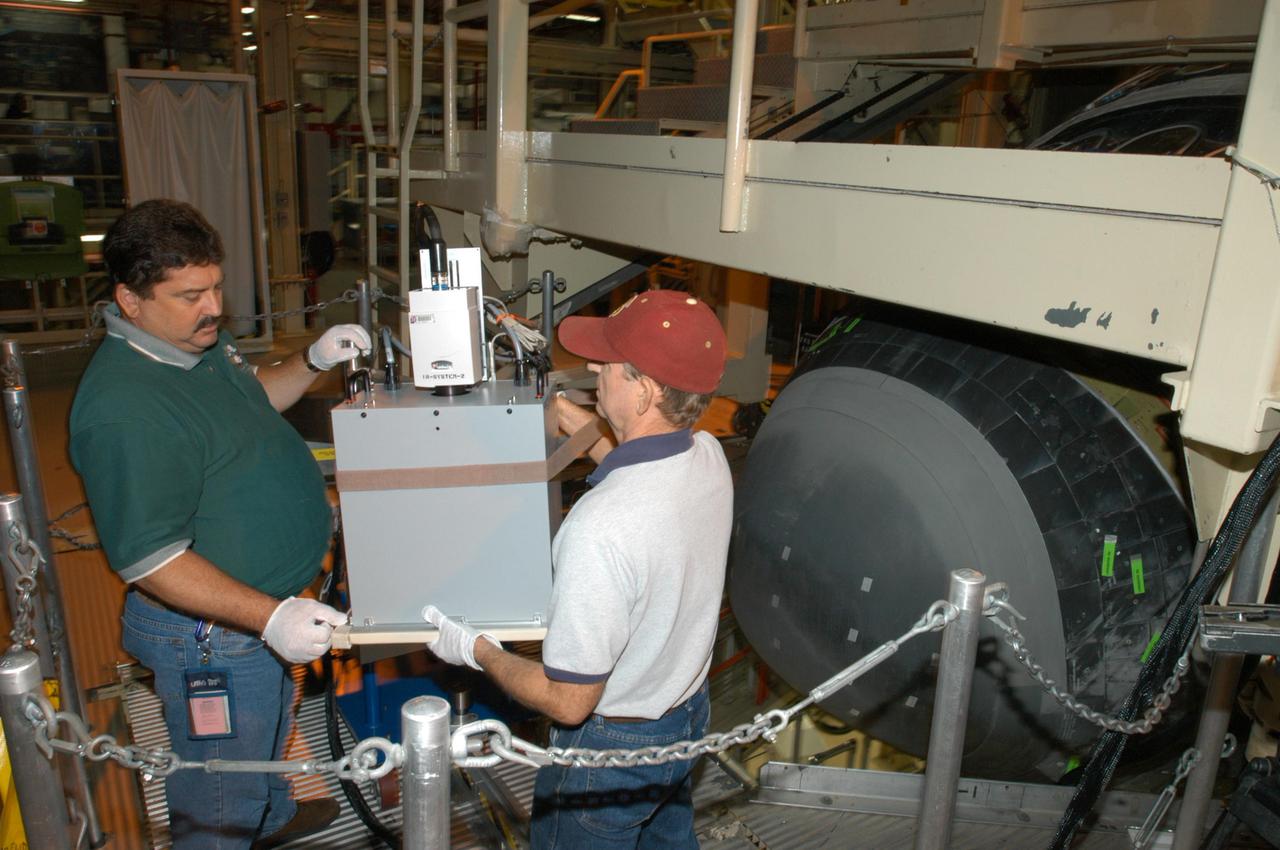
KENNEDY SPACE CENTER, FLA. - In NASA Kennedy Space Center’s Orbiter Processing Facility, bay 3, Don Nielen (left) and Dick Logsdon, both with United Space Alliance, prepare the equipment to be used for thermography of Discovery’s nose cone. Thermography uses high-intensity light to heat specific areas, which are then immediately scanned with an infrared camera. As the area cools, internal flaws are revealed. Discovery has been identified as the orbiter to fly on mission STS-121.
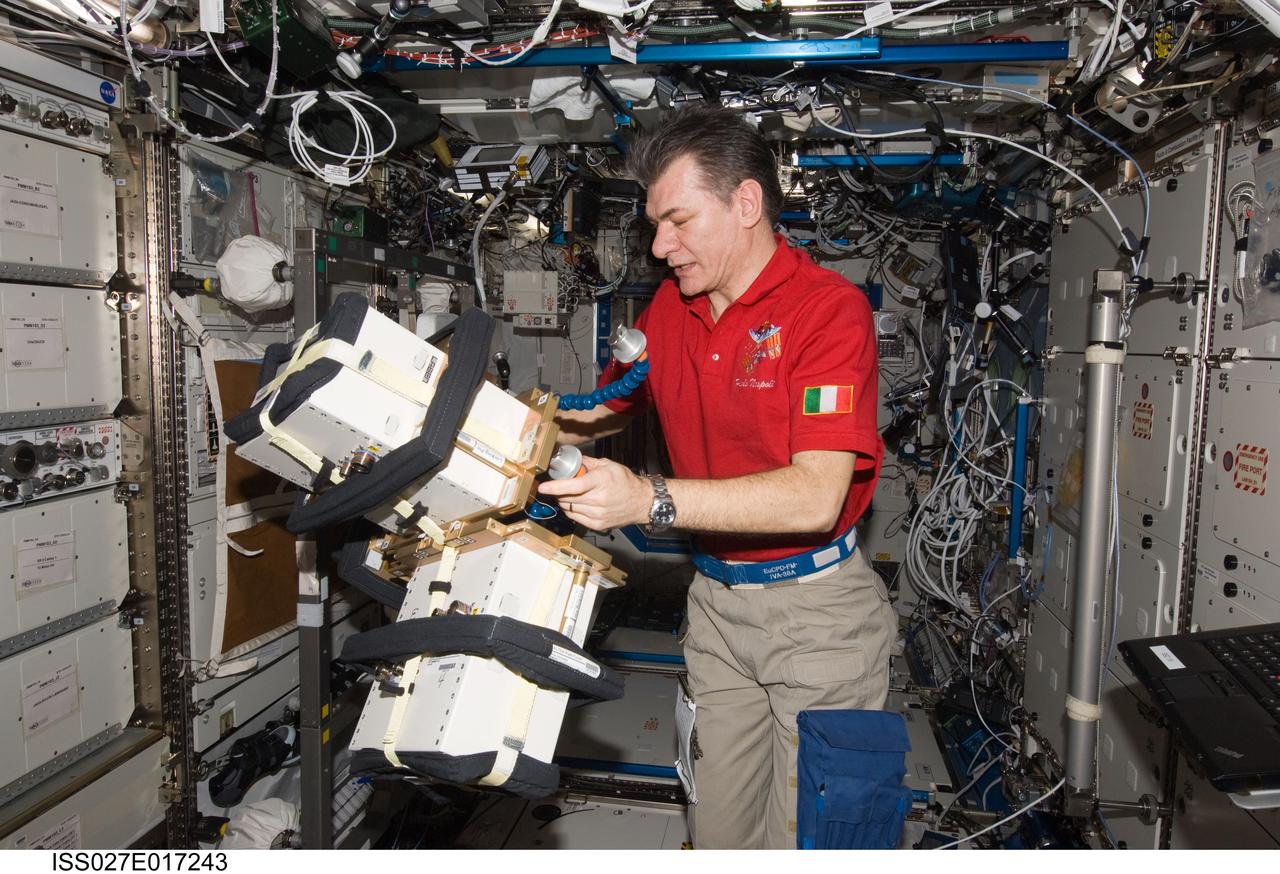
ISS027-E-017243 (23 April 2011) --- European Space Agency astronaut Paolo Nespoli, Expedition 27 flight engineer, works with Anomalous Long Term Effects on Astronauts (ALTEA) Shield isotropic equipment in the Destiny laboratory of the International Space Station. ALTEA-Shield isotropic dosimetry uses existing ALTEA hardware to survey the radiation environment in the Destiny laboratory in 3D. It also measures the effectiveness and shielding properties of several materials with respect to the perception of anomalous light flashes.
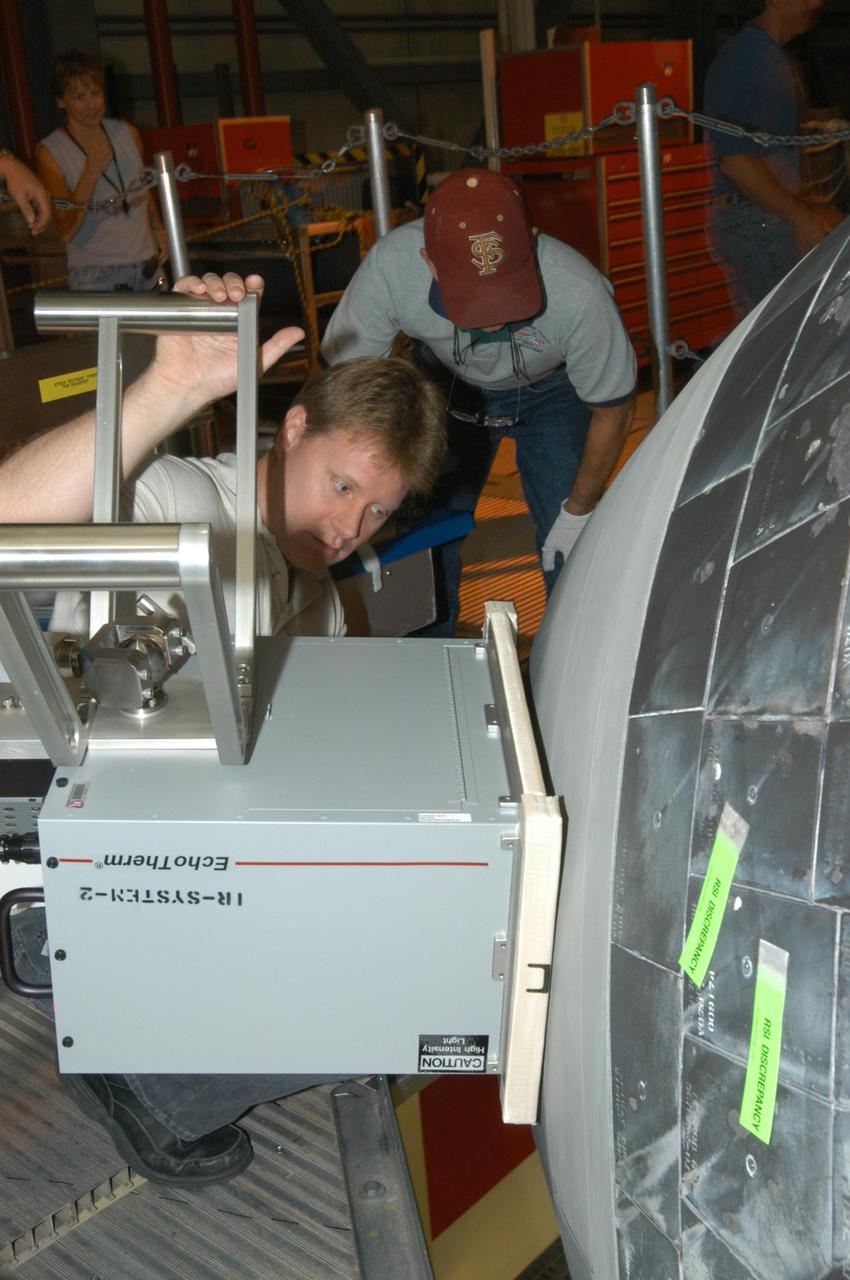
KENNEDY SPACE CENTER, FLA. - In NASA Kennedy Space Center’s Orbiter Processing Facility, bay 3, United Space Alliance workers Jim Landy (front) and Dick Logsdon (back) adjust thermography equipment in front of Discovery’s nose cone. Thermography uses high-intensity light to heat specific areas, which are then immediately scanned with an infrared camera. As the area cools, internal flaws are revealed. Discovery has been identified as the orbiter to fly on mission STS-121.
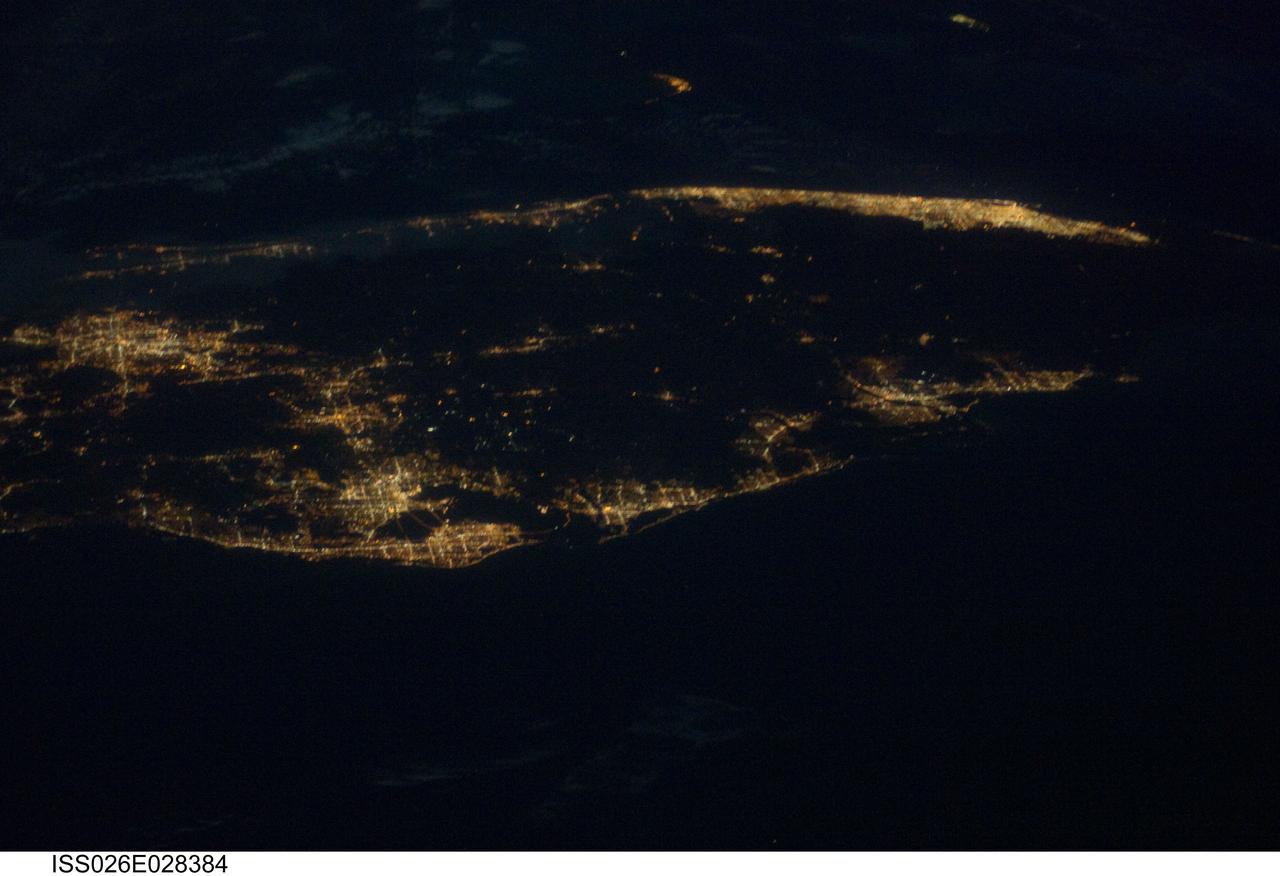
ISS026-E-028384 (22 Feb. 2011) --- This high oblique night time view of the bottom two thirds of the Florida peninsula, photographed by an Expedition 26 crew member aboard the International Space Station at 220 miles above Earth, displays many of the state's well-lighted metropolitan areas. The crew member used a digital still camera equipped with an 80-mm lens to expose the frame. The station was above the Gulf of Mexico, facing eastward toward the Atlantic, at the time the photo was taken.
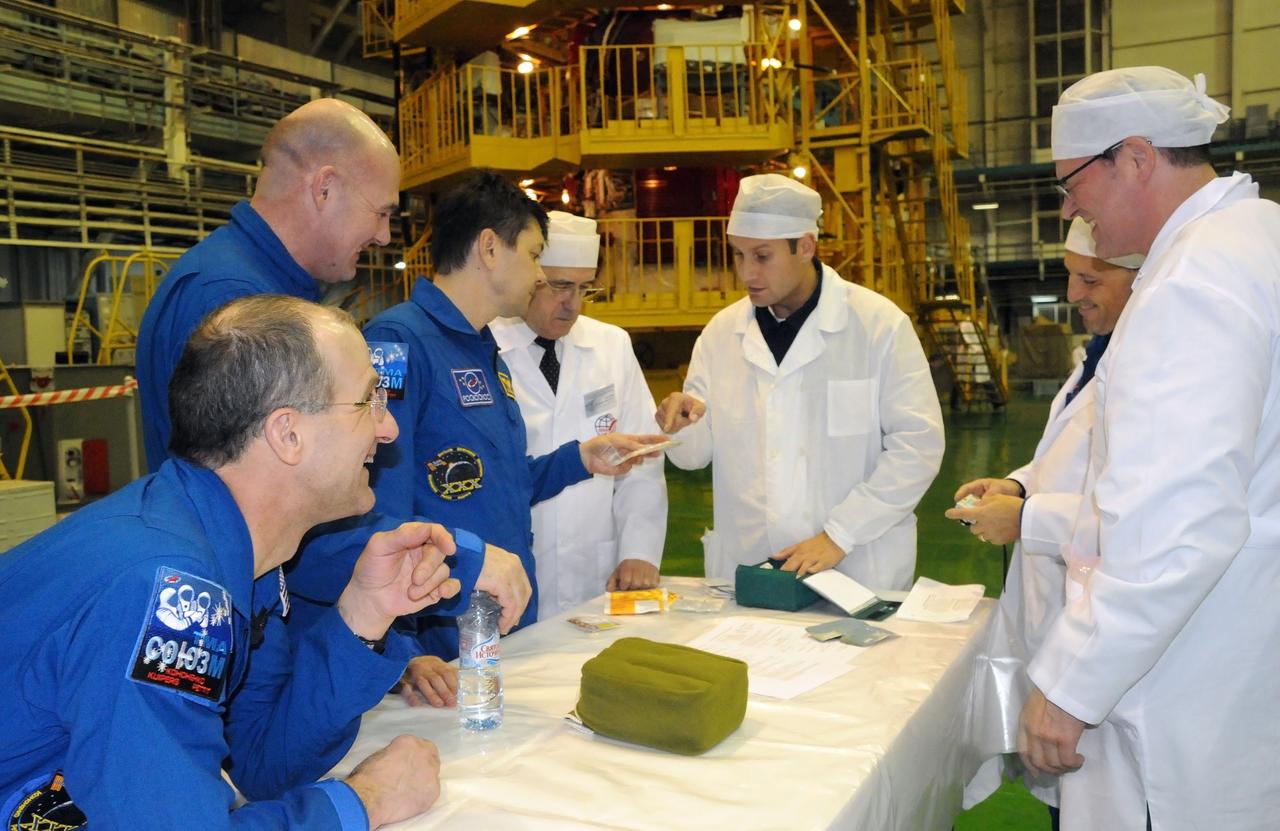
At the Baikonur Cosmodrome in Kazakhstan, the three crewmembers who will round out the Expedition 30 crew on the International Space Station share a light moment with Russian technicians as they inspect crew equipment hardware following a fit check in their Soyuz TMA-03M spacecraft Dec. 9, 2011. NASA Flight Engineer Don Pettit (far left), Flight Engineer Andre Kuipers of the European Space Agency (standing to Pettit’s left) and Soyuz Commander Oleg Kononenko (to Kuipers’ left) will launch Dec. 21 to the station from Baikonur. Credit: NASA
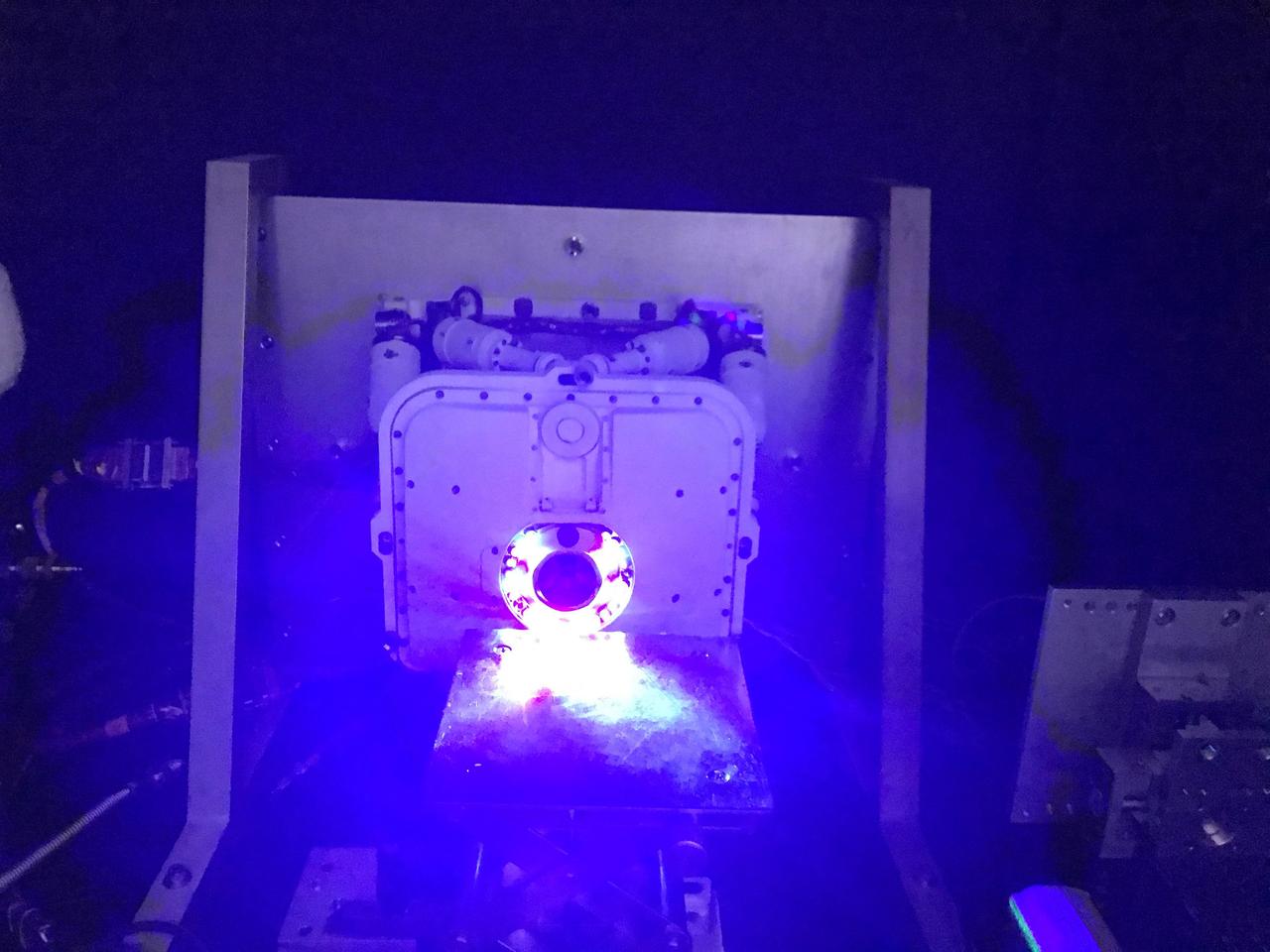
The Planetary Instrument for X-ray Lithochemistry (PIXL), one of seven instruments aboard NASA's Perseverance Mars rover, requires pictures of rock targets to autonomously position itself. Because PIXL works at night, it is equipped with light diodes circling its opening to take pictures of rock targets in the dark. Using artificial intelligence, PIXL relies on the images to determine how far away it is from a target to be scanned. https://photojournal.jpl.nasa.gov/catalog/PIA24095
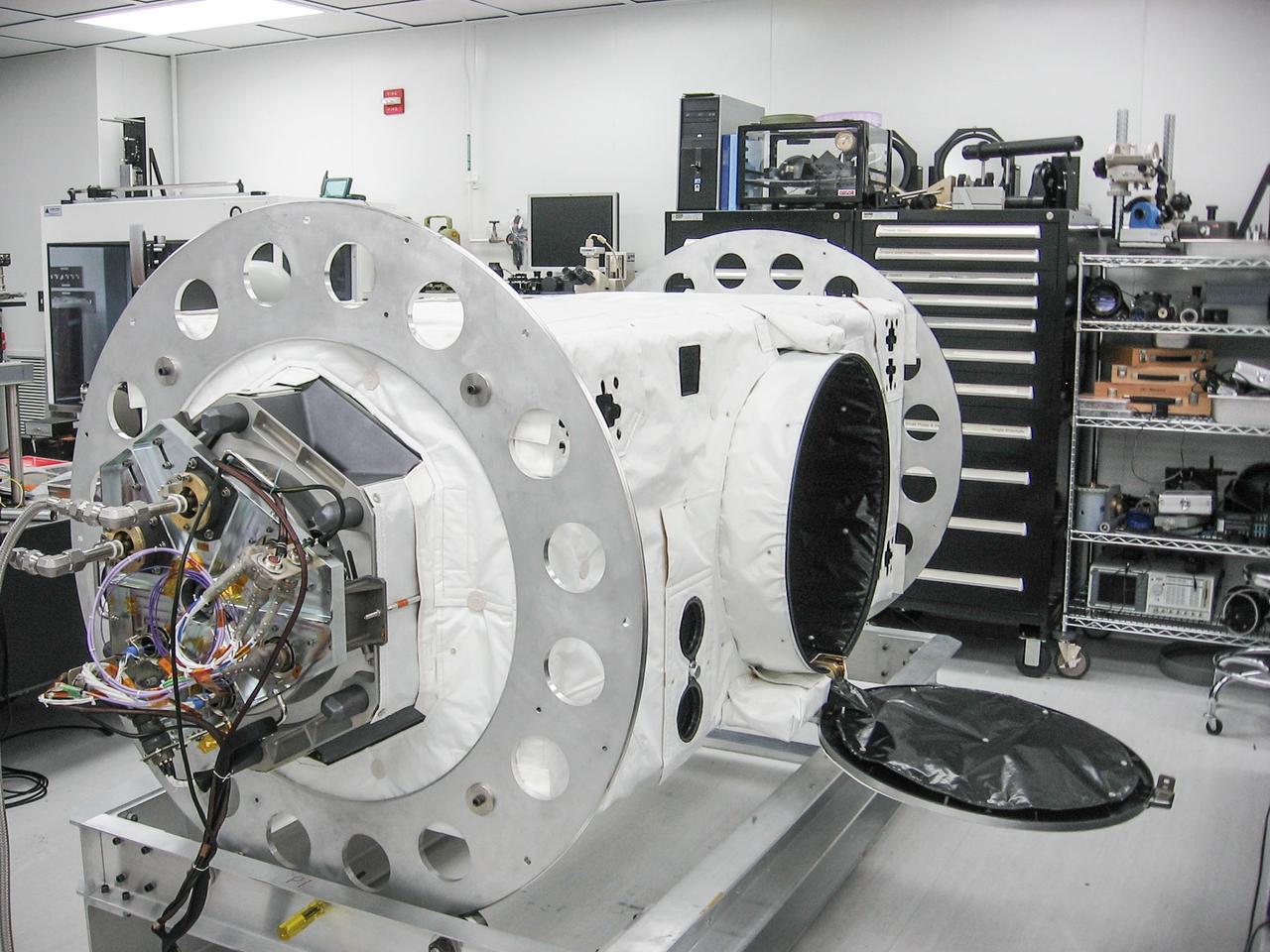
jsc2013e090265 (Sep. 26, 2013) --- Cloud Aerosol Transport System (CATS) at NASA's Johnson Space Center undergoing payload fit-check and Support Equipment Installation (SEI). The CATS investigation uses a light detection and ranging (LiDAR) system to measure the location, composition and distribution of pollution, dust, smoke, aerosols and other particulates in the atmosphere. CATS is used to study the atmospheric constituents that impact global climate. By gaining a better understanding of cloud and aerosol coverage, scientists can create a better model of the Earth's climate feedback processes.
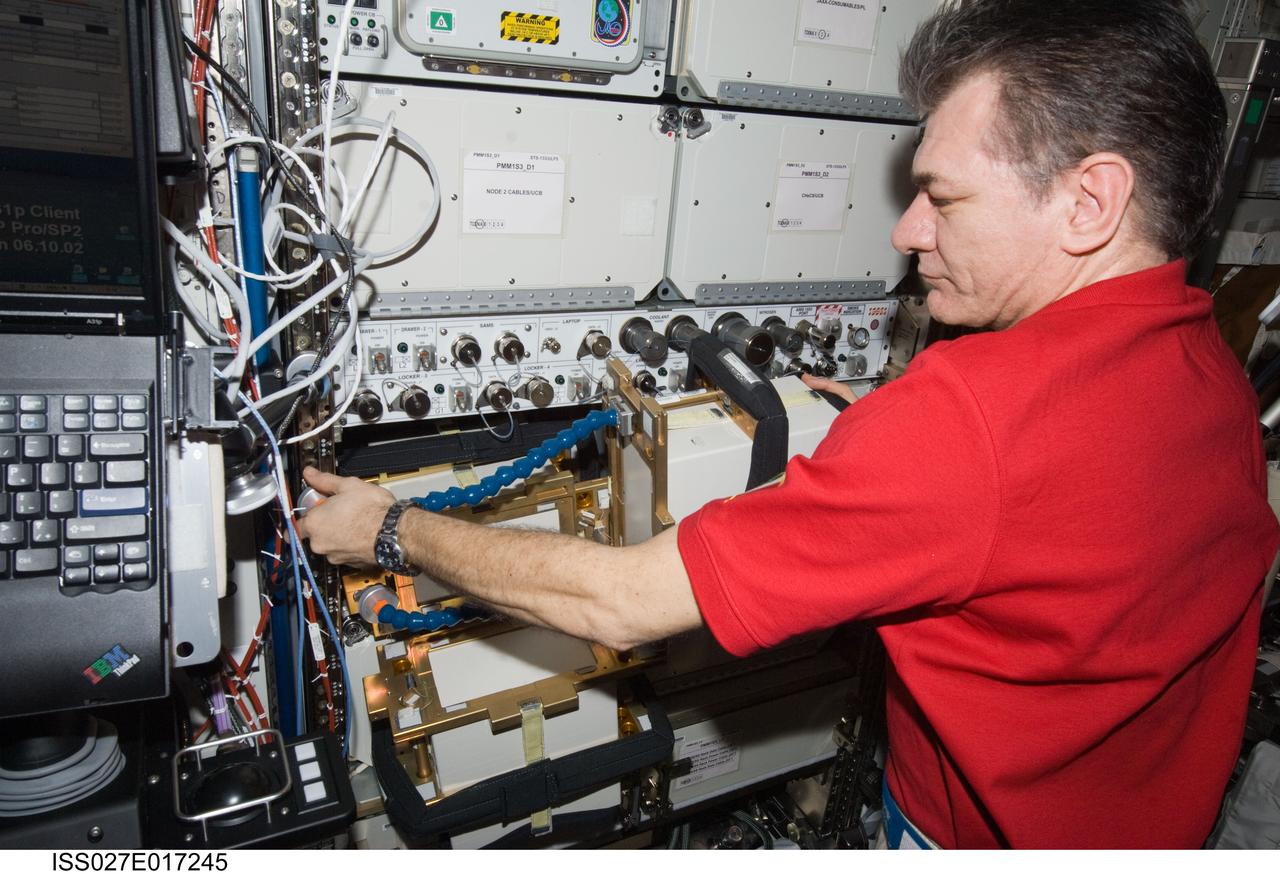
ISS027-E-017245 (23 April 2011) --- European Space Agency astronaut Paolo Nespoli, Expedition 27 flight engineer, works with Anomalous Long Term Effects on Astronauts (ALTEA) Shield isotropic equipment in the Destiny laboratory of the International Space Station. ALTEA-Shield isotropic dosimetry uses existing ALTEA hardware to survey the radiation environment in the Destiny laboratory in 3D. It also measures the effectiveness and shielding properties of several materials with respect to the perception of anomalous light flashes.
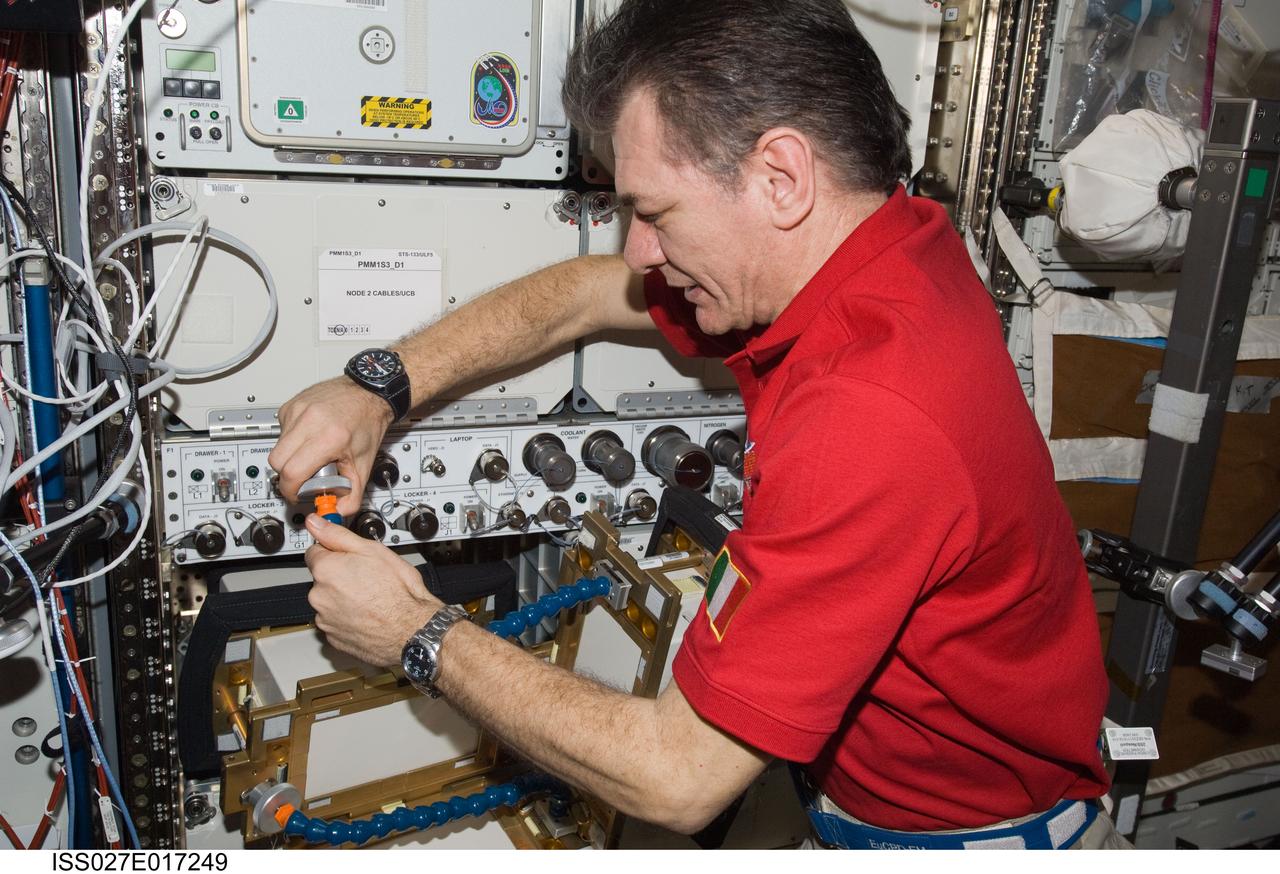
ISS027-E-017249 (23 April 2011) --- European Space Agency astronaut Paolo Nespoli, Expedition 27 flight engineer, works with Anomalous Long Term Effects on Astronauts (ALTEA) Shield isotropic equipment in the Destiny laboratory of the International Space Station. ALTEA-Shield isotropic dosimetry uses existing ALTEA hardware to survey the radiation environment in the Destiny laboratory in 3D. It also measures the effectiveness and shielding properties of several materials with respect to the perception of anomalous light flashes.
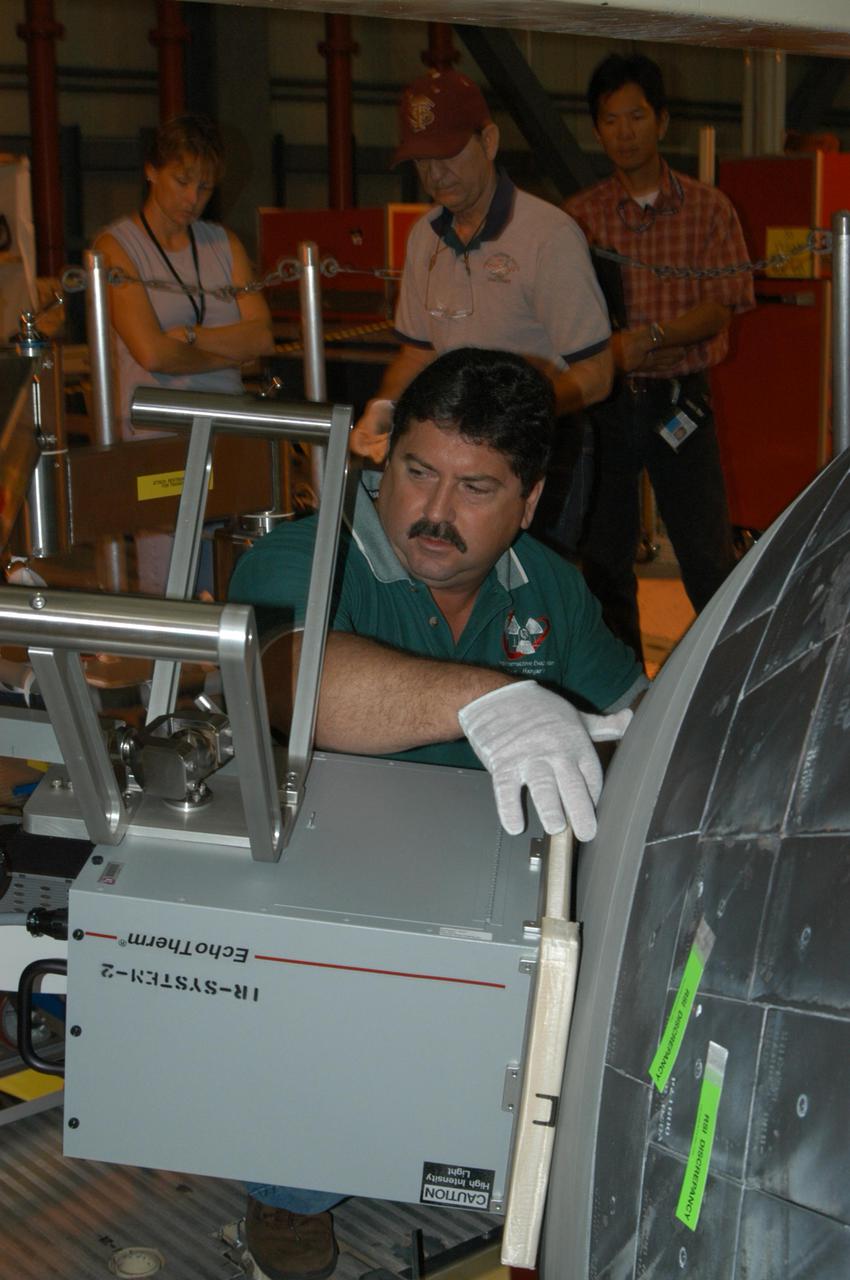
KENNEDY SPACE CENTER, FLA. - In NASA Kennedy Space Center’s Orbiter Processing Facility, bay 3, Don Neilen (front), with United Space Alliance, adjusts thermography equipment in front of Discovery’s nose cone. In the background are (from left) Lisa Huddleston, Dick Logsdon and Mike Hess, also with USA. Thermography uses high-intensity light to heat specific areas, which are then immediately scanned with an infrared camera. As the area cools, internal flaws are revealed. Discovery has been identified as the orbiter to fly on mission STS-121.
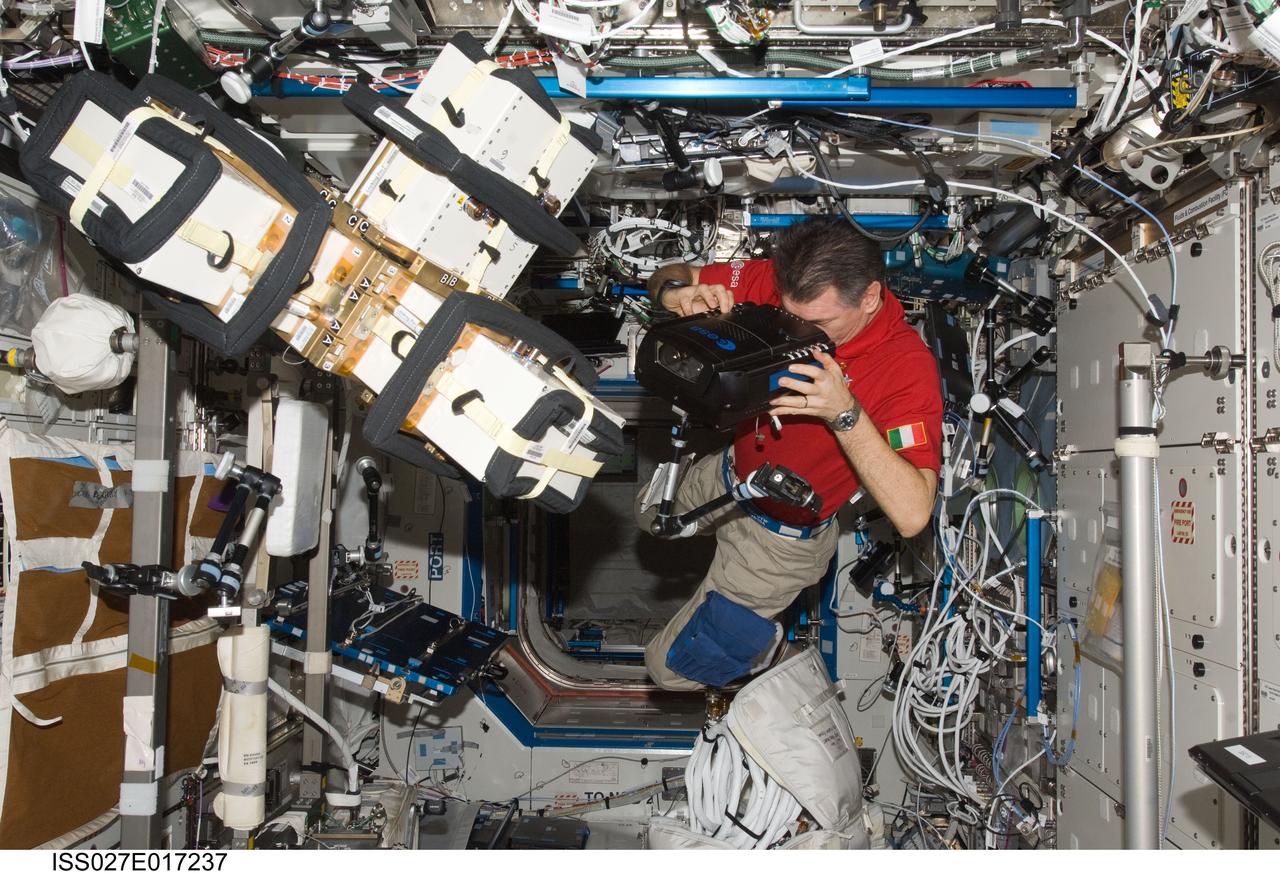
ISS027-E-017237 (23 April 2011) --- European Space Agency astronaut Paolo Nespoli, Expedition 27 flight engineer, works with Anomalous Long Term Effects on Astronauts (ALTEA) Shield isotropic equipment in the Destiny laboratory of the International Space Station. ALTEA-Shield isotropic dosimetry uses existing ALTEA hardware to survey the radiation environment in the Destiny laboratory in 3D. It also measures the effectiveness and shielding properties of several materials with respect to the perception of anomalous light flashes.
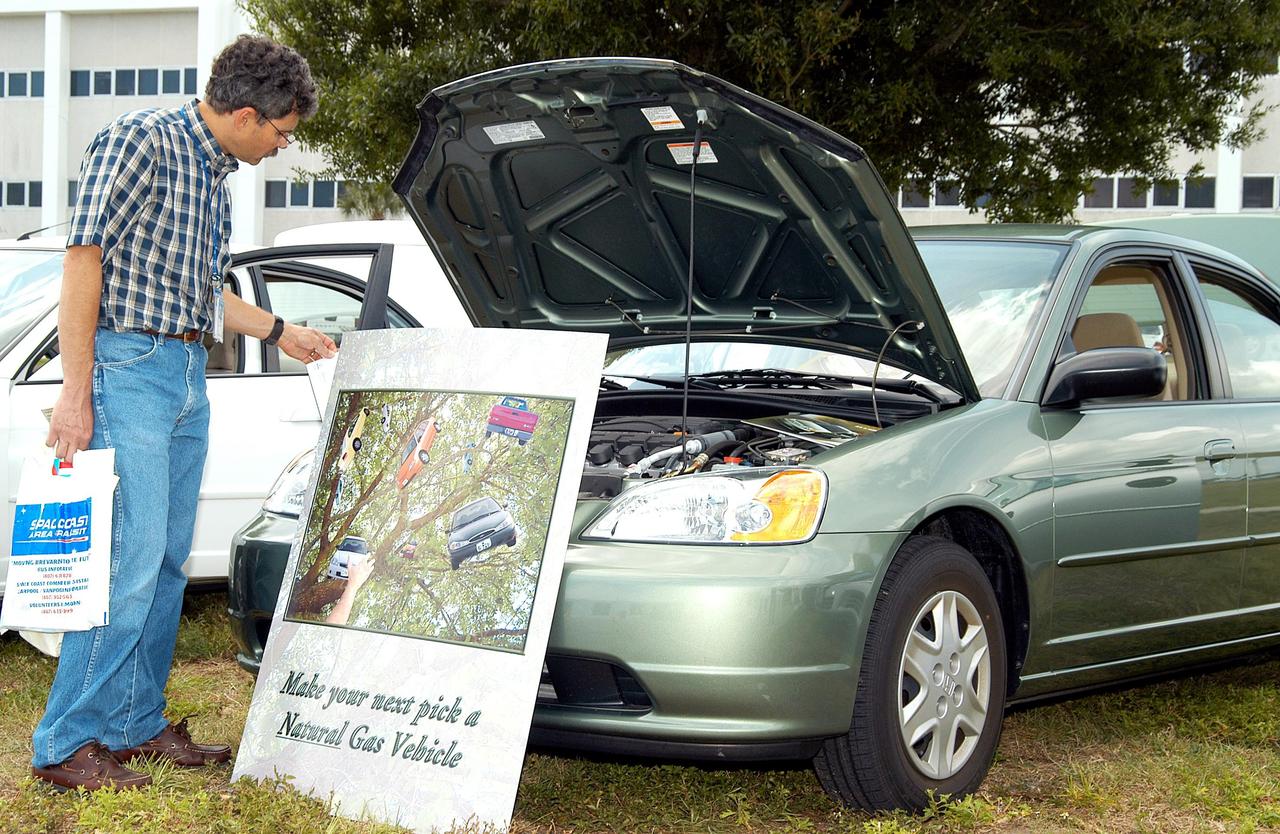
KENNEDY SPACE CENTER, FLA. - A KSC employee stops to look at a car equipped to use natural gas as fuel. Several cars using alternative fuel technology were part of an exhibit during KSC’s annual Environmental and Energy Awareness Week, held April 20-22. The slogan for this year’s event was “Today's Conservation Defines Tomorrow's Future.” Presentations included Chemistry Safety, Cost-Effective Solar Applications, Non-Native Invasive Plant Identification and Control, Energy Efficient Lighting Systems, and Historical Changes in KSC’s Ecosystems.
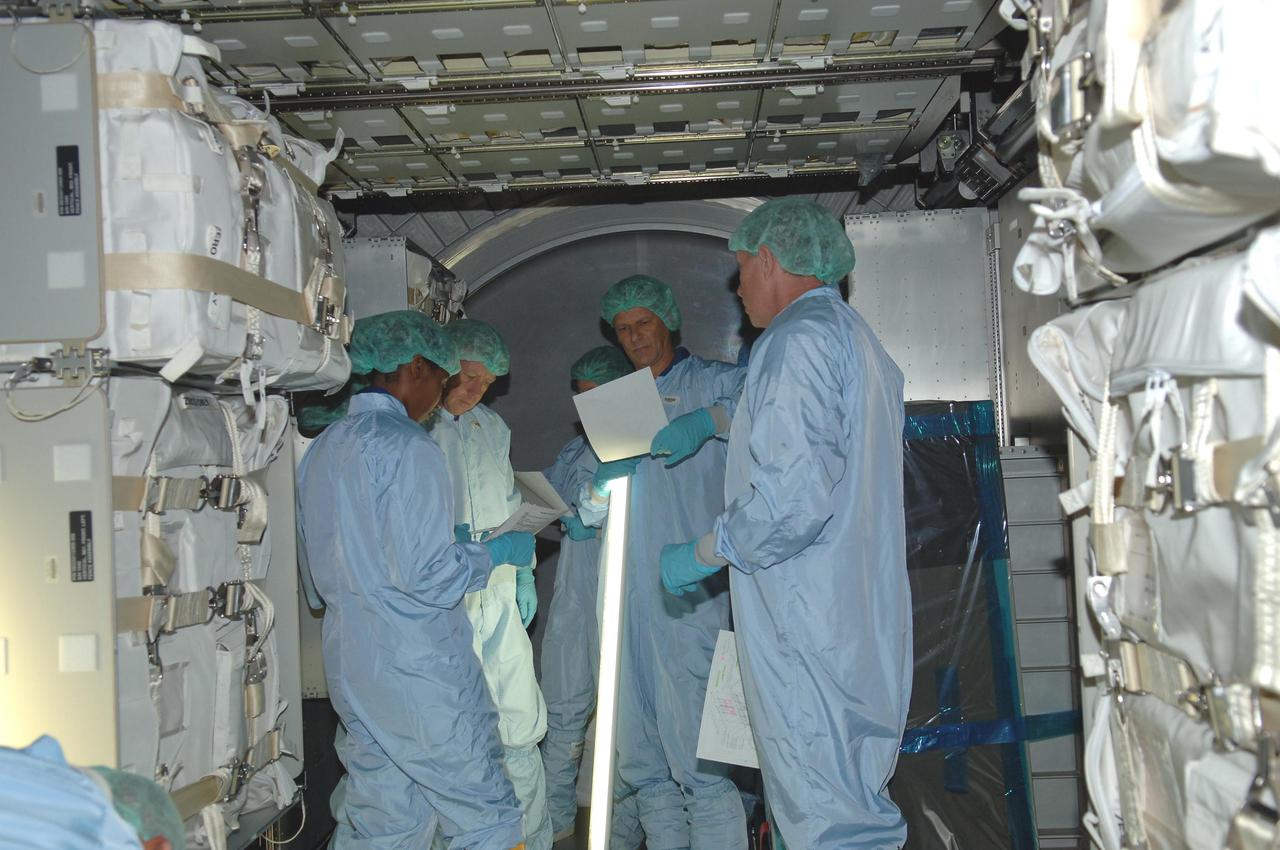
KENNEDY SPACE CENTER, FLA. - Members of the STS-121 crew take part in Crew Equipment Interface Test activities in the Space Station Processing Facility at NASA Kennedy Space Center. Here they are looking at elements inside the the Multi-Purpose Logistics Module Leonardo, which is part of the payload on the mission. STS-121, the second Return to Flight mission, is targeted for launch in a lighted planning window of Sept. 9 to Sept. 25.

ISS026-E-012788 (26 Dec. 2010) --- Though dark clouds limit the visibility of much of the eastern side (top of frame) of California's Bay Area, lights expose most of the region's highly populated areas. From 220 miles above Earth, the photo was recorded with a still camera equipped with a 180-mm lens on Dec. 26 by one of the crew members onboard the Earth-orbiting International Space Station.
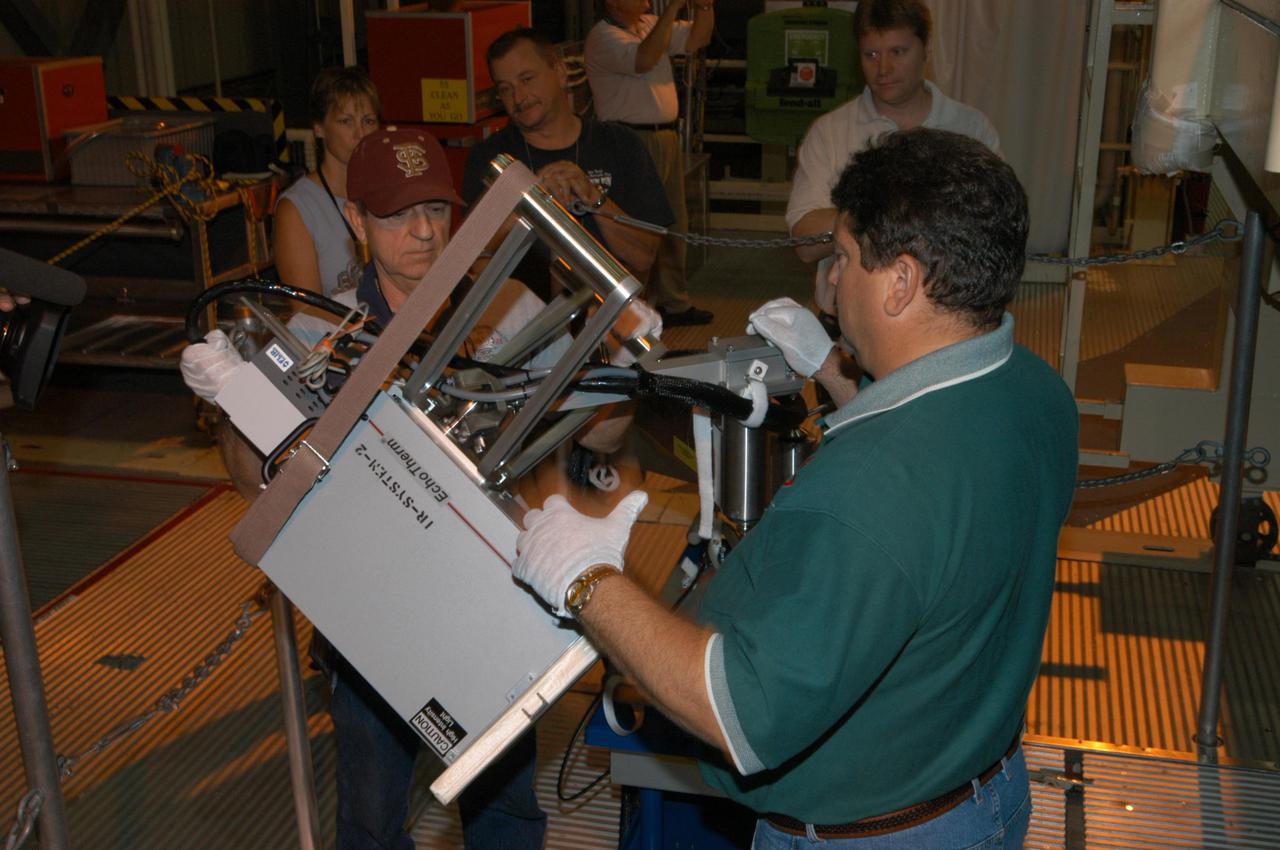
KENNEDY SPACE CENTER, FLA. - In NASA Kennedy Space Center’s Orbiter Processing Facility, bay 3, Don Nielen (foreground), with United Space Alliance, gets help from Dick Logsdon, also with USA, setting up equipment to be used for thermography of Discovery’s nose cone. Thermography uses high-intensity light to heat specific areas, which are then immediately scanned with an infrared camera. As the area cools, internal flaws are revealed. Discovery has been identified as the orbiter to fly on mission STS-121.
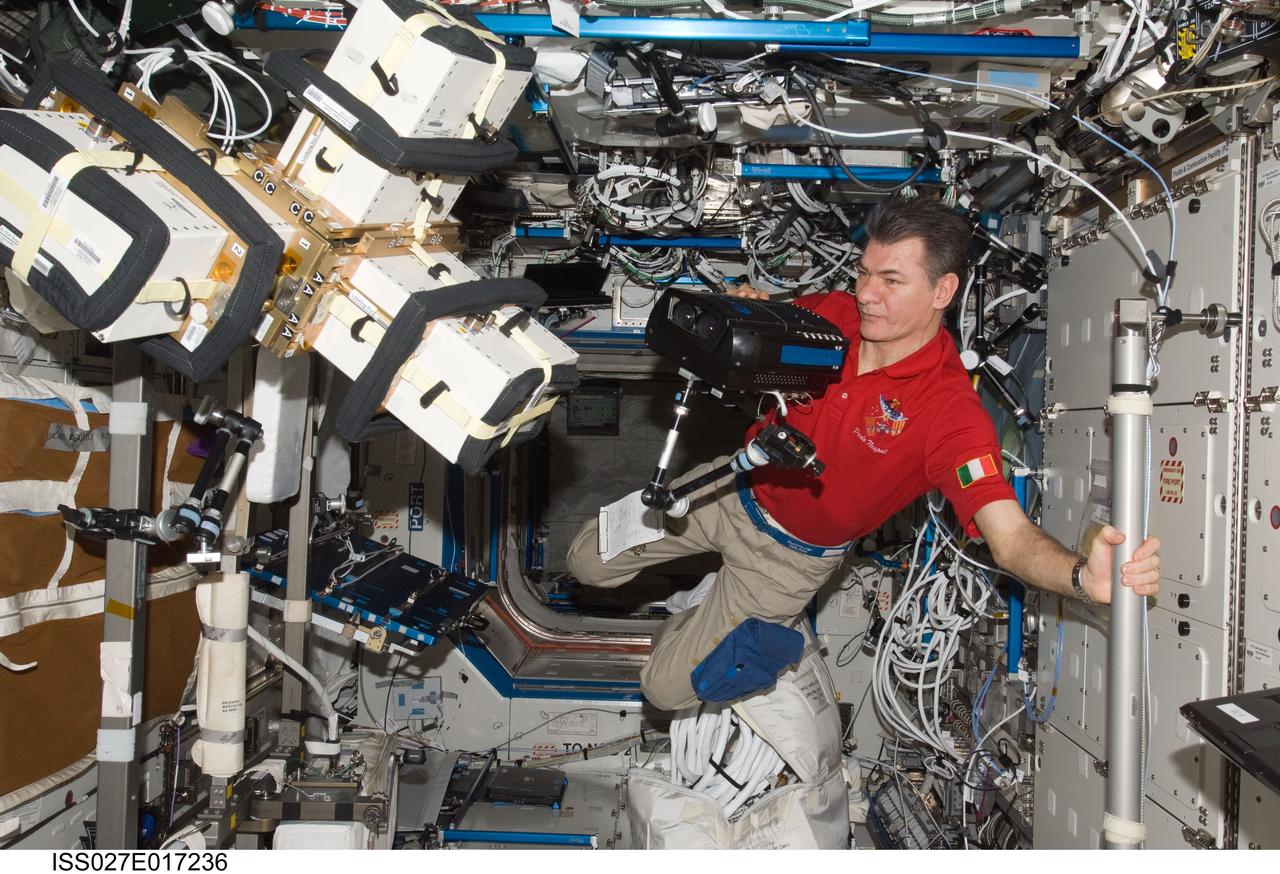
ISS027-E-017236 (23 April 2011) --- European Space Agency astronaut Paolo Nespoli, Expedition 27 flight engineer, works with Anomalous Long Term Effects on Astronauts (ALTEA) Shield isotropic equipment in the Destiny laboratory of the International Space Station. ALTEA-Shield isotropic dosimetry uses existing ALTEA hardware to survey the radiation environment in the Destiny laboratory in 3D. It also measures the effectiveness and shielding properties of several materials with respect to the perception of anomalous light flashes.

ISS026-E-008222 (7 Dec. 2010) --- From 220 miles above Earth, one of the Expedition 26 crew members aboard the Earth-orbiting International Space Station recorded this night view of Galveston Island and the Texas City area. The east end of Galveston is the lighted area at center frame. The crew member used a digital still camera equipped with a 180-mm lens to record the image on Dec. 7, 2010.
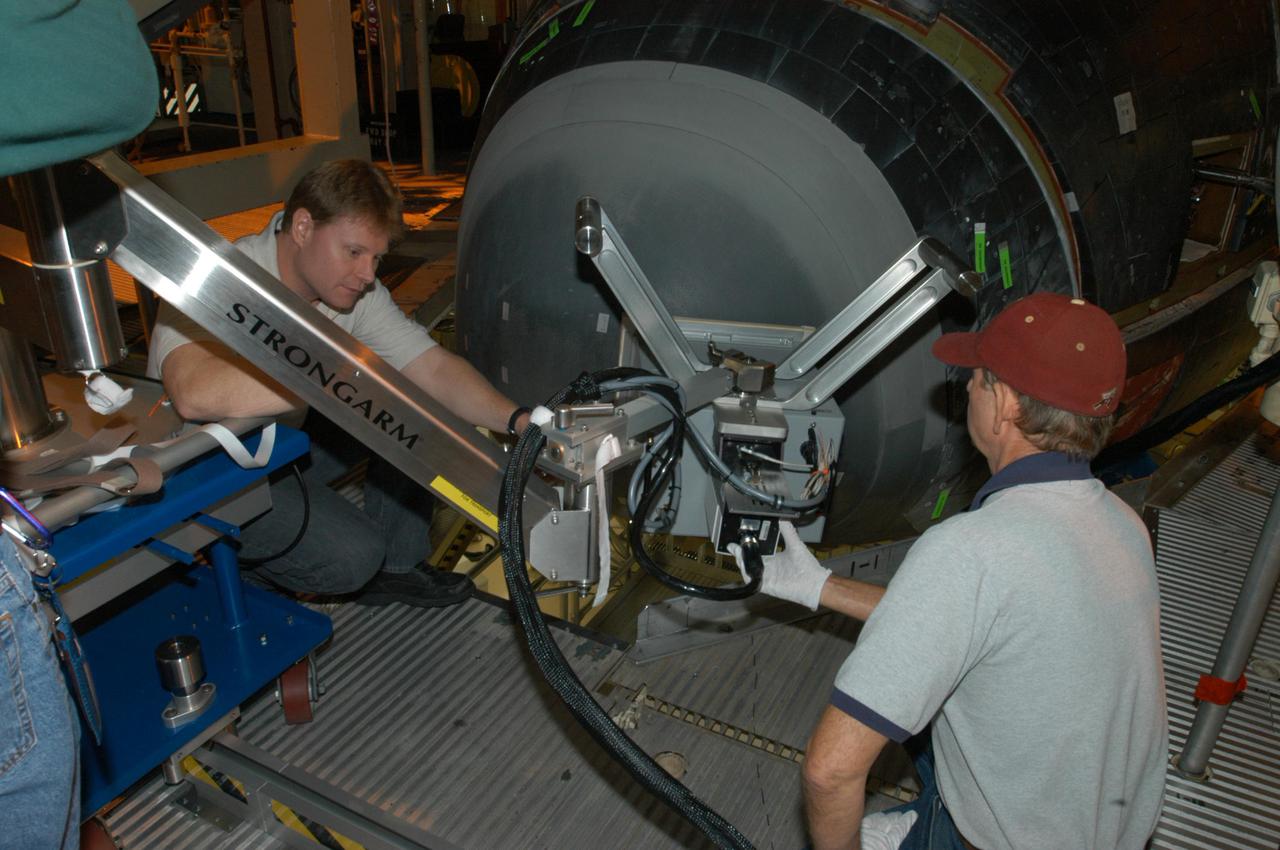
KENNEDY SPACE CENTER, FLA. - In NASA Kennedy Space Center’s Orbiter Processing Facility, bay 3, NDE Specialist Jim Landy (left) and Dick Logsdon, with United Space Alliance, set up thermography equipment in front of Discovery’s nose cone. Thermography uses high-intensity light to heat specific areas, which are then immediately scanned with an infrared camera. As the area cools, internal flaws are revealed. Discovery has been identified as the orbiter to fly on mission STS-121.
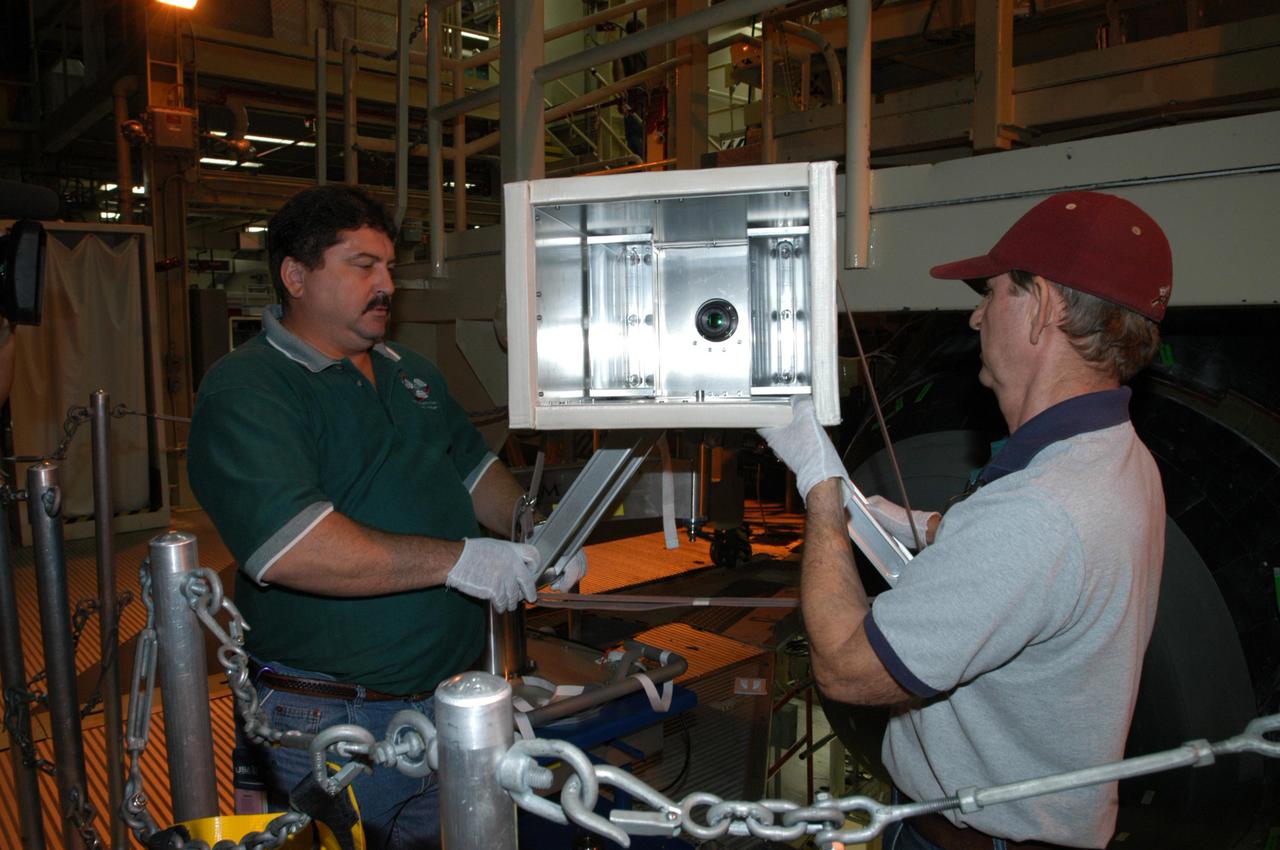
KENNEDY SPACE CENTER, FLA. - In NASA Kennedy Space Center’s Orbiter Processing Facility, bay 3, Don Nielen (left) and Dick Logsdon, both with United Space Alliance, set up equipment to be used for thermography of Discovery’s nose cone. Thermography uses high-intensity light to heat specific areas, which are then immediately scanned with an infrared camera. As the area cools, internal flaws are revealed. Discovery has been identified as the orbiter to fly on mission STS-121.
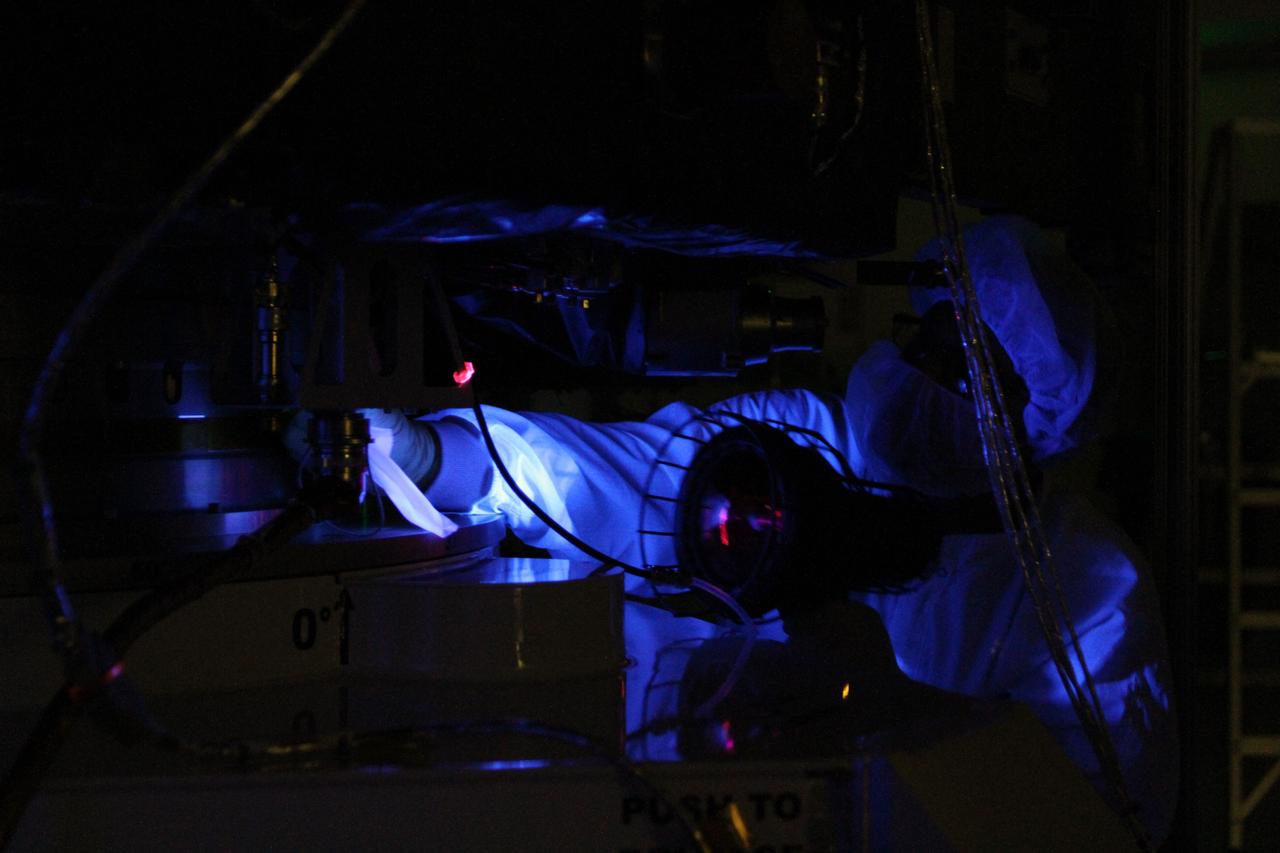
CAPE CANAVERAL, Fla. – Barely visible behind equipment, a technician uses a black light to inspect one of NASA's twin Radiation Belt Storm Probes inside the clean room high bay at Astrotech payload processing facility. Black light inspection uses UVA fluorescence to detect possible microcontamination, small cracks or fluid leaks. The Radiation Belt Storm Probes, or RBSP, mission will help us understand the sun’s influence on Earth and near-Earth space by studying the Earth’s radiation belts on various scales of space and time. RBSP will begin its mission of exploration of Earth's Van Allen radiation belts and the extremes of space weather after its launch aboard a United Launch Alliance Atlas V rocket. For more information, visit http://www.nasa.gov/rbsp. Photo credit: NASA/Kim Shiflett
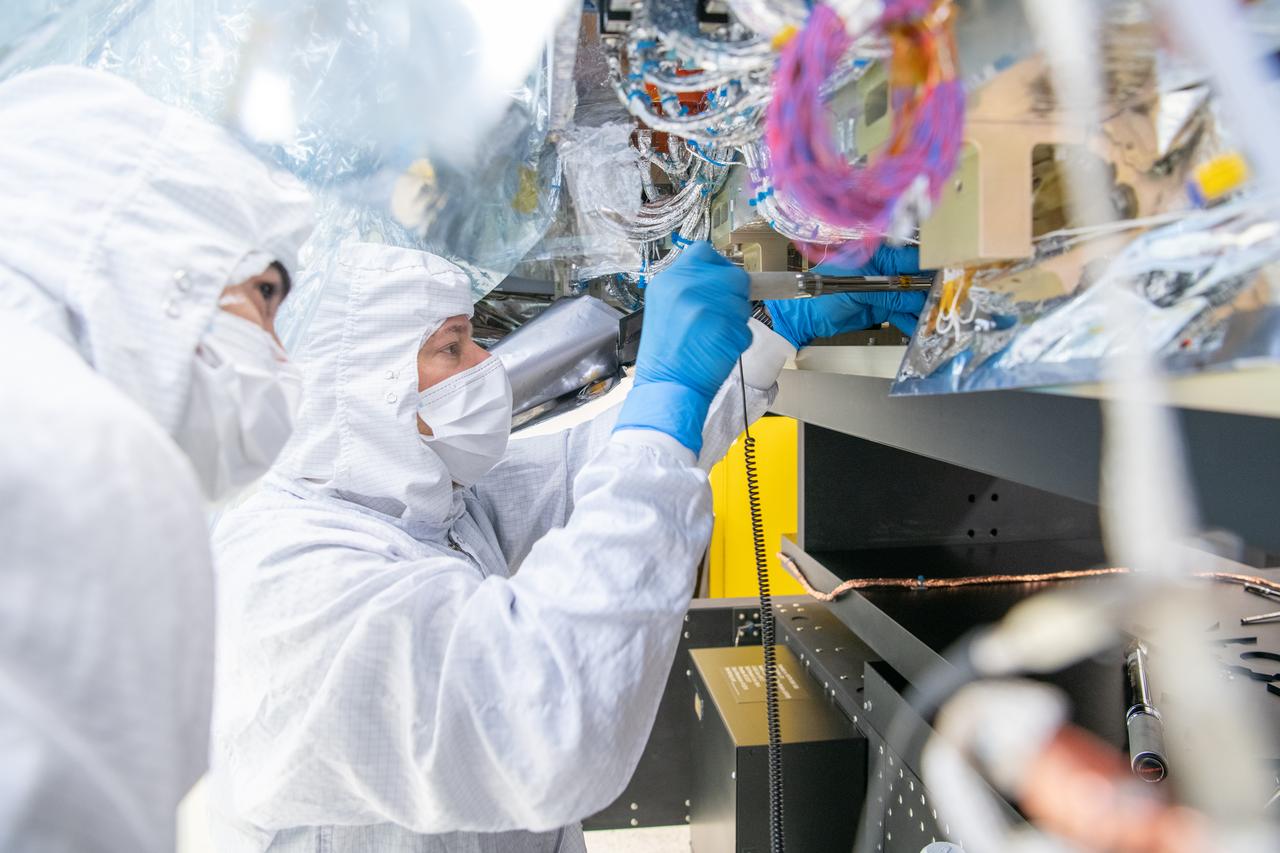
Mechanical technician, Thomas Huber, tightens bolts on the Ocean Color Instrument (OCI) is installed onto the Ground Support Equipment Application for Tilt or Rotation (GAToR) made by Newton Engineering. GAToR will allow engineers to tilt and rotate OCI in different orientations for further testing prior to integration onto the PACE (Plankton, Aerosol, Cloud, ocean Ecosystem) spacecraft. OCI is a highly advanced optical spectrometer that will be used to measure properties of light over portions of the electromagnetic spectrum. It will enable continuous measurement of light at finer wavelength resolution than previous NASA satellite sensors, extending key system ocean color data records for climate studies. OCI is PACE's (Plankton, Aerosol, Cloud, ocean Ecosystem) primary sensor built at Goddard Space Flight Center in Greenbelt, MD.

The Ocean Color Instrument (OCI) Electro-Magnetic Interference (EMI) & Electrical Ground Support Equipment (EGSE) Team pose in the control room. From this room, they are able to analyze the data from the test remotely and send commands through electrical cables that run through the walls into the EMI lab. OCI is a highly advanced optical spectrometer that will be used to measure properties of light over portions of the electromagnetic spectrum. It will enable continuous measurement of light at finer wavelength resolution than previous NASA satellite sensors, extending key system ocean color data records for climate studies. OCI is PACE's (Plankton, Aerosol, Cloud, ocean Ecosystem) primary sensor built at Goddard Space Flight Center in Greenbelt, MD.
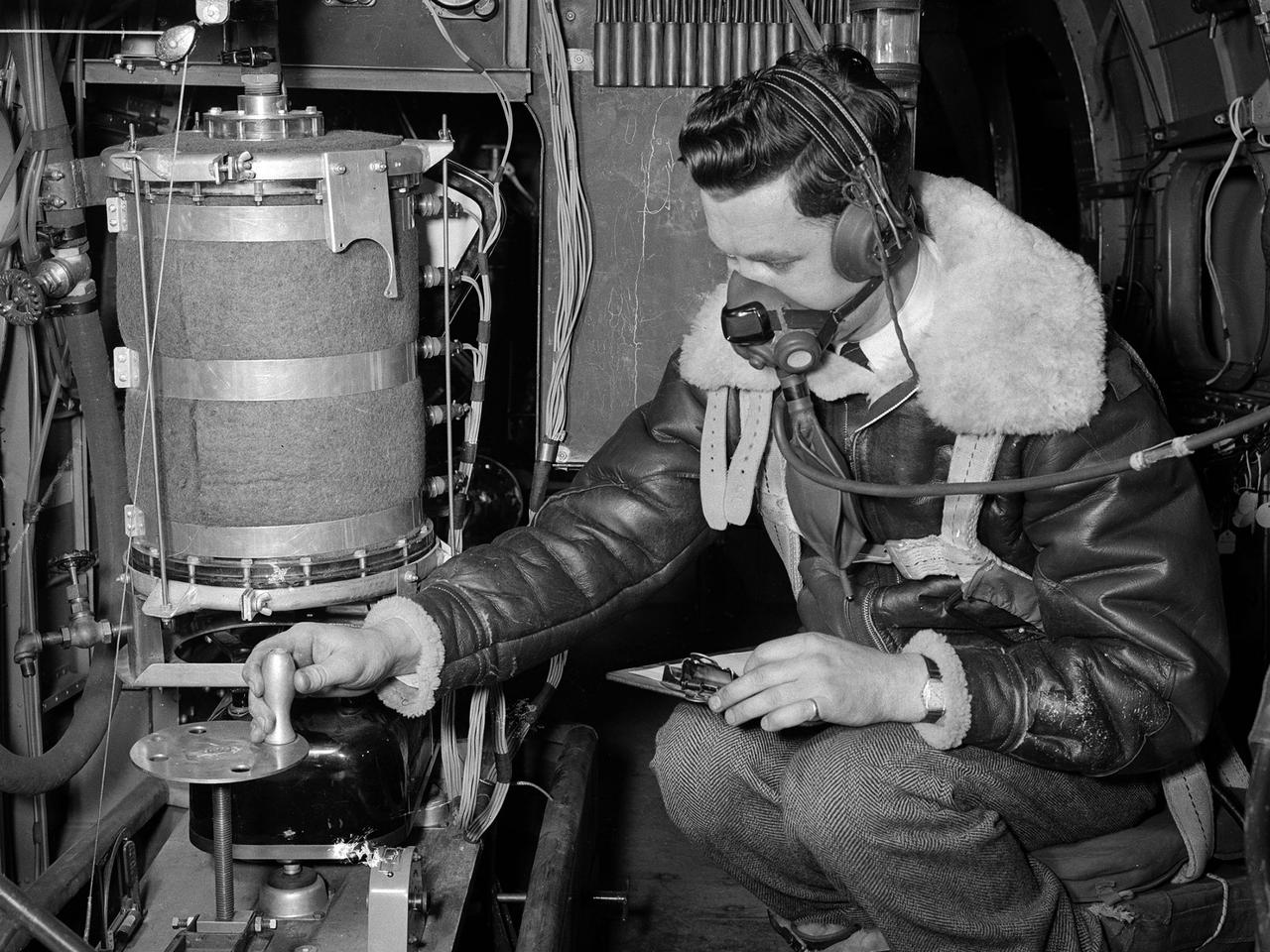
A flight engineer at the National Advisory Committee for Aeronautics (NACA) Aircraft Engine Research Laboratory monitors test equipment in the rear of the Lockheed RA–29 Hudson. Lockheed manufactured several variations of the light bomber in the late 1930s. The Hudson was one of the few military aircraft models available in large quantities during the early years of World War II, and both the US and British air forces utilized it as a patrol aircraft. The RA–29s were soon superseded by newer aircraft, but continued to serve as crew trainers, light cargo carriers and staff transports. The NACA flight engineers in the Planning and Analysis Section were responsible for working with researchers to install and monitor the experimental equipment on the NACA’s research aircraft. This process could require weeks or months. When larger aircraft, like the RA–29 Hudson, were utilized the flight engineers often participated in the flights. The NACA acquired their RA–29 in November 1943, and used the aircraft for fuel blend studies and instrumentation development. The Hudson also frequently served as a transportation vehicle for the staff and visitors. The RA–29 was transferred from the NACA in July 1945.
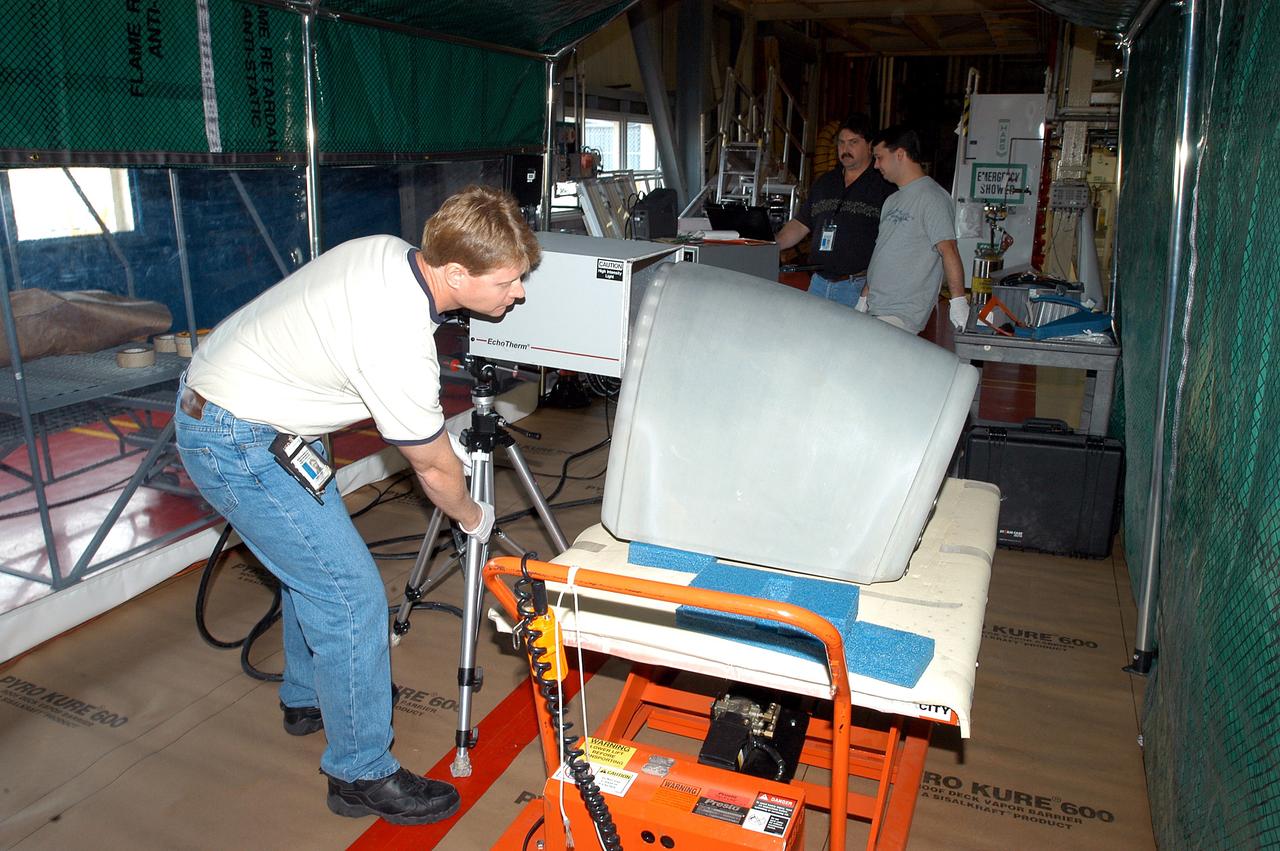
KENNEDY SPACE CENTER, FLA. - Jim Landy, NDE specialist with United Space Alliance, sets up equipment to examine a Reinforced Carbon Carbon panel using flash thermography. A relatively new procedure at KSC, thermography uses high intensity light to heat areas of the panels. The panels are then immediately scanned with an infrared camera. As the panels cool, any internal flaws are revealed. The gray carbon composite RCC panels are attached to the leading edge of the wing of the orbiters. They have sufficient strength to withstand the aerodynamic forces experienced during launch and reentry, which can reach as high as 800 pounds per square foot. The operating range of RCC is from minus 250º F to about 3,000º F, the temperature produced by friction with the atmosphere during reentry. The panels will be installed on the orbiter Discovery, designated for the first Return to Flight mission, STS-114.
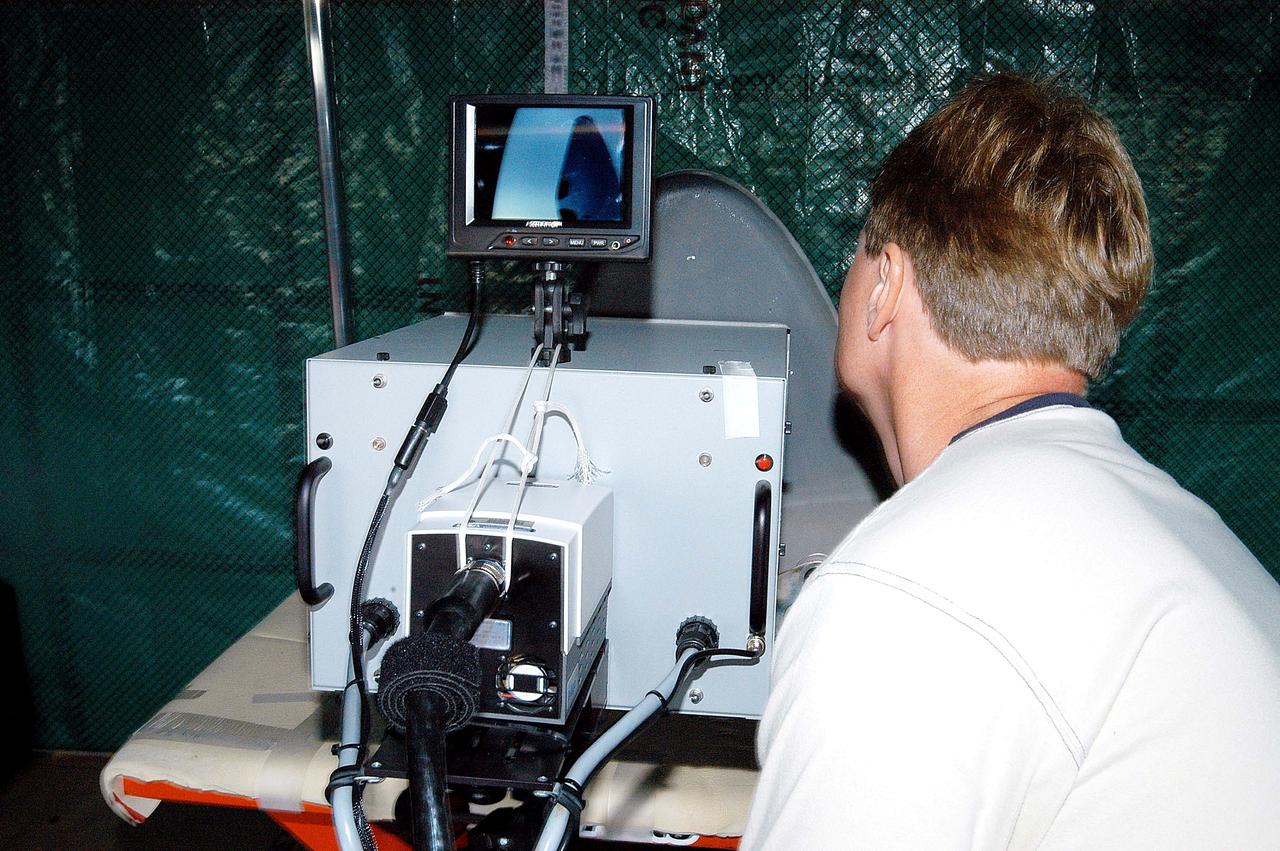
KENNEDY SPACE CENTER, FLA. - Jim Landy, NDE specialist with United Space Alliance (USA), prepares equipment to examine a Reinforced Carbon Carbon panel using flash thermography. A relatively new procedure at KSC, thermography uses high intensity light to heat areas of the panels. The panels are then immediately scanned with an infrared camera. As the panels cool, any internal flaws are revealed. The gray carbon composite RCC panels are attached to the leading edge of the wing of the orbiters. They have sufficient strength to withstand the aerodynamic forces experienced during launch and reentry, which can reach as high as 800 pounds per square foot. The operating range of RCC is from minus 250º F to about 3,000º F, the temperature produced by friction with the atmosphere during reentry. The panels will be installed on the orbiter Discovery, designated for the first Return to Flight mission, STS-114.
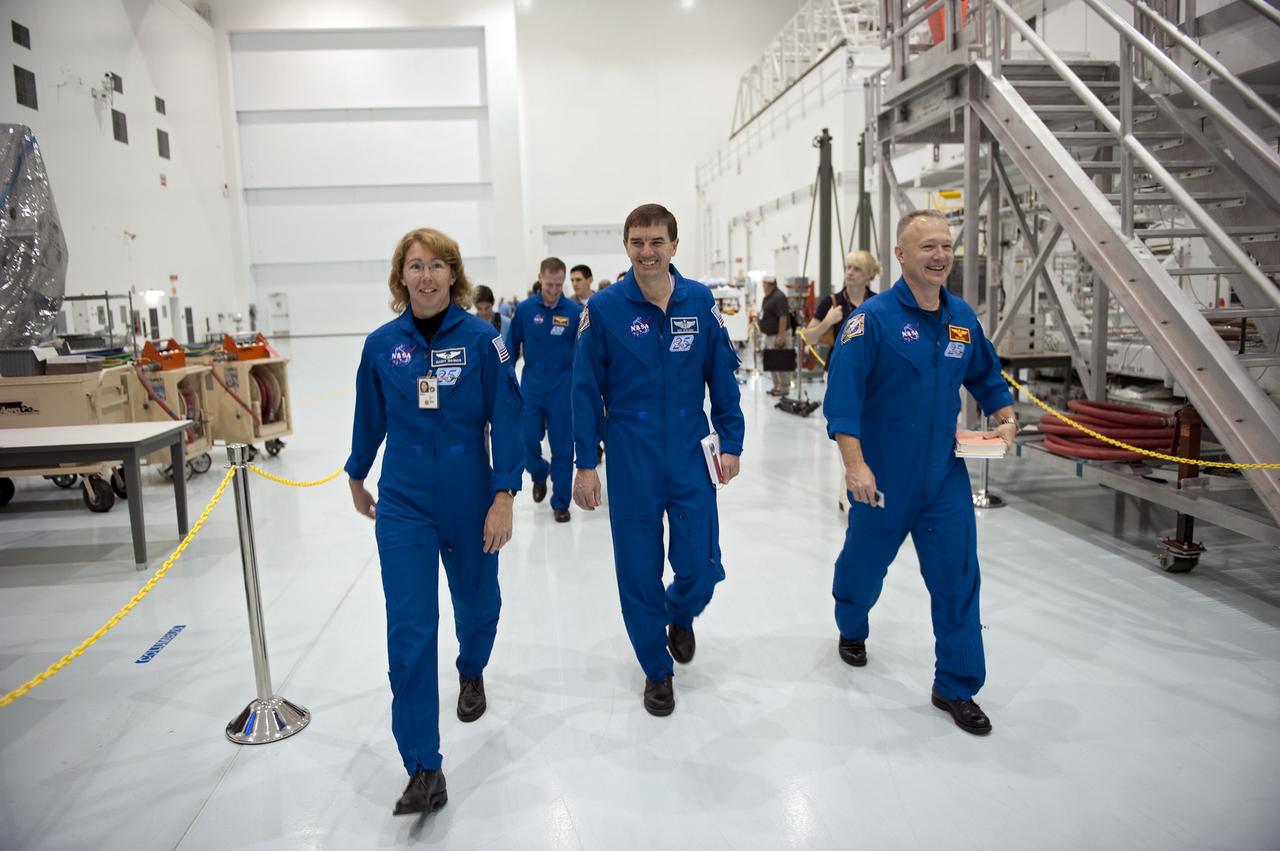
CAPE CANAVERAL, Fla. -- In the Space Station Processing Facility at NASA's Kennedy Space Center in Florida, the STS-135 crew members enjoy a light moment while they inspect the equipment they'll work with while in space. From left are Mission Specialists Sandy Magnus and Rex Walheim; Pilot Doug Hurley and Commander Chris Ferguson (rear). The four-member crew is at Kennedy participating in the Crew Equipment Interface Test (CEIT), which gives them an opportunity for hands-on training with tools they'll use in space and familiarization of the payload they'll deliver to the International Space Station. Shuttle Atlantis is being prepared for the STS-135 mission, which will deliver the Raffaello multi-purpose logistics module packed with supplies and spare parts to the station. Atlantis is targeted to launch June 28, and will be the last shuttle flight for the Space Shuttle Program. For more information visit, http://www.nasa.gov/mission_pages/shuttle/shuttlemissions/sts135/index.html. Photo credit: NASA/Kim Shiflett

CAPE CANAVERAL, Fla. – Brilliant flames spread light across Launch Pad 39A at NASA's Kennedy Space Center in Florida as space shuttle Discovery roars toward space on the STS-128 mission. Liftoff from Launch Pad 39A was on time at 11:59 p.m. EDT. The first launch attempt on Aug. 24 was postponed due to unfavorable weather conditions. The second attempt on Aug. 25 also was postponed due to an issue with a valve in space shuttle Discovery's main propulsion system. The STS-128 mission is the 30th International Space Station assembly flight and the 128th space shuttle flight. The 13-day mission will deliver more than 7 tons of supplies, science racks and equipment, as well as additional environmental hardware to sustain six crew members on the International Space Station. The equipment includes a freezer to store research samples, a new sleeping compartment and the COLBERT treadmill. Photo courtesy of Scott Andrews
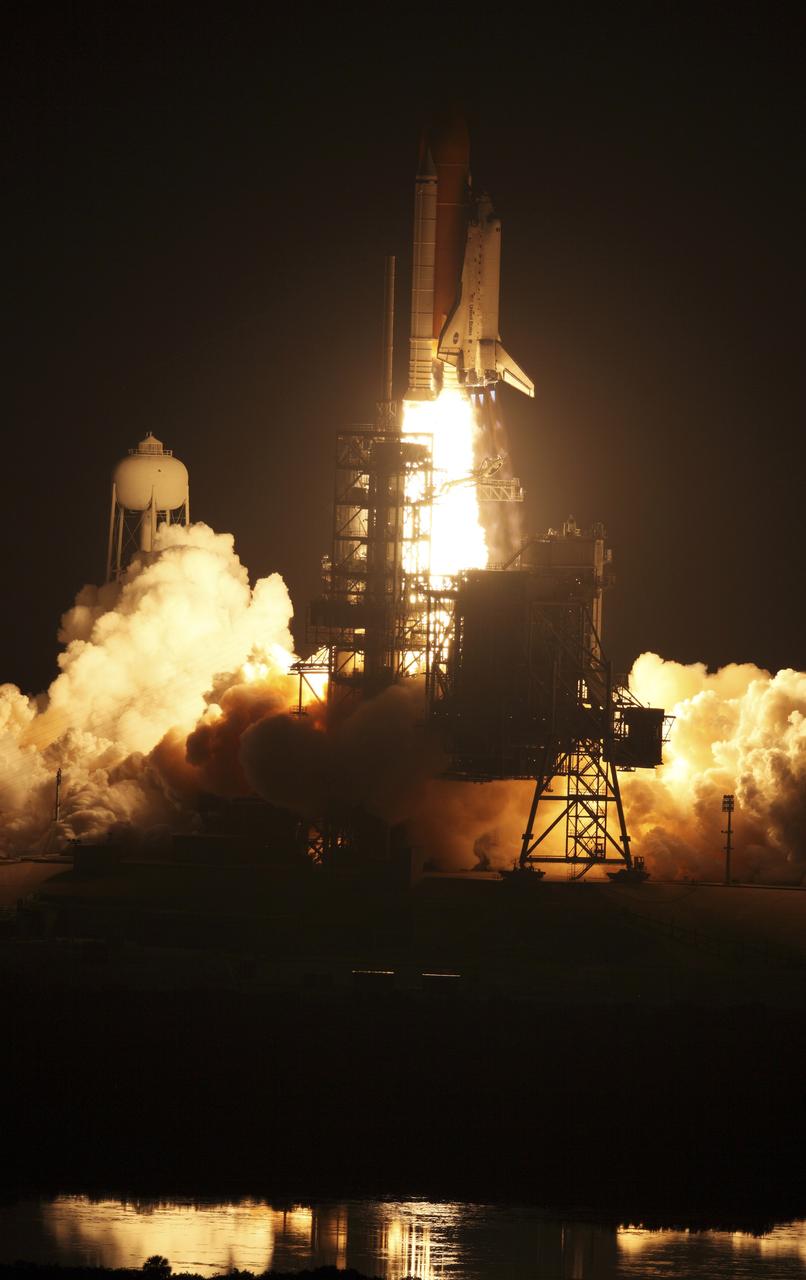
CAPE CANAVERAL, Fla. – At NASA's Kennedy Space Center in Florida, steam and smoke billow in the light from space shuttle Discovery's fiery launch on the STS-128 mission. Liftoff from Launch Pad 39A was on time at 11:59 p.m. EDT. The first launch attempt on Aug. 24 was postponed due to unfavorable weather conditions. The second attempt on Aug. 25 also was postponed due to an issue with a valve in space shuttle Discovery's main propulsion system. The STS-128 mission is the 30th International Space Station assembly flight and the 128th space shuttle flight. The 13-day mission will deliver more than 7 tons of supplies, science racks and equipment, as well as additional environmental hardware to sustain six crew members on the International Space Station. The equipment includes a freezer to store research samples, a new sleeping compartment and the COLBERT treadmill. Photo courtesy of Scott Andrews
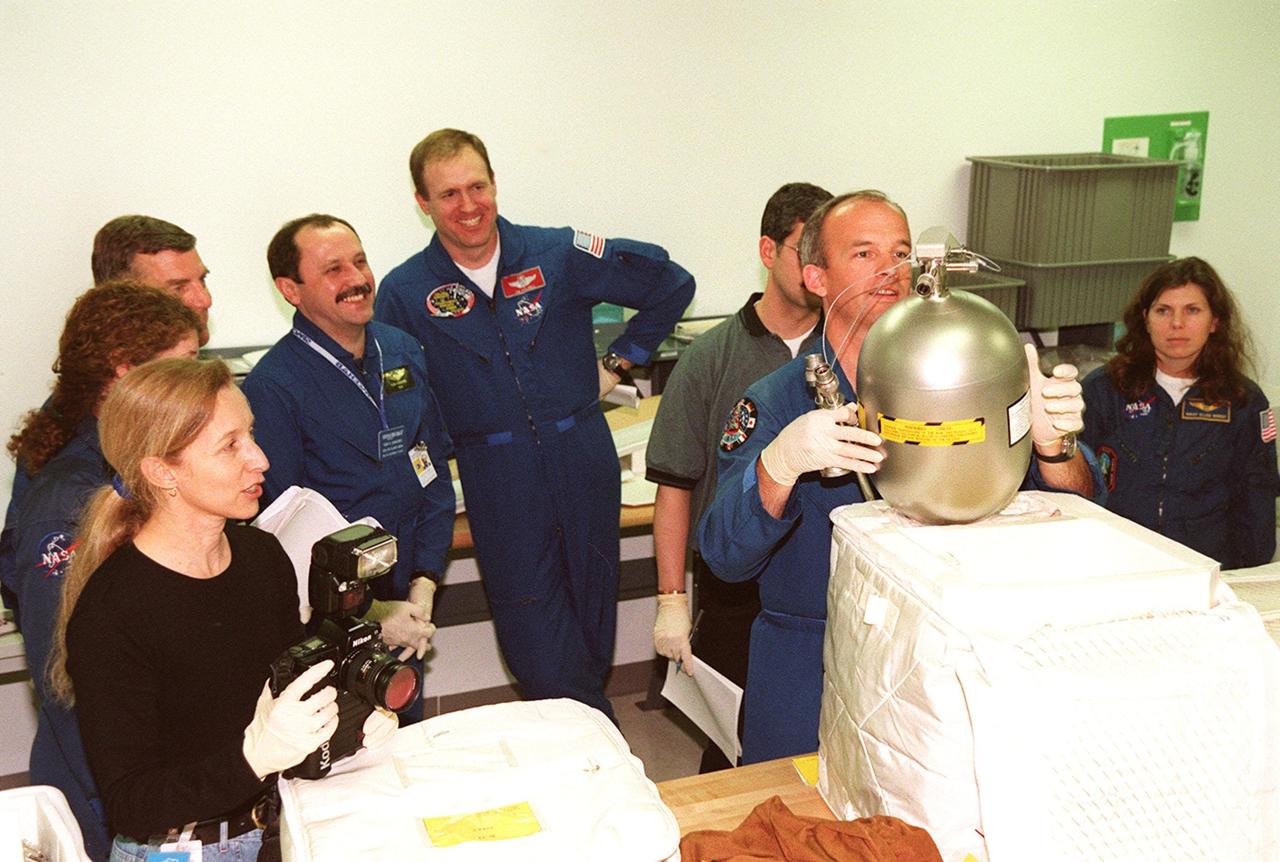
KENNEDY SPACE CENTER, FLA. -- Members of the STS-101 crew share a light moment during Crew Equipment Interface Test (CEIT) activities at SPACEHAB, in Cape Canaveral, Fla. Documenting the occasion is astronaut Marsha Ivins (far left, with camera). Standing behind her (left to right) are Mission Specialists Susan Helms, James Voss and Yuri Usachev; Commander James Halsell; and Mission Specialists Jeffrey Williams (holding tank) and Mary Ellen Weber. During a CEIT, a Shuttle crew becomes familiar with some of the equipment they will be working with on their mission. The STS-101 crew will be responsible for preparing the Space Station for the arrival of the Zvezda Service Module, expected to be launched by Russia in July 2000. Also, the crew will conduct one space walk to perform maintenance on the Space Station and deliver logistics and supplies. This will be the third assembly flight for the Space Station. STS-101 is scheduled to launch no earlier than April 13 from Launch Pad 39A
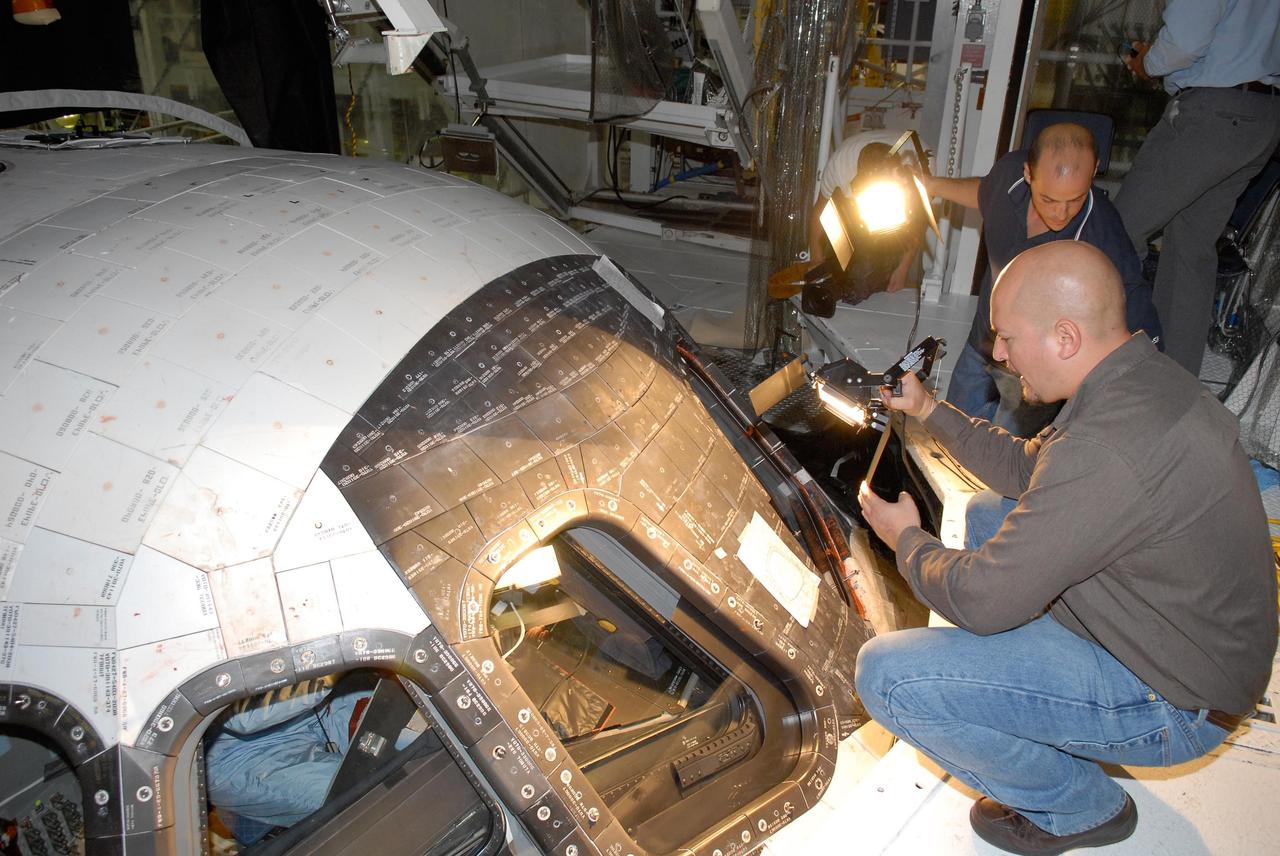
KENNEDY SPACE CENTER, FLA. -- In the Orbiter Processing Facility, United Space Alliance technicians provide lights over the space shuttle Atlantis' cockpit. STS-122 Commander Stephen Frick is inside checking the cockpit for launch readiness. The crew is at Kennedy Space Center to take part in a crew equipment interface test, which helps familiarize them with equipment and payloads for the mission. Among the activities standard to a CEIT are harness training, inspection of the thermal protection system and camera operation for planned extravehicular activities, or EVAs. The mission will carry and install the Columbus Lab, a multifunctional, pressurized laboratory that will be permanently attached to Node 2 of the space station to carry out experiments in materials science, fluid physics and biosciences, as well as to perform a number of technological applications. It is Europe’s largest contribution to the construction of the International Space Station and will support scientific and technological research in a microgravity environment. STS-122 is targeted for launch in December. Photo credit: NASA/Kim Shiflett
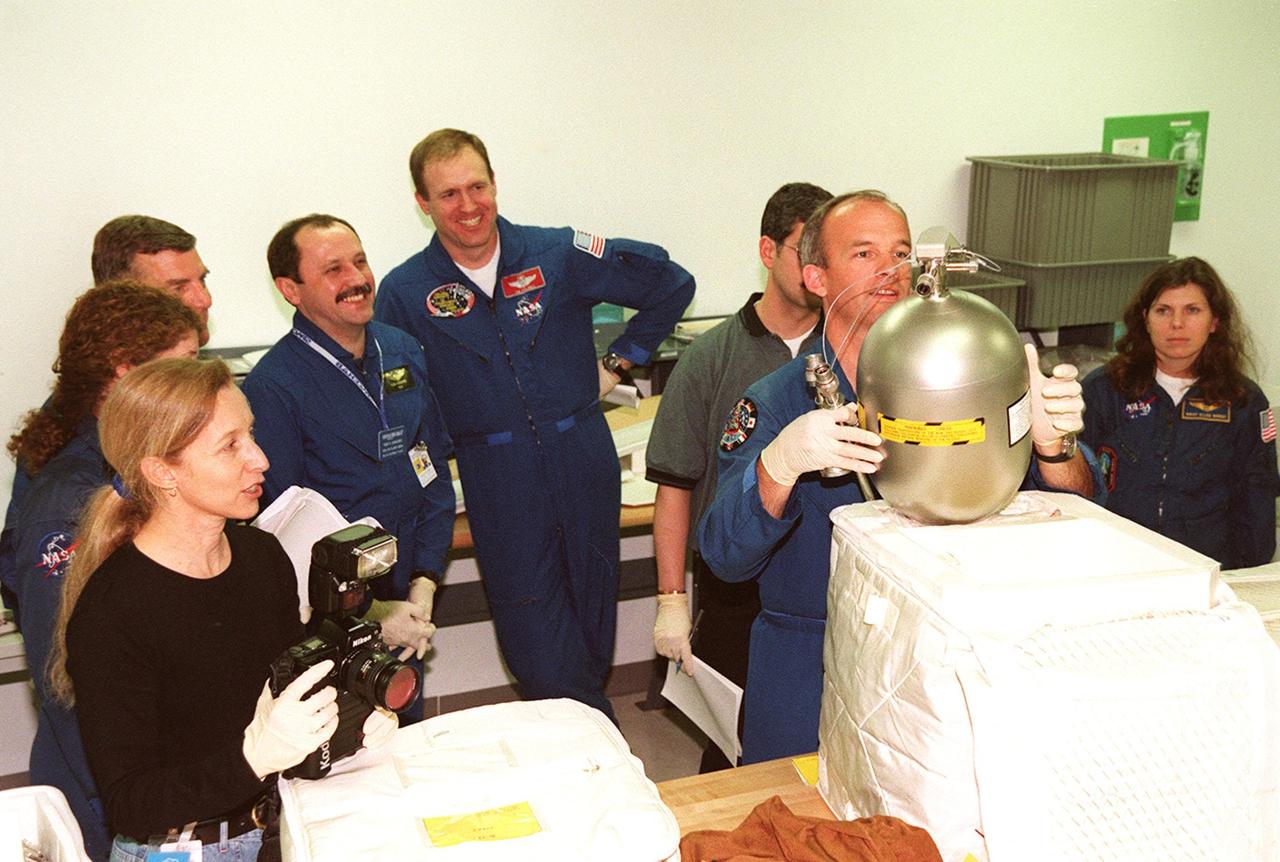
KENNEDY SPACE CENTER, FLA. -- Members of the STS-101 crew share a light moment during Crew Equipment Interface Test (CEIT) activities at SPACEHAB, in Cape Canaveral, Fla. Documenting the occasion is astronaut Marsha Ivins (far left, with camera). Standing behind her (left to right) are Mission Specialists Susan Helms, James Voss and Yuri Usachev; Commander James Halsell; and Mission Specialists Jeffrey Williams (holding tank) and Mary Ellen Weber. During a CEIT, a Shuttle crew becomes familiar with some of the equipment they will be working with on their mission. The STS-101 crew will be responsible for preparing the Space Station for the arrival of the Zvezda Service Module, expected to be launched by Russia in July 2000. Also, the crew will conduct one space walk to perform maintenance on the Space Station and deliver logistics and supplies. This will be the third assembly flight for the Space Station. STS-101 is scheduled to launch no earlier than April 13 from Launch Pad 39A
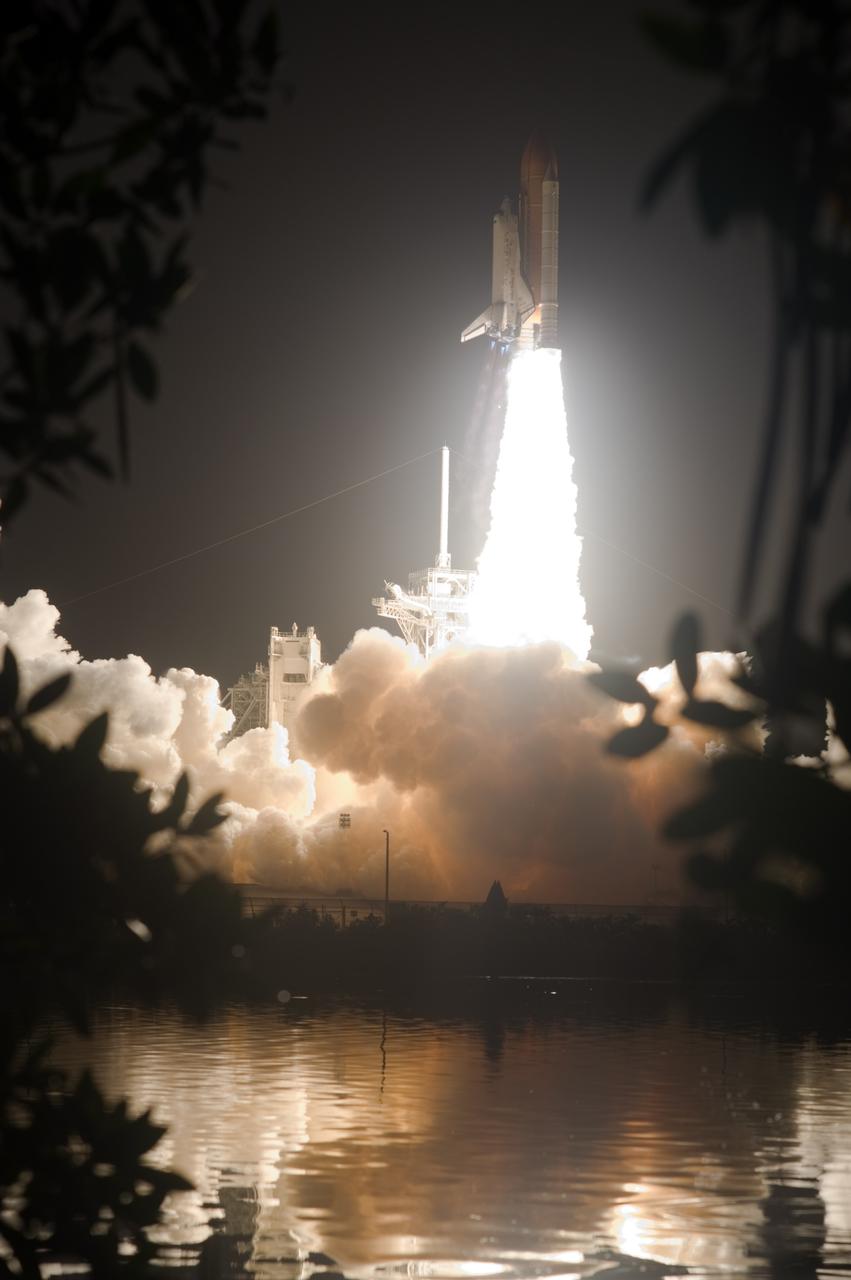
CAPE CANAVERAL, Fla. – Brilliant flames spread light across Launch Pad 39A at NASA's Kennedy Space Center in Florida as space shuttle Discovery roars toward space on the STS-128 mission. Liftoff was on time at 11:59 p.m. EDT. The first launch attempt on Aug. 24 was postponed due to unfavorable weather conditions. The second attempt on Aug. 25 also was postponed due to an issue with a valve in space shuttle Discovery's main propulsion system. The STS-128 mission is the 30th International Space Station assembly flight and the 128th space shuttle flight. The 13-day mission will deliver more than 7 tons of supplies, science racks and equipment, as well as additional environmental hardware to sustain six crew members on the International Space Station. The equipment includes a freezer to store research samples, a new sleeping compartment and the COLBERT treadmill. Photo credit: NASA/Sandra Joseph-Kevin O'Connell
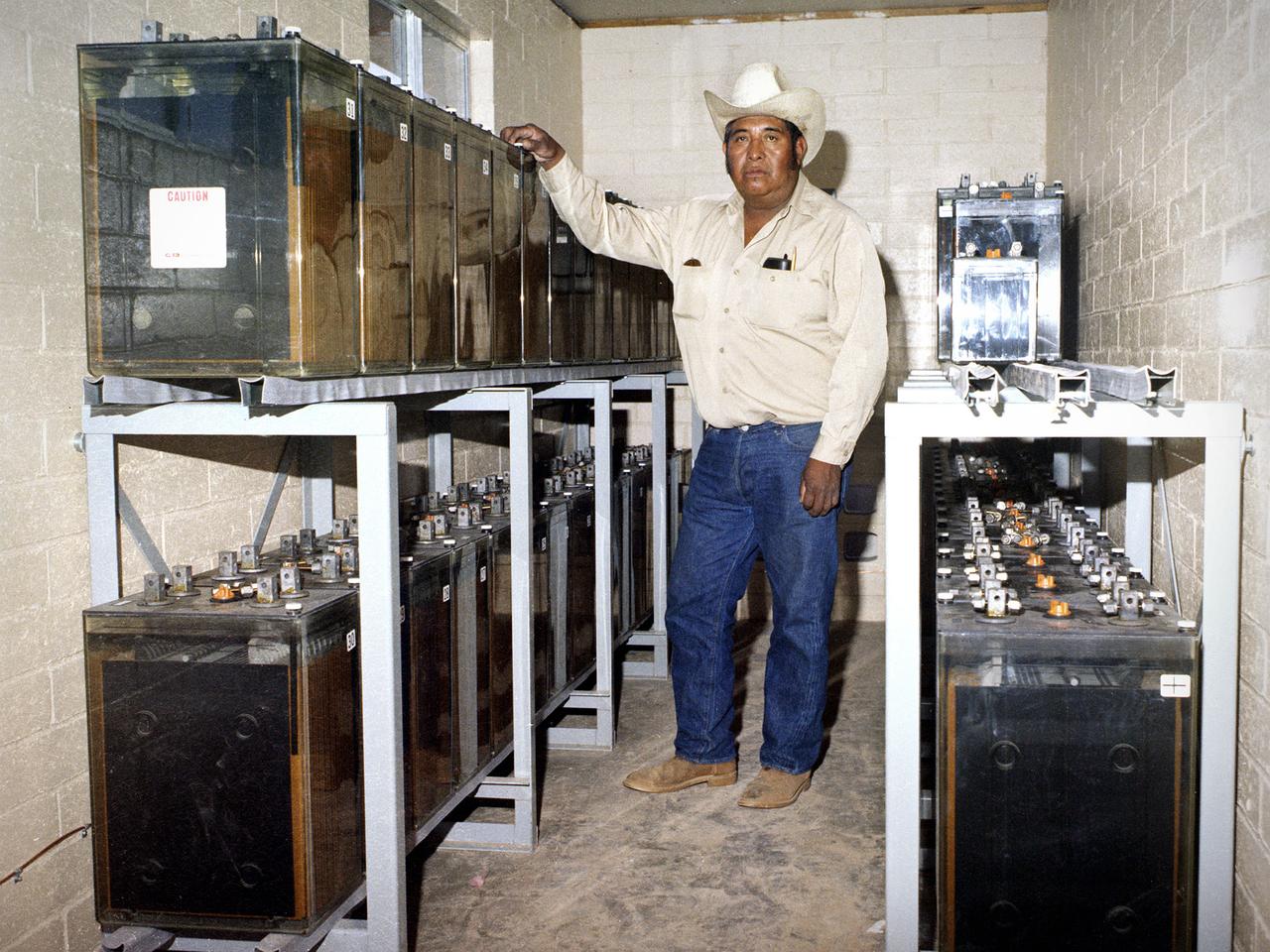
National Aeronautics and Space Administration (NASA) Lewis Research Center. NASA signed an agreement with the Papago tribe in May 1978 to provide the village with solar-generated electricity within the year. The project was funded by the Department of Energy and managed by NASA Lewis. Lewis provided all of the equipment and technical assistance while the tribe’s construction team built the arrays and support equipment, seen here. The 3.5-kilowatt system was modest in scope, but resulted in the first solar electric village. The system provided power to operate a refrigerator, freezer, washing machine, and water pump for the village and lights in each of the 16 homes. The system was activated on December 16, 1978. During the next year officials from around the world travelled to Schuchuli to ascertain if the system was applicable to their areas. The major television networks and over 100 publications covered the story. Less than one percent of the cells failed during the first year of operation.
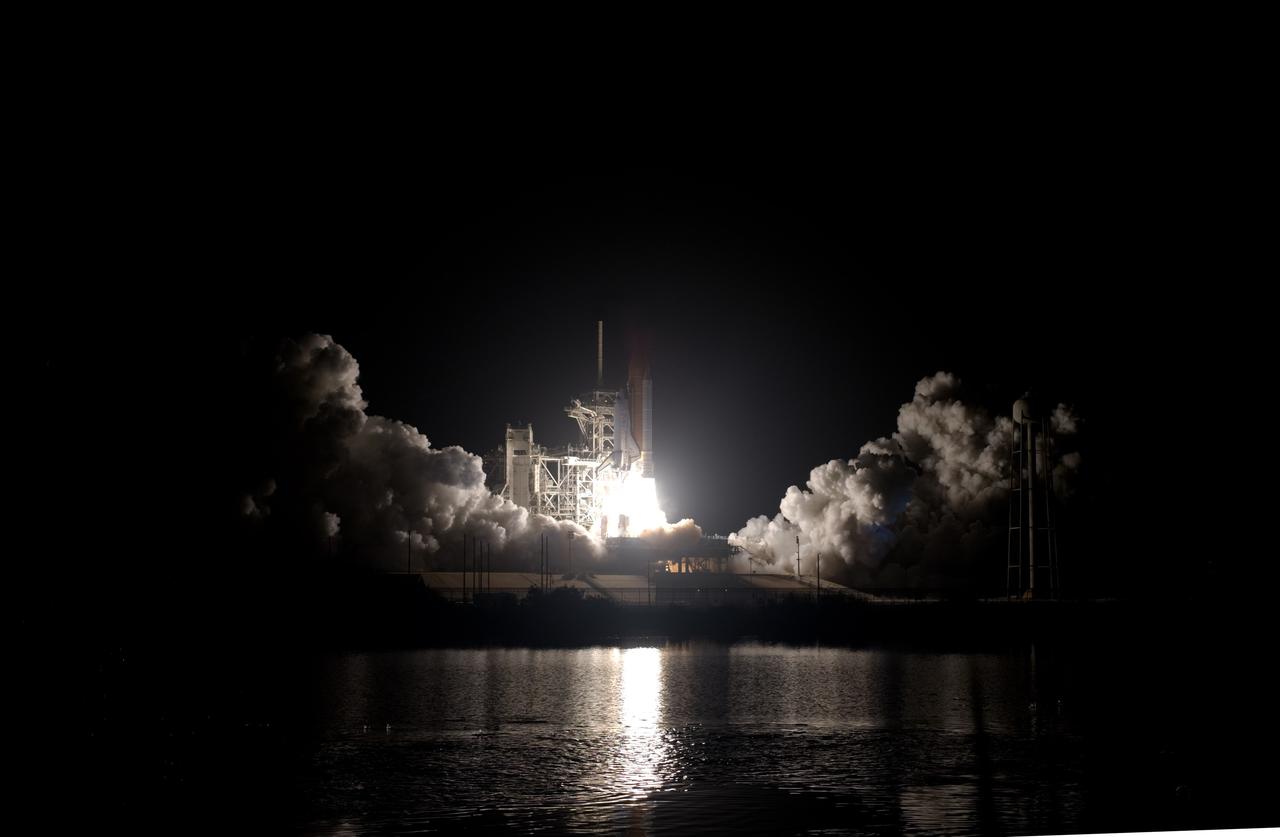
CAPE CANAVERAL, Fla. – At NASA's Kennedy Space Center in Florida, steam and smoke billow in the light from space shuttle Discovery's fiery launch on the STS-128 mission. Liftoff from Launch Pad 39A was on time at 11:59 p.m. EDT. The first launch attempt on Aug. 24 was postponed due to unfavorable weather conditions. The second attempt on Aug. 25 also was postponed due to an issue with a valve in space shuttle Discovery's main propulsion system. The STS-128 mission is the 30th International Space Station assembly flight and the 128th space shuttle flight. The 13-day mission will deliver more than 7 tons of supplies, science racks and equipment, as well as additional environmental hardware to sustain six crew members on the International Space Station. The equipment includes a freezer to store research samples, a new sleeping compartment and the COLBERT treadmill. Photo credit: NASA/Sandra Joseph-Kevin O'Connell
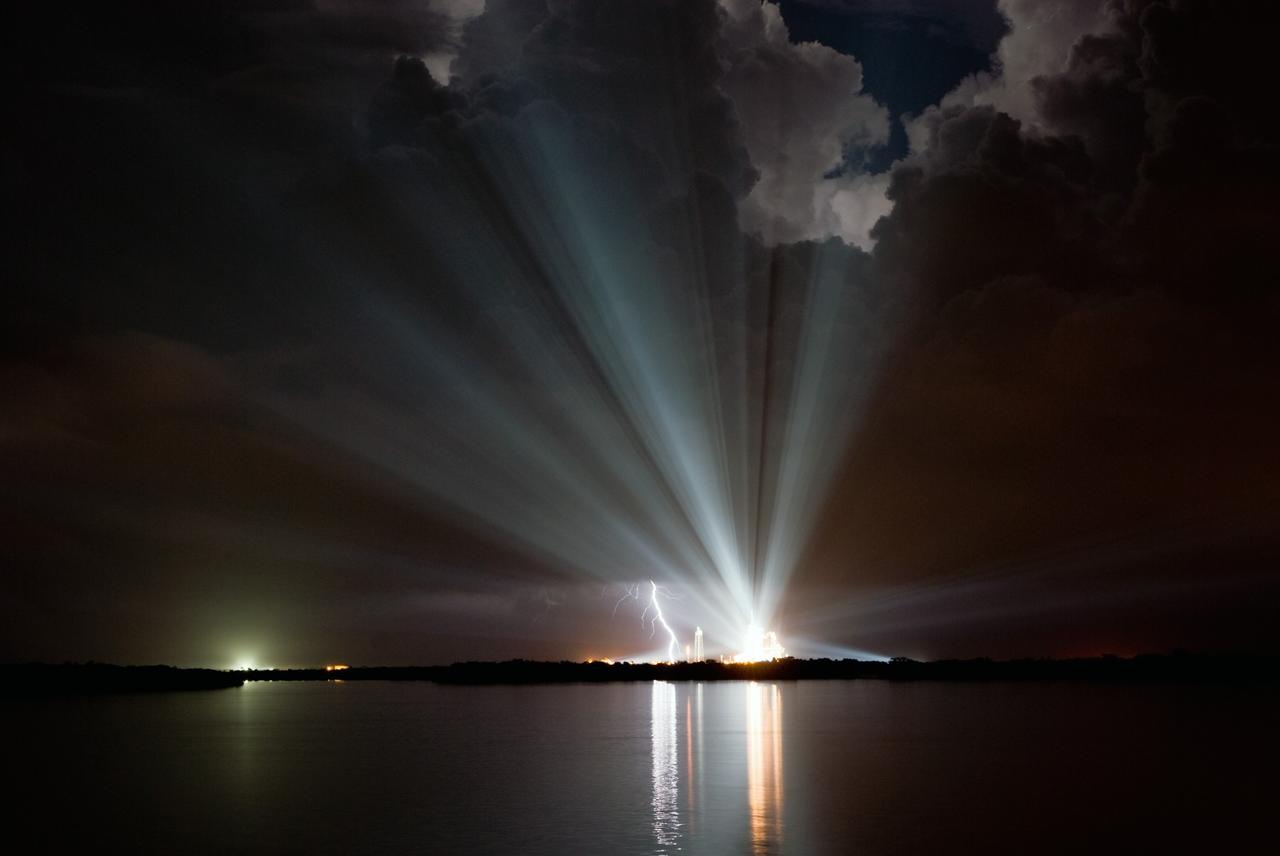
CAPE CANAVERAL, Fla. – Xenon lights over Launch Pad 39A at NASA's Kennedy Space Center in Florida compete with the lightning strike seen to the left. Space shuttle Discovery is on the pad waiting for a scheduled liftoff on the STS-128 mission. Launch was scrubbed due to the weather conditions that violated the limitations for liftoff. Another launch attempt was scheduled for 1:10 a.m. Aug. 26. Discovery's 13-day mission will deliver more than 7 tons of supplies, science racks and equipment, as well as additional environmental hardware to sustain six crew members on the International Space Station. The equipment includes a freezer to store research samples, a new sleeping compartment and the COLBERT treadmill. The mission is the 128th in the Space Shuttle Program, the 37th flight of Discovery and the 30th station assembly flight. Photo credit: NASA/Ben Cooper
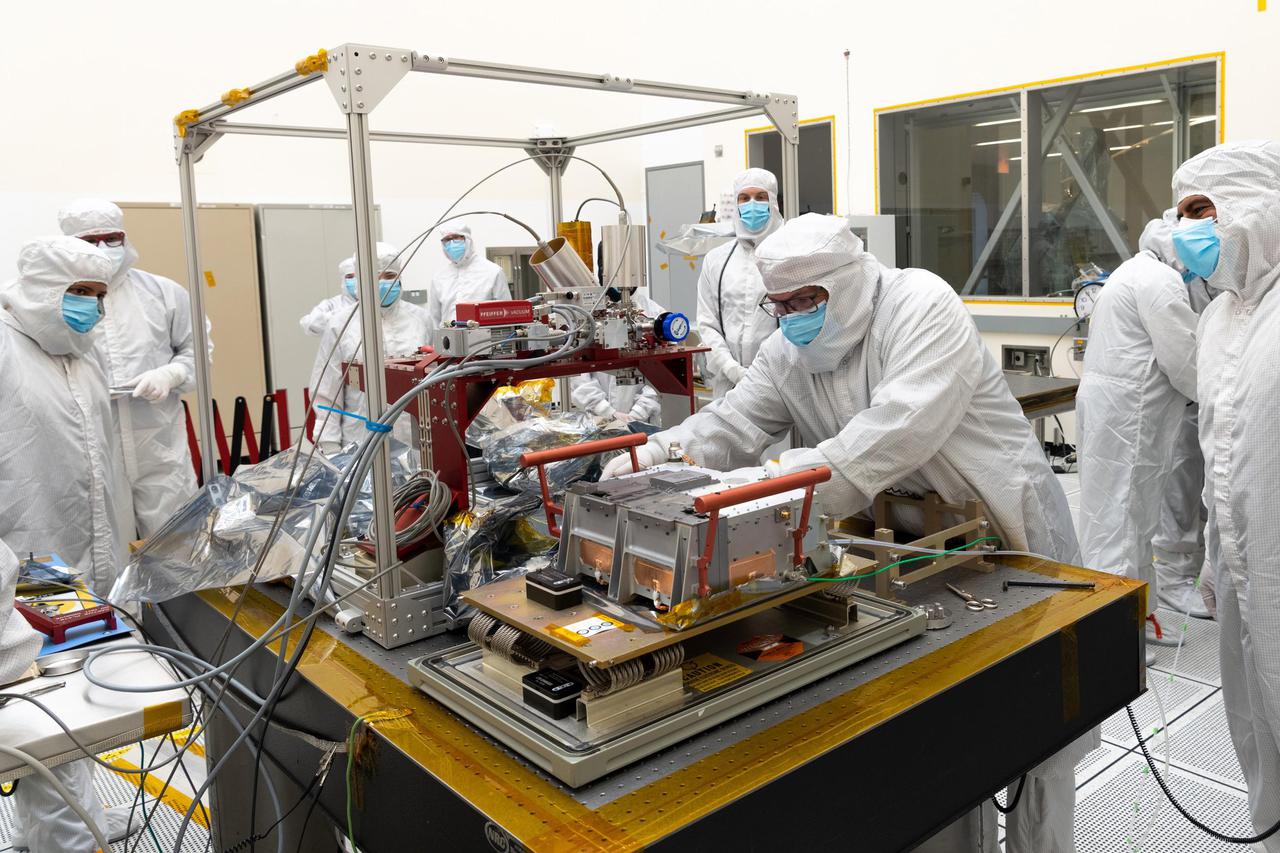
Engineers and technicians examine and test the first of NASA's Europa Clipper's science instruments to be delivered to the agency's Jet Propulsion Laboratory in Southern California. The ultraviolet spectrograph, called Europa-UVS and led by the Southwest Research Institute in San Antonio, Texas, will be integrated into the spacecraft during the phase of the mission called assembly, test, and launch operations. Europa-UVS is part of a payload of nine science instruments aboard Europa Clipper. In this photo, captured in February 2022, the instrument's custom testing equipment is seen at left, with a boxy, red frame. The instrument itself is seen at right. During testing, technicians shined ultraviolet light into the instrument's front aperture. With an internal global ocean under a thick layer of ice, Jupiter's moon Europa may have the potential to harbor existing life. Europa Clipper will swoop around Jupiter in an elliptical orbit, dipping close to the moon on each flyby to collect data. Understanding Europa's habitability will help scientists better understand how life developed on Earth and the potential for finding life beyond our planet. Europa Clipper is set to launch in 2024. Europa-UVS will search above the surface of Europa for signs of potential plumes that may be venting subsurface water into space. The instrument collects ultraviolet light, then separates the wavelengths of that light to help determine the composition of the moon's surface and gases in the atmosphere. https://photojournal.jpl.nasa.gov/catalog/PIA24897
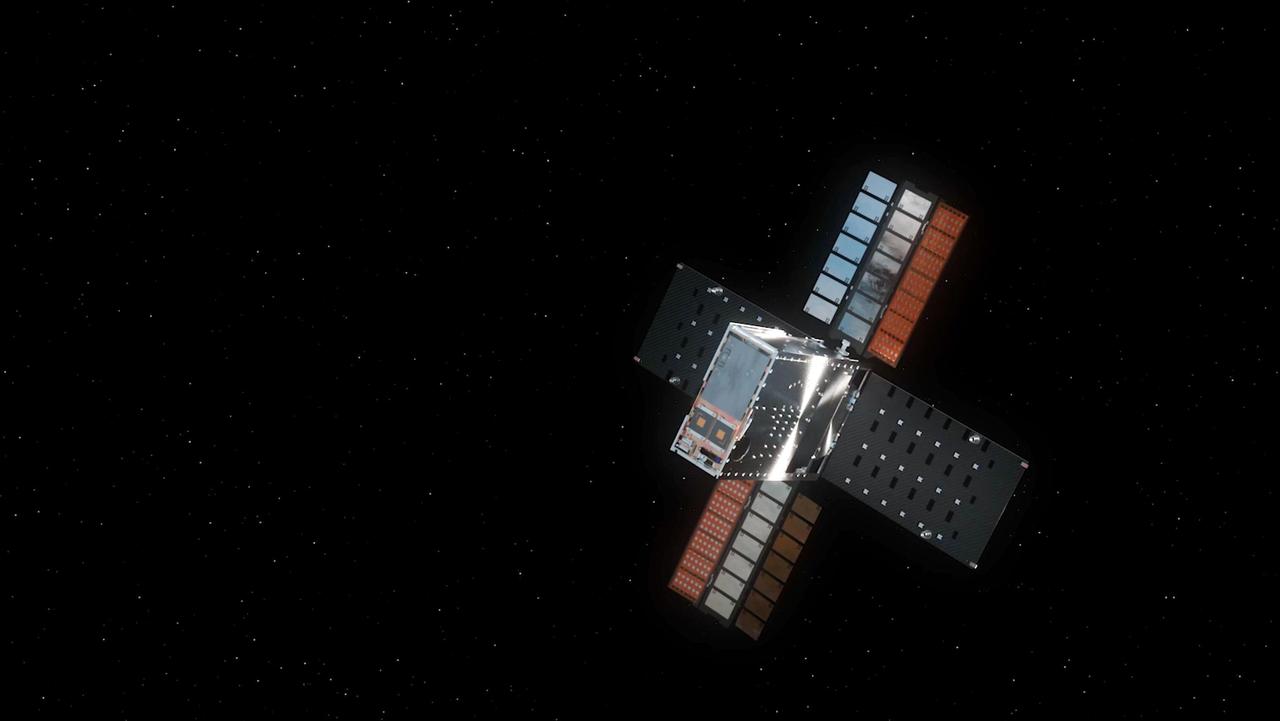
This illustration shows NASA's Lunar Flashlight, with its four solar arrays deployed, shortly after launch. The small satellite, or SmallSat, launched Nov. 30, 2022, aboard a SpaceX Falcon 9 rocket as a rideshare with ispace's HAKUTO-R Mission 1. It will take about three months to reach its science orbit to seek out surface water ice in the darkest craters of the Moon's South Pole. A technology demonstration, Lunar Flashlight will use a reflectometer equipped with four lasers that emit near-infrared light in wavelengths readily absorbed by surface water ice. This is the first time that multiple colored lasers will be used to seek out ice inside these dark regions on the Moon, which haven't seen sunlight in billions of years. Should the lasers hit bare rock or regolith (broken rock and dust), the light will reflect back to the spacecraft. But if the target absorbs the light, that would indicate the presence of water ice. The greater the absorption, the more ice there may be. The science data collected by the mission will be compared with observations made by other lunar missions to help reveal the distribution of surface water ice on the Moon for potential use by future astronauts. https://photojournal.jpl.nasa.gov/catalog/PIA25626
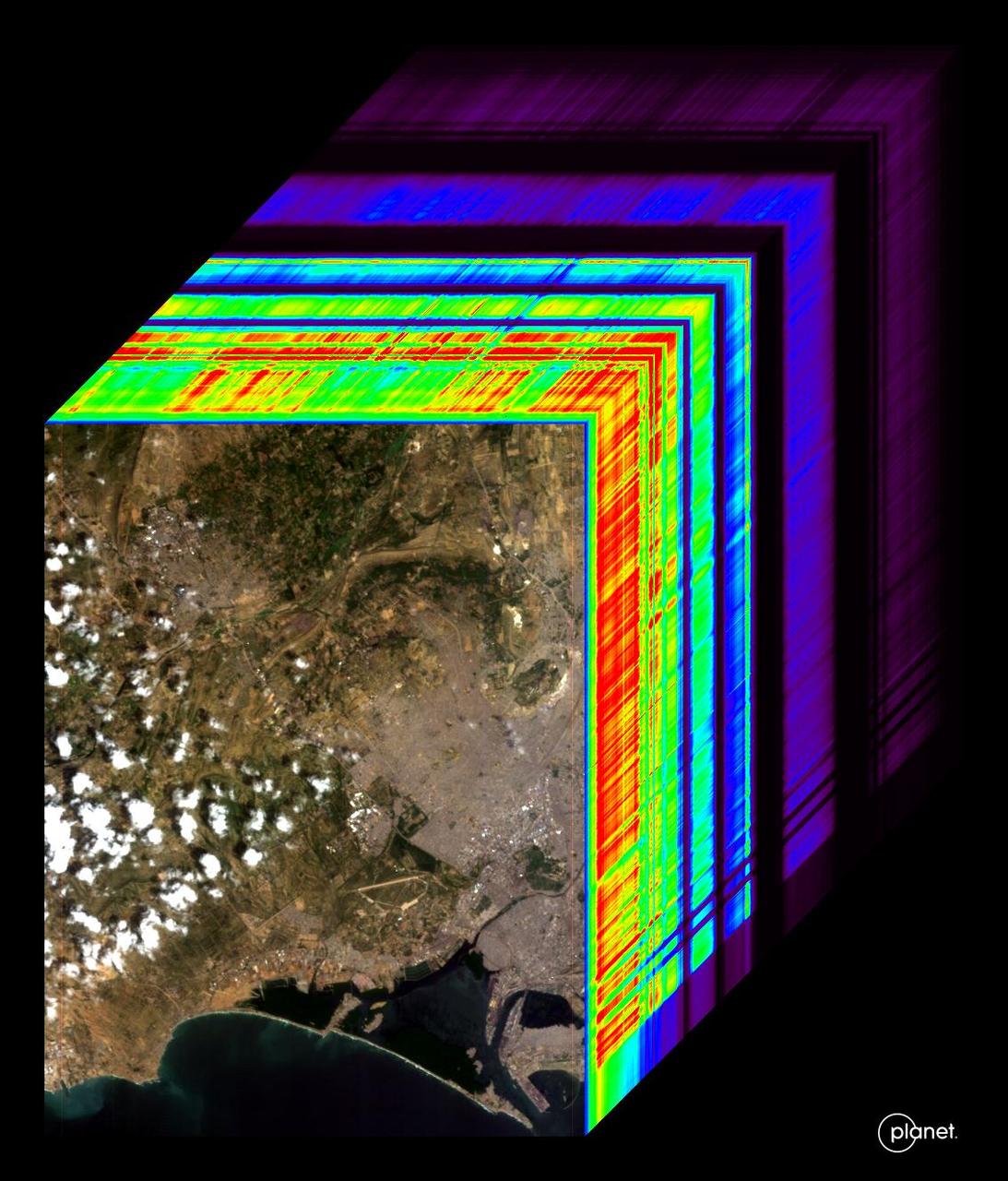
An imaging spectrometer designed by NASA's Jet Propulsion Laboratory captured its first data over Karachi, Pakistan, on Sept. 19, 2024. The instrument is aboard the Carbon Mapper Coalition's Tanager-1 satellite, which was built by Planet Labs PBC. An imaging spectrometer can measure hundreds of wavelengths of light that are reflected by Earth's surface. Different compounds in the planet's atmosphere and on the ground absorb different wavelengths of light, leaving spectral "fingerprints" that researchers can identify. The imaging spectrometer aboard Tanager-1 will enable the satellite to measure methane and carbon dioxide point-source emissions, down to the level of individual facilities and equipment, on a global scale. The image at the front of the cube shows a mix of information on land cover and water in the city and surrounding area, including exposed soil (brown), vegetation (green), and clouds. The rainbow colors extending through the main part of the cube are the wavelengths of light from corresponding spots in the front image. Tanager-1, which launched on Aug. 16, 2024, was developed as part of a philanthropically funded public-private coalition led by the nonprofit Carbon Mapper. Planet Labs and JPL are both members of the Carbon Mapper Coalition. https://photojournal.jpl.nasa.gov/catalog/PIA26412
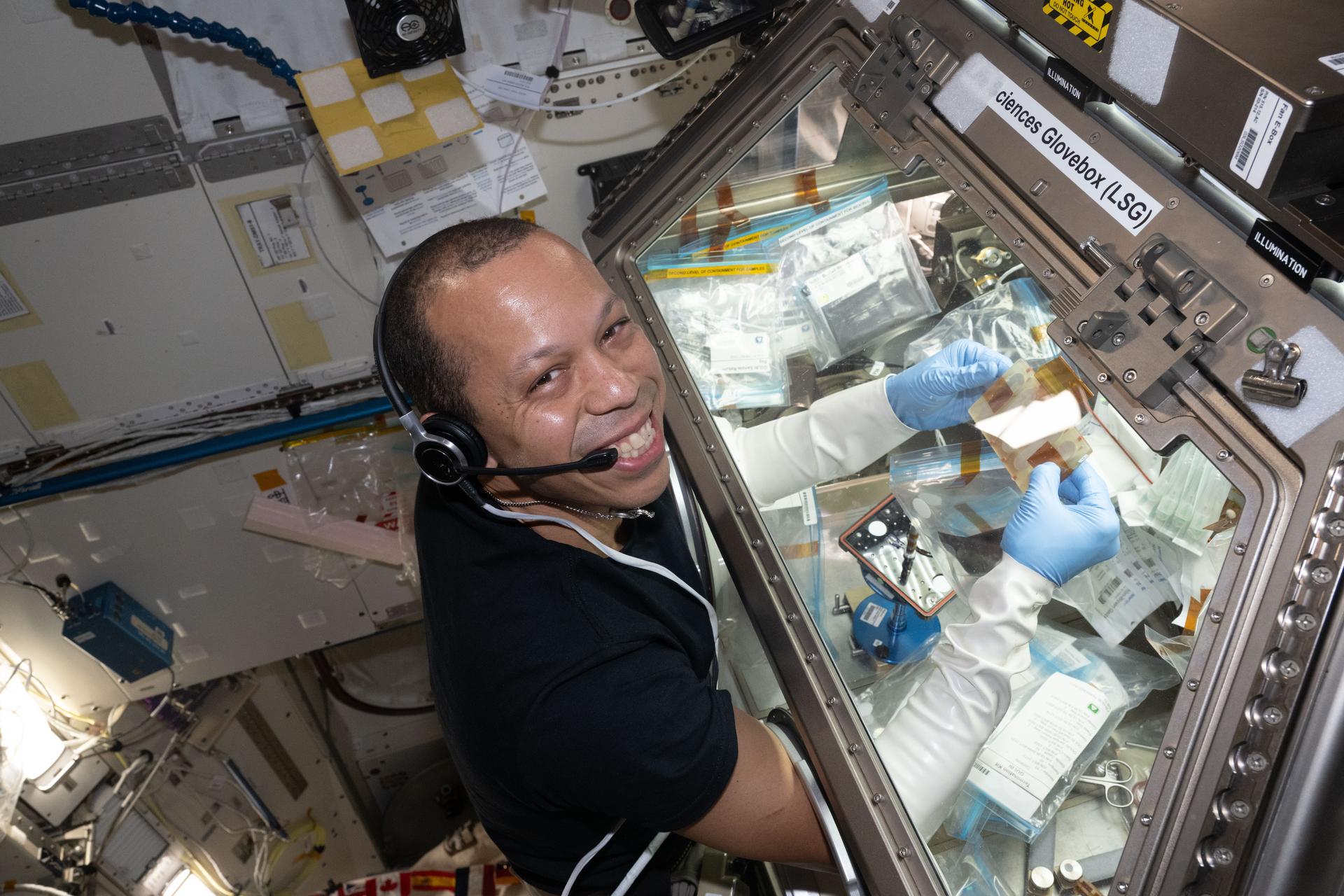
iss074e0149044 (Jan. 19, 2026) --- NASA astronaut and Expedition 74 Flight Engineer Chris Williams safely processes samples of a bacterial pathogen inside the Kibo laboratory module’s Life Science Glovebox. Williams was exploring a way to prevent the formation of biofilms, or a layer of microorganisms, anywhere water is found on a spacecraft where they pose human health risks and can damage equipment. The microbe samples are housed inside a specialized cell culture chamber, called a BioCell, and exposed to different levels of ultraviolet light to learn how to inhibit microbial growth and reduce reliance on chemical disinfectants.
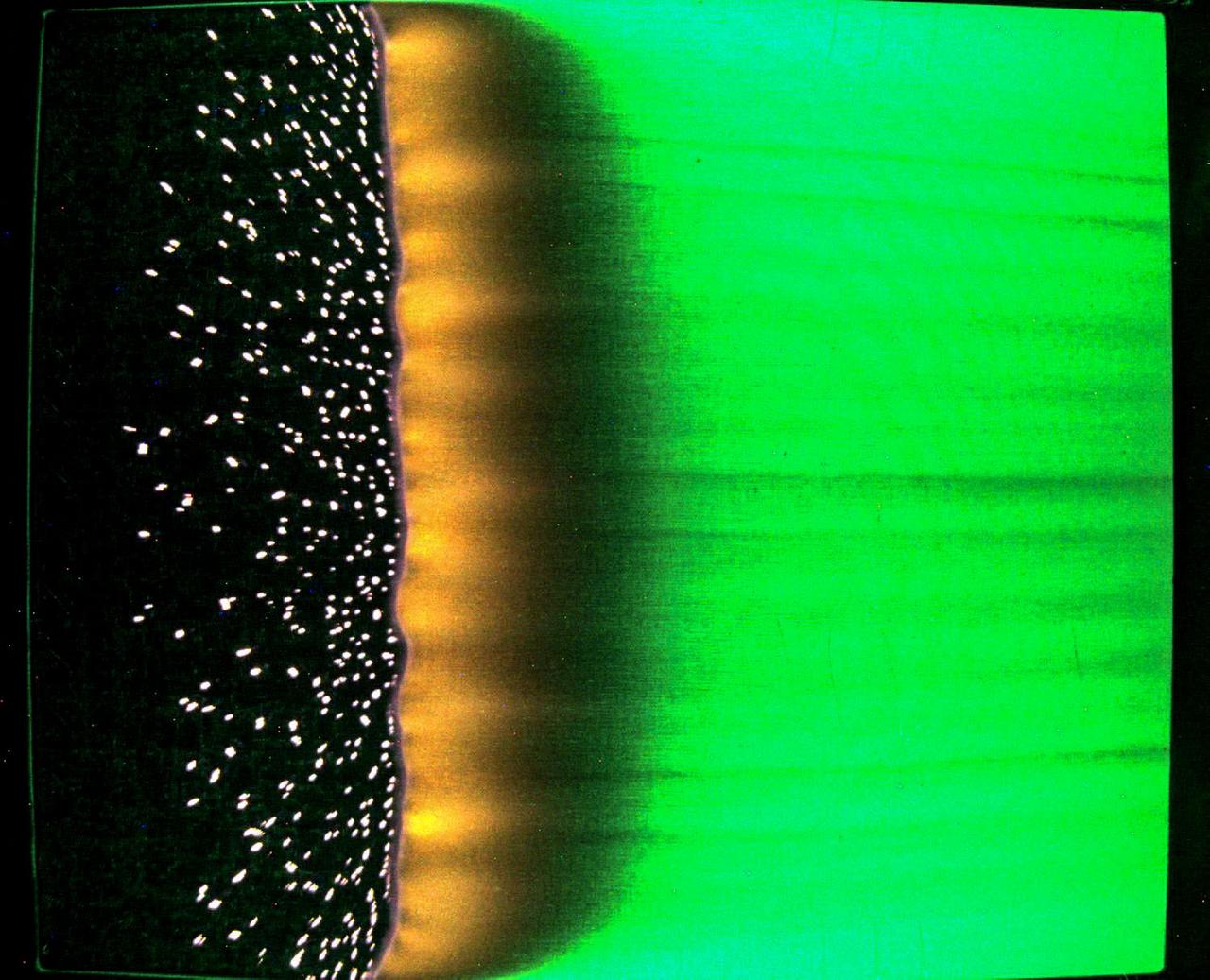
jsc2023e046375 (7/25/2023) --- A sample of fabric burns inside Spacecraft Fire Experiment-IV (Saffire-IV). The sample is a composite fabric made of cotton and fiberglass and is 40 cm wide. The image appears green because green LED lights are used to illuminate the sample during a burn. The flame appears orange in this image and the black region to the right of the flame is the cotton in the sample beginning to heat and char. The bright specks to the left of the flame are smoldering cotton that remains on the fiberglass substrate after the flame passes. In Saffire-VI, this fabric is burned at higher oxygen concentrations. Researchers aim to study realistic flame spread to aid the development of fire safety equipment and strategies for future spacecraft.
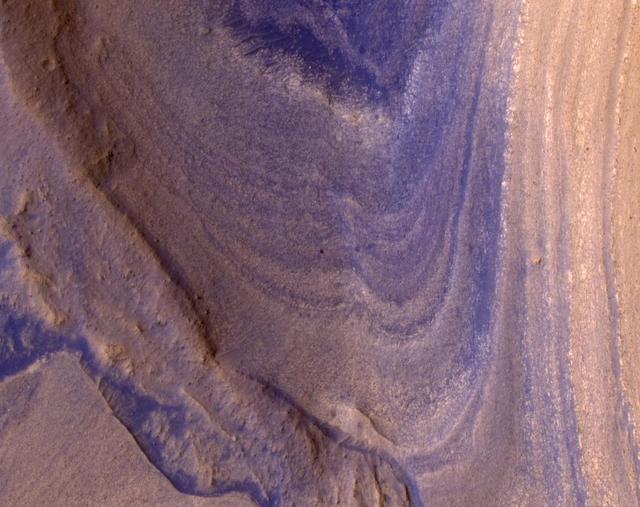
NASA's Curiosity Mars rover appears as a dark speck in this image captured from directly overhead by the agency's Mars Reconnaissance Orbiter, or MRO. The orbiter is equipped with a camera capable of viewing objects the size of a dinner table on the Red Planet's surface. The camera, called the High-Resolution Imaging Science Experiment (HiRISE), has viewed spacecraft on the surface many times before. Here, it captured Curiosity driving up a steep slope on Dec. 29, 2023, the 4,051st Martian day, or sol, of the rover's mission. Curiosity is seen in an area striped with alternating dark and light bands. Scientists are interested in learning what differentiated the materials on the surface to form these different bands. https://photojournal.jpl.nasa.gov/catalog/PIA26245
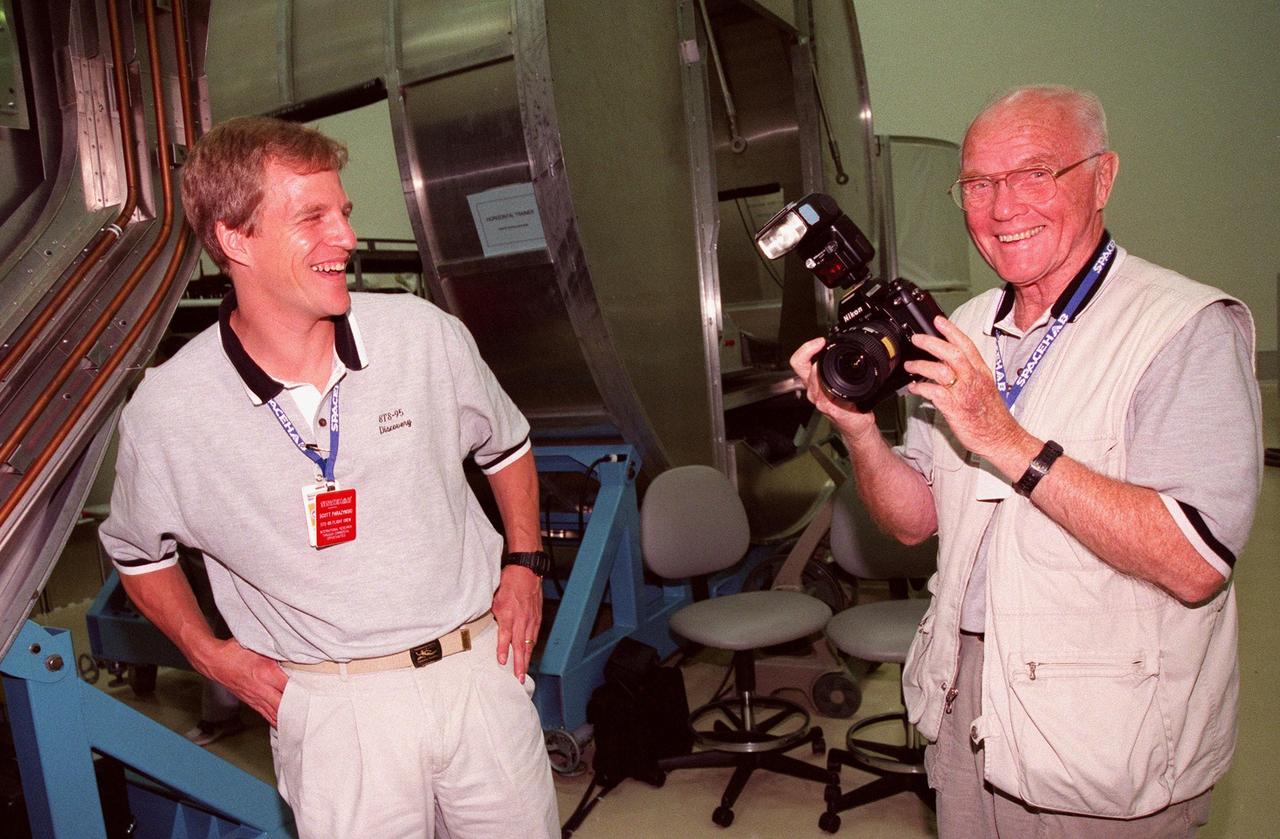
KENNEDY SPACE CENTER, FLA. -- In the SPACEHAB Payload Processing Facility (SPPF), STS-95 Mission Specialist Scott Parazynski, M.D., (left) and Payload Specialist John Glenn (right), who is a senator from Ohio, share a light moment while checking out equipment for the mission, scheduled to launch Oct. 29. STS-95 crew members have been participating in SPACEHAB familiarization in the SPPF. The mission includes research payloads such as the Spartan solar-observing deployable spacecraft, the Hubble Space Telescope Orbital Systems Test Platform, the International Extreme Ultraviolet Hitchhiker, as well as the SPACEHAB single module with experiments on space flight and the aging process
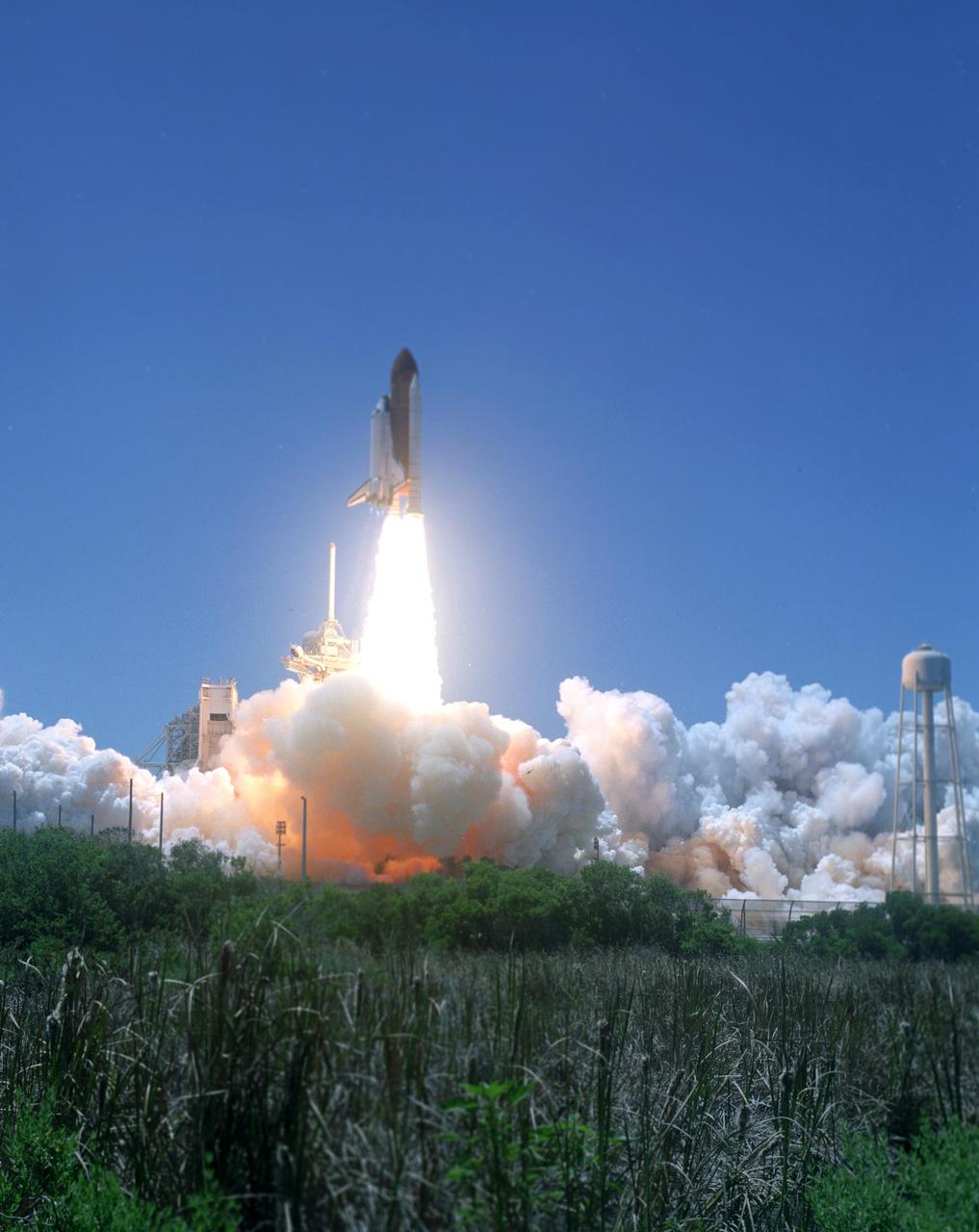
KENNEDY SPACE CENTER, FLA. - Clearing the lighting rod on Launch Pad 39B, Space Shuttle Discovery makes history as the first to launch on Independence Day as it rockets into the clear blue sky. Liftoff was on-time at 2:38 p.m. EDT. During the 12-day mission, the STS-121 crew of seven will test new equipment and procedures to improve shuttle safety, as well as deliver supplies and make repairs to the International Space Station. Landing is scheduled for July 16 or 17 at Kennedy's Shuttle Landing Facility. Photo credit: NASA/Sandy Joseph & Robert Murray
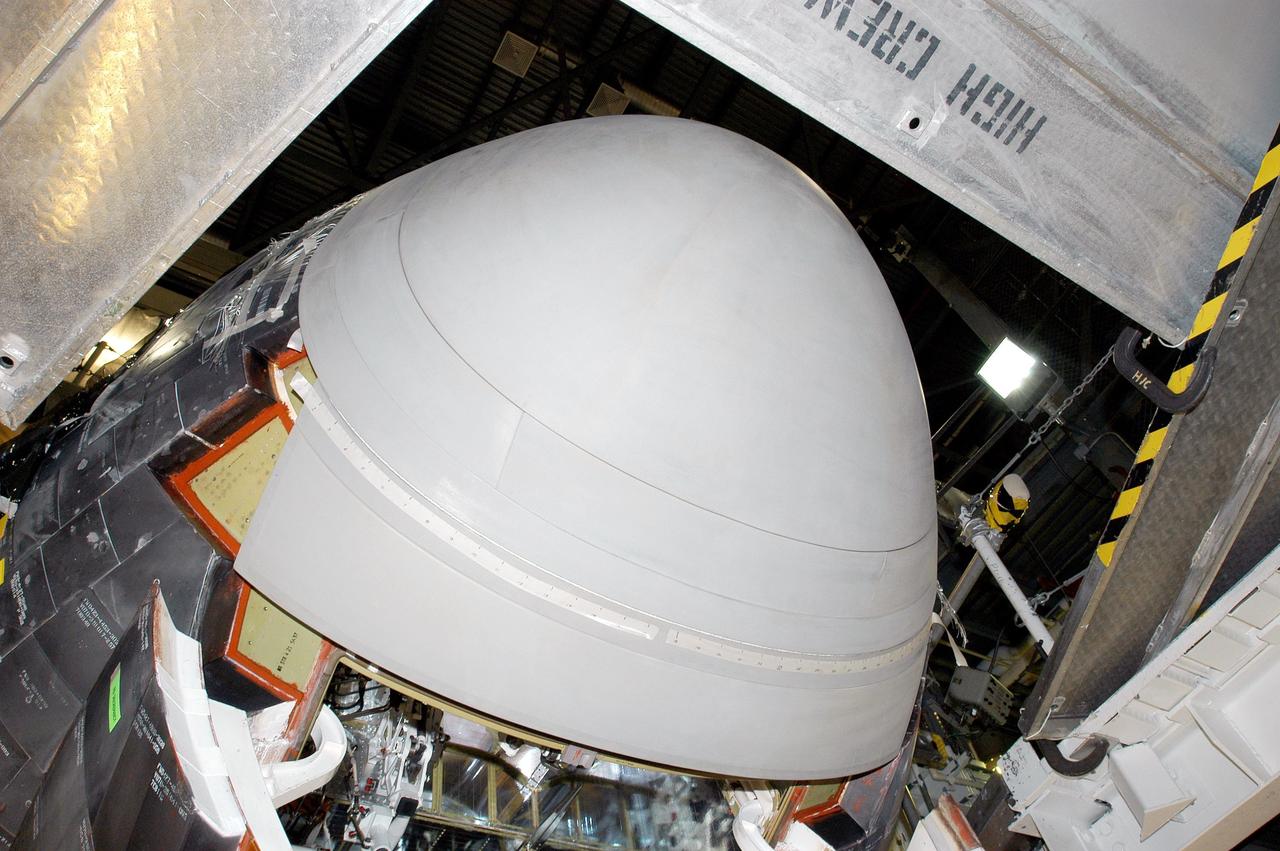
KENNEDY SPACE CENTER, FLA. - In the Orbiter Processing Facility, a newly installed nose cap on the orbiter Atlantis looks pristine amid the complexities of other equipment. The nose cap was removed from the vehicle in May and sent back to the vendor for thorough Non-Destructive Engineering evaluation and recoating. Thermography was also performed to check for internal flaws. This procedure uses high intensity light to heat areas that are immediately scanned with an infrared camera. White Thermal Protection System blankets were reinstalled on the nose cap before installation. Processing continues on Atlantis for its future mission to the International Space Station.
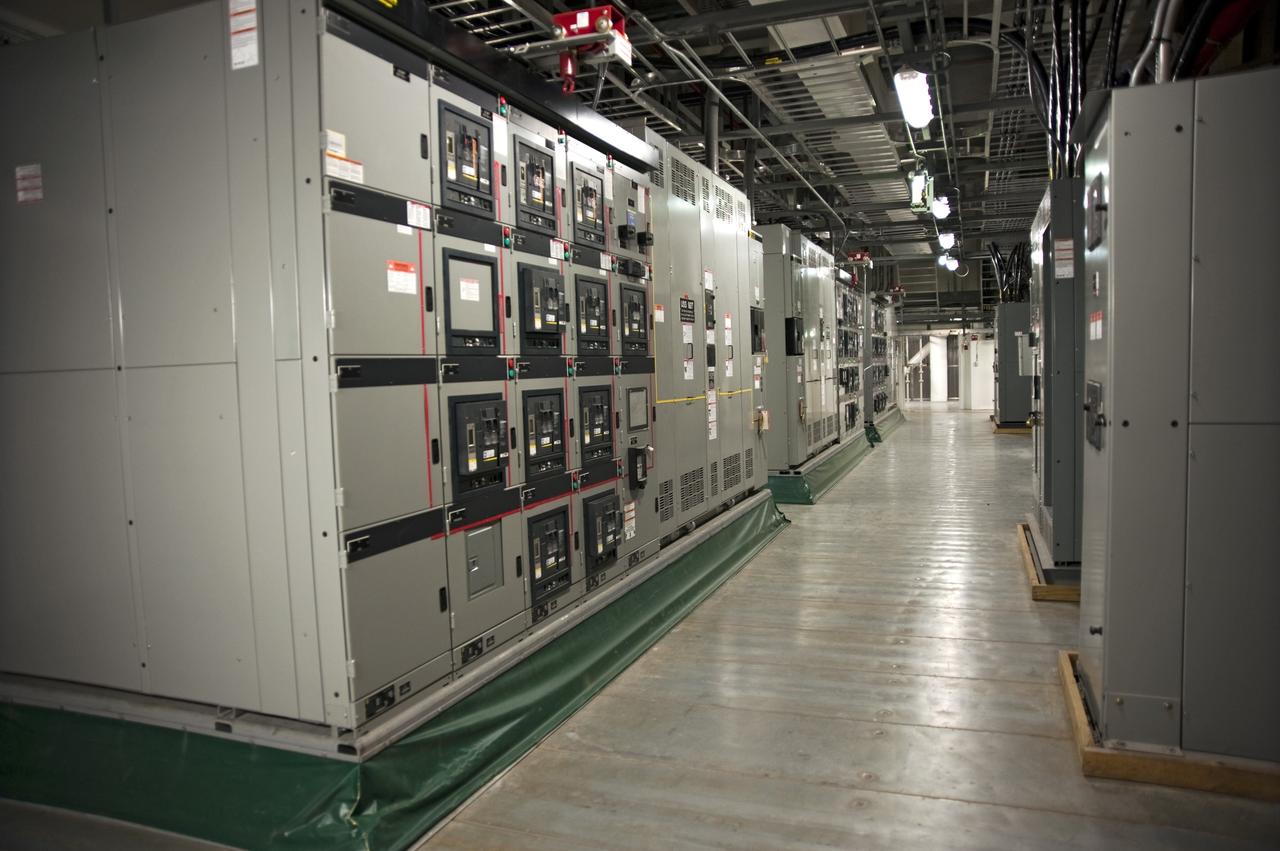
CAPE CANAVERAL, Fla. -- The interior of NASA's new mobile launcher, or ML, support structure is outfitted with solid steel flooring, lights, air conditioning, electrical boxes and sprinkler piping at NASA's Kennedy Space Center in Florida. The 355-foot-tall structure will support NASA's future human spaceflight program. The base of the launcher is lighter than space shuttle mobile launcher platforms so the crawler-transporter can pick up the heavier load of the tower and a taller rocket. The next step will be to add ground support equipment, such as umbilicals and access arms, for future rocket launches. For information on NASA's future plans, visit www.nasa.gov. Photo credit: NASA/Kim Shiflett

CAPE CANAVERAL, Fla. –– – Lights covering the fixed service structure on Launch Pad 39A cast their glow over space shuttle Atlantis. The shuttle waits the arrival of the payload canister with its cargo of Hubble Space Telescope equipment. The payload will be transferred into Atlantis' payload bay. Atlantis' 11-day STS-125 mission to service Hubble is targeted for launch May 12. The flight will include five spacewalks in which astronauts will refurbish and upgrade the telescope with state-of-the-art science instruments. As a result, Hubble's capabilities will be expanded and its operational lifespan extended through at least 2014. Photo credit: NASA/Kim Shiflett
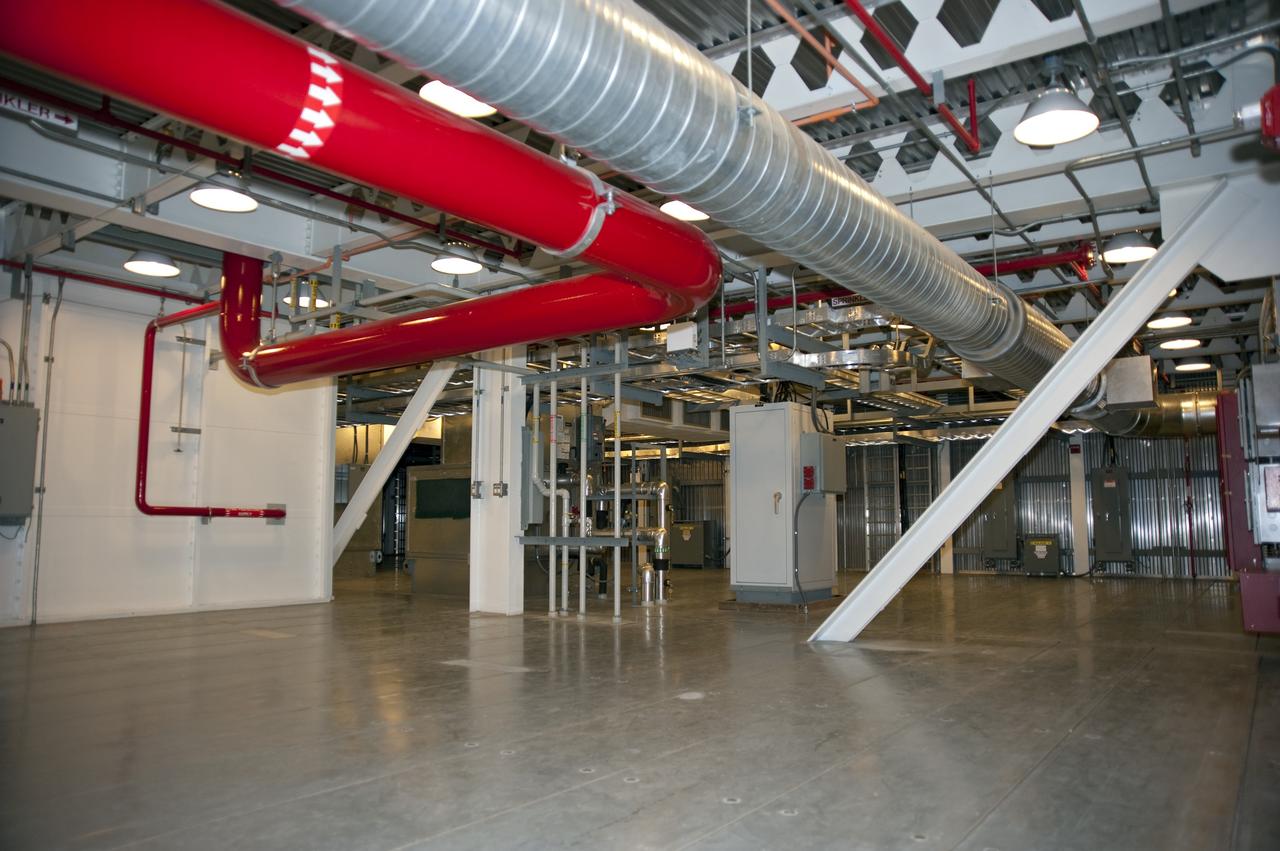
CAPE CANAVERAL, Fla. -- The interior of NASA's new mobile launcher, or ML, support structure is outfitted with solid steel flooring, lights, air conditioning, electrical boxes and sprinkler piping at NASA's Kennedy Space Center in Florida. The 355-foot-tall structure will support NASA's future human spaceflight program. The base of the launcher is lighter than space shuttle mobile launcher platforms so the crawler-transporter can pick up the heavier load of the tower and a taller rocket. The next step will be to add ground support equipment, such as umbilicals and access arms, for future rocket launches. For information on NASA's future plans, visit www.nasa.gov. Photo credit: NASA/Kim Shiflett
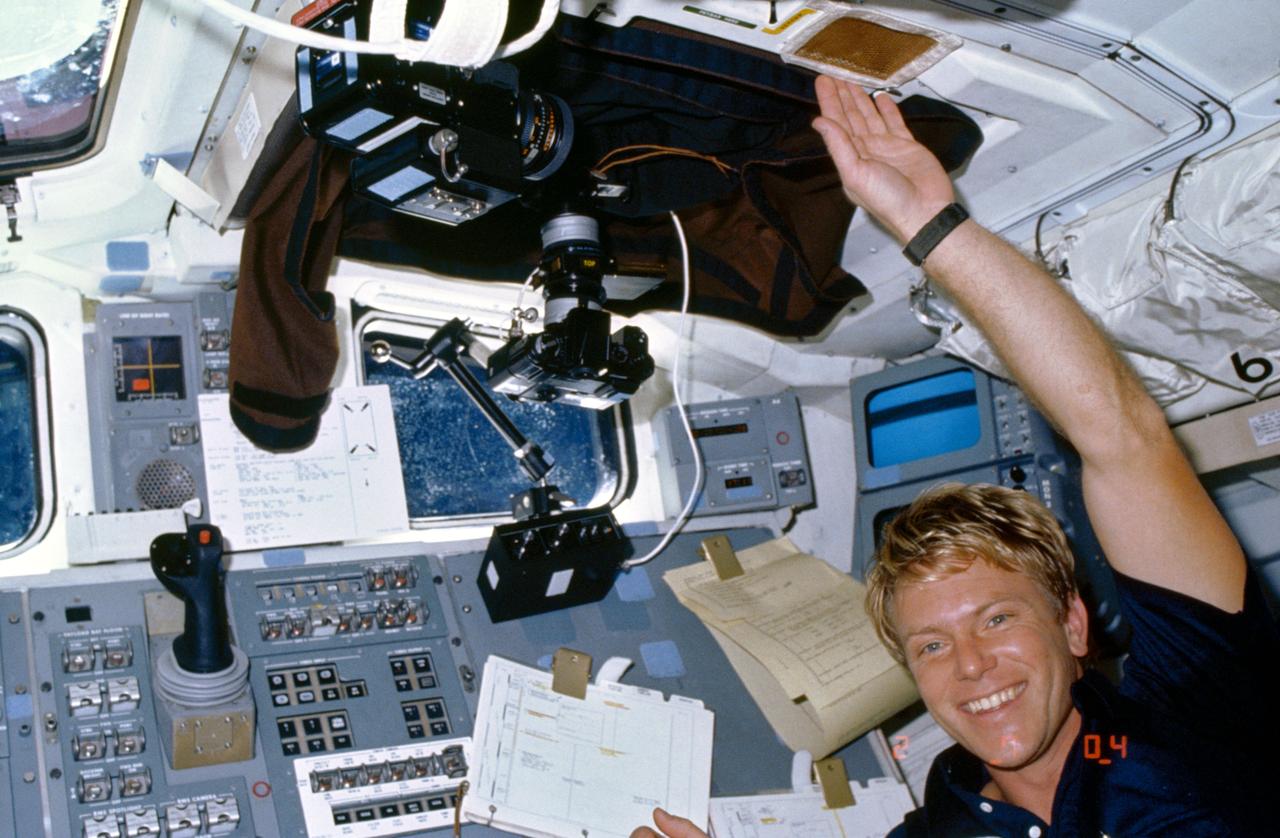
61C-05-026 (14 Jan. 1986) --- Astronaut George D. Nelson smiles for a fellow crew man's 35mm camera exposure while participating in the Comet Halley active monitoring program (CHAMP). Camera equipment and a protective shroud used to eliminate all cabin light interference surround the mission specialist. This is the first of three 1986 missions which are scheduled to monitor the rare visit by the comet. The principal investigators for CHAMP are S. Alan Stern of the Laboratory for Atmospheric and Space Physics at the University of Colorado; and Dr. Stephen Mende of Lockheed Palo Alto Research Laboratory.
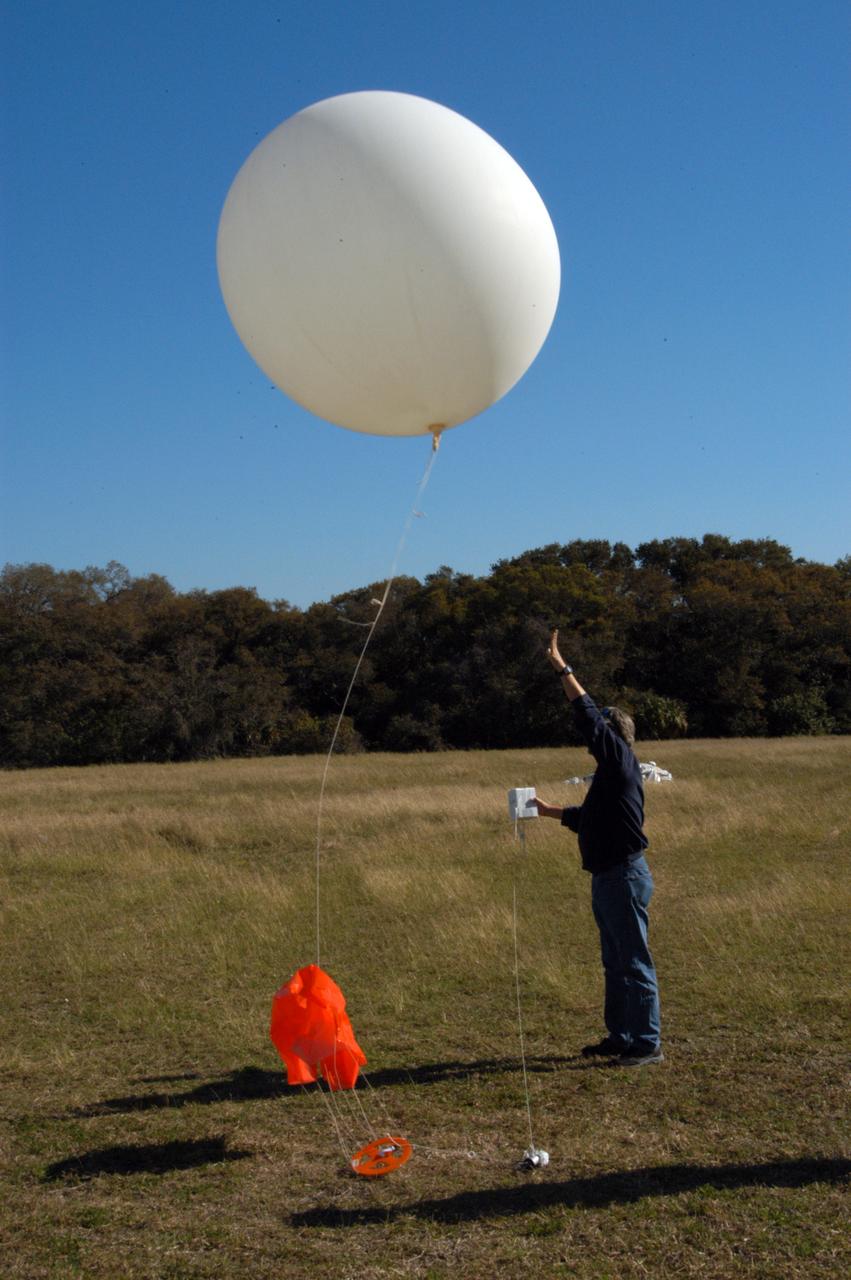
A worker releases a weather balloon at the Cape Canaveral Air Force Station weather station. The balloon is equipped with a radiosonde, an instrument that transmits measurements on atmospheric pressure, humidity, temperature and winds as it ascends. The data will be used to determine if conditions are acceptable for the launch of NASA's THEMIS mission. THEMIS, an acronym for Time History of Events and Macroscale Interactions during Substorms, consists of five identical probes that will track violent, colorful eruptions near the North Pole. This will be the largest number of scientific satellites NASA has ever launched into orbit aboard a single rocket. The THEMIS mission aims to unravel the mystery behind auroral substorms, an avalanche of magnetic energy powered by the solar wind that intensifies the northern and southern lights. The mission will investigate what causes auroras in the Earth’s atmosphere to dramatically change from slowly shimmering waves of light to wildly shifting streaks of bright color. Launch is planned from Pad 17-B in a window that extends from 6:01 to 6:19 p.m. EST.
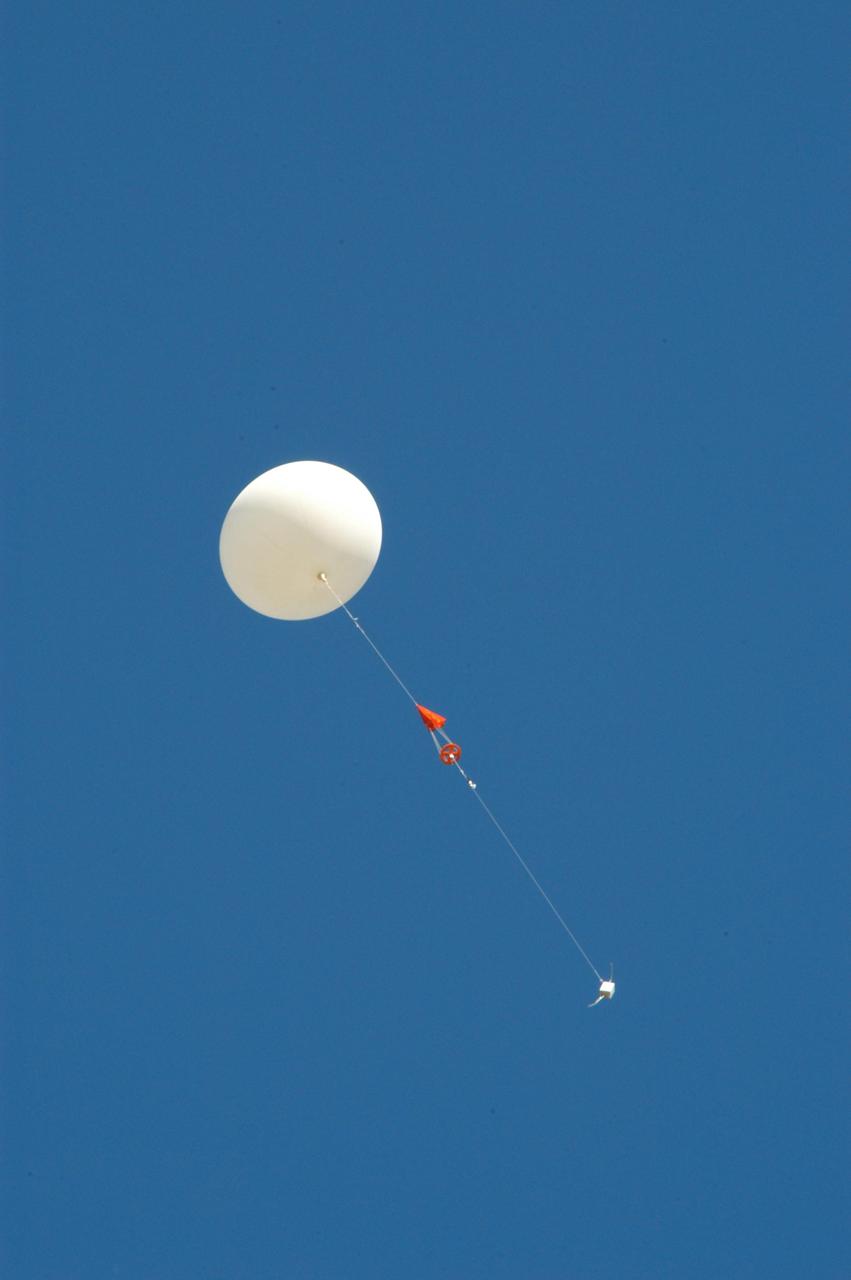
KENNEDY SPACE CENTER, FLA. -- A weather balloon takes flight from the Cape Canaveral Air Force Station weather station. The balloon is equipped with a radiosonde, an instrument that transmits measurements on atmospheric pressure, humidity, temperature and winds as it ascends. The data will be used to determine if conditions are acceptable for the launch of NASA's THEMIS mission. THEMIS, an acronym for Time History of Events and Macroscale Interactions during Substorms, consists of five identical probes that will track violent, colorful eruptions near the North Pole. This will be the largest number of scientific satellites NASA has ever launched into orbit aboard a single rocket. The THEMIS mission aims to unravel the mystery behind auroral substorms, an avalanche of magnetic energy powered by the solar wind that intensifies the northern and southern lights. The mission will investigate what causes auroras in the Earth’s atmosphere to dramatically change from slowly shimmering waves of light to wildly shifting streaks of bright color. Launch is planned from Pad 17-B in a window that extends from 6:01 to 6:19 p.m. EST. Photo credit: NASA/George Shelton
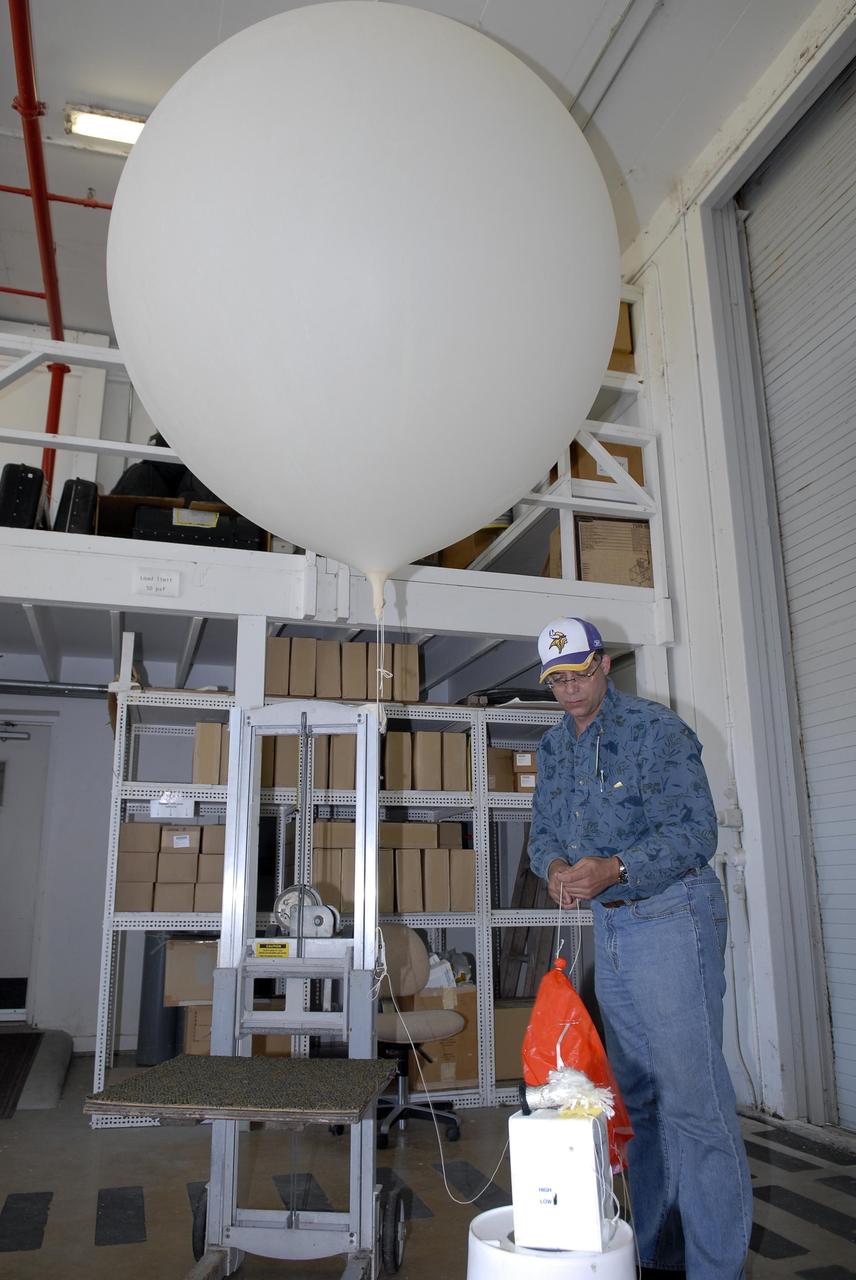
KENNEDY SPACE CENTER, FLA. -- A worker prepares a weather balloon for release at the Cape Canaveral Air Force Station weather station. The balloon is equipped with a radiosonde, an instrument that transmits measurements on atmospheric pressure, humidity, temperature and winds as it ascends. The data will be used to determine if conditions are acceptable for the launch of NASA's THEMIS mission. THEMIS, an acronym for Time History of Events and Macroscale Interactions during Substorms, consists of five identical probes that will track violent, colorful eruptions near the North Pole. This will be the largest number of scientific satellites NASA has ever launched into orbit aboard a single rocket. The THEMIS mission aims to unravel the mystery behind auroral substorms, an avalanche of magnetic energy powered by the solar wind that intensifies the northern and southern lights. The mission will investigate what causes auroras in the Earth’s atmosphere to dramatically change from slowly shimmering waves of light to wildly shifting streaks of bright color. Launch is planned from Pad 17-B in a window that extends from 6:01 to 6:19 p.m. EST. Photo credit: NASA/Kim Shiflett
A weather balloon is prepared for release at the Cape Canaveral Air Force Station weather station. The balloon is equipped with a radiosonde, an instrument that transmits measurements on atmospheric pressure, humidity, temperature and winds as it ascends. The data will be used to determine if conditions are acceptable for the launch of NASA's THEMIS mission. THEMIS, an acronym for Time History of Events and Macroscale Interactions during Substorms, consists of five identical probes that will track violent, colorful eruptions near the North Pole. This will be the largest number of scientific satellites NASA has ever launched into orbit aboard a single rocket. The THEMIS mission aims to unravel the mystery behind auroral substorms, an avalanche of magnetic energy powered by the solar wind that intensifies the northern and southern lights. The mission will investigate what causes auroras in the Earth’s atmosphere to dramatically change from slowly shimmering waves of light to wildly shifting streaks of bright color. Launch is planned from Pad 17-B in a window that extends from 6:01 to 6:19 p.m. EST.
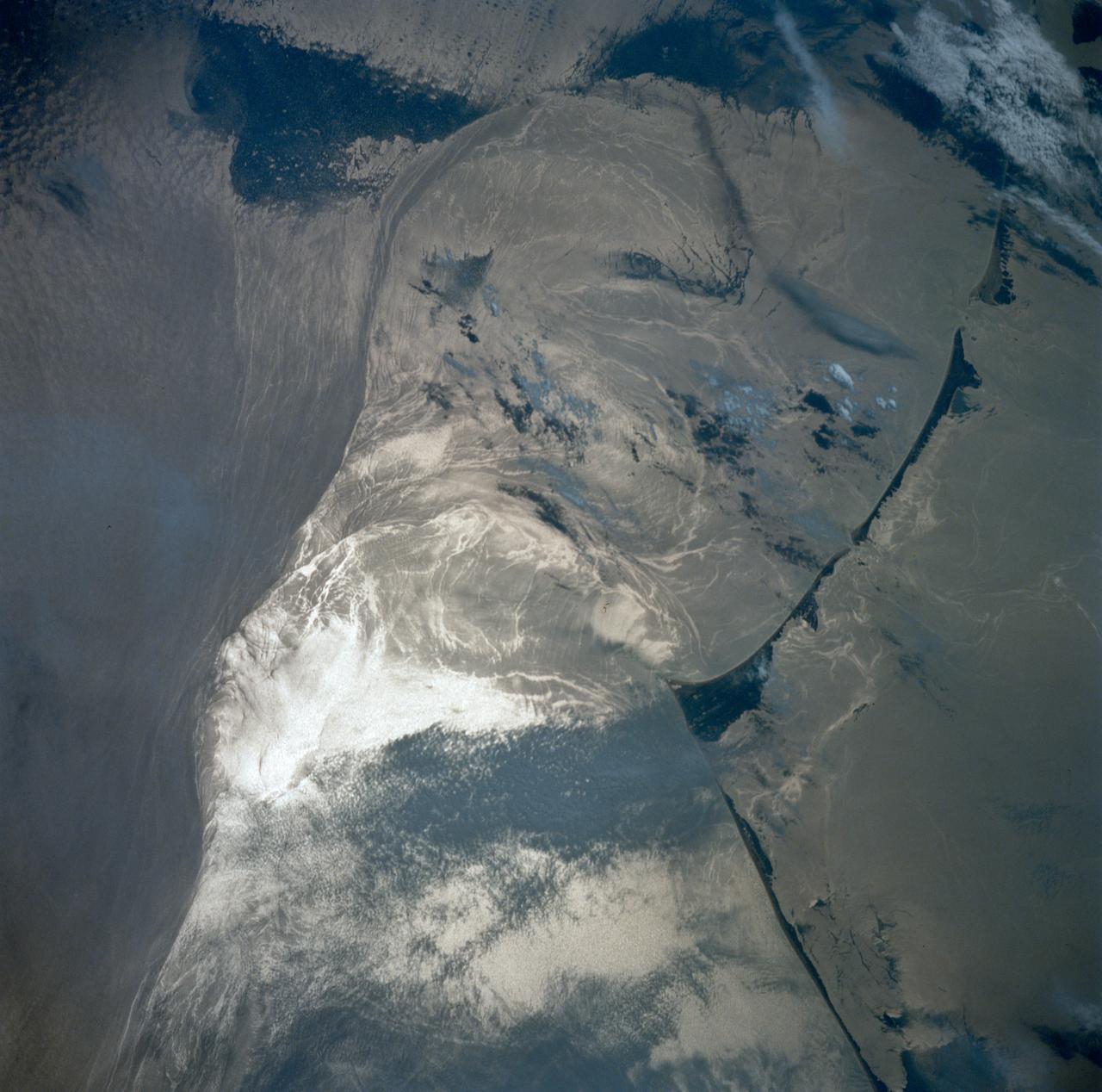
STS039-83-091 (28 April-6 May 1991) --- (HOLD PHOTO WITH BARRIER ISLANDS ALONG THE LEFT SIDE). This photograph of the water sunglint pattern along the Outer Banks of North Carolina was taken with a 70mm handheld camera equipped with color visible film and a 250mm lens. The islands appear as dark areas along the left side of the frame and Cape Hatteras is seen to the left and slightly above frame center. Sunglint is composed of light reflected from the water surface and the patterns seen in this photo are largely the result of sea surface roughness. Smooth water has a mirror-like reflectance and is represented in the photo as a bright area. Rough water, on the other hand, tends to disperse the light reflected from the water surface and, therefore, appears dark. Water currents in this area are extremely dynamic because the swift, northward flowing Gulf Stream (the offshore darker water along the right side of the photo) diverges from the coastline north of Cape Hatteras. The sharp line between bright and dark water is the western boundary of the Gulf Stream.

KENNEDY SPACE CENTER, FLA. -- A worker prepares a weather balloon for release at the Cape Canaveral Air Force Station weather station. The balloon is equipped with a radiosonde, an instrument that transmits measurements on atmospheric pressure, humidity, temperature and winds as it ascends. The data will be used to determine if conditions are acceptable for the launch of NASA's THEMIS mission. THEMIS, an acronym for Time History of Events and Macroscale Interactions during Substorms, consists of five identical probes that will track violent, colorful eruptions near the North Pole. This will be the largest number of scientific satellites NASA has ever launched into orbit aboard a single rocket. The THEMIS mission aims to unravel the mystery behind auroral substorms, an avalanche of magnetic energy powered by the solar wind that intensifies the northern and southern lights. The mission will investigate what causes auroras in the Earth’s atmosphere to dramatically change from slowly shimmering waves of light to wildly shifting streaks of bright color. Launch is planned from Pad 17-B in a window that extends from 6:01 to 6:19 p.m. EST. Photo credit: NASA/Kim Shiflett
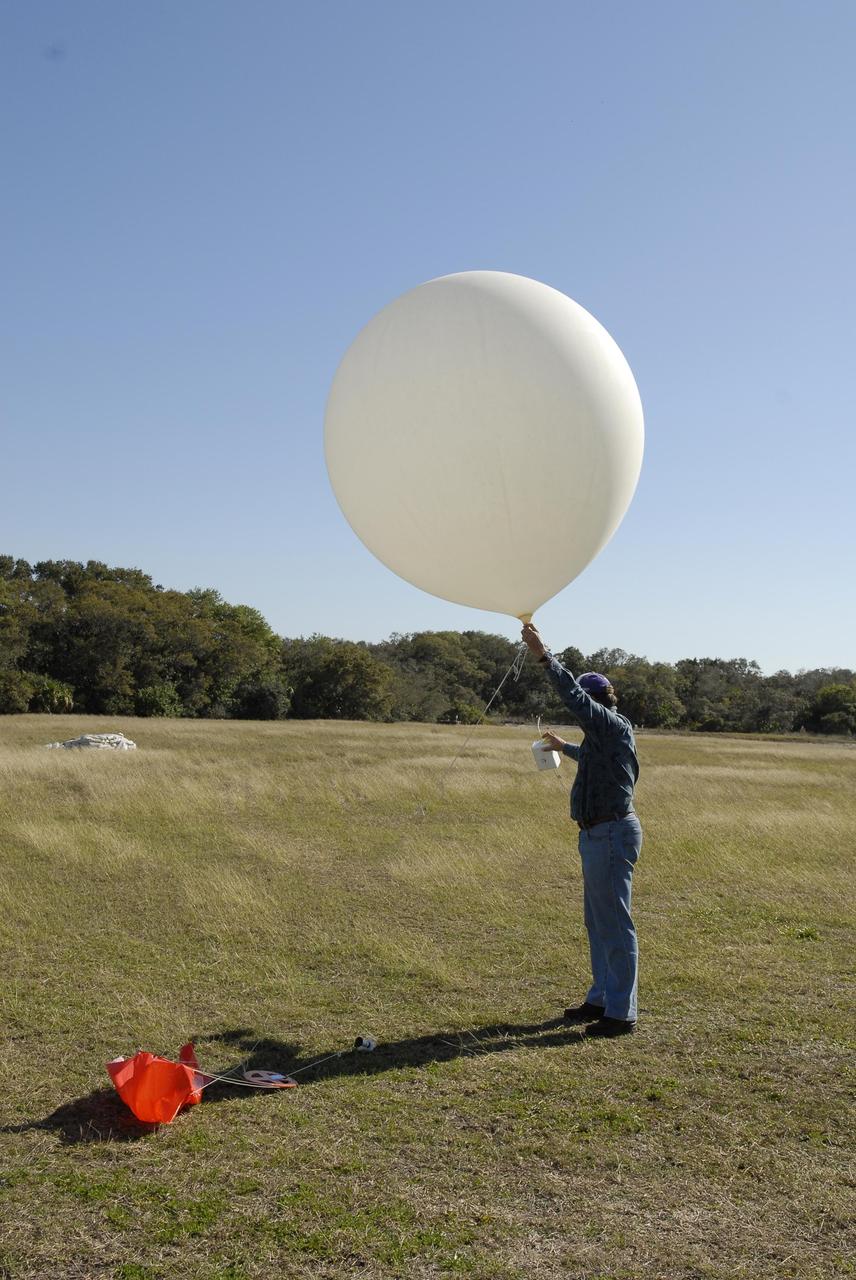
KENNEDY SPACE CENTER, FLA. -- A worker prepares to release a weather balloon outside the Cape Canaveral Air Force Station weather station. The balloon is equipped with a radiosonde, an instrument that transmits measurements on atmospheric pressure, humidity, temperature and winds as it ascends. The data will be used to determine if conditions are acceptable for the launch of NASA's THEMIS mission. THEMIS, an acronym for Time History of Events and Macroscale Interactions during Substorms, consists of five identical probes that will track violent, colorful eruptions near the North Pole. This will be the largest number of scientific satellites NASA has ever launched into orbit aboard a single rocket. The THEMIS mission aims to unravel the mystery behind auroral substorms, an avalanche of magnetic energy powered by the solar wind that intensifies the northern and southern lights. The mission will investigate what causes auroras in the Earth’s atmosphere to dramatically change from slowly shimmering waves of light to wildly shifting streaks of bright color. Launch is planned from Pad 17-B in a window that extends from 6:01 to 6:19 p.m. EST. Photo credit: NASA/Kim Shiflett
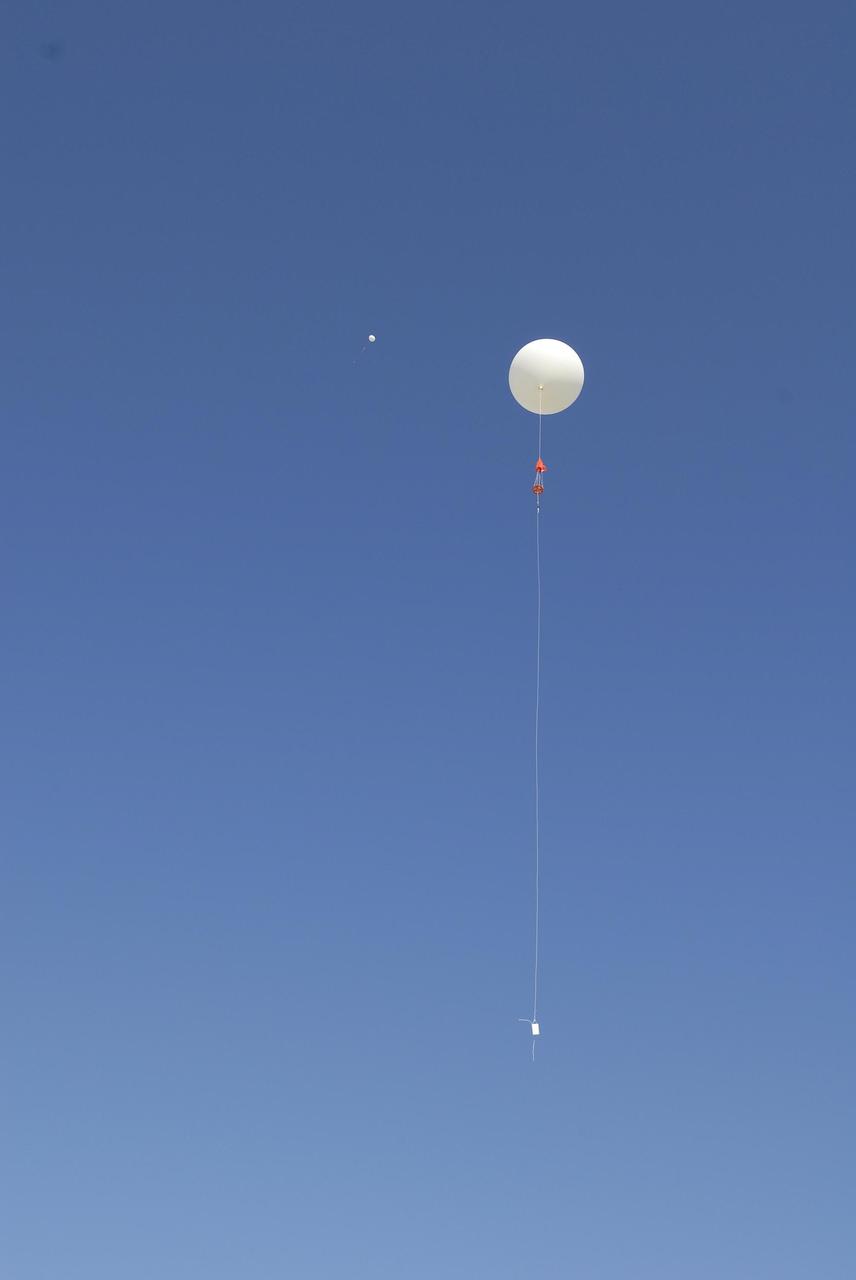
KENNEDY SPACE CENTER, FLA. -- Two weather balloons take flight from the Cape Canaveral Air Force Station weather station. Each balloon is equipped with a radiosonde, an instrument that transmits measurements on atmospheric pressure, humidity, temperature and winds as it ascends. The data will be used to determine if conditions are acceptable for the launch of NASA's THEMIS mission. THEMIS, an acronym for Time History of Events and Macroscale Interactions during Substorms, consists of five identical probes that will track violent, colorful eruptions near the North Pole. This will be the largest number of scientific satellites NASA has ever launched into orbit aboard a single rocket. The THEMIS mission aims to unravel the mystery behind auroral substorms, an avalanche of magnetic energy powered by the solar wind that intensifies the northern and southern lights. The mission will investigate what causes auroras in the Earth’s atmosphere to dramatically change from slowly shimmering waves of light to wildly shifting streaks of bright color. Launch is planned from Pad 17-B in a window that extends from 6:01 to 6:19 p.m. EST. Photo credit: NASA/Kim Shiflett
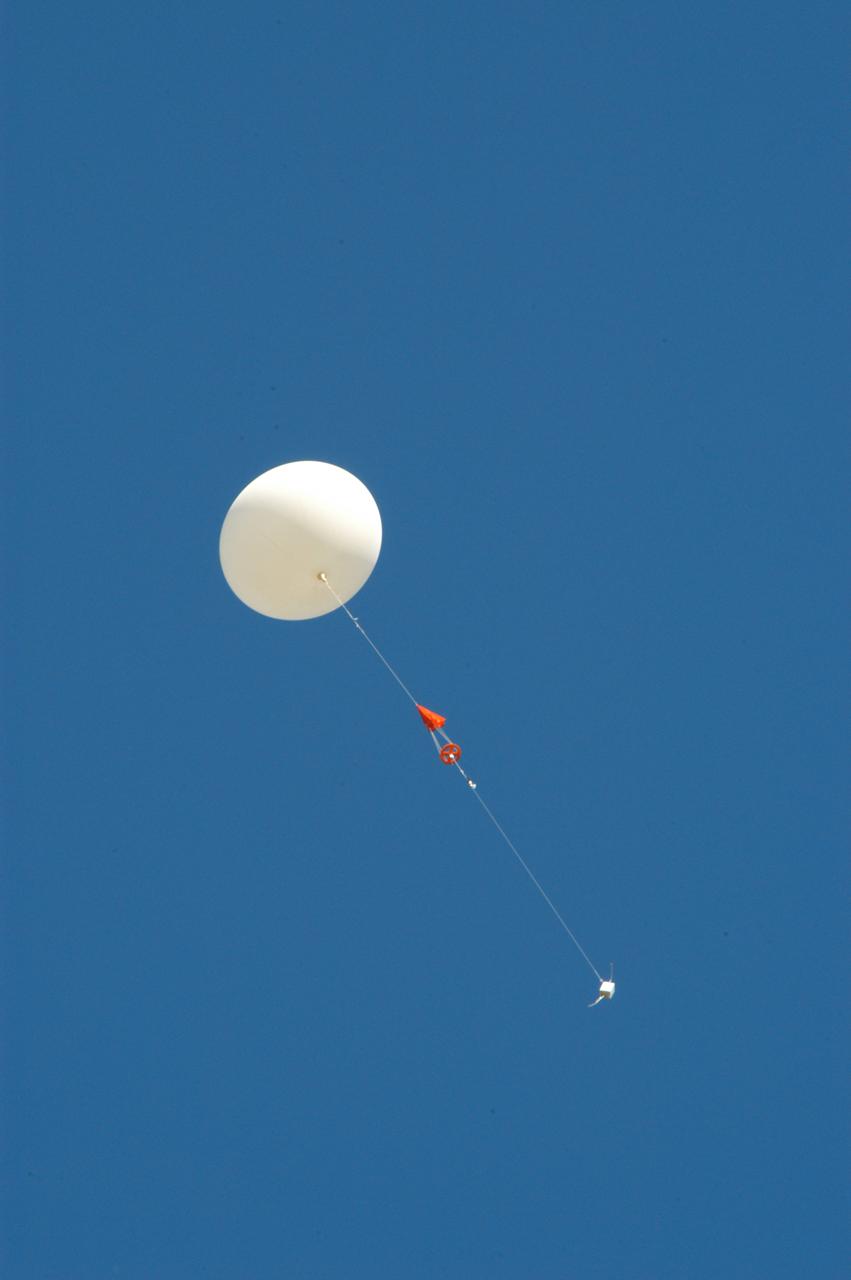
A weather balloon takes flight from the Cape Canaveral Air Force Station weather station. The balloon is equipped with a radiosonde, an instrument that transmits measurements on atmospheric pressure, humidity, temperature and winds as it ascends. The data will be used to determine if conditions are acceptable for the launch of NASA's THEMIS mission. THEMIS, an acronym for Time History of Events and Macroscale Interactions during Substorms, consists of five identical probes that will track violent, colorful eruptions near the North Pole. This will be the largest number of scientific satellites NASA has ever launched into orbit aboard a single rocket. The THEMIS mission aims to unravel the mystery behind auroral substorms, an avalanche of magnetic energy powered by the solar wind that intensifies the northern and southern lights. The mission will investigate what causes auroras in the Earth’s atmosphere to dramatically change from slowly shimmering waves of light to wildly shifting streaks of bright color. Launch is planned from Pad 17-B in a window that extends from 6:01 to 6:19 p.m. EST.
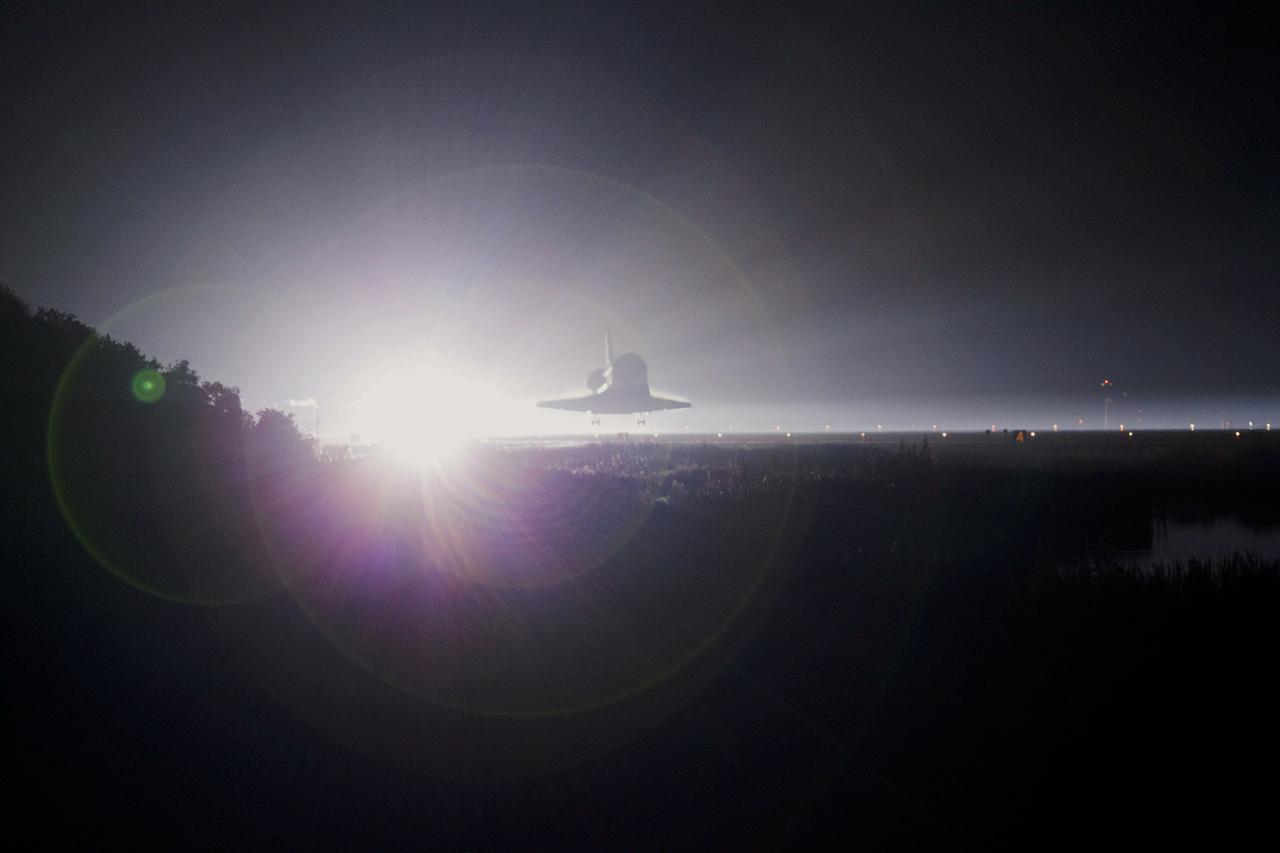
STS135-S-241 (21 July 2011) --- Xenon lights cast a halo of light on space shuttle Atlantis as the spacecraft nears touchdown for the last time on Runway 15 at NASA's Kennedy Space Center in Florida. Securing the space shuttle fleet's place in history, Atlantis marked the 26th nighttime landing of NASA's Space Shuttle Program and the 78th landing at Kennedy. Main gear touchdown was at 5:57:00 a.m. (EDT) on July 21, 2011, followed by nose gear touchdown at 5:57:20 a.m., and wheelstop at 5:57:54 a.m. Onboard are NASA astronauts Chris Ferguson, STS-135 commander; Doug Hurley, pilot; Sandy Magnus and Rex Walheim, both mission specialists. On the 37th shuttle mission to the International Space Station, STS-135 delivered more than 9,400 pounds of spare parts, equipment and supplies in the Raffaello multi-purpose logistics module that will sustain station operations for the next year. STS-135 was the 33rd and final flight for Atlantis, which has spent 307 days in space, orbited Earth 4,848 times and traveled 125,935,769 miles. Photo credit: NASA
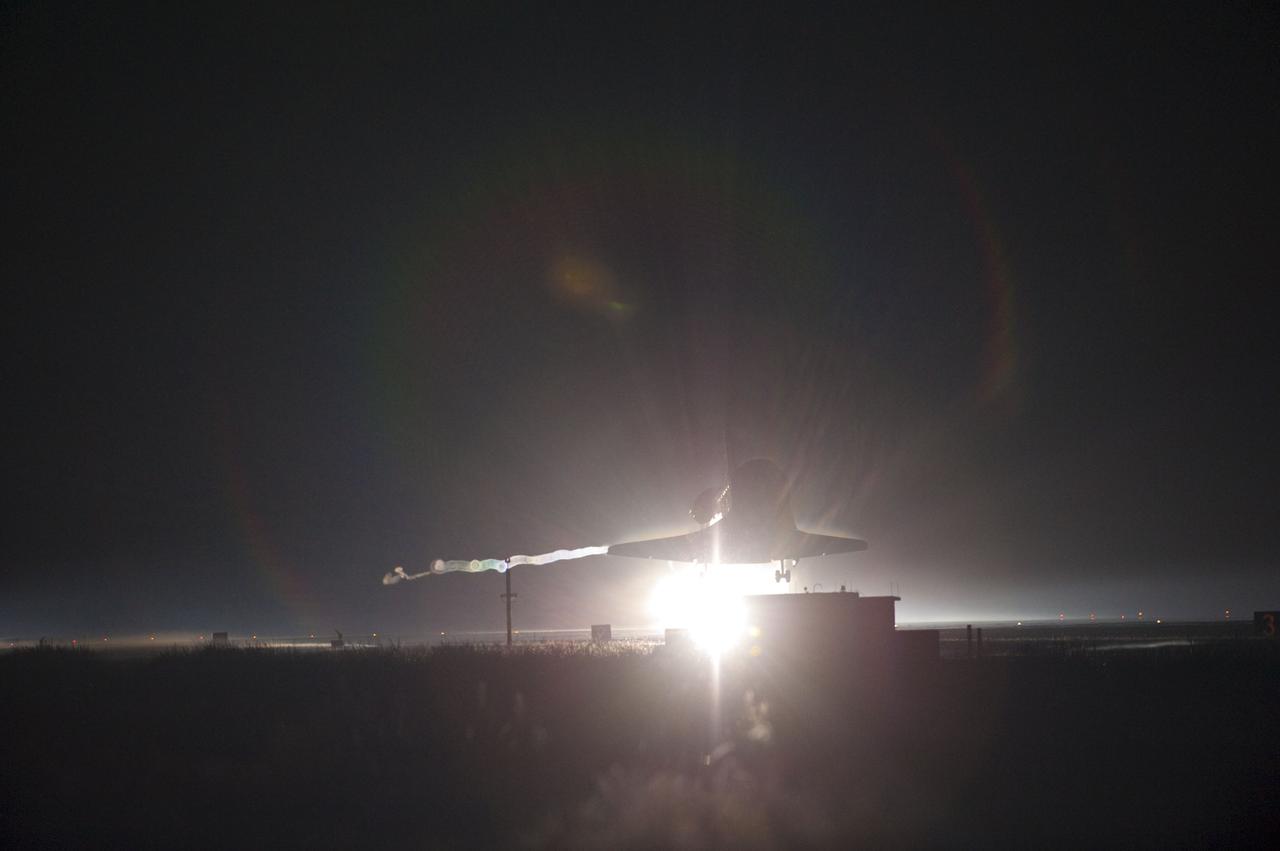
STS135-S-185 (21 July 2011) --- Xenon lights cast a halo of light on space shuttle Atlantis as the spacecraft approaches Runway 15 at NASA's Kennedy Space Center in Florida for the final time. Securing the space shuttle fleet's place in history, Atlantis marked the 26th nighttime landing of NASA's Space Shuttle Program and the 78th landing at Kennedy. Main gear touchdown was at 5:57:00 a.m. (EDT) on July 21, 2011, followed by nose gear touchdown at 5:57:20 a.m., and wheelstop at 5:57:54 a.m. Onboard are NASA astronauts Chris Ferguson, STS-135 commander; Doug Hurley, pilot; Sandy Magnus and Rex Walheim, both mission specialists. On the 37th shuttle mission to the International Space Station, STS-135 delivered more than 9,400 pounds of spare parts, equipment and supplies in the Raffaello multi-purpose logistics module that will sustain station operations for the next year. STS-135 was the 33rd and final flight for Atlantis, which has spent 307 days in space, orbited Earth 4,848 times and traveled 125,935,769 miles. Photo credit: NASA
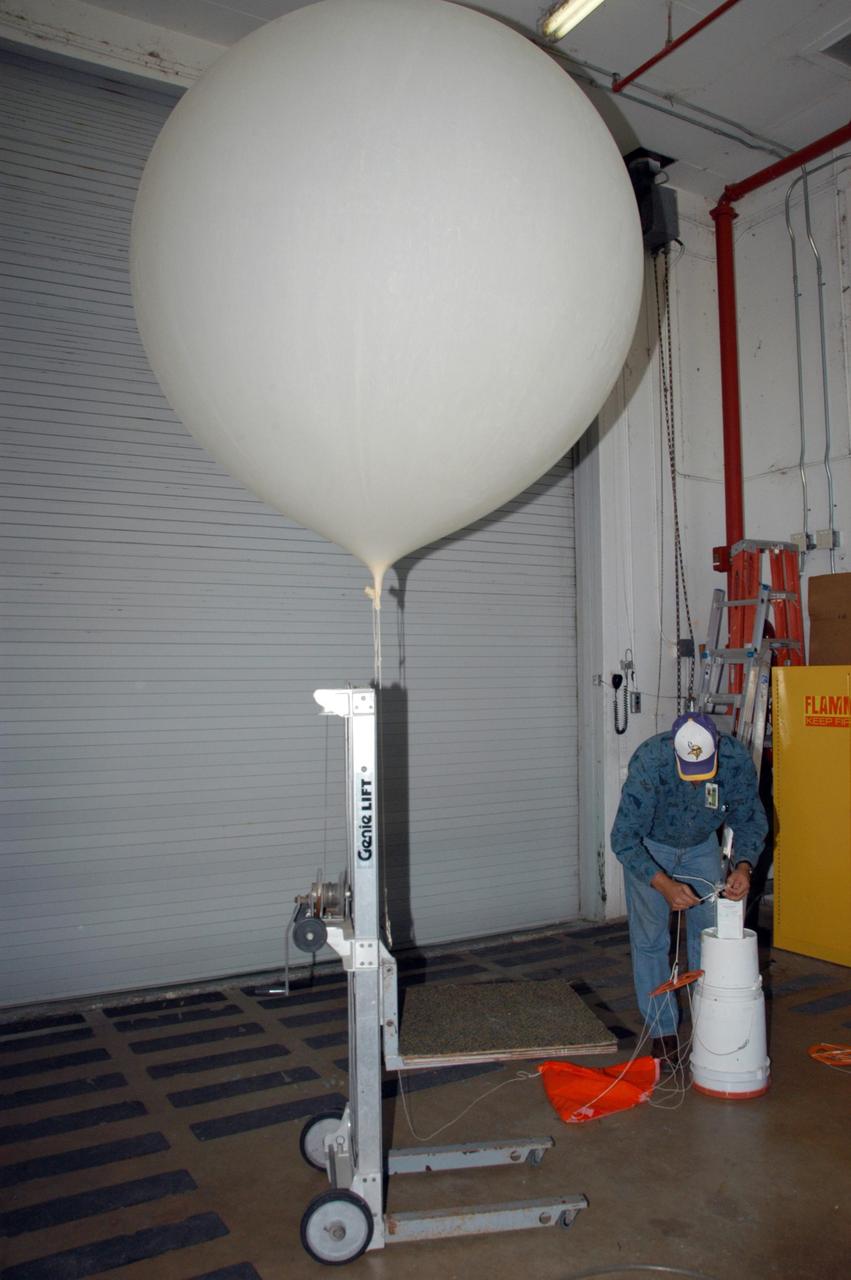
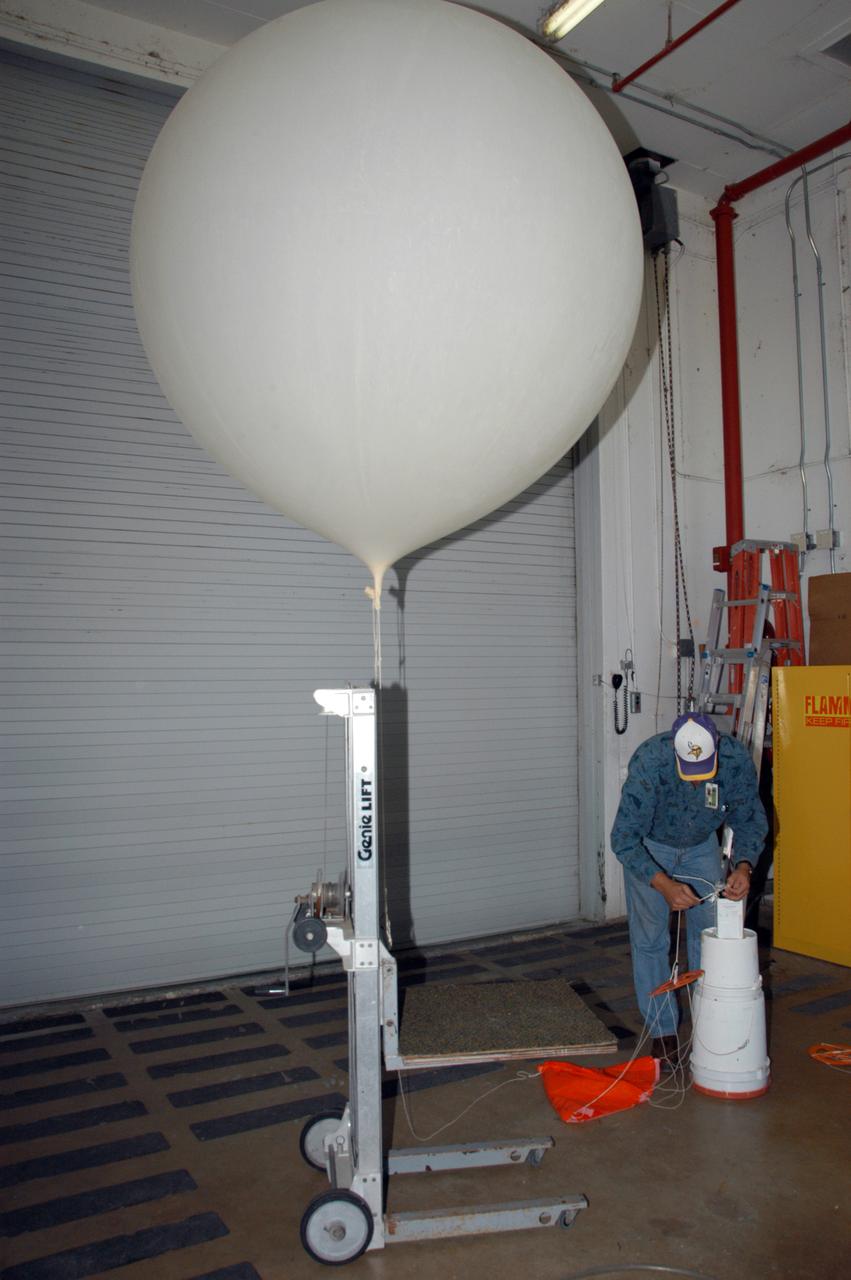
KENNEDY SPACE CENTER, FLA. -- A weather balloon is prepared for release at the Cape Canaveral Air Force Station weather station. The balloon is equipped with a radiosonde, an instrument that transmits measurements on atmospheric pressure, humidity, temperature and winds as it ascends. The data will be used to determine if conditions are acceptable for the launch of NASA's THEMIS mission. THEMIS, an acronym for Time History of Events and Macroscale Interactions during Substorms, consists of five identical probes that will track violent, colorful eruptions near the North Pole. This will be the largest number of scientific satellites NASA has ever launched into orbit aboard a single rocket. The THEMIS mission aims to unravel the mystery behind auroral substorms, an avalanche of magnetic energy powered by the solar wind that intensifies the northern and southern lights. The mission will investigate what causes auroras in the Earth’s atmosphere to dramatically change from slowly shimmering waves of light to wildly shifting streaks of bright color. Launch is planned from Pad 17-B in a window that extends from 6:01 to 6:19 p.m. EST. Photo credit: NASA/George Shelton
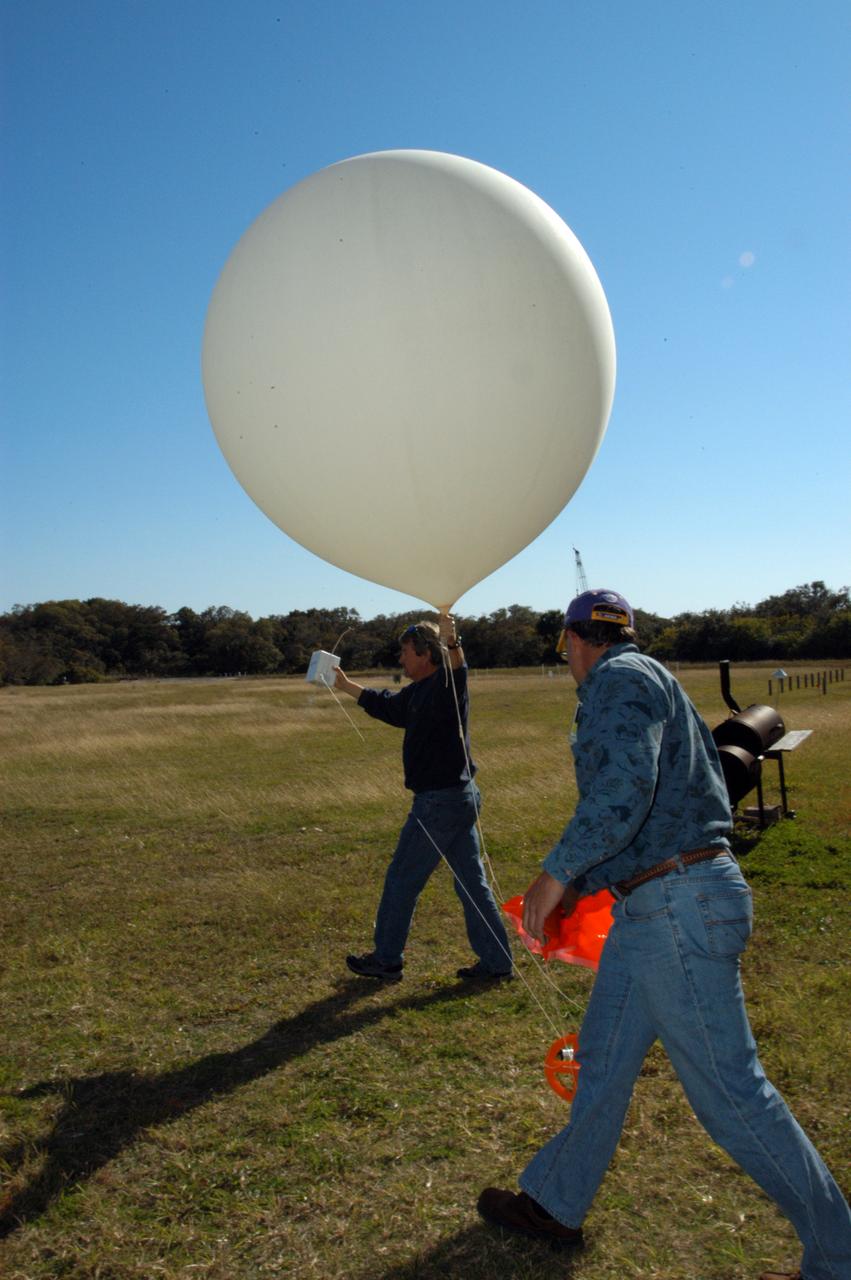
A worker releases a weather balloon at the Cape Canaveral Air Force Station weather station. The balloon is equipped with a radiosonde, an instrument that transmits measurements on atmospheric pressure, humidity, temperature and winds as it ascends. The data will be used to determine if conditions are acceptable for the launch of NASA's THEMIS mission. THEMIS, an acronym for Time History of Events and Macroscale Interactions during Substorms, consists of five identical probes that will track violent, colorful eruptions near the North Pole. This will be the largest number of scientific satellites NASA has ever launched into orbit aboard a single rocket. The THEMIS mission aims to unravel the mystery behind auroral substorms, an avalanche of magnetic energy powered by the solar wind that intensifies the northern and southern lights. The mission will investigate what causes auroras in the Earth’s atmosphere to dramatically change from slowly shimmering waves of light to wildly shifting streaks of bright color. Launch is planned from Pad 17-B in a window that extends from 6:01 to 6:19 p.m. EST.

STS135-S-186 (21 July 2011) --- Xenon lights cast a halo of light on space shuttle Atlantis as the spacecraft approaches Runway 15 at NASA's Kennedy Space Center in Florida for the final time. Securing the space shuttle fleet's place in history, Atlantis marked the 26th nighttime landing of NASA's Space Shuttle Program and the 78th landing at Kennedy. Main gear touchdown was at 5:57:00 a.m. (EDT) on July 21, 2011, followed by nose gear touchdown at 5:57:20 a.m., and wheelstop at 5:57:54 a.m. Onboard are NASA astronauts Chris Ferguson, STS-135 commander; Doug Hurley, pilot; Sandy Magnus and Rex Walheim, both mission specialists. On the 37th shuttle mission to the International Space Station, STS-135 delivered more than 9,400 pounds of spare parts, equipment and supplies in the Raffaello multi-purpose logistics module that will sustain station operations for the next year. STS-135 was the 33rd and final flight for Atlantis, which has spent 307 days in space, orbited Earth 4,848 times and traveled 125,935,769 miles. Photo credit: NASA

KENNEDY SPACE CENTER, FLA. -- A worker releases a weather balloon at the Cape Canaveral Air Force Station weather station. The balloon is equipped with a radiosonde, an instrument that transmits measurements on atmospheric pressure, humidity, temperature and winds as it ascends. The data will be used to determine if conditions are acceptable for the launch of NASA's THEMIS mission. THEMIS, an acronym for Time History of Events and Macroscale Interactions during Substorms, consists of five identical probes that will track violent, colorful eruptions near the North Pole. This will be the largest number of scientific satellites NASA has ever launched into orbit aboard a single rocket. The THEMIS mission aims to unravel the mystery behind auroral substorms, an avalanche of magnetic energy powered by the solar wind that intensifies the northern and southern lights. The mission will investigate what causes auroras in the Earth’s atmosphere to dramatically change from slowly shimmering waves of light to wildly shifting streaks of bright color. Launch is planned from Pad 17-B in a window that extends from 6:01 to 6:19 p.m. EST. Photo credit: NASA/George Shelton
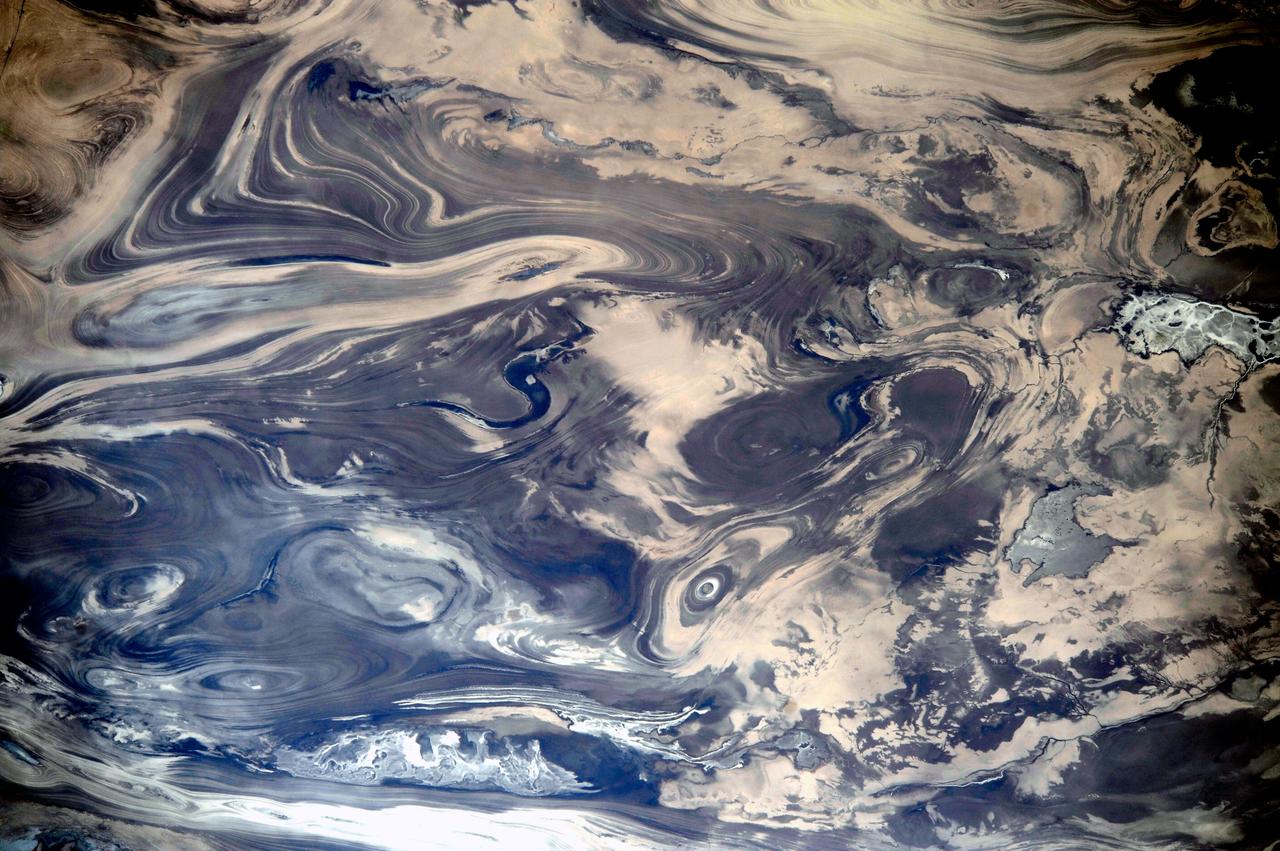
ISS038-E-047388 (14 Feb. 2014) --- As the International Space Station passed over the deserts of central Iran, including Kavir, one of the Expedition 38 crew members used a digital camera equipped with a 200mm lens to record this image featuring an unusual pattern of numerous parallel lines and sweeping curves. The lack of soil and vegetation allows the geological structure of the rocks to appear quite clearly. According to geologists, the patterns result from the gentle folding of numerous, thin, light and dark layers of rock. Later erosion by wind and water, say the scientists, cut a flat surface across the folds, not only exposing hundreds of layers but also showing the shapes of the folds. The dark water of a lake (image center) occupies a depression in a more easily eroded, S-shaped layer of rock. The irregular light-toned patch just left of the lake is a sand sheet thin enough to allow the underlying rock layers to be detected. A small river snakes across the bottom of the image. In this desert landscape there are no fields or roads to give a sense of scale. In fact, the image width represents a distance of 65 kilometers.
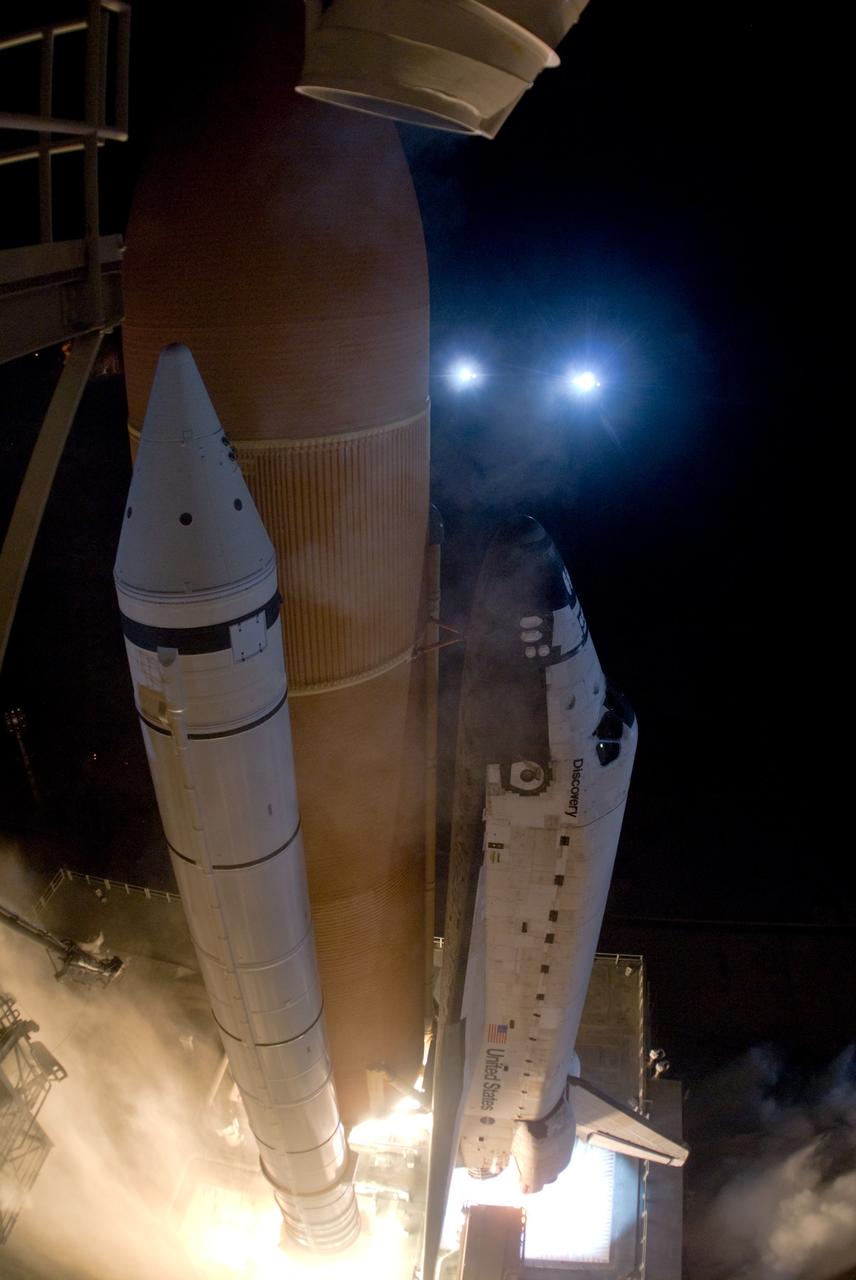
CAPE CANAVERAL, Fla. – Water from the rainbirds floods the mobile launcher platform as space shuttle Discovery rises from NASA Kennedy Space Center's Launch pad 39A on the STS-128 mission. The water helps with sound suppression. Above Discovery's nose are two of the xenon lights that surround the pad. Liftoff from Launch Pad 39A was on time at 11:59 p.m. EDT. The first launch attempt on Aug. 24 was postponed due to unfavorable weather conditions. The second attempt on Aug. 25 also was postponed due to an issue with a valve in space shuttle Discovery's main propulsion system. The STS-128 mission is the 30th International Space Station assembly flight and the 128th space shuttle flight. The 13-day mission will deliver more than 7 tons of supplies, science racks and equipment, as well as additional environmental hardware to sustain six crew members on the International Space Station. The equipment includes a freezer to store research samples, a new sleeping compartment and the COLBERT treadmill. Photo credit: NASA/Tony Gray-Tom Farrar
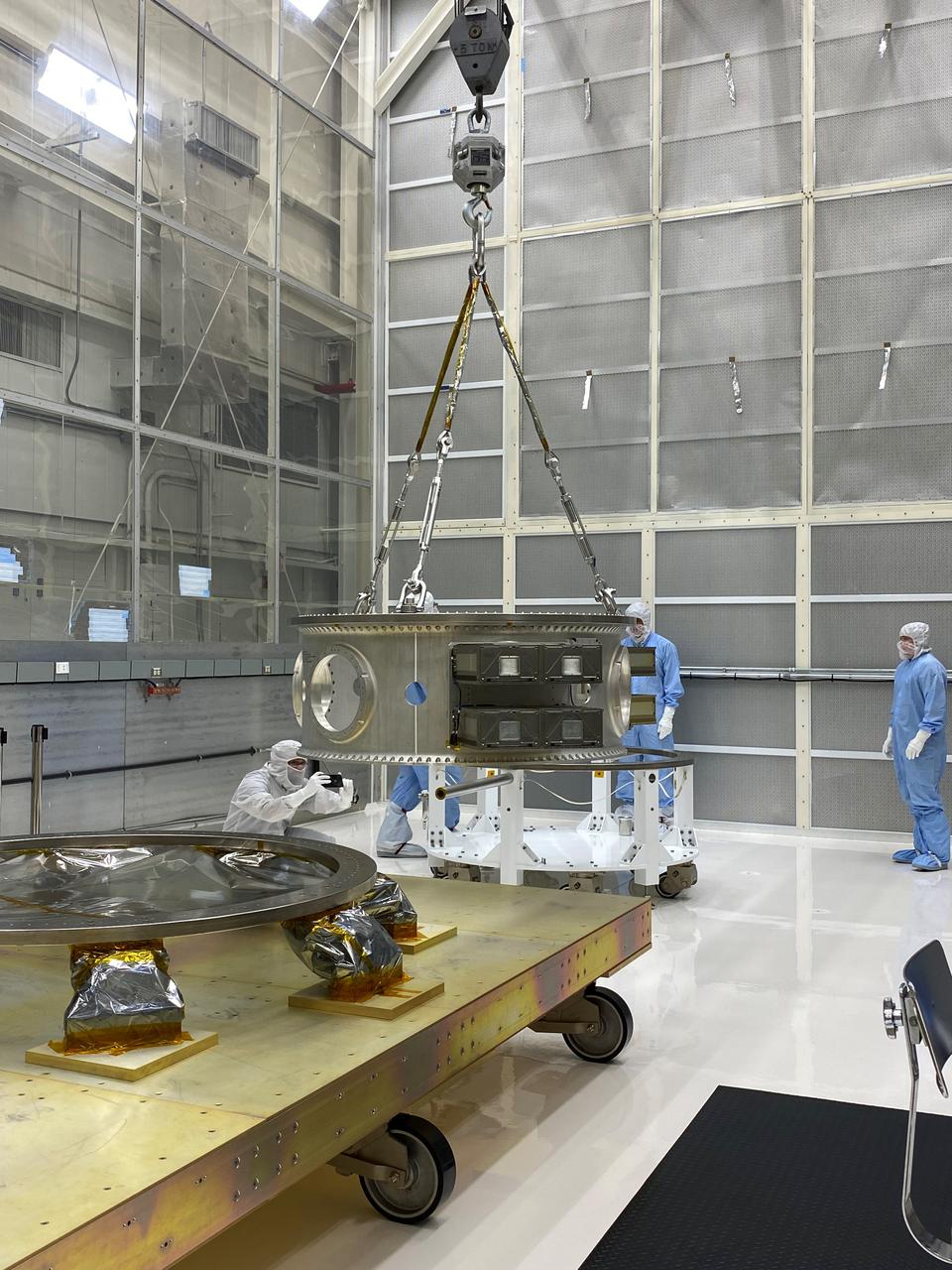
Technicians process mechanical and electrical support equipment for NASA’s Landsat 9 observatory inside the Integrated Processing Facility at Vandenberg Space Force Base in California, on June 16, 2021. The equipment includes a secondary payload adapter and flight system for a group of microsat payloads, called CubeSats, that will launch with Landsat 9 as secondary payloads. Landsat 9 will launch on a United Launch Alliance Atlas V rocket from Space Launch Complex 3 at Vandenberg in September 2021. The launch is being managed by NASA’s Launch Services Program based at Kennedy Space Center, America’s multiuser spaceport. The Landsat 9 satellite will continue the nearly 50-year legacy of previous Landsat missions. It will monitor key natural and economic resources from orbit. Landsat 9 is managed by the agency’s Goddard Space Flight Center in Greenbelt, Maryland. The satellite will carry two instruments: the Operational Land Imager 2, which collects images of Earth’s landscapes in visible, near infrared and shortwave infrared light, and the Thermal Infrared Sensor 2, which measures the temperature of land surfaces. Like its predecessors, Landsat 9 is a joint mission between NASA and the U.S. Geological Survey.
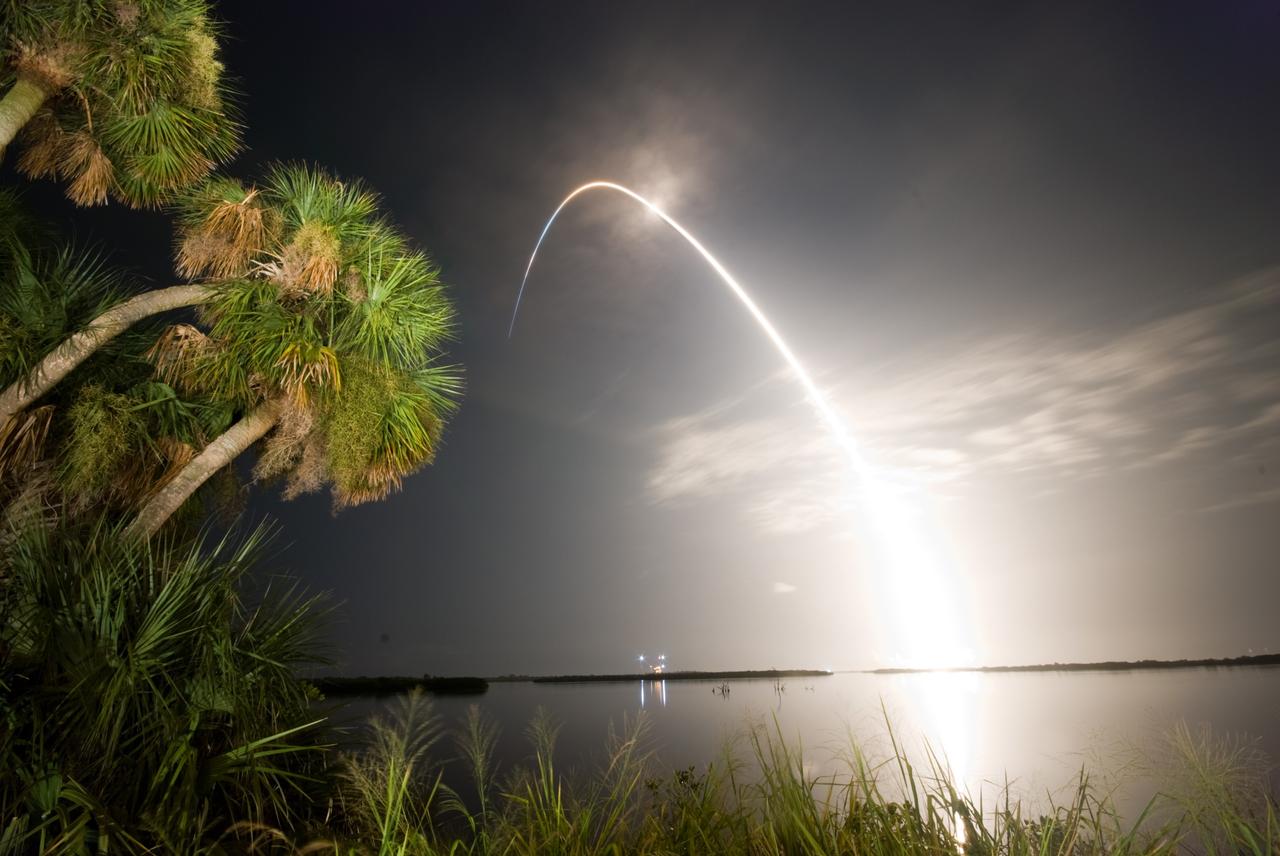
CAPE CANAVERAL, Fla. – Viewed from the Banana River Viewing Site at NASA's Kennedy Space Center in Florida, space shuttle Discovery arcs through a cloud-brushed sky lighted by the trail of fire after launch on the STS-128 mission. Liftoff from Launch Pad 39A was on time at 11:59 p.m. EDT. The first launch attempt on Aug. 24 was postponed due to unfavorable weather conditions. The second attempt on Aug. 25 also was postponed due to an issue with a valve in space shuttle Discovery's main propulsion system. The STS-128 mission is the 30th International Space Station assembly flight and the 128th space shuttle flight. The 13-day mission will deliver more than 7 tons of supplies, science racks and equipment, as well as additional environmental hardware to sustain six crew members on the International Space Station. The equipment includes a freezer to store research samples, a new sleeping compartment and the COLBERT treadmill. Photo credit: NASA/Ben Cooper
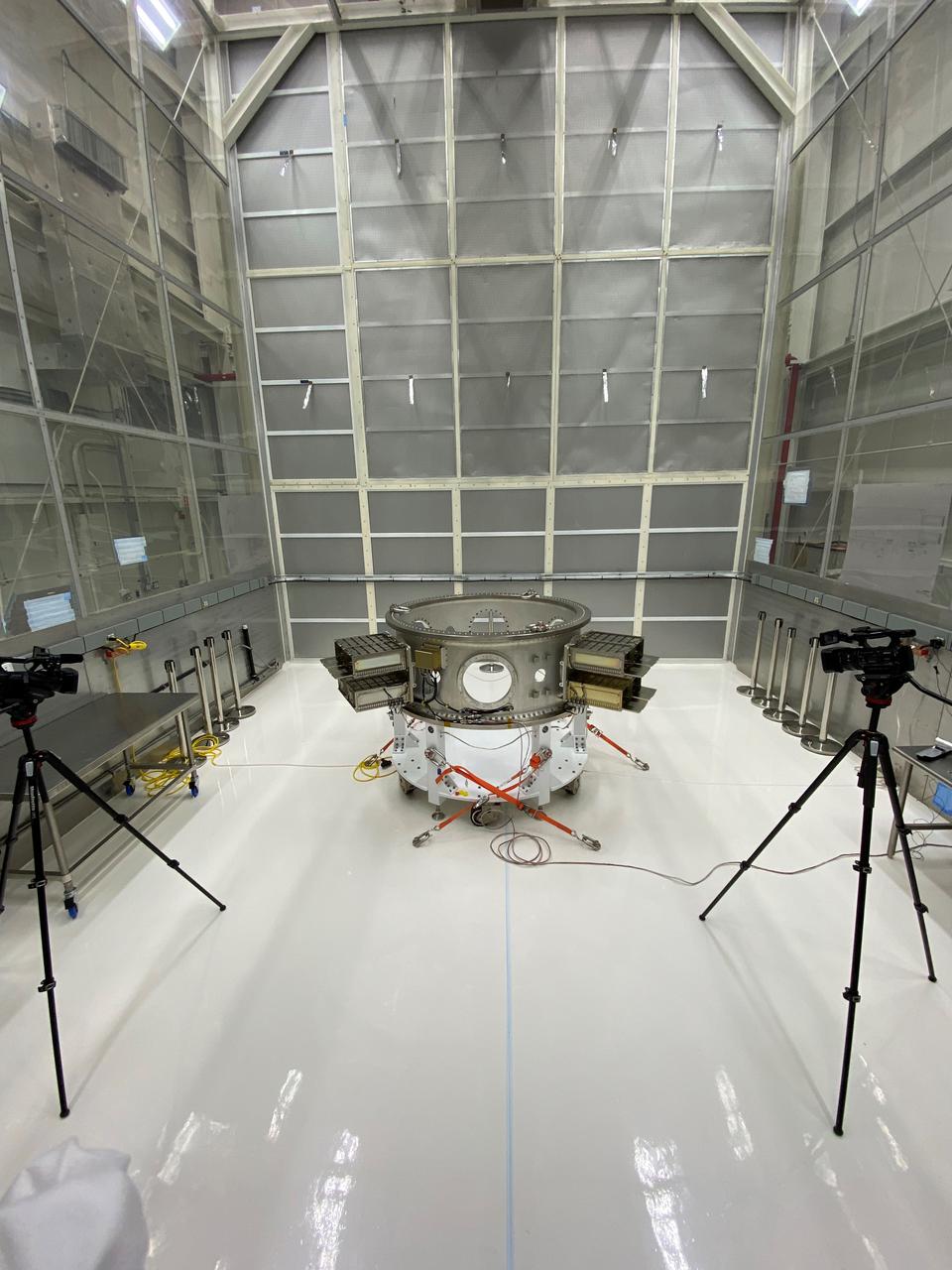
Mechanical and electrical support equipment for NASA’s Landsat 9 observatory are being processed inside the Integrated Processing Facility at Vandenberg Space Force Base in California, on June 24, 2021. The equipment includes a secondary payload adapter and flight system for a group of microsat payloads, called CubeSats, that will launch with Landsat 9 as secondary payloads. Landsat 9 will launch on a United Launch Alliance Atlas V rocket from Space Launch Complex 3 at Vandenberg in September 2021. The launch is being managed by NASA’s Launch Services Program based at Kennedy Space Center, America’s multiuser spaceport. The Landsat 9 satellite will continue the nearly 50-year legacy of previous Landsat missions. It will monitor key natural and economic resources from orbit. Landsat 9 is managed by the agency’s Goddard Space Flight Center in Greenbelt, Maryland. The satellite will carry two instruments: the Operational Land Imager 2, which collects images of Earth’s landscapes in visible, near infrared and shortwave infrared light, and the Thermal Infrared Sensor 2, which measures the temperature of land surfaces. Like its predecessors, Landsat 9 is a joint mission between NASA and the U.S. Geological Survey.
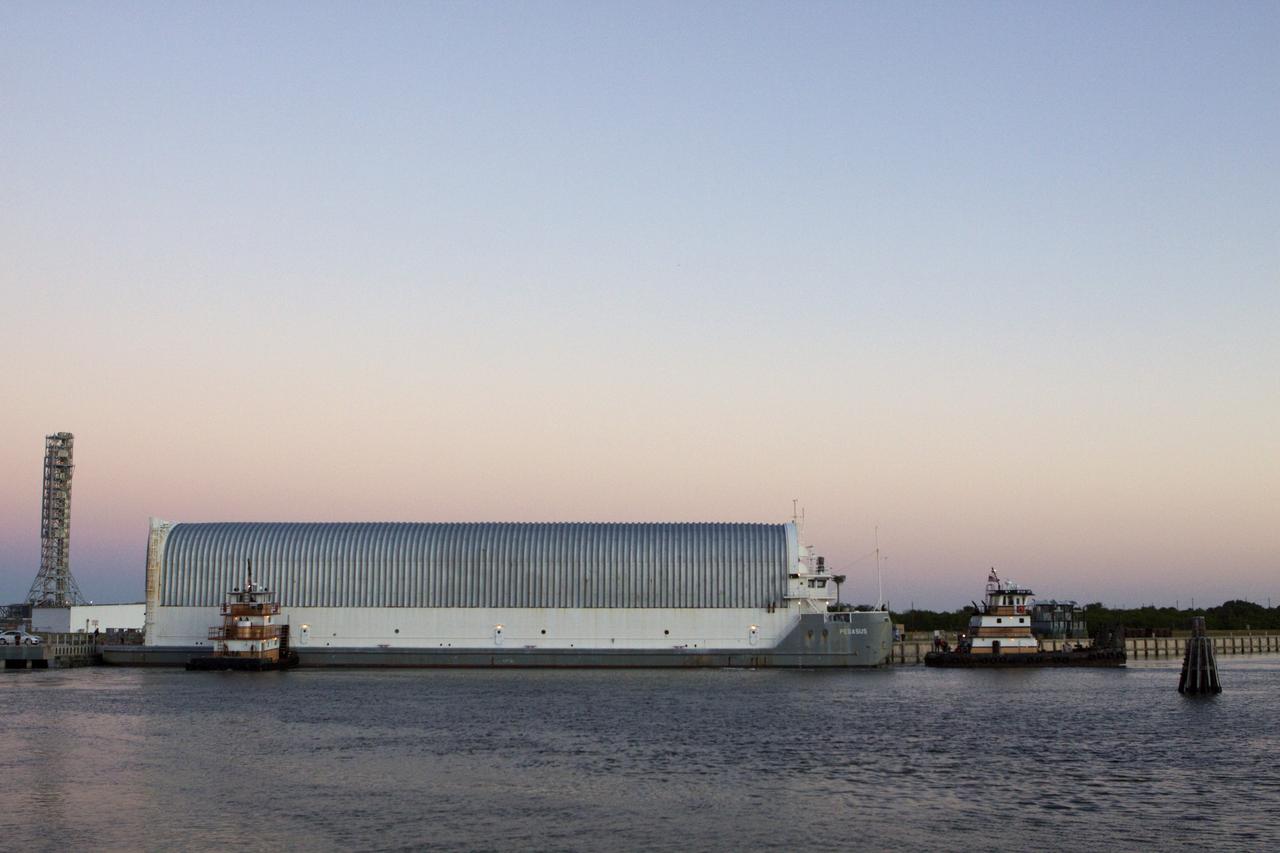
CAPE CANAVERAL, Fla. – In the early morning light at the Turn Basin in the Launch Complex 39 area at NASA's Kennedy Space Center in Florida, two tugboats begin to position the Pegasus Barge for towing. The 266-foot-long and 50-foot-wide barge will be towed by NASA's Freedom Star ship to deliver space shuttle main engine (SSME) ground support equipment to Stennis Space Center near Bay St. Louis, Miss. Since being delivered to NASA in 1999, Pegasus sailed 41 times and transported 31 shuttle external fuel tanks from Michoud Assembly Facility near New Orleans to Kennedy. The barge will leave Kennedy, perhaps for the final time. Both the barge and shuttle equipment will remain in storage until their specific future uses are determined. The SSMEs themselves will be transported to Stennis separately for use with the agency’s new heavy-lift rocket, the Space Launch System. The work is part of the Space Shuttle Program’s transition and retirement processing. For more information about Shuttle Transition and Retirement, visit http://www.nasa.gov/mission_pages/transition/home/index.html. Photo credit: NASA/ Kim Shiflett
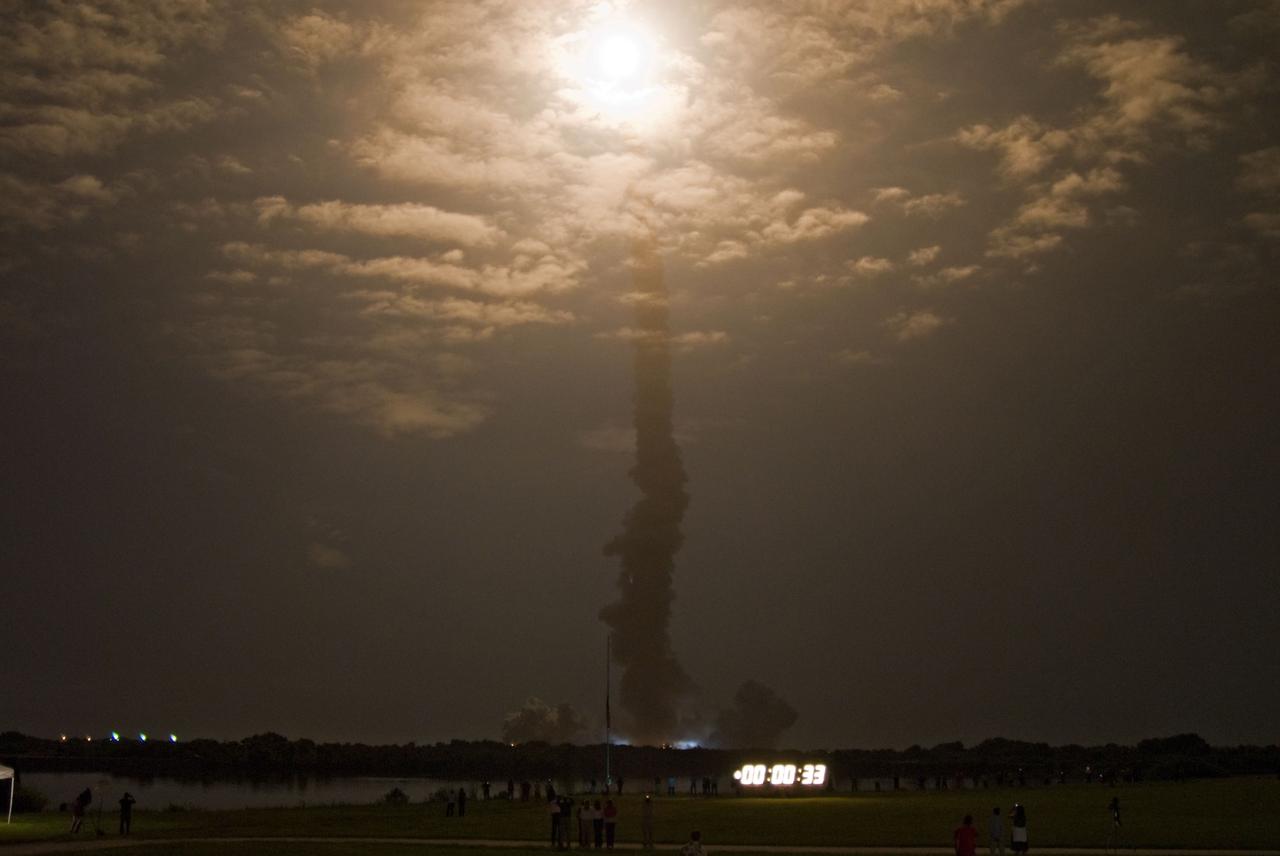
STS128-S-012 (28 Aug. 2009) --- Lighting up the clouds in the night sky, Space Shuttle Discovery and its seven-member STS-128 crew head toward Earth orbit and rendezvous with the International Space Station (ISS). Liftoff was on time at 11:59 p.m. (EDT) on Aug. 28, 2009 from launch pad 39A at NASA?s Kennedy Space Center. Onboard are astronauts Rick Sturckow, commander; Kevin Ford, pilot; John ?Danny? Olivas, European Space Agency astronaut Christer Fuglesang, Patrick Forrester, Jose Hernandez and Nicole Stott, all mission specialists. Stott will join Expedition 20 in progress to serve as a flight engineer aboard the ISS. The 13-day mission will deliver more than seven tons of supplies, science racks and equipment, as well as additional environmental hardware to sustain six crew members on the space station. The equipment includes a freezer to store research samples, a new sleeping compartment and the COLBERT treadmill. The mission is the 128th in the Space Shuttle Program, the 37th flight of Discovery and the 30th station assembly flight.
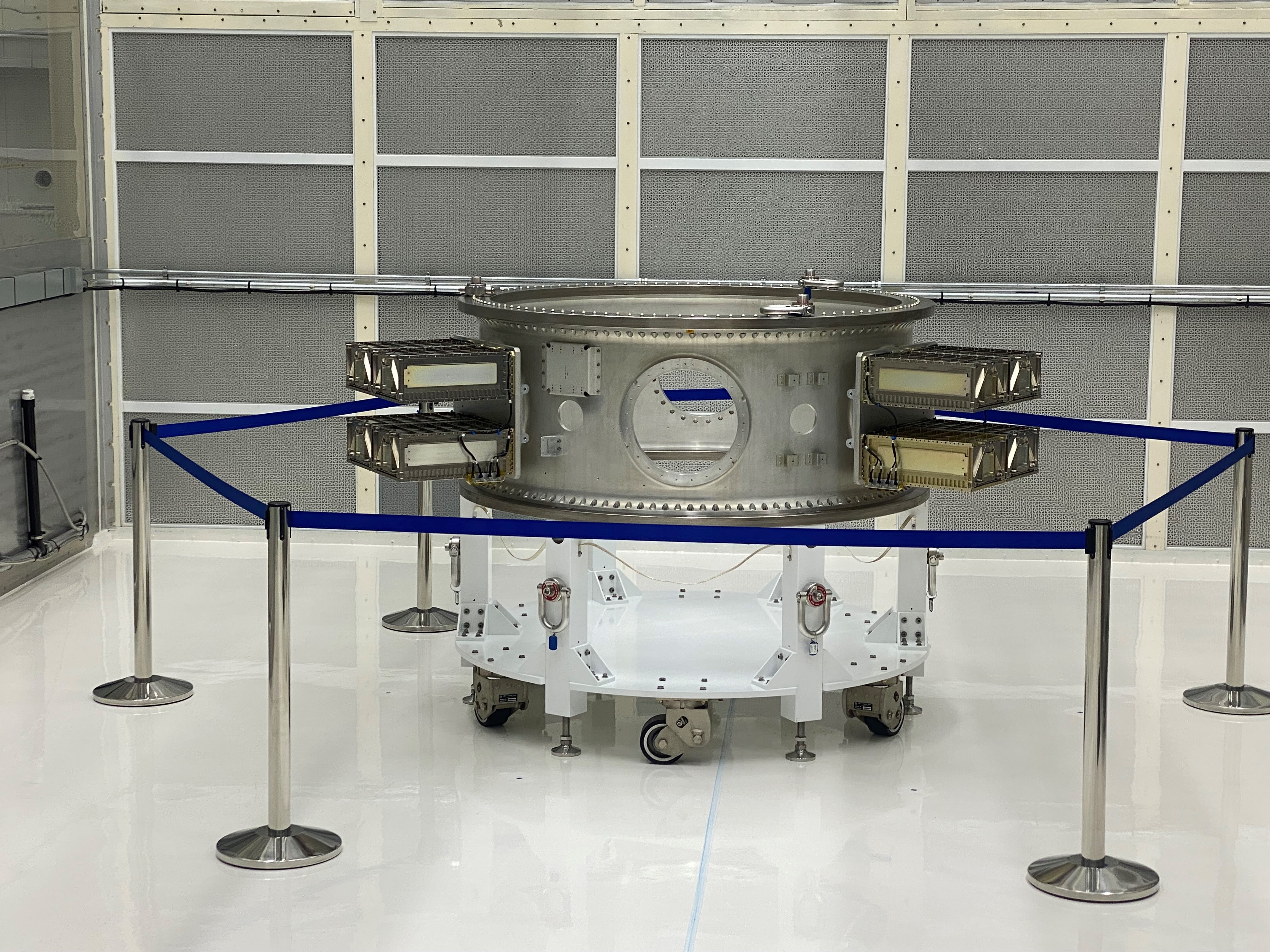
Mechanical and electrical support equipment for NASA’s Landsat 9 observatory are inside the Integrated Processing Facility at Vandenberg Space Force Base in California, on June 16, 2021. The equipment includes a secondary payload adapter and flight system for a group of microsat payloads, called CubeSats, that will launch with Landsat 9 as secondary payloads. Landsat 9 will launch on a United Launch Alliance Atlas V rocket from Space Launch Complex 3 at Vandenberg in September 2021. The launch is being managed by NASA’s Launch Services Program based at Kennedy Space Center, America’s multiuser spaceport. The Landsat 9 satellite will continue the nearly 50-year legacy of previous Landsat missions. It will monitor key natural and economic resources from orbit. Landsat 9 is managed by the agency’s Goddard Space Flight Center in Greenbelt, Maryland. The satellite will carry two instruments: the Operational Land Imager 2, which collects images of Earth’s landscapes in visible, near infrared and shortwave infrared light, and the Thermal Infrared Sensor 2, which measures the temperature of land surfaces. Like its predecessors, Landsat 9 is a joint mission between NASA and the U.S. Geological Survey.
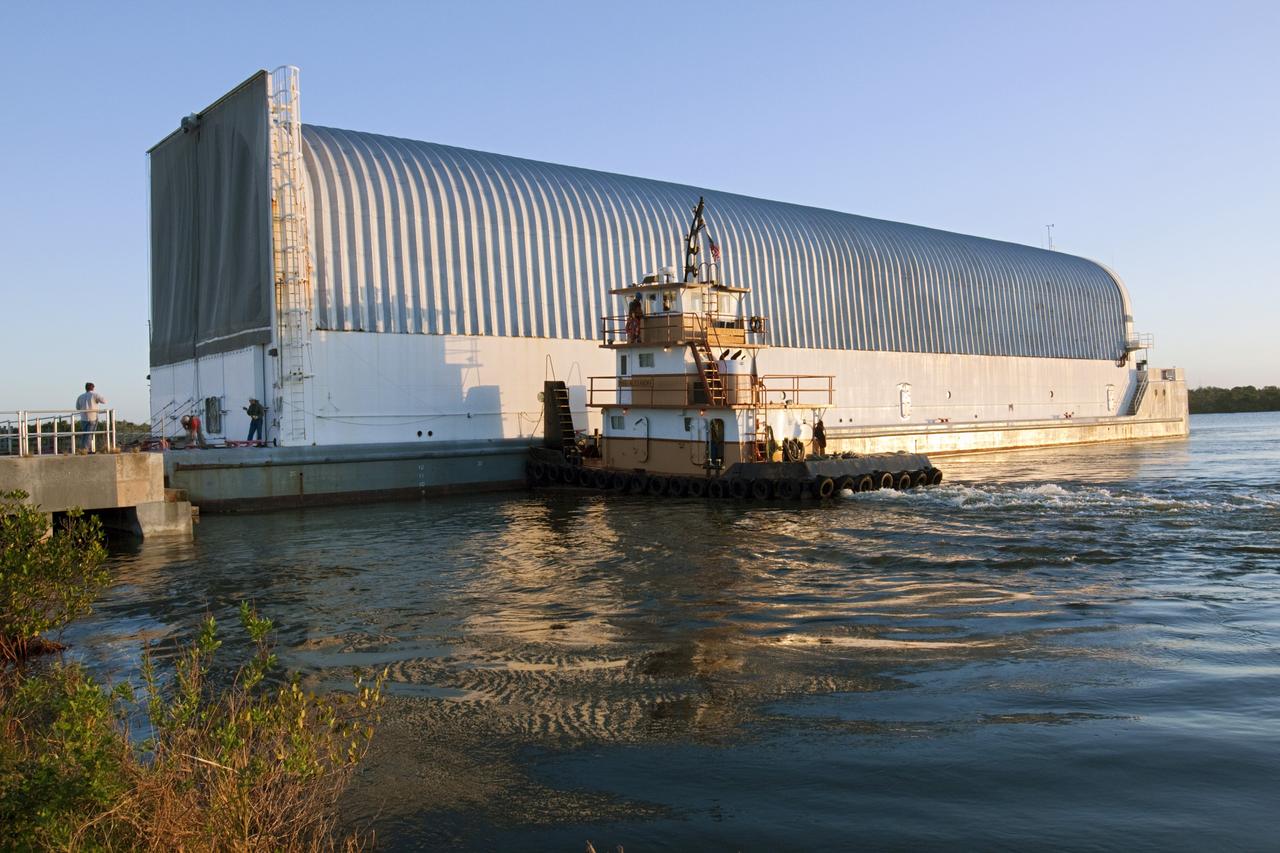
CAPE CANAVERAL, Fla. – In the early morning light at the Turn Basin in the Launch Complex 39 area at NASA's Kennedy Space Center in Florida, a tugboat begins to position the Pegasus Barge for towing. The 266-foot-long and 50-foot-wide barge will be towed by NASA's Freedom Star ship to deliver space shuttle main engine (SSME) ground support equipment to Stennis Space Center near Bay St. Louis, Miss. Since being delivered to NASA in 1999, Pegasus sailed 41 times and transported 31 shuttle external fuel tanks from Michoud Assembly Facility near New Orleans to Kennedy. The barge will leave Kennedy, perhaps for the final time. Both the barge and shuttle equipment will remain in storage until their specific future uses are determined. The SSMEs themselves will be transported to Stennis separately for use with the agency’s new heavy-lift rocket, the Space Launch System. The work is part of the Space Shuttle Program’s transition and retirement processing. For more information about Shuttle Transition and Retirement, visit http://www.nasa.gov/mission_pages/transition/home/index.html. Photo credit: NASA/ Kim Shiflett
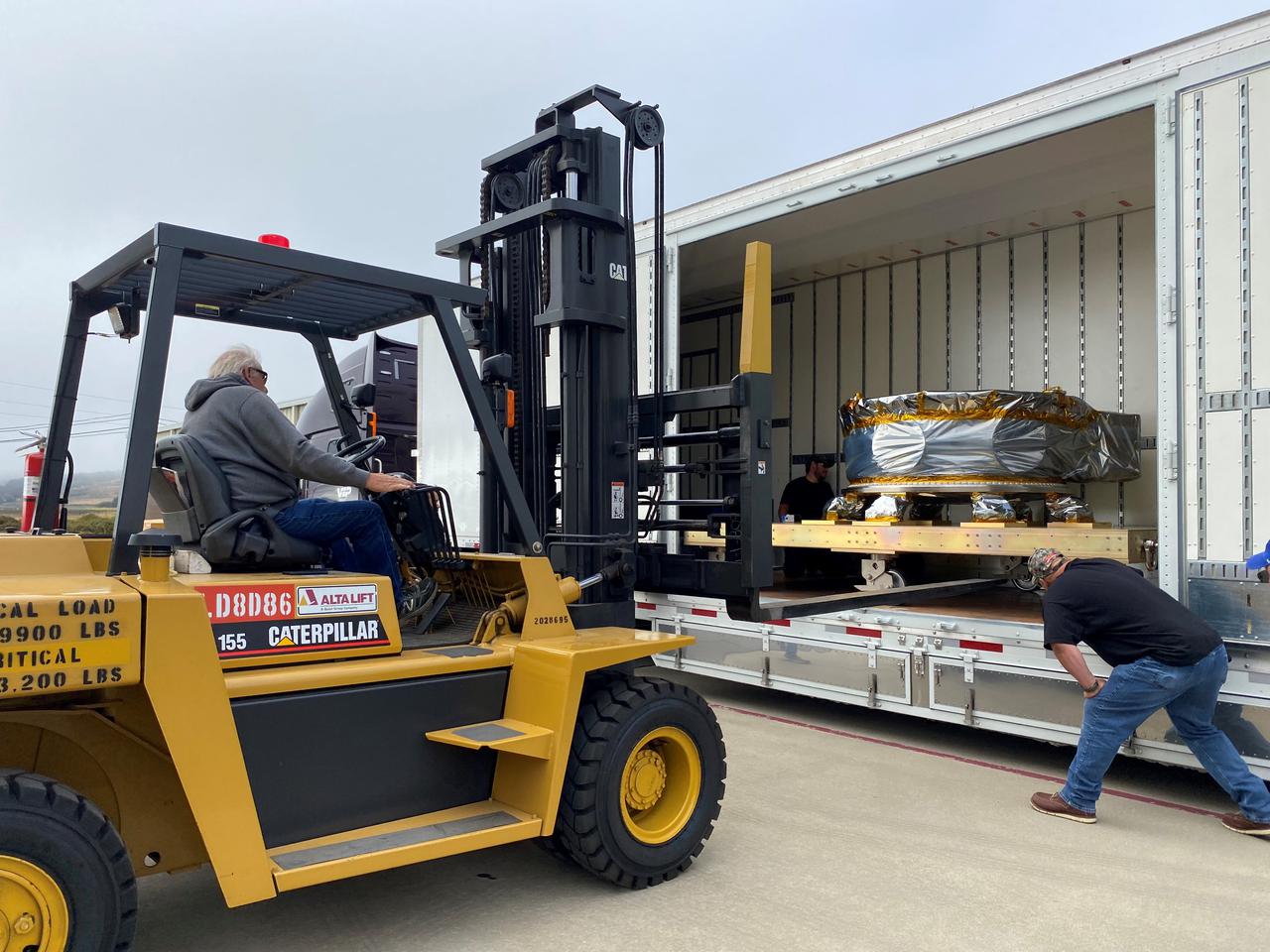
Mechanical and electrical support equipment for NASA’s Landsat 9 observatory arrive at the Integrated Processing Facility at Vandenberg Space Force Base in California, on June 14, 2021. The equipment includes a secondary payload adapter and flight system for a group of microsat payloads, called CubeSats, that will launch with Landsat 9 as secondary payloads. Landsat 9 will launch on a United Launch Alliance Atlas V rocket from Space Launch Complex 3 at Vandenberg in September 2021. The launch is being managed by NASA’s Launch Services Program based at Kennedy Space Center, America’s multiuser spaceport. The Landsat 9 satellite will continue the nearly 50-year legacy of previous Landsat missions. It will monitor key natural and economic resources from orbit. Landsat 9 is managed by the agency’s Goddard Space Flight Center in Greenbelt, Maryland. The satellite will carry two instruments: the Operational Land Imager 2, which collects images of Earth’s landscapes in visible, near infrared and shortwave infrared light, and the Thermal Infrared Sensor 2, which measures the temperature of land surfaces. Like its predecessors, Landsat 9 is a joint mission between NASA and the U.S. Geological Survey.
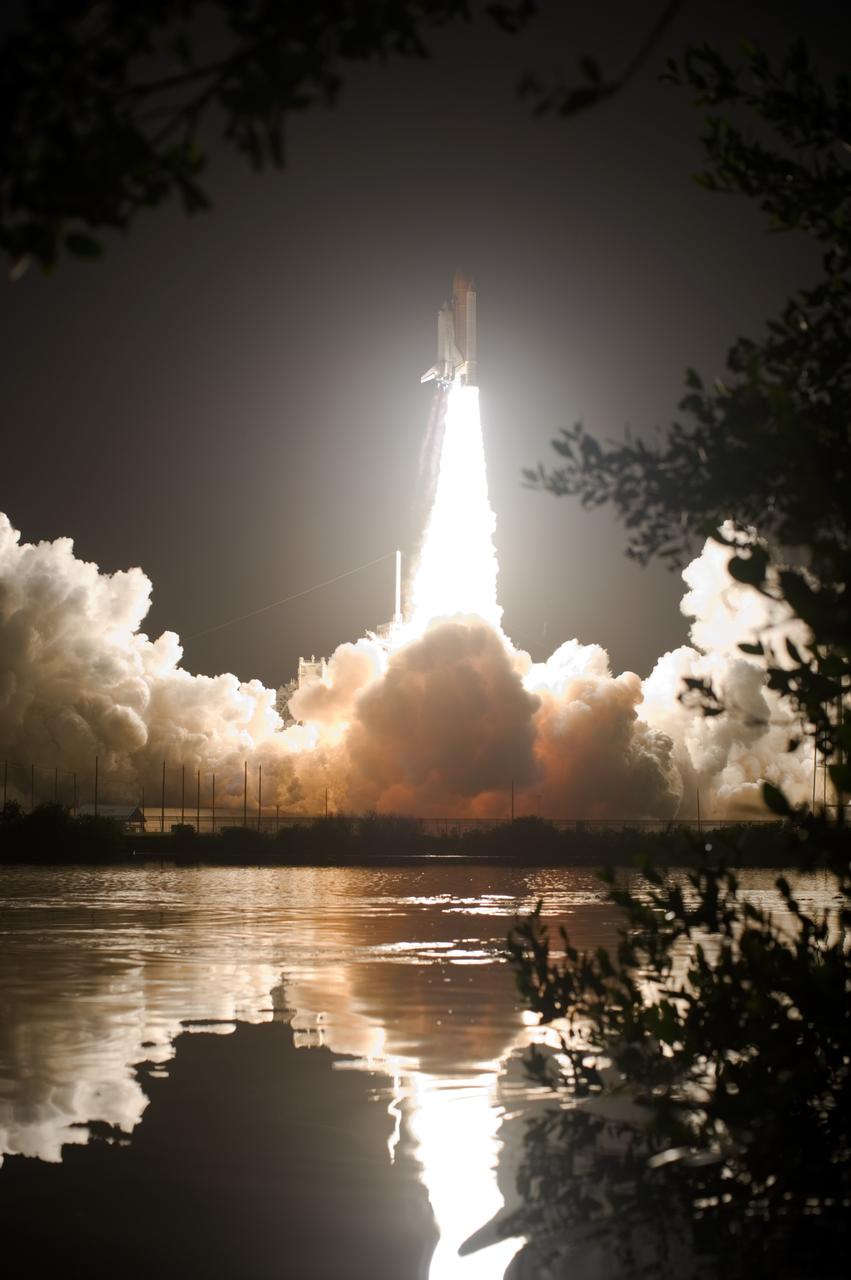
CAPE CANAVERAL, Fla. – Racing to space atop a tower of flame, space shuttle Discovery lights the night sky at liftoff, all captured in the water near Launch Pad 39A at NASA's Kennedy Space Center in Florida. Liftoff from Launch Pad 39A on the STS-128 mission was on time at 11:59 p.m. EDT. The first launch attempt on Aug. 24 was postponed due to unfavorable weather conditions. The second attempt on Aug. 25 also was postponed due to an issue with a valve in space shuttle Discovery's main propulsion system. The STS-128 mission is the 30th International Space Station assembly flight and the 128th space shuttle flight. The 13-day mission will deliver more than 7 tons of supplies, science racks and equipment, as well as additional environmental hardware to sustain six crew members on the International Space Station. The equipment includes a freezer to store research samples, a new sleeping compartment and the COLBERT treadmill. Photo credit: NASA/Tony Gray-Tom Farrar
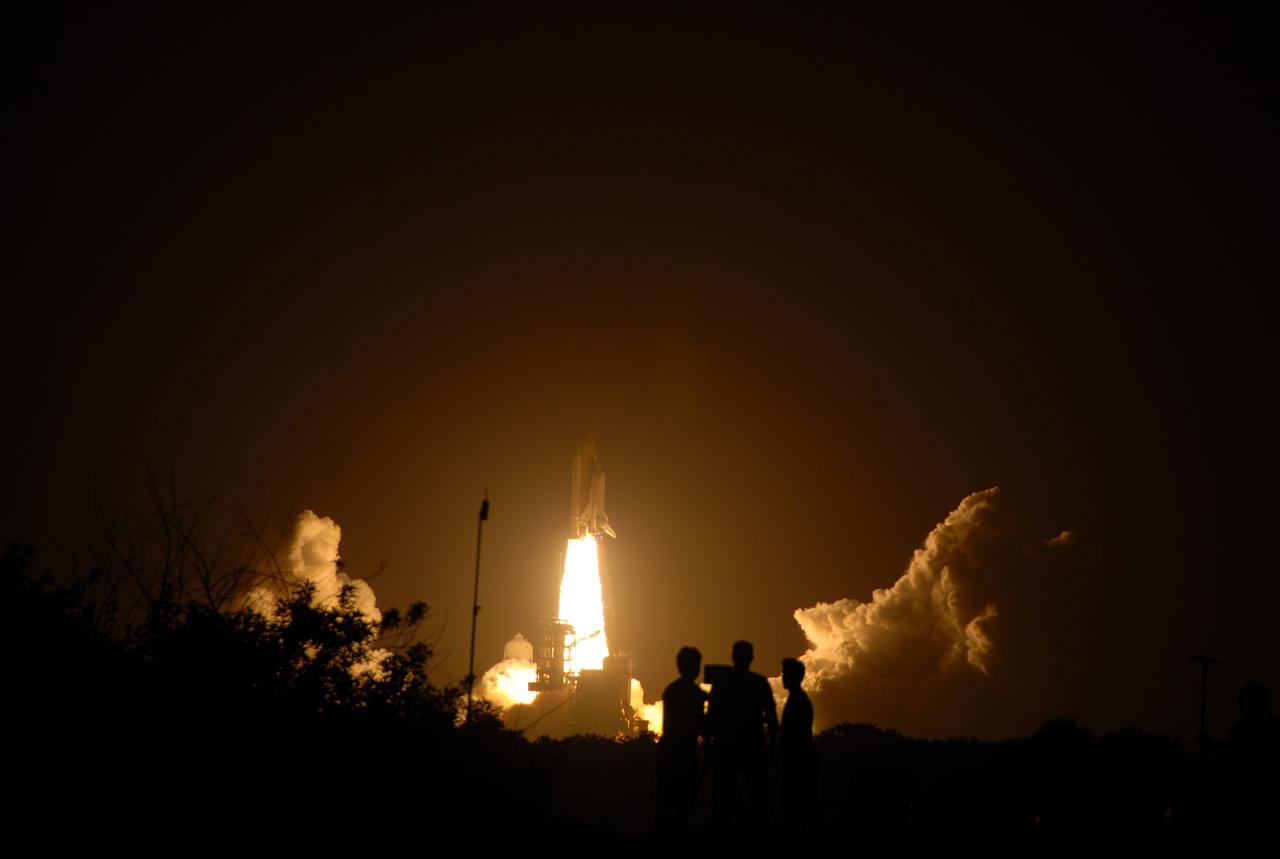
CAPE CANAVERAL, Fla. – Riding a tower of flames, space shuttle Discovery lights the night sky as it races toward space on the STS-128 mission. In the foreground are a few of the dozens of media documenting the event at NASA's Kennedy Space Center in Florida. Liftoff from Launch Pad 39A was on time at 11:59 p.m. EDT. The first launch attempt on Aug. 24 was postponed due to unfavorable weather conditions. The second attempt on Aug. 25 also was postponed due to an issue with a valve in space shuttle Discovery's main propulsion system. The STS-128 mission is the 30th International Space Station assembly flight and the 128th space shuttle flight. The 13-day mission will deliver more than 7 tons of supplies, science racks and equipment, as well as additional environmental hardware to sustain six crew members on the International Space Station. The equipment includes a freezer to store research samples, a new sleeping compartment and the COLBERT treadmill. Photo credit: NASA/Laurel Lichtenberger
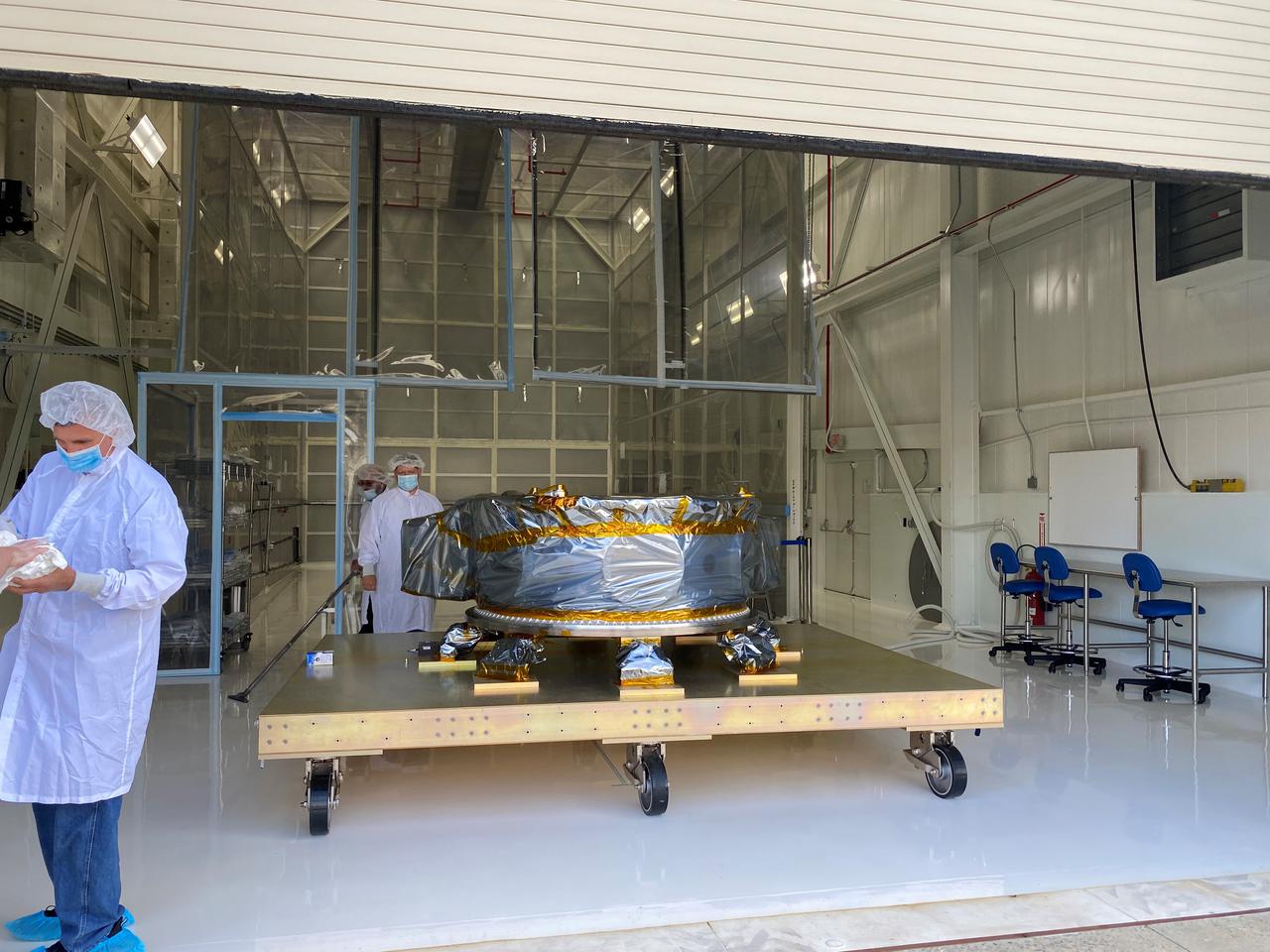
Mechanical and electrical support equipment for NASA’s Landsat 9 observatory arrive inside the Integrated Processing Facility at Vandenberg Space Force Base in California, on June 14, 2021. The equipment includes a secondary payload adapter and flight system for a group of microsat payloads, called CubeSats, that will launch with Landsat 9 as secondary payloads. Landsat 9 will launch on a United Launch Alliance Atlas V rocket from Space Launch Complex 3 at Vandenberg in September 2021. The launch is being managed by NASA’s Launch Services Program based at Kennedy Space Center, America’s multiuser spaceport. The Landsat 9 satellite will continue the nearly 50-year legacy of previous Landsat missions. It will monitor key natural and economic resources from orbit. Landsat 9 is managed by the agency’s Goddard Space Flight Center in Greenbelt, Maryland. The satellite will carry two instruments: the Operational Land Imager 2, which collects images of Earth’s landscapes in visible, near infrared and shortwave infrared light, and the Thermal Infrared Sensor 2, which measures the temperature of land surfaces. Like its predecessors, Landsat 9 is a joint mission between NASA and the U.S. Geological Survey.
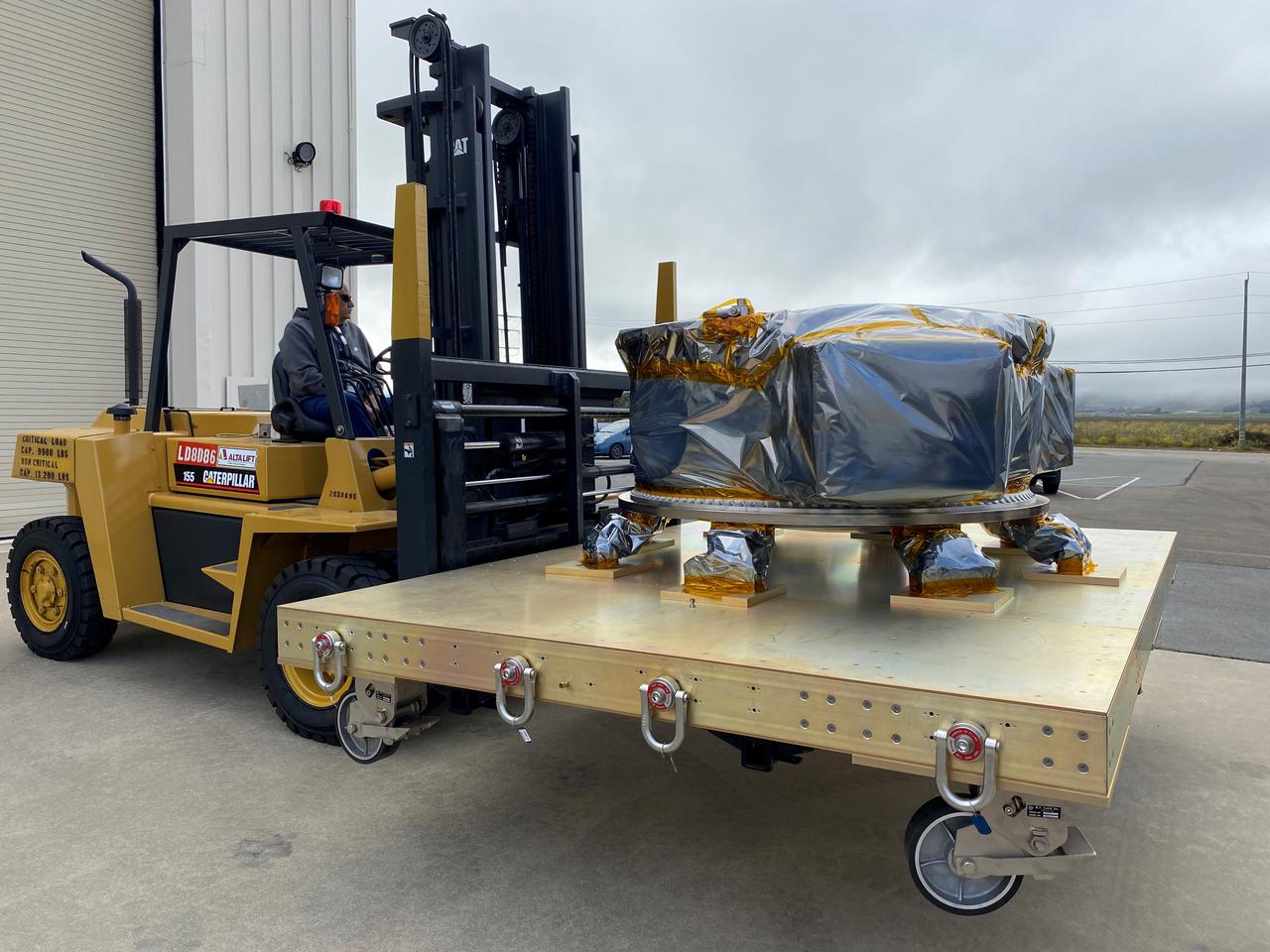
Mechanical and electrical support equipment for NASA’s Landsat 9 observatory arrive at the Integrated Processing Facility at Vandenberg Space Force Base in California, on June 14, 2021. The equipment includes a secondary payload adapter and flight system for a group of microsat payloads, called CubeSats, that will launch with Landsat 9 as secondary payloads. Landsat 9 will launch on a United Launch Alliance Atlas V rocket from Space Launch Complex 3 at Vandenberg in September 2021. The launch is being managed by NASA’s Launch Services Program based at Kennedy Space Center, America’s multiuser spaceport. The Landsat 9 satellite will continue the nearly 50-year legacy of previous Landsat missions. It will monitor key natural and economic resources from orbit. Landsat 9 is managed by the agency’s Goddard Space Flight Center in Greenbelt, Maryland. The satellite will carry two instruments: the Operational Land Imager 2, which collects images of Earth’s landscapes in visible, near infrared and shortwave infrared light, and the Thermal Infrared Sensor 2, which measures the temperature of land surfaces. Like its predecessors, Landsat 9 is a joint mission between NASA and the U.S. Geological Survey.