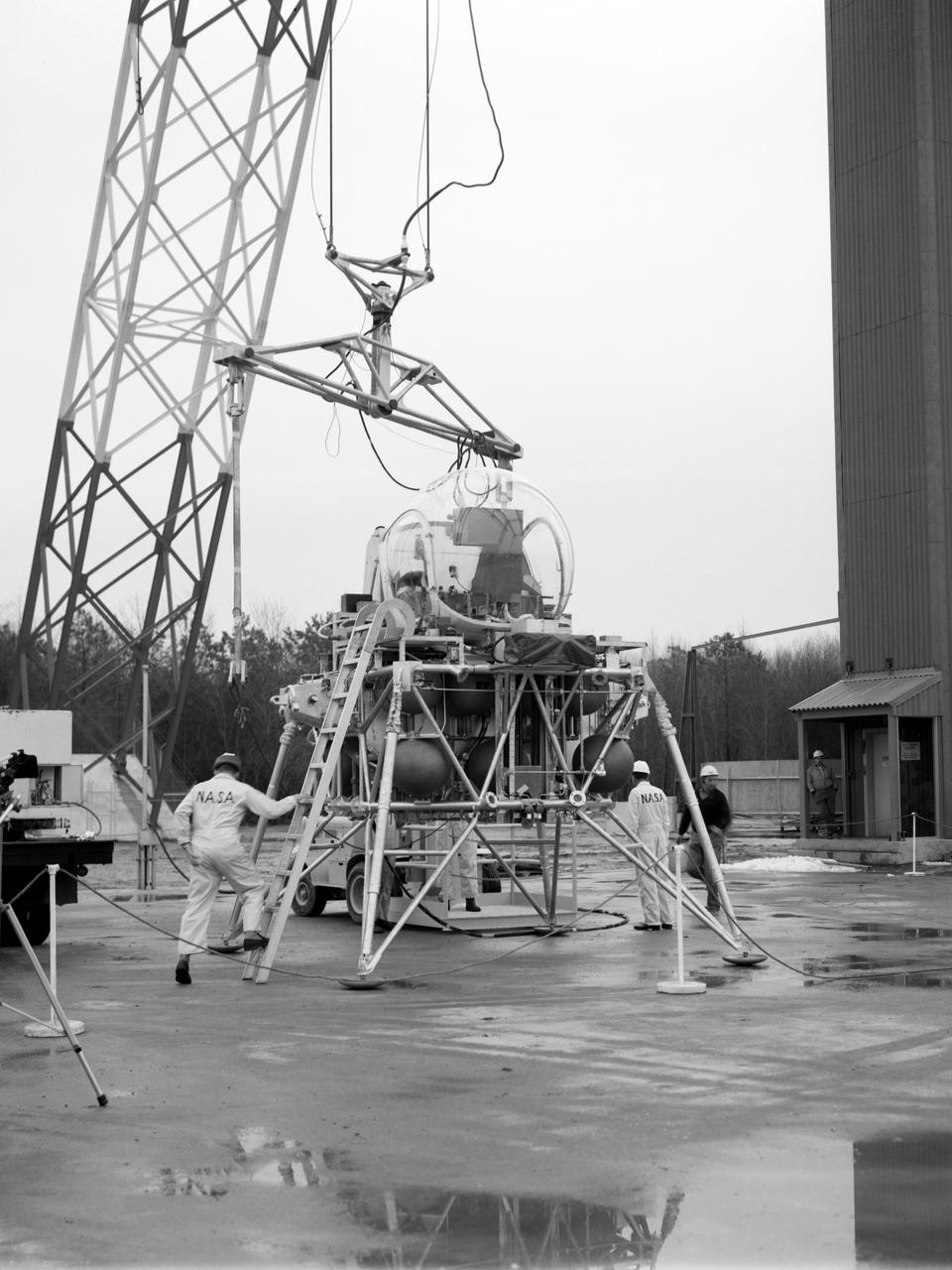
Lunar landing test of LEM at Lunar Landing Research Facility (LLRF).
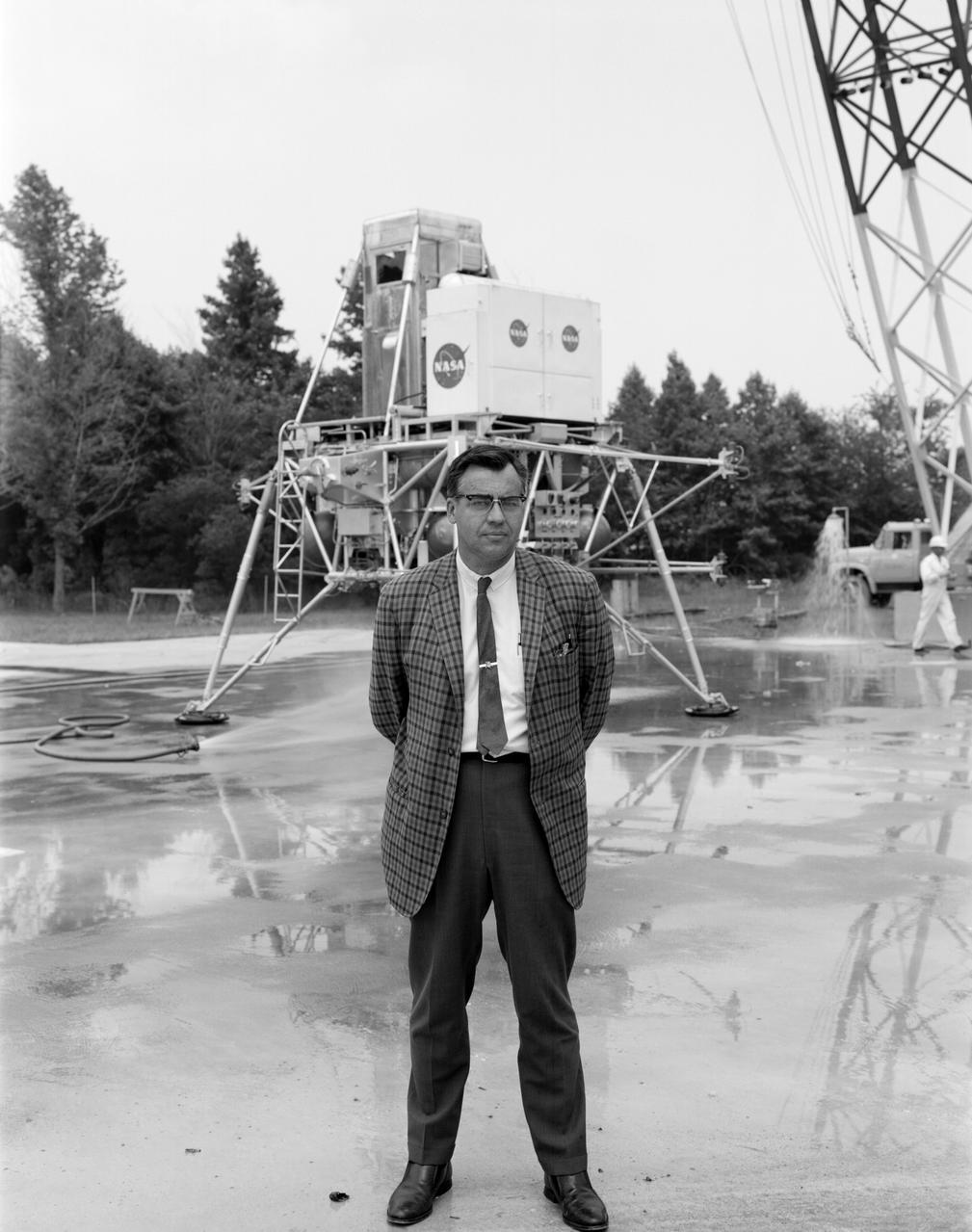
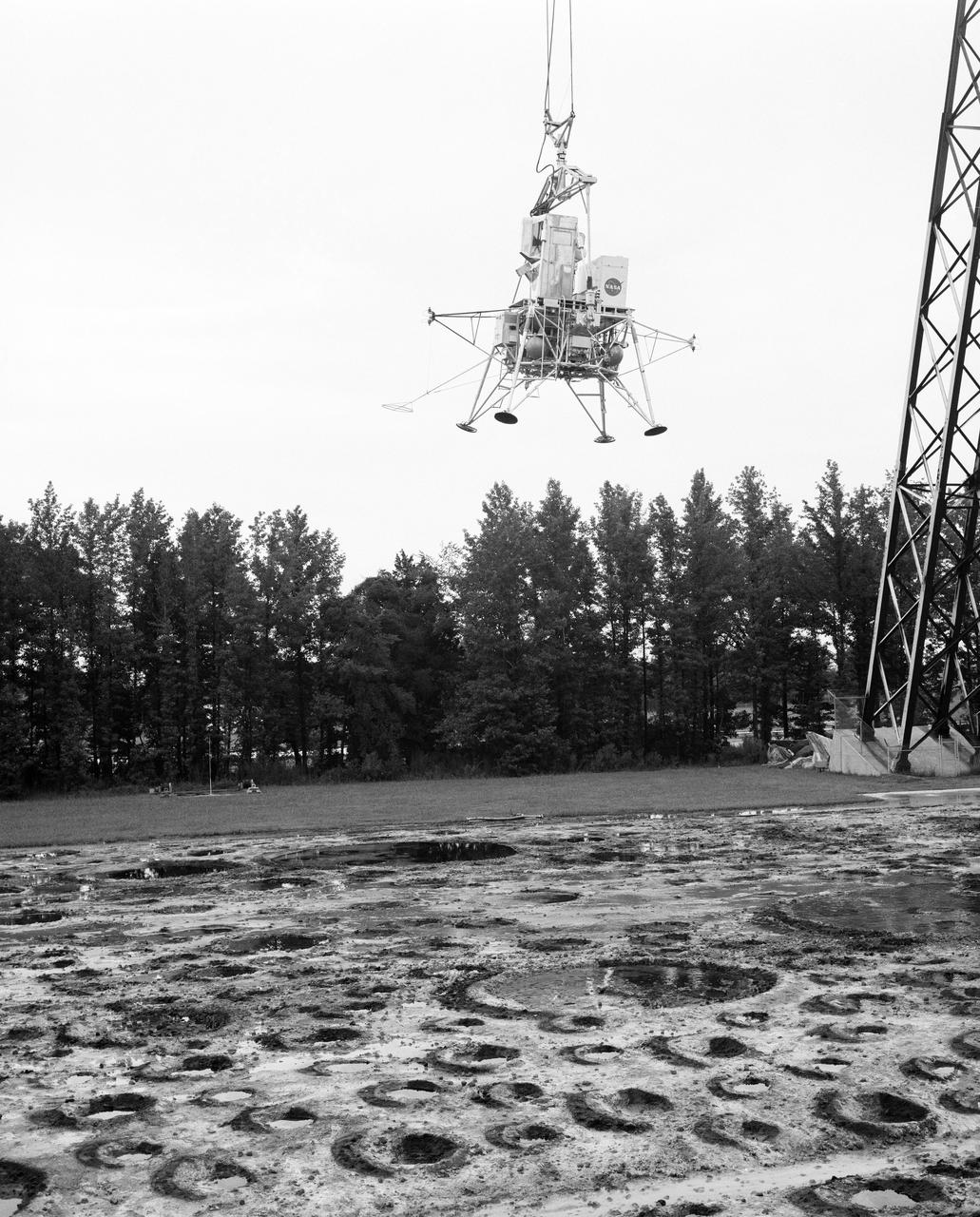
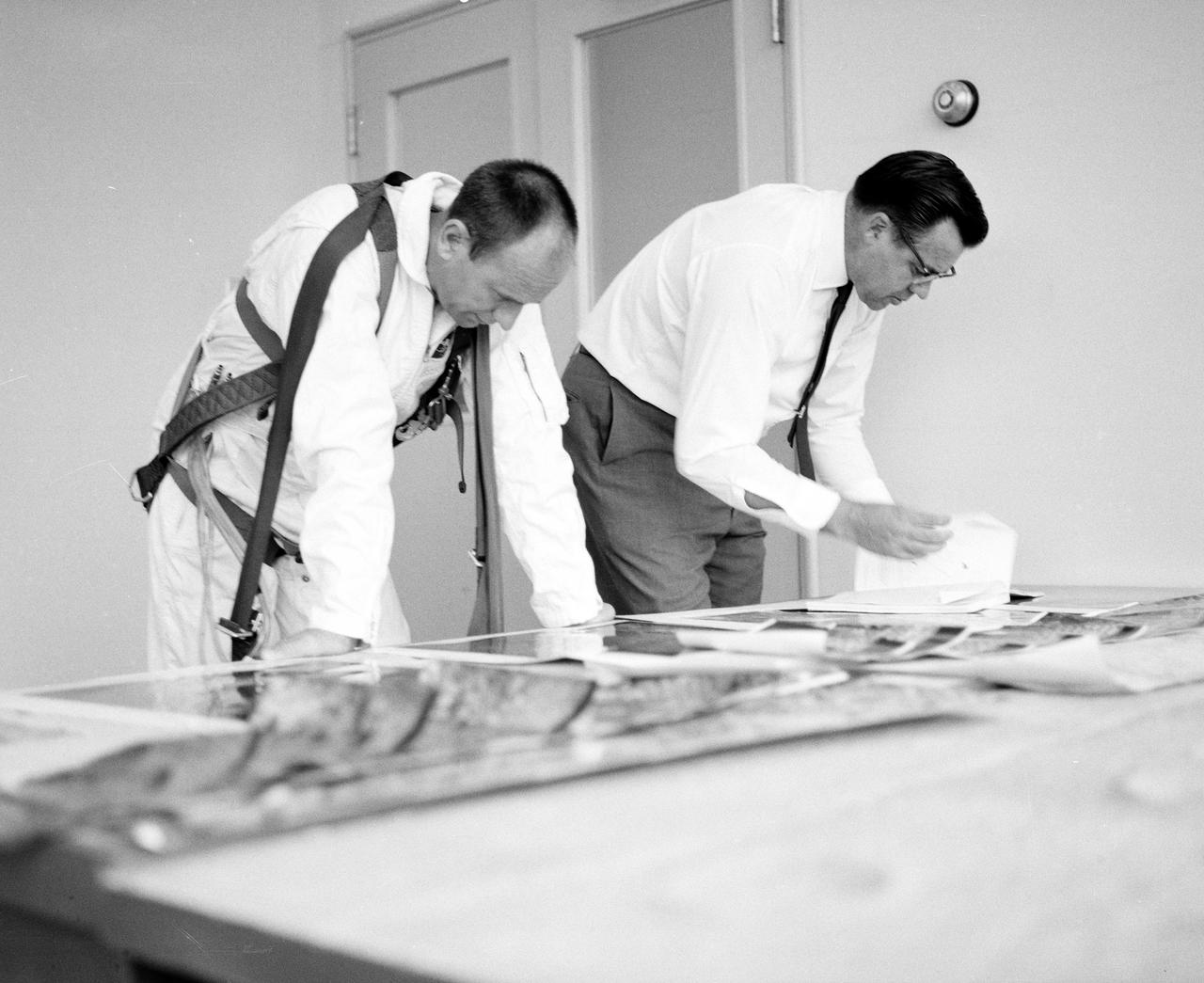
Donald Hewes at Lunar Landing Research Facility (LLRF). Donald Hewes, head of the Spacecraft Research Branch, managed the facility. Piles of cinders simulated the lunar craters and terrain features. Published in the book " A Century at Langley" by Joseph Chambers. pg. 97
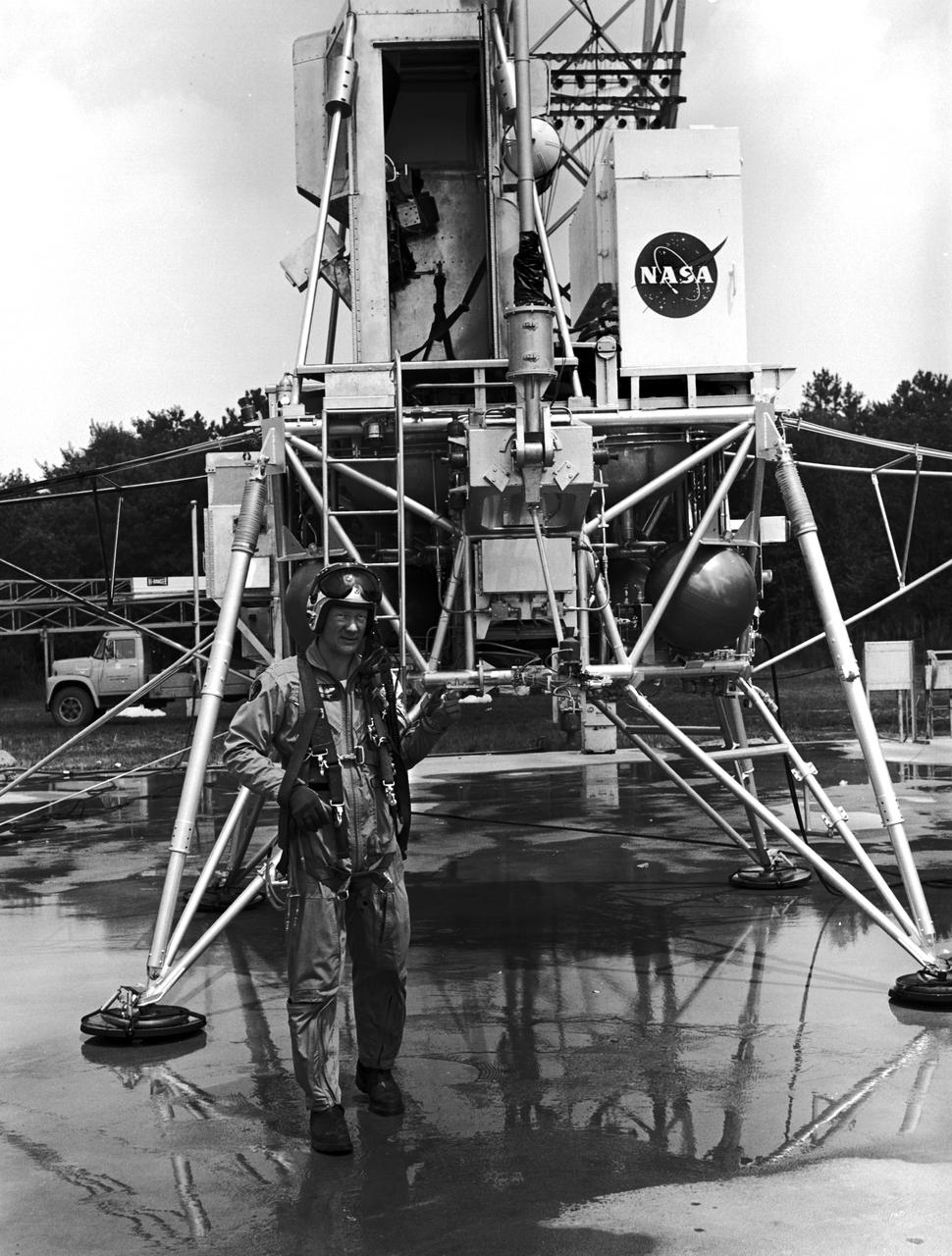
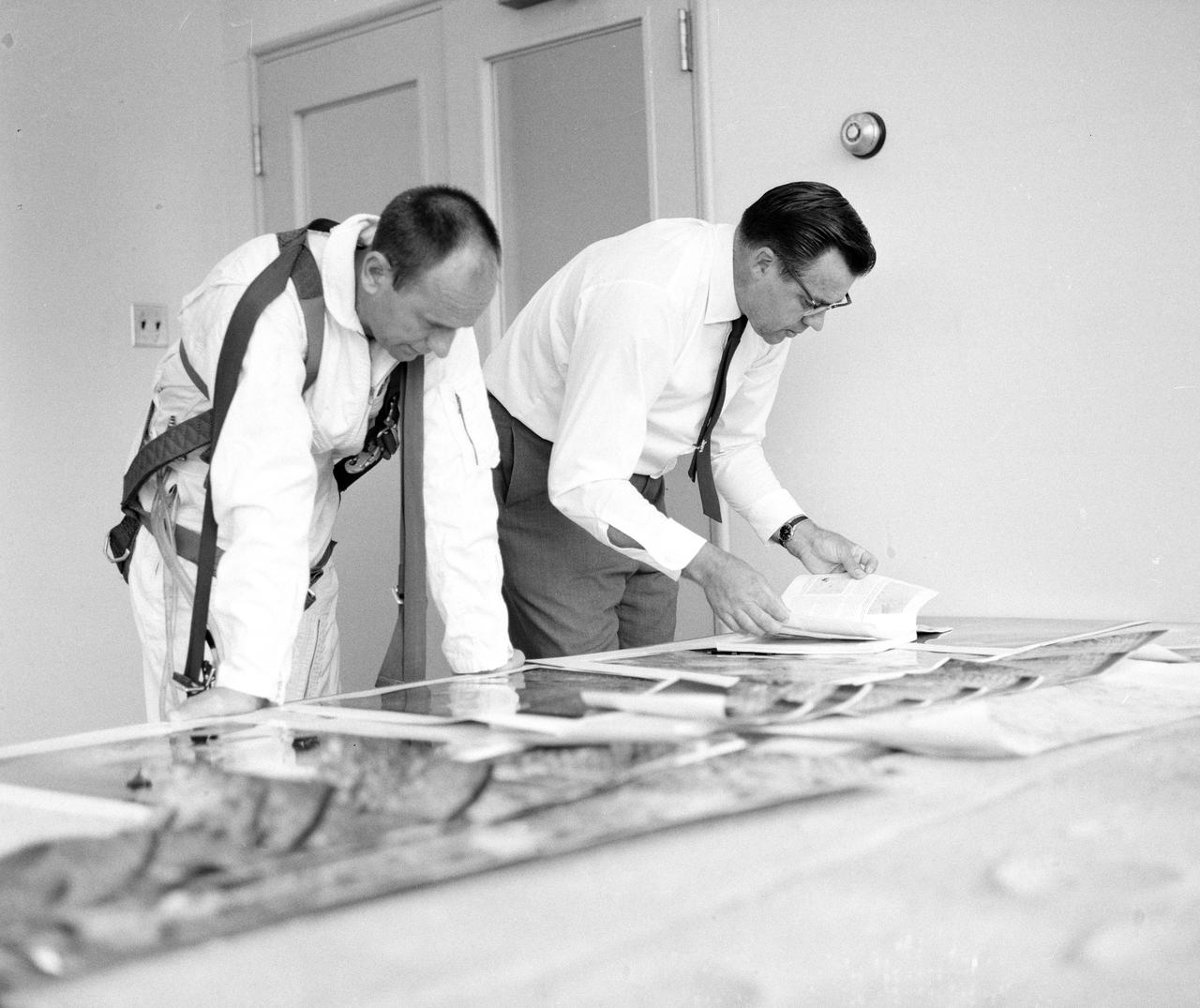
Astronaut Edwin Buzz Aldrin Lunar Module Pilot at the (LLRF) Lunar Landing Research Facility. Aldrin was one of the third group of astronauts named by NASA in October 1963. On November 11, 1966, he and command pilot James Lovell were launched into space in the Gemini 12 spacecraft on a 4-day flight, which brought the Gemini program to a successful close. Aldrin established a new record for extravehicular activity (EVA), spending 5-1/2 hours outside the spacecraft. He served as lunar module pilot for Apollo 11, July 16-24, 1969, the first manned lunar landing mission. Aldrin followed Neil Armstrong onto the lunar surface on July 20, 1969, completing a 2-hour and 15 minute lunar EVA. In July 1971, Aldrin resigned from NASA. Aldrin has logged 289 hours and 53 minutes in space, of which, 7 hours and 52 minutes were spent in EVA. https://www.nasa.gov/astronauts/biographies/former
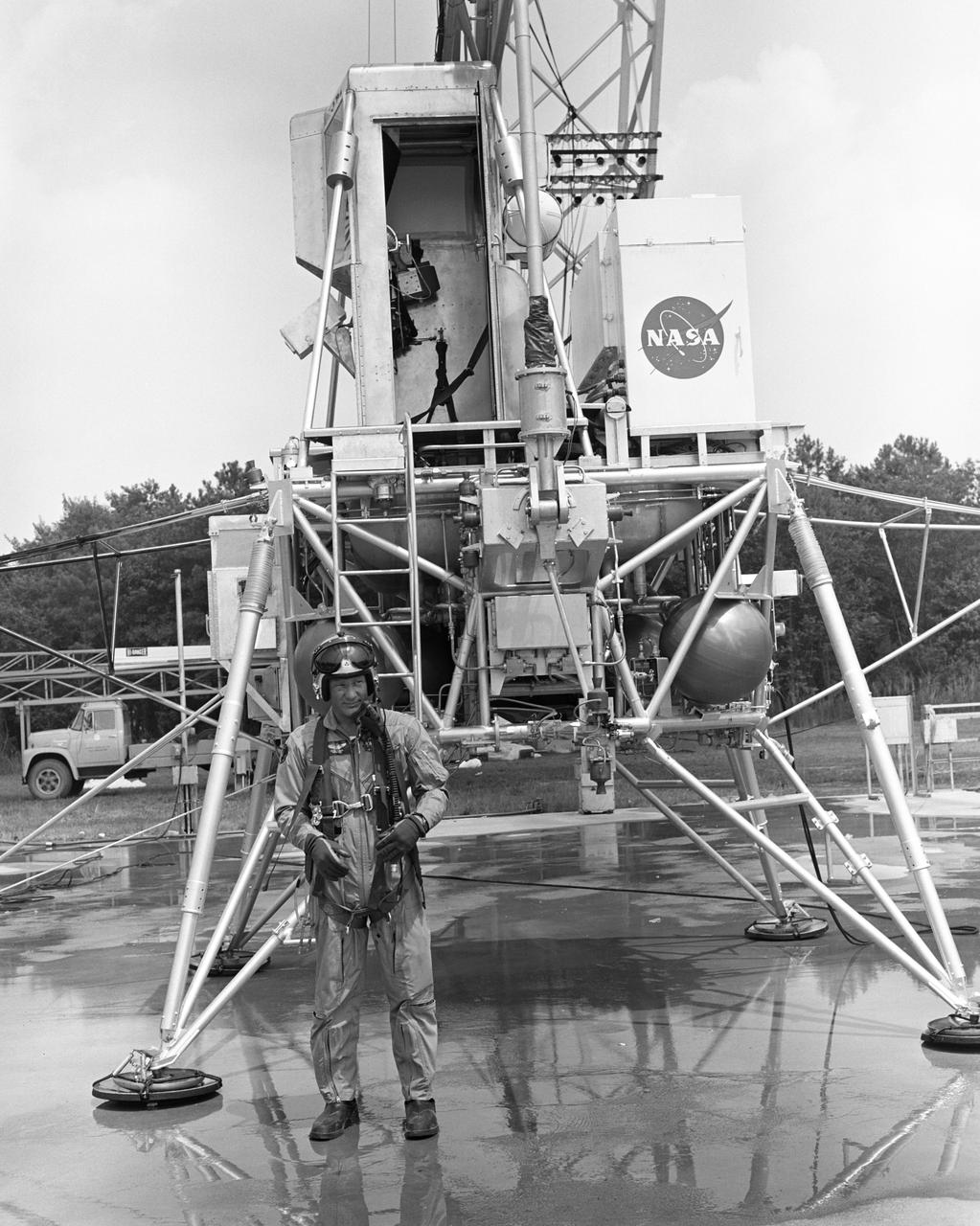
Astronaut Edwin Buzz Aldrin Lunar Module Pilot at the (LLRF) Lunar Landing Research Facility. Aldrin was one of the third group of astronauts named by NASA in October 1963. On November 11, 1966, he and command pilot James Lovell were launched into space in the Gemini 12 spacecraft on a 4-day flight, which brought the Gemini program to a successful close. Aldrin established a new record for extravehicular activity (EVA), spending 5-1/2 hours outside the spacecraft. He served as lunar module pilot for Apollo 11, July 16-24, 1969, the first manned lunar landing mission. Aldrin followed Neil Armstrong onto the lunar surface on July 20, 1969, completing a 2-hour and 15 minute lunar EVA. In July 1971, Aldrin resigned from NASA. Aldrin has logged 289 hours and 53 minutes in space, of which, 7 hours and 52 minutes were spent in EVA. https://www.nasa.gov/astronauts/biographies/former
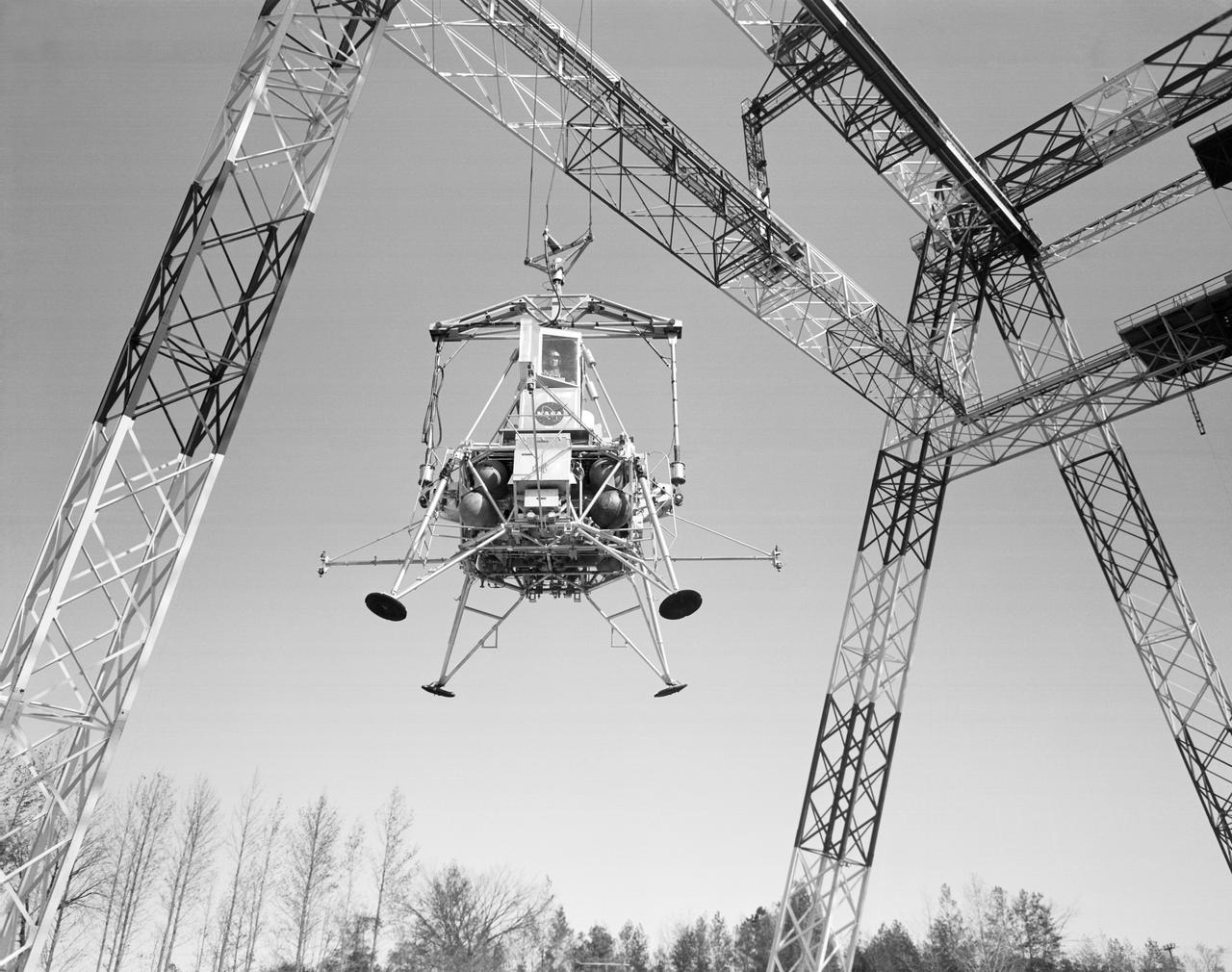
Lunar landing test of LEM at LLRF Lunar Landing Research Facility: A NASA Langley research pilot flies a lunar lander in a test conducted in the Lunar Landing Research Facility.
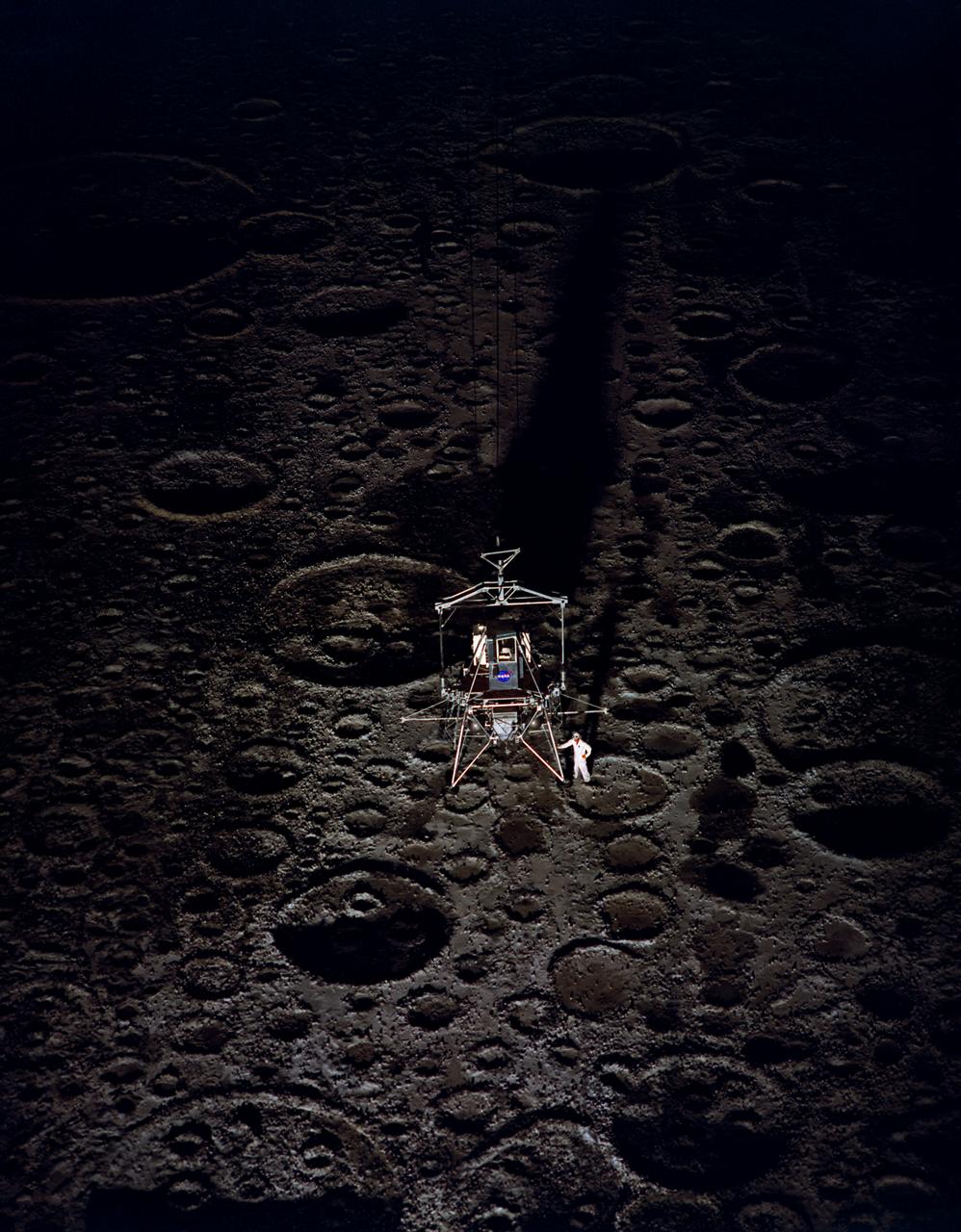
Lunar Landing Module photographed at night at the Lunar Landing Research Facility. Gantry facility 1297. Upright cockpit design lander over moonscape pavement at LLRF. 69-4872 was published in Winds of Change, 75th Anniversary Publication of NASA, P.88, by James Schultz.
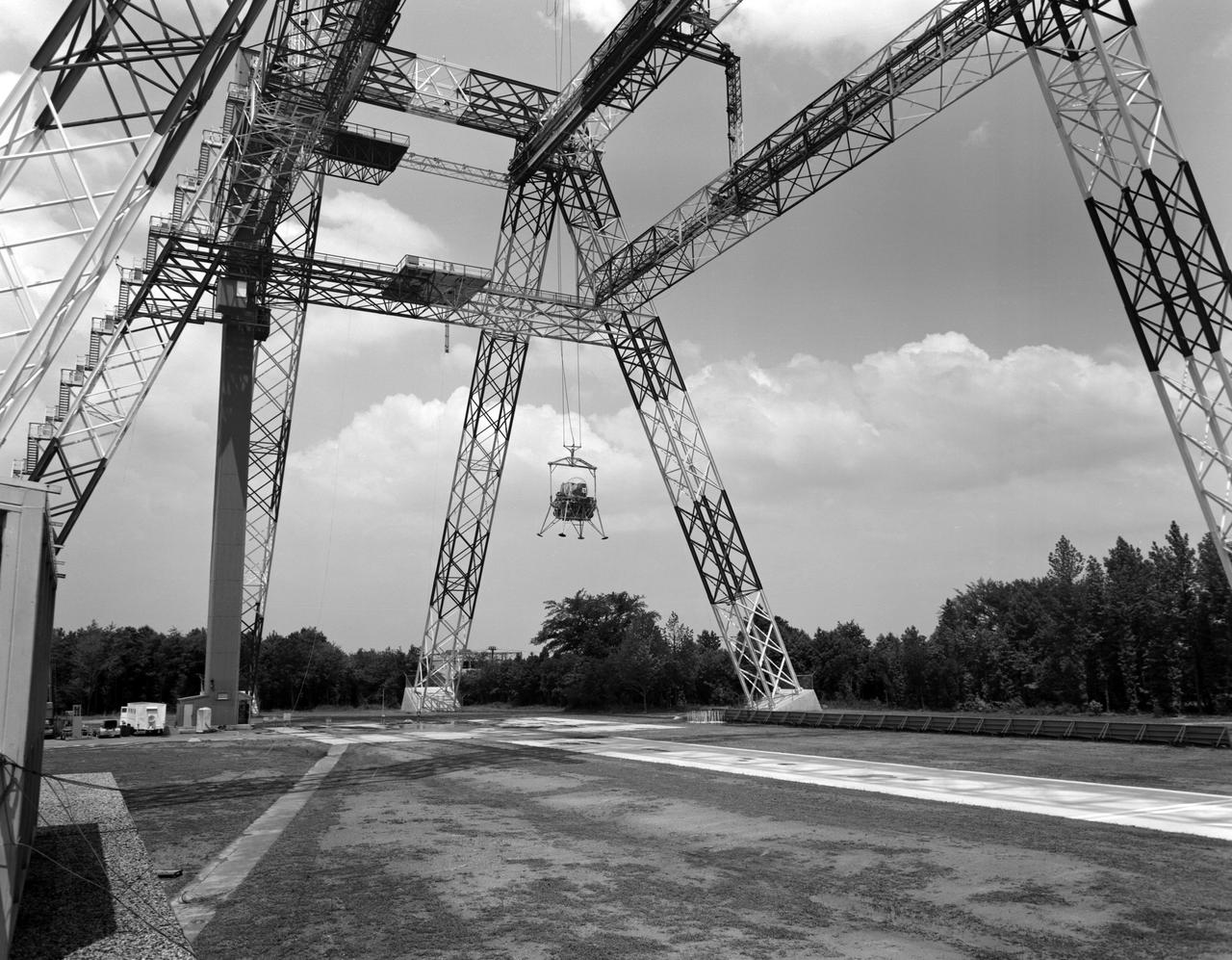
The Lunar Landing Research Facility at Langley Research Center has been put into operation. The facility, 250 feet high and 400 feet long, provides a controlled laboratory in which NASA scientists will work with research pilots to explore and develop techniques for landing a rocket-powered vehicle on the Moon, where the gravity is only one sixth as strong as on Earth. The Lunar Landing Research Facility, a controlled laboratory for exploring and developing techniques for landing a rocket-powered vehicle on the Moon, has been put into operation at the Langley Research Center. The $3.5 million facility includes a rocket-powered piloted flight test vehicle which is operated· while partially supported from a 250-foot high, 400-foot long gantry structure to simulate the one-sixth earth gravity of the Moon in research to obtain data on the problems of lunar landing. Excerpt from Langley Researcher July 2, 1965
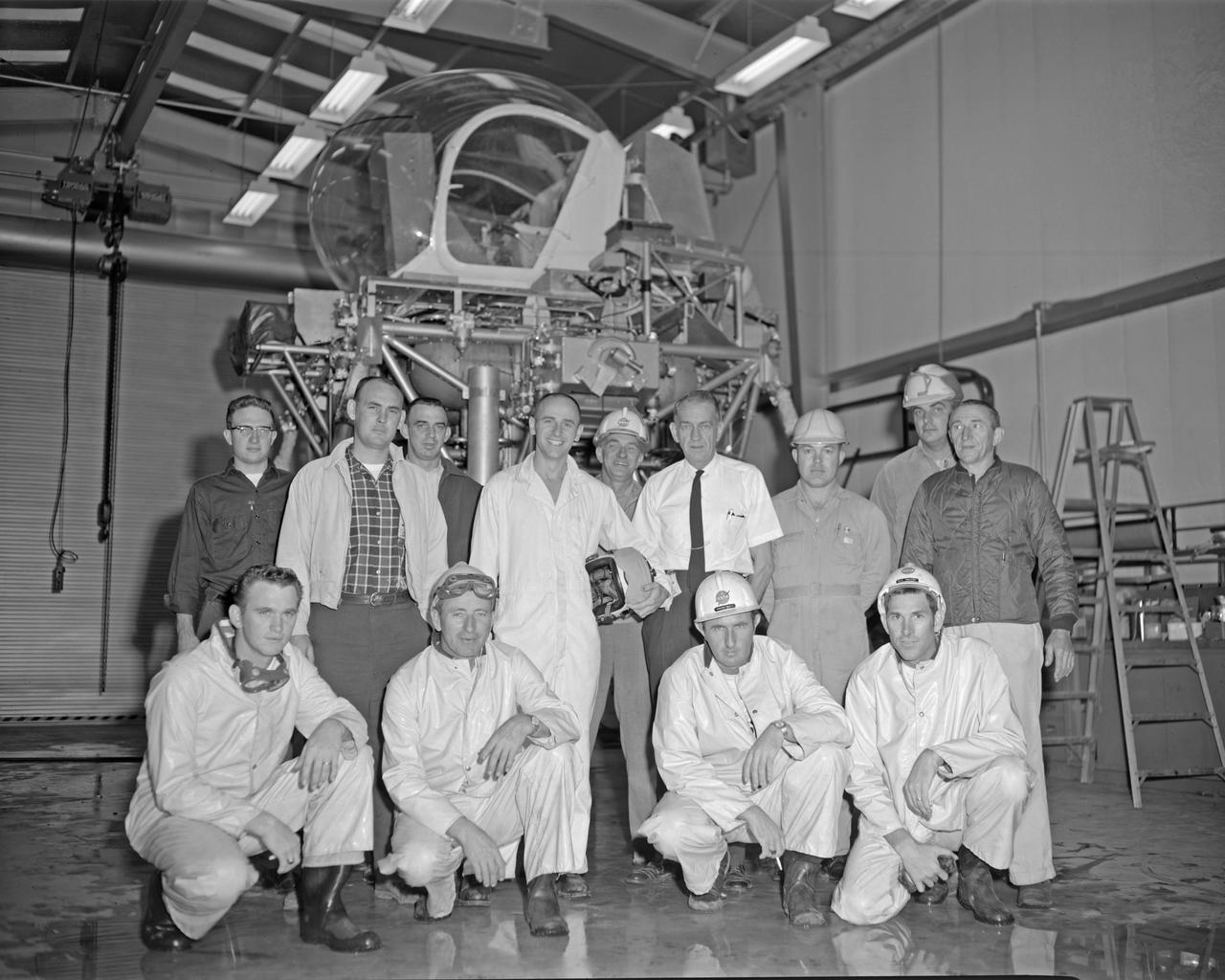
Astronaut Allen Bean with Lunar Landing Research Facility (LLRF) crew. Alan Bean was one of the third group of astronauts named by NASA in October 1963. He served as backup astronaut for the Gemini 10 and Apollo 9 missions.
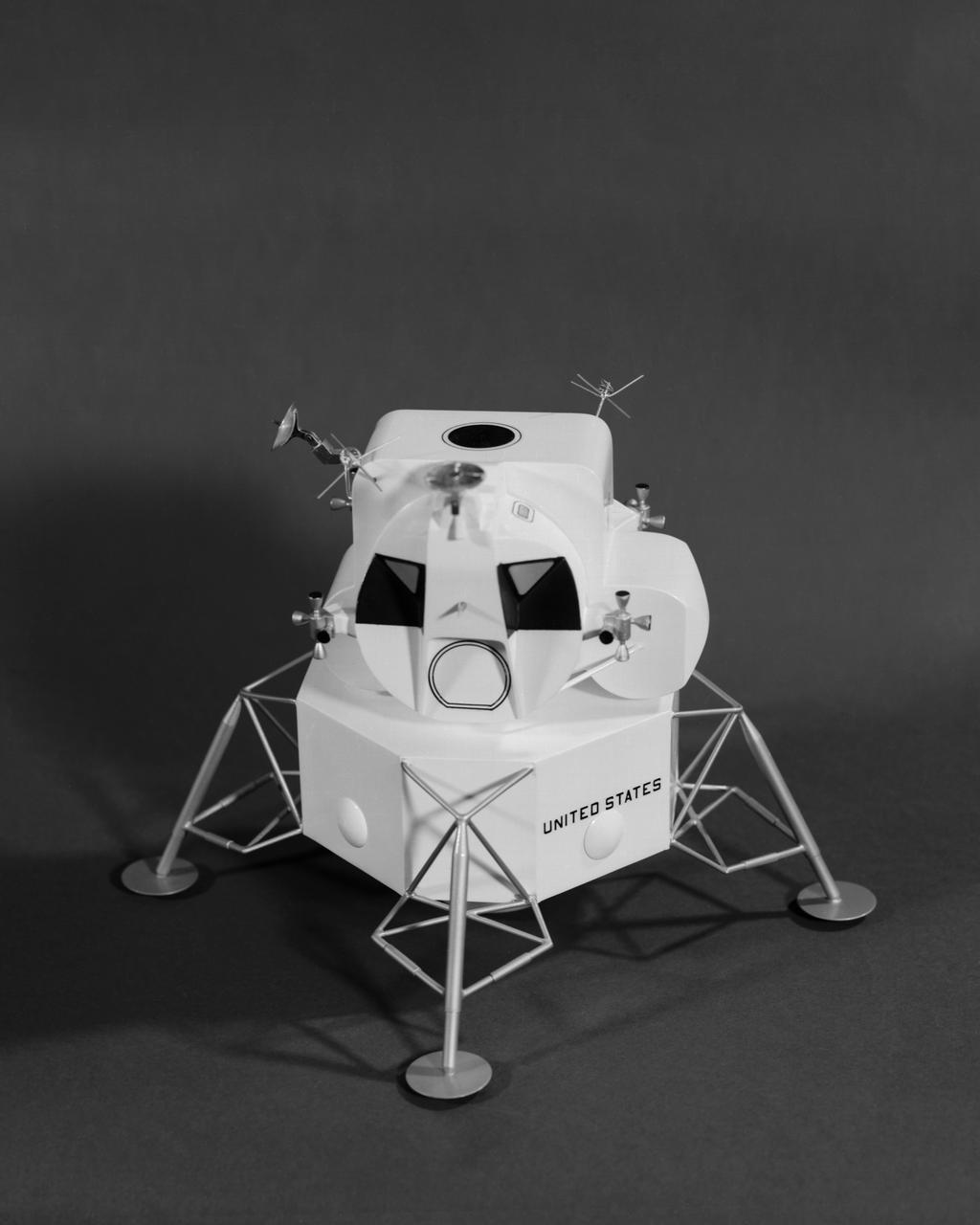
The lunar module design underwent gradual evolution from the first configuration proposed by Grumman in 1962. This model is the 1964 version. Langley had the task of building a simulator for the astronauts to practice lunar landings. The configuration of the initial vehicle used with the Lunar Landing Research Facility (LLRF) was changed in 1967 to more accurately reflect the standing position of the astronauts, cockpit arrangement, instrumentation, controls and field of view.
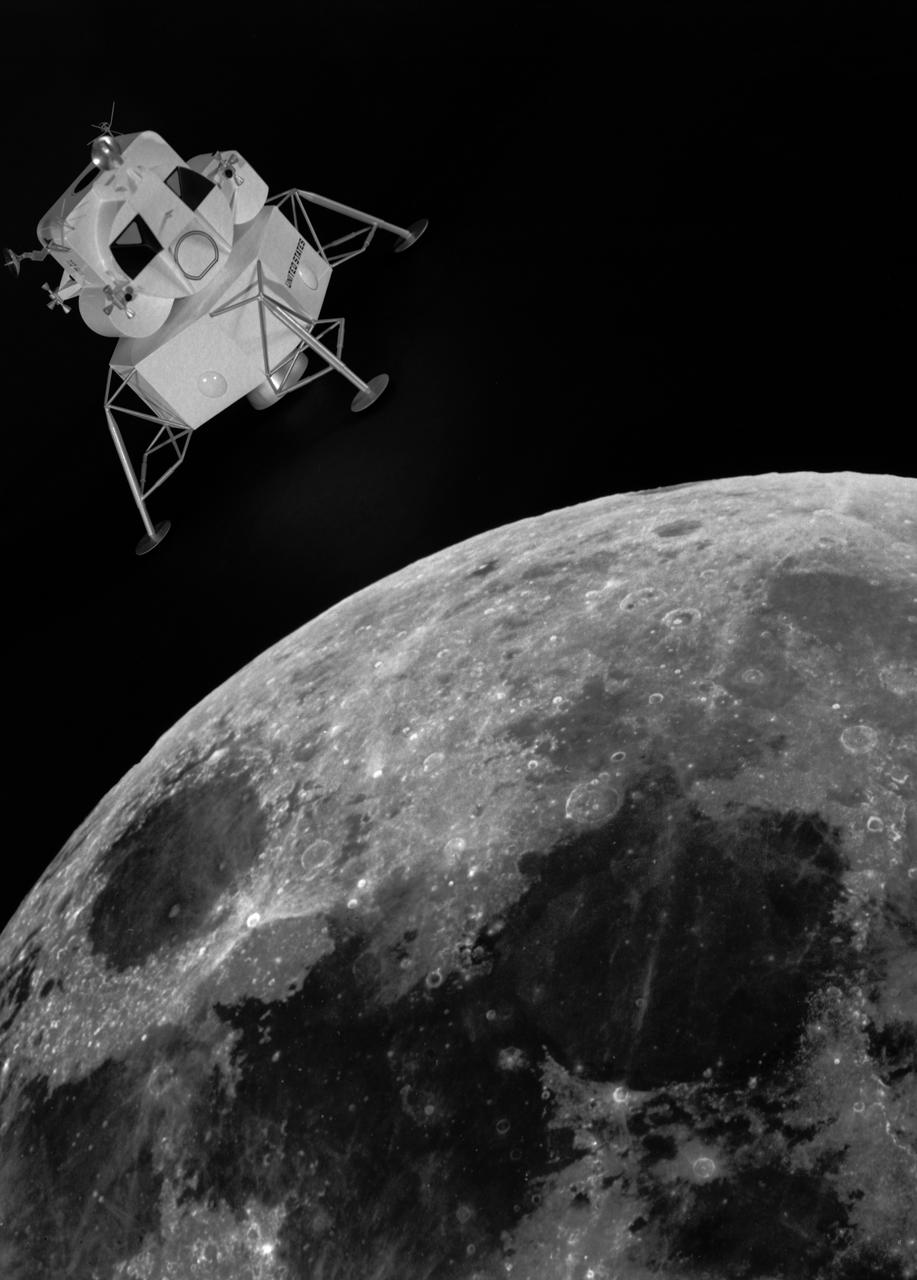
Artist rendering of the lunar excursion module approaching the moon. The lunar module design underwent gradual evolution from the first configuration proposed by Grumman in 1962. This model is a 1964 rendering. Langley had the task of building a simulator for the astronauts to practice lunar landings. The configuration of the initial vehicle used with the Lunar Landing Research Facility (LLRF) was changed in 1967 to more accurately reflect the standing position of the astronauts, cockpit arrangement, instrumentation, controls and field of view.
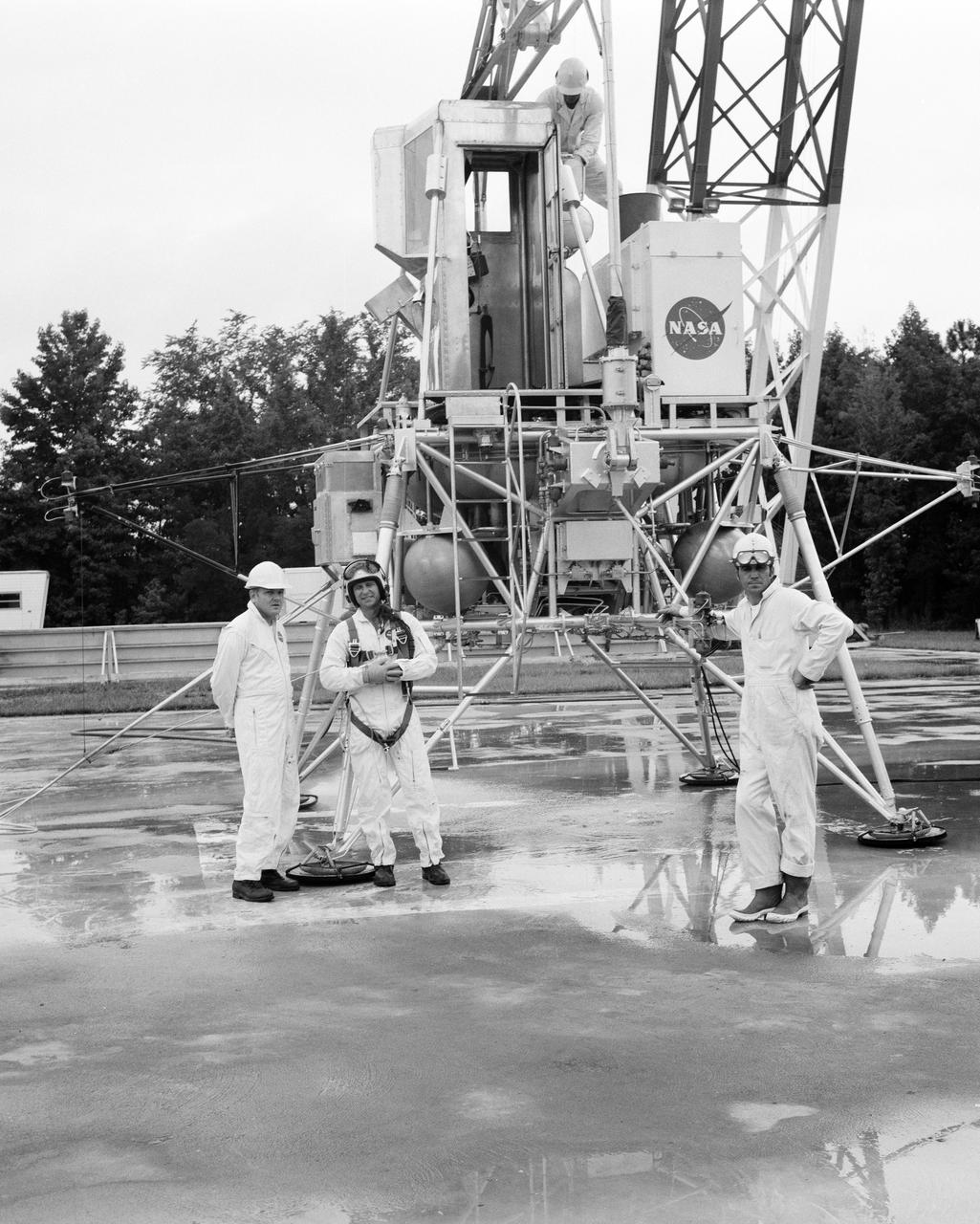
Astronauts Conrad and Bean at Lunar Landing Research Facility. Alan Bean was one of the third group of astronauts named by NASA in October 1963. He served as backup astronaut for the Gemini 10 and Apollo 9 missions. In September of 1962, Mr. Conrad was selected as an astronaut by NASA. His first flight was Gemini V, which established the space endurance record and placed the United States in the lead for man-hours in space. As commander of Gemini XI, Mr. Conrad helped to set a world's altitude record. He then served as commander of Apollo XII, the second lunar landing. On Mr. Conrad's final mission, he served as commander of Skylab II, the first United States Space Station. https://www.nasa.gov/astronauts/biographies/former for more information.
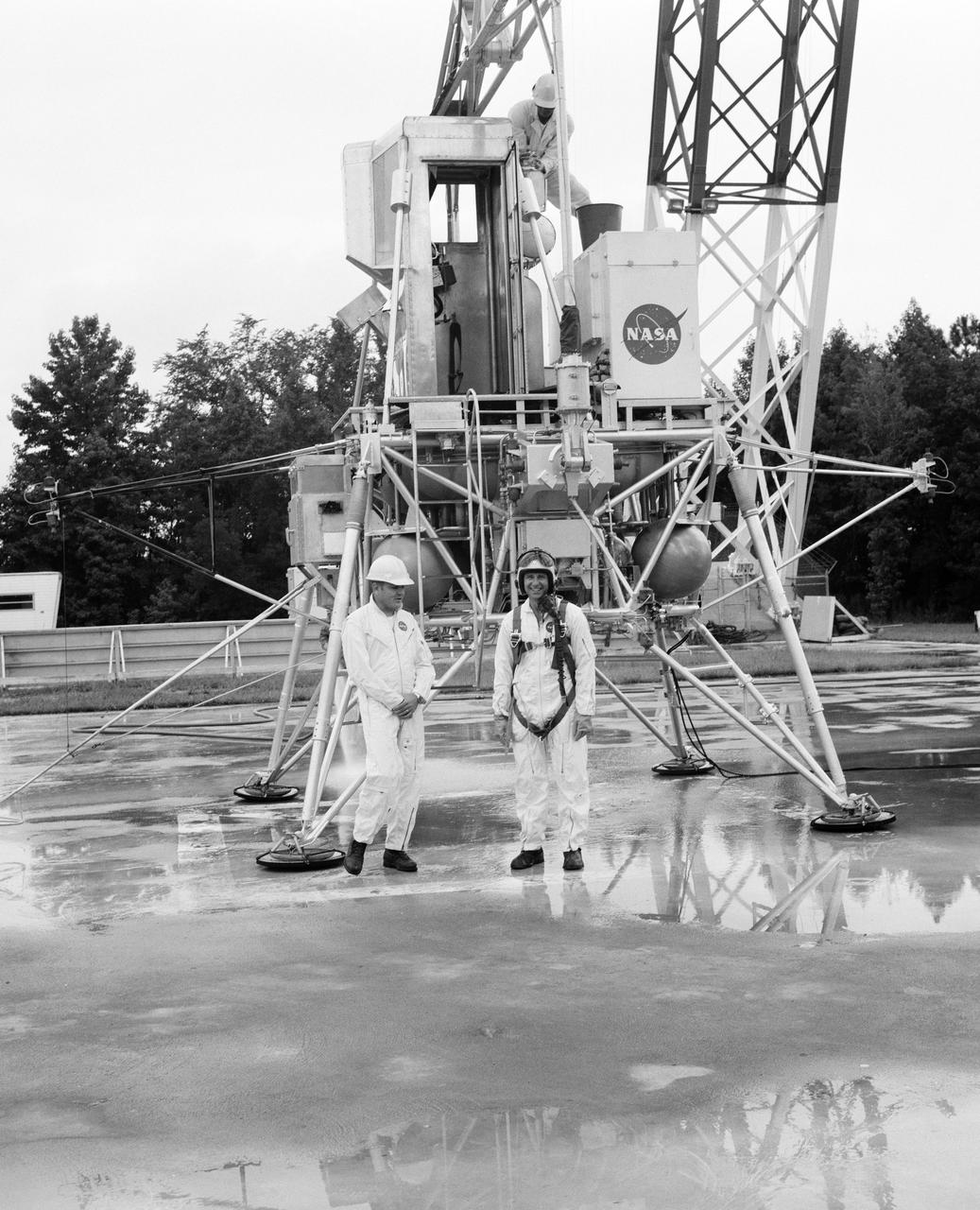
Astronauts Conrad and Bean at Lunar Landing Research Facility. Alan Bean was one of the third group of astronauts named by NASA in October 1963. He served as backup astronaut for the Gemini 10 and Apollo 9 missions. In September of 1962, Mr. Conrad was selected as an astronaut by NASA. His first flight was Gemini V, which established the space endurance record and placed the United States in the lead for man-hours in space. As commander of Gemini XI, Mr. Conrad helped to set a world's altitude record. He then served as commander of Apollo XII, the second lunar landing. On Mr. Conrad's final mission, he served as commander of Skylab II, the first United States Space Station. https://www.nasa.gov/astronauts/biographies/former for more information.
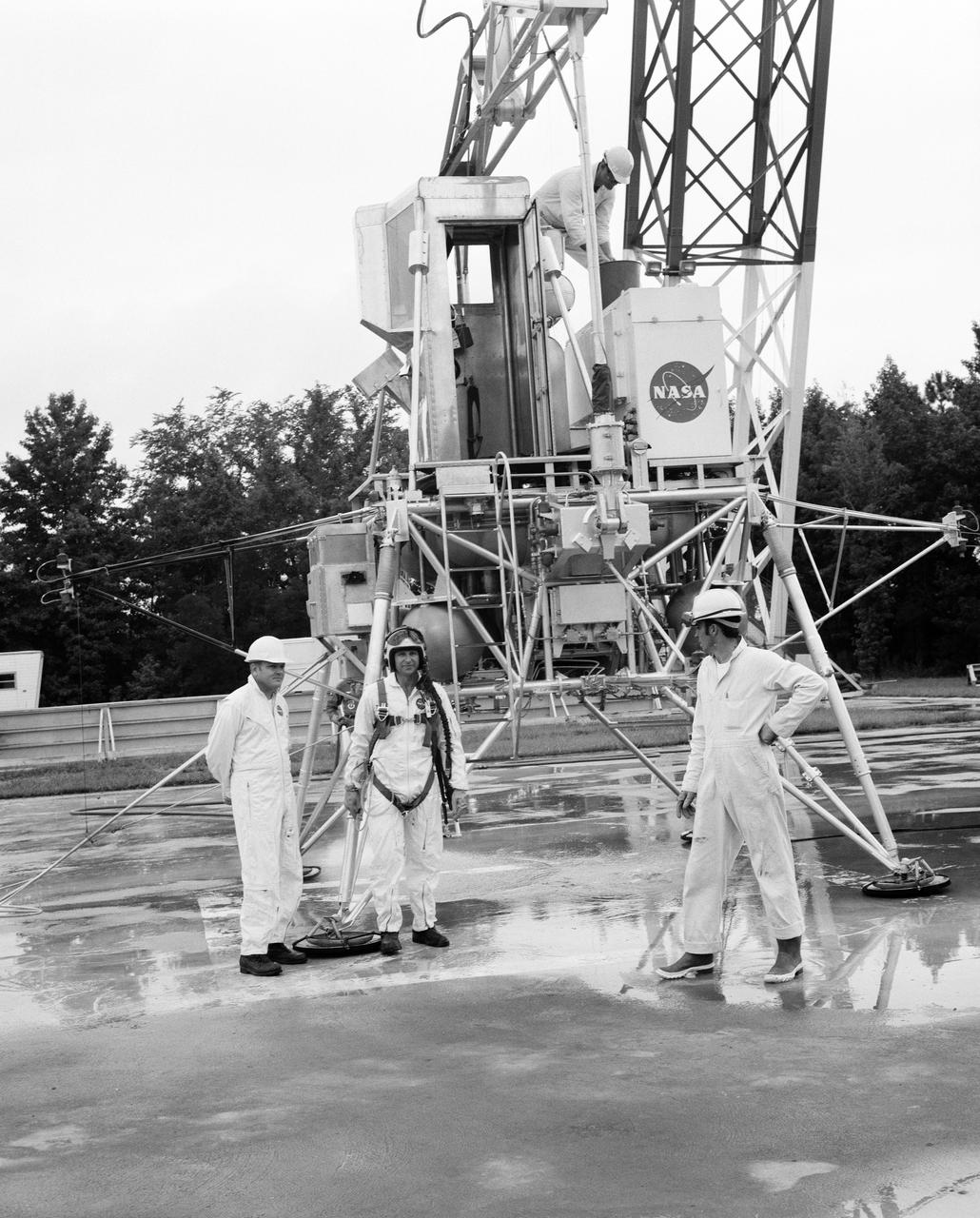
Astronauts Conrad and Bean at Lunar Landing Research Facility. Alan Bean was one of the third group of astronauts named by NASA in October 1963. He served as backup astronaut for the Gemini 10 and Apollo 9 missions. In September of 1962, Mr. Conrad was selected as an astronaut by NASA. His first flight was Gemini V, which established the space endurance record and placed the United States in the lead for man-hours in space. As commander of Gemini XI, Mr. Conrad helped to set a world's altitude record. He then served as commander of Apollo XII, the second lunar landing. On Mr. Conrad's final mission, he served as commander of Skylab II, the first United States Space Station. https://www.nasa.gov/astronauts/biographies/former for more information.
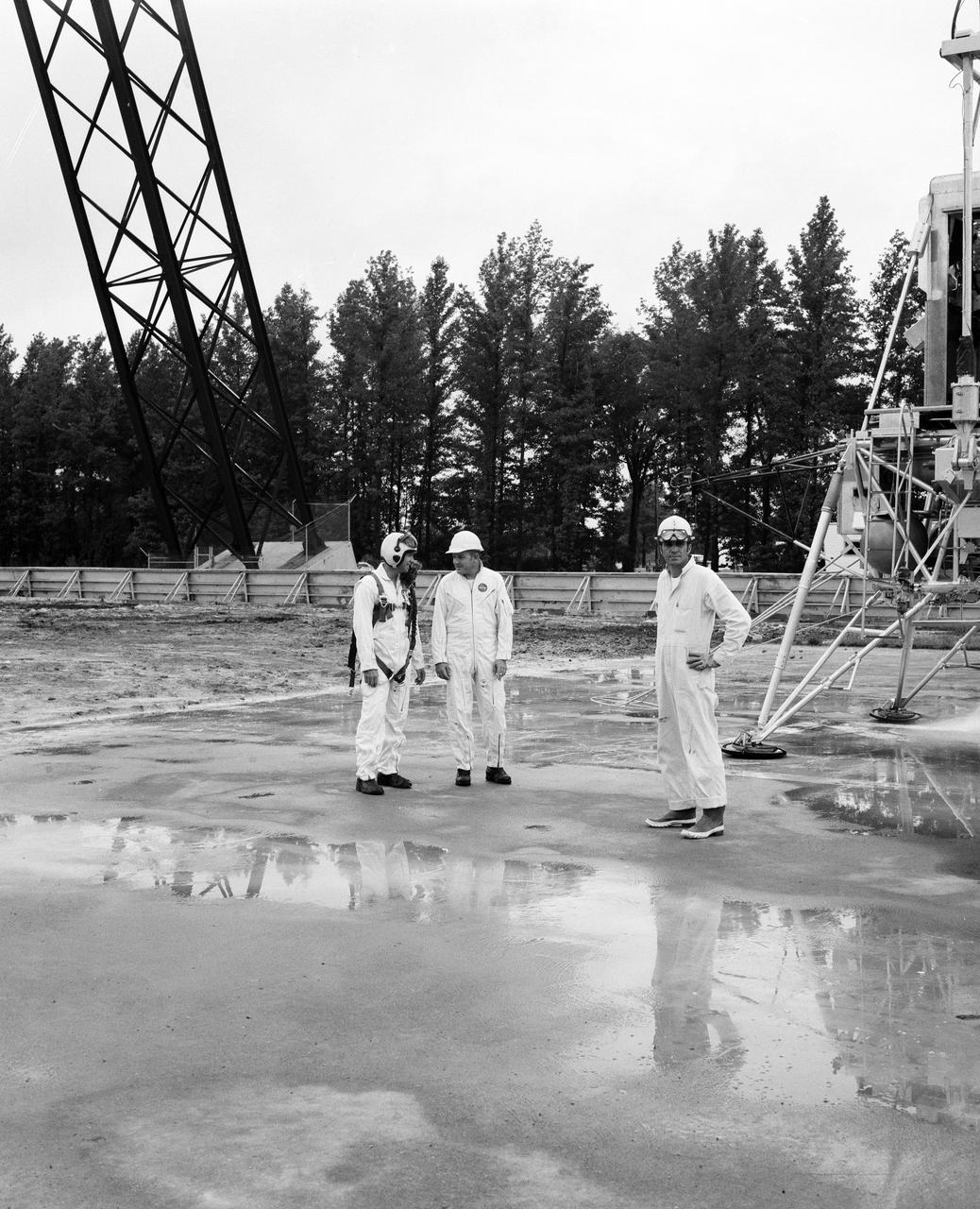
Astronauts Conrad and Bean at Lunar Landing Research Facility. Alan Bean was one of the third group of astronauts named by NASA in October 1963. He served as backup astronaut for the Gemini 10 and Apollo 9 missions. In September of 1962, Mr. Conrad was selected as an astronaut by NASA. His first flight was Gemini V, which established the space endurance record and placed the United States in the lead for man-hours in space. As commander of Gemini XI, Mr. Conrad helped to set a world's altitude record. He then served as commander of Apollo XII, the second lunar landing. On Mr. Conrad's final mission, he served as commander of Skylab II, the first United States Space Station. https://www.nasa.gov/astronauts/biographies/former for more information.
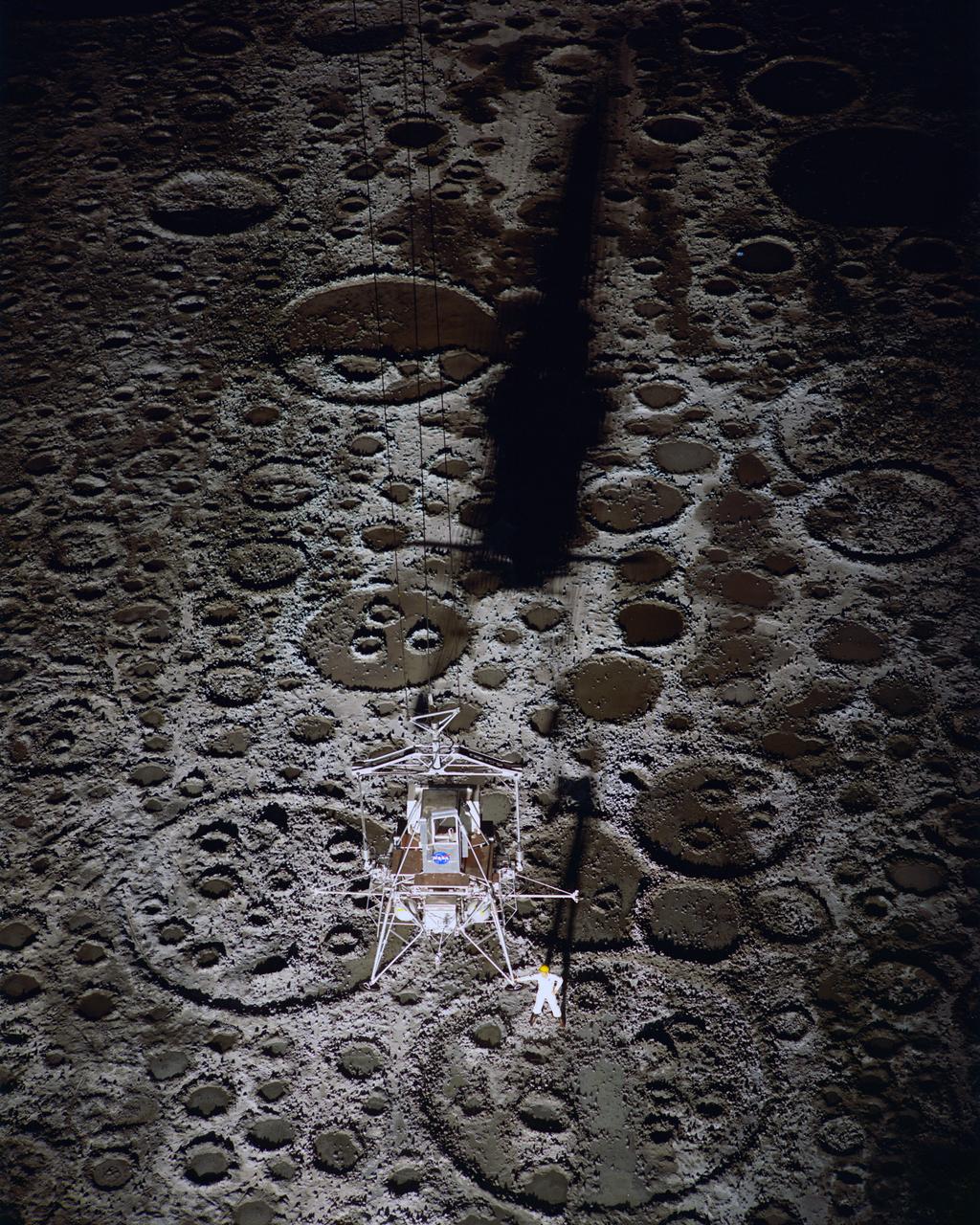
Lunar Landing Module photographed at night at the Lunar Landing Research Facility. Gantry facility 1297.
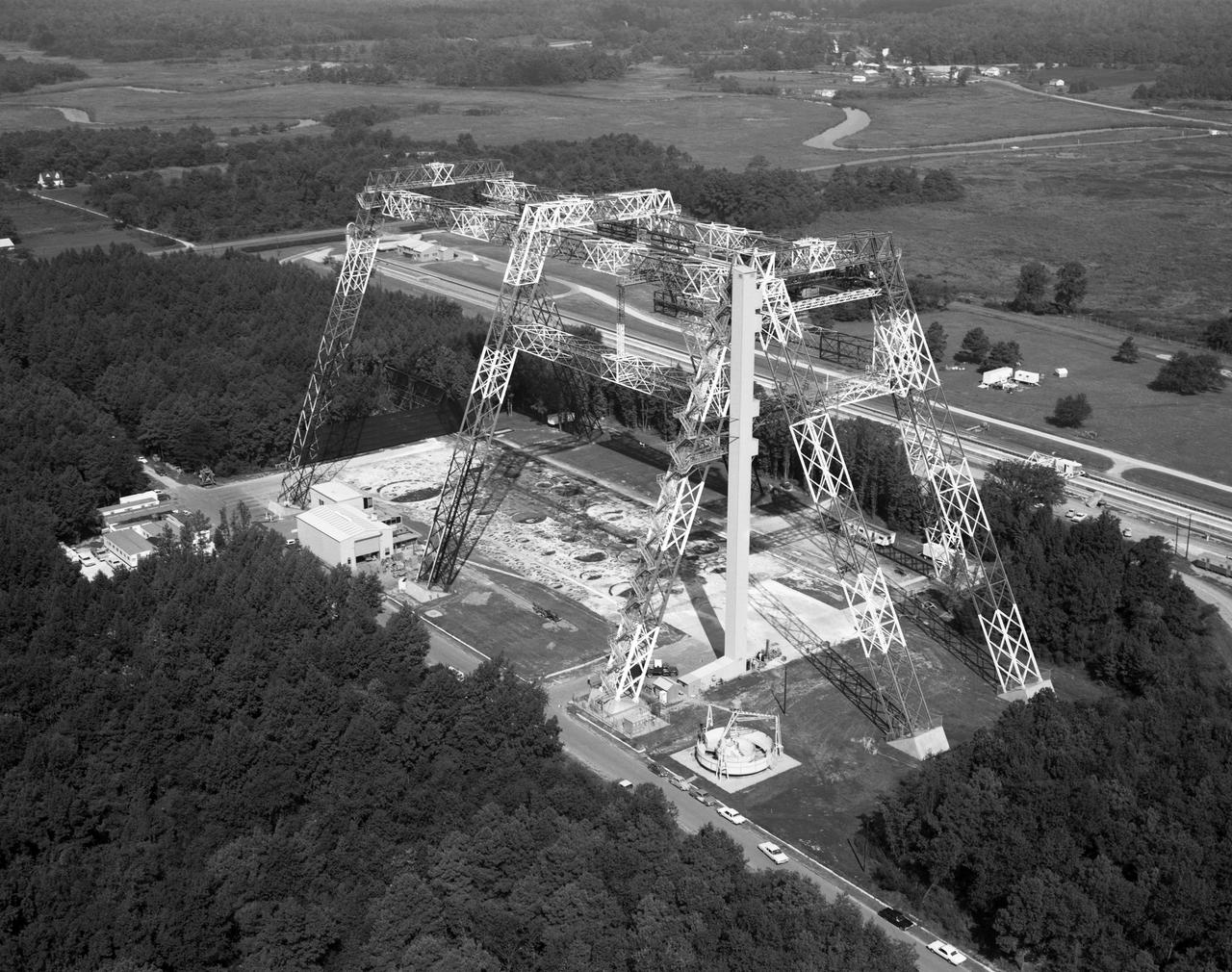
Lunar Landing Research Facility. Gantry facility 1297
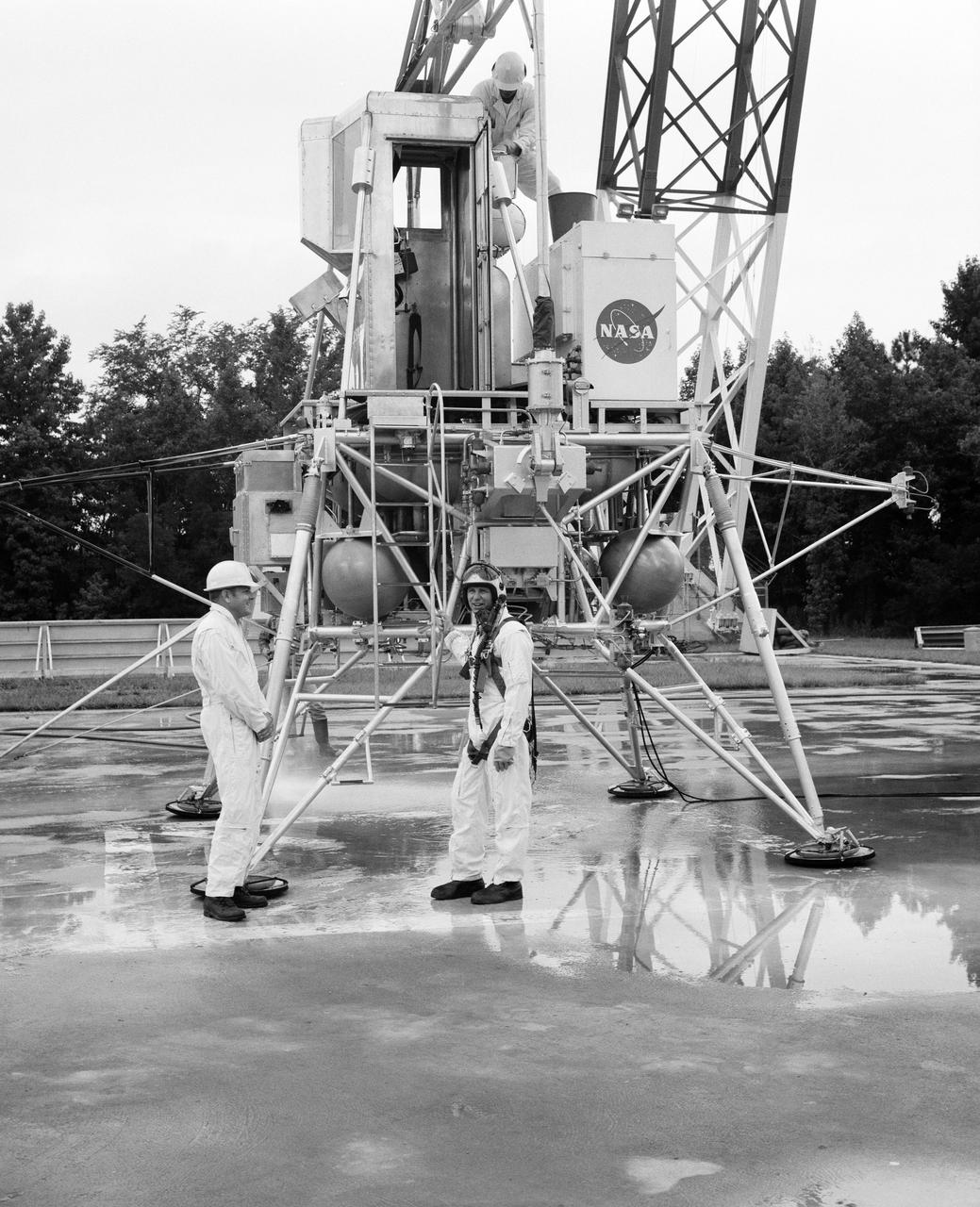
Astronauts Conrad and Bean at Lunar Landing Research Facility. Alan Bean was one of the third group of astronauts named by NASA in October 1963. He served as backup astronaut for the Gemini 10 and Apollo 9 missions. In September of 1962, Mr. Conrad was selected as an astronaut by NASA. His first flight was Gemini V, which established the space endurance record and placed the United States in the lead for man-hours in space. As commander of Gemini XI, Mr. Conrad helped to set a world's altitude record. He then served as commander of Apollo XII, the second lunar landing. On Mr. Conrad's final mission, he served as commander of Skylab II, the first United States Space Station. https://www.nasa.gov/astronauts/biographies/former for more information.
Astronauts Conrad and Bean at Lunar Landing Research Facility. Alan Bean was one of the third group of astronauts named by NASA in October 1963. He served as backup astronaut for the Gemini 10 and Apollo 9 missions. In September of 1962, Mr. Conrad was selected as an astronaut by NASA. His first flight was Gemini V, which established the space endurance record and placed the United States in the lead for man-hours in space. As commander of Gemini XI, Mr. Conrad helped to set a world's altitude record. He then served as commander of Apollo XII, the second lunar landing. On Mr. Conrad's final mission, he served as commander of Skylab II, the first United States Space Station. https://www.nasa.gov/astronauts/biographies/former for more information.
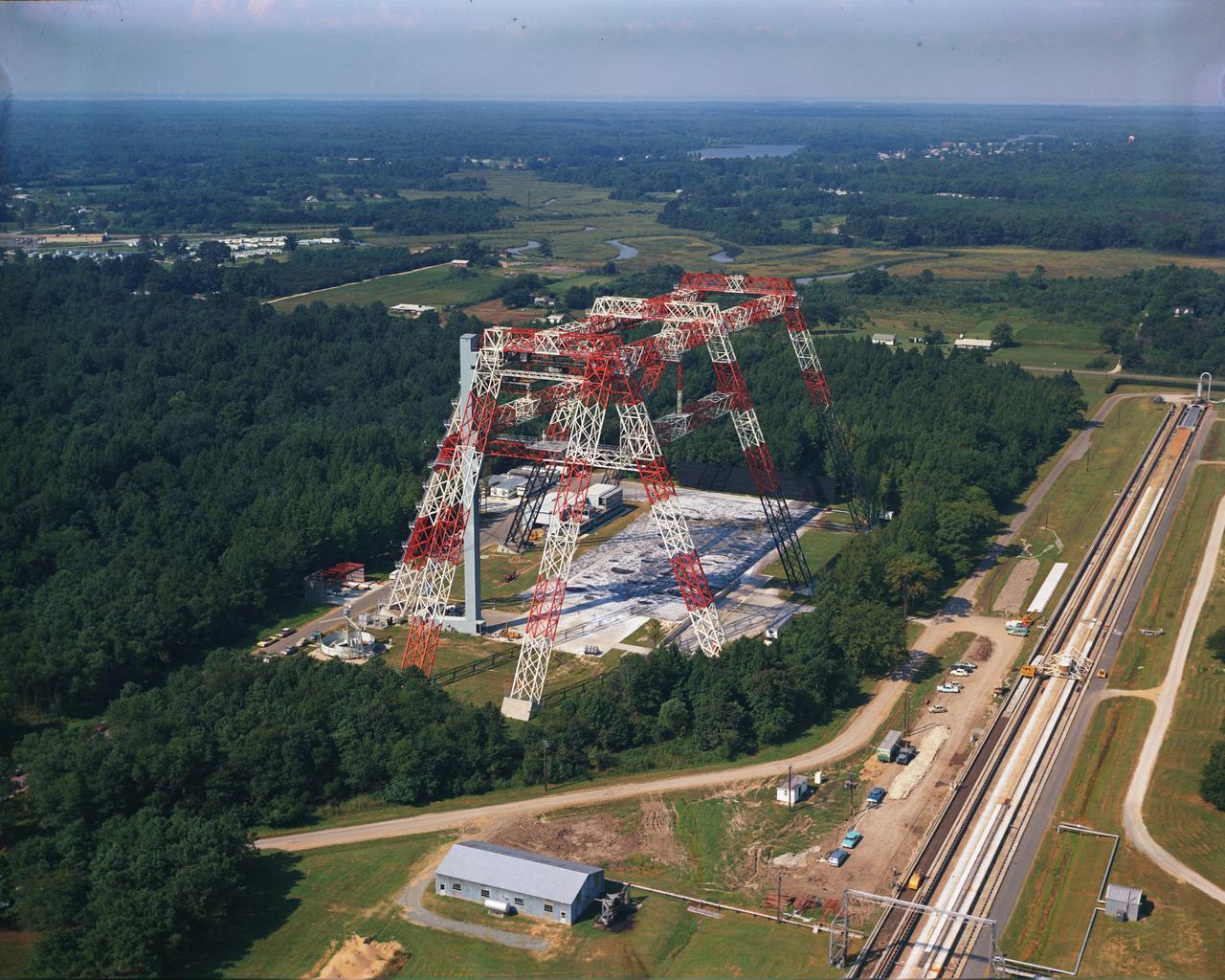
Aerial views of Gantry and moonscape pavement below. Building 1297 Impact Dynamic Research Facility
Astronauts Conrad and Bean at Lunar Landing Research Facility. Alan Bean was one of the third group of astronauts named by NASA in October 1963. He served as backup astronaut for the Gemini 10 and Apollo 9 missions. In September of 1962, Mr. Conrad was selected as an astronaut by NASA. His first flight was Gemini V, which established the space endurance record and placed the United States in the lead for man-hours in space. As commander of Gemini XI, Mr. Conrad helped to set a world's altitude record. He then served as commander of Apollo XII, the second lunar landing. On Mr. Conrad's final mission, he served as commander of Skylab II, the first United States Space Station. https://www.nasa.gov/astronauts/biographies/former for more information.
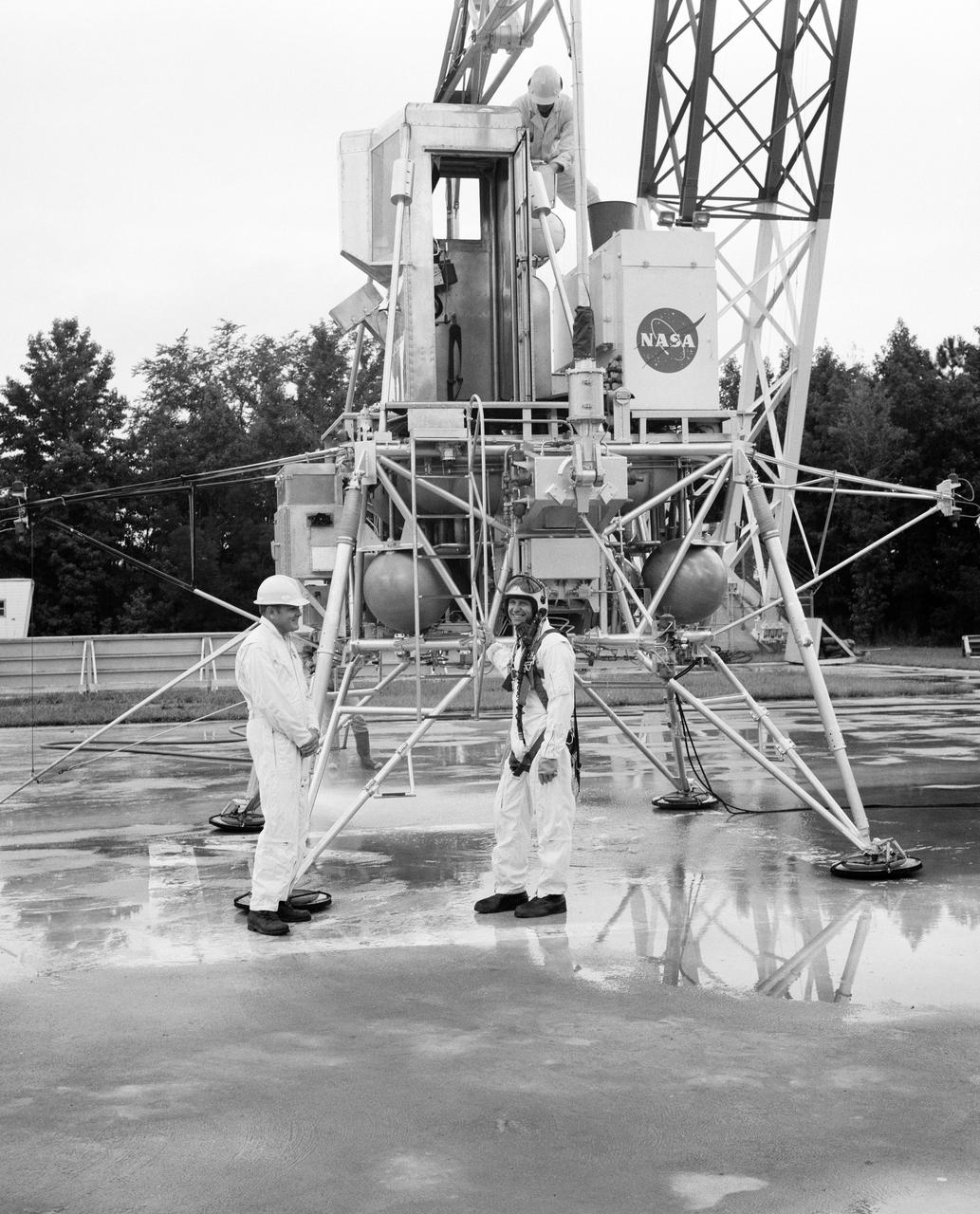
Astronauts Conrad and Bean at Lunar Landing Research Facility. Alan Bean was one of the third group of astronauts named by NASA in October 1963. He served as backup astronaut for the Gemini 10 and Apollo 9 missions. In September of 1962, Mr. Conrad was selected as an astronaut by NASA. His first flight was Gemini V, which established the space endurance record and placed the United States in the lead for man-hours in space. As commander of Gemini XI, Mr. Conrad helped to set a world's altitude record. He then served as commander of Apollo XII, the second lunar landing. On Mr. Conrad's final mission, he served as commander of Skylab II, the first United States Space Station. https://www.nasa.gov/astronauts/biographies/former for more information.
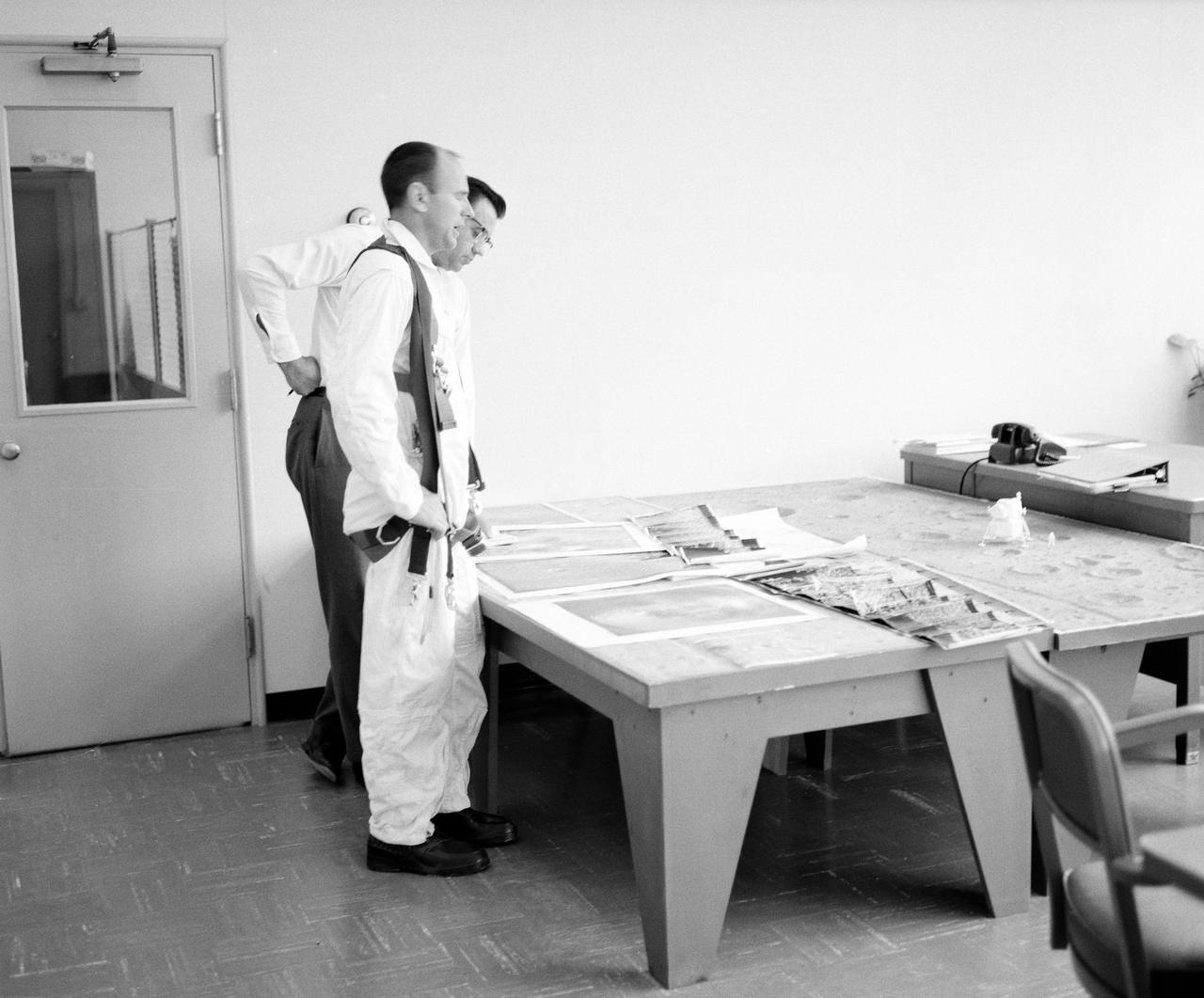
Astronauts Conrad and Bean at Lunar Landing Research Facility. Alan Bean was one of the third group of astronauts named by NASA in October 1963. He served as backup astronaut for the Gemini 10 and Apollo 9 missions. In September of 1962, Mr. Conrad was selected as an astronaut by NASA. His first flight was Gemini V, which established the space endurance record and placed the United States in the lead for man-hours in space. As commander of Gemini XI, Mr. Conrad helped to set a world's altitude record. He then served as commander of Apollo XII, the second lunar landing. On Mr. Conrad's final mission, he served as commander of Skylab II, the first United States Space Station. https://www.nasa.gov/astronauts/biographies/former for more information.
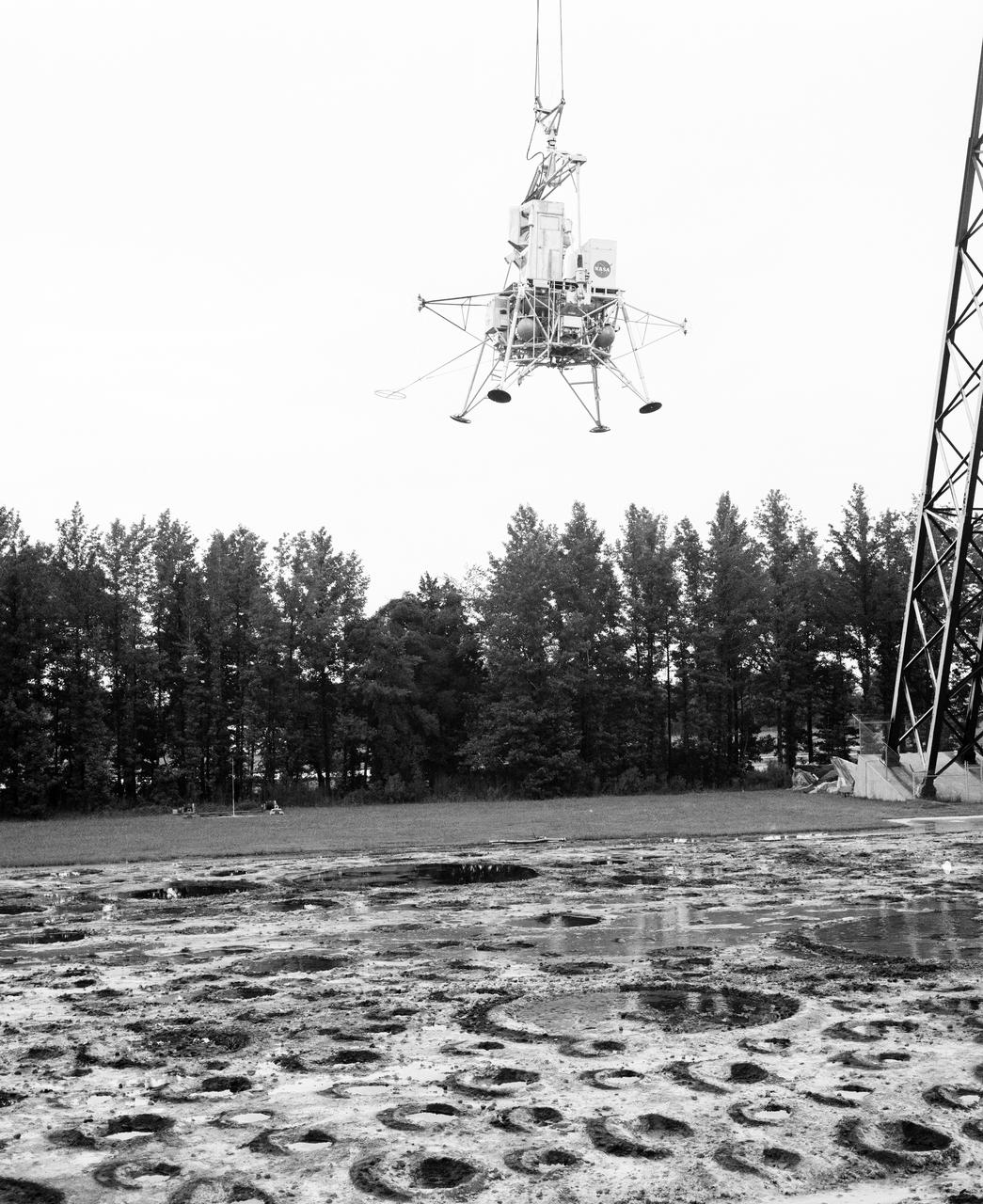
Astronauts Conrad and Bean at Lunar Landing Research Facility. Alan Bean was one of the third group of astronauts named by NASA in October 1963. He served as backup astronaut for the Gemini 10 and Apollo 9 missions. In September of 1962, Mr. Conrad was selected as an astronaut by NASA. His first flight was Gemini V, which established the space endurance record and placed the United States in the lead for man-hours in space. As commander of Gemini XI, Mr. Conrad helped to set a world's altitude record. He then served as commander of Apollo XII, the second lunar landing. On Mr. Conrad's final mission, he served as commander of Skylab II, the first United States Space Station. https://www.nasa.gov/astronauts/biographies/former for more information.
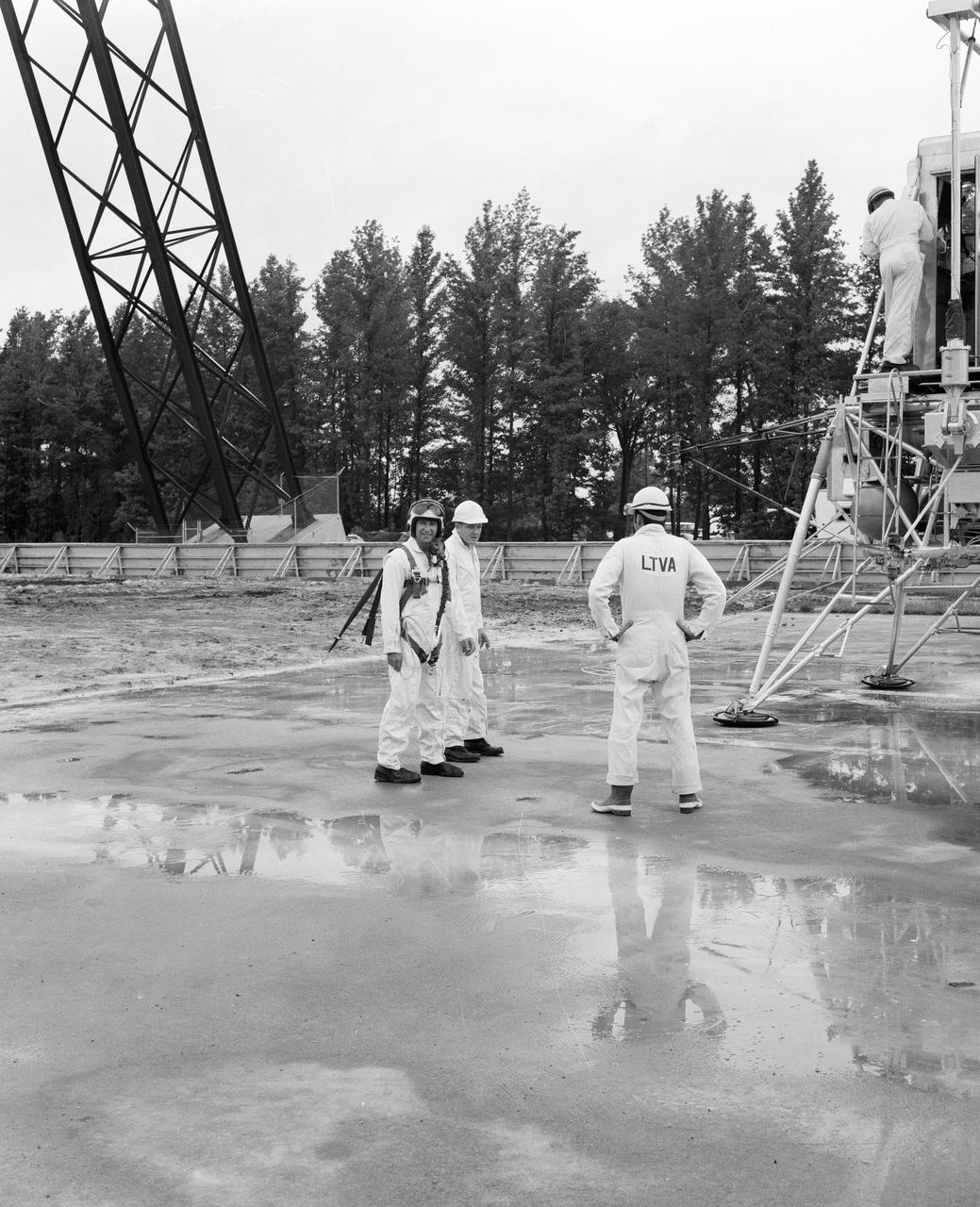
Astronauts Conrad and Bean at Lunar Landing Research Facility. Alan Bean was one of the third group of astronauts named by NASA in October 1963. He served as backup astronaut for the Gemini 10 and Apollo 9 missions. In September of 1962, Mr. Conrad was selected as an astronaut by NASA. His first flight was Gemini V, which established the space endurance record and placed the United States in the lead for man-hours in space. As commander of Gemini XI, Mr. Conrad helped to set a world's altitude record. He then served as commander of Apollo XII, the second lunar landing. On Mr. Conrad's final mission, he served as commander of Skylab II, the first United States Space Station. https://www.nasa.gov/astronauts/biographies/former for more information.
Astronauts Conrad and Bean at Lunar Landing Research Facility. Alan Bean was one of the third group of astronauts named by NASA in October 1963. He served as backup astronaut for the Gemini 10 and Apollo 9 missions. In September of 1962, Mr. Conrad was selected as an astronaut by NASA. His first flight was Gemini V, which established the space endurance record and placed the United States in the lead for man-hours in space. As commander of Gemini XI, Mr. Conrad helped to set a world's altitude record. He then served as commander of Apollo XII, the second lunar landing. On Mr. Conrad's final mission, he served as commander of Skylab II, the first United States Space Station. https://www.nasa.gov/astronauts/biographies/former for more information.
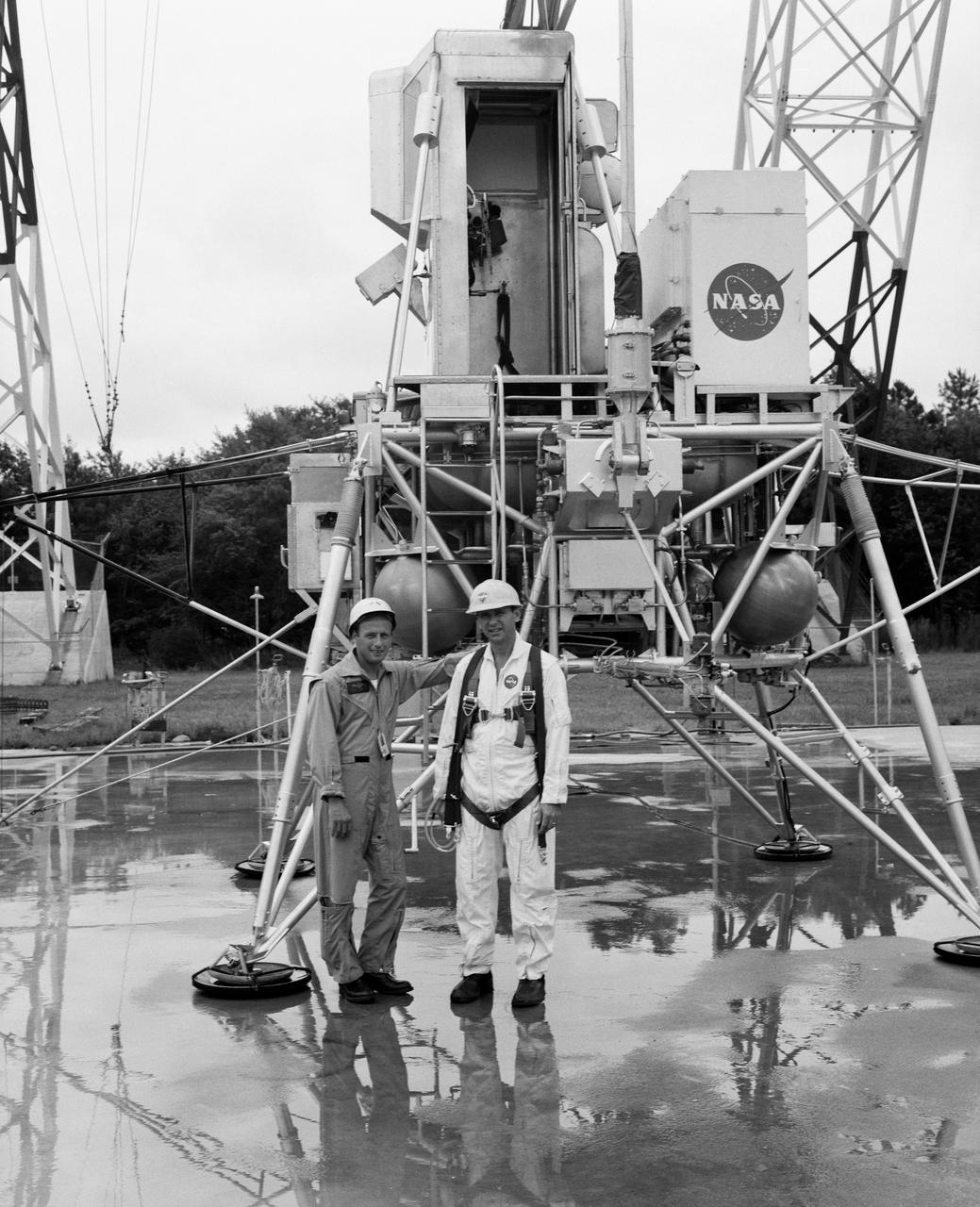
Astronauts Conrad and Bean at Lunar Landing Research Facility. Alan Bean was one of the third group of astronauts named by NASA in October 1963. He served as backup astronaut for the Gemini 10 and Apollo 9 missions. In September of 1962, Mr. Conrad was selected as an astronaut by NASA. His first flight was Gemini V, which established the space endurance record and placed the United States in the lead for man-hours in space. As commander of Gemini XI, Mr. Conrad helped to set a world's altitude record. He then served as commander of Apollo XII, the second lunar landing. On Mr. Conrad's final mission, he served as commander of Skylab II, the first United States Space Station. https://www.nasa.gov/astronauts/biographies/former for more information.
![Test subject wearing jet-shoe apparatus and resting in sling support. The cables are not attached. From A.W. Vogeley, "Piloted Space-Flight Simulation at Langley Research Center," Paper presented at the American Society of Mechanical Engineers, 1966 Winter Meeting, New York, NY, November 27 - December 1, 1966. "As mentioned previously, Langley is conducting in-house and contract studies of extra-vehicular activities wherein zero gravity is simulated by the water-immersion technique. ... Water immersion is a very useful technique where motions are slow. When more rapid motion is required, as in studying one-man propulsion systems, other approaches are required. For these studies Langley has been using the RDS [Rendezvous Docking Simulator] in a manner similar to the LLRF [Lunar Landing Research Facility] technique. The test subjects are suspended in a sling support from a single RDS cable. As they translate about, the RDS tracks them, keeping the cable vertical. The test subjects operate in an effectively zero g environment in the horizontal plane. Tracking was originally done visually using closed-circuit TV, but recently a fast-response servo system using cable angle sensors has provided better operation. Some results of tests where subjects moved about merely by jumping and also where propulsion in the form of simple "jet-shoes" was provided are given in reference 20. Both methods, within limits, appear feasible. Full six-degree-of-freedom equipment for studies of more sophisticated one-man propulsion systems is now being procured. Called OMPRA (One-Man Propulsion Research Apparatus), the device will provide a gimbal system for rotational freedom, a quick response vertical servo for this translational freedom that is not now feasible with the RDS, and a versatile maneuvering unit."](https://images-assets.nasa.gov/image/LRC-1967-B701_P-01373/LRC-1967-B701_P-01373~medium.jpg)
Test subject wearing jet-shoe apparatus and resting in sling support. The cables are not attached. From A.W. Vogeley, "Piloted Space-Flight Simulation at Langley Research Center," Paper presented at the American Society of Mechanical Engineers, 1966 Winter Meeting, New York, NY, November 27 - December 1, 1966. "As mentioned previously, Langley is conducting in-house and contract studies of extra-vehicular activities wherein zero gravity is simulated by the water-immersion technique. ... Water immersion is a very useful technique where motions are slow. When more rapid motion is required, as in studying one-man propulsion systems, other approaches are required. For these studies Langley has been using the RDS [Rendezvous Docking Simulator] in a manner similar to the LLRF [Lunar Landing Research Facility] technique. The test subjects are suspended in a sling support from a single RDS cable. As they translate about, the RDS tracks them, keeping the cable vertical. The test subjects operate in an effectively zero g environment in the horizontal plane. Tracking was originally done visually using closed-circuit TV, but recently a fast-response servo system using cable angle sensors has provided better operation. Some results of tests where subjects moved about merely by jumping and also where propulsion in the form of simple "jet-shoes" was provided are given in reference 20. Both methods, within limits, appear feasible. Full six-degree-of-freedom equipment for studies of more sophisticated one-man propulsion systems is now being procured. Called OMPRA (One-Man Propulsion Research Apparatus), the device will provide a gimbal system for rotational freedom, a quick response vertical servo for this translational freedom that is not now feasible with the RDS, and a versatile maneuvering unit."
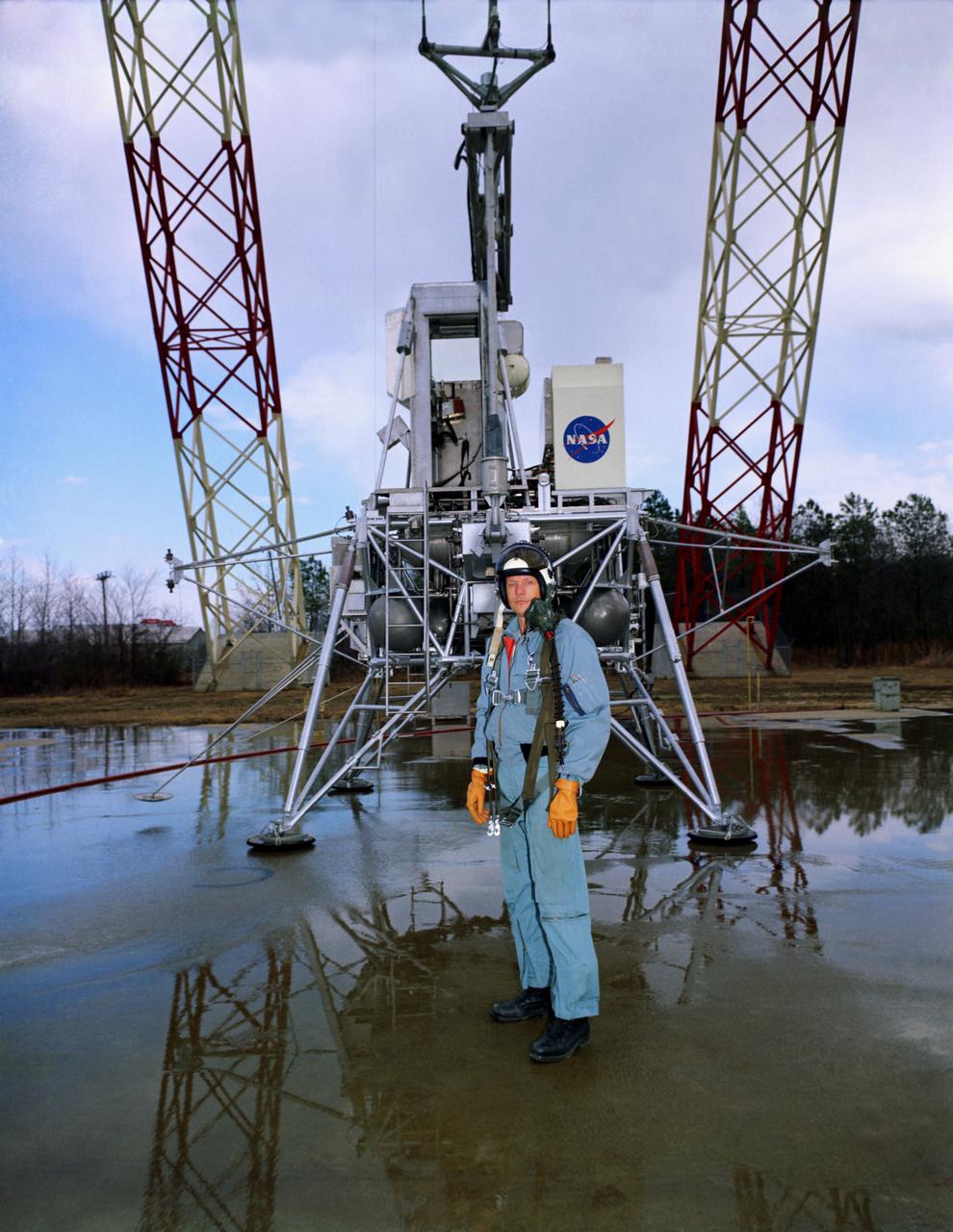
Neil Armstrong with the Lunar Excursion Module (LEM). Caption: "Not long after this photo was taken in front of the Lunar Landing Research Facility, astronaut Neil Armstrong became the first human to step upon the surface of the Moon." Photograph published in Winds of Change, 75th Anniversary NASA publication, by James Schultz, page 91. Also published in " A Century at Langley" by Joseph Chambers, pg. 95