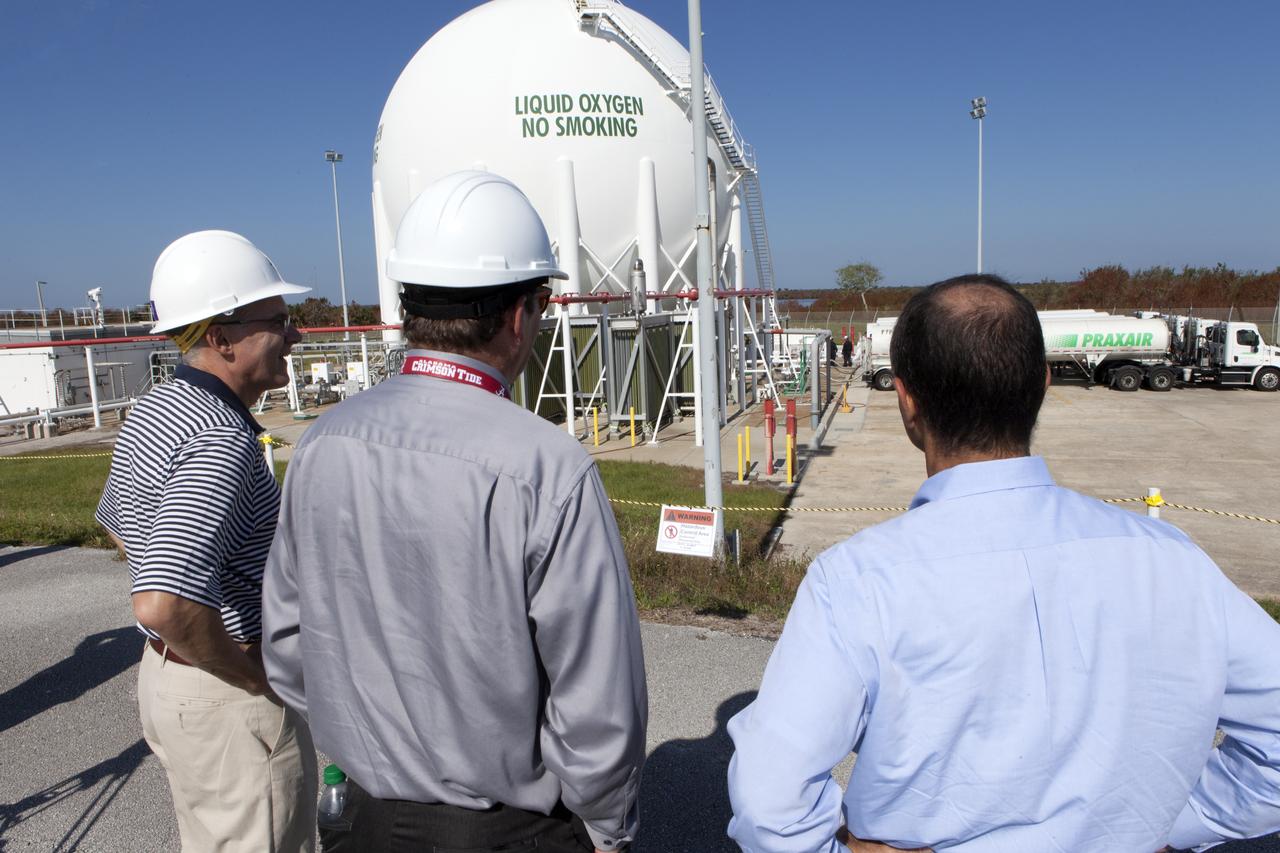
Engineers watch as several Praxair trucks carrying their loads of liquid oxygen, or LO2, arrive at Launch Pad 39B at NASA's Kennedy Space Center in Florida. The trucks will offload the LO2 one at a time into the giant storage sphere located at the northwest corner of the pad. The sphere will gradually be chilled down from normal temperature to about negative 298 degrees Fahrenheit, during the first major integrated operation to prepare for the launch of the agency's Orion spacecraft atop the Space Launch System (SLS) rocket. The Ground Systems Development and Operations Program is overseeing upgrades and modifications to pad B to support the launch of the SLS and Orion spacecraft for Exploration Mission-1, deep space missions and NASA’s journey to Mars.

Several Praxair trucks carrying their loads of liquid oxygen, or LO2, arrive at Launch Pad 39B at NASA's Kennedy Space Center in Florida. The trucks will offload LO2 slowly into a giant storage sphere located at the northwest corner of the pad to gradually chill it down from normal temperature to about negative 298 degrees Fahrenheit, during the first major integrated operation to prepare for the launch of the agency's Orion spacecraft atop the Space Launch System (SLS) rocket. The Ground Systems Development and Operations Program is overseeing upgrades and modifications to pad B to support the launch of the SLS and Orion spacecraft for Exploration Mission-1, deep space missions and NASA’s journey to Mars.
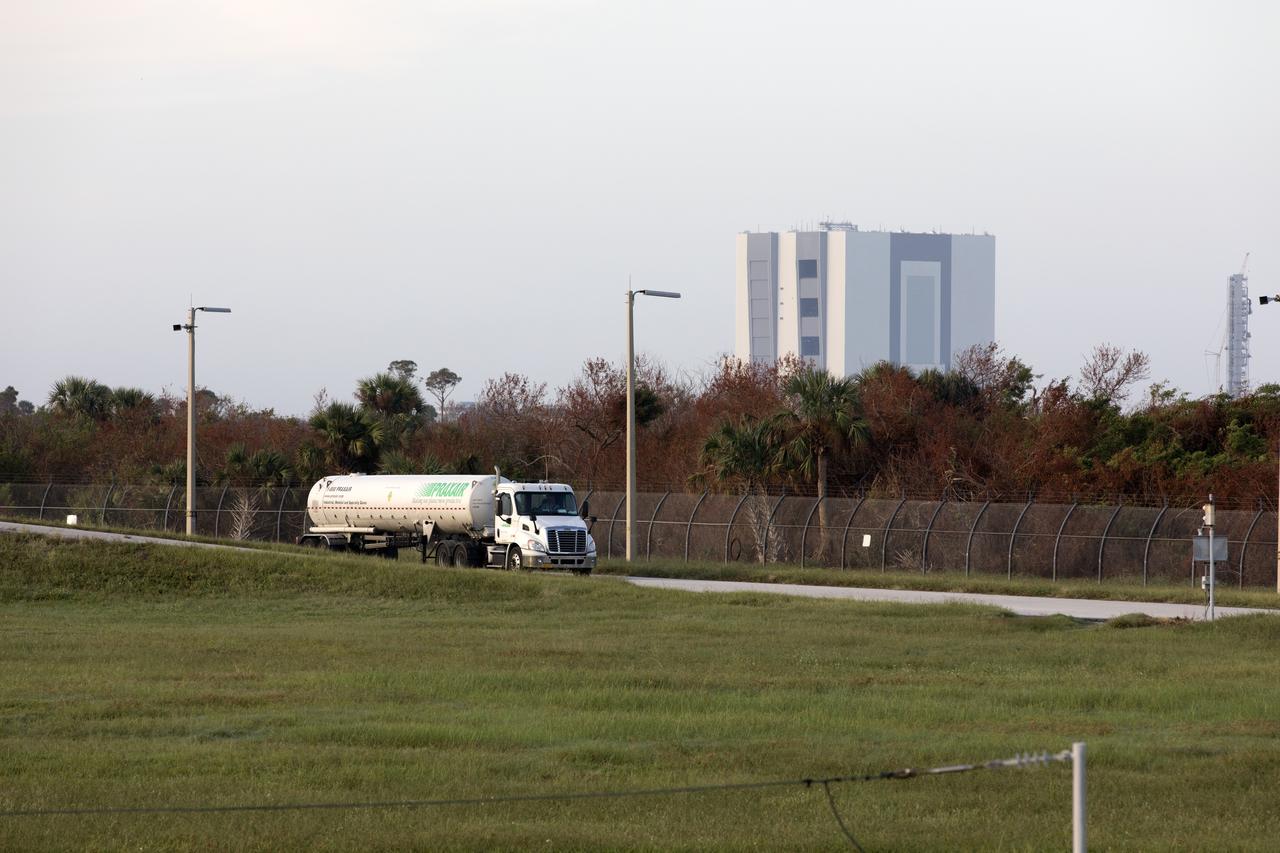
One of several Praxair trucks carrying its load of liquid oxygen, or LO2, is in route to Launch Pad 39B at NASA's Kennedy Space Center in Florida. The truck will offload LO2 slowly into a giant storage sphere located at the northwest corner of the pad to gradually chill it down from normal temperature to about negative 298 degrees Fahrenheit, during the first major integrated operation to prepare for the launch of the agency's Orion spacecraft atop the Space Launch System (SLS) rocket. The Ground Systems Development and Operations Program is overseeing upgrades and modifications to pad B to support the launch of the SLS and Orion spacecraft for Exploration Mission-1, deep space missions and NASA’s journey to Mars.
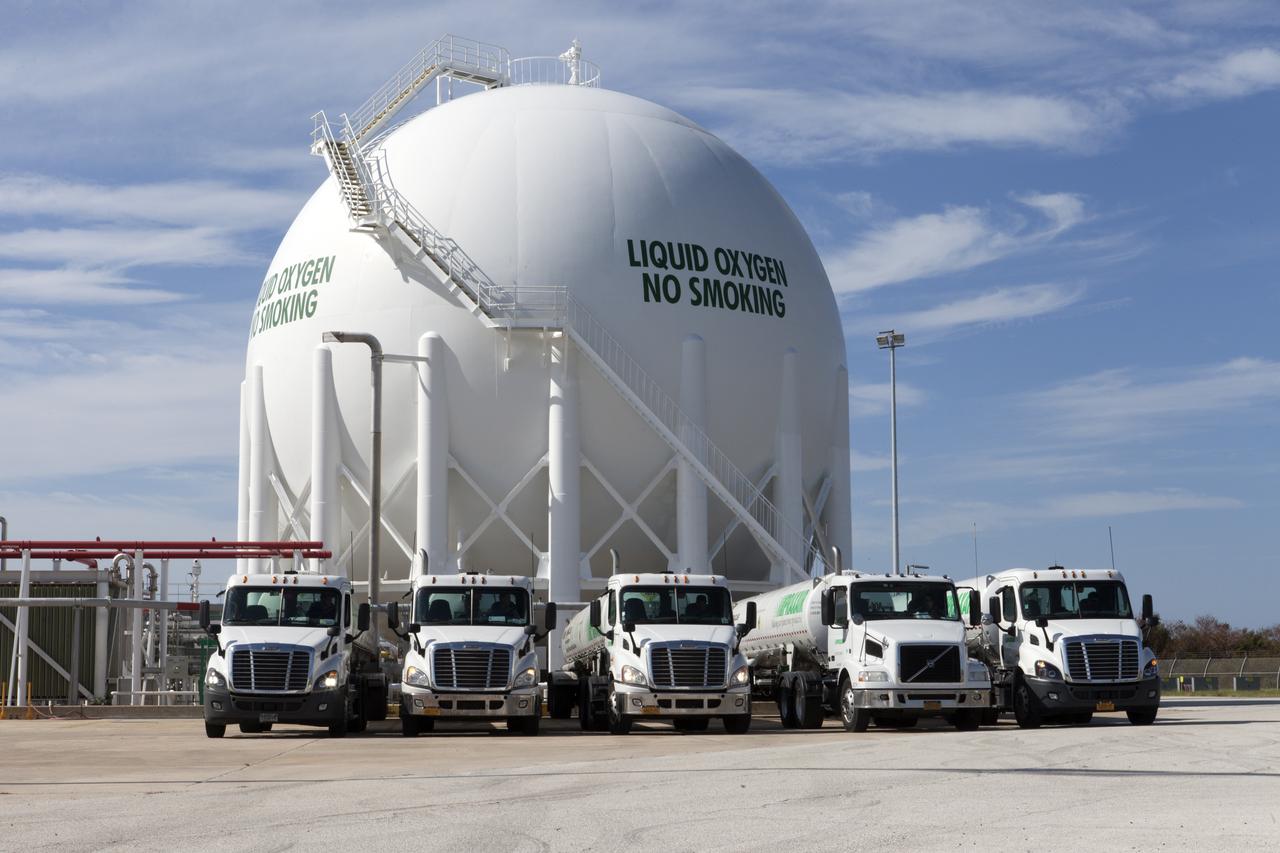
Several Praxair trucks carrying their loads of liquid oxygen, or LO2, have arrived at Launch Pad 39B at NASA's Kennedy Space Center in Florida. The trucks will begin to offload the LO2 one at a time into the giant storage sphere located at the northwest corner of the pad. The sphere will gradually be chilled down from normal temperature to about negative 298 degrees Fahrenheit, during the first major integrated operation to prepare for the launch of the agency's Orion spacecraft atop the Space Launch System (SLS) rocket. The Ground Systems Development and Operations Program is overseeing upgrades and modifications to pad B to support the launch of the SLS and Orion spacecraft for Exploration Mission-1, deep space missions and NASA’s journey to Mars.
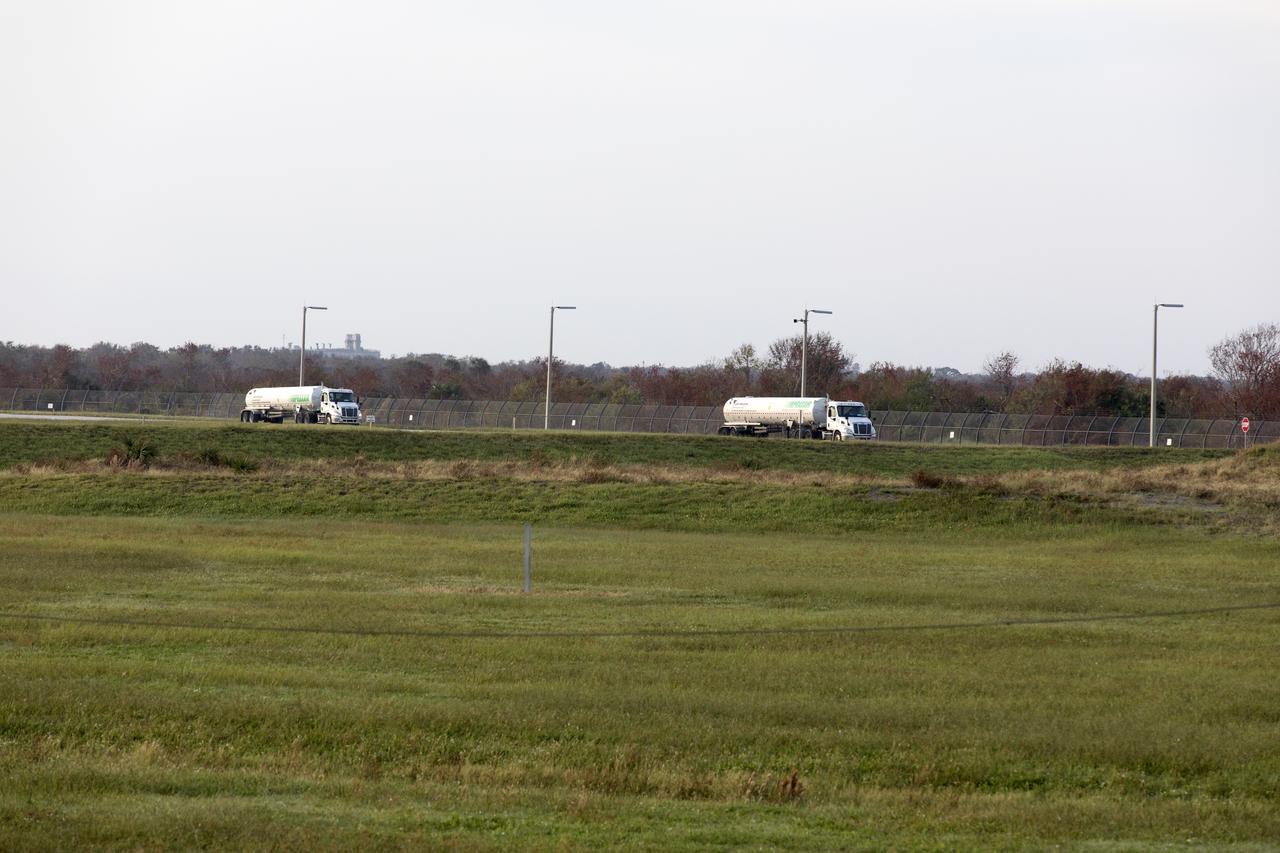
Praxair trucks carrying their loads of liquid oxygen, or LO2, are on their way to Launch Pad 39B at NASA's Kennedy Space Center in Florida. The trucks will offload LO2 slowly into a giant storage sphere located at the northwest corner of the pad to gradually chill it down from normal temperature to about negative 298 degrees Fahrenheit, during the first major integrated operation to prepare for the launch of the agency's Orion spacecraft atop the Space Launch System (SLS) rocket. The Ground Systems Development and Operations Program is overseeing upgrades and modifications to pad B to support the launch of the SLS and Orion spacecraft for Exploration Mission-1, deep space missions and NASA’s journey to Mars.
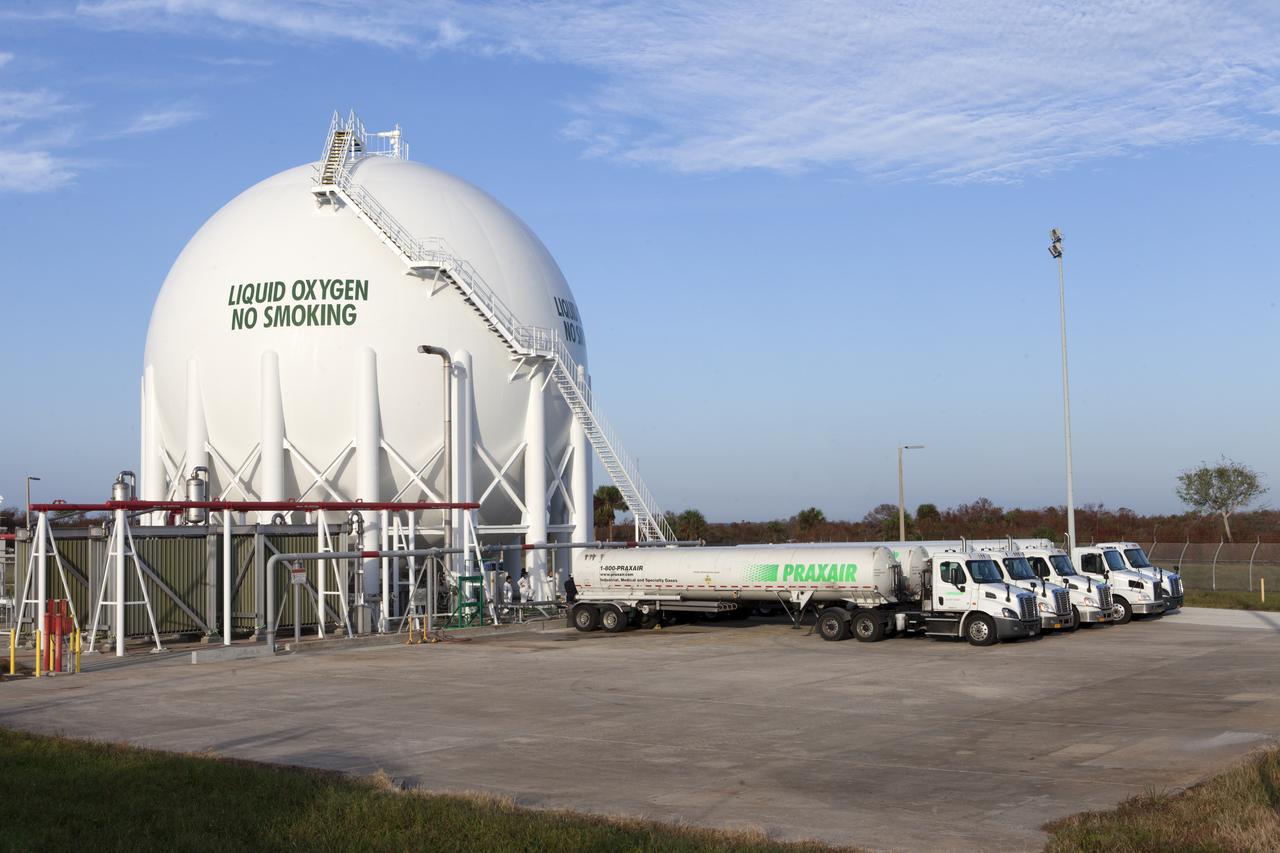
Several Praxair trucks carrying their loads of liquid oxygen, or LO2, have arrived at Launch Pad 39B at NASA's Kennedy Space Center in Florida. The trucks will offload LO2 slowly into a giant storage sphere located at the northwest corner of the pad to gradually chill it down from normal temperature to about negative 298 degrees Fahrenheit, during the first major integrated operation to prepare for the launch of the agency's Orion spacecraft atop the Space Launch System (SLS) rocket. The Ground Systems Development and Operations Program is overseeing upgrades and modifications to pad B to support the launch of the SLS and Orion spacecraft for Exploration Mission-1, deep space missions and NASA’s journey to Mars.
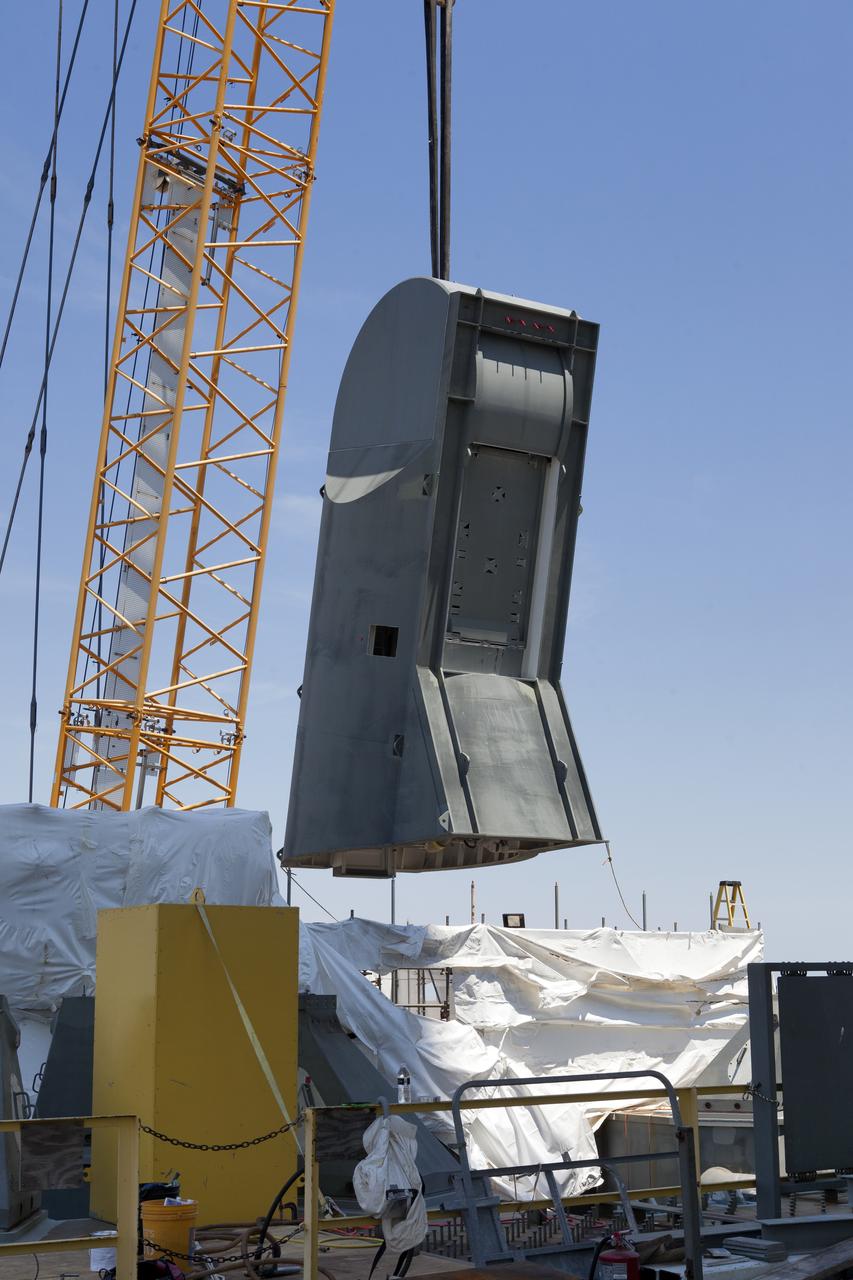
A crane is used to lift up the first of two Tail Service Mast Umbilicals for installation on the 0-level deck of the mobile launcher on July 12, at NASA's Kennedy Space Center in Florida. The 35-foot-tall umbilical will connect to NASA's Space Launch System rocket core stage aft section and provide liquid oxygen and electrical cable connections to the core stage engine section to support propellant handling during prelaunch operations. The installation brings Exploration Ground Systems one step closer to supporting prelaunch operations for the agency's SLS rocket and Orion spacecraft on Exploration Mission-1 and deep space destinations.
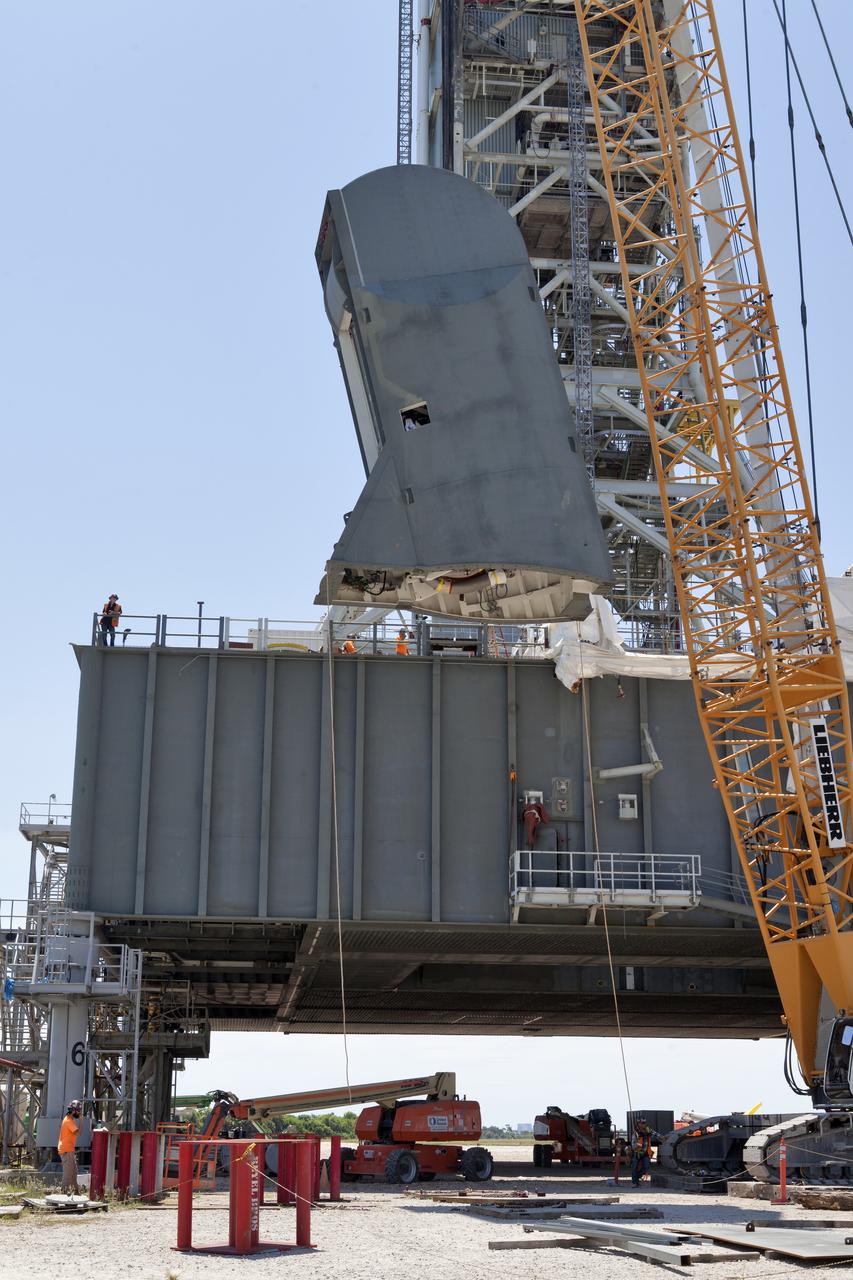
The first of two Tail Service Mast Umbilicals is lifted up for installation on the 0-level deck of the mobile launcher on July 12, at NASA's Kennedy Space Center in Florida. The 35-foot-tall umbilical will connect to NASA's Space Launch System rocket core stage aft section and provide liquid oxygen and electrical cable connections to the core stage engine section to support propellant handling during prelaunch operations. The installation brings Exploration Ground Systems one step closer to supporting prelaunch operations for the agency's SLS rocket and Orion spacecraft on Exploration Mission-1 and deep space destinations.

The first of two Tail Service Mast Umbilicals is lowered onto the 0-level deck of the mobile launcher on July 12, at NASA's Kennedy Space Center in Florida. The 35-foot-tall umbilical will connect to NASA's Space Launch System rocket core stage aft section and provide liquid oxygen and electrical cable connections to the core stage engine section to support propellant handling during prelaunch operations. The installation brings Exploration Ground Systems one step closer to supporting prelaunch operations for the agency's SLS rocket and Orion spacecraft on Exploration Mission-1 and deep space destinations.
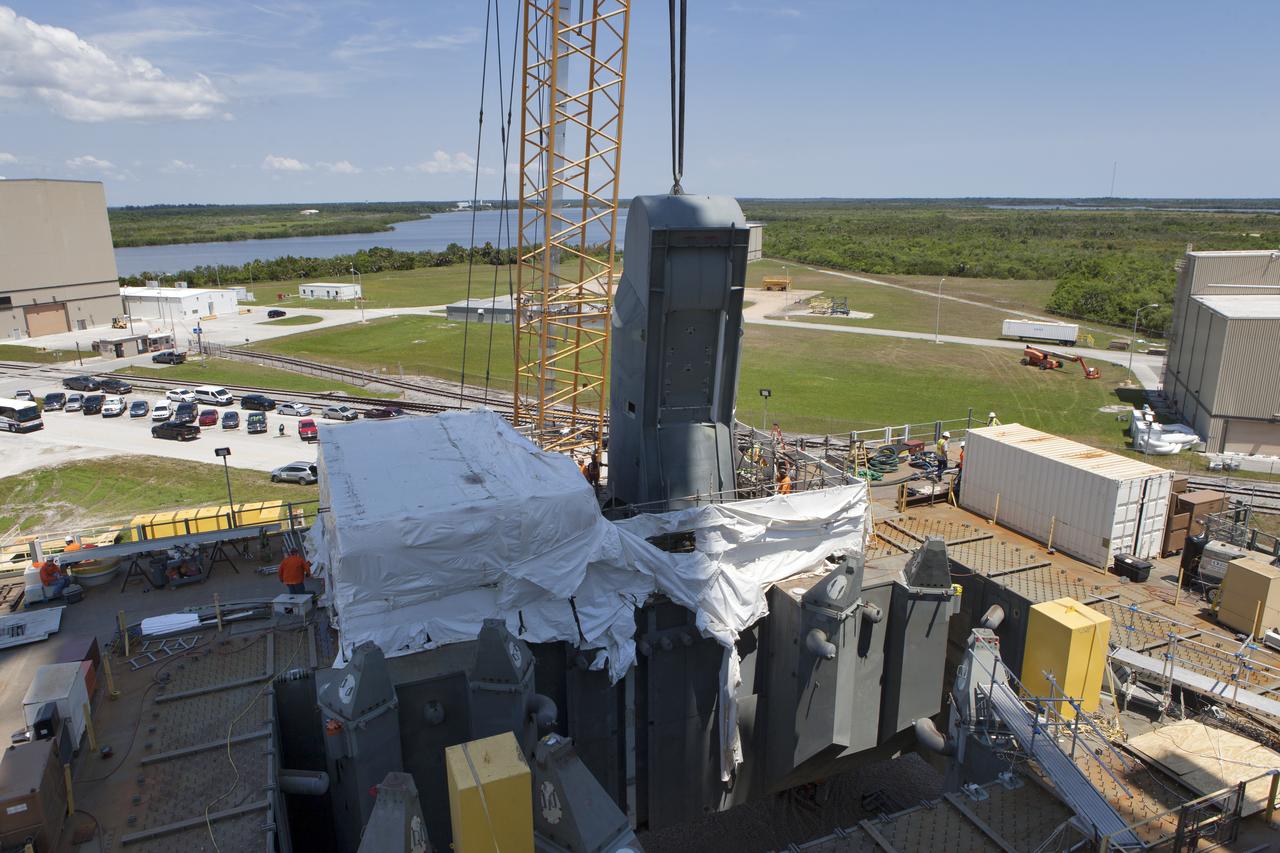
A crane is used to lower the first of two Tail Service Mast Umbilicals for installation on the 0-level deck of the mobile launcher on July 12, at NASA's Kennedy Space Center in Florida. The 35-foot-tall umbilical will connect to NASA's Space Launch System rocket core stage aft section and provide liquid oxygen and electrical cable connections to the core stage engine section to support propellant handling during prelaunch operations. The installation brings Exploration Ground Systems one step closer to supporting prelaunch operations for the agency's SLS rocket and Orion spacecraft on Exploration Mission-1 and deep space destinations.
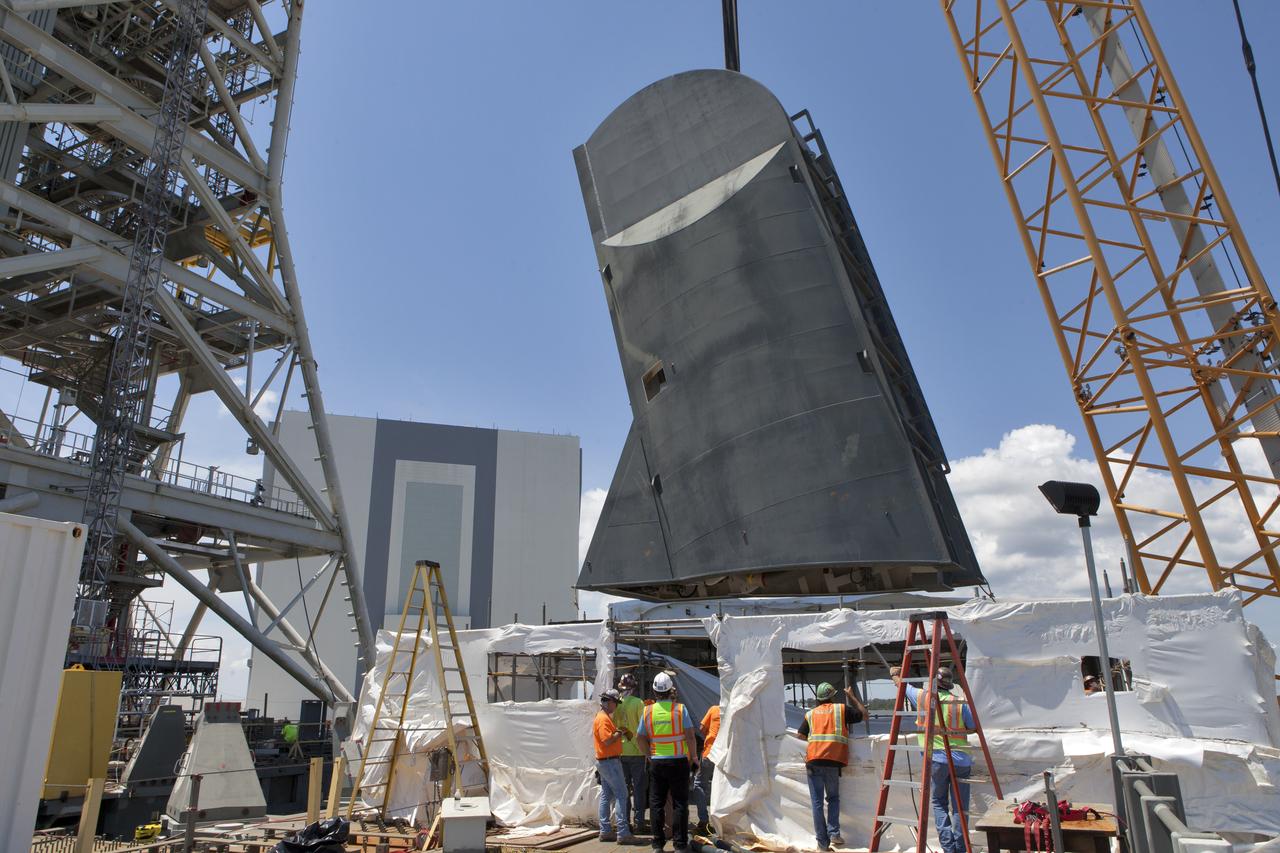
Construction workers with JP Donovan monitor operations as a crane is used to lower the first of two Tail Service Mast Umbilicals for installation on the 0-level deck of the mobile launcher on July 12, at NASA's Kennedy Space Center in Florida. The 35-foot-tall umbilical will connect to NASA's Space Launch System rocket core stage aft section and provide liquid oxygen and electrical cable connections to the core stage engine section to support propellant handling during prelaunch operations. The installation brings Exploration Ground Systems one step closer to supporting prelaunch operations for the agency's SLS rocket and Orion spacecraft on Exploration Mission-1 and deep space destinations.
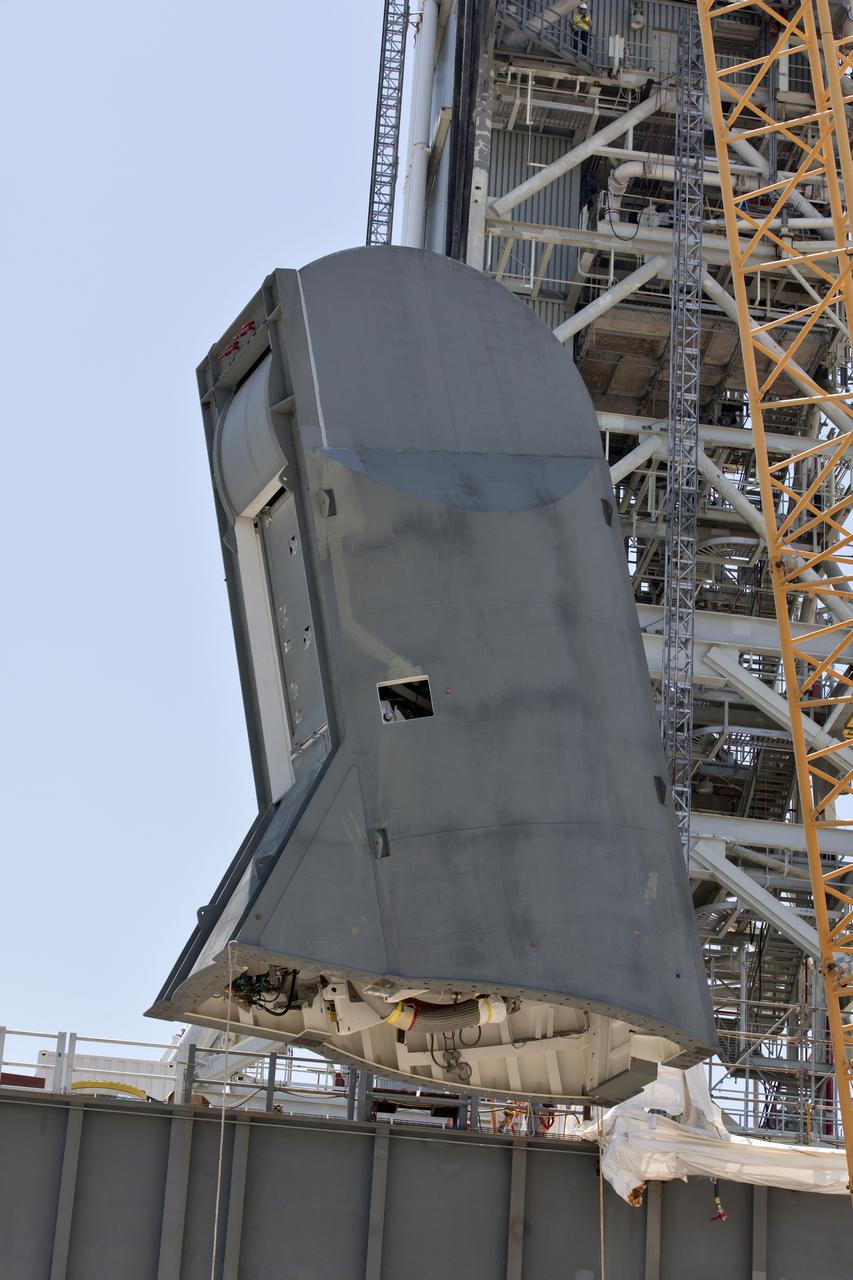
The first of two Tail Service Mast Umbilicals is lifted up for installation on the 0-level deck of the mobile launcher on July 12, at NASA's Kennedy Space Center in Florida. The 35-foot-tall umbilical will connect to NASA's Space Launch System rocket core stage aft section and provide liquid oxygen and electrical cable connections to the core stage engine section to support propellant handling during prelaunch operations. The installation brings Exploration Ground Systems one step closer to supporting prelaunch operations for the agency's SLS rocket and Orion spacecraft on Exploration Mission-1 and deep space destinations.
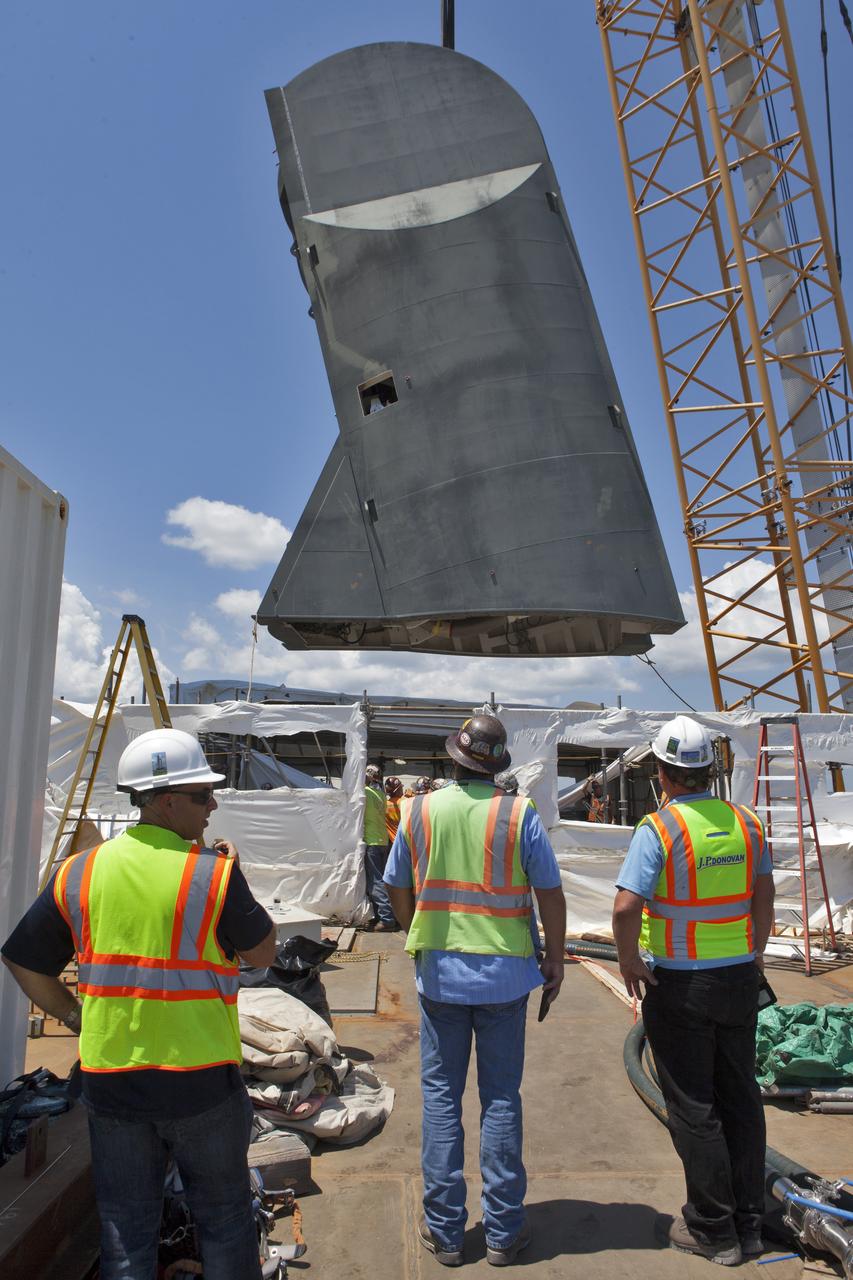
Construction workers with JP Donovan monitor operations as a crane is used to lower the first of two Tail Service Mast Umbilicals for installation on the 0-level deck of the mobile launcher on July 12, at NASA's Kennedy Space Center in Florida. The 35-foot-tall umbilical will connect to NASA's Space Launch System rocket core stage aft section and provide liquid oxygen and electrical cable connections to the core stage engine section to support propellant handling during prelaunch operations. The installation brings Exploration Ground Systems one step closer to supporting prelaunch operations for the agency's SLS rocket and Orion spacecraft on Exploration Mission-1 and deep space destinations.
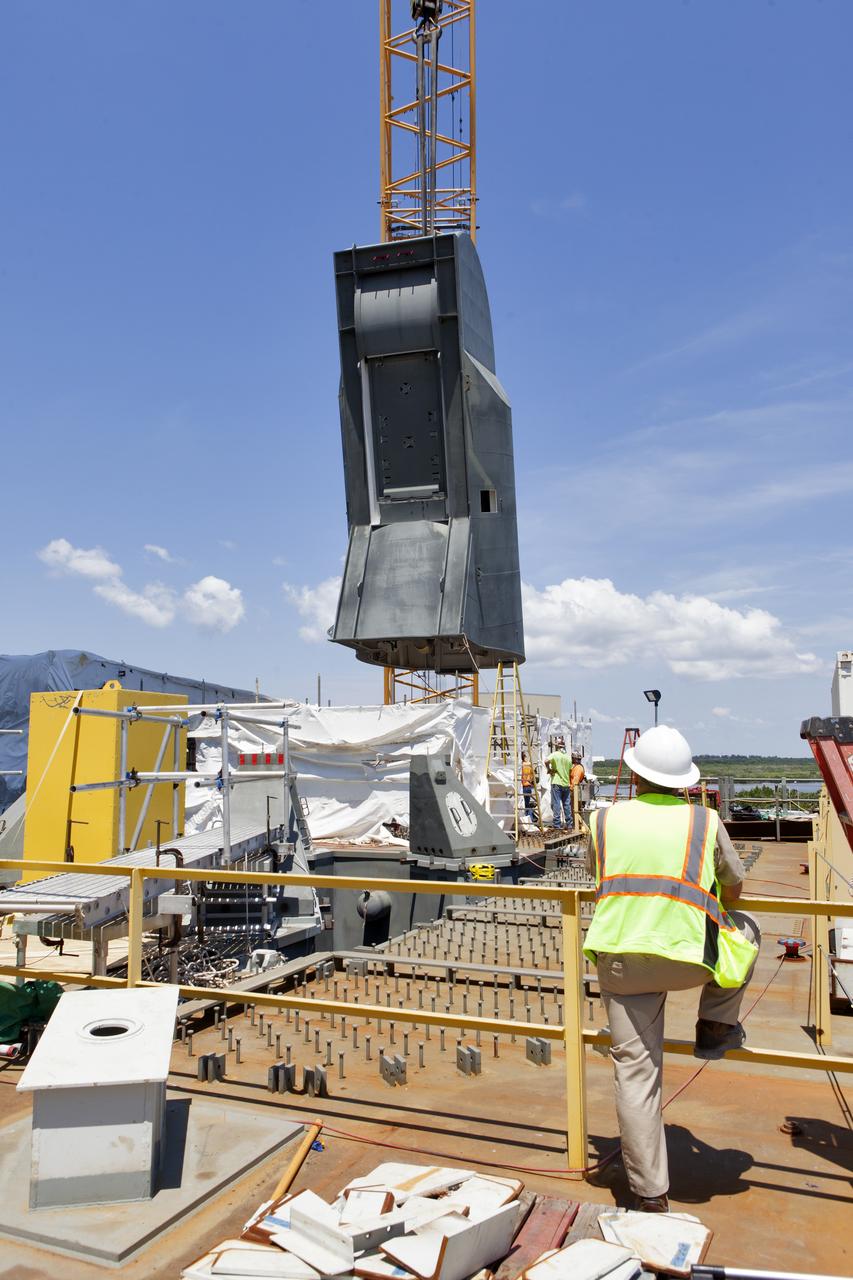
A crane is used to lower the first of two Tail Service Mast Umbilicals for installation on the 0-level deck of the mobile launcher on July 12, at NASA's Kennedy Space Center in Florida. The 35-foot-tall umbilical will connect to NASA's Space Launch System rocket core stage aft section and provide liquid oxygen and electrical cable connections to the core stage engine section to support propellant handling during prelaunch operations. The installation brings Exploration Ground Systems one step closer to supporting prelaunch operations for the agency's SLS rocket and Orion spacecraft on Exploration Mission-1 and deep space destinations.
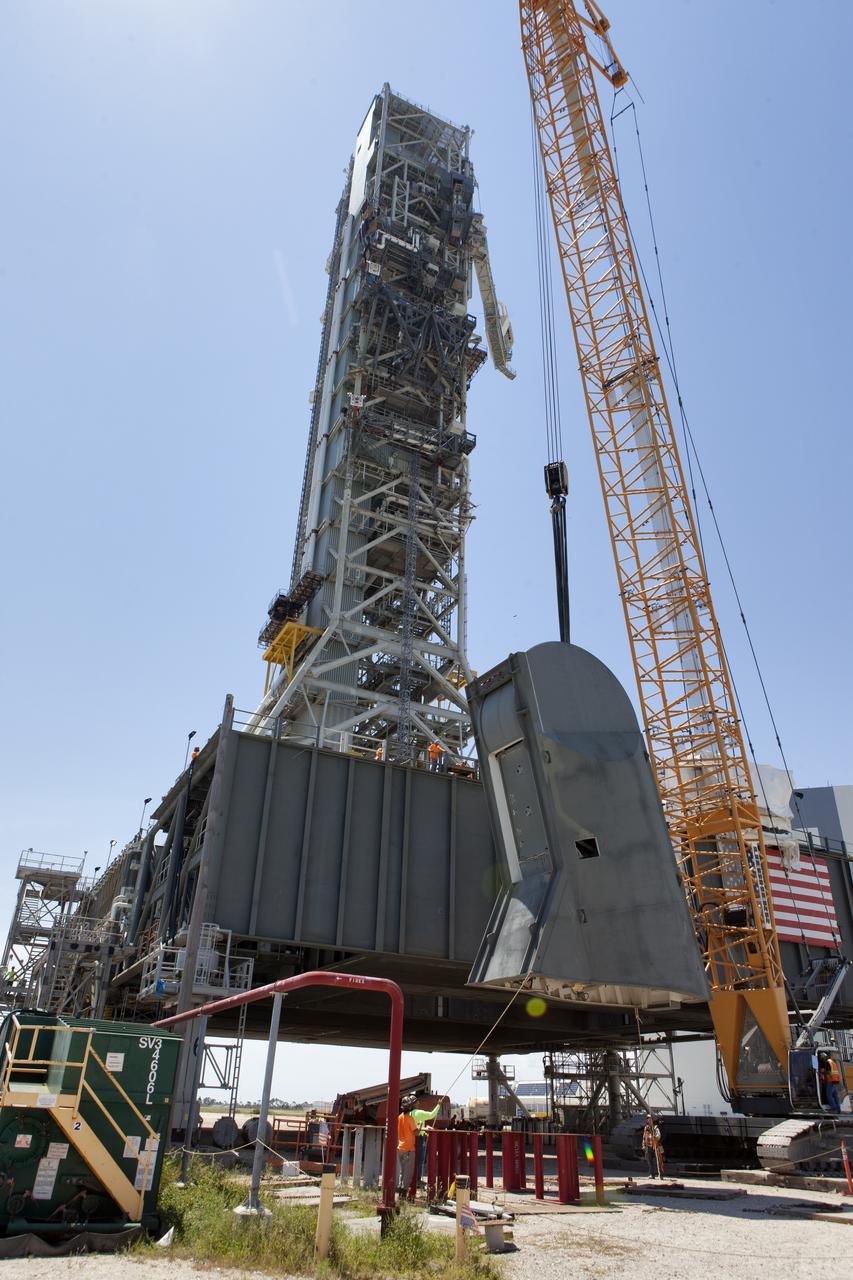
The first of two Tail Service Mast Umbilicals is lifted up for installation on the 0-level deck of the mobile launcher on July 12, at NASA's Kennedy Space Center in Florida. The 35-foot-tall umbilical will connect to NASA's Space Launch System rocket core stage aft section and provide liquid oxygen and electrical cable connections to the core stage engine section to support propellant handling during prelaunch operations. The installation brings Exploration Ground Systems one step closer to supporting prelaunch operations for the agency's SLS rocket and Orion spacecraft on Exploration Mission-1 and deep space destinations.
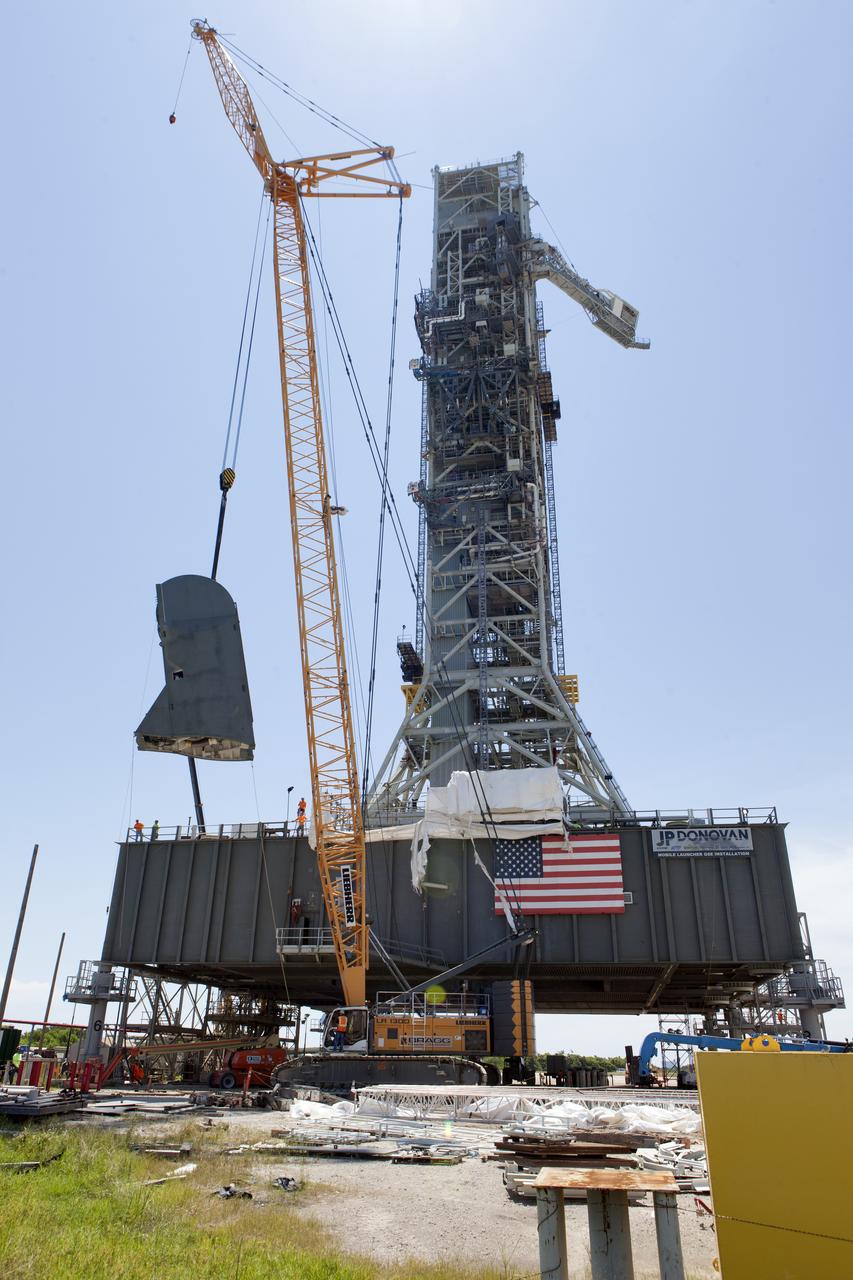
A crane is used to lift up the first of two Tail Service Mast Umbilicals for installation on the 0-level deck of the mobile launcher on July 12, at NASA's Kennedy Space Center in Florida. The 35-foot-tall umbilical will connect to NASA's Space Launch System rocket core stage aft section and provide liquid oxygen and electrical cable connections to the core stage engine section to support propellant handling during prelaunch operations. The installation brings Exploration Ground Systems one step closer to supporting prelaunch operations for the agency's SLS rocket and Orion spacecraft on Exploration Mission-1 and deep space destinations.
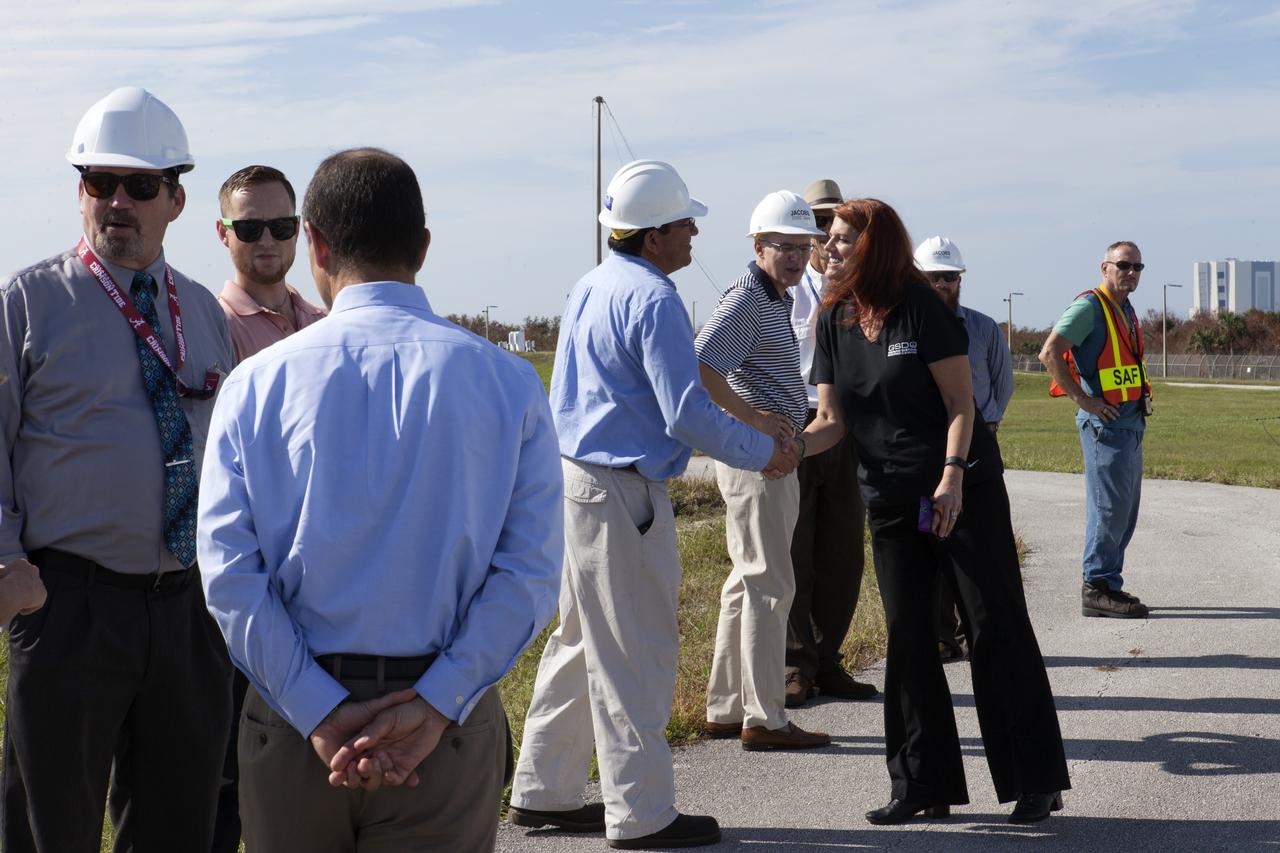
NASA Launch Director Charlie Blackwell-Thompson, at right, greets engineers and technicians at Launch Pad 39B at the agency's Kennedy Space Center in Florida. Blackwell-Thompson will observe the first major tanking operation of liquid oxygen, or LO2, into the giant storage sphere at the northwest corner of the pad to prepare for the launch of the agency's Orion spacecraft atop the Space Launch System (SLS) rocket. During the operation, several Praxair trucks will slowly offload LO2 to gradually chill down the sphere from normal temperature to about negative 298 degrees Fahrenheit. The Ground Systems Development and Operations Program is overseeing upgrades and modifications to pad B to support the launch of the SLS and Orion spacecraft for Exploration Mission-1, deep space missions and NASA’s journey to Mars.
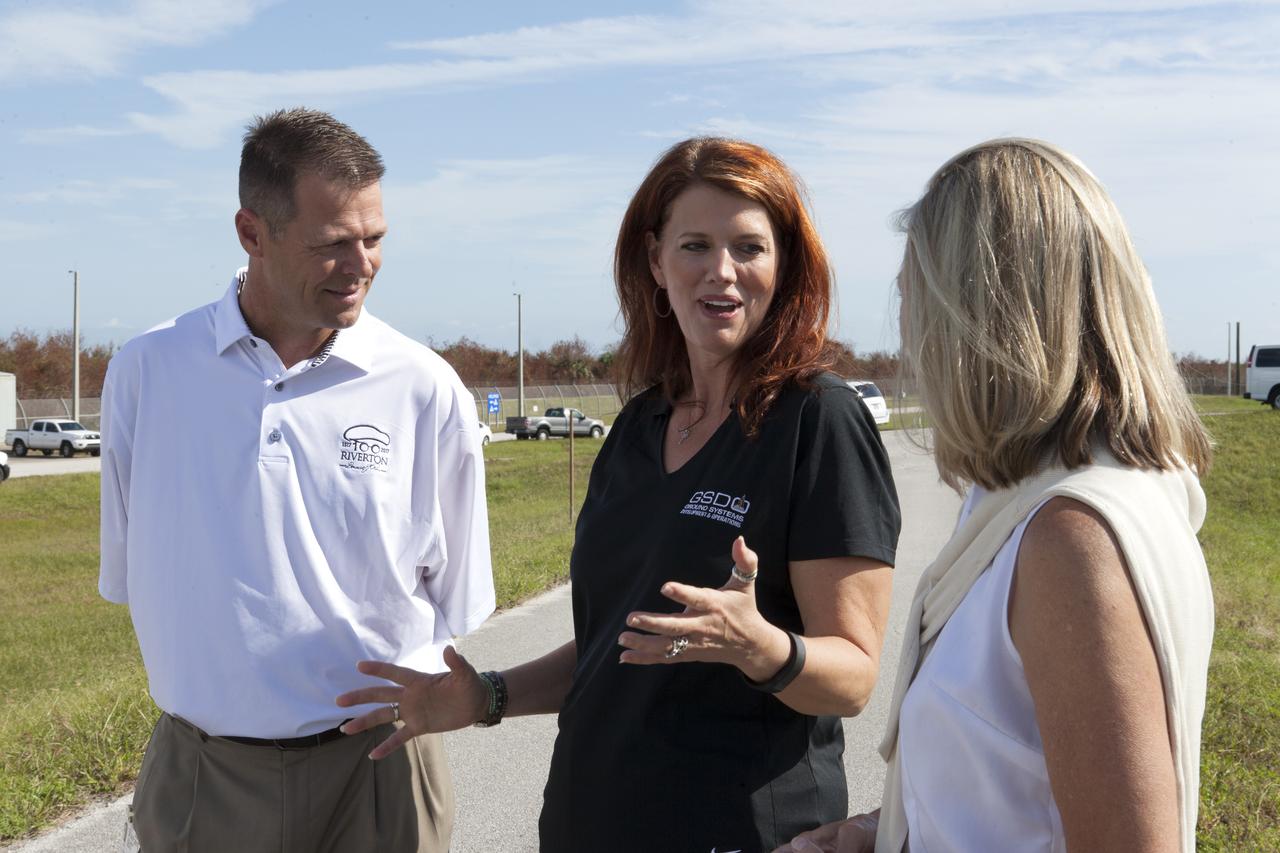
NASA Launch Director Charlie Blackwell-Thompson, center, talks to engineers at Launch Pad 39B at the agency's Kennedy Space Center in Florida. Blackwell-Thompson will observe the first major tanking operation of liquid oxygen, or LO2, into the giant storage sphere at the northwest corner of the pad to prepare for the launch of the agency's Orion spacecraft atop the Space Launch System (SLS) rocket. During the operation, several Praxair trucks will slowly offload LO2 to gradually chill down the sphere from normal temperature to about negative 298 degrees Fahrenheit. The Ground Systems Development and Operations Program is overseeing upgrades and modifications to pad B to support the launch of the SLS and Orion spacecraft for Exploration Mission-1, deep space missions and NASA’s journey to Mars.
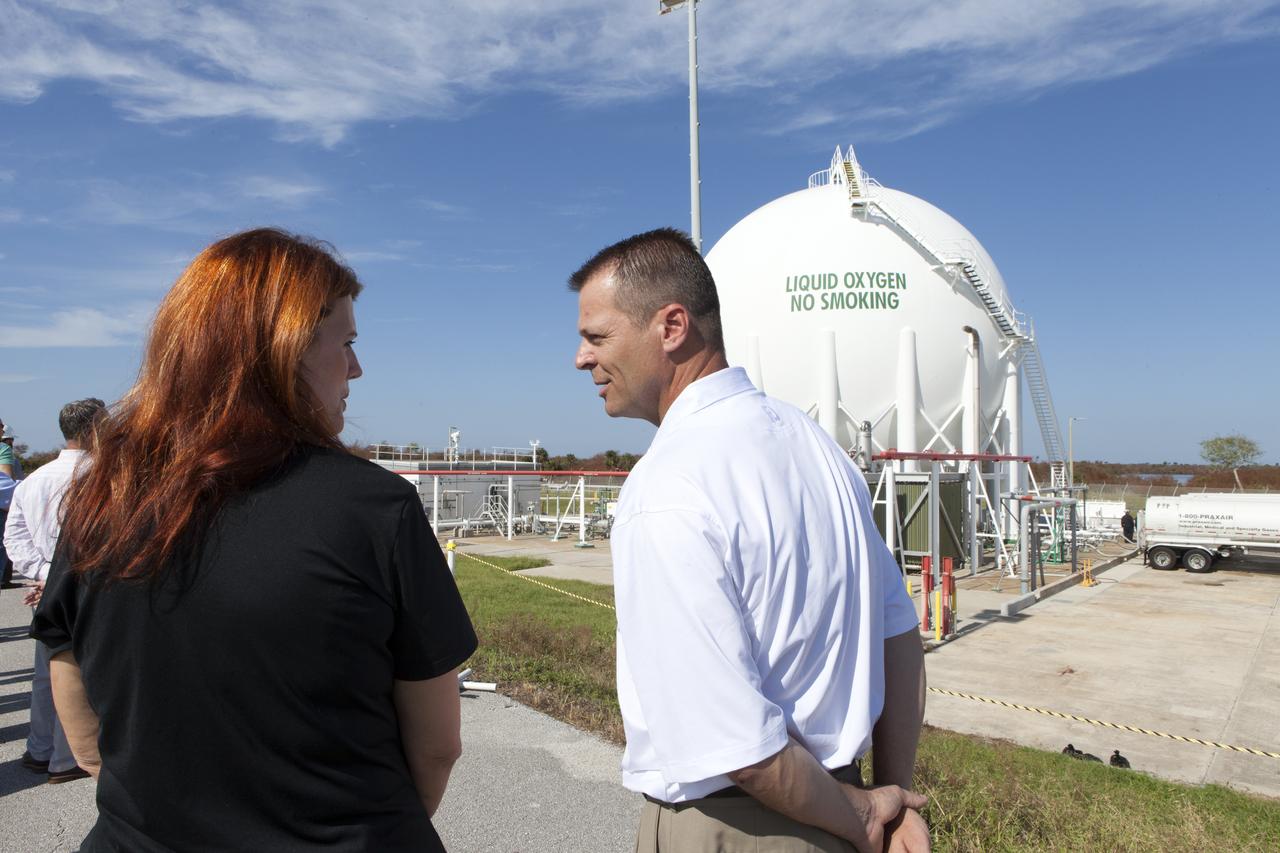
NASA Launch Director Charlie Blackwell-Thompson, at left, arrives at Launch Pad 39B at NASA's Kennedy Space Center in Florida, to observe the first major tanking operation of liquid oxygen, or LO2, into the giant storage sphere at the northwest corner of the pad to prepare for the launch of the agency's Orion spacecraft atop the Space Launch System (SLS) rocket. During the operation, several Praxair trucks will slowly offload LO2 to gradually chill down the sphere from normal temperature to about negative 298 degrees Fahrenheit. The Ground Systems Development and Operations Program is overseeing upgrades and modifications to pad B to support the launch of the SLS and Orion spacecraft for Exploration Mission-1, deep space missions and NASA’s journey to Mars.
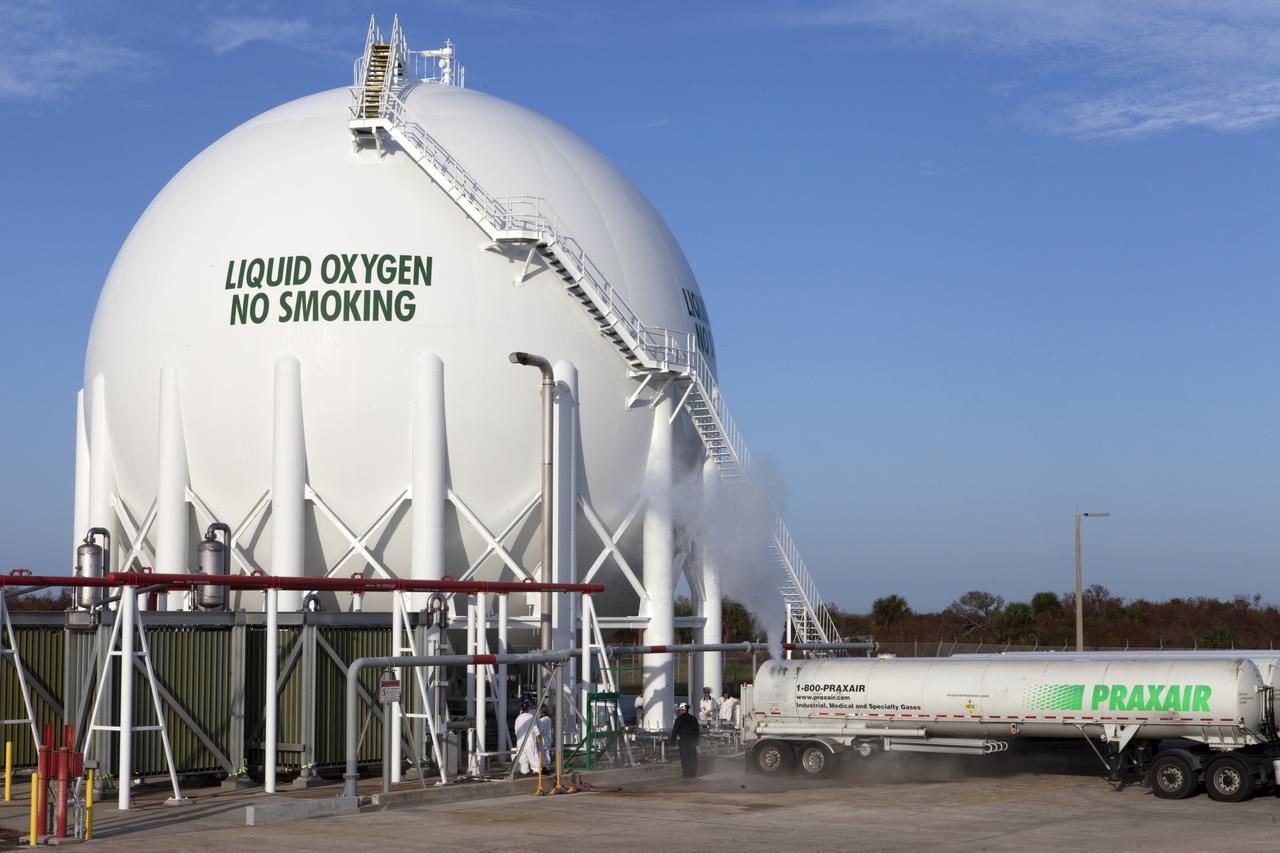
Several Praxair trucks carrying their loads of liquid oxygen, or LO2, have arrived at Launch Pad 39B at NASA's Kennedy Space Center in Florida. A mist is visible as LO2 is offloaded from one of the trucks into the giant storage sphere located at the northwest corner of the pad has begun. The sphere will gradually be chilled down from normal temperature to about negative 298 degrees Fahrenheit, during the first major integrated operation to prepare for the launch of the agency's Orion spacecraft atop the Space Launch System (SLS) rocket. The Ground Systems Development and Operations Program is overseeing upgrades and modifications to pad B to support the launch of the SLS and Orion spacecraft for Exploration Mission-1, deep space missions and NASA’s journey to Mars.
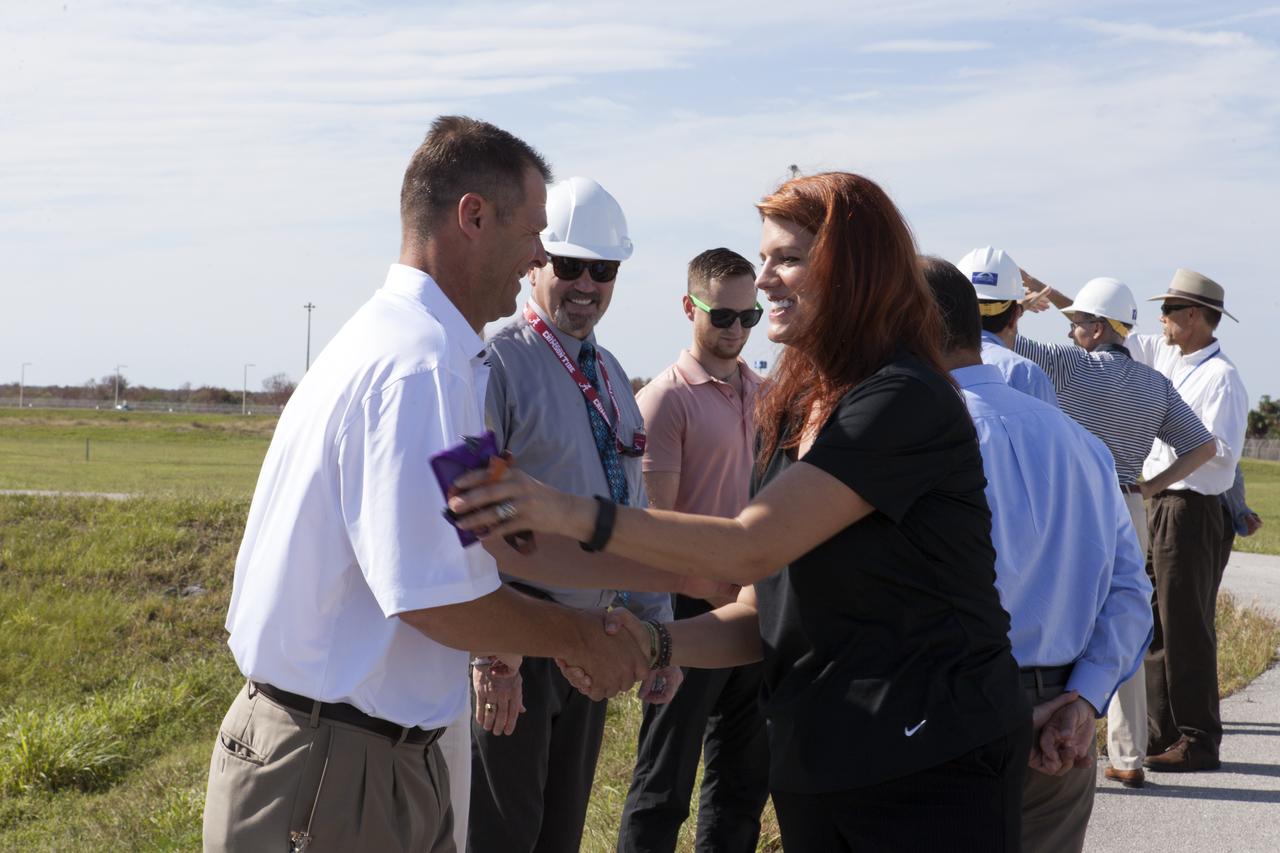
NASA Launch Director Charlie Blackwell-Thompson, at right, greets engineers and technicians at Launch Pad 39B at the agency's Kennedy Space Center in Florida. Blackwell-Thompson will observe the first major tanking operation of liquid oxygen, or LO2, into the giant storage sphere at the northwest corner of the pad to prepare for the launch of the agency's Orion spacecraft atop the Space Launch System (SLS) rocket. During the operation, several Praxair trucks will slowly offload LO2 to gradually chill down the sphere from normal temperature to about negative 298 degrees Fahrenheit. The Ground Systems Development and Operations Program is overseeing upgrades and modifications to pad B to support the launch of the SLS and Orion spacecraft for Exploration Mission-1, deep space missions and NASA’s journey to Mars.
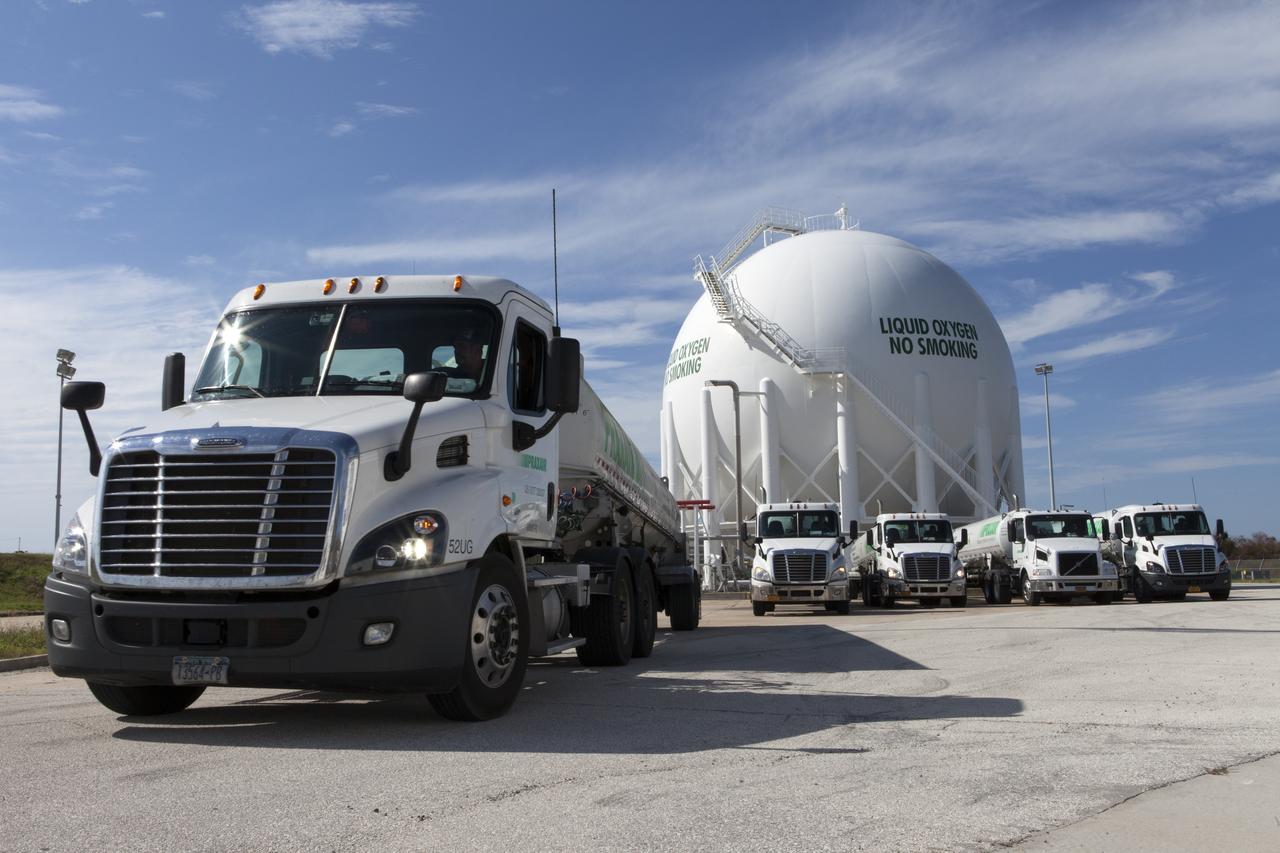
Several Praxair trucks begin to depart Launch Pad 39B at NASA's Kennedy Space Center in Florida, after offloading their loads of liquid oxygen, or LO2, one at a time into the giant storage sphere located at the northwest corner of the pad. The sphere was gradually chilled down from normal temperature to about negative 298 degrees Fahrenheit, during the first major integrated operation to prepare for the launch of the agency's Orion spacecraft atop the Space Launch System (SLS) rocket. The Ground Systems Development and Operations Program is overseeing upgrades and modifications to pad B to support the launch of the SLS and Orion spacecraft for Exploration Mission-1, deep space missions and NASA’s journey to Mars.
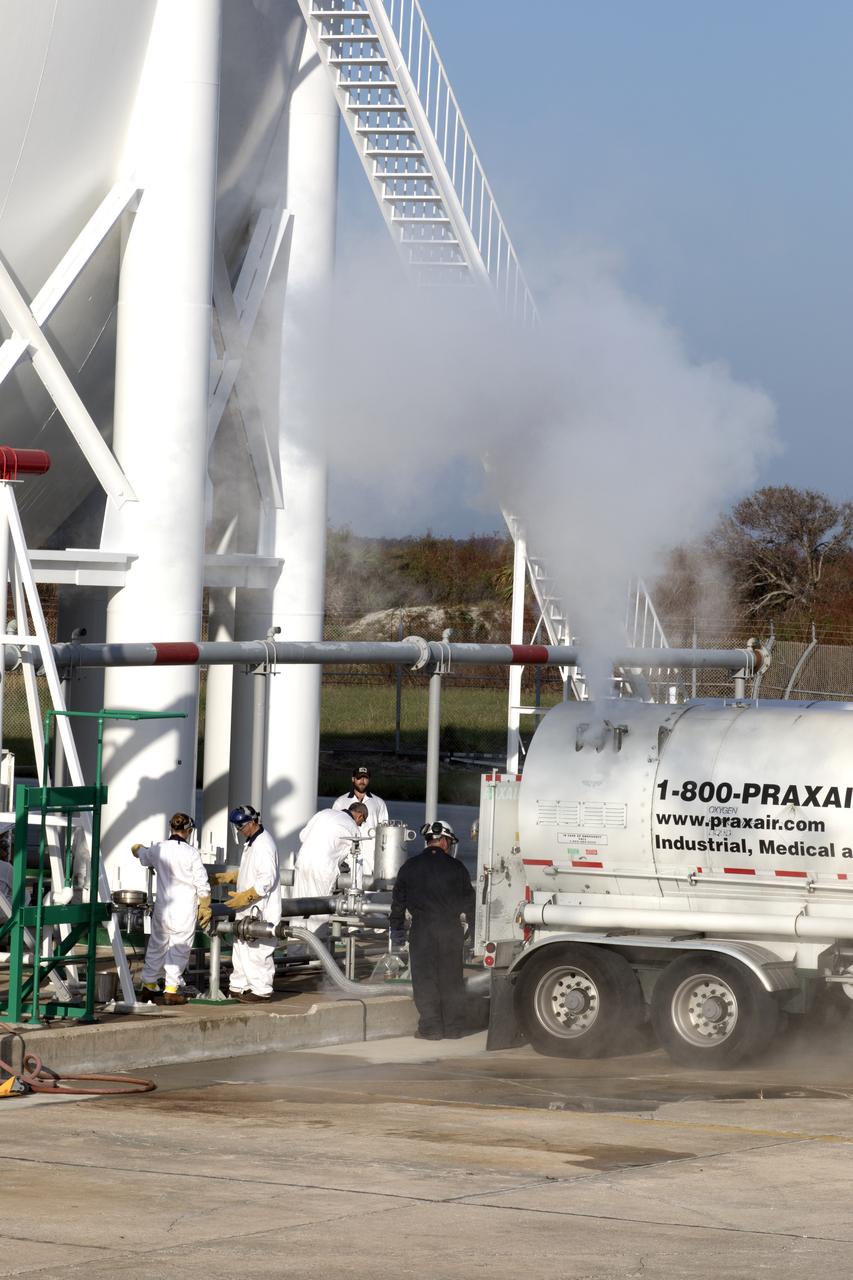
A large plume of mist or vapor is visible as a Praxair truck slowly transfers its load of liquid oxygen, or LO2, into a giant storage sphere at the northwest corner of Launch Pad 39B at NASA's Kennedy Space Center in Florida. The sphere will gradually be chilled down from normal temperature to about negative 298 degrees Fahrenheit, during the first major integrated operation to prepare for the launch of the agency's Orion spacecraft atop the Space Launch System (SLS) rocket. The Ground Systems Development and Operations Program is overseeing upgrades and modifications to pad B to support the launch of the SLS and Orion spacecraft for Exploration Mission-1, deep space missions and NASA’s journey to Mars.
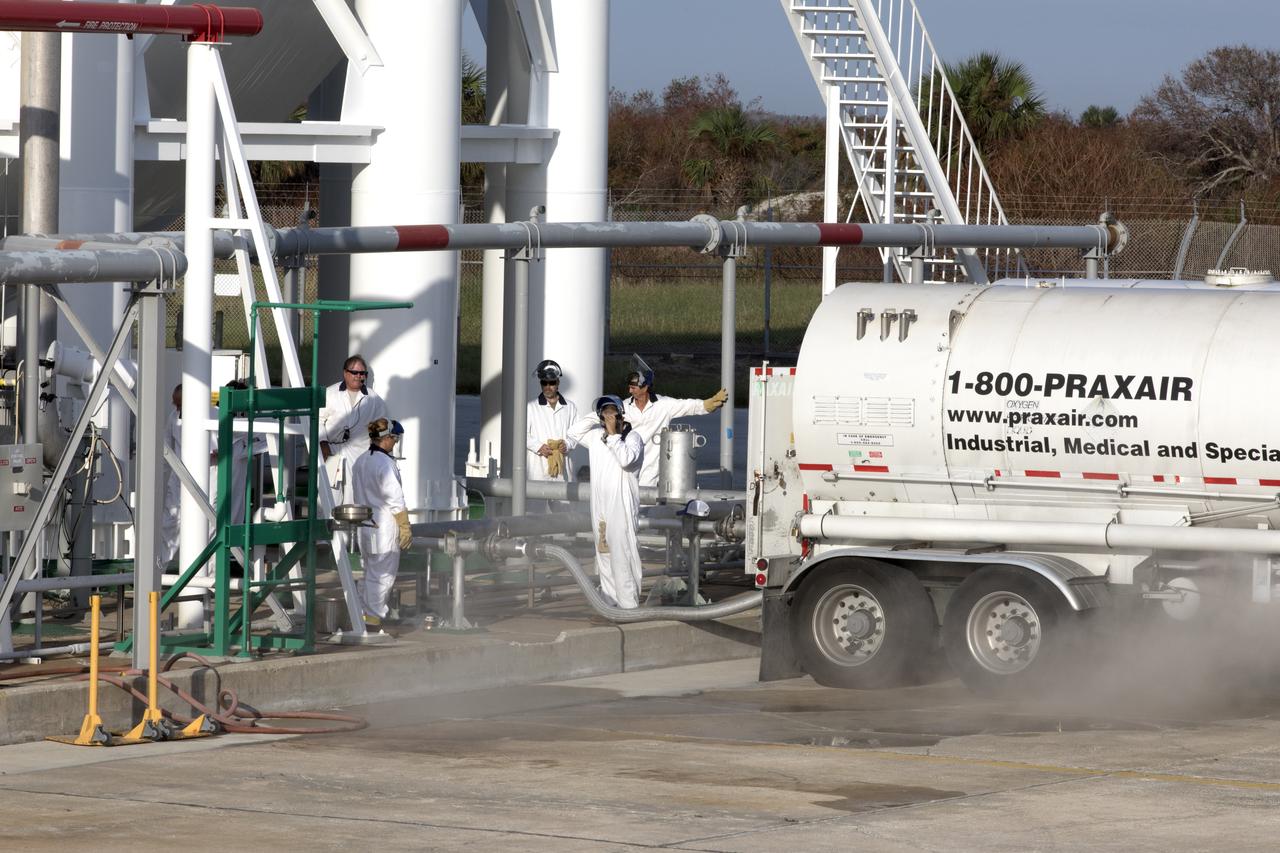
Mist or vapor is visible as a Praxair truck slowly transfers its load of liquid oxygen, or LO2, into a giant storage sphere at the northwest corner of Launch Pad 39B at NASA's Kennedy Space Center in Florida. The sphere will gradually be chilled down from normal temperature to about negative 298 degrees Fahrenheit, during the first major integrated operation to prepare for the launch of the agency's Orion spacecraft atop the Space Launch System (SLS) rocket. The Ground Systems Development and Operations Program is overseeing upgrades and modifications to pad B to support the launch of the SLS and Orion spacecraft for Exploration Mission-1, deep space missions and NASA’s journey to Mars.
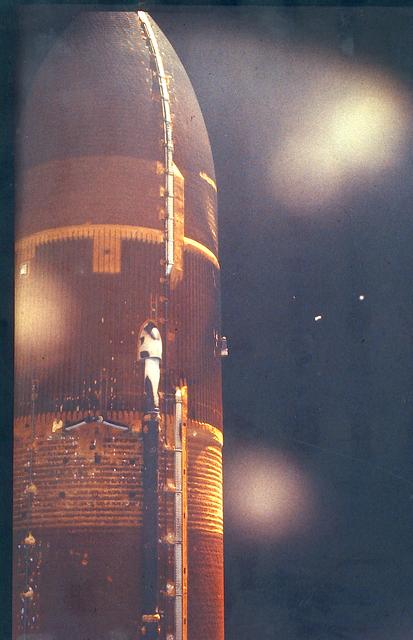
JSC2003-E-15408 (18 June 1983) --- A 35mm still camera located in the umbilical well of the space shuttle Challenger took this photograph of the external fuel tank (ET) after it was dropped from the launch stack as the shuttle headed for Earth orbit on June 18, 1983. The camera was located in the LO2 umbilical near the aft end of the orbiter (right side as you view the ET). Photo credit: NASA
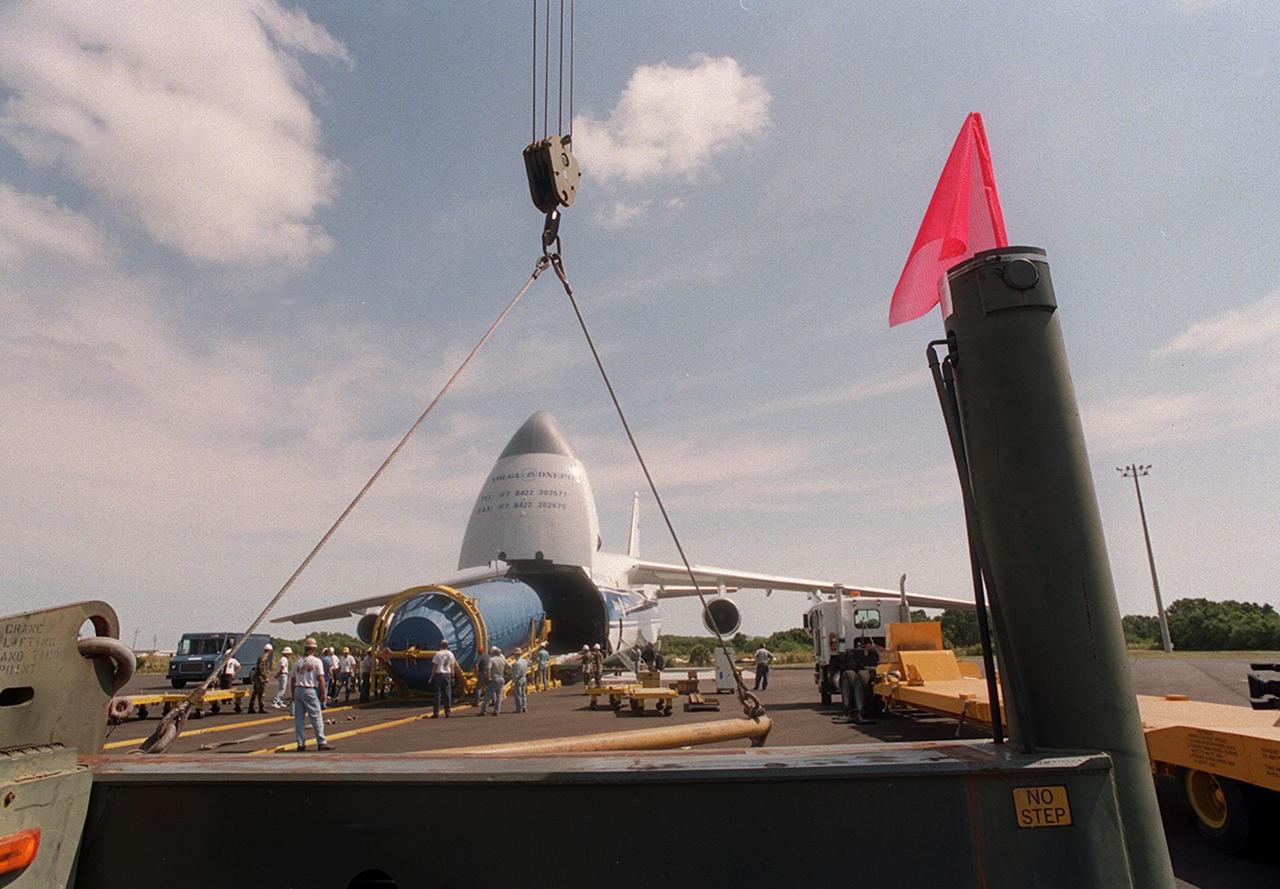
Workers at Cape Canaveral Air Force skid strip oversee the offloading of the Centaur upper stage from a Russian cargo plane, the Antenov 124. The Centaur will be coupled with an Atlas IIA to launch the latest Tracking and Data Relay Satellite (TDRS) June 29 from Cape Canaveral Air Force Station. The Centaur, manufactured and operated by Lockheed Martin, is 3.05 m (10 ft) in diameter and 10.0 m (33-ft) long. It uses liquid hydrogen (LH2) and liquid oxygen (LO2) propellants
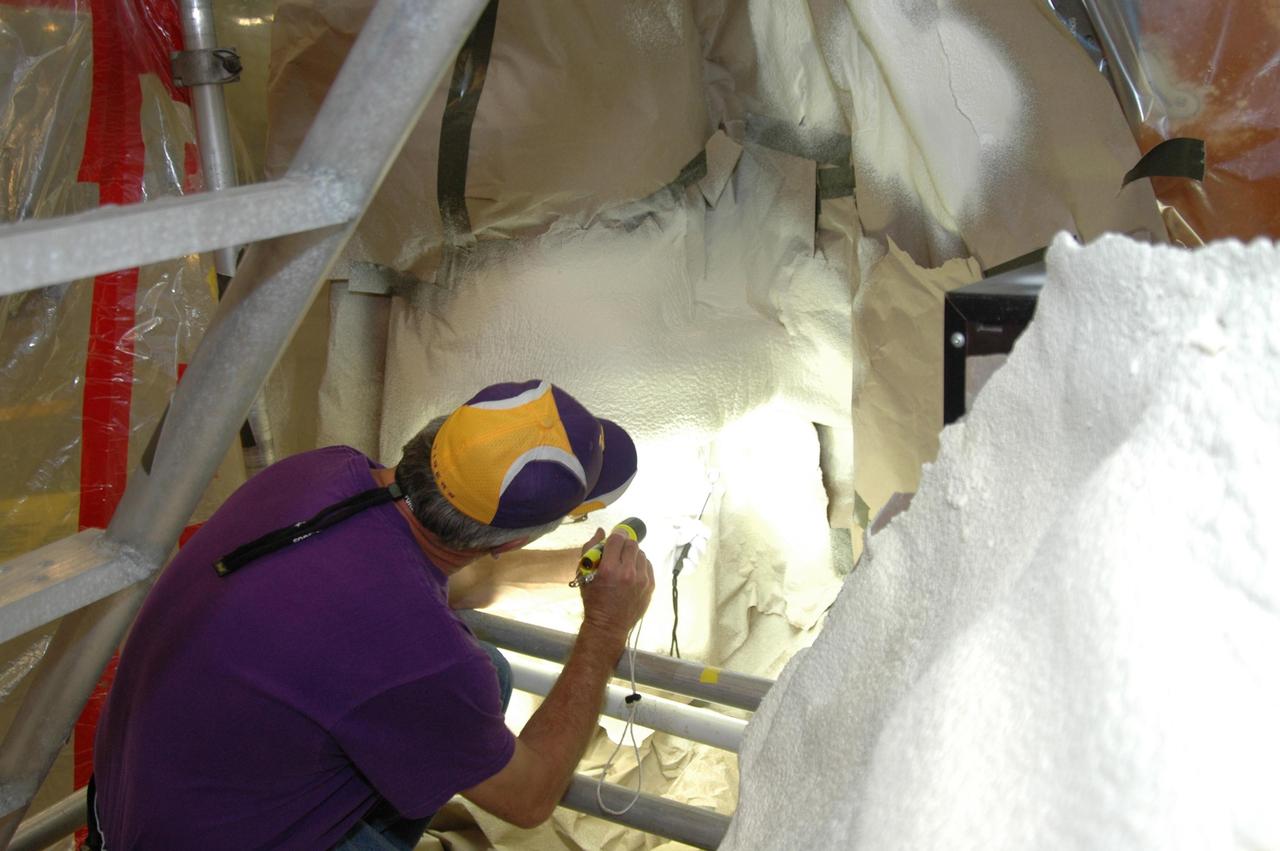
KENNEDY SPACE CENTER, FLA. -- A Lockheed Martin external tank technician from the Michoud Assembly Facility in New Orleans inspects the foam modification on external tank 120 in the Vehicle Assembly Building. The foam insulation and super lightweight ablator cork insulation were removed from the external tank and LO2 feed line bracket on Aug. 24 and replaced only with BX265 foam insulation. The tank is scheduled to fly on Space Shuttle Discovery in October 2007 on mission STS-120. Photo credit: NASA/Jim Grossmann
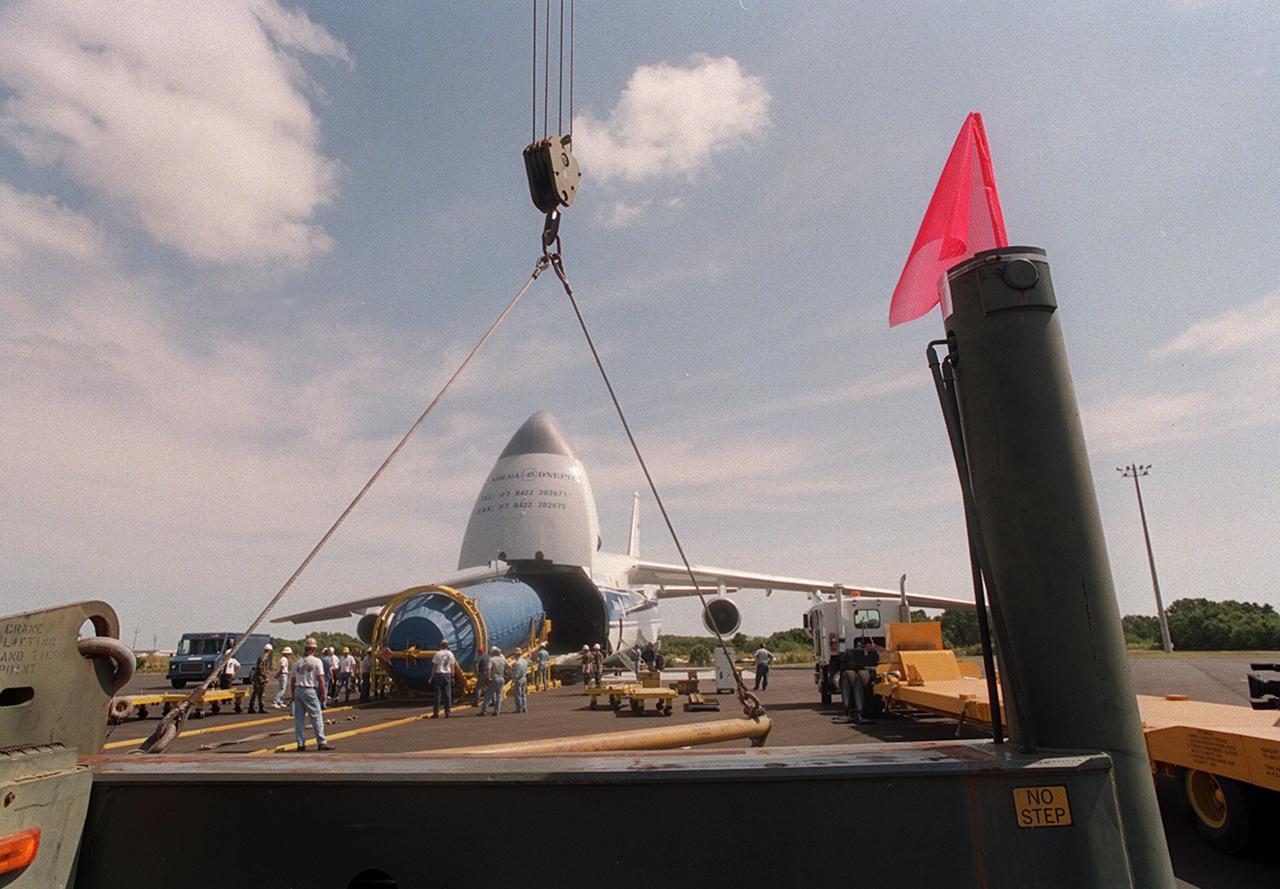
Workers at Cape Canaveral Air Force skid strip oversee the offloading of the Centaur upper stage from a Russian cargo plane, the Antenov 124. The Centaur will be coupled with an Atlas IIA to launch the latest Tracking and Data Relay Satellite (TDRS) June 29 from Cape Canaveral Air Force Station. The Centaur, manufactured and operated by Lockheed Martin, is 3.05 m (10 ft) in diameter and 10.0 m (33-ft) long. It uses liquid hydrogen (LH2) and liquid oxygen (LO2) propellants
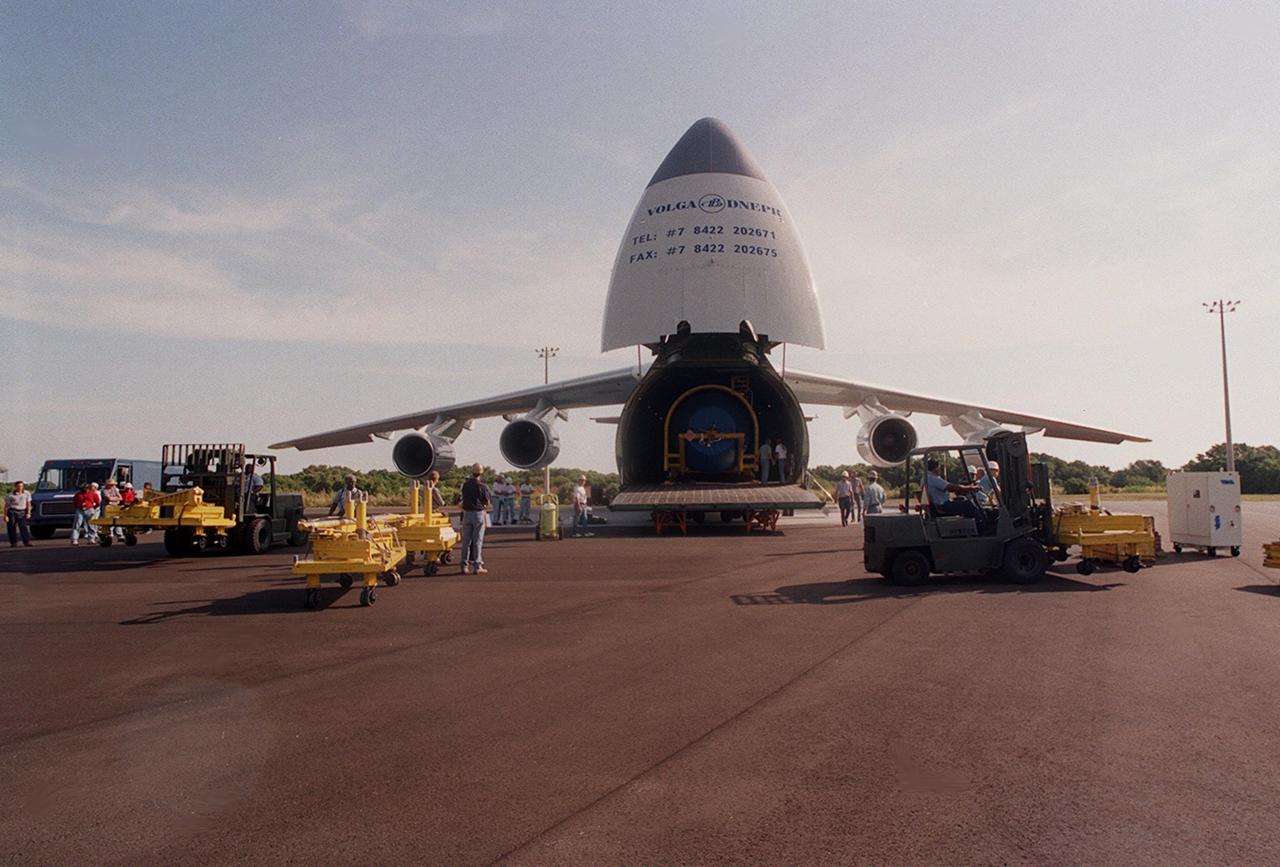
A Russian cargo plane, the Antenov 124, arrives at Cape Canaveral Air Force skid strip to deliver the Atlas IIA/Centaur rocket scheduled to launch the latest Tracking and Data Relay Satellite (TDRS) June 29 from Cape Canaveral Air Force Station. Visible is the Centaur upper stage, manufactured and operated by Lockheed Martin. The Centaur vehicle is 3.05 m (10 ft) in diameter and 10.0 m (33-ft) long. It uses liquid hydrogen (LH2) and liquid oxygen (LO2) propellants

A Russian cargo plane, the Antenov 124, arrives at Cape Canaveral Air Force skid strip to deliver the Atlas IIA/Centaur rocket scheduled to launch the latest Tracking and Data Relay Satellite (TDRS) June 29 from Cape Canaveral Air Force Station. Visible is the Centaur upper stage, manufactured and operated by Lockheed Martin. The Centaur vehicle is 3.05 m (10 ft) in diameter and 10.0 m (33-ft) long. It uses liquid hydrogen (LH2) and liquid oxygen (LO2) propellants
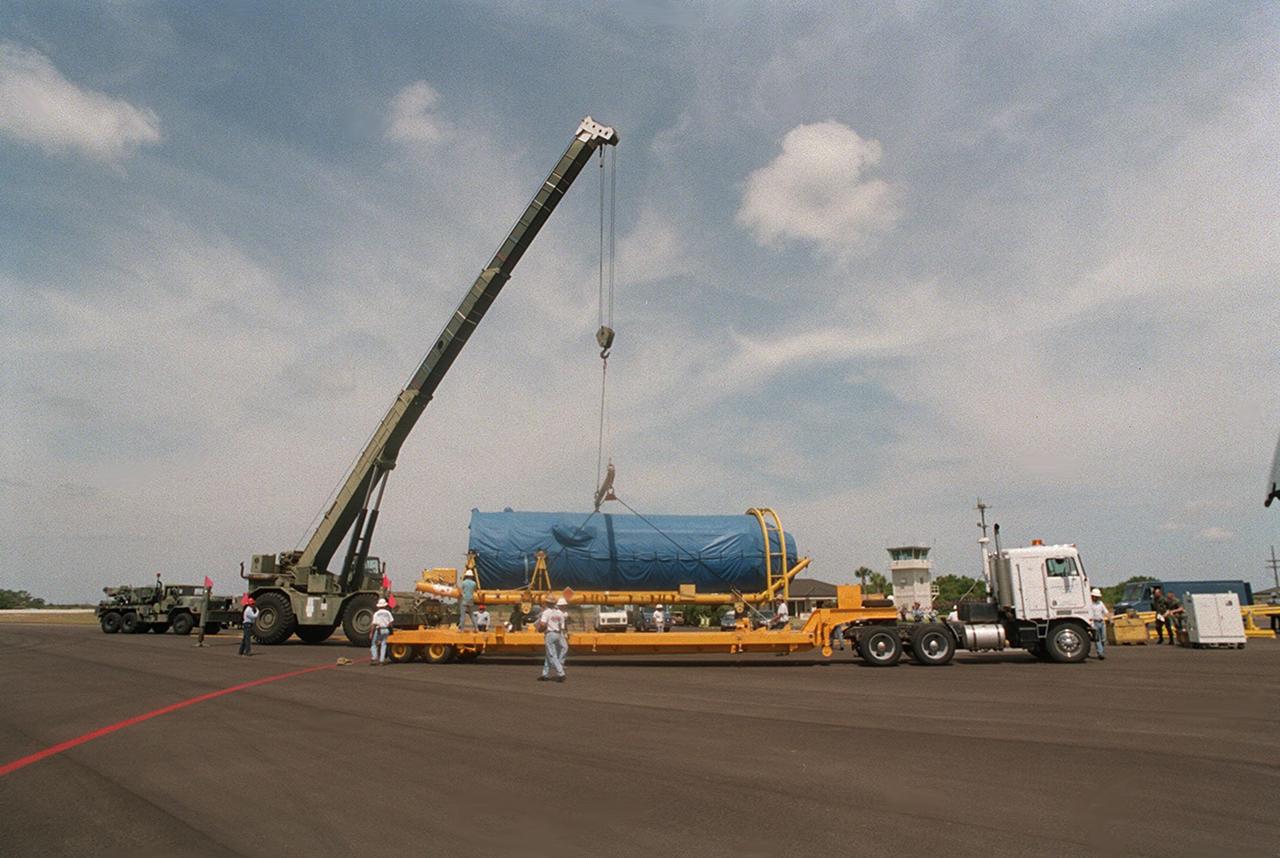
At Cape Canaveral Air Force skid strip, the Centaur upper stage is placed aboard a transporter after arriving aboard a Russian cargo plane, the Antenov 124. The Centaur will be coupled with an Atlas IIA to launch the latest Tracking and Data Relay Satellite (TDRS) June 29 from Cape Canaveral Air Force Station. The Centaur, manufactured and operated by Lockheed Martin, is 3.05 m (10 ft) in diameter and 10.0 m (33-ft) long. It uses liquid hydrogen (LH2) and liquid oxygen (LO2) propellants
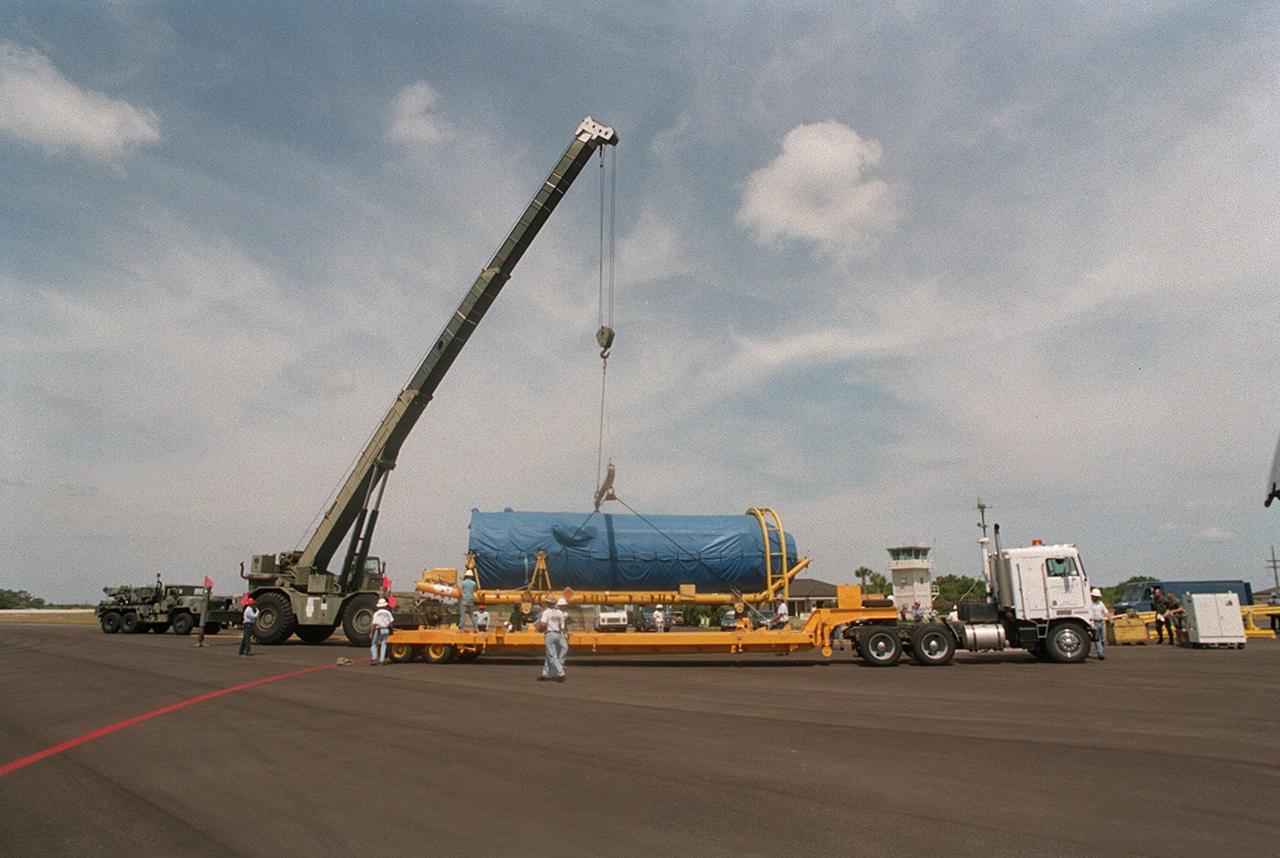
At Cape Canaveral Air Force skid strip, the Centaur upper stage is placed aboard a transporter after arriving aboard a Russian cargo plane, the Antenov 124. The Centaur will be coupled with an Atlas IIA to launch the latest Tracking and Data Relay Satellite (TDRS) June 29 from Cape Canaveral Air Force Station. The Centaur, manufactured and operated by Lockheed Martin, is 3.05 m (10 ft) in diameter and 10.0 m (33-ft) long. It uses liquid hydrogen (LH2) and liquid oxygen (LO2) propellants
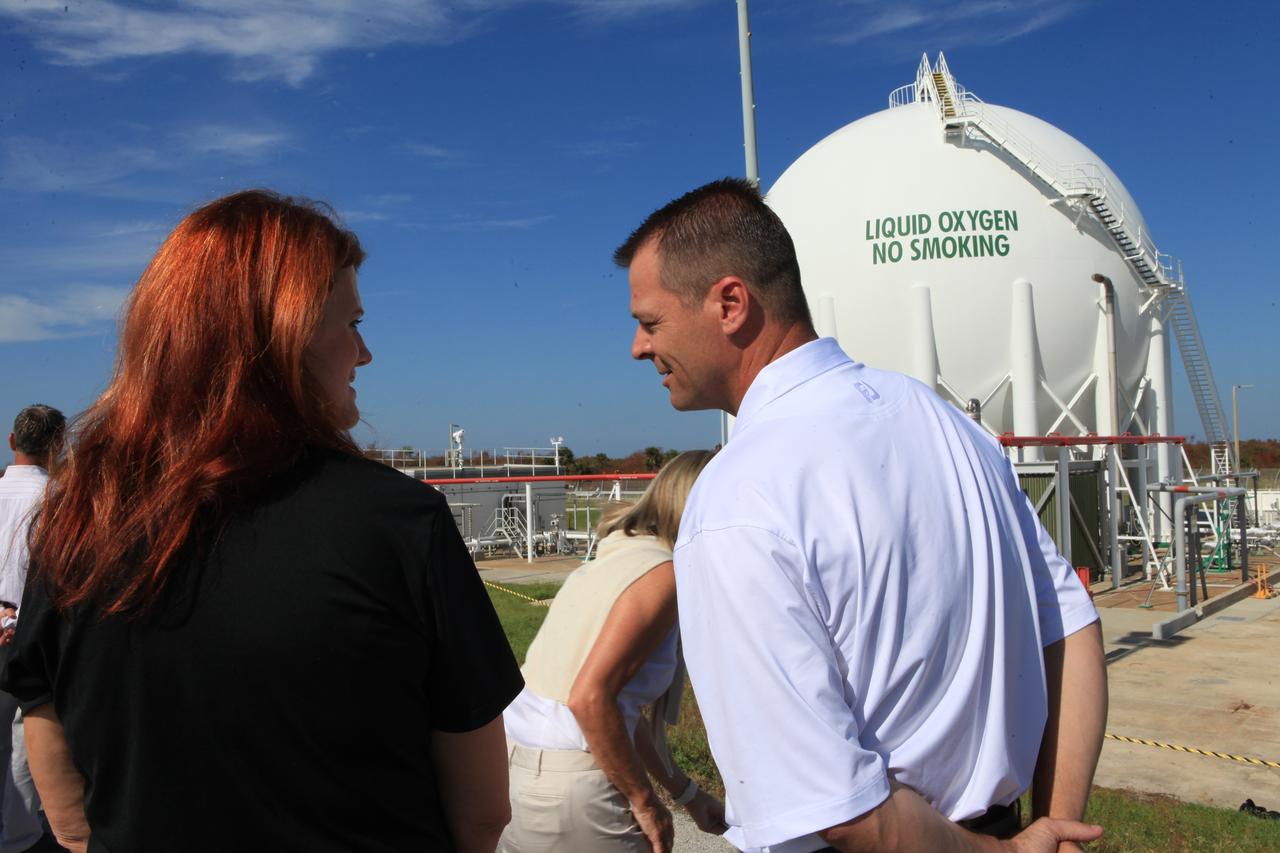
Liquid Oxygen filled in the Cryo tank of Pad 39B in support of the SLS rocket.

KENNEDY SPACE CENTER, FLA. -- A close-up view of the LO2 feed line bracket with the BX265foam insulation and super lightweight ablator, or SLA, cork insulation removed. The BX265 foam insulation will later be reapplied without the SLA. The tank is scheduled to fly on Space Shuttle Discovery in October 2007 on mission STS-120. Discovery's crew will add the module Harmony that will serve as a port for installing additional international laboratories. Harmony will be the first expansion of the living and working space on the complex since the Russian Pirs airlock was installed in 2001. The mission also will move the first set of solar arrays installed on the station to a permanent location on the complex and redeploy them. Photo credit: NASA/Jim Grossmann
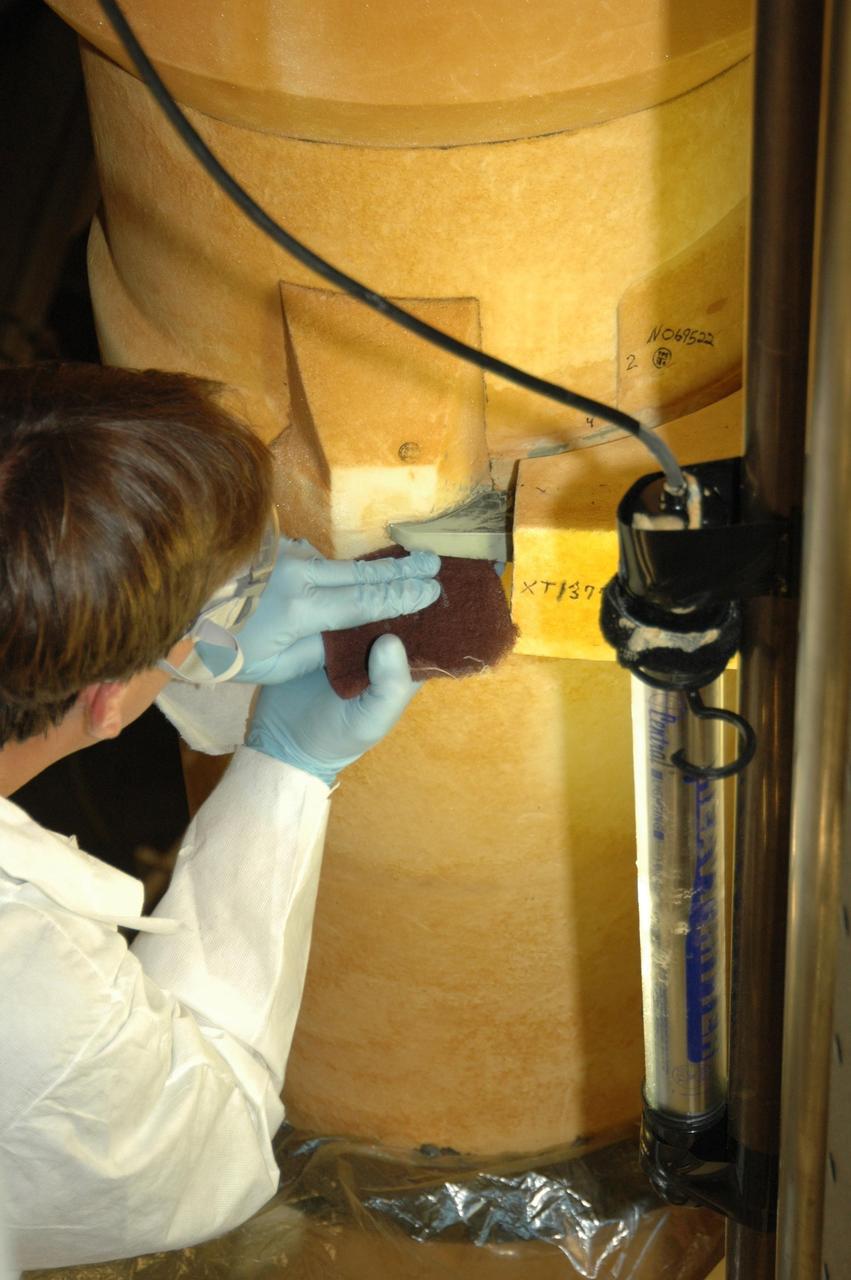
KENNEDY SPACE CENTER, FLA. -- The super lightweight ablator, or SLA, cork insulation has been removed from the external tank and a United Space Alliance external tank technician sands off the residue from the LO2 feed line bracket. The BX265 foam insulation will later be reapplied without the SLA. The tank is scheduled to fly on Space Shuttle Discovery in October 2007 on mission STS-120. Discovery's crew will add the module Harmony that will serve as a port for installing additional international laboratories. Harmony will be the first expansion of the living and working space on the complex since the Russian Pirs airlock was installed in 2001. The mission also will move the first set of solar arrays installed on the station to a permanent location on the complex and redeploy them. Photo credit: NASA/Jim Grossmann
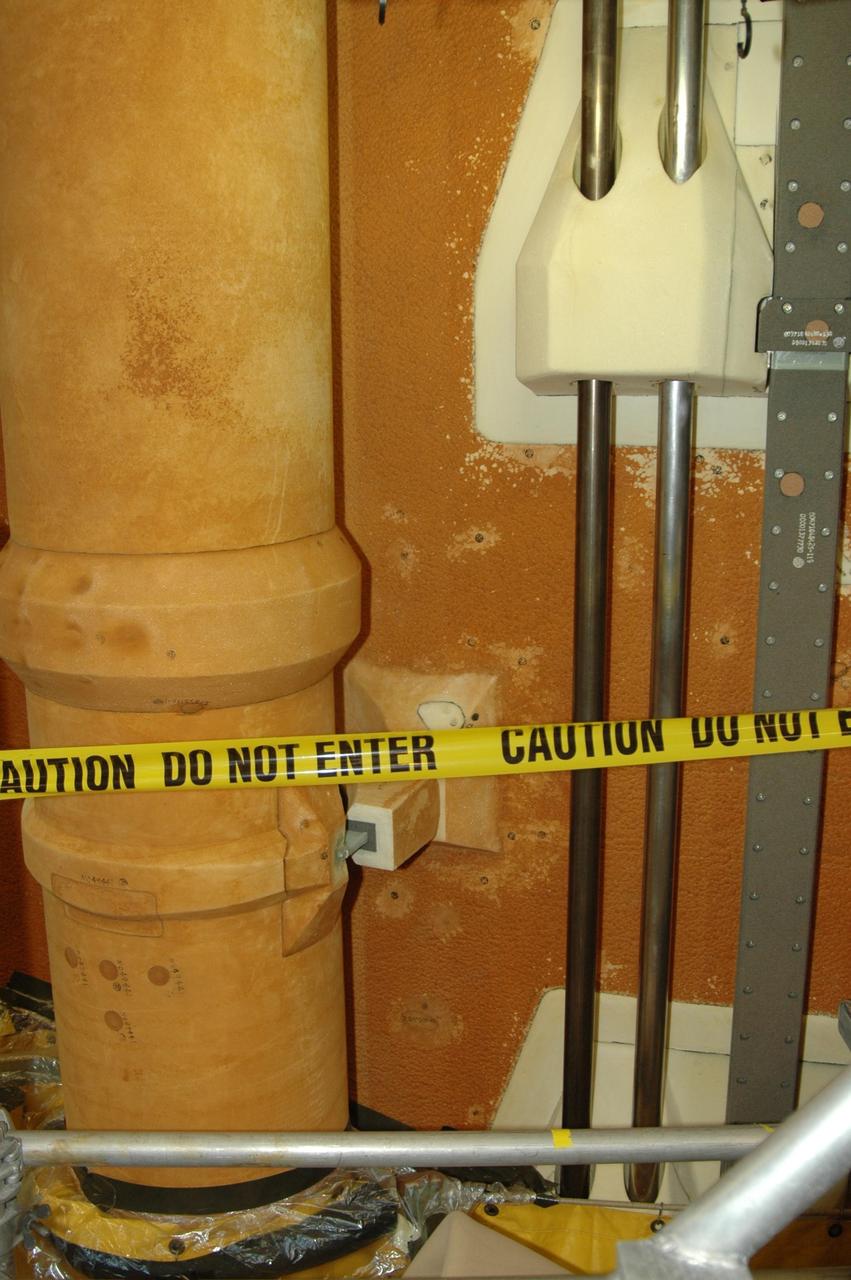
KENNEDY SPACE CENTER, FLA. -- The BX265 foam insulation and super lightweight ablator, or SLA, cork insulation has been removed from the L02 feed line bracket that is attached to the external tank. Also visible is the adjacent LO2 feed line. The BX265 foam insulation will later be reapplied without the SLA. The tank is scheduled to fly on Space Shuttle Discovery in October 2007 on mission STS-120. Discovery's crew will add the module Harmony that will serve as a port for installing additional international laboratories. Harmony will be the first expansion of the living and working space on the complex since the Russian Pirs airlock was installed in 2001. The mission also will move the first set of solar arrays installed on the station to a permanent location on the complex and redeploy them. Photo credit: NASA/Jim Grossmann
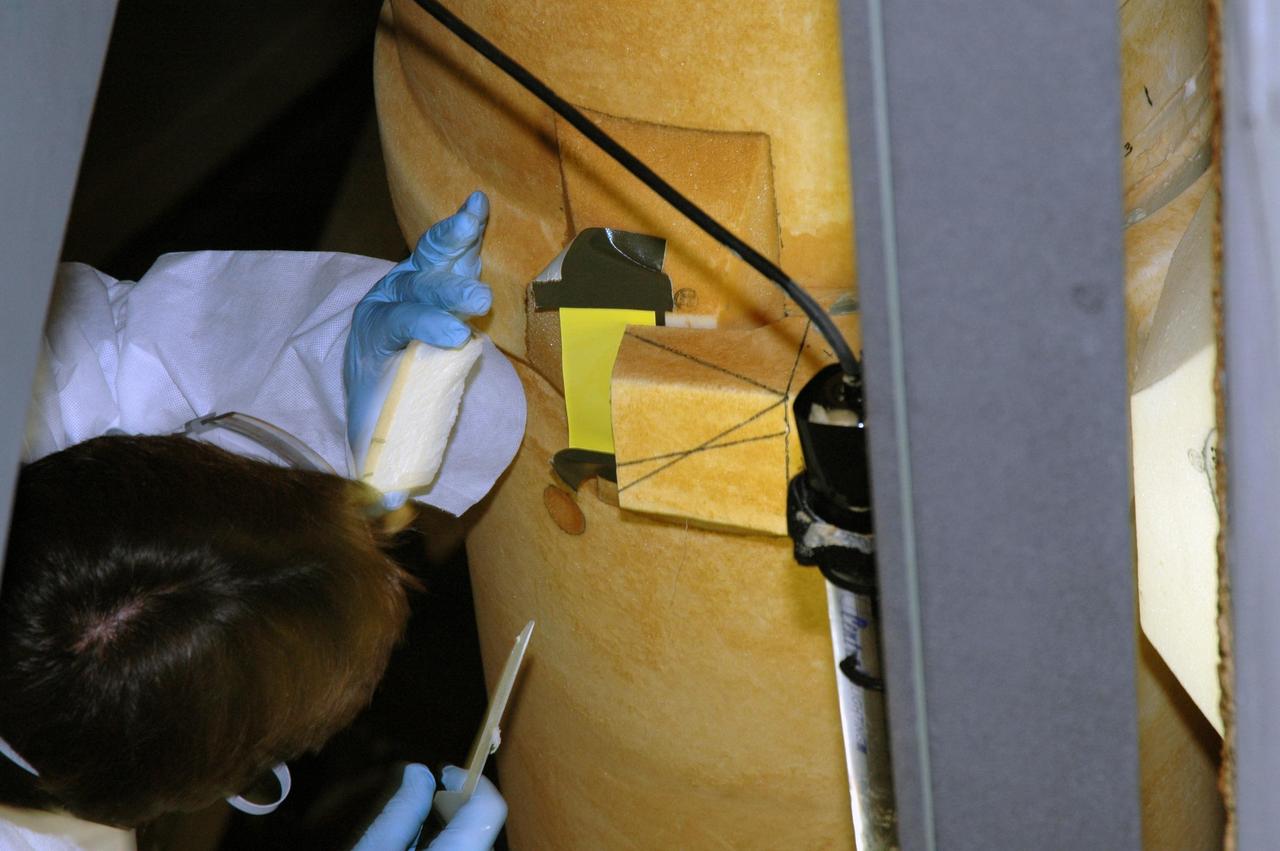
KENNEDY SPACE CENTER, FLA. -- A United Space Alliance external tank technician has completed the removal of a layer of BX265 foam insulation from the LO2 feed line bracket on the external tank. The BX265 foam insulation will later be reapplied without the super lightweight ablator, or SLA, cork insulation. The tank is scheduled to fly on Space Shuttle Discovery in October 2007 on mission STS-120. Discovery's crew will add the module Harmony that will serve as a port for installing additional international laboratories. Harmony will be the first expansion of the living and working space on the complex since the Russian Pirs airlock was installed in 2001. The mission also will move the first set of solar arrays installed on the station to a permanent location on the complex and redeploy them. Photo credit: NASA/Jim Grossmann
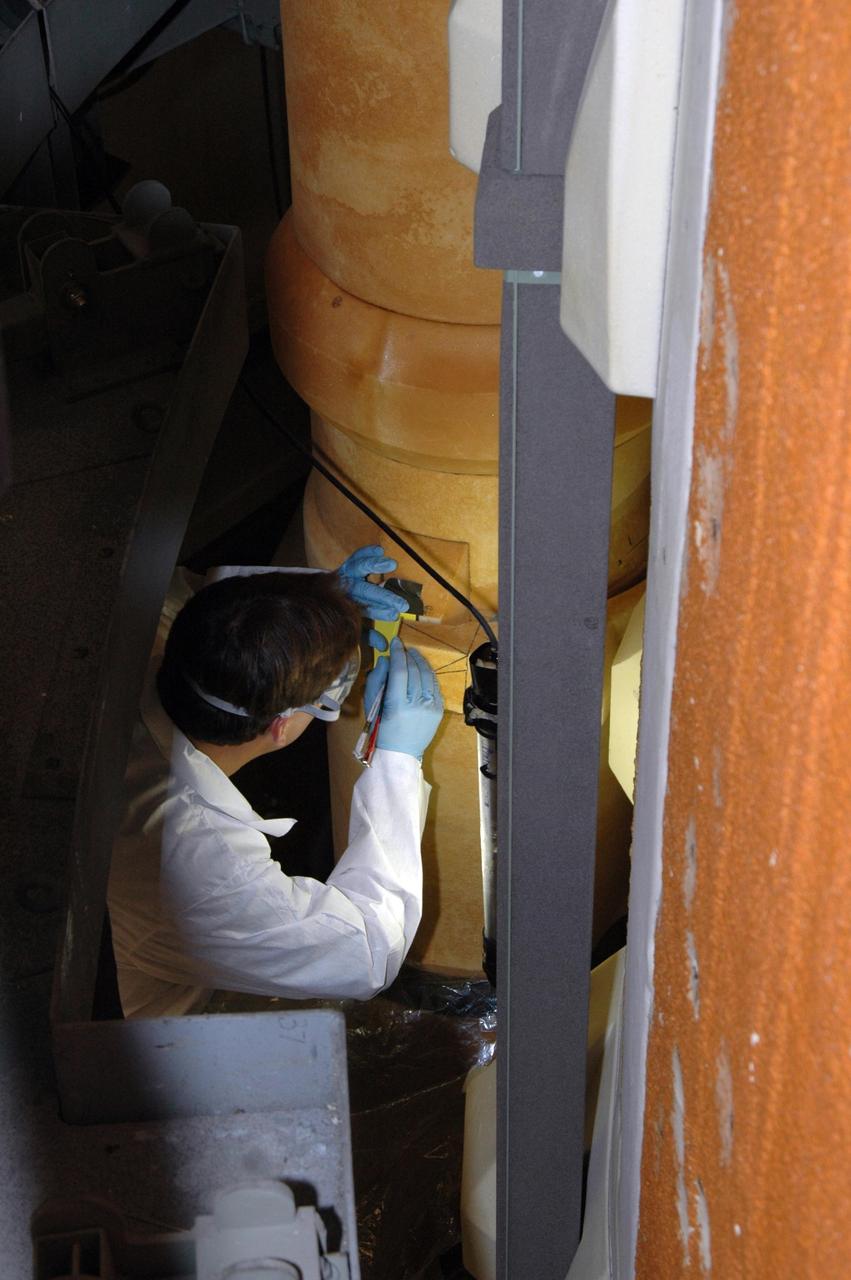
KENNEDY SPACE CENTER, FLA. -- A United Space Alliance external tank technician maps out the cutting area of the liquid oxygen (LO2) feed line bracket where BX265 foam insulation and super lightweight ablator, or SLA, cork insulation is to be removed. The BX265 foam insulation will later be reapplied without the SLA. The tank is scheduled to fly on Space Shuttle Discovery in October 2007 on mission STS-120. Discovery's crew will add the module Harmony that will serve as a port for installing additional international laboratories. Harmony will be the first expansion of the living and working space on the complex since the Russian Pirs airlock was installed in 2001. The mission also will move the first set of solar arrays installed on the station to a permanent location on the complex and redeploy them. Photo credit: NASA/Jim Grossmann
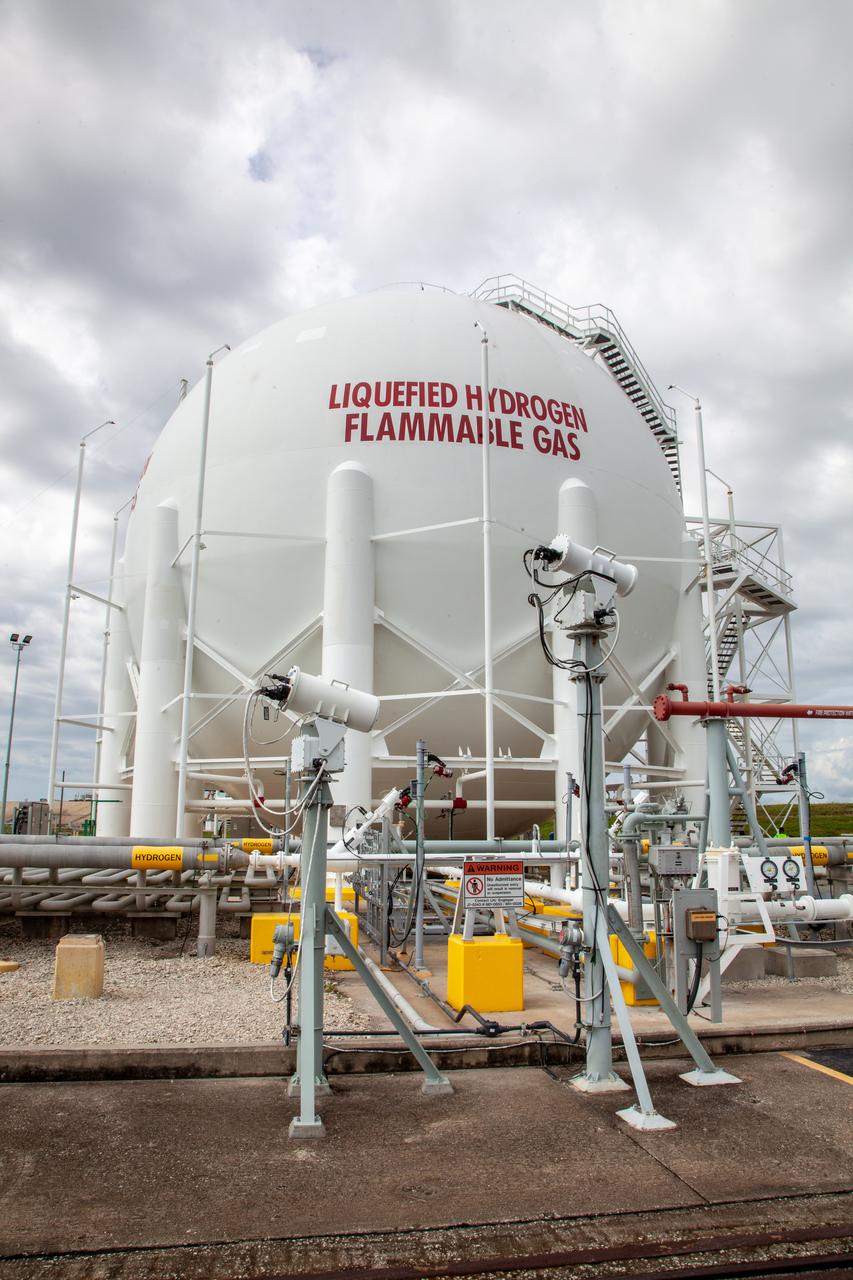
A liquid hydrogen storage tank is photographed at Launch Pad 39B on Nov. 8, 2019, at NASA’s Kennedy Space Center in Florida. The agency’s Exploration Ground Systems oversaw testing of the pad’s cryogenic systems – the infrastructure that will support the flow of liquid hydrogen and liquid oxygen from the storage tanks to the Space Launch System (SLS) rocket – in preparation for the launch of SLS with the Orion spacecraft atop for the uncrewed Artemis I mission. Each of the liquid hydrogen and liquid oxygen tanks can hold more than 800,000 gallons of propellant. The liquid hydrogen, lighter than liquid oxygen, will make its way from the tank to the rocket using gaseous hydrogen to pressurize the sphere at the time of launch, while the liquid oxygen will be sent to the rocket via pumps.
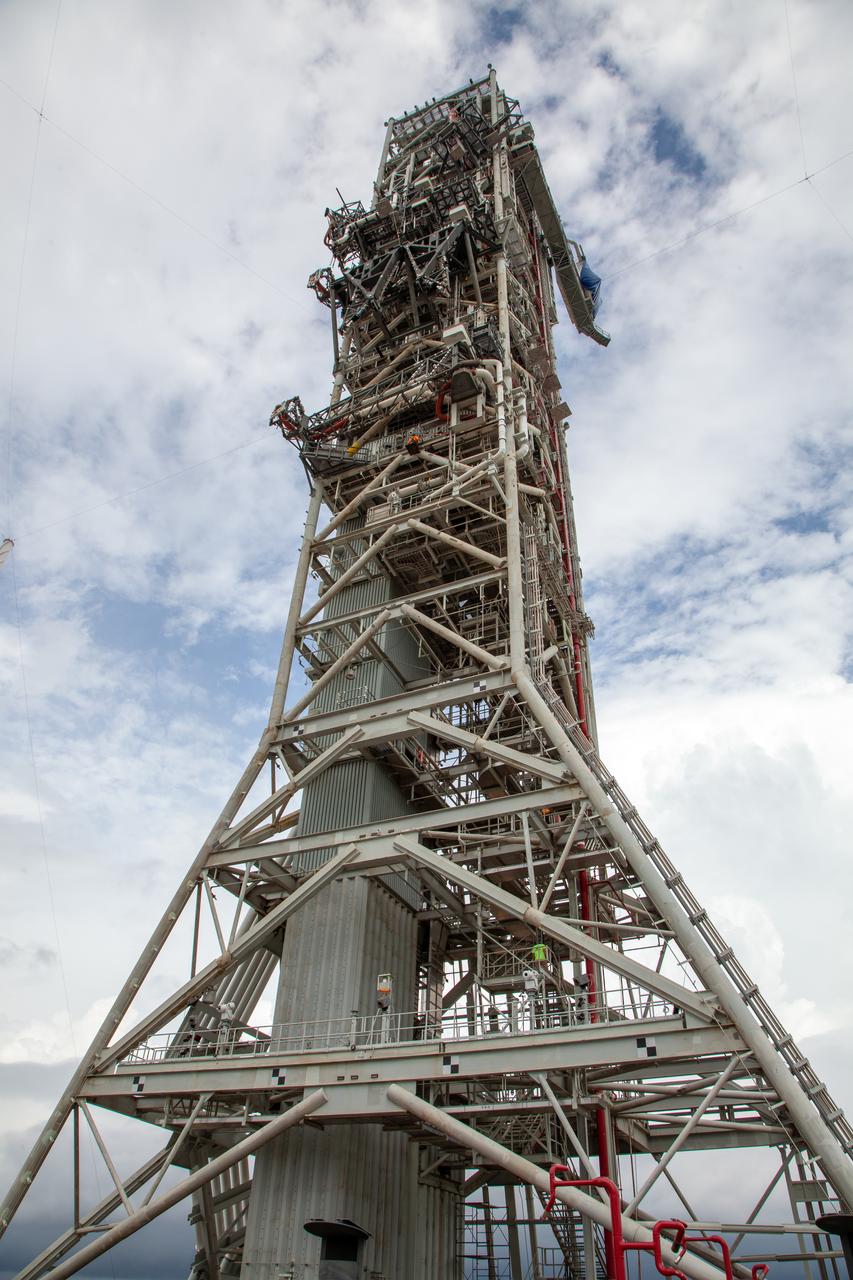
NASA’s mobile launcher is photographed on the pad surface at Launch Pad 39B on Nov. 8, 2019, at the agency’s Kennedy Space Center in Florida. The 380-foot-tall mobile launcher is the ground structure that will support the assembly and launch of NASA’s Space Launch System rocket and Orion spacecraft for the uncrewed Artemis I mission.
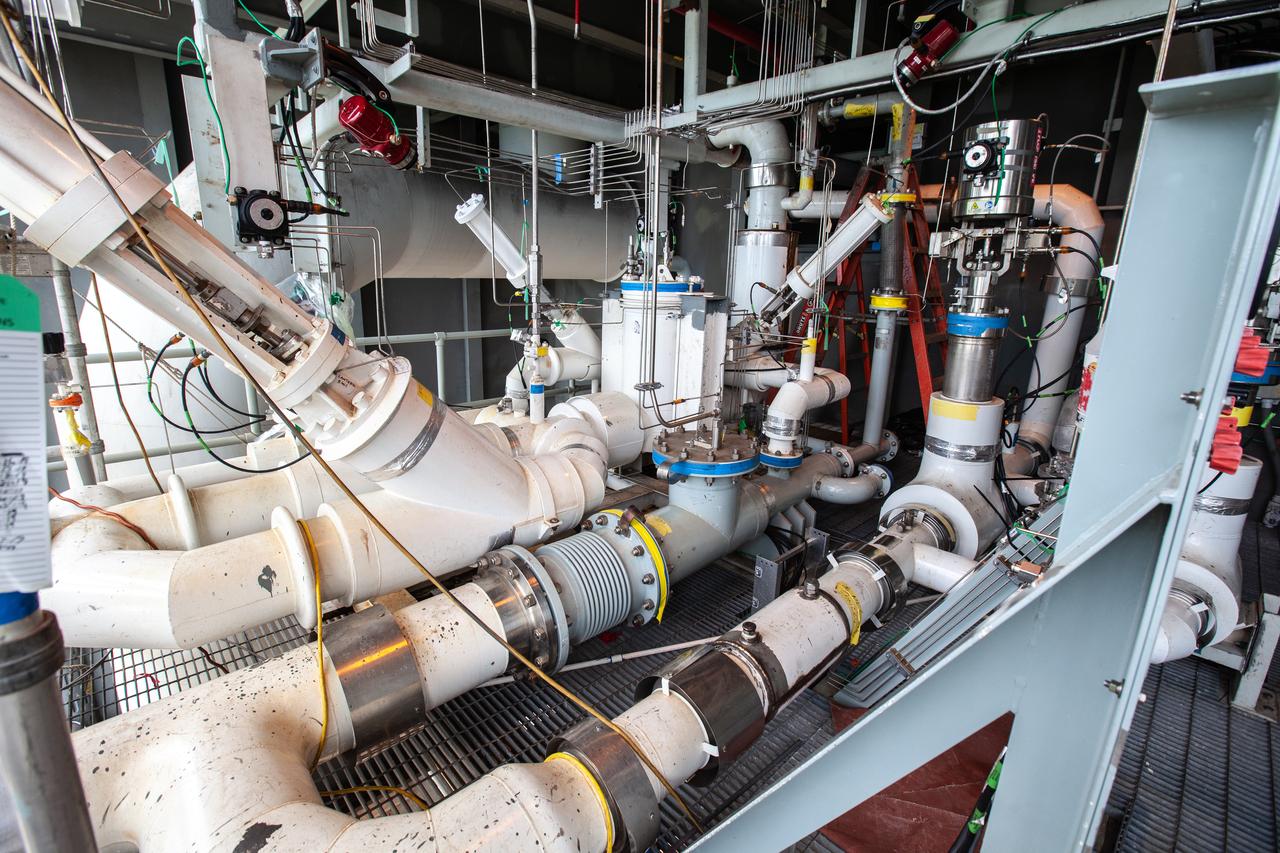
The control panel that will direct and control the flow of liquid oxygen and liquid oxygen, referred to as a skid, is photographed at Launch Pad 39B on Nov. 8, 2019, at NASA’s Kennedy Space Center in Florida. The agency’s Exploration Ground Systems oversaw testing of the pad’s cryogenic systems – the infrastructure that will send the liquid hydrogen and liquid oxygen from the storage tanks to the Space Launch System (SLS) rocket – in preparation for the launch of SLS with the Orion spacecraft atop for the uncrewed Artemis I mission. Each of the liquid oxygen and liquid hydrogen tanks can hold more than 800,000 gallons of propellant. The liquid oxygen will require the use of pumps to push it from the tank to the rocket, while the lighter liquid hydrogen will make its way up to the pad using gaseous hydrogen to pressurize the sphere.
In this view, the cross country line that liquid hydrogen will flow through can be seen stretching from the storage tank to the mobile launcher (ML) at Launch Pad 39B on Nov. 8, 2019, at NASA’s Kennedy Space Center in Florida. The agency’s Exploration Ground Systems oversaw testing of the pad’s cryogenic systems – the infrastructure that will send liquid hydrogen and liquid oxygen from the storage tanks to the Space Launch System (SLS) rocket – in preparation for the launch of SLS with the Orion spacecraft atop for the uncrewed Artemis I mission. Each of the liquid hydrogen and liquid oxygen tanks can hold more than 800,000 gallons of propellant. The liquid hydrogen, lighter than liquid oxygen, will make its way from the tank to the rocket using gaseous hydrogen to pressurize the sphere at the time of launch, while the liquid oxygen will be sent to the rocket via pumps.
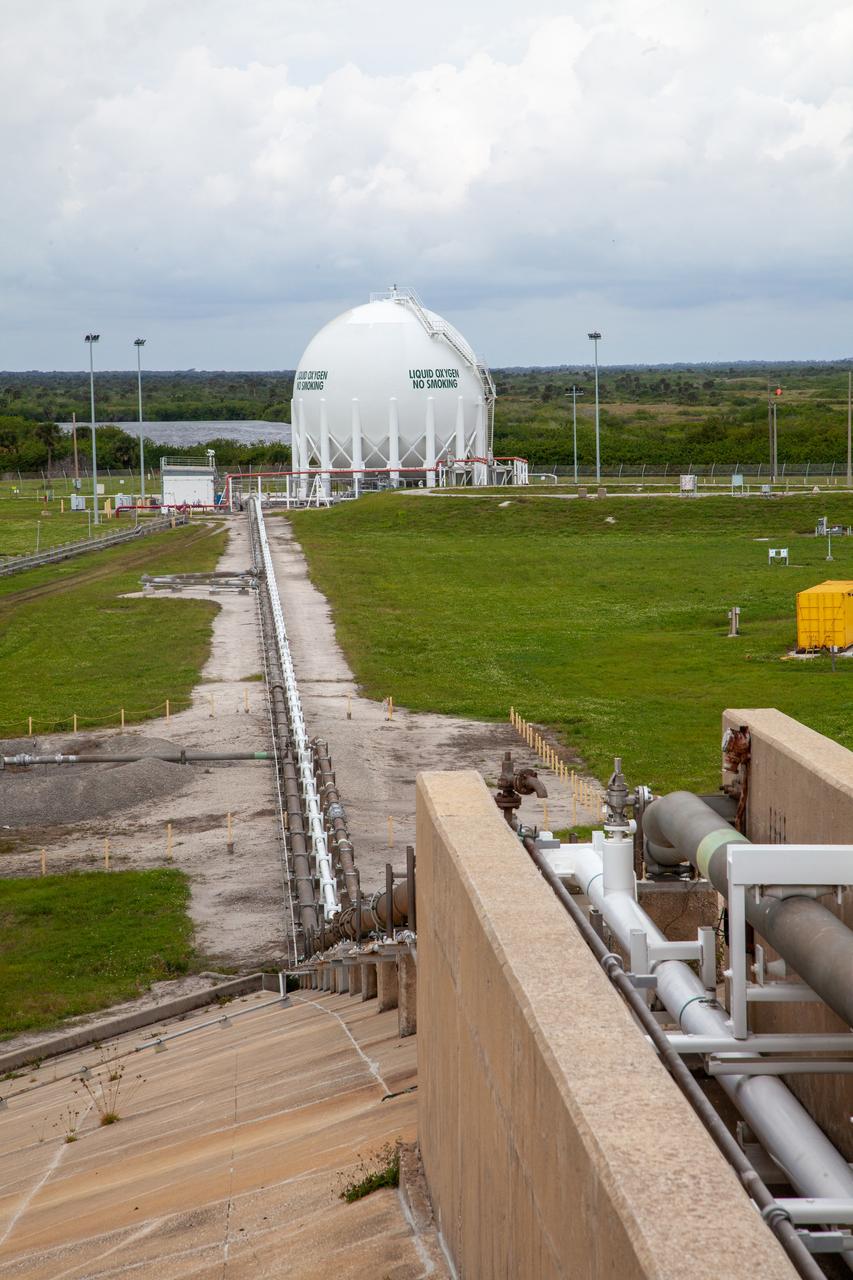
In this view from the pad surface at Kennedy Space Center’s Launch Pad 39B, the cross country line that liquid oxygen will flow through can be seen stretching from the pad to the liquid oxygen storage tank on Nov. 8, 2019. The agency’s Exploration Ground Systems oversaw testing of the pad’s cryogenic systems – the infrastructure that will support the flow of liquid hydrogen and liquid oxygen from the storage tanks to the Space Launch System (SLS) rocket – in preparation for the launch of SLS with the Orion spacecraft atop for the uncrewed Artemis I mission. Each of the liquid oxygen and liquid hydrogen tanks can hold more than 800,000 gallons of propellant. The liquid oxygen will require the use of pumps to push it from the tank to the rocket, while the lighter liquid hydrogen will make its way up to the pad using gaseous hydrogen to pressurize the sphere.
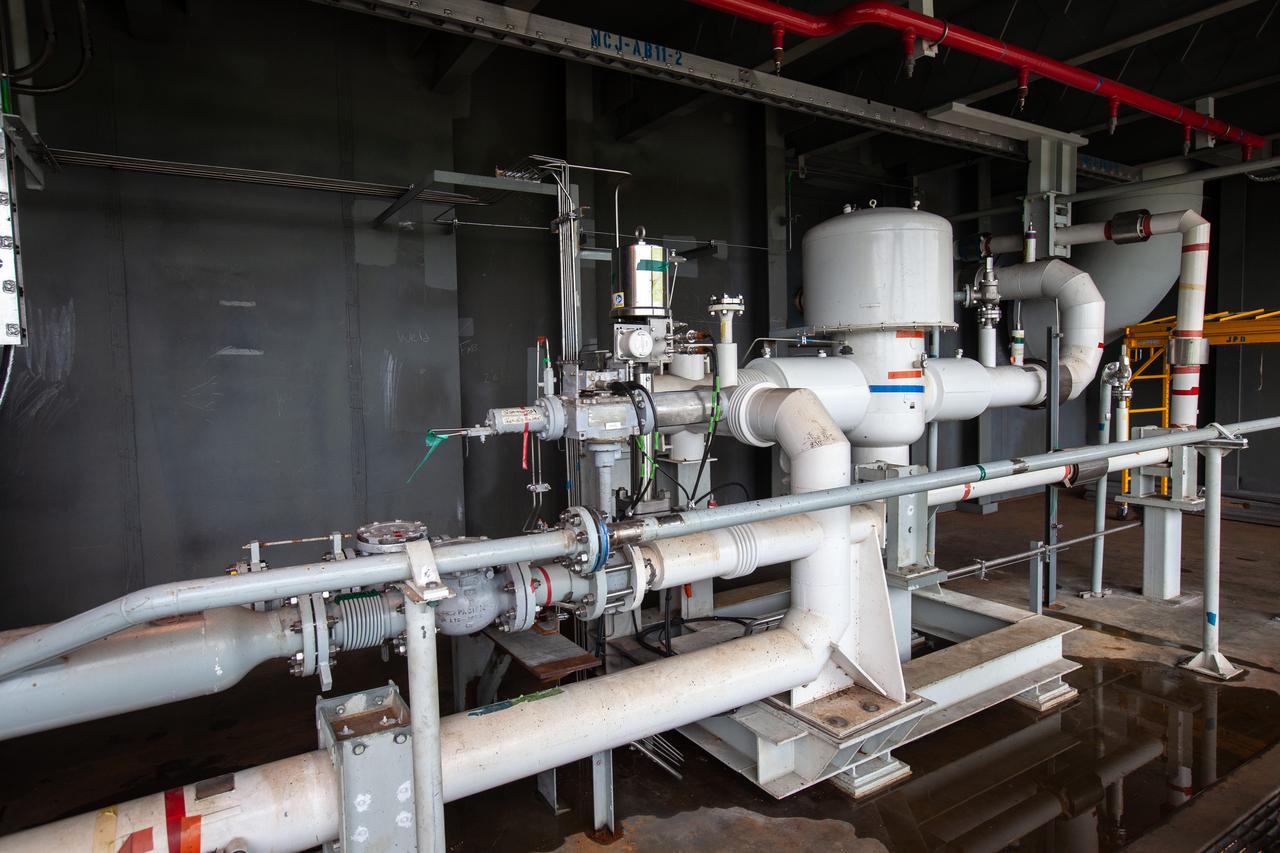
The control panel that will direct and control the flow of liquid oxygen, referred to as a skid, is photographed at Launch Pad 39B on Nov. 8, 2019, at NASA’s Kennedy Space Center in Florida. The agency’s Exploration Ground Systems oversaw testing of the pad’s cryogenic systems – the infrastructure that will support the flow of liquid hydrogen and liquid oxygen from the storage tanks, located near the pad, to the Space Launch System (SLS) rocket – in preparation for the launch of SLS with the Orion spacecraft atop for the uncrewed Artemis I mission. Each of the liquid oxygen and liquid hydrogen tanks can hold more than 800,000 gallons of propellant. The liquid oxygen will require the use of pumps to push it from the tank to the rocket, while the lighter liquid hydrogen will make its way up to the pad using gaseous hydrogen to pressurize the sphere.
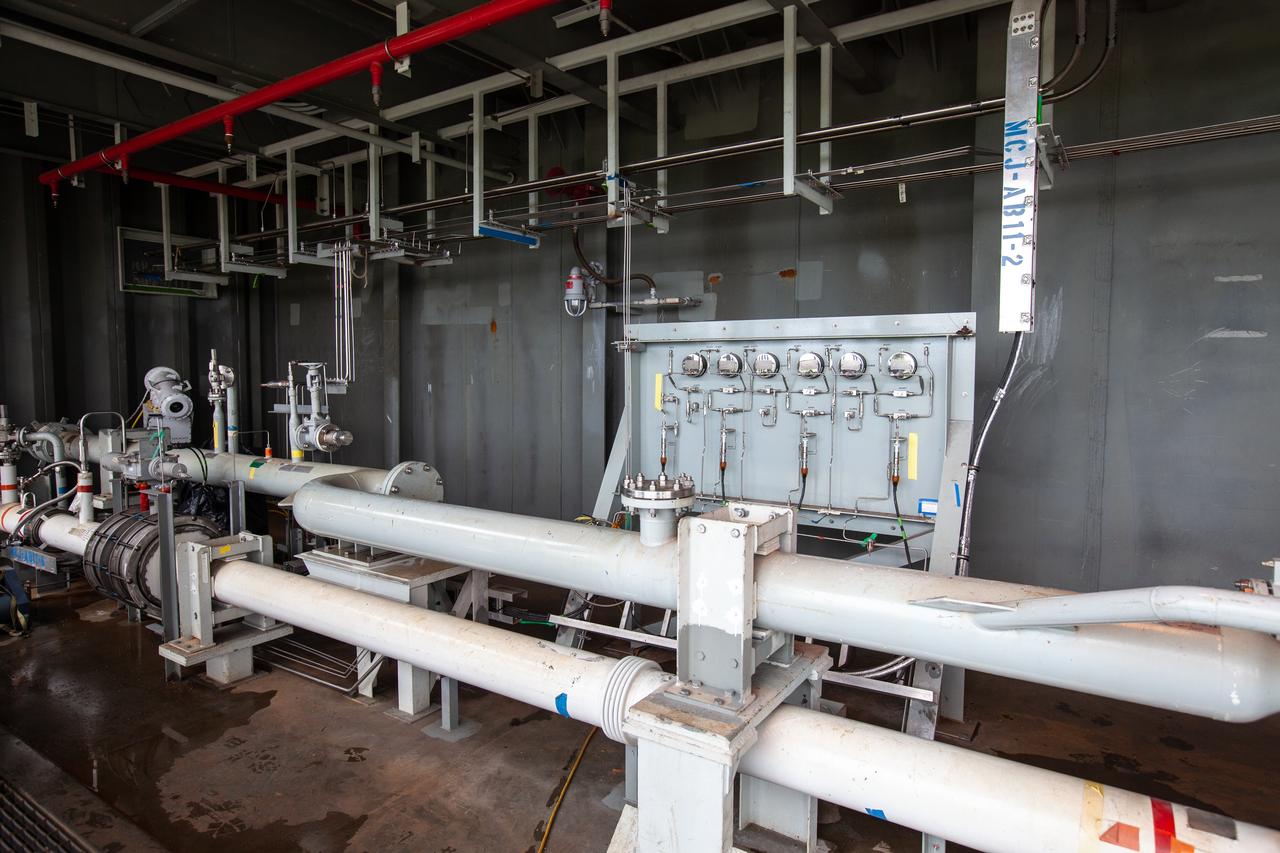
The control panel that will direct and control the flow of liquid oxygen, referred to as a skid, is photographed at Launch Pad 39B on Nov. 8, 2019, at NASA’s Kennedy Space Center in Florida. The agency’s Exploration Ground Systems oversaw testing of the pad’s cryogenic systems – the infrastructure that will support the flow of liquid hydrogen and liquid oxygen from the storage tanks, located near the pad, to the Space Launch System (SLS) rocket – in preparation for the launch of SLS with the Orion spacecraft atop for the uncrewed Artemis I mission. Each of the liquid oxygen and liquid hydrogen tanks can hold more than 800,000 gallons of propellant. The liquid oxygen will require the use of pumps to push it from the tank to the rocket, while the lighter liquid hydrogen will make its way up to the pad using gaseous hydrogen to pressurize the sphere.
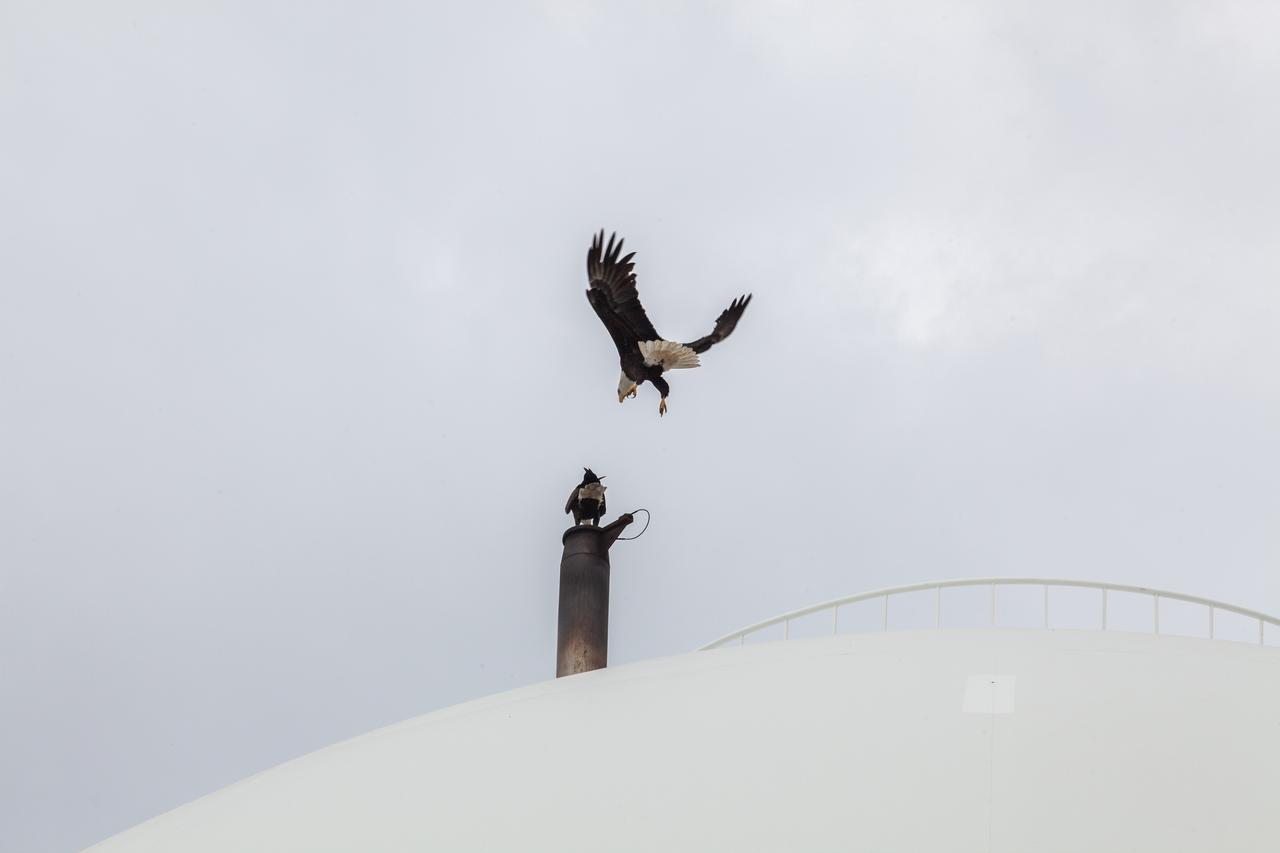
A bald eagle approaches the liquid hydrogen storage tank at Launch Pad 39B on Nov. 8, 2019, at NASA’s Kennedy Space Center in Florida. Kennedy shares a border with the Merritt Island National Wildlife Refuge, consisting of 144,000 acres of land, water and marshes. Many species of birds, reptiles, fish, amphibians and mammals can be found within the refuge.
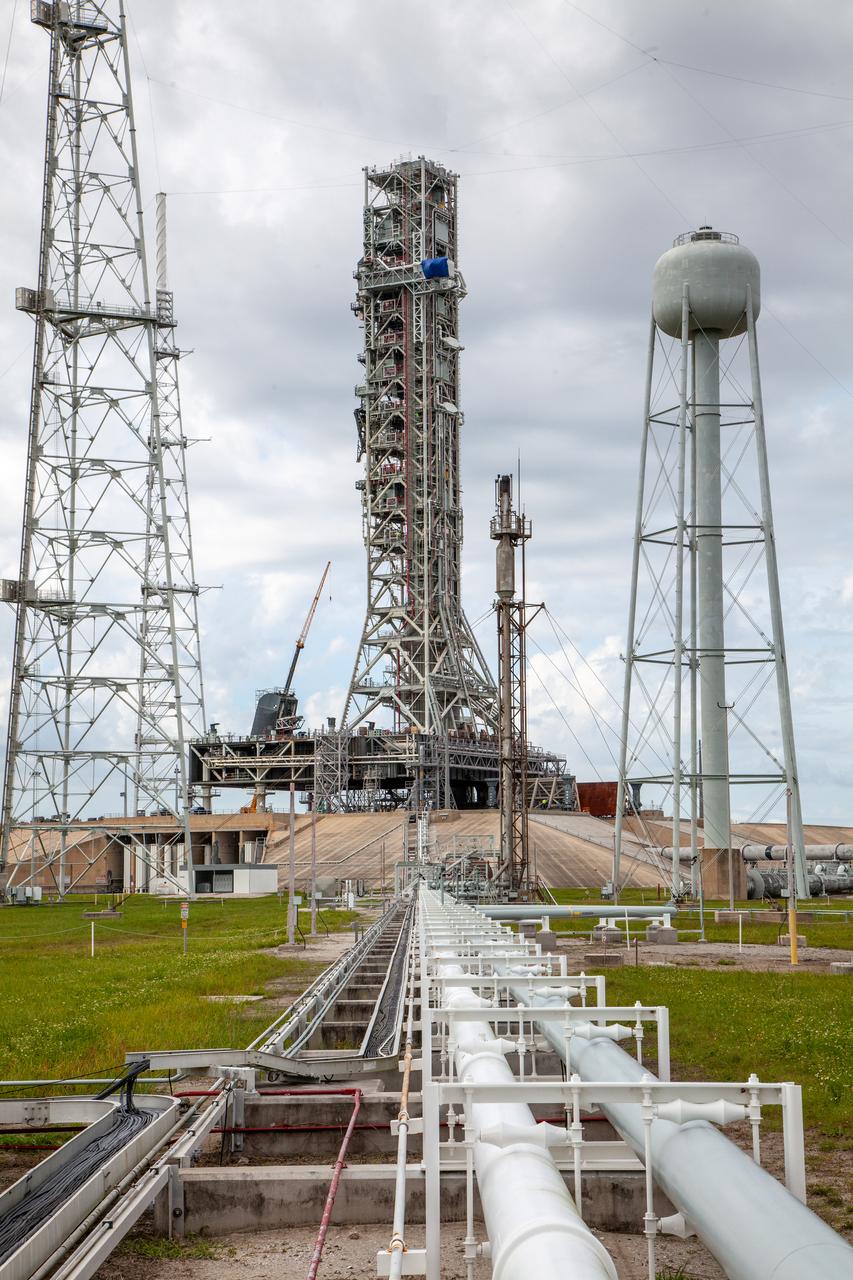
In this view, the cross country line that liquid hydrogen will flow through can be seen stretching from the storage tank to the mobile launcher (ML) at Launch Pad 39B on Nov. 8, 2019, at NASA’s Kennedy Space Center in Florida. The agency’s Exploration Ground Systems oversaw testing of the pad’s cryogenic systems – the infrastructure that will send liquid hydrogen and liquid oxygen from the storage tanks to the Space Launch System (SLS) rocket – in preparation for the launch of SLS with the Orion spacecraft atop for the uncrewed Artemis I mission. Each of the liquid hydrogen and liquid oxygen tanks can hold more than 800,000 gallons of propellant. The liquid hydrogen, lighter than liquid oxygen, will make its way from the tank to the rocket using gaseous hydrogen to pressurize the sphere at the time of launch, while the liquid oxygen will be sent to the rocket via pumps.
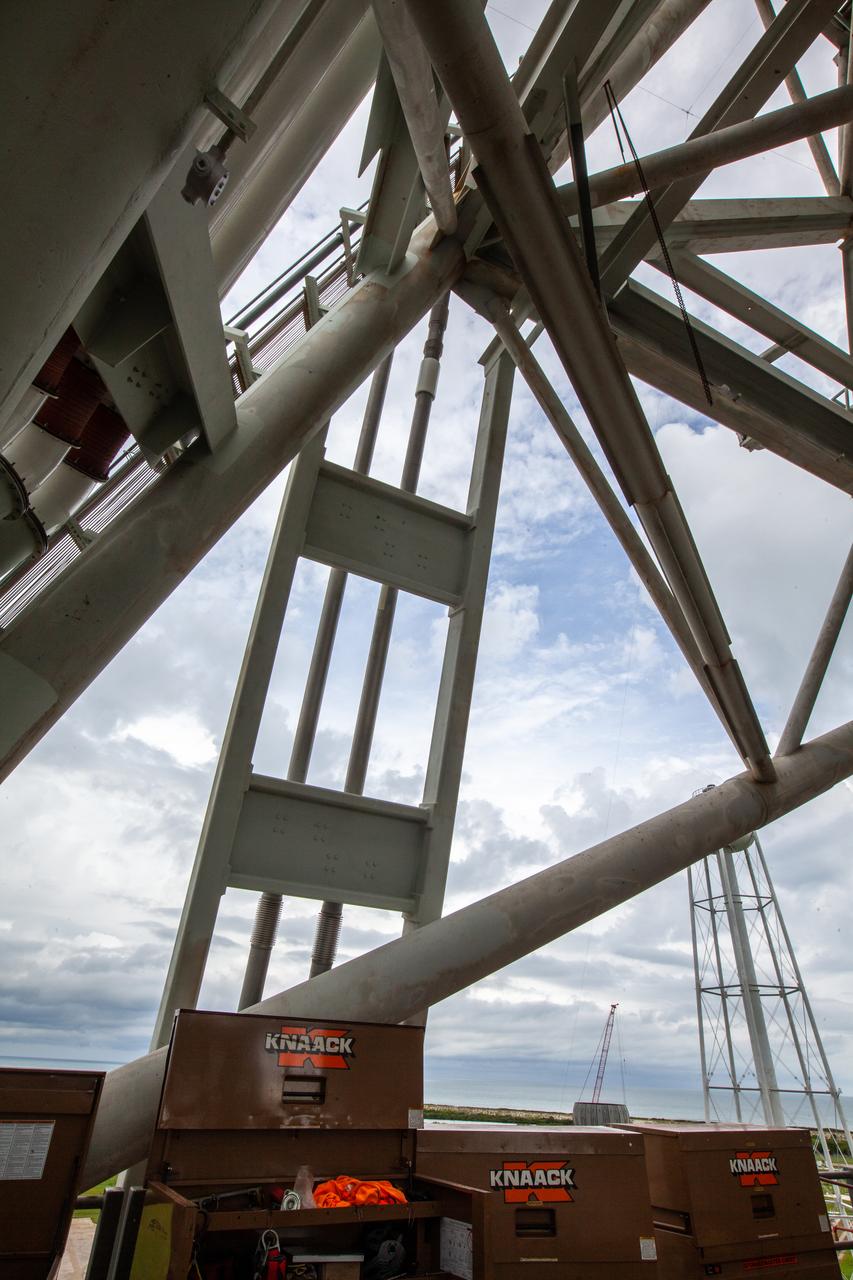
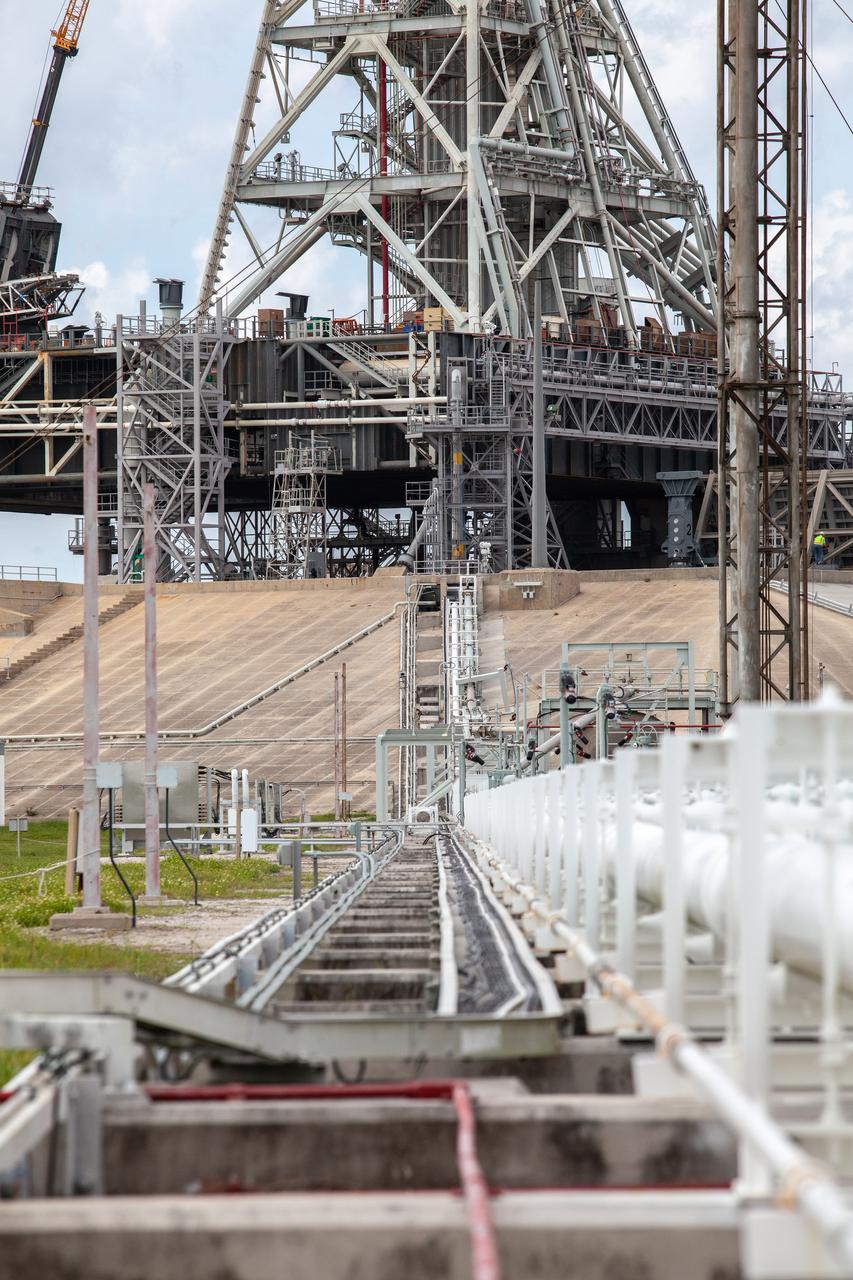
In this view, liquid oxygen lines can be seen going up the mobile launcher at Launch Pad 39B on Nov. 8, 2019, at NASA’s Kennedy Space Center in Florida. The agency’s Exploration Ground Systems oversaw testing of the pad’s cryogenic systems – the infrastructure that will support the flow of liquid hydrogen and liquid oxygen from the storage tanks, located near the pad, to the Space Launch System (SLS) rocket – in preparation for the launch of SLS with the Orion spacecraft atop for the uncrewed Artemis I mission. Each of the liquid oxygen and liquid hydrogen tanks can hold more than 800,000 gallons of propellant. The liquid oxygen will require the use of pumps to push it from the tank to the rocket, while the lighter liquid hydrogen will make its way up to the pad using gaseous hydrogen to pressurize the sphere.
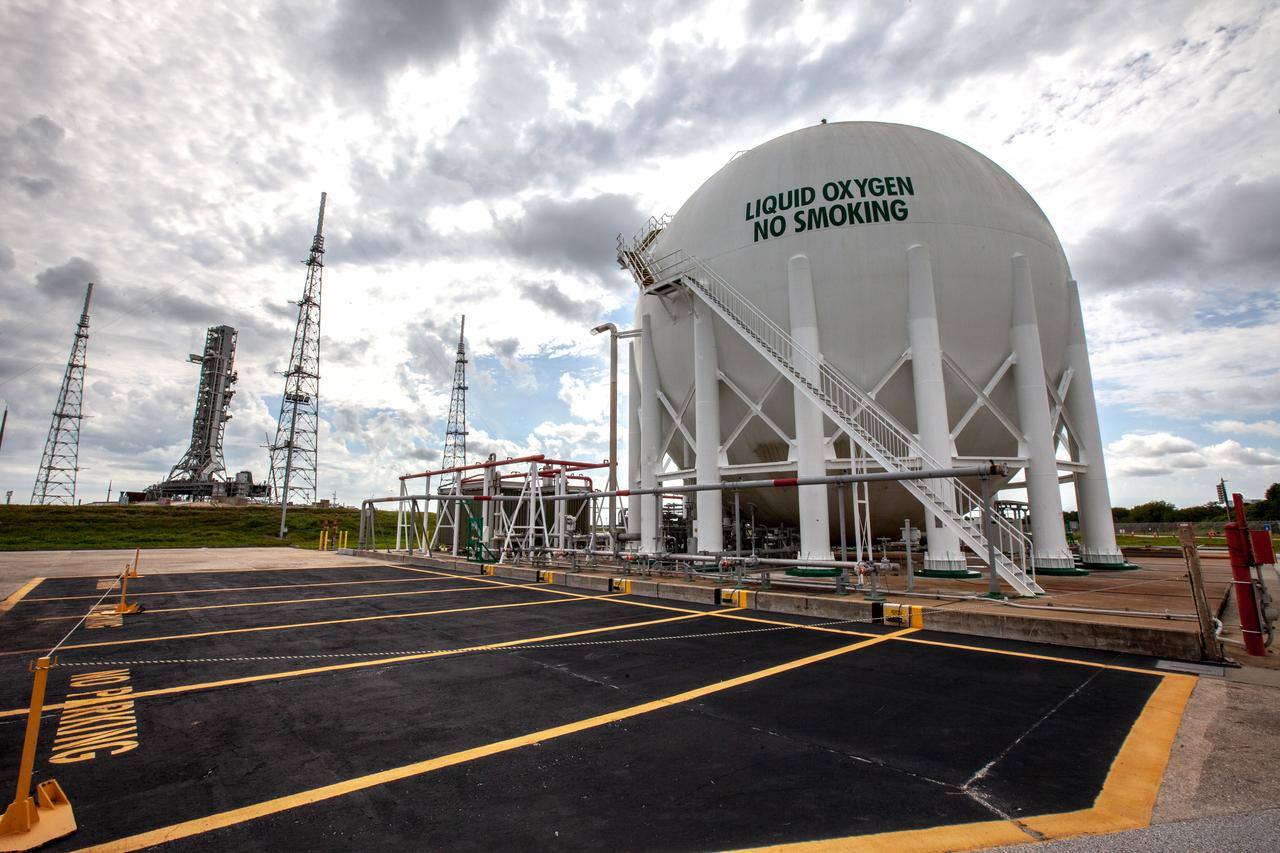
A liquid oxygen storage tank, with a view of the mobile launcher on the pad surface in the background, is photographed at Launch Pad 39B on Nov. 8, 2019, at NASA’s Kennedy Space Center in Florida. The agency’s Exploration Ground Systems oversaw testing of the pad’s cryogenic systems – the infrastructure that will support the flow of liquid hydrogen and liquid oxygen from the storage tanks to the Space Launch System (SLS) rocket – in preparation for the launch of SLS with the Orion spacecraft atop for the uncrewed Artemis I mission. Each of the liquid oxygen and liquid hydrogen tanks can hold more than 800,000 gallons of propellant. The liquid oxygen will require the use of pumps to push it from the tank to the rocket, while the lighter liquid hydrogen will make its way up to the pad using gaseous hydrogen to pressurize the sphere.

In this view, the cross country line that liquid oxygen will flow through can be seen stretching from the storage tank to the mobile launcher at Launch Pad 39B on Nov. 8, 2019, at NASA’s Kennedy Space Center in Florida. The agency’s Exploration Ground Systems oversaw testing of the pad’s cryogenic systems – the infrastructure that will send liquid hydrogen and liquid oxygen from the storage tanks to the Space Launch System (SLS) rocket – in preparation for the launch of SLS with the Orion spacecraft atop for the uncrewed Artemis I mission. Each of the liquid oxygen and liquid hydrogen tanks can hold more than 800,000 gallons of propellant. The liquid oxygen will require the use of pumps to push it from the tank to the rocket, while the lighter liquid hydrogen will make its way up to the pad using gaseous hydrogen to pressurize the sphere.
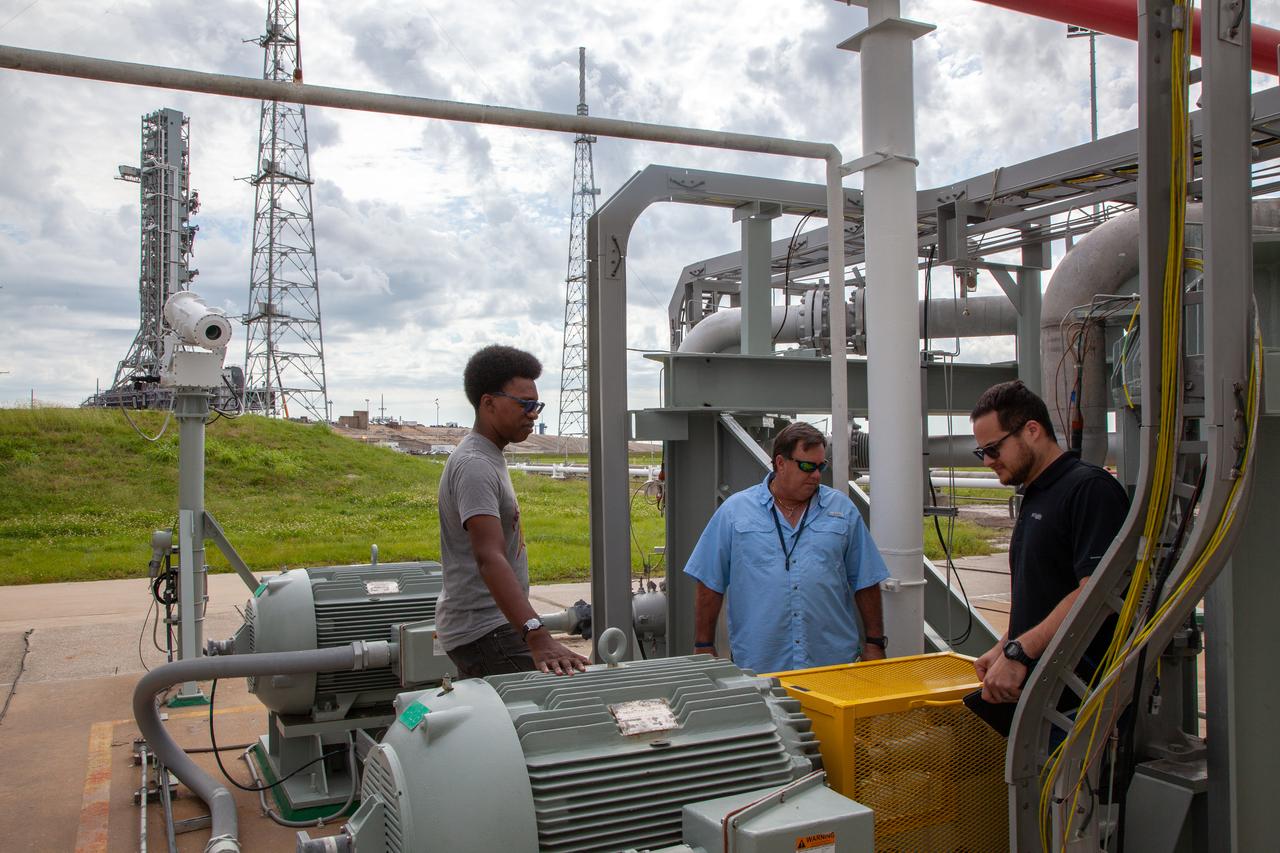
From left, liquid oxygen engineers Josh Jones, Jim Loup and Rene DeLaCruz on Kennedy Space Center’s Test Operations and Support Contract inspect equipment surrounding the liquid oxygen storage tank at Launch Pad 39B on Nov. 8, 2019. The agency’s Exploration Ground Systems oversaw testing of the pad’s cryogenic systems – the infrastructure that will support the flow of liquid hydrogen and liquid oxygen from the storage tanks to the Space Launch System (SLS) rocket – in preparation for the launch of SLS with the Orion spacecraft atop for the uncrewed Artemis I mission. Each of the liquid oxygen and liquid hydrogen tanks can hold more than 800,000 gallons of propellant. The liquid oxygen will require the use of pumps to push it from the tank to the rocket, while the lighter liquid hydrogen will make its way up to the pad using gaseous hydrogen to pressurize the sphere.
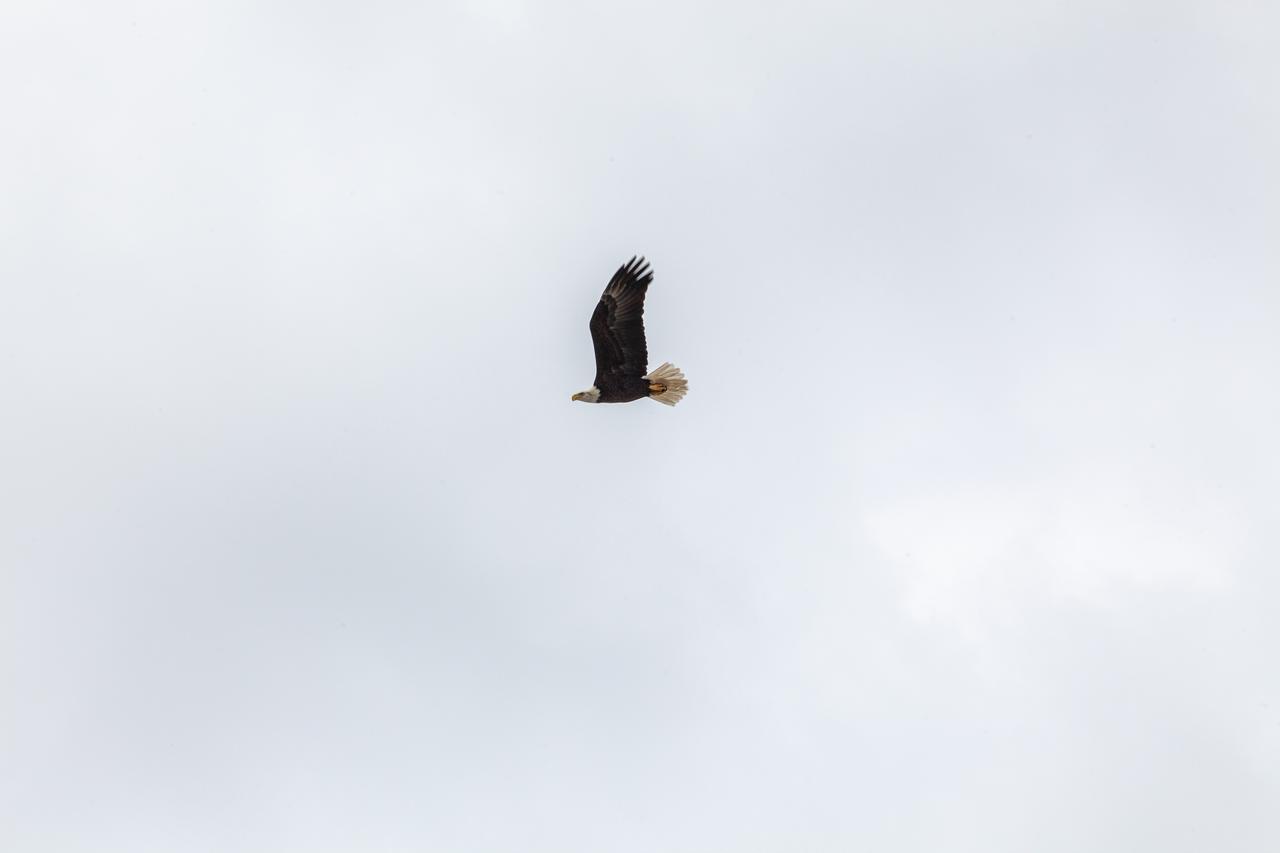
A bald eagle flies near Launch Pad 39B on Nov. 8, 2019, at NASA’s Kennedy Space Center in Florida. Kennedy shares a border with the Merritt Island National Wildlife Refuge, consisting of 144,000 acres of land, water and marshes. Many species of birds, reptiles, fish, amphibians and mammals can be found within the refuge.
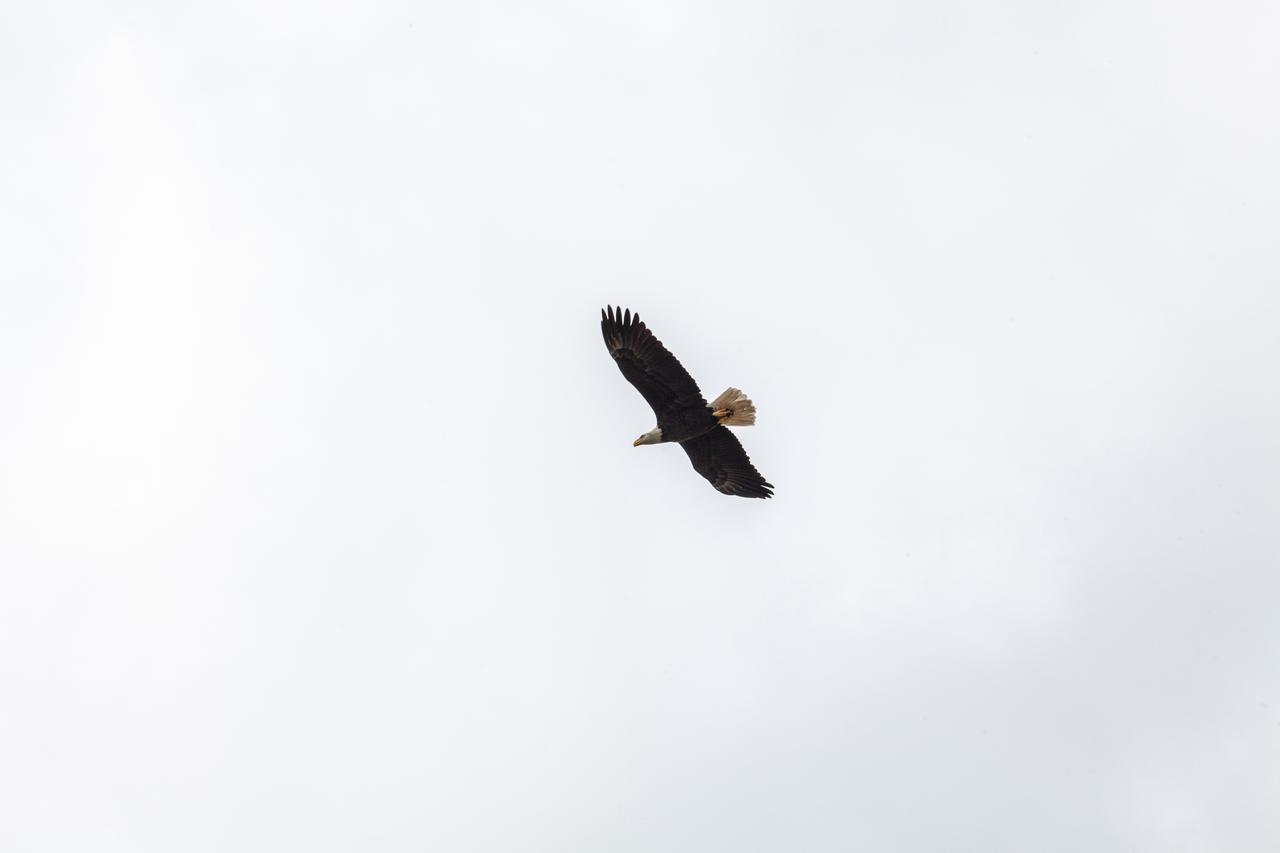
A bald eagle flies near Launch Pad 39B on Nov. 8, 2019, at NASA’s Kennedy Space Center in Florida. Kennedy shares a border with the Merritt Island National Wildlife Refuge, consisting of 144,000 acres of land, water and marshes. Many species of birds, reptiles, fish, amphibians and mammals can be found within the refuge.
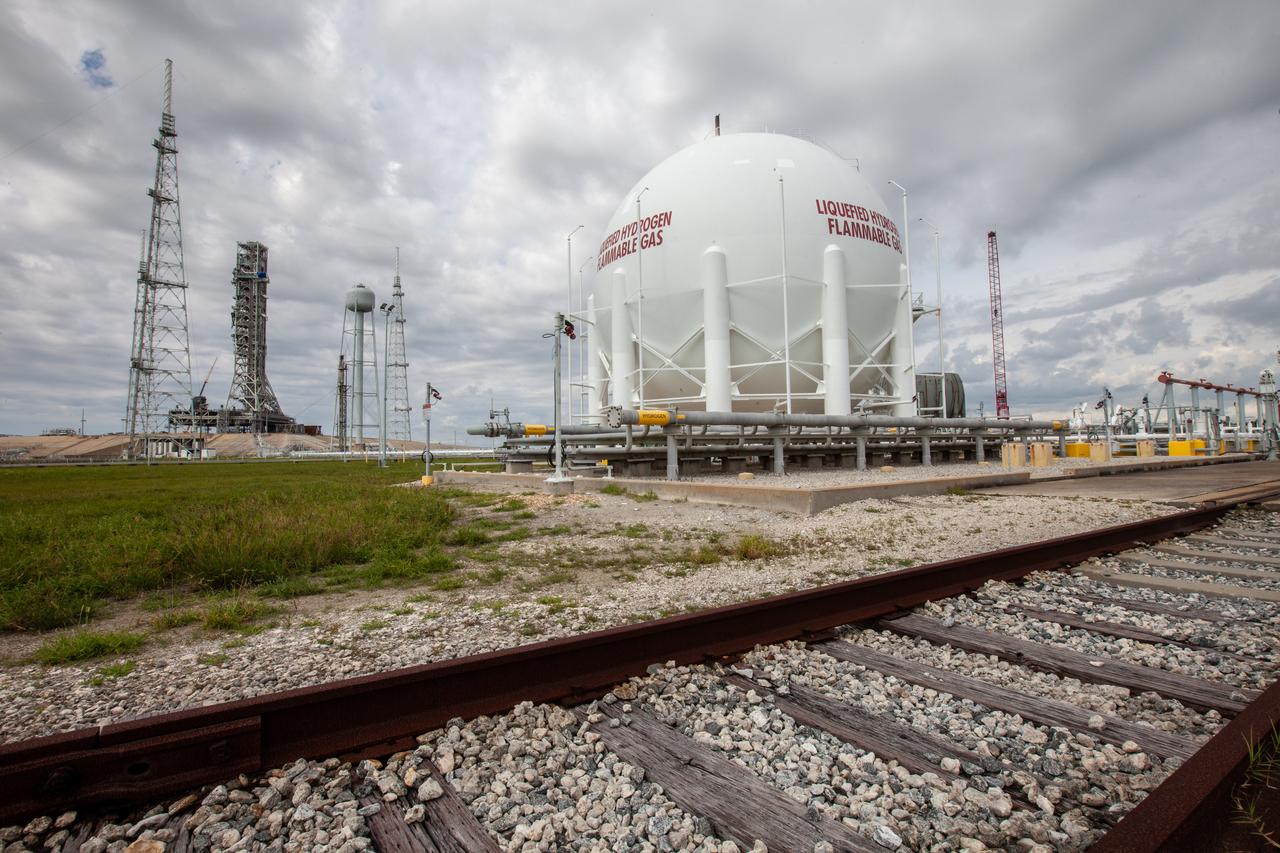
A liquid hydrogen storage tank, with a view of the mobile launcher on the pad surface in the background, is photographed at Launch Pad 39B on Nov. 8, 2019, at NASA’s Kennedy Space Center in Florida. The agency’s Exploration Ground Systems oversaw testing of the pad’s cryogenic systems – the infrastructure that will support the flow of liquid hydrogen and liquid oxygen from the storage tanks to the Space Launch System (SLS) rocket – in preparation for the launch of SLS with the Orion spacecraft atop for the uncrewed Artemis I mission. Each of the liquid hydrogen and liquid oxygen tanks can hold more than 800,000 gallons of propellant. The liquid hydrogen, lighter than liquid oxygen, will make its way from the tank to the rocket using gaseous hydrogen to pressurize the sphere at the time of launch, while the liquid oxygen will be sent to the rocket via pumps.
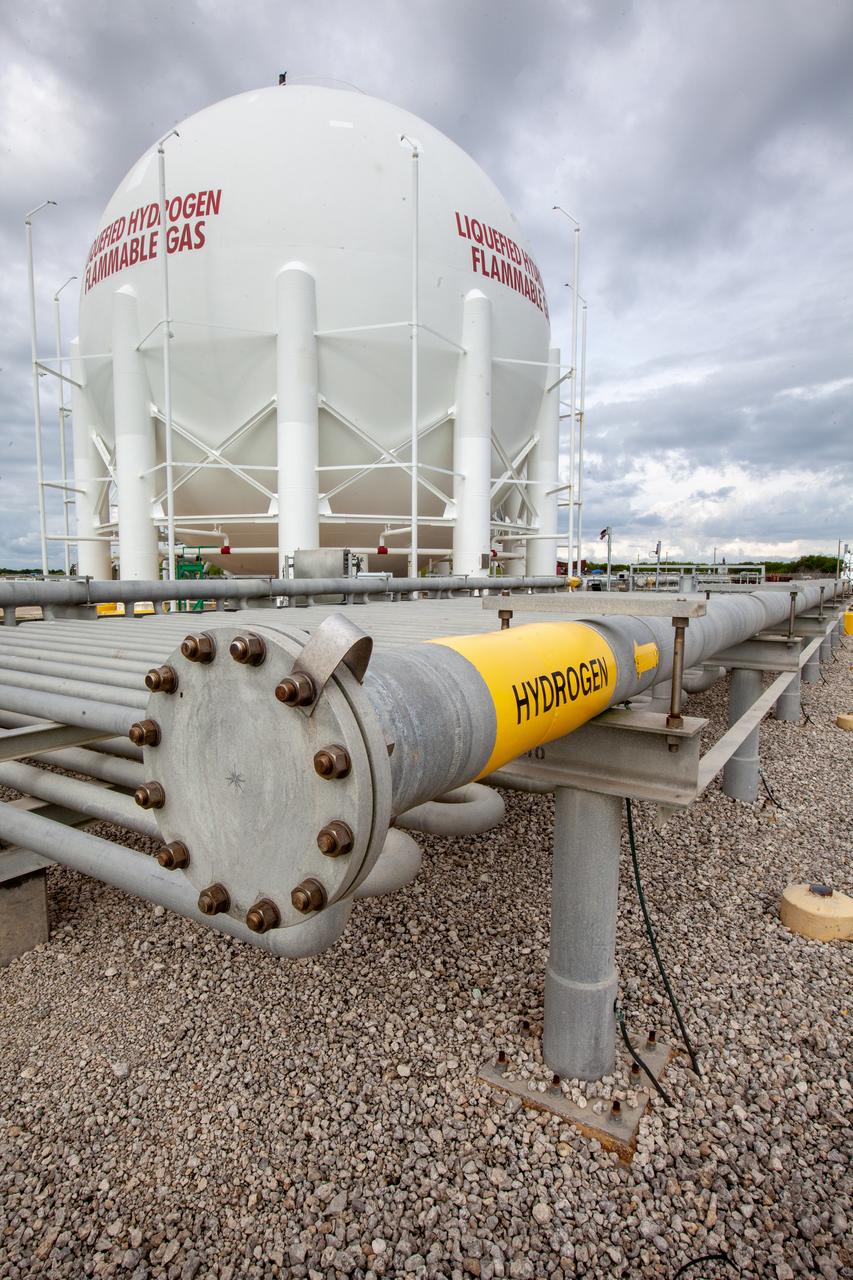
A liquid hydrogen storage tank is photographed at Launch Pad 39B on Nov. 8, 2019, at NASA’s Kennedy Space Center in Florida. The agency’s Exploration Ground Systems oversaw testing of the pad’s cryogenic systems – the infrastructure that will support the flow of liquid hydrogen and liquid oxygen from the storage tanks to the Space Launch System (SLS) rocket – in preparation for the launch of SLS with the Orion spacecraft atop for the uncrewed Artemis I mission. Each of the liquid hydrogen and liquid oxygen tanks can hold more than 800,000 gallons of propellant. The liquid hydrogen, lighter than liquid oxygen, will make its way from the tank to the rocket using gaseous hydrogen to pressurize the sphere at the time of launch, while the liquid oxygen will be sent to the rocket via pumps.
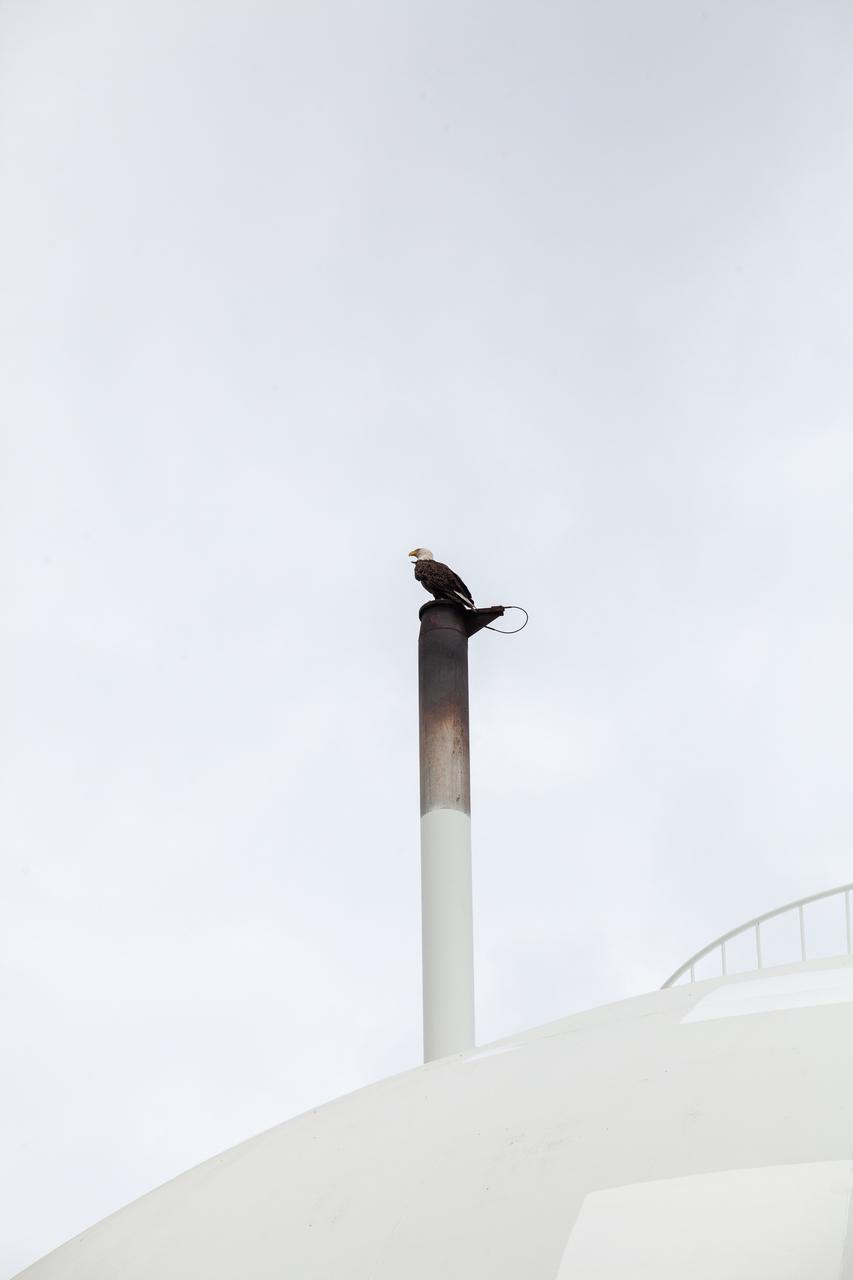
A bald eagle perches on the liquid hydrogen storage tank at Launch Pad 39B on Nov. 8, 2019, at NASA’s Kennedy Space Center in Florida. Kennedy shares a border with the Merritt Island National Wildlife Refuge, consisting of 144,000 acres of land, water and marshes. Many species of birds, reptiles, fish, amphibians and mammals can be found within the refuge.
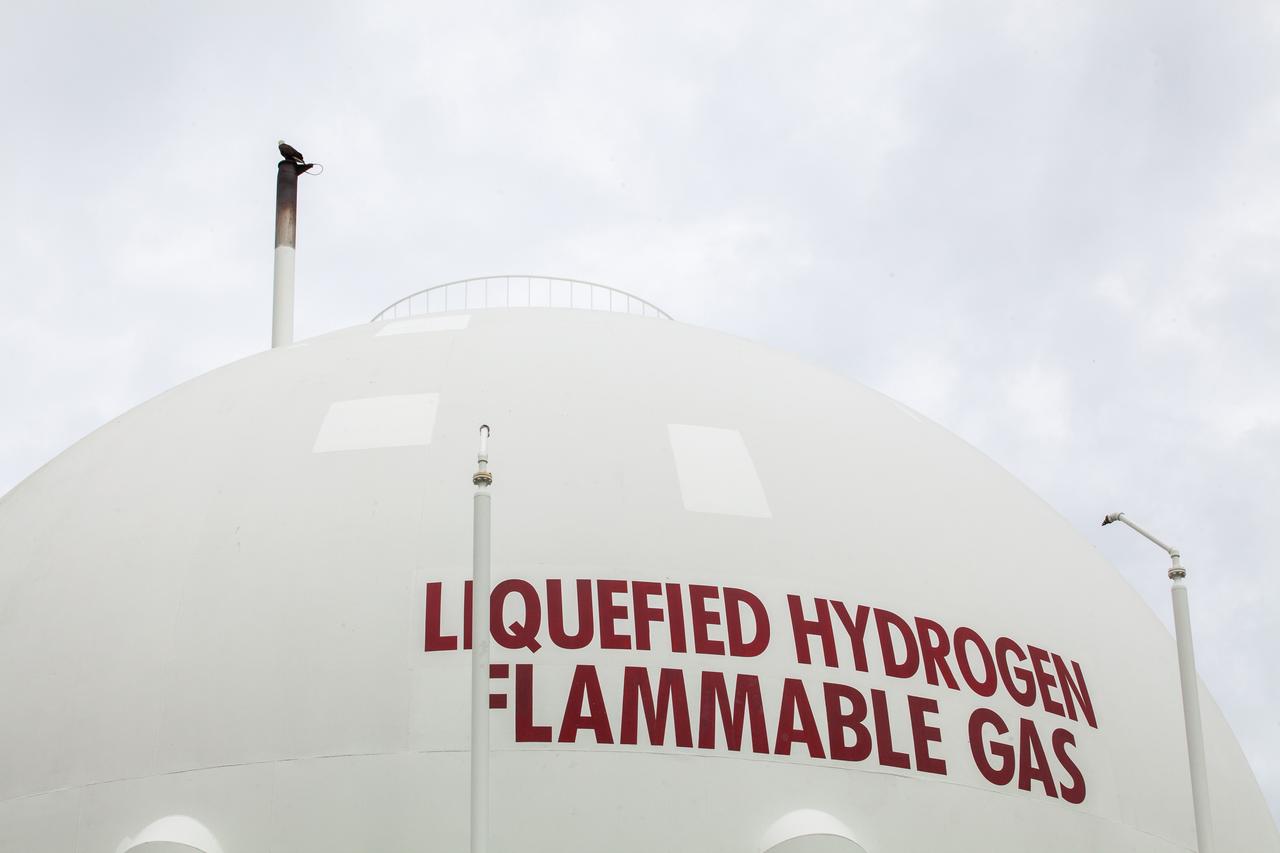
A bald eagle perches on the liquid hydrogen storage tank at Launch Pad 39B on Nov. 8, 2019, at NASA’s Kennedy Space Center in Florida. Kennedy shares a border with the Merritt Island National Wildlife Refuge, consisting of 144,000 acres of land, water and marshes. Many species of birds, reptiles, fish, amphibians and mammals can be found within the refuge.
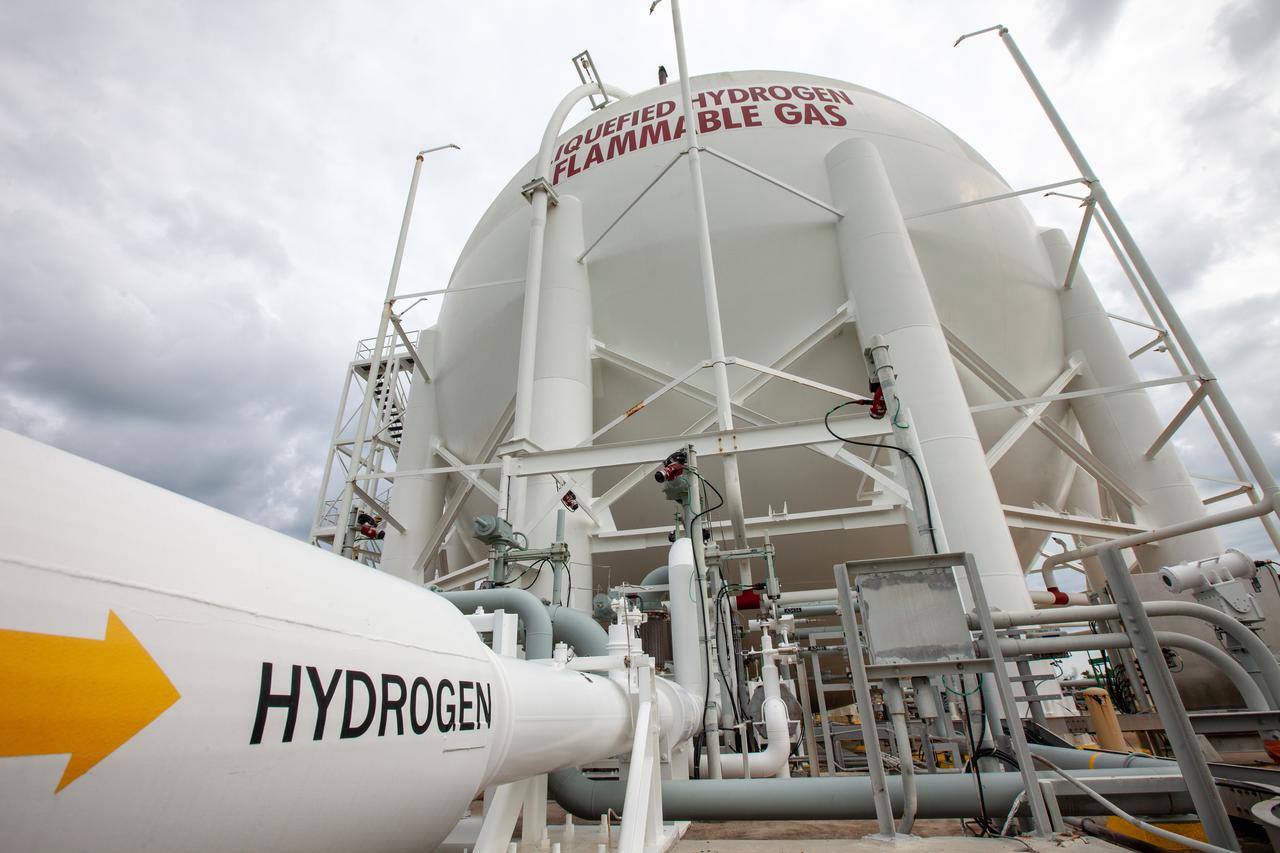
A liquid hydrogen storage tank is photographed at Launch Pad 39B on Nov. 8, 2019, at NASA’s Kennedy Space Center in Florida. The agency’s Exploration Ground Systems oversaw testing of the pad’s cryogenic systems – the infrastructure that will support the flow of liquid hydrogen and liquid oxygen from the storage tanks to the Space Launch System (SLS) rocket – in preparation for the launch of SLS with the Orion spacecraft atop for the uncrewed Artemis I mission. Each of the liquid hydrogen and liquid oxygen tanks can hold more than 800,000 gallons of propellant. The liquid hydrogen, lighter than liquid oxygen, will make its way from the tank to the rocket using gaseous hydrogen to pressurize the sphere at the time of launch, while the liquid oxygen will be sent to the rocket via pumps.
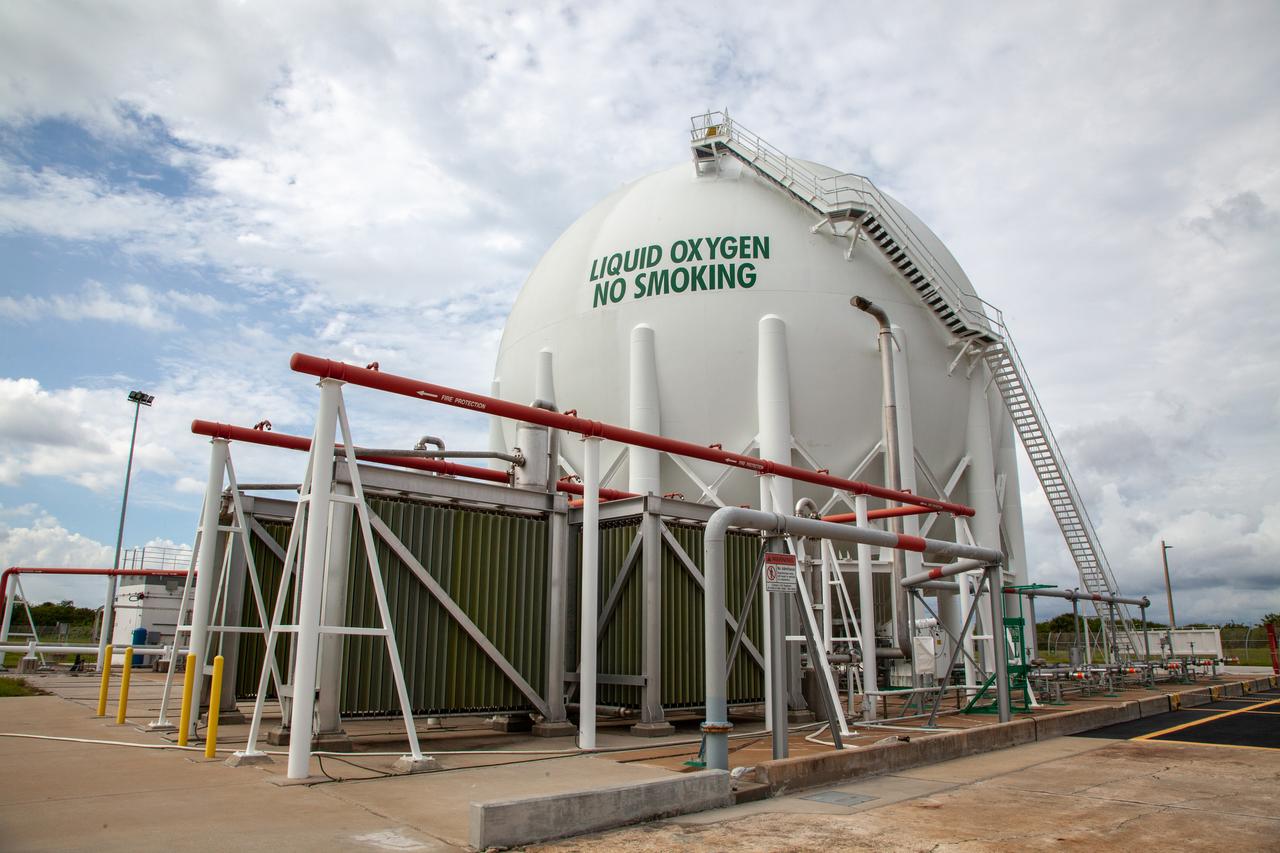
A liquid oxygen storage tank is photographed at Launch Pad 39B on Nov. 8, 2019, at NASA’s Kennedy Space Center in Florida. The agency’s Exploration Ground Systems oversaw testing of the pad’s cryogenic systems – the infrastructure that will support the flow of liquid hydrogen and liquid oxygen from the storage tanks to the Space Launch System (SLS) rocket – in preparation for the launch of SLS with the Orion spacecraft atop for the uncrewed Artemis I mission. Each of the liquid oxygen and liquid hydrogen tanks can hold more than 800,000 gallons of propellant. The liquid oxygen will require the use of pumps to push it from the tank to the rocket, while the lighter liquid hydrogen will make its way up to the pad using gaseous hydrogen to pressurize the sphere.
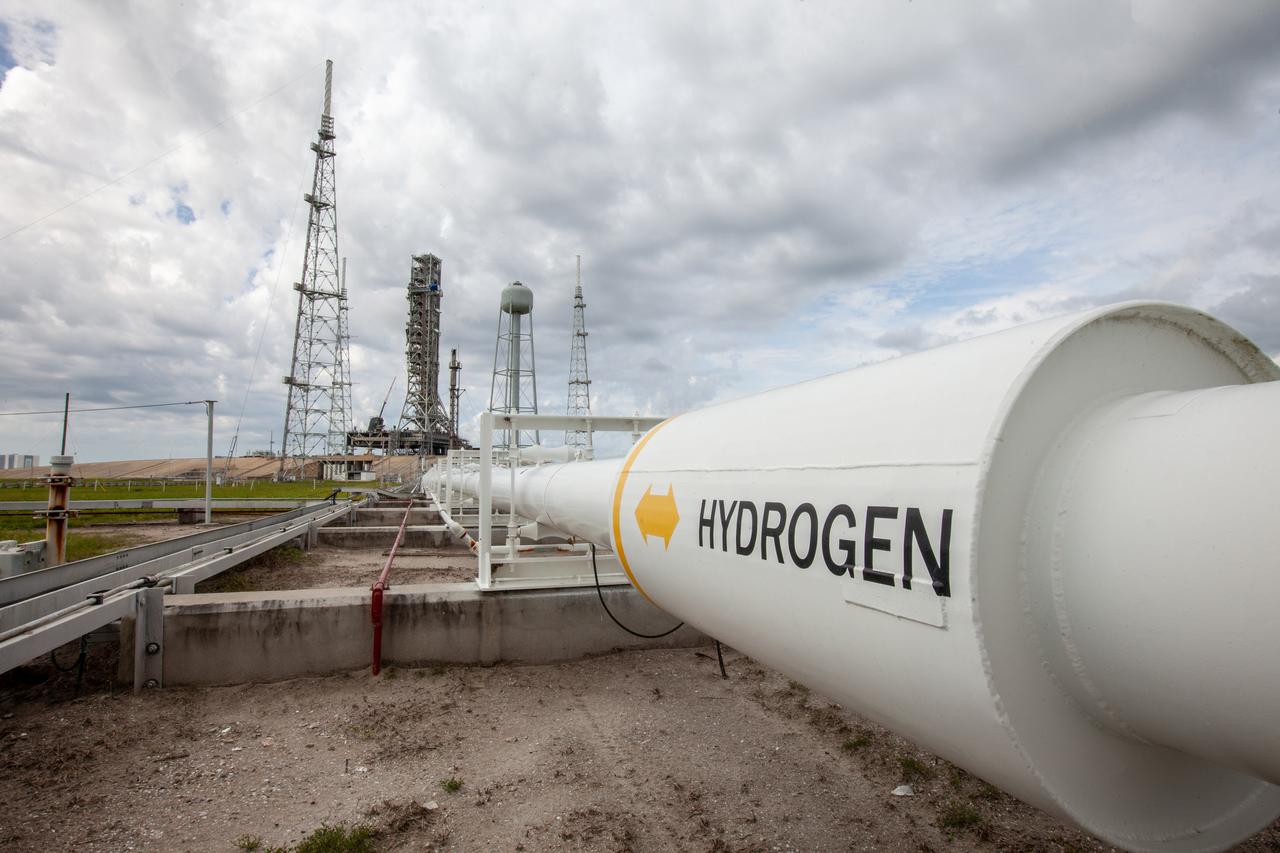
The cross country line that liquid hydrogen will flow through from the storage tank to the mobile launcher for the launch of NASA’s uncrewed Artemis I mission is photographed at Launch pad 39B on Nov. 8, 2019, at the agency’s Kennedy Space Center in Florida. NASA’s Exploration Ground Systems oversaw testing of the pad’s cryogenic systems – the infrastructure that will send the liquid hydrogen and liquid oxygen from the storage tanks to the Space Launch System (SLS) rocket – in preparation for the launch of SLS with the Orion spacecraft atop. Each of the liquid hydrogen and liquid oxygen tanks can hold more than 800,000 gallons of propellant. The liquid hydrogen, lighter than liquid oxygen, will make its way from the tank to the rocket using gaseous hydrogen to pressurize the sphere at the time of launch, while the liquid oxygen will be sent to the rocket via pumps.
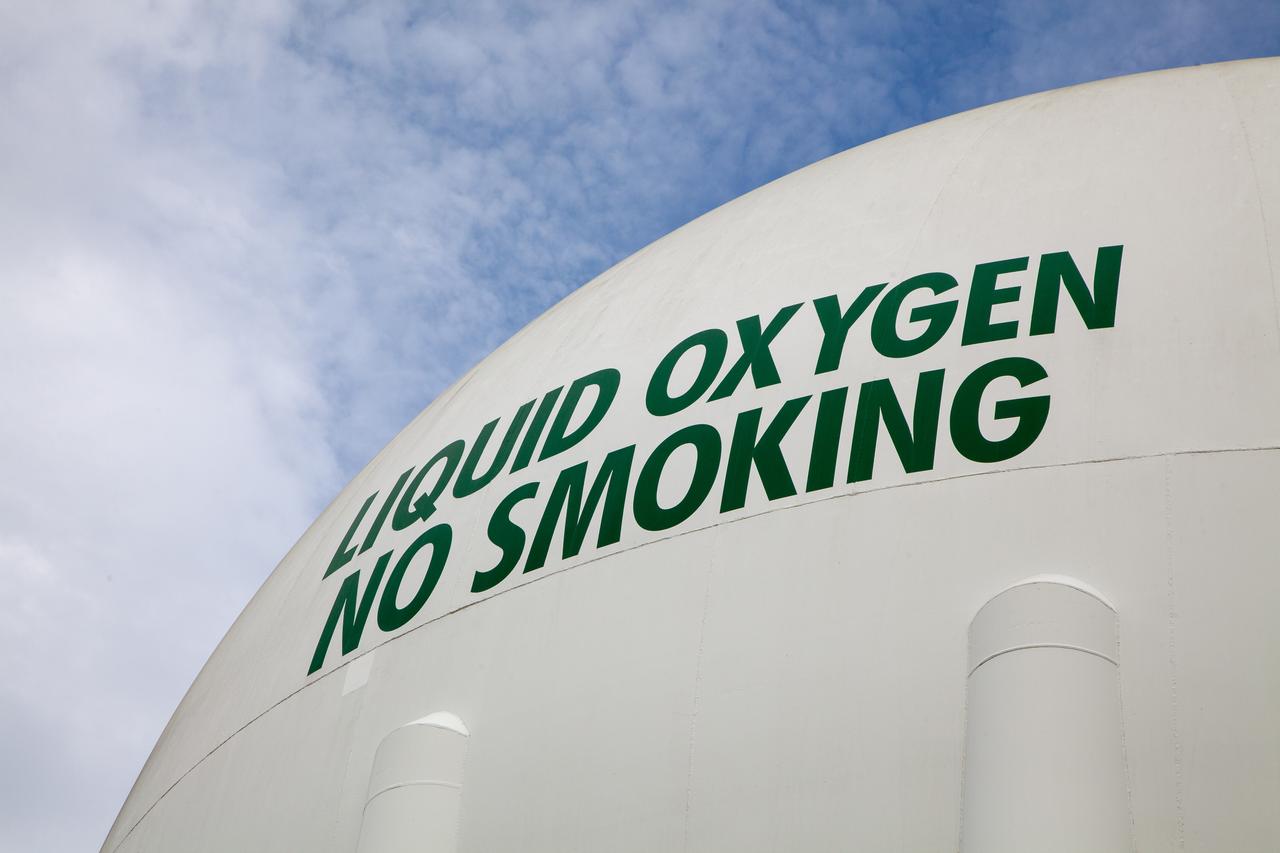
A liquid oxygen storage tank is photographed at Launch Pad 39B on Nov. 8, 2019, at NASA’s Kennedy Space Center in Florida. The agency’s Exploration Ground Systems oversaw testing of the pad’s cryogenic systems – the infrastructure that will support the flow of liquid hydrogen and liquid oxygen from the storage tanks to the Space Launch System (SLS) rocket – in preparation for the launch of SLS with the Orion spacecraft atop for the uncrewed Artemis I mission. Each of the liquid oxygen and liquid hydrogen tanks can hold more than 800,000 gallons of propellant. The liquid oxygen will require the use of pumps to push it from the tank to the rocket, while the lighter liquid hydrogen will make its way up to the pad using gaseous hydrogen to pressurize the sphere.
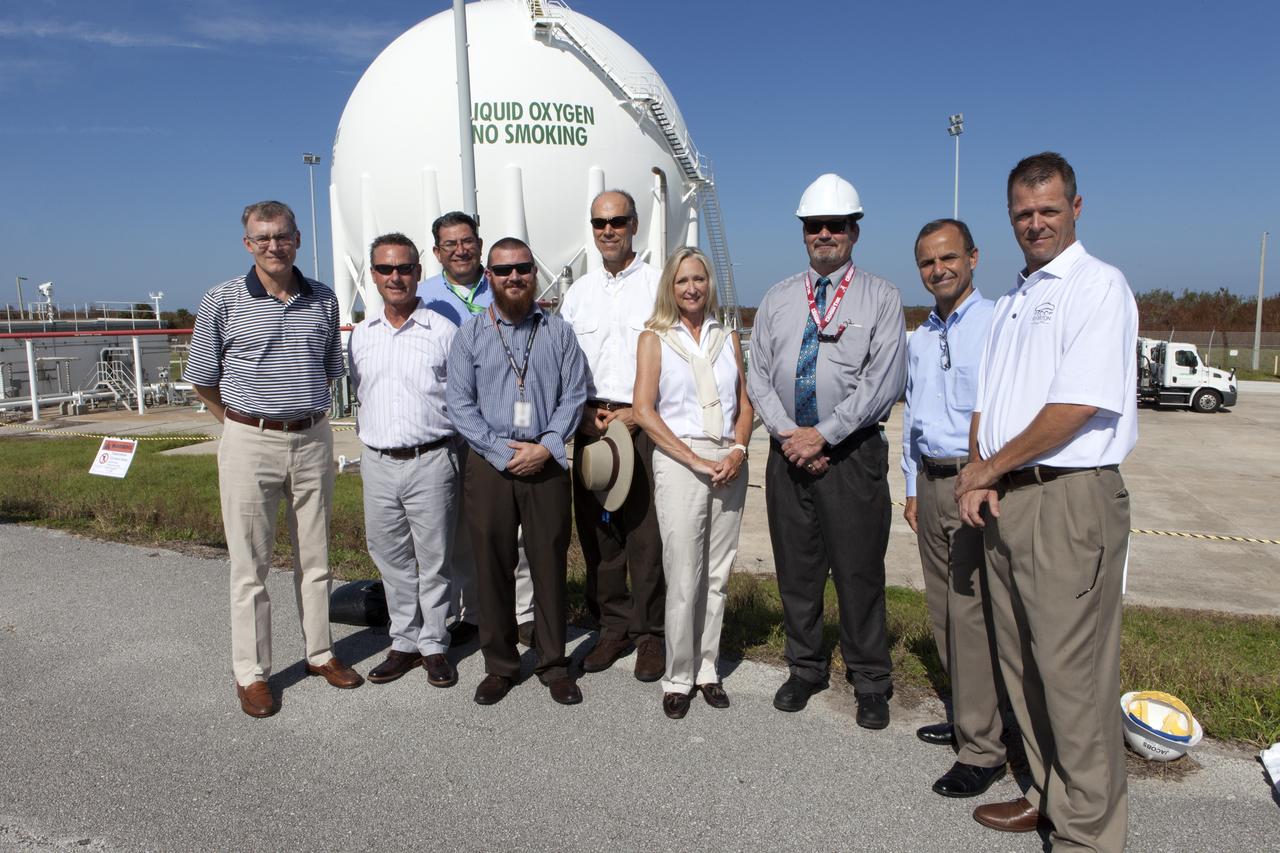
Liquid Oxygen filled in the Cryo tank of Pad 39B in support of the SLS rocket.
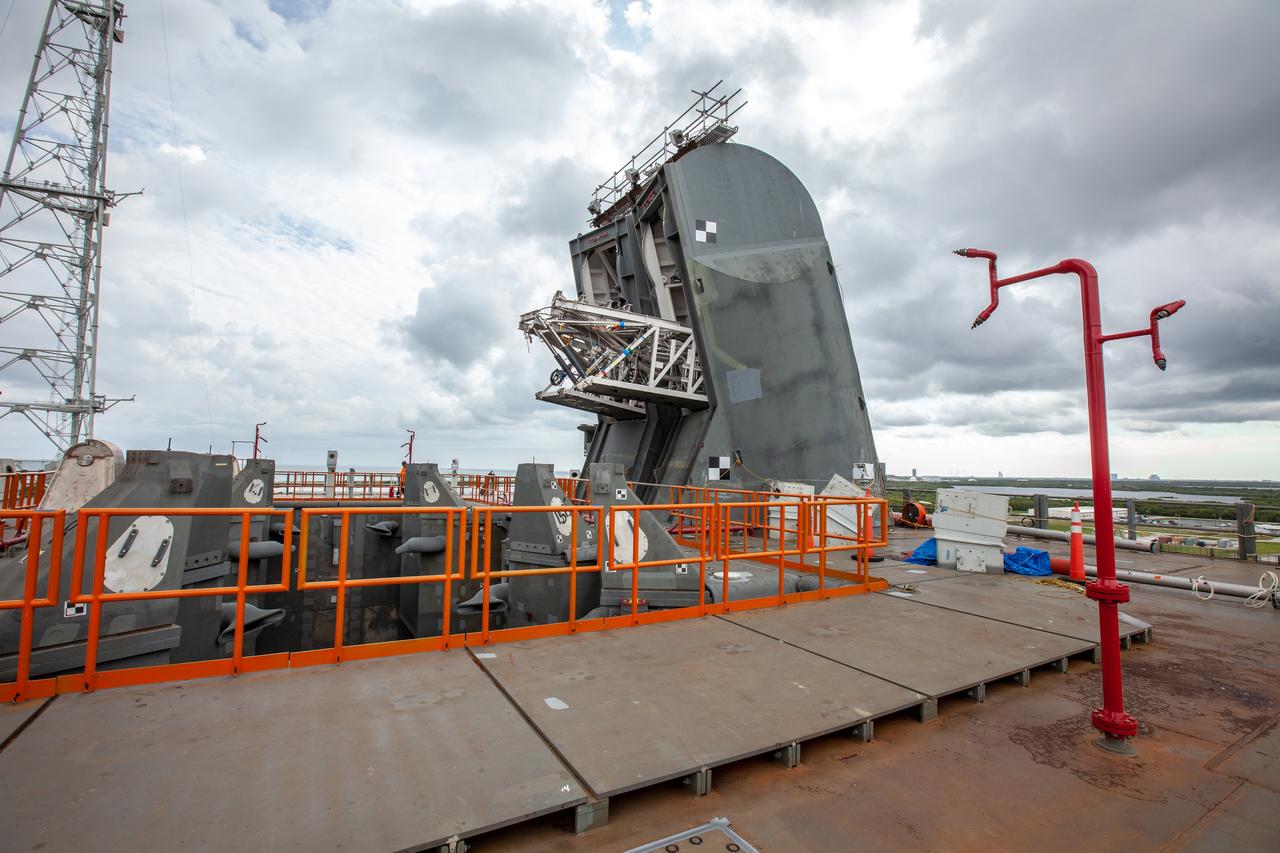
The Tail Service Mast Umbilicals that will connect to NASA’s Space Launch System (SLS) rocket, containing fluid lines for liquid oxygen and liquid hydrogen propellant loading, are photographed on the mobile launcher at Launch Pad 39B on Nov. 8, 2019, at the agency’s Kennedy Space Center in Florida. NASA’s Exploration Ground Systems oversaw testing of the pad’s cryogenic systems – the infrastructure that will support the flow of liquid hydrogen and liquid oxygen from the storage tanks to the rocket – in preparation for the launch of SLS with the Orion spacecraft atop for the uncrewed Artemis I mission. Each of the liquid oxygen and liquid hydrogen tanks can hold more than 800,000 gallons of propellant. The liquid oxygen will require the use of pumps to push it from the tank to the rocket, while the lighter liquid hydrogen will make its way up to the pad using gaseous hydrogen to pressurize the sphere.