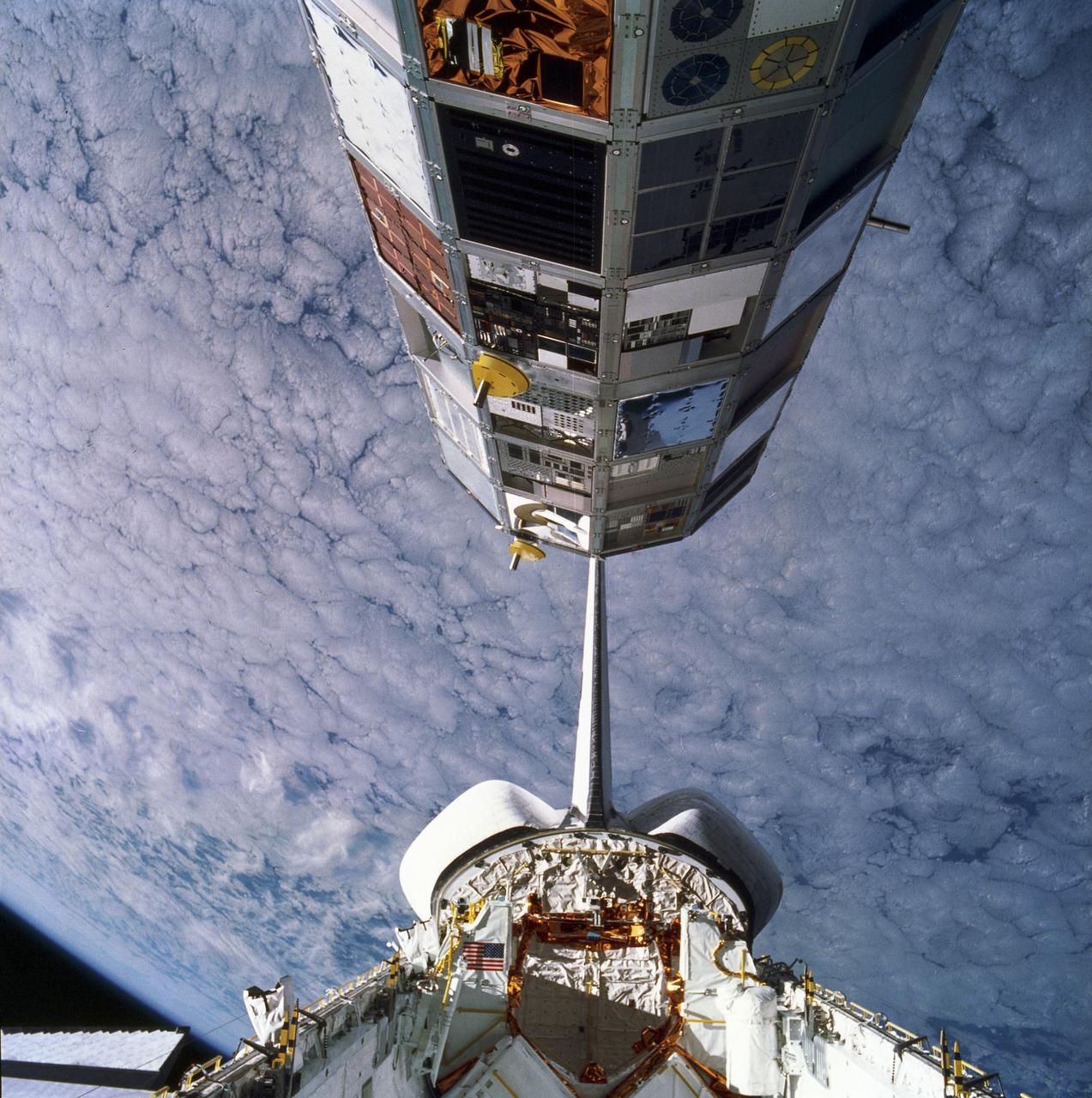
This is an onboard photo of the deployment of the Long Duration Exposure Facility (LDEF) from the cargo bay of the Space Shuttle Orbiter Challenger STS-41C mission, April 7, 1984. After a five year stay in space, the LDEF was retrieved during the STS-32 mission by the Space Shuttle Orbiter Columbia in January 1990 and was returned to Earth for close examination and analysis. The LDEF was designed by the Marshall Space Flight Center (MSFC) to test the performance of spacecraft materials, components, and systems that have been exposed to the environment of micrometeoroids, space debris, radiation particles, atomic oxygen, and solar radiation for an extended period of time. Proving invaluable to the development of both future spacecraft and the International Space Station (ISS), the LDEF carried 57 science and technology experiments, the work of more than 200 investigators, 33 private companies, 21 universities, 7 NASA centers, 9 Department of Defense laboratories, and 8 forein countries.
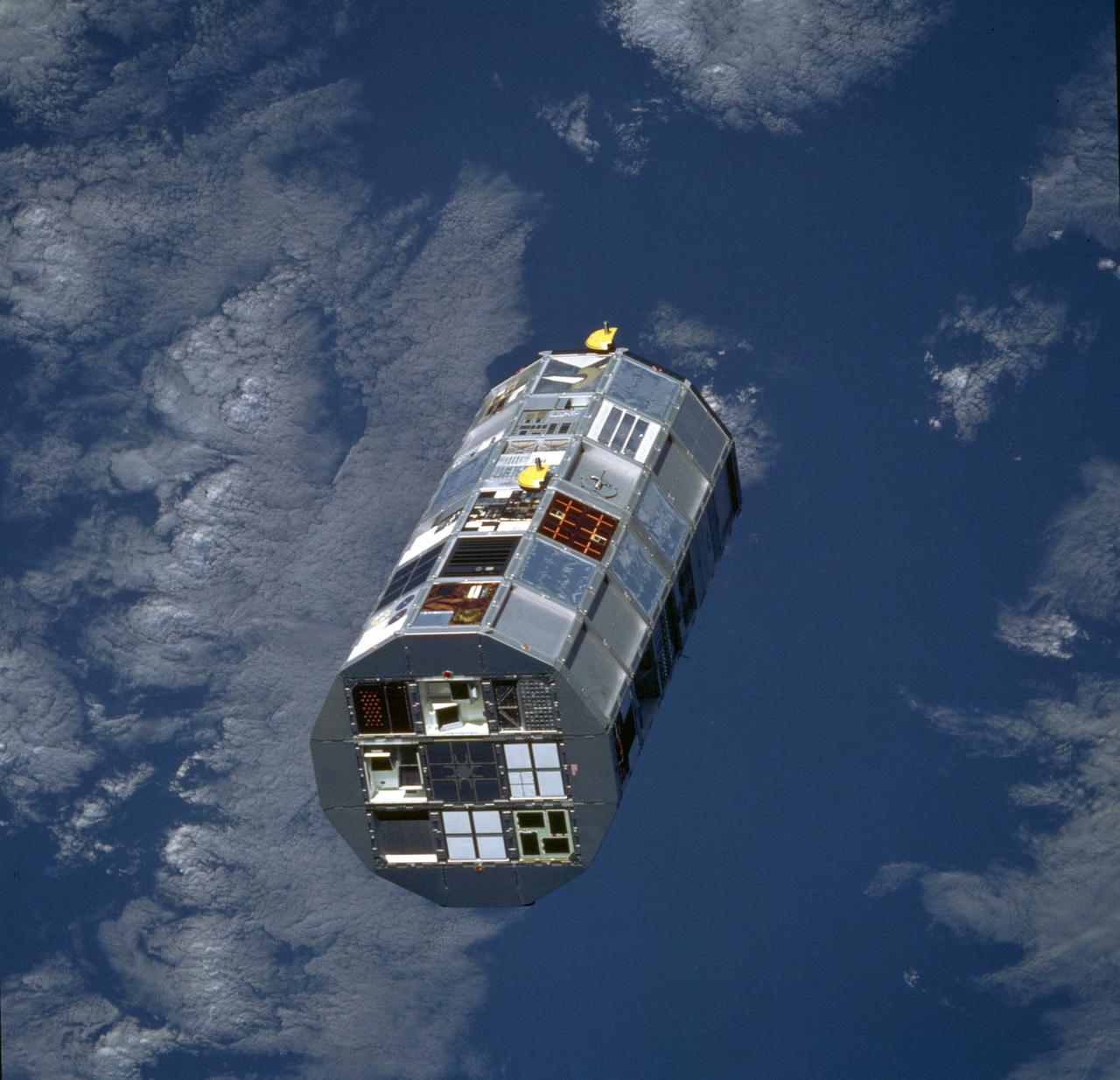
The Long Duration Exposure Facility (LDEF) was designed by the Marshall Space Flight Center (MSFC) to test the performance of spacecraft materials, components, and systems that have been exposed to the environment of micrometeoroids and space debris for an extended period of time. The LDEF proved invaluable to the development of future spacecraft and the International Space Station (ISS). The LDEF carried 57 science and technology experiments, the work of more than 200 investigators. MSFC`s experiments included: Trapped Proton Energy Determination to determine protons trapped in the Earth's magnetic field and the impact of radiation particles; Linear Energy Transfer Spectrum Measurement Experiment which measures the linear energy transfer spectrum behind different shielding configurations; Atomic oxygen-Simulated Out-gassing, an experiment that exposes thermal control surfaces to atomic oxygen to measure the damaging out-gassed products; Thermal Control Surfaces Experiment to determine the effects of the near-Earth orbital environment and the shuttle induced environment on spacecraft thermal control surfaces; Transverse Flat-Plate Heat Pipe Experiment, to evaluate the zero-gravity performance of a number of transverse flat plate heat pipe modules and their ability to transport large quantities of heat; Solar Array Materials Passive LDEF Experiment to examine the effects of space on mechanical, electrical, and optical properties of lightweight solar array materials; and the Effects of Solar Radiation on Glasses. Launched aboard the Space Shuttle Orbiter Challenger's STS-41C mission April 6, 1984, the LDEF remained in orbit for five years until January 1990 when it was retrieved by the Space Shuttle Orbiter Columbia STS-32 mission and brought back to Earth for close examination and analysis.
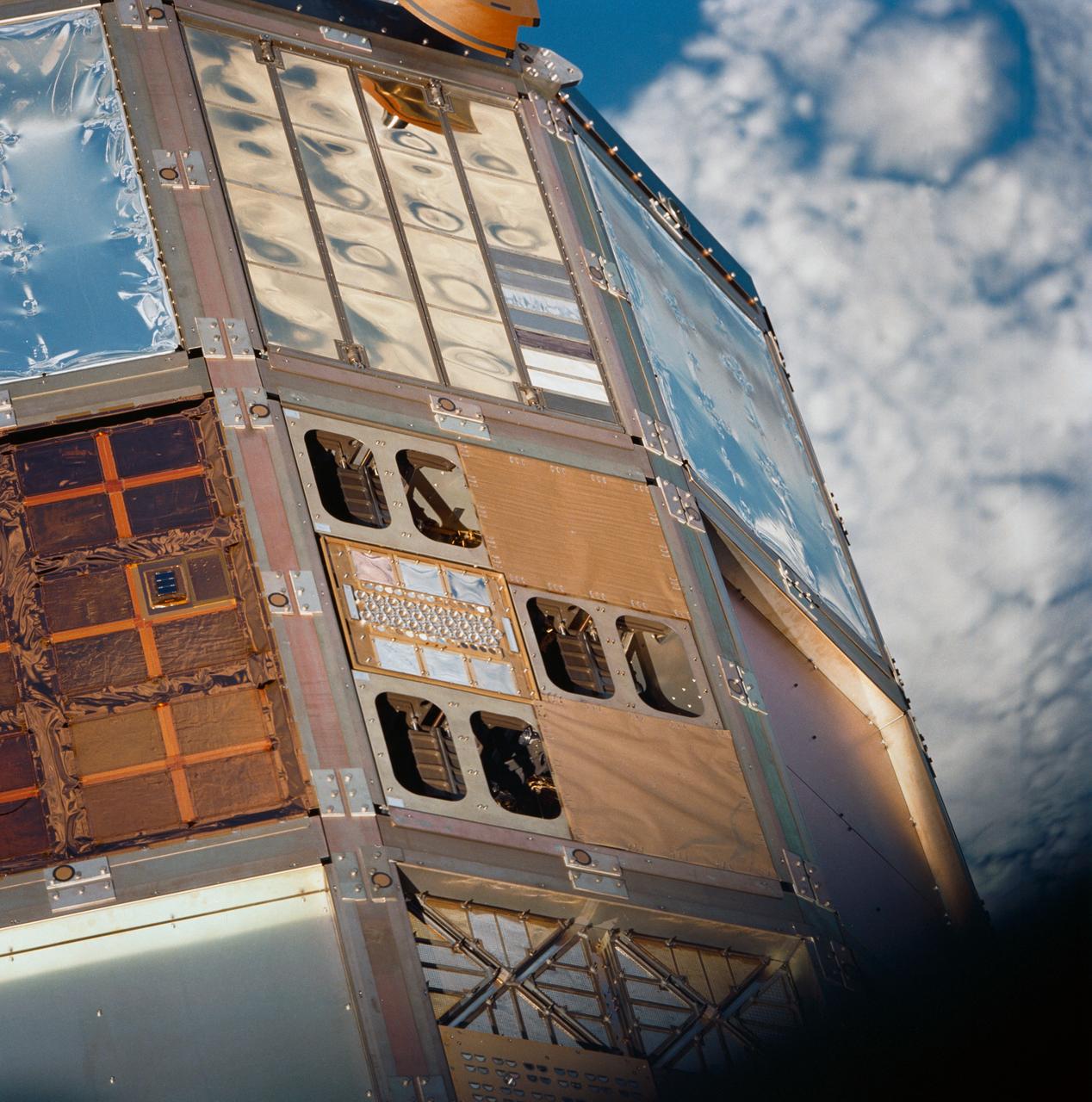
Closeup of Long Duration Exposure Facility (LDEF) experiment trays is documented during STS-32 retrieval activity and photo survey conducted by crewmembers onboard Columbia, Orbiter Vehicle (OV) 102. Partially visible is the Polymer Matrix Composite Materials Experiment. In the background is the surface of the Earth.
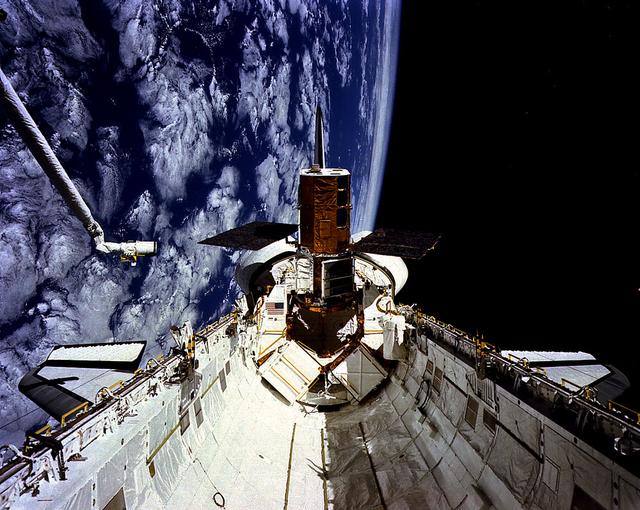
Space Shuttle mission STS-41C onboard view of the revived Solar Maximum Mission Satellite (SMMS). As part of the mission the crew demonstrated the capability of the shuttle to rendezvous, service, check-out and deploy an on-orbit satellite. Also as part of the redeployment, the SMMS was fitted with a Long Duration Exposure Facility (LDEF), which provides accommodations for experiments requiring long-term exposure to the space environment. the STS-41C mission was launched aboard the Space Shuttle Orbitor Challenger on April 6, 1984.
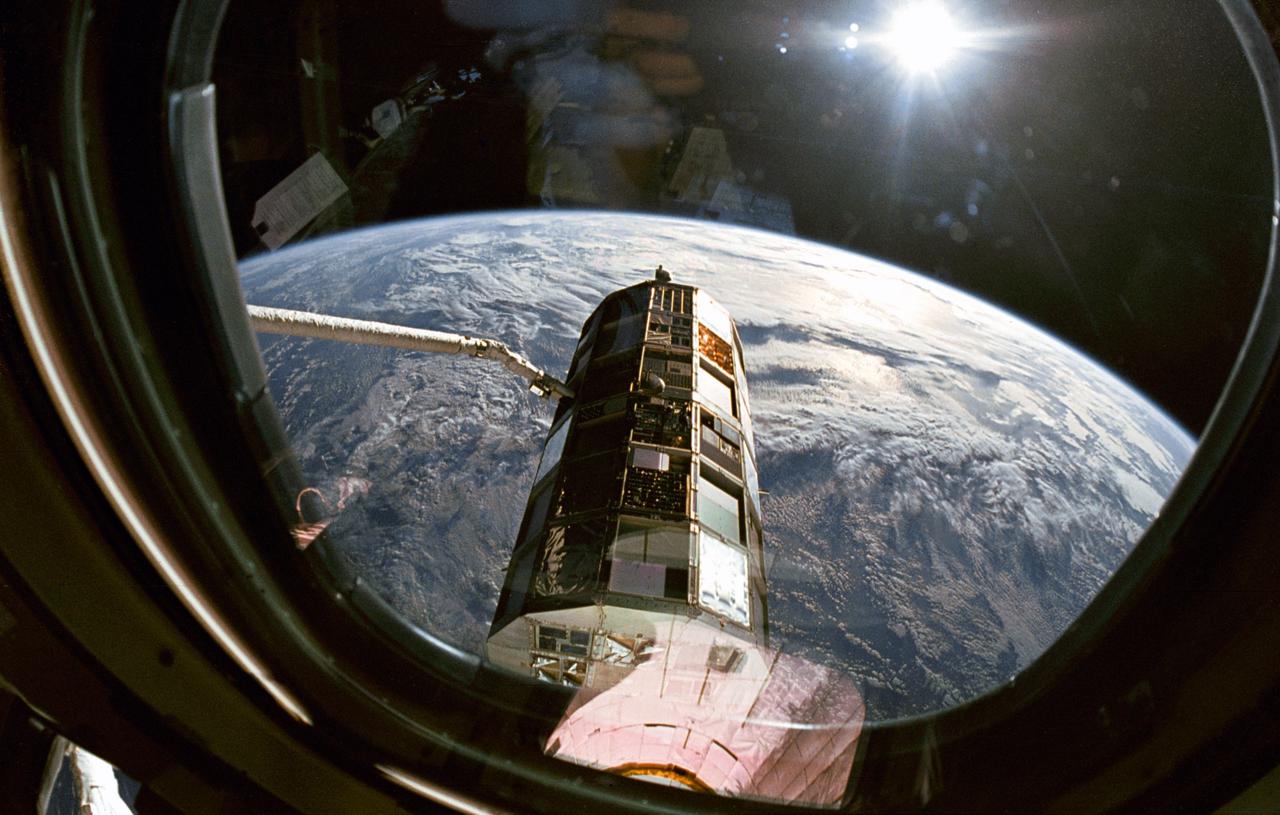
This view taken through overhead window W7 on Columbia's, Orbiter Vehicle (OV) 102's, aft flight deck shows the Long Duration Exposure Facility (LDEF) in the grasp of the remote manipulator system (RMS) during STS-32 retrieval activities. Other cameras at eye level were documenting the bus-sized spacecraft at various angles as the RMS manipulated LDEF for a lengthy photo survey. The glaring celestial body in the upper left is the sun with the Earth's surface visible below.
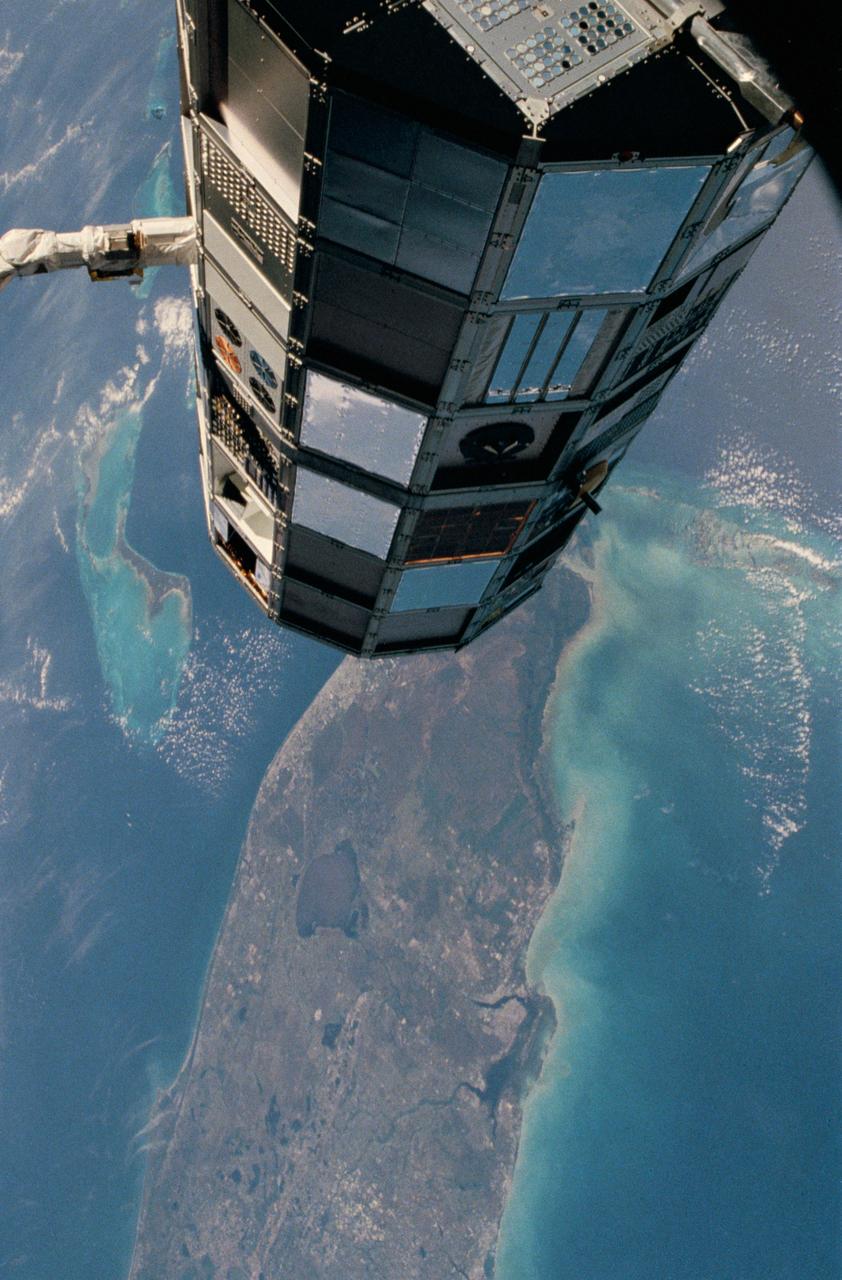
41C-02-067 (6-13 April 1984) --- One of the first major accomplishments of Flight 41-C?s crew aboard the Challenger was to place this giant satellite into Earth orbit. Still attached to the remote manipulator system (RMS) end effector, the Long-Duration Exposure Facility (LDEF) is backdropped against Florida, the Bahama Bank, the Gulf of Mexico and Atlantic waters. The multi-colored cylinder carries 50-odd passive scientific experiments representing 194 investigators from around world. The LDEF program is directed by the Langley Research Center in Hampton, Virginia. The facility will be retrieved in a little less than a year by a Space Shuttle crew. This frame was one of the visuals used by the 41-C astronauts for their April 24, 1984 post-flight press conference. Cape Canaveral, where this seven-day mission got its start, and Lake Okeechobee, are easily recognized in the frame, photographed shortly before 11:30 a.m. (CST), April 7, 1984.

Transferring the Long Duration Exposure Facility (LDEF) into Canister 1 for STS-41C, March 6, 1984

Installing the Long Duration Exposure Facility (LDEF) using the payload strongback, into Canister 1 O&C high bay, March 6, 1984

Installing the Long Duration Exposure Facility (LDEF) using the payload strongback, into Canister 1 O&C high bay, March 6, 1984

STS032-85-063 (12 Jan 1990) --- The Space Shuttle Columbia’s Canadian-built Remote Manipulator System (RMS) arm suspends the Long Duration Exposure Facility (LDEF) over the cargo bay during a lengthy survey session. LDEF has been in space since April, 1984.
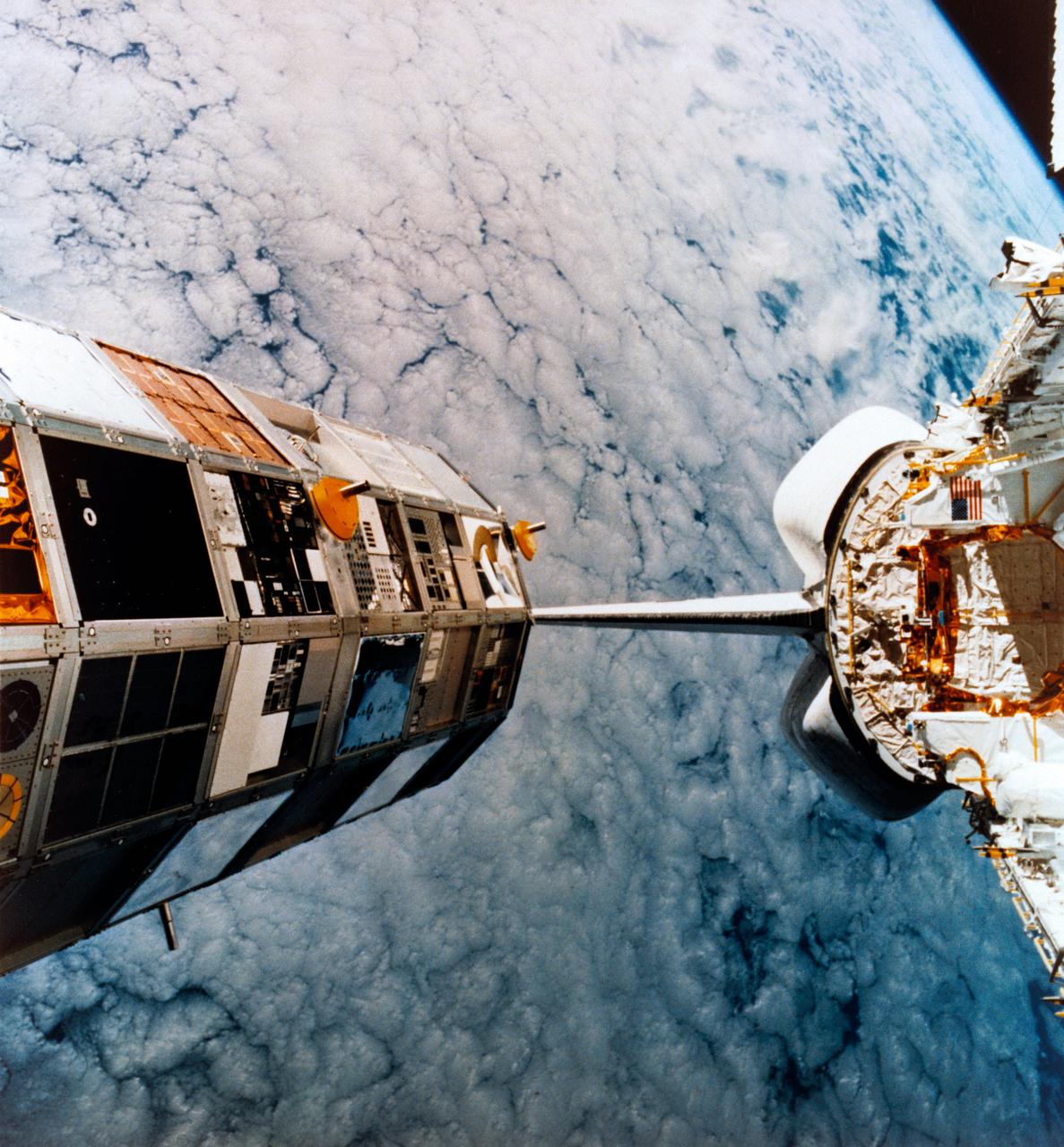
Photo from Space Shuttle Mission 41-C of the Long Duration Exposure Facility (LDEF) deploy by CHALLENGER and a Langley Research Center (LRC) supplied art concept of the LDEF recovery by COLUMBIA during Space Shuttle Mission STS-32. LRC # L-89-11-720 for JSC # S89-50779

A Marshall researcher examines a sample from the Solar Array Passive Long Duration Exposure Facility (LDEF). LDEF, which flew in space, measured the number, severity, and effects of micrometeroid hits on various materials. The data will lead to improved spacecraft design in the future.
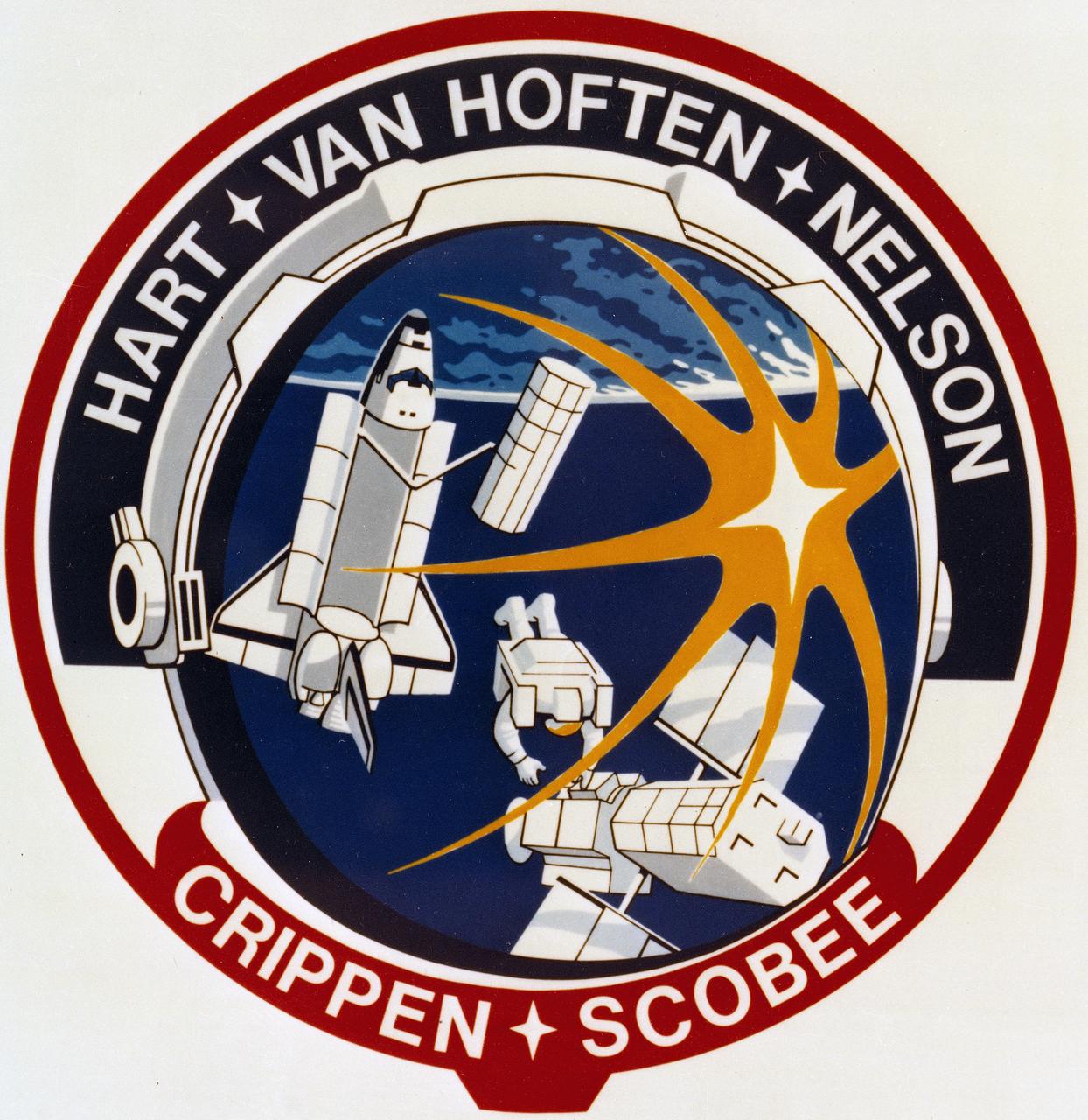
The patch features a helmet visor of an astronaut performing an extravehicular activity. In the visor are reflected the sun's rays, the Challenger and its remote manipulator system (RMS) deploying the long duration exposure facility (LDEF), the Earth and blue sky, and another astronaut working at the damaged Solar Maximum Satellite (SMS). The scene is encircled by the surnames of the crewmembers.
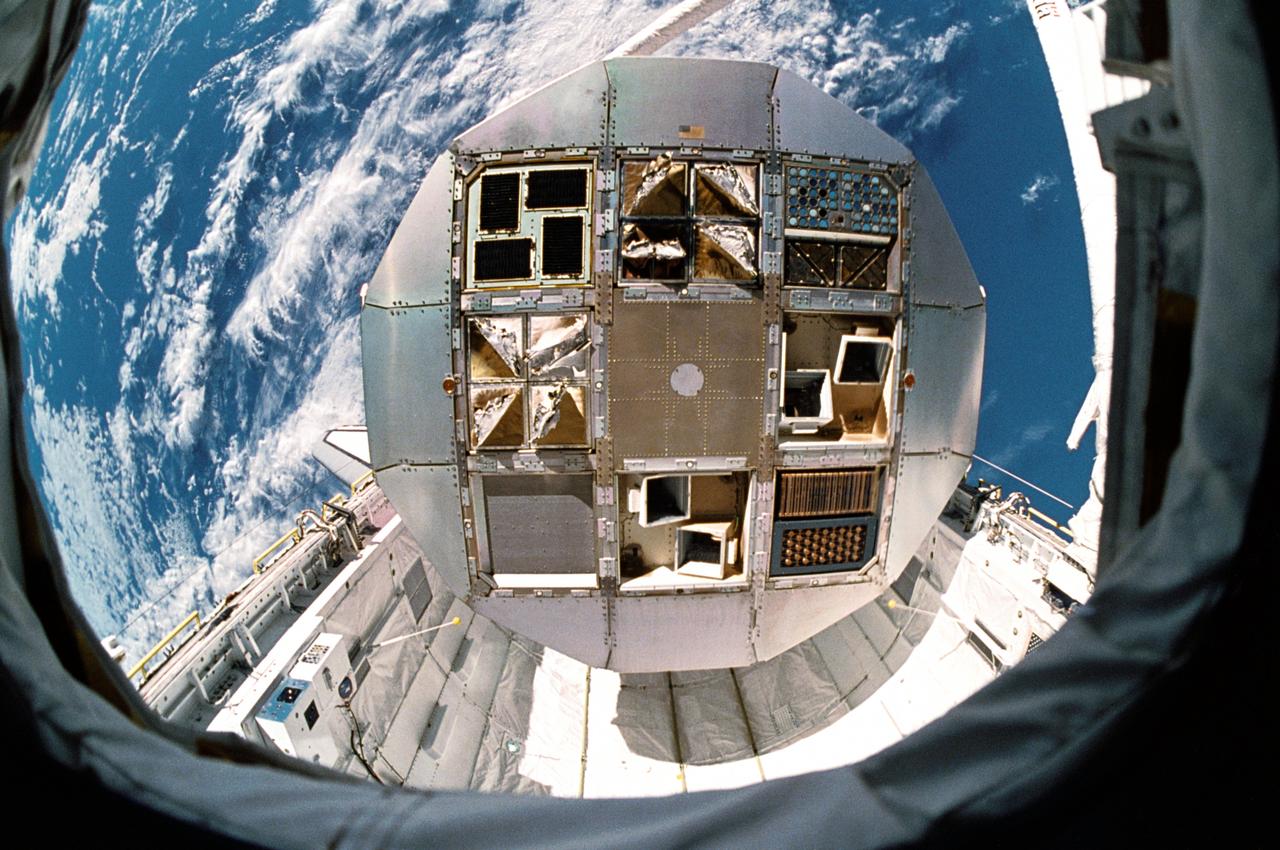
STS032-541-018 (12 Jan 1990) --- One of a number of frames photographed by the STS-32 crew as part of a detailed supplementary objective on documentary still photography. The DSO was monitored by Astronaut Marsha S. Ivins, mission specialist. STS032-541-018 Kodak Ektar 25 negative film. 35mm frame of LDEF suspended just over its resting place in cargo bay. White clouds and blue ocean in foreground.
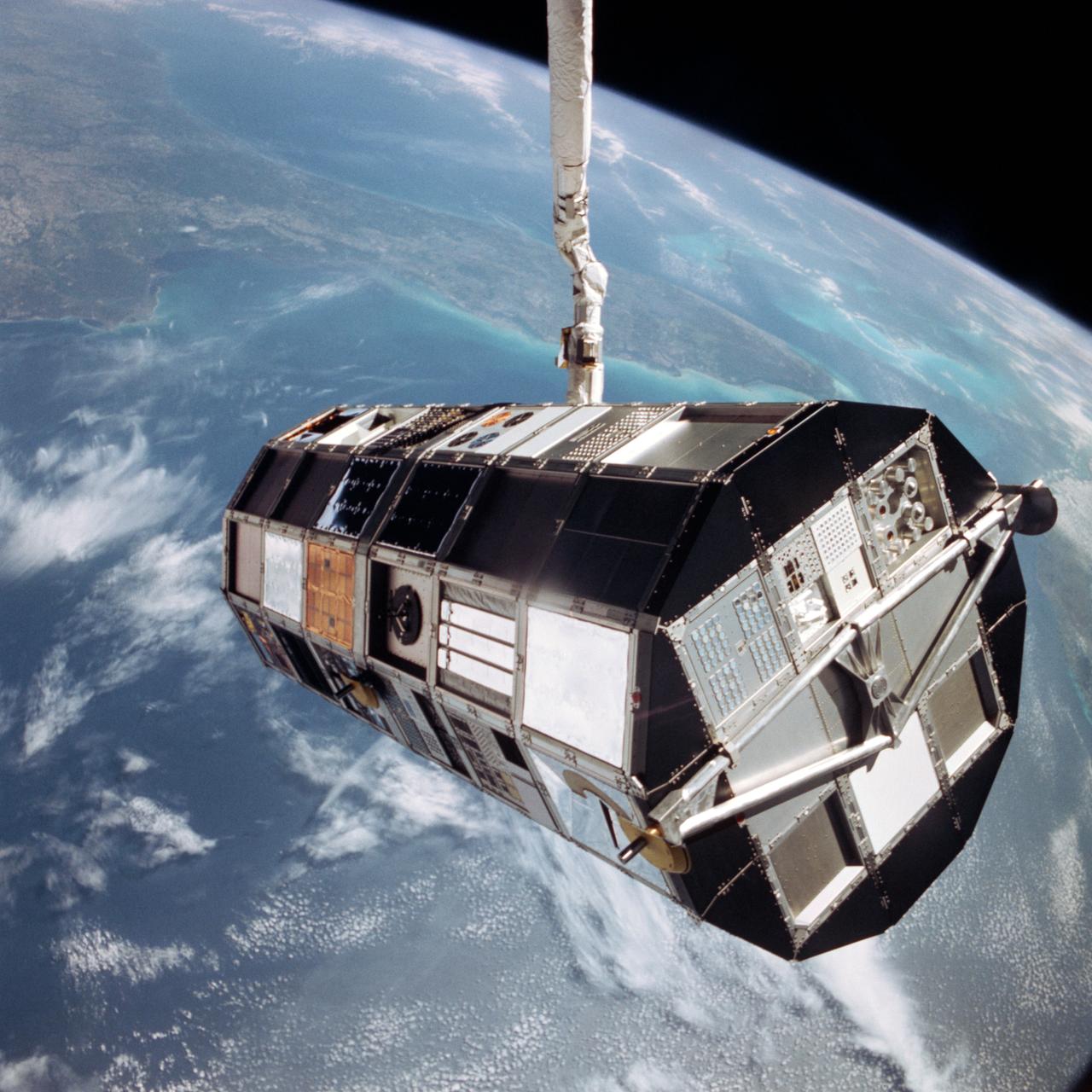
41C-36-1618 (7 April 1984) --- The Remote Manipulator System (RMS) arm suspends the giant Long Duration Exposure Facility (LDEF) high above the Gulf of Mexico prior to releasing it into space. Carried into Earth orbit with the STS-41C crew by the Space Shuttle Challenger, LDEF will remain in space until retrieved by a future Shuttle mission, in nine or ten months. Florida and the Bahama Banks are visible near the Earth's horizon in the 70mm frame.
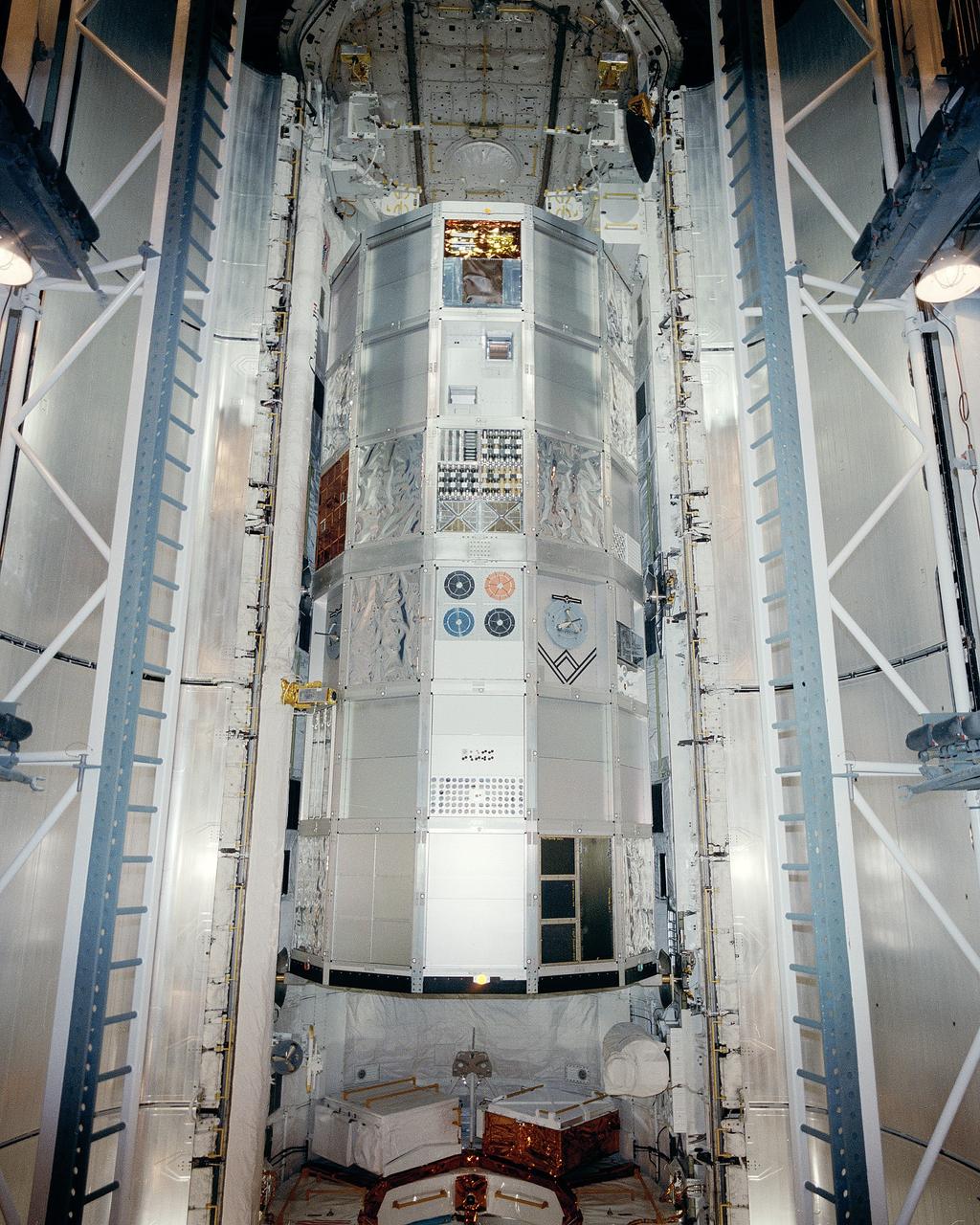
CAPE CANAVERAL, Fla. -- At NASA's Kennedy Space Center's Launch Pad 39-A, the school bus-sized Long Duration Exposure Facility LDEF containing 57 active and passive experiments from nine nations has been loaded into the payload bay of the space shuttle Challenger. The view from the Payload Change-out Room shows LDEF which will be deployed in orbit at an altitude of nearly 300 miles and retrieved after nearly a year so that the experimenters may analyze the effects of long term exposure to space on various substances and processes. The five-member STS-41C crew for this flight is headed by veteran astronaut Robert Crippen on his third space shuttle flight, and includes space rookies, pilot Dick Scobee and mission specialists Terry Hart, George Nelson and James van Hoften. Photo Credit: NASA
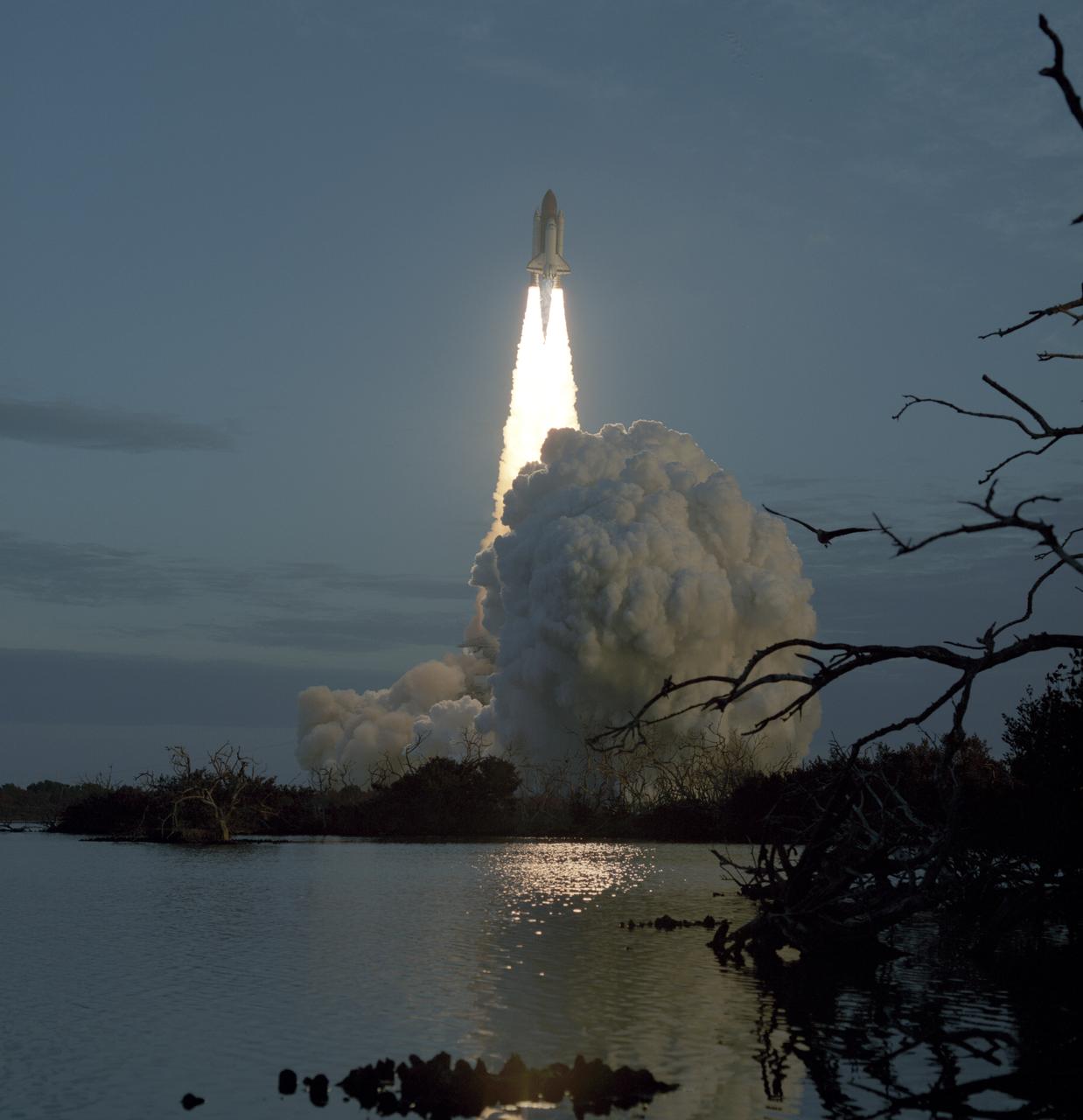
Five astronauts launched aboard the Space Shuttle Columbia on January 9, 1990 at 7:35:00am (EST) for the STS-32 mission. The crew included David C. Brandenstein, commander; James D. Weatherbee, pilot; and mission specialists Marsha S. Ivins, G. David Low, and Bonnie J. Dunbar. Primary objectives of the mission were the deployment of the SYNCOM IV-F5 defense communications satellite and the retrieval of NASA’s Long Duration Exposure Facility (LDEF).
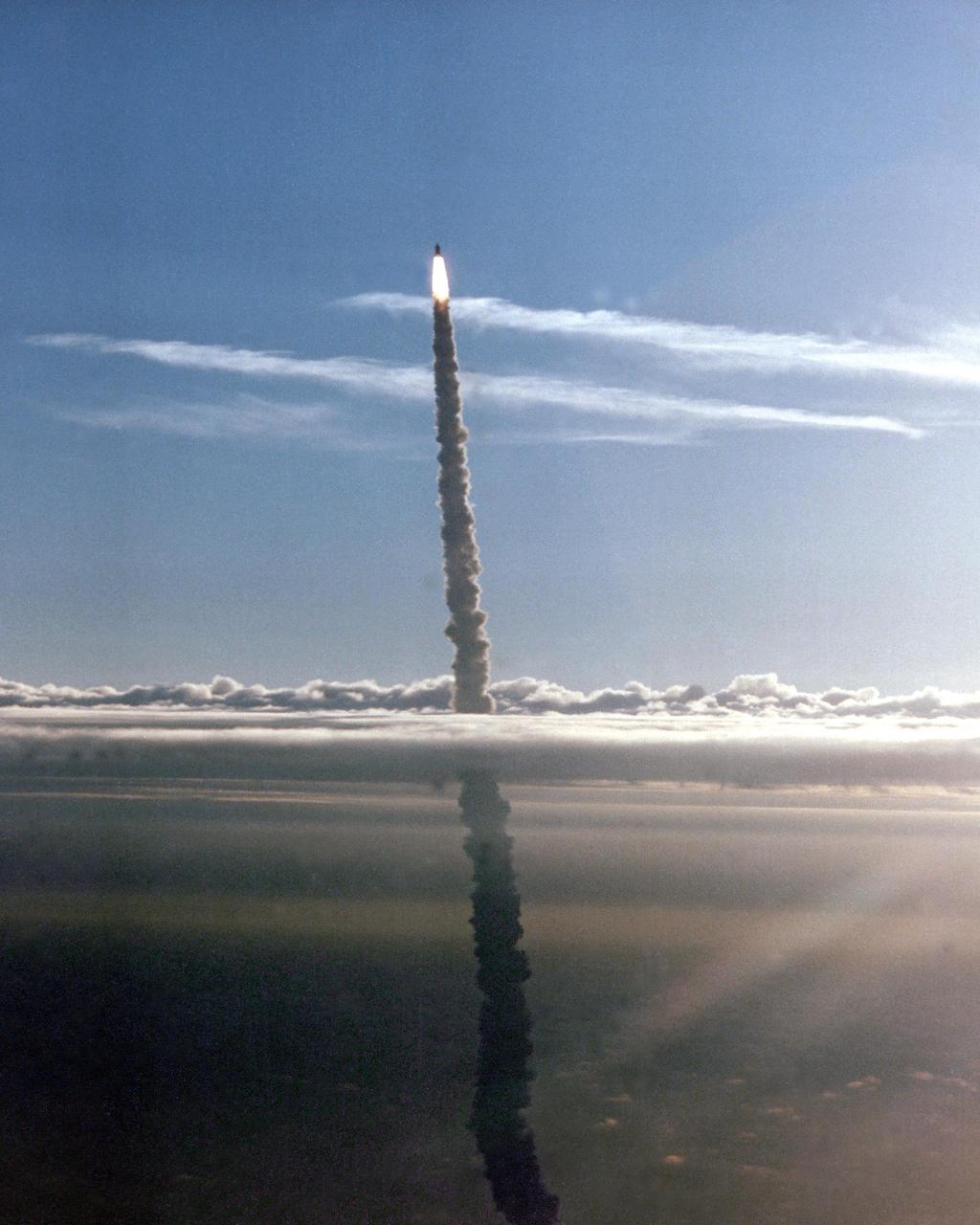
KENNEDY SPACE CENTER, FLA. -- STS-32R lifts off from Pad 39-A at 7:35 a.m. EST. Columbia is scheduled to deploy the Syncom IV-5 defense communications satellite and retrieve NASA's Long duration Exposure Facility (LDEF) during a 10-day mission, the longest Shuttle flight to date. The mission also includes a variety of experiments, including Protein Crystal Growth. This photo was taken from the Shuttle Training Aircraft.
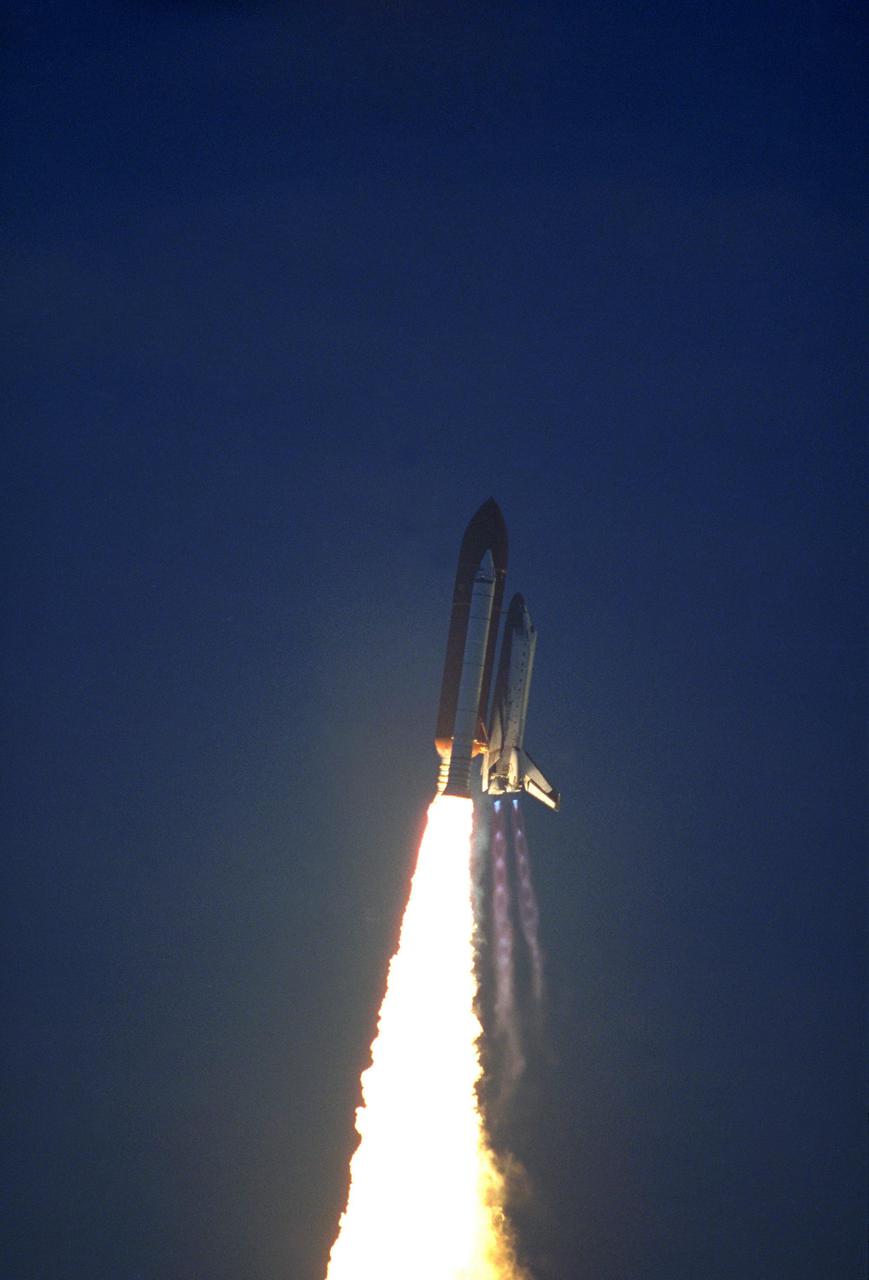
KENNEDY SPACE CENTER, FLA. -- STS-32R lifts off from Pad 39-A at 7:35 a.m. EST. Columbia is scheduled to deploy the Syncom IV-5 defense communications satellite and retrieve NASA's Long duration Exposure Facility (LDEF) during a 10-day mission, the longest Shuttle flight to date. The mission also includes a variety of experiments, including Protein Crystal Growth. This photo was taken from the Shuttle Training Aircraft.
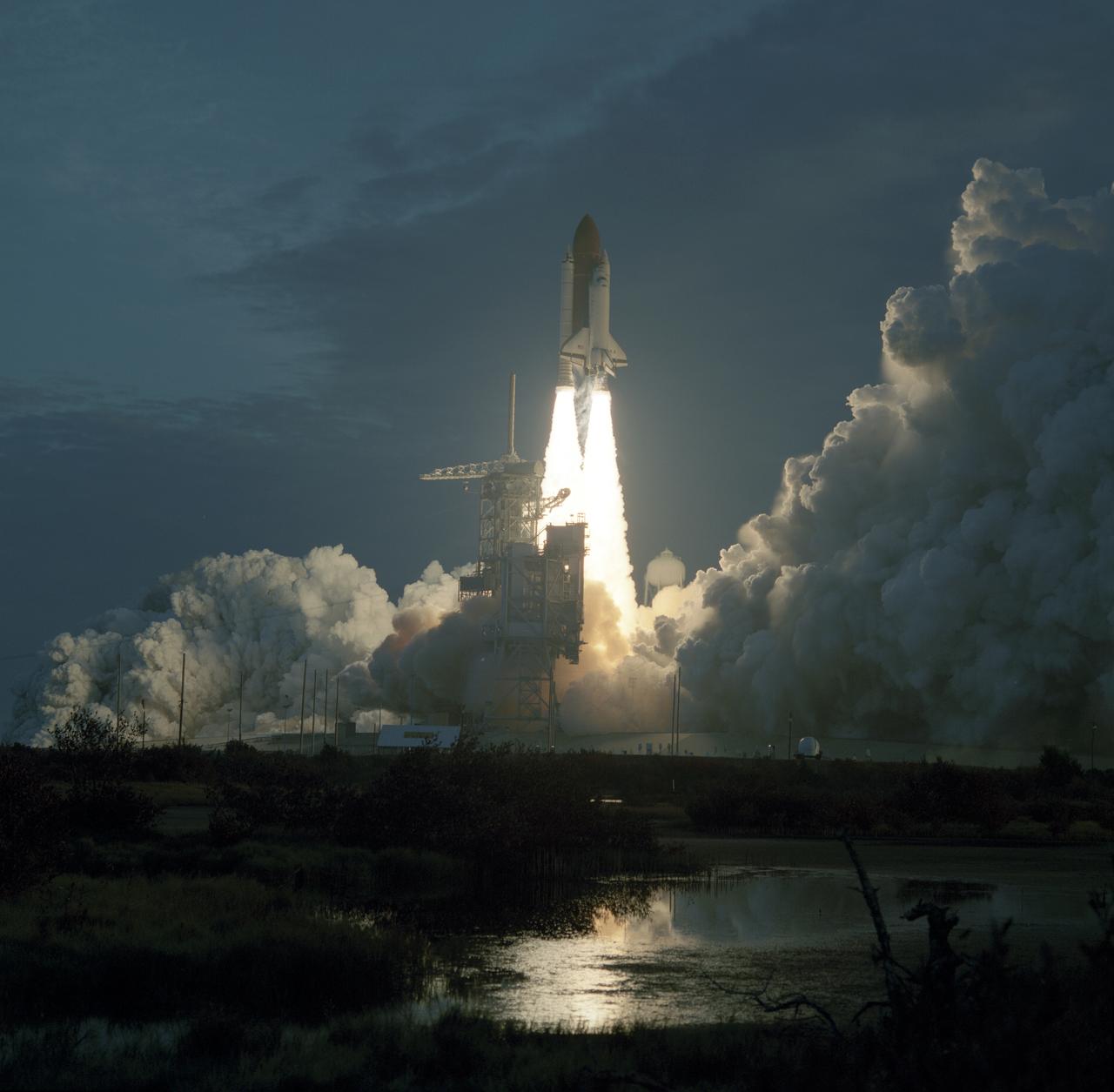
Five astronauts launched aboard the Space Shuttle Columbia on January 9, 1990 at 7:35:00am (EST) for the STS-32 mission. The crew included David C. Brandenstein, commander; James D. Weatherbee, pilot; and mission specialists Marsha S. Ivins, G. David Low, and Bonnie J. Dunbar. Primary objectives of the mission were the deployment of the SYNCOM IV-F5 defense communications satellite and the retrieval of NASA’s Long Duration Exposure Facility (LDEF).
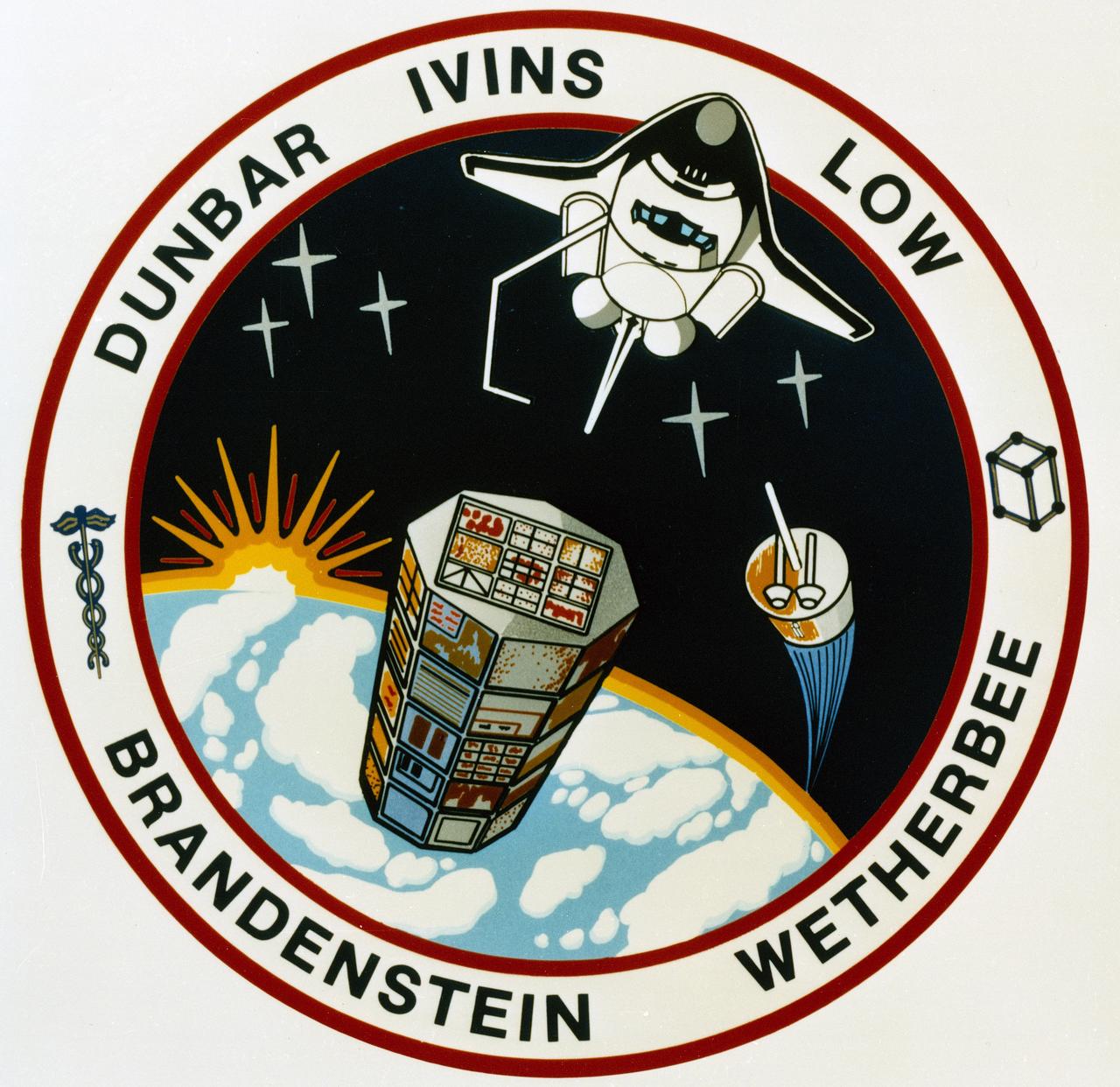
The STS-32 patch, designed by the five crewmembers for the scheduled December 1989 space mission, depicts the Space Shuttle orbiter rendezvousing with the Long Duration Exposure Facility (LDEF) satellite from above. The Syncom satellite is successfully deployed and on its way to geosynchronous orbit. Five stars have been arranged so that three are one side of the orbiter and two on the other to form the number 32. The seven major rays of the sun are in remembrance of the crewmembers for STS 51-L.
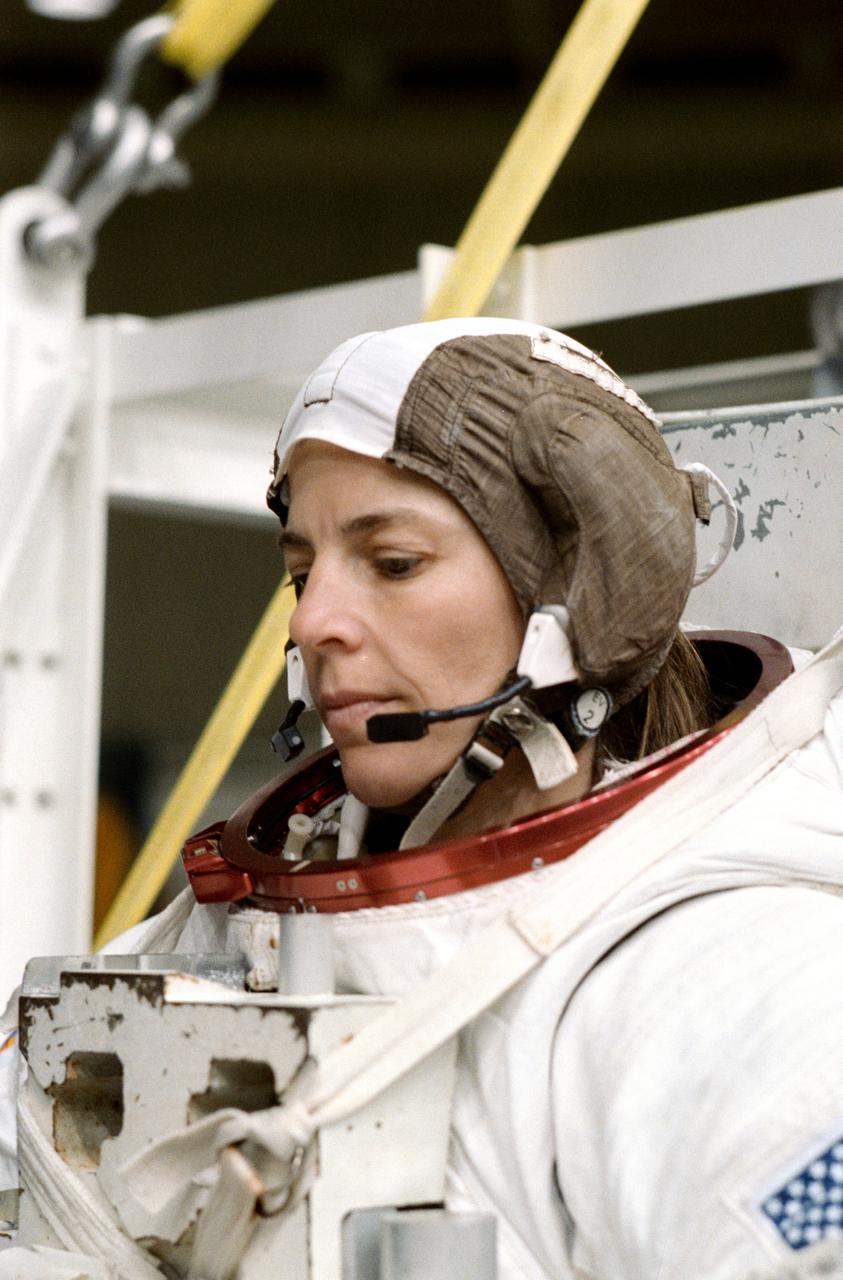
S89-41600 (Nov 1989) --- Astronaut Bonnie J. Dunbar, wearing an extravehicular mobility unit (EMU) spacesuit, prepares to don a helmet and be lowered by a hoist device for a session of underwater training in the Johnson Space Center's weightless environment training facility (WET-F). Minutes later, Astronauts Dunbar and G. David Low, mission specialists, were neutrally buoyant in the nearby 25-ft. deep pool simulating a contingency extravehicular activity (EVA) for the scheduled December 1989 STS-32 mission. There are no scheduled EVAs for the crew, whose main missions are to retrieve the Long Duration Exposure Facility (LDEF) and to deploy a Syncom satellite.
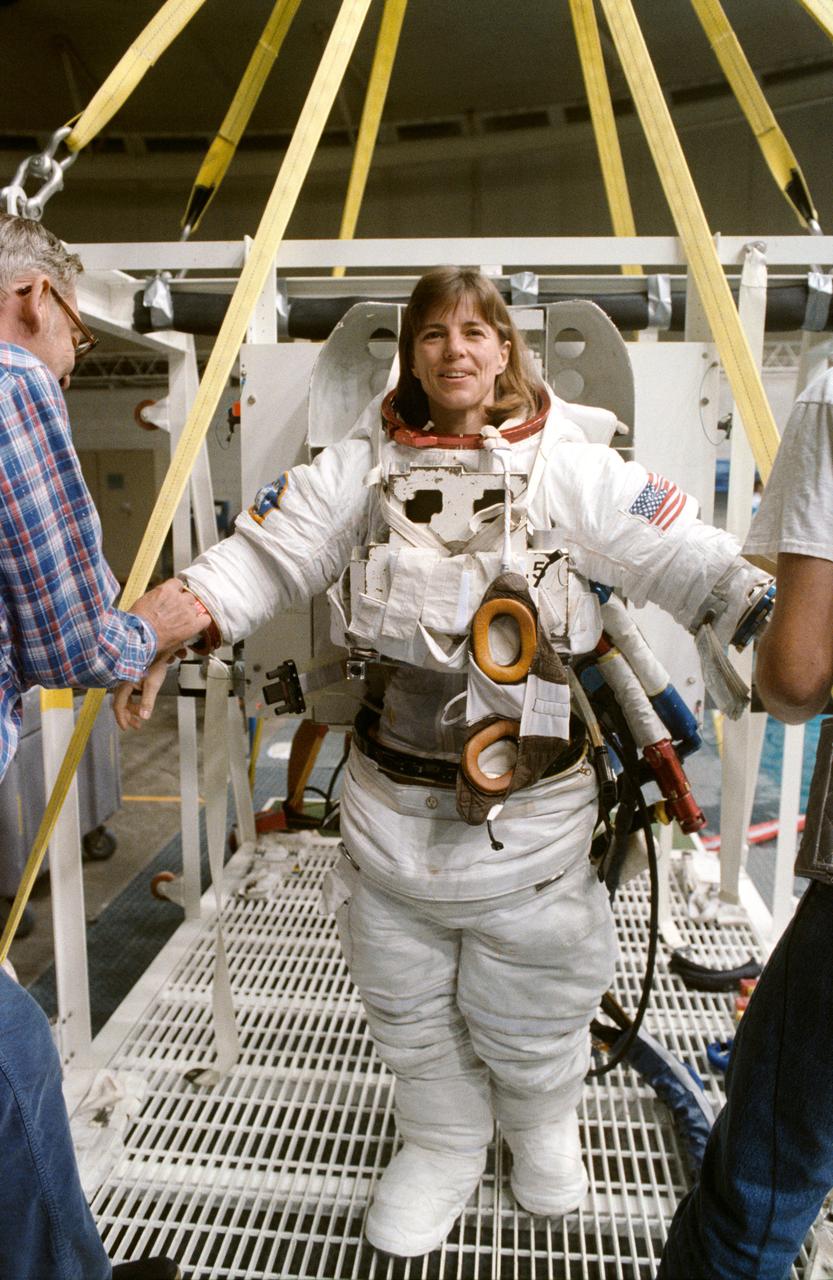
S89-41597 (Nov 1989) --- Astronaut Bonnie J. Dunbar, wearing an extravehicular mobility unit (EMU) spacesuit, prepares to don gloves and subsequently a helmet and to be lowered by a hoist device for a session of underwater training in the Johnson Space Center's weightless environment training facility (WET-F). Minutes later, Astronauts Dunbar and G. David Low, mission specialists, were neutrally buoyant in the nearby 25-ft. deep pool simulating a contingency extravehicular activity (EVA) for the scheduled December 1989 STS-32 mission. There are no scheduled EVAs for the crew, whose main missions are to retrieve the Long Duration Exposure Facility (LDEF) and to deploy a Syncom satellite.
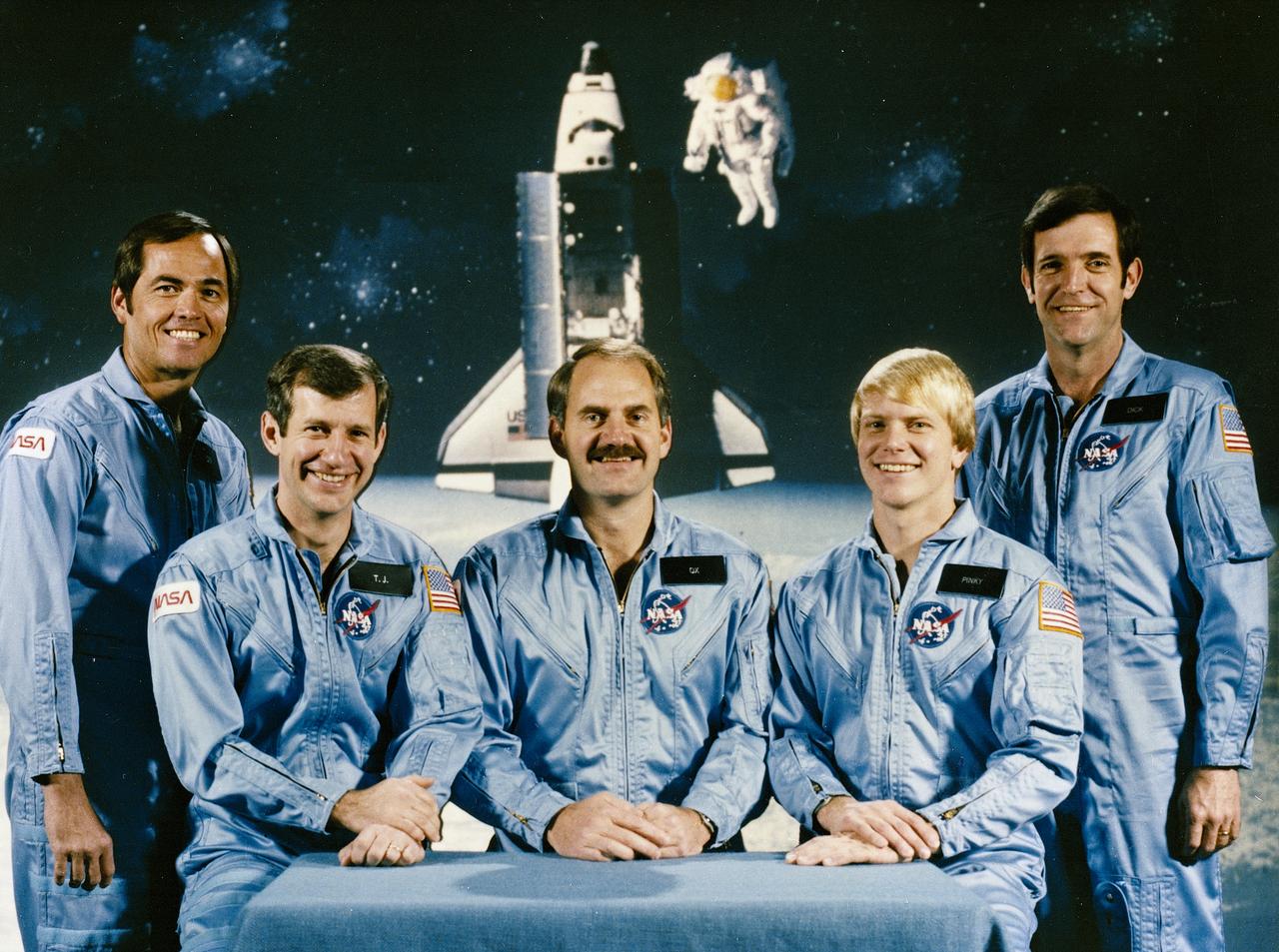
The crew assigned to the STS-41CB (STS-13) mission included (left to right) Robert L. Crippen, commander; Terry J. Hart, mission specialist; James D. Van-Hoften, mission specialist; George D. Nelson, mission specialist; and Francis R. (Dick) Scobee, pilot. Launched aboard the Space Shuttle Challenger on April 6, 1984 at 8:58:00 am (EST), the STS-41C mission marked the first direct ascent trajectory for the Space Shuttle. The crew deployed the Long Duration Exposure Facility (LDEF).
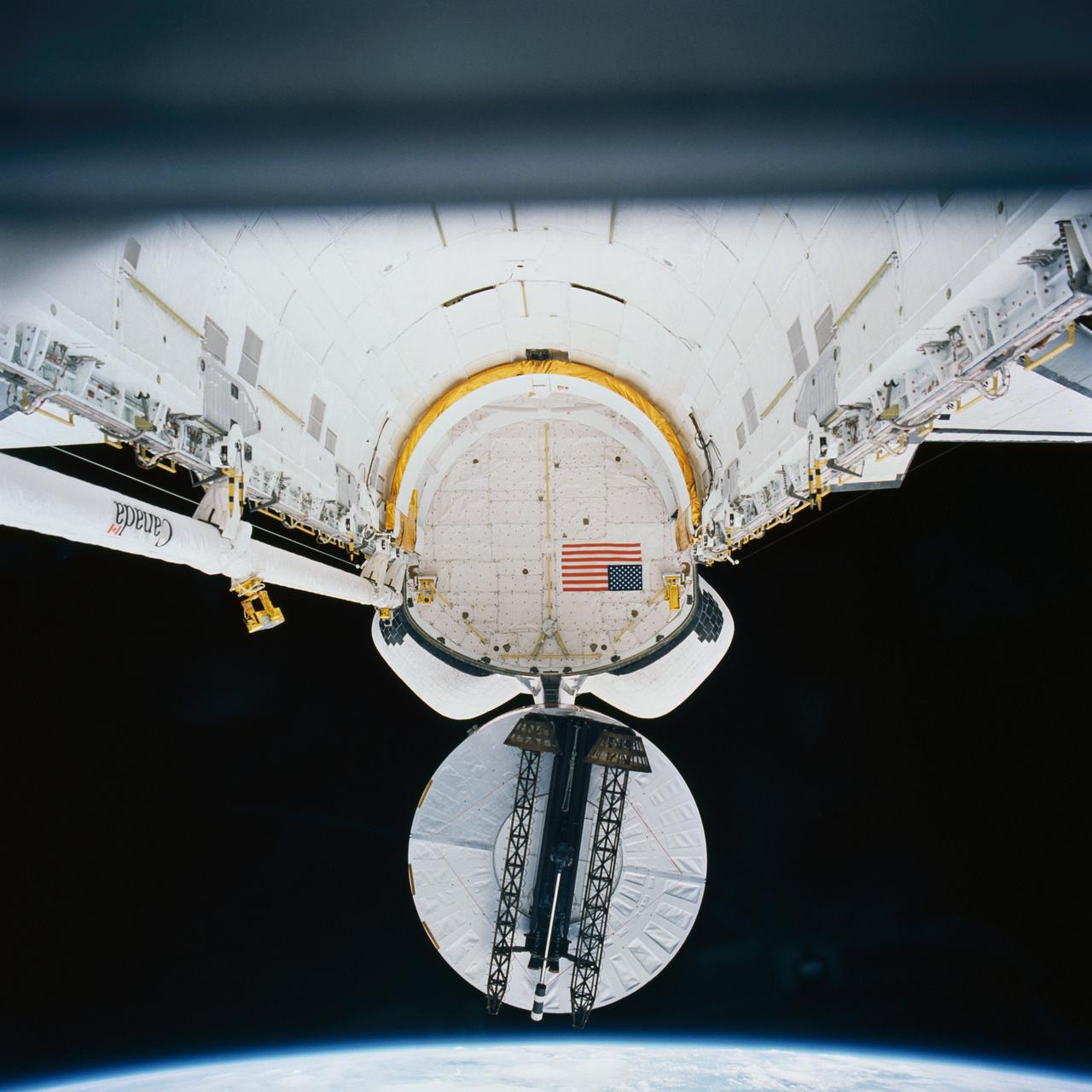
STS032-87-030 (10 Jan 1990) --- The Syncom IV-5 communications satellite leaves the cargo bay of Columbia, as crewmembers aboard the record-setting Space Shuttle successfully complete the first of two major tasks for STS-32. Two days later, the five astronauts successfully captured the Long Duration Exposure Facility (LDEF). The Syncom satellite, also called Leasat, is to be leased to the U.S. Navy by Hughes Aircraft Co. The crew went on to spend 11 days aboard Columbia before a successful landing at Edwards Air Force Base.
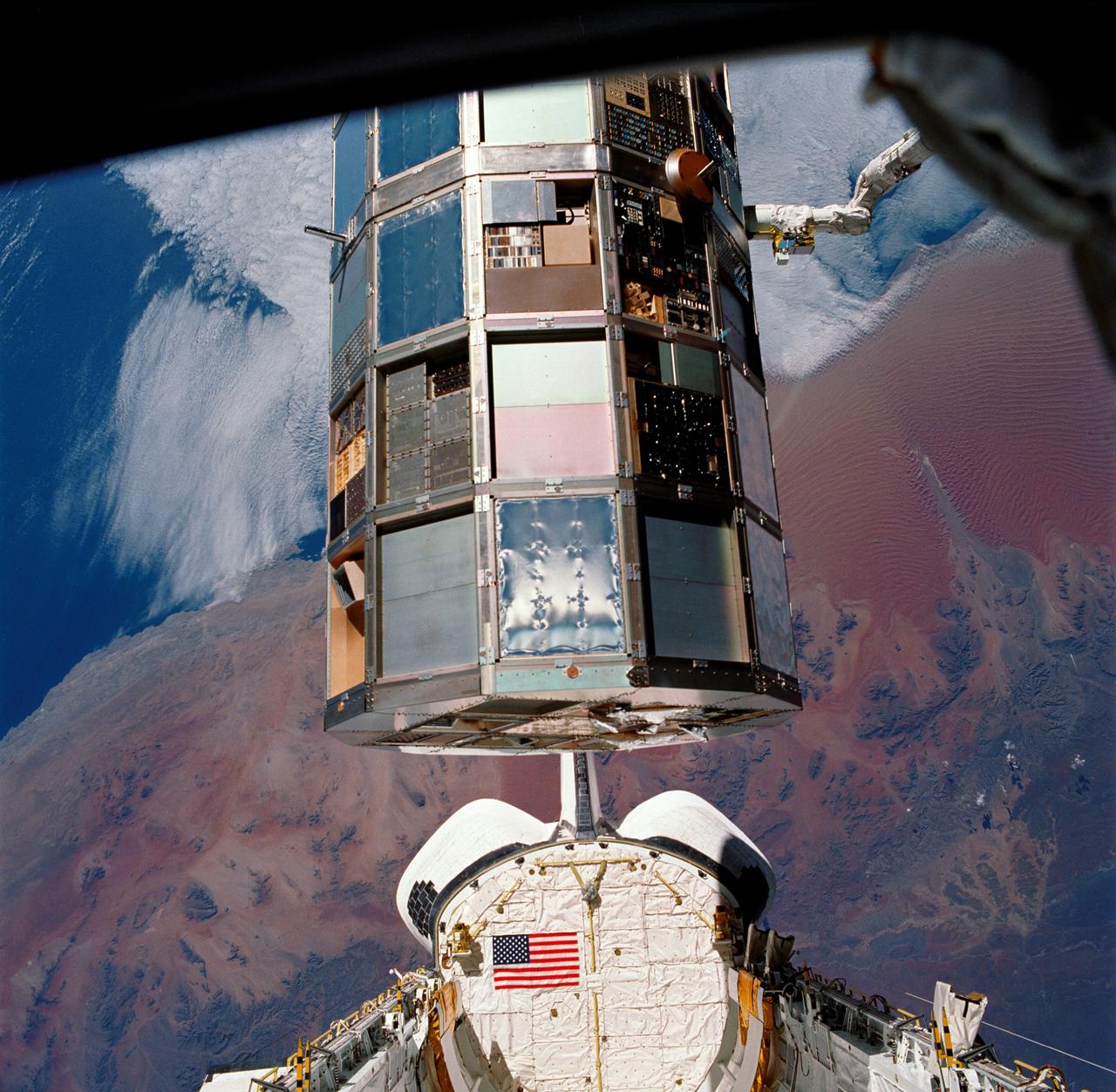
STS032-85-029 (12 Jan. 1990) --- (ORIENT PHOTO WITH COLUMBIA'S CARGO BAY IN LOWER CENTER). This 70mm frame was taken during a battery of documentary photographs of the recently-recaptured Long Duration Exposure Facility (LEDF). The Atlantic Coast of Namibia serves as a backdrop for the colorful scene. After five-and-one half years orbiting Earth, LDEF was retrieved by STS-32 crewmembers and brought back home at the end of the eleven-day mission for scientific observation. The bus-sized spacecraft was held in the grasp of Columbia's remote manipulator system (RMS) end effector during the survey.
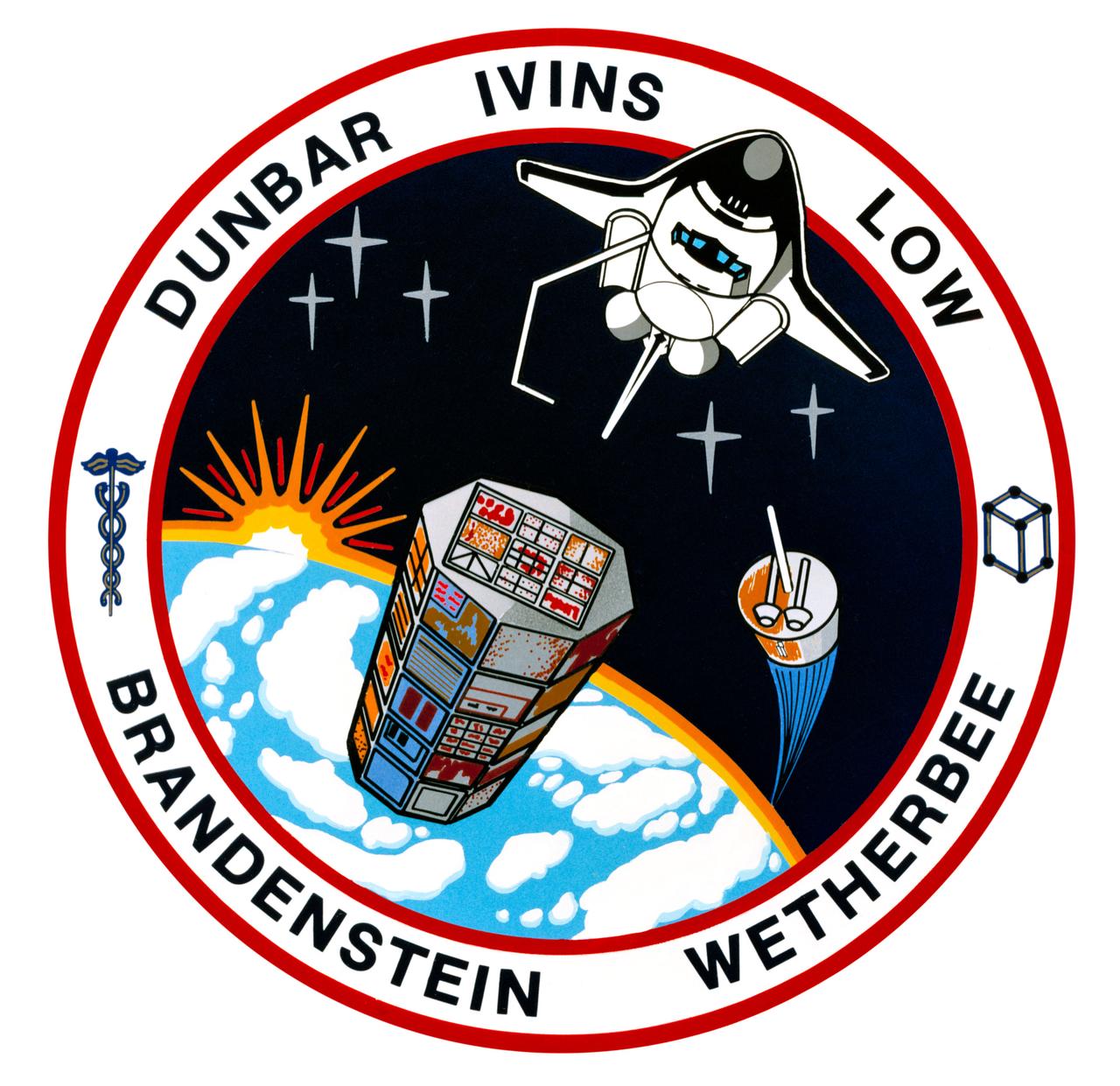
S89-44076 (November 1989) --- The STS-32 patch, designed by the five crew members for the scheduled December 1989 space mission, depicts the space shuttle orbiter rendezvousing with the Long Duration Exposure Facility (LDEF) satellite from above. The Syncom satellite is successfully deployed and on its way to geosynchronous orbit. Five stars have been arranged so that three are one side of the orbiter and two on the other to form the number 32. The seven major rays of the sun are in remembrance of the crew members for STS51-L. In preparation for the first Extended Duration Orbiter (EDO) missions, STS-32 will conduct a number of medical and middeck scientific experiments. The caduceus on the left represents the medical experiments, and the crystalline structure on the right represents the materials science. The crew is comprised of astronauts Daniel C. Brandenstein, James D. Wetherbee, Bonnie J. Dunbar, Marsha S. Ivins and G. David Low. The NASA insignia design for space shuttle flights is reserved for use by the astronauts and for other official use as the NASA Administrator may authorize. Public availability has been approved only in the form of illustrations by the various news media. When and if there is any change in this policy, which is not anticipated, it will be publicly announced. Photo credit: NASA
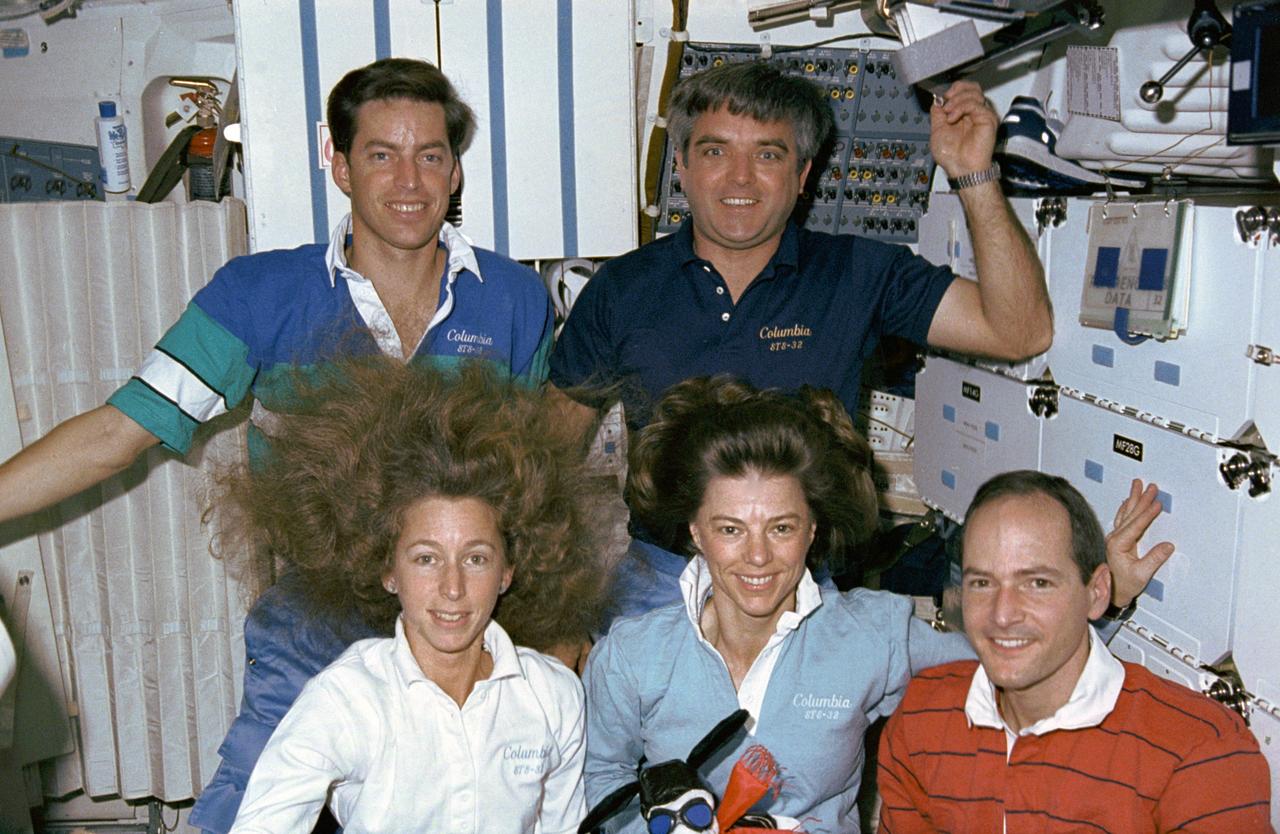
STS032-57-006 (9-20 Jan 1990) --- The five astronaut crew members used a pre-set 35mm camera to take this in-flight crew portrait. Astronauts Daniel C. Brandenstein (right, rear), mission commander, and James D. Wetherbee (left, rear), pilot, were in charge of controlling the Space Shuttle Columbia during its record-setting 11-day stay in Earth-orbit as well as performing a variety of other chores. Mission specialists performing a number of experiments and tackling a myriad of miscellaneous tasks were, left to right on the front row: astronauts Marsha S. Ivins, Bonnie J. Dunbar and G. David Low. Together the quintet retrieved the Long Duration Exposure Facility (LDEF), released into space the Syncom IV-5 communications satellite, took photos of Earth, performed troubleshooting duties and adhered to a busy agenda during their stay aboard Columbia. This picture was used by the astronauts at their January 30, 1990 Post Flight Press Conference (PFPC) at the Johnson Space Center (JSC).
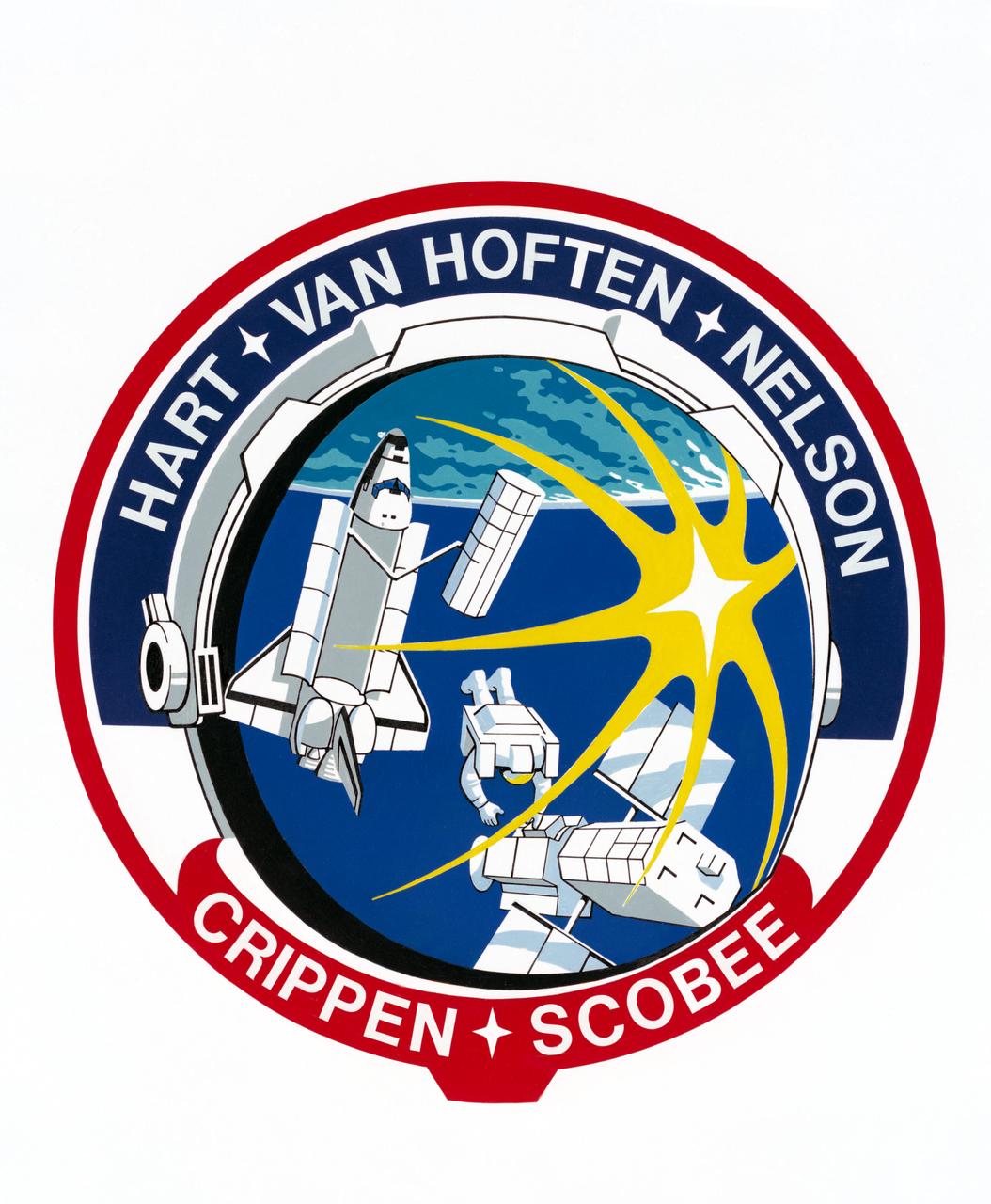
S84-25522 (15 Jan. 1984) --- The patch to be worn by the five members of NASA's STS-41C space mission tells the story of that flight. It features a helmet visor of an astronaut performing an extravehicular activity (EVA). In the visor are reflected the sun's rays, the space shuttle Challenger and its Remote Manipulator System (RMS) deploying the Long Duration Exposure Facility (LDEF), Earth and blue sky, and another astronaut working at the damaged Solar Maximum Satellite (SMS). The scene is encircled by the surnames of the crew members. They are astronauts Robert L. Crippen, commander; Francis R. (Dick) Scobee, pilot; and Terry J. Hart, James D. van Hoften and George D. Nelson, all mission specialists. The NASA insignia design for space shuttle flights is reserved for use by the astronauts and for other official use as the NASA Administrator may authorize. Public availability has been approved only in the forms of illustrations by the various news media. When and if there is any change in this policy, which is not anticipated, the change will be publicly announced. Photo credit: NASA