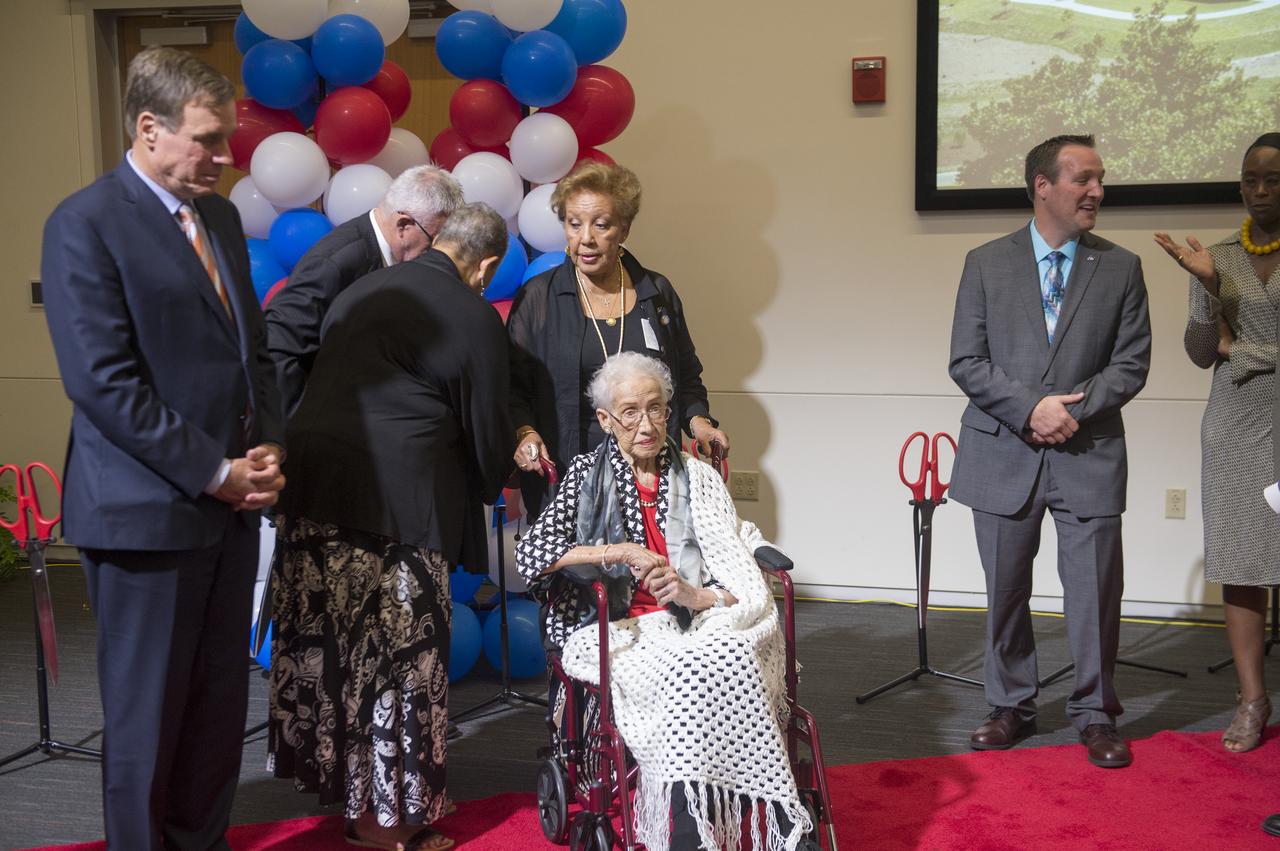
Katherine G. Johnson Computational Research Facility Ribbon Cutting Ceremony, and tour
Ribbon Cutting
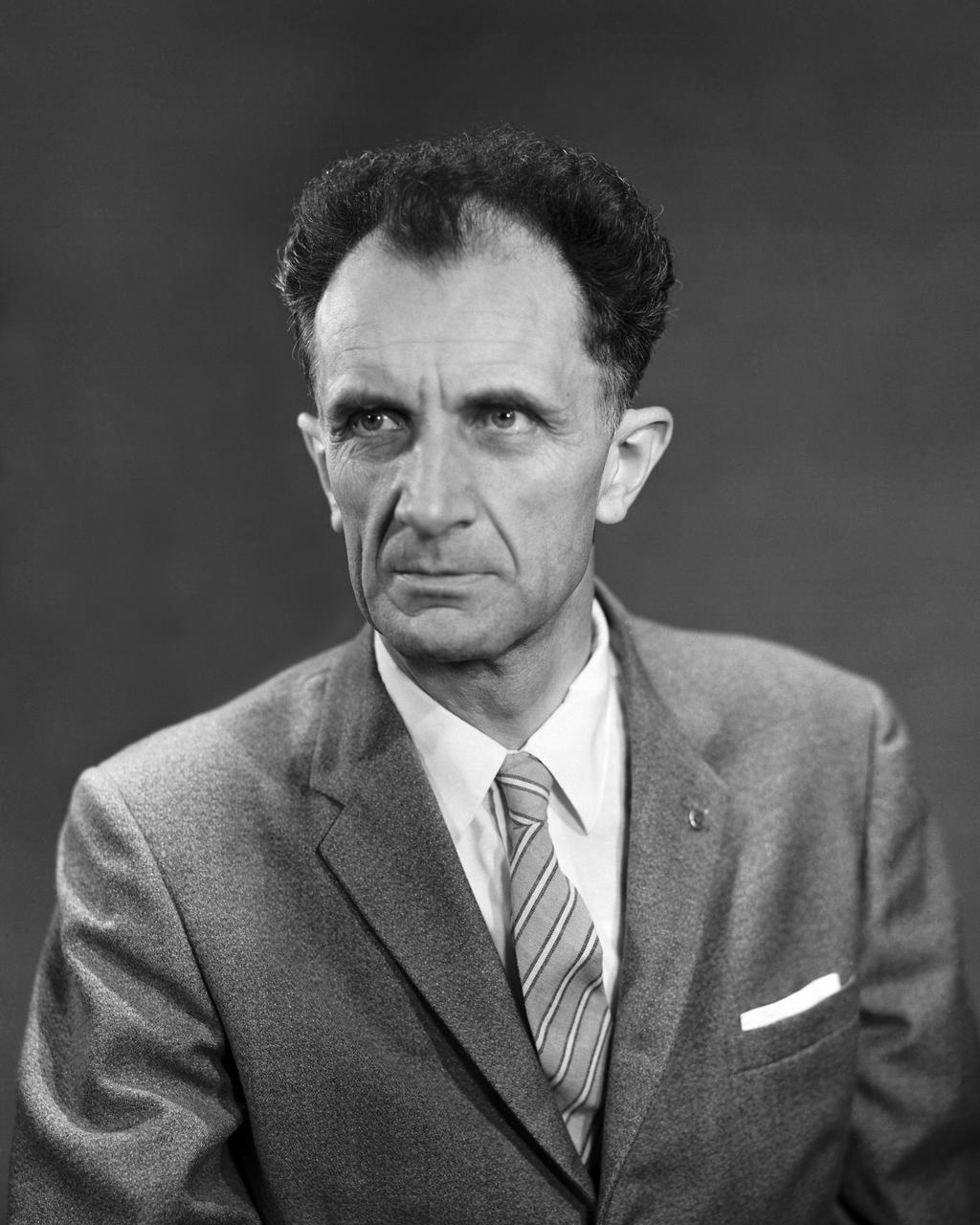
Portrait of Dr. William H. Michael, Jr.
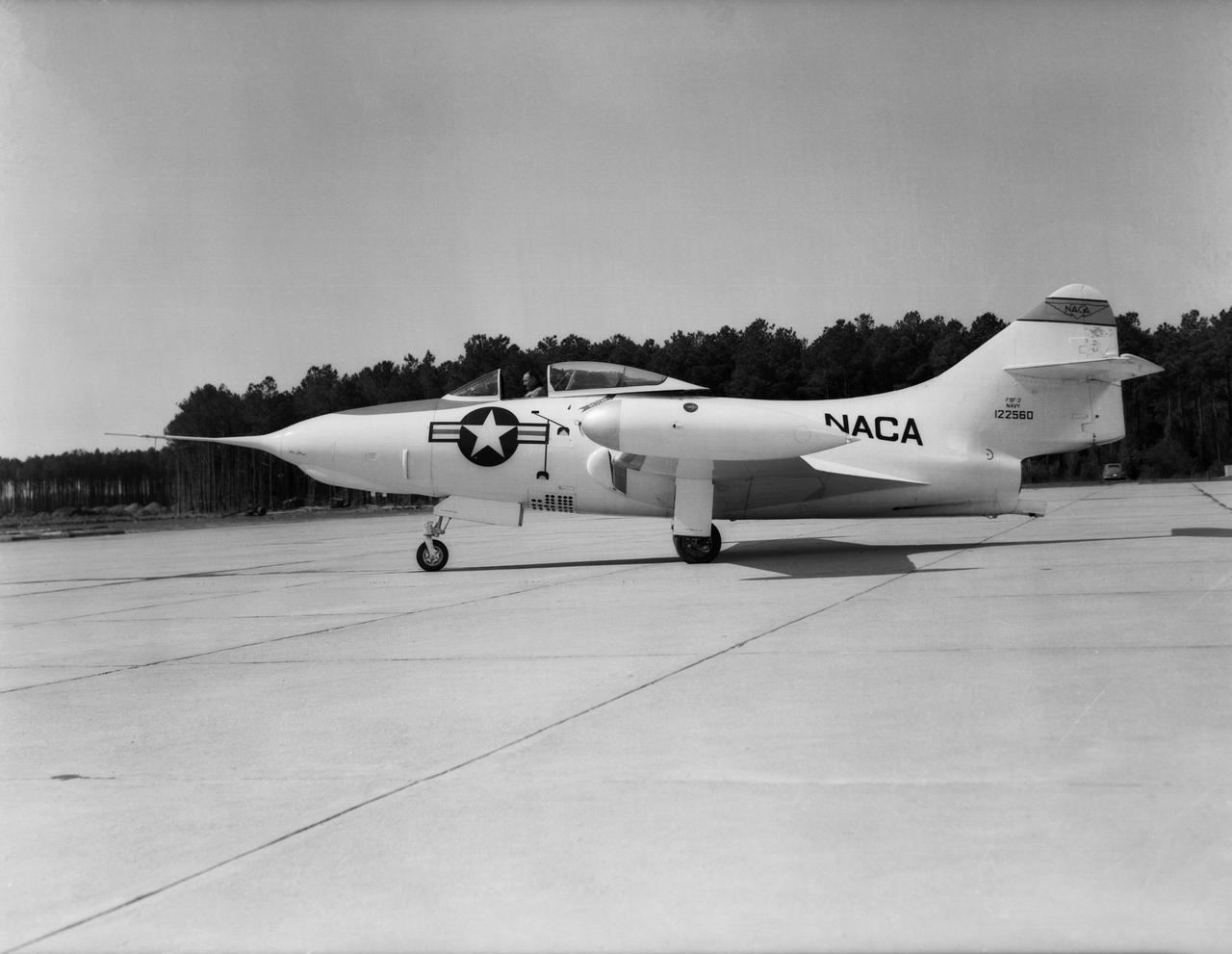
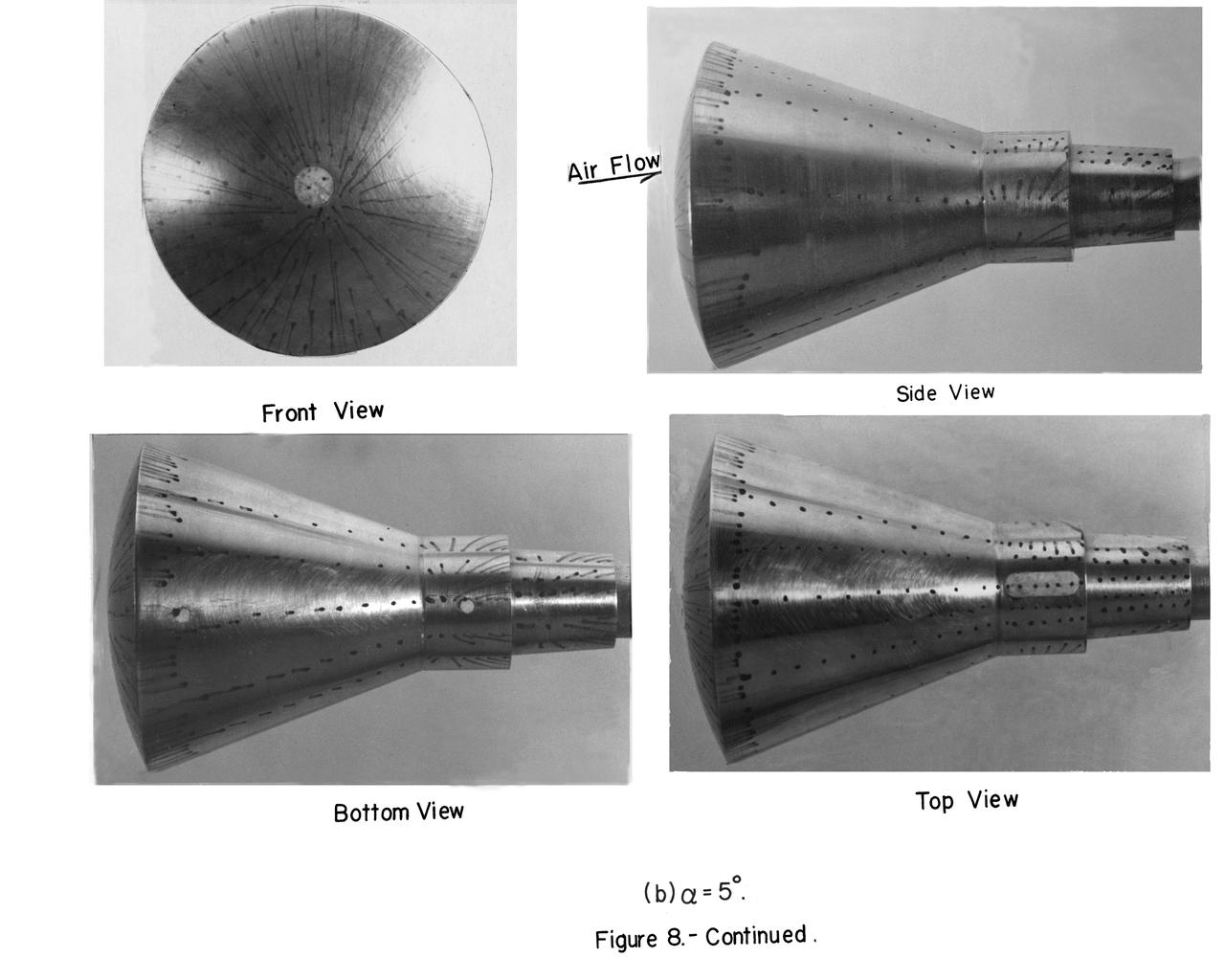
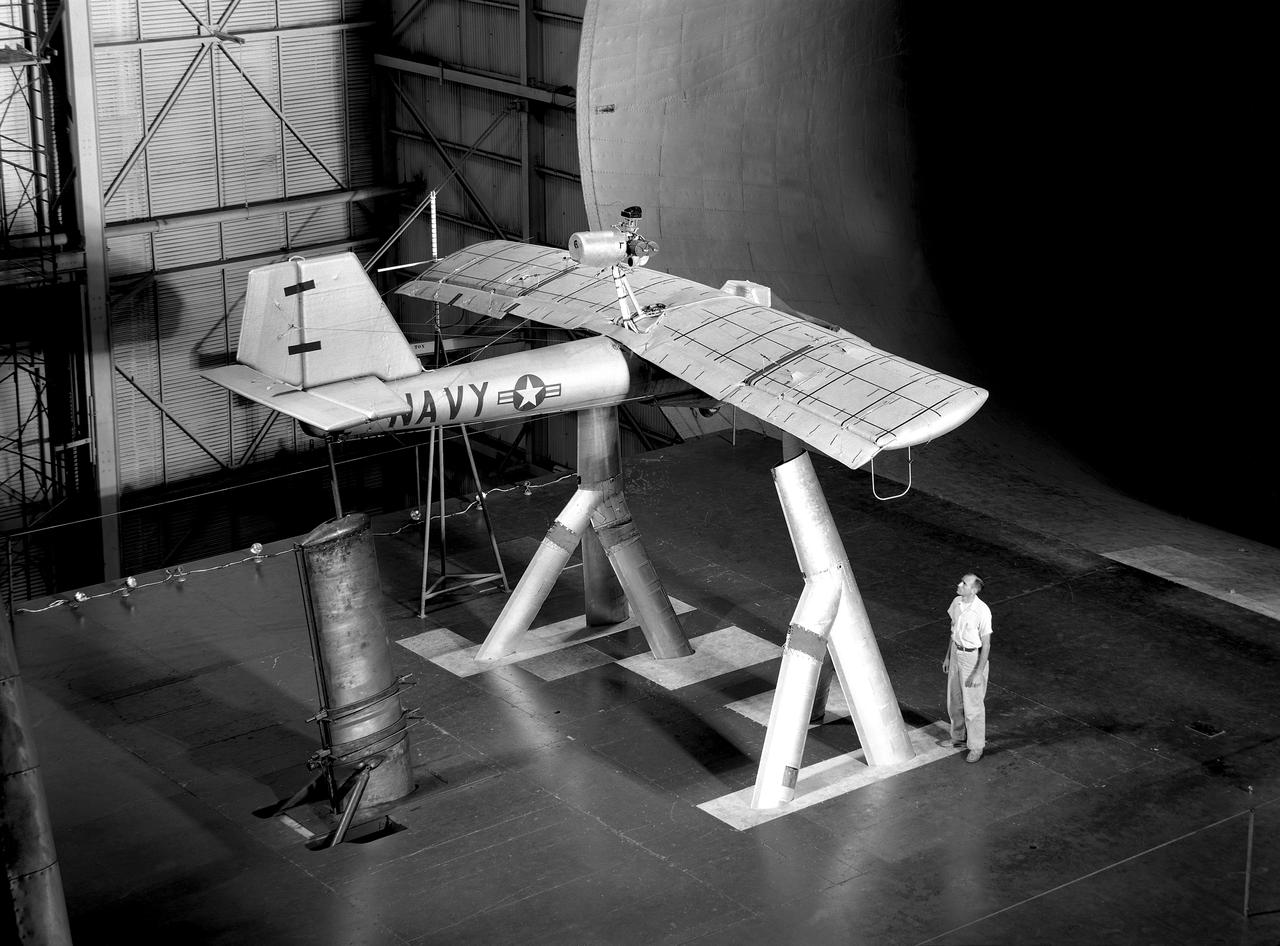
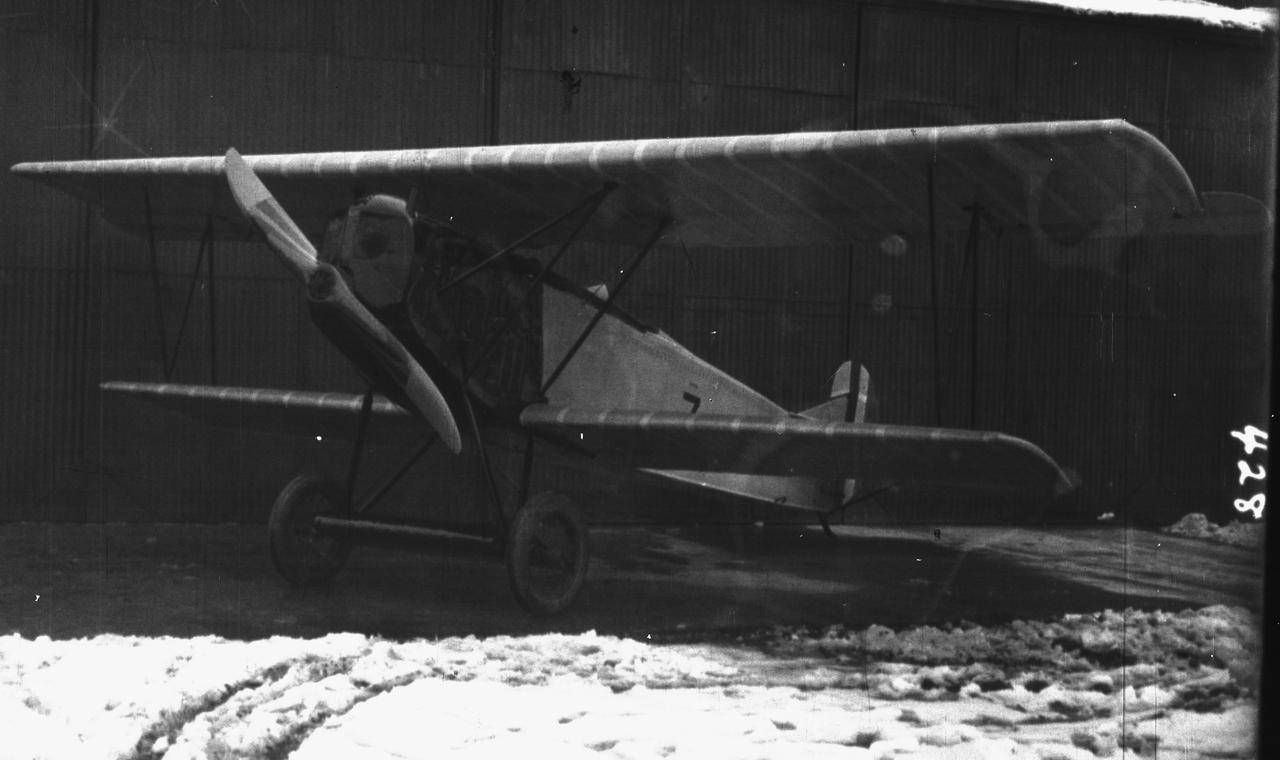
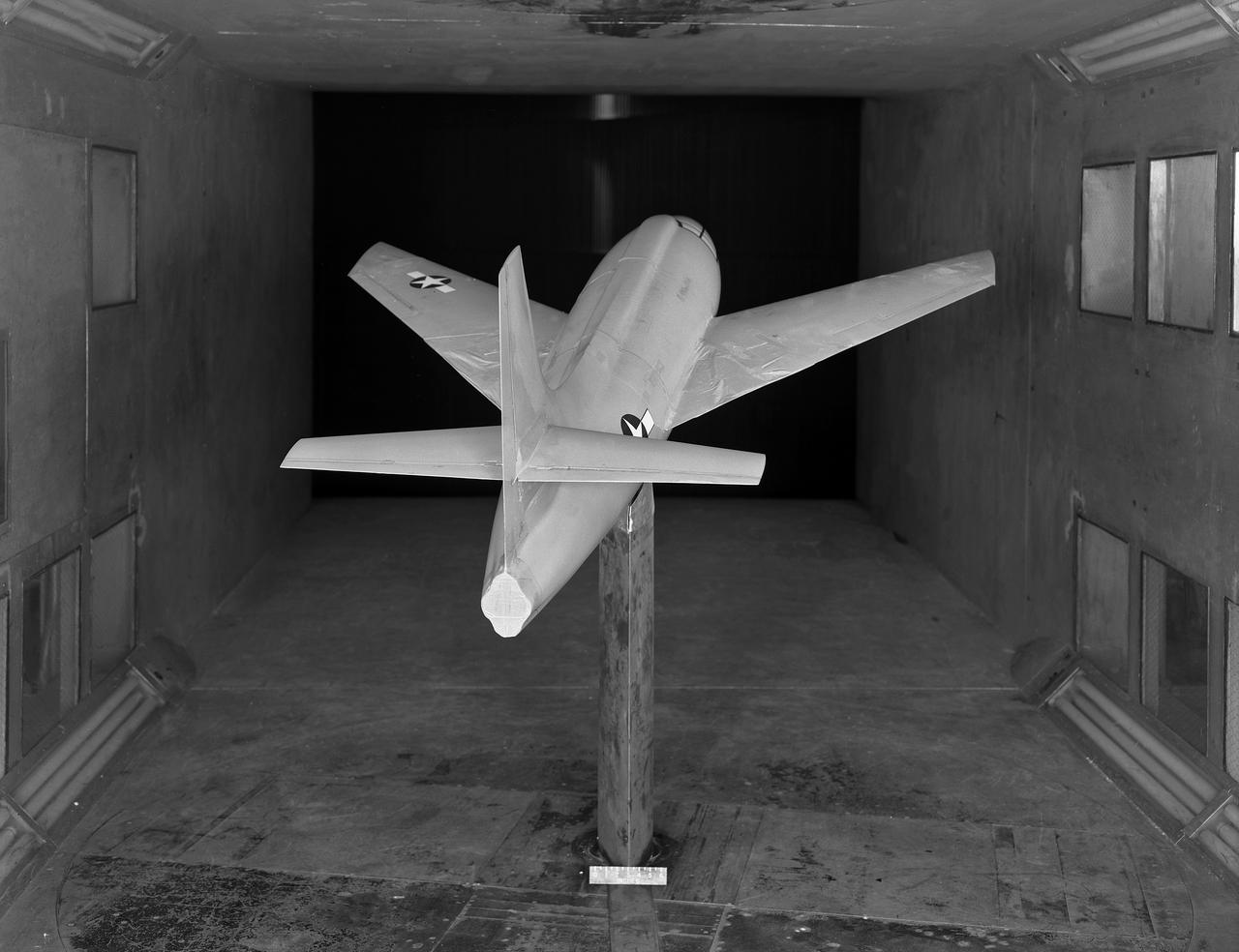
Smoke Flow Investigation XF7C-1 (Cowling Exhaust J.1 Type)
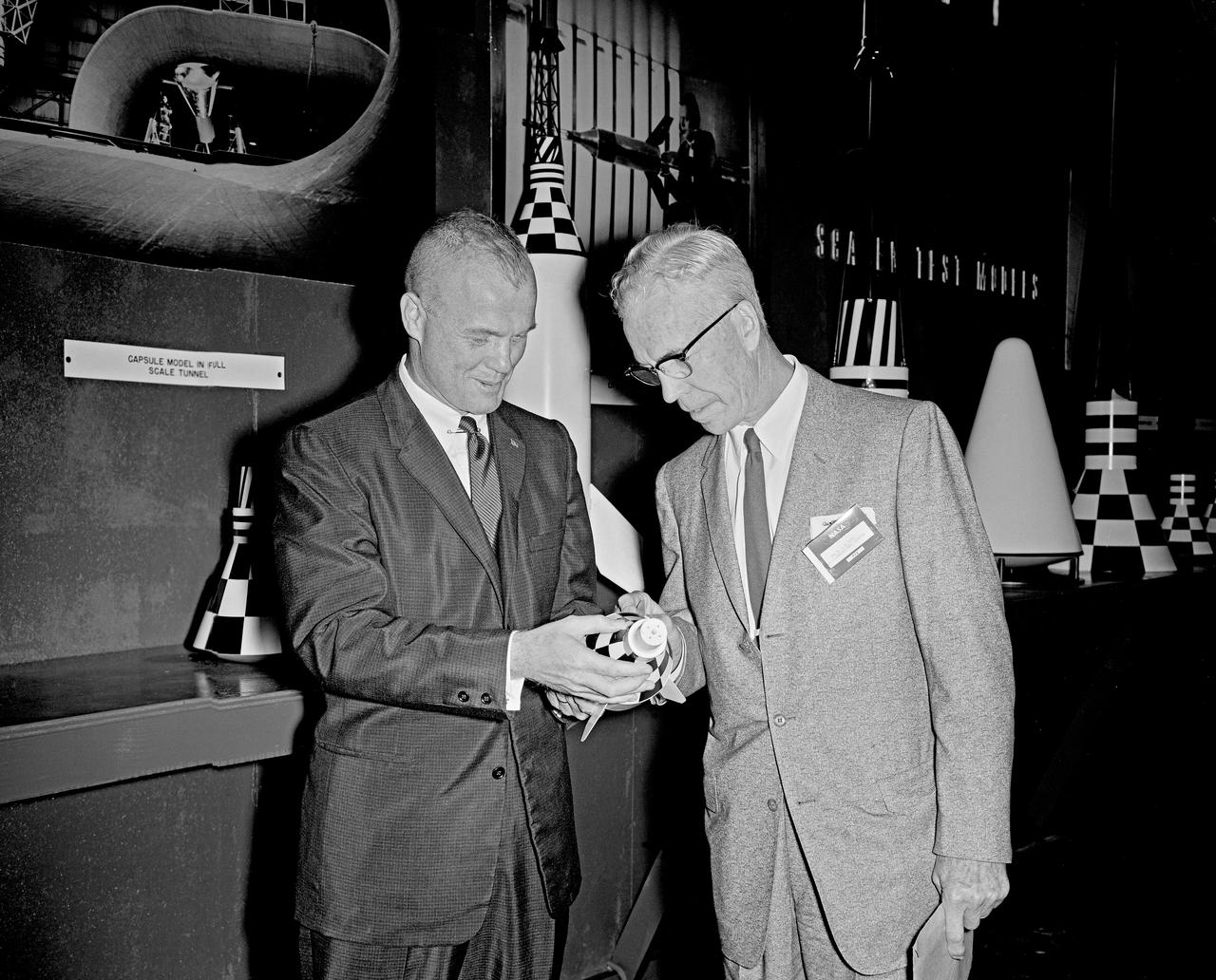
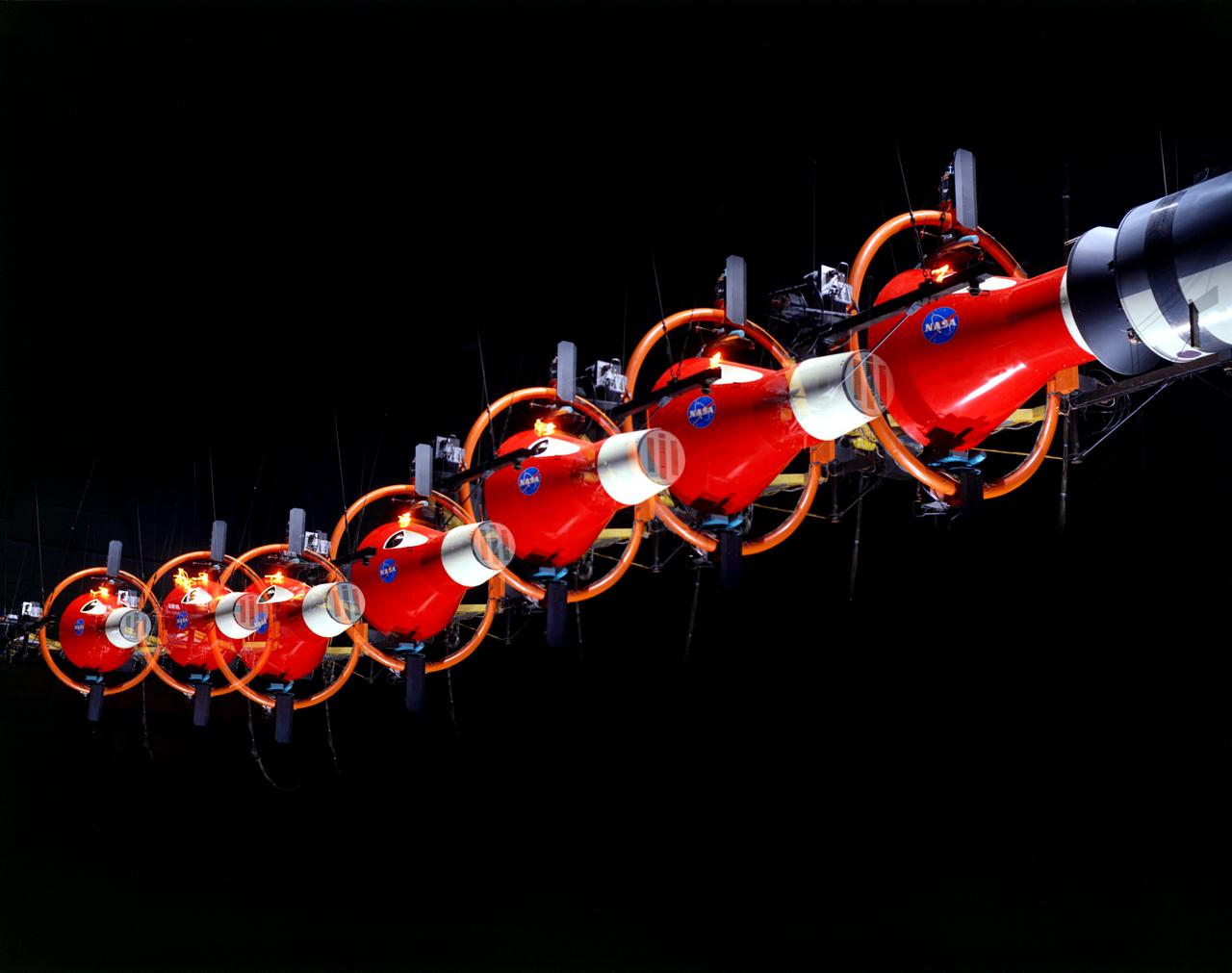
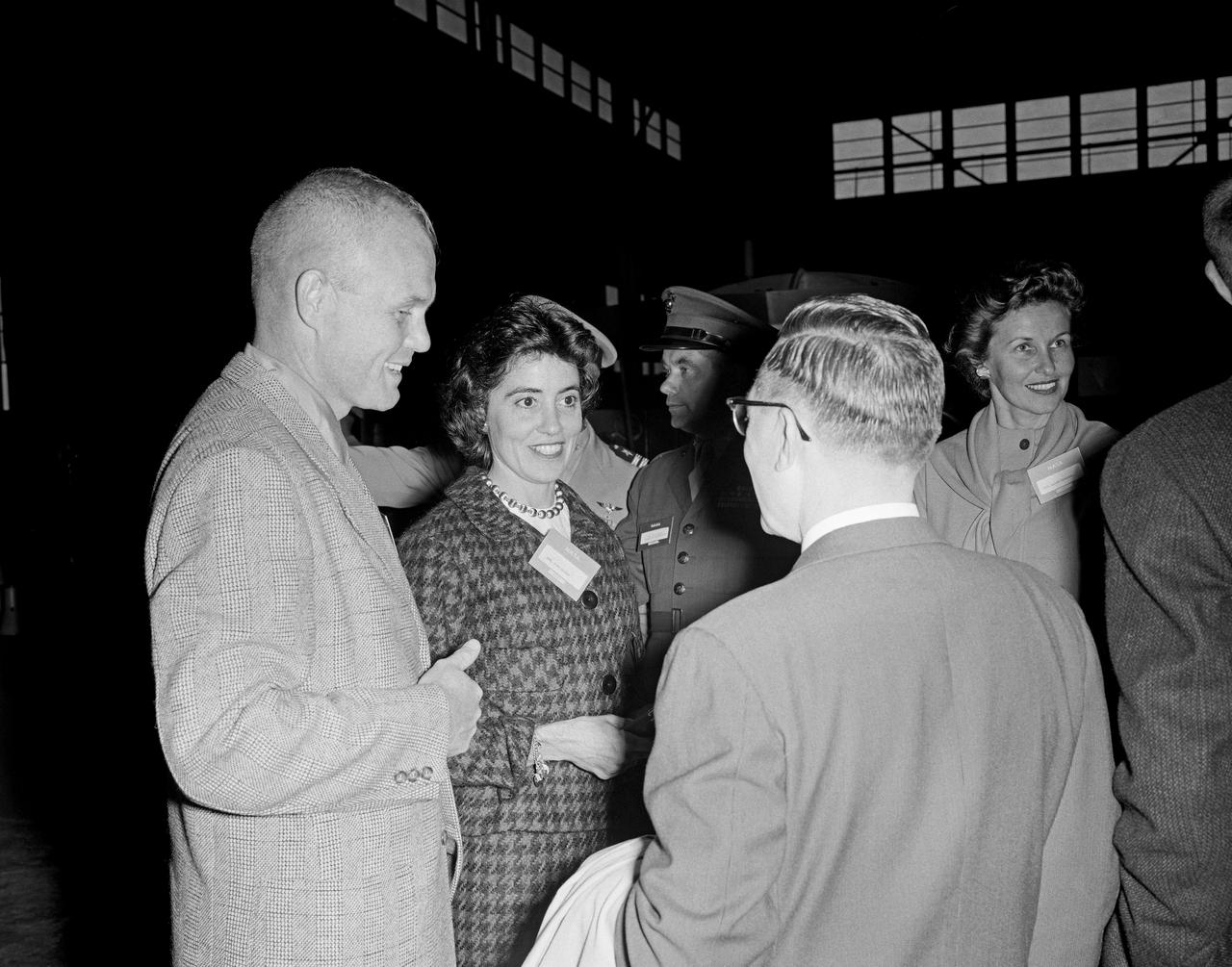
John Glenn talking with NASA Langley's  Center Directory J.E.Reid with capsule model during inspection.
1959 Inspection
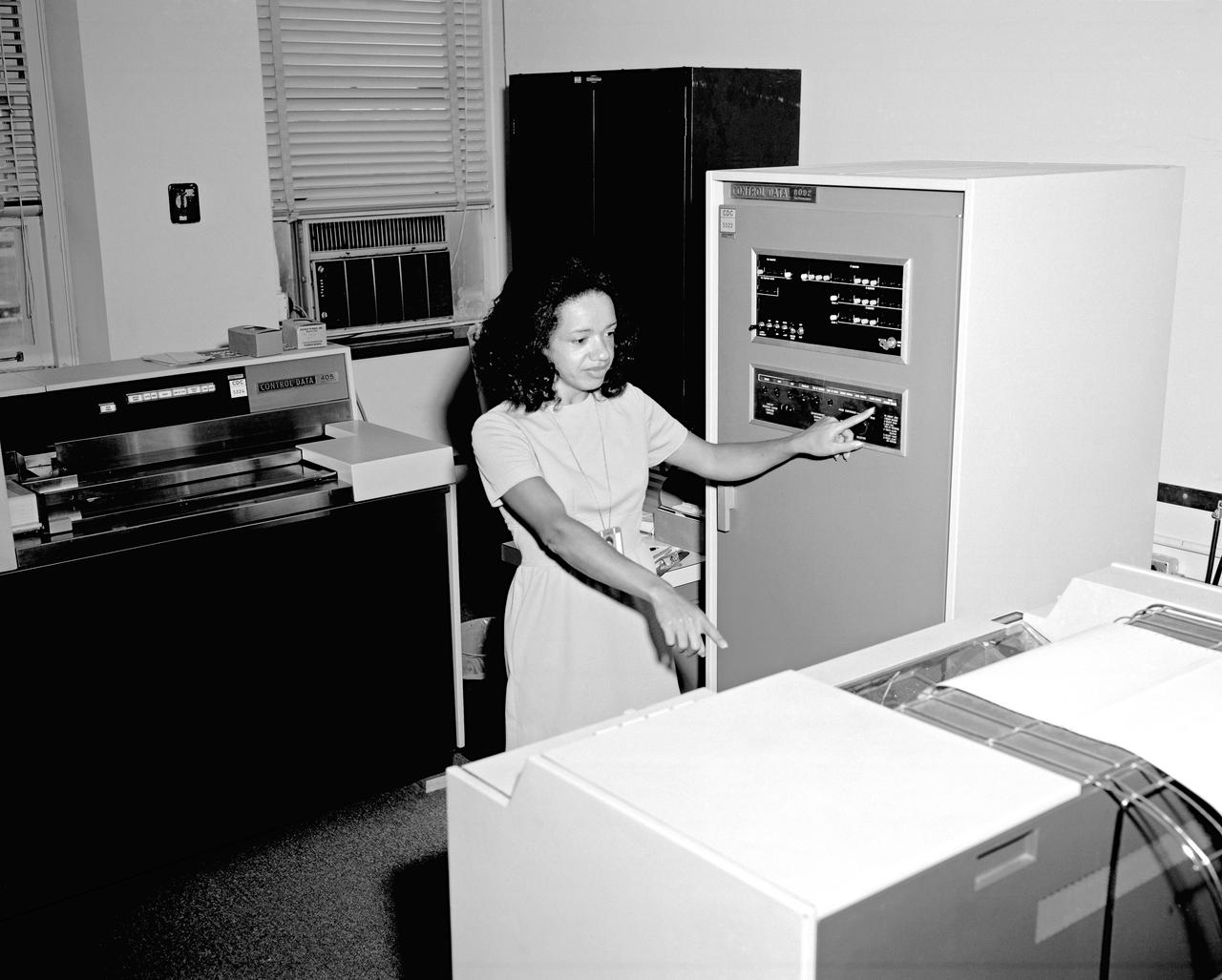
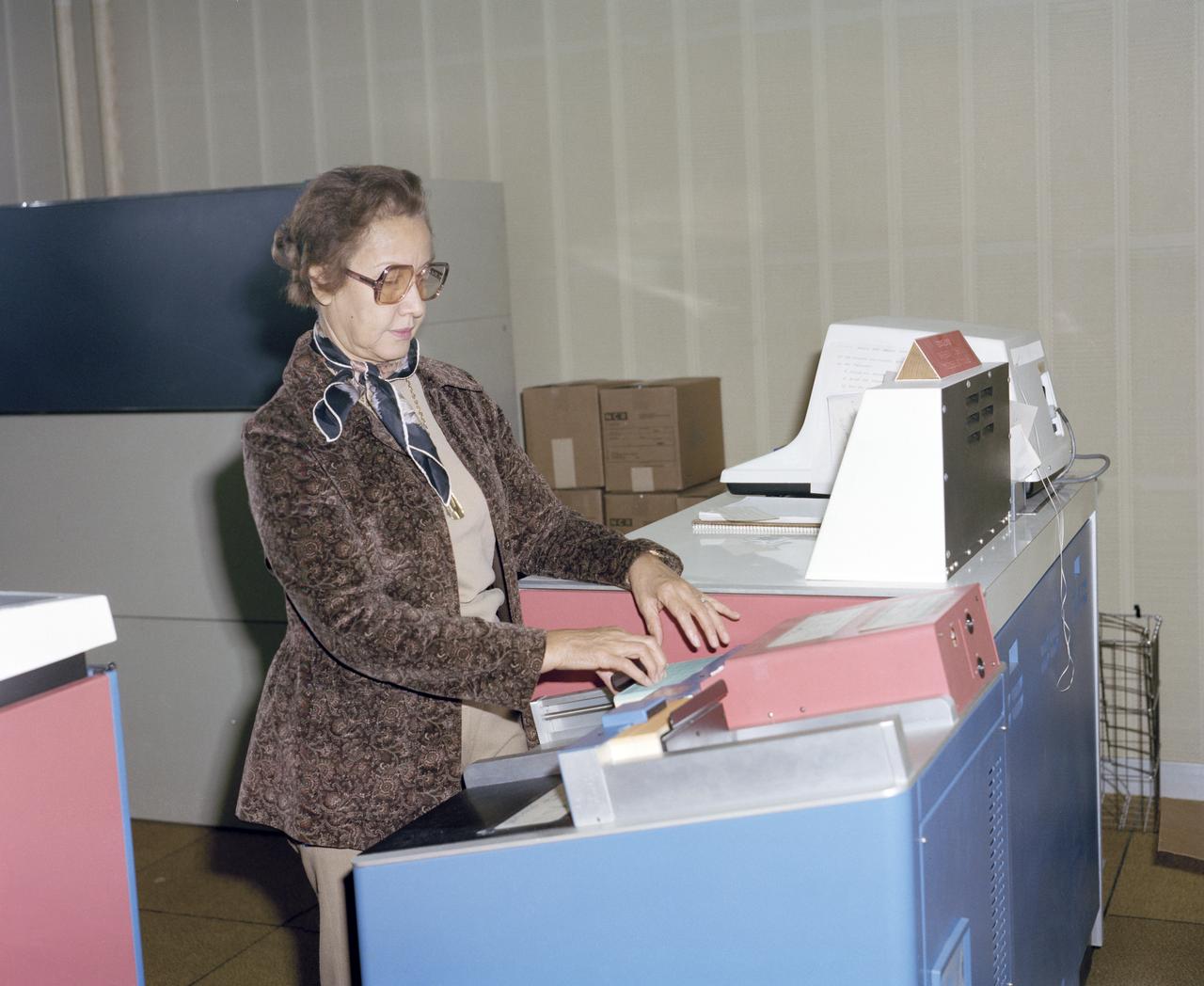
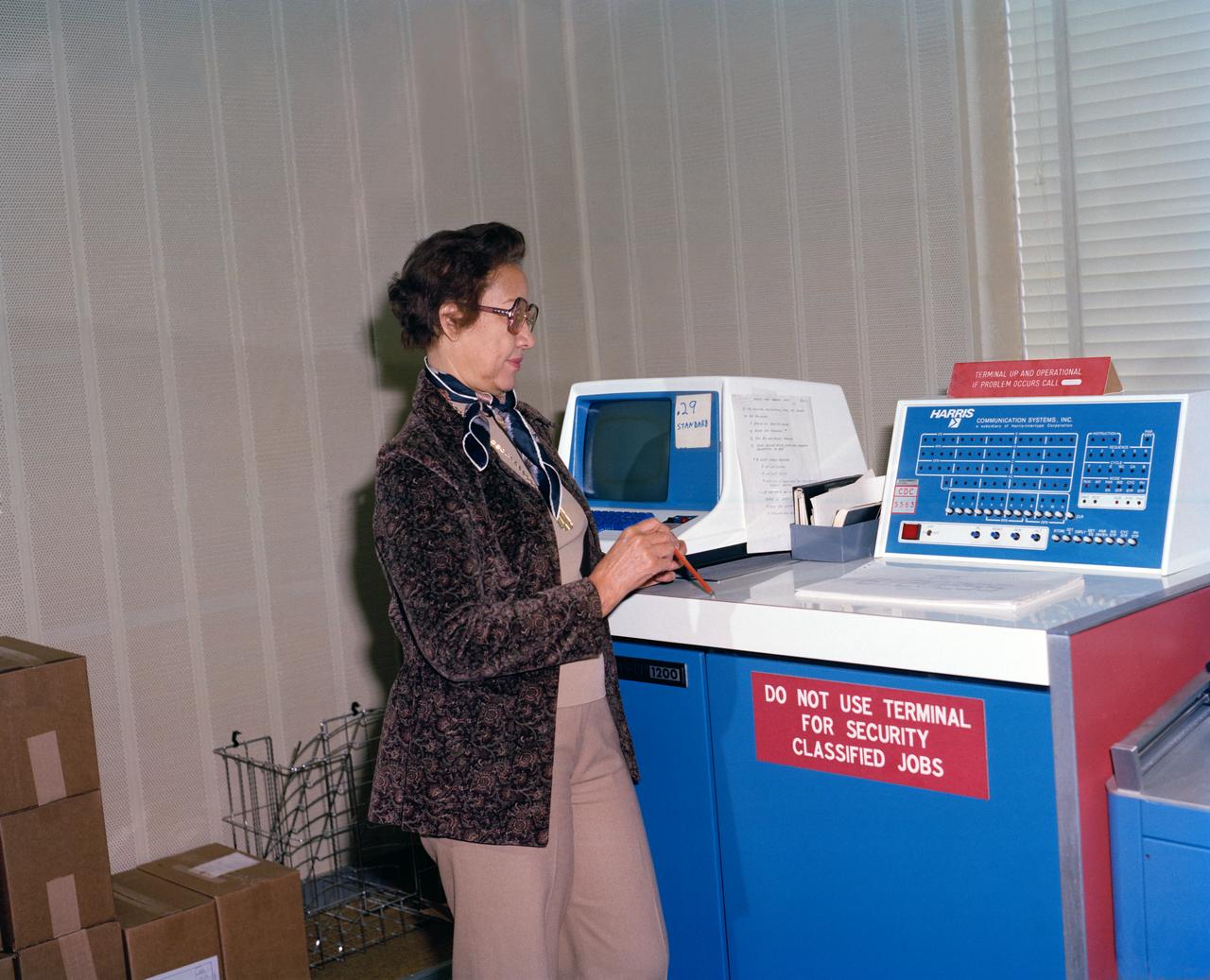
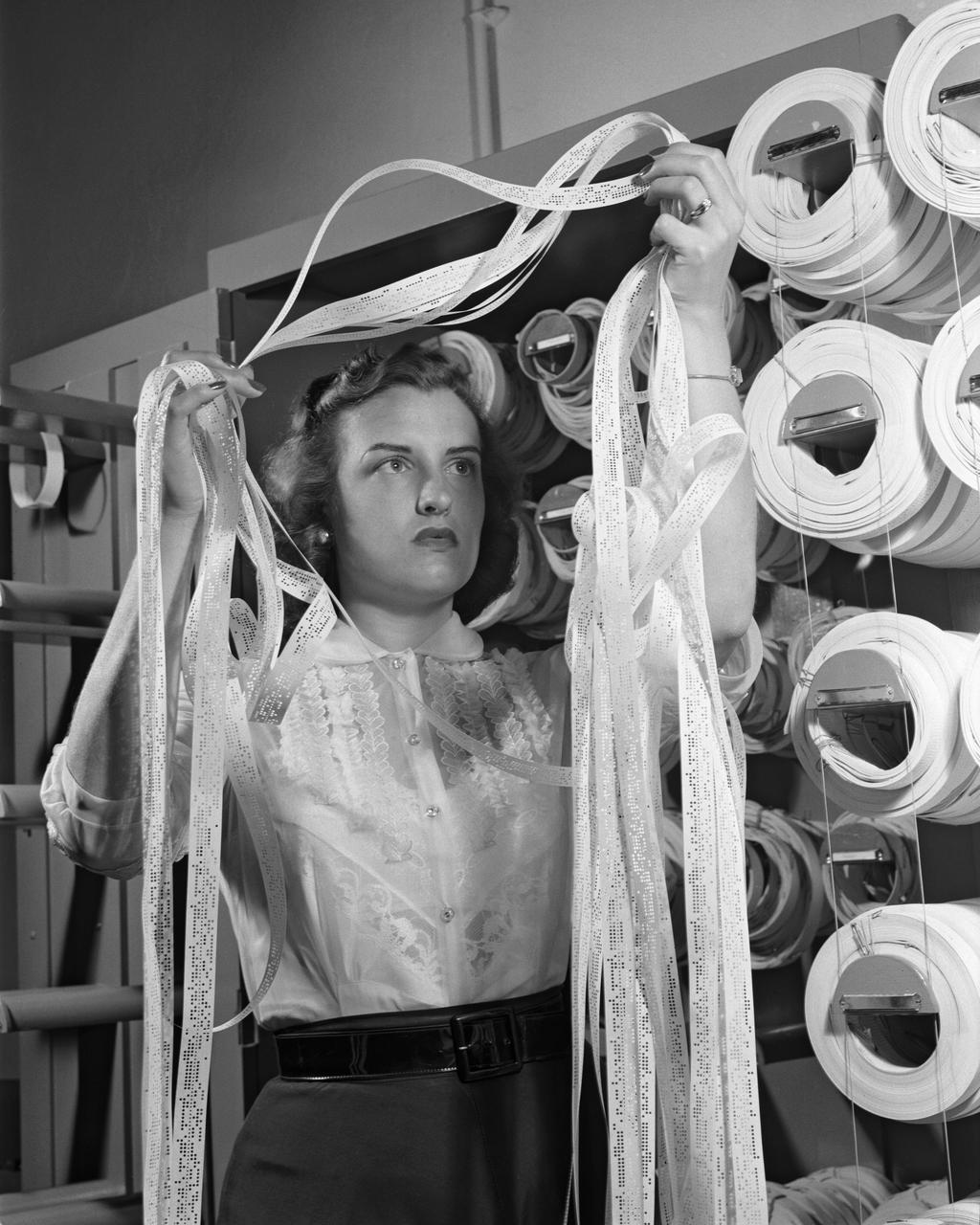
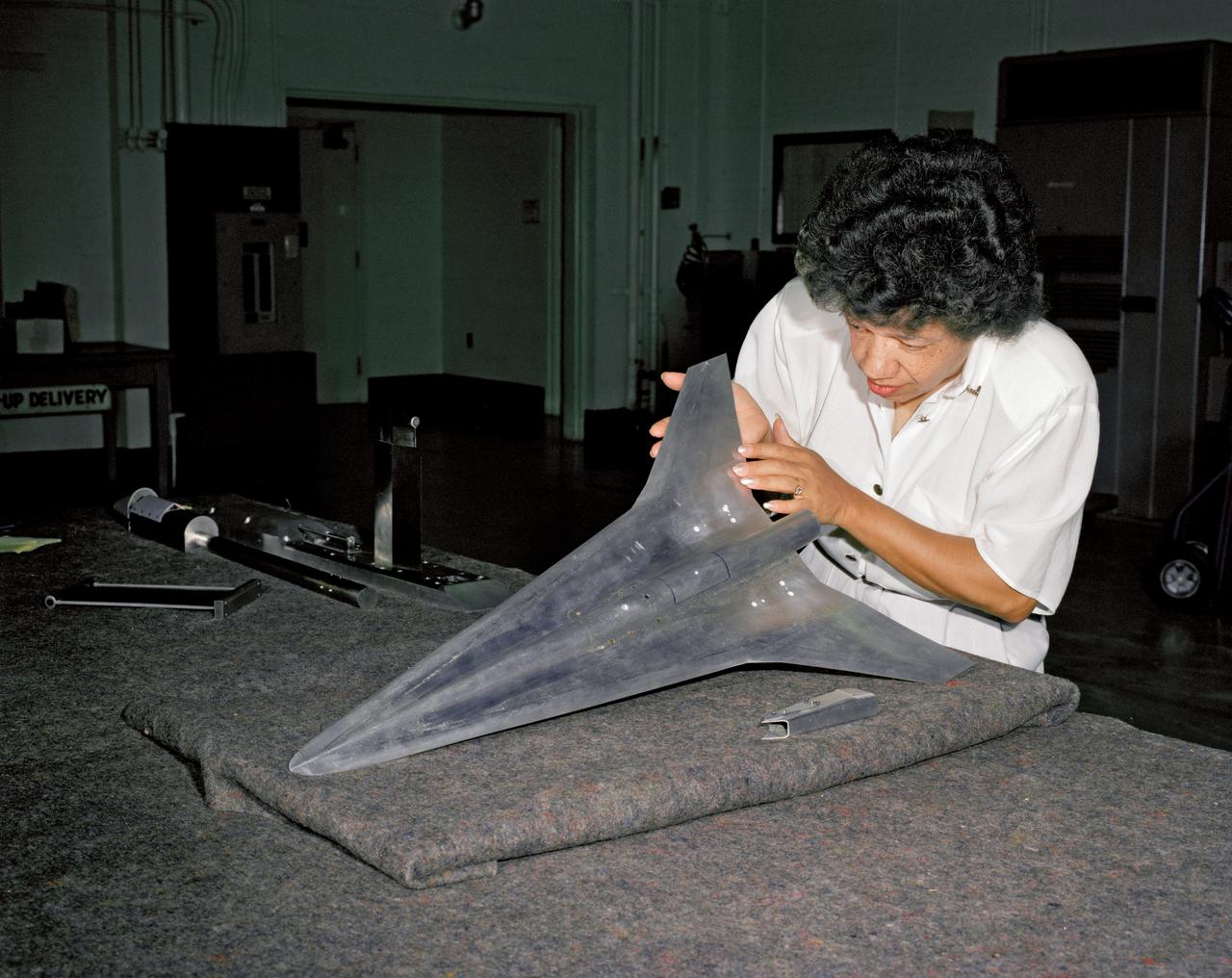
Christine Darden in computer room
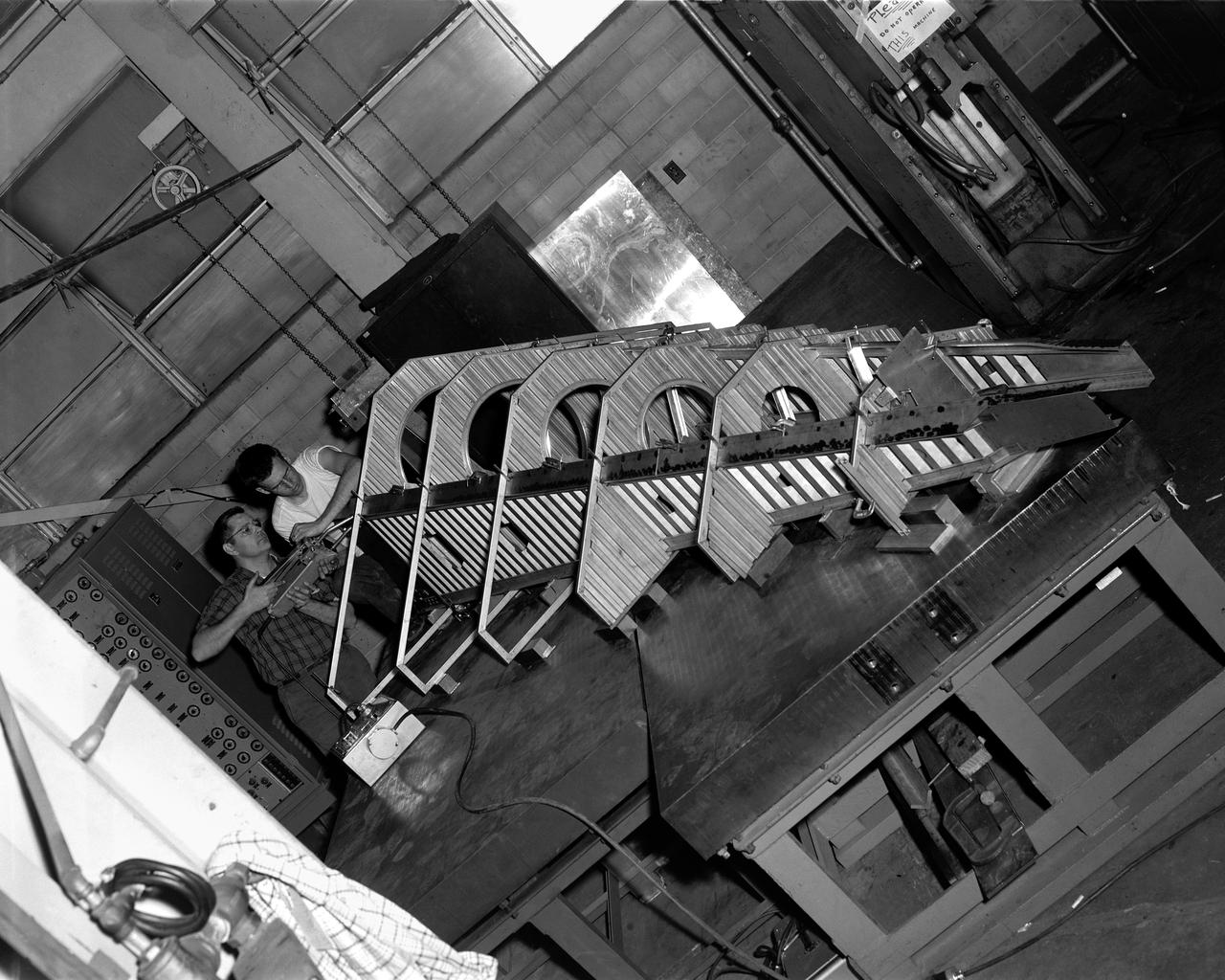
16 Foot Wind Tunnel personnel at work
16 Foot Wind Tunnel Personnel
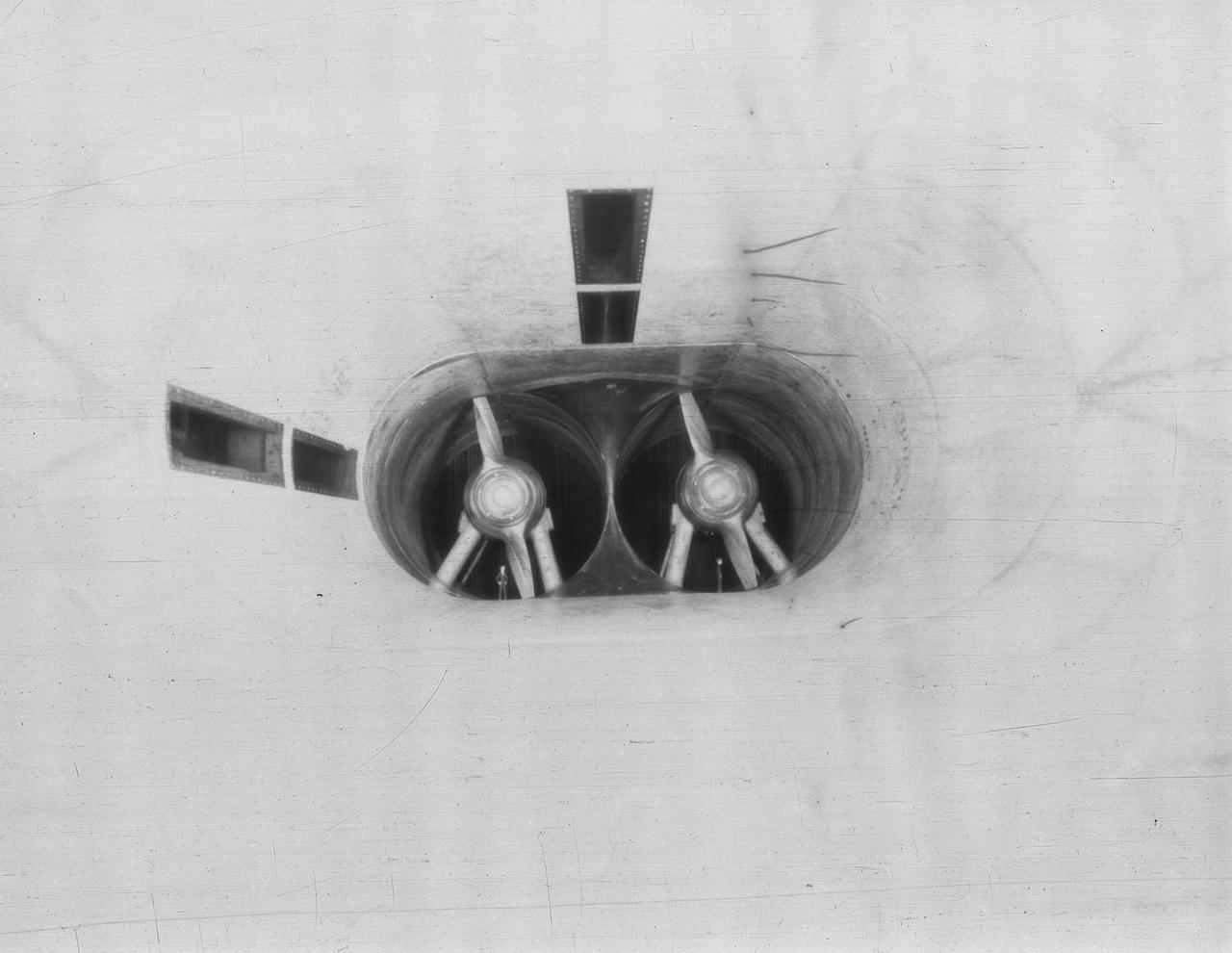
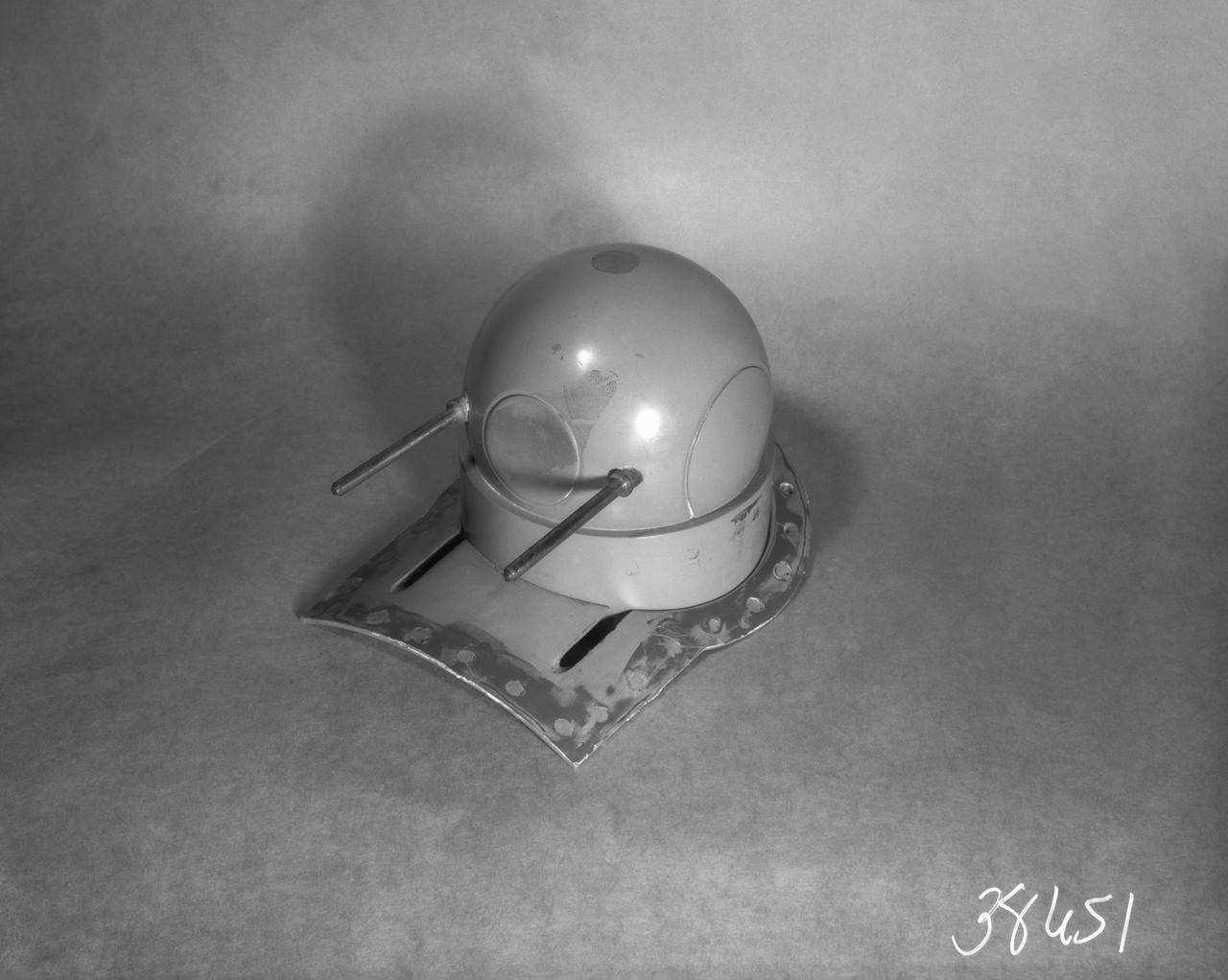
1/8 Scale B-32 Turrets.  Test conducted in the NACA 19 foot pressure tunnel LMAL-38560 NACA document.
1/8 Scale B-32 Turrets
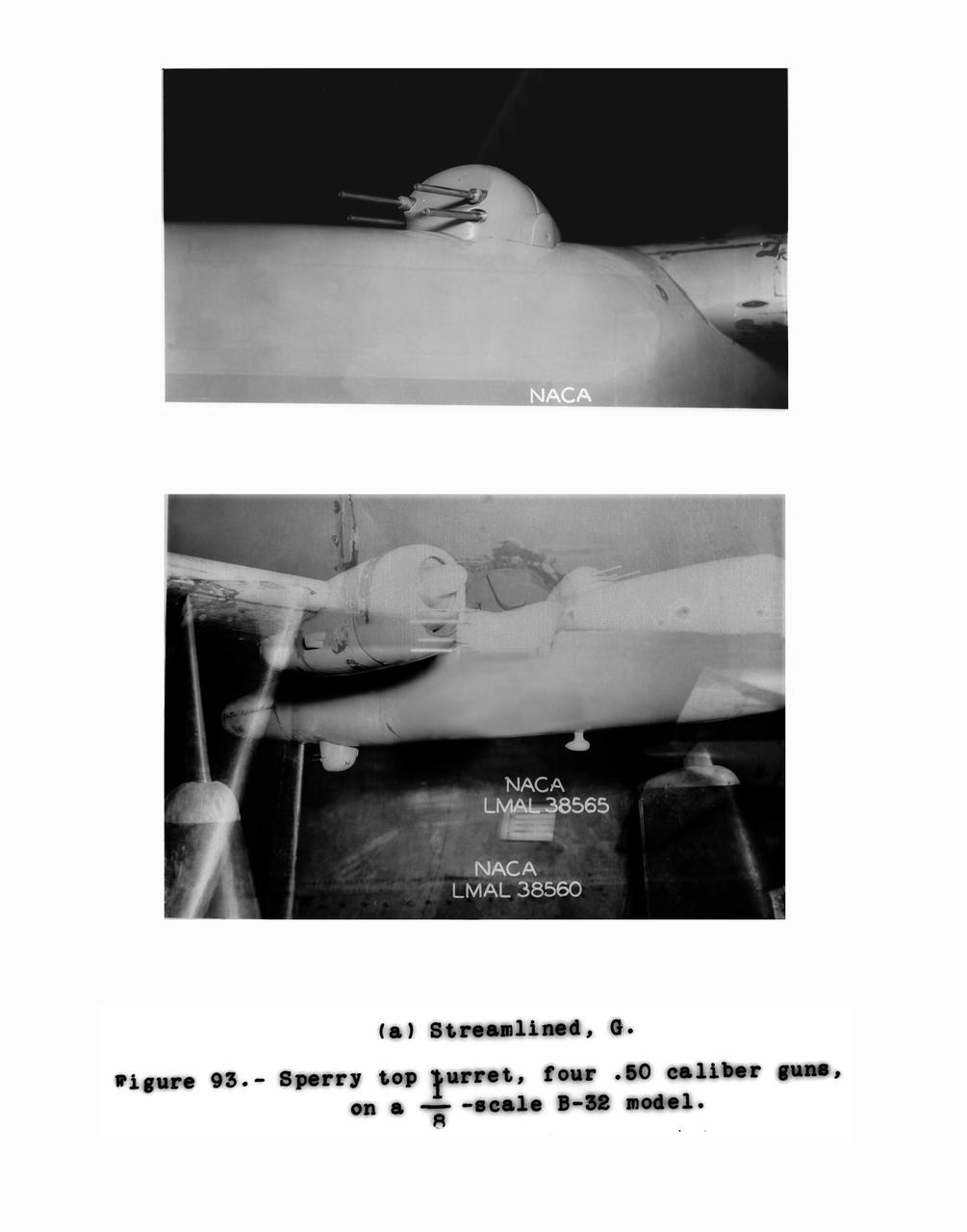
Detail Shots of B-32 Turret Figure 93. Test conducted in the NACA 19 foot pressure tunnel LMAL-38560 NACA document.
Detail Shots of B-32 Turret
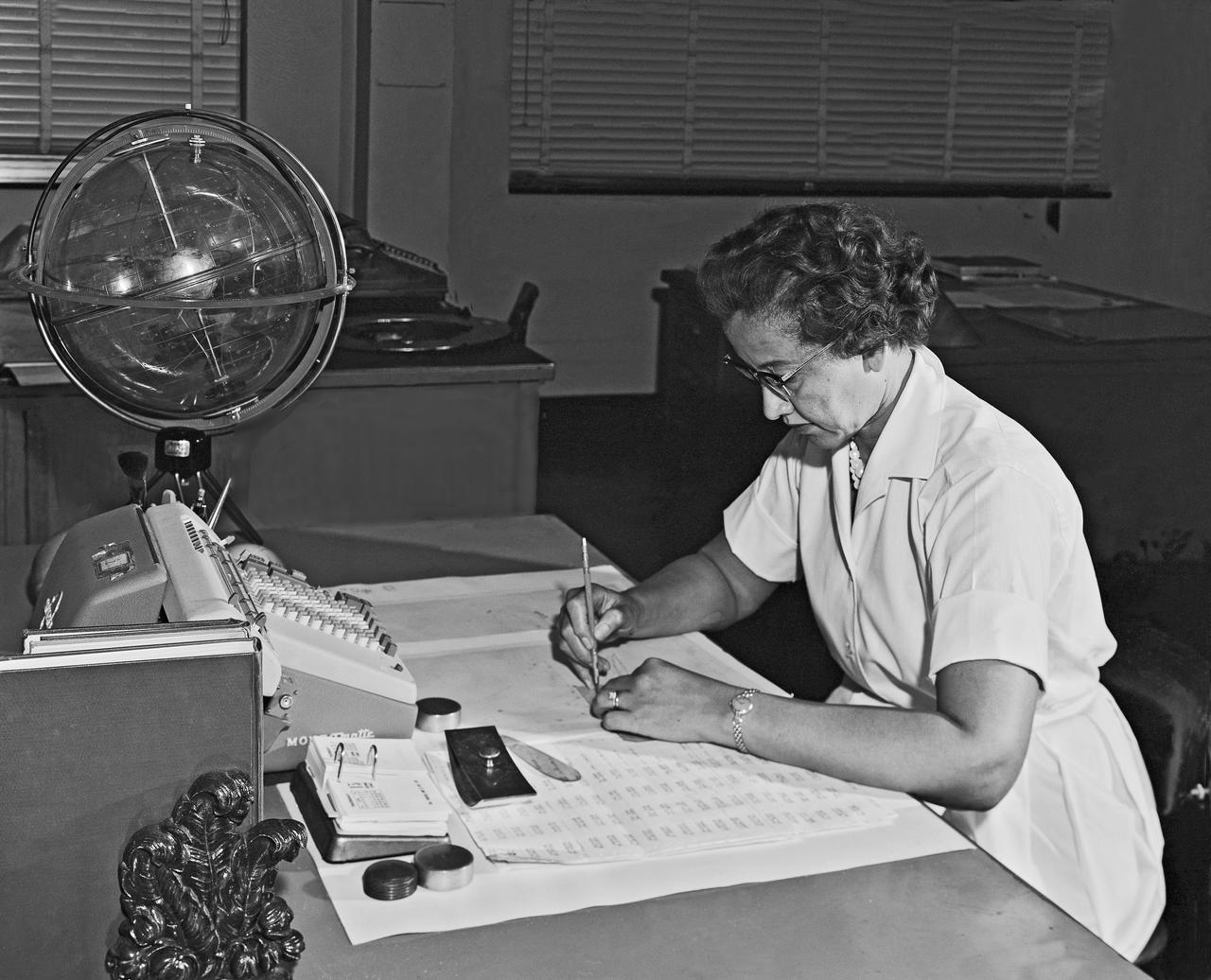
Katherine G. Johnson at Work
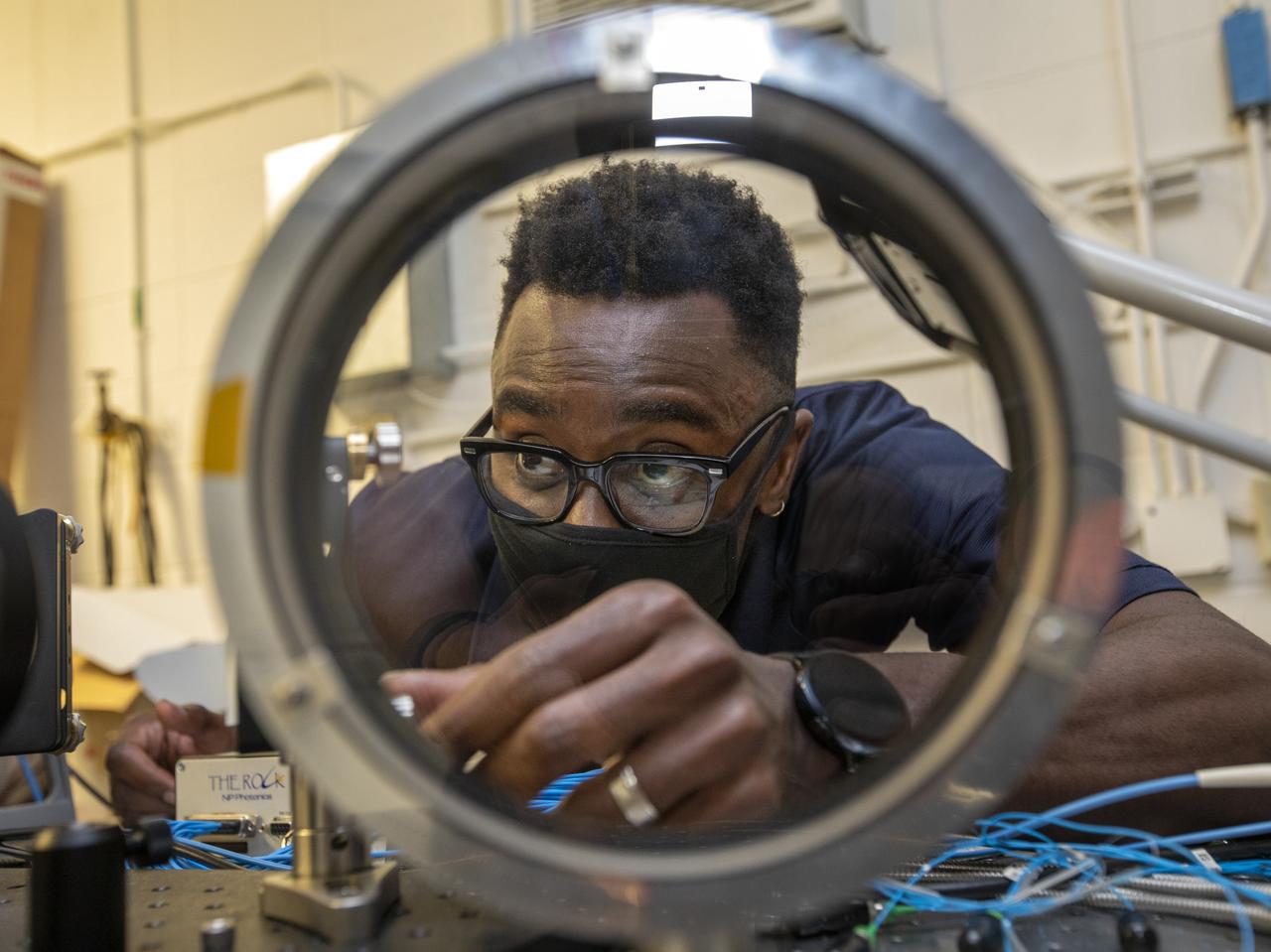
Framed through directional optics glass, Stanley Ikpe is latest of new engineers coming to work at NASA Langley.
New Engineer at NASA Langley, Stanley Ikpe
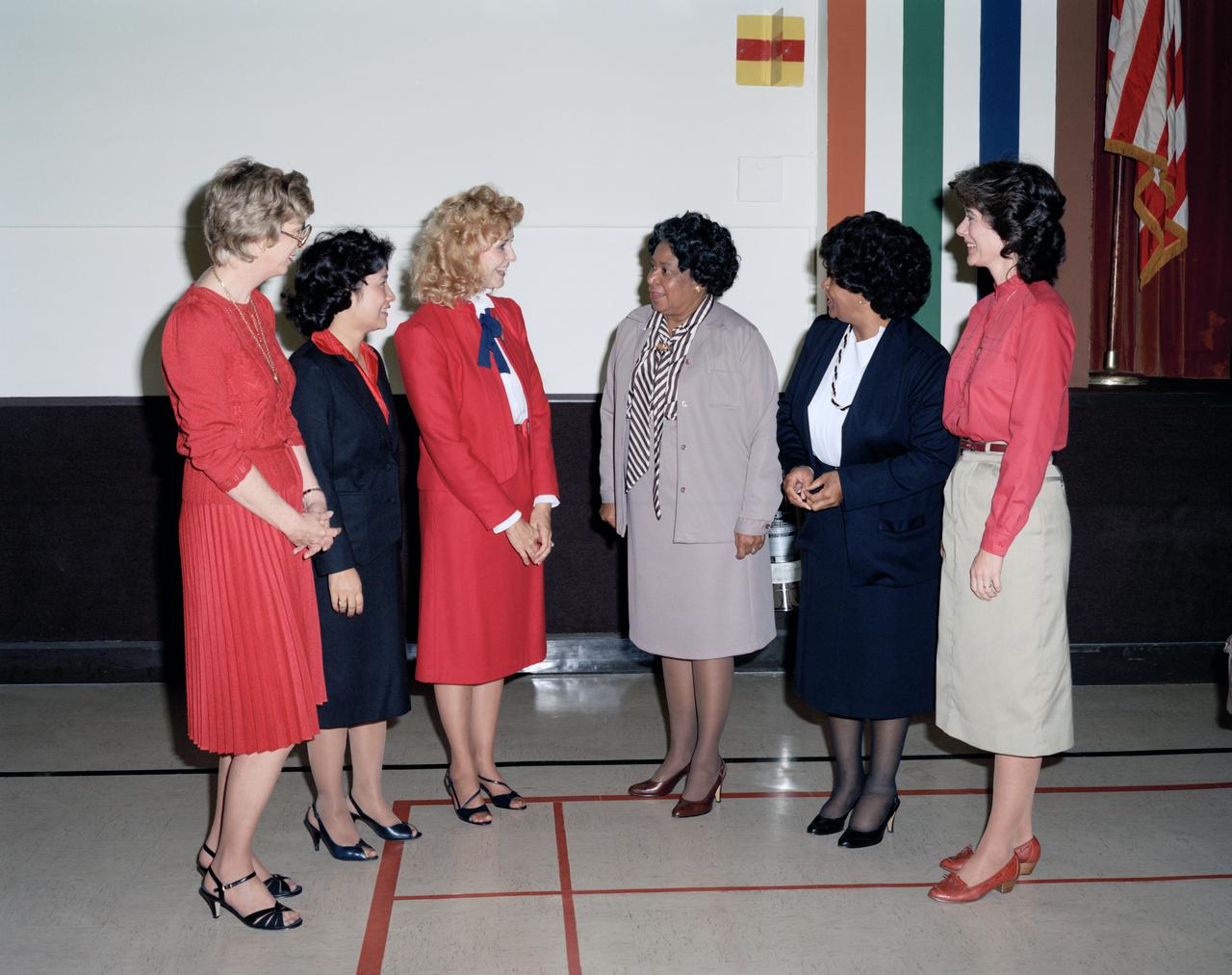
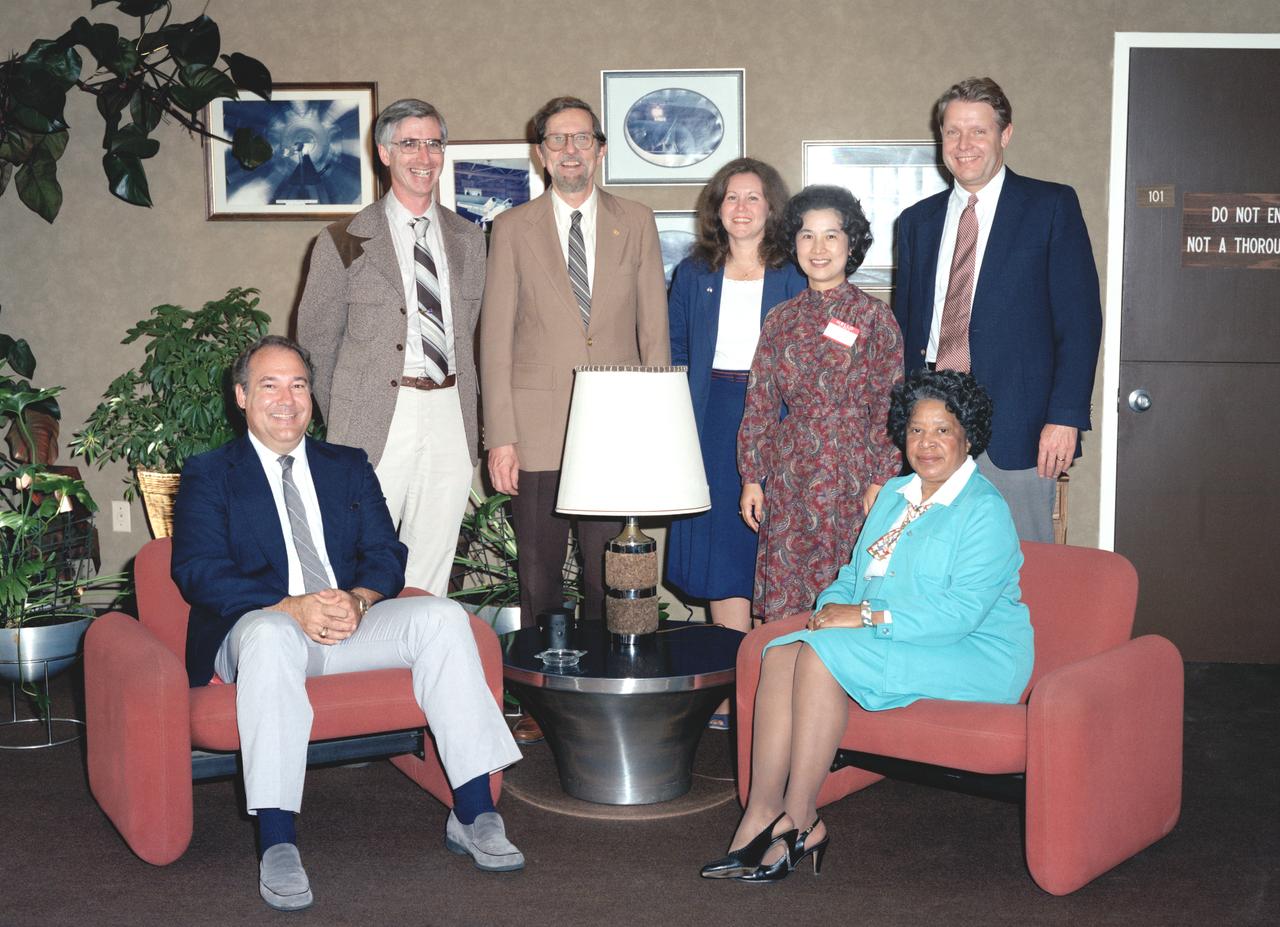
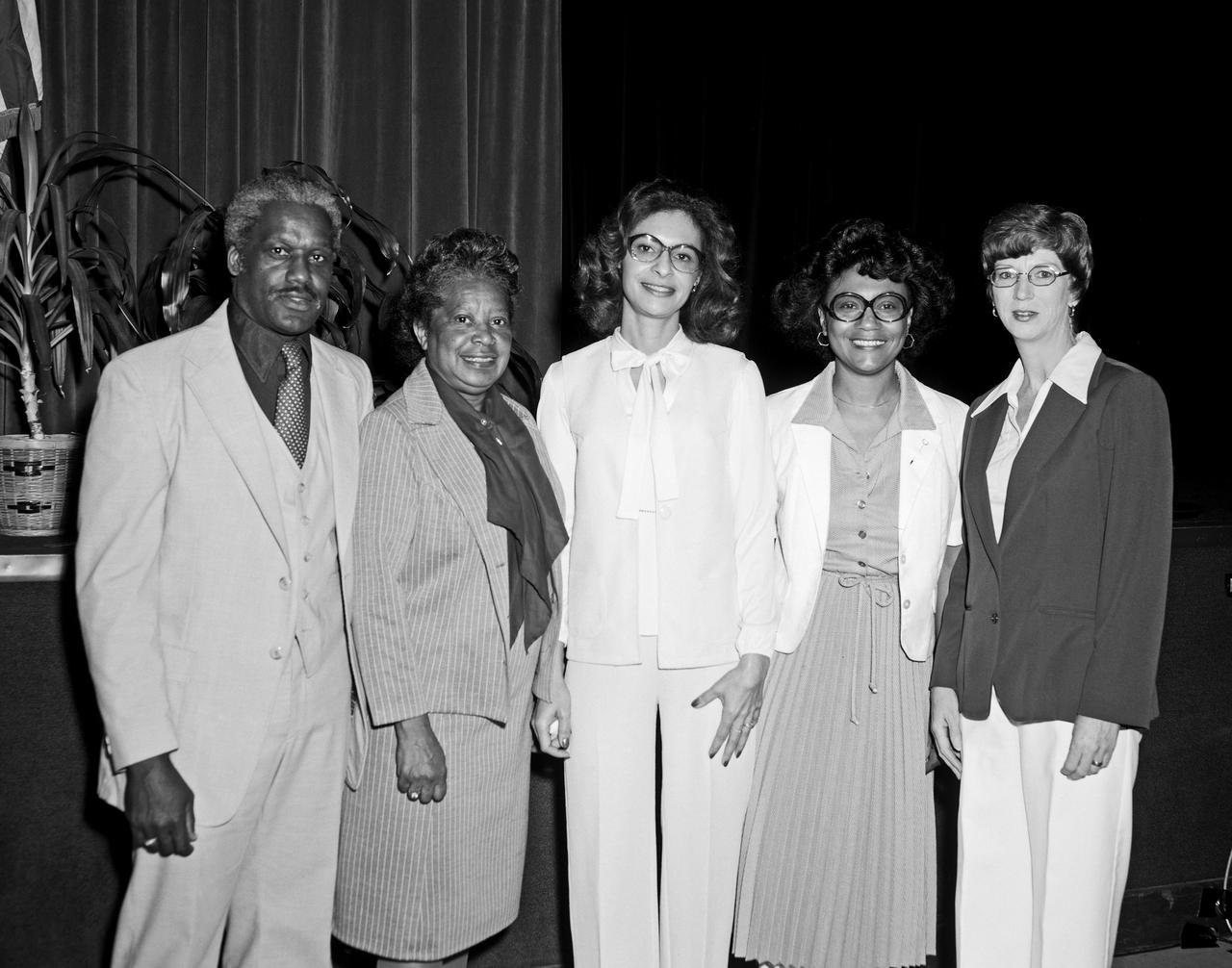
Members of the Langley Federal Women's Program surround  Mary Jackson in the brown suit, of the Office of Equal Opportunity Programs. Mary Jackson NASA's first African-American female engineer, and subsequent career supporting the hiring and promotion of other deserving female and minority employees.
Federal Women's Program
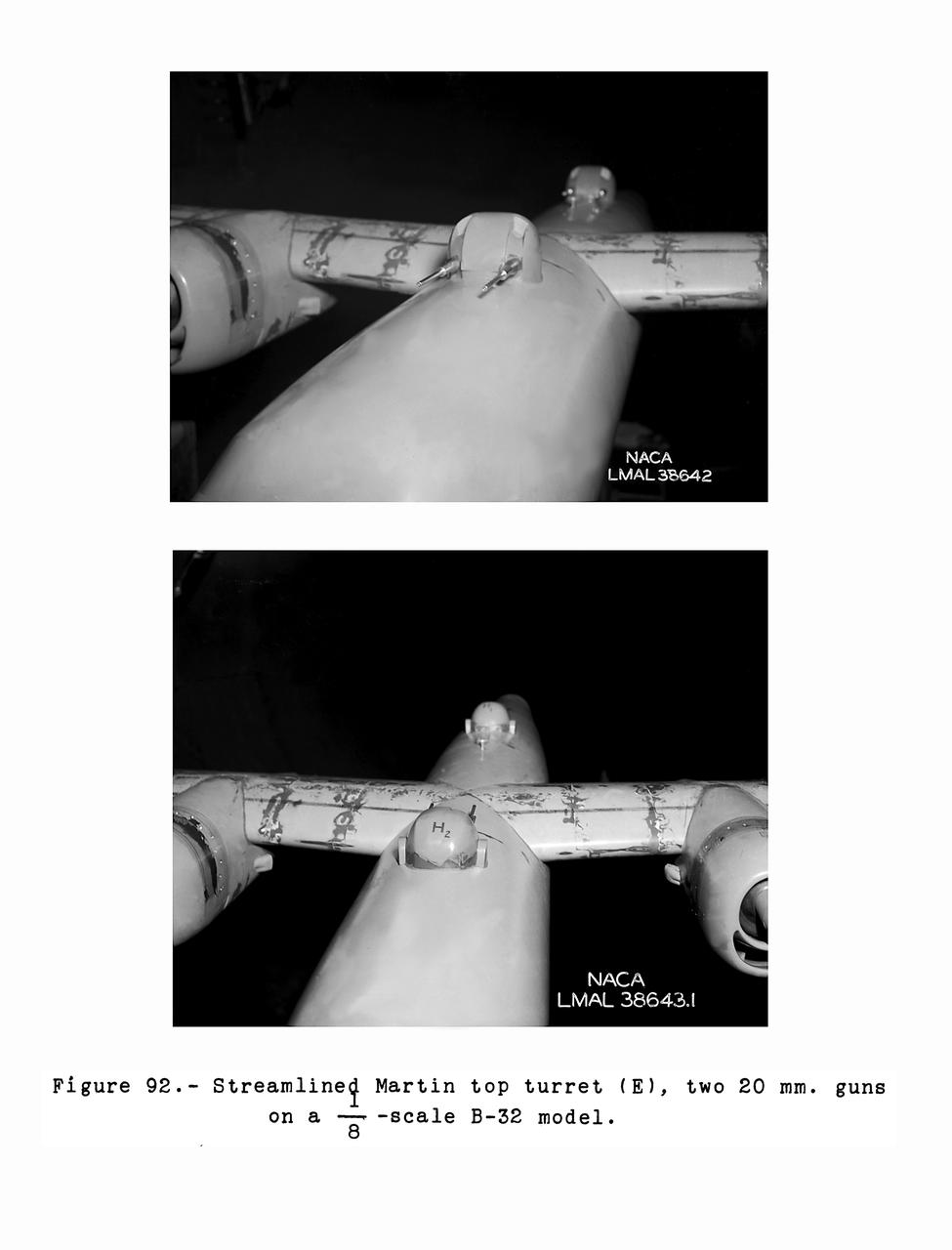
Gun Turrets of XP-35 Figure 92  Streamlined Martin Top Turret. B-33 Vega Turrets.  Test conducted in the NACA 19 foot pressure tunnel LMAL-38560 NACA document.
Gun Turrets of XP-35
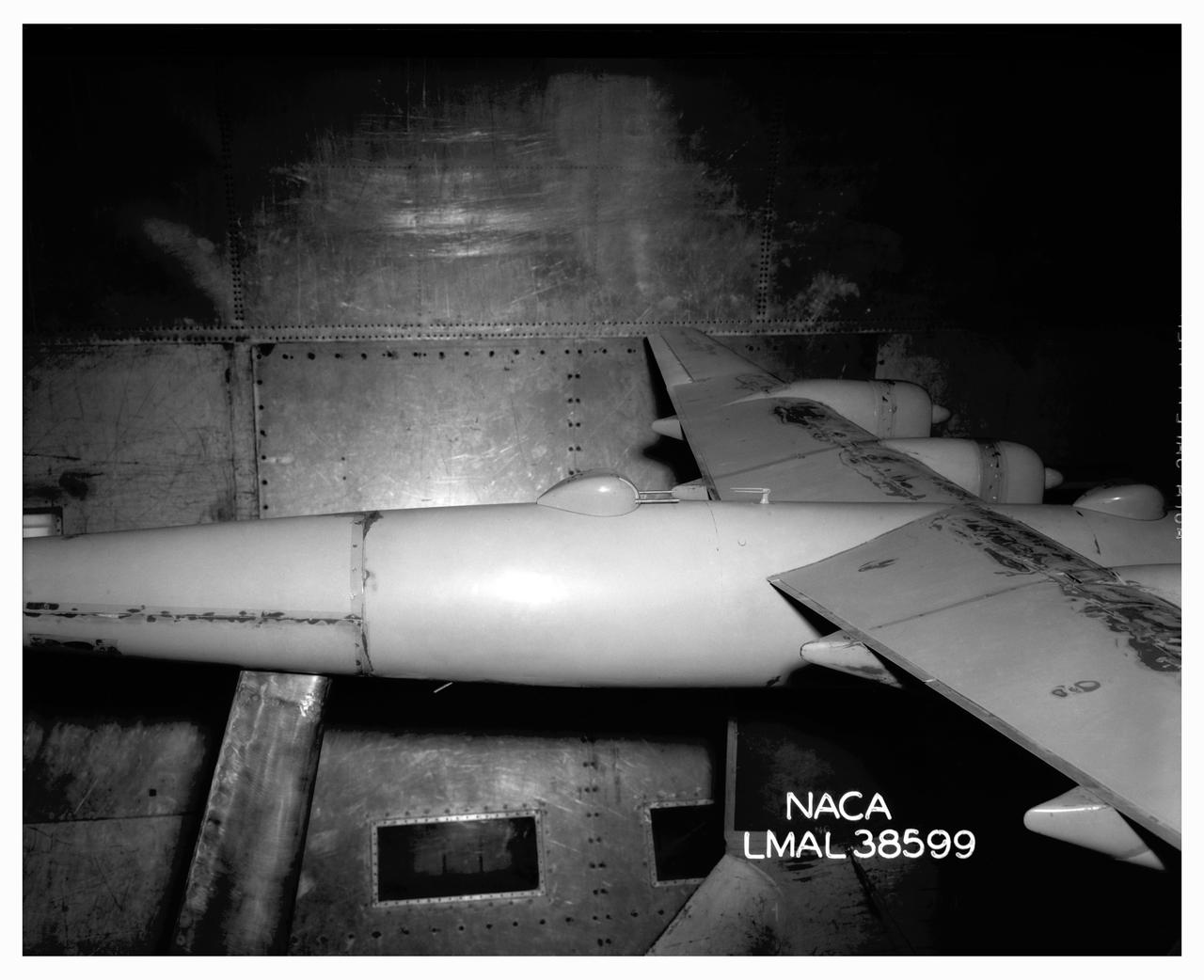
B-32 Model Close Up. Test conducted in the NACA 19 foot pressure tunnel LMAL-38560 NACA document.
B-32 Model Close Up
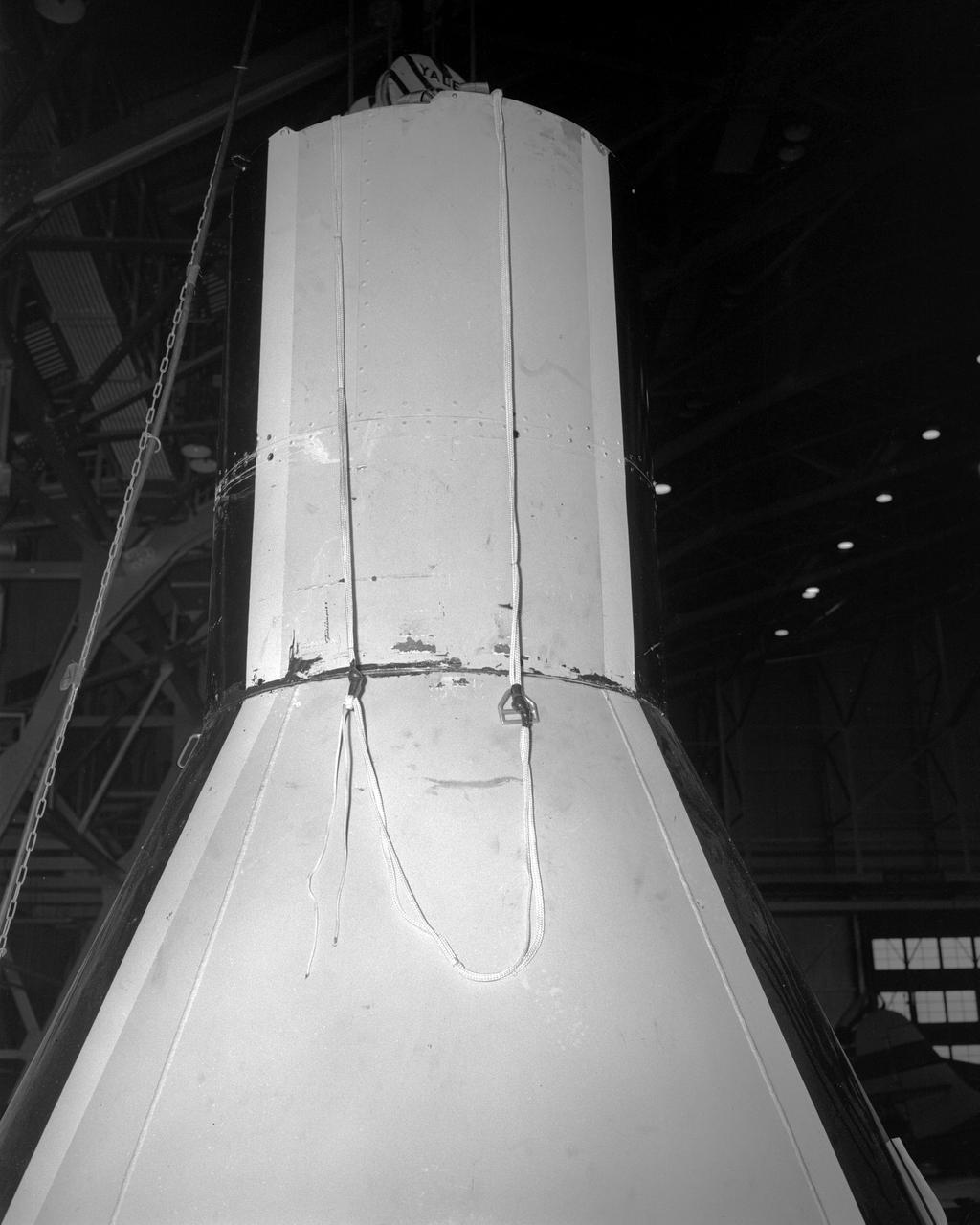
Vehicles and Missions Studies Charts, Space Capsule
Vehicles and Missions Studies Charts
ARCAS Rocket  #E1-235 Image taken at Wallops Island
ARCAS Rocket #E1-235
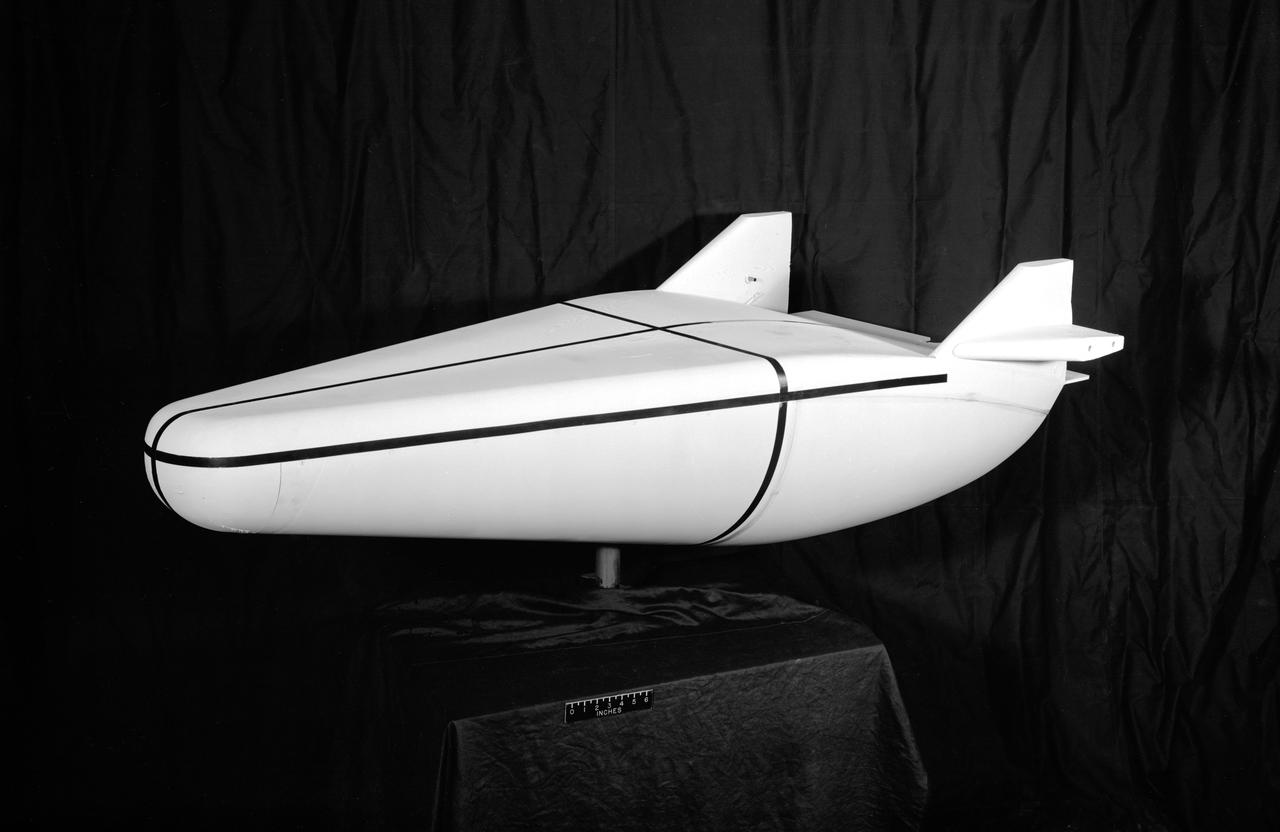
Martin-Bell Dyna Soar Model B.W.V
L59-7932 First University of Michigan Strongarm sounding rocket on launcher at Wallops for test, November 10, 1959. Photograph published in A New Dimension  Wallops Island Flight Test Range: The First Fifteen Years by Joseph Shortal. A NASA publication. Page 701.E5-188 Shop and Launcher Pictures
First University of Michigan Strongarm sounding rocket on launcher at Wallops for test, November 10, 1959E5-188 Shop and Launcher Pictures
Langley Center Director Floyd Thompson shows Ann Kilgore the "picture of the century." This was the first picture of the earth taken from space. From Spaceflight Revolution: "On 23 August 1966 just as Lunar Orbiter I was about to pass behind the moon, mission controllers executed the necessary maneuvers to point the camera away from the lunar surface and toward the earth. The result was the world's first view of the earth from space. It was called "the picture of the century' and "the greatest shot taken since the invention of photography." Not even the color photos of the earth taken during the Apollo missions superseded the impact of this first image of our planet as a little island of life floating in the black and infinite sea of space." -- Published in James R. Hansen, Spaceflight Revolution: NASA Langley Research Center From Sputnik to Apollo, (Washington: NASA, 1995), pp. 345-346. Mayor Ann Kilgore was married to NASA researcher Edwin Carroll Kilgore. Mrs. Kilgore was Mayor from 1963-1971 and again from 1974-1978.
The Picture of the Century with Floyd Thompsona and Ann Hitch Kilgore, Former Mayor of Hampton VA.
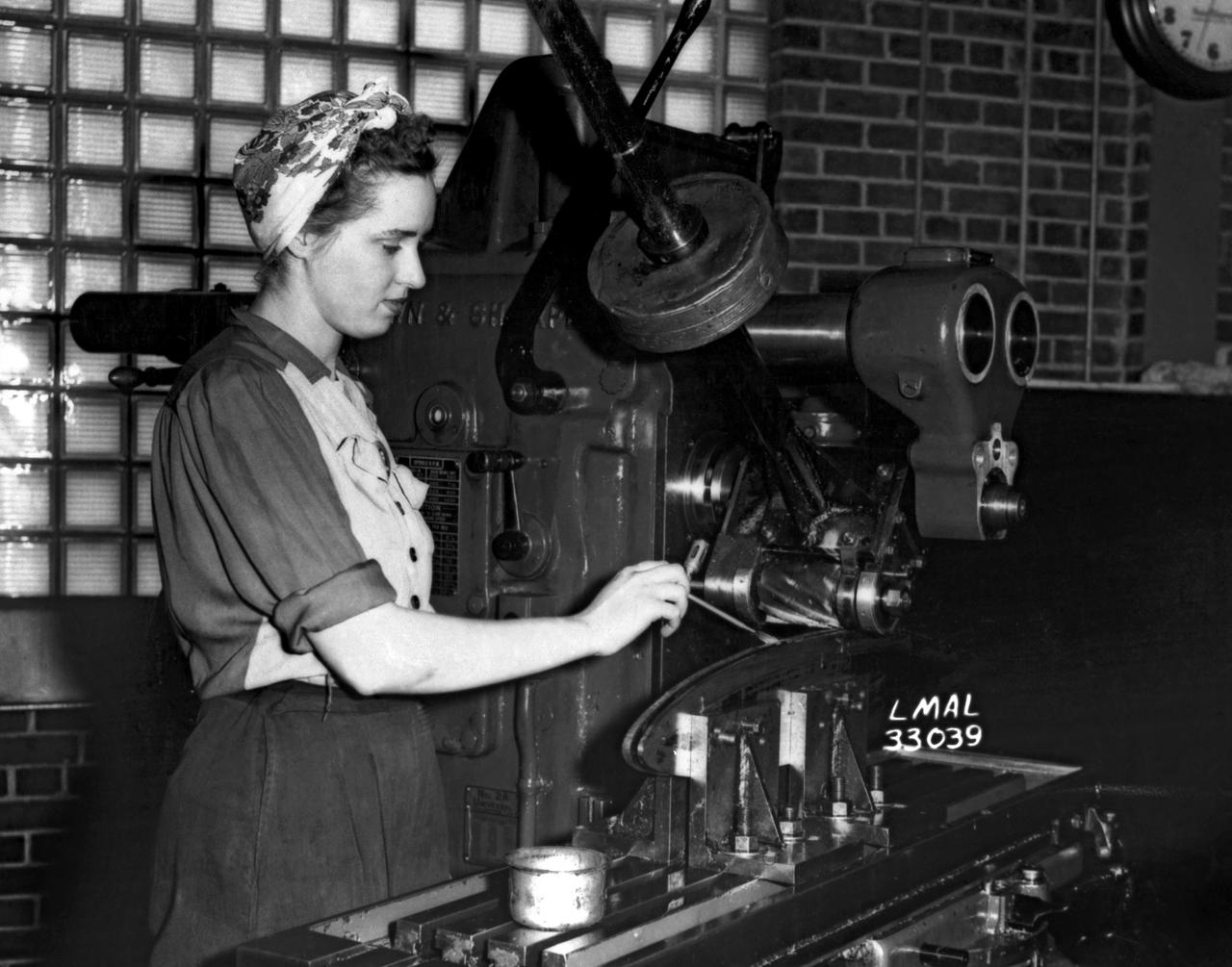
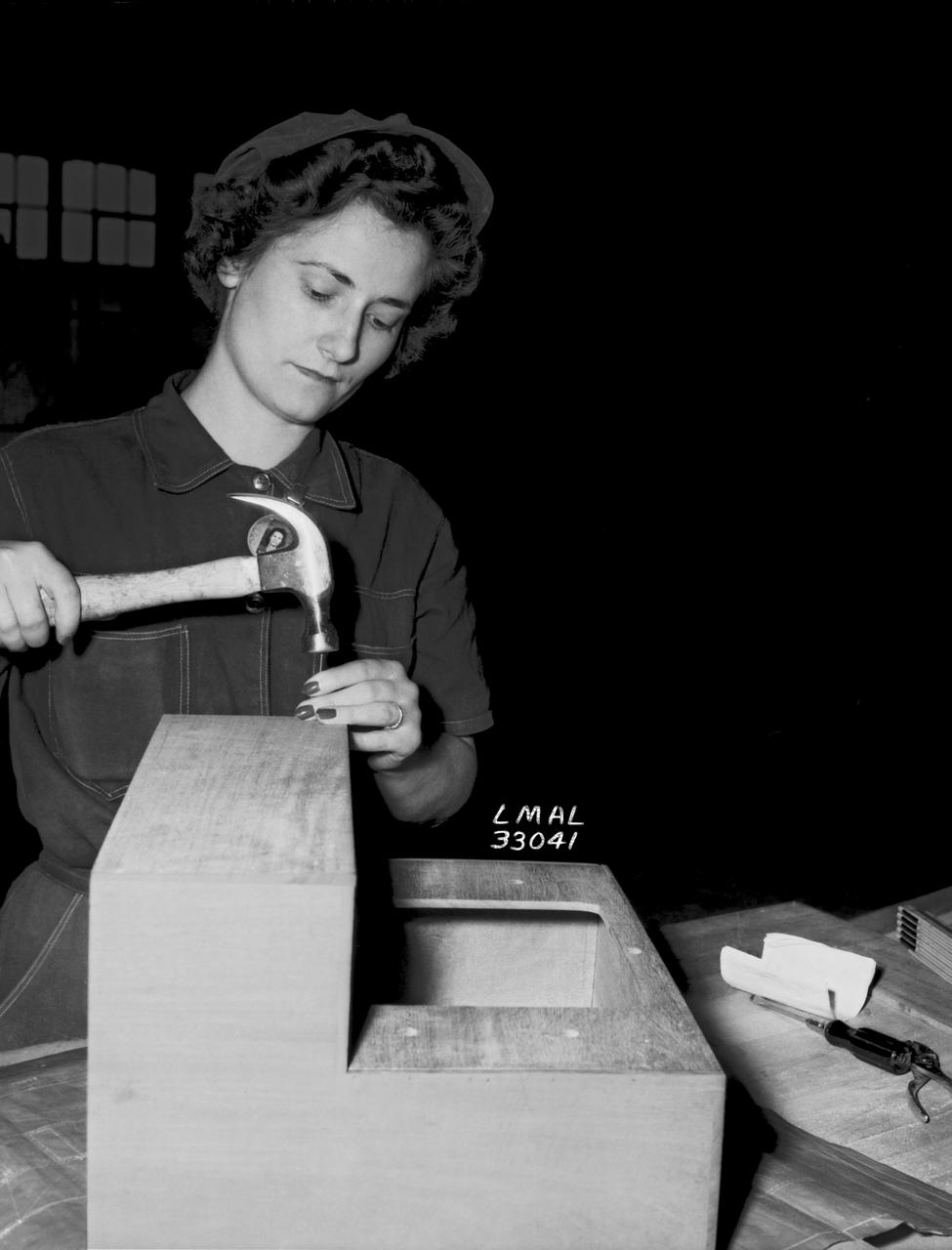
Women Adequately Filling Posts in NACA Laboratory: Nearly 200 women are employed at the Langley Laboratory of the National Advisory Committee for Aeronautics in a limited capacity as mechanics’ helpers and minor laboratory aids on the jobs formerly handled by men, according to E.H. Derring, of the Aerodynamics Division. Many phases of the operations of various wind tunnels at the laboratory are now handled by women with experienced male supervision. Mr. Derring said, pointing out that the reading of the data indicated on wind tunnel instruments during a test is done in a large measure by women.  In addition to reading the instruments and computing and integrating engineering test data obtained from tunnel investigations, the minor laboratory aides assist in the preparation of aircraft models preliminary to testing. Women employees who will serve in the Aerodynamics Division of the Laboratory attend an orientation class for two weeks, during which they receive instruction on phases of the work they will do and their aptitudes for different types of work are evaluated in order that they may be properly placed.  More than 100 women are employed in minor laboratory apprentices, performing mechanical work heretofore done by men. These women are employed in the various shops of the laboratory.  Women in the woodworking shops are taught to operate 15 different machines in carrying out their assignments. Norfolk new paper article from 1943 by Lee Dickinson.
Women Adequately Filling Posts In NACA Laboratory
Miscellaneous Charts, Space Capsule
Miscellaneous Charts
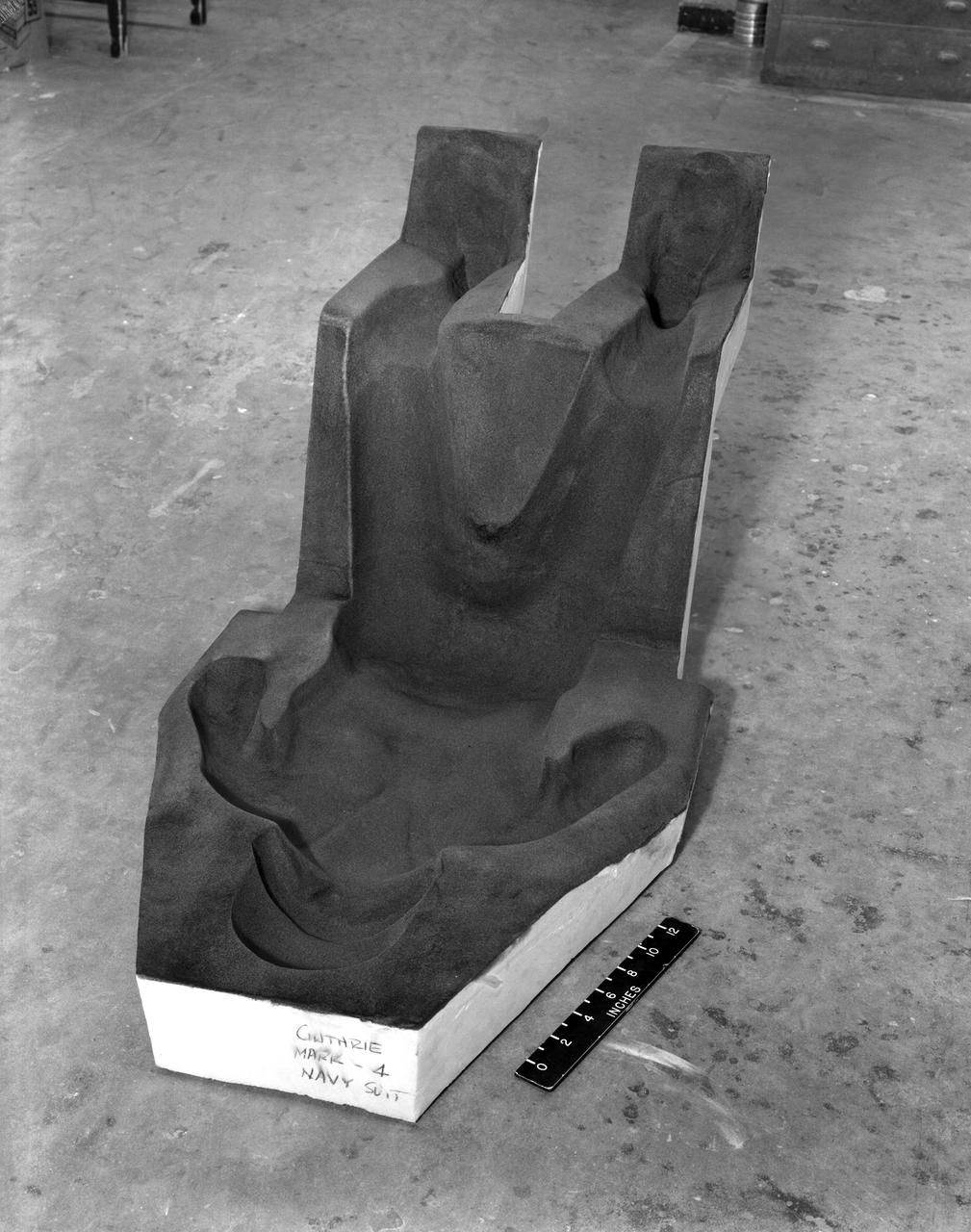
Plaster Molds for Space Couch
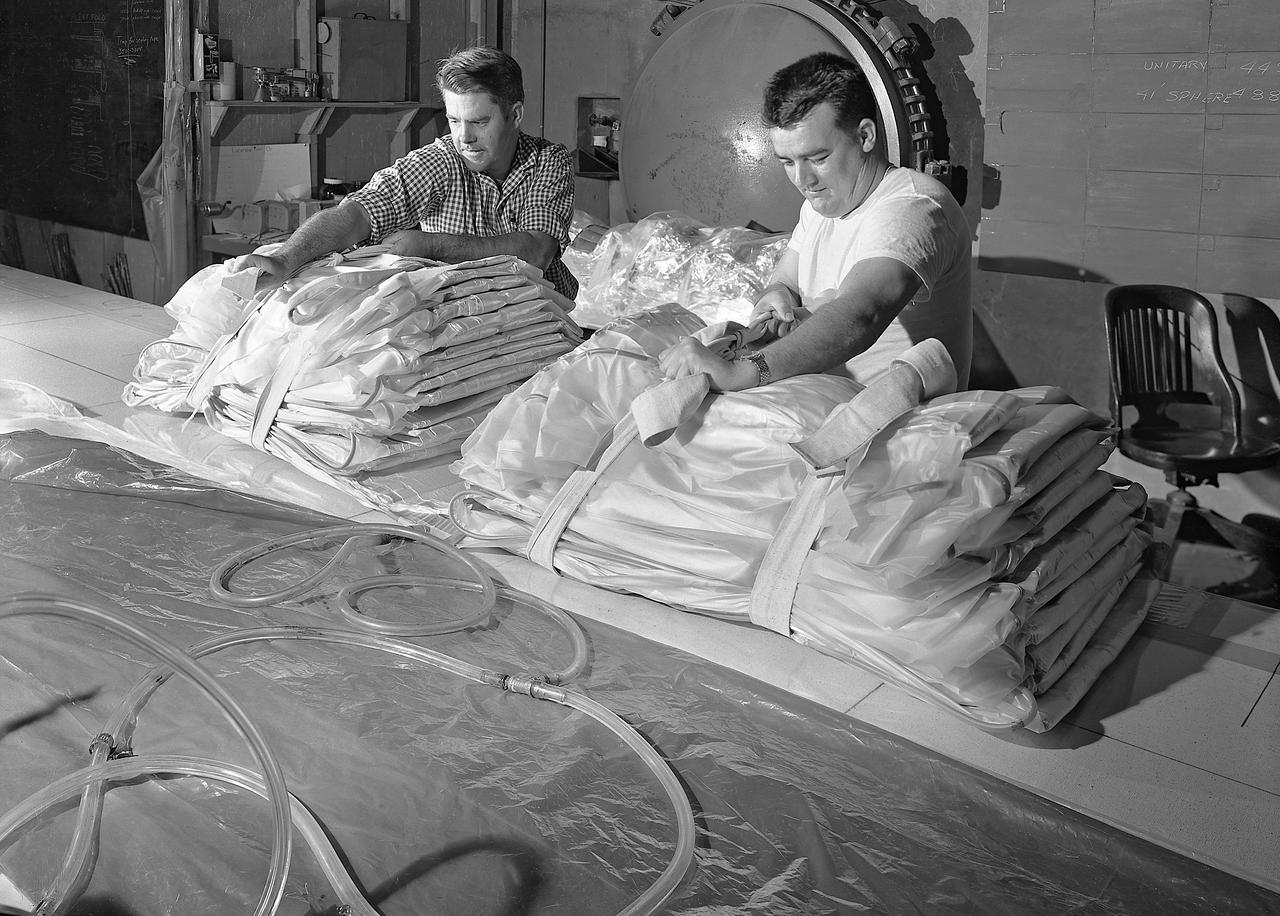
100' Satellite Packaging of Echo
Martin-Bell Dyna Soar Model B.W.V
Air Force Javelin Rocket on Launcher (USAF JV-1) Wallops Model D4-78 L59-5144 First AFSWC Javelin sounding rocket ready for flight test, July 7, 1959. Photograph published in A New Dimension  Wallops Island Flight Test Range: The First Fifteen Years by Joseph Shortal. A NASA publication. Page 704.
First AFSWC Javelin Sounding Rocket On Launcher at Wallops Island.
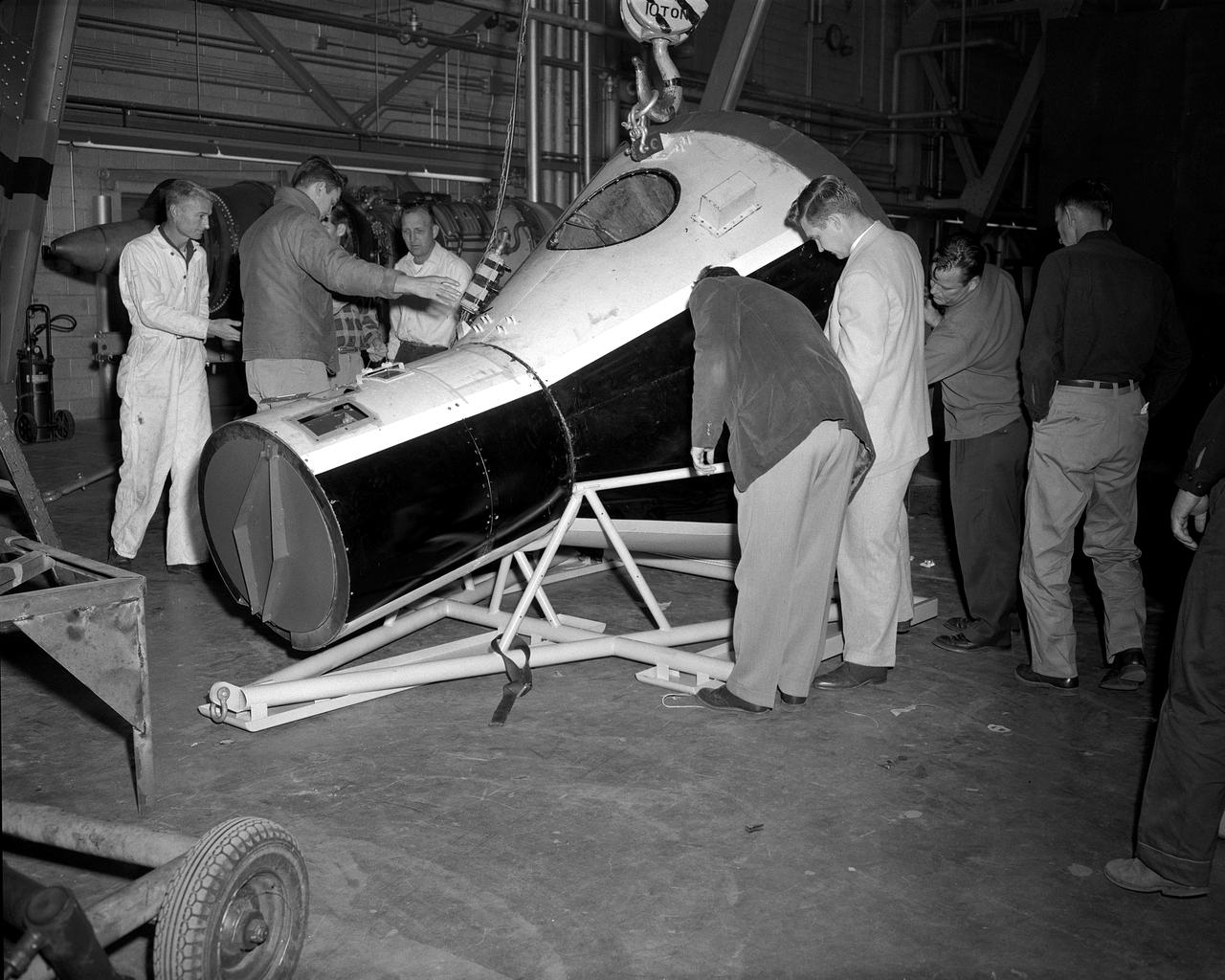
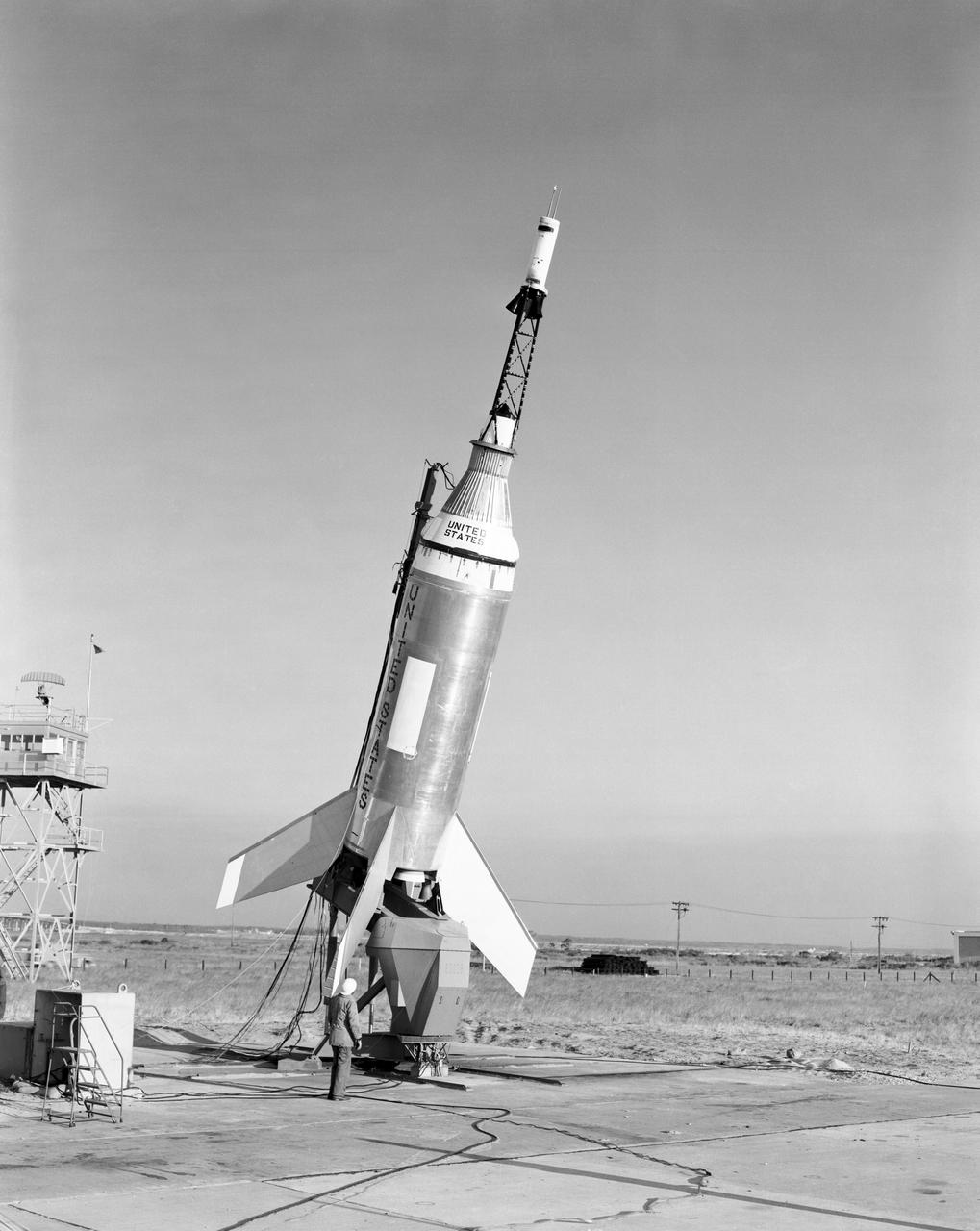
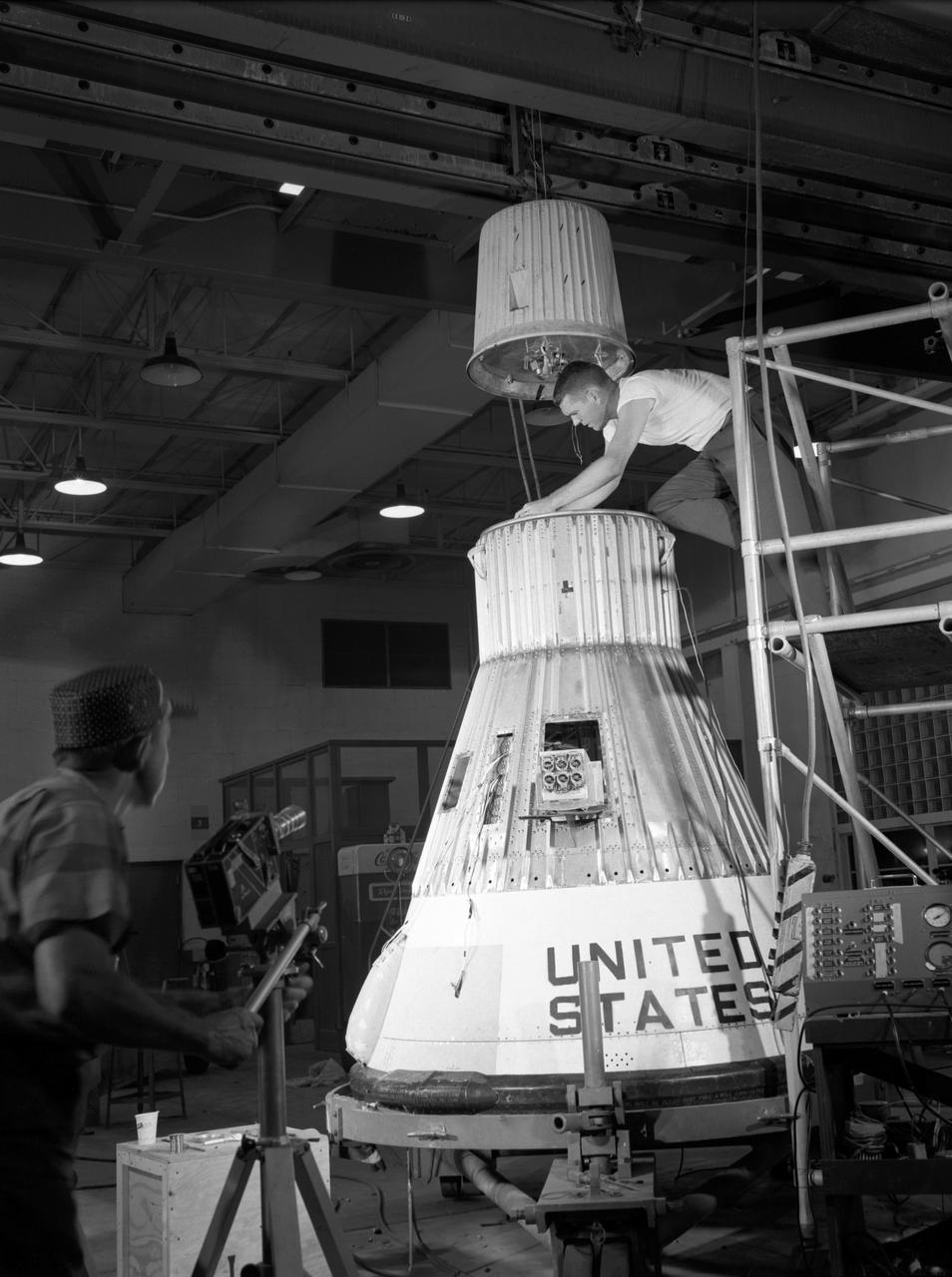
Technicians adjust the rocket motor during the attachment of the escape tower to the Mercury capsule prior to assembly with Little Joe launcher, August 20, 1959. Joseph Shortal wrote (vol. 3., p. 33):  The escape tower and rocket motors were taken from the Mercury capsule production. The tower is shown being attached to the capsule....  The escape rocket was a Grand Central 1-KS-52000 motor with three canted nozzles. The tower-jettison motor was an Atlantic Research Corp. 1.4-KS-785 motor. This was the same design tested in a beach abort test...and had the offset thrust line as used in the beach abort test to insure that the capsule would get away from the booster in an emergency. The escape system weighed 1,015 pounds, including 236 pounds of ballast for stability.   The Little Joe booster was assembled at Wallops on its special launcher in a vertical attitude. It is shown in the  on the left  with the work platform in place. The launcher was located on a special concrete slab in Launching Area 1. The capsule was lowered onto the booster by crane.... After the assembly was completed, the scaffolding was disassembled and the launcher pitched over to its normal launch angle of 80 degrees.... Little Joe had a diameter of 80 inches and an overall length, including the capsule and escape tower of 48 feet. The total weight at launch was about 43,000 pounds. The overall span of the stabilizing fins was 21.3 feet.   Although in comparison with the overall Mercury Project, Little Joe was a simple undertaking, the fact that an attempt was made to condense a normal two-year project into a 6-month one with in house labor turned it into a major undertaking for Langley.  -- Published in Joseph A. Shortal, History of Wallops Station: Origins and Activities Through 1949, (Wallops Island, VA: National Aeronautics and Space Administration, Wallops Station, nd), Comment Edition.
Mercury: Little Joe launcher
Portrait of Katherine Johnson
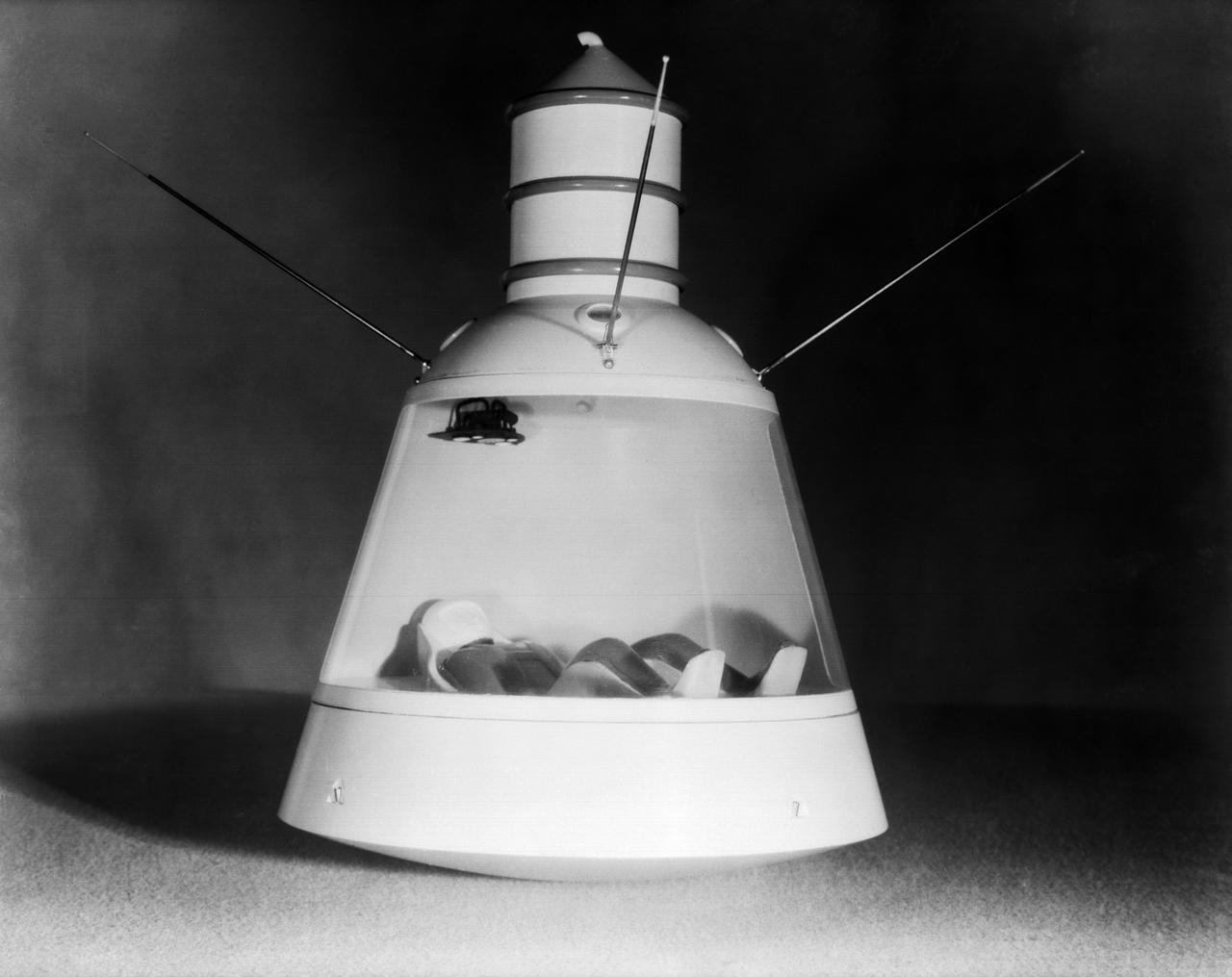
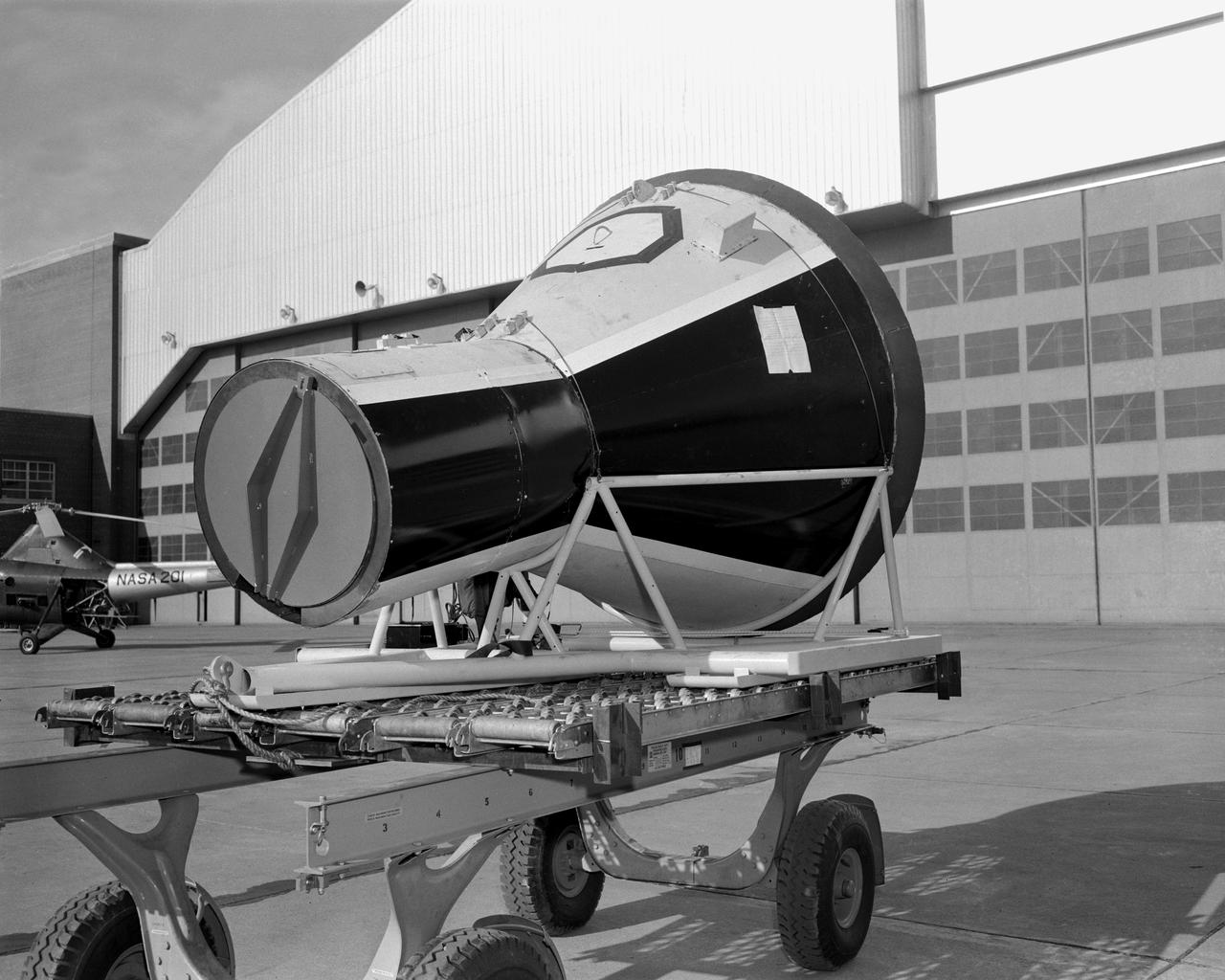
From left to right: Charles Donlan, deputy head, and Robert Gilruth, head of STG, look at a scale model of a Mercury space capsule.
Space Task Group (STG)
Women Adequately Filling Posts in NACA Laboratory: Nearly 200 women are employed at the Langley Laboratory of the National Advisory Committee for Aeronautics in a limited capacity as mechanics’ helpers and minor laboratory aids on the jobs formerly handled by men, according to E.H. Derring, of the Aerodynamics Division. Many phases of the operations of various wind tunnels at the laboratory are now handled by women with experienced male supervision. Mr. Derring said, pointing out that the reading of the data indicated on wind tunnel instruments during a test is done in a large measure by women.  In addition to reading the instruments and computing and integrating engineering test data obtained from tunnel investigations, the minor laboratory aides assist in the preparation of aircraft models preliminary to testing. Women employees who will serve in the Aerodynamics Division of the Laboratory attend an orientation class for two weeks, during which they receive instruction on phases of the work they will do and their aptitudes for different types of work are evaluated in order that they may be properly placed.  More than 100 women are employed in minor laboratory apprentices, performing mechanical work heretofore done by men. These women are employed in the various shops of the laboratory.  Women in the woodworking shops are taught to operate 15 different machines in carrying out their assignments. Norfolk new paper article from 1943 by Lee Dickinson.
Women Adequately Filling Posts In NACA Laboratory
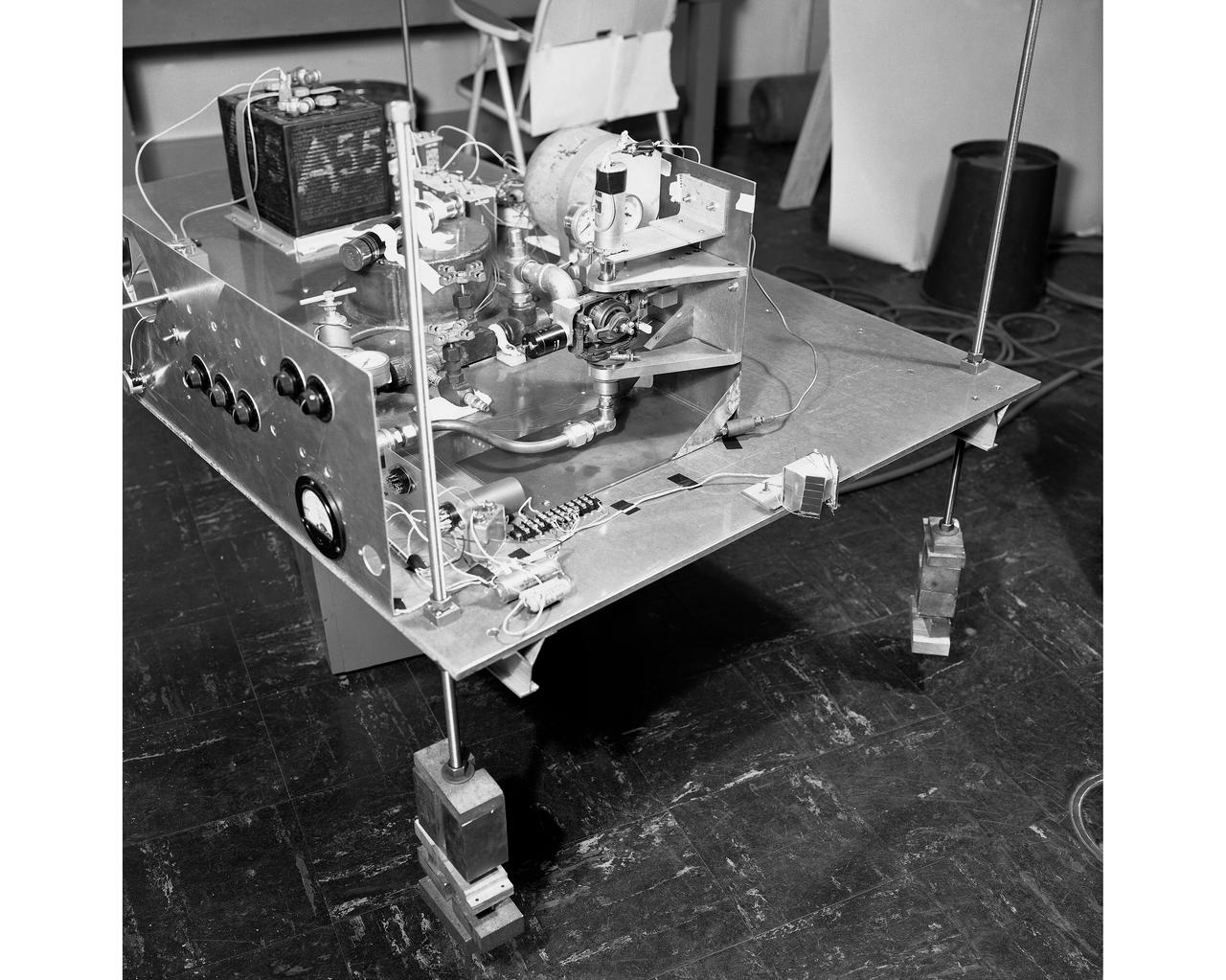
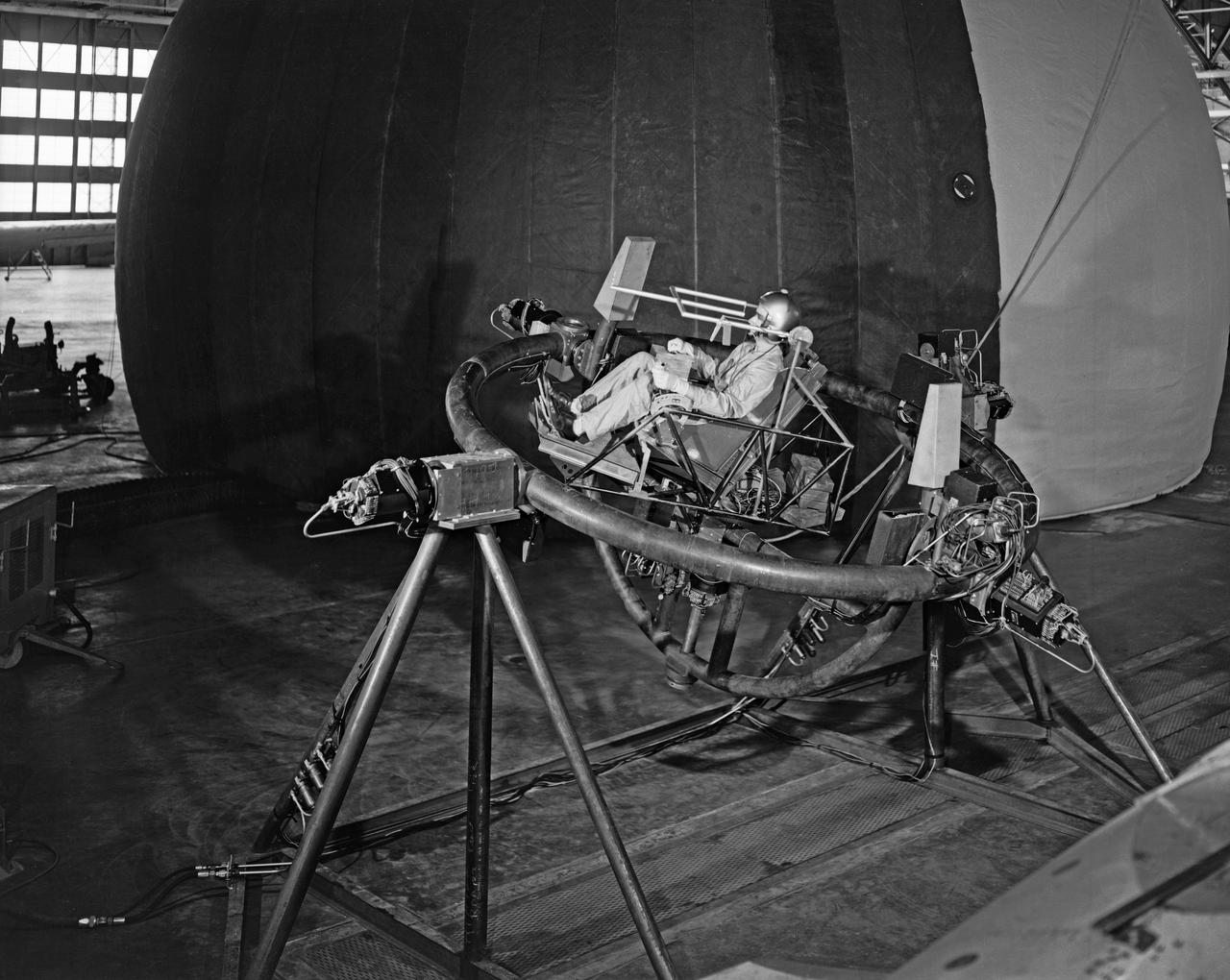
Satellite Control Simulator Emphasizing Flywheel Magnet Control
In the picture are F.F. Fullmer, aeronautical engineer, supervise a group of women who are helping operate the research equipment in the two-dimensional wind tunnel. Miss Elizabeth Patterson, left foreground, and Miss Katherine Thomason, right foreground obtains aerodynamic data, while Miss Lenore Woodland left background and Mrs. Blanche White help operate the tunnel. By Lee Dickinson 1943
Women Adequately Filling Posts In NACA Labratory
Little Joe on launcher at Wallops Island.
Little Joe on launcher at Wallops Island
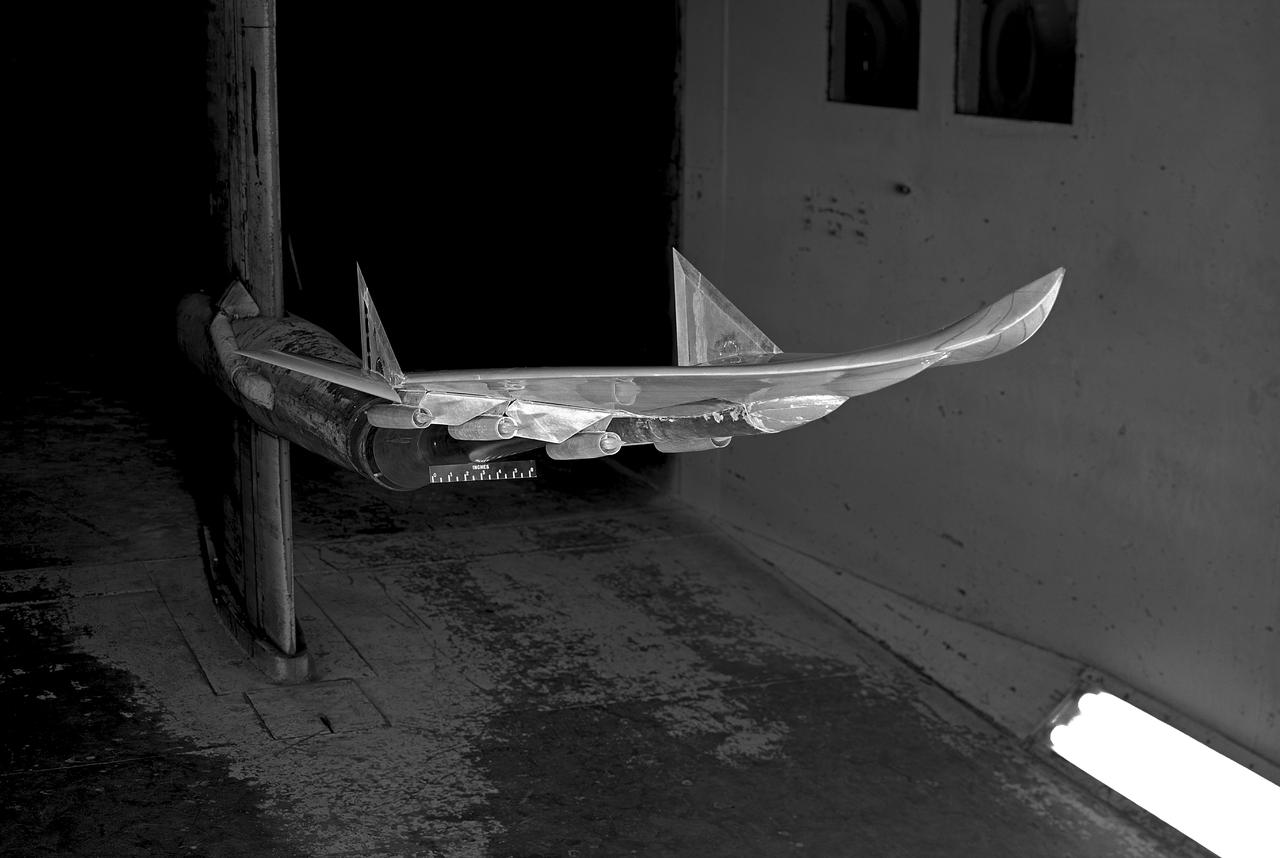
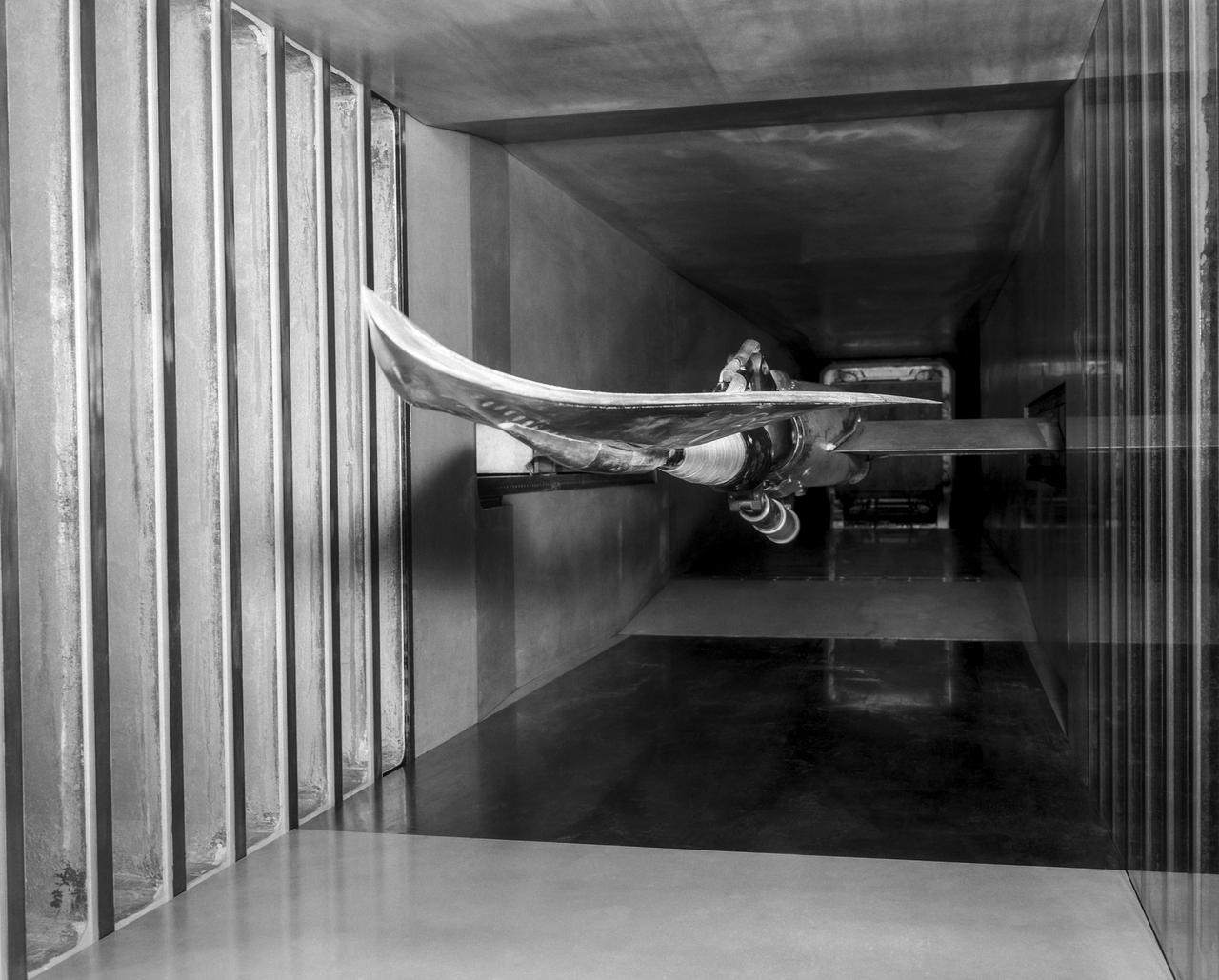
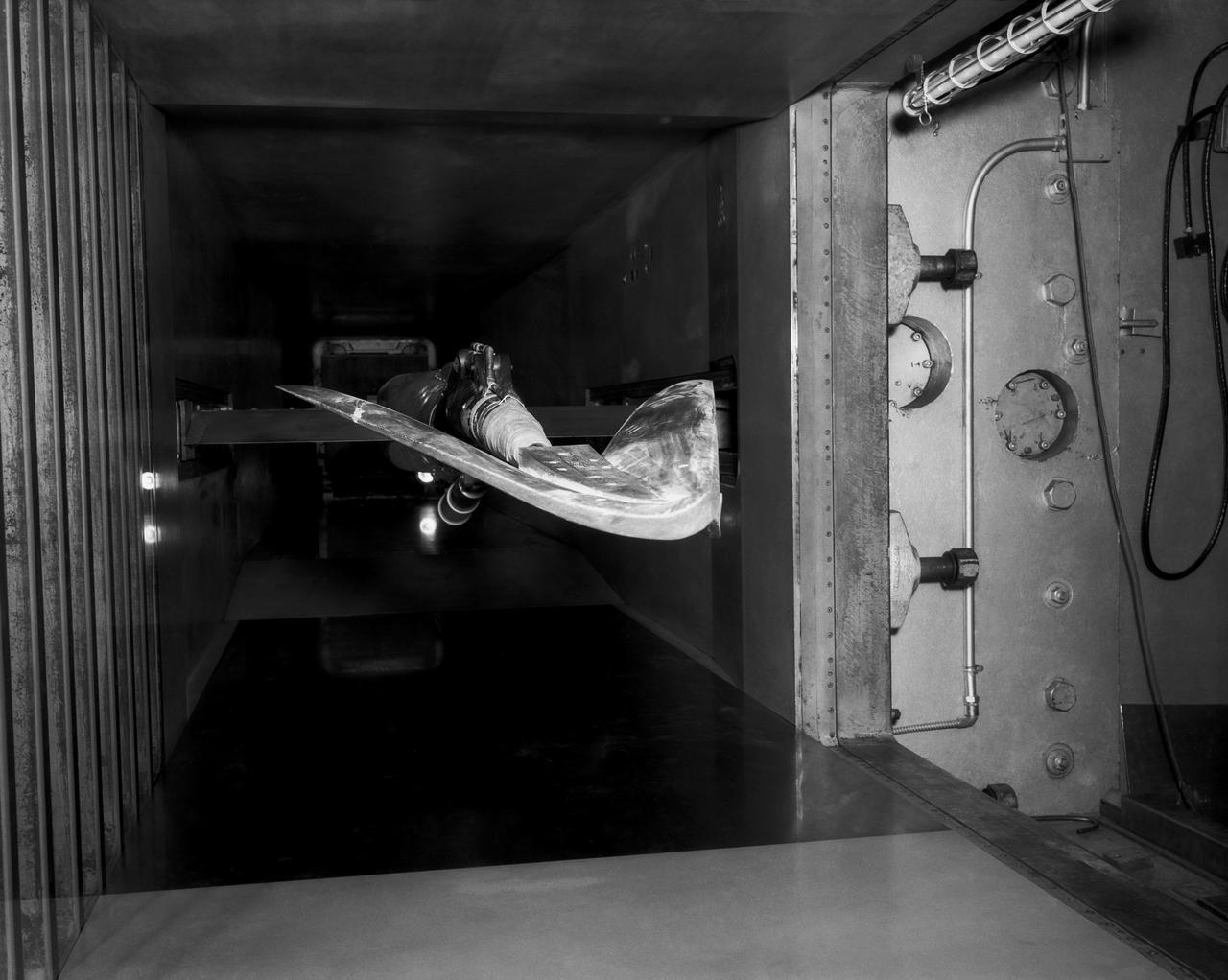
WS-110A Brown Bomber in Unitary Wind Tunnel Low Mach Number Test
Fig. 68 Unitary Wind Tunnel Display
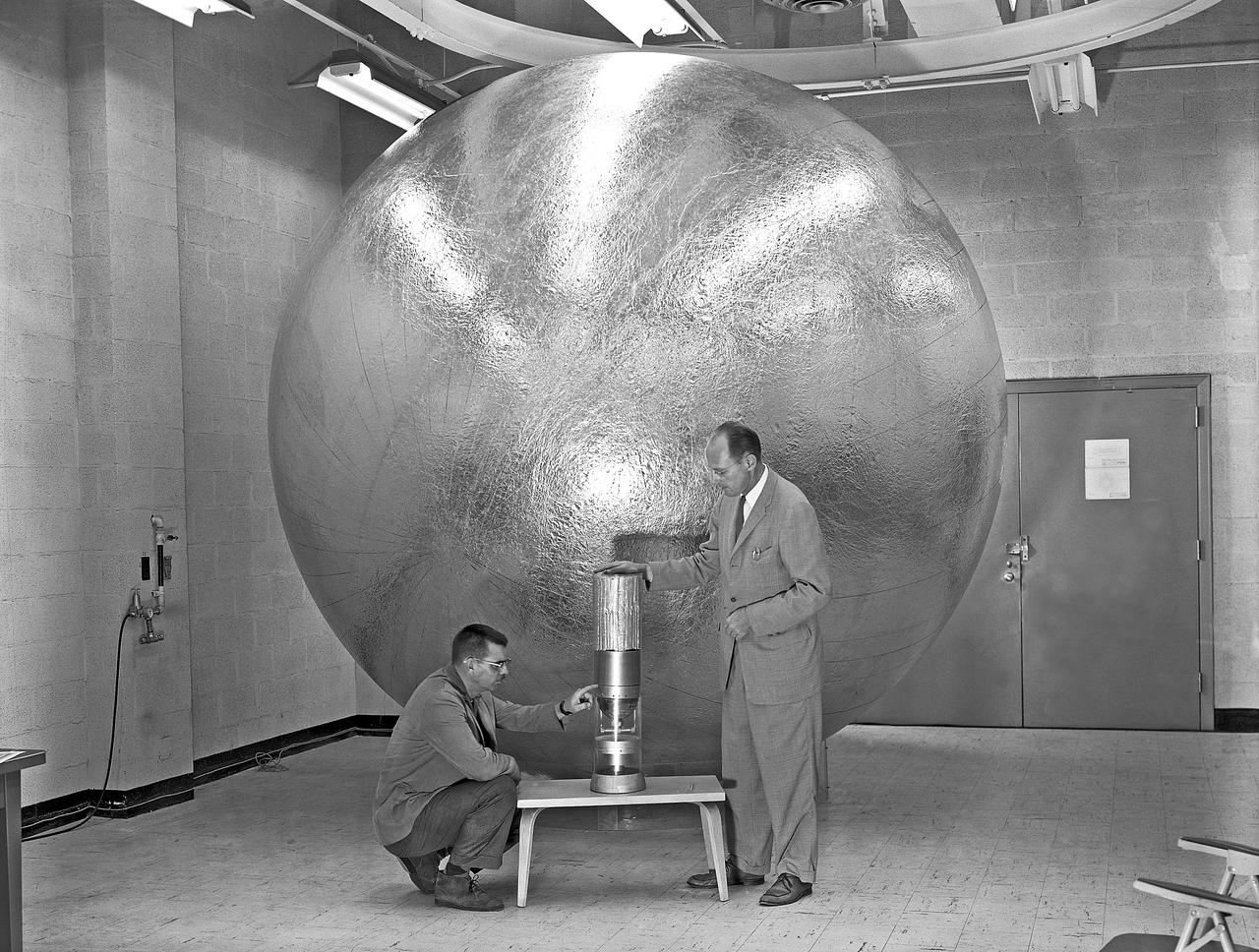
Spherical Air Bearing Satellite Simulator
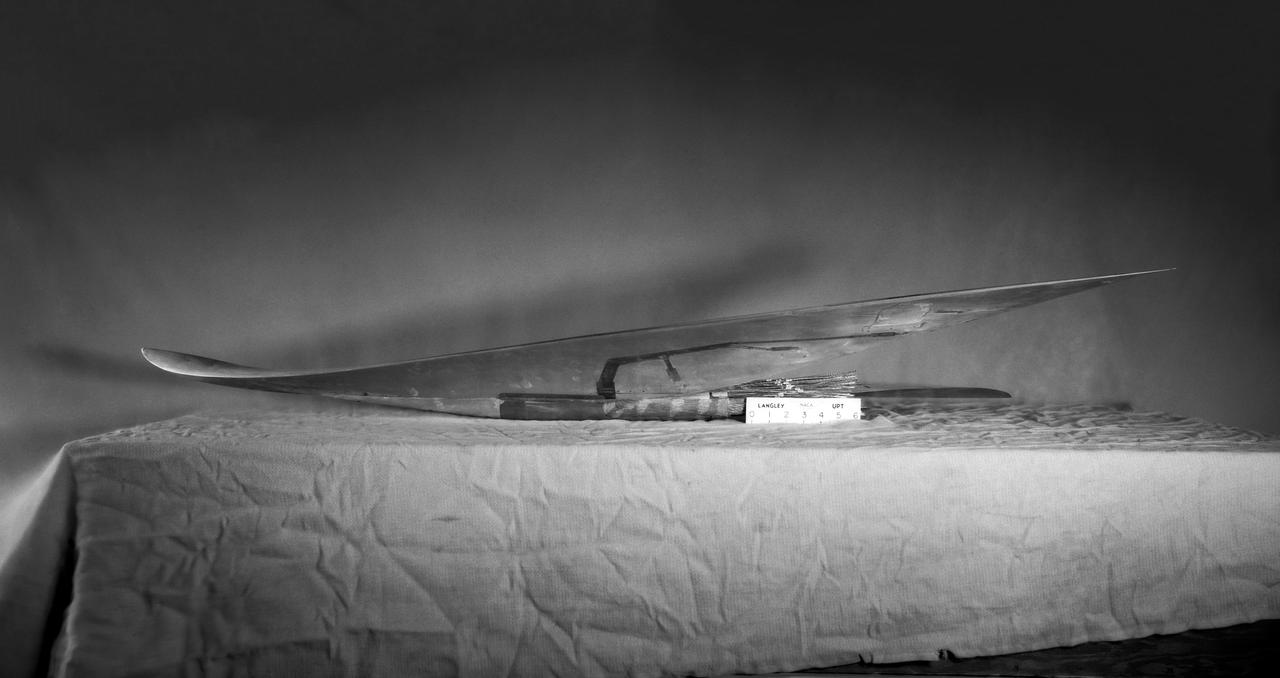
Wing Covering and Doping
Miscellaneous Charts, Space Capsule
Miscellaneous Charts
Mrs. Katherine G. Johnson at Work
Mrs. Katherine G. Johnson at Work NASA Langley
L59-7932 First University of Michigan Strongarm sounding rocket on launcher at Wallops for test, November 10, 1959. Photograph published in A New Dimension  Wallops Island Flight Test Range: The First Fifteen Years by Joseph Shortal. A NASA publication. Page 701.E5-188 Shop and Launcher Pictures
First University of Michigan Strongarm sounding rocket on launcher at Wallops for test, November 10, 1959E5-188 Shop and Launcher Pictures
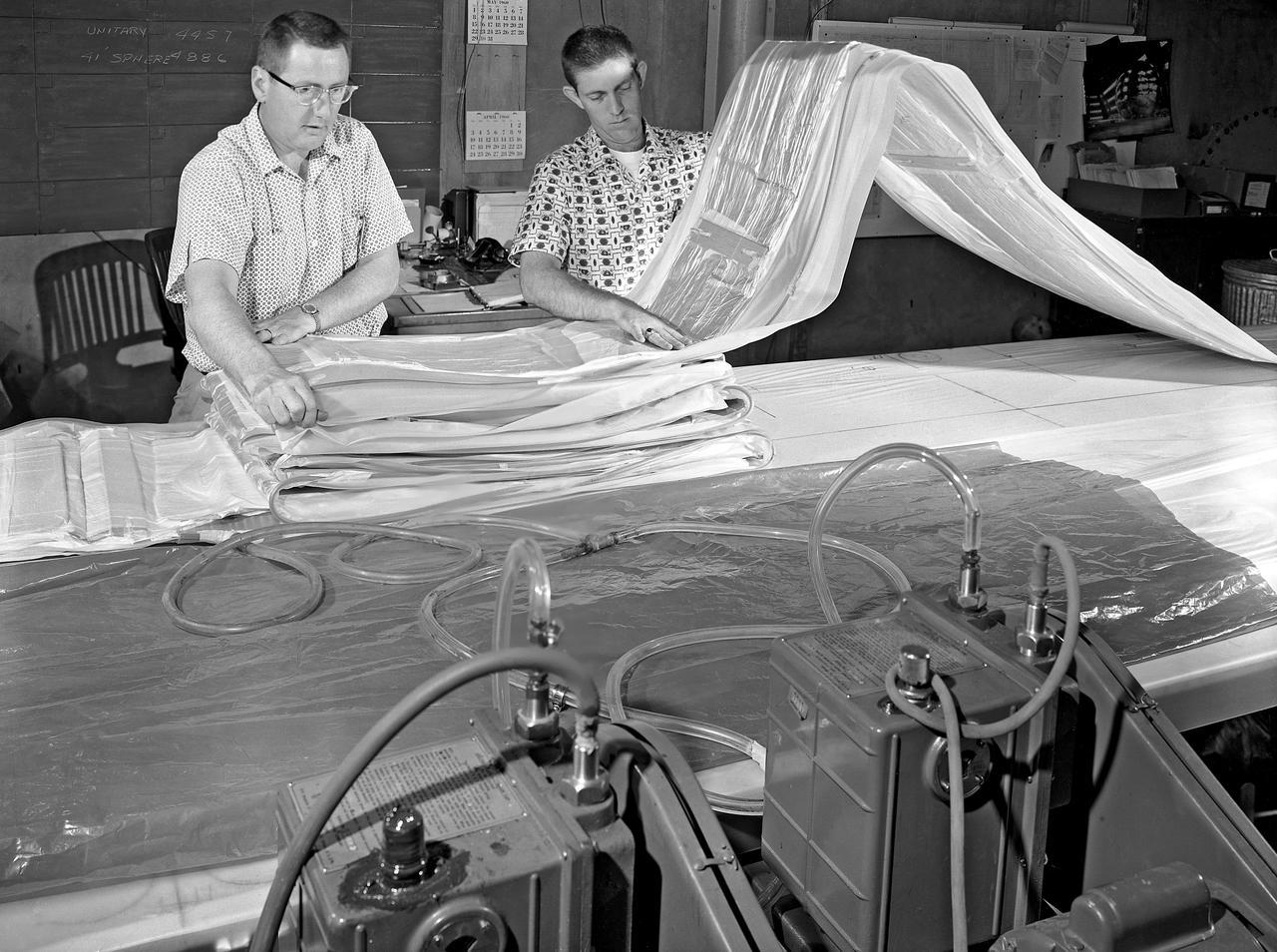
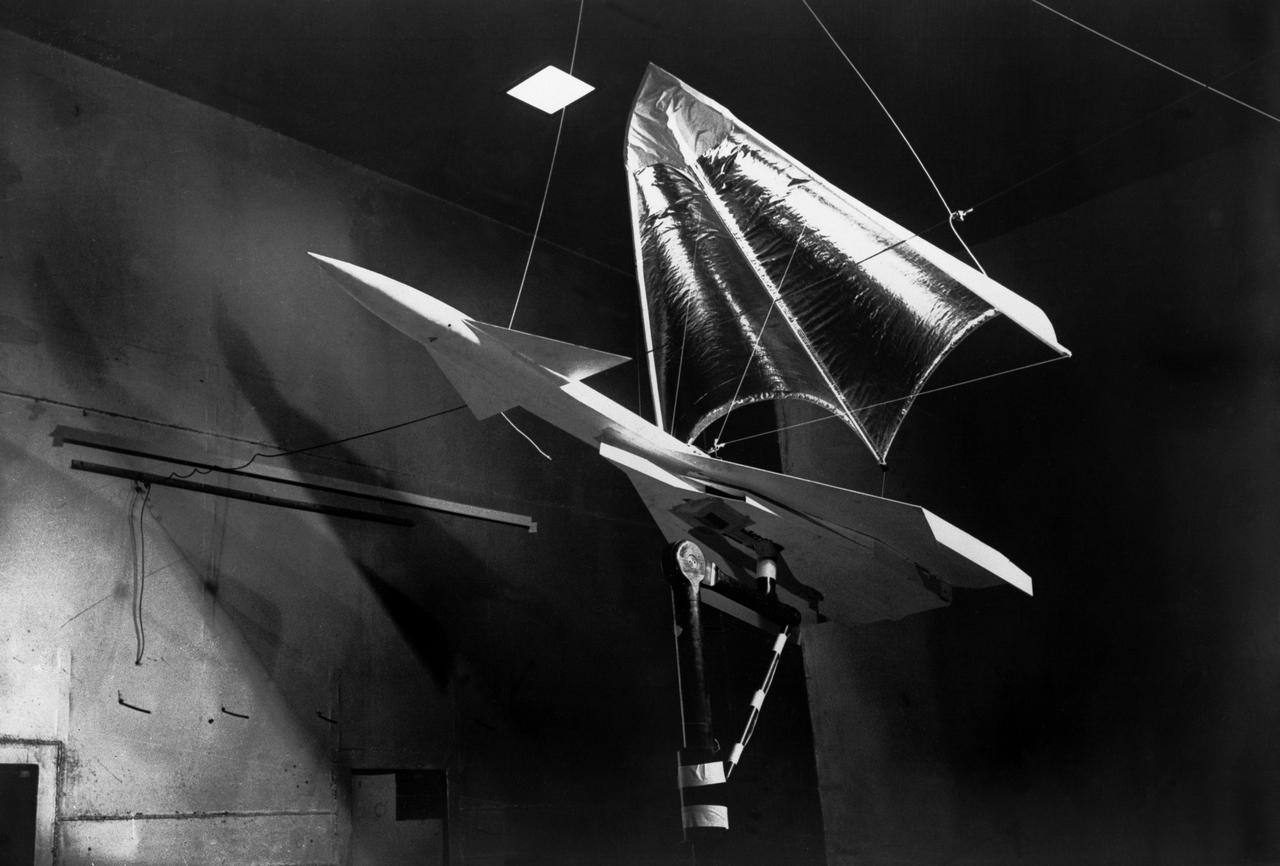
Various Components of Goodyear Inflatable Airplane in Full Scale Tunnel building 643 Test 238
Various Components of Goodyear Inflatable Airplane in Full Scale Tunnel
100' Satellite Packaging of Echo
Water Type Muffler Test
L57-2809 Rocket model of McDonnell F4-H1 airplane on Terrier launcher with Nike booster, June 17, 1957. Photograph published in A New Dimension  Wallops Island Flight Test Range: The First Fifteen Years by Joseph Shortal. A NASA publication. Page 500.
McDonnell F4-H1 Airplane Rocket Model
Modified Bell X-1 model pioneered variable-sweep studies in 1947.  Photograph published in Sixty Years of Aeronautical Research 1917-1977 By David A. Anderton. A NASA publication, page 52.
Bell X-1 Research Model on Single Support Strut in 7 x 10 Foot Wind Tunnel
Doak VTOL Aircraft
Doak VTOL Aircraft
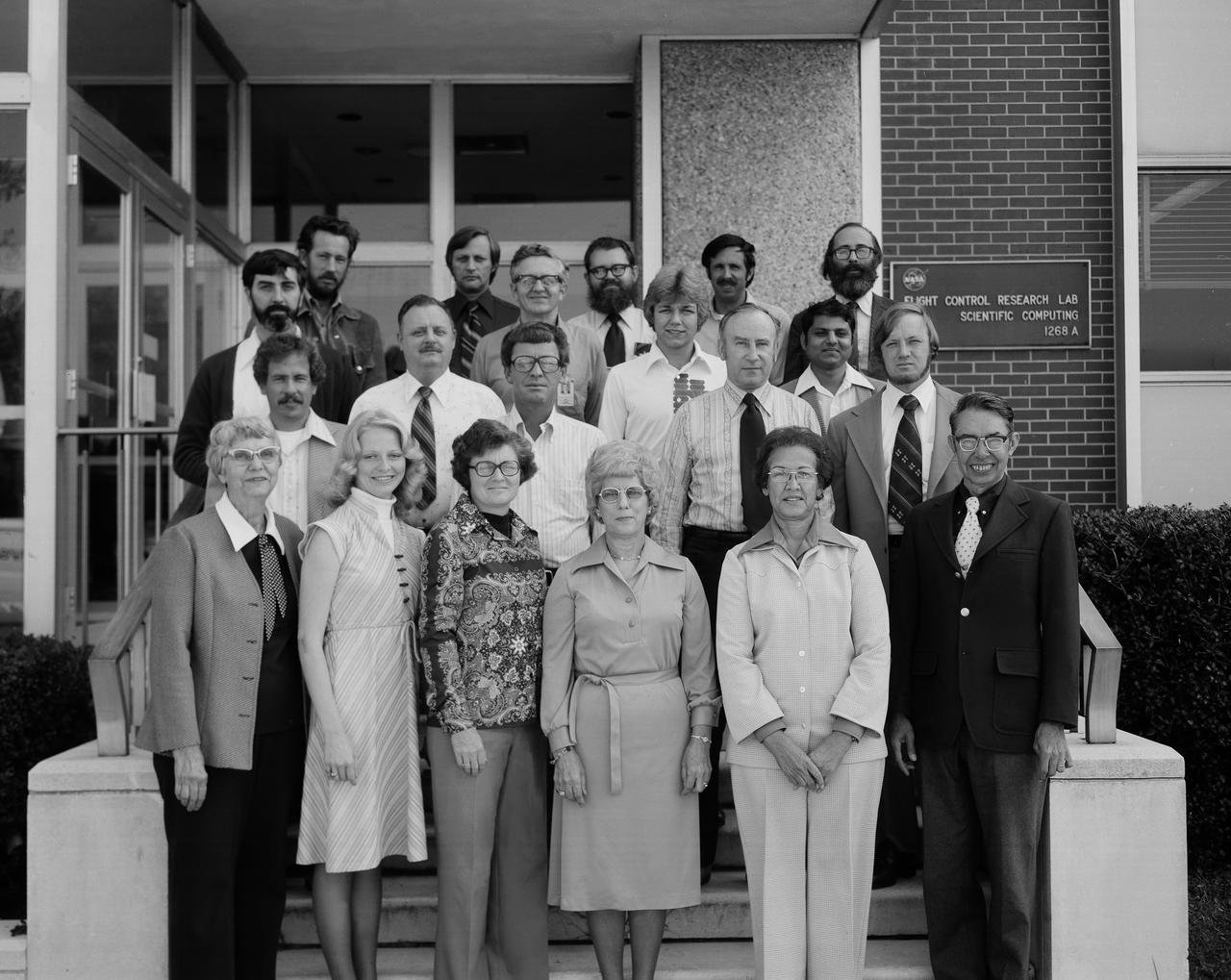
Stability and Control Branch Photo: Names, rows front to back, people left to right: Row 1: 1. ?? Graduate Student (USAF) 2. Robert Dunning 3. Rhonda Harvey Poppen 4. Katherine G. Johnson 5. ?? Graduate Student (USAF) 6. Vladislav Klein Row 2: 1. Mario Smith  2. Jeff Williams 3. N. Sundararajan 4. Tony Fontana 5. John Young Row 3: 1. Lawrence Taylor 2. Jim Batterson 3. Suresh Joshi 4. Daniel P. Giesy Row 4: 1. Bill Suit 2. Albert A. Schy  3. Al Hamer 4. Ernest Armstrong 5. Claude Keckler Row 5: 1. Chris Brown 2. Robert Bullock 3. Ray Montgomery 4. Jim Williams  5. Sahajendra Singh 6. Graduate Student (Egypt) Names given by Daniel P. Giesy.
Stability and Control Branch Photo
Test Setup For Model Landing Investigation of a Winged Space Vehicle  Image used in NASA Document TN-D-1496  1960-L-04633.01 is Figure 9a for NASA Document L-2064 Photograph of model on launcher and landing on runway.
Test Setup For Model Landing Investigation of a Winged Space Vehicle
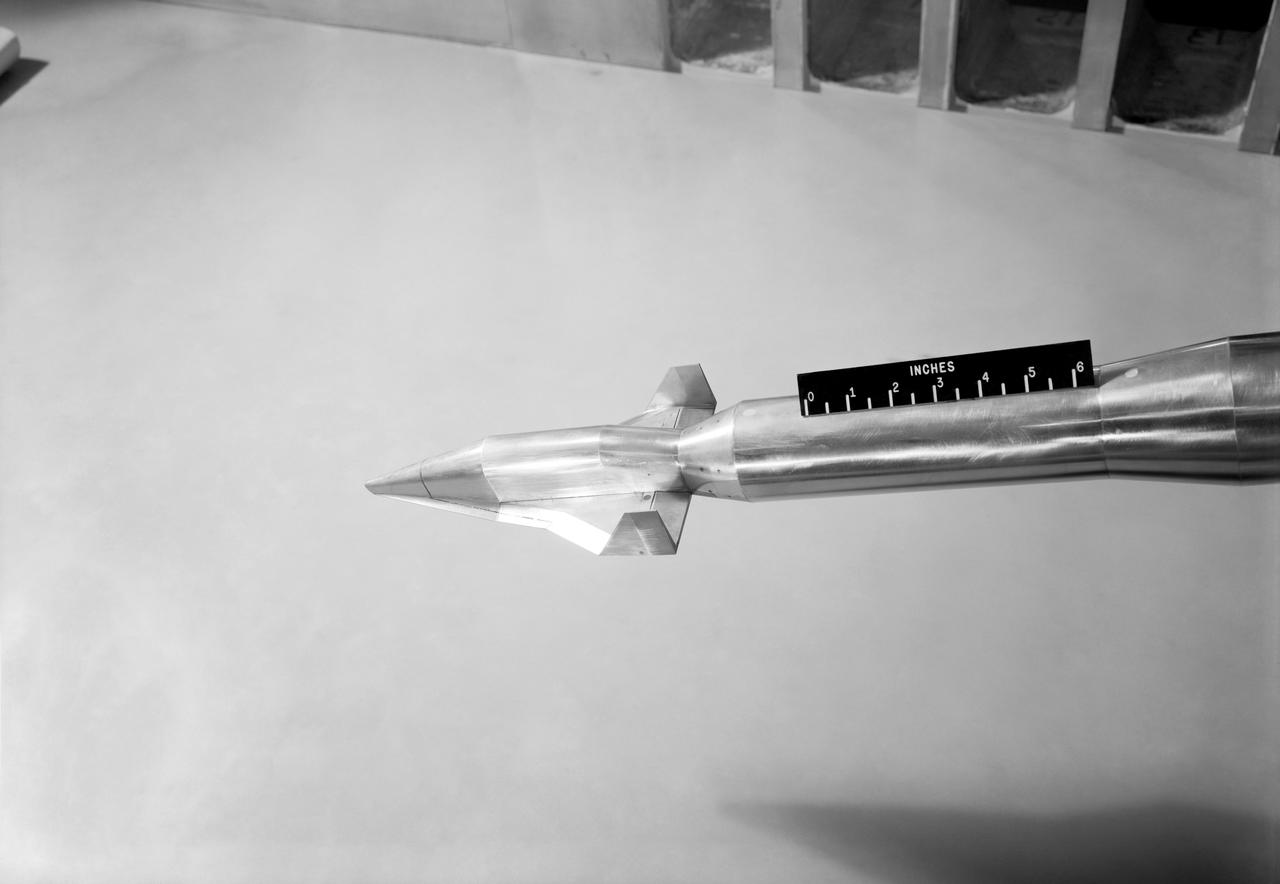
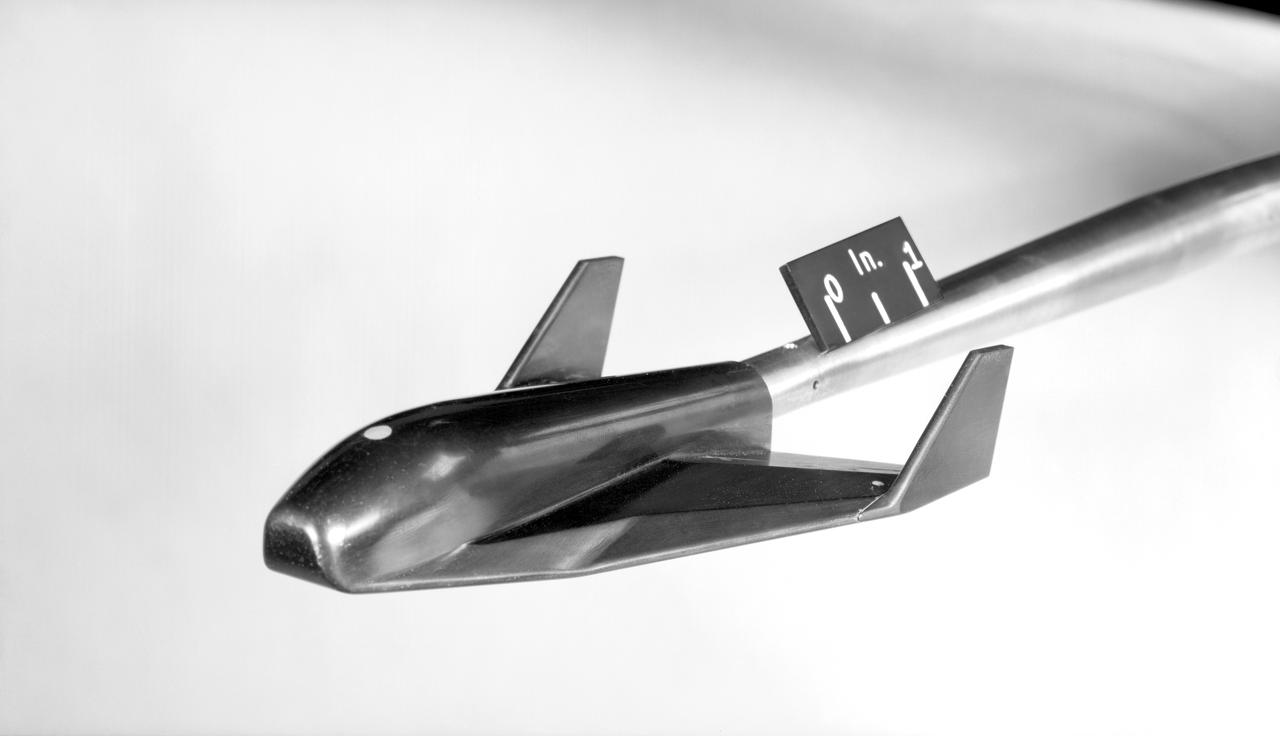
Lifting Type Re-Entry Vehicle
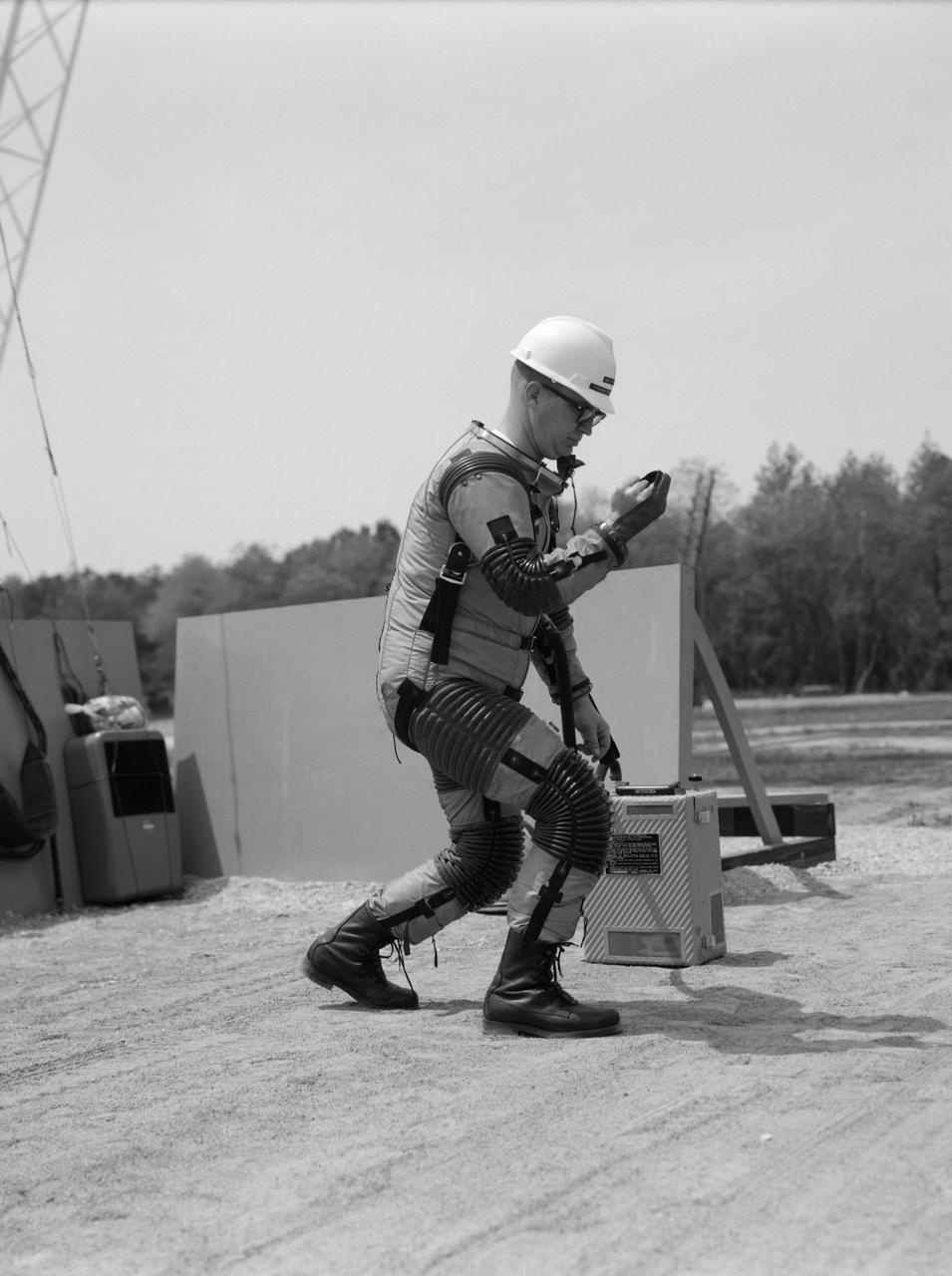
Jet Shoe Simulator
Jet Shoe Simulator
WS-110A Brown Bomber in Unitary Wind Tunnel Low Mach Number Test
North American X-15 Drop Model
Miscellaneous Charts, Space Capsule
Miscellaneous Charts
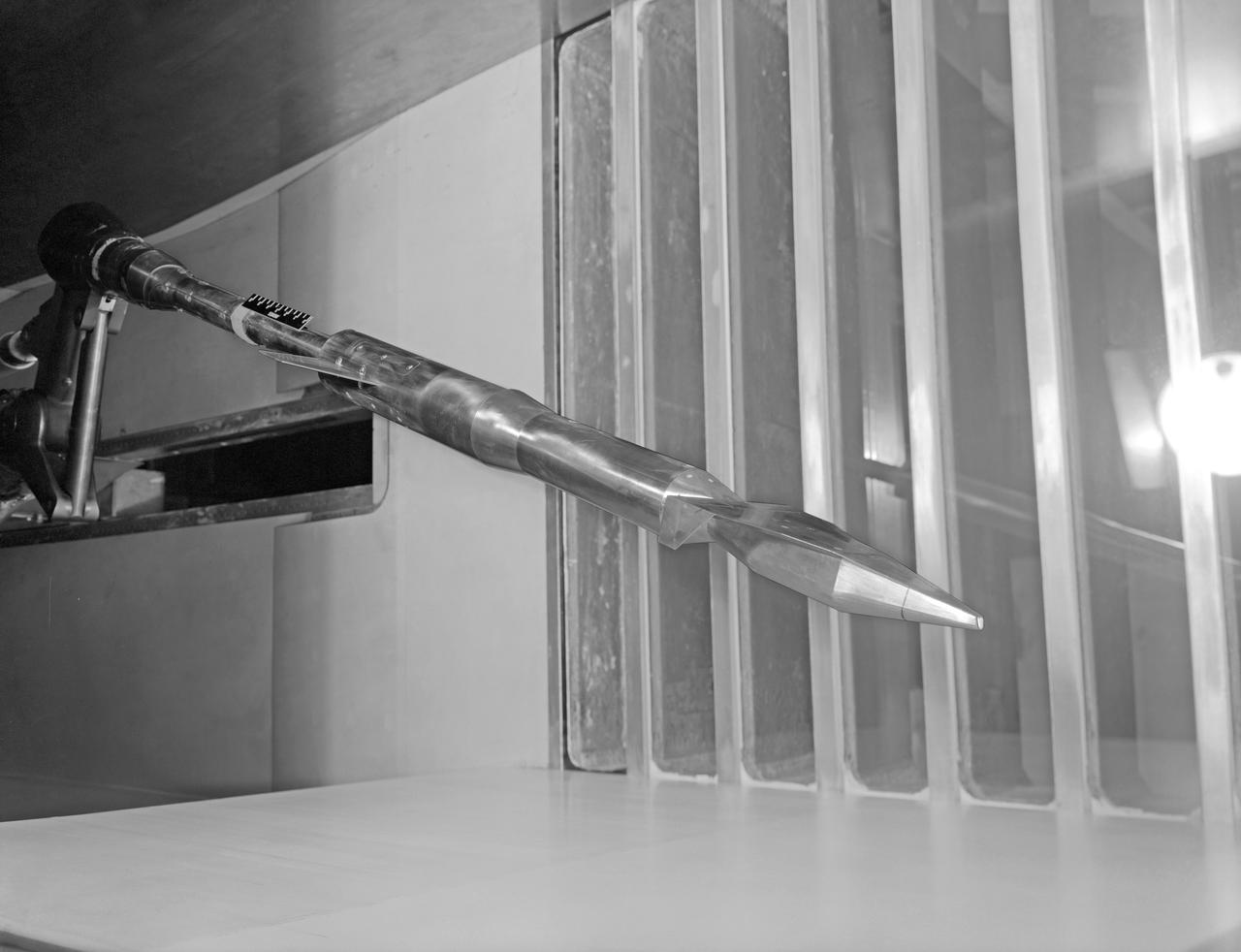
Air Force Javelin Rocket on Launcher (USAF JV-1) Wallops Model D4-78 L59-5144 First AFSWC Javelin sounding rocket ready for flight test, July 7, 1959. Photograph published in A New Dimension  Wallops Island Flight Test Range: The First Fifteen Years by Joseph Shortal. A NASA publication. Page 704.
First AFSWC Javelin Sounding Rocket On Launcher at Wallops Island.
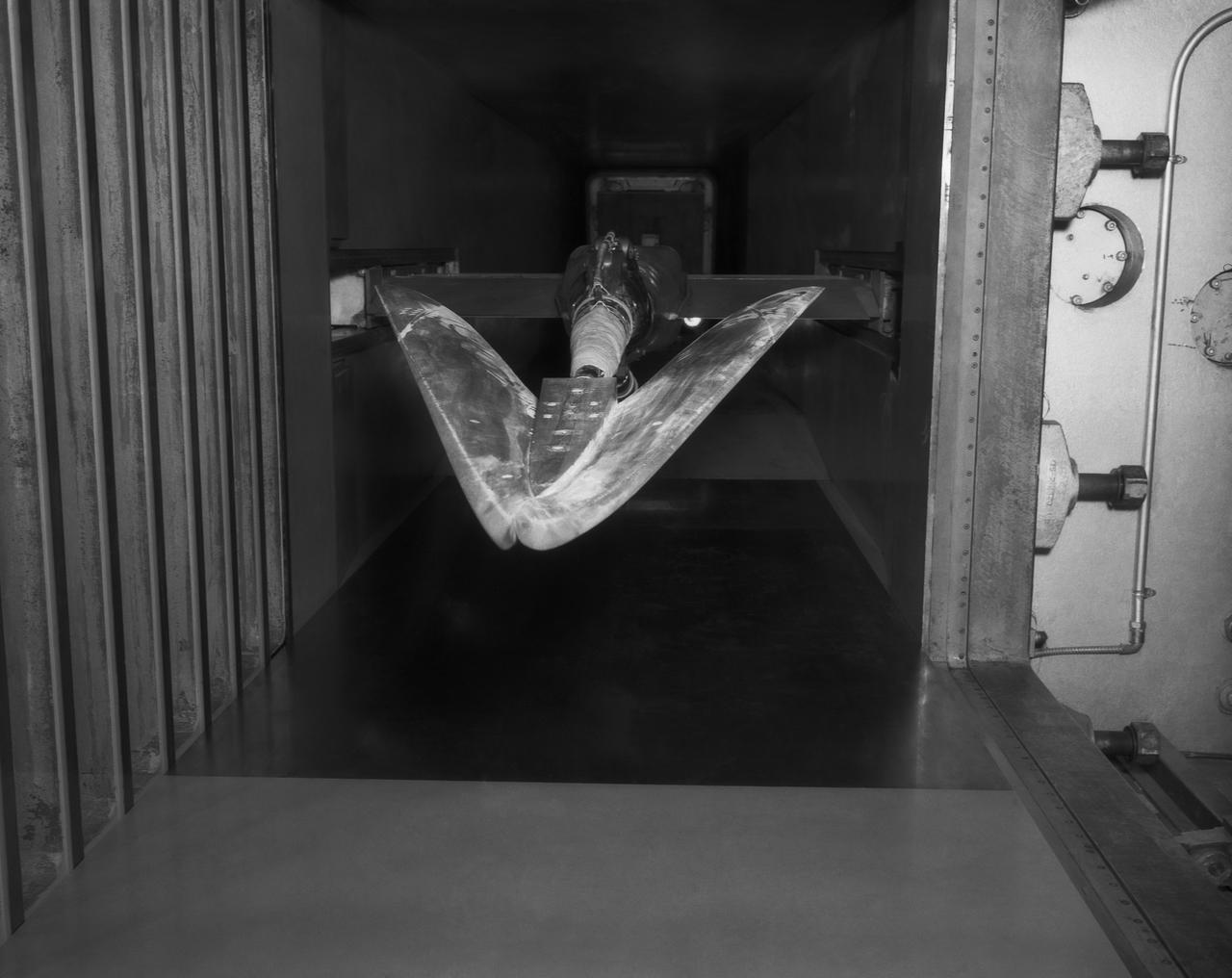
Prop Damage in the 8 foot TT (Transfer Tunnel)
L59-8368 Spherical 5 Inch rocket motor with radio beacon mounted as a torus around the nozzle. View shows motor as used in trailblazer I vehicles. Photograph published in A New Dimension  Wallops Island Flight Test Range: The First Fifteen Years by Joseph Shortal. A NASA publication. Page 678.
Spherical 5 Inch rocket motor
Arcas Rocket B1-110
Arcas Rocket B1-110
L1-422 Nike Smoke Rocket and Launcher in Firing Position. Image taken at Wallops Island.
L1-422 Nike Smoke
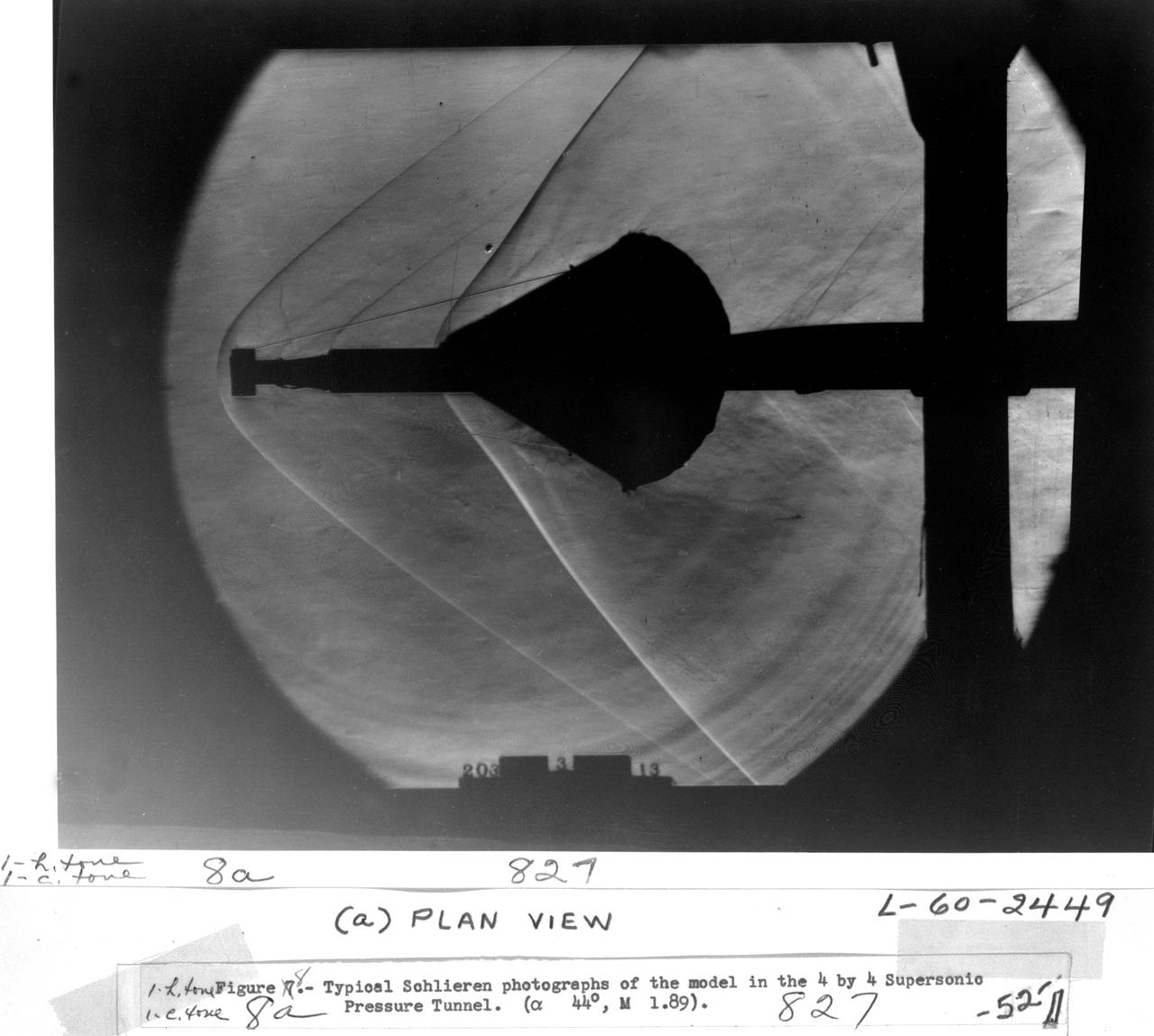
HSC Model 154 Dyna Soar (Martin-Bell)
Control utilizing inertia wheel and bar magnet.
Satellite control
Modified Bell X-1 model pioneered variable-sweep studies in 1947.  Photograph published in Sixty Years of Aeronautical Research 1917-1977 By David A. Anderton. A NASA publication, page 52.
Bell X-1 Research Model on Single Support Strut in 7 x 10 Foot Wind Tunnel
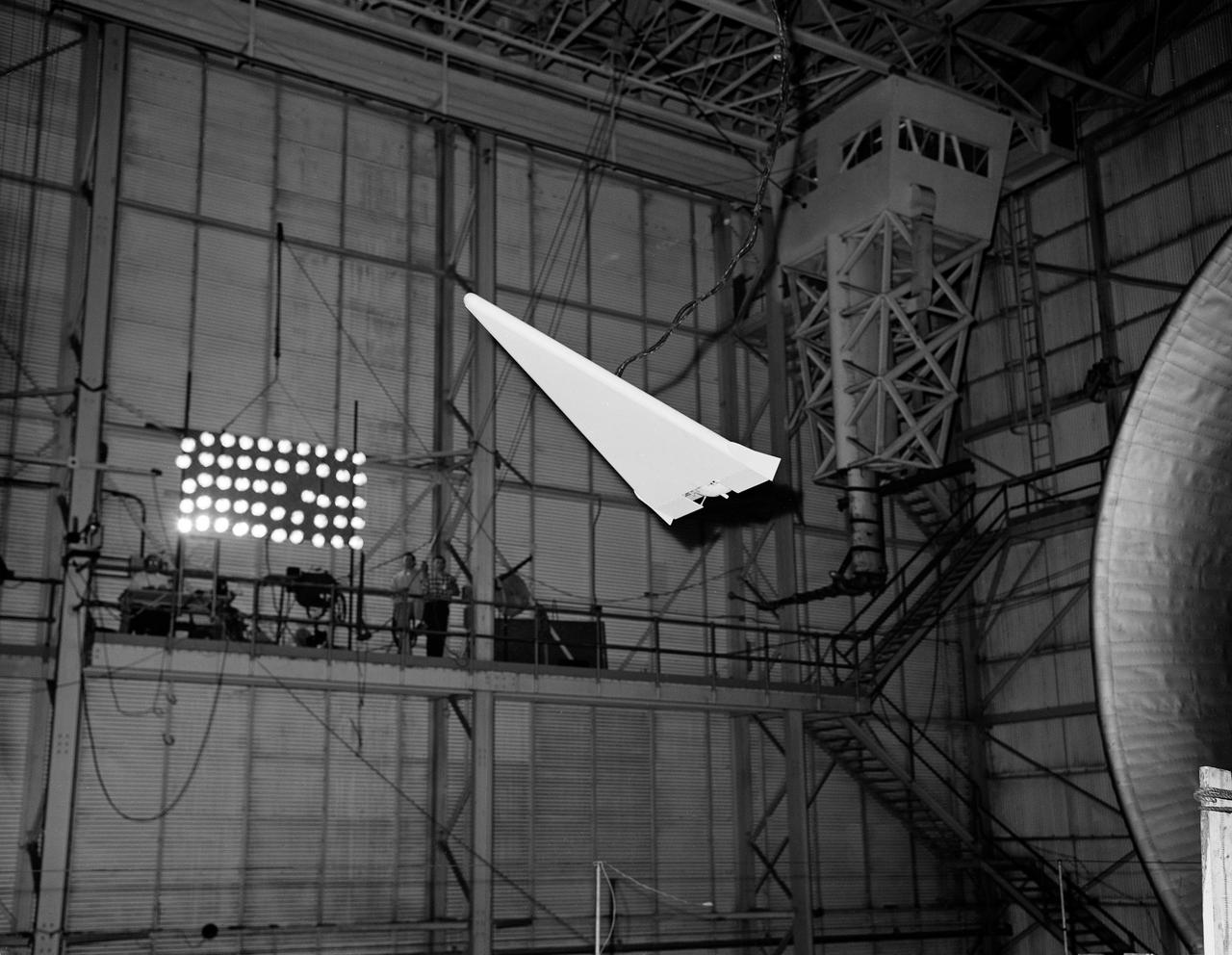
L57-1439 A model based on Langley s concept of a hypersonic glider was test flown on an umbilical cord inside the Full Scale Tunnel in 1957. Photograph published in Engineer in Charge: A History of the Langley Aeronautical Laboratory, 1917-1958 by James R. Hansen. Page 374.
Hypersonic Glider Model in Full Scale Tunnel 1957
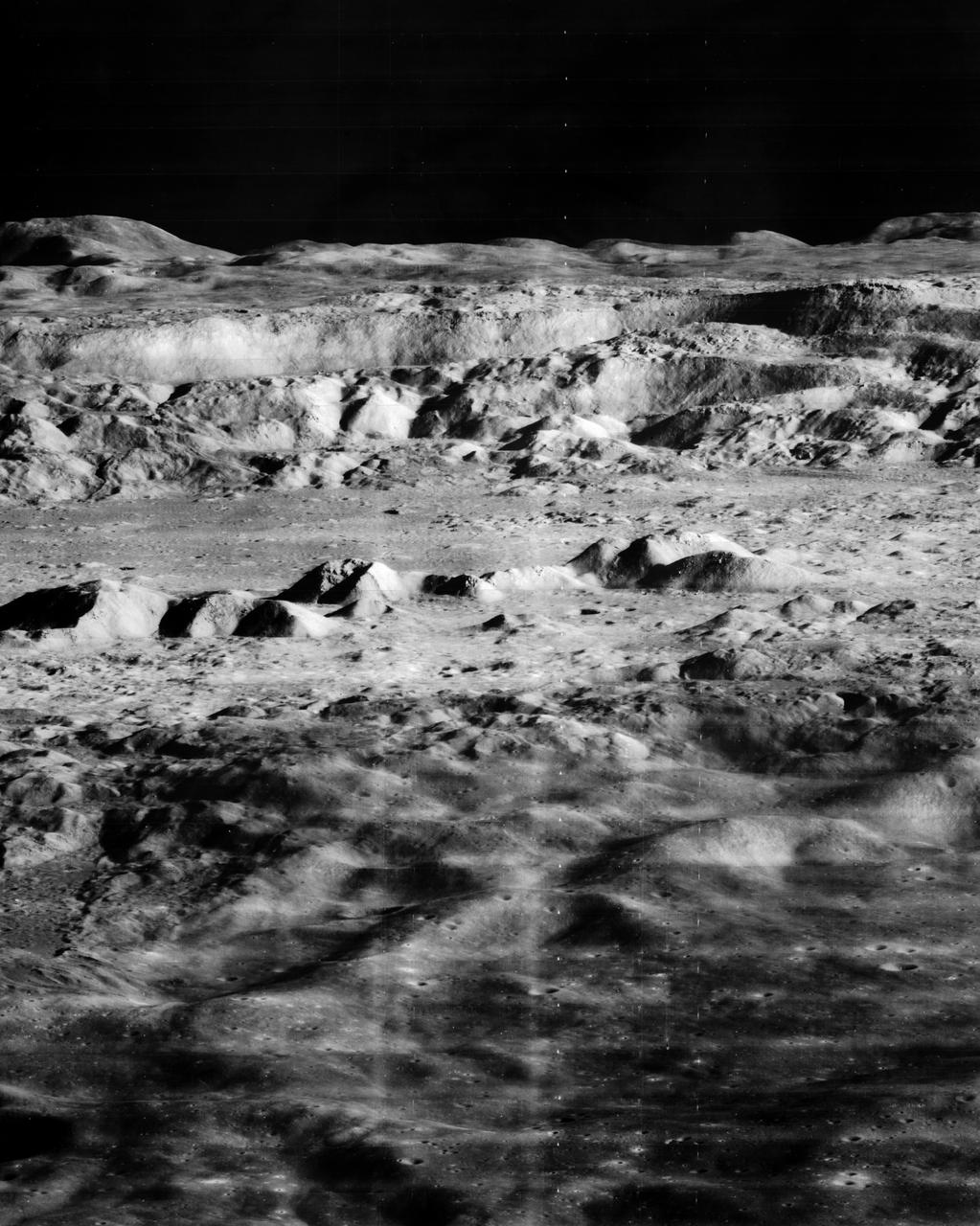
Moon Lunar Orbiter-Lunar Orbiter II:  Display Transparencies Lunar Orbiter II from Washington Press Conference. Lunar Orbiter II's telephoto lens took this picture of the floor of the crater Copernicus. -- Photograph published in Winds of Change, 75th Anniversary NASA publication (page 94), by James Schultz.
Moon Lunar Orbiter-Lunar Orbiter II
Air Force Javelin Rocket on Launcher (USAF JV-1) Wallops Model D4-78 L59-5144 First AFSWC Javelin sounding rocket ready for flight test, July 7, 1959. Photograph published in A New Dimension  Wallops Island Flight Test Range: The First Fifteen Years by Joseph Shortal. A NASA publication. Page 704.
First AFSWC Javelin Sounding Rocket On Launcher at Wallops Island.
Vehicles and Missions Studies Charts, Space Capsule
Vehicles and Missions Studies Charts
G-2-120 Nike Asp
G-2-120 Nike Asp
Astronauts at 1959 Langley Inspection
Portrait of Dr. John C. Houbolt
Images take for NASA Document L-1220
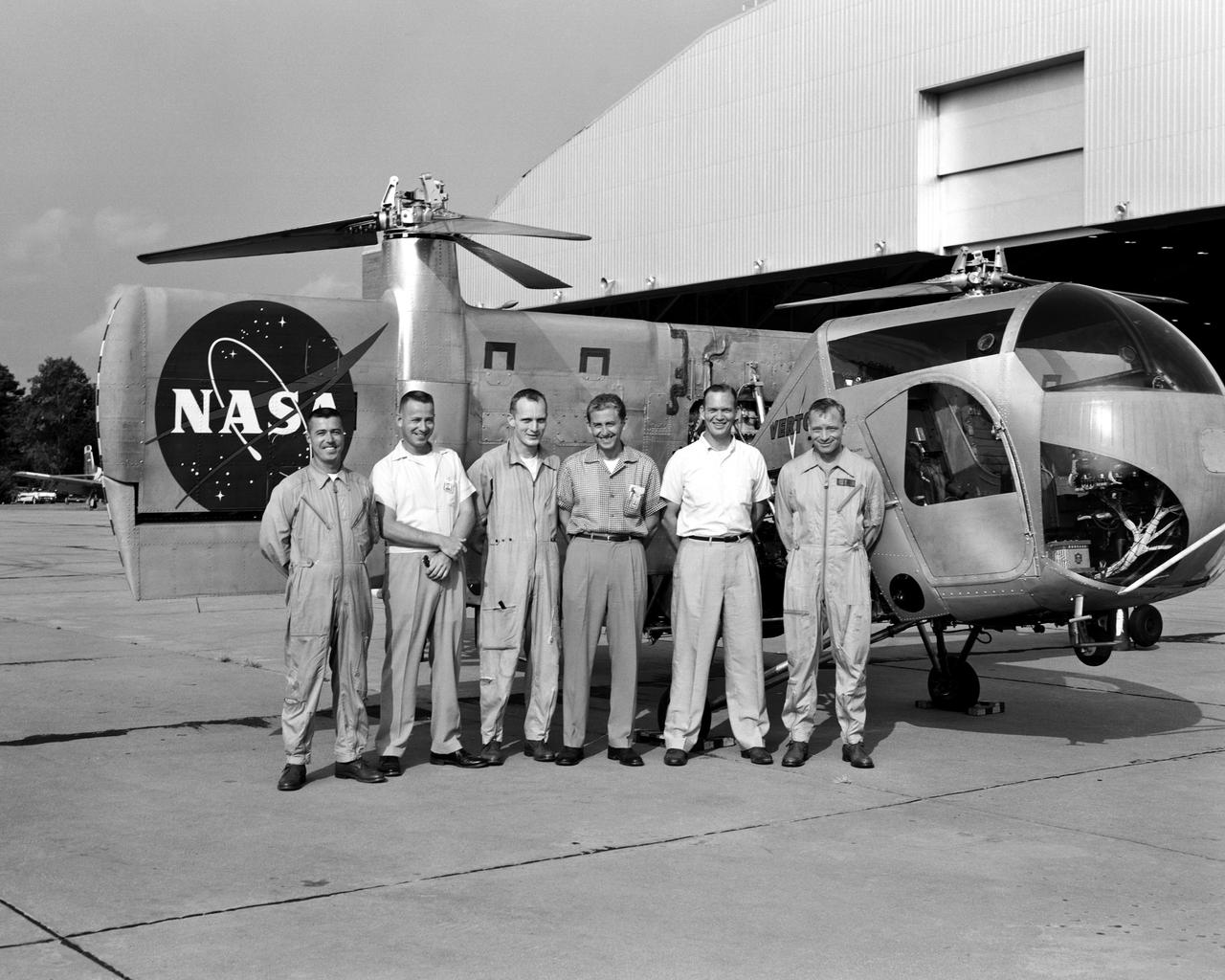
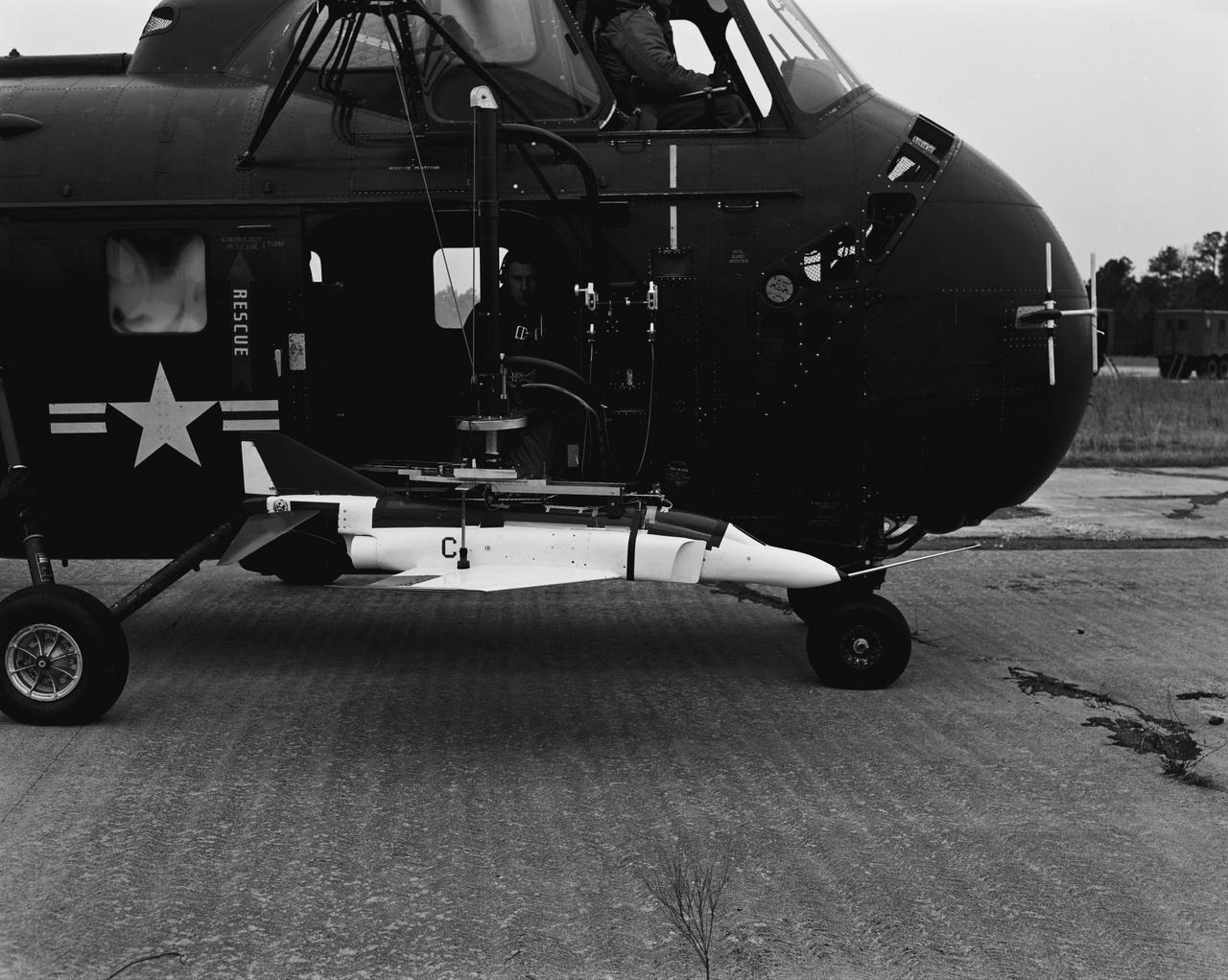
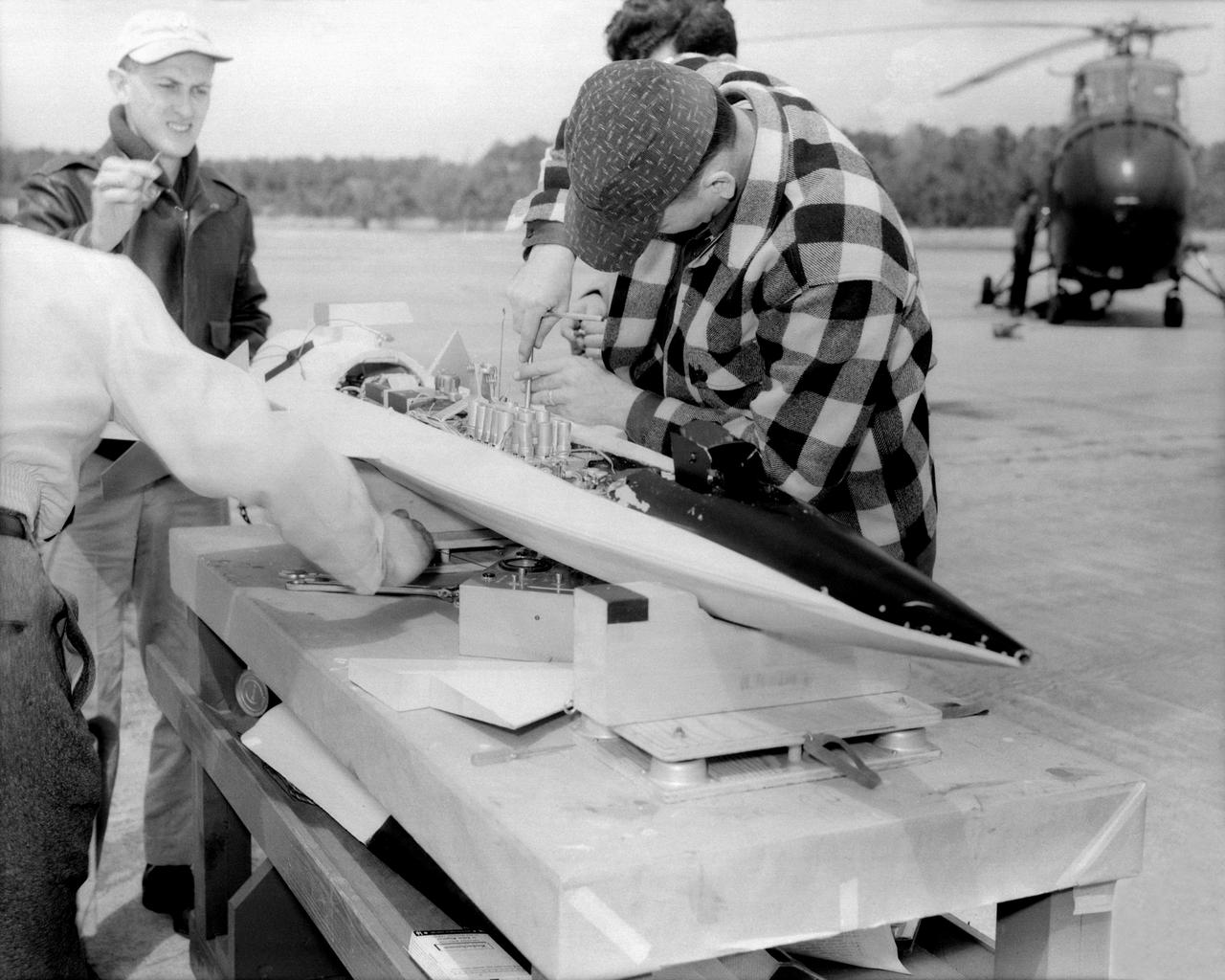
Model being tested with helicopter.
Model
Phase SB Propeller installed on F88B
Images take for NASA Document L-1220
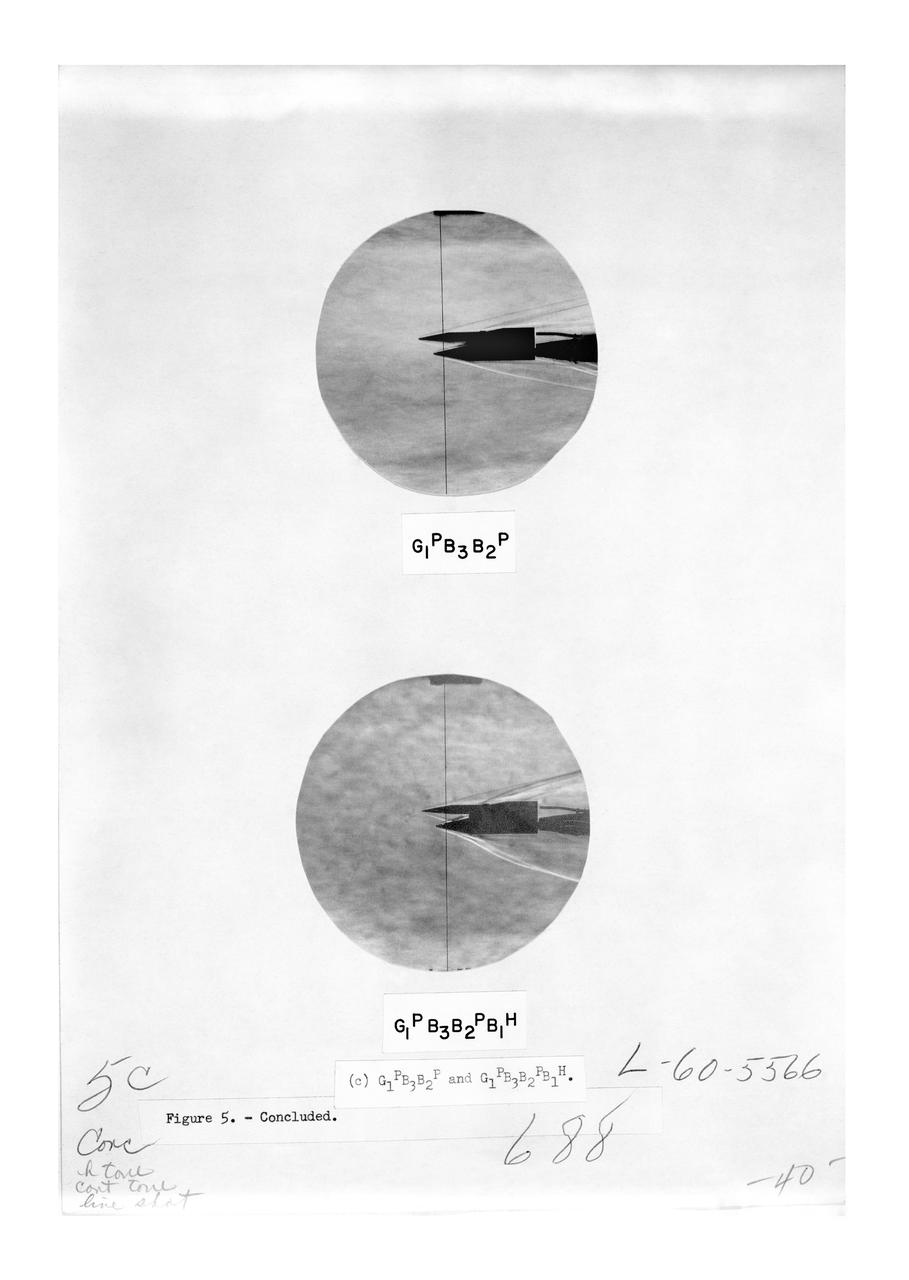
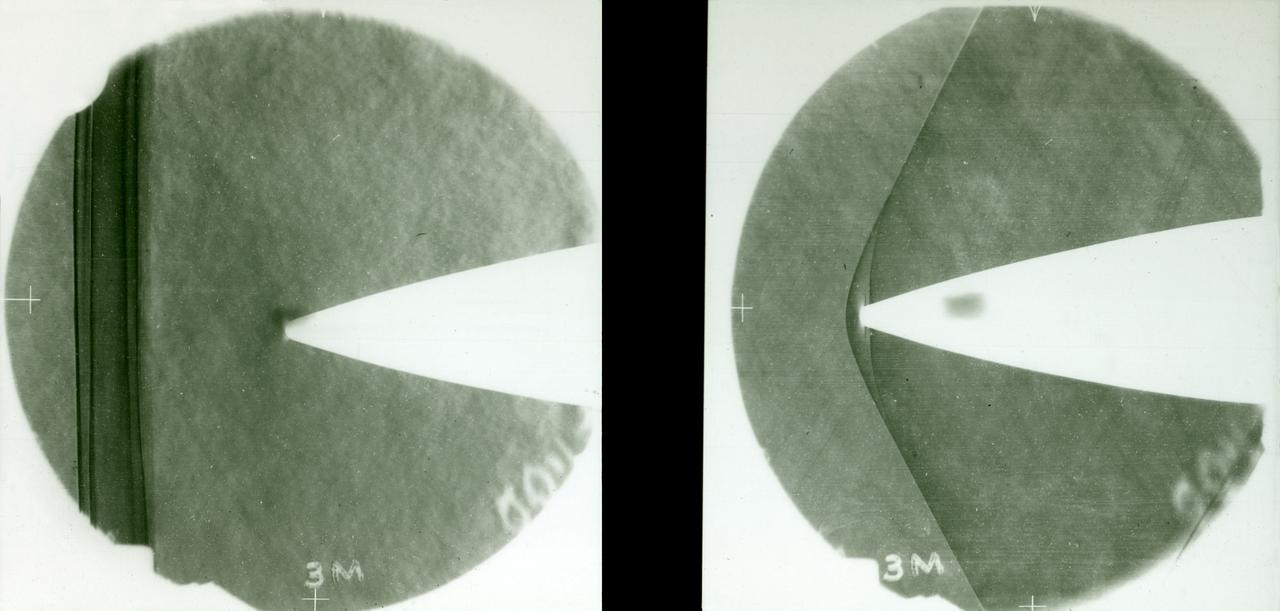
 8-Foot Transonic Pressure Tunnel (TPT): Sample of Schlieren results Left - Mach     1.03 Right - Mach     1.20.
8-Foot Transonic Pressure Tunnel (TPT)
Test subject sitting at the controls: Project LOLA or Lunar Orbit and Landing Approach was a simulator built at Langley to study problems related to landing on the lunar surface. It was a complex project that cost nearly $2 million dollars. James Hansen wrote: "This simulator was designed to provide a pilot with a detailed visual encounter with the lunar surface; the machine consisted primarily of a cockpit, a closed-circuit TV system, and four large murals or scale models representing portions of the lunar surface as seen from various altitudes. The pilot in the cockpit moved along a track past these murals which would accustom him to the visual cues for controlling a spacecraft in the vicinity of the moon. Unfortunately, such a simulation--although great fun and quite aesthetic--was not helpful because flight in lunar orbit posed no special problems other than the rendezvous with the LEM, which the device did not simulate. Not long after the end of Apollo, the expensive machine was dismantled." (p. 379) Ellis J. White further described this simulator in his paper , "Discussion of Three Typical Langley Research Center Simulation Programs," (Paper presented at the Eastern Simulation Council (EAI's Princeton Computation Center), Princeton, NJ, October 20, 1966.) "A typical mission would start with the first cart positioned on model 1 for the translunar approach and orbit establishment. After starting the descent, the second cart is readied on model 2 and, at the proper time, when superposition occurs, the pilot's scene is switched from model 1 to model 2. then cart 1 is moved to and readied on model 3. The procedure continues until an altitude of 150 feet is obtained. The cabin of the LM vehicle has four windows which represent a 45 degree field of view. The projection screens in front of each window represent 65 degrees which allows limited head motion before the edges of the display can be seen. The lunar scene is presented to the pilot by rear projection on the screens with four Schmidt television projectors. The attitude orientation of the vehicle is represented by changing the lunar scene through the portholes determined by the scan pattern of four orthicons. The stars are front projected onto the upper three screens with a four-axis starfield generation (starball) mounted over the cabin and there is a separate starball for the low window." -- Published in James R. Hansen, Spaceflight Revolution: NASA Langley Research Center From Sputnik to Apollo, (Washington: NASA, 1995), p. 379.
Project LOLA or Lunar Orbit and Landing Approach was a simulator built at Langley
Space Couch Preparation  man with the mustache is Richard H. Pingley
Space Couch Preparation
Modified Bell X-1 model pioneered variable-sweep studies in 1947.  Photograph published in Sixty Years of Aeronautical Research 1917-1977 By David A. Anderton. A NASA publication, page 52.
Bell X-1 Research Model on Single Support Strut in 7 x 10 Foot Wind Tunnel
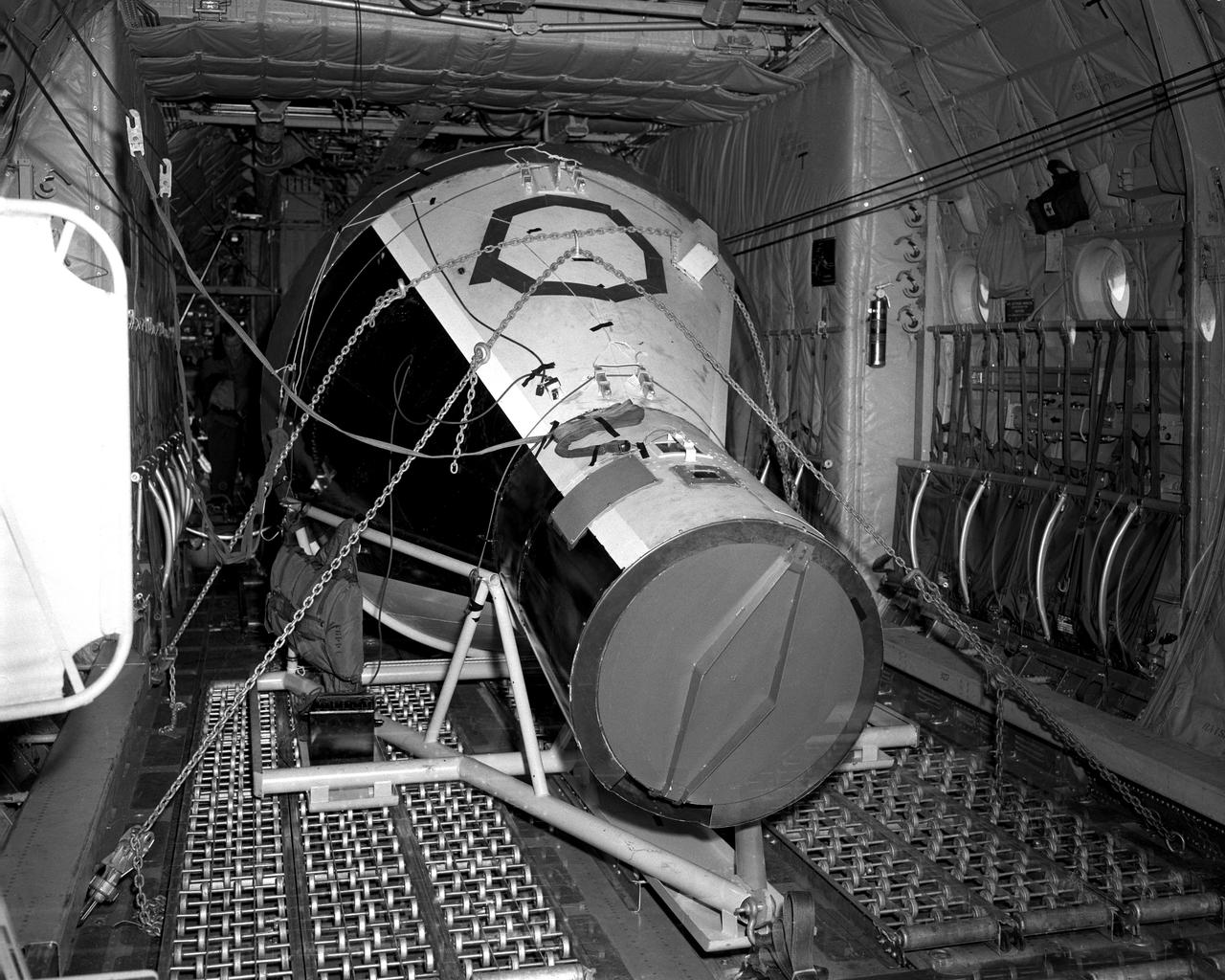
 A hot jet research facility, used extensively in the design and development of the reentry heat shield on the Project Mercury spacecraft. The electrically-heated arc jet simulates the friction heating encountered by a space vehicle as it returns to the earth's atmosphere at high velocities. The arc jet was located in Langley's Structures Research Laboratory. It was capable of heating the air stream to about 9,000 degrees F. -- Published in Taken from an October 5, 1961 press release entitled:  Hot Jet Research Facility used in Reentry Studies will be demonstrated at NASA Open House, October 7.
Arc Furnace Mercury Capsule
Control utilizing inertia wheel and bar magnet.
Satellite control
WS-110A "Brown Bomber"
Katherine G. Johnson Computational Research Facility Ribbon Cutting Ceremony, and tour
Ribbon Cutting
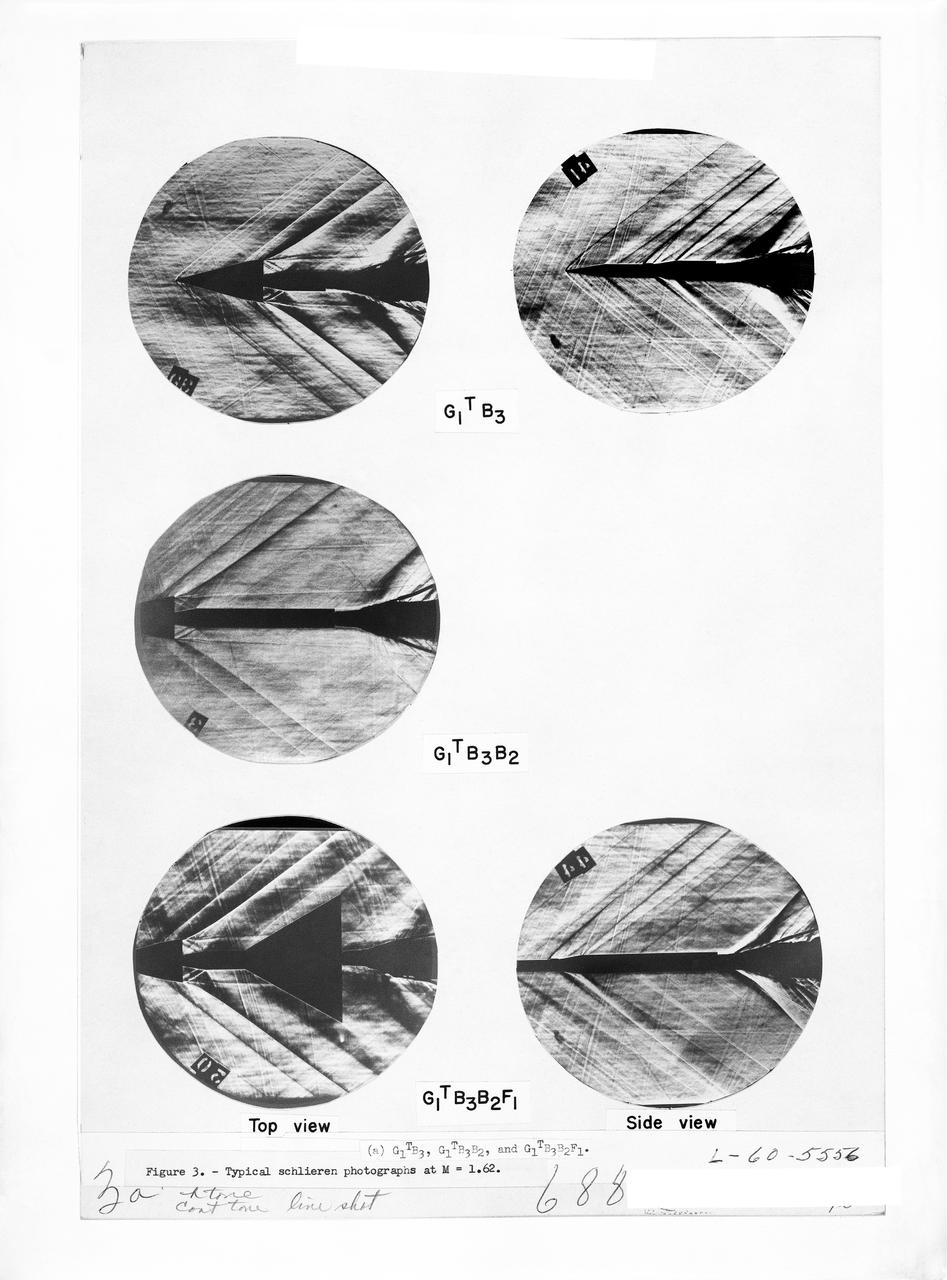
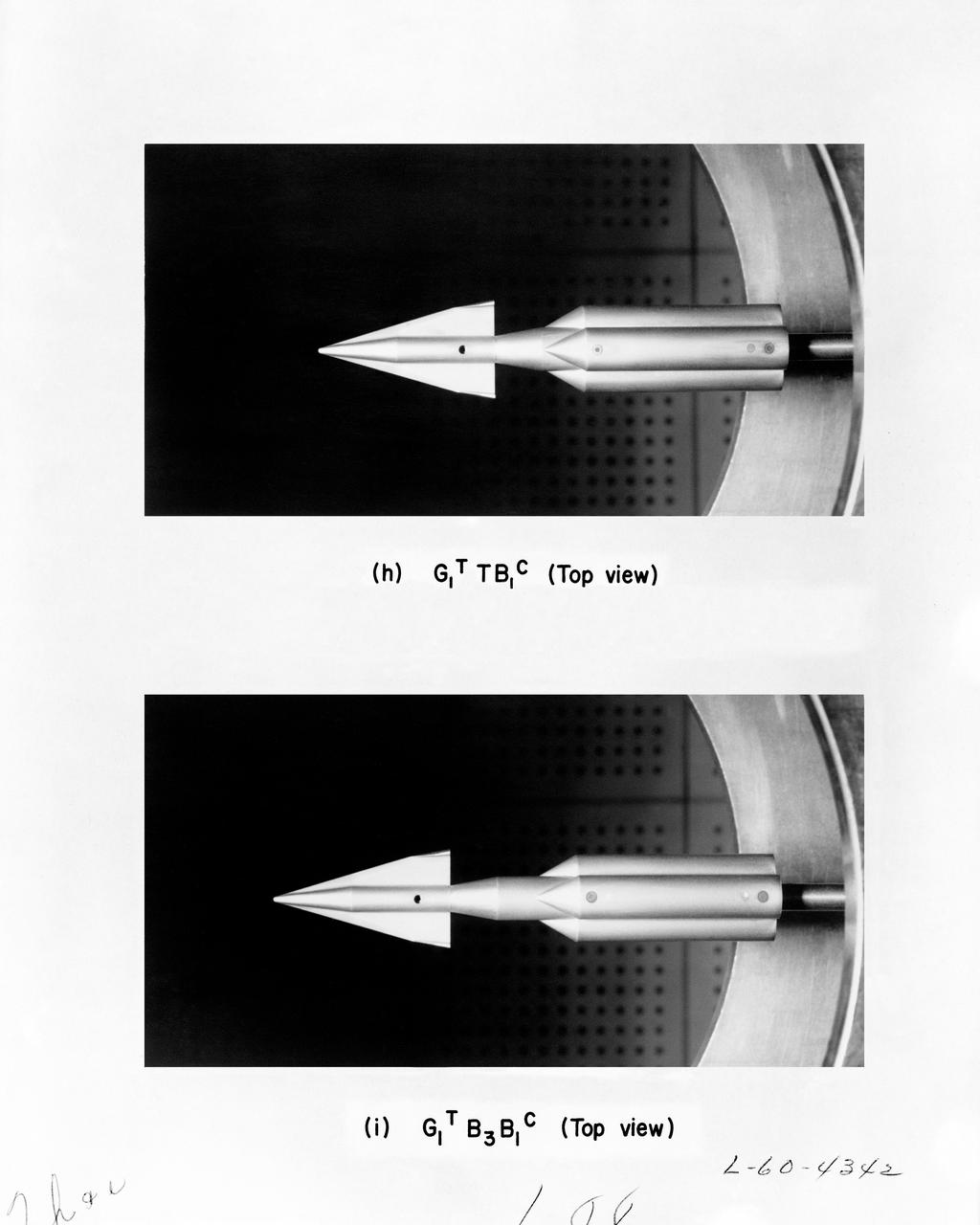
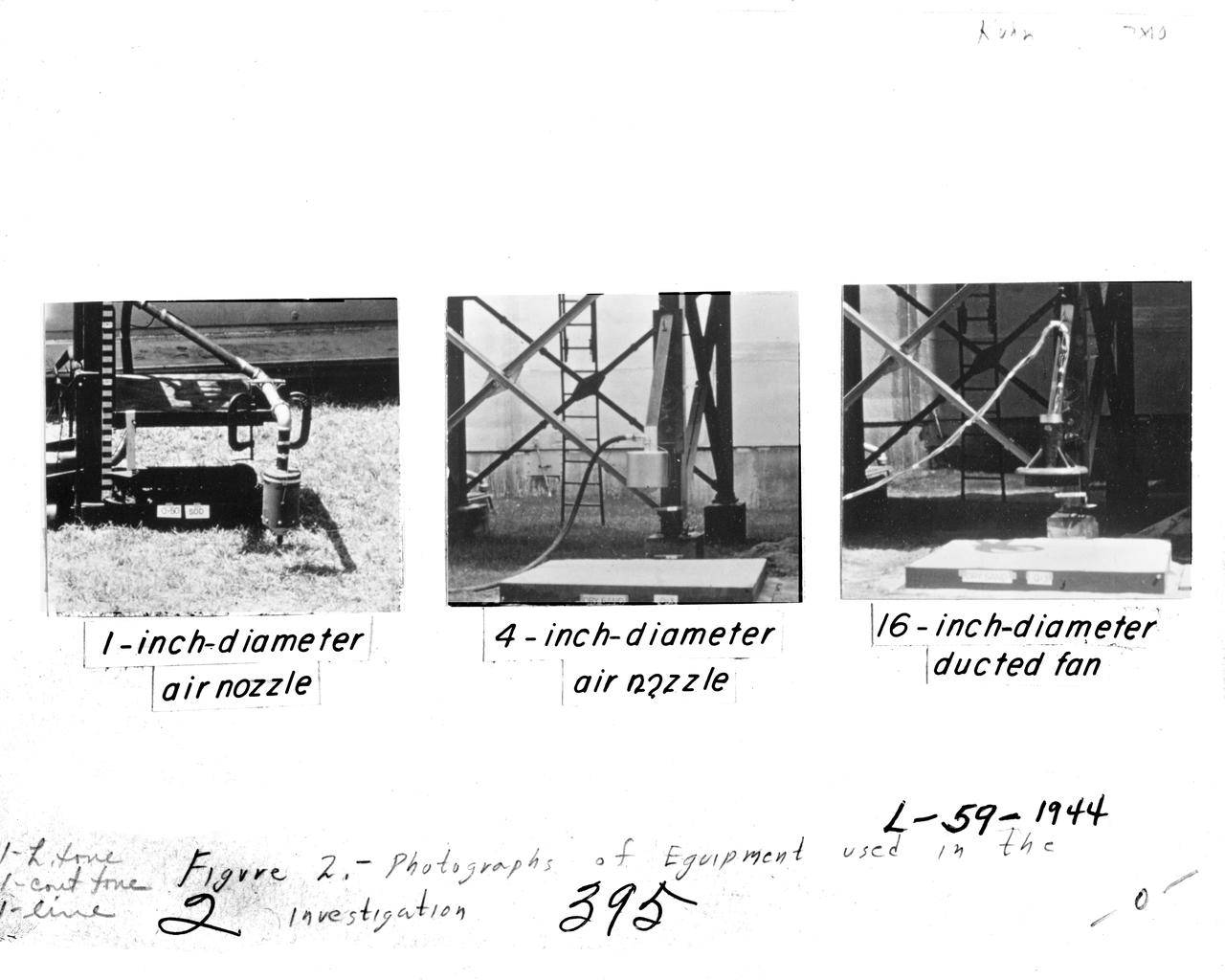
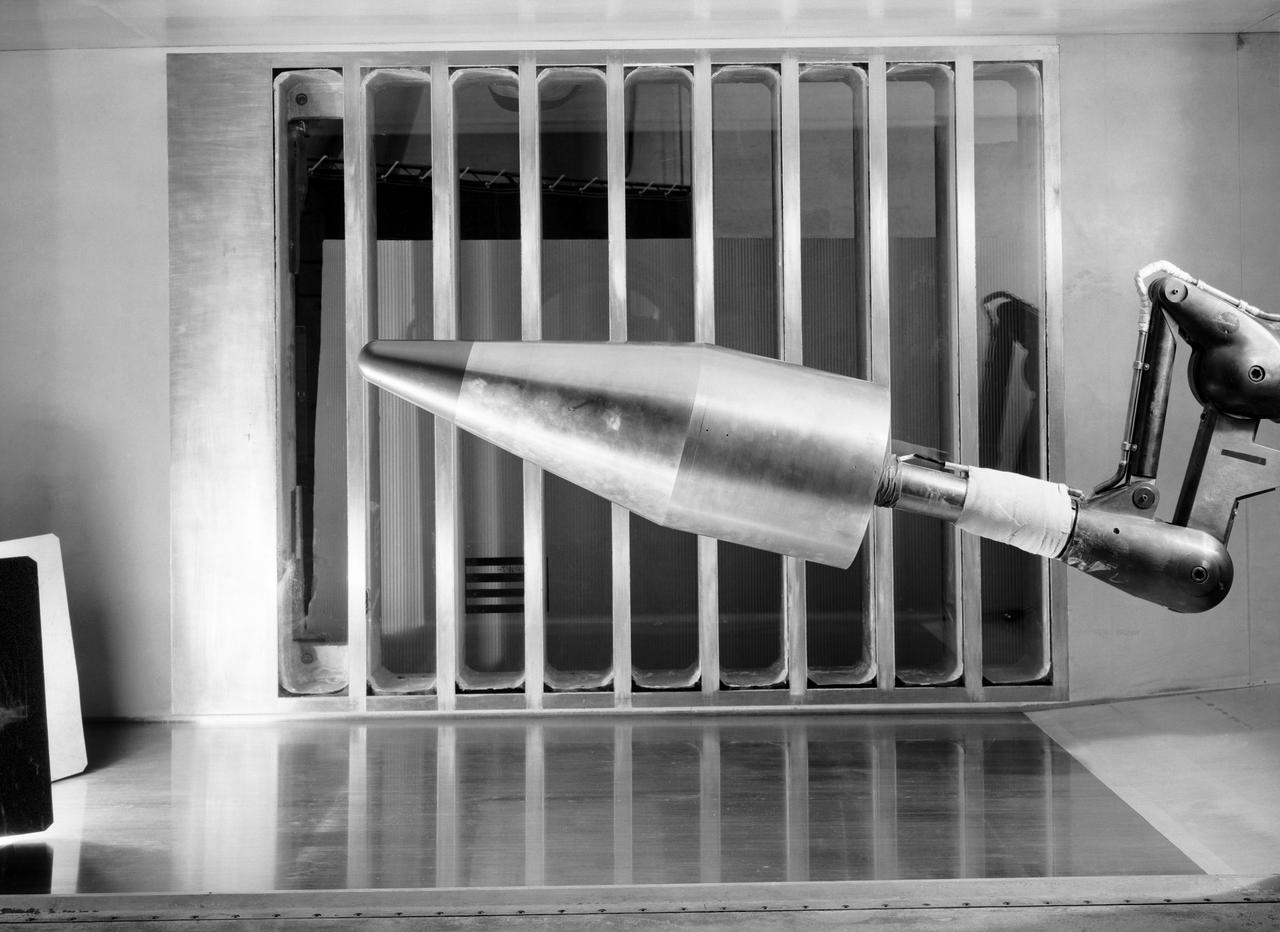
Figure 3-5 for NASA Document TM-X-356
Arcas Rocket B1-110
Arcas Rocket B1-110
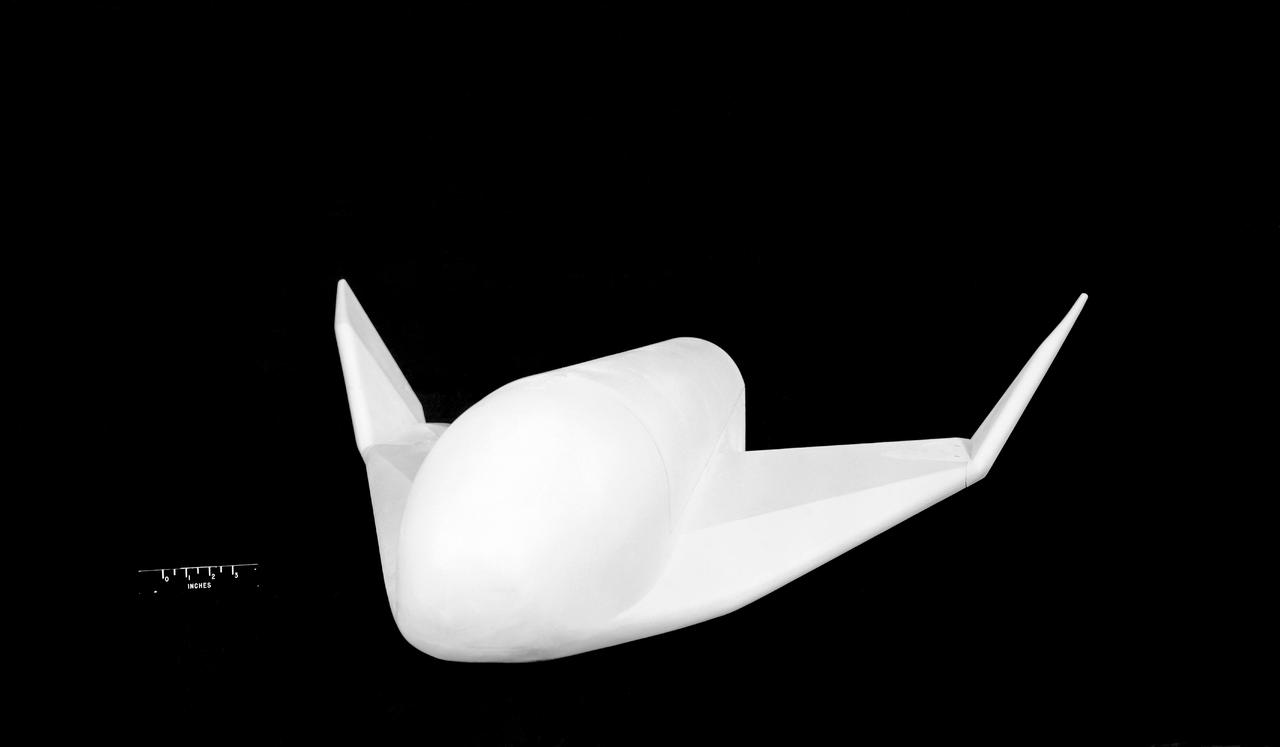
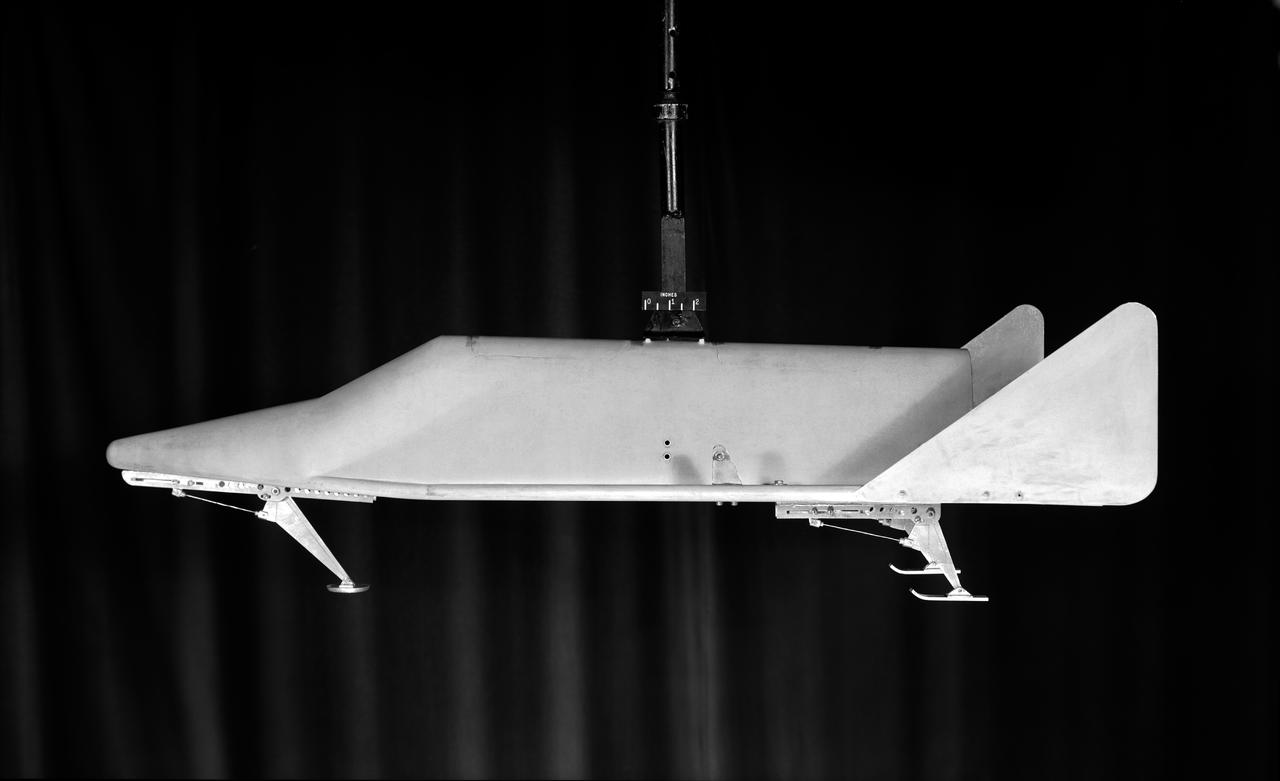
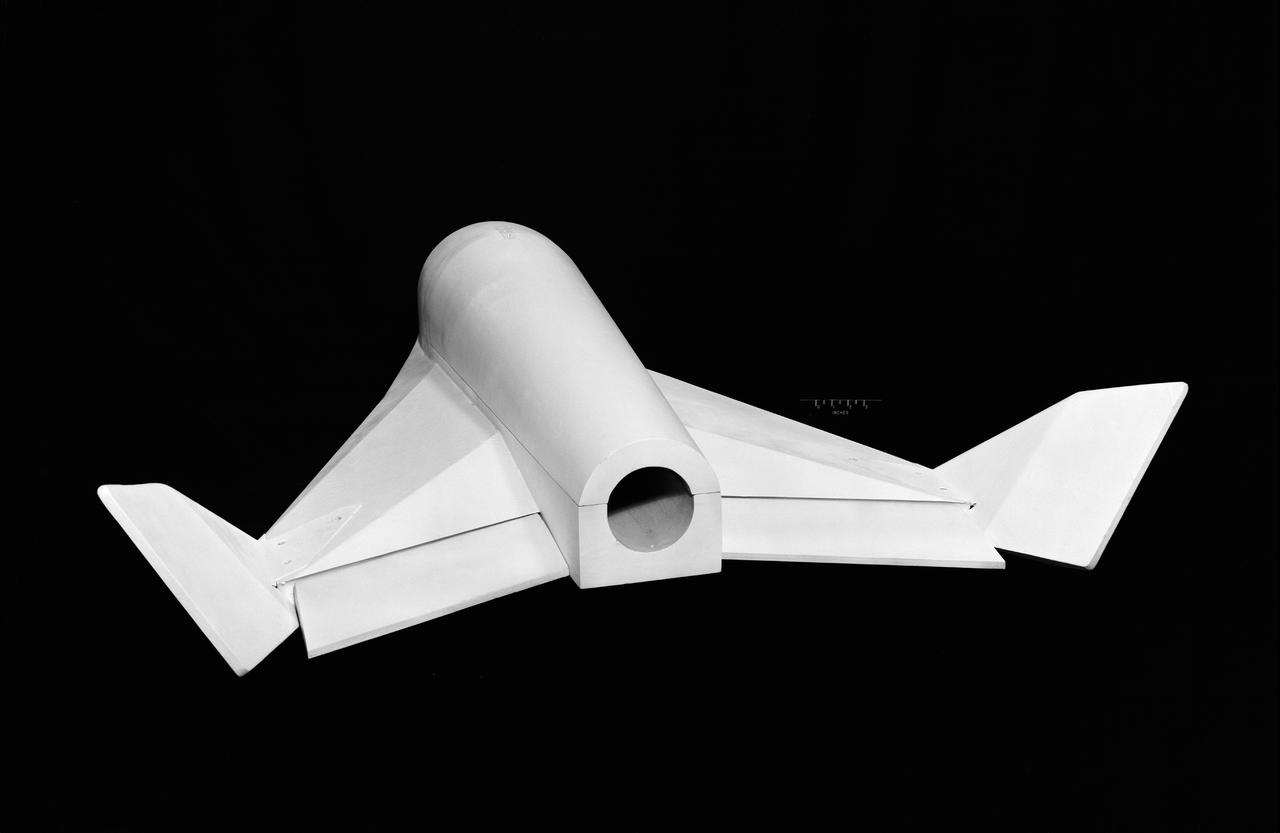
Model of Winged Space Vehicle
L5-19 (F40-2752) Model in Launch Position
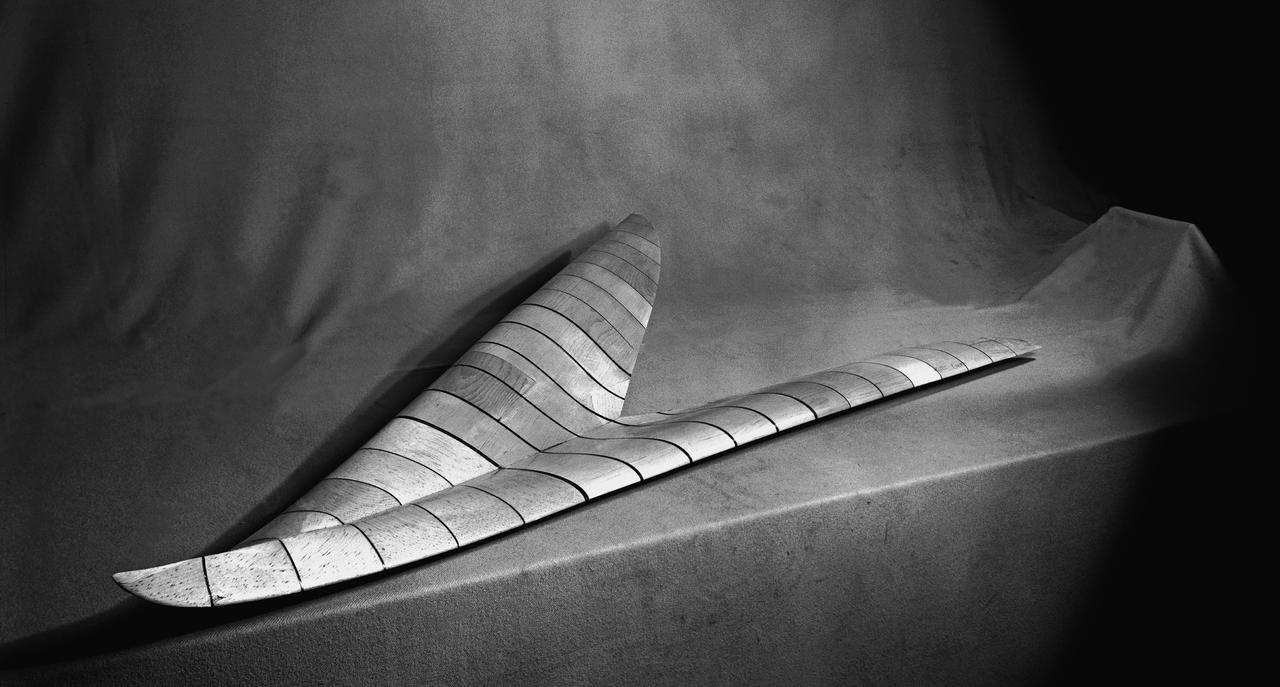
Martin-Bell Dyna Soar I in Unitary Tunnel
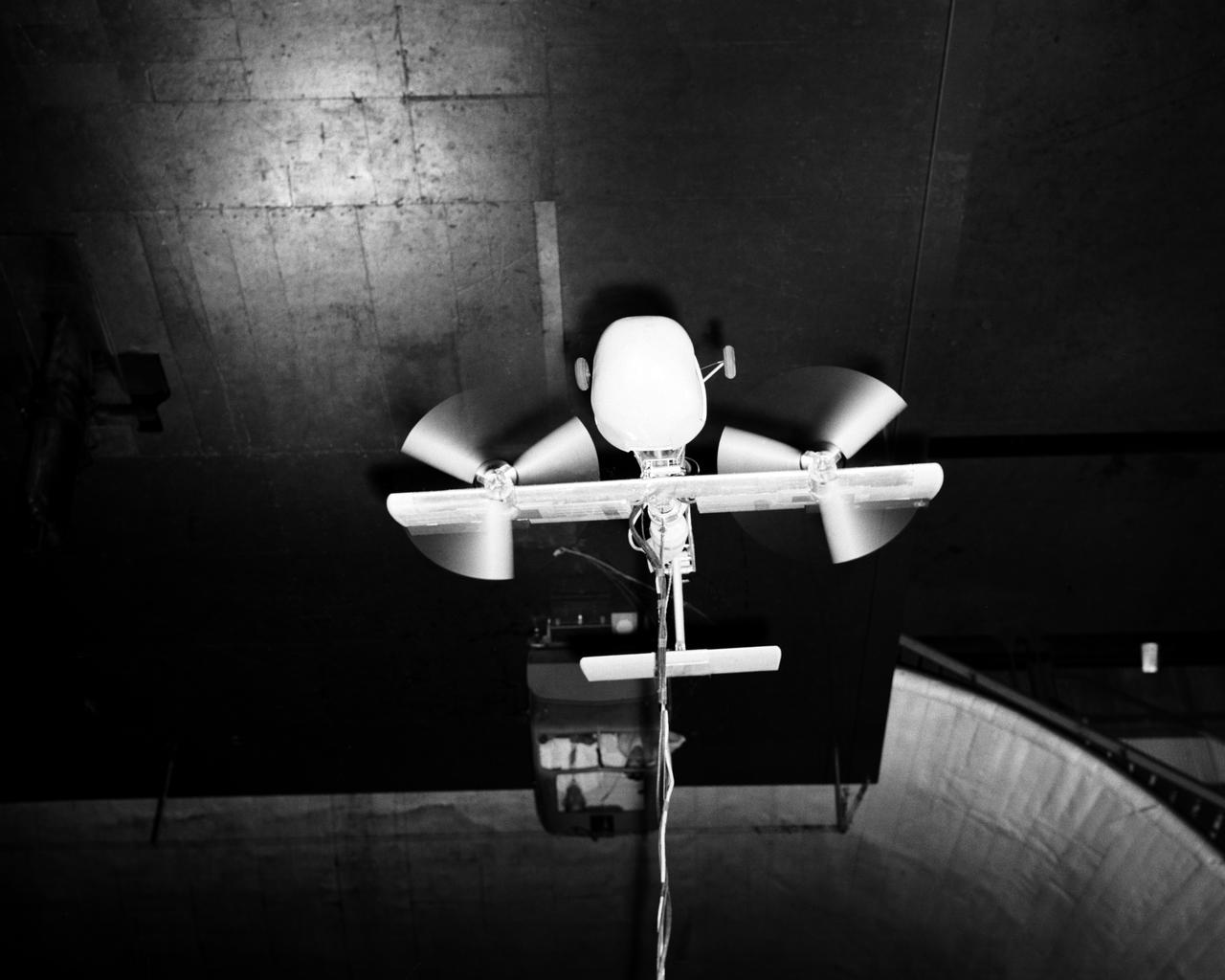
Various views of the Goodyear Inflate-A-Plane mounted in Full Scale Tunnel.
Goodyear inflatable aircraft
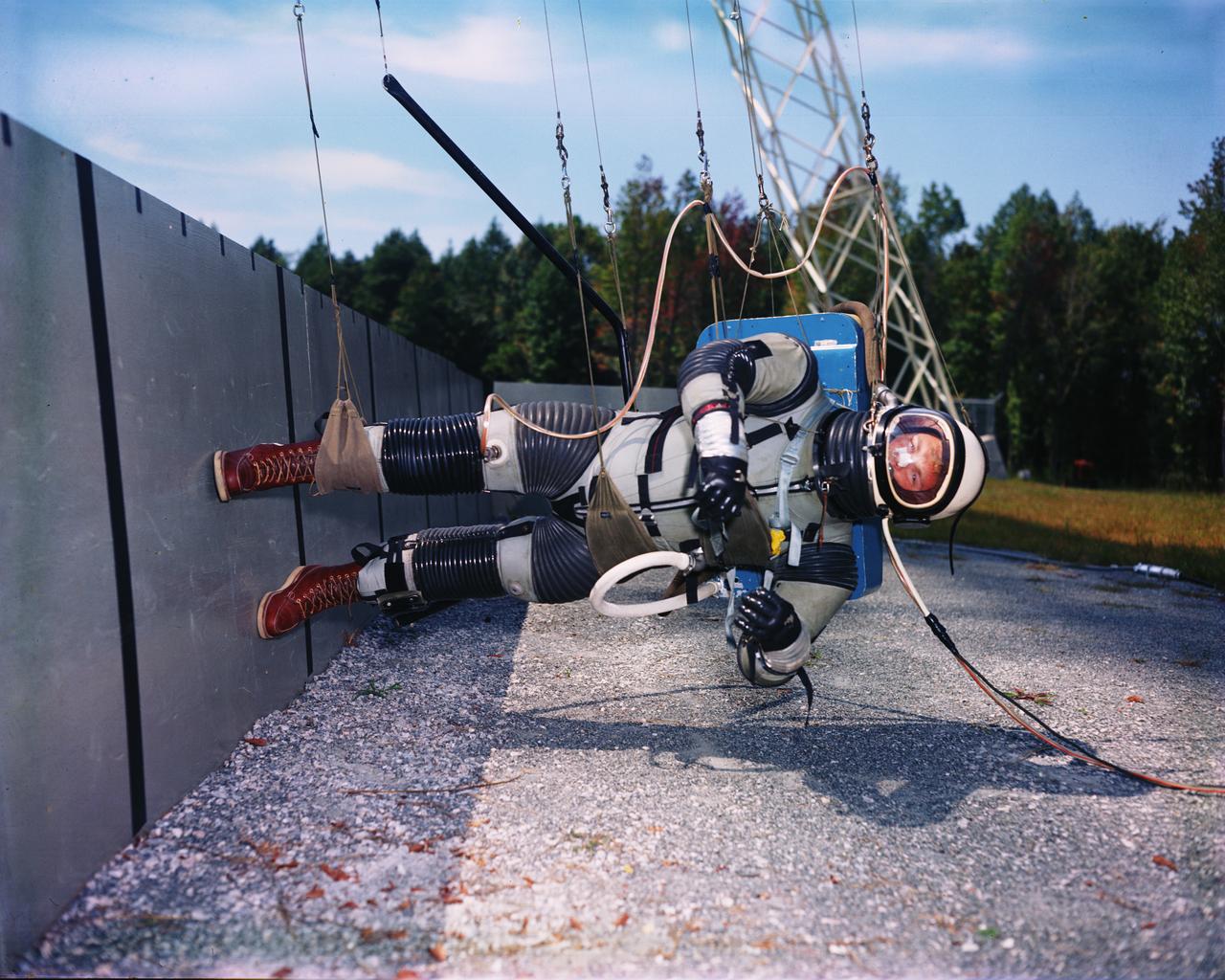
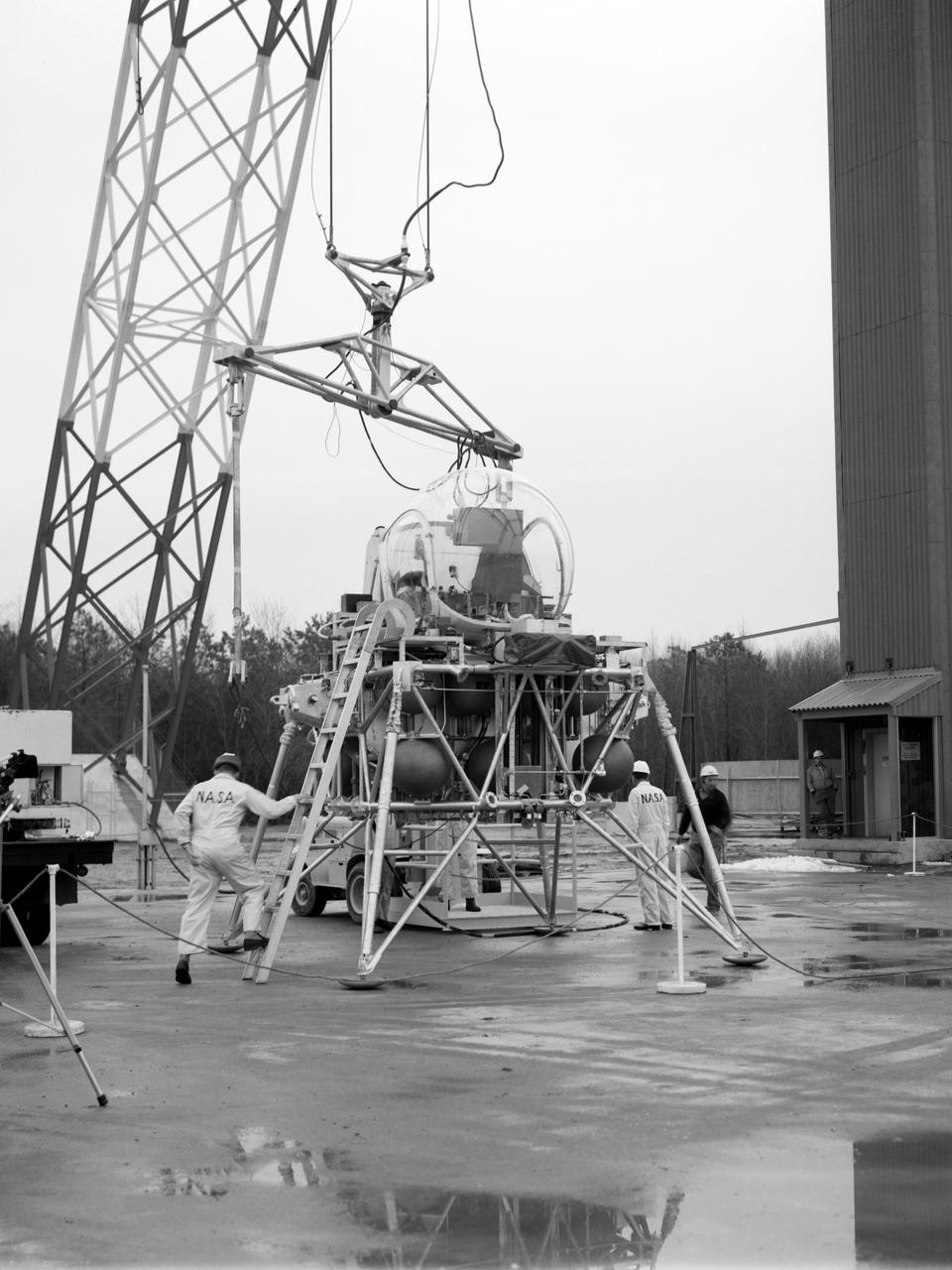
Lunar Landing Testing at NASA Langley. Lunar Landing Testing at NASA Langley. A simulated environment that contributed in a significant way to the success of  Apollo project was the Lunar Landing Research Facility, an imposing 250 foot high, 400 foot long gantry structure that became operational in 1965.  Published in the book "Space Flight Revolution"  NASA SP-4308 pg. 376
Lunar Landing Testing at NASA Langley
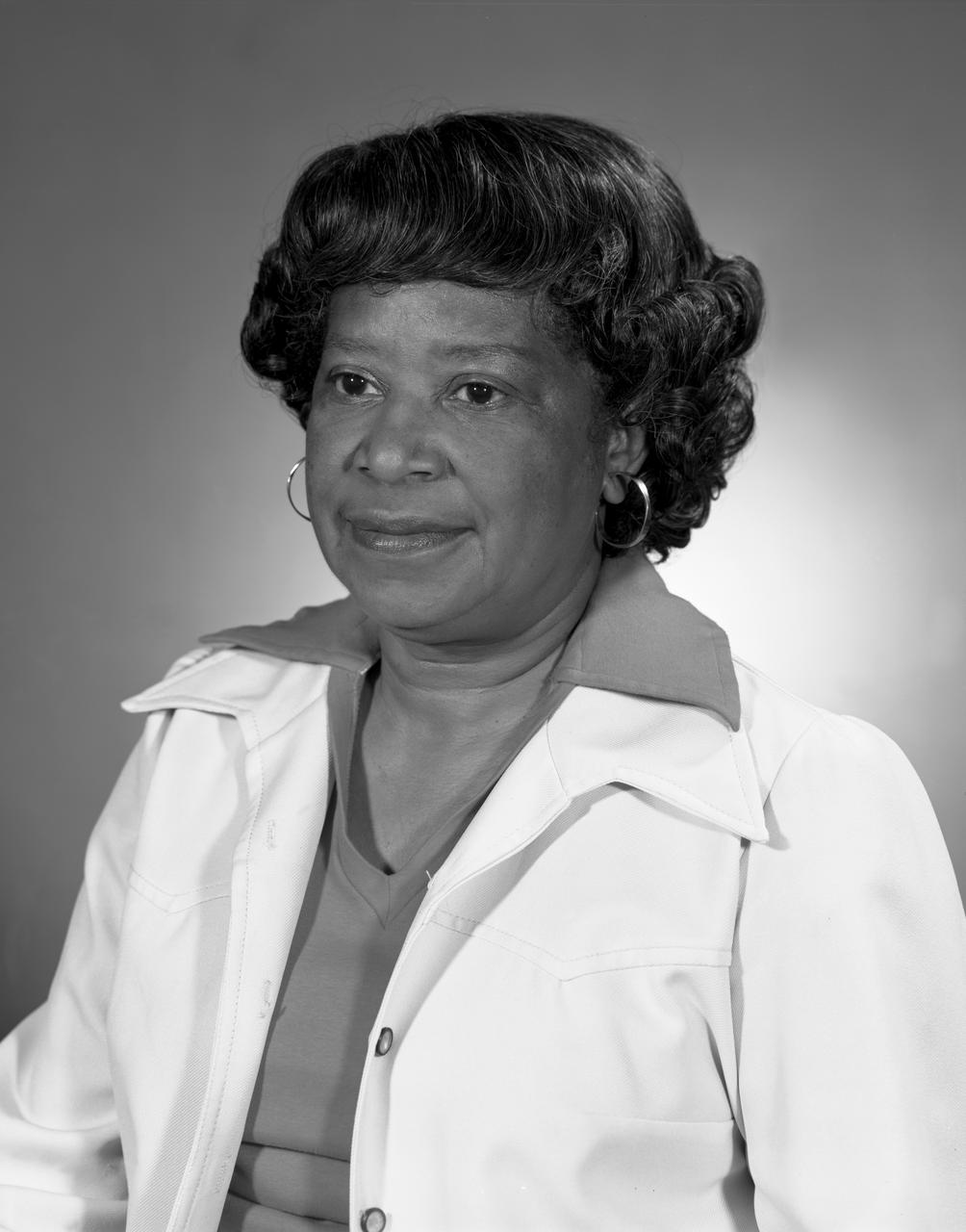
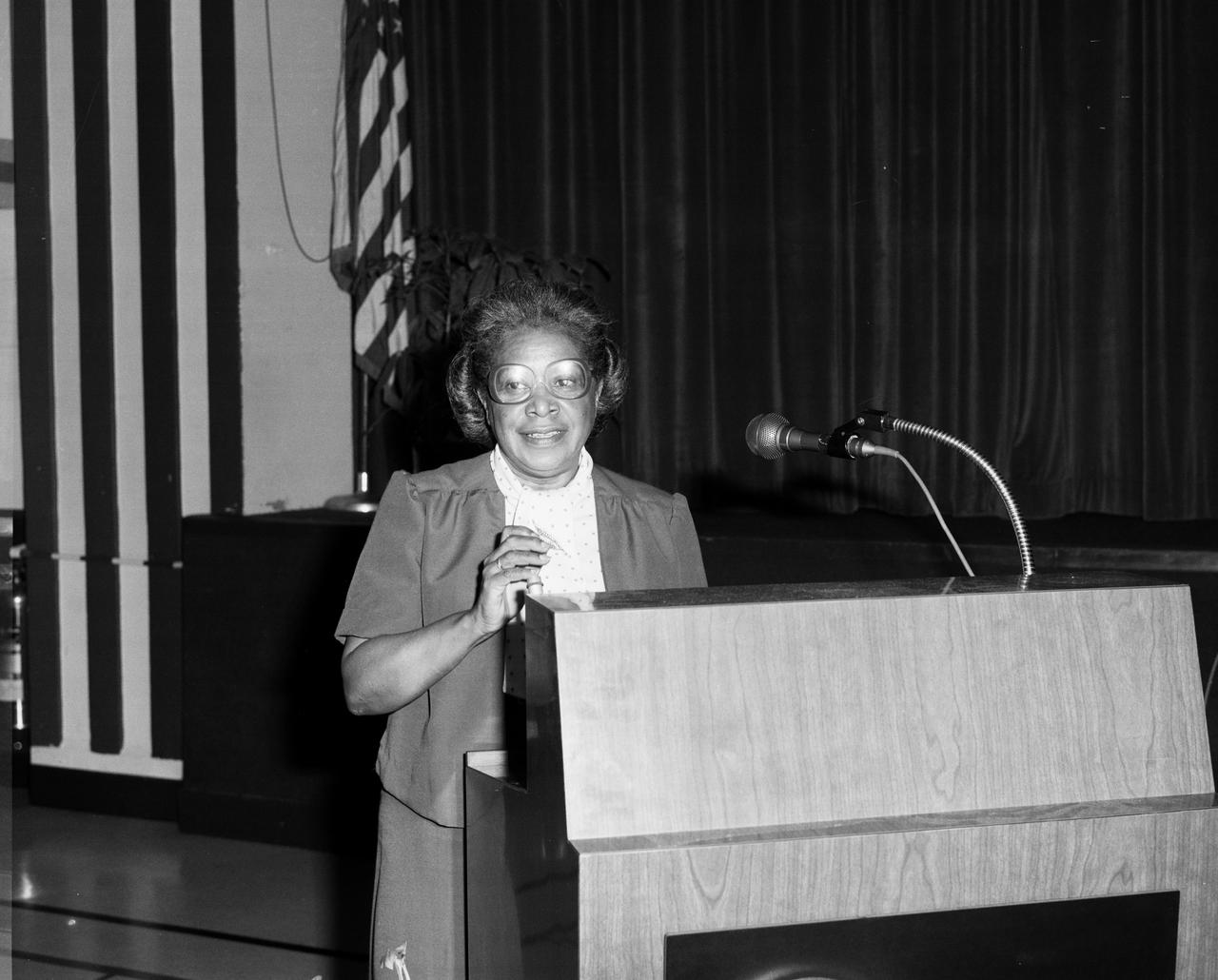
Portrait of Mary Jackson. 2017 Hall of Honor inductee.  Langley Research Center NACA and NASA Hall of Honor.  In honor and recognition of the ambition and motivation that enabled her career progression from  human computer  to NASA' s first African-American female engineer, and subsequent career supporting the hiring and promotion of other deserving female and minority employees.
Portrait of Mary Jackson
Space Flight Charts, Space Capsule
Space Flight Charts
Lunar Orbiter was essentially a flying camera. The payload structure was built around a pressurized shell holding Eastman Kodak s dual-imaging photographic system, which used a camera with wide-angle and telephoto lenses that could simultaneously take two kinds of pictures on the same film.  Men in in the picture are: Right to left Cliff Nelson, Calvin Broome, Israel Taback and Joe Mooreman.  -- Published in James R. Hansen, Spaceflight Revolution: NASA Langley Research Center From Sputnik to Apollo, NASA SP-4308, p. 329.
Lunar Orbiter Camera System
Figure 3-5 for NASA Document TM-X-356
Vertical model flying in Langley Research Center's Full Scale Tunnel.
Vertical model flying in LaRC Full Scale Tunnel
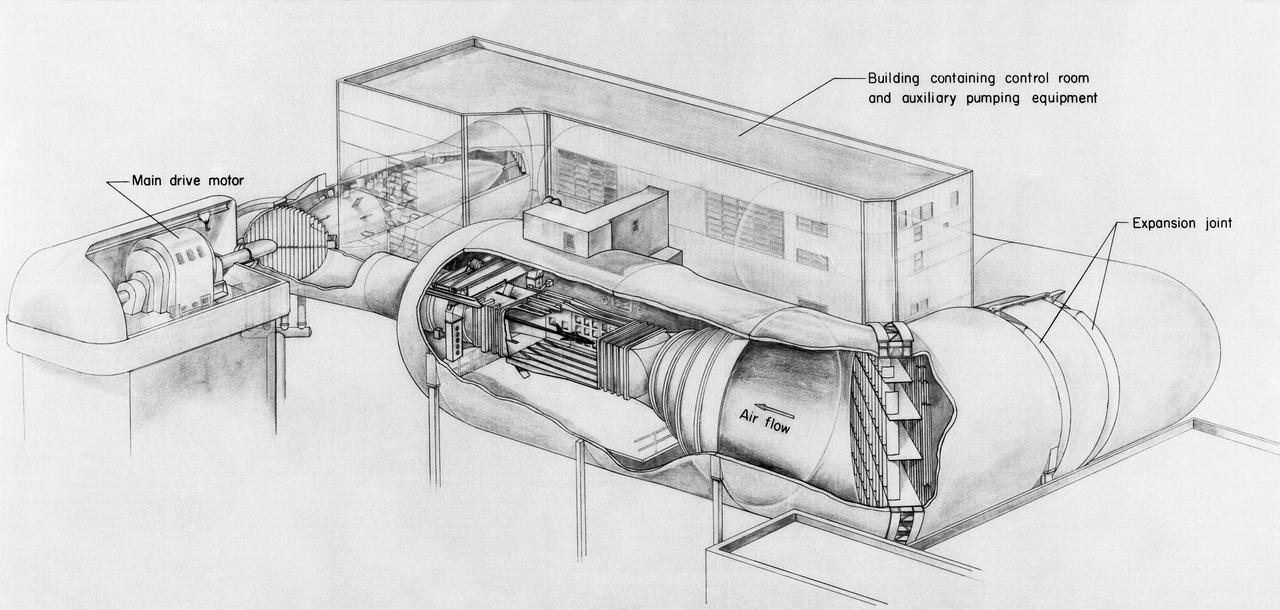
Aerial of 16 ft tunnel
Astronauts at 1959 Langley Inspection
Modified Bell X-1 model pioneered variable-sweep studies in 1947.  Photograph published in Sixty Years of Aeronautical Research 1917-1977 By David A. Anderton. A NASA publication, page 52.
Bell X-1 Research Model on Single Support Strut in 7 x 10 Foot Wind Tunnel
Space Flight Charts, Space Capsule
Space Flight Charts
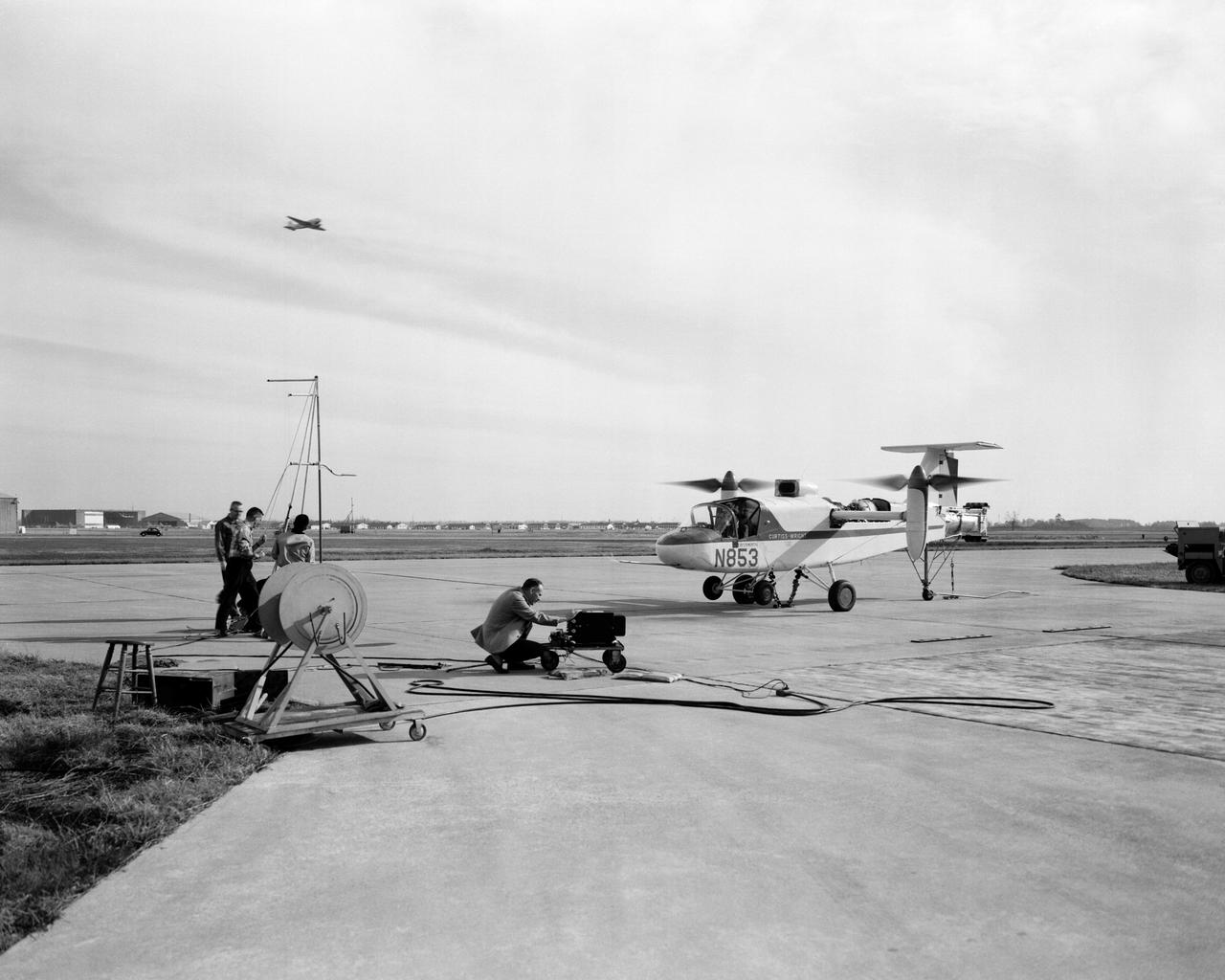
Curtiss-Wright X-100 (VTOL) Vertical Take-Off Transport.
Overall view of the impact test range.
Impact test range
100' Satellite Packaging of Echo
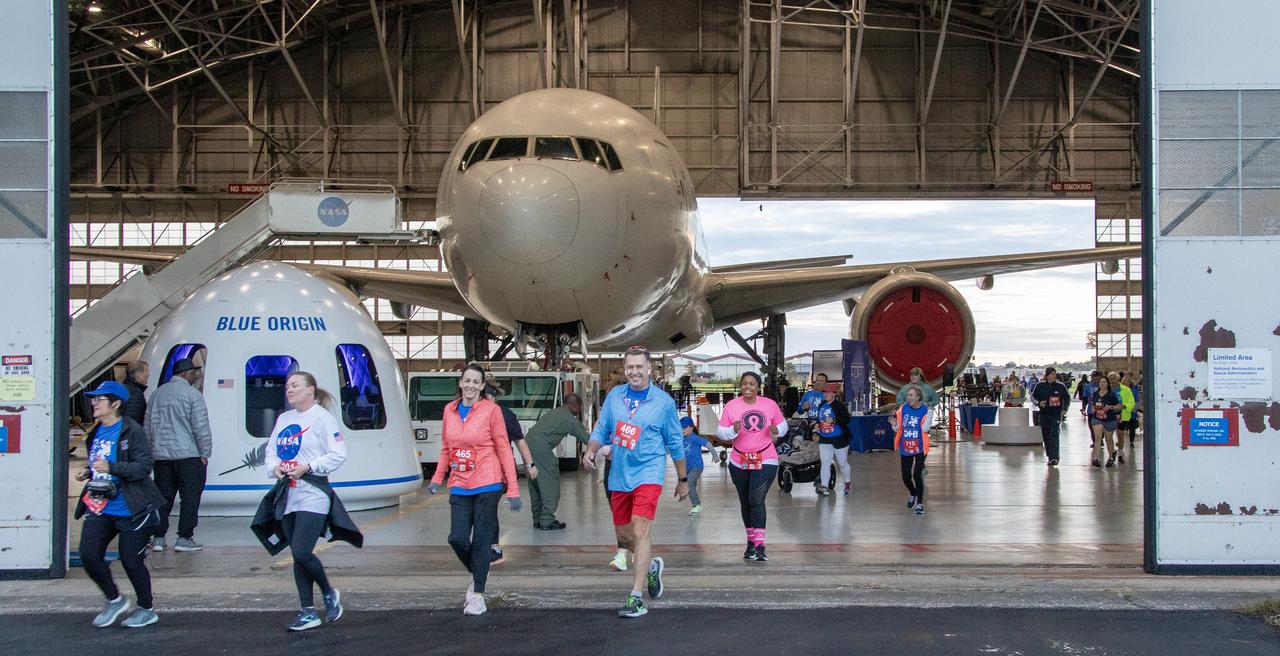
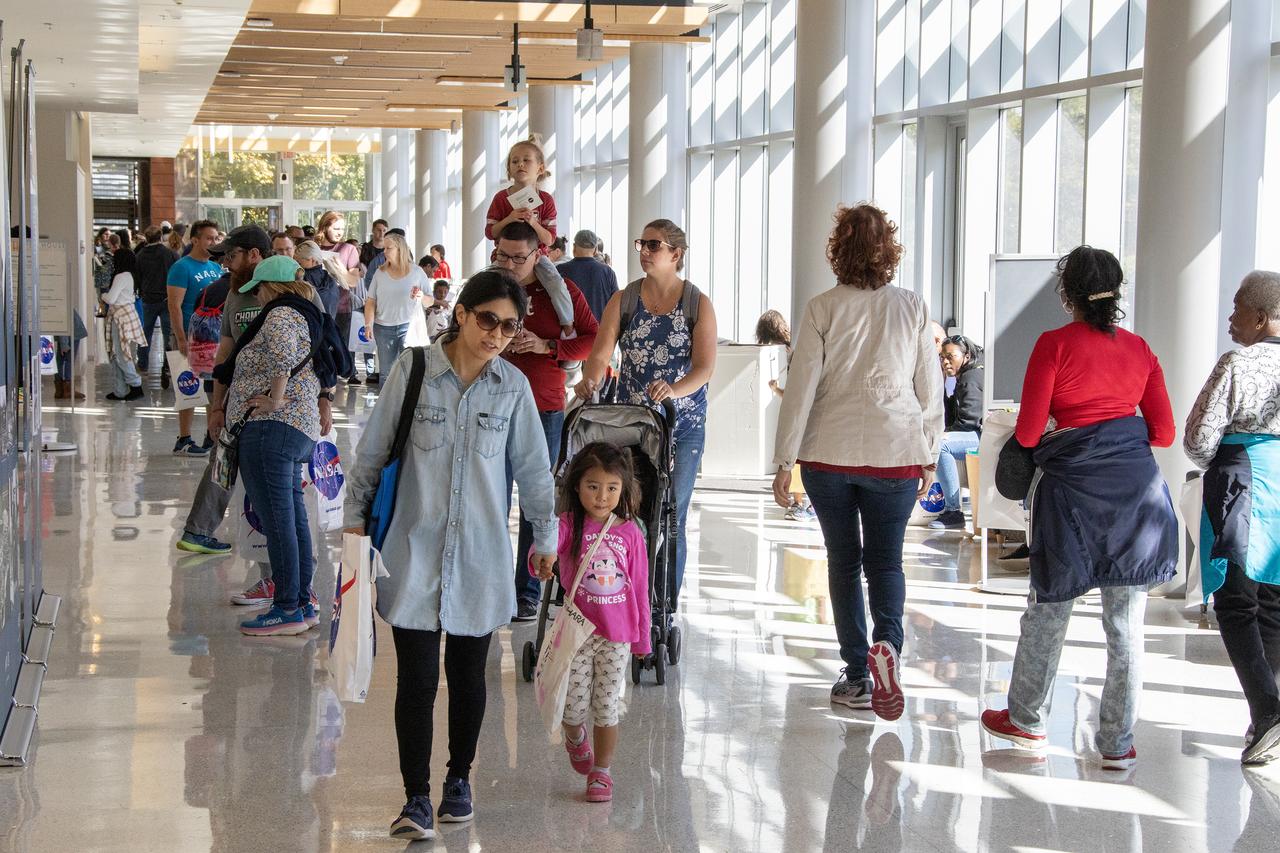
More than 37,000 people registered to attend the NASA Langley open house. Starting with the Annual 5K Moon Walk Run and the talented Nils Larson, X59 pilot and Astronaut Victor Glover reunited at Langley’s hangar and hosted by Center Director Clayton Turner.
2023 NASA Langley Open House