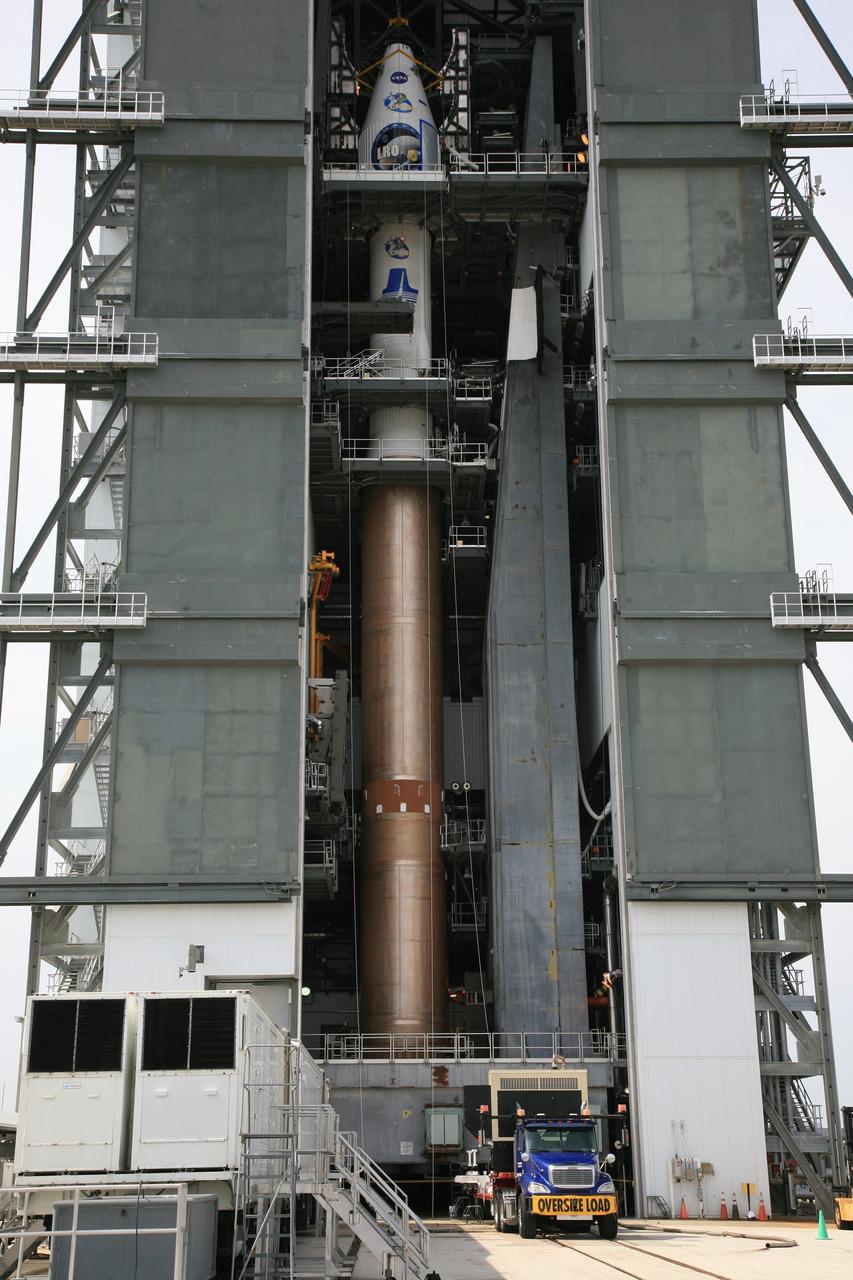
CAPE CANAVERAL, Fla. – On Launch Complex 41 at Cape Canaveral Air Force Station in Florida, the Lunar Reconnaissance Orbiter, or LRO, and NASA's Lunar Crater Observation and Sensing Satellite, known as LCROSS, are mated with the Atlas V rocket inside the mobile service tower for launch. The LRO includes five instruments that will help NASA characterize the moon's surface: DIVINER, LAMP, LEND, LOLA and LROC. Along with LCROSS, they will be launched aboard an Atlas V/Centaur rocket on June 17. Photo credit: NASA/Dimitri Gerondidakis
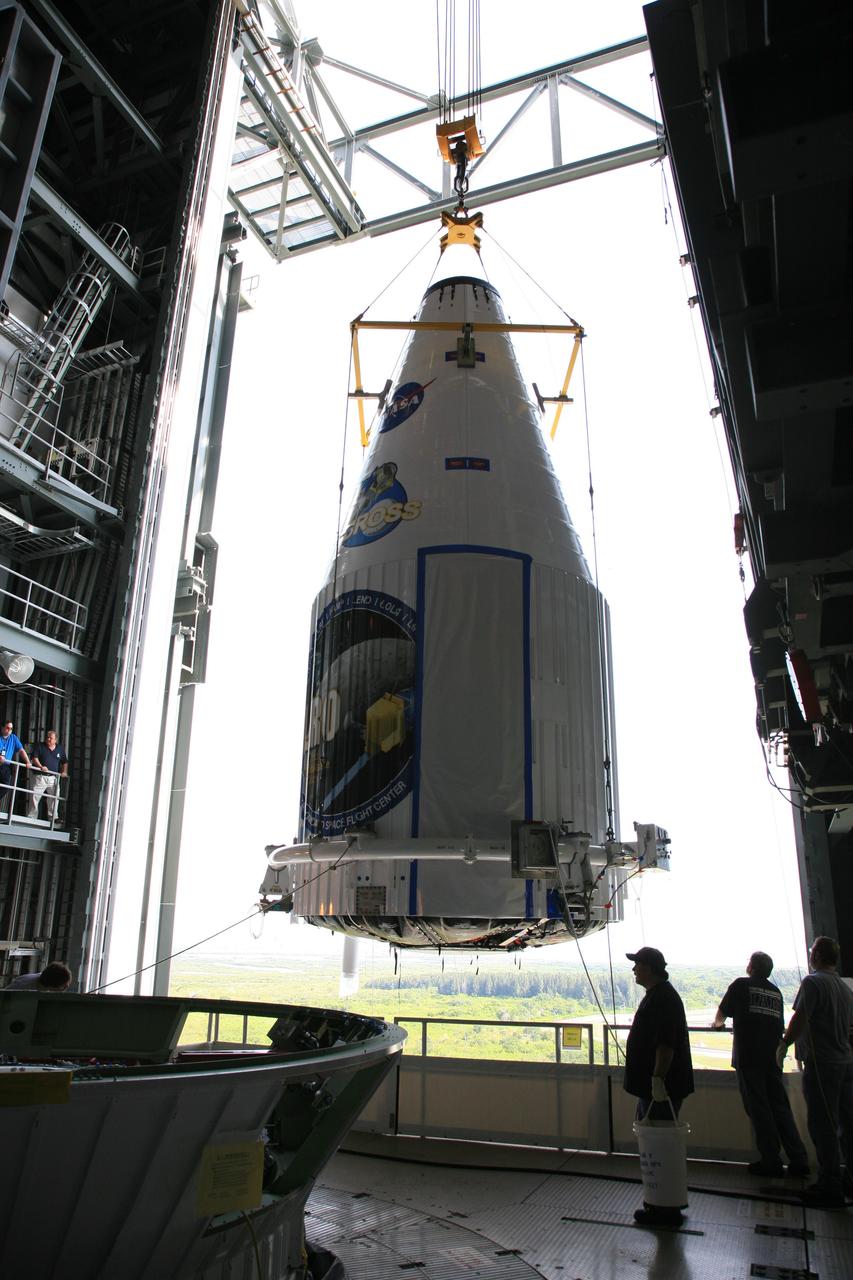
CAPE CANAVERAL, Fla. – On Launch Complex 41 at Cape Canaveral Air Force Station in Florida, the Lunar Reconnaissance Orbiter, or LRO, and NASA's Lunar Crater Observation and Sensing Satellite, known as LCROSS, are moved into the mobile service tower. The LRO will be mated to the Atlas V rocket for launch. The LRO includes five instruments that will help NASA characterize the moon's surface: DIVINER, LAMP, LEND, LOLA and LROC. Along with LCROSS, they will be launched aboard an Atlas V/Centaur rocket on June 17. Photo credit: NASA/Dimitri Gerondidakis
CAPE CANAVERAL, Fla. – On Launch Complex 41 at Cape Canaveral Air Force Station in Florida, a crane is attached to the Lunar Reconnaissance Orbiter, or LRO, and NASA's Lunar Crater Observation and Sensing Satellite, known as LCROSS, to lift them into the mobile service tower. The LRO/LCROSS will be mated to the Atlas V rocket for launch. The LRO includes five instruments that will help NASA characterize the moon's surface: DIVINER, LAMP, LEND, LOLA and LROC. Along with LCROSS, they will be launched aboard an Atlas V/Centaur rocket on June 17. Photo credit: NASA/Dimitri Gerondidakis

CAPE CANAVERAL, Fla. – Enroute to Launch Complex 41 at Cape Canaveral Air Force Station in Florida, the Lunar Reconnaissance Orbiter, or LRO, and NASA's Lunar Crater Observation and Sensing Satellite, known as LCROSS, move past the Vehicle Assembly Building at NASA's Kennedy Space Center in Florida. The LRO includes five instruments that will help NASA characterize the moon's surface: DIVINER, LAMP, LEND, LOLA and LROC. Along with LCROSS, they will be launched aboard an Atlas V/Centaur rocket on June 17. Photo credit: NASA/Dimitri Gerondidakis
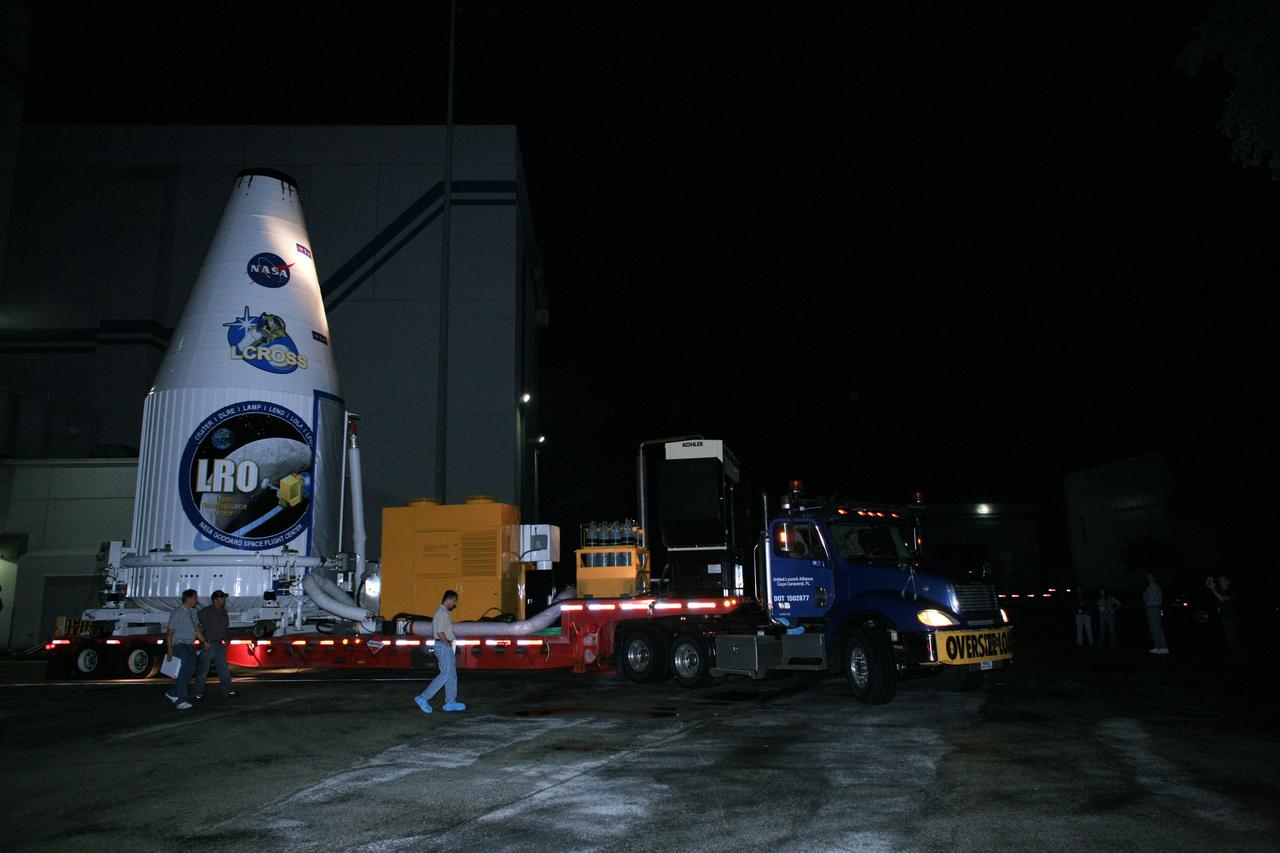
CAPE CANAVERAL, Fla. – Encased in the fairing, the Lunar Reconnaissance Orbiter, or LRO, and NASA's Lunar Crater Observation and Sensing Satellite, known as LCROSS, are moved out of Astrotech Space Operations in Titusville. It is being transported to Launch Complex 41 at Cape Canaveral Air Force Station in Florida. The LRO includes five instruments that will help NASA characterize the moon's surface: DIVINER, LAMP, LEND, LOLA and LROC. Along with LCROSS, they will be launched aboard an Atlas V/Centaur rocket on June 17. Photo credit: NASA/Dimitri Gerondidakis

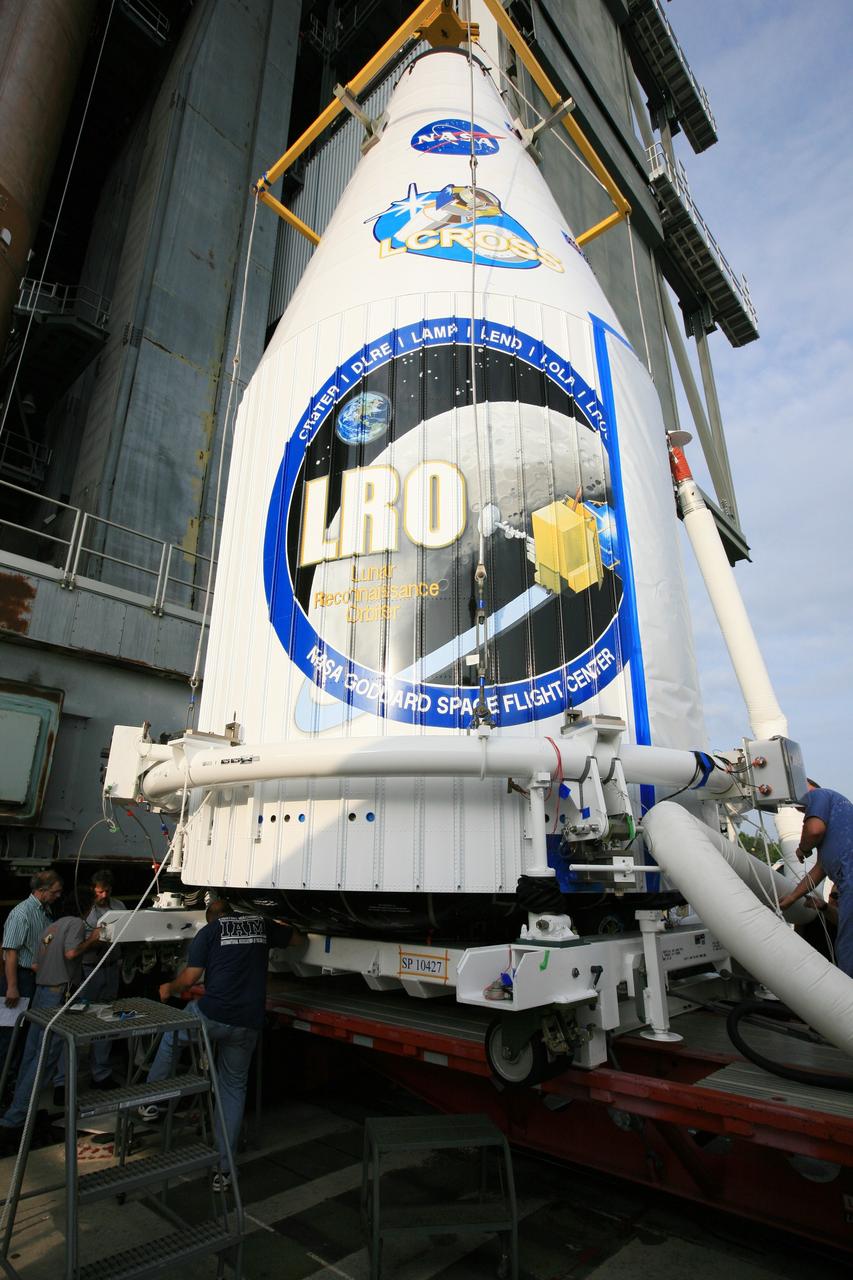
CAPE CANAVERAL, Fla. – On Launch Complex 41 at Cape Canaveral Air Force Station in Florida, workers check out the Lunar Reconnaissance Orbiter, or LRO, after its lift into the mobile service tower. The LRO/LCROSS will be mated to the Atlas V rocket for launch. The LRO includes five instruments that will help NASA characterize the moon's surface: DIVINER, LAMP, LEND, LOLA and LROC. Along with LCROSS, they will be launched aboard an Atlas V/Centaur rocket on June 17. Photo credit: NASA/Dimitri Gerondidakis
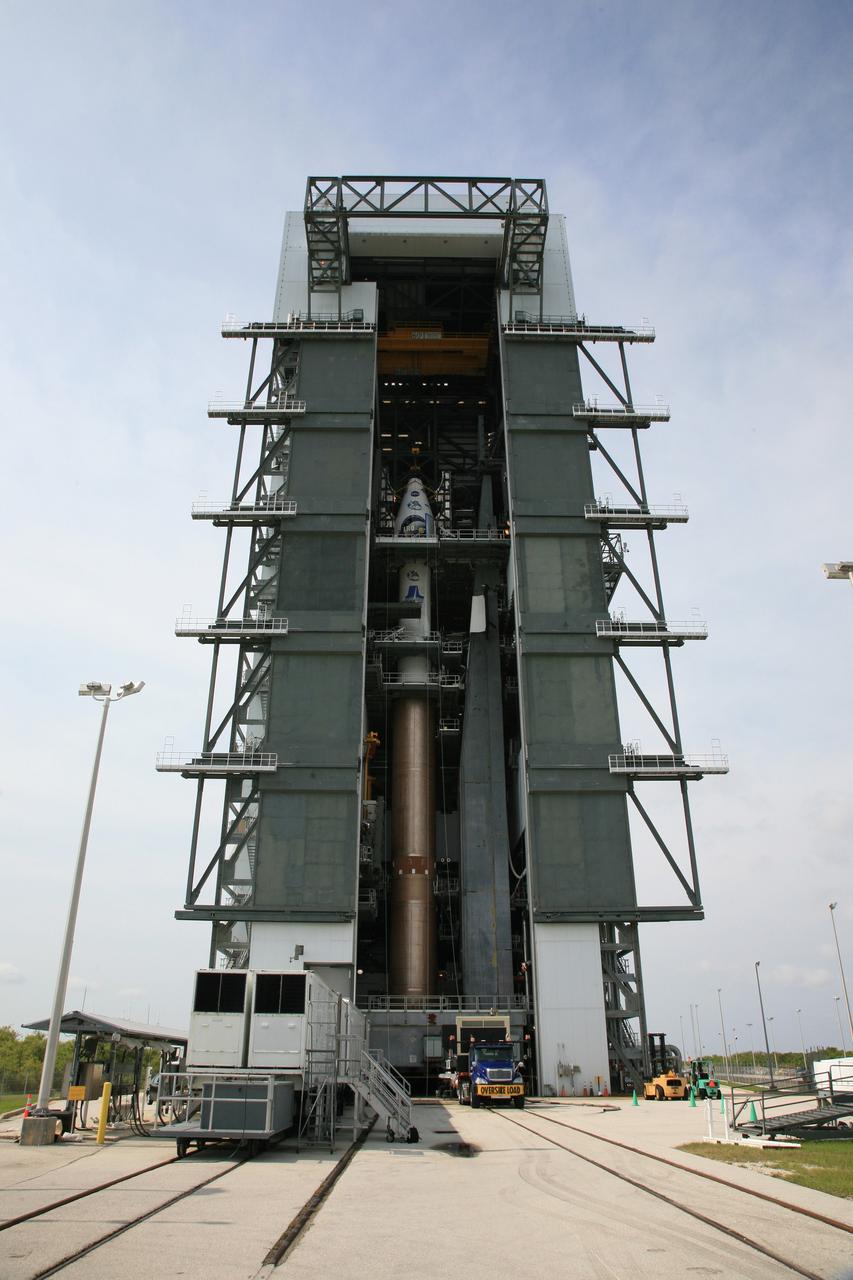
CAPE CANAVERAL, Fla. – On Launch Complex 41 at Cape Canaveral Air Force Station in Florida, the Lunar Reconnaissance Orbiter, or LRO, and NASA's Lunar Crater Observation and Sensing Satellite, known as LCROSS, are mated with the Atlas V rocket inside the mobile service tower for launch. The LRO includes five instruments that will help NASA characterize the moon's surface: DIVINER, LAMP, LEND, LOLA and LROC. Along with LCROSS, they will be launched aboard an Atlas V/Centaur rocket on June 17. Photo credit: NASA/Dimitri Gerondidakis
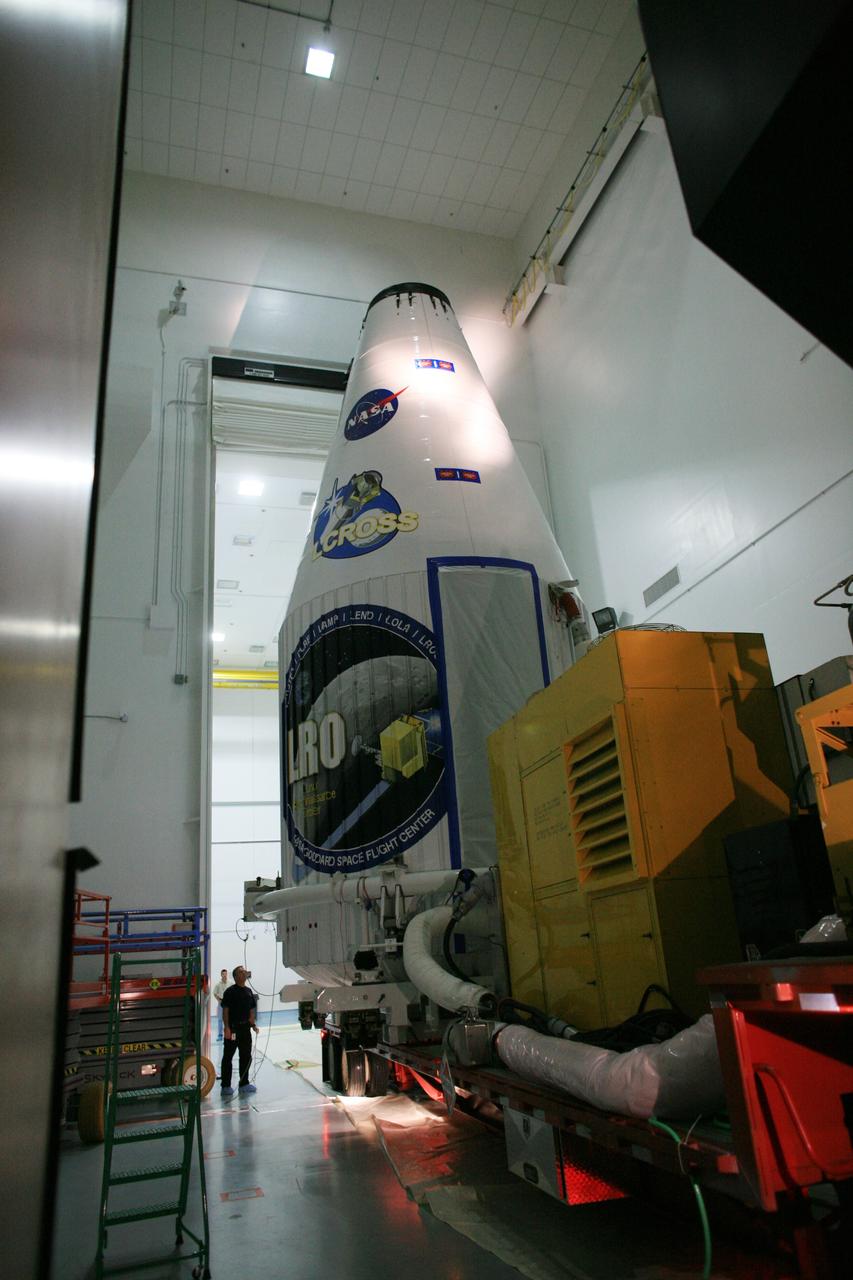
CAPE CANAVERAL, Fla. – Encased in the fairing, the Lunar Reconnaissance Orbiter, or LRO, and NASA's Lunar Crater Observation and Sensing Satellite, known as LCROSS, are moved out of Astrotech Space Operations in Titusville. It is being transported to Launch Complex 41 at Cape Canaveral Air Force Station in Florida. The LRO includes five instruments that will help NASA characterize the moon's surface: DIVINER, LAMP, LEND, LOLA and LROC. Along with LCROSS, they will be launched aboard an Atlas V/Centaur rocket on June 17. Photo credit: NASA/Dimitri Gerondidakis
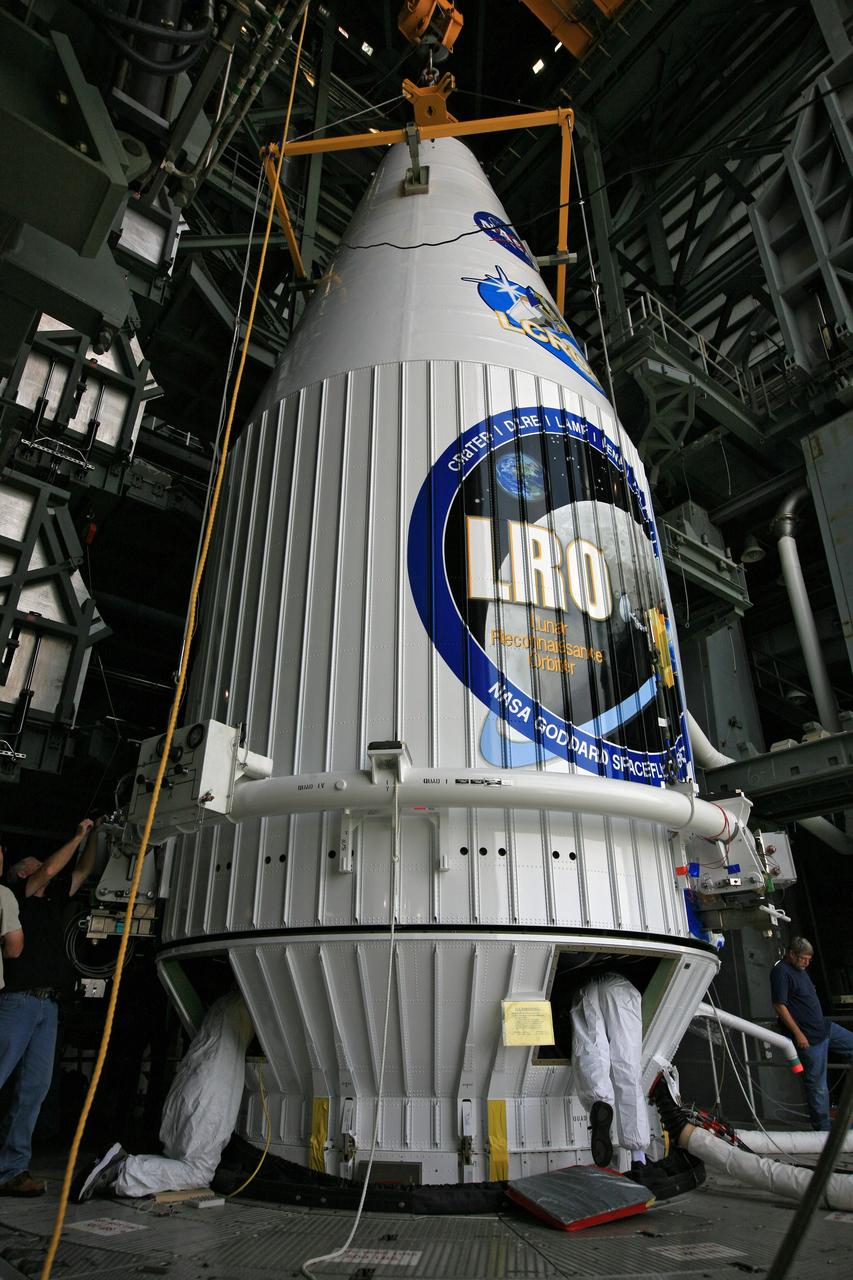
CAPE CANAVERAL, Fla. – On Launch Complex 41 at Cape Canaveral Air Force Station in Florida, workers prepare the Lunar Reconnaissance Orbiter, or LRO, and NASA's Lunar Crater Observation and Sensing Satellite, known as LCROSS, for mating inside the mobile service tower with the Atlas V rocket for launch. The LRO includes five instruments that will help NASA characterize the moon's surface: DIVINER, LAMP, LEND, LOLA and LROC. Along with LCROSS, they will be launched aboard an Atlas V/Centaur rocket on June 17. Photo credit: NASA/Dimitri Gerondidakis
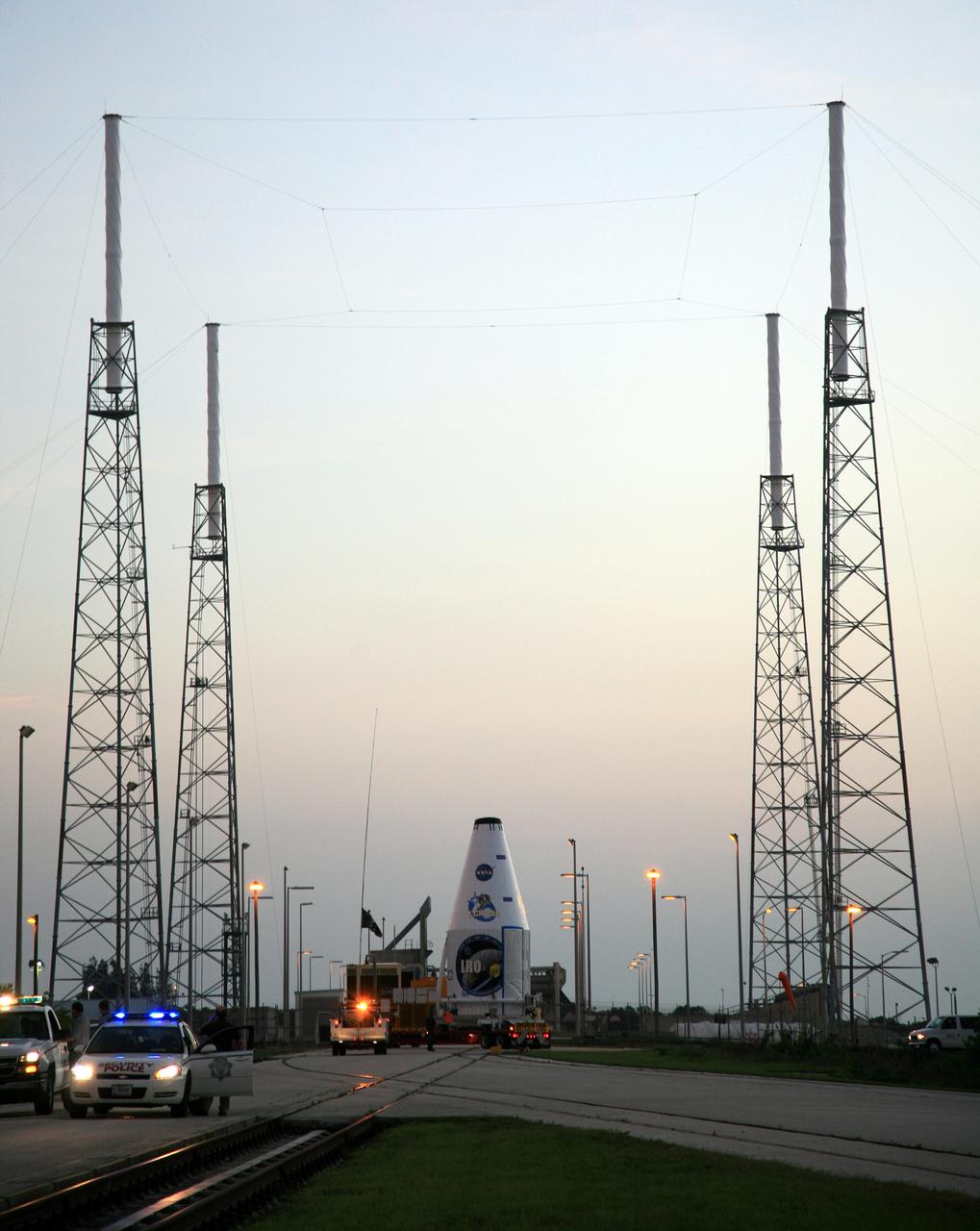
CAPE CANAVERAL, Fla. – The Lunar Reconnaissance Orbiter, or LRO, and NASA's Lunar Crater Observation and Sensing Satellite, known as LCROSS, arrive on Launch Complex 41 at Cape Canaveral Air Force Station in Florida. Surrounding the launch pad are the lightning protection towers. The LRO includes five instruments that will help NASA characterize the moon's surface: DIVINER, LAMP, LEND, LOLA and LROC. Along with LCROSS, they will be launched aboard an Atlas V/Centaur rocket on June 17. Photo credit: NASA/Dimitri Gerondidakis
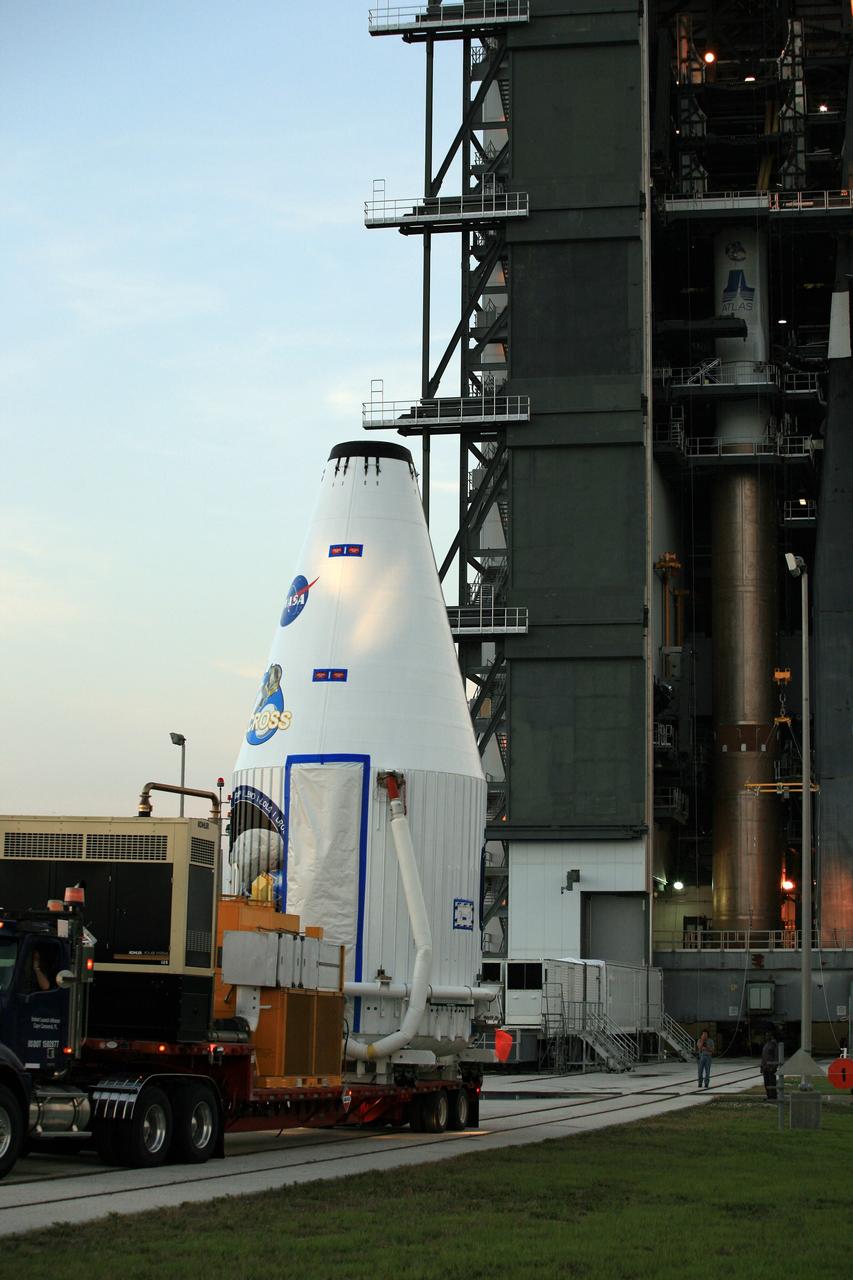
CAPE CANAVERAL, Fla. – The Lunar Reconnaissance Orbiter, or LRO, and NASA's Lunar Crater Observation and Sensing Satellite, known as LCROSS, are moved closer to the mobile service tower on Launch Complex 41 at Cape Canaveral Air Force Station in Florida. The LRO includes five instruments that will help NASA characterize the moon's surface: DIVINER, LAMP, LEND, LOLA and LROC. Along with LCROSS, they will be launched aboard an Atlas V/Centaur rocket on June 17. Photo credit: NASA/Dimitri Gerondidakis
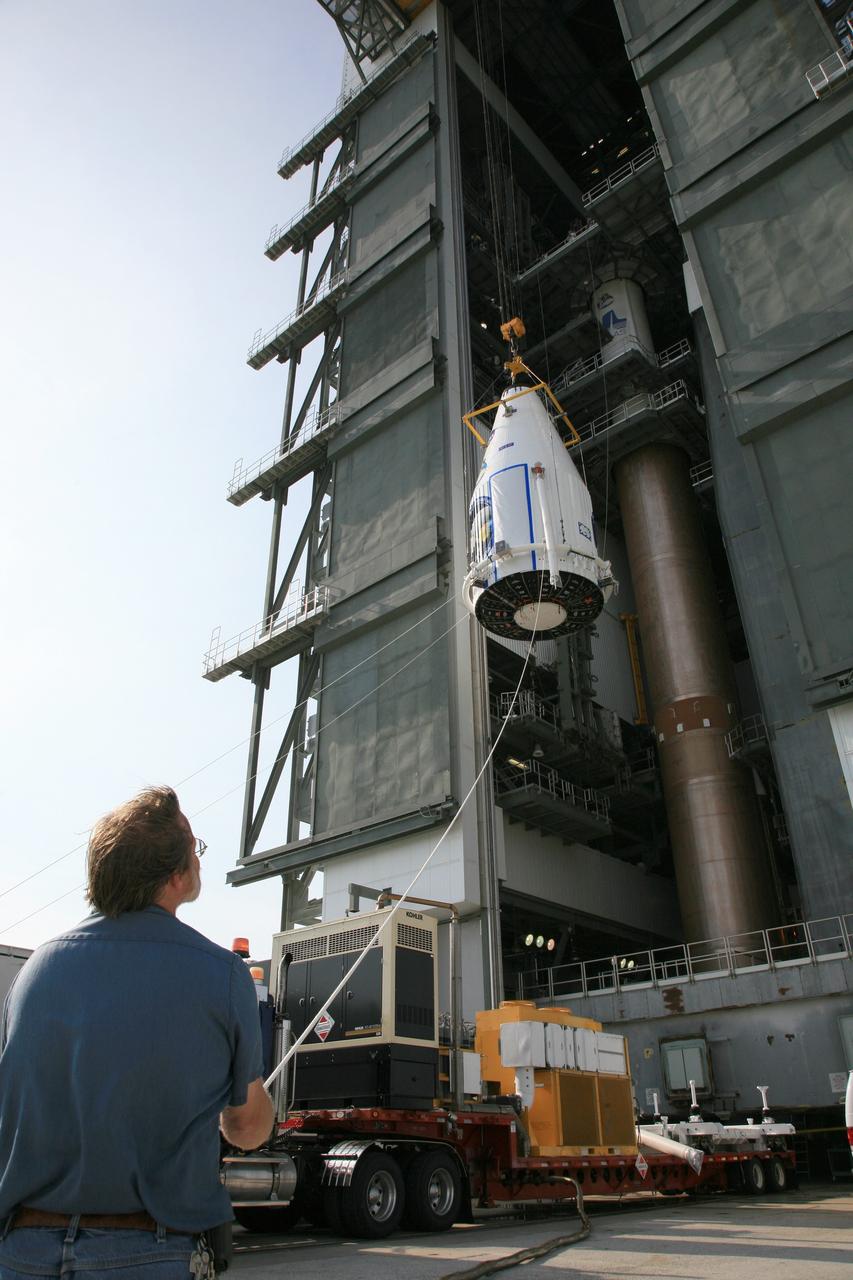
CAPE CANAVERAL, Fla. – On Launch Complex 41 at Cape Canaveral Air Force Station in Florida, the Lunar Reconnaissance Orbiter, or LRO, and NASA's Lunar Crater Observation and Sensing Satellite, known as LCROSS, are lifted into the mobile service tower. The LRO/LCROSS will be mated to the Atlas V rocket for launch. The LRO includes five instruments that will help NASA characterize the moon's surface: DIVINER, LAMP, LEND, LOLA and LROC. Along with LCROSS, they will be launched aboard an Atlas V/Centaur rocket on June 17. Photo credit: NASA/Dimitri Gerondidakis