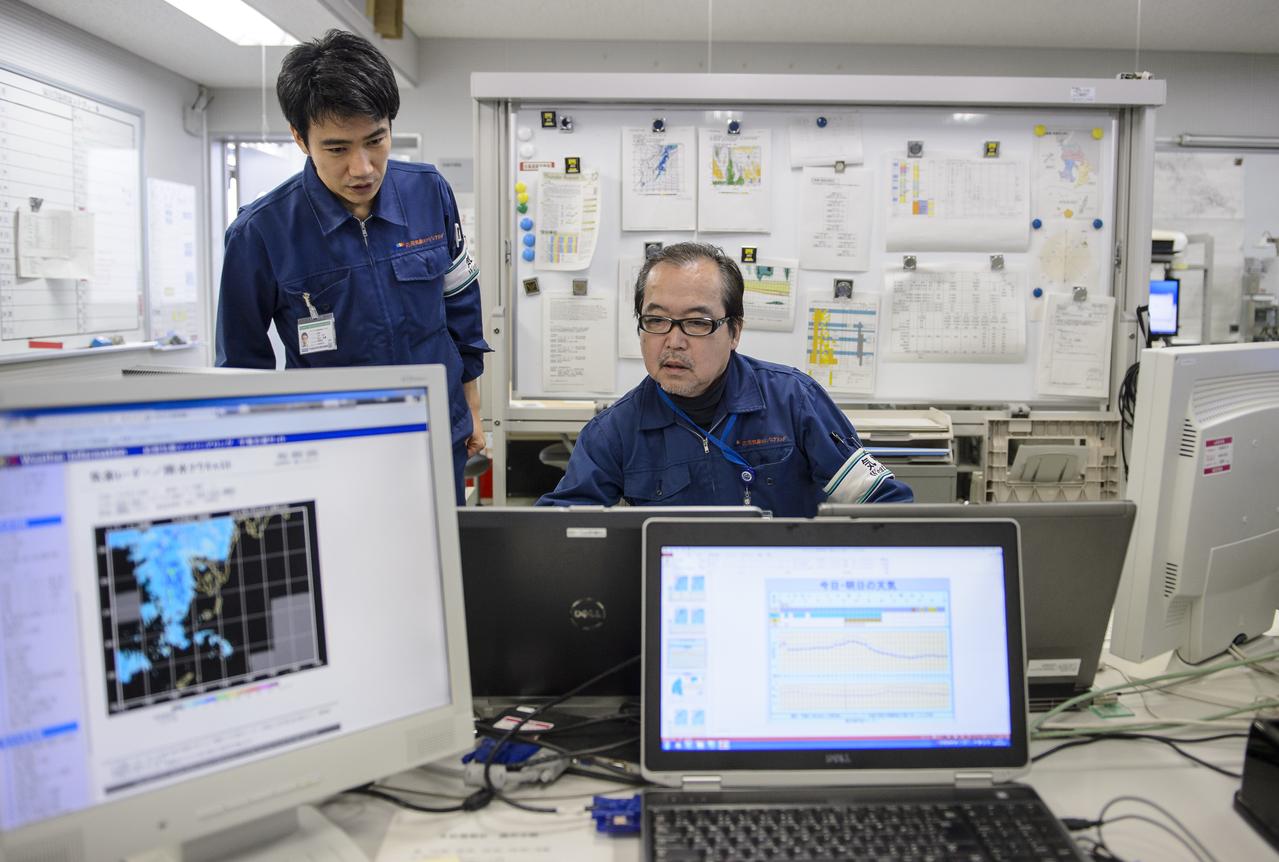
Members of the weather team prepare reports for the Global Precipitation Measurement (GPM) Core Observatory Launch Readiness Review (LRR) with Chief officers from Mitsubishi Heavy Industries, Ltd., the Japan Aerospace Exploration Agency (JAXA), and NASA, on Wednesday, Feb. 26, 2014 at Tanegashima Space Center, Japan. The GPM spacecraft is scheduled to launch aboard an H-IIA rocket early on the morning of Feb. 28 Japan time. At the meeting in the space center's Range Control Center, all preparations to date were reviewed and approval was given to proceed with launch on schedule. Once launched, the GPM spacecraft will collect information that unifies data from an international network of existing and future satellites to map global rainfall and snowfall every three hours. Photo Credit: (NASA/Bill Ingalls)
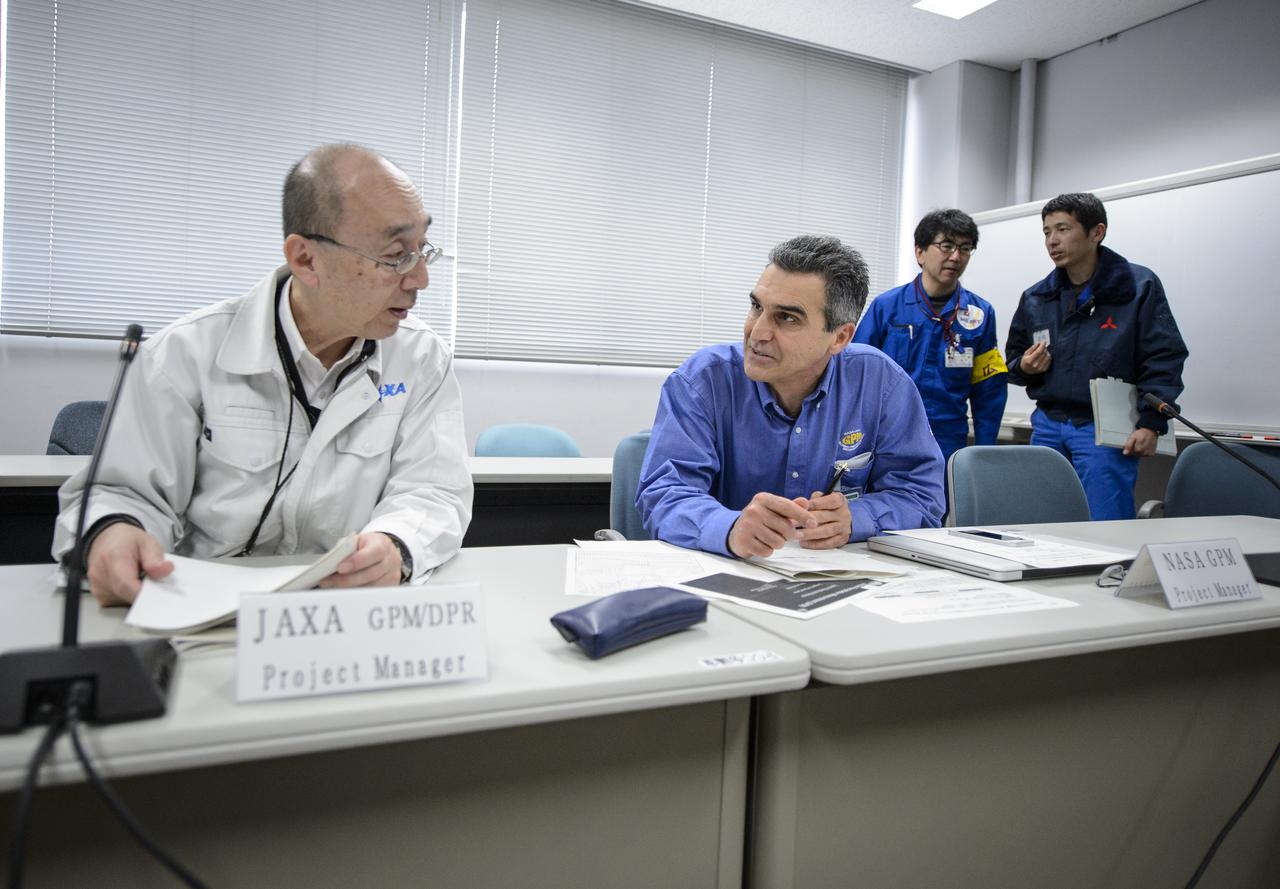
Masahiro Kojima, GPM Dual-frequency Precipitation Radar project manager, Japan Aerospace Exploration Agency (JAXA), left, and, Art Azarbarzin, NASA Global Precipitation Measurement (GPM) project manager, talk after the GPM Launch Readiness Review (LRR), Wednesday, Feb. 26, 2014 at Tanegashima Space Center, Japan. The GPM spacecraft is scheduled to launch aboard an H-IIA rocket early on the morning of Feb. 28 Japan time. At the meeting in the space center's Range Control Center, all preparations to date were reviewed and approval was given to proceed with launch on schedule. Once launched, the GPM spacecraft will collect information that unifies data from an international network of existing and future satellites to map global rainfall and snowfall every three hours. Photo Credit: (NASA/Bill Ingalls)
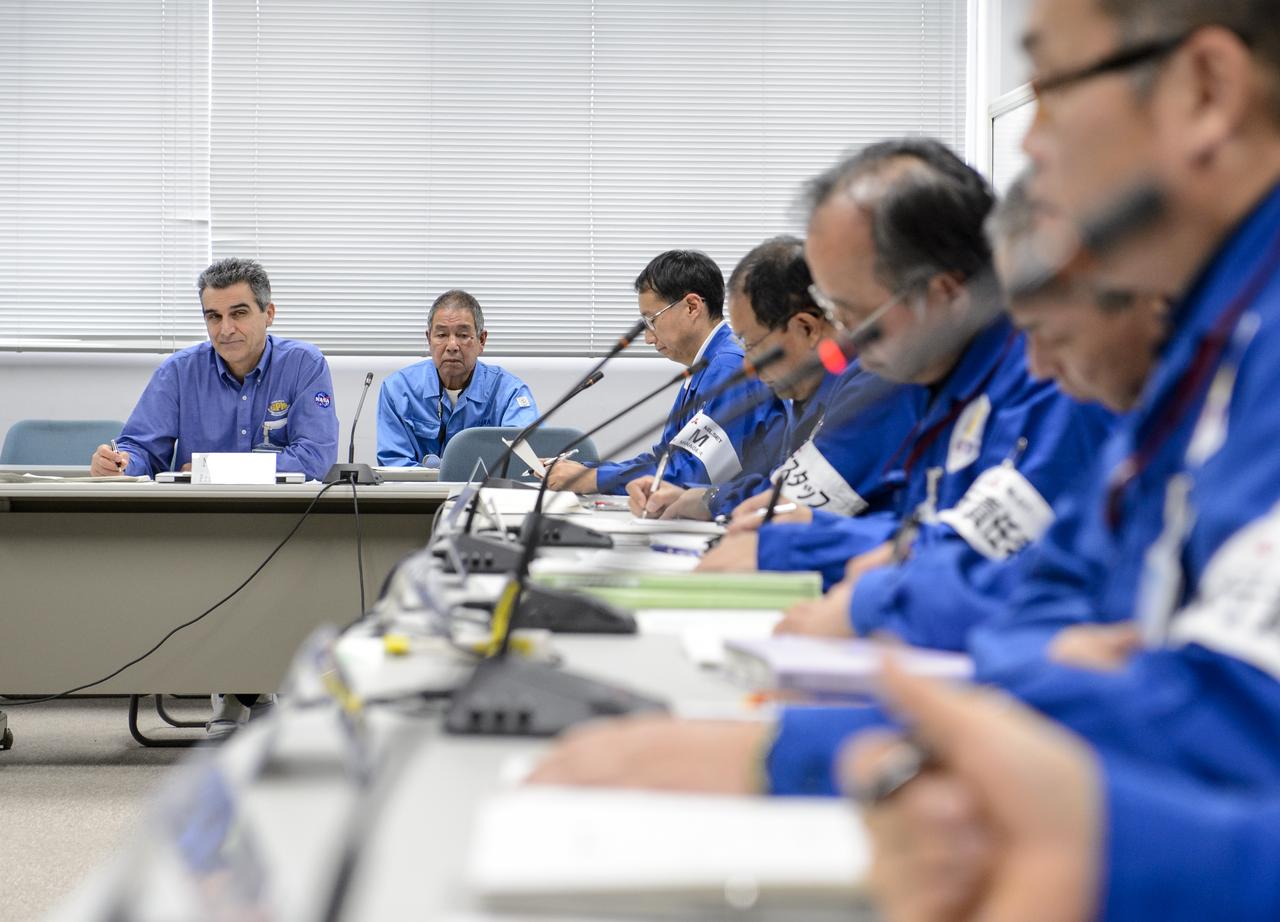
Art Azarbarzin, NASA Global Precipitation Measurement (GPM) project manager, left, participates in the GPM Launch Readiness Review (LRR) along with Chief officers from Mitsubishi Heavy Industries, Ltd., and the Japan Aerospace Exploration Agency (JAXA) on Wednesday, Feb. 26, 2014 at Tanegashima Space Center, Japan. The spacecraft is scheduled to launch aboard an H-IIA rocket early on the morning of Feb. 28 Japan time. At the meeting in the space center's Range Control Center, all preparations to date were reviewed and approval was given to proceed with launch on schedule. Once launched, the GPM spacecraft will collect information that unifies data from an international network of existing and future satellites to map global rainfall and snowfall every three hours. Photo Credit: (NASA/Bill Ingalls)
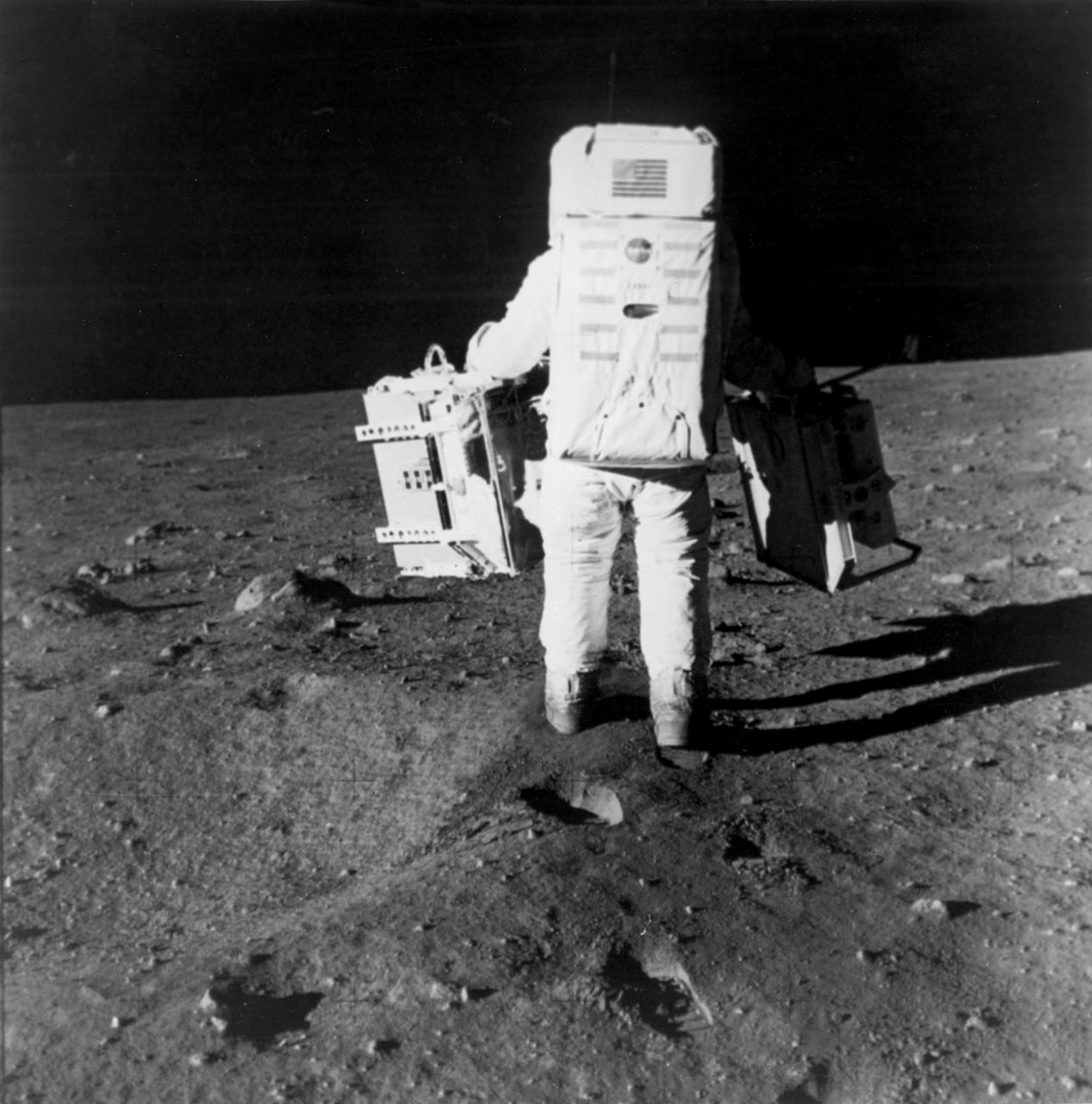
The first manned lunar landing mission, Apollo 11, launched from the Kennedy Space Center (KSC) in Florida via the Marshall Space Flight Center (MSFC) developed Saturn V launch vehicle on July 16, 1969 and safely returned to Earth on July 24, 1969. Aboard the space craft were astronauts Neil A. Armstrong, commander; Michael Collins, Command Module (CM) pilot; and Edwin E. (Buzz) Aldrin Jr., Lunar Module (LM) pilot. The CM, piloted by Michael Collins, remained in a parking orbit around the Moon, while the LM, named “Eagle’’, carrying astronauts Armstrong and Aldrin, landed on the Moon in the Sea of Tranquility. During 2½ hours of surface exploration, the crew set up experiments, collected 47 pounds of lunar surface material for analysis back on Earth, planted the U.S Flag, and left a message for all mankind. In this photograph, Aldrin walks past some rocks, easily carrying scientific equipment which would have been too heavy to carry on Earth. The two packages made up the Early Apollo Scientific Experiment Package (EASEP) on Apollo 11. On the left is the Passive Seismic Experiment Package (PSEP) and on the right is the Laser Ranging Retroreflector (LRR).
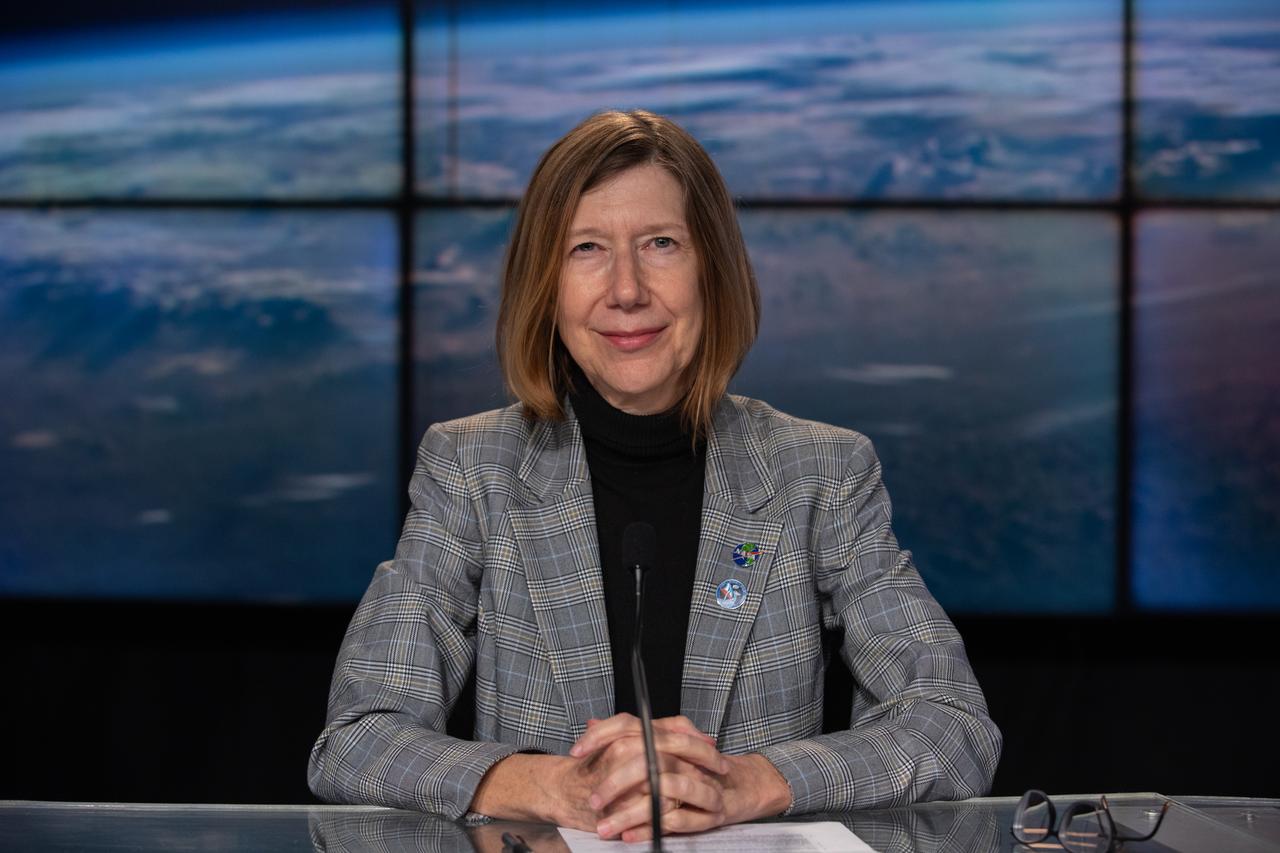
Kathy Lueders, associate administrator, Space Operations Mission Directorate, NASA Headquarters, speaks to members of the news media during a postlaunch news conference for the SpaceX Crew-6 mission at Kennedy Space Center’s NASA News Center in Florida on March 2, 2023. The SpaceX Falcon 9 rocket, carrying the Dragon spacecraft Endeavour for NASA’s Crew-6 mission to the International Space Station lifted off at 12:34 a.m. EST. Aboard Dragon are NASA astronauts Stephen Bowen, spacecraft commander, and Warren Hoburg, pilot, along with mission specialists Sultan Alneyadi, UAE (United Arab Emirates) astronaut, and Andrey Fedyaev, Roscosmos cosmonaut. Crew-6 is the sixth crew rotation mission with SpaceX to the station, and the seventh flight of Dragon with people as part of the agency’s Commercial Crew Program.
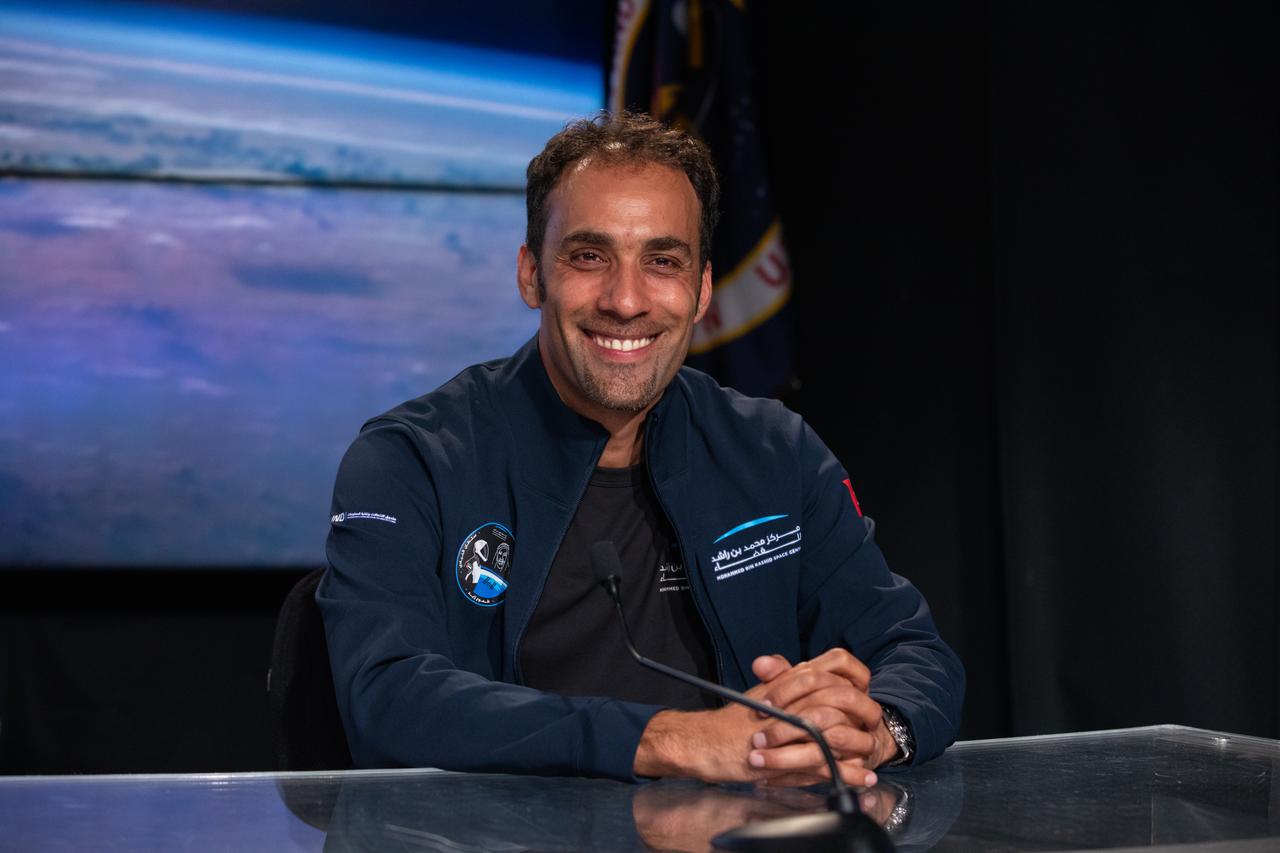
Salem AlMarri, director general, Mohammed Bin Rashid Space Centre, speaks to members of the news media during a postlaunch news conference for the SpaceX Crew-6 mission at Kennedy’s NASA News Center in Florida on March 2, 2023. The SpaceX Falcon 9 rocket, carrying the Dragon spacecraft Endeavour for NASA’s Crew-6 mission to the International Space Station lifted off at 12:34 a.m. EST. Aboard Dragon are NASA astronauts Stephen Bowen, spacecraft commander, and Warren Hoburg, pilot, along with mission specialists Sultan Alneyadi, UAE (United Arab Emirates) astronaut, and Andrey Fedyaev, Roscosmos cosmonaut. Crew-6 is the sixth crew rotation mission with SpaceX to the station, and the seventh flight of Dragon with people as part of the agency’s Commercial Crew Program.

Dina Contella, operations integration manager, International Space Station Program, NASA’s Johnson Space Center in Houston, speaks to members of the news media during a postlaunch news conference for the SpaceX Crew-6 mission at Kennedy’s NASA News Center in Florida on March 2, 2023. The SpaceX Falcon 9 rocket, carrying the Dragon spacecraft Endeavour for NASA’s Crew-6 mission to the International Space Station lifted off at 12:34 a.m. EST. Aboard Dragon are NASA astronauts Stephen Bowen, spacecraft commander, and Warren Hoburg, pilot, along with mission specialists Sultan Alneyadi, UAE (United Arab Emirates) astronaut, and Andrey Fedyaev, Roscosmos cosmonaut. Crew-6 is the sixth crew rotation mission with SpaceX to the station, and the seventh flight of Dragon with people as part of the agency’s Commercial Crew Program.
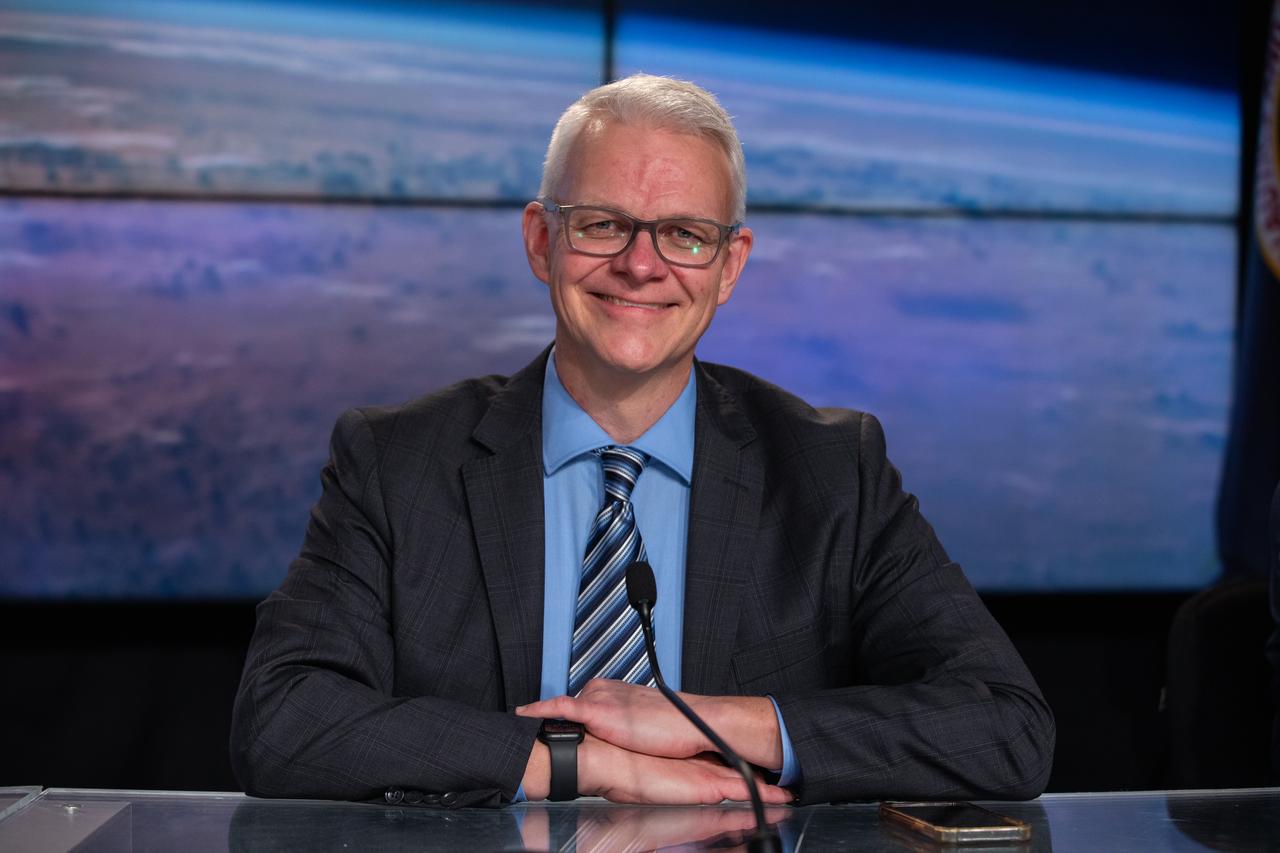
Benji Reed, senior director, Human Spaceflight Program, SpaceX, speaks to members of the news media during a postlaunch news conference for the SpaceX Crew-6 mission at Kennedy’s NASA News Center in Florida on March 2, 2023. The SpaceX Falcon 9 rocket, carrying the Dragon spacecraft Endeavour for NASA’s Crew-6 mission to the International Space Station lifted off at 12:34 a.m. EST. Aboard Dragon are NASA astronauts Stephen Bowen, spacecraft commander, and Warren Hoburg, pilot, along with mission specialists Sultan Alneyadi, UAE (United Arab Emirates) astronaut, and Andrey Fedyaev, Roscosmos cosmonaut. Crew-6 is the sixth crew rotation mission with SpaceX to the station, and the seventh flight of Dragon with people as part of the agency’s Commercial Crew Program.
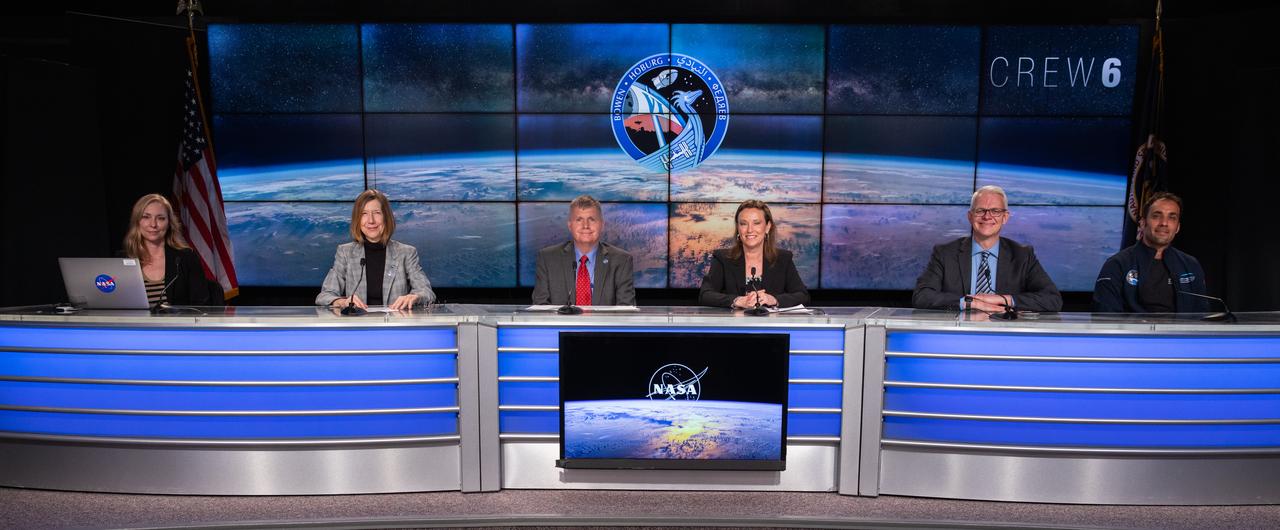
A postlaunch news conference is held for the SpaceX Crew-6 mission at the NASA News Center at Kennedy Space Center in Florida on March 2, 2023. Participants from left are Lori Bleacher, moderator, NASA Communications; Kathy Lueders, associate administrator, Space Operations Mission Directorate, NASA Headquarters; Steve Stich, manager, Commercial Crew Program, Kennedy Space Center; Dina Contella, operations integration manager, International Space Station Program, NASA’s Johnson Space Center in Houston; Benji Reed, senior director, Human Spaceflight Program, SpaceX; and Salem AlMarri, director general, Mohammed Bin Rashid Space Centre The SpaceX Falcon 9 rocket, carrying the Dragon spacecraft Endeavour for NASA’s Crew-6 mission to the International Space Station lifted off at 12:34 a.m. EST from Launch Complex 39A. Aboard Dragon are NASA astronauts Stephen Bowen, spacecraft commander, and Warren Hoburg, pilot, along with mission specialists Sultan Alneyadi, UAE (United Arab Emirates) astronaut, and Andrey Fedyaev, Roscosmos cosmonaut. Crew-6 is the sixth crew rotation mission with SpaceX to the station, and the seventh flight of Dragon with people as part of the agency’s Commercial Crew Program.
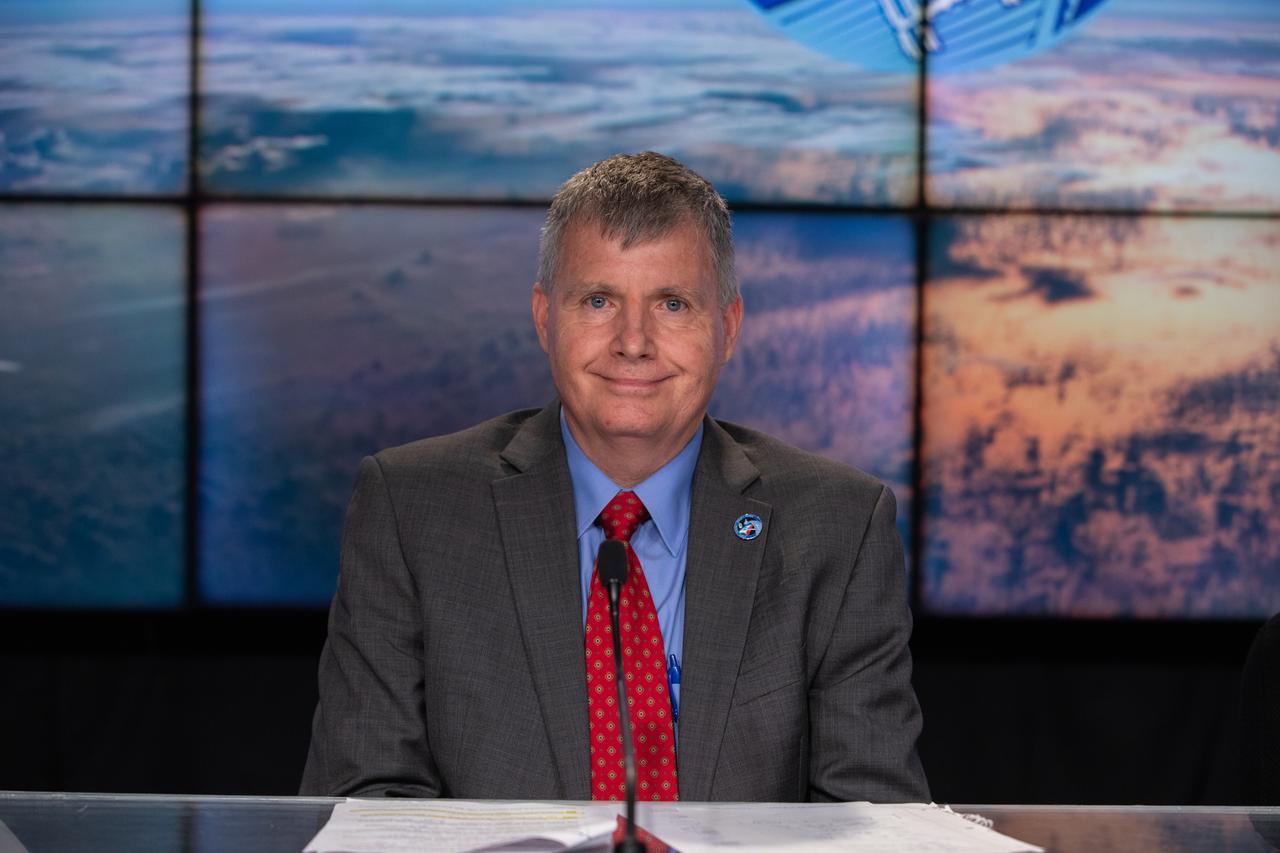
Steve Stich, manager, Commercial Crew Program at Kennedy Space Center, speaks to members of the news media during a postlaunch news conference for the SpaceX Crew-6 mission at Kennedy’s NASA News Center in Florida on March 2, 2023. The SpaceX Falcon 9 rocket, carrying the Dragon spacecraft Endeavour for NASA’s Crew-6 mission to the International Space Station lifted off at 12:34 a.m. EST. Aboard Dragon are NASA astronauts Stephen Bowen, spacecraft commander, and Warren Hoburg, pilot, along with mission specialists Sultan Alneyadi, UAE (United Arab Emirates) astronaut, and Andrey Fedyaev, Roscosmos cosmonaut. Crew-6 is the sixth crew rotation mission with SpaceX to the station, and the seventh flight of Dragon with people as part of the agency’s Commercial Crew Program.