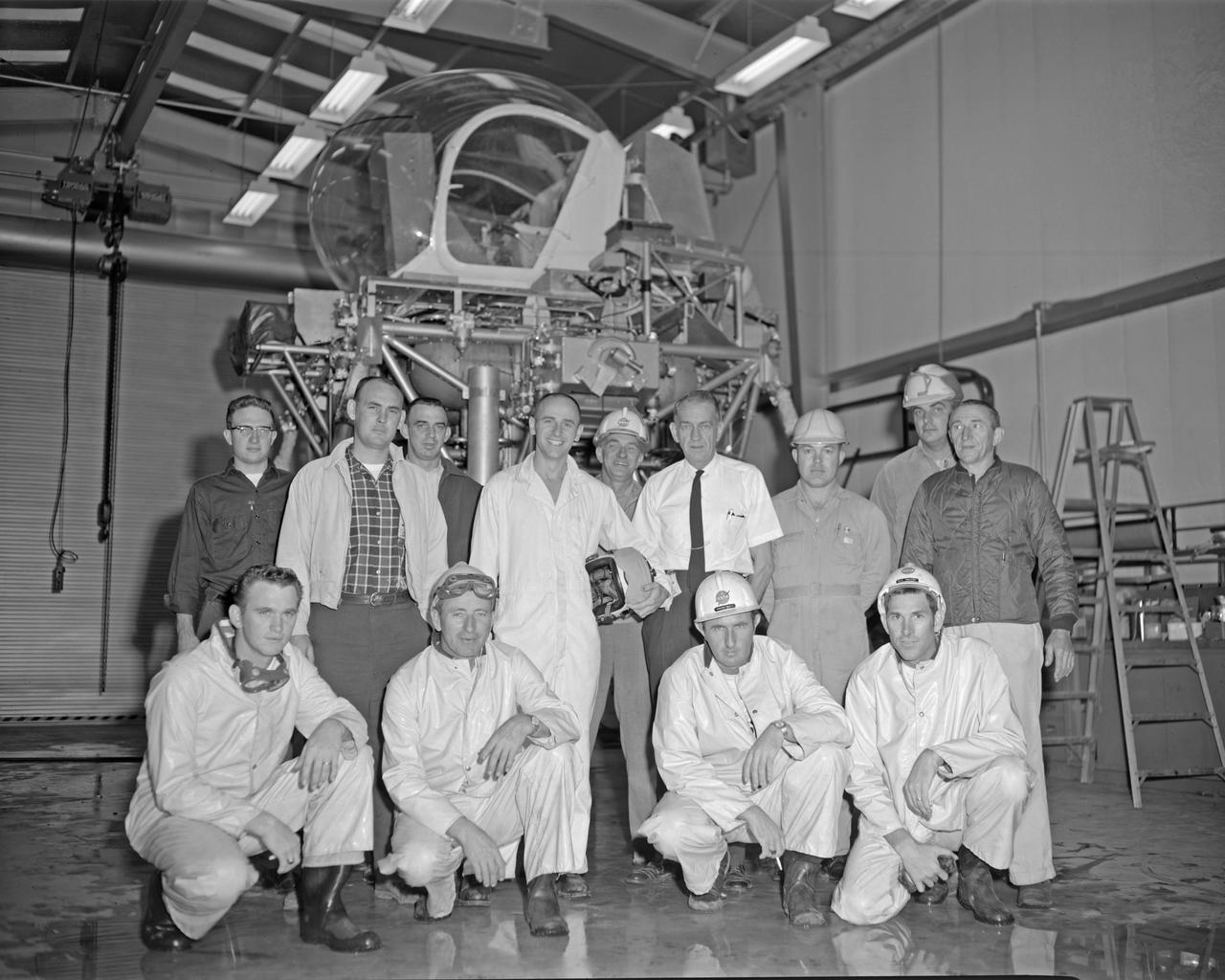
Astronaut Allen Bean with Lunar Landing Research Facility (LLRF) crew. Alan Bean was one of the third group of astronauts named by NASA in October 1963. He served as backup astronaut for the Gemini 10 and Apollo 9 missions.
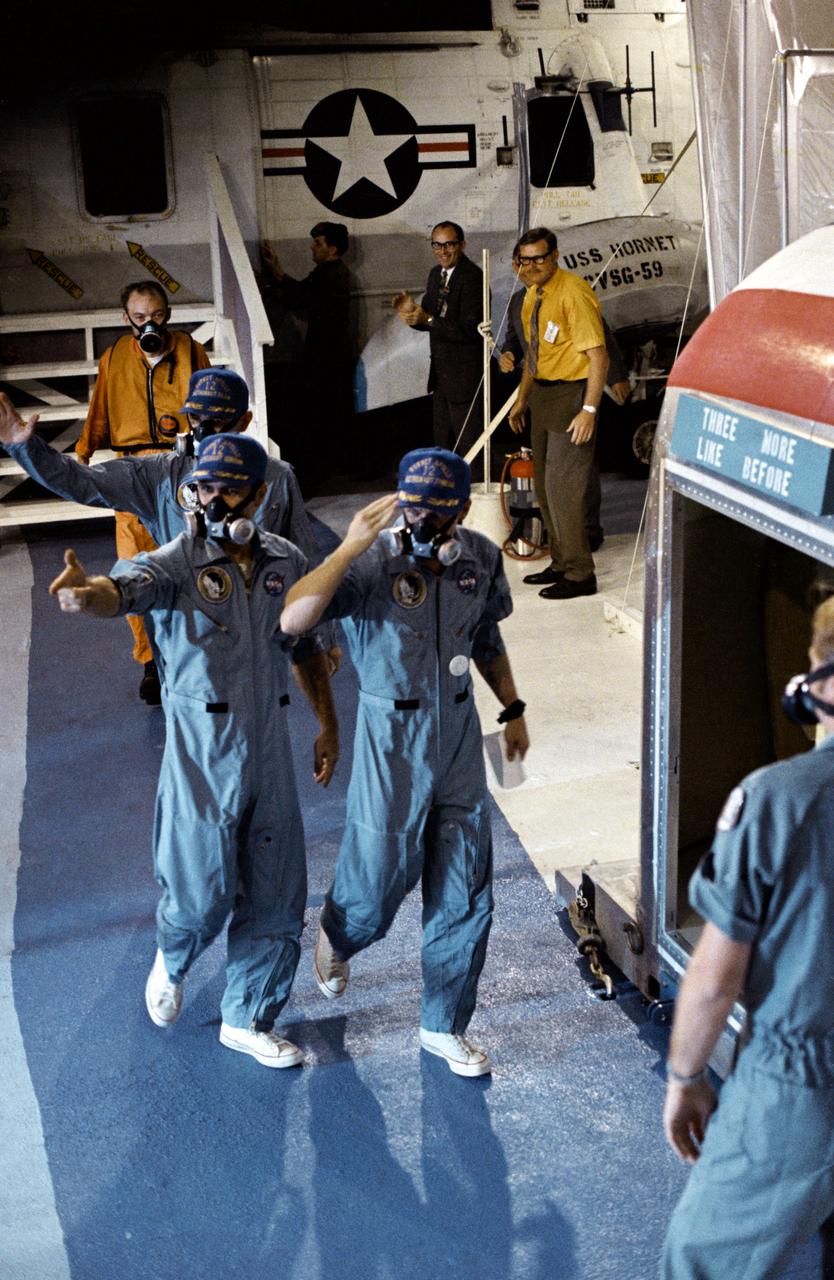
S69-22849 (24 Nov. 1969) --- USS Hornet crewmen are greeted by the crew of the Apollo 12 lunar landing mission as the three astronauts are transferred from a U.S. Navy helicopter to a Mobile Quarantine Facility (MQF) aboard the prime recovery vessel. Charles Conrad Jr., right, commander; Richard F. Gordon Jr., command module pilot, left front; and Alan L. Bean, lunar module pilot, splashed down safely at 2:58 p.m., Nov. 24, 1969.
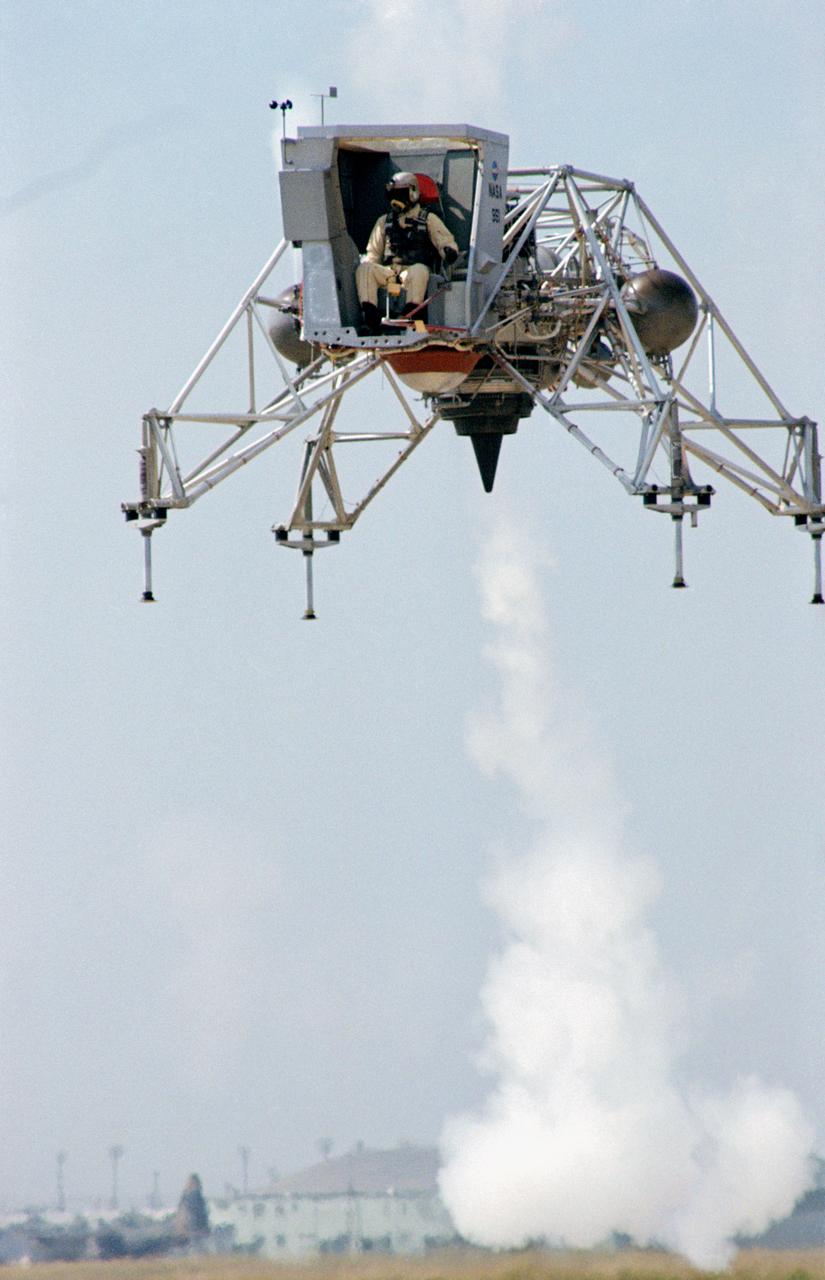
S69-56058 (25 Oct. 1969) --- Astronaut Charles Conrad Jr., commander of the Apollo 12 lunar landing mission, sits in the cockpit of a Lunar Landing Training Vehicle (LLTV) during a lunar simulation flight at Ellington Air Force Base. The LLTV is used to train Apollo crews in lunar landing techniques.
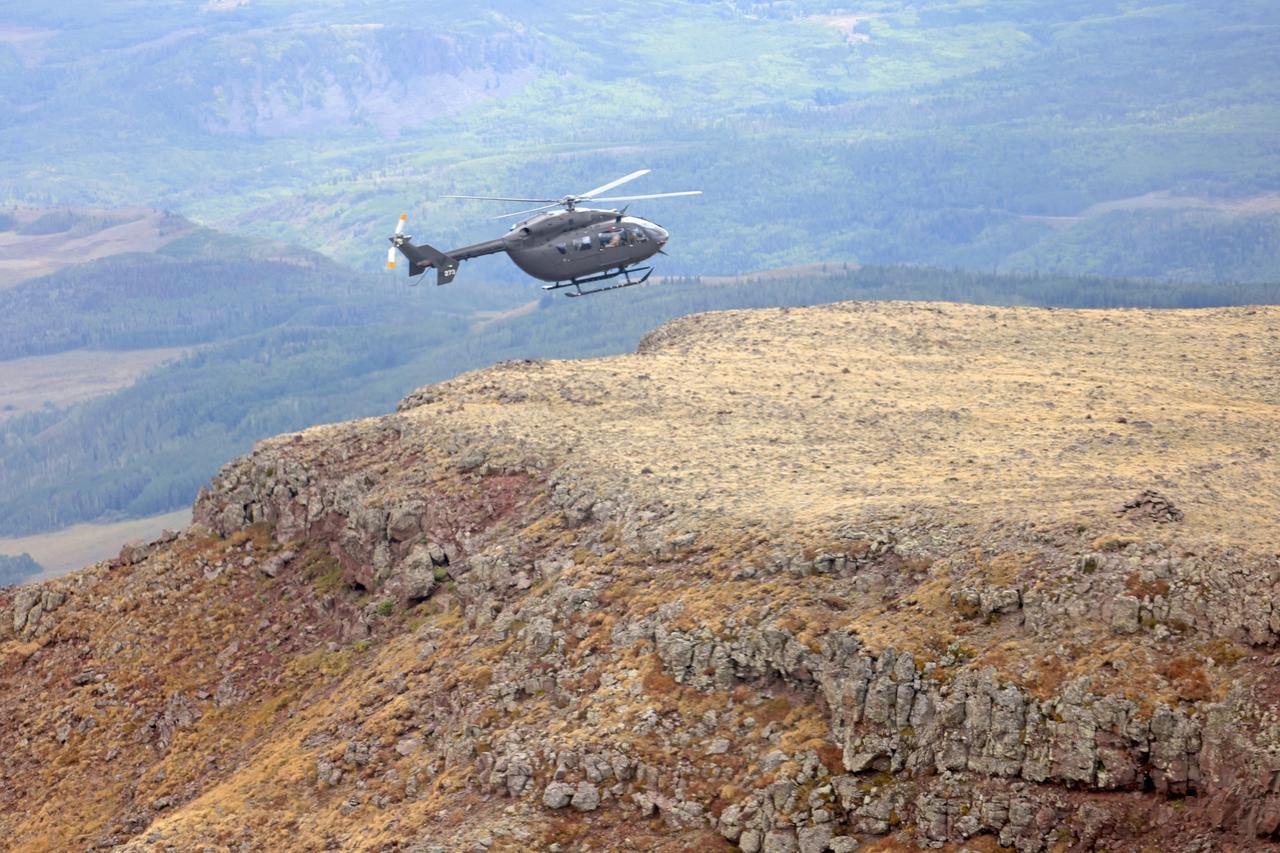
These photos and videos show how NASA certified a new lander flight training course using helicopters in the mountains of northern Colorado. NASA is partnering with the Colorado Army National Guard at its High-Altitude Army National Guard Aviation Training Site near Gypsum, Colorado, to develop the foundational flight training course that will help astronauts practice flight and landing procedures for the Moon. The certification marks an important milestone in crew training for Artemis missions to the Moon, when astronauts will use a commercial human landing system to land on the lunar surface. During the two-week certification run in late August 2025, NASA astronauts Matthew Dominick and Mark Vande Hei participated in flight and landing training to help certify the course. The pair, along with trained instructor pilots with the Army National Guard, took turns flying a helicopter and navigating to landing zones. Artemis flight crew trainers, mission control leads, and lunar lander operational experts from NASA Johnson joined them on each helicopter flight to assess the instruction, training environment, and technical applications for crewed lunar missions. For more information, contact NASA Marshall’s Office of Communications at 256-544
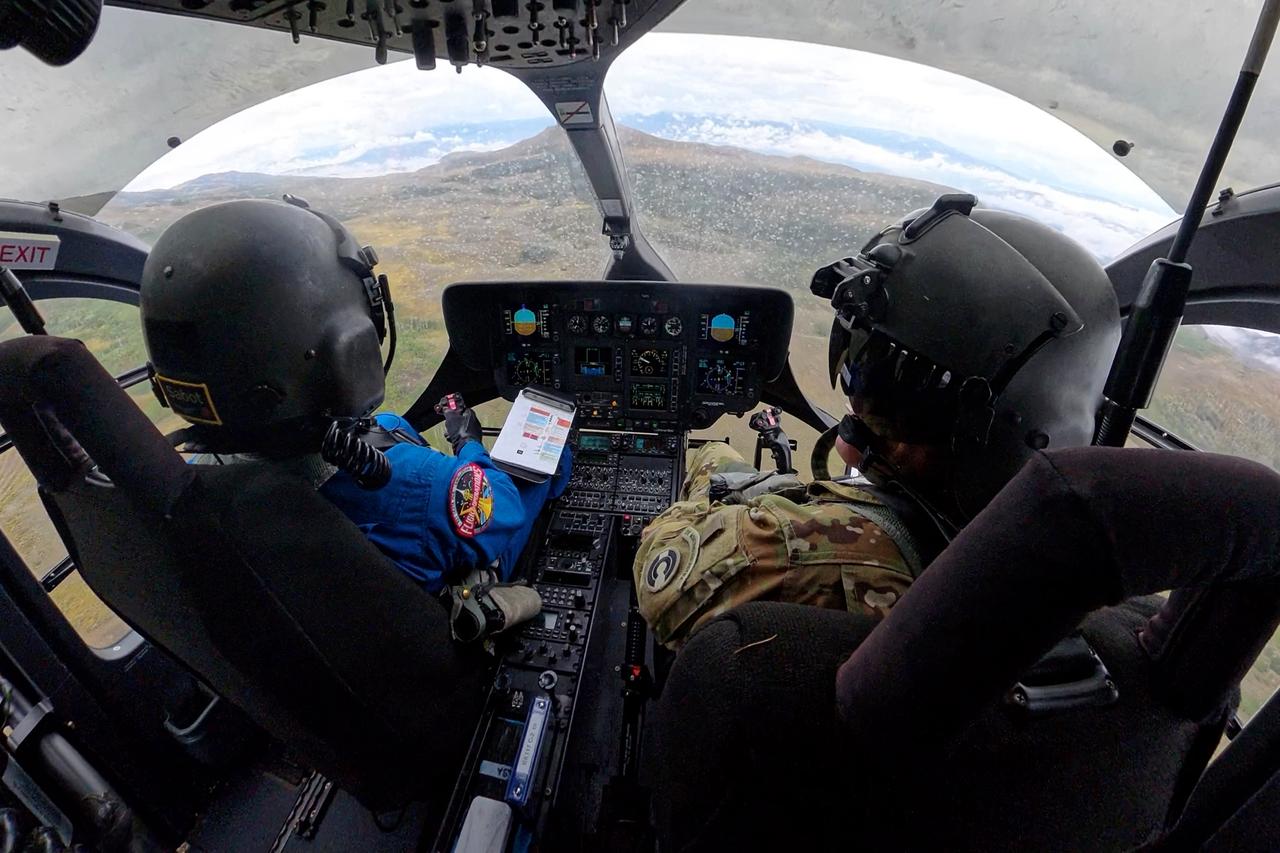
These photos and videos show how NASA certified a new lander flight training course using helicopters in the mountains of northern Colorado. NASA is partnering with the Colorado Army National Guard at its High-Altitude Army National Guard Aviation Training Site near Gypsum, Colorado, to develop the foundational flight training course that will help astronauts practice flight and landing procedures for the Moon. The certification marks an important milestone in crew training for Artemis missions to the Moon, when astronauts will use a commercial human landing system to land on the lunar surface. During the two-week certification run in late August 2025, NASA astronauts Matthew Dominick and Mark Vande Hei participated in flight and landing training to help certify the course. The pair, along with trained instructor pilots with the Army National Guard, took turns flying a helicopter and navigating to landing zones. Artemis flight crew trainers, mission control leads, and lunar lander operational experts from NASA Johnson joined them on each helicopter flight to assess the instruction, training environment, and technical applications for crewed lunar missions. For more information, contact NASA Marshall’s Office of Communications at 256-544
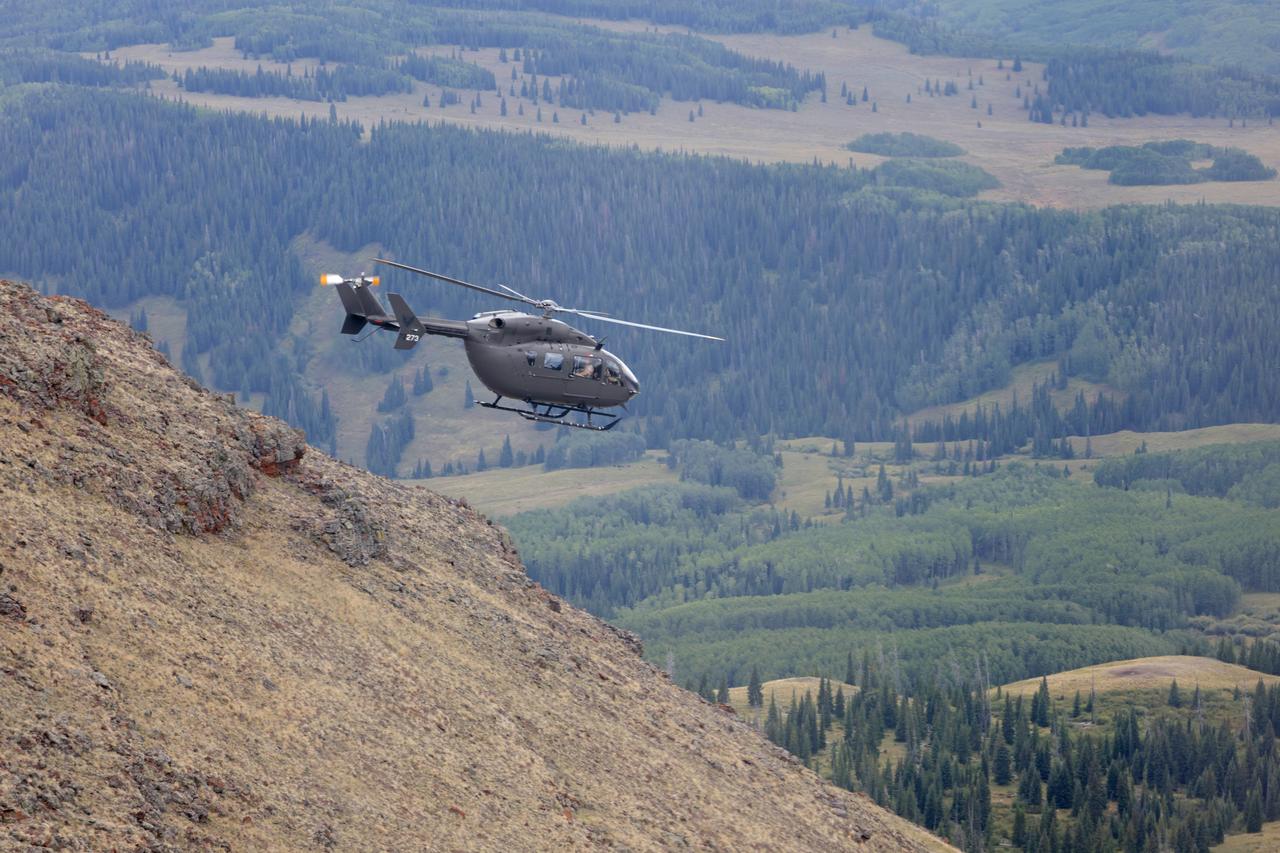
These photos and videos show how NASA certified a new lander flight training course using helicopters in the mountains of northern Colorado. NASA is partnering with the Colorado Army National Guard at its High-Altitude Army National Guard Aviation Training Site near Gypsum, Colorado, to develop the foundational flight training course that will help astronauts practice flight and landing procedures for the Moon. The certification marks an important milestone in crew training for Artemis missions to the Moon, when astronauts will use a commercial human landing system to land on the lunar surface. During the two-week certification run in late August 2025, NASA astronauts Matthew Dominick and Mark Vande Hei participated in flight and landing training to help certify the course. The pair, along with trained instructor pilots with the Army National Guard, took turns flying a helicopter and navigating to landing zones. Artemis flight crew trainers, mission control leads, and lunar lander operational experts from NASA Johnson joined them on each helicopter flight to assess the instruction, training environment, and technical applications for crewed lunar missions. For more information, contact NASA Marshall’s Office of Communications at 256-544
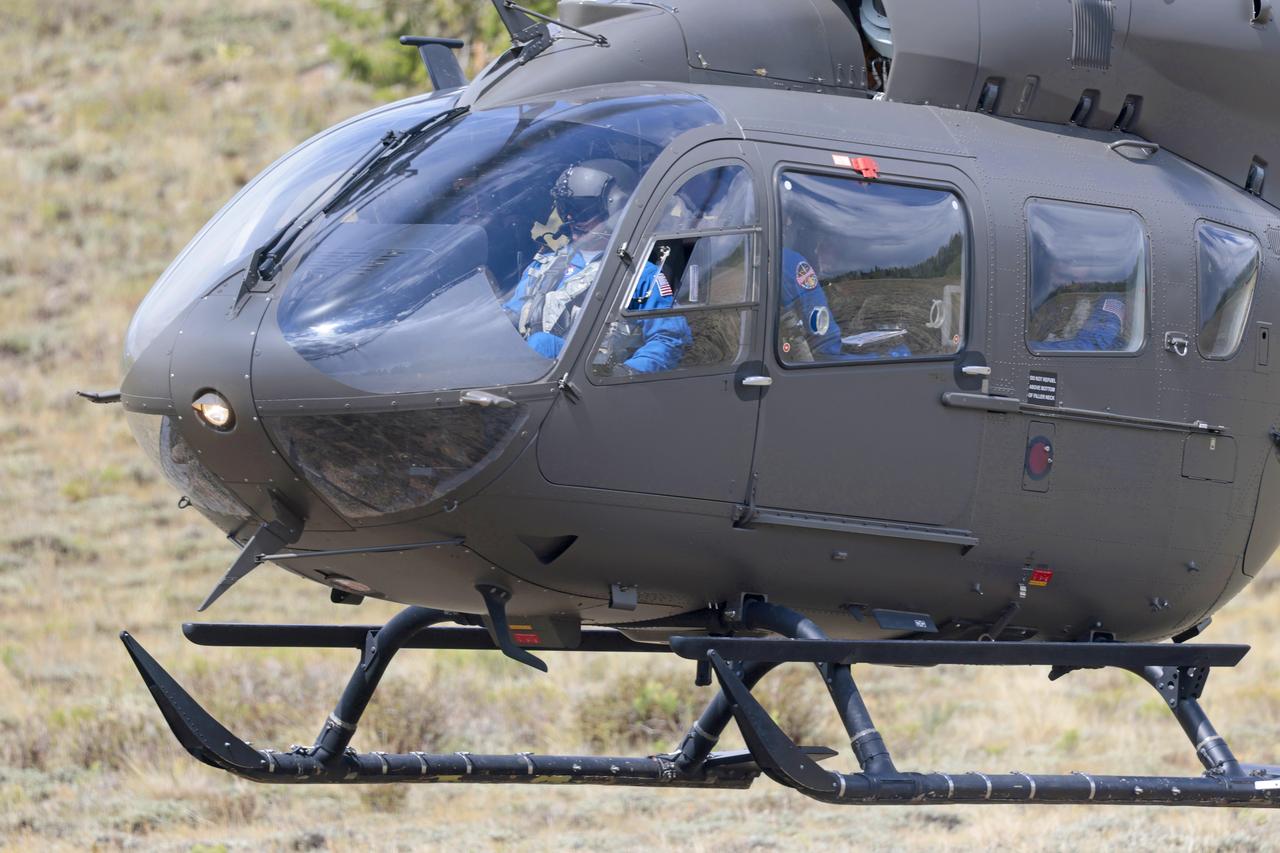
These photos and videos show how NASA certified a new lander flight training course using helicopters in the mountains of northern Colorado. NASA is partnering with the Colorado Army National Guard at its High-Altitude Army National Guard Aviation Training Site near Gypsum, Colorado, to develop the foundational flight training course that will help astronauts practice flight and landing procedures for the Moon. The certification marks an important milestone in crew training for Artemis missions to the Moon, when astronauts will use a commercial human landing system to land on the lunar surface. During the two-week certification run in late August 2025, NASA astronauts Matthew Dominick and Mark Vande Hei participated in flight and landing training to help certify the course. The pair, along with trained instructor pilots with the Army National Guard, took turns flying a helicopter and navigating to landing zones. Artemis flight crew trainers, mission control leads, and lunar lander operational experts from NASA Johnson joined them on each helicopter flight to assess the instruction, training environment, and technical applications for crewed lunar missions. For more information, contact NASA Marshall’s Office of Communications at 256-544
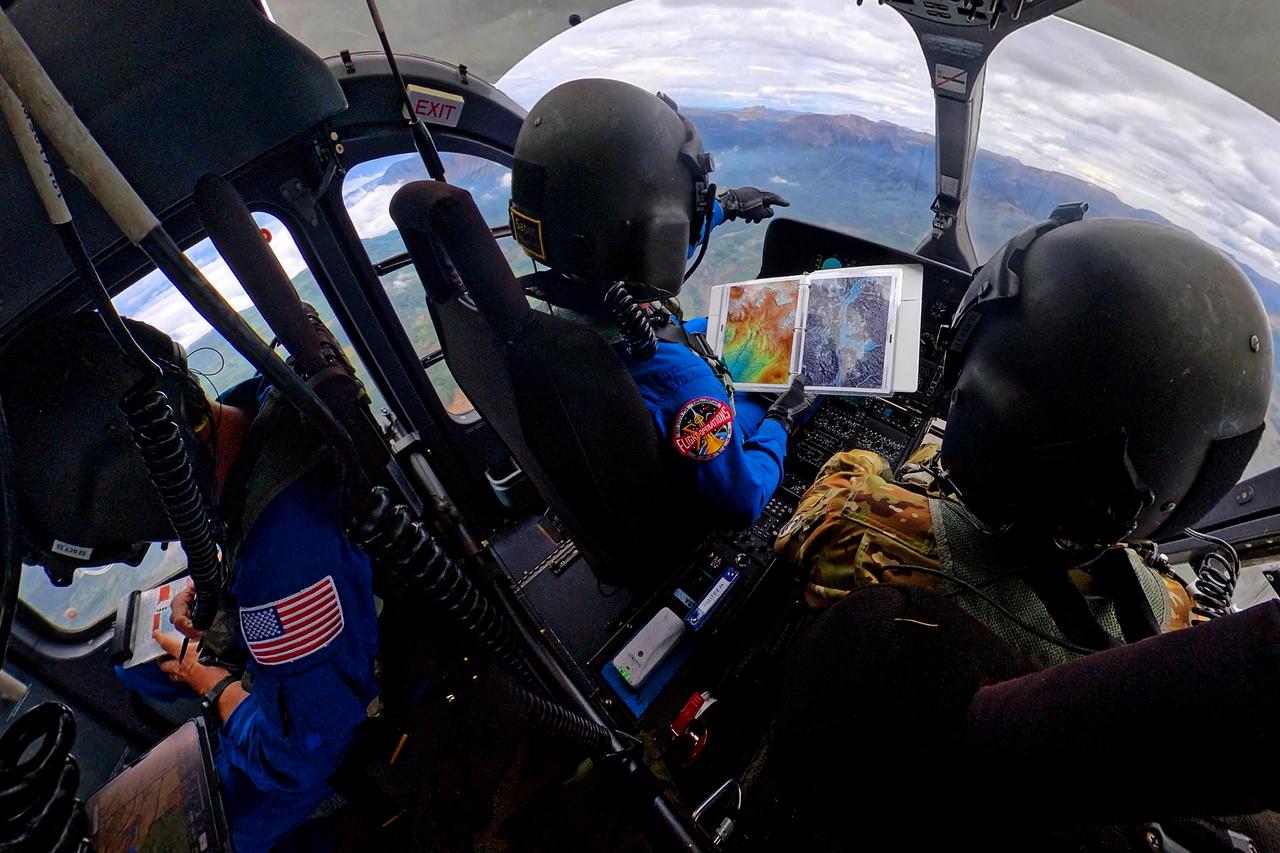
These photos and videos show how NASA certified a new lander flight training course using helicopters in the mountains of northern Colorado. NASA is partnering with the Colorado Army National Guard at its High-Altitude Army National Guard Aviation Training Site near Gypsum, Colorado, to develop the foundational flight training course that will help astronauts practice flight and landing procedures for the Moon. The certification marks an important milestone in crew training for Artemis missions to the Moon, when astronauts will use a commercial human landing system to land on the lunar surface. During the two-week certification run in late August 2025, NASA astronauts Matthew Dominick and Mark Vande Hei participated in flight and landing training to help certify the course. The pair, along with trained instructor pilots with the Army National Guard, took turns flying a helicopter and navigating to landing zones. Artemis flight crew trainers, mission control leads, and lunar lander operational experts from NASA Johnson joined them on each helicopter flight to assess the instruction, training environment, and technical applications for crewed lunar missions. For more information, contact NASA Marshall’s Office of Communications at 256-544
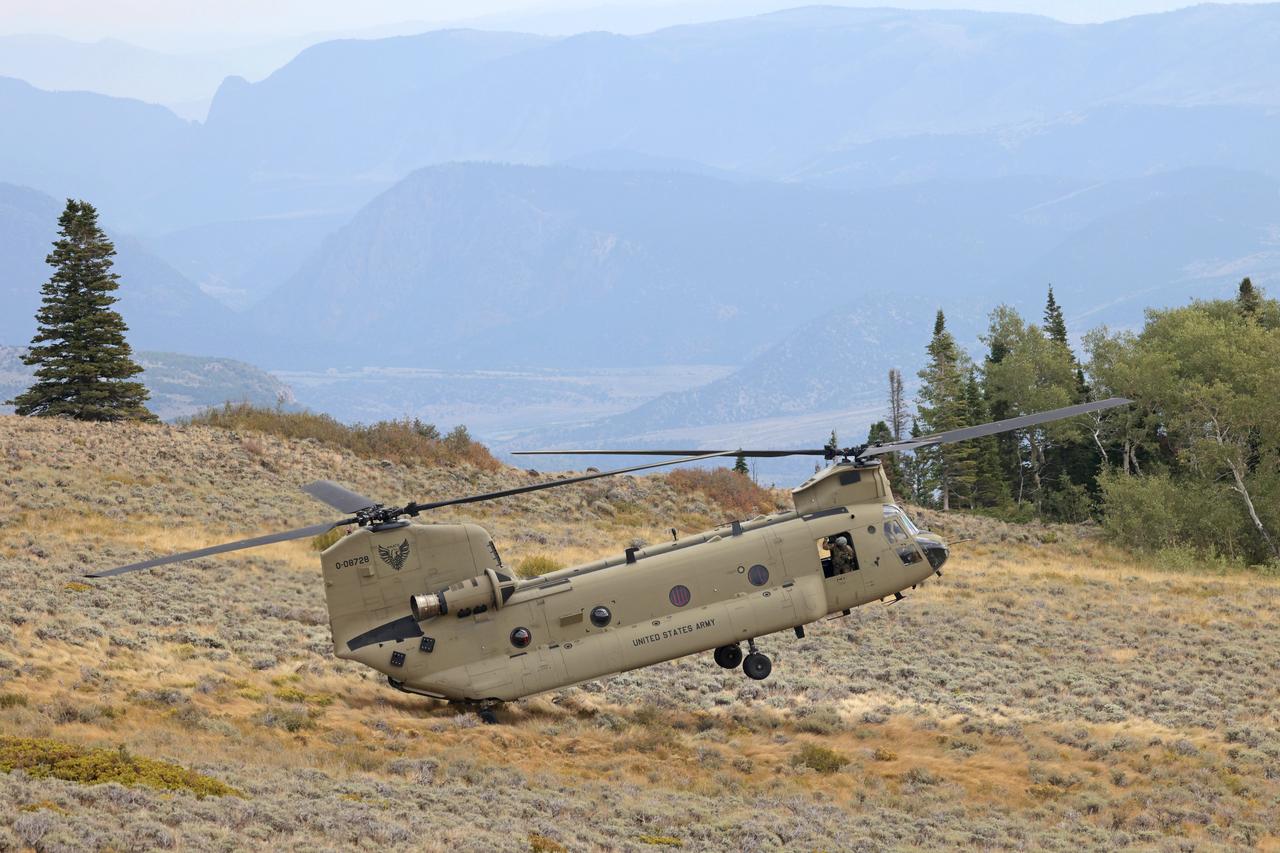
These photos and videos show how NASA certified a new lander flight training course using helicopters in the mountains of northern Colorado. NASA is partnering with the Colorado Army National Guard at its High-Altitude Army National Guard Aviation Training Site near Gypsum, Colorado, to develop the foundational flight training course that will help astronauts practice flight and landing procedures for the Moon. The certification marks an important milestone in crew training for Artemis missions to the Moon, when astronauts will use a commercial human landing system to land on the lunar surface. During the two-week certification run in late August 2025, NASA astronauts Matthew Dominick and Mark Vande Hei participated in flight and landing training to help certify the course. The pair, along with trained instructor pilots with the Army National Guard, took turns flying a helicopter and navigating to landing zones. Artemis flight crew trainers, mission control leads, and lunar lander operational experts from NASA Johnson joined them on each helicopter flight to assess the instruction, training environment, and technical applications for crewed lunar missions. For more information, contact NASA Marshall’s Office of Communications at 256-544
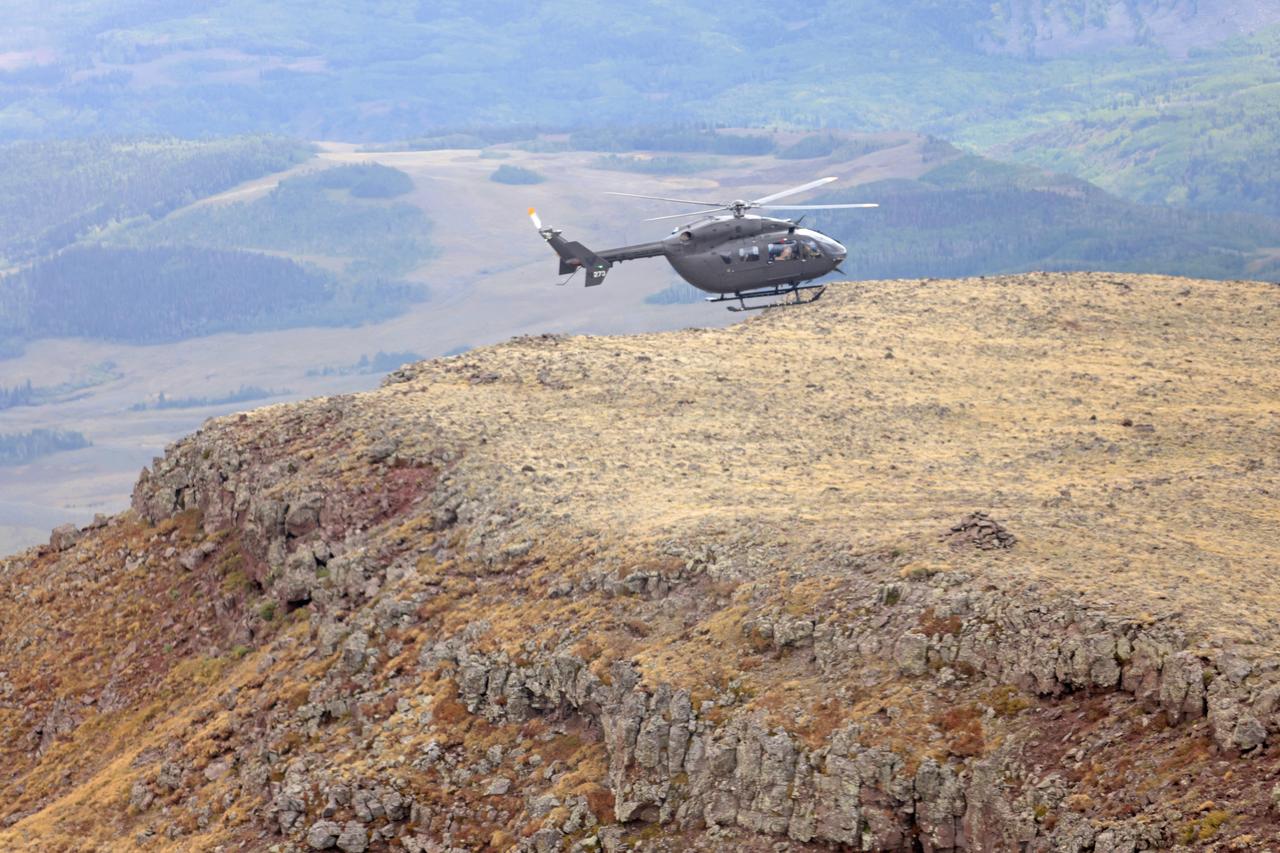
These photos and videos show how NASA certified a new lander flight training course using helicopters in the mountains of northern Colorado. NASA is partnering with the Colorado Army National Guard at its High-Altitude Army National Guard Aviation Training Site near Gypsum, Colorado, to develop the foundational flight training course that will help astronauts practice flight and landing procedures for the Moon. The certification marks an important milestone in crew training for Artemis missions to the Moon, when astronauts will use a commercial human landing system to land on the lunar surface. During the two-week certification run in late August 2025, NASA astronauts Matthew Dominick and Mark Vande Hei participated in flight and landing training to help certify the course. The pair, along with trained instructor pilots with the Army National Guard, took turns flying a helicopter and navigating to landing zones. Artemis flight crew trainers, mission control leads, and lunar lander operational experts from NASA Johnson joined them on each helicopter flight to assess the instruction, training environment, and technical applications for crewed lunar missions. For more information, contact NASA Marshall’s Office of Communications at 256-544
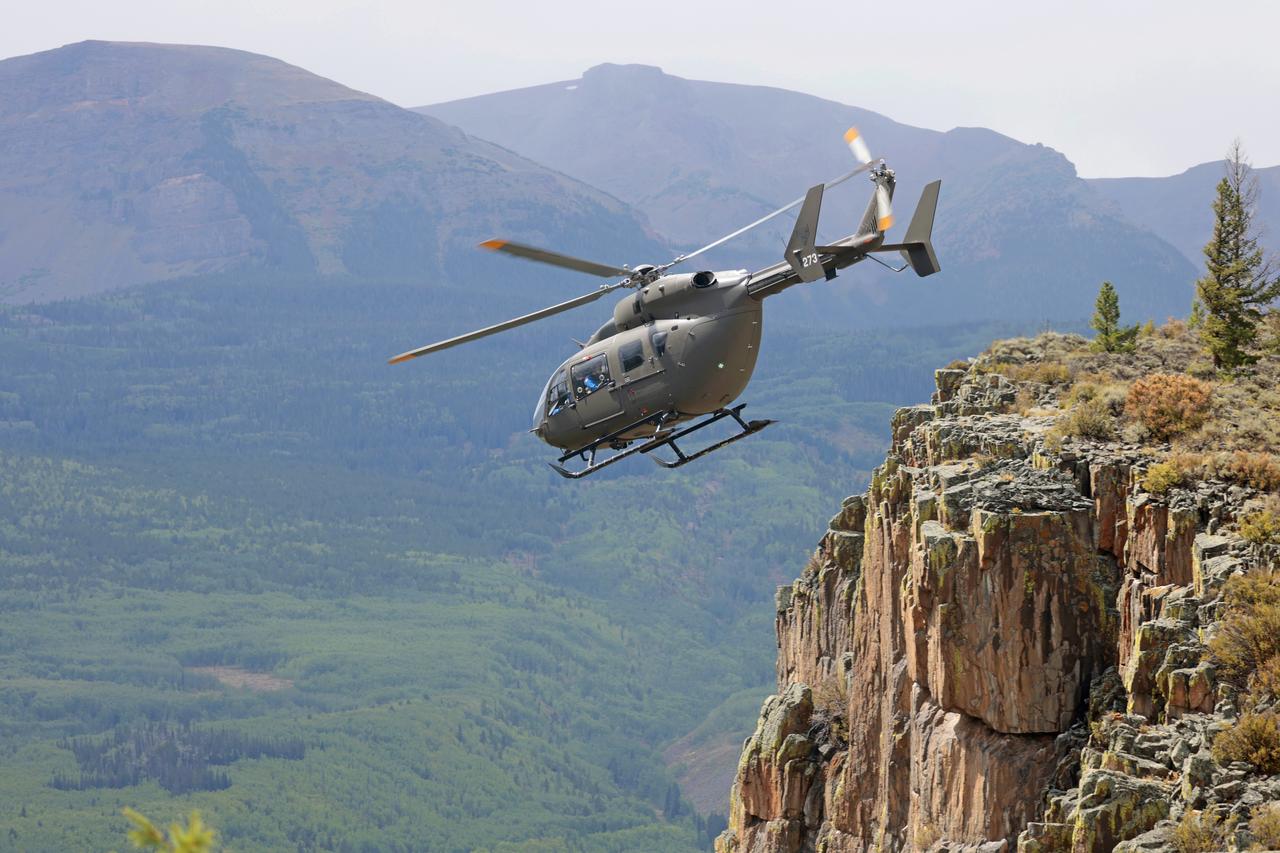
These photos and videos show how NASA certified a new lander flight training course using helicopters in the mountains of northern Colorado. NASA is partnering with the Colorado Army National Guard at its High-Altitude Army National Guard Aviation Training Site near Gypsum, Colorado, to develop the foundational flight training course that will help astronauts practice flight and landing procedures for the Moon. The certification marks an important milestone in crew training for Artemis missions to the Moon, when astronauts will use a commercial human landing system to land on the lunar surface. During the two-week certification run in late August 2025, NASA astronauts Matthew Dominick and Mark Vande Hei participated in flight and landing training to help certify the course. The pair, along with trained instructor pilots with the Army National Guard, took turns flying a helicopter and navigating to landing zones. Artemis flight crew trainers, mission control leads, and lunar lander operational experts from NASA Johnson joined them on each helicopter flight to assess the instruction, training environment, and technical applications for crewed lunar missions. For more information, contact NASA Marshall’s Office of Communications at 256-544
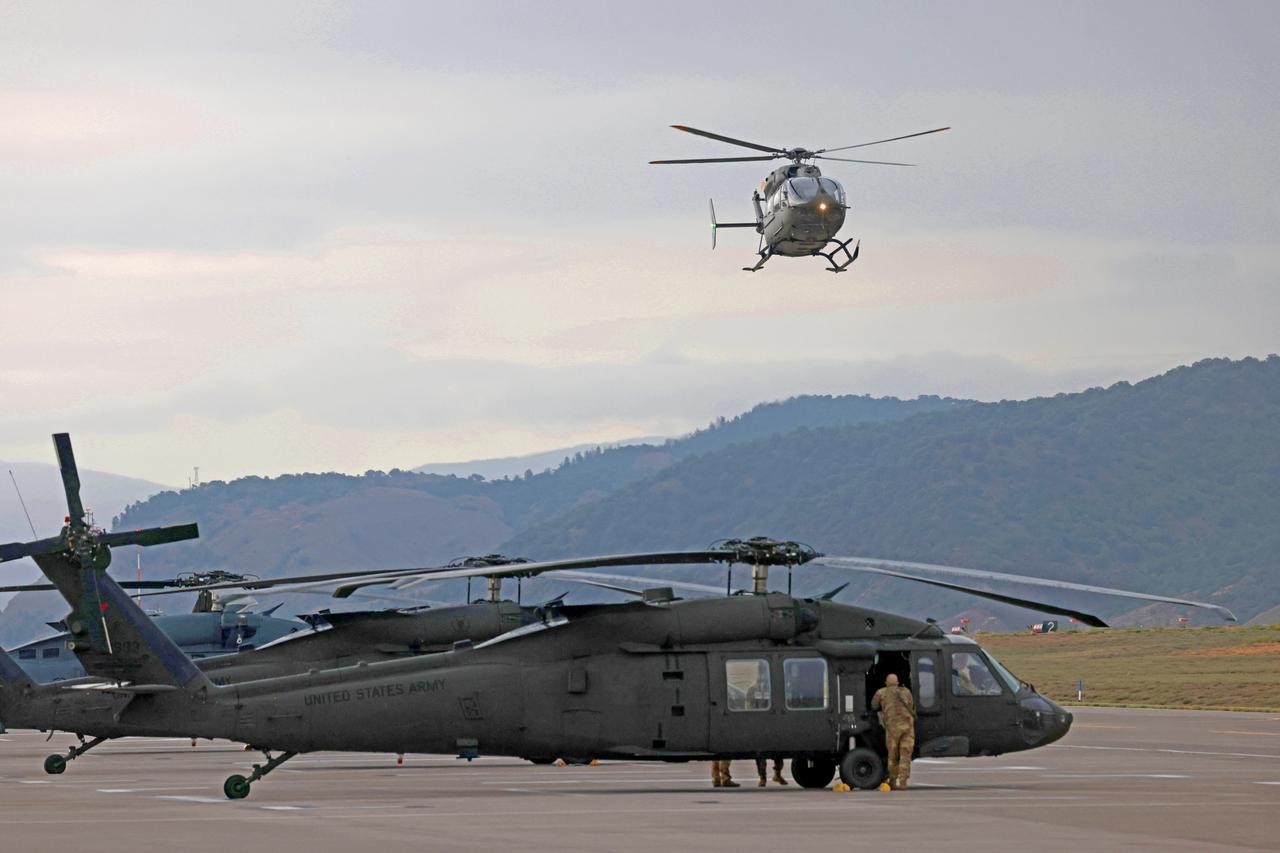
These photos and videos show how NASA certified a new lander flight training course using helicopters in the mountains of northern Colorado. NASA is partnering with the Colorado Army National Guard at its High-Altitude Army National Guard Aviation Training Site near Gypsum, Colorado, to develop the foundational flight training course that will help astronauts practice flight and landing procedures for the Moon. The certification marks an important milestone in crew training for Artemis missions to the Moon, when astronauts will use a commercial human landing system to land on the lunar surface. During the two-week certification run in late August 2025, NASA astronauts Matthew Dominick and Mark Vande Hei participated in flight and landing training to help certify the course. The pair, along with trained instructor pilots with the Army National Guard, took turns flying a helicopter and navigating to landing zones. Artemis flight crew trainers, mission control leads, and lunar lander operational experts from NASA Johnson joined them on each helicopter flight to assess the instruction, training environment, and technical applications for crewed lunar missions. For more information, contact NASA Marshall’s Office of Communications at 256-544

These photos and videos show how NASA certified a new lander flight training course using helicopters in the mountains of northern Colorado. NASA is partnering with the Colorado Army National Guard at its High-Altitude Army National Guard Aviation Training Site near Gypsum, Colorado, to develop the foundational flight training course that will help astronauts practice flight and landing procedures for the Moon. The certification marks an important milestone in crew training for Artemis missions to the Moon, when astronauts will use a commercial human landing system to land on the lunar surface. During the two-week certification run in late August 2025, NASA astronauts Matthew Dominick and Mark Vande Hei participated in flight and landing training to help certify the course. The pair, along with trained instructor pilots with the Army National Guard, took turns flying a helicopter and navigating to landing zones. Artemis flight crew trainers, mission control leads, and lunar lander operational experts from NASA Johnson joined them on each helicopter flight to assess the instruction, training environment, and technical applications for crewed lunar missions. For more information, contact NASA Marshall’s Office of Communications at 256-544
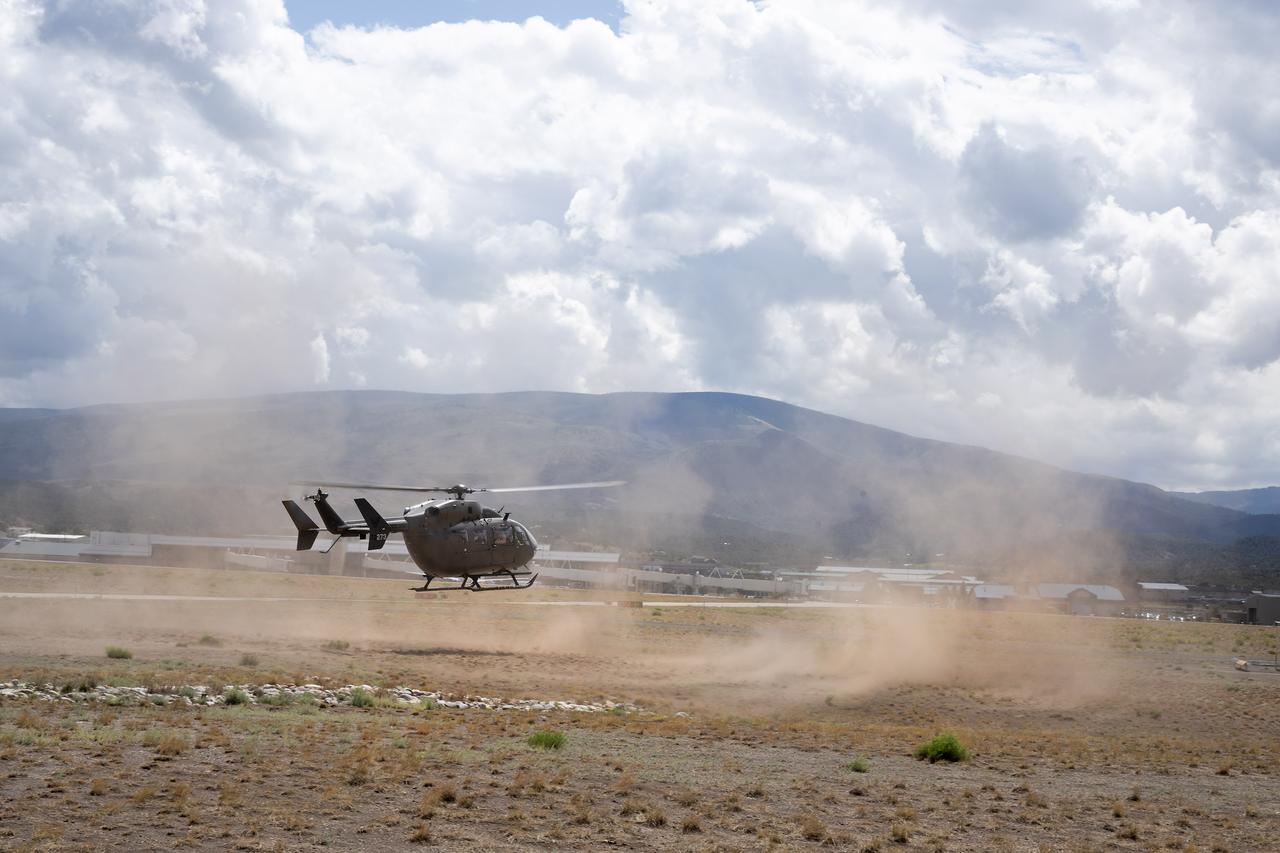
These photos and videos show how NASA certified a new lander flight training course using helicopters in the mountains of northern Colorado. NASA is partnering with the Colorado Army National Guard at its High-Altitude Army National Guard Aviation Training Site near Gypsum, Colorado, to develop the foundational flight training course that will help astronauts practice flight and landing procedures for the Moon. The certification marks an important milestone in crew training for Artemis missions to the Moon, when astronauts will use a commercial human landing system to land on the lunar surface. During the two-week certification run in late August 2025, NASA astronauts Matthew Dominick and Mark Vande Hei participated in flight and landing training to help certify the course. The pair, along with trained instructor pilots with the Army National Guard, took turns flying a helicopter and navigating to landing zones. Artemis flight crew trainers, mission control leads, and lunar lander operational experts from NASA Johnson joined them on each helicopter flight to assess the instruction, training environment, and technical applications for crewed lunar missions. For more information, contact NASA Marshall’s Office of Communications at 256-544
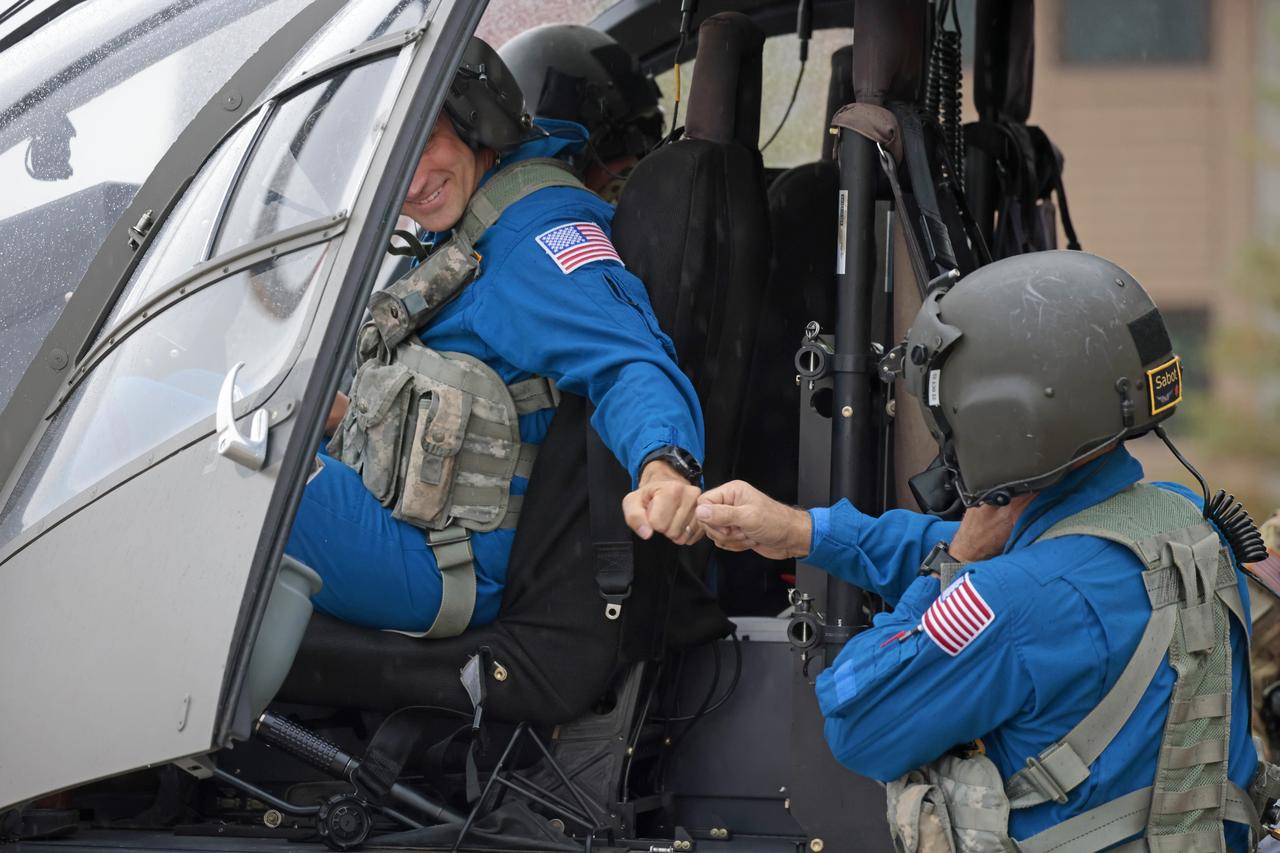
These photos and videos show how NASA certified a new lander flight training course using helicopters in the mountains of northern Colorado. NASA is partnering with the Colorado Army National Guard at its High-Altitude Army National Guard Aviation Training Site near Gypsum, Colorado, to develop the foundational flight training course that will help astronauts practice flight and landing procedures for the Moon. The certification marks an important milestone in crew training for Artemis missions to the Moon, when astronauts will use a commercial human landing system to land on the lunar surface. During the two-week certification run in late August 2025, NASA astronauts Matthew Dominick and Mark Vande Hei participated in flight and landing training to help certify the course. The pair, along with trained instructor pilots with the Army National Guard, took turns flying a helicopter and navigating to landing zones. Artemis flight crew trainers, mission control leads, and lunar lander operational experts from NASA Johnson joined them on each helicopter flight to assess the instruction, training environment, and technical applications for crewed lunar missions. For more information, contact NASA Marshall’s Office of Communications at 256-544
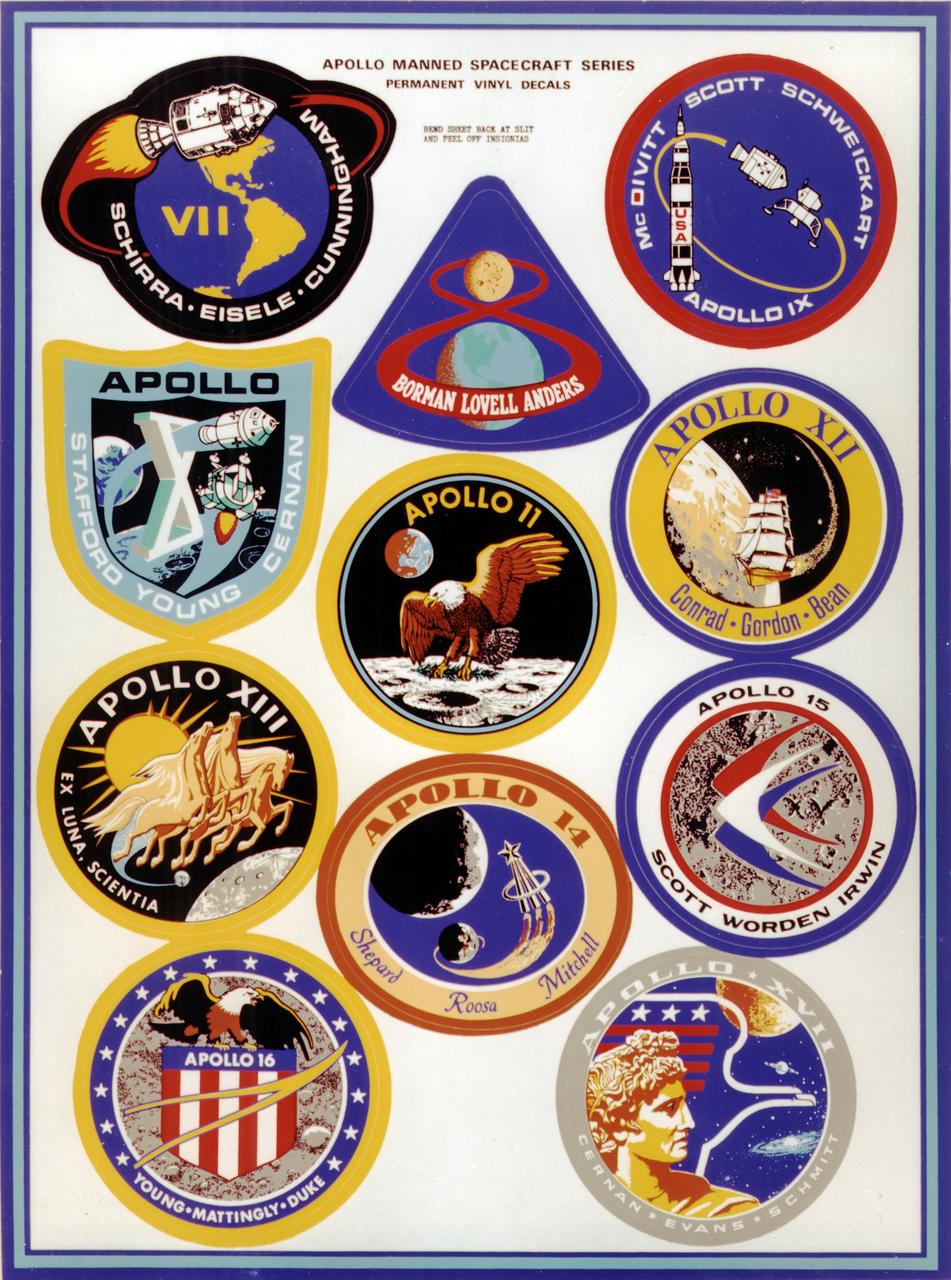
This montage depicts the flight crew patches for the manned Apollo 7 thru Apollo 17 missions. The Apollo 7 through 10 missions were basically manned test flights that paved the way for lunar landing missions. Primary objectives met included the demonstration of the Command Service Module (CSM) crew performance; crew/space vehicle/mission support facilities performance and testing during a manned CSM mission; CSM rendezvous capability; translunar injection demonstration; the first manned Apollo docking, the first Apollo Extra Vehicular Activity (EVA), performance of the first manned flight of the lunar module (LM); the CSM-LM docking in translunar trajectory, LM undocking in lunar orbit, LM staging in lunar orbit, and manned LM-CSM docking in lunar orbit. Apollo 11 through 17 were lunar landing missions with the exception of Apollo 13 which was forced to circle the moon without landing due to an onboard explosion. The craft was,however, able to return to Earth safely. Apollo 11 was the first manned lunar landing mission and performed the first lunar surface EVA. Landing site was the Sea of Tranquility. A message for mankind was delivered, the U.S. flag was planted, experiments were set up and 47 pounds of lunar surface material was collected for analysis back on Earth. Apollo 12, the 2nd manned lunar landing mission landed in the Ocean of Storms and retrieved parts of the unmanned Surveyor 3, which had landed on the Moon in April 1967. The Apollo Lunar Surface Experiments Package (ALSEP) was deployed, and 75 pounds of lunar material was gathered. Apollo 14, the 3rd lunar landing mission landed in Fra Mauro. ALSEP and other instruments were deployed, and 94 pounds of lunar materials were gathered, using a hand cart for first time to transport rocks. Apollo 15, the 4th lunar landing mission landed in the Hadley-Apennine region. With the first use of the Lunar Roving Vehicle (LRV), the crew was bale to gather 169 pounds of lunar material. Apollo 16, the 5th lunar landing mission, landed in the Descartes Highlands for the first study of highlands area. Selected surface experiments were deployed, the ultraviolet camera/spectrograph was used for first time on the Moon, and the LRV was used for second time for a collection of 213 pounds of lunar material. The Apollo program came to a close with Apollo 17, the 6th and final manned lunar landing mission that landed in the Taurus-Littrow highlands and valley area. This mission hosted the first scientist-astronaut, Schmitt, to land on the Moon. The 6th automated research station was set up, and 243 ponds of lunar material was gathered using the LRV.
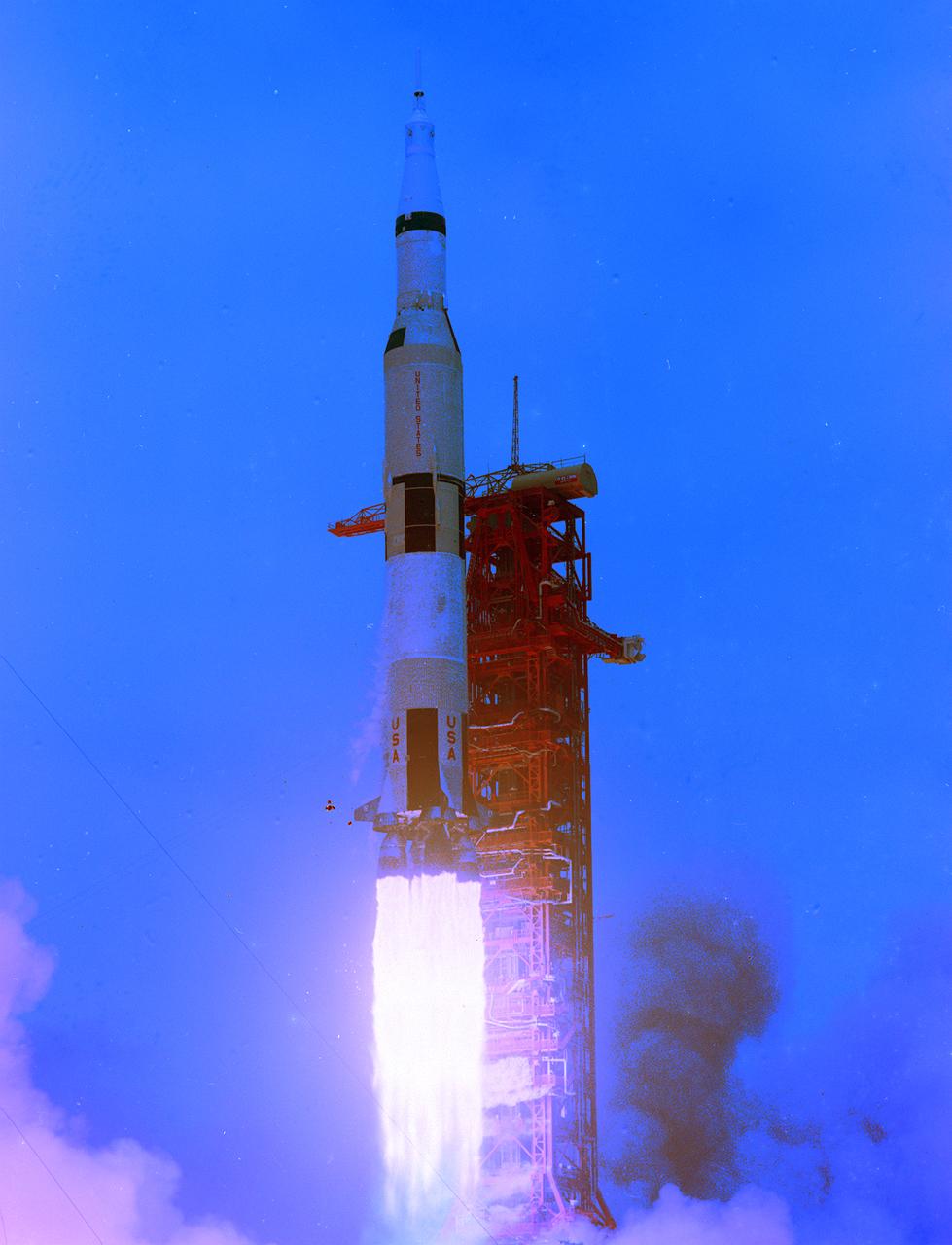
The fifth launch of the Saturn V launch vehicle (SA-505), the Apollo 10 mission with astronauts Thomas P. Stafford, John W. Young, and Eugene A. Cernan, occurred on May 18, 1969. The crew performed the first lunar orbit rendezvous, and the lunar landing mission profile was performed except for powered descent, landing, and ascent of the Lunar Module. The mission objectives were to rehearse all the steps and reproduce all the events of the Apollo 11, the first lunar landing mission, with the exception of the lunar touchdown, stay, and liftoff.
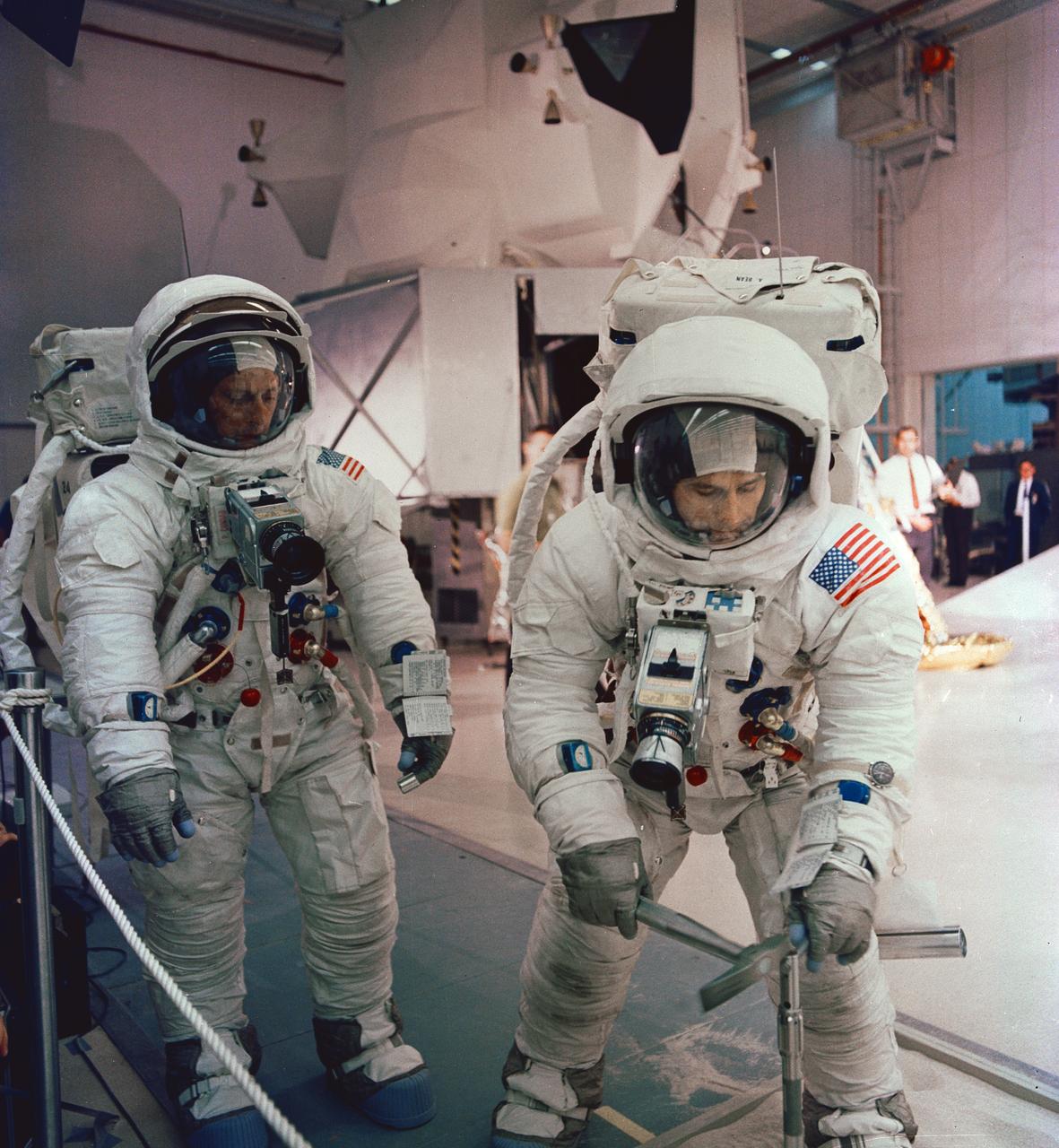
S69-55362 (6 Oct. 1969) --- The two assigned moon-walking crew members for the Apollo 12 lunar landing mission participate in lunar surface extravehicular activity simulations in the Kennedy Space Center's Flight Crew Training Building. Here, astronaut Alan L. Bean, lunar module pilot, simulates driving core tube into lunar surface to obtain a sample. Astronaut Charles Conrad Jr., commander, looks on. A Lunar Module mock-up is in the center background. Photo credit: NASA or National Aeronautics and Space Administration
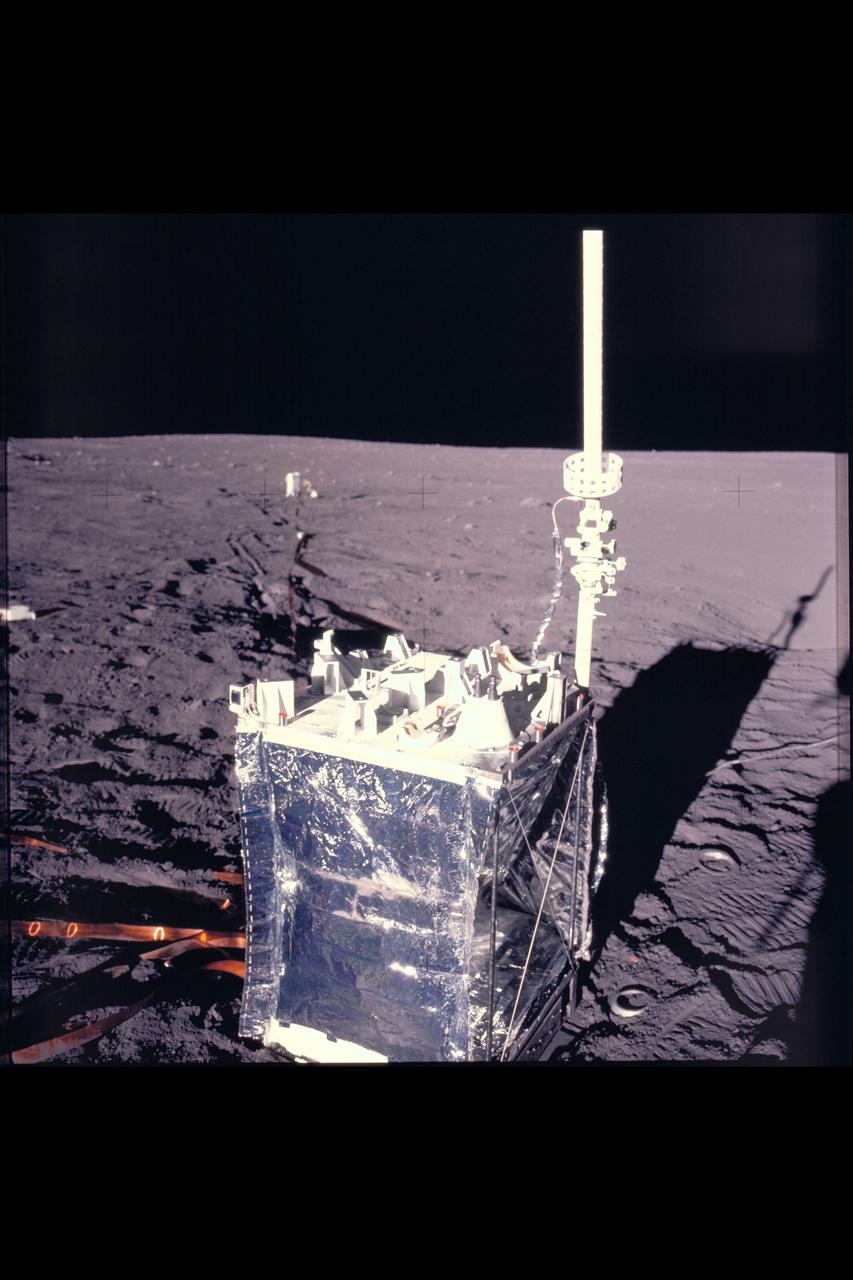
Apollo Crew landing site showing deployment of ALSEP (Apollo Lunar Surface expeiments package)
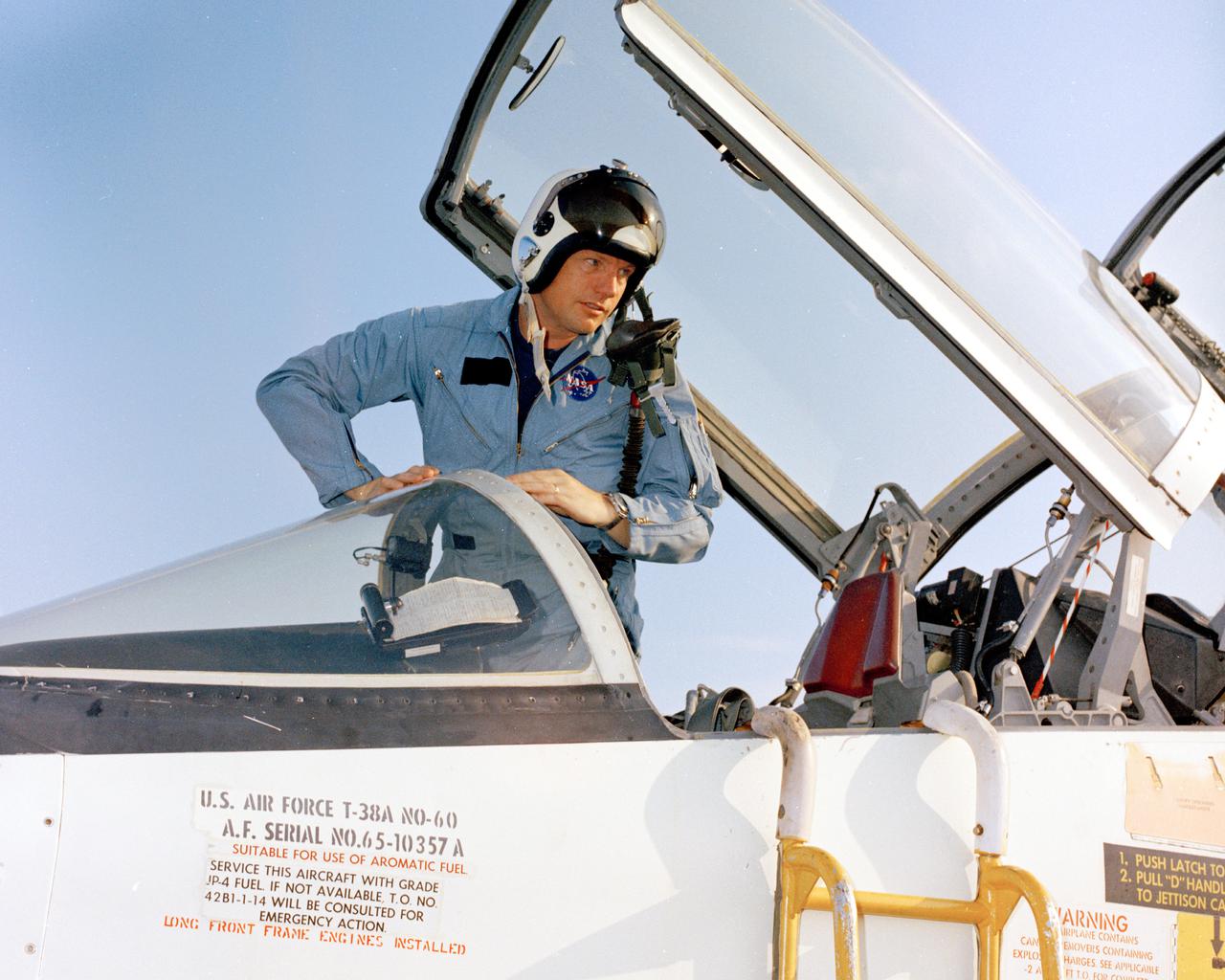
PATRICK AFB, Fla. – In preparation of the nation’s first lunar landing mission, Apollo 11 crew members arrive at Patrick Air Force Base, Florida. Mission commander Neil Armstrong climbs out of a T-38 jet. Lift off atop a Saturn V launch vehicle is scheduled for July 16, 1969. During Apollo 11 the command module, Columbia, will remain in orbit around the moon while the lunar module, Eagle, carrying Armstrong and Aldrin, lands on the lunar surface. During 2½ hours of surface exploration, the crew plans to collect lunar surface material for analysis back on Earth. For more: http:__www-pao.ksc.nasa.gov_history_apollo_apollo-11_apollo-11.htm Photo credit: NASA
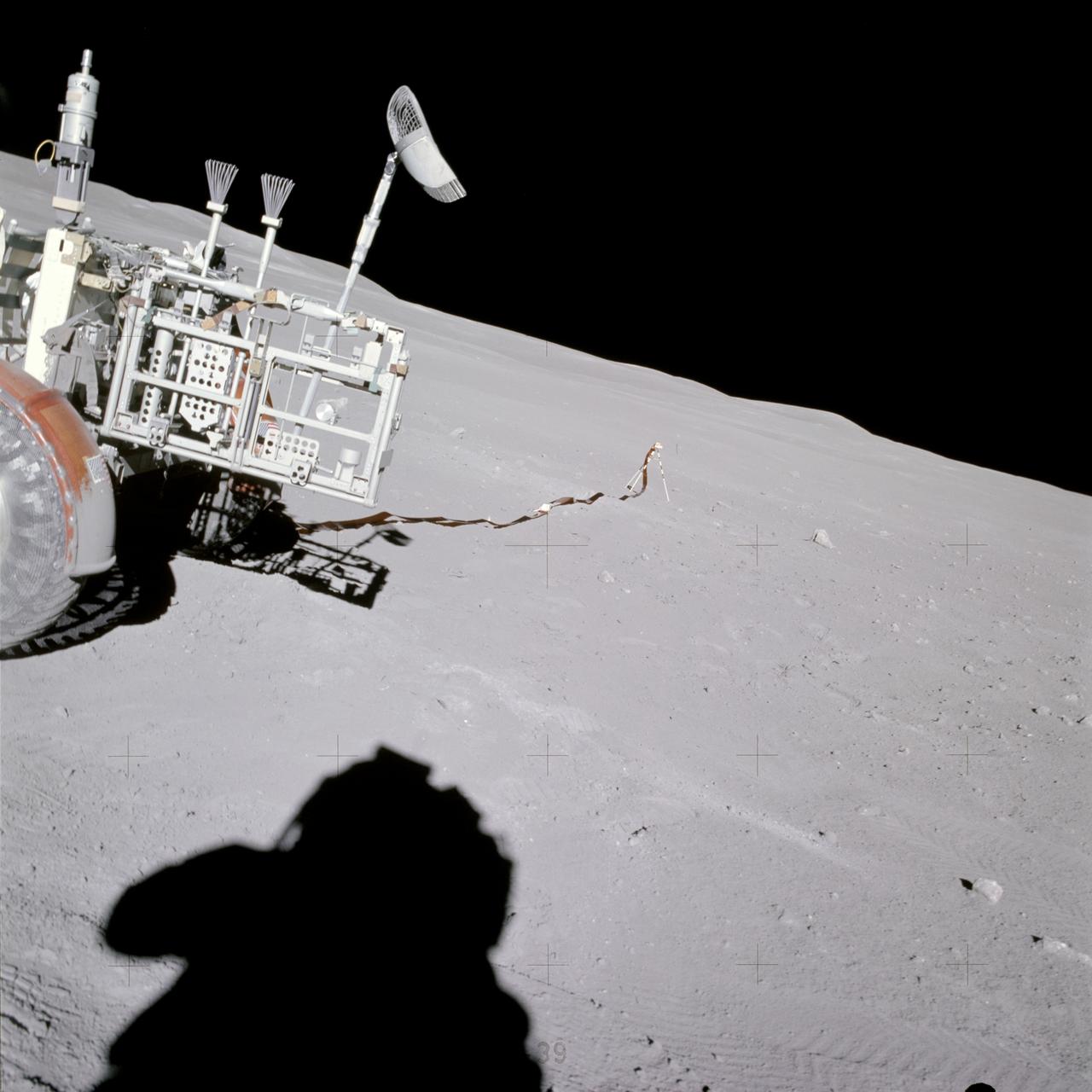
AS16-114-18433 (22 April 1972) --- View of the Lunar Portable Magnetometer mounted on the Lunar Roving Vehicle (LRV) which was parked at Station No. 2 on the Descartes lunar landing site. The Apollo 16 crew photographed it during their second extravehicular activity (EVA). Note the shadow of the astronaut taking the photograph in the left foreground.
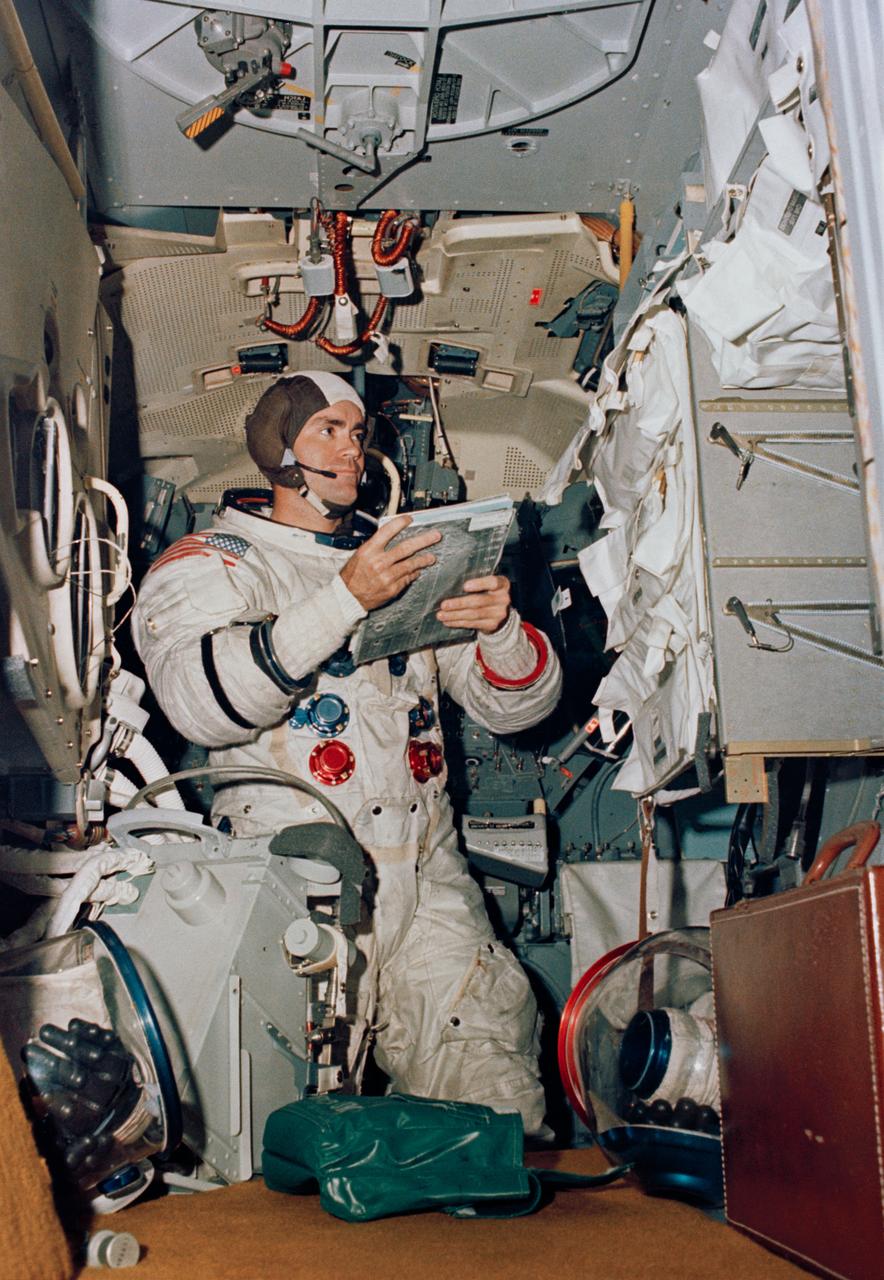
S70-34412 (4 April 1970) --- Astronaut Fred W. Haise Jr., Apollo 13 lunar module pilot, participates in simulation training in preparation for the scheduled lunar landing mission. He is in the Apollo Lunar Module Mission Simulator in the Kennedy Space Center's Flight Crew Training building.
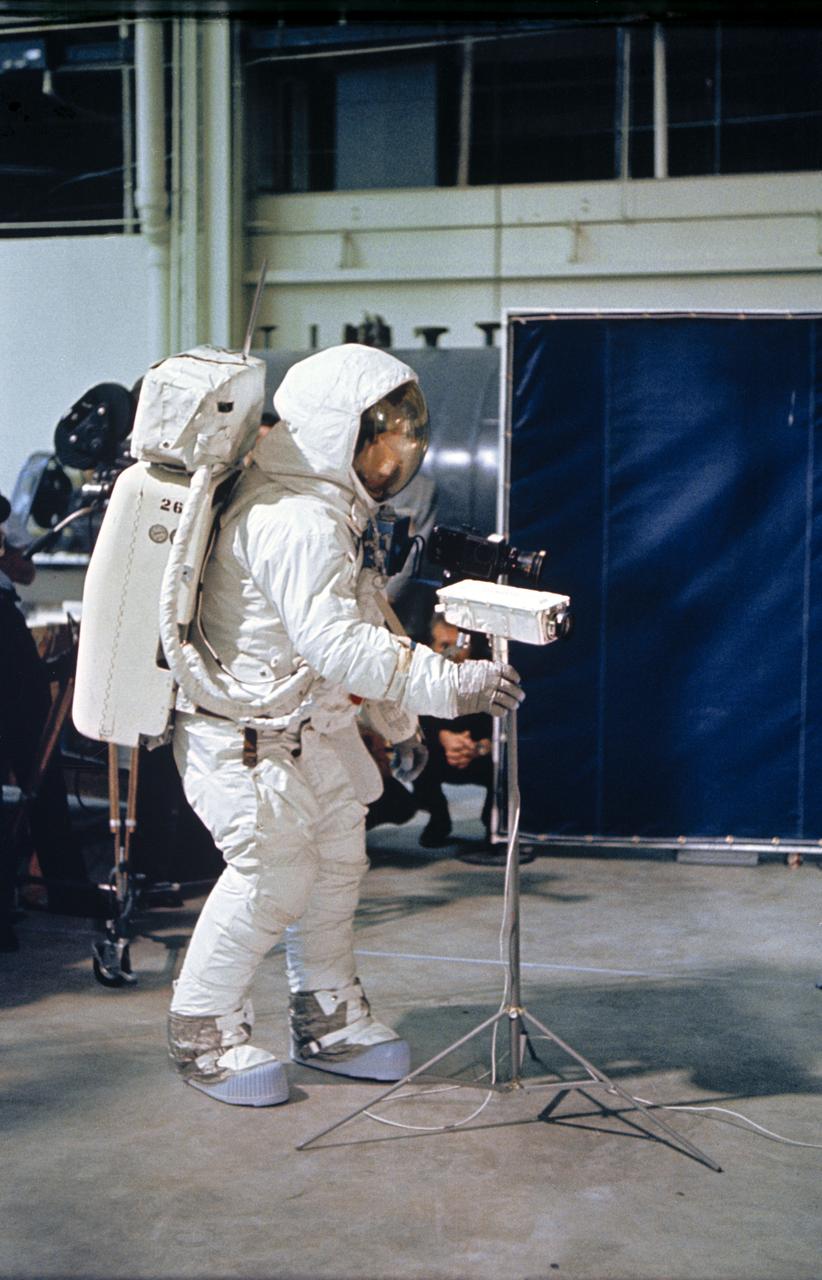
S69-33923 (April 1969) --- Astronaut Neil A. Armstrong, wearing an Extravehicular Mobility Unit (EMU), deploys a lunar surface television camera during lunar surface simulation training in Building 9, Manned Spacecraft Center (MSC). Armstrong is the prime crew commander of the Apollo 11 lunar landing mission.
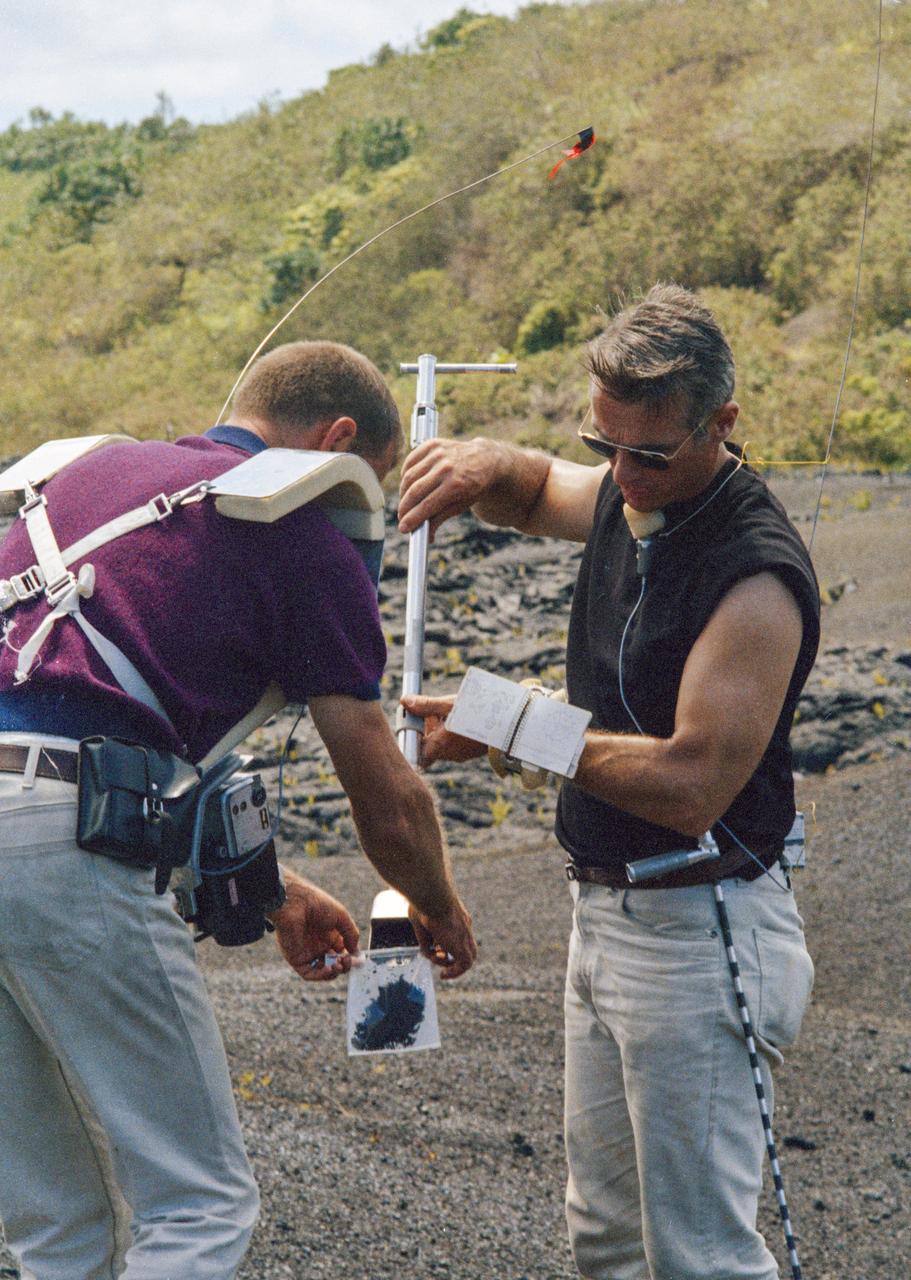
S70-34413 (April 1970) --- Astronaut Eugene A. Cernan (right), backup crew commander of the Apollo 14 lunar landing mission, pours a scoop-full of sample material into a bag held by astronaut Joe H. Engle, Apollo 14 backup crew lunar module pilot. The two joined the prime crew members and other Manned Spacecraft Center (MSC) personnel on a training trip to various areas of Hawaii. Here in Kapoho, the two backup crew members for NASA?s next lunar landing mission are taking part in a full simulation of a traverse on the lunar surface. Note the check-list on Cernan's left wrist. He carries a penetrometer in his belt. The terrain in this area bears many similarities to that on the lunar surface. Photo credit: NASA
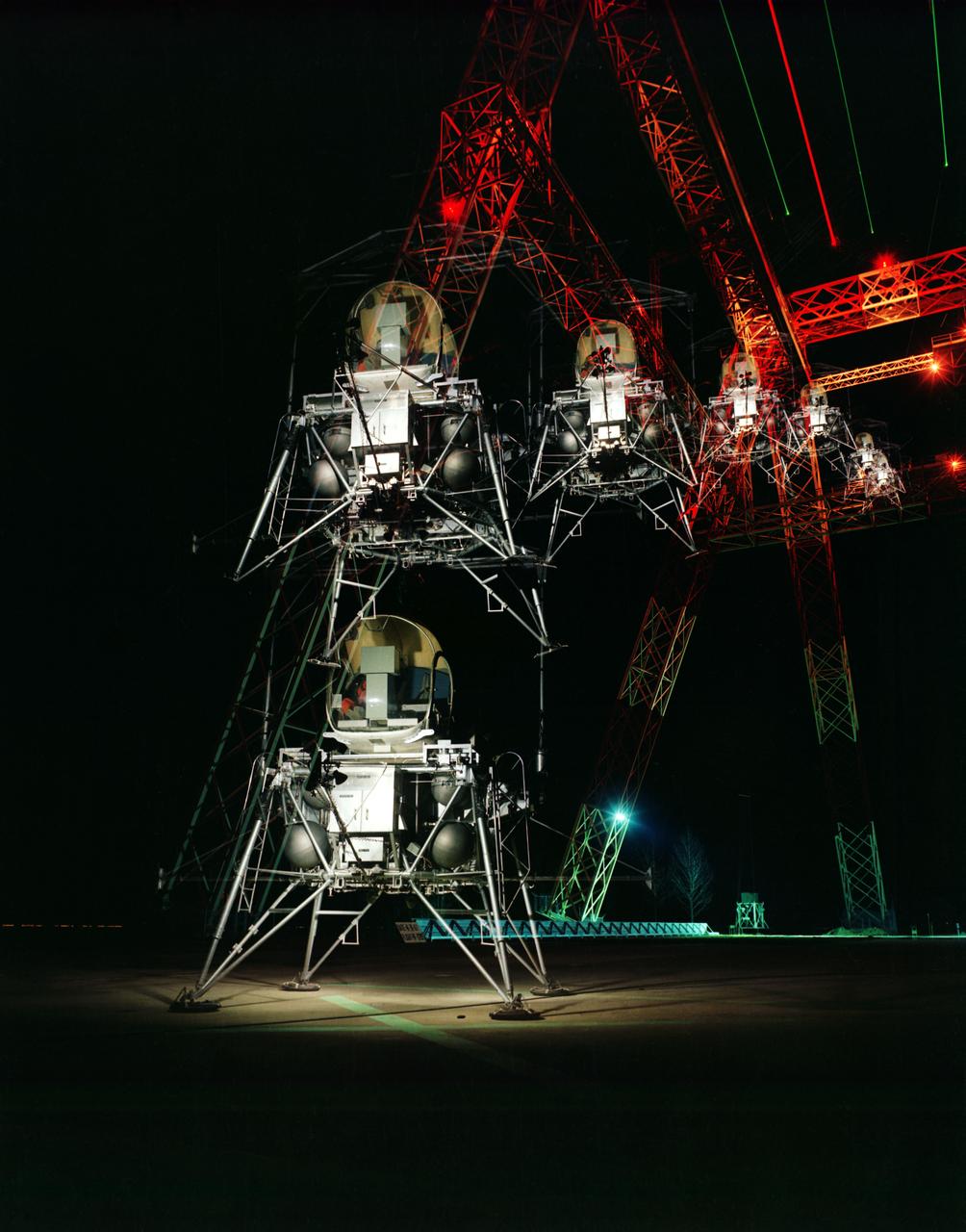
During a nighttime training session, a multiple exposure captures the movement of the Lunar Excursion Module Simulator (LEMS). The LEMS was a manned vehicle used to familiarize the Apollo astronauts with the handling characteristics of lunar-landing type vehicle. The Apollo Program is best known for the astronaut Neal Armstrong s first step on the Moon July 20, 1969. In its earliest test period, the LEMS featured a helicopter crew cabin atop the lunar landing module. Later, the helicopter crew cabin was replaced with a stand-up rectangular cabin which was more efficient for controlling maneuvers and for better viewing by the pilot. The vehicle was designed at Langley Research Center in Hampton, VA. This multiple exposure shows a simulated Moon landing of the (LEMS) trainer at Langley s Lunar Landing Research Facility. -- Photograph published in Winds of Change, 75th Anniversary NASA publication (page 70), by James Shultz. Also published in " A Century at Langley" by Joseph Chambers, pg. 93.
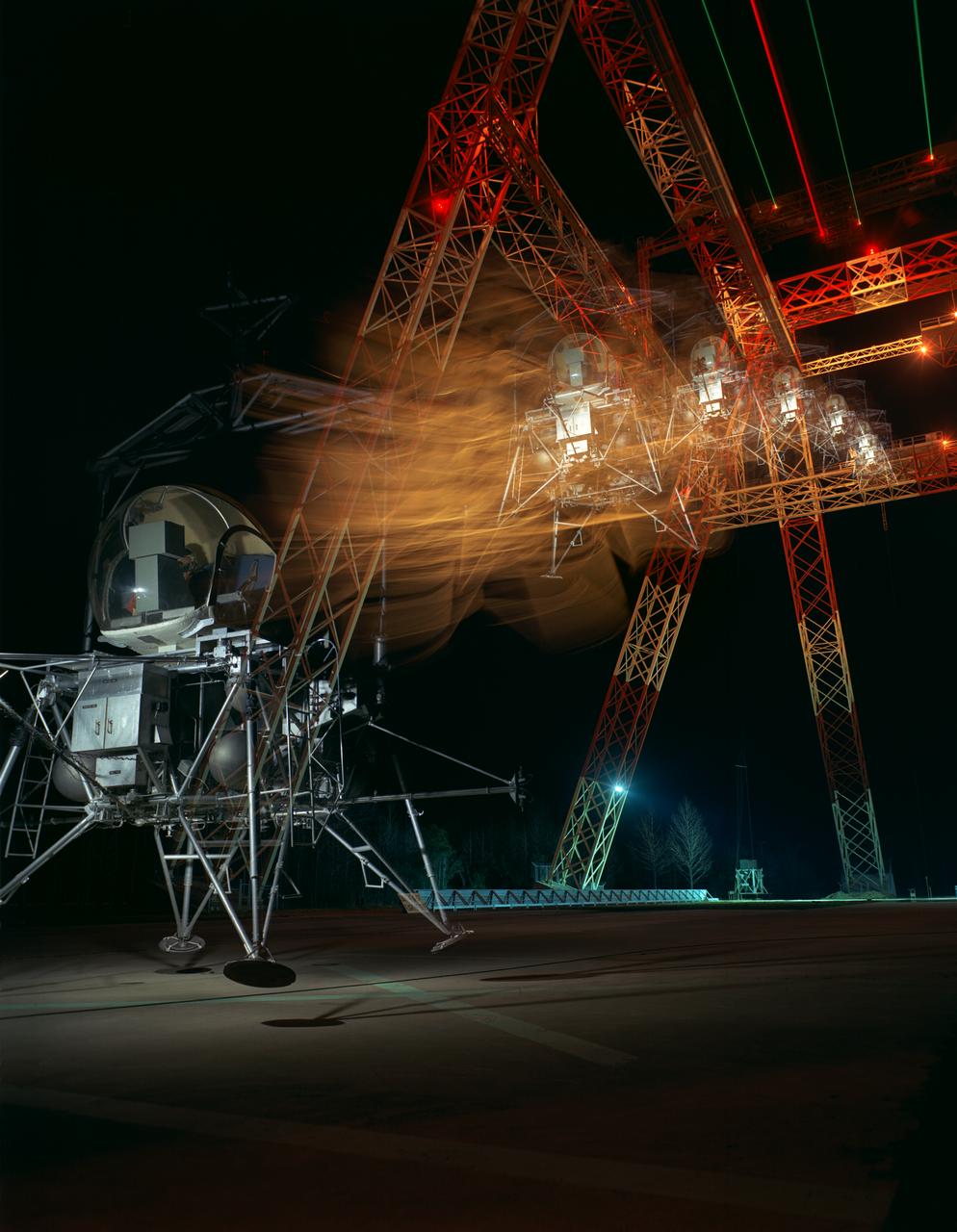
During a nighttime training session, a multiple exposure captures the movement of the Lunar Excursion Module Simulator (LEMS). The LEMS was a manned vehicle used to familiarize the Apollo astronauts with the handling characteristics of lunar-landing type vehicle. The Apollo Program is best known for the astronaut Neal Armstrong s first step on the Moon July 20, 1969. In its earliest test period, the LEMS featured a helicopter crew cabin atop the lunar landing module. Later, the helicopter crew cabin was replaced with a stand-up rectangular cabin which was more efficient for controlling maneuvers and for better viewing by the pilot. The vehicle was designed at Langley Research Center in Hampton, VA. This multiple exposure shows a simulated Moon landing of the (LEMS) trainer at Langley s Lunar Landing Research Facility. -- Photograph published in Winds of Change, 75th Anniversary NASA publication (page 70), by James Shultz. Also published in " A Century at Langley" by Joseph Chambers, pg. 93.
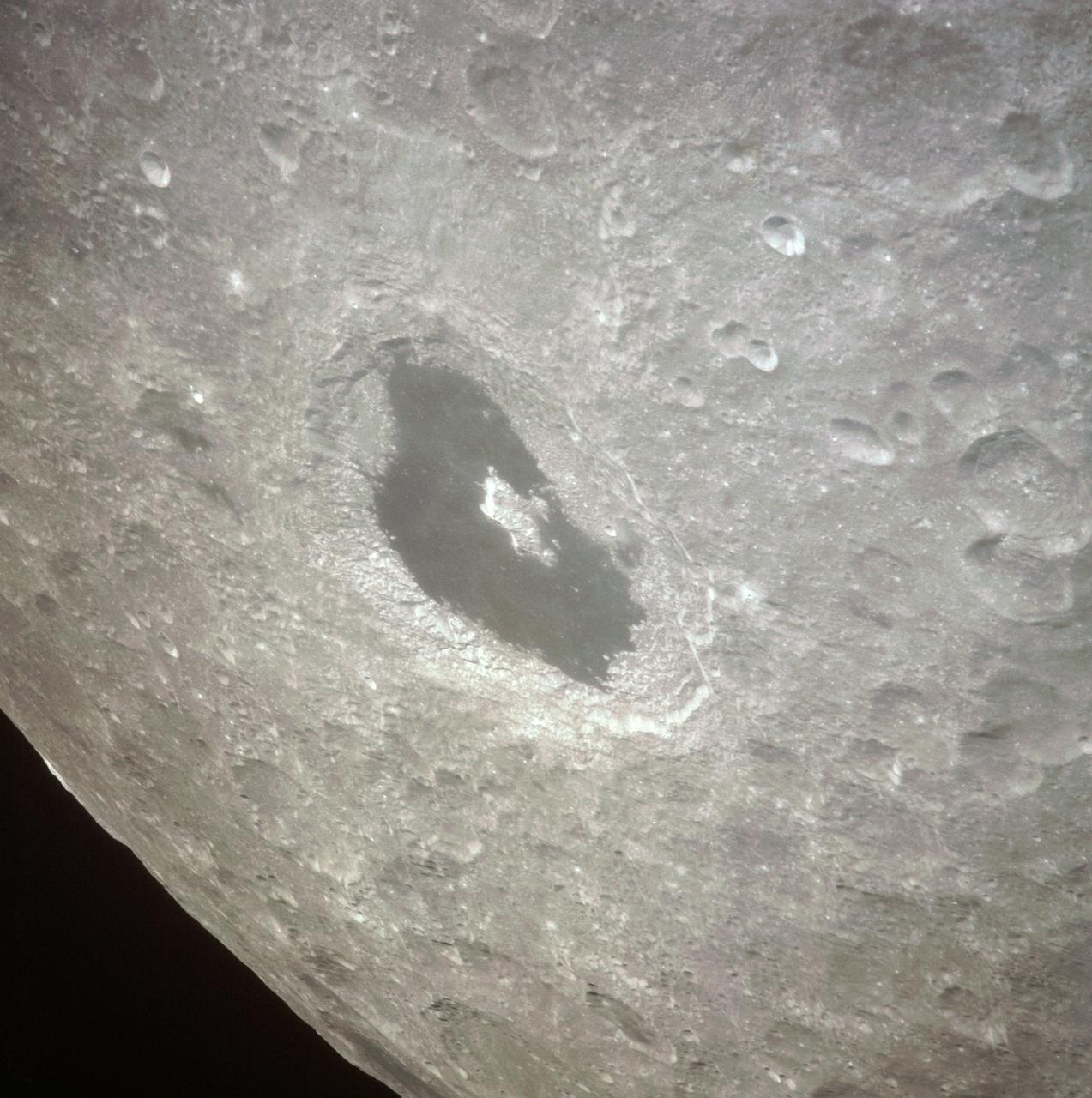
AS13-60-8659 (14 April 1970) --- Excellent view of the lunar farside showing the crater Tsiolkovsky, as photographed by the crew of the Apollo 13 mission during their lunar pass. The view is looking southeast toward the lunar horizon. The approximate coordinates of Tsiolkovsky are 128.5 degrees east longitude and 20.5 degrees south latitude. The Apollo 13 crew members were forced to cancel their scheduled lunar landing because of an apparent explosion of oxygen tank number two in the Service Module (SM).
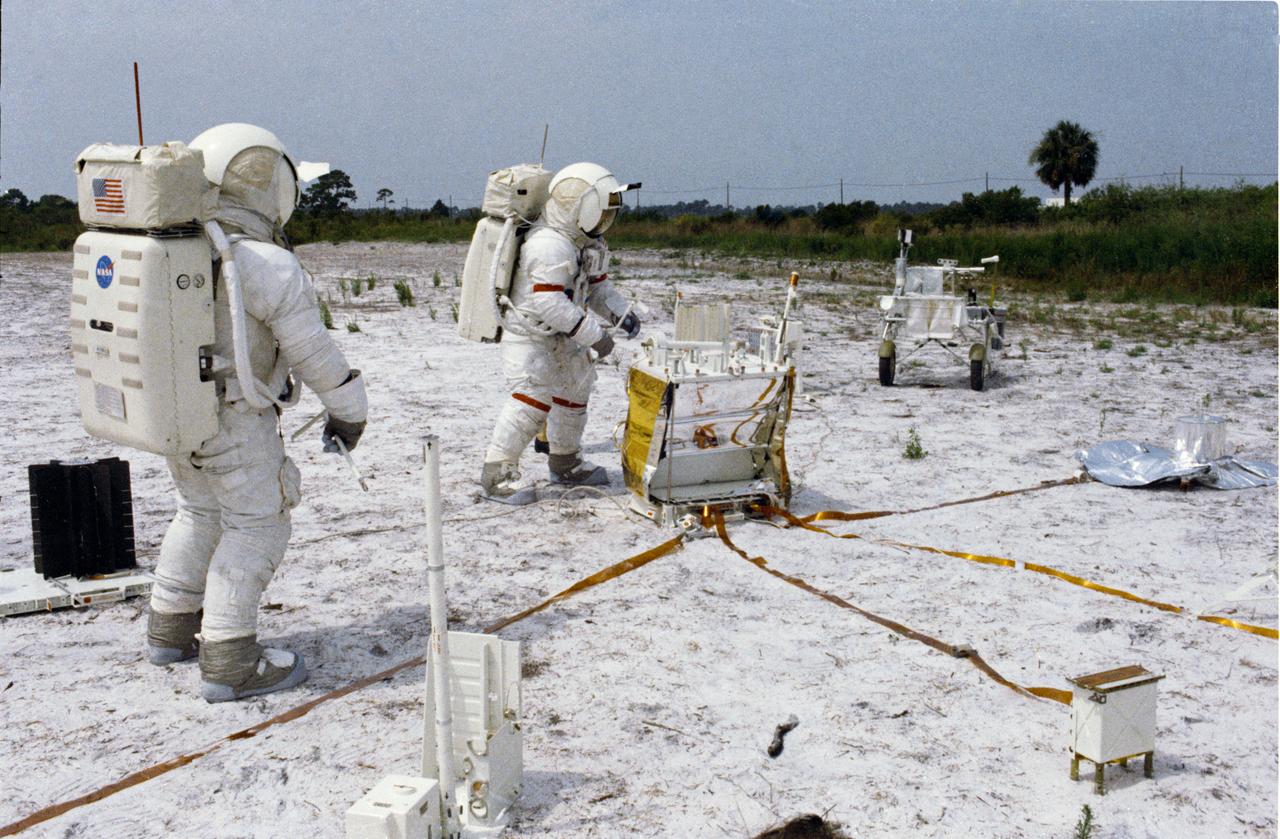
S70-46152 (July 1970) --- Two crew men of the Apollo 14 lunar landing mission participate in lunar surface simulation training at the Kennedy Space Center (KSC). They are deploying components of the Apollo lunar surface experiments package (ALSEP). Standing in the center next to the ALSEP central station is astronaut Alan B. Shepard Jr. (wearing red stripe on space suit), commander. Astronaut Edgar D. Mitchell, lunar module pilot, is in the left foreground. Both crew men are wearing the Extravehicular Mobility Units (EMU).
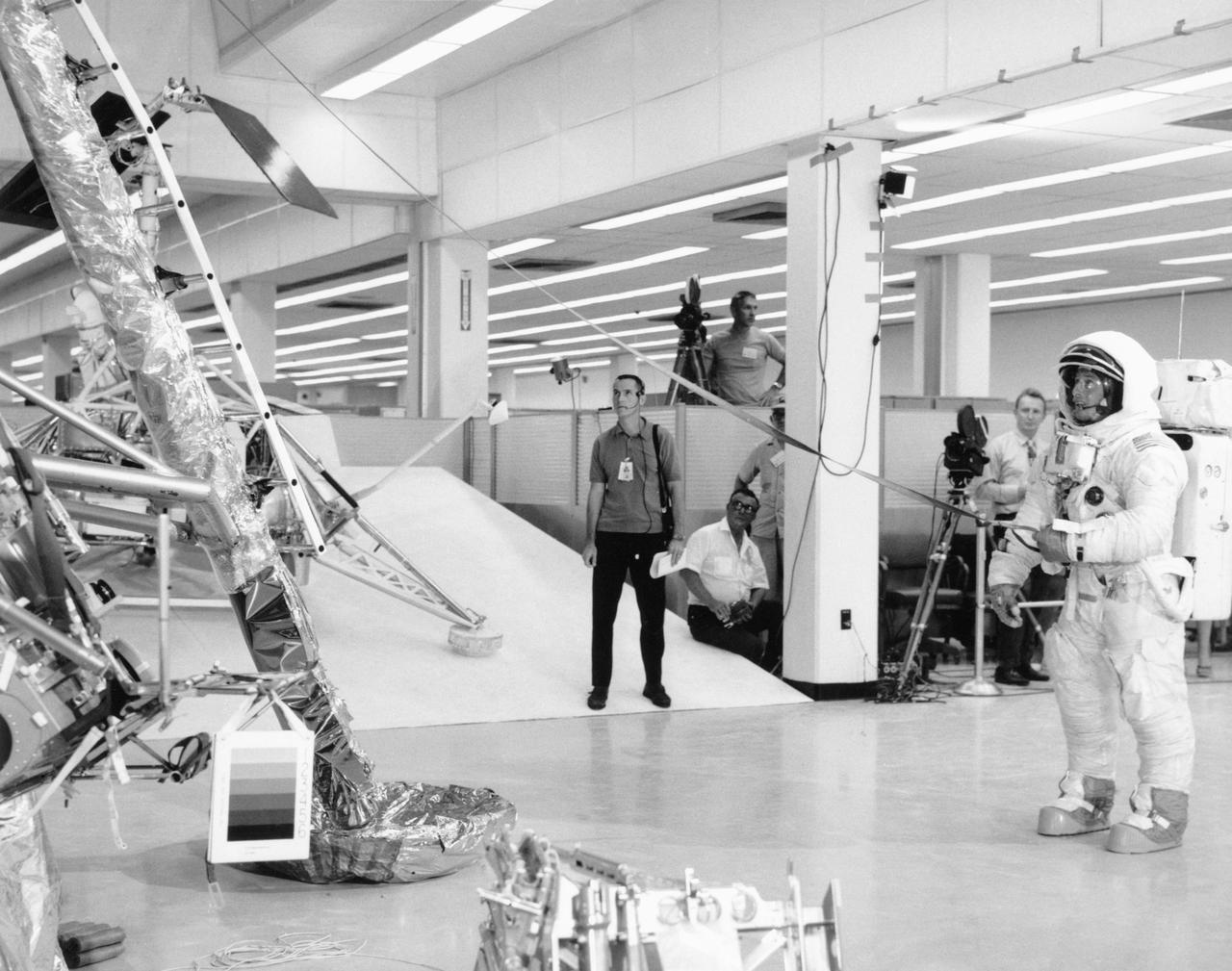
S69-54147 (October 1969) --- Two members of the Apollo 12 lunar landing mission participates in lunar surface extravehicular activity (EVA) simulations in the Kennedy Space Center's (KSC) Flight Crew Training Building. Here, astronauts Charles Conrad Jr., commander, is holding the bottom end of the lunar equipment conveyor. Inside the Lunar Module (LM) and out of view is astronaut Alan L. Bean, lunar module pilot. The simulations were part of a run-through of the Apollo 12 lunar surface "timeline".
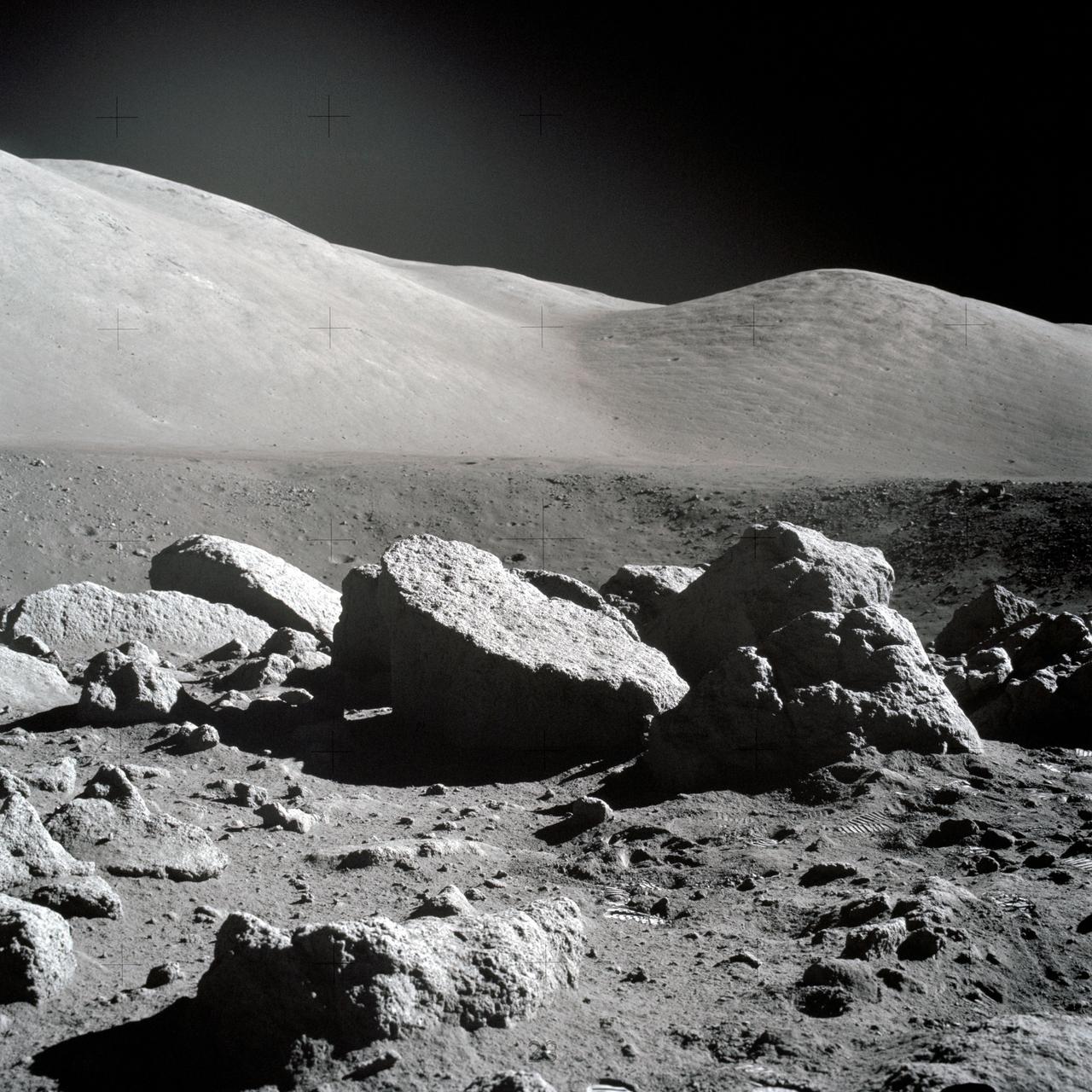
AS17-145-22183 (7-19 Dec. 1972) --- One of the Apollo 17 crew took this picture of a large boulder field during lunar surface extravehicular activity (EVA) at the Taurus-Littrow landing site. This view is looking northeast. Apollo 17 was the final lunar landing mission in NASA's Apollo Program. While astronauts Eugene A. Cernan, commander, and Harrison H. Schmitt, lunar module pilot, descended in the Lunar Module (LM) "Challenger" to explore the Taurus-Littrow region of the moon, astronaut Ronald E. Evans, command module pilot, remained with the Command and Service Modules (CSM) "America" in lunar orbit.
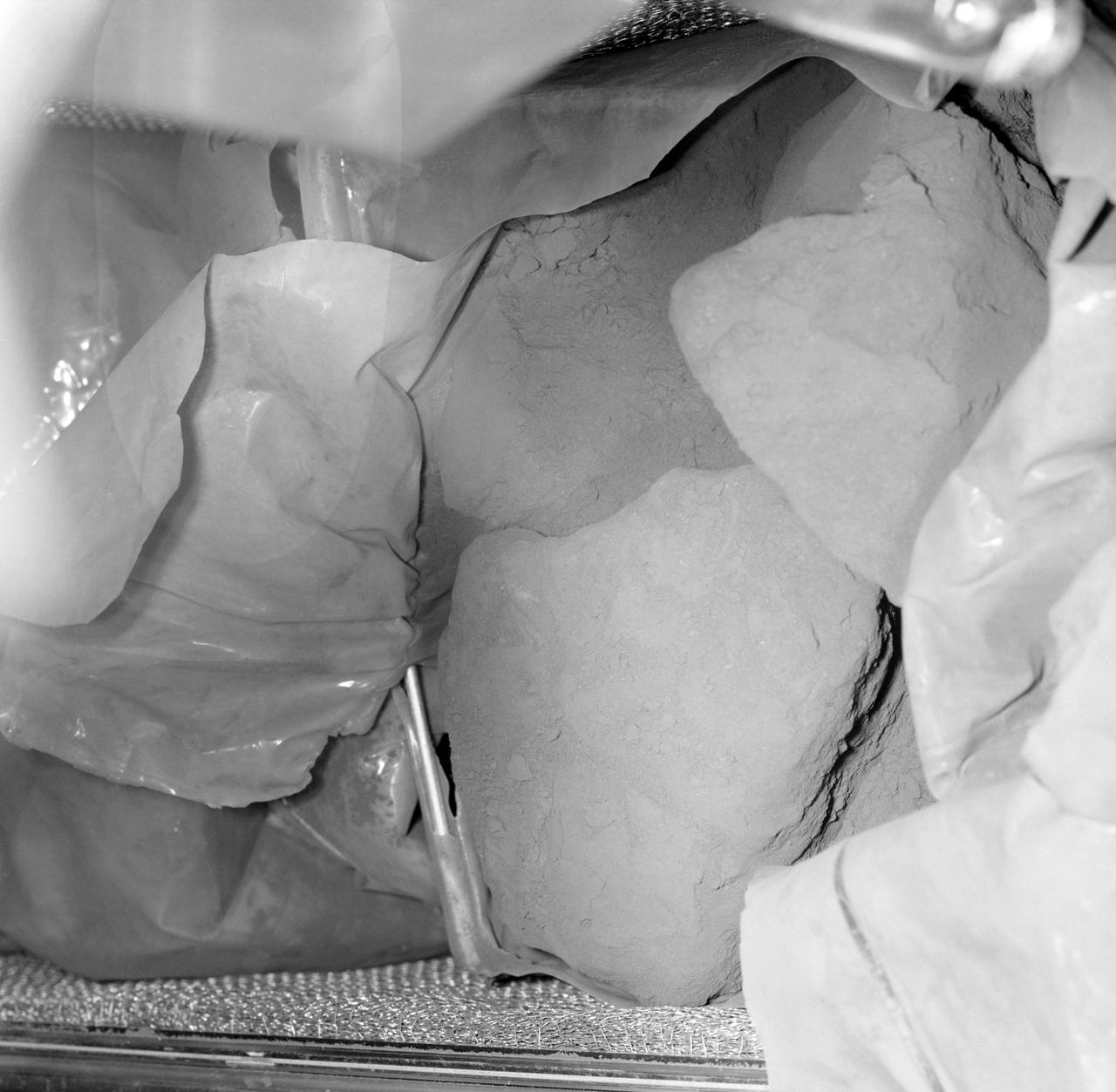
S69-60294 (26 Nov. 1969) --- One of the first views of the Apollo 12 lunar rocks is this photograph of the open sample return container. The large rock is approximately 7 1/2 inches across and is larger than any rock brought back to Earth by the crew of the Apollo 11 lunar landing mission. Two of the rocks in the first container are crystalline and generally lighter in color than those returned on the first lunar landing. The rocks in this box are medium charcoal brown/gray in color.
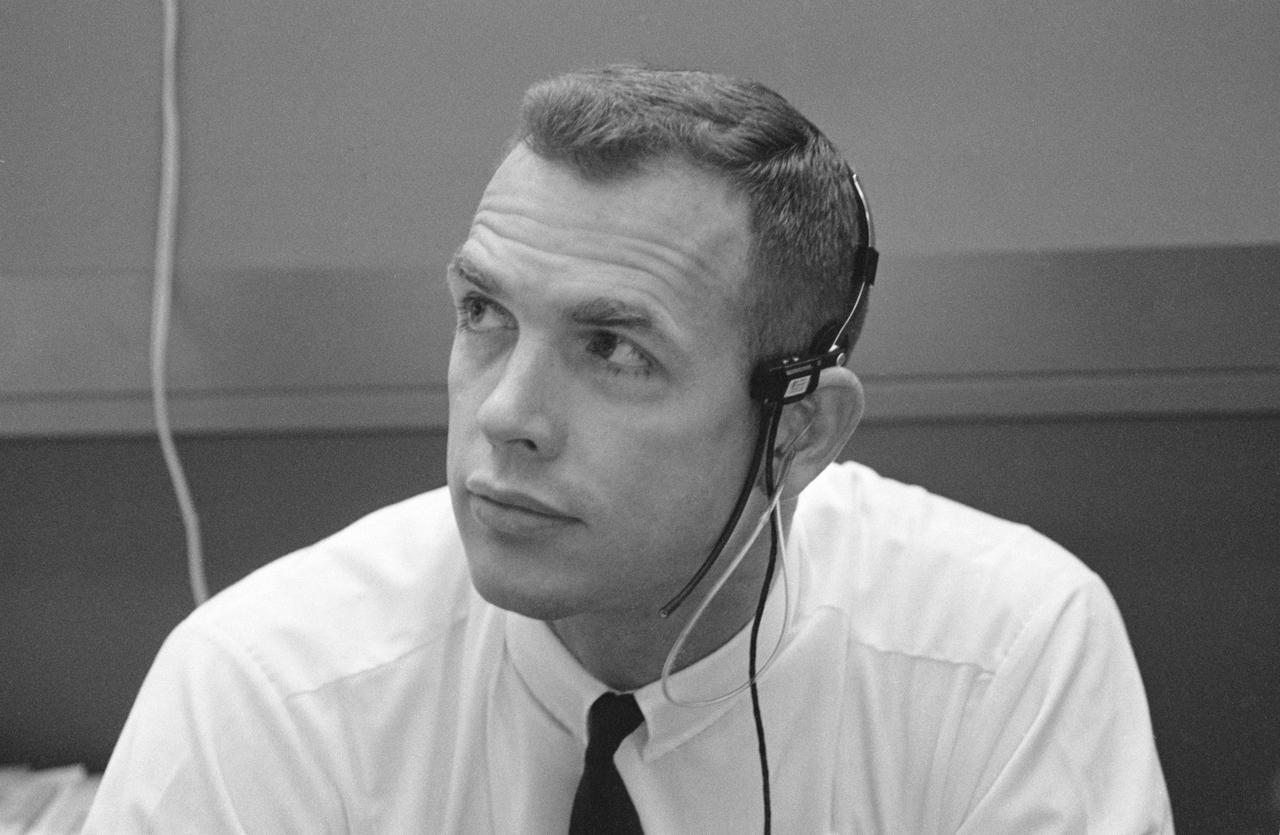
S69-39590 (20 July 1969) --- Astronaut David R. Scott is seated at a console in the Mission Operations Control Room (MOCR) in the Mission Control Center (MCC), Building 30, during the Apollo 11 lunar landing mission. He is watching a television monitor during the lunar surface extravehicular activity (EVA) in which astronauts Neil A. Armstrong and Edwin E. Aldrin Jr. participated. Scott is the backup crew commander for the scheduled Apollo 12 lunar landing mission.
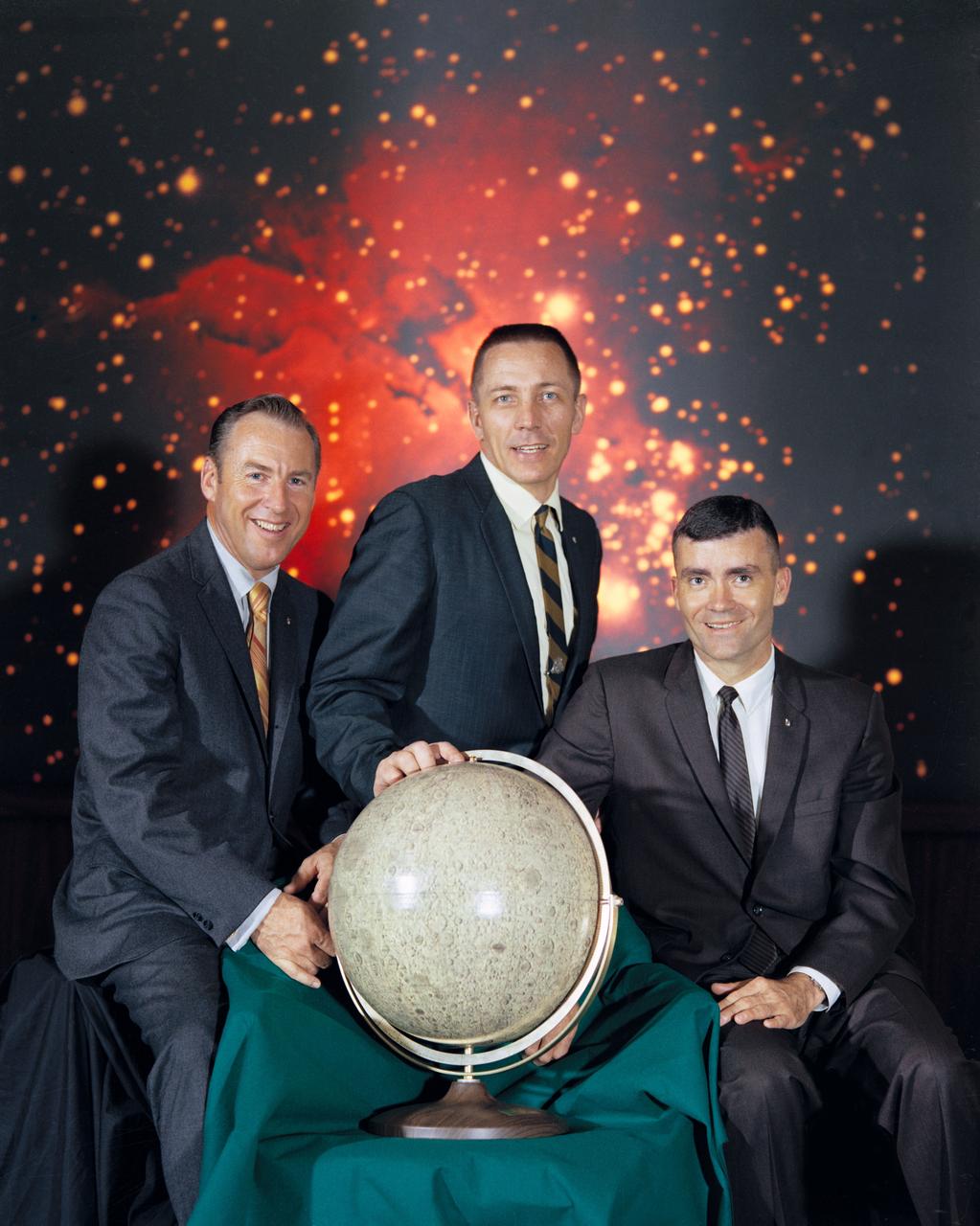
S70-36485 (April 1970) --- These three astronauts are the prime crew of the National Aeronautics and Space Administration's (NASA) Apollo 13 lunar landing mission. Left to right, are James A. Lovell Jr., commander; John L. Swigert Jr., command module pilot; and Fred W. Haise Jr., lunar module pilot. Apollo 13 will be the United States' third lunar landing mission.

This is the Apollo 16 lunar landing mission crew portrait. Pictured from left to right are: Thomas K. Mattingly II, Command Module pilot; John W. Young, Mission Commander; and Charles M. Duke Jr., Lunar Module pilot. Launched from the Kennedy Space Center on April 16, 1972, Apollo 16 spent three days on Earth's Moon. The first study of the highlands area, the landing site for Apollo 16 was the Descartes Highlands. The fifth lunar landing mission out of six, Apollo 16 was famous for deploying and using an ultraviolet telescope as the first lunar observatory. The telescope photographed ultraviolet light emitted by Earth and other celestial objects. The Lunar Roving Vehicle, developed by the Marshall Space Flight Center, was also used for collecting rocks and data on the mysterious lunar highlands. In this photo, astronaut John W. Young photographs Charles M. Duke, Jr. collecting rock samples at the Descartes landing site. Duke stands by Plum Crater while the Lunar Roving Vehicle waits parked in the background. High above, Thomas K. Mattingly orbits in the Command Module. The mission ended April 27, 1972 as the crew splashed down into the Pacific Ocean.
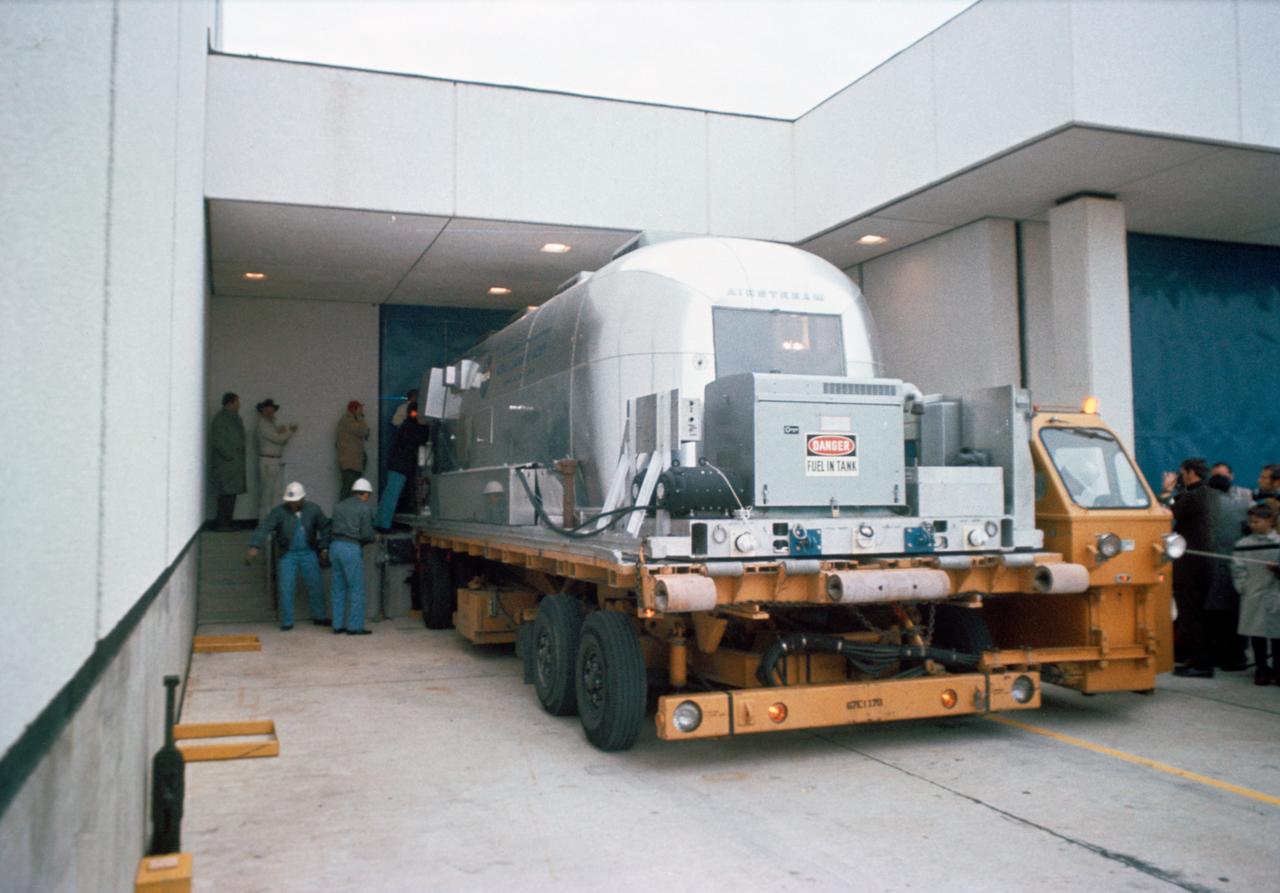
A Mobile Quarantine Facility (MQF), with the crew of the Apollo XII Lunar Landing Mission aboard, is shown on arriving at JSC, Saturday morning, 11/29/1969.
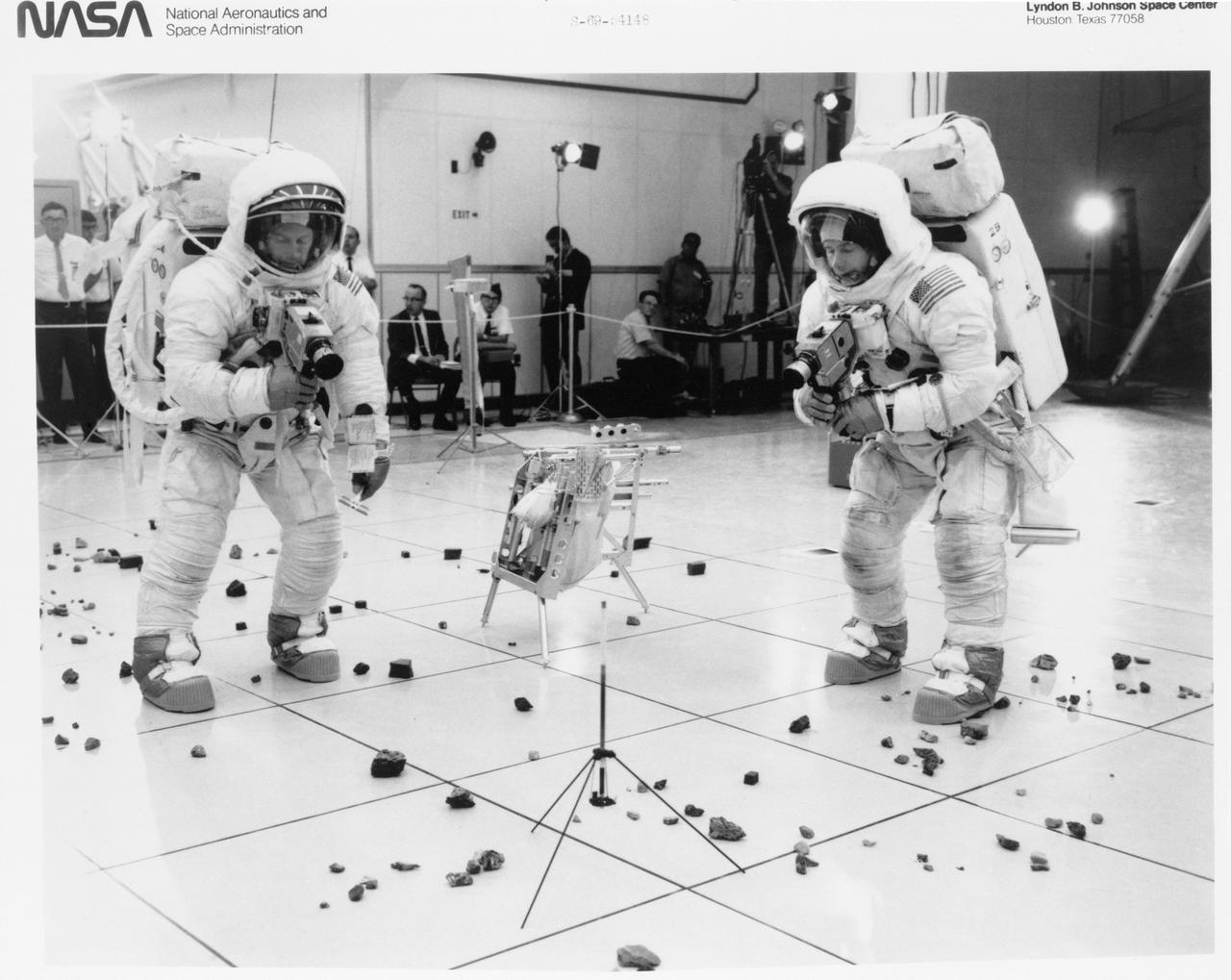
S69-54148 (October 1969) --- Two members of the Apollo 12 lunar landing mission participates in lunar surface extravehicular activity (EVA) simulations in the Kennedy Space Center's (KSC) Flight Crew Training Building. Here, astronauts Charles Conrad Jr. (on left), commander, and Alan L. Bean, lunar module pilot, simulate the photographic documentation of lunar rock samples. The simulations were part of a run-through of the Apollo 12 lunar surface "timeline".
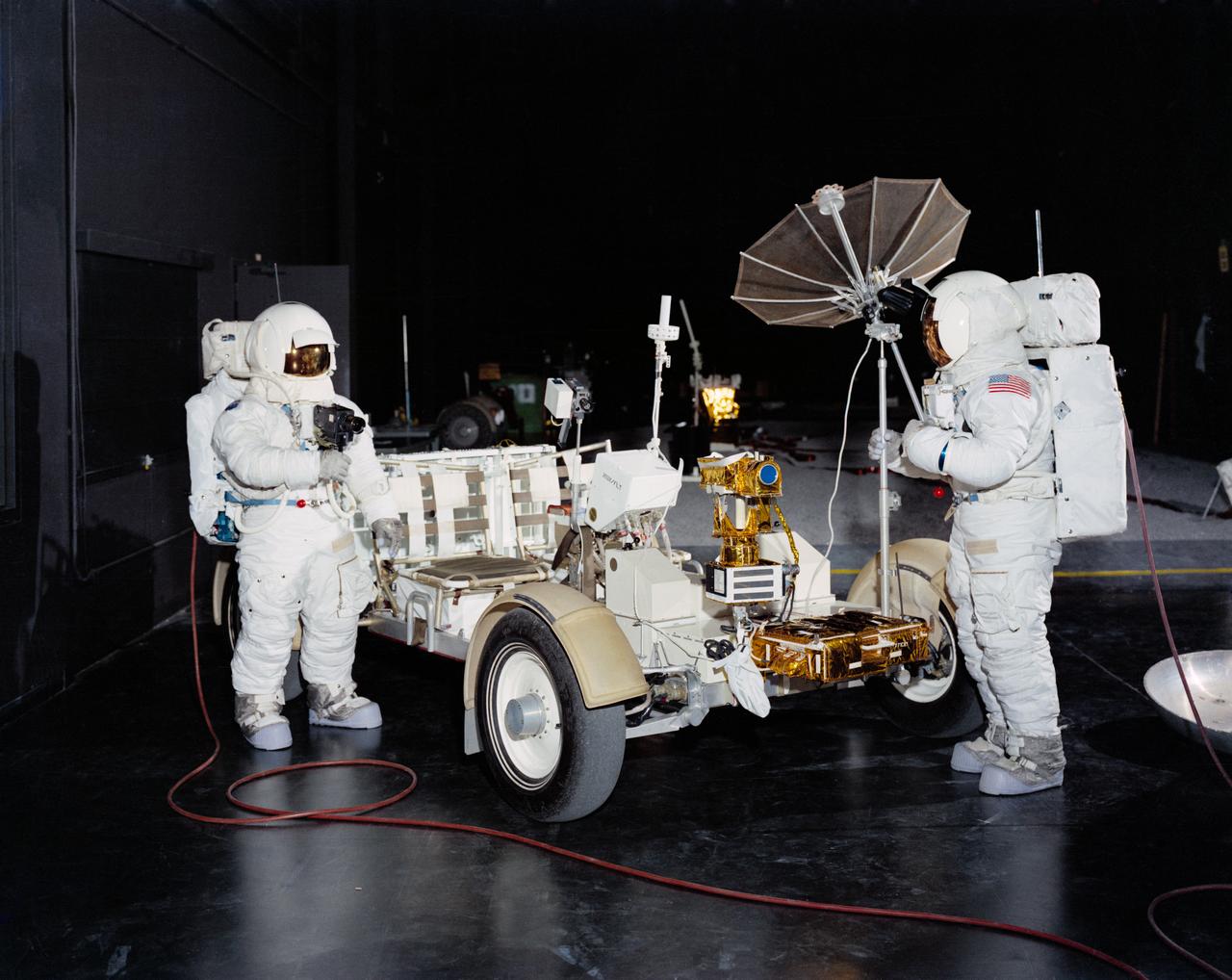
S71-16722 (January 1971) --- Two members of the prime crew of the Apollo 15 lunar landing mission are shown with the Lunar Roving Vehicle "one G" trainer in Building 5, Mission Simulation and Training Facility, Manned Spacecraft Center. Astronaut David R. Scott (on right) is the Apollo 15 commander; and astronaut James B. Irwin is the lunar module pilot. A Lunar Roving Vehicle similar to this trainer will be used by Scott and Irwin during their Apollo 15 lunar surface extravehicular activity.
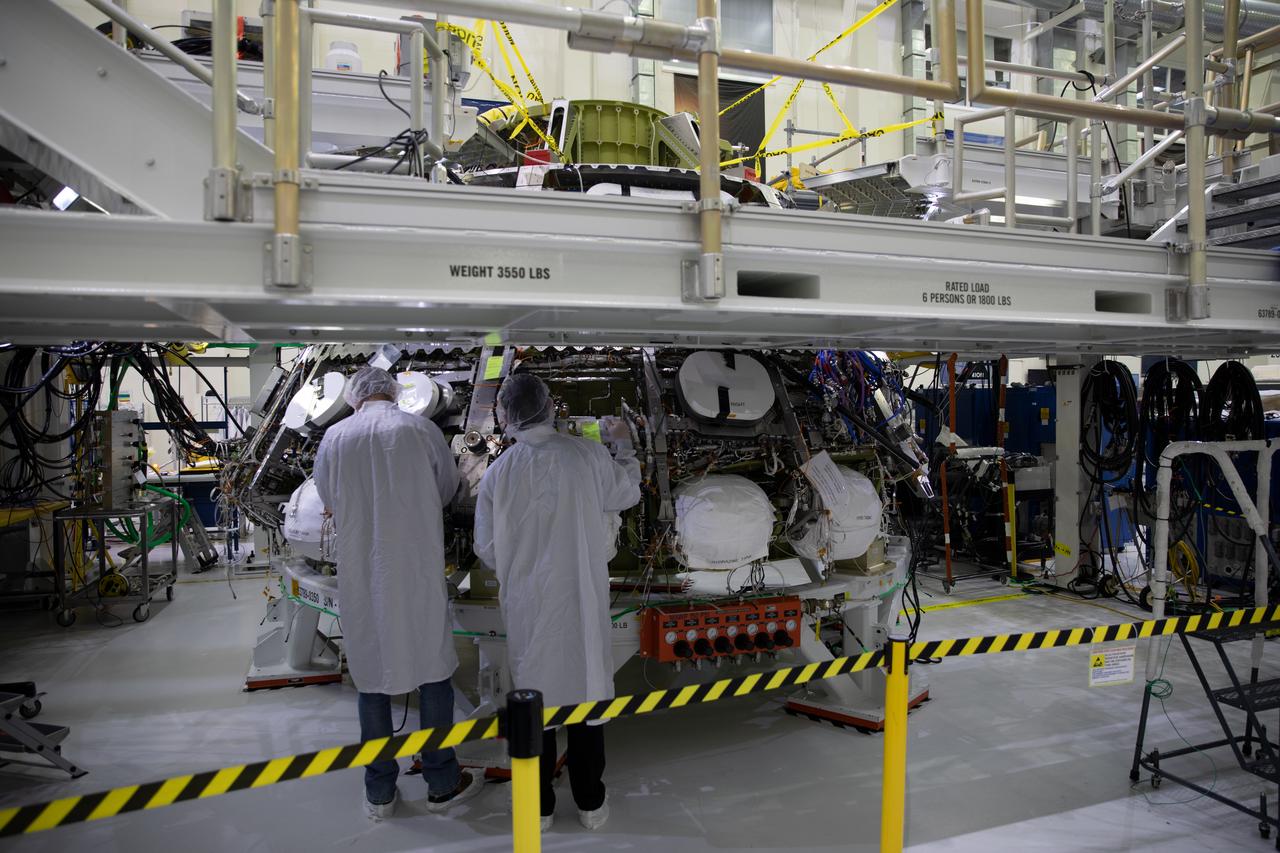
Technicians inside the Neil Armstrong Operations and Checkout Building power on the Orion crew module for the Artemis II mission for the first time at NASA’s Kennedy Space Center in Florida on May 27, 2022. The capsule will carry astronauts on a trip around the Moon during the first crewed Artemis flight, helping set the stage for future lunar landings. Through Artemis, NASA will land the first woman and the first person of color on the Moon and establish long-term lunar exploration in preparation for missions to Mars.
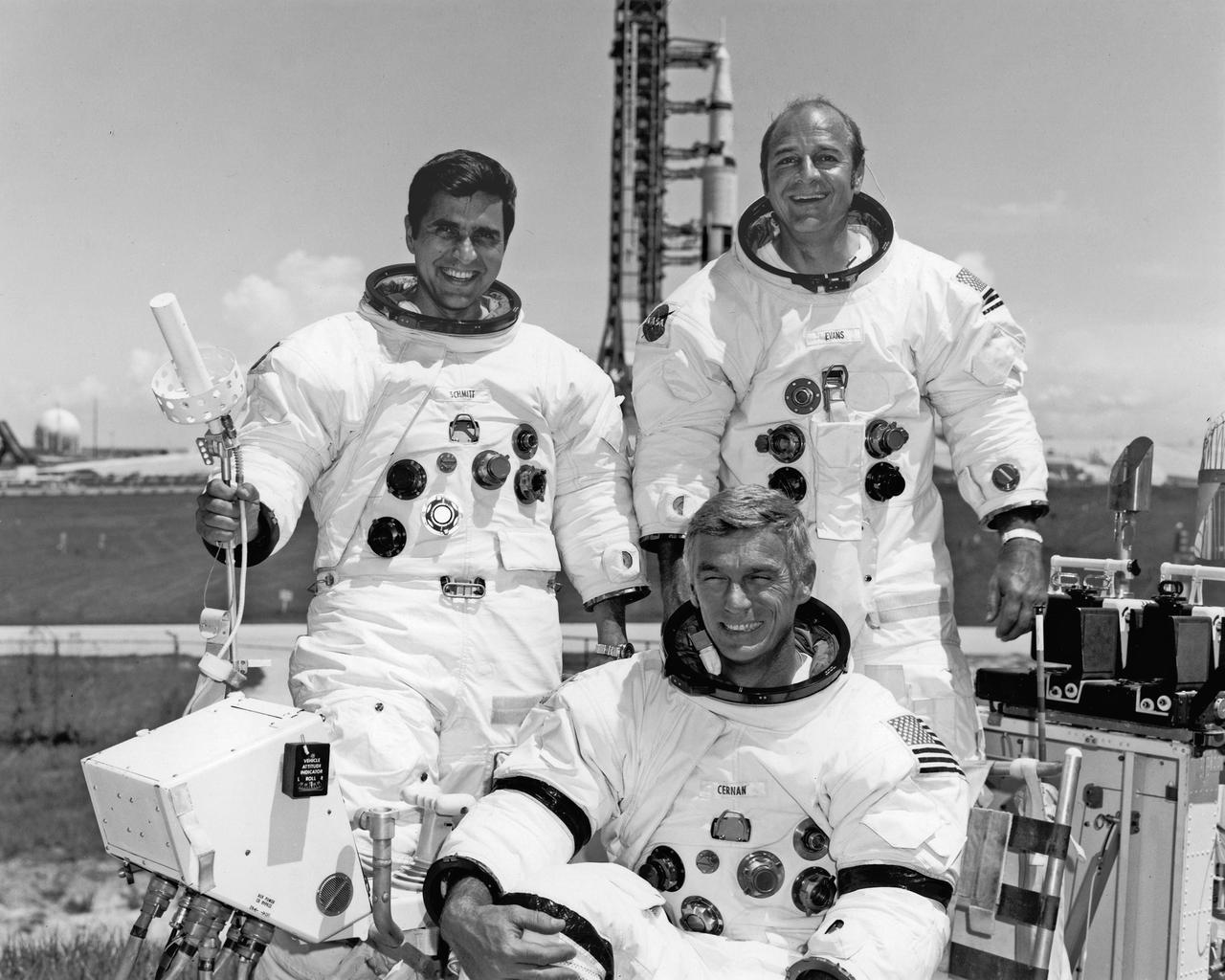
CAPE CANAVERAL, Fla. -- The Apollo 17 crew took time out from training to pose for the press after the Space Vehicle for their Manned Lunar Landing Mission was moved to Pad A, Complex 39 today. Apollo 17 Commander Eugene A Cernan sits at the controls of the One-G Lunar Roving Vehicle Simulator used to simulate operations on the Moon’s surface. With Cernan are Lunar Module Pilot Dr. Harrison H. “Jack” Schmitt, left and Command Module Plot Ronald A. Evans. The Apollo 17 Space Vehicle, scheduled for launch from KSC on the sixth U.S. Manned Lunar Landing Mission on December 6, 1972 is in the background. Photo credit: NASA
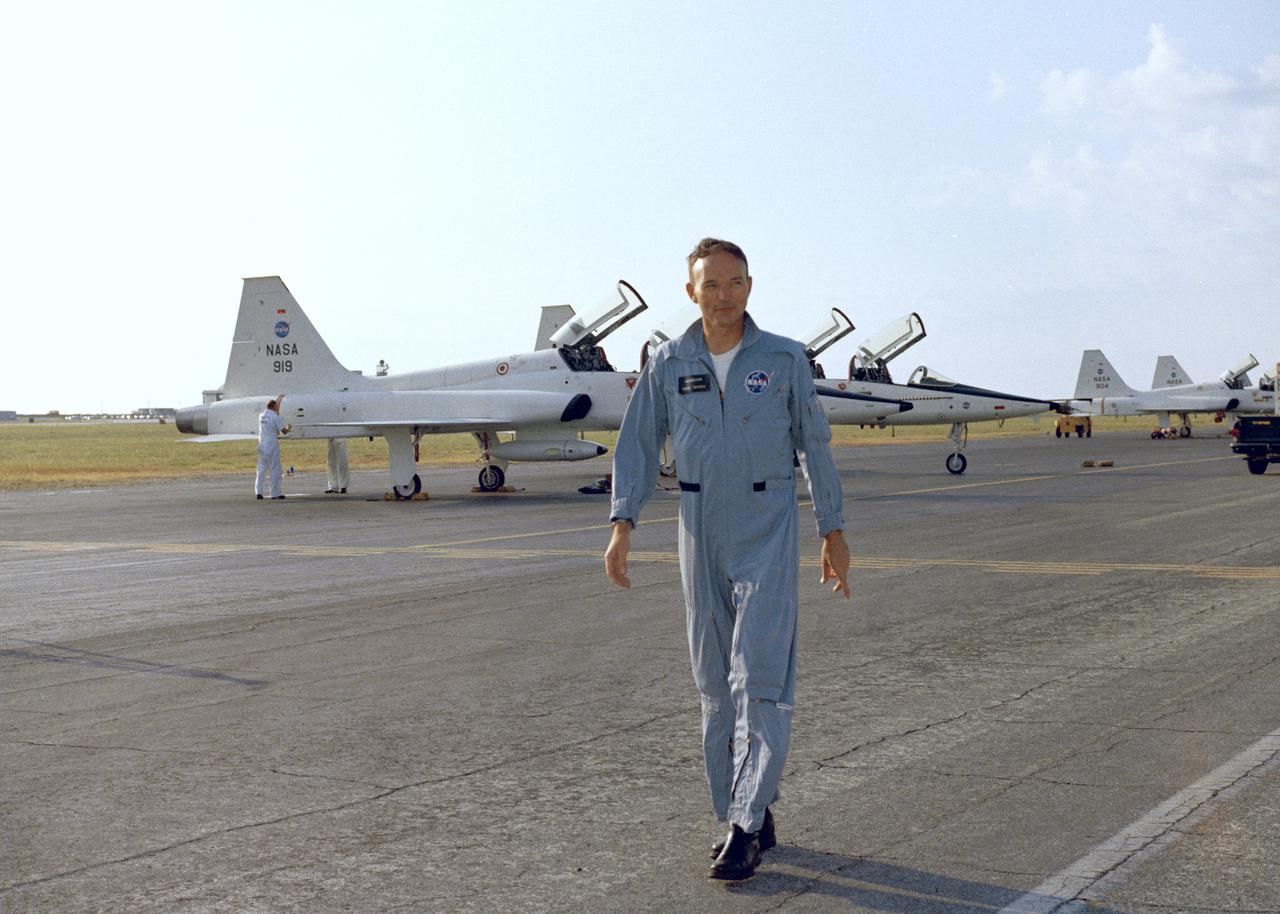
PATRICK AFB, Fla. – Apollo 11 command module pilot Michael Collins, just arrived at Patrick Air Force Base in a T-38 jet in preparation of the nation’s first lunar landing mission. Lift off atop a Saturn V launch vehicle is scheduled for July 16, 1969. During Apollo 11, the command module, Columbia, will remain in orbit around the moon while the lunar module, Eagle, carrying Armstrong and Aldrin, lands on the lunar surface. During 2½ hours of surface exploration, the crew plans to collect lunar surface material for analysis back on Earth. For more: http:__www-pao.ksc.nasa.gov_history_apollo_apollo-11_apollo-11.htm Photo credit: NASA
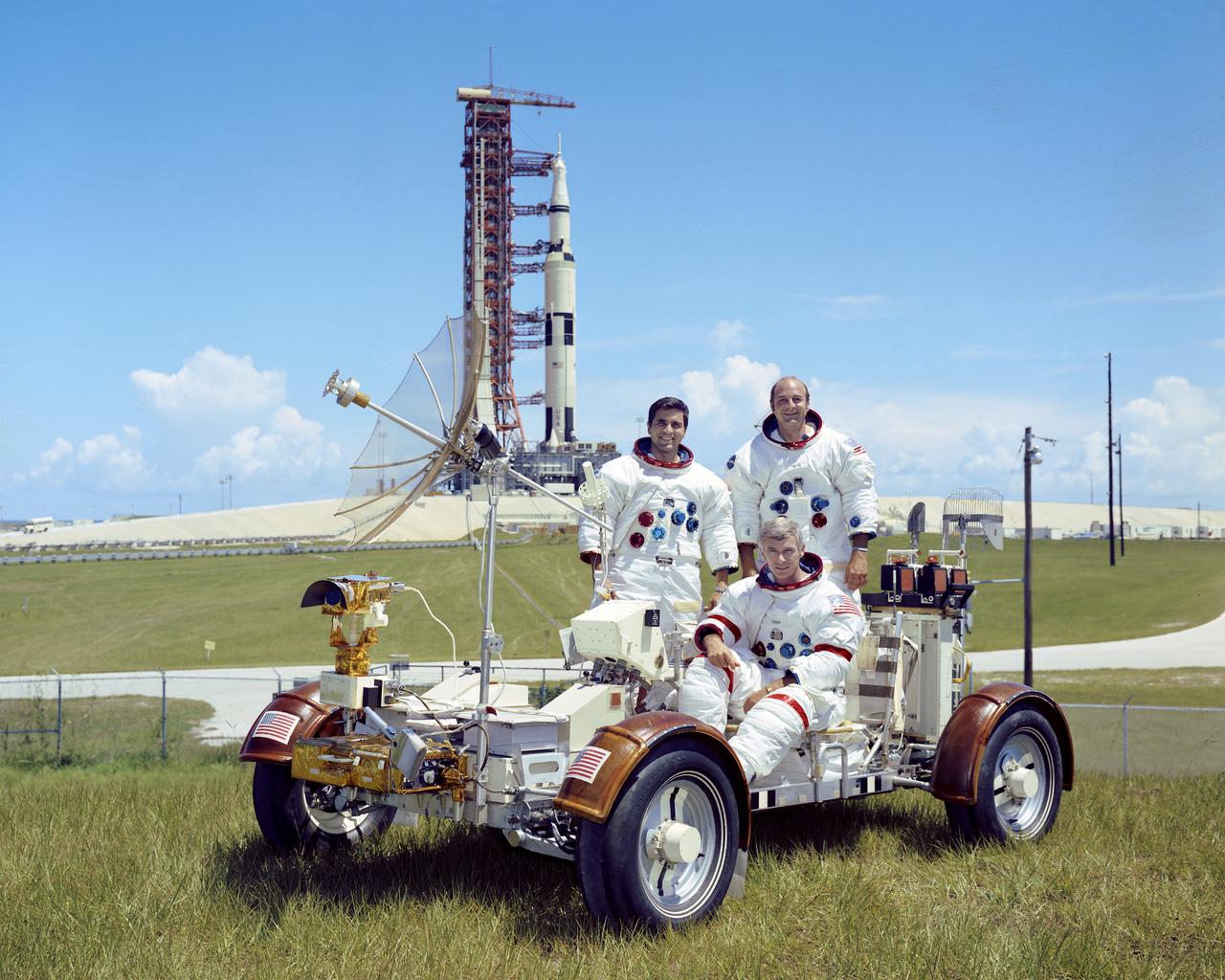
CAPE CANAVERAL, Fla. -- The Apollo 17 crew took time out from training to pose for the press after the Space Vehicle for their Manned Lunar Landing Mission was moved to Pad A, Complex 39 today. Apollo 17 Commander Eugene A Cernan sits at the controls of the One-G Lunar Roving Vehicle Simulator used to simulate operations on the Moon’s surface. With Cernan are Lunar Module Pilot Dr. Harrison H. “Jack” Schmitt, left and Command Module Plot Ronald A. Evans. The Apollo 17 Space Vehicle, scheduled for launch from KSC on the sixth U.S. Manned Lunar Landing Mission on December 6, 1972 is in the background. Photo credit: NASA

S71-22401 (March 1971) --- These three astronauts have been named by the National Aeronautics and Space Administration (NASA) as the prime crew members of the Apollo 15 lunar landing mission. They are, left to right, David R. Scott, commander; Alfred M. Worden, command module pilot; and James B. Irwin, lunar module pilot. The crew is posed behind the subsatellite that they will deploy from the lunar surface during the Apollo 15 mission. Astronauts Scott and Irwin will descend in the Lunar Module (LM) to explore the moon, while astronaut Worden will remain with the Command and Service Modules (CSM) in lunar orbit.
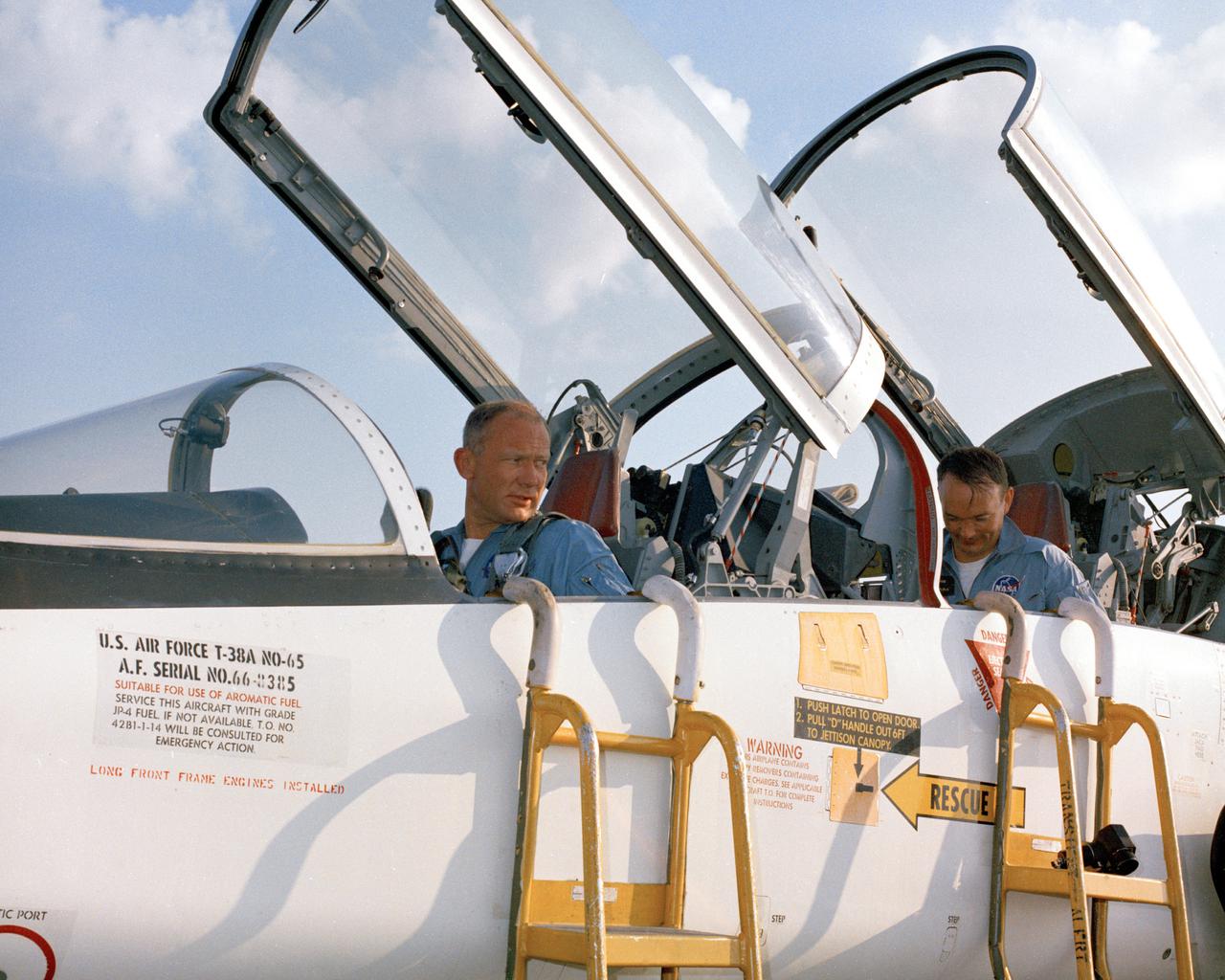
PATRICK AFB, Fla. – In preparation of the nation’s first lunar landing mission, Apollo 11 crew members arrive at Patrick Air Force Base, Florida. Lunar module pilot Edwin E. Buzz Aldrin Jr. is in the front seat of the T-38 jet, with command module pilot Michael Collins, in the back. Lift off atop a Saturn V launch vehicle is scheduled for July 16, 1969. During Apollo 11 the command module, Columbia, will remain in orbit around the moon while the lunar module, Eagle, carrying Armstrong and Aldrin, lands on the lunar surface. During 2½ hours of surface exploration, the crew plans to collect lunar surface material for analysis back on Earth. For more: http:__www-pao.ksc.nasa.gov_history_apollo_apollo-11_apollo-11.htm Photo credit: NASA
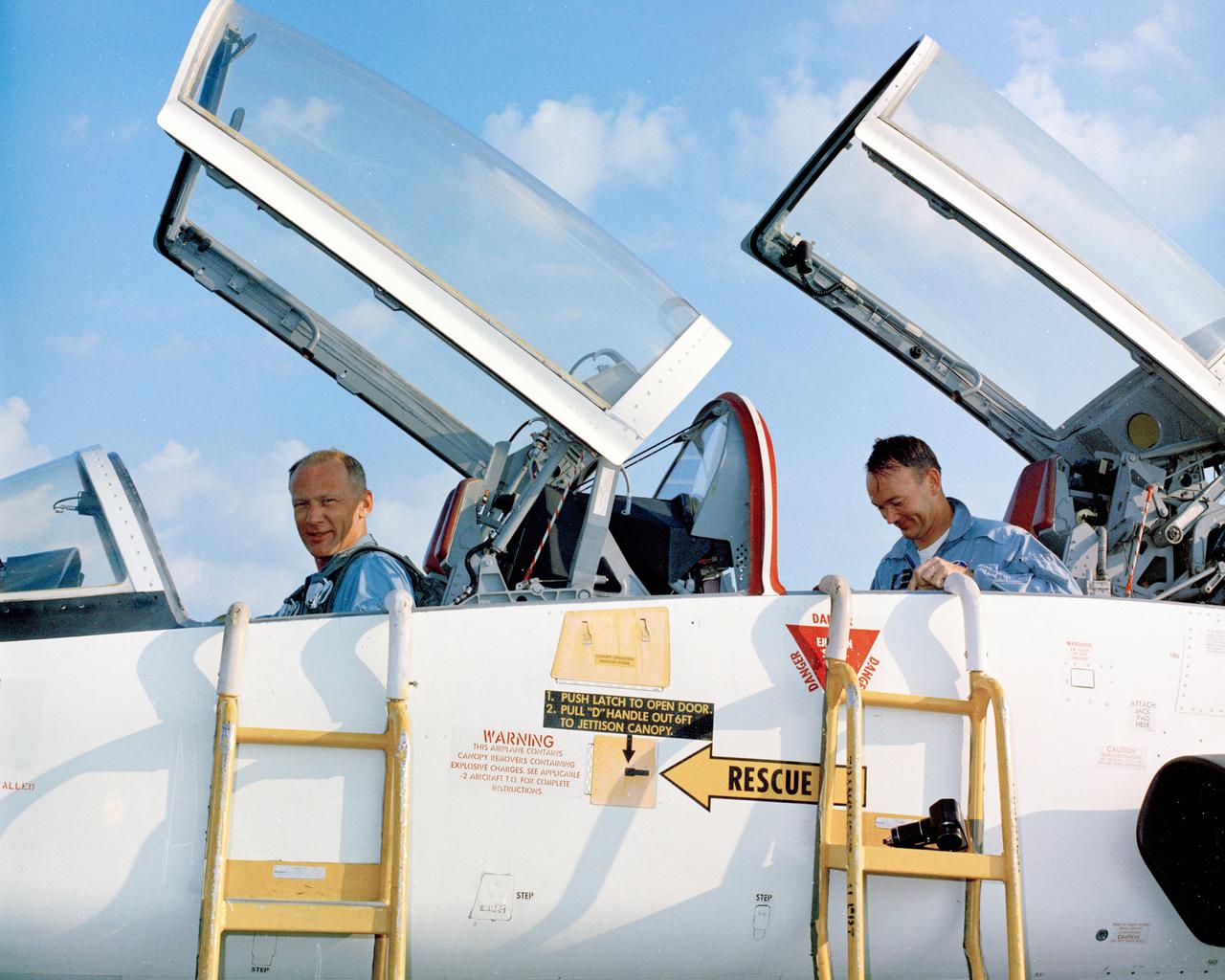
PATRICK AFB, Fla. – In preparation of the nation’s first lunar landing mission, Apollo 11 crew members arrive at Patrick Air Force Base, Florida. Lunar module pilot Edwin E. Buzz Aldrin Jr. is in the front seat of the T-38 jet, with command module pilot Michael Collins, in the back. Lift off atop a Saturn V launch vehicle is scheduled for July 16, 1969. During Apollo 11 the command module, Columbia, will remain in orbit around the moon while the lunar module, Eagle, carrying Armstrong and Aldrin, lands on the lunar surface. During 2½ hours of surface exploration, the crew plans to collect lunar surface material for analysis back on Earth. For more: http:__www-pao.ksc.nasa.gov_history_apollo_apollo-11_apollo-11.htm Photo credit: NASA
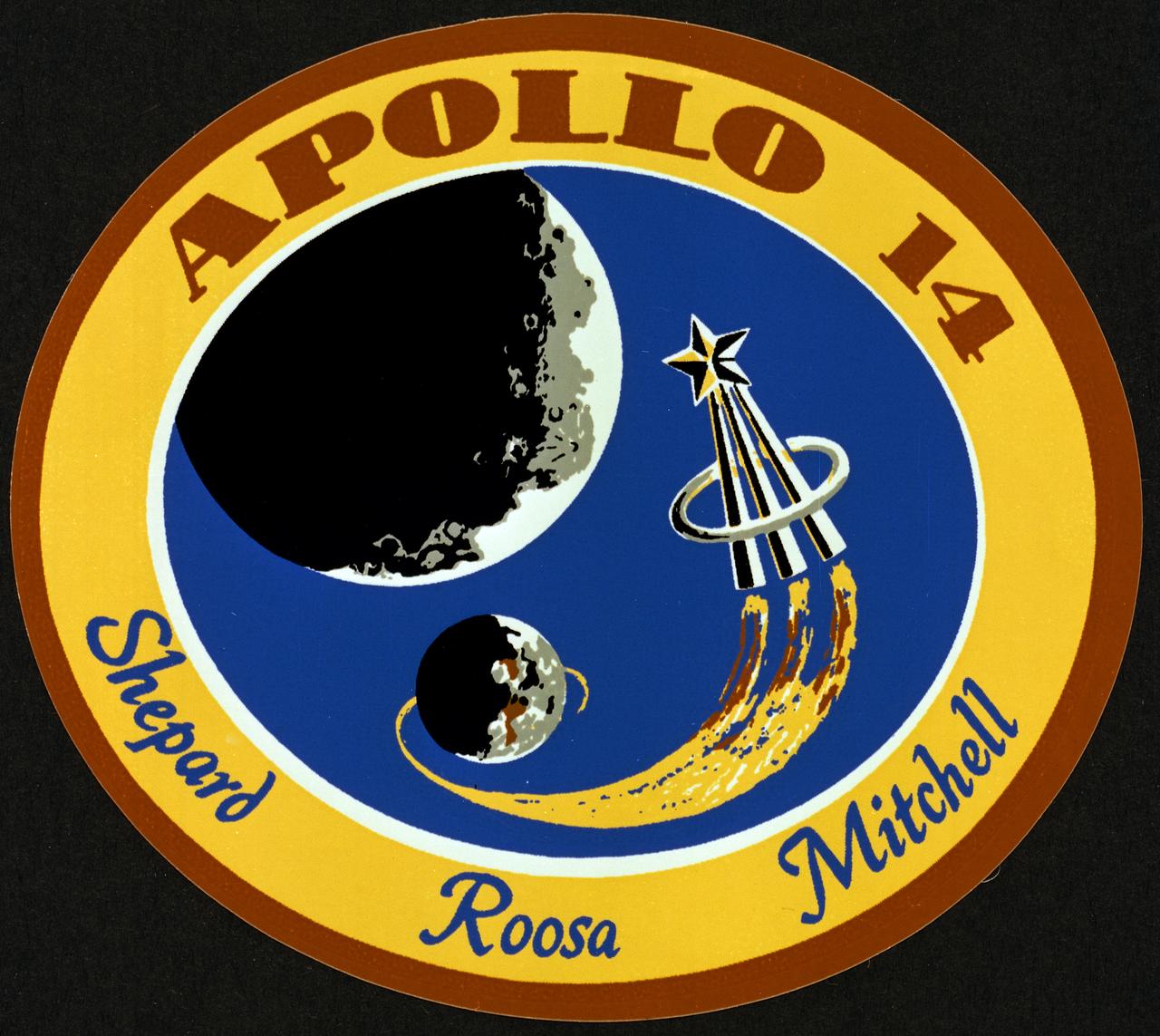
This is the Apollo 14 mission insignia or logo. The Apollo 14, carrying a crew of three astronauts: Stuart A. Roosa, Command Module pilot; Alan B. Shepard, Jr., mission commander; and Edgar D. Mitchell, Lunar Module pilot, lifted off from launch complex 39A at KSC on January 31, 1971. It was the third manned lunar landing, the first manned landing in exploration of the lunar highlands, and it demonstrated pinpoint landing capability. The major goal of Apollo 14 was the scientific exploration of the Moon in the foothills of the rugged Fra Mauro region. The lunar surface extravehicular activity (EVA) of astronauts Shepard and Mitchell included setting up an automated scientific laboratory called Apollo Lunar Scientific Experiments Package (ALSEP), and collecting a total of about 95 pounds (43 kilograms) of Moon rock and soil for a geological investigation back on the Earth. Apollo 14 safely returned to Earth on February 9, 1971.
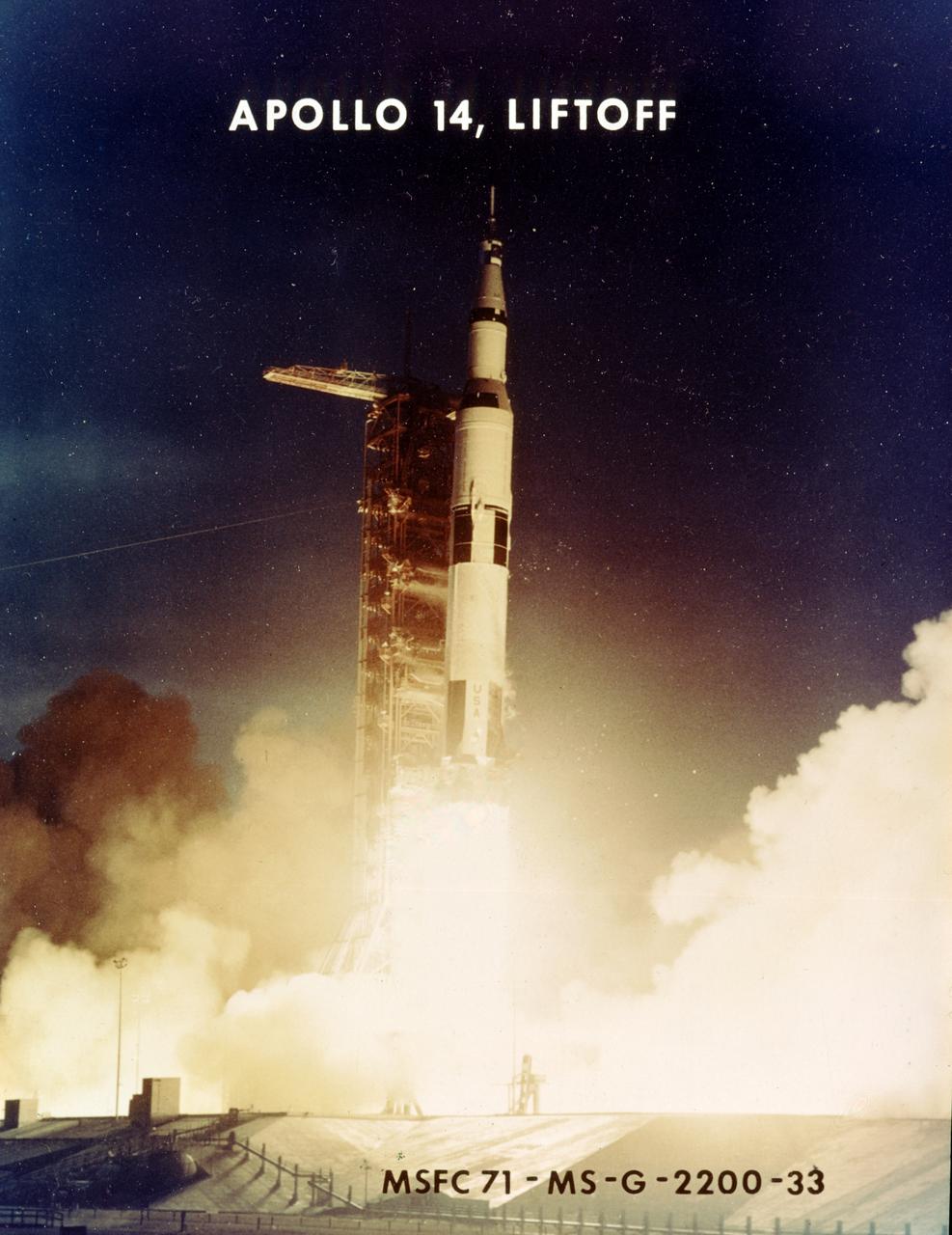
The moon bound Apollo 14, carrying a crew of three astronauts: Mission commander Alan B. Shepard Jr., Command Module pilot Stuart A. Roosa, and Lunar Module pilot Edgar D. Mitchell, lifted off from launch complex 39A at the Kennedy Space Center on January 31, 1971. It was the third manned lunar landing, the first manned landing in exploration of the lunar highlands, and it demonstrated pinpoint landing capability. The major goal of Apollo 14 was the scientific exploration of the Moon in the foothills of the rugged Fra Mauro region. The lunar surface extravehicular activity (EVA) of astronauts Shepard and Mitchell included setting up an automated scientific laboratory called Apollo Lunar Scientific Experiments Package (ALSEP), and collecting a total of about 95 pounds (43 kilograms) of Moon rock and soil for a geological investigation back on the Earth. The mission safely returned to Earth on February 9, 1971.

Stuart A. Roosa, Apollo 14 Command Module pilot, undergoes a final space suit check prior to liftoff. The Apollo 14, carrying a crew of three astronauts: Roosa; Alan B. Shepard, Jr., Mission Commander; and Edgar D. Mitchell, Lunar Module pilot, lifted off from launch complex 39A at KSC on January 31, 1971. It was the third manned lunar landing, the first manned landing in exploration of the lunar highlands, and it demonstrated pinpoint landing capability. The major goal of Apollo 14 was the scientific exploration of the Moon in the foothills of the rugged Fra Mauro region. The lunar surface extravehicular activity (EVA) of astronauts Shepard and Mitchell included setting up an automated scientific laboratory called Apollo Lunar Scientific Experiments Package (ALSEP), and collecting a total of about 95 pounds (43 kilograms) of Moon rock and soil for a geological investigation back on the Earth. Apollo 14 safely returned to Earth on February 9, 1971.
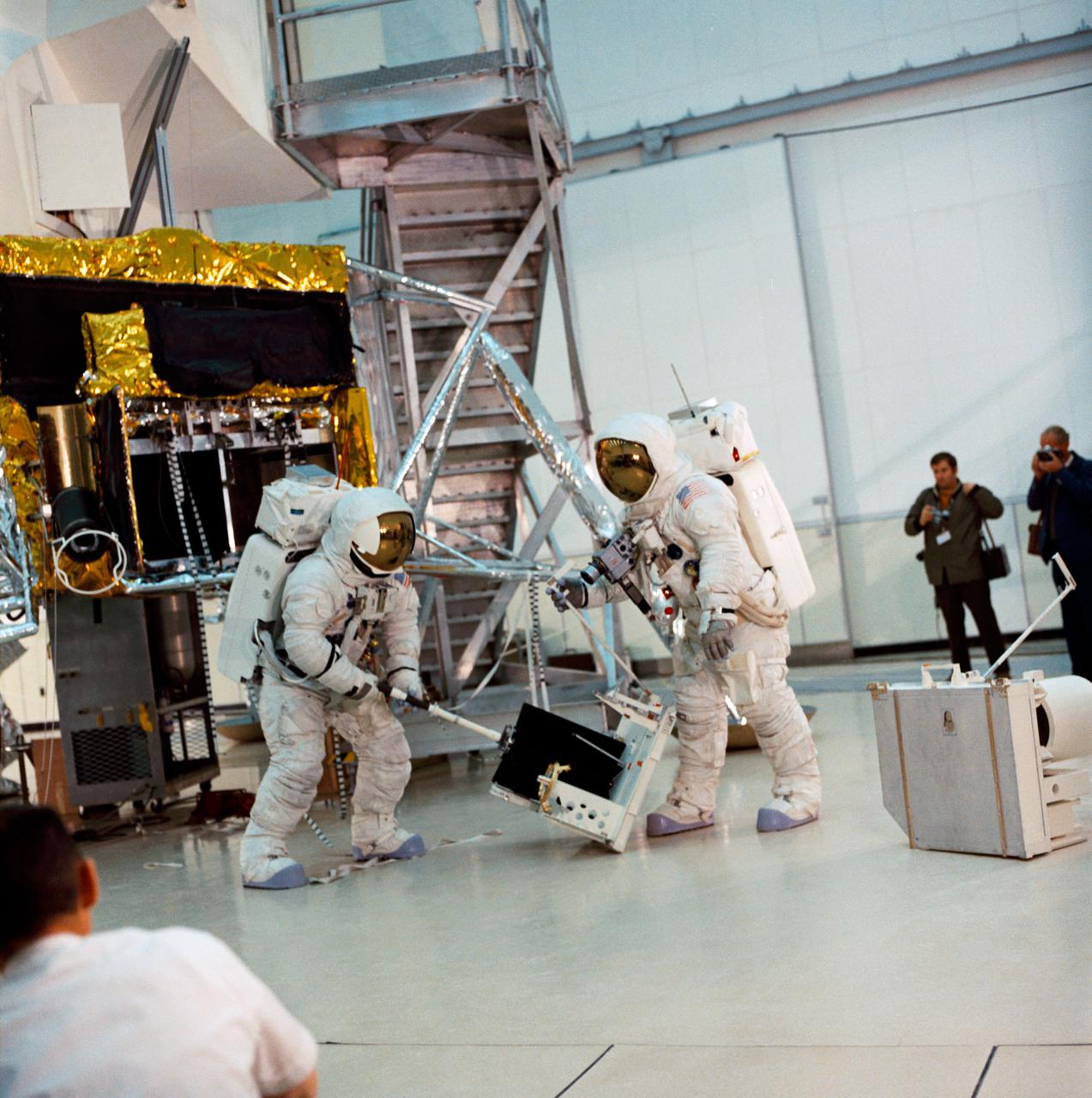
S70-27036 (4 Feb. 1970) --- Two crew men of the Apollo 13 lunar landing mission simulate lunar surface extravehicular activity (EVA) during training exercises in the Kennedy Space Center's (KSC) Flight Crew Training Building. They are astronauts James A. Lovell Jr. commander; and Fred W. Haise Jr., lunar module pilot.
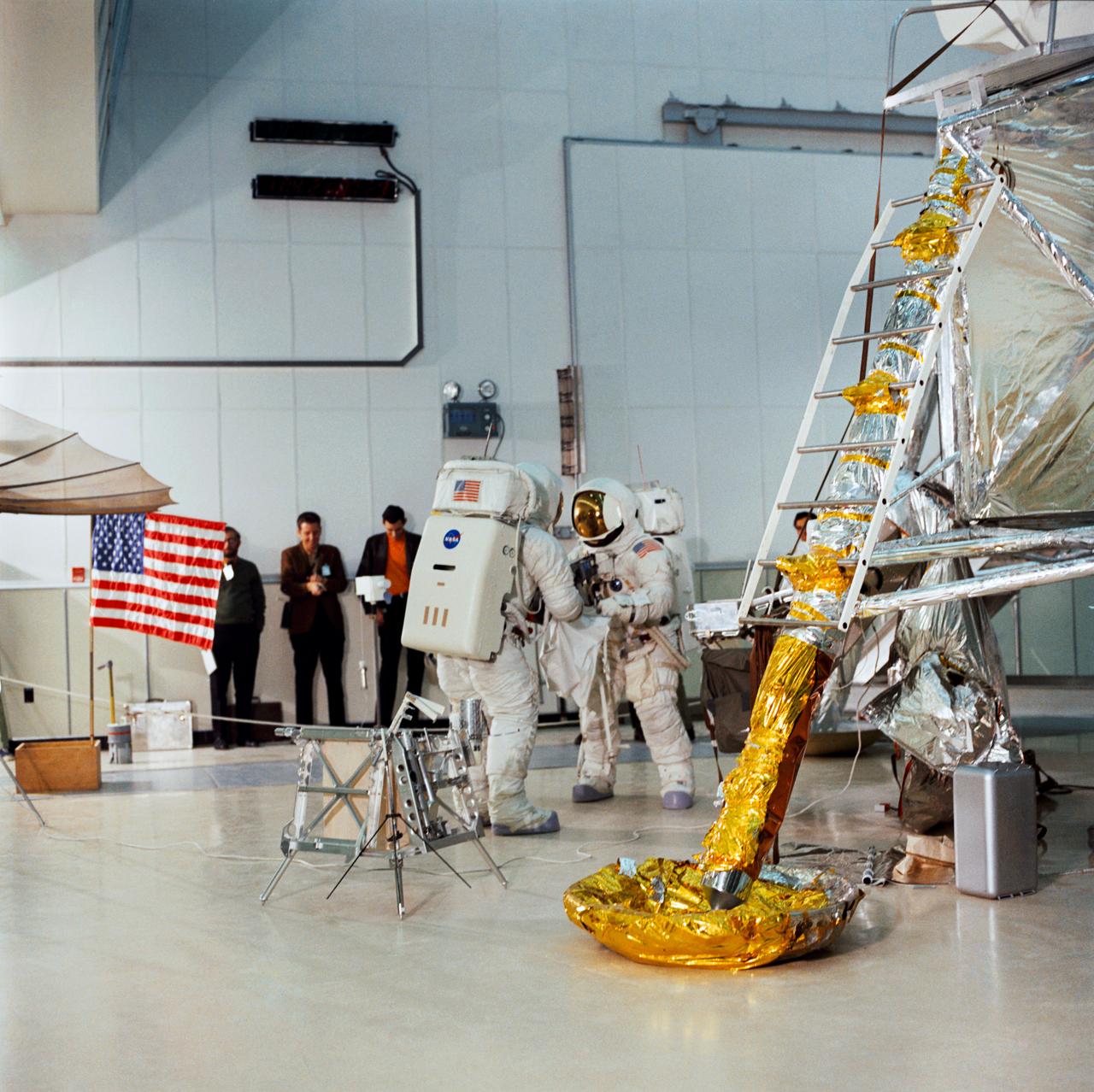
S70-27038 (4 Feb. 1970) --- Two crew men of the Apollo 13 lunar landing mission simulate lunar surface Extravehicular Activity (EVA) during training exercises in the Kennedy Space Center's (KSC) Flight Crew Training Building. They are astronauts James A. Lovell Jr. (on left, back to camera) commander; and Fred W. Haise Jr., lunar module pilot.

The two moon-exploring crewmen of the Apollo 14 lunar landing mission show off some of the largest of the lunar rocks they collected on their mission, during a through-the-glass meeting with newsmen in the Crew Reception Area of the Lunar Receiving Laboratory (LRL) at the Manned Spacecraft Center (MSC). Astronaut Edgar D. Mitchell (left), lunar module pilot, holds up a tote bag in which some of the lunar samples were stowed, while astronaut Alan B. Shepard Jr., commander, looks on. The largest sample brought back on the mission, a basketball-size rock (nicknamed "Big Bertha"), is said to be the largest lunar rock collected in three lunar landing missions for the National Aeronautics and Space Administration (NASA).
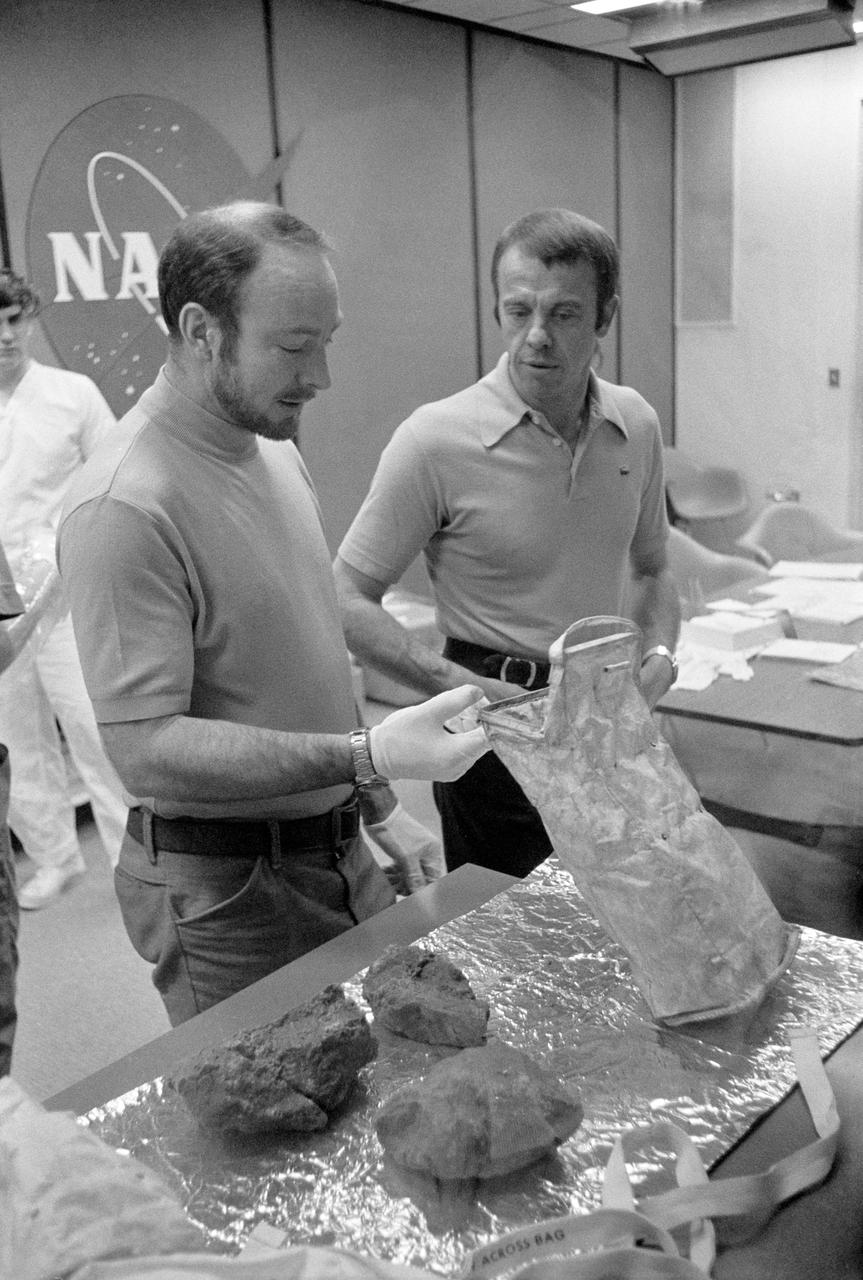
S71-20375 (19 Feb. 1971) --- The two moon-exploring crewmen of the Apollo 14 lunar landing mission show off some of the largest of the lunar rocks they collected on their mission, during a through-the-glass meeting with newsmen in the Crew Reception Area of the Lunar Receiving Laboratory (LRL) at the Manned Spacecraft Center (MSC). Astronaut Edgar D. Mitchell (left), lunar module pilot, holds up a tote bag in which some of the lunar samples were stowed, while astronaut Alan B. Shepard Jr., commander, looks on. The largest sample brought back on the mission, a basketball-size rock (nicknamed "Big Bertha"), is said to be the largest lunar rock collected in three lunar landing missions for the National Aeronautics and Space Administration (NASA).
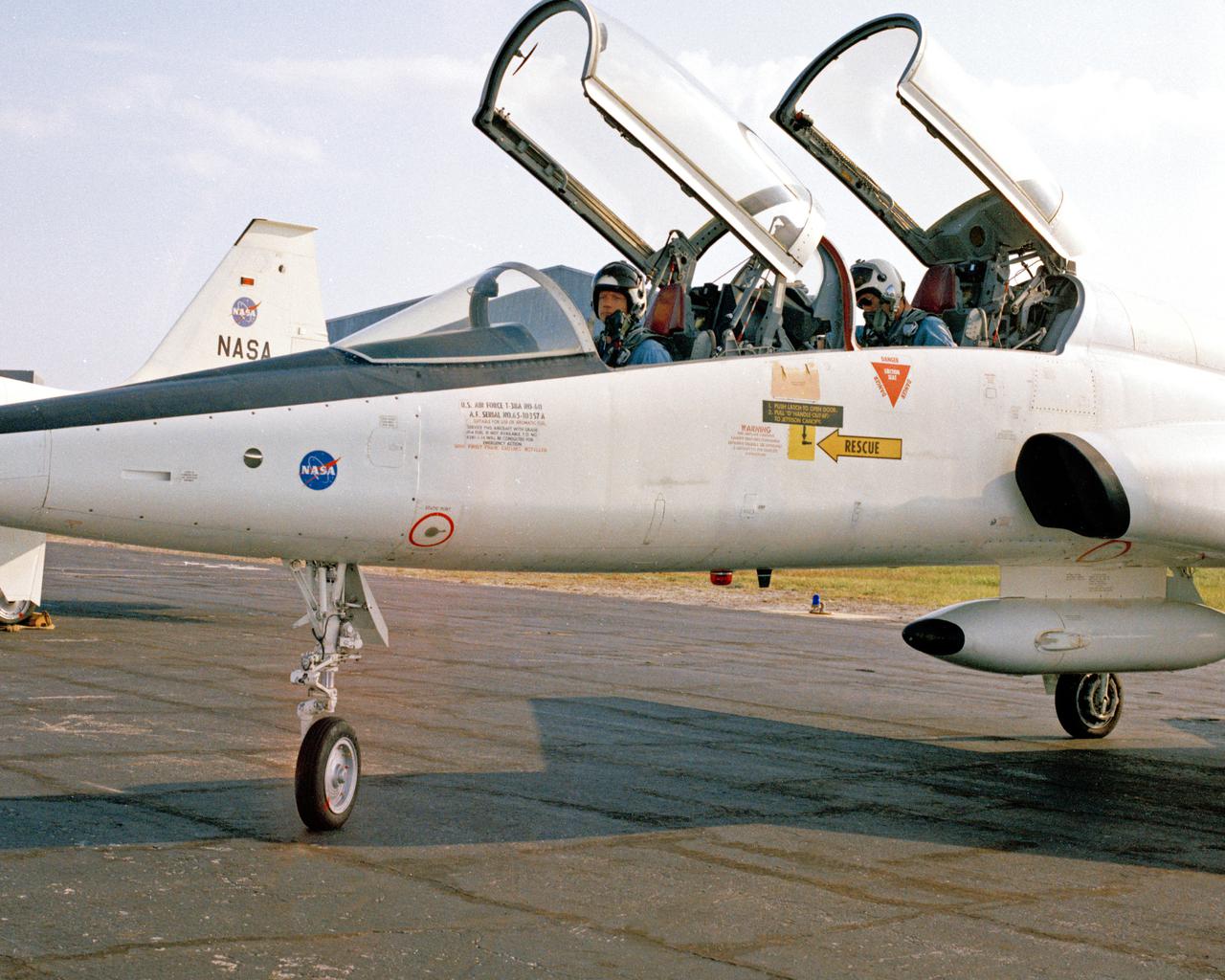
PATRICK AFB, Fla. – In preparation of the nation’s first lunar landing mission, Apollo 11 crew members arrive at Patrick Air Force Base, Florida. Mission commander Neil A. Armstrong is in the front seat of the T-38 jet, with chief astronaut and director of flight crew operations, Donald K. Slayton, in the back. Lift off atop a Saturn V launch vehicle is scheduled for July 16, 1969. During Apollo 11 the command module, Columbia, will remain in orbit around the moon while the lunar module, Eagle, carrying Armstrong and Aldrin, lands on the lunar surface. During 2½ hours of surface exploration, the crew plans to collect lunar surface material for analysis back on Earth. For more: http:__www-pao.ksc.nasa.gov_history_apollo_apollo-11_apollo-11.htm Photo credit: NASA
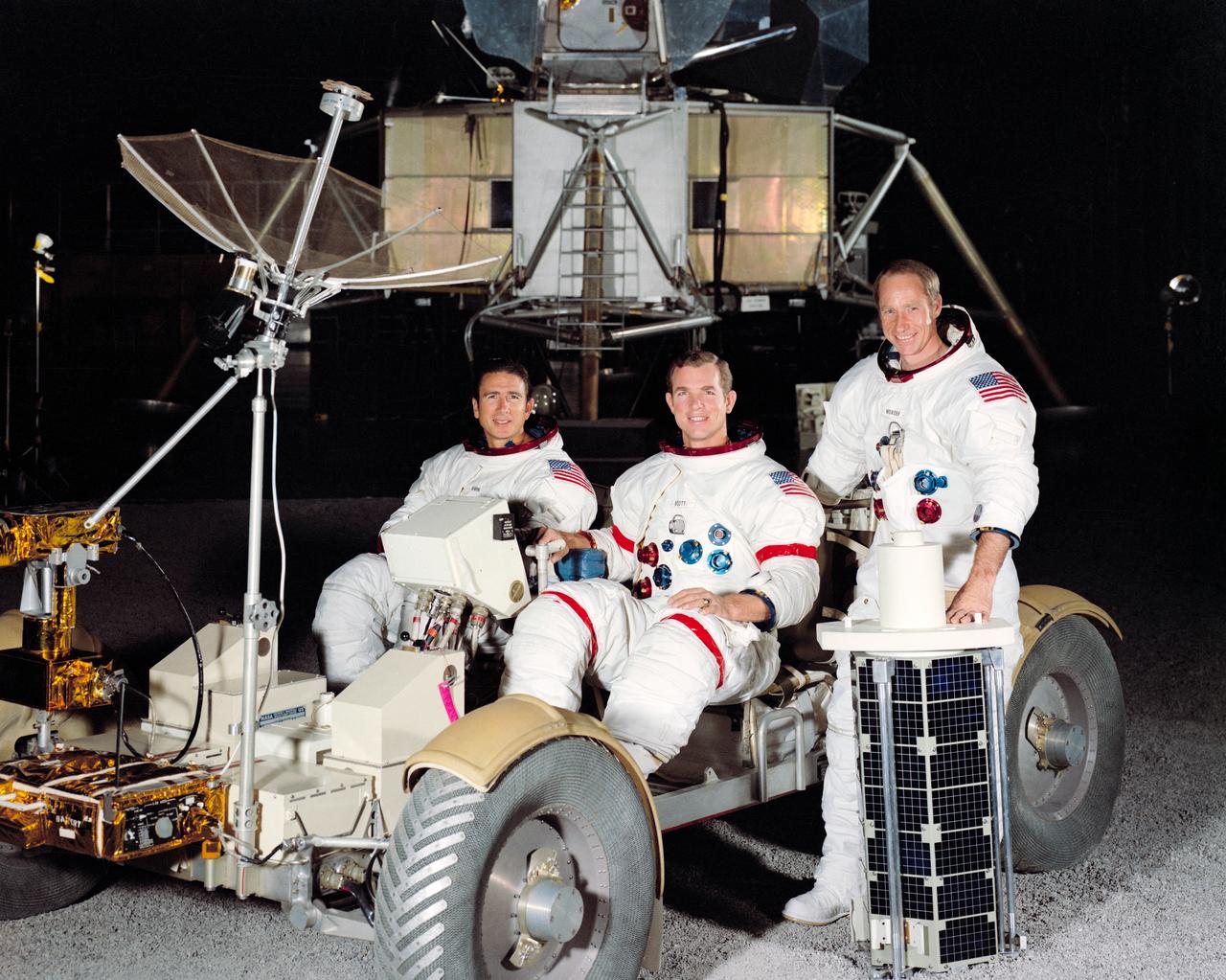
S71-22407 (March 1971) --- These three astronauts have been named by the National Aeronautics and Space Administration (NASA) as the prime crew men of the Apollo 15 lunar landing mission. They are, left to right, James B. Irwin, lunar module pilot; David R. Scott, commander; and Alfred M. Worden, command module pilot.

S70-55635 (December 1970) --- These three astronauts are the prime crew of the Apollo 14 lunar landing mission. Left to right, are Edgar D. Mitchell, lunar module pilot; Alan B. Shepard Jr., commander; and Stuart A. Roosa, command module pilot. The Apollo 14 emblem is in the background.
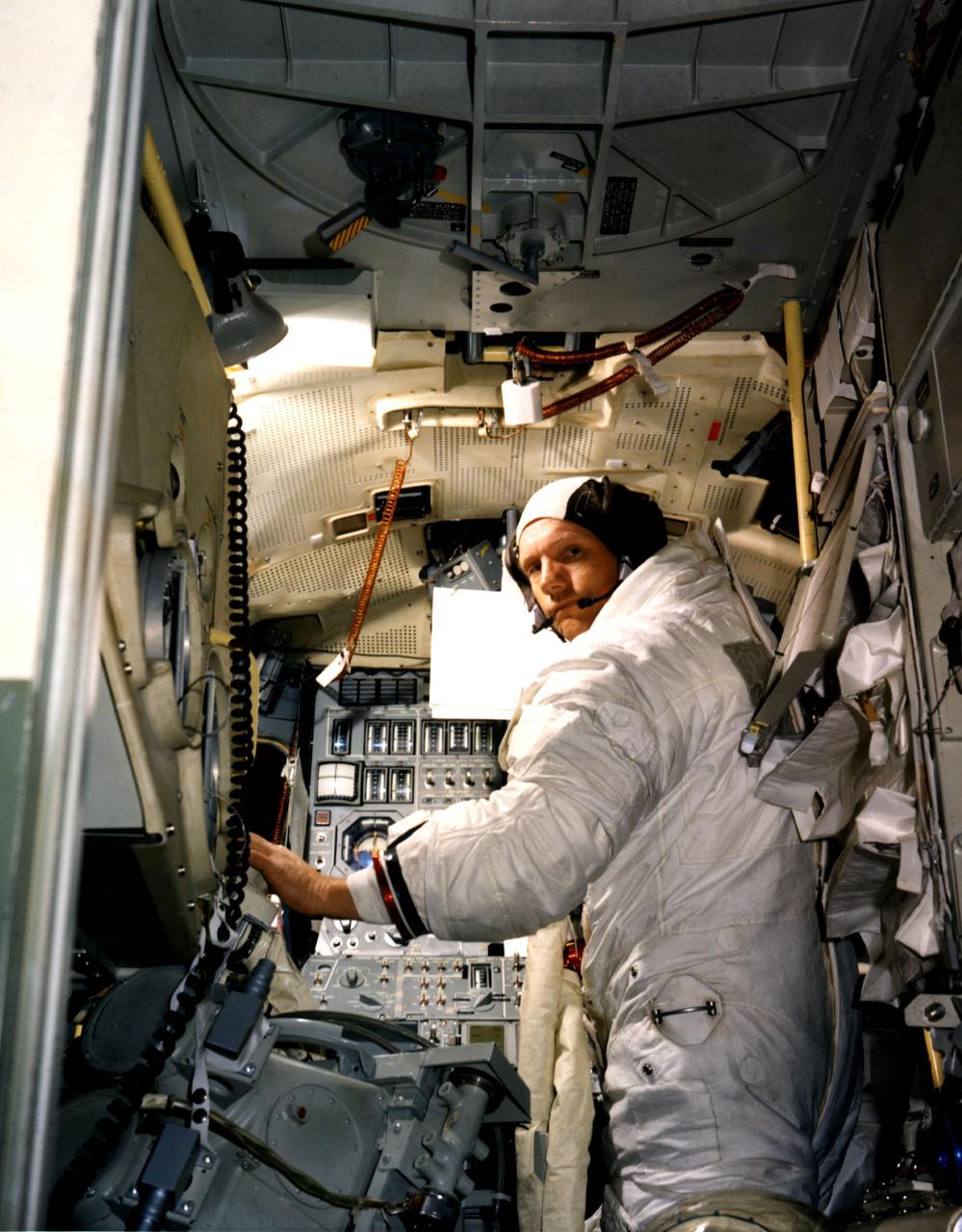
KENNEDY SPACE CENTER, FLA. - Neil A. Armstrong, commander for the Apollo 11 Moon-landing mission, practices for the historic event in a Lunar Module simulator in the Flight Crew Training Building at KSC. Accompanying Armstrong on the Moon flight will be Command Module Pilot Michael Collins and Lunar Module Pilot Edwin E. Aldrin Jr.
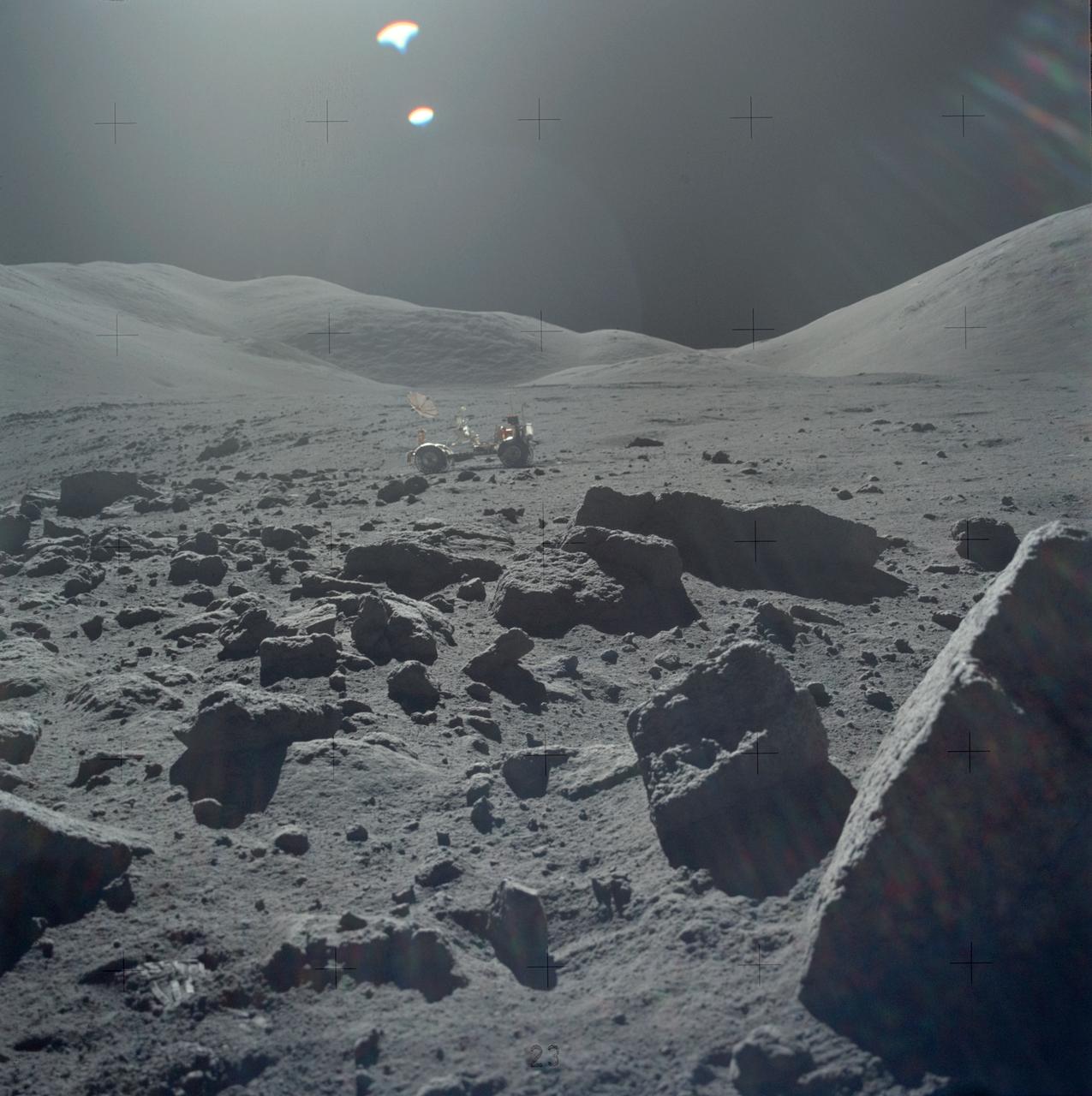
AS17-145-22162 (7-19 Dec. 1972) --- One of the Apollo 17 crew photographed this view during lunar surface extravehicular activities (EVA) at the Taurus-Littrow landing site. The Lunar Rover Vehicle (LRV), which was used extensively by astronauts Eugene A. Cernan and Harrison H. Schmitt, is visible in the background.
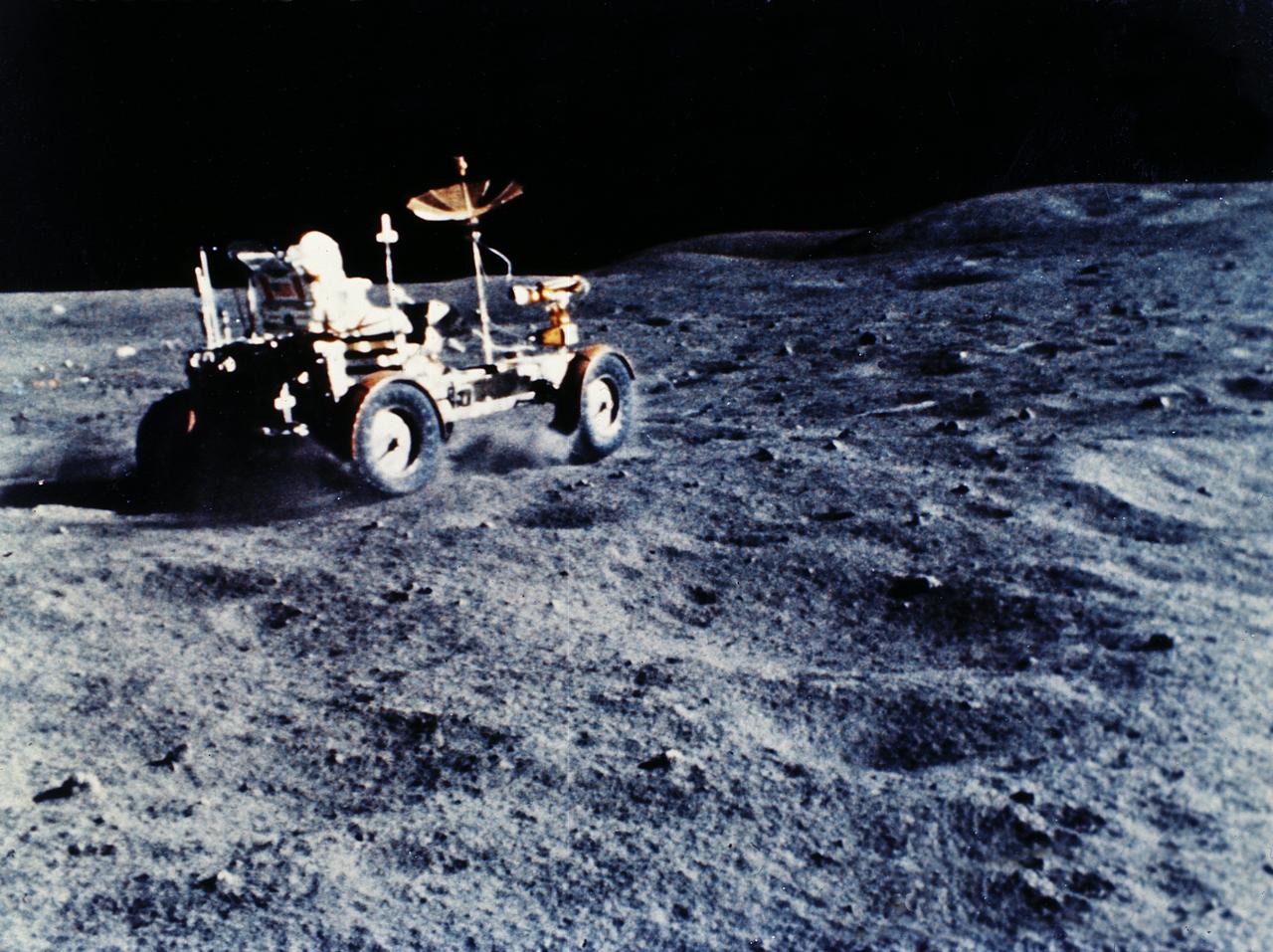
The Lunar Roving Vehicle (LRV) was designed to transport astronauts and materials on the Moon. An LRV was used on each of the last three Apollo missions; Apollo 15, Apollo 16, and Apollo 17, in 1971 and 1972, to permit the crew to travel several miles from the lunar landing site. This photograph was taken during the Apollo 16 mission.
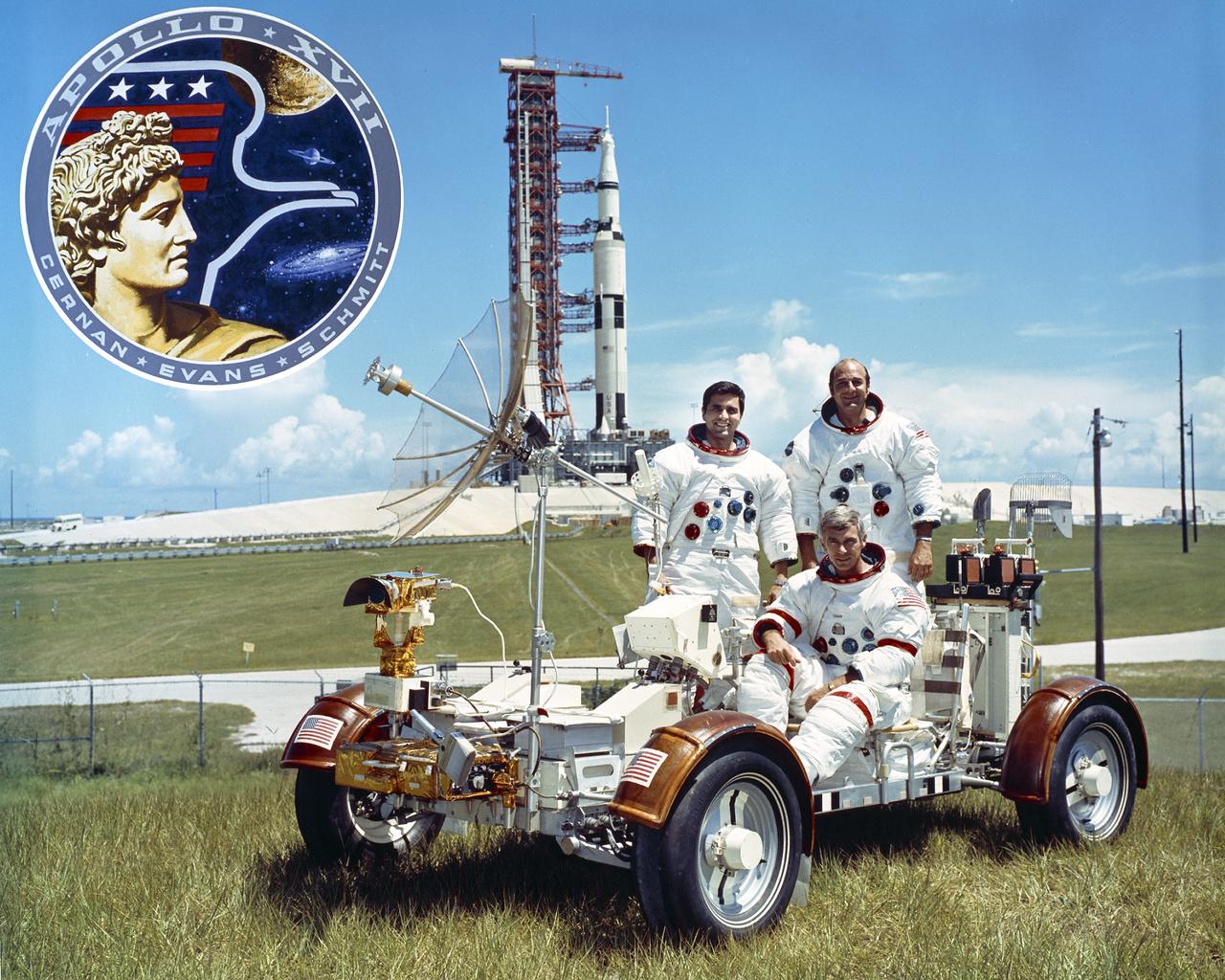
The Apollo 17 crew took time out from training for the press after the Space Vehicle for their Manned Lunar Landing Mission was moved to Complex 39A. Seated, Eugene A. Cernan, Commander standing, left to right, Dr. Harrison H. “Jack” Schmitt, Lunar Module Pilot and Ronald A. Evans, Command Module Pilot.

S69-31739 (May 1969) --- The National Aeronautics and Space Administration (NASA) has named these three astronauts as the prime crew of the Apollo 11 lunar landing mission. Left to right, are Neil A. Armstrong, commander; Michael Collins, command module pilot; and Edwin E. Aldrin Jr., lunar module pilot.
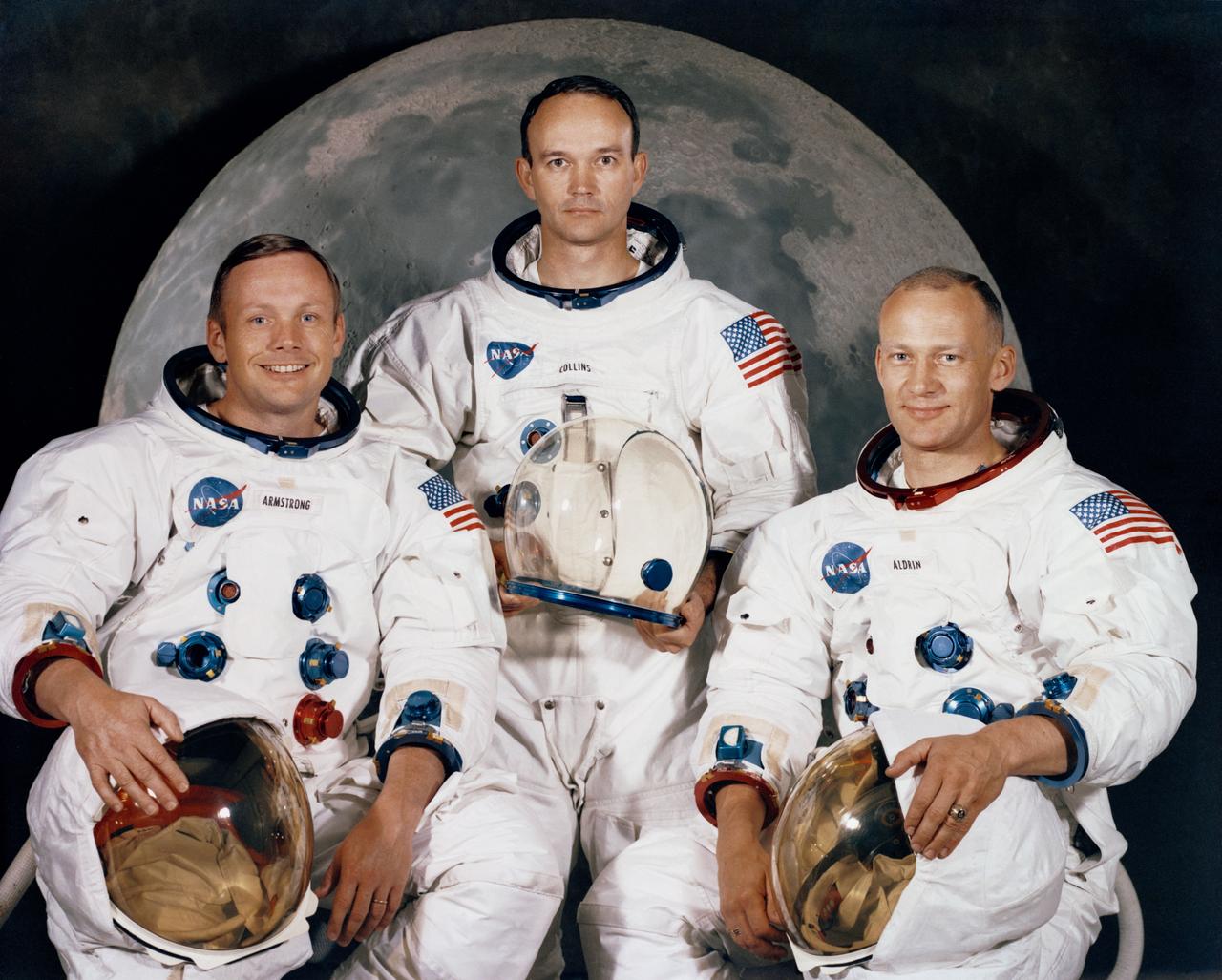
S69-31740 (May 1969) --- The National Aeronautics and Space Administration (NASA) has named these three astronauts as the prime crew of the Apollo 11 lunar landing mission. Left to right, are Neil A. Armstrong, commander; Michael Collins, command module pilot; and Edwin E. Aldrin Jr., lunar module pilot.
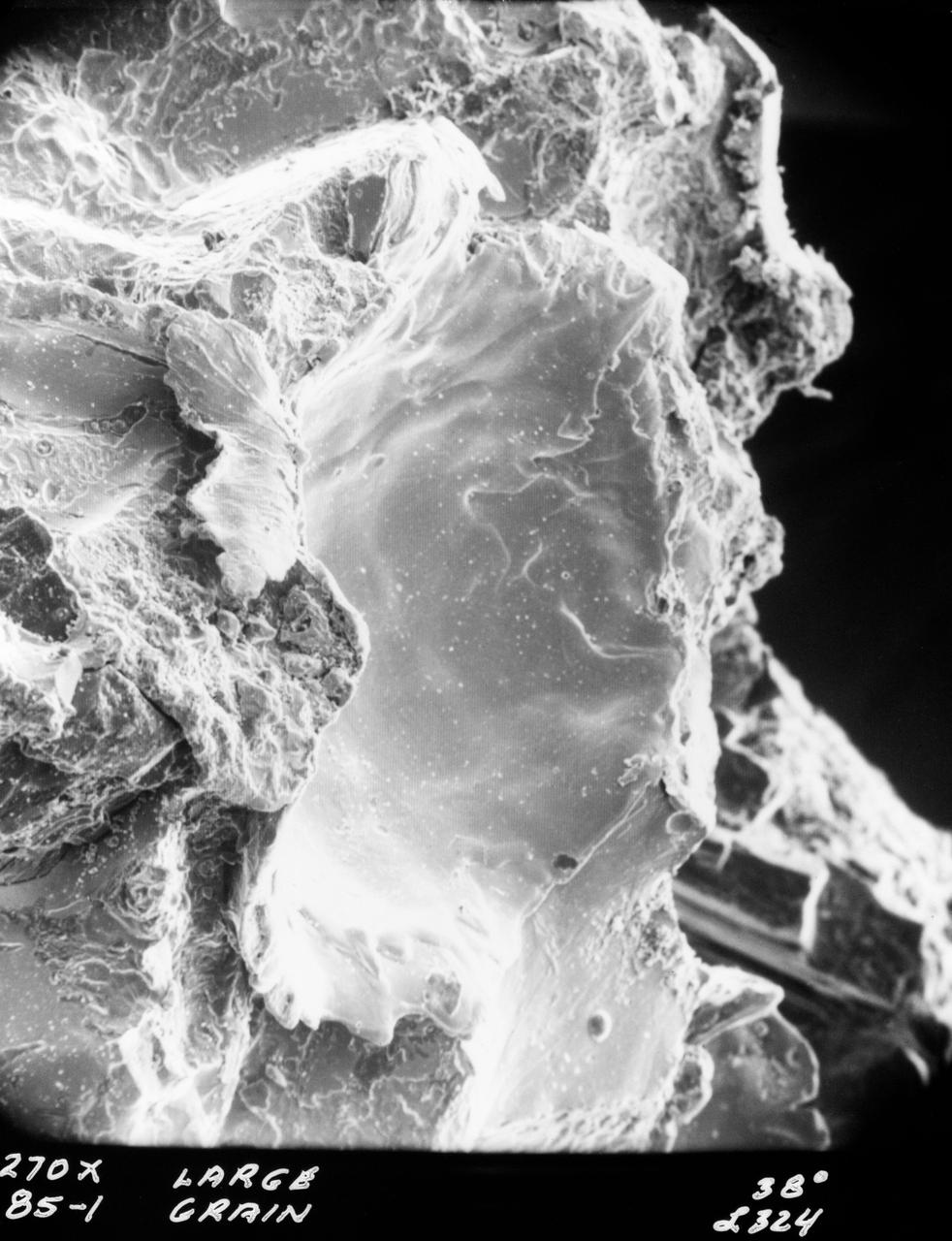
S70-20416 (December 1969) --- Enlarged view show hypervelocity impact on iron particles of lunar surface material returned to Earth by the crew of the Apollo 11 lunar landing mission. This photograph, enlarged to 270 times the actual size, was taken by Dr. G. J. Wasserberg, J. DeVaney and K. Evans at the California Institute of Technology.
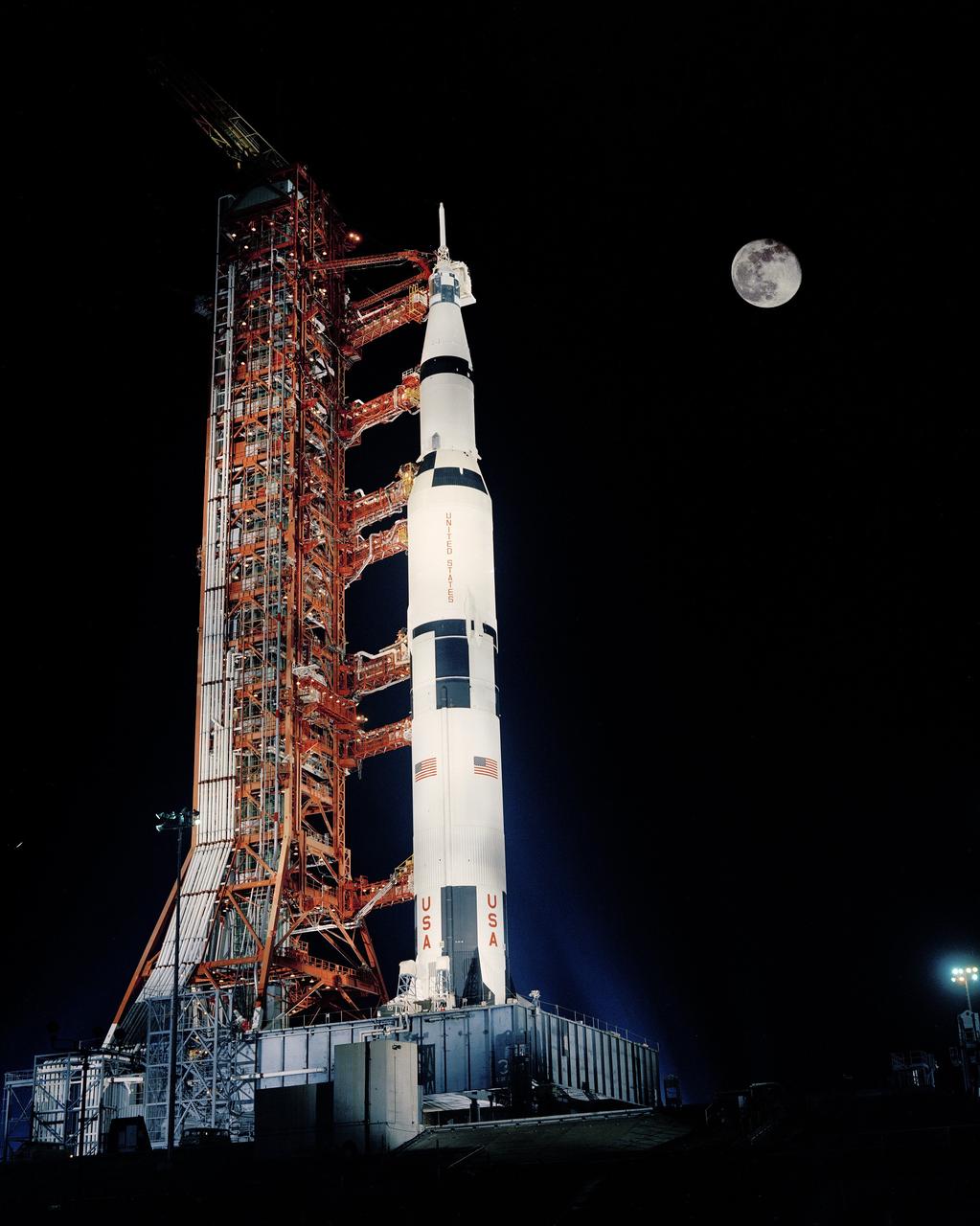
The Apollo 17 Space Vehicle sits poised beneath a full moon on Launch Pad 39A during launch countdown. Astronauts Eugene A. Cernan, Commander Ronald Evans, Command Module Pilot and Dr. Harrison "Jack" Schmitt, Lunar Module Pilot, will be the crew for the sixth U.S. manned Lunar landing mission.
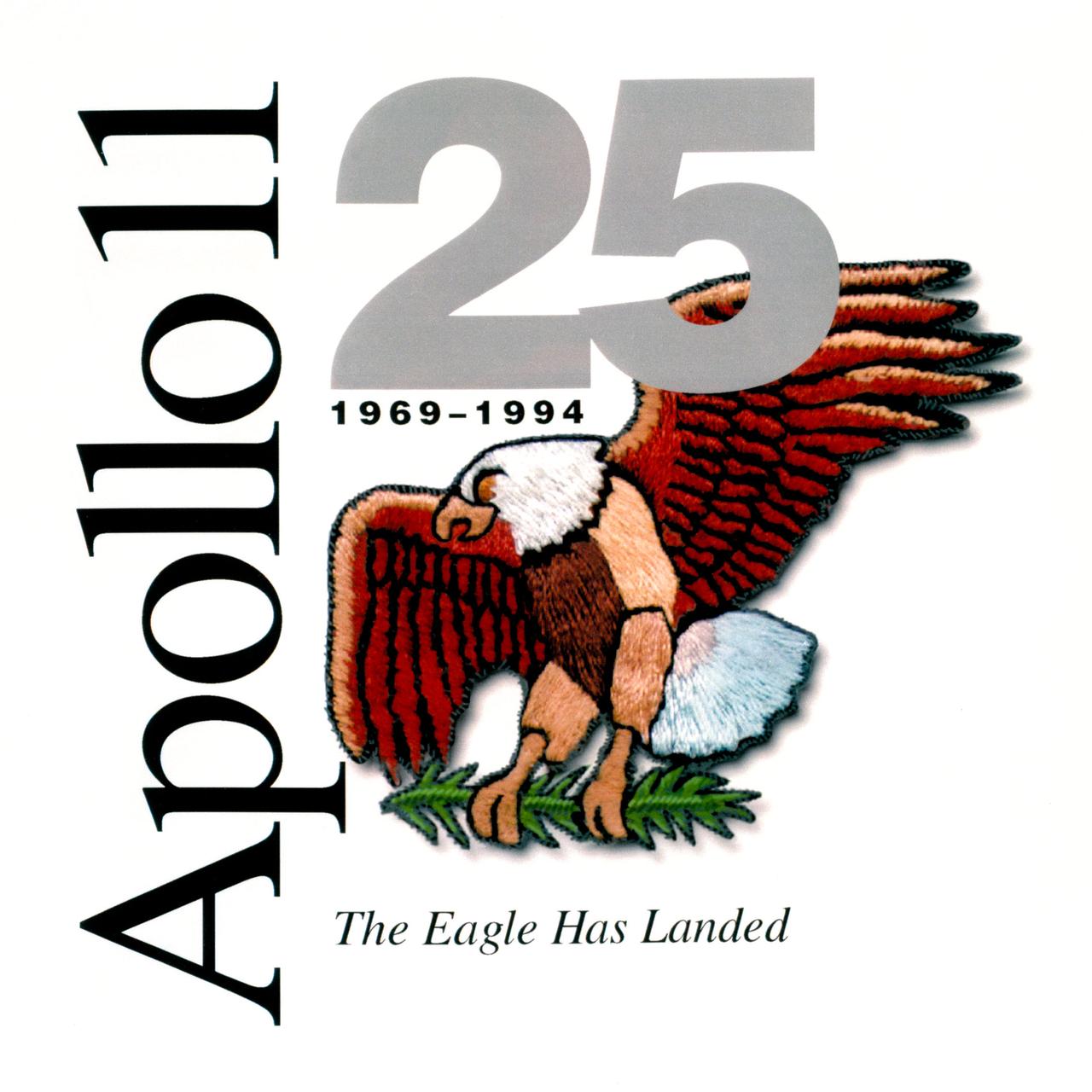
This official NASA commemorative logo marks the 25th anniversary of the first lunar landing. The design incorporates an eagle, from the original Apoll 11 crew insignia, descending toward the lunar surface with an olive branch, symbolizing America's peaceful mission in space. Alternative Headquarters number is 93-HC-312 or 93-H-336.
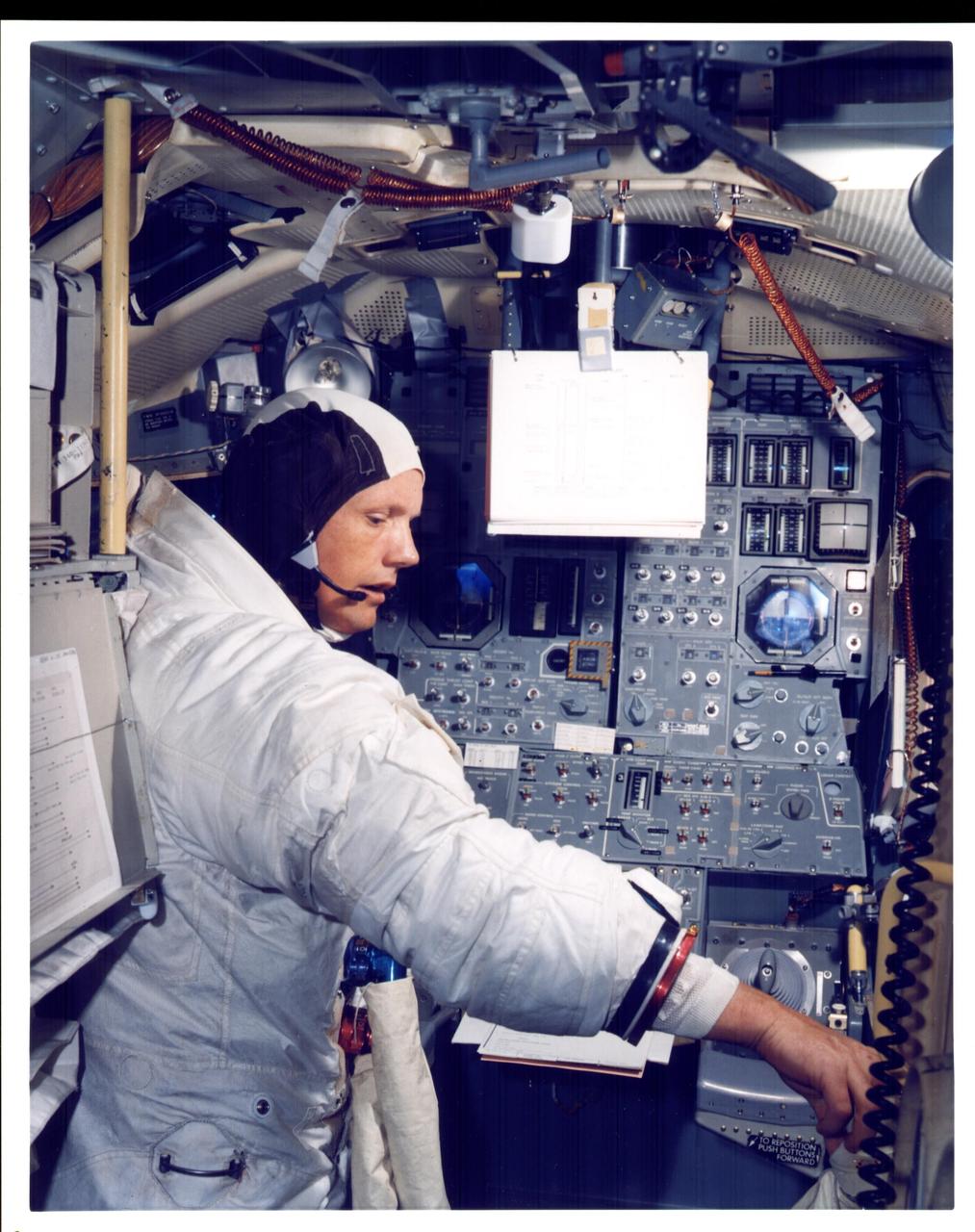
KENNEDY SPACE CENTER, FLA. - Apollo 11 Commander Neil Armstrong is going through flight training in the lunar module simulator situated in the Flight Crew Training Building at KSC. Armstrong wil pilot the lunar module to a Moon landing on July 20, following launch from KSC at 9:32 a.m. July 16.
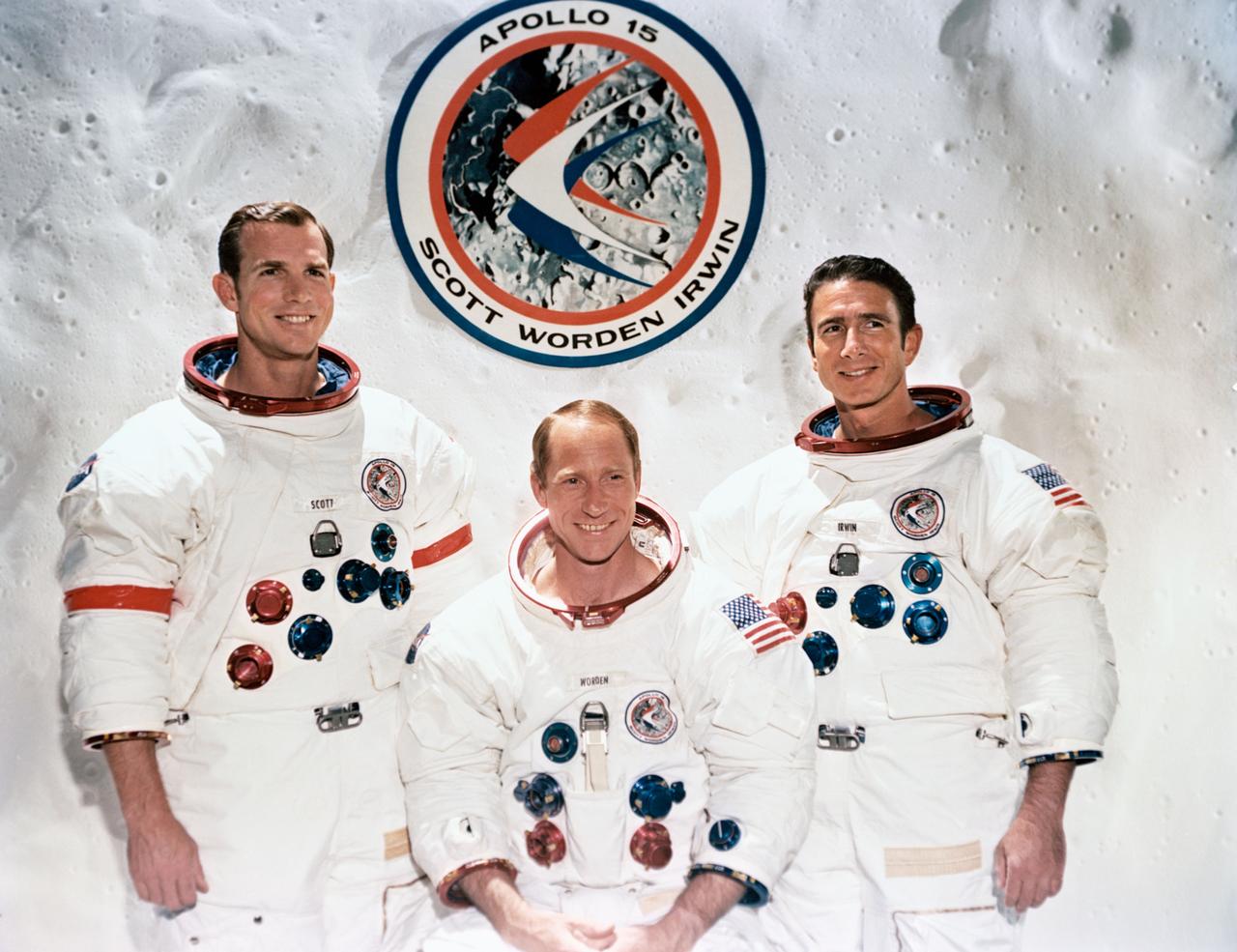
S71-37963 (July 1971) --- These three astronauts are the prime crew of the Apollo 15 lunar landing mission. They are, left to right, David R. Scott, commander; Alfred M. Worden, command module pilot; and James B. Irwin, lunar module pilot. The Apollo 15 emblem is in the background.
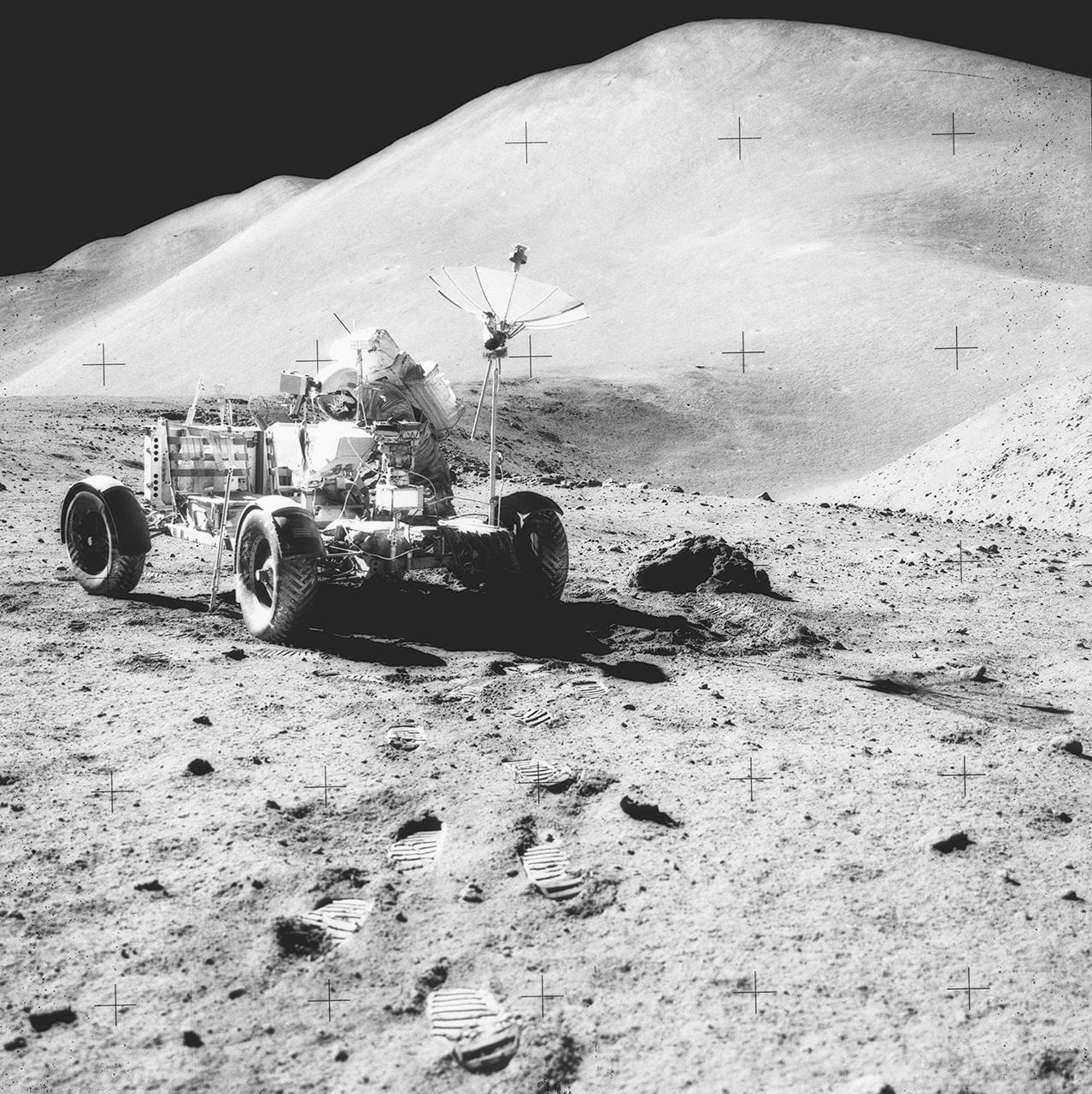
The Lunar Roving Vehicle (LRV) was designed to transport astronauts and materials on the Moon. An LRV was used on each of the last three Apollo missions, Apollo 15, Apollo 16, and Apollo 17, in 1971 and 1972 to permit the crew to travel several miles from the lunar landing site. This photograph was taken during the Apollo 15 mission.
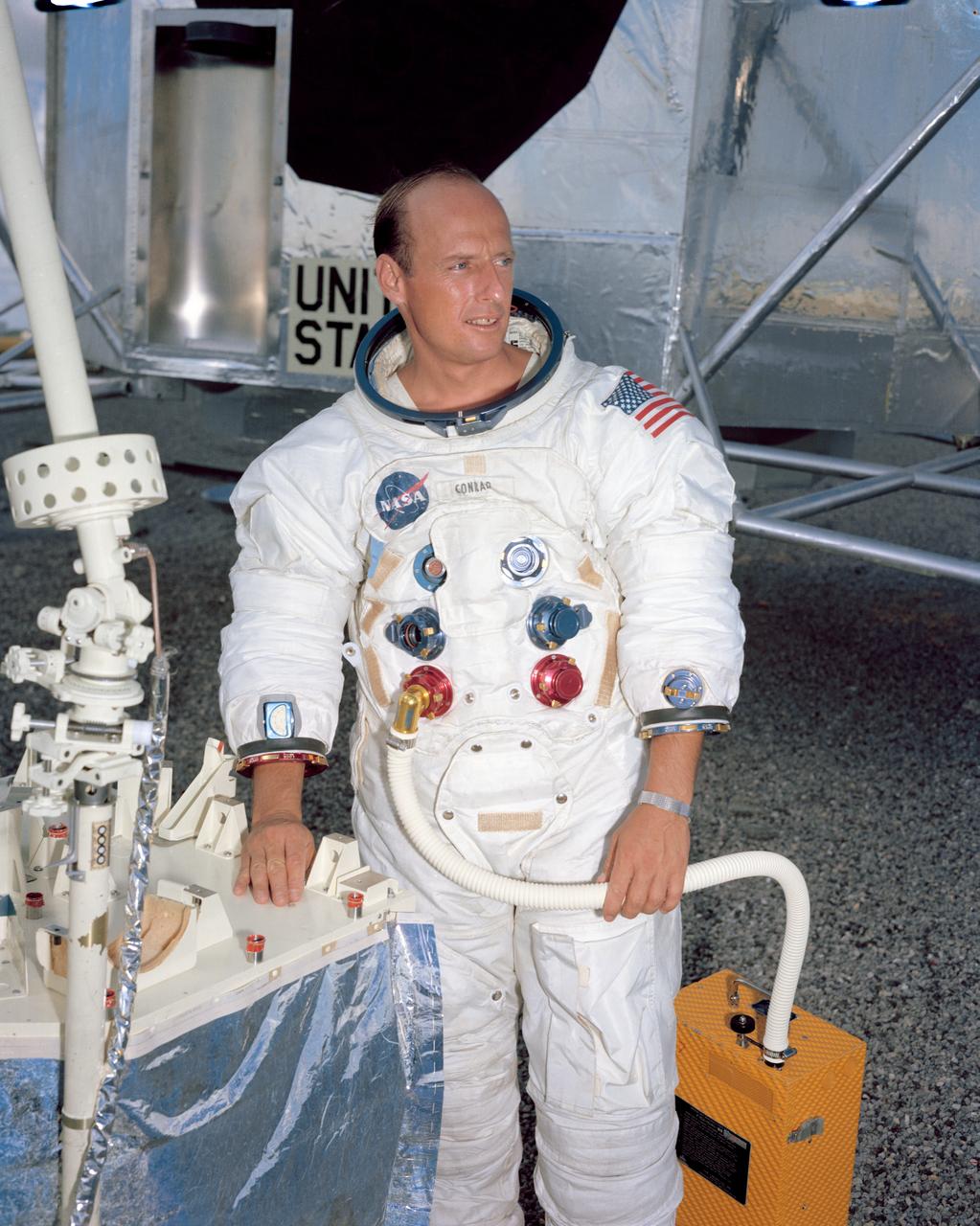
S69-38866 (22 Sept. 1969) --- Portrait of astronaut Charles Conrad Jr., prime crew commander of the Apollo 12 lunar landing mission, in his spacesuit minus the helmet. He is standing outside beside a mock-up of the Lunar Lander.
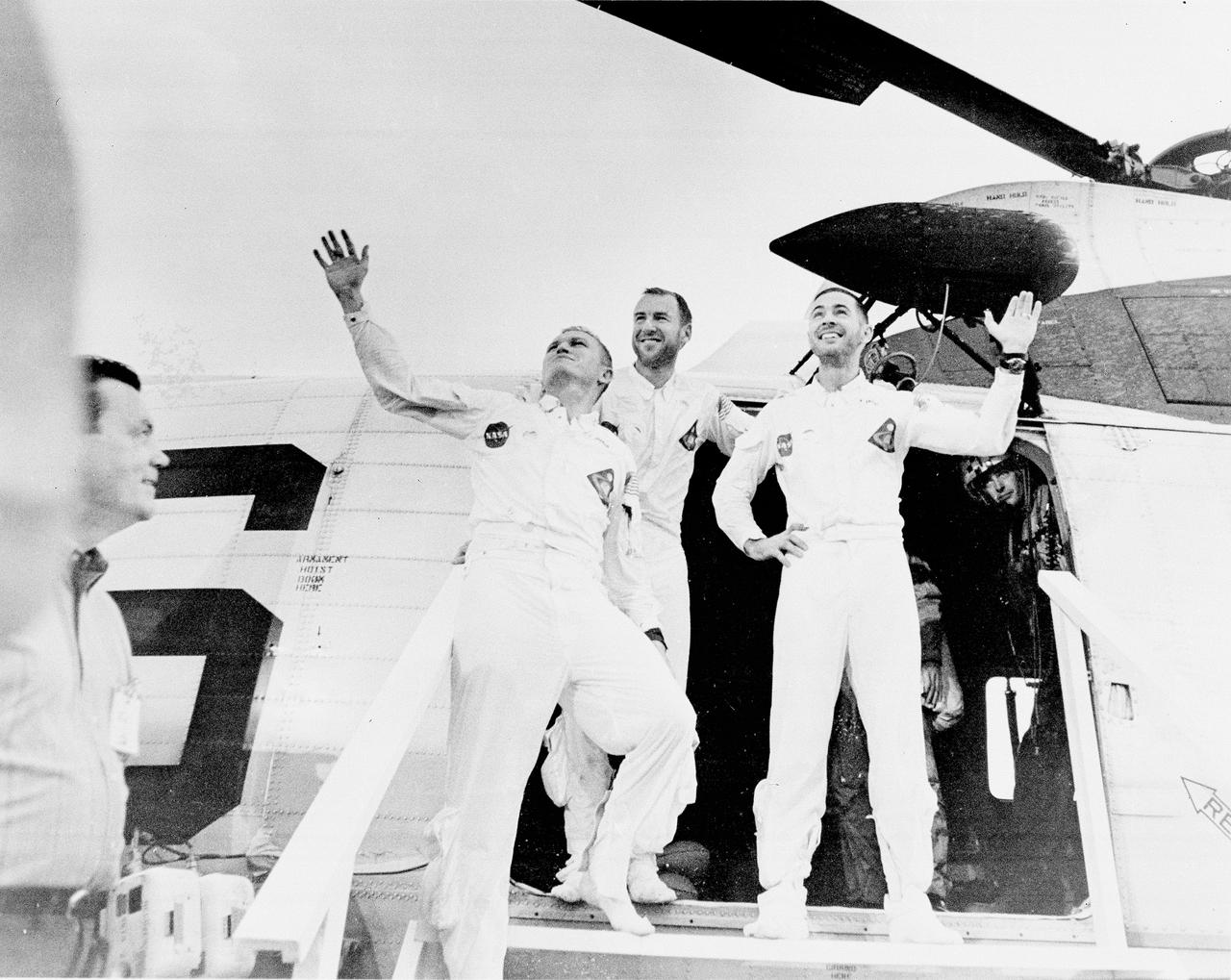
Apollo 8 served as the first manned lunar orbit mission. Liftoff occurred on December 21, 1968, carrying a three man crew consisting of astronauts Frank Borman, commander; William Anders, Lunar Module (LM) Pilot; and James Lovell, Command Module (CM) pilot. The three safely returned to Earth on December 27, 1968. In this photograph, the crew members are waving as they leave the recovery helicopter. The mission achieved operational experience and tested the Apollo command module systems, including communications, tracking, and life-support, in cis-lunar space and lunar orbit, and allowed evaluation of crew performance on a lunar orbiting mission. The crew photographed the lunar surface, both far side and near side, obtaining information on topography and landmarks as well as other scientific information necessary for future Apollo landings. All systems operated within allowable parameters and all objectives of the mission were achieved.
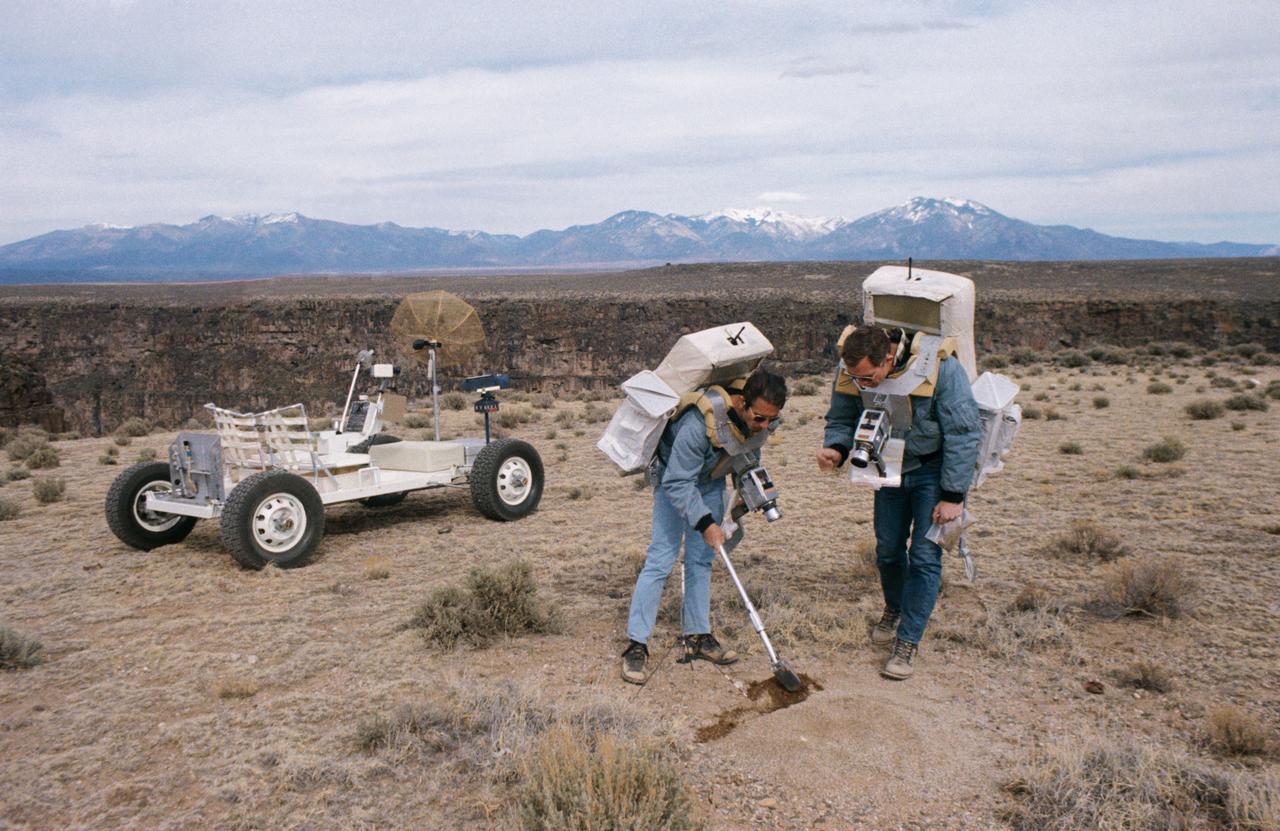
S71-23772 (11-12 March 1971) --- Two members of the prime crew of the Apollo 15 lunar landing mission collect soil samples during a simulation of lunar surface extravehicular activity in the Taos, New Mexico area. Astronaut James B. Irwin, lunar module pilot, is using a scoop. Astronaut David R. Scoot (right), commander, is holding a sample bag. On the left is a Lunar Roving Vehicle trainer.
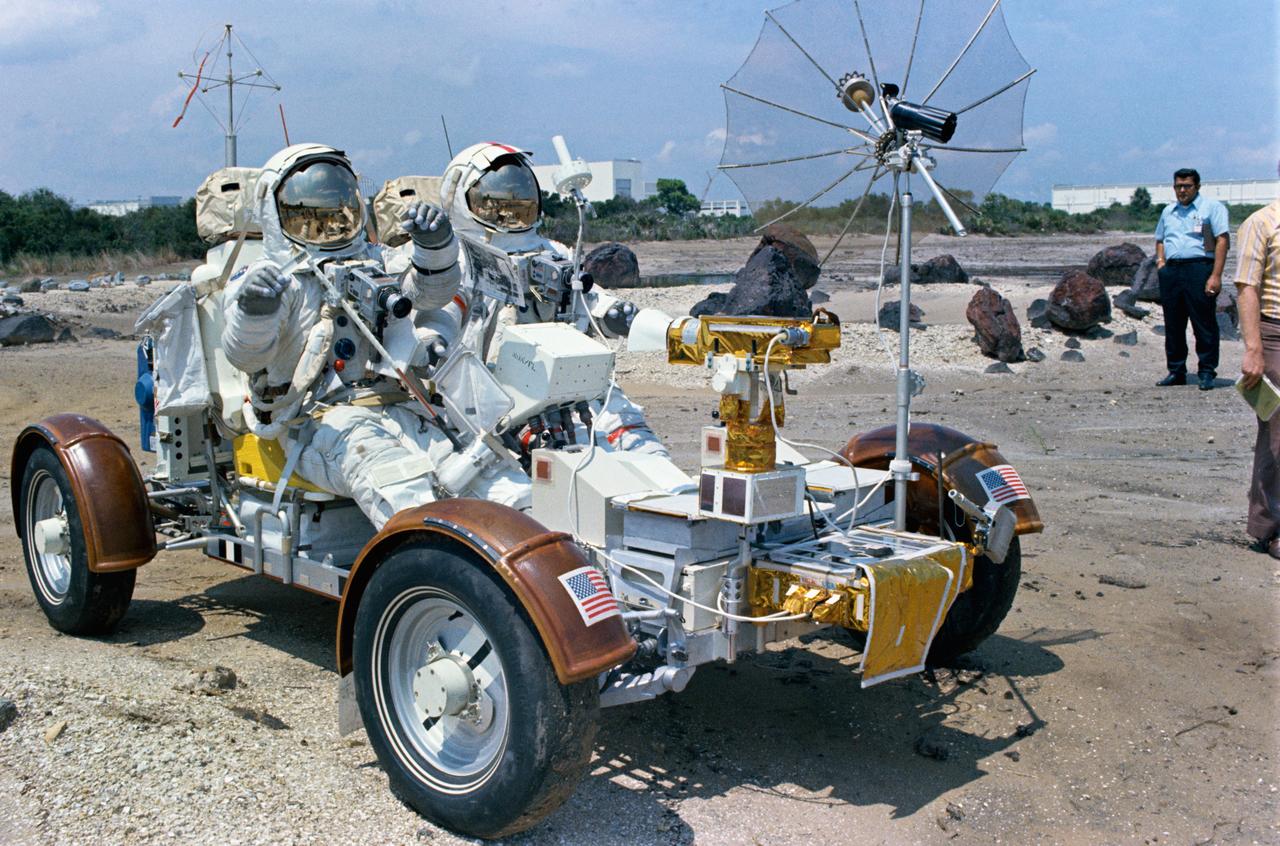
S72-48892 (September 1972) --- Two members of the prime crew of the Apollo 17 lunar landing mission ride in a Lunar Roving Vehicle trainer during lunar surface extravehicular activity simulation training at the Kennedy Space Center (KSC), Florida. Astronaut Eugene A. Cernan, commander, is seated in the left-hand seat. Scientist-astronaut Harrison H. Schmitt, lunar module pilot, is on Cernan's right.
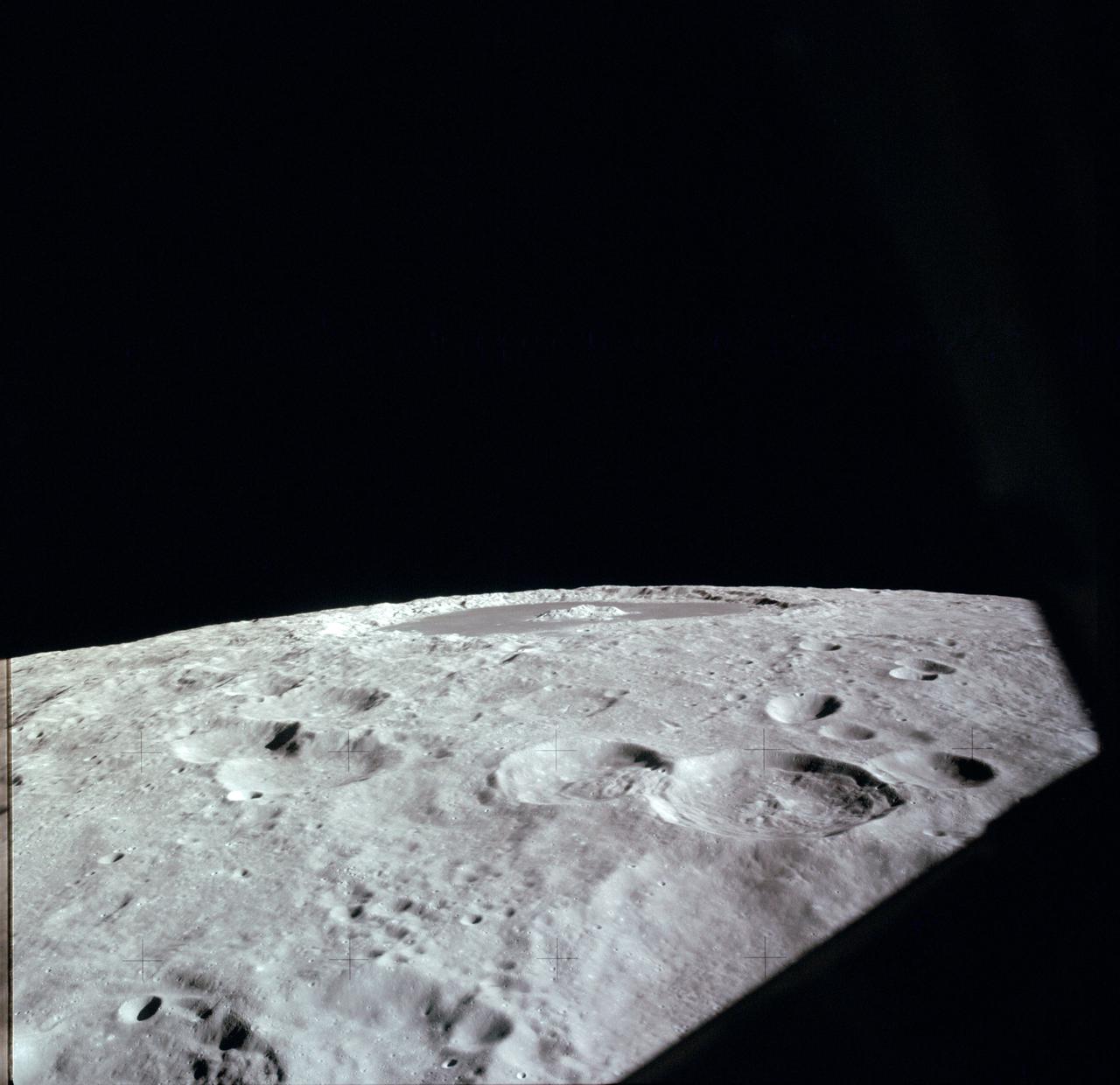
AS12-47-6870 (November 1969) --- An Apollo 12 high-oblique view of the crater Tsiolkovsky (in center of horizon) on the lunar farside, as photographed from lunar orbit. The crew men of the Apollo 12 lunar landing mission were astronauts Charles Conrad Jr., commander; Richard F. Gordon Jr., command module pilot; and Alan L. Bean, lunar module pilot. Tsiolkovsky is centered at 128.5 degrees east longitude and 20.5 degrees south latitude. This view is looking south.
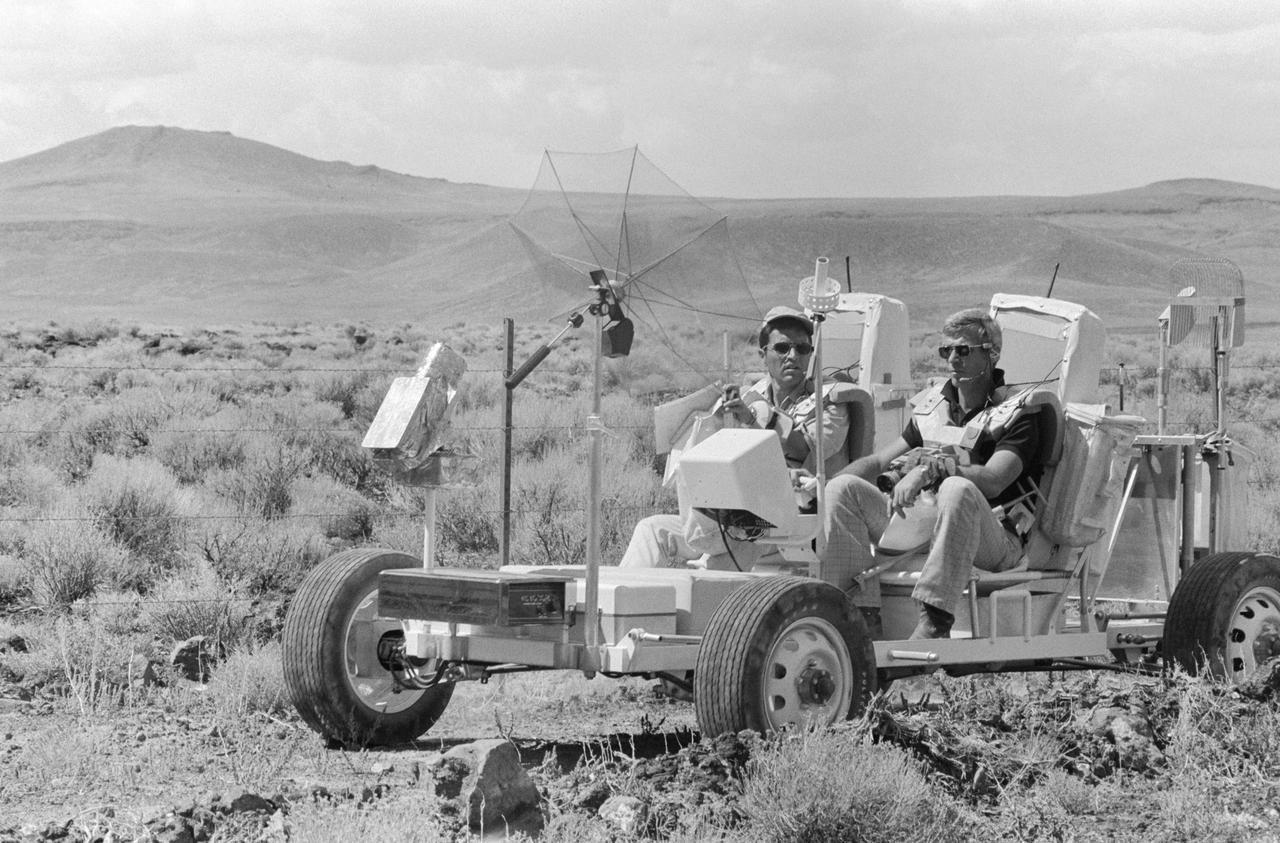
S72-48864 (6 Sept. 1972) --- Two members of the prime crew of the Apollo 17 lunar landing mission ride in a Lunar Roving Vehicle trainer during lunar surface extravehicular activity simulation training in the Pancake Range area of south-central Nevada. They are astronaut Eugene A. Cernan (foreground), commander; and scientist-astronaut Harrison H. Schmitt (on Cernan’s right), lunar module pilot.
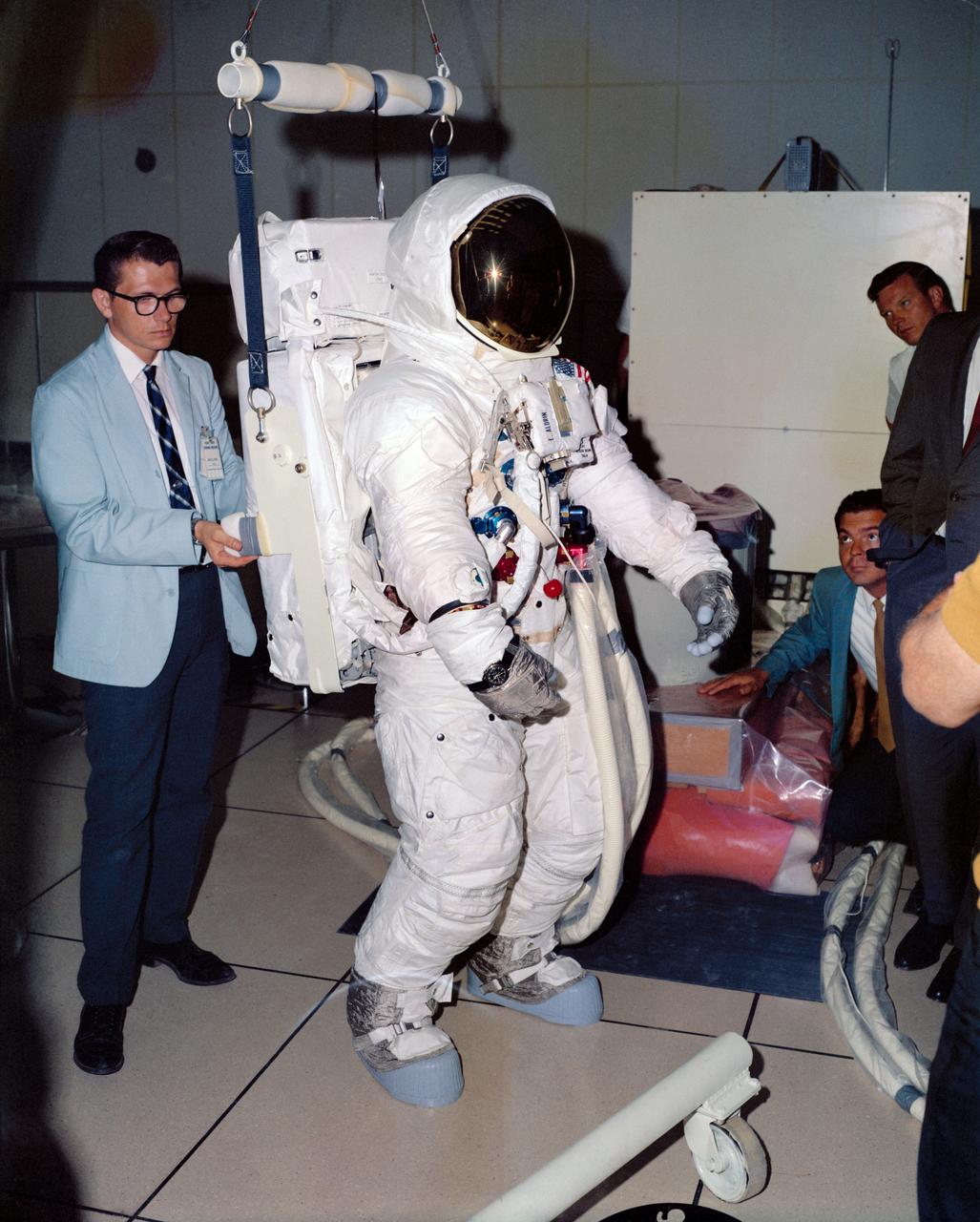
Astronaut Edwin E. Aldrin Jr., wearing an Extravehicular Mobility Unit (EMU), verifies fit of the Portable Life Support System (PLSS) strap length during lunar surface training at the Kennedy Space Center. Aldrin is the prime crew lunar module pilot of the Apollo 11 lunar landing mission. Aldrin's PLSS backpack is attached to a lunar weight simulator.
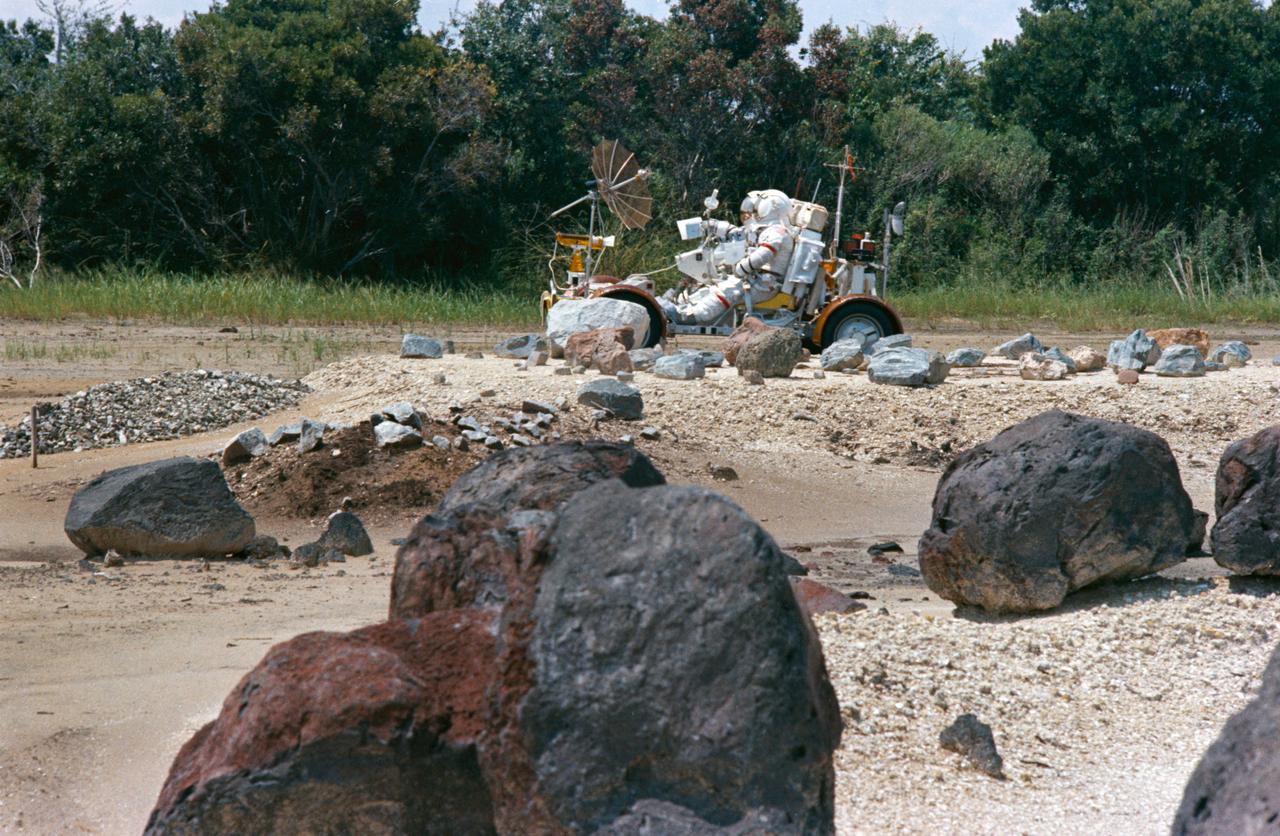
S72-48889 (September 1972) --- Two members of the prime crew of the Apollo 17 lunar landing mission ride in a lunar roving vehicle trainer during lunar surface extravehicular activity simulation training at the Kennedy Space Center, Florida. Astronaut Eugene A. Cernan, commander, is seated in the left-hand seat. Scientist-astronaut Harrison H. Schmitt, lunar module pilot, is on Cernan's right.
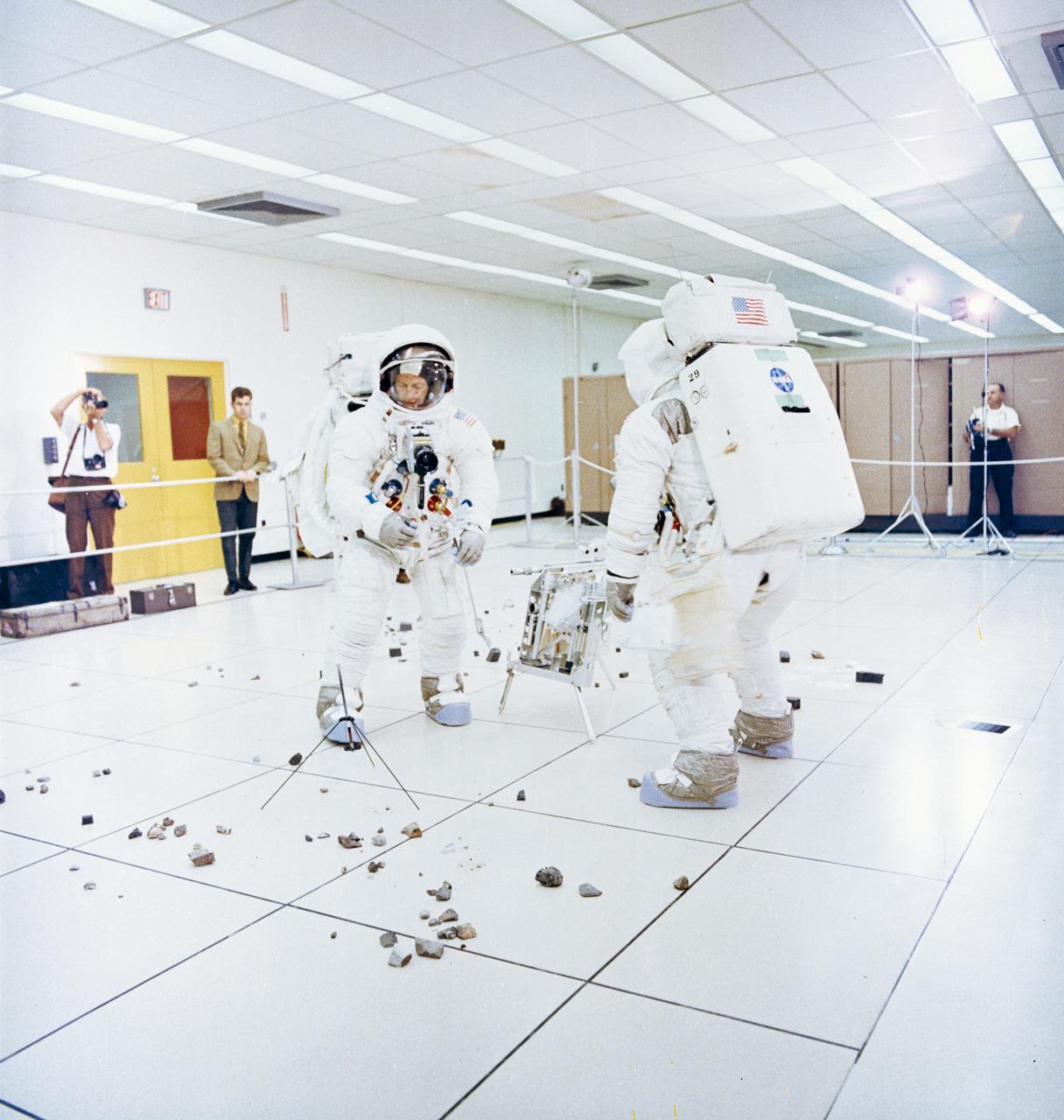
S69-55368 (6 Oct. 1969) --- Two members of the Apollo 12 lunar landing mission participate in lunar surface extravehicular activity (EVA) simulations in the Flight Crew Training Building at the Kennedy Space Center (KSC). Astronaut Charles Conrad Jr., commander (facing camera), simulates picking up samples. Astronaut Alan L. Bean, lunar module pilot, simulates photographic lunar rock sample documentation.

S72-16660 (January 1972) --- These three astronauts have been selected by the National Aeronautics and Space Administration (NASA) as the prime crew men of the Apollo 16 lunar landing mission. They are, left to right, Thomas K. Mattingly II, command module pilot; John W. Young, commander; and Charles M. Duke Jr., lunar module pilot. While astronauts Young and Duke descend in the Lunar Module (LM) to explore the moon, astronaut Mattingly will remain with the Command and Service Modules (CSM) in lunar orbit.
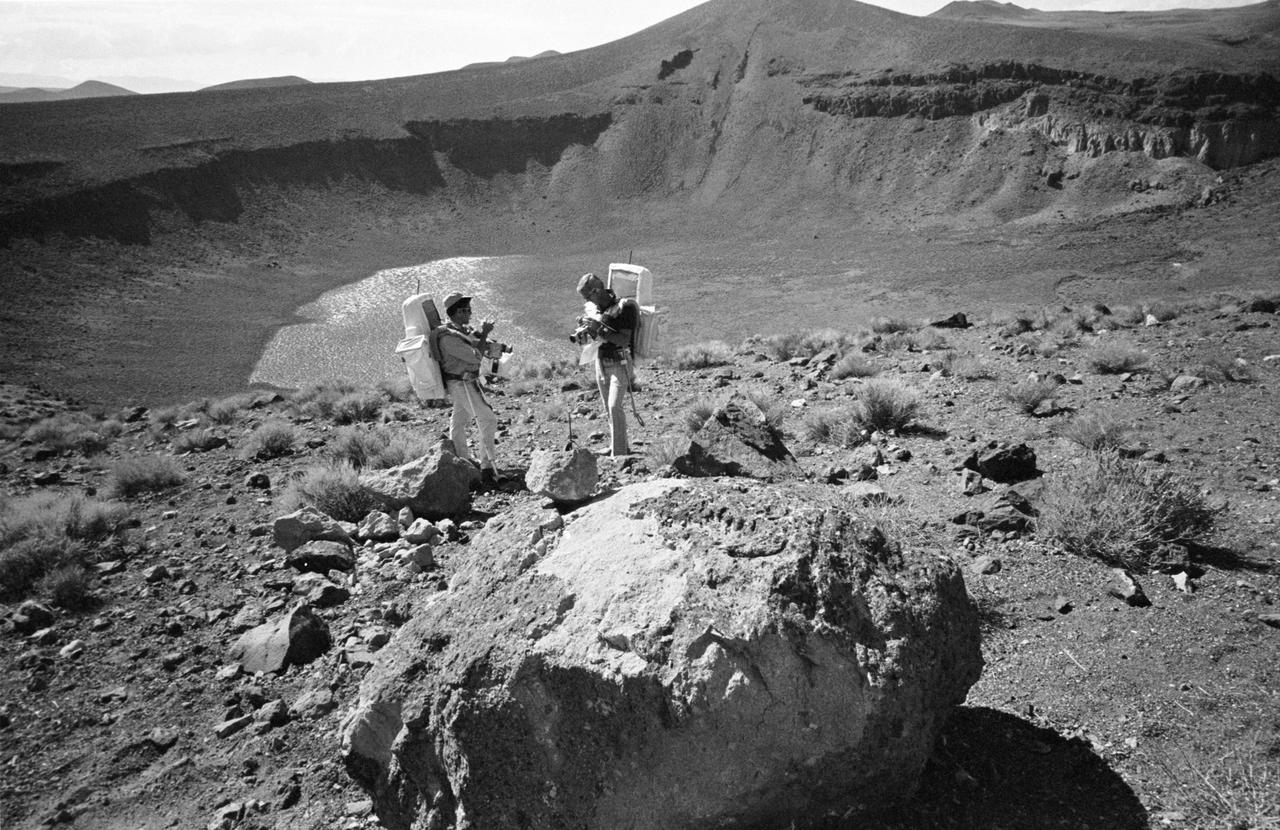
S72-48854 (6 Sept. 1972) --- Two members of the prime crew of the Apollo 17 lunar landing mission examine rock specimens during lunar surface extravehicular activity simulation training on a geological field trip to the Pancake Range area of south-central Nevada. They are astronaut Eugene A. Cernan (right), commander; and scientist-astronaut Harrison H. Schmitt, lunar module pilot. They are standing on the rim of Lunar Crater, which is about 600 feet deep and five-eighths of a mile in diameter. It is a volcanic crater.
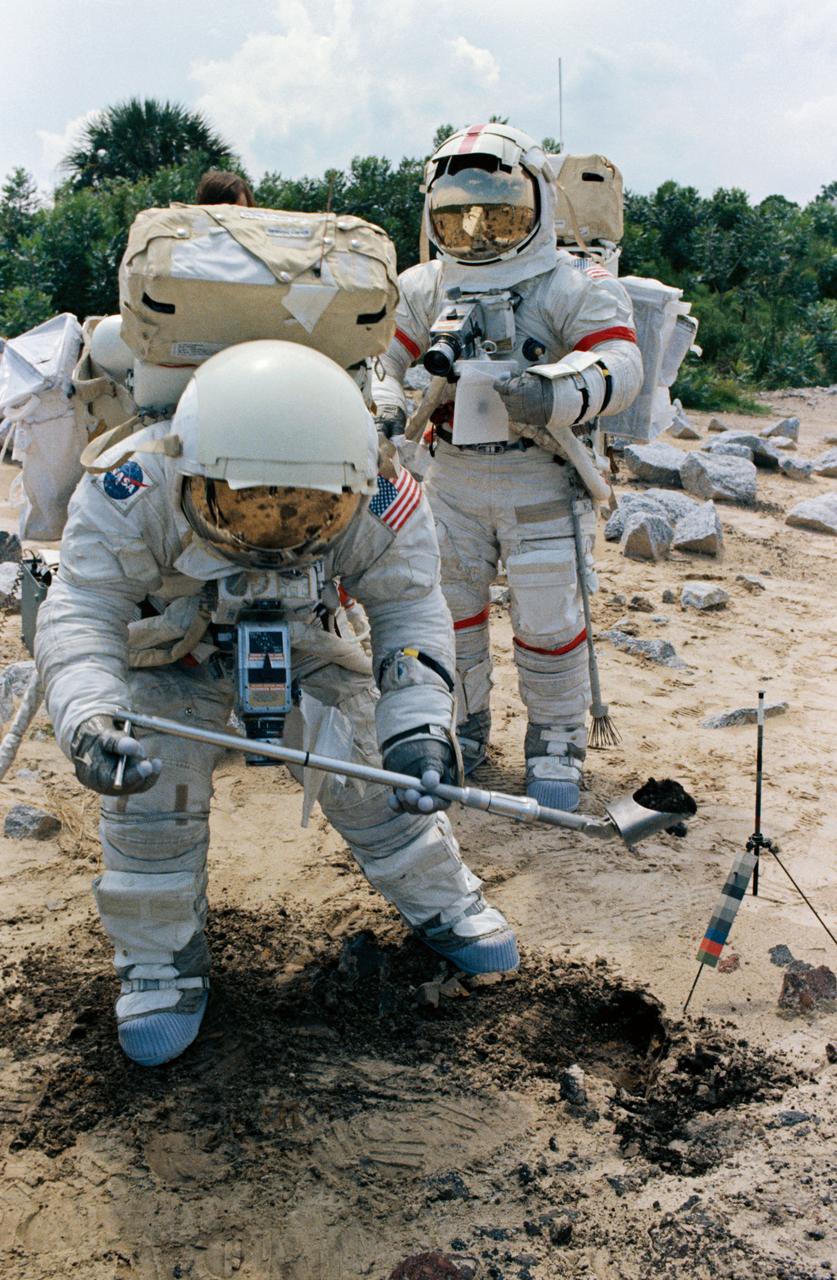
S72-48891 (September 1972) --- Two members of the prime crew of the Apollo 17 lunar landing mission participate in lunar surface extravehicular activity simulation training at the Kennedy Space Center, Florida. Scientist-astronaut Harrison H. Schmitt (foreground), lunar module pilot, simulates scooping up lunar sample material. Astronaut Eugene A. Cernan (background), commander, holds a sample bag.
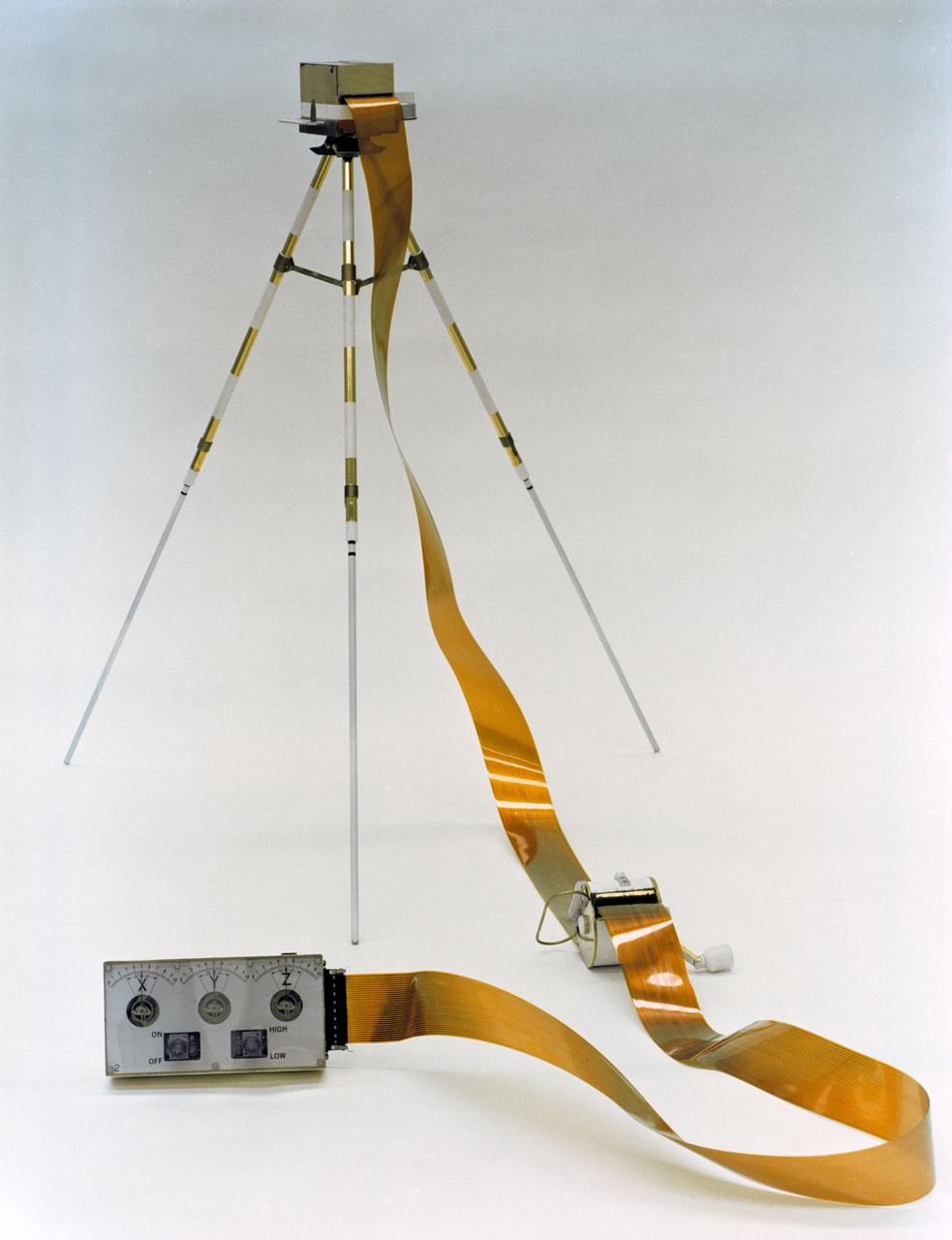
S70-56721 (December 1970) --- A close-up view of the Lunar Portable Magnetometer (LPM), which will be used by the crew of the Apollo 14 lunar landing mission during the second extravehicular activity (EVA). The LPM's components, a tripod-mounted flux-gate magnetometer sensor head and an electronics data package, connected by a 50-feet flat cable, function together to measure variations in the lunar magnetic field at several points on the geological traverse. Data gathered will be used to determine the location, strength and dimensions of magnetic sources, as well as knowledge of the local and total selenological structure. The LPM will be carried on the Modular Equipment Transporter (MET), and deployed by the lunar module pilot, who will align the sensor head at least 35 feet from the data package. The LM pilot will then return to the MET and verbally relay the LPM readouts to Earth. Astronaut Edgar D. Mitchell is the lunar module pilot for the Apollo 14 lunar landing mission.
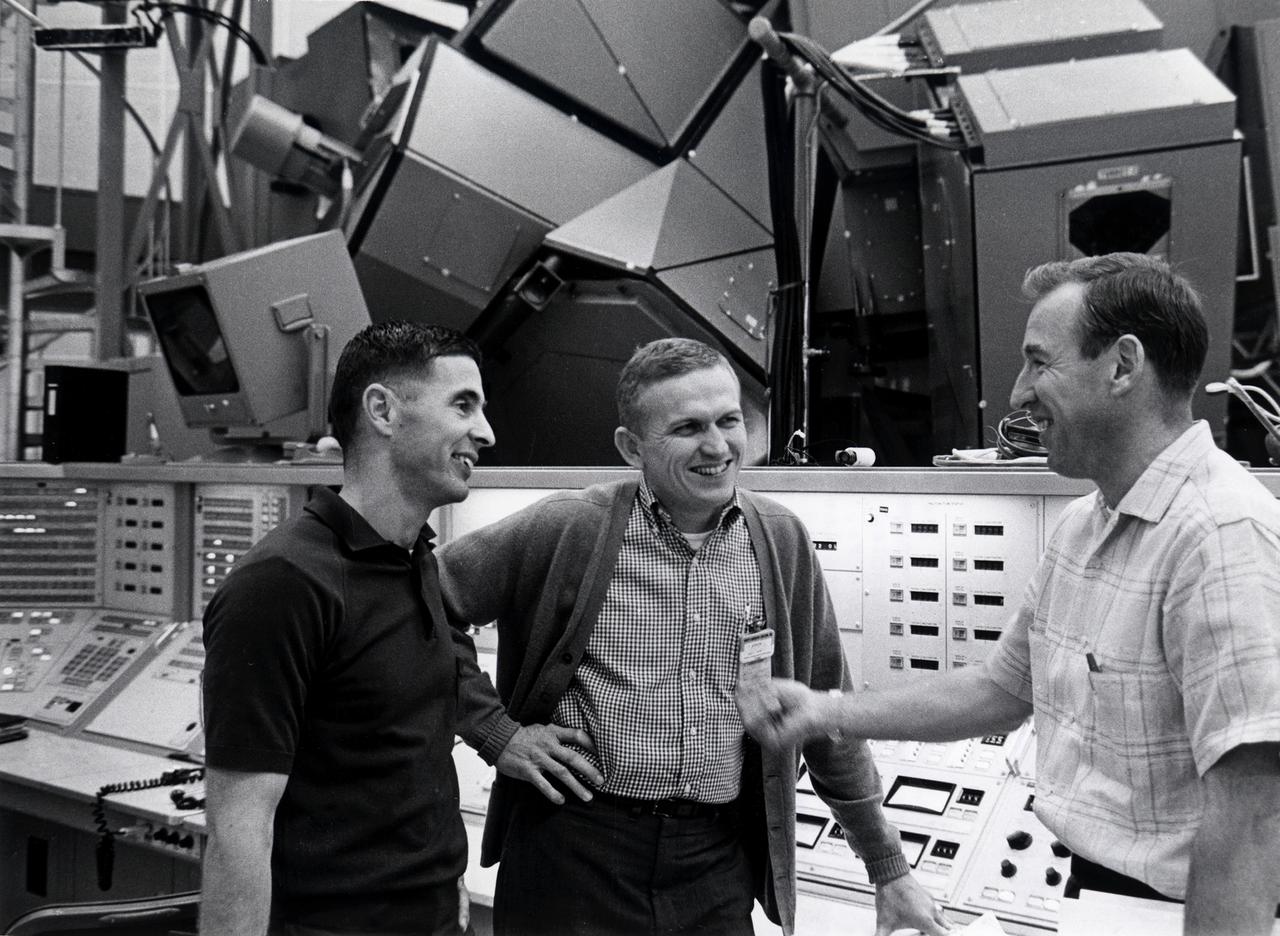
Apollo 8 crew members paused before the mission simulator during training for the first manned lunar orbital mission. Frank Borman, commander; James Lovell, Command Module (CM) pilot; and William Anders, Lunar Module (LM) pilot , were also the first humans to launch aboard the massive Saturn V space vehicle. Lift off occurred on December 21, 1968 and returned safely to Earth on December 27, 1968. The mission achieved operational experience and tested the Apollo command module systems, including communications, tracking, and life-support, in cis-lunar space and lunar orbit, and allowed evaluation of crew performance on a lunar orbiting mission. The crew photographed the lunar surface, both far side and near side, obtaining information on topography and landmarks as well as other scientific information necessary for future Apollo landings. All systems operated within allowable parameters and all objectives of the mission were achieved.
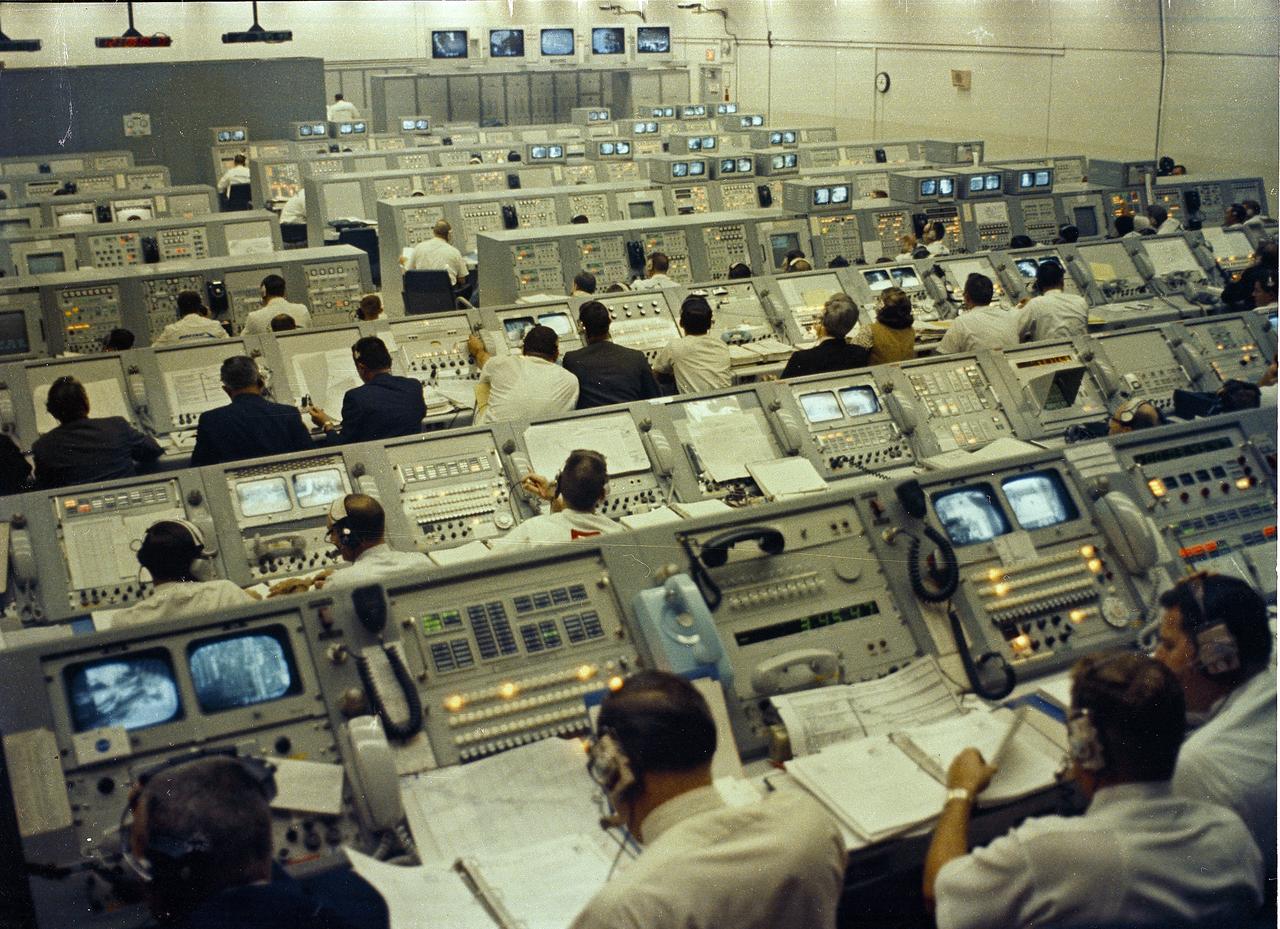
This photograph depicts a busy Launch Control Center at Kennedy Space Center during the Apollo 8 mission launch activities. Apollo 8 served as the first manned lunar orbit mission. Liftoff occurred on December 21, 1968 with a three man crew consiting of astronauts Frank Borman, commander; William Anders, Lunar Module (LM) Pilot; and James Lovell, Command Module (CM) pilot. The three safely returned to Earth on December 27, 1968. The mission achieved operational experience and tested the Apollo command module systems, including communications, tracking, and life-support, in cis-lunar space and lunar orbit, and allowed evaluation of crew performance on a lunar orbiting mission. The crew photographed the lunar surface, both far side and near side, obtaining information on topography and landmarks as well as other scientific information necessary for future Apollo landings. All systems operated within allowable parameters and all objectives of the mission were achieved.
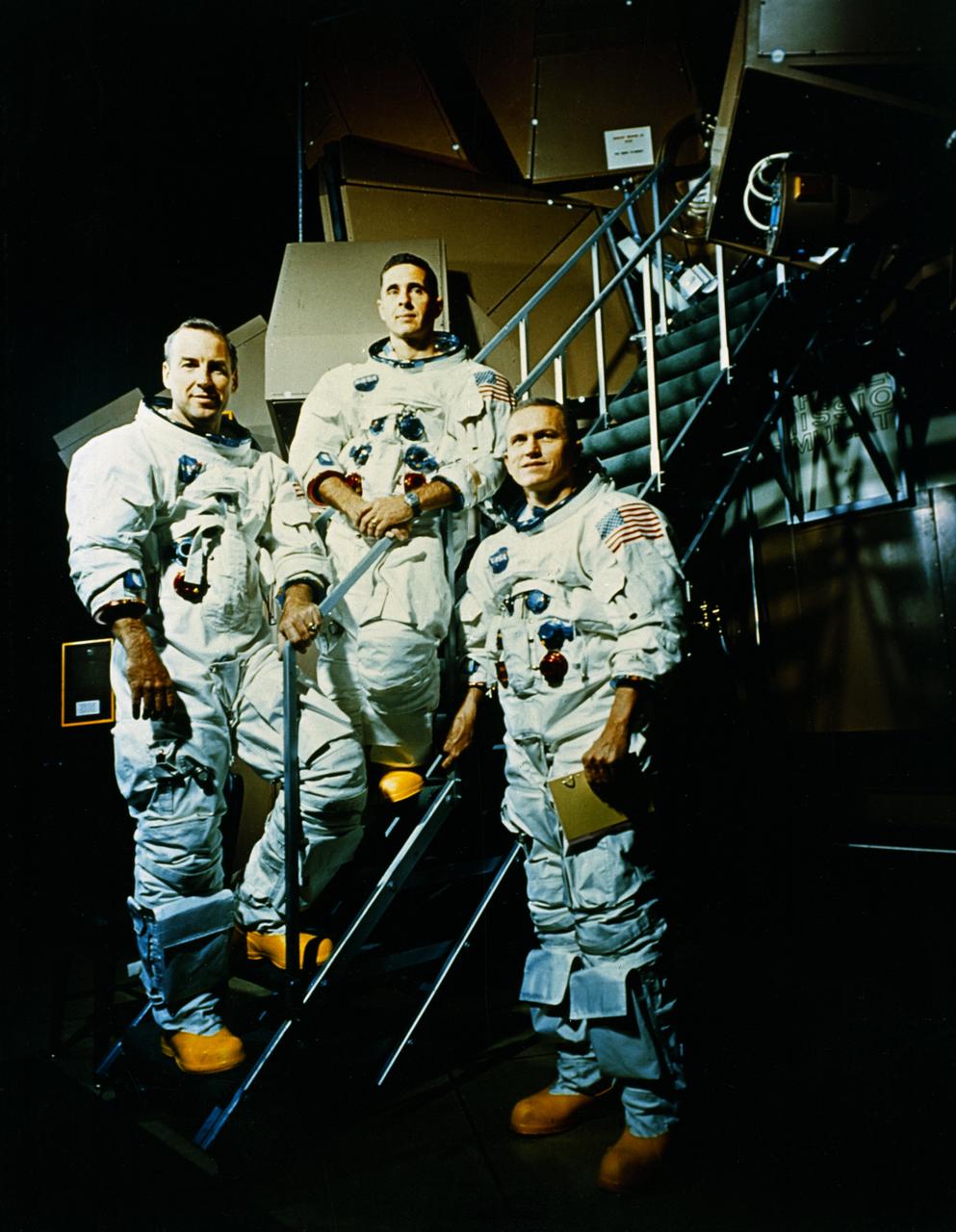
The Apollo 8 Crew included (L to R) James Lovell, Command Module (CM) pilot; William Anders, Lunar Module (LM) Pilot; and Frank Borman, Commander. The first manned Apollo mission launched aboard the Saturn V and first manned Apollo craft to enter lunar orbit, the SA-503, Apollo 8 mission liftoff occurred on December 21, 1968 and returned safely to Earth on December 27, 1968. The mission achieved operational experience and tested the Apollo command module systems, including communications, tracking, and life-support, in cis-lunar space and lunar orbit, and allowed evaluation of crew performance on a lunar orbiting mission. The crew photographed the lunar surface, both far side and near side, obtaining information on topography and landmarks as well as other scientific information necessary for future Apollo landings. All systems operated within allowable parameters and all objectives of the mission were achieved.
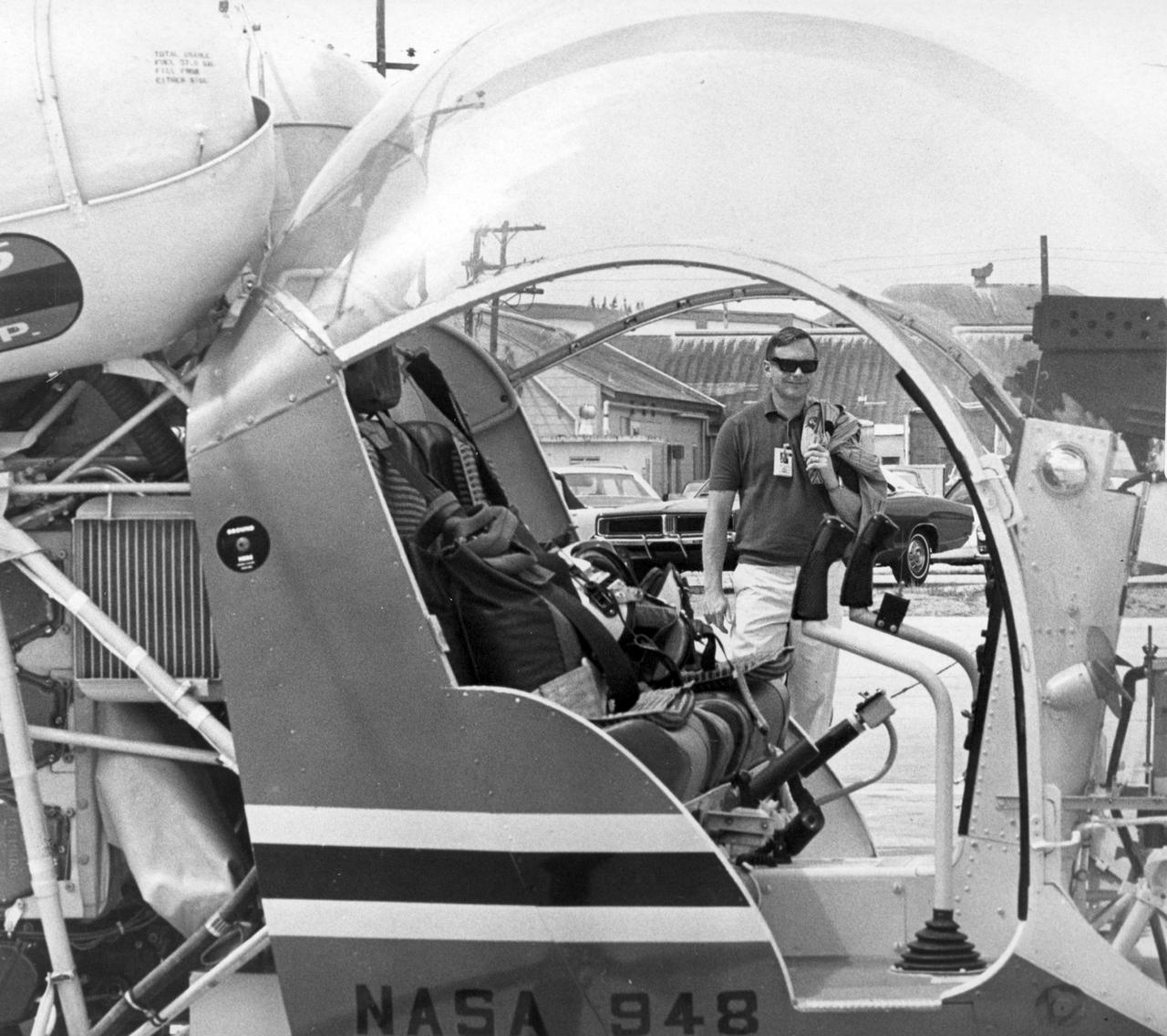
In preparation of the nation’s first lunar landing mission, Apollo 11, crew members underwent training to practice activities they would be performing during the mission. In this photograph Neil Armstrong approaches the helicopter he flew to practice landing the Lunar Module (LM) on the Moon. The Apollo 11 mission launched from the Kennedy Space Center (KSC) in Florida via the Marshall Space Flight Center (MSFC) developed Saturn V launch vehicle on July 16, 1969 and safely returned to Earth on July 24, 1969. Aboard the space craft were astronauts Neil A. Armstrong, commander; Michael Collins, Command Module (CM) pilot; and Edwin E. (Buzz) Aldrin Jr., Lunar Module (LM) pilot. The CM, “Columbia”, piloted by Collins, remained in a parking orbit around the Moon while the LM, “Eagle’’, carrying astronauts Armstrong and Aldrin, landed on the Moon. On July 20, 1969, Armstrong was the first human to ever stand on the lunar surface, followed by Aldrin. During 2½ hours of surface exploration, the crew collected 47 pounds of lunar surface material for analysis back on Earth. With the success of Apollo 11, the national objective to land men on the Moon and return them safely to Earth had been accomplished
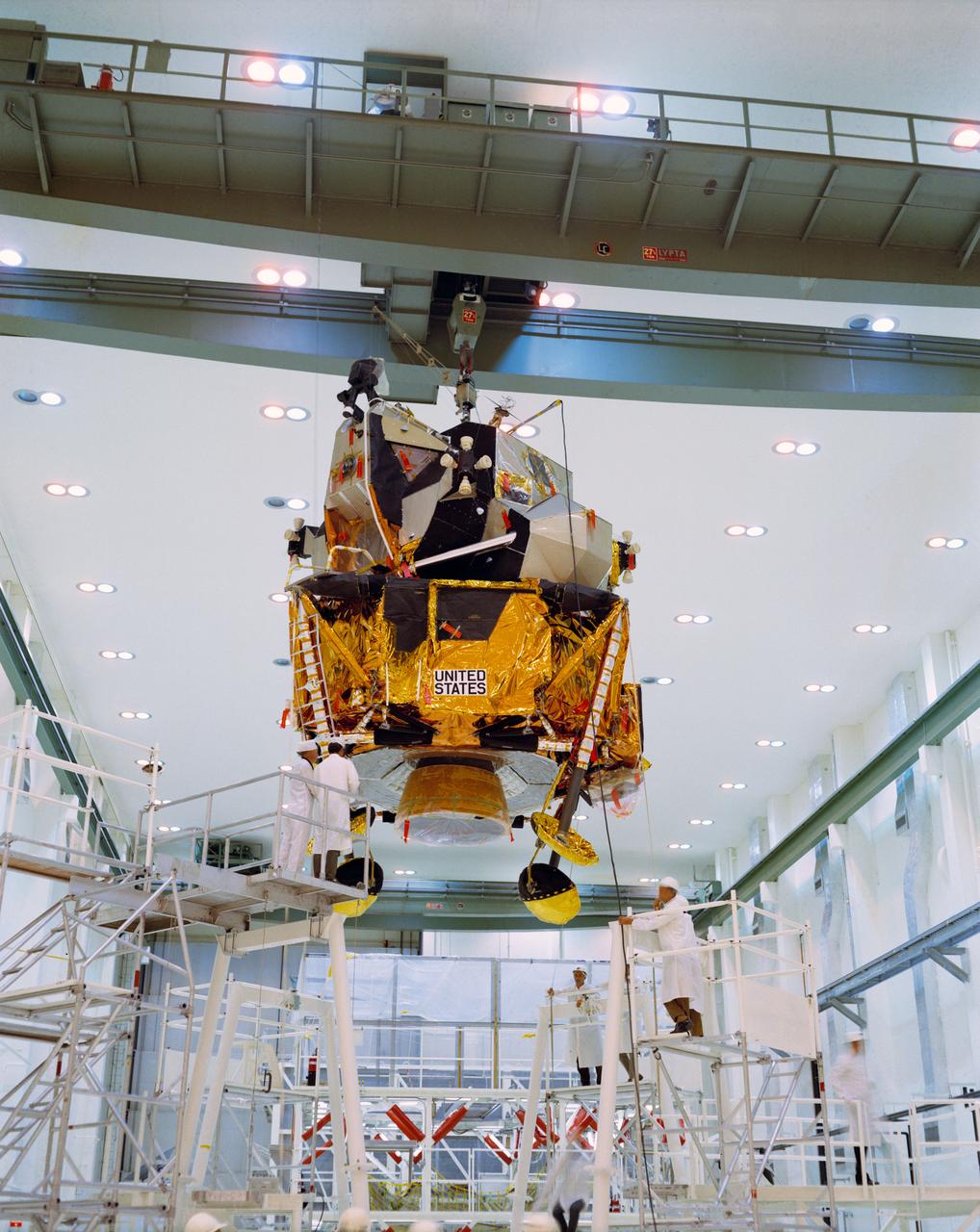
S69-39262 (23 June 1969) --- Lunar Module (LM) 6, scheduled for the Apollo 12 lunar landing mission in November 1969, is being moved to an integration work stand in the Kennedy Space Center's (KSC) Manned Spacecraft Operations Building. The two prime crew members scheduled to use the LM-6 to descend to the lunar surface following separation from the Command and Service Modules (CSM) and to later return to the CSM are astronauts Charles Conrad Jr., commander, and Alan L. Bean, lunar module pilot. Astronaut Richard F. Gordon Jr. is the prime crew's command module pilot.
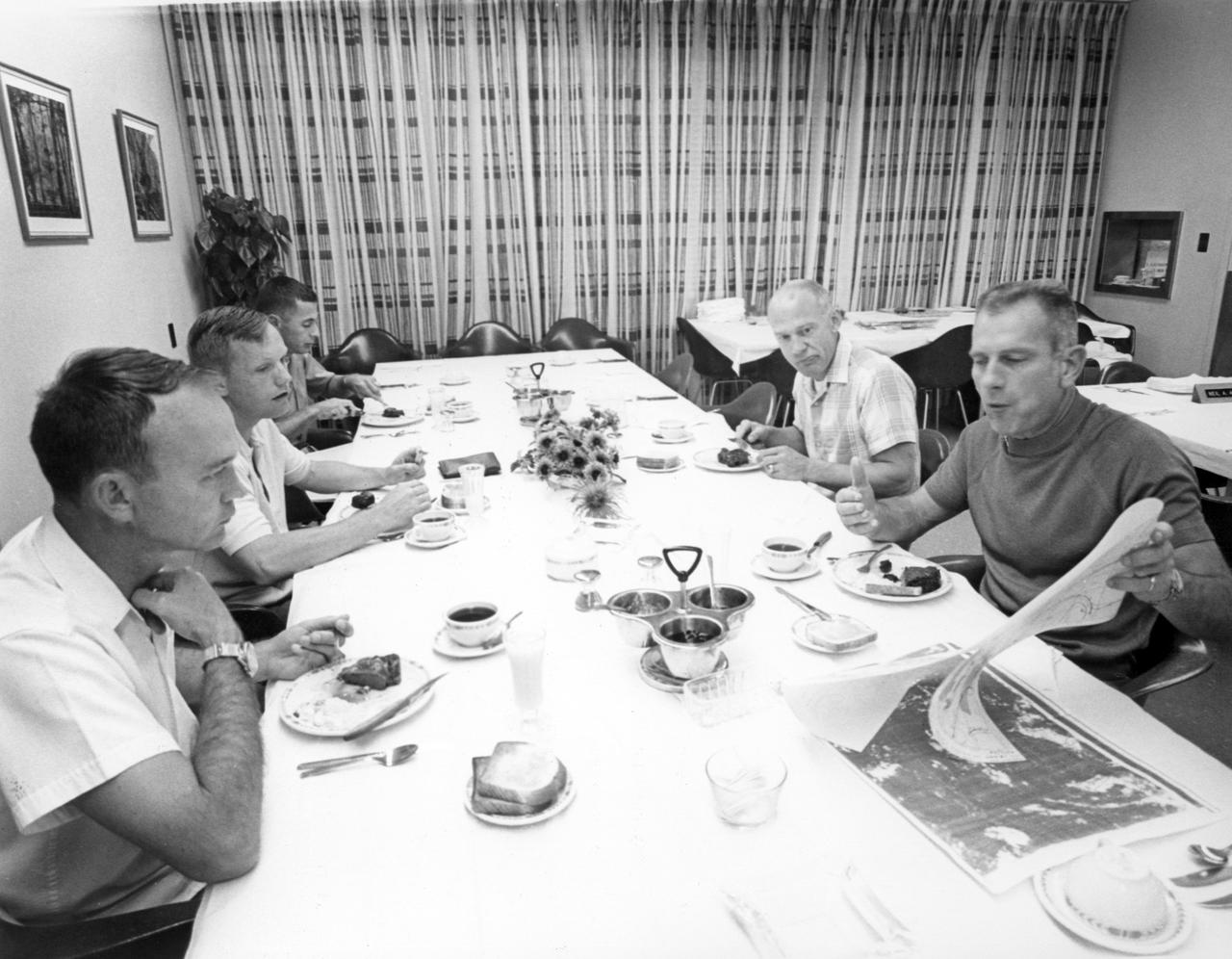
Chief astronaut and director of flight crew operations, Donald K. Slayton (right front) reviews lunar charts with Apollo 11 astronauts Michael Collins (left), Neil Armstrong, and Edwin Aldrin (next to Slayton) during breakfast a short time before the three men launched for the first Moon landing mission. Sharing breakfast with the crew was William Anders (left rear), Lunar Module pilot for the Apollo 8 lunar orbit mission. The Apollo 11 mission launched from the NASA Kennedy Space Center (KSC) in Florida via the Marshall Space Flight Center (MSFC) developed Saturn V launch vehicle on July 16, 1969 and safely returned to Earth on July 24, 1969. The CM, “Columbia”, piloted by Collins, remained in a parking orbit around the Moon while the LM, “Eagle’’, carrying astronauts Armstrong and Aldrin, landed on the Moon. On July 20, 1969, Armstrong was the first human to ever stand on the lunar surface, followed by Aldrin. During 2½ hours of surface exploration, the crew collected 47 pounds of lunar surface material for analysis back on Earth. With the success of Apollo 11, the national objective to land men on the Moon and return them safely to Earth had been accomplished.
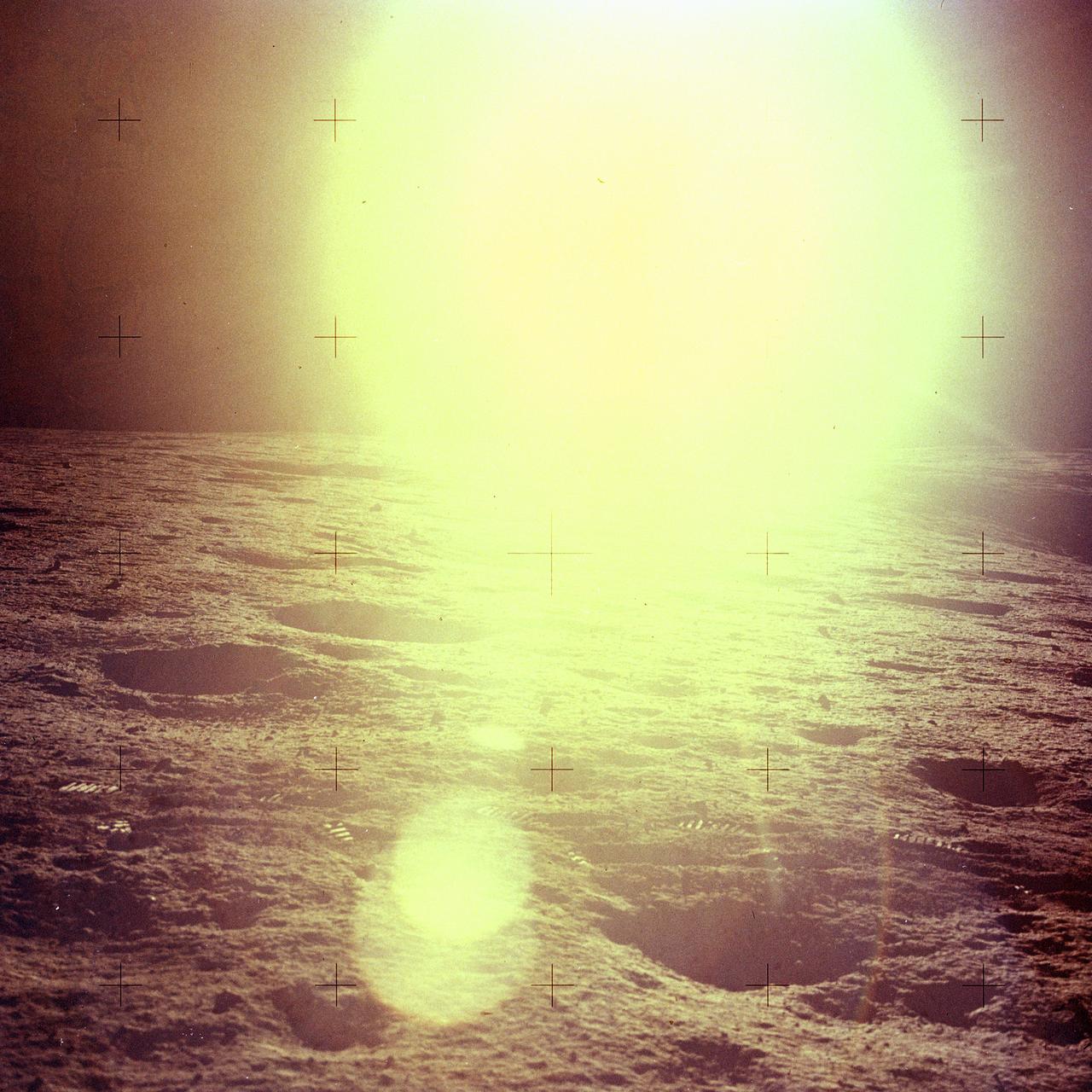
The second manned lunar landing mission, Apollo 12, launched from launch pad 39-A at Kennedy Space Center in Florida on November 14, 1969 via a Saturn V launch vehicle. The Saturn V vehicle was developed by the Marshall Space Flight Center (MSFC) under the direction of Dr. Wernher von Braun. Aboard Apollo 12 was a crew of three astronauts: Alan L. Bean, pilot of the Lunar Module (LM), Intrepid; Richard Gordon, pilot of the Command Module (CM), Yankee Clipper; and Spacecraft Commander Charles Conrad. The LM, Intrepid, landed astronauts Conrad and Bean on the lunar surface in what’s known as the Ocean of Storms while astronaut Richard Gordon piloted the CM, Yankee Clipper, in a parking orbit around the Moon. Lunar soil activities included the deployment of the Apollo Lunar Surface Experiments Package (ALSEP), finding the unmanned Surveyor 3 that landed on the Moon on April 19, 1967, and collecting 75 pounds (34 kilograms) of rock samples. This is the sixteenth of 25 images captured by the crew in attempt to provide a 360 degree Lunar surface scene. Apollo 12 safely returned to Earth on November 24, 1969.
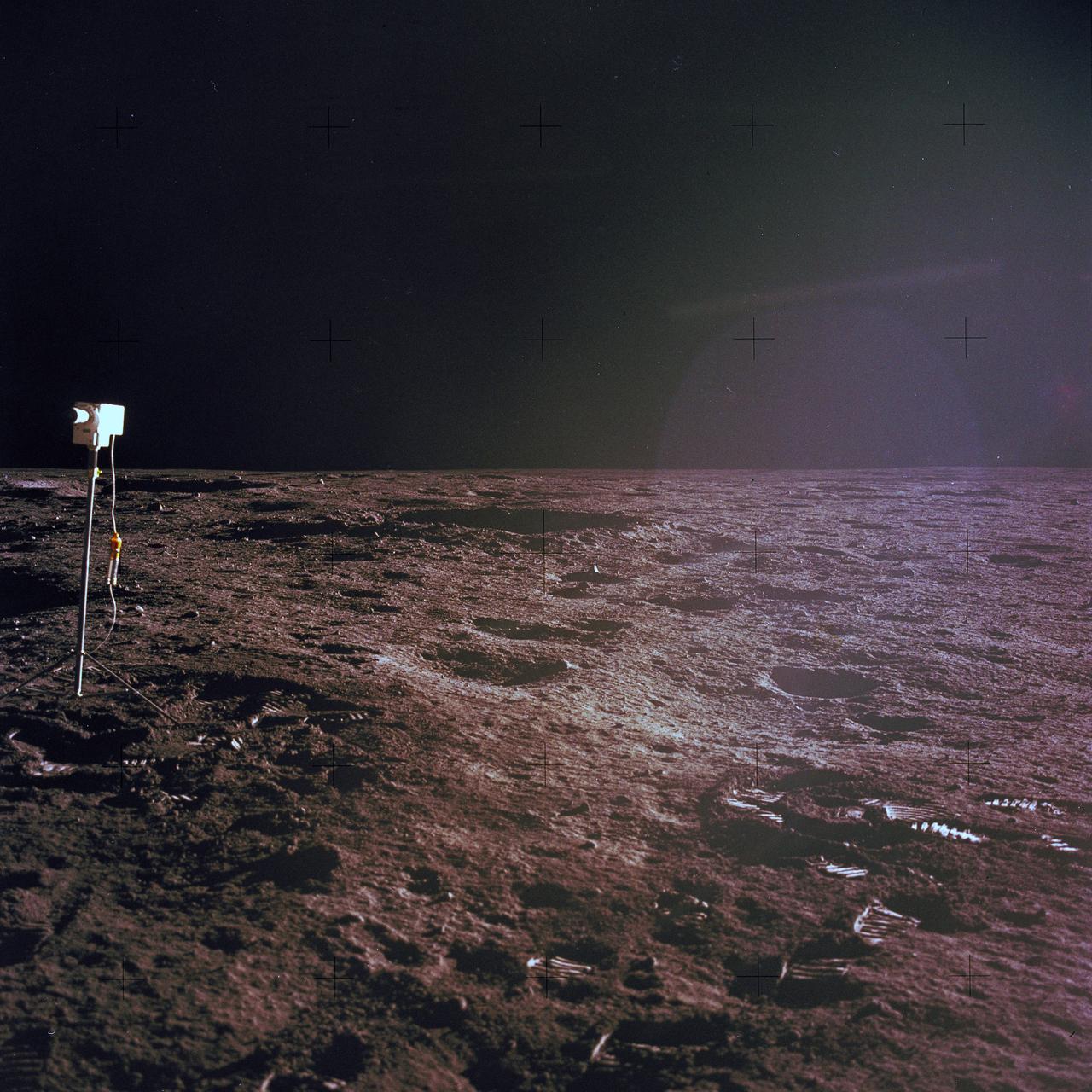
The second manned lunar landing mission, Apollo 12, launched from launch pad 39-A at Kennedy Space Center in Florida on November 14, 1969 via a Saturn V launch vehicle. The Saturn V vehicle was developed by the Marshall Space Flight Center (MSFC) under the direction of Dr. Wernher von Braun. Aboard Apollo 12 was a crew of three astronauts: Alan L. Bean, pilot of the Lunar Module (LM), Intrepid; Richard Gordon, pilot of the Command Module (CM), Yankee Clipper; and Spacecraft Commander Charles Conrad. The LM, Intrepid, landed astronauts Conrad and Bean on the lunar surface in what’s known as the Ocean of Storms while astronaut Richard Gordon piloted the CM, Yankee Clipper, in a parking orbit around the Moon. Lunar soil activities included the deployment of the Apollo Lunar Surface Experiments Package (ALSEP), finding the unmanned Surveyor 3 that landed on the Moon on April 19, 1967, and collecting 75 pounds (34 kilograms) of rock samples. This is the nineteenth of 25 images captured by the crew in attempt to provide a 360 degree Lunar surface scene. Apollo 12 safely returned to Earth on November 24, 1969.
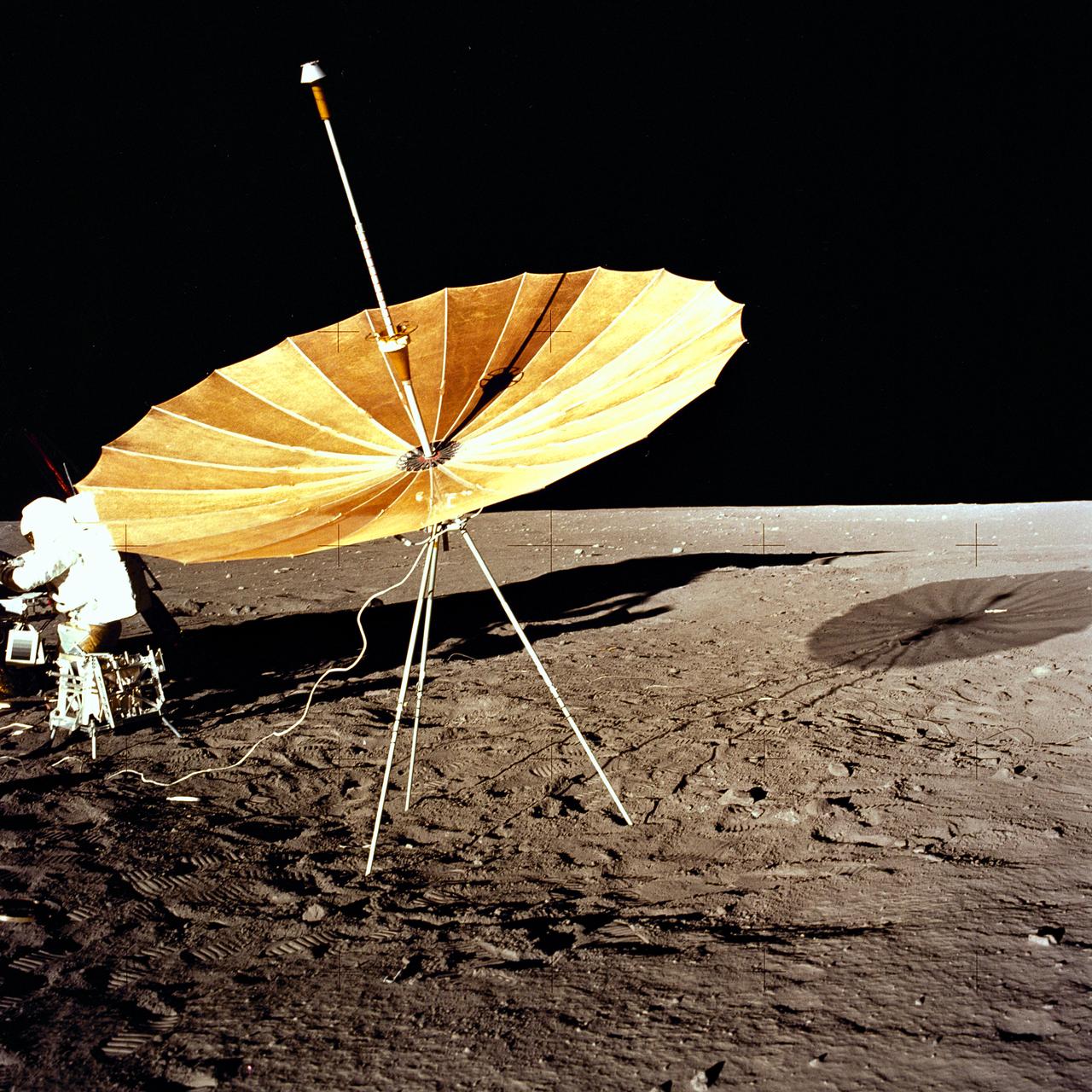
The second manned lunar landing mission, Apollo 12 launched from launch pad 39-A at Kennedy Space Center in Florida on November 14, 1969 via a Saturn V launch vehicle. The Saturn V vehicle was developed by the Marshall Space Flight Center (MSFC) under the direction of Dr. Wernher von Braun. Aboard Apollo 12 was a crew of three astronauts: Alan L. Bean, pilot of the Lunar Module (LM), Intrepid; Richard Gordon, pilot of the Command Module (CM), Yankee Clipper; and Spacecraft Commander Charles Conrad. The LM, Intrepid, landed astronauts Conrad and Bean on the lunar surface in what’s known as the Ocean of Storms while astronaut Richard Gordon piloted the CM, Yankee Clipper, in a parking orbit around the Moon. Lunar soil activities included the deployment of the Apollo Lunar Surface Experiments Package (ALSEP), finding the unmanned Surveyor 3 that landed on the Moon on April 19, 1967, and collecting 75 pounds (34 kilograms) of rock samples. This is the sixth of 25 images captured by the crew in attempt to provide a 360 degree Lunar surface scene. Apollo 12 safely returned to Earth on November 24, 1969.
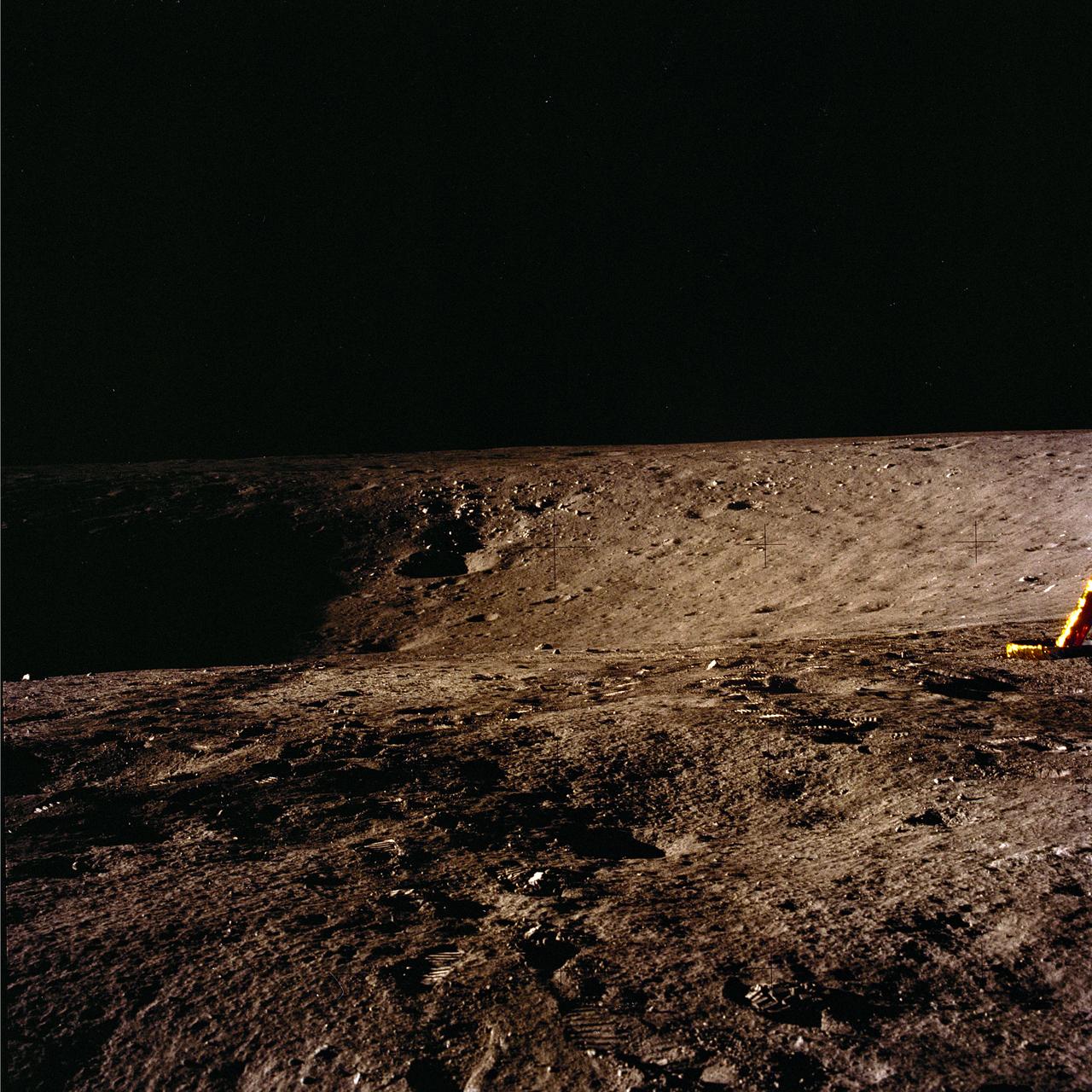
The second manned lunar landing mission, Apollo 12 launched from launch pad 39-A at Kennedy Space Center in Florida on November 14, 1969 via a Saturn V launch vehicle. The Saturn V vehicle was developed by the Marshall Space Flight Center (MSFC) under the direction of Dr. Wernher von Braun. Aboard Apollo 12 was a crew of three astronauts: Alan L. Bean, pilot of the Lunar Module (LM), Intrepid; Richard Gordon, pilot of the Command Module (CM), Yankee Clipper; and Spacecraft Commander Charles Conrad. The LM, Intrepid, landed astronauts Conrad and Bean on the lunar surface in what’s known as the Ocean of Storms while astronaut Richard Gordon piloted the CM, Yankee Clipper, in a parking orbit around the Moon. Lunar soil activities included the deployment of the Apollo Lunar Surface Experiments Package (ALSEP), finding the unmanned Surveyor 3 that landed on the Moon on April 19, 1967, and collecting 75 pounds (34 kilograms) of rock samples. This is the tenth of 25 images captured by the crew in attempt to provide a 360 degree Lunar surface scene. Apollo 12 safely returned to Earth on November 24, 1969.
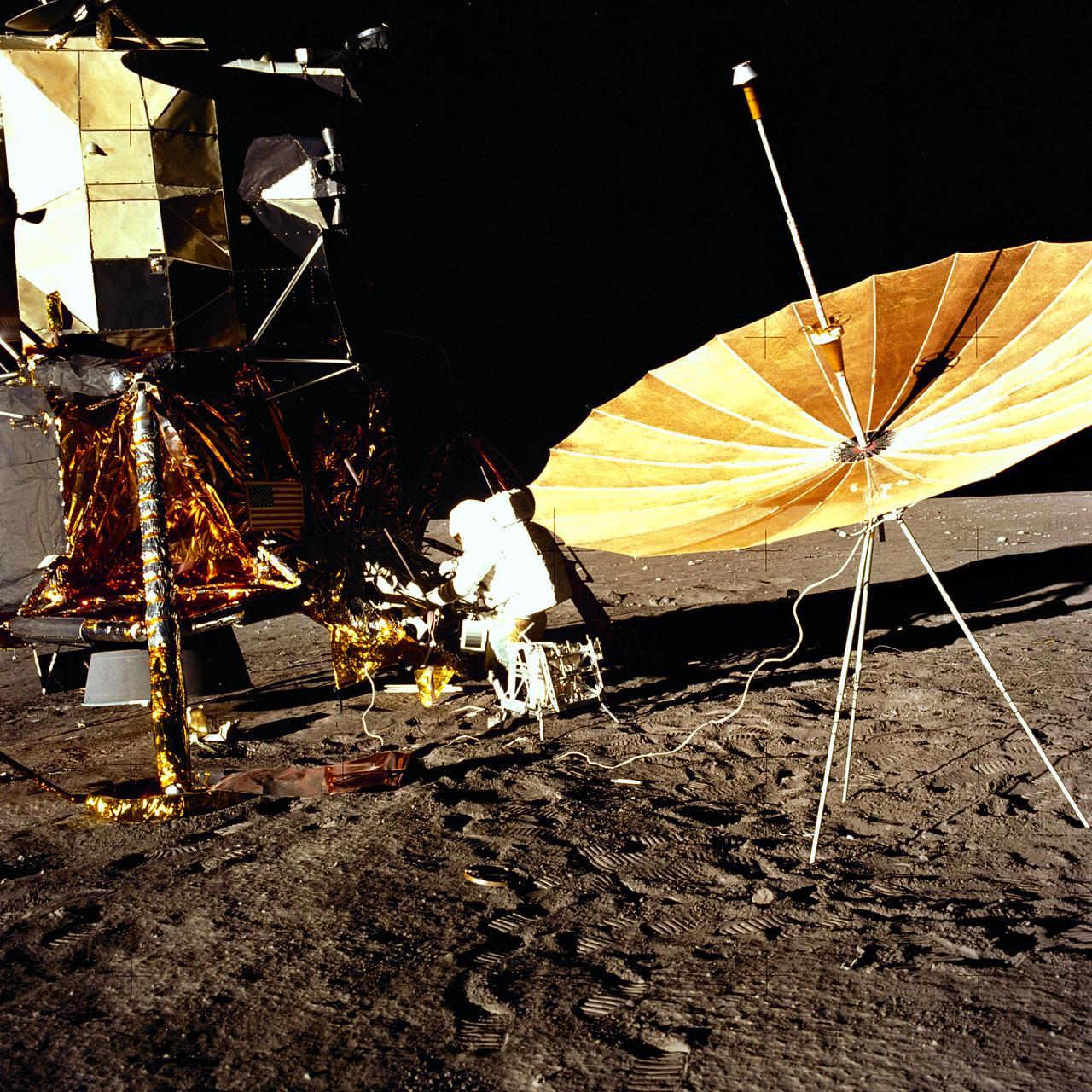
The second manned lunar landing mission, Apollo 12 launched from launch pad 39-A at Kennedy Space Center in Florida on November 14, 1969 via a Saturn V launch vehicle. The Saturn V vehicle was developed by the Marshall Space Flight Center (MSFC) under the direction of Dr. Wernher von Braun. Aboard Apollo 12 was a crew of three astronauts: Alan L. Bean, pilot of the Lunar Module (LM), Intrepid; Richard Gordon, pilot of the Command Module (CM), Yankee Clipper; and Spacecraft Commander Charles Conrad. The LM, Intrepid, landed astronauts Conrad and Bean on the lunar surface in what’s known as the Ocean of Storms while astronaut Richard Gordon piloted the CM, Yankee Clipper, in a parking orbit around the Moon. Lunar soil activities included the deployment of the Apollo Lunar Surface Experiments Package (ALSEP), finding the unmanned Surveyor 3 that landed on the Moon on April 19, 1967, and collecting 75 pounds (34 kilograms) of rock samples. This is the seventh of 25 images captured by the crew in attempt to provide a 360 degree Lunar surface scene. Apollo 12 safely returned to Earth on November 24, 1969.
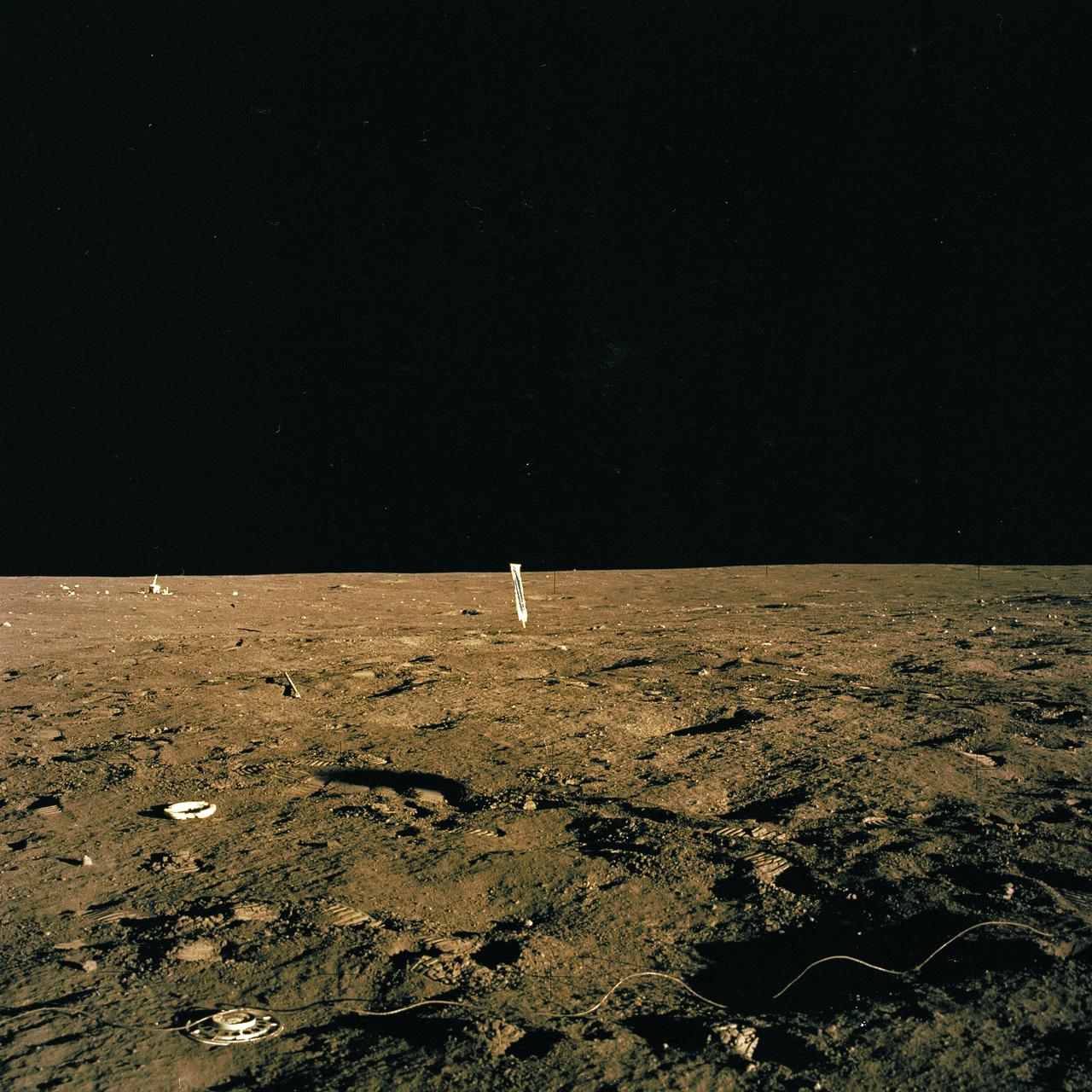
The second manned lunar landing mission, Apollo 12, launched from launch pad 39-A at Kennedy Space Center in Florida on November 14, 1969 via a Saturn V launch vehicle. The Saturn V vehicle was developed by the Marshall Space Flight Center (MSFC) under the direction of Dr. Wernher von Braun. Aboard Apollo 12 was a crew of three astronauts: Alan L. Bean, pilot of the Lunar Module (LM), Intrepid; Richard Gordon, pilot of the Command Module (CM), Yankee Clipper; and Spacecraft Commander Charles Conrad. The LM, Intrepid, landed astronauts Conrad and Bean on the lunar surface in what’s known as the Ocean of Storms while astronaut Richard Gordon piloted the CM, Yankee Clipper, in a parking orbit around the Moon. Lunar soil activities included the deployment of the Apollo Lunar Surface Experiments Package (ALSEP), finding the unmanned Surveyor 3 that landed on the Moon on April 19, 1967, and collecting 75 pounds (34 kilograms) of rock samples. This is the twenty-fifth of 25 images captured by the crew in attempt to provide a 360 degree Lunar surface scene. Apollo 12 safely returned to Earth on November 24, 1969.
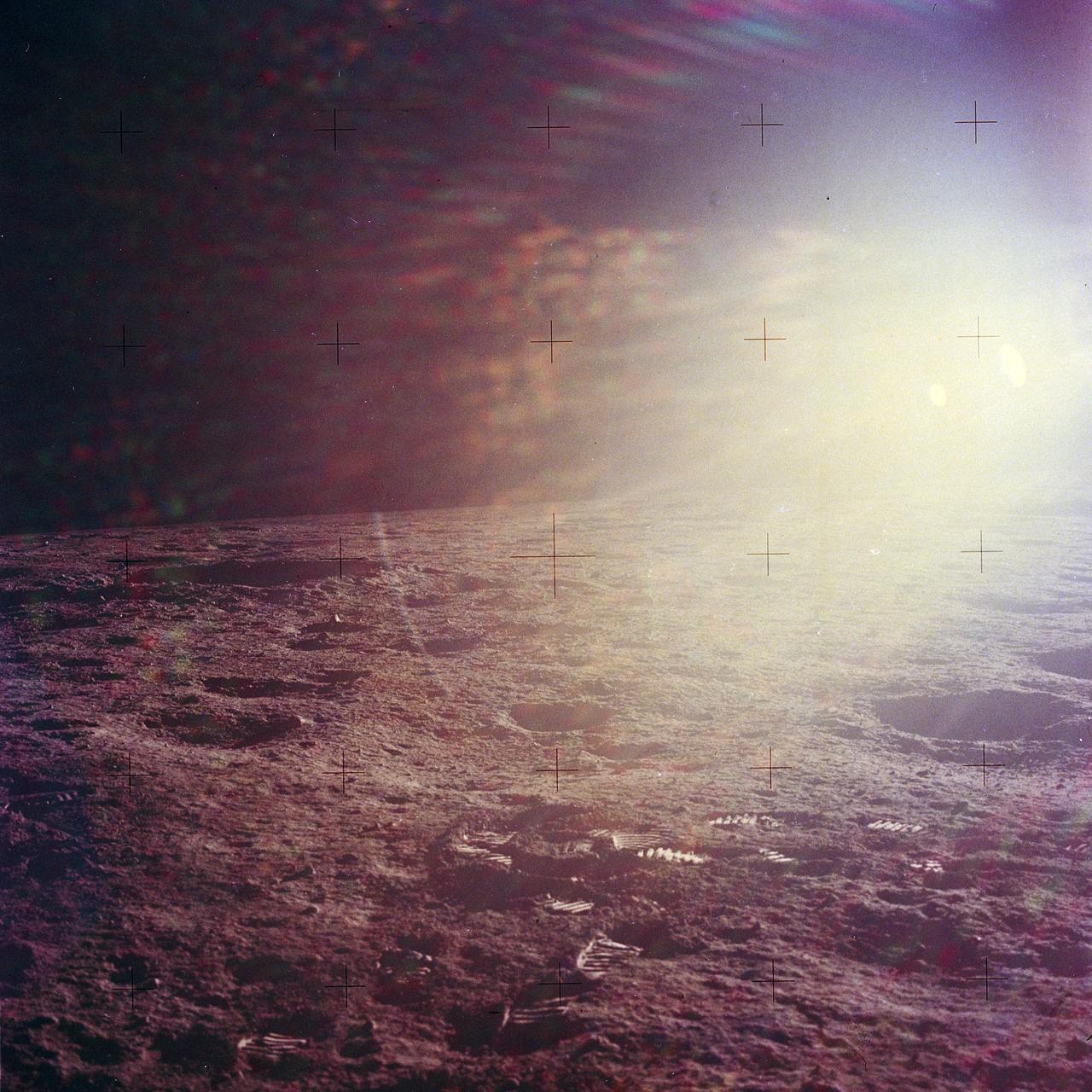
The second manned lunar landing mission, Apollo 12, launched from launch pad 39-A at Kennedy Space Center in Florida on November 14, 1969 via a Saturn V launch vehicle. The Saturn V vehicle was developed by the Marshall Space Flight Center (MSFC) under the direction of Dr. Wernher von Braun. Aboard Apollo 12 was a crew of three astronauts: Alan L. Bean, pilot of the Lunar Module (LM), Intrepid; Richard Gordon, pilot of the Command Module (CM), Yankee Clipper; and Spacecraft Commander Charles Conrad. The LM, Intrepid, landed astronauts Conrad and Bean on the lunar surface in what’s known as the Ocean of Storms while astronaut Richard Gordon piloted the CM, Yankee Clipper, in a parking orbit around the Moon. Lunar soil activities included the deployment of the Apollo Lunar Surface Experiments Package (ALSEP), finding the unmanned Surveyor 3 that landed on the Moon on April 19, 1967, and collecting 75 pounds (34 kilograms) of rock samples. This is the eighteenth of 25 images captured by the crew in attempt to provide a 360 degree Lunar surface scene. Apollo 12 safely returned to Earth on November 24, 1969.
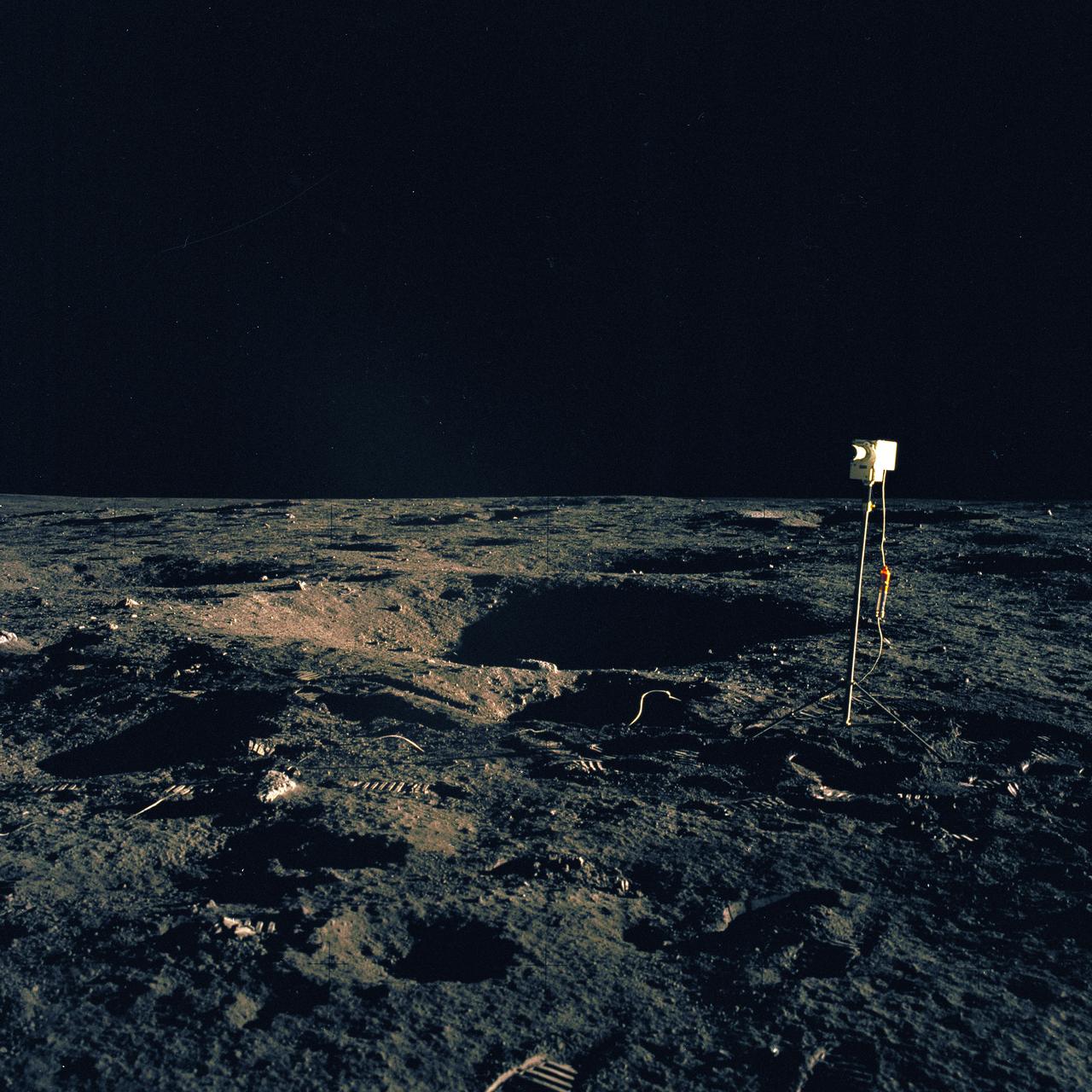
The second manned lunar landing mission, Apollo 12, launched from launch pad 39-A at Kennedy Space Center in Florida on November 14, 1969 via a Saturn V launch vehicle. The Saturn V vehicle was developed by the Marshall Space Flight Center (MSFC) under the direction of Dr. Wernher von Braun. Aboard Apollo 12 was a crew of three astronauts: Alan L. Bean, pilot of the Lunar Module (LM), Intrepid; Richard Gordon, pilot of the Command Module (CM), Yankee Clipper; and Spacecraft Commander Charles Conrad. The LM, Intrepid, landed astronauts Conrad and Bean on the lunar surface in what’s known as the Ocean of Storms while astronaut Richard Gordon piloted the CM, Yankee Clipper, in a parking orbit around the Moon. Lunar soil activities included the deployment of the Apollo Lunar Surface Experiments Package (ALSEP), finding the unmanned Surveyor 3 that landed on the Moon on April 19, 1967, and collecting 75 pounds (34 kilograms) of rock samples. This is the twenty-first of 25 images captured by the crew in attempt to provide a 360 degree Lunar surface scene. Apollo 12 safely returned to Earth on November 24, 1969.
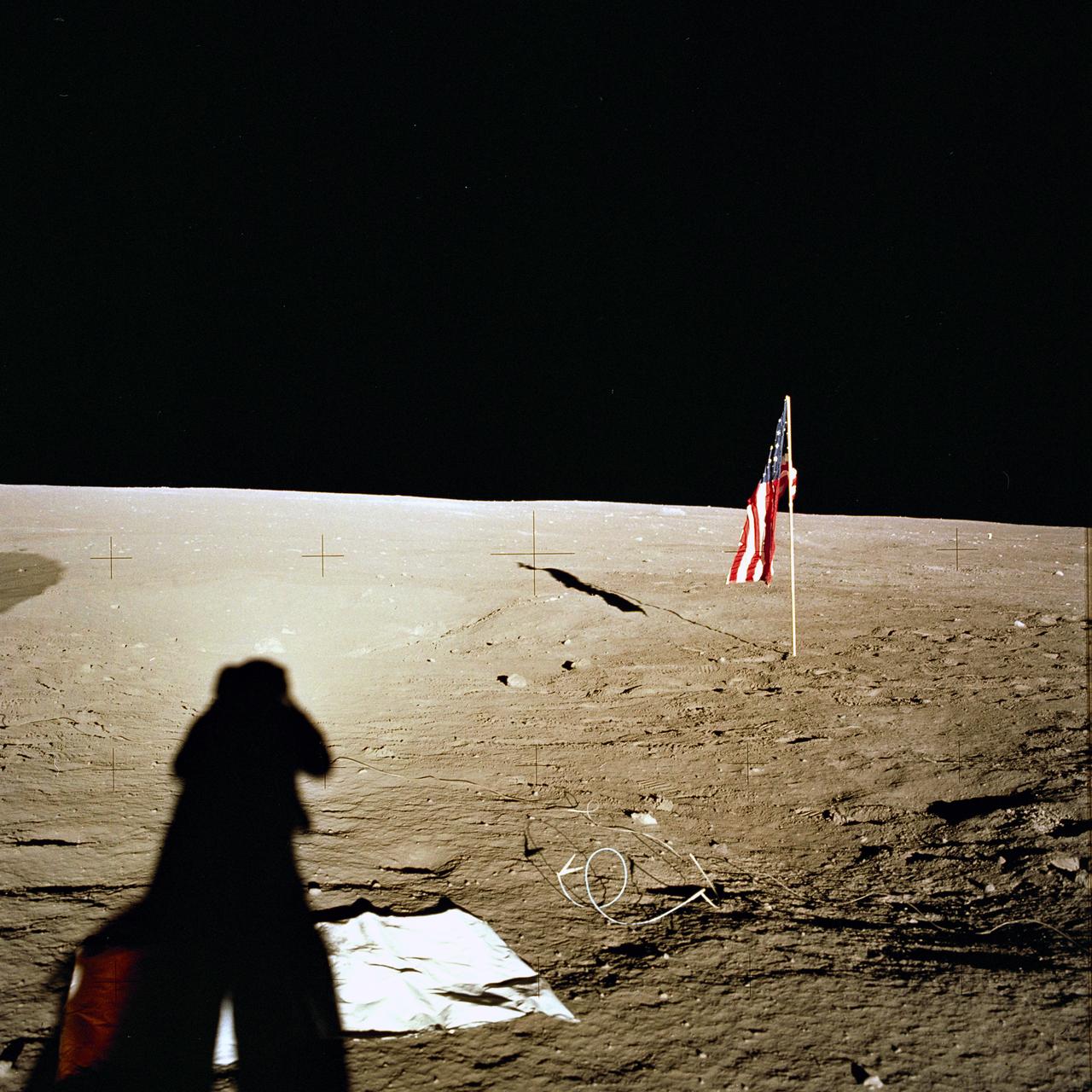
The second manned lunar landing mission, Apollo 12 launched from launch pad 39-A at Kennedy Space Center in Florida on November 14, 1969 via a Saturn V launch vehicle. The Saturn V vehicle was developed by the Marshall Space Flight Center (MSFC) under the direction of Dr. Wernher von Braun. Aboard Apollo 12 was a crew of three astronauts: Alan L. Bean, pilot of the Lunar Module (LM), Intrepid; Richard Gordon, pilot of the Command Module (CM), Yankee Clipper; and Spacecraft Commander Charles Conrad. The LM, Intrepid, landed astronauts Conrad and Bean on the lunar surface in what’s known as the Ocean of Storms while astronaut Richard Gordon piloted the CM, Yankee Clipper, in a parking orbit around the Moon. Lunar soil activities included the deployment of the Apollo Lunar Surface Experiments Package (ALSEP), finding the unmanned Surveyor 3 that landed on the Moon on April 19, 1967, and collecting 75 pounds (34 kilograms) of rock samples. This is the third of 25 images captured by the crew in attempt to provide a 360 degree Lunar surface scene. Apollo 12 safely returned to Earth on November 24, 1969.
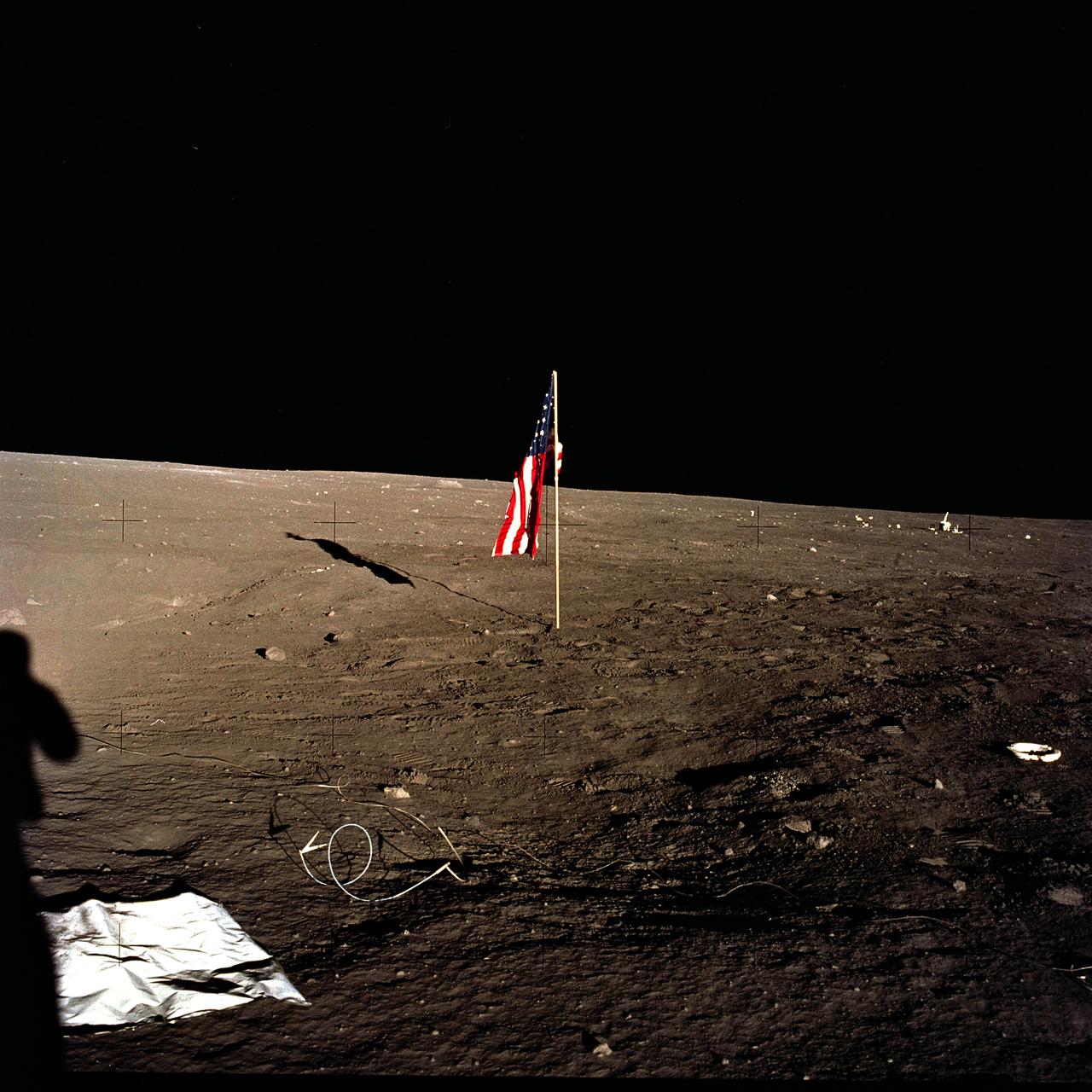
The second manned lunar landing mission, Apollo 12 launched from launch pad 39-A at Kennedy Space Center in Florida on November 14, 1969 via a Saturn V launch vehicle. The Saturn V vehicle was developed by the Marshall Space Flight Center (MSFC) under the direction of Dr. Wernher von Braun. Aboard Apollo 12 was a crew of three astronauts: Alan L. Bean, pilot of the Lunar Module (LM), Intrepid; Richard Gordon, pilot of the Command Module (CM), Yankee Clipper; and Spacecraft Commander Charles Conrad. The LM, Intrepid, landed astronauts Conrad and Bean on the lunar surface in what’s known as the Ocean of Storms while astronaut Richard Gordon piloted the CM, Yankee Clipper, in a parking orbit around the Moon. Lunar soil activities included the deployment of the Apollo Lunar Surface Experiments Package (ALSEP), finding the unmanned Surveyor 3 that landed on the Moon on April 19, 1967, and collecting 75 pounds (34 kilograms) of rock samples. This is the second of 25 images captured by the crew in attempt to provide a 360 degree Lunar surface scene. Apollo 12 safely returned to Earth on November 24, 1969.
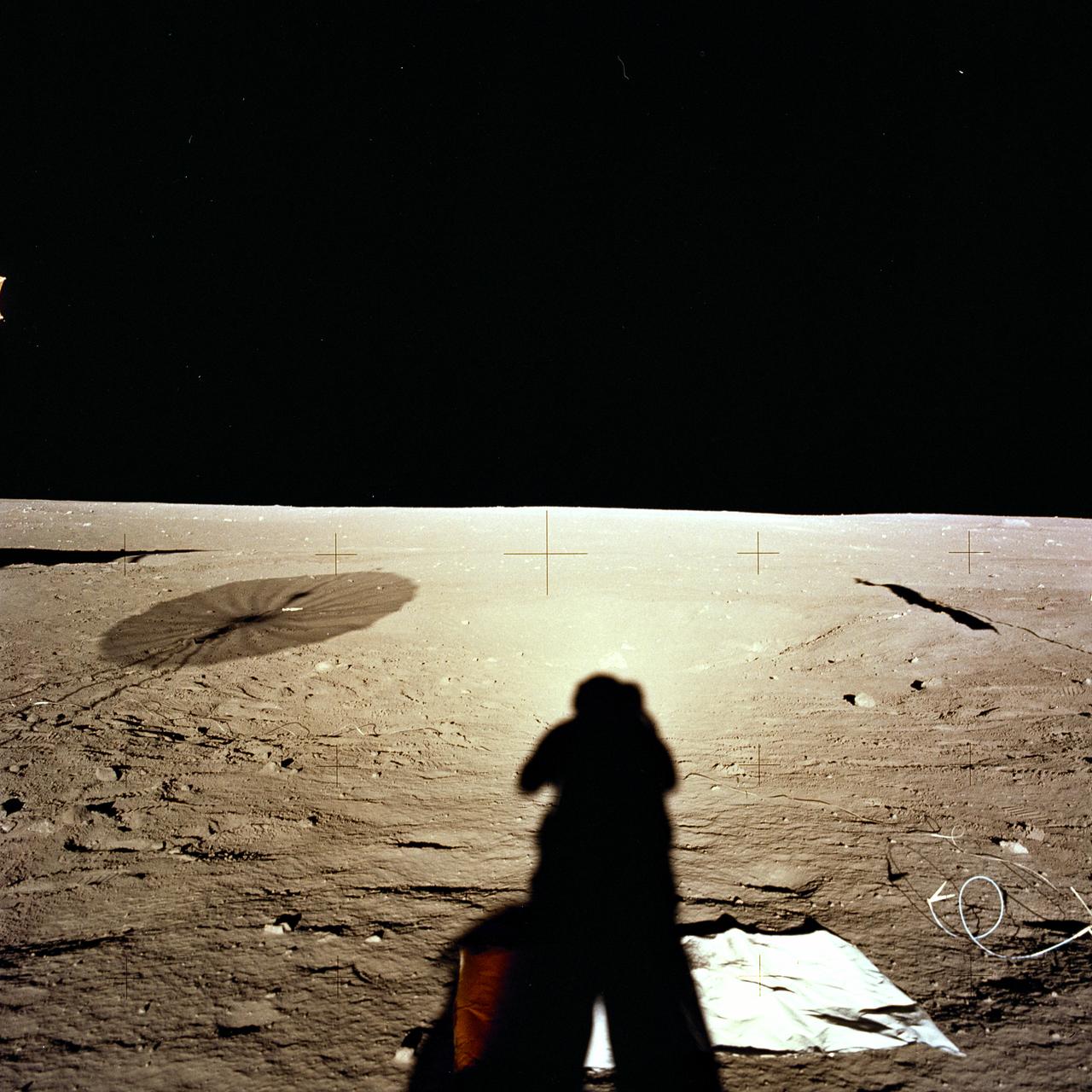
The second manned lunar landing mission, Apollo 12 launched from launch pad 39-A at Kennedy Space Center in Florida on November 14, 1969 via a Saturn V launch vehicle. The Saturn V vehicle was developed by the Marshall Space Flight Center (MSFC) under the direction of Dr. Wernher von Braun. Aboard Apollo 12 was a crew of three astronauts: Alan L. Bean, pilot of the Lunar Module (LM), Intrepid; Richard Gordon, pilot of the Command Module (CM), Yankee Clipper; and Spacecraft Commander Charles Conrad. The LM, Intrepid, landed astronauts Conrad and Bean on the lunar surface in what’s known as the Ocean of Storms while astronaut Richard Gordon piloted the CM, Yankee Clipper, in a parking orbit around the Moon. Lunar soil activities included the deployment of the Apollo Lunar Surface Experiments Package (ALSEP), finding the unmanned Surveyor 3 that landed on the Moon on April 19, 1967, and collecting 75 pounds (34 kilograms) of rock samples. This is the fourth of 25 images captured by the crew in attempt to provide a 360 degree Lunar surface scene. Apollo 12 safely returned to Earth on November 24, 1969.
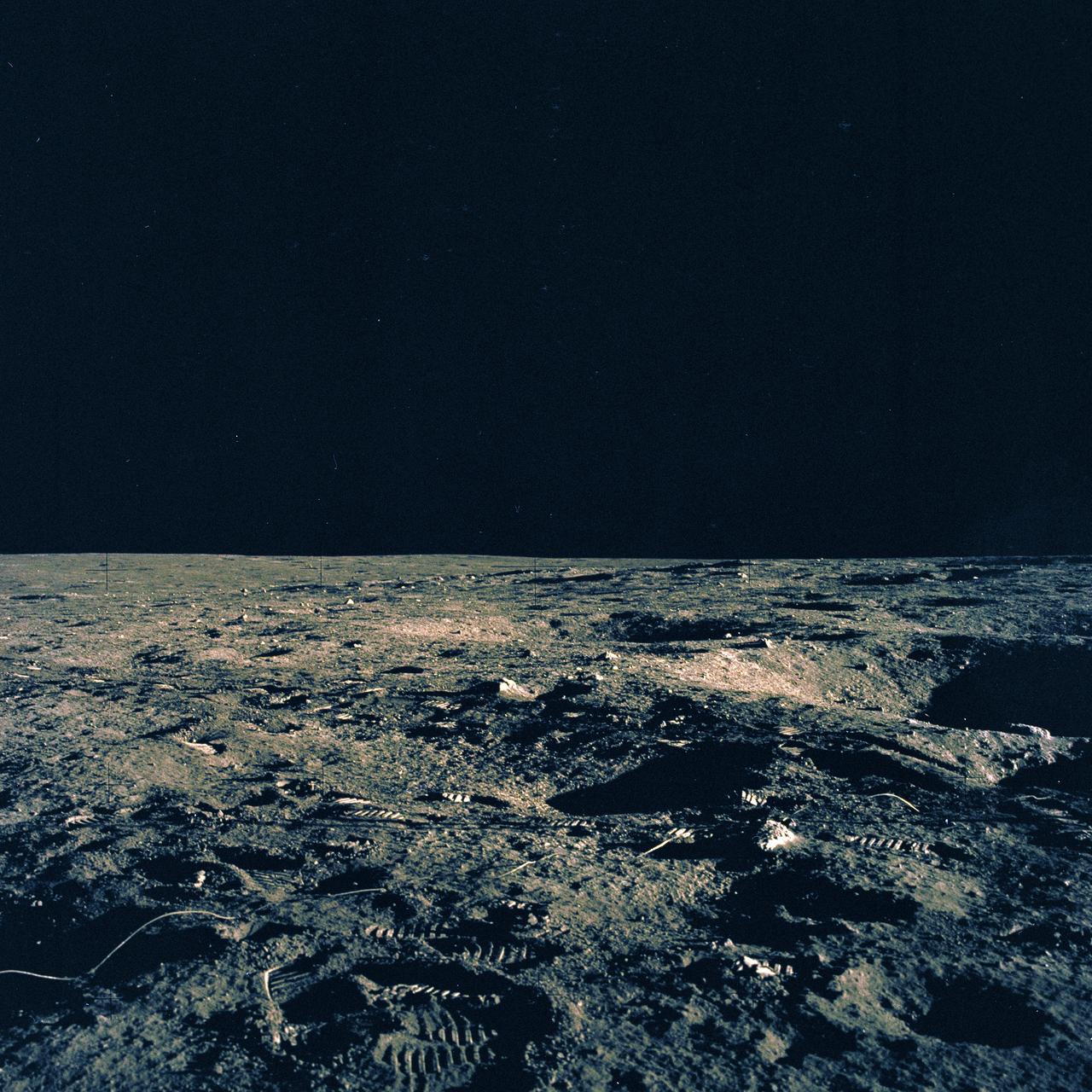
The second manned lunar landing mission, Apollo 12, launched from launch pad 39-A at Kennedy Space Center in Florida on November 14, 1969 via a Saturn V launch vehicle. The Saturn V vehicle was developed by the Marshall Space Flight Center (MSFC) under the direction of Dr. Wernher von Braun. Aboard Apollo 12 was a crew of three astronauts: Alan L. Bean, pilot of the Lunar Module (LM), Intrepid; Richard Gordon, pilot of the Command Module (CM), Yankee Clipper; and Spacecraft Commander Charles Conrad. The LM, Intrepid, landed astronauts Conrad and Bean on the lunar surface in what’s known as the Ocean of Storms while astronaut Richard Gordon piloted the CM, Yankee Clipper, in a parking orbit around the Moon. Lunar soil activities included the deployment of the Apollo Lunar Surface Experiments Package (ALSEP), finding the unmanned Surveyor 3 that landed on the Moon on April 19, 1967, and collecting 75 pounds (34 kilograms) of rock samples. This is the twenty-third of 25 images captured by the crew in attempt to provide a 360 degree Lunar surface scene. Apollo 12 safely returned to Earth on November 24, 1969.
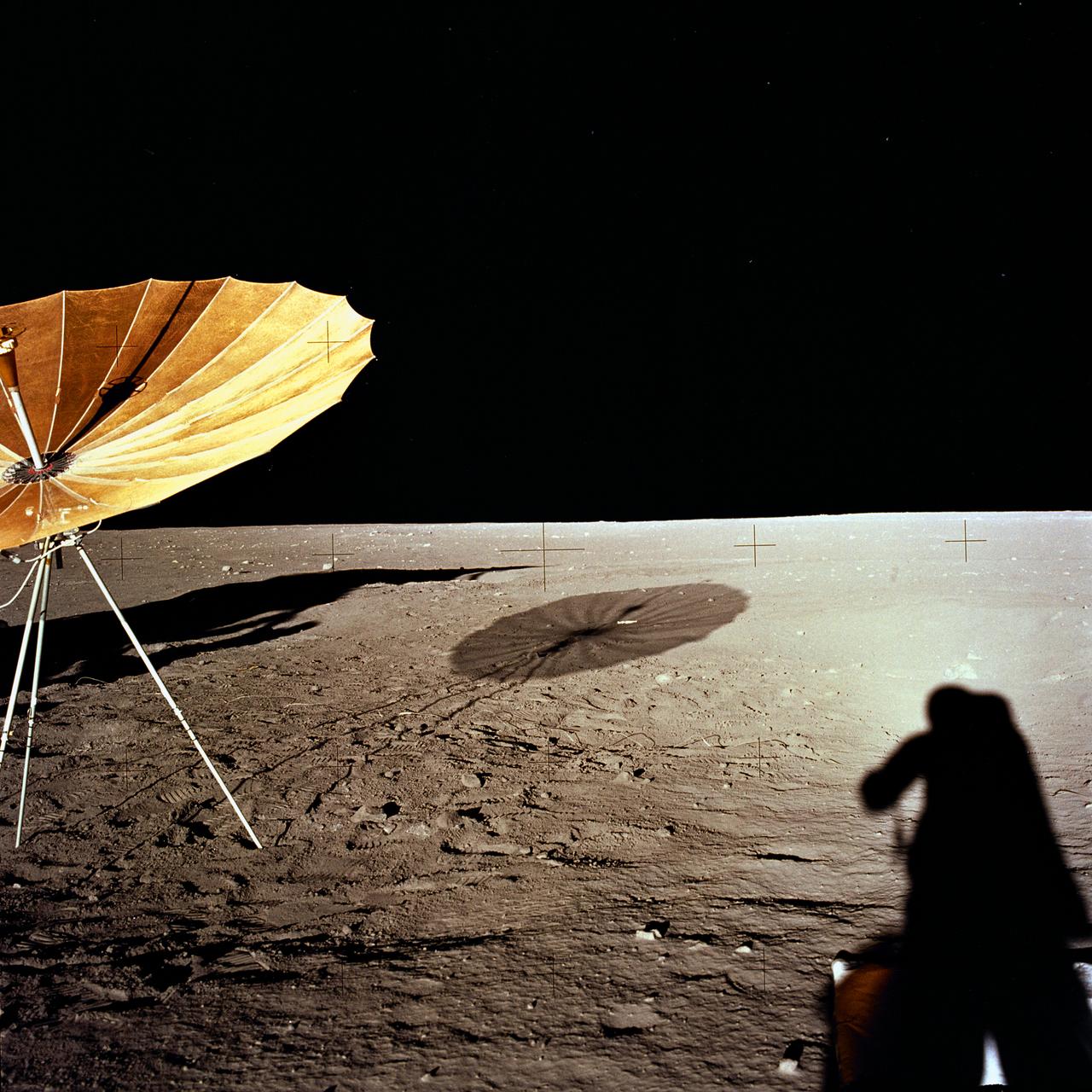
The second manned lunar landing mission, Apollo 12 launched from launch pad 39-A at Kennedy Space Center in Florida on November 14, 1969 via a Saturn V launch vehicle. The Saturn V vehicle was developed by the Marshall Space Flight Center (MSFC) under the direction of Dr. Wernher von Braun. Aboard Apollo 12 was a crew of three astronauts: Alan L. Bean, pilot of the Lunar Module (LM), Intrepid; Richard Gordon, pilot of the Command Module (CM), Yankee Clipper; and Spacecraft Commander Charles Conrad. The LM, Intrepid, landed astronauts Conrad and Bean on the lunar surface in what’s known as the Ocean of Storms while astronaut Richard Gordon piloted the CM, Yankee Clipper, in a parking orbit around the Moon. Lunar soil activities included the deployment of the Apollo Lunar Surface Experiments Package (ALSEP), finding the unmanned Surveyor 3 that landed on the Moon on April 19, 1967, and collecting 75 pounds (34 kilograms) of rock samples. This is the fifth of 25 images captured by the crew in attempt to provide a 360 degree Lunar surface scene. Apollo 12 safely returned to Earth on November 24, 1969.
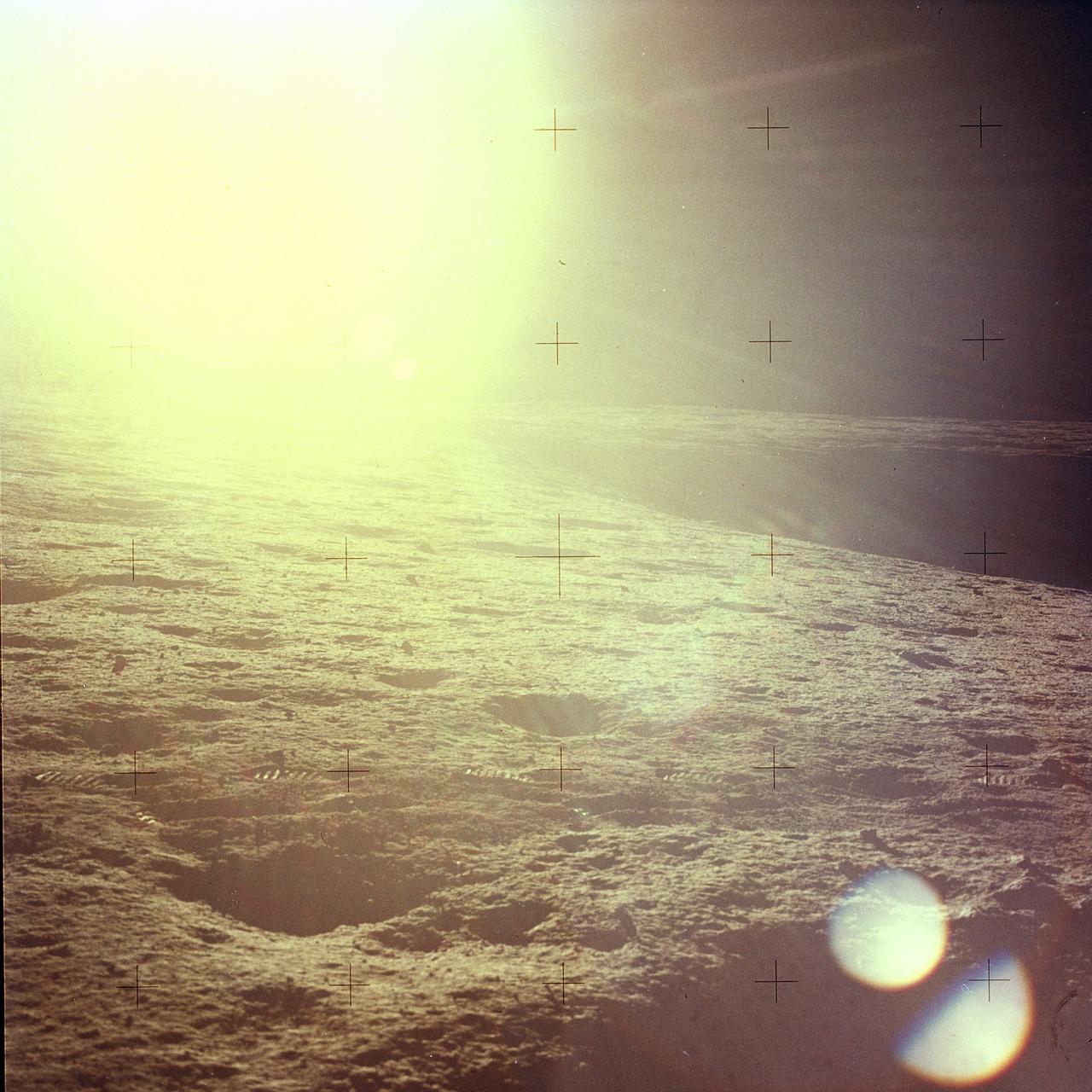
The second manned lunar landing mission, Apollo 12, launched from launch pad 39-A at Kennedy Space Center in Florida on November 14, 1969 via a Saturn V launch vehicle. The Saturn V vehicle was developed by the Marshall Space Flight Center (MSFC) under the direction of Dr. Wernher von Braun. Aboard Apollo 12 was a crew of three astronauts: Alan L. Bean, pilot of the Lunar Module (LM), Intrepid; Richard Gordon, pilot of the Command Module (CM), Yankee Clipper; and Spacecraft Commander Charles Conrad. The LM, Intrepid, landed astronauts Conrad and Bean on the lunar surface in what’s known as the Ocean of Storms while astronaut Richard Gordon piloted the CM, Yankee Clipper, in a parking orbit around the Moon. Lunar soil activities included the deployment of the Apollo Lunar Surface Experiments Package (ALSEP), finding the unmanned Surveyor 3 that landed on the Moon on April 19, 1967, and collecting 75 pounds (34 kilograms) of rock samples. This is the fifteenth of 25 images captured by the crew in attempt to provide a 360 degree Lunar surface scene. Apollo 12 safely returned to Earth on November 24, 1969.
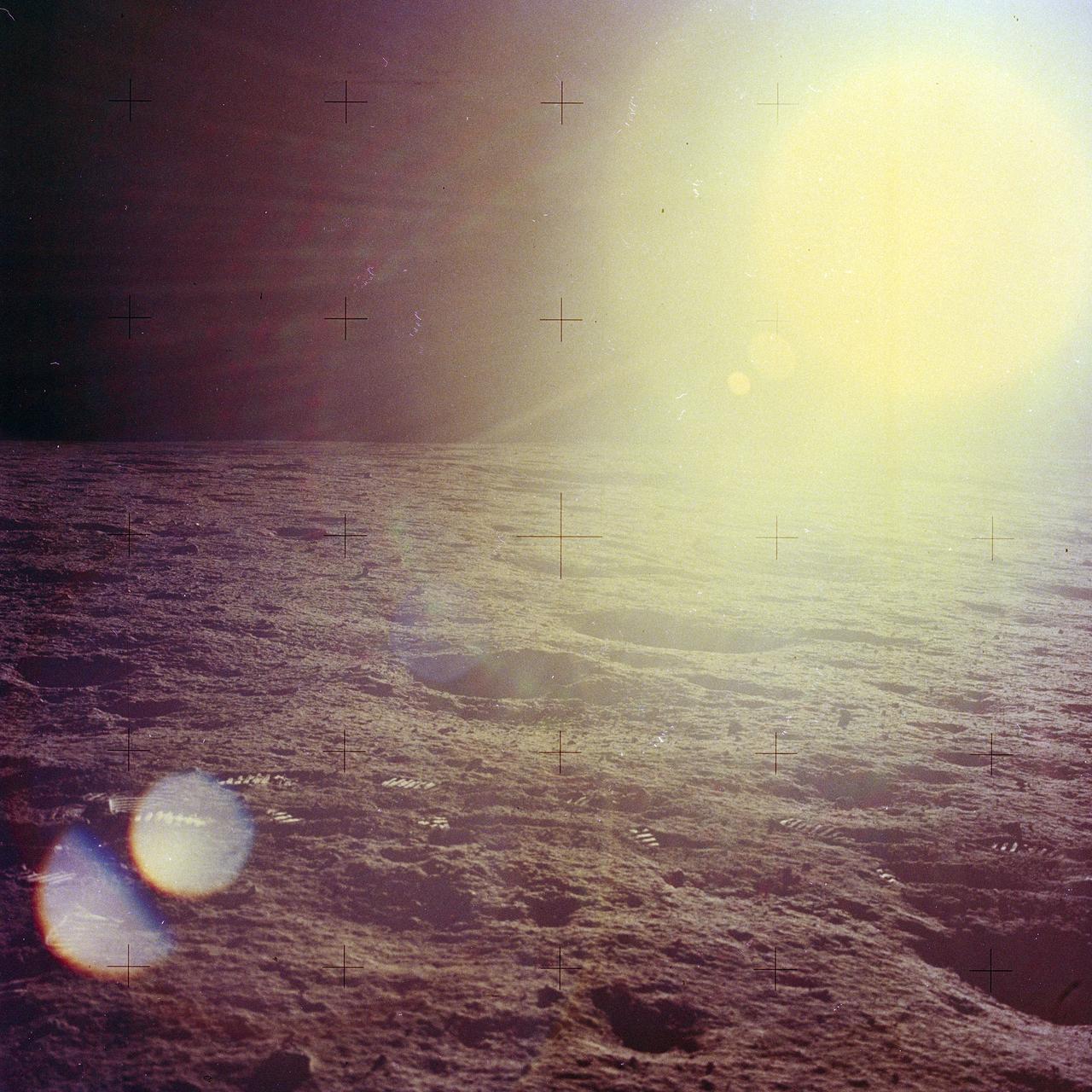
The second manned lunar landing mission, Apollo 12, launched from launch pad 39-A at Kennedy Space Center in Florida on November 14, 1969 via a Saturn V launch vehicle. The Saturn V vehicle was developed by the Marshall Space Flight Center (MSFC) under the direction of Dr. Wernher von Braun. Aboard Apollo 12 was a crew of three astronauts: Alan L. Bean, pilot of the Lunar Module (LM), Intrepid; Richard Gordon, pilot of the Command Module (CM), Yankee Clipper; and Spacecraft Commander Charles Conrad. The LM, Intrepid, landed astronauts Conrad and Bean on the lunar surface in what’s known as the Ocean of Storms while astronaut Richard Gordon piloted the CM, Yankee Clipper, in a parking orbit around the Moon. Lunar soil activities included the deployment of the Apollo Lunar Surface Experiments Package (ALSEP), finding the unmanned Surveyor 3 that landed on the Moon on April 19, 1967, and collecting 75 pounds (34 kilograms) of rock samples. This is the seventeenth of 25 images captured by the crew in attempt to provide a 360 degree Lunar surface scene. Apollo 12 safely returned to Earth on November 24, 1969.